GROVE OF ELMHURST, THE
127 WEST DIVERSEY, ELMHURST, IL 60126 (630) 530-5225
For profit - Corporation 180 Beds LEGACY HEALTHCARE Data: November 2025 1 Immediate Jeopardy citation
Trust Grade
13/100
#368 of 665 in IL
Last Inspection: May 2025

Inspected within the last 6 months. Data reflects current conditions.

Overview

Grove of Elmhurst has received a Trust Grade of F, indicating significant concerns about the care provided, which places it in the bottom tier of nursing homes. It ranks #368 out of 665 facilities in Illinois, meaning it falls within the bottom half of all state options, and #28 out of 38 in Du Page County, suggesting limited local alternatives. Although the facility's situation is reportedly improving, with issues decreasing from 15 to 14, the staffing situation is a major concern, rated at only 1 out of 5 stars, with a turnover rate of 55%, which is higher than the state average. Additionally, the nursing home has incurred $76,917 in fines, which is concerning, and while it does have average RN coverage, there have been serious incidents, including a resident being physically abused by a staff member and another sustaining a significant injury from a malfunctioning wheelchair. Overall, while there are some improvements, the facility has critical weaknesses that families should carefully consider.

Trust Score
F
13/100
In Illinois
#368/665
Bottom 45%
Safety Record
High Risk
Review needed
Inspections
Getting Better
15 → 14 violations
Staff Stability
⚠ Watch
55% turnover. Above average. Higher turnover means staff may not know residents' routines.
Penalties
✓ Good
$76,917 in fines. Lower than most Illinois facilities. Relatively clean record.
Skilled Nurses
○ Average
Each resident gets 41 minutes of Registered Nurse (RN) attention daily — about average for Illinois. RNs are the most trained staff who monitor for health changes.
Violations
⚠ Watch
51 deficiencies on record. Higher than average. Multiple issues found across inspections.
★★☆☆☆
2.0
Overall Rating
★☆☆☆☆
1.0
Staff Levels
★★☆☆☆
2.0
Care Quality
★★★☆☆
3.0
Inspection Score
Stable
2024: 15 issues
2025: 14 issues

The Good

  • Full Sprinkler Coverage · Fire safety systems throughout facility
  • No fines on record

Facility shows strength in fire safety.

The Bad

2-Star Overall Rating

Below Illinois average (2.5)

Below average - review inspection findings carefully

Staff Turnover: 55%

Near Illinois avg (46%)

Frequent staff changes - ask about care continuity

Federal Fines: $76,917

Well above median ($33,413)

Moderate penalties - review what triggered them

Chain: LEGACY HEALTHCARE

Part of a multi-facility chain

Ask about local staffing decisions and management

Staff turnover is elevated (55%)

7 points above Illinois average of 48%

The Ugly 51 deficiencies on record

1 life-threatening 2 actual harm
Aug 2025 1 deficiency
CONCERN (E) 📢 Someone Reported This

A family member, employee, or ombudsman was alarmed enough to file a formal complaint

Potential for Harm - no one hurt, but risky conditions existed

Incontinence Care (Tag F0690)

Could have caused harm · This affected multiple residents

Based on observation, interview, and record review, the facility failed to provide residents with urinary catheter care. This applies to 6 of 6 residents (R1, R2, R3, R4, R5, and R6) reviewed for urin...

Read full inspector narrative →
Based on observation, interview, and record review, the facility failed to provide residents with urinary catheter care. This applies to 6 of 6 residents (R1, R2, R3, R4, R5, and R6) reviewed for urinary catheters.The findings include:1. On 8/09/2025 at 10:45 AM, R1 was sitting in his wheelchair. R1's urinary catheter tube had amber urine with sediment. R1 said he had recurrent UTIs (urinary tract infections) and was receiving an oral antibiotic. R1 had an open urinary piston syringe with a bottle at bedside. R1 said the nurse would frequently irrigate his catheter because it would get clogged often. R1 said on 8/05/2025 by V11 (Licensed Practical Nurse/LPN) changed his catheter because there was no urine output. R1 said the nursing staff was emptying his catheter but not cleaning it frequently. R1 continued to say that he was dependent on the facility staff to care for his catheter. Then V4 (Certified Nurse Assistant/CNA) came to assess R1's urinary catheter. R1's catheter tube was underneath and over (in an upwards direction) in front of his incontinence brief, not secured. R1's catheter insertion site was soiled with a moderate amount of bowel residue. V4 said she had just provided R1 with catheter care approximately an hour prior. V4 proceeded to adjust R1's tube in a downward direction, and the urine then began to flow into the collection bag.On 8/09/2025 at 12:30 PM, V10 (Registered Nurse/RN) said CNAs were expected to provide routine and as-needed catheter care to prevent infections. V10 also said she was not aware of R1's catheter complications on 8/05/2025. V10 said she reviewed R1's EMR (Electronic Medical Record) and there was no documentation of R1's catheter obstruction complication and need for exchange on 8/05/2025. R1's care plan reviewed on 8/09/2025, said R1 was at risk for UTIs and required an indwelling catheter for obstructive and reflux uropathy. The care plan also said R1 required facility staff assistance with toileting hygiene. R1's interventions included checking catheter tubing for kinks, monitoring and reporting output, and monitoring for signs and symptoms of UTIs.R1's Order Summary Report dated 8/09/2025 did not have orders for routine catheter care, urine output recording, and catheter irrigation procedures.R1's Electronic Mediation Administration Record for August 2025 did not show any documentation of R1's catheter exchange procedure. 2. On 8/09/2025 at 11 AM, R2 was in bed. R2's urinary catheter bag with urine inside was hanging from the bed frame without a privacy bag, exposed. R2's urinary catheter tube had light-cloudy amber urine draining. V4 (CNA) said she had just provided R2 with catheter care approximately an hour prior. V4 assessed R2's catheter insertion site, and it had a build-up of yellowish discharge. V4 said she had noticed it prior and would now inform the nurse on duty. R2 said his catheter was being changed monthly by the nurses and was unsure why.R2's care plan reviewed on 8/09/2025, said R2 was at risk for infections and required an indwelling catheter for management of neurogenic bladder. The care plan also said R2 required facility staff assistance with toileting hygiene. R2's interventions included receiving catheter care every shift and as needed, changing foley catheter per facility protocol or MD order, and monitoring output.R2's Order Summary Report dated 8/09/2025 did not have orders for routine catheter care and urine output recording.3. On 8/09/2025 at 11:20 AM, R3 was in bed. R3's urinary catheter bag with urine inside was hanging from the bed frame without a privacy bag, exposed. R3's urinary catheter tube had thick brown-greenish sediments. R3 said her catheter had been exchanged last week because it was clogged and leaking. R3 said she was also started on a probiotic and cranberry medication because she was having bladder discomfort and vaginal irritation. R3 said her catheter bag was last emptied around 5 AM, and she last had a bowel movement last night. V6 (Registered Nurse/RN) assessed R3's urine and said it was abnormal to have greenish-thick sediment in the urine. V6 said she was not notified prior of R3's abnormal urine and expected to be notified of any abnormal urine color or appearance. V6 said she would change the drainage bag and contact R3's provider for a urine culture. V6 then assessed R3's catheter insertion site. R3's catheter was soiled with bowel residue. R3 said agency CNAs frequently did not provide her proper catheter and incontinence care. V6 proceeded to clean R3's catheter with water, and no soap was added. R3's care plan reviewed on 8/09/2025, said R3 was at risk for UTIs and required an indwelling catheter for management of neuromuscular dysfunction of the bladder. The care plan also said R3 required facility staff assistance with toileting hygiene. R3's interventions included staff to monitor her urine, report any abnormalities for signs and symptoms of UTI, and routine catheter care.R3's Order Summary Report dated 8/09/2025 did not have an order for urine output recording. The report showed a new order dated 8/09/2025 for a urinalysis and culture collection. 4. On 8/09/2025 at 11:30 AM, R4 was in bed. R4 was nonverbal. R4's urinary catheter bag had a scant amount of urine inside and was hanging from the bed frame without a privacy bag, exposed. R4's catheter tube had urine sediments. V6 (RN) assessed R4's catheter insertion site. R4's catheter was soiled with bowel residue. V6 said R4's incontinence brief was not soiled, and V7 (CNA) had just provided R4 incontinence care. R4's catheter was wrapped around his scrotal area and unsecured. V6 proceeded to adjust R4's tube in a downward direction, and then the urine began to flow into the collection bag. At 12 PM, V7 (CNA) said she had provided R4 with catheter care at 10 AM after he had an incontinent bowel episode. R4's care plan reviewed on 8/09/2025, said R4 was at risk for UTIs and required an indwelling catheter for management of neuromuscular dysfunction of the bladder. The care plan said R4 required facility staff assistance with toileting hygiene. R4's interventions included checking catheter tubing for kinks and having staff to clean the peri-area.5. On 8/09/2025 at 11:45 AM, R6 was in bed. R6 was nonverbal. R6's urinary catheter bag with urine inside was hanging from the bed frame without a privacy bag, exposed. V9 (CNA) said she provided R6 with incontinence and catheter care at approximately 8 AM. V9 assessed R6's catheter insertion site. R6's catheter was soiled with bowel residue, and his foreskin of his penis had a yellow discharge buildup. R6's catheter tube was not secured. V9 proceeded to provide R6 with catheter care. V9 wiped R6's catheter with multiple upstrokes towards R6's urethra and then downstrokes using the same towel. V9 said R6's incontinent brief was not soiled and secured it back in place.R6's care plan reviewed on 8/09/2025, said R6 was at risk for UTIs and required an indwelling catheter for management of neurogenic bladder. The care plan said R6 required facility staff assistance with toileting hygiene. R6's interventions included catheter care every shift and as needed.R6's Order Summary Report dated 8/09/2025 did not show an order for routine catheter care and urine output recording. 6. On 8/09/2025 at 11:50 AM, R5 was in bed. R5 was nonverbal and severely contracted. R5's urinary catheter bag with a small amount of urine was hanging from the bed frame without a privacy bag, exposed. V7 said she had provided R5 with catheter care and incontinence care approximately a few hours prior. V7 assessed R5's catheter insertion site. R5's catheter was underneath his contracted legs and over his right thigh area, not secured. R5's catheter insertion site and penis area were soiled with dry bowel residue. V7 said it was difficult to properly position R5's catheter tube and clean his catheter due to his contractures.R5's care plan reviewed on 8/09/2025, said R5 was at risk for infections and required an indwelling catheter for management of neuromuscular dysfunction of the bladder. The care plan said R5 required facility staff assistance with toileting hygiene. R5's interventions included catheter care every shift and as needed. On 8/09/2025 at 1:30 PM, V2 (Director of Nursing/DON) said she expected residents to be monitored for catheter complications such as obstructions. V2 said the nurse should be notifying the physician of any abnormalities and documenting any catheter procedures in the resident's EMR. V2 also said nursing staff were expected to follow physician urinary catheter management orders and the facility's urinary catheter care policy to prevent residents from having complications, such as UTIs. The facility's policy titled Urinary Catheter Care dated 7/03/2025, said The purpose of this procedure is to prevent catheter-associated urinary tract infections.General Guidelines.b. Maintain Unobstructed Urine Flow.Infection Control.Routine hygiene.Complications 1. Observe the resident for complications associated with urinary catheters.b. Check the urine for unusual appearances (i.e., color, blood, etc.).e. Observe for other signs and symptoms of urinary tract infection or urinary retention. Report findings to the physician or supervisor immediately.Steps in the Procedure.Put on gloves.Wash the resident's genitalia and perineum thoroughly with soap and water. Rinse the area well and towel dry.retract the foreskin of the uncircumcised male resident.14. Assess the urethral meatus. 15. For a female resident: Use a washcloth with warm water and soap to cleanse the labia.For a male resident male: Use a washcloth with warm water and soap to cleanse around the meatus. Cleanse the glans using circular strokes from the meatus outward. Change the position of the washcloth with each cleansing stroke.cleanse and rinse the catheter from the insertion site to approximately four inches outward.Remove gloves and discard into designated container. Wash and dry your hands thoroughly.
May 2025 11 deficiencies 1 Harm
SERIOUS (G)

Actual Harm - a resident was hurt due to facility failures

Accident Prevention (Tag F0689)

A resident was harmed · This affected 1 resident

Based on observation, interview and record review, the facility failed to ensure a resident's wheelchair was in safe repair to prevent injuries. The failure resulted in R340 sustaining an L shaped lac...

Read full inspector narrative →
Based on observation, interview and record review, the facility failed to ensure a resident's wheelchair was in safe repair to prevent injuries. The failure resulted in R340 sustaining an L shaped laceration on her right lower leg when she bumped her right leg and scraped it on the uncapped right front wheel connector. R340 was sent to the hospital and received 11 sutures for the laceration on her right leg. This applies to 1 out of 1 (R340) resident reviewed for accidents in the sample of 33. The findings include: On 5/20/2025 at 10:36 AM, R340 was in her room with a soiled dressing on her right lower leg. R340 said on 5/18/2025 at around 5:00 AM, she was in the bathroom and when she was transferring from her wheelchair to the toilet, the skin on her right leg caught on the uncapped right front wheel connector of her wheelchair. She said she was bleeding so much that she was sent to the hospital and she has 11 stitches on her right leg. R340's Progress Notes from the Emergency Department of the local hospital dated 5/18/2025 documents R340 said she sustained laceration because her leg got caught on her wheelchair. Length of laceration is 7 cm (centimeters). Wound was closed with eleven stitches. On 5/21/2025 and 5/22/2025, the right front wheel connector on R340's wheelchair was uncapped. On 5/22/2025 at 1:21 PM, V22 (LPN-Licensed Practical Nurse) said around 5:00 AM, he noticed R340's call light was on. V22 stated he noted blood. V22 said R340 told him she bumped into her wheelchair from transferring from toilet to wheelchair. V22 said R340's wound was gaping and bleeding profusely and he immediately provided wound treatment. V22 said R340's wheelchair had nothing sticking out but said he did not notice the uncapped right front wheel connector of R340's wheelchair. On 5/22/2025 at 9:45 AM, V19 (Rehab Director) checked R340's wheelchair. R340 told V19 that she got caught on the uncapped right front wheel connector, was sent to the hospital and got 11 stitches. V19 said the wheelchair's part where resident was claiming she hit her leg on was supposed to be capped. On 5/22/2025 at 9:57 AM, V20 (NP-Nurse Practitioner) said the uncapped right front wheel connector can be the reason of the laceration because she hit her leg on it. She said R340 might not have the laceration if the wheelchair was kept in good and safe repair. On 5/22/2025 at 1:11 PM, V3 (DON-Director of Nursing) said she expects her staff to inform her of any medical equipment in disrepair including the wheelchair. She said medical equipment should be in good, safe repair to prevent injuries. Facility's Maintenance Policy adopted 1/2/16 and reviewed and revised on 8/16/24 documents it is the facility's policy to maintain equipment and the building environment.
CONCERN (D)

Potential for Harm - no one hurt, but risky conditions existed

ADL Care (Tag F0677)

Could have caused harm · This affected 1 resident

**NOTE- TERMS IN BRACKETS HAVE BEEN EDITED TO PROTECT CONFIDENTIALITY** Based on observation, interview, and record review, the facility failed to provide nail care to residents who require assistance...

Read full inspector narrative →
**NOTE- TERMS IN BRACKETS HAVE BEEN EDITED TO PROTECT CONFIDENTIALITY** Based on observation, interview, and record review, the facility failed to provide nail care to residents who require assistance. This applies to 3 of 3 residents (R1, R81, and R86) reviewed for activities of daily living (ADL) care in a sample of 33. The findings include: 1. R81 is a [AGE] year-old male with severe cognitive impairment as per the MDS dated [DATE]. The MDS also documents that R81 is dependent on personal hygiene. On 05/20/25 at 01:44 PM, R81 was on his bed and had long nails with a brownish substance accumulated underneath nails, with a left contracted hand and right partially contracted hand. On 05/20/25 at 01:50 PM, V27 LPN (Licensed Practical Nurse) stated CNAs (Certified Nursing Assistants) or activity aides should trim residents' nails and that R81's long nails with contracted left hand can cause a palm ulcer. R81's ADL care plan documented performance deficit and impaired ability with dressing and grooming, such as unable to complete tasks with personal hygiene. The ADL care plan interventions include total staff participation and with personal hygiene 2. R1 is a [AGE] year-old female with mild cognition impairment as per the Minimum Data Set (MDS) dated [DATE]. MDS also documents that R1 requires partial/moderate assistance to personal care. On 05/20/25 at 01:59 PM, R1 had a broken nail approximately 6 millimeters (mm) long hanging from the left point fingertip. All of R1's other fingers had long dirty nails. On 05/20/25 at 2:02 PM, V23 (Registered Nurse/RN) stated that residents should get nail trimming and grooming on shower days. R1's care plan documents that R1 was care planned for extensive care needs and requires the support/services of the long-term care setting with intervention including the facility will provide care to establish the resident to function at their most practical level. 3. R86 is an [AGE] year-old male with moderate cognitive impairment as per the MDS dated [DATE]. The MDS also documents that R86 requires partial/moderate assistance to personal hygiene. On 05/20/25 at 01:46 PM, R86 was on his bed and his left hand nails were long and he had a broken jagged nail on his left fourth finger. R86's ADL care plan documented performance deficit and impaired ability with dressing and grooming, such as unable to complete task with personal hygiene. On 05/21/25 at 10:17 AM, V3 (Director of Nursing) stated the CNAs are supposed to provide nail trimming and grooming on shower days. The facility's Nail Care policy (revised 8/16/24) showed Nursing staff shall check the residents for Nail Care which includes cleaning and regular trimming
CONCERN (D)

Potential for Harm - no one hurt, but risky conditions existed

Quality of Care (Tag F0684)

Could have caused harm · This affected 1 resident

Based on observation, interview and record review, the facility failed to assess and obtain treatment orders for a resident with a laceration. This applies to 1 out of 1 resident (R340) reviewed for w...

Read full inspector narrative →
Based on observation, interview and record review, the facility failed to assess and obtain treatment orders for a resident with a laceration. This applies to 1 out of 1 resident (R340) reviewed for wound treatments in a sample of 33. The findings include: On 5/20/2025 at 10:35 AM, R340 was noted with a wrapped gauze dressing on right lower leg. The gauze was brown in color with dried blood stains and was unraveling. R340 said on 5/18/2025, her right leg caught on her wheelchair and she sustained a laceration. R340 said the wound was bleeding too much that she was sent to a local hospital where she got eleven stitches. R340 said no staff has come to assess her wound and the dressing on her wound has not been changed since she returned from the hospital. On 5/21/2025 (three days after R340 returned from the hospital) at 8:57 AM, R340's right leg wound dressing still had the same dried blood stains and the gauze was still unraveling. On 5/21/2025 at 9:05 AM, V15 (LPN- Licensed Practical Nurse) reviewed R340's POS (Physician Order Sheet) and said she cannot find any treatment orders for R340's right lower leg wound. On 5/21/2025 at 10:15 AM, V6 (Wound Care Director) reviewed R340's POS and said she could not find wound care orders for R340's leg wound. V6 said she has not assessed R340's wound since she came back from the hospital. On 5/22/2025 at 10:07 AM, V6 said the receiving nurse should have verified and carried out R340's wound care orders. V6 said she should have assessed R340's wound as soon as she came back to the facility. V6 stated that prompt assessment and obtaining and carrying out wound care orders should be done to avoid delay in care. On 5/22/2025 at 12:10 PM, V21 (Treatment Nurse) said she changed R340's wound dressing on 5/21/2025. V21 stated there were no wound orders transcribed into R340's POS, and she said she got the treatment orders from R340's hospital records. V21 said she worked on 5/18/2025 but was not able to assess R340 when she came back to the facility. Facility's Policy on Skin Care Regimen and Treatment Formulary (reviewed 3/24/2025) documents Policy Statement: It is the policy of this facility to ensure prompt identification, documentation and to obtain appropriate treatment for residents with skin breakdown .
CONCERN (D)

Potential for Harm - no one hurt, but risky conditions existed

Pressure Ulcer Prevention (Tag F0686)

Could have caused harm · This affected 1 resident

Based on observation, interview, and record review, the facility failed to follow treatment orders as prescribed for residents with pressure wounds. This applies to 2 of 4 residents (R128 and R8) revi...

Read full inspector narrative →
Based on observation, interview, and record review, the facility failed to follow treatment orders as prescribed for residents with pressure wounds. This applies to 2 of 4 residents (R128 and R8) reviewed for pressure injuries in a sample of 33. The findings include: 1. On 5/21/2025 at 9:00 AM, V6 Wound Care Nurse (WCN) said R8 had a present-on-admission stage 4 pressure injury to her sacrum. V7 (WC Aide) assisted V6 with changing R8's sacral wound dressing. V6 removed a white bordered gauze dressing with moderate amount of serous sanguineous drainage (no other dressing was present). V6 said R8's ordered treatment included collagen (tissue growth stimulator) and calcium alginate (absorbent) dressings. V6 said R8's wound had slough tissue and undermining approximately from 5 o'clock through 8 o'clock. V6 said she was unsure why R8's ordered treatment dressings were not followed. V34's (WC NP/Nurse Practictioner) Wound Assessment Report dated 5/16/2025 said R8's stage 4 sacrum wound status showed delayed wound closure. The report said the wound measured 4.5 cm x 2.0 cm x 0.5 cm with an undermining of 0.3 cm from 5 o'clock to 7 o'clock. The report continued to say the wound had 100% granular tissue with moderate serosanguineous drainage. V34's treatment order said to apply collagen and calcium alginate with a bordered gauze dressing three times per week and PRN (as necessary). R8's Order Summary Report dated 5/22/2025 had active scheduled and PRN orders initiated on 5/09/2025 for her sacrum, Treatment: Sacrum: Cleanse w/ wc, apply collagen and calcium alginate, cover with bordered gauze. R8's skin integrity care plan for her sacrum initiated on 8/09/2025 said Follow facility protocols for treatment of injury (see treatment orders)/POS. 2. On 5/20/2025 at 10:30 AM, R128 said he acquired a wound to his right heel from the pressure of his feet being up against the footboard of his bed. On 5/21/2025 at 8:45 AM, V6 (Wound Care Nurse/WCN) said R128 had a facility-acquired unstageable pressure injury to his right heel. V7 (Wound Care Aide) assisted V6 (WCN) with changing R128's right heel dressing. V6 removed R128's dressing and said the wound had necrotic tissue. V6 cleaned R128's wound and applied a pre-made dressing. V6 said R128's applied dressing was medihoney ointment then an adaptic (non-adherent) dressing with an ABD pad and secured with kerlix. V6 said V34 (WC Nurse Practitioner/NP) managed R128's right heel pressure injury weekly. R128's Order Summary Report dated 5/22/2025 had an active order initiated on 5/14/2025 for his right heel, Medihoney Wound/Burn Dressing External Paste (Wound Dressings) Apply to R Heel topically every day shift every Wed, Fri, Sun for wound Cleanser w/, apply medihoney w/ calcium alginate and ABD and rolled gauze. V34's (WC NP) Wound Assessment Report dated 5/16/2025 said R128's right heel wound was full-thickness and measured 2.5 cm (centimeters) x 3.0 cm x 1.0 cm. The report continued to say the wound had exposed subcutaneous tissue with 20% granulation and 80% slough tissue (0 % necrotic) with scant serosanguineous drainage. V34's 5/16/25 treatment order said to apply Medical grade honey with an ABD pad and rolled gauze three times per week and PRN (as needed). R128's TAR (Treatment Administration Record) for 5/01/2025-5/31/2025 did not show V34's (WC NP) order from 5/16/2025 was implemented. On 5/22/2025 at 9:50 AM, V6 (WCN) said she applied an adaptic dressing to R128's right heel on 5/21/2025 because she believed that was the order prescribed by V34 (WC NP) on 5/16/2025. V6 (WCN) said the wound care team was responsible for reviewing and transcribing V34's (WC NP) wound care treatment orders. V6 continued to say nurses were expected to follow treatment orders as prescribed to promote wound healing, prevent complications, and assess if prescribed treatment orders were effective. The facility's policy titled Skin Care Regimen and Treatment Formulary dated 3/24/2025 said It is the policy of this facility to ensure prompt identification, documentation and to obtain appropriate treatment for residents with skin breakdown .2. Routine daily wound care treatment/dressing change is administered by the wound care nurse or designee daily .8. Stage III and IV pressure injuries may be referred to wound care specialist (either an advanced nurse practitioner or physician specializing in wound care and ostomy management) for further clinical and treatment consultation in accordance with facility protocol and standard of care.
CONCERN (D)

Potential for Harm - no one hurt, but risky conditions existed

Incontinence Care (Tag F0690)

Could have caused harm · This affected 1 resident

Based on observation, interview, and record review, the facility failed to ensure services were provided to residents with indwelling urinary catheters in a manner to prevent infection. This applies t...

Read full inspector narrative →
Based on observation, interview, and record review, the facility failed to ensure services were provided to residents with indwelling urinary catheters in a manner to prevent infection. This applies to 2 of 2 residents (R441 and R58) reviewed for urinary catheters. The findings include: 1. On 5/20/25 at 12:04 PM, R441 was noted with indwelling urinary catheter draining cloudy yellow urine. R441 said the staff in the facility empty the urine from his drainage bag, but they don't ever clean his urinary catheter tubing. R441 said only the doctor at the doctor's office cleaned the tubing. On 5/22/25 surveyor asked to observe catheter care and at 10:11 AM, V11 and V12 (Restorative Aides) were observed providing catheter care for R441. Prior to the start of catheter care, R441's catheter drainage bag was noted to be hanging on the lower side rail of R441's bed, with the bottom of the bag resting on the floor. Prior to starting urinary catheter care, V11 and V12 noted that R441 had a bowel movement. V11 provided incontinence care first. While R441 was lying on his left side, she cleaned his stool with a soapy washcloth, then used a large dry towel to wipe between his buttocks and pat him dry. V11 then used that same large towel that she just used to wipe R441's buttocks to drape over him while V12 went into the hall to get more supplies. When V11 and V12 turned R441 onto his right side, V12 removed the dirty towel/brief/pad from under R441 and placed them on a clean area of the bed, by the resident's feet. V11 then unclipped the urinary catheter drainage bag from the bed frame and placed it on R441's bed. V11 then proceeded to perform catheter care, but she did not clean the top 1 inch of the catheter tubing by the insertion site/urethra. V11 then touched R441's sheets and his side rail buttons to raise the head of his bed back up, with the same soiled gloves she just used to touch R441's perineal area and catheter tubing. R441's Care Plan initiated 4/7/25 shows he has an indwelling urinary catheter due to neurogenic bladder and interventions include to perform catheter care every shift and as needed. Care Plan dated 4/8/25 shows R441 was on antibiotic therapy related to UTI (Urinary Tract Infection). R441's POS (Physician Order Summary) shows an order dated 4/7/25 to perform catheter care every shift. On 5/22/25 at 10:11 AM, V11 and V12 (Restorative Aides) said catheter care is done once daily as part of morning care. V11 and V12 said urinary catheter care should be documented in the EMR (Electronic Medical Record) under tasks. V11 and V12 said urinary catheter care is usually done by either the CNAs (Certified Nurse Assistants) or the Restorative Aides. On 5/22/25 at 11:30 AM, neither R58 nor R441 had a task in their EMR for performing catheter care. No documentation in either chart was found for catheter care being performed every shift. On 5/22/25 at 12:58 PM, V3 (DON/Director of Nursing) said catheter care should be done every shift. V3 said the urinary catheter drainage bag should never touch the floor because of the risk of cross contamination and for infection control purposes. V3 said the entire urinary catheter tubing should be cleaned, including the first inch by the insertion site. V3 said dirty linens and briefs should not be placed on the resident's bed because of the risk of cross contamination. V3 said the urinary catheter drainage bag should never be placed on the resident's bed because of the risk of back flow of urine into the bladder which could lead to UTI. V3 said the staff should change their gloves and perform hand hygiene after performing catheter care and before touching clean linens or the side rails, because of the risk of cross contamination from the soiled gloves. 2. On 5/20/25 at 1:48 PM, R58's indwelling urinary catheter bag was hanging on his wheelchair armrest, above the level of his bladder, with urine back-flowing into the bladder. R58 said he had been transported to the hospital a few times with UTIs (Urinary Tract Infections) and they give him antibiotics in the facility on a regular basis. R58 said the facility staff do not regularly clean his catheter tubing. On 5/22/25 surveyor asked to observe catheter care and at 10:39 AM, V11 and V12 (Restorative Aides) were observed providing catheter care for R58. Prior to starting, R58's urinary catheter drainage bag was clipped to the low part of bed frame with the lower part of the bag resting on the floor. V12 lifted the drainage bag up and placed in on the resident's bed while catheter care was performed. After V11 and V12 completed catheter care, V11 raised R58's urinary catheter drainage bag up above his body while he was lying flat in bed, and threaded the drainage bag through the leg of the new pull up brief. When V11 raised the drainage bag up, urine backflow could be visualized moving towards the resident's bladder. On 5/22/25 at 11:00 AM, after catheter care was completed, R58 was asked how often the staff clean his catheter tubing as they had just done. R58 said, Not often, maybe never. R58 said sometimes the nurse will flush his catheter, but they don't clean the tubing like they just did. R58's Care Plan dated 1/10/24 says he has an indwelling urinary catheter due to diagnosis of obstructive and reflux uropathy. Interventions include position catheter drainage bag and tubing below the level of the bladder. Another Care Plan dated 1/10/24 says R58 has potential for infection related to history of urinary tract infections. Interventions include initiate proper precautions per facility protocol. The facility's policy titled, Urinary Catheter Care last revised 8/19/24 states, Purpose: The purpose of this procedure is to prevent catheter-associated urinary tract infections. Preparation: 1. Review the resident's care plan to assess for any special needs of the resident . General Guidelines .b. Maintaining Unobstructed Urine Flow: .iii. The urinary drainage bag must be held or positioned lower than the bladder at all times to prevent the urine in the tubing and drainage bag from flowing back into the urinary bladder. Infection Control: 2.b. Be sure the catheter tubing and drainage bag are kept off the floor .Steps in the Procedure .17. Use a clean washcloth with warm water and soap to cleanse and rinse the catheter from insertion site to approximately four inches outward . Documentation: 1. The date and time that catheter care was given .
CONCERN (D)

Potential for Harm - no one hurt, but risky conditions existed

Deficiency F0692 (Tag F0692)

Could have caused harm · This affected 1 resident

**NOTE- TERMS IN BRACKETS HAVE BEEN EDITED TO PROTECT CONFIDENTIALITY** Based on observation, interview, and record review the facility failed to process reccommendations for and then provide resident...

Read full inspector narrative →
**NOTE- TERMS IN BRACKETS HAVE BEEN EDITED TO PROTECT CONFIDENTIALITY** Based on observation, interview, and record review the facility failed to process reccommendations for and then provide residents their dietary nutritional supplements. This applies to 3 of 3 residents (R57, R4, and R8) reviewed for nutrition in a sample of 33. The findings include: 1. On 5/21/2025 at 12:10 PM, V11 (Restorative Aide) was feeding R57 in the dining room. R57 appeared thin. At 12:40 PM, V11 said she finished feeding R57, and R57 had consumed approximately less than 20% of her lunch. On 5/22/2025 at 12:20 PM, R57 was in bed for lunch. V24 (Agency Certified Nurse Assistant/CNA) said she tried to feed R57 her lunch, but she refused. V24 said she would ask the nurse for R57's prescribed supplement drink. On 5/22/2025 at 11:30 AM, V23 (Registered Nurse/RN) reviewed R57's orders. V23 said R57 had an order to receive 237 ml (milliliters) of her nutritional supplement twice a day. On 5/22/2025 at 1:00 PM, V26 (Registered Dietician/RD) said R57 was being monitored weekly for her significant weight loss. V26 said she reviewed R57's weight and nutritional intake on 5/05/2025 and believed she made new recommendations to increase R57's nutritional supplement drink amount. V26 said she enters a progress note in the resident's EMR (Electronic Medical Record) and e-mails V3 (Director of Nursing/DON) her weekly dietary log recommendations. On 5/22/2025 at 1:40 PM, V3 (DON) said she reviews and carries out V26's (RD) weekly dietary recommendations to ensure nutritional interventions are provided to residents to prevent weight loss. V3 said she received R57's new dietary recommendation on 5/07/2025 to increase her nutritional supplement to three times a day. R57's EMR showed R57's weights decreased from 112 pounds on 3/3/2025 to 103 pounds on 5/12/2025 to 100 pounds on 5/22/2025. V26's (RD) 5/5/2025 progress note titled Sig WT Change Note: -5.2% in 30 days showed R57 continued to trigger for significant weight loss. The note said V26 recommended to increase Ensure to TID (three times a day) to provide additional support. Facility's document titled RD Recommendations & Tracking Form log dated 5/07/2025 showed R57's recommendation to increase her nutritional supplement to three times a day was not implemented. R57's Order Summary Report dated 5/22/2025 showed an active order initiated on 2/11/2025 for Ensure two times a day for supplement Give 237 mL and drink by mouth. 2. On 5/20/2025 at 12:20 PM, R4 was in bed eating his lunch. R4's lunch ticket said he was to receive a nutritional frozen dessert supplement with the meal. R4's served lunch did not include any nutritional supplements. On 5/22/2025 at 12:25 PM, V24 (Agency CNA) served R4's lunch tray. No nutritional supplements were present on R4's served tray. On 5/22/2025 at 12:25 PM, V25 (Dietary Manager) said residents should be served their nutritional frozen dessert or alternative might shake supplements as indicated in their meal ticket as part of their ordered weight management interventions. V25 said the residents' ordered nutritional frozen and shake supplements were provided by the kitchen. V25 said the nutritional supplements should be served with the residents' meal trays when being prepared in the kitchen line before being delivered to the units. R4's Dietary Evaluation assessment dated [DATE] said R4 was identified to have significant weight loss and was malnourished. The assessment showed R4 was to continue to receive his nutritional supplements including a Magic Cup daily (nutritional frozen dessert). 3. On 5/20/2025 at 12:20 PM, R8 was in bed eating her lunch. R8's lunch ticket said she was to receive a nutritional frozen dessert supplement with the meal. R8's served lunch did not have a nutritional supplement. On 5/21/2025 at 12:35 PM, R8 was served her lunch tray. R8's was not served her nutritional dessert nor shake supplement as indicated in her lunch ticket. R8's Dietary Evaluation assessment dated [DATE] said R8's weight was suboptimal for her age and she had increased nutritional needs due to her stage 4 sacral pressure injury. The assessment said R8 was to continue to receive her supplements, including her Mighty Shake (nutritional shake supplement). On 5/22/2025 at 3:00 PM, V1 (Administrator) and V8 (Regional Nurse Consultant) said the facility did not have a policy regarding nutrition or nutritional supplements.
CONCERN (D)

Potential for Harm - no one hurt, but risky conditions existed

Deficiency F0745 (Tag F0745)

Could have caused harm · This affected 1 resident

**NOTE- TERMS IN BRACKETS HAVE BEEN EDITED TO PROTECT CONFIDENTIALITY** Based on the interview and record review, the facility failed to coordinate transportation procedure/activities to avoid several...

Read full inspector narrative →
**NOTE- TERMS IN BRACKETS HAVE BEEN EDITED TO PROTECT CONFIDENTIALITY** Based on the interview and record review, the facility failed to coordinate transportation procedure/activities to avoid several missed appointments to residents. This applies to 3 of 3 residents (R52, R91, R127) reviewed for outside appointments and transportation in a sample of 33. The findings include: 1. R91 is a [AGE] year-old female with cognition intact as per the Minimum Data Set (MDS) dated [DATE]. On 5/21/25 at 11:15 AM, during resident groups, R91 stated she went for an ortho appointment yesterday and couldn't see the Ortho physician as the facility didn't send the proper paperwork. R91 stated she needed to go back again. R91 stated the nurse didn't know about R91's appointment to prepare the paperwork for it. R91 blamed V18 (Transportation Coordinator) for not communicating with nurses. R91 stated it was not the first time she missed my appointments. R91's nursing progress note dated 5/21/25 documents that R91 had an ortho appointment yesterday and was unable to be seen so it needed to be rescheduled. A review of the general progress note dated 5/6/25 documented that R91 had two scheduled appointments on 5/6/25 and was unable to attend due to transportation issues. On 05/21/25 at 01:59 PM V15 (R91's Nurse) stated they were not notified of R91's appointment on 5/20/25. V15 stated V18 was supposed to post it on the resident's calendar, but it wasn't entered. V15 stated R91 went for an appointment without having paperwork. V15 stated this is not the first time she and other residents have missed their appointments. V15 stated if staff get a notification, they could prepare the resident for their appointments. On 05/22/25 at 11:37 AM, V18 (Transportation Scheduler) stated she set up R91's appointment and put it on the facility calendar but she did not put it in R91's electronic medical record calendar or tell the nurses. On 05/21/25 at 01:41 PM, reviewed R91's electronic medical record (EMR) with V33 (Receptionist) and no appointment details were posted in R91's EMR. V33 stated, V18 is the medical records person who also arranges transportation. The nurses prepare the paperwork for appointments after they get notification from V18. The facility presented the Appointment and transportation policy revised on 7/12/24 document: The facility will assist in arranging transportation for the resident unless the resident or the resident's responsible party will arrange the transportation themselves. 2. On 5/20/25 at 11:32 AM, R52 said in the Fall of 2024 she had problems with missed doctor's appointments due to V18 (Medical Records/Transportation Coordinator) dropping the ball. R52 said V18 had problems with setting up transportation for appointments, thus making R52 miss appointments. On 5/22/25 at 11:46 AM, V18 said R52 refused to go to 1 or 2 appointments because her insurance wouldn't pay for a medicar and she did not want to go by regular car. V18 said she keeps records of all scheduled and canceled appointments on paper. V18 said she does not document canceled appointments in the medical record. On 5/22/25 at 12:27 PM, V18 provided surveyor with Appointment Schedule Forms for R52's appointments scheduled on 10/15/24 and 10/22/24. Both forms say canceled at the top of them and have transportation by Medicar checked. V18 said she is not sure why the appointments were canceled, she did not record that on the forms. R52's Care Plan does not say anything about her refusal to go to doctor's appointments. R52's progress notes do not say anything about her refusal to go to doctor's appointments on 10/15/24 or 10/22/24. 3. R127's MDS dated [DATE] shows her cognition is intact. On 5/20/25 at 10:45 AM, R127 said she is worried because she needs to have an appointment to see the doctor and she had an appointment on April 28th that was canceled. R127 said the appointment was canceled because of problems with transportation and V18 did not set up an escort to go with her to her appointment. R127 said the doctor's appointment cancellation was out of her control; it was not canceled because of her or the doctor's office, it was canceled due to the poor communication of V18. R127 said V18 has not been back in to talk to her since the April 28th appointment was canceled and R127 does not know if the appointment has been rescheduled. R127 said V18 has accused her of canceling appointments in the past that she did not cancel. On 5/22/25 at 11:46 AM, V18 said R127's appointment on April 28th was canceled because R127 refused to go. V18 said R127 told her nurse that she did not feel like going. On 5/22/25 at 12:41 PM, V18 provided surveyor with R127's Appointment Schedule Form for appointment on 4/28/25. The form shows that escort is needed and has the phone number for the transportation service that was scheduled. On 5/22/25 at 1:21 PM the transportation service was called and V32 (Transport Services) said they did not have any records showing R127's name for an appointment on 4/28/25. V32 said he did not have any email or text message correspondence with V18 regarding an appointment for R127 on that date. On 5/22/25 at 1:27 PM, V18 said there is no progress note documented on 4/28/25 saying why her appointment was canceled. On 5/22/25 at 11:07 AM, V30 (LPN/Licensed Practical Nurse) said both R52 and R127 have had problems with doctor's appointments being canceled because of V18. V30 said R52's appointments were not canceled because of the doctor's office or R52, the appointments were canceled because transportation did not show up because V18 never set it up. V30 said she was R127's nurse on April 28th when her doctor's appointment was canceled. V30 said R127 was all ready to go to her appointment, but she needed an escort and V18 did not set up an escort for the appointment. V30 said transportation showed up, but there was no escort scheduled and when the escort was finally available, the transportation had left so the appointment was canceled. The facility's policy titled, Appointment and Transportation Policy last revised 7/12/24 states, Policy: When a resident requires an appointment outside the facility, the appointment will be scheduled in a timely manner as outlined below. Procedure: . 3. The facility will assist in arranging transportation for the resident . 4. Depending on the resident's medical, physical and cognitive needs and condition, the resident may require an escort while out of the facility for an appointment. If the resident has no representative, family member, friend, etc. to escort him/her during the appointment, the facility will provide one.
CONCERN (D)

Potential for Harm - no one hurt, but risky conditions existed

Unnecessary Medications (Tag F0759)

Could have caused harm · This affected 1 resident

Based on observation, interview and record review, the facility failed to administer medications as ordered. There were 25 opportunities with 3 errors resulting in a 12% error rate. This applies to 2 ...

Read full inspector narrative →
Based on observation, interview and record review, the facility failed to administer medications as ordered. There were 25 opportunities with 3 errors resulting in a 12% error rate. This applies to 2 of 7 residents (R127, R190) observed during the medication pass. The findings include: 1. On 5/21/25 at 8:05 AM, V16 (RN-Registered Nurse/Agency) administered one pill of Zinc 50 MG (Milligrams) to R127. Review of R127's POS (Physician Order Sheet) shows an order of Zinc Sulfate Oral Tablet 110 MG (Milligrams)-Give 1 tablet my mouth two times a day. On 5/21/25 at 2:00 PM, surveyor went upstairs and checked V16's medication cart with her. V16 showed surveyor the house stock bottle where she pulled the Zinc from. On the bottle, it showed Zinc 50 MG. V16 stated she did not give the correct dosage. V16 said, I'm aware of the problem. That's not enough as per the doctor's orders. The doctor should have been notified to change the order. Sometimes, before the end of my shift, I will go give her another 50 MG of the Zinc tablet, but I don't document that. I know, it doesn't solve the problem because that only equals 100 MG. So, 10 MG will be missing. 2. On 5/21/25 at 8:44 AM, V17 (LPN-Licensed Practical Nurse) started administering medications to R190. V17 administered 3 capsules of Duloxetine 20 MG (total 60 mg) to R190. V17 also administered Fluticasone Propionate Salmeterol inhaler to R190. After inhaling one puff, V17 did not provide R190 water and encouragement to rinse his mouth. Review of R190's POS shows orders of: Duloxetine HCL oral capsule delayed release particles 30 MG-Give 3 capsules by mouth one time a day for depression. Give 3 capsules which equals 90 MG and Advair Diskus Aerosol Powder Breath Activated 500-50 MCG (Micrograms)/Dose (Fluticasone-Salmeterol)-1 inhalation-inhale orally every 12 hours for SOB (Shortness of Breath). On 5/21/25 at 2:30 PM, V17's medication cart was checked. V17 pulled out two different medication cards of Duloxetine for R190. One card had capsules of 20 MG and the other card had capsules of 30 mg. Surveyor told V17 that she administered the 20 MG of Duloxetine instead of the 30 MG to R190. V17 stated the 20 MG medication card should not be in the medication cart. On 5/21/25 at 2:50 PM, V3 (DON-Director of Nursing) stated nurses should follow doctor's orders and administer the correct dosage of medications. V17 also confirmed after administering steroid inhalers like Advair, the resident's mouth should be rinsed out with water to prevent yeast infections such as thrush. Facility's policy titled Physician Orders (Revised 8/16/24) shows the following: It is the policy of this facility to ensure that all resident/patient medications, treatment and plan of care must be in accordance to the licensed physician's orders. The facility shall ensure to follow physician orders as it is written in the POS. Facility's policy titled Medication Pass (Revised 8/16/24) shows the following: 3. Inhalers: C. Rinse mouth with water afterwards. Some inhalers do not need to be rinsed with water after administration. Manufacturer's guidelines for Fluticasone Propionate and Salmeterol Inhalation Powder document the following: Rinse your mouth with water after breathing in the medicine. Spit out the water. Do not swallow it.
CONCERN (D)

Potential for Harm - no one hurt, but risky conditions existed

Infection Control (Tag F0880)

Could have caused harm · This affected 1 resident

2. On 5/21/25 at 7:55 AM, outside of R45's room, there was a sign on the door that says EBP (Enhanced Barrier Precautions). On 5/21/25 at 8:20 AM, V15 (LPN-Licensed Practical Nurse) put on gloves and...

Read full inspector narrative →
2. On 5/21/25 at 7:55 AM, outside of R45's room, there was a sign on the door that says EBP (Enhanced Barrier Precautions). On 5/21/25 at 8:20 AM, V15 (LPN-Licensed Practical Nurse) put on gloves and entered R45's room without putting on a gown. V15 flushed R45's g-tube (gastrostomy tube) with 30 ML (Milliliters) of water. She then administered his Enulose and Docusate Sodium through R45's g-tube. Throughout the entire medication administration, V15 did not wear a gown. On 5/21/25 at 2:45 PM, V3 (DON-Director of Nursing) stated, Nurses have to wear full PPE (Personal Protective Equipment) including a gown because (R45) is on EBP precautions. When a nurse takes care of resident's g-tube or administers meds through the g-tube, she has to wear a gown. R45's care plan shows that he is receiving gastric tube feeding due to inability to eat. He has a g-tube and therefore is at risk for infections. Another care plan shows R45 is on enhanced barrier precautions related to CRE (Carbapenem-resistant Enterobacteriaceae) (urine and rectal) and GT (Gastrostomy) status. Interventions: Ensure that gown and gloves are used during high-contact resident care activities like device care-feeding tube that provide opportunities for transfer of MDRO's (Multidrug Resistant Organism) to staff hands and clothing. Facility's policy titled Enhanced Barrier Precaution (Revised 7/26/24) shows: EBP involves the use of gown and gloves to reduce transmission of resistant organisms during high-contact resident care activities for residents known to be colonized or infected with MDRO's as well as residents with wounds and/or indwelling medical devices. Procedure: EBP will be used for any resident in the facility that has indwelling medical devices such as feeding tube. Examples of high-contact resident care activities requiring gown and glove use among residents that trigger EBP use include g.) device care: feeding tube. Based on observation, interview, and record review, the facility failed to cohort and implement transmission-based precautions for a resident with an acute GI (gastrointestinal) infection. The facility also failed to follow Enhanced-Barrier Precautions (EBP). This applies to 3 out of 5 residents (R48, R74, R45) reviewed for infection control in a sample of 33. The findings include: 1. On 5/21/2025 at 2:45 PM, V5 (Infection Preventionist/IP Nurse) said R48 started having acute diarrhea on 5/12/2025. V5 said R48's stool was collected on 5/12/2025 to screen for C. difficile (an acute contagious GI infection). V5 said R48's stool resulted positive for C. diff on 5/14/2025 and was started on Vancomycin (antibiotic) treatment. V5 confirmed the facility had other available rooms to move R74 (R48's roommate). V5 said R74 and R48 were roommates until 5/15/2025 (three days later). V5 said R48 should have been placed in contact transmission based precautions when he was suspected to have C. diff infection. V5 said R74 was at risk for infections and should have been moved immediately when R48 was suspected and confirmed to have C. diff infection. R48's care plan initiated on 5/16/2025 had a focus problem for his C-Difficile infection and said he required contact precautions. The care plan said, Maintain contact isolation precaution in accordance with Centers for Disease Control (CDC) guidelines. R48's Order Summary Report dated 5/21/2025 showed an order for Vancomycin HCI 25 MG/ML (milligrams/milliliters) Solution reconstituted Give 125 mg via G-Tube four times a day for C-DIFF initiated on 5/13/2025. R48's report also had an order for Strict Contact Isolation (C. Diff) initiated on 5/15/2025. R48's Lab Results Report showed his stool specimen was collected on 5/12/2025 and resulted positive for C. difficile Toxin Gene on 5/14/2025. R74's Room Transfer Notification form dated 5/15/2025 said R74 was moved to another room on 5/15/2025 at 1:00 PM. R74's care plan reviewed on 5/22/2025 said he was at risk for infections because of his multiple comorbidities. The care plan said, Initiate proper precaution per facility policy. The facility's document titled Infectious Disease Isolation Guideline & Care dated 11/08/2024 said residents with acute diarrhea and C. Diff diseases required the implementation of contact precautions. The document also said residents with C. Diff were only allowed to be cohorted with another resident with a C. Diff infection. The facility's policy titled Infection Prevention and Control dated 2/10/2025 said The facility has established a policy to Identify, Record, Investigate, Control, Test, and Prevent infections in the facility. The facility will also maintain a record of incidents and corrective actions implemented for the identified infection .Precautions to Prevent Transmission of Infectious Agents and Transmission Based Precautions .Contact Precaution- intended to prevent transmission of infectious agents spread by direct or indirect contact with patient or the environment. Examples of infectious organisms requiring contact precautions are C. Difficile .
CONCERN (D)

Potential for Harm - no one hurt, but risky conditions existed

Antibiotic Stewardship (Tag F0881)

Could have caused harm · This affected 1 resident

Based on interview and record review, the facility failed to implement it's antibiotic stewardship program to monitor usage of prescribed antibiotics for residents. This applies to 2 out of 3 resident...

Read full inspector narrative →
Based on interview and record review, the facility failed to implement it's antibiotic stewardship program to monitor usage of prescribed antibiotics for residents. This applies to 2 out of 3 residents (R109 and R85) reviewed for antibiotic use in a sample of 33. The findings include: 1. On 5/21/2025 at 2:15 PM, V5 (Infection Preventionist/IP Nurse) said as part of the facility's antibiotic stewardship program she reviews residents who are prescribed antibiotics, including their laboratory results, to ensure they are receiving appropriate antibiotic treatment. V5 said nurses were responsible for initiating a McGeer's assessment form when receiving orders for antibiotics. V5 continued to say she then reviews and completes the assessment forms to determine if the residents met the criteria for the use of their prescribed antibiotics. V5 said R109 was started on an antibiotic for a UTI (urinary tract infection) on 5/17/2025. V5 said R109 had an abnormal urinalysis (UA) specimen that resulted on 5/18/2025. V5 said she noted today, on 5/21/2025 (four days later) that R109's UA specimen request lab form was not checked to be analyzed for sensitivity as ordered. V5 reviewed R109's 5/17/2025 assessment and said the form was not completed to determine if R109's prescribed antibiotic was reviewed for appropriate antibiotic use. R109's McGeer Criteria for Infection assessment form reviewed on 5/21/2025 said R109 was started on Ceftriaxone intramuscular injection daily for a UTI on 5/17/2025. The form included the following microbiologic specimen organism criteria instructions needed for review, Urine specimens for culture should be processed as soon as possible. R109's form was not completed to determine if he was reviewed for appropriate antibiotic use. R109's urinalysis lab result report showed his urine specimen was collected on 5/15/2025 and the final report without a sensitivity analysis was reported to the facility on 5/18/2025. R109's Order Summary Report dated 5/21/2025 showed an active order for Ceftriaxone Sodium Injection Solution Reconstituted 1 GM Inject 1 gram intramuscularly one time a day for UTI for 7 Days initiated on 5/17/2025. 2. On 5/21/2025 at 2:30 PM, V5 (IP Nurse) said R85 was receiving Vancomycin and Meropenem antibiotics. V5 said she was unsure why R85 was receiving Vancomycin via his gastrostomy tube but believed it was for prophylaxis use. V5 said she also believed R85 was receiving Meropenem for a UTI. Upon review, V5 said R85's McGeer's assessment form was only initiated for R85's Meropenem and did not include a review of his Vancomycin antibiotic use. V5 continued to review R85's form and said it was initiated for a review of a UTI with an indwelling catheter, but it was incomplete. V5 said she had to further clarify why R85 was prescribed his Meropenem because the form said it was for MRSA (methicillin-resistant Staphylococcus aureus) in his blood and urine, and R85's prescribed order said it was for MRSA and ESBL (Extended-Spectrum Beta Lactamases) in the blood. R85's McGeer Criteria for Infection assessment form reviewed on 5/21/2025 said R85 was started on Meropenem intravenously for MRSA in the blood and urine on 5/16/2025. The form did not include a review of R85's prescribed Vancomycin. R85's Order Summary Report dated 5/22/2025 showed active orders for Vancomycin HCI Oral Solution Reconstituted 50 MG/ML Give 2.5 ml via G-Tube one time a day for prophylaxis for 9 Days and Meropenem Intravenous Solution Reconstituted 500 MG Use 500 mg intravenously three times a day for MRSA, ESBL in blood for 10 days. The facility's policy titled Antibiotic Stewardship Program Policy dated 7/12/2024 said The facility will comply with federal regulations in establishing an antibiotic stewardship program .Document the dose, route, duration, indication .Establish best practices for use of microbiology testing .Perform Antibiotic Time Outs 3 days after the initial dose of antibiotic was started, a formal process of reassessment of the ongoing need for and choice of antibiotic is required to be performed by the clinical team as during this period, culture result is in .
CONCERN (E)

Potential for Harm - no one hurt, but risky conditions existed

Deficiency F0761 (Tag F0761)

Could have caused harm · This affected multiple residents

**NOTE- TERMS IN BRACKETS HAVE BEEN EDITED TO PROTECT CONFIDENTIALITY** Based on observation, interview, and record review, the facility failed to label residents' opened insulin pens and vials with t...

Read full inspector narrative →
**NOTE- TERMS IN BRACKETS HAVE BEEN EDITED TO PROTECT CONFIDENTIALITY** Based on observation, interview, and record review, the facility failed to label residents' opened insulin pens and vials with the residents' name, opened-on, and expiration dates, and failed to remove expired medication. This applies to 7 of 8 residents (R30, R31, R48, R54, R64, R67, R189) reviewed for medications in a sample of 33. The findings include: On [DATE] at 10:54 AM, on the 2nd floor, inside V10's (LPN-Licensed Practical Nurse) medication cart, the following observations were made: 1. R48's Toujeo insulin (Glargine Pen) had no open or expiration date. R48's POS (Physician Order Set) shows an order of Toujeo SoloStar Subcutaneous Solution Pen-Injector 300 Unit/ML (Milliliters) (Insulin Glargine)-Inject 22 units subcutaneously every 12 hours. 2. R189's Glargine insulin had no open or expiration date. R189's POS shows an order of Insulin Glargine Solostar Subcutaneous Solution Pen-Injector 100 Unit/ML (Insulin Glargine)-Inject 60 units subcutaneously two times a day. There was a Humalog Kwik pen with no resident name, also with no dates. There was a vial of Humulin R insulin with an opened on date of [DATE] with no resident name. On [DATE] at 11AM, V10 stated that all insulin pens should be labeled with the resident's name and should have an open and expiration date. On [DATE] at 11:12 AM, on the first floor, inside V15's (LPN) medication cart, the following observations were made: 3. R30's Basaglar insulin pen had no open or expiration date. R30's POS shows an order of Basaglar KwikPen 100 Unit/ML Solution pen-injector---Inject 8 units subcutaneously in the evening. 4. R64 had two insulin pens. His Lyumjev Kwik pen had no open or expiration date. His Lantus insulin pen had no open or end date. R64's POS shows orders of Lyumjev KwikPen 100 Unit/ML Solution Pen-Injector-Inject 7 units subcutaneously with meals. Hold if blood sugar is less than 100 and Lantus Solostar 100 Unit/ML Solution pen-injector---Inject 30 units subcutaneously every 12 hours for hyperglycemia. Hold insulin if blood sugar is less than 110. 5. R54 had two vials of insulin. His Lantus insulin had no open or expiration date. His Humalog insulin had no open or expiration date. R54's POS shows orders of Humalog injection solution 100 Unit/ML (Insulin Lispro)-Inject 2 units subcutaneously with meals. Hold for blood sugar less than 100. Insulin Detemir 100 Units/ML-Inject 30 units subcutaneously every 12 hours. Hold if glucose level is less than 110, or if not eating. 6. R31's vial of Lantus insulin had no open or expiration date. R31's POS shows an order of Insulin Glargine Subcutaneous Solution 100 Unit/ML-Inject 30 units subcutaneously one time a day. Hold if blood glucose is less than 100. On [DATE] at 11:18AM, V15 stated all insulins should have an open and expiration date because some are good for 28 days and some are good for 30 days. 7. On [DATE] at 9:07 AM, surveyor went to the the first floor medication room with V3 (DON-Director of Nursing). Inside the fridge, R67 had two vials of Ativan 2MG/ML that expired on [DATE] ad [DATE]. R67's current May POS does not show any orders for Ativan. On [DATE] at 9:15 AM, V3 stated, The nurse should have discarded these Ativans with another nurse because they are expired. Facility's policy titled Medication Storage, Labeling, and Disposal (Revised [DATE]) shows: Policy Statement-It is the facility's policy to comply with federal regulations in storage, labeling, and disposal of medications. Medication labeling: 1. All opened medication vials in the refrigerator should be labeled with the date when it was opened and discarded within 28 days of opening except for Levemir insulin which can be discarded 42 days after opening. 3. Insulin vials are to be discarded within 28 days after opening, except for Levemir which are to be discarded 42 days after opening.
Jan 2025 2 deficiencies
CONCERN (D) 📢 Someone Reported This

A family member, employee, or ombudsman was alarmed enough to file a formal complaint

Potential for Harm - no one hurt, but risky conditions existed

Quality of Care (Tag F0684)

Could have caused harm · This affected 1 resident

Based on observation, interview, and record review the facility failed to assess and treat a wound when it was first identified. This applies to 1 (R1) of 3 residents reviewed for wound care in the sa...

Read full inspector narrative →
Based on observation, interview, and record review the facility failed to assess and treat a wound when it was first identified. This applies to 1 (R1) of 3 residents reviewed for wound care in the sample of 3. The findings include: R1's admission Record (Face Sheet) showed an admission date of 11/22/24. The Face Sheet showed diagnoses to include but not limited to Alzheimer's, Pressure ulcer, contractures of the legs, failure to thrive, and palliative care. R1's admission Minimum Data Set (MDS) from 11/26/24 showed he had short and long-term memory loss. The MDS showed he had limited range of motion in all extremities. The MDS showed R1 was dependent upon staff for every activity of daily living to include oral care, feeding, toileting hygiene, dressing, and personal hygiene. On 1/13/25 at 11:36 AM, V11 (R1's family) addressed an email to the state health department. The email showed, V11 was at the facility on 1/7/25, she was in R1's room during incontinence care, and she noted a wound to R1's scrotum that she was not previously aware of. On 1/16/25 at 10:00 AM, V4 (Wound Care Director) began providing wound care for R1 while (V7 Wound Care Nurse Practitioner) assessed R1's wounds. At the request of the state surveyor, R1's perineal area was assessed, and a quarter sized wound was observed to R1's scrotum. The wound was not draining and was superficial. R1 has black skin tone, and the wound was bright pink. V4 and V7 both stated they were not aware of the wound. V7 provided an order for a petroleum type jelly for protection. V7 stated she would also request an order from hospice for a catheter to promote healing of this wound as well as his other wounds. On 1/16/25 at 11:00 AM, V5 (Certified Nursing Assistant-CNA) stated she reported R1's scrotum wound weeks ago. V5 stated it was also documented in R1's Electronic Health Record (EHR). V5 demonstrated where she would document skin alterations. R1's Shower/Bathing and Skin Monitoring charting from 11/15/24 through 1/16/25 showed no documented skin alterations. On 1/16/25 at 12:06 PM, V5 was informed there were no documented skin alterations to R1's scrotum. V5 was not able to explain this; however, she reiterated R1's scrotum wound had been reported and the wound had been there for several days. On 1/16/25 at 12:45 PM, V11 stated she was at the facility on 1/7/25. V11 stated R1 had a bowel movement, and she requested the staff provide incontinence care. V11 stated, during the incontinence care, she noted the wound to R1's scrotum and requested staff apply an ointment. On 1/16/25 at 1:15 PM, V4 (Wound Care Director) stated he was not aware of R1's scrotum wound. V4 stated either herself or her wound care staff should have been notified of the scrotal wound when it was first found. V4 stated the importance of notification is so assessment and treatments can be initiated. V4 stated the assessment provides a baseline of the wound for tracking and it also dictates the treatments that will be applied. V4 stated treatments are important to prevent infection and promote healing. R1's 1/16/25 wound assessment (Authored by V7 Nurse Practitioner) identified the wound as moisture associated skin damage (MASD) and was 3.0 cm (centimeters) by 1.5 cm. The facility's wound report, provided on 1/16/25 at 11:00 AM, showed no documented wounds to R1's scrotum. R1' Treatment Administration Record (TAR) from 1/16/25 at 11:46 AM, showed no treatments were in place for R1's scrotum. The facility's Wound Care Guideline policy (Revised 1/24/24) showed, .The resident's skin alteration/breakdown shall be documented in the resident's clinical records in accordance with the facility's policy and in compliance to current regulatory standards .
CONCERN (D) 📢 Someone Reported This

A family member, employee, or ombudsman was alarmed enough to file a formal complaint

Potential for Harm - no one hurt, but risky conditions existed

Infection Control (Tag F0880)

Could have caused harm · This affected 1 resident

Based on observation, interview, and record review the facility failed to handle soiled cleaning supplies and soiled bedding in a manner to prevent cross-contamination. This applies to 1 (R1) of 3 res...

Read full inspector narrative →
Based on observation, interview, and record review the facility failed to handle soiled cleaning supplies and soiled bedding in a manner to prevent cross-contamination. This applies to 1 (R1) of 3 residents reviewed for incontinence care in the sample of 3. The findings include: On 1/16/25 at 9:20 AM, R1's room had an odor of feces. V5 (CNA-Certified Nursing Assistant) was providing incontinence care for R1. V5 stated R1 had a bowel movement, and she was cleaning him up. V5 had placed R1's soiled bedding on the floor and she had placed a stool covered washcloth on the bedside nightstand. R1 also had a name band on to his left wrist. The name band had a brown smear that appeared to be stool. V5 did not remove the name band. On 1/16/25 at 1:04 PM, V9 (Licensed Practical Nurse-LPN) stated the substance on the name band appeared to be feces. V9 stated the purpose of the name band is for identifying residents on the memory care unit. On 1/16/25 at 12:45 PM, V11 (R1's Family) stated she had visited R1 on 1/15/25. V11 stated R1's hands were covered in stool, and it also was on his name band. V11 stated it took staff two washcloths to clean his hands. On 1/16/25 at 1:36 PM, V2 (Director of Nursing) stated all incontinence care material, soiled bedding, and soiled items should be placed directly into a plastic bag and not set on the floor or other horizontal surfaces. V2 said this is to prevent cross-contamination. The facility's Incontinent and Perineal Care Policy (revision 7/31/24) showed, It is the policy of the facility to provide perineal care to ensure cleanliness and comfort to the resident, to prevent infection and skin irritation, and to observe the resident's skin condition .Discard disposable items into designated containers/plastic bag .
May 2024 3 deficiencies 1 IJ
CRITICAL (J) 📢 Someone Reported This

A family member, employee, or ombudsman was alarmed enough to file a formal complaint

Immediate Jeopardy (IJ) - the most serious Medicare violation

Free from Abuse/Neglect (Tag F0600)

Someone could have died · This affected 1 resident

**NOTE- TERMS IN BRACKETS HAVE BEEN EDITED TO PROTECT CONFIDENTIALITY** Based on observation, interview, and record review, the facility failed to protect the resident's right to be free from physical...

Read full inspector narrative →
**NOTE- TERMS IN BRACKETS HAVE BEEN EDITED TO PROTECT CONFIDENTIALITY** Based on observation, interview, and record review, the facility failed to protect the resident's right to be free from physical abuse by V3 (Agency CNA-Certified Nursing Assistant), when V3 punched R1 in the face and grabbed R1's lower arm. This applies to 1 of 4 residents (R1) reviewed for staff-to-resident abuse in the sample of 7. This failure resulted in R1 experiencing bruising on her face and lower arm and R1expericing a psychosocial impact. R1 stated she can still see V3's fist coming towards her face when she closes her eyes. The Immediate Jeopardy began on April 27, 2024, at 8:00 PM when V3 (Agency CNA) punched R1 in the face and grabbed R1's lower arm. V26 (Assistant Administrator), V25 (Vice President of Operations), and V19 (Regional Nurse Consultant) were notified of the Immediate Jeopardy on May 7, 2024, at 1:41 PM. The facility presented an abatement plan to remove the immediacy on May 7, 2024, at 2:16 PM, and the survey team accepted the abatement plan on May 7, 2024, at 2:59 PM. The surveyor confirmed by observation, interview, and record review that the Immediate Jeopardy was removed on May 7, 2024, at 2:16 PM, but noncompliance remains at Level Two because additional time is needed to evaluate the implementation and effectiveness of the in-service training. The findings include: On April 30, 2024, at 11:09 AM, R1 was lying in bed in her room. R1 had dark purple bruising underneath her left eye, and dark purple bruising above her right eye in the crease between her eyelid and eyebrow. [NAME] bruising was also visible across the bridge of R1's nose, and fading, yellow bruising was visible on R1's left forearm from her wrist up towards her elbow, approximately four to six inches. R1 stated the bruising on her forearm happened after V3 (CNA) tightly grabbed her wrist and forearm on Saturday, April 27, 2024. R1 stated the bruising on her face, around her eyes and across her nose happened the same day, after she was punched in the face by V3 (CNA). R1 stated, It was Saturday, April 27, after dinner. I did not like the way [V3] (CNA) was trying to change me, and I told her to stop. Then she started using a pillow and was hitting me all over my body with it, over and over. I kept telling her to stop it. Then she used her big fist and punched me right in the face. [V3] grabbed my arms and left bruising on my left arm that is now going away. I said, Stop it! Stop it! Stop it! It was very scary. I have three roommates, but they do not talk and could not help me. I prefer to not talk about it because it was a bad thing, and I don't like to think about bad things. But every time I close my eyes, all I can see is her giant fist coming towards my face. I did not put on my call light because I was afraid to. Later, [V15] (LPN-Licensed Practical Nurse) came in to check on me. I asked her for pain medication because my face was hurting. She asked me what happened, and I told her [V3] (CNA) hit me. The EMR (Electronic Medical Record) shows R1 is a [AGE] year-old female who was admitted to the facility on [DATE]. R1 has multiple diagnoses including, thoracic and lumbosacral intervertebral disc disorder, pressure ulcer of the right buttock, reduced mobility, chronic kidney disease, chronic pain syndrome, diabetes, dementia, bipolar disorder, depression, congestive heart failure, COPD (Chronic Obstructive Pulmonary Disease), and history of transient ischemic attack and cerebral infarction. R1's MDS (Minimum Data Set) dated March 22, 2024, shows R1 is cognitively intact, requires set up assistance with eating, substantial/maximal assistance with oral hygiene, dressing, and bed mobility, and is dependent on facility staff for toilet hygiene, showering/bathing, personal hygiene, and transfers between surfaces. R1 has an indwelling urinary catheter and is always incontinent of stool. The EMR shows R1 has a care plan for being resistive to care, manifested by her depression and bipolar disorder diagnosis. The care plan was initiated on March 26, 2024. Multiple interventions initiated on March 26, 2024, show: Create a warm, safe, and inviting environment for care, make sure lighting is adequate, try to create a home-like bathroom/shower area. Emphasize dignity. Emphasize soothing, kind, slow, and compassionate speech. Do not rush or hurry. Use body language that communicates patience. On April 30, 2024, at 11:22 AM, V15 (LPN) stated, Around 7:45 PM, [R1] asked for her Tramadol (pain medication). V15 stated R1's Tramadol is scheduled to be administered at 9:00 PM. V15 stated I asked R1 why she needed pain medication early. She (R1) turned on her room light and was pointing to her right forehead, and I could see a bump and bluish discoloration around her right forehead, and she said [V3] (CNA) hit her. My whole body went cold because I have never had that happen, that someone said they were hurt by a staff member. The bruising was on her forehead, and I called [V1] (Administrator), the doctor, and the NP (Nurse Practitioner), and left a message for the family member. I then called the police, and the fire department. The paramedics came to the facility, but [R1] refused to go to the hospital and signed a paper to show she refused to go to the hospital. So, we did an X-ray. [R1] is a very particular resident about her care. She can be bossy. She is very alert. I sent [V3] (CNA) home right away. On April 27, 2024, at 7:45 PM, V15 (LPN) documented, While making rounds, resident complained of pain on her forehead. Assessed complete body of resident. Resident noted right forehead bump with bluish discoloration of the skin. Skin intact in the surrounding area. When the resident was asked what happened, the resident said, The assigned CNA hit my face during ADLs (Activities of Daily Living). Ice pack applied to the site immediately. Neuro check started. No change in resident baseline mental status. Scheduled Tramadol given. Resident alert, oriented x/time 4 and verbally responsive. [V22] (Physician) and [V23] (NP) informed and ordered X-ray of the facial and nasal bones STAT. [V1] (Administrator informed. [V24] (Family member of R1) informed. Police were called and notified, with report number. Resident refused to go to the hospital to be checked even encouraged by NOD (Nurse on Duty) and the paramedics. Assigned CNA was sent home, pending investigation. Will continue to monitor resident. The facial and nasal bone X-ray dated April 27, 2024, showed: Normal X-ray examination of the nasal bones. Follow-up by CT/computerized tomography scan of the facial bones. On April 30, 2024, at 5:14 AM, V21 (NP) documented, Reason for visit: Comprehensive skin assessment. [R1] in bed. Awake, alert, and verbal. Noted to have ecchymosis surrounding around both of her eyes. When asked patient what happened to her eyes, she states, Oh that's something else. [R1] did not want to continue to talk about it. On May 1, 2024, at 10:41 AM, V1 (Administrator) stated, I was not able to speak to [V3] (CNA). On Monday, the detective came and told me that they found [V3] and there are approved charges to pick her up for aggravated battery. [V3] did not answer my calls. [R1] said [V3] came in to change her brief and [V3] pushed the resident on one side to remove the brief. [R1] told her she has a curved spine and when you put her in this position it hurts her. [R1] was trying to explain to [V3] how the other CNAs are able to do it, so it does not hurt her. When the CNA went around the other side and pushed her over in the bed, [R1] told [V3] I told you it hurts me how you are doing it. The CNA started hitting her with the pillow. [R1] said she did not scream out for help. [R1] said she was back onto her back and told [V3] (CNA) she was a bully and possibly called her a dummy and that is when [V3] (CNA) punched her. [R1] did not call anyone for help and it was not discovered until [V15] (LPN) was making rounds. [V15] found the injury and reported it to me right away and we sent the CNA home. On May 1, 2024, at 12:08 PM, V16 (Police Detective) said, I interviewed [V3] (CNA) on April 29, 2024, and she admitted to me that she punched [R1] and hit her with a pillow. She was charged with aggravated battery of a person 60 plus years old and she was taken to the county jail. On May 6, 2024, at 2:42 PM, V21 (NP) said she was asked to examine R1 on Tuesday, April 30, 2024, due to the abuse allegation. V21 found R1 to have bruising around both eyes which was not present on her last examination of R1 on April 25, 2024. V21 continued to say R1 can be particular about turning for wound and incontinence care and prefers to roll in bed on her own. If the CNA would have talked to her, [R1] would have told her how we turn her. We never turn her; she turns on her own. She has her way, and it works for her. She never complains of pain because she turns slowly on her own. She had to be punched right between her eyes to cause bruising on both eyes like that. It is fair to say the bruising around her eyes was caused by the punch. The facility's Abuse Report Final Form, submitted to (the State Agency) on May 2, 2024, at 2:00 PM shows R1 as the alleged victim, and V3 (CNA) as the alleged perpetrator. The final report shows: A thorough investigation was conducted and physical abuse allegation against Agency CNA, namely [V3] has been substantiated. The facility's Abuse and Neglect Policy, effective date 7/14/23 shows: Policy Statement: It is the policy of the facility to provide professional care and services in an environment that is free from any type of abuse, corporal punishment, misappropriation of property, exploitation, neglect, or mistreatment. The facility follows the federal guidelines dedicated to prevention of abuse and timely and thorough investigations of allegations. These guidelines include compliance with the seven (7) federal components of prevention and investigations. Abuse is willful infliction of mistreatment, injury, unreasonable confinement, intimidation, or punishment. Abuse assumes intent to harm, but inadvertent or careless behavior done deliberately that results in harm may be considered abuse. Types of Abuse and Examples: 1. Physical: Physical abuse includes but not limited to infliction of injury that occur other than by accidental means and requires medical attention. Examples: hitting, slapping, kicking, squeezing, grabbing, pinching, punching, poking, twisting, and roughly handling. The Immediate Jeopardy that began on April 27, 2024, at 8:00 PM was removed on May 7, 2024, at 2:16 PM when the facility took the following actions to remove the immediacy: R1 remains in the facility with psychosocial services available to R1. R1 was seen by a psychotherapist on May 3, 2024, and wellness checks by the Social Services Department have been ongoing from April 28, 2024, and will continue three times a week for 30 days. V3 (Agency CNA) was removed and placed on the do not return list on April 27, 2024, and has not returned to the facility since. Police were notified on April 27, 2024. On April 27, 2024, the facility notified the staffing agency that V3 was asked not to return due to an abuse allegation. On April 27, 2024, the facility opened an abuse allegation related to R1 and this investigation was concluded and substantiated. V3 (Agency CNA) was reported to the State Agency Healthcare Worker Registry on May 2, 2024. All agency staff will be provided abuse training prior to the start of their shift by the DON (Director of Nursing) or designee. This will include an audit questionnaire to validate return demonstration of understanding. Staff were re-educated on the facility Abuse and Neglect Policy by the Administrator and/or designee on April 30, 2024, and is ongoing. This re-education will continue and be completed by May 8, 2024. Return demonstration of understanding was provided by way of conducting an audit questionnaire. An audit was conducted on all residents cared for by V3 (Agency CNA) on March 24, 2024, March 30, 2024, April 11, 2024, April 21, 2024, and April 27, 2024, to ensure abuse did not occur with anyone else. Residents with specific preferences and/or behaviors are being identified on May 7, 2024. Care cards listing these items will be placed in a binder at the nurse's station on each floor for staff knowledge. This will be updated as needed by the Social Services Department. This will be completed by May 8, 2024. All staff, including agency staff will be educated on the care card location, and to check the care card prior to providing care. This will be completed by May 8, 2024. Quality assurance audit will be conducted daily by the Administrator and/or designee to ensure agency staff have been educated on abuse with return demonstration of understanding. This will start on May 7, 2024, and continue for the first month. All identified trends will be reviewed by the monthly QAPI (Quality Assurance and Performance Improvement) Committee, and a plan will be discussed and implemented until resolution. The incident and abatement plan will be discussed and reviewed with the facility Medical Director on May 7, 2024, at 4:30 PM. Emergency QAPI meeting will be conducted on May 8, 2024, at 10:00 AM.
CONCERN (D) 📢 Someone Reported This

A family member, employee, or ombudsman was alarmed enough to file a formal complaint

Potential for Harm - no one hurt, but risky conditions existed

Deficiency F0688 (Tag F0688)

Could have caused harm · This affected 1 resident

**NOTE- TERMS IN BRACKETS HAVE BEEN EDITED TO PROTECT CONFIDENTIALITY** Based on observation, interview, and record review, the facility failed to ensure a resident was provided hand splints to preven...

Read full inspector narrative →
**NOTE- TERMS IN BRACKETS HAVE BEEN EDITED TO PROTECT CONFIDENTIALITY** Based on observation, interview, and record review, the facility failed to ensure a resident was provided hand splints to prevent a resident's further decrease in range of motion as recommended by the Therapy Department. This applies to 1 of 3 residents (R4) reviewed for physical therapy in the sample of 6. The findings include: On April 30, 2024, at 9:25 AM, R4 was lying in bed in her room. R4 had a tracheostomy in place connected to a ventilator. R4 had a gastrostomy tube in place connected to tube feeding. R4's eyes were open. R4 did not respond to being spoken to or following commands such as raising her hands, blinking on command, or following movements across the room. R4 was not wearing hand splints. Intermittent observations were made of R4 on April 30, 2024, from 9:25 AM to 3:30 PM. R4 was not observed wearing hand splints during the observation period. On April 30, 2024, at approximately 3:15 PM, V18 (Restorative Nurse/LPN-Licensed Practical Nurse) said there was no restorative aide working all day, and the hand splints had not been placed on R4. On May 1, 2024, intermittent observations were made of R4 from 9:00 AM to 4:00 PM. R4 was not observed wearing hand splints during the observation period. The EMR (Electronic Medical Record) shows R4 was admitted to the facility on [DATE]. R4 has multiple diagnoses including, traumatic subdural hemorrhage with loss of consciousness of unspecified duration, elevated white blood cell count, contracture of right upper arm muscle, tracheostomy, cervical disc degeneration, respiratory failure, anemia, encephalopathy, dependence on respirator, alcohol abuse, depression, history of falling, and gastrostomy tube. R4's MDS (Minimum Data Set) dated March 12, 2024, shows R4 is in a persistent vegetative state and has no discernable consciousness, is dependent on facility staff for all ADLs (Activities of Daily Living) and is always incontinent of bowel and bladder. R4's care plan for ADL self-care deficit and impaired mobility deficit related to physical inactivity, initiated April 4, 2024, shows: [R4] is on a splint and/or brace assistance program. Interventions initiated April 4, 2024, show: Restorative splint/brace program: Please provide/use assistance and supportive devices as needed (Specify: bilateral resting hand orthotics 6 hrs./day as tolerated . On April 30, 2024, at 2:50 PM, V20 (Director of Rehab) said, We screened [R4] for physical and occupational therapy. She was not able to participate in therapy due to her vegetative state. OT (Occupational Therapy) recommended she wear hand splints to prevent contractures and further decline. R4's Occupational Therapy Discharge summary dated [DATE], shows facility staff trained restorative staff to apply resting hand orthotics on R4, six hours per day to maintain R4's current level of function. The Discharge Summary continues to show R4's prognosis was good with consistent staff follow-through. R4's PT/OT (Physical Therapy/Occupational Therapy) Functional Maintenance Program sheet, dated April 4, 2024, shows: Splints: BUE (Bilateral Upper Extremity) resting hand orthotics 6 hours/day. For the period April 4 to April 30, 2024, the facility does not have documentation to show the bilateral hand orthotics were applied to R4 on the following dates: April 6, 7, 9, 10, 13, 15, 17, 18, 19, 20, 21, 22, 23, 25, 27, 30, 2024. On May 1, 2024, at 3:34 PM, V19 (Regional Nurse Consultant) said there was a glitch with how the CNA (Certified Nursing Assistant) task for applying R4's bilateral hand braces was entered into the computer, and nursing staff could not see R4 needed to wear the hand braces six hours daily. The facility's Restorative Nursing Program Policy revised 7/28/23 shows: Policy Statement: It is the policy of this facility to assess for comprehensive nursing and restorative needs upon admission. Procedures: 1. Comprehensive Nursing and Restorative and Functional Assessment shall be completed on admission. 2. Appropriate nursing and restorative services consistent to the resident's functional needs must be provided. If the assessment shows the resident needs therapy, then therapy should be provided. 3. Nursing and Restorative Services may include the following: .c. Contracture prevention and management.ii. Splint/orthotic management. 4. Nursing and restorative services shall be reflected in the resident's individualized care plan consistent to the completion of the resident comprehensive assessment. 5. Evaluation as to the need of adaptive equipment/enabling devices to help accommodate the resident's needs, promote optimal functioning and self-sufficiency in ADLs may be referred to the Therapy Department (either physical and/or occupational therapy) for the most appropriate device/s recommendations. 6. Restorative Programs shall be reflected and indicated in the resident's electronic restorative log in order to document the provision of services and the frequency by the nurses, CNAs, and/or restorative aides .
CONCERN (D) 📢 Someone Reported This

A family member, employee, or ombudsman was alarmed enough to file a formal complaint

Potential for Harm - no one hurt, but risky conditions existed

Deficiency F0697 (Tag F0697)

Could have caused harm · This affected 1 resident

**NOTE- TERMS IN BRACKETS HAVE BEEN EDITED TO PROTECT CONFIDENTIALITY** Based on interview and record review, the facility failed to ensure a resident received scheduled pain medication as ordered. Th...

Read full inspector narrative →
**NOTE- TERMS IN BRACKETS HAVE BEEN EDITED TO PROTECT CONFIDENTIALITY** Based on interview and record review, the facility failed to ensure a resident received scheduled pain medication as ordered. This applies to 1 of 3 residents (R4) reviewed for improper nursing care in the area of pain in the sample of 6. The findings include: On April 30, 2024, at 9:25 AM, R4 was lying in bed in her room. R4 had a tracheostomy in place connected to a ventilator. R4 had a gastrostomy tube in place connected to tube feeding. R4's eyes were open. R4 did not respond to being spoken to or following commands such as raising her hands, blinking on command, or following movements across the room. The EMR (Electronic Medical Record) shows R4 was admitted to the facility on [DATE]. R4 has multiple diagnoses including, traumatic subdural hemorrhage with loss of consciousness of unspecified duration, elevated white blood cell count, contracture of right upper arm muscle, tracheostomy, cervical disc degeneration, respiratory failure, anemia, encephalopathy, dependence on respirator, alcohol abuse, depression, history of falling, and gastrostomy tube. R4's MDS (Minimum Data Set) dated March 12, 2024, shows R4 is in a persistent vegetative state and has no discernable consciousness, is dependent on facility staff for all ADLs (Activities of Daily Living) and is always incontinent of bowel and bladder. R4's care plan-initiated March 14, 2024, shows R4 is at risk for alteration in comfort level, pain related to complex medical conditions such as traumatic subdural hemorrhage. R4's care plan shows multiple interventions-initiated March 14, 2024, including, Administer pain medication per MD's order. The EMR shows the following order for R4 dated April 1, 2024: Norco (narcotic pain medication) oral tablet 5/325 mg. (milligrams). Give 1 tablet via G-Tube (Gastrostomy Tube) two times a day for moderate pain (pain 4-10). The EMR continues to show R4's Norco pain medication is scheduled to be administered daily at 9:00 AM and 9:00 PM. The facility does not have documentation to show R4 received the Norco pain medication at 9:00 PM on the following days: April 3, 4, 6, 11, 12, 13, 14, 15, 16, 19, and 26, 2024. R4's April 2024 MAR (Medication Administration Record), printed by the facility on May 1, 2024, at 2:22 PM shows the dates of April 3, 4, 6, 11, 12, 13, 14, 15, 16, 19, and 26, 2024 at 9:00 PM are blank and remained unsigned by facility staff indicating the Norco pain medication was not administered as ordered. The facility does not have nursing progress notes to show why nursing staff did not administer the Norco pain medication as ordered. On April 29, 2024, at 1:53 PM, V17 (Daughter of R4) said she feels concerned that R4 is experiencing pain because she makes facial grimaces when she is touched by V17, or if V17 tries to comb R4's hair. On April 1, 2024, at 12:58 PM, V10 (NP-Nurse Practitioner) documented she examined R4 to follow up on reports by the nurse that R4 was experiencing tachycardia (rapid heart rate). V10 request an EKG (Electrocardiogram) be done on R4 and Norco to be started for assumed pain. On May 1, 2024, at 9:30 AM, V10 (NP) said, [R4's] EKG showed sinus tachycardia. I started her on Norco for pain, and also something for anxiety, thinking the fast heart rate was possibly caused by pain. Her heart rate at the time of the EKG was 117 beats per minute. [R4] is unable to tell us if she is having pain, is unable to ask for pain medication, and is unable to rate her level of pain, so that is why I ordered the medication to be administered twice a day instead of as needed. It is my expectation the nurses administer the pain medication as ordered. On May 1, 2024, at 3:34 PM, V2 (DON-Director of Nursing) presented copies of R4's April 2024 MAR and acknowledged the facility's nursing staff did not sign the MAR to show R4's Norco pain medication was administered as ordered. V2 continued to say the facility staff should remove the Norco from the locked narcotic box, document the removal of the medication on the narcotic count sheet, and document on the MAR when the medication is administered to the resident.
Apr 2024 11 deficiencies 1 Harm
SERIOUS (G) 📢 Someone Reported This

A family member, employee, or ombudsman was alarmed enough to file a formal complaint

Actual Harm - a resident was hurt due to facility failures

Pressure Ulcer Prevention (Tag F0686)

A resident was harmed · This affected 1 resident

**NOTE- TERMS IN BRACKETS HAVE BEEN EDITED TO PROTECT CONFIDENTIALITY** Based on observation, interview, and record review the facility failed to identify, report, assess, and obtain physician orders ...

Read full inspector narrative →
**NOTE- TERMS IN BRACKETS HAVE BEEN EDITED TO PROTECT CONFIDENTIALITY** Based on observation, interview, and record review the facility failed to identify, report, assess, and obtain physician orders for new skin breakdown; failed to ensure treatment dressings were in place, soiled dressings were changed for residents with stage 3 and stage 4 pressure ulcers; and failed to implement pressure ulcer interventions. As a result of these failures, R41 had an unidentified right ischium wound with 25% necrotic tissue that was uncovered with no treatment; R24 had a right ischium wound with necrotic muscle tissue exposed with no treatment; and R18 had a right ischium wound with no treatment that increased in size from previous assessments. This applies to 5 of 5 residents (R9, R18, R24, R41, and R66) reviewed for pressure ulcers in a sample of 30. The findings include: 1. The EMR (Electronic Medical Record) showed R41 admitted to the facility on [DATE] with multiple diagnoses including multiple pressure ulcer stage, diabetes type 2, nutritional deficit, and tracheostomy dependent on a respiratory ventilator. The MDS (Minimum Data Set) dated 3/19/2024 showed R41 was cognitively impaired and was dependent on facility staff for ADLs (activities of daily living). The MDS continued to show R41 was at risk for developing pressure ulcers because R41 had multiple unhealed stage 3 and unstageable pressure ulcers. On 4/02/2024 at 10:21 AM, R41 was in bed. V11 (Wound Care Nurse/WCN) and V27 (Certified Nurse Assistant/CNA) turned R41 to perform wound care. R41 was soiled with stool and his left ischium dressing was saturated with yellow drainage and had an open wound to his right ischium without a treatment dressing in place. V11 stated R41's left ischium dressing was soiled from the wound drainage. V11 cleaned the stool off the right ischium wound and said it was her first time seeing the wound, V11 stated the wound had 25% necrotic tissue and the rest was granulation tissue and it appeared like a stage 3 pressure ulcer. V11 continued to remove the soiled dressing then cleansed the wound and applied new treatment dressings to R41's wounds. V11 continued to say she needed to have the Wound NP (Nurse Practitioner) assess the new wound before staging it. Then R41's left corner bed sheet had blood stains and the surveyor asked V11 to assess R41's left foot. R41's left heel was covered with a white island dressing dated 4/03/2024. V11 stated she had never seen the wound before, and she removed the dressing and said it had a medihoney dressing covering the wound bed. V11 then cleaned the wound and it started to bleed, V11 stated the wound bed had 100% slough tissue. V11 stated she had to ask the Wound NP to also assess and measure R41's new left heel wound. R41's Order Review Report dated 4/04/2024 showed an order for Left Ischium-Cleanse area with normal saline, apply collagen and calcium alginate and cover with dry dressing as needed and every day shift for treatment; and Right lateral lower leg: Cleanse with NSS, apply skin prep, and leave open to air as needed AND every day shift every Tue, Thu, Sun for Skin Alteration. The order report did not show a treatment order for the left heel and right ischium. R41's Skin and Wound Note from the NP dated 4/02/2024 showed R41's left ischium stage 3 pressure ulcer measured 4.2cm x 3cm x 0.5cm with undermining from 11-1 o'clock measuring 1cm with a heavy amount of serosanguineous exudate and right lateral lower leg stage 3 pressure ulcer measured 1cm x 0.5cm x 0.1cm. R41's Skin and Wound Note from the NP dated 4/04/2024 showed R41 had a facility-acquired right ischium stage 3 pressure that reopened measuring 2.5cm x 1cm x 0.1cm and a new diabetic foot ulcer with partial thickness skin loss measuring 1cm x 1.8cm x 0.1cm with scant amount of serosanguineous exudate. On 4/05/2024 at 11:17 AM, V11 (WCN) stated the Wound NP assessed R41's new wounds, V11 continued to say R41's right ischium was a reopened stage 3 pressure ulcer, and the left heel was classified as a diabetic ulcer. V11 stated they could not determine the etiology of R41's left heel wound, and they looked at R41's diagnoses to help them classify the wound and made an educated guess. V11 said she was not able to find out who applied a dressing to R41's left heel wound or when it was identified. V11 stated when a new skin alteration is identified nurses should assess it, report to the Wound NP or primary physician to get treatment orders, update the family, and document it in the chart. 2. The EMR showed R24 admitted to the facility on [DATE] with multiple diagnoses including pressure ulcers stage 4, multiple sclerosis, tracheostomy dependent on respiratory ventilator, muscle wasting and atrophy, and malnutrition. The MDS dated [DATE] showed R24 was cognitively impaired and was dependent on facility staff for ADLs. The MDS continued to show R24 was at risk for developing pressure ulcers because R24 had two unhealed stage 4 pressure ulcers present on admission. On 4/02/2024 at 10:50 AM, R24 was in bed. V11 (WCN) and V27 (CNA) turned R24 to perform wound care. R24's sacrum and left ischium dressings had a foul odor and were saturated, the drainage seeped into the incontinence pad underneath. R24's right ischium was observed without a treatment dressing in place and had necrotic muscle tissue exposed. V11 removed the soiled dressings then cleansed the wounds and applied new treatment dressings. V11 said R24's wounds should have been covered and if the dressing were soiled, they should have been changed. V11 said she expected the floor nurses to cover the wounds as ordered because the wounds could deteriorate. R24's Care Plan dated 4/04/2024 showed R24 had actual impaired skin integrity to his sacrum a stage 4 pressure ulcer, left ischium stage 4 pressure ulcer, and right ischium unstageable initiated on 2/09/2024. R24's Order Review Report dated 4/04/2024 showed an order for Medihoney Ca Alginate 4x5 External Pad Apply to left ischium topically as needed for treatment. Apply to left ischium topically every day shift for treatment. Cleanse wound with normal saline, apply medihoney + calcium alginate and cover with dry dressing; Right ischium: Cleanse with NSS, apply Medihoney, and cover with bordered gauze as needed and every day shift every Tues, Thu, Sun for Skin Alteration; and Sacrum: Cleanse with NSS, apply hydrogel and silver alginate, and cover with bordered foam as needed for Skin Alteration and every day shift for Skin Alteration. R24's Skin and Wound Note from the NP dated 4/02/2024 showed R24's sacrum stage 4 pressure ulcer measured 12cm x 17cm x 1.5cm with undermining from 10-11 o'clock measured at 1.8 cm and with fragile peri-wound and heavy amount of serosanguineous exudate, left ischium stage 4 pressure ulcer measured 5.4cm x 4cm x 2.3cm with tunneling at 12 o'clock measured at 5.3cm and with a moderate amount of serosanguineous exudate, and right ischium stage 4 pressure ulcer measured 6.2cm x 6cm x 0.8cm with exposed tendon/ligament and a moderate amount of serosanguineous exudate. R24's initial Skin and Wound Note from the NP dated 2/13/2024 showed R24's sacrum stage 4 pressure ulcer measured 7.5cm x 7.5cm x 1cm with no undermining with a moderate amount of serosanguineous exudate and left ischium stage 4 pressure ulcer measured 6.5cm x 3cm x 1cm with no tunneling and with a moderate amount of serosanguineous exudate. The note did not show any assessment for R24's right ischium stage 4. R24's Skin and Wound Note from the NP dated 2/15/2024 showed R24's had a new right ischium wound classified as MASD (Moisture Associated Skin Damage) measuring 0cm x 0cm x 0cm with a scant amount of serosanguineous exudate. On 4/05/2024 at 11:17 AM, V11 (WCN) stated R24's right ischium stage 4 pressure wound was acquired a few months ago as a DTI (deep tissue injury) and then progressed as an unstageable. V11 said the initial assessment was done by the Wound NP, she believes it was found during their wound rounds. 3. The EMR showed R18 admitted to the facility on [DATE] with multiple diagnoses including pressure ulcer stage 4, quadriplegia, tracheostomy dependent on respiratory ventilator, and malnutrition. R18's MDS dated [DATE] showed R18 was cognitively intact and was dependent on facility staff for ADLs. The MDS continued to show R18 was at risk for developing pressure ulcers because R18 had an unhealed facility-acquired stage 4 pressure ulcer. On 4/02/2024 at 10:04 AM, R18 was in bed. V11 (Wound Care Nurse/WCN) and V27 (Certified Nurse Assistant/CNA) turned R18 to perform wound care. R18's right ischium pressure ulcer was observed without a treatment dressing in place and was soiled with stool. V11 cleaned the stool off the wound and said there should have been a dressing covering the wound as ordered. R18's Order Review Report dated 4/04/2024 showed an order for Right ischium: Cleanse with NSS, apply collagen, and secure with border gauze as needed for Skin Alteration and every day shift every Tues, Thu, Sat for Skin alteration. R18's Skin and Wound Note from the NP dated 4/02/2024 showed R18's right ischium stage 4 pressure ulcer measured 4.5 cm x 4 cm x 0.1 cm. R18's initial Skin and Wound Note from the NP dated 7/25/2023 showed R18's right posterior upper thigh (right ischium area) had a partial thickness wound measuring 3 cm x 0.8 cm x 0.01cm classified as a skin tear/laceration. R18's TAR (Treatment Administration Record) for April 2024 showed R18 received wound care to her right ischium pressure wound once on 2/02/2024 by V11. On 4/04/2024 at 11:41 AM, V2 (Director of Nursing/DON) stated she expected the nurses to change dressings when needed and not wait for the WCN. V2 stated each floor had wound care supplies if needed. V2 stated the Wound NP is the one measuring and assessing the facility wounds and notifies her of any changes when she rounds at the facility. 4. On 4/2/2024 at 10:03 AM, while V6 (CNA-Certified Nurse Assistant) and V7 (CNA) were providing incontinence care to R9, it was noted that R9 did not have any wound dressing on her sacral wound. V6 stated it was the first time during her shift (7 AM to 3 PM) that she was providing incontinence care to R9. V6 said it was reported that R9 was last changed around 6 AM. After incontinence care was done, V6 applied incontinent briefs and said she will inform the nurse and the wound care nurse that R9 needed new wound dressing. On 4/2/2024 at 11:54 AM, skin check was done with V6. R9 still had no wound dressing on her stage four pressure ulcer on her sacrum. On 4/2/2024 at 1:06 PM, V11 (Wound Care Nurse) stated she has not been to the third floor to do wound dressings. V11 denied being informed that R9 had no wound dressing for the entire morning. V11 stated R9 had a stage 4 on her sacrum. V11 stated there should always be a wound dressing to prevent the wound from being exposed to urine and feces. V11 stated the dressing also is needed for wound healing. V11 said if there is no wound dressing, the wound has potential for infection and the wound may become worse. On 4/3/2024 at 9:05 AM, R9's back and buttocks were soaked with fluid coming out from her feeding tube machine. V6 CNA stated V13 (RN-Registered Nurse) informed her at 9:00 AM that R9 needed to be changed because she was soaked. While V6 and V12 (CNA) were providing care, R9's wound dressing on her sacrum was peeled off due to moisture. The wound appeared macerated with wound edges appearing whitish from being soaked in fluid. On 4/3/2024 at 9:06 AM, V13 stated she did not touch R9's feeding tube. V13 stated the last time the feeding tube was touched was when R9 received her medications around anywhere from 5:00 AM to 7:00 AM. She said fluid seeped out because the valve was not properly clamped. She said she discovered R9 was soaked and informed V6 right away. On 4/3/2024 at 10:37 AM, V13 measured R9's sacral wound. Measurement was 3.8 cm (centimeters) width x 4.9 cm length x 0.3 cm depth. She said the wound edges appeared macerated and fragile. R9's face sheet documents she was admitted to facility on 10/3/2022. Diagnoses include hemiplegia, hemiparesis, Alzheimer's disease, aphasia, and dysphagia. R9's MDS (Minimum Data Sheet) documents R9 has severely impaired cognitive functions and is dependent on staff for ADLs (Activities of Daily Living). R9's POS (Physician Order Sheet) dated 3/8/2024 has an order to cleanse sacral wound with normal saline, apply xerofoam, and cover with dry dressing every day shift every Tuesday, Thursday, Saturday and as needed. R9's care plan dated 1/3/2024 shows wound care plan has interventions to follow facility protocols for treatment of injury and to keep skin clean and dry. R9's wound assessment done on 3/28/2024 shows sacral wound measured 4 cm width x 4 cm length x 0.10 cm depth. 5. On 4/3/2024 at 10:07 AM, V11, Wound Care Nurse did a skin check on R66. V11 stated R66 had no open areas and skin is being protected with moisture barrier. When R66's incontinence briefs were removed, she turned R66 to her left side, open wounds were noted on her left and right buttocks. V11 did not assess the wounds and did not measure the wounds. V11 applied hydrocolloid dressing to wounds on left buttock and right buttock. V1 said Wound Nurse Practitioner will be in the facility tomorrow. R66's face sheet documents she was admitted to facility on 10/12/2022. Diagnoses includes thoracic, thoracolumbar, and lumbosacral intervertebral disc order, hypertension, dementia, and type II diabetes mellitus. R66's MDS documents she has intact cognitive functions, is always incontinent of bowel and bladder and needs extensive assist from staff for turning and repositioning in bed. R66's Wound Assessment Report dated 3/28/2024 documents wound on right buttock and sacrum were resolved. R66's POS shows there was no treatment order received for her wounds on left and right buttocks on 4/3/2024 when the wounds were discovered. Review of R66's Progress Notes show no notes were recorded on 4/3/2024 regarding the wounds discovered on R66's right and left buttocks and informing physician of the new wounds. Last skin evaluation on R66 was done on 3/22/2024. On 4/4/2023 at 10:52 AM, V15 (Wound Nurse Practitioner) stated resident should not be sitting in moisture like urine or feces or fluid from feeding tubes because there is a potential that resident will develop pressure ulcers or resident's pressure ulcer will deteriorate. V15 stated sitting in moisture could also cause infection and can make wound healing take longer. V15 stated if a resident's wound dressing is not applied, there is a potential for infection and potential for deterioration of the wound. V15 stated R9's sacral wound decline could be in part caused by not applying wound dressing and being soaked in liquid from the feeding tube. She said if wounds were discovered, she expects the nurses to assess the wound, measure the wound, document findings, and inform her about it. Facility Policy on Wound Care Guidelines dated 12/1/2015 and revised on 1/24/2024 stated the following: .3. Prevention of skin breakdown includes but not limited to: .c. Inspection of the skin every shift with care for signs of breakdown.e. Keeping local areas of skin clean, dry, and free of body wastes, perspiration, and wound drainage.4. Activity, Mobility, and Positioning .h. Keep the linens dry and wrinkle free.9. Documentation .d. The resident's skin alteration/breakdown (pressure ulcer, arterial, diabetic, venous ulcers and etc .) shall be documented in the resident's clinical records in accordance with the facility's policy and in compliance to current regulatory standards. 10. Pressure Injuries Treatment .a. Initiate wound care treatment upon identification of the wound with physician's order.c. Timely referral to the facility's Wound Care Specialist for all pressure injuries and/or wounds.
CONCERN (D) 📢 Someone Reported This

A family member, employee, or ombudsman was alarmed enough to file a formal complaint

Potential for Harm - no one hurt, but risky conditions existed

Deficiency F0558 (Tag F0558)

Could have caused harm · This affected 1 resident

**NOTE- TERMS IN BRACKETS HAVE BEEN EDITED TO PROTECT CONFIDENTIALITY** Based on observation, interview, and record review, the facility failed to ensure call lights were within residents' reach. This...

Read full inspector narrative →
**NOTE- TERMS IN BRACKETS HAVE BEEN EDITED TO PROTECT CONFIDENTIALITY** Based on observation, interview, and record review, the facility failed to ensure call lights were within residents' reach. This applies to 3 out of 3 residents (R2, R33 and R66) reviewed for call lights in the sample of 30. The findings include: 1. On 4/2/2024 at 10:21 AM, R2 was in bed and coloring a book. Call light was noted on the floor on the right side of her bed. R2 stated she uses the call light to call for help because she needs help with incontinent care and wants it to be accessible every time. R2 stated staff often forgets to put the call light where she can reach it. R2's MDS (Minimum Data Sheet) dated 1/17/2024 documents R2 has moderately impaired cognitive skills, has no impairment with upper extremities and is frequently incontinent of bowel. R2's Care plan dated 4/22/2024 documents R2 requires assistance with ADLs (Activities of Daily Living) with intervention to keep call light within reach. 2. On 4/2/2024 at 9:57 AM, R33 was in bed. Call light was not within reach and noted on her dresser on the right side of her bed. R33 stated she can use the call light and uses it when she needs help. R33 proceeded to demonstrate how she uses the call light but found out her call light was not within reach. R33 stated staff often forget to put it where she can reach it and must wait for staff to come to her room before she can be helped. R33 stated she likes the call light to be always within reach. R33's MDS dated [DATE] documents R33 has moderately impaired cognitive skills and has no impairment with upper extremities. R33's ADL care plan dated 3/4/2024 documents that she has a self-care deficit with intervention I would like staff to place call light within accessible reach. 3. On 4/2/2024 at 10:24 AM, R66 was in bed and watching television. Call light was noted on the floor on the right side of her bed. R66 stated she uses the call light to ask for help and wants it to be within reach, but staff do not always put the call light where she can reach it. R66's MDS date 3/22/2024 documents she has intact cognitive functions, has no impairment of upper extremities and is always incontinent of bowel and bladder. R66's ADL care plan does not include intervention to make call light accessible. On 4/4/2024 at 2:30 PM, V2 (DON-Director of Nursing) stated call lights should always be within reach so they can inform staff of need. V2 stated if call lights are not within reach, prompt incontinence care cannot be provided, and residents will try to do things on their own and might fall. Facility's Call Light Policy dated 10/26/2016 and revised on 7/27/2023 states the following: .Procedures: .5. Be sure call lights are placed within reach of resident who are able to use it at all times.
CONCERN (D) 📢 Someone Reported This

A family member, employee, or ombudsman was alarmed enough to file a formal complaint

Potential for Harm - no one hurt, but risky conditions existed

Quality of Care (Tag F0684)

Could have caused harm · This affected 1 resident

**NOTE- TERMS IN BRACKETS HAVE BEEN EDITED TO PROTECT CONFIDENTIALITY** 2. On 4/2/2024 at 10:37 AM, a remote monitoring device for pacemaker was noted on R86's dresser. R86 stated he has a pacemaker a...

Read full inspector narrative →
**NOTE- TERMS IN BRACKETS HAVE BEEN EDITED TO PROTECT CONFIDENTIALITY** 2. On 4/2/2024 at 10:37 AM, a remote monitoring device for pacemaker was noted on R86's dresser. R86 stated he has a pacemaker and has only been checked once since he was admitted to the facility. R86's face sheet shows he was admitted to the facility on [DATE] with diagnoses of chronic systolic congestive heart failure, essential hypertension, atherosclerotic heart disease and presence of cardiac pacemaker. R86's POS dated 2/13/2024 shows an order that he may have pacemaker check per facility protocol. R86's admission assessment dated [DATE] shows that he has a pacemaker but did not list type, manufacturer, and serial number. On 4/2/2024 at 11:00 AM, quick review of R86's care plan shows he has a pacemaker that does not specify the make, model, and serial number of the pacemaker. Intervention included check and document in chart as ordered: Heart Rate, Rhythm, Battery check. Review of R86's progress notes do not mention anything about the model, make, serial number of the pacemaker, date of insertion and the place it was inserted. Facility's Policy on Pacemakers dated 12/3/2015 and reviewed on 7/28/2023 stated the following: .Procedures:1. Residents who have pacemakers must have the following documented in their medical record: a. The date of insertion, physician who inserted it, and the place where it was inserted. B. Make, model and serial number of the pacemaker. C. Orders in the POS (physician order sheet) for how often the pacemaker is to be checked and by whom (physician office, cardiology clinic, by telephone, etc.). 2. The pacemaker remote follow-up/check should be done every 3-12 months or depending on the physician's orders. Based on interview and record review, the facility failed to have the required documentation in the medical record of residents who had pacemakers. This applies to 2 of 4 residents (R86, R91) reviewed for pacemakers in a sample of 30. The findings include: 1. On 04/02/24 11:45 AM, R91 was lying in bed. R91 was nonverbal, had a tracheostomy and was on a ventilator. R91's face sheet shows diagnoses of essential hypertension, paroxysmal atrial fibrillation, heart failure and presence of cardiac pacemaker. R91's POS (Physician Order Sheet) does not show an order for pacemaker. It does not show parameters on how often to check the pacemaker. R91's MDS (Minimum Data Set) dated 3/11/24 under Section C-Cognitive Patterns shows a blank score under BIMS (Brief Interview for Mental Status) and he scored a 3 under cognitive skills for daily decision making, which means he is severely impaired. R91's admission assessment dated [DATE] shows that the nurse checked under the cardiac section that R90 did not have a pacemaker, when in fact R91 has a pacemaker inserted. R91's care plan (3/5/24) shows he has a pacemaker related to atrial fibrillation. Interventions include Check and document in chart as ordered: Heart Rate, Rhythm, Battery check. Check function upon admission/readmission and every 3 to 6 months in accordance to physician's order and facility policy. Review of R91's progress notes and care plans do not mention anything about the model, make, serial number of the pacemaker, date of insertion and the place it was inserted. Nothing is mentioned as when it was last checked and who should be checking it. On 4/3/24 at 1:20 PM, V2 (DON-Director of Nursing) stated, The nurse that's doing the admission is responsible for getting information regarding the pacemaker. If the patient doesn't have that information, then the nurse has to get the information from the POA (Power of Attorney) or the hospital. You also have to obtain orders from the physician to see how often it should be checked and it should be on the POS. The care plan should have the model number and serial number of the pacemaker. It should also have the company's phone number.
CONCERN (D) 📢 Someone Reported This

A family member, employee, or ombudsman was alarmed enough to file a formal complaint

Potential for Harm - no one hurt, but risky conditions existed

Deficiency F0694 (Tag F0694)

Could have caused harm · This affected 1 resident

**NOTE- TERMS IN BRACKETS HAVE BEEN EDITED TO PROTECT CONFIDENTIALITY** Based on observation, interview, and record review the facility failed to change a resident's midline catheter dressing, measure...

Read full inspector narrative →
**NOTE- TERMS IN BRACKETS HAVE BEEN EDITED TO PROTECT CONFIDENTIALITY** Based on observation, interview, and record review the facility failed to change a resident's midline catheter dressing, measure, and document the external length of the catheter and arm circumference per facility policy. This applies to 1 of 5 residents (R476) reviewed for midline catheters in a sample of 30. The findings include: The EMR (Electronic Medical Record) showed R476 was admitted to the facility on [DATE] with multiple diagnoses including intra-abdominal infection. R476's MDS (Minimum Data Set) dated 3/31/2024 showed he was receiving IV (intravenous) antibiotic treatment. On 4/02/2024 at 10:36 AM, R476 had an intravascular midline catheter to his right upper arm. R476's midline catheter had a transparent dressing dated 3/24/2024. On 4/04/2024 at 11:24 AM, R476 had the same transparent dressing dated 3/24/2024. R476's Order Review Report dated 4/03/2024, showed an order for RUE-right upper extremity Midline single lumen (non-valved)-cleanse with chlorhexidine and cover site with transparent dressing every day shift every Thu and as needed for soilage/dressing dislodgement, RUE Midline single lumen (non-valved)-measure arm circumference every day shift every Thu, and RUE Midline single lumen (non-valved)-measure external catheter length with each dressing change from exit site to 0 every day shift every Thu. R476's Treatment Administration Records for March and April 2024 did not show any documentation for R476's midline dressing change or measurements of the external catheter and arm circumference. On 4/04/2024 at 12:22 PM, V5 (IP/Infection Preventionist) stated midline catheter dressings should be changed every 7 days for infection control prevention. V5 stated R476's midline dressing was not changed because he went to the hospital and when he returned it was missed. The facility's Intravenous Therapy policy with a revised date of 8/07/2023, showed Procedures 2. Dressing Change: b. All midline catheter dressing are to be done every 7 days while following the procedure for dressing change of central lines. The extremity circumference will be measured weekly to monitor for edema .c. viii. Additionally, for PICC line, the length of the external catheter and extremity circumference will be measured weekly to monitor movement and edema .
CONCERN (D) 📢 Someone Reported This

A family member, employee, or ombudsman was alarmed enough to file a formal complaint

Potential for Harm - no one hurt, but risky conditions existed

Deficiency F0697 (Tag F0697)

Could have caused harm · This affected 1 resident

**NOTE- TERMS IN BRACKETS HAVE BEEN EDITED TO PROTECT CONFIDENTIALITY** Based on observation, interview, and record review the facility failed to immediately address a resident screaming in pain. This...

Read full inspector narrative →
**NOTE- TERMS IN BRACKETS HAVE BEEN EDITED TO PROTECT CONFIDENTIALITY** Based on observation, interview, and record review the facility failed to immediately address a resident screaming in pain. This applies to 1 of 1 resident (R75) in a sample of 30 residents. Findings include: R75 currently residing on the memory care unit. The EMR (Electronic Medical Record) shows R75 was admitted to the facility on [DATE]. R75 has diagnoses that include congestive heart failure, anxiety, severe intellectual disabilities, schizoaffective disorder, and type 2 diabetes. R75's physician orders include heel protectors, low air loss mattress and pain assessment every shift. Acetaminophen 650mg every six hours as needed for pain. The care plan dated 2/27/24, R75 is at risk for impairment to skin integrity and is at risk for further skin impairment related to fragile skin, impaired ADL (Activity of Daily Living) / mobility, incontinence, and history of pressure injury. R75 is at risk for pain related to chronic physical disability. Interventions include administer pain medication per Medical Doctors order. R75's nurse to evaluates the effectiveness of pain interventions every shift and as needed. R75 is to be monitored and record / report to the Nurse any signs / symptoms of non-verbal pain that includes changes in breathing, vocalizations (yelling out), mood / behavior, face, and body. The MDS (Minimum Data Set) dated 2/16/24 shows R75 is severely cognitively impaired with a BIMS (Brief Interview for Mental Status) score of 5. On 4/02/24 at 11:02 AM, R75 was heard continuously yelling and screaming from her room at end of hall. On 4/02/24 at 11:24 AM, R75 was still continuously yelling and screaming from her room at end of hall. On 4/02/24 at 12:12 PM, R75 was observed lying in bed screaming. Surveyor asked R75 why she was screaming. R75 pointed to the blue transfer sling she was lying on. R75 stated she wanted the sling removed because it was hurting her. On 4/02/24 at 12:18 PM, V30 C.N.A. (Certified Nursing Assistant) stated she assisted V10 C.N.A. get R75 cleaned up around 11 AM and 11:30 AM. V30 stated she puts transfer slings under the resident just before she gets them up and does not leave residents on transfer sling. V30 removed the transfer sling. On 4/02/24 at 12:21 PM, V10 C.N.A stated R75 was going to get up but she was screaming. V10 stated she could not go back to R75 because she had to assist passing the meal trays to other residents. V10 stated she had informed the Nurse to give R75 pain medication. On 4/02/24 at 12:24 PM, V31 RN (Registered Nurse) was observed in the R75's hall when R75 had been yelling and screaming. V31 did not respond when asked did she hear R75 screaming. V31 stated R75 could have Acetaminophen for pain. V31 stated the last time R75 received Acetaminophen was 3/24/24. On 4/02/24 at 12:48 PM, V31 was observed administering medication through R75's feeding tube. V75 was no longer screaming and stated she felt better. On 4/03/24 at 4:38 PM V2 DON (Director of Nursing) stated if staff hear a resident screaming down the hall, they should check on them immediately. Staff should not leave a resident on transfer slings if they aren't actively being transferred. The slings are uncomfortable. The residents can have fragile skin that may become bruised or injured by the slings. The facility Pain policy dated 7/28/23 states it's the facility policy to ensure that all residents are assessed for pain in every situation where there is a potential for pain.
CONCERN (D) 📢 Someone Reported This

A family member, employee, or ombudsman was alarmed enough to file a formal complaint

Potential for Harm - no one hurt, but risky conditions existed

Pharmacy Services (Tag F0755)

Could have caused harm · This affected 1 resident

Based on observation, interview, and record review the facility failed to dispose of controlled medications per facility policy. This applies to 3 of 3 residents (R4, R58, and R108) reviewed for cont...

Read full inspector narrative →
Based on observation, interview, and record review the facility failed to dispose of controlled medications per facility policy. This applies to 3 of 3 residents (R4, R58, and R108) reviewed for controlled medications in a sample of 30. The findings include: 1. On 4/03/2024 at 2:53 PM, R58's lorazepam 0.5mg (milligrams) medication punch card was observed with the #3 pill slot punched open, with tape over it with a pill inside. R58's Order Review Report dated 4/03/2024 did not show any order for lorazepam. 2. On 4/03/2024 at 2:53 PM, R108's hydrocodone-APAP 5-325mg medication punch card was observed with the #9 pill slot punched open, with a band-aid over it with a pill inside. V25 (Registered Nurse/RN) was present during R58 and R108's observations and stated the medications should have been wasted appropriately and not placed back into the punch cards. R108's Order Review Report dated 4/03/2024 showed an order for Norco Oral Tablet 5-325 MG Give 1 tablet via G-Tube two times a day for pain. 3. On 4/03/2024 at 3:12 PM, R4's tramadol 50mg medication punch card was observed with the #1 pill slot punched open, with tape over it with a pill inside. V26 (RN) was present during the observation and stated the medication should have been wasted and the medication log updated. R4's Order Review Report dated 4/03/2024 showed an order for tramadol HCI Oral Tablet 50 MG Give 1 tablet by mouth every 12 hours as needed for Pain. On 4/03/2024 at 4:36 PM, V2 (Director of Nursing/DON) stated controlled medications should not be returned in the medication punch cards, they should be discarded appropriately and witnessed by 2 nurses. V2 continued to say discontinued controlled medications should be given to her for proper destruction. The facility's Medication Storage, Labeling, and Disposal policy with a revised date of 8/24/2023, showed 6. Controlled meds should be disposed of properly to prevent accidental exposure and diversion using Drub Buster or Rx Destroyer.
CONCERN (E) 📢 Someone Reported This

A family member, employee, or ombudsman was alarmed enough to file a formal complaint

Potential for Harm - no one hurt, but risky conditions existed

Deficiency F0554 (Tag F0554)

Could have caused harm · This affected multiple residents

**NOTE- TERMS IN BRACKETS HAVE BEEN EDITED TO PROTECT CONFIDENTIALITY** 4. R88 currently located on the memory care unit. The EMR (Electronic Medical Record) show R88 was admitted to the facility on [...

Read full inspector narrative →
**NOTE- TERMS IN BRACKETS HAVE BEEN EDITED TO PROTECT CONFIDENTIALITY** 4. R88 currently located on the memory care unit. The EMR (Electronic Medical Record) show R88 was admitted to the facility on [DATE]. R88 has diagnoses that includes alcohol use, major depressive disorder, and anxiety. R88's MDS (Minimum Data Set) dated 2/6/24 shows R88 is cognitively intact with BIMS (Brief Interview for Mental Status) score of 14. On 4/02/24 at 11:33 AM, R88 had a round pale-yellow tablet, a small round white tablet, and a bottle of calcium carbonate 750mg (Milligrams) 140 counts on his bedside table. R88 was not sure but identified the yellow and white pills as thiamin and folic acid. On 4/02/24 at 11:45 AM, V31 RN (Registered Nurse) stated she had given R88 the pills and identified them as B1 and folic acid. On 4/03/24 at 4:38 PM, V2 DON (Director of Nursing) stated no residents on the memory care unit are assessed to self-administer medications because it would be unsafe and inappropriate for residents on a memory care unit. No assessment for self-administration of medications was found in R88's electronic medical record. R88 did not have a physician order for calcium carbonate. Based on observation, interview, and record review, the facility failed to obtain physician orders for resident medications to be at the bedside. The facility also failed to complete self-administration of medication assessments for residents. This applies to 4 of 4 residents (R62, R109, R21, R88) reviewed for medications in a sample of 30. The findings include: 1. On 4/2/24 at 10:23 AM, on R62's end table, the following medications were observed to be on top of his end table: Albuterol Sulfate Inhalation Aerosol HFA 90 MCG (Micrograms), Pulmicort flex inhaler 180 MCG, Tiotropium Bromide Inhalation Powder 18 MCG per capsule, and Mometasone Furoate nasal spray. R62 stated, They are always kept here. Nurses never take them back. I already know how to take them. A nurse never taught me. There's no need for that. R62's face sheet shows diagnoses of chronic obstructive pulmonary disease and asthma. R62's MDS (Minimum Data Set) dated 1/5/24 shows a BIMS (Brief Interview for Mental Status) score of 15, which means he is cognitively intact. R62's POS (Physician Order Sheet) shows orders for the above medications, but no orders for it to be at the bedside. R62's medical record was reviewed. There was no self-administration of medication assessment uploaded. 2. On 4/2/24 at 11:19 AM, R109 had a bag of medications on his end table. The medications included the following: Albuterol Sulfate Inhalation Aerosol HFA inhaler, Symbicort inhaler, Spiriva hand inhaler 18 MCG capsule, and Fluticasone Propionate. R109 stated, I have problems with my lungs. I keep these meds in this bag, which is always kept in my room. I know how to use these medications. No one showed me. The nurses never take it back. They are kept in my room. They never watch me when I take these meds. R109's face sheet shows diagnoses of chronic obstructive pulmonary disease, malignant neoplasm of unspecified part of unspecified bronchus or lung, unspecified asthma, uncomplicated, chronic respiratory failure, unspecified whether with hypoxia or hypercapnia, personal history of pulmonary embolism, and dependence on supplemental oxygen. R109's MDS dated [DATE] shows a BIMS score of 14, which means he is cognitively intact. R109's POS shows orders for the above medications, but no orders for it to be at the bedside. R109's medical record was reviewed. There was no self-administration of medication assessment uploaded. 3. On 4/2/24 at 11:29 AM, R21 had Refresh Tears eye drops on her bed. R2 stated, This is in my room all the time. I put these in my eyes by myself. The nurse never does it. R21's MDS dated [DATE] shows a BIMS score of 15 which means she is cognitively intact. Review of R21's POS shows there is no order for the eye drops. R21's medical record did not have a self-administration of medication assessment uploaded. On 4/03/24 at 9:12 AM, V4 (LPN-Licensed Practical Nurse) stated, I think we only have one resident that can self-administer medications. If a resident's family bring meds, we have to consult the doctor and keep the meds until we get an ok from the doctor. We need to do a self-medication assessment form. The doctor has to sign it. We have to witness and see if it is clinically ok if the resident can take the medication by themselves. On 4/02/24 at 9:22 AM, V2 (DON) stated, The nurses should look those medications up and share them with the healthcare team. Nurses have to get an order from the doctor for the meds to be at the bedside and you have to do a self-administration of medication assessment which is uploaded into the (electronic medical record system). They are supposed to see medications are ingested and make sure they get all of them. No, we don't have self-administration of medication assessments for these residents. Facility's policy titled Self-Administration of Medication (7/8/23) shows the following: Procedures-1. The IDT (Interdisciplinary Team) will assign a staff to evaluate the resident's ability to safely administer medication. A Self-Administration Evaluation will be filled out to determine capability. A return demonstration will be done to accurately evaluate resident's ability after the health teaching. 2. The resident may store the medication at bedside if there is a physician order to keep it at bedside.
CONCERN (E) 📢 Someone Reported This

A family member, employee, or ombudsman was alarmed enough to file a formal complaint

Potential for Harm - no one hurt, but risky conditions existed

Deficiency F0658 (Tag F0658)

Could have caused harm · This affected multiple residents

Based on observation, interview, and record review the facility failed to ensure intravenous medications were administered by qualified staff. This applies to 5 of 5 residents (R24, R95, R476, R477, a...

Read full inspector narrative →
Based on observation, interview, and record review the facility failed to ensure intravenous medications were administered by qualified staff. This applies to 5 of 5 residents (R24, R95, R476, R477, and R478) reviewed for intravenous therapy in a sample of 30. The findings include: 1. On 4/03/2024 at 9:09 AM, V24 (Agency Licensed Practical Nurse/LPN) reconstituted and administered R477's Micafungin IV (intravenous) medication through her right upper arm midline (long peripheral catheter) with the use of a dial flow drip regulator. R477's Order Review Report dated 4/03/2024 showed an order for Micafungin Sodium Intravenous Solution Reconstituted 100 MG Use 100 ml intravenously one time a day for Infection for 20 days and RUE Midline single lumen (non-valved)-Flush lumen with 10 ML 0.9% NS before & after antibiotic infusion. R477's MAR (Medication Administration Record) for April 2024 showed V24 (Agency LPN) administered three doses of the Micafungin IV medication. 2. On 4/03/2024 at 3:26 PM, V24 (Agency LPN) stated she routinely works on the same unit and frequently administers intravenous medications without supervision to her assigned residents, including R24, R95, R476, R477, and R478. R24's Order Review Report dated 4/03/2024 showed an order for Meropenem Intravenous Solution Reconstituted 1 GM Use 1 gram intravenously every 8 hours for leukocytosis for 7 days and RUE Midline single lumen (non-valved)-Flush lumen with 10 ML 0.9% NS before & after antibiotic infusion. R24's MAR for April 2024 showed V24 administered one dose of the Meropenem IV medication. 3. R95's Order Review Report dated 4/03/2024 showed an order for Cefepime HCI Solution 2 GM/100ML Use 2 gram intravenously every 8 hours for infection, leukocytosis for 7 Days previously tolerated cefepime and RUE Midline single lumen (non-valved)-Flush lumen with 10 ML 0.9% NS before & after antibiotic infusion. R95's MAR for April 2024 showed V24 and V37 (Agency LPN) administered four doses of the Cefepime IV medication. 4. R476's Order Review Report dated 4/03/2024 showed an order for Cefiderocol Sulfate Tosylate Intravenous Solution Reconstituted Use 1.5 gram intravenously every 8 hours for Intraabdominal infection for 14 Days and RUE Midline single lumen (non-valved)-Flush lumen with 10 ML 0.9% NS before & after antibiotic infusion. R476's MAR for April 2024 showed V24 and V37 administered five doses of the Cefiderocol IV medication. 5. R478' Order Review Report dated 4/03/2024 showed an order for Meropenem Intravenous Solution Reconstituted 500 MG Use 500 mg intravenously every 6 hours for leukocytosis for 7 Days and Zyvox Intravenous Solution 600 MG/300ML Use 600 mg intravenously two times a day for leukocytosis for 7 Days. R478's report did not show an order for an IV access. R478's MAR for April 2024 showed V24 and V37 administered four doses of the Meropenem and Zyvox IV medications. On 4/03/2024 at 4:36 PM, V2 (Director of Nursing/DON) stated LPNs should not be administering IV medications because it is outside of their scope of practice, only RNs (registered nurses) should be administering IV medications. The facility's document titled Job Description: Licensed Practical Nurse with an update date of 8/24/2018, showed Essential Functions 5. Administer medications within the scope of practice of the L.P.N. licensure. The document did not show the function of administering IV medications. The National Library of Medicine article titled Nursing Advance Skills dated 2023 said a midline is a long and deep peripheral catheter inserted in the veins of the upper arms, not a short intravenous catheter inserted by a percutaneous venipuncture into a peripheral vein. The Illinois Nurses Act (section 1330.240) amended on June 14, 2019, shows the scope of practice for LPNs which does not include initiating the administration of IV medications through a midline (long peripheral catheter) or reconstituting IV antibiotic medication solutions.
CONCERN (E) 📢 Someone Reported This

A family member, employee, or ombudsman was alarmed enough to file a formal complaint

Potential for Harm - no one hurt, but risky conditions existed

ADL Care (Tag F0677)

Could have caused harm · This affected multiple residents

**NOTE- TERMS IN BRACKETS HAVE BEEN EDITED TO PROTECT CONFIDENTIALITY** Based on observation, interview, and record review, the facility failed to provide incontinence care and respond to call lights ...

Read full inspector narrative →
**NOTE- TERMS IN BRACKETS HAVE BEEN EDITED TO PROTECT CONFIDENTIALITY** Based on observation, interview, and record review, the facility failed to provide incontinence care and respond to call lights in a timely manner. This applies to 8 of 8 residents (R11, R19, R40, R50, R56, R92, R99 and R105) reviewed for incontinence care in a sample of 30 residents. Findings include: 1. R99 currently residing on the memory care unit. The EMR (Electronic Medical Record) shows R99 was admitted to the facility on [DATE]. R99 has diagnoses that includes dementia, anxiety, and chronic kidney disease. R99's physician orders include 1500 ml (Milliliter) fluid restriction in 24 hours. R99's care plan dated 3/11/24 states he has extensive care needs and requires the support services of the long-term care setting. R99 has the potential for impaired skin integrity related to fragile skin, impaired mobility, occasional incontinence of bowel and bladder, medical diagnosis of dementia chronic kidney disease, essential tremors, and use of diuretics. Interventions include to keep skin clean and dry. R99 is at risk for alteration of bowel and bladder functioning and needs assistance with toileting. Intervention includes to remind and offer assistance with toileting as needed. R99 MDS (Minimum Data Set) dated 3/1/24 shows he is severely cognitively impaired with a BIMS (Brief Interview for Mental Status) score of 1. On 4/02/24 at 10:08 AM, during room observation V32 CNA (Certified Nursing Assistant) was observed providing incontinence care to R99. R99 was wearing two disposable briefs. Both briefs were saturated with urine. 2. R11 currently residing on the memory care unit. The EMR (Electronic Medical Record) shows R11 was admitted to the facility on [DATE]. R11 has diagnoses that includes dementia, left hemiplegia / hemiparesis, major depressive disorder, and epilepsy. R11's care plan dated 2/26/24 includes a potential impairment to skin integrity related to fragile skin, impaired functional mobility, incontinence, history of pressure ulcer and medical diagnosis. Interventions include to keep skin clean and dry. R11 displays total bladder and bowel incontinence related to activity intolerance, confusion, dementia, impaired mobility, medication side effects and physical limitations. Interventions include to check resident for incontinence episodes. R11's MDS dated [DATE] shows moderate cognitive impairment with a BIMS score of 10. On 4/02/24 at 10:08 AM, during room observation V32 CNA removed a urine saturated brief from R11. R11's bed sheet was wet urine from his lower back to his knees. 3. R105 currently residing on the memory care unit. The EMR (Electronic Medical Record) shows R105 was admitted to the facility on [DATE]. R105 has medical diagnoses that includes left hemiplegia / hemiparesis following a cerebral infarction and muscle contracture. R105's physician orders include to cleanse perineal / buttocks area with soap and water and apply barrier cream after each incontinent episode. The care plan dated 3/5/24, R105 has potential impairment to skin integrity related to complex medical conditions such as history of skin tears, lacerations, pressure injury, incontinence, altered mobility function and fragile skin. Interventions include to keep skin clean and dry. R105's MDS dated [DATE] did not provide a BIMS score as R105 as he is rarely / never understood. R105 is severely cognitively impaired. R105 is completely dependent on staff for all his ADLs (Activity of Daily Living). On 4/02/24 at 10:36 AM, V32 (CNA). removed R105's disposable brief that was saturated with urine. The green positioning pad and bed sheet were also soaked with urine. 4. R50 currently residing on the memory care unit. The EMR (Electronic Medical Record) shows R50 was admitted to the facility on [DATE]. R50 has diagnoses that includes dementia and major depressive disorder. The care plan date 2/15/25, R50 has a potential impairment to skin related to fragile skin, poor skin turgor, functional limitations, incontinence of bowel and bladder, restlessness, agitation, and impaired cognitive ability. Interventions include to keep skin clean and dry. R50 has an ADL self-care performance deficit and impaired mobility related to decreased mobility, sepsis, type 2 diabetes, dementia, dysphagia, heart failure, depression, severe protein calorie malnutrition and macular degeneration. Interventions includes R50 requires total assistance personal hygiene and care. R50's MDS dated [DATE] documents sever cognitive impairment. On 4/02/24 at 11:06 AM, R50 received incontinence care assistance from V32 and V33 (CNAs). R50's disposable brief was saturated with urine through to the bottom bed sheet. R50 had dried stool on her buttocks. On 4/02/24 at 10:08 AM, V32 (CNA) stated her shift started at 7AM. V32 (CNA) stated residents should not have two incontinence briefs on them. V32 (CNA) denied placing two briefs on the residents and stated that was the first-time providing incontinence care to R11, R99 and R105. On 4/02/24 at 11:06 AM, V33 (CNA) stated she did not know R50 but was told to come to provide incontinence care and get her up. On 4/03/24 at 04:38 PM, V2 DON (Director of Nursing) stated C.N.A.s should not place two disposable briefs on residents. Residents should only wear on brief. If a resident is a heavy wetter or urinates frequently, they need to be toileted or changed more frequently. Leaving residents in soiled undergarments is not good for their skin and can contribute to skin break down. The resident had not been frequently enough if urine soaked through two disposable briefs. Residents aren't being changed frequently enough if it soaks through to their bedding. The facility General Care policy dated 7/28/23 states it is the facility's policy to provide care for every resident to meet their needs. The facility Incontinence and Perineal Care policy dated 7/28/23 states it is the policy of the facility to provide care to ensure cleanliness and comfort to the resident to prevent infection and skin irritation and to observe the resident's skin condition. 5. R19's MDS (Minimum Data Set), dated 3/4/24, shows R19 was always incontinent of urine, occasionally incontinent of bowel, and required maximum assistance for toileting and hygiene, and partial / moderate assistance for transferring on/off the toilet. R40's MDS, dated [DATE], shows R40 was always incontinent of urine and frequently incontinent of bowel. The MDS shows R40 required substantial/maximum assistance for toileting and hygiene. R40 required partial/moderate assistance from staff for toilet transfers. R56's MDS, dated [DATE], shows R56 was occasionally incontinent of urine and frequently incontinent of bowel. R56 required partial to moderate assistance from staff for toilet transfers. R92's MDS, dated [DATE], shows R92 was always incontinent of bowel/bladder and dependent on staff for toileting and hygiene. On 4/3/24 at 10:30 AM during Resident Council Meeting interviews, R19, R40, R56 and R92 all stated they felt agency CNAs (Certified Nursing Assistants) were not meeting their ADL (Activities of Daily Living) needs. The resident stated when they needed assistance with toileting, the CNA response to their requests was very slow. The residents stated the response from agency staff to their requests for toileting assistance was especially slow on the 3 PM -11 PM shift when most CNAs were agency CNAs. R56 stated the CNAs all seem to go on break between 6:00 PM and 8;00 PM at the same time and no staff are assigned to cover rooms while the CNAs are on break. R56 stated when all of the CNAs are on break, the residents are not able to get any assistance when needed and they are told to wait until the CNAs come back from break. R19 stated one of her roommates waited 2.5 hours for assistance to be toileted and urinated on herself waiting for staff to come assist her. On 4/3/24 at 11:50 AM, V34 (Ombudsman) stated she had resident complaints about staff not performing ADL care on the 11-7 shift for some time and did speak to administration about providing some type of supervision overnight to ensure care of the residents which had not yet happened. Resident council meeting minutes, dated 3/8/24, show, Residents report concerns for the following regarding agency 11-7 AM nurse staffing. Concerns regarding nurses leaving the units for extended period of time, residents in room [ROOM NUMBER] not being changed frequently enough or their liking ., minimal water pass and call lights not being attended for lengthy period of time. Resident council meeting minutes, dated 1/21/24, shows residents expressed concerns the evening CNAs overstay their lunch break and leave early without finishing their duties. Resident council meeting minutes. dated 2/9/24, show residents requested agency staff be inserviced and trained before starting their shifts to better assist the residents.
CONCERN (E) 📢 Someone Reported This

A family member, employee, or ombudsman was alarmed enough to file a formal complaint

Potential for Harm - no one hurt, but risky conditions existed

Infection Control (Tag F0880)

Could have caused harm · This affected multiple residents

**NOTE- TERMS IN BRACKETS HAVE BEEN EDITED TO PROTECT CONFIDENTIALITY** 2. R99 currently residing on the memory care unit. The EMR (Electronic Medical Record) shows R99 was admitted to the facility on...

Read full inspector narrative →
**NOTE- TERMS IN BRACKETS HAVE BEEN EDITED TO PROTECT CONFIDENTIALITY** 2. R99 currently residing on the memory care unit. The EMR (Electronic Medical Record) shows R99 was admitted to the facility on [DATE]. R99 has diagnoses that includes dementia, anxiety, and chronic kidney disease. R99's care plan dated 3/11/24 states he has extensive care needs and requires the support services of the long-term care setting. On 4/02/24 at 10:08 AM, during the room observation V32 (CNA--Certified Nursing Assistant) was observed providing incontinence care to R99. V32 threw the two-urine saturated disposable briefs on the floor. V32 with same soiled gloves went to the wardrobe and put one pair of clean briefs on R11's (R99's roommate) bed. V32 then picked the soiled briefs off the floor placed them in a plastic bag then threw the bag of soiled briefs on the floor. V32 then applied a clean brief to R99. V32 removed her soiled gloves and put on a new pair of gloves without performing hand hygiene. V32 went in bathroom to get wet towel to clean R99's roommate R11. 3. R11 currently residing on the memory care unit. The EMR (Electronic Medical Record) shows R11 was admitted to the facility on [DATE]. R11 has diagnoses that includes dementia, left hemiplegia / hemiparesis, major depressive disorder, and epilepsy. R11's care plan dated 2/26/24 show R11 has impaired immunity related to diagnosis of Human Immunodeficiency Virus and Hepatitis C. R11's MDS (Minimum Data Set) dated 2/24/24 shows moderate cognitive impairment with a BIMS (Brief Interview for Mental Status) score of 10. On 4/02/24 at 10:08 AM, during the room observation V32 (CNA) was observed providing incontinence care to R11. V32 picked the bag of urine-soaked brief belonging to R99 (R11's roommate) off the floor and placed it on the over bed table that was in use by R11. V32 then placed the urine-soaked brief in the garbage bag. V32 wiped R11's genitals and buttocks with the towel. V32 then placed a clean disposable brief on R11 and left the room. 4. R105 currently residing on the memory care unit. The EMR (Electronic Medical Record) shows R105 was admitted to the facility on [DATE]. R105 has medical diagnoses that includes left hemiplegia / hemiparesis following a cerebral infarction and muscle contracture. The MDS dated [DATE] did not provide a BIMS score as R105 as he is rarely / never understood. R105 is severely cognitively impaired. R105 is completely dependent on staff for all his ADLs (Activity of Daily Living). On 4/02/24 at 10:36 AM, V32 (CNA) came in the room with a clean disposable brief. V32 put on new gloves, moved the bag of urine-soaked briefs she had previously placed on R11's over bed table to the floor left of R105's bed. V32 placed the clean brief on R105 bed. V32 moved the over bed table against the wall at the foot of R11's (R105's roommate) bed. V32 moved a wheelchair to the left corner of R11's bed. V32 adjusted the privacy curtain between the two beds. V32 then removed her gloves leaving the room to retrieve more linen. V32 returned to the room and put on new gloves. V32 then returned to the room placing clean linen on the over bed table that she had previously placed the bag of soiled undergarments. V32 then moved the overbed table to the left of R105's bed. V32 then removed R105's urine-soaked brief. Using her gloved hands placed the soiled brief in the bag of other urine-soaked briefs. V32 then removed R105's urine-soaked bed linens placing in a green bag that she placed on the floor and throwing other linens directly on the floor. V32 CNA. then placed clean linen on the bed and a clean disposable brief on R105. V32 then picked up the green bag and other linens off the floor and placed them on the foot of R105's bed to bag. On 4/03/24 at 4:38 PM, V2 DON (Director of Nursing) stated CNAs should not place soiled undergarments and linen directly on the floor because of infection control concerns. Staff should not place bags of soiled undergarments on roommates overbed table. Soiled undergarments and linens should be taken to the laundry chutes and not inter-mixed from resident to resident because of infection control issues. Staff should be removing their gloves and performing hand hygiene appropriately because it is an infection control issue, and they could possibly spread contaminants to other residents. The facilities Infection Prevention and Control Policy dated 10/23/23 states hand hygiene will be performed by staff before and after direct patient contact and after each situation that necessitates hand hygiene. Alcohol-based hand rubs or hand washing for 20 seconds will be used. The facility will comply with infection control recommendations provided by IDPH or certified local health department, including measures designed to reduce incidence of infection. Based on observation, interview, and record review the facility failed to cleanse and sanitize hands to prevent cross contamination for 4 of 4 residents (R11, R93, R99, R105) reviewed for infection control in the sample of 30. Findings include: 1. On 4/3/24 at 10:54 AM, V21 (RT-Respiratory Therapist) entered the room of R93, did hand hygiene, wore clean gloves, and waited for the CNAs (Certified Nursing Assistants) to finish bathing R93. While waiting, V21 (RT) touched the bed and other surfaces in the vicinity. With the same gloves and no hand hygiene, V21 (RT) disconnected the nebulization medicine container from the trach tubing and placed it into a plastic bag. With the same gloves and no further hand hygiene, V21 (RT) removed the gauze around the tracheostomy of R93, which was wet with sputum and placed it on the bed of R93. With same gloves and no hand hygiene, V21 (RT) opened the bedside drawer and took out new pack of sterile gauze, sterile gloves, Trach tie and inner cannula. With same gloves and no hand hygiene, she opened the packet of the new tie and changed the tie on the outer cannula and removed the inner cannula. With the same gloves and no hand hygiene, V21 (RT) opened the sterile gauze packet and cleaned the tracheostomy area with gauze and placed the soiled gauze on the bed of R93. With same gloves and no hand hygiene, V21 (RT) opened the sterile gloves and wore the sterile gloves on top of the used gloves, changed inner cannula and applied new dressing. With same two pairs of gloves and no hand hygiene, V21 (RT) picked up all the soiled items from R93's bed and discarded into the trash can. With the same gloves and no hand hygiene, V21 (RT) opened the humidifier on the oxygen concentrator, picked up the sterile water bottle from the bedside table, filled up the humidifier to the desired level and replaced the bottle. Then, V21 (RT) removed both pairs of gloves, discarded them into trash can, used hand sanitizer and left room by 11:10 AM. On 4/3/24 at 11:12 AM, V21 (RT) stated she did not maintain sterile technique while changing the inner cannula of R93's tracheostomy. V21 (RT) stated, she should have discarded the used soiled gloves, done hand hygiene, and then should have worn the sterile gloves. V21 (RT) stated, she should not have opened the drawer with soiled gloves and taken out new packet of gloves, gauze, trach tie and inner cannula with soiled gloves and no hand hygiene. On 4/3/24 at 2:30 PM, V20 (DRT-Director of Respiratory Therapy) stated, V21(RT) should have followed hand hygiene and change of gloves before moving from work on soiled body site to a clean task. Also, that she should have followed sterile technique while changing the inner cannula. On 4/3/24 at 3:05 PM, V2 (DON-Director of Nursing) stated, not following principles of hand washing and appropriate change of gloves causes the resident to be at higher risk of infection. V2 (DON) stated she conducts in-services and competencies on hand hygiene for all staff of the facility every month and as needed. Facility policy on 'Hand Hygiene' dated 7/28/23 showed, ' .Hand hygiene is recommended . b. before and after performing aseptic task. g. before moving from work on soiled body site to a clean body site on the same resident. h. After contact with blood, . and body fluids.'
CONCERN (E) 📢 Someone Reported This

A family member, employee, or ombudsman was alarmed enough to file a formal complaint

Potential for Harm - no one hurt, but risky conditions existed

Antibiotic Stewardship (Tag F0881)

Could have caused harm · This affected multiple residents

Based on interview and record review, the facility failed to utilize a standardized tool to determine the necessity of antibiotics prescribed to residents. This applies to 4 of 4 residents (R32, R41, ...

Read full inspector narrative →
Based on interview and record review, the facility failed to utilize a standardized tool to determine the necessity of antibiotics prescribed to residents. This applies to 4 of 4 residents (R32, R41, R121, R176) reviewed for antibiotics in a sample of 30. The findings include: On 4/3/24 at 11:30 AM, surveyor reviewed the infection control binder in the presence of V5 (Infection Preventionist/Registered Nurse/Assistant Director of Nursing). There were no McGeer's criteria forms for residents who were prescribed antibiotics within the last 3 months. V5 stated that he is covering for the previous infection preventionist because she is on vacation. V5 stated he will look in the computer to see if it was done. 1. R32's POS (Physician Order Sheet) shows an order for Levaquin Tablet 250 MG (Milligrams) (Levofloxacin)-Give 1 tablet by mouth one time a day for infection for 5 days (Start date of 3/31/24 with an end date of 4/5/24). There was no McGeer's criteria uploaded into her medical record. 2. R41's POS shows an order for Levofloxacin Intravenous Solution (Levofloxacin)-Use 750 MG intravenously one time a day for leukocytosis for 7 days (Start date of 3/27/24 with an end date of 4/3/24). There was no McGeer's criteria uploaded into his medical record. 3. R121's POS shows an order for Amoxicillin-Potassium Clavulanate Tablet 500-125 MG-Give 1 tablet by mouth three times a day for soft tissue infection for 7 days (Start date of 4/1/24 and end date of 4/8/24). There was no McGeer's criteria uploaded into his medical record. 4. R176's POS shows an order for Cefiderocol Sulfate Tosylate Intravenous Solution Reconstituted (Cefiderocol Sulfate Tosylate)-Use 1.5 gram intravenously every 8 hours for intra-abdominal infection for 14 days Dextrose 5% solution 100 ML (Milliliters) with Cefiderocol 1 gram solution 1.5 gram (Start date of 3/27/24 and end date of 4/10/24). There was no McGeer's criteria uploaded into his medical record. On 4/3/24 at 2:37 PM, V5 stated, I could not find the McGeer's criteria forms. We have not been utilizing the McGeer's criteria because we have a lot of agency nurses, and they are not doing this. The nurses should be doing this. I will work on this. So, at this time, it's a work in progress. V5 stated the facility did not have a policy regarding McGeer's criteria for antibiotics.
Mar 2024 1 deficiency
CONCERN (E) 📢 Someone Reported This

A family member, employee, or ombudsman was alarmed enough to file a formal complaint

Potential for Harm - no one hurt, but risky conditions existed

ADL Care (Tag F0677)

Could have caused harm · This affected multiple residents

**NOTE- TERMS IN BRACKETS HAVE BEEN EDITED TO PROTECT CONFIDENTIALITY** Based on observation, interview, and record review, the facility failed to provide toileting hygiene for residents who required ...

Read full inspector narrative →
**NOTE- TERMS IN BRACKETS HAVE BEEN EDITED TO PROTECT CONFIDENTIALITY** Based on observation, interview, and record review, the facility failed to provide toileting hygiene for residents who required assistance with incontinence care. This applies to 4 of 4 residents (R1, R4, R5, R6) reviewed for ADL's (Activities of Daily Living) in the sample of 6. The findings include: 1. On March 8, 2024, at 11:14 AM, V3 (CNA/Certified Nurse Assistant) assisted R1 to the resident bathroom. V3 lowered R1's pants and opened R1's incontinence brief. R1's incontinence brief had a second incontinence brief inside. At 1:45 PM, V3 stated some of the residents were heavy wetter's but the residents should only be wearing one incontinence brief. The EMR (Electronic Medical Record) shows diagnoses including paralytic syndrome, epilepsy, chronic kidney disease, type 2 diabetes mellitus, schizoaffective disorder, hypertension, gout, mild cognitive impairment, pain in unspecified joint, hearing loss, bipolar disorder, gastro-esophageal reflux disease, hydronephrosis, and obstructive and reflux uropathy. R1's MDS (Minimum Data Set) dated January 29, 2024, showed R1 had mild cognitive impairment. R1 required maximal assistance from staff personal hygiene and was dependent on staff for toileting hygiene. 2. On March 8, 2024, at 10:49 AM, V5 (CNA) was providing incontinence care to R4. V5 opened the yellow incontinence brief and there was another blue incontinence brief inside. V5 then said R4 asks to have two incontinence briefs. At 1:46 PM, V5 stated the resident should only be wearing one brief. V5 stated she complies with R4's request for two incontinence briefs because of customer service and to let them have their way. V5 stated the staff were supposed to provide incontinence care every two hours. V5 stated R4 wets heavy and that is why she applied two. The EMR shows diagnoses including left knee contracture, pain in left knee, osteoarthritis, major depressive disorder, dementia, hypertension, hepatitis B, and HIV disease. R4's MDS dated [DATE], showed R4 had severe cognitive impairment. R4 required maximal assistance from staff for toileting hygiene and was dependent on staff for personal hygiene. 3. On March 8, 2024, at 1:11 PM, V3 (CNA) provided incontinence care for R5. V3 removed R5's brief and there were two incontinence briefs in place. V3 stated there were two briefs on. V3 stated R5 was a heavy wetter so she put two briefs on him. V3 stated the last time she changed R5 was at 10 AM and had applied two incontinence briefs at that time. The EMR showed diagnoses including anoxic brain damage, schizoaffective disorder, history of falling, psychoactive substance abuse, hypertension, and dysphagia. R5's MDS dated [DATE], showed R5 had mild cognitive impairment and required maximal assistance from one staff for personal hygiene and was dependent on staff for toileting hygiene. R5's February 9, 2022, care plan showed a focus of frequent bladder and bowel incontinence, with interventions which included, I would like the staff to check me for incontinence episode every 2 hours and as needed. I would also need assistance to wash, rinse and dry my perineum. I would also need assistance to change clothing PRN (As Needed) after incontinence episodes. 4. On March 8, 2024, at 01:34 PM, V6 (CNA) assisted R6 with incontinence care. V6 assisted R6 to the bathroom and pulled his pants down. R6 had two pull-ups on. V6 pulled down R6's outer pull-up and then removed R6's inner pull-up. V6 then pulled up the outer pull-up and his pants. V6 said she last changed R6 in the morning and she normally changed R6 twice a day. The EMR showed diagnoses including alzheimer's disease, type 2 diabetes mellitus, dementia, depressive disorder, and unspecified symptoms and signs involving cognitive functions and awareness. R6's MDS dated [DATE], showed R6 had severe cognitive impairment and required supervision for personal hygiene and setup or clean up assistance for toileting hygiene. On March 8, 2024, at 1:50 PM, V9 (LPN/Licensed Practical Nurse) stated the staff should not be putting two briefs on the residents, just one. On March 8, 2024, at 1:53 PM, V10 (LPN) stated the CNAs know they should not be putting two incontinence briefs on the residents. On March 8, 2024, at 1:58 PM, V11 (CNA) stated the residents should only have one incontinence brief on. V11 stated it did not make a difference to put double briefs on because the resident was still wet. On March 8, 2024, at 2:01 PM, V12 (CNA) stated the CNAs should never put two briefs on the residents and she only applied one brief. On March 8, 2024, at 3:27 PM, V2 (DON/Director of Nursing) said the CNAs should be putting only one brief on the resident. V2 stated it was not appropriate to say the resident was a heavy wetter as rationale for putting two briefs on. V2 stated she re-educated the staff about frequent toileting and rounding every two hours. V2 said even if the resident requested two incontinence briefs, the staff were supposed to educate the resident and the CNA should report the request to the nurse on duty. The facility's July 28, 2022, Incontinent and Perineal Care policy showed Do rounds at least every 2 hours to check for incontinence during shift. The facility's July 28, 2023, General Care policy showed It is the facility's policy to provide care for every resident to meet their needs.
Oct 2023 2 deficiencies
CONCERN (D) 📢 Someone Reported This

A family member, employee, or ombudsman was alarmed enough to file a formal complaint

Potential for Harm - no one hurt, but risky conditions existed

Notification of Changes (Tag F0580)

Could have caused harm · This affected 1 resident

Based on interview and record review, the facility failed to notify the family/emergency contact of resident's change in condition. This applies to 1 of 3 residents (R1) reviewed for change of condit...

Read full inspector narrative →
Based on interview and record review, the facility failed to notify the family/emergency contact of resident's change in condition. This applies to 1 of 3 residents (R1) reviewed for change of condition notification in a sample of 4. Findings include: On 10/17/23 at 11:00 AM, R1 said she does not remember what happened to her on 9/22/23. R1 said the last thing she remembers is eating breakfast that morning and then waking up in the hospital emergency room. R1 said she has family listed as an emergency contact that she wants notified when necessary and her emergency contact was not notified on 9/22/23. On 10/18/23 at 3:51 PM, V12 (R1's emergency contact) said she was never notified by the facility on 9/22/23 that R1 was transferred to the hospital or had any change of condition. V12 said she wants to be notified about any changes with R1. On 10/18/23 at 2:43 PM, V10 (LPN/Licensed Practical Nurse) said the reason R1 was sent out to the hospital on 9/22/23 was because her oxygen dropped below, and she was sleepy and had altered mental status which was not her baseline. V10 said she completed the Change of Condition and Interact forms when R1 was sent out to the hospital and documented notifying R1's emergency contact. V10 (LPN) documented R1's Change of Condition SBAR (Situation Background Assessment Recommendation) on 9/22/23 at 16:46 stating R1 was observed with shortness of breath and low oxygen saturation for which she was placed on 10 Liters of oxygen per nonrebreather mask. V10's Change of Condition documentation states that R1 had increased confusion or disorientation and R1 was unable to make her needs known as per her baseline. Under the review and notification section of the Change of Condition form next to name of family, V10 (LPN) documented R1's name, not the name of R1's family/emergency contact. The Interact Transfer Form dated 9/22/23 at 16:45 shows V10 documented notifying R1 of her own hospital transfer. V10 did not document on Interact Form that she notified R1's emergency contact. On 10/17/23 at 1:45 PM, V1 (Administrator) said he was in R1's room on 9/22/23 during her Change in Condition and he remembers R1 having a change in mentation. V1 said family should be notified of a change in condition or a send out to the hospital. V1 said if R1 has an emergency contact listed, they should have been notified of a hospital transfer. The facility's policy titled Notification for Change of Condition last revised 7/28/22 states, Policy Statement: The facility will provide care to residents and provide notification of resident change in status. Procedures: 1. The facility must immediately . notify the resident's legal representative or an interested family member when there is: .b. A significant change in the resident's physical, mental, or psychosocial status (i.e., a deterioration in health, mental, or psychosocial status in either life-threatening conditions or clinical complications) .d. A decision to transfer or discharge the resident from the facility .
CONCERN (D) 📢 Someone Reported This

A family member, employee, or ombudsman was alarmed enough to file a formal complaint

Potential for Harm - no one hurt, but risky conditions existed

Free from Abuse/Neglect (Tag F0600)

Could have caused harm · This affected 1 resident

**NOTE- TERMS IN BRACKETS HAVE BEEN EDITED TO PROTECT CONFIDENTIALITY** Based on interview and record review, the facility failed to ensure all residents were free from mental abuse. This applies to 2...

Read full inspector narrative →
**NOTE- TERMS IN BRACKETS HAVE BEEN EDITED TO PROTECT CONFIDENTIALITY** Based on interview and record review, the facility failed to ensure all residents were free from mental abuse. This applies to 2 of 4 residents (R1 and R4) reviewed for abuse in a sample of 4. The findings include: 1. R1's Face Sheet shows the following medical diagnoses: Peripheral Neuropathy, Cellulitis of Left Lower Limb, Edema, Carcinoma of Left Breast, Panic Disorder, Anxiety, and Morbid Obesity. R1's MDS (Minimum Data Set) dated 10/6/23 shows her cognition is intact and she requires moderate assistance with dressing her lower body and putting on and taking off socks and footwear. On 10/17/23 at 11:00 AM, R1 said V10 (LPN/Licensed Practical Nurse) acts apathetic towards her and when V10 is her nurse, R1 feels anxious wondering what kind of mood V10 is going to be in that day. R1 said one day when V10 was applying steroid cream to R1's legs, V10 said to R1 can't you do this yourself? On another occasion R1 asked V10 to put her socks on and V10 said, can't you do it yourself? and R1 told V10 that she was unable to bend her right knee high enough to put her sock on her right foot, so then V10 put R1's right foot sock on and left the room without offering assistance with the other sock. R1 said this made her feel like she was shamed like a child. R1 said in beginning of October after she returned to the facility from a hospitalization, V10 LPN brought in 40meq (milliequivalent) potassium and R1 told her she was no longer taking that dose and V10 told R1 that's what they ordered and still tried to administer the potassium to R1. R1 told V10 she was not going to take that dose and V10 replied, what else are you not taking? with an attitude and R1 replied just the potassium. R1 said the next time she saw V5 (Nurse Practitioner), she lowered R1's potassium dose to 10meq. R1's October 2023 eMAR (electronic Medical Administration Record) shows that on Monday 10/9/23 at 0900, R1 refused the 40meq potassium dose from V10. The eMAR shows that later that day at 1700, 10meq potassium dose was ordered and given to R1 by V8 (RN/Registered Nurse) on the evening shift. On 10/18/23 at 12:39 PM, V5 (Nurse Practitioner/NP) said she changed R1's potassium dose from 40meq to 10meq because she thought the higher dose was inappropriate and she told R1 that she was glad V10 and herself (V5) did a medication reconciliation. On 10/17/23 at 3:12 PM, V11 (LPN) said she knows R1 very well and has witnessed interactions between R1 and V10 (LPN) that have bothered her. V11 said on one occasion, R1 asked V11 to let the nurse practitioner know that R1 had a skin concern. V11 said she was not R1's nurse, V10 was R1's nurse that day, but V11 let the nurse practitioner know about R1's concern. V11 said R1 asked V11 to not tell V10 that she spoke to the nurse practitioner on her behalf because R1 was afraid if V10 found out, V10 would yell at R1. V11 said V10 somehow found out that V11 notified the nurse practitioner of R1's skin concern, and V10 said to V11 [R1] blows things out of proportion, implying that it was not necessary to notify the nurse practitioner. V11 said she personally and professionally has found V10 to be very mean to R1. V11 said she has witnessed R1 cry because she feels humiliated by V10 and R1 has told V11 that she is afraid to say anything about how V10 treats her because she is afraid of retaliation. V11 said the way V10 treats R1 is mental abuse. 2. R4's Face Sheet shows the following medical diagnoses: Chronic Heart Failure, Syncope and Collapse, Morbid Obesity, Repeated Falls, and Major Depressive Disorder. R4's MDS dated [DATE] shows her cognition is intact and she is totally dependent on staff for toileting. R4 is roommates with R1. On 10/18/23 at 3:22 PM, R4 said she has witnessed friction between R1 and V10 and she thinks the way V10 acts towards R1 is mental abuse. R4 said V10 is rude towards R1 in the tone she uses and in the actual things she has said to R1. R4 said she has also had problems with the way V10 treats her. R4 said one example was a few months ago when V10 came into R4's room to give her medication, a shot in her abdomen. R4 said V10 lifted up R4's gown and saw that her diaper had leaked and V10 said, Why are you always wet? R4 said V10 is passive aggressive towards her and talks down to her. R4 said sometimes it is not pleasant talking to [V10] if she is in a mood. The facility's policy titled, Abuse and Neglect last reviewed 7/14/23 states, Policy Statement: It is the policy of the facility to provide professional care and services in an environment that is free from any type of abuse .Types of Abuse and Examples: 3. Mental: Mental abuse includes but is not limited to humiliation, harassment, threat of bodily harm, punishment, isolation (involuntary, imposed seclusion) or deprivation to provoke fear of shame.
Jul 2023 4 deficiencies
CONCERN (D) 📢 Someone Reported This

A family member, employee, or ombudsman was alarmed enough to file a formal complaint

Potential for Harm - no one hurt, but risky conditions existed

ADL Care (Tag F0677)

Could have caused harm · This affected 1 resident

**NOTE- TERMS IN BRACKETS HAVE BEEN EDITED TO PROTECT CONFIDENTIALITY** Based on observation, interview, and record review the facility failed to provide prompt assistance with ADLs(Activities of Dail...

Read full inspector narrative →
**NOTE- TERMS IN BRACKETS HAVE BEEN EDITED TO PROTECT CONFIDENTIALITY** Based on observation, interview, and record review the facility failed to provide prompt assistance with ADLs(Activities of Daily Living) by not responding to residents' call light in a timely manner. This applies to 2 of 3 residents (R9, R11) reviewed for improper nursing in the area of call light response in the sample of 10. The findings include: On July 5, 2023 at 11:34 AM, three resident call lights were illuminated above the residents' doorways, including above R9's doorway and R11's doorway. A continuous high-pitched noise could be heard at the nurse's station. No lights were illuminated on the resident room panel behind the nurse's station. V7 (RN-Registered Nurse) was sitting behind the nurse's station looking at a cell phone. V7 could not identify the source of the continuous high-pitched sound. V7 said, I have no idea what that alarm noise is. V7 did not attempt to answer the illuminated resident call lights and no other staff was visible in the hallway. On July 5, 2023 at 11:37 AM, R9 was sitting in a chair in her room. R9 said, My call light has been going off for two hours. R9 said she pressed her call light because she wanted to receive a shower. At 11:52 AM, R9's call light continued to be illuminated over R9's doorway. R9 was yelling out, Help me! After 16 minutes of observing R9's call light being illuminated, V11 (CNA-Certified Nursing Assistant) entered R9's room. V11 said, Hold on, I am helping someone else. V11 left R9's room with the call light still illuminated and without providing assistance to R9. R9's call light was answered by facility staff after being observed continuously illuminated for 23 minutes and 11 seconds. On July 5, 2023 at 11:58 AM, R11's call light was answered by V8 (LPN-Licensed Practical Nurse) and V9 (LPN) after observing the call light to be illuminated continuously for 24 minutes and 42 seconds. V9 said R11 was requesting to have his resident room door propped open because his room felt stuffy. The EMR (Electronic Medical Record) shows R9 was admitted to the facility on [DATE]. R9 has multiple diagnoses including, osteoarthritis, cognitive communication deficit, left humerus fracture, hypertensin, COPD (Chronic Obstructive Pulmonary Disease), chronic kidney disease, macular degeneration, presence of cardiac pacemaker, history of bowel, and bladder disorder. R9's MDS (Minimum Data Set) dated April 10, 2023 shows R9 has moderate cognitive impairment, is totally dependent on facility staff for transfers between surfaces, locomotion, dressing, toilet use, and personal hygiene, requires extensive assistance with bathing and bed mobility, and is able to eat with supervision. R9 is always incontinent of bowel and bladder. The EMR shows R11 was admitted to the facility on [DATE]. R11 has multiple diagnoses including, multiple sclerosis, multiple pressure ulcers, weakness, osteoarthritis, COPD, chronic pain syndrome, quadriplegia, neuromuscular bladder dysfunction, major depressive disorder, atrial fibrillation, and chronic respiratory failure. R11's MDS dated [DATE] shows R11 has severe cognitive impairment and is totally dependent on facility staff for all ADLs (Activities of Daily Living). R11 has an indwelling urinary catheter and is always incontinent of stool. On July 5, 2023 at 11:49 AM, V10 (CNA) said, The call lights do not alarm, so we cannot hear if they are going off. The only way for us to know if the call light is going off is we just have to see the light lit up over the door to know if the resident needs assistance. On July 10, 2023 at 2:05 PM, V15 (Maintenance Director) said, The call light system has the capability to make an audible sound when the call light has been triggered by the resident. The call light system volume is turned down, so no sound is heard if the call light is turned on. The call light system behind the nurse's station has little tiles with small lights to show which room is calling for assistance. The system is old, and the lights need to be inserted in the call light panel. It is difficult to have lights in place to illuminate the board. The facility's policy entitled Call Light Policy, revised on July 27, 2022 shows: Policy Statement: It is the policy of this facility to ensure that there is prompt response to the resident's call for assistance. The facility also ensures that the call system is in proper working order. Procedures: 1. Facility shall answer call lights in a timely manner.6. Be sure that when the call light is triggered, it will either alert the staff visually or audibly or both.
CONCERN (D) 📢 Someone Reported This

A family member, employee, or ombudsman was alarmed enough to file a formal complaint

Potential for Harm - no one hurt, but risky conditions existed

Quality of Care (Tag F0684)

Could have caused harm · This affected 1 resident

**NOTE- TERMS IN BRACKETS HAVE BEEN EDITED TO PROTECT CONFIDENTIALITY** Based on interview and record review the facility failed to document vital sign monitoring as ordered by the Physician. This app...

Read full inspector narrative →
**NOTE- TERMS IN BRACKETS HAVE BEEN EDITED TO PROTECT CONFIDENTIALITY** Based on interview and record review the facility failed to document vital sign monitoring as ordered by the Physician. This applies to 1 of 3 residents (R12) reviewed for vital sign monitoring in the sample of 10. The findings include: R12's EMR (Electronic Medical Record) showed R12 was admitted to the facility on [DATE]. R12's diagnoses include quadriplegia, traumatic brain injury, tracheostomy, gastrostomy, chronic respiratory failure, contracture of muscle multiple sites, neuromuscular dysfunction of the bladder, and asthma. R12's MDS (Minimum Data Set) dated July 3, 2023, showed severe cognitive impairment, total dependence on staff for bed mobility, transfer, dressing, eating, toileting and personal hygiene, and is always incontinent of bowel and bladder. R12's EMR showed a Physician's order dated June 28, 2023, for vital signs every shift. R12's Monitoring Record for July 2023 showed the facility failed to document vital signs every shift. The Monitoring Record shows: July 1, 2023 -night shift - no vital sign documentation July 2, 2023 -night shift - no vital sign documentation July 3, 2023 -day shift - no vital sign documentation July 3, 2023-evening shift - no vital sign documentation July 4, 2023-evening shift - no vital sign documentation July 4, 2023-night shift - no vital sign documentation July 5, 2023- night shift - no vital sign documentation July 6, 2023-evening shift - no vital sign documentation July 7, 2023-day shift - no vital sign documentation July 7, 2023- night shift - no vital sign documentation July 9, 2023-day shift - no vital sign documentation July 9, 2023-evening shift - no vital sign documentation July 10, 2023-evening shift - no vital sign documentation On July 12, 2023, at 10:50 AM, V20 (RN, Registered Nurse) stated R12 has an order to monitor vital signs every shift. The facility's policy titled Physician Orders dated July 28, 2022, shows It is the policy of this facility to ensure that all resident/patient medications, treatment and plan of care must be in accordance to the licensed physician's orders. The facility shall ensure to follow physician orders as it is written in the POS (Physician Order Sheet).
CONCERN (D) 📢 Someone Reported This

A family member, employee, or ombudsman was alarmed enough to file a formal complaint

Potential for Harm - no one hurt, but risky conditions existed

Pressure Ulcer Prevention (Tag F0686)

Could have caused harm · This affected 1 resident

**NOTE- TERMS IN BRACKETS HAVE BEEN EDITED TO PROTECT CONFIDENTIALITY** Based on observation, interview, and record review, the facility failed to ensure residents received pressure ulcer treatments a...

Read full inspector narrative →
**NOTE- TERMS IN BRACKETS HAVE BEEN EDITED TO PROTECT CONFIDENTIALITY** Based on observation, interview, and record review, the facility failed to ensure residents received pressure ulcer treatments as ordered by the physician. This applies to 2 (R5, R6) of 4 residents (R5, R6, R7, R8) reviewed for pressure ulcers in the sample of 10. The findings include: 1. On July 5, 2023 at 1:51 PM, R5 was lying in bed on his back. R5 had a tracheostomy in place and was not interviewable due to his cognitive status. V13 (CNA-Certified Nursing Assistant) turned R5 to his side in the bed. A pressure ulcer was visible on R5's sacral area. The pressure ulcer was open to air, and no dressing was present. The wound appeared approximately 2 inches long, by 2 inches wide, by 1 inch deep. A small amount pink-tinged drainage was present on the linens directly under R5's pressure ulcer, approximately 4 inches long by 2 inches wide. V12 (Wound Care NP-Nurse Practitioner) said R5's sacral pressure ulcer should be covered with a dressing. V12 continued to say if R5's pressure ulcer dressing comes off between daily dressing changes, facility staff should follow the physician's order for the PRN (As Needed) pressure ulcer dressing, or at the very least cover the pressure ulcer with a dressing. V5 (Wound Care Nurse) provided pressure ulcer treatment to R5's sacrum with V12 present. V5 packed the pressure ulcer with a calcium alginate material coated with medihoney and covered the pressure ulcer with a foam dressing. The EMR (Electronic Medical Record) shows R5 was admitted to the facility on [DATE]. R5 has multiple diagnoses including, cerebral infarction, sepsis, history of recurrent pneumonia, history of UTIs (Urinary Tract Infections), anemia, tachycardia, dysphagia, respiratory failure, encephalopathy, intracerebral hemorrhage, heart failure, sudden cardiac arrest, chronic atrial fibrillation, hypertension, tracheostomy, and gastrostomy. R5's MDS (Minimum Data Set) dated June 17, 2023 shows R5 is in a persistent vegetative state, with no discernible consciousness, and is totally dependent on facility staff for all ADLs (Activities of Daily Living). R5 has an indwelling urinary catheter and is always incontinent of stool. R5's MDS continues to show, at the time of the MDS assessment, R5 had one Stage 2 pressure ulcer, one Stage 4 pressure ulcer, and one unstageable pressure ulcer, all present on admission or reentry to the facility. R5's care plan, initiated June 13, 2023 shows R5 has impairment to skin integrity. Interventions dated June 13, 2023 include, Apply wound treatment as ordered by the physician. The facility's Wound Assessment Report dated July 5, 2023 shows R5 has a Stage 4 pressure ulcer to the sacrum measuring 6.40 cm. (Centimeters) long by 5.20 cm. wide, by 2.10 cm. deep (2.52 inches long by 2.04 inches wide by 0.82 inches deep). The report continues to show R5's pressure ulcer had a moderate amount of serosanguineous exudate present during the wound assessment. The EMR shows the following order dated June 12, 2023: Medihoney calcium alginate (wound dressings). Apply to sacrum topically every day shift for treatment. Cleanse area with normal saline and pat dry dressing. The EMR also shows the following order dated June 12, 2023: Medihoney Calcium Alginate 4 (Wound Dressings). Apply to sacrum topically as needed for treatment. 2. On July 5, 2023 at 1:20 PM, R6 was lying on her back in her bed. R6 had a tracheostomy in place and was not interviewable due to her cognitive status. V13 (CNA) turned R6 to her side in the bed. A pressure ulcer was present on R6's sacral area. The pressure ulcer was open to air, and no dressing was covering the pressure ulcer. V5 (Wound Care Nurse) said R6's pressure ulcer should be covered with a dressing. R6's pressure ulcer appeared to be approximately 1 inch long, by 1 inch wide, by one-half inch deep. V5 provided wound care to R6 with V12 (Wound Care NP) present at the bedside. V5 packed the pressure ulcer with a collagen material and covered the pressure ulcer with a large dressing. The EMR shows R6 was admitted to the facility on [DATE], with multiple diagnoses including, Parkinson's disease, Stage 4 sacral pressure ulcer, chronic respiratory failure, heart failure, schizophrenia, anxiety disorder, tracheostomy, ventilator dependence and gastrostomy tube. R6's MDS dated [DATE], shows R6 has severe cognitive impairment, is totally dependent on facility staff for all ADLs, and is always incontinent of bowel and bladder. At the time of the MDS assessment, R6 had one Stage 4 pressure ulcer. R6's care plan, initiated February 21, 2023 shows R6 has an actual impairment to skin integrity. R6's care plan has multiple interventions initiated on February 21, 2023 including, Apply wound treatment as ordered by the physician. The facility's Wound Assessment Report dated July 5, 2023 shows R6 has a Stage 4 pressure ulcer of the sacrum measuring 2.00 cm. long by 2.30 cm. wide, by 0.40 cm. deep (0.78 inches long by 0.90 inches wide by 0.15 inches deep). The report continues to show R6's pressure ulcer had a moderate amount of serosanguineous exudate during the wound assessment. The EMR shows the following order dated June 30, 2023: Wound: Sacrum Cleanse with normal saline, pat dry, apply collagen and cover with a dressing every day shift and as needed.
CONCERN (D) 📢 Someone Reported This

A family member, employee, or ombudsman was alarmed enough to file a formal complaint

Potential for Harm - no one hurt, but risky conditions existed

Tube Feeding (Tag F0693)

Could have caused harm · This affected 1 resident

**NOTE- TERMS IN BRACKETS HAVE BEEN EDITED TO PROTECT CONFIDENTIALITY** Based on observation, interview, and record review, the facility failed to follow physician orders for enteral feeding administr...

Read full inspector narrative →
**NOTE- TERMS IN BRACKETS HAVE BEEN EDITED TO PROTECT CONFIDENTIALITY** Based on observation, interview, and record review, the facility failed to follow physician orders for enteral feeding administration. This applies to 2 of 3 residents (R6 and R12) reviewed for enteral feeding in a sample of 10. The findings include: 1. On July 12, 2023, at 9:01 AM, R6 was receiving care from staff and the tube feeding was turned off. V14 (RN- Registered Nurse) entered the room at 9:05 AM and turned the feeding pump on. The feeding container was labeled as Jevity 1.2, infusing at a rate of 60 ml/hr. (milliliters per hour) and total volume infused showed 267 ml (milliliters). V14 showed the history of the volume administered on the feeding pump over the last 24 hours was 859 ml. R6's EMR (Electronic Medical Record) showed a Physician order dated June 30, 2023, Enteral Feed Order every shift Enteral feeding- Tube type: GT (Gastrostomy Tube), Jevity 1.2, Rate: 65 ml/hr. (22 hrs) on at PM; off at noon. Daily Total Volume = 1430 ml. Turn off during ADLs (Activities of Daily Living) and PRN (as needed). R6's July 2023 MAR (Medication Administration Record) showed the following documentation for R6's total volume of tube feeding infused (TVI) each day: July 1, 2023 - NA (no volume documented) July 2, 2023 - 390 ml. infused July 3, 2023 - 390 ml. infused July 4, 2023 - blank (no volume documented) July 5, 2023 - 390 ml. infused July 6, 2023 - NA (no volume documented) July 7, 2023 - 390 ml. infused July 8, 2023 - NA (no volume documented) July 9, 2023 - 390 ml. infused R6's EMR showed R6 was admitted to the facility on [DATE], with multiple diagnoses including Parkinson's disease, Stage 4 sacral pressure ulcer, chronic respiratory failure, ventilator dependent with tracheostomy, heart failure, schizophrenia, anxiety disorder and gastrostomy tube. R6's MDS (Minimum Data Set) dated May 17, 2023, showed R6 has severe cognitive impairment, is totally dependent on facility staff for all ADLs, and is always incontinent of bowel and bladder. The dietician assessment dated [DATE], showed R6 needs to receive tube feeding formula at a rate of 65 ml. per hour for 22 hours with a total volume of 1430 ml. to be administered daily to provide 1715 calories to maintain weight. 2. On July 12, 2023, at 10:40 AM, R12 was lying in bed with his tracheostomy attached to humidity, was not interviewable due to his cognitive status. The tube feeding was infusing through the gastrostomy tube. The tube feeding was labeled as Jevity 1.5 at a rate of 60 ml. per hour. R12's physician order for tube feeding initiated June 30, 2023, shows every shift Enteral feeding- Tube type: GTube, Jevity 1.5, Rate: 65 ml/hr; On at PM, Off at 12 noon (22 hours) until Total Volume of 1430 ml is infused . R12's July MAR shows the following documentation for R12's TVI: July 9, 2023 - 1200 ml infused July 10, 2023 - 1200 ml infused July 11, 2023 - 1200 ml infused July 12, 2023 - 1200 ml infused The EMR showed R12 was admitted to the facility on [DATE]. Diagnoses include quadriplegia, traumatic brain injury, tracheostomy, gastrostomy, chronic respiratory failure, contracture of muscle, multiple sites, neuromuscular dysfunction of the bladder, asthma. R12's MDS dated [DATE], showed severe cognitive impairment, total dependence on staff for bed mobility, transfer, dressing, eating (gastrostomy tube), toileting and personal hygiene, always incontinent of bowel and bladder. No pressure ulcer identified, but at risk for skin breakdown. On July 12, 2023, at 11:10 AM, V6 (ADON-Assistant Director of Nursing) stated the feeding pump displays the total volume infused and the nurse is to document the TVI on the MAR. V6 further stated the nurses may have a different perception on how to read the order. The facility policy Physician Orders dated July 28, 2022, shows It is the policy of the facility to ensure that all resident/patient medications, treatment and plan of care must be in accordance to the licensed physician's orders. The facility shall ensure to follow physician orders as it is written in the POS (physician order sheet).
Apr 2023 1 deficiency
CONCERN (D) 📢 Someone Reported This

A family member, employee, or ombudsman was alarmed enough to file a formal complaint

Potential for Harm - no one hurt, but risky conditions existed

Pressure Ulcer Prevention (Tag F0686)

Could have caused harm · This affected 1 resident

**NOTE- TERMS IN BRACKETS HAVE BEEN EDITED TO PROTECT CONFIDENTIALITY** Based on observation, interview and record review, facility failed to provide wound care to residents with pressure ulcers, to p...

Read full inspector narrative →
**NOTE- TERMS IN BRACKETS HAVE BEEN EDITED TO PROTECT CONFIDENTIALITY** Based on observation, interview and record review, facility failed to provide wound care to residents with pressure ulcers, to promote healing and prevent infection. This applies to 3 of 3 residents (R1, R2 and R3) reviewed for wound care in the sample of 3. Findings include: On 4/5/23 at 2:10 PM, R1 was observed laying on her back, connected to the ventilator via tracheostomy. V7 (CNA-Certified Nursing Assistant) and V4 (WCD - Wound Care Director and LPN-Licensed Practical Nurse) together turned R1 to right lateral position. R1's left gluteus was smeared with dry brown substance and V4 (WCD/LPN) stated that it's dried stool. The dressing observed on the sacral wound had no date on it, was saturated with reddish and brownish fluid. V4 cleaned the stool off R1's bottom. V4 and V7 together turned R1 to left lateral position. V7 (CNA) cleaned R1's bottom. The dressing fell off the wound partially. V4 removed the old dressing off R1's wound. R1 was observed being turned to right lateral position with the open wound (stage 4) touching the bedding and dressed wound per orders. On 4/6/23 at 2:00 PM, R1's face-sheet showed R1 was admitted to the facility on [DATE] with diagnoses including encephalopathy, dependence on respirator, respiratory failure and facility acquired pressure ulcer of sacral region, stage 4. R1's MDS (Minimum Data Set) assessment dated [DATE] showed R1 is totally dependent for Activities of Daily Living/ADL care and that R1 has a stage 4 pressure ulcer on the sacrum. R1's care-plan dated 2/3/23 showed actual impairment to skin integrity with a goal that R1 will not develop signs of infection on wound site. R1's wound measurements showed 4 x 3.8 x 4 cm on 3/27/23, the same as the measurements on 2/13/23 (42 days earlier). On 4/5/23 at 2:30 PM, R2 was observed laying on her back, breathing on room air via tracheostomy. V7 (CNA) turned R2 to left lateral position. R2 had a stage 4 wound on her sacrum that was not covered. The packing inside the wound was soaked and reddish brown in color. The incontinence pad had approximately 6x6 red smear. V7 removed the soaked wound pack and the incontinence pad and laid R2 on her back, with the wound uncovered. R2's pressure-sore observed on left ear, stage 4, was also without a dressing and it touched the bedding while R2 was laying on her left side. The wound care doctor's note dated 3/13/23 showed the development of a new wound on the left ear, stage 4, and measuring 2 x 1 x 0.3 cm. On 4/6/23 at 11:00 AM, R2's face-sheet showed R2 was admitted to the facility on [DATE] with diagnoses including anoxic brain damage, acute and chronic respiratory failure and facility acquired pressure ulcer of sacral region, stage 4 and left ankle, stage 4. R2's MDS assessment dated [DATE] showed R2 is totally dependent for ADL care and that R2 had stage 4 pressure ulcers. R2's POS (Physician Order Statement) for April 2023, does not have treatment orders for wound care. R2's care-plan dated 2/3/23 showed actual impairment to skin integrity on the sacrum and left ankle with a goal that R2 will be free of further skin alteration through next review date of 7/18/23. On 4/5/23 at 1:40 PM, R3 was observed laying on his back connected to ventilator via tracheostomy. V7 (CNA) and V4 (WCD/LPN) together turned R3 to right lateral position. R3was observed with dressing on his sacrum and right ischium (hip). Both dressings were soaked and brownish in color. R3 also had brown dry smear around his bottom (like a circle). V4 was observed removing the dressings from the sacral wound as well as the ischial wound. V4 was observed applying new dressing on the sacrum per orders. V4 and V7 turned R3 to his left side with the open ischial wound touching the bedding. V4 applied new dressing on the ischial wound per orders. On 4/6/23 at 10:00 AM, R3's face-sheet showed R3 was admitted to the facility on [DATE] with diagnoses including anoxic brain damage, chronic respiratory failure and pressure ulcer of sacral region, stage 4. R3's MDS assessment dated [DATE] showed R3 is totally dependent for ADL care and that R3 had pressure ulcers. R3's POS (Physician Order Statement) for April 2023, showed treatment orders for wound care on sacrum and right ischium. R3's care-plan dated 3/31/23 showed of actual impairment to skin integrity on the sacrum and right ischium with a goal that R3's pressure ulcers will show signs of healing and remain free from infection. V4 (WCD/LPN) stated that she did R3's dressing change yesterday. V4 (WCD/LPN) also confirmed that the brown ring around R3's bottom was dried stool. Both (sacral and ischial) wounds dressing change were done without cleaning the dried stool on R3's bottom. On 4/6/23 at 1:44 PM, V5 (RN-Registered Nurse) stated that the wound nurse does the dressing changes regularly. V5 stated that if the wound dressing is soiled the nurse on duty puts a dry dressing on the wound until the wound care nurse arrives. V5 stated that the stool on the resident's bottom must be cleaned before changing the wound dressing to prevent the wound from infection. V5 stated that an open wound should not touch the bedding to prevent contamination of the wound. On 4/6/23 at 12:30 PM V4 (WND/LPN) stated that the wound care nurse does the wound dressing change almost every day. In the absence of the wound care nurse, the nurse assigned to the respective resident is responsible to change the dressings as needed. V4 stated that she has had previous observations of residents with soiled and soaked dressings and had not been changed since she last changed it. V4 stated that she had seen such soiled dressings on R1 and R2 in the past. V4 stated that R2 has physician orders for dressing changes twice a day and had observed the same dressing that she had done the previous day. V4 stated that while doing dressing changes on 4/5/23 for R1, R2 and R3, she should have covered the wound before repositioning the residents to prevent contamination of the wound. On 4/6/23 at 1:56 PM V8 (CNA-Certified Nursing Assistant) stated that when a wound dressing is wet or soiled, she should tell the nurse and the nurse changes the wound dressings. On 4/6/23 at 2:17 PM, V2 (DON-Director of Nursing) stated if a CNA observes a soiled dressing, they must inform the respective nurse and the nurse should change the dressing per physician orders. V2 stated the usual reasons for a wound to worsen are poor nutrition, uncleanliness, and inconsistent repositioning. V2 stated an open wound should not touch other surfaces like bedding to prevent contamination of the wound. The facility policy on Skin care treatment regimen revised on 7/28/22, did not address any indicators that would require a dressing change 'as needed' or other than the scheduled changes.
Mar 2023 13 deficiencies
CONCERN (D) 📢 Someone Reported This

A family member, employee, or ombudsman was alarmed enough to file a formal complaint

Potential for Harm - no one hurt, but risky conditions existed

Free from Abuse/Neglect (Tag F0600)

Could have caused harm · This affected 1 resident

Based on interview and record review the facility failed to ensure a resident was free from resident-to-resident physical abuse for 1 of 27 residents (R28) reviewed for abuse in the sample of 27. The...

Read full inspector narrative →
Based on interview and record review the facility failed to ensure a resident was free from resident-to-resident physical abuse for 1 of 27 residents (R28) reviewed for abuse in the sample of 27. The findings include: On 2/27/23 at 11:24 AM, R28 stated, last week on Friday morning around midnight or 1:00 AM, my roommate R108 took this wooden back scratch/reacher that I had on my bedside table and hit me three times in my right hip. I was lying on my left side and had been on the phone with a friend when all the sudden I feel that I am being hit. R108 was new to this room she had just moved into it that day. I screamed out and put on my call light and staff came in immediately and took the back scratch/reacher away from R108. Staff then scooted my bed all the way over to the window but left her R108 in the room, and staff did not stay in the room with us overnight. I did not sleep that night because R108 kept saying under her breath I am going to get you. The next day they sent R108 to the hospital and I guess she got admitted because she has not been back yet. On 02/28/23 at 10:37 AM, V14 (Social Services) stated, I found out when I came into work on Friday at around 8:30-8:45 AM about the incident between R28 and R108. We immediately put R108 on a 1:1 and then had her petitioned and sent out to the hospital. We notified V1 (Administrator) immediately of the incident that morning when we found out. On 3/1/2023 at 7:22 AM, V13 (Certified Nursing Assistant/ CNA) stated, I was here the night that R28 was hit by R108. Around 12-1:00 AM on Friday morning I responded to their room because the call light was on. I walked in to see R108 holding a wood back scratch stick, R28 told me that she had been hit in the side by R108. I was able to get the back scratch stick away from R108 and I went and got the nurse who was assigned to them (V15). R28 did not have any injury I did not see redness or a bruise on her. We tried to move R108 out of the room but there were no empty beds, so we scooted R28's bed all the way over to the window far away from R108. We did not stay in the room with R108 I went out and attended to other residents. On 3/01/23 at 10:04 AM, V1 stated, I was notified the morning of 2/24/23 of the incident between R28 and R108. R108 is alert and oriented times 1-2 (to person and maybe place). R28 is alert and fully oriented. What I have found investigating this was it happened during the night sometime around 12-1:00 AM when R108 used R28'swooden back scratch to hit her in the right hip. I was not notified immediately of the incident, or I would have instructed the staff to have someone sit with R108 or move her out to a new location to make sure R28 was protected from R108. R108 has had one other altercation with a resident at the facility a couple months ago. In that situation they were both arguing over the privacy curtain in the room and that other resident had received a scratch. I am still attempting to get in touch with (V15 agency nurse) who was working with R28 and R108 on that night. R28's 2/13/23 facility assessment shows she is cognitively intact. R108's 2/1/23 facility assessment shows she is cognitively impaired. A facility Abuse Report Initial Form completed by V1 (Administrator) on 2/24/23 shows he was notified on 2/24/23 at 10:30 AM that R28 had been struck in the side by her roommate with a reacher R108. R28's nursing progress notes have no documented entry of the incident during the night of 2/24/23 by V15. The facility's Abuse and Neglect policy with a reviewed date of 10/24/22 Abuse is willful infliction of mistreatment, injury, unreasonable, confinement, intimidation or punishment . Types of Abuse Examples 1. Physical abuse includes but not limited to infliction of injury that occur other than by accident means . Examples hitting, slapping, kicking, squeezing, grabbing, pinching, punching, poking, twisting, an roughly handling.
CONCERN (D)

Potential for Harm - no one hurt, but risky conditions existed

Abuse Prevention Policies (Tag F0607)

Could have caused harm · This affected 1 resident

Based on interview and record review the facility failed to follow the abuse policy for 1 of 27 residents (R28) reviewed for abuse in the sample of 27. The findings include: On 2/27/23 at 11:24 AM, ...

Read full inspector narrative →
Based on interview and record review the facility failed to follow the abuse policy for 1 of 27 residents (R28) reviewed for abuse in the sample of 27. The findings include: On 2/27/23 at 11:24 AM, R28 stated, last week on Friday morning around midnight or 1:00 AM, my roommate R108 took this wooden back scratch/reacher that I had on my bedside table and hit me three times in my right hip. Staff scooted my bed all the way over to the window but left her R108 in the room, and staff did not stay in the room with us overnight. I did not sleep that night because R108 kept saying under her breath I am going to get you. On 02/28/23 at 10:37 AM, V14 (Social Services) stated, I found out when I came into work on Friday at around 8:30-8:45 AM about the incident between R28 and R108. We then put R108 on a 1:1 and had her petitioned and sent out to the hospital. On 3/1/2023 at 7:22 AM, V13 (Certified Nursing Assistant/ CNA) stated, I was here the night that R28 was hit by R108. We tried to move R108 out of the room but there were no empty beds, so we scooted R28's bed all the way over to the window far away from R108. We did not stay in the room with R108 I went out and attended to other residents. I did not know that (V15) didn't call the administrator we are supposed to inform him right away and follow the abuse policy. On 3/01/23 at 10:04 AM, V1 stated, I was not notified until the morning of 2/24/23 of the incident between R28 and R108. I should have been called immediately of the incident and I would have instructed the staff to have someone sit with R108 or move her out to a new location to make sure R28 was protected from R108. The abuse policy should always be followed. I should be notified immediately, and the victim should be separated from the aggressor. A facility Abuse Report Initial Form completed by V1 (Administrator) on 2/24/23 shows he was not notified until 2/24/23 at 10:30 AM that R28 had been struck in the side by her roommate. The facility's Abuse and Neglect policy with a reviewed date of 10/24/22 states If abuse/neglect is suspected the facility will: Take immediate steps to ensure the protection of the resident(s). This may involve separation from the alleged abuser and/or provision of medical care. All allegations and or/suspicions of abuse must be reported to the administrator immediately. If the Administrator is not present the report must be made to the Administrator's Designee.
CONCERN (D)

Potential for Harm - no one hurt, but risky conditions existed

Report Alleged Abuse (Tag F0609)

Could have caused harm · This affected 1 resident

Based on interview and record review the facility failed to ensure abuse was reported to the administrator immediately for 1 of 27 residents (R28) reviewed for abuse in the sample of 27. The findings ...

Read full inspector narrative →
Based on interview and record review the facility failed to ensure abuse was reported to the administrator immediately for 1 of 27 residents (R28) reviewed for abuse in the sample of 27. The findings include: On 2/27/23 at 11:24 AM, R28 stated, last week on Friday morning around midnight or 1:00 AM, my roommate R108 took this wooden back scratch/reacher that I had on my bedside table and hit me three times in my right hip. On 02/28/23 at 10:37 AM, V14 (Social Services) stated, I found out when I came into work on Friday at around 8:30-8:45 AM about the incident between R28 and R108. We notified V1 (Administrator) immediately of the incident that morning when we found out. On 3/01/23 at 10:04 AM, V1 stated, I was not notified the morning of 2/24/23 of the incident between R28 and R108 that happened between 12-1:00 AM. Any abuse is supposed to be reported to me immediately. Staff call me all hours of the night and day and I should have been called by V15 (agency nurse) immediately. A facility Abuse Report Initial Form completed by V1 (Administrator) on 2/24/23 shows he was notified on 2/24/23 at 10:30 AM that R28 had been struck in the side by her roommate with a reacher R108. The facility's Abuse and Neglect policy with a reviewed date of 10/24/22 states All allegations and or/suspicions of abuse must be reported to the administrator immediately. If the Administrator is not present the report must be made to the Administrator's Designee.
CONCERN (D)

Potential for Harm - no one hurt, but risky conditions existed

Investigate Abuse (Tag F0610)

Could have caused harm · This affected 1 resident

Based on interview and record review the facility failed to ensure a resident was protected following resident to resident abuse for 1 of 27 residents (R28) reviewed for abuse in the sample of 27. Th...

Read full inspector narrative →
Based on interview and record review the facility failed to ensure a resident was protected following resident to resident abuse for 1 of 27 residents (R28) reviewed for abuse in the sample of 27. The findings include: On 2/27/23 at 11:24 AM, R28 stated, last week on Friday morning around midnight or 1:00 AM, my roommate R108 took this wooden back scratch/reacher that I had on my bedside table and hit me three times in my right hip. Staff came to the room and scooted my bed all the way over to the window but left her R108 in the room, the staff did not stay in the room with us overnight. I did not sleep that night because R108 kept saying under her breath I am going to get you. On 3/1/2023 at 7:22 AM, V13 (Certified Nursing Assistant/ CNA) stated, I was here the night that R28 was hit by R108. Around 12-1:00 AM on Friday morning I responded to their room because the call light was on. I walked in to see R108 holding a wood back scratch stick, R28 told me that she had been hit in the side by R108. We tried to move R108 out of the room but there were no empty beds, so we scooted R28's bed all the way over to the window far away from R108. We did not stay in the room with R108 I went out and attended to other residents. On 3/01/23 at 10:04 AM, V1 stated, I was notified the morning of 2/24/23 of the incident between R28 and R108. I was not notified immediately of the incident, or I would have instructed the staff to have someone sit with R108 or move her out to a new location to make sure R28 was protected from R108. The facility's Abuse and Neglect policy with a reviewed date of 10/24/22 The facility's Abuse and Neglect policy with a reviewed date of 10/24/22 states If abuse/neglect is suspected the facility will: Take immediate steps to ensure the protection of the resident(s). This may involve separation from the alleged abuser and/or provision of medical care.
CONCERN (D)

Potential for Harm - no one hurt, but risky conditions existed

Deficiency F0676 (Tag F0676)

Could have caused harm · This affected 1 resident

Based on observation, interview and record review the facility failed to provide R18 with a communication board for one of twenty-seven residents reviewed for Activities of Daily Living in the sample ...

Read full inspector narrative →
Based on observation, interview and record review the facility failed to provide R18 with a communication board for one of twenty-seven residents reviewed for Activities of Daily Living in the sample of twenty-seven. The Findings include: R18's current Care Plan on 03/01/2023 shows, multiple diagnosis including Aphasia- (inability to formulate language) following cerebral infarction. On 02/28/2023 at 9:53AM, R18 was sitting in a wheelchair in her room. V19 LPN-Licensed Practical Nurse attempted to provide R18 with her morning medication. R18 refused to take her medication. R18 was speaking with garbled speech, gesturing with her left arm and projected a facial expression that she was upset. V19 LPN attempted to clarify the issue with R18 but was unable to understand R18. On 03/01/2023 at 9:10AM, R18 was observed laying in bed. R18 smiled and spoke calmly in garbled speech and with gestures. When asked if she had access to a communication board R18 looked around the room and shrugged using her left arm and gave a facial express that said, I do not know. On 03/01/2023 at 9:15AM, V19 LPN stated, I do not know if R18 has a communication board. R18's Care Plan Intervention initiated 12/07/2021 shows, Communication Impairment: Utilize appropriate augmentative devices: Specifically: communication board or cards . Help me acquire and learn to use the appropriate device. The facility's Communication Board policy revised 07/27/22 shows, the communication board must be readily accessible to the resident at all times.
CONCERN (D) 📢 Someone Reported This

A family member, employee, or ombudsman was alarmed enough to file a formal complaint

Potential for Harm - no one hurt, but risky conditions existed

ADL Care (Tag F0677)

Could have caused harm · This affected 1 resident

**NOTE- TERMS IN BRACKETS HAVE BEEN EDITED TO PROTECT CONFIDENTIALITY** 2.) On 2/27/23 at 10:46 AM, R24 was observed lying on his back in bed. His hair appeared greasy. R24 (required a lot of effort t...

Read full inspector narrative →
**NOTE- TERMS IN BRACKETS HAVE BEEN EDITED TO PROTECT CONFIDENTIALITY** 2.) On 2/27/23 at 10:46 AM, R24 was observed lying on his back in bed. His hair appeared greasy. R24 (required a lot of effort to be able to speak and his voice is very low) stated, I am a quadriplegic and cannot move my arms and legs. I have to blow into this special call light to get help. I have not had a shower since I returned to the facility. Staff do not attend to my call light and are not turning, grooming or bathing me like they are supposed to. On 10/27/23 at 10:50 AM, V16 (R24's spouse) called his cell phone and spoke with this surveyor. V16 stated, I visited the day prior and was there for 4 hours no staff came into the room to change him. his teeth were not brushed, and he has not had a shower. R24's face sheet shows he was re-admitted to the facility on [DATE] and has diagnoses including Multiple Sclerosis. R24's Care plan initiated on 2/28/23 states, {R24} is a quadriplegia related to MS (Multiple Sclerosis) Assist with ADL's mobility as needed. Reposition as tolerated and at least every 2 hours. A interim ADL care plan with a initiated date of 8/26/22 for R24 states, Resident requires assistance with ADL's (bed mobility, transfers, dressing, walking, personal hygiene, eating and toileting) related to MS, quadriplegia. R24's shower schedules show he did not receive a bed bath after admission until 2/24/23 and a shower was given on 2/28/23. On 2/27/23 at 11:02 AM, V17 (Agency CNA) stated, I came on duty at 7:00 AM but have not yet been in R24's room to check or re-position him. On 3/1/23 at 7:30 AM, V13 (CNA) stated, We are turning and re-positioning residents every 2 hours, 4 hours is too long to wait. Residents should get showers two times per week; teeth should be brushed daily, and all hygiene and grooming should be done in the morning with routine AM care. 3.) On 2/27/23 at 12:10 PM, R59 stated, I have not gotten a bath in a month. I have told several people, but it doesn't happen. We also have to wait a long time for our call lights to be answered and the staff famous line is I will be right back but no one comes back. I once waited for 2 hours after being incontinent. I think 30 minutes to wait is acceptable 2 hours is not. R59's face sheet shows he was admitted to the facility on [DATE]. R59's 2/13/23 facility assessment shows he is cognitively intact. R59's active ADL care plan initiated on 2/8/23 shows that R59 has an ADL self-care deficit and requires assistance from staff with grooming. A facility Concern/Response form completed for R59 on 2/27/23 shows that he reported not getting showers. R59's bathing and skin monitoring task in his Electronic Medical Record shows his first bed bath at the facility was not until 2/27/23. On 3/1/23 at 7:30 AM, V13 (CNA) stated, Residents should get showers two times per week. Call lights should be answered within 10 minutes, 2 hours is too long to wait. The facility's Shower and Hygiene policy revised on 7/28/22 states, It is the policy of this facility to ensure that resident shower/hygienic care is provided by the nursing staff to promote cleanliness, provide comfort to the resident and observe the condition of the resident's skin. 1. Administer resident shower once weekly and/or as often as necessary. Any resident who needs hygienic care will be provided care to promote hygiene. Nursing staff to provide bed bath daily and PRN (as needed). The facility's Call Light Policy revised on 7/27/22 states, It is the policy of this facility to ensure that there is prompt response to the resident's call for assistance. 1. Facility shall answer call lights in a timely manner. Based on observation, interview and record review the facility failed to ensure residents who are totally dependent and residents who require extensive assist with Activities of Daily Living (ADLs) received assistance with incontinence care and showers. This applies to 3 of 27 residents (R13, R24, R59) reviewed for ADLS in the sample of 27. The findings include: 1. R13's face sheets shows she is a [AGE] year old female with diagnosis including hemiplegia and hemiparesis following cerebral infarct affecting right dominant side, dysphagia, mild-protein calorie nutrition, and stage 4 sacral pressure ulcer. R13's Minimum Data Set assessment dated [DATE] shows her cognition is moderately impaired and total dependent with two staff assist with bed mobility, transfers, toileting, limited range of motion with impairments to one side of his upper and lower extremity and frequently incontinent of urine and stool. On 2/27/23 at 10:05 AM, R13 was lying in bed. V10 and V11 (Both Certified Nursing Assistant's-CNA) provided incontinence care to R13. Her incontinent brief heavily was heavily saturated with stool and urine. Stool was observed seeping out of her incontinent brief with stool caked on her buttocks and stool on her incontinent pad. On 2/27/23 at 10:21 AM, V10 (CNA) stated she came on first shift and has not yet changed R13 till now. On 2/28/23 at 1:24 PM, V12 (CNA) stated residents should be checked and changed every two hours. The facility's Incontinent and Perineal Care Policy revised 7/28/22 states, It is the policy to provide perineal care to ensure cleanliness and comfort to the resident, to prevent infection and skin irritation, and to observe the resident's skin condition. 1. Do rounds at least every two hours to check for incontinence during shift .
CONCERN (D)

Potential for Harm - no one hurt, but risky conditions existed

Quality of Care (Tag F0684)

Could have caused harm · This affected 1 resident

Based on observation, interview and record review the facility failed to ensure a treatment dressing was in place for a resident with a skin alteration. This applies to 1 of 1 resident's (R4) reviewed...

Read full inspector narrative →
Based on observation, interview and record review the facility failed to ensure a treatment dressing was in place for a resident with a skin alteration. This applies to 1 of 1 resident's (R4) reviewed for quality of care in the sample of 27. The findings include: 1. R4's Physician Order Sheets (P.O.S.) dated through February 2023 shows he has diagnosis including dementia, personal history of traumatic brain injury, blindness, aphasia following cerebrovascular disease, hemiplegia affecting right dominant side and muscle wasting. R4's nurses note dated 2/24/23 documents R3 has a skin alteration to the right lateral leg. R4's Skin Alteration report dated 2/23/23 documents right thigh skin tear measuring 4 cm x 2 cm. On 2/27/23 at 10:57 AM, R4 was observed in his room sitting in his wheelchair a large open area to his right thigh without a dressing on. On 2/28/23 at 1:19 PM, V8 (LPN-Licensed Practical Nurse) stated one day last week staff noticed an abrasion on R4's right lateral thigh and not sure how the abrasion occurred she thinks maybe from the wheelchair. R4 is alert to self and unable to communicate his needs. V8 stated she called and notified the physician and obtained treatment orders. R4 should have a treatment dressing in place to his skin alteration. R4's Treatment Medication Administration Record (T.A.R.) shows orders xeroform oil emulsion 2x2 apply to right lateral leg topically everyday shift for skin alteration clean area with normal saline, pat dry, apply xeroform and cover with transparent film wound dressing. The T.A.R. shows no documentation on 2/27/23 a treatment dressing was applied.
CONCERN (D) 📢 Someone Reported This

A family member, employee, or ombudsman was alarmed enough to file a formal complaint

Potential for Harm - no one hurt, but risky conditions existed

Pressure Ulcer Prevention (Tag F0686)

Could have caused harm · This affected 1 resident

**NOTE- TERMS IN BRACKETS HAVE BEEN EDITED TO PROTECT CONFIDENTIALITY** Based on observation, interview and record review the facility failed to ensure dressing changes were completed and dressings we...

Read full inspector narrative →
**NOTE- TERMS IN BRACKETS HAVE BEEN EDITED TO PROTECT CONFIDENTIALITY** Based on observation, interview and record review the facility failed to ensure dressing changes were completed and dressings were re- applied for 2 residents with pressure injuries (R13, R24) and failed to ensure a resident was turned and repositioned (R24). This applies to 2 of 6 residents reviewed for pressure injuries in the sample of 27. The findings include: 1.) On 2/27/23 at 10:46 AM, R24 stated, I recently returned to the facility after being at a VA hospital for 2 months for wound care. I am a quadriplegic and cannot move my arms or legs. I have sores on my bottom, and no one has changed the dressings in a couple days. Staff are also not turning me and re-positioning me like they should. On 2/27/23 at 10:50 AM, V16 (R24's spouse) called his call phone and spoke with this surveyor. V16 stated, I am worried about his wound care we had him at a VA hospital to get his wounds on his bottom and calves healed. I was there yesterday for 4 hours, and no staff came into his room to turn or re-position him. On 2/27/23 at 10:48 AM, R24 blew into his adaptive call light to turn it on. At 10:58 AM, V17 (Agency CNA) entered the room. This surveyor requested for V17 to turn R24 with his permission, to check the dressings on R24's bottom. At 11:02 AM, R24 was turned onto his side. There were two extremely saturated dressings on R24's left and right ischial areas. The dressing on his left buttock was so heavily saturated with pinkish yellow drainage that it was falling off. The dressing on the right buttock was also heavily saturated with drainage. The dressings were dated 2/24/23 which was verified by V17. There was one not dated dressing in the bed on the sheets. The incontinence pad that was underneath him had numerous pinkish colored drainage stains on it. The bottom sheet under the pad had some visible bright red stains on them. V17 had to leave the room to get assistance to continue to change and turn R24. V19 (Licensed Practical Nurse) came into the room and assisted V17 with positioning R24. V19 stated nothing about the condition of R24's dressings and left the room. At 11:04 AM, V17 stated, I came on duty at 7:00 AM, and this is the first time I have been into R24's room. Residents are supposed to be checked and turned every 2 hours. I have 18 other residents on my assignment today. On 2/27/23 at 1:45 PM, V3 (Wound Care Nurse) stated, This is my first time seeing {R24) he has pressure injuries on his ischium and wounds on the back of his calves. He has treatment orders in place for daily dressing changes. Dressings that are soiled or falling off should be replaced immediately and a nurse can do that. I have no knowledge of what happened today with {R24's} dressings I was not made aware. He {R24} is on a turning and re-positioning schedule of every 2 hours. On 2/27/23 at 1:53 PM, V19 was asked by this surveyor if she had changed R24's dressing or had told the wound care nurse and V19 stated, I am trying to get a hold of the wound care nurse, {R24's} wounds are on his buttock's so wound care has to do the dressing changes. I am unsure of his treatment orders and not sure how his dressings looked. R24's 2/18/23 wound assessments show: He has a stage 4 pressure injury to his left ischial tuberosity measuring 1.50 centimeters (cm) long x 1.50 cm. wide x 0.30 cm deep. His right ischial tuberosity measuring 2.50 cm x 2.00 cm x 0.20 cm. Both wounds are draining serosanguineous draining R24's Treatment Administration Record (TAR) for 2/1/23-2/28/23 shows he has a treatment order for daily dressing changes to his bilateral ischium which consists of: timolol maleate ophthalmic Gel 0.5% apply 2 drops to each wound bed, cover with xeroform then mepilex. R24's TAR shows it is initialed of that it was completed on 2/24/23, 2/25/23, and 2/26/23 even though the dressings on R24 were dated 2/24/23. The same TAR shows an intervention that R24 should be turned and re-positioned every 2 hours. The facility's Wound Care Program Care Guidelines policy revised on 8/12/22 states, When in bed or in a wheelchair, resident should be turned/repositioned at least every 2 hours or as indicated in the residents' plan of care. 2. R13's wound progress note dated 2/13/23 documents a stage 4 sacrum pressure ulcer measuring 4.5 cm x 4 cm x 0.4 cm. Treatment orders include to apply silvadene and dry dressing daily and as needed. R13's Minimum Data Set assessment dated [DATE] shows she is total dependent with two-person assist with bed mobility, transfers, toileting and has limited range of motion with impairments affecting one side to her upper and lower extremity. On 2/27/23 at 10:05 AM, R13 was observed laying in bed. V10 and V11 (CNA's) provided incontinence care. R13 was heavily soiled with urine and stool. R13's sacral pressure ulcer was observed without a treatment dressing in place. V10 cleansed stool off from her sacral wound. On 2/27/23 at 2:14 PM, V5 (LPN) said nobody reported to her R13's dressing was off. Staff should report to nursing if the dressing is not on. Treatment dressings are in place to help prevent infections of the wounds. The facility's Wound Care Program Care Guidelines Policy revised 8/2022 states, The purpose of the prevention recommendations is to guide evidence-based care to prevent development of pressure ulcers and the purpose of the treatment focused recommendations is to provide evidence-based guidance on the most effective strategies to promote pressure injury/ulcer healing.
CONCERN (D)

Potential for Harm - no one hurt, but risky conditions existed

Deficiency F0688 (Tag F0688)

Could have caused harm · This affected 1 resident

**NOTE- TERMS IN BRACKETS HAVE BEEN EDITED TO PROTECT CONFIDENTIALITY** Based on observation, interview and record review the facility failed to ensure a splint was in place for a resident with impair...

Read full inspector narrative →
**NOTE- TERMS IN BRACKETS HAVE BEEN EDITED TO PROTECT CONFIDENTIALITY** Based on observation, interview and record review the facility failed to ensure a splint was in place for a resident with impaired mobility. This applies to 1 of 7 (R13) residents reviewed for mobility in the sample of 27. The findings include: R13's face sheets shows she is an [AGE] year-old female with diagnosis including hemiplegia and hemiparesis following cerebral infarct affecting right dominant side, dysphagia, mild-protein calorie nutrition, and stage 4 sacral pressure ulcer. R13's Minimum Data Set assessment dated [DATE] shows her cognition is moderately impaired and total dependent with two-person assist with bed mobility, transfers, toileting and has limited range of motion with impairments to one side of his upper and lower extremity. R13's Physician Order Sheets dated through February 2023 shows orders to apply splint to right hand for 8 hours during the day. On 2/27/23 at 10:11 AM, R13 was observed laying in bed. Her right hand was clenched and without a splint in place. At 1:45 PM, R13's right hand remained clenched without a splint in place. On 2/28/23 at 1:15 PM, V5 (RN) said R13 has limited mobility to her right hand and restorative should apply her splint on after breakfast and remains on during the day. R13's care plan dated through April 2023 shows R13 has an ADL (Activities of Daily Living) and impaired mobility deficit related to activity intolerance and is on a splint program with interventions for staff to assist of the application of the right [NAME] hand guard. The facility's Restorative Nursing Program policy dated revised It is the policy of this facility to assess for comprehensive nursing restorative needs upon admission appropriate nursing and restorative services consistent to the resident's functional needs must be provided .nursing and restorative services may include the following .contractor prevention and management .splint/orthotic management.
CONCERN (D)

Potential for Harm - no one hurt, but risky conditions existed

Deficiency F0692 (Tag F0692)

Could have caused harm · This affected 1 resident

**NOTE- TERMS IN BRACKETS HAVE BEEN EDITED TO PROTECT CONFIDENTIALITY** 2. On 2/27/2023 at 11:21 AM, R130 was observed lying in bed, resting comfortably. R130 has a slight build. R130's Weights and V...

Read full inspector narrative →
**NOTE- TERMS IN BRACKETS HAVE BEEN EDITED TO PROTECT CONFIDENTIALITY** 2. On 2/27/2023 at 11:21 AM, R130 was observed lying in bed, resting comfortably. R130 has a slight build. R130's Weights and Vitals Summary for February 2023 show a weight of 134.2lbs on 2/1/2023 and 126lbs on 2/22/2023, a severe weight loss of 6.11%. On 3/1/2023 at 10:53 AM, V9 Registered Dietician (RD) stated she was not notified of R130's weight results from 2/22/2023. V9 stated if she was made aware of R130's weight results she would have assessed the resident, requested a reweight, and made changes to R130's tube feeding orders as needed. The facility's Weights policy, reviewed 5/19/2022, states . The significant weight changes (monthly (5%) . will be addressed and addressed by the IDT which includes but is not limited to the Dietician, Physician . Based on observation, interview and record review the facility failed to ensure nutritional supplements were provided to a resident at risk for weight loss and failed to ensure a significant weight loss was reported. This applies to 2 of 12 (R70, R130) residents reviewed for nutrition in the sample of 27. The findings include: 1. R70's Physician Order Sheets dated through February 2023 shows she is a [AGE] year-old female with diagnosis including dysphagia, dementia, major depressive disorder, type 2 diabetes, and macular degeneration. The P.O.S. shows orders for a puree diet with nectar thick consistency and super mashed potatoes with gravy at lunch and dinner, magic cup (or equivalent) two times a day with meal and yogurt with meals. R70's Minimum Data Set assessment dated [DATE] shows her cognition is severely impaired and requires extensive one person assist while eating. R70's Dietary Evaluation dated 2/13/23 shows her weight at 124 lb. (pounds) at 68 inches (5 ft 8 inches) and her BMI (Body Mass Index) is 18.9 indicating she is underweight. The same report shows her ideal body weight should be at 140 lb. with interventions for super mashed potatoes with gravy at lunch and dinner, magic cup twice a day, and yogurt at meals R13's weight has fluctuated over the past 6 months. R13's Weight report: 8/9/22- 130 lbs 9/9/22- 128 lbs 10/5/22- 127 lbs 12/6/22- 125 lbs 1/10/23- 128 lbs 2/8/23- 124 lbs On 2/27/23 at 12:23 PM, R70 was observed in the dining room during the noon meal. She appeared thin and underweight. V32 (CNA-Certified Nursing Assistant) was observed feeding R70. R70 was served a puree meal with chicken, mashed potatoes with no gravy, vegetable serving, and puree banana dessert. R70 was not served a magic cup or yogurt with her noon meal. On 2/28/23 at 1:15 PM, V5 (LPN) said nutritional supplements are provided from the kitchen. On 2/28/23 at 10:01 AM, V9 (Dietitian) said BMIs should be between 24-30 for residents over the age of 65. A BMI of 18 would indicate a resident is underweight and nutritional supplements should be provided. Nutritional supplements should be provided by the kitchen staff and should be listed on the resident's diet cart. V9 confirmed R13's diet card was not updated with her nutritional supplements, and she was not sure what the disconnect was with the kitchen. R70's diet card shows she is on a pureed diet with nectar thick liquids and lists super mashed potatoes with gravy but does not show the magic cup or yogurt listed. The facility's Food Fortification & Supplementation Policy undated Policy states, The resident will receive additional calories, when needed, via wholesome food, fortified food, snacks, or supplements .to reduce the risk of altered nutrition status .the intent of the supplement is to add calories in addition to food being served at meals.
CONCERN (D)

Potential for Harm - no one hurt, but risky conditions existed

Pharmacy Services (Tag F0755)

Could have caused harm · This affected 1 resident

Based on interview, and record review the facility failed to prevent a resident from receiving another resident's medication for 1 of 7 residents (R73) reviewed for pharmacy services in the sample of ...

Read full inspector narrative →
Based on interview, and record review the facility failed to prevent a resident from receiving another resident's medication for 1 of 7 residents (R73) reviewed for pharmacy services in the sample of 27. On 2/27/2023 at 10:28 AM, V24 R73's Mom was interviewed at R73's bedside. V24 stated R73 had been given an iron (ferrous sulfate) tablet that wasn't ordered in the last two weeks. V24 said R73 was given another resident's medication in error. On 3/1/2023 at 9:30AM, V1 Administrator said R73 did receive an iron (ferrous sulfate) tablet in error. V1 said R73 was given an iron tablet in error. V1 said the iron tab was R73's roommate who was hospitalized at the time. The facility's Medication Variance Report dated 2/16/23 shows R73 was given 325mg of ferrous sulfate on 2/16/23, which was not R73's medication, and R73 did not have an active order for any ferrous sulfate dose. On 3/1/2023 at 11:38AM, V2 Director of Nursing (DON) stated every before every medication administration the nurse should check the 5 rights of medication administration, right patient, right medication, right dose, right route, and right time. V2 stated the nurse should use two patient identifiers to ensure they have the correct medication prior to administration.
CONCERN (D)

Potential for Harm - no one hurt, but risky conditions existed

Unnecessary Medications (Tag F0759)

Could have caused harm · This affected 1 resident

**NOTE- TERMS IN BRACKETS HAVE BEEN EDITED TO PROTECT CONFIDENTIALITY** Based on observation, interview, and record review, the facility failed to administer medications as ordered through the prescri...

Read full inspector narrative →
**NOTE- TERMS IN BRACKETS HAVE BEEN EDITED TO PROTECT CONFIDENTIALITY** Based on observation, interview, and record review, the facility failed to administer medications as ordered through the prescribed route. There were twenty-nine opportunities with three errors resulting in a 10.34% error rate. This applies to one of six residents (R100) observed in the medication pass. The findings include: On 03/01/2023 at 9:29 AM, R100 was observed laying in bed. V20 RN-Registered Nurse provided R100 liquid levetiracetam 1000 milligrams by mouth. When R100 drank the liquid she scowled and said, [NAME]! R100 was also provided amiodarone 200 milligrams by mouth and benztropine 0.5 milligrams by mouth. On 03/01/2023 at 9:29AM, V20 RN stated, R100 was receiving her medication through the gastric tube. She is now taking her medication by mouth. R100's Medication Administration Record on 03/01/2023 at 9:00 AM, shows, amiodarone hydrocholoride tablet 200 milligrams give one table via gastric tube one time a day for anti-arrythmia. Levetiracetam solution 100 milligrams per milliliter give ten milliliters via gastric tube two times a day for seizures. Benztropine mesylate tablet 0.5 milligrams give one tablet via gastric tube two times a day for Parkinson's.
CONCERN (E) 📢 Someone Reported This

A family member, employee, or ombudsman was alarmed enough to file a formal complaint

Potential for Harm - no one hurt, but risky conditions existed

Resident Rights (Tag F0550)

Could have caused harm · This affected multiple residents

**NOTE- TERMS IN BRACKETS HAVE BEEN EDITED TO PROTECT CONFIDENTIALITY** 3. On 2/27/2023 at 11:00AM, R100 was observed lying in bed with no clothing or blanket covering her chest. R100's breasts were f...

Read full inspector narrative →
**NOTE- TERMS IN BRACKETS HAVE BEEN EDITED TO PROTECT CONFIDENTIALITY** 3. On 2/27/2023 at 11:00AM, R100 was observed lying in bed with no clothing or blanket covering her chest. R100's breasts were fully exposed and visible while she was in bed. R100 appeared confused but was pointing towards the privacy curtain on her left side that was bunched up near the wall. The privacy curtain on R100's right side was drawn but not drawn on her left side. R100 was in clear view for anyone walking into her room approaching the left side of her bed. R100's Minimum Data Set (MDS) dated [DATE]; section C shows R100 as having a BIMS score of 4. R100's MDS dated [DATE], section G shows R100 as a 4 (total dependence - self-performance category) and a 2 (one person assist - ADL support category). On 3/1/2023 at 10:18AM, V2 Director of Nursing (DON) said a female resident should not be left with her chest uncovered with her breast tissue exposed. V2 stated the privacy curtain should be pulled completely to provide privacy to the resident because any family or visitor could walk into a resident's room and see them exposed. The facility's Privacy and Dignity policy reviewed 7/28/2022 states, It is the facility's policy to ensure that resident's privacy and dignity is respected by the staff at all times. During care that requires privacy such as incontinence care, the resident will be placed in bed and the privacy curtain will be drawn to provide full visual privacy. 4.) On 2/27/23 at 10:46 AM, R24 said, I am a quadriplegic and cannot move my arms or legs. I have to wait hours sometimes to get help here. The staff tell me that they have 18-19 other patients to help too. I have a urinary catheter because if I didn't, I would be soaked all the time from waiting for help to change me. R24's face sheet shows he was re-admitted to the facility on [DATE] and has diagnoses including Multiple Sclerosis. R24's Care plan initiated on 2/28/23 states, {R24} is a quadriplegia related to MS (Multiple Sclerosis) Assist with ADL's mobility as needed. Reposition as tolerated and at least every 2 hours. An interim ADL care plan with a initiated date of 8/26/22 for R24 states, Resident requires assistance with ADL's (bed mobility, transfers, dressing, walking, personal hygiene, eating and toileting) related to MS, quadriplegia. R24's Nursing progress notes both written by V18 (Registered Nurse) state: 2/17/23 2:50 AM, Resident noted to be very needy pulling/blowing call light every now and then and would tell CNA move my feet, take the pillow out, put it in and etc. NOD informed the resident to give orders at once because the NOD and CNA cannot stay inside his room for 45 or so minutes only to answer his needs. There are 28 other patients to care to. 2/25/23 at 7:10 AM, At the start of the shift, resident was already turning the call light and the CNA reeducated him not to turn the call light on because she was only one working on team 2 with 29 patients. At least turn the call light on every 2 hours. But it didn't happen because the patient was calling every 2 or so minutes. On 3/1/23 at 7:25 AM, V13 (Certified Nursing Assistant/CNA) stated, residents should be treated with respect and should always have access to using their call light. That is how they get their needs taken care of. We should make sure residents have the call lights at all times and never tell them to only call every 2 hours. On 3/1/23 at 10:29 AM, V2 (Director of Nursing) was asked if she was aware of the nursing notes written by V18. V2 read the notes and said, I am completely appalled by these notes. They are extremely inappropriate and go against a patient's dignity. Staff should not be telling residents they cannot use their call lights. The facility's Privacy and Dignity policy revised on 7/28/22 states, It is the facility's policy to ensure that resident's privacy and dignity is respected by the staff at all times. The facility's Call Light Policy revised on 7/27/22 states, It is the policy of this facility to ensure that there is prompt response to the resident's call for assistance. 1. Facility shall answer call lights in a timely manner. Based on observation, interview and record review the facility failed to ensure residents were treated with dignity during care. This applies to 4 of 27 residents (R54, R120, R100, R24) reviewed for dignity in the sample of 27. The findings include: 1. On 2/27/23 at 11:30 AM R54 stated, About 2 weeks ago the CNA named (V22) came in to prepare me for a bed bath. V22 then stated, I'll be right back and left me on the bed completely naked and didn't come back. I found out she was on break. The nurse came in and said, she has a right to take a break. Then when she came back and she knew that I complained she said to me You need me, I don't need you. R54's Minimum Data Set assessment dated [DATE] shows that R54 has mild cognitive impairment and requires extensive assist of 1 staff for personal hygiene. On 2/28/23 at 1:10 PM V22 was asked if she recalled giving R54 a bed bath about 2 weeks ago. Without prompting V22 stated, Did she say I left her naked? I wouldn't do nothing like that, that wasn't me. I don't do that. The facility policy entitled Privacy and Dignity dated 1/17/16 states, It is the facility's policy to ensure that resident's privacy and dignity is respected by the staff at all times. 2. On 2/27/23 at 11:40 AM R54 stated, Staff are always using their phones- they have their ear bud in, and they are talking while they are working, even passing medications. I am an old nurse and we use to have rules. I know this is not 1934 like they have said to me before but there should still be rules. R54's roommate, R120, then stated, The staff are always on their phones. They have their ear buds in, and they are talking to someone on the phone and cleaning us up or preparing our medications. It happens all the time. On 3/1/23 at 9:30 AM V2 (Director of Nursing) stated, Staff use their phones daily- every day I am on the floor and telling people to get off their phones. We tell them they are not to have the earbuds in while on the floor, while providing care. Some staff simply don't care. I have asked several to not come back (to the facility). The nurses do it too. They have their phones on the medication cart and they ring loud, and everyone can hear them. They think it is cute. It is a problem here. It is something we are continually working to improve. The facility policy entitled Proper Cell Phone Use dated 2/26/21 states, While at work, employees are expected to exercise discretion in using personal cell phones. Absent extraordinary circumstances or during scheduled employee lunch/breaks, employees are strongly discouraged from making any personal calls or texting during work time. Cell phones should be set to silent mode when in the facility.
Jan 2023 1 deficiency
CONCERN (E) 📢 Someone Reported This

A family member, employee, or ombudsman was alarmed enough to file a formal complaint

Potential for Harm - no one hurt, but risky conditions existed

Infection Control (Tag F0880)

Could have caused harm · This affected multiple residents

**NOTE- TERMS IN BRACKETS HAVE BEEN EDITED TO PROTECT CONFIDENTIALITY** Based on observation, interview, and record review the facility failed to isolate a COVID-19 positive resident (R1) from her COV...

Read full inspector narrative →
**NOTE- TERMS IN BRACKETS HAVE BEEN EDITED TO PROTECT CONFIDENTIALITY** Based on observation, interview, and record review the facility failed to isolate a COVID-19 positive resident (R1) from her COVID-19 negative roommates (R4, R5) for 3 days. The facility also failed to wear the correct personal protective equipment (PPE) for a COVID-19 isolation room (R3); failed to handle potentially contaminated food trays to prevent cross-contamination (R3); failed to conduct hand hygiene after handling potentially contaminated items (R3); and failed to keep a resident door closed for a COVID-19 positive room (R2.) This applies to 5 of 5 residents (R1, R2, R3, R4, & R5) reviewed for infection control practices in the sample of 7. The findings include: 1. R1, R4, and R5's Electronic Health Record showed they have been roommates since July 2022. R1's 1/15/23 Change of Condition note from 12:32 PM showed, The resident tested positive for COVID. No c/o (complaints of) pain or distress visible. No signs of SOB (shortness of breath.) (No documented signs of symptoms of COVID-19) R4's 1/15/23 (No time documented) Point of Care Test Results for SARS-CoV2 (COVID-19) shows the results were negative. R5's 1/15/23 (No time documented) Point of Care Test Results for SARS-CoV2 (COVID-19) shows the results were negative. R1's Order Review Report showed a physician order to start Contact and Droplet isolation for COVID-19 to begin on 1/15/23 and stop on 1/26/23. On 1/18/23 at 2:30 PM, R1, R4, and R5's room had a Contact Isolation sign, Droplet Isolation sign, and a sign stating the door should be kept closed. At this time, all three residents were in the same room. None of the residents were wearing a mask and the curtain between R4 and R5 was not being used. On 1/18/23 at 11:23 AM, V4 Infection Preventionist stated, with the exception of a two-week break, the facility has been in a COVID-19 outbreak since October 2022. V4 stated the facility currently has 23 residents in isolation for COVID-19. R1, R4, and R5 were all tested for COVID-19 and only R1 tested positive. V4 stated R4 and R5 had been tested again; however, the results were not yet available. V4 stated all 3 residents had cold like symptoms. V4 stated the contracted Infectious Disease Nurse Practitioner (V3) provided guidance to leave R1, R4, and R5 together due to R4 and R5 displaying symptoms. On 1/18/23 at 12:00 PM, V3 stated she was not certain if she could recall R1, R4, and R5 and the guidance she provided. V3 stated it was possible that both R4 and R5 were both false negatives. V3 was unable to state how she knew they were false negative. V3 stated, she did not know the CDC (Centers for Disease Control and Prevention) guidance regarding COVID-19 positive patients and COVID-19 exposed patients. V3 stated it may have been possible that R1 refused to move. V3 stated residents have the right to refuse room transfers if they are COVID-19 positive. V3 said, if a bed is available in a COVID-19 isolation room, the COVID-19 positive person should be moved to that room and the COVID-19 roommates should be left in their room. On 1/18/23 at 1:35 PM V5 Lead Disease Specialist for the local health department stated he has not had any recent contact with the facility regarding their current COVID-19 outbreak. V5 stated, Our recommendation is to remove the COVID positive person and either cohort them with other COVID positive people or put them in a private room. The other 2 roommates would remain on a close monitoring, in isolation, and continue to test them. V5 said, the concern with keeping COVID-19 positive people in close proximity to COVID-19 negative people is it increases their risk of becoming COVID-19 positive. On 1/18/23 at 1:35 PM V6 Assistant Director of Epidemiology for the local health department stated she has not had contact with the facility. V6 stated when she does get questions from facilities regarding guidance for COVID-19 she directs them to CDC and the State Health Department. V6 stated, she cannot recall a time the local health department has deviated from CDC or State guidance. V6 stated, I'm not aware of any guidance that says it's okay to keep COVID positive and COVID negative people together even if they are symptomatic. There are a lot of diseases that look like COVID but are something different. On 1/18/23 at 12:22 PM V4 stated, What should have happened is we should not leave confirmed COVID positive with confirmed negative residents. V4 said, CDC guidance states the COVID-19 positive resident should be separated from their COVID negative roommates and keeping them together increases the risk the negative residents will become COVID-19 positive. V4 stated room availability is challenging; however, there were options to move R1. The CDC website (updated 9/23/22) Interim Infection Prevention and Control Recommendations for Healthcare Personnel During the Coronavirus Disease 2019 (COVID-19) Pandemic showed, COVID-19 positive residents should be placed in a private room or cohorted with other residents with COVID-19. The facility's policy, COVID-19 Testing Plan and Response Strategy (revised 11/7/22), showed Cohorting and managing care for residents with COVID-19: Residents who are positive for COVID-19 will be placed in private rooms with individual toilet. However, if this is not possible, positive residents may be cohorted in the same room . The policy continued, Cohorting and managing PUIs (Persons Under Investigation; individuals suspected of having COVID-19, but not confirmed): Residents who exhibit S/S (signs and symptoms) of COVID-19 will be tested. Pending the arrival of test results, PUIs will be placed in quarantine in a private room. If this is not feasible, PUIs should not be cohorted with other PUIs, but may remain in their original rooms. The PUI and his or her original roommate/s will wear masks if tolerated and will have their privacy curtains drawn at all times, toilet fan/vent on at all times, and door closed at all times. The policy showed, Testing should not supersede existing infection prevention and control interventions and should inform infection prevention and control actions, such as .Cohorting residents to separate those with SARS-CoV-2 from those without detectable SARS-CoV-2 infection at the time of testing to reduce the opportunity for further transmission. 2. On 1/18/23 at 8:40 AM, R3's door had signs stating Contact and Droplet isolation precautions. The signage showed, Contact Precautions Everyone Must: clean their hands, including before entering and when leaving the room. Providers and staff must also: Put on gloves before room enter. Discard gloves before room exit. Put on gown before room entry. Discard gown before room exit .Use dedicated or disposable equipment. Clean and disinfect reusable equipment before use on another person. The Droplet signage showed, Droplet Precautions Everyone Must: Clean their hands, including before entering and when leaving the room. Make sure their eyes, nose and mouth are fully covered before room entry. Remove face protection before room exit. On 1/18/23 at 8:40 AM, V7 Certified Nursing Assistant-Agency exited R3's room holding R3's breakfast tray. The breakfast tray was not contained within a bag. V7 was handling the tray with her bare hands. V7 had an N95 mask on; however, the straps for the mask were not wrapped around her ears and they were dangling. V7's N95 was loosely held in place with a surgical mask that was over top of the N95. V7 placed R3's isolation room breakfast tray in the cart with other non-isolation trays. V7 then went to R6 (room next to R3), without washing or sanitizing her hands, and assisted R6 with her breakfast tray. R6's room had no signage indicating any type of isolation. R3's Order Review Report showed a physician order to placer her in COVID-19 Contact and Droplet isolation starting on 1/8/23 and ending 1/19/23. On 1/18/23 at 11:23 AM, V4 Infection Preventionist stated R3 is in isolation for COVID-19. V4 stated an N95 mask, eye protection, gown, and gloves are required PPE for a COVID-19 isolation room. V4 stated the N95 straps should be used in the manner it was designed. V4 stated using a surgical mask to secure the N95 would not provide an adequate seal against the face and risk breathing in disease.V4 stated, R3's breakfast tray should not have gone into her room. V4 stated, R3's styrofoam plates and disposable silverware should have been taken in without the tray and then disposed of in the resident's room. V4 stated bringing the tray and plates out of the room risks cross-contamination. V4 stated V7 should have been wearing gloves while handling R3's tray and V7 should have used hand-sanitizer after handling the tray. V4 stated, the purpose of washing hands or sanitizing hands is to prevent cross-contamination. The facility's policy, COVID-19 Testing Plan and Response Strategy (revised 11/7/22), showed The PPE to be used for residents on Contact and Droplet Isolation and quarantine includes a pair of gloves, gown, N95, and eye protection. The facility's Hand Hygiene policy (revised 7/28/22) showed, Hand hygiene is important in controlling infections. Hand hygiene consists of either hand washing or the use of alcohol gel .Hand hygiene using alcohol-based hand rub is recommended during the following situations: Before and after direct resident contact .before and after entering isolation precaution settings . 3. R2's Order Review Report showed a physician order to place R2 in contact and droplet isolation due to COVID-19 beginning on 1/8/23 and ending 1/19/23. On 1/18/23 at 9:06 AM, R2's door had signage showing he was in contact and droplet isolation. R2's door also had a sign stating, Please keep door closed at all times. On 1/18/23 at 9:06 AM, R2 opened the door to his room and came out to his doorway. R2 requested a milk from V7 Certified Nursing Assistant, she provided the milk and R2 went back to his room and the door was left open. From 9:06 to 9:25 AM, V7 walked by R2's room [ROOM NUMBER] times, or more, and did not close his door. On 1/18/23 at 11:23 AM, V4 Infection Preventionist stated R2 is in isolation for COVID-19. V4 said, the purpose of shutting the door to COVID-19 isolation rooms is an intervention to keep the COVID-19 isolated to the resident's room. V4 stated CNA's and nurses have been in-serviced to shut isolation doors when the walk by them. The facility's COVID-19 Guidelines and Emergency Preparedness Plan (Revised 11/7/22) showed If residents develop symptoms of respiratory infection .the resident will be confined to the room with the door closed .
Dec 2022 1 deficiency
CONCERN (E) 📢 Someone Reported This

A family member, employee, or ombudsman was alarmed enough to file a formal complaint

Potential for Harm - no one hurt, but risky conditions existed

Deficiency F0760 (Tag F0760)

Could have caused harm · This affected multiple residents

**NOTE- TERMS IN BRACKETS HAVE BEEN EDITED TO PROTECT CONFIDENTIALITY** Based on observations, interviews and record reviews, the facility failed to follow policy and ensure orders were followed for t...

Read full inspector narrative →
**NOTE- TERMS IN BRACKETS HAVE BEEN EDITED TO PROTECT CONFIDENTIALITY** Based on observations, interviews and record reviews, the facility failed to follow policy and ensure orders were followed for the administration of significant medications, which had the potential to cause an adverse or harmful effects on the residents. This applies to 5 of 8 residents (R2, R5, R6, R10, R14) of residents reviewed for medication administration. The findings include: 1. R2's Electronic Health Record (EHR) showed R2 was admitted on [DATE] and has diagnoses including contusion and laceration of right cerebrum with loss of consciousness of unspecified duration, schizoaffective disorder, psychosis, mood affective disorder, anxiety disorder, multiple fractures of right-side ribs, motor-vehicle accident, fracture of left shoulder girdle, orbital fracture, and fracture of shaft of right tibia. R2's Minimum Data Set (MDS) dated [DATE] showed R2 has severe cognitive impairment. R2's Care Plan dated [DATE], showed R2 is on psychotropic medication to help manage and alleviate agitation, aggressive behavior, anxiety, neurosis, mood swings, mood lability, and mood instability. R2's [DATE] Medication Administration Record (MAR) showed R2 had an order for Lorazepam (anti-anxiety) 1 milligram (mg) tablet, give one tablet via gastric tube (G-Tube) two times a day related to anxiety disorder at 9:00 AM and 5:00 PM. R2's [DATE] MAR showed an order for Quetiapine Fumarate (anti-psychotic) 25 mg tablet, give one tablet by mouth two times a day related to schizoaffective disorder at 9:00 AM and 9:00 PM. On [DATE], the 9:00 AM dose for of Lorazepam and Quetiapine was administered by V19 (Registered Nurse - RN) at 11:25 AM. 2. R5's EHR showed R5 was admitted on [DATE] and has dependence on respirator/ventilator, gastrostomy, diagnoses including anoxic brain damage, elevated white blood cell count, acidosis, neuromuscular dysfunction of bladder, resistance to multiple antibiotics, alcohol abuse, other psychoactive substance abuse, personal history of sudden cardiac arrest, encephalopathy, type 2 diabetes, epilepsy, acute and chronic respiratory failure, tachycardia, anemia, and tracheostomy. R5's MDS dated [DATE] showed R5 has severe cognitive impairment. R5's Care Plan dated [DATE] showed R5 has a G-Tube and tracheostomy. The Care Plan showed R5 is on anticoagulant therapy - Lovenox (Enoxaparin) subcutaneously daily as deep vein thrombosis (DVT) prophylaxis. The Care Plan showed R5 has a seizure disorder - give medications as ordered by doctor - Phenobarbital twice daily (BID), Keppra BID. R5's [DATE] MAR showed an order for Enoxaparin Sodium injection solution prefilled syringe (blood thinner) 40 mg / 0.4 milliliters (mL), inject subcutaneously one time a day for blood thinner at 9:00 AM. R5's [DATE] MAR showed an order for Phenobarbital (anti-convulsant) 97.2 mg tablet, give 97.2 mg tablet via G-Tube two times a day for anti-seizure at 9:00 AM and 9:00 PM. On [DATE], the 9:00 AM dose for Enoxaparin and Phenobarbital was administered by V19 (RN) at 10:18 AM. 3. R6's EHR showed R6 was admitted on [DATE] and has diagnoses including hypertension, dysphagia, anemia, tachycardia, gastrostomy status, and seizures. R6's MDS dated [DATE] showed R6 has severe cognitive impairment. The MDS showed R6 has a feeding tube and tracheostomy. R6's Care Plan dated [DATE], showed R6 has a G-Tube and tracheostomy. The Care Plan showed R6 has a seizure disorder. Give medication as ordered by doctor . Lacosamide two times daily (BID), Keppra BID. R6's [DATE] MAR showed and order for Lacosamide oral tablet (anti-convulsant) 200 mg, give one tablet via G-Tube two times a day for seizure at 9:00 AM and 9:00 PM. On [DATE], the 9:00 AM dose for Lacosamide was administered by V19 (RN) at 11:37 AM. 4. R10's EHR showed R10 was admitted on [DATE], and has diagnoses including tracheostomy status, gastrostomy status, cerebral infarction, pneumonia, anemia, type 2 diabetes, encephalopathy, hypertension, respiratory failure, dysphasia, and non-traumatic intracranial hemorrhage. R10's MDS dated [DATE], showed R10 has severe cognitive impairment. The MDS showed R10 has a feeding tube and tracheostomy. R10's Care Plan showed R10 has a G-Tube and tracheostomy. The Care Plan showed R10 has diabetes mellitus and is on accu-checks every 6 hours. Diabetes medication as ordered by doctor - insulin Detemir twice daily (BID), Novolin R per sliding scale. Fasting blood sugar as ordered by doctor. On [DATE], V8 (R10's spouse) stated, she comes daily and there are occasions medications are not given on time. R10's [DATE] MAR showed an order for accu-check (blood sugar check) four times a day before meals and at bedtimes, call doctor if blood sugar is below 60 or above 400, at 6:00 AM, 11:00 AM, 4:00 PM and 9:00 PM. R10's [DATE] MAR showed an order for Humulin R injection solution (anti-diabetic), inject 18 units subcutaneously four times a day for diabetes at 9:00 AM, 12:00 PM, 5:00 PM and 9:00 PM. On [DATE], the 11:00 AM accu-check was completed by V7 (Registered Nurse -RN, agency) at 12:58 PM and R10 had an elevated blood sugar of 409. V7 called the doctor as ordered for the elevated blood sugar and then had to obtain an order to use house stock Humulin R, as the original order of Novolin R could not be administered because it was expired. The 12:00 PM dose of Humulin was administered by V7 at 1:35 PM. 5. R14's EHR showed R14 was admitted on [DATE], and has diagnoses including spinal stenosis of lumbar region, chronic pain syndrome, major depressive disorder, anxiety disorder, and type 2 diabetes. R14's MDS dated [DATE], showed R14 is cognitively intact. R14's Care Plan dated [DATE], showed R14 has diagnosis of diabetes mellitus. Give diabetes medication as ordered by doctor. R14's [DATE] MAR showed an order for Glipizide (anti-diabetic) 10 mg tablet, give one tablet by mouth two times daily for diabetes mellitus (given before meals) at 8:00 AM and 4:00 PM. On [DATE], the 8:00 AM dose of Glipizide was administered by V19 (RN) at 12:02 PM. During separate interviews, V7 and V19 (both RNs) stated, medications should be given within one hour before or after the scheduled time. They stated, it is hard to get medications done on time, because as agency nurses, they are not familiar with residents and the majority of residents have tracheostomies, vents and gastric tubes, requiring medications to be crushed and administered individually. On [DATE], V19 stated, she had 20 residents on her assignment, besides multiple interruptions, and it is not manageable for medications to be given on time. On [DATE], at 10:40 AM, V20 (RN), the second nurse that worked the floor with V19 stated, he had just completed his 9:00 AM medication pass. V20 stated, medications have a two-hour window to be given but can take longer, due to circumstances. V20 stated, there are only two nurses for the floor, no matter the census, but the residents are high acuity and often return from the hospital unstable. V20 stated, he had 12 residents under his assignment, even though the other nurse had 20, because he is the regular staff nurse and assigned to certain rooms and does not take extra residents based on the census. During separate interviews, V4, V7, V9-V10, V16, V20 (all RNs) stated, medications are supposed to be administered within one hour before and one hour after the schedule time. On [DATE], V2 (Director of Nursing - DON) stated, medications have a two-hour window to be given. V2 stated, she has had some complaints from residents regarding late medications. V2 stated, delays can also happen because agency staff are not familiar with the residents. V2 stated, there is an issue with regular staff not wanting to take extra residents over their normal assignment. On [DATE], V5 (Regional Nurse Consultant) stated, medications should be within an hour before and after the scheduled time, but there are times emergencies may delay administration. On [DATE], V1 (Administrator) stated, the expectation, per policy, is for medication to be given an hour before to an hour after the scheduled time. V1 stated, in the grand scheme of things, critical medications should be given. On [DATE], V21 (Advanced Practice Nurse) replied, yes, when asked if it is the expectation for medication orders to be followed as written. When V21 was asked what the acceptable window of time for scheduled medications to be given, she replied, usually an hour before or an hour after. V20 replied, yes, when asked if significant medications are not given as ordered, can it have an adverse or harmful effect on the resident. When asked what adverse effects could occur if a medication is not given as ordered, V21 described: Blood sugar checks / Anti-diabetics - could result in elevated blood sugar; Anti-Convulsants - they could have a seizure; Blood thinners - they may develop a Deep Vein Thrombosis (DVT) (a blood clot deep in the body, usually in the thigh or lower legs) or Pulmonary Embolism (PE) (a blockage of the artery in the lungs); Anti-psychotic - they may have escalated behaviors. The facility policy titled Medication Pass (Revised [DATE]) showed: Policy Statement: It is the policy of the facility to adhere to all Federal and State regulations with medication pass procedures.
Understanding Severity Codes (click to expand)
Life-Threatening (Immediate Jeopardy)
J - Isolated K - Pattern L - Widespread
Actual Harm
G - Isolated H - Pattern I - Widespread
Potential for Harm
D - Isolated E - Pattern F - Widespread
No Harm (Minor)
A - Isolated B - Pattern C - Widespread

Questions to Ask on Your Visit

  • "What changes have you made since the serious inspection findings?"
  • "Why is there high staff turnover? How do you retain staff?"
  • "Can I speak with families of current residents?"
  • "What's your RN coverage like on weekends and overnight?"

Our Honest Assessment

Strengths
  • • Licensed and certified facility. Meets minimum state requirements.
Concerns
  • • Multiple safety concerns identified: 1 life-threatening violation(s), 2 harm violation(s), $76,917 in fines, Payment denial on record. Review inspection reports carefully.
  • • 51 deficiencies on record, including 1 critical (life-threatening) violation. These warrant careful review before choosing this facility.
  • • $76,917 in fines. Extremely high, among the most fined facilities in Illinois. Major compliance failures.
  • • Grade F (13/100). Below average facility with significant concerns.
Bottom line: Trust Score of 13/100 indicates significant concerns. Thoroughly evaluate alternatives.

About This Facility

What is Grove Of Elmhurst, The's CMS Rating?

CMS assigns GROVE OF ELMHURST, THE an overall rating of 2 out of 5 stars, which is considered below average nationally. Within Illinois, this rating places the facility higher than 0% of the state's 100 nursing homes. A rating at this level reflects concerns identified through health inspections, staffing assessments, or quality measures that families should carefully consider.
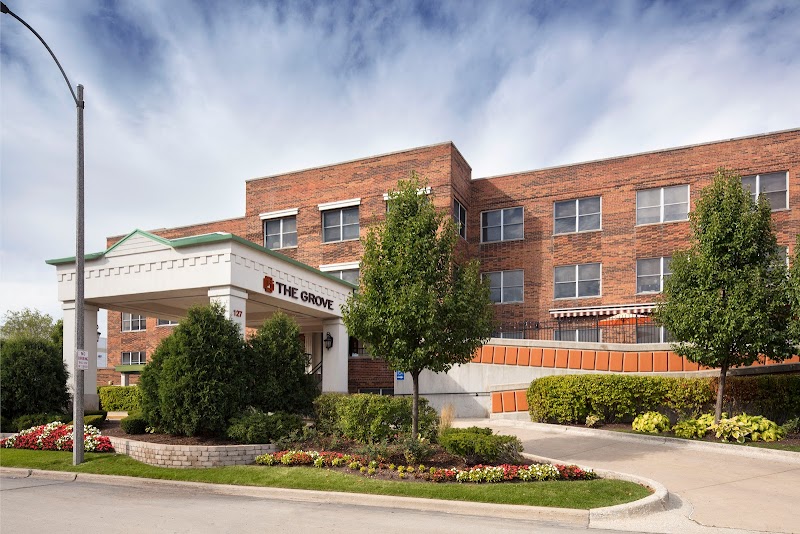
How is Grove Of Elmhurst, The Staffed?

CMS rates GROVE OF ELMHURST, THE's staffing level at 1 out of 5 stars, which is much below average compared to other nursing homes. Staff turnover is 55%, which is 9 percentage points above the Illinois average of 46%. High turnover can affect care consistency as new staff learn residents' individual needs. RN turnover specifically is 68%, which is notably high. RNs provide skilled clinical oversight, so turnover in this role can affect medical care quality.

What Have Inspectors Found at Grove Of Elmhurst, The?

State health inspectors documented 51 deficiencies at GROVE OF ELMHURST, THE during 2022 to 2025. These included: 1 Immediate Jeopardy (the most serious level, indicating potential for serious harm or death), 2 that caused actual resident harm, and 48 with potential for harm. Immediate Jeopardy findings are rare and represent the most serious regulatory concerns. They require immediate corrective action.

Who Owns and Operates Grove Of Elmhurst, The?

GROVE OF ELMHURST, THE is owned by a for-profit company. For-profit facilities operate as businesses with obligations to shareholders or private owners. The facility is operated by LEGACY HEALTHCARE, a chain that manages multiple nursing homes. With 180 certified beds and approximately 138 residents (about 77% occupancy), it is a mid-sized facility located in ELMHURST, Illinois.
How Does Grove Of Elmhurst, The Compare to Other Illinois Nursing Homes?

Compared to the 100 nursing homes in Illinois, GROVE OF ELMHURST, THE's overall rating (2 stars) is below the state average of 2.5, staff turnover (55%) is near the state average of 46%, and health inspection rating (3 stars) is at the national benchmark.

What Should Families Ask When Visiting Grove Of Elmhurst, The?

Based on this facility's data, families visiting should ask: "What changes have been made since the serious inspection findings, and how are you preventing similar issues?" "How do you ensure continuity of care given staff turnover, and what is your staff retention strategy?" "Can you walk me through typical staffing levels on day, evening, and night shifts?" "Can I visit during a mealtime to observe dining assistance and food quality?" These questions are particularly relevant given the facility's Immediate Jeopardy citations, the facility's high staff turnover rate, and the below-average staffing rating.

Is Grove Of Elmhurst, The Safe?

Based on CMS inspection data, GROVE OF ELMHURST, THE has documented safety concerns. Inspectors have issued 1 Immediate Jeopardy citation (the most serious violation level indicating risk of serious injury or death). The facility has a 2-star overall rating and ranks #100 of 100 nursing homes in Illinois. Families considering this facility should ask detailed questions about what corrective actions have been taken since these incidents.

Do Nurses at Grove Of Elmhurst, The Stick Around?

Staff turnover at GROVE OF ELMHURST, THE is high. At 55%, the facility is 9 percentage points above the Illinois average of 46%. Registered Nurse turnover is particularly concerning at 68%. RNs handle complex medical decisions and coordinate care — frequent RN changes can directly impact care quality. High turnover means new staff may not know residents' individual needs, medications, or preferences. It can also be disorienting for residents, especially those with dementia who rely on familiar faces. Families should ask: What is causing the turnover? What retention programs are in place? How do you ensure care continuity during staff transitions?

Was Grove Of Elmhurst, The Ever Fined?

GROVE OF ELMHURST, THE has been fined $76,917 across 2 penalty actions. This is above the Illinois average of $33,848. Fines in this range indicate compliance issues significant enough for CMS to impose meaningful financial consequences. Common causes include delayed correction of deficiencies, repeat violations, or care failures affecting resident safety. Families should ask facility leadership what changes have been made since these penalties.

Is Grove Of Elmhurst, The on Any Federal Watch List?

GROVE OF ELMHURST, THE is not on any federal watch list. The most significant is the Special Focus Facility (SFF) program, which identifies the bottom 1% of nursing homes nationally based on persistent, serious quality problems. Not being on this list means the facility has avoided the pattern of deficiencies that triggers enhanced federal oversight. This is a positive indicator, though families should still review the facility's inspection history directly.