PARK PLACE CHRISTIAN COMMUNITY
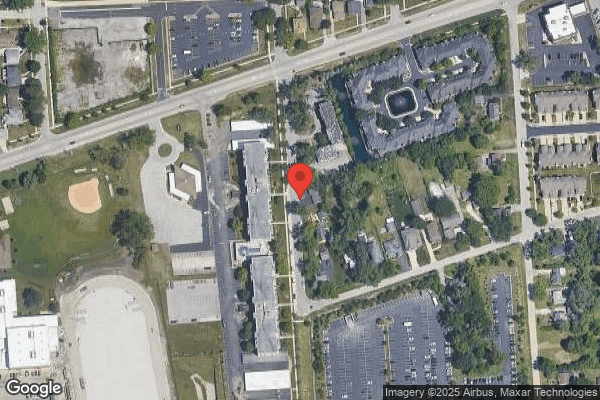
1150 EUCLID AVENUE, ELMHURST, IL 60126 (630) 936-4100
Non profit - Corporation 37 Beds Independent Data: November 2025
Trust Grade
90/100
#72 of 665 in IL
Last Inspection: April 2025

Within standard 12-15 month inspection cycle. Federal law requires annual inspections.

Overview

Park Place Christian Community in Elmhurst, Illinois, has received a Trust Grade of A, indicating it is considered excellent and highly recommended for families seeking care. Ranking #72 out of 665 facilities in Illinois places it in the top half, while its county rank of #4 out of 38 shows it has only a few local competitors performing better. However, the facility is experiencing a worsening trend, with issues increasing from 2 in 2024 to 4 in 2025. Staffing is a strong point with a 5/5 star rating and a turnover rate of only 24%, significantly lower than the state average, meaning the staff is stable and familiar with residents. Notably, there were no fines recorded, and the facility has more RN coverage than 99% of Illinois facilities, which is beneficial for resident care. On the downside, there were some concerning incidents reported, including a serious case where a resident was injured due to improper transfer assistance, resulting in a fracture. Additionally, the facility failed to properly label and store food items, which raises hygiene concerns, and there were issues with cross-contamination during care procedures, putting residents at risk. While there are notable strengths, these weaknesses should be carefully considered by families researching this facility.

Trust Score
A
90/100
In Illinois
#72/665
Top 10%
Safety Record
Moderate
Needs review
Inspections
Getting Worse
2 → 4 violations
Staff Stability
✓ Good
24% annual turnover. Excellent stability, 24 points below Illinois's 48% average. Staff who stay learn residents' needs.
Penalties
✓ Good
No fines on record. Clean compliance history, better than most Illinois facilities.
Skilled Nurses
✓ Good
Each resident gets 120 minutes of Registered Nurse (RN) attention daily — more than 97% of Illinois nursing homes. RNs are the most trained staff who catch health problems before they become serious.
Violations
○ Average
8 deficiencies on record. Average for a facility this size. Mostly minor or procedural issues.
★★★★★
5.0
Overall Rating
★★★★★
5.0
Staff Levels
★★★★☆
4.0
Care Quality
★★★★☆
4.0
Inspection Score
Stable
2024: 2 issues
2025: 4 issues

The Good

  • 5-Star Staffing Rating · Excellent nurse staffing levels
  • 4-Star Quality Measures · Strong clinical quality outcomes
  • Low Staff Turnover (24%) · Staff stability means consistent care
  • Full Sprinkler Coverage · Fire safety systems throughout facility
  • No fines on record
  • Staff turnover is low (24%)

    24 points below Illinois average of 48%

Facility shows strength in staffing levels, quality measures, staff retention, fire safety.

The Bad

No Significant Concerns Identified

This facility shows no red flags. Among Illinois's 100 nursing homes, only 1% achieve this.

The Ugly 8 deficiencies on record

1 actual harm
Apr 2025 4 deficiencies
CONCERN (D)

Potential for Harm - no one hurt, but risky conditions existed

Resident Rights (Tag F0550)

Could have caused harm · This affected 1 resident

Based on observation, interview and record review, the facility failed to treat residents with dignity while providing care. This applies to 2 of 2 residents (R24 and R16) reviewed for dignity in a s...

Read full inspector narrative →
Based on observation, interview and record review, the facility failed to treat residents with dignity while providing care. This applies to 2 of 2 residents (R24 and R16) reviewed for dignity in a sample of 15. The findings include: On 04/23/25 at 12:08 PM, V8 CNA (Certified Nurses' Assistant) was standing over R24 feeding him spoonsful of a red thickened drink. V8 then went to another table and stood over R16 feeding her mashed potatoes, a green pureed food, and gave her a drink of a red liquid. On 04/24/25 at 10:17 AM, V2 DON (Director of Nursing) said that staff should be sitting while feeding residents to have a better visual observation of the resident and for the resident's dignity. The facility's Resident Rights and Responsibilities - Exhibit D policy (no dated shown) showed, These resident rights, policies and procedures ensure that each resident has a right to a dignified experience, self-determination and communication with the access to persons and services inside and outside the facility.
CONCERN (E)

Potential for Harm - no one hurt, but risky conditions existed

Deficiency F0761 (Tag F0761)

Could have caused harm · This affected multiple residents

4. On 04/23/25 at 11:36 AM, there was 1 bottle of antifungal powder on R1's bedside table, and 1 unopened vial of albuterol sulfate 2.5mg/3ml next to the nebulizing machine in a portable shelving unit...

Read full inspector narrative →
4. On 04/23/25 at 11:36 AM, there was 1 bottle of antifungal powder on R1's bedside table, and 1 unopened vial of albuterol sulfate 2.5mg/3ml next to the nebulizing machine in a portable shelving unit. R1's 11/13/24 physician's order showed Albuterol Sulfate inhalation Nebulization Solution (2.5 MG/3ML) 0,083% (Albuterol Sulfate) 3ml inhale orally via nebulizer every 6 hours as needed for wheezing. On 4/24/25 a review of R1's physician's orders did not show an order for antifungal powder. On 04/24/25 at 10:21 AM, V2 Director of Nursing (DON) said the reasons that medications should not be in the residents' rooms are for safety issues, someone else can use the medication and there is a risk of double dosing the medications or a drug interacting with other medications that are being given. 5. 04/23/25 at 11:48 AM, one 3 oz. bottle of antifungal powder was on R15's over the bedside table. R15's 3/23/25 physician's order showed Miconazole External Powder 2% (Antifungal powder) apply to groin and folds as needed for itching (rash/redness) 6. On 04/23/25 at 11:13 AM, there was 1 bottle of medicated shampoo in R24's bathroom. R24's 3/25/24 physician's orders showed Ketoconazole External Shampoo 2%. Apply to scalp topically in the morning every Tuesday and Friday for Seborrheic Dermatitis. Based on observation, interview, and record review, the facility failed to ensure that resident medications were secured. This applies to 6 of 6 residents (R1, R8, R9, R15, R23 and R24) reviewed for medication storage in a sample of 15. Findings include: 1. On 04/23/25 at 10:23 AM, located on the over bed table, R8 had a bottle of chlorpheniramine maleate 4mg (milligram) 100 count bottle, two 1 fl oz (fluid ounce) bottles of Sodium Carboxymethylcellulose, one bottle of Ketotifen fumarate 10ml (milliliter), one bottle of povidone 0.33 fl oz, and one 12 oz bottle of aluminum hydroxide / magnesium hydroxide / simethicone. R8 stated she uses the eye drops at night when her eyes are dry. V8 stated she takes a teaspoon of the aluminum hydroxide / magnesium hydroxide / simethicone before she eats, when she has acid reflux, or heart burn. V8 stated she has acid reflux or heart burn quite often. V8 stated the medications are just over the counter. V8 stated the medications have always been sitting out and the staff never asked her about them or said she couldn't have them or said they needed to be put away. The facility policy Medication Administration dated 5/9/2023 states medications are prepared and administered as prescribed in accordance with good nursing principles and practices and only by persons legally authorized to do so. The medication storage is locked whenever unattended . 2. On 04/23/25 at 11:01 AM, R23 had nystatin 15gm (gram) bottle and miconazole nitrate 3 oz on his nightstand. On 04/23/25 at 11:35 AM, R23 stated the facility staff placed the creams and powders in his room. R23 stated he does not apply any of the items on himself. On 04/23/25 at 12:02 PM, V2 DON (Director of Nursing) stated they were unaware of R8 and R23 having medications at their bedside. On 04/24/25 at 09:09 AM, R23 had two 2.5 oz tubes of miconazole nitrate ointment and on bottle of miconazole nitrate powder 3 oz on his nightstand. V13 RN (Registered Nurse) stated R23's daughter requested they be left at the bedside, but the medications should still be secured. 3. On 4/23/2025 at 10:45 AM, R9 was in bed. R9's bedside table had unsecured bottles of Tylenol (acetaminophen) 500mg (milligram) tablets and Systane eye drops. R9's Tylenol and Systane medications were filled and open. R9 said she had brought the medications from home for her personal use. On 4/24/2025 at 11:40 AM, V2 (DON) said R9's medications should have been properly secured in a locked drawer in her room to ensure the safety of other residents. R9's Order Summary Report dated 4/24/2025 had active orders for Systane Ophthalmic Solution 0.4-0.3% for 1 drop to both eyes two times a day and Tylenol Extra Strength 500 MG give 1 tablet by mouth every 6 hours as needed for pain. The orders indicated R9's medications could be self-administered and kept at the bedside. The facility policy Medication-Self Administration states medication for self-administration will be stored in the medication cart and will be placed in appropriate medication cups and brought to the resident by the licensed nurse for resident administration. If the resident requests medication to be left in the room, a locked, permanently affixed box in the resident room must be provided for this purpose.
CONCERN (F)

Potential for Harm - no one hurt, but risky conditions existed

Food Safety (Tag F0812)

Could have caused harm · This affected most or all residents

Based on observation, interview, and record review, the facility failed to label/date/seal/store food items, remove expired items, and sanitize the food preparation counter in the facility kitchen. T...

Read full inspector narrative →
Based on observation, interview, and record review, the facility failed to label/date/seal/store food items, remove expired items, and sanitize the food preparation counter in the facility kitchen. This applies to all residents that receive oral nutrition and foods prepared in the facility kitchen. Findings include: The facility's Long-Term Care Facility Application for Medicare and Medicaid (Form CMS-Centers for Medicare and Medicaid Services-671) dated 4/23/25 documents that the total census was 36 residents. On 4/23/25 at 11:00 AM, V4 (Director of Dining Services) said all 36 residents eat from the facility kitchen. 1. On 4/23/25 at 10:58 AM, V4 (Director of Dining Services) was asked to test the sanitation bucket in the kitchen prep area. V4 picked the bucket of sanitizer solution up from the floor, placed it on the preparation counter next to cook who was prepping desserts, and V4 tested strip. V4 then removed the sanitizer solution bucket from the prep counter and placed it back on the floor and walked away. V4 then returned to the prep area and waited for surveyor to continue kitchen tour. Surveyor then had to ask V4 to sanitize the prep counter where he had placed the sanitizer bucket from the floor. On 4/24/25 at 12:28 PM, V4 said the food preparation counter should be sanitized after a bucket from the floor is placed on it to minimize the chance of bacteria from counter contaminating food items. The facility's policy titled, Cleanliness and Sanitation of Service Areas last reviewed 10/24 states, Policy: The cleanliness and sanitation of the serving area is to be maintained . Procedures: .The Dining Services Manager/designee will: 1. Monitor employees to ensure that the meal serving area is properly maintained and all foods are served safely . 2. On 4/23/25 starting at 10:09 AM, the facility kitchen was toured in the presence of V4 and the following was found: In walk-in cooler: a. Medium sized silver bin of crab salad, no label or date b. Small silver bin of tomato paste with expiration date of 4/19/25; expired. c. Small silver bin of ground beef, no label or date. d. Small silver bin labeled straw (strawberry) with expiration date 4/15/25; expired. e. A large shallow tray of 18 leftover sausage links, uncovered and sitting in a thick white congealed substance. f. A large tray of leftover prime rib, not sealed, with multiple small remnants of beef in bottom of tray with thick white congealed substance surrounding. In roll-in prep cooler: g. 2 bags of meat, unlabeled and undated. h. A small silver bin of crab salad dated 5/23/25 good through 5/28/25. V4 was asked how long prepared salads are good in the refrigerator for and he said 3 days; crab salad was labeled wrong. In reach-in freezer: i. Five pies, unlabeled, undated, and uncovered. j. Medium sized bin with 5 salmon filets, unlabeled and undated. In dry storage: k. A 25 pound box with bag of semisweet chocolate chips, not sealed and open to air. V4 said the bag being open was risk for contamination. l. A 10 pound box with a bag of graham crumbs, not sealed and open to air. In walk-in produce cooler: m. A medium tray of diced mushrooms, unlabeled and undated. In dairy cooler: n. A 32 ounce carton of heavy whipping cream left opened, not sealed. On 4/24/25 at 12:28 PM, V4 said all food items in the kitchen should be labeled and dated to make sure they are not serving the residents food that will make them sick. V4 said all opened and leftover food items should be sealed/covered to prevent contamination and foodborne illness. V4 said prepared salads, such as crab salad, is only good for 3 days and there is potential for resident illness if served after 3 days. V4 said expired food items should be removed from food storage as soon as they expire so the kitchen staff doesn't accidentally serve the expired food item and cause resident illness. The facility's policy titled, Food Storage Expiration Dates last reviewed 10/24 states, Policy: All opened food that is placed into storage shall be labeled with the product name, date opened and/or expiration, or use-by date . Procedures: Foods that expire 3 days after opening: leftover foods, prepared salads . The facility's policy titled, Storage last reviewed 10/24 states, Policy: All food, chemicals and supplies should be stored in a manner that ensures quality and maximizes safety of the food served .Procedures: .7. Store food in original container if the container is clean, dry and intact. If necessary, repackage food in clean, well-labeled containers using food storage label .Storeroom Sanitation: .2. Dispose of items that are beyond the expiration or use-by dates .
CONCERN (F)

Potential for Harm - no one hurt, but risky conditions existed

Infection Control (Tag F0880)

Could have caused harm · This affected most or all residents

Based on observations, interviews, and record reviews, the facility failed to mitigate the risk of cross contamination during resident care and during handling of soiled clothing/materials. This fail...

Read full inspector narrative →
Based on observations, interviews, and record reviews, the facility failed to mitigate the risk of cross contamination during resident care and during handling of soiled clothing/materials. This failure applies to 4 of 4 residents (R24, R16, R84, R8) reviewed for hand hygiene, and all 36 residents in the facility for soiled linen handling. The facility's Long-Term Care Facility Application for Medicare and Medicaid (Form CMS-Centers for Medicare and Medicaid Services-671) dated 4/23/25 documents that the total census was 36 residents. The findings include: 1. On 04/24/25 at 09:17 AM, V3 (Wound Nurse) and V9 (Nurse) were providing wound care and incontinence care for R24. R24 had a pressure wound to his left gluteal fold. V9 pushed a garbage can toward V3 with her foot. V3 used her right hand and picked up the garbage can and placed the can next to her. V3 then with her unclean gloved hands opens R24's brief and then touches R24's pressure wound spreading the wound open to examine the wound. V3 described the wound drainage and discarded her gloves in the garbage can, cleaned her hands, put on new gloves and provided wound care. After providing wound care the nurses provided incontinence care for R24 because R24 urinated and had a bowel movement while they were providing wound care. After V3 had cleaned stool from R24's buttocks, she removed her gloves, cleaned her hands put on new gloves. V3 pushed a clean brief under R24 and then tucked the soiled brief under R24, then removed the soiled brief. After handling the soiled brief and without changing her gloves or performing hand hygeine, V3 turned R24 in his bed, finished attaching the clean brief, repositioned R24 in the bed, adjusted R24's gown, pulled R24's linen on him, and then adjusted a towel that was placed under R24 chin. On 04/24/25 at 09:45 AM, V3 said that she should not have touched the wound with the gloved hands after she picked up the garbage can to prevent cross-contamination. V3 said that after removing the soiled brief, she should have removed her gloves, cleaned her hands, and put on new gloves to prevent infections. On 04/24/25 at 10:25 AM, V2 (DON) said that V3 should have taken her gloves off and performed hand hygiene and then put new gloves on after picking up the garbage can and before touching the wound for infection control. V2 said that V3 should have removed her gloves and cleaned her hands and put on new gloves after touching the soiled brief before touching clean areas for infection control. The facility's Infection Control Nursing Procedures, Subject: Hand Washing (reviewed date 12/24) showed the purpose of hand washing is considered one of the most effective infection control measures. Frequency: after handling any contaminated items, after contact with inanimate objects or immediate vicinity of a client, before and after contact with a client's intact skin, during client care, after accidental contact with any bodily fluids, mucous membranes, non intact skin or wound dressings, if hands will be moving from a contaminated body site to a clean body site, during client care, before and after using gloves, handling food, client care, and in food service . 2. On 04/23/25 at 12:08 PM, V8 CNA (Certified Nurse's Assistant) was feeding R24 with her right-hand 2 spoonsful of a red drink, the drink had been thickened. Then V8 goes to R16 and starts to feed R16 using her right hand. V8 gave R16 a spoonful of mashed potatoes then a drink, still using her right hand, then gives her a spoonful of a green pureed substance again with her right hand. V8 did not clean her hands between feeding R24 and R16. 3. On 04/23/25 at 12:12 PM, V9 (Nurse) was sitting at a table between R24 and R84 feeding R24 and R84 using her right hand for both residents. V9 did not clean her hands in-between feeding them. V9 using her right hand gave R24 a spoonful of brown pureed food then put a spoonful of green pureed food into R84's mouth, then back to R24 and gave R24 another spoonful of brown pureed food, only using her right hand. V9 used her right hand again to give R84 a drink of a red liquid, and then gave R24 a spoonful of a red thickened drink. V9 did not clean her hands in between feeding the residents. On 04/24/25 at 10:17 AM, V2 DON (Director of Nursing) said that the staff should have cleaned their hands when going from one resident to another. V2 said that this should be done for infection control and cross-contamination. 4. On 04/24/25 at 10:41 AM - 11:14 AM, a tour of the laundry room was conducted with V2 Director of Nursing (DON) present. There were two 50-gallon containers with soiled mop heads and other cleaning items in it and the containers did not have lids on them waiting to be washed. There was an open bag of soiled clothing on the floor by the washing machines. V2 (DON) said that the 50-gallon container should have a lid to contain bacteria and the soiled clothing on the floor should not be there because there is a potential for spreading bacteria, it can get on staff's shoes and then they go out on the floor and spread the bacteria on the floor. Then at 11:06 AM, during the tour of the laundry room, V6 (Housekeeper) brings an open bag of dirty clothing protectors in and drops it on the floor in front of the washing machines. The facility's Soiled Laundry Transport policy dated review date 4/2025 showed soiled linens are to be transported to laundry area in a secure manner. While in laundry room, secure the cover to the soil laundry cart. Place the soiled laundry into a cart or switch with empty cart and immediately re-secure the lid to the cart. 5. On 04/24/25 at 12:55 PM, V11 and V12 (CNAs-Certified Nursing Assistant) assisted during R8's incontinence care. With gloved hands, V11 and V12 removed R8's pants and soiled disposable undergarment. V11 wiped R8's vaginal area with gloved hands, then removed the soiled gloves and retrieved more gloves from a box on the wall and placed them in her right shirt pocket. V11 put on a new pair of gloves and wiped R8's rectum. V11 removed her gloves, washed her hands, and put a new pair of gloves on, and placed a clean disposable brief under R8. V11 took A and D ointment from a jar and applied to R8's vaginal area with her right gloved hand. V11 removed that glove and put on a glove she took from her right shirt pocket. V11 then applied A and D ointment on R8's buttocks and rectum, removed the soiled gloves, and put on gloves from her shirt pocket. V11 and V12 then fastened R8's brief and assisted her to position in bed. V11 and V12 both removed their gloves. V12 then put another pair of gloves on to close R8's window blinds. On 04/24/25 at 01:17 PM, V11 CNA stated she cleans her hands prior to providing care but does not need to clean her hands every time she removes her gloves only when placing a new disposable brief. On 04/24/25 at 03:23 PM, V2 DON (Director of Nursing) stated improper hand hygiene during incontinence care can contribute to the development of urinary tract infections.
Sept 2024 1 deficiency 1 Harm
SERIOUS (G) 📢 Someone Reported This

A family member, employee, or ombudsman was alarmed enough to file a formal complaint

Actual Harm - a resident was hurt due to facility failures

Accident Prevention (Tag F0689)

A resident was harmed · This affected 1 resident

**NOTE- TERMS IN BRACKETS HAVE BEEN EDITED TO PROTECT CONFIDENTIALITY** Based on interview and record review, the facility failed to safely transfer a resident during toileting when a gait belt was no...

Read full inspector narrative →
**NOTE- TERMS IN BRACKETS HAVE BEEN EDITED TO PROTECT CONFIDENTIALITY** Based on interview and record review, the facility failed to safely transfer a resident during toileting when a gait belt was not used, and required assistance was not provided. This failure resulted in R1 sustaining an acute comminuted fracture of the left femur due to a fall incident occurred during direct care. This applies to 1 of 3 residents (R1) reviewed for falls in the sample of 3. The findings include: The EMR (Electronic Medical Record) showed R1, a 92-year -old with diagnoses includes dementia, depression, osteopenia, osteoarthritis, stroke, history of breast cancer and pulmonary embolism. R1's surgical history includes right knee replacement. R1 was Covid positive on August 4,2024. R1 was originally admitted to the MMC (Memory Care Center) in the facility on October 11, 2019. R1 was transferred to the skilled section in the facility on September 3, 2024. due to declining condition, multiple falls, and weakness. The incident report log showed R1 had 2 falls for 2 weeks period. The incident report dated September 7, 2024 at 4:40 P.M., showed R1 ended up on the bathroom floor when R1 was getting off the toilet and slid down. The incident report dated September 16, 2024 at 2:00 P.M., showed during toilet assistance by V3 (CNA/Certified Nurse Assistant), R1's was assisted to the floor because R1's knees buckled up during the toilet/transfer assistance. This incident showed R1 had complained of pain to the left lower extremity after the fall. An x-ray was done on same day, with result of acute comminuted impacted supracondylar fracture of the left femur. The progress notes dated 9/16/2024 showed R1 was sent out to the hospital and was admitted due to fracture. On September 20,2024 at 12:14 P.M., V2 (Director of Nursing) said R1's fall on September 7, 2024 was because R1 was left alone in the bathroom as the CNA provided privacy to R1. V2 added R1's fall on September 16,2024 happened when V3 assisted R1 to the toilet, then R1 got weak, and legs buckled up. V2 said V3 assisted R1 to the floor. V2 added R1 then complained of left knee pain after the fall and x-ray was done. V2 said x-ray showed an acute fracture of R1's left femur. On September 20/2024 at 11:15 A.M., V4 (Registered Nurse) said he was the assigned nurse when R1 had a fall on September 16, 2024. V4 said he had also taken care of R1 when R1 was at the MMC. V4 said R1 was transferred to the skilled unit on September 3, 2024 due to R1's decline in level of functioning, was weak due to post Covid infection (August 4,2024). V4 said R1 had been falling at the MMC almost every other day and was then moved to skilled unit for closer supervision and assistance. V4 said when he arrived at the scene when R1 fell on September 16,2024, R1's knees were bent and R1's feet were caught between the toilet base and the legs of the toilet riser. R1's upper extremity was in upright position and lower extremity in sitting position on the floor, knees bent, and upper body slightly leaned towards the right side. V4 said R1 was assisted back to bed using a total lift mechanical transfer device. V4 said R1 had complained of pain to the left upper knee when touched. V4 said due to R1's declining condition, 2-person assist is required when providing care to ensure safety. On September 20,2024 at 10:38 A.M., V3 said she had assisted R1 to the bathroom on September 16,2024 around 2:00 P.M. V3 said she started assisting R1 in the bathroom from sitting position from the wheelchair. (R1) grabbed the grab bars to pull self-up to standing position. (R1) started to pivot transfer on her own while (V3) was pulling down R1's pants since (R1) had a large bowel movement. During this time, (R1's) legs buckled up, and there was no way to avoid falling to the floor so (V3) eased down (R1) to the floor. (R1's) feet caught in between the toilet base and toilet riser. (R1) complained of left upper leg pain. V3 called (V4) at once and they transferred (R1) to her bed via total lift device. V3 said she did not use gait belt to R1 during toilet transfer. V3 said while she was pulling down R1's pants, R1 had no stability and no assistance since V3 was pulling down R1's pants. On September 20,2024 at 12:44 P.M., V8 (RN/MDS/Care Plan) said R1 requires total assistance for lower body dressing, totally dependent from staff for toilet use, and required substantial assistance for transfer. On September 20,2024 at 2:50 P.M., V5 (CNA) said R1's functional level varies, sometimes R1 resist care and assistance of 2 person was required for safety. On September 20,2024 at 1:10 P.M., V9 (Occupational Therapist) said she had provided occupational treatment to R1 on September 6, 9, 10 and 13, 2024. V9 said R1's functional level varies and is unpredictable. V9 said at times R1 requires 75 % to 100 %, was totally dependent from staff then there were times R1 requires 25 % assistance. V9 added if a task is given one at a time to R1, then 1 person assist is okay since the assistance was focus on a single task, but if 2 or more tasks were provided at the same time, then 2 persons plus assistance was required for R1 to be safe during provision of care. V9 said when R1 was doing pivot transfer and V3 was pulling down R1's pants, V3 was doing assistance for undressing, and a transfer assistance task was not provided. V9 said, One task should be provided at a time with 1-person assist, and with 2 tasks being provided at same time, 2 persons assists were required. Also do not undress during pivot transfer. On September 22,2024 at 12:15 P.M., V2 said transfer belt/gait belt is a must to use when transferring a resident. V2 said 2 person assistance was required when 2 tasks of care is being provided at the same time. On September 20,2024 at 2:27 P.M., V10 (R1's Primary Physician) said she was notified on September 16, 2024 when R1 sustained a fall, landed on knees, and R1's knees were swollen. V10 said R1 sustained acute fracture of the left upper leg (femur) due to the fall incident occurred September 16.2024. The MDS (Minimum Data Set) dated September 9, 2024 showed R1's cognition was moderately impaired with BIMS (Brief Interview Mental Status) score of 8/15. The MDS also showed R1's functional level assessment as follows: -functional limitation in range of motion on both sides for both upper and lower extremities -dependent for toilet hygiene (the ability to maintain perineal hygiene, adjust clothes before and after voiding, or having a bowel movement) -dependent for lower dressing (ability to dress/undress below the waist) -dependent from sit to stand (ability to come from to a standing position from sitting position in a chair/wheelchair) -dependent for toilet transfer (the ability to get on and off a toilet or commode) The MDS code were as follows: -substantial/maximal assistance: Helper dose MORE THAN HALF the effort. Helper holds or lifts trunk, or limbs and provides more than half the effort. -dependent: Helper does ALL the effort. Resident does none of the effort to comply the activity. The assistance of 2 or more helpers is required for the resident to complete the activity. The care plan dated September 3,2024 showed R1 requires total assistance for lower body dressing, totally dependent from staff for toilet use, and required substantial assistance for transfer. The fall risk assessment dated [DATE] showed R1 was a high risk for fall. The progress notes dated September 20, 2024 showed R1 returned to the facility at 6:30 P.M. R1 was also placed on hospice care. On September 21, 2024 at 10:30 A.M. R1 was observed lying in her bed. R1 was lethargic and barely responsive. R1's left lower extremity was moderately swollen. The facility policy for Lifts and Safe Client Movement Program with review date of September 2024, showed: POLICY: is committed to providing safe care maximizes clients' quality of life while maintaining a safe work environment for employees. The Safe Client Movement Program includes client movement equipment, employee training, client plan of care and a culture of safety approach to safety in the work environment. 6. When a client is being assisted with a transfer and another ADL task is needed a client also needs assistance with such as dressing/undressing The facility policy for Gait Transfer Belt with review date of May 2024, showed: IMPORTANT POINTS: 2. Gait belt use is mandatory with all residents who need assistance in ambulation and /or transfer.
May 2024 1 deficiency
CONCERN (D)

Potential for Harm - no one hurt, but risky conditions existed

Medication Errors (Tag F0758)

Could have caused harm · This affected 1 resident

**NOTE- TERMS IN BRACKETS HAVE BEEN EDITED TO PROTECT CONFIDENTIALITY** Based on observation, interview and record review the facility failed to ensure that PRN (as needed) antianxiety medication orde...

Read full inspector narrative →
**NOTE- TERMS IN BRACKETS HAVE BEEN EDITED TO PROTECT CONFIDENTIALITY** Based on observation, interview and record review the facility failed to ensure that PRN (as needed) antianxiety medication orders had clinician documented rationale for use beyond 14 days, failed to identify and monitor target symptoms/behaviors and failed to implement non- pharmacological interventions prior to PRN medication use. This applies to 1 of 5 residents (R13) reviewed for unnecessary medications in the sample of 12. The findings include: R13's EMR (Electronic Medical Record) showed R13, [AGE] years old, was admitted to the facility on [DATE], with multiple diagnoses including Alzheimer's disease with late onset, personal history of other diseases of the nervous system and sense organs, anemia, primary hypertension, anxiety disorder, arthritis, history of left hip replacement and history of surgical repair of the right ankle. R13's MDS (Minimum Data Set) dated April 4, 2024, showed R13's cognition was severely impaired and was dependent on staff assistance for all ADLs (Activities of Daily Living) including bed mobility, eating, toileting, bathing, dressing, and transfer, and R13 could not sit unsupported requiring the use of a high back wheelchair with built in supports. R13's care plan initiated on September 30, 2022, for use of anti-anxiety medication showed the intervention to monitor/record target behavior of restlessness, anxiety, disrobing, inappropriate response to verbal communication and violence/aggression toward staff and others etc. and document behavior per facility protocol. Interventions included to administer anti-anxiety medication as ordered by the Physician. There were no non-pharmacological interventions to address anxiety, restlessness or agitation in the care plan. R13's pharmacy recommendation dated February 15, 2024, showed R13 was prescribed Lorazepam (anti-anxiety medication) 1 mg (milligram) every 4 hours PRN, greater than 14 days, without a stop date. R13's March 2024 MAR (Medication Administration Record) showed Lorazepam 1 mg, every 4 hours PRN order initiated on February 16, 2024, had a stop date of March 1, 2024. R13 was prescribed Lorazepam 1 mg. every 4 hours PRN on March 7, 2024, through March 21, 2024, without a note written by the prescriber documenting rationale for use. R13 was administered Lorazepam 1 mg on March 9, 2024, at 7:16 PM and March 13, 2024, at 7:43 AM, with No documented for behavior observed prior to administration. R13 was prescribed Lorazepam 1mg. every 4 hours PRN on March 22, 2024, with a stop date of April 5, 2024, without a note written by the prescriber documenting rationale for continued use. R13 was administered Lorazepam 1mg on March 27, 2024, at 9:00 AM with No documented for behavior observed prior to administration. R13's April 2024 MAR showed Lorazepam 1 mg. every 4 hours PRN was prescribed on April 5, 2024, through April 19, 2024. R13 was administered Lorazepam 1 mg PRN dose, without documentation of any behavior observed, prior to administration, on April 5, 2024, at 4:08 PM, April 6, 2024, at 1:23 AM, 8:00 AM and 12:00 PM; and April 10, 2024, at 12:06 AM, 6:51 AM and 12:57 PM. R13's EMR document titled Behavior Monitoring and Interventions for April 2024, showed no behavior observed was documented with a check mark; no behaviors were documented as being observed for the month. R13's EMR document titled Long Term Care Evaluation quarterly assessment, dated April 1, 2024, showed mood was pleasant, no unwanted behaviors witnessed. Resident sleeps through the night. R13's Psychiatric progress note dated April 1, 2024, showed Ativan (Lorazepam) PRN takes long time to work if it did, sometimes does not work. R13's Psychiatric progress note dated April 11, 2024, showed R13's medication regimen was Seroquel 12.5 mg every morning and 50 mg at bedtime, Vistaril 25 mg twice a day, Depakote 250 mg twice a day, and Ativan (Lorazepam)1 mg every 4 hours PRN. The note also showed Ativan is not effective anymore. On May 1, 2024, at 12:00 PM, V6 (Restorative CNA, Certified Nursing Assistant) stated R13 was ok this morning and she did not observe any behaviors. V6 stated V8 (CNA) fed R13 in the dining room for breakfast after getting her up in the wheelchair. V6 stated on a bad day R13 will sing loudly and then fidget with her hands, V6 demonstrated the behavior by rubbing her two hands together. V6 stated she doesn't think R13 was in pain at those times. R13 was observed sitting in the high back supportive wheelchair, in the dining room, with her eyes closed, being fed lunch by her private caregiver. On May 1, 2024, at 12:05 PM, V8 (CNA) stated R13's behavior was good today she got her up for breakfast and fed her in the dining room and stated she ate 50-75%. V8 stated she put R13 back to bed after breakfast. V8 stated she has seen R13 speak to V3 (nurse) but R13 doesn't speak to everyone. V8 stated R13 used to be a pianist and she likes music a lot. V8 described R13's behaviors as singing loudly and she is fidgety, but V8 stated she doesn't think R13's singing means she is agitated. V8 continued, sometimes when R13 is fidgety she thinks R13 may be in pain, and V8 then reports that to the nurse. V8 stated today, on May 1, 2024, at 6:00 AM, when she checked R13 she found her digging in her incontinence brief. V8 stated the incontinence brief was soiled. V8 changed R13's brief and R13 stopped digging, was not fidgeting and rested until V8 got R13 up in the chair for breakfast. On May 1, 2024, at 12:15 PM, V9 (RN Nurse) stated he has worked in the facility for 3 years on this unit. V9 stated he knows R13 well. V9 stated he gave R13 a Lorazepam 1mg dose at around 10:00 AM, this morning. V9 stated he gave the medication because R13 was fidgeting in her wheelchair, moving her arms and legs, and V9 wanted to prevent R13 from falling out of her chair. V9 also stated he did not try any non-pharmacological interventions prior to giving the Lorazepam medication. V9 stated sometimes R13 sings, and she appears anxious and other days R13 can go for a few days without appearing anxious. V9 stated we (facility staff) haven't tried a lot of non- pharmacological interventions. V9 also stated R13's singing may just be a form of self-expression, not a sign of anxiety. V9 stated R13's behavior has unknown triggers. V9 stated sometimes one of the private caregivers requests the staff to give a dose of Lorazepam to R13 and is unsure why the request is made, but the staff comply so as not to upset the caregiver/family. On May 1, 2024, at 2:55 PM, V2 (DON) stated R13 is not on hospice. V2 stated R13 has two caregivers and a very involved family. R13's medical doctor is aware of the psychiatrist's statement that Lorazepam is not effective, and the medical doctor is still prescribing the Lorazepam for R13. V2 was unable to provide documentation of non-pharmacological interventions attempted to reduce R13's anxiety symptoms upon request. V2 stated they have discussed with R13's family, further testing that is available to determine the causes of symptoms/behavior for R13 but that was not pursued due to R13's family being unwilling to pay for the testing. The facility's policy titled Use of Psychotropic Medications, dated 12/23, showed .2. The indications for initiating, withdrawing, or withholding medications as well as the use of non-pharmacological approaches will be determined by: a. assessing the resident's underlying condition, current signs, symptoms, expressions, and preferences and goals for treatment and b. identification of underlying causes (when possible) .4. b. for psychotropic drugs that are initiated after admission to the facility, documentation shall include: ii. Psychotropic medications shall be initiated only after medical, physical, functional, psychosocial, and environmental causes have been identified and addressed. iii. non-pharmacological interventions have been attempted, and the target symptoms for monitoring shall be included in the documentation .9. a. If the attending physician or prescribing practitioner believes that it is appropriate for the PRN order to be extended beyond 14 days, he or she shall document their rationale in the medical record and indicate the duration for the PRN order.
Sept 2023 1 deficiency
CONCERN (D) 📢 Someone Reported This

A family member, employee, or ombudsman was alarmed enough to file a formal complaint

Potential for Harm - no one hurt, but risky conditions existed

Pharmacy Services (Tag F0755)

Could have caused harm · This affected 1 resident

**NOTE- TERMS IN BRACKETS HAVE BEEN EDITED TO PROTECT CONFIDENTIALITY** Based on interview and record review, the facility failed to ensure medications were obtained from the pharmacy in a timely mann...

Read full inspector narrative →
**NOTE- TERMS IN BRACKETS HAVE BEEN EDITED TO PROTECT CONFIDENTIALITY** Based on interview and record review, the facility failed to ensure medications were obtained from the pharmacy in a timely manner to prevent residents from missing medication doses as ordered by the physician. This applies to 3 of 3 residents (R3, R4, and R5) reviewed for improper nursing care in delay in medication administration in the sample of 5. The findings include: 1. On September 27, 2023, at 10:51 AM, R3 was lying in bed in her room. R3 said she was admitted to the facility on [DATE], around 3:00 PM. R3 said she receives a medication for her restless leg syndrome every night (Pramipexole Dihydrochloride) two different eye drop medications for her glaucoma (Latanoprost and Timolol Maleate), and medication for her depression (Bupropion). R3 said, The medications were not here in the facility the first night I got here, so I did not receive them. I was most worried about the medication I take for my restless leg syndrome because it is so bad that when I don't take the medication, my arms start to shake as well. I did not get the medications that first night because the nurse said they did not get them from the pharmacy in time to give them to me. The EMR (Electronic Medical Record) shows R3 was admitted to the facility on [DATE]. R3 has multiple diagnoses including, orthopedic aftercare, lumbar region spinal stenosis with neurogenic claudication, post-hemorrhagic anemia, diabetes, heart failure, atrial fibrillation, mild asthma, major depressive disorder, and presence of a cardiac pacemaker. R3's MDS was not completed at the time of this investigation due to her recent admission to the facility. Nursing documentation dated September 21, 2023, shows R3 requires limited assistance by one facility staff member with all ADLs (Activities of Daily Living), including toilet use assistance. R3 has urinary incontinence related to her chronic lumbar spine issues. The EMR shows the following documentation by V14 (RN-Registered Nurse) dated September 21, 2022, related to R3's physician-ordered medications: 6:22 PM - Pramipexole Dihydrochloride oral tablet 0.75 mg. (milligrams). Give 1 tablet by mouth two times a day for Parkinson's Disease - medication not available. 6:22 PM - Bupropion HCl (Hydrochloride) ER (Extended Release) SR (Sustained Release) oral tablet extended release 12-hour 100 mg. Give 1 tablet by mouth two times a day for depression - medication not available. 6:23 PM - Timolol Maleate Ophthalmic Solutions 0.5%. Instill 1 drop in both eyes two times a day for glaucoma - medication not available. 7:01 PM - Fluticasone-Salmeterol 100-50 mcg. (Micrograms) Aerosol Powder, breath activated. Give 1 puff by mouth two times a day for asthma - medication not available. 9:25 PM - Pramipexole Dihydrochloride oral tablet 0.75 mg. Give 2 tablet by mouth at bedtime for Parkinson's disease (2 Tablets = 1.5 mg) - medication not available. 9:25 PM - Latanoprost Ophthalmic Solution 0.005%. Instill 1 drop in both eyes at bedtime for glaucoma - medication not available. The facility does not have documentation to show V14 (RN) contacted R3's physician to notify the medications were not available and the resident missed the medications, and the facility does not have documentation to show the pharmacy service was contacted to obtain a stat delivery of R3's medications. The pharmacy delivery manifest shows R3's medications were delivered to the facility on September 22, 2023, at 2:21 AM. 2. The EMR shows R4 was admitted to the facility on [DATE], and was sent to the local hospital on June 8, 2023. R4 did not return to the facility. R4 had multiple diagnoses including, cellulitis of the left upper limb, atrial fibrillation, hypertension, history of TIA (Transient Ischemic Attack), and presence of a cardiac pacemaker. R4's MDS dated [DATE], shows R4 was cognitively intact, was able to eat with supervision, required limited assistance with transferring between surfaces, and walking, and extensive assistance with all other ADLs. R4 was occasionally incontinent of urine and always continent of stool. The EMR shows the following documentation by V15 (RN) dated June 6, 2023, related to R4's physician-ordered medications: 10:45 PM - Timolol Hemihydrate Ophthalmic Solution 0.5%. Instill 1 drop in both eyes two times a day for glaucoma - medication not available. 10:45 PM - Sotalol HCl Oral tablet 160 mg. Give 1 tablet by mouth every morning and at bedtime for irregular heartbeat - med not available. R4's hospital After Visit Summary, printed on June 6, 2023, at 4:39 PM shows R4 was to start taking Amoxicillin (Antibiotic) 875 mg. on June 6, 2023, at 9:00 PM. The facility's documentation shows R4 received the medication on June 7, 2023, at 8:53 AM, approximately 12 hours after the medication was instructed to be administered by the hospital. The facility does not have documentation to show R4's physician was notified of the missed medication doses or if R4's Amoxicillin dosage could be delayed from June 6, 2023, at 9:00 PM to June 7, 2023, at 9:00 AM. The facility does not have documentation to show a stat delivery was requested from the pharmacy for R4's medications. The pharmacy delivery manifest shows the facility received R4's medications on June 7, 2023, at 1:33 AM. On September 28, 2023, at 9:53 AM, V12 (Pharmacist) said, I looked into the order entry from our end (pharmacy). The order for [R4's] Amoxicillin was put in correctly, as shown on the hospital orders, to start on the evening of June 6, 2023. From our internal audit, it looks like when the nurse at the facility went into the system to approve the order, the administration time got changed on her end and defaulted to start the medication the next day instead of on June 7, 2023, at 9:00 PM. On September 27, 2023, at 2:58 PM, V13 (RN) said R4 did not receive her evening medications, including her Amoxicillin on the night of her admission because the medications were not available in the facility. V13 said, The remote entry person at the pharmacy entered all the medication orders into the system before the resident got to the facility. The orders get put in a queue and then the nurses go in and check the orders and approve the medication orders to be profiled in the system. Since I looked in the STAT safe here at the facility for [R4's] Amoxicillin and it wasn't there, then I thought we would start it the next day (June 7, 2023). I did not call the physician to see if that was okay to do. I was not assigned to this resident and was just helping out the other nurse. On September 27, 2023, at 10:37 AM, V17 (Attending Physician) said, It is my expectation the facility follows the hospital discharge instructions, and also obtains the resident's medications from the pharmacy so the residents do not have to miss any doses of their medications. The facility should let me know if the resident's medications are not available and do everything possible to get the medications. 3. The EMR shows R5 was admitted to the facility on [DATE], with multiple diagnoses including, right pubis fracture, hypoxemia, diabetes, chronic kidney disease, atrial fibrillation, and heart failure. R5's MDS was not completed at the time of this investigation. The EMR shows the following documentation by V16 (RN) dated September 22, 2023, related to R5's physician-ordered medications: 7:39 PM - Jardiance Oral Tablet 10 mg. Give 1 tablet by mouth in the evening for diabetes related to Type 2 Diabetes Mellitus with unspecified complications with dinner - medication is not available. 8:00 PM - Metoprolol Tartrate oral tablet 25 mg. Give 1 tablet by mouth two times a day for hypertension - medication is not available. 8:00 PM - Cephalexin Oral Capsule 500 mg. Give 1 capsule by mouth two times a day for UTI (Urinary Tract Infection) for 5 days - medication is not available. 8:01 PM - Atorvastatin Calcium oral tablet 20 mg. Give 1 tablet by mouth at bedtime for hyperlipidemia - medication is not available. The facility does not have documentation to show R5's physician was notified the medications were not available and the resident missed the medications, and the facility does not have documentation to show the pharmacy service was contacted to obtain a stat delivery of R5's medications. The pharmacy delivery manifest shows R5's medications were delivered to the facility on September 23, 2023, at 2:28 AM. On September 27, 2023, at 11:28 AM, V12 (Pharmacist) said the facility receives two pharmacy deliveries a day. The deliveries leave the pharmacy at 2:00 PM and 1:00 AM. V12 said, The facility can get any medication delivered stat if they request it. There is a two-to-four-hour turnaround time. They just call the pharmacy and request a stat order. The facility's policy entitled, Medication Ordering and Receiving from Pharmacy - Ordering and Receiving Non-Controlled Medications from the Dispensing Pharmacy dated March 2021 shows: Policy: Medications and related products are received from the dispensing pharmacy on a timely basis. The facility maintains accurate records of medication order and receipt. A. Ordering Medications from the Dispensing Pharmacy: .3) Stat and emergency medications are ordered as follows: a. During regular pharmacy hours, the order is sent electronically or faxed to the pharmacy. The pharmacy is then notified of the emergency or stat order via the telephone. Such medications are delivered and administered within 4 hours. If available, the initial dose is obtained from the emergency kit, when necessary. The pharmacy Order cut-off and delivery times shows: [Pharmacy Service] never closes. To reach a member of our staff after 10:00 PM, Monday through Friday, or after 5:00 PM on weekends and holidays, please dial our main number and follow the prompts. The facility's Policy entitled, Medication Administration effective 10/95 and reviewed 5/9/2023 shows: Medications are prepared and administered as prescribed in accordance with good nursing principles and practices and only by persons legally authorized to do so.4. Medications are administered as prescribed by the practitioner's order, and in accordance with standards of nursing practice. The nurse administering the medication is responsible to reconcile all concerns with the prescriber prior to administering the medication.If a medication order cannot be followed for any reason, the prescriber is notified as soon as it is reasonable. This communication should be fully documented in the medical record.
Jun 2023 1 deficiency
CONCERN (D)

Potential for Harm - no one hurt, but risky conditions existed

Infection Control (Tag F0880)

Could have caused harm · This affected 1 resident

Based on observation, interview, and record review, the facility failed to follow standards of infection control practices related to hand hygiene and gloving during provision of incontinence care. Th...

Read full inspector narrative →
Based on observation, interview, and record review, the facility failed to follow standards of infection control practices related to hand hygiene and gloving during provision of incontinence care. This applies to 2 of the 14 residents (R16, R25) reviewed for infection control in the sample of 14. The Findings Include: 1. On 6/06/23 at 1:18 PM, V13 (Certified Nursing Assistant/CNA) rendered peri-care to R25. After R25 voided, V13 proceeded to clean R25's peri-area from front to back, then assisted R25 with repositioning, and pulled R25's brief and pants back up while wearing the same soiled gloves. 2. On 6/06/23 at 1:48 PM, V13 and V14 (CNA) rendered incontinence care to R16 who was wet with urine and had a bowel movement. V13 changed gloves from dirty to clean task without performing hand hygiene all throughout the incontinence care. On 6/06/23 at 2:55 PM, V4 (Director of Nursing/DON) stated every time that staff enters the resident's room, the staff must perform hand hygiene, and don gloves. If at any point of the care, the gloves get contaminated the staff must remove the soiled gloves, perform hand hygiene, wear another set of gloves then continue with the care. When the care is finished, remove the gloves and perform hand hygiene prior to leaving the room to prevent the spread of potential infection. Facility's Hand Hygiene Policy dated 9/14 (September 2014) shows: Purpose: Handwashing is considered one of the most effective infection control measures. Frequency: 6. Before and after having contact with a client's intact skin during client care 7. After accidental contact with any body fluids, mucous membranes, non-intact skin, or wound dressings 8. If hands will be moving from a contaminated body site to a clean body site during client care 9. Before and after using gloves (i.e., handling food, client care)
Understanding Severity Codes (click to expand)
Life-Threatening (Immediate Jeopardy)
J - Isolated K - Pattern L - Widespread
Actual Harm
G - Isolated H - Pattern I - Widespread
Potential for Harm
D - Isolated E - Pattern F - Widespread
No Harm (Minor)
A - Isolated B - Pattern C - Widespread

Questions to Ask on Your Visit

  • "Can I speak with families of current residents?"
  • "What's your RN coverage like on weekends and overnight?"

Our Honest Assessment

Strengths
  • • Grade A (90/100). Above average facility, better than most options in Illinois.
  • • No fines on record. Clean compliance history, better than most Illinois facilities.
  • • 24% annual turnover. Excellent stability, 24 points below Illinois's 48% average. Staff who stay learn residents' needs.
Concerns
  • • 8 deficiencies on record, including 1 serious (caused harm) violation. Ask about corrective actions taken.
Bottom line: Generally positive indicators. Standard due diligence and a personal visit recommended.

About This Facility

What is Park Place Christian Community's CMS Rating?

CMS assigns PARK PLACE CHRISTIAN COMMUNITY an overall rating of 5 out of 5 stars, which is considered much above average nationally. Within Illinois, this rating places the facility higher than 99% of the state's 100 nursing homes. This rating reflects solid performance across the metrics CMS uses to evaluate nursing home quality.

How is Park Place Christian Community Staffed?

CMS rates PARK PLACE CHRISTIAN COMMUNITY's staffing level at 5 out of 5 stars, which is much above average compared to other nursing homes. Staff turnover is 24%, compared to the Illinois average of 46%. This relatively stable workforce can support continuity of care.

What Have Inspectors Found at Park Place Christian Community?

State health inspectors documented 8 deficiencies at PARK PLACE CHRISTIAN COMMUNITY during 2023 to 2025. These included: 1 that caused actual resident harm and 7 with potential for harm. Deficiencies causing actual harm indicate documented cases where residents experienced negative health consequences.

Who Owns and Operates Park Place Christian Community?

PARK PLACE CHRISTIAN COMMUNITY is owned by a non-profit organization. Non-profit facilities reinvest revenue into operations rather than distributing to shareholders. The facility operates independently rather than as part of a larger chain. With 37 certified beds and approximately 35 residents (about 95% occupancy), it is a smaller facility located in ELMHURST, Illinois.

How Does Park Place Christian Community Compare to Other Illinois Nursing Homes?

Compared to the 100 nursing homes in Illinois, PARK PLACE CHRISTIAN COMMUNITY's overall rating (5 stars) is above the state average of 2.5, staff turnover (24%) is significantly lower than the state average of 46%, and health inspection rating (4 stars) is above the national benchmark.

What Should Families Ask When Visiting Park Place Christian Community?

Based on this facility's data, families visiting should ask: "Can I visit during a mealtime to observe dining assistance and food quality?" "How do you handle medical emergencies, and what is your hospital transfer rate?" "Can I speak with family members of current residents about their experience?"

Is Park Place Christian Community Safe?

Based on CMS inspection data, PARK PLACE CHRISTIAN COMMUNITY has a clean safety record: no substantiated abuse findings (meaning no confirmed cases of resident harm), no Immediate Jeopardy citations (the most serious violation level indicating risk of serious injury or death), and is not on the Special Focus Facility watch list (a federal program monitoring the lowest-performing 1% of nursing homes). The facility has a 5-star overall rating and ranks #1 of 100 nursing homes in Illinois. While no facility is perfect, families should still ask about staff-to-resident ratios and recent inspection results during their visit.

Do Nurses at Park Place Christian Community Stick Around?

Staff at PARK PLACE CHRISTIAN COMMUNITY tend to stick around. With a turnover rate of 24%, the facility is 22 percentage points below the Illinois average of 46%. Low turnover is a positive sign. It means caregivers have time to learn each resident's needs, medications, and personal preferences. Consistent staff also notice subtle changes in a resident's condition more quickly. Registered Nurse turnover is also low at 7%, meaning experienced RNs are available to handle complex medical needs.

Was Park Place Christian Community Ever Fined?

PARK PLACE CHRISTIAN COMMUNITY has no federal fines on record. CMS issues fines when nursing homes fail to meet care standards or don't correct problems found during inspections. The absence of fines suggests the facility has either maintained compliance or corrected any issues before penalties were assessed. This is a positive indicator, though families should still review recent inspection reports for the full picture.

Is Park Place Christian Community on Any Federal Watch List?

PARK PLACE CHRISTIAN COMMUNITY is not on any federal watch list. The most significant is the Special Focus Facility (SFF) program, which identifies the bottom 1% of nursing homes nationally based on persistent, serious quality problems. Not being on this list means the facility has avoided the pattern of deficiencies that triggers enhanced federal oversight. This is a positive indicator, though families should still review the facility's inspection history directly.