FOREST VIEW REHAB & NURSING CENTER
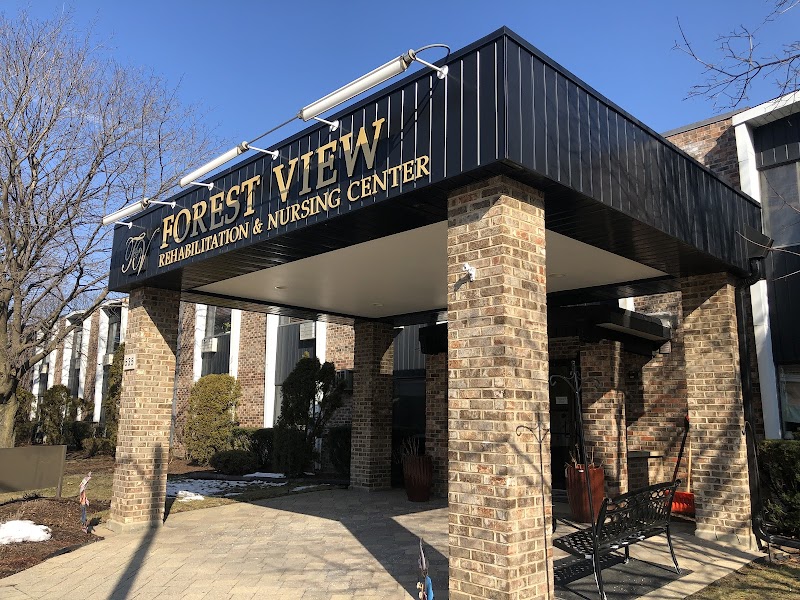
535 SOUTH ELM, ITASCA, IL 60143 (630) 773-9416
For profit - Partnership 144 Beds INFINITY HEALTHCARE CONSULTING Data: November 2025 3 Immediate Jeopardy citations
Trust Grade
0/100
#525 of 665 in IL
Last Inspection: May 2025

Inspected within the last 6 months. Data reflects current conditions.

Overview

Forest View Rehab & Nursing Center has received a Trust Grade of F, indicating significant concerns about the quality of care provided. This places them at #525 out of 665 facilities in Illinois, putting them in the bottom half of all nursing homes in the state, and at #35 out of 38 in Du Page County, meaning only two local facilities are worse. Unfortunately, the trend is worsening, with reported issues increasing from 21 in 2024 to 24 in 2025. Staffing is a relative strength, rated at 2 out of 5 stars, with a turnover rate of 30%, which is lower than the state average of 46%. However, the facility has troubling financial issues, with fines totaling $349,224, which is higher than 91% of Illinois facilities. There are also serious safety concerns, as recent inspections revealed critical incidents of physical abuse among residents that were not addressed properly. One incident involved a resident attacking another, resulting in a head injury that required hospital evaluation. In another case, the facility failed to implement necessary interventions to protect residents from abuse, which poses a risk to all individuals in the unit. While there are some staffing strengths, the overall quality and safety issues make this facility a concerning option for families considering care for their loved ones.

Trust Score
F
0/100
In Illinois
#525/665
Bottom 22%
Safety Record
High Risk
Review needed
Inspections
Getting Worse
21 → 24 violations
Staff Stability
✓ Good
30% annual turnover. Excellent stability, 18 points below Illinois's 48% average. Staff who stay learn residents' needs.
Penalties
✓ Good
$349,224 in fines. Lower than most Illinois facilities. Relatively clean record.
Skilled Nurses
○ Average
Each resident gets 39 minutes of Registered Nurse (RN) attention daily — about average for Illinois. RNs are the most trained staff who monitor for health changes.
Violations
⚠ Watch
69 deficiencies on record. Higher than average. Multiple issues found across inspections.
★☆☆☆☆
1.0
Overall Rating
★★☆☆☆
2.0
Staff Levels
★☆☆☆☆
1.0
Care Quality
★☆☆☆☆
1.0
Inspection Score
Stable
2024: 21 issues
2025: 24 issues

The Good

  • Low Staff Turnover (30%) · Staff stability means consistent care
  • Full Sprinkler Coverage · Fire safety systems throughout facility
  • No fines on record
  • Staff turnover is low (30%)

    18 points below Illinois average of 48%

Facility shows strength in staff retention, fire safety.

The Bad

1-Star Overall Rating

Below Illinois average (2.5)

Significant quality concerns identified by CMS

Federal Fines: $349,224

Well above median ($33,413)

Significant penalties indicating serious issues

Chain: INFINITY HEALTHCARE CONSULTING

Part of a multi-facility chain

Ask about local staffing decisions and management

The Ugly 69 deficiencies on record

3 life-threatening 6 actual harm
Sept 2025 2 deficiencies
CONCERN (E) 📢 Someone Reported This

A family member, employee, or ombudsman was alarmed enough to file a formal complaint

Potential for Harm - no one hurt, but risky conditions existed

Deficiency F0804 (Tag F0804)

Could have caused harm · This affected multiple residents

Based on observation, interview, and record review, the facility failed to follow the facility's policy to serve food at a palatable temperature. This applies to 6 of 6 residents (R1, R2, R3, R4, R5, ...

Read full inspector narrative →
Based on observation, interview, and record review, the facility failed to follow the facility's policy to serve food at a palatable temperature. This applies to 6 of 6 residents (R1, R2, R3, R4, R5, and R6) reviewed for dietary services in the sample 6. The findings include: On September 15, 2025, at 11:48 AM, during lunch tray line service with V5 (Cook) and V6 (Cook), V5 and V6 served resident room meal trays on hard plastic, non-warmed, room temperature plates with lids. V5 and V6 did not use thermal bases or heated plates. On September 15, 2025, at 12:47 PM, V6 prepared a test meal tray. V6 used a hard plastic, non-warmed plate and placed cheese tortellini with meat sauce, green beans, and one piece of a plain breadstick. V6 placed a lid on the plate and placed the plate directly onto a serving tray. The tray was placed on an open-air unit meal cart with the 1 North resident meal trays. At 12:51 PM, the meal cart was delivered to the 1 North resident hallway with the other resident meal trays. At 1:10 PM, when the last resident meal tray was delivered, V5 took the temperatures of the food on the test tray. V5 said the temperature of pasta with meat sauce was 110 degrees Fahrenheit and the green beans were 110 degrees Fahrenheit. The pasta with meat sauce and the green beans tasted lukewarm. On September 15, 2025, at 4:54 PM, R1 said her warm food is frequently served cold. On September 15, 2025, at 2:55 PM, R2 said his warm food is usually served cold. On September 15, 2025, at 5:23 PM, R3 said the facility food is disastrous and is almost always not served warm enough. On September 16, 2025, at 2:38 PM, R4 said the warm food is frequently served cold. On September 16, 2025, at 2:40 PM, R5 said he gets served cold food when it is supposed to be warm. On September 16, 2025, at 2:40 PM, R6 said food that is supposed to be warm is served cold and the food that is supposed to be cold is served warm. On September 16, 2025, at 12:28 PM, V4 (Dietitian) said the dietary staff should be using heated plates, warming bases, plate covers, and closed carts to transport food to resident rooms. V4 said the base and the lid help to maintain food temperatures. V4 said it is her expectation the food served to residents should not be less than 125 degrees Fahrenheit. The facility's policy titled, Food Temperatures at Point of Service dated July 14, 2023, shows, Policy: Food will be prepared, held, and served in a manner that preserves nutritive value and palatability.Procedure:.4. Best efforts will be made to present hot food hot and cold foods cold at point of service by using thermal lids and bases, heated or chilled plates and thermal pellets as necessary. The facility policy titled, Food Temperature Resident Service dated April 2022, shows, Policy: The facility will ensure foods are served in an attractive and at temperature that is palatable and acceptable to the residents. Procedure:.3. Food will be transported to the dining rooms or resident rooms in methods that maintain the proper temperatures of the food. 4. Hot foods will be served to the residents at a temperature palatable and acceptable to the resident, general practice should not be less than 125F.
CONCERN (F) 📢 Someone Reported This

A family member, employee, or ombudsman was alarmed enough to file a formal complaint

Potential for Harm - no one hurt, but risky conditions existed

Menu Adequacy (Tag F0803)

Could have caused harm · This affected most or all residents

Based on observation, interview, and record review, the facility failed to serve food portions as shown on the facility menu spreadsheet. This applies to 129 facility residents receiving oral diets. T...

Read full inspector narrative →
Based on observation, interview, and record review, the facility failed to serve food portions as shown on the facility menu spreadsheet. This applies to 129 facility residents receiving oral diets. The findings include: The Facility Data Sheet dated September 15, 2025, shows the facility census was 132 residents. The facility's Diet Type Report dated September 15, 2025, shows two residents had diet orders for nothing by mouth and one resident was a vegetarian. On September 15, 2025, at 11:48 AM, during lunch tray line service with V5 (Cook) and V6 (Cook), V5 said the tray line consisted of a tray of cheese tortellini combined with meat sauce, a tray of green beans, a tray of garlic bread slices, a tray of chopped pasta combined with meat sauce, a tray of mashed potatoes, and containers of pureed meat sauce, pureed pasta, and pureed green beans were being served to residents for lunch. The tray line did not show a container of pureed garlic bread. V6 said he was using a 4 oz spoodle for the tray of pasta mixed with meat sauce, a 4 oz spoodle for the green beans, a 4 oz scoop for the mechanical soft pasta combined with meat sauce, and #8 scoops for the pureed pasta, pureed meat sauce, pureed green beans, and mashed potatoes. Using the 4 oz spoodle, V6 served one scoop of pasta mixed with meat sauce for the regular diet meal trays. Using the 4 oz scoop, V6 served one scoop of chopped pasta mixed with meat sauce, and one scoop of mashed potatoes for the mechanical soft meal trays. V6 did not serve the mechanical soft meal trays soft bread. V6 served one scoop of pureed pasta, one scoop of meat sauce, and one scoop of pureed green beans for the pureed meal trays. V6 did not serve the pureed meal trays pureed bread. The facility's Menu Extension for September 15, 2025, shows the serving instructions for the regular and mechanical soft diets were to be served a 4 oz spoodle sauce over an 8 oz spoodle pasta for a portion size of 12 oz. The mechanical soft diets were to be served soft garlic bread. The pureed diets were to receive one #16 scoop of garlic bread. The facility's recipe titled, Pasta with Meat Sauce dated September 15, 2025, shows when using canned spaghetti sauce mixed with ground beef, serve 6 oz sauce over 4 oz spaghetti. On September 16, 2025, at 8:38 AM, V5 said he used canned sauce for yesterday's lunch of pasta with meat sauce. On September 16, 2025, at 12:28 PM, V4 (Dietitian) said dietary staff should be following the facility's menu extension to a T for serving instructions and portion sizes. V4 said since the regular and mechanical soft diets were served one 4 oz spoodle of combined pasta and meat sauce, the residents did not receive the correct portion size according to the menu extension. V4 said V6 should have served the correct portion size for the regular and mechanical soft diets and should have served the pureed diets the pureed bread as shown on the menu extension. The facility's undated policy titled, Accuracy of Quality of Tray Line Service shows, Policy: Tray line positions and set up procedures will be planned for efficient and orderly delivery. All meals will be checked for accuracy by the food and nutrition services staff, and by the service staff prior to serving the meal to the individual. Procedure: 1. The menu extension display items and amounts for each regular or therapeutic diet. 2. The director of food and nutrition services or designee will be responsible for assuring that all foods needed for meal assembly are present at the appropriate time.4. The meal will be checked against the therapeutic diet spread sheet to assure that foods are served as listed on the menu. 6. Each meal will be checked for: a. Correct name, room number, and diet order b. Accuracy of following the therapeutic diet extension c. Proper portion sizes.
Jul 2025 6 deficiencies
CONCERN (D) 📢 Someone Reported This

A family member, employee, or ombudsman was alarmed enough to file a formal complaint

Potential for Harm - no one hurt, but risky conditions existed

Deficiency F0744 (Tag F0744)

Could have caused harm · This affected 1 resident

**NOTE- TERMS IN BRACKETS HAVE BEEN EDITED TO PROTECT CONFIDENTIALITY** Based on interviews and record reviews, the facility failed to provide dementia care and behavioral interventions to a resident ...

Read full inspector narrative →
**NOTE- TERMS IN BRACKETS HAVE BEEN EDITED TO PROTECT CONFIDENTIALITY** Based on interviews and record reviews, the facility failed to provide dementia care and behavioral interventions to a resident who had chronic dementia-related behaviors. This applies to 1 of 3 residents (R25) reviewed for behavior management in a sample of 25. The findings include:Face sheet, dated 7/22/25, shows R25's diagnoses included alcohol use with alcohol-induced persisting dementia, psychosis, cerebrovascular disease, unsteadiness on feet, weakness, and major depressive disorder. The face sheet shows R25 was admitted to the facility on [DATE].MDS, dated [DATE], shows R25's cognition was moderately impaired. Pre-admission paperwork, dated 7/1/25, shows R25 showed agitation with combative behavior towards at the prior facility. The paperwork shows R25 fought with staff and hit, punched, cursed and threatened other residents at the prior facility. The paperwork showed R25 banged and punched walls and was sent to the hospital for the behaviors.Alzheimer's Special Care Unit Review, dated 7/22/25, shows R25 was easily annoyed, exhibited hallucinations/delusions, was restless and withdrawn, verbally/physically aggressive, and was resistant to care. The assessment shows the techniques to calm R25's behavior included, Sometimes will listen to staff members.R25's physical/verbal aggression care plan, initiated 7/22/25, shows R25 had a history of aggressive, inappropriate, attention-seeking and/or maladaptive behaviors, but demonstrated stability during the admission screening process and was considered appropriate for admission. The history included conflicts and altercations with others, threatening behavior, yelling, verbal and physical aggression, acting impulsive and erratically, and self-harmful and self-destructive behavior. The care plan showed R25 had a diagnosis of severe, chronic, persistent mental illness and a diagnosis of Alzheimer's disease or related dementia. Care plan interventions included conducting reviews of past behaviors and evaluating the likelihood of aggressive and inappropriate behaviors during the initial assessment process, intervene when inappropriate behaviors are observed, communicating assertively that the resident must exercise control over impulses and behavior, and refer the resident to a mental health professional such as a psychiatrist. The care plan shows if R25 is preoccupied by hallucinations and/or delusional thoughts, the staff were to remind him he was safe and secure in the facility.R25's anxiety and agitation care plan, initiated 7/22/25, shows R25 presented with moderate to extreme anxiety related to Alzheimer's disease or related dementia. The interventions included evaluating the potential causal factors contributing to feelings and anxiety, working with the resident to eliminate causes as possible, offering reassurance, teaching R25 stress-management techniques including deep breathing, counting to 10, reading, and journaling. Behavior notes, dated 7/17/25 at 17:37 on the day of admission to the facility, shows R25 received a physician order for Haldol related to wandering around the unit, going in and out of other resident rooms, and cursing and swearing at staff. The clinical record failed to show any evidence of individualized behaviors interventions attempted.MAR, dated 7/17/25 at 19:00, shows R25 re3cieved PRN (as needed) Haldol.Nursing progress note dated 7/17/25 at 21:59, R25's behavior escalated and R25 began swinging at staff when being removed from other resident rooms. R25 was unable to be redirected and was pacing and cursing in the hallways. R25 continued to be physically and verbally aggressive when followed by staff so 911 was called. The progress notes show R25 was discharged to the hospital, returned on 7/18/25, and continued to pace in the hallways and be combative when redirected. The clinical record failed to show any evidence of individualized behaviors interventions attempted.Nursing progress note, dated 7/18/25, shows R25 continued to wander into resident rooms taking resident items and was difficult to redirect. The note shows R25 was brought into his room several times but left his room after a few minutes. The 7/18/25 progress notes showed R25 continued to wander and go into resident rooms and became combative when asked to leave a room. The clinical record failed to show any evidence of individualized behaviors interventions attempted.Nursing progress notes, dated 7/19/25, showed R25 received a physician order for Depakote Delayed Release and his Haldol order was changed to every 6 hours as needed. Review of R25's MAR showed no use of R25's PRN Haldol on 7/18/25 or 7/19/25.R25's clinical record, dated 7/20/25, showed R25 continued to wander, curse, and threaten staff with harm when he was reprimanded. The progress notes show R25 received PRN Haldol on 7/20/25 at 6:00 AM. The clinical record failed to show any evidence of individualized behaviors interventions attempted.R25's clinical record, dated 7/21/25, showed R25 received Haldol at 2:45 AM and his Depakote dose was increased at 10:24 AM. The record shows at 5:00 PM, R25 hit a resident, and was sent to the hospital for aggression. No PRN Haldol was shown to be administered since his 2:45 AM dose. The clinical record failed to show any evidence of individualized behaviors interventions attempted.R25's clinical record, dated 7/22/25, show R25 returned to the facility at approximately 3:34 AM and again began showing physical aggression toward staff. The progress notes show administrative staff were called and a new involuntary transfer petition was initiated for transfer to the hospital. Progress note, dated 7/22/25 at 3:36 PM, shows R25 was presenting with agitation with combative behavior. and is a danger to self and others. and R25 received a physician order to be transferred to a mental health organization. The clinical record failed to show any evidence of individualized behaviors interventions attempted. Review of R25's PRN Haldol shows no Haldol was administered on 7/22/25.Face sheet, dated 7/28/25, shows R25 discharged from the facility on 7/22/25. On 7/23/25 at 2:33 PM, V35 (Registered Nurse) stated when R25 returned to the facility on 7/22/25, R25 was very aggressive, yelling, wandering into rooms and physically aggressive toward staff. V35 stated she immediately called V1 (Administrator) and even with 1:1 care R25 was very aggressive. V35 stated she walked with R25 and talked to him to try to calm him down and R25 was initially receptive and held her hand. V35 was unable to describe any other behavioral interventions that were attempted to redirect R25's behaviors. V35 stated an involuntary petition for admission to the hospital was completed and R25 was transferred from the facility.Facility document Guidelines for Caring for Residents with Alzheimer's and/or Dementia, dated 11/20/24 and provided by V1 (Administrator) as the facility policy regarding the care of dementia residents, fails to show how to identify and implement resident - specific behavior modifications to meet the psychosocial/behavioral needs of dementia residents.
CONCERN (E) 📢 Someone Reported This

A family member, employee, or ombudsman was alarmed enough to file a formal complaint

Potential for Harm - no one hurt, but risky conditions existed

Free from Abuse/Neglect (Tag F0600)

Could have caused harm · This affected multiple residents

**NOTE- TERMS IN BRACKETS HAVE BEEN EDITED TO PROTECT CONFIDENTIALITY** Based on interview and record review, the facility failed to ensure residents were free of physical abuse. This applies to 4 of ...

Read full inspector narrative →
**NOTE- TERMS IN BRACKETS HAVE BEEN EDITED TO PROTECT CONFIDENTIALITY** Based on interview and record review, the facility failed to ensure residents were free of physical abuse. This applies to 4 of 4 residents (R10, R15, R21, and R24) reviewed for abuse in a sample of 25.The findings include: 1. Face sheet, dated 7/15/25, shows R10's diagnoses included major depressive disorder, anxiety disorder, alcohol abuse, and bipolar disorder. MDS (Minimum Data Sheet), dated 7/1/25, shows R10 was cognitively intact.Face sheet, dated 7/22/25, shows R17's diagnoses included chronic obstructive pulmonary disease, acute and chronic respiratory failure, and major depression. MDS, dated [DATE], shows R17 was cognitively intact.On 7/22/25 at 2:48 PM, R10 stated she and R17 got into a fight when R10 was sitting outside the facility front door and R17 appeared with sunglasses that R10 stated were glasses R10 was offering for sale in her personal store at the facility. R10 stated she told R17 that R17 owed her two dollars for the sunglasses and R17 replied, Come and get them! R10 stated she grabbed the sunglasses off R17's head and accidently grabbed some of R17's hair. R10 stated R17 then shoved her into a brick pillar and cement wall. R10 showed she had two bruises from the incident: 1. A vertical bruise on her right shoulder/back area which was measured by V34 (Wound Nurse) and measured 11 cm (Centimeters) long and 2.5 cm wide. V25 described the bruise as greenish yellow with purple and a 1cm red center, 2. A horizontal bruise on her right buttocks which was measured by 34 and measured 11.5 long and 5 cm wide. V25 described the bruise as yellow-green with purple discoloration and no red areas. R10 stated the areas were still painful and described her pain post medication as an 8 out of 10 with 10 being the worst pain. R10 stated prior to taking her pain medication, her pain felt like 10 out of 10. R10 stated the injury from the altercation aggravated a previous car accident injury to her back. R10 stated R17 had a history of assaulting her. R10 stated in April, 2025, R10 and R17 got into a disagreement and R17 grabbed the back of R10's shirt. R10 stated she reported the incident, and the two residents were told by administration not to talk to each other. R10 stated R17's friend, R20, lives next door to R10 and R17 frequently visits R20's room. Witness statement, dated 7/17/25, shows R10 reported that she was pushed by R17 during the altercation.Witness statement, dated 7/17/25, shows R17 stated she pushed R10 away during the altercation.Witness statement, dated 7/16/25, shows R20 stated R10 and R17 were arguing, R10 grabbed R17's hair, and R10 went up against the wall.On 7/22/25 at 3:20 PM, R17 stated R10 was smoking at the front door of the facility and R17 was pushing R20 into the front door of the facility. R17 stated R10 began verbally taunting R17 and then grabbed R10's hair. R17 stated she pushed R10 into the cement shelf / brick pillar. R17 stated she pushed R20's wheelchair into the front door and R10 followed R17 and R20. R17 stated, When I let loose on [R10] they will call the ambulance. It ain't a joke no more.On 7/22/25 at 3:12 PM, R12 stated she witnessed R17 push R10 into the brick post, R10 hit her back and then fell. R12 stated she told V1 (Administrator) and the police what happened. R12 stated, It was a major push! R12 stated R10 was complaining that she was hurting all over her body.On 7/22/25 at 4:08 PM with V26 (Consultant), V23 (Receptionist) stated she was sitting at the front desk of the facility lobby at the entrance to the facility when the incident between R10 and R17 occurred. V23 stated she watched the camera footage of the incident and saw R17 pushing R20 in his wheelchair through the front door when R10 grabbed R17s sunglasses and hair. V23 stated R17 began hitting R10 and then pushed R10 into the brick wall. V23 stated she believed R10 fell. V23 stated the two residents then began to hit each other and began to walk into the facility hitting each other. V23 stated she physically got between the two residents and separated them. V23 stated the police were called and the police also reviewed the camera footage. V23 stated R10 showed V23 a bruise on her shoulder that measured approximately 8 inches and was green/yellow in color. On 7/22/25 at 3:55 PM, V22 (LPN) stated after the incident R10 had a bruise on her right shoulder but did not record measurements of the injury. V22 stated he obtained an order for an Xray at the time but R10 declined the procedure. V22 stated R10 reported her injuries from the altercation hurt her more than her injuries from her previous car accident hurt. On 7/22/25 at 3:07 PM, R19 stated she witnessed R17 hit R10 with her fist during the altercation.On 7/22/25 at 2:30 PM, R20 stated R17 was pushing his wheelchair through the front door when R10 grabbed R17's hair. R20 stated R17 twisted around and pushed R10 back against the concrete wall in defense of herself. R20 stated R10 was complaining about aches and pains.On 7/22/25 at 11:30 AM, V24 (Licensed Practical Nurse - LPN) stated after the incident with R17, R10 had superficial abrasions/scratches and complained of back pain.Progress note, dated 7/14/25, shows R10 was involved in an altercation and police arrived to take statements. The note shows a police case number was assigned and R10 had bruising on her right shoulder. R10 received a physician order for an Xray of the right shoulder and 15 minute behavior monitoring was initiated due to the physical aggression.Progress note, dated 7/14/25, shows there was an altercation between two residents and scratches were observed on R17's left lower arm. Progress note, dated 7/14/25, 7/15/25, 7/16/25, 7/17/25, and 7/18/25, shows R10 was complaining of hip/buttock pain.Physician order, dated 7/15/25, shows R10 received a physician order for an external lidocaine patch to be applied to her right buttocks daily for pain control.Final Abuse Investigation, dated 7/18/25, fails to show R10 was pushed into the brick post by R17 and fails to show R10 experienced bruising as a result of R17 pushing her into the brick post. The final investigation fails to substantiate the abuse allegation.Final Abuse Investigation, dated 5/4/25, shows R10 alleged that R17 grabbed R10's shirt and the allegation of abuse was unsubstantiated. Facility Abuse Policy/Procedure, revised 3/1/21, shows It is the policy of this facility to prohibit and prevent resident abuse, neglect, exploitation, mistreatment, and misappropriation of resident property and a crime against a resident in the facility. Abuse: The willful infliction of injury, unreasonable confinement, intimidation, or punishment with resulting physical harm or pain or mental anguish. that are necessary to attain or maintain physical, mental psychosocial well-being. Willful, as used in this definition of abuse, means the individual must have acted deliberately, not that the individual must have intended to inflict injury or harm. Physical Abuse: Hitting, slapping, pinching, kicking, etc.2. Face sheet, dated 7/23/25, shows R15's diagnoses were psychosis, alcoholic cirrhosis, anxiety, depression, difficulty walking, weakness, alcohol abuse, and unsteadiness on feet. MDS, dated [DATE], shows R15's cognition was severely impaired.Face sheet, dated 7/22/25, shows R25's diagnoses include cerebral vascular disease, psychosis, alcohol use with Alcohol Induced Persisting Dementia, and major depressive disorder. MDS, dated [DATE], shows R25's cognition was moderately impaired. Referral packet dated 07/01/2025 states R25 is [AGE] year-old male presenting with agitation and combative behaviors against nursing staff. R25 noted to be fighting staff, hitting, punching, cursing other residents and banging on walls.On 7/23/25 at 2:02 PM, R15 stated R25 was constantly trying to get into R15's room. R15 stated earlier on the day of the confrontation, R25 entered R15's room and laid down on R15's bed. R15 stated R25 soiled R15's bed with feces and urine. R15 stated later that day R25 tried to enter R15's room again and R15 confronted him. R15 stated R25 began to hit R15's face with a closed fist. R15 stated he grabbed R25's shirt and pulled himself up to R25 and began hitting R25 in his face with a closed fist. R15 stated he sustained a bruise on his right eyebrow. There was a light purple bruise visible on R15's right side of his right eyebrow approximately the side of a quarter. R15 stated R25 also broke his glasses.On 7/23/25 at 2:26 PM, V25 (Registered Nurse) stated she was present on 7/21/25 when R25 became very aggressive towards R15 when R15 attempted to stop R25 from entering R15's room. V25 stated R25 began punching R15 in the face. V25 stated the residents were separated and R25 was sent to the hospital. V25 stated she did not observe bruising at the time of the incident Final abuse Investigation, dated 7/25/25, shows R25 was attempting to enter R15's room and R15 confronted R25 and R25 made physical contact with R15. The investigation showed the physical altercation did occur.Progress note, dated 7/21/25, shows R25 was seen entering R15's room and R15 confronted R25 when R25 began hitting R15. The progress note shows the residents were separated and R25 was placed on 1:1 monitoring by staff until sent out to the hospital for evaluation.Progress note, dated 7/22/25, shows X-rays were taken of R15's facial bones and no evidence of fractures were found.Progress note, dated 7/23/25, shows R15 had bruising to his right lateral eyebrow area measuring 1 cm by 1 cm related to his incident with R25. Progress note, dated 7/23/25, shows R15 reported his glasses were damaged due to the incident with R25. 3. Face sheet, dated 7/23/25, shows R22's diagnoses included violent behavior, dementia, sarcopenia, major depressive disorder, aphasia, unspecified psychosis, hypertension, and physical debility. MDS, dated [DATE], shows R22's cognition was moderately impaired. Face sheet, dated 7/23/25, shows R21's diagnoses include unspecified dementia, alcohol dependence, bone density disorders, osteoarthritis, epilepsy, difficulty walking, unsteadiness on feet, weakness, dementia with psychotic disturbance and agitation, anxiety disorder, major depressive disorder, and insomnia. MDS, dated [DATE], shows R21's cognition was moderately severely impaired.Final Abuse Investigation, dated 6/6/25, shows staff witnessed R22 making physical contact with R21's hand to prevent R22 from obtaining food from his breakfast tray. The report shows nothing was noted on skin check and R22 was sent out for psychiatric evaluation. The investigation shows the facility did not substantiate the allegation of abuse.On 7/22/25 at 11:40 AM, V30 (Registered Nurse - RN) stated she did not witness the altercation between R22 and R21, but she was told R22 hit R21 with a closed fist on her arm leaving an area of redness the size of a quarter. Witness statement, dated 6/4/25, shows V29 (CNA - Certified Nursing Assistant) reported she was standing by R21 and R22 during breakfast when R21 reached for R22's food and R22 swatted R21 away. The statement shows R22 continued to eat and R21 again reached for R22's food and R21 used his fork to her hand to discourage her.Progress note, dated 6/4/25, shows R21 was sitting in the dining area for breakfast and R22 hit another resident by fork when the resident tried to touch his food.4. Face sheet, dated 7/23/25, shows R23's diagnoses include fracture of right forearm, respiratory failure with hypercapnia, cardiac arrest, schizophrenia, protein-calorie malnutrition, and congestive heart failure. MDS, dated [DATE], shows R23's cognition was moderately impaired.Face sheet, dated 7/23/25, shows R24's diagnoses include unspecified dementia, chronic kidney disease congestive heart failure, and unsteadiness on feet. MDS, dated [DATE], shows R24's cognition was severely impaired.Progress note, dated 6/19/25, shows, Prior to the incident around 3:00 PM, [R23] was sitting improperly in a wheelchair at the nurse station, yelling and exhibiting aggressive behavior by hitting staff and throwing things. At 4:15 PM, this NOD (Nurse On Duty) administered PRN (as needed) 5mg (milligrams) Haldol IM (Intramuscular) injection. Around 4:20 PM, the resident kicked the other resident strongly who just walked by her. The resident was monitored 1:1 afterward. The resident tried to kick and hit many staff who wanted to stabilize her due to poor trunk control and high fall risk. Her aggressive behavior became more intense and more combative. This NOD called 911 and reported the incident to Itasca police. 911 took the resident over to [Hospital.] Later on, the involuntary admission petition was brought to ER (Emergency Room) .Progress note, dated 6/19/25, shows, Resident exhibited physical aggression toward another resident. Immediately separated and placed on 1:1 supervision for safety. 911 was called, and resident was transferred to the hospital upon paramedics' arrival. Police report obtained.On 7/22/25 at 11:42 AM, V21 (CNA) stated she did not see the altercation between R23 and R24 but was standing nearby when she was informed R24 was walking and R23 kicked R23 in the stomach. V21 stated R24 was guarding her stomach by holding her stomach with her arms.Final Abuse Investigation, dated 6/23/25, shows staff observed R23's leg make contact with R24's stomach as R24 was walking past R23. Witness statement, dated 6/23/25, show V31 (Activity Aide) reported R23 was flailing her arms and leg and her leg struck another resident in the stomach. Witness statement, dated 6/27/25, shows V32 (Activity Aide) reported R23 stuck her leg out making contact with the other resident. Witness statement, dated 6/23/25, shows V1 stated he watched the video footage of the incident and R23 stuck her leg out from her chair making contact with R24.
CONCERN (F) 📢 Someone Reported This

A family member, employee, or ombudsman was alarmed enough to file a formal complaint

Potential for Harm - no one hurt, but risky conditions existed

Menu Adequacy (Tag F0803)

Could have caused harm · This affected most or all residents

Based on observation, interview and record review, the facility failed to plan and serve resident menus and food portions per facility policy. This applies to all 128 facility residents receiving oral...

Read full inspector narrative →
Based on observation, interview and record review, the facility failed to plan and serve resident menus and food portions per facility policy. This applies to all 128 facility residents receiving oral diets. The findings include:Facility resident roster, provided 7/10/25, shows the facility census was 129 residents. Facility document, dated 7/15/25, shows one resident had physician diet orders for NPO (nothing by mouth.)1. On 7/10/25, the following residents expressed concerns:- R7 stated the facility serves only small portions of meat and vegetables.- R5 stated the facility never served fresh fruits even in the summer when fruits are available. R5 stated the residents were rarely served vegetables.- R2 stated the facility only provided menus for review the day of service and not prior. R2 stated she and other residents asked for weekly planned menus but the facility will not provide menus in advance because they often serve something different than the planned menu. R2 stated the facility served small portions of vegetables.Review of the facility four-week menu cycle, dated 6/22/25 to 7/19/25, show the following: - Only four fruits/vegetables were offered on 6/24/25, 6/25/25, 6/26/25, 6/28/25, 7/10/25, 7/14/25, 7/17/25- Only three fruits/vegetables were offered on 7/12/24, 7/13/25 - Only five grains/breads were offered on 7/3/25, 7/6/25, 7/7/25, 7/16/25, 7/17/25, 7/19/25Review of the facility four-week menu cycle, dated 6/22/25 to 7/19/25, showed the following foods were repetitively served within the four-week menu cycle:- Waffles were repeated three times (6/25/25 and 6/27/25, 7/16/25)- Sausage gravy and biscuit were repeated five times (6/30/25, 7/1/25, 7/6/25, 7/11/25, 7/17/25)- Cheese Scrambled Eggs II was repeated five times (6/22/5, 6/23/25 6/28/25, 7/9/25, 7/13/25)- Egg and Cheese Croissant was repeated three times (6/29/25, 7/3/25, 7/8/25)- BBQ chicken was repeated three times (6/28/25, 7/11/25, 7/19/25)- Pears/blushing pears were served six times (6/22/25, 6/26/25, 7/2/25, 7/9/25, 7/16/25, 7/19/25)- Peaches/Blushing peaches were repeated three times (6/30/25, 7/4/25, 7/11/25)- Mandarin Oranges were repeated 5 times (6/22/25, 6/26/25, 7/1/25, 7/8/25, 7/13/25)- Mixed fruit was served on 6/23/26 and 6/29/25, fruit cup was served on 6/27/25, 7/3/25 and fruit cocktail was served on 7/3/25 and 7/7/25- Apple crisp/cobbler was served three times in one week (7/13/25, 7/14/25, 7/17/25)- Turkey Noodle Casserole was served at dinner on 6/26/25 and Turkey [NAME] Casserole was served the following day at lunch- The only fresh fruit offered on the four-week menu cycle was on 6/28/25 (fresh grapes)On 7/14/25 at 1:58 PM, V9 (Corporate Food Service Manager) stated the canned fruit cocktail was served using canned fruit cocktail, the mixed fruit recipe showed canned fruit cocktail was to be served, and the fruit cup recipe showed canned fruit cocktail was to be served.On 7/14/25 at 12:00 PM, V5 (Dietitian) stated the facility menus were expected to serve 5 servings of fruits/vegetables and 6 servings of grains daily. V5 stated she had not seen the facility serve fresh fruit when mixed fruit was on the menu. V5 stated the only fresh fruit served to residents were bananas, grapes, and watermelon. V5 stated the facility food service did not provide weekly menus and the menus were changed often. Policy/Procedure, revised 9/25/23, shows, Menus are developed to meet the Daily Recommended Intake national guidelines, regional food preferences, resident input, and regulatory parameter. The policy/procedure shows the menus should include five or more servings of fruit or vegetables and six or more servings of whole grain/Enriched Bread, Cereal, [NAME] or Pasta daily. The policy shows the Menus will be planned 4 weeks in advance. 11. The daily and weekly menus will be posted in all dining room sand other designated locations at heights where they can easily be viewed by the residents. 2. On 7/14/25 during lunch service in the kitchen with V9 (Corporate Food Service Director), bone-in chicken thighs were being served to residents during lunch. The meat from one chicken thigh was removed from one serving and was weighed. The chicken thigh meat weighed a total of 2.5 oz. V9 stated the meat should weigh 3 oz at that meal. On 7/14/25 at 12:35 PM with V9, the fruit from 1 serving of gelatin was measured and the serving contained less than 1/4 cup of total watermelon in the serving. Facility Menu Extension, dated 7/10/25, shows all resident diets, except vegetarians, were to receive a minimum of one portion of herb baked chicken thigh which included 3 oz of edible meat.Facility List of Current Resident Diets, dated 7/10/25, show only two residents were receiving vegetarian diets.On 7/14/25 at 1:58 PM, V9 stated the pureed and mechanical diets were expected to be served one full portion of chicken thighs as per the regular diets at lunch on 7/10/25.Policy/Procedure Portion Control, developed 9/26/23, shows, Residents will receive the correct portions for food through adherence to planned menus and standardized recipes and utilization of proper serving utensils. Procedure 1. Staff will serve portions to residents based on planned menus that list the portion size for each food item.3. On 7/10/25 at 10:56 AM, chopped broccoli was boiling in a pot of water on the stove. The broccoli had few florets and consisted mostly of wide stem pieces.On 7/10/25 at 11:04 AM, V9 reviewed the diet spreadsheets for 7/10/25 lunch and stated broccolini was to be served for lunch and not broccoli.4. On 7/10/25 at 10:56 AM, V6 (Dietary Aide) was scooping portions of fruit gelatin into bowls. V6 stated she was using a 3 oz (ounce) scoop to portion the gelatin into cups. Each serving contained a small amount of chopped fruit.On 7/10/25 at 11:04 AM, V9 (Corporate Food Service Manager) reviewed the diet spreadsheets for 7/10/25 lunch and stated the fruited gelatin was to be served in 4 oz portions per the facility menu.5. Council meeting minutes, dated 2/19/25, show the residents requested full portions broccoli (not just the stem), better burger meat, more fresh fruit, and condiments including sauce or gravy because the food is too dry. The concern resolution shows the facility will order full stem broccoli and different meat patties.Council meeting minutes, dated 5/21/25, show residents again asked for full broccoli and not just the stems, the residents requested fresh fruit and vegetables be added to the menu and the resolution showed the facility menu would include fresh vegetables and fruit to every meal choice. Council meeting minutes, dated 6/19/25, shows the residents requested more fresh fruit, oranges and yogurt. The resolution shows the facility will order a different variety of fruit and yogurt.Food committee meeting minutes, dated 6/17/25, show the residents in attendance (including R7, R11, R15 and R16), stated they would like a wider variety of food choices and more fresh fruits such as watermelon, bananas, and peaches.
CONCERN (F) 📢 Someone Reported This

A family member, employee, or ombudsman was alarmed enough to file a formal complaint

Potential for Harm - no one hurt, but risky conditions existed

Deficiency F0804 (Tag F0804)

Could have caused harm · This affected most or all residents

Based on observation, interview and record review, the facility failed to serve palatable meals per facility policy. This applies to all 128 facility residents receiving oral diets. The findings inclu...

Read full inspector narrative →
Based on observation, interview and record review, the facility failed to serve palatable meals per facility policy. This applies to all 128 facility residents receiving oral diets. The findings include:Facility resident roster, provided 7/10/25, shows the facility census was 129 residents. Facility document, dated 7/15/25, shows one resident had physician diet orders for NPO (nothing by mouth.)1.On 7/10/25 at 11:57 AM during lunch tray service in the kitchen, the broccoli in the steamtable pan on the steamtable looked very pale green/gray and consisted mostly of cut broccoli stems and few broccoli florets. The pureed meatloaf was in a steamtable pan being served to residents. The pureed meatloaf appeared to be separated from a reddish-brown greasy-looking liquid floating at the top of the pureed meatloaf. V10 (Corporate Food Service Manager) stated the product needed further pureeing. V10 removed the product from the steamtable, strained the greasy-looking liquid from the product, re-pureed the product, and placed the product back on the steamtable. The re-pureed and strained pureed meatloaf tasted very greasy and unseasoned. V10 tasted the product and stated it tasted greasy, but the food service had no other products to puree and serve the residents for lunch. On 7/15/25, V9 (Corporate Food Service Manger) stated the facility utilized ground beef product that consists of 73% beef and 27% fat.Menu and Nutritional Adequacy Resident Satisfaction, revised 10/2/23, shows, Policy The facility will serve foods that are palatable, attractive, and at proper temperature to ensure resident satisfaction. Resident preferences will be provided to the degree possible. Procedure .3. The facility will make an effort to hold regular Menu Committee meetings to address resident satisfaction and likes and dislikes. 4. Menus will be adjusted based on resident input to the degree possible and signed off ono by the Registered Dietitian.2. On 7/10/25 at 12:35 PM during lunch service, a test tray was performed and included baked meatloaf, mashed potatoes and gravy, cooked broccoli, and fruited gelatin. At 1:13 PM, the test tray was served, and the meatloaf temperature measured 120 degrees F, the mashed potatoes measured 125 degrees F, and the broccoli measured 110 degree F. The meatloaf and broccoli tasted only lukewarm. The meatloaf tasted very greasy and unseasoned, the mashed potatoes tasted bland and unseasoned, and the broccoli tasted very mush and soft. The broccoli consisted of mostly stem pieces and very few florets. On 7/14/25 at 12:00 PM, V5 (Dietitian) stated the food service did have pellet warmers however she did not think the pellet heater was working. Food Temperature Resident Service, revised 9/18/23, shows, The facility will ensure foods are served in an attractive and at temperature that is palatable and acceptable to the resident. Procedure: 3. Food will be transported to the dining rooms or resident rooms in methods that maintain the proper temperature of the food. Hot foods will be served to the resident at a temperature palatable and acceptable to the resident, general practice should not be less than 125 Fahrenheit. 3. On 7/10/25 at 10:56 PM, a white bouffant hairnet was in the coffee brew basket of the coffee machine and had wet coffee grounds in the hairnet. There were white coffee filters on top of the coffee machine in packages. V6 (Dietary Aide) stated the staff had used the white bouffant hairnets in the coffee machine to brew resident coffee for approximately two weeks because they felt the coffee filters being provided were too small to brew enough coffee. V5 (Dietitian) stated the hairnets were not designed to be used as coffee filters and should not be used as such at the facility. V5 stated the staff should use the coffee filters that were located on top of the coffee machine.On 7/10/25 R7 stated the facility coffee did not taste good and the eggs are served discolored and have no taste.On 7/10/25 at 1:00 PM, R5 stated some facility foods taste OK but some do not. R5 stated the staff served tomato soup with leftover chicken pieces in it. R5 stated sometimes the hot foods are not served hot, all the fruit is canned and served in little pieces.On 7/10/25 at 1:06 PM, R2 stated the facility food did not taste appetizing and needed more spices.On 7/10/25 at 3:22 PM, R2 stated, The meatloaf tasted like ground beef! R2 stated the meatloaf tasted like it had no seasoning, the facility coffee was horrible, and the food was not served hot. On 7/10/25 at 10:33 AM, R3 stated the food quality and flavor was declining at the facility. R3 stated residents refused to at the food at the facility because it was not good. R3 stated the hot food is served cold at meals and the coffee is so bitter R3 and R4 make their own coffee in their room. On 7/10/25 at 10:37 AM, R8 stated the food at the facility was awful and hot food was often served cold. R8 stated the ham loaf did not taste like ham or loaf and the facility served a cup of cake that was made from flimsy batter that did not hold up, so the staff push the cake into a cup and serve it. R8 stated the facility coffee was also awful and the creamer only floats on top of the coffee. R8 stated the broccoli served at the facility was only squares of broccoli stems and have no florets included.On 7/10/25 at 3:32 PM, R6 stated the facility food was not usually served hot and the vegetables were overcooked, mushy and served in a glop. R6 described the coffee as terrible and horrible. On 7/10/25 at 12:40 PM, R11 stated that morning he was served two pieces of burnt bacon and two pieces of burnt bread.Resident Council meeting minutes, dated 2/19/25, show the residents requested full broccoli (not just the stem), better burger meat, more fresh fruit, and condiments including sauce or gravy because the food is too dry. The residents stated the coffee was not good and tasted burnt. The concern resolution shows the facility will order full stem broccoli and different meat patties. The minutes show the coffee machine was not working properly and they were waiting for a repair service. Resident Council meeting minutes, dated 5/21/25, show the facility meats were too dry and requested gravy/sauce. The minutes show the residents stated the food and coffee were cold on receipt and requested a warmer on the food cart to preserve the hot temperatures. The minutes show the chicken tenders were hard to chew and the residents again asked for full broccoli and not just the stems.Resident Council meeting minutes, dated 6/19/25, shows the residents did not like the chili or chicken tenders at the facility. Grievance, dated 7/3/25, shows R15 expressed concern that the cottage cheese tasted sour.
CONCERN (F) 📢 Someone Reported This

A family member, employee, or ombudsman was alarmed enough to file a formal complaint

Potential for Harm - no one hurt, but risky conditions existed

Deficiency F0809 (Tag F0809)

Could have caused harm · This affected most or all residents

Based on observation, interview and record review, the facility failed to serve meals on time to residents per the facility meal schedule. This applies to all 128 facility residents receiving oral die...

Read full inspector narrative →
Based on observation, interview and record review, the facility failed to serve meals on time to residents per the facility meal schedule. This applies to all 128 facility residents receiving oral diets. The findings include: Facility resident roster, provided 7/10/25, shows the facility census was 129 residents. Facility document, dated 7/15/25, shows one resident had physician diet orders for NPO (nothing by mouth.) On 7/10/25 at 1:13 PM, the last lunch tray was served to residents on 1 South. Facility mealtime document, undated, shows the 1 South unit was to be served their lunch meals between 12:25 to 12:35 PM. The document shows the facility was to serve breakfast between 7:45 AM and 9:10 AM, lunch between 11:30 AM and 12:45 PM, and dinner between 4:45 PM and 5:55 PM. On 7/10/25 during resident interviews, R2, R5, R6, and R8 all stated the facility meals were often served late. On 7/10/25 at 3:21 PM, R2 stated her dinner was sometimes served at 7:00 PM. 0n 7/10/25 at 3:32 PM, R6 stated he sometimes received his dinner after 7:00 PM. On 7/14/25 at 1:58 PM, V9 (Corporate Food Service Manager stated he was recently made aware of resident concerns regarding meals being served late at the facility. Resident council meeting minutes, dated 2/19/25, showed a resident expressed concerns that CNAs took too long to serve food.
CONCERN (F) 📢 Someone Reported This

A family member, employee, or ombudsman was alarmed enough to file a formal complaint

Potential for Harm - no one hurt, but risky conditions existed

Food Safety (Tag F0812)

Could have caused harm · This affected most or all residents

Based on observation, interview, and record review, the facility failed to perform hand hygiene after touching soiled dishes and failed to store foods to prevent cross contamination. The facility also...

Read full inspector narrative →
Based on observation, interview, and record review, the facility failed to perform hand hygiene after touching soiled dishes and failed to store foods to prevent cross contamination. The facility also failed to sanitize equipment prior to use and failed to utilize food service supplies to avoid potential chemical contamination of foods. This applies to all 128 facility residents receiving oral diets.The findings include:Facility resident roster, provided 7/10/25, shows the facility census was 129 residents.Facility document, dated 7/15/25, shows one resident had physician diet orders for NPO (nothing by mouth.)1. On 7/10/25 at 10:56 PM, a white bouffant hairnet was located in the coffee brew basket of the coffee machine and had wet coffee grounds in the hairnet. There were white coffee filters on top of the coffee machine in packages. V6 (Dietary Aide) stated the staff had used the white bouffant hairnets in the coffee machine to brew resident coffee for approximately two weeks because they felt the coffee filters being provided were too small to brew enough coffee. V5 (Dietitian) stated the hairnets were not designed to be used as coffee filters and should not be used as such at the facility. V5 stated the staff should use the coffee filters that were located on top of the coffee machine.2. On 7/10/25 at 11:18 AM, V8 (Cook) was standing at the soiled end of the dish machine spraying down soiled food equipment and placing the equipment into dishracks. V8 was not wearing disposable gloves. Without washing his hands, V8 then took a clean/sanitized blender and utensils out of the dish machine and brought the equipment to the cook's station. V8 placed the blender on the blender base and stated he was going to use the blender to begin pureeing resident foods for lunch. 3. On 7/10/25 at 11:32 AM, V7 (Cook) removed a 1/3 steamtable pan from the second (rinse) compartment of the three-compartment sink. There was no sanitizing solution or any other liquid in the third compartment of the three-compartment sink. V5 (Dietitian) stated the pan should have been sanitized prior to removing it from the three-compartment sink and before use.4. On 7/10/25 at 11:04 AM with V9 (Corporate Food Service Manager) in the kitchen walk in cooler, there were 5 dish machine racks that had bowl of gelatin stored in the racks. The bowls of gelatin were not covered, and the food was exposed to air. There was also a 1% milk carton without a cap on the opening to the carton. In the back of the cooler there were flour tortillas, a case of hot dogs, and a case of deli turkey stored beneath uncooked cases of bacon. At 11:04 AM, V9 stated the bowls of gelatin should have been stored covered and the uncooked bacon should have been stored beneath the ready to eat foods. On 7/14/25 at 12:00 PM, V5 (Dietitian) stated the gelatins should have been stored covered and dated in the cooler.
Jul 2025 1 deficiency
CONCERN (F) 📢 Someone Reported This

A family member, employee, or ombudsman was alarmed enough to file a formal complaint

Potential for Harm - no one hurt, but risky conditions existed

Deficiency F0804 (Tag F0804)

Could have caused harm · This affected most or all residents

**NOTE- TERMS IN BRACKETS HAVE BEEN EDITED TO PROTECT CONFIDENTIALITY** Based on observation, interview, and record review, the facility failed to ensure food prepared for residents were nutritive, pa...

Read full inspector narrative →
**NOTE- TERMS IN BRACKETS HAVE BEEN EDITED TO PROTECT CONFIDENTIALITY** Based on observation, interview, and record review, the facility failed to ensure food prepared for residents were nutritive, palatable, and attractive. This applies to all 119 residents who receive food from the kitchen. Findings include: On 6/30/2025 at 1:32 PM, V3 (ADON, Assistant Director of Nurses) stated 119 residents out of 130 received food prepared in facility's kitchen. The menu for 6/25/2025 showed the main entree for lunch was Skillet Lasagna. On 06/25/2025, during lunchtime, staff delivered lunch trays to many residents including R8, R10, and R14. R8 called the writer and showed the meal card and skillet Lasagna that was served, and asked the writer if it looked like Lasagna. R10 asked the staff who served her tray what was on her plate, and the staff said it was Lasagna. R10 said, It didn't look like Lasagna. R14 went outside the room with her lunch plate, with anger and frustration, in front of V1 (Administrator), V3 (Assistant Director of Nursing), and V7 (Licensed Practical Nurse), who were in the hallway, and asked who could eat it. Skillet lasagna lacked appearance, texture, distinct layers, vibrant color, with no visible sauce, ground meat, a variety of different cheeses, herbs, and spices. The facility provided the recipe for Skillet Lasagna for 119 residents which included 12.5 pounds of ground beef, 6 pounds of mozzarella cheese, 15 ounces of parmesan cheese, and 5.5 pounds of ricotta or cottage cheese. On 06/25/2025 at 2:00 PM, V17 (Dietary Aide) and V18 (Cook) stated they know how to cook but did not have the required ingredients to prepare the Skillet Lasagna. V17 and V18 stated the kitchen did not have ground beef and parmesan cheese and had only three pounds of mozzarella cheese instead of six pounds, and two pounds of ricotta or cottage cheese instead of five and a half pounds. V17 and V18 stated they are expected to prepare a dish using available ingredients. On 06/25/2025 at 2:30 PM, V16 (Dietary Manager) stated since May 2025, a new company has taken over the food department, supplying items once a week. V16 stated some items were missing, which prevented them from cooking the Lasagna properly. On 06/25/2025 at 1:30 PM, V1 (Administrator) stated since the new company took over, they have had some concerns with the food, which they are continuously addressing. V1 said it's not acceptable and will follow up with the company. On 06/27/2025, at 11:00 AM, V28 (Registered Dietitian) stated it's essential for residents to have appetizing, attractive, and palatable meals with nutritional value. V28 said it's not acceptable for residents not to have protein in their meals. 1. The review of R8's EMR (Electronic Medical Records) showed R8 is a [AGE] year-old male, and his diagnoses included type 2 diabetes mellitus, cardiac diseases, depression, and anxiety disorder. The Minimum Data Set (MDS) dated [DATE] (Admission) showed that R8's cognition was intact, and he was independent in most of his daily living activities. R8's diet order included a low-concentrated sweets diet with regular texture. R8 expressed concerns regarding consuming more carbohydrate-rich foods quite often since last month. 2. The review of R10's EMR (Electronic Medical Records) showed R10 is a [AGE] year-old female and diagnoses included depression, multiple sclerosis, peripheral vascular disease, chronic kidney disease stage 2, cardiac disease, and osteoarthritis. R10's Minimum Data Set, dated [DATE], showed that R10 was cognitively intact and required two staff members for assistance with incontinent care, mobility, and transfer. R10's diet order included a general diet with Regular texture. R10 said lately the food's appearance and taste was getting worst, and she keeps complaining about it, but nothing has been done. 3. The review of R14's EMR (Electronic Medical Records) showed R14 is a [AGE] year-old female with diagnoses including malignant neoplasm, cardiac disease, anemia, and weakness. R14's Minimum Data Set, dated [DATE], showed that R14 was cognitively intact and required minimal assistance for activities of daily living. R14's diet order included no Added Salt and regular texture. R14 said she had never seen Lasagna that way, and how could it be Lasagna without meat, cheese, and flavor? R14 said the food's taste and appearance were getting worst at the facility, and it's very disappointing. Resident Council concerns from meeting notes dated 05/21/2025 and 06/19/2025 included excessive number of starches on the plate. A review of the facility's policy on standardized recipes, which did not include a date, showed that a standardized recipe shall be used for the preparation of each menu item. Staff members are to notify their supervisor if they don't have the necessary ingredients to prepare a recipe, and the supervisor will procure the needed items.
May 2025 14 deficiencies 2 Harm
SERIOUS (G)

Actual Harm - a resident was hurt due to facility failures

Pressure Ulcer Prevention (Tag F0686)

A resident was harmed · This affected 1 resident

Deficiency Text Not Available

Read full inspector narrative →
Deficiency Text Not Available
SERIOUS (G)

Actual Harm - a resident was hurt due to facility failures

Deficiency F0692 (Tag F0692)

A resident was harmed · This affected 1 resident

**NOTE- TERMS IN BRACKETS HAVE BEEN EDITED TO PROTECT CONFIDENTIALITY** Based on observation, interview, and record review, the facility failed to implement physician orders for dietary supplements to...

Read full inspector narrative →
**NOTE- TERMS IN BRACKETS HAVE BEEN EDITED TO PROTECT CONFIDENTIALITY** Based on observation, interview, and record review, the facility failed to implement physician orders for dietary supplements to prevent further weight loss in a resident with significant weight loss. This failure resulted in R38 experiencing significant weight loss ( 7.87% weight loss in one month and10.72% weight loss in six months). This applies to 1 of 3 residents (R38) reviewed for nutrition in the sample of 25. The findings include: The EMR (Electronic Medical Record) showed R38 was admitted to the facility on [DATE], with multiple diagnoses including pneumonia, bipolar disorder, deformity of the right and left hand, and intellectual disabilities. R38's MDS (Minimum Data Set) dated February 28, 2025, showed R38 had severe cognitive impairment and was dependent on facility staff for eating. The MDS showed R38 had a weight loss of 5% (percent) in the last month or loss of 10% or more in the last six months, not on a physician-prescribed weight-loss program. R38's Order Summary Report dated April 30, 2025, showed an order dated April 18, 2025, for [Frozen nutritional supplement] three times a day for dietary supplement. R38's diet order dated March 10, 2025, showed, Ice cream with meals. On April 29, 2025, at 12:36 PM, R38 was sitting in the dining room with a lunch tray of pureed food, chocolate pudding, and cranberry juice. On April 29, 2025, at 12:48 PM, V28 (LPN/Licensed Practical Nurse) was feeding R38 lunch. V28 said the pureed food, pudding, and cranberry juice was R38's complete lunch. R38's tray did not include a frozen nutritional supplement or ice cream. On April 30, 2025, at 9:26 AM, V25 (CNA/Certified Nursing Assistant) was feeding R38 breakfast. V25 said R38's breakfast was pureed food, sugar free pudding, and cranberry juice. V25 said R38 doesn't eat much at meals but will always eat her pudding. R38's meal ticket showed R38 was to receive whole milk and a frozen nutritional supplement. R38's tray did not include whole milk, a frozen nutritional supplement, or ice cream. On April 30, 2025, at 12:12 PM, R38 was in the dining room with V14 (POA/Power of Attorney). R38's tray was delivered and V5 (Food Service Manager) said R38's lunch tray was pureed rice, pureed chicken, pureed broccoli, and pudding. V5 said all residents on pureed diets get pudding for dessert. V5 said a frozen nutritional supplement is like ice cream. R38's meal ticket showed frozen nutritional supplement. R38's meal tray did not include a frozen nutritional supplement or ice cream. On April 30, 2025, at 9:48 AM, V5 said the facility has frozen nutritional supplements and nutritional shakes. V5 showed the frozen nutritional supplement in the facility's freezer in the kitchen. On March 19, 2025, R38 weighed 94 pounds. On April 22, 2025, R38 weighed 86.6 pounds which is a 7.87% (percent) weight loss in one month. On October 28, 2024, R38 weighed 97 pounds. On April 22, 2025, R38 weighed 86.6 pounds, which is a 10.72% weight loss in six months. On April 29, 2025, at 12:12 PM, V11 (Dietician) said R38 has experienced significant weight loss and interventions put in place to prevent further weight loss were adding supplements to R38's meals. A nutrition note dated February 27, 2025, at 11:01 AM, by V11 showed .Diet and supplements resumed. Calorie counts initiated. No reported edema. Resident is fed/assisted at meals with reported varied oral intake, 25-75% of meals. Supplements provides extra 750 calories per day. On mirtazapine since November 6, 2024, for appetite. Plan/Recommendations: Continue current interventions and nutritional management. Continue meal supplements- health shakes with meals of frozen nutritional treat, fortified oatmeal . On April 29, 2025, at 11:51 AM, V23 (Wound Nurse) said R38 has a facility acquired pressure ulcer which reopened this week. V23 said R38 has not been eating well which could be why her pressure ulcer reopened. On April 30, 2025, at 1:10 PM, V24 (R38's Physician) said his expectation would be for facility staff to give residents nutritional supplements as ordered by the provider. V24 said R38 not receiving her nutritional supplements as ordered could contribute to R38's ongoing weight loss. On April 30, 2025, at 1:38 PM, V2 (DON/Director of Nursing) said facility staff should be giving residents dietary supplements as ordered by the provider. V2 said frozen nutritional supplements come from the kitchen staff when meal trays are being assembled. V2 said R38 should be getting the frozen nutritional supplement especially since R38 likes sweets and will usually eat her sweets at meals. V2 said pudding is not the same as the frozen nutritional supplement because the frozen nutritional supplement is more nutritious. V2 said facility staff documentation showing R38 received a frozen nutritional supplement on April 29, 2025, at lunch and on April 30, 2025, at breakfast and lunch would be incorrect since the frozen nutritional supplement was not on R38's meal tray. R38's nutrition care plan dated February 4, 2025, showed, The resident may be at risk for weight loss related to: reduced ability to feed self, chewing problems, clinical diagnosis and/or expression of depression resulting in loss of appetite, poor ability to communicate, other: diagnoses of type 2 diabetes mellitus, acquired deformity both right and left hand, unspecified intellectual disabilities, anemia, disorder of adrenal gland, personal history malignant neoplasm of breast, vitamin D deficiency, gastroesophageal reflux disease, anxiety, bipolar, hyperlipidemia. Present weight 101 pounds: ideal body weight is 125 pounds, plus or minus 10% . The care plan continued to show multiple interventions dated February 4, 2025, including Provide dietary supplements, as ordered. The facility's policy titled SWAT (Skin Weight Assessment Team) Program dated October 9, 2023, showed Meeting Guidance: Purpose: To identify residents who are at nutritional risk for weight loss and or who are at risk for skin breakdown and the development of PU/PI (Pressure Ulcers/Pressure Injuries). Further, to address and monitor those residents who already have identified deficits with either weight loss and/or skin breakdown. Intent: It is the intent of the facility to assess the nutritional status as well as the skin condition status of each resident and to timely address any issues or any potential for issues related to weight and/or skin. The SWAT Team will monitor residents who meet the criteria (listed later) on a weekly basis to ensure that measures are in place to avoid weight loss in 'at risk' for weight loss residents; as well as to avoid skin breakdown in residents 'at risk' for skin breakdown based on their medical assessments and overall health status . The team will appropriately determine clinical and dietary interventions to best address each individual resident's needs based on observation, assessment, and review . Indications Determining Implementation of SWAT Monitoring: 5% or more (undesirable) weight change in 30 days, 10% or more (undesirable) weight change in 180 days, open area(s) Stage II or greater (upon discovery) . Procedure: . 5) Interventions decided upon by the team will be recorded on the individual resident monitoring record form. The appropriate disciplines will address interventions determined by the team and recorded on each resident's form(s). Interventions requiring a physician's order, will have that order obtained. Any new interventions will be added to the resident's care plan. CNA assignment information will be updated as indicated .
CONCERN (D)

Potential for Harm - no one hurt, but risky conditions existed

Quality of Care (Tag F0684)

Could have caused harm · This affected 1 resident

**NOTE- TERMS IN BRACKETS HAVE BEEN EDITED TO PROTECT CONFIDENTIALITY** Based on interview and record review, the facility failed to perform monitoring on a resident after an incident. This applies to...

Read full inspector narrative →
**NOTE- TERMS IN BRACKETS HAVE BEEN EDITED TO PROTECT CONFIDENTIALITY** Based on interview and record review, the facility failed to perform monitoring on a resident after an incident. This applies to 1 of 1 resident (R37) reviewed for accidents in the sample of 25. The findings include: The EMR (Electronic Medical Record) showed R37 was admitted to the facility on [DATE], with multiple diagnoses including major depressive disorder, anxiety disorder, and history of falling. R37's MDS (Minimum Data Set) dated April 1, 2025, showed R37 was cognitively intact. On April 28, 2025, at 11:11 AM, R37 said she was hit by a car in July 2024 when she was out on community pass. R37 said she had a bad ankle sprain and a scrape on her right knee. A progress note dated July 15, 2024, at 3:28 PM, V16 (RN/Registered Nurse) showed, The administrator informed the writer that the resident in the hospital for she flipped out from her wheelchair when she was going to town. Police took her in [local hospital]. On April 30, 2025, at 9:57 AM, V2 (DON/Director of Nursing) said on July 15, 2024, R37 was hit by a car when she was crossing the street while out on community pass. V2 said R37 went to the emergency room and then returned to the facility on the same day. V2 said upon R37's return to the facility, there should have been an assessment by the nurse including a skin check, pain assessment, and whole-body check. V2 said there should have been an incident report filled out as well. V2 said R37 should have had 72-hour monitoring to see if she had any changes during that time. V2 said R37's community pass should have been reevaluated. V2 said R37 did not have the required monitoring or community pass reassessment. The facility does not have documentation to show R37 was assessed upon return to the facility, had 72-hour monitoring, had an incident report, or had her community pass reevaluated. The facility's undated policy titled Incidents/Accidents/Falls showed Policy: It is the policy of the facility to ensure that any incident/accident to include falls is reported immediately to the nurse or appropriate person designated to be in charge. After the resident has had immediate attention and their safety is established, a written report will be entered into Risk Management (usually Risk Management section of [the EMR]). The facility will ensure that incidents and accidents that occur involving residents are identified, reported, investigated and resolved. The facility will create a data base related to incidents/accidents as part of the QAPI (Quality Assurance and Performance Improvement) process to enable trending and tracking. This information will be used to implement corrective actions to include the needed training to prevent reoccurrences when possible. It will be part of the QAPI Agenda. Procedure: .3. The nurse responsible for the oversight and care of the resident will complete an incident/accident report (usually Risk Management in [the EMR]). When possible, a descriptive statement(s) will be obtained from the resident and/or any witnesses . 9. Documentation of the physical and mental status of the resident(s) involved will be completed each shift (every eight hours minimally) over the next 72 hours or until the resident(s)'s condition improves. Neurological checks will be completed after any head trauma as well as after any unwitnessed fall (even if the resident states they did not hit their head) as per policy .
CONCERN (D)

Potential for Harm - no one hurt, but risky conditions existed

Deficiency F0688 (Tag F0688)

Could have caused harm · This affected 1 resident

**NOTE- TERMS IN BRACKETS HAVE BEEN EDITED TO PROTECT CONFIDENTIALITY** Based on observations, interviews and record reviews, the facility failed to provide positioning devices for hands that had cont...

Read full inspector narrative →
**NOTE- TERMS IN BRACKETS HAVE BEEN EDITED TO PROTECT CONFIDENTIALITY** Based on observations, interviews and record reviews, the facility failed to provide positioning devices for hands that had contractures and limited range of motion. This applies to 2 of 2 residents (R18 and R20) reviewed for limited range of motion in the sample of 25. The findings include: 1, R18 was admitted to the facility on [DATE], with multiple diagnoses including cerebral infarction due to unspecified occlusion or stenosis of unspecified cerebral artery, vascular dementia, aphasia, unspecified osteoarthritis, peripheral vascular disease, and essential hypertension. R18's Restorative Nursing assessment dated [DATE], showed R18's right wrist and fingers had a 50 % or moderate loss of range of motion. R18's physician order dated April 29, 2025, showed Assistance with right hand soft pro [NAME] resting hand splints 4-6 hours per day on in AM off in PM as tolerated initiated on February 27, 2024. On April 28, 2025, at 10:33 AM, R18 was not wearing any splint or positioning device to her right hand. Her right hand nails appeared long and were touching the skin of R18's right palm. On April 29, 2025, at 12:28 PM R18, remained without a positioning device to her right hand and V7 observed and stated she thought she had a splint to wear, but did not see it in the room. On April 30, 2025, at 1:54 PM, V20 (Restorative Nurse) stated she had to trim R18's nails and clean her right palm because her nails were long, and her hand was soiled. V20 stated R18 has not worn the right hand splint for a while and stated other positioning devices were attempted but was unable to provide any documentation of R18's intolerance to wearing the right hand splint or any assessment of other devices attempted. 2. R20's admission record showed R20 was admitted to the facility on [DATE], with multiple diagnoses including cerebral infarction due to unspecified occlusion or stenosis, vascular dementia and gastrostomy status. R20's restorative nursing assessment showed R20 had a loss of right wrist and fingers mild loss or 75% of norm in function. On April 28, 2025, at 10:38 AM, R20's right wrist and fingers appeared contracted. On April 29, 2025, at 12;45 PM, R20 was without a positioning device on the right hand, and V7 (LPN) was asked if a right hand positioning device was being used for R20, and V7 stated R20 would benefit from a right hand positioning device. On April 30, 2025, at 1:54 PM, V21 (Corporate Restorative Nurse Consultant) stated it would be the practice to provide a palm protector type device to protect the residents skin from skin to skin contact of a contracture and position to prevent further decline in ROM (Range of Motion) The facility's Range of Motion and Splint Policy and Procedure, February 20, 2015, showed Policy: The Restorative Nurse will complete a ROM (Range of Motion) risk assessment .residents that have a reduction in their ROM status will be placed in appropriate ROM programming to increase ROM or prevent further decrease in ROM .The Restorative Nurse will consult with Skilled Therapy Department for residents that may benefit from a splint application .Procedure for Splints: 4. Once the resident has been evaluated by Skilled Therapist and the facility has recommendations for the splint the restorative Nurse and Skilled Therapist will select an appropriate splint .8. If the splint needs adjustment or special fitting the resident will be referred to Skilled Therapy for follow up treatment to ensure proper fitting.
CONCERN (D)

Potential for Harm - no one hurt, but risky conditions existed

Deficiency F0699 (Tag F0699)

Could have caused harm · This affected 1 resident

**NOTE- TERMS IN BRACKETS HAVE BEEN EDITED TO PROTECT CONFIDENTIALITY** Based on observation, interview and record review, the facility failed to assess a resident for PTSD (Post-Traumatic Stress Diso...

Read full inspector narrative →
**NOTE- TERMS IN BRACKETS HAVE BEEN EDITED TO PROTECT CONFIDENTIALITY** Based on observation, interview and record review, the facility failed to assess a resident for PTSD (Post-Traumatic Stress Disorder), identify their PTSD triggers, and develop interventions to aid in the management of the residents PTSD. This applies to 1 of 2 residents (R63) in the sample of 25. The findings include: Face sheet, dated April 30, 2025, shows R63's diagnoses included PTSD, major depressive disorder, schizoaffective disorder, alcohol dependence, anxiety disorder, and obsessive-compulsive disorder. PASRR (Preadmission Screening and Resident Review) II document, dated May 18, 2024, shows, You forget often and stated you have Post Traumatic Stress Disorder due to many deaths among friends and family, and from work as a 911 dispatcher. You have unwanted thought, possibly due to obsessive compulsive disorder and you are taking Paroxetine. You do not have documentation to support these diagnosis, you could benefit from neuropsychic evaluation and cognitive testing. You have a mental health diagnosis of Major Depressive Disorder and Unspecified Anxiety that causes a significant impact on your daily functioning. You are taking Quetiapine, Trazadone, and Paroxetine for your mental health needs therefore your current needs can be met in a PASRR population Other major mental health symptoms. These may include symptoms that have emerged or worsened as a result of recent life changes as well as any ongoing symptoms PTSD tied to death whole family lost to medical issues On April 30, 2025 at 12:56 PM, R63 stated his PTSD diagnosis was related to multiple family members being sick for a long time and dying. R63 began to tear and stated his PTSD gets triggered by remembering his memories including talking about them and seeing people at the facility very sick and dying. Review of R63's Care Plan Report, provided April 30, 2025, showed no care plan for R63's PTSD, no identification of R63's PTSD triggers, and no interventions regarding R63's PTSD triggers. On April 30, 2025 at 11:32 AM, V18 (Social Services) stated the facility did not have a specific assessment for PTSD. V18 stated she completed a trauma assessment for R63 and checked the box for psychiatric illness. V18 stated R63's PTSD diagnosis may be related to his alcoholism and stated R63 would not tell her about his PTSD. V18 stated the only trigger she was aware of was that R63 exhibited pain which caused R63 to become upset. On April 30, 2025 at 11:43 AM, V18 stated the facility had no specific policy for addressing resident PTSD. Review of Social Services progress notes, dated May 31, 2024 to April 30, 2025, showed no assessment of R63's diagnosis of PTSD, identification of PTSD triggers, or interventions to assist with R63's PTSD. Psychiatric follow up note, dated June 18, 2024, shows R63 had a diagnosis of PTSD and was receiving trazadone to treat his PTSD-related symptoms including depression, sleep difficulties, and anxiety. Psychiatric progress note, dated March 25, 2025, shows R63 was receiving prazosin for the management of his PTSD-related symptoms. Social Services Trauma Screening, dated May 30, 2024, shows R63 had no history of exposure to any form of trauma and had minimal symptomology for trauma. Social Service Initial Interview for SMI (Serious Mental Illness / Substance Abuse Disorder, dated May 30, 2024, shows R63 was admitted to the facility on [DATE] and R63 reported he had a history of major depression and schizoaffective disorder. The document shows R63 controls his temper/anger and impulses by staying away from stress-provoking situations.
CONCERN (D)

Potential for Harm - no one hurt, but risky conditions existed

Unnecessary Medications (Tag F0759)

Could have caused harm · This affected 1 resident

**NOTE- TERMS IN BRACKETS HAVE BEEN EDITED TO PROTECT CONFIDENTIALITY** Based on observation, interview, and record review, the facility failed to administer medications as prescribed. There were 27 o...

Read full inspector narrative →
**NOTE- TERMS IN BRACKETS HAVE BEEN EDITED TO PROTECT CONFIDENTIALITY** Based on observation, interview, and record review, the facility failed to administer medications as prescribed. There were 27 opportunities with 4 errors resulting in a medication error rate of 14.81%. This applies to 2 of 6 residents (R9, R69) residents reviewed for medication administration in the sample of 25. The findings include: 1. R9's admission record showed R9 was [AGE] years old and was admitted to the facility on [DATE], with multiple diagnosis including cerebral palsy, type 1 diabetes mellitus, chronic obstructive pulmonary disease, schizophrenia, bipolar disorder, and unspecified glaucoma. On April 28, 2025, at 4:24 PM, V6 (LPN) performed blood glucose check and result was 179. V6 administered 1 unit of Admelog SoloStar solution via pen to R9's abdomen, right upper quadrant. V6 then administered haloperidol 2mg tablet, Depakote sprinkles capsules and gabapentin capsule. V6 did not administer Insulin Glargine solution 40 units. R9's physician order summary showed R9's scheduled medication for 5:00 PM included: Admelog SoloStar Solution Pen-injector 100 UNIT/ML (Insulin Lispro (1 Unit Dial)), Inject as per sliding scale: if 150 - 199 = 1; 200 - 249 = 2; 250 - 299 = 3; 300 - 349 = 4; 350 - 400 = 5 Call MD when more than 400 or less than 60, subcutaneously with meals, Haloperidol 2mg tablet, Insulin Glargine Solution Pen-injector 100 UNIT/ML Inject 40 unit subcutaneously two times a day, Depakote Sprinkles Oral Capsule Delayed Release Sprinkle 125 MG (Divalproex Sodium) Give 4 capsule by mouth three times a day, and Gabapentin Capsule 100 MG Give 1 capsule by mouth three times a day for pain. On April 28, 2025, at 5:30 PM, V6 acknowledged he did not give R9 the Insulin Glargine 40 units. V6 stated that was a lot of insulin to be given to R9. 2. R69's admission record showed R69 was [AGE] years old and was admitted to the facility on [DATE], with multiple diagnoses including hypertensive heart disease, asthma, type 2 diabetes, and constipation, unspecified. On April 28, 2025, at 4:38 PM, V6 was observed preparing and administering medications for R69. V6 stated the Fluticasone Propionate Suspension 50 MCG/ACT nasal spray was not available for administration and needed to be reordered from the pharmacy. V6 then handed R69 the Symbicort inhaler, and R69 administered the inhaler 2 puffs in rapid succession without a pause between puffs. V6 then handed the metformin tablet and R69 swallowed the medication with water without rinsing her mouth after Symbicort inhaler administration. During the observation R69 did not receive the nasal spray and polyethylene glycol. R69's physician order summary showed R69's scheduled medication for 5:00 PM, included: Fluticasone Propionate Suspension 50 MCG/ACT 2 spray in each nostril one time a day, Polyethylene Glycol 3350 Kit Give 1 scoop by mouth one time a day, metformin Oral Tablet 500 MG (Metformin HCl) Give 1 tablet by mouth two times a day, Symbicort Aerosol 80-4.5 MCG/ACT (Budesonide Formoterol Fumarate) 2 puff inhale orally two times a day, and Refresh Tears Ophthalmic Solution (Carboxymethylcellulose Sodium [Opth]) Instill 2 drop in both eyes three times a day. On April 28, 2025, at 5:30 PM, V6 acknowledged he did not administer Fluticasone Propionate Suspension 50 MCG/ACT 2 nasal spray, Polyethylene Glycol 3350 and did not instruct R69 to rinse her mouth before swallowing the metformin tablet after Symbicort inhaler administration. The label on the Symbicort inhaler included directions to rinse mouth after administration. The Patient Information for Symbicort dated December 2017 showed Rinse your mouth with water and spit the water out after each dose (2 puffs) of SYMBICORT. Do not swallow the water. This will help to lessen the chance of getting a fungus infection (thrush) in the mouth and throat. On April 30, 2025, at 4:15 PM, V2 (DON) stated the expectation for staff is to administer medications to residents as ordered by the prescriber and to follow directions for use on medication label. The facility's policy title Drug Administration-General Guidelines undated, showed Policy: Medications are administered as prescribed, in accordance with good nursing principles and practices .Procedure: .2. Medications are administered in accordance with written orders of the attending physician. If an unusual dose is ordered, considering the residents age and condition; the physician is contacted for clarification .
CONCERN (E)

Potential for Harm - no one hurt, but risky conditions existed

Pharmacy Services (Tag F0755)

Could have caused harm · This affected multiple residents

Based on observation, interview, and record review, the facility failed to ensure expired medications were removed from the active medication cart and discarded. The facility also failed to label, and...

Read full inspector narrative →
Based on observation, interview, and record review, the facility failed to ensure expired medications were removed from the active medication cart and discarded. The facility also failed to label, and date opened eye drops to determine the expiration date. This applies to 7 of 7 residents (R72, R90, R48, R69, R37, R9, and R24) reviewed for medication labeling and storage in the sample of 25. The findings include: On April 30, 2025 at 10:31 AM, while checking an active medication cart with V16 (Registered Nurse/RN), residents' insulin and eye drops were stored in see-through pouches. 1. R72's opened Insulin Lantus pen was labeled with an open date of March 27, 2025 and an expiration date of April 25, 2025. V16 stated that the Insulin Lantus should have been thrown out when it expired on April 25, 2025. V16 stated that insulin is good for 28 days after it has been opened. 2. R90's opened Insulin Lantus pen had an open date of March 19, 2025 and an expiration date of April 18, 2025. On April 30, 2025 at 10:56 AM while checking a medication cart with V7 (Licensed Practical Nurse/LPN) the following was observed: 3. R48's opened Brimonidine Tartrate 0.2% was not labeled with an open date or expiration date. On April 30, 2025 at 11:15 AM while checking a medication cart with V15 (LPN) the following was observed: 4. R69 had Bromsite 0.75% eye drops in her medication bag that had an open date of February 20th and it did not have an expiration date on it. 5. R37 had an opened bottle of Timolol Maleate 0.5% in her bag that was not labeled with an open or expiration date. 6. R9 had a Lantus Insulin pen that was unopened and the delivery date on the label was April 21, 2025. V15 stated that the Lantus should be in the refrigerator because it was unopened. 7. R24 had an Insulin Aspart flex pen in her bag that had an open date of February 6, 2025 and an expiration date of March 6, 2025 on it. On April 30 at 2:39 PM, V2 (Director of Nursing) stated she expects open containers of eye drops to have the date it was opened written on them. V2 stated eye drops are okay to be used for a maximum of 30 days after opening the container. V2 stated that once insulins are opened, they are good for 28 days. V2 stated that insulins that are not been opened should be stored in the refrigerator. V2 stated all medication vials and insulins should be labeled with the date they were opened. V2 stated that insulins should not be in the active medication drawers if they are expired. V2 stated expired insulins should be discarded in the sharps container. The facility's Medication Storage in the Facility policy dated March 2023 showed the following: Outdated, contaminated, or deteriorated drugs and those in containers, which are cracked, soiled or without secure closures will be immediately withdrawn from stock by the facility. They will be disposed of according to drug disposal procedures, and reordered from the pharmacy if a current order exists. The facility's Insulin Reference Chart showed that insulin apart and insulin Lantus expires at room temperature in 28 days.
CONCERN (E)

Potential for Harm - no one hurt, but risky conditions existed

Deficiency F0761 (Tag F0761)

Could have caused harm · This affected multiple residents

Based on observation, interview, and record review the facility failed to ensure accurate and timely accounting of controlled medications. This applies to 8 of 8 residents (R54, R116, R73, R9, R15, R9...

Read full inspector narrative →
Based on observation, interview, and record review the facility failed to ensure accurate and timely accounting of controlled medications. This applies to 8 of 8 residents (R54, R116, R73, R9, R15, R97, R37 and R78) reviewed for controlled medications in the sample of 25. The findings include: On April 30, 2025, at 10:31 AM, the controlled medication was counted with V16 (Registered Nurse/RN), and the following was observed: 1. R54's controlled drug receipt/record/disposition form showed there was 19.5 milliliters of Lorazepam oral concentrate 2 milligrams/milliliters (mg/ml) remaining in the vial. The vial of Lorazepam 2mg/ml that was in the refrigerator only had 16 ml remaining in the vial. V16 stated she had done a count of the narcotics with another nurse at shift change. Review of the shift change Narcotic Count showed that 2 nurses had signed off on the narcotic count. V16 stated there was about 18 ml of Lorazepam in the vial in the morning during the count and maybe there is only 16 ml in there now because the vial is cold. V16 said she did not administer any of this lorazepam today. R54's medication administration record showed the Lorazepam was last given on April 22, 2025. R54's controlled drug receipt/record/disposition form showed the last dose was given on April 25, 2025 with 19.5 ml of Lorazepam still remaining. On April 30, 2025, at 10:56 AM, the controlled medication was counted with V7 (Licensed Practical Nurse/LPN), and the following was observed: 2. R116's blister pack of Lorazepam 1 milligrams (mg) had 6 tablets remaining that were intact and sealed. R116' s controlled drug receipt/record/disposition form for the Lorazepam 1 mg showed there should be 7 tablets remaining in the blister pack. V7 stated she gave one Lorazepam 1 mg to R116 earlier in the day and forgot to sign off on the medication. 3. R73's blister pack of Lorazepam 0.5 mg had 25 tablets remaining that were intact and sealed. R73's controlled drug receipt/record/disposition form for the Lorazepam 0.5 mg showed there should be 26 remaining in the blister pack. V7 stated she gave the Lorazepam 0.5 mg tablet to R73 earlier and forgot to sign it out. On April 30, 2025, at 11:15 AM, the controlled medication was counted with V15 (Licensed Practical Nurse/LPN), and the following was observed: 4. R9's blister pack of Clonazepam 1 mg had 6 tablets remaining that were intact and sealed. R9's controlled drug receipt/record/disposition form for the Clonazepam 1 mg showed there should have been 7 remaining in the blister pack. V15 stated she gave the Clonazepam earlier in the day and further stated, I will tell you that the truth that I forget to sign it. 5. R15's blister pack of hydrocodone acetaminophen 5/325 mg had 11 tablets remaining that were intact and sealed. However, R15's controlled drug receipt/record/disposition form for the hydrocodone 5/325 mg showed there should have been 12 remaining in the blister pack. V15 stated she gave the hydrocodone tablet to R37 earlier and had not signed it out yet. 6. R97's blister pack of Lorazepam 1 mg had 23 tablets remaining that were intact and sealed. However, R97's controlled drug receipt/record/disposition form showed that 24 tablets of for the Lorazepam 1 was delivered and none were dispersed to R97. V15 stated she does not know what happened to the one tablet of lorazepam 1 mg. V15 stated the Lorazepam 1 mg was missing and they have just been signing off that 23 were left. Review of R97's physician orders showed he does not have an active order for lorazepam. Review or R97's medication administration record (MAR) showed there was no recent administrations of lorazepam in April of 2025, nor does lorazepam appear on the MAR dated April 2025. 7. R37's blister pack of hydrocodone acetaminophen 7.5/325 mg had 7 tablets remaining that were intact and sealed. However, R37's controlled drug receipt/record/disposition form for the hydrocodone 7.5/325 mg showed that there should have been 8 remaining in the blister pack. V15 stated she gave the hydrocodone tablet to R37 earlier and had not signed it out yet. R37's blister pack of Alprazolam 1 mg had 18 tablets remaining that were intact and sealed. However, R37's controlled drug receipt/record/disposition form for the alprazolam mg showed that there should have been 19 tablets remaining in the blister pack. R37 stated she gave the alprazolam tablet to R37 earlier and had not signed it out yet. 8. R78's blister pack of hydrocodone acetaminophen 5/325 mg had 24 tablets remaining that were intact and sealed. However, R78's controlled drug receipt/record/disposition form for the hydrocodone 5/325 mg showed that there should have been 25 remaining in the blister pack. V15 stated she gave the hydrocodone tablet to R37 earlier and had not signed it out yet. On April 30 at 2:39 PM, V2 (Director of Nursing/DON) stated nurses should sign off on narcotic medications upon given them. V2 stated before the nurse that is leaving gives up keys, the nurses should count all narcotic medication, and if there is a discrepancy they should report it to herself (DON). V2 stated she did not know of the missing narcotics until surveyor and ADON told her about it today. V2 stated she was not sure what happened to the narcotic medication that was missing. V2 stated just know there is missing narcotic medication. V2 stated when administering medication, the nurses should sign the electronic medication administration record after the medication is given no matter if narcotic or not. V2 stated nurses should also sign the controlled substance drug receipt directly at the time administration of the medication. The facility's controlled substance policy dated March 2023 showed the following: While a controlled substance is in use the nursing staff will maintain the following medication records: a. Record each dose at the time of administration. 1) On the MAR and 2 on the controlled substances count sheet along with the date, time, signature, and number of doses remaining. B. All schedule II controlled substances will be counted each shift or whenever there is an exchange of keys between the off-going and on-coming licensed nurses. 3. Both nurses will count the controlled substances count sheets and verify the accuracy of the number of remaining count sheets. 3 Both nurses will sign the shift/shift controlled substance count sheet acknowledging that the actual count of controlled substances and count sheet matches the quantity documented. 5. Discrepancies: any discrepancy in the count of controlled substances shall be reported in writing to the responsible supervisor and a signed entry shall be recorded on the page where the discrepancy is found.
CONCERN (F)

Potential for Harm - no one hurt, but risky conditions existed

Abuse Prevention Policies (Tag F0607)

Could have caused harm · This affected most or all residents

Based on interview, and record review, the facility failed to implement their abuse policy to conduct background checks on employees prior to working in the facility. This applies to all 125 residents...

Read full inspector narrative →
Based on interview, and record review, the facility failed to implement their abuse policy to conduct background checks on employees prior to working in the facility. This applies to all 125 residents residing in the facility. The findings include: The facility's Long-term Care Application for Medicare and Medicaid dated April 28, 2025, showed the facility's census was 125 residents. 1. On October 2, 2024, V9 (Facility Bus Driver) submitted an application for employment and checked yes to Have you been convicted of or pled guilty or no contest to a felony or misdemeanor other than a minor traffic related infraction? The facility does not have documentation to show a criminal background check was performed or V9 was sent for fingerprinting. V9's personnel file did not show the Health Care Work Registry was checked prior to V9 being employed in the facility. V9's Health Care Worker Registry dated April 29, 2025, at 11:38 AM, showed Worker Eligibility: Not Yet Determined. On April 29, 2025, at 2:18 PM, V9 said his most recent conviction was in 2020 for possession of a weapon by a previous offender. V9 said he was on probation for physical assault. V9 said he has not been fingerprinted while working at the facility. On April 29, 2025, at 4:52 PM, V13 (Medical Records/Central Supply) said she is in charge of arranging transportation for residents. V13 said V9 is the facility's primary bus driver to transport residents to appointments. V13 said V9 has transported residents without an escort or another facility staff member to appointments. On April 29, 2025, at 4:40 PM, V1 (Administrator) said V9 will transport residents to appointments. V1 said V9 will also help throughout the facility with painting rooms, housekeeping, and picking up garbage around the facility. On April 29, 2025, at 11:20 AM, V8 (Human Resources) said she was unaware V9 was Not Yet Determined on the Health Care Worker Registry. V8 said she did not check the Health Care Worker Registry for V9 and V9 had not been fingerprinted. V8 said she saw V9 selected Yes on his application to Have you been convicted of or pled guilty or no contest to a felony or misdemeanor other than a minor traffic related infraction? V8 said she did not ask V9 what his conviction was. V8 said since V9's position is not a nursing position, V1 should have also reviewed V9's application. V8 said V9 was not sent for fingerprinting, and V9 started working in the facility on October 15, 2024. V8 said V9 has been responsible for transporting residents in the facility's bus. On April 29, 2025, at 12:35 PM, V1 (Administrator) said he did not recall checking V9's application for employment. V1 said he was unaware V9 selected Yes on his application to Have you been convicted of or pled guilty or no contest to a felony or misdemeanor other than a minor traffic related infraction? V1 said V9 should not be working in the facility since he was not fingerprinted and not yet determined on the Health Care Worker Registry. V1 said employee background checks should be completed prior to an employee being hired. V1 said applicants need to be listed as eligible on the Health Care Worker Registry before they can work in the facility. On April 29, 2025, at 2:11 PM, V2 (Director of Nursing) said V9 was currently transporting a resident to an appointment. On April 29, 2025, at 3:43 PM, V1 (Administrator) said the Health Care Worker Registry is checked to see if someone is eligible to work in a healthcare facility. On April 29, 2025, 3:44 PM, V12 (Regional Director of Operations) said the facility checks the Health Care Worker Registry and conducts background checks to minimize the risk of employing somebody with bad behavior. V9's Job Description dated January 29, 2025, showed Job Description, Position Title: Facility Bus/Van Driver, Department: Activities; Position Summary: The facility bus driver will work under the supervision of the Activities Director and will be responsible for the transit and safety of the residents. The person holding this position is delegated responsibility for carrying out the assigned duties and responsibilities in accordance with current existing federal and state regulations and established company policies and procedures. Essential Job Functions: .5. Per the procedure below, the facility bus/van driver will transport residents/staff to a designated area as required and appointments will be scheduled during the bus/van drivers regular shift: . B) Will coordinate the availability of the bus/van and arrange for supervision of residents as necessary in the event the family cannot be present for the appointment . Knowledge/Skills & Abilities: . 2. Must be able to work independently in the absence of supervision . 5. Interacts with residents, family members, co-workers, clinical and ancillary staff in a non-judgmental, supportive and calm manner . 2. V10's (Activity Aide) Health Care Worker Registry dated November 7, 2024, showed Worker Eligibility: Not Yet Determined and V10 was fingerprinted on November 26, 2024. V10's Health Care Worker Registry dated April 29, 2025, at 11:33 AM, showed Worker Eligibility: Not Yet Determined. On April 29, 2025, at 11:20 AM, V8 said she checked the Health Care Worker Registry when V10 applied and V10 was not yet determined on the registry. V8 said V10 was fingerprinted but V8 did not follow up with the results. V8 said V10's work eligibility was still not yet determined. V8 said V10 is an activity aide who works throughout the entire building. V8 said V10 started working in the facility on December 2, 2024. On April 29, 2025, at 12:35 PM, V1 said he does not follow up when a staff member is fingerprinted to determine eligibility on the Health Care Worker Registry. 3. On April 29, 2025, at 11:20 AM, V8 said V27 (RN/Registered Nurse) was hired on August 13, 2024. V8 said she did not check V27's nursing license on the Illinois Department of Financial and Professional Regulation when V27 was hired. The facility's policy titled Abuse Prevention Program dated March 1, 2021, showed Policy: It is the policy of this facility to prohibit and prevent resident abuse, neglect, exploitation, mistreatment, and misappropriation of resident property and a crime against a resident in the facility. The following Procedures shall be implemented when an employee or agent becomes aware of abuse or neglect of a resident, or of an allegation of suspected abuse or neglect of a resident by a third party. Procedure: I. Pre-employment Screening of Potential Employees: This facility will not knowingly employ any individual convicted of resident abuse, neglect, exploitation, mistreatment, or misappropriation of resident property. This facility will not knowingly employ any direct care staff convicted of any of the crimes listed in the Illinois Healthcare Workers Background Check Act (unless waivered under the provision of the act), or with findings listed on the Illinois Nurse Aide registry. This facility will not knowingly hire any staff with a disciplinary action in effect against their license by a state licensing body that results from a finding of abuse, neglect, exploitation, mistreatment, or misappropriation of resident property. Prior to a new employee starting a working schedule: Initiate a reference check from previous employer(s), in accordance with facility policy. Obtain a copy of the state license of any individual being hired for a position requiring a professional license. Check the Illinois Health Care Worker Registry on any individual being hired for prior reports of abuse, previous fingerprint results, and the sex offender Website links on the registry; and initiate an Illinois State Police livescan fingerprint check of any unlicensed individual being hired without a previous fingerprint check .
CONCERN (F)

Potential for Harm - no one hurt, but risky conditions existed

Menu Adequacy (Tag F0803)

Could have caused harm · This affected most or all residents

Based on observation, interview and record review, the facility failed to plan and serve the facility menu per facility policy. This applies to all 123 residents receiving oral diets in the facility. ...

Read full inspector narrative →
Based on observation, interview and record review, the facility failed to plan and serve the facility menu per facility policy. This applies to all 123 residents receiving oral diets in the facility. The findings include: 1. Facility Long-Term Care Facility Application for Medicare and Medicaid document, dated April 28, 2025, shows the facility census was 125 residents. Facility Diet Spreadsheet, dated Week 3 Day 17 Tuesday, shows all facility resident diets were to be served one portion of chicken pot pie except those residents on a Heart Healthy, 2 gram Sodium, and Finger Foods diets. The spreadsheet shows the Finger Foods diet was to receive 3 ounces of edible protein from chicken tenders. Facility Diet Type Report, dated April 29, 2025, shows no residents had physician orders for Heart Healthy Diets, 2 gram Sodium diets, or Finger Foods diets. The report shows there were two residents who had diet orders of NPO (Nothing by Mouth). On April 29, 2025 at 11:52 AM during lunch tray line observations, one individual chicken pot pie was served on resident plates during lunch service. A chicken pot pie was taste tested and appeared to lack significant amounts of chicken. The meat of another chicken pot pie was removed and weighed on the kitchen scale with V5 (Food Service Manager) present. The total weight of the meat weighed 0.75 ounces. V5 stated the meat from each portion of chicken pot pie should weigh a total of three ounces. V5 stated the chicken pot pies served at lunch were purchased premade. On April 29, 2025 at 12:08 PM, V11 (Dietitian) stated each serving of the chicken in the chicken pot pie should have 3 ounces of edible protein in each serving. 2. Facility Menu Requirements Policy/Procedure, developed April 2021, shows, Menus will be planned in accordance with the Illinois Administrative Code Section 300.2050. Menus are planned using established national guidelines to assure menu meets nutritional needs. 3. Vegetable and Fruit Group: Five or more servings of fruit or vegetables 4. Bread, Cereal, [NAME] and Pasta Group: Six or more servings of whole grain, enriched products Facility Week at A Glance Menus, Weeks 1-4 Days 1-28, dated 2024, shows the daily menus had only the following total servings planned: Week 1 Day 1 - 4 Grains/Breads Day 2 - 4 Fruits/Vegetable Day 3 - 4 Grains/Breads Day 4 - 5 Grains/Breads Day 5 - 5 Grains/Breads Day 6 - 3 Grains/Breads, 4 Fruits/Vegetables Day 7 - 4 Grains/Breads Week 2 Day 8 - 4 Fruits/Vegetables Day 9 - 5 Grains/Breads Day 10 - 4 Grains/Breads Day 11 - 4 Grains/Breads Day 12 - 5 Grain/Breads Day 13 - 5 Grains/Breads Day 14 - 4 Fruits/Vegetables Week 3 Day 15 - 3 Grains/Breads Day 16 - 4 Grains/Breads, 4 Fruits/Vegetables Day 17 - 4 Fruits/Vegetables Day 18 - 5 Grains/Breads Day 19 - 5 Grains/Breads Day 20 - 4 Grains/Breads Week 4 Day 23 - 5 Grains/Breads Day 24 - 5 Grains/Breads Day 25 - 3 Grains/Breads, 3 Fruits/Vegetables Day 26 - 5 Grains/Breads, 4 Fruits/Vegetables Day 27 - 5 Grains/Breads Day 28 - 5 Grains/Breads On April 29, 2025 at 12:08 PM, V11 (Dietitian) stated she questioned the number fruit/vegetables and grain servings on the menu because they were short servings on days. V11 stated the menus are planned by a company and provided to us. V11 stated she told the company the menus were short servings of fruit/vegetables and grains/breads in the past.
CONCERN (F)

Potential for Harm - no one hurt, but risky conditions existed

Food Safety (Tag F0812)

Could have caused harm · This affected most or all residents

Based on observation, interview and record review, the facility failed to perform hand hygiene and utilize chemical sanitizing solution in a three compartment sink per facility policy. This applies to...

Read full inspector narrative →
Based on observation, interview and record review, the facility failed to perform hand hygiene and utilize chemical sanitizing solution in a three compartment sink per facility policy. This applies to all 123 residents residing in the facility and receiving oral diets. The findings include: Facility Long-Term Care Facility Application for Medicare and Medicaid document, dated April 28, 2025, shows the facility census was 125 residents. Facility Diet Type Report, dated April 29, 2025, shows there were two residents who had diet orders of NPO (Nothing by Mouth). On April 28, 2025 at 9:45 AM in the dish room, V3 (Food Service Aide) was loading dirty trays into the dish machine and, without changing gloves or washing hands, walked to the clean side of the dish machine. V3 then removed clean/sanitized food trays from the clean side of the dish machine wearing his soiled gloves. V3 walked back to the dirty side of the dish machine and, without changing gloves or washing hands, and placed soiled plate lids onto a dish rack and into the dish machine. Without changing gloves or washing hands, V3 walked to the clean side of the dish machine and removed the clean/sanitized trays with his soiled gloves still on his hands and stacked the trays for storage. V3 then walked back to the dirty side of the dish machine and placed another rack of soiled plate lids onto a dish rack and into the dish machine. V3 then again walked to the clean side of the dish machine and removed clean/sanitized trays from the machine still wearing his soiled gloves. V3 then stacked the clean / sanitized trays and placed them into storage without removing his soiled gloves or washing his hands. V3 then moved back to the soiled side of the dish machine wearing the same soiled gloves and placed a rack of soiled lids into the soiled side of the dish machine. V3 then walked to the clean side of the dish machine, removed a clean/sanitize rack of plate lids from the dish machine, stacked the lids, and placed them in storage without changing his soiled gloves or washing his hands. On April 29, 2025 at 3:16 PM, V5 (Food Service Manager) stated the staff should change their gloves and wash their hands after handling soiled dishware and before touching clean/sanitized dishware. On April 29, 2025 at 12:08 PM V11 (Dietitian) stated the staff should wash hands and change gloves after handling soiled dishes and before handling clean dishes. Facility Food Safety and Sanitation policy/procedure, revised September 21, 2023, shows, Employees will use proper hand washing techniques to prevent the spread of infection, cross contamination, and germs 2. Employees are required to wash hands: .j. Anytime hands are soiled k. After handling soiled dishes and utensils 6. Food service equipment, pots and pans, utensils, dishes, and tableware will be washed and dried as follows: .c. Sink Three: Sanitize by emerging items in sanitizer and water for 10 seconds if using chlorine, or 30 seconds for other sanitizers 2. On April 28, 2025 at 9:55 PM, V4 (Food Service Aide) stated she was utilizing the three compartment sink to wash kitchen ware. V4 washed, rinsed, and sanitized several clear pitchers and placed them on a cart. V4 then began returning to the wash sink to begin washing pots/pans. V3 measured the chemical sanitizing solution concentration in the third compartment sink which measured 100 ppm (parts per million). V4 checked the manufacturer's guide posted above the sink and stated the chemical sanitizing solution should read 150-400 ppm. Facility manufacturer's instructions dated April 28, 205, shows the quaternary ammonia chemical sanitizing solution concentration should be measure 150-440 ppm. On April 28, 2025 at 3:16 PM V5 (Food Service Manager) stated the quaternary ammonia chemical sanitizing solution concentration should measure at least 200 ppm. On April 29, 2025 at 12:08 PM, V11 (Dietitian) stated the three compartment sink quaternary ammonia concentration should measure 200 ppm in the third sink of the three compartment sink. Facility Three Compartment Sink Use, revised September 22, 2023, shows, The facility will clean and sanitize food service equipment, pots and pans, utensils, dishes and table ware using a three-compartment sink using the proper procedure Sinks will be prepared as follows: .c. Sink Three - .Add the appropriate amount of sanitizer to the water according to the manufacturer's guidelines: .3. Quaternary Ammonium: 200 ppm. iii. Test the water in the sink using the manufacturer's suggested test strips to ensure appropriate concentration as noted above
CONCERN (F)

Potential for Harm - no one hurt, but risky conditions existed

Administration (Tag F0835)

Could have caused harm · This affected most or all residents

Based on interview and record review, the administration failed to ensure healthcare worker background checks were being completed for newly hired staff. This applies to all 125 residents residing in ...

Read full inspector narrative →
Based on interview and record review, the administration failed to ensure healthcare worker background checks were being completed for newly hired staff. This applies to all 125 residents residing in the facility. The findings include: The facility's Long-term Care Application for Medicare and Medicaid dated April 28, 2025, showed the facility's census was 125 residents. On October 2, 2024, V9 (Facility Bus Driver) submitted an application for employment and checked yes to Have you been convicted of or pled guilty or no contest to a felony or misdemeanor other than a minor traffic related infraction? The facility does not have documentation to show a criminal background check was performed or V9 was sent for fingerprinting. V9's personnel file did not show the Health Care Work Registry was checked prior to V9 being employed in the facility. V9's Health Care Worker Registry dated April 29, 2025, at 11:38 AM, showed Worker Eligibility: Not Yet Determined. On April 29, 2025, at 11:20 AM, V8 (Human Resources) said she was unaware V9 was Not Yet Determined on the Health Care Worker Registry. V8 said she did not check the Health Care Worker Registry for V9 and V9 had not been fingerprinted. V8 said she saw V9 selected Yes on his application to Have you been convicted of or pled guilty or no contest to a felony or misdemeanor other than a minor traffic related infraction? V8 said she did not ask V9 what his conviction was. V8 said since V9's position is not a nursing position, V1 should have also reviewed V9's application. V8 said V9 was not sent for fingerprinting, and V9 started working in the facility on October 15, 2024. On April 29, 2025, at 12:35 PM, V1 (Administrator) said he did not recall checking V9's application for employment. V1 said he was unaware V9 selected Yes on his application to Have you been convicted of or pled guilty or no contest to a felony or misdemeanor other than a minor traffic related infraction? V1 said V9 should not be working in the facility since he was not fingerprinted and not yet determined on the Health Care Worker Registry. V1 said employee background checks should be completed prior to an employee being hired. V1 said applicants need to be listed as eligible on the Health Care Worker Registry before they can work in the facility. On April 30, 2025, at 2:53 PM, V12 (Regional Director of Operations) said V8 had been on a performance improvement plan and should have been monitored more closely to ensure she was performing her job correctly. The facility's policy titled Abuse Prevention Program dated March 1, 2021, showed Policy: It is the policy of this facility to prohibit and prevent resident abuse, neglect, exploitation, mistreatment, and misappropriation of resident property and a crime against a resident in the facility. The following Procedures shall be implemented when an employee or agent becomes aware of abuse or neglect of a resident, or of an allegation of suspected abuse or neglect of a resident by a third party. Procedure: I. Pre-employment Screening of Potential Employees: This facility will not knowingly employ any individual convicted of resident abuse, neglect, exploitation, mistreatment, or misappropriation of resident property. This facility will not knowingly employ any direct care staff convicted of any of the crimes listed in the Illinois Healthcare Workers Background Check Act (unless waivered under the provision of the act), or with findings listed on the Illinois Nurse Aide registry. This facility will not knowingly hire any staff with a disciplinary action in effect against their license by a state licensing body that results from a finding of abuse, neglect, exploitation, mistreatment, or misappropriation of resident property. Prior to a new employee started a working schedule: Initiate a reference check from previous employer(s), in accordance with facility policy. Obtain a copy of the state license of any individual being hired for a position requiring a professional license. Check the Illinois Health Care Worker Registry on any individual being hired for prior reports of abuse, previous fingerprint results, and the sex offender Website links on the registry; and initiate an Illinois State Police livescan fingerprint check of any unlicensed individual being hired without a previous fingerprint check .
CONCERN (F)

Potential for Harm - no one hurt, but risky conditions existed

Deficiency F0868 (Tag F0868)

Could have caused harm · This affected most or all residents

Based on interview and record review, the facility failed to include the Medical Director in attendance at facility QAPI (Quality Assurance Performance Improvement) meetings per facility policy. This ...

Read full inspector narrative →
Based on interview and record review, the facility failed to include the Medical Director in attendance at facility QAPI (Quality Assurance Performance Improvement) meetings per facility policy. This applies to all 125 residents residing in the facility. The findings include: Facility Long-Term Care Facility Application for Medicare and Medicaid document, dated April 28, 2025, shows the facility census was 125 residents. Review of QAPI Committee Meeting Sign-In Sheets, dated April 30, 2024 to 3/27/25, shows the facility medical director attended the following meetings: April 30, 2024 - no attendance May 28, 2024 - Medical Director attended October 29, 2024 - no attendance November 27, 2024 - no attendance February 4, 2025 - no attendance February 28, 2025 - no attendance March 27, 2025 - no attendance On April 30, 2025 at 1:06 PM V1 (Administrator) stated the Medical Director has not joined the QAPI meetings lately. V1 stated the medical director attended approximately one QAPI meeting in the last year and was absent more than present. V1 stated the medical director is invited to every meeting. QAPI Committee Members document, undated, shows the Medical Director was a QAPI Committee Member. QAPI (Quality Assurance and Performance Improvement) Program and Plan, dated 2017, shows the QAPI Committee at the minimum consists of staff including the facility Medical Director. The plan shows the QAPI Committee was to meet at a minimum monthly. Facility document Guidelines for QAPI Training, dated July 18, 2023, shows, Regular/required participants in the QAPI meetings are the Administrator, DON and Medical Director, along with others
CONCERN (F)

Potential for Harm - no one hurt, but risky conditions existed

Infection Control (Tag F0880)

Could have caused harm · This affected most or all residents

**NOTE- TERMS IN BRACKETS HAVE BEEN EDITED TO PROTECT CONFIDENTIALITY** 2. R67's admission record showed R67 was admitted to the facility on [DATE], with multiple diagnoses including type 2 diabetes m...

Read full inspector narrative →
**NOTE- TERMS IN BRACKETS HAVE BEEN EDITED TO PROTECT CONFIDENTIALITY** 2. R67's admission record showed R67 was admitted to the facility on [DATE], with multiple diagnoses including type 2 diabetes mellitus, schizophrenia, hypertensive heart disease and conversion disorder with seizures or convulsions. R67's physician orders showed R67's scheduled medication for 9:00 AM included Probiotic Oral Capsule 250 MG (Saccharomyces boulardii) give 1 capsule by mouth one time a day, Depakote Sprinkles Oral Capsule Delayed Release Sprinkle 125 MG (Divalproex Sodium) give 500 mg by mouth two times a day, Metoprolol Tartrate Oral Tablet 50 MG give 1 tablet by mouth two times a day, and diltiazem HCl Oral Tablet 60 MG give 1 tablet by mouth four times a day. On April 29, 2025, at 9:16 AM, V7 (LPN) was preparing R67's medications. V7 had long artificial nails, painted with white polish and did not perform hand hygiene prior to putting R67's medications into the cup. V7 used her bare hands to place metoprolol tab into the cup, and to open 4 capsules of Depakote, to prepare to administer the medications crushed. 3. R112's admission record showed R112 was admitted to the facility on [DATE], with multiple diagnoses including unspecified juvenile rheumatoid arthritis, malignant neoplasm of the colon, legal blindness, and unspecified protein calorie malnutrition. R112's physician orders showed R112's scheduled medications for 9:00 AM included Furosemide Oral Tablet 20 MG give 1 tablet by mouth one time a day, Lactase Enzyme Oral Tablet 9000 UNIT give 1 tablet by mouth one time a day, Magnesium Oral Tablet give 400 mg by mouth one time, Multiple Vitamins-Minerals Tablet give 1 tablet by mouth one time a day, Gabapentin Capsule 300 MG give 1 capsule by mouth three times a day, Ferrous Sulfate Oral Tablet give 325 mg by mouth one time a day, Cholecalciferol Oral Capsule give 5000 capsule by mouth one time a day, Calcium Oral Tablet 600 MG give 1 tablet by mouth one time a day and Ascorbic Acid Tablet 500 MG give 1 tablet by mouth one time a day. On April 29, 2025, at 9:27 AM, V7 prepared R112's medication to be crushed prior to administration. V7 did not perform hand hygiene prior to assembling medication into the medication cup and opened the gabapentin capsule with bare hands to empty the contents into the medication cup to mix with pudding. 4. R20's admission record showed R20 was admitted to the facility on [DATE], with multiple diagnoses including cerebral infarction due to unspecified occlusion or stenosis, vascular dementia and gastrostomy status. On April 29, 2025, at 12:35 PM, R20's sign on the door showed Enhanced Barrier Precautions and indicated hand hygiene should be performed before entering the room and gown and gloves should be worn during high contact/direct contact activities with the resident. V7 entered R20's room without performing hand hygiene and did not don a gown to flush R20's gastrostomy tube. V7 stated flushing a gastrostomy tube would be considered a direct contact task. The facility's policy titled Infection Control/Isolation Guidelines dated February 2023, showed Enhanced Barrier Precautions . A. Use of PPE (Personal Protective Equipment)1. Perform hand hygiene per policy---prior to donning PPE 2. [NAME] gown prior to performing the above listed high-contact resident care activities. The facility's policy titled Drug Administration-General Guidelines, undated, showed Policy: Medications are administered as prescribed with good nursing principles and practices .Procedure: .19. If it is safe to do so, medication tablets may be crushed, or capsules emptied .21. If tablets must be broken for administration .hands are washed with soap and water or alcohol hand sanitizer prior to or after handling tablets and .a. a tablet splitter is used to avoid contact with the tablets . Based on observation, interview, and record review, the facility failed to have a water management plan for Legionella in place which identified control measures for areas at risk for the growth of Legionella. The facility also failed to follow infection control practices during medication administration and failed to follow their policy for Enhanced Barrier Precautions. This applies to all 125 residents residing in the facility. The findings include: 1. The facility's Long-term Care Application for Medicare and Medicaid dated April 28, 2025, showed the facility's census was 125 residents. On April 30, 2025, at 11:02 AM, V22 (Maintenance Supervisor) said the only control measure he does for the facility's water management plan for Legionella is flushing the water five days a week in resident rooms and other areas in the facility. V22 said the facility has four hot water heaters. V22 said he used to release some water out of the hot water tanks so the water wouldn't be stagnant in the tanks, but V22 no longer does that. V22 said he does not do any testing of the facility's water including chlorine levels. The facility's Water Management Program dated Mach 30, 2020, showed Water Management Program: CMS (Centers for Medicare and Medicaid Services) expects Medicare certified healthcare facilities to have water management policies and procedures to reduce the risk of growth and spread of Legionella and other opportunistic pathogens in building water supplies. Surveyors will review policies, procedures, and reports documenting water management implementation results to verify that facilities: Conduct a facility risk assessment to identify where Legionella and other opportunistic waterborne pathogens (e.g. Pseudomonas, Acinetobacter, Burkholderia, Stenotrophomonas, nontuberculous mycobacteria, and fungi) could grow and spread in the facility water system. Implement a water management program that considers the ASHRAE (American Society of Heating, refrigerating and Air-Conditioning Engineers) industry standard and the CDC (Centers for Disease Control and Prevention) toolkit, and includes control measures such as physical controls, temperature management, disinfectant level control, visual inspections, and environmental testing for pathogens. Specify testing protocols and acceptable ranges for control measures and document the results of testing and corrective actions taken when control limits are not maintained. Healthcare facilities are expected to comply with CMS requirements to protect health and safety of its patients. Policy: Facility will implement and practice a Water Management Program to reduce the building's risk for growing and spreading Legionella associated with the building's water system and devices according to local, state, federal, and CDC guidelines. Procedures: 1. Identify building water systems for which Legionella control measures are needed. 2. Assess how much risk the hazardous conditions in those water systems pose. 3. Apply control measures to reduce the hazardous conditions, whenever possible, to prevent Legionella growth and spread . Identifying Building at Increased Risk: Determine if the facility needs a Water Management Program using the following Risk Assessment (ASHRAE Standard 188): If Answering YES to any of questions 1 through 4 have a water management program for the building's hot and cold-water distribution system. 1. Is the building a healthcare facility where patients stay overnight or does the building house or treat people who have chronic and acute medical problems or weakened immune systems? (Healthcare Facilities): Yes. 2. Does the building primarily house people other than 65 years (like a retirement home of assisted living facility)? Yes. 3. Does the building have multiple housing units and a centralized hot water system (like a hotel or high-rise apartment complex)? Yes . Building Water Systems: Description of Facility Building Water System: Write a simple description of the building water system and devices answered Yes to on page one. The description should include where the building connects to the municipal water supply, how water is distributed, and where pools, hot tubs, spas, cooling towers, and water heaters or boilers on page one are located. 1. Water enters the building via: Yes . 2. Cold water is distributed directly to: bathrooms, shower rooms, and kitchen also laundry. Note: In warm climates, water in pipes that typically carry cold water may reach a temperature that allows for growth of Legionella and other germs . 3. Colder water is heated to: Boiler and hot water tank. Note: Even water heaters set to the correct temperature may contain zones of lower temperature water where cold and hot water mix or where excessive sediment blocks heating elements. Most residual disinfectants are reduced by heating the water. 4. Hot water is distributed to: bathrooms, shower rooms, kitchen and laundry room. Note: Water in direct hot and cold-water pipes can pose multiple hazardous conditions. First, the process of heating water can reduce disinfectant levels. Second, if hot water is allowed to sit in the pipes, it might reach a temperature where Legionella can grow and could encourage sediment to accumulate and biofilm to form. With recirculating hot water pipes, the greatest risk is that returning water with reduced or no disinfectant cools to a temperature where Legionella can grow. If this happens, Legionella in the return line can travel to central distribution points and contaminate the entire plumbing system of the building . Identify Areas Where Legionella Can Grow and Spread: Identify the following key locations where the building may be at risk for Legionella. (Cooling tower, whirlpool spas, ornamental fountains, other water features, and aerosol generating misters, atomizers, air washers, and humidifiers). 1. Basement: a. activity room; b. old maintenance office; c. Beauty shop; d. human resources office. 2. First Floor: a. south medication room; b. south pantry; c. north medication room. 3. Second Floor: a. south medication room; b. main medication room; c. north medication room . Control Measures and Corrective Actions: 1. The facility conducts weekly water flushing on all identified key locations where the building may be at risk for the growth and spread of Legionella . The facility's water management plan for Legionella does not show control measures such as physical controls, temperature management, disinfectant level control, or visual inspections. The water management plan for Legionella does not show a risk analysis for the facility's hot and cold water distribution.
Mar 2025 1 deficiency 1 Harm
SERIOUS (G) 📢 Someone Reported This

A family member, employee, or ombudsman was alarmed enough to file a formal complaint

Actual Harm - a resident was hurt due to facility failures

Accident Prevention (Tag F0689)

A resident was harmed · This affected 1 resident

**NOTE- TERMS IN BRACKETS HAVE BEEN EDITED TO PROTECT CONFIDENTIALITY** Based on interview and record review, the facility failed to safely transfer a resident utilizing a mechanical lift as per facil...

Read full inspector narrative →
**NOTE- TERMS IN BRACKETS HAVE BEEN EDITED TO PROTECT CONFIDENTIALITY** Based on interview and record review, the facility failed to safely transfer a resident utilizing a mechanical lift as per facility policy. This failure resulted in R1 experiencing pain and discomfort related to numerous facial fractures, a left periorbital hematoma, nondisplaced fracture of C2, left frontal subdural hematoma along the left frontal convexity, and hemorrhage within the bilateral maxillary and bilateral sphenoid sinus caused by the fall. This applies to 1 of 3 residents (R1) reviewed for falls in a sample of 6. The findings include: Face sheet, dated [DATE], shows R1's diagnoses included fall, fracture of facial bones, traumatic hemorrhage of cerebrum, dementia, and Alzheimer's disease. MDS (Minimum Data Set), dated [DATE], shows R1's cognition was severely impaired and R1 was dependent on staff for transfers. Review of R1's care plans showed R1 was at increased risk for falls related to cognitive impairments, decreased safety awareness, impulsiveness, decreased strength/endurance, use of anti-psychotropic medications, behavioral problems, and Alzheimer's. The care plan shows R1 was totally dependent on staff for transfers. Final Incident Report, dated [DATE], shows on [DATE] R1 was a hospice resident who fell from a mechanical lift during a transfer performed by V5 (Certified Nursing Assistant). The report shows R1 accidentally slid off the mechanical lift and fell on the floor. The report shows V5 attempted to stop the fall but also fell on the floor with the resident. When staff responded to the scene, they found both R1 and V5 were on the floor. The report shows R1 landed on the floor and sustained upper body injury. R1 was sent via 911 to the emergency department for evaluation and treatment. The investigation shows R1 sustained facial fractures, base dens fracture, nondisplaced fracture of C2, and a left frontal subdural hematoma resulting from the mechanical lift transfer performed by V5. The report shows R1 expired. Witness statement, dated [DATE], shows V5 stated, That day I dressed and gave [R1] AM care and during that time the hospice nurse [V4] was in the room. I proceeded to prepare [R1] to transfer in the reclining chair and at that time the nurse stepped out of the room. I had [R1] in the [mechanical lift] for transfer. She began to be spastic and leaned forward. When I noticed this, I immediately ran under the lift to catcher. I was unable to cradle her, and we both fell on the floor. We fell on the floor, and she was on top of me. I think she hit her left side on the floor. After this I screamed for help, and someone came in the room and staff came in and helped. Hospital CT (Computed Tomography) scans, dated [DATE], show R1 experienced the following as a result of her fall: 1. CT Maxillofacial: R1 had numerous fractures were noted throughout the facial bones. There was a mildly displaced fracture through the roof of sphenoid sinus, likely the source of patient's pneumocephalus. There was a fracture through the left superolateral orbital rim with mild comminution of the left lateral orbital wall and a nondisplaced fracture through the left medial orbital wall extending to the left frontal process of maxillary bone. There was a mildly displaced fracture through the lateral wall of the left maxillary sinus and a minimally displaced fracture of the right inferolateral maxillary sinus wall. R1 had a moderately displaced fracture of the left zygomatic arch and there was a nondisplaced fracture through the left maxillary floor. 2. CT cervical spine: R1 had a nondisplaced fracture of C2 at the junction of the odontoid peg and base. 3. CT Head: R1 had a left frontal subdural hematoma along left frontal convexity measuring up to 0.8 centimeters 4. CT Paranasal Sinus: R1 had a hemorrhage within the bilateral maxillary and bilateral sphenoid sinus. 5. CT Orbits: R1 had a left periorbital hematoma. On [DATE] at 3:16 PM, V10 (Physician) stated R1's injuries were the result of her fall and not a result of any other clinical conditions R1 was experiencing. On [DATE] at 10:13 AM, V2 (Director of Nursing) stated at the time of R1's fall, V5 decided to transfer R1 by herself utilizing a mechanical lift. V2 stated it was her expectation that facility residents have two staff assisting with all mechanical lift transfers. V2 stated when she entered the room at the time of the incident, R1 and V5 were on the floor and there were only three of the four slings attached to the mechanical lift. V2 stated it was possible that V5 did not attach the slings properly to the mechanical lift. V2 stated she inspected the mechanical lift and sling, and no concerns were identified. On [DATE] at 11:03 AM, V4 (Hospice Registered Nurse Case Manager) stated she initially left R1's room while V5 was performing care for R1. V4 stated she was seeing a different resident in the facility when R1 fell. V4 stated she was called to the room and saw R1 and V5 on the floor. V4 stated R1 was bleeding on her left eyebrow and from R1's nose and V4 attempted to control the bleeding. V4 stated V5 independently attempted to transfer R1 using a mechanical lift and R1 fell. V4 stated one of the four sling straps was hanging from the mechanical lift and the other three remained hooked on the lift. Witness statement, dated [DATE], shows V4 stated at the time of the incident V4 responded to R1's room, R1 and V5 were lying on the floor. R1 was bleeding from her eyebrow and nose, and only three of the four sling straps were attached to the mechanical lift next to R1's bed. On [DATE] at 12:01 PM, V3 (Hospice Clinical Supervisor) stated she interviewed V4 and V5 and determined V5 attempted to transfer R1 independently utilizing a mechanical lift and R1 fell. V3 stated it was her expectation that two staff be present when transferring residents utilizing mechanical lifts. On [DATE] at 8:19 AM, V8 (Licensed Practical Nurse) stated she was called to R1's room and saw R1 lying on the floor of her room and V5 sitting on the floor. V8 stated she examined R1's injuries and R1 was bleeding from an open laceration on her left eyebrow and R1's eyebrow bone was exposed. V8 stated R1 could not verbally express pain but was showing face grimacing. V8 stated she asked V5 what happened and V5 stated R1 fell when she slipped out of the mechanical lift sling. V8 stated V5 attempted to catch R1 but V5 also fell. Witness statement, dated [DATE], shows V8 stated she was called to R1's room, R1 and V5 were sitting on the floor, and V5 stated R1 slipped from the mechanical lift sling. V5 tried to catch R1, and R1 fell to the floor. The statement shows V8 stated one of the three straps was not attached to the mechanical lift at R1's bedside. Witness statement, dated [DATE], shows V6 (CNA) stated at the time of the incident he witnessed R1 and V5 on the floor, R1 was bleeding from her face, and one of the sling straps was hanging from the mechanical lift and three straps were still attached to the mechanical lift. The statement shows V6 asked V5 what happened and V5 responded that R1 fell. Progress note, dated [DATE], shows R1 returned from the hospital with multiple skin discolorations on her left orbital area with bandages to her left upper eyebrow. The progress note shows R1 vomited twice, and an antiemetic was provided. Hospice note, dated [DATE], shows V10 (Physician) approved continuous care for pain control, agitation, dyspnea, and nausea/vomiting after fall from [mechanical] lift and confirmed R1 had fractures to her face and a hematoma of her brain. Progress note, dated [DATE], shows R1 had bluish-purplish discoloration on her left and right periorbital areas with swelling and bandages to her left upper eyebrow. The progress note shows the hospice service increased the morphine provided to R1. Progress note, dated [DATE], shows R1 was unresponsive to verbal cues but responsive to tactile stimuli. Progress note, dated [DATE], shows R1's face was covered in bruises, was swollen, and was showing drainage. Progress note, dated [DATE], shows R1 expired. Mechanical Lift Transfer Policy and Procedure, revised [DATE], shows, Purpose: To assure that all residents that are assessed to require extensive assistance high (with minimal to no ability to bear weight of bilateral lower extremities) and/or total assistance in transfer are transferred safely with no injury to resident or care handler. The operating of the lift requires a minimum of two trained operators
Nov 2024 2 deficiencies
CONCERN (D) 📢 Someone Reported This

A family member, employee, or ombudsman was alarmed enough to file a formal complaint

Potential for Harm - no one hurt, but risky conditions existed

Deficiency F0558 (Tag F0558)

Could have caused harm · This affected 1 resident

**NOTE- TERMS IN BRACKETS HAVE BEEN EDITED TO PROTECT CONFIDENTIALITY** Based on observation, interview, and record review, the facility failed to have a call light accessible to dependent residents. ...

Read full inspector narrative →
**NOTE- TERMS IN BRACKETS HAVE BEEN EDITED TO PROTECT CONFIDENTIALITY** Based on observation, interview, and record review, the facility failed to have a call light accessible to dependent residents. This applies to 3 of 3 residents (R1, R2 and R3) reviewed for accommodation of needs in a sample of 9. The findings include: 1. On 11/12/24 at 11:15 AM, observed R1 in semi-Fowler's position in bed. R1 stated he is doing alright. Alert, oriented X 3. Observed R1's call light is on the floor at his head end of the bed. R1 stated, call lights don't always work. R1 stated, he just yells out or knocks hard on the wall for the CNA (Certified Nursing Assistant) to come. R1 stated, he usually cannot reach the call light because it is not long enough. On 11/13/24, at 9:25 AM, observed R1's call light hanging over his bed, out of reach of the R1. On 11/14/24 at 9:45 AM, observed R1's call light is lying on the floor at the head end of the bed. V9 (LPN-Licensed Practical Nurse) verified the observation and stated, the call light should be within resident's reach. R1's MDS (Minimum Data Set) dated 10/17/24 showed, R1 was [AGE] years old, admitted to the facility on [DATE], and needed extensive assist for ADLs. R1's care plan (reviewed 10/17/24) showed R1 is at risk for falls related to generalized weakness and decreased mobility with the intervention for resident to use call light when assistance is needed. 2. On 11/12/24 at 11:40 AM, observed R2 lying in supine position in bed using oxygen via nasal cannula. Observed R2 looking for the call light & not able to find it. Observed call light is on the floor near the wall at the head end of the bed. On 11/13/24, at 9:30 AM, observed R2's call light hanging over bed, out of reach of R2. On 11/14/24 at 9:50 AM, observed R2's call light on the handle of a chair near the bed, out of reach of the resident. V9 (LPN) verified the observation and stated call lights must be within patient's reach. R2's MDS (Minimum Data Set) dated 9/2/24 showed, R2 was [AGE] years old, admitted to the facility on [DATE] and needed extensive assist for ADLs. R2's care plan (reviewed 8/27/24) showed R2 is at risk for falls related to generalized weakness and decreased mobility with the intervention for resident to use call light when assistance is needed. 3. On 11/12/24 at 2:30 PM, observed R3 in bed, resting. Alert, oriented X 3. Says he is doing alright, but he cannot find his call light. Observed, R3's call light across the head end of the bed, out of R3's reach. On 11/13/24, at 9:45 AM, observed R3's call light hanging on the side of the bed, out of R3's reach. R3's MDS (Minimum Data Set) dated 10/21/24 showed, R3 is [AGE] years old, admitted to the facility on [DATE] and had no cognitive impairment. R3 needed extensive assist for ADLs. R3's care plan (reviewed 10/21/24) showed R3 is at risk for falls related to generalized weakness and decreased mobility with the intervention for resident to use call light when assistance is needed. On 11/12/24 at 1:00 PM, V6 (RN-Registered Nurse) stated, call lights must be placed within the reach of the resident. It is a means for them to call for help. On 11/13/24 at 11:25 AM, V2 (DON-Director of Nursing) stated, nursing staff are expected to ensure whenever residents are in bed or sitting in their room, they must have the call light within their reach. Policy for 'call lights' dated 07/11 showed, ' Procedure: . 10. Be sure call lights are placed within resident reach at all times, never on the floor or bedside stand.
CONCERN (E) 📢 Someone Reported This

A family member, employee, or ombudsman was alarmed enough to file a formal complaint

Potential for Harm - no one hurt, but risky conditions existed

ADL Care (Tag F0677)

Could have caused harm · This affected multiple residents

**NOTE- TERMS IN BRACKETS HAVE BEEN EDITED TO PROTECT CONFIDENTIALITY** Based on observation, interview, and record review the facility failed to provide the necessary services to maintain good person...

Read full inspector narrative →
**NOTE- TERMS IN BRACKETS HAVE BEEN EDITED TO PROTECT CONFIDENTIALITY** Based on observation, interview, and record review the facility failed to provide the necessary services to maintain good personal hygiene for 5 of 5 residents (R1, R2, R3, R4 and R5) reviewed for ADLs (activities of daily living) in a sample of 9. The findings include: 1. On 11/12/24 at 11:15 AM, observed R1 in semi-Fowler's position in bed. R1 stated he is doing alright. Alert, oriented X 3. Observed R1's finger nails on both hands are over-grown with brown debris underneath the nails. R1 stated, nobody had offered to clip his nails for him. Observed R1's beard is overgrown and untidy. On 11/13/24 at 9:25 AM, observed R1 dozing in semi-Fowler's position. Observed his finger nails on both hands are over-grown with brown debris underneath the nails. Observed R1's beard is unkempt. On 11/13/24 at 9:45 AM, observed R1's beard is unkempt. R1's MDS (Minimum Data Set) dated 10/17/24 showed, R1 was [AGE] years old, admitted to the facility on [DATE] and needed extensive assist for ADLs. 2. On 11/12/24 at 11:40 AM, observed R2 lying in supine position on her bed. Alert, oriented X 3. Observed R2's finger nails on both hands are over-grown with brown debris underneath the nails. R2 stated, nobody had offered to clip her nails for her. On 11/13/24 at 9:30 AM, observed R2 dozing in semi-Fowler's position. Observed R2's finger nails on both hands are over-grown with brown debris underneath the nails. On 11/14/24 at 9:50 AM, observed R2's finger nails on both hands are over-grown with brown debris underneath the nails. R2's MDS (Minimum Data Set) dated 9/2/24 showed, R2 was [AGE] years old, admitted to the facility on [DATE] and needed extensive assist for ADLs. 3. On 11/12/24 at 2:30 PM, observed R3 sitting in semi-Fowler's position bed. R3 was alert, oriented X 3. Observed R3's finger nails on both hands are over-grown with brown debris underneath the nails. R3 stated, nobody had offered to clip his nails for him. Observed R3's beard is overgrown and unkempt. On 11/13/24 at 9:45 AM, observed R3's finger nails on both hands are over-grown with brown debris underneath the nails. Says no-one has cut my nails since I came here. R3's MDS (Minimum Data Set) dated 10/21/24 showed, R3 is [AGE] years old, admitted to the facility on [DATE] and had no cognitive impairment. R3 needed extensive assist for ADLs. 4. On 11/12/24 at 1:30 PM, observed R4 lying on her side. No verbal response to cues. Observed R4's finger nails on both hands are over-grown with brown debris underneath the nails and hair is disheveled. On 11/13/24 at 9:55 AM, observed R4's finger nails on both hands are over-grown with brown debris underneath the nails and hair is disheveled. R4's MDS (Minimum Data Set) dated 9/2/24 showed, R4 was [AGE] years old, admitted to the facility on [DATE] and had severe cognitive impairment. R4 needed total assist for ADLs. 5. On 11/12/24 at 1:35 PM, observed R5 lying on her back. R5's speech is incoherent. Observed R5's finger nails on both hands are over-grown with brown debris underneath the nails and hair is disheveled. On 11/13/24 at 10:00 AM, observed R5's finger nails on both hands are over-grown with brown debris underneath the nails and hair is disheveled. R5's MDS (Minimum Data Set) dated 8/12/24 showed, R5 is [AGE] years old, admitted to the facility on [DATE] and needed extensive assist for ADLs. On 11/12/24 at 10:45 AM, V11 (CNA-Certified Nursing Assistant) stated, if the resident asks or if V11 (CNA) observes, the resident had long nails, V11 (CNA) would trim the nails for them. On 11/13/24 at 11:25 AM, V2 (DON-Director of Nursing) stated, when CNAs get the resident up for the day, they are expected to wash up the resident, give oral care, brush their hair & make them look presentable. Usually they shave & cut the finger nails during shower. Facility policy on 'Guidelines for nail care' dated 3/27/23 showed, 'It is the policy of the facility to provide personal hygiene needs and to promote health, safety and prevention of infection. This includes clean, smooth nails at a safe length acceptable to the resident'. Facility policy on 'Guidelines for A.M. care dated 3/21/23 showed, ' Procedure .16. Apply deodorant and make-up, comb hair and shave as needed .'
Oct 2024 1 deficiency
CONCERN (D) 📢 Someone Reported This

A family member, employee, or ombudsman was alarmed enough to file a formal complaint

Potential for Harm - no one hurt, but risky conditions existed

ADL Care (Tag F0677)

Could have caused harm · This affected 1 resident

**NOTE- TERMS IN BRACKETS HAVE BEEN EDITED TO PROTECT CONFIDENTIALITY** Based on observation, interview, and record review, the facility failed to ensure residents were assisted to reposition in bed. ...

Read full inspector narrative →
**NOTE- TERMS IN BRACKETS HAVE BEEN EDITED TO PROTECT CONFIDENTIALITY** Based on observation, interview, and record review, the facility failed to ensure residents were assisted to reposition in bed. This applies to 3 of 6 residents (R3, R4 and R5) reviewed for ADLs (activities of daily living) in the sample of 6. Findings include: 1. On 10/24/24 at 10:00 AM, R3 is observed to be in supine position. R3 is alert, oriented X 3. On 10/24/24 at 11:30 AM, R3 is observed to be in supine position. On 10/24/24 at 12:30 PM, R3 is in supine position. R3 stated he does not get re-positioned on his side at any time. R3 stated he is always lying on his back and that he is turned only to change his incontinent brief or linen. R3 stated he would love to lie on his side for some time. R3's face-sheet showed R3 was admitted on [DATE] with diagnoses to include Parkinson's Disease, depression and difficulty in walking. R3's MDS (Minimum Data Set) dated 10/4/24 showed R3 had no cognitive impairment. R3's Care plan dated 10/9/24 showed he is at increased risk for alteration of skin integrity and the interventions included reposition resident frequently when in bed/chair/Geri chair and/or wheelchair. Progress Notes for October 2024 do not show that R3 refused changes of position at any time. 2. On 10/24/24 at 10:15 AM, R4 is observed to be in supine position. On 10/24/24 at 11:00 AM, R4 is in supine position. R4 stated, staff does not re-position him on his side at any time. On 10/24/24 at 12:00 PM, R4 is observed to be in supine position. On 10/24/24 at 1:45 PM, R4 is observed to be in supine position in bed and is not interested to talk. R4 stated he gets turned only to bathe, or to change his incontinent brief and bedsheets. Then again, he is lying on his back. R4 stated he would love to lie on his side for some time. R4's face-sheet showed R4 was admitted on [DATE] with diagnoses to include Rheumatoid Arthritis, Congestive Heart Failure, Ischemic Heart Disease, Schizoaffective Disorder and Chronic Pain Syndrome. R3's MDS dated [DATE] showed R4 had no cognitive impairment. R4's Care plan dated 7/10/24 showed that he is at increased risk for alteration of skin integrity and the interventions included reposition resident frequently when in bed/chair/Geri chair and/or wheelchair. Progress Notes for October 2024 do not show that R4 refused changes of position at any time. 3. On 10/24/24 at 9:30 AM, R5 is observed to be in supine position. On 10/24/24 at 11:45 AM, R5 is observed to be in supine position watching television. On 10/24/24 at 12:35 PM, R5 is observed to be in supine watching television. R5 stated, she is positioned on her back most of the time. R5's face-sheet showed R5 was admitted on [DATE] with diagnoses to include Cerebral Palsy, Diabetes Mellitus, Bipolar Disorder and Depression. R5's MDS dated [DATE] showed R5 had no cognitive impairment. R5's Care plan dated 6/11/24 showed that she is at increased risk for alteration of skin integrity and the interventions included reposition resident frequently when in bed/chair/Geri chair and/or wheelchair. Progress Notes for 10/2024 does not show that R5 refused change of position at any time. On 10/23/24 at 12:10 PM, V6 (RN-Registered Nurse) stated that the residents who need extensive assist for ADLs are supposed to be turned at least every two hours and as needed. On 10/24/24 at 9:26 AM, V7 (CNA-Certified Nursing Assistant) stated, routinely resident position is supposed to be changed every couple hours and as needed. On 10/24/24 at 9:57, V8 (CNA) stated, bedridden residents are re-positioned every 2 hours and as needed and that she was in-serviced on this requirement. V8 stated that if residents are not repositioned, they would get bedsores. On 10/24/24 at 1:10 PM, V2 (DON-Director of Nursing) stated, all residents are supposed to be turned every two hours and as needed. Facility policy on 'GUIDELINES FOR TURNING/ REPOSITIONING' dated 6/23/23 showed, 'Guidelines for positioning may include, but are not limited to: Choosing a turn schedule, usually every 2 hours on odd or even hours'.
Oct 2024 1 deficiency
CONCERN (D) 📢 Someone Reported This

A family member, employee, or ombudsman was alarmed enough to file a formal complaint

Potential for Harm - no one hurt, but risky conditions existed

Medical Records (Tag F0842)

Could have caused harm · This affected 1 resident

**NOTE- TERMS IN BRACKETS HAVE BEEN EDITED TO PROTECT CONFIDENTIALITY** Based on interview and record review, the facility failed to ensure a resident's medical records included complete documentation...

Read full inspector narrative →
**NOTE- TERMS IN BRACKETS HAVE BEEN EDITED TO PROTECT CONFIDENTIALITY** Based on interview and record review, the facility failed to ensure a resident's medical records included complete documentation of a resident's death. This applies to 1 of 3 residents (R12) reviewed for medical records in the sample of 15. The findings include: R12's face sheet shows he was a [AGE] year-old male, initial admission date 7/29/20 and readmitted on [DATE]. R12's diagnoses including COPD, weakness, unspecified dementia, aphasia, dysphagia, heart disease, and unspecified psychosis. R12's discharge date showed 9/9/24; discharged to is left blank. R12's nurses note dated 9/8/24 at 4:28 PM, documents R12 seen by hospice nurse .R12 remained with audible crackles, respirations of 20, and oxygen 91% on 4 Liters via nasal cannula. No fluids or food intake, oral care provided, repositioned and kept comfortable. No pain or discomfort observed, cool to touch and mottling on bilateral lower extremities, family visited this afternoon. R12's electronic medical records showed no documentation regarding his death. On 10/17/24 at 9:48 AM, V4 (LPN-Licensed Practical Nurse) said nursing should document any change of condition in the resident's medical record. If a resident passes, nursing should make a progress note and notify family and physician. On 10/17/24 at 12:55 PM, V3 (ADON) said if a resident passes at the facility nursing should document a record of death assessment form and document a progress note including time of death, who was notified, the funeral home who picked up the body. V3 stated, It's basic nursing . we have to a record of what happened to the resident, records should be complete and accurate. V3 stated R12 was a hospice resident who expired at the facility. At 1:30 PM, V3 confirmed there was no documentation regarding R12's death in his medical records. The facility's Discharge Report dated 10/18/24 shows R12 expired on 9/9/24. The facility's Guidelines for Nursing Documentation reference dated 5/23 documents . be timely in your documentation .whenever an unusual event occurs remember to also go to the chart to document your findings.
Sept 2024 4 deficiencies
CONCERN (D) 📢 Someone Reported This

A family member, employee, or ombudsman was alarmed enough to file a formal complaint

Potential for Harm - no one hurt, but risky conditions existed

Pharmacy Services (Tag F0755)

Could have caused harm · This affected 1 resident

Based on interview and record review, the facility failed to ensure medications were administered with licensed nurse supervision. This applies to 1 of 3 residents (R3) reviewed for pharmacy services ...

Read full inspector narrative →
Based on interview and record review, the facility failed to ensure medications were administered with licensed nurse supervision. This applies to 1 of 3 residents (R3) reviewed for pharmacy services in a sample of 13. The findings include: On September 5, 2024 at 12:30 PM, V54 (Family Member) said R3 was given her 5 PM and 9 PM medications at the same time. V54 said R3 was told to take the 5 PM medications and then later take the 9 PM medications. On September 6, 2024 at 11:50 AM, R3 said a nurse came in and gave her the 5 PM and 9 PM medications and told her to take it. On September 17, 2024 at 9:43 AM, V7 (Social Services Assistant-SSA) translated to Spanish for R3, and when asked about the medication, said V10 (LPN/Licensed Practical Nurse) gave her two cups of medications, one for now, and one for later. On September 6, 2024 at 11:20 AM, V7 (SSA) said she was in R3's room earlier in the week and saw a cup with four to five pills sitting on the bedside table. V7 said she was not sure why it was in there and was not sure who the nurse was who did that. V7 said she asked R3 about the medications, and then told her to take the medications. V7 said she notified a CNA (Certified Nursing Assistant) that R3 had taken her pills. V7 said it was the first time she had seen medications left at the bedside. V7 said since R3 was Spanish speaking, she would round on R3 twice daily. V7 said she started working at the facility two weeks ago. On September 24, 2024 at 10:31 AM, V10 LPN (Licensed Practical Nurse) said she was under the impression R3 wanted her nighttime medications brought in at the same time her evening medications were due. V10 said she thought it was the resident's preference but was told it was not the correct method for medication administration. V10 said it was her mistake, and the risk was the resident could throw the medication away or they take it earlier or later than when it was due to be taken. On September 18, 2024 at 8:45 AM, V11 RN (Registered Nurse) said when he administers medications, he stays at the resident's bedside and makes sure they take it. V11 said he does not leave the medications at bedside because they could forget to take it or could spill the medications. V11 said he had never heard of any nurses bringing two cups of medications with different administration times and leaving the dose for the resident to take later. V11 said that was unacceptable as the resident could double their doses of medications, and it was unsafe. On September 17, 2024 at 4:15 PM, V2 (DON/Director of Nursing) said when the nurses are passing medications, they should stay at the resident's bedside until it is taken. The facility's undated 5.2: Medication Administration policy showed to Remain with the resident to ensure that the medication is swallowed. The facility's undated Tips for Safe Medication Administration policy showed to Never leave a medication in a resident's room without orders to do so.
CONCERN (D) 📢 Someone Reported This

A family member, employee, or ombudsman was alarmed enough to file a formal complaint

Potential for Harm - no one hurt, but risky conditions existed

Food Safety (Tag F0812)

Could have caused harm · This affected 1 resident

Based on interview and record review, the facility failed to prevent a resident from being served food that was spoiled. This applies to 1 of 3 residents (R2) reviewed for spoiled food in a sample of ...

Read full inspector narrative →
Based on interview and record review, the facility failed to prevent a resident from being served food that was spoiled. This applies to 1 of 3 residents (R2) reviewed for spoiled food in a sample of 13. The findings include: On September 5, 2024 at 12:30 PM, V54 (Family Member) said R2 complained about mold all over her hamburger bun. On September 5, 2024 at 3:58 PM, R2 said she had mold on the bottom of her bun. R2 said she had not eaten any of the mold. On September 5, 2024 at 3:22 PM, V16 (Cook) said R2 had complained a few days ago about there being mold on the bread. V16 said the dietary staff had taken a picture of the burger bun with the mold, and when asked, showed the surveyor a picture of R2's food, which was observed to be the bottom slice of a hamburger bun with about a quarter to half dollar sized amount of a green, fuzzy substance. On September 17, 2024 at 9:22 AM, V6 (Social Services Director) said a CNA (Certified Nurse Assistant) had shown her R2's food, which had a quarter to half dollar coin sized amount of mold on it. V6 said she informed V1 (Administrator), and V1 reached out to the dietary manager. V6 said the CNA took the food tray away immediately, and none of the other residents or staff had complained about there being mold on their food. R2's MDS (Minimum Data Set) dated August 13, 2024 showed R2 was cognitively intact. The facility's Cold Food Storage policy dated April 2022 showed Food storage areas will be kept clean and dry, floor free of debris, frost free, free of ice build-up and free of mold.
CONCERN (E) 📢 Someone Reported This

A family member, employee, or ombudsman was alarmed enough to file a formal complaint

Potential for Harm - no one hurt, but risky conditions existed

Deficiency F0583 (Tag F0583)

Could have caused harm · This affected multiple residents

Based on interview and record review, the facility failed to protect residents' privacy, as staff took photographs of residents, with a mobile device, without the resident's consent. This applies to 4...

Read full inspector narrative →
Based on interview and record review, the facility failed to protect residents' privacy, as staff took photographs of residents, with a mobile device, without the resident's consent. This applies to 4 of 4 (R6, R9, R10, R11) residents reviewed for resident privacy. On September 10, 2024, at 4:20 PM, V33 (CNA) stated she had taken photos of residents in the facility on May 19, 2023, May 21, 2023, and June 1, 2023, on the dementia unit. V33 stated she had shared the photos with V46 (CNA). On September 11, 2023, at 1:22 PM, V38 (CNA) stated V46 showed the photographs V33 sent to her via cell phone, to both herself and V24 (CNA). On September 12, 2024, at 1:05 PM, V1 (Administrator) and V2 (Director of Nursing) reviewed photos that V1 stated she had received from V46 that were identified as having been taken by V33. There were 7 photos, 4 depicting 2 different unknown female residents (R10, R11) seated in a wheelchair with what appeared to be a sheet tied around the waist, taken in the dining room. There were 2 photos of a female resident (R9) lying in the bed clothed with the bed pushed blocking the door to exit the room, and 1 photo of a man (R6) lying in bed with wheelchairs blocking the exit from the side of the bed. V1 and V2 stated they had no knowledge of the photos or conditions prior to Saturday September 7, 2024. V1 stated there was no consent obtained prior to staff taking the photographs. R6 (no longer in the facility) was identified in the photo as lying in bed, with two wheelchairs pushed against the side of the bed to block R6 from getting out of bed. V2 identified the resident in the photo as R6. V2 tentatively identified R9, as there were staff who thought R9 could be 2 different residents. R10 and R11 were unable to be named but appeared to be residents previously discharged from the facility. The photographs were identified as having been taken in the facility in the dementia unit dining room and rooms identified as being on V33 (CNA) usual assignment on the dementia unit. The Facility's policy, titled Abuse Prevention Program, dated January 2019, showed VII. Prevention .Staff photographing or recording residents or their private space (even if the resident is not present) for other than medical or facility a purpose as described in a signed Audio Video or Photographic release form is strictly prohibited.
CONCERN (E) 📢 Someone Reported This

A family member, employee, or ombudsman was alarmed enough to file a formal complaint

Potential for Harm - no one hurt, but risky conditions existed

Report Alleged Abuse (Tag F0609)

Could have caused harm · This affected multiple residents

Based on interview and record review, the facility staff failed to immediately report suspicions of abuse in accordance with their policy. This applies to 4 of 4 (R6, R9, R10, R11) residents reviewed ...

Read full inspector narrative →
Based on interview and record review, the facility staff failed to immediately report suspicions of abuse in accordance with their policy. This applies to 4 of 4 (R6, R9, R10, R11) residents reviewed for allegations of abuse. The findings include: On September 10, 2024, at 4:20 PM, V33 (Certified Nursing Assistant-CNA) stated she had taken photos of residents in the facility on May 19, 2023, May 21, 2023, and June 1, 2023, on the dementia unit. V33 stated she had shared the photos with V46 (CNA). V33 was unable to positively identify any of the residents in the photos she took except for R6. V33 stated she did not report the alleged abuse depicted in the photos at any time to either the previous administrator, V1 (Administrator, who was not the Administrator at the time the photos were taken), or V2 (Director of Nursing, who was DON at the time of the pictures were taken). Review of the facility's incident reports of abuse from May of 2023, until September 18, 2024, showed there were no incident reports regarding abuse for the dates of May 19, 2023, May 21, 2023, or June 1, 2023, that described the conditions depicted in the photos. On September 10, 2024, at 1:18 PM, V1 stated she received a verbal allegation of abuse from V46 (CNA) on Saturday September 7, 2024, and initiated an investigation. On September 11, 2024, at 1:22 PM, V38 (CNA) stated she had not worked on the dementia unit for 2-3 years but had worked in the facility for almost 5 years. V38 stated V46 had shown her photos, on Saturday September 7, 2024, of a resident lying in the bed that was pushed against the door blocking the exit from the room. V38 identified the photos as needing to be reported as abuse. V38 stated the resident in that photo had been discharged . V38 stated she had not worked with V46 before. V38 stated V24 (CNA) was also present and viewed the photos. Neither V38 nor V24 reported the photos to V1. On September 12, 2024, at 1:05 PM, V1 and V2 reviewed photos that V1 stated she had received from V46 that were identified as having been taken by V33. There were 7 photos, 4 depicting 2 different unknown female residents (R10, R11) seated in a wheelchair with what appeared to be a sheet tied around the waist, taken in the dining room. There were 2 photos of a female resident (R9) lying in the bed with the bed pushed blocking the door to exit the room, and 1 photo of a man (R6) lying in bed with wheelchairs blocking the exit from the side of the bed. V1 and V2 stated they had no knowledge of the photos or conditions prior to Saturday, September 7, 2024. R6 (no longer in the facility) was identified in the photo as lying in bed, with two wheelchairs pushed against the side of the bed to block R6 from getting out of bed. V2 identified the resident in the photo as R6. V1 stated she did not know why someone would do this as it is a restraint, but unsure if the photo may have been staged. The identities of the female lying in the bed (R9), or the females (R10, R11) sitting in the wheelchairs in the photo could not be positively identified, however V2 stated none of the residents depicted in the photos were previously residents in the facility. The Facility's policy, titled Abuse Prevention Program, dated January 2019, showed, IV. Reporting .V. Identification of Allegations/Internal Reporting Requirements .Employees are required to immediately report any incident, allegation or suspicion of potential abuse, neglect, exploitation, misappropriation of resident property, mistreatment, or a crime against a resident they observe, hear about, or suspect to the Administrator.
Aug 2024 1 deficiency
CONCERN (D) 📢 Someone Reported This

A family member, employee, or ombudsman was alarmed enough to file a formal complaint

Potential for Harm - no one hurt, but risky conditions existed

ADL Care (Tag F0677)

Could have caused harm · This affected 1 resident

**NOTE- TERMS IN BRACKETS HAVE BEEN EDITED TO PROTECT CONFIDENTIALITY** Based on observation, interview, and record review, the facility failed to provide timely incontinent care to dependent resident...

Read full inspector narrative →
**NOTE- TERMS IN BRACKETS HAVE BEEN EDITED TO PROTECT CONFIDENTIALITY** Based on observation, interview, and record review, the facility failed to provide timely incontinent care to dependent residents. This applies to 2 of 4 residents (R1, R2) reviewed for activities of daily (ADL) care in a sample of 7. The Findings Include: 1. R1 is a [AGE] year-old male admitted with severe cognitive impairment as per the Minimum Data Set (MDS) dated [DATE]. R1 is dependent on toileting hygiene. On 8/20/24 at 10:07 AM, R1 was in his bed and upon the surveyor's request V4 (Licensed Practical Nurse) checked on R1 for incontinence. R1 was observed with double diaper with the inner diaper soaked in urine with blackish discoloration. On 8/20/24 at 10:10 AM, V4 stated, R1's certified nursing assistant (CNA) is changing another resident and I will change R1. We are supposed to check on residents every two hours as needed and shouldn't put a double incontinent brief on residents. On 8/20/24 at 10:30 AM, V2 (Director of Nursing / DON) stated, We have couple of residents who prefers to have double diaper on them, but not R1 as he can't let us know his preference due to cognitive impairment. We shouldn't put double diaper on R1. It can cause Urinary Tract Infection (UTI) to resident. Staff are supposed to check residents for incontinent care every two hours and as needed. A review of R1's incontinent care plan document: Administer appropriate cleansing & peri-care after each incontinent episode. 2. R2 is a [AGE] year-old female with moderate cognitive impairment as per the MDS dated [DATE]. MDS also documents that R1 is substantial/maximal assistance on toileting hygiene. On 8/20/24 at 10:10 AM, R2 stated, I am wet a little bit, and I got my morning medications. I am going to get a shower today after my lunch. On 8/20/24 at 11:37 AM, R2 stated, I am wet now. As per the surveyor's request, V5 (Registered Nurse / RN) checked R2 for incontinence and observed a soaked incontinent brief with mild discoloration. On 8/20/24 at 11:40 AM, V5 stated, R2's CNA has gone for a break for almost 30 minutes. He will be back soon and will change R2. A record review of the care plan documents R2 was care planned for recurrent urinary tract infection (UTI) related to a history of UTI and incontinence of urine, requiring assistance with personal hygiene and interventions, including providing good peri care after each incontinent episode. The facility presented Guidelines for Incontinent Care dated 9/21/23 document: Policy: It is the policy of the facility to ensure that residents receive as much assistance as needed for cleansing the perineum and buttocks after an incontinent episode or with routine daily care. Frequency depends on bladder diary results and/or routine minimal every two hour checks as well as care planning.
Jun 2024 1 deficiency
CONCERN (D) 📢 Someone Reported This

A family member, employee, or ombudsman was alarmed enough to file a formal complaint

Potential for Harm - no one hurt, but risky conditions existed

Notification of Changes (Tag F0580)

Could have caused harm · This affected 1 resident

**NOTE- TERMS IN BRACKETS HAVE BEEN EDITED TO PROTECT CONFIDENTIALITY** Based on interview and record review, the facility failed to successfully notify the resident's legal representative regarding a...

Read full inspector narrative →
**NOTE- TERMS IN BRACKETS HAVE BEEN EDITED TO PROTECT CONFIDENTIALITY** Based on interview and record review, the facility failed to successfully notify the resident's legal representative regarding a significant change in condition for R3 who was sent out to the hospital. This applies to 1 of 4 residents (R3) reviewed for significant change in condition. The findings include: The EMR (Electronic Medical Record) showed R3, a [AGE] year-old, with diagnoses includes dementia, schizophrenia, Alzheimer's disease, bipolar disorder, psychosis, anxiety disorder and COPD (chronic obstructive pulmonary disease). R3 was admitted to the facility on [DATE]. The MDS (Minimum Data Set) dated 4/19/2024 showed R3 was moderately impaired with cognition with BIMS (Brief Interview Mental Status) with a score of 9/15. The MDS also showed R3 was identified with history of fall prior to admission to the facility. The progress notes dated 6/4/2024 showed R3 was noted with the following: -3:15 A.M., R3 was restless and had a near fall scenario as staff assisted R3 to the floor by bedside. The notes showed staff had brought R3 out of the room for monitoring. The notes showed R3 was found in multiple occasions in risky position for fall and was smearing feces all over the room. The staff had assisted R3 to safety, including monitoring, reassured of safety due to anxiety. The notes documents around 3 A.M., issue was resolved, and R3 fell asleep. Monitoring was ongoing. -5:38 A.M., R3 was sent out to hospital for further evaluation. R3 was kneeling at the side of the bed, weak and with abnormal vital signs (HR 118, bp 154/83, R-22) sent via 911. The notes showed R3's family was notified. -R3 was admitted to the hospital 6/4/2024. The hospital record dated 6/4/2024 showed admitting diagnoses was UTI (urinary tract infection). The hospital record dated 6/11/2024 showed R3 was also admitted for leukocytosis, urinary retention, severe hyponatremia, and altered mental status. The SBAR (Situation Background Assessment Recommendation) dated 6/4/2024, documented by V10 (RN/Registered Nurse) showed V17 was notified. Further review of the SBAR showed V10 wrote the number she called was R3's phone number. The Face sheet showed V17 is R3's daughter/POA and the Emergency contact #1. The face sheet showed V17 have 2 phone numbers (home and cell phone numbers). The face sheet also showed V18 (R3's husband) was the Emergency Contact #2 with available phone number and an email address. There was a third number which belongs to R3. The number documented on the SBAR family notified was R3's phone number. On 6/13/2024 at 9:30 A.M., V10 said during early morning around 1:00 A.M. of 6/4/2024, R1 was not her baseline status. V10 said R3 was smearing feces all throughout her bed, which was something new. V10 said R3 was weak and having near fall accident by kneeling on the floor. V10 added R3, who was ambulatory, was then assisted to wheelchair, and was placed by the nurse's station for close monitoring. V10 said when R3 seemed to settle down, at around 3:00 A.M., R3 was assisted back to bed. V10 said around 5:00 A.M., R3 was noted to be weak, more confused, and not baseline. V10 added she called NP (Nurse Practitioner) and was ordered for R3 to be send out to the hospital for evaluation. V10 said since it was for evaluation, a regular ambulance was called for transport. V10 said she was notified by the ambulance the expected arrival for transport was 2 hours. V10 said she then decided she must call 911 for expedited service for R3 to be transported to hospital. V10 said R3 didn't need an emergency life situation intervention, but rather take R3 sooner than wait for 2 hours. V10 said she called one phone number listed on the profile/face sheet and left a message. V10 added she did not report to incoming nurse she only called and left message to one of the three available phone numbers on the face sheet. V10 had no explanation why she used R3's phone number instead of using V17 and or V18's phone numbers. R3's progress notes showed there was no follow up to ensure family/POA was notified regarding R3's change in medical condition and was sent out to the hospital. On 6/13/2024 at 12:24 P.M., V11 (LPN) said on 6/8/2024, in the evening time, V17 and V18 came to stop by the facility to visit R3. V11 informed V17 and V18 that R3 was at the hospital since 6/4/2024. V11 said V17 and V18 were very upset since no one at the facility had informed them R3 was sent out to the hospital. V11 said she assisted V17 and V18 about R3's location at the hospital unit where R3 was located. On 6/13/2024 at 9:15 A.M., V9 (Social Worker) said V17 and V18 were upset for not being notified regarding R3 being out to the hospital. V9 said, There was a mistake that happened regarding notification, it was the wrong phone number that was used. On 6/13/2024 at 1:12 P.M., V19 (Director of Admission) said she had visited R3 at the hospital on 6/10/2024 since she was told about V17 and V18 being upset of not being notified. V19 said, There was a mistake that happened with notification, I do not know how why they (V17 and V18) were not notified. The EMR showed R3 was readmitted to the facility on [DATE]. On 6/13/2024 at 10:15 A.M., R3 observed to be ambulatory and was determined to go her smoking session. R3 was able to verbalize her needs but was forgetful. The undated policy for Change in Resident's Condition showed; It is the policy of the facility to ensure the resident's attending physician and Representative are notified of changes in the resident's condition. 2.The nurse will notify the resident representative when .there is a significant change in the resident's physical, mental, or psychosocial status; .It is necessary to transfer the resident to the hospital.
May 2024 1 deficiency
CONCERN (D) 📢 Someone Reported This

A family member, employee, or ombudsman was alarmed enough to file a formal complaint

Potential for Harm - no one hurt, but risky conditions existed

Deficiency F0583 (Tag F0583)

Could have caused harm · This affected 1 resident

Based on interview and record review, the facility failed to provide privacy and confidentiality for a resident by posting her photo on social media without her permission. This applies to 1 of 3 resi...

Read full inspector narrative →
Based on interview and record review, the facility failed to provide privacy and confidentiality for a resident by posting her photo on social media without her permission. This applies to 1 of 3 residents (R1) reviewed for privacy and photography in a sample of 3. The findings include: R1's face sheet shows an admission date 7/16/21. R1's face sheet includes the following diagnoses: multiple sclerosis and major depressive disorder. R1's MDS (Minimum Data Set) dated 4/5/24 shows a BIMS (Brief Interview for Mental Status) score of 15 which means she is cognitively intact. R1's Photographic Authorization and Release form dated 3/5/24 shows R1 circled 'no' for having her photo and/or image posted on the facility's website and social media. The form was also signed off by her. On 5/21/24 at 3:43 PM, telephone interview was completed with V5 (R1's family member). R5 stated, I was looking at the facility's web page on social media. I saw (R1's) picture on there with other residents. They are supposed to get my consent first before they do anything like this because I'm the POA (Power of Attorney). (R1) has been in the nursing home for a long time. She doesn't really know what social media is. I never told the facility about my concern, but I know they know I saw the picture because I wrote a comment saying why is (R1)'s photo here because I have not given consent for social media. Today, I see that they changed the photo. Her face is cut off, but her body shot is there. On 5/22/24 at 9:25 AM, V3 (Activity Director) stated, (R1's) picture was taken last Wednesday on 5/15/24 for Nursing Home Week. Some of the residents were outside because we were having a barbeque. I'm not sure if I took the picture or if one of my activity aides did. I emailed the pictures and the residents' authorization sheets to V6 (Corporate). I don't know her exact position. (R1) declined to have her photo posted on social media. I know the next day V4 (Social Worker) saw (R1's) picture on social media. She immediately told (V1-Administrator) who contacted (V6). (V1) told (V6) to remove the posting immediately. I made a mistake. I will not post (R1's) picture. (R1) is at every activity. I and the other activity aides did these photographic authorization and release forms. I have a separate pile for the ones who agreed to have their photos taken and another pile who refused. This one just slipped by me. (R1) does not want to be on social media. I know that this was a big mistake on my part. I'm looking at the social media page now. I don't see (R1's) face on it anymore, but her body is there. I don't know why (V6) just didn't remove it. I sent a text to (V5) saying I'm so sorry about (R1's) picture and I told her that (V1) had corporate remove it. She never responded to my text. On 5/22/24 at 10:11 AM, R1 was in her room. R1 stated, I didn't sign anything to give them (the facility) permission to put my picture on social media. I don't want my picture there because I don't know what social media is going to do with my picture. (V5) is my POA. The facility is supposed to get consent from her if they want to use my picture. I would like it removed from the social media page. I just don't want it on social media. On 5/22/24 at 10:23 AM, V4 (Social Worker) stated, I saw (R1's) picture on the facility's webpage on social media at home. I immediately called (V1) last Friday and let her know. I told her (R1) doesn't like to be on social media. (R1) doesn't understand all that social media stuff. (V1) called corporate and proceeded to get (R1's) picture of the social media site. Facility's Policy titled: Photographing, Video Recording, Audio Recording, and Other Imaging of Residents, Visitors and Employees (Unknown Date) documents the following: The facility must take reasonable steps to protect residents, visitors, and employees, from unauthorized photography, video or audio recordings, or other images. Due to the sensitive nature of resident information and to protect resident privacy, the facility must follow the guidelines and procedures outlined below before allowing, or prior to, photographing, video or audio recording, or otherwise imaging residents, visitors, or employees. 5. Photographing/Audio Recording of Residents by employees for Publicity Purposes: Facility must obtain written authorization from the resident prior to photographing/audio recording the resident for publicity purposes, e.g. marketing materials or media releases. The authorization is only good for the type of photographs/recordings indicated and the timeframe listed in the authorization. Otherwise, a new authorization form must be obtained. When the photography/audio recording is for marketing purposes, the facility must obtain an authorization for use and disclosure of PHI for marketing purposes.
Apr 2024 5 deficiencies 1 Harm
SERIOUS (G)

Actual Harm - a resident was hurt due to facility failures

Accident Prevention (Tag F0689)

A resident was harmed · This affected 1 resident

**NOTE- TERMS IN BRACKETS HAVE BEEN EDITED TO PROTECT CONFIDENTIALITY** Based on interview and record review the facility failed to use the proper equipment to transfer a resident resulting in a left ...

Read full inspector narrative →
**NOTE- TERMS IN BRACKETS HAVE BEEN EDITED TO PROTECT CONFIDENTIALITY** Based on interview and record review the facility failed to use the proper equipment to transfer a resident resulting in a left femur fracture that required surgical repair. This applies to 1 of 2 (R7) residents reviewed for hospitalizations in a sample of 32. Findings include: R7 was originally admitted to the facility on [DATE]. R7 has diagnoses that includes diabetes, obesity, anxiety, major depressive disorder, weakness, Parkinson's disease. R7 has previous documented fractures bimalleolar (ankle) fracture of lower leg (9/22/20) and a nondisplaced fracture the fifth metatarsal (foot) bone (7/1/23). R7's MDS (Minimum Data Set) dated 2/12/24 shows she is cognitively intact with a BIMS (Brief interview for Mental Status) score of 15. R7 is dependent on staff assistance for toileting, transfers, and repositioning. R7's care plan dated 2/29/24 documents current transfer needs of total assistance of two staff using a patient lift due to due to a femur fracture. On 4/10/24 at 1:56 PM, R7 stated she broke her leg while staff were transferring her to bed. R7 stated staff were supposed to use the sit-to-stand to transfer her but used a gait belt. R7 stated they now must use a patient lift to transfer her. Review of nursing progress notes documents on 2/5/24 R7 was transferred to the hospital emergency department for further evaluation and treatment due to a left acute femoral neck fracture. On 4/11/24 at 11:58 AM, V19 LPN (Licensed Practical Nurse) stated she recalled when R7 suffered a femur break. V19 stated V21 CNA. (Certified Nursing Assistant) asked her to assist in transferring R7 back to bed. V19 stated a few hours later R7 complained of left hip pain. V19 stated they used a gait belt to transfer R7 back to bed. V19 stated she did not know R7 was supposed to use the sit to stand for transfers until after the occurrence. R7's physical therapy Discharge summary dated [DATE] documents for safe transfer techniques using sit to stand up lift transfers and safety precautions in order to preserve current level of function. On 04/11/24 at 2:59 PM, V2 ADON (Assistant Director of Nursing) stated R7 was transferred using a stand and pivot to the bed. V2 stated, If staff are supposed to use the sit to stand to transfer it is a problem not using the correct transfer mode. If the pivot is too intense it could contribute to the break. Staff should be following the proper transfer to assure residents are not injured. The mode of transfer is in the EMR (Electronic Medical Record) for staff to reference. Staff should reference the transfer mode before transferring the resident. On 04/12/24 at 9:34 AM, V20 stated she ordered an Xray for R7 when a nurse called and stated R7 had complaints of pain. The Xray results showed R7 had a left femur fracture and was sent out to the hospital. R7's fracture resulted in her having a surgery to repair the fracture. V20 stated R7 has decreased bone density making her bones more fragile and prone to break. V20 stated it is important to handle residents with decreased bone density carefully because they are at risk for fractures. Transferring someone with decreased bone density incorrectly could contribute to a fracture. V21 CNA was not able to be reached for interview during this survey. The facility initial investigation report prepared by V19 dated 2/4/24 at 10:00 PM documents R7 was assisted back to by V19 and V21 using a turn and pivot at which point R7's leg twisted. R7 complained of pain immediately complained of left hip pain when she was assisted to lay down. Witness interviews from the facility investigation showed V21 CNA stated she and V19 LPN transferred R7 back to bed using a stand and pivot. During the transfer R7's leg twisted. R7 complained of pain when V21 lifted her leg to assisted her to lay down. On 2/9/24 the facility investigation documents R7 denied having had any falls. R7 stated the fracture occurred during transfer by staff. R7 stated she had pain when her left leg twisted during the transfer. R7's physical therapy evaluation and plan of treatment for aftercare following joint replacement surgery dated 2/9/24 new recommendation for transfers is now the use of a mechanical patient lift. The facility policy and procedure, Sit to Stand Lift, dated 10/10/11 states the purpose is to assure that all residents that are assessed to require extensive high assistance in transfer are transferred safely with no injury to resident or care handler.
CONCERN (D)

Potential for Harm - no one hurt, but risky conditions existed

Deficiency F0554 (Tag F0554)

Could have caused harm · This affected 1 resident

**NOTE- TERMS IN BRACKETS HAVE BEEN EDITED TO PROTECT CONFIDENTIALITY** Based on observation, interview and record review, the facility failed to obtain physician orders for resident medications to be...

Read full inspector narrative →
**NOTE- TERMS IN BRACKETS HAVE BEEN EDITED TO PROTECT CONFIDENTIALITY** Based on observation, interview and record review, the facility failed to obtain physician orders for resident medications to be at the bedside. The facility also failed to complete self-administration of medication assessments for residents. This applies to 3 of 10 residents (R29, R45, R106) reviewed for medications in a sample of 32. The findings include: 1. On 4/9/24 at 10:14 AM, during initial tour, on top of R106's end table, there were two Albuterol Sulfate inhalers. R106 stated the inhalers are always in his room and prefers them in his room because it takes forever for the nurses to administer it to him. R106 stated that the nurses did not teach him how to do it. R106 stated he already knows how to use it. R106's face sheet shows a diagnosis of acute respiratory failure with hypoxia. R106's POS shows an order for Ventolin HFA Aerosol Solution 108 (90 Base) MCG/ACT (Albuterol Sulfate HFA)-2 puffs inhale orally every 6 hours as needed for wheezing. R106's MDS (Minimum Data Set) dated 2/6/24 shows a BIMS (Brief Interview for Mental Status) score of 15, which means he is cognitively intact. Review of R106's electronic medical record shows there was no order for his inhaler to be at the bedside. There was no self-administration of medication assessment. Neither was there a care plan discussing self-administration of medications. 2. On 4/10/24 at 10:40 AM, R45 was sitting on her bed and taking her morning medication pills that were in a medication cup. There was no nurse present while she was taking her medication. On her dresser, there was an Albuterol Sulfate inhaler. R45 said, It's usually in my room and I take it whenever I need it. R45 stated that V17 (LPN-Licensed Practical Nurse) just dropped of the medications and left. R45's face sheet shows diagnoses of major depressive disorder, anxiety disorder, bipolar disorder, and glaucoma. R45's MDS dated [DATE] shows a BIMS score of 15, which means she is cognitively intact. R45's POS show's orders of the following: Calcium 600 MG (Milligrams)---2 tablets by mouth one time a day, Furosemide 20 MG one time a day, Gemtesa oral tablet 75 MG one tablet in the morning, Lexapro 20 MG one tablet one time a day, Nifedipine ER (Extended Release) 30 MG (1 tablet) one time a day, Potassium Chloride 10 MEQ (Milliequivalents) one time a day, Metformin 500 MG 1 tab twice a day, Gabapentin 300 MG 1 capsule three times a day, Seroquel 50 MG three times a day, Tizanidine HCL 4 MG three times a day, Albuterol Sulfate HFA 108 (90 Base) MCG/ACT-2 puffs every 6 hours PRN (As Needed). Review of R45's electronic medical record shows there was no order for R45 to self-administer her own medications. There was no self-administration of medication assessment uploaded. There was no care plan regarding self-administration of medications. On 4/10/24 at 10:45 AM, V17 (LPN) stated, Yes, you have to watch residents take all their medications because they could spit it out, especially if you have dementia residents. 3. On 4/9/24 at 10:11 AM, during initial tour, surveyor went to R29's room. R29 was not in her room then. On top of her end table, there was an Albuterol Sulfate inhaler. On 4/10/24 at 10:40 AM, surveyor went back to R29's room. R29 was not in her room. R29's Albuterol Sulfate inhaler was still on top of her end table. R29's face sheet shows a diagnosis of chronic obstruct pulmonary disease. R29's POS (Physician Order Sheet) shows an order for Albuterol Sulfate HFA Aerosol Solution 108 (90 Base) MCG (Micrograms)/ACT-2 puffs inhale orally every 6 hours as needed for shortness of breath. Review of R29's electronic medical record shows that there is an order for R29 to self-administer her inhaler, but there was no self-administration of medication assessment uploaded in her chart. Neither was there a care plan regarding this. 04/9/24 at 1:08 PM, V22 (LPN-Licensed Practical Nurse) stated, We have to get an order from the doctor for residents to have meds at the bedside. We have to do a med self-admin assessment. On 4/10/24 at 1:19 PM, V2 (ADON-Assistant Director of Nursing) stated, We don't allow any medications at the bedside without any order. Of course! Absolutely! We have to get an order from the doctor for the medication to be at the bedside. The nurse has to do self-medication assessment, which is usually uploaded in the resident's chart. The resident has to do the return demo for us, so we know he or she can safely administer the medication. Facility's policy titled Self-Administration of Medications by Residents (Unknown Date) shows: 2. If the resident desires to self-administer medications, an assessment is conducted by an interdisciplinary team. This assessment includes the resident's cognitive, physical, and visual ability to carry out this responsibility. 3. An interdisciplinary team determines the resident's ability to self-administer medications by means of a skill assessment as follows d. The resident is asked to demonstrate the removal of the medication from the package and, in the case of nonsolid dosage forms, e.g., inhaler, to verbalize the steps above involved in administration. e. If bedside storage is to be used, the resident is asked to complete a bedside record indicating the administration of the medication. 4. If the resident demonstrates the ability to safely self-administer medications, a further assessment of the safety of bedside medication storage is conducted. 5. A physician order is obtained to self-administer medications if the above storage and skill assessment has been approved for the resident by the interdisciplinary team. The order is recorded on the MAR (Medication Administration Record). 6. Once the order has been obtained, the procedure is explained to the resident. 11. Update the residents' care plan quarterly or as indicated by the change in medication scheduling, dose, or a change in resident's condition with a reassessment of the resident's knowledge and ability to self-administer medications.
CONCERN (D)

Potential for Harm - no one hurt, but risky conditions existed

Infection Control (Tag F0880)

Could have caused harm · This affected 1 resident

3. On 4/10/2024 at 1:38 PM, V15 (Certified Nurse Assistant/CNA) performed incontinence care to R122. V15 removed a soiled incontinence cloth pad with a visible brown stain from underneath R122. V15 pl...

Read full inspector narrative →
3. On 4/10/2024 at 1:38 PM, V15 (Certified Nurse Assistant/CNA) performed incontinence care to R122. V15 removed a soiled incontinence cloth pad with a visible brown stain from underneath R122. V15 placed the soiled cloth pad directly on the floor and continued to render incontinence care. V15 finished providing incontinence care and then walked down the hallway to transport the unbagged soiled incontinence cloth pad for disposal in the soiled utility room. On 4/11/2024 at 11:02 AM, V14 (Regional Nurse Consultant/RNC) said soiled linens should never be placed directly on surfaces like the floor because they are contaminated. V14 continued to say soiled linens should be bagged and disposed of accordingly for infection control. V2 (Assistant Director of Nursing/ADON) said staff providing incontinence care should remove their soiled gloves and wash their hands before continuing with incontinence care. The facility's Guidelines for Linen Handling/Storage/Transport policy with a review date of 8/17/2023 showed Procedure: 3) Soiled linen should be immediately placed into bags or collection containers able to contain wet and/or soiled linen in such a way as to prevent contamination of the environment during collection, transportation and storage prior to processing (being laundered). Based on observation, interview, and record review, the facility failed to ensure linens were handled in a manner to prevent transmission of micro-organisms and failed to cleanse and sanitize hands to prevent cross-contamination. This applies to 3 of 3 residents (R114, R97 and R122) reviewed for infection control in the sample of 32. Findings include: 1) On 4/9/24 at 11:20 AM, R114 was in wheelchair and V11(CNA-Certified Nursing Assistant) made his bed. In the process, V11 threw a soiled sheet on the floor. 2) On 4/10/24 at 12:45 PM, V11 gave perineal care to R97. When V11 had finished wiping the anal area of R97, V11 did not do hand hygiene or change gloves. With same gloves, V11 touched other surfaces when she put R97's clean brief on, repositioned R97, and changed the bed linen. When V11 was making the bed for R97, V11 threw a soiled sheet on the floor. On 4/10/24 at 12:55 PM, V11 stated she should have changed her gloves and done hand hygiene after providing perineal care to R97 to prevent potential cross-contamination. V11 stated throwing the linen on the floor is her usual practice. V11 stated after her work is done, she would pick up the linen off the floor and put the soiled linen into a plastic bag and dispose it in the hamper kept in the linen room. Guidelines for incontinence care dated 9/21/23 showed, ' .15. Remove linen or under pad and discard properly. 16. Remove and discard gloves. 17. Perform hand hygiene'.
CONCERN (E)

Potential for Harm - no one hurt, but risky conditions existed

Incontinence Care (Tag F0690)

Could have caused harm · This affected multiple residents

**NOTE- TERMS IN BRACKETS HAVE BEEN EDITED TO PROTECT CONFIDENTIALITY** Based on observation, interview, and record review, the facility failed to provide catheter cares for residents with indwelling ...

Read full inspector narrative →
**NOTE- TERMS IN BRACKETS HAVE BEEN EDITED TO PROTECT CONFIDENTIALITY** Based on observation, interview, and record review, the facility failed to provide catheter cares for residents with indwelling urinary catheters, and failed to ensure a catheter collection bag was placed below the level of the bladder. This applies to 4 of 4 (R33, R39, R68, and R122) reviewed for catheters in a sample of 32. The findings included: 1. The EMR (Electronic Medical Record) showed R122 had multiple diagnoses including sepsis, urinary tract infection, and pressure ulcer of sacral region stage 4. The MDS (Minimum Data Set) dated 2/27/2024 showed R122 was incontinent of bowel and had a urinary indwelling catheter. The MDS showed R122 was dependent on facility staff with toileting hygiene and bed mobility. On 4/10/2024 at 1:38 PM, V15 (Certified Nurse Assistant/CNA) was rendering incontinence care to R122. R122's catheter anchoring device was detached and located in her right inner groin area and had a soiled incontinence brief with fecal material. V15 wiped R122's groin and perineal areas from front to back, then turned R122 on her right side and wiped R122's buttock area. V15 then applied a clean incontinence brief and said she was done providing incontinence care to R122. V15 did not provide catheter care and secure R22's catheter anchoring device. 2. The EMR showed R39 had multiple diagnoses including clostridium difficile infection, urinary retention, and pressure ulcers. The MDS dated [DATE] was incontinent of bowel and had a urinary indwelling catheter. The MDS continued to show R39 was dependent on toileting hygiene and required substantial to maximal staff assistance with bed mobility. On 4/11/2024 at 8:40 AM, V16 (CNA) was rendering incontinence care to R39. R39 had a soiled incontinence brief with fecal material. V16 wiped R39's groin and scrotal areas. V16 wiped R39's urinary catheter but failed to remove dry brown residue from the catheter and R39's outer meatus area. V16 then turned R39 on his right side and wiped R39's buttock area. V16 then applied a clean incontinence brief and said she was done providing incontinence care to R39. 3. The EMR showed R33 had multiple diagnoses including obstructive and reflux uropathy, benign prostatic hyperplasia, urinary retention, and a history of urinary tract infection. The MDS dated [DATE] was incontinent of bowel and had a urinary indwelling catheter. The MDS continued to show R33 required substantial to maximal staff assistance with toileting hygiene and was dependent on bed mobility. On 4/11/2024 at 8:50 AM, V16 (CNA) was rendering incontinence care to R33. V16 wiped R33's groin area, then turned R33 on his left side and wiped his buttock area. V16 applied a new clean incontinence brief. V16 did not provide catheter care to R33. On 4/11/2024 at 11:02 AM, V2 (Assistant Director of Nursing/ADON) said staff providing incontinence care to those with catheters needed to clean the catheter from the tip to the base. V2 said staff had to ensure that any buildup residue on the catheter be removed to prevent infections. The facility's Indwelling Urinary Catheterization policies with a review date of 5/6/2023 showed Purpose: The facility will strive to prevent nosocomial infections and other complications of indwelling catheters .Note: Always place the collection bag below the bladder level so urine does not back flow into the bladder draping tubing as to flow with gravity-place anchor to prevent pulling . 4. On 4/9/24 at 10:19 AM, during initial tour, R68 was lying in bed. R68's urine catheter bag was on top of his mattress. There was urine backflowing in the tubing to his penis. R68 stated that sometimes the CNAs (Certified Nursing Assistants) forget to put it under the rail of his bed. On 4/10/24 at 11:02 AM, during R68's pressure ulcer dressing change, his catheter bag was on top of the mattress until 11:15 AM. On 4/10/24 at 11:12 AM, V18 (LPN-Licensed Practical Nurse) stated, (R68's) catheter bag should be below the bladder and it should be hanging below the bed rail because the urine will reflux back and cause an infection if it's not in the right position. On 4/10/24 at 1:19 PM, V2 (ADON-Assistant Director of Nursing) stated, The catheter bag should be below the bladder. The urine can backflow and cause a bladder infection or urinary tract infection. That's why it should be below the bladder. R68's face sheet shows diagnoses of: urinary tract infection, site not specified, infection and inflammatory reaction due to indwelling urethral catheter, subsequent encounter, benign prostatic hyperplasia without lower urinary tract symptoms and neuromuscular dysfunction of bladder, unspecified. R68's POS (Physician Order Sheet) shows an order of changing indwelling catheter bag monthly and as needed every night shift every 30 day(s) for infection control. R68's MDS (Minimum Data Set) dated 1/14/24 shows a BIMS (Brief Interview for Mental Status) score of 15, which means he is cognitively intact. R68's care plan shows a focus of risk for complications related to catheter use and change indwelling catheter (16) French with (10) cc balloon as needed for obstruction. Leakage or malfunction related to neuromuscular dysfunction of bladder unspecified and history of UTI's (Urinary Tract Infections). Intervention: Monitor position of drainage bag and keep below waist to ensure proper drainage. Facility's policy titled Policy and Procedure: Indwelling Urinary Catheterization for Male Resident (5/6/23) shows: Note: Always place the collection bag below the bladder level so urine does not flow into the bladder draping tubing as to flow with gravity-place anchor to prevent pulling.
CONCERN (F)

Potential for Harm - no one hurt, but risky conditions existed

Food Safety (Tag F0812)

Could have caused harm · This affected most or all residents

Based on observation, interview, and record review, the facility failed to properly label, date, seal, and store food items in the kitchen. This applies to all residents that receive oral nutrition an...

Read full inspector narrative →
Based on observation, interview, and record review, the facility failed to properly label, date, seal, and store food items in the kitchen. This applies to all residents that receive oral nutrition and foods prepared in the facility kitchen. Findings include: The facility's Long-Term Care Facility Application for Medicare and Medicaid (Form CMS-Centers for Medicare and Medicaid Services-671) dated 4/9/24 documents that the total census was 118 residents. On 4/10/24 at 11:14 AM, V5 (Dietary Manager) said there are 3 residents that do not eat food from the facility kitchen. On 4/9/24 starting at 9:37 AM, the facility kitchen was toured in the presence of V4 (Dietary Manager), and the following was found: In the walk-in cooler: 1. Unlabeled and undated medium-sized silver bin of what V4 said was ground ham. 2. Undated and unsealed and opened processed oven-roasted turkey breast. 3. Unlabeled and undated sliced cheese. In the dry storage: 4. Opened, not sealed 32-ounce bag of sundried raisins with expiration date 8/25/23. V4 said, I have to throw these out because the bag wasn't closed and we're inviting the critters. 5. Four additional 32-ounce bags of sundried raisins with expiration date of 8/25/23. 6. A 32-gallon bin of flour, not dated, with lid and rim of bin noted with black/gray sticky substance on it. 7. A 32-gallon bin of oatmeal, not dated, and lid of bin noted with black/gray sticky substance on it. 8. Scooper for the flour and oatmeal bins was lying face down on the wire shelving rack, not contained or covered. 9. An opened and unsealed bag of potato chips. V4 removed the bag from the dry storage and put it in her office and said, I put the bag in my office because that was staff food, not resident food. 10. An opened 8.8 ounce of British Tea with expiration date of 9/2021. On 4/10/24 at 12:41 PM, V5 (Dietary Manager) said all food items in the kitchen should be labeled and dated so that kitchen staff know how long the item is good for and they know when to discard it. V5 said all expired items should be discarded so they are not accidentally given to the residents with the potential to make the residents sick. V5 said the scooper should be stored contained/covered in a bag or in the bin in a scooper holder, not touching the food item in the bin. V5 said the scooper should not be stored on the wire shelving rack because that is contaminating the scooper. V5 said the bins that the flour and oatmeal are stored in need to be cleaned to remove the gray/black sticky residue. V5 said the residue poses a contamination risk. V5 said the kitchen should only have resident food because the residents are a vulnerable population, and it is easier for them to get sick, and their food has strict food storage guidelines. V5 said all foods should be sealed to prevent contamination by dust or insects and to preserve the quality of the food. The facility's policy titled, Storage of Dry Foods/Supplies (revised 9/18/23) states, Policy: Dry foods and supplies will be properly stored to keep foods safe and preserve flavor, nutritive value, and appearance. Procedure: .routine cleaning .procedures are followed Dry goods will be handled and stored to maintain the integrity of the packaging until the item is ready to use .Dry bulk foods are stored in plastic containers with tight containers with tight covers or bins which are easily sanitized. Containers are clearly labeled, and scoops are stored separately in a covered, protected area .Employees are not permitted to eat/drink in the dry food storage area . The facility's policy titled, Date Marking and Labeling (revised 9/18/23) states, Policy: All foods that are stored will be properly dated and labeled to ensure food safety. Procedure: 1. Date marking is an identification system that helps identify the name of the food, when the food was prepared, and when it is to be discarded. 2 When to date mark: .b. the food requires refrigeration .e. when potentially hazardous (PHF/TCS) foods are stored f. when leftovers are stored .3. When to discard .b. The item has expired according to the manufacturer's expiration date .
Mar 2024 2 deficiencies
CONCERN (D) 📢 Someone Reported This

A family member, employee, or ombudsman was alarmed enough to file a formal complaint

Potential for Harm - no one hurt, but risky conditions existed

Free from Abuse/Neglect (Tag F0600)

Could have caused harm · This affected 1 resident

**NOTE- TERMS IN BRACKETS HAVE BEEN EDITED TO PROTECT CONFIDENTIALITY** Based on interview and record review, the facility failed to protect the resident's right to be free from mental abuse and mistr...

Read full inspector narrative →
**NOTE- TERMS IN BRACKETS HAVE BEEN EDITED TO PROTECT CONFIDENTIALITY** Based on interview and record review, the facility failed to protect the resident's right to be free from mental abuse and mistreatment by V6 (CNA-Certified Nursing Assistant). This applies to 1 of 3 residents (R1) reviewed for mental abuse in the sample of 4. The findings include: The EMR (Electronic Medical Record) shows R1 was admitted to the facility on [DATE]. R1 has multiple diagnoses including, chronic kidney disease, atrial fibrillation, Type 2 diabetes, acute kidney failure, UTI (Urinary Tract Infection), adult failure to thrive, anxiety, and psychosis. R1's MDS (Minimum Data Set) dated February 12, 2024 shows R1 is cognitively intact, requires setup assistance with eating and oral hygiene, partial/moderate assistance with toilet hygiene, bed mobility, and transfers between surfaces, and substantial/maximum assistance with showering, lower body dressing, and personal hygiene. R1 is frequently incontinent of urine and always continent of stool. On March 21, 2024 at 12:23 PM, R1 was sitting up in her room in a wheelchair, waiting for her lunch to be served. R1 said she has resided at the facility for about two years. R1 said, On March 12, 2024, I was eating lunch in my room. [V6] (CNA) was feeding my roommate (R4) because my roommate is unable to feed herself. Instead of putting on my call light, I turned to [V6] and asked [V6] if she could take me to the bathroom when she was finished feeding my roommate. It did not make sense to put on my call light since [V6] was sitting just a few feet away from me and she was the CNA taking care of me that day. [V6] said she could not help me because she had other residents to feed, and she left the room. I waited about five minutes and I turned on my call light. [V6] came into the room, and without saying a word to me she took off my wheelchair foot rests and threw them on the bed. Before I knew it, she quickly pushed me towards the bathroom like she was mad at me. I felt like she was pushing me so hard that my wheelchair was going to tip over and I was going to fall. She was scaring me. I was afraid of her. A few minutes later she came back into the room and called me a liar. She pointed her finger at me and said I was lying and that she never refused to take me to the bathroom. There was another CNA in the room when [V6] was saying those things to me. [V6] stared at me, and seemed mad at me, and I was afraid of her. On March 21, 2024 at 2:01 PM, V6 (CNA) said, [R1] requested to be taken to the bathroom. I told [R1] I had to give another resident two bites of food. [R1] said, No, it has to be right now. I told [R1] I could not stop feeding a resident to take her to the bathroom. I said to [R1], I asked you if you had to go to the bathroom before lunch, and you said no, and now, all of a sudden, you have to go to the bathroom? I went and gave someone two bites of food, got a brief and some disposable wipes. In the meantime, [R1] told someone I was never going to take her to the bathroom. I asked her, What is with the lying? What's with the false accusations? Even when you aren't assigned to me, I help you. We can't just drop everything to take care of you. I knew [R1] was accusing me of something before I went back in her room because the other CNA (V7) told me. On March 21, 2024 at 3:07 PM, V7 (CNA) said, I was the other CNA working on the floor with [V6] (CNA) that day. I heard [V6] say to [R1], Why are you making up lies about me? On March 21, 2024 at 2:48 PM, V8 (LPN-Licensed Practical Nurse) said, On March 12, 2024, I was informed to do an assessment on [R1] by [V3] (ADON-Assistant Director of Nursing). Before I did the assessment, I asked [R1] what happened with the CNA. She told me her story and I did my assessment. [R1] said she wanted to go to the bathroom and since [V6] was in the room feeding [R4], she asked [V6] to bring her to the bathroom when she was done feeding. [R1's] version is that the CNA said no, I am busy, and I have other residents on the other side. The CNA left the room, and [R1] was waiting, and then she pushed the call light. Another CNA came and told [R1] she would call her CNA to bring her to the bathroom. According to [R1], her CNA (V6) returned to the room, she was forcefully removing the foot rests to her wheelchair and threw them on the bed. Then she was so forceful in pushing her to the bathroom that the wheelchair hit the wall, and [R1] got afraid. [R1] is very accommodating. She is never bossy. When she has to go to the bathroom, she will usually say she can wait. That happens almost daily. On March 25, 2024 at 12:25 PM, V9 (Daughter of R1) said, My mom and I talk five or ten times a day on the telephone. [R1] is completely with it mentally. On March 12, my mom called me and said she was having a bad day. She said the CNA was mean to her. She said, I can't take it anymore. [V6] (CNA) was feeding my mom's roommate, and my mom had to use the restroom. She asked [V6] to help her and [V6] told her she couldn't do that. My mom turned on the call light and [V7] (CNA) answered the light and told her she would get the other CNA. It was a matter of urgency. My mom had to poop. My mom is afraid to tell the whole truth because [V6] (CNA) is in the building, still working. She is afraid she will be back to care for her again. My mom was abused, and my mom is afraid. The facility's initial report to IDPH (Illinois Department of Public Health) for the incident dated March 12, 2024 shows: Brief Description of Incident: [R1's] daughter called the facility to report that she believed [V6] (CNA) spoke inappropriately to her mom. The facility's policy entitled, Abuse Prevention Program, revised 3/1/21 shows: Policy: It is the policy of this facility to prohibit and prevent resident abuse, neglect, exploitation, mistreatment, and misappropriation of resident property and a crime against a resident in the facility. The following Procedures shall be implemented when an employee or agent becomes aware of abuse or neglect of a resident, or of an allegation of suspected abuse or neglect of a resident by a 3rd party. .III. Orientation and Training of Employees: During orientation of new employees, the facility will cover at least the following topics: Sensitivity of resident rights and resident needs. How to recognize and deal with burnout, frustration and stress that may lead to inappropriate responses or abusive reactions to residents. .V. Identification of Allegations/Internal Reporting Requirements: .All residents, visitors, volunteers, family members or others are encouraged to report their concerns or suspected incidents of potential abuse, neglect, exploitation, or mistreatment to the administrator or an immediate supervisor who immediately reports the allegation to the Administrator. Such reports may be made without fear of retaliation. Anonymous reports will also be thoroughly investigated. Reports should be documented, and a record kept of the documentation . .For the purposes of this policy, and to assist staff members in recognizing abuse, the following definitions shall pertain: .6. Mental Abuse: Including, but not limited to, humiliation, harassment, threats of punishment, or withholding of treatment or services 8. Neglect/Mistreatment means the failure to provide, or willful withholding of, adequate medical care, mental health treatment, psychiatric rehabilitation, persona care, or assistance with activities of daily living that is necessary to avoid physical harm, mental anguish, or mental illness of a resident .
CONCERN (D) 📢 Someone Reported This

A family member, employee, or ombudsman was alarmed enough to file a formal complaint

Potential for Harm - no one hurt, but risky conditions existed

Room Equipment (Tag F0908)

Could have caused harm · This affected 1 resident

**NOTE- TERMS IN BRACKETS HAVE BEEN EDITED TO PROTECT CONFIDENTIALITY** Based on observation and interview, the facility failed to ensure elevators were maintained in safe, operating condition. This a...

Read full inspector narrative →
**NOTE- TERMS IN BRACKETS HAVE BEEN EDITED TO PROTECT CONFIDENTIALITY** Based on observation and interview, the facility failed to ensure elevators were maintained in safe, operating condition. This applies to 1 of 3 residents (R1) reviewed for furnishings/equipment not maintained in the sample of 4. The findings include: On March 25, 2024 at 9:25 AM, on the first floor of the facility, the elevator located at the north end of the building had a sign posted on the outside. The sign showed the elevator was out of order and directed people to the elevator located on the south end of the building. On the first floor of the facility, the front elevator doors of the south elevator were open. No staff were present. A flatbed, four-wheeled cart was blocking the front door access to the elevator. Half of the flatbed cart was inside the south elevator, and half of the flatbed cart was outside of the elevator. The flatbed cart was holding the front doors to the elevator open and preventing people from entering the front access door to the elevator and preventing the elevator from moving to the second floor of the facility. After approximately five minutes, the rear door to the elevator opened. A staff member entered the elevator, removed the empty flatbed cart through the rear door of the elevator and left through the rear entrance of the facility, visible from inside the elevator. When the flatbed cart was removed from the elevator, the elevator became operational. On March 26, 2024 at 9:40 AM, R3 was lying in bed eating her breakfast. R3 said, I use a wheelchair to get around the facility because I have MS (Multiple Sclerosis). One day the elevator works, and another day it does not. The other day I was stuck downstairs after the activity was over. Both elevators were out of order, and a bunch of us had to sit and wait for the elevator to get fixed before we could get to our rooms. The EMR (Electronic Medical Record) shows R3 was admitted to the facility on [DATE] with multiple diagnoses including multiple sclerosis, anemia, cardiac arrhythmia, atrial fibrillation, ataxia, right and left foot drop, and major depressive disorder. R3's MDS (Minimum Data Set) dated January 4, 2024 shows R3 is cognitively intact, is able to eat with supervision, requires partial/moderate assistance with oral hygiene, and is dependent on facility staff for toilet hygiene, showering/bathing, lower body dressing, personal hygiene, bed mobility, and transfers between surfaces. R3 uses a wheelchair for mobility. R3 is always incontinent of urine, and frequently incontinent of stool. On March 21, 2024 at 9:00 AM, V1 (Administrator) said, the elevators have been broken off and on. The doors on the second floor were stuck and [V12] (Maintenance Director) came in and fixed them. The elevators can be an inconvenience when not working properly. On March 21, 2024 at 12:02 PM, V12 (Maintenance Director) said, The elevator was not working on March 17, 2024, and the staff called me to come fix it. The elevator panel is in the boiler room. If it is hot in the boiler room, the elevator will shut down. I am keeping a fan circulating in the boiler room, so it is not as hot, and it won't shut down. It only effects the north elevator. If the one elevator is broken, they can use the south elevator, but not if someone has disabled the elevator. The elevator panel is outdated, and I personally think we need a new elevator panel. It seems like when it gets warmer outside it starts happening. On March 25, 2024 at 9:24 AM, V12 (Maintenance Director) said, The north elevator is not working again. There is no power going to the elevator. We have to use the south elevator. The facility's Daily Census report dated March 20, 2024 shows 54 residents reside on the first floor of the facility, and 59 residents reside on the second floor of the facility.
Jan 2024 2 deficiencies
CONCERN (D) 📢 Someone Reported This

A family member, employee, or ombudsman was alarmed enough to file a formal complaint

Potential for Harm - no one hurt, but risky conditions existed

Resident Rights (Tag F0550)

Could have caused harm · This affected 1 resident

Based on observation, interview, and record review the facility failed to ensure a resident's right to receive mail for 1 of 3 residents (R2) reviewed for resident rights in the sample of 8. The findi...

Read full inspector narrative →
Based on observation, interview, and record review the facility failed to ensure a resident's right to receive mail for 1 of 3 residents (R2) reviewed for resident rights in the sample of 8. The findings include: On 1/25/24 at 12:24 PM, R2 was lying in bed. R2 said the facility was not delivering his mail. R2 said he was having his Social Security checks and most of his mail sent to pay his rent. R2 said he lived in the same apartment for 20 years and was still paying rent because he thought he would have returned there by now. R2 said the facility had provided him with a bill and he appealed the bill. R2 said he was understood that he did not owe any money for the first 3 months of his therapy but would have to pay for any continued therapy after those 3 months. R2 said the facility withheld mail from him. R2 said his insurance carrier changed without his knowledge and the facility changed his address for his Social Security payment. R2 stated, How can they do that without my consent? The business office lady came and spoke to me about it a few weeks ago. She told me that because I hadn't paid my bill, the facility was changed to receive my Social Security. They shouldn't be able to do that without my knowledge. She told me that there was a letter, but I never saw it. I demanded a copy, and it took a bit for them to give it to me. I think I received the copy of the letter in the end of December, around New Years Eve. I had never seen it before, and it explained how I had 60 days to appeal the decision. How can I appeal it if I didn't receive the letter? That doesn't seem right to me. It was already too late to appeal when I asked for a copy. They can't just change a person's address like that! I filed a complaint with the Postmaster's office, the State, and I called the Social Security office. R2's Face Sheet dated 1/25/24 showed diagnoses to include baker's cyst left knee, acute on chronic respiratory failure, heart failure, diabetes, atrial fibrillation, major depressive disorder, central retinal occlusion left eye, acute renal failure, sleep apnea, and morbid obesity. R2's Physician Progress Note dated 1/17/24 showed R2 is alert and oriented and able to make his needs known. R2's progress notes did not show any entries regarding a discussion between R3 and V14 (Business Office Manager) regarding R3's mail concerns. R2's Social Security Administration letter dated 9/27/23, addressed to R2, showed, You asked us for information from your record. The information that you requested is below. If you want anyone else to have this information, you may send them this letter. The letter contained R2's Social Security Benefit information. (R2 did not receive this letter). R2's Social Security Administration letter dated 10/6/23, addressed to R2, showed, We have chosen [the facility] to be your representative payee. The payee will receive your payments each month and will use this money for your needs . If you do not agree with this decision, you have the right to appeal. We will review your case and look at any new facts you have. A person who did not make the first decision will review your case. We will review the parts of the decision that you think are wrong and correct any mistakes. We may also review the parts of our decision that you think are right. We will make a decision that may or may not be in your favor. You have 60 days to ask for an appeal in writing. The 60 days start the day after you receive this letter. We assume you got this letter 5 days after the date on it unless you show us that you did not get it within the 5-day period. You must have a good reason if you wait more than 60 days to ask for an appeal. You must ask for an appeal in writing . (R2 did not receive this letter before the 60 days deadline to appeal). On 1/25/24 at 12:15 PM, V8 (RN - Registered Nurse) said he is familiar with R2. V8 said R2 was alert and oriented. V8 said R2 was able to make his needs known and communicate his concerns. On 1/25/24 at 1:54 PM, V14 (Business Office Manager) said the resident's mail is delivered to the receptionist. V14 said the receptionist sorts the mail and the activities staff delivers the mail to the residents. V14 said any financial or insurance letters are sorted out and given to her. V14 said she scans the letters and uploads them into the EMR (Electronic Medical Record). V14 said she does not deliver the letter to the resident unless they request a copy. V14 said R2 refused to provide income information. V14 said she submitted the Nursing Home Report to Social Services Administration, and they made the decision for R2's check to be paid to the facility. V14 said the facility only received R2's January 2024 Social Security check. V14 said R2 was upset about it and asked to meet with her. V14 said R2 and his landlord were present for the meeting and R2 demanded a copy of the Social Security letter. V14 said that was a couple a weeks ago and R2 was provided the letter. At 2:58 PM, the surveyor reviewed R2's 10/6/23 Social Security Letter with V14. The surveyor asked when R2 was given the letter and V14 replied, In the last few weeks, I don't remember the exact date. V14 said she did not provide the letter to R2 until he requested. The surveyor asked if R2 received the 9/27/23 Social Security letter and she replied, No, he didn't request it. The surveyor asked V14 how R2 would know to request a letter that he was not aware of. V14 was unable to answer. The surveyor asked if R2 was provided the letter within the 60-day appeal deadline and she replied, No. V14 stated, I guess he should have been given the letter, so he could appeal. On 1/25/24 at 3:08 PM, V1 (Administrator) said the mail is delivered to the front desk, sorted by the receptionist, and delivered to the resident's (unopened) by the activities staff. V1 said they financial and insurance documents will be given to V14 (BOM). V1 said she was not an expert on resident funding. The surveyor showed V1 the letter. V1 said there is appeals process on this letter, so the resident should have received this letter in a timely manner. The facility's undated Postal Services (Mail) Policy showed, It is the policy of this facility to ensure that the resident's rights are protected for communication with individuals within as well as externally to the facility. This includes reasonable access to the following: .Ability to send and receive mail/packages. This will be reviewed as part of the Admissions Process. The facility must maintain for residents, the right for privacy to include: Oral, written communications, and electronic communications. The resident has the right to send and to promptly receive unopened mail, letters and packages delivered by USPS, as well as other authorized delivery services/carriers. Note: Promptly means within 24 hours of delivery by the postal/delivery service to the facility . Procedure: 5). ONLY if directed by the resident or the resident's responsible party/POA, will any mail or package be opened by staff. 6) ONLY if directed by the resident or resident's responsible party/POA, will staff take any further action with mail . The Resident Rights for People in Long-Term Care Facilities published by the Illinois Long-Term Care Ombudsman Program showed, . You have the right to money management. You have the right to manage your own money. Your facility may not become your money manager nor your Social Security representative payee without your permission .
CONCERN (D) 📢 Someone Reported This

A family member, employee, or ombudsman was alarmed enough to file a formal complaint

Potential for Harm - no one hurt, but risky conditions existed

Pharmacy Services (Tag F0755)

Could have caused harm · This affected 1 resident

**NOTE- TERMS IN BRACKETS HAVE BEEN EDITED TO PROTECT CONFIDENTIALITY** Based on interview and record review the facility failed to ensure a resident received an antibiotic ear medication in a timely ...

Read full inspector narrative →
**NOTE- TERMS IN BRACKETS HAVE BEEN EDITED TO PROTECT CONFIDENTIALITY** Based on interview and record review the facility failed to ensure a resident received an antibiotic ear medication in a timely manner for 1 of 3 residents (R1) reviewed for medications in the sample of 8. The findings include: The Nurses Notes for R1 showed: 1/16/24 - The resident complained of pain/pressure on her left ear, inspection of ear done, no redness, swelling and visible earwax observed. Afebrile, temperature 97.5, no colds and cough, NP was informed. No new order and told this writer that the other NP would be here tomorrow and will evaluate the resident. 1/17/24 at 7:56 AM - Resident slept well. When asked if there's any discomfort of left ear, resident stated, No but the pressure is still there. No swelling noted. The Nurse Practitioner's Note dated 1/17/24 for R1 showed, Patient is sitting in her wheelchair, R1 stated her left ear is painful and she feels pressure in it. Otitis externa/left ear pain: R1 stated she had a shower two days ago. Erythema noted in left ear. Start Ciprofloxacin ear drop 0.2 %. Instill one drop to left ear x 7 days. The Order Note dated 1/17/24 at 3:25 PM for R1 showed, Ciprofloxacin HCL Otic Solution 0.2%, instill 1 drop in left ear two times a day for left ear pain for 7 days. The Nurse's Notes for R1 showed, 1/18/24 at 11:28 AM - POA (Power of Attorney) was informed of the new order for ciprofloxacin otic drop to be started once the pharmacy delivered. 1/19/24 at 10:30 PM - Discussed with POA that Ciprofloxacin has not been delivered yet. Will follow up with status and inform the POA the moment the medication arrives. 1/21/24 - Discussed with POA about the otic medication. The NP finally changed the order to Ciprofloxacin-dexamethasone. Order entered. The January 2024 MAR (Medication Administration Record) for R1 showed the Ciprofloxacin HCL 0.2% otic medication was to be given twice a day at 9:00 AM and 5:00 PM starting 1/18/24 and was never given through 1/21/24 when the order was changed for the 5:00 PM dose. The MAR showed R1's medication was changed on 1/21/24 to start at 5:00 PM the Ciprofloxacin-dexamethasone otic suspension 0.3-0.1%, instill 1 drop in both ears two times a day for ear pain/infection for 7 days at 9:00 AM and 5:00 PM. On 1/25/24 at 11:08 AM, V16 RN (Registered Nurse) stated, R1 complained of ear pain. On Wednesday (1/17/24) R1 saw the V19 (Nurse Practitioner), and she ordered Ciprofloxacin HCL 2% ear drops. V16 stated she found out from the pharmacy that the Ciprofloxacin 2% was backordered, so she put the start date for the medication as Thursday (1/18/24). V16 stated the medication was not delivered on Thursday so she called the pharmacy, and the medication was not in yet. V16 stated she called the physician to tell him that she was unable to give the medication and the medication would come in later because the pharmacist had told her the medication would be delivered Thursday night. V16 stated she endorsed the information to the next shift. V16 stated if the medication does not come in then they are to follow up with the pharmacy. V16 stated she was off for the next three days. V16 stated she found out on Monday (1/22/24) that the medication was changed to Ciprofloxacin with Dexamethasone ear drops. V16 stated if she was the nurse and didn't get the medication she would have asked for a different medication because we cannot wait for the medication. V16 stated she would have called the physician and asked for a different medication. On 1/25/24 at 11:23 AM, R1 stated she had complained of pain to her ear. R1 stated she thinks they started the ear medication Sunday or Monday. R1 stated she went 3-4 days without the ear medication. R1 stated her ear problem started out as pressure to her ear like it was plugged and a few days later it turned to pain. R1 stated she was told the medication for her ear was on back order, but the facility did not find a substitute right away and now her right ear hurts down into the right side of her jaw. R1 stated this could have maybe been prevented from getting worse if she had the medication sooner. On 1/25/24 at 11:45 AM, V2 DON (Director of Nursing) stated she heard about R1's ear drops last Thursday and was told the medication was on back order. V2 stated V16 told her the ear drops would be in later that night. V2 stated she thought they received the medication. V2 stated if the medication doesn't come in then they need to notify the doctor to get a replacement or whatever the doctor wants to do. V2 stated that V17 LPN (Licensed Practical Nurse) discussed the problem with the doctor. V2 stated to discuss with V17 when he called the doctor and what the doctor said. V2 stated she did not hear anything more about R1's ear medication. V2 stated if the medication was on backorder and was to come in the next day and it still did not arrive then they should call to find out more information. They should call the pharmacy to find out why it is on backorder. They should find out when the medication will come in. If the medication is not going to be available soon, they should call the doctor to see if they can get a different medication. V2 stated sometimes the doctor answers call and sometime the NP answers call, and they may not be aware that a medication was ordered by the other person a few days ago, that it still wasn't given because they can't get the medication. On 1/25/24 at 12:10 PM, V17 LPN (Licensed Practical Nurse) stated he worked Friday (1/19/24), Saturday (1/20/24), and Sunday (1/21/24). V17 stated the original order for R1's ear drops, Ciprofloxacin 2% was not available, and the pharmacy gave them the wrong information. The pharmacy said the medication would be delivered but it never came. The medication was out of stock everywhere. V17 stated he called the doctor to get an order for a different medication and the physician never called him back. V17 stated he got a hold of the NP the next day (1/21/24) to get a different order and start that medication. The Minimum Data Set assessment dated [DATE] for R1 showed no cognitive impairment. The facility's Drug Administration - General Guidelines policy (no date) showed, medications are administered in accordance with written orders of the attending physician. The facility was asked for a policy related to pharmacy services; the facility did not have a policy.
Jan 2024 1 deficiency 1 IJ (1 facility-wide)
CRITICAL (L) 📢 Someone Reported This

A family member, employee, or ombudsman was alarmed enough to file a formal complaint

Immediate Jeopardy (IJ) - the most serious Medicare violation

Free from Abuse/Neglect (Tag F0600)

Someone could have died · This affected most or all residents

⚠️ Facility-wide issue

**NOTE- TERMS IN BRACKETS HAVE BEEN EDITED TO PROTECT CONFIDENTIALITY** Based on observation, interview, and record review, the facility failed to ensure physical abuse did not occur for a resident (R...

Read full inspector narrative →
**NOTE- TERMS IN BRACKETS HAVE BEEN EDITED TO PROTECT CONFIDENTIALITY** Based on observation, interview, and record review, the facility failed to ensure physical abuse did not occur for a resident (R1) with a known history of physical aggression. This failure resulted in (R1) grabbing (R4) around the neck, throwing him to the ground, and R4 hitting his head on the floor. (R4) was transferred to a local hospital for evaluation of a head injury. This failure has the potential to affect all residents in the building as R1 is ambulatory throughout all units of facility and accesses the elevator independently. The findings include: The Immediate Jeopardy began on 12/30/23 when R1 grabbed R4 around the neck and threw R4 on the floor, resulting in R4 being sent to the hospital for evaluation of head injury. V1 (Administrator) was notified of the Immediate Jeopardy on 1/4/24 at 9:00AM. The surveyor confirmed by observation, interview, and record review that the Immediate Jeopardy was removed on 1/4/24, but noncompliance remains at a Level Two because additional time is needed to evaluate the implementation and effectiveness of the in-service training. The facility's resident roster dated 1/3/24 showed 132 residents currently residing in the building. R1's electronic face sheet printed on 1/4/24 showed R1 has diagnoses including but not limited to alcohol abuse, bipolar disorder, anxiety disorder, and schizoaffective disorder. R1's facility assessment dated [DATE] showed R1 has no cognitive impairment, ambulates independently, and experiences verbal behaviors directed towards others that significantly disrupt care or living environment. R1's physician's orders for December 2023 showed R1 receives Quetiapine 400mg at bedtime for bipolar disorder. R1's physician's orders for December 2023 showed, 1:1 supervision until 12/2/23. R1's State Police background check dated 10/23/23 showed R1 has a history of aggravated battery in 2023. R1's nursing progress notes showed, 10/24/23 Yelling and screaming at staff and residents. Using foul language. Shouting loud in the hallway. 11/4/23 Resident at lunch time was yelling at staff, using foul language and racial slurs. This writer told resident to go to his room and relax, he refused at first and continued to yell at staff. After ten mins redirected resident to his room. Informed psych physician, he ordered one time dose of Haldol. Resident refused the one-time dose of Haldol. 11/30/23 Nurse Practitioner notified about resident behavior of agitation, verbal aggression, altered mental status, and appears to be intoxicated. With new orders to hold medications for the next 24 hours, alcohol/drug test, hold green pass and 1:1 supervision for the next 72 hour. Orders carried out. 11/30/23 This writer was informed that resident was verbally abusive/aggressive and agitated to staff member. This writer noted resident ambulating towards his room. Resident shows possible signs and symptoms of intoxication: slurred speech, abnormal gait, increased agitation/irritability and verbally abusive. Resident remained in his room afterwards. This writer was informed by other facility staff members that resident was observed carrying a bottle of alcohol that he disposed in a garbage bin outside the premises prior to coming inside the facility. Required assessment and education due to possible interaction with his medication and alcohol was refused by resident. Resident immediately became aggressive. Resident started speaking profane language to this writer, got up from his bed and stated, Do you want me to get you out of this room? as resident started approaching this writer. Boundary was set and resident was reminded of possible consequences of threatening and assault. 911 was called in regard to resident's increasing aggressive behavior and agitation. Nurse Practitioner aware of above. New orders were received. Resident was informed regarding orders to hold his medication for 24 hours, to hold green pass privilege, and alcohol testing. Resident then immediately got extremely upset and agitated, yelling and cussing at this writer stating I don't give a f***. I am not a drug addict! I am gonna do whatever I wanna do. Get the f*** out of here! This writer thanked resident for his time and exited his room. 12/30/23 This resident (R1) came to the nurse's station talking loud to this writer. When another resident told him to 'Stop it, what are you doing?', resident (R1) got upset, went to another resident (R4) who was sitting on the chair, grabbed his neck and threw him to the ground hitting the back of his (R4) head on the floor. Writer intervened, stopped the fight & separated the 2 residents (R1 and R4). Physician ordered to send resident (R4) out to hospital. Police came & took resident (R1) to hospital. After a few hours resident (R1) was brought back to the facility escorted by police officer, per police officer resident (R1) refused to be hospitalized & refused to be moved to another room. (No further progress notes were entered into R1's records until after surveyor entered facility on 1/3/24). R1's psychiatric progress note dated 10/29/23 showed, Patient is alert to self, person, time, place and situation. Behavior Manifestations: agitated, demanding, alcohol abuse, verbally aggressive. Patient is easily distracted and has flight of ideas. Patient is depressed. anxious, and angry/hostile .Patient has a diagnosis of Bipolar Disorder, Schizoaffective Disorder, alcohol abuse, and anxiety disorder, patient is verbally aggressive toward staff members, calls them names and will swear at them, when trying to meet with patient he stated get the F out of here, he does not need to be seen and was stating that the staff at facility all are horrible and that I should not listen to them. When trying to redirect patient he slammed the door in my face laughing .staff continue to monitor for any changes in behaviors/moods, staff to call psych physician if behaviors increase. On 1/3/24 at 9:34AM, R1 stated, I remember the incident with (R4). A few days before the incident he elbowed me and charged at me, but nobody saw it. On Saturday (12/30/23), he (R4) came at me again and I put him in a headlock and threw him to the ground. The cops came and we shook hands and now we are good. There's nothing else to say about it. That's all that happened, and I feel bad about it but it is what it is. R1's behavior monitoring for December 2023 showed R1 experienced behaviors throughout all 3 shifts on 12 different occasions during the entire month. R1 has no behaviors documented on his behavior monitoring for 12/30/23. On 1/3/23 at 9:46AM, R2 stated, (R1) is very nasty to the staff here. I hear him yelling and threatening people all the time. I heard what happened with him and (R4) and it doesn't surprise me. That guy is a loose cannon, and we can all see that. It's just a matter of time before he does something worse. On 1/3/24 at 9:55AM, R4 stated, I had to move rooms because they told me I had to. That big guy knocked me out and took me to the ground. My body still hurts, and I had to go to the hospital because of what he did to me. I had a collar around my neck at the hospital and could barely breathe. The whole event was so uncomfortable, and I hope I never have to go through anything like that again. (R4 has no cognitive impairment) R4's local hospital records dated 12/30/23 showed, Diagnosis: Minor head injury. On 1/3/24 at 11:04AM, V5 (Social services director) stated, I have known (R1) for years from a different facility. He can get very loud and verbal, but he can also be a nice guy. I have talked to him about counseling, and he initially declined but now he signed a behavioral contract today (1/3/24) stating that he will get counseling. He does always apologize after altercations because he knows exactly what he is doing. Usually after an altercation the staff will do 1:1 with him and then eventually he comes off of it. We always restart it after any altercations though. We did assign him a roommate yesterday because he seems to be okay with it. I guess we will see how it goes. I heard (R1) and (R4) had words prior to this most recent altercation but I don't think any new interventions were put in place. On 1/3/23 at 9:45AM, R5 stated, I had a verbal altercation with (R1) before during smoking time outside recently. We argued back and forth until it ended in both of us yelling obscenities at one another. No physical confrontations were made. I was told about the incident between (R1) and (R4) and heard (R1) was escorted out by police in handcuffs. I just avoid (R1). I don't feel like staff seem to be doing much since (R1) has been verbally abusing staff and residents since he got here a few months ago. (R5 has no cognitive impairment) On 1/3/23 at 10:20AM, R6 stated, I believe the cops have been called upwards of 7 total times on (R1) since his admission. I do not feel safe in the facility with (R1) here and would feel safer if he were not in the facility. (R6 has no cognitive impairment) On 1/3/23 at 10:20AM, R7 stated, (R6) and I have known (R1) for about 5 years from another facility. (R1) was the same way then as he is now. He was always getting into verbal and/or physical altercations. I heard from staff that on 12/30 (R1) had choked a guy out and the guy got sent to the hospital and (R1) got arrested but he was brought back to the facility shortly after .(R1) is always making comments to (R6) and others in the facility. When staff witness it, they do break things up and prevent it from escalating further. I know that sometimes they put (R1) on a 1:1 where a staff member is put outside his door to make sure he doesn't cause any issues. (R1) frequently comes down to the first floor to go out the front entrance and smoke. I do not feel safe in the facility with (R1) still present and would definitely feel safer if he was not here. (R7 has no cognitive impairment) On 1/3/24 at 11:00AM, R8 stated, I do not feel safe in the facility; not just because of (R1) but he is a big factor in it. (R8 has no cognitive impairment) On 1/4/24 at 9:24AM, V6 (Registered Nurse) stated, (R1) is pleasant as long as he gets what he wants. When you start to push him to try to convince him to do something that's when he gets verbally aggressive. A month or so ago, I tried to send him out because he came back to the facility appearing intoxicated and he wouldn't go to the hospital. He stood up and started to come towards me, so we called the cops. The cops couldn't do anything because he refused to leave and hadn't hurt anyone. (R1) apologized to me the next day and he knows exactly what he's doing when he has these behaviors. From the first day he came here the staff have all felt he shouldn't be here. He is a loose cannon for lack of a better word. He is verbally abusive to staff all the time. One day he's fine with you and the next day he is cussing you out. We have a resident on this unit that yells a lot and (R1) yells at him to shut up. He completely disregards his pass privileges and does what he wants. One time he had a green pass and we saw him throw an empty liquor bottle in the trash outside and the previous administrator did nothing. I then went and told (R1) he was on a red pass, and he told me to F off and left the building. I told administration not to accept him to our facility because I know of him, and they took him anyway. (R1) was given a green pass before he even got admitted into the building and we could assess him. I worry about the other resident's safety every day. (R1) can flip so easily that it's hard to know when something will happen. He does not need the services of a nursing home. All we do is feed him and give him medications. Every time he comes off of 1:1 and gets his pass back he does the same outbursts. I'm afraid he might really hurt someone. We didn't do anything differently with (R1) after this most recent altercation that I am aware of. They just put him on 1:1 yesterday. On 1/4/24 at 9:41AM, R1 stated, I hope I'm not in trouble. Sometimes I get in trouble when I drink, and I feel bad about that. I don't mean to hurt anyone. I know what I'm doing is bad and I'm sorry and won't do it anymore. On 1/4/24 at 10:11AM, V1 (Administrator) and R1 were interviewed. V1 said he gave R1 a 30-day involuntary discharge notice. V1 stated, Even with a red pass, we are unable to ensure other residents are safe in the building with (R1) here. On 12/9/23, (R1) had a red pass and left anyway and went and bought liquor. (R1) was arrested on 12/30/23 but the cops just took him to the police station until he calmed down and then brought him back because he refused to go to the hospital. (R4's) family is not pressing charges against (R1). We thought we were doing everything right and keeping other residents safe, but it appears we are not able to ensure everyone's safety even when (R1) has a red pass. R1 stated, I went and bought the alcohol and hid some in my room. I was intoxicated on 12/30/23 when the incident happened with (R4). I haven't been telling the whole truth and I'm sorry about that. On 1/4/24 at 1:05PM, V9 (Certified Nursing Assistant) stated, I was working the day the altercation occurred. When I was leaving the unit, (R1) was arguing with the nurse and I was leaving to get ice and then I looked back and saw (R1) grab (R4's) neck and throw him on the floor. I ran to them and asked (R1) what happened, and he backed away and kept saying nothing happened. (R4) kept saying the back of his head was hurting so he got sent to the emergency room. The police arrived and were making sure they were separated. They asked (R1) what happened, and he kept saying nothing happened. The police took him and then brought him back awhile later. When (R1) came back to the facility he was taunting all of the staff like he was trying to get us to do something to him. We didn't have to do any extra checks or anything, but he kept trying to get a reaction out of all of us. I feel he is a major safety risk to the residents and even the staff. He has had a lot of verbal behaviors and tries to intimidate other residents by yelling at them. He acts like he owns the place. All I can say is he is in the wrong facility. He shouldn't be here. The facility's policy titled, Abuse Prevention Program dated 3/1/21 showed, It is the policy of this facility to prohibit and prevent resident abuse, neglect, exploitation, mistreatment, and misappropriation of resident property and a crime against a resident in the facility . The facility's policy undated titled, Outside Community Pass Privileges Policy showed, Many individuals admitted to the facility have a medical need requiring clinical supervision, a history of chemical addiction or other psychiatric problems. Because of a combination of mental health, physical problems and behavior that can result in harm, certain residents may not be appropriate for independent pass privilege .Furthermore, the resident is acknowledging that he/she will follow all physician orders, will contact the facility if any change occurs in their physical or mental condition and the individual agrees to follow the treatment recommendations and plan of care formulated by the facility .1. Newly admitted residents will be placed on a 14-day observation period for proper monitoring of medical needs .b. once the resident is assessed, he/she will be placed on a pass status: GREEN PASS- resident who may go out in the community independently and return within curfew hours .RED PASS- residents who have violated facility policy or a resident who cannot go out in the community independently due to cognitive inabilities, degree and severity of mental illness, addiction history and present addictive behaviors .ability to follow rules and procedures .14. Pass Revocation. a. first offense- outside pass privileges will be suspended for a 2-week period with a behavioral monitoring tool .if a resident is able to follow facility policy and procedures during their restriction period, they will be able to obtain green pass status after their 2-week period is completed. Appropriate intervention will be implemented .b. second offense- outside pass privileges will be suspended for a 30-day period with a behavioral monitoring tool. A behavioral contract will be formulated for the resident and will be presented to the resident and Responsible Party outlining specific areas where the resident needs to comply with facility policy. R1 was given his green pass prior to being assessed upon admission. R1's green pass was only revoked for 72 hours instead of 2 weeks on 11/30/23 after showing signs of intoxication and refusing an alcohol test. R1 was able to leave the facility independently on 12/9/23 to obtain alcohol. The Immediate Jeopardy that began on 12/30/23 was removed on 1/4/24 when the facility took the following actions to remove the immediacy. ABATEMENT PLAN January 4, 2024 R1 Resident will be on 1:1 direct supervision until he is discharged from the facility. 1:1 supervision initiated 1/3/24. Resident issued an involuntary discharge on [DATE] due to the risk of compromised safety of others at the facility. At this time of this report, R1 is in agreement to move and is not planning to appeal the notice. Care plan revised on 1/4/24 to include wellness visits three times per week by social services or nursing staff until discharge. Also, to be included in care plan, monitoring of any trigger behavior for R1 such as non-compliance, disruptive verbalization/noise, inappropriate verbalization, inappropriate gestures, agitation, emotional dysregulation, aggression, intoxication. Resident residing in private room, as of 1/3/24. Resident will be encouraged to meet with counselor weekly. Resident seen on 1/3/24. Resident assessed by nurse practitioner and psychiatrist on 1/4/23. Both are in agreement with the interventions and plan. R4 Was relocated to a separate floor on 12/30/23. Care plan revised 1/4/24 to include wellness visits, 3 times per week, from nursing or social services staff. Also, to be included, monitoring of any aggressive behavior. R6, R7, and R8 Discussed safety strategies the facility has implemented to ensure safety of residents. Wellbeing check will continue 3 times per week until R1 is discharged . Wellbeing check How other residents of the facility were identified to potentially be affected. Guardian angel rounds were completed for all residents, assessing feelings of safety and identifying signs and symptoms of abuse. Guardian Angel Rounds forms updated to include questions to prompt these responses. Residents identified as risk during these rounds will be supported by well-being checks, social service designee and nursing. Residents identified as having a history of aggression have had care plans reviewed and updated as necessary. Training On 1/4/24 the facility Administrator initiated education for all staff of the abuse policy and procedure. On 1/4/24, the facility Administrator initiated training for all staff on identifying triggering behaviors for any resident. On 1/4/24, the nurse consultant provided a training on the Facility Community Pass Privileges Policy to all department heads. The Administrator initiated training for all staff on the Facility Community Pass Privileges. Education will be completed on 1/5/24. New employees will be educated on the Abuse Policy and Procedure and identifying triggering behaviors during orientation prior to working on the floor. In case staffing agency is use, they will also be educated prior to their work shift. QAA/QAPI Upon notification of alleged verbally or physical aggression, the social service director or designee, will ensure an intervention is implemented. Upon any new admission or readmission with a history of physical aggression will be assessed and care plan updated by the social service director or designee. Beginning 1/4/24 audit tools will be reviewed 3 times a week for 2 weeks, then, beginning 1/18/24 for 2 times a week for 2 weeks, and then weekly, for 2 weeks, culminating on 2/1/24. QAPI committee which meets monthly will review for compliance and determine that compliance has been meet. An emergency QAPI was held on 1/4/24 and attended by medical director and Interdisciplinary team. On 1/4/24, a review of the facility's in-service documentation showed 54% of the facility's staff members were educated regarding the facility's abuse policy, out on pass policy, and behavior management. The remainder of staff and any new agency staff will be educated prior to the start of their next shift. Interviews with staff working on 1/4/24 showed staff have received the education and were able to verbalize the education they had received that aligned with the facility's abatement plan.
Dec 2023 1 deficiency
CONCERN (D) 📢 Someone Reported This

A family member, employee, or ombudsman was alarmed enough to file a formal complaint

Potential for Harm - no one hurt, but risky conditions existed

Pressure Ulcer Prevention (Tag F0686)

Could have caused harm · This affected 1 resident

**NOTE- TERMS IN BRACKETS HAVE BEEN EDITED TO PROTECT CONFIDENTIALITY** Based on observation, interview and record review the facility failed to assess the risk for developing a pressure ulcer, failed...

Read full inspector narrative →
**NOTE- TERMS IN BRACKETS HAVE BEEN EDITED TO PROTECT CONFIDENTIALITY** Based on observation, interview and record review the facility failed to assess the risk for developing a pressure ulcer, failed to identify and assess a facility acquired pressure ulcer and failed to follow physician's orders for treatment. This applies to 3 of 3 residents (R3, R4, R5) reviewed for pressure ulcer in the sample of 8. The findings include: 1). R3's EMR (Electronic Medical Record) showed R3 was admitted to the facility on [DATE], and discharged from the facility on February 23, 2022. R3 had multiple diagnoses including Parkinson's disease, heart failure, morbid obesity, osteoarthritis of the knees, lymphedema, fracture of the left humerus, and weakness. R3's MDS (Minimum Data Set) dated December 30, 2021, showed R3 to be cognitively intact, and required extensive assistance with ADLs including, bed mobility, transfer, dressing, eating and toilet use. R3's EMR showed R3 had one Braden skin risk assessment on 12/23/21, the day of admission, with a risk score of 19 (meaning R3 was at no risk of developing pressure ulcer). On November 27, 2023, at 10:59 AM, V5 (Wound Care Nurse) stated following a resident's admission Braden assessments are completed weekly for 4 weeks as part of the facility's skin care protocol. V5 validated R3 did not receive weekly Braden assessments following admission as per the facility's protocol. V5 also stated she obtained a treatment order for R3's sacral wound on February 23, 2022, from V14 (Physician). V5 stated there was no assessment of the sacral wound found in the EMR and stated she would look for an assessment in the records. V5 further stated R3 must have had a wound if she (V5) had obtained the order for it. According to R3's EMR, on February 23, 2022, R3 was sent to the local hospital with symptoms of respiratory distress at 9:41 PM. V3 (LPN) stated he was the nurse who sent R3 to the hospital on February 23, 2022, and had notified R3's daughter of the transfer. V3 further stated he did not recall telling R3's daughter if there was a sacral wound or not. R3's hospital ER (Emergency Room) notes dated February 23, 2022, service time 12:53 AM, showed R3 arrived at the hospital with a stage 3 wound at the sacrum that measured 6 cm (centimeter) x 4 cm x 1.5 cm. Also, noted in the emergency room record notes was R3's daughter informing R3's Physician (V14) that R3's daughter had been informed earlier that day of the presence of a sacral wound on R3. On November 30, 2023, at 1:41 PM, V14 (Physician) stated he usually leaves wound treatment orders up to the wound specialist, but stated he will give the initial treatment order, prior to the wound care specialist seeing the patient, if needed. R3's February 2022, TAR (Treatment Administration Record) shows an order for medicinal honey treatment for sacral area for wound treatment on February 23, 2022, with no documentation indicating the treatment was done as ordered. There was no assessment of R3's facility acquired pressure ulcer in R3's EMR. The facility provided a handwritten care plan for R3 with an initiation date of December 24, 2021, that included a problem of at risk for impaired skin integrity due to decreased mobility, incontinence of both B&B (bowel and bladder), and unable to alert staff for any pressure discomfort. An intervention was added to the care plan on February 23, 2023, Medi honey apply to sacral area p nss (after normal saline) cleanse daily and PRN (as needed). On November 28, 2023, V2 (DON) stated there were no records available for the assessment of R3's sacral wound. 2). R4's EMR showed R4 was admitted to the facility on [DATE], with multiple diagnoses including osteoarthritis of the knee, epileptic spasms, unspecified dementia, essential hypertension, anxiety disorder, major depressive disorder, and alcohol use unspecified with alcohol induced anxiety disorder. R4's MDS dated [DATE], showed R4 was cognitively intact, and required assistance with ADLs including supervision with eating, grooming and upper body dressing and modified assistance with bed mobility, toilet hygiene, bathing, and dressing. R4's Physician order-initiated October 25, 2023, showed a treatment order of medicated ointment covered by foam dressing to be done daily and as needed for acquired pressure ulcer to the sacrum. The facility's wound report dated November 21, 2023, showed R4 developed a stage 2 pressure ulcer on October 9, 2023. On November 27, 2023, R4 was in bed. V5 (wound care nurse) prepared to change R4's sacrum wound. R4 was rolled on her side revealing there was no foam dressing or evidence of medicated cream on the sacral wound. V5 stated she did not know how long the wound was not covered or when the treatment had been done most recently. 3). R5's EMR showed R5 was admitted to the facility on [DATE], with multiple diagnoses including spastic hemiplegia affecting right dominant side, polyosteoarthritis, aphasia following cerebrovascular disease, adhesive capsulitis of right shoulder, abnormal posture, and age-related osteoporosis. R5's MDS dated [DATE], showed R5's cognition to be intact and requires total assistance from staff with ADLs including, bed mobility. dressing, bathing, personal hygiene, and substantial assistance with eating. R5's Physician's order initiated November 14, 2023, showed medicinal honey ointment and foam dressing to the acquired pressure wound site at the coccyx and a foam protective dressing for the left sacrum for an acquired pressure wound both to be done daily and as needed. The facility's wound report dated November 21, 2023, showed R5 developed a facility acquired pressure wound at the coccyx stage 3 and the left sacrum DTI (deep tissue injury) on November 14, 2023. On November 27, 2023, at 2:30 PM, V5 was preparing to change the wound dressings and turned R5 onto her side. There was no foam dressings present on either the coccyx or left sacrum. V5 stated R5 had a shower this morning and the wound dressing had likely been taken off for the shower. On November 27, 2023, at 4:45 PM, V7 (CNA-Certified Nursing Assistant) stated he had given R5 a shower around 9:30 AM that morning and had taken off the foam dressings. V7 also stated he had told V9 (LPN-Licensed Practical Nurse) R5's nurse around 10:00 AM, R5 needed the wound dressing replaced. On November 28, 2023, at 10:17 AM, V2 (DON) stated it is her expectation for a staff nurse to replace a wound dressing as soon as possible and not wait for the wound care nurse to apply the missing dressing. The facility's policy Guidelines for the Prevention and Treatment of Pressure Injuries dated October 9, 2023, showed under objectives, In accordance with Federal Regulations and based on resident assessment the facility will ensure: 1) A resident receives care, consistent with professional standards of practice; to prevent pressure ulcers and does not develop pressure ulcers unless the individual's clinical condition demonstrates that they were unavoidable; and 2) A resident with pressure ulcers receives necessary treatment and services, consistent with professional standards of practice, to promote healing, prevent infection and prevent new ulcers from developing.
Aug 2023 3 deficiencies 2 IJ
CRITICAL (J) 📢 Someone Reported This

A family member, employee, or ombudsman was alarmed enough to file a formal complaint

Immediate Jeopardy (IJ) - the most serious Medicare violation

Free from Abuse/Neglect (Tag F0600)

Someone could have died · This affected 1 resident

**NOTE- TERMS IN BRACKETS HAVE BEEN EDITED TO PROTECT CONFIDENTIALITY** Based on observation, interview and record review, the facility failed to ensure a resident, R1 was free from physical abuse fro...

Read full inspector narrative →
**NOTE- TERMS IN BRACKETS HAVE BEEN EDITED TO PROTECT CONFIDENTIALITY** Based on observation, interview and record review, the facility failed to ensure a resident, R1 was free from physical abuse from another resident, R11. The facility failed to implement interventions to keep R1 free from further abuse by R11 and the facility failed to implement a treatment plan to keep other residents safe from R11's behaviors. This applies to one (R1) of seven residents reviewed for physical abuse in a sample of 16. This failure has the potential to affect the other 24 residents residing in this unit with R11. This unit is the facility's Dementia Unit cares for residents at risk for abuse related to their cognitive impairment and inability to verbalize needs. The Immediate Jeopardy began on July 14, 2023, at 7:00 A.M. when R1 reported she was physically attacked by R11 on 7/14/2023. V1(Administrator) failed to implement the facility's abuse policy and procedure and take measures. V1 (Administrator), V2 (Director of Nursing-DON), V 15 (Corporate Nurse Consultant) and V24 (Regional Chief Operating Officer) were notified of the Immediate Jeopardy on August 9, 2023, at 10:50 A.M. The surveyor confirmed by observation, interview, and record review the Immediate Jeopardy was removed on August 11, 2023, at 11:30 A.M., but noncompliance remains at Level Two because additional time is needed to evaluate the implementation and effectiveness of the in-service training. The findings include: The EMR (Electronic Medical Record) showed R1's original admission to the facility was on 5/3/2018. R1 was readmitted on [DATE]. R1 was discharged home on 7/26/2023 because R1's family refused for R1 to return to the facility. R1, an [AGE] year-old and with multiple diagnoses including Parkinson's Disease, neurological deficits, repeated falls, difficulty in walking, muscle weakness, unsteadiness of feet, hypothyroidism, major depression, vitamin D deficiency, GERD (gastro-esophageal reflux disease) and displaced fracture of lateral end of the left clavicle. The EMR shows R1, while at the facility was in in the designated dementia unit. R1 was transferred to new room at 12:00PM 7/14/2023. R1's new room was located across the hallway from her previous room. Then, on 7/23/2023, (9 days after the reported physical attack from R11), R1 was moved to the first floor. R1 had verbalized to V9 (Social Service Director) she was afraid in the dementia unit where R11 resides. The MDS (Minimum Data Set) assessment dated [DATE], showed R1 required extensive assistance from staff for toilet use, transfers, ambulation inside/outside of her room, personal hygiene, eating, dressing, and bed mobility. R1's primary mode of locomotion was a wheelchair. The MDS shows R1 was assessed with having trouble in falling asleep, trouble concentrating on things, and she moves and speaks so slow it is noticeable to others. R1 was assessed with no negative behavior. The progress notes show R1 was alert, oriented and verbally responsive. R1 was noted with forgetfulness at times and periods of being impulsive and attempting to stand without asking for assistance. The facility provided Spanish speaking staff to educate R1 on asking for assistance in standing and mobility. On 8/7/2023 at 11:13 A.M. V3 (ADON/Assistant Director of Nursing) said that on 7/14/2023, around 7:30 A.M., V5(RN/Registered Nurse) informed her R1 said she was attacked in the shared bathroom. This bathroom was used by both R1 and R11. V3 said after the daily meeting with the department managers including V1 (Administrator), V4 stated she informed team of R1's allegation of being physically attacked. V3 said she was told to just transfer R1 to the adjacent room. V3 said there was no abuse investigation started regarding R1's allegation of being physically attacked. On 8/7/2023 at 12:15 P.M., V5 (Registered Nurse/RN) said his regular assignment is in the dementia unit as a full-time day nurse. V5 said he knows his residents well including R1 and R11. V5 said R1 had a ritual of getting up from bed or wheelchair in her room and goes by herself to the bathroom shared with (R11). V5 added R1 and R11 share the same bathroom. V5 said R1 was slow and would spend 25 to 30 minutes in the bathroom. V5 said R11 was demanding, very inpatient, easily frustrated, and angry. V5 added R11 is very territorial of the shared bathroom and her room. According to V5, R11 would get mad and yell at R1 for using the shared bathroom. V5 stated R11 would become angry and frustrated with R1 since R1 moved slow and spoke Spanish and little English. V5 said on that 7/14/2023 at 7:00 A.M., R1 was sitting in her wheelchair in the dining room. V5 said it was the night shift staff that gets R1 up for breakfast. V5 said when R1 saw him, R1 started to wave her hand for V5 to come to her. As V5 approached R1, V5 said R1 told him, I was pushed, kicked, and attacked by (R11) in the bathroom early this morning. (R11) attacked me for using the bathroom. V5 added though R1 speaks mostly Spanish, R1 speaks minimal English and with sign gestures, R1 was able to communicate. V5 said R1 was alert and knew what had happened. V5 said she immediately informed V3 (Assistant Director of Nursing) of the allegation of physical abuse V5 reported and stated a physical assessment was not completed on R1. V5 said during the time R1 was talking to him regarding being attacked by R11, V6 (CNA/Certified Nurse Assistant/Spanish speaking staff) came and heard what R1 reported to V5. V5 said, (R1) was very lucky she got away from (R11). (R11) was very inpatient, doesn't want others using the shared bathroom, pushes and yells and she will not wait for (R1) to be done using the bathroom. Maybe next time, (R1) won't be lucky to get away from her (R11). (R1) was a very frail, tiny, shy lady and (R11) was a large built, intimidating and a bully. V5 said around noon on 7/14/2023, he was told by V3 to move R1 to another room, which was just across the hall. V5 confirmed there were no in-services, no investigations done regarding the incident between R1 and R11. V5 said he was only asked about R1's unexplained bruise when there was a state surveyor in the facility on 7/24/2023. V5 said there was no special plan of care regarding monitoring of R1 and R11 after the incident. V5 added R11 acts out without provocation and is ambulatory and freely roams around the Dementia Unit. V5 said 27 residents on the unit are severely cognitively impaired and cannot verbalized their needs and are at risk for abuse from three residents (R11, R14 and R15) with psychiatric illnesses V5 stated the other residents are frail and have severely impaired cognition and are at risk for abuse. On 8/7/2023 at 12:52 P.M., V6 (CNA) said he speaks Spanish fluently. V6 said he is regularly scheduled in the dementia unit for the day shift. V6 said he came to V5 and R1 on 7/14/2023 around 7:00 A.M. when R1 told V5 she was being attacked, pushed, and kicked by R11 in the shared bathroom during the early morning hours of 7/14/2023. V6 added he was not interviewed about the incident between R1 and R11 nor was he provided any training after the incident. Both V5 and V6 said R1 was reliable with her statement. While R1 was informing them what R11 did to her, R1 had pointed R11's permanent seat assignment in the dining room. V5 and V6 said R1, The woman who always seat at the end of this table was the one who had hit me this morning. V5 and V6 had confirmed the woman R1 was referring to was R11. On 8/7/2023 at 1:34 P.M., V4 (Dementia Coordinator) said she was not aware of the physical altercations between R1 and R11. V4 added the facility initiated an investigation after notified by R1's family of the bruises noted on home visit 7/18/2023. V4 said R1's family took R1 home and found large bruises on R1's left shoulder, arm, forearm and R1 had difficulty raising her left arm. V4 said R1's family had called and reported to her about this unexplained injury/bruises on 7/18/2023 at 5:30 P.M. R1's family asked, What happened to my mom? Why does she have big bruises on the left shoulder, left upper back shoulder, upper arm, left forearm and left side of her face (cheekbone)? V4 said she immediately called V3, and they started an investigation regarding the unexplained bruises. V4 confirmed she was not aware of R1's allegation from 7/14/2023 and was unaware of any investigation. V4 confirmed R11's behaviors of being impatient, angry, and territorial which leads to anger towards other residents. V4 added R11 is very controlling about the shared bathroom. V4 said R1's family had sent pictures of R1 when she was informed on 7/18/2023. V4 said R1's pictures showed huge yellowish-greenish bruises surrounding the left upper side of her body including shoulder, arm, and face. V4 said there was no special monitoring regarding R11's behavior after the incident. On 8/7/2023 at 1:08PM, V9 (Social Service Director) stated she did wellness checks on R1 after the family complaint of bruising. According to V9, R1 was still complaining of pain. On 8/7/2023 at 3:54 P.M., V17 (LPN, worked on 7/15/2023 for day and evening shift and on 7/16/2023 for the evening shift) said no report was given to him regarding the physical attack by R11 on R1, only the bruises when it was discovered by family on 7/18/2023. V17 said he was not asked for an investigation regarding these incidents. V17 said on 7/25/2023, sometime in the afternoon, he was asked to call for ambulance for (R11) to be taken to the hospital for evaluation. V17 stated he was not given a report on R11, just told to call for medical transport. According to V17 the ER (Emergency Room) nurse called about R11's behavior and R11 mentioned killing but the hospital was unsure if R11 meant herself or another person. R11 was transferred to a psychiatric hospital. There were no in-services received regarding this, no special monitoring for R11, just to check for side effects for the psychotropic medications given. V17 said R11 is always demanding and when staff does not give at once what she wanted, R11 will get angry and yell. V18 (LPN-Nurse), V19 (Nurse Aide), V20 (RN-Nurse) and V21 (LPN-Nurse) all work the Dementia Unit and were all interviewed about the incident between R1 and R11. V18, V19, V20 and V21 all stated they were not interviewed about the reported abuse between R1 and R11 and none of the staff was aware of R1's allegation. Staff was unaware of any behavior monitoring of or interventions for R11. On 8/7/2023 at 4:33 P.M., V22 (CNA, worked on 7/18/2023 for day shift) said after lunch that day when she was getting R1 ready for a family visit, she noted a large bruise on R1's left shoulder, armpit, back and chest area. V22 stated the color was somewhat greenish yellow, like a fading bruise and R1 could not raise her arm. V22 stated she reported this to (V23, LPN). V14 (LPN, worked 7/19/2023 evening shift) was interviewed on 8/7/2023 at 4:50PM and stated that on 7/19/2023 at 7:45 PM, R1 returned to the facility with her daughter. V14 said R1's family was very upset about what happened to R1. The family wanted to know what caused the large bruises on R1. V14 said she notified (V8, ANP-Nurse Practitioner) and an x-ray of the left shoulder was done. V14 said the result was an acute fracture of the left clavicle. On 8/7/2023 at 3:31 P.M., V1 (Administrator) said the physical abuse on 7/14/2023 was not investigated. V1 added, I heard something happened in the bathroom of (R1 and R11) but I did not think much about it, did not follow up on it, nor investigation was done. I should have investigated it, so I would have known the cause and to monitor (R1's) injury and (R11) monitoring for potentially taking advantage of other residents. The facility submitted an initial incident report to the department 7/18/2023 with a final report dated 7/20/2023. The report does not include R1's allegation of R11's physical abuse. The facility concluded, the injury to the right clavicle was self-inflicted. R1's injury was to the left clavicle. The facility did not submit any investigation regarding R1's allegation of abuse by R11 nor was this information included in the incident report of 7/10/2023. On 8/7/2023 at 4:54 P.M., V8 (ANP-Advanced Practice Nurse) said she was informed on 7/19/2023 R1 had large bruises greenish yellowish in color around left armpit, left shoulder, arm and forearm. V8 said she had ordered an X-ray and the result was an acute fracture of the left clavicle. V8 said she examines R1 one to two times a week. V8 added R1, basically speaks Spanish but was able to verbalize her needs. Although R1 was forgetful, R1 was reliable with her statement. V8 said based on (R1's) injuries she sustained on the left side of her body, (R1) was correct when she said she was pushed by (R11) since (R11) was on R1's right side. V8 said, You do not pull somebody toward you if you are upset, you push them away from you, this makes more sense that (R1) was pushed from her right side and landed on her left side, and it showed from her sustained injuries. V8 said the fracture was caused from a trauma, was not pathological and just did not happen on its own. On 8/7/2023 at 10:30 A.M. together with V2 (Director of Nursing), V3 (Assistant Director of Nursing), V4 (Dementia Care Coordinator), and V5 (RN-Nurse), the shared bathroom was noted with a handwashing porcelain sink next to the toilet. R1 was pushed from the right onto the sink which injured her left clavicle. R1 reported she was pushed in the bathroom on 7/14/2023 causing the injuries to the left side of the body. During this observation, R11 came rushing to her room and immediately went to the bathroom. R11 immediately closed bathroom door on R1's side, and then quickly closed and slammed bathroom door from her (R11's) side of her room. R11 did this very quickly as to be protecting her territory before the surveyor was able to get out of the bathroom. R11 said, I need my privacy. The distance from R11's bathroom door to the toilet seat was 22 inches. It was observed R11's roommate bed was empty. V4, and V5 said R13 was R11's roommate. V4 and V5 said R13 stays in the dining room all day, so it does not bother R11. R13 was observed sitting in her wheelchair in the dining room. R13 was leaning on the table, and she was asleep. Meantime, R12 was observed in bed, and said I do not use the bathroom anyway, they just change my diaper. The EMR shows R11 a [AGE] year-old female with diagnoses of schizophrenia, heart failure, unspecified dementia with unspecified severity, paranoid schizophrenia, pseudobulbar affect, other psychotic disorder, and paranoid schizophrenia. R11 was admitted originally admitted to the facility on [DATE]. The care plan dated 8/17/2023 shows a history of maladaptive behavioral symptoms related to diagnosis of chronic mental illness, depressive disorder, and agitation. The 9/12/2022 care plan history shows R11 still expresses maladaptive behavioral symptoms related to diagnosis of chronic mental illness, a depressive disorder, agitated, and has been using unfriendly language to her other peers. R11 exhibits verbally abusive behavior when agitated. R11 will be verbally abusive, yell at others, make threats, swear, and make demeaning statements. In addition, R11 can become frustrated when others interfere with her daily routine. The care plan shows no specific interventions or plan of care to monitor and prevent aggressive behavior. On 8/8/2023 at from 3:10 P.M. through 3:20 P.M., R11 was observed sitting in a regular chair in the dining room. There was a Bingo activity going on. V25 (Activity Aide) left the residents unsupervised including R11, who was seated elbow to elbow with another residents. V25 said no one told her of any monitoring regarding R11. V25 was not aware of the physical abuse occurred 7/14/2023. During this time, V22, V17 and V5 said R13 was only moved to another room today (8/8/23) in the morning. R11's door was closed at this time. The facility's abuse policy dated 2/11/2011 shows: It is the policy of this facility to prevent resident from abuse, neglect, mistreatment, and misappropriation of property. The policy shows when an employee or agent becomes aware of abuse or neglect, the abuse policy and procedure should be implemented immediately. The policy shows for the protection of other residents, if the perpetuator is a resident, then this resident should be evaluated immediately to determine the most suitable therapy, care approaches and placement, considering his or her safety, as well as the safety of other residents and employees of the facility. The policy shows any incident or allegation involving abuse or mistreatment will result in abuse investigation. The Immediate Jeopardy began on July 14,2023, was removed on August 11,2023, when the facility took the following actions to remove the immediacy. -R1 was discharged home on 7/26/2023 with family. -R11 was sent to the hospital on 7/25/2023, returned to the facility on 8/4/23 was placed in a private room and was monitored each shift by nursing staff for any signs of aggressive behavior for 72 hours and was discontinued because resident did not display any aggressive behaviors. -R11 was relocated outside the dementia unit with alert residents and provided 1:1 monitoring by C.N.A or facility staff on 8/10/2023. Staff assigned will be educated to monitor any signs and symptoms of aggression and intervention to prevent any further aggression towards other residents and to report immediately supervisor. Resident will continue 1:1 monitoring until no behavior of aggression towards others were noted. -R11's behavior monitoring form was revised by the facility on 8/11/2023 as the behavior form used on 8/10/2023 did not include the behavior observed rather it asked where R11's location was. -R11's care plan was revised 8/10/2023 to include wellness visits, 5 times per week, from nursing or social services staff. Also, to be included, monitoring of any aggressive behavior. -V1 was terminated by the governing body and no longer is employed by the facility. -The facility's interim Administrator received education on the abuse policy and procedure on 7/19/2023 by RNC. -Physical, clinical (limited ROM, pain, skin alteration such as skin tear, bruises, redness) and mental (change in mood, fearfulness, withdrawal, isolation) assessment were conducted for all residents on the memory care unit initiated at 8/9/2023 with no further observations noted related to abuse. -The facility Administrator initiated staff education of the abuse policy and procedure on 7/19/2023. -On 8/9/2023, the Administrator educated the IDT (Interdisciplinary Team) on the abuse policy and procedure, to ensure a resident is free from physical abuse from another resident, implement interventions to keep free from further abuse and implement a treatment plan to keep other residents safe. -On 8/9/2023, all staff currently work at the building were educated with a follow up test by the Administrator, Director of Nursing, Assistant Director of Nursing, and the IDT on following: 1. Abuse Policy 2. Abuse reporting, Abuse Prevention 3. Thoroughly investigate alleged abuse 4. Prevent further abuse or mistreatment from occurring. 5. Implement training after an allegation of physical abuse. 6. Place intervention in place to prevent additional abuse from happening related to a reported physical abuse. 7. Any alleged, witnessed, and suspected abuse, a. Intervene, stop separate alleged perpetrator, place on additional monitoring or one to one. b. Notify your immediate supervisor. c. Report to your Administrator (Abuse Coordinator) and Director of Nursing immediately. d. Follow directive of Administrator or DON e. Complete a skin check and head to toe assessment, screen for any injuries. f. Complete an incident report. -Acting Administrator was educated on 8/10/23 about facility's abuse policy and procedure. Education will be completed on 8/11/2023. -New employees will be educated on the Abuse Policy and Procedure during orientation prior to going on the floor. In case staffing agency is use, they will also be educated prior to going on the floor. New resident coming into the facility will be reviewed by Social Service for any history of aggressive behaviors and will be seen by Psych services and interventions will be in place to address and monitor behaviors. QAA/QAPI Upon notification of alleged physical abuse, the Administrator or designee, will ensure an allegation of physical abuse is fully investigated, staff are educated on the abuse policy and action is taken to prevent additional abuse. Beginning 8/10/23 audit tools will be reviewed 3 times a week for 2 weeks, then, beginning 8/25/23 for 2 times a week for 2 weeks for 3 months culminating on 9/25/23. QAPI committee which meets monthly will review for compliance and determine that compliance has been meet. An emergency QAPI was held on 8/9/23 and attended by medical director and Interdisciplinary team. -The facility submitted forms labeled as exhibits that shows its current implementation and monitoring for abatement plan.
CRITICAL (J) 📢 Someone Reported This

A family member, employee, or ombudsman was alarmed enough to file a formal complaint

Immediate Jeopardy (IJ) - the most serious Medicare violation

Investigate Abuse (Tag F0610)

Someone could have died · This affected 1 resident

**NOTE- TERMS IN BRACKETS HAVE BEEN EDITED TO PROTECT CONFIDENTIALITY** Based on observation, interview and record review, the facility failed to investigate alleged physical abuse to prevent further ...

Read full inspector narrative →
**NOTE- TERMS IN BRACKETS HAVE BEEN EDITED TO PROTECT CONFIDENTIALITY** Based on observation, interview and record review, the facility failed to investigate alleged physical abuse to prevent further abuse or mistreatment from occurring. The facility failed to validate physical abuse and implement training after an allegation of physical abuse. The facility failed to take action to prevent additional abuse from happening related to a reported physical abuse between R1 and R11. This applies to one (R1) of seven residents reviewed for physical abuse in a sample of 16. This failure has the potential to affect the other 24 residents residing in this unit with R11. This unit is the facility's Dementia Unit cares for residents at risk for abuse related to their cognitive impairment and inability to verbalize needs. The Immediate Jeopardy began on July 14, 2023, at 7:00 A.M. when R1 reported she was physically attacked by R11 on 7/14/2023. V1(Administrator) failed to implement the facility's abuse policy and procedure and take measures. V1 (Administrator), V2 (Director of Nursing-DON), V 15 (Corporate Nurse Consultant) and V24 (Regional Chief Operating Officer) were notified of the Immediate Jeopardy on August 9, 2023, at 10:50 A.M. The surveyor confirmed by observation, interview, and record review the Immediate Jeopardy was removed on August 11, 2023, at 11:30 A.M., but noncompliance remains at Level Two because additional time is needed to evaluate the implementation and effectiveness of the in-service training. The findings include: The EMR (Electronic Medical Record) showed R1's original admission to the facility was on 5/3/2018. R1 was readmitted on [DATE]. R1 was discharged home on 7/26/2023 because R1's family refused for R1 to return to the facility. R1, an [AGE] year-old and with multiple diagnoses including Parkinson's Disease, neurological deficits, repeated falls, difficulty in walking, muscle weakness, unsteadiness of feet, hypothyroidism, major depression, vitamin D deficiency, GERD (gastro-esophageal reflux disease) and displaced fracture of lateral end of the left clavicle. The EMR shows R1, while at the facility was in in the designated dementia unit. R1 was transferred to new room at 12:00PM 7/14/2023. R1's new room was located across the hallway from her previous room. Then, on 7/23/2023, (9 days after the reported physical attack from R11), R1 was moved to the first floor. R1 had verbalized to V9 (Social Service Director) she was afraid in the dementia unit where R11 resides. The MDS (Minimum Data Set) assessment dated [DATE], showed R1 required extensive assistance from staff for toilet use, transfers, ambulation inside/outside of her room, personal hygiene, eating, dressing, and bed mobility. R1's primary mode of locomotion was a wheelchair. The MDS shows R1 was assessed with having trouble in falling asleep, trouble concentrating on things, and she moves and speaks so slow it is noticeable to others. R1 was assessed with no negative behavior. The progress notes show R1 was alert, oriented and verbally responsive. R1 was noted with forgetfulness at times and periods of being impulsive and attempting to stand without asking for assistance. The facility provided Spanish speaking staff to educate R1 on asking for assistance in standing and mobility. On 8/7/2023 at 11:13 A.M. V3 (ADON/Assistant Director of Nursing) said that on 7/14/2023, around 7:30 A.M., V5(RN/Registered Nurse) informed her R1 said she was attacked in the shared bathroom. This bathroom was used by both R1 and R11. V3 said after the daily meeting with the department managers including V1 (Administrator), V4 stated she informed team of R1's allegation of being physically attacked. V3 said she was told to just transfer R1 to the adjacent room. V3 said there was no abuse investigation started regarding R1's allegation of being physically attacked. On 8/7/2023 at 12:15 P.M., V5 (Registered Nurse/RN) said his regular assignment is in the dementia unit as a full-time day nurse. V5 said he knows his residents well including R1 and R11. V5 said R1 had a ritual of getting up from bed or wheelchair in her room and goes by herself to the bathroom shared with (R11). V5 added R1 and R11 share the same bathroom. V5 said R1 was slow and would spend 25 to 30 minutes in the bathroom. V5 said R11 was demanding, very inpatient, easily frustrated, and angry. V5 added R11 is very territorial of the shared bathroom and her room. According to V5, R11 would get mad and yell at R1 for using the shared bathroom. V5 stated R11 would become angry and frustrated with R1 since R1 moved slow and spoke Spanish and little English. V5 said on that 7/14/2023 at 7:00 A.M., R1 was sitting in her wheelchair in the dining room. V5 said it was the night shift staff that gets R1 up for breakfast. V5 said when R1 saw him, R1 started to wave her hand for V5 to come to her. As V5 approached R1, V5 said R1 told him, I was pushed, kicked, and attacked by (R11) in the bathroom early this morning. (R11) attacked me for using the bathroom. V5 added though R1 speaks mostly Spanish, R1 speaks minimal English and with sign gestures, R1 was able to communicate. V5 said R1 was alert and knew what had happened. V5 said she immediately informed V3 (Assistant Director of Nursing) of the allegation of physical abuse V5 reported and stated a physical assessment was not completed on R1. V5 said during the time R1 was talking to him regarding being attacked by R11, V6 (CNA/Certified Nurse Assistant/Spanish speaking staff) came and heard what R1 reported to V5. V5 confirmed that there were no in-services, no investigation done regarding the incident between R1 and R11. V5 said that he was only asked about R1's unexplained bruise when there was a state surveyor came to the facility on 7/24/2023. V5 also said that there was no special plan of care regarding monitoring of R1 and R11 after the incident. On 8/7/2023 at 12:52 P.M., V6 (CNA) said he speaks Spanish fluently. V6 said he is regularly scheduled in the dementia unit for the day shift. V6 said he came to V5 and R1 on 7/14/2023 around 7:00 A.M. when R1 told V5 she was being attacked, pushed, and kicked by R11 in the shared bathroom during the early morning hours of 7/14/2023. V6 added he was not interviewed about the incident between R1 and R11 nor was he provided any training after the incident. Both V5 and V6 said R1 was reliable with her statement. While R1 was informing them what R11 did to her, R1 had pointed R11's permanent seat assignment in the dining room. V5 and V6 said R1, The woman who always seat at the end of this table was the one who had hit me this morning. V5 and V6 had confirmed the woman R1 was referring to was R11. On 8/7/2023 at 1:34 P.M., V4 (Dementia Coordinator) said she was not aware of the physical altercations between R1 and R11. V4 added the facility initiated an investigation after notified by R1's family of the bruises noted on home visit 7/18/2023. V4 said R1's family took R1 home and found large bruises on R1's left shoulder, arm, forearm and R1 had difficulty raising her left arm. V4 said R1's family had called and reported to her about this unexplained injury/bruises on 7/18/2023 at 5:30 P.M. R1's family asked, What happened to my mom? Why does she have big bruises on the left shoulder, left upper back shoulder, upper arm, left forearm and left side of her face (cheekbone)? V4 said she immediately called V3, and they started an investigation regarding the unexplained bruises. V4 confirmed she was not aware of R1's allegation from 7/14/2023 and was unaware of any investigation. V4 confirmed R11's behaviors of being impatient, angry, and territorial which leads to anger towards other residents. V4 added R11 is very controlling about the shared bathroom. V4 said R1's family had sent pictures of R1 when she was informed on 7/18/2023. V4 said R1's pictures showed huge yellowish-greenish bruises surrounding the left upper side of her body including shoulder, arm, and face. V4 said there was no special monitoring regarding R11's behavior after the incident. On 8/7/2023 at 1:08PM, V9 (Social Service Director) stated she did wellness checks on R1 after the family complaint of bruising. According to V9, R1 was still complaining of pain. On 8/7/2023 at 3:54 P.M., V17 (LPN, worked on 7/15/2023 for day and evening shift and on 7/16/2023 for the evening shift) said no report was given to him regarding the physical attack by R11 on R1, only the bruises when it was discovered by family on 7/18/2023. V17 said he was not asked for an investigation regarding these incidents. V17 said on 7/25/2023, sometime in the afternoon, he was asked to call for ambulance for (R11) to be taken to the hospital for evaluation. V18 (LPN-Nurse), V19 (Nurse Aide), V20 (RN-Nurse) and V21 (LPN-Nurse) all work the Dementia Unit and were all interviewed about the incident between R1 and R11. V18, V19, V20 and V21 all stated they were not interviewed about the reported abuse between R1 and R11 and none of the staff was aware of R1's allegation. Staff was unaware of any behavior monitoring of or interventions for R11. On 8/7/2023 at 4:33 P.M., V22 (CNA, worked on 7/18/2023 for day shift) said after lunch that day when she was getting R1 ready for a family visit, she noted a large bruise on R1's left shoulder, armpit, back and chest area. V22 stated the color was somewhat greenish yellow, like a fading bruise and R1 could not raise her arm. V22 stated she reported this to (V23, LPN). V23 was not available for interview during the survey. V14 (LPN, worked 7/19/2023 evening shift) was interviewed on 8/7/2023 at 4:50PM and stated that on 7/19/2023 at 7:45 PM, R1 returned to the facility with her daughter. V14 said R1's family was very upset about what happened to R1. The family wanted to know what caused the large bruises on R1. V14 said she notified (V8, ANP-Nurse Practitioner) and an x-ray of the left shoulder was done. V14 said the result was an acute fracture of the left clavicle. On 8/7/2023 at 4:54 P.M., V8 (ANP-Advanced Practice Nurse) said she was informed on 7/19/2023 R1 had large bruises greenish yellowish in color around left armpit, left shoulder, arm and forearm. V8 said she had ordered an X-ray and the result was an acute fracture of the left clavicle. V8 said she examines R1 one to two times a week. V8 added R1, basically speaks Spanish but was able to verbalize her needs. Although R1 was forgetful, R1 was reliable with her statement. V8 said based on (R1's) injuries she sustained on the left side of her body, (R1) was correct when she said she was pushed by (R11) since (R11) was on R1's right side. V8 said, You do not pull somebody toward you if you are upset, you push them away from you, this makes more sense that (R1) was pushed from her right side and landed on her left side, and it showed from her sustained injuries. V8 said the fracture was caused from a trauma, was not pathological and just did not happen on its own. On 8/7/2023 at 3:31 P.M., V1 (Administrator) said the physical abuse on 7/14/2023 was not investigated. V1 added, I heard something happened in the bathroom of (R1 and R11) but I did not think much about it, did not follow up on it, nor investigation was done. I should have investigated it, so I would have known the cause and to monitor (R1's) injury and (R11) monitoring for potentially taking advantage of other residents. The facility submitted an initial incident report to the department 7/18/2023 with a final report dated 7/20/2023. The report does not include R1's allegation of R11's physical abuse. The facility concluded, the injury to the right clavicle was self-inflicted. R1's injury was to the left clavicle. The facility did not submit any investigation regarding R1's allegation of abuse by R11 nor was this information included in the incident report of 7/10/2023. The facility's abuse policy dated 2/11/2011 shows: It is the policy of this facility to prevent resident from abuse, neglect, mistreatment, and misappropriation of property. The policy shows when an employee or agent becomes aware of abuse or neglect, the abuse policy and procedure should be implemented immediately. The policy shows for the protection of other residents, if the perpetuator is a resident, then this resident should be evaluated immediately to determine the most suitable therapy, care approaches and placement, considering his or her safety, as well as the safety of other residents and employees of the facility. The policy shows any incident or allegation involving abuse or mistreatment will result in abuse investigation. The Immediate Jeopardy began on July 14,2023, was removed on August 11,2023, when the facility took the following actions to remove the immediacy. -R1 was discharged home on 7/26/2023 with family. -R11 was sent to the hospital on 7/25/2023, returned to the facility on 8/4/23 was placed in a private room and was monitored each shift by nursing staff for any signs of aggressive behavior for 72 hours and was discontinued because resident did not display any aggressive behaviors. -R11 was relocated outside the dementia unit with alert residents and provided 1:1 monitoring by C.N.A or facility staff on 8/10/2023. Staff assigned will be educated to monitor any signs and symptoms of aggression and intervention to prevent any further aggression towards other residents and to report immediately supervisor. Resident will continue 1:1 monitoring until no behavior of aggression towards others were noted. -R11's behavior monitoring form was revised by the facility on 8/11/2023 as the behavior form used on 8/10/2023 did not include the behavior observed rather it asked where R11's location was. -R11's care plan was revised 8/10/2023 to include wellness visits, 5 times per week, from nursing or social services staff. Also, to be included, monitoring of any aggressive behavior. -V1 was terminate by the governing body and no longer is employed by the facility. -The facility's interim Administrator received education on the abuse policy and procedure on 7/19/2023 by RNC. -Physical, clinical (limited ROM, pain, skin alteration such as skin tear, bruises, redness) and mental (change in mood, fearfulness, withdrawal, isolation) assessment were conducted for all residents on the memory care unit initiated at 8/9/2023 with no further observations noted related to abuse. -The facility Administrator initiated staff education of the abuse policy and procedure on 7/19/2023. -On 8/9/2023, the Administrator educated the IDT (Interdisciplinary Team) on the abuse policy and procedure, to ensure a resident is free from physical abuse from another resident, implement interventions to keep free from further abuse and implement a treatment plan to keep other residents safe. -On 8/9/2023, all staff currently work at the building were educated with a follow up test by the Administrator, Director of Nursing, Assistant Director of Nursing, and the IDT on following: 1. Abuse Policy 2. Abuse reporting, Abuse Prevention 3. Thoroughly investigate alleged abuse 4. Prevent further abuse or mistreatment from occurring. 5. Implement training after an allegation of physical abuse. 6. Place intervention in place to prevent additional abuse from happening related to a reported physical abuse. 7. Any alleged, witnessed, and suspected abuse, a. Intervene, stop separate alleged perpetrator, place on additional monitoring or one to one. b. Notify your immediate supervisor. c. Report to your Administrator (Abuse Coordinator) and Director of Nursing immediately. d. Follow directive of Administrator or DON e. Complete a skin check and head to toe assessment, screen for any injuries. f. Complete an incident report. -Acting Administrator was educated on 8/10/23 about facility's abuse policy and procedure. Education will be completed on 8/11/2023. -New employees will be educated on the Abuse Policy and Procedure during orientation prior to going on the floor. In case staffing agency is use, they will also be educated prior to going on the floor. New resident coming into the facility will be reviewed by Social Service for any history of aggressive behaviors and will be seen by Psych services and interventions will be in place to address and monitor behaviors. QAA/QAPI Upon notification of alleged physical abuse, the Administrator or designee, will ensure an allegation of physical abuse is fully investigated, staff are educated on the abuse policy and action is taken to prevent additional abuse. Beginning 8/10/23 audit tools will be reviewed 3 times a week for 2 weeks, then, beginning 8/25/23 for 2 times a week for 2 weeks for 3 months culminating on 9/25/23. QAPI committee which meets monthly will review for compliance and determine that compliance has been meet. An emergency QAPI was held on 8/9/23 and attended by medical director and Interdisciplinary team. -The facility submitted forms labeled as exhibits that shows its current implementation and monitoring for abatement plan.
SERIOUS (G) 📢 Someone Reported This

A family member, employee, or ombudsman was alarmed enough to file a formal complaint

Actual Harm - a resident was hurt due to facility failures

Quality of Care (Tag F0684)

A resident was harmed · This affected 1 resident

**NOTE- TERMS IN BRACKETS HAVE BEEN EDITED TO PROTECT CONFIDENTIALITY** Based on interview and record review, the facility failed to thoroughly assess and monitor a resident a resident's condition aft...

Read full inspector narrative →
**NOTE- TERMS IN BRACKETS HAVE BEEN EDITED TO PROTECT CONFIDENTIALITY** Based on interview and record review, the facility failed to thoroughly assess and monitor a resident a resident's condition after an allegation of physical abuse. This failure resulted a delay of treatment of 4 days for R1's acute fractured left clavicle. This applies to 1 of 4 residents (R1) reviewed for abuse in the sample of 16. The findings include: The EMR (Electronic Medical Record) showed R1's original admission to the facility was on 5/3/2018. R1 was readmitted on [DATE]. R1 was discharged home on 7/26/2023 because R1's family refused for R1 to return to the facility. R1, an [AGE] year-old and with multiple diagnoses including Parkinson's Disease, neurological deficits, repeated falls, difficulty in walking, muscle weakness, unsteadiness of feet, hypothyroidism, major depression, vitamin D deficiency, GERD (gastro-esophageal reflux disease) and displaced fracture of lateral end of the left clavicle. The EMR shows R1, while at the facility was in in the designated dementia unit. R1 was transferred to new room at 12:00PM 7/14/2023. R1's new room was located across the hallway from her previous room. Then, on 7/23/2023, (9 days after the reported physical attack from R11), R1 was moved to the first floor. R1 had verbalized to V9 (Social Service Director) she was afraid in the dementia unit where R11 resides. The MDS (Minimum Data Set) assessment dated [DATE], showed R1 required extensive assistance from staff for toilet use, transfers, ambulation inside/outside of her room, personal hygiene, eating, dressing, and bed mobility. R1's primary mode of locomotion was a wheelchair. The MDS shows R1 was assessed with having trouble in falling asleep, trouble concentrating on things, and she moves and speaks so slow it is noticeable to others. R1 was assessed with no negative behavior. The progress notes show R1 was alert, oriented and verbally responsive. R1 was noted with forgetfulness at times and periods of being impulsive and attempting to stand without asking for assistance. The facility provided Spanish speaking staff to educate R1 on asking for assistance in standing and mobility. On 8/7/2023 at 11:13 A.M. V3 (ADON/Assistant Director of Nursing) said that on 7/14/2023, around 7:30 A.M., V5(RN/Registered Nurse) informed her R1 said she was attacked in the shared bathroom. This bathroom was used by both R1 and R11. V3 said after the daily meeting with the department managers including V1 (Administrator), V4 stated she informed team of R1's allegation of being physically attacked. V3 said she was told to just transfer R1 to the adjacent room. V3 said there was no abuse investigation started regarding R1's allegation of being physically attacked. On 8/7/2023 at 12:15 P.M., V5 (Registered Nurse/RN) said his regular assignment is in the dementia unit as a full-time day nurse. V5 said he knows his residents well including R1 and R11. V5 said R1 had a ritual of getting up from bed or wheelchair in her room and goes by herself to the bathroom shared with (R11). V5 added R1 and R11 share the same bathroom. V5 said R1 was slow and would spend 25 to 30 minutes in the bathroom. V5 said R11 was demanding, very inpatient, easily frustrated, and angry. V5 added R11 is very territorial of the shared bathroom and her room. According to V5, R11 would get mad and yell at R1 for using the shared bathroom. V5 stated R11 would become angry and frustrated with R1 since R1 moved slow and spoke Spanish and little English. V5 said on that 7/14/2023 at 7:00 A.M., R1 was sitting in her wheelchair in the dining room. V5 said it was the night shift staff that gets R1 up for breakfast. V5 said when R1 saw him, R1 started to wave her hand for V5 to come to her. As V5 approached R1, V5 said R1 told him, I was pushed, kicked, and attacked by (R11) in the bathroom early this morning. (R11) attacked me for using the bathroom. V5 added though R1 speaks mostly Spanish, R1 speaks minimal English and with sign gestures, R1 was able to communicate. V5 said R1 was alert and knew what had happened. V5 said she immediately informed V3 (Assistant Director of Nursing) of the allegation of physical abuse V5 reported and stated a physical assessment was not completed on R1. V5 said during the time R1 was talking to him regarding being attacked by R11, V6 (CNA/Certified Nurse Assistant/Spanish speaking staff) came and heard what R1 reported to V5. V5 confirmed that there were no in-services, no investigation done regarding the incident between R1 and R11. V5 said that he was only asked about R1's unexplained bruise when there was a state surveyor came to the facility on 7/24/2023. V5 also said that there was no special plan of care regarding monitoring of R1 and R11 after the incident. On 8/7/2023 at 12:52 P.M., V6 (CNA) said he speaks Spanish fluently. V6 said he is regularly scheduled in the dementia unit for the day shift. V6 said he came to V5 and R1 on 7/14/2023 around 7:00 A.M. when R1 told V5 she was being attacked, pushed, and kicked by R11 in the shared bathroom during the early morning hours of 7/14/2023. V6 added he was not interviewed about the incident between R1 and R11 nor was he provided any training after the incident. Both V5 and V6 said R1 was reliable with her statement. While R1 was informing them what R11 did to her, R1 had pointed R11's permanent seat assignment in the dining room. V5 and V6 said R1, The woman who always seat at the end of this table was the one who had hit me this morning. V5 and V6 had confirmed the woman R1 was referring to was R11. On 8/7/2023 at 1:34 P.M., V4 (Dementia Coordinator) said she was not aware of the physical altercations between R1 and R11. V4 added the facility initiated an investigation after notified by R1's family of the bruises noted on home visit 7/18/2023. V4 said R1's family took R1 home and found large bruises on R1's left shoulder, arm, forearm and R1 had difficulty raising her left arm. V4 said R1's family had called and reported to her about this unexplained injury/bruises on 7/18/2023 at 5:30 P.M. R1's family asked, What happened to my mom? Why does she have big bruises on the left shoulder, left upper back shoulder, upper arm, left forearm and left side of her face (cheekbone)? V4 said she immediately called V3, and they started an investigation regarding the unexplained bruises. V4 confirmed she was not aware of R1's allegation from 7/14/2023 and was unaware of any investigation. V4 confirmed R11's behaviors of being impatient, angry, and territorial which leads to anger towards other residents. V4 added R11 is very controlling about the shared bathroom. V4 said R1's family had sent pictures of R1 when she was informed on 7/18/2023. V4 said R1's pictures showed huge yellowish-greenish bruises surrounding the left upper side of her body including shoulder, arm, and face. On 8/7/2023 at 1:08PM, V9 (Social Service Director) stated she did wellness checks on R1 after the family complaint of bruising. According to V9, R1 was still complaining of pain. On 8/7/2023 at 3:54 P.M., V17 (LPN, worked on 7/15/2023 for day and evening shift and on 7/16/2023 for the evening n shift) said no report was given to him regarding the physical attack by R11 to R1. Only the bruises when it was discovered by family on 7/18/2023. V17 also said he was not asked for an investigation regarding these incidents. V18 (LPN-Nurse), V19 (Nurse Aide), V20 (RN-Nurse) and V21 (LPN-Nurse) all work the Dementia Unit and were all interviewed about the incident between R1 and R11. V18, V19, V20 and V21 all stated that they were not interviewed about the reported abuse between R1 and R11 and none of the staff was aware of R1's allegation. On 8/7/2023 at 4:33 P.M., V22 (CNA, worked on 7/18/2023 for day shift) said after lunch that day when she was getting R1 ready for a family visit, she noted a large bruise on R1's left shoulder, armpit, back and chest area. V22 stated the color was somewhat greenish yellow, like a fading bruise and R1 could not raise her arm. V22 stated she reported this to (V23, LPN). V14 (LPN, worked 7/19/2023 evening shift) was interviewed on 8/7/2023 at 4:50PM and stated that on 7/19/2023 at 7:45 PM, R1 returned to the facility with her daughter. V14 said R1's family was very upset about what happened to R1. The family wanted to know what caused the large bruises on R1. V14 said she notified (V8, ANP-Nurse Practitioner) and an x-ray of the left shoulder was done. V14 said the result was an acute fracture of the left clavicle. On 8/7/2023 at 3:31 P.M., V1 (Administrator) said the physical abuse on 7/14/2023 was not investigated. V1 added, I heard something happened in the bathroom of (R1 and R11) but I did not think much about it, did not follow up on it, nor investigation was done. I should have investigated it, so I would have known the cause and to monitor (R1's) injury and (R11) monitoring for potentially taking advantage of other residents. On 8/7/2023 at 4:54 P.M., V8 (ANP-Advanced Practice Nurse) said she was informed on 7/19/2023 R1 had large bruises greenish yellowish in color around left armpit, left shoulder, arm and forearm. V8 said she had ordered an X-ray and the result was an acute fracture of the left clavicle. V8 said she examines R1 one to two times a week. V8 added R1, basically speaks Spanish but was able to verbalize her needs. Although R1 was forgetful, R1 was reliable with her statement. V8 said based on (R1's) injuries she sustained on the left side of her body, (R1) was correct when she said she was pushed by (R11) since (R11) was on R1's right side. V8 said, You do not pull somebody toward you if you are upset, you push them away from you, this makes more sense that (R1) was pushed from her right side and landed on her left side, and it showed from her sustained injuries. V8 said the fracture was caused from a trauma, was not pathological and just did not happen on its own. The progress notes shows that there was no documentation from 7/10 through 18 of 2023 to show R1 was monitored nor assessed after R1 had said she was physically attacked by R11. The undated facility policy for Accident/Incident Reporting shows .10. Documentation of the resident's physical and mental status will be completed each shift following a minimum of 72 hours.
May 2023 15 deficiencies
CONCERN (D)

Potential for Harm - no one hurt, but risky conditions existed

Deficiency F0578 (Tag F0578)

Could have caused harm · This affected 1 resident

**NOTE- TERMS IN BRACKETS HAVE BEEN EDITED TO PROTECT CONFIDENTIALITY** Based on interview and record review, the facility failed to ensure a resident had a POLST (Physician Ordered Life Sustaining Tr...

Read full inspector narrative →
**NOTE- TERMS IN BRACKETS HAVE BEEN EDITED TO PROTECT CONFIDENTIALITY** Based on interview and record review, the facility failed to ensure a resident had a POLST (Physician Ordered Life Sustaining Treatment) form signed by the physician before designating a resident as a DNR (Do Not Resuscitate) status. This applies to 1 of 2 residents (R109) reviewed for advanced directives in the sample of 26. The findings include: The EMR (Electronic Medical Record) shows R109 was admitted to the facility on [DATE], with multiple diagnoses including Alzheimer's disease, dementia, depression, and urinary tract infection. The MDS (Minimum Data Set) dated May 5, 2023, shows R109 has severe cognitive impairment. On May 23, 2023, at 1:04 PM, V16 (RN/Registered Nurse) said I know a resident's code status by looking at the order in the computer. On May 24, 2023, at 11:20 AM, V12 (ADON/Assistant Director of Nursing) said to make a resident a valid DNR it must be signed by the physician and then the DNR can be ordered in the EMR. V12 continued to say a DNR cannot be ordered in the EMR until the POLST form is signed by the physician. On May 24, 2023, at 2:49 PM, V13 (Regional Nurse Consultant) said R109 must be a full code because the POLST is not signed by a physician. R109's Order Summary Report dated May 24, 2023, at 12:30 PM, shows an order dated April 19, 2023, for Do Not Resuscitate. R109's POLST form signed by V37 (R109's Power of Attorney) on April 19, 2023, does not show a check box selected for Do Not Attempt Resuscitation/DNR. All boxes under the section Cardiopulmonary Resuscitation were left blank. The POLST form does not show a witness signature. A witness is required for the POLST form to be a valid form. The POLST form does not have the required signature of the attending practitioner or date. A progress note dated April 19, 2023, at 11:41 AM, by V36 (RN) shows, Son, signed DNR advance directive form.
CONCERN (D)

Potential for Harm - no one hurt, but risky conditions existed

Deficiency F0687 (Tag F0687)

Could have caused harm · This affected 1 resident

Based on observation, interview, and record review the facility failed to ensure that a resident receives foot care and treatment for overgrown, thick and painful toenails. This applies to 1 of 1 resi...

Read full inspector narrative →
Based on observation, interview, and record review the facility failed to ensure that a resident receives foot care and treatment for overgrown, thick and painful toenails. This applies to 1 of 1 resident (R84) reviewed for foot care in the sample of 26. The findings include: R84 has multiple diagnoses which includes idiopathic peripheral autonomic neuropathy, weakness and need for assistance with personal hygiene, based on the face sheet. R84's quarterly MDS (minimum data set) dated May 1, 2023 shows that the resident is severely impaired with cognition and requires extensive assistance from the staff with most of his ADLs (activities of daily living) including dressing and personal hygiene. The same MDS shows that R84 has functional limitation in range of motion affecting one side of both upper and lower extremities. On May 22, 2023 at 11:59 AM, R84 was sitting in his wheelchair inside the first floor dining/activity room. R84 was alert and verbally responsive. R84 complained that his toe nails are long and causes him pain. V3 (Nurse) was present when R84 made this comment. V3 brought R84 to his room and removed the resident's non-skid socks. R84's toe nails were long, thickened and discolored. R84 complained of pain when the toenails were touched. R84's order summary report showed an active order dated June 30, 2021, that the resident may be seen by Podiatry. The facility presented documentation that R84 was last seen by the Podiatrist on February 7, 2023. The Podiatry notes dated February 7, 2023 showed in-part, The patient was examined today for an evaluation and treatment of painful digital nails as well as generalized foot care. On May 23, 2023 at 2:25 PM, V5 (Podiatrist Medical Assistant) was observed trimming R84's left toenails. V5 stated that R84's toenails were long. When V5 slightly pressed the tip of R84's right toenails which were still long, R84 would verbalize pain. V5 was asked how often podiatry care and treatment are provided to the residents at the facility, including R84. V5 responded, every 8-9 weeks. V5 was informed that the last documented Podiatry visit to R84 was on February 7, 2023. According to V5, she does not know why R84 did not receive podiatry care and treatment last April 2023. R84's podiatry notes dated May 23, 2023 showed in-part, The patient was examined today for an evaluation and treatment of painful digital nails as well as generalized foot care. The podiatry notes showed in-part under physical exam, Nails are tender, elongated and thickened, dystrophic and discolored with subungual debris and periungual erythematic. The same podiatry notes showed in-part under treatments, Evaluate [patient]. Debride all toenails to [patient's] tolerance, remove all debridement. Strapping of 2nd and 3rd [bilateral] toes performed. On May 24, 2023 at 9:19 AM, V12 (Assistant Director of Nursing) stated that she started the position on May 1, 2023. V12 stated that during the daily care of the residents, the staff should assess and monitor the condition of the resident's foot and report to the nurse and/or to the Director of Nursing or Assistant Director of Nursing any changes and needed care and treatment to a resident's foot to ensure comfort. According to V12, the facility does daily morning meetings to discuss and address any nursing concerns at the facility. V12 stated that she has not heard any report from the nursing staff and during the daily meetings about any concern with regards to foot care and treatment of R84, especially regarding his long toenails with pain. On May 24, 2023 at 10:01 AM, V6 (Social Service Director) stated that she is in-charge of coordinating and making sure that any podiatry services (care and treatments) are scheduled and she is also responsible for calling the podiatry office for any stat services, such as long toenails with pain to ensure prompt treatment and care. V6 stated that she was not informed prior to May 22, 2023 about R84's need for podiatry services. The facility's policy and procedure regarding foot care last revised on January 2, 2023 showed, It is the policy of the facility to ensure it identifies and provides needed care and services that are resident centered, in accordance with the resident's preferences, goals for care and professional standards of practice that will meet each resident's physical, mental and psychosocial needs. To ensure that residents receive treatment and care to maintain mobility and good foot health. The same policy under procedure showed in-part, 3. The Director of Social Services or Designee will coordinate the care and services related to foot care and treatment for our residents. 4. When identified the foot care and treatment needs of a resident will be communicated to the Director of Nursing or Designee.
CONCERN (D)

Potential for Harm - no one hurt, but risky conditions existed

Deficiency F0688 (Tag F0688)

Could have caused harm · This affected 1 resident

**NOTE- TERMS IN BRACKETS HAVE BEEN EDITED TO PROTECT CONFIDENTIALITY** Based on observation, interview, and record review the facility failed to assess and provide adaptive equipment and services to ...

Read full inspector narrative →
**NOTE- TERMS IN BRACKETS HAVE BEEN EDITED TO PROTECT CONFIDENTIALITY** Based on observation, interview, and record review the facility failed to assess and provide adaptive equipment and services to residents to prevent further reduction in mobility and ROM (range of motion). This applies to 2 of 9 residents (R80, R84) reviewed for mobility and range of motion in the sample of 26. The findings include: 1. R84 has multiple diagnoses which includes idiopathic peripheral autonomic neuropathy, weakness and need for assistance with personal hygiene, based on the face sheet. R84's quarterly MDS dated [DATE] shows that the resident is severely impaired with cognition and requires extensive assistance from the staff with most of his ADLs (activities of daily living). The same MDS shows that R84 has functional limitation in range of motion affecting one side of both upper and lower extremities. On May 22, 2023 at 11:59 AM, R84 was sitting in his wheelchair inside the first floor dining/activity room. R84 was alert and verbally responsive. R84 had weakness to his right hand and he was not able to open his right hand fingers due to contracture. R84 stated, I cannot do anything with this hand (referring to his right hand). There was no adaptive equipment/device in place on R84's right hand. On May 23, 2023 at 12:05 PM, R84 was sitting in his wheelchair inside the first floor dining/activity room. R84 was alert and verbally responsive. In the presence of V2 (Director of Nursing), R84 attempted to open his right hand and was not able to. V2 was prompted to request the therapy department to screen R84 for contracture on the right hand to determine appropriate adaptive equipment to prevent further contracture. R84's OT (occupational therapy) recertification and updated plan of treatment dated May 23, 2023 (2:48 PM) created by V4 (Occupational Therapist) showed in-part under assessment, [Patient] presents with slight contracture of [right] hand and wrist. Wrist at 50 degrees flexion, 5th digit MCP (metacarpophalangeal) joint at 70-degree flexion, and 2-4th digits at 0 degrees with limited ROM (range of motion) in hand. Orthotic intervention required to prevent further health issue, contracture, and to promote increased independence with self-care. On May 24, 2023 at 11:06 AM, V4 stated that she was the occupational therapist who screened R84 on May 23, 2023 per request of the facility. V4 stated that based on the screening done on May 23, 2023, R84 has contracture to the right hand and wrist with hemiparesis. V4 stated that R84 was not able to move his right hand and wrist much, therefore she is recommending a right hand resting splint for up to 8 hours daily to prevent further right hand contracture. 2. R80 has multiple diagnoses which includes spastic hemiplegia affecting nondominant side, hemiplegia and hemiparesis following other cerebrovascular disease affecting left non-dominant side and cerebral infarction, based on the face sheet. R80's annual MDS (minimum data set) dated April 4, 2023 shows that the resident is cognitively intact and requires extensive assistance from the staff with most of his ADLs (activities of daily living). The same MDS shows that R80 has functional limitation in range of motion affecting one side of both upper and lower extremities. On May 22, 2023 at 11:04 AM, R80 was in bed watching television. R80 was alert, oriented and verbally responsive. R80 was not able to move his left hand without the help of his right hand. R80 had contracture on his left hand. There was no adaptive equipment/device in place on R80's left hand. According to R80, he used to have a splint for his left hand, but it broke and since then had not used it. On May 23, 2023 at 12:15 PM, V2 (Director of Nursing) was informed of the contracture on R80's left hand which was observed without an adaptive equipment. V2 was prompted to request the therapy department to screen R80 for contracture on the left hand to determine appropriate adaptive equipment to prevent further contracture. R80's OT (occupational therapy) evaluation and plan of treatment dated May 23, 2023 created by V4 (Occupational Therapist) showed that the resident has functional limitations as a result of contractures. The evaluation documented that R80 had contractures on the left wrist and left hand. The same evaluation showed that V4 was recommending custom adapted hand roll/carrot. On May 24, 2023 at 11:12 AM, V4 stated that she was the occupational therapist who screened R80 on May 23, 2023 per request of the facility. V4 stated that based on the screening done on May 23, 2023, R80 has contractures to the left hand and wrist related to hemiplegia. V4 stated that based on her assessment of R80 she is recommending a left custom adapted hand roll/carrot to prevent further left-hand contracture, for comfort and to ensure skin integrity and hygiene of the hand.
CONCERN (D)

Potential for Harm - no one hurt, but risky conditions existed

Accident Prevention (Tag F0689)

Could have caused harm · This affected 1 resident

**NOTE- TERMS IN BRACKETS HAVE BEEN EDITED TO PROTECT CONFIDENTIALITY** Based on observation, interview, and record review, the facility failed to follow their policy for a resident identified as a hi...

Read full inspector narrative →
**NOTE- TERMS IN BRACKETS HAVE BEEN EDITED TO PROTECT CONFIDENTIALITY** Based on observation, interview, and record review, the facility failed to follow their policy for a resident identified as a high elopement risk. This applies to 1 of 3 residents (R370) reviewed for elopement in the sample of 26. The findings include: The EMR (Electronic Medical Record) shows R370 was admitted to the facility on [DATE], with multiple diagnoses including Alzheimer's disease and major depressive disorder. On May 22, 2023, at 3:10 PM, R370 was self-ambulating in the hallway and was attempting to follow a facility staff member off the unit. On May 24, 2023, at 2:35 PM, R370 was wandering near the exit door of the unit. On May 24, 2023, at 2:37 PM, R370 was attempting to follow this surveyor out the exit door of the unit, and no staff were aware or attempted to stop R370. This surveyor had to alert staff to keep R370 from exiting the unit. On May 22, 2023, at 11:16 AM, V34 (LPN/Licensed Practical Nurse) said R370 is always trying to leave the unit. V34 continued to say R370 tried to escape one time when she went out to smoke. On May 23, 2023, at 12:34 PM, V15 (Dementia Care Coordinator) said R370 is an elopement risk because she has not unpacked her bags and is waiting to leave with her husband. V15 continued to say R370 is very focused on leaving the facility and is always looking for an exit. On May 23, 2023, at 2:18 PM, V2 (DON/Director of Nursing) said if a resident is identified as a high risk for elopement, then their picture is placed in the elopement binder at the nurses station and reception desk. R370's Elopement Risk Review dated May 16, 2023, at 7:31 PM, shows R370 is a high risk for elopement. On May 23, 2023, at 1:03 PM, the facility did not have R370's picture in the elopement binder located on R370's unit. The elopement binder continued to show a list of Resident's at Risk for Elopement and R370 was not named on the list. On May 23, 2023, at 1:32 PM, the facility did not have R370's picture in the elopement binder located at the reception desk. The elopement binder continued to show a list of Resident's at Risk for Elopement and R370 was not named on the list. A progress note dated May 16, 2023, at 6:20 PM, by V31 (RN/Registered Nurse) shows, admitted [R370] from [local hospital], alert times two to three with periods of confusion, diagnosis of early onset dementia with paranoia . Resident has episodes of restless, pacing, and wanting to get out of the unit . A progress note dated May 18, 2023, at 9:00 AM, by V15 showed, Resident refused to unpack her suitcase for inventory with Dementia Care Coordinator. Stated, I don't need help unpacking because I'm leaving today. Behavior charting dated May 21, 2023, at 12:35 AM, by V33 (RN) shows, Describe Behavior/Mood: Resident wanders around the unit at this time, refusing to sleep or stay in her room. What was the resident doing prior to or at the time of behavior/mood: Resident was getting her suitcase ready and verbalized that her husband is outside waiting to pick her up. Interventions attempted: Redirected and convinced to sleep for now and decide in the morning because it is past midnight. Effectiveness of the Interventions: Resident kept wandering and refused to listen. As of May 23, 2023, R370's care plan does not show a care plan for wandering and/or elopement. The facility's undated policy titled Policy and Procedure Regarding Missing Residents and Elopement shows, Policy Statement: It is the policy of this facility that all residents are provided adequate supervision to meet each resident's nursing and personal care needs. All residents will be assessed for behaviors or conditions that put them at risk for elopement. All residents assessed to be at risk of elopement will have this issue addressed in their plan of care . Procedures for the Prevention of Missing Residents: . 2. Any resident identified to be at risk of elopement will be placed on a resident 'At Risk List' which shall be posted at each nurses' station and at the reception area. The 'At Risk List' will be updated whenever a new resident safety concern is identified. Resident's with identified elopement risk will be documented in the resident's plan of care .
CONCERN (D)

Potential for Harm - no one hurt, but risky conditions existed

Tube Feeding (Tag F0693)

Could have caused harm · This affected 1 resident

Based on observation, interview, and record review, the facility failed to verify placement of gastrostomy tube (g-tube) prior to flushing the g-tube with water and administering medications through t...

Read full inspector narrative →
Based on observation, interview, and record review, the facility failed to verify placement of gastrostomy tube (g-tube) prior to flushing the g-tube with water and administering medications through the g-tube. This applies to 2 of 2 residents (R25, R47) reviewed for gastrostomy tube (g-tube) in the sample of 26. The findings include: 1. R25's electronic medical record (EMR) shows that R25 is 82 years-old who has multiple medical diagnoses which include hemiplegia affecting left non-dominant side, aphasia, dysphagia, vascular dementia, gastrostomy status, and gastro-esophageal reflux disease without esophagitis On 5/23/23 at 4:40 PM, R25 was resting in bed. V22 (Nurse) flushed the g-tube with 60 ml (milliliters) of water without checking the placement of g-tube. On 5/23/23 at 5:24 PM, V22 administered medications to R25 through the g-tube. V22 again, did not check the placement of the g-tube prior to medication administration. 2. R47's EMR shows that R47 is 85 years-old who has multiple medical diagnoses which include Alzheimer's disease, dysphagia, encounter for attention to gastrostomy, and gastro-esophageal reflux disease without esophagitis. On 5/23/23 at 4:49 PM, V22 (Nurse) flushed R47's g-tube with 60 ml of water without checking the placement of the g-tube placement. R47's g-tube care plan shows that the g-tube is being used as the only source of nutrition and hydration. The staff will assess/check for gastric residual volume per facility policy and procedure. On 5/24/23 at 2:30 PM, V12 (Assistant Director of Nursing/ADON) stated that flushing of g-tube is part of the g-tube care. Prior to flushing, feeding, and administration of medications, the staff must check the placement of the g-tube by auscultation and should also check the residual volume of the stomach content. Facility's Policy and Procedure for Enteral Tube Care and Feeding shows: Placement Verification: Placement is verified before feedings, flush, or medication administration and prn (as needed). Jejunostomy tubes (J-tubes) do not produce gastric contents but may produce feeding formula. 1. Connect 60 cc syringe to the tube and aspirate. Observe for yellow and greenish gastric color and return contents. If no aspirate, position on the left side, unless contraindicated. 2. Connect 60 cc syringe to the tube and instill 20 cc air while auscultating gastric area with the stethoscope; listen for air insufflation. Residual Check: Residual is verified prior to each feeding and every 8 hours during feedings and as needed. If intolerance symptoms are noted contact physician for further instruction.
CONCERN (D)

Potential for Harm - no one hurt, but risky conditions existed

Medication Errors (Tag F0758)

Could have caused harm · This affected 1 resident

**NOTE- TERMS IN BRACKETS HAVE BEEN EDITED TO PROTECT CONFIDENTIALITY** Based on observation, interview, and record review, the facility failed to ensure a resident did not receive unnecessary psychot...

Read full inspector narrative →
**NOTE- TERMS IN BRACKETS HAVE BEEN EDITED TO PROTECT CONFIDENTIALITY** Based on observation, interview, and record review, the facility failed to ensure a resident did not receive unnecessary psychotropic medications. This applies to 3 of 5 residents (R109, R370, and R72) reviewed for unnecessary psychotropic medications in the sample of 26. The findings include: 1. The EMR (Electronic Medical Record) shows R109 was admitted to the facility on [DATE], with multiple diagnoses including Alzheimer's disease, dementia, depression, and urinary tract infection. The MDS (Minimum Data Set) dated May 5, 2023, shows R109 has severe cognitive impairment. On May 22, 2023, at 10:47 AM, R109 was sitting in her wheelchair in the dining room. R109 was slumped over and not participating in the group activity. On May 22, 2023, at 12:26 PM, R109 was sitting in her wheelchair in the dining room. R109 was resting her head on a pillow on the table. On May 24, 2023, at 2:35 PM, R109 was sitting in her wheelchair in the dining room. R109 was resting her head on a pillow on the table. R109's Order Summary Report dated May 24, 2023, shows R109 has an order dated March 6, 2023, for trazodone (antidepressant) 100 mg tablet, give 100 mg by mouth one time a day for insomnia. The report shows an order dated March 17, 2023, for divalproex delayed release sprinkles (anticonvulsant/mood stabilizer) 125 mg, give 500 mg by mouth two times a day related to unspecified dementia, unspecified severity, without behavioral disturbance, mood disturbance, and anxiety. The report shows an order dated April 5, 2023, for quetiapine fumarate (antipsychotic) 100 mg tablet, give one tablet by mouth two times a day related to unspecified psychosis not due to a substance or known physiological condition. The report shows R109 had a previous order started on March 19, 2023 and discontinued of April 5, 2023, for quetiapine fumarate 50 mg tablet, give one tablet by mouth three times a day. The facility does not have documentation to show informed consent was obtained for R109 to receive divalproex. The facility does not have documentation to show informed consent was obtained for R109 to receive an increase in quetiapine fumarate on April 5, 2023. Review of R109's Psychotropic Medication Consents do not show a current or historical behavior for which the psychotropic medications are being utilized for. 2. The EMR shows R370 was admitted to the facility on [DATE], with multiple diagnoses including Alzheimer's disease and major depressive disorder. R370's Order Summary Report dated May 24, 2023, shows the following orders dated May 16, 2023: divalproex delayed release capsule 125 mg, give two capsules by mouth three times a day for anxiety restlessness; haloperidol (antipsychotic) 5 mg oral tablet, give one tablet by mouth every four hours as needed for behavior disturbance, anxiety hydroxyzine (antihistamine/antianxiety) 5 mg tablet, give one tablet by mouth two times a day for anxiety; olanzapine (antipsychotic) 5 mg tablet, give one tablet by mouth two times a day for behavior disturbance; sertraline 100 mg oral tablet, give one tablet by mouth one time a day related to major depressive disorder; and trazodone 50 mg oral tablet, give one tablet by mouth at bedtime for insomnia. The facility does not have documentation to show informed consent was obtained for R370 to receive sertraline. Review of R370's Psychotropic Medication Consents do not show a current or historical behavior for which the psychotropic medications are being utilized for. The facility's undated policy titled Psychotropic Drugs Usage shows, Policy: Factors that may contribute to or are responsible for changes in a resident's behavior will be identified by the facility. Such factors may include but are not limited to psychosocial and/or environmental stressors, medical conditions, etc. When clinically appropriated, the facility staff will initiate non-medication approaches to assist in the treatment or alteration of the resident's behavior as behavioral redirection, environmental alterations, etc. If psychotropic drug therapy in required, the physician, facility staff and pharmacist will assist in choosing the most effective medication for the resident that has the fewest possible side effects, adverse drug reactions, and in the smallest effective dose. Procedure: 1. Each resident receiving an antipsychotic medication for organic brain disorders (referred to as dementia) is observed for episodes of the behavioral symptoms being treated and/or manifestation of the disordered through process; adverse reactions and side effects; and appropriateness of drug selection and dosage . 5. Any resident receiving psychotropic medications will have a signed informed consent for the use of the medication. The signed informed consent will include the medication name with dose and frequency. The behavioral management will be included on the consent along with the potential side effects of the psychotropic medication used. Informed consents will be initiated upon the start of the medication usage and upon any additional increase in dosage. Additional signed informed consents are not required for reduction in dosage level or deletion of a medication. Informed consents may be signed by the resident, resident's guardian or other authorized resident representative . 3. On 5/22/23 at 11:23 am, R72 was in bed. R72's eyes were open, staring. After several attempts, R72 responded by moving her gaze; when asked if she might prefer a later interview, R72 mumbled in agreement. R72 was admitted to the hospice care 2/27/22 with a diagnosis of pulmonary fibrosis. On 5/23/23 at 12:21 pm, R72 was in bed, asleep. A full lunch tray was on the bedside. On 5/23/23 at 12:38 pm, R72 was in bed, asleep. V8 (CNA - Certified Nurse Assistant) and another CNA boosted R72 in the bed and raised the head of the bed. R72 sagged over and the bed was lowered. V8 called out to R72 who did not wake. V8 stated she is trying to feed R72 but R72 won't arouse enough, will try again later. V8 stated R72 sleeps a lot and is often difficult to feed. On 5/23/23 at 12:40 pm, V32 (LPN - Licensed Practical Nurse) stated R72 does wake up sometimes. V32 stated R72 has a history of trauma and screams quite a bit. The Physician's Order Sheet shows an order for the antipsychotic quetiapine 50mg twice each day. The order was originally started on 3/2/23 quetiapine 12.5mg twice a day, then increased on 3/7/23 to 25mg twice each day and increased again on 3/17/23 to 50mg twice each day. On 5/23/23 at 2:45 pm, R72 was in bed, sleeping. On 5/24/23 at 8:45 am, R72 was in bed, staring, responding only weakly after several prompts. V35 (CNA) stated R72 did eat about half of breakfast including rice cereal and juice. V35 stated R72 sleeps much of the time. On 5/24/23 at 10:50 am, V18, who is listed as the primary psychiatric doctor for R72, stated he saw R72 on 5/11/23 and was not aware R72 was receiving quetiapine and had not been informed R72 was sleeping much of the time. V18 stated if he had been made aware of R72 sleeping, he would stop the quetiapine and order some blood tests and monitoring.
CONCERN (D)

Potential for Harm - no one hurt, but risky conditions existed

Deficiency F0805 (Tag F0805)

Could have caused harm · This affected 1 resident

Based on observation, interview and record review, the facility failed to serve diet consistency for residents that have swallowing problems. This applies to 2 of 2 residents (R22, R60) reviewed for d...

Read full inspector narrative →
Based on observation, interview and record review, the facility failed to serve diet consistency for residents that have swallowing problems. This applies to 2 of 2 residents (R22, R60) reviewed for dining in the sample of 26. The findings include: On 05/23/23 at 12:05 PM, during lunch meal service R60 received pureed foods with nectar thick liquids juice and regular coffee, 4 oz/ounce carton of health shake and was fed by V27 (Certified Nursing Assistant) in the dining room. Diet card showed nectar thick liquids. When asked if coffee is thickened, V27 stated that R60 likes her coffee diluted with hot water and it is not thickened. V27 remarked, She has her juice that is thickened. V27 was made aware that the diet card showed nectar thick liquids. R60's face sheet included diagnoses of Pneumonia due to other specified bacteria and Dementia of unspecified severity. On 05/23/23 at 12:31 PM, R22 received a lunch meal tray with thickened fluids and fruited gelatin for dessert. R22's diet card showed nectar thick liquids. Staff present in the area were not aware of diet specifications as trays came plated from the kitchen. R22's face sheet included diagnosis of Dysphagia, pharyngeal phase. On 05/23/23 at 2:30 PM, V23 (Dietary Manager) stated that R60 should have received coffee that was thickened and R22 should have received apple sauce instead of fruited gelatin as both have an order for nectar thick liquids. On 05/24/23 at 12:38 PM, V28 (Speech Language Therapist) stated that she had R60 on her case load this past winter and R60 was coughing a lot on thin liquids and was put on nectar thick liquids to reduce risk of aspiration. V28 stated that all liquids should be nectar thick liquids and if staff are adding water to thickened coffee, it should be with water that is nectar thick. V28 stated that R22 is on her case load and video swallow study done over the fall showed that R22 had silent aspiration on thin liquids and was placed on thickened liquids. V28 stated that R22 remains on nectar thick liquids and gelatin should not be served for residents that on thickened liquids. POS (Physician Order Sheet) for R22 and R60 showed nectar thick liquids.
CONCERN (D)

Potential for Harm - no one hurt, but risky conditions existed

Deficiency F0810 (Tag F0810)

Could have caused harm · This affected 1 resident

Based on observation, interview and record review the facility failed to assess and provide appropriate assistive eating device to maintain ability to eat independently for a resident identified with ...

Read full inspector narrative →
Based on observation, interview and record review the facility failed to assess and provide appropriate assistive eating device to maintain ability to eat independently for a resident identified with limited ROM (range of motion) of the upper extremities. This applies to 1 of 1 resident (R84) reviewed for assistive eating device in the sample of 26. The findings include: R84 has multiple diagnoses which includes idiopathic peripheral autonomic neuropathy, weakness and need for assistance with personal hygiene, based on the face sheet. R84's quarterly MDS (minimum data set) dated May 1, 2023 shows that the resident is severely impaired with cognition and requires supervision from the staff when eating. The same MDS shows that R84 has functional limitation in range of motion affecting one side of both upper and lower extremities. On May 22, 2023 at 12:38 PM, R84 was inside the first floor dining/activity room. R84 was alert and verbally responsive. R84 had weakness on his right hand, and he was not able to open his right-hand fingers due to contracture. R84 was served pureed food in a divided plate. R84 was eating independently using only his left hand. R84 was using a regular spoon and some of the pureed foods were spilling out of the spoon. On May 23, 2023 at 12:05 PM, R84 was sitting in his wheelchair inside the first floor dining/activity room. R84 was alert and verbally responsive. In the presence of V2 (Director of Nursing), R84 attempted to open his right hand and was not able to. V2 was informed that R84 was observed during lunch meal on May 22, 2023 and was spilling some of his pureed food while eating. V2 was prompted to request the therapy department to screen R84 to determine the need for assistive eating device to maintain and promote his ability to eat independently. On May 24, 2023 at 10:53 AM, V20 (Occupational Therapist/Rehab program manager) stated she had screened R84 that morning during breakfast per facility request for the need for assistive eating device. V20 stated that during the screening of R84, she determined that the resident would need a left hand built up offset spoon for the resident to be able to feed himself independently with ease and not create so much mess. Review of R84's screening dated May 24, 2023 created by V20 showed, [Patient demonstrating mild difficulties during feeding/pureed diet. Recommending left built up off set spoon for [patient] to feed independently with ease and in a non-messy manner. On May 24, 2023 at 1:15 PM, V12 (Assistant Director of Nursing) stated she started the position on May 1, 2023. V12 stated the facility does daily morning meeting to discuss and address any nursing concerns at the facility. V12 stated she has not heard any report from the staff and during the daily meetings about any concern with regards to R84 spilling his food during meals. According to V12, if she was made aware by the staff with regards to R84 spilling his food during meals, she would have informed the therapy department to screen the resident for the need for any assistive eating device to ensure that resident consume his food and not spill.
CONCERN (E)

Potential for Harm - no one hurt, but risky conditions existed

ADL Care (Tag F0677)

Could have caused harm · This affected multiple residents

**NOTE- TERMS IN BRACKETS HAVE BEEN EDITED TO PROTECT CONFIDENTIALITY** Based on observation, interview, and record review, the facility failed to provide timely incontinence care, hygiene, and groomi...

Read full inspector narrative →
**NOTE- TERMS IN BRACKETS HAVE BEEN EDITED TO PROTECT CONFIDENTIALITY** Based on observation, interview, and record review, the facility failed to provide timely incontinence care, hygiene, and grooming for residents who require staff assistance for activities of daily living (ADL) care. This applies to 4 of 7 residents (R71, R90, R47, R84) reviewed for ADL care in the sample of 26. The findings include: 1. The EMR (Electronic Medical Record) shows R71 was admitted to the facility on [DATE], with multiple diagnoses including dementia, heart disease, and diabetes. The MDS (Minimum Data Set) dated April 21, 2023, shows R71 has severely impaired cognitive skills for daily decision making. The MDS continues to show R71 requires extensive assistance of facility staff for toilet use and is always incontinent of bowel and bladder. R71's bowel and bladder care plan revised on August 8, 2022, shows, The resident is incontinent of bladder, bowel. This problem is related to poor cognitive skills, inability to communicate need for toileting. The problem is related to type 2 diabetes, weakness, history of falling, hypertension, dementia with behavioral disturbances. The care plan continues to show multiple interventions dated May 2, 2022, including, Administer appropriate cleansing and peri-care after each incontinent episode. R71 was observed continuously on May 22, 2023, from 10:28 AM to 12:40 PM. At 10:28 AM, R71 was sitting in a chair in the dining room. At 11:51 AM, R71 self-ambulated to a different dining room down the hall. As R71 was ambulating, two areas of wetness were observed on the upper legs/lower buttocks region of R71's pants. The area of wetness was approximately 2 inches in diameter. R71 went into the second dining room and sat in a chair. R71 continued to sit in the dining room and eat lunch until 12:35 PM. At 12:35 PM, R71 stood up from the table. The areas of wetness on R71's pants were still present and appeared larger. The wetness areas were approximately 6 inches in diameter. At 12:40 PM, R71 was assisted to the bathroom by V14 (CNA/Certified Nursing Assistant). On May 22, 2023, at 12:43 PM, V14 said R71's incontinence brief was soaked with urine and soaked through her pants. V14 continued to say R71's pants were soaked with urine and needed to be changed. 2. The EMR shows R90 was admitted to the facility on [DATE], with multiple diagnoses including dementia, schizophrenia, urinary tract infection, and atrial fibrillation. The MDS dated [DATE], shows R90 has severely impaired cognitive skills for daily decision making. The MDS continues to show R90 is dependent on facility staff for bathing. R90's ADL care plan dated July 6, 2022, shows, I have a self-care deficit and I require assistance with ADLs to maintain the highest possible level of functioning as evidenced by the following limitation and potential contributing factors: low back pain, dementia, weakness, hypertensive heart disease, major depressive disorder, need for assistance with personal care, abnormalities if gait and mobility, schizophrenia, hallucinations. The care plan continues to show multiple interventions dated July 6, 2022, including, Bathing and Dressing: I usually require extensive assistance and one person support for bathing and dressing. On May 22, 2023, at 10:43 AM, R90 was self-ambulating in the hallway. R90's hair appeared matted down and appeared greasy. On May 23, 2023, at 1:11 PM, R90 was self-ambulating in the hallway. R90's hair appeared matted down and appeared greasy. R90's Skin Check/Shower Worksheets for the period April 1, 2023 to May 24, 2023. The shower worksheets show R90 received a shower on April 28, 2023. The facility does not have documentation to show R90 received another shower until May 19, 2023. The facility's documentation continues to show R90 did not receive a shower on May 12, 2023, due to a broken shower. On May 24, 2023, at 3:02 PM, V12 (ADON/Assistant Director of Nursing) said residents are scheduled for two showers a week, and the shower schedule should be followed by facility staff. V12 continued to say CNAs document showers on the shower worksheets. 3. R47's electronic medical records (EMR) shows that R47 is 85 years-old, who has multiple medical diagnoses which include Alzheimer's disease, weakness, and needs assistance for personal care. MDS (Minimum Data Sheet) dated 2/21/23 shows that R47 is cognitively impaired and requires extensive assistance for toileting and hygiene. On 5/23/23 at 2:12 PM, V9 and V30 (both CNAs) rendered incontinence care to R47. V30 stated that the last time she changed R47's incontinence brief was between 9:30 AM to 10 AM. R47 had a bowel movement and was heavily saturated with urine. V30 also stated that she gave R47 shower the day before (on 5/22/23). R47 displayed long fingernails which curved downward towards the fingertips. On 5/24/23 at 11:57 PM, R47 was sleeping in bed, R47 continued to have long fingernails as described above. V22 (Nurse) stated that nail clipping is part of ADL (activities of daily living) care. It is also done during shower time, except if the resident is diabetic. On 5/24/23 at 2:22 PM, V12 (Assistant Director of Nursing/ADON) stated residents who are incontinent should be check for incontinence beginning of the shift, every 2 hours and as needed. The purpose of this, is to prevent infection, skin breakdown and promote comfort. When providing ADL care the staff should provide grooming and hygiene including shaving, nail clipping, shower, clean clothes, and placing shoes and socks to the resident. R47's ADL Care Plan shows that R47 has Self-Care Deficit and require requires assistance with activities of daily living care to maintain the highest possible level of functioning. R47 requires total assistance and 2-person support for toileting, and 1-person support for personal hygiene and grooming. Facility's Policy and Procedure for Incontinence Care shows: Policy: It is the policy of the facility to ensure that residents receive as much assistance as needed for cleansing the perineum and buttocks after and incontinence episode or with routine daily care. Frequency depends on bladder diary results and/or routine minimal every 2-hour checks as well as care planning. 4. R84 has multiple diagnoses which includes idiopathic peripheral autonomic neuropathy , weakness and need for assistance with personal hygiene, based on the face sheet. R84's quarterly MDS (minimum data set) dated May 1, 2023 shows that the resident is severely impaired with cognition and requires extensive assistance from the staff with most of his ADLs (activities of daily living) including dressing and personal hygiene. The same MDS shows that R84 has functional limitation in range of motion affecting one side of both upper and lower extremities. On May 22, 2023 at 11:59 AM, R84 was sitting in his wheelchair inside the first floor dining/activity room. R84 was alert and verbally responsive. R84 had accumulation of long hair coming out of his ears. R84's fingernails were long and jagged with black substances underneath and R84's pants had multiple holes on it. According to R84, he had asked the staff to remove the hair that was coming out of his ears, but nobody wanted to do it. R84 stated that he wanted his fingernails trimmed and cleaned and his pants changed. V3 (Nurse) was present during the observation. R84's active care plan initiated on July 8, 2022, shows that the resident have self-care deficit and would require assistance from the staff with ADLs. The same care plan shows multiple interventions which includes provision of extensive assistance by the staff for dressing and personal hygiene. On May 24, 2023 at 9:17 AM, V12 (Assistant Director of Nursing) stated that it is part of the nursing care to ensure that the staff who dresses the resident's in the morning are putting on clean clothing to the resident's without holes. V12 also stated that all the resident's fingernails should be trimmed and cleaned, and long ear hair are removed by the staff as requested by the resident, especially to those residents needing assistance with grooming, to ensure good grooming and to maintain hygiene.
CONCERN (E)

Potential for Harm - no one hurt, but risky conditions existed

Deficiency F0679 (Tag F0679)

Could have caused harm · This affected multiple residents

**NOTE- TERMS IN BRACKETS HAVE BEEN EDITED TO PROTECT CONFIDENTIALITY** Based on observation, interview, and record review, the facility failed to perform quarterly activity assessments and failed to ...

Read full inspector narrative →
**NOTE- TERMS IN BRACKETS HAVE BEEN EDITED TO PROTECT CONFIDENTIALITY** Based on observation, interview, and record review, the facility failed to perform quarterly activity assessments and failed to provide residents with activities that promote their sense of well-being and meet their interests. This applies to 4 of 4 residents (R11, R20, R48, R87) reviewed for activities in a sample of 26. The findings include: 1. R11's admission record shows R11 is [AGE] years old with diagnoses that include hypertensive chronic kidney disease, diabetes, weakness, osteoarthritis of the right shoulder, and adult failure to thrive. R11's MDS (Minimum Data Set) dated April 11, 2023 shows R11 is cognitively intact, requires the use of a wheelchair for mobility and extensive assistance with ADLs (activities of daily living). The MDS shows that to keep up with the news, to do favorite activities, to be around animals, to do things with groups of people and to go outside to get fresh air when the weather is good are important to R11. On May 22, 2023 at 11:35 AM, R11 stated she wants to go outside as the weather is nice, but was told she can only go outside when the people who smoke also go outside. R11 feels there should be time outside when others are not smoking as the smoke bothers her. R11 stated there are activities on the calendar like kickball that she can't do and every day they toss around a balloon and she feels that is boring. R11 described doing an activity that was for kids, taping pennies to a paper and when she told staff she didn't want to do that activity, staff told her that was the activity for the day and she should do it. R11 stated she taped 7 pennies to the paper and stopped and was told to fill the paper with the pennies. R11 stated we used to play bean bag toss and trivia outside and she would like to do that again but stated staff doesn't listen to her request. R11 stated she has a vitamin D deficiency and needs to be outside in the sunshine. The facility grounds has a patio with tables and a fenced in yard available for resident use. R11's Activity Quarterly Review was last completed on July 14, 2022. On May 24, 2023 at 9:45 AM, V17 (Activity Director) reviewed R11's EHR (electronic health record) and stated R11 is overdue for the quarterly review. V17 also stated R11 has been taken outside, but not as often as R11 likes because R11 doesn't like going out with the smokers. 2. R20's admission Record, shows R20 is [AGE] years old with diagnoses that include Multiple Sclerosis, atrial fibrillation, vitamin D deficiency and depressive disorder. R20's MDS dated [DATE], shows R20 is cognitively intact. R20 requires a wheelchair for mobility and extensive assistance with ADLs. R20's MDS shows that to listen to music, to keep up with the news, and to go outside when the weather is nice are important to R20. On May 22, 2023 at 1:08 PM, R20 stated activities is very bad, we need time for fresh air, they only let us go outside with the smokers, some of us want to go outside without the smokers. R20 stated we used to go outside and exercise. On May 24, 2023 at 09:45 AM, V17 (Activity Director) reviewed R20's EHR (electronic health record). R20's Activity Quarterly Review was last completed April 11, 2022. V17 stated the Activity Quarterly Review is overdue. 3. R87's admission Record, shows R87 is [AGE] years old with diagnoses that include Alzheimer's disease, hypertensive heart disease, dysphagia and left heel pressure ulcer and was admitted to the facility on [DATE]. R87's MDS dated [DATE], shows R87 is severely cognitively impaired and requires extensive assistance with all ADLs. R87 does not answer questions, only makes a laughing noise when spoken to. On May 22, 2023 during intermittent observation from 9:00 AM to 4:30 PM, R87 remained in bed. The room did not have any radio or TV or items for sensory stimulation. On May 24, 2023 at 09:45 AM, V17 (Activity Director) reviewed R87's EHR for an Activity Annual or Quarterly Review assessment. There was no completed Activity Assessment in the medical record. On May 24, 2023 at 10:40 AM, V13 (Regional Nurse Consultant) validated there was no Activity Assessment completed for R87. R87's current care plan for activities states to provide low functioning activity programming and provide sensory and environmental awareness, integration and stimulation. 4. R48's admission Record, shows R48 is [AGE] years old with diagnoses that include cerebral infarction, polyosteoarthritis, diabetes, urinary tract infection and is currently in contact isolation for C-diff (Clostridium difficile) and ESBL (extended spectrum beta lactamase) in the urine. R48's MDS dated [DATE] shows R48 is cognitively intact and needs extensive assistance with ADLs. R48 has been confined to her room since readmission May 19, 2023, due to Clostridium difficile infection. On May 24, 2023 at 09:45 AM, V17 (Activity Director) stated when a resident is in isolation and unable to attend activities, the resident is provided materials for in room activities and given one to one visits by activity staff. On May 24, 2023 at 02:15 PM, R48 stated she has not received any visits from the Activity staff since readmission May 19, 2023 and has not been provided any items for in room activities. During the survey daily observations of R48's room shows there were no magazines, books, crossword puzzles, craft projects or decorations in the room. On May 24, 2023 09:45 AM, V17 stated R48 usually enjoys making decorations. V17 (Activity Director) stated that Activity assessments are supposed to be done every quarter. V17 stated most independent residents do their own thing and may come to special events such as an ice cream social. V17 stated that low functioning residents prefer to stay in bed but they are invited to special events as well. V17 also stated staff do not document resident's participation for one-to-one visits or group activities in the medical record. V17 (Activity Director) was unable to provide documentation of residents' participation in activities when requested. The facility provided a policy titled Documentation Procedure/Timeline, undated, shows the Activities-Quarterly Review intent of the form is to review the past 90 days of the resident's progress. On May 24, 2023, at 10:40 AM, V13 (Regional Nurse Consultant) stated there is no other facility policy regarding activity assessments.
CONCERN (E)

Potential for Harm - no one hurt, but risky conditions existed

Incontinence Care (Tag F0690)

Could have caused harm · This affected multiple residents

**NOTE- TERMS IN BRACKETS HAVE BEEN EDITED TO PROTECT CONFIDENTIALITY** Based on observation, interview, and record review, the facility failed to provide perineal and catheter care in a manner that w...

Read full inspector narrative →
**NOTE- TERMS IN BRACKETS HAVE BEEN EDITED TO PROTECT CONFIDENTIALITY** Based on observation, interview, and record review, the facility failed to provide perineal and catheter care in a manner that would prevent urinary tract infection (UTI). This applies to 4 of 6 residents (R20, R21, R82, R220) reviewed for incontinence and catheter care in the sample of 26. The findings include: 1. R20's electronic medical record (EMR) shows that R20 is 58 years-old who has multiple medical diagnoses which include multiple sclerosis, ataxia, and stage 2 chronic kidney disease. MDS (minimum data sheet) dated 4/7/23 shows that R20 requires extensive assistance for toileting and hygiene. On 5/23/23 at 1:47 PM, V29 (CNA) rendered incontinence care to R20 who was heavily saturated with urine. V29 cleaned R20 from front to back, such as the pubic area, groins, outer labia, rectum, and buttocks. However, she did not separate labia to clean the inner folds. 2. R21's EMR shows that R21 is 92 years-old who has multiple medical diagnoses which include vascular dementia. MDS dated [DATE] shows that R21 requires extensive assistance for toileting and hygiene. On 5/23/23 at 2:03 PM, V29 rendered incontinence care to R21 who was wet with urine and had a bowel movement. V29 cleaned R21 from front to back of the perineum. However, she did not separate the labia to clean the inner folds. 3. R220's EMR shows that R220 is 52 years-old who has multiple medical diagnoses which include stage 2 diabetes mellitus, stage 4 chronic kidney disease, morbid obesity, and need for assistance with personal care. On 5/23/23 at 12:14 PM, V29 provided peri-care to R220. V29 used wash cloth to wipe from the pubic area down to the outer labia and groins. However, V29 did not separate labia to clean the inner folds. 4. R82's EMR shows that R82 is 87 years-old who has multiple medical diagnoses which include diabetes mellitus, urinary tract infection (UTI), and need for assistance with personal care. R82 has indwelling urinary catheter. On 5/23/23 at 2:21 PM, V9 and V30 (Both Certified Nursing Assistants/ CNA) rendered incontinence care to R82. V30 cleaned R82 from front to back of the perineum with wet wipes. V30 wiped the pubic area down to the outer labia. However, V30 did not separate labia to clean the inner folds. V30 also did not clean/wipe the groins and the urinary catheter tube. R82's care plan shows that R82 is at risk for complications related to catheter use related to urinary retention. The goal is not to have any UTI. Care plan also showed multiple interventions to include provisions of good peri-care. On 5/24/23 at 2:17 PM, V12 (Assistant Director of Nursing/ADON) stated that when providing peri-care, the staff must clean the resident from front to back. They should clean the pubic area, groins, separate the labia to clean inner folds. This is to prevent infection and skin breakdown. Facility's Policy and Procedure for Incontinence Care shows: Policy: It is the policy of the facility to ensure that residents receive as much assistance as needed for cleansing the perineum and buttocks after an incontinence episode or with routine daily care. Frequency depends on bladder diary results and/or routine minimal every 2-hour checks as well as care planning. Procedure: Female: Gently separate labia and wash the area using downward strokes from pubic area to the rectal area. Cleanse skin folds. The Facility's undated Policy and Procedure for Indwelling Urinary Catheter shows: Procedure: 4. In the female, separate labia, and wash with strokes from top downward each side separately, with a clean cloth or surface. Keep labia separated with one hand. 5. Cleanse catheter area by washing urethral area first followed by cleansing proximal 1/3 of catheter.
CONCERN (E)

Potential for Harm - no one hurt, but risky conditions existed

Deficiency F0761 (Tag F0761)

Could have caused harm · This affected multiple residents

Based on observation, interview, and record review, the facility failed to label medication of when it was opened to determine the expiration date. This applies to 5 of 6 residents (R12, R31, R86, R88...

Read full inspector narrative →
Based on observation, interview, and record review, the facility failed to label medication of when it was opened to determine the expiration date. This applies to 5 of 6 residents (R12, R31, R86, R88, R221) reviewed during medication storage and labeling inspection. The findings include: On 5/23/23 at 3:25 PM, the 2 South medication cart was inspected with V32 (Nurse). There were multiple medications that were opened and there was no date/label on the container to show when it was opened to determine the expiry date. 1. R12's two bottles of Latanoprost Solution 0.005% and Incruse Ellipta 62.5 mcg were open and not dated. 2. R221's two multi dose vials of Haldol 5mg/ml were open and not dated. 3. R86's Humalog Kwik Pen was opened on 3/11/23. 4. R88's Breo Ellipta was open and not dated. 5. R31's Advair Diskus was open and not dated. On 5/24/23 at 2:05 PM, V12 (Assistant Director of Nursing/ADON) stated when insulin vials or pens, eye drops, and inhalers are opened the staff should date or label the day it was opened because it would determine the expiration date. On 5/24/23 at 4:00 PM, V13 (Consultant) stated that the multi-dose vial of Haldol is good for 28 days after it was opened. The facility's Long-Term Care Pharmacy document titled Expiration guidelines shows the following expiration dates of the above-mentioned medications: 1. Latanoprost Eye Solution expires 6 weeks after it was opened. 2. Humalog Kwik Pen is good for 28 days once it is opened. 3. Breo Ellipta and Incruse Ellipta is to be discarded 6 weeks after removal from foil tray. 4. Advair Diskus expires one month after removal from foil pouch.
CONCERN (E)

Potential for Harm - no one hurt, but risky conditions existed

Deficiency F0806 (Tag F0806)

Could have caused harm · This affected multiple residents

Based on observation, interview, and record review, the facility failed to serve yogurt for food preference as shown on diet cards. This applies to 4 of 4 residents (R26, R39, R46, R63) observed for d...

Read full inspector narrative →
Based on observation, interview, and record review, the facility failed to serve yogurt for food preference as shown on diet cards. This applies to 4 of 4 residents (R26, R39, R46, R63) observed for dining in the sample of 26. The findings include: On 05/22/23 starting at 12:48 PM, R26, R39 and R63's lunch meal served in their rooms were observed. R26 received a lunch room tray of regular consistency diet. R26's Diet Card showed, yogurt per request and did not receive the same. R39 received a lunch room tray of regular consistency diet. Diet card showed yogurt with all meals but did not receive the same. R39 stated that she really likes yogurt and does not know why she did not receive it. R63 received a lunch room tray of regular consistency diet. R63's diet card showed yogurt-preference but did not receive the same. On 05/22/23 at around 1:28 PM, the above information was relayed to V26 (Certified Nursing Assistant) and V25 (Registered Dietitian) who were in the vicinity. V26 stated that she was informed that the facility ran out of yogurt. On 05/23/23 starting at 09:06 AM, during breakfast meal rounds in the rooms, R26, R39 were noted not receiving yogurt with their meals. R26 stated that he had specifically requested to get yogurt everyday with his meals as it settles his stomach, but they don't listen to me. R39 remarked, Why didn't I get my yogurt?. R46 meal ticket showed Vegetarian, yogurt with meals but R46 did not receive yogurt. On 05/23/23 at 02:32 PM, V23 (Food Service Manager) stated the facility had run out of yogurt a day ago and the next delivery is coming in on 5/24/23. V23 added that yogurt is served as a food preference to the residents and understands that a lot of residents want the same as they are taking multiple medications but she does not have the budget to order enough to last till the next order comes in.
CONCERN (E)

Potential for Harm - no one hurt, but risky conditions existed

Infection Control (Tag F0880)

Could have caused harm · This affected multiple residents

Based on observation, and interview, the facility failed to follow standard infection control practices related to hand hygiene and gloving during provision of incontinence care. This applies to 5 of ...

Read full inspector narrative →
Based on observation, and interview, the facility failed to follow standard infection control practices related to hand hygiene and gloving during provision of incontinence care. This applies to 5 of the 26 residents (R20, R21, R47, R82, R220) reviewed for infection control in the sample of 26. The findings include: 1. On 5/23/23 at 12:02 PM, V29 (Certified Nursing Assistant/CNA) provided bed bath and peri-care to R220. After completing the bed bath and peri-care, V29 applied Aquaphor ointment, and new incontinence brief, adjusted bed position, removed soiled or old linen, touched call lights and bed control, and assisted to dress R220, while wearing the same soiled gloves all throughout the care. 2. On 5/23/23 at 1:45 PM, V29 and V30 (Both CNA) transferred R20 to bed via mechanical lift. At 1:47 PM, while wearing same gloves. V29 proceeded to render incontinence care. V29 wiped R20 from front to back, applied new incontinence brief, pulled pants up, adjusted R20's clothes and transferred R20 back to the wheelchair via mechanical lift while wearing the same soiled gloves. 3. On 5/23/23 at 2:03 PM, V29 (CNA) rendered incontinence care to R21 who was wet with urine and had a bowel movement. V29 cleaned from front to back of the perineum, applied new incontinence brief, and placed blanket over R21, while wearing the same soiled gloves. 4. On 5/23/23 at 2:12 PM, V9 and V30 (Both CNA) rendered incontinence care to R47 who was heavily saturated with urine. V30 wiped R47 from front to back of perineum, changed her gloves without hand hygiene, and applied a new incontinence brief. 5. On 5/23/23 at 2:21 PM, V9 and V30 and (Both CNAs) rendered incontinence care to R82. V30 cleaned R82 from front to back with wet wipes, placed new incontinence brief underneath R82, she changed her gloves without hand hygiene, and applied barrier cream to R82's buttocks. V30 changed her gloves without hand hygiene and proceeded to close the incontinence brief and repositioned R82. On 5/24/23 at 2:25 PM, V12 (Assistant Director of Nursing/ADON) stated when staff provides incontinence care, the staff must perform hand hygiene before and after giving care when in contact with resident and resident's body fluids. Change gloves and perform hand hygiene in between task to prevent transfer or spread of infection.
CONCERN (F)

Potential for Harm - no one hurt, but risky conditions existed

Menu Adequacy (Tag F0803)

Could have caused harm · This affected most or all residents

Based on observation, interview and record review, the facility failed to have menus and serve portion servings to meet nutrient needs that are approved in advance by a licensed Dietitian. This applie...

Read full inspector narrative →
Based on observation, interview and record review, the facility failed to have menus and serve portion servings to meet nutrient needs that are approved in advance by a licensed Dietitian. This applies to all 123 residents that receive oral diets prepared in the facility kitchen. The findings include: Facility Resident Census and Conditions of Residents form (CMS Form 672) dated 5/22/23 showed that the facility census is 125. Facility provided information that two residents are NPO (nothing by mouth status). 1. Facility Week at a Glance (Week 3) showed that the original menu for General/Regular consistency for Monday (5/22/23) was Stir Fried Chicken over Steamed Rice, Seasoned Broccoli, Fresh Orange, Bread. Meal prepared in the facility kitchen for the day included Chicken Fajitas, Corn or Peas, Fruit Mix. On 05/22/23 11:58 AM, during the lunch meal service in the facility kitchen the residents on Regular diets were noted to receive 1 (one) tortilla topped with one #8 scoop (4 ounce/scoop) of diced chicken with green pepper and onions mixture along with #8 scoop of corn and mixed fruit (1/2 cup). Residents on mechanical soft diets received 1 tortilla with one #8 scoop of ground chicken and vegetables, and peas on the side. Residents on Pureed diets received one #8 scoop each of pureed meat, pureed peas and mashed potato. All three consistency diets did not receive bread. On 05/22/23 12:14 PM, V23 (Dietary Manager) stated that the residents at Resident Council meeting stated that they prefer Fajitas to chicken stir fry over rice and that is why the meal was substituted. V23 was asked to show a spreadsheet that showed serving portions for Chicken Fajitas. V24 (Consultant Dietitian) who was in the vicinity, stated she discussed with V23 that she should fill up a substitute menu log when meal items switched. When asked if the serving portions of the lunch meal were sufficient, V24 stated she will check with the consultants that designed the menu's to determine the correct serving size of Chicken Fajitas. V23, later produced a menu spreadsheet for a different day which listed for Chicken Fajitas for the dinner meal which showed Chicken Fajitas (2 each=2 oz protein), Flour Tortilla (2 each). For the pureed diets the same diet spreadsheet showed to use #6 scoop of Chicken Fajitas, # 8 scoop each of pureed vegetables and starch item, pureed tortilla's 2 servings (per facility policy). 2. Facility Week at a Glace (Week 3) showed that the original menu for General/Regular consistency for Tuesday 5/23/23 was BBQ Pork Mac and Cheese, creamy coleslaw seasonal, fruit cup and garlic bread. Whereas the spreadsheet for meal showed Baked Macaroni and Cheese, Seasoned Mixed Vegetables, Seasoned Fruit cup, and bread. Menu spreadsheet showed to serve 2 #8 scoops =2 oz protein of baked macaroni and cheese. Meal prepared in the facility kitchen for the day included Macaroni and Cheese mixed with an unmeasured amount of diced Turkey, green beans, fruited gelatin and dinner roll. On 05/23/23 at 11:45 AM, during the lunch meal service in the facility kitchen, the residents on Regular and Mechanical Soft were noted to receive one #8 scoop of baked macaroni and cheese mixed cubed turkey and a side of #8 scoop of green beans, one dinner roll and 1/2 cup of fruited gelatin. The residents on pureed diets received one #8 scoop each of pureed macaroni and cheese meat mixture and pureed green beans and did not receive pureed bread. On 05/23/23 at 11:50 AM, V23 stated that diced turkey was added as the residents at Resident Council Meeting asked where is the meat in the Macaroni and Cheese. V23 added that since there was meat added, they only served one scoop. V23 stated that she does not have a recipe or spreadsheet for the same. When V23 was asked how she ensured that the served portion met the protein and starch equivalents for the meal, V23 stated that she is not sure and will consult with the menu consultants that designed the menus. On 05/23/23 at 2:30 PM, V23 stated that the Menu Consultant stated that they do not have a recipe for macaroni and cheese with meat added and are unable to provide the serving portions until further review. 3. Facility Week at a Glace (Week 3) showed that the original menu for General/Regular consistency for Wednesday 5/23/23 was Savory Meatloaf with brown gravy which was substituted for meat balls. (Menu spreadsheet showed Homemade Meatloaf). On 05/24/23 at 11:18 AM, V23 stated that the meat loaf was substituted for meat balls as the vendor does not have prepared meat loaf. V23 remarked They haven't had it for a while. I don't know if they are expecting me to prepare it from scratch. 4. During the survey, there were multiple reports from the residents about meal substitutions. On 05/24/23 at 11:58 AM, R26 stated Before they used to give us the menus with two choices. Now we don't get anything so I just order sandwiches because I don't know what they have. On 05/24/23 at 12:01 PM, R110 stated, I have been here for seven months and have never seen a menu. Other facilities I have been at let us know what we have ahead of time. If I had a menu, if there is something I dislike I can let them know ahead of time. On 05/24/23 at 12:09 PM, R20 stated, We don't know what we are getting for our meals as the menus keep changing. They used to give us printed menus ahead of time and we were able to choose what we want. Now they say that the menu for the day is posted somewhere near the nurses station and what good is that when I can't choose ahead of time what I want. I eat in my room and the nursing staff are always busy to let me know what is posted. On 05/24/23 at 12:42 PM, R44 (Resident Council President) stated, They used to give us menus and the meal substitutes in advance to let us know what is being served. One week they gave us meat balls three times in the same week. They change the menus without notice. On Monday (5/22/23) for dinner it was supposed to be cubed pork on the menu but they gave us Bratwurst instead. (V23) later verified that she changed the menu for 5/22/23 dinner as the cubed pork did not come in with the order. On 05/24/23 at 02:22 PM, R27 stated, Other facilities I have been at give us a menu in advance so that we can choose our menu ahead of time. Here we don't know what we are getting. It's always meatballs, chicken nuggets, Bratwurst or fish which is repeated several times in a week as meals are changed all the time. I have lost weight since I don't eat the food as they don't give us a choice. On 05/24/23 at 10:17 AM, V24 stated that she has done an in-service for the dietary staff on the importance of using appropriate scoop sizes to meet estimated needs and that V23 should consult her when changing the menus. Facility Policy and Procedure Manual Section: Menu and Nutrition Adequacy Policy: Menu changes (developed 4/2017) included as follows: Procedure: Changes to the menu will be posted prior to the meal service. The menu reasoning will be noted and kept on file. Changes will be of similar nutrition value and approved by a licensed Dietitian. Facility Scoop and Ladle Equivalents showed that #8=4 oz/ounce, #6=6 oz.
Feb 2023 1 deficiency
CONCERN (D) 📢 Someone Reported This

A family member, employee, or ombudsman was alarmed enough to file a formal complaint

Potential for Harm - no one hurt, but risky conditions existed

Deficiency F0559 (Tag F0559)

Could have caused harm · This affected 1 resident

**NOTE- TERMS IN BRACKETS HAVE BEEN EDITED TO PROTECT CONFIDENTIALITY** Based on interview and record review, the facility failed to respect residents preference regarding a room change. This applies ...

Read full inspector narrative →
**NOTE- TERMS IN BRACKETS HAVE BEEN EDITED TO PROTECT CONFIDENTIALITY** Based on interview and record review, the facility failed to respect residents preference regarding a room change. This applies to 1 of 3 residents (R1) reviewed for resident's rights in the sample of 6. The findings include: R1's Minimum Data Set assessment dated [DATE] show R1 has no cognitive impairment. R1's electronic face sheet shows R1 designated V8 (R1's sister) as her power of attorney (POA) for financial and healthcare. On 2/17/23 at 9:15 AM, R1 said 2 weeks ago she was on first floor doing activities. When she came back to her room on the second floor, her TV was gone and her bed with her Cubs blanket was gone. R1 stated I freaked out! I was very upset and called my sister. I told her they already moved my bed and my TV without my permission! R1 said she stayed in her room and refused to move. R1 said the day before, she was told by one of the staff that R1 needed to move to another room. The staff said her room was needed by a Medicare patient. R1 said she did not understand what that meant about Medicare. R1 said she told the staff to call her sister first. R1 said she wants her sister to have a say about everything that is going on with her at the facility. R1 said she also told the staff she will not agree for a room move/change. R1 said she likes her present room and her roommate. On 2/17/23 at 9:40 AM, V8 (R1's sister) said approximately 2 weeks ago said she got a call from V7 (Social Service Assistant-SSA) regarding a room change for R1. V8 said she was informed that the DON needed my sister's room (R1) for a Medicare patient. V8 said she felt that she was being told rather than being asked. V8 said she told V7 (SSA) that she will have to talk to R1 first. V8 also requested to see the room first before agreeing to R1's room change. V8 said the next day she got a call from her sister (R1) that they already moved R1's bed and TV without R1's permission. V8 said that made her angry since the facility did not respect R1's rights. V8 said she went to the facility and informed V1 (Administrator) and V2 (DON) that her and R1 did not agree for the room change so they should not have moved R1's bed and TV. V8 said she told V1 and V2 that R1 has rights. R1 cannot be forced to move to another room if R1 does not agree. On 2/17/23 at 10 am, V7 (SSA) and V6 (Social Service Director) said it was a miscommunication. Both V7 and V6 said R1's belongings should not have been moved to another room unless R1 and her sister gave permission for the room change. On 2/17/23 at 1 PM, V2 (DON) said resident's rights including their preferences should be respected. A room move/change should be agreed by the resident and resident's family prior to moving the resident and her belongings. According to Illinois Department of Aging Resident Rights for People in Long Term Care revised in November 2018 showed You have the right to make your own choices. Your facility must treat you with dignity and respect and must care for you in a manner that promotes your quality of life.
Jan 2023 1 deficiency
CONCERN (D) 📢 Someone Reported This

A family member, employee, or ombudsman was alarmed enough to file a formal complaint

Potential for Harm - no one hurt, but risky conditions existed

Deficiency F0776 (Tag F0776)

Could have caused harm · This affected 1 resident

**NOTE- TERMS IN BRACKETS HAVE BEEN EDITED TO PROTECT CONFIDENTIALITY** Based on the interview and record review, the facility failed to ensure timely X-ray services were provided to a resident who su...

Read full inspector narrative →
**NOTE- TERMS IN BRACKETS HAVE BEEN EDITED TO PROTECT CONFIDENTIALITY** Based on the interview and record review, the facility failed to ensure timely X-ray services were provided to a resident who sustained a fall. This applies to 1 of 4 residents (R3) reviewed for radiology services. Findings include: On 01/04/2023 at 2:45 PM, R3's clinical record was reviewed. Diagnosis included Alzheimer's disease, dementia, hypertension, multiple rib fractures, personal history of Covid 19. Documentation in R3's Minimum Data set assessment dated [DATE] showed R3 was cognitively impaired and required supervision to one assist for activities of daily living. R3's progress report dated 12/18/22 at 10:30 AM showed R3 was walking in the hallway with her walker, suddenly lost balance, and fell on her side with no visible injury or change in range of motion. On the same day and time, the note showed R3's primary provider ordered an X-ray of both hips and right rib cage. On 1/04/2022 at 12:53 PM, V4 (Licensed Practical Nurse on duty on the day of the incident) said on 12/18/2022, she notified R3's provider and received an order for an X-ray, called the X-ray department around 11:30 AM, and endorsed to the evening nurses to follow up. The order date in the Physician order sheet was written in error as 12/19/2022. On 01/04/2023 at 2:45 PM, V2 (Director of Nursing Services) said the facility nurses followed up and X-ray department should have come timely. On 01/04/2022 at 3:15 PM, V5 (Registered Nurse) said she followed up with the X-ray department on 12/19/2022 around 7:00 AM. Nursing progress notes dated 12/20/2022 and interviews with V2 indicated R3's X-ray was taken on 12/20/2022 at 1:36 PM (over 48 hours after R3's fall), and it showed right 4th, 5th, and 6th rib fractures. R3 was transferred to the emergency department at 3:53 PM. R3 returned to the facility the same day with an abdominal binder and Norco 5-325 milligrams, one tablet every six hours for pain. On 01/04/2023 at 3:15 PM, V9 (Vice President of Sales and Marketing from Radiology) said they expected to provide service within 24 hours of the order. The policy and procedure on Diagnostic Services (undated) showed in part the facility will provide or obtain laboratory services to meet the needs of its residents and will be responsible for the quality and timeliness of the services .
Dec 2022 3 deficiencies 1 Harm
SERIOUS (G) 📢 Someone Reported This

A family member, employee, or ombudsman was alarmed enough to file a formal complaint

Actual Harm - a resident was hurt due to facility failures

Deficiency F0745 (Tag F0745)

A resident was harmed · This affected 1 resident

**NOTE- TERMS IN BRACKETS HAVE BEEN EDITED TO PROTECT CONFIDENTIALITY** Based on interview and record review, the facility failed to assist a resident with obtaining financial assistance. This failure...

Read full inspector narrative →
**NOTE- TERMS IN BRACKETS HAVE BEEN EDITED TO PROTECT CONFIDENTIALITY** Based on interview and record review, the facility failed to assist a resident with obtaining financial assistance. This failure resulted in psychosocial harm when R1 felt withdrawn and anxious leading to R1 seeking referrals to other facilities. This applies to 1 of 3 residents (R1) reviewed for resident funds in a sample of 3. The findings include: R1's EMR (Electronic Medical Record) showed R1 was admitted to the facility on [DATE], with multiple diagnoses including: cerebral infarction, hemiplegia and hemiparesis affecting the left side, peripheral vascular disease, bipolar disorder, depression, suicidal ideations, and hypertension. R1's MDS (Minimum Data Set) dated December 9, 2022, showed R1 was cognitively intact and required limited assistance of one facility staff for toilet use, transferring between surfaces, and personal hygiene. On December 27, 2022, at 11:17 AM, R1 said, I came to the facility in February this year. I told the facility right away that I was not receiving my Social Security and needed help getting it. In September, I called the Social Security office and was told I needed my doctor to submit paper work to show I was still disabled. I told this to [V3-Business Office Manager] and she said medical records deals with that. No body helped me with the paperwork. The last time I told the facility I had concerns about my Social Security and asked for help from facility staff was on November 25, 2022. I was hoping to get some money in time for Christmas for my grandchildren. Nobody has helped me. On December 28, 2022, at 1:57 PM, R1 said, When the facility was not helping me, I felt anxious and wanted to leave this facility. I asked them to send out referrals to other facilities because I wanted to go to a facility where someone would help me. I was upset because I watched other people get their money and I did not get any. I feel like the facility walks all over me. I have been withdrawn and do not participate in activities because I cannot trust the facility. Thirty dollars is not a lot of money, but it is better than no money and it means a lot to me. On December 27, 2022, at 10:01 AM, V3 (BOM/Business Office Manager) said, [R1] is supposed to be getting 30 dollars a month, but he does not have any funds in Social Security, it depends on how long a person has been working. [R1] can call Social Security and ask them, but there are not any funds left for him. On December 27, 2022, at 3:34 PM, V7 (Social Services Director) said, [V3] is the only staff member who deals with the residents' disability and Social Security. [V3] has never asked for help with getting a resident Social Security or disability. I do not deal with any of the residents' Social Security. On December 28, 2022, at 10:02 AM, V3 said R1 has a pass to go out independently in the community. V3 continued to say since R1 had this pass then R1 could go the Social Security office himself to figure out his Social Security. On December 28, 2022, at 10:55 AM, V7 said, [V3] needed to ask Social Security about reapplying or doing a redetermination of [R1]'s Social Security. [R1] should be receiving 30 dollars a month from Social Security. On December 28, 2022, at 11:41 AM, V1 (Administrator) said, It is only 30 dollars. There is a priority with getting a resident's money for someone receiving 1000 dollars a month versus someone who is only receiving 30 dollars a month. [R1] has a history of drug use so we would prioritize a resident who is more responsible than [R1]. We are his representative payee so we get to decide how he uses his money and if he gets the 30 dollars a month. On December 28, 2022, at 12:22 PM, V7 said, [R1]'s Social Security could have been reapplied for months ago, when he was first admitted to the facility. The facility's documents titled Grievance Tracking Log, for the period of September 1, 2022, to December 27, 2022, did not show any documentation from facility staff about R1's Social Security concerns. The documentation also does not show any resolution for R1's Social Security concerns. R1's Social Security documentation titled, Social Security Administration, Supplemental Security Income, Important Information., dated September 19, 2022, showed, no payment has been made at this time.
CONCERN (D) 📢 Someone Reported This

A family member, employee, or ombudsman was alarmed enough to file a formal complaint

Potential for Harm - no one hurt, but risky conditions existed

Grievances (Tag F0585)

Could have caused harm · This affected 1 resident

**NOTE- TERMS IN BRACKETS HAVE BEEN EDITED TO PROTECT CONFIDENTIALITY** Based on interview and record review, the facility failed to follow their policy to promptly resolve a resident's grievance. Thi...

Read full inspector narrative →
**NOTE- TERMS IN BRACKETS HAVE BEEN EDITED TO PROTECT CONFIDENTIALITY** Based on interview and record review, the facility failed to follow their policy to promptly resolve a resident's grievance. This applies to 1 of 3 residents (R1) reviewed for grievances in a sample of 3. The findings include: R1's EMR (Electronic Medical Record) showed R1 was admitted to the facility on [DATE], with multiple diagnoses including: cerebral infarction, hemiplegia and hemiparesis affecting the left side, peripheral vascular disease, bipolar disorder, depression, suicidal ideations, and hypertension. R1's MDS (Minimum Data Set) dated December 9, 2022, showed R1 was cognitively intact and required limited assistance of one facility staff for toilet use, transferring between surfaces, and personal hygiene. On December 27, 2022, at 11:17 AM, R1 said, I spoke with [V1] (Administrator) when he started here in September. I told him I was having problems with my Social Security. I have not heard back from him. The last time I told the facility I had concerns about my Social Security and asked for help from facility staff was on November 25, 2022. On December 28, 2022, at 11:41 AM, V1 said, [R1] came to me in September about his Social Security. I directed him to [V3] (Business Office Manager/BOM). I told [V3] to follow up with this issue. I do not recall following up with [V3] about this issue. On December 29, 2022, at 11:48 AM, V1 said the Administrator is the Grievance Officer. The facility's documents titled Grievance Tracking Log, for the period of September 1, 2022 to December 27, 2022, did not show any documentation from facility staff about R1's Social Security concerns. The documentation also does not show any resolution for R1's Social Security concerns. The facility's undated policy titled, POLICY/PROCEDURE: Grievances/Complaints/Missing Property, showed, Policy: It is the policy of the facility to see that the residents and their responsible parties are made aware upon admission and as indicated of the resident's right to express a complaint or a grievance orally, or in writing at any time. This complaint or grievance may also be done anonymously. Procedure: 1. Upon admission the resident and the responsible party will receive a copy of the 'I Would Like To Know' process. It will be clearly explained to them that they are encouraged to ask any questions or to voice any concerns or complaint by this process. This can be done orally, in writing or anonymously . 3. There will be a clearly visible posting of the reasonable expected time for completing a complaint or grievance review as well as the fact that the person (resident/resident's advocate) who presented the complaint/grievance has the right up request to receive in writing the decision or outcome related to the complaint or grievance . 5. The Grievance Official will: A. Oversee the complaint/grievance ('I Would Like To Know') process. B. Receive and track complaints/grievances through to conclusion including seeing that decisions/outcomes are reported back timely to the resident or resident's advocate. C. Lead any investigation (along with the Administrator) related to the complaint/grievance . H. Ensuring that all written complaints/grievance decisions include: 1. Date complaint/grievance was received. 2. A summary statement of the complaint/grievance. 3. Steps taken to investigate the complaint/grievance. 4. A summary of the pertinent findings or conclusion(s) regarding the resident's concern(s). 5. A statement as to whether or not the grievance was confirmed. 6. Any corrective action taken or to be taken by the facility as a result of the complaint/grievance. 7. Date the written decision was issued to the party who filed the complaint/grievance .
CONCERN (D) 📢 Someone Reported This

A family member, employee, or ombudsman was alarmed enough to file a formal complaint

Potential for Harm - no one hurt, but risky conditions existed

Deficiency F0804 (Tag F0804)

Could have caused harm · This affected 1 resident

**NOTE- TERMS IN BRACKETS HAVE BEEN EDITED TO PROTECT CONFIDENTIALITY** Based on observation, interview, and record review, the facility failed to serve foods that are palatable and at the proper temp...

Read full inspector narrative →
**NOTE- TERMS IN BRACKETS HAVE BEEN EDITED TO PROTECT CONFIDENTIALITY** Based on observation, interview, and record review, the facility failed to serve foods that are palatable and at the proper temperature to ensure resident satisfaction. This applies to 1 of 3 residents (R1) reviewed for cold food in a sample of 3. The findings include: R1's EMR (Electronic Medical Record) showed R1 was admitted to the facility on [DATE], with multiple diagnoses including: cerebral infarction, hemiplegia and hemiparesis affecting the left side, peripheral vascular disease, bipolar disorder, depression, suicidal ideations, and hypertension. R1's MDS (Minimum Data Set) dated December 9, 2022, showed R1 was cognitively intact and required set up help from facility staff for eating. On December 27, 2022, at 11:17 AM, R1 said, It was cold when I was on isolation for COVID-19 at the beginning of this month. We had to eat on disposable plates and the food was cold. On December 27, 2022, at 11:30 AM, during constant observation, tray line was observed and a test tray was requested on a disposable plate. At 11:46 AM, the test tray was brought to the resident unit. At 12:05 PM, V5 (Dietary Director) obtained the temperature of the meatballs on the test tray. V5 said, The temperature of the meatballs is 108 degrees Fahrenheit. The meatballs should be over 120 degrees. The undated facility document titled, Meatballs with Gravy, showed, . All Food Serving- .Do not let the temperature of foods fall within the danger zone, 41 degrees Fahrenheit to 135 degrees Fahrenheit . The undated facility policy titled, Food Temperatures, showed, Policy: Food temperatures will meet the appropriate criteria prior to tray assembly. Purpose: To ensure foods are served in an attractive and palatable manner. To reduce the risk of food borne illness.
Understanding Severity Codes (click to expand)
Life-Threatening (Immediate Jeopardy)
J - Isolated K - Pattern L - Widespread
Actual Harm
G - Isolated H - Pattern I - Widespread
Potential for Harm
D - Isolated E - Pattern F - Widespread
No Harm (Minor)
A - Isolated B - Pattern C - Widespread

Questions to Ask on Your Visit

  • "What changes have you made since the serious inspection findings?"
  • "What safeguards are in place to prevent abuse and neglect?"
  • "Can I speak with families of current residents?"
  • "What's your RN coverage like on weekends and overnight?"

Our Honest Assessment

Strengths
  • • 30% annual turnover. Excellent stability, 18 points below Illinois's 48% average. Staff who stay learn residents' needs.
Concerns
  • • Multiple safety concerns identified: Federal abuse finding, 3 life-threatening violation(s), 6 harm violation(s), $349,224 in fines, Payment denial on record. Review inspection reports carefully.
  • • 69 deficiencies on record, including 3 critical (life-threatening) violations. These warrant careful review before choosing this facility.
  • • $349,224 in fines. Extremely high, among the most fined facilities in Illinois. Major compliance failures.
  • • Grade F (0/100). Below average facility with significant concerns.
Bottom line: This facility has a substantiated abuse finding. Extreme caution advised. Explore alternatives.

About This Facility

What is Forest View Rehab & Nursing Center's CMS Rating?

CMS assigns FOREST VIEW REHAB & NURSING CENTER an overall rating of 1 out of 5 stars, which is considered much below average nationally. Within Illinois, this rating places the facility higher than 0% of the state's 100 nursing homes. A rating at this level reflects concerns identified through health inspections, staffing assessments, or quality measures that families should carefully consider.
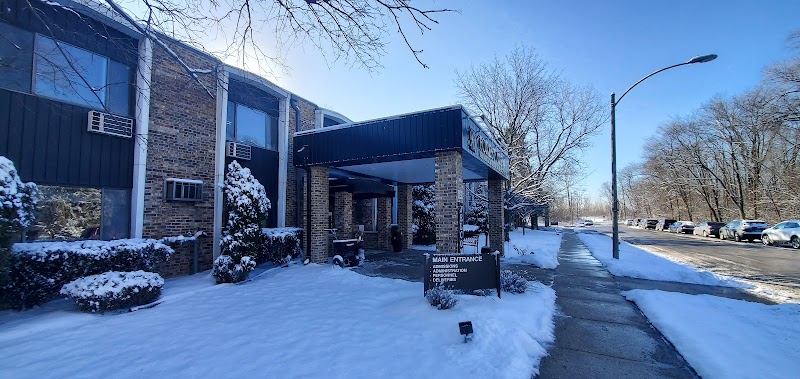
How is Forest View Rehab & Nursing Center Staffed?

CMS rates FOREST VIEW REHAB & NURSING CENTER's staffing level at 2 out of 5 stars, which is below average compared to other nursing homes. Staff turnover is 30%, compared to the Illinois average of 46%. This relatively stable workforce can support continuity of care.

What Have Inspectors Found at Forest View Rehab & Nursing Center?

State health inspectors documented 69 deficiencies at FOREST VIEW REHAB & NURSING CENTER during 2022 to 2025. These included: 3 Immediate Jeopardy (the most serious level, indicating potential for serious harm or death), 6 that caused actual resident harm, and 60 with potential for harm. Immediate Jeopardy findings are rare and represent the most serious regulatory concerns. They require immediate corrective action.
Who Owns and Operates Forest View Rehab & Nursing Center?

FOREST VIEW REHAB & NURSING CENTER is owned by a for-profit company. For-profit facilities operate as businesses with obligations to shareholders or private owners. The facility is operated by INFINITY HEALTHCARE CONSULTING, a chain that manages multiple nursing homes. With 144 certified beds and approximately 125 residents (about 87% occupancy), it is a mid-sized facility located in ITASCA, Illinois.
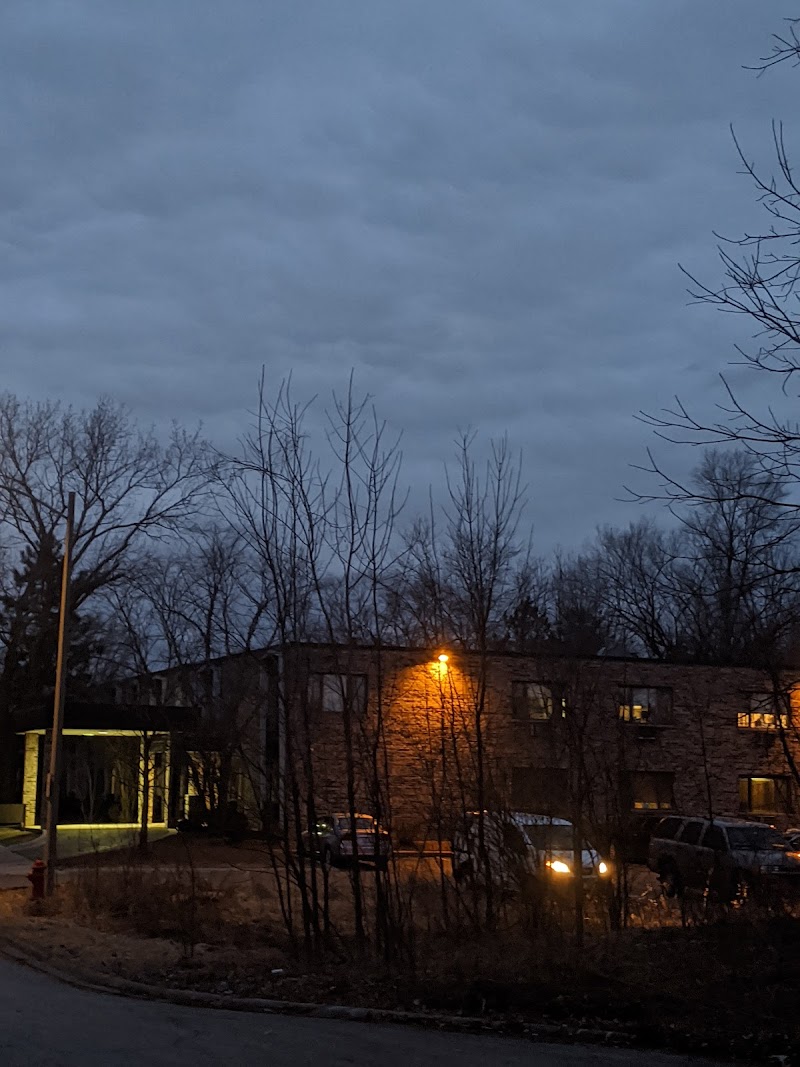
How Does Forest View Rehab & Nursing Center Compare to Other Illinois Nursing Homes?

Compared to the 100 nursing homes in Illinois, FOREST VIEW REHAB & NURSING CENTER's overall rating (1 stars) is below the state average of 2.5, staff turnover (30%) is significantly lower than the state average of 46%, and health inspection rating (1 stars) is much below the national benchmark.

What Should Families Ask When Visiting Forest View Rehab & Nursing Center?

Based on this facility's data, families visiting should ask: "What changes have been made since the serious inspection findings, and how are you preventing similar issues?" "What safeguards and monitoring systems are in place to protect residents from abuse or neglect?" "Can you walk me through typical staffing levels on day, evening, and night shifts?" "Can I visit during a mealtime to observe dining assistance and food quality?" These questions are particularly relevant given the facility's Immediate Jeopardy citations, the substantiated abuse finding on record, and the below-average staffing rating.

Is Forest View Rehab & Nursing Center Safe?

Based on CMS inspection data, FOREST VIEW REHAB & NURSING CENTER has documented safety concerns. The facility has 1 substantiated abuse finding (meaning confirmed case of resident harm by staff or other residents). Inspectors have issued 3 Immediate Jeopardy citations (the most serious violation level indicating risk of serious injury or death). The facility has a 1-star overall rating and ranks #100 of 100 nursing homes in Illinois. Families considering this facility should ask detailed questions about what corrective actions have been taken since these incidents.

Do Nurses at Forest View Rehab & Nursing Center Stick Around?

Staff at FOREST VIEW REHAB & NURSING CENTER tend to stick around. With a turnover rate of 30%, the facility is 16 percentage points below the Illinois average of 46%. Low turnover is a positive sign. It means caregivers have time to learn each resident's needs, medications, and personal preferences. Consistent staff also notice subtle changes in a resident's condition more quickly. Registered Nurse turnover is also low at 16%, meaning experienced RNs are available to handle complex medical needs.

Was Forest View Rehab & Nursing Center Ever Fined?

FOREST VIEW REHAB & NURSING CENTER has been fined $349,224 across 6 penalty actions. This is 9.5x the Illinois average of $36,571. Fines at this level are uncommon and typically indicate a pattern of serious deficiencies, repeated violations, or failure to correct problems promptly. CMS reserves penalties of this magnitude for facilities that pose significant, documented risk to resident health or safety. Families should request specific documentation of what issues led to these fines and what systemic changes have been implemented.

Is Forest View Rehab & Nursing Center on Any Federal Watch List?

FOREST VIEW REHAB & NURSING CENTER is not on any federal watch list. The most significant is the Special Focus Facility (SFF) program, which identifies the bottom 1% of nursing homes nationally based on persistent, serious quality problems. Not being on this list means the facility has avoided the pattern of deficiencies that triggers enhanced federal oversight. This is a positive indicator, though families should still review the facility's inspection history directly.