LACON REHAB AND NURSING
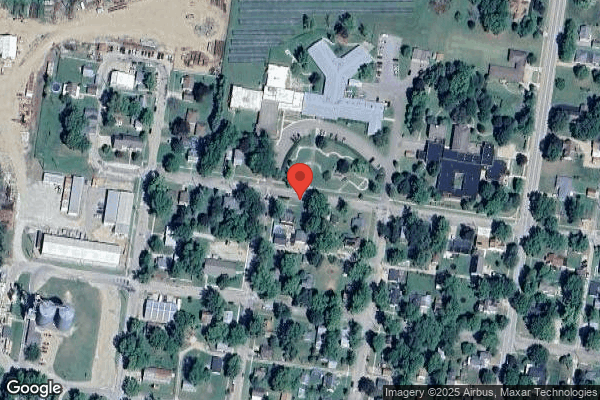
401 9TH STREET, LACON, IL 61540 (309) 246-2175
For profit - Limited Liability company 93 Beds STERN CONSULTANTS Data: November 2025
Trust Grade
45/100
#374 of 665 in IL
Last Inspection: May 2025

Inspected within the last 6 months. Data reflects current conditions.

Overview

Lacon Rehab and Nursing has a Trust Grade of D, which means it is below average and has some notable concerns. In terms of rankings, it is placed #374 out of 665 facilities in Illinois, putting it in the bottom half of all facilities in the state, and #3 out of 3 in Marshall County, indicating only one local option is better. The facility is improving, with the number of issues decreasing from 13 in 2024 to 10 in 2025. Staffing is a relative strength with a 3/5 rating, and a turnover rate of 34%, which is lower than the state average, suggesting that staff tend to stay longer and build relationships with residents. However, there have been some serious findings, including a resident not being allowed to make personal choices, which caused emotional distress, and concerns about dishwashing sanitation procedures that could lead to cross-contamination. Overall, while there are areas of strength, there are significant weaknesses that potential residents and their families should consider.

Trust Score
D
45/100
In Illinois
#374/665
Bottom 44%
Safety Record
Moderate
Needs review
Inspections
Getting Better
13 → 10 violations
Staff Stability
○ Average
34% turnover. Near Illinois's 48% average. Typical for the industry.
Penalties
✓ Good
No fines on record. Clean compliance history, better than most Illinois facilities.
Skilled Nurses
○ Average
Each resident gets 34 minutes of Registered Nurse (RN) attention daily — about average for Illinois. RNs are the most trained staff who monitor for health changes.
Violations
⚠ Watch
34 deficiencies on record. Higher than average. Multiple issues found across inspections.
★★☆☆☆
2.0
Overall Rating
★★★☆☆
3.0
Staff Levels
★★★★☆
4.0
Care Quality
★★☆☆☆
2.0
Inspection Score
Stable
2024: 13 issues
2025: 10 issues

The Good

  • 4-Star Quality Measures · Strong clinical quality outcomes
  • Full Sprinkler Coverage · Fire safety systems throughout facility
  • No fines on record
  • Staff turnover below average (34%)

    14 points below Illinois average of 48%

Facility shows strength in quality measures, fire safety.

The Bad

2-Star Overall Rating

Below Illinois average (2.5)

Below average - review inspection findings carefully

Staff Turnover: 34%

11pts below Illinois avg (46%)

Typical for the industry

Chain: STERN CONSULTANTS

Part of a multi-facility chain

Ask about local staffing decisions and management

The Ugly 34 deficiencies on record

1 actual harm
Aug 2025 3 deficiencies
CONCERN (D) 📢 Someone Reported This

A family member, employee, or ombudsman was alarmed enough to file a formal complaint

Potential for Harm - no one hurt, but risky conditions existed

Pressure Ulcer Prevention (Tag F0686)

Could have caused harm · This affected 1 resident

**NOTE- TERMS IN BRACKETS HAVE BEEN EDITED TO PROTECT CONFIDENTIALITY** Based on interview and record review the facility failed to obtain treatment orders for a resident with pressure injury for 1 of...

Read full inspector narrative →
**NOTE- TERMS IN BRACKETS HAVE BEEN EDITED TO PROTECT CONFIDENTIALITY** Based on interview and record review the facility failed to obtain treatment orders for a resident with pressure injury for 1 of 3 residents (R1) reviewed for pressure injury in the sample of 10.The findings include:R1's Electronic Face Sheet documents R1 was admitted to the facility on [DATE] with diagnosis of Alzheimer's dementia, depression, and anxiety. R1 was on hospice services due to Alzheimer's dementia.R1's Braden Scale (assessment use to predict pressure risks) show R1 was high risk to for pressure injury. R1's admission assessment under skin dated 4/2/25 by V15 (former Administrator/LPN) documents pressure to coccyx as non-staged. Under treatment: {Wound Company} notified, will see R1 on next visit due (4/8/25)R1's Wound Assessment and Plan with initial visit dated 4/15/25 by V17 (Wound MD) show: Wound Location-coccyx, Wound Type-Pressure Injury, Wound Measurements-1.5 centimeters (cm) x 1cm x 0.1 cm. Wound Order: Coccyx wound- cleanse with normal saline or sterile water apply Hydrocolloid to wound every 2 days and PRN.On 8/22/25 at 1PM. V2 (Director of Nursing-DON) said R1 was admitted with pressure injury. V2 (DON) said she thought R1 had wound treatment upon admit. R1 had dressings to coccyx when she checked R1's coccyx wound. V2 also said R1 was supposed to see V17 (Wound Md) on 4/8/25 to obtain treatments but R1 was not on the list to be seen at that time.R1's Electronic Treatment Sheet documents: coccyx wound- cleanse with normal saline or sterile water apply hydrocolloid to wound bed every two days and as needed. Start date 4/15/25 (approximately 13 days after admission).On 8/22/25 at 2:30 PM, V16 (Asst Director of Nursing) said wound treatment should be obtained as soon as the wound was discovered to promote wound healing.The Facility Policy on Skin Prevention, Assessment and Treatment dated 5/7/2024 show, to identify factors that place the residents at risk for the development of pressure ulcers, to promote a systematic approach and monitoring process for the care of residents with existing wounds and for those who are at risk for skin breakdown and to promote healing of existing pressure ulcers.
CONCERN (E) 📢 Someone Reported This

A family member, employee, or ombudsman was alarmed enough to file a formal complaint

Potential for Harm - no one hurt, but risky conditions existed

Accident Prevention (Tag F0689)

Could have caused harm · This affected multiple residents

**NOTE- TERMS IN BRACKETS HAVE BEEN EDITED TO PROTECT CONFIDENTIALITY** Based on observation, interview, and record review the facility failed to ensure that water was delivered at a safe and comforta...

Read full inspector narrative →
**NOTE- TERMS IN BRACKETS HAVE BEEN EDITED TO PROTECT CONFIDENTIALITY** Based on observation, interview, and record review the facility failed to ensure that water was delivered at a safe and comfortable temperature. This applies to 6 of 7 residents (R2, R4, R6, R7, R9 and R10) reviewed for safe water temperatures in a sample of 10. The findings include: On 8/22/25 at 10:05AM the temperatures of the water coming out of the bathroom sinks on the St. [NAME] wing of the facility were checked. The readings were as follows: R2 and R4's room [ROOM NUMBER].9 degrees Fahrenheit, R6's room [ROOM NUMBER].3 degrees Fahrenheit, R7's room [ROOM NUMBER] degrees Fahrenheit, R9's room [ROOM NUMBER].6 degrees Fahrenheit and R10's room [ROOM NUMBER].7 degrees Fahrenheit.On 8/22/25 at 10:30 AM R9 stated, Sometimes the water is too hot.On 8/22/25 at 1:00PM V4 (Maintenance Director) stated, The water should be 110 degrees in the resident areas and 160 in the kitchen. I am supposed to do water temps but I am not going to lie, I have not had time to do them and I have not been doing them.The facility policy entitled Water Temperatures dated 12/30/2024 states, Water temperatures in resident rooms should not exceed 110 degrees Fahrenheit.
CONCERN (F) 📢 Someone Reported This

A family member, employee, or ombudsman was alarmed enough to file a formal complaint

Potential for Harm - no one hurt, but risky conditions existed

Food Safety (Tag F0812)

Could have caused harm · This affected most or all residents

Based on observation, interview and record review the facility failed to ensure the dishwasher was reaching 180 degrees Fahrenheit to sanitize the dishes and prevent cross contamination. This applies ...

Read full inspector narrative →
Based on observation, interview and record review the facility failed to ensure the dishwasher was reaching 180 degrees Fahrenheit to sanitize the dishes and prevent cross contamination. This applies to all 56 residents in the facility. The findings include: On 8/22/25 the facility census showed a total of 56 residents residing in the facility. On 8/22/25 at 9:30AM Surveyor asked V8 (Dietary Aid) to check the Sanitizer level in the dishwasher. V8 used a Quaternary Ammonia strip and ran it through a cycle of the dishwasher. The strip came out a light blue color. Comparing it to the key and the package of strips V8 stated, It's supposed to be between this one (400ppm) and that one (500ppm). We check the dishwasher once a day. Surveyor then showed V7 (Dietary Manager) the test strip and V7 looked at the dishwashing machine and stated she would have to get maintenance because she doesn't know anything about it.At 9:45AM V4 (Maintenance Director) Came to inspect dishwasher. V4 tried to run the final rinse cycle with no numbers showing on the screen for the final rinse temperature. V4 stated, I didn't know I was responsible for the dishwasher.At 9:50AM V7 (Dietary Manager) stated, I have never had to have the dishwasher serviced. I'm not sure who we use.On 8/22/25 at 12:03PM V5 (Maintenance Director from a Sister Facility) stated, The dishwasher is a high temp machine- the machine is designed to get to 190 degrees but I don't know why it is not displaying the temp. The wash temp is reading fine, but I can't get the final rinse temp to show. The machine is showing 200 on the strips. Surveyor asked to accompany V5 to the dishwasher for another test. V5 again used Quaternary strips and ran one through a cycle on the dishwasher. The strip did not register any quaternary ammonia. Surveyor pointed out that the strips were to test quaternary ammonia and this is a hot water machine. V5 then went to look for strips to test for hot water and returned stating they did not have any hot water test strips available in the building. At 12:10PM Surveyor requested temperature logs for the dishwasher from V7 and V7 stated, we don't have those. The facility policy entitled Dish Machine Use dated December 30, 2024 states, Dish machine hot water sanitation rinse temperature may not be more than194 degrees F, or less than 180 degrees F for all other machines.
May 2025 7 deficiencies 1 Harm
SERIOUS (G)

Actual Harm - a resident was hurt due to facility failures

Deficiency F0561 (Tag F0561)

A resident was harmed · This affected 1 resident

Based on observation, interview and record review the facility failed to allow one resident (R18) to make her own decisions of sixteen residents reviewed for choices in a total sample of fifty-seven. ...

Read full inspector narrative →
Based on observation, interview and record review the facility failed to allow one resident (R18) to make her own decisions of sixteen residents reviewed for choices in a total sample of fifty-seven. This failure caused R18 emotional distress and crying. Findings Include: The Facility's undated Resident Rights Policy and Procedure documents Self-determination. Every resident has the right to, and the facility must promote and facilitate, resident, self-determination through support of resident choice, including but not limited to the rights specified in this section. A. each resident has right to choose activities, schedules (including sleeping and waking times), health care and providers of health care services consistent with his or her interests, assessments, and plan of care. B. Each resident has the right to make choices about aspects of his or her life in the facility that are significant to the resident. R18's MDS (Minimum Data Set) dated 4/21/2025 documents R18's BIMS (Brief Interview for Mental Status) score as 15 out of 15, indicating R18 is cognitively intact. On 5/21/25 at 12:11 PM R18 was in dining room on her hallway, had hands over her eyes and was crying. When asked what was wrong, she stated Is this some sort of punishment? I don't want to be up. I want to be in bed. I hurt, I am miserable, the light is directly in my eyes and every time I ask to go back to bed, they say they are going to go get help and then they do not come back. On 05/21/25 at 12:13 PM V16 (Certified Nurse Aid) stated that this resident never wants to get up, but the nurses say to get her up for at least every meal. V16 confirmed that R18 told her while she was getting her out of bed that R18 did not want to get up. On 05/21/25 12:13 PM V17 (Licensed Practical Nurse) stated (R18) does not want to get up, if we would let her she would just drink her chocolate shakes and eat those big chocolate bars she has in her freezer down there. (in her room). V17 confirmed that this resident is able to make her needs known and does make her own care decisions but maybe shouldn't, she doesn't take care of herself, she is diabetic, she needs food, not shakes and chocolate. She needs to be up and moving. V17 denied ever telling any staff member to get R18 out of bed when she did not wish to. On 5/22/25 at 11:02 AM V1(Administrator) stated that no resident should be gotten up against their own wishes. On 5/22/25 at 11:03 AM V4 (Social Service Director) stated that R18 should not have been gotten out of bed if she did not want to. V4 confirmed that V16 (Certified Nurse Aid) came to her after she was questioned about getting R18 up. V4 stated I think (V16/CNA) thought she was doing the right thing, but I educated her that we do not get people up against their wishes ever.
CONCERN (D)

Potential for Harm - no one hurt, but risky conditions existed

Deficiency F0605 (Tag F0605)

Could have caused harm · This affected 1 resident

**NOTE- TERMS IN BRACKETS HAVE BEEN EDITED TO PROTECT CONFIDENTIALITY** 2. R32's admission Record documents that R32's date of admission to the facility was 3/5/25 and his diagnoses on admission inclu...

Read full inspector narrative →
**NOTE- TERMS IN BRACKETS HAVE BEEN EDITED TO PROTECT CONFIDENTIALITY** 2. R32's admission Record documents that R32's date of admission to the facility was 3/5/25 and his diagnoses on admission include Unspecified Dementia, Severe, with agitation, Anxiety Disorder, Depression, Hypertension, Altered Mental Status and Adult Failure to Thrive. R32's Minimum Data Set (MDS) dated [DATE] documents cognition as severely impaired and Section E documents physical behaviors, verbal behaviors, and behavioral symptoms directed toward others. R32's Physician Order dated 3/7/25 documents that R32 has an order for Quetiapine Fumarate/Seroquel (antipsychotic) 50mg (milligrams) by mouth twice a day for agitation related to Unspecified Dementia, Severe, with agitation and Ativan 1mg-Benadryl 25mg-Haldol 2mg (combination of antianxiety, antihistamine, antipsychotic) cream apply one milliliter (ml) topically every four hours as needed for aggression/anxiety. R32's current care plan documents R32 receives antipsychotic therapy and antianxiety therapy with no indication for use. R32's Medication Administration Records for March 2025, April 2025, and May 2025 documents behavior monitoring with behaviors occurring, but no specific behavior documented, or non-pharmacological interventions documented. R32's progress notes dated 3/6/25, 3/8/25, 3/9/25, 3/10/25, 3/16/25, 3/18/25, 3/19/25, 4/10/25 and 4/11/25 document combative and resistive behaviors with no attempted interventions during behaviors or prior to administering psychotropic medications. Based on record review and interview the facility failed to track specific behaviors for the use of an antipsychotic and failed to document any non pharmalogical interventions used prior to psychotropic medication use for two residents (R24 and R32) of five residents reviewed for unnecessary medications in a total sample of fifty-seven. Findings Include: The Facility's Psychotropic Medication Management policy dated 11/1/2015 documents the purpose of the policy is to provide guidance for the psychopharmacological drug treatment for a resident with specific conditions, including but not limited to dementia and other cognitive disorders, and/or behaviors as documented in the resident's clinical record. The medical record documentation must reflect the specific behaviors/symptoms and the resident's response to non-pharmacological interventions to manage the behaviors/symptoms. The Facility's Psychotropic Medication Management policy also documents A plan of care will be developed to include precipitating factors, non-pharmacological interventions and potential side effects. R24's Physician Order Sheet for May 2025 documents that he takes the anti-anxiety medication Buspirone 10 mg twice a day for anxiety, the sedative/hypnotic medication Melatonin 5 mg every night for sleep aid, the antidepressant medication Sertraline 100 mg twice daily and the anti-psychotic medication Risperidone 0.25 mg every day for developmental disorder and unspecified psychosis and anxiety. R24's current care plan documents resident currently has an alteration in his behavior status related to fetal alcohol syndrome, intellectual disabilities. Urinating in windows, having bowel movements in inappropriate areas, restlessness, cussing, delusions, taking others belongings, hallucinations, psychosis, aggression, refusing cares, agitating staff and other residents. R24's care plan documents Interventions as Behaviors: Hallucinations; Behaviors: Hitting walls, slamming walker down; Behaviors: Negative Comments; Behavior: Physical Aggression; Behavior: taking items that are not mine; Behavior: Verbally aggressive/yells at staff during cares, Behaviors: Yells out/moans. R24's Medication Administration Record for May 2025 documents Behavior Monitoring: rejection of cares (Medications), (Activities of Daily Living), abs, meals, therapy. Document 14 for no behavior, document 15 for behavior. PN (Progress Note) interventions and outcome every shift. R25's Medication Administration Record for May 2025 either had a check mark or a 14 documented for every day. On 5/22/25 at 9:00 AM V1 (Administrator) stated she believes the check mark indicates that a behavior did occur. R25's May MAR documents a check mark on: 5/1/25,5/2/25,5/5/25,5/6/25,5/9/25,5/10/25,5/11/25,5/12/25,5/13/25,5/15/25,5/16/25.5/18/25,5/19/25,5/20/25,5/22/25,5/24/25,5/25/25,5/26/25,5/27/25,5/29/25 and 5/30/25. On 5/22/25 at 9:00 AM V1 (Administrator) confirmed that none of the check marks had corresponding progress notes to describe what behavior was occurring and what non pharmalogical interventions were attempted and how the resident responded to the interventions. V1 also confirmed that the behaviors listed on the care plan are not the same. Throughout the survey R25 walked throughout the facility, was pleasantly confused and interacted with staff and other residents with no agitation or aggression noted.
CONCERN (D)

Potential for Harm - no one hurt, but risky conditions existed

Deficiency F0657 (Tag F0657)

Could have caused harm · This affected 1 resident

Based on observation, record review, and interview, the facility failed to update/revise Care Plans, to include contact precautions, for one resident (R48), of one resident, reviewed for Care Plan rev...

Read full inspector narrative →
Based on observation, record review, and interview, the facility failed to update/revise Care Plans, to include contact precautions, for one resident (R48), of one resident, reviewed for Care Plan revisions, in a total sample of 57 residents. FINDINGS INCLUDE: Facility policy, entitled Comprehensive Care Plan, Revised 6/25/2024, documents, 3. Each resident's comprehensive care plan has been designed to: a. Incorporate identified problem areas; b. Incorporate risk factors associated with identified problems; c. Build on the resident's strengths; d. Reflect treatment goals and objectives in measurable outcomes; e. Identify the professional services that are responsible for each element of care f. Aid in preventing or reducing declines in the resident's functional status and/ functional levels; and g. Enhance the optimal functioning of the resident by focusing on a rehabilitative program. 4. The resident's comprehensive care plan is developed within seven (7) days of the completion of the resident's comprehensive assessment. 5. Care plans are revised as changes in the resident's condition dictate. On 5/20/2025, at 10:00 a.m., R48's room door was observed to be closed with contact isolation signs and a personal protective equipment/PPE cart by R48's door. On 5/20/2025, at 10:25 a.m., V1/Administrator confirmed R48 is on contact isolation precautions. R48's Electronic Medical Record/EMR document, Physician Order, dated 1/21/2025, Infection Precautions - contact Isolation: Resident is isolated in room, without a roommate or cohort with like pathogen, due to active infection with transmissible significant pathogens. Above standard transmission precautions maintained, with activities and all service brought to the resident. On 5/20/2025, at 1:00 p.m., V1 confirmed R48's Care Plan should have been revised to include R48's contact isolation precautions.
CONCERN (D)

Potential for Harm - no one hurt, but risky conditions existed

Quality of Care (Tag F0684)

Could have caused harm · This affected 1 resident

**NOTE- TERMS IN BRACKETS HAVE BEEN EDITED TO PROTECT CONFIDENTIALITY** Based on interview and record review the facility failed to thoroughly document an instance of suicidal ideation and failed to m...

Read full inspector narrative →
**NOTE- TERMS IN BRACKETS HAVE BEEN EDITED TO PROTECT CONFIDENTIALITY** Based on interview and record review the facility failed to thoroughly document an instance of suicidal ideation and failed to monitor one resident after verbalization of suicidal ideation (R18) of five residents reviewed for mood and behavior in a total sample of fifty-seven. Findings Include: The Facility's Responding to Intent of Self-Harm policy dated 3/13/2023 documents the purpose of the policy is to establish a process to identify and respond to the risk of self-harmful thoughts, behaviors and action to ensure resident safety. Suicidal Ideation-verbal expressions of thoughts of harming oneself that may or may not lack specific intent or associated actions and which are generally vague, passing thoughts related to poorly defined, circumstantial issues. The Facility's Responding to Intent of Self-Harm policy documents any staff member who becomes aware of a resident's intent to inflict self-harm, including but not limited to suicidal ideation, suicidal attempt and/or parasuicidal behaviors/self-directed violence, is required to report that behavior to the Nursing Supervisor without delay. The charge nurse/Nurse Supervisor will immediately assess the situation to determine the presence of risk to the resident and what intervention if any, is needed. The Facility's Charting and Documentation policy dated 11/5/2023 documents its purpose is to maintain a medical record to serve a legal document that details the services provided to the resident or any changes in the resident's medical or mental condition, through charting and documentation. Documentation will include information assessment, notifications, interventions and evaluation including but not limited to a. incidents/accidents per facility policy b. change in condition per facility policy c. physician notification d. DPOA/Responsible Party notification e. Refusal of mediations/treatment or recommendations f. education provided t resident and/or DPOA/responsible party g. status updates/summaries as required h. transfer, discharges and/or leave of absences. Additional documentation requirements will be followed: D. Alert charting-documentation of incident/accident or change in condition for 72 hours or until stable. R18's Medical Record documents she was admitted on [DATE] with diagnosis to include but not limited to metabolic encephalopathy, anxiety, and major depression disorder. R18's Nurse's Notes dated 4/30/25 at 4:30 PM document Resident sent to the hospital, suicidal. R18's Nurse's Notes do not include any physical assessment or behavior assessment. No vitals or indications of what R18 might have said to trigger being sent to the emergency room. On 5/21/25 at 2:30 PM V1 (Administrator) stated (V9/Psychiatric Nurse Practitioner) sent (R18) in for a psych eval for suicidal statements. V1 could not state what R18 said or threatened to do or if R18 had a plan. V1 stated there would be no assessment documented by the nurse because we had a provider in the room who was giving an order to send her to the emergency room. V1 clarified that the psych nurse practitioner is a telehealth provider and would not be able to do a physical assessment. V1 stated they send someone nonclinical around with the iPad to talk to residents. In this case the non-clinical person who was holding the iPad for (V9) came out of the room and gave the iPad to a nurse to talk to (V9/Psychiatric Nurse Practitioner). The nurse then sent R18 to the Emergency Room. V1 still could not describe why R18 was going to the emergency room. On 5/22/25 at 958 AM V9 (Psych Nurse Practitioner) stated that she wanted R18 sent to the emergency room for a psych eval due to her stating that she didn't want to live anymore. V9 stated (R18) has no family and one close friend. She is very depressed. But she had no plan on how to commit suicide. She is just having a very hard time adjusting to being in a nursing home. I wanted to err on the side of caution and to demonstrate that we take these statements seriously. V9 stated that from her perspective via iPad that she could assess and did deem R18 not an immediate risk to herself. I just wanted to be super careful because she is so depressed. R18's Psychiatric Evaluation and consultation dated 4/30/2025 (no time listed) documents Made statements saying she wants to die by May 1st (tomorrow). Endorsing SI (Suicide Ideation) with no plan. States she doesn't want to live anymore or take her medications. States she misses her brother who passed away a month ago. She is grieving poorly. R18's Nurse's Notes dated 4/30/25 at 6:30 PM document Resident returned from the hospital, she was declared not suicidal. R18's Nurse's Notes do not include any physical assessment or behavior assessment. No vitals or indications of what R18 might have said to trigger being sent to the emergency room. R18's Medical Record does not contain any further documentation regarding R18's suicidal ideation on 4/30/25. R18's Care plan does not include any mention of suicidal ideation on 4/30/25 or any new interventions or increased monitoring for R18. On 5/21/25 at 11:30 AM R18 stated I know I said I wanted to die. I am not going to kill myself. I just miss my brother so much. I don't like being alone. On 5/22/25 at 1:00 PM V2 (Director of Nursing) stated there should have been follow up alert charting done on R18 after suicidal ideation on 4/30/25. The documentation in this case was very poor.
CONCERN (E)

Potential for Harm - no one hurt, but risky conditions existed

Accident Prevention (Tag F0689)

Could have caused harm · This affected multiple residents

**NOTE- TERMS IN BRACKETS HAVE BEEN EDITED TO PROTECT CONFIDENTIALITY** Facility failures resulted in two deficient practices. A. Based on observation, interview, and record review the facility failed...

Read full inspector narrative →
**NOTE- TERMS IN BRACKETS HAVE BEEN EDITED TO PROTECT CONFIDENTIALITY** Facility failures resulted in two deficient practices. A. Based on observation, interview, and record review the facility failed to store medications in a secure environment for one (R57) of 15 residents whose rooms were assessed for cleanliness and safety in a sample of fifty seven. This failure has the potential to affect all 20 wandering residents (R3, R4, R5, R8, R11, R12, R13, R16, R22, R23, R28, R34, R36, R37, R41, R44, R45, R46, R51, R52) residing in the facility. B. Based on observation, interview and record review the facility failed to address confused residents (R11 and R28) entering a room of one resident (R49) and failed to investigate an report of an injury of one resident (R49) of fifteen residents reviewed for choices in a total sample of fifty-seven. Findings include: A.The facility's policy titled Storage, Labeling of OTC (Over the Counter) Medication, Destruction and Disposal of Medication, revised November 9, 2024, documents, To ensure that medications and biologicals are stored in a safe, secure storage and safe handling. Compartments containing medications should be locked when not in use. Trays or carts used to transport such items should not be left unattended. (Note: Compartments include, but are not limited to, drawers, cabinets, rooms, refrigerators, carts, and boxes). Medications will be stored in an orderly manner in cabinets, drawers, or carts. Each resident is assigned a cubicle or drawer to prevent the possibility of a drug for one resident being given to another. R57's admission record documents that R57's date of admission to the facility was 4/2/25 and her diagnoses include Encounter for other Orthopedic Care, Displaced Intertrochanteric Fracture of Left Femur, and Iron Deficiency Anemia. R57's current care plan documents R57 has alteration to her Integumentary (skin) System due to pressure ulcer to coccyx and skin impairment to bilateral heels. R57's Physician Order dated 5/21/25 documents R57 coccyx wound care treatment for Alginate with AG (Silver), cleanse wound bed with normal saline (NS) or sterile water, loosely apply Dakins (mixture bleach and boric acid diluted in water/antimicrobial solution) soaked gauze wet to moist dressing and cover daily and as needed (PRN) every four hours for wound care. On 5/20/25 at 10:30am, a bottle of Dakins (antimicrobial) Full Strength solution and a 1.5-ounce tube of Therahoney (medical grade honey dressing) noted sitting on top of R57's counter just inside doorway of room. On 5/20/25 at 2:15pm, V6 (Licensed Practical Nurse/LPN) verified the bottle of Dakins Solution and tube of Therahoney remained in R57's room and V6 stated it should be in the locked treatment cart when not being used. V6 also stated, We have a lot of wanderers that like to go in other resident rooms, this (referring to Dakins Solution and Therahoney) should not be left in here. On 5/21/25 at 2:00pm V1 (Administrator) stated that medicated treatment supplies should not be kept in resident rooms when not performing an active treatment. Findings Include: B. On 05/20/25 at 10:30 AM R49 was lying in bed and talking on her cell phone. (R28/another wandering resident) entered resident room with shuffling gait and mumbling. R49 stated Hi (R28), this isn't your room, turn around. R49 kept talking on her phone. R28 continued into the room. R49 stated into the phone I am going to have to let you go, I have to get her out of here. R49 transferred herself to her wheelchair and put on slippers and said come on (R28), you walk in front of me. R28 grabbed R49's hand and was easily walked out the residents door and continued on down the hallway. On 5/20/25 at 10:35 AM R49 stated this happens all the time. (R28) doesn't really bother me because she will leave easily, she's just very confused. (R11) is the one who wanders in and won't get out. (R11) comes in and uses my bathroom gets the seat all gross, gets water everywhere when she is washing her hands, goes through my stuff and has tried to get into my bed with me. Just this morning around 6:30 AM (R11) slammed open my door and came in and started going through my stuff. They (staff) don't keep a good enough eye on either one of them, but I am scared of (R11), I am going home on Thursday because I can get more rest there when I am not chasing those two (R11 and R28) out of my room. R11's Physician Order Sheet for May 2025 documents diagnosis to include but not limited to Alzheimer's Disease. R11's current Care Plan documents resident current risk for Wandering/Elopement is high risk and her safety will be monitored every shift by staff. R11's MDS Minimum Data Set, dated [DATE] documents R11's BIMS (Brief Interview for Mental Status) score as 5 out of possible 15, indicating R11 is severely cognitively impaired. R11's MDS dated [DATE] documents that the behavior of wandering behavior of this type occurred daily. R28's Physician Order Sheet for May 2025 documents diagnosis to include but not limited to anxiety and dementia. R28's current Care Plan documents Resident's current risk for wandering/elopement is high risk 7 or higher and her safety will be monitored every shift by all staff. R28's MDS (Minimum Data Set) dated 5/2/25 documents R28 is rarely/never understood. R28's MDS dated [DATE] documents that the behavior of wandering behavior of this type occurred daily. Throughout the survey R28 walked up and down all of the hallways in the facility and went in and out of resident rooms and offices. Throughout the survey R11 propelled her wheelchair up and down the three hallways on the side of the building that she lives on. R11 ran into stationary objects frequently and became irritated and readjusted and continued on down the hallway. R49's Nurse's Note dated 4/7/25 at 7:15 PM documents (R49) claimed, that she tried catch another resident and now she has sore in abdomen (right) and (left) upper quadrants, bruises not present, pain medication was administrated. On 5/22/25 at 8:52 AM R49 stated that the incident documented on 4/7/25 at 7:15 PM was about a time R11 came in R49's room and was trying to get past me but stubbed her toe on my wheelchair and fell onto me landing in my lap, I instinctively wrapped my arms around her to keep her from falling on the ground herself. I had a light purple bruise for a couple of days where her elbow or shoulder hit me and I was sore for a week. Even after that, they (facility) did not stop her from coming and going out of my room. R49's Medical Record does not contain any follow up documentation of the area on R49's abdomen from R11 landing in her lap. On 5/23/25 at 11:00 AM V1 (Administrator) could not provide any further information on any steps to take to prevent confused residents from entering R49's room. V1 could not provide any investigation into the documented incident of R11 falling into R49's lap.
CONCERN (E)

Potential for Harm - no one hurt, but risky conditions existed

Infection Control (Tag F0880)

Could have caused harm · This affected multiple residents

B. The facility's policy titled Hand Hygiene, reviewed/revised 4/24/24, documents, All staff will perform proper hand hygiene procedures to prevent the spread of infection to other personnel, resident...

Read full inspector narrative →
B. The facility's policy titled Hand Hygiene, reviewed/revised 4/24/24, documents, All staff will perform proper hand hygiene procedures to prevent the spread of infection to other personnel, residents, and visitors. This applies to all staff working in all locations within the facility. Hand hygiene is a general term for cleaning your hands by handwashing with soap and water or the use of an antiseptic hand rub, also known as alcohol-based hand rub (ABHR). Staff will perform hand hygiene when indicated, using proper technique consistent with accepted standards of practice. The use of gloves does not replace hand hygiene. If your task requires gloves, perform hand hygiene prior to donning gloves and immediately after removing gloves. R57's admission record documents that R57's date of admission to the facility was 4/2/25 and her diagnoses include Encounter for other Orthopedic Care, Displaced Intertrochanteric Fracture of Left Femur, and Iron Deficiency Anemia. R57's current care plan documents R57 has alteration to her Integumentary (skin) System due to pressure ulcer to coccyx and skin impairment to bilateral heels. R57's Physician Order dated 5/21/25 documents R57's left heel wound care treatment as left heel cover with bordered gauze as needed to protect from friction every Tuesday, Thursday, Saturday and right heel order dated 5/13/25 as apply barrier wipe daily and as needed. R57's current care plan documents R57 has an alteration to her Integumentary (skin) System due to pressure ulcer to coccyx and skin impairment to bilateral heels. 05/22/25 11:45 AM V2 (Director of Nursing/DON) noted to do hand hygiene, don gown and gloves and enter R57's room to perform treatment on bilateral heels. Once in room V2 obtained permission from R57 to do wound care and R57 agreed. V2 removed R57's heel boot to left foot, removed sock and opened up barrier wipe, wiped left heel wound, removed gloves and placed new gloves without doing hand hygiene, then opened dressing of bordered gauze and placed to left heel wound. V2 then removed gloves, placed new gloves without performing hand hygiene, removed R57's right heel boot and sock, then opened barrier wipe, wiped right heel wound and replaced sock and boot. V2 verified that she did not perform hand hygiene between glove changes and stated she should have. 2. Documentation and staff interviews indicated that R18 has Extended-Spectrum Beta-Lactamases/ESBL of urine; and R40 has Vancomycin-Resistant Enterococcus/VRE bacteria in urine. Signage posted on R18 and R40's doors documents Contact Precautions. (5/22/25 Internet definitions: ESBL: Makes some antibiotics ineffective in treating bacterial infections. ESBLs break down certain antibiotics, making some infections caused by ESBL-producing Enterobacterales difficult to treat. VRE: It is an infection with bacteria that are resistant to the antibiotic called Vancomycin.) On 5/21/25 at 9:45am, V12 Speech Therapist was noted in R40's room and was not wearing an isolation gown. V12 stated that she had speech therapy with R40's roommate (R47). V12 stated, I only wear gloves when I go in to see (R47); was not aware I was supposed to wear a gown. At this same time, V12 stated that she was not supposed to wear a gown because she was not doing patient care with R40; and stated that R47 was not on isolation. On 5/21/25 at 9:50am, V11 Housekeeping was noted doing housekeeping chores on R18 and R40's Unit. V11 stated that when she goes in resident contact isolation rooms, that usually she wears only gloves and stated that Administration staff may have educated her on wearing full PPE (Personal Protective Equipment), she does this sometimes, but usually just wears gloves. V11 stated, It depends on how rushed I am feeling, sometimes I put on all the PPE and gloves. On 5/21/25 at 9:57am, V3 Assistant Director of Nursing/ADON stated that PPE, gloves and gowns, should be worn by all staff when going into rooms of residents who were on contact precautions, and this included Housekeeping and Therapy staff. Facility failures resulted in two deficient practices. A. Based on observation, record review and interview the facility, the facility failed to wear appropriate Personal Protective Equipment/PPE in a transmission-based precautions room and failed to perform hand hygiene after exiting the room. This failure has the potential to affect all residents whose medications were stored in the medication cart (R9, R18, R22, R25, R31, R35, R36, R39, R40, R47, R49, R50, R111). The facility also failed to follow its policy for Isolation Precautions for two of two residents (R18, R40) reviewed for Contact Precautions in the sample of 57. B. Based on observation, interview and record review the facility failed to perform hand hygiene between glove changes for one of one residents (R57) reviewed for wound care in a sample of 57. Findings include: A. The Facility's Isolation Precautions policy dated 8/20/2020 documents the policy is to establish transmission-based precautions for residents who are suspected or confirmed to have communicable diseases/infections that can be transmitted to others. The Facility's Isolation Precautionspolicy documents Contact Precautions: 1. Implemented for residents suspected or confirmed to be infected with a communicable disease/infection that can be transmitted by direct contact with the resident or indirect contact with environmental surfaces/equipment in the resident's environment. Prior to entering the isolation room, the following steps are required: a. perform hand-hygiene and apply gloves and gown prior to entering room; b. While providing direct resident care, wear gloves and wash hands after coming in contact with infectious material; c. remove gloves and perform hand-hygiene before leaving room (do not use alcohol-based hand gels for isolation due to suspected or confirmed Clostridium difficile); d. adequately clean/disinfect an item with an approved solution prior to removing the item from there room and before use on another resident. R18's Physician Order Sheet dated May 2025 documents Contact Precautions for ESBL (Extended-Spectrum Beta Lactamases) in the urine. R18's MDS (Minimum Data Set) dated 4/16/25 documents R18 is always incontinent of urine. R18's MDS documents that she is dependent on staff for incontinent cares. R18's door had 2 sheets of paper taped to it. The papers documented R18 was in contact precautions. R18's contact precaution sign on the door indicated to perform hand hygiene and don gloves and gown before entering the room. On 5/22/25 at 11:12 AM V18 (Licensed Practical Nurse) went up to the sign and stated I am just going to be real with you, I do not usually put on all the PPE (Personal Protective Equipment) when I go in R18's room to give her insulin because I do not touch anything other than her arm. V18 donned gloves without performing hand hygiene and entered R18's room. R18 was drowsy and mumbling. V18 touched her shoulder, shaking her saying Wake up, I have your insulin. R18 stated I need my purse; I was just putting everything in it. No purse could be obviously seen. V18 leaned over R18, causing the entire front of her scrub top and the top of her scrub pants to be touch R18 and/or her bed. V18 pulled the covers back and ran her hands up and down R18's body to demonstrate to R18 that her purse was not in the bed. V18 opened closets, drawers and went in the bathroom. V18 told R18 that she would give her insulin and then go check her old room for her purse. V18 administered the insulin and left R18's room with insulin pen still in her gloved hand. V18 returned to the medication cart in the hallway and opened drawers and removed the needle off the insulin pen and put it back in the cart with the other insulin pens. R18 then removed her gloves and threw them away but still did not perform hand hygiene in any manner. On 5/22/25 at 2:00 PM V18 confirmed she should have put a gown on prior to entering R18's room. V18 reported that the following residents have their medications stored in the same medication cart: (R9, R18, R22, R25, R31, R35, R36, R39, R40, R47, R49, R50, R111). On 5/22/25 at 2:30 PM V1 (Administrator/Infection Preventionist) stated that all staff should wear the designated PPE in all transmission-based precautions rooms every time they enter.
CONCERN (F)

Potential for Harm - no one hurt, but risky conditions existed

Garbage Disposal (Tag F0814)

Could have caused harm · This affected most or all residents

Based on observation, interview, and record review, the facility failed to ensure the lids of trash dumpsters, located outside, are closed/secure to prohibit pests/animals from gaining access to disca...

Read full inspector narrative →
Based on observation, interview, and record review, the facility failed to ensure the lids of trash dumpsters, located outside, are closed/secure to prohibit pests/animals from gaining access to discarded food/trash. This failure has the potential to effect all 57 residents residing in the facility. FINDINGS INCLUDE: Centers for Medicare and Medicaid Services [CMS] Form 671 [Long-term Care Facility Application for Medicare and Medicaid], dated 5/20/25, signed by V1/Administrator, document 57 residents reside in the facility. Facility policy, entitled Food Related Garbage & Rubbish Disposal, Revised 12/30/2024, document, 2. All garbage and rubbish containers shall be provided with tight-fitting lids or covers and must be kept covered when stored or not in continuous use; 5. Garbage and rubbish containing feed wastes will be stored in a manner that is inaccessible to vermin. On 5/20/2025, at 9:10 a.m., during the initial kitchen tour, with V19/Dietary Manager, the lids of the trash dumpster, located outside, were missing two lids and trash was piled above the top of the trash dumpster. The large, steel, trash dumpster, is not secured by any walls/access doors. On 5/20/2025, at 9:10 a.m., V19 confirmed, the trash dumpster was missing two lids and the dumpster should be kept closed/secured in order to prohibit access by pests/animals.
Jun 2024 12 deficiencies
CONCERN (D)

Potential for Harm - no one hurt, but risky conditions existed

Transfer Notice (Tag F0623)

Could have caused harm · This affected 1 resident

Based on interview and record review the facility failed to provide the resident and resident representative with a written notice of transfer, for one of one resident (R18) reviewed for hospitalizati...

Read full inspector narrative →
Based on interview and record review the facility failed to provide the resident and resident representative with a written notice of transfer, for one of one resident (R18) reviewed for hospitalizations, in a sample of 34. Findings Include: R18's medical record documents that R18 was transferred to a local hospital on 7/30/23. No evidence of a facility notification to R18 of a transfer/discharge was present on R18's chart. On 6/26/24 at 1:30 P.M., V1/Administrator verified that the facility did not provide R18 or his representative with a written notice of transfer.
CONCERN (D)

Potential for Harm - no one hurt, but risky conditions existed

Deficiency F0625 (Tag F0625)

Could have caused harm · This affected 1 resident

**NOTE- TERMS IN BRACKETS HAVE BEEN EDITED TO PROTECT CONFIDENTIALITY** Based on interview and record review the facility failed to provide a copy of the bed hold policy for residents discharging to t...

Read full inspector narrative →
**NOTE- TERMS IN BRACKETS HAVE BEEN EDITED TO PROTECT CONFIDENTIALITY** Based on interview and record review the facility failed to provide a copy of the bed hold policy for residents discharging to the hospital, for one of one resident (R18), reviewed for bed holds, in the same of 34. Findings Include: R18's medical record documents that R26 was hospitalized on [DATE]. R18's medical record does not contain documentation of written notice to R18 or R18's resident representative, of the facility bed hold policy. On 6/26/24 at 1:30 P.M., V1/Administrator verified that the facility did not provide R18 or his representative with a Bed Hold Policy or a written Notice of Transfer.
CONCERN (D)

Potential for Harm - no one hurt, but risky conditions existed

Deficiency F0657 (Tag F0657)

Could have caused harm · This affected 1 resident

Based on interview, and record review the facility failed to update the Care Plan to reflect the bilateral lower edema and daily weights for one of three residents (R212) in a sample of 34. Findings I...

Read full inspector narrative →
Based on interview, and record review the facility failed to update the Care Plan to reflect the bilateral lower edema and daily weights for one of three residents (R212) in a sample of 34. Findings Include: The facility policy titled, Comprehensive Care Plan, revised June 25, 2020, documents the following: An individualized comprehensive care plan that includes measurable objectives and time able to meet the resident's medical, nursing, mental and psychological needs is developed for each resident. 3.) Each resident's comprehensive care plan has been designed to: a. Incorporate identified problem areas. 5.) Care plans are revised as changes in the resident's condition dictate. R212's Diagnosis Sheet, dated 5/9/2024, documents R212's admission date as 5/9/2024. The Order Summary Report, dated 6/26/2024, documents the following diagnoses: Chronic Obstructive Pulmonary Disease, Solitary Pulmonary Nodule, Non-Rheumatic Mitral Valve Insufficiency, Coronary Artery Disease, Acute Kidney failure Congestive Heart Failure, Presence of Heart Assist Device related to Left Ventricular Dysfunction and Edema Bilateral Lower Extremities. The Order Summary Report, dated 6/26/2024, documents, Daily weight due to Left Ventricular Assist Device, contact the LVAD team with 5-pound weight gain one time a day related to Heart Failure. R212's Progress Notes, dated 6/18/2024, documents, A fax has been received from the cardiologist team with orders from V14/ Cardiologist for Metolazone 2.5MG (fluid retention) take 2 tablets by mouth daily for one day give 30 minutes prior to the Lasix (antidiuretic). R212's Progress Notes dated 6/18/2024 at 9:34PM R212's Progress Notes documents, The cardiology. team called back because of R212's edema and wants pictures of legs emailed to them to show V14/Cardiologist. The Weights and Vitals Summary for R212, dated 5/9 through 6/26/2024, documents daily weights starting 5/9/2024 on admission. The following daily weights were missing: 5/10 through 5/17, 5/18, 5/19, 5/21, 5/28,6/1, 6/4, 6/5, 6/10, 6/11, 6/15, 6/16, and 6/24/2024. On 6/28/2024 at 11:15AM V2(Director of Nurses) stated, R212's Care Plan needs to be specific for those daily weights. The doctor's order is to call the cardiovascular team if she has a gain of 5 pounds daily. The weights also need to be obtained every day as ordered. I was told from staff that they are getting the weights daily. I don't know what happened. I tried to locate them but cannot.
CONCERN (D)

Potential for Harm - no one hurt, but risky conditions existed

Quality of Care (Tag F0684)

Could have caused harm · This affected 1 resident

4. The Order Summary Report, dated 6/26/2024, documents, Daily weight due to Left Ventricular Assist Device, contact the LVAD (Left Ventricular Device Team with 5-pound weight gain one time a day rela...

Read full inspector narrative →
4. The Order Summary Report, dated 6/26/2024, documents, Daily weight due to Left Ventricular Assist Device, contact the LVAD (Left Ventricular Device Team with 5-pound weight gain one time a day related to Heart Failure. The Weights and Vitals Summary for R212, dated 5/9 through 6/26/2024, documents daily weights starting 5/9/2024 on admission. The following daily weights were missing: 5/10 through 5/17, 5/18, 5/19, 5/21, 5/28,6/1, 6/4, 6/5, 6/10, 6/11, 6/15, 6/16, and 6/24/2024. On 6/26/2024 at 11:15AM V2/DON (Director of Nurses) stated, R212 has a doctor's order to call her cardiovascular team if she has a gain of 5 pounds in a day. R212 also has a doctor's order to get her weight daily. I spoke with nursing, and they are telling me the weights are obtained in the morning, but I am not able to find all of them. 3. On 5/28/24, the Physician ordered R14 to be admitted to Hospice and a Hospice contract was signed. On 5/28/24, the Care Plan documents currently on Hospice Care related to Senile Degeneration of the Brain and Dementia. On 6/24/24 at 12:30 PM, R14's Hospice record was unable to be produced for review. On 6/24/24 at 1:00 PM, V10 (Licensed Practical Nurse/LPN) stated the Hospice staff documents electronically on their own software and the facility does not have access to the hospice's plan of care or other visit documentation. V10 stated there is usually an on-call schedule for the hospice nurse and certified nurse aid at the desk although the schedule could not be located. Based on interview and record review the facility failed to obtain physician ordered daily weights for two of two residents (R18), reviewed for edema, and failed to ensure Hospice plans of care were available to staff and kept updated in the resident's record for one of two residents (R14 and R32) reviewed for Hospice in the sample of 34. FINDINGS INCLUDE: The facility's (undated) Hospice Nursing Facility Hospice Service Agreement documents, . (The) Hospice will furnish a copy of each Hospice patient's Plan of Care to the facility at the times of the resident's admission into the Hospice program. A Plan of Care is a written individualized plan of services necessary to meet the patient-specific needs for palliation or management of Hospice patient's terminal illness and related conditions necessary to meet the patient-specific needs which includes all patient care physician orders and planned interventions for problems identified during patient assessments; delineates the services to be provided by Hospice and Facility; is consistent with Hospice's philosophy; is based on an assessment of Hospice patient's current medical, physical, psychological and social needs and living situation; reflects the participation of Hospice, Family, Hospice patient's family and/or legally authorized representative, as appropriate and complies with applicable federal and state laws and regulations, established, maintained, reviewed and modified, if necessary, at intervals identified by the IDT (Intra Disciplinary Team). The Hospice Care Policy, dated 11/5/23, documents This facility will work in coordination with the contracted hospice agency to provide a safe continuum of care for the resident's end of life. The hospice agency will participate in the resident's plan of care and provide services/supplies outside the general PRN (as needed) procedures and be available to the resident, family and this facilities staff 24 hours/day. 1. R18's current Physician Order Sheet, dated June 2024 includes the following diagnoses: Acute Kidney Failure with Acute Cortical Necrosis; Edema. This same Physician Order Sheet includes the following physician orders: (3/21/24) daily weights and administer an additional 40 MG (Milligrams) Lasix if 2 (pound) weight gain.; Aldactone 25 MG one time daily for pitting edema; Lasix 40 MG one time daily for edema. R18's current Care Plan, dated March 2024 includes the following Focus areas: (R18) is currently on diuretic therapy related to edema. Also included are the following Intervention areas: Administer medications and treatments ordered by the physician. R18's Daily weights for April, May, June 2024 document 11 missing daily weights for April, 17 missing daily weights for May and 14 missing daily weights for June 2024. On 6/26/24 at 2:10 P.M., V2/Director of Nurses verified the missing daily weights for April, May and June 2024. 2. R32's current Hospice Plan of Care, dated 4/26/24, documents that R32 was admitted to hospice services on 11/13/23 with the diagnoses of Senile Degeneration of the Brain and Malignant Neoplasm of the Bladder Neck. R32's facility care plan, dated 11/13/23, documents, (R32) is currently on Hospice r/t bladder cancer. R32's care plan is not specific to Hospice services or what Hospice cares R32 should receive. On 6/26/24 at 9:35 A.M., V2/Director of Nurses stated We didn't have the Care Plan from Hospice in the building until today. Hospice just emailed me the updated Hospice care plan for (R32).
CONCERN (D)

Potential for Harm - no one hurt, but risky conditions existed

Deficiency F0744 (Tag F0744)

Could have caused harm · This affected 1 resident

**NOTE- TERMS IN BRACKETS HAVE BEEN EDITED TO PROTECT CONFIDENTIALITY** Based on interview and record review, the facility failed to develop a person-centered dementia plan of care for one of one resi...

Read full inspector narrative →
**NOTE- TERMS IN BRACKETS HAVE BEEN EDITED TO PROTECT CONFIDENTIALITY** Based on interview and record review, the facility failed to develop a person-centered dementia plan of care for one of one resident (R50) reviewed for dementia care, in the sample of 34. Findings Include: The facility policy, Care of resident with Dementia, dated November 5, 2019, directs staff, A resident who displays or is diagnosed with dementia, receives the appropriate treatment and services to attain or maintain his or her highest practical physical, mental and psychosocial well-being. The facility will provide dementia treatment and services which may include, but are not limited to the following: Ensuring that the necessary care and services are person-centered and reflect the resident's goals, while maximizing the resident's dignity, autonomy, privacy, socialization, independence, choice and safety and utilizing individualized non-pharmacological approaches to care. R50's current Physician Order Sheet dated June 2024 documents that R50 was admitted to the facility on [DATE] with the following diagnosis: Dementia with Agitation. R50's current Care Plan, dated 10/20/23, only includes the following Interventions to address R50's dementia, I will be monitored for a change in condition and the MD (Medical Doctor) will be notified and Use task segmentation to support short term memory deficits. Break tasks into one step at a time. On 6/26/24 at 9:40 A.M., V3/Care Plan Coordinator verified R50's current Care Plan does not include individualized person-centered interventions.
CONCERN (E)

Potential for Harm - no one hurt, but risky conditions existed

Accident Prevention (Tag F0689)

Could have caused harm · This affected multiple residents

**NOTE- TERMS IN BRACKETS HAVE BEEN EDITED TO PROTECT CONFIDENTIALITY** The facility's Fall Reduction policy, dated 11/5/19, documents that the purpose of this policy is to provide an environment that...

Read full inspector narrative →
**NOTE- TERMS IN BRACKETS HAVE BEEN EDITED TO PROTECT CONFIDENTIALITY** The facility's Fall Reduction policy, dated 11/5/19, documents that the purpose of this policy is to provide an environment that remains as free of accident hazards as possible. To identify residents who are at risk for falling and to develop appropriate interventions to provide supervision and assistive devices to prevent or minimize fall related injuries. 4. On 6/24/24 at 10:00am R24 was in the main lounge area, unattended. At 12:30pm, R24 was again in the front hallway, unsupervised. On 6/25/24 at 9:00am, R24 was propelling herself around the facility unattended. At 11:26am, R24 was observed sitting on the floor in the front lobby, unsupervised. On 6/26/24 R24 was observed wandering throughout the facility unsupervised. R24's Fall Risk Assessment, dated 12/25/23, documents that R24 high risk for falls. R24's current care plan documents that R24 is at risk for falls due to weakness, cognition, and other pre-disposing conditions. R24's fall interventions include frequent rounding at night. (R24) is to be in common areas with staff visibility. (R24) is to be in the dining rooms when staff are present. R24's medical record, dated 1/6/24 through 6/25/24 has 19 Unwitnessed Fall without Injury Reports documented. 5. R40's Brief Interview for Mental Status, dated 6/9/24, documents that R40 is severely cognitively impaired. R40's current care plan documents that R40 is as risk for falls due to cognitive deficits, weakness, and other pre-disposing conditions. R40's interventions document to increase rounding on R40 while in bed. R40 is to be in high traffic areas to be monitored by staff as R40 allows. On 6/24/24 through 6/27/24, R40 was observed ambulating in the front hallway and lounge area with no staff in the area. R40's medical record has four Unwitnessed Fall without Injury reports documented. On 6/26/24 at 1:00pm, V10, Licensed Practical Nurse, verified that both R24 and R40 are to be in high visibility areas at all times. V10 stated that they wander and it is hard to keep track of them. 3. R14's Care plan, dated 6/4/24 documents R14 is at risk for Wandering/Elopement is Medium Risk 4-6 and safety will be monitored every shift by all staff and will comply with wearing an elopement device as needed. R14's Treatment Administration Record for June 2024 lacked elopement device monitoring. On 6/4/24 at 4:58 AM, the Progress Note documents R14 roaming in wheelchair and set off alarm on North door. No attempt to leave just freewheeling and feeling good. On 6/4/24 at 9:21 AM, the Progress Note documents Writer made aware by Administrator that R14 pushed the doors on North Hall open, which put R14 at risk for elopement. Administrator requested an elopement device be put on R14's wheelchair. On 6/5/24 at 10:40 PM, the Progress Note stated When this nurse walked out of medication room, R14 noted to be in another recliner in Saint [NAME] Wing lounge. R14 noted to have transferred self. On 6/16/24 at 5:25 PM, the Progress Note documents R14 trying to self-transfer to stationary chair in dining room. On 6/26/24 at 2:00 PM, R14's was observed with an elopement device attached to R14's wheelchair. R14 lacked an elopement device secured to R14's person. On 6/26/24 at 2:01 PM, V13 (Licensed Practical Nurse/LPN) stated R14 does try to get up and has self-transferred to other chairs. V13 stated the elopement device should be secured to V14 and not V14's chair. Based on observation, interview and record review, the facility failed to follow their elopement policy, failed to document the testing of the elopement device and failed to ensure an elopement device was in place for three of five residents and reviewed for elopement (R14, R18, R32) and failed to provide supervision for high fall risk residents (R24, R40) residents for 5 of 5 residents reviewed for supervision, in a sample of 34. Findings include: 1. R18's current Physician Order Sheet, dated June 2024 documents R18's diagnoses as Alzheimer's Disease. R18's current Minimum Data Set Assessment, dated 5/8/24 indicates R18's Skills for Daily Decision Making are Severely Impaired (C1000) and Behavioral Symptoms E0200) of Daily Wandering. R18's current Wandering/Elopement Risk Assessment, dated 5/9/24 documents R18 as High Risk for Elopement. R18's current Care Plan, dated 4/19/21 includes the following Focus area: (R18) is at risk for wandering/elopement related to cognitive impairment. Also included are the following Interventions: (R18) wears a wander-guard for safety. R18's Treatment Administration Records for April, May, and June 2024 document, Wander guard to right ankle. Chart site every shift and check functionality every shift for safety. From June 1, 2024, through June 25, 2024, staff failed to document placement/functionality seven of twenty-five opportunities. On 6/26/24 at 11:50 A.M., V2/Director of Nurses verified the missing wander guard documentation for R18. At that time V2/DON stated, The nurses are supposed to check placement and functionality of all wander guards each shift and they document their findings in the TAR (Treatment Administration Record). 2. R32's current Physician Order Sheet, dated June 2024 documents R23's diagnoses as Cognitive Impairment. R32's current Minimum Data Set Assessment, dated 5/2/24, indicates R32's Skills for Daily Decision Making are Severely Impaired (C1000) and Behavioral Symptoms E0200) of Daily Wandering. R32's current Wandering/Elopement Risk Assessment, dated 5/9/24 documents R32 as High Risk for Elopement. R32's current Care Plan, dated 6/22/21 includes the following Focus area: (R32) is at risk for wandering/elopement related to cognitive impairment. Also included are the following Interventions: (R32) wears a wander-guard for safety. R32's Treatment Administration Records for April, May, and June 2024 document, Wander guard to right ankle. Chart site every shift and check functionality every shift for safety. From June 1, 2024, through June 25, 2024, staff failed to document placement/functionality eight of twenty-five opportunities. On 6/26/24 at 11:50 A.M., V2/Director of Nurses verified the missing wander guard documentation for R32. At that time V2/DON stated, The nurses are supposed to check placement and functionality of all wander guards each shift and they document their findings in the TAR (Treatment Administration Record).
CONCERN (E)

Potential for Harm - no one hurt, but risky conditions existed

Deficiency F0761 (Tag F0761)

Could have caused harm · This affected multiple residents

**NOTE- TERMS IN BRACKETS HAVE BEEN EDITED TO PROTECT CONFIDENTIALITY** Based on record review, observation and interview, the facility failed to monitor refrigerator/freezer temperatures to ensure sa...

Read full inspector narrative →
**NOTE- TERMS IN BRACKETS HAVE BEEN EDITED TO PROTECT CONFIDENTIALITY** Based on record review, observation and interview, the facility failed to monitor refrigerator/freezer temperatures to ensure safe storage of resident's medications. This failure has the potential to affect 24 residents (R5, R7, R9, R10, R14, R17, R19, R20, R22, R26, R27, R30, R34, R35, R36, R46, R47, R48, R49, R53, R55, R56, R162, R212) who reside on the Saint [NAME] Wing and R15, R18, R21 on the Saint [NAME] Wing. Findings include: The Refrigerators and Freezers policy, dated 11/15/21, documents The facility will ensure safe refrigerator and freezer maintenance, temperature, and sanitation, and will observe food expiration guidelines. 1. Acceptable temperatures should be 35 degrees Fahrenheit to 40 degrees Fahrenheit for refrigerators and less than 0 degrees Fahrenheit for freezers. 2. Monthly tracking sheets for all refrigerators and freezers will be posted to record temperatures. 3. Monthly tracking sheets will include time, temperature, and initials. 4. The food service supervisors or designated employees will check and record refrigerator and freezer temperatures daily with first opening and at closing in the evening. On 6/24/24 at 2:14 PM, The Refrigerator/Freezer located in the Saint [NAME] Linen Room was observed to have multiple food and drink items with resident's initials written on the packages/containers. 06/24/24 02:14 PM, the Refrigerator/Freezer Temperature Record located in the Saint [NAME] Linen Room lacked temperature monitoring in June 2024, 25 out of 47 required times per day. On 6/25/24 at 1:45 PM, V15 (Certified Nurse Aide/CNA) stated the refrigerator/freezer located in the Saint [NAME] Linen Room is for resident's food only. On 6/27/24 at 9:40 AM, the Refrigerator/Freezer located in the Saint [NAME]'s Medication Room was observed to store the following medications which were labeled as to store in refrigerate: a) R15- Five (5) Injectable pens labeled, Basaglar 100 units (u) per milliliter (ml); b) R18- Two (2) Injectable pens labeled, Insulin Lispro 100 u/ml; c) R21- Nine (9) Injectable Pens labeled, Tresiba flex 100 u/ml; d) Two (2) multidose vials labeled, Tuberculin Purified Protein. On 6/27/24 at 9:40 AM, the Refrigerator/Freezer Temperature Record located in the Saint [NAME]'s Medication Room lacked temperature monitoring in May 2024, 37 out of 62 required times per day and in June 2024, 13 out of 50 required times per day. On 6/27/24 at 9:45 AM, the Refrigerator/Freezer located in the Saint [NAME]'s Medication Room was observed to store the following medications which were labeled as to store in refrigerate: a) R19- Six (6) Injectable pens labeled, Humalog 100 u/ml; b) R36- Five (5) Injectable pens labeled, Glargin 100 u/ml; c) R212- Six (6) Injectable pens labeled, Humalog 100 u/ml; d) One (1)- multidose vials labeled, Tuberculin Purified Protein. On 6/27/24 at 9:45 AM, the Refrigerator/Freezer Temperature Record located in the Saint [NAME]'s Medication Room lacked temperature monitoring in June 2024,12 out of 53 required times per day.
CONCERN (F)

Potential for Harm - no one hurt, but risky conditions existed

Deficiency F0557 (Tag F0557)

Could have caused harm · This affected most or all residents

Based on interview, document review and observation, the facility failed to ensure residents retained their personal items. This failure has the potential to affect all 54 residents residing in the fa...

Read full inspector narrative →
Based on interview, document review and observation, the facility failed to ensure residents retained their personal items. This failure has the potential to affect all 54 residents residing in the facility. Findings include: 06/25/24 11:51 AM, Resident council meeting three residents (R2, R5, R144) complained of missing items and a slow response to return clothes because a washing machine part is broken and hasn't worked in a year. The Resident Council Monthly Meeting minutes dated October 2023 through June 2024 documents complaints of missing clothes and slow response return clothing/items. On 6/24/24 at 9:20 AM, V9 (Housekeeping Supervisor) stated Once a month V8 (Activity Director) fills out a form and gives it to me. I look for the missing items and write down what items I cannot find and give it back to her. It (Washing Machine) has been broken for over a year. They have been telling me the parts are going to be here for 6 months now. I can't keep up. We used to have two laundry people now it's just me and another person on second shift from 2:00 PM until 10:00 AM. We struggle keeping up. When a resident is admitted , either the family or the CNA's mark the residents clothing (with resident identifiers) but usually the clothes just get put in a bin and I don't know who's they are. I hang them and put them on the missing items rack. I purchased my own label maker. On 6/26/24 at 9:20 AM, resident items were observed to be hanging on a rack and a bin with miscellaneous resident items were labeled as missing items. The facility's Long-Term Care Facility Application for Medicare and Medicaid, dated 6/24/24, documents 54 residents residing in the facility.
CONCERN (F)

Potential for Harm - no one hurt, but risky conditions existed

Deficiency F0577 (Tag F0577)

Could have caused harm · This affected most or all residents

Based on observation and interview, the facility failed to ensure prior survey investigations were available and signs were posted to notify residents/families of the availability of the survey invest...

Read full inspector narrative →
Based on observation and interview, the facility failed to ensure prior survey investigations were available and signs were posted to notify residents/families of the availability of the survey investigations. These failures have the potential to affect all 54 residents residing in the facility. Findings include: On 6/25/24 at 11:00 AM, three (R2, R5, R144) Resident Council Members were all in agreement that they were unaware state investigations were available to read. Throughout the survey on 6/24/24, 6/25/24 and 6/26/24 a posted notice of availability of prior survey investigation findings was not observed. A State survey inspection binder was not observed during observational tours of the facility. On 6/25/24 at 1:42 PM, V8 (Activity Director) stated I'll have to go ask V1 (Administrator) where it is at (survey investigation binder). At 1:52 PM, V8 located the survey investigation binder at the entrance way and was behind the guest sign in book and a sign asking guest to sign in. The survey investigation binder was not visible and was located in a non-patient care area. On 6/28/24 at 3:00 PM, V1 verbally agreed signs were not posted to notify residents/families of the availability of the survey investigation binder. The facility's Long-Term Care Facility Application for Medicare and Medicaid, dated 6/24/24, documents 54 residents residing in the facility.
CONCERN (F)

Potential for Harm - no one hurt, but risky conditions existed

Food Safety (Tag F0812)

Could have caused harm · This affected most or all residents

Based on observation, interview, and record review the facility failed to maintain a safe kitchen environment, failed to test the dishwasher sanitation system and failed to educate staff on the use of...

Read full inspector narrative →
Based on observation, interview, and record review the facility failed to maintain a safe kitchen environment, failed to test the dishwasher sanitation system and failed to educate staff on the use of the dishwasher. This has the potential to affect all 54 residents residing in the facility. Findings include: The facility's Dish Machine Use policy, dated 4/23/21, documents that food service staff required to operate the dish machine will be trained in all steps of dish machine use by the supervisor or a designee in all aspects of proper use and sanitation. The dish machine hot water sanitation rinse temperatures may not be more than 194 degrees Fahrenheit or less than: 165 degrees Fahrenheit for stationary rack, single temperature machines. 180 degrees Fahrenheit for all other machines. The facility's (undated) Chemical Sanitizer policy documents to follow the directions precisely that are on the litmus paper vial and test the water on the surface of the bottom of the glasses. Concentration should be 50 ppm/parts per million to 100 ppm. On 6/24/24 at 9:30am, V4, Dietary Manager, stated that the dishwasher was a hot water sanitation washer. V4 stated that she does not test the machine, only watches the temperature gauge on the outside of the machine. V4 could not explain how to test the dishwasher. V6/Dietary Aid ran a test strip through a dishwasher cycle. The rinse cycle only reached 143 degrees Fahrenheit. V6, Dietary Aide, stated that a strip is tested every day. V6 performed the dishwasher test strip and it tested between 50ppm and 100ppm. V6 verified that the rinse cycle only indicated a temperature of 143 degrees Fahrenheit for the second and third testing attempts. At this time, multiple white ceiling tiles in the dish room were soaked with a brown substance. Three ceiling florescent lights were out in the dish room. V7, Maintenance Director, stated that there is a hole in the dishwasher exhaust fan that leaks into the ceiling and close to the light fixtures. V7 stated that Corporate has been notified about the broken kitchen equipment, but there has not been an approval to fix the issues. The portable steam table used for the west side of the building has black crumbly substances and a brown grease like substance all over the bottom of the different compartments. V4 stated that she does not know when the last time the steam table was cleaned. On 6/24/24 at 12:15pm, there was a large pool of water on the floor, going from the dishwasher room to the kitchen. V4 stated that is from the dishwasher. V4 stated that water splashes from the dish washer and pools in the area because it is a low spot. V4 pointed to the drainage system which was on the opposite side of the room. The facility's Long-Term Care Facility Application for Medicare and Medicaid, dated 6/24/24, documents 54 residents residing in the facility.
CONCERN (F)

Potential for Harm - no one hurt, but risky conditions existed

Infection Control (Tag F0880)

Could have caused harm · This affected most or all residents

Based on record review, observation and interview, the facility failed to ensure enhanced barrier precautions (EBP) were implemented as ordered for 1 of 5 (R19) residents who had an order for enhanced...

Read full inspector narrative →
Based on record review, observation and interview, the facility failed to ensure enhanced barrier precautions (EBP) were implemented as ordered for 1 of 5 (R19) residents who had an order for enhanced barrier precautions in a sample of 34 residents. Findings include: The Enhanced Barrier Precautions policy dated 3/27/24 documents EBP are used to prevent transmission of infectious organisms spread by direct or indirect contact with the patient or the patient's environment. EBP is used during high-contact care activities for residents with indwelling medical devices. On 4/16/24, R19's Physician's Order documents Infection precautions-enhanced barrier staff wear gown/gloves when in direct patient contact every shift every shift: signage on door. Gown and gloves required for the following high-contact care activities: dressing, bathing/showering, transfer, changing linens, providing hygiene, changing briefs/assist with toileting, device care/use and or wound care. On 4/16/23, R19's Care plan documents Enhanced Barrier Precautions (EBP), educate resident/power of attorney/responsible person on reason for EBP; EBP during personal care; isolation PPE (Personal Protective Equipment) available at room entrance. On 6/24/24 09:50 AM, R19 did not have an Enhanced Barrier Precautions sign posted at the door and no available Personal Protective Equipment outside the door. On 6/24/24 at 10:15 AM, V10 (Licensed Practical Nurse/LPN) stated I didn't realize there was an order for Enhanced Barrier Precautions.
CONCERN (F)

Potential for Harm - no one hurt, but risky conditions existed

Antibiotic Stewardship (Tag F0881)

Could have caused harm · This affected most or all residents

Based on interview and record review the facility failed to implement an antibiotic stewardship program that included assessment and monitoring of residents for signs and symptoms of infections and fa...

Read full inspector narrative →
Based on interview and record review the facility failed to implement an antibiotic stewardship program that included assessment and monitoring of residents for signs and symptoms of infections and failed to ensure that the antibiotic usage was appropriate and failed to the use of a recognized surveillance criteria to define the infections. This deficiency has the potential to affect all 54 residents that reside in the facility. Findings include: The facility policy named, Infection Control with Antibiotic Stewardship, dated 1/23/2024, documents the following: The policy establishes directives for Antibiotic Stewardship at this facility to develop antibiotic use protocols and a system to monitor antibiotic use. The Antibiotic Stewardship Committee will:2.) Develop and maintain a system to monitor antibiotic use. Which includes a review of antibiotics prescribed to the residents. Would also have written documentation of clinical justification for the antibiotic use. The facility Infection Control Log, dated April 2024, documents, Page 3 of 7, 4 of 7 and 7 of 7 does not document the specific antibiotic usage, the justification of the use of the antibiotic, does not document any kind on going surveillance data for the use of the antibiotic, there is no monitoring for the signs and symptoms of the infection. The facility infection control log, dated May 2024, documents, Page 3 of 7, 4 of 7, and 7 of 7 does not document the specific antibiotic usage, the justification of the use of the antibiotic, and does not document any kind of ongoing surveillance plan for the ongoing use of the antibiotic, and there is no monitoring for signs and symptoms of the infection. On 6/24/24 at 3:00 PM, R30's record was reviewed and lacked documentation of R30's 5/7/24 through 5/28/24's hospitalization. On 6/26/24 at 9:00 AM, the hospital records were obtained by the facility per request and reviewed. The hospital's emergency department records dated 5/7/24 documents R30's problems addressed were acute respiratory failure, hypotension (low blood pressure), right middle lobe pneumonia, sepsis (bacteria in the bloodstream) and urinary tract infection. The hospital's Post Acute Transition Record documents R30 was discharged from hospital on 5/28/24 with a primary diagnosis of Sepsis, Infection MRSA (Methicillin-resistant Staphylococcus Aureus) and Isolation: Contact/Droplet for rhino/enterovirus 5/22/24. The Infection Control Monthly Log dated May 2024 lacked documentation of R30's infection (source, organisms, etc.). On 6/27/2024 at 8:20AM V2/DON (Director of Nurses) stated, The Antibiotic Stewardship Tracking is incomplete. Does not have any type of surveillance plan for the use of the antibiotic, no justification for the usage of the antibiotic the specific use for the usage. The facility's Long-Term Care Facility Application for Medicare and Medicaid, dated 6/24/24, documents 54 residents residing in the facility.
Jun 2024 1 deficiency
CONCERN (D) 📢 Someone Reported This

A family member, employee, or ombudsman was alarmed enough to file a formal complaint

Potential for Harm - no one hurt, but risky conditions existed

Accident Prevention (Tag F0689)

Could have caused harm · This affected 1 resident

Based on observation, interview, and record review, the facility failed to ensure safe resident transfer and fall intervention implementation for two (R2 and R3) of three residents reviewed for falls ...

Read full inspector narrative →
Based on observation, interview, and record review, the facility failed to ensure safe resident transfer and fall intervention implementation for two (R2 and R3) of three residents reviewed for falls in a sample of five. Findings include: 1. R2's current Physician Order Sheet (POS) documents diagnoses including but not limited to: Lack of Coordination; Unsteadiness on Feet; Unspecified Tear of Unspecified Meniscus, Current Injury, Left and Right; Repeated Falls; Overactive Bladder; and Urge Incontinence. R2's Minimum Data Set/MDS assessment, dated 3/11/24, documents R2 is cognitively intact. R2's Fall Risk Assessments, dated 4/18/24 and 5/20/24, document R2 is a high fall risk. R2's current Care Plan Fall Interventions include but are not limited to Exchange single cord call light for double cord call light for additional access points in room to request assistance. R2's Care Plan also documents R2 has an alteration in her ability to care for self and needs assistance due to cognitive impairment, decreased strength and endurance, weakness. Interventions include R2 requires total dependence on one to two staff for toilet use. On 6/6/24, at 11:45am, R2 sat in a wheelchair in her room with a single cord call light clipped to her recliner. There is no double cord call light in R2's room. At this time, V15 Licensed Practical Nurse/LPN confirmed there is only a single cord call light in R2's room and stated She used to have one. She was recently moved to this room. It is a cord that splits at the end, and she used to have one so there was one on her bed and one on her recliner. Now she has to rely on staff to move it which we should be doing anyway. Prior to checking R2's room for the double cord call light, V15 reviewed R2's Care Plan and confirmed that R2 is supposed to have a double cord call light. R2's Nurse Progress Note, dated 5/19/24 at 9:10am, documents Called to residents' room by CNA (Certified Nursing Assistant) (V16) as resident had slipped when being transferred from WC (wheelchair) to toilet by CNA, (R2) landed on the floor. No gait belt applied by CNA prior to transfer and per resident not attempted to place on her. Resident was sitting on buttocks on shower ledge and had hit her left side of back on ledge of shower. R2's Nurse Progress Note, dated 5/19/24 at 10:26am Spoke with resident once settled in her recliner after falling in bathroom and resident informed need to always wear her gait belt. 'He didn't put it on me, I didn't refuse.' Discussed to not allow anyone to transfer her unless she has a gait belt on and to call the nurse if anyone attempts to do so. Resident agreed to use gait belt and call nurse if any issues. The facility's fall investigation titled Witnessed Fall w/o (without) Injury for R2, dated 5/19/24, documents Incident Description: Resident being transferred from wheelchair to toilet by CNA (Certified Nursing Assistant) without gait belt and resident fell back hitting left side of back or shower ridge from floor. Per CNA and resident did not hit head. Nursing Description: I slipped while being transferred to toilet and hit my left side of back on shower floor. Immediate Action Taken: Description includes Vitals started once resident completed toileting and discussion with resident about need to always use gait belt when transferring and to remind staff if they don't place one on her. Stated 'he didn't put it on me.' This investigation also states Notes: Staff educated on using gait belt when transferring resident as resident allows. On 6/6/24, at 10:30am, V16 CNA stated I answered her (R2's) call light and when I went to go put the gait belt on (R2) she refused the gait belt like in the past. (R2) said no, so I said OKAY and took her into the bathroom. I was transferring and guiding her, and she fell. After she fell, I automatically went and got the nurse. She had no injuries. I should have demanded that (R2) let me put the gait belt on. The facility's Record of Interview Corrective Action, dated 5/21/24, documents V16 CNA was issued an oral warning Education on gait belt transfers. On 6/6/24, at 10:40am, R2 is sitting in a wheelchair in the dining room. R2 stated that she has never refused to let staff put a gait belt on her. When referring to her fall on 5/19/24 in her bathroom R2 stated He must have thought I was strong enough without one. On 6/6/24, at 12:10pm, V3 Assistant Director of Nursing/ADON stated that if a resident refuses to let staff put a gait belt on for transfer, they are to educate then report it right away to the nurse. They are not to transfer them without one but are to go tell the nurse. The nurse will then educate the resident. The residents here are compliant with gait belts. 2. On 6/4/24, at 12:53pm, R3 was in her room standing in front of her recliner without any non-skid strips on the floor under where she stood. R3's current POS documents diagnoses including but not limited to Unspecified Lack of Coordination; Unspecified Abnormalities of Gait and Mobility; and Muscle Weakness, generalized. R3's Minimum Data Set/MDS assessment, dated 3/7/24, documents R3 is cognitively intact. R3's Fall Assessments, dated 2/20/24 and 4/18/24, document R3 is a high fall risk. R3's current Care Plan documents Fall Interventions including but not limited to Non-skid strips in front of recliner. On 6/6/24, at 9:54am, V15 Licensed Practical Nurse/LPN entered R3's room and verified there are no non-skid strips on the floor in front of R3's recliner. V15 is unsure at this time if R3 is supposed to have them. V15 then looked up R3's Care Plan and stated that according to R3's Care Plan R3 should have the non-skid strips on the floor in front of her recliner. V15 reviewed some of R3's falls and stated, That makes perfect sense. On 6/6/24, at 10:00am, R3 was standing up in her room in front of the recliner folding a blanket with her walker off to the side. R3 was leaning forward and wobbly. There were no non-skid strips under her feet on the floor. R3 stated R3 has seen those strips all over the building, but not in front of her recliner. The facility's Fall Reduction Policy, revised 6/17/22, documents Purpose: To provide an environment that remains as free of accident hazards as possible. To identify residents who are at risk for falling and to develop appropriate interventions to provide supervision and assistive devices to prevent or minimize fall related injuries. To promote a systematic approach and monitoring process for the care of residents who have fallen and/or those who are determined to be at risk. The facility's Gait Belt Transfer policy, revised 11/5/19, documents Purpose: To transfer or ambulate an individual with lower extremity weakness safely.
May 2023 2 deficiencies
CONCERN (D) 📢 Someone Reported This

A family member, employee, or ombudsman was alarmed enough to file a formal complaint

Potential for Harm - no one hurt, but risky conditions existed

Report Alleged Abuse (Tag F0609)

Could have caused harm · This affected 1 resident

Based on interview and record review facility failed to report an allegation of sexual abuse, to State Agency, for one resident (R1) of three reviewed for abuse in a sample of three. Findings Include...

Read full inspector narrative →
Based on interview and record review facility failed to report an allegation of sexual abuse, to State Agency, for one resident (R1) of three reviewed for abuse in a sample of three. Findings Include: The facility's Residents Right to Freedom from Abuse, Neglect, and Exploitation Policy and Procedure, undated, documents that reporting the alleged violation and investigation within required timeframe's pursuant to Federal and State statures and regulation. On 4/29/23 at 2:00pm, V1, Administrator, stated that she was initially told about the allegation of possible sexual abuse concerning R1 on 4/24/23. V1 stated that she did not report an allegation of abuse until 4/29/23. On 5/1/23 at 12:20pm, V7, Police Officer, stated that he informed V1 on 4/24/23 of an allegation of sexual abuse.
CONCERN (D) 📢 Someone Reported This

A family member, employee, or ombudsman was alarmed enough to file a formal complaint

Potential for Harm - no one hurt, but risky conditions existed

Investigate Abuse (Tag F0610)

Could have caused harm · This affected 1 resident

Based on interview and record review, the facility failed to investigate an allegation of sexual abuse for one of three residents (R1) reviewed for abuse in a sample of three. Findings include: The ...

Read full inspector narrative →
Based on interview and record review, the facility failed to investigate an allegation of sexual abuse for one of three residents (R1) reviewed for abuse in a sample of three. Findings include: The facility's Residents Right to Freedom from Abuse, Neglect, and Exploitation Policy and Procedure, undated, documents that reporting the alleged violation and investigation within required timeframe's pursuant to Federal and State statutes and regulation. On 4/29/23 at 2:00pm, V1 Administrator, stated that she was notified of an allegation of possible sexual abuse on 4/24/23. V1 stated that she did not initiate an investigation within the required time frame. On 5/1/23 at 12:20pm, V7 stated that he told V1 about the allegation of possible sexual abuse on 4/24/23
Mar 2023 8 deficiencies
CONCERN (D)

Potential for Harm - no one hurt, but risky conditions existed

Deficiency F0645 (Tag F0645)

Could have caused harm · This affected 1 resident

Based on interview and record review the facility failed to complete a new/updated PASARR (Preadmission Screening and Resident Review) Level II for one resident (R49) of one resident reviewed for PASA...

Read full inspector narrative →
Based on interview and record review the facility failed to complete a new/updated PASARR (Preadmission Screening and Resident Review) Level II for one resident (R49) of one resident reviewed for PASARR screenings in a sample of 29. Findings include: On 3/24/23, at 9:30 am 10:00 am and 11:00 am, V1 (Administrator) stated, We do not have a PASARR Policy and the facility could not provide one. R49's Psychiatric Evaluation and Consultation, dated 3/15/23, documents that R49 has a diagnoses including Schizophrenia. R49's Local Area Emergency System Form, date of call 2/1/23, documents a history of Schizophrenia. R49's Psychotropic Medication Consent, dated 8/9/22, documents that R49 has a medication ordered (Quetiapine) and indication for use of Schizophrenia. R49's current Care Plan documents that R49 has a behavior problem related to Alcohol Induced Dementia and Schizophrenia. R49's Notice of PASRR Level I Screen Outcome, dated 4/29/22, documents a Level I Review, and Determination and no Level II required. The PASRR Outcome Explanation Notice of PASRR Level II, dated 4/29/22, documents: that R49 Level I screen does not show a serious Mental Illness or Intellectual/Developmental Disability (IDD) and no more screening is necessary unless R49 had a serious Mental Illness or an IDD and experience a significant change in treatment needs; and the Level I screen is good within 90 calendar days of the notice date listed (4/29/22). R49's Screening and Resident Review, dated 4/29/22, does not document a diagnosis of Schizophrenia. On 3/23/23, at 2:10 pm, R49's Medical Record did not document an updated PASARR, and the facility could not produce an updated PASARR. On 3/23/23 at 2:10 pm, V1 (Administrator) verified that an updated PASARR was not completed for R49.
CONCERN (D)

Potential for Harm - no one hurt, but risky conditions existed

Deficiency F0657 (Tag F0657)

Could have caused harm · This affected 1 resident

**NOTE- TERMS IN BRACKETS HAVE BEEN EDITED TO PROTECT CONFIDENTIALITY** Based on observation, interview and record review, the facility failed to revise a resident's plan of care to include mechanical...

Read full inspector narrative →
**NOTE- TERMS IN BRACKETS HAVE BEEN EDITED TO PROTECT CONFIDENTIALITY** Based on observation, interview and record review, the facility failed to revise a resident's plan of care to include mechanical lift transfers and splints for foot drop for one of 14 residents (R51) reviewed for care plans in the sample of 28. Findings include: The facility's Comprehensive Care Plan, revised 6/25/20, Policy Statement: An individualized comprehensive care plan that includes measurable objectives and timetables to meet the resident's medical, nursing, mental and psychological needs is developed for each resident. Policy Interpretation and Implementation: 1. Our facility's care planning/interdisciplinary team, in coordination with the resident, his/her family or representative (sponsor), develops and maintains a comprehensive care plan for each resident that identifies the highest level of functioning the resident may be expected to attain. 5. Care Plans are revised as changes in the resident's condition dictate. Care Plans are reviewed at least quarterly. R51's Face sheet documents R51 admitted to the facility on [DATE] with diagnoses to include but not limited to: Nontraumatic Intracerebral Hemorrhage in Hemisphere ; Hemiplegia; and Epilepsy. R51's Minimum Data Set/MDS Assessment, dated 2/10/23, documents R51 with total dependence of two plus person physical assist for transfers (how a resident moved between surfaces including to or from: bed, chair, wheelchair, standing position). R51's Physical Therapy Evaluation and Treatment Plan, dated 1/18/23, documents R51 with bilateral foot drop deformities with recommendations to wear a foot drop splint. R51's Order Summary Report, dated 3/22/23, documents an order for R51 to wear bilateral foot splints to prevent contractures. R51's Physical Therapy Note on 3/14/23 documents R51 was transferred to a recliner chair with use of a mechanical lift. On 3/21/23 at 9:15 AM, V6 (Certified Nursing Assistant/CNA) walked out of R51's room with a mechanical lift. Upon entering R51's room, V8 (R51's Family Friend) was sitting at R51's bedside. R51 was lying in bed, obvious foot deformities were noted to R51's bilateral feet. R51's right foot was noted to be in a cushioned boot. No boot was noted to R51's left foot. At this time, V8 stated V6 had just transferred R51 into bed from the chair using a mechanical lift. On 3/21/23 at 9:40 AM, V6 verified that R51 transfers in and out of bed with use of a mechanical lift and is to wear bilateral foot boots for foot drop. As of 3/21/23, R51's current Care Plan did not document R51's bilateral foot drop, R51's bilateral feet splints or R51's mechanical lift transfer status. On 3/23/23 at 3:30 PM, V3 (Regional Nurse Consultant) verified that R51's mechanical lift status or foot splints were not on R51's Care Plan and should have been.
CONCERN (D)

Potential for Harm - no one hurt, but risky conditions existed

Accident Prevention (Tag F0689)

Could have caused harm · This affected 1 resident

**NOTE- TERMS IN BRACKETS HAVE BEEN EDITED TO PROTECT CONFIDENTIALITY** Based on observation, interview and record review, the facility failed to transfer a resident using a mechanical lift with two s...

Read full inspector narrative →
**NOTE- TERMS IN BRACKETS HAVE BEEN EDITED TO PROTECT CONFIDENTIALITY** Based on observation, interview and record review, the facility failed to transfer a resident using a mechanical lift with two staff members for one of five residents (R51) reviewed for accidents in the sample of 29. Findings include: The facility's Using a Mechanical Lift Policy, revised 9/2/2020, states, Purpose: To help lift residents who are too heavy to lift manually, to promote comfort and maintain good body alignment while the resident is being moved. Procedure: 4. The portable lift should be used by two nursing assistants to perform the procedure. R51's Face sheet documents R51 admitted to the facility on [DATE] with diagnoses to include but not limited to: Nontraumatic Intracerebral Hemorrhage in Hemisphere ; Hemiplegia; and Epilepsy. R51's Fall Risk Assessment, dated 2/23/23, documents R51 at medium risk for falls. R51's Minimum Data Set/MDS Assessment, dated 2/10/23, documents R51 with total dependence of two plus person physical assist for transfers (how a resident moved between surfaces including to or from: bed, chair, wheelchair, standing position). R51's current Care Plan documents the following: R51 has an ADL/Activities of Daily Living performance deficit related to fatigue, hemiplegia, limited mobility, limited range of motion and stroke; R51 is at risk for falls; R51 has had a craniotomy and is to wear a protective helmet when out of bed; R51 is at risk for impaired skin integrity related to fragile skin and impaired mobility with an intervention of use caution during transfers and bed mobility to prevent striking arms, legs, and hands against and sharp or hard surface. R51's Physical Therapy Note on 3/14/23 documents R51 was transferred to a recliner chair with use of a mechanical lift. On 3/21/23 at 9:15 AM, V6 (Certified Nursing Assistant/CNA) walked out of R51's room with a mechanical lift. No other CNA or employee followed V6 out of R51's room. Upon entering R51's room, V8 (R51's Family Friend) was sitting at R51's bedside. R51 was lying in bed with obvious foot deformities noted to R51's feet. At this time, V8 stated V6 had just transferred R51 into bed from the chair. V8 stated that no other staff members were in the room assisting V6 transfer R51 into the bed from the chair. V8 stated that V8 was present in the room for R51's entire transfer and that V6 transferred R51 with the mechanical lift alone. On 3/21/23 at 9:40 AM, V6 stated, Yes, I did use the (mechanical lift) with only me (one staff member). I should not have done that.
CONCERN (D)

Potential for Harm - no one hurt, but risky conditions existed

Deficiency F0692 (Tag F0692)

Could have caused harm · This affected 1 resident

**NOTE- TERMS IN BRACKETS HAVE BEEN EDITED TO PROTECT CONFIDENTIALITY** Based on record review and interview the facility failed to follow the Facility Policy to obtain four weeks of admission weights...

Read full inspector narrative →
**NOTE- TERMS IN BRACKETS HAVE BEEN EDITED TO PROTECT CONFIDENTIALITY** Based on record review and interview the facility failed to follow the Facility Policy to obtain four weeks of admission weights for three Residents (R29, R43, 51) of 24 Residents reviewed for weight monitoring in a sample of 29. Findings include: Facility Weight Assessment and Interventions Policy, revised 1/19/22, documents: it is the policy of the Facility to prevent significant unplanned or unavoidable weight loss for our Residents; the nursing staff will measure weights on admission and then weekly for four weeks; if no weight concerns are noted at this point, weights will be measured monthly thereafter; and weights will be recorded in the resident's Medical Record. R29's Medication Administration Record/MAR, dated 3/1/23 through 3/22/23, documents that R29 admitted to the facility on [DATE]. The MAR, dated 3/1/23 through 3/22/23, does not document a weight on the dates of 3/1/23 through 3/22/23. R29's Weight and Vitals Summary Report, dated 3/22/23, does not document initiation of R29's weekly weights. On 3/23/23 at 12:07 pm, V3 (Regional Nurse Consultant) stated, I would think that they should obtain four weeks of weights on every resident either on admission or re-admission. On 3/23/23 at 1:54 pm, V4 (Dietary Manager) stated, I would expect them to weigh upon admission and weekly for four weeks and follow the Policy. 2. R43's Face sheet documents R43's most recent hospital stay was 3/8/23-3/16/23. R43's Census Report documents R43 with a hospital leave on 3/8/23 and readmission date of 3/16/23. R43's Nursing Progress Note on 3/8/23 documents 911 was called to send R43 to the local area hospital for a change in condition. R43's Nursing admission Note on 3/16/23 documents R43 returned to the facility from the local area hospital by ambulance. This same note does not document a new admission weight was obtained on 3/16/23. R43's documented weight is dated 2/10/23. R43's current Care Plan documents R43 is at risk for weight loss and documents an intervention to monitor weight as ordered. On 3/21/23 at 9:11 AM, R43's Weights and Vitals Summary sheet documents the last documented weight for R43 was on 2/10/23. At this same time, V2 (Interim Director of Nursing) stated a new weight should have been obtained and documented in R43's medical record when R43 returned to the facility from the hospital. V2 verified no weight had been documented in R43's medical record since 2/10/23. 3. R51's Face sheet documents R51 admitted to the facility on [DATE]. R51's current Care Plan documents R51's weight is to be monitored for changes. R51's Medication Administration Record/MAR, dated 11/1/22-11/30/22, states, Weekly Weights x (times) 4 (four) (New admission or D/T/ due to Loss or Gain). one time a day every 7 (seven) day(s) for Monitoring for 4 (four) Weeks. This MAR does not document any weights for R51 were obtained until 11/26/22. R51's current Weights and Vitals Summary documents R51's first documented weight was on 11/26/22.
CONCERN (D)

Potential for Harm - no one hurt, but risky conditions existed

Infection Control (Tag F0880)

Could have caused harm · This affected 1 resident

Based on observation, interview, and record review the facility failed to follow the facility infection control policy and procedure during medication pass for two (R16 and R53) of 24 residents observ...

Read full inspector narrative →
Based on observation, interview, and record review the facility failed to follow the facility infection control policy and procedure during medication pass for two (R16 and R53) of 24 residents observed for infection control in the sample of 29. Findings include: The facility's Administering Medication policy and procedure, Revised 3/19/2020, documents 12. Adherence to established facility infection control procedures shall be followed during the administration of medications. 1. Hand hygiene shall be required between residents. 2. Medications shall not be handled but dispensed in a clean manner using the lids of multi-dose bottles or medication cups. The facility's Hand Washing policy and procedure, revised 11/5/2019, documents Hand washing is an integral part of an effective infection control program. Its purpose is to reduce the risk of blood borne illness and prevent cross contamination. Hands should be washed before resident care, after resident care, after breaks, after using the restroom, after smoking or eating, after blowing nose, after disposing of trash, after handling dirty dishes, after picking anything up from the floor, and at any other time deemed necessary. The facility's undated Hand Hygiene Table documents Either soap and water or Alcohol Based Hand Rub (ABHR is preferred) is to be completed Between resident contacts, After handling contaminated objects, Before preparing or handling medications, and When in doubt. On 3/22/23 at 8:05 am, V11 RN (Registered Nurse) was observed standing in R16's room administering medications to R16, exited R16's room and walked up to the medication cart. V11 RN documented in R16's electronic medical record. At 8:08 am V11 RN retrieved a clean medication cup from the side of the medication cart, a clean plastic drinking cup and opened the medication cart and began preparing R22's medication for administration without performing hand hygiene. During preparation, V11 RN opened a bottle of aspirin 81 mg (milligram) and poured one tablet into her soiled ungloved hand and using her soiled fingers placed the pill into the medication cup. V11 pushed a Carvedilol 3.125 mg tablet and Farxiga 10 mg tablet from the medication card, missed the medication cup, dropping both pills on top of the medication cart and using her soiled ungloved fingers picked up each pill and placed them into the medication cup. V11 RN then spilled the medication cup containing Aspirin, Carvedilol, Farxiga and Lisinopril onto the top of her medication cart and using her soiled ungloved fingers picked up all the pills from the cart and placed them back into the medication cup and walked into R22's room to administer the medications. V11 RN returned to her medication cart, pushed the medication cart down the hallway, walked to the medication room door, retrieved keys from her shirt pocket, opened the medication room door, entered the medication room, pulled out another medication cart into the hallway, and pushed this cart down a different hallway without performing hand hygiene. V11 then pulled a medication cup and plastic drinking cup from the side of the medication cart, pulled keys from her shirt pocket, opened the medication cart and began preparing medications for R53. After pushing medications from the medication cards into the medication cup, V11 removed R53's two Metformin 1000 mg tablets, and one Entresto tablet from the medication cup and cut each tablet in half with pill cutter and using soiled ungloved fingers placed all half tablets back into the medication cup, entered R53's room and handed R53 the cup of medications. V11 RN returned to the medication cart and without performing hand hygiene pushed the medication cart to another resident room. On 3/22/23 at 8:20 am, V11 RN stated Yes, this is how I always pass meds. On 3/22/23 at 11:13 am, V11 RN stated, I know not to spill meds all over, just hard not to sometimes. On 3/23/23 at 12:11 pm, V3 Corporate Regional Nurse stated V11 RN should have performed hand hygiene in between residents and not touched any medications with her fingers or hands during the medication pass.
CONCERN (E)

Potential for Harm - no one hurt, but risky conditions existed

Quality of Care (Tag F0684)

Could have caused harm · This affected multiple residents

**NOTE- TERMS IN BRACKETS HAVE BEEN EDITED TO PROTECT CONFIDENTIALITY** 3. R29's Nursing admission Screening, Skin Section, dated 3/1/23, documents that R29 admitted to the Facility with noted areas t...

Read full inspector narrative →
**NOTE- TERMS IN BRACKETS HAVE BEEN EDITED TO PROTECT CONFIDENTIALITY** 3. R29's Nursing admission Screening, Skin Section, dated 3/1/23, documents that R29 admitted to the Facility with noted areas to the Coccyx (aka Moisture Associated Skin Disorder). R29's Treatment Administration Record, dated 3/22/23, documents a Treatment Order to apply skin prep to the open areas on Buttocks, and apply medicated cream (calazime) to surrounding areas with each incontinence episode every shift. R29's Order Summary Report, dated 3/22/23, documents an order to measure all wounds and complete a wound assessment weekly. The Facility Weekly Wound Tracking Form, dated 1/1/23 through 3/23/23, does not document measurements, appearance, treatment or description of R29's Bilateral buttocks, Coccyx and Sacral areas. The Weekly Wound Tracking Form documents an area for Residents with MASD and excoriation to be documented. On 3/22/23 at 10:53 am, V11 (Registered Nurse) was performing bilateral coccyx treatment to R29. R29's entire Bilateral buttocks, Coccyx and Sacral area were deep purple/reddish in color. On 3/23/23 at 10:42 am, V1 (Administrator) and V3 (Regional Nurse Consultant) were observing R29's entire Bilateral Buttocks, Coccyx and Sacral area and confirmed the deep purple/reddish color. On 3/23/23, R29's Medical Record does not document weekly measurements or monitoring of R29's Coccyx, Bilateral Buttocks or Sacral Area. R29's Nursing Note, dated 3/24/23, at 9:08 am, documents redness and excoriation to R29's bilateral buttock surrounding the anus related to loose stools from antibiotics and measurements of 7.0 centimeter/cm by 9.6 cm by 3.0 cm (on left buttock) and 7.0 centimeter/cm by 9.6 cm by 6.0 cm. (right buttock). On 3/22/23, at 1:26 pm, V3 (Regional Nurse Consultant) stated, (V1/Administrator) oversees the wounds and measurements, and if (V1) cannot get the weekly measurements, (V1) delegates the work to the floor nurses. Our (V2/Interim Director of Nursing) does not oversee the wounds. As far as I know, they do not measure MASD or Excoriation. On 3/23/23, at 10:14 am, V1 (Administrator/ADM) stated, I do not measure Excoriated or Moisture Associated Skin Disorders/MASD. I do not have any documentation of measurements or description of R29's Coccyx and Buttock area because we only measure open skin areas. V1 verified that MASD and Excoriation are referred to as the same type of wound/skin area. Based on observation, interview and record review, the facility failed to immediately notify a resident's physician of a new skin impairment, failed to implement treatment orders for new skin impairments, failed to measure, monitor, assess, and document residents' wounds and failed to follow physician orders for splints for four of 14 residents (R29, R32, R43, R51) reviewed for quality of care in the sample of 29. Findings Include: The facility's Skin Prevention, Assessment and Treatment Policy, revised 5/2/22, states, Purpose: To identify factors that place the residents at risk for the development of pressure ulcers. To implement appropriate interventions to prevent the development of clinically avoidable wounds. To promote a systematic approach and monitoring process for the care of residents with existing wounds and for those who are at risk for skin breakdown. Treatment Guidelines: 1. Any skin impairments, including pressure ulcers, non-pressure ulcer wounds; surgical wounds, skin tears, abrasions, etc., should be assessed and documented weekly by the wound nurse or designee, in the medical record. 3. Upon identification of the development of a wound, the wound assessments/treatments will be documented in the medical record and start the weekly Wound Log. 1. R43's current Care Plan documents R43 is at risk for impaired skin integrity related to fragile skin, impaired mobility and previous skin tears. This same Care Plan documents pay attention to heels. R43's Skin/Wound Note on 1/24/23 at 3:23 PM, states, 10 mm (millimeter) by 6 mm darkened, firm area noted post (posterior) right heel. Heels elevated with pillows and skin prep applied. R43's current Order Summary Report documents an order with a start date of 1/24/23 for Skin Prep Wipes to be applied to R43's right posterior heel topically every shift for darkened, firm area. On 3/22/23 at 9:07 AM, R43's right posterior heel was observed with V5 (Registered Nurse). A small, darkened area was noted. V5 applied skin prep to the right heel. At this time, V5 noted a small scabbed area with reddened, nonblanchable skin surrounding the area to R43's right great toe. A darkened scabbed area was noted to the skin behind R43's right second toe. V5 stated these areas are new and should be reported to V12 (R43's Physician). After completion of cares, V5 stated the new skin areas were not noted anywhere in R43's medical record as already have been reported to a physician. V5 stated V5 would do that now. On 3/23/23 at 12:05 PM, V1 (Administrator in Training) stated that V5 notified V1 of R43's new skin areas yesterday (3/22/23). At this time, V1 stated that V1 had not yet assessed R43's new wounds. On 3/23/23 at 1:50 PM, R43's right heel and toe wounds were observed with V1. V1 verified the new scabbed areas to R43's right great and second toe. At this time, V1 verified no wound documentation, assessments, treatment orders or physician notification had been completed before today for R43's new scabbed areas. V1 verified the wounds should have been measured on 3/22/23 by the nurse who first identified them. V1 stated V1 measured the wounds and initiated treatment. R43's Nursing Progress Note on 3/23/23 at 1:35 PM, states, This writer (V1) assessed (R43's) right foot and toes. Scabbed area measuring 0.5 cm (centimeters) x (by) 0.3 cm noted to (right) great toe. Scabbed area noted to under 2nd (second) toenail measures 0.7 cm x 0.2 cm. New order received from V12 (R43's Physician) for skin prep to areas on toes. The facility's Weekly Wound Tracking Logs documents the following regarding residents' wounds: Wound Status; Type of Wound; Site; In-House Acquired; Date Acquired; Stage; Measurement; Description; and Treatment. The Type of Wound options are documented as: Diabetic; Ischemic; Pressure; Venous; Skin Tear; Moisture Associated Skin Disorder; Excoriation; Surgical; Rash; Bruise; Laceration; Abrasion; or Other (Describe). As of 3/24/23, The Weekly Wound Tracking Logs for January 2023-March 2023 did not contain any documentation regarding R43's right heel wound. As of 3/24/23 at 10:04 AM, the facility was unable to provide any documentation to show that R43's right heel wound was measured, monitored or assessed weekly. V19 (Assistant Director of Nursing) stated, We don't measure skin areas that aren't open. We would only measure if they are getting worse. When asked how the facility would know if a wound is getting worse if it is not assessed or measured, V19 stated, I see what you are saying, but I don't anything about (R43's) wounds. V19 verified no wound assessment documentation could be provided for R43's right posterior heel wound. 2. R51's Facesheet documents R51 admitted to the facility on [DATE] with diagnoses to include but not limited to: Nontraumatic Intracerebral Hemorrhage in Hemisphere ; Hemiplegia; and Epilepsy. R51's Physical Therapy Evaluation and Treatment Plan, dated 1/18/23, documents R51 with bilateral foot drop deformities with recommendations to wear a foot drop splint. R51's Physical Therapy Notes from January 2023-March 2023 document R51 with bilateral foot drop deformity. R51's Order Summary Report, dated 3/22/23, documents an order for R51 to wear bilateral foot splints to prevent contractures. On 3/21/23 at 9:15 AM, V8 (R51's Family Friend) was sitting at R51's bedside. R51 was lying in bed, obvious foot deformities were noted to R51's bilateral feet. R51's right foot was noted to be in a cushioned boot. No boot was noted to R51's left foot. A second boot was noted on the floor near the corner of R51's room. On 3/22/23 at 12:19 PM, R51 was eating lunch in the dining room sitting in a high back chair. A boot was noted to R51's right foot only at this time. R51's left foot was noted to have a foot drop appearance. No boot was noted to R51's left foot. On 3/21/23 at 9:40 AM, V6 stated R51's right foot drop is worse that the foot drop on R51's left foot so sometimes staff does not use the left boot. V6 verified that R51 is to wear bilateral foot boots for foot drop. 4. The Local Hospital Discharge record for R32, dated 2/1/23, documents R32 was admitted to the hospital on [DATE] and discharged back to the facility on 2/1/23 with a diagnosis of PVD (Peripheral Vascular Disease). This record includes admission History and Physical, dated 1/25/23, documenting a diagnosis as: 5. Chronic venous stasis/venous insufficiency with chronic venous status ulcer after traumatic injury on his left lower extremity . Skin: positive for nonhealing skin wound left lower extremity . Venous status discoloration lower extremities and nonhealing skin with left leg. The Adult Hospitalist Progress Note for R32, dated 1/29/23, documents (R32) with vascular stasis ulcer to left heel. The Progress Note for R32, dated 2/1/23, documents Resident arrived to facility from (local hospital) via (local transport). There is no mention of any skin concerns for R32. The Progress Notes for R32, dated 2/1/23 through 2/10/23 do not document a skin assessment was completed for R32 or that R32 had a wound to his left heel until nine days after admission on [DATE]. The Progress Note for R32, dated 2/10/23, documented by V1 Administrator, documents Assessed residents heels. Left heel is boggy with a calloused area noted to be 3 cm (centimeters) x 3 cm. MD (Medical Doctor) notified. New order received fro skin prep to bilateral heels every shift. The facility Wound log - Weekly -V10 form, dated 2/10/23 documents initial assessment of R32's left heel was made on 2/10/23. This form documents the First Observation of a hospital acquired Unstageable Arterial wound to R32's left heel; heels boggy; Calloused black area; Measures 3.0 cm x 3.0 cm x 0; Skin prep to bilateral heels. The Order Summary Report for R32, dated 2/1/23 through 2/28/23, does not list any Physician ordered treatments to R32's left heel were initiated until nine days after admission on [DATE] to Apply skin prep to bil (bilateral) heels every shift. Monitor for s/sx (signs and symptoms) infection q (every) shift for protection. This same report documents another order was placed on 2/14/23 to Apply skin prep to right heel every night shift, Pressure relief boots to bilateral feet every night shift, and Skin check weekly every Wednesday on day shift. On 3/23/23 at 2:42 pm, V10 RN (Registered Nurse) removed R32's pressure relieving boot and wound dressing revealing bluish/gray skin to left leg and a large brown moist circular wound covering the center of R32's left heel. The dark brown wound bed has detached from the edges of the heel and the wound edges are pale pink in color. On 3/23/23 at 2:40 pm, R32 stated he recently started going to the wound clinic. R32 stated he has some blood flow problems in his legs and thinks that is one of the reasons he has a wound on his left heel which sometimes causes him pain. On 3/23/23 at 2:45 pm, V10 RN stated she is unsure what type of wound R32 has because she only works prn (as needed) in the facility and has never done R32's wound dressing before. On 3/24/23 at 9:20 am, V1 Administrator confirmed R32 was admitted to the facility with a wound to his left heel and V1 initially assessed, documented and obtained wound treatment orders for R32's wound on 2/10/23. V1 Administrator did not answer why R32's wound was documented as an Arterial Ulcer and not a Venous Stasis Ulcer. On 3/24/23 at 9:25 am, V10 Corporate Regional Nurse stated R32 went out to the hospital on 1/25/23 and readmitted to the facility on [DATE]. R32's hospital record documents the hospital identified a venous status ulcer to R32's left heel on 1/29/23 but does not list any measurements. V10 confirmed an initial wound assessment and a treatment order should have been obtained at the time of R32's admission.
CONCERN (F)

Potential for Harm - no one hurt, but risky conditions existed

Food Safety (Tag F0812)

Could have caused harm · This affected most or all residents

Based on observation, interview, and record review, the facility failed to ensure kitchen equipment was free of dirt/grime buildup in that the tops of stationary equipment, and surrounding, cooking su...

Read full inspector narrative →
Based on observation, interview, and record review, the facility failed to ensure kitchen equipment was free of dirt/grime buildup in that the tops of stationary equipment, and surrounding, cooking surfaces, were covered with buildup-including the overhead exhaust. This failure has the potential to affect all 51 residents residing in the facility. Findings include: Centers for Medicare and Medicaid Services Form 672 RESIDENT CENSUS AND CONDITIONS OF RESIDENTS, dated 3/21/23, document 51 residents reside in the facility. Facility policy, entitled Sanitation, revised 11-5-2019, document, 7. Kitchen and dining room surfaces not in contact with food shall be cleaned on a regular schedule and frequently enough to prevent accumulation of grime. On 03/21/23, at 9:30 a.m., during the initial tour with V4/Dietary Manager, the exhaust hood [over the stove] had dirt/grime build up; and the top of stationary cooking equipment, surrounding the stove, were covered with dirt/grime. V4 confirmed the build-up and even stated, I will take care of that right away.
CONCERN (F)

Potential for Harm - no one hurt, but risky conditions existed

Garbage Disposal (Tag F0814)

Could have caused harm · This affected most or all residents

Based on observation, interview, and record review, the facility failed to ensure refuse receptacles [trash dumpster's] where food/trash is discarded outside are securely covered. This failure has the...

Read full inspector narrative →
Based on observation, interview, and record review, the facility failed to ensure refuse receptacles [trash dumpster's] where food/trash is discarded outside are securely covered. This failure has the potential to affect all 51 residents residing in the facility. Findings include: Centers for Medicare and Medicaid Services Form 672 RESIDENT CENSUS AND CONDITIONS OF RESIDENTS, dated 3/21/23, document 51 residents reside in the facility. Facility policy, entitled Food Related Garbage & Rubbish Disposal, revised 11-5-2019, document, 2. All garbage and rubbish containers shall be provided with tight-fitting lids or covers and must be covered when stored or not in continuous use; and 5. Garbage and rubbish containing feed wastes will be stored in a manner that is inaccessible to vermin; 7. Outside dumpster's provided by garbage pickup services will be kept closed and free of surrounding litter. On 3/21/23, at 9:30 a.m., during the initial tour with V4/Dietary Manager, the outside trash dumpsters were not securely covered. The lids were broken and subsequently open for access to vermin and weather. The dumpsters were 3/4 full of trash. V4 confirmed the lids should be closed/secure.
Dec 2022 1 deficiency
CONCERN (D) 📢 Someone Reported This

A family member, employee, or ombudsman was alarmed enough to file a formal complaint

Potential for Harm - no one hurt, but risky conditions existed

Investigate Abuse (Tag F0610)

Could have caused harm · This affected 1 resident

**NOTE- TERMS IN BRACKETS HAVE BEEN EDITED TO PROTECT CONFIDENTIALITY** Based on interview and record review, the facility failed to investigate missing controlled pain medication (Oxycodone) for one ...

Read full inspector narrative →
**NOTE- TERMS IN BRACKETS HAVE BEEN EDITED TO PROTECT CONFIDENTIALITY** Based on interview and record review, the facility failed to investigate missing controlled pain medication (Oxycodone) for one resident (R1) reviewed for missing medication in a sample of three. Findings include: R1's 12/2022 Medication Administration Records (MARs) and 12/2022 Order Summary Reports document: Order Date: 10/25/22 Oxycodone HCl Tablet 5 MG: Give 1 tablet by mouth every 3 hours as needed for severe pain; can have 2 tabs if pain is very severe and Give 2 tablets by mouth every 3 hours as needed for more severe pain. R1's Pharmacy Orders Record/Controlled Substances Proof of Use Form documents: Oxycodone Tablet 5 MG (C-II): Take one to two tablets every three hours as needed for pain for colon cancer. The facility's consult with pharmacy staff indicated that R1's 10/25/22 order for Oxycodone HCl Tablets 5 MG were sent to the facility on [DATE] of 56 tablets; second order of tablets arrived at the facility on 11/12/22 of 38 tablets; and the third order for 112 tablets arrived on 11/24/22. Interview with staff, and review of documentation of R1's Pharmacy Orders Record/Controlled Substances Proof of Use Form Dated November 12 and 24, 2022, showed that 88 tablets were used at the facility, with 27 tablets remaining. There were no documentation of Pharmacy Orders Record/Controlled Substances Proof of Use Form for R1's 10/26/22 Oxycodone tablets with 56 tablets included. The facility's Policy and Procedure Dispensing Controlled Substances Policy (Dated 8/23/22), documents: Purpose: To provide guidelines for the handling of controlled substances within the facility. An inventory count of all (Controlled Dangerous Substances /CDS) medications stored on each nursing unit shall be performed at each change of shift. Both the incoming and outgoing nurse on each unit that is responsible for handling controlled substances will sign the inventory count, If a CDS medication is lost or cannot be accounted for, the facility Director of Nurses must be notified immediately. The facility will investigate the loss if deemed necessary. The facility's Policy and Procedure Dispensing Controlled Substances Policy (Dated 8/23/22), also documents: Loss of Controlled Dangerous Substances: If a CDS medication is lost or cannot be accounted for, the facility Director of Nurses must be notified immediately. The nurse/nurses discovering the loss must complete an Incident Report indicating the circumstances surrounding the discovery and any steps taken to locate and/or verify the loss. The completed Incident Report will be forwarded to the Nursing Office. Facility, in conjunction with pharmacy or pharmacy consultant, will complete a Report of Theft or Loss of controlled Substance's form (DEA Form 106). This form will be forwarded to the pharmacy for reporting to appropriate agencies, as may be required. The facility will investigate the loss if deemed necessary. The facility's Medication Orders Policy (Dated 11/2021), documents: The Director of Nursing and the consultant Pharmacist maintain the facility's compliance with federal and state laws in the handling of controlled medications; G. Each controlled substance prescription is documented in the resident's medical record with the date, time, and signature of the person receiving the prescription; K. Controlled substance medications are dispensed by the provider pharmacy in readily accountable quantities and containers designed for easy counting of contents. The pharmacy will include an individual resident-controlled drug record (count sheet) for each controlled substance medication container dispensed to a resident. On 12/28/22 at 9:50am, V3 Assistant Director of Nursing/ADON stated that when R1's Oxycodone or any narcotics gets low, nursing staff have to fill out the Controlled Medication Prescription *(Schedule II-V) Medication Form from the Pharmacy to get medications filled; this is faxed to the physician who completes the portion of the form including his Drug Enforcement Agency/DEA number, and then the physician office faxes this to the pharmacy for the refills. V3 stated that when narcotics arrive at the facility, a Controlled Substances Proof of Use Form is sent with the narcotics from the pharmacy that has the number of pills included, to be used for counting and signed off by the nurses. On 12/28/22 at 8:45, V1 Administrator stated that the facility investigated V5 Licensed Practical Nurse (LPN)/former employee's administration of R1's Oxycodone medication; that there were some discrepancies in medication administration times for R1's Oxycodone; that V5 was noted to have signed off on R1's Oxycodone in the Controlled Substances Proof of Use Form on a regular basis during her work shifts, more so than any other nurse. V1 stated at this time that the facility could not prove diversion of R1's Oxycodone by V5; however, the facility terminated V5 on 12/6/22. V1 stated, At no time had R1 been without his Oxycodone medication. V1 stated that she did not notify the State Agency as concerns were consulted with their pharmacy; that the pharmacy would investigate on their end and consult with DEA, which is federal; and so, the facility did not send in an investigative report to the State Agency. On 12/29/22 at 1:10pm, V7 Regional Nurse and V2 Director of Nursing/DON stated that they were unable to find documentation to show the Pharmacy's Control Substance Proof of Use Forms for the 10/26/22 tablets (56); and were not sure what happened to the tablets if they did arrive at the facility. V2 confirmed that 88 tablets had been used at the facility per documentation with 27 tablets remaining for a total of 115 tablets. (Tablets sent: 56 plus 38 plus 112 for a total of 206; 115 minus 206 left 91 tablets unaccounted for.)
Understanding Severity Codes (click to expand)
Life-Threatening (Immediate Jeopardy)
J - Isolated K - Pattern L - Widespread
Actual Harm
G - Isolated H - Pattern I - Widespread
Potential for Harm
D - Isolated E - Pattern F - Widespread
No Harm (Minor)
A - Isolated B - Pattern C - Widespread

Questions to Ask on Your Visit

  • "Can I speak with families of current residents?"
  • "What's your RN coverage like on weekends and overnight?"

Our Honest Assessment

Strengths
  • • No fines on record. Clean compliance history, better than most Illinois facilities.
  • • 34% turnover. Below Illinois's 48% average. Good staff retention means consistent care.
Concerns
  • • 34 deficiencies on record, including 1 serious (caused harm) violation. Ask about corrective actions taken.
  • • Grade D (45/100). Below average facility with significant concerns.
Bottom line: Trust Score of 45/100 indicates significant concerns. Thoroughly evaluate alternatives.

About This Facility

What is Lacon Rehab And Nursing's CMS Rating?

CMS assigns LACON REHAB AND NURSING an overall rating of 2 out of 5 stars, which is considered below average nationally. Within Illinois, this rating places the facility higher than 0% of the state's 100 nursing homes. A rating at this level reflects concerns identified through health inspections, staffing assessments, or quality measures that families should carefully consider.

How is Lacon Rehab And Nursing Staffed?

CMS rates LACON REHAB AND NURSING's staffing level at 3 out of 5 stars, which is average compared to other nursing homes. Staff turnover is 34%, compared to the Illinois average of 46%. This relatively stable workforce can support continuity of care.

What Have Inspectors Found at Lacon Rehab And Nursing?

State health inspectors documented 34 deficiencies at LACON REHAB AND NURSING during 2022 to 2025. These included: 1 that caused actual resident harm and 33 with potential for harm. Deficiencies causing actual harm indicate documented cases where residents experienced negative health consequences.

Who Owns and Operates Lacon Rehab And Nursing?

LACON REHAB AND NURSING is owned by a for-profit company. For-profit facilities operate as businesses with obligations to shareholders or private owners. The facility is operated by STERN CONSULTANTS, a chain that manages multiple nursing homes. With 93 certified beds and approximately 56 residents (about 60% occupancy), it is a smaller facility located in LACON, Illinois.

How Does Lacon Rehab And Nursing Compare to Other Illinois Nursing Homes?

Compared to the 100 nursing homes in Illinois, LACON REHAB AND NURSING's overall rating (2 stars) is below the state average of 2.5, staff turnover (34%) is significantly lower than the state average of 46%, and health inspection rating (2 stars) is below the national benchmark.

What Should Families Ask When Visiting Lacon Rehab And Nursing?

Based on this facility's data, families visiting should ask: "Can I visit during a mealtime to observe dining assistance and food quality?" "How do you handle medical emergencies, and what is your hospital transfer rate?" "Can I speak with family members of current residents about their experience?"

Is Lacon Rehab And Nursing Safe?

Based on CMS inspection data, LACON REHAB AND NURSING has a clean safety record: no substantiated abuse findings (meaning no confirmed cases of resident harm), no Immediate Jeopardy citations (the most serious violation level indicating risk of serious injury or death), and is not on the Special Focus Facility watch list (a federal program monitoring the lowest-performing 1% of nursing homes). The facility has a 2-star overall rating and ranks #100 of 100 nursing homes in Illinois. While no facility is perfect, families should still ask about staff-to-resident ratios and recent inspection results during their visit.

Do Nurses at Lacon Rehab And Nursing Stick Around?

LACON REHAB AND NURSING has a staff turnover rate of 34%, which is about average for Illinois nursing homes (state average: 46%). Moderate turnover is common in nursing homes, but families should still ask about staff tenure and how the facility maintains care continuity when employees leave.

Was Lacon Rehab And Nursing Ever Fined?

LACON REHAB AND NURSING has no federal fines on record. CMS issues fines when nursing homes fail to meet care standards or don't correct problems found during inspections. The absence of fines suggests the facility has either maintained compliance or corrected any issues before penalties were assessed. This is a positive indicator, though families should still review recent inspection reports for the full picture.

Is Lacon Rehab And Nursing on Any Federal Watch List?

LACON REHAB AND NURSING is not on any federal watch list. The most significant is the Special Focus Facility (SFF) program, which identifies the bottom 1% of nursing homes nationally based on persistent, serious quality problems. Not being on this list means the facility has avoided the pattern of deficiencies that triggers enhanced federal oversight. This is a positive indicator, though families should still review the facility's inspection history directly.