AVANTARA LAKE ZURICH
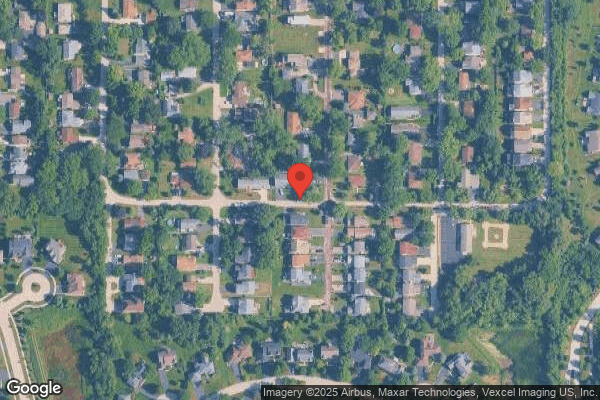
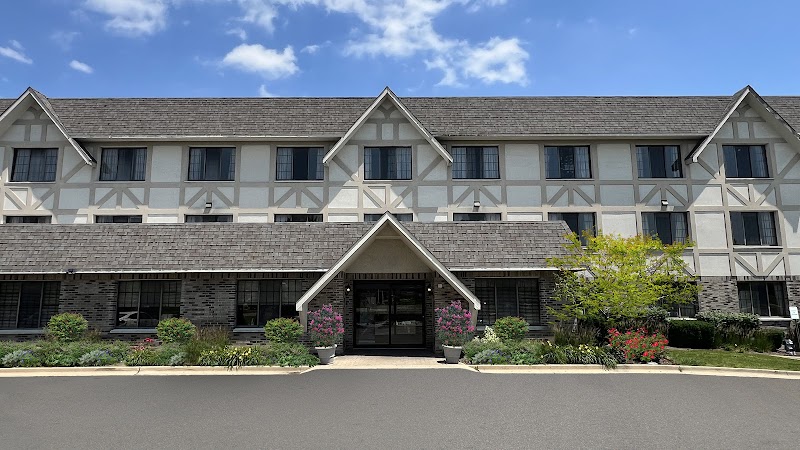
900 SOUTH RAND ROAD, LAKE ZURICH, IL 60047 (847) 726-1200
For profit - Corporation 203 Beds LEGACY HEALTHCARE Data: November 2025 1 Immediate Jeopardy citation
Trust Grade
63/100
#15 of 665 in IL
Last Inspection: January 2025

Within standard 12-15 month inspection cycle. Federal law requires annual inspections.

Overview

Avantara Lake Zurich has a Trust Grade of C+, indicating it is slightly above average but not exceptional. It ranks #15 out of 665 nursing homes in Illinois, placing it in the top half of facilities statewide, and it is the top-ranked option out of 24 facilities in Lake County. The facility is showing an improving trend, with issues decreasing from 17 in 2024 to 7 in 2025. However, staffing is a concern, rated at 2 out of 5 stars, with a turnover rate of 40%, which is better than the state average but still indicates some instability among staff. While Avantara Lake Zurich has no fines and has good RN coverage, there are serious safety incidents to consider. One critical finding involved a resident leaving the facility unsupervised and crossing a busy road, leading to hospitalization due to hypothermia and a fall. Another serious incident included a resident falling during a transfer, resulting in a significant fracture. Additionally, there were concerns regarding food safety practices, specifically related to hand hygiene by kitchen staff, which could risk cross-contamination. Overall, while there are strengths like high quality ratings and no fines, families should be aware of these specific safety concerns.

Trust Score
C+
63/100
In Illinois
#15/665
Top 2%
Safety Record
High Risk
Review needed
Inspections
Getting Better
17 → 7 violations
Staff Stability
○ Average
40% turnover. Near Illinois's 48% average. Typical for the industry.
Penalties
✓ Good
No fines on record. Clean compliance history, better than most Illinois facilities.
Skilled Nurses
✓ Good
Each resident gets 60 minutes of Registered Nurse (RN) attention daily — more than 97% of Illinois nursing homes. RNs are the most trained staff who catch health problems before they become serious.
Violations
⚠ Watch
30 deficiencies on record. Higher than average. Multiple issues found across inspections.
★★★★★
5.0
Overall Rating
★★☆☆☆
2.0
Staff Levels
★★★★★
5.0
Care Quality
★★★★☆
4.0
Inspection Score
Stable
2024: 17 issues
2025: 7 issues

The Good

  • 5-Star Quality Measures · Strong clinical quality outcomes
  • Full Sprinkler Coverage · Fire safety systems throughout facility
  • No fines on record
  • Staff turnover below average (40%)

    8 points below Illinois average of 48%

Facility shows strength in quality measures, fire safety.

The Bad

Staff Turnover: 40%

Near Illinois avg (46%)

Typical for the industry

Chain: LEGACY HEALTHCARE

Part of a multi-facility chain

Ask about local staffing decisions and management

The Ugly 30 deficiencies on record

1 life-threatening 1 actual harm
Aug 2025 1 deficiency
CONCERN (D) 📢 Someone Reported This

A family member, employee, or ombudsman was alarmed enough to file a formal complaint

Potential for Harm - no one hurt, but risky conditions existed

Deficiency F0561 (Tag F0561)

Could have caused harm · This affected 1 resident

**NOTE- TERMS IN BRACKETS HAVE BEEN EDITED TO PROTECT CONFIDENTIALITY** Based on observation, interview, and record review the facility failed to ensure a resident was treated in a dignified manner fo...

Read full inspector narrative →
**NOTE- TERMS IN BRACKETS HAVE BEEN EDITED TO PROTECT CONFIDENTIALITY** Based on observation, interview, and record review the facility failed to ensure a resident was treated in a dignified manner for 1 of 5 residents (R1) reviewed for dignity in the sample of 5. The findings include: On 8/26/25 at 9:54 AM, R1 was in bed in her room. R1 moved slowly as she sat up in bed. R1 said the first night she was here, she had to go to the bathroom and couldn't find her call light. R1 said she uses the bedpan since she has a broken pelvis and is working with therapy on getting up to the bathroom. R1 said no one was coming to check on her and she ended up going in her brief. R1 said she was sitting in urine and yelling for someone to come help her. R1 said she was so frustrated and humiliated, and she called 911 to get help. R1 said while she was on the phone with 911, the nurse came in and asked if she called 911 and what she needed. R1 said she needed to be changed and then staff came to help her. R1 said at first, she was frustrated and humiliated but then it became scary that no one was there to help her. R1 said she felt helpless and that is why she called 911. On 8/26/25 at 11:49 AM, V5 Licensed Practical Nurse said he received a call from the police that the resident in room [ROOM NUMBER] needed help and couldn't find her call light. V5 said he went to R1's room and asked her if she called 911 and what she needed. V5 said R1 told him she couldn't find her call light and she had needed to use the bedpan and be changed. V5 said he told R1 he would send the Certified Nursing Assistant (CNA) to help her and then left the room to go back to the police who were holding on the phone.On 8/26/25 at 12:14 PM, V7 CNA said he was told by V5 that R1 had called the police and needed to be changed. V7 said when he went into R1's room, her call light was tied to the bed rail, but R1 said she didn't see it there. V7 said R1 was very frustrated about not being able to use the bedpan and being wet. V7 said R1's brief was wet with urine. V7 said R1 is alert and oriented. On 8/26/25 at 11:07 AM, V4 Registered Nurse said she took care of R1 on day after her admission. V4 said she got in report from the nurse that R1 had called the police because she couldn't find the call light, but the call light was beside her. V4 said R1 reported to her that she was waiting for over an hour for someone to come around, no one was coming and she needed help, couldn't find the call light so she called 911. V4 said R1 is a former nurse, is alert and oriented, and knows when she needs to use the bed pan. V4 said R1 was very frustrated and should not have to feel like that.R1's Progress Note dated 8/20/25 shows admitted a [AGE] year old female from hospital via stretcher accompanied by paramedics. Primary diagnosis is closed fracture of left inferior pubic ramus non-surgical. Resident is alert and oriented times three.The facility's Privacy and Dignity Policy dated 7/3/25 shows It is the facility's policy to ensure that resident's privacy and dignity is respected by the staff at all times.
May 2025 1 deficiency 1 IJ
CRITICAL (J) 📢 Someone Reported This

A family member, employee, or ombudsman was alarmed enough to file a formal complaint

Immediate Jeopardy (IJ) - the most serious Medicare violation

Accident Prevention (Tag F0689)

Someone could have died · This affected 1 resident

**NOTE- TERMS IN BRACKETS HAVE BEEN EDITED TO PROTECT CONFIDENTIALITY** Based on observation, interview, and record review, the facility failed to ensure the front entrance to the facility was safely ...

Read full inspector narrative →
**NOTE- TERMS IN BRACKETS HAVE BEEN EDITED TO PROTECT CONFIDENTIALITY** Based on observation, interview, and record review, the facility failed to ensure the front entrance to the facility was safely supervised and/or secured to prevent 1 of 3 residents (R1) reviewed for safety and supervision in the sample of 6 from exiting the facility unbeknown to the staff. This failure resulted in R1 leaving the facility in the early morning hours and crossing four lanes of a major east-west arterial road where the speed limit is 50 miles per hour (MPH) wearing only a hospital gown, a brief, and shoes. R1 became hypothermic and was admitted to the hospital with an acute subdural hematoma, hypothermia due to cold environment, and unwitnessed fall. The Immediate Jeopardy began on 4/13/25 when staff could not find a resident in the facility. V1, Administrator, was notified of the Immediate Jeopardy on 5/12/25 at 4:20 PM. The surveyor confirmed by observation, interview, and record review that the Immediate Jeopardy was removed, and the deficient practice corrected on 4/16/25, prior to the start of the survey and was therefore Past Noncompliance. The findings include: On 5/7/25 during travel to the facility, the noted speed limit of the four-lane highway directly in front of the facility was 50 miles per hour. R1's admission Record dated 4/14/25 shows R1 was admitted to the facility on [DATE]. R1's diagnoses include, but are not limited to, traumatic subdural hemorrhage, metabolic encephalopathy, myocardial infarction (heart attack), nontraumatic intracerebral hemorrhage, abnormalities of gait and mobility, lack of coordination, weakness, contusion and laceration of the right cerebrum, need for assistance with personal care, malignant neoplasm of the large intestine and history of falling. R1's Minimum Data Set, dated [DATE] shows R1's cognition is severely impaired and R1 has no broken or loosely fitting full or partial denture or obvious or likely cavity or broken natural teeth. R1's care plan initiated on 4/7/25 shows R1 is at risk for altered thought processes and will be free from any injury related to accidents. R1's care plan initiated on 4/4/25 shows R1 is at high risk for falling and interventions include staff providing a safe environment. This same care plan also shows R1 has an alteration in neurological status and is at risk for altered thought process. On 5/8/25 at 11:15 AM, V11, CNA, said she saw R1 last around 3:30 AM on 4/13/25 where he was in bed, asleep, and dry. V11 said R1 was wearing a hospital gown and a diaper. V11 said she noticed R1 was not in his room at about 4:15 AM. V11 said she immediately asked the nurse if he had gotten R1 out of bed and the nurse answered, No, R1 should be in his bed. V11 said they both started looking for R1. V11 said she did not think R1 had gotten outside because she would have heard the alarms if he had gone through the doors going outside, and she had not heard any alarms. V11 said they continued to look for R1 for another 20 to 30 minutes and then someone called the Administrator, V1. V11 said at that point about an hour had gone by and they were told to keep searching for R1. V11 said they still could not find R1. V11 said she ended up checking the door alarms to see if the door alarm would go off, and it did not go off; the alarm was not triggered, and they realized the alarm was not turned on or it was not working. V11 said they were even more terrified now and they searched outside by the pond and all around the facility. V11 said it was very cold outside and R1 was wearing only a hospital gown and a diaper when she put him to bed. V11 said the police were eventually called and they found R1 across the four-lane highway where she believes the speed limit is 45 MPH. On 5/7/25 at 2:21 PM, V5, Registered Nurse (RN), said he was R1's nurse on 4/12/25 going into 4/13/25 during the night shift. V5 said he noticed V11 was looking for R1 and asked if he knew where R1 was. V5 said they both started looking for R1. V5 said R1's bed alarm did not sound and the door alarms for the building did not go off. V5 said it was cold outside that night and he had to get his coat when he went outside to look for R1. V5 said the police eventually found R1 across the four-lane highway outside of a fast-food restaurant. On 5/8/25 at 10:00 AM, V1 said she was informed on 4/13/25 by phone at about 5:13, AM that staff could not find R1. V1 said she was driving to the facility and on the way, she received a call from the police that R1 had been located across the four-lane highway from the facility. V1 said when she later reviewed the video, she could see R1 walking out the front door of the facility and turning left wearing a gown, a diaper, and shoes. V1 said the video has no sound, so she cannot say if the door was alarmed or not. V1 said the police called an ambulance for R1 and he was taken to the hospital. V1 acknowledged that a human body temperature of 93.2 degrees Fahrenheit (F) is considered hypothermia. V1 said R1 had a tooth knocked out and an abrasion. On 5/12/25 at 3:00 PM, V1 said the video she reviewed from 4/13/25 showed R1 exiting the facility through the front door between 4:05 AM and 4:10 AM. On 5/8/25 at 1:24 PM, V13, Medical Director said he would be very concerned about a person's body temperature of 93.2 degrees F. V13 said hypothermia can cause a heart attack, a stroke, or respiratory arrest, then eventually death. V13 said it was cold outside when R1 eloped, and he could have died. On 5/7/25 at 1:52 PM, V2, Director of Nursing (DON), said R1 had a head injury from his fall when he eloped. V2 said the doors are all alarmed from 8:00 PM until 8:00 AM and a code is needed to enter or leave during those hours. On 5/12/25 at 11:25 AM V14, Nurse Practitioner (NP), said hypothermia is a body temperature being lower than normal. V14 said a normal human body temperature is 98.6 degrees F. V14 said the dangers of hypothermia include death. The police report dated 4/13/25 shows police were dispatched on 4/13/25 at 5:41 AM to the facility for a missing adult. Police officers who were originally at the facility left and went to where R1 had been found across the highway from the facility by other police officers. The report describes R1 as wearing a hospital gown, being confused, and having small cuts on his arms and legs with a bloody mouth. R1's Emergency Department (ED) notes dated 4/13/25 show R1 presented via ambulance for an unwitnessed fall outside of his living facility. R1 had a missing tooth with dried blood and abrasions to his upper and lower extremities consistent with a fall. R1's rectal temperature was 93.2 degrees F. R1's ED diagnoses are acute subdural hematoma, hypothermia due to cold environment and unwitnessed fall. R1 was admitted to the hospital from the ED on 4/13/25 at 9:52 AM. The facility's Elopement Policy (reviewed 8/27/24) shows it is the policy of the facility that all residents are afforded adequate supervision to provide the safest environment possible. The Immediate Jeopardy that began on 4/13/25 was removed on 4/16/25 when the facility The Immediate Jeopardy that began on 4/13/25 was removed and the deficient practice was corrected on 4/16/25 when the facility conducted a full house audit of all residents to identify those who are an elopement risk on 4/13/25, conducted in-services with all staff on the elopement policy which was completed by 4/16/25, evaluated and inspected the front door alarm system and found it to be in good working condition on 4/13/25. A lock box was installed on 4/14/25 over the kill switch which is located in the ceiling. Only supervisory/authorized staff have access. A new code panel was installed on the internal set of glass doors requiring a code to exit the facility on 4/14/25. All other exit doors were checked and found to be fully engaged and functioning on 4/13/25. All bed/chair/personal alarms were checked and found to be in good working condition on 4/13/25. The doors equipped with the Wander Guard system were checked and properly functioning on 4/13/25. A QA audit tool was initiated on 4/13/25 for maintenance to check the alarmed doors and wander guard equipped doors for proper functioning three times a day for 12 weeks. All staff were in-serviced on the importance of immediately responding to exit door alarms and completed by 4/16/25. All staff were in-serviced on ensuring that the front exit door alarm is consistently activated between 8:00 PM and 8:00 AM. This in-service was completed between 4/13/25 and 4/16/25. A QA audit tool was initiated on 4/13/25 to ensure that the front alarm door is properly functioning. It will be done three times a week for 12 weeks. An emergency QAPI meeting which was attended by the Medical Director via phone was held around 2:00 PM or 3:00 PM on 4/13/25. The Medical Director was in agreeance with the plan of correction developed by the committee. All trends identified will be discussed in the monthly QAPI meeting until resolution. These corrections were implemented and/or completed prior to the start of the current survey.
Jan 2025 5 deficiencies
CONCERN (D)

Potential for Harm - no one hurt, but risky conditions existed

Deficiency F0604 (Tag F0604)

Could have caused harm · This affected 1 resident

**NOTE- TERMS IN BRACKETS HAVE BEEN EDITED TO PROTECT CONFIDENTIALITY** Based on observation, interview, and record review the facility failed to ensure least restrictive interventions were provided p...

Read full inspector narrative →
**NOTE- TERMS IN BRACKETS HAVE BEEN EDITED TO PROTECT CONFIDENTIALITY** Based on observation, interview, and record review the facility failed to ensure least restrictive interventions were provided prior to the implementation of a physical restraint and failed to release the restraint during supervised activities for 1 of 2 residents reviewed for restraints in the sample of 27. The findings include: On 1/14/25 at 1:05 PM, R90 was sitting in his wheelchair at a table in the dining room. R90 had a lap belt restraint in place and secured closed. At 1:07 PM, R90 was served his lunch and his lap belt restraint remained intact. V21 CNA (Certified Nursing Assistant), V18 CNA, and V19 CNA were in the dining room passing trays and assisting residents. R90's lap belt restraint was not released during the supervised meal. On 1/15/25 at 12:05 PM, R90 was sitting in his wheelchair in front of the nurses's station with his lap belt restraint in place and secured closed. R90 was waiting to leave for an appointment. The surveyor directed R90's attention to his restraint and asked him what it was and if he could remove it. R90 stated he did not know what it was and that they put it on him. R90 was asked if he could remove the seat belt and he stated no. R90 touched the restraint and stated he did not know how or why he had it. On 1/16/25 at 10:16 AM, V2 DON (Director of Nursing) stated R90 had a self releasing seat belt and depending on the day he is able to release it. V2 stated R90 could not consistently remove the seat belt on command. V2 stated R90 had the seat belt in place for his safety. V2 stated the seat belt was in place because R90 was restrained in the hospital, had a history of agitation, and he had a fall within 24 hours of admission to the facility. V2 stated V24 RN (Registered Nurse/Restorative Nurse) does all of the assessments for restraints. V2 confirmed that least restrictive measures should be put in place prior to the use of a restraint. On 1/16/25 at 10:27 AM, V24 RN (Registered Nurse/Restorative Nurse) stated R90 was admitted to the facility on [DATE] and had a fall on 12/6/24. R90 had an alarm in place initially and after the fall the placed a cushion lap restraint on his wheelchair. V24 stated R90 was able to take the cushion lap restraint off and throw it. V24 stated they switched immediately to the self release restraint buckle on that same day. V24 stated R90 can release the restraint on good days. On bad days because of his cognitive deficits he cannot remove the restraint. V24 stated R90 cannot remove the self release buckle on command. V24 stated the restraint should be released when R90 is in the dining room and staff is with him. V24 stated in dining room before lunch they have activity staff and the restraint is to be released. V24 stated the restraint should be released at meals. V24 stated R90 came in at risk for falls. If a resident has a history of falls they try to initiate something. V24 confirmed there is an adjustment period when a resident is admitted to the facility and the resident needs to get acquainted with the environment. V24 stated when R90 first came in he was agitated and they had to keep an eye on him. On 1/16/25 at 10:37 AM, R90 was sitting in a wheelchair with his restraint buckle in place and closed. R90 was playing a ring toss game with V25 (Activity Aide). R90 was observed continuously from 10:37 AM - 11:08 AM at the supervised activity with his restraint not released. On 1/16/25 at 11:16 AM, V20 CNA stated R90 has the lap belt so he doesn't fall. V10 stated she doesn't do anything with the belt other than to make sure it is on. V20 stated when R90 first came in he was getting up from his chair every 5 minutes. R90 wouldn't stay sitting so the lap belt was put on him. Now R90 sits all of the time. The Face Sheet dated 1/16/25 for R90 showed diagnoses including dementia, insomnia, anxiety, paranoid personality disorder, dysphagia, weakness, transient ischemic attack, history of falling, hypertension, anemia severe protein calorie malnutrition, atherosclerotic heart disease, restlessness and agitation. R90's Care Plan showed, admission date: 12/5/2024. R90 is at high risk for falls related to history of fall. Self release belt while up in chair. May remove during activities of daily living and care. Date initiated: 12/5/2024. Bed and chair alarm to alert staff when resident attempts to get out of bed unassisted, so staff can assist resident and prevent falls - date initiated 12/5/24. Lap cushion restraint initiated but resident able to remove item from wheelchair. Self release belt initiated - date initiated 12/6/24. The facility's Restraints policy (8/19/24) showed, it is the facility's policy to ensure that each resident is not restrained for the purposes of discipline or convenience. The facility will utilize non-restraining interventions first before trying restrain-type devices which would be considered as last resort. Physical restraint is defined as manual method, physical or mechanical device, equipment or material that meets all of the following criteria: A) attach or adjacent to the resident's body; B) that the individual cannot intentionally remove easily, and; C) restricts freedom of movement or normal access to one's body.
CONCERN (D)

Potential for Harm - no one hurt, but risky conditions existed

Quality of Care (Tag F0684)

Could have caused harm · This affected 1 resident

**NOTE- TERMS IN BRACKETS HAVE BEEN EDITED TO PROTECT CONFIDENTIALITY** Based on observation, interview, and record review the facility failed to ensure daily weights were done for a resident with con...

Read full inspector narrative →
**NOTE- TERMS IN BRACKETS HAVE BEEN EDITED TO PROTECT CONFIDENTIALITY** Based on observation, interview, and record review the facility failed to ensure daily weights were done for a resident with congestive heart failure for 1 of 1 residents (R80) reviewed for weights in the sample of 27. The findings include: R80's face sheet showed she was admitted to the facility 8/21/24 with diagnoses to include Chronic Diastolic Congestive Heart Failure, Type 2 Diabetes, Hyperlipidemia, anxiety disorder, hypertension, and need for assistance with personal care. R80's facility assessment dated [DATE] showed she has moderate cognitive impairment and requires substantial to maximum assistance from staff for most cares. R80's care plan initiated 8/22/24 showed, [R80] has altered cardiovascular status related to hypertension, congestive heart failure,and atrial fibrillation . Vital signs as ordered and PRN (as needed). Notify physician of any abnormal readings . R80's January 2025 Physician Order Sheet showed an order dated 8/21/24 to Monitor weight daily before breakfast. Notify MD of a 2 lb weight gain in one day or 5 lb weight gain in one week. R80's January 2025 eMAR (electronic Medication Administration Record) showed weights documented 1/1/25 and 1/3/25. There were 14 of 16 weights that were not completed for R80. On 1/16/25 at 12:08 PM, V9 RN (Registered Nurse) said R80 is not a daily weight. V9 said residents are usually on daily weights to monitor fluid changes for heart issues such as Congestive Heart Failure. On 1/16/25 at 12:20 PM, V2 DON (Director of Nursing) and V26 ADON (Assistant Director of Nursing) were interviewed together. V26 said verified R80 has an order to be weighed daily with parameters to notify the physician for changes. V26 said R80 has a diagnosis of Congestive Heart Failure. V26 said the CNAs (Certified Nursing Assistants) complete the daily weights and report to the nurses who document them daily. V26 said the nurses would be monitoring the weights and notifying the physician of changes. V26 said R80's daily weight is not being done daily as it is ordered. The facility's policy and procedure with revision date of 2/27/24 showed, . Congestive Heart Failure Clinical Protocol . It is the policy of this facility to ensure implementation of the following clinical protocols for all residents/patients who are admitted with primary diagnosis of Congestive Heart Failure . Hydration and Fluid Balance . 3. Obtain and record the daily weight as ordered .
CONCERN (D)

Potential for Harm - no one hurt, but risky conditions existed

Incontinence Care (Tag F0690)

Could have caused harm · This affected 1 resident

Based on observation, interview, and record review the facility failed to have a dressing in place for the suprapubic catheter and failed to ensure the dressing change to the suprapubic catheter was d...

Read full inspector narrative →
Based on observation, interview, and record review the facility failed to have a dressing in place for the suprapubic catheter and failed to ensure the dressing change to the suprapubic catheter was done as ordered for 1 of 3 residents (R32) reviewed for catheters in the sample of 27. The findings include: On 1/14/25 at 11:06 AM, R32 stated they put medication in his penis this morning because he couldn't pee. R32 stated his catheter was not draining all last night and this morning. R32 stated his groin hurt this morning until the nurse injected something into his catheter and it started draining. R32 stated it feels wet where the urine drains out of his stomach (suprapubic catheter) and he wanted the nurse notified. At 11:15 AM, V17 RN (Registered Nurse) was notified R32 complained that his catheter was leaking. V17 put gloves on and walked into R32's room. V17 went over to R32 and asked him if he felt wet. R32 replied, yes. V17 pulled back R32 covers and pulled down his incontinence brief in front. R32 did not have a dressing over his suprapubic catheter. Urine was draining out around the catheter tubing and the skin was reddened. R32 complained of some pain. V17 walked around to the catheter drainage bag, lifted the bag up and there wasn't any drainage in the bag. There was sediment in the catheter tubing. V17 removed his gloves and left the resident's room. On 1/14/25 at 11:24 AM, V17 went to V22 RN (Registered Nurse/Nurse Manager) and stated R32's catheter was leaking. V22 stated R32 was supposed to have a dressing in place around the suprapubic catheter. V22 stated that R32 did not have one in place and he hasn't done the dressing yet. The surveyor asked V22 about dressings, wound care/bosomy care and she confirmed that the care provided should be according to the physician's orders. On 1/14/25 at 11:33 AM, V13 LPN (Licensed Practical Nurse) went into R32's room with gloves on. V13 did not put a gown on. R32 had saline, gauze and a drain sponge. V13 went over to R32 and pulled his incontinence brief down in the front. R32 had drainage around the tubing that was going to the right side and left side of his groin area. V13 took the saline, put it on the gauze and cleaned around the reddened urostomy site. R32 made a noise and stated, that burned. V13 apologized and stated it needed to be cleaned. V13 discarded the gauze. V13 picked up the new gauze, put saline on it and cleaned around the urostomy again. R32 waved his hand over the suprapubic catheter ostomy site to dry it and decrease the burning sensation. V13 applied a drain sponge under the suprapubic catheter and secured it with tape. The Physician Order Summary Report dated 1/15/25 showed, wound care to catheter site, clean with normal saline, pat dry, apply skin prep then cover with a dry dressing two times per day and as needed if soiled. Suprapubic catheter: Monitor skin integrity around stoma. The Care Plan dated 12/17/24 for R32 showed, R32 is at risk for alteration of bowel and bladder functioning related to decreased strength and endurance. With suprapubic 18 french, 30 ml (milliliters) for retention of urine, BPH. Ostomy: maintain the ostomy site to keep it clean and dry to prevent irritation. Ostomy: perform ostomy care daily and as needed per physician's order. The Face Sheet dated 1/15/25 for R32 showed diagnoses including obstructive and reflux uropathy, chronic kidney disease, benign prostatic hyperplasia, moderate protein calorie malnutrition, atrial fibrillation, peripheral vascular disease, heart disease, spinal stenosis, hypertension, atherosclerotic heart disease, hyperlipidemia, lack of coordination, diarrhea, and chronic obstructive pulmonary disease. The facility's Indwelling Catheter policy (7/31/24) did not show care of a suprapubic catheter to include site care and dressing changes.
CONCERN (E)

Potential for Harm - no one hurt, but risky conditions existed

Infection Control (Tag F0880)

Could have caused harm · This affected multiple residents

**NOTE- TERMS IN BRACKETS HAVE BEEN EDITED TO PROTECT CONFIDENTIALITY** 5. On 1/14/25 at 11:06 AM, R32 stated they put medication in his penis this morning because he couldn't pee. R32 stated his cath...

Read full inspector narrative →
**NOTE- TERMS IN BRACKETS HAVE BEEN EDITED TO PROTECT CONFIDENTIALITY** 5. On 1/14/25 at 11:06 AM, R32 stated they put medication in his penis this morning because he couldn't pee. R32 stated his catheter was not draining all last night and this morning. R32 stated his groin hurt this morning until the nurse injected something into his catheter and it started draining. R32 stated it feels wet where the urine drains out of his stomach (suprapubic catheter) and he wanted the nurse notified. At 11:15 AM, V17 RN (Registered Nurse) was notified R32 complained that his catheter was leaking. V17 put gloves on, stopped outside R32's room door and shut the isolation container drawer that was under the enhanced barrier precaution sign. V17 did not put a gown on and walked into R32's room. V17 went over to R32 and asked him if he felt wet. R32 replied, yes. V17 pulled back R32 covers and pulled down his incontinence brief in front. R32 did not have a dressing over his suprapubic catheter. Urine was draining out around the catheter tubing and the skin was reddened. R32 complained of some pain. V17 walked around to the catheter drainage bag, lifted the bag up and there wasn't any drainage in the bag. There was sediment in the catheter tubing. V17 removed his gloves and left the resident's room. V17 was stopped outside of R32's room and asked why there was an EBP (enhanced barrier precaution) sign up. V17 stated the sign was due to the resident having a catheter. V17 stated a gown, gloves and mask were to be worn in the resident's room. V17 stated the EBP was in place to prevent infection/contamination etc for residents. On 1/14/25 at 11:33 AM, V13 LPN (Licensed Practical Nurse) went into R32's room with gloves on. V13 did not put a gown on. R32 had saline, gauze and a drain sponge. V13 went over to R32 and pulled his incontinence brief down in the front. R32 had drainage around the tubing that was going to the right side and left side of his groin area. V13 took the saline, put it on the gauze and cleaned around the reddened urostomy site. R32 made a noise and stated, that burned. V13 apologized and stated it needed to be cleaned. V13 discarded the gauze. V13 picked up the new gauze, put saline on it and cleaned around the urostomy again. R32 waved his hand over the suprapubic catheter ostomy site to dry it and decrease the burning sensation. V13 applied a drain sponge under the suprapubic catheter and secured it with tape. V17 was in the room, with gloves on and no gown. V17 wrote on the dressing with a black marker the date the dressing was changed. On 1/15/25 at 2:15 PM, V3 (Infection Control Nurse) stated for EPB anybody with a catheter, feeding tube, intravenous access, and wounds are automatically put on EBP to protect the resident from spreading infection. When there is any close contact like shower, dressing, changing, wound care, catheter care, etc the staff are to wear all PPE (personal protective equipment) to protect the resident. V3 stated she always posts and EPB sign in front of the residents room. V3 stated she has PPE outside of the room and posts donning and doffing signs. V3 stated if anyone is handling a catheter and/or the dressing around catheter then they have to wear the gown and gloves. The Care Plan dated 12/17/24 for R32 showed, R32 is on Enhanced Barrier Precautions. Ensure that gown and gloves are used during high-contact resident care activities (like dressing, bathing/showering, transferring, providing hygiene, changing linens, changing briefs or assisting with toileting, Device care or use for those with central line, urinary catheter, feeding tube, tracheostomy/ventilator, and Wound care for any skin opening requiring a dressing) that provide opportunities for transfer of MDROs (multidrug resistant organism) to staff hands and clothing. The Face Sheet dated 1/15/25 for R32 showed diagnoses including obstructive and reflux uropathy, chronic kidney disease, benign prostatic hyperplasia, moderate protein calorie malnutrition, atrial fibrillation, peripheral vascular disease, heart disease, spinal stenosis, hypertension, atherosclerotic heart disease, hyperlipidemia, lack of coordination, diarrhea, and chronic obstructive pulmonary disease. The facility's Enhance barrier Precaution policy (7/26/24) showed, the facility will use enhance barrier precautions (EBP) to reduce transmission of multi-drug resistant organisms in the nursing homes. EBP involves the use of gowns and gloves to reduce transmission of resistant organisms during high-contact resident care activities for residents known to be colonized or infected with MDROs as well as residents with wounds and/or indwelling medical devices. The EBP requires the use of gown and gloves during high-contact resident care activities that provide opportunities for transfer of XDROs (extensively drug resistant organism) to staff hands and clothing. 3. R131's admission Record, provided by the facility on 1/16/25, showed he had diagnoses including bipolar disorder, seizures, and influenza due to identified novel influenza A virus with other respiratory manifestations. The onset date was 1/10/25. The record also showed R131 had a cough, with an onset date of 1/9/25. R131's Order Summary Report, provided by the facility on 1/16/25, showed an order dated 1/10/25 to Maintain at all times: Strict droplet isolation precautions due to an active infection. Single room, resident alone and not cohorted with a roommate. Resident remains in the room at all times. Services are done in the room every shift for 7 days. R131's facility assessment dated [DATE] showed he had moderate cognitive impairment, required set-up or clean-up assistance for eating, and partial to moderate assistance with showering/bathing. R131's care plan, initiated on 1/10/25, showed R131 required strict droplet/contact precautions related to Influenza A. The care plan showed Observe isolation precautions as clinically indicated. Use appropriate protective equipment. Utilize proper hand washing technique. Discard all infected waste in the appropriate biohazard container placed in the resident's room. On 1/14/25 at 12:38 PM, R131 was sitting in his room, in a wheelchair. Signage on the door to R131's room showed he was on contact/droplet precautions. The sign showed prior to entering the room, staff should clean their hands and don the following PPE (personal protective equipment): gloves, gown, and face protection. The signage showed staff should make sure their eyes, nose, and mouth are fully covered before entering. The signage also showed staff should remove all the PPE before exiting the room and clean their hands. V14 (Agency CNA-Certified Nursing Assistant) entered R131's room carrying R131's lunch tray. The only PPE worn by V14 was a surgical face mask. V14 exited R131's room and walked back down to the dining room to pass lunch trays to other residents. V14 did not perform hand hygiene prior to entering or exiting R131's room, did not wear the PPE listed on the signage, and did not discard the face mask he wore into the room. At 12:42 PM, V14 was walking back up the hall after delivering a meal tray to another resident. This surveyor asked V14 the name of the resident that was on contact/droplet isolation that he delivered the tray to previously as there were two names on the wall outside the room. V14 entered the room again wearing only the face mask, walked up to the resident, bent over and asked the resident his name. V14 exited the room and identified the resident as (R131). V14 did not clean his hands prior to entering or exiting R131's room again, did not wear the PPE listed, and did not discard the mask worn into the room prior to exiting the room. On 1/15/25 at 2:12 PM, V15 (CNA) entered R131's room wearing gloves and a surgical face mask. V15 grabbed towels and items needed for R131's shower, and propelled R131 down the hall to the shower room. R131 had a surgical mask on while he was being transported to the shower room. At 2:20 PM, V15 was in the shower room giving R131 a shower. R131 did not have a face mask on. V15 had a face mask and gloves on. No other PPE was worn by V15. 4. R52's admission Record, provided by the facility on 1/16/25, showed she had diagnoses including cerebral infarction (stroke), bipolar disorder, and schizophrenia. R52's facility assessment dated [DATE] showed she was cognitively intact and dependent on staff for toileting and personal hygiene. R52's ADL (activities of daily living) care plan, initiated on 4/2/24, showed she requires assistance with bed mobility, transfers, dressing, walking, personal hygiene, eating and toileting. On 1/15/25 at 2:42 PM, V15 and V16 (CNAs) went into R52's room to provide incontinence care. V15 donned two pairs of gloves. V15 cleaned R52's vaginal area, then V15 and V16 rolled R52 onto her right side. V15 cleaned R52's buttocks area, removing barrier cream that was on R52's buttocks, then applied new barrier cream. V15 removed the top pair of gloves, leaving the pair on that was under the top pair. V15 put a brief on R52, placed pillows under R52's legs to offload her heels, and covered R52 up. At 2:50 PM, V16 was asked if she would have done anything different than V15. V16 said she would not have double gloved. V16 said she was going to say something to V15, but she did not want to say it in front of this surveyor and the resident. V16 said V15 should have removed the gloves used for incontinent care, performed hand hygiene and applied new gloves before touching the resident or her blankets and pillows. At 2:52 PM, V16 was asked what PPE should be worn when entering a resident's room when they are on contact/droplet isolation. V16 said staff were told by management that if they were just going to go into a resident's room on contact/droplet to drop a tray off, as long as they did not touch anything or the resident, such as boosting the resident up, then they did not have to wear a gown or goggles/face shield. they could just wear a face mask and gloves. V16 said when giving a resident who is on contact/droplet a shower, staff should wear full PPE including N95 and goggles, gown and gloves. On 1/15/25 at 1:46 PM, V3 (Infection Preventionist-IP/LPN) said if a resident is on contact/ droplet isolation, the resident stays in their room. If staff are providing care, they need to wear PPE. We are dealing with an influenza outbreak. V3 said if staff are passing a meal tray, or just going in to ask the resident a question, if they are not providing any direct care, they need to wear a surgical mask and gloves. V3 said upon exiting the room, staff hands should be sanitized, and the mask should be changed, so they do not spread the infection to others. V3 said R131 is positive for Influenza A. On 1/15/25 at 2:25 PM, V9 (Registered Nurse-RN) said if a resident is on contact/droplet isolation, staff should wear a mask, gown, and gloves, even if going into the room really quick. V9 said all of these should be removed prior to exiting the isolation room and hand hygiene should be performed. On 1/15/25 at 2:58 PM, V3 (Infection Preventionist- IP/LPN) said when staff are giving a resident on contact/droplet isolation a shower, they should wear full PPE- including a gown, gloves, goggles or face shield, and an N95 mask. V3 said the CNA should not have double gloved; she should have removed the gloves after incontinent care, performed hand hygiene, and put new gloves on before touching the resident or her environment to prevent cross-contamination. The facility's policy and procedure titled Hand Hygiene, with a revision date of 7/30/24, showed Hand hygiene is important in controlling infections. Hand hygiene consists of either hand washing or the use of alcohol gel. The facility will comply with the CDC (Center of Disease Control) guidelines in regards to hand hygiene .1. Hand hygiene using alcohol-based hand rub is recommended during the following situations .c. Before and after entering isolation precaution settings unless the infectious organism is C. Difficile or Norovirus. d. Before and after assisting a resident with meals .f. Before and after assisting a resident with toileting .h. After contact with blood, body fluids, or surfaces contaminated with blood and body fluids. i. After removing gloves including during wound dressing change. The facility's policy and procedure titled Incontinent and Perineal Care, with a revision date of 7/31/24, showed It is the policy of the facility to provide perineal care to ensure cleanliness and comfort to the resident, to prevent infection and skin irritation, and to observe the resident's condition .4. Perform hand hygiene before the procedure. Put on gloves and appropriate personal protective equipment if indicated .6. Wash the perineal area and gently dry after the procedure. 7. discard disposable items into designated containers/plastic bag. 8. Remove gloves and dispose to designated plastic bag. Wash hands. 9. Put on new set of clean gloves to put on clean briefs/incontinent pads, to make resident comfortable, groom and change clothing . The facility's policy and procedure titled infection and Prevention Control, with a revision date of 11/21/24, showed 13. While on transmission-based precaution, the resident may only leave the room to participate in required and necessary procedures, like appointments, dialysis, etc. as long as the infection is contained .Precautions to Prevent Transmission of Infectious Agents and Transmission Based Precaution .2. Contact Precaution-intended to prevent transmission of infectious agents spread by direct contact with patient or the environment. Examples of infectious organisms requiring contact precaution are C. Difficile, Scabies, Norovirus, etc. and are outlined in CDC Appendix A (type and duration of precautions recommended for selected infections and conditions) a. Single room is required .b. Use of gown and gloves is necessary prior to room entry. Face protection may be necessary if performing activity with risk of splashing or spraying .c. Residents are restricted to leave the room except for medically necessary procedures and appointments. The policy showed 3. Droplet Precaution-intended to prevent transmission through close respiratory or mucous membrane contact with respiratory secretions. Examples of infectious organisms requiring Droplet precaution includes Covid-19, Flu, Rubella, Monkey Pox, etc . a. Single room is required .b. Eye protection, and mask should be worn for close contact with the resident. If there are infectious material that can be transmitted through contact, then gloves and gown should also be used. c. Resident is restricted inside the room and may wear mask when transported outside of the room for medically necessary procedures and appointments. Based on observation, interview, and record review the facility failed to ensure contact/droplet isolation precautions were maintained (R99, R131), failed to ensure enhanced barrier precautions were posted (R113), and failed to ensure personal protective equipment (PPE) was worn in a manner to prevent cross contamination (R131, R52, R32) for 5 of 5 residents reviewed for infection control in the sample of 27. The findings include: 1. R99's face sheet printed on 1/15/25 showed diagnoses including but not limited to influenza virus with respiratory manifestations, elevated white blood cell count, and dementia. R99's order summary report showed an order start dated 1/11/25 for: Maintain at all times: strict droplet isolation precautions due to an active infection. Single room, resident alone and not cohorted with a roommate. Resident remains in the room at all times. All services are done in the room. Every shift for 7 days. On 1/14/25 at 11:42 AM, R99's room had isolation signage, instructions for donning and doffing PPE, and a PPE supply bin outside of her room. The room was viewed from the doorway and R99 was not present. The isolation sign clearly showed STOP-CONTACT & DROPLET PRECAUTIONS. The sign showed to report to the nurses's station before entering the room. On 1/14/25 at 11:54 AM, V11 (Registered Nurse) was questioned regarding R99's isolation precautions and where abouts. V11 verified R99 was still on contact/droplet isolation. V11 said she was seated in the group dining room. V11 said R99 is allowed out of her room because she has dementia and is a fall risk. V11 said R99 does not understand she needs to stay in her room or wear a mask outside of it. This surveyor observed R99 in the dining room without any mask and was slowly self-propelling around the area. Multiple tables were filled with residents awaiting lunch. At 12:11 PM, R99 was at a four top table with other residents seated with her. At 12:52 PM, R99 and the table mates were eating lunch together. On 1/14/25 at 12:33 PM, V12 (Housekeeper) was in R99's room cleaning and was wearing the required PPE. V12 was able to indicate that PPE was required based on the signage and supplies posted outside resident rooms. On 1/15/25 at 9:42 AM, R99 was in the group dining room again and self-propelling her wheelchair. R99 was seated at a group table for breakfast and ate with the other residents. R99's room was still marked as contact/droplet isolation. On 1/15/25 at 1:14 PM, V3 (Infection Control Preventionist) said R99 was diagnosed with influenza on 1/10/25 and put on contact/droplet isolation. V3 said contact isolation is necessary so other residents are kept away from any areas that R99 touches. V3 said droplet isolation is required to contain any of R99's sneezing or coughing. Other residents can get sick if they breathe in the germ droplets. V3 stated R99 needs to stay in her room and avoid other residents for the seven days as ordered. V3 said R99 should not be eating in the main dining room and meals should be delivered to her room. V3 said R99 does have dementia but can understand the need to stay in her room. V3 said a mask is necessary if there is any reason to leave the room. V3 said she had concerns with R99 eating with other residents. It is a very vulnerable population and the potential to spread influenza is very high. The facility's Influenza Management and Surveillance policy revision dated 8/28/24 states under the containment section: a. Implement Standard and Droplet Precautions for all resident with suspected or confirmed influenza. Droplet precautions should be implemented for patients with suspected or confirmed influenza for 7 days after illness onset or until 24 hours after the resolution of fever and respiratory symptoms, whichever is longer, while a patient is in a healthcare facility .Place patients with suspected or confirmed influenza in a private room or area. 2. R113's face sheet printed on 1/16/25 showed diagnoses including but not limited to Parkinson's disease, chronic kidney disease, disorders of the brain, and dysphagia (difficulty swallowing). R113's January 2025 order summary report showed medications, liquid nutrition, and water flushes were being given via G-tube (gastrostomy tube-surgically placed device to supply direct access to the stomach). On 1/14/25 at 11:37 AM, a gastrostomy feeding tube pump and supplies were next to R113's bed. A bagged piston syringe was hanging from the pole and was dated 1/14. There was no isolation signage or PPE bin outside of the room. On 1/15/25 at 9:36 AM, the feeding tube pump and supplies were next to R113's bed. There was still no isolation signage or PPE bin outside the door. On 1/15/25 at 1:14 PM, V3 (Infection Control Preventionist) stated any resident with a feeding tube needs to be on EBP precautions (enhanced barrier precautions). Staff need to wear gloves and gowns while providing any care. A mask is needed right now too due to the influenza in the building. V3 said EBP precautions signs and PPE should be right outside resident doors. There is no way staff know to wear the PPE if the signs are not up to indicate what is needed during cares. V3 said R113 is on the dementia unit and it is possible another resident moved the items. V3 said staff should be checking daily that the signs and bins are still outside EBP rooms. The facility supplied enhanced barrier precaution sign showed staff must wear gloves and a gown for high-contact resident care activities. The sign included the use of a feeding tube.
CONCERN (F)

Potential for Harm - no one hurt, but risky conditions existed

Food Safety (Tag F0812)

Could have caused harm · This affected most or all residents

Based on observation, interview, and record review the facility failed to ensure food was handled in a manner to prevent cross-contamination and failed to ensure a cook performed hand hygiene in a man...

Read full inspector narrative →
Based on observation, interview, and record review the facility failed to ensure food was handled in a manner to prevent cross-contamination and failed to ensure a cook performed hand hygiene in a manner to prevent cross contamination. This affects all the residents residing in the facility. The findings include: The facility's CMS Form 671 dated 1/14/25 showed there were 138 residents residing in the facility. On 1/14/25 at 12:35 PM, V6 (Cook) washed his hands, walked with dripping hands to the box of gloves, near the steam table, and applied gloves with wet hands. V6 touched the exterior surfaces of the gloves with his dripping hands numerous times, in an attempt to apply the gloves. V6 went to the walk in-freezer and obtained a large box of frozen vegetable mix, containing several smaller plastic bags of vegetable mix. V6 obtained steel steamer pans from the shelves with the same gloves. V6 opened an individual bag of frozen vegetable mix and placed half of the bag into each steamer pan. V6 used his gloved hands to open the dirty trash can lid (there was food debris noted all over the top of the lid) and dispose of the plastic bag. V6 then obtained another bag of frozen vegetable mix, opened it and dumped the contents into the steamer pans. V6 used his contaminated gloves to spread the frozen vegetables in the steamer pan. V6 then used the same contaminated gloves to open the dirty trash can lid and dispose of the plastic bag. V6 continued this process to place 8 individual bags of frozen vegetables into steamer trays with the same contaminated gloves. V6 loaded the steamer trays of frozen vegetables into a cart with the contaminated gloves, then touched the walk-in freezer handle with the contaminated gloves, entered the freezer and obtained a box of frozen carrots. V6 placed them on his work station and turned to obtain additional clean steamer trays with is contaminated gloves. V6 obtained a stainless steel dish to scoop the diced carrots out of the box and into the steamer tray. V6 used the contaminated gloves to spread out the diced carrots. At 12:40 PM, V5 (Food Service Director) asked to speak with V6 and took him into the walk-in refrigerator. When V6 exited the walk-in, he was removing his contaminated gloves. V6 said the frozen vegetable mixes and frozen carrots were for the dinner meal today. V6 stated, I'm trying to get myself organized. At 12:44 PM, V6 washed his hands in the rear, food preparation sink. The kitchen had a designated handwashing station that was not it use. V6 did not dry his hands and walked to the box of gloves with dripping, wet hands and applied gloves. At 12:54 PM, V6 obtained a thermometer and reached into a large, stock pot of soup, cooking on the stove. V6 did not have gloves on and said he was checking the temperature of the chicken soup. At 1:03 PM, V27 (Cook) and V28 (Dietary Aide) were discussing the need for a mechanical soft hamburger. V6 stated, Speaking of hamburgers, and went to wash his hands. V6 applied gloves with dripping wet hands, obtained a baking sheet and sprayed it with non-stick cooking spray. V6 walked past the garbage can and touched the dirty lid with his gloved, right hand. V6 used the contaminated glove to open the walk in freezer, obtained 6 frozen frozen hamburger patties, and placed them on the baking sheet. V6 exited the freezer and walked to the oven. V6 used his contaminated glove to open the oven and turn the dial on the oven. V6 said he is the main evening cook and he's worked at the facility since September 2024. On 1/14/25 at 1:08 PM, V5, (Food Service Director) said there is a separate hand washing station for a reason. This (rear sink) is considered a food prep sink. V6 said the staff should not be washing their hands in the food prep sink because it increased the risk of cross-contamination and potential food borne illness. During this interview, V6 walked to the food prep sink and started washing his hands. The surveyor alerted V5 to V6 washing his hands in the food prep sink and V5 replied, He knows he's not supposed to do that. That's why he corrected himself and moved to the handwashing sink. The surveyor asked V5 what the proper technique was for hand washing. V5 said the staff use water and soap, lather for 30 seconds, rinse their hands, and dry their hands with a paper towel. V5 said staff should dry their hands to prevent bacteria from remaining on their hands. The surveyor asked V5 if the hands should be dry when applying gloves. V5 replied, Yes, of course. During this interview, V6 left the handwashing station with dripping wet hands and started to apply gloves. V5 told V6, You can't do that. Your hands have to be dry when you apply gloves. V6 replied, The water lubricates hands. it's the only way I can get the gloves on. V5 told V6, Dry hands, dry gloves. V5 said food should never be touched with contaminated gloves. V5 said if the garbage can is touched, then the gloves should have been removed and V6 should have washed his hands and applied clean gloves before touching the food. V5 said that's a cross-contamination issue. The surveyor explained that V6 touched the frozen vegetables multiple times with the same contaminated gloves. V5 replied, That's unacceptable. The [corporate contractor's] Hygiene Standards and Procedures revised 8/13/24 showed, Purpose: The Centers for Disease Control and Preventions (CDC) has reported that poor hygiene is one of the top five risk factors contributing to foodborne illness in food service environments. The CDC identified the main risk factors to be insufficient or improper hand washing and the improper use of disposable gloves. Pathogenic microorganisms, and physical and chemical contaminants (including allergens) can be introduced and cause foodborne illness, injury, or allergic reactions if food, drinks, and food-contact surfaces/equipment come in contact with the following: Hands that are not washed and gloved . Scope: The [corporate contractor] Hygiene Standards and Procedures apply to: All employees engaged in food preparation, production, or service . 4.1.1. Hand & Arm Hygiene: All employees and visitors entering into a food preparation, production, service, and warewashing area must wash their hands with soap and warm water and adhere to the standards stated below. Employees must wash hands when starting work, as well as: .Handwash after . Handling garbage, handling dirty equipment and utensils . Where to Handwash: Wash hands in designated handwash sinks. Do not wash hands in the food preparation sink, warewashing sink, or utility sink . 4.1.4. Disposable Gloves: Disposable gloves must be worn to protect food and food-contact surfaces from cross-contamination. Their intended use is not to protect employees from cross contamination. When to wear disposable gloves: Disposable gloves must be worn by everyone handling exposed foods that are raw or ready-to-eat, or engaged in food production in all production and service areas . How to use: Follow proper handwashing procedures before and after using gloves . The undated Chef (Cook) Job Description showed responsibilities to include: Prepare food in accordance with standard recipes, and special diets and following sanitary regulations as well as with established policies and procedures; Follow established Infection Control and Universal Precautions policy and procedure while performing tasks. The undated [corporate contractor's] Hand Washing, Chemical Use, and PPE Policy showed the proper handwashing process was: Wet hands with warm water; Lather hands with soap, making sure to get in between fingers, under nails and in any folds or crevices. Lather up past the wrist; Massage in lather for 30 seconds; Rinse thoroughly, and dry with paper towels; Use paper towel to turn off valves on sink and to open door to avoid re-contaminating hands.
Oct 2024 2 deficiencies
CONCERN (D) 📢 Someone Reported This

A family member, employee, or ombudsman was alarmed enough to file a formal complaint

Potential for Harm - no one hurt, but risky conditions existed

Incontinence Care (Tag F0690)

Could have caused harm · This affected 1 resident

**NOTE- TERMS IN BRACKETS HAVE BEEN EDITED TO PROTECT CONFIDENTIALITY** Based on observation, interview, and record review the facility failed to maintain an indwelling catheter and provide catheter c...

Read full inspector narrative →
**NOTE- TERMS IN BRACKETS HAVE BEEN EDITED TO PROTECT CONFIDENTIALITY** Based on observation, interview, and record review the facility failed to maintain an indwelling catheter and provide catheter care for residents in a manner to prevent cross contamination for 2 of 3 residents (R1, R2) reviewed for catheters in the sample of 5. The findings include: 1. R1's face sheet showed she was admitted to the facility on [DATE] with diagnoses to include Type 2 Diabetes, hypertensive urgency, unsteadiness on feet, neuromuscular dysfunction of bladder, iron deficiency anemia, generalized anxiety disorder, hypertension, chronic congestive heart failure, and generalized osteoarthritis. R1's facility assessment dated [DATE] showed she has no cognitive impairment and has an indwelling catheter in place. R1's October 2024 Physician Order sheet showed, . suprapubic catheter: Change dressing around stoma daily . Suprapubic catheter: Record Urine output every shift . R1's care plan initiated 4/3/24 showed, [R1] is at risk for alteration of bowel and bladder functioning related to: indwelling catheter use . Interventions: . Catheter care every shift and as needed . Monitor urine/catheter output every shift . R1's September and October 2024 eMAR (electronic Medication Administration Record) and eTAR (electronic Treatment Administration Record) showed no documentation for catheter care being completed, no outputs recorded, no dressing changes around the suprapubic catheter stoma site, and no evidence of drainage bag changes. On 10/18/24 at 2:10 PM, R1 was transferred from her chair into her bed for incontinence care by V5 CNA (Certified Nursing Assistant) and V9 CNA. R1's catheter bag had very little urine collected in the bottom of the bag and a minimal amount of urine visualized in the catheter tubing. When R1 was positioned in bed to start incontinence care V5 removed R1's pants and noticed R1's catheter tubing was kinked just below the insertion site. V5 unkinked R1's tubing and urine began to flow into the catheter tubing and drainage bag. V5 said, Now we have lots of urine. When care was completed for R1, V9 checked R1's catheter drainage bag and reported there was 400 cc of urine in the bag (10 minutes after the kink in the tube was straightened). During incontinence care R1's bed linens had been pushed into a pile at the bottom of her bed. R1's urinary catheter bag was placed on top of the pile of linen during cares putting it above the level of R1's bladder and R1's catheter tubing was noted to be filled solidly with urine from the drainage bag back up to the insertion site of the suprapubic catheter. On 10/18/24 at 2:44 PM, V5 CNA said R1's tubing had been kinked before they started incontinence care. V5 said, There was barely any urine in the bottom of drainage bag but when we got the kink out the urine started draining really well. R1's 10/14/24 General Progress Note entered at 8:32 AM showed, Patient alert and oriented x 3. Early this morning at 6AM during medication pass, patient appeared lethargic, though verbal. Refused morning medication . R1's 10/14/24 General Progress Note entered at 8:45 AM showed, Received in report that resident is confused (not usual mentation) this AM (morning) and c/o (complains of) generalized pain; went in to assess; alert to self (praying out loud) . supra pubic catheter draining cloudy yellow urine; resident is grabbing lower right abdomen/groin and complains of pain at this time . R1's 10/14/24 General Progress Note entered at 10:50 AM showed, . ambulance here to transport resident to hospital . R1's Acute Care Hospital documents showed R1 was admitted to the hospital on [DATE] and discharged back to the facility on [DATE]. The same document showed, . Hospital Course: . admitted through the emergency room and was found to have a urinary tract infection and AKI (acute kidney injury) . On 10/18/24 at 9:35 AM, V7 (R1's Power of Attorney) said R1 and R2 share a room and both have catheters. V7 said over a period of time she often saw multiple catheter bags in their bathroom all unlabeled as to whose catheter bag it was and no way to know. V7 said she recently went into the bathroom and there was a catheter drainage bag that was full of urine hanging over the toilet. V7 said she has been relaying her concerns regarding the catheter bags to V8 (Guest Services) and he has said he was taking her concerns to V2 DON (Director of Nursing). V7 said she had not heard back from V2 regarding her concerns until this week. V7 said R2 (R1's roommate) put labels up in the bathroom to try and help the staff know they are placing the right catheter bag on the right resident. V7 said they started labeling the catheter bags recently because R1's catheter drainage bag was put onto R2's and R2's catheter drainage bag was put on R1. V7 said R1 just got back from the hospital 10/17/24 and that was the first time the DON spoke with her regarding her concerns with the catheters. V7 said both R1 and R2 have recently been hospitalized with urinary tract infections. On 10/18/24 at 1:42 PM, V8 (Guest Services Director) said he meets with residents and relays concerns to the appropriate department. V8 said V8 (R1's Power of Attorney) has brought photos to him of the catheter bags hanging in the bathroom and wanted to discuss with nursing. V8 said from his understanding this issue was resolved a couple of months ago. On 10/18/24 at 10:36 AM, R2 said she had concerns regarding how their catheters are handled. R2 said she put post it notes up in the bathroom trying to label which bag was hers and which bag would be her roommates. R2 said a few weeks ago she was in her bed and looked over at R1's catheter bag that was hanging from her bed frame and she saw her (R2's) name on the bag. R2 said she could very clearly see her own name. R2 said there is a specific CNA who has mixed the catheter bags up frequently over the last couple of months but also agency staff have mixed the bags up. R2 said the staff do not do catheter care unless she is incontinent of stool and it gets up around the insertion site. R2 said the only time her catheter is cleaned is during her showers. R2 said she has been bringing her concerns regarding the catheter bags to many staff members for months. R2 said she did not know staff were supposed to cleaning her catheter until she was in the hospital and they told her. On 10/18/24 at 3:39 PM, V11 RN (Registered Nurse) said, staff should be monitoring residents with catheters to ensure there are no kinks in their tubing preventing the urine from draining properly. If the CNAs (Certified Nursing Assistant) notice the resident is not having their usual amount of urine draining they would check themselves and see if their tubing is kinked. When catheter tubing is kinked the urine would back up into the bladder and could cause an infection. The resident's absolutely cannot share catheter drainage bags because of cross contamination. The drainage bag needs to be maintained below the level of the bladder to drain properly. I would say they should hook the drainage back on the bed frame while they are providing care to make sure it is below their bladder. On 10/18/24 at 3:10 PM, V2 DON (Director of Nursing) said she was not made of aware of concerns regarding R1 and R2's catheter bags until 10/17/24. V2 said she spoke with V8 (R1's Power of Attorney) and R2 regarding the concerns and said R2 told her it was one time that they almost put on her roommates catheter bag but she stopped the CNA before she did it. V2 said catheter care should be documented on the resident's eTAR along with outputs. V2 said catheter care should be done with all incontinence care and at least per shift. V2 said dressing changes for suprapubic catheters should be done as ordered and documented on the eTAR. V2 said the facility's protocol for changing catheter drainage bags would be as needed but usually every week or month. V2 said there should be an area on the resident's eTAR to document catheter drainage bag changes. V2 said applying another resident's catheter drainage bag to a resident would be an issue for cross contamination. V2 said if a resident had a physician order for catheter changes it would appear on the resident's eTAR. The facility's policy and procedure revised 8/19/24 showed, Urinary Catheter Care . Purpose: The purpose of this procedure is to prevent catheter associated urinary tract infections . General Guidelines: . Observe the resident's urine level for noticeable increased or decreases . Check the resident frequently to be sure he or she is not lying on the catheter and to keep the catheter and tubing free of kinks . the urinary drainage bag must be held or positioned lower than the bladder at all times to prevent the urine in the tubing and drainage bag from flowing back into the urinary bladder. 2. R2's face sheet showed she was admitted to the facility 3/13/24 with diagnoses to include bilateral primary osteoarthritis of hip, anxiety disorder, obstructive reflux uropathy, hypertension, permanent atrial fibrillation, and congestive heart failure. R2's facility assessment dated [DATE] showed she has no cognitive impairment and has an indwelling catheter in place. R2's care plan initiated 9/2/24 showed, [R2] is at risk for alteration of bowel and bladder functioning related to . catheter use Foley catheter in place . Interventions: Catheter care every shift and as needed . R2's October 2024 Physician Order Sheet showed, . Change Foley catheter every 30 days or PRN (as needed) . R2's September and October 2024 eMAR and eTAR showed no evidence of catheter care and showed no upcoming catheter changes scheduled to reflect the order for catheter changes every 30 days. R2's 10/6/24 note entered at 6:12 PM showed, Writer called to follow up resident status at [acute care hospital]. The resident has been admitted for fever/altered mental status/UTI (Urinary Tract Infection) as per ED (emergency department) nurse. R2's acute care hospital documents showed she was admitted to the hospital on [DATE] and returned to the facility on [DATE]. The same documents showed, . Hospital Course: . admitted through the emergency room for urinary tract infection and electrolyte imbalance . Her Foley catheter was changed and urine became clear as compared to when it was very dark and cloudy when she came in .
CONCERN (D) 📢 Someone Reported This

A family member, employee, or ombudsman was alarmed enough to file a formal complaint

Potential for Harm - no one hurt, but risky conditions existed

Pharmacy Services (Tag F0755)

Could have caused harm · This affected 1 resident

**NOTE- TERMS IN BRACKETS HAVE BEEN EDITED TO PROTECT CONFIDENTIALITY** Based on observation, interview, and record review the facility failed to ensure supervision of a resident while taking medicati...

Read full inspector narrative →
**NOTE- TERMS IN BRACKETS HAVE BEEN EDITED TO PROTECT CONFIDENTIALITY** Based on observation, interview, and record review the facility failed to ensure supervision of a resident while taking medications for 1 of 1 resident (R1) reviewed for medication administration. The findings include: R1's face sheet showed she was admitted to the facility on [DATE] with diagnoses to include Type 2 Diabetes, hypertensive urgency, unsteadiness on feet, neuromuscular dysfunction of bladder, iron deficiency anemia, generalized anxiety disorder, hypertension, chronic congestive heart failure, and generalized osteoarthritis. R1's facility assessment dated [DATE] showed she has no cognitive impairment. On 10/18/24 at 10:15 AM, R1 was sitting in her recliner in her room visiting with her niece and a friend. There were several pills scattered on the floor in front of R1's chair and under her bed. R1's breakfast tray was on the bedside table in front of her. R1 said when the nurse brought her medications in earlier she did not have any water to take them so she waited until her breakfast tray was delivered to take them. R1 said her hands are not working very well because she just got back the day before (10/17/24) and has been very shaky. R1 said when she tried to take her medications she accidentally knocked the cup of medications over and they fell on the floor. On 10/18/24 at 10:20 AM, V4 RN (Registered Nurse) said R1 usually does okay with taking her pills but today she was shaky so she should have stayed with her. On 10/18/24 at 3:39 PM, V11 RN said it is not acceptable to leave medications at a resident's bedside for safety reasons. V11 said she stays while the resident takes their medications to ensure they take them. On 10/18/24 at 3:10 PM, V2 DON (Director of Nursing) said R1 is not a resident who can take her medications independently. V2 said if a resident is able to take their medications independently they are assessed specifically for that and R1 would not be able to. V2 said nursing stays with the residents as they take their medications to ensure they are taking them. The facility's policy and procedure revised 8/16/24 showed, Medication Pass . It is the policy of the facility to adhere to all Federal and State regulations with medication pass procedures .
Oct 2024 1 deficiency
CONCERN (D) 📢 Someone Reported This

A family member, employee, or ombudsman was alarmed enough to file a formal complaint

Potential for Harm - no one hurt, but risky conditions existed

Accident Prevention (Tag F0689)

Could have caused harm · This affected 1 resident

**NOTE- TERMS IN BRACKETS HAVE BEEN EDITED TO PROTECT CONFIDENTIALITY** Based on observation, interview, and record review the facility failed to ensure accurate assessments were completed for a resid...

Read full inspector narrative →
**NOTE- TERMS IN BRACKETS HAVE BEEN EDITED TO PROTECT CONFIDENTIALITY** Based on observation, interview, and record review the facility failed to ensure accurate assessments were completed for a resident at risk for elopement, failed to ensure quarterly elopement risk assessments were completed, failed to ensure a resident at risk for elopement did not leave the facility unsupervised, failed to ensure exit doors were completely shut with alarm activated, and failed to maintain elopement risk signs and book to ensure they were complete and accurate for 2 of 3 residents (R1 and R2) reviewed for elopement in the sample of 19. The findings include: 1. R1's face sheet. showed he was admitted to the facility on [DATE] with diagnoses to include malignant neoplasm of prostate, hypertension, malignant neoplasm of kidney, hypercalcemia, emphysema, cognitive communication deficit and mile protein-calorie malnutrition. R1's facility assessment dated [DATE] showed he had severe cognitive impairment and was independently ambulatory. R1's 8/27/24 admission Assessment showed, . Elopement Risk Evaluation . 1. No. Resident has the ability to make decision for self and therefore if resident wants to leave facility, it will not be an elopement but could be a discharge or AMA (against medical advice) . R1's 8/29/24 Nursing Note showed he had a wanderguard in place to his left ankle. This note was entered 2 days after R1's assessment that showed he was not a risk for elopement. R1's 9/2/24 Elopement Risk Evaluation showed he was a high risk for elopement. R1's Physician Order Sheet showed an order started 9/12/24 to monitor the placement of R1's wanderguard each shift. No documentation was found regarding monitoring the placement of R1's wanderguard prior to 9/12/24. R1's 9/15/24 Incident Report Form showed R1 had eloped the facility and sustained no injuries. The same Incident Report showed, Elopement: . Resident removed his wanderguard by cutting it . Exit door was noted to be unlocked which allowed the resident to leave without activating the alarm . At around 12:45 PM, [another resident] notified first floor nursing staff that while he was smoking on the patio one of the male patients went over the ramp and took off. [The other resident] gave the patients description and the information on which direction the patient was going. [R1] was identified as the patient who took off immediately after a unit search was conducted. Patient was not located within the facility premises in which a code yellow was immediately announced. Nurse assigned drove around the area and noted the patient walking inside the [nearby gas station]. Nurse went inside the gas station/grocery store and approached the patient who at the time was trying to buy a cigarillo. Nurse told the patient that he is not allowed to leave the facility without the staff's knowledge or supervision and that he needs to come back to the facility. At first patient was insisting that he needs to go to the store to buy cigarette. Patient completed his purchase and willingly got inside the nurse's car and returned to the facility without any resistance. Patient remained alert, conversant, not in any distress and with no visible injury noted. Patient was closely monitoring and a new wander guard was applied . Family notified 9/16/24 at 3:10 PM (24 hours after the incident) . Physician notified 9/16/24 at 3:40 PM (24 hours after the incident) . R1's care plan initiated 9/16/24 (the day after R1 eloped from the facility) showed, Wandering/Elopement Risk: [R1] demonstrates movement behavior that may be interpreted as wandering, pacing, or roaming. Attempting to leave the facility without a responsible escort (elopement). The resident is a new admission and not familiar with his/her environment . [R1] to be frequently monitored through next review date . [NAME] to be placed on unit with exit and stairwell alarms . Place personal safety alarm and/or wander alert: on [R1] right leg . Staff to provide [R1] photo for potential for elopement list; staff to educate other staff, to be aware of [R1] wander elopement/risk. On 10/3/24 at 9:57 AM, V9 RN (Registered Nurse) said she was working the day that R1 eloped the facility. V9 said she saw him and chatted briefly at the nurses station. V9 said R1 would walk around the facility taking strolls on the unit and sit in the dining room. V9 said another resident was on the patio having a smoke break and he saw R1 step over the chain across the sidewalk V9 said she believes it was just R1 and another resident out on the patio that day. V9 said when she ran to look at the camera after the other resident reported it R1 left the patio was completely empty. On 10/3/24 at 1:56 PM, V4 (Social Services Designee) said R1 had expressed that he wanted to go home. V4 said the facility was working with R1's son to determine if he was going home to stay with him or if they were considering another facility. V4 said R1 would walk around the facility. V4 said her initial assessment of R1 was on 9/2/24 but she forgot to lock the assessment so it did not flow through to the care plan and she never went and carried it through. R1 said the wanderguard was placed because staff were telling her R1 was lingering around the double doors and verbalizing that he wanted to go home. V4 is unsure of who placed the wanderguard or when it was placed. On 10/3/24 at 2:00 PM, V21 (Social Services Director) said R1 was ambulatory and it was decided he would need a wanderguard. V21 said R1 was usually standing in his doorway or was near the nursing station. V21 said R1 had strong verbalizations about wanting to go home. V21 said R1's room was right across the hall from her office and he would often ask when he was going to be able to go home or state that he wanted to go home. V21 said R1 was not someone that would be able to be unsupervised on the patio. On 10/3/24 at 11:37 AM, V18 (R1's son) said the facility called and notified him of R1 leaving the facility on 9/16/24 (the day after the incident). V18 said his dad thought he was in Mexico and was trying to go to somebody's house. V18 said he is not sure when R1's wanderguard was placed. V18 said he picked his dad up one day to go to lunch and he showed him the bracelet on his ankle. V18 said no one at the facility notified him they were placing a wanderguard on R1. On 10/3/24 at 1:47 PM, V2 DON (Director of Nursing) said the patio door has alarms on it. V2 said she believes R1 cut off his wanderguard and went out the patio door with another resident. On 10/3/24 at 2:40 PM, V1 Administrator said she spoke with R1 on 9/16/24 and he said he cut off his wanderguard. V1 said R1 went to the patio with someone else's family member and went out behind them. R1 then stepped over the chain across the exit from the patio and left. V1 said the receptionist has a button to open the patio door. V1 said the receptionist opened the door for the other residents family and R1 trailed them out the door. The facility's policy and procedure revised 7/26/24 showed, Policy Statement: It is the policy of this facility that all residents are afforded adequate supervision to provide the safest environment possible. All residents will be assessed for behaviors or conditions that put them at risk for wandering/elopement. All residents so identified will have these issues addressed in their individual plan of care . 2. All residents who are at risk for possible elopement/wandering shall be accompanied by staff or responsible part when leaving the residents unit and/or facility grounds . Procedure for missing residents and/or elopements: . Should a resident walk away from the facility and not be located by staff, the following procedure shall be initiated immediately . 4. Contact the resident's family or responsible part and attending physician . When a resident is found: . Document in a nursing progress note the status of the resident on return, including an assessment, evaluation and follow-up actions related to the resident's elopement. 2. The Incident Report Form dated 9/23/24 for R2 showed, she had an elopement but remained in the building. R2 did not sustain any injury. The description of the incident showed, resident was noted walking on second-floor north hallway by nurse V23. V23 called the clinical manager right away to report. Resident was assessed for any injury, nothing was noted. She (R2) stated she was trying to go to her room. She was unaware that she was on a different floor. Resident was escorted back to third floor ambulating without difficulty or pain. The Progress Notes for R2 in her electronic medical record did not show any documentation that she had an elopement from third floor to the second floor or if there were any additional attempts at elopement. The only documentation of the elopement was on the Incident Report form (see above) that was not a part of the resident's medical record. On 10/2/24 at 11:43 AM, V4 (Social Services) stated she thought R2 eloped from the third floor on 9/23/24 and went to the second floor. V4 stated R2 was not assessed at high risk for elopement when this happened. V4 stated they use wander devices for residents. V4 stated a code has to be entered for the elevator. If a resident with a wander device gets on the elevator an alarm will go off. V4 stated the exit doors if they are pushed on hard enough they will open and an alarm will go off. V4 stated there is a code at the exit doors that can be entered for the alarm not to sound and then the door can be opened. V7 (Memory Care Manager) was present during the interview and stated staff should not put a code in and walk away from the exit doors. On 10/2/24 at 12:16 PM, V8 RN (Registered Nurse) stated she was not working when R2 got off the floor. V8 stated that it was the first time she was aware of R2 doing anything like that. V8 stated she looks at the pictures posted at the nurse's desk to know who is an elopement risk. On 10/3/24 at 10:14 AM, V5 LPN (Licensed Practical Nurse/ acting Assistant Director of Nursing) stated it was on 9/23/24, later in the day, around 5:00 PM and she was on the second floor at the time. V5 stated she saw R2 walking down the hall on the second floor and knew that she was from the third floor. V5 stated she took R2 to the elevator and took her back upstairs. V5 stated R2's room is near the exit door on the third floor. V5 stated she filled out the incident report but did not turn it in to V2 DON (Director of Nursing) until 10/2/24 because V2 had been off sick. V5 stated they do the Incident Reports so they know what happened and what was done to correct it. On 10/3/24 at 11:00 AM, V15 RN (Registered Nurse) stated she did not have any orientation when she came to the facility. V15 stated she heard something beeping when she was in the back hall. V15 stated when she went to the elevator by the nurse's station she saw someone bringing R2 back. V15 stated she has seen many staff not close the exit door tightly and they should so no one gets off the floor. V15 stated R2 was not strong enough to push the exit door open herself. V15 stated the CNA's (certified nursing assistants) are always using the exit door and not shutting it all of the way. On 10/3/24 at 1:47 PM, V2 DON (Director of Nursing) stated if a resident gets out of the building or off their unit/floor they will call a code yellow, it is paged overhead three times. They do a head count and start a search for the resident. When the resident is found a code yellow all clear is announced. V2 stated Elopement Risk Assessments are done at admission, quarterly and as needed. V2 stated it is important to do the assessments to see if someone goes from low risk to high risk so interventions can be put in place such as a wander device. V2 stated the Elopement Risk that is posted and in the elopement books should match and be dated. On 10/3/24 at 2:34 PM, V11 CNA stated she was in the dining room when R2 eloped from the third floor. V11 stated R2 was on her assignment that evening but she had to take her turn monitoring the dining room. V11 stated she was told R2 went out the emergency exit door by her room, was found on the second floor, and brought back to the third floor. V11 stated R2 had a second attempt at an elopement later. R2 was at the nurse's station while she was putting residents to bed because R2 was too awake to go to bed. V11 stated the nurse put R2 in her room and an alarm was heard going off. V11 stated she found R2 at the door trying to leave again. V11 stated the wander devices only work for the elevator. V11 stated the exit doors are alarmed but a code can be put in before opening the door and it disables the alarm for a period of time. V11 stated if the door doesn't shut after awhile the alarm activates again. The Face Sheet dated 10/3/24 for R2 showed diagnoses including Alzheimer's disease, mild neurocognitive disorder due to known physiological condition with behavioral disturbance, adjustment disorder, insomnia, major depressive disorder,, vertigo, paroxysmal atrial fibrillation, moderate protein calorie malnutrition, hypertension, atrial flutter, nontraumatic intracerebral hemorrhage, generalized anxiety disorder, history of falling, syncope, and collapse. R2's Care Plan dated 8/20/24 showed it on 9/25/24 the care plan was updated to include that she is a wandering/elopement risk and attempted to leave the facility without a responsible escort (elopement). R2 demonstrates signs and symptoms of mood distress such as poor appetite, insomnia (often up at night wandering and pacing), and anxiety. The 9/23/24 Elopement Risk Evaluation for R2 showed she has the physical ability to leave the facility, has a firm desire/intent to leave the facility; is not alert, oriented or have the decisional capacity; resident has attempted or has an actual elopement in the last year; roams or wanders throughout the facility and does not respond favorably to staff redirection; resident attempts to leave facility unsupervised and does not respond favorably to staff redirection. Interventions - personal safety alarm device, exit and stairwell alarms, frequent monitoring, identification bracelets, utilization of check in and check out log; recreational activities, music, exercise. The assessment showed there is risk for elopement. The previous elopement risk evaluation was dated 1/17/23 and showed low risk - interventions - exit and stairwell alarms, secured unit, frequent monitoring, identification bracelets, check in/out log, recreational activities . Low Risk 0-3 (stable and is not risk for elopement). R2 did not have any Elopement Assessments between 1/17/23 and 9/23/24. The Facility's Elopement policy (8/27/24) showed, All residents shall be reviewed for safety awareness impairment and elopement/wandering concerns upon admission, readmission, quarterly, significant change in condition, and as needed. Residents identified at risk for elopement/wandering will have a plan of care implemented to address their elopement/wandering behaviors. When a resident is found: initiate elopement precautions, update plan of care, update the Elopement Risk Evaluation, and individualize the interventions for the resident. Designate a staff member to monitor the location of the resident at regular intervals during each shift for 72 hours. Document in a nursing progress note the status of the resident on return, including an assessment, evaluation, and follow up actions related to the resident's elopement. 3. On 10/2/24 at 10:53 AM, there was a sheet of paper posted at the third floor nurse's station labeled Elopement Risk with R1 and R8 - R18's pictures with their name under each picture. There wasn't a date on the Elopement Risk sign that was posted The Elopement Binder at the third floor nurse's station had a different Elopement Risk paper with R2, R8-R10, and R13-R19's pictures with their name under each picture. The Elopement Risk form with pictures in the binder was not dated. The Elopement Risk sign posted at the nurse's station and in the Elopement Book did not match. R1 and R12 were on the Elopement Risk sign at the nurse's desk but not on the Elopement Risk in the elopement book. R2 was not on the Elopement Risk sign hanging up at the nurses desk but was on the Elopement Risk in the Elopement binder. On 10/2/24 at 10:59 AM, V4 (Social Services) stated she updated the Elopement Risk signs that are posted and in the binders. V4 stated she updates the information on Fridays and the updates were not done last Friday (9/27/24) because she had to leave early. V4 was unable to state when the Elopement Risk signs in the binder and posted at the nurses station were last updated and that they were not dated. On 10/3/24 at 1:47 PM, V2 DON (Director of Nursing) stated the Elopement Risk that is posted at the nurses desk and in the elopement books should match and be dated. The Facility's Elopement policy (8/27/24) showed, residents at risk for elopement shall be identified in the Elopement Book. The book will have a list of all residents assessed to be at risk for elopement with their name, room number, and photo. The book will be located at the receptionist desk or/and each nursing station. The book will be updated whenever a new resident is added or taken off the list.
Jun 2024 1 deficiency
CONCERN (D) 📢 Someone Reported This

A family member, employee, or ombudsman was alarmed enough to file a formal complaint

Potential for Harm - no one hurt, but risky conditions existed

Free from Abuse/Neglect (Tag F0600)

Could have caused harm · This affected 1 resident

**NOTE- TERMS IN BRACKETS HAVE BEEN EDITED TO PROTECT CONFIDENTIALITY** Based on interview and record review the facility failed to ensure a resident was free from resident to resident physical abuse....

Read full inspector narrative →
**NOTE- TERMS IN BRACKETS HAVE BEEN EDITED TO PROTECT CONFIDENTIALITY** Based on interview and record review the facility failed to ensure a resident was free from resident to resident physical abuse. This applies to 2 of 6 residents (R3, R6) reviewed for abuse in the sample of 6. The findings include: R3's Face Sheet dated 6/11/24 shows R3 has the following diagnoses: Alzheimer's disease, dementia with moderate agitation, mood disorder due to known physiological condition with mixed features, delusional disorders, major depressive disorder, and anxiety disorder among other conditions. R3's Minimum Data Set (MDS) assessment dated [DATE] shows R3 experienced physical behavioral symptoms directed towards others (e.g., hitting, kicking, pushing, scratching, grabbing, abusing others sexually) four to six days, but less than daily, for the seven day look-back period for this assessment. R3's 5/9/24 MDS assessment also shows R3 experienced verbal behavioral symptoms directed toward others (e.g., threatening others, screaming at others, cursing at others) daily for the seven day look-back period for this assessment. R3's Care Plan focus initiated on 6/2/23 shows R3 has a behavior problem related to dementia and a difficult adjustment to living in a skilled nursing facility. R3's care plan goal for this focus states, R3 will have no evidence of behavior problems and will no longer hit or swear at staff. No new or additional interventions were added for this focus after 6/2/23. R3's Care Plan focus initiated on 1/19/24 shows R3 exhibited sexually inappropriate behaviors. R3's care plan goal for this focus states, R3 will comply with staff redirection and behave in a safe and respectful manner, four of seven (7) days per week by the next review date. No new or additional interventions were added for this focus after 1/19/24. The facility provided Abuse Report- Initial Form dated 4/28/24 states, On 4/28/24 at around 8:55 PM, administrator made aware by V17 (Clinical Supervisor), clinical supervisor that staff observed resident R3 swiped at R6's face . Per the report, V12 (Certified Nursing Assistant - CNA) is the only named witness to the alleged event. V12's witness statement provided in the facility's abuse investigation report dated 4/28/24 states, While I (V12) was putting the dinner tray away, I (V12) overheard R6 and R3 having a conversation just outside the dining room. When I (V12) turned I (V12) saw R3 hit R6 on the face . On 6/10/24 at 3:45 PM, V12 said she was in the third floor dining room collecting dinner trays at approximately 8:30 PM on 4/28/24 when V12 overheard R3 and R6 talking just outside the entrance to the dining room in front of the third floor nurse's station. Shortly after, V12 witnessed R3 reach out and hit R6 on the face. V12 immediately separated R3 and R6, notified the nurse on duty, and R3 and R6 were assessed. R6 did not sustain any injuries during the incident. Per V12, R3 has a history of exhibiting verbally aggressive behaviors. V12 said when residents or staff enter into R3's vicinity, R3 will use curse words and tell them to get out of here. On 6/10/24 the surveyor requested the contact information for the nurse on duty the evening shift of 4/28/24; however, no contact information for the nurse was provided. R3's Change of Condition (SBAR) note dated 4/28/24 at 20:45 (8:45 PM) states, Situation: 1. The change in condition, symptoms, or signs observed and evaluated is/are: hit another resident on the face 2. This started on: 04/28/2024 7. Other relevant information: The resident was observed arguing with another resident when (R3) suddenly hit the left face of another resident with her right hand Assessment: Resident Evaluation .1. Mental Status Evaluation .No changes observed 3. Behavioral Evaluation: Physical aggression . R3's Behavior Note dated 5/14/24 at 14:55 (2:55 PM) states, Behavior: yelling and swatting at resident/ staff members with shoe that look at her or pass her in the hallways. Non-Pharmacological Interventions: calming tone and conversation, aromatherapy, calming music, redirection, reassurance, reduced stimuli. Pharmacological Interventions: None. Summary/Outcomes: no change. R3's General Progress Note dated 6/3/24 at 13:35 (1:35 PM) states, Resident observed taking off her shoe trying to hit staff, yelling at staff, calling staff inappropriate names, . stating 'Are you stupid?' (and) 'Come here you idiot.' Resident hard to redirect. Will continue to monitor. POA (Power of Attorney) and MD (Medical Doctor) made aware. R3's Behavior Note dated 6/7/24 at 14:13 (2:13 PM) states, Behavior: screaming at residents 'get the f### out of here' and threatening to hit them with a shoe when they don't. scratching staff members when redirected. Non-Pharmacological Interventions: reassurance, redirection, offering snacks and drinks, calming tone, conversation, calming music. Pharmacological Interventions: None. Summary/Outcomes: no change. R3's Behavior Note dated 6/10/24 at 10:15 AM states, Behavior: screaming at residents 'get the f### out of here' and threatening to hit them with a shoe when they don't. scratching staff members when redirected. spitting on staff members. Non-Pharmacological Interventions: reassurance, redirection, offering snacks and drinks, reduced stimuli, calming music, offering choices. Pharmacological Interventions: None. Summary/Outcomes: no change. On 6/11/24 at 8:41 AM, V2 (Director of Nursing) said that R3 does have known behaviors that have been documented and reported. V2 said that R3 is known to get aggressive and agitated and the exhibited behaviors usually includes screaming and getting anxious when another person invades her space. Since the incident on 4/28/24, V2 said that staff are to watch R3 for behaviors, increase monitoring of R3, and keep R3 engaged in activities. The facility Abuse and Neglect policy with the review date of 7/14/23 states, It is the policy of the facility to provide professional care and services in an environment that is free from any type of abuse, corporal punishment, misappropriation of property, exploitation, neglect, or mistreatment . Abuse: abuse is willful infliction of mistreatment, injury, unreasonable confinement, intimidation or punishment. Abuse assumes intent to harm, but inadvertent or careless behavior done deliberately that results in harm may be considered abuse . Types of Abuse and Examples- 1. Physical: Physical abuse includes but not limited to infliction of injury that occur other than by accidental means and requires medical attention. Examples: hitting, slapping, kicking, squeezing, grabbing, pinching, punching, poking, twisting, and roughly handling.
Mar 2024 1 deficiency 1 Harm
SERIOUS (G) 📢 Someone Reported This

A family member, employee, or ombudsman was alarmed enough to file a formal complaint

Actual Harm - a resident was hurt due to facility failures

Accident Prevention (Tag F0689)

A resident was harmed · This affected 1 resident

**NOTE- TERMS IN BRACKETS HAVE BEEN EDITED TO PROTECT CONFIDENTIALITY** Based on interview and record review the facility failed to ensure a resident with a history of falls and right sided weakness w...

Read full inspector narrative →
**NOTE- TERMS IN BRACKETS HAVE BEEN EDITED TO PROTECT CONFIDENTIALITY** Based on interview and record review the facility failed to ensure a resident with a history of falls and right sided weakness was safely transferred. This failure resulted in R1 sustaining a fall, hitting her head on the bedside table, and falling on her left side during a transfer. R1 was sent out to the local hospital and CT showed acute displaced fracture of the right ilium and right acetabulum. This applies to 1 of 3 residents (R1) reviewed for safety in the sample of 5. The findings include: R1's face sheet shows she is a [AGE] year-old female admitted to the facility on [DATE]. R1's diagnoses include hemiplegia and hemiparesis following cerebral infarct affecting right dominant side, osteoarthritis, low back pain, overactive bladder, unsteadiness on feet, weakness, contusion of scalp, fracture of right pubis, history of falling and presence of left artificial hip joint. R1's undated Admission/Hospital Report documents she is alert and oriented x2, maximum two person assist and right sided weakness. R1's Final Incident Report dated 2/15/24 documents (R1) admitted to the facility on [DATE] after a fall at home on 2/6/24 resulting in a contusion of the scalp and acute non-displaced right inferior pubic rami fracture. She can verbalize her needs and requiring one person assist, she is weight bearing as tolerated and uses the wheelchair for locomotion .At around 9:00 AM breakfast was served (R1) only drank a cup of hot tea and told V7 (Certified Nursing Assistant) to take her back to her room .V7 assisted her from the wheelchair using the gait belt, (R1) stood up holding the rail and with right hand but lost her balance .(R1) reached for the tray table with her left hand and the table moved .(R1) hit the left side of her head on the tray table and she landed on her left side .911 was called and she was sent out to the local hospital .A subtle acute nondisplaced fracture of the right ilium .no surgical intervention was indicated. R1's CT report dated 2/15/24 documents acute mildly displaced fracture of the right inferior pubic ramus (present on admission). Subtle acute displaced fracture of the right ilium with fracture lines involving the iliac wing, anterior and medial acetabulum. On 3/4/24 at 10:48 AM, V7 (CNA) said she gets report from the nurse and physical therapy how a resident transfers. She was told R1 was a one person transfer. On 2/15/24, in the morning R1 did okay getting up. I took her to the dining room and around 9:00 AM, she said she felt nauseous. I wheeled her back to her room. I was trying to get her back in bed. R1 grabbed the bedrail with her right side and lost her balance and grabbed the table with her left hand and fell on her left side. I was positioned behind her with the gait belt holding on to the back of her pants during the transfer. Therapy instructs us to stand in front of the resident or to the side of them. She was a new admit, I had not seen her walk yet. In the morning she seemed alert and oriented, but then she could not recall who I was. I would probably have a second person with me to transfer and be positioned in front of her holding on to the gait belt. Max assist usually means transfer with two people. On 3/4/24 at 11:08 AM, V5 (Licensed Practical Nurse-LPN) said R1 was alert and oriented x2 with periods of forgetfulness. She was a one person assist with transfers and would complain of pain. On 2/15/24, I heard V7 scream. I entered the room and saw R1 lying on the floor beside her bed. R1 said she was in pain but could not tell me what happened. 911 was called and she was sent out to the local hospital. V7 reported she was transferring R1 back to bed and she lost her balance while getting up. Therapy instructs us to stand in front of the resident during transfers. Max assist usually means two person assist with transfers. On 3/4/24 at 12:33 PM, V3 (Unit Manager) said R1 was admitted to the facility with a right pelvis fracture. She had a fall at home and hit her head. She was a fall risk. Fall risk assessments are done at admission with interventions put in place. R1 had a history of a stroke with right sided weakness. On 2/15/24, I was notified of R1's fall. I entered the room and was lying on her left side. She was complaining of right hip pain. 911 was called and she was sent out to the local hospital. She sustained a new fracture and did not require surgical intervention. On 3/4/24 at 11:20 AM, V4 (Physical Therapist) said he did R1's therapy evaluation on 2/14/24. R1 did not receive any therapy services yet. She was admitted with a right pubis fracture. R1 required max assist with bed mobility and transfers. She requires more than 75 % assistance could assist with some portion of the transfer. Max assist could be max assist with one staff or two staff it depends on the resident's limitations. It should be documented if a resident requires one or two persons assist. We instruct the staff to always have the resident pushing off the seated surface and reaching for the armrest. For safety staff should be positioned in front or to the side of the resident with a gait belt during transfers. Staff should make sure the bed side table is out of reach of the during transfers. R1's nurses note dated 2/13/24 documents R1 admitted to the facility; contusion related to fall at home .stroke with right sides weakness, sciatica, chronic back pain. Weight bearing as tolerated with max assist for transfers .per husband R1 has had multiple falls at home. R1's Fall Risk assessment dated [DATE] shows she is HIGH RISK for falls. R1's care plan initiated on 2/14/24 shows his is high risk for falls related to multiple fall incidents at home with interventions to provide 2-[NAME] assistance during transfers as my strength and balance varies throughout the day to prevent further falls (2/15/24). R1's care plan did not show her transfer status until 2/15/24. R1's Therapy Evaluation dated 2/14/24 documents R1 with a recent fall resulting in a pelvic fracture on the right side. At this time, she is having difficulty with overall mobility and activities of daily living .(R1) anxious due to pain in right lower extremity. Does patient feel unsteady when standing and walking: yes does patient worry about falling yes. Transfers sit to stand= substantial/maximum assistance, chair/bed to chair transfer=substantial/maximum assistance. R1's Fall Occurrence Policy revised 2023, states, It is the policy of the facility to ensure that residents are assessed for risk for falls, that interventions are reevaluated and revised as necessary those identified as high risk for falls will be provided fall interventions .
Feb 2024 3 deficiencies
CONCERN (D) 📢 Someone Reported This

A family member, employee, or ombudsman was alarmed enough to file a formal complaint

Potential for Harm - no one hurt, but risky conditions existed

Pharmacy Services (Tag F0755)

Could have caused harm · This affected 1 resident

**NOTE- TERMS IN BRACKETS HAVE BEEN EDITED TO PROTECT CONFIDENTIALITY** Based on observation, interview and record review the failed to ensure resident medications were administered according to profe...

Read full inspector narrative →
**NOTE- TERMS IN BRACKETS HAVE BEEN EDITED TO PROTECT CONFIDENTIALITY** Based on observation, interview and record review the failed to ensure resident medications were administered according to professional standards and to meet the needs of the residents for 2 of 4 residents (R1, R4) reviewed for medication administration in the sample of 11. The findings include: 1. R1's admission Record showed R1 was admitted to the facility on [DATE] with a diagnosis of Type 2 Diabetes Mellitus. R1's February 2024 Medication Administration Record (MAR) showed a physician order (dated 2/8/24) for R1 to receive Humalog Mix 75/25 Insulin, 15 uts (units) subcutaneously, twice a day at 9:00 AM and 9:00 PM. The MAR showed R1 did not receive her prescribed doses of insulin at 9:00 PM on 2/8/24, 9:00 AM on 2/9/24, or 9:00 PM on 2/9/24. On 2/21/24 at 10:32 AM, V6 Registered Nurse (RN) stated she admitted R1 to the facility on 2/8/24. V6 stated R1 did not get her 9:00 PM dose of Humalog 75/25 (insulin) because it had not been delivered from the pharmacy. On 2/21/24 at 10:35 AM, V5 Licensed Practical Nurse (LPN) stated he cared for R1 on 2/9/24. V5 stated he did not administer R1's 9:00 PM dose of insulin because the facility didn't have it. On 2/21/24 at 10:46 AM, V4 Nurse Manager stated R1 missed three doses of her Humalog 75/25 insulin because the facility's pharmacy was not able to provide it. It's not an insulin we commonly use anymore. V4 stated a new resident's medications are reviewed, once the resident's admission has been accepted and prior to the resident arriving to the facility, by a corporate liaison. V4 stated, We should have a resident's medications in-house by the time they are admitted or shortly there after. We should have had (R1's) insulin delivered by the morning of 2/9/24, at the latest. A medication Delivery Manifest order form for R1 showed R1's Humalog Mix 75/25 insulin was not delivered to the facility, from an outside pharmacy, until 11:18 PM on 2/9/24. 2. A physician order dated 1/11/24 for R4 showed R4 received Lorazepam 0.5 mg (milligrams), at 8:00 AM, 2:00 PM, and 8:00 PM, daily, for anxiety. On 2/21/24 at 9:35 AM, V12 LPN administered Lorazepam 0.5 mg to R4. V12 stated she was late giving R4 his 8:00 AM dose of Lorazepam because she was busy with another resident. On 2/21/24 at 10:46 AM, V4 Nurse Manager stated medications are considered late if administered later than one hour after the medication is scheduled.
CONCERN (D) 📢 Someone Reported This

A family member, employee, or ombudsman was alarmed enough to file a formal complaint

Potential for Harm - no one hurt, but risky conditions existed

Deficiency F0760 (Tag F0760)

Could have caused harm · This affected 1 resident

**NOTE- TERMS IN BRACKETS HAVE BEEN EDITED TO PROTECT CONFIDENTIALITY** Based on interview and record review the facility failed to ensure a significant medication error did not occur for a newly admi...

Read full inspector narrative →
**NOTE- TERMS IN BRACKETS HAVE BEEN EDITED TO PROTECT CONFIDENTIALITY** Based on interview and record review the facility failed to ensure a significant medication error did not occur for a newly admitted resident. This failure applies to 1 of 4 residents (R1) reviewed for medication administration in the sample of 11. The findings include: R1's admission Record showed R1 was admitted to the facility on [DATE] with a diagnosis of Type 2 Diabetes Mellitus. R1's February 2024 Medication Administration Record (MAR) showed a physician order (dated 2/8/24) for R1 to receive Humalog Mix 75/25 Insulin, 15 uts (units) subcutaneously, twice a day at 9:00 AM and 9:00 PM. The MAR showed R1 did not receive her prescribed doses of insulin at 9:00 PM on 2/8/24, 9:00 AM on 2/9/24, or 9:00 PM on 2/9/24. On 2/21/24 at 10:32 AM, V6 Registered Nurse (RN) stated she admitted R1 to the facility on 2/8/24. V6 stated R1 did not get her 9:00 PM dose of Humalog 75/25 (insulin) because it had not been delivered from the pharmacy. On 2/21/24 at 10:35 AM, V5 Licensed Practical Nurse (LPN) stated he cared for R1 on 2/9/24. V5 stated he did not administer R1's 9:00 PM dose of insulin because the facility didn't have it. On 2/21/24 at 10:46 AM, V4 Nurse Manager stated R1 missed three doses of her Humalog 75/25 insulin because the facility's pharmacy was not able to provide it. It's not an insulin we commonly use anymore. V4 stated a new resident's medications are reviewed, once the resident's admission has been accepted and prior to the resident arriving to the facility, by a corporate liaison. V4 stated, We should have a resident's medications in-house by the time they are admitted or shortly there after. We should have had (R1's) insulin delivered by the morning of 2/9/24, at the latest. A medication Delivery Manifest order form for R1 showed R1's Humalog Mix 75/25 insulin was not delivered to the facility, from an outside pharmacy, until 11:18 PM on 2/9/24. On 2/21/24, a facility policy on insulin administration was requested. The facility was unable to provide a policy on this subject.
CONCERN (E) 📢 Someone Reported This

A family member, employee, or ombudsman was alarmed enough to file a formal complaint

Potential for Harm - no one hurt, but risky conditions existed

Deficiency F0761 (Tag F0761)

Could have caused harm · This affected multiple residents

Based on observation, interview and record review the facility failed to ensure opened, multi-dose vials of medication were labeled with expiration dates for 4 of 7 residents (R2, R5, R10, R6) reviewe...

Read full inspector narrative →
Based on observation, interview and record review the facility failed to ensure opened, multi-dose vials of medication were labeled with expiration dates for 4 of 7 residents (R2, R5, R10, R6) reviewed for medication storage in the sample of 11. The findings include: 1. R2's physician order dated 2/16/24 showed an order for R2 to receive 15 units (uts) of Insulin Aspart, subcutaneously (SQ), three times a day, prior to meals. On 2/21/24 at 8:15 AM, V7 Licensed Practical Nurse (LPN) withdrew 15 uts of insulin out of an opened vial of Insulin Aspart labeled with R2's name. At 8:32 AM, V7 administered the insulin to R2. At 8:35 AM, R2's insulin vial was reviewed by this surveyor and V7. No opened date or expiration date was noted on the vial. V7 stated all opened medication vials need to be dated when opened and with the date the medication expires to ensure residents aren't receiving expired medications. V7 stated she was not aware that R2's insulin vial had not been dated prior to administering the insulin to R2. V7 stated she should have checked for the expiration date on the vial of R2's insulin prior to giving it. At 8:39 AM, V7's first floor medication (med) cart was reviewed by this surveyor and V7. A small medication cup, containing 13 green, unlabeled pills, was noted in the top drawer of the med cart. V7 stated, I think those are iron pills. I am not sure why these are in a cup. Over-the-counter (OTC) pills should be labeled and kept in it's original bottle. V7 threw the cup of pills into the garbage on her med cart. 2. On 2/21/24 at 9:00 AM, a second floor med cart was reviewed with V9 Registered Nurse (RN). The following medications were found opened, with no opened dates or expiration dates, in the cart: One opened bottle of Brimonidine Tartrate eye drops for R5. No expiration date had been documented on the bottle. A physician order dated 9/26/23 showed an order for R5 to receive one drop to each eye, twice a day, for treatment of his glaucoma. One opened bottle of Brimonidine Tartrate-Timolol eye drops for R10. No expiration date had been documented on the bottle. A physician order dated 5/21/21 showed an order for R10 one drop to each eye, every twelve hours. 3. On 2/21/24 at 9:15 AM, an additional second floor med cart was reviewed with V10 LPN. One opened vial of Levemir insulin for R6 was found with no expiration date noted on the vial. V10 LPN stated, All insulin should be labeled with the date it's opened to make sure staff knows when it expires. A physician order dated 12/23/23 showed an order for R6 to receive 95 uts of Levemir insulin, daily, at 8:00 AM. The facility's Medication Storage, Labeling, and Disposal policy dated 8/24/23 showed, House stocks designed for multiple administration will be labeled with the name of the medication, the strength, instruction, and expiration . The facility's Medication Pass policy dated 7/28/23 showed, Insulin vials are to be discarded 28 days after opening, except for Levemir insulin which are to be discarded 42 days after opening . The policy also showed all opened medication vials should be labeled with the date it was opened and discarded within 28 days of opening.
Feb 2024 9 deficiencies
CONCERN (D)

Potential for Harm - no one hurt, but risky conditions existed

Pressure Ulcer Prevention (Tag F0686)

Could have caused harm · This affected 1 resident

Based on observation, interview and record review the facility failed to ensure a resident's prescribed treatment order was changed daily for a resident who has stage 4 left ischial pressure ulcer. Th...

Read full inspector narrative →
Based on observation, interview and record review the facility failed to ensure a resident's prescribed treatment order was changed daily for a resident who has stage 4 left ischial pressure ulcer. This applies to 1 of 3 residents (R5) reviewed for pressure ulcers in the sample of 28. The findings include: 1. R5's Wound Physician Progress note dated 1/10/24 documents stage 4 left ischial pressure ulcer measuring 4 cm (centimeters) x 3 cm x 3.5 cm. Treatment orders include silver alginate daily and cover with foam dressing. R5's Physician Orders Summary (P.O.S.) dated February 2024 shows he has diagnoses including spina bifidia, paraplegia, neuromuscular dysfunction of the bladder and pressure ulcer of sacral region stage 4. The P.O.S. shows orders including wound care left ischial clean with normal saline, pat dry, apply calcium alginate with silver and cover with foam dressing every Monday, Wednesday, Friday (order date 1/10/24). On 2/5/24 at 9:53 AM, V5 (Wound Nurse) was providing wound care to R5. This surveyor asked to observe R5's wound care. V5 said R5 said he does not want to be observed. At 10:25 AM, R5 was observed lying in bed. He said the less eyes on his wound is better. R5 said his wound usually has drainage. On 2/7/24 at 9:23 AM, V5 (Wound Nurse) said R5 has history of chronic wounds. He is being followed by the wound physician at the hospital and she follows the orders. He was on a wound vac prior and his wounds were not improving so the treatment was changed. She confirmed the treatment order was entered three times a week and should have been done daily. R5's Treatment Administration Record for January 2024 and February 2024 shows wound care to Left Ischial clean with normal saline, pat dry apply calcium then cover with foam dressing. Every evening shift Monday, Wednesday and Friday. The T.A.R. shows 15 out of 36 treatments were not provided. Skin Care Treatment Regimen Policy revised 2023 states, It is the policy of this facility to ensure prompt identification, documentation and to obtain appropriate topical treatment for residents with skin breakdown .routine daily wound care/treatment/dressing change is administered by the wound care nurse
CONCERN (D)

Potential for Harm - no one hurt, but risky conditions existed

Accident Prevention (Tag F0689)

Could have caused harm · This affected 1 resident

Based on observation, interview, and record review the facility failed to ensure fall interventions were in place for 1 of 28 residents (R19) reviewed for safety in the sample of 28. The findings incl...

Read full inspector narrative →
Based on observation, interview, and record review the facility failed to ensure fall interventions were in place for 1 of 28 residents (R19) reviewed for safety in the sample of 28. The findings include: R19's admission Record showed R19 had the diagnosis of dementia and a history of falls. R19's Fall Risk Evaluation dated 12/17/23 showed R19 was at risk for falls. R19's Progress Note dated 12/17/23 showed R19 had a fall in the bathroom. R19's fall Care Plan showed R19 was to have a bed and chair alarm. R19's Order summary Report showed R19 was to have a bed and chair alarm. On 2/6/24 at 12:00 PM, R19 was in bed. There was no bed alarm on the bed. R19 self transferred from the bed into a wheelchair. No alarm activated when R19 self transferred from the bed to the wheelchair. There was no chair alarm on the wheelchair R19 self transferred too. R19 propelled herself into the bathroom and self transferred to the toilet. No alarm activated when R19 self transferred from the wheelchair to the toilet. A facility assessment done on 9/5/23 showed R19 required extensive assistance with transfers. On 2/6/24 at 12:24 PM, V6 (Memory Care Manager) said the facility uses bed/chair alarms as fall prevention interventions. V6 said if a resident has an order and care planed for a bed/chair alarm it should be in place.
CONCERN (D)

Potential for Harm - no one hurt, but risky conditions existed

Deficiency F0744 (Tag F0744)

Could have caused harm · This affected 1 resident

Based on observation, interview, and record review the facility failed to monitor the behavior of wandering into other residents' rooms for dementia residents for 2 of 8 residents (R19 and R84) review...

Read full inspector narrative →
Based on observation, interview, and record review the facility failed to monitor the behavior of wandering into other residents' rooms for dementia residents for 2 of 8 residents (R19 and R84) reviewed for dementia care in the sample of 28. The findings include: 1. R19's admission Record showed R19 was diagnosed with vascular dementia. On 2/6/24 at 9:31 AM, R19 was self propelling herself in her wheelchair. R19 stopped at the closed door of R112's room and opened the door. R19 went to enter R112's room. R112 stopped R19 from entering and said, Get the f*** out of here. R112 said R19 always tries to come into her room. R19 proceeded to go to another resident's room and self transferred into the resident's bed. No staff attempted to redirect R19 from entering other residents' rooms. On 2/6/24 at 12:00 PM, R19 was in another resident's room laying in bed. R19 self-transferred herself into a wheelchair. R19 then propelled herself into the bathroom and used the toilet. After going to the bathroom R19 transferred back into the wheelchair and propelled herself out of the room. No staff attempted to redirect R19. R19's Care Plan showed R19 wanders aimlessly and had an altered thought process. Listed under interventions was to offer cues, direction and redirection as needed. 2. R84's admission Record showed R84 was diagnosed with vascular dementia. On 2/5/24 at 9:19 AM, R84 came out of another resident's bathroom. The water in the sink was left running. No staff attempted to redirect R84. On 2/5/24 at 9:24 AM, R84 entered another resident's room. No staff attempted to redirect R84. On 2/5/24 at 10:59 AM, R84 entered another resident's room and went into the bathroom. No staff attempted to redirect R84. On 2/5/24 at 1:33 PM, R84 entered two other residents' rooms. No staff attempted to redirect R84. On 2/6/24 at 9:47 AM, R84 entered another resident's room and pulled the blankets down on the bed. No staff attempted to redirect R84. 2/6/24 at 11:53 AM, R84 entered another resident's room. R84 moved a stuffed animal that was on the bed and went into the bathroom. No staff attempted to redirect R84. R84's Care Plan showed R84 had impaired cognitive function because of dementia. Listed under interventions was to cue, reorient, and supervise R84 as needed. The same Care Plan showed R84 had inappropriate personal boundaries related to going into other residents' rooms uninvited. Listed under interventions was for staff to redirect R84 when the behavior is exhibited. R84's Psychiatry Progress Note dated 11/30/23 indicated R84 was, .easily redirectable. On 2/6/24 at 12:24 PM, V6 (Memory Care Manager) said staff should try and redirect residents when they attempt to enter other residents' rooms.
CONCERN (D)

Potential for Harm - no one hurt, but risky conditions existed

Pharmacy Services (Tag F0755)

Could have caused harm · This affected 1 resident

Based on observation, interview and record review the facility failed to ensure medications were not left unattended at resident's bedside. This applies to 1 of 28 residents (R2) reviewed for pharmacy...

Read full inspector narrative →
Based on observation, interview and record review the facility failed to ensure medications were not left unattended at resident's bedside. This applies to 1 of 28 residents (R2) reviewed for pharmacy services in the sample of 28. The findings include: On February 5, 2024 at 10:39 AM, R2 was sitting in her wheelchair in her room. Her bedside table was sitting in front of her. There was a small blue pill on a book on her bedside table. She stated, she didn't even see that pill there and took the pill. The nurse trusts her to take her medication. The nurse will give R2 the medications and then leave. She doesn't wait to see if R2 takes the medications. R2 also stated, she had dropped her pills in her lap that morning and found one on the floor but didn't see that one (on the book). On February 5, 2024 at 2:14 PM, V3 Registered Nurse (RN) stated, she gave R2 her medications that morning and watched her take them. Maybe it was from yesterday? I know she drops her pills. R2's electronic medical record does not show any self administering assessments. R2's care plan does not show she is assessed to take her medications by herself. The facility's self administration of medication dated July 28, 2023 shows, Policy Statement: It is the policy of the facility to ensure that resident's right to self administer medications is observed. A resident who requests to self-administer medications will be assessed to determine if resident is able to safely self-medicate.
CONCERN (D)

Potential for Harm - no one hurt, but risky conditions existed

Deficiency F0757 (Tag F0757)

Could have caused harm · This affected 1 resident

Based on interview and record review the facility failed to ensure an anti-viral medication was discontinued. This applies to 1 of 5 residents (R25) reviewed for unnecessary medications in the sample ...

Read full inspector narrative →
Based on interview and record review the facility failed to ensure an anti-viral medication was discontinued. This applies to 1 of 5 residents (R25) reviewed for unnecessary medications in the sample of 28. The findings include: R25's current order summary report shows, Tamiflu (anti-viral) oral capsule 75 mg, give 1 capsule by mouth two times a day for flu. The medication was ordered on January 24, 2024 and had no stop date. On February 7, 2024 at 10:25 AM, V7 Assistant Director of Nursing (ADON) stated, the nurse practitioner put the order in the computer and did not put in a stop date. It should have been discontinued after 5 days. R25's medication administration records for January and February shows, she has been receiving Tamiflu (anti-viral) since January 24, 2024 and received an extra 16 doses for 8 days.
CONCERN (D)

Potential for Harm - no one hurt, but risky conditions existed

Medication Errors (Tag F0758)

Could have caused harm · This affected 1 resident

Based on interview and record review the facility failed to ensure PRN (when needed) anti-anxiety medications had a stop date. This applies to 2 of 5 residents (R25 & R26) reviewed for unnecessary med...

Read full inspector narrative →
Based on interview and record review the facility failed to ensure PRN (when needed) anti-anxiety medications had a stop date. This applies to 2 of 5 residents (R25 & R26) reviewed for unnecessary medications in the sample 28. The findings include: 1. R25's current order summary report shows, lorazepam Injection Solution 2 MG/ML (anti-anxiety), inject 2 milligram intramuscularly (IM) as needed for active seizures 2 mg IM,at the onset of seizures MAY Repeat x 1 after 15 minutes if not resolved. The medication was ordered on January 18, 2024 with no end date. The order shows indefinite for end/stop date. 2. R26's current order summary report shows, lorazepam oral tablet 0.5 milligram (anti-anxiety), give 0.25 mg by mouth every 8 hours as needed for anxiety. The medication was ordered on January 28, 2024 with no end/stop date. On February 7, 2024 at 11:22 AM, V2 Director of Nursing (DON) stated, the facility's policy is to have PRN anti-anxiety medications ordered no longer than 14 days. The facility's psychotropic medications dated July 24, 2023 shows, Policy: It is the facility's policy to adhere to federal regulations in use of psychotropic medications. Procedure: .9) All prn (when needed) anti-anxiety and hypnotic medications should be limited to 14 days .
CONCERN (D)

Potential for Harm - no one hurt, but risky conditions existed

Unnecessary Medications (Tag F0759)

Could have caused harm · This affected 1 resident

Based on observation, interview and record review the facility failed to administer medications at ordered times. There were 28 opportunities with 12 errors resulting in a 42.86% error rate. This appl...

Read full inspector narrative →
Based on observation, interview and record review the facility failed to administer medications at ordered times. There were 28 opportunities with 12 errors resulting in a 42.86% error rate. This applies to 3 of 3 residents (R28, R33, R54) observed in the medication pass. The findings include: 1. On 2/5/24 at 11:15 AM, R28 was self propelling in her wheelchair, looking for the nurse. R28 said she's waiting for her 9:00 AM medications. At 11:22 AM, V4 (RN-Agency) said to R28, I'm finishing up with another resident and when I'm done I'll be over soon. R28 said they are always late with my medications, one day I received my morning medications at 3:00 PM. On 2/5/24 at 11:37 AM, V4 was observed during medication pass. She prepared R5's medications including: Amlodipine 10 mg (milligrams), Metoprolol Extended Release 50 mg, Apixaban 5 mg, Ferrous Sulfate 325 mg, Ascorbic Acid tablet and Miralax. V4 confirmed there was 5 tablets in the medication cup. R28's Medication Administration Record for February 2024 shows orders including to administer at 9:00 AM: 1. Apixaban 5 mg one tablet every 12 hours for pulmonary embolism. 2. Oseltamivir Phosphate Oral Capsule 75 MG give one tablet daily for Flu prophylaxsis. (The M.A.R. shows on 2/5/24 this medication was not administered). On 2/5/24 at 11:45 AM, V4 said she is late passing medications because she had a discharge this morning, then a physician came and made rounds. Medications should be given within one hour before or one after the scheduled time. V4 said she still has six more residents to pass morning medications on. 2. On 2/5/24 at 11:57 AM V4 prepared R54's morning medications. V4 administered lexapro 20 mg, tessalon 200 mg, wellbutrin 150 mg, senna plus, docusate tablet, aspirin 81 mg, ferrous sulfate 325 mg. V4 said she is missing R54's Florastor 250 mg and said she is not going to give her duo neb treatment because it takes 15 minutes and it's a long time to wait. R54's Medication Administration Record for February 2024 shows orders at 9:00 AM to administer: 1. Florastor 250 mg twice a day 2. Duo neb solution 05-2.5 (Ipratropium bromide/albuterol) inhale orally via nebulizer two times a day for shortness of breath. 3. Oseltamivir Phosphate Oral Capsule 75 MG give one tablet daily for Flu prophylaxis. (The M.A.R. shows on 2/5/24 this medication was not administered). 4. Tessalon 200 mg three times a day. 3. On 2/5/24 at 12:09 PM, V4 prepared R33's morning medications. V4 administered coreg 3.125 mg, gabapentin 100 mg, eliquis 2.5 mg, tumeric 500 mg, senna plus, and multivitamin. V4 said she is missing R33's calcium 500 mg and Coenzyme and did not administer. R33's Medication Administration Record (M.A.R.) dated February 2024 shows orders to administer at 9:00 AM 1. Coreg 3.125 mg twice a day for hypertension. 2. Apixaban 2.5 mg twice a day for history of deep vein thrombosis (dvt). 3. Coenzyme Q10 capsule 200 mg daily. (R55's M.A.R. shows on 2/5/24 this medication was unavailable). 4. Gabapentin 100 mg twice a day. 5. Oseltamivir Phosphate Oral Capsule 75 M Give 1 capsule by mouth one time a day for Flu prophylaxis for 10 Days. (R55's M.A.R. shows on 2/5/24 medication was not administered). 6. Calcium 500 mg twice a day. (R55's M.A.R. shows on 2/5/24 this medication was unavailable). The facility's Resident Council Minutes dated January 9, 2024 shows residents reporting that their medication is out sometimes. The facility's Physician Orders Policy revised 2023 states, It is the policy of this facility to ensure that all resident/patient medications, treatment and place of care must be in accordance to the licensed physician's order. The facility shall ensure to follow the physician orders as it written the POS.
CONCERN (D)

Potential for Harm - no one hurt, but risky conditions existed

Deficiency F0760 (Tag F0760)

Could have caused harm · This affected 1 resident

Based on observation, interview and record review the facility failed to ensure residents were free from significant medication error. This applies to 2 of 3 residents (R28, R33) reviewed for medicati...

Read full inspector narrative →
Based on observation, interview and record review the facility failed to ensure residents were free from significant medication error. This applies to 2 of 3 residents (R28, R33) reviewed for medication administration in the sample of 28. The findings include: 1. On 2/5/24 at 11:15 AM, R28 was self propelling in her wheelchair, looking for the nurse. R28 said she's waiting for her 9:00 AM medications. At 11:22 AM, V4 (RN-Agency) said to R28, I'm finishing up with another resident and when I'm done I'll be over soon. R28 said they are always late with my medications, one day I received my morning medications at 3:00 PM. On 2/5/24 at 11:37 AM, V4 was observed during medication pass. She prepared R5's medications including Apixaban 5 mg twice a day. R28's Medication Administration Record for February 2024 shows orders including to administer at 9:00 AM. Apixaban 5 mg one tablet every 12 hours for pulmonary embolism. 2. On 2/5/24 at 12:09 PM, V4 prepared R33's morning medications. V4 administered coreg 3.125 mg and axiaban 2.5 mg. R33's Medication Administration Record (M.A.R.) dated February 2024 shows orders to administer at 9:00 AM. Coreg 3.125 mg twice a day for hypertension and Apixaban 2.5 mg twice a day for history of deep vein thrombosis (DVT). On 2/7/24 at 11:20 AM, V2 (DON) said certain medications have a specific regime to follow including coreg and anticoagulants (apixaban) and should be given at the time ordered. We told V4 (Agency RN) to communicate with the managers on duty so we can help. The facility's Physician Orders Policy revised 2023 states, It is the policy of this facility to ensure that all resident/patient medications, treatment and place of care must be in accordance to the licensed physician's order. The facility shall ensure to follow the physician orders as it written the POS.
CONCERN (D)

Potential for Harm - no one hurt, but risky conditions existed

Deficiency F0883 (Tag F0883)

Could have caused harm · This affected 1 resident

**NOTE- TERMS IN BRACKETS HAVE BEEN EDITED TO PROTECT CONFIDENTIALITY** Based on interview and record review, the facility failed to ensure all residents were offered and/or received the recommended p...

Read full inspector narrative →
**NOTE- TERMS IN BRACKETS HAVE BEEN EDITED TO PROTECT CONFIDENTIALITY** Based on interview and record review, the facility failed to ensure all residents were offered and/or received the recommended pneumococcal immunizations for 1 of 5 residents (R40) reviewed for immunizations in the sample of 28. The findings include: R40's admission Record dated 2/6/24 shows he was admitted to the facility on [DATE] and is [AGE] years of age. R40's Immunization Audit Report dated 2/6/24 shows he last received a Pneumococcal Conjugated Vaccine (PCV13) on 10/15/2015 and a Pneumococcal Polysaccharide Vaccine (PPSV23) on 10/19/2012. Per current Centers for Disease (CDC) guidelines, R40 was eligible for and recommended shared clinical decision-making to decide whether to administer one dose of PCV20 at least 5 years after the last pneumococcal vaccine dose. On 2/6/24 at 12:34 PM, V7, Assistant Director of Nursing/Infection Prevention (IP) Nurse, said the IP reviews the resident immunizations on admission and annually. If there is a vaccine they are not up to date with, they offer the vaccine, and then give it, accordingly. They can also give vaccines when requested or needed. V7 said they confirm vaccine status through the resident, family and/or medical records and obtain consent from the resident or their representative. The consent form shows whether the resident refused or consented to receive the vaccine and there is education about the vaccine on the consent form, as well. V7 said the facility does offer the PCV20. No consent or refusal for the PCV20 for R40 was provided by the facility The facility's Pneumococcal Vaccination Policy (Revised 12/12/23) shows the following: It is the policy of the facility to offer and administer pneumococcal vaccinations to each resident as recommended by CDC's Advisory Committee on Immunization Practices (ACIP), unless otherwise contraindicated or the resident or responsible party has refused the vaccine.
Mar 2023 6 deficiencies
CONCERN (D)

Potential for Harm - no one hurt, but risky conditions existed

Resident Rights (Tag F0550)

Could have caused harm · This affected 1 resident

**NOTE- TERMS IN BRACKETS HAVE BEEN EDITED TO PROTECT CONFIDENTIALITY** Based on interview and record review the facility failed to treat a resident in a dignified manner for 1 of 27 residents (R96) r...

Read full inspector narrative →
**NOTE- TERMS IN BRACKETS HAVE BEEN EDITED TO PROTECT CONFIDENTIALITY** Based on interview and record review the facility failed to treat a resident in a dignified manner for 1 of 27 residents (R96) reviewed for dignity in the sample of 27. The findings include: R96's facility assessment dated [DATE] show R96 has no cognitive impairment. On 03/13/23 at 9:50 AM R96 said last Saturday 3/11/23 she was worried that she did not get her diabetic medication. I was asking the nurse about my diabetic medication. The nurse got upset at me with my simple question. The nurse screamed at me and said I should have asked the previous nurse not her. R96 said the nurse was rude and she felt so embarrassed about it. R96 said no one should be treated that way. On 3/14/23 at 11:30 AM, V8 (Registered Nurse-RN) said R96 asked her about her diabetic medication. V8 (RN) said she told R96 she should have asked the night nurse and not her. On 3/15/23 at 11:35 AM, V11 (Asst Adm in trainee) said he went to R96 again and asked her about V8. R96 said the nurse (V8) was rude and mean to her. V11 said it was R96's perception. Residents should be treated with dignity and respect. According to Illinois Department of Aging Resident Rights for People in Long Term Care revised in November 2018 showed Your facility must treat you with dignity and respect and must care for you in a manner that promotes your quality of life.
CONCERN (D)

Potential for Harm - no one hurt, but risky conditions existed

Quality of Care (Tag F0684)

Could have caused harm · This affected 1 resident

**NOTE- TERMS IN BRACKETS HAVE BEEN EDITED TO PROTECT CONFIDENTIALITY** Based on observation, interview, and record review the facility failed to ensure staff changed their gloves and performed hand h...

Read full inspector narrative →
**NOTE- TERMS IN BRACKETS HAVE BEEN EDITED TO PROTECT CONFIDENTIALITY** Based on observation, interview, and record review the facility failed to ensure staff changed their gloves and performed hand hygiene after performing incontinence care for 1 of 27 residents (R9) in the sample of 27 residents reviewed for infection control. The findings include: On 3/14/23 at 10:27 AM, while changing R9's brief, V7, CNA (certified nursing assistant), wiped stool from R9's frontal peri area, then proceeded to wipe stool from R9's backside. R7 then applied white cream to R9's backside. R9 was then placed on her back and had more stool in the frontal peri area and upper thighs. V7 wiped the stool from R9's upper thighs and frontal peri area and applied the white cream remaining on her gloved hand to R9's upper thighs and frontal peri area. V7 then applied a clean brief and adjusted R9's blankets without changing her gloves or performing hand hygiene. R9's Minimum Data Set (MDS) dated [DATE] shows she is not cognitively intact and requires extensive assistance with toilet use. On 3/14/23 at 11:27 AM, V2, Director of Nursing (DON), said staff should change their gloves after cleaning up stool to prevent cross contamination. The facility's Incontinent and Perineal Care Policy (revised 7/28/22) shows, Policy Statement It is the policy of the facility to provide perineal care to ensure cleanliness and comfort to the resident, to prevent infection . 8. Remove gloves and dispose .Wash hands. 9. Put on new set of clean gloves to put on clean briefs/incontinent pads, to make resident comfortable, groom and change clothing.
CONCERN (D)

Potential for Harm - no one hurt, but risky conditions existed

Tube Feeding (Tag F0693)

Could have caused harm · This affected 1 resident

Based on observation, interview, and record review the facility failed to administer medications through a gastrostomy tube (G-tube) according to the facility's policy for 1 of 3 (R125) residents revi...

Read full inspector narrative →
Based on observation, interview, and record review the facility failed to administer medications through a gastrostomy tube (G-tube) according to the facility's policy for 1 of 3 (R125) residents reviewed for feeding tubes in the sample of 27. The findings include: R125's admission Record dated 3/15/23 shows his diagnoses include, but are not limited to, gastrostomy status. R125's Physician Order Sheet dated 3/15/23 shows R125 can take medications crushed or via PEG (Percutaneous Endoscopic Gastrostomy) tube. On 3/13/23 at 10:06 AM, V7, Registered Nurse (RN) crushed R125's medications, placed them in medication cups, added apple sauce and water to the medications, and proceeded to administer R125's medications through his G-tube. On 03/14/23 at 11:27 AM, V2, Director of Nursing (DON) said when administering medications through a G-tube, the nurse should add some water to the crushed medication, draw it up in the syringe and push it through the G-tube. V2 said they don't use apple sauce through the G-tube. On 3/15/23 at 10:13 AM, V2 said the facility's policy/procedure is to use water for medication administration through a G-tube. The facility's Medication Pass Policy (reviewed 7/28/22) shows the G-tube should be flushed with at least 30 ml (milliliters) of water before and after administering medications and water can be used to rinse the med cup as flushing in between meds. The policy does not show apple sauce should be used in the administration of G-tube medications.
CONCERN (D)

Potential for Harm - no one hurt, but risky conditions existed

Deficiency F0697 (Tag F0697)

Could have caused harm · This affected 1 resident

**NOTE- TERMS IN BRACKETS HAVE BEEN EDITED TO PROTECT CONFIDENTIALITY** Based on observation, interview, and record review the facility failed to manage a resident's pain for 1 of 27 residents (R96) r...

Read full inspector narrative →
**NOTE- TERMS IN BRACKETS HAVE BEEN EDITED TO PROTECT CONFIDENTIALITY** Based on observation, interview, and record review the facility failed to manage a resident's pain for 1 of 27 residents (R96) reviewed for pain in the sample of 27. The findings include: R96's Physician Order Sheet (POS) show R96 has diagnoses that include chronic pain due to generalized osteoarthritis and right 6th rib fracture. R96's facility assessment dated [DATE] show R96 has no cognitive impairment. R96's electronic medication administration record (EMAR) show R96 has an order for-Lidocaine external patch 4% apply to right shoulder topically one time a day for pain 12 hours on (0600), 12 hours off. 6PM) Lidocaine external patch 4% apply to right shoulder topically one time a day for right 6th rib fracture apply at 0600 (6AM) removed at 1800 (6PM) On 3/13/23 at 9:37 am, R96 was in bed with a pained facial expression. There were two (2) Lidocaine patches with each patch dated 3/13/23 at R96's overbed table. R96 pointed to the Lidocaine patches and stated the patch pain was due at 6am, the nurse just left the patch here, she never came back to apply the patch to me. R96 said she had been waiting for the nurse to go back to her room R96 said she has severe shoulder pain, her pain level is 9 out of 10 (9- being a severe pain) due to arthritis. V9 (Registered Nurse-RN) who was with surveyor in R96's room said that those Lidocaine patches should have been applied to R96, the patches were due at 6AM. At 10:02 AM V10 (License Practical Nurse-LPN) said she was the night nurse. V10 confirmed that she did not apply R96's pain patches but already signed in R96's MAR that the patches have been applied V10 said she put the patches in R96's overbed table but forgot to apply R96 Lidocaine patches On 3/15/23 at 10 AM V9 (RN) said pain is what the residents says. Pain medications should be administered to the residents as ordered to manage or control resident's pain R96's careplan dated 11/12/22 show, at risk for pain related to Osteoarthritis right humerus fracture chronic pain syndrome with intervention to include provide analgesic as ordered.
CONCERN (D)

Potential for Harm - no one hurt, but risky conditions existed

Pharmacy Services (Tag F0755)

Could have caused harm · This affected 1 resident

Based on observation, interview, and record review the facility failed to ensure a medication labeled for a particular resident was not administered to another resident for 2 of 27 residents (R28 and ...

Read full inspector narrative →
Based on observation, interview, and record review the facility failed to ensure a medication labeled for a particular resident was not administered to another resident for 2 of 27 residents (R28 and R288) reviewed for pharmacy services in the sample of 27. The findings include: R28's Order Summary report showed an order for ceflriaxone (antibiotic) 2 grams (GM) to be given intravenously (IV). R288's Order Summary report showed an order for ceflriaxone 2 GM to be given intravenously. On 03/13/23 at 10:18 AM, R28 was in his room. R28 was connected to IV tubing and receiving an IV antibiotic of ceflriaxone 2 GM. The antibiotic bag that R28 was connected to was labeled with R288's name. On 03/13/23 at 10:18 AM, V3 (Registered Nurse-RN) said R28 and R288 have similar antibiotic orders. V3 confirmed the antibiotic bag that R28 was receiving was labeled with R288's name. V3 said, when connecting R28 to the antibiotic, she tripled checked the name of the antibiotic and dose but she, missed checking the resident's name on the antibiotic. V3 said pharmacy will need to be contacted regarding R288 being a dose short because it was given to R28. On 03/14/23 at 09:40 AM, V4 (RN) said medication that is intended for one resident should not be given to another resident even if the medication is the same. V4 said doing so would cause a resident to be short of their medication. The facility's Medication Pass policy with a revised date of 7/28/22 showed, It is the policy of the facility to adhere to all Federal and State regulations with medication pass procedures.
CONCERN (E)

Potential for Harm - no one hurt, but risky conditions existed

Accident Prevention (Tag F0689)

Could have caused harm · This affected multiple residents

Based on observation, interview, and record review the facility failed to ensure medications were safely secured on a dementia unit. This applies to 13 of 27 residents (R8, R21, R22, R47, R49, R87, R9...

Read full inspector narrative →
Based on observation, interview, and record review the facility failed to ensure medications were safely secured on a dementia unit. This applies to 13 of 27 residents (R8, R21, R22, R47, R49, R87, R95, R109, R110, R120, R121, R337, R387) reviewed for safety in the sample 27. The findings include: The facility provided list of the wanderers on the unit on 3/14/23 showed R8, R21, R22, R47, R49, R87, R95, R109, R111, R120, R121, R337, R387 resided on the unit. The (Physician Order Sheet) POS for R79 shows an order for Ferrous Gluconate 2 tabs, Furosemide, Lexapro, Amlodipine, and Lisinopril all to be given daily. The (Medication Administration Record) MAR for March 2023 shows these medications are to be administered at 9:00 AM. On 3/13/23 at 10:16 AM, medications were in a medication cup in R79's room sitting on the breakfast tray on R79's bed side table. There were two green pills, one large white pill, two small white pills and one small peach color pill. There were six pills total. 03/13/23 at 10:49 AM, V7 (Registered Nurse) RN said no the medications should not bed left at the bedside. 03/13/23 at 12:30 PM, V13 (License Practical Nurse) LPN said if it is in the care plan it is ok for the medications left at the bedside. The CNA should not be giving the medications. There are no residents on this unit that have it in there care plan to leave the medications at the bed side. Most of them on this unit has Dementia or Alzheimer's. V13 said (R79) gets from me in the morning amlodipine 10mg (big white one), Lexapro 5mg little white one), ferrous gluconate green one 325mg 2 tab., furosemide 10mg (little white one) and Lisinopril 5mg which is a (little peach colored one). She gets six pills from me in the morning for me. 03/15/23 at 09:32 AM, V2 (Director of Nursing) DON said it is not ok to leave the medications at the bedside, unless there is a doctor's order for medication to be administered by (R1). V2 said if they have dementia it is not ok to leave the medication at the bedside. The facility policy for medication pass shows with a revision date 7/28/22 e. After medication is administered to each resident, sign the MAR that it was give. The facility policy for nursing supervisor job description M. Administer medications ., CC. Assure that established safety precautions are followed.
Understanding Severity Codes (click to expand)
Life-Threatening (Immediate Jeopardy)
J - Isolated K - Pattern L - Widespread
Actual Harm
G - Isolated H - Pattern I - Widespread
Potential for Harm
D - Isolated E - Pattern F - Widespread
No Harm (Minor)
A - Isolated B - Pattern C - Widespread

Questions to Ask on Your Visit

  • "What changes have you made since the serious inspection findings?"
  • "Can I speak with families of current residents?"
  • "What's your RN coverage like on weekends and overnight?"

Our Honest Assessment

Strengths
  • • No fines on record. Clean compliance history, better than most Illinois facilities.
  • • 40% turnover. Below Illinois's 48% average. Good staff retention means consistent care.
Concerns
  • • Multiple safety concerns identified: 1 life-threatening violation(s), 1 harm violation(s). Review inspection reports carefully.
  • • 30 deficiencies on record, including 1 critical (life-threatening) violation. These warrant careful review before choosing this facility.
Bottom line: Mixed indicators with Trust Score of 63/100. Visit in person and ask pointed questions.

About This Facility

What is Avantara Lake Zurich's CMS Rating?

CMS assigns AVANTARA LAKE ZURICH an overall rating of 5 out of 5 stars, which is considered much above average nationally. Within Illinois, this rating places the facility higher than 99% of the state's 100 nursing homes. This rating reflects solid performance across the metrics CMS uses to evaluate nursing home quality.
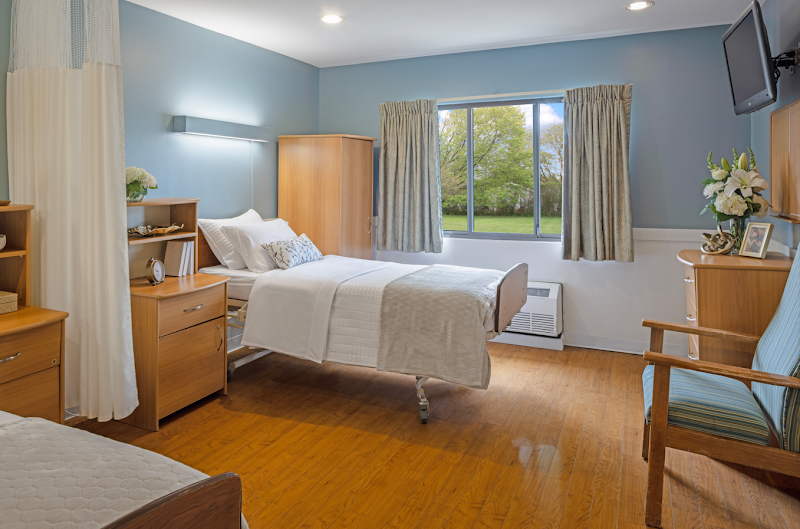
How is Avantara Lake Zurich Staffed?

CMS rates AVANTARA LAKE ZURICH's staffing level at 2 out of 5 stars, which is below average compared to other nursing homes. Staff turnover is 40%, compared to the Illinois average of 46%. This relatively stable workforce can support continuity of care.

What Have Inspectors Found at Avantara Lake Zurich?

State health inspectors documented 30 deficiencies at AVANTARA LAKE ZURICH during 2023 to 2025. These included: 1 Immediate Jeopardy (the most serious level, indicating potential for serious harm or death), 1 that caused actual resident harm, and 28 with potential for harm. Immediate Jeopardy findings are rare and represent the most serious regulatory concerns. They require immediate corrective action.
Who Owns and Operates Avantara Lake Zurich?

AVANTARA LAKE ZURICH is owned by a for-profit company. For-profit facilities operate as businesses with obligations to shareholders or private owners. The facility is operated by LEGACY HEALTHCARE, a chain that manages multiple nursing homes. With 203 certified beds and approximately 147 residents (about 72% occupancy), it is a large facility located in LAKE ZURICH, Illinois.
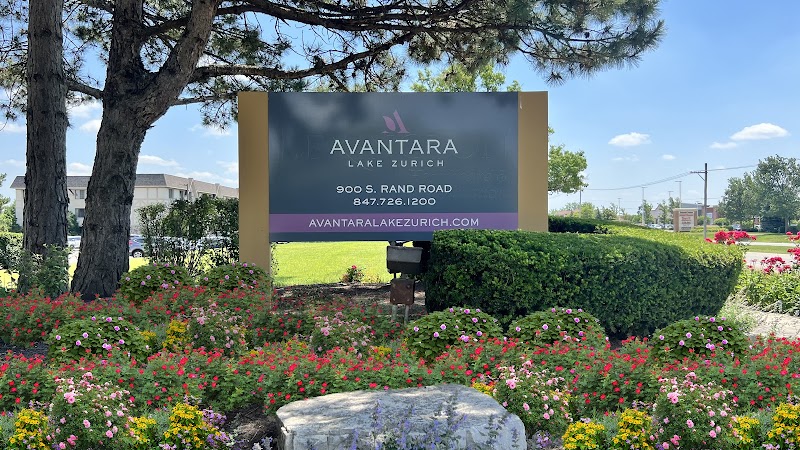
How Does Avantara Lake Zurich Compare to Other Illinois Nursing Homes?

Compared to the 100 nursing homes in Illinois, AVANTARA LAKE ZURICH's overall rating (5 stars) is above the state average of 2.5, staff turnover (40%) is near the state average of 46%, and health inspection rating (4 stars) is above the national benchmark.

What Should Families Ask When Visiting Avantara Lake Zurich?

Based on this facility's data, families visiting should ask: "What changes have been made since the serious inspection findings, and how are you preventing similar issues?" "Can you walk me through typical staffing levels on day, evening, and night shifts?" "Can I visit during a mealtime to observe dining assistance and food quality?" "How do you handle medical emergencies, and what is your hospital transfer rate?" These questions are particularly relevant given the facility's Immediate Jeopardy citations and the below-average staffing rating.

Is Avantara Lake Zurich Safe?

Based on CMS inspection data, AVANTARA LAKE ZURICH has documented safety concerns. Inspectors have issued 1 Immediate Jeopardy citation (the most serious violation level indicating risk of serious injury or death). The facility has a 5-star overall rating and ranks #1 of 100 nursing homes in Illinois. Families considering this facility should ask detailed questions about what corrective actions have been taken since these incidents.

Do Nurses at Avantara Lake Zurich Stick Around?

AVANTARA LAKE ZURICH has a staff turnover rate of 40%, which is about average for Illinois nursing homes (state average: 46%). Moderate turnover is common in nursing homes, but families should still ask about staff tenure and how the facility maintains care continuity when employees leave.

Was Avantara Lake Zurich Ever Fined?

AVANTARA LAKE ZURICH has no federal fines on record. CMS issues fines when nursing homes fail to meet care standards or don't correct problems found during inspections. The absence of fines suggests the facility has either maintained compliance or corrected any issues before penalties were assessed. This is a positive indicator, though families should still review recent inspection reports for the full picture.

Is Avantara Lake Zurich on Any Federal Watch List?

AVANTARA LAKE ZURICH is not on any federal watch list. The most significant is the Special Focus Facility (SFF) program, which identifies the bottom 1% of nursing homes nationally based on persistent, serious quality problems. Not being on this list means the facility has avoided the pattern of deficiencies that triggers enhanced federal oversight. This is a positive indicator, though families should still review the facility's inspection history directly.