ST CLARA'S REHAB & SENIOR CARE
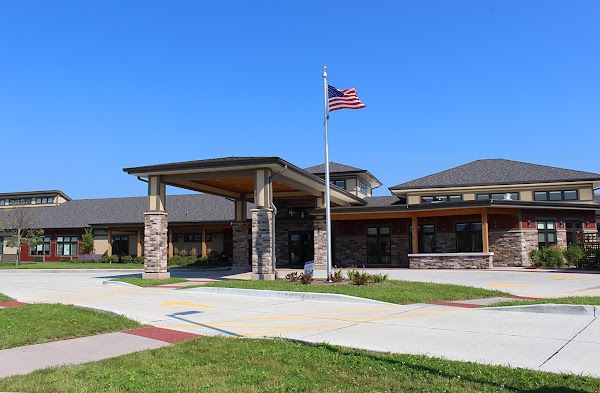
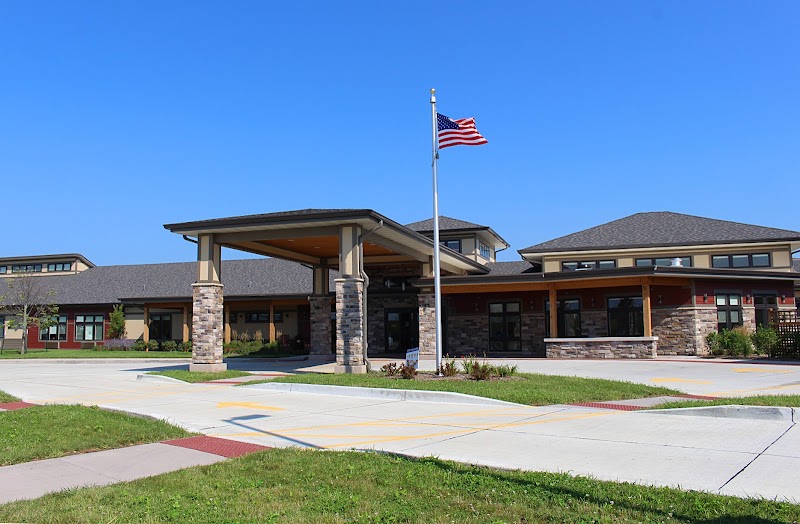
1450 CASTLE MANOR DRIVE, LINCOLN, IL 62656 (217) 735-1507
Non profit - Corporation 99 Beds HERITAGE OPERATIONS GROUP Data: November 2025
Trust Grade
50/100
#406 of 665 in IL
Last Inspection: February 2025

Within standard 12-15 month inspection cycle. Federal law requires annual inspections.

Overview

St. Clara's Rehab & Senior Care in Lincoln, Illinois has a Trust Grade of C, which means it is average and sits in the middle of the pack among nursing homes. It ranks #406 out of 665 facilities in Illinois, placing it in the bottom half, but does hold the #2 position out of 3 in Logan County, indicating only one local option is better. The facility's trend is worsening, with issues rising from 3 in 2024 to 9 in 2025. Staffing is a concern, as it received a 2/5 star rating and has a turnover rate of 49%, which is average for Illinois but still high. There have been no fines, which is a positive sign; however, RN coverage is lower than 85% of Illinois facilities, potentially impacting resident care. Specific incidents include a resident developing a painful stage four pressure ulcer due to a lack of proper risk assessments and interventions, and failures in ensuring that dishes were sanitized at the required temperatures, posing health risks to all residents. Additionally, the facility did not notify the Ombudsman regarding certain resident transfers, which is a required protocol. While there are some strengths, such as no fines, the facility has significant areas for improvement in care and compliance.

Trust Score
C
50/100
In Illinois
#406/665
Bottom 39%
Safety Record
Moderate
Needs review
Inspections
Getting Worse
3 → 9 violations
Staff Stability
⚠ Watch
49% turnover. Above average. Higher turnover means staff may not know residents' routines.
Penalties
✓ Good
No fines on record. Clean compliance history, better than most Illinois facilities.
Skilled Nurses
⚠ Watch
Each resident gets only 22 minutes of Registered Nurse (RN) attention daily — below average for Illinois. Fewer RN minutes means fewer trained eyes watching for problems.
Violations
⚠ Watch
19 deficiencies on record. Higher than average. Multiple issues found across inspections.
★★☆☆☆
2.0
Overall Rating
★★☆☆☆
2.0
Staff Levels
★☆☆☆☆
1.0
Care Quality
★★★☆☆
3.0
Inspection Score
Stable
2024: 3 issues
2025: 9 issues

The Good

  • Full Sprinkler Coverage · Fire safety systems throughout facility
  • No fines on record

Facility shows strength in fire safety.

The Bad

2-Star Overall Rating

Below Illinois average (2.5)

Below average - review inspection findings carefully

Staff Turnover: 49%

Near Illinois avg (46%)

Higher turnover may affect care consistency

Chain: HERITAGE OPERATIONS GROUP

Part of a multi-facility chain

Ask about local staffing decisions and management

The Ugly 19 deficiencies on record

1 actual harm
Aug 2025 2 deficiencies
CONCERN (D) 📢 Someone Reported This

A family member, employee, or ombudsman was alarmed enough to file a formal complaint

Potential for Harm - no one hurt, but risky conditions existed

Quality of Care (Tag F0684)

Could have caused harm · This affected 1 resident

Facility failures resulted in two deficient practices.A. Based on record review and interview the facility failed to provide skin treatments as ordered by the physician for two of three residents (R1 ...

Read full inspector narrative →
Facility failures resulted in two deficient practices.A. Based on record review and interview the facility failed to provide skin treatments as ordered by the physician for two of three residents (R1 and R2) reviewed for skin alterations in the sample of three.B. Based on record review and interview the facility failed to obtain blood sugars as ordered by the physician for one of three residents (R2) reviewed for blood sugar monitoring in the sample of three.Findings include:A. The facility's Wound and Ulcer policy dated 3/28/24 documents, It is the policy of this facility to provide nursing standards for assessment, prevention, treatment, and protocols to manage residents at any level of risk for skin breakdown and for wound management. Procedure: Initiate the treatment protocol appropriate for the stage of ulcer or for the wound assessment. Document wound/ulcer treatment provision on the treatment administration record. Treatment continues per the physician orders until the wound and/or ulcer is healed.1.R1's Physician Order Summary Reports and TARs (Treatment Administration Records) dated 6/1/25 through 8/22/25 document, Start date 12/13/24 Emollient ointment apply to BUE (Bilateral Upper Extremities) every shift for dry skin. Start date 6/19/25 apply barrier cream to buttocks once daily and as needed for wound prevention.R1's TARs dated 6/1/25 through 8/22/25 document R1 did not receive the emollient ointment to the BUE as ordered on five occasions and R1 did not receive the barrier cream to the buttocks as ordered on three occasions.On 8/23/25 at 10:15 AM V2 (Director of Nursing/DON) verified that according to R1's TARs dated 6/1/25 through 8/22/25 R1 did not receive the emollient ointment to the BUE as ordered on five occasions and R1 did not receive the barrier cream to the buttocks as ordered on three occasions.2. R2's Physician Order Summary Reports and TARs (Treatment Administration Records) dated 6/1/25 through 8/22/25 document, Start date 11/12/24 skin preparation to left heel daily every night shift. Start date 6/18/25 cleanse wound, apply triple antibiotic ointment, abdominal pad, and wrap until healed every day (left forearm). Start date 7/30/25 cleanse areas, apply xeroform (petroleum dressing), abdominal pad, and (rolled gauze) to left arm every day until healed. R2's TARs dated 6/1/25 through 8/22/25 document R2 did not receive the skin preparation to the left heel as ordered on two occasions, R2 did not receive the triple antibiotic, abdominal pad, and wrap to the left forearm as ordered on one occasion, and R2 did not receive the petroleum dressing, abdominal pad, and rolled gauze to the left arm on three occasions.On 8/23/25 at 10:15 AM V2 (DON) verified that according to R2's TARs dated 6/1/25 through 8/22/25 R2 did not receive the skin preparation to the left heel as ordered on two occasions, R2 did not receive the triple antibiotic, abdominal pad, and wrap to the left forearm as ordered on one occasion, and R2 did not receive the petroleum dressing, abdominal pad, and rolled gauze to the left arm on three occasions.B. The facility's Blood Glucose Testing and Monitoring policy dated 8/2024 documents, Policy: Blood glucose levels will be monitored and obtained per licensed health care practitioner's orders. Blood glucose testing it to be performed by a licensed nurse.R2's Physician Order Summary Reports and MARs (Medication Administration Records) dated 6/1/25 through 8/22/25 document, Start Date 1/26/25 (Blood Glucose Testing) before meals and at bedtime. Diagnosis Type II Diabetes Mellitus.R2's MARs dated 6/1/25 through 8/22/25 document R2's blood glucose testing was not obtained as ordered by the physician on 6/29/25 at 11:30 AM and 7/2/25 at 5:00 PM.On 8/23/25 at 10:15 AM V2 (Director of Nursing) verified R2's blood glucose was not obtained as ordered on 6/29/25 at 11:30 AM and 7/2/25 at 5:00 PM.
CONCERN (D) 📢 Someone Reported This

A family member, employee, or ombudsman was alarmed enough to file a formal complaint

Potential for Harm - no one hurt, but risky conditions existed

Deficiency F0760 (Tag F0760)

Could have caused harm · This affected 1 resident

Based on record review and interview the facility failed to administer insulin as ordered for one of three residents (R1) reviewed for medication errors in the sample of three.Findings include:The fac...

Read full inspector narrative →
Based on record review and interview the facility failed to administer insulin as ordered for one of three residents (R1) reviewed for medication errors in the sample of three.Findings include:The facility's Medication Administration policy dated 1/11/2010 documents, Objective: To provide accuracy during medication pass to assure quality care for residents. Policy: It is the policy of the facility to accurately administer medication following physician's orders. Medications should be charted during the medication pass in a consistent manner before going to the next resident.R1's Physician Order Summary Reports and MARs (Medication Administration Records) dated 6/1/25 through 8/22/25 document, Start Date 6/13/25 Insulin Aspart insulin inject 15 units subcutaneously before meals related to Type II Diabetes Mellitus. Insulin Apart insulin per sliding scale subcutaneously before meals and at bedtime related to Type II Diabetes Mellitus. If 0-150 (blood glucose) = (equals) 0 units. 151-200 =2 units. 201-250 = 4 units. 251-300 = 6 units. 301-350 = 8 units. 351-400 = 10 units. Start Date 7/22/25 Humalog insulin 15 units subcutaneously before meals for Diabetes Mellitus.R1's MARs dated 6/1/25 through 8/22/25 document R1's Insulin Aspart 15 units was not administered as ordered by the physician on 6/18/25 at 4:30 PM, 6/24/25 at 4:30 PM, 6/29/25 at 4:30 PM, 7/12/25 at 4:30 PM, and 7/13/25 at 4:30 PM. R1's MARs dated 6/1/25 through 8/22/25 document R1's blood sugar on 7/12/25 was 188 and R1's Aspart insulin 2 units sliding scale was not administered at 4:30 PM as ordered by the physician. R1's MARs dated 6/1/25 through 8/22/25 document R1's Humalog insulin 15 units was not administered as ordered by the physician on 7/27/25 at 5:30 PM, 8/9/25 at 5:30 PM, 8/13/25 at 5:30 PM, and 8/19/25 at 5:30 PM.On 8/22/25 at 1:20 PM V5 (R1's Physician) stated, (R1) should receive her insulin as ordered.On 8/23/25 at 10:15 AM V2 (Director of Nursing) verified that according to R1's MARs R1 did not receive Aspart insulin as ordered on 6/18/25 at 4:30 PM, 6/24/25 at 4:30 PM, 6/29/25 at 4:30 PM, 7/12/25 at 4:30 PM, and 7/13/25 at 4:30 PM, and R1 did not receive Humalog insulin as ordered 7/27/25 at 5:30 PM, 8/9/25 at 5:30 PM, 8/13/25 at 5:30 PM, and 8/19/25 at 5:30 PM. V2 also confirmed that R1 not receiving her insulin as ordered is considered a medication error.
Feb 2025 7 deficiencies 1 Harm
SERIOUS (G)

Actual Harm - a resident was hurt due to facility failures

Pressure Ulcer Prevention (Tag F0686)

A resident was harmed · This affected 1 resident

**NOTE- TERMS IN BRACKETS HAVE BEEN EDITED TO PROTECT CONFIDENTIALITY** Based on observation, interview, and record review, the facility failed to develop and implement specific pressure relieving int...

Read full inspector narrative →
**NOTE- TERMS IN BRACKETS HAVE BEEN EDITED TO PROTECT CONFIDENTIALITY** Based on observation, interview, and record review, the facility failed to develop and implement specific pressure relieving interventions to prevent pressure ulcer development and worsening, conduct a pressure ulcer risk assessment once a week for four weeks after admission as directed by the facility's Wound and Ulcer Policy for one of four residents (R9) reviewed for facility acquired pressure ulcers in the sample of 33. These failures resulted in R9 developing a painful pressure ulcer to the right heel that deteriorated from a blister to a stage four pressure ulcer to R9's right heel, that required surgical debridement. Findings include: The Wound and Ulcer Policy and Procedure dated 3/28/24 documents It is the policy of this facility to provide nursing standards for assessment, prevention, treatment, and protocols to manage residents at any level of risk for skin breakdown and for wound management. Procedure: All residents will be assessed to determine the degree of risk of developing a pressure ulcer using the Braden Scale- Ulcer Risk Assessment. The resident will be assessed upon admission, once a week for four weeks, quarterly, and any significant change in condition after admission. A skin assessment (skin check) will be documented at admission, once a week for four weeks, quarterly, and any significant change in condition after admission. A skin assessment (skin check) will be documented on the ETAR (electronic treatment administration record). A skin assessment (skin check) will be documented daily for residents assessed by the Braden Scale - Ulcer Risk Assessment to be moderate or high risk for development of pressure ulcer(s). Moderate Risk Protocol: Daily skin check-completed by direct care staff. The Skin Observation Report may be used to communicate skin observation(s) or changes to the nurse. Mattresses with documented pressure reduced/relieving properties may be placed on the resident's bed. Equipment, Prevention, and Treatment Resources: Equipment- Positioning aids; special mattress and/or chair cushion (low air loss, alternating pressure, etc. (example) with pressure reducing/relieving properties. Prevention: The following prevention measures may be initiated to address pressure, moisture, friction, and/or shearing. The facility may also implement additional measures. Pressure: Support heels on pillow or in splints. R9's admission Record, dated 2/4/25, documents R9 was admitted to the facility on [DATE]. This same record documents R9 has the following, but not limited to diagnoses: Type Two Diabetes Mellitus, Nontraumatic Intracerebral Hemorrhage in Hemisphere, Personal History of Other Venous Thrombosis and Embolism, Weakness, Hypertension, Unsteadiness of Feet, Muscle Wasting and Atrophy. R9's admission MDS (Minimum Data Set) Assessment, dated 8/20/24, documents R9 was moderately cognitively impaired. This same assessment documents R9 had no pressure ulcers on admission, R9 was at risk for developing pressure ulcers, R9 required substantial to maximal assistance with transfers, lower body dressing, and taking off shoes, and required partial to moderate assistance with rolling left to right or right to left. R9's admission Progress Note, dated 8/13/24, documents Skin: Skin warm and dry, skin color WNL (within normal limits) and turgor is normal. Skin Issue: New. Issue type: Lesion. Location: Right ear. New. Issue type: Lesion. Location: Mandible (lower jaw). Skin note: Has one area of skin cancer on left side of face and right ear. No other skin issues were documented. R9's Braden Scale for Predicting Pressure Sore Risk Assessment, dated 8/28/24, documents 2. Sensory Perception (ability to respond meaningfully to pressure-related discomfort)- slightly limited: responds to verbal commands but cannot always communicate discomfort or the need to be turned or has some sensory impairment which limits ability to feel pain or discomfit in one or two extremities. 5. Mobility- very limited: Makes occasional slight changes in body or extremity position but unable to make frequent or significant changes independently. 7. Friction and Shear: problem- requires moderate to maximum assistance in moving. Complete lifting without sliding against sheets is impossible. Frequently slides down in bed or chair, requiring frequent reposition and maximum assistance. Spasticity, contractures, or agitation leads to constant friction. R9's Assessment Outcomes for Braden Scale, dated 2/5/25, documents 8/14/24- Braden Score 15: At risk. 8/22/24- Braden Score 13: Moderate risk. 8/28/24- Braden Score 15: At risk. R9's Medical Record has no evidence of a Braden Scale for Predicting Pressure Sore Risk Assessment being completed the fourth week after R9's admission. R9's Plan of Care, dated 8/15/24, documents R9 is at risk for skin impairment/Deep Tissue Injury related to fragile aged skin, need for assistance with mobility and transfers, and use of an indwelling catheter. Interventions dated 8/15/24 document: Administer medications as ordered. Monitor/document side effects and effectiveness. Administer treatments as ordered and monitor for effectiveness. Follow facility policies/protocols for the prevention/treatment of skin breakdown. Inform R9/R9's family/caregivers of any new area of skin breakdown. Monitor nutritional status. Serve diet as ordered, monitor intake and record. Obtain and monitor lab/diagnostic work as ordered. Report results to MD (Medical Doctor) to follow up as indicated. Provide incontinence care after each episode according to facility protocol. R9 requires the bed as flat as possible to reduce shear. R9 requires the use of pressure relieving mattress for his bed to adequately relieve pressure. There are no individualized specific interventions documented to prevent pressure ulcers from developing to R9's heels after a risk for skin breakdown was noted from the Braden Scale on 8/14/24, 8/22/24, and 8/28/24. R9's Ulcer/Wound Documentation, dated 9/12/24, documents an in-house wound/ulcer was identified on 9/12/24. This same form documents Site: right heel. Type: Blister: Length 8.5cm (centimeters). Width 7cm. Peri-wound skin: Clear fluid-filled blister with 2.5cm x 2.5cm purple area in center. R9's Wound Evaluation and Management Summary, dated 11/4/24 and signed by V17/Wound Physician, documents Stage three Pressure Wound of the Right Heel Full Thickness. Etiology: Pressure. Wound Size 7cm x 6cm x 0.1cm. Exudate: Light Serous (yellowish/clear fluid). Slough (non-viable tissue) 5% (percent). Wound Progress: Not at goal. Dressing Treatment Plan: Betadine apply once daily for 16 days. To eschar only, Leptospermum honey apply once daily for 16 days. Alginate with silver apply once daily for 16 days. Secondary Dressing: Abdominal pad once daily for 16 days. Gauze roll (stretch) 4 inches apply once daily for 16 days. Recommendations: Off-load wound; float heels in bed; no shoe on right foot for now; elevate leg(s) for one hour after meals three times a day; Cleanse with wound cleanser at time of dressing change; (pressure relieving boot) to use when out of bed. R9's Wound Evaluation and Management Summary, dated 1/14/25 and signed by V17/Wound Physician, documents Stage four Pressure Wound of the Right Heel Full Thickness. Etiology: Pressure. Wound Size: 5cm x 6cm x 0.2cm. Exudate: Moderate Sero-Sanguinous (pinkish-red fluid). Wound Progress: Not at goal. Primary Dressing: Santyl applies once daily for two days. Alginate Calcium is applied once daily for 23 days. Secondary Dressing(s): Abdominal pad applied once daily for 16 days. Gauze roll 4.5 inches apply once daily for 23 days. Recommendations: Off-load wound; float heels in bed; no shoe on the right foot for now; elevate leg(s) for one hour after meals three times a day; Cleanse with wound cleanser at time of dressing change; (pressure relieving boot) to use when out of bed; No (pressure relieving boot) while in bed. R9's Wound Evaluation and Management Summary, dated 2/4/25 and signed by V17/Wound Physician, documents Stage 4 Pressure Wound of the Right Heel Full Thickness. Etiology: Pressure. Wound Size: 6cm x 5.8cm x 0.2cm. Exudate: Moderate (pinkish-red fluid). Today Wound bed is mostly subcutaneous sloughy/necrotic tissue, although some granulation is visible. There is some new peri area erythema-marked for continued assessments. Area is not warm or tender suspect it may be from wound vac adhesive. Edges are macerated (softened). Necrosis and slough remain very adherent. Will take a break from vac and return to Santyl and alginate to assist with breaking down necrosis/slough. Wound bleeds easily with debridement. Cauterized to stop bleeding. Recommendations: Off-Load Wound: Please float heels on two pillows while in bed; Float heels in bed; Elevate Leg(s): For one hour after meals, three times a day; Cleanse with wound cleanser at time of dressing change; (pressure relieving boot) to use when out of bed; No (pressure relieving boot) while in bed. The wound was cleansed with normal saline, and anesthesia was achieved using topical benzocaine. Then with clean surgical technique, 15 blade pick-ups were used to surgically excise 6.96 cm² of devitalized tissue and necrotic muscle level tissues along with slough and biofilm were removed at a depth of 0.21 cm and healthy bleeding tissue was observed. On 2/2/25 from 9:45 AM to 9:58 AM R9 was lying in bed in his room. R9's bilateral heels were lying directly on the mattress without offloading of pressure. On 2/2/25 from 1:45 PM to 2:00 PM R9 was sitting in his wheelchair in the dining room. Residents right heel was sitting directly on the floor with a sock on. No (pressure relieving boot) was observed to R9's right heel. On 02/03/25 from 9:00 AM to 9:15 AM R9 was sitting in his wheelchair in his room. R9's right heel was sitting directly on the floor with a sock on. No (pressure relieving boot) was observed to R9's right heel. R9 stated I have a wound on my right heel. It is very painful. I kept telling staff my foot was hurting but they just thought it was the way my shoes were fitting. No one looked at my foot for a while when I was complaining about it. Finally, someone looked at it and said I had a spot on my right heel. The staff have not been putting my (pressure relieving boot) on my right heel or putting my feet on pillows while I am in bed. They were doing it sometimes but haven't been for a while. I just figured they didn't have to do it anymore. On 2/4/25 at 11:55 AM V5/Registered Nurse/Infection Preventionist stated, I monitor the wounds in the facility for the most part. (R9) has not had his (pressure relieving boot) on the past two days at least because no one could find it. We (the facility) just found it last night and put it on (R9) today. (R9) should not have any pressure to his right heel and should be always wearing the boot while out of bed to prevent (R9's) right heel wound from worsening. V5 also verified R9's left and right heels should be offloaded while in bed. On 2/4/25 at 2:40 PM, V17/Wound Physician stated, When I consulted with my company, they stated (R9's) right heel should be classified as pressure. V17 stated, I changed (R9's) wound documentation to classify (R9's) right heel area to pressure. If (R9) is not wearing his (pressure relieving boot) it can cause the wound to worsen. (R9) should always have his heels floated while in bed and should never wear his (pressure relieving boot) while in bed. On 2/4/25 at 2:45 PM V5/Registered Nurse/Infection Preventionist, V17/Wound Physician, and V18/CNA (Certified Nursing Assistant) were preparing treatment for R9's right heel. R9 was lying in bed with a (pressure relieving boot) on R9's right heel. V17 verified R9 had his (pressure relieving boot) on his right foot while in bed. V17 stated, I have told the facility (R9) is to not have his (pressure relieving boot) on while in bed. (R9) needs to have his left and right heel offloaded on a pillow while in bed to help with healing. V17 cleansed R9's right heel and measured the area. R9's right heel wound was 6cm x 5.8cm x 0.2. R9's right heel wound bed was 100 percent necrotic (dead tissue). V17 proceeded to surgically debride R9's right heel wound. Blood drainage was observed to R9's right heel. On 2/5/25 at 10:00 AM V5/Registered Nurse/Infection Preventionist verified specific interventions were not implemented to relieve pressure to R9's right and left heel after a Braden assessment was completed and indicated R9 was at risk for pressure ulcers. V5 also verified a Braden assessment should have been completed once a week for four weeks after R9's admission and was not. V5 stated (R9) should not have had his heel resting directly on the floor or had his boot on while in bed since (R9's) wound to his right heel was caused from pressure.
CONCERN (D)

Potential for Harm - no one hurt, but risky conditions existed

Incontinence Care (Tag F0690)

Could have caused harm · This affected 1 resident

**NOTE- TERMS IN BRACKETS HAVE BEEN EDITED TO PROTECT CONFIDENTIALITY** Based on Observation, Interview and Record Review, the facility failed to complete hand hygiene and glove changes prior to provi...

Read full inspector narrative →
**NOTE- TERMS IN BRACKETS HAVE BEEN EDITED TO PROTECT CONFIDENTIALITY** Based on Observation, Interview and Record Review, the facility failed to complete hand hygiene and glove changes prior to providing urinary catheter care for one of two residents (R51) reviewed for indwelling urinary catheters in the sample of 33. Findings Include: The Catheter Care/Incontinent Care policy dated 8/1/05 documents Objective: To cleanse the urinary meatus and adjacent catheter. Procedure: 1. Obtain wash basin, washcloth, soap, water, and vinyl gloves. 4. Wash hands thoroughly. 6. Expose genitalia. 7. Put on vinyl gloves. The Infection Prevention and Control Standard and Transmission-Based Precautions for Communicable Diseases documents Standard Precautions: Gloves- gloves (clean, not sterile) should be worn whenever there is direct contact with blood, body fluids, mucous membranes, non-intact skin and other potentially infected material. Hand hygiene should be performed before and after removing gloves. Gloves are worn when handling or touching resident-care equipment that is visibly soiled or potentially contaminated with blood, body fluids, or infectious organisms. Gloves are removed promptly after use, before touching non-contaminated items and environmental surfaces, and before going to another resident. Hand hygiene should be performed before and after removing gloves. After gloves are removed, clean hands immediately to avoid transfer of microorganisms to other residents or environments. R51's current computerized medical record, documents R51 was admitted to the facility on [DATE] with a diagnosis of Neuromuscular Dysfunction of Bladder. R51's current Physician Order Sheet, dated 2/4/25, document the following order, Catheter care every shift. This order has a start date of 10/21/2024. R51's current Care Plan documents (R51) uses a urinary catheter r/t (related to) BPH (Benign Prostatic Hyperplasia), Obstructive Uropathy, and Neurogenic Bladder. On 2/3/25 at 2:47 PM, V8/CNA (Certified Nursing Assistant) put on Personal Protective Equipment/PPE (gown and gloves) and entered R51's room carrying a washbasin, washcloths, towels, and a bottle of soap. V8 placed the items on R51's overbed table then took the washbasin to the bathroom to fill with water. V8 carried the washbasin back to the overbed table and placed the washcloths in the washbasin. V8 then removed R51's disposable brief and did urinary catheter care for R51, readjusted R51's catheter tubing, then reapplied R51's disposable brief. V8 did not wash her hands or change her gloves from the time she entered R51's room until V8 had emptied the washbasin in the bathroom before leaving the room. On 2/4/25 at 1:03 PM, V3/Director of Nursing verified that V8/Certified Nursing Assistant should have washed her hands and changed her gloves before providing urinary catheter care for R51.
CONCERN (D)

Potential for Harm - no one hurt, but risky conditions existed

Deficiency F0692 (Tag F0692)

Could have caused harm · This affected 1 resident

**NOTE- TERMS IN BRACKETS HAVE BEEN EDITED TO PROTECT CONFIDENTIALITY** Based on record review and interview the facility failed to ensure physician ordered daily weights were obtained and the physici...

Read full inspector narrative →
**NOTE- TERMS IN BRACKETS HAVE BEEN EDITED TO PROTECT CONFIDENTIALITY** Based on record review and interview the facility failed to ensure physician ordered daily weights were obtained and the physician notified of a significant weight increase for one of one resident (R347) reviewed for daily weights in the sample of 33. Findings include: The Weight Management Policy and Procedure revised 2023 documents Policy: Each resident will be weighed at least once a month on a predetermined schedule. All residents will be monitored for significant weight changes to assure maintenance of acceptable parameters of body weight. Weights may be obtained more frequently than monthly if warranted based on resident condition or physician order. A resident with a weight fluctuation of greater than five pounds (+ or -) will be re-weighed for accuracy. The new weight will be recorded in the medical record. The physician will be notified of any significant weight change and be made aware of any recommendations made by the dietitian. R347's current computerized medical record, documents R347 was admitted to the facility on [DATE] with diagnoses which included Essential (Primary) Hypertension, Benign Prostatic Hyperplasia without Lower Urinary Tract Symptoms, Atherosclerosis of Aorta, and Type 2 Diabetes Mellitus without Complications. R347's current Physician Order Sheet, dated 2/4/25, document the following order, Daily Weight: notify provider on greater than 3 (three) pound increase in 24 hours, or 5 (five) lbs. (pounds) in one week. This order has a start date of 1/21/2025. R347's current Care Plan Care Plan documents Daily Weight: notify provider on greater than 3 (three) pound increase in 24 hours, or 5 lbs. in 1 (one) week. R347's Weights and Vitals Summary Log dated 1/21/25 through 2/3/25 document R347 has not been weighed daily as ordered by the physician on five days within this timeframe. R347 was not weighed on 1/22, 1/24, 1/26, 1/27, and 1/28/2025. R347's weight on 1/31/25 was 233.7 pounds and 249.4 pounds on 2/1/25 (15.6 pound increase). On 2/4/25 at 12:35 PM, V3/Director of Nursing verified that there was a physician's order for daily weight and there were five days the weights were not done in a two-week period. V3 also verified that R347's weight on 1/31/25 was documented as 233.7 pounds and on 2/1/25 as 249.4 pounds (15.6 pound increase). V3 stated I did not see anywhere that the doctor was notified of the weight increase but should have been.
CONCERN (D)

Potential for Harm - no one hurt, but risky conditions existed

Respiratory Care (Tag F0695)

Could have caused harm · This affected 1 resident

**NOTE- TERMS IN BRACKETS HAVE BEEN EDITED TO PROTECT CONFIDENTIALITY** Based on observation, interview, and record review, the facility failed to place an oxygen sign on the door (R346) and failed to...

Read full inspector narrative →
**NOTE- TERMS IN BRACKETS HAVE BEEN EDITED TO PROTECT CONFIDENTIALITY** Based on observation, interview, and record review, the facility failed to place an oxygen sign on the door (R346) and failed to obtain a physician's order for oxygen use (R84) for two of two residents (R84 and R346) reviewed for oxygen in the sample of 33. Findings include: The Oxygen Administration policy dated 1/28/2025 documents Policy: To administer oxygen in conditions in which insufficient oxygen is carried by the blood to the tissues. Oxygen is administered by an LPN (Licensed Practical Nurse) or RN (Registererd Nurse) per physician's orders. (Other staff may not regulate, start, or discontinue oxygen.) Oxygen may not be dispensed without a physician's order. Each resident's room with oxygen shall be marked with an oxygen in use sign. Equipment: Oxygen sign Procedure: 2. Place sign OXYGEN IN USE outside the room of the resident. Smoking is prohibited. 12. Nasal cannulas, oxygen tubing, humidifiers and reservoirs will be tagged with date and initials of date changed. Date and initial the bag when placed and change weekly. 1. R346's current computerized medical record, documents R346 was admitted to the facility on [DATE] with diagnoses which included COPD (Chronic Obstructive Pulmonary Disease) and Acute Respiratory Failure with Hypoxia. R346's current Physician Order Sheet, dated 2/4/25, documents the following orders, Oxygen to keep SpO2 (Saturation of peripheral oxygen) above 92 percent. Order dated 1/27/25. Oxygen at 3 (three) liters per nasal cannula continuous. This order has a start date of 2/4/2024. R346's current Care Plan documents (R346) has COPD and history of respiratory failure r/t (related to) smoking. Initiated 1/28/2025. Intervention - O2 (Oxygen) to keep SpO2 (oxygen saturation) above 92 % (percent). On 2/2/25 at 9:23 AM, R346 was observed lying in bed wearing oxygen. There was no Oxygen sign on R346's door. On 2/3/25 at 10:52 AM, V3/Director of Nursing verified that R346 wears oxygen and there should be an Oxygen in use sign on R346's door. 2. On 2/2/25 at 10:20 AM R84 was lying in bed with oxygen flowing at two liters per nasal cannula. R84's current Physician Order Sheet, dated 2/4/25, does not contain a physician order for the use of oxygen. On 2/4/25 at 10:35AM V3/Director of Nursing verified R84 did not have a current physician order for oxygen. V3 stated, We (the facility) should have got an order to administer oxygen to (R84) prior to (R84) wearing oxygen.
CONCERN (E)

Potential for Harm - no one hurt, but risky conditions existed

Medication Errors (Tag F0758)

Could have caused harm · This affected multiple residents

**NOTE- TERMS IN BRACKETS HAVE BEEN EDITED TO PROTECT CONFIDENTIALITY** Based on interview, observation, and record review the facility failed to provide an appropriate indication for use of antipsych...

Read full inspector narrative →
**NOTE- TERMS IN BRACKETS HAVE BEEN EDITED TO PROTECT CONFIDENTIALITY** Based on interview, observation, and record review the facility failed to provide an appropriate indication for use of antipsychotic medications for four of five residents (R2, R5, R54, R82) with a diagnosis of dementia and failed to do a gradual dose reduction for one of five residents (R54) reviewed for antipsychotics in a sample of 33. Findings include: The facility's policy titled Psychotropic Medication revised 11/28/17 documents, Intent: Residents are free from unnecessary psychotropic medication use. Psychotropic medication is any drug that affects brain activity associated with mental processes and behavior. These medications include but not limited to 1) Antianxiety, 2) Antidepressant, 3) Antipsychotic, 4) Hypnotic. These medications are to be given to treat a specific condition/medical symptom that is diagnosed and documented in the clinical record. Specific condition/medical symptoms alone are not enough to justify pharmacological use. An evaluation must be done to determine other possible physical, mental, behavioral, psychosocial needs. A) Indications for Use for psychotropic medication may include but not limited to 1) Expressions or indications of distress, 2) Symptoms are clinically significant that is causing a functional decline, 3) Non-pharmacological approaches were implemented and not effective or were clinically contraindicated. Additionally, Antipsychotic medication may be indicated for use if 1) Behavioral symptoms present a danger to the resident or others; 2) Expressions or indications of distress that are significant distress to the resident; 3) If not clinically indicated, multiple non-pharmacological approaches have been attempted but did not relieve the symptoms which are presenting a danger or significant distress; and/or 4) GDR (Gradual Dose Reduction) was attempted, but clinical symptoms returned. B) Dose, Duration, Monitoring: 1) Evaluation of pharmacological ongoing effectiveness towards therapeutic goal. 2) Evaluation of the effectiveness of the non-pharmacological approaches prior to medication administration. 3) Quarterly evaluation or more frequent if needed to determine if a reduction is warranted. C) Gradual Dose reduction: 1) Resident's should receive the lowest effective dose of psychotropic medication for the resident's physical, mental, and psychosocial well-being. 2) GDR is to be attempted within the first year in two separate quarters, (with at least one month between attempts), unless clinically contraindicated. After the first year, a GDR must be attempted annually, unless clinically contraindicated. 3) If treating expressions or indications of distress related to dementia, the GDR may be contraindicated for the following reasons: a) target symptoms returned or worsened after a recent attempt of GDR, and b) Physician has documented rationale why a reduction would impair residents' function or increase distressed behavior. 4) Treating disorder other than dementia, the GDR may be contraindicated for the following reasons: a) Physician has documented rationale why a reduction would impair residents' function or exacerbate the disorder, or b) Target symptoms returned or worsened after recent attempt of GDR, and physician has documented why a reduction would impair function or exacerbate disorder. 1. R2's admission Record documents that R2's date of admission to the facility was 3/22/22 and her diagnoses on admission include Dementia, Severe, with Other Behavioral Disturbance, Major Depressive Disorder, and Insomnia. R2's Minimum Data Set (MDS) assessment dated [DATE], documents in Section C a Brief Interview for Mental Status (BIMS) of 11, indicating moderate cognitive impairment, and Section N indicating R2 takes antipsychotic medication. R2's Physician Orders dated 10/15/24, documents R2 has an order for Seroquel/Quetiapine (Antipsychotic medication) 200 mg (Milligrams) by mouth twice a day related to Unspecified Dementia, Unspecified Severity, Without Behavioral Disturbance, Psychotic Disturbance, Mood Disturbance, and Anxiety. R2's current Care Plan documents R2 uses an antipsychotic medication related to behaviors secondary to dementia. On 2/02/25 at 10:25 AM, R2 was lying in bed with eyes closed, calm, and in no distress. On 2/03/25 at 8:48 AM, R2 was lying in bed asleep but aroused when spoken to. R2 kept closing eyes as she spoke but appeared calm and smiled during conversation. 2. R5's admission Record documents that R5's date of admission to the facility was 4/6/21 and her diagnoses on admission include Unspecified dementia, Unspecified Severity, Without Behavioral Disturbance, Psychotic Disturbance, Mood Disturbance, and Anxiety, Major Depressive Disorder, Anxiety Disorder, and Insomnia. R5's Minimum Data Set (MDS) assessment dated [DATE], documents in Section C that R5 is rarely/never understood, Section E indicated no behaviors, and Section N indicated that R5 is on an antipsychotic medication. R5's Physician Orders dated 12/19/24, documents R5 has an order for Seroquel/Quetiapine (Antipsychotic medication) 25 mg by mouth two times a day related to Unspecified Dementia, Unspecified Severity, Without Behavioral Disturbance, Psychotic Disturbance, Mood Disturbance, and Anxiety. R5's current Care Plan documents R5 uses an antipsychotic medication related to agitation secondary to dementia. On 2/03/25 at 9:04 AM, R5 was sitting up in her high back, reclining wheelchair by the nurse's station. R5 stated I have been tearful, but they help me (pointing to the nurse). R5 also denied discomfort and was easily redirected with conversation. On 2/03/25 at 12:19 PM, R5 was sitting in high back, reclining wheelchair at nurses' station, she appeared calm and in no distress. On 2/04/25 at 9:10am, R5 was sitting at nurses' station in high back, reclining wheelchair, calm and smiling as people walked by. 3. R54's admission Record documents that 54's date of admission to the facility was 8/1/23 and his diagnoses on admission include Parkinson's Disease Without Dyskinesia, without Mention of Fluctuations, Dementia in Other Diseases Classified Elsewhere, Unspecified Severity, With Psychotic Disturbance, Major depressive Disorder, Insomnia, and Cognitive Communication Deficit. R54's Minimum Data Set (MDS) assessment dated [DATE], documents in Section C a Brief Interview for Mental Status (BIMS) score of 14, indicating cognition intact, Section E indicated no behaviors, and Section N indicated R54 is on an antipsychotic medication. R54's Physician Orders dated 1/12/24, documents R54 has an order for Seroquel/Quetiapine (Antipsychotic medication) 25 mg give two tablets by mouth at bedtime related to Unspecified Mood (Affective) Disorder. R54's current Care Plan documents R54 uses an antipsychotic related to unspecified mood affective disorder. On 2/02/25 at 12:18 PM, R54 was lying in bed asleep in no discomfort. Arouses when spoken to but closes eyes and will not speak. On 2/03/25 at 8:50 AM, R54 was sitting up in his wheelchair in the TV (Television) lounge, calm, watching television. R54's Behavior Tracking Task documents no behaviors the last 30 days. R54's Monthly Medication Review (MMR) dated 7/5/24, documents request for Gradual Dose reduction (GDR) on Seroquel/Quetiapine (Antipsychotic medication) rejected by physician with no clinical rationale or evidenced symptoms documented. 4. R82's admission Record documents that R82's date of admission to the facility was 3/29/24 and her diagnoses on admission include Unspecified Dementia, Unspecified Severity, Without Behavioral Disturbance, Psychotic Disturbance, Mood Disturbance, and Anxiety, Hallucinations, Anxiety Disorder, and Major Depressive Disorder, Recurrent. R82's Minimum Data Set (MDS) assessment dated [DATE], documents in Section C Brief Interview or Mental Status (BIMS) score of 4, indicating severe cognitive impairment and Section N indicated R82 is on an antipsychotic medication. R82's Physician Orders dated 4/10/24, documents R82 has an order for Seroquel/Quetiapine (Antipsychotic medication) 12.5 mg by mouth two times a day related to Unspecified Dementia, Unspecified Severity, Without Behavioral Disturbance, Psychotic Disturbance, Mood Disturbance, and Anxiety; Hallucinations, Unspecified. R82's current Care Plan documents R82 uses an antipsychotic medication related to agitation secondary to dementia. On 2/02/25 at 10:48 AM, R82 was standing in room dressed in clean clothes, well groomed, talking to herself and conversation was nonsensical. R82 smiled and giggled when spoken to. On 2/03/25 at 10:11 AM, R82 was walking around in room in no distress, pleasant and friendly when spoken to. On 2/05/25 at 9:31 AM, V3/DON (Director of Nursing) verified that R2, R5, R54, and R82 did not have appropriate diagnoses for the use of their Seroquel/Quetiapine (Antipsychotic medication) per CMS (Central Management Services) guidelines. V3 also verified that R54 has not had a GDR and stated R54 has not had any documented behaviors that would justify a declination of a GDR attempt.
CONCERN (E)

Potential for Harm - no one hurt, but risky conditions existed

Infection Control (Tag F0880)

Could have caused harm · This affected multiple residents

**NOTE- TERMS IN BRACKETS HAVE BEEN EDITED TO PROTECT CONFIDENTIALITY** Based on Observation, Interview and Record Review, the facility failed to complete hand hygiene and glove changes prior to admin...

Read full inspector narrative →
**NOTE- TERMS IN BRACKETS HAVE BEEN EDITED TO PROTECT CONFIDENTIALITY** Based on Observation, Interview and Record Review, the facility failed to complete hand hygiene and glove changes prior to administering invasive medications and failed to ensure the facility implemented and followed Enhanced Barrier Precautions for four of 27 residents (R59, R63, R77, R347) reviewed for Infection Control in the sample of 33. Findings include: The Infection Prevention and Control Standard and Transmission-Based Precautions for Communicable Diseases documents Standard Precautions: Gloves- gloves (clean, not sterile) should be worn whenever there is direct contact with blood, body fluids, mucous membranes, non-intact skin and other potentially infected material. Hand hygiene should be performed before and after removing gloves. Gloves are worn when handling or touching resident-care equipment that is visibly soiled or potentially contaminated with blood, body fluids, or infectious organisms. Gloves are removed promptly after use, before touching non-contaminated items and environmental surfaces, and before going to another resident. Hand hygiene should be performed before and after removing gloves. After gloves are removed, clean hands immediately to avoid transfer of microorganisms to other residents or environments. ebp (Enhanced Barrier Precautions)- Used in addition to Standard Precautions to prevent transmission of novel or targeted MDROs (Multi-Drug Resistant Organisms). Expands the use of PPE (Personal Protective Equipment) beyond situations which exposure to blood and body fluids is anticipated, refers to the use of gown and gloves during high-contact resident care activities that provide opportunities for transfer of Multi-Drug Resistant Organisms (MDROs) to staff hands and clothing. Examples of high-contract resident care activities requiring gown and glove use for Enhanced Barrier Precautions include: Dressing, Bathing/showering, Transferring, Providing hygiene, Changing linens, Changing briefs or assisting with toileting, Device care or use: central line, urinary catheter, feeding tube, tracheostomy/ventilator, Wound care: any skin opening requiring a dressing, Gown and gloves would not be required for resident care activities other than those listed above, unless otherwise necessary for adherence to Standard Precautions. Residents are not restricted to their rooms or limited from participation in group activities. Regardless of the type of precautions, the following guidelines should be adhered to: Post clear signage on the door or wall outside resident's room indicating type of precautions & (and) PPE required. Make sure all PPE is readily available. Position a trash can inside resident room and near exit, if possible, for discarding PPE after removal, prior to exit of the room or before providing care for another resident in the same room. EBP All residents with any of the following: Wounds and/or indwelling medical devices (e.g., central line, urinary catheter, feeding tube, tracheostomy/ventilator) regardless of MDRO colonization status. Infection or colonization with a novel or targeted MDRO when Contact Precautions do not apply. 1. On 2/3/25 at 1:33 PM, V9 (Licensed Practical Nurse/LPN) applied gloves to both hands then retrieved medication cart keys from her pocket. V9 opened a medication drawer and removed a box of eye drops. V9 then wearing the same gloves entered R77's room, touched the door and bedside table. Without completing hand hygiene or changing gloves, V9 instilled antibiotic eye drops (Ciprofloxacin) into each eye for R77. On 2/3/25 at 1:38 PM, V9/LPN applied gloves to both hands and entered the facility's medications room. V9 then touched the door handle, the medication fridge, and shelves where needles and syringes are located. With the same gloves, V9 opened syringe and needle packaging and withdrew Hepatitis B vaccine into a syringe for injection. V9 took the syringe of vaccine into R347's room and gave R347 an intramuscular injection while continuing to wear the same gloves. On 2/3/25 at 1:43 PM V9/LPN applied gloves to both hands then retrieved medication cart keys from her pocket. V9 opened the medication cart and pulled out a box of lubricating eye drops. Wearing the same gloves, V9 went back into R77's room, touched R77's face and instilled one eye drop into each eye. On 2/3/25 at 1:47 PM, V9 confirmed that once she applied gloves during her medication administration for R77 and R347, she did not remove them or apply new ones before giving the medication. V9 stated she usually changes her gloves a lot because she doesn't like germs. V9 then confirmed that she would be potentially giving R77 and R347 germs when she touches surfaces and does not change those gloves before administering eye drop or injections. On 2/4/25 at 11:25 AM, V5 (Registered Nurse/Infection Control Preventionist) confirmed that nurses can wear gloves when passing medications if they choose. V5 stated When passing invasive medications, washing hands and donning gloves is expected just prior to the administration. If a nurse touches items on the medication cart or environmental surfaces, those gloves should be removed and clean gloves applied before administering eye drops or injections. 2. R63's current Physician Order Sheet, dated 2/5/25, documents Cleanse areas to bilateral buttocks with wound wash or normal saline, pat dry, then apply hydrocolloid every night shift every three days. Start Date: 12/26/2024. R63's Ulcer/Wound Documentation Assessment, dated 1/30/2025 documents R63 has a facility acquired stage two pressure wound to R63's left buttock that was identified on 12/18/2024. This same assessment documents R63's left buttock wound is open and has sanguineous drainage. On 2/3/25 at 11:55 AM no EBP sign or PPE was observed inside or outside of R63's room. On 2/4/25 at 10:00 AM no EBP sign or PPE was observed inside or outside of R63's room. 3. R59's admission Record documents that R59's date of admission to the facility was 12/17/24 and his diagnosis on admission include Cerebral Infarction, Hemiplegia Affecting Right Dominant Side, Chronic Obstructive Pulmonary Disease, Atrial Fibrillation, and Atherosclerotic Heart Disease of Native Coronary Artery. R59's Minimum Data Set (MDS) assessment dated [DATE], documents in Section H, R59 has an indwelling urinary catheter. R59's Physician Orders dated 12/17/24, documents #(Number)16/10ml (Milliliter) foley for urinary retention/bladder outlet obstruction every shift, Catheter care every shift and irrigate foley catheter with 60 ml piston syringe twice daily and as needed for bloody urine output, foley obstruction or urine output with blood clots. R59's current Care Plan documents R59 has an indwelling urinary catheter in place. On 02/02/25 at 11:50 AM, R59 was lying in bed, dressed in clean clothes, well-groomed with indwelling catheter hanging on bed with cover over it. No EBP sign was noted on door and no PPE available. On 02/03/25 at 9:01 AM, R59 sitting up in bed with indwelling urinary catheter hanging on the side of the bed. R59's room continues to have no EBP sign on door or PPE available. On 2/03/25 at 1:00 PM, V7 (CNA) observed doing indwelling urinary catheter care on R59. V7 placed a clean towel over a bedside table then placed clean wash cloths and towels with a fresh tub of warm soapy water on the table. V7 performed hand hygiene and donned gloves but no gown and proceeded to complete catheter care on R59. R59's room remains without EBP sign on door or PPE available. V7 stated she has not heard of Enhanced Barrier Precautions. On 2/4/25 at 11:20 AM, V5 (Registered Nurse/Infection Control Preventionist) confirmed R59 has an indwelling urinary catheter and R63 has a wound requiring dressing changes. V5 stated EBPs are for anyone with a catheter, feeding tube, tracheostomy or any wounds with dressings. Those resident rooms should have a PPE cart outside of their room, a sign (indicating the type of precautions) on the door and receptacles inside the rooms for linen and trash collection. (R63) has a wound on his buttocks and he is not in EBP. I just must have missed him and need to implement that today. (R59) did not have a sign or equipment outside of his room on Sunday or Monday. I realized this yesterday after it was pointed it out. He should have been in EBP due to his indwelling urinary catheter.
CONCERN (F)

Potential for Harm - no one hurt, but risky conditions existed

Food Safety (Tag F0812)

Could have caused harm · This affected most or all residents

Based on observation, interview and record review, the facility failed to use temperature testing strips that reflect the required dish surface temperature and check the surface temperature daily, to ...

Read full inspector narrative →
Based on observation, interview and record review, the facility failed to use temperature testing strips that reflect the required dish surface temperature and check the surface temperature daily, to ensure dishes reach the required temperature during the rinse cycle of a high temperature sanitation dish machine, and complete and record cool down temperatures for meals containing meat that were prepared ahead and stored in the facility's freezer for future use. These failures have the potential to affect all 96 residents residing in the facility. Findings include: The facility's Dishwasher Technical Manual (undated), documents the required incoming water temperature for hot water sanitation is a minimum of 180 degrees Fahrenheit. On 2/2/25 at 12:10 PM, V4 (Dietary Manager) stated the facility uses a high temperature dishwashing machine. At this time V4 placed a sticker temperature testing strip on a plate and ran the dishwasher cycle. V4 verified that the sign on the front of the dish machine documents the rinse cycle should reach a minimum of 180 degrees Fahrenheit. V4 also verified the sticker strip that was used will turn the expected color (black) when it reaches 160 degrees Fahrenheit (F). V4 stated the dietary staff check the dish machine temperature three times daily by recording the number on the machine's outer digital thermometer. V4 stated I only do a strip through the machine about once every week when I de-lime the machine. We do not run a thermometer strip through everyday. The facility's (supplier) parts description (undated), provided by V4, documents the facility uses testing strips to check dishwasher temperature of 160 degrees (F) and documents Description: Test strip 160 degrees (F). Same sticker as what (state agency) uses. Directions attach to a dry metal surface. Then place in dish machine. Label will change color to verify proper sanitizing temperature is reached. The facility's Cooling Hot Foods policy, dated 2/2022, documents Food will be properly cooled to reduce the potential for food borne illness. Check the temperature of the food item after cooking is completed. Cool food from 135 degrees to 70 degrees F in two hours. Check the temperature of the food after two hours and record the temperature on the temperature log. If the food does not reach a temperature of less than or equal to 70 degrees in two hours, you must reheat item to 165 degrees F and start cool down process again. Cool down from 70 degrees to 41 degrees F in four additional hours (this is a total of six hours). Check the temperature of food after the additional 4 hours and record the temperature on the temperature log. If the food has not cooled to the appropriate temperatures in the time allotted, discard the food. The facility's Cooling Hot Foods logs for January 2025 and February 2025 document the only hot foods that were cooled down for both months was pork loin. On 2/2/25 at 12:00 PM, the facility's walk-in freezer contained two large metal pans. One pan was labeled Goulash, 2/2/25 and the other pan was labeled Lasagna, 1/29/25. At this time V4 (Dietary Manager) confirmed both the goulash and the lasagna contain cooked meat and she does not have cool down logs to show they were monitored for hazardous temperatures during the cooling process. V4 stated The only cool down items I have logs for are pork loin. The Lasagna and the Goulash were cooked ahead, and both contain hamburger and they will need thrown out because I do not have cool down logs for them. The facility's CMS (Centers for Medicare and Medicaid Services) Long Term Care Facility Application for Medicare and Medicaid Form 671 dated 2/2/25 and signed by V2/Administrator in Training documents 96 residents currently reside within the facility.
May 2024 3 deficiencies
CONCERN (D)

Potential for Harm - no one hurt, but risky conditions existed

Pressure Ulcer Prevention (Tag F0686)

Could have caused harm · This affected 1 resident

Based on observation and interview, the facility failed to ensure pressure ulcer wound treatment was completed in a manner to prevent potential cross contamination of the wound for one resident (R55) ...

Read full inspector narrative →
Based on observation and interview, the facility failed to ensure pressure ulcer wound treatment was completed in a manner to prevent potential cross contamination of the wound for one resident (R55) of five residents reviewed for pressure wounds, in a total sample of 39. FINDINGS INCLUDE: On 05/01/24, at 11:00 a.m., V6/Licensed Practical Nurse provided wound care for R55's stage II (dime-sized/no drainage) coccyx area pressure wound. V6 turned R55 on R55's left side; opened R55's incontinence brief and exposed R55's wound/no dressing noted on wound; washed the wound area with spray cleanser and patted dry with 4 by 4 gauze; V6 allowed R55 to roll back on to the incontinence brief with the cleansed wound touching the incontinence brief; prepared R55's medication and dressing (Peptospermum Honey and Hydrocolloid), rolled R55 back on to R55's left side; applied the medication and dressing (Peptospermum Honey and Hydrocolloid) leptospermum to the wound; assisted R55 back on to incontinence brief; and then pulled up the front of the R55's incontinence brief. At 11:10 a.m., V6 confirmed after cleansing R55's pressure wound, R55 should not have allowed R55 to roll back over resulting in the cleansed wound touching the incontinence brief which was on R55 prior to and during R55's wound care.
CONCERN (D)

Potential for Harm - no one hurt, but risky conditions existed

Medication Errors (Tag F0758)

Could have caused harm · This affected 1 resident

**NOTE- TERMS IN BRACKETS HAVE BEEN EDITED TO PROTECT CONFIDENTIALITY** 2. R295's Electronic Medical Record (EMR) document R295's diagnosis to include: Unspecified Dementia; Gastro-Esophageal Reflux D...

Read full inspector narrative →
**NOTE- TERMS IN BRACKETS HAVE BEEN EDITED TO PROTECT CONFIDENTIALITY** 2. R295's Electronic Medical Record (EMR) document R295's diagnosis to include: Unspecified Dementia; Gastro-Esophageal Reflux Disease, Anxiety Disorder, Hallucinations, and Hypertension. R295's EMR document Physician's Order, dated 4/10/24, Lorazepam Oral Tablet 0.5 MG (milligrams). Give 1 tablet by mouth every 6 hours as needed for Anxiety. indefinite. On 5/2/24, at 11:55 a.m., V8/Regional Nurse Consultant confirmed the PRN medication should have had a 14-day stop date. Based on observation, interview, and record review the facility failed to identify target behaviors to warrant the use of an antipsychotic medication, failed to ensure a resident received the lowest effective dose of psychotropic medication (R17), and failed to ensure PRN (as needed) psychotropic medication had a 14 day stop date (R295) for two of six residents (R17 and R295) reviewed for unnecessary medications in the sample of 39. Findings include: 1. The facility's Psychotropic Medication Policy revised 11/28/17 states, Intent: Residents are free from unnecessary psychotropic medication use. These medications are to be given to treat a specific condition/medical symptom that is diagnosed and documented in the clinical record. Specific condition/medical symptoms alone are not enough to justify pharmacological use. B. Dose, Duration, Monitoring: 1. Evaluation of pharmacological ongoing effectiveness towards therapeutic goal. 2. Evaluation of the effectiveness of the non-pharmacological approaches prior to medication administration. 3. Quarterly evaluation or more frequent if needed to determine if a reduction is warranted. C. Gradual Dose Reduction: 1. Residents should receive the lowest effective dose of psychotropic medication for the residents' physical, mental, and psychosocial well-being. The Policy also documents Initial PRN (as needed) order of antipsychotic medication should not exceed 14 days. A new order must be obtained after the physician or prescribing practitioner believes that to extend beyond the 14 days and has documented to rationale and indicated the rationale. R17's Face Sheet documents R17 admitted to the facility on [DATE] with diagnoses to include but not limited to: Unspecified Dementia with Psychotic Disturbance; Anxiety Disorder, and Depression. R17's current Care Plan documents R17 takes an antipsychotic medication related to psychosis. This same Care Plan does not document R17's specific behaviors related to R17's antipsychotic use. R17's Note to Attending Physician/Prescriber dated 2/7/24 documents a pharmacy recommendation to decrease R17's Seroquel Antipsychotic medication from 50 mg to 25 mg in an effort for a dose reduction. This same note documents V5 (R17's Physician) signed and agreed with the recommendation. R17's Physician Order Sheet dated July 2023-May 2024 documents orders for Seroquel (Antipsychotic) 25-50 milligrams/mg by mouth at bedtime for unspecified Psychosis with R17 currently receiving 50 mg by mouth at bedtime. R17's Medication Administration Records (MAR) dated February 2024 documents between 2/1/24 and 2/22/24 R17 received Seroquel 50 mg by mouth nightly. This same MAR dated 2/23/24-2/29/24 documents R17 received Seroquel 25 mg by mouth nightly. The MAR for the entire month of February 2024 documents NO behaviors exhibited by R17 were observed. R17's MAR dated March 2024 documents between 3/1/24 and 3/26/24 R17 received Seroquel 25 mg by mouth nightly. This same MAR documents between 3/27/24-3/31/24 R17 received Seroquel 50 mg by mouth nightly. The MAR for the entire month of March 2024 documents NO behaviors exhibited by R17 were observed. R17's MAR dated 4/1/24-4/30/24 documents R17 received Seroquel 50 mg by mouth nightly for the entire month. This same MAR documents NO behaviors exhibited by R17 were observed. R17's Behavior Tracking Logs dated 12/30/23-5/1/24 documents No Behaviors Observed for this period. On 4/30/24 at 11:10 AM, R17 was sitting up in a chair in R17's bedroom. R17 was calm, alert, oriented and able to answer questions well. R17 stated R17 could not recall why R17 was on the antipsychotic medication Seroquel. R17 stated, I think I was angry when I first came in, so they put me on Seroquel. I have Dementia too. That might also be why. Around 12:30 this same day, R17 was observed ambulating independently throughout the facility, socializing, and interacting with other residents well. No abnormal behaviors were observed. On 5/2/24 at 8:52 AM, V4 (Licensed Practical Nurse) stated that R17's Seroquel dose was decreased from 50 mg to 25 mg in February 2024 in response to V5's (R17's Physician) physician response to a Pharmacy Recommendation. V4 stated R17's Seroquel dose was increased back to 50 mg from 25 mg because R17 and V11 (R17's Power of Attorney) refused the reduction. V4 denied that R17 exhibited behaviors to justify the medication dose increase. On 5/1/24 at 3:14 PM, V7 (Regional Director of Operations) verified R17's behavior tracking logs were not specific to R17's behaviors for antipsychotic use and verified R17's behavior logs did not document any behaviors to warrant the use of R17's antipsychotic medication. V7 stated psychotropic medications cannot be increased for family preference if there are no associated behaviors. On 5/1/24 at 3:20 PM, V1 (Assistant Administrator) denied that R17 exhibits any behaviors to justify the use of an antipsychotic medication.
CONCERN (F)

Potential for Harm - no one hurt, but risky conditions existed

Transfer Notice (Tag F0623)

Could have caused harm · This affected most or all residents

Based on interview and record review, the facility failed to notify in writing, and maintain a copy in the medical record notification to the Ombudsman of residents that were reviewed for notices befo...

Read full inspector narrative →
Based on interview and record review, the facility failed to notify in writing, and maintain a copy in the medical record notification to the Ombudsman of residents that were reviewed for notices before transfers. This failure has the potential to affect all 94 Residents residing in the Facility. Findings include: admission and Discharge/Transfer log reviewed with multiple residents discharged /transferred. On 5/1/24 at 8:41 AM, V1 Assistant Administrator was unable to provide any documentation the Ombudsman was notified of resident transfers. We notify the Ombudsman of resident admits and discharges out of the building but not if they transfer to the hospital. Facility Application for Medicare/Medicaid, dated 5/1/24, documents 94 Residents reside in the Facility.
Feb 2023 1 deficiency
CONCERN (D) 📢 Someone Reported This

A family member, employee, or ombudsman was alarmed enough to file a formal complaint

Potential for Harm - no one hurt, but risky conditions existed

Deficiency F0558 (Tag F0558)

Could have caused harm · This affected 1 resident

**NOTE- TERMS IN BRACKETS HAVE BEEN EDITED TO PROTECT CONFIDENTIALITY** Based on interview and record review the facility failed to meet the needs for one of three residents (R1) reviewed for call lig...

Read full inspector narrative →
**NOTE- TERMS IN BRACKETS HAVE BEEN EDITED TO PROTECT CONFIDENTIALITY** Based on interview and record review the facility failed to meet the needs for one of three residents (R1) reviewed for call lights in a sample of eight. Findings Include: The Call Light Policy dated 8/1/05, documents To respond to resident's requests and needs. It is the policy of this facility to maintain the highest quality of care for its residents. If you are unable to meet residents request or need, leave call light on and obtain assistance from charge nurse. R1's current Care Plan documents I am at risk for falls related to Gait/balance problems. Interventions: Call Don't Fall sign placed in room. Be sure (R1's) call light is within reach and encourage him to use it for assistance as needed. Remind (R1) to use call light for assistance. I am at risk for an ADL self-care performance deficit related to activity intolerance. Interventions: (R1) requires one-person physical assist for stand-pivot transfers. Use a gait belt and a walker. He will often self-transfer without staff supervision. (R1) requires one-person physical assist. He prefers to sleep in his recliner. R1's Minimum Data Set assessment dated [DATE] documents R1 is an extensive assist of one-staff for transfers. On 2/7/23 at 9:38 AM, R1 stated that one evening he wanted to go to bed, and his call light got turned off three times. On 2/8/23 at 7:40 AM, V18 (Licensed Practical Nurse/LPN) stated that she was told by a day shift aide that R1 said his call light was turned off three times when he was wanting to go to bed. No one went back to help R1, so he did it himself. V18 notified V12 (R1's Power of Attorney) and V23 (LPN) that worked the night of 1/27/23 when the incident happened. On 2/8/23 at 3:05 PM, V20 (Agency Certified Nursing Assistant) stated (R1) put his call light on and when I got to this room he was sitting in his wheelchair and stated he wanted to go to bed. I wasn't sure how (R1) transferred so I wanted to go get some help. I shut the light off and told (R1) I would be back. I saw (R1's) light come on again and (V21/CNA) went into the room. Later I asked (V21) how (R1) transfers and if she would help me put him to bed. (V21) said that (R1) had decided he didn't want to go to bed and was going to sleep in his recliner. On 2/8/23 at 3:30 PM, V21 (Certified Nursing Assistant/CNA) stated I came to work at 6:00 PM on (1/27/23) and sometime after 7:00 PM, I was going past (R1's) room to look for a sling to transfer another resident. I saw (R1's) light on and asked what he needed. (R1) said that he wanted to get ready for bed. I told him that he was not my resident, and I would get his aide. He said that he had already asked someone to help him, and they said they were busy and would come back but didn't. (R1) was (V20's/Agency CNA) resident that night. (V20) was sitting at the nurse's desk not doing anything. I went and told (V20) that (R1) wanted to go to bed. (V20) asked how (R1) transferred, and I told her a transfer of one. I also told (V20) that (R1) sleeps in his recliner not his bed. Later I went by and (R1) was sitting by the door in his wheelchair saying he got tired of waiting on somebody and got himself ready for bed. (R1) said he had asked for help three times. It made me mad that (V20) didn't help (R1). The next morning (V23/Licensed Practical Nurse) told me to write a statement about what happened. On 2/8/22 at 3:38 PM, V22 (CNA) stated I was not aware at the time what happened between (R1) and (V20/Agency CNA). Later I was told that (V20) shut off (R1's) light a couple of times and did not help him to bed. (R1) doesn't take a lot of assistance and sleeps in his recliner. On 2/8/23 at 4:04 PM, V23 (Licensed Practical Nurse/LPN) stated that she worked the night shift on 1/27/23. In the morning right before V23 left V21 (CNA) told her about V20 (Agency CNA) shutting off R1's call light and not helping R1 to bed. V23 told V21 she should write a statement about what happened. On 2/8/23 at 4:22 PM, V24 (CNA) stated that between 7:00 PM and 8:00 PM she heard V21 (CNA) tell V20 (Agency CNA) that R1 wanted to go to bed. On 2/8/23 at 5:09 PM, V1 (Administrator) stated that someone should have helped R1 get to bed. A statement written by V21 (Certified Nursing Assistant/CNA) dated 1/28/23 documents (R1) rang saying he wanted to go to bed. I went to answer the light as it was in overtime. I told (R1) I was looking for a sling and I'd let (V20/Agency CNA) know as she had (R1). I went to tell (V20) as she was at the desk doing nothing. (R1) then rang again two times while I was putting (a resident on another hall) to bed. (V20) had answered (R1's) light and said she would be back. (V20) then proceeded to go in the break room for her lunch. (R1) got upset and put himself to bed in chair! I let (V23/Licensed Practical Nurse) know what was going on and how I told (V20) I answered (R1's) light the first time and (R1) was ready for bed. R1's Health Status Note written by V18 (Licensed Practical Nurse/LPN) dated 1/28/23 at 10:51 AM, documents Informed by aide (R1) informed her (R1) requested assistance (three) different times from (three) different persons on 1/27/2023 to get ready for bed and each person informed him they would return to help him get ready for bed and none of the three returned to help him which resulted in (R1) getting himself ready for bed. (V18) spoke with (R1) and (R1) informed (V18) of same information he gave aide. (V18) spoke with (R1) and apologized and informed (R1) (V18) will correct situation by speaking and informing night shift (V23/LPN) of last night's situation.
Nov 2022 6 deficiencies
CONCERN (D)

Potential for Harm - no one hurt, but risky conditions existed

Comprehensive Care Plan (Tag F0656)

Could have caused harm · This affected 1 resident

Based on observation, interview, and record review, the facility failed to develop a comprehensive care plan for three of twenty residents (R10, R47, R68) reviewed for care plans in the sample of 36. ...

Read full inspector narrative →
Based on observation, interview, and record review, the facility failed to develop a comprehensive care plan for three of twenty residents (R10, R47, R68) reviewed for care plans in the sample of 36. Findings include: The facility's Resident Assessment and Care Planning policy dated 11/2017 documents, The facility shall develop a comprehensive care plan for each resident that includes measurable objectives and timetables to meet a resident's medical, nursing, and mental and psychosocial needs, as well as preferences for care and goals. 1. On 11/14/22 at 11:51 AM, R10 was alert leaning over to her right side in her recliner. R10 stated that she has no function in left side due to her cerebral palsy. R10's Contracture Risk Evaluation, dated 9/6/22, documents, ROM limited on left related to Cerebral Palsy. R10's MDS (Minimum Data Set), dated 9/6/22, documents in Section G Functional Status that R10 has functional limitation in range of motion on one side of her upper and lower extremities. R10's current care plan has no documentation of a comprehensive care plan addressing R10's ROM limitations. On 11/16/22 at 1:24 p.m., V7 (MDS Coordinator) confirmed that R10 did not have a comprehensive care plan addressing R10's ROM limitation. 2. On 11/14/22 at 11:26 AM, R68 was alert sitting up in her recliner. R68 had an indwelling urinary catheter drainage bag hooked to her walker that contained dark amber urine. R68's Physician's orders, dated 11/15/22, document an order for R68 to have a indwelling urinary catheter 16 French/10 ml (milliliters) balloon to be changed every four weeks for the diagnosis of urinary retention. R68's care plan has no documentation of a comprehensive care plan addressing R68's indwelling urinary catheter. On 11/16/22 at 1:24 p.m., V7 (MDS Coordinator) confirmed that R68 did not have a comprehensive care plan addressing R68's indwelling urinary catheter. 3. R47's Physician's Order Sheets dated 11-15-22 document, Eliquis (anticoagulant/blood thinner) 2.5 mg (milligrams) one tablet by mouth two times a day for the diagnosis of Atrial Fibrillation. R47's current Care Plan does not include a comprehensive plan of care for the use of R47's anticoagulant medication (Eliquis). On 11/15/22 at 01:54 PM V2 (Director of Nursing) stated, (R47) has not had a care plan developed to address (R47's) anticoagulant use.
CONCERN (D)

Potential for Harm - no one hurt, but risky conditions existed

Deficiency F0688 (Tag F0688)

Could have caused harm · This affected 1 resident

Based on observation, interview, and record review, the facility failed to provided ROM (Range of Motion) programming for a resident with limited ROM for one of one resident (R10) reviewed for limited...

Read full inspector narrative →
Based on observation, interview, and record review, the facility failed to provided ROM (Range of Motion) programming for a resident with limited ROM for one of one resident (R10) reviewed for limited ROM in the sample of 36. Findings include: The facility's Contracture Prevention Program policy, dated 1/15/11, documents, Objective: To maintain residents at the highest level of physical functioning possible. To stimulate circulation and prevent edema. To prevent fixation of a joint for long periods of time. To prevent atrophy of muscles. Procedure: The plan of care established by physical therapy or nursing when a contracture is present or the resident is at risk for developing contracture may include goals, positioning aids, treatment plans and potential for improvement. Those individuals having limited range of motion and fair to good potential for resolution may be placed in therapy or restorative/rehabilitation program. On 11/14/22 at 11:51 AM, R10 was alert leaning over to her right side in her recliner. R10 stated that she has no function on her left side due to her diagnosis of Cerebral Palsy. R10 also stated that staff do not help her with exercises, but she would really like them to. R10's Contracture Risk Evaluation, dated 9/6/22, documents, ROM limited on left related to Cerebral Palsy. R10's MDS (Minimum Data Set), dated 9/6/22, documents in Section G Functional Status that R10 has functional limitation in range of motion on one side of her upper and lower extremities. R10's current care plan has no documentation of R10 receiving any type of ROM programming. R10's CNA (Certified Nursing Assistant) Task list, dated 11/15/22, has no documentation of CNAs providing ROM programming to R10. On 11/16/22 at 12:05 PM, V2 (Director of Nurses) confirmed that R10 does not have any restorative ROM programming.
CONCERN (D)

Potential for Harm - no one hurt, but risky conditions existed

Deficiency F0744 (Tag F0744)

Could have caused harm · This affected 1 resident

On 11/15/22 at 01:42 PM, V2 (Director of Nursing) stated, The facility has not comprehensively assessed (R5, R56, and R63's) physical, mental, and psychosocial needs associated with (R5, R56, and R63'...

Read full inspector narrative →
On 11/15/22 at 01:42 PM, V2 (Director of Nursing) stated, The facility has not comprehensively assessed (R5, R56, and R63's) physical, mental, and psychosocial needs associated with (R5, R56, and R63's) Dementia and has not developed a person-centered plan of care with goals and treatments to address (R5, R56, and R63's) diagnosis of Dementia. Based on record review and interview the facility failed to develop a comprehensive plan of care to address Dementia needs and treatments for three of three residents (R5, R56,R63) reviewed for Dementia Care in the sample of 36. Findings include: R5, R56, and R63's Electronic Health Record Diagnoses Listings document R5, R56, and R63 have a diagnosis of unspecified Dementia without Behavioral Disturbance. R5, R56, R63's current Care Plans do not include a Comprehensive Care Plan of R5, R56, R63's goals and treatments to address R5, R56, R63's diagnosis of Dementia.
CONCERN (D)

Potential for Harm - no one hurt, but risky conditions existed

Medication Errors (Tag F0758)

Could have caused harm · This affected 1 resident

Based on observation, interview, and record review, the facility failed to document appropriate diagnoses/condition to warrant the use of an antipsychotic medication, have documented behaviors to just...

Read full inspector narrative →
Based on observation, interview, and record review, the facility failed to document appropriate diagnoses/condition to warrant the use of an antipsychotic medication, have documented behaviors to justify the use of an antipsychotic medication, implement an individualized care plan for the use of antipsychotics, perform a gradual dose reduction of an antipsychotic medication for two of three residents (R63 and R56) reviewed for antipsychotic medications in the sample of 36. Findings include: The Facility's Psychotropic Medication Policy dated 11/28/17, documents, Intent: Residents are free from unnecessary psychotropic medication use. These medications are to be given to treat specific condition/medical symptoms that is diagnosed and documented in the clinical record. Additionally, Antipsychotic medication may be indicated for use if: 1) Behavioral symptoms present a danger to the resident or others; 2) Expressions or indications of distress that are significant distress to the resident; 3) If not clinically indicated, multiple non-pharmacological approaches have been attempted but did not relieve the symptoms which are presenting a danger or significant distress; 4) GDR (Gradual Dose Reduction) was attempted, but clinical symptoms returned. Gradual Dose Reduction: 1) Resident's should receive the lowest effective dose of psychotropic medication for the resident's physical, mental, and psychosocial well-being. 2) GDR is to be attempted within the first year in two separate quarters, (with at least one month between attempts), unless clinically contraindicated. 3) If treating expression or indications of distress related to dementia, the GDR may be contraindicated for the following reasons: a) Target symptoms returned or worsened after attempt of GDR, and b) Physician has documented rationale why a reduction would impair residents' function or increase distressed behavior. R63's current POS/Physician Order Sheet documents, Quetiapine Fumarate (antipsychotic) 25 mg (milligrams) three times a day related to Unspecified Dementia with Behavioral Disturbance. R63's current Care Plan and Behavior Monitoring Logs dated 8-1-22 through 11-16-22 do not include an individualized anti-psychotic care plan addressing R63's specific behavioral signs/symptoms with interventions for the use of Quetiapine. R63's Physical Device/Psychoactive Medication Initial and Quarterly Evaluation dated 10/11/22 documents under Reduction Attempts: Specify current drug order: Quetiapine 25 mg three times daily. Date of most recent reduction attempted 7/25/22. Response to reduction attempts: Medication increased 7/28/22 per POA (Power of Attorney) request. R63's medical records do not include any behaviors after the reduction of Quetiapine to 25 mg twice daily to justify the increase back to Quetiapine 25 mg three times daily. On 11/14/22 at 10:15 am., R63 was laying in her chair in her room. R63 was confused and had no behaviors. On 11/16/22 at 11:15 am., R63 was resting in her room in her chair. R63 made conversation and was pleasant at this time and showed no behaviors. On 11/16/22 at 9:50 am, V1 (Administrator) stated, No, (R63) is not a threat to herself or to other residents. She has behaviors towards staff only. On 11/16/22, at 10:00 am., V2 (DON/Director of Nursing) stated, (R63) is not a threat to herself or other residents. (R63) seldom comes out of her room. (R63) has issues with African American staff. (R63's) POA is set on not reducing (R63's) Quetiapine so (R63's) Quetiapine was increased back three days after the reduction. There were no behaviors exhibited to increase the Quetiapine back. 2. R56's Physician's Order Sheets dated 11-15-22 document R56 has the diagnoses of Dementia without Behaviors, Mood Disorder, Bipolar Disorder, Anxiety, and Depression. R56's Physician's Order dated 10-5-21 and signed by V5 (R56's Psychiatrist) document, Abilify (antipsychotic)10 mg (milligrams) daily for the diagnosis of Major Depression. R56's Physician's Order Sheets dated 10-5-21 through 11-16-22 do not include a GDR attempt of R56's Abilify. R56's Health Status Note dated 9/2/22 documents, (R56) is very confused. (R56) keeps saying that she is able to walk and keeps attempting to get up on her own. (R56) keeps wanting to go to the other house down the way to get her things. Call placed to (V4's/R56's Primary Physician) office. Awaiting return call. R56's Physician's Order dated 9-3-22 an signed by V4 (R56's Primary Physician) documents, (Increase) Abilify to 15 mg by mouth at bedtime for mood. R56's MDS (Minimum Data Set) Assessments dated 3-30-22, 6-21-22, and 9-20-22 document R56 has had no behavioral symptoms and is not a danger to herself or others. R56's MDS Assessments dated 6-21-22 and 9-20-22 document R56 has not had a GDR (Gradual Dose Reduction) attempt of R56's Abilify and a GDR has not been documented by a physician as clinically contraindicated. R56's current Care Plan and Behavior Monitoring Logs dated 8-1-22 through 11-16-22 do not include an individualized anti-psychotic care plan addressing R56's specific behavioral signs/symptoms with interventions for the use the Abilify. On 11/14/22 at 11:04 AM V6 (Registered Nurse) stated, (R56) does not have any behaviors except for trying to get up unassisted. 11/16/22 10:30 AM V2 (Director of Nursing) stated, It looks like (R56's) Abilify was increased to 15 mg every night on 9-3-22 by (V4/R56's Primary Physician) due to (R56) attempting to get out of bed unassisted. (R56) knows she cannot walk. (R56's) current Care Plan and Behavior Tracking Reports do not document the specific behavior signs/symptoms (R56) has for the use of Abilify. The staff should have contacted (V5/R56's Psychiatrist) to manage (R56's) Abilify dose. (R56) was originally ordered Abilify for Depression and somehow throughout the medical record the use of Abilify got changed to Mood Disorder. (R56) has not had a GDR attempt of the Abilify within the last year and the physician had not documented why a GDR is clinically contraindicated.
MINOR (C)

Minor Issue - procedural, no safety impact

Staffing Information (Tag F0732)

Minor procedural issue · This affected most or all residents

Based on observation, interview, and record review the facility failed to post nurse staffing hours. This failure had the potential to affect all 91 residents within the facility. Findings include: Th...

Read full inspector narrative →
Based on observation, interview, and record review the facility failed to post nurse staffing hours. This failure had the potential to affect all 91 residents within the facility. Findings include: The facility's CMS (Centers for Medicare and Medicaid Services) Form 672 dated 11-14-22 and signed by V7 (MDS/Minimum Data Set Coordinator) documents 91 residents reside within the facility. On 11-14-22 from 9:30 AM through 11:15 AM, a tour of the facility was conducted. During the tour the nurse staffing hours information was not posted. On 11/15/22 at 09:23 AM V2 (Director of Nursing) stated, Nurse staffing information has not been posted since at least July 2022. The ball got dropped.
MINOR (C)

Minor Issue - procedural, no safety impact

Deficiency F0847 (Tag F0847)

Minor procedural issue · This affected most or all residents

Based on interview and record review, the facility failed to state in the arbitration agreement that the agreement can be rescinded within 30 days of signing it and that it is not required to sign an ...

Read full inspector narrative →
Based on interview and record review, the facility failed to state in the arbitration agreement that the agreement can be rescinded within 30 days of signing it and that it is not required to sign an agreement for binding arbitration as a condition of admission to, or to continue to receive care at, the facility. They also failed to explain the arbitration agreement in a manner that the resident and their representative understands and acknowledge if the resident and their representative understood the agreement. This had the potential to affect all 91 residents residing in the facility. Findings include: The facility's Contract between resident and select facility has no documentation in the arbitration agreement that the agreement can be rescinded within 30 days of signing it, nor that it is not required to sign an agreement for binding arbitration as a condition of admission to, or to continue to receive care at, the facility. R68's Contract Between Resident and Facility, dated 5/6/20, documents that R68 signed the binding arbitration. On 11/16/22 at 01:05 PM, R68 stated that she was unaware of what the arbitration agreement meant when she signed it, and no one explained it to her. She also stated she wasn't aware of giving up her rights to litigation. R143's Contract Between Resident and Facility, dated 10/21/22, documents that V10 (R143's family member) signed the binding arbitration. On 11/16/22 at 01:02 PM, V10 stated, The admission process was very rushed. They just kept pushing papers in front of me to sign. I didn't know exactly what I was signing. I surely didn't know I was signing to give up my right to litigation in a court. This would have been nice to know before I signed everything. On 11/16/22 at 01:37 PM, V8 (Social Services Director) stated that both V8 and V9 (Social Services Assistant) do the admission contract with residents when they are admitted to the facility. V8 and V9 both confirmed that they were unaware of the full meaning of agreeing to an arbitration agreement, and during the admission process all they explained was that if a lawsuit was filed it would go through mediation. On 11/14/22 at 02:45 PM V1 (Administrator) stated, All of our admissions sign the full contract including the arbitration section. The facility's CMS (Centers for Medicare and Medicaid Services) Form 672 dated 11-14-22 and signed by V7 (MDS/Minimum Data Set Coordinator) documents 91 residents reside within the facility.
Understanding Severity Codes (click to expand)
Life-Threatening (Immediate Jeopardy)
J - Isolated K - Pattern L - Widespread
Actual Harm
G - Isolated H - Pattern I - Widespread
Potential for Harm
D - Isolated E - Pattern F - Widespread
No Harm (Minor)
A - Isolated B - Pattern C - Widespread

Questions to Ask on Your Visit

  • "Can I speak with families of current residents?"
  • "What's your RN coverage like on weekends and overnight?"

Our Honest Assessment

Strengths
  • • No fines on record. Clean compliance history, better than most Illinois facilities.
Concerns
  • • 19 deficiencies on record, including 1 serious (caused harm) violation. Ask about corrective actions taken.
  • • Grade C (50/100). Below average facility with significant concerns.
Bottom line: Mixed indicators with Trust Score of 50/100. Visit in person and ask pointed questions.

About This Facility

What is St Clara'S Rehab & Senior Care's CMS Rating?

CMS assigns ST CLARA'S REHAB & SENIOR CARE an overall rating of 2 out of 5 stars, which is considered below average nationally. Within Illinois, this rating places the facility higher than 0% of the state's 100 nursing homes. A rating at this level reflects concerns identified through health inspections, staffing assessments, or quality measures that families should carefully consider.
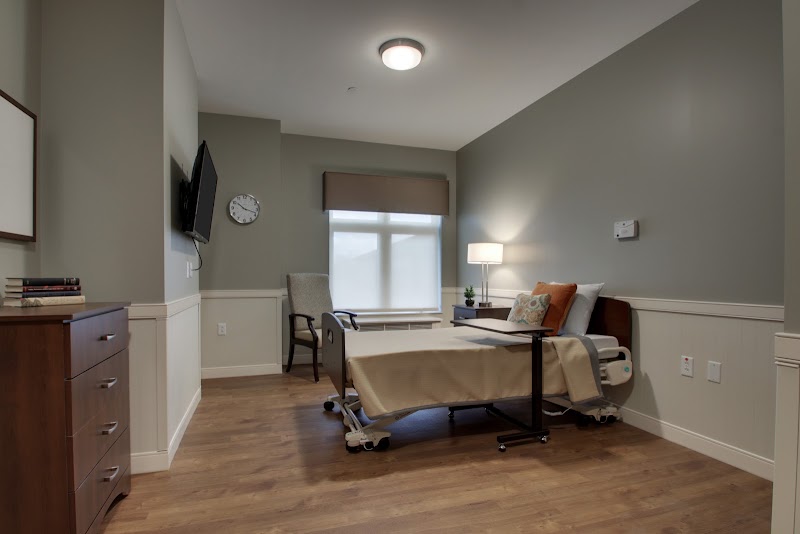
How is St Clara'S Rehab & Senior Care Staffed?

CMS rates ST CLARA'S REHAB & SENIOR CARE's staffing level at 2 out of 5 stars, which is below average compared to other nursing homes. Staff turnover is 49%, compared to the Illinois average of 46%.

What Have Inspectors Found at St Clara'S Rehab & Senior Care?

State health inspectors documented 19 deficiencies at ST CLARA'S REHAB & SENIOR CARE during 2022 to 2025. These included: 1 that caused actual resident harm, 16 with potential for harm, and 2 minor or isolated issues. Deficiencies causing actual harm indicate documented cases where residents experienced negative health consequences.

Who Owns and Operates St Clara'S Rehab & Senior Care?

ST CLARA'S REHAB & SENIOR CARE is owned by a non-profit organization. Non-profit facilities reinvest revenue into operations rather than distributing to shareholders. The facility is operated by HERITAGE OPERATIONS GROUP, a chain that manages multiple nursing homes. With 99 certified beds and approximately 92 residents (about 93% occupancy), it is a smaller facility located in LINCOLN, Illinois.
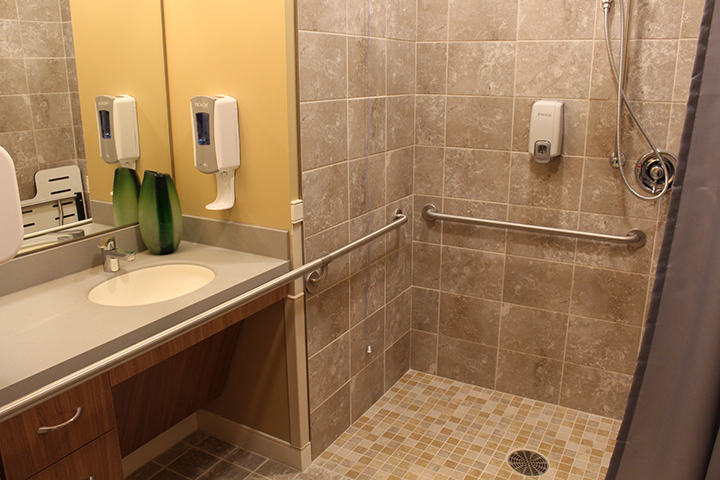
How Does St Clara'S Rehab & Senior Care Compare to Other Illinois Nursing Homes?

Compared to the 100 nursing homes in Illinois, ST CLARA'S REHAB & SENIOR CARE's overall rating (2 stars) is below the state average of 2.5, staff turnover (49%) is near the state average of 46%, and health inspection rating (3 stars) is at the national benchmark.

What Should Families Ask When Visiting St Clara'S Rehab & Senior Care?

Based on this facility's data, families visiting should ask: "Can you walk me through typical staffing levels on day, evening, and night shifts?" "Can I visit during a mealtime to observe dining assistance and food quality?" "How do you handle medical emergencies, and what is your hospital transfer rate?" "Can I speak with family members of current residents about their experience?" These questions are particularly relevant given the below-average staffing rating.

Is St Clara'S Rehab & Senior Care Safe?

Based on CMS inspection data, ST CLARA'S REHAB & SENIOR CARE has a clean safety record: no substantiated abuse findings (meaning no confirmed cases of resident harm), no Immediate Jeopardy citations (the most serious violation level indicating risk of serious injury or death), and is not on the Special Focus Facility watch list (a federal program monitoring the lowest-performing 1% of nursing homes). The facility has a 2-star overall rating and ranks #100 of 100 nursing homes in Illinois. While no facility is perfect, families should still ask about staff-to-resident ratios and recent inspection results during their visit.

Do Nurses at St Clara'S Rehab & Senior Care Stick Around?

ST CLARA'S REHAB & SENIOR CARE has a staff turnover rate of 49%, which is about average for Illinois nursing homes (state average: 46%). Moderate turnover is common in nursing homes, but families should still ask about staff tenure and how the facility maintains care continuity when employees leave.

Was St Clara'S Rehab & Senior Care Ever Fined?

ST CLARA'S REHAB & SENIOR CARE has no federal fines on record. CMS issues fines when nursing homes fail to meet care standards or don't correct problems found during inspections. The absence of fines suggests the facility has either maintained compliance or corrected any issues before penalties were assessed. This is a positive indicator, though families should still review recent inspection reports for the full picture.

Is St Clara'S Rehab & Senior Care on Any Federal Watch List?

ST CLARA'S REHAB & SENIOR CARE is not on any federal watch list. The most significant is the Special Focus Facility (SFF) program, which identifies the bottom 1% of nursing homes nationally based on persistent, serious quality problems. Not being on this list means the facility has avoided the pattern of deficiencies that triggers enhanced federal oversight. This is a positive indicator, though families should still review the facility's inspection history directly.