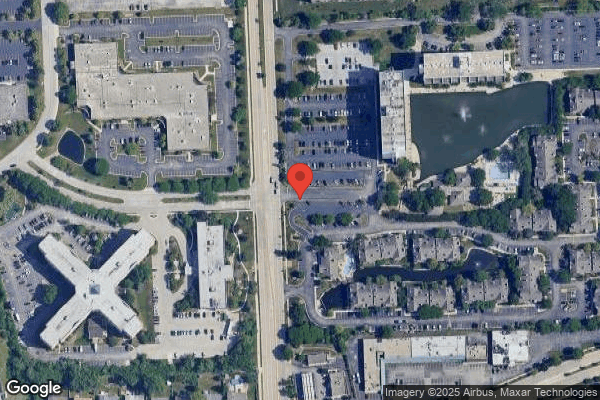
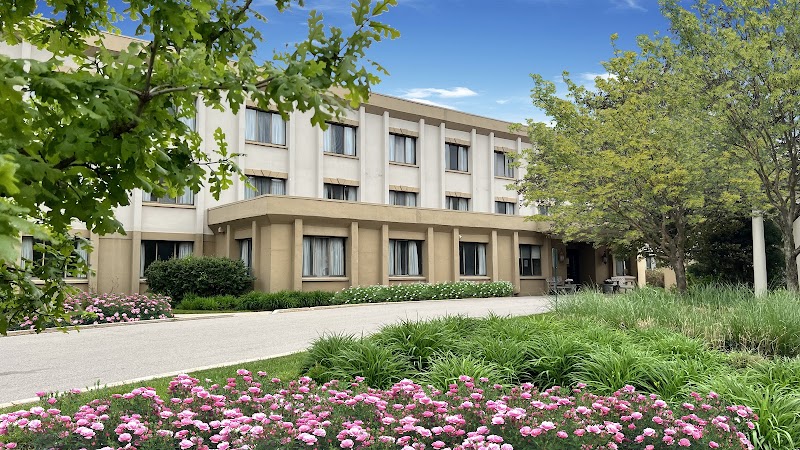
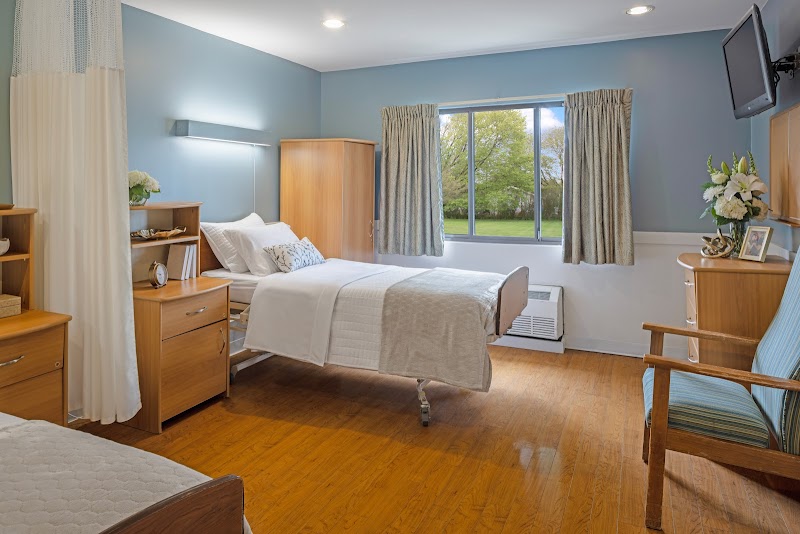
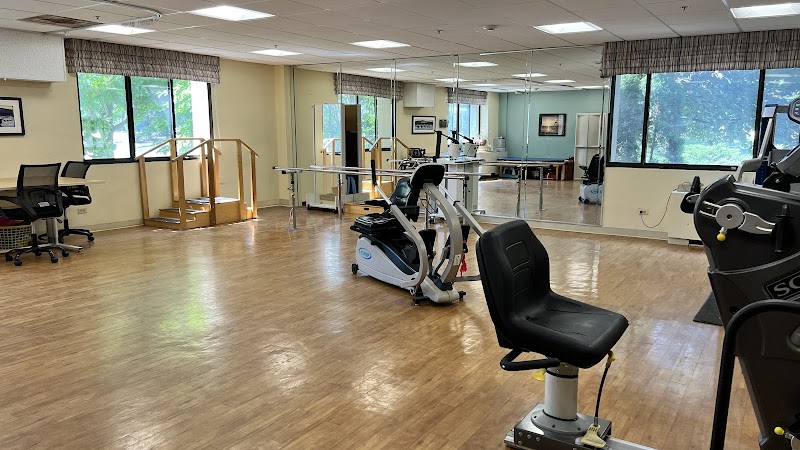
BELLA TERRA LOMBARD

2100 SOUTH FINLEY ROAD, LOMBARD, IL 60148 (630) 495-4000
For profit - Corporation 224 Beds LEGACY HEALTHCARE Data: November 2025
Trust Grade
55/100
#225 of 665 in IL
Last Inspection: June 2024

Within standard 12-15 month inspection cycle. Federal law requires annual inspections.

Overview

Bella Terra Lombard has a Trust Grade of C, which means it is average compared to other facilities. It ranks #225 out of 665 nursing homes in Illinois, placing it in the top half, and #20 out of 38 in Du Page County, indicating that only one local option is better. The facility's trend is improving, with a decrease in issues from 13 in 2024 to just 2 in 2025. Staffing is a concern, rated at 2 out of 5 stars with a 44% turnover rate, which is slightly below the state average. Notably, there have been no fines, which is a positive sign, and they have better RN coverage than 83% of state facilities, suggesting strong oversight. However, there are significant weaknesses to consider. Recent inspections revealed serious deficiencies, including failure to provide incontinence care for residents, leading to distress among those affected. Additionally, there were concerns with food safety practices, such as improper sanitation of food preparation equipment and failure to properly label and store food items, which could impact the health of residents. While there are strengths in RN coverage and the absence of fines, these specific incidents raise important questions about the quality of care at this facility.

Trust Score
C
55/100
In Illinois
#225/665
Top 33%
Safety Record
Moderate
Needs review
Inspections
Getting Better
13 → 2 violations
Staff Stability
○ Average
44% turnover. Near Illinois's 48% average. Typical for the industry.
Penalties
✓ Good
No fines on record. Clean compliance history, better than most Illinois facilities.
Skilled Nurses
✓ Good
Each resident gets 56 minutes of Registered Nurse (RN) attention daily — more than average for Illinois. RNs are trained to catch health problems early.
Violations
⚠ Watch
38 deficiencies on record. Higher than average. Multiple issues found across inspections.
★★★☆☆
3.0
Overall Rating
★★☆☆☆
2.0
Staff Levels
★★★★☆
4.0
Care Quality
★★★☆☆
3.0
Inspection Score
Stable
2024: 13 issues
2025: 2 issues

The Good

  • 4-Star Quality Measures · Strong clinical quality outcomes
  • Full Sprinkler Coverage · Fire safety systems throughout facility
  • No fines on record
  • Staff turnover below average (44%)

    4 points below Illinois average of 48%

Facility shows strength in quality measures, fire safety.

The Bad

3-Star Overall Rating

Near Illinois average (2.5)

Meets federal standards, typical of most facilities

Staff Turnover: 44%

Near Illinois avg (46%)

Typical for the industry

Chain: LEGACY HEALTHCARE

Part of a multi-facility chain

Ask about local staffing decisions and management

The Ugly 38 deficiencies on record

1 actual harm
Mar 2025 2 deficiencies
CONCERN (D) 📢 Someone Reported This

A family member, employee, or ombudsman was alarmed enough to file a formal complaint

Potential for Harm - no one hurt, but risky conditions existed

ADL Care (Tag F0677)

Could have caused harm · This affected 1 resident

**NOTE- TERMS IN BRACKETS HAVE BEEN EDITED TO PROTECT CONFIDENTIALITY** Based on observation, interview, and record review, the facility failed to provide timely incontinent care to dependent resident...

Read full inspector narrative →
**NOTE- TERMS IN BRACKETS HAVE BEEN EDITED TO PROTECT CONFIDENTIALITY** Based on observation, interview, and record review, the facility failed to provide timely incontinent care to dependent residents. This applies to 2 of 4 residents (R4 and R5) reviewed for activities of daily (ADL) care in a sample of 5. The Findings Include: 1. R4 is an [AGE] year-old female admitted on [DATE] with cognition intact as per the Minimum Data Set (MDS) dated [DATE]. MDS also documents that R4 is dependent on toilet hygiene. On 3/7/25 at 10:05 AM, R4 stated, They changed me this morning at around 4:30 AM. I want to be changed now. The CNA is supposed to come and change me. On 3/7/25 at 10:10 AM, V5 (CNA) stated, I started 6:00 AM today and am on my way to change R4. We should provide incontinent care to dependent residents every two hours. I was passing breakfast trays. On 3/7/25 at 10:10 AM, R4 was observed with a urine-soaked incontinent brief with brownish discoloration. A review of R4's incontinent care plan documented that the staff checks the resident for incontinent episodes every two hours and as needed and assists the resident in washing, rinsing, and drying her perineum. 2. R5 is an [AGE] year-old female admitted on [DATE] with cognition severely impaired as per the MDS dated [DATE]. MDS also documents that R5 is dependent on toilet hygiene. On 3/7/25 at 10:15 AM, R5 was observed in her bed with her daughter (V9) at the bedside. On 3/7/25 at 10:15 AM, observed V6 (CNA) checking on R5 for incontinence and observed R5 with urine and feces-soaked brief, with dark brown discoloration. V6 stated that R5 is not her resident and she is just helping out another aide. A review of R5's incontinent care plan documented that the staff checks the resident for incontinent episodes every two hours and as needed and assists the resident in washing, rinsing, and drying her perineum. On 3/7/25 at 10:20 AM, V2 (Director of Nursing/DON) stated that the staff should provide incontinent care to residents every two hours and as needed. Moisture Associated Skin Dermatitis (MASD) is developed due to prolonged exposure to moister/urine. The facility presented incontinent, and the Perineal Care policy was revised on 7/31/24 document: Procedures: 1. Do rounds at least every 2 hours to check for incontinence during the shift.
CONCERN (D) 📢 Someone Reported This

A family member, employee, or ombudsman was alarmed enough to file a formal complaint

Potential for Harm - no one hurt, but risky conditions existed

Pressure Ulcer Prevention (Tag F0686)

Could have caused harm · This affected 1 resident

**NOTE- TERMS IN BRACKETS HAVE BEEN EDITED TO PROTECT CONFIDENTIALITY** Based on observation, interview, and record review, the facility failed to follow the physician orders to provide wound care to ...

Read full inspector narrative →
**NOTE- TERMS IN BRACKETS HAVE BEEN EDITED TO PROTECT CONFIDENTIALITY** Based on observation, interview, and record review, the facility failed to follow the physician orders to provide wound care to a stage 4 sacral pressure ulcer. This applies to 1 of 3 (R1) residents reviewed for pressure ulcer and treatment in a sample of 4. The findings include: R1 is an [AGE] year-old male admitted on [DATE] with severe cognitive impairment as per the minimum data set (MDS) dated [DATE]. A review of the admission summary note dated 12/31/24 documents that R1 was admitted with an unstageable sacral wound (16.0 x 10.0 x 4.0 centimeter/cm) along with both heels and right knee wounds. The wound assessment report dated 3/6/25 by V7 (Wound Care Nurse Practitioner/NP) documented a stage 4 wound with 100% granulation (15.0 x 12.0 x 3.0 cm). On 3/7/25 at 9:40 AM, observed V3 (Wound Care Nurse) and V4 (Certified Nursing Assistant) providing wound care to R1's sacral wound. V3 stated that R1 came back from the hospital two days ago after the wound was debrided. On 3/7/25 at 9:40 AM, during wound care, R1's sacral wound was observed to have moderate drainage, and V3 cleansed the wound with saline-sprayed gauze instead of irrigating the wound. The wound was packed with hydrogel-moistened gauze instead of calcium alginate. Record review on Physician Order Sheet (POS) documented a wound care order for sacrum wound: Irrigate with normal saline (NS), apply Cavilon barrier spray to the peri-wound area, lightly pack with hydrogel-moistened kerlix, cover with 2 abdominal pads, and secure with tape. Record review on wound assessment report dated 3/6/25 by V7 documented treatment plan with calcium alginate to the base of the wound. On 3/7/25 at 10:20 AM, V2 (Director of Nursing/DON) stated that V3 should have irrigated the sacral wound and packed it with calcium alginate, as recommended by the wound nurse practitioner. On 3/7/25 at 9:45 AM, V3 stated that she didn't have individual saline vials to irrigate the wound, and she used barrier film wipes instead of Cavilon spray as she didn't have that spray. On 3/7/25 at 1:55 PM, V7 stated, I made my wound round with the wound care nurse (V3) yesterday morning, and at that time, I mentioned V3 to use calcium alginate packing as the wound was draining moderate to heavy. Calcium alginate is used to absorb exudate and thereby enhance wound healing. I also recommended calcium alginate packing in my late entry note from yesterday at 7:00 PM. I can't enter my orders into the system as I am from an outside agency. The wound care nurse should have entered the calcium alginate order under the physician's name and packed the wound with calcium alginate. If the physician's (MD) order says to irrigate the wound, they should irrigate the wound as per the MD's order.
Jul 2024 1 deficiency
CONCERN (D) 📢 Someone Reported This

A family member, employee, or ombudsman was alarmed enough to file a formal complaint

Potential for Harm - no one hurt, but risky conditions existed

ADL Care (Tag F0677)

Could have caused harm · This affected 1 resident

**NOTE- TERMS IN BRACKETS HAVE BEEN EDITED TO PROTECT CONFIDENTIALITY** Based on observation, interview, and record review, the facility failed to provide timely incontinent care to dependent resident...

Read full inspector narrative →
**NOTE- TERMS IN BRACKETS HAVE BEEN EDITED TO PROTECT CONFIDENTIALITY** Based on observation, interview, and record review, the facility failed to provide timely incontinent care to dependent residents. This applies to 3 of 4 residents (R2, R3, and R4) reviewed for activities of daily (ADL) care in a sample of 4. The Findings Include: 1. R2 is a [AGE] year-old female admitted on [DATE] with mild cognitive impairment as per the MDS dated [DATE]. MDS also indicates that R2 is dependent on toilet hygiene. On 7/19/24 at 9:45 AM, R2 stated, I was changed at 5:00 AM today. I am a little wet now. On 7/19/24 at 10:05 AM, per the surveyor's request, V5 (Certified Nursing Assistant/CNA) checked on R2 for incontinence and found R2 with a urine-soaked diaper and urine smell in the room. On 7/19/24 at 10:05 AM, V5 stated, I started my shift at 6:00 AM, and I didn't change her today. We should check residents every two hours for incontinent care. A review of R2's incontinent care plan documents R2's preference to check on her for incontinent episodes every two hours. R2 also prefers assistance to wash, rinse, and dry her perineum. 2. R3 is an [AGE] year-old female admitted on [DATE] having mild cognitive impairment as per the MDS dated [DATE]. MDS also indicates that R3 is dependent on toilet hygiene. On 7/19/24 at 10:00 AM, R3 stated, They changed me at 4:30 AM. I might be wet now. Upon the surveyor's request, V4 (Registered Nurse/RN) checked on R3 for incontinence. R3 was found with a urine-soaked incontinent brief (urine smell in room) with mild blackish discoloration to brief. On 7/19/24 at 10:03 PM, V4 stated that they should check on residents every two hours to offer incontinent care. A review of R3's incontinent care plan documents R3's preference to check on her for incontinent episodes every two hours. R3 also prefers assistance in washing, rinsing, and drying her perineum. 3. R4 is an [AGE] year-old female admitted on [DATE] with severely impaired cognition as per the MDS dated [DATE]. MDS also indicates that R4 is dependent on toilet hygiene. On 7/19/24 at 10:10 AM, V7 (RN) checked on R4 as per the surveyor's request, and R4 was observed with a double diaper soaked in urine, even the outer layer. On 7/19/24 at 10:45 AM, V3 (Assistant Director of Nursing / ADON) stated, We are supposed to provide incontinent care every 2 hours and as needed. Staff should offer incontinent care more frequently if the residents are on Lasix or heavy wetter. The facility presented incontinent, and the Perineal Care policy was revised on 6/6/24 documents: Procedures: 1. Do rounds at least every 2 hours to check for incontinence during the shift.
Jul 2024 1 deficiency
CONCERN (D) 📢 Someone Reported This

A family member, employee, or ombudsman was alarmed enough to file a formal complaint

Potential for Harm - no one hurt, but risky conditions existed

Deficiency F0602 (Tag F0602)

Could have caused harm · This affected 1 resident

**NOTE- TERMS IN BRACKETS HAVE BEEN EDITED TO PROTECT CONFIDENTIALITY** Based on interviews and record review, the facility failed to ensure that a resident was free from misappropriation of prescribe...

Read full inspector narrative →
**NOTE- TERMS IN BRACKETS HAVE BEEN EDITED TO PROTECT CONFIDENTIALITY** Based on interviews and record review, the facility failed to ensure that a resident was free from misappropriation of prescribed narcotic medication. This applied to 1 of 4 residents (R1) reviewed for narcotic/controlled medications. The findings include: The EMR (Electronic Medical Record) showed that R1, a [AGE] year-old with diagnoses that included dementia, alcohol dependence, bipolar disorder, pain in left shoulder, low back pain, fractured left femur, obstructive and reflux uropathy, limitation of activities due to disability, and cardiac arrythmias. R1 was admitted to the facility on [DATE]. The MDS (Minimum Data Set) dated 5/3/2024 showed that R1's cognition was severely impaired with BIMS (Brief Interview Mental Status) score of 6/15. The care plan dated 4/27/2024 showed an intervention to provide prescribed pain medications to R1 for pain management. The care plan also identified R1 with impaired cognitive function, impaired thought processes related to dementia, bipolar disorder, alcohol dependence, major depressive disorder. The POS (Physician Order Sheet) for the month of 7/2024 showed a physician order dated 5/24/2024 for R1 to have Norco 5/325 mg. (controlled/narcotic medication) 1 tablet every 4 hours as needed for pain management. The order was changed on 7/8/2024 for Norco 5/325 mg. to every 6 hours as needed from the original order of every 4 hours. The pharmacy manifest list showed that the facility had received 30 tablets of Norco 5/325 mg on 6/8/2024 and another 30 tablets on 6/28/2024 for R1. The EMAR (Electronic Medication Administration Record) for the month of 6/2024 and 7/1-7/2024 were reviewed. The EMAR showed that for the month of 6/2024, R1 had received 11 tablets of Norco 5/325. The month of 7/1 through 7/7 of 2024 showed that R1 had received 11 tablets of Norco 5/325 mg. This showed that there should still be available Norco for R1 with 60 tablets supplied and 22 tablets used. The facility's incident report dated 7/13/2024 showed that an incident of misappropriation of R1's Norco 5/325 mg. was identified on 7/7/2024 at 11:45 P.M. The report also showed that V4(LPN/Licensed Practical Nurse/routinely scheduled staff night on the dementia unit floor, (where R1 resides) had reported that R1's Hydrocodone 5/325 mg. (Norco) was identified missing during the change of shift narcotic count between her and V3 (RN/Registered Nurse from agency staffing). The facility incident report also showed that V3 was narrowed down as the alleged perpetuator. The incident report also documents that the facility notified the local police, public health and replaced the missing medication for R1. Review of the staffing schedule on 7/6/2024 and 7/7/2024 showed the following nurses on duty on the third floor. They were same nurses for the 2 days that took care of R1. -7/6/2024 and 7/7/2024 for day shift (7:00 A.M.- 3:00 P.M.) was V5 (RN/Registered Nurse/in house staff/routinely assigned to R1) -7/6/2024 and 7/7/2024 for evening shift (3:00 P.M. -11:00 P.M.) was V3 (RN/ from agency staffing) -7/6/2024 and 7/7/2024 for night shift (11:00 P.M. -7:00 A.M.) was V4 (LPN/Licensed Practical Nurse/in house staff/ routinely assigned to R1) On 7/16/2024 at 1:58 P.M., V5 said that she was routinely scheduled to the dementia unit and assigned to R1 during the day shift. V5 said she was scheduled day shift on 7/6 and 7/7 of 2024. V5 said that during the change of shift narcotic count with V3, R1's Norco 5/325 mg. of 7-9 tablets were accounted for based from the narcotic count sheet. V5 said that on 7/7/2024, at changed of shift at 3:00 P.M. again with V3, narcotic count was done. V5 said that R1's Norco was accounted and there were approximately 7-8 tablets. V5 said that since she was regularly assigned to R1, she knows how R1 was being managed with pain which was Norco daily given around early morning. V5 said it was really weird when narcotic count held at the change of shift between her and V4 on 7/7/2024 night/morning shift. V5 said that both of them (V4 and V5) have noticed that (R1) narcotic count sheet showed that (V3) signed off indicating that V3 took 3 tablets of R1's Norco 5/325 the evening of 7/6/2024 at 3:00 P.M., 7:00 P.M. and 10:45 P.M. V5 added that between change of shift on 7/6 and 7/7/2024, it was only the three of us (V3 and V4, V5) that have the access for the narcotic box where (R1's) Norco was placed. It was identified by (V4) that (R1's) Norco 5/325 mg. tablets and the Norco narcotic count sheet form were missing. This was identified during the narcotic count sheet between (V3) and (V4). I believe (V3) took (R1's) Norco but she said she does not know. How could (V3) not know if (V3) was the only one who had the access to the narcotic box prior to being noted it was missing. V5 also said that she did not administer Norco medication to R1 on 7/6 and 7/7 of 2024 during the day shift. On 7/16/2024 at 2:00 P.M., V4 said that she was routinely scheduled to the dementia unit and was assigned to R1 during the night shift. V4 said she was scheduled night shift on 7/6 and 7/7 of 2024. V4 said that during the change of shift with V3 on 7/6 at 11:00 P.M., both counted R1's Norco tablets in the narcotic box. V4 said they both counted the Norco tablets and checked with the Norco narcotic count sheet. V4 said there were approximately 7 tablets of Norco. V4 said she had noticed that R1's narcotic count sheet showed that V3 signed off indicating that she took R1's Norco 3 tablets at 3:00 P.M., 7:00 P.M. and 10:45 P.M. V4 said that she was well aware of R1's routine of taking Norco which was only once a day and was usually given early morning. V4 said it was very unusual that (V3) took 3 tablets of Norco) from (R1) based on the narcotic count sheet. This was very unusual that (R1) had Norco every 4 hours. (R1) was only having daily Norco and was comfortable with a pain patch only. V4 said that during the narcotic count at the change of shift on 7/7/2024 at 11:45 P.M. with V3, V4 noted that R1's Norco tablets and Norco narcotic count sheet were both missing. V4 said she had asked V3 what happened to R1's Norco tablets and the narcotic count sheet. V4 said that V3 kept saying follow your policy, I don't know, I don't know what happened. V4 said she immediately called V2 (Assistant Director of Nursing) due to missing controlled medication. V4 said (V3) might deny that she took the Norco, but she was the only one who had the access to the narcotic box and no one else, so how would she not know what happened to (R1's) Norco. Obviously, she took (R1's) Norco since she was the only responsible staff for that specific narcotic box during her shift. It was already strange the day before when (V5) and I have noticed that (V3) signed off from (R1's) Norco narcotic count sheet indicating she took 3 Norco tablets on 7/6/2024. On 7/16/2024 at 11:24 P.M. V2 said that she had received a call from V4 on 7/7/2024 at around 11:45-11:50 P.M. V2 said that V4 had reported to her that R1's Norco tablets and Norco narcotic count sheet were missing which V4 discovered during the narcotic count with (V3) during the change of shift. V2 said that she immediately called V1 (Administrator), and she had started asking the assigned nurses that took care of R1 (V4 and V5). V2 said that V3 left the building and did not answer her phone despite multiple attempts from V2 to contact her. V2 said that finally with staffing agency's help, V3 had called the facility on 7/9/2024 and said that (V3) kept saying I don't know, I don't know. V2 added that based on interviews, and V3's response it tells a lot without saying anything.
Jun 2024 8 deficiencies
CONCERN (D)

Potential for Harm - no one hurt, but risky conditions existed

Resident Rights (Tag F0550)

Could have caused harm · This affected 1 resident

Based on interview and record review the facility failed to treat a resident in a dignified manner. This applies to 1 of 29 residents (R9) reviewed for dignity in the sample of 29. The findings inclu...

Read full inspector narrative →
Based on interview and record review the facility failed to treat a resident in a dignified manner. This applies to 1 of 29 residents (R9) reviewed for dignity in the sample of 29. The findings include: On 6/24/2024 at 9:53AM, R9 said on Sunday (6/23/2024) in the morning he put his call light on. R9 said his call light was on from approximately 6:20AM until 8:20AM. R9 said he had soiled himself with stool and urine, requiring staff assistance. R9 said he didn't receive help until after 8:20AM from the nursing staff. On 6/25/2024 at 1:50PM, V9 Registered Nurse (RN) said R9 is very alert and oriented. V9 said R9 is aware of when he needs to be cleaned up and lets staff know. V9 said residents should be checked every 2 hours or as needed. V9 said residents should be cleaned up right away when they are soiled. R9's Minimum Data Set section C dated 5/30/2024 shows a BIMs score of 14, cognitively intact. R9's Task B&B - Bowel charting does not show any documentation on 6/23/2024. R9's Care Plan dated 6/7/2024 states, [R9] is always incontinent of bladder and bowel related to multiple sclerosis . interventions include . I would like staff to check me for inconvenience episode 2 hours. The facility's Privacy and Dignity policy dated 6/6/2024 states, . it is the facility's policy to ensure that resident's privacy and dignity is respected by the staff at all times .
CONCERN (D)

Potential for Harm - no one hurt, but risky conditions existed

Accident Prevention (Tag F0689)

Could have caused harm · This affected 1 resident

2. On 6/24/24 at 12:22 PM, R33 was in bed. Hanging on the bed frame was a bed alarm box. The sensor pad for the bed alarm was hanging behind the headboard of R33's bed. The sensor pad cord was unplugg...

Read full inspector narrative →
2. On 6/24/24 at 12:22 PM, R33 was in bed. Hanging on the bed frame was a bed alarm box. The sensor pad for the bed alarm was hanging behind the headboard of R33's bed. The sensor pad cord was unplugged from the bed alarm box. No staff were present in R33's room. On 6/24/24 at 12:32 PM, V4 (Certified Nursing Assistant) confirmed the bed alarm sensor pad was not under R33 and was unplugged from the bed alarm box. V4 said the pad should be under R33 and plugged into the alarm box. R33's Care Plan showed R33 was at risk for falls and requires a bed alarm to prevent falls. The facility's Fall Prevention Program Guidelines policy with a reviewed date of 12/5/23 showed safety interventions shall be initiated and implemented for each resident identified at risk for falls. Place call device within reach at all times and respond to call lights promptly. May utilize personal alarms when appropriate such as bed alarms. Based on observation, interview, and record review the facility failed to ensure fall interventions were in place for residents with a history of falls for 2 of 29 residents (R108, R33) reviewed for safety in the sample of 29. The findings include: 1. On 6/24/24 at 9:56 AM, R108 was in bed with fall mats on each side of the bed. R108's bed was not in the lowest position. R108 said he fell and broke his hip and leg. On 6/25/24 at 9:46 AM, R108 was in bed (not in lowest position) with the call light on the floor near the head of the bed. On 6/25/24 at 1:55 PM, R108 was yelling out help me. R108's bed was not in the lowest position and his call light was wrapped around the bed rail and dangling down towards the ground, not within R108's reach. On 6/26/24 at 10:48 AM, V3 Restorative Nurse said after R108's fall he implemented the interventions of bed alarm, floor mats, and bed in lowest position. The facility's Post Fall Investigation dated 6/16/24 for R108 shows R108 got up from bed and fell. The same form shows interventions to address incident: Provided resident with bed alarm to alert staff when resident attempted to get up from bed unassisted and provided floor mats on both side of bed, position bed at lowest position.
CONCERN (D)

Potential for Harm - no one hurt, but risky conditions existed

Respiratory Care (Tag F0695)

Could have caused harm · This affected 1 resident

Based on observation, interview, and record review the facility failed to ensure resident nebulizer equipment was stored in a manner to prevent cross contamination for 3 of 6 residents (R3, R26, R69) ...

Read full inspector narrative →
Based on observation, interview, and record review the facility failed to ensure resident nebulizer equipment was stored in a manner to prevent cross contamination for 3 of 6 residents (R3, R26, R69) reviewed for oxygen in the sample of 29. The findings include: 1. On 6/25/24 at 11:52 AM, R3's nebulizer mask/tubing was in an opened plastic bag on the nightstand next to the bed. The plastic bag was dated 4/22/24. R3's June 2024 Medication Administration Record (MAR) shows an order for Ipratropium-Albuterol Inhalation Solution nebulizer treatment was administered on 6/9/24. 2. On 6/24/24 at 10:08 AM, R26's nebulizer mask/tubing was in an open plastic bag on nightstand next to the bed. The plastic bag was dated 4/22/24. On 6/25/24 at 10:32 AM, R26's nebulizer mask/tubing was on the nightstand, still dated 4/22/24. R26 said she uses the nebulizer once in a while. R26's June 2024 MAR shows an order for Ipratropium-Albuterol Solution nebulizer treatment was administered on 6/9/24. 3. On 6/24/24 at 10:07 AM, R69 stated she was short of breath yesterday and received a nebulizer treatment. R69's nebulizer mask was sitting on the base of the nebulizer (not in a plastic bag) and the edges of the mask (which are secured around the resident's mouth and nose) were touching the privacy curtain. The mask/tubing was not dated. On 6/25/24 at 9:55 AM, R69's nebulizer mask remained in the same position, still touching the privacy curtain. On 6/25/24 at 1:00 PM, V16 Registered Nurse said nurses change nebulizer tubing and mask. V16 the tubing should be dated and stored in a plastic bag to prevent contamination and for infection control. V16 said usually there are orders to change the tubing weekly. V16 said if the nebulizer tubing is dated in April, it should be discarded and not used. R69's June 2024 MAR shows an order for Ipratropium-Albuterol Inhalation Solution every 6 hours as needed for shortness of breath/congestion. The facility's Oxygen Therapy and Administration Policy dated 6/6/24 shows Oxygen setups should be changed every seven days and as needed if heavy soiling is present.
CONCERN (D)

Potential for Harm - no one hurt, but risky conditions existed

Pharmacy Services (Tag F0755)

Could have caused harm · This affected 1 resident

Based on observation, interview and record review the facility failed to reorder a resident's medication. This applies to 1 of 29 residents (R340) in the sample of 29 reviewed for pharmacy services. ...

Read full inspector narrative →
Based on observation, interview and record review the facility failed to reorder a resident's medication. This applies to 1 of 29 residents (R340) in the sample of 29 reviewed for pharmacy services. The findings include: On 6/24/2024 at 9:42AM, R340 was observed lying in bed in his room. R340 said he was waiting on the facility to reorder his morphine. On 6/24/2024 at 12:18PM, V8 Registered Nurse said the prescription from the hospital had a requested quantity of 60 but the pharmacy only sent 6 of the morphine tablets. On 6/26/2024 at 10:36AM, V2 Director of Nursing (DON) said the hospital prescription was electronically signed, but the pharmacy requires an actual signature for the medication. V2 said this is why the pharmacy sent only 6 pills and didn't fill the entire script. On 6/24/2024 at 1:39PM, V7 Nurse Practitioner (NP) said the prescription could have been filled over the weekend by the covering provider. V7 said [R340] had oxycodone ordered as well for pain control. V7 said she did refill his prescription for the morphine on 6/24/2024. R340's Medication Administration Record (MAR) dated 6/1/2024 shows an order for Morphine Sulfate ER 60 milligram (mg) give 1 tablet by mouth every 12 hours scheduled for pain. R340's MAR shows the medication was unavailable starting on 6/22/2024 at 9:00AM until 6/24/2024 at 9:00 AM. R340's MAR shows an order for oxycodone 30mg give every 6 hours as needed for pain. R340's MAR shows oxycodone given on 6/22/2024 at 8:31PM, 6/23/2023 8:17AM and 4:18PM for pain management. R340's Morphine prescription from the hospital had a quantity of 60. The facility's prescription quantity shows a quantity of 6 on the morphine label sent by the pharmacy.
CONCERN (D)

Potential for Harm - no one hurt, but risky conditions existed

Infection Control (Tag F0880)

Could have caused harm · This affected 1 resident

Based on observation, interview and record review the facility failed to ensure staff wore personal protective equipment (PPE) when providing direct resident care for residents on enhanced barrier pre...

Read full inspector narrative →
Based on observation, interview and record review the facility failed to ensure staff wore personal protective equipment (PPE) when providing direct resident care for residents on enhanced barrier precautions (EBP) for 2 of 29 residents (R28 and R97) reviewed for infection control in the sample of 29. The findings include: 1. R97's current Care Plan shows that R97 is on EBP related to having a gastrostomy tube. The Care Plan shows interventions of: Ensure that gown and gloves are used during high-contact resident care activities (like dressing, bathing/showering, transferring, providing hygiene, changing linens, changing briefs or assisting with toileting). On 6/24/24 at 11:14 AM, V15 (CNA) went into R97's room to provide incontinence care and reposition R97. V15 put gloves on but did not don a gown. V15 performed incontinence care and repositioned R97. R97 was observed to have a gastrostomy tube. 2. R28's current Care Plan shows that R28 is on EBP related to an indwelling foley catheter and a surgical wound. The Care Plan shows interventions of: Ensure that gown and gloves are used during high-contact resident care activities (like dressing, bathing/showering, transferring, providing hygiene, changing linens, changing briefs or assisting with toileting). On 6/24/24 at 10:05 AM, R28 was observed to have an indwelling urinary catheter. At 10:10 AM, V15 (Certified Nursing Assistant/CNA) went into R28's room and applied gloves. V15 did not don a gown. V15 assisted R28 to sit on the side of the bed. V15 applied a gait belt to R28 and assisted him to his wheelchair. V15 then removed the gait belt and put it around her waist. On 6/26/24 at 9:06 AM, V20 (Infection Preventionist) said that any resident that has a gastrostomy tube, indwelling urinary catheter or wound need to be on EBP. V20 said that the staff need to don gloves and a gown if they are going to have any type of contact with the resident if they are on EBP. The facility's EBP Policy revised on 6/6/24 shows, EBP involves the use of gowns and gloves to reduce transmission of resistant organisms during high-contact resident care activities for residents know to be colonized or infected with MDROs as well as residents with wounds and/or indwelling medical devices .EBP will be used for any resident in the facility: With open wounds .urinary catheter, feeding tube .Examples of high-contact resident care activities requiring gown and glove use among residents that trigger EBP use include: .Transferring, providing hygiene .,Changing briefs
CONCERN (E)

Potential for Harm - no one hurt, but risky conditions existed

Pressure Ulcer Prevention (Tag F0686)

Could have caused harm · This affected multiple residents

4. On 06/25/24 at 10:30 AM, 11:25 AM, 12:56 PM, and 2:37 PM, R121 was in bed with his heels resting directly on the mattress. R121's heel protector boots were in the corner of R121's room sitting next...

Read full inspector narrative →
4. On 06/25/24 at 10:30 AM, 11:25 AM, 12:56 PM, and 2:37 PM, R121 was in bed with his heels resting directly on the mattress. R121's heel protector boots were in the corner of R121's room sitting next to the television. On 06/25/24 at 11:51 AM, V6 (Wound Care Nurse) said R121 had fragile skin and wearing heel protector boots was one of the pressure injury interventions in place for R121. R121's Order Summary Report showed to apply heel boots to bilateral lower extremities for skin protection. R121's care plan showed R121 was at risk for skin breakdown. 2. On 06/24/24 at 10:25 AM, R240 was in bed with a pillow under her left side. R240's heels were flat on the bed. On 06/24/24 at 12:10 PM, R240 remained in the same position in bed with a pillow under her left side. R240's heels were flat on the bed. On 06/25/24 V6 Wound Registered Nurse said to reduce pressure on heels, interventions of heel boots or offloading the heels with pillows can be used. V6 said R240 does not like heel boots so pillows are used to float her heels off the bed. R240's Skin and Wound Note dated 6/21/24 shows R240 has an unstageable pressure injury to her right hip and shows float heels while in bed with use of foam boots. 3. On 06/24/24 at 12:20 PM, R105 was in bed on her back with her heels flat on the bed. On 06/25/24 at 9:43 AM, R105 was in bed on her back with her heels flat on the bed. R105's Skin and Wound Note dated 5/31/24 shows R105's pressure injury to her left heel is resolved and shows preventative measures: Float heels while in bed with use of heel boots. The facility's Wound Care Guidelines Policy dated 1/24/24 shows Elevate resident heels off the bed as indicated (e.g., place pillows under calf, not under ankles or use heel protector that offloads the heel from the bed surface) to raise heels off the bed. Based on observation, interview, and record review the facility failed to ensure a wound was assessed and the wound nurse practitioner notified of a new wound. The facility failed to ensure pressure relieving interventions were in place for residents who are at risk for pressure ulcer for 4 of 5 residents (R98, R105, R121 and R240) reviewed for pressure injuries in the sample of 29. The findings include: 1. On 6/25/24 at 10:59 AM, R98 was lying in bed. R98's left heel was laying directly on the bed. R98's heel protector boots were sitting in the wheelchair in her room. R98 was provided incontinence care. R98 had an open area on her sacrum that was approximately 3 centimeters (cm) x 3 cm x 0.2 cm. The wound was covered in white appearing cream. R98 had scar tissue present in the same area. On 6/25/24 at 11:27 AM, V6 (Wound Care Registered Nurse) said that R98 is at high risk for pressure ulcers. V6 said that R98 has a history of a very large unstageable pressure ulcer on her bottom and has had heel pressure ulcers in the past as well. V6 said that intervention put in place to prevent pressure ulcers for R98 include: an air mattress, frequent incontinence care, repositioning and offloading her heels when in bed. V6 said that the staff notified her of an area they were concerned about on her bottom. V6 said that she went and assessed the area and found that she had a skin tear in the same area as her previous pressure ulcer. V6 said that the flap of skin was still intact, so they kept the piece of skin there but eventually it came off and exposed pink tissue. V6 said that once the skin tear was found, an order to apply zinc cream was obtained and that is the treatment that has been in place daily since. On 6/26/24 at 10:30 AM, V13 (Wound Nurse Practitioner) said that she comes to the facility to see residents two times per week. V13 said that she sees all wound types. V13 said that if she is notified of a new wound, she would see the resident at her next visit to the facility. V13 said that she would do a wound assessment that included the type of wound, description of the wound and measurements of the wound. V13 said that she would ensure that the treatments in place were appropriate for the wound. V13 said that she would then see the resident weekly to do another assessment to ensure that the wound is healing and provide new treatment interventions if it is not healing. V13 said that she was not notified to see R98's wound. V13 said that the last time she saw R98 was in March, and she did not have any sacral wounds. V13 said that she has been to the facility multiple times since 6/7/24. On 6/26/24 at 10:40 AM, V14 (Registered Nurse) performed a wound assessment. The sacral wound measured 3.5 cm x 4 cm x 0.5 cm. The wound bed was pink with two areas in the middle of the wound that had whitish/yellow tissue present. V14 tried to clean the areas off to ensure that it was not cream present. The areas remained after cleaning. On 6/26/24 at 1:00 PM, V2 (Director of Nursing) said that she would expect her staff to report any new wounds to the physician or nurse practitioner to get orders for the wound and report the wound to the wound nurse. V2 said that the wound nurse would then do an assessment of the wound and document the assessment on the skin alteration form. V2 said that the wound nurse would then notify the wound Nurse Practitioner to see the resident on their next visit. V2 said that the wound should be assessed at least weekly or whenever the wound has a deterioration or change. V2 said that the assessments should be documented in the resident's medical record. On 6/26/24 at 1:24 PM, V7 (Nurse Practitioner) said that she went and saw R98's wound today and it looks like a stage 2 to 3 pressure ulcer now. V7 said that the wound bed was pink with a couple areas of yellowish fat tissue present (The National Pressure Injury Advisory Panel says stage 3 pressure injuries are full thickness loss of skin, in which adipose (fat) is visible in the ulcer). V7 said that to her it sounds like the wound started as a skin tear and then developed into a pressure ulcer. V7 said that the nurse should be monitoring and assessing any open area and if it gets worse, they should notify the physician or nurse practitioner. V7 said that R98 had zinc cream previously ordered but now that it is worse, she does not want zinc on it and put in a new order for collagen ointment and a dry dressing. V7 said that they do not do measurements for skin tears but once the wound changed to an open wound, an assessment should have been done at that time and the physician notified. R98's Nursing Notes dated 6/7/24 shows, Called to see pt (patient) due to the CNA (Certified Nursing Assistant) noted skin friction tear, upon assessment noted skin flap intact and pulled over, base of the wound pink and dry. Site is of healed wound area and over scar tissue. Pt already on air mattress, and seen by NP (Nurse Practitioner), treatment ordered. R98's Nurse Practitioner Note dated 6/07/24 shows, The pt was noted to have a new shearing/skin tear on her sacrum Skin: skin tear over sacrum, shearing-new .Plan: Wound care nurse to evaluate; zinc oxide added . No other assessment of R98's wound was documented in her clinical records from 6/7/24 to 6/25/24. There were no skin alteration forms completed in R98's clinical records between 6/7/24 and 6/25/24. There were no measurements or other descriptions of the wound documented until 6/26/24. R98's Quarterly Skin Evaluation Form dated 4/1/24 shows that she is at risk for pressure ulcer development. R98's Care Plan shows she has a history of a stage 4 sacral pressure ulcer and a stage 2 left heel pressure ulcer with intervention to include: off load heels as ordered. The facility's Wound Care Guidelines Policy revised on 1/24/24 shows, Elevate resident heels off the bed as indicated (place pillows under calf .or use heel protectors that offload the heel from the bed surface .The resident's skin alteration/breakdown (pressure ulcer, arterial, diabetic, venous ulcer and etc.) shall be documented in the resident's clinical records Pressure Injury treatment .Timely referral to the facility's Wound Care Specialist for all pressure injuries and/or wounds Wound assessment documentation shall include but are not limited to: type of wound and/or ulcer, etiology, location, date, stage (if applicable), length, width, and depth; wound description, wound edge description and if present, exudates, undermining, tunneling, and wound related pain.
CONCERN (E)

Potential for Harm - no one hurt, but risky conditions existed

Deficiency F0688 (Tag F0688)

Could have caused harm · This affected multiple residents

**NOTE- TERMS IN BRACKETS HAVE BEEN EDITED TO PROTECT CONFIDENTIALITY** 2. On 6/25/2024 at 12:15PM, V3 Restorative Nurse said R14 has been receiving restorative services since 6/14/2024 since she fini...

Read full inspector narrative →
**NOTE- TERMS IN BRACKETS HAVE BEEN EDITED TO PROTECT CONFIDENTIALITY** 2. On 6/25/2024 at 12:15PM, V3 Restorative Nurse said R14 has been receiving restorative services since 6/14/2024 since she finished physical therapy. V3 said we try to provide restorative services daily, but it hasn't been daily. V3 said sometimes restorative staff forget to chart when services are provided. V3 said R14 has not had a decline since beginning restorative services. R14's Task: Nursing Rehab: Active ROM and Active Assisted ROM lists recommendations for 15 min sets 2 times per day. R14's task documentation for the last 14 days does not show restorative services documentation for 6/15/2024, 6/18/2024, 6/19/2024, 6/20/2024, 6/21/2024, 6/22/2024, 6/23/2024, 6/24/2024. 3. R79's Face Sheet showed R79 was diagnosed with hemiplegia of his left side. A facility assessment done 4/4/24 showed R79's mental status was intact. On 6/24/24 at 10:29 AM, R79 was in bed with a splint on his left hand. R79 said he had a stroke and could not move his left hand/arm. R79 attempted to move his left hand/arm but was unable to move it. R79 said the facility did not provide range of motion (ROM) everyday. R79 said he goes several days without getting ROM. R79 added that he has gone as long as a week without receiving ROM. R79's Order Summary Report showed R79 was to get passive ROM to his left upper and lower extremities with staff assistance daily as tolerated. R79's Care Plan showed he was on a passive ROM program and R79 was to receive ROM with his daily care. A review of R79's task passive ROM documentation for the last 30 days showed there was no documentation for 5/28/24, 5/30/24, 5/31/24, 6/1/24, 6/2/24, 6/3/24, 6/4/24, 6/5/24, 6/6/24, 6/7/24, 6/8/24 and 6/22/24 (missing 12 out of 30 days). 6/9/24 and 5/27/24 had Not Applicable documented for the ROM. The documentation did not indicate R79 had refused ROM. On 6/24/24 at 1:11 PM, V3 (Restorative Nurse) said he was familiar with R79 and R79 did not refuse ROM. V3 added that R79 was to get ROM to his left upper and lower extremities daily and once the ROM was provided it was to be documented in the task passive ROM. 4. R5's Face Sheet showed R5 was diagnosed with a stroke, hemiplegia, and contractures of the left and right hands. On 6/24/24 at 10:34 AM, R5 was in bed. R5 had a splint to his left hand and a carrot splint in his right hand. R5's right hand/fingers were closed around the carrot splint in a fist like shape. R5 was non-verbal and did not follow directions when asked. R5's Care Plan showed R5 had a self care deficit and impaired mobility related to contractures. Listed under interventions was for staff to provide gentle range of motion as tolerated with daily care and for splints to be applied daily. R5's Order Summary Report showed R5 was to get passive ROM to all extremities up to 7 days a week, a right hand splint, and a left carrot splint to manage contractures. A review of R5's task passive ROM documentation for the last 30 days showed there was no documentation for 5/28/24, 5/30/24, 5/31/24, 6/1/24, 6/2/24, 6/3/24, 6/4/24, 6/5/24, 6/6/24, 6/7/24, 6/8/24, and 6/22/24 (12 out of 30 days). For 5/27/24 and 6/9/24, Not Applicable was documented. On 06/24/24 at 01:11 PM, V3 said he was familiar with R5. V3 described R5 as pleasant, non-verbal and did not refuse ROM or his splint application. V3 added that R5 was to get ROM to all extremities daily and should have his splints placed daily. V3 said that once the ROM and splints were applied it was to be documented in the Tasks. V3 said the restorative aides were to provide the ROM and apply the splints. A review of R5's task splint application for 30 days showed No the splints were not applied on 5/28/24, 5/31/24, 6/1/24, 6/2/24, 6/5/24, 6/6/24, and 6/7/24. On 5/27/24, Not Applicable was documented for the splint application. On 6/25/24 at 1:45 PM, V3 said the floor certified nursing assistants (CNA) were documenting that the splints for R5 were not applied. On 6/25/24 at 11:50 AM, V4 (CNA) said she was familiar with R5 and normally takes care of R5. V4 said floor CNAs do not provide ROM, put on splints, or document about ROM/splints. V4 added that restorative will provide ROM and apply splints. On 6/25/24 at 11:59 AM, V5 (Restorative Aide) said she was the one that provides ROM and applies splints to R5 and R79. V5 confirmed R5 and R79 did not refuse ROM or their splints. V5 said there should be documentation that the ROM was done, and splints were applied. The facility's Restorative Nursing Program policy with a revised date of 6/6/24 showed appropriate nursing and restorative services consistent to the resident's functional needs must be provided. If the assessment showed the resident needs therapy, then therapy should be provided. Restorative programs shall be reflected and indicated in the resident's electronic restorative log in order to document the provision of services and the frequency by the nurses, CNAs and/or restorative aides. Based on observation, interview and record review the facility failed to ensure residents received their range of motion (ROM) exercises as ordered and failed to ensure splints were placed for a resident with contractures as ordered for 4 of 10 residents (R5, R14, R28 and R79) reviewed for restorative services in the sample of 29. The findings include: 1. On 6/24/24 at 10:10 AM, R28 was transferred from his bed to the wheelchair with two person assist. R28 was unable to stand up straight and required maximal assistance to pivot transfer to the wheelchair. R28 was not provided a walker to transfer. On 6/24/24 at 9:53 AM, R28 said that he used to be able to walk but can now barely get out of bed and it takes two people to get him up. On 6/25/24 at 1:38 PM, V3 (Restorative Nurse) said that all residents should receive their ordered restorative services. V3 said that it should be charted under that task section in the computer. V3 said that if the resident refuses, it should still be charted. V3 said that if it was not charted, then it was not done. On 6/25/24 at 2:00 PM, V10 (Restorative Certified Nursing Assistant) said that R28 is in the restorative program. V10 said that they stand him on the side of the bed with two persons daily to help with his leg strength and she either does arm exercises with him or has him use the arm bike for upper extremity strength daily. V10 said that when she performs the exercises, she documents it under the tasks in the computer program. V10 said that she would also document if he refuses. V10 said that she is not able to perform her restorative duties if she is pulled to work the floor but another restorative aide or the restorative nurse should be doing the residents who require restorative services. On 6/25/24 at 2:05 PM, R28 said that they do not have him stand on the side of the bed with his walker because he can't do it anymore. R28 said that he does not ever recall using an arm bike for exercise. R28's Physical Therapy Discharge summary dated [DATE] shows that R28 requires moderate assistance for transfers and can currently ambulate 20-40 feet with his rolling walker. R28's Discharge Recommendations include: restorative range of motion, bed mobility and transfer program. R28's Physician's Order Sheet shows orders dated 5/2/24 for: upper extremity bike range of motion exercises daily for 15 minutes and sit to stand to rolling walker/grab bar as tolerated up to 7 days/week. R28's Electronic Task History shows that R28 is to complete sit to stand with rolling walker or grab bar to strengthen bilateral lower extremities up to 7 days/week. The task history from 5/28/24 to 6/26/24 shows that this was performed 9 times and refused one time. R28's Electronic Task History shows that R28 is to complete upper extremity bike range of motion exercises to increase strength and endurance daily for 15 minutes. The task history from 5/28/24 to 6/26/24 shows that this was performed 7 times.
CONCERN (F)

Potential for Harm - no one hurt, but risky conditions existed

Food Safety (Tag F0812)

Could have caused harm · This affected most or all residents

Based on observation, interview, and record review the facility failed to ensure food preparation equipment was sanitized prior to preparing food. This has the potential to affect all 138 residents re...

Read full inspector narrative →
Based on observation, interview, and record review the facility failed to ensure food preparation equipment was sanitized prior to preparing food. This has the potential to affect all 138 residents receiving food from the kitchen. The findings include: The CMS 671 dated 6/24/24 shows there are 139 residents residing in the facility. Facility provided Diet Type Report shows that there is only one resident with an order of NPO (nothing by mouth) and does not receive food from the kitchen. On 6/24/24 at 10:37 AM, V18 (Chef) said that he had just finished pureeing the chicken for lunch and had to finish pureeing the noodles and broccoli. On 6/24/24 at 10:42 AM, V18 went to the prep sink where water was running onto a soiled food processor container, food processor lid, food processor blade, and spatula. V18 grabbed a rag from a green bucket next to the sink and proceeded to use it to wash the items in the prep sink. When finished, V18 returned the rag to the green bucket, removed the items from the sink, and brought all the items to the prep table to begin his puree process. V18 placed the spatula on the prep table and assembled all the food processor components before placing them onto the food processor base. The items were still wet from being washed and were not sanitized. On 6/24/24 at 10:46 AM, V18 returned to the prep table where he began to puree the broccoli. At 10:52 AM, V18 picked up the un-sanitized spatula that was on the prep table and used it to scoop the pureed broccoli out of the food processor pitcher and into a serving pan. At 10:55 PM, V18 brought the food processor components and the spatula back to the prep sink where he continued the same process as before, washing all the items in the prep sink and returning them to the prep table without sanitizing and air drying. On 6/24/24 at 10:55 AM, V17 (Food Service Director) confirmed that the contents of the green bucket were only water with soap. On 6/24/24 at 10:59 AM, V18 began to puree the pasta. At 11:03 AM, V18 finished with the pureed pasta and used the un-sanitized spatula to scoop the pureed pasta into a serving pan. On 6/24/24 at 12:10 PM, V17 said that no additional purees were made for lunch and the ones used for service were the ones made by V18. On 6/25/24 at 1:24 PM, V17 said that V18 should have brought the food processor pitcher, lid, blade, and the spatula to the dish room to wash, rinse, and sanitize the parts. He (V18) . needs to wash, rinse, sanitize, and air dry before starting the next puree. V17 said in a perfect world, the facility would have two or more complete food processor pitchers for the puree process.
Apr 2024 1 deficiency
CONCERN (E) 📢 Someone Reported This

A family member, employee, or ombudsman was alarmed enough to file a formal complaint

Potential for Harm - no one hurt, but risky conditions existed

ADL Care (Tag F0677)

Could have caused harm · This affected multiple residents

**NOTE- TERMS IN BRACKETS HAVE BEEN EDITED TO PROTECT CONFIDENTIALITY** Based on observation, interview, and record review, the facility failed to provide timely incontinent care to dependent resident...

Read full inspector narrative →
**NOTE- TERMS IN BRACKETS HAVE BEEN EDITED TO PROTECT CONFIDENTIALITY** Based on observation, interview, and record review, the facility failed to provide timely incontinent care to dependent residents. This applies to 4 of 5 residents (R1, R3, R4, and R5) reviewed for activities of daily (ADL) care in a sample of 9. The Findings Include: 1. R1 is a [AGE] year-old female admitted on [DATE] with severely impaired cognition as per the MDS dated [DATE]. MDS also indicates that R1 is dependent on toilet hygiene. On 4/9/24 at 9:22 AM, R1 was observed with V5 (Certified Nursing Assistant/CNA) and R1 was observed with an inner liner inside an incontinent brief soaked with urine and feces. V5 stated on 4/9/24 at 9:22AM, I started my shift at 6:00 AM, and I checked her around 6:20 AM, and R1 was dry then. We are supposed to check residents for incontinence every two hours. A review of R1's incontinent care plan documents R1's preference to check on her for incontinent episodes every two hours. R1 also prefers assistance to wash, rinse, and dry her perineum. 2. R3 is an [AGE] year-old female admitted on [DATE] with severely impaired cognition as per the MDS dated [DATE]. MDS also indicates that R3 is dependent on toilet hygiene. On 4/9/24 at 9:35 AM, R3 was observed with V4 (CNA) and R3 was observed with a urine-soaked inner pad inside the incontinent brief. On 4/9/24 at 9:35 AM, V4 stated that R3's preference for an inner pad is care planned, and she will change R3 even though she was not assigned CNA for R3. A review of R3's incontinent care plan documents R3's preference to check on her for incontinent episodes every two hours. R3 also prefers assistance in washing, rinsing, and drying her perineum. 3. R4 is a [AGE] year-old female admitted on [DATE]. As per the MDS dated [DATE], her cognition is intact. The MDS also indicates that R4 is dependent on toilet hygiene. R4 was observed on 4/9/24 at 9:42AM in her bed with a double-layered incontinent brief with inner padding soaked with urine. R4 stated on 4/9/24 that the staff changed her earlier, at around 5:50 AM. Later, V4 provided care and R4 was compliant with incontinent care without refusal. A review of R4's incontinent care plan documents R4's preference to check on her for incontinent episodes every two hours. R4 also prefers assistance in washing, rinsing, and drying her perineum. 4. R5 is a [AGE] year-old female admitted on [DATE] with cognition intact as per the MDS dated [DATE]. MDS also indicates that R5 dependent on toilet hygiene. R5 was observed in her room on 4/9/24 at 9:50AM and stated that the last time she was provided personal care was around midnight. On 4/9/24 at 9:52 AM, V6 (Registered Nurse/Wound Care) checked R5's brief and observed a heavily soaked, blackish-colored incontinent brief with urine and stool smeared all over her buttocks. V6 stated that she is going to change R5. A review of R5's incontinent care plan documents R5's preference to check on her for incontinent episodes every two hours. R5 also prefers assistance in washing, rinsing, and drying her perineum. On 4/9/24 at 12:00 PM, V2 (Director of Nursing/DON) stated, Our staff supposed to check and offer Incontinent care to residents every two hours and as needed. The facility presented incontinent, and the Perineal Care policy was revised on 7/28/23 document: Procedures: 1. Do rounds at least every 2 hours to check for incontinence during the shift.
Apr 2024 1 deficiency
CONCERN (D) 📢 Someone Reported This

A family member, employee, or ombudsman was alarmed enough to file a formal complaint

Potential for Harm - no one hurt, but risky conditions existed

ADL Care (Tag F0677)

Could have caused harm · This affected 1 resident

**NOTE- TERMS IN BRACKETS HAVE BEEN EDITED TO PROTECT CONFIDENTIALITY** Based on interview and record review the facility failed to ensure a resident who is dependent on staff received assistance with...

Read full inspector narrative →
**NOTE- TERMS IN BRACKETS HAVE BEEN EDITED TO PROTECT CONFIDENTIALITY** Based on interview and record review the facility failed to ensure a resident who is dependent on staff received assistance with incontinence care. This applies to 1 of 4 (R1) residents reviewed for activities of daily living in the sample of 4. The findings include: R1's face sheet shows he is [AGE] year-old male with diagnoses including hemiplegia and hemiparesis following cerebral infarction affecting right dominant side, morbid obesity, generalized anxiety, and major depression disorder. On 4/2/24 at 9:10 AM, R1 was observed lying in a bariatric bed. He said on 3/28/24 during third shift, V9 (Agency Certified Nursing Assistant/CNA) did not change him during her shift from 10 PM to 6 AM. R1 said he pressed his call light on a few times in the morning and someone answered and said they would come. V8 (CNA) the day shift CNA answered his call light after 6:00 AM to change him. R1 said he was soaked with urine and stool and had not been changed from the night before about 8:30 PM. On 4/2/24 at 9:41 AM, V5 (CNA) said there has been times when she comes in for her shift in the morning and she finds residents who have not been changed. It happened three days ago and its usually agency staff. On 4/2/24 at 11:54 AM, V8 (CNA) said she was R1's CNA on 3/29/24, during day shift at 6:00 AM. When she came in R1's call light was on. He said he needed to be changed. He said he was aggravated with one of the rentals )that's what he calls the agency staff.) R1 was soaked with urine and stool, I had to change the complete bed because it was soiled. R1 is alert and oriented when he voids, he is a heavy wetter. When a resident is soaked it usually means they have not been changed. I had a couple of residents that shift who were soaked. V9 did not give her report in the morning. V8 said, Agency staff they just leave when their shift is over. Residents should be checked and changed every two hours for incontinence care. On 4/2/24 at 1:38 PM, V2 (ADON) said R1 has reported to her concerns with agency staff. A previous time he did report not being changed during a shift and it was true. We try to keep him with our regular staff because he does not like agency staff. R1's current care plan dated through April 2024 shows he is always incontinent of bladder and bowel with interventions for staff to check me for incontinence episodes every two hours. The facility's 2nd floor Assignment Sheet for night shows V9's assignment including R1's room. The Incontinent and Perineal Care Policy reviewed July 2023 states, It is the policy of the facility to provide perineal care to ensure cleanliness and comfort to the resident to prevent infection and skin irritation and to observe the residents skin condition. Do rounds at least every two hours to check for incontinence during shift.
Feb 2024 1 deficiency
CONCERN (D) 📢 Someone Reported This

A family member, employee, or ombudsman was alarmed enough to file a formal complaint

Potential for Harm - no one hurt, but risky conditions existed

Transfer Requirements (Tag F0622)

Could have caused harm · This affected 1 resident

**NOTE- TERMS IN BRACKETS HAVE BEEN EDITED TO PROTECT CONFIDENTIALITY** Based on interview and record review the facility failed to re-assess and allow a resident to return to the facility during an i...

Read full inspector narrative →
**NOTE- TERMS IN BRACKETS HAVE BEEN EDITED TO PROTECT CONFIDENTIALITY** Based on interview and record review the facility failed to re-assess and allow a resident to return to the facility during an involuntary discharge appeal for 1 of 1 resident in a sample of 8. The findings include: R4's face sheet showed R4 was admitted to the facility on [DATE] without any psychiatric or behavioral diagnoses. R4's Behavioral Note dated 12/13/23 at 8:28 AM showed R4 being verbally and physically aggressive towards staff. R4 pushed a shower bed at the Certified Nursing Assistant (V13) and striking her body twice. On 2/20/24 at 11:20 AM, V1 Administrator stated the facility did not allow R4 to return after being sent to the hospital due to his aggressive behaviors to staff, and to not put the other residents at risk. R4's Hospital records showed R4 was sent to the hospital and admitted to the hospital's behavioral health unit on 12/13/23 with behavioral disturbance as the diagnosis. The Facility's Involuntary Discharge Form dated 12/13/23 showed the notice to resident was on 12/13/23. On 2/21/23 at 9:55 AM, R4 stated the day after he was admitted to the hospital (12/14/23) he received the Involuntary Discharge papers from the facility. R4 stated he would like to be back at the facility. It is where my friends are, and the nurses know me pretty well. On 2/21/23 at 10:00 AM, V22 Hospital Case Manager stated she had emailed the facility about R4's discharge. V22 stated the reply email was from V1 and other staff stating they would not allow R4 back into the facility. V22 stated during R4's hospitalization R4 made it clear he wanted to go back to the facility. V22 stated it was also R4's power of attorney's (POA's) request R4 be returned to the facility. V22 stated multiple attempts to email the facility were made with the same reply of not allowing R4 to be readmitted . V22 stated the hospital deemed R4 to be stable and R4 was discharged to R4's current facility (facility #2). R4's electronic medical record (EMR) showed no progress notes, assessments, documentation for R4 returning to the facility, or why the facility would not be able to meet R4's needs after being sent to the hospital on [DATE] for evaluation. R4's Facility #2 face sheet showed R4 was admitted on [DATE]. On 2/20/24 at 11:45 AM, V20 Facility #2 Administrator and V21 Facility #2 Social Services stated R4 is still currently a resident of their facility. The Administrative Law Judge Report and Order dated 12/22/23 showed an order for the facility shall admit the resident back into the facility as he is still a resident of the facility.
Aug 2023 1 deficiency 1 Harm
SERIOUS (G) 📢 Someone Reported This

A family member, employee, or ombudsman was alarmed enough to file a formal complaint

Actual Harm - a resident was hurt due to facility failures

ADL Care (Tag F0677)

A resident was harmed · This affected 1 resident

**NOTE- TERMS IN BRACKETS HAVE BEEN EDITED TO PROTECT CONFIDENTIALITY** Based on observation, interview, and record review, the facility failed to provide incontinence care to residents' dependent on ...

Read full inspector narrative →
**NOTE- TERMS IN BRACKETS HAVE BEEN EDITED TO PROTECT CONFIDENTIALITY** Based on observation, interview, and record review, the facility failed to provide incontinence care to residents' dependent on staff for care for 5 of 5 residents (R1-R5) reviewed for incontinence care in the sample of 5. This failure resulted in psychosocial harm as evidenced by R2 being upset and angry for lying in a soiled incontinence brief for over four hours and stating it makes her pissed and disgusted, R1sitting in a soiled incontinent brief for over six hours and stating he felt like a second class citizen, and R4 stated in the morning she is soaked through to the bed linens and can't feel like a person when this happens. The findings include: 1. R4's face sheet showed an [AGE] year-old female with diagnosis of rheumatoid arthritis, chronic kidney disease Stage 3, hypertension, heart failure, urinary tract infection, and falls. On 8/24/23 at 10:50 AM, R4 said she urinates a lot and uses incontinence briefs. They put a pad inside my brief too to help. Nobody usually comes in during the night to check and change me. This morning, I was soaked through to the bed linens. I can't move to assist them. It makes me worry about the residents that can't speak for themselves. It's terrible. I can't feel like I'm a person. I have a sore on my bottom that I didn't have before I got here. At 12:22 PM, V4 Director of Nursing said residents should be checked and changed every two hours whether they are alert or not. Some residents want to be independent so may not request assistance. If incontinent care is needed and not given you could have skin issues, infection, and their dignity can be affected. To provide appropriate care for the residents, the staff need supplies and access to supplies. Central supply has a key to the supply area, the receptionist and shift supervisors do as well. At 2:12 PM, V2 facility Medical Director said incontinent residents should be checked and changed every couple hours. That would be appropriate and his expectation. Complications that may occur if incontinence care is not done include UTI (urinary tract infection), sepsis, skin infections, bed sores and worsening of bed sores. Staff should always have access to the needed supplies to provide care to the residents. R4's 7/7/23 facility assessment showed she was cognitively intact, required extensive assistance of one plus persons to physically assist with transfers and toileting. This assessment showed R4 was frequently incontinent of bladder and bowel. R4's care plan showed she was at risk for skin breakdown and to keep her skin clean and dry. R4's ADL care plan showed a self-care deficit and impaired mobility related to a UTI (urinary tract infection), gout, and myeloplastic syndrome. This care plan showed R4 required extensive staff participation to toileting. R4's incontinence care plan showed for staff to check on her every two hours and that she requires assistance to wash, rinse, and dry her perineum. R4's physician order sheet showed a 6/4/23 approval of the care plan. The facility's 7/28/23 Incontinent and Perineal Care Policy showed it is the policy of the facility to provide perineal care to ensure cleanliness and comfort to the resident, to prevent infection and skin irritation, and to observe the resident's skin condition. Do rounds at least every two hours to check for incontinence during shift. The facility's 7/28/23 General Care Policy showed it is the facility's policy to provide care for every resident to meet their needs. The facility will evaluate the need for physical and psychosocial needs. Physical needs would include ADL, wound care, medical needs, etc. Psychosocial needs would include but are not limited to areas of mental and psychosocial well-being. The facility will assist the resident to meet these needs. 2. R1's face sheet showed a [AGE] year-old male with diagnosis of right sided hemiplegia and hemiparesis following a cerebral infarction, dementia, heart failure, urinary tract infection, major depressive disorder, anxiety disorder, bilateral deep vein embolism and thrombosis, morbid obesity, hypertension, and acute respiratory failure. On 8/24/23 at 9:45 AM, R1 was lying in bed on his back. R1 said he was currently sitting in a soiled incontinent brief. R1 said he was last changed around 4:00 AM. R1 said the staff were aware but did not have the supplies available to change him. R1 said if they can't get to me, how many others aren't getting care? It happens a lot. It makes me feel like a second-class citizen. At 10:25 AM, V8 Certified Nursing Assistant (CNA) said she's waiting on the big diapers. V8 said there are four resident who use bariatric diapers and identified R1, R2, and R3 as those that do. V8 said R4 wears a 2XL incontinent brief and had been given incontinence care her shift (6 AM-2 PM). V8 said R1-R3 had not been given incontinence care this shift because there were no bariatric incontinent briefs available to use. V8 said this has been going on for weeks and management gets mad when we ask for supplies and reprimand us if we talk to you. Another CNA made a list of each resident's incontinent supply needs (on the second floor) and gave it to V1 Administrator about a week ago. At 10:45 AM, V8 entered R1's room to provide incontinence care. R1's 7/14/23 facility assessment showed he could make himself understood and was able to understand others, required extensive assistance of two plus persons to physically assist for bed mobility and toilet use. This assessment showed R1 had upper and lower extremity impairment on one side and was always incontinent of bladder and bowel. R1's care plan showed he was at risk for skin breakdown related to impaired mobility and incontinence. Keep skin clean and dry. R1's 6/7/22 care plan showed antibiotic use related to recurrent UTI (urinary tract infection). R1's ADL (activity of daily living care plan) showed he requires extensive assistance of two staff for peri care. R1's incontinence care plan showed staff to check every two hours for incontinence and aid wash, rinse, and dry his perineum. R1's physician order sheet showed a 7/12/23 order for certification and approval of the care plan. 3. R2's face sheet showed a [AGE] year-old female with diagnosis of morbid obesity, chronic kidney disease Stage 4, chronic obstructive pulmonary disease, heart failure, type 2 diabetes, and major depressive disorder. On 8/24/23 at 10:07 AM, R2 was lying in bed with a sheet and incontinent brief on. R2 said she was incontinent and asked to be changed at 7:00 AM. It's absolutely friggin ridiculous. It makes me extremely pissed and disgusted. R2 said the CNAs don't have access to the supplies so it's not their fault. I wouldn't treat my dog like this. This happens almost daily. R2 said she called V3 Assistant Administrator several times to complain. V3 didn't respond until I told her I was going to call the state. After that, diapers appeared and now it's starting over again. At 10:30 AM, V8 accompanied this surveyor to the clean utility room. There were no bariatric incontinent briefs on the shelf and one open package of 2XL briefs. V9 Central Supply was in the clean utility room stocking incontinent supplies. V9 said bariatric briefs are locked in the medication room and staff must ask the nurse for those supplies. V9 accompanied this surveyor into the medication room and there were no bariatric incontinent briefs available. At 10:46 AM, V9 said supplies used to be kept in resident rooms but it was a fire hazard to store the briefs on the top shelf near the sprinklers. Staff were using the bariatric briefs on the wrong residents, so none were available when a bariatric resident needed them. So now, the nurses restricted them. Staff must ask the nurse for the bariatric briefs. At 11:17 AM (four hours after R2 asked to be changed), V8 CNA removed R2's two incontinence briefs. There was a 2XL and a bariatric brief on R2. Urine had soaked through the 2XL brief (closest to R2's skin) and the bariatric brief. R2's skin was intact to her buttocks. R2 and V8 said R2 needs to be changed at least four times a shift. At 11:37 AM, incontinence care and supplies concerns were discussed with V1 Administrator. V1 said staff were not using briefs inappropriately so the 3XL (bariatric) briefs were locked in the med room. At 12:37 PM, V14 Registered Nurse (RN) said V8 asked her for some 3XL incontinent briefs this morning and there were none available. V14 said she didn't notify anyone that they needed supplies because there's no one to call until V9 gets here after 8:00 AM. V14 said even after 8:00 AM, she did not call anyone. R2's 6/15/23 facility assessment showed she was cognitively intact, required extensive assistance of two plus persons to physically assist with bed mobility and toilet use. This assessment showed R2 was always incontinent of bowel and frequently incontinent of bladder. R2's care plan showed she was at risk for skin breakdown related to incontinence and to keep skin clean and dry. R2's ADL care plan showed she required two staff to assist with peri care. R2's incontinence care plan showed for staff to check her for incontinence every two hours, and she required assistance to wash, rinse, and dry her perineum. 4. R3's face sheet showed a [AGE] year-old female with diagnosis of morbid obesity, polyosteoarthritis, Asperger's syndrome, and hypertension. On 8/24/23 at 10:20 AM, R3 was laying in her bed uncovered with a hospital gown and incontinent brief on. R3 said she was currently laying in a wet brief. R3 said she's used to it as she's had incontinence and a lot of leakage for about 20 years. R3 said sometimes she calls to be changed and sometimes she doesn't. R3 said she hasn't complained although she sometimes waits over an hour for someone to change her. R3's 7/8/23 facility assessment showed she was cognitively intact, required extensive assistance of two plus persons to physically assist to toilet and transfer. This assessment showed R3 was always incontinent of bowel and bladder. R3's care plan showed she was at risk for skin breakdown related to muscular disorders, obesity, osteoarthritis, and abnormal gait and mobility. Keep skin clean and dry. R3's ADL care plan showed she required 2 staff to participate in toileting and transfer. R3's incontinent care plan showed for staff to check her for incontinence every two hours and needing assistance to wash, rinse, and dry, her perineum. 5. R5's face sheet showed a [AGE] year-old female with diagnosis of multiple sclerosis, depressive disorder, hypertension, type 2 diabetes, moderate protein-calorie malnutrition, and obsessive-compulsive disorder. On 8/24/23 at 11:15 AM, R5 was laying supine in bed. R5 said she wears incontinent briefs and is not checked or changed during the night unless she puts her light on. I'm always wet in the morning. Sometimes I wear two diapers and soak through both by morning. They don't have supplies. Sometimes they're out of diapers, pads and wipes. The staff look just not happy when they don't have the supplies to care for you. It's not the CNAs fault. R5's 8/15/23 facility assessment showed she was cognitively intact, dependent on staff for toilet use, and required extensive assistance for bed mobility and transfer. This assessment showed R5 was frequently incontinent of bladder and bowel. R5's care plan showed she was at risk for skin breakdown related to immobility and incontinences. Keep skin clean and dry. R5's care plan showed impaired mobility related to multiple sclerosis. R5's ADL care plan showed she required total staff participation to use the toilet and two staff to transfer. R5's incontinence care plan showed for staff to check for incontinence every two hours, and she required assistance to wash, rinse, and dry her perineum.
Jul 2023 7 deficiencies
CONCERN (D)

Potential for Harm - no one hurt, but risky conditions existed

Deficiency F0554 (Tag F0554)

Could have caused harm · This affected 1 resident

**NOTE- TERMS IN BRACKETS HAVE BEEN EDITED TO PROTECT CONFIDENTIALITY** 2. On [DATE] at 11:35 AM, during initial tour rounds on the 3rd floor, the following eye drops were found on R23's bedside table...

Read full inspector narrative →
**NOTE- TERMS IN BRACKETS HAVE BEEN EDITED TO PROTECT CONFIDENTIALITY** 2. On [DATE] at 11:35 AM, during initial tour rounds on the 3rd floor, the following eye drops were found on R23's bedside table, Alaway (ketotifen fumarte 0.035%) antihistamine ophthalmic solution eye with expiration date of 10/2023, Thera Tears therapy for dry eyes (Lubricant drops) with expiration date of 03/2023, and Bio True (sterile eye drops) with expiration date of 10/2023. R23 said they were her eye drops and she uses them. On [DATE] at 10:06 AM, the eye drops were still on R23's bed side table. Surveyor asked V8 (RN-Registered Nurse) about R23's eye drops; V8 confirmed that the Thera Tears eye drops had expired and said the eye drops are not supposed to be at the bedside. R23's face sheet ([DATE]) shows that R23 has the following diagnoses of dementia, hemiplegia and hemiparesis following cerebral infarction affecting left non-dominant side. R23 did not have an order for eye drops or to self-administer any medications. R23's current care plan states that R23 has impaired cognitive function and thought process. On [DATE] at 11:43 AM, V2 (DON-Director of Nursing) said R23's does not know how to self-administer eye drops, she is on the dementia/memory care unit; residents on that floor are unable to administer their own eye drops. V2 said they are unable to know how the resident would react to an expired eyedrop. The facility's Self-Administration of Medication (revised [DATE]) policy states that the IDT (Interdisciplinary team) will assign staff to evaluate resident's ability to safely administer medication. A self-administration evaluation will be filled out to determine capability. A return demonstration will be done to accurately evaluate resident's ability after health teaching. Based on observation, interview, and record review, the facility failed to assess residents for self-administering medications and obtain physician orders to have meds stored in resident rooms. This applies to 2 of 6 residents (R23, R179) reviewed for medications in the sample of 33. The findings include: 1. On [DATE] at 10:50 AM, R179 had a tube of Clotrimazole Betamethasone on top of his shelf in his room. R179 stated, It's always kept in my room. The nurses don't take it back. No one taught me how to use it. I know how to put it on by myself. The nurses don't watch me put it on. It's for my crotch. R179's POS (Physician Order Sheet) documents the following order: Lotrisone Cream 1-0.05% (Clotrimazole-Betamethasone): Apply to redness, abdominal folds topically two times a day for treatment. (Apply Lotrisone Cream thinly on the affected area). The order does not indicate that R179 may have the medication at the bedside. R179's electronic medical record was reviewed. There was no self-administration of medication assessment or care plan. On [DATE] at 9:38 AM, V2 (DON/Director of Nursing) stated she did not currently have any residents that self-administers their own medication. V2 said, First, the resident needs to request to us that he wants to take his/her medication by himself/herself. He/She needs to ask us if they want it stored in their room. Then, our nurse has to assess the resident and see if they can administer it by themselves. The assessment is in the electronic medical record. The nurse needs to fill this out. Then, we have to call the doctor and get an order for the medication to be at the bedside. It should be written in the POS. If the doctor says it's okay, then the medication should be kept in the resident's drawer.
CONCERN (D)

Potential for Harm - no one hurt, but risky conditions existed

Unnecessary Medications (Tag F0759)

Could have caused harm · This affected 1 resident

**NOTE- TERMS IN BRACKETS HAVE BEEN EDITED TO PROTECT CONFIDENTIALITY** Based on observation, interview, and record review, the facility failed to administer medications as ordered (at ordered times o...

Read full inspector narrative →
**NOTE- TERMS IN BRACKETS HAVE BEEN EDITED TO PROTECT CONFIDENTIALITY** Based on observation, interview, and record review, the facility failed to administer medications as ordered (at ordered times or in ordered dosage). There were 27 opportunities with 4 errors resulting in a 14.81% error rate. This applies to 2 of 4 residents (R88, R99) observed in the medication pass. The findings include: 1. On [DATE] at 08:01 AM, V14 (RN/Registered Nurse) was preparing R88's morning medications. V14 prepared Aspirin 81 mg (Milligram) ER (Extended Release) and Potassium Chloride 10 mEq (Milliequivalents) ER, along with other oral medications. At 08:24 AM, V14 said she usually crushed R88's pills because R88 had swallowing difficulties. V14 put all the medications from the medication cup together and crushed them. V14 mixed the medication in applesauce and administered it to R88. V14 also took R88's expired Anoro Ellipta inhaler, which was opened on [DATE] with a manufacturer label sticker which showed to throw away after six weeks of opening and administered the inhaler to R88. The EMR (Electronic Medical Record) shows R88 was admitted to the facility with diagnoses including congestive heart failure, pulmonary embolism, hypertension, and chronic obstructive pulmonary disease. The MDS (Minimum Data Set) dated [DATE] shows R88 has severe cognitive impairment and required extensive assistance for bed mobility, eating, toileting, and personal hygiene. R88 was totally dependent on staff for dressing. 2. On [DATE] at 09:05 AM, V8 (RN/Registered Nurse) was preparing R99's morning medications. V8 prepared R99's medications and pulled another resident's Escitalopram medication bingo card out of the medication cart. R99's dose was Escitalopram 20 mg and V8 administered Escitalopram 5 mg. V8 put the medication in the medication cup and administered the medications to R99. The EMR shows R99 was admitted to the facility with diagnoses including generalized anxiety disorder, psychotic disorder, major depressive disorder, dementia, restlessness, and agitation. The significant change MDS dated [DATE] shows R99 has severe cognitive impairment and required supervision for eating and limited assistance for bed mobility, transfers, walking, dressing, toileting, and personal hygiene. On [DATE] at 11:33 AM, V18 (Pharmacist) said extended release medications should not be crushed. At 12:44 PM, V18 said the Anoro Ellipta inhaler was only good for six weeks after the tray was lifted and should have been thrown away if it was opened in March. V18 also said receiving a lower dose of Escitalopram than was ordered for a resident could exacerbate the underlying condition that the medication was treating. The manufacturer guidelines for Anoro Ellipta inhaler, revised on 06/2019, shows to Safely throw away Anoro Ellipta in the trash six weeks after you open the tray or when the counter reads 0, whichever comes first. The facility's Medication Pass policy reviewed on [DATE], shows Some meds should not be crushed (extended release meds), and to Follow pharmacy recommendation as to when the medication should be discarded after opening.
CONCERN (D)

Potential for Harm - no one hurt, but risky conditions existed

Deficiency F0919 (Tag F0919)

Could have caused harm · This affected 1 resident

**NOTE- TERMS IN BRACKETS HAVE BEEN EDITED TO PROTECT CONFIDENTIALITY** Based on observation, interview and record review, the facility failed to ensure the call light system was in good working condi...

Read full inspector narrative →
**NOTE- TERMS IN BRACKETS HAVE BEEN EDITED TO PROTECT CONFIDENTIALITY** Based on observation, interview and record review, the facility failed to ensure the call light system was in good working condition for a dependent resident. This applies to 1 of 1 resident (R28) reviewed for call lights system. The findings include: R28's face sheet (7/20/23) showed that R28 had the following diagnoses vascular dementia, generalized anxiety disorder and encounter with palliative care. R28's Minimum Data Set (MDS) dated [DATE] showed that R28's cognition is severely impaired and needs extensive assistance with two or more person physical assist with bed mobility, total dependence with one person physical assist with toilet use and personal hygiene. R28's current ADL (Activities of Daily Living) and fall care plan shows that R28 has self-performance deficit and impaired mobility, and R28 is at high risk for falls related to palliative care, generalized anxiety and vascular dementia. The care plan encourages R28 to use call light for assistance. On 7/19/23 at 9:54 AM, R28 could be heard in the hallway of the third floor asking for help. R28 was in bed in her room. R28 said she needed help and was pointing to her incontinent brief. R28's call light button was next to her in bed. Surveyor asked R28 to use call light, R28 did not respond. Surveyor pushed the call light and stood by R28's door to check if the call light was working, the call light did not light up. Surveyor pushed R28's roommate's call light and the light when on. At 10:02 AM V19 (CNA-Certified Nurse Aide) approached R28's room. Surveyor informed her that R28 needed some assistance and that R28's call light was not working. V19 pushed R28's call light button and verified the call light was not working. V19 said she was not aware the call light was not working. On 7/20/23 at 11:56 AM, V2 (DON- Director of Nursing) said that R28 requires assistance with her ADL's, transfers, and toileting; it is important for R28's call light to work. The facility's Call Light Policy (revised 7/27/22) stated that nursing staff shall check all call lights daily and report any defective call lights to the administrator/maintenance immediately for repair; to be sure that when call light is triggered, it will alert the staff visually or audibly or both.
CONCERN (E)

Potential for Harm - no one hurt, but risky conditions existed

Safe Environment (Tag F0584)

Could have caused harm · This affected multiple residents

**NOTE- TERMS IN BRACKETS HAVE BEEN EDITED TO PROTECT CONFIDENTIALITY** 4. On 7/18/23 at 12:13 PM, during initial tour rounds on the 3rd floor (dementia/memory care unit), broken drawers, with face of...

Read full inspector narrative →
**NOTE- TERMS IN BRACKETS HAVE BEEN EDITED TO PROTECT CONFIDENTIALITY** 4. On 7/18/23 at 12:13 PM, during initial tour rounds on the 3rd floor (dementia/memory care unit), broken drawers, with face off, with sharp jagged edges were noted in R10's room; one by the bedside and the other behind the door. On 7/19/23 at 9:43 AM, the broken drawers were still noted in R10's room. On 7/20/23 at 9:56 AM, surveyor asked R10 about the broken drawers, resident did not respond. R10's face sheet (7/20/23) shows that R10 has the following diagnoses of senile degenerative of brain and dementia. R10's Minimum Data Set (MDS) dated [DATE] shows that R10's cognition is severely impaired. R10's current care plan shows that R10 is at high risk for falls related to poor safety awareness, anxiety disorder and unsteady gait and has periods of forgetfulness. 5. On 7/18/23 at 12:15 PM, broken drawer with face off, with sharp jagged edges noted by R82's bedside. On 7/19/23 at 9:44 AM, the broken drawer was still noted in R82's room. On 7/20/23 at 10:01 AM, surveyor asked R82 about the broken drawer, R82 was not aware of the drawer. R82's face sheet (7/20/23) shows that R82 has the following diagnoses of dementia and benign paroxysmal vertigo of right ear. R82's MDS dated [DATE] shows that R82's cognition is severely impaired. R82's current care plan shows that R82 has delirium and acute confused episode related to dementia and impaired cognitive function. 6. On 7/18/23 at 12:24 PM broken drawer with face off, with sharp jagged edges noted by R110's bedside. On 7/19/23 at 10:05 AM, the broken drawer was still noted in R110's room. On 7/20/23 at 10:03 AM, R110 said she was aware of the broken drawer, and she informed staff about it, and nothing was done about the broken drawer. R110's face sheet (7/20/23) shows that R110 has a dementia diagnosis. R110's MDS dated [DATE] shows that R110's cognition is severely impaired. R110's current care plan shows that R110 is at risk for altered thought process with the intervention to remove potentially harmful items out of reach. On 7/20/23 at 9:26 AM, surveyor informed and showed V22 (Restorative Aide) the broken drawers in R10, R82 and R110's rooms. V22 said they drawers have been broken for about two years. V22 said they never received new furniture when the facility's management company changed. V22 said the residents have a potential of getting hurt if they cut themselves with the jagged edges of the drawers. On 7/20/23 at 11:50 AM, V2 (DON-Director of Nursing) said if the furniture or drawers are broken, it should be removed and replaced. V2 said the sharp edges are a safety concern and the residents could scratch themselves and get skin tears. V2 said the residents are in a dementia/memory care unit and they may not pay attention to their surroundings. Based on observation, interview, and record review, the facility failed to maintain a safe, comfortable, and homelike environment. This applies to 6 of 6 residents (R9, R10, R14, R82, R110, R178) reviewed for environment in a sample of 33. The findings include: 1. On 7/18/23 at 10:34 AM, R14 was lying in bed. Behind R14's bed, the baseboard that was in the middle of the wall was broken in half with a jagged and sharp edge. The wall was damaged in several areas with multiple areas where there were indentations and paint peeling off. On 7/18/23 at 10:35 AM, R14 stated she was unaware of the damage because she couldn't see behind her. R14 stated, I hope they could fix it because if they move my bed to a flat position when they clean and change me, I don't want that baseboard falling and injuring me. The nurse or CNA (Certified Nursing Assistant) never told me it was broken. R14's face sheet documents an admission date of 6/14/23. R14's MDS (Minimum Data Set) dated 7/20/23 documents a BIMS (Brief Interview for Mental Status) score of 12 which means she is cognitively intact. 2. On 7/18/23 at 10:57 AM, R9 was in bed watching television. Behind R9's bed, there was a large hole in the wall. The wall was damaged in several areas and the paint was peeling off. R178 stated, The wall has been like that for a long time. The staff should know about it. It's pretty obvious. I never told them to fix it, but you would think they would have fixed it by now. It probably happened because they slam my bed against the wall many times. It would be nice if they repaired it. R9's face sheet documents an admission date of 6/2/22. R9's MDS dated [DATE] documents a BIMS score of 15 which means he is cognitively intact. 3. On 7/18/23 at 11:06 AM, R178 was observed not be in her room. There were numerous areas behind her bed on the wall where paint was peeling off. On 7/20/23 at 9:37 AM, R178 was lying in her bed. R178 stated, It would be nice if they fixed the wall. Also, one more thing sir. I'm really unhappy with these curtains. They are too light. It's summer and it's hot. In the afternoon between 12 PM and 1 PM, the sun comes into my eyes and it's strong. It's very uncomfortable and makes my room very hot. All the other rooms on my floor have the darker curtains which are able to block the rays from the sun. I thought I told a CNA about this, but they never changed it. Surveyor pulled R178's curtains closer together and sun light was still able to come through. Surveyor also went to the resident rooms next to R178's room. They had darker curtains which were able to block the sunlight. R178's face sheet documents an admission date of 7/14/23. R178's MDS dated [DATE] documents a BIMS score of 14, which means she is cognitively intact. On 7/19/23 at 10:00 AM, V7 (Maintenance Director) stated, Before I came here, the CNA's and nurses used to tell the previous maintenance director of anything that needed to be repaired in resident rooms. When I took the position, I created a maintenance logbook that's kept in all the nursing stations. Staff are to write the resident's name, room number, and concern/problem on the log sheet. Then, myself and my team will go look at it and try to resolve the issue. If it is not written in this book, then I won't know about it. I cannot check every resident's room every day. That will take up to 5 to 6 hours of my day. Surveyor and V7 reviewed the logbook. Staff did not document any environmental concerns for R9, R14, and R178. Facility's policy titled Maintenance (7/28/22) documents: Procedures: 1. All resident care equipment and the building environment will be maintained by the maintenance department. 2. Any staff who is made aware of a malfunctioning equipment or any part of the building that is in disrepair will report the issue to the maintenance department. 3. The maintenance department will address the issue as soon as possible.
CONCERN (E)

Potential for Harm - no one hurt, but risky conditions existed

Accident Prevention (Tag F0689)

Could have caused harm · This affected multiple residents

**NOTE- TERMS IN BRACKETS HAVE BEEN EDITED TO PROTECT CONFIDENTIALITY** Based on observation, interview, and record review, the facility failed to secure a metal oxygen tank in a holder in the residen...

Read full inspector narrative →
**NOTE- TERMS IN BRACKETS HAVE BEEN EDITED TO PROTECT CONFIDENTIALITY** Based on observation, interview, and record review, the facility failed to secure a metal oxygen tank in a holder in the resident's room and failed to safely position residents in proper sitting positions while eating meals in bed. This applies to 7 of 33 residents (R29, R38, R39, R54, R57, R68, and R115) reviewed for accidents and supervision in a sample of 33. The findings include: 1. On 7/18/2023 at 10:09 AM, R54 was in bed with an unsecured metal oxygen tank stored at the bedside without a holder to prevent the tank from tipping over. R54's oxygen tank was full. R54 shared the room with R115. R54's room was in close proximity to R57, R68, and R29's rooms. On 7/20/2023 at 11:57 AM, V2 (DON/Director of Nursing) said oxygen tanks should be stored properly in an oxygen base holder to keep it from falling, which can cause it to blow up or a fire. This can affect the residents in the room as well as everyone. The facility's Oxygen Storage policy reviewed 7/28/2022 showed Restrain or secure oxygen tanks at all times. 2. On 7/18/2023 at 2:00 PM, R39 was in bed and coughing. V16 (CNA/Certified Nurse Assistant) placed R39's lunch tray in front of R39. V16 raised the head of the bed to 60 degrees without repositioning R39 higher up in bed. R39 remained in a slouched position and her buttocks was lower than the bend of the bed. V16 started to feed R39 and then left the room. R39 then grabbed the spoon and began to feed herself. R39 was coughing while eating. At 2:07 PM, V16 returned to the room and removed the meal tray. V16 informed R39 that she was getting a chest x-ray due to her coughing. On 7/19/2023 at 11:21 AM, R39 was in bed unsupervised, eating her meal and coughing. R39's head of the bed was at 30 degrees, and R39 was slouched down with her upper body leaning on the left side of the bed with both legs dangling off the right side of the bed. R39's face sheet shows diagnoses including dementia, moderate protein calorie malnutrition, and chronic systolic congestive heart failure. The MDS (Minimum Data Set) dated 4/20/2023 shows R39 had severe cognitive impairment and required supervision for eating and extensive assistance for bed mobility, transfers, and toilet use. R39's POS (Physician Order Sheet) showed R39 had an order for a regular diet with pureed texture, thin liquids consistency, and swallowing precautions with a start date of 8/20/2021. R39's care plan dated 1/25/2023, showed R39 was at a nutrition risk of weight loss with an intervention to sit at a 90-degree angle. R39's chest x-ray dated 7/18/2023, showed findings of patchy infiltrates in both lungs. R39's July POS showed an order for Doxycycline (an antibiotic) starting on 7/19/2023, which was ordered for treatment of bilateral infiltrates. 3. On 7/18/2023 at 10:09 AM, R54 was in bed with the head of bed at 30 degrees and V15 (CNA) was feeding R54 pureed food. On 7/18/2023 at 1:33 PM, R54 was in bed when V15 entered the room. V15 raised the head of the bed to 45 degrees and began to feed R54. R54's face sheet shows diagnoses including Alzheimer's disease, moderate protein calorie malnutrition, depression, and hypertension. The MDS dated [DATE] shows R54 had severe cognitive impairment and required total assistance for bed mobility, transfers, toilet use, and eating. R54's POS dated 7/20/2023 showed R54 had an order for a regular diet with pureed texture, and nectar thick liquids consistency with a start date of 1/11/2023. On 7/20/2023 at 11:21 AM, V17 (SLP/Speech Language Pathologist) said residents should be at a 90-degree angle for all meals due to risk for aspiration and chocking, unless medically contraindicated. V17 said this included residents with dementia or with modified diets, such as pureed or thickened liquids. V17 said staff should be repositioning residents towards the head of the bed and then raising the head of the bed to 90 degrees. On 7/20/2023 at 11:57 AM, V2 (DON) said staff should position residents properly in bed for meals and when assisting with feeding due to risk for aspiration. The facility's Dysphagia and Aspiration Clinical Protocol policy reviewed 7/27/2022, showed The staff and physician will try to identify simple interventions to manage the situation.
CONCERN (E)

Potential for Harm - no one hurt, but risky conditions existed

Infection Control (Tag F0880)

Could have caused harm · This affected multiple residents

**NOTE- TERMS IN BRACKETS HAVE BEEN EDITED TO PROTECT CONFIDENTIALITY** Based on observation, interview, and record review, the facility failed to don appropriate personal protective equipment (PPE) f...

Read full inspector narrative →
**NOTE- TERMS IN BRACKETS HAVE BEEN EDITED TO PROTECT CONFIDENTIALITY** Based on observation, interview, and record review, the facility failed to don appropriate personal protective equipment (PPE) for residents under Enhanced Barrier Precautions (EBP) while providing high contact patient care. This affects 4 of 4 residents (R25, R71, R96, and R111) reviewed for infection control in a sample of 33. The findings include: 1. On 07/19/2023 at 09:36 AM, V8 (RN/Registered Nurse) went to R96's room to administer R96's medications, formula feed, and water flush through her G-tube (Gastrostomy). R96's room had the Enhanced Barrier Precaution signage posted at the doorway without a PPE (Personal Protective Equipment) supply bin. V8 donned gloves and entered R96's room. V8 did not wear a gown, mask, or face shield. V8 lifted R96's gown and began administering the medication, formula feed, and flush through R96's G-tube. The EMR (Electronic Medical Record) shows R96 was admitted to the facility with diagnoses including anoxic brain damage, psychotic disordered, dementia, gastrostomy status, and respiratory failure. R96's MDS (Minimum Data Set) dated 04/19/2023 shows the resident is rarely or never understood and requires extensive assistance for bed mobility, toileting, and was totally dependent on staff for personal hygiene, eating, and dressing. 2. On 07/19/2023 at 12:42 PM, V9 (Wound Care RN), V10 (CNA/Certified Nurse Assistant) and V13 (Wound Care Physician) entered R25's room to provide wound care. V9, V10, and V13 only donned gloves. R25's room had the Enhanced Barrier Precaution signage posted at the doorway and the PPE bin was located inside R25's room. V10 removed R25's linen, repositioned R25 and checked if R25 had soiled his incontinence brief. V9 and V13 provided wound care to R25's wound located on his coccyx wearing gloves only. On 07/19/2023 at 03:59 PM, V11 (CNA) assisted V12 (CNA) with incontinence care and linen change for R25. V11 entered R25's room and donned gloves only. V11 touched R25's dirty bed linen and gown, as well as assisted with turning and repositioning R25. The EMR shows R25 was admitted to the facility with diagnoses including polyosteoarthritis, dementia, and methicillin resistant staphylococcus aureus infection. R25's MDS dated [DATE] shows R25 had moderate cognitive impairment and required limited extensive assistance for eating, extensive assistance for bed mobility, dressing, toileting, personal hygiene, and was totally dependent on staff for transfers. On 07/19/2023 at 04:15 PM, V11 said the sign shows R25 is on Enhanced Barrier Precautions, and he was supposed to wear a gown and gloves while providing direct patient care. V11 said he should have put a gown on to prevent the transfer of germs to other residents. 3. On 07/19/2023 at 12:52 PM, R111 told V10 (CNA) and V9 (Wound Care RN) that he had soiled himself. V9 and V10 were only wearing gloves. R111's room was on Enhanced Barrier Precautions and the PPE bin was inside the room. V10 removed R111's blanket and began opening R111's incontinence brief to check if he was soiled. On 07/19/2023 at 3:52 PM, V11 (CNA) and V12 (CNA) entered R111's room with only gloves on. V11 and V12 removed R111's linen and repositioned R111. V12 checked R111's incontinence brief to see if it was soiled. V11 and V12 placed the linen back onto R111. The EMR shows R111 was admitted to the facility with diagnoses including a stage 4 pressure ulcer, local infections of the skin and subcutaneous tissue, and dementia. The MDS dated [DATE] shows R111 had severe cognitive impairment and required extensive assistance for bed mobility, eating, and was totally dependent on staff for dressing, toileting, and personal hygiene. On 07/20/2023 at 11:56 AM, V2 (DON/Director of Nursing) said when staff are working with residents on EBP, they should be wearing a gown, mask, gloves, and sometimes eye protection. V2 said the staff should be wearing PPE for residents on EBP when working with their wound, administering G-tube medications, and incontinence care. 4. On 7/19/23 at 12:57 PM, V21 (CNA-Certified Nurse Aide) and V22 (Restorative Aide) completed catheter care on R71. An Enhanced Barrier Precautions sign was posted outside of R71's room. The sign states that providers and staff must wear gloves and a gown when providing high resident care activities such as: dressing, bathing/showering, transferring, changing linens, providing hygiene, changing briefs or assisting with toileting, device care, central line, urinary catheter, tube feeding, tracheostomy, and wound care. V21 and V22 entered R71's room, they informed R71 of the catheter care, and they both washed their hands and donned gloves. V22 removed R71's incontinent brief and used wet wipes to wipe R71's indwelling catheter tubing downwards from the perineal area after which R71 was turned on his left side. V21 assisted with turning R71 on his left side; V22 continued to complete incontinent care and changed R71's incontinent brief. After the catheter and incontinent care, V21 and V22 repositioned R71, removed their gloves, and washed their hands. V21 and V22 failed to wear gown while providing R71 with catheter and incontinent care. There was no PPE (Personal Protective Equipment) supplies outside or inside R71's room. R71's face sheet (7/20/23) showed the following diagnoses Alzheimer's disease, Dementia and Urinary Tract Infection-UTI (8/29/22). R71's Minimum Data Set (MDS) dated [DATE] shows that R71's cognitive skills for daily decision making is severely impaired and needs extensive assistance with two or more physical assist with toilet use. R71's care plan (revised 9/19/22) shows that R71 has a potential for infection related to neuromuscular dysfunction of the bladder and has history of recurrent of UTIs (Urinary Tract Infection). On 7/20/23 at 9:26 AM, V22 said she was not aware that R71 was on Enhanced Barrier Precautions; she said she did not see the sign and there were no PPE supply in R71's room or outside the room. On 7/20/23 at 10:22 AM, V20 (RN-Registered Nurse) said R71 is on Enhanced Barrier Precautions because he has an indwelling catheter, and staff are to wear gloves, masks and gowns when providing catheter care. V20 said there's a sign on R71's door and there should be PPE supplies either in R71's room or outside the room. On 7/20/23 at 11:45 AM, V2 (DON-Director of Nursing) said R71's is on Enhanced Barrier Precautions, and staff should wear a mask, gown and gloves when providing catheter care. V2 said that R71 has history of UTI and PPE is required to prevent infection. The facility's Enhanced Barrier Precaution policy-EBP (revised 7/14/22) stated that the facility will use EBP to reduce transmission of infectious organisms. EBP will be used for any resident in the facility with open wounds, indwelling medical devices (central line, urinary catheter, feeding tube, tracheostomy/ventilator). Examples of high contact resident activities requiring gown and glove use among residents that trigger EBP use include dressing, providing hygiene, changing linens, changing briefs or assisting with toileting, device care or use, wound care, any skin opening requiring dressing.
CONCERN (F)

Potential for Harm - no one hurt, but risky conditions existed

Food Safety (Tag F0812)

Could have caused harm · This affected most or all residents

Based on observation, interview, and record review, the facility failed to properly label, date, seal and store food items and practice proper sanitation in the kitchen. This applies to all residents...

Read full inspector narrative →
Based on observation, interview, and record review, the facility failed to properly label, date, seal and store food items and practice proper sanitation in the kitchen. This applies to all residents that receive oral nutrition and foods prepared in the facility kitchen. Findings include: Facility Resident Census and Condition of Residents (Form CMS-Centers for Medicare and Medicaid Services-672) dated 7/18/23 documents that the total census was 129 residents. On 7/18/23 at 3:39 PM, V2 (DON/Director of Nursing) said 3 residents are NPO (Nothing By Mouth) and do not eat from the facility kitchen. On 7/18/23 starting at 10:02 AM, the facility kitchen was toured in the presence of V3 (Director of Food and Nutrition Services). On 7/18/23 at 10:11 AM in cooler #1, one large tray of breakfast sausage patties and two large trays of bacon strips were found uncovered, unlabeled, and undated. Also in cooler #1, a medium sized bin was found with sliced turkey with expiration date of 7/17/23. On 7/18/23 at 10:15 AM in cooler #2, an opened 5 pound bag of shredded part skim mozzarella cheese was found unlabeled and undated. On 7/19/23 at 11:43 AM during lunch meal service, V5 (Dietary Aide), was seen plating garlic bread from steam table with his gloved hands, and then touching serving table, meal tickets, serving utensils, and resident plates with the same gloved hands. V5 wore the same gloves throughout lunch time meal service. On 7/19/23 at 12:12 PM during lunch meal service, V3 (Director of Food and Nutrition Services), was seen plating garlic bread from the steam table with her gloved hands, and then touching her glasses, meal tickets, rolling rack with clean dishes, serving utensils, and resident plates with the same gloved hands. V3 wore the same gloves throughout lunch time meal service. On 7/19/23 at 12:18 PM, V6 (Dietary Aide), was observed re-shelving clean dishes. V6 dropped a clean platter on the kitchen floor and then picked it up off the floor and placed it on the shelf with the other clean dishes. On 7/19/23 at 12:21 PM during lunch meal service, V4 (Kitchen Supervisor), dropped a plastic bowl lid on the floor, picked it up off the floor with her bare hands and discarded it. Then, without washing her hands, V4 grabbed two clean bowls, touching the rims of both bowls, and then the serving utensil to scoop chicken parmesan into both bowls. On 7/19/23 at 1:17 PM, V3 (Director of Food and Nutrition Services) said all foods in the kitchen should be labeled and dated to prevent foodborne illness from bacteria growth and all foods in the cooler should be covered/sealed to prevent contamination. V3 said herself and V5 (Dietary Aide) should have used tongs to plate the garlic bread to prevent cross contamination. V5 said the platter was contaminated once it fell on the kitchen floor and V6 (Dietary Aide) should not have been placed the platter back on the clean shelf. V3 said V4 (Kitchen Supervisor) contaminated the two bowls and the serving utensils when she did not wash her hands after picking up lid off the kitchen floor. The facility's policy titled, Kitchen revised 1/23/23 states, Procedures 1. Food Storage .e. Refrigerated food should be covered, dated, labeled .h.potentially hazardous food or leftover should be dated and used within 3-5 days in the refrigerator .7. Staff .e. Staff will wash hands after handling soiled items .
Feb 2023 3 deficiencies
CONCERN (D) 📢 Someone Reported This

A family member, employee, or ombudsman was alarmed enough to file a formal complaint

Potential for Harm - no one hurt, but risky conditions existed

Accident Prevention (Tag F0689)

Could have caused harm · This affected 1 resident

**NOTE- TERMS IN BRACKETS HAVE BEEN EDITED TO PROTECT CONFIDENTIALITY** Based on observation, interview and record review the facility failed to ensure a resident was provided a safe transfer with a m...

Read full inspector narrative →
**NOTE- TERMS IN BRACKETS HAVE BEEN EDITED TO PROTECT CONFIDENTIALITY** Based on observation, interview and record review the facility failed to ensure a resident was provided a safe transfer with a mechanical lift device for 1 of 3 residents (R1) reviewed for safety and resident injury in the sample of three. The findings include: On 2/19/23 at 11:42 AM, V8 RN (Registered Nurse) and V5 CNA (Certified Nursing Assistant) went into R1's room to transfer him to bed to provide incontinence care. R1 was sitting in a high-backed wheelchair in his room with a mechanical lift sling under the resident. V8 brought the full mechanical lift to the front of R1's chair and lowered the bar on the lift to attach the straps of the sling. R1 had a sling that wrapped around his legs. V5 and V8 attached the loops on the sling by R1's head to the hooks (hanger rods) closest to his head. V5 and V8 took the leg support loops on the sling and attached them to the crossbar (hanger bar assembly) and not the hooks (hanger rods) closest to his feet. V5 and V8 had the sling wrapped around each of R1's legs separately. V8 was asked if the leg loops on the sling should be on the hangar bar assembly or the hooks (hanger rods). V8 stated she likes to put the loops on the hangar bar assembly because it keeps his legs closed more. V5 was pulling down on the hanger rods as V8 was lifting R1 with the lift because the rods did not have R1's weight distributed evenly, and they were titling severely on the lift. V8 and V5 placed R1 partially on the bed sideways with his feet hanging off the side of the bed. V5 and V8 unhooked the loops from the lift and used the sling to pull him over in bed. When V5 and V8 were done providing care they hooked the straps of the mechanical lift sling to the full mechanical lift the same way they had done previously. V8 raised R1 off the bed while V5 guided his body to the chair. V8 couldn't get the base of the mechanical lift apart to get it around R1's wheelchair and get him back far enough in his chair. V5 tilted R1's wheelchair so the front wheels were off the floor while V8 lowered R1 into the chair. R1's right leg was stuck on the mast (main up and down bar on the lift) and hit the bar a few times before sliding down the outside of the lift. When R1 was lowered into his chair he was in a slouched position with his buttocks at the end of the chair. V5 and V8 tried to manually pull R1 back in the chair. V8 told V5 to get the male CNA to help her get R1 positioned better in his chair. On 2/19/23 at 12:45 PM, V3 DON (Director of Nursing) stated the mechanical lift sling loops attach to the hooks on the ends of the bar and not in the middle. V3 stated the middle of the bar on the lift was not to be used in that manner. V2 stated the resident could have fallen out of the sling and/or could have been injured with the transfer. V3 stated the staff did an improper transfer. On 2/19/23 at 1:25 PM, V9 (R1's Wife/Power of Attorney) stated staff do not know how to use the full mechanical lift. V9 stated she has seen them transfer R1 using the full mechanical lift and they don't know how to cross the sling and they don't attach the sling correctly to the lift. V9 stated R1's legs hit on the lift and leave marks on his legs. V9 stated staff are not careful when they use the lift. The admission Record dated 2/19/23 for R1 showed he was admitted to the facility on [DATE] and had diagnoses including Alzheimer's disease, right hand contracture, and unspecified dementia. The Minimum Data Set (MDS) dated [DATE] for R1 showed total dependence of two people for transfers and extensive assistance for bed mobility. The facility's Mechanical Lift Transfers policy (7/28/22) showed, Follow manufacturer's guidelines on how to operate machine. Hook sling loops on metal hooks and pull sling down to ensure security. The Mechanical Lift Manufacturer's Guide (12/2019) showed there are two ways to attach R1's type of sling to the lift. The first method would be to use a crossed loop connection where the leg supports are crossed between the resident's legs and attached to the opposite hook. Method two was to cross the leg supports under the residents legs and attach to the opposite hook on the bar. The guide stated to connect the sling loops to the hangar bar hooks to transfer the patient. The Skills Observation Assessment with the mechanical lift guide (no date) showed to connect the sling loops to the hangar bar hooks and to double check the sling attachment.
CONCERN (D) 📢 Someone Reported This

A family member, employee, or ombudsman was alarmed enough to file a formal complaint

Potential for Harm - no one hurt, but risky conditions existed

Incontinence Care (Tag F0690)

Could have caused harm · This affected 1 resident

**NOTE- TERMS IN BRACKETS HAVE BEEN EDITED TO PROTECT CONFIDENTIALITY** Based on observation, interview and record review the facility failed to ensure indwelling urinary catheter tubing was anchored,...

Read full inspector narrative →
**NOTE- TERMS IN BRACKETS HAVE BEEN EDITED TO PROTECT CONFIDENTIALITY** Based on observation, interview and record review the facility failed to ensure indwelling urinary catheter tubing was anchored, drainage bags were kept below the level of the bladder, and incontinence care was provided for 3 of 3 residents (R1, R2 & R3) reviewed for catheters in the sample of three. The findings include: 1. R1's Nurse's Notes showed on 12/25/22 at 2:00 PM R1 had soiled briefs and his catheter was leaking. The catheter was removed and a new one was placed. On 12/26/22 at 9:21 AM there was dark red blood in R1's catheter bag. The night shift had stated the catheter was leaking and changed on 12/25/22. The doctor was notified, and an order was given to send R1 to the hospital. The hospital History and Physical dated 12/26/22 for R1 showed a diagnosis of sepsis due to a urinary tract infection with a chronic indwelling catheter. The Computerized Tomography scan dated 12/26/22 for R1 showed the hospital physician was notified that marked distension of the bladder with infiltration was present. There was a malposition to the catheter, the balloon was in the urethra and not the bladder. R1's Nurses Notes showed on 12/29/22 at 8:22 PM showed R1 returned to the facility after he had been admitted to the hospital for gross hematuria. The computerized tomography done at the hospital showed the indwelling urinary catheter balloon was in the urethra and not in the bladder. Irrigation was done at the hospital until the bleeding stopped. Lab work was done at the hospital and showed R1 was positive for MRSA (Methicillin Staphylococcus Aureus) in the blood and was started on antibiotics. On 2/10/23 R1 was sent back to the hospital and diagnosed with hematuria and fluid volume depletion. Ciprofloxacin 500 MG by mouth twice a day was started and R1 returned to the facility on 2/11/23. The Minimum Data Set assessment dated [DATE] for R1 showed severe cognitive impairment, extensive assistance and total dependence on staff for activities of daily living. The admission Record dated 2/19/23 for R1 showed diagnoses including Alzheimer's disease, moderate protein-calorie malnutrition, urinary tract infection, hematuria, fecal impaction, obstructive sleep apnea, right hand contracture, hypertension, atrial fibrillation, constipation, and unspecified dementia. On 2/19/23 at 11:42 AM there was an enhanced barrier precaution sign on the wall next to R1's door. V8 RN (Registered Nurse) and V5 CNA (Certified Nursing Assistant) had masks and gloves on but not a gown. V8 and V5 went into R1's room to transfer him to bed to provide incontinence care and catheter care. V8 and V5 used the full mechanical lift to transfer R1 from his wheelchair to his bed and had his catheter drainage bag in his lap during the transfer. V8 and V5 had gloves on, pulled R1's pants down and incontinence brief. R1 was incontinent of stool. V4 used a disposable wipe with cleanser on it and wiped R1's groin in a back and forth motion. They turned R1 onto his left side and V5 used the incontinence brief to wipe of the feces from his buttocks. V5 used the spray cleaner and wipes to wash R1's buttocks. V5 changed her gloves. V5 and V8 applied the clean incontinence brief and turned R1 onto his back. V8 told V5 that R1's penis looked icky and she should clean the area. V5 wiped around R1's penis with cleanser and a disposable wipe. V5 used the same wipe to clean the catheter tubing off and wiped the tubing towards his penis; not down and away from his penis. V5 put the wipes and spray on the nightstand because she was finished with care. V5 and V8 were asked if they were going to pull the foreskin back to clean R1's penis. V8 stated the CNA had already done catheter care earlier that day. V8 asked V5 for the disposable wipes and cleanser , pulled back R1's foreskin and cleaned his penis. V5 and V8 changed gloves, put an incontinence brief on R1 and pulled up his pants. V8 placed the catheter drainage bag on R1's bed. V8 and V5 attached the sling to the full mechanical lift, placed the catheter drainage bag on his lap and transferred him to his wheelchair. On 2/19/23 at 12:20 PM, V8 stated V5 should have used a different wipe after cleaning R1's groin and before she started wiping the catheter tubing. V8 stated the catheter tubing should have been cleaned down and away from the tip of the penis. V8 stated the catheter drainage bag should not be laying on the bed or the resident. V8 stated all of this is important for infection control and urinary tract infections. V8 stated she did not wear a gown when providing care because she did not know R1 was on enhanced barrier precautions and did not notice the sign next to the door. V8 stated she was not told about the enhanced barrier precautions in report. On 2/19/23 at 12:45 PM, V3 DON (Director of Nursing) stated when staff do pericare they are to provide catheter care. V3 stated catheter care should be done at least every shift. V3 stated when staff provide catheter care they were to clean around the urinary meatus; clean the catheter tubing down and away from the body. V3 stated it was important to be done that way to prevent infection. V3 stated the catheter drainage bag was to be kept below the level of the bladder, should not be laying on the resident or the bed to prevent backflow of urine and infection. On 2/19/23 at 3:15 PM, V2 (Assistant Administrator) and V3 DON stated they did not have any other catheter policies and they would use current nursing standards of practice for the insertion, care and maintenance of the catheter. R1's Care Plan dated 11/11/22 showed he requires an indwelling urinary catheter due to a neurogenic bladder. The interventions showed he had a 16 french catheter with a 10 ml balloon. The staff were to check the tubing for kinks and leaks. Staff were to monitor for infection, pain, and discomfort. The resident was to be transferred to the hospital for catheter reinsertion when it is clogged. No other interventions were in place for the care and maintenance of his catheter. The facility's Indwelling Catheter policy (7/28/22) did not show how catheter care was to be performed, how often catheter care should be done, or that there should be a secure device in place for the catheter tubing. The policy stated the catheter drainage bag should be placed below the level of the bladder to prevent backflow of urine. The facility did not have any other policies related to indwelling urinary catheters. 2. On 2/19/23 R2 was laying on her back in bed with her indwelling urinary catheter tubing showing. The urine in the catheter tubing was hazy with sediment present. R2 did not have a catheter secure device in place. R2 stated that staff do not anchor the catheter tubing to her leg. R2 stated staff do not provide catheter care every shift including cleaning the catheter tubing. R2 stated that her catheter tubing only gets cleaned off when she needs it done if it gets dirty. On 2/19/23 at 12:45 PM, V3 DON (Director of Nursing) stated CNA's are to provide catheter care whenever pericare is completed. V3 stated catheter care should be done at least every shift. V3 stated when catheter care is done the penis/vaginal area is cleaned and the catheter tubing is cleaned. V3 stated devices were to be used to secure catheter tubing for residents with catheters to prevent the tubing from coming out. The admission Record dated 2/19/22 for R2 showed she was admitted to the facility 1/11/22 and has medical diagnoses including chronic kidney disease stage 4, hypertension, obstructive sleep apnea, hyperlipidemia, severe obesity, type 2 diabetes mellitus, congestive heart failure, obstructive and reflux uropathy. R2's Physician Orders for February 2023 showed she has a 16 french indwelling urinary catheter. The Medication Administration Note dated 2/14/23 for R2 showed she had her catheter changed because it was clogged. R2's Care plan dated 1/5/23 showed she had an indwelling urinary catheter related to obstructive and reflux neuropathy. It showed R2 has a 16 french catheter with a 10 cc balloon. The following interventions were in place on R2's care plan: The catheter bag and tubing were to be positioned below the below the level of the bladder. Staff were to monitor and document R2's intake and output as ordered by the doctor. The catheter tubing was to be checked for any kinks or leaks. Staff were to clean her peri-area from front to back. Staff were to monitor R2 for any signs or symptoms of a urinary tract infection. Staff were to monitor R2 for any pain /discomfort due to catheter and document. R2's Care plan did not show the frequency of catheter care or the use of an anchor device for the catheter tubing. The Minimum Data Set assessment dated [DATE] for R2 showed no cognitive impairment; extensive assistance needed for bed mobility, toilet use and personal hygiene. The Medical Professional Progress Note dated 9/28/22 for R2 showed she had been treated in the hospital for a urinary tract infection and sepsis. The facility's Indwelling Catheter policy (7/28/22) did not show how catheter care was to be performed, how often catheter care should be done or that there should be a secure device in place for the catheter tubing. The facility did not have any other policies related to indwelling urinary catheters. 3. On 2/19/23 at 9:20 AM, R3 was lying in bed on her back and her catheter tubing was under her left leg. R3 did not have a device in place to anchor her catheter tubing. V10 RN (Registered Nurse) was at the bedside and stated the catheter tubing should not be under R3's leg because it could occlude the outflow of the urine. On 2/19/23 at 9:25 AM, V10 RN stated management were the ones that decided what residents would get the devices to secure the catheter tubing. V10 stated staff just follow whatever management decides. V10 stated she only knew of one resident with the device in place. V10 stated the devices are put in place to prevent the catheter tubing from getting pulled out. On 2/19/23 at 12:45 PM, V3 DON (Director of Nursing) stated devices were to be used to secure catheter tubing for all residents with catheters to prevent the tubing from coming out. V3 stated the catheter tubing should be free of anything that could cause an obstruction of the draining of the urine. The admission Record form dated 2/19/23 for R3 showed medical diagnoses including urinary tract infection, neuromuscular dysfunction of the bladder, type 2 diabetes mellitus, mild protein-calorie malnutrition, hypertension, atrial fibrillation, cerebral infarction, and hyperlipidemia. R3's Care plan dated 2/4/23 showed she has an indwelling urinary catheter for a neurogenic bladder with an intervention in place to check her catheter tubing for kinks and leaks. The facility's Indwelling Catheter policy (7/28/22) did not show any information for maintaining tubing from kinks, outflow obstruction, or the use of a secure device for the catheter tubing. The facility did not have any other policies related to indwelling urinary catheters.
CONCERN (D) 📢 Someone Reported This

A family member, employee, or ombudsman was alarmed enough to file a formal complaint

Potential for Harm - no one hurt, but risky conditions existed

Deficiency F0807 (Tag F0807)

Could have caused harm · This affected 1 resident

**NOTE- TERMS IN BRACKETS HAVE BEEN EDITED TO PROTECT CONFIDENTIALITY** Based on observation, interview and record review the facility failed to ensure fluids were offered to a resident with severe co...

Read full inspector narrative →
**NOTE- TERMS IN BRACKETS HAVE BEEN EDITED TO PROTECT CONFIDENTIALITY** Based on observation, interview and record review the facility failed to ensure fluids were offered to a resident with severe cognitive impairment to maintain his hydration needs for 1 of 3 residents (R1) reviewed for hydration in the sample of three. The findings include: The hospital After Visit Summary dated 2/11/23 for R1 showed he was admitted to the hospital for acute dehydration, hematuria, and chronic indwelling urinary catheter. The instructions stated to increase oral hydration, provide catheter care and follow up with a urologist. The admission Record dated 2/19/23 for R1 showed diagnoses including Alzheimer's disease, moderate protein-calorie malnutrition, urinary tract infection, hematuria, fecal impaction, obstructive sleep apnea, right hand contracture, hypertension, atrial fibrillation, constipation, and unspecified dementia. On 2/19/23 at 9:52 AM, R1 was sitting in his wheelchair in the dining room at a table with other residents present. R1 did not have any fluids in front of him. At 10:30 AM, R1 was in the same place in the dining room, sitting in his wheelchair at a table with other residents present. No fluids were in front of R1 on the table and staff were not offering fluids. At 11:07 AM R1 was in the same place in the dining room. No fluids were in front of him and no fluids were being offered. At 11:12 AM there were no fluids in R1's room at this bedside. On 2/19/23 at 11:16 AM, V6 CNA (Certified Nursing Assistant) stated water is passed on each shift and placed in resident's rooms. V6 stated thickened liquid comes prepared in cups that can be taken to the resident's room and left at the bedside. V6 stated on the other floors she passes drinks after meals. V6 stated most of the resident's fluids come with their meals and that is when they are given. V6 stated she would not leave drinks on the table in the dining/activity room for residents because a resident that may need thickened liquids could grab someone else's drink that is on regular liquids. On 2/19/23 at 11:25 AM, V7 RN (Registered Nurse) stated staff are to push fluids for resident, because the residents on this unit have dementia. V7 stated these residents forget to ask or don't realize they maybe thirsty. On 2/19/23 at 11:42 AM R1 was taken to his room and incontinence care was provided by V5 CNA and V8 RN. No fluids were offered prior to care or when care was completed. On 2/19/23 at 12:33 PM, R1 was in his wheelchair in the dining room with V9 (R1's Wife) sitting next to him. V9 had a 16 ounce water bottle that she added a flavoring to the water and turned it blue. V9 held the water bottle up for R1 to drink and he took large gulps of the fluid. On 2/19/23 at 12:45 PM, V3 DON (Director of Nursing) stated on the third floor/dementia unit staff pass water after breakfast and at the change of shifts. V3 stated water is passed for everyone; thickened liquids were not to be left at the bedside. V3 stated staff should be offering residents fluids as often as they can between meals, when providing care and at activities. On 2/19/23 at 1:25 PM, V9 (R1's wife) stated R1 went to the hospital on 2/10/23 and the doctor stated R1 was dehydrated and gave R1 several bags of intravenous fluids. R1's urine was a brown color when he went to the hospital, and he had very little urine out. V9 stated R1's urine was better after the intravenous fluids were given. V9 stated she brings water with her, puts an electrolyte packet in the water, and gives R1 the water to drink. V9 stated R1 will drink the whole 16 ounce bottle. V9 stated water is never passed or made available for residents. V9 stated she comes to the facility every day now to make sure R1 gets his fluids. R1's current care plan dated 11/11/22 showed he has an ADL self care performance deficit and staff were to assist R1 with drinking water between meals to prevent dehydration/fecal impaction. The Minimum Data Set assessment dated [DATE] for R1 showed severe cognitive impairment, extensive assistance and total dependence on staff for activities of daily living. The facility's Hydration policy (7/28/22) showed, It is the facility's policy to ensure that residents are adequately hydrated. Encourage fluid intake unless contraindicated.
Apr 2022 12 deficiencies
CONCERN (D)

Potential for Harm - no one hurt, but risky conditions existed

Resident Rights (Tag F0550)

Could have caused harm · This affected 1 resident

**NOTE- TERMS IN BRACKETS HAVE BEEN EDITED TO PROTECT CONFIDENTIALITY** Based on observation, interview, and record review, the facility failed to ensure a resident's urinary catheter bag was covered....

Read full inspector narrative →
**NOTE- TERMS IN BRACKETS HAVE BEEN EDITED TO PROTECT CONFIDENTIALITY** Based on observation, interview, and record review, the facility failed to ensure a resident's urinary catheter bag was covered. This applies to 3 of 6 residents (R61, R72, R368) reviewed for urinary catheter in the sample of 24. The findings include: 1. R61's EHR (Electronic Health Record) showed diagnoses including stage 4 pressure ulcer to sacral region, major depressive disorder and dementia with [NAME] bodies. R61's MDS (Minimum Data Set) dated March 10, 2022, showed R61 had severe cognitive impairment. R61 required one staff extensive assistance for bed mobility, transfers, dressing, and personal hygiene. R61 was dependent on one staff for toilet use. R61 had an indwelling urinary catheter and was frequently incontinent of bowel. R61's care plan dated December 1, 2021, showed R61 has indwelling catheter related to an unstageable sacral wound. Interventions included . positioning the tubing below the bladder and away from the entrance room door . On April 25, 2022, at 2:51 PM, R61 was lying in bed. R61's indwelling catheter drainage bag was hanging from the bed and was visible from the doorway. The drainage bag was not placed in a privacy bag. 2. R72's EHR showed diagnoses including benign prostatic hyperplasia with lower urinary tract symptoms and stage 4 pressure ulcer of sacral region. R72's MDS dated [DATE], showed R72 was cognitively intact and required two staff extensive assistance for bed mobility, dressing, and personal hygiene. R72 was dependent on one staff assistance for toilet use. R72 had in indwelling catheter and a colostomy bag. R72's care plan dated March 17, 2022, showed R72 requires an indwelling catheter related to a stage 4 sacral wound. Interventions included Positioning the tubing below the bladder and away from the entrance room door . On April 25, 2022, at 11:07 AM, R72's indwelling catheter drainage bag was hanging on the side of the bed visible from the doorway. The drainage bag was not placed in a privacy bag. 3. R368's EHR showed diagnoses including neuromuscular dysfunction of bladder, dementia, and unsteadiness on feet. R368's MDS dated [DATE], showed R368 had severe cognitive impairment and required limited one staff assistance for all activities of daily living. R368's care plan dated April 19, 2022, showed R368 required an indwelling urinary catheter related to neuromuscular dysfunction of the bladder. Interventions included Positioning the tubing below the bladder and away from the entrance room door . On April 25, 2022, at 2:51 PM, R368 was lying in bed, with the indwelling catheter bag hanging on the side of the bed closest to the room entrance and visible from the hallway. The drainage bag was not in a privacy bag. On April 27, 2022, at 10:37 AM V2 DON (Director of Nursing) verbalized her expectation is that if a resident has an indwelling catheter, the indwelling catheter drainage bags is to be placed in a privacy bag at all times. At 1:24 PM, V17 CNA (Certified Nurse Assistant) reported indwelling catheter bags are to be placed in a privacy bag at all times. If a resident is admitted with an indwelling catheter, we are to place it in a privacy bag right away. At 1:31 PM, V18 RN (Registered Nurse) reported as soon as a resident is admitted to this facility with an indwelling catheter or if we are the one inserting an indwelling catheter, the drainage bag is placed into a privacy bag. The drainage bag needs to be kept in the privacy bag at all times. Facility provided policy titled Privacy and Dignity with a revision date of July 28, 2021, showed the Policy Statement, It is the facility's policy to ensure the resident's privacy and dignity is respected by the staff at all times .4. Urine bags will be covered with the use of privacy bags.
CONCERN (D)

Potential for Harm - no one hurt, but risky conditions existed

Deficiency F0687 (Tag F0687)

Could have caused harm · This affected 1 resident

**NOTE- TERMS IN BRACKETS HAVE BEEN EDITED TO PROTECT CONFIDENTIALITY** Based on observation, interview and record review the facility failed to ensure that a resident received foot care and treatment...

Read full inspector narrative →
**NOTE- TERMS IN BRACKETS HAVE BEEN EDITED TO PROTECT CONFIDENTIALITY** Based on observation, interview and record review the facility failed to ensure that a resident received foot care and treatment for overgrown, thick toenails. This applies to 1 of 1 resident (R13) reviewed for foot care and services in the sample of 24. The findings include: R13 was admitted to the facility on [DATE]. R13 has multiple diagnoses which included anoxic brain damage, seizures, encephalopathy and type 2 diabetes mellitus, based on the face sheet. R13's quarterly MDS (minimum data set) dated January 25, 2022, shows that the resident is severely impaired with cognitive skills for daily decision making and would require extensive to total assistance from the staff with her ADLs (activities of daily living). On April 26, 2022, at 1:31 PM, R13 was in bed, alert but non-verbal. R13's toenails were long, jagged, thick and discolored. V8 (Nurse) was present during the observation and stated that R13 needs to be seen by the podiatrist. R13's electronic medical records from admission through April 26, 2022, shows no evidence that the resident was evaluated and/or treated by the podiatrist. On April 26, 2022, at 2:14 PM, V14 (Memory Care Manager) stated that she had reviewed R13's records and no podiatry evaluation and/or treatment was documented for the resident since admission at the facility to the present. According to V14, when R13 was admitted to the facility, the resident resided at the first floor and since first floor residents are for short term care, no podiatry consultation was scheduled and/or made. However, now that R13 has been moved to the third floor, R13 will be added to the list for podiatry evaluation and treatment, after prompting from the State Agency. On April 27, 2022, at 11:00 AM, R13 was in bed, alert but non-verbal. V15 (Nurse) observed R13's toenails and commented that the resident needs a podiatry consult because the resident's toenails were overgrown, discolored and thick. On April 27, 2022, at 12:02 PM, V2 (Director of Nursing) stated that it is part of the facility's nursing care to check the resident's feet and make sure to refer for podiatry consultation as needed, especially if a resident's toenails are overgrown and the resident is diabetic. According to V2, all residents should be checked regardless of where or what unit they are residing.
CONCERN (D)

Potential for Harm - no one hurt, but risky conditions existed

Accident Prevention (Tag F0689)

Could have caused harm · This affected 1 resident

Based on observation, interview, and record review, the facility failed to ensure fall precautions were implemented for a resident with a history of multiple falls. This applies to 1 of 2 residents (...

Read full inspector narrative →
Based on observation, interview, and record review, the facility failed to ensure fall precautions were implemented for a resident with a history of multiple falls. This applies to 1 of 2 residents (R61) reviewed for falls in a total sample of 24 residents. The findings include: R61's EHR (Electronic Health Record) showed R61 has diagnoses including dementia with Lewy bodies, major depressive disorder, and stage four pressure ulcer of the sacral region. R61's MDS (Minimum Data Set) dated March 10, 2022, showed R61 had severe cognitive impairment, and required extensive assistance for bed mobility and transfer between surfaces. R61's care plan for falls initiated January 27, 2022, shows multiple interventions including: Bed alarm to alert staff when resident attempts to get out of bed unassisted, so staff can assist resident and prevent falls. Initiated December 1, 2021. Provide floor mats/floor pads at bedside. Initiated January 24, 2021. On April 25, 2022, at 2:56 PM, R61 was lying in bed. No floor mats or bed alarm were in place. On April 26, 2022, at 3:27 PM, R61 was lying in bed. No floor mats or bed alarm were in place. On April 27, 2022, at 12:59 PM, V2 (DON-Director of Nursing) said R61 has had multiple falls since she was admitted to the facility in December. On April 27, 2022, at 2:29 PM, V25 (Restorative Nurse) said R61's fall care plan interventions should be in place to prevent R61 from falling. Facility documentation shows the following falls for R61: December 31, 2021, at 11:00 AM, from bed January 22, 2022, at 5:54 PM, from bed January 26, 2022, at 6:56 PM, from bed February 28, 2022, at 5:00 PM, from bed March 28, 2022, at 12:40 AM, from bed.
CONCERN (D)

Potential for Harm - no one hurt, but risky conditions existed

Medication Errors (Tag F0758)

Could have caused harm · This affected 1 resident

**NOTE- TERMS IN BRACKETS HAVE BEEN EDITED TO PROTECT CONFIDENTIALITY** Based on observation, interview, and record review, the facility failed to monitor resident behaviors who were receiving psychot...

Read full inspector narrative →
**NOTE- TERMS IN BRACKETS HAVE BEEN EDITED TO PROTECT CONFIDENTIALITY** Based on observation, interview, and record review, the facility failed to monitor resident behaviors who were receiving psychotropic medications.This applies to 2 of 5 residents (R24 and R61) reviewed for psychotropic medications in a total sample of 24 residents. The findings include: 1. R24's EHR (Electronic Health Record) showed R24 has diagnoses including dementia with behavioral disturbance and major depressive disorder. R24's MDS (Minimum Data Set) dated April 13, 2022, showed R24 has moderate cognitive impairment. R24's order summary report showed R24 was receiving the following medications since November 9, 2021: escitalopram oxalate tablet 10 mg (milligram), give one table by mouth one time a day for depression, and aripiprazole tablet 2 mg, give one tablet by mouth two times a day for psychosis. R24's care plan for psychotropic drug therapy initiated August 16, 2021, for aripiprazole (antipsychotic), and escitalopram (antidepressant) initiated August 12, 2021, showed the following intervention dated August 12, 2021: monitor/record occurrence of R24's target behavior symptoms and document per facility protocol. The care plan continued to show the following intervention, dated August 16, 2021: monitor/record occurrence of R24's target behavior symptoms and document per facility protocol. On April 25, 2022, at 2:49 PM, R24 was in her room, sitting in her wheelchair watching television. R24 discussed her recent eye doctor appointment. R24 did not display any psychotic behaviors and denied concerns regarding depression. On April 27, 2021, at 11:13 AM, V15 (Psychotropic Nurse) said R24 did not have a behavior monitoring tool for her psychotropic medications. V15 said there should have been a behavior monitoring tool so staff could track R24's behaviors. V15 said there was no behavior monitoring documentation for R24 since November 15, 2021. 2. R61's EHR showed R61 had diagnoses including dementia with Lewy bodies and major depressive disorder. R61's MDS dated [DATE], showed R61 had severe cognitive impairment. The MDS continued to show R61 required extensive assistance of one staff member for bed mobility and transfers between surfaces. R61's order summary report showed an order dated December 4, 2021, for quetiapine fumarate 25 mg, give one table by mouth at bedtime for agitation. R61's care plan for psychotropic drug therapy initiated December 1, 2021, for quetiapine (antipsychotic) with an intervention dated December 1, 2021: Monitor/record occurrence of R61's target behavior symptoms and document per facility protocol. On April 26, 2022, at 1:26 PM, R61 received wound care by V26 (Wound Nurse) with the assistance of V7 (CNA-Certified Nursing Assistant). R61 did not resist care throughout the treatment. R61 required the assistance of two staff members for turning due to her falling asleep during care. On April 27, 2021, at 11:13 AM, V15 (Psychotropic Nurse) said R61 did not have a behavior monitoring tool for her psychotropic medications. V15 said there should have been a behavior monitoring tool so staff could track R61's behaviors. V15 continued to say that R61 hasn't exhibited behaviors except agitation during wound care, but those behaviors have not been documented. R61 was not interview able due to her cognitive status. The facility policy titled Psychotropic Medications and Dementia Care, revised on July 28, 2021, showed: Policy Statement: The facility will ensure that the principles of care for persons with dementia include an interdisciplinary team approach that focuses holistically on the needs of the resident as well as the needs of the other residents in the nursing home. The facility will ensure that when a resident is admitted in the facility there will be: an assessment of the resident's individual needs, identification of cause of the behavior, development of individualized care plan, provision of individualized intervention, and an evaluation of the effectiveness of the intervention. It is also the policy of this facility that its residents shall not be given unnecessary drugs. An unnecessary drug is any drug used for the following: . 3. Without adequate monitoring.
CONCERN (D)

Potential for Harm - no one hurt, but risky conditions existed

Infection Control (Tag F0880)

Could have caused harm · This affected 1 resident

Based on observation, interview, and record review, the facility failed to follow standard infection control process with regards to hand hygiene and changing of gloves during provisions of care. The ...

Read full inspector narrative →
Based on observation, interview, and record review, the facility failed to follow standard infection control process with regards to hand hygiene and changing of gloves during provisions of care. The facility also failed to ensure that a catheter tubing and bag is not directly touching the floor. This applies to 3 of the 8 residents (R13, R33, R60) reviewed for infection control in the sample of 24. The findings include: 1. On 4/26/22 at 1:52 PM, V13 (Certified Nursing Assistant/CNA) rendered incontinence care to R33 who was heavily saturated with urine and had a large bowel movement. V13 initially changed gloves after wiping the frontal peri-area but did not perform hand hygiene prior to donning new gloves. V13 continue to clean from front to back. After completely cleaning the rectal and buttocks area, V13 proceeded to apply new incontinence brief and put pants R33's pants back on while wearing same soiled gloves. 2. On 4/26/22 at around 2:45 PM, V13 (CNA) cleaned R60's rectal and buttocks area after R60 used the toilet. V13 proceeded to pull R60 pants back in place and transferred R60 from the toilet to the wheelchair while wearing same soiled gloves. V13 used same soiled gloves from dirty to clean task. On 4/27/22 at 12:17 PM, V2 (Director of Nursing/DON) stated that staff must perform hand hygiene before and after care, in between task and in between glove change. To prevent spread of infection. R33's and R60's most recent Minimum Data Set (MDS) indicates that these residents require assistance for toileting and grooming/hygiene. Facility's Policy and Procedure for Hand Hygiene indicates: Hand hygiene is important in controlling infections. Hand hygiene consist of either hand washing or the use of alcohol gel. Procedures: 1. Hand hygiene using alcohol-based hand rub is recommended during the following situations: f. Before and after assisting a resident with toileting. g. Before moving from work on soiled body site to a clean body site on the same resident h. After contact with blood, body fluids or surfaces contaminated with blood and body fluids. i. After removing gloves including during wound dressing change. 3. R13 has multiple diagnoses which included anoxic brain damage, seizures, encephalopathy and type 2 diabetes mellitus, based on the face sheet. R13's quarterly MDS (minimum data set) dated January 25, 2022 shows that the resident is severely impaired with cognitive skills for daily decision making and would require extensive to total assistance from the staff with all her ADLs (activities of daily living). On April 25, 2022 at 12:32 PM, R13 was in bed, alert but non-verbal. R13's bed was at the lowest position. On the left side of R13's bed was a urinary catheter drainage bag which was hooked on the bed frame. R13's urinary catheter drainage bag does not have a privacy bag and the said urinary catheter drainage bag and urinary catheter tubing was touching the floor. V8 (Nurse) was present during this observation. V8 unhooked the urinary catheter drainage bag from the bed frame and the drainage bag and urinary catheter tubing was observed with dark reddish urine. V8 then hooked the urinary catheter drainage bag back on the bed frame and left the urinary catheter drainage bag and urinary catheter tubing touching the floor. On April 26, 2022 at 1:50 PM, R13 was in bed, alert but non-verbal. V16 (CNA/Certified Nursing Assistant) with the assistance of V8 provided incontinence care to R13. After providing bladder incontinence care to R13, V16 proceeded to handle and fasten the clean disposable brief of the resident, fixed the resident's gown, then held on to R13's lift pad which was under the resident to raise and reposition R13 in bed, while using the same gloves that she (V16) used to provide incontinence care to the resident. On April 27, 2022 at 12:00 noon, V2 (Director of Nursing) stated that after providing incontinence care to R13, V16 should remove her gloves, perform hand hygiene and put on a new pair of gloves before proceeding to do a clean task such as touching the resident's gown, touching/fastening the disposable brief and handling the lift pad to reposition the resident, to prevent cross contamination. On April 27, 2022 at 12:05 PM, V2 stated that the urinary catheter drainage bag and the urinary catheter tubing should not be touching the floor to prevent infection. Review of the ADL and Incontinence care competency exam form used by the facility to educate the staff shows, the principles noted on the competency exam must be followed at all times. The same form shows, c. Remove gloves and dispose to designated plastic bag. Wash hands., e. Put on new set of clean gloves to put on clean incontinent briefs, to make resident comfortable, groom and change clothing.
CONCERN (D)

Potential for Harm - no one hurt, but risky conditions existed

Deficiency F0888 (Tag F0888)

Could have caused harm · This affected 1 resident

Based on observation, interview, and record review, the facility failed to ensure all staff were fully vaccinated for COVID-19. This has the potential to affect all 120 residents residing in the facil...

Read full inspector narrative →
Based on observation, interview, and record review, the facility failed to ensure all staff were fully vaccinated for COVID-19. This has the potential to affect all 120 residents residing in the facility. The findings include: The Resident Census and Conditions of Residents form dated April 26, 2022, showed the facility census as 120 residents. According to the undated COVID-19 Staff Vaccination Status for Providers list provided by V3 (Infection Preventionist) on April 25, 2021, the facility had a total number of 279 staff members. Of the 279 staff members, two staff members were partially vaccinated. The Staff Formulas calculations showed the facility has a 99.3 percent staff vaccination rate. The COVID-19 Staff Vaccination Status for Providers list showed V23 (CNA-Certified Nursing Assistant) and V24 (CNA) received one vaccination of a multi-dose vaccination series for COVID-19. On April 25, 2022, at 4:05 PM, V23 was working on the second floor, caring for residents. V23 said she received her first vaccination in February 2022 but has not received her second dose. On April 25, 2022, at 3:15 PM, V3 (Infection Preventionist) said V23 and V24 have been working while partially vaccinated. V3 said all staff should be vaccinated at this time. As of April 25, 2022, V23's vaccination record card showed V23 received her first dose of COVID-19 vaccine on February 27, 2022, and V24's vaccination record card showed V24 received her first dose of a COVID-19 vaccine on March 30, 2022. As of April 25, 2022, V23 and V24 had not received their second COVID-19 vaccination. The facility policy titled, Vaccination Policy, revised March 15, 2022, showed: Procedure: .All eligible staff must have received the necessary shots to be fully vaccinated- either two doses of Pfizer or Moderna or one dose of Johnson & Johnson - by February 26, 2022, or have received a federally recognized exemption or temporary delay as recommended by the CDC (Center for Disease Control). If the deadline is not met by staff, the facility will either actively seek replacement staff through advertising or obtaining temporary vaccinated staff through agency until permanent vaccinated staff replacements can be found.
CONCERN (E)

Potential for Harm - no one hurt, but risky conditions existed

Deficiency F0658 (Tag F0658)

Could have caused harm · This affected multiple residents

Based on observation, interview and record review the facility failed to ensure that residents medications were administered after it was prepared to prevent medication error and the facility failed t...

Read full inspector narrative →
Based on observation, interview and record review the facility failed to ensure that residents medications were administered after it was prepared to prevent medication error and the facility failed to ensure that controlled pain medication was not borrowed from another resident. This applies to 13 of 13 residents (R5, R8, R16, R17, R19, R21, R31, R40, R48, R62, R69, R73, R107) observed during medication cart observation in the sample of 24. The findings include: 1. On April 27, 2022, at 10:35 AM with V15 (Nurse/Psychotropic Nurse), V21 (agency Nurse) was observed in front of the third floor south medication cart. According to V21 she is passing the resident's medications. On top of the said medication cart were multiple plastic medication cups, all with multiple unidentified (out of original packaging) medications. The following were observed on top of the medication cart: - two medication cups stacked on top of each other, both with multiple unidentified medications. Only one of the said medication cups (on the bottom/outside) was labeled with room, bed number and only the first name of R16. - two medication cups stacked on top of each other, both with multiple unidentified medications. Only one of the said medication cups (on the bottom/outside) was labeled with room, bed number and only the first name of R69. - two medication cups stacked on top of each other, both with multiple unidentified medications. Only one of the said medication cups (on the bottom/outside) was labeled with room, bed number and only the first name of R107. - two medication cups stacked on top of each other, both with multiple unidentified medications. Only one of the said medication cups (on the bottom/outside) was labeled with room, bed number and only the first name of R5. - two medication cups stacked on top of each other, both with multiple unidentified medications. Only one of the said medication cups (on the bottom/outside) was labeled with room, bed number and only the first name of R17. - two medication cups stacked on top of each other, both with multiple unidentified medications. Only one of the said medication cups (on the bottom/outside) was labeled with room, bed number and only the first name of R40. - two medication cups stacked on top of each other, both with multiple unidentified medications. Only one of the said medication cups (on the bottom/outside) was labeled with room, bed number and only the first name of R62. - three separate/individual medication cups each with multiple unidentified medications, each labeled with room, bed number and only the first name of R73, R48 and R31. During the same observation, V21 stated that she pre-poured the medications to make it fast, because she is running late. According to V21 she was originally assigned to the first floor but was sent up to the third floor to pass medications around 8:00 AM. Review of the facility's resident room daily census for April 27, 2022, shows that R62 resides in the same room but not in the same bed identified in the pre-poured medication cup. R21 is the resident occupying the same room and number, identified in the pre-poured medication cup for R62, but with R62's name. 2. On April 27, 2022, at 10:40 AM, with V15 and V21, the third floor south medication cart controlled substance locked compartment was observed. R19's blister pack for Tramadol 50 mg had 11 tablets available, while the controlled drug administration record shows that there should be 12 tablets available. Based on this observation, one tablet of Tramadol 50 mg for R19 was not accounted for. V21 was asked why one tablet of R19's Tramadol 50 mg was missing. V21 stated that she did not give the Tramadol 50 mg to R19 that morning. V21 was asked what happened to the missing one tablet of Tramadol 50 mg. V21 did not respond. On April 27, 2022, at 12:03 PM, V2 (Director of Nursing) stated that the nurses should document in the controlled drug administration record each time the medication is taken from the blister pack to ensure that all controlled medications are accounted for. V2 also stated that the nurses are not allowed to pre-pour medications. According to V2, all medications should be given to the resident right after it was prepared to prevent any medication error. On April 27, 2022, at 12:30 PM, V20 (Nurse Consultant) stated that the facility had investigated the missing one tablet of Tramadol 50 mg for R19. According to V20, V21 informed them that she borrowed the one tablet of Tramadol 50 mg from R19's blister pack to give to R8, because R8 had run out of the Tramadol 50 mg. V20 stated that borrowing of any medications, from another resident is not allowed at the facility. During the same interview V20 stated that pre-pouring of resident medications is also not allowed at the facility because of high risk for medication error, especially on the third floor which houses the cognitively impaired residents. The facility presented a signed statement from V21 dated April 27, 2022 (12:00 PM) showing, I, (V21) borrowed Tramadol 50 mg tablet from (R19), to give to (R8). When writer delivering 9 AM medication, found no Tramadol in the cart for scheduled Tramadol order. Writer tried to give patient the medicine needed. Planned to call doctor to refill. On April 27, 2022, at 2:47 PM, V20 stated that there are eight tablets of Tramadol 50 mg available at the facility's medication dispenser. According to V20, V21 should have taken the Tramadol 50 mg from the facility's medication dispenser, instead of borrowing the medication from another resident.
CONCERN (E)

Potential for Harm - no one hurt, but risky conditions existed

ADL Care (Tag F0677)

Could have caused harm · This affected multiple residents

**NOTE- TERMS IN BRACKETS HAVE BEEN EDITED TO PROTECT CONFIDENTIALITY** Based on observation, interview and record review, the facility failed to assist residents identified as needing assistance with...

Read full inspector narrative →
**NOTE- TERMS IN BRACKETS HAVE BEEN EDITED TO PROTECT CONFIDENTIALITY** Based on observation, interview and record review, the facility failed to assist residents identified as needing assistance with personal hygiene and incontinence care. This applies to 5 of 5 residents (R13, R31, R32, R33 and R62) reviewed for ADL (activities of daily living) in the sample of 24. The findings include: 1. R13 has multiple diagnoses which include anoxic brain damage, seizures, encephalopathy and type 2 diabetes mellitus, based on the face sheet. R13's quarterly MDS (minimum data set) dated January 25, 2022, shows that the resident is severely impaired with cognitive skills for daily decision making. The same MDS shows that R13 would require extensive assistance from the staff with regards to toilet use (how the resident cleanses self after elimination, changes pad and adjusts clothes) and total assistance from the staff with regards to personal hygiene. On April 25, 2022, at 12:32 PM, R13 was in bed, alert but non-verbal. R13 had an accumulation of long, curling chin hair and her fingernails were long and jagged with brown substances underneath. On April 26, 2022, at 12:09 PM, R13 was sleeping in bed. R13 had an accumulation of long, curling chin hair and her fingernails remained long and jagged with brown substances underneath. At 1:46 PM, V8 (Nurse) was inside R13's room and saw the resident's chin hair and fingernails. On April 26, 2022, at 1:50 PM, R13 was in bed, alert but non-verbal. V16 (CNA/Certified Nursing Assistant) stated that she is the assigned staff for R13. According to V16 she last checked and changed R13's disposable brief at 10:00 AM that morning. V16 with the assistance of V8 provided incontinence care to R13. R13's disposable brief was wet with urine and the resident had a smell of urine. R13's active care plan shows that the resident has ADL self-care performance deficit. This care plan shows multiple interventions which included total staff assistance with personal hygiene and toilet use. 2. R31 has multiple diagnoses which included dementia with behavioral disturbance and psychotic disorder with delusions, based on the face sheet. R31's significant change in status MDS dated [DATE], shows that the resident is severely impaired with cognitive skills for daily decision making and would require total assistance from the staff with regards to personal hygiene. On April 25, 2022, at 11:43 AM, R31 was sitting in her reclining wheelchair. R31 was alert but non- verbal. R31 had an accumulation of long, curling chin hair and her fingernails were long and jagged with brown substances underneath. On April 26, 2022, at 12:40 PM, R31 was sitting in her reclining wheelchair inside the 3rd floor main dining room. R31 had an accumulation of long, curling chin hair and her fingernails remained long and jagged with black substances underneath. V9 (Nurse) was present during this observation. R31's active care plan shows that the resident has ADL self-care performance deficit. This care plan shows multiple interventions which included total staff assistance with personal hygiene. 3. R32 has multiple diagnoses which included dementia with behavioral disturbance, based on the face sheet. R32's annual MDS dated [DATE], shows that the resident is severely impaired with cognition and would require extensive assistance from the staff with regards to personal hygiene. On April 25, 2022, at 11:13 AM, R32 was sitting in her wheelchair inside the 3rd floor main dining room. R32 was alert and verbally responsive. R32 had an accumulation of long facial hair above her upper lip and an accumulation of long, curling chin hair. R32 agreed to be shaved after seeing herself in the mirror. V10 (Activity aide) was present during this observation. R32 has an active care plan in place which shows that the resident has an ADL self-care performance deficit. The same care plan shows that R32 requires assistance with her daily needs related to dementia, limited range of motion and confusion. 4. R62 has multiple diagnoses which included dementia without behavioral disturbance and senile degeneration of the brain, based on the face sheet. R62's significant change in status MDS dated [DATE], shows that the resident is severely impaired with cognitive skills for daily decision making and would require extensive assistance from the staff with regards to personal hygiene. On April 25, 2022, at 11:28 AM, R62 was sitting in her wheelchair inside the 3rd floor main dining room. R62 was alert but non-verbal. R62 had an accumulation of long, curling chin hair. On April 26, 2022, at 12:07 PM, R62 was in bed, alert but non-verbal. R62 had an accumulation of long, curling chin hair. R62's active care plan shows that the resident has ADL self-care performance deficit. This care plan shows multiple interventions which included total staff assistance with personal hygiene. On April 27, 2022, at 11:53 AM, V2 (Director of Nursing) stated that it is part of the facility's nursing care to provide personal hygiene and incontinence care to any resident needing assistance. V2 stated that she expects the nursing staff to trim and clean resident's fingernails, to shave/remove unwanted facial hair especially for female residents and to provide incontinence care to resident's every 2 hours and as needed. 5. On 4/26/22 at 12:09 PM, V22 (R33's son) stated that he wishes that staff would check R33 routinely for toileting because R33 needs reminder. V22 added, they haven't toileted R33 since this morning. On 4/26/22 at 1:52 PM, V13 (Certified Nursing Assistant/CNA) rendered incontinence care to R33 who was heavily saturated with urine and had a large bowel movement. The stool was somewhat pasty and dry. V13 stated that the last time she toileted R33 was around 9:00 AM after breakfast. On 4/27/22 at 12:26 PM, V2 (Director of Nursing/DON) stated that staff must check and change resident for incontinence and toileting every 2 hours and as needed, to prevent infection, prevent skin breakdown, promote dignity and comfort. Care Plan showed: R33 is always incontinent of both bladder and bowel movement related to Benign Prostatic Hypertrophy (BPH), Atrial-Fibrillation, Hypertension, and abnormal gait and balance. R33's care plan has multiple interventions which include R33 would like the staff to check him for incontinence episode every 2 hours. R33 would also need assistance to wash, rinse and dry his perineum. R33 would also need assistance to change clothing as needed after incontinence episodes. V13 stated that R33 was last toileted at 9:00 AM and stated state representative observed V13 rendering incontinence care to R33 at 1:52 PM which was almost 5 hours difference. While care plan indicated that R33 needs to be check and change for incontinence every 2 hours.
CONCERN (E)

Potential for Harm - no one hurt, but risky conditions existed

Incontinence Care (Tag F0690)

Could have caused harm · This affected multiple residents

4. R61's EHR (Electronic Health Record) showed R61 had diagnoses including dementia with Lewy bodies, major depressive disorder, and stage four pressure ulcer of the sacral region. R61's MDS (Minimum ...

Read full inspector narrative →
4. R61's EHR (Electronic Health Record) showed R61 had diagnoses including dementia with Lewy bodies, major depressive disorder, and stage four pressure ulcer of the sacral region. R61's MDS (Minimum Data Set) dated March 10, 2022, showed R61 had severe cognitive impairment, and was totally dependent on one staff member for toilet use. The MDS continued to show R61 had an indwelling urinary catheter and was frequently incontinent of bowel. R61's care plan for indwelling catheter initiated December 1, 2021, showed an intervention dated December 1, 2021: R61 would like staff to clean my peri-area from front to back. On April 26, 2022, at 1:26 PM, R61 received wound care by V26 (Wound Nurse) with the assistance of V7 (CNA-Certified Nursing Assistant). V26 removed R61's incontinence brief and said R61 has had a bowel movement. V7 cleaned stool from R61's buttocks using disposable wipes by wiping in a back to front motion, from the rectum towards R61's indwelling urinary catheter. V26 completed the wound care for R61 and V7 continued to provide incontinence care to R61. V7 or V26 did not clean R61's front perineal area or clean R61's indwelling urinary catheter before applying a clean incontinence brief. On April 27, 2022, at 10:32 AM, V2 (DON-Director of Nursing) said indwelling urinary catheters should be cleaned every shift and as needed. V2 said if a resident with an indwelling urinary catheter has stool in their incontinence brief the CNA should clean the front perineal area and follow up with the nurse. On April 27, 2022, at 2:41 PM, V2 said CNAs can clean the indwelling urinary catheter during incontinence care. When asked for a policy regarding indwelling urinary catheter care, V1 (Administrator) provided the undated facility document titled, ADL (Activity of Daily Living) and Incontinence Care Competency. The competency document showed: For Female: a. wash perineal area, wiping front to back. (1) Separate labia and wash area downward from front to back. (Note: If the resident has an indwelling urinary catheter, gently wash the juncture of the tubing from the urethra down the catheter about three inches. Gently rinse and dry the area.) Based on observation, interview, and record review, the facility failed to provide bladder and urinary indwelling catheter care in a manner that would prevent urinary tract infection. This applies to 4 of 8 residents (R13, R33, R60, R61) reviewed for bladder and urinary catheter care in the sample of 24. The findings include: 1. On 4/26/22 at 1:52 PM, V13 (Certified Nursing Assistant/CNA) rendered incontinence care to R33 who was heavily saturated with urine and had a large bowel movement. The stool was somewhat dry and pasty. Using wet wipes, V13 cleaned R33's pubic region, bilateral groins and the anterior part of R33's flaccid penis in a downward stroke multiple times using same wipes. However, V13 did not wipe/clean the tip of the penis and the posterior part of the shaft of R33's penis. Care Plan showed: R33 is always incontinent of both bladder and bowel movement related to Benign Prostatic Hypertrophy (BPH), Atrial-Fibrillation, Hypertension, and abnormal gait and balance. R33's care plan has multiple interventions which include R33 need assistance to wash, rinse and dry his perineum. 2. On 4/26/22 at 2:18 PM, V12 and V13 (Both CNAs) assisted R60 to the toilet. V12 and V13 transferred R60 via sit to stand from the bedroom to the bathroom. R60 has a suprapubic urinary catheter. V12 and V13 placed the urinary bag at the handlebar of the sit to stand machine which positioned the urinary bag higher than the bladder. The urine in the catheter tube started flowing back to the bladder. While R60 was seated on the toilet, the bag remained hanging on the handlebar of the sit to stand machine which was still higher than the bladder. R60's Care Plan indicates: R60 requires Suprapubic Catheter due to urinary retention. R60 has multiple interventions which includes, positioning the catheter bag and tubing below the level of the bladder and away from entrance room door. On 4/27/22 at 12:19 PM, V2 (Director of Nursing/DON) stated when providing incontinence for a male resident the staff must completely clean the peri-area including the resident's genital from the tip down to the shaft. This is to prevent infection, odor, and skin breakdown. The bag and the tube of indwelling urinary catheter should always be lower than the bladder, to prevent backflow and potential infection. R33's and R60's most recent Minimum Data Set (MDS) indicates that these residents require assistance for toileting and grooming/hygiene. Facility's ADL & Incontinence Care Competency indicates: For male resident: a. Wash perineal area starting with urethra and working outward. (3) Continue to wash the perineal area including the penis, scrotum, and inner thighs. Facility's Policy and Procedure for Indwelling Catheter indicates: Procedure: 7. Indwelling catheter bag will always be positioned below the bladder region to prevent backflow if the indwelling catheter bag has no anti backflow bag. 3. R13 has multiple diagnoses which included anoxic brain damage, seizures, encephalopathy and type 2 diabetes mellitus, based on the face sheet. R13's quarterly MDS (minimum data set) dated January 25, 2022, shows that the resident is severely impaired with cognitive skills for daily decision making and would require extensive to total assistance from the staff with all her ADLs (activities of daily living). On April 26, 2022, at 1:50 PM, R13 was in bed, alert but non-verbal. V16 (CNA/Certified Nursing Assistant) with the assistance of V8 (Nurse) provided incontinence care to R13. R13's disposable brief was wet with urine and the resident had a smell of urine. V16 used three disposable wipes (at the same time) and wiped R13 from the pubic area down towards the perianal area then back to the pubic area, using the same side of the disposable wipes. V16 wiped R13 in this manner three times using the same three disposable wipes without changing side or folding the disposable wipes. V16 also did not separate the resident's labia to clean the area and did not clean R13's thighs. On April 27, 2022, at 11:58 AM, V2 stated that when providing incontinence care to a female resident, a disposable wipe should be used to clean from the pubic area down to the perianal area then discard the wipe. A new disposable wipe should be used to clean the resident each time to prevent cross contamination and potential infection. According to V2 the procedure that V16 performed was not acceptable because she used the same disposable wipes to clean the resident from the pubic area down to the perianal area, then back again. V2 stated that for all female residents, the labia should also be separated to properly clean the area. Review of the ADL and Incontinence care competency exam form used by the facility to educate the staff shows, the principles noted on the competency exam must be followed at all times. The same form shows that for female resident: a. Wash perineal, wiping from front to back. (1) Separate labia and wash area downward from front to back. b. Continue to wash the perineum moving from the inside outward to and including thighs, alternating from side to side, and using downward stokes. Do not reuse the same washcloth or water to clean the urethra or labia.
CONCERN (E)

Potential for Harm - no one hurt, but risky conditions existed

Deficiency F0761 (Tag F0761)

Could have caused harm · This affected multiple residents

**NOTE- TERMS IN BRACKETS HAVE BEEN EDITED TO PROTECT CONFIDENTIALITY** Based on observation, interview, and record review, the facility failed to follow pharmacy instructions/recommendation of how to...

Read full inspector narrative →
**NOTE- TERMS IN BRACKETS HAVE BEEN EDITED TO PROTECT CONFIDENTIALITY** Based on observation, interview, and record review, the facility failed to follow pharmacy instructions/recommendation of how to store medications. The facility also failed to ensure that an expired medication is removed from the refrigerator where it was mixed with other medications. This applies to 4 of 4 residents (R66, R82, R99, R111) reviewed for medication storage and labeling in the sample of 24. The findings include: On [DATE] at 10:56 AM, medication storage and labeling observations were conducted on the second floor north med cart with V28 (Nurse), and the following medications were observed: 1. R111 has a Latanoprost 0.005% ophthalmic solution that was sealed and has not been used yet. The medication box label has instructions which indicates to refrigerate if the package is still unopened. 2. R82 has a sealed/unopened Lantus 100 unit/ml with instruction to refrigerate while unopened. 3. R99 has a sealed/unopened Levemir Insulin 100 units/ml with instruction to refrigerate while unopened. 4. On [DATE] at 11:19 AM, R66's Lorazepam Liquid oral solution 30 ml was in the refrigerator in a locked box. The refrigerator also had multiple insulins and other medications. The Lorazepam labeling showed that Lorazepam medication was dispensed on [DATE], and it expired on [DATE]. However, the Lorazepam narcotic log in sheet showed that R66 was given this expired Lorazepam on [DATE], [DATE], and [DATE]. On [DATE] at 12:46 PM, V2 (Director of Nursing/DON) stated that insulins and some other medications must be stored in the refrigerator while it's sealed or while it's not being used. These medications are sensitive to temperature. Facility's Policy and Procedure for Medication Storage and Labeling showed: Policy Statement: It is the facility's policy to comply with federal regulations in storage and labeling of medications. Procedure: 1. Medications from the pharmacy will be labeled by the pharmacy to include the name of the resident, route of administration, instruction, medication name, strength, and expiration date when applicable .3. Medications will be stored safely under appropriate environmental controls.
CONCERN (E)

Potential for Harm - no one hurt, but risky conditions existed

Deficiency F0800 (Tag F0800)

Could have caused harm · This affected multiple residents

Based on observation, interview and record review, the facility failed to provide double portions of entrée and milk for residents with a diet order or preference for the same. This applies to ...

Read full inspector narrative →
Based on observation, interview and record review, the facility failed to provide double portions of entrée and milk for residents with a diet order or preference for the same. This applies to 4 of 4 residents (R8, R34, R81,R100) reviewed for dining in the sample of 24. The findings include: On 04/25/22 starting a 12:00 PM, the lunch meal service and dining were observed on 3rd floor with V6 (Dietary Aide) serving from the steam table. On 04/25/22 at 12:41 PM, R34 received one #8 scoop (4 oz) of pureed meat along with one #8 scoop each of mashed potatoes and pureed vegetables. R34's meal ticket showed 2 times entrée. When this was brought to the attention of V7 (Certified Nursing Assistant) who had requested for pureed meal tray at the steam table, V7 remarked I thought it was 2 portions as they normally don't serve this much. On 04/25/22 at 01:07 PM, R8 was served a room tray and received one carton of 8 oz whole milk. R8's meal ticket showed Offer 2 whole milks. R8 remarked I like extra milk. If I can get two of these (pointing to the milk carton) that would be best. This was relayed to V8 (Registered Nurse). On 04/26/22 at starting at 12:25 PM, the lunch meal service was observed on the second floor with V11(Dietary Aide) serving from the steam table. On 04/26/22 at 12:26 PM, R100 received one serving (4 oz spoodle) of chicken with gravy served on top of a biscuit. R100's meal ticket showed 2 times all entrée, double portions of protein. On 04/26/22 at 1:05 PM, R81 also received one serving of the above chicken and biscuit. R81 did not have a meal ticket. V12 (Certified Nursing Assistant) who was assisting with meal trays requests, stated that R81 moved from another floor and therefore has no meal ticket. V12 was also notified of double portions missed for R81 and R100. V12 remarked that she thought that the serving was double portions based on appearance. On 04/27/22 at 10:57 AM, V5 (Dietitian) stated that she recommends double portions for weight loss, increased protein needs and if the resident wants extra portion as preference or is hungrier. V5 stated that the food preferences are entered directly on the meal card and not included on the POS (Physician Order Sheet). V5 stated that R8 drinks fluids better than taking solids and therefore has 2 milks ordered for her. V5 stated that R100 requested for double portions, and it was entered in his meal ticket. On 04/27/22 at 10:40 AM, V4 (Food Service Director) stated that for chicken and dumpling, the chicken and biscuit were prepared separately. R8's POS included diet order of General diet, Mechanical Soft texture, Thin liquids consistency, Diet Recommendation: Add 2 servings of milk to each meal (start date 6/21/2021, status active). R34's POS included diet order of Regular diet, Puree texture, Nectar thick liquids consistency, Double portions of protein with meals, start date 5/18/2021, (revised date 8/4/2021, status active). R81's POS included diet order of NAS (No Added Salt) diet, Regular texture, thin liquids consistency, add double portions of protein with meals for diet (start date 8/19/2021, status active). R100 meal ticket included Mechanical soft diet, nectar thick liquids, 2 times entrée, double portions of protein. Facility spreadsheet for pureed roast beef showed that one serving is 5 and 1/3rd fluid oz. Facility spreadsheet for regular and mechanical soft diet consistency chicken and dumplings showed one serving is 8 fluid oz.
CONCERN (E)

Potential for Harm - no one hurt, but risky conditions existed

Menu Adequacy (Tag F0803)

Could have caused harm · This affected multiple residents

Based on observation, interview and record review, the facility failed to serve mechanical soft roast beef portions for the lunch meal. This applies to 4 of 4 residents (R8, R22, R36, R48) reviewed fo...

Read full inspector narrative →
Based on observation, interview and record review, the facility failed to serve mechanical soft roast beef portions for the lunch meal. This applies to 4 of 4 residents (R8, R22, R36, R48) reviewed for mechanical soft diets in the sample of 24. The findings include: On 04/25/22 at 12:36 PM, the meal was observed in the 3rd floor dining room with V6 (Dietary Aide) platting food from the steam table. V6 used a green colored scoop to serve the mechanical soft roast beef and R8, R22, R36 and R48 received the same. V6 stated that she is serving 3 oz/ounce portion and that she uses serving utensils based on color to serve the food and that the green scoop is a 3 oz portion scoop. A scoop size guidance by color and capacity was posted on the wall behind the serving area which showed that #12 green scoop with capacity of 2 and 2/3rd oz or 1/3rd cup. The same scoop size guidance sheet showed that #10 beige scoop with a capacity of 3 oz. The same scoop guidance sheet showed that #8 gray scoop with capacity of 4 oz. Facility Menu Spreadsheet for lunch (Cycle 2, 2nd week) included 4 fluid oz portions for roast beef for mechanical soft diets. On 04/27/22 at 1:29 PM, V4 (Food Service Director) stated that V6 should have used the gray colored scoop to serve 4 oz serving portion size of mechanical soft roast beef to the residents on mechanical soft diets.
Understanding Severity Codes (click to expand)
Life-Threatening (Immediate Jeopardy)
J - Isolated K - Pattern L - Widespread
Actual Harm
G - Isolated H - Pattern I - Widespread
Potential for Harm
D - Isolated E - Pattern F - Widespread
No Harm (Minor)
A - Isolated B - Pattern C - Widespread

Questions to Ask on Your Visit

  • "Can I speak with families of current residents?"
  • "What's your RN coverage like on weekends and overnight?"

Our Honest Assessment

Strengths
  • • No fines on record. Clean compliance history, better than most Illinois facilities.
  • • 44% turnover. Below Illinois's 48% average. Good staff retention means consistent care.
Concerns
  • • 38 deficiencies on record, including 1 serious (caused harm) violation. Ask about corrective actions taken.
  • • Grade C (55/100). Below average facility with significant concerns.
Bottom line: Mixed indicators with Trust Score of 55/100. Visit in person and ask pointed questions.

About This Facility

What is Bella Terra Lombard's CMS Rating?

CMS assigns BELLA TERRA LOMBARD an overall rating of 3 out of 5 stars, which is considered average nationally. Within Illinois, this rating places the facility higher than 99% of the state's 100 nursing homes. This mid-range rating indicates the facility meets federal standards but may have areas for improvement.

How is Bella Terra Lombard Staffed?

CMS rates BELLA TERRA LOMBARD's staffing level at 2 out of 5 stars, which is below average compared to other nursing homes. Staff turnover is 44%, compared to the Illinois average of 46%. This relatively stable workforce can support continuity of care.

What Have Inspectors Found at Bella Terra Lombard?

State health inspectors documented 38 deficiencies at BELLA TERRA LOMBARD during 2022 to 2025. These included: 1 that caused actual resident harm and 37 with potential for harm. Deficiencies causing actual harm indicate documented cases where residents experienced negative health consequences.

Who Owns and Operates Bella Terra Lombard?

BELLA TERRA LOMBARD is owned by a for-profit company. For-profit facilities operate as businesses with obligations to shareholders or private owners. The facility is operated by LEGACY HEALTHCARE, a chain that manages multiple nursing homes. With 224 certified beds and approximately 150 residents (about 67% occupancy), it is a large facility located in LOMBARD, Illinois.

How Does Bella Terra Lombard Compare to Other Illinois Nursing Homes?

Compared to the 100 nursing homes in Illinois, BELLA TERRA LOMBARD's overall rating (3 stars) is above the state average of 2.5, staff turnover (44%) is near the state average of 46%, and health inspection rating (3 stars) is at the national benchmark.

What Should Families Ask When Visiting Bella Terra Lombard?

Based on this facility's data, families visiting should ask: "Can you walk me through typical staffing levels on day, evening, and night shifts?" "Can I visit during a mealtime to observe dining assistance and food quality?" "How do you handle medical emergencies, and what is your hospital transfer rate?" "Can I speak with family members of current residents about their experience?" These questions are particularly relevant given the below-average staffing rating.

Is Bella Terra Lombard Safe?

Based on CMS inspection data, BELLA TERRA LOMBARD has a clean safety record: no substantiated abuse findings (meaning no confirmed cases of resident harm), no Immediate Jeopardy citations (the most serious violation level indicating risk of serious injury or death), and is not on the Special Focus Facility watch list (a federal program monitoring the lowest-performing 1% of nursing homes). The facility has a 3-star overall rating and ranks #1 of 100 nursing homes in Illinois. While no facility is perfect, families should still ask about staff-to-resident ratios and recent inspection results during their visit.

Do Nurses at Bella Terra Lombard Stick Around?

BELLA TERRA LOMBARD has a staff turnover rate of 44%, which is about average for Illinois nursing homes (state average: 46%). Moderate turnover is common in nursing homes, but families should still ask about staff tenure and how the facility maintains care continuity when employees leave.

Was Bella Terra Lombard Ever Fined?

BELLA TERRA LOMBARD has no federal fines on record. CMS issues fines when nursing homes fail to meet care standards or don't correct problems found during inspections. The absence of fines suggests the facility has either maintained compliance or corrected any issues before penalties were assessed. This is a positive indicator, though families should still review recent inspection reports for the full picture.

Is Bella Terra Lombard on Any Federal Watch List?

BELLA TERRA LOMBARD is not on any federal watch list. The most significant is the Special Focus Facility (SFF) program, which identifies the bottom 1% of nursing homes nationally based on persistent, serious quality problems. Not being on this list means the facility has avoided the pattern of deficiencies that triggers enhanced federal oversight. This is a positive indicator, though families should still review the facility's inspection history directly.