EAST BANK CENTER, LLC
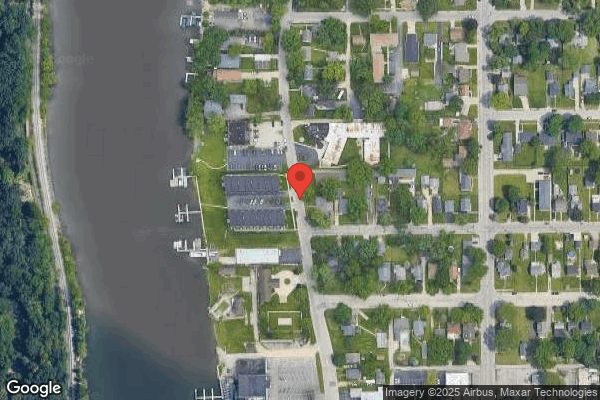
6131 PARK RIDGE ROAD, LOVES PARK, IL 61111 (815) 633-6810
For profit - Limited Liability company 54 Beds Independent Data: November 2025
Trust Grade
60/100
#137 of 665 in IL
Last Inspection: July 2025

Inspected within the last 6 months. Data reflects current conditions.

Overview

East Bank Center, LLC in Loves Park, Illinois, has a Trust Grade of C+, indicating it is slightly above average in quality. It ranks #137 out of 665 nursing homes in the state, placing it in the top half of facilities, and #3 out of 15 in Winnebago County, meaning only two local options are better. However, the facility is experiencing a worsening trend, with issues increasing from 7 in 2024 to 8 in 2025, and a concerning staff turnover rate of 66%, which is higher than the state average. Although there have been no fines reported, which is a positive sign, the facility has been criticized for failing to manage residents' pain properly, with one resident experiencing severe pain after a knee surgery due to inadequate medication. Additionally, there have been concerns regarding food safety practices and the absence of a full-time Activity Director, which may affect residents' engagement and wellbeing.

Trust Score
C+
60/100
In Illinois
#137/665
Top 20%
Safety Record
Moderate
Needs review
Inspections
Getting Worse
7 → 8 violations
Staff Stability
⚠ Watch
66% turnover. Above average. Higher turnover means staff may not know residents' routines.
Penalties
✓ Good
No fines on record. Clean compliance history, better than most Illinois facilities.
Skilled Nurses
✓ Good
Each resident gets 59 minutes of Registered Nurse (RN) attention daily — more than average for Illinois. RNs are trained to catch health problems early.
Violations
⚠ Watch
24 deficiencies on record. Higher than average. Multiple issues found across inspections.
★★★★☆
4.0
Overall Rating
★★★☆☆
3.0
Staff Levels
★★★☆☆
3.0
Care Quality
★★★★☆
4.0
Inspection Score
Stable
2024: 7 issues
2025: 8 issues

The Good

  • Full Sprinkler Coverage · Fire safety systems throughout facility
  • No fines on record

Facility shows strength in fire safety.

The Bad

Staff Turnover: 66%

20pts above Illinois avg (46%)

Frequent staff changes - ask about care continuity

Staff turnover is elevated (66%)

18 points above Illinois average of 48%

The Ugly 24 deficiencies on record

1 actual harm
Jul 2025 3 deficiencies
CONCERN (D)

Potential for Harm - no one hurt, but risky conditions existed

Deficiency F0561 (Tag F0561)

Could have caused harm · This affected 1 resident

**NOTE- TERMS IN BRACKETS HAVE BEEN EDITED TO PROTECT CONFIDENTIALITY** Based on observation, interview, and record review the facility failed to ensure residents were able to operate their television...

Read full inspector narrative →
**NOTE- TERMS IN BRACKETS HAVE BEEN EDITED TO PROTECT CONFIDENTIALITY** Based on observation, interview, and record review the facility failed to ensure residents were able to operate their televisions for 2 of 2 residents (R31 & R8) reviewed for choices in the sample of 14. The findings include:1. On 7/23/25 at 8:17 AM, R31 was sitting in a wheelchair in the dining room at the table. R31's right lower extremity was elevated up on a footrest with an elastic wrap around her leg. R31 had a wound vacuum in place and a device to provide cold therapy to her knee. R31 stated she was admitted to the facility a few days ago and her television (TV) did not work; it would not turn on with her remote. R31 stated someone came in, got up on a ladder, and pushed the button on the tv to turn it on. She stated after that the TV remained on; it couldn't be turned off, changed, or the volume controlled. R31 stated told staff about it. She said she hasn't been able to sleep because the TV stayed on. At 8:20 AM the surveyor went to the resident's room with her permission. There were two remote controls sitting on her bedside table and neither one would control the TV; the TV was on in her room. On 7/23/25 at 8:22 AM, V11 Maintenance Director was asked if he knew anything about R31's TV/remotes. V11 stated the remote just needed to be programmed. V11 stated staff know how to get the TV's working and they should have let him know the remote wasn't working. On 7/23/25 at 8:25 AM, V2 Director of Nursing (DON) stated she got a text this morning that R31 was really complaining about her TV last night and it is staying on. R31 stated she couldn't sleep. V2 stated the patient needs their sleep. V2 stated normally residents complain about their TV's not coming on. The Face Sheet dated 7/24/25 for R1 showed she was admitted on [DATE] with diagnoses including aftercare following joint replacement surgery, hypothyroidism, type 2 diabetes mellitus, hyperlipidemia, hypertension, depression, atherosclerotic heart disease, chronic kidney disease, presence of right artificial knee joint, infection, and inflammatory reaction due to internal right knee prosthesis. The Care Plan dated 7/21/25 for R31 showed, I am a new resident at this facility for short term rehabilitation. My leisure interests include watching TV, being with family, going outside, and music. My focus is therapy so I can go back home. I have a potential for falls and injury from falls related to deconditioning. The facility's Notice of Resident Rights and Responsibilities policy (2/1/25) showed the facility shall inform the resident both orally and in writing of his or her rights as a resident, and the rules and regulations governing the resident's conduct and responsibilities during his or her stay in the facility. The policy did not show anything related to resident choices. The facility did not have a resident choices policy. 2. On 7/23/25 at 8:29 AM, R8 stated that her remote for her television (tv) has been missing since yesterday. R8 stated before her remote came up missing it worked just fine. R8 stated she always kept it on her over the bed table. R8 told someone about it yesterday but they were busy, and no one located her remote. R8 stated she likes to watch tv, so she doesn't get bored; it keeps her mind off things. R8 said she noticed her remote was gone around lunch time on 7/22/25 and it is still missing. At 8:38 AM, V11 Maintenance Director came stated the extra remote in R31's room was the remote for R8's television. The Face Sheet dated 7/24/25 for R8 showed diagnoses including unspecified cord compression, muscle weakness, difficulty walking, gastro-esophageal reflux disease, hyperlipidemia, intervertebral disc disorder, spinal stenosis, spondylosis with myelopathy, and anterior spinal artery compression syndromes of the thoracic region. The Minimum Data Set, dated [DATE] for R8 showed no cognitive impairment; partial/moderate assistance for bed mobility, sit to stand, chair/bed transfer, toilet transfer, and walking 10 feet. The Care Plan dated 7/11/25 for R8 showed, I am a new resident to this facility for short term rehabilitation. My leisure interests include talking to my family when they come to visit, watching movies on TV, reading magazines my family bring in, talking to others about my horses I own. Continue to Assess and explore my leisure preference with me and/or my family. Remind me that independent activities are always available such as crosswords, television, games, puzzles, magazines, and books, etc.
CONCERN (D)

Potential for Harm - no one hurt, but risky conditions existed

Infection Control (Tag F0880)

Could have caused harm · This affected 1 resident

Based on observation, interview and record review the facility failed to ensure infection control was maintained and prevent any cross contamination during wound care for 1 of 1 residents reviewed for...

Read full inspector narrative →
Based on observation, interview and record review the facility failed to ensure infection control was maintained and prevent any cross contamination during wound care for 1 of 1 residents reviewed for wounds in the sample of 14. Findings include:On 7/23/25 at 7:56 AM, V10 Licensed Practical Nurse (LPN) went into R38's room to provide wound care to his right elbow and right knee. V10 put gloves on, removed normal saline and triple antibiotic ointment from the treatment cart and placed it on a small disposable tray next to some gauze. V10 changed her gloves, took the tray into the resident's room, and sat it on the over the bed tray table next to R38. V10 opened a small pink saline tube and squirted it onto the gauze and then cleaned off scabs and abrasion to his right elbow. V10 used the second pink tube of saline and squirted it over his right elbow. V2 Director of Nursing (DON) walked into the room. V10 put antibiotic ointment on her gloved finger and applied it to the scabs and abrasion on R38's right elbow. V10 removed her gloves, left the room to get more saline tubes. V2 went out into the hall just prior to the nurse leaving the room and spoke with the nurse when she exited the room. V10 grabbed more saline tubes, and a cotton tipped applicator. V10 put gloves on and placed the cotton tipped applicator on the bedside table and not on the disposable tray taken in for wound care. R38 lifted his right pant leg up and had scabbed area to his right knee. V10 cleaned the area with saline. V10 removed her gloves, put new gloves on, and grabbed the cotton tipped applicator from the bedside table V10 put antibiotic ointment on the cotton tipped applicator and applied it to his right knee. V10 removed her gloves. V10 stated V2 told her when she left the room to use a cotton tipped applicator to apply the antibiotic ointment because she had used her finger before to put it on and it is important to keep it sterile. On 7/23/25 at 8:02 AM, V2 DON stated she talked to V10 LPN because she didn't change her gloves after cleaning the area and before putting the ointment on. V10 also applied the ointment with her fingers. This is for infection control. V2 stated she expects gloves to be changed and cotton tipped applicators to be used. The Face Sheet dated 7/24/25 for R38 showed diagnoses including right pubic fracture, muscle weakness, difficulty walking, unsteadiness on feet, lack of coordination, depression, hypothyroidism, hypertension, congestive heart failure, chronic respiratory failure with hypoxia, chronic kidney disease, and unspecified open wound of the right elbow. The Physician Order Summary Report dated 7/24/25 for R38 showed, right elbow and bilateral lower extremity abrasions, clean with normal saline and apply triple antibiotic ointment daily. Every day for wound care. On 7/24/25 the facility presented some policies from the facility's Infection Control Policy and Procedure manual (2012) such as Employee Training on Infection Control which showed the facility shall provide staff with appropriate information and instruction about infection control through various means, including initial orientation and ongoing training programs. Policies and Practices - Infection Control - the facility's infection control policies and practices are intended to facilitate a safe, sanitary, and comfortable environment and to help prevent and manage transmission of diseases and infections. The facility did not provide a policy regarding general wound care. The facility provided a policy for Dry/Clean Dressings and Soiled/Contaminated Dressings; neither policy related to wound care and infection control practices without a dressing.
CONCERN (F)

Potential for Harm - no one hurt, but risky conditions existed

Food Safety (Tag F0812)

Could have caused harm · This affected most or all residents

Based on observation, interview, and record review, the facility failed to adequately store food items by not properly labeling and/or dating items; and failed to ensure the sanitizing solution was at...

Read full inspector narrative →
Based on observation, interview, and record review, the facility failed to adequately store food items by not properly labeling and/or dating items; and failed to ensure the sanitizing solution was at the recommended level. This failure has the potential to affect all 29 residents currently residing in facility.Findings include:On 07/22/2025, upon entering facility, V1 (Administrator) indicated resident in-house census of 29. Facility provided a completed CMS 802 form that indicated resident census of 29.On 07/22/2025 at 10:40 AM, initiated kitchen tour with V4 (Food Service Director) with the following observations. At 10:51 AM, red sanitation bucket near the three compartment sink was tested by V4 (Food Service Director) and test strip read 150 ppm (parts per million). V4 indicated that the sanitizer level should be at 200 ppm. V4 added that staff have been using this same sanitizing solution all morning. At 11:40 AM, observed in storage refrigerator, a jar of marble glaze and minced garlic both opened and undated, and both visibly used. At 11:43 AM, observed in storage freezer an undated bag of fish filets that was not properly closed with visible ice crystals on several filets. V5 said food items should be labeled with an open and discard date. On 07/24/2025 at 1:56 PM V3 (Infection Preventionist) said the red bucket sanitation solution should be at the recommended levels to kill any bacteria. Undated Labeling and Dating Foods policy reads in part: to decrease the risk of food borne illness and to provide the highest quality, food is labeled with the date received, the date opened and the date by which the item should be discarded.Undated Sanitation Buckets/Wiping Cloths Policy reads in part: in the red sanitation bucket mix the water and the chemical sanitizer. The most common chemical sanitizers include but not limited to quaternary ammonia. Sanitizing of food contact surfaces and equipment is accomplished according to the following.quaternary 200-400 per manufacturer's directions.
Jun 2025 2 deficiencies
CONCERN (D) 📢 Someone Reported This

A family member, employee, or ombudsman was alarmed enough to file a formal complaint

Potential for Harm - no one hurt, but risky conditions existed

Deficiency F0805 (Tag F0805)

Could have caused harm · This affected 1 resident

Based on observation, interview, and record review the facility failed to ensure the breakfast meal was a smooth pureed consistency for 1 of 1 residents (R1) reviewed for pureed diets in the sample of...

Read full inspector narrative →
Based on observation, interview, and record review the facility failed to ensure the breakfast meal was a smooth pureed consistency for 1 of 1 residents (R1) reviewed for pureed diets in the sample of 6. The findings include: R1's Swallow Screening Note dated 5/13/25 showed R1 had diagnoses of dementia and an unspecified muscle disorder. The note showed during the swallow evaluation, R1 remained inconsistent in his ability to swallow and adequately clear (food) bolus, resulting in expectorating (coughing up) bites . It is recommended that the patient's diet be downgraded to a pureed consistency for safety and improved nutritional intake. R1's Dietary Note date 5/23/25 showed R1 was evaluated by V3 Registered Dietician for weight loss. The note showed R1's diet had been downgraded to a pureed consistency for safety. On 6/26/25 at 8:00 AM, V5 [NAME] plated R1's breakfast tray. At 8:01 AM, R1 was served breakfast which included scrambled eggs, pureed sausage, applesauce, and oatmeal. Clumps of eggs were noted in the scrambled eggs. Clumps of oatmeal were noted in the oatmeal. R1 picked up his fork and began eating his eggs. R1 appeared to be chewing his eggs. When R1 was asked if he needed to chew his food, R1 stated, Yes, I have to chew it. What else would I do? At 8:05 AM, V5 [NAME] walked over to R1's table and was shown the clumps of food in R1's eggs and oatmeal. V5 stated, I see the clumps in his eggs. I did blend them when I made them, but they got clumpy on the steam table. I want my purees with no clumps in them. I should not have served his eggs. I should have blended them with milk to smooth them out. V5 stated she also saw clumps in R1's oatmeal but stated, I don't puree his oatmeal because he won't eat it if I do. On 6/26/25 at 8:59 AM, V3 Registered Dietician stated the consistency of pureed foods should be silky smooth with no clumps. V3 stated residents should not have to chew pureed foods. The facility's Guidelines for Pureed Preparation policy (dated 2021) showed, The pureed diet provides food with a semi-liquid to semi-solid consistency (i.e. pudding-like) . If the pureed food appears to be thick you may add more liquid or if it appears thin you may add more thickener until desired consistency is achieved .
CONCERN (E) 📢 Someone Reported This

A family member, employee, or ombudsman was alarmed enough to file a formal complaint

Potential for Harm - no one hurt, but risky conditions existed

Deficiency F0806 (Tag F0806)

Could have caused harm · This affected multiple residents

Based on interview and record review the facility failed to accommodate residents' food preferences and choices for 4 of 6 residents (R2, R3, R5, R6) reviewed for residents' food preferences and choic...

Read full inspector narrative →
Based on interview and record review the facility failed to accommodate residents' food preferences and choices for 4 of 6 residents (R2, R3, R5, R6) reviewed for residents' food preferences and choices in the sample of 6. The findings include: The facility's daily menus dated 6/11/25-6/24/25 showed primarily cold foods and/or room-temp foods, such as cold cereal, canned fruit, deli meat sandwiches, potato chips, salads, ice cream, and pudding, were listed as the available food items on the menus. A limited selection of hot foods were listed as menu choices which included scrambled eggs, oatmeal, hamburgers, mashed potatoes, and grilled cheese sandwiches. The menus showed, Due to complication in the kitchen we will be in emergency mode until further notice we do apologize for the inconvenience. On 6/26/25 at 8:59 AM, V3 (Registered Dietician) stated on 6/11/25, the facility began serving primarily cold foods, including sandwiches, salads, and fruit to residents at meals because the dumbwaiter (elevator that carries food from the kitchen to the facility's dining room) had broken. V3 stated the facility was concerned about the safety of their kitchen staff if they required the kitchen staff to carry hot meals/dishes up the stairs from the kitchen to the facility's dining room, while the dumbwaiter was broken. V3 stated that due to this potential safety concern for their kitchen staff, they initiated an emergency cold food plan to serve primarily cold foods to the residents until the dumbwaiter was fixed. However, due to resident complaints related to the cold food menu/service, the facility resumed their regular hot food menu on 6/25/25. V3 stated, The dumbwaiter is still broken but we went back to serving hot foods yesterday because so many residents complained about the cold food. People said they were tired of getting bread and sandwiches. I was here when the dumbwaiter went down and did approve the emergency cold food menus. We did offer some hot foods during that time such as oatmeal and instant mashed potatoes . On 6/26/25 at 8:48 AM. R2 was asked about the foods served to her last week in the facility. R2 stated, I ate a lot of turkey sandwiches, tuna, and chicken salad. They said no hot foods because a lift was down. That's not what I wanted to eat. Last Friday night, I was served 10 pieces of watermelon, cottage cheese, and pudding. I couldn't eat that. I sent my boyfriend to go get me food. On 6/26/25 at 8:40 AM, R3 stated last week he was served all cold foods. R3 stated, I ate what they brought but it was mostly sandwiches. We kept getting the same foods over and over. I understand getting cold foods for a couple of days, but it went on far too long. A couple of days ago, I said I wasn't going to eat that stuff anymore. I had my son bring me food. On 6/26/25 at 8:26 AM, R5 stated they told us the waiter was down and they couldn't bring up hot foods from the kitchen. R5 stated, I'm a meat and potatoes guy. A couple of days of sandwiches I can understand but not a whole week. On 6/26/25 at 11:44 AM, R6 was asked about the foods served to him last week in the facility. R6 stated, I couldn't eat anymore sandwiches or oatmeal. Every day it was a sandwich for lunch and dinner. One night they tried to serve me a tray of fruit and cottage cheese. I prefer hot foods for at least one meal. I spent most of the week having food brought in by my daughter or ordering out. A facility Complaint/Grievance Report dated 6/24/25 showed a complaint from R3 and his family in regard to foods served while the facility's emergency cold food plan was in place. The facility's Therapeutic Diets Client's Right to Choose policy (dated 2021) showed, Client's right to be served food they choose and prefer will be honored.
Apr 2025 2 deficiencies
CONCERN (E) 📢 Someone Reported This

A family member, employee, or ombudsman was alarmed enough to file a formal complaint

Potential for Harm - no one hurt, but risky conditions existed

Deficiency F0679 (Tag F0679)

Could have caused harm · This affected multiple residents

Based on observation, interview, and record review the facility failed to provide an activity program to meet the individual interests of the residents for 5 or 5 residents (R4, R5,R6,R8,R9) reviewed ...

Read full inspector narrative →
Based on observation, interview, and record review the facility failed to provide an activity program to meet the individual interests of the residents for 5 or 5 residents (R4, R5,R6,R8,R9) reviewed for activities in the sample of 9. The findings include: On 03/31/2025 at 9:09AM, R4 way lying in bed and R5 was sitting in a reclining chair. R4 and R5 did not have an activity calendar in their room. At 9:18AM, R6 was in an isolation room, alone, sitting in a reclining chair. R6 did not have an activity calendar in her room. At 9:40AM, R8 was lying in bed. R8 did not have an activity calendar in her room. At 9:55AM, R9 was sitting in a wheelchair in her room. R9 did not have an activity calendar in her room. On 03/31/2025 at 9:09AM, R4 said, There are not too many activities except for therapy. On 03/31/2025 at 9:13AM, R5 said, There are no activities. There is nothing to do on the weekends, we do not have therapy on Saturday or Sunday. On 03/31/2025 at 9:18AM, R6 said, I was here last year, they were going to start BINGO. For this stay I have been on isolation for most of the time. No activities for me this visit. On 03/31/2025 at 9:40AM, R8 said, We did play BINGO once last month, otherwise it's just therapy once a day for about 20 minutes. Therapy is Monday through Friday, if you miss a day during the week they will give it to you on Saturday. On 03/31/2025 at 9:55AM, R9 said, I get bored here. There are no activities. I have been here a long time. On 03/31/2025 at 11:25AM, V1 Administrator said, We have a very limited activity program. We do not have an Activity Director. On 03/31/2025 at 2:00PM, V2 DON-Director of Nursing said, We do not have an activity calendar for March (2025). R4, R5, R6, R8, and R9's current Care Plan on 03/31/2025 all showed, 'Resident is a new admission to the facility for short term rehab. Resident will engage in meaningful activities of choice and express satisfaction with leisure time pursuits by next review date. Assist resident with calling family/friends while they are in the facility to maintain relationships while in rehab. [Activities Director, C.N.A., N] Continue to assess and explore patient leisure preference with him/her and family. [SS, C.N.A., N] Inform patient that independent activities are always available such as crosswords, television, games, puzzles, magazines, and books, etc. [C.N.A., N, SS] Introduce patient to other residents with similar interests to promote socialization [C.N.A., N, SS] Provide adaptive equipment as needed and requested in order to improve quality of life and make leisure involvement easier. [C.N.A., N, SS]' (R4, R5,R6,R8,R9's Activity Care Plan is the same. No Individualized Activities were Care Planned for R4, R5, R6, R8, and R9.) The facility's Activity Programs policy dated June 2018 shows, Activity programs are designed to meet the interests of and support the physical, mental, and psychosocial wellbeing of each resident. Our activity programs are designed to encourage maximum individual participation and are geared to the individual resident's needs. Activities are scheduled 7 (seven) days a week and residents are given an opportunity to contribute to the planning, preparation, conducting, cleanup, and critique of the programs. Scheduled activities are posted on the resident bulletin board. Activity schedules are also provided individually to residents who cannot access the bulletin board.
CONCERN (F) 📢 Someone Reported This

A family member, employee, or ombudsman was alarmed enough to file a formal complaint

Potential for Harm - no one hurt, but risky conditions existed

Deficiency F0680 (Tag F0680)

Could have caused harm · This affected most or all residents

Based on observation, interview, and record review the facility failed to have a full time Activity Director. This applies to all 32 residents in the facility. The findings include: The Facility cens...

Read full inspector narrative →
Based on observation, interview, and record review the facility failed to have a full time Activity Director. This applies to all 32 residents in the facility. The findings include: The Facility census sheet dated 03/30/2025 at 11:59PM, shows, 32 residents in the facility. On 03/31/2025 at 11:25AM, V1 Administrator said, We do not have an Activity Director. On 03/31/2025 at 2:00PM, V2 DON-Director of Nursing said, We do not have an activity calendar for March (2025). The facility's Activity Programs policy revised June 2018 shows, Activity programs are designed to meet the interests of and support the physical, mental, and psychosocial wellbeing of each resident. Activities are scheduled 7 (seven) days a week and residents are given an opportunity to contribute to the planning, preparation, conducting, cleanup and critique of the programs. Scheduled activities are posted on the resident bulletin board. Activity schedules are also provided individually to residents who cannot access the bulletin board.
Jan 2025 1 deficiency
CONCERN (D) 📢 Someone Reported This

A family member, employee, or ombudsman was alarmed enough to file a formal complaint

Potential for Harm - no one hurt, but risky conditions existed

Deficiency F0658 (Tag F0658)

Could have caused harm · This affected 1 resident

Based on interview and record review the facility failed to ensure two residents (R1, R2) received their evening medications in a timely manner. This applies to 2 of 10 residents (R1, R2) reviewed for...

Read full inspector narrative →
Based on interview and record review the facility failed to ensure two residents (R1, R2) received their evening medications in a timely manner. This applies to 2 of 10 residents (R1, R2) reviewed for nursing care in the sample of 10. The findings include: On 1/9/25 at 12:50 PM, R2 said on 1/4/25, R2 and R1 (R1's roommate) requested their evening medications from V7 multiple times and V7 argued with R1 and R2 insisting that V7 administered their evening medications. R1 and R2 both stated V7 did not appear to be under the influence during this discussion. R1's January Medication Administration Record (MAR) shows that all R1's evening medications for 1/4/25 were signed as given by V2 (Director of Nursing). R2's January MAR shows that all R2's evening medications for 1/4/25 were signed as given by V2. On 1/9/25 at 10:54 AM, V2 said on 1/4/25, V7 (LPN) sent V2 a text message at approximately 10:50 PM that read, I'm so k of these delusional ass home telling me I'm not giving them meds . I can drop me all day long they I wild b clean. (sic) V2 awoke at approximately 11:20 PM on 1/4/25, read the text message, and called V7. V2 said V7 was exhibiting slurred speech while on the phone. V2 then called V5 (LPN) who was also working and asked V5 to check on V7. V5 told V2 that V7 was stumbling and had slurred speech. V2 told V5 to stay with V7 and to not let V7 have contact with any residents and to not let V7 go into the medication cart. V2 notified V1 (Administrator) and V2 and V1 drove to the facility. When V2 and V1 arrived at the facility at approximately 1:20 AM on 1/5/25, they asked V7 if V7 would consent to a drug test and V7 asked if cannabis would count. V2 informed V7 that cannabis would count to which V7 responded that V7 would test positive. V7's Screening Result Form dated 1/5/25 shows V7 had positive results for amphetamines, benzodiazepines, cocaine, and methamphetamine. V7's Pre-Employment Screening Result Form dated 6/26/24 shows V7 has prescriptions of amphetamines and benzodiazepines and V7 was educated about these medications while working. On 1/9/25 at 10:54 AM, V2 said when the drug results were read to V1 and V7, V7 admitted to doing a bump of cocaine over the holidays with V7's sister but denied having done any drugs on 1/4/25 or using methamphetamine. V1 and V2 sent V7 home with V9 (Certified Nursing Assistant- CNA) who said she is neighbors with V7. When V7 left the facility, V2 provided R1 and R2 with their evening medications that were missed. On 1/9/25 at 12:37 PM, V10 (Nurse Practitioner) said V2 notified V10 of the delayed medications and due to the half-life of the medications, them being delayed caused none of the residents any negative outcomes or side effects. V10 also assessed both residents after the incident and had no concerns. On 1/9/25 at 12:50 PM, R1 and R2 stated they did not experience any side effects from the missed medications on 1/4/25. On 1/9/25 at 2:10 PM, V2 stated it is the expectation that staff should not be under the influence of drugs or alcohol while they are on the clock and R1 and R2 should have received their medications during the evening medication pass.
Sept 2024 6 deficiencies
CONCERN (D)

Potential for Harm - no one hurt, but risky conditions existed

Pressure Ulcer Prevention (Tag F0686)

Could have caused harm · This affected 1 resident

**NOTE- TERMS IN BRACKETS HAVE BEEN EDITED TO PROTECT CONFIDENTIALITY** Based on interview and record review the facility failed to obtain treatment orders for a resident with a stage 3 pressure injur...

Read full inspector narrative →
**NOTE- TERMS IN BRACKETS HAVE BEEN EDITED TO PROTECT CONFIDENTIALITY** Based on interview and record review the facility failed to obtain treatment orders for a resident with a stage 3 pressure injury. This applies to 1 of 2 residents (R5) reviewed for pressure injury in the sample of 12. The findings include: R5's face sheet shows she was admitted to the facility on [DATE] with diagnoses including septic shock and a stage 3 pressure injury to her left heel and sacrum. Hospital discharge records for R5 show prior to admission to the facility she was in a local community hospital with a diagnosis of septic shock due to a left heel ulcer which had been debrided and antibiotic therapy provided while she was at the hospital. An initial nursing admission assessment for R5 dated 8/21/24 and not signed, shows she has a left heel ulcer measuring 1.6 centimeters (cm.) x 1.8 cm. The same assessment shows she has 3 open areas to her sacrum/coccyx and right and left buttocks measuring: 2.0 x1.0 cm. and 1.5 cm x 2.0 cm. and 1.0 cm. x 1.0 cm. R5's current Physician Order Summary (POS) and Treatment Administration Record (TAR) from 8/1/24-8/31/24 shows no active treatment orders for her coccyx and sacrum until 8/26/24, which was to initiate Medi-honey and Xero foam every other day and apply zinc ointment to her buttocks two times a day. There were no orders for her left heel ulcer until 8/26/24 when an order was entered to clean left ulcer with normal saline and apply iodoform, (sp.) xeroform and foam dressing daily. On 9/10/24 at 09:46 AM, V9 (Wound Nurse) said she initially saw R5 when she was admitted on [DATE] and assessed the wounds. R5 did not see the facility wound care physician until 8/29/24 because he was out of town. V9 said she thought there were orders prior to 8/26/24 for her sacral/buttocks and heel but verified with this surveyor by review of the POS and TAR that no orders were obtained until 8/26/24. V9 said R5 currently still has the pressure area to her heel but it has improved a lot. On 9/10/24 at 11:02 AM, V2 (DON) said she had reviewed R5's discharge orders from the hospital and she did not see any treatment orders for R5's pressure injuries. V2 said no treatment orders were obtained until 8/26/24 when V9 caught this and called the facility wound physician for orders. On 9/10/24 at 11:45 AM, V7 (Wound Care Physician) said he is treating R5 at the facility and she currently has only a pressure injury to her left heel. V7 said he was messaged or called on 8/26/24 for treatment orders for R5's pressure to her heel and coccyx. V7 said 5 days is not acceptable to wait to begin treatment to her heel wound because it could have deteriorated in that time. V7 said the hospital should have sent treatment orders with her on admission but someone from the facility should have caught it before 5 days. V7 said sometimes residents at the facility see him and sometimes they see outside providers so that could have been part of the problem also. On 09/10/24 at 12:24 PM, V8 (Podiatrist/surgeon) said he saw V5 in the hospital for a foot ulcer and he debrided the wound. V8 said he was at the facility yesterday but could not recall without his list in front of him if he saw V5 or not. V8 said there should be some treatment orders for R5 prior to 5 days because the dressing would need to be changed, and in the hospital, it was being changed every other day. V8 said in wounds like this I defer treatment to the facility wound physician who see residents regularly because I only go to the facility one time a month. The facility provided Pressure Ulcers/Skin Breakdown policy last revised Aril 2018 shows, the physician will order pertinent treatments including dressings and topical agents to manage pressure injuries.
CONCERN (D)

Potential for Harm - no one hurt, but risky conditions existed

Deficiency F0692 (Tag F0692)

Could have caused harm · This affected 1 resident

**NOTE- TERMS IN BRACKETS HAVE BEEN EDITED TO PROTECT CONFIDENTIALITY** Based on observation, interview, and record review the facility failed to ensure dietary supplements were provided for 2 of 5 re...

Read full inspector narrative →
**NOTE- TERMS IN BRACKETS HAVE BEEN EDITED TO PROTECT CONFIDENTIALITY** Based on observation, interview, and record review the facility failed to ensure dietary supplements were provided for 2 of 5 residents (R28, R5) reviewed for weight loss in the sample of 12. The findings include: 1.) R28's face sheet shows he was admitted to the facility on [DATE] with diagnoses including protein-calorie malnutrition and muscle weakness. R28's active care plan shows he has malnourishment and will be consulted by the dietician. R28's Weight Summary shows his weight was 110.2 on 8/27/24 and was 101.4 on 9/6/24 which is a 7.99% and 8.8 pound (lb.) significant weight loss in 10 days. R28's Nutrition note completed on 9/6/24 by V4 (Dietician) shows he has sustained a significant weight loss and Magic Cup a dietary supplement had been ordered to be given with lunch. R28 declined any additional supplements. R28's active Physician Order Summary and meal ticket both show he should receive magic cup with lunch effective 9/1/24. On 9/9/24 the noon meal service was observed and R28 was in the dining room he did not receive a magic cup during the meal service. At 12:33 PM, V6 (Cook) confirmed that all trays had been passed and the noon meal service was complete. On 9/10/24 at 1:07 PM, V4 said R28 was admitted to the facility with poor nutrition and is underweight and she is concerned about it. V4 said she personally adds supplement orders to the resident meal tickets herself and then the kitchen staff pass the supplements with the trays. 2.) R5's Weight Summary shows she weighed 160.2 lbs. on 8/21/24 when she was admitted to the facility. Her weight on 9/5/24 was 146.0 lbs. Which is a significant weight loss of 8.9% and 14.2 lbs. in 15 days. R5's Nutrition note completed on 9/6/24 by V4 shows had a significant weight loss and will be given Mighty Shake two times a day for weight support which began on 8/27/24. R5's active Physician Order Summary shows she should receive mighty shakes 2 times a day at lunch and dinner. R5's meal ticket shows she should receive 6 ounces of vanilla mighty shake at lunch. On 9/9/24 R5 was eating lunch in her room. At 12:20 PM, and again at 12:35 PM and 12:40 PM, R5 was observed and finished with her meal and had not been given her mighty shake with lunch. On 9/10/24 at 1:07 PM, V4 said she provides supplements for residents with weight loss, and she expects them to be given. The facility provided Supplement policy dated 2021 shows nutritional supplements should be given as ordered.
CONCERN (D)

Potential for Harm - no one hurt, but risky conditions existed

Pharmacy Services (Tag F0755)

Could have caused harm · This affected 1 resident

2.) On 9/9/24 at 12:08 PM, R11 said she has had a problem with thrush in her mouth and had previously been on a medication she swished in her mouth. R11 said the nurses told me several days ago she wa...

Read full inspector narrative →
2.) On 9/9/24 at 12:08 PM, R11 said she has had a problem with thrush in her mouth and had previously been on a medication she swished in her mouth. R11 said the nurses told me several days ago she was going to get it again but has yet to see it. R11's Electronic Medical Record (EMR) shows a note documented on 9/6/24 at 10:06 PM, by V10 (Nurse Practitioner), for R11 to start on Miracle mouth wash 4 times a day for 10 ten days. R11's Medication Administration Record (MAR) and Physician Order Summary (POS) both show an order for Miracle mouth wash (Hydrocortisone, Benadryl, and Nystatin) equal parts 10 ml (milliliters) swish and spit QID (4 times a day) for oral thrush for 10 days. The order has a start date of 9/7/24 and a stop date of 9/9/24. The MAR shows no doses were given 9/7/24 or 9/8/24. The MAR and POS next show the order was restarted on 9/10/24 and discontinued on 9/10/24 with no doses signed off in the MAR. A nursing note completed by V12 (Licensed Practical Nurse) on 9/10/24 at 9:47 AM states, Pharmacy did not send patient's miracle mouth wash. NP (Nurse Practitioner) notified and assisted with updating order. Order faxed to pharmacy, will send tonight. Patient to start medication tomorrow morning. NP verified and patient aware of order. On 9/10/24 at 10:36 AM, V13 (Pharmacist) said they had no order request from the facility for R11 to receive Miracle mouth wash. V13 said if the facility does not properly enter the order into the computer correctly as a pharmacy order they pharmacy will not get it unless the facility prints the order off and faxes it to them. V13 said had he gotten this order they would have sent the medication out to the facility with the next delivery. On 9/10/24 at 10:40 AM, R11 was in the hallway talking with V11 (Nurse Practitioner) V11 told R11 the hold up with starting her mouth rinse was due to the order not being sent to the pharmacy. On 9/10/24 at 10:47 AM, V11 said R11 did not get the medication that was ordered due to the facility not entering it correctly, so the order was just faxed to the pharmacy today by V12 (LPN). V11 said R11 does have oral thrush and a small sore inside her mouth. On 9/10/24 at 11:05 AM, V2 (Director of Nursing) said she was also not aware until today that orders have to be faxed to the pharmacy if they are not entered as a pharmacy order. V2 said this was the reason R11 did not receive her mouth wash yet. The facility Ordering and Receiving Non-Controlled Medications from The Dispensing Pharmacy dated 10/25/24 shows a nurse should promptly report any discrepancies of omissions of medications to the pharmacy and charge nurse supervisor. Based on interview and record review the facility failed to ensure there was no delay in obtaining a medication from the pharmacy and failed to obtain a medication from the pharmacy for 2 of 5 residents (R235 and R11) reviewed for pharmacy services in the sample of 12. The findings include: 1. R235's Face Sheet showed R235 had a primary diagnosis of polyneuropathy (a nerve disease that affects many nerves). On 09/09/24 at 12:05 PM, R235 said he had neuropathy (nerve pain) in his hands and feet. R235 described the pain as if his hands and feet were on fire. R235 said there was a delay in starting medication for the nerve pain. R235 said it took the facility over a day to get the medication. R235 was not sure why there was a delay. R235 said the facility did provide other interventions while waiting for the pain medication to treat the neuropathy. R235's Progress Notes dated 9/4/24 entered by V10 (Nurse Practitioner) showed R235 reported he had neuropathy and was agreeable to try pregabalin (medication to treat the nerve pain). R235's Progress Note dated 9/4/24 at 12:49 PM showed a nurse practitioner gave an order for pregabalin. R235's Progress Note dated 9/4/24 at 12:59 PM, showed a nurse practitioner was informed a prescription needed to be sent to the pharmacy for the pregabalin. R235's Clinical Physician Orders showed an order for pregabalin with a start date of 9/4/25 at 8:00 PM. R235's Progress Note dated 9/4/24 at 10:11 PM, showed the pharmacy had not received the prescription for the pregabalin. On 09/09/24 at 01:22 PM, V17 (Licensed Practical Nurse- LPN) said she went to give R235 his pregabalin on 9/4/24 at 8:00 PM and it was not available. V17 said she contacted pharmacy and was informed the pharmacy had not received the prescription for the pregabalin. V17 said the medication was not available in the medication dispensing machine at the facility. On 09/09/24 at 12:35 PM, V18 (Pharmacist) said the pharmacy received the prescription for pregabalin on 9/4/24 at 11:27 PM. V18 said the medication was filled on 9/5/24 and it was delivered to the facility on 9/6/24 at 2:29 AM. V18 said the pharmacy makes one daily routine delivery to the facility. V18 added that the daily pharmacy delivery leaves the pharmacy at midnight. According to V18, the pregabalin prescription came in too late to make the delivery on 9/5/24. V18 said the normal time frame for a medication to be delivered to the facility is 24 hours. R235's Medication Administration Record (MAR) indicated R235 received the first dose of pregabalin on 9/5/24 at 7:00 PM (before the medication was delivered to the facility). On 9/9/24 at 2:21 PM, V19 (LPN) said she was the one that documented on the MAR that R235 received a dose of pregabalin on 9/5/24 at 7:00 PM. V19 said she made an error on R235's MAR by marking that the pregabalin was given. V19 said she did not give R235 the pregabalin on 9/5/24 at 7:00 PM because the medication was not available. R235's Controlled Drug Receipt/Record/Disposition Form for the pregabalin indicated R235 received his first dose on 9/6/24 at 8:00 AM (about 43 hours after the Progress Note dated 9/4/23 at 12: 49 PM indicating an order for pregabalin was given). On 09/09/24 at 01:48 PM, V2 (Director of Nursing) said a new medication is usually started the next day. V2 said when a medication is ordered the pharmacy will deliver the medication the next day in the early morning. The facility's Pharmacy Policy and Procedures Manual showed medications and related products are received from the dispensing pharmacy in a timely basis.
CONCERN (D)

Potential for Harm - no one hurt, but risky conditions existed

Medication Errors (Tag F0758)

Could have caused harm · This affected 1 resident

Based on interview and record review the facility failed to ensure PRN (as needed) psychotropic medication had a stop date not greater than 14 days for 1 of 5 residents (R11) reviewed for psychotropic...

Read full inspector narrative →
Based on interview and record review the facility failed to ensure PRN (as needed) psychotropic medication had a stop date not greater than 14 days for 1 of 5 residents (R11) reviewed for psychotropic medications in the sample of 12. The findings include: R11's Physician Order Summary and Medication Administration Record both show an active order prescribed by V11 (Nurse Practitioner) on 9/5/24 for Ativan 0.5 MG (milligrams) every 12 hours as needed for anxiety with no stop date. On 9/10/24 at 2:25 PM, V2 (Director of Nursing) said PRN orders for psychotropic medications including Ativan should have a stop date of 14 days. The facility provided Time Limited Orders policy effective 10/25/24 shows PRN Anxiolytics (Ativan) should have a stop date of 14 days.
CONCERN (D)

Potential for Harm - no one hurt, but risky conditions existed

Infection Control (Tag F0880)

Could have caused harm · This affected 1 resident

Based on observation, interview, and record review the facility failed to ensure staff wore the required personal protective equipment for a resident on enhanced barrier precautions for 1 of 12 reside...

Read full inspector narrative →
Based on observation, interview, and record review the facility failed to ensure staff wore the required personal protective equipment for a resident on enhanced barrier precautions for 1 of 12 residents (R15) reviewed for infection control in the sample of 12. The findings include: R15's Clinical Physician Orders showed R15 had an order for enhanced barrier precautions because R15 had an indwelling urinary catheter. On 09/09/25 at 9:20 AM, on the outside of R15's room was a sign indicating R15 was on enhanced barrier precautions. The sign indicated staff were to wear gloves and gown for high-contact resident care activities. High-contact activities included transferring and care of a medical device such as a urinary catheter. On 09/09/24 at 09:29 AM, R15 was in his room sitting in a wheelchair. R15's indwelling urinary catheter drainage bag was hanging on the wheelchair. V14 (Physical Therapist Assistant) was in the room. V14 moved R15's indwelling urinary catheter drainage bag from the wheelchair to a walker. V14 did not have on gloves or a gown. V14 assisted R15 to stand and walk. On 09/10/24 at 11:58 PM, V15 (Certified Nursing Assistant- CNA) assisted R15 to stand and walk. V15 hung R15's indwelling urinary catheter drainage bag on a walker. V15 did not have on gloves or a gown. On 09/10/24 at 10:03 AM, V16 (CNA) said for a resident on enhanced barrier precaution for an indwelling urinary catheter staff should put on gloves and a gown before handling the indwelling urinary catheter. V16 said enhanced barrier precautions are infection control interventions to limit the spread of infections. The facility's Enhanced Barrier Precautions policy with a reviewed date of 4/1/24 showed enhanced barrier precautions is an approach of targeted gown and glove use designed to reduce transmission of bacteria. Enhanced barrier precautions apply to residents with indwelling medical devices such as an indwelling urinary catheter. The same policy showed when a resident is placed on enhanced barrier precautions gown and gloves will be used during high contact resident care activities such as transferring and device care/use.
CONCERN (F)

Potential for Harm - no one hurt, but risky conditions existed

Room Equipment (Tag F0908)

Could have caused harm · This affected most or all residents

Based on observation, interview, and record review, the facility failed to ensure the walk in freezer was repaired and in safe working condition. This failure has the potential to affect all 24 reside...

Read full inspector narrative →
Based on observation, interview, and record review, the facility failed to ensure the walk in freezer was repaired and in safe working condition. This failure has the potential to affect all 24 residents residing in the facility. The findings include: The CMS-671 form completed by the facility on 9/9/24, shows there are 24 residents residing in the facility. During the kitchen tour on 9/9/24 at 9:10 AM, thick frost was noted on the packages of food in the walk in freezer and frozen water was pooled on a box of cookies and a box of diced turkey on the shelf below the fans. A large puddle of water was on the floor between the walk in freezer and the walk in cooler coming from water dripping from the connecting door. V5, Dietary Manager, said the freezer was down and they had a repair company out to fix it about a month ago. V5 said they are waiting on a part to fix the freezer. On 9/9/24 at 12:46 PM, V20, Freezer repair company representative, said they provided an estimate to fix the facility's freezer on 7/30/24. V20 said they have not been waiting for parts to fix the facility's freezer since they provided the estimate on 7/30/24; they needed the facility to approve the estimate before they could order the parts. On 9/10/24 at 2:27 PM, V1, Administrator, said she has been aware there was a problem with the walk in freezer since July when the repair company was in the facility. The freezer repair company's estimate dated 7/30/24 shows they arrived to find the walk in freezer not temping and the condenser short cycling due to a compromised pressure transducer. The thermostat was in rough shape and the door closer was not working as intended. They provided a quote to remove and replace the electronic control, transducer, and temperature control on the walk in freezer.
Feb 2024 1 deficiency
CONCERN (D) 📢 Someone Reported This

A family member, employee, or ombudsman was alarmed enough to file a formal complaint

Potential for Harm - no one hurt, but risky conditions existed

Transfer Notice (Tag F0623)

Could have caused harm · This affected 1 resident

Based on interview and record review, the facility failed to notify a resident's family member after the resident experienced a fall. This applies to 1 of 5 (R3) residents reviewed for falls in the sa...

Read full inspector narrative →
Based on interview and record review, the facility failed to notify a resident's family member after the resident experienced a fall. This applies to 1 of 5 (R3) residents reviewed for falls in the sample of 6. The findings include: R3's Fall Investigation report dated 2/2/24, completed by V2 (Director of Nursing), shows R3 sustained a witnessed fall in the dining room on 2/2/24 at 8:40 AM. On 2/6/24 at 1:05 PM, V7 (R3's Family Member) said the facility did not let her know of R3's fall on 2/2/24. V7 said she attended R3's care plan meeting on 2/2/24 with members from the facility and was never informed about R3's fall that occurred earlier that morning. On 2/6/24 at 1:25 PM, V2 said she was the witness of R3's fall and completed R3's fall report. V2 said she attempted to call V7, but V7 did not answer and V2 could not leave a message. V2 intended to call V7 back and never did. V2 said that notifying the resident's family member should be done immediately after the resident has been assessed and the physician has been notified and given orders.
Aug 2023 1 deficiency
CONCERN (D) 📢 Someone Reported This

A family member, employee, or ombudsman was alarmed enough to file a formal complaint

Potential for Harm - no one hurt, but risky conditions existed

Pressure Ulcer Prevention (Tag F0686)

Could have caused harm · This affected 1 resident

Based on interview and record review the facility failed to assess a shearing/pressure injury for 1 of 3 residents (R1) reviewed for pressure injury in the sample of 3. The findings include: R1's prog...

Read full inspector narrative →
Based on interview and record review the facility failed to assess a shearing/pressure injury for 1 of 3 residents (R1) reviewed for pressure injury in the sample of 3. The findings include: R1's progress note dated 4/18/23 showed R1 had a shearing wound to the back of his right thigh, testicles, and buttocks. The note indicated the skin was unopened. The note did not include wound measurements. R1's Nurse Practitioner's progress note dated 4/18/23 indicated staff found a bed sore on R1's coccyx. On 8/9/23 at 1:38 PM, V2 (Director of Nursing) said a wound assessment with measurements should be done when a skin issue is found. V2 said wound assessments are done to track the progress of the wound. On 8/9/23 at 2:34 PM, V2 said there were no documented skin assessments for R1's shearing wound. On 8/9/23 at 3:39 PM, V1 (Administrator) said the facility was lacking a wound assessment of R1's shearing wound. The facility's Skin Breakdown - Clinical Protocol policy dated April 2018 showed, .nurse shall describe and document/report the following: a. Full assessment of pressure sore including location, stage, length, width and depth, presence of exudates or necrotic tissue.
Aug 2023 7 deficiencies 1 Harm
SERIOUS (G)

Actual Harm - a resident was hurt due to facility failures

Deficiency F0697 (Tag F0697)

A resident was harmed · This affected 1 resident

**NOTE- TERMS IN BRACKETS HAVE BEEN EDITED TO PROTECT CONFIDENTIALITY** Based on observation, interview and record review, the facility failed to ensure a resident's pain level was controlled. This re...

Read full inspector narrative →
**NOTE- TERMS IN BRACKETS HAVE BEEN EDITED TO PROTECT CONFIDENTIALITY** Based on observation, interview and record review, the facility failed to ensure a resident's pain level was controlled. This resulted in the resident experiencing severe pain. This applies to 1 of 2 residents (R138) reviewed for pain in the sample of 17. The findings include: R138's admission Record sheet shows he was admitted on [DATE]. The same document shows his diagnoses includes right knee joint replacement surgery, depression, and anxiety. On 8/01/23 at 2:34 PM, R138 was in his room with the ice water pump attached to his right knee. R138 had periods of facial grimacing when he moved his leg. On 8/01/23 at 2:34 PM, R138 said, he just had a right knee replacement and he is in severe pain. R138 said, the only thing the nursing staff will give him is Acetaminophen. R138 rated his pain at an 8 during our interview. R138 said, he tells everyone he can, both the nurses and CNA's (Certified Nursing Assistants) that he is in pain. R138 said, he told the nursing staff he needed something stronger. On 8/02/23 at 8:30 AM, V13 Agency LPN (Licensed Practical Nurse) asked R138 about his pain level and he said, it was at an 8 out of 10. R138 told V13 didn't want to take the Acetaminophen because R138 said they didn't work, however V13 encouraged him to take them anyway. R138 took the Acetaminophen. V13 did not discuss other options with R138 about pain relief. Tramadol and oxycodone were available. On 8/2/23 at 1:30 PM, V13 was not in the facility for an interview. On 8/02/23 at 10:00 AM, R138 said, V13 never came back to him to ask if the Acetaminophen was effective. R138 said it was not effective. R138 said, none of the nursing staff ask me if pain medication is effective, and they use letters like PRN and never explained what it means. R138 said he would ask the nursing staff if he could have a stronger pain pill and they all gave him different answers. R138 said staff didn't communicate very well. On 8/02/23 at 1:37 PM, V14 RN said, the nurse should assess the resident for pain and ask their pain level, then medicate the resident with ordered pain meds and then re-assess to see if pain level is improved. V14 said if the pain has not improved, the nurse can see if the resident has any other options, or the nurse can call the Physician to see if they want to order something stronger. On 8/03/23 10:12 AM, V10 NP said, it's her expectation that the nurse will assess the resident for pain, and medicate the resident with whatever is ordered on the MAR. V10 said the nurse should re-assess the resident to see if the medication decreased their pain. V10 said if the resident remains in pain after all the medication options the Physician or NP (Nurse Practitioner) should be contacted. A failure to properly assess pain could cause the resident to experience severe pain. The initial visit from V10 NP/APN (Nurse practitioner/Advanced Practice Nurse) dated 8/3/23 shows R138 had is a total right knee replacement on 7/25/23. The same document shows a nurse contacted her on 8/2/23 in the evening about the residents pain. V10 documented that R138 feels he is confused as to what and when he can get pain medication. R138's Nursing Progress Notes shows he was admitted on [DATE], with a pain rating at 9 out of 10. R138's 7/31/23 (3:33 PM) Comprehensive Pain Assessment shows he is in constant, throbbing pain, rated at a 10 out of 10. R138 verbalized his pain as severe and makes it hard for him to sleep. R138's 8/1/23 Care Plan shows R138 is at risk for pain and discomfort due to being a post-operative patient. Interventions includes to administer medications and monitor for its effectiveness, and notify the Physician if pain is not resolved. R138's MAR (Medication Administration Record) his pain was never less than a 8 out of 10. The Pain Management Policy and Procedure (revised 3/1/23) shows the Facility's policy is to provide effective pain management for residents experiencing acute or chronic pain. Basic Concepts of Pain Management #4 shows, the resident has the right to expect a rapid and effective response to a complaint of pain. Treat the pain, re-assess and continue to treat the pain until the resident is comfortable.
CONCERN (D)

Potential for Harm - no one hurt, but risky conditions existed

Accident Prevention (Tag F0689)

Could have caused harm · This affected 1 resident

Based on observation, interview, and record review the facility failed to ensure a residents safety when the brakes on her wheelchair did not engage completely putting her at risk for falling for 1 of...

Read full inspector narrative →
Based on observation, interview, and record review the facility failed to ensure a residents safety when the brakes on her wheelchair did not engage completely putting her at risk for falling for 1 of 2 residents (R87) reviewed for safety and supervision in the sample of 17. The findings include: On 8/1/23 at 9:33 AM, V6 CNA (Certified Nursing Assistant) went into R87's room to assist her to the bathroom. V6 asked if R87 wanted to use her walker or wheelchair. R87 stated the brakes on her wheelchair were not working right and don't keep the wheels on the chair locked. V6 went over to R87's brake on her wheelchair and engaged the brakes. R87's wheelchair continued to move. V6 stated the brakes were loose. R87 stated she told someone about the brakes on her wheelchair, the person wrote the information down, but nothing has been done about it. On 8/1/23 at 9:36 AM, the surveyor checked the brakes on R87's wheelchair and the left brake did not stop the left wheel from moving when the brake was engaged. On 8/1/23 at 9:46 AM, V6 CNA (Certified Nursing Assistant) stated R87's chair was not safe because she could fall and/or the wheelchair could slide out from under her. On 8/1/23 at 9:48 AM, R87 stated she gets up to her wheelchair but the wheelchair slides because the brakes don't work and she is afraid of falling. R87 stated she noticed it 3 days ago. R87 stated the ladies in therapy knew about it because they were putting 5-pound weights behind the wheels to keep the chair from moving. On 8/3/23 at 10:50 AM, V8 PTA (Physical Therapy Assistant) stated she didn't have R87 assigned to her for therapy. V8 stated V9 was a prn (as needed) PTA that was working with R87. V8 stated they check resident's equipment such as wheelchairs and walkers. On the wheelchairs we check the brakes and for loose parts. We check anything on equipment that the resident reports. If the brake isn't working properly the wheelchair could move when they try to stand and it's not safe. If it's a simple problem on a wheelchair we try to fix it and if we can't there is a form we can fill out and give to maintenance. The Face Sheet dated 8/2/23 for R87 showed medical diagnoses including unspecified fracture of right pubis, multiple fractures of ribs, atrial fibrillation, hypertension, chronic obstructive pulmonary disease, and hyperlipidemia. The Occupational Therapy Treatment Encounter Note dated 8/2/23 for R87 showed partial/moderate assistance for bed mobility, sit to stand transfers, toilet transfers, and bathing. The Physiatry History and Physical Consult Evaluation dated 7/19/23 for R87 showed she was admitted to the facility for skilled nursing and rehabilitation secondary to deficits in mobility and ADLs. R87 tripped over a table in the dark at home. R87 sustained rib and pelvic fractures. The Care Plan dated 7/17/23 for R87 showed, R87 is at risk for falls related to impaired physical mobility due to weakness. R87's Care Plan showed she has a self-care deficit - impaired physical mobility/ADL (activities of daily living) deficit related to weakness. Maintain safety at all times. Report any complications related to resident's physical mobility. The admission Note dated 7/17/23 for R87 showed she was alert and oriented to person, time, place and situation. The facility's Safety and Supervision policy (7/2017) showed, Safety risks and environment hazards are identified on an ongoing basis through the combination of employee training, employee monitoring, and reporting processes Employees shall be trained on potential accident hazards and demonstrate competency on how to identify and report accident hazards and try to prevent avoidable accidents. Our individualized, resident-centered approach to safety addresses safety and accident hazards for individual residents. The facility's Falls Prevention and Management policy (no date) showed, The interdisciplinary team plays a significant role in falls prevention and management, promotes open communication and monitors the outcome of the program. Director of Nursing - Ensures fall and fall related injury prevention is the standard of care. Coordinates with maintenance to ensure equipment in facility is working properly. Therapy - Assesses and recommends assistive equipment such as wheelchair, walkers, canes, and lifts. Environmental considerations: Ensure all assistive device such as canes, crutches, and walkers are working properly by inspecting them on a regular basis.
CONCERN (D)

Potential for Harm - no one hurt, but risky conditions existed

Incontinence Care (Tag F0690)

Could have caused harm · This affected 1 resident

Based on observation, interview and record review, the facility failed to provide catheter care in a manner to prevent infection for 1 of 2 residents (R182) reviewed for catheters in the sample of 17....

Read full inspector narrative →
Based on observation, interview and record review, the facility failed to provide catheter care in a manner to prevent infection for 1 of 2 residents (R182) reviewed for catheters in the sample of 17. The findings include: R182's admission Record, printed by the facility on 8/3/23, showed he had diagnoses including retention of urine, profound intellectual disabilities, and benign prostatic hyperplasia (an enlarged prostate that can cause symptoms such as blocking the flow of urine out of the bladder). R182's Order Summary Report, printed by the facility on 8/3/23, showed an order for a Foley catheter size 16 fr (French)/10 ml (milliliter) balloon. R182's Order Summary Report (current) also showed orders to provide catheter care every shift and as needed. R182's care plan initiated on 7/26/23 showed he has a self-care deficit/impaired physical mobility/activities of daily living deficit related to weakness. R182's care plan initiated on 7/26/23 shows R182 is at risk for infection related to an indwelling catheter. One of the interventions listed on the care plan was Wash hands thoroughly before and after peri-care. On 8/03/23 at 8:48 AM, R182 was sitting on the side of his bed. V16 (Certified Nursing Assistant-CNA) went into R182's room to provide catheter care for R182. R182's wheelchair was next to his bed. There was a brown substance on the seat of the wheelchair. V16 said it was stool. The seat of R182's pants was also covered in stool. V16 removed R182's soiled clothes and cleaned the stool from R182's buttocks. V16 removed gloves and applied a new pair of gloves. V16 did not wash her hands. V16 started cleaning the tubing to R182's catheter. V16 used moist wipes to wipe along the catheter tubing, starting about four inches out in a continuous motion towards where the catheter tubing entered R182's penis. V16 then wiped the tip of R182's penis with the same section of wipe used to wipe the catheter tubing. At 8:58 AM, V16 emptied 900 cc (cubic centimeters) of tea-colored urine into the container. V16 reattached the spout to the catheter bag. V16 emptied the container and then drained the rest of the urine that was in the catheter bag into the container. V16 attached the drainage spout back to the connection on the side of the catheter bag. V16 did not use alcohol to wipe the spout either time before reconnecting it to the catheter bag. V16 transferred R182 from his bed to a wheelchair. While transferring R182, his catheter bag was dragging on the floor, with the spout/tubing side touching the floor. On 8/03/23 at 9:11 AM, V16 said she should have removed her gloves and washed her hands before performing catheter care to prevent introducing bacteria into R182's body. V16 said she should have wiped away from the opening of the penis to prevent introducing bacteria into the body; for infection control. On 8/3/23 at 11:13 AM, V11 (Registered Nurse-RN) said the CNAs should wipe away from the opening of the body when they are providing catheter care so they do not introduce bacteria into the body. V11 said staff should remove their gloves after cleaning stool, wash their hands and put clean gloves on before providing catheter care. V11 said when going to a different area of the body and you do not want to cross-contaminate and cause an infection. V11 said the catheter bag should not be allowed to drag on the floor and staff should alcohol the end of the catheter tubing after emptying the bag, before reconnecting the spout to the bag. V11 said this should be done to prevent introducing bacteria and causing an infection. The facility's 2001 policy and procedure titled Emptying a Urinary Drainage Bag, with a review date of 3/1/23, showed, Steps in the Procedure .2. Wash and dry your hands thoroughly. 3. Put on disposable gloves .6. Open the drainage bag and let the urine flow into the measuring container. 7. After the drainage bag has emptied, close the drain. 8. Wipe the drain with an alcohol sponge or swab. Discard the sponge or swab into the designated container. 9. Replace the drain tube back into its holder . The facility's policy and procedure titled Catheter Care, with a revision date of 5/1/2023, showed Procedure: 1. Wash your hands thoroughly before beginning the procedure .12. Cleanse area of catheter insertion well, using soap and water and being careful not to pull on catheter or advance further into urethra. Rinse well. 13. Wash catheter itself by holding on to catheter at insertion side, wash with one stroke downward from meatus, and rinse.
CONCERN (D)

Potential for Harm - no one hurt, but risky conditions existed

Deficiency F0726 (Tag F0726)

Could have caused harm · This affected 1 resident

Based on observation, interview and record review, the facility failed to ensure an Licensed Practical Nurse did not provide IV (intravenous) care for residents, unless they were IV certified. This ap...

Read full inspector narrative →
Based on observation, interview and record review, the facility failed to ensure an Licensed Practical Nurse did not provide IV (intravenous) care for residents, unless they were IV certified. This applies to 1 of 1 resident (R137) reviewed for competent nurse staffing in the sample of 17. The findings include: On 8/02/23 at 8:26 AM, V13 (Licensed Practical Nurse-LPN) was in R137's room. V13 informed R137 that she needed to flush his IV line. V13 was observed flushing the PICC line (a long catheter that is inserted into a vein in the arm, leg or neck. The tip of the catheter is positioned in a large vein that carries blood into the heart) in R137's left arm. At 8:48 AM, V13 went back into R137's room because one of the Certified Nursing Assistants informed her that R137's IV machine was beeping. Upon entering the room, R137's IV machine was not beeping. An antibiotic (Vancomycin) was infusing into R137's left arm through the PICC line. On 8/2/23 at 4:10 PM, V1 (Administrator) said an LPN must be IV certified from the facility pharmacy or another reputable pharmacy in order to do IVs. On 8/3/23 before 8:45 AM, V1 was asked if V13 was IV certified and to provide any documentation the facility had to show proof of V13's IV certification. On 8/03/23 at 1:41 PM, V1 said V13 should not be providing IV care if she is not IV certified. V1 said HR (Human Resources) for the facility was trying to find out if V13 was certified to do IVs or not. When asked if the facility would ask for proof of IV certification before assigning an LPN to a resident with an IV. V1 said if there is an RN (Registered Nurse) working, the RN could tend to the IV for the LPN. This surveyor informed V1 that V13 was seen flushing the IV PICC line for R137. No documentation or verification of V13's IV certification was provided prior to exiting the facility on 8/3/23 at 3:50 PM. R137's Order Summary Report, printed by the facility on 8/2/23, showed an order for Vancomycin HCL (hydrochloride) Intravenous Solution 1500 mg (milligrams)/300 ml (milliliters). Use 1.25 grams intravenously in the morning for sepsis. Run at 250 ml an hour. R137's Medication Administration Record (MAR), printed by the facility on 8/2/23, showed V13 as having administered the Vancomycin to R137 on 8/2/23. The MAR also showed V13 flushed R137's IV with 10 ml sodium chloride before and after administering the Vancomycin to R137 on 8/2/23. The facility's policy and procedure titled Administering Medications, with a review date of 4/7/23, showed 22. As required or indicated for a medication, the individual administering the medication records in the resident's electronic medical record: a. The date and time the medication was administered . The facility's policy and procedure titled Administration of IV Medications by LPNs in Illinois, with a review date of 4/30/23, showed 3. The scope of the LPNs practice is often dictated based upon the LPNs education, training and experience. 4. However, this scope is not to be read as allowing all types of procedures or practices. 5. Applying these above referenced principles, to the LPN who possess the proper education, training and experience may in fact administer medications through peripheral IV lines (PIV/MID) via IV piggyback for continuous infusion of fluids, with or without medications. 6. Antibiotics may also be administered through peripheral access for intermittent infusions. The medication should be pre-measured and pre-packed.
CONCERN (D)

Potential for Harm - no one hurt, but risky conditions existed

Pharmacy Services (Tag F0755)

Could have caused harm · This affected 1 resident

**NOTE- TERMS IN BRACKETS HAVE BEEN EDITED TO PROTECT CONFIDENTIALITY** 3. R137's admission Record, printed by the facility on 8/2/23, showed he had diagnoses including UTI (urinary tract infection), ...

Read full inspector narrative →
**NOTE- TERMS IN BRACKETS HAVE BEEN EDITED TO PROTECT CONFIDENTIALITY** 3. R137's admission Record, printed by the facility on 8/2/23, showed he had diagnoses including UTI (urinary tract infection), MRSA (methicillin resistant staphylococcus aureus infection), and bacteremia (bacteria in the blood), and sepsis. On 8/02/23 at 8:26 AM, V13 (Licensed Practical Nurse-LPN) was in R137's room. V13 exited R137's room, leaving a medication cup containing pills in it, on R137's bedside table. V13 closed the door to R137's room, walked to the medication cart, then walked down the hall and around the corner, towards another hall. V13 walked back to the medication cart, prepared medications for another resident in a different room, then went in to administer the medications to the other resident. At 8:48 AM, V13 went back into R137's room because one of the CNAs (Certified Nursing Assistants) informed her that R137's IV machine was beeping. The medication cup on R137's bedside table had 9 pills in the cup. When this surveyor asked R137 about the medications in the cup, V13 asked R137 if she could take the pills in the cup. R137 said no, he will take them later. At 8:56 AM, V13 said medications should not be left at the resident's bedside. On 8/3/23 at 11:13 AM, V11 (Registered Nurse-RN) said medications should not be left at a resident's bedside. The nurse should watch the resident take the medications. Based on observation, interview and record review, the facility failed to ensure medications were not left at the resident's bedside for 3 of 3 residents (R12, R81, & R137) reviewed for medications in the sample of 17. The findings include: 1. On 8/1/23 at 9:50 AM, R12 was sitting up on the side of his bed with his tray table in front of him. R12 had a cup of medication on his tray table next to his untouched breakfast. V7 RN (Registered Nurse) was out in the hall and stated they are not supposed to leave medications at the bedside. V7 stated she left R12's door open to make sure R12 took his pills. V7 stated if she waited for R12 to take his medications she wouldn't get her medications passed. V7 then dispensed medications into a cup and went into another resident's room and shut the door. The Face Sheet dated 8/2/23 for R12 showed medical diagnoses including dysphagia, pneumonia, acute respiratory failure with hypoxia, sepsis, vomiting, unspecified intestinal obstruction, opioid dependence, hypothyroidism, neuromuscular dysfunction of the bladder, hyperlipidemia, gastro-esophageal reflux disease, chronic pain, muscle spasms of the back, dorsalgia, muscle weakness, benign prostatic hyperplasia, and need for assistance with personal care. The August 2023 MAR (Medication Administration Record) for R12 showed he received the following morning medications on 8/1/23: acidophilus 1 capsule, aspirin 81 mg, clopidogrel bisulfate 75 mg, coenzyme Q10 - 10 mg, Fibercon 625 mg, fish oil 1000 mg, furosemide 20 mg, magnesium oxide 400 mg, oxybutynin chloride 5 mg, zinc sulfate 220 mg, ascorbic acid 500 mg, amoxicillin-pot clavulanate 875-125 mg, Colace 100 mg, Entresto 24-26 mg, multiple vitamin -1 tablet, morphine sulfate ER 15 mg, and sucralfate 1 gm. The Orders Note dated 7/27/23 for R12 showed, Patient observed with difficulty swallowing medication at med pass. ST (speech therapy) to evaluate and treat as necessary. The Care Plan dated 7/24/23 for R12 showed R12 has a self-care deficit/impaired physical mobility/ activities of daily living deficit related to weakness. Always maintain safety. R12's care plan did not show a plan in place for the self-administration of medications. The MDS (Minimum Data Set) assessment dated [DATE] for R12 showed limited assistance needed with bed mobility, transfer, dressing, and toilet use; extensive assistance needed for personal hygiene. 2. On 8/1/23 at 10:20 AM, R81 was sitting in bed and there was a large white pill sitting on the over the bed tray table next to him. R81 stated it was his potassium pill. R81 stated, I don't know why I am on it or if I should even take it now. The Face Sheet dated 8/2/23 for R81 showed medical diagnoses including displaced bimalleolar (ankle) fracture of right leg, cellulitis, iron deficiency anemia, adjustment disorder with mixed anxiety and depressed mood, atherosclerotic heart disease, paroxysmal atrial fibrillation, gastro-esophageal reflux disease, and chest pain. The August MAR for R81 showed on 8/1/23 it was signed out that he had taken a potassium chloride ER 20 meq tablet at 7:00 AM for a diagnosis of atherosclerotic heart disease. R81's Care Plan dated 7/26/23 did not show a plan in place for the self-administration of medications. On 8/2/23 at 1:15 PM, V2 DON (Director of Nurses) stated, the facility does allow residents to self-medicate if it is physician approved. They would then get an order stating the resident could self-administer the eye drop or nebulizer treatment. The resident would be care planned for the self-administration of medications. V2 stated the resident must be alert, oriented and observed to see if they could do it. V2 stated there isn't an assessment form but the resident would have a progress note. The nurse would document about the observation. V2 stated they very rarely have residents self-administer medications other than nebulizer treatments. Nurses are not to leave medication at bedside and that is for safety. Another resident may go into the room that is confused and take the medication. V2 stated they don't leave medications at bedside and the nurse needs to watch the resident take the medication. On 8/2/23 at 1:20 PM, V1 (Administrator) stated, the nurses are not to walk away from medication. The nurse needs to be able to verify that the resident has taken the medication. They can't leave their side until the resident has taken the medication. The nurse must be able to see them. It is the only way to make sure they take the medication. The facility's Administering Medications policy (4/7/23) showed, Medications are administered in a safe and timely manner, and as prescribed. Medications are administered in accordance with prescriber orders, including any required time frame. Medications are administered within 1 hour of their prescribed time, unless otherwise specified (for example, before and after meal orders). The individual administering medications verifies the resident's identity before giving the resident his/her medications. The individual administering the medication checks the label THREE (3) times to verify the right resident, right medication, right dosage, right time and right method (route) of administration before giving the medication. Residents may only self-administer their own medications only if the attending physician, in conjunction with the interdisciplinary care planning team, has determined they have the decision-making capacity to do so safely.
CONCERN (E)

Potential for Harm - no one hurt, but risky conditions existed

Quality of Care (Tag F0684)

Could have caused harm · This affected multiple residents

**NOTE- TERMS IN BRACKETS HAVE BEEN EDITED TO PROTECT CONFIDENTIALITY** 2. R24's admission Record, printed by the facility on 8/3/23, showed he had diagnoses including diabetes mellitus due to underly...

Read full inspector narrative →
**NOTE- TERMS IN BRACKETS HAVE BEEN EDITED TO PROTECT CONFIDENTIALITY** 2. R24's admission Record, printed by the facility on 8/3/23, showed he had diagnoses including diabetes mellitus due to underlying condition with diabetic autonomic polyneuropathy (damage to the nerves that control automatic body functions. It can affect blood pressure, temperature control, digestion, bladder function and sexual function) and diabetic amyotrophy (a rare condition in which patients develop severe aching or burning pain in hips and thighs), and chronic kidney disease stage 3. R24's care plan dated 6/24//23 showed R24 has a self-care deficit/impaired physical mobility/activities of daily living deficit related to weakness. R24's Order Summary Report, printed by the facility on 8/3/23, showed, check blood glucose before meals and at bedtime. The order was started on 6/23/23. The Order Summary Report also showed an order for Insulin Lispro inject 6 units with meals in addition to insulin Lispro per sliding scale (additional insulin given based on the resident's blood glucose level obtained before each meal and at bedtime). R24's facility assessment dated [DATE] showed he was cognitively intact. On 8/01/23 at 12:22 PM, V7 (Registered Nurse-RN) and V3 (LPN/Infection Control Preventionist) were standing by the medication cart, by the nurse's desk. V7 told V3 that she still needed to get R24's blood sugar level. V3 said, We should do that before he starts eating. V7 said R24 had already started eating. On 8/01/23 at 12:22 PM, R24 was in his room eating the lunch meal. V3 put the test strip in the glucometer (device for checking blood sugar levels) and seemed unfamiliar with the lancet used to obtain a blood sample, asking this surveyor if the diagram on the lancet made sense, and asking where the needle was. V3 said, Well, we will try it. At 12:23 PM, V3 poked R24's third digit on his left hand and got a drop of blood on his finger. V3 went to pull the test strip out of the glucometer and reinsert it so the device did not register an error, due to too much time elapsing. V3 dropped the test strip on the floor and went out of R24's room, down the hall to get another test strip from V7's medication cart. At 12:25 PM, V3 came back into R24's room. V3 used the blood that was already on R24's finger before she exited his room for another test strip. 3. R17's admission Record, printed by the facility on 8/2/23, showed he had diagnoses including type II diabetes mellitus, hypertension, and chronic diastolic (congestive) heart failure. R17's Order Summary Report, printed by the facility on 8/2/23, showed the following order: Check blood glucose before meals and at bedtime. R17's care plan initiated on 7/27/23 showed R17 had the potential for an alteration in his blood sugar levels. On 8/01/23 at 12:28 PM, V3 went into R17's room and informed him that she needed to check his blood sugar level. R17 was already eating his lunch meal. V3 placed the glucometer, alcohol wipes, and test strip on R17's bedside table. There was a white substance, which appeared to be salt or sugar on the bedside table. The test strip was sitting directly in the white substance. V3 used the test strip to check R17's blood sugar level. At 12:31 PM, V3 said she should not have set the test strip on the bedside table because there was a white substance on the table where she put the test strip. On 8/3/23 at 10:08 AM, V10 (Advanced Nurse Practitioner-ANP) said the residents' blood sugar levels should be checked before the residents eat their meals. V10 said, You would get an inaccurate reading. V10 said it is not the best practice to use a test strip that was placed in a white substance on the resident's bedside table. It could be contaminated. On 8/3/23 at 11:13 AM, V11 (Registered Nurse-RN) said the resident's blood sugar levels should be checked before the resident starts eating; that is the best way to control a resident's insulin level. V11 said she would have wiped the blood that was on the resident's finger off and used fresh blood to check the resident's glucose level. V11 said, You should not use a test strip that was sitting in a white substance on the resident's bedside table because it is contaminated and could affect the result. R17's Order Summary Report, printed by the facility on 8/2/23, also had an order for daily weights, every day shift for CHF (congested heart failure). The order was received on 7/26/23. R17's Weights and Vitals Summary, printed by the facility on 8/2/23, showed no weights were obtained on 7/30/23 and 7/31/23. R17's July 2023 Treatment Administration Record showed no weight on 7/31/23. 4. R4's admission Record, printed by the facility on 8/2/23, showed she had diagnoses including cerebral infarction (stroke), chronic obstructive pulmonary disease, acute and chronic respiratory failure with hypoxia (low levels of oxygen in the body tissues) and hypercapnia (elevated carbon dioxide levels). R4's Progress Note dated 8/3/23 from V17 (Nurse Practitioner-NP) showed R4 also had a diagnoses of heart failure. R4's care plan initiated on 7/22/23, showed she has a potential risk for chest pain related to insufficient coronary blood flow, congested heart failure, coronary artery disease. The care plan did not address the need for daily weights as ordered. The care plan showed take vital signs as ordered and as needed. R4's Order Summary Report, printed by the facility on 8/2/23, showed an order received on 7/21/23 for daily weights every day shift for CHF. R4's Weights and Vitals Summary, printed by the facility on 8/2/23, showed no weights for the following days: 7/23/23; 7/25/23; 7/26/23; 7/28/23; 7/30/23 and 7/31/23. R4's July 2023 Treatment Administration Record showed no weights for 7/25/23; 7/26/23; and 7/28/23-7/31/23. 5. R1's admission Record, printed by the facility on 8/2/23, showed she had diagnoses including atherosclerotic heart disease and chronic atrial fibrillation. R1's Order Summary Report, printed by the facility on 8/2/23, showed an order dated 7/9/23 for daily weights. The Order Summary Report showed the order was active and did not show an end date. R1's July 2023 Treatment Administration Record (TAR) showed no weights were obtained on 7/10/23; 7/15/23; 7/16/23; 7/20/23; 7/21/23; 7/22/23; 7/28/23; 7/28/23; 7/29/23 and 7/31/23. R1's Weights and Vitals Summary, printed by the facility on 8/2/23, showed no weights for the following days: 7/16/23; 7/20/23; 7/22/23; 7/26/23; 7/28/23 and 7/31/23. R1's progress note dated 8/2/23 from V17 (NP) showed R1 had 1+ pedal edema. R1's care plan initiated 7/9/23 showed she has a potential risk for chest pain related to insufficient coronary blood flow, atrial fibrillation, congested heart failure and coronary artery disease. The care plan showed take vital signs as needed. The care plan did not address the order for daily weights. On 8/3/23 at 11:39 AM, V6 (Medical Records/CNA) said when the CNAs get the residents' weights, they document it on the sheet that is on the back of the computer screen at the nurse's desk. The nurse for that resident will document the weight in PCC (electronic medical record system) under the vitals tab. V6 said after the weight is entered into PCC, the sheet is put under the Director of Nursing's door. 6. R132's admission Record sheet shows he was admitted on [DATE]. The same document shows his diagnoses includes type 2 diabetes, depression, anxiety, recent right knee replacement, alcoholic cirrhosis of the liver, hypertension, and repeated falls. R132's POS (Physician Order Sheet) shows daily weights for CHF (Congestive Heart Failure) was ordered on 7/30/23. The initial visit from V10 NP/APN (Nurse practitioner/Advanced Practice Nurse) dated 8/2/23 shows R132 had +3 pitting edema on the right knee and lower leg and +1 edema on the left lower extremity. On 8/2/23 at 2:30 PM, R132 said, they do not weigh him every day. The Facility's Weights and Vitals Summary shows one weight for R132 on 7/29/23. R132's Care Plan does not list daily weights or CHF as a concern. On 8/03/23 at 11:02 AM, V12 CNA (Certified Nursing Assistant) said, she knows who to weigh because it will be on her CNA daily task sheet. V12 said, if the resident refuses, she'll try again later and if they still refuses, she'll get the nurse to talk with the resident. V12 said, she will put all weight on sheet and give to nurse. On 8/03/23 at 11:31 AM, V11 RN (Registered Nurse) said, she expects daily weights to be done as ordered by the Physician. V11 said, once the CNA gets the weights, she (V11) will put them into the computer and look to see if the resident had a weight gain. For residents with CHF a significant weight gain could mean an exacerbation (worsening) of CHF, with SOB (shortness of breath). V11 said, if there is a significant weight gain the Nurse should call Physician or NP who may want to order a diuretic or a chest x-ray. On 8/03/23 10:12 AM, V10 said, weights should be done as ordered, especially for CHF. V10 said, resident who have CHF with a significant weight gain could put a strain on their heart and could experience breathing difficulties. V10 said, nurses should contact her with any concerns if residents have significant weight gain. The Weight Assessment and Intervention Policy and Procedure (revised 9/2008) shows, it is the facility's policy to strive to .monitor . weight. 7. R137's admission Record sheet shows he was admitted on [DATE]. The same document shows his diagnoses includes drug induced retention of urine, chronic systolic congestive heart failure, hypertension, and a urinary tract infection. R137's POS (Physician Order Sheet) shows daily weights for CHF (Congestive Heart Failure) was ordered on 7/22/23. R137's Care Plan shows he may experience chest pain related to CHF, and the intervention is to do his vital signs as ordered. The Facility's Weights and Vitals Summary shows R137 was weighed on 7/24/23, and the next weight was on 7/29/23, skipping 4 days. No weights were documented for August 2023. On 8/1/23 at 2:45 PM, R137 refused to interview with this surveyor. Based on observation, interview and record review the facility failed to change a resident's (R14) PICC line dressing as scheduled or as needed and failed to ensure a resident's PICC line end cap was changed weekly. The facility failed to ensure blood glucose monitoring was completed before meals and before residents (R24 & R17) started eating. The facility failed to ensure daily weights were done for residents (R4, R1, R17, R137 & R132). This applies to 7 of 7 residents (R14, R24, R17, R4, R1, R137, & R132) reviewed for quality of care in the sample of 17. The findings include: 1. On 8/1/23 at 11:05 AM R14 was sitting in his wheelchair in his room with Vancomycin (intravenous antibiotic) alarming on the pump that stated, air in line. The IV (intravenous) tubing for the antibiotic was attached to a PICC (Peripherally inserted central catheter) in his right upper arm. The dressing on R14's PICC line was loose and coming off. On 8/1/23 at 11:26 AM, V7 RN (Registered Nurse) went into R14's room at the request of the surveyor. V7 shut the pump off and stated she started the infusion at 8:00 AM after confirming the date and time on the IV tubing was 8/1/23 at 8:00 AM. V7 stated she could not tell the dressing date on his PICC line dressing. She could see the month that was July but not the date. V7 stated, I can't tell who did it (PICC line dressing). They did a terrible job. The dressing is supposed to be changed every seven days. V7 stated R14's TAR showed the PICC line dressing was last changed on 7/12/23. On 8/2/23 at 1:15 PM, V2 DON (Director of Nursing) stated a PICC line dressing should be changed weekly to reduce the potential for infection. The PICC line dressing should be changed as needed if it is not securely in place, if there is excess drainage, or if there was a patency issue. V2 stated PICC line care and dressing changes are in the standing orders. When the dressing change is completed, the nurses have to sign it off on the TAR (Treatment Administration Record). The Face Sheet dated 8/2/23 for R14 showed medical diagnoses including sepsis due to methicillin resistant staphylococcus aureus, covid-19, peripheral vascular disease, hyperlipidemia, atherosclerotic heart disease, pneumonia, pleural effusion, cellulitis, hypertension, and chronic obstructive pulmonary disease. The Physician Orders for R14 showed on 7/10/23 and order was entered to change his PICC line dressing weekly and as needed; change end caps (valve microclave) weekly and as needed. The TAR (Treatment Administration Record) dated July 2023 for R14 showed, Change PICC line dressing weekly and prn (as needed) every day shift, every Wednesday for PICC line care. PICC Line Care: Change end caps (valve microclave) weekly and as needed every day shift, every Wednesday for PICC Line care. R14's July 2023 TAR showed his PICC line dressing was changed on 7/12/23 and was due to be changed on 7/19/23 but was not signed out as being completed. The next dressing change due was 7/26/23 and a 9 was documented: a 9 meant other/see nurses notes. R14's July 2023 TAR showed his PICC line end cap was changed on 7/12/23 and was due to be changed on 7/19/23 but was not signed out as being completed. The next end cap change due was 7/26/23 and a 9 was documented: a 9 meant other/see nurses notes. The EMAR (Electronic Medication Administration Record) Medication Administration Note dated 7/26/23 for R14 showed, Note Text: Change PICC line dressing weekly and PRN every day shift every Wednesday for PICC line care. Endorse to night shift. Report to oncoming nurse. The EMAR (Electronic Medication Administration Record) Medication Administration Note dated 7/26/23 for R14 showed, Note Text: PICC Line Care: Change end caps (Valve microclave) weekly and prn every day shift every Wednesday for PICC line care. Endorse to night shift. Report to oncoming nurse. The Care Plan dated 7/10/23 for R14 showed, potential for infiltration and site infection related PICC line. Change IV (intravenous) cap per facility protocol or as needed. The plan did not show the frequency of when the PICC line dressing was to be changed. The facility's Central Venous Catheter Dressing Changes policy (4/7/23) showed, the purpose of this procedure is to prevent catheter-related infections that are associated with contaminated, soiled, or wet dressings. Dressings must stay clean, dry, and intact. Change transparent semi-permeable membrane (TSM) dressing at least every 5-7 days and PRN (when wet, soiled, or not intact.
CONCERN (F)

Potential for Harm - no one hurt, but risky conditions existed

Infection Control (Tag F0880)

Could have caused harm · This affected most or all residents

Based on observation, interview and record review the facility failed to ensure droplet precautions were maintained for residents positive with covid-19 by not keeping doors shut on rooms that were sa...

Read full inspector narrative →
Based on observation, interview and record review the facility failed to ensure droplet precautions were maintained for residents positive with covid-19 by not keeping doors shut on rooms that were safe to have them shut and ensuring staff wore eye protection when entering a covid-19 positive residents' room. This has the potential to affect all the residents in the facility. The findings include: The facility's CMS (Centers for Medicare & Medicaid Services) form 672 Resident Census and Condition of Residents dated August 2, 2023, showed 29 residents reside in the facility. 1. On 8/1/23 at 9:50 AM, R12 was sitting up on the side of his bed with his tray table in front of him. R12 had a cup of medication on his tray table next to his untouched breakfast. V7 RN (Registered Nurse) was out in the hall and stated the door shouldn't be left open because he is on isolation for covid. V7 stated she left R12's door open to make sure R12 took his pills. V7 stated if she waited for R12 to take his medications she wouldn't get her medications passed. V7 then dispensed medications into a cup and went into another resident's room. R12's door remained open. On 8/1/23 at 10:00 AM, V3 (Infection Control Preventionist) walked down the hall and was outside of R12's room. V3 stated R12's door should not be left open; it should be shut. The Face Sheet dated 8/2/23 for R12 showed medical diagnoses including dysphagia, pneumonia, acute respiratory failure with hypoxia, sepsis, vomiting, unspecified intestinal obstruction, opioid dependence, hypothyroidism, neuromuscular dysfunction of the bladder, hyperlipidemia, gastro-esophageal reflux disease, chronic pain, muscle spasms of the back, dorsalgia, muscle weakness, benign prostatic hyperplasia, and need for assistance with personal care. The Nurse's Note dated 7/31/23 for R12 showed, Informed patient he is covid positive and will be in isolation x 10 days. 2. On 8/1/23 at 10:29 AM, there was a red sign outside resident room that stated, Stop please see nurse before entering. Under the red sign was a blue sign that stated, Covid-19 quarantine room and had the following personal protective equipment listed that needed to be worn in the room: N95 mask, eye protection, gloves, proper hand hygiene, and gown. The door to room was open and R84 was sitting in his wheelchair in the room. R84 stated the therapist had been in to do exercises with him and left the door open. R84 stated the door was supposed to be shut because he tested positive for Covid-19 on 7/31/23 and has a runny nose. 8/2/23 at 1:15 PM, V2 DON (Director of Nursing), V3 (Infection Control Preventionist), and V1 (Administrator) were present for an infection control interview. They stated during a covid-19 outbreak they institute the highest level of droplet precautions. V1 stated the doors to residents rooms that are covid-19 positive are to remain closed unless it wasn't safe to do so. V1 stated basically the doors should be closed unless the resident has dementia. V1 stated the reason the doors should be closed is to prevent the covid-19 virus from sprroomeading. The Face Sheet dated 8/1/23 for R84 showed medical diagnoses including Parkinson's disease, congestive heart failure, Covid-19, insomnia, left femur fracture, depression, hypertension, lumbar disc degeneration, left bundle branch block, hyperlipidemia, and benign prostatic hyperplasia. The Nurse's Note dated 7/31/23 for R84 showed, Informed patient he is covid positive and will be in isolation for 10 days. The Physician Orders for R84 showed an order dated 7/31/23 for droplet isolation precautions for positive covid. R84's Care Plan was updated on 7/31/23 by V2 DON (Director of Nursing) and showed, isolation precaution needed due to infectious organism covid. Practice good infection control and universal precautions at all times during patient care. 3. On 8/2/23 at 12:08 PM, V4 (Dietary Aide) went into room wearing a gown, gloves and N95 mask. She did not have any eye protection on. V4 went into the room to give residents (R82 & R83) drinks from her cart. There was a red sign under the room number that stated to, Stop please see nurse before entering. Under the red sign was a blue sign that showed, Covid 19 quarantine room. The PPE required for going into the room was listed and was as follows: N95 mask, eye protection, gloves, proper hand hygiene, and gown. V5 (Dietary Manager) was standing at the end of the hall observing V4. On 8/2/23 at 12:11 PM, V5 (Dietary Manager) stated, V4 was supposed to have eye protection on when she went into the room and didn't. I noticed that. That room is a covid isolation room. 8/2/23 at 1:15 PM, V2 DON (Director of Nursing), V3 (Infection Control Preventionist), and V1 (Administrator) were present for an infection control interview. They stated during a covid-19 outbreak they institute the highest level of droplet precautions. Staff are to wear N95 masks. When going into a covid positive room staff wear N95 masks, eye protection, gowns, and gloves. R82 and R83 were the residents that resided in room on 8/2/23. The Physician Orders for R82 and R83 dated 7/31/23 showed isolation precautions - droplet for covid-19. The facility's Covid Response policy (5/15/23) showed, Residents who (1) have been screened and their test is POSITIVE (RED) for COVID-19 OR (2) have signs/symptoms of respiratory viral infection (Orange) will have: Maintain Standard, Contact and Droplet Precautions (including eye protection). Residents with confirmed COVID 19 (RED) or displaying respiratory symptoms should receive all services in their room with the door closed if safe to do so.
Dec 2022 1 deficiency
CONCERN (E) 📢 Someone Reported This

A family member, employee, or ombudsman was alarmed enough to file a formal complaint

Potential for Harm - no one hurt, but risky conditions existed

Unnecessary Medications (Tag F0759)

Could have caused harm · This affected multiple residents

Based on observation, interview, and record review, the facility failed to administer medications at ordered times. There were 49 opportunities with 14 errors resulting in a 28.6% medication error rat...

Read full inspector narrative →
Based on observation, interview, and record review, the facility failed to administer medications at ordered times. There were 49 opportunities with 14 errors resulting in a 28.6% medication error rate. This applies to 5 of 5 residents (R2, R3, R6, R7, R8) observed in the medication pass. 1.) R2's electronic face sheet printed on 12/20/22 showed R2 has diagnoses including but not limited to chronic kidney disease stage 3, hypertension, COVID-19, and hyperlipidemia. R2's medication administration record for December 2022 showed R2 receives Gabapentin 300mg at 8AM, 12PM, and 8PM and Tylenol 1000mg at 8AM, 12PM, and 8PM. On 12/20/22 at 9:46AM, V3 (Registered Nurse) was passing medications to R2. V3 administered R2's Gabapentin 300mg and Tylenol 1000mg. (1 hour and 46 minutes after the scheduled time). On 12/20/22 at 12:11PM, V3 stated, I got here at 7:00AM today. I don't know why I was so late passing medications, I guess I just got behind with doing assessments and other things. I'm not sure what our process or policy is for late medications, I just passed them as soon as I could. On 12/20/22 at 12:16PM, V2 (Director of Nursing) stated, When medications are administered late, the nurses are supposed to fill out a medication error report and give it to me. I have not received any medication error reports yet today. We expect our nurse's to be done with 8:00AM medication pass by 10:00AM. If medications are scheduled at 8:00AM then we assume that's a 9:00AM medication. On 12/20/22 at 1:15PM, V4 (Registered Nurse) stated, Medications can only be administered an hour before or an hour after their scheduled time. Anything outside of that would be a medication error and the physician should be notified. The facility's policy titled, Administering Medications dated 4/30/22 showed, Medications are administered in a safe and timely manner, and as prescribed .4. Medications are administered in accordance with prescriber orders, including any required time frame .7. Medications are administered within one hour of their prescribed time, unless otherwise specified. The facility's policy titled, Adverse Consequences and Medication Errors dated 4/30/22 showed, 5. A medication error is defined as the preparation or administration of drugs or biological which is not in accordance with physician's orders, manufacturer specifications, or accepted professional standards and principles of the professional(s) providing services. 6. Examples of medication errors include: a. omission- a drug is ordered but no administered .g. wrong time . 2) R3's electronic face sheet printed on 12/20/22 showed R3 has diagnoses including but not limited to cardiac arrhythmia, dilated cardiomyopathy, prostate cancer, Type 2 diabetes, and displaced left femur fracture. R3's medication administration record for December 2022 showed R3 is to receive Carvedilol 25mg at 8AM and 5PM, Anusol suppository 25mg at 8AM and 8PM, Gemfibrozil 600mg at 8AM and 5PM, and Metformin 500mg at 8AM and 5PM. On 12/20/22 at 9:57AM, V3 was passing medications to R3. V3 administered R3's Carvedilol 25mg, Anusol suppository 25mg, Gemfibrozil 600mg, and Metformin 500mg. (1 hour and 57 minutes past the scheduled time). 3) R6's electronic medical record printed on 12/20/22 showed R6 has diagnoses including but not limited to pneumonia, pleural effusion, cellulitis, and hypertension. R6's medication administration record for December 2022 showed R6 is to receive Metoprolol 25 mg at 8AM and 8PM. On 12/20/22 at 10:08AM, V3 was passing medications to R6. V3 administered R6's Metoprolol 25 mg. (2 hours and 8 minutes past the scheduled time). 4) R7's electronic face sheet printed on 12/20/22 showed R7 has diagnoses including but not limited to pneumonia, hypertensive chronic kidney disease, type 2 diabetes, and atrial flutter. R7's medication administration record for December 2022 showed R7 is to receive Chlorhexidine gluconate 15ml at 8AM and 8PM, Apixaban 5mg at 8AM and 8PM, Metoprolol 50mg at 8AM and 8PM, and Insulin Lispro 10 units at 8AM and 5PM. On 12/20/22 at 10:19AM, V3 was passing medications to R7. V3 administered R7's Metoprolol 50mg and Insulin Lispro 10 units. (2 hours and 19 minutes past the scheduled time). V3 stated the facility did not have R7's Apixaban 5 mg (blood thinner) or his Chlorhexidine gluconate 15ml (oral rinse). V3 placed a STAT order with the facility pharmacy who stated R7's medications would be delivered within 4 hours. R7's nursing progress notes dated 12/20/22 showed, Eliquis was not received with pharmacy delivery early this AM. (Stock medication) machine checked for medication, no doses available. Pharmacy called and notified to deliver Eliquis STAT. Nurse Practitioner notified of medication being unavailable and on order from pharmacy. Eliquis dose re-scheduled to be given today 12/20/22 at 1500 and 2300. Eliquis received from pharmacy at 1440. Eliquis administered at 1444. 5) R8's electronic face sheet printed on 12/20/22 showed R8 has diagnoses including but not limited to breast cancer, Type 2 diabetes, and adult failure to thrive. R8's medication administration record for December 2022 showed R8 is to receive Glipizide 5mg at 8AM and 8PM, Metoprolol 25mg at 8AM and 8PM, and Gabapentin 100mg at 8AM, 2PM, and 8PM. On 12/20/22 at 10:34AM, V3 was passing medications to R8. V3 administered R8's Glipizide 5mg, Metoprolol 25mg, and Gabapentin 100mg. (2 hours and 34 minutes past the scheduled time).
Understanding Severity Codes (click to expand)
Life-Threatening (Immediate Jeopardy)
J - Isolated K - Pattern L - Widespread
Actual Harm
G - Isolated H - Pattern I - Widespread
Potential for Harm
D - Isolated E - Pattern F - Widespread
No Harm (Minor)
A - Isolated B - Pattern C - Widespread

Questions to Ask on Your Visit

  • "Why is there high staff turnover? How do you retain staff?"
  • "Can I speak with families of current residents?"
  • "What's your RN coverage like on weekends and overnight?"

Our Honest Assessment

Strengths
  • • No fines on record. Clean compliance history, better than most Illinois facilities.
Concerns
  • • 24 deficiencies on record, including 1 serious (caused harm) violation. Ask about corrective actions taken.
  • • 66% turnover. Above average. Higher turnover means staff may not know residents' routines.
Bottom line: Mixed indicators with Trust Score of 60/100. Visit in person and ask pointed questions.

About This Facility

What is East Bank Center, Llc's CMS Rating?

CMS assigns EAST BANK CENTER, LLC an overall rating of 4 out of 5 stars, which is considered above average nationally. Within Illinois, this rating places the facility higher than 99% of the state's 100 nursing homes. This rating reflects solid performance across the metrics CMS uses to evaluate nursing home quality.

How is East Bank Center, Llc Staffed?

CMS rates EAST BANK CENTER, LLC's staffing level at 3 out of 5 stars, which is average compared to other nursing homes. Staff turnover is 66%, which is 20 percentage points above the Illinois average of 46%. High turnover can affect care consistency as new staff learn residents' individual needs. RN turnover specifically is 67%, which is notably high. RNs provide skilled clinical oversight, so turnover in this role can affect medical care quality.

What Have Inspectors Found at East Bank Center, Llc?

State health inspectors documented 24 deficiencies at EAST BANK CENTER, LLC during 2022 to 2025. These included: 1 that caused actual resident harm and 23 with potential for harm. Deficiencies causing actual harm indicate documented cases where residents experienced negative health consequences.
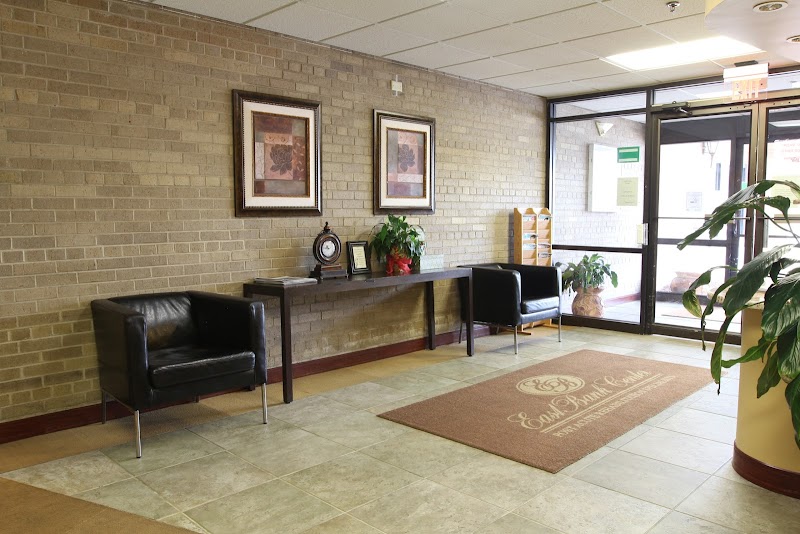
Who Owns and Operates East Bank Center, Llc?

EAST BANK CENTER, LLC is owned by a for-profit company. For-profit facilities operate as businesses with obligations to shareholders or private owners. The facility operates independently rather than as part of a larger chain. With 54 certified beds and approximately 29 residents (about 54% occupancy), it is a smaller facility located in LOVES PARK, Illinois.
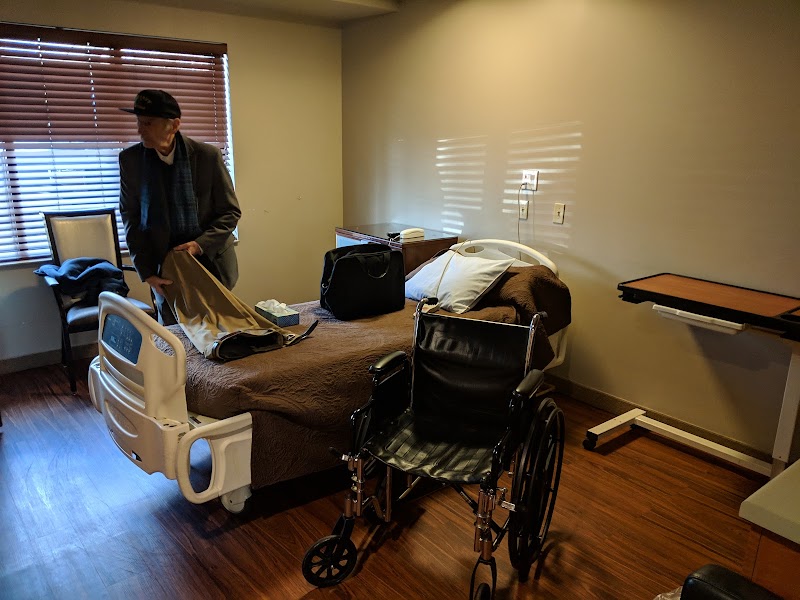
How Does East Bank Center, Llc Compare to Other Illinois Nursing Homes?

Compared to the 100 nursing homes in Illinois, EAST BANK CENTER, LLC's overall rating (4 stars) is above the state average of 2.5, staff turnover (66%) is significantly higher than the state average of 46%, and health inspection rating (4 stars) is above the national benchmark.

What Should Families Ask When Visiting East Bank Center, Llc?

Based on this facility's data, families visiting should ask: "How do you ensure continuity of care given staff turnover, and what is your staff retention strategy?" "Can I visit during a mealtime to observe dining assistance and food quality?" "How do you handle medical emergencies, and what is your hospital transfer rate?" "Can I speak with family members of current residents about their experience?" These questions are particularly relevant given the facility's high staff turnover rate.

Is East Bank Center, Llc Safe?

Based on CMS inspection data, EAST BANK CENTER, LLC has a clean safety record: no substantiated abuse findings (meaning no confirmed cases of resident harm), no Immediate Jeopardy citations (the most serious violation level indicating risk of serious injury or death), and is not on the Special Focus Facility watch list (a federal program monitoring the lowest-performing 1% of nursing homes). The facility has a 4-star overall rating and ranks #1 of 100 nursing homes in Illinois. While no facility is perfect, families should still ask about staff-to-resident ratios and recent inspection results during their visit.

Do Nurses at East Bank Center, Llc Stick Around?

Staff turnover at EAST BANK CENTER, LLC is high. At 66%, the facility is 20 percentage points above the Illinois average of 46%. Registered Nurse turnover is particularly concerning at 67%. RNs handle complex medical decisions and coordinate care — frequent RN changes can directly impact care quality. High turnover means new staff may not know residents' individual needs, medications, or preferences. It can also be disorienting for residents, especially those with dementia who rely on familiar faces. Families should ask: What is causing the turnover? What retention programs are in place? How do you ensure care continuity during staff transitions?

Was East Bank Center, Llc Ever Fined?

EAST BANK CENTER, LLC has no federal fines on record. CMS issues fines when nursing homes fail to meet care standards or don't correct problems found during inspections. The absence of fines suggests the facility has either maintained compliance or corrected any issues before penalties were assessed. This is a positive indicator, though families should still review recent inspection reports for the full picture.

Is East Bank Center, Llc on Any Federal Watch List?

EAST BANK CENTER, LLC is not on any federal watch list. The most significant is the Special Focus Facility (SFF) program, which identifies the bottom 1% of nursing homes nationally based on persistent, serious quality problems. Not being on this list means the facility has avoided the pattern of deficiencies that triggers enhanced federal oversight. This is a positive indicator, though families should still review the facility's inspection history directly.