MASON CITY AREA NURSING HOME
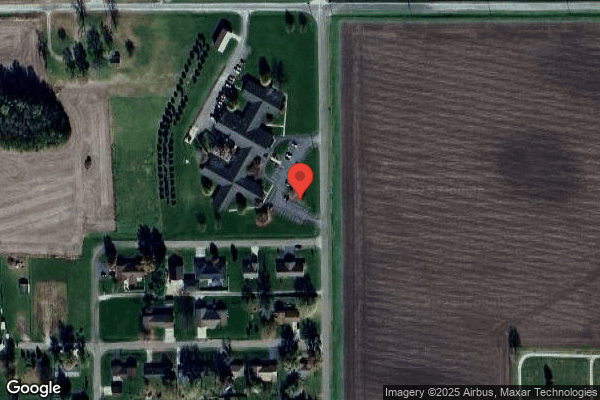

520 NORTH PRICE AVENUE, MASON CITY, IL 62664 (217) 482-5022
Non profit - Other 66 Beds HERITAGE OPERATIONS GROUP Data: November 2025 2 Immediate Jeopardy citations
Trust Grade
16/100
#577 of 665 in IL
Last Inspection: December 2024

Within standard 12-15 month inspection cycle. Federal law requires annual inspections.

Overview

Mason City Area Nursing Home has received a Trust Grade of F, which indicates significant concerns about the quality of care provided. It ranks #577 out of 665 facilities in Illinois, placing it in the bottom half, and is the second lowest option in Mason County. While the facility's issues have decreased from 10 in 2024 to 4 in 2025, the trend is still concerning given the number of critical and serious deficiencies found. Staffing is somewhat of a strength with a 2/5 star rating and a turnover rate of 44%, which is slightly better than the state average. However, specific incidents raised serious alarms, including a resident sustaining second-degree burns due to hot coffee dispensers not being monitored properly, and two residents being physically restrained without proper justification or consent, which caused them humiliation and distress. Overall, families should weigh these significant risks against the facility's strengths before making a decision.

Trust Score
F
16/100
In Illinois
#577/665
Bottom 14%
Safety Record
High Risk
Review needed
Inspections
Getting Better
10 → 4 violations
Staff Stability
○ Average
44% turnover. Near Illinois's 48% average. Typical for the industry.
Penalties
✓ Good
No fines on record. Clean compliance history, better than most Illinois facilities.
Skilled Nurses
○ Average
Each resident gets 33 minutes of Registered Nurse (RN) attention daily — about average for Illinois. RNs are the most trained staff who monitor for health changes.
Violations
⚠ Watch
16 deficiencies on record. Higher than average. Multiple issues found across inspections.
★☆☆☆☆
1.0
Overall Rating
★★☆☆☆
2.0
Staff Levels
★★☆☆☆
2.0
Care Quality
★☆☆☆☆
1.0
Inspection Score
Stable
2024: 10 issues
2025: 4 issues

The Good

  • Full Sprinkler Coverage · Fire safety systems throughout facility
  • No fines on record
  • Staff turnover below average (44%)

    4 points below Illinois average of 48%

Facility shows strength in fire safety.

The Bad

1-Star Overall Rating

Below Illinois average (2.5)

Significant quality concerns identified by CMS

Staff Turnover: 44%

Near Illinois avg (46%)

Typical for the industry

Chain: HERITAGE OPERATIONS GROUP

Part of a multi-facility chain

Ask about local staffing decisions and management

The Ugly 16 deficiencies on record

2 life-threatening 1 actual harm
Mar 2025 1 deficiency 1 IJ (1 facility-wide)
CRITICAL (L) 📢 Someone Reported This

A family member, employee, or ombudsman was alarmed enough to file a formal complaint

Immediate Jeopardy (IJ) - the most serious Medicare violation

Accident Prevention (Tag F0689)

Someone could have died · This affected most or all residents

⚠️ Facility-wide issue

**NOTE- TERMS IN BRACKETS HAVE BEEN EDITED TO PROTECT CONFIDENTIALITY** Based on observation, interview, and record review the facility failed to implement individualized care planned interventions to...

Read full inspector narrative →
**NOTE- TERMS IN BRACKETS HAVE BEEN EDITED TO PROTECT CONFIDENTIALITY** Based on observation, interview, and record review the facility failed to implement individualized care planned interventions to prevent a resident (R1) from sustaining multiple burns, failed to identify a hot water/coffee dispenser used in the main room as a potential burn hazard, and failed to establish protocols and provide adequate monitoring to ensure hot water within a water/coffee dispenser located in the main dining room were kept below temperature levels to prevent burns. These failures resulted in R1, a resident with the diagnoses of Spastic Cerebral Palsy, Scoliosis, Dysphagia, and Muscle Spasms, spilling hot coffee on her left posterior thigh on two separate occasions on 11/14/24 and 1/25/25, sustaining a second degree burn on her left posterior thigh on both occasions, and having the failure to affect all 59 residents who receive coffee/hot water out of the dispenser located within the main dining room. These failures resulted in an Immediate Jeopardy that started on 11/14/24 when the facility failed to identify a hot water/coffee dispenser used in the main room as a potential burn hazard, and failed to establish protocols and provide adequate monitoring to ensure hot water within a water/coffee dispenser located in the main dining room were kept below temperature levels to prevent burns, resulting in R1 spilling hot coffee on herself and sustaining a second degree burn to her left posterior thigh. While the immediacy was removed on 3/10/25, the facility remains out of compliance at a severity Level II as additional time is needed to evaluate the implementation and effectiveness of their removal plan and Quality Assurance monitoring. Findings include: The facility's Midnight Census Report, dated 3/7/25, documents 59 residents currently reside within the facility. The facility's Hot Liquids policy, dated 3/7/25, documents Policy: It is the policy of this facility to maintain protocols to assist in preventing injuries related to hot liquid and develop and individualized plan of care to address resident risk. Procedure: 1. A Hot Beverage Use Assessment will be performed upon admission, quarterly and with a significant change in condition. 2. Residents with a yes response in section number one of the Hot Beverage Use Assessment will be referred to Occupational Therapy for a thorough assessment of physical abilities and recommended safety interventions. 4. Residents identified through the assessment process as a risk for injury related to exposure to hot liquids shall not be left unsupervised during meal service. The American Burn Association Scald Statistics and Data Resources, dated 8/13/2018, documents Infants/toddlers and elderly adults have thinner dermal layers compared to persons of other ages, leading to deeper burn injuries of lower temperatures or shorter exposure times. Hot water will burn skin at temperatures much lower than boiling point. It only takes three seconds of exposure to 140 degrees Fahrenheit water to cause a burn serious enough to require surgery. 85 to 90% (percent) of scald burns are related to cooking/drinking/serving hot liquids. R1's admission Record, dated 3/7/25, documents R1 was admitted to the facility on [DATE] with the following, but not limited to, diagnoses: Spastic Diplegic Cerebral Palsy, Visual Hallucinations, Spasmodic Torticollis, Anxiety Disorder, Other forms of Scoliosis, Thoracic Region, Unspecified Osteoarthritis, Muscle Wasting and Atrophy, Muscle Weakness, Need for Assistance with Personal Care, Muscle Spasm of Back, Dysphagia, Spondylosis without Myelopathy or Radiculopathy, and Thoracic Region. R1's MDS (Minimum Data Set) Assessment, dated 12/6/24, documents R1 is cognitively intact, requires supervision or touching assistance with eating, and is dependent on staff with all other ADLs (Activities of Daily Living). This same MDS documents R1 had a second or third-degree burn. R1's Contracture Risk Evaluation, dated 9/6/24 and signed by V4/MDS Coordinator, documents R1 currently has contractures, is confused at times, needs staff to turn and reposition, and is noted to have contracting throughout R1's body. R1's OT (Occupation Therapy) and Plan of Treatment, dated 3/19/24, documents (R1's) RUE (Right Upper Extremity) ROM (Range of Motion) = impaired (Right should flexion actively to 60 degrees passively, right shoulder abduction to 65 degrees actively and 80 degrees passively. Right elbow flexion 60 to 130 degrees actively, right wrist 25 to 30 degrees flexion/extension). LUE (Left upper extremity) ROM= impaired. (Left should flexion actively to 60 degrees and passively to 85 degrees, left elbow flexion 35 to 100 degrees actively, left wrist assisted active ROM contracted hand which has elicited superficial palm indentation). Joints: Shoulder=impaired, Elbow/Forearm=impaired; Wrist=Impaired; Shoulder = impaired; Elbow/Forearm=Impaired; Wrist=impaired. R1's Progress Note, dated 11/14/24 and signed by V12/LPN (Licensed Practical Nurse), documents (R1) spilt coffee on left posterior thigh. Area red no blisters noted. R1's Progress Note, dated 11/14/24 and signed by V13/LPN, documents (R1) red area to left thigh now presents with blisters related to spilling coffee on self. R1's Wound Evaluation and Management Summary, dated 11/19/24 and signed by V9/Wound Physician, documents Burn wound of the left thigh partial thickness. Etiology: Burn. Further Etiology Detail: Hot liquid. Duration: Less than five days. Wound size 20cm (centimeters) x 9cm x 0.01cm. Peri-wound radius: Erythema. Exudate: Sero-sanguinous (pinkish-red drainage). Additional Wound Detail: Hot coffee spilled on area last Thursday. R1's Illinois Department of Public Health Final Report, dated 11/22/24, documents R1 was in her room drinking her coffee after breakfast, per R1's normal activities, when V6/Activity Director entered R1's room around 9:00 AM and noticed R1 had spilled her coffee on herself. V13/LPN completed a skin assessment which revealed a reddened area with blisters. Interventions: Requested order from V7/R1's Physician for OT to evaluate and treat, assist R1 with drinking hot liquids and eating, and R1 will drink out of a two handled cup with a straw with staff assist as needed. R1's Progress Note, dated 1/25/25 and signed by V14/LPN, documents (R1) was eating in the dining room when staff reported that (R1) spilled coffee on her left leg. Upon assessment (R1) has a 14cm (centimeter) x 20cm red raised area to her left thigh and around the back of her left thigh. R1's Wound Evaluation and Management Summary, dated 1/28/25 and signed by V9/Wound Physician, documents non-pressure wound of the left posterior thigh. Etiology: Trauma/Injury. Further Etiology Detail: Burn. Duration: Less than two days. Wound size: 6cm x 6cm, x not measurable cm. Exudate: None Blister: Fluid Filled. Additional Wound Detail: hot coffee spilled on leg. Area is blistered with surrounding pink skin. Blisters are intact. R1's Wound Evaluation and Management Summary, dated 2/4/25 and signed by V9/Wound Physician, documents non-pressure wound of the left posterior thigh. Etiology: Trauma/Injury. Further Etiology Detail: Burn. Duration less than nine days. Wound size: 5.5cm x 4 x 0.01cm. Additional Wound Detail: Blister opened. R1's Illinois Department of Public Health Final Report, dated 1/30/25, documents (R1) was in the dining room eating breakfast. When (R1) was taking a drink of the coffee, (R1) spilled coffee on her leg. (V8/Wound Nurse) assessed (R1's) left thigh area and noted that (R1) had a burn to the left thigh area. This same report documents IDT (Interdisciplinary Team) met to discuss the root cause of (R1's) incident of spilling coffee on herself and sustaining a burn. Root cause of the spill was determined to be from (R1) unable to handle cup with lid upright to prevent from spilling it on herself. R1's Clinical Medical Record does not include a hot liquid risk assessment. R1's Order Summary Report, dated 3/7/25, document R1 has a physician order as follows: Apply emollient cream to R1's left thigh burn/scar tissue every night shift for wound healing. This same Report documents a physician order to apply emollient cream to R1's left thigh every eight hours as needed for wound healing. R1's current Care Plan documents, (R1) is at risk for impaired skin integrity due to impaired physical mobility. Interventions- Date Initiated 11/18/24: Staff to assist (R1) with meals due to spilling coffee. (R1) agreed, having staff assistance with meals would be beneficial. (R1) encouraged to refrain from eating and drinking hot liquids in room without staff assistance. Intervention- Date Initiated 2/4/25: Staff to ensure waterproof clothing protector and lap blanket to be worn during all meals and during as needed fluid and food intake. (R1) has a history of spilling food and liquid when attempting to eat meals per self. (R1) is at risk for ADL self-care performance deficit related to cerebral palsy as evidence by weakness, muscle wasting and atrophy, dysphagia, and right-hand contracture. Interventions- Date Initiated 12/16/22: Eating: (R1) requires extensive to total assistance times one staff with meals. Therapy encouraged use of smaller utensils for an effective grip while eating meals. Utilizes two handed cups for liquids. The facility's Food Temperature Log for Meal Service dated the week of 11/10/24 documents Coffee/hot water temps for breakfast, lunch, and supper. During this week the coffee/hot water temperature ranged from 171 degrees Fahrenheit to 177 degrees Fahrenheit. The facility's Food Temperature Log for Meal Service dated the week of 1/19/25 documents Coffee/Hot water temps for breakfast, lunch, and supper. During this week the coffee/hot water temperatures ranged from 170 degrees Fahrenheit to 176 degrees Fahrenheit. On 3/7/25 at 9:35 AM R1 was in her room in her wheelchair. R1 was leaning left in her wheelchair, with a contracted posture and her head contracted towards the left lying on a pillow. R1's left hand was observed to be in a closed fist position. R1's right hand was observed in a closed fist position with R1's fingers pointed inward towards her palm. R1 had a green two handled cup sitting in her lap. R1 grabbed the green cup with water with her right hand and used her pointer finger and thumb to hold on to the cup. R1 was shaky while holding the cup and the cup was leaning to the left as R1 was attempting to take a drink. R1 did not have on a waterproof clothing protector or lap blanket during this time as identified in R1's care plan. R1 stated, The first time I spilled my coffee I was in my room. It spilled all down the left side of me. The staff came in and noticed I had spilled my coffee. The second time I spilled my coffee I was in the dining room and a staff member (I don't know her name) handed me my coffee. I went to take a drink and dropped the entire cup. It ended up burning me in the same spot and that time it was more painful. Staff has never assisted me with drinking until just recently. On 3/7/25 at 10:10 AM V11/LPN (Licensed Practical Nurse) was preparing to apply R1's wound treatment to R1's left posterior thigh. R1's posterior left thigh area had approximate 20cm x 9cm, red/blanchable area. On 3/7/25 at 11:55 AM an automatic dispensing coffee pot was observed sitting on a counter that would be able to be accessed by all residents in the main dining room where all residents eat. The coffee pot was observed to have three nozzles that dispensed hot water, decaffeinated coffee, and regular coffee. On 3/7/25 at 2:30 PM an automatic dispensing coffee pot was observed sitting on a counter that would be able to be accessed by all residents in the main dining room where all residents eat. The dining room door across from the medical record office was observed propped open. The dining room door across from the Social Service Office was shut but was unlocked and was able to be opened. During this time V1/Administrator verified the door was propped open and the other door was unlocked and stated, The doors are supposed to be locked in between meals so no resident can enter. I do not know why the door is propped open and the other door was left unlocked. On 3/8/25 at 8:13 AM an automatic dispensing coffee pot was observed sitting on a counter that would be able to be accessed by all residents in the main dining room where all residents eat. V3/Dietary Manager stated that all residents in house drink some sort of hot liquid like hot chocolate, hot tea, or coffee out of the automatic dispensing coffee pot. V3 then proceeded to calibrate a thermometer and then temped a cup of coffee after being poured directly from the automatic coffee dispenser in the main dining room. V3 temped the coffee at 163.2 degrees Fahrenheit. V5/CNA then came over to pour R1 a cup of coffee. Steam was rising from R1's cup of coffee. V3 temped R1's cup of coffee at 161 degrees Fahrenheit. On 3/7/25 at 1:15 PM V9/Wound Physician stated (R1's) burns that happened on the two different occurrences would be classified as second-degree burns. On 3/7/25 at 1:20 PM V16/Manufacturer Consultant stated, The automatic coffee pot dispenser setting is set at 185 degrees Fahrenheit for the hot water to brew the coffee. On 3/7/25 at 2:20 PM V3/Dietary Manager stated the hot water/coffee out of the coffee machine temperature ranges from 170 degrees Fahrenheit to 175 degrees Fahrenheit daily. On 3/8/25 at 8:20 AM V2/Director of Nursing stated they (the facility) has not done any hot liquid risk assessments on R1 or any other resident prior to them drinking hot liquid on their own. On 3/8/25 at 8:35 AM V10/Vice President of Culinary Services stated The coffee pot the facility currently has must brew the coffee at 175 degrees Fahrenheit or above for coffee sanitary purposes. You and I both know that to have no burns at the facility the coffee should be served at 120 degrees or less. V10 verified the only way to keep the residents from being burned is take the automatic coffee machine out of the dining room and install it in the kitchen with a machine that keeps the coffee and the hot water at a lower temperature. On 3/8/25 at 8:43 AM V5/CNA stated, On 1-25-25 I took (R1) to the dining room and got (R1) a cup of coffee that had two handles and a lid and gave it to her. I did not assist (R1) with the coffee. Five to ten minutes after giving (R1) her coffee, I realized (R1) spilled the coffee onto her lap. (R1's) cup was lying all the way to the left. I thought (R1) was able to drink the coffee by herself. I did not know there was a [NAME] (Care plan) we could look at to see updates and I still don't know how to access a resident's [NAME]. I did not know (R1) needed assistance with drinking hot liquids or eating her meals. On 3/8/25 at 9:38 AM V15/CNA stated the doors to the dining room are shut most of the time to the dining room in between meals, but sometimes the door is propped, or the doors are unlocked so we can get in that way to get coffee or a drink for the residents. On 3/8/25 at 10:50 AM V1/Administrator stated (the facility's) managing company just sent a Policy for Hot liquids yesterday. V1 stated We (the facility) did not have a Hot Liquids Policy in place prior to yesterday (3/7/25) and should have to try and prevent burns in the facility. V1 also stated After the first time (R1) was burned we put an intervention in place to have staff assist (R1) while drinking and eating, especially with hot liquids. The second time (R1) was burned by the spilled coffee, (V5/CNA) was newer to our building and did not know (R1) required assistance with hot liquids. (V5) just handed (R1) a two handled cup of hot coffee with a lid and did not assist her. (R1) ended up spilling the coffee again on her left side, sustaining another burn to her left posterior thigh. The immediate jeopardy started on 11/14/24 when the facility failed to identify a hot water/coffee dispenser used in the main room as a potential burn hazard, and failed to establish protocols and provide adequate monitoring to ensure hot water within a water/coffee dispenser located in the main dining room were kept below temperature levels to prevent burns, resulting in R1 spilling hot coffee on herself and sustaining a second degree burn to her left posterior thigh. V1/Administrator and V2/Director of Nursing were notified of the Immediate Jeopardy on 3/10/25 at 11:40 AM. On 3/11/25 the surveyor confirmed through interview and record review that the facility took the following actions to remove the Immediate Jeopardy: 1. On 3/10/25 all residents were interviewed by V8/Wound Nurse, V22/Restorative Nurse, V23/Business Office Manager, and V24/Social Service Director for hot liquid spills with injury. 2. On 1/25/25 R1 was removed from the dining room, laid down, clothes were removed, and a head-to-toe skin assessment was completed. V7/R1's Physician and V25/R1's Family member was notified. On 1/25/25 a wound dressing was ordered, R1's care plan was updated to ensure staff assisted R1with a waterproof clothing protector and lap blanket to be worn during all meals and as needed for food and fluid intake and to continue Occupation therapy three times a week for twelve weeks. 3. On 3/8/25 a Hot Liquid Policy was developed and implemented. 4. On 3/8/25 a Hot Liquid Risk Assessment was developed and implemented. 5. On 3/8/25 V1/Administrator in-serviced Department Managers (V2/Director of Nursing, V3/Dietary Manager, V4/MDS Coordinator, V6/Activity Director, V22/Restorative Nurse, V23/Business Office Manager, V24/Social Service Director, V26/Assistant Director of Nursing, and V27/Environmental Service Director) regarding the facility's Hot Liquid Policy. The facility's Department Managers then carried out the same in-services on 3/8/25 for their respective employees. All employees of the facility have been in-serviced on these topics and policies. 6. On 3/8/25 all residents, including R1, were assed with the facility hot liquids assessment to determine if they are at risk of being injured 7. On 3/10/25 R1's care plan was updated to include interventions for hot liquid spills with injury and for Speech Therapy to Evaluation and Treat. 8. On 3/8/25 the facility implemented utilizing colored napkins to alert each member of the team that the resident is at high risk for burn injury. 9. On 3/8/25 all at risk residents for being injured due to hot liquids were identified on meal tray cards. 10. On 3/8/25 V4/MDS Coordinator updated all resident care plan with interventions that were identified as at risk for spilling hot liquids causing injuries. 11. On 3/8/25 the coffee machine in the main dining room was disconnected. 12. 3/10/25 the coffee machine was removed from the main dining room. Coffee and other hot liquids are being served from the kitchen and temped prior to being served. 13. On 3/8/25 a new coffee machine was ordered and will be dispensed at 150 degrees Fahrenheit. 14. On 3/10/25 waterproof adult clothing protectors and waterproof blankets were ordered for the residents identified at risk for injury from hot liquid. 15. On 3/10/25 a Food Temperature Log for Meal Services was implemented with coffee/hot water to be served at 150 degrees Fahrenheit or less. 16. On 3/8/25 V1 in-serviced each department manager (V2/Director of Nursing, V3/Dietary Manager, V4/MDS Coordinator, V6/Activity Director, V22/Restorative Nurse, V23/Business Office Manager, V24/Social Service Director, V26/Assistant Director of Nursing, and V27/Environmental Service Director) regarding the appropriate temperature of hot liquids and utilizing the audit tool to confirm if resident received hot liquids at mealtime and what temperature it was serviced. Audit tool we be utilized for breakfast, lunch, dinner to ensure hot liquid temperatures are serviced at a minimum of 135 degrees Fahrenheit but not to exceed 150 degrees Fahrenheit, residents who were identified to be at risk for injury from hot liquids, following care plan interventions, and that kitchen will be temping all hot coffee and water to ensure facility is serving 135 degrees Fahrenheit to 150 degrees Fahrenheit. The facility's Department Managers then carried out the same in-services on 3/8/25 for their respective employees. All employees of the facility have been in-serviced on these topics and policies. 17. A system was put in place for an audit to be done by V2/Director of nursing, for five residents daily, five days a week, for six weeks to ensure compliance with interventions being put in place. On 3/10/25 V2/Director of Nursing is utilizing the audit tool to ensure care plan interventions are being followed. These are monitored/audited for compliance by V1/Administrator one time per week. 18. On 3/8/25 V4/MDS Coordinator reviewed and updated R1 and the residents identified to be at risk for injury from hot liquids care plans. 19. On 3/10/25 V1/Administrator provided all staff in-servicing regarding the use of red napkins at meals for the residents identified at risk for injury from hot liquids. 20. On 3/10/25 V1/Administrator in-serviced all Agency Staff regarding the appropriate temperature of hot liquids and utilizing the audit tool to confirm if resident received hot liquids at mealtime and what temperature it was serviced. Audit tool we be utilized for breakfast, lunch, dinner to ensure hot liquid temperatures are serviced at a minimum of 135 degrees Fahrenheit but not to exceed 150 degrees Fahrenheit, residents who were identified to be at risk for injury from hot liquids, following care plan interventions, that kitchen will be temping all hot coffee and water to ensure facility is serving 135 degrees Fahrenheit to 150 degrees Fahrenheit, and the use of red napkins at meals for the residents identified at risk for injury from hot liquids. 21. On 3/10/25 a copy of the facility's Hot Liquid Policy was added to the new orientation manual and the agency orientation manual. 22. A system was put in place for an audit to be done by V3/Dietary Manager, for five residents daily, five days a week, for six weeks to ensure compliance with temperatures of hot liquids prior to being served to ensure they are below the appropriate temperatures. V3/Dietary Manager is utilizing this audit form to ensure hot liquids are being served at appropriate temperatures. These are monitored/audited for compliance by V1/Administrator once time per week. Completion Date: 3/10/25.
Feb 2025 3 deficiencies 1 IJ
CRITICAL (J) 📢 Someone Reported This

A family member, employee, or ombudsman was alarmed enough to file a formal complaint

Immediate Jeopardy (IJ) - the most serious Medicare violation

Deficiency F0604 (Tag F0604)

Someone could have died · This affected 1 resident

**NOTE- TERMS IN BRACKETS HAVE BEEN EDITED TO PROTECT CONFIDENTIALITY** Based on interview, record review and observation, the facility failed to ensure residents were free from unnecessary physical r...

Read full inspector narrative →
**NOTE- TERMS IN BRACKETS HAVE BEEN EDITED TO PROTECT CONFIDENTIALITY** Based on interview, record review and observation, the facility failed to ensure residents were free from unnecessary physical restraints(s), failed to identify the specific medical symptoms warranting the use of physical restraints, failed to obtain physician orders with medical justification for the placement of a physical restraint(s), and failed to obtain resident or responsible party consent for the use of a physical restraint for two (R1, R2) of 12 residents reviewed for restraint usage in the sample of 12. These failures resulted in R1 and R2 being physically restrained to their wheelchair with a gait belt placed around their torso and fastened behind their back with the inability to rise from their chair and suffering psychosocial harm of humiliation and embarrassment that any reasonable person would experience being improperly restrained. These failures resulted in an immediate Jeopardy. An Immediate Jeopardy situation was identified to have started on 01/01/25 at approximately 6:00pm when V3 LPN/Licensed Practical Nurse placed a gait belt around R1 and R2's torso and fastened the restraint behind the back of each resident's wheelchair, preventing R1 and R2 the ability to rise from their wheelchair or remove the restraint. While the immediacy was removed on 02/20/25, the facility remained out of compliance at a Severity Level 2 as additional time is needed to evaluate the implementation and effectiveness of the facility's removal plan and quality assurance monitoring. Findings include: The facility's final Report to Illinois Department of Public Health, dated 01/10/25 identified R1 and R2 as the subjects of the incident. This report documents the following: On 01/06/25 CNA (verified as V4) reported that (R2) was improperly restrained on evening shift but was unsure when it happened. This report further documented, Interviews with staff revealed that on the evening of 01/01/25, Resident (R2), BIMS/Brief Interview for Mental Status 0 (zero/severely cognitively impaired), was improperly restrained in her wheelchair. The report stated, Staff interviews reveal they observed the resident at the nurse's station improperly restrained. Staff said they observed a second resident, (R1), BIMS 01 (severely cognitively impaired), improperly restrained to his wheelchair at the nurse's station. Neither resident was able to provide any comment upon interview. The facility's Restraint Program Policy and Procedure, dated 11/10/2015, documents the following: Policy: It is the policy of this facility to provide appropriate care for residents in relation to restraint utilization. 3. If a restraint is necessary, physician and POA (Power of Attorney) are notified, and a Restraint Consent is completed. Specific risk factors are marked as appropriate for the individual resident. The facility's Nonemergency Use of Physical Restraints policy dated 3/1/11 documents the following: I. Physical restraints shall be used when required to treat the resident's medical symptom or as a therapeutic intervention, as ordered by a physician, and based on: A. the assessment of the resident's capabilities and an evaluation and trial of less restrictive alternatives that could prove effective; B. the assessment of a specific condition or medical treatment that requires the use of a physical restraints, and how the use of physical restraints will assist the resident in reaching his or her highest practicable, mental, physical, mental, or psychosocial wellbeing. II. A physical restraint will be used only with the informed consent of the resident, the resident's guardian, or other authorized representative This informed consent will include information about potential negative outcomes of physical restraint use, including incontinence, decreased range of motion, decreased ability to ambulate, symptoms of withdrawal or depression, or reduced social contact. VII. Physical restraints will not be used on a resident for the purpose of discipline or convenience. The facility's Emergency Use of Physical Restraints policy dated 7/1/02 documents: B. If a resident needs emergency care and other less restrictive interventions have proved ineffective, a physical restraint will be used briefly to permit treatment to proceed. The attending physician will be contacted immediately for orders. If the attending physician is not available, the facility's advisory physician or Medical Director will be contacted. 11. The emergency use of a physical restraint will be documented in the resident's record and include: 1. The behavior incident that prompted the use of the physical restraint; 2. The date and times the physical restraint was applied and released; 3. The name and title of the person responsible for the application and supervision of the physical restraint; 4. The action by the resident's physician upon notification of the physical restraint use; 5. The new or revised orders issued by the physician; 6. The effectiveness of the physical restrain in treating medical symptoms or as a therapeutic intervention and any negative impact on the resident; and 7. The date of the scheduled care planning conference or the reason the resident's emergency need for physical restraints. III. The facility's emergency use of the physical restraints will comply with our policy for non-emergency use of physical restraints section III, IV, V, and IX. The facility's Abuse Prohibition policy dated 3/15/18 documents the following: All residents have the right to be free from verbal, sexual, physical, mental abuse, neglect, misappropriation of property, exploitation. This includes but is not limited to freedom from .physical or chemical restraints not required to treat the resident's symptoms. When the use of restraints is indicated, the facility must use the least restrictive alternative. R1's medical record documents R1 is [AGE] years old and was admitted to the facility on [DATE] with diagnoses including: Unspecified Dementia with Agitation; Alzheimer's Dementia; Impulsiveness and Generalized Muscle. Weakness. R1's current Care Plan documents R1 has significant cognitive impairment, is dependent on staff for ADLs/Activities of Daily Living, transferring and ambulation. R1's MDS/Minimum Data Set, dated [DATE], documents R1's BIMS/Brief Interview for Mental Status score was 01 of 15, indicating R1 is severely cognitively impaired; R1 uses a wheelchair, requires assistance with ambulation and ADLs. R2's medical record documents R2 is [AGE] years old and was admitted to the facility on [DATE] with diagnoses including: Dementia with other Behavioral Disturbance; Disorientation; Cognitive Communication Deficit; Weakness; Recurring Falls; Anxiety Disorder and Insomnia. R2's current Care Plan documents R2 is dependent upon staff for cares, including transferring, ambulation, and ADL's/Activities of Daily Living. R2's Care Plan documents R2 has significant cognitive impairment and is a fall risk. R2's Quarterly MDS Cognition Assessment documents R2 has severe cognitive impairment with a BIMS score of 0 (zero) of 15. There was no documentation, no physicians order, and no medical symptom listed justifying the use of this inappropriate restraint in R1's nor R2's medical records. The facility's January 2025 Nursing schedule documents V3 LPN/Licensed Practical Nurse worked the evening shift on 01/01/25 and 01/03/25. On 02/11/25 at 2:10pm, V6 CNA stated that on 01/06/25 she and another CNA were getting R2 ready to get out of bed, when she noted a gait belt fastened around R2's wheelchair. When V6 mentioned the gait belt, the other CNA told her that on 01/01/25, V3 LPN/Licensed Practical Nurse had used gait belts to keep (R2) in her wheelchair. V6 stated R2 was continent of bowel and bladder and able to let the staff know if she needed to use the bathroom and was able to ambulate with CNA assistance to the bathroom in her room, and a fall risk due to weakness. On 2/11/25 at 2:45pm V3 LPN/Licensed Practical Nurse stated that on 01/01/25 at approximately 6:00pm, she fastened a gait belt around R1 and R2 while they were sitting in their wheelchairs near the Nurses Station. V3 stated she fastened the gait belts behind the back of the chairs, out of the residents' reach, in order to prevent R1 and R2 from rising from their wheelchairs. V3 confirmed she was aware her actions constituted inappropriate use of physical restraints at the time. V3 stated R2 uses a cushioned lap restraint and removes it frequently and tries to stand up from her wheelchair. V3 stated it was a very busy and hectic time, after dinner, and no staff were available to keep watch on R1 and R2, as CNAs were transferring and toileting the residents and putting some residents to bed for the evening. V3 stated she felt R1 and R2 required 1:1 attention to prevent a fall when trying to stand up from their wheelchairs and there was not enough staff on duty to provide it. On 02/11/25 at 9:00am V6 CNA stated she was on duty on 01/01/25 on 2nd shift and, at approximately 6:00pm, V3 LPN was working and R1 was anxious and repeatedly asking for his wife at the Nurses Desk. V6 stated she saw V3 place a gait belt across (R1's) chest, under his arms and fastened it in the back of his wheelchair. V6 stated R1 has dementia and severe hearing deficit and does not always process what you're saying and does not follow commands. V6 stated R1 is ambulatory with assistance and is very unsteady. V6 stated she did not report the incident to the Abuse Coordinator/Administrator because she felt V3 LPN was not approachable as she seems rude. On 02/11/25 at 2:00pm V4 CNA/Certified Nursing Assistant stated that on 01/06/25, a CNA (unable to identify) she was working with told V4 that V3, LPN restrained R2 in her wheelchair with a gait belt to keep her in her wheelchair. V4 stated she immediately reported the incident to a supervising nurse and V1 Administrator/Abuse Coordinator. On 02/11/25 at 1:30pm V7 LPN stated she was on duty with V3 LPN on the evening shift of 1/1/25. V7 stated at approximately 6:00pm, she saw R1 was restrained in his wheelchair with a gait belt. V7 stated she was aware V3 had placed a gait belt around R1 and fastened it behind the back of his wheelchair. V7 stated R1 would not have been able to remove the gait belt and would not have been able to rise from the wheelchair. V7 verified she did not report the incident to anyone. V7 stated she knew this was improper restraining of a resident at the time of the incident and, even though she knew that the policy was to report incidents immediately to the Administrator/Abuse Coordinator, she did not report it. On 2/11/25 at 10:45am V2 DON/Director of Nursing stated V3 LPN inappropriately restrained R1 and R2 in their wheelchairs using gait belts fastened around them and clasped behind the back of their wheelchairs, out of reach of the residents. V2 confirmed V3 should not have restrained R1 and R2 in that manner and the action constituted inappropriate use of restraints. On 2/11/25 at 11:15am V2 DON stated there were interventions in place for R1 and R2, including redirection, implementing an activity with an Activity staff member with one on one assistance; television viewing and taking R1 and R2 for a walk around the facility with CNA assistance. On 2/13/15 at approximately 10:00am, V2 stated the fall preventions interventions in place for R2 were providing a low bed, and a mattress next to her bed when she is sleeping; a pressure bed alarm, a cushioned lap restraint when R2 is up in her wheelchair. Redirection interventions included taking a walk with CNA assistance, distraction with activities and television viewing. On 2/11/25 at 1:15pm, V1 Administrator stated she was notified of this incident on 01/06/25, after the incident occurred on 01/01/25, and began the investigation of the incident immediately, calling the evening shift staff for questioning. V1 stated she first called V3 LPN/Licensed Practical Nurse for information, who had worked the evening shift on 01/01/25 and was usually considered the charge nurse for the shift. V1 stated V3 readily admitted that she had placed gait belts around R1 and R2 in their wheelchairs and fastened them out of their reach, behind the backs of the wheelchairs in order to prevent them from standing. V1 verified V3 stated she was aware the incident constituted inappropriate physical restraints when she did it. V1 stated she suspended V3 immediately, pending the outcome of the facility's investigation. On 2/18/25 at 3:55pm, V1 stated she did not bring this incident to the attention of the IDT/Interdisciplinary Team or QA/Quality Assurance members. V1 stated the next QA meeting will be in April 2025. On 2/11/25 at 9:20am R1 was seated in his wheelchair at a table near the Nurses Station, working with building block materials with an activities aid. R1 was calm with no behaviors exhibited. No restraints were noted. R1 did not respond to this surveyor's greeting or question. On 2/11/25 at 11:20am, R1 was calm and quiet, self-propelling his wheelchair down the hallway toward his room. R1 did not respond to surveyor's greeting or question. No restraints noted. On 2/11/25 at 3:00pm R1 was in bed with his eyes closed. There were no restraints noted. On 2/13/25 at 9:45am, R1 was sitting in a wheelchair near the Nurses Station. R1 was alert, calm and quiet. R1 did not respond to this surveyor's greeting or question. On 2/11/25 at 9:20am R2 was sitting in a high-backed wheelchair with a lap cushion in place. On 2/11/25 at 10:05am, R2 was seated in a high-backed wheelchair near the Nurses Station. A lap cushion was in place, and R2 was counting out loud with her eyes closed. R2 did not respond to this surveyor's greetings or questions. On 2/11/25 at 3:05pm, R2 was lying in bed with her eyes closed. The pressure alarm on R2's bed was turned on. An Immediate Jeopardy situation was identified to have started on 01/01/25 at approximately 6:00pm when V3 LPN/Licensed Practical Nurse placed a gait belt around R1 and R2's torso and fastened the restraint behind the back of each resident's wheelchair, preventing R1 and R2 the ability to rise from their wheelchair or remove the restraint. V1 (Administrator) and V2 (Director of Nursing) were notified of the Immediate Jeopardy on 02/20/25 at 9:47 AM. On 2/25/25, the abatement plan was confirmed through observation, interview, and record review that the facility took the following actions to remove the Immediate Jeopardy: 1. On 2/20/25 Department Managers (V2 DON; V13/Acting DON; V15/MDS/Care Plan Coordinator; V11/RN Restorative Nurse; V19/Business Office; V20/Social Services; V21/Activity Director; V22/CDM; V23/Environmental Services Director) were in-serviced by V1 Administrator on the facility's restraint policy, care of residents with restlessness and agitation, improper restraint usage, the need for alternative interventions, appropriate diagnosis, physician's orders, care planning, the facility's abuse policy and reporting procedure. The facility's Department Managers then carried out the same in-services for their respective employees. All employees of the facility have been in-serviced on these topics and policies. 2. On 2/20/25 all residents have been assessed to ensure that none are restrained improperly or unnecessarily. 3. On 2/20/25 Care Plans were reviewed by the Care Plan Coordinator and updated as needed for residents with restlessness or agitation. 3. On 2/20/25 a full physical assessments of R1 and R2 were conducted by for any signs of injury from restraint usage with no findings of injury. 5. All facility staff, contracted Therapy staff and Agency staff utilized by the facility were in-serviced on the following: care of the resident with restlessness and/or agitation; the facility's restraint policy, improper restraint usage, the need for alternative interventions, care of the resident with restlessness and/or agitation, appropriate diagnosis, physician's orders, care planning, the facility's abuse policy and reporting procedure on 02/20/25. 6. V15 verified R2 was care planned with interventions addressing potential for abuse and proper restraints related to her diagnoses. Restraint consents were present in R2's medical record for R2's cushioned lap restraint, mattress, and bed pressure alarm. V15 verified R1 was care planned for falls and restlessness, agitation with interventions. No restraints were in use for R1. 7. A system was put in place for an audit to be done by the V1 Administrator or designee three times weekly to ensure compliance with the interventions put in place. V2 DON conducted daily reviews of the 24-hour Report for any new or additional restraint usage. These are monitored/audited for compliance by V1 three times per week. The results of the audits will be discussed at the next Quality Assurance meeting in April 2025. 8. On 02/20/25 all residents were interviewed regarding history or existence of unnecessary restraint usage and abuse incidents. No incidents were reported by the residents. These interviews were conducted and documented by the V2 DON, V 1 Administrator, V15 MDS/Care Plan Coordinator, V13 ADON/Assistant Director of Nursing and Department Managers. 9. On 02/20/25 V15 Care Plan Coordinator reviewed and updated Care Plans for those residents with restraints, agitation, restlessness or exhibition of behaviors. R2 was the only resident identified with restraint utilization. 10. ON 2/20/25 Agency staff were inserviced and Resident Rights, improper restraint usage and the Abuse/Neglect policy to the Agency Orientation Binder. 11. The Interdisciplinary Team met on 2/20/25 and reviewed, discussed and approved the facility's Immediate Jeopardy Removal Plan. 10. V15 Care Plan Coordinator completed Care Plan audits for all residents and a system was put in place to audit five residents' Care Plans per week.
CONCERN (D) 📢 Someone Reported This

A family member, employee, or ombudsman was alarmed enough to file a formal complaint

Potential for Harm - no one hurt, but risky conditions existed

Report Alleged Abuse (Tag F0609)

Could have caused harm · This affected 1 resident

Based on interview and record review the facility failed to immediately report inappropriate use of a physical restraint to the facility's Abuse Coordinator for two of 12 residents (R1, R2) reviewed f...

Read full inspector narrative →
Based on interview and record review the facility failed to immediately report inappropriate use of a physical restraint to the facility's Abuse Coordinator for two of 12 residents (R1, R2) reviewed for restraint usage in the sample of 12. Findings include: The facility's Abuse Prohibition policy, dated 03/15/2018, documents the following: Reporting - Allegations Of Abuse And Neglect: 1. A facility employee or agent or covered individual who becomes aware of alleged abuse or neglect of a resident shall immediately report the matter to the facility administrator. The Abuse Prohibition policy continues, documenting: Abuse and Neglect Prohibition: 1. All resident have the right to be free from verbal, sexual, physical, mental abuse, corporal punishment, involuntary seclusion, neglect, misappropriation of property, exploitation. This includes seclusion and physical or chemical restraints not required to treat the resident's symptoms. On 2/11/25 at 2:45pm V3 LPN/Licensed Practical Nurse stated that on 01/01/25 at approximately 6:00pm, she fastened a gait belt around R1 and R2 while they were sitting in their wheelchairs and fastened the gait belt behind the back of the chair, out of the residents' reach, in order to keep R1 and R2 in their wheelchairs. V3 confirmed she was aware her actions constituted inappropriate physical restraints. On 02/11/25 at 1:30pm V7 LPN stated she was on duty with V3 LPN on 1/1/25. V7 stated she saw that V3 had placed a gait belt around R1 and fastened it behind the back of his wheelchair. V7 stated she knew this was wrong but did not report the incident to a supervisor or the Administrator/Abuse Coordinator. On 2/11/25 at 9:20am V6 CNA/Certified Nursing Assistant stated, I saw V3 place a gait belt across (R1's) chest, under his arms and fastened it in the back of his wheelchair. R1 would have been unable to release the gait belt. V6 stated she did not report the incident to a supervisor or the Abuse Coordinator/Administrator. On 2/11/25 at 1:30pm, V4 CNA stated that on 01/06/25 another CAN (unable to identify) told her that V3 had restrained R2 in her wheelchair with a gait belt. V4 stated she immediately reported this to a supervising nurse and the Administrator who is the facility's Abuse Coordinator. On 2/11/25 at 2:30pm, V2 DON verified the physical restraining of R1 and R2 by V3 LPN should have been immediately reported to the Abuse Coordinator/Administrator and was not reported to her until 01/06/25.
CONCERN (F) 📢 Someone Reported This

A family member, employee, or ombudsman was alarmed enough to file a formal complaint

Potential for Harm - no one hurt, but risky conditions existed

Deficiency F0727 (Tag F0727)

Could have caused harm · This affected most or all residents

Based on record review and interview the facility failed to ensure a Registered Nurse (RN) worked at least eight hours daily. This failure has the potential to affect all 56 residents residing within ...

Read full inspector narrative →
Based on record review and interview the facility failed to ensure a Registered Nurse (RN) worked at least eight hours daily. This failure has the potential to affect all 56 residents residing within the facility. Findings include: The facility's Staffing policy dated 01/16/2018 documents: There shall be at least one registered nurse on duty seven days per week, 8 consecutive hours in a skilled nursing facility. The facilities Resident Roster dated 2/11/25, provided by V2 Director of Nursing documents 56 residents currently reside within the facility. The facility's Nurse Schedules for January 1 through January 31, 2025, document the facility did not have the services of an RN at least eight hours a day on 01/01/25, 01,04/25, 01/05/25, 01/18/25 and 01/19/25. On 02/0/25 at 11:18am V2 Director of Nursing verified the nursing schedules were accurate and the facility did not have an RN working in the facility for at least eight hours on 01/01/25, 01/04/25, 01/05/25, 01/18/25 and 01/19/25.
Dec 2024 3 deficiencies
CONCERN (D)

Potential for Harm - no one hurt, but risky conditions existed

Infection Control (Tag F0880)

Could have caused harm · This affected 1 resident

Based on observation, interview and record review, the facility failed to follow Enhanced Barrier Precautions while performing wound care, perineal care, and hand hygiene for one of three residents (R...

Read full inspector narrative →
Based on observation, interview and record review, the facility failed to follow Enhanced Barrier Precautions while performing wound care, perineal care, and hand hygiene for one of three residents (R39) reviewed for wound care in a sample of 33. Findings include: On 12/01/2024, at 10:45 AM, V12 (CNA/Certified Nursing Assistant) and V13 (CNA/Certified Nursing Assistant) were in R39's room changing R39's adult incontinent brief. V12 and V13 were not wearing a gown. V13 had only one glove on her right hand and was taking R39's adult incontinence brief off with the assistance of V12. V13 left the room briefly, and once V13 re-entered R39's room, she did not apply a gown, and only applied a glove to her right hand. After cares were completed, V12 and V13 removed their gloves, washed their hands, and proceeded to place R39 into a mechanical lift and assisted her to transfer into her wheelchair. V12 and V13 did not apply a gown or gloves prior to transferring R39. On 12/01/2024, at 11:00 AM, V13 stated that R39 was currently on Enhanced Barrier Precautions, due to a burn on her thigh. At this same time, V12 and V13 both stated that they should have been wearing a gown throughout R39's cares. V13 then stated she should have been wearing both of her gloves while providing cares to R39. On 12/04/24 at 08:58 AM, V11 (Licensed Practical Nurse) entered R39's room to provide a dressing change and wound care to R39's left thigh wound. V11 washed her hands, and donned gloves, but did not apply a gown before performing R39's wound care and dressing change. On 12/04/2024 at 09:15 AM, V11 confirmed that R39 was currently on Enhanced Barrier Precautions. V11 verified she did not wear a gown during R39's wound care and stated she should have. On 12/04/2024 at 12:40 PM, V2 (Director of Nursing) stated that staff should be wearing the required PPE (personal protective equipment) when providing care to residents in Enhanced Barrier Precautions. V2 then stated, There is no excuse, they should have been wearing gloves and a gown. The Facility's Enhanced Barrier Precautions Protocol Policy, revised 4/8/24, documents, Enhanced Barrier Precautions expands the use of Personal Protective Equipment (PPE) beyond situations in which exposure to blood and body fluids is anticipated, refers to the use of gown and gloves during high-contact resident care activities that provide opportunities for transfer of Multi-Drug-Resistant Organisms (MDROs) to staff hands and clothing. If Enhanced Barrier Precautions are required, a sign should be placed outside the resident's room to assist in educating staff, residents, and visitors on appropriate personal protection. When required, Enhanced Barrier Precautions apply to everyone caring for the resident. This same policy documents, Personal Protective Equipment, PPE (e.g., gloves and gowns) should be used during high-contact resident care activities. Examples of high-contact resident care activities requiring gowns and glove use include Wound care: any skin opening a dressing. This policy also documents, Enhance Barrier Precautions may be indicated for residents with any of the following: Wounds generally include chronic wounds, not shorter-lasting wounds, such as skin breaks or tears covered with an adhesive bandage (e.g., Band Aid) or similar dressing.
CONCERN (E)

Potential for Harm - no one hurt, but risky conditions existed

Medication Errors (Tag F0758)

Could have caused harm · This affected multiple residents

**NOTE- TERMS IN BRACKETS HAVE BEEN EDITED TO PROTECT CONFIDENTIALITY** 5. R39's current Physician's Orders document the following medication orders: Seroquel (antipsychotic medication) 75 milligrams ...

Read full inspector narrative →
**NOTE- TERMS IN BRACKETS HAVE BEEN EDITED TO PROTECT CONFIDENTIALITY** 5. R39's current Physician's Orders document the following medication orders: Seroquel (antipsychotic medication) 75 milligrams by mouth at bedtime for visual hallucinations. R39's current care plan documents the following focus: (R39) has antipsychotic/hypnotic medications r/t (related to) Depression e.g. (example) visual hallucinations. R39 follows up with Psychiatry. R39's current medical record does not contain documentation of behavior monitoring specific to the above-mentioned identified target behaviors. On 12/01/24 at 10:30 AM, R39 was lying in bed waiting for staff to assist her with changing her adult brief. R39 was alert, oriented, and answering questions appropriately. R39 did not display any adverse behaviors at this time. R39's Minimum Data Set Assessment (dated 09/06/24) documents a BIMS (Brief Interview for Mental Status) score of 14, indicating R39 is cognitively intact. On 12/04/2024 at 1:30 PM, R39 stated that she takes Seroquel due to her Anxiety. R39 stated, Sometimes at night I get anxious, and the medicine is supposed to help me with feeling anxious. On 12/04/24 at 12:40 PM, V10 (Registered Nurse/Care Plan/Minimum Data Set Coordinator) stated that she could not provide documentation of R39's identified targeted behaviors. The facility's Psychotropic Medication policy (revised 11/28/17) documents the following: Intent: Residents are free from unnecessary psychotropic medication use. A psychotropic medication is any drug that affects brain activity associated with mental processes and behavior. These medications include but are not limited to: Antianxiety, Antidepressant, Antipsychotic, and Hypnotic. These medications are to be given to treat a specific condition/medical symptom that is diagnosed and documented in the clinical record. Specific condition/medical symptoms alone are not enough to justify pharmacological use. An evaluation must be done to determine other possible physical, mental, behavioral, psychological needs. This same policy documents, Residents should receive the lowest effective dose of psychotropic medication for the resident's physical, mental, and psychosocial well-being. GDR (Gradual Dose Reduction) is to be attempted within the first year in two separate quarters (with at least one month between attempts), unless clinically contraindicated. After the first year, a GDR must be attempted annually, unless clinically contraindicated. This policy also documents the following: A psychotropic medication that is used on a PRN (as needed) basis: Classification of medication including antianxiety, hypnotic, antidepressant medication. Initial PRN order of above listed medication should not exceed 14 days, unless the attending physician or prescribing practitioner believes that to extend beyond 14 days and has documented the rationale and indicated the duration. + Based on observation, interview and record review, the facility failed to document a diagnosis, identify behaviors, and monitor for identified targeted behaviors to warrant the use of psychotropic medications and attempt a gradual dose reduction of an antipsychotic medication for five of five residents (R5, R6, R34, R36, R39) reviewed for psychotropic medications in the sample of 33. Findings include: 1. On 12/03/24 at 9:17 AM, R6 was sitting in her room in a wheelchair. R6 stated she is happy with her care in the facility and was pleasantly confused with conversation. R6 was not exhibiting any behaviors. R6's current Physician Order sheet, dated 12/4/24 documents R6 has an order for Seroquel 25 milligrams (antipsychotic), Give 0.5 tablet (12.5 milligrams) by mouth in the evening related to Dementia, Unspecified Severity, without Behavioral Disturbance, Psychotic Disturbance, Mood Disturbance and Anxiety. R6's current Care Plan, dated 4/17/23, documents R6 is [AGE] years old and has diagnoses including but not limited to Anxiety, Alzheimer's Disease, Disorientation, Dementia without Behavioral Disturbance and Major Depressive Disorder. R6's care plan also documents I (R6) use antipsychotic/hypnotic medications related to Dementia without behavioral disturbances, psychotic disturbance, mood disturbance, and anxiety. R6's Psychoactive Medication Quarterly Evaluation, dated 10/18/24, documents R6 is taking the antipsychotic medication Seroquel for a medical diagnosis/indication of Dementia without behavioral disturbance. R6's Behavior Monitoring and Intervention report, dated 6/1/24-12/3/24, documents R6 has had two days with behaviors of frustration/anger, screaming at others, agitated, sad/tearful and screaming not at others. Both occasions occurred in August of 2024. On 12/3/24 at 2:15 PM, V1 (Administrator) confirmed the provided behavior monitoring report shows (R6's) documented behaviors in last six months. V1 stated (R6's) family declines her GDR's all of the time. They never want her medications reduced. R6's Social Service Note, dated 4/22/2024 at 11:07 AM, documents (Depression Score assessment) conducted with (R6) on 4/19/2024. (R6) noted to have no concerns or issues with her mood. (R6) has diagnosis of Dementia and is receiving Seroquel per Physician orders, diagnosis of Alzheimer's. (R6) has had no behaviors in her 14 day look back period. R6's Pharmacy recommendation, dated 5/3/24, documents a recommendation to decrease R6's Seroquel to 12.5 milligrams six evenings a week and omit Sunday. This GDR was denied by V14 (R6's Physician) for the reason: Family noticed worsening mood symptoms after previous reduction in the medication. R6's Pharmacy recommendation, dated 11/1/24, documents a recommendation to decrease R6's Seroquel to 12.5 milligrams six evenings a week and omit Sunday. This GDR was denied by V14 (R6's Physician) for the reason: Has a lot of anxiety symptoms and family refuses decrease usually. On 12/4/24 at 10:00 AM, V8 (Certified Nursing Assistant, CNA) and V9 (CNA) both stated R6 has behaviors of crying & being emotional. V8 stated Sometimes it's bad dreams and (R6) knows it's not true and was a dream but she says they stick with her and upset her. (R6) isn't a harm to herself or other residents. (R6's) behaviors are not psychotic or uncontrolled in nature. On 12/4/24 at 10:09 AM, V7 (Licensed Practical Nurse) stated (R6's) behaviors are anxiousness, crying and frustration. (R6) isn't a threat or harmful to other residents or herself. On 12/4/24 at 12:30 PM, V10 (Registered Nurse/ Minimum Data Set coordinator) stated (R6's) behaviors are sadness, anxiousness, and tearfulness. (R6) admitted in 4/2023 with Seroquel and her family said she had been on it forever. (R6's) behaviors are not present when family is here, they are in the morning or after her family leaves. At this time V10 confirmed, R6 does not display behaviors that are psychotic in nature, does not have a diagnosis to support her antipsychotic medication, is not at risk for harming herself or other residents and has not had a GDR (gradual dose reduction) of her Seroquel in the last year. 2. On 12/2/24 at 11:10 AM, R36 was observed being wheeled out of his room and taken to the dining room. R36 interacted with staff while in the common areas and the dining room and was not displaying any behaviors. R36's Physician Order Sheet, dated 12/4/24 documents R36 has an order for Seroquel 25 milligrams (antipsychotic), Give one tablet by mouth at bedtime related to unspecified Dementia, moderate, without Behavioral Disturbance, Psychotic Disturbance, Mood Disturbance and Anxiety. R36's current Care Plan, dated 3/18/24, documents R36 is [AGE] years old and has diagnoses including but not limited to Dementia without Behavioral Disturbance and Major Depressive Disorder. R36's care plan also documents I (R36) use antipsychotic/hypnotic medications related to Dementia without behaviors. (R36) has the diagnoses of Dementia, Parkinson's and Depression and is receiving medications per Physicians orders. (R36) also has history of Traumatic Brain Injury and Seizures. (R36) gets very obsessive over his medications and wants them at certain times. (R36) has Meniere's Disease which can cause communication issues. (R36) is noted to be agitated with staff at times. R36's Behavior Monitoring and Intervention report, dated 6/1/24-12/3/24, documents R36 has had one day with a behavior of Public Sexual Acts which occurred on 10/3/24 and was improved with redirection from staff. No other behaviors are documented on this monitoring report for the previous six months. On 12/4/24 at 10:00 AM, V8 (CNA) and V9 (CNA) both stated R36 does not have any behaviors. V8 stated (R36) does pretty good. He used to try to get up a lot on his own but not really anymore. (R36) is not harmful to other residents or himself and doesn't have any behaviors of psychosis. On 12/4/24 at 10:09 AM, V7 (Licensed Practical Nurse) stated R36 does not have any behaviors and is not a threat to himself or other residents. On 12/4/24 at 12:30 PM, V10 (Registered Nurse/ Minimum Data Set coordinator) stated (R36) has behaviors of inappropriate comments towards staff and refusals of care. He's very particular about the timing of his medications for Parkinson's disease. V10 confirmed R36 is not at risk to harm other residents or himself and does not have behaviors or a diagnosis that is Psychotic in nature to warrant the use of his Seroquel. 3. R34's current Physician's Orders document the following medication orders: Seroquel (antipsychotic) 25 milligrams by mouth every Monday, Tuesday, Wednesday, Thursday, Friday and Saturday for Dementia with Behavioral Disturbance; Venlafaxine (antidepressant) 150 milligrams by mouth in the morning related to Depression; Xanax (benzodiazepine/anti-anxiety) 0.25 milligrams by mouth every 8 hours as needed for Anxiety (date of order 11/11/24); and Xanax 0.25 milligrams by mouth twice daily for Anxiety Disorder. R34's current care plan documents the following focuses: (R34) has diagnosis for Depression and has a potential for a decline in her mood. Mood interview conducted as needed; I (R34) use anti-anxiety medications related to Anxiety Disorder; I (R34) use antidepressant medication related to Depression. (R34) prefers to stay in room and not participate with Activities or go to Main Dining Room for meals; and (R34) noted to be very tearful and anxious. (R34) noted to have visual hallucinations with delusional comments at times. (R34) also noted to be accusing, cursing, express frustration, and screaming at others. Noted to being agitated, panic, and screaming not at others. R34's current medical record does not contain documentation of behavior monitoring specific to the above-mentioned identified target behaviors. On 12/02/24 at 10:45 AM, R34 was sitting in her wheelchair near the fish tank in the front lobby visiting with her husband. R34 was dressed, groomed, and wearing glasses. R34 was alert and answering questions appropriately. R34 stated things are going well at the facility and denied having issues or concerns. R34 then stated, I would like to do more therapy. I did it a while back and I have been taken off. R34 was cooperative did not display any adverse behaviors at this time. On 12/04/24 at 11:20 AM, V10 (Registered Nurse/Care Plan/Minimum Data Set Coordinator) stated she is the individual at the facility responsible for overseeing psychotropic medication use. V10 stated R34 is not a harm to herself or others. V10 stated she could not provide documentation of behavior monitoring for R34's identified target behaviors. V10 confirmed R34 has the following PRN (as needed) order in place since 11/11/24: Xanax 0.25mg by mouth every 8 hours as needed for Anxiety. V10 stated R34's PRN Xanax is in place for, family preference. 4. R5's current Physician's Orders document the following medication orders: Seroquel (antipsychotic) 50 milligrams by mouth at bedtime Monday, Tuesday, Thursday, Friday, Saturday related to visual hallucinations; and Bupropion (antidepressant) 100 milligrams by mouth daily related to Depression. On 12/02/24 at 10:30 AM, R5 was propelling in a high-back chair near the nurses' station. R5 was dressed, groomed, and appeared pleasantly confused. R5 could answer basic questions, stated things are going well, and denied having any current issues or concerns. No adverse behaviors were displayed by R5 at this time. R5's current care plan documents the following focus: (R5) is currently receiving medications per physician orders for diagnoses of Vascular Dementia, Anxiety, Depression, and Visual Hallucinations. Visual Hallucinations noted with delusional comments. For diagnoses for Alzheimer's, she has no medicinal interventions in place at this time. There are times that (R5) will yell and scream and be combative with staff due to her Dementia. With her Depression diagnosis, she has the potential for a decline in her mood. (R5) noted to instigate a joking manner amongst staff, other residents, visitors. R5's current medical record does not contain documentation of behavior monitoring specific to the above-mentioned identified target behaviors. On 12/04/24 at 11:30 AM, V10 (Registered Nurse/Care Plan/Minimum Data Set Coordinator) stated R5 is not a harm to herself or others. V10 stated she could not provide documentation of behavior monitoring for R5's identified target behaviors.
CONCERN (F)

Potential for Harm - no one hurt, but risky conditions existed

Deficiency F0727 (Tag F0727)

Could have caused harm · This affected most or all residents

Based on interview and record review, the facility failed to have a Registered Nurse for eight consecutive hours in a 24-hour period on four of 30 days per the Facility's November Nursing Schedule, an...

Read full inspector narrative →
Based on interview and record review, the facility failed to have a Registered Nurse for eight consecutive hours in a 24-hour period on four of 30 days per the Facility's November Nursing Schedule, and on four of 31 days per the Facility's October Nursing Schedule. This has the potential to affect all 52 residents living in the facility. Findings: The document, Nursing, dated 1/16/18, states, There shall be at least one registered nurse on duty seven days per week eight consecutive hours, in a skilled nursing facility. The Facility's October Nursing Schedule shows that on four weekend days, 10/12/24,10/13/24 and 10/26/24,10/27/24, there was not eight hours coverage by a Registered Nurse in a 24-hour period. The Facility's November Nursing Schedule shows that on four weekend days, 11/9/24,11/10/24 and 11/23/24,11/24/24, there was not eight hours coverage by a Registered Nurse in a 24-hour period. On 12/02/24 at 11:00 AM, V1, Administrator, stated, I know that we have not had a registered nurse on several weekends in the past months. I have been trying to hire a Registered Nurse for the weekend schedule, but it's been difficult. The facility's Long-Term Care Facility Application for Medicare and Medicaid Form CMS (Centers for Medicare and Medicaid Services) 671 dated 12/01/24, signed by V1, Administrator, documents 52 residents currently reside within the facility.
Jan 2024 7 deficiencies
CONCERN (D)

Potential for Harm - no one hurt, but risky conditions existed

Report Alleged Abuse (Tag F0609)

Could have caused harm · This affected 1 resident

Based on interview and record review, the Facility failed to ensure a resident's allegation of staff abuse was reported to the Abuse Coordinator for one (R22) of 14 Residents reviewed for Abuse in a s...

Read full inspector narrative →
Based on interview and record review, the Facility failed to ensure a resident's allegation of staff abuse was reported to the Abuse Coordinator for one (R22) of 14 Residents reviewed for Abuse in a sample of 29. Findings include: Facility Abuse and Neglect, Involuntary Seclusion, Exploitation, Misappropriation of Resident Property, Injuries of Unknown Origin and Social Media Policy, revised 3/15/18, documents: the Facility, for protection of the Resident; screening, training, reporting incidents, investigations and facility response to the result of the result of the investigation, identification of possible incidents or allegations which need investigation, investigation of incidents or allegations, protection of Residents during investigations and prevention policies and procedures; all Residents have the right to be free from verbal, sexual, physical, mental abuse, corporal seclusion, neglect, misappropriation of property and exploitation; Abuse is defined as the willful infliction of injury, intimidation or punishment with resulting physical harm, pain or mental anguish, abuse includes deprivation by an individual; and Abuse may be verbal, sexual, physical or mental; a Facility employee or agent or covered individual who becomes aware of alleged abuse or neglect of a Resident shall immediately report the matter to the Facility Administrator; and the Facility Administrator who becomes aware of the alleged abuse or neglect of a Resident shall immediately report to the Local Health Department. Facility Electronic Mail correspondence, dated 1/17/24 at 1:12 pm, documents the Facility notification of R22's alleged Abuse investigation, that occurred on 1/3/24, to the local Health Department. R22's admission Record Face Sheet, dated 1/17/23, documents diagnoses including Parkinson, Osteoporosis, Left Foot Drop, Overactive Bladder, History of Falling, Unsteadiness on Feet, Difficulty Walking and Muscle Weakness. R22's Nursing Progress Note, dated 1/4/24, documents that, (R22) had an involuntary stool, which is abnormal for (R22). (R22) shared with (V7/Certified Nursing Assistant/CNA) that an incident had occurred last night (1/3/24), with an unknown CNA. (R22) had been assisted into recliner but was not given (R22's) call light. (R22) waited on CNA to return to assist (R22) to bed but CNA (she) did not return so R22 put self to bed. (R22) could not lift legs into bed and pushed call light for assistance. A CNA came in and scolded R22 and proceeded to tell R22 that R22 should have been in bed already. The CNA said that she came in early to help out and it was not (her) job to put R22 to bed when 'second shifters' were standing around at desk. On 1/17/23 at 1:35 pm, R22 (alert and oriented) stated, On that night, a little after supper time, an Aide (CNA) came in to my room and helped me into my chair but did not leave me my call light, so after waiting a long time, I tried putting myself to bed, but I could not lift my legs in to the bed, but I was able to put on my call light, and a tall and slender Aide (CNA), came in and was not very nice at all to me. The Aide (CNA) was throwing stuff around and complaining to me about why I should have already been in bed. The Aide was very mean and kept scolding me. The next night, I told another Aide (V7/CNA) about it, but I have not heard anything from anyone about it, I do not know that they even did anything. On 1/17/24 at 2:34 pm, V4 (CNA) stated, I work a lot of overtime, by coming in early, because we are short all the time. I went in to (R22's) room on the night of 1/3/24. All the other 'CNAs' were just sitting around and not answering call lights, which was annoying to me, so I went in and (R22) had, had a small bowel movement, so I helped get her cleaned up and back into bed. I do not feel that I was mean to (R22). I was annoyed by the other staff sitting around though. On 1/17/24 at 2:10 pm, V6 (Licensed Practical Nurse/LPN) stated, I was (R22's) nurse on 1/4/24, and (V7/CNA) came to me and told me that (R22) had complained about a possible abuse from a 'CNA,' from the night before. I am not sure who the 'CNA' is but, (R22) told (V7) that a 'CNA' was scolding (R22), but we are not sure which 'CNA' it was. I did put in a nursing note, but I may be forgot to tell (V1/Administrator/Abuse Coordinator) or any other boss. I normally would put in my nursing note that I notified (V1), but I must have, for some reason, not told anyone, I was probably busy that night. I should have told (V1) so they could investigate it and report it. On 01/18/24 at 8:52 am, V1 stated, I have been the Administrator for about six months now, and I am the Abuse Coordinator. I have in-serviced the staff at least three times on the Abuse Policy since I have been here in that position and they should have reported that incident (of 1/3/24) to me, they are all aware of what should be done. (V6) should know better. So, I just now reported it and started an investigation to the Department of Public Health last night (1/17/24). We should have been told about this incident at the time, so we could have thoroughly investigated it and reported it if we determined if it was abuse.
CONCERN (D)

Potential for Harm - no one hurt, but risky conditions existed

Transfer Notice (Tag F0623)

Could have caused harm · This affected 1 resident

**NOTE- TERMS IN BRACKETS HAVE BEEN EDITED TO PROTECT CONFIDENTIALITY** Based on interview and record review, the facility failed to provide transfer/discharge notification, to the Ombudsman, for one ...

Read full inspector narrative →
**NOTE- TERMS IN BRACKETS HAVE BEEN EDITED TO PROTECT CONFIDENTIALITY** Based on interview and record review, the facility failed to provide transfer/discharge notification, to the Ombudsman, for one (R11) of one resident reviewed for transfer/discharges in a sample of 29. Findings include: R11's medical record documents R11 was an active resident on 10/17/23, discharged to the hospital on [DATE], re-admitted to the nursing home on [DATE], discharged back to the hospital on [DATE], and re-admitted to the nursing home on [DATE]. R11's nurses notes document 10/24/23 at 6:23 PM informed (family) of (R11's) fall and sending (R11) to the hospital. R11's nurses notes document 10/30/23 at 3:35 PM Resident returned from hospital. R11's nurses notes document 10/30/23 at 4:13 PM 911 called at this time to transport (R11) to the emergency room. R11's nurses notes documents on 11/9/23 at 4:30 PM R11 is up in the dining room for her meal. R11's medical record has no documentation the Long-Term Care Ombudsman was notified of the transfer or discharge in writing. On 1/17/24 at 12:23 PM, V1 Administrator stated, Social Services is responsible for notifying the ombudsman of discharges/transfers and it is not being done.
CONCERN (D)

Potential for Harm - no one hurt, but risky conditions existed

Deficiency F0625 (Tag F0625)

Could have caused harm · This affected 1 resident

**NOTE- TERMS IN BRACKETS HAVE BEEN EDITED TO PROTECT CONFIDENTIALITY** Based on interview and record review, the facility failed to notify R11 or R11's representative of the facilities bed-hold in wr...

Read full inspector narrative →
**NOTE- TERMS IN BRACKETS HAVE BEEN EDITED TO PROTECT CONFIDENTIALITY** Based on interview and record review, the facility failed to notify R11 or R11's representative of the facilities bed-hold in writing for one (R11) of one resident reviewed for transfer/discharges in a sample of 29. Findings include: Facility Bed-Hold Notification form, undated, documents When a resident is transferred to a hospital, they have the right to request that their bed be held until their return. R11's medical record documents R11 was an active resident on 10/17/23, discharged to the hospital on [DATE], re-admitted to the nursing home on [DATE], discharged back to the hospital on [DATE], and re-admitted to the nursing home on [DATE]. R11's nurses notes document 10/24/23 at 6:23 PM informed (family) of (R11's) fall and sending (R11) to the hospital. R11's nurses notes document 10/30/23 at 3:35 PM Resident returned from hospital. R11's nurses notes document 10/30/23 at 4:13 PM 911 called at this time to transport (R11) to the emergency room. R11's nurses notes documents on 11/9/23 at 4:30 PM R11 is up in the dining room for her meal. R11's medical record has no documentation R1 or R1's representative was notified of the facilities bed-hold in writing. On 1/17/24 at 12:23 PM, V1 Administrator stated, I cannot find (R11's) bed-hold notifications, I found bed-hold notifications on other residents, but I am not sure where (R11's) are. On 1/18/23 at 3:30 PM, V1 Administrator stated, I cannot find (R11's) bed-hold notifications.
CONCERN (D)

Potential for Harm - no one hurt, but risky conditions existed

Deficiency F0675 (Tag F0675)

Could have caused harm · This affected 1 resident

Based on observation, interview, and record review, the facility failed to have physician's orders, for adaptive equipment, for one resident (R1) of 29 residents reviewed for physician's orders in a s...

Read full inspector narrative →
Based on observation, interview, and record review, the facility failed to have physician's orders, for adaptive equipment, for one resident (R1) of 29 residents reviewed for physician's orders in a sample of 29. Findings include: On 1/16/24 at 11:38 AM, In R1's room, there was a right arm splint on the bedside table, and a right arm walker in the room. R1 had a left AFO/Ankle-foot Orthosis on her foot. R1's current Care Plan documents May wear left AFO/Ankle-foot Orthosis for foot drop with a date initiated on 3/11/16. Apply right hand splint at bedtime with a date initiated on 4/21/22. R1's electronic medical record has no orders for R1's right arm splint or left AFO. On 1/16/24 at 2:38 PM, V1 Administrator and V2 Director of Nursing stated (R1) has a right arm splint and AFO she wears. I will check into her orders. On 1/17/24 at 1:36 PM, V1 Administrator stated We don't have any orders for (R1's) splints. Sometimes when residents go out to the hospital the orders fall off and don't get re-ordered. There are no orders.
CONCERN (D)

Potential for Harm - no one hurt, but risky conditions existed

Accident Prevention (Tag F0689)

Could have caused harm · This affected 1 resident

Based on interview and record review, the facility failed to implement appropriate interventions to prevent two falls out of bed for one (R46) of six residents reviewed for falls in a sample of 29. Fi...

Read full inspector narrative →
Based on interview and record review, the facility failed to implement appropriate interventions to prevent two falls out of bed for one (R46) of six residents reviewed for falls in a sample of 29. Findings include: Facility Fall Assessment and Management Policy, revised 4/2019, documents: it is the policy of the Facility to assess each Resident's fall risk on admission, quarterly and with each fall; this will help facilitate an interdisciplinary approach for care planning to appropriately monitor, assess and ultimately reduce injury risk; that factors related to the risk will be addressed and care planned; the interdisciplinary care plan will be person centered to reflect the specific needs and risk factors of the Resident; and interventions will be based on the fall risk assessment and the circumstances surrounding the risk for injury or actual injury or fall. The Facility Fall Log, undated, documents that R46 sustained a fall to the ground on 10/18/23 at 3:45 pm, and a fall on the floor on 11/16/23 at 2:15 pm. R46's current Care Plan, undated, documents that R46 is a fall risk and that R46 has a history of falls. R46's Minimum Data Set/MDS, Section C/Cognitive Patterns, dated 12/23/23, documents that R46 is never/rarely understood and cognitively is severely impaired. R46's Minimum Data Set/MDS, Section GG, dated 12/23/24, documents that R46 requires maximal assistance of staff with chair/bed transfers and rolling in bed. R46's Fall Details Report, dated 10/18/23 at 3:45 pm, documents: R46's fall on the floor in Resident (R46's) room; R46's cognition (oriented to person); R46's root cause of fall was determined that R46 was too close to the edge of the bed and R46 wiggled out onto the floor; the intervention was to educate the staff to make sure that R46 was laying in the center of the bed to prevent R46 from rolling on to the floor. R46's Fall Details Report, dated 11/16/23 at 2:15 pm, documents: R46's fall on the floor in Resident (R46's) room; R46's cognition (oriented to person); R46 was noted to be lying on the floor next to R46's bed; R46 requires two person staff assistance with transfers; an investigation and interviews determined that R46 rolled out of bed and sustained a head trauma/goose egg mid forehead to the center side of forehead; the intervention was to order a fall matt to be placed next to R46's bed and R46 was moved to a different room. On 1/28/24 at 2:15 pm, V2 (Director of Nursing/DON) stated, Our intervention on the first fall was to make sure that (R46) was placed in the center of R46's bed, then R46 fell again out of bed. We probably should have re-evaluated that intervention, because on the second fall R46 fell out of bed also and the only intervention was to place R46 in the center of the bed. R46 had a history of falls from the bed, and at one point we even had (R46) in a low bed but (R46) quit falling, so we discontinued that intervention.
CONCERN (F)

Potential for Harm - no one hurt, but risky conditions existed

Deficiency F0576 (Tag F0576)

Could have caused harm · This affected most or all residents

Based on interview and record review the facility failed to ensure mail was delivered on Saturdays. This failure has the potential to affect all 57 residents who reside in the facility. Findings inclu...

Read full inspector narrative →
Based on interview and record review the facility failed to ensure mail was delivered on Saturdays. This failure has the potential to affect all 57 residents who reside in the facility. Findings include: The Residents' Rights for People in Long-Term Care Facilities Pamphlet documents the facility must promptly deliver and send residents' mail. On 1/17/2024 during a group meeting held with R3, R13, R19, R42, and R45 all residents agreed that they do not receive mail in the facility on Saturdays. On 1/17/24 at 10:55 AM, V1 (Administrator) verified mail is not delivered to residents in the facility on Saturdays. V1 stated the facility has a P.O. (Post Office) Box and V8 (Front Desk Receptionist) has the key and gets the residents' mail from the post office Monday through Friday and then delivers it to the residents. V1 stated that V8 does not work on Saturdays, therefore Saturday mail is not delivered to the residents. V1 stated no other staff members are responsible for getting mail from the facility's P.O. Box on Saturdays other than V8. CMS/Centers for Medicare & Medicaid Services Form-671 (Long-Term Care Facility Application for Medicare and Medicaid) signed and dated by V1 (Administrator) on 1/16/24 documents 57 residents currently reside in the facility.
CONCERN (F)

Potential for Harm - no one hurt, but risky conditions existed

Deficiency F0727 (Tag F0727)

Could have caused harm · This affected most or all residents

Based on interview and record review, the facility failed to provide the services of a registered nurse eight hours a day, seven days a week. This failure has the potential to affect all 57 residents ...

Read full inspector narrative →
Based on interview and record review, the facility failed to provide the services of a registered nurse eight hours a day, seven days a week. This failure has the potential to affect all 57 residents residing in the facility. Findings include: The facility's Direct Care Staffing Requirements Policy and Procedure, revised 1/16/ 2018, documents the facility will meet the staffing needs of the resident population. This same policy documents 1. There shall be at least one registered nurse on duty seven days per week, eight consecutive hours, in a skilled nursing facility. The facility's Daily Staffing Report Sheets document the facility did not have eight consecutive hours of registered nurse (RN) coverage in the building to provide services on the following dates: 12/25/23; 12/31/23; 1/13/24; or 1/14/24. The facility's Nurse Schedules for December 2023 and January 2024 document the facility did not have eight consecutive hours of registered nurse (RN) coverage in the building to provide services on the following dates: 12/25/23; 12/31/23; 1/13/24; or 1/14/24. On 1/16/24 at 12:47 PM, V1 (Administrator) stated, We only have one RN who works weekends and it's every other weekend, so we have some weekends with no RN coverage. V1 stated RN management will take call on the weekends, but stated they don't usually come to the facility unless needed. On 1/18/24 at 2:10 PM, V1 verified the facility was without eight consecutive hours of RN coverage on 12/25/23; 12/31/23; 1/13/24; and 1/14/24. CMS/Centers for Medicare & Medicaid Services Form-671 (Long-Term Care Facility Application for Medicare and Medicaid) signed and dated by V1 (Administrator) on 1/16/24 documents 57 residents currently reside in the facility.
Nov 2022 2 deficiencies 1 Harm
SERIOUS (G)

Actual Harm - a resident was hurt due to facility failures

Pressure Ulcer Prevention (Tag F0686)

A resident was harmed · This affected 1 resident

**NOTE- TERMS IN BRACKETS HAVE BEEN EDITED TO PROTECT CONFIDENTIALITY** 2. R49's Ulcer/Wound documentation dated 8/10/2022, documents Right Iliac crest (rear) Length 0.5 x 0.5 x 0 depth. Stage N/A (no...

Read full inspector narrative →
**NOTE- TERMS IN BRACKETS HAVE BEEN EDITED TO PROTECT CONFIDENTIALITY** 2. R49's Ulcer/Wound documentation dated 8/10/2022, documents Right Iliac crest (rear) Length 0.5 x 0.5 x 0 depth. Stage N/A (non-applicable). Granulation tissue pink, no drainage, round/oval crater like with regular firm edges, no tunneling, no necrosis. Date ulcer/wound was initially identified 8/10/2022. R49's Ulcer/Wound documentation dated 8/16/2022, documents Right Iliac crest (rear) Length 1.8 x 1.8 x 0 depth. Stage N/A. Peri wound intact. No warmth, swelling or redness noted. Granulation tissue pink. No drainage, round/oval crater like with regular firm edges, no tunneling, no necrosis. R49's Ulcer/Wound documentation dated 8/23/2022, documents Right Iliac crest (rear) Length 2.3 x 1.8 x 0 depth. Stage N/A. Peri wound intact. No warmth, no swelling, or redness noted. Granulation pink. No drainage, round/oval crater like with regular firm edges, no tunneling. Necrosis tissue present 90% (percent). R49's Ulcer/Wound documentation, dated 8/30/2022, documents Right Iliac crest (rear) Length 3.4 x 2.9 x 0 depth. Stage: is unstageable. Wound Bed Tissue Type, Necrotic tissue (Eschar) - Black, brown, or tan tissue that adheres firmly to the wound bed or ulcer edges, may be softer or harder than surrounding skin. Peri wound skin, 90% necrotic tissue with 10% yellow/slough tissue. Peri wound intact. No warmth or swelling. Redness noted to peri wound. R49's Ulcer/Wound documentation, dated 9/6/2022, documents Right Iliac crest (rear) Length 4.7 x 4.2 x 0 depth. Stage: is unstageable. Wound Bed Tissue Type : Necrotic tissue (Eschar). Peri wound is 50% necrotic tissue with 50% yellow/slough tissue. redness around peri wound. R49's Nurses Notes dated 9/9/2022, documents (R49) is being transferred and admitted to the local hospital for wound infection. R49's Nurses Notes dated 9/20/2022, documents R49 returned from the hospital on that dated and was assessed to have, Right posterior thigh, pressure ulcer Length (CM) Centimeters 8.1 x 5.6 x 0. Wound bed necrotic, stage 3, wound exudate: serosanguinous-thin, watery, pale/pink drainage. Moderate drainage 26-75%. Obscured full thickness skin and tissue loss. R49's Ulcer/Wound documentation dated 9/27/2022, documents Right Iliac crest (rear) Type: Pressure. Length 8 x 5 x 0.5 depth Stage 3. Slough- yellow white tissue that adheres to the ulcer bed. Noted to the center off the wound. Moderate drainage with firm edge. R49's Ulcer/Wound documentation dated 10/4/2022 documents, Right Iliac crest (rear) Type: Pressure. Length 7.5 x 5.8 x depth 0.5, Stage 3. Slough- yellow- white tissue that adheres to the ulcer bed. Noted to the center of the center of wound bed. moderate drainage. R49's Ulcer/Wound documentation dated 10/11/2022, documents, Right Iliac crest (rear) Type; Pressure, Length 7.5 x 5.3 x 0.5 depth, Stage 3. Yellow slough and necrotic tissue noted in the center of wound. Edges are sloped. R49's Nurses Notes dated 10/18/2022, documents (R49) Stage 3 pressure ulcer to right posterior iliac crest, 7.5 CM (Centimeters) x 4.8 CM x 0.5 CM. Yellow slough and 50% necrotic tissue noted to center of wound. Pink granulation tissue noted to outer wound bed. Edges noted to be sloped. No warmth, swelling or redness noted to peri wound. Moderate serosanguineous drainage noted. R49's Nurse notes dated 10/25/2022, documents (R49) Stage 3 pressure ulcer to right iliac crest, 6CM x 5.5CM x 0.5 CM depth. Yellow slough noted to the center of the wound. Cleansed area and applied an antiseptic solution with gauze and covered wound with Silicon foam dressing. R49's Ulcer/Wound documentation dated 11/1/2022, documents Right Iliac crest (rear), Type: Pressure. Slough 7.2 x 4.6 x 0.5 Stage 3. Yellow slough noted in the middle of the wound. R49's Care plan, dated 10/31/2022, documents Unstageable Pressure Ulcer to Posterior Right Iliac crest, Pressure relief mattress (also concave properties) to maintain skin integrity. The facilities mattress manufacturer guideline sheet documents that, It is recommended for prevention and treatment of pressure ulcers up to stage 2. R49's Braden Scale for Predicting Pressure Ulcer Risk, dated 9/27/2022, documents, Sensory Perception: Completely Limited. Moisture: Occasionally moist, Activity: Chair fast, Mobility: Slightly limited, Nutrition: Probably inadequate. Result: Moderate risk for skin breakdown. On 11/1/2022 at 2:55PM, R49's wound care treatment was observed to right iliac crest. Wound measured 7.2 x 4.7 x 0.5 with yellow slough in the center of wound. Edges were sloped. Moderate drainage noted on old dressing. Wound bed was odorous. R49 did not have a specialized mattress on the bed, and had two mattresses on floor. On 11/1/2022 at 3:00PM, V6/Wound Nurse stated The mattress (R49) has on the bed right now is the mattress that is used by all residents in the facility. This one has concave edges to help (R49) from rolling out of bed. I suppose (R49) should have a special pressure relieving mattress for (R49) wound. (R49) was admitted to hospice services on 9/20/2022, and they should provide (R49) with one. On 11/2/2022 at 9:00 AM, V2/DON (Director of Nurses) stated On 11/1/2022, I requested a special relieving mattress for (R49) to help with (R49's) pressure ulcer. Hospice should provide this mattress. On 11/2/2022 at 10:00AM, V6/Wound Nurse stated We did not order a special pressure relieving mattress until now. (R49) has that mattress that prevents (R49) from falling out of bed. We felt (R49) needed that one more. On 11/2/2022 at 9:30AM, V9/LPN (Licensed Practical Nurse) stated I requested a special air loss mattress for (R49) today. Hopefully it will show up, today. On 11/2/2022 at 1:30PM, V8/Physician stated (R49's) mental capacity isn't good. I would of like to see this type of (air) mattress on (R49's) bed. I don't know why they didn't provide (R49) one, but can you take an order over the phone for a special mattress for (R49's) bed? Based on observation, interview and record review the facility failed to provide necessary equipment or devices for pressure relief for residents at risk for developing pressure ulcers or who required extensive or total assistance from staff for positioning, placing those residents at increased risk for the development of pressure ulcers or the worsening of existing wounds which affected two of two residents (R37, R49) reviewed for pressure ulcers in a sample of 20. This failure resulted in R37 developing multiple pressure ulcers including a right buttocks stage two pressure ulcer which deteriorated to a stage 4 pressure ulcer; and R49 developing an abrasion to the right iliac crest which deteriorated to a stage 3 pressure ulcer. Findings include: A Wound and Ulcer Policy and Procedure policy dated 1/10/18 states, It is the policy of this facility to provide nursing standards for assessment, prevention, treatment, and protocols to manage residents at any level of risk for skin breakdown and for wound management, This policy also states, Residents with existing pressure ulcers will be deemed as high risk for impaired skin integrity despite the Braden Risk Assessment score, and Specialty mattress (low air loss, alternating pressure, etc.) with enhanced pressure reducing/relieving properties may be placed on the resident's bed and chair as indicated. In addition, this policy states, Skin contact surfaces may be padded to protect bony prominences. This same policy documents, A pressure ulcer is a localized injury to the skin and/or underlying tissue usually over a bony prominence, as a result of pressure, or pressure in combination with shear, and states that a stage 2 pressure ulcer is defined as, Partial thickness loss of dermis presenting as a shallow open ulcer with a red-pink wound bed (without bruising or slough). This policy states that a stage 3 pressure ulcer is defined as, Full thickness tissue loss involving damage of necrosis of subcutaneous tissue that may extend down to, but not through underlying fascia (a thin casing of connective tissue that surrounds and holds every organ, blood vessel, bone, nerve fiber and muscle in place). Subcutaneous fat may be visible, but bone, tendon, or muscle is not exposed. Slough (dead tissue) may be present but does not obscure the depth of tissue loss. This policy documents that a stage 4 pressure ulcer is described as, Full thickness loss with exposed bone, tendon, or muscle. Slough or eschar may be present on some parts of the wound bed. In addition, this policy describes an unstageable pressure ulcer as, Full thickness tissue loss in which the base of the ulcer is covered by slough (yellow, tan, gray, green, or brown) and/ or eschar (dead or devitalized tissue that is tan, brown, or black) in the wound bed. Until enough slough and/or eschar is removed to expose the base of the wound, the true depth, cannot be determined. This policy describes a Deep Tissue Injury as, Purple or maroon localized area of discolored intact skin or blood-filled blister due to damage of underlying soft tissue from pressure and/or shear. This policy documents that equipment to be included in pressure ulcer prevention and treatment should include, Positioning aids; special mattress and/or chair cushion (low air loss, alternating pressure, etc.) with pressure reducing/relieving properties. A Facility mattress manufacturers information sheet, marked by the facility to indicate the model used by R37 and R49, states this mattress is recommended, For the prevention and treatment of pressure ulcers up to stage II (2). 1. R37's Minimum Data Set (MDS) assessment dated [DATE] documents R37 required extensive assistance of one person for bed mobility, transfers, dressing, toilet use, and personal hygiene. R37's 3/17/22 MDS documents during that assessment R37 required extensive assistance of two people for bed mobility, and extensive assistance of one person for transfers, dressing, toilet use, and personal hygiene. R37's MDS dated [DATE] documents during that assessment R37 required extensive assistance of two people for bed mobility, transfers and toilet use. R37's MDS dated [DATE] documents R37 requires extensive assistance of two people for bed mobility, transfers, toilet use and is totally dependent on staff for personal hygiene. R37's Braden Scale for Predicting Pressure Ulcer Risk dated 12/9/21 documents R37 was at risk for developing pressure ulcers. At the bottom of this same assessment is a list with boxes to be checked as clinical suggestions to prevent R37 from developing pressure ulcers, however, none of the boxes are checked. R37's medical record indicates R37 had 13 more Braden Scales for Predicting Pressure Ulcer Risk between 1/9/22 and 10/9/22, all document R37 is at risk or high risk of developing pressure ulcers, none of which have the clinical suggestion boxes marked. R37's Ulcer/ Wound documentation dated 12/27/21 as an initial assessment document that R37 had developed a facility acquired stage 2 pressure ulcer to R37's right buttock measuring 5.5 cm (centimeters) long x 2 cm wide. R37's Ulcer/ Wound documentation dated 1/18/22 documents that on that date R37 still had a stage 2 pressure ulcer to the right buttock and, additionally had developed a stage 2 pressure ulcer to R37's coccyx measuring 0.8 cm long x 0.4 cm wide x 0.1 cm deep in which the wound bed contained yellow or white slough tissue that was adhering to the ulcer bed in strings or in thick clumps or was mucinous. R37's Ulcer/ Wound documentation dated 2/8/22 documents R37's right buttock wound had deteriorated to an unstageable pressure ulcer measuring 2.2 cm long x 2.5 cm wide x 0.1 cm deep in which the wound bed contained black necrotic tissue. R37's Ulcer/ Wound documentation dated 2/22/22 documents R37's right buttock wound was still an unstageable wound but had deteriorated in size and was now measuring 3.7cm long x 3.2 cm wide x 0.3cm deep. This note also documents R37's wound was draining a serosanguineous (bloody) drainage during this assessment. R37's Ulcer/ Wound documentation dated 3/1/22 documents R37's right buttock wound was still unstageable and measured 3.7 cm long x 3 cm wide x 0.4 cm deep and was draining copious amounts of serosanguineous drainage. R37's Ulcer/ Wound documentation dated 3/22/22 documents R37's wound had deteriorated to a stage 3 pressure ulcer measuring 5 cm long x 3.5 cm wide x 2 cm deep. R37's Ulcer/ Wound documentation dated 4/18/22 documents R37's pressure ulcer to the right buttock had deteriorated to a stage 4 pressure ulcer measuring 6.5 cm long x 3.8 cm wide x 2 cm deep. R37's Ulcer/ Wound documentation dated 10/5/22 documents R37 still had a stage 4 pressure ulcer to the right buttocks but had also developed a new facility acquired Deep Tissue Injury to R37's left heel which measured 2.0 cm long x 2.8 cm wide. R37's Ulcer/ Wound documentation dated 10/25/22 documents that R37 had also developed a Deep Tissue Injury to R37's left elbow as of 10/5/22, although there is no ulcer/wound assessment for this wound on 10/5/22. R37's current care plan documents that since 12/10/20 R37 has had a plan of care for R37's risk for impaired skin and pressure injury (related to) age, sedentary behavior, decreased bed mobility, cognitive impairment, frequent incontinence of (bowel and bladder), and edema in (bilateral lower extremities.) This same care plan does not document any pressure relieving measures were implemented once R37's right buttocks stage 2 pressure ulcer developed on 12/27/22, or when R37 continued to have a stage 2 pressure ulcer during R37's Ulcer/Wound documentation on 1/18/22 when R37 was also assessed to have a new stage 2 pressure ulcer with slough on R37's coccyx; or when R37's right buttock wound deteriorated to an unstageable on 2/8/22, or when R37 had worsening depth to his right buttocks wound on 3/1/22. This care plan documented a pressure relieving cushion was provided for R37's wheelchair on 3/9/22 after R37's right buttock wound had deteriorated to an unstageable pressure ulcer, but no changes were made to R37's bed mattress. R37's care plan does not indicate R37's mattress was changed to a specialty mattress as per the facility's policy or any additional pressure relieving measures were implemented when R37's right buttocks wound deteriorated to a stage 3 pressure ulcer on 3/22/22 or when R37's wound deteriorated to a stage 4 pressure ulcer on 4/18/22. R37's care plan documents that R37 was provided with pressure relieving boots after R37 developed an unstageable pressure ulcer to the left heel on 10/5/22. R37's care plan does not document that R37 is on a turning and repositioning program. On 11/1/22 at 11:15a.m. R37 was lying on a regular facility mattress turned slightly to the right with a blanket under R37's left hip. V6 (Wound Nurse) and V7 (Restorative Nurse) entered R37's room and were preparing to change R37's right buttocks wound dressing. V6 and V7 removed the blanket from under R37 then using total assistance, turned R37 to his right side. V6 removed R37's dressing then measured R37's wound. R37's right buttock wound was a large round open area measuring 5 cm long x 4 cm wide x 1.5 cm deep with tunneling at the 9:00 o'clock position measuring 2 cm deep. R37's wound bed was a pale pink with some white/yellow areas visible deep within the wound. On 11/2/22 at 9:38a.m. V6 stated she is also the care plan/MDS coordinator but assesses wounds every Tuesday. V6 stated that R37 had been noncompliant with lying down to take pressure off R37's buttocks prior to developing his right buttock wound 12/27/21. V6 stated that R37 prefers to sit up in his wheelchair during the day but that R37 will sleep in his bed at night. V6 stated that despite R37's preference to sit up in his wheelchair all day, the facility did not provide R37 with a pressure relieving cushion for his wheelchair until 3/9/22 after R37 had developed an unstageable pressure ulcer to his right buttock. V6 stated that R37 has a regular facility mattress on his bed. V6 stated the facility thought if R37 had a specialized pressure relieving mattress it would interfere with how R37 transfers from the bed using a standing mechanical lift. V6 verified that no new pressure relieving measures were implemented after R37 developed a stage 2 pressure ulcer to the right buttocks on 12/27/22, after R37 developed a stage 2 pressure ulcer to the coccyx on 1/18/22, after R37's right buttocks wound deteriorated to an unstageable wound on 2/18/22, or when it deteriorated in depth on 2/22/22 and 3/1/22. V6 stated the facility implemented R37's pressure relieving cushion for his wheelchair on 3/9/22 after R37's right buttock wound was already an unstageable pressure ulcer. V6 stated that even after R37's right buttock pressure ulcer deteriorated to a stage 3 on 3/22/22, and then deteriorated again to a stage 4 on 4/18/22, the facility did not provide R37 with a specialized air mattress as indicated in the facility's pressure ulcer policy. V6 stated the facility did not implement a defined every two hour turn and reposition schedule for R37 until 7/22/22 after R37's pressure ulcer had deteriorated to a stage 4. V6 verified that R37 did not have any pressure relieving boots to protect his feet until R37 developed an unstageable pressure ulcer to his left heel on 10/5/22. V6 stated that when R37's stage 4 pressure ulcer to the right buttock did not appear to be healing, R37's family transitioned R37 to hospice services on 6/14/22.
CONCERN (D)

Potential for Harm - no one hurt, but risky conditions existed

Quality of Care (Tag F0684)

Could have caused harm · This affected 1 resident

Based on interview and record review the facility failed to notify the physician for one resident (R25) reviewed for physician notification out of a sample of 20. Findings include: The Resident Care P...

Read full inspector narrative →
Based on interview and record review the facility failed to notify the physician for one resident (R25) reviewed for physician notification out of a sample of 20. Findings include: The Resident Care Policy and Procedure revised 5/2022, documents It is the policy of this facility to maintain current physician orders to provide treatment according to the attending physician for each resident of the facility. All medication and treatments shall be given only upon written order of thr physician. All such orders shall be written in the medical record and shall be given as prescribed by the physician at the designated times. If for any reason, a physician's medication or treatment cannot be followed, the physician shall be notified as soon as is reasonable, depending upon the situation, a notation of this will be made into the medical record. The Insulin Administration policy revised 10/2009, documents Proper administration of insulin to promote control of blood glucose levels. R25's Order Summary Report dated 11/2/22 at 10:00 AM, documents that R25 has a diagnosis of Type 2 Diabetes Mellitus with Hyperglycemia. The Order written by V4 (R1's Primary Physician) is for Novolog Flex Pen Solution Pen-Injector 100 Unit/ML (milliliter), Inject 25 unit subcutaneously in the evening related to Type 2 Diabetes Mellitus with Hyperglycemia. R25's Computerized Medication Administration Note dated 10/29/22 at 4:22 PM, documents Note Text: NovoLOG FlexPen Solution Pen-injector 100 UNIT/ML Inject 25 unit subcutaneously in the evening related to type 2 diabeties mellitus with hyperglycemia, res (resident) would only take 8 units. R25's Computerized Medication Administration Note dated 10/30/22 at 4:37 PM, documents Note Text: NovoLOG FlexPen Solution Pen-injector 100 UNIT/ML Inject 25 unit subcutaneously in the evening related to type 2 diabeties mellitus with hyperglycemia, resident would only allow 15 units to be given. On 11/1/22 at 12:58 PM, V2 (Director of Nursing) stated The nurses should contact the doctor if a resident refuses to take their medication as ordered. I was not aware that (R25) was not taking the entire amount of insulin ordered. On 11/1/22 at 1:42 PM, V5 (Licensed Practical Nurse) stated (R25) did not want to take the whole 25 units of insulin because (R25) was afraid she would bottom out. There are several residents here that don't want to take the ordered amount. For a long time, we did notify (V4/R25's Primary Physician) to let her know when a resident refused their medication. Then we were told to document what the resident took, and we did not need to call each time. (V4) said the residents know themselves better and it is their right to refuse the medication if they want. On 11/1/22 at 2:03 PM, V4 (R25's Primary Physician) stated that she was not notified that R25 did not take her insulin as ordered on 10/29 and 10/30/22. A resident does have a right to refuse their medication, but we should be notified if it is on more than one occasion. Then we can encourage and educate the resident or see if the dosage needs changed.
Understanding Severity Codes (click to expand)
Life-Threatening (Immediate Jeopardy)
J - Isolated K - Pattern L - Widespread
Actual Harm
G - Isolated H - Pattern I - Widespread
Potential for Harm
D - Isolated E - Pattern F - Widespread
No Harm (Minor)
A - Isolated B - Pattern C - Widespread

Questions to Ask on Your Visit

  • "What changes have you made since the serious inspection findings?"
  • "Can I speak with families of current residents?"
  • "What's your RN coverage like on weekends and overnight?"

Our Honest Assessment

Strengths
  • • No fines on record. Clean compliance history, better than most Illinois facilities.
  • • 44% turnover. Below Illinois's 48% average. Good staff retention means consistent care.
Concerns
  • • Multiple safety concerns identified: 2 life-threatening violation(s), 1 harm violation(s). Review inspection reports carefully.
  • • 16 deficiencies on record, including 2 critical (life-threatening) violations. These warrant careful review before choosing this facility.
  • • Grade F (16/100). Below average facility with significant concerns.
Bottom line: Trust Score of 16/100 indicates significant concerns. Thoroughly evaluate alternatives.

About This Facility

What is Mason City Area's CMS Rating?

CMS assigns MASON CITY AREA NURSING HOME an overall rating of 1 out of 5 stars, which is considered much below average nationally. Within Illinois, this rating places the facility higher than 0% of the state's 100 nursing homes. A rating at this level reflects concerns identified through health inspections, staffing assessments, or quality measures that families should carefully consider.

How is Mason City Area Staffed?

CMS rates MASON CITY AREA NURSING HOME's staffing level at 2 out of 5 stars, which is below average compared to other nursing homes. Staff turnover is 44%, compared to the Illinois average of 46%. This relatively stable workforce can support continuity of care.

What Have Inspectors Found at Mason City Area?

State health inspectors documented 16 deficiencies at MASON CITY AREA NURSING HOME during 2022 to 2025. These included: 2 Immediate Jeopardy (the most serious level, indicating potential for serious harm or death), 1 that caused actual resident harm, and 13 with potential for harm. Immediate Jeopardy findings are rare and represent the most serious regulatory concerns. They require immediate corrective action.

Who Owns and Operates Mason City Area?

MASON CITY AREA NURSING HOME is owned by a non-profit organization. Non-profit facilities reinvest revenue into operations rather than distributing to shareholders. The facility is operated by HERITAGE OPERATIONS GROUP, a chain that manages multiple nursing homes. With 66 certified beds and approximately 58 residents (about 88% occupancy), it is a smaller facility located in MASON CITY, Illinois.

How Does Mason City Area Compare to Other Illinois Nursing Homes?

Compared to the 100 nursing homes in Illinois, MASON CITY AREA NURSING HOME's overall rating (1 stars) is below the state average of 2.5, staff turnover (44%) is near the state average of 46%, and health inspection rating (1 stars) is much below the national benchmark.

What Should Families Ask When Visiting Mason City Area?

Based on this facility's data, families visiting should ask: "What changes have been made since the serious inspection findings, and how are you preventing similar issues?" "Can you walk me through typical staffing levels on day, evening, and night shifts?" "Can I visit during a mealtime to observe dining assistance and food quality?" "How do you handle medical emergencies, and what is your hospital transfer rate?" These questions are particularly relevant given the facility's Immediate Jeopardy citations and the below-average staffing rating.

Is Mason City Area Safe?

Based on CMS inspection data, MASON CITY AREA NURSING HOME has documented safety concerns. Inspectors have issued 2 Immediate Jeopardy citations (the most serious violation level indicating risk of serious injury or death). The facility has a 1-star overall rating and ranks #100 of 100 nursing homes in Illinois. Families considering this facility should ask detailed questions about what corrective actions have been taken since these incidents.

Do Nurses at Mason City Area Stick Around?

MASON CITY AREA NURSING HOME has a staff turnover rate of 44%, which is about average for Illinois nursing homes (state average: 46%). Moderate turnover is common in nursing homes, but families should still ask about staff tenure and how the facility maintains care continuity when employees leave.

Was Mason City Area Ever Fined?

MASON CITY AREA NURSING HOME has no federal fines on record. CMS issues fines when nursing homes fail to meet care standards or don't correct problems found during inspections. The absence of fines suggests the facility has either maintained compliance or corrected any issues before penalties were assessed. This is a positive indicator, though families should still review recent inspection reports for the full picture.

Is Mason City Area on Any Federal Watch List?

MASON CITY AREA NURSING HOME is not on any federal watch list. The most significant is the Special Focus Facility (SFF) program, which identifies the bottom 1% of nursing homes nationally based on persistent, serious quality problems. Not being on this list means the facility has avoided the pattern of deficiencies that triggers enhanced federal oversight. This is a positive indicator, though families should still review the facility's inspection history directly.