METROPOLIS REHAB & HCC
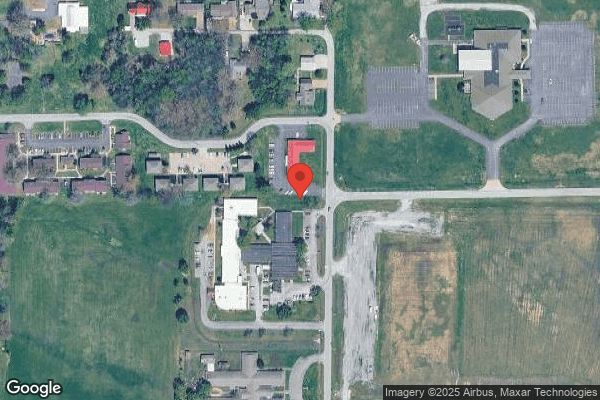
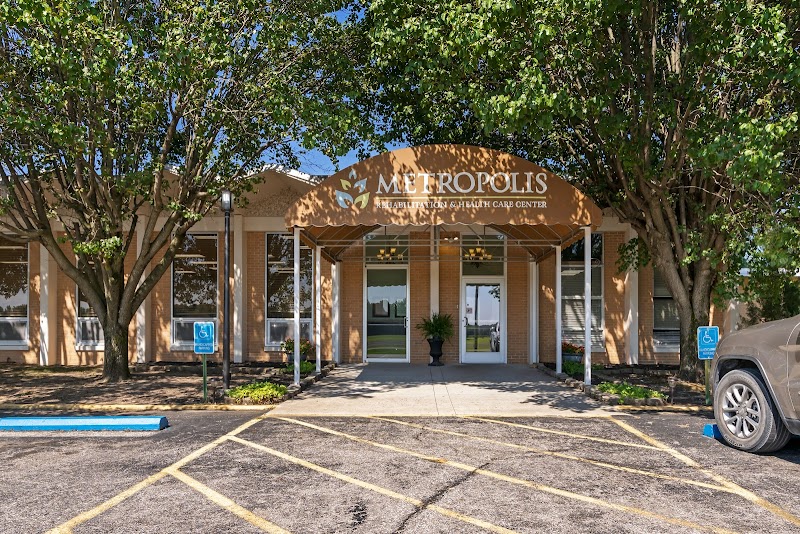
2299 METROPOLIS STREET, METROPOLIS, IL 62960 (618) 524-2634
For profit - Corporation 101 Beds TUTERA SENIOR LIVING & HEALTH CARE Data: November 2025
Trust Grade
25/100
#383 of 665 in IL
Last Inspection: May 2025

Inspected within the last 6 months. Data reflects current conditions.

Overview

Metropolis Rehab & HCC has received a Trust Grade of F, indicating significant concerns and a poor reputation among nursing homes. It ranks #383 out of 665 facilities in Illinois, placing it in the bottom half, and #2 out of 2 in Massac County, indicating that only one local option is better. While the facility's trend is improving, having reduced issues from 9 in 2024 to 4 in 2025, serious staffing problems persist, with a low staffing rating of 1 out of 5 stars and a turnover rate of 43%, which is below the state average. The facility has incurred $43,455 in fines, which is average, but there have been serious incidents, such as residents suffering injuries due to inadequate assistance during transfers, leading to significant harm. Despite these weaknesses, the health inspection score is relatively good at 4 out of 5 stars, indicating some strengths in the facility's overall operations.

Trust Score
F
25/100
In Illinois
#383/665
Bottom 43%
Safety Record
High Risk
Review needed
Inspections
Getting Better
9 → 4 violations
Staff Stability
○ Average
43% turnover. Near Illinois's 48% average. Typical for the industry.
Penalties
○ Average
$43,455 in fines. Higher than 54% of Illinois facilities. Some compliance issues.
Skilled Nurses
⚠ Watch
Each resident gets only 27 minutes of Registered Nurse (RN) attention daily — below average for Illinois. Fewer RN minutes means fewer trained eyes watching for problems.
Violations
⚠ Watch
17 deficiencies on record. Higher than average. Multiple issues found across inspections.
★★☆☆☆
2.0
Overall Rating
★☆☆☆☆
1.0
Staff Levels
★☆☆☆☆
1.0
Care Quality
★★★★☆
4.0
Inspection Score
Stable
2024: 9 issues
2025: 4 issues

The Good

  • Full Sprinkler Coverage · Fire safety systems throughout facility
  • No fines on record
  • Staff turnover below average (43%)

    5 points below Illinois average of 48%

Facility shows strength in fire safety.

The Bad

2-Star Overall Rating

Below Illinois average (2.5)

Below average - review inspection findings carefully

Staff Turnover: 43%

Near Illinois avg (46%)

Typical for the industry

Federal Fines: $43,455

Above median ($33,413)

Moderate penalties - review what triggered them

Chain: TUTERA SENIOR LIVING & HEALTH CARE

Part of a multi-facility chain

Ask about local staffing decisions and management

The Ugly 17 deficiencies on record

5 actual harm
Aug 2025 1 deficiency
CONCERN (D) 📢 Someone Reported This

A family member, employee, or ombudsman was alarmed enough to file a formal complaint

Potential for Harm - no one hurt, but risky conditions existed

Free from Abuse/Neglect (Tag F0600)

Could have caused harm · This affected 1 resident

**NOTE- TERMS IN BRACKETS HAVE BEEN EDITED TO PROTECT CONFIDENTIALITY** Based on interview and record review the facility failed to ensure a resident was free from verbal and physical abuse from staff...

Read full inspector narrative →
**NOTE- TERMS IN BRACKETS HAVE BEEN EDITED TO PROTECT CONFIDENTIALITY** Based on interview and record review the facility failed to ensure a resident was free from verbal and physical abuse from staff for 1 of 9 (R1) residents reviewed for abuse in the sample of 9.Findings include:R1's admission record documents an admission date of 12/07/23 with diagnoses including: Alzheimer's disease, dorsalgia, type 2 diabetes mellitus, speech and language deficits following other cerebrovascular disease, bipolar disorder, dementia, unsteadiness on feet, cognitive communication deficit, acute kidney failure, muscle weakness, difficulty in walking, and depression. R1's Minimum Data Set, dated [DATE] documents a brief interview of mental status (BIMS) of 09 indicating R1 is moderately impaired. An incident report sent to the Illinois Department of Public Health with a final reportable date of 8/19/25 documents in part, . An allegation of inappropriate staff behavior towards resident (R1) was reported to the Abuse Coordinator on 8/14/25. Employee's (V6) CNA, (V5) CNA, (V4) LPN were immediately suspended, pending investigation . (V5), C.N.A., reports that (R1) had feces on his hands, bed and body and was very agitated. (V6) entered the room when she heard (R1) cursing. (R1) immediately used racial slurs towards (V6) once she entered the room, because she was being rude to him. (V5), reports, (V6) placed her hands over (R1's) mouth to get him to stop calling her the N word. (V6) exited the room, while I continued to care for (R1) and his roommate . (V6) reports, I overheard (R1) hollering at (V5), C.N.A., I finished with the resident I was caring for and went to check in to see if I could be of assistance. (R1) was soaked with urine and covered in feces and refusing care. I attempted to calm him down when he started using racial slurs towards me, I then left the room in frustration! Interview with (R1), he reports, a boy and girl came into his room and put him to bed roughly and held him down. He said, it happened sometime after supper, unsure exact time. (R1) denies anyone holding their hand over his mouth. (R1) denies injury, denies being scared to stay here and feels safe .IDT (Interdisciplinary Team) met and determined to substantiate allegations of abuse towards (V5), C.N.A. and (V6), C.N.A. for allegedly holding (R1) down to clean him up from where he was soiled and for (V6) using a rude tone of voice towards him. On 08/17/25 at 3:41 PM, R1 stated she held his arms down, he didn't want to go to bed. R1 stated, he doesn't remember her name, that girl, he knows what she looks like. R1 stated then she got mad and she yelled at him. R1 stated she yelled he was going to bed and he was to stop. He said he didn't want to, he tried to grab onto something. R1 stated that guy was there, he wears a white thing on his head. R1 stated he usually goes to bed around 9 to 9:30 PM sometimes,10:00 PM. R1 stated sometimes he may lay down for a bit earlier. R1 stated he knows he is in a nursing home but that does not give them the right to do that. R1 stated, he didn't tell anyone, he does want to get into problems or get someone into trouble. R1 stated he was fine and did not feel afraid to stay at the facility.On 08/17/25 at 3:41 PM, R1 was sitting in his wheelchair on the back hall, he was pleasant and did not appear in any distress. On 08/17/25 at 4:05 PM, V2 (Director of Nursing) stated they were notified of the allegation concerning R1 on Thursday and V5 (Certified Nurse Aide), V6 (Certified Nurse Aide), and V7 (Licensed Practical Nurse) were suspended pending the investigation. V2 stated, the investigation is ongoing.On 08/17/25 at 5:30 PM, V7 (Licensed Practical Nurse) stated, she came in to work the evening the incident with R1 happened. V7 stated, she was in a resident's room just down from R1's room and she heard V6 yelling, stop and something like stop trying to get out of bed, then heard her say loudly, You are my problem then she (V6) came out of R1's room. V7 stated, V5 and V6 did not know she was in a room nearby. V7 stated, she did not hear V5 yelling or sounding agitated. V7 stated, what she heard was later in the evening around 9:00 PM. V7 stated, she had not heard anything with R1 earlier in the evening she only heard the incident around 9:00 PM. V7 stated, she checked on R1 shortly after the incident and R1 stated he was fine. V7 stated, she checked on R1 again a little later in the evening and he was sleeping.On 08/17/25 at 7:11 PM, V5 (Certified Nurse Aide/CNA) stated he was working the evening the incident happened with R1. He was working the hall with V6 (CNA). Later in the evening R1 needed changed and cleaned up he had feces on him. V5 stated, he was working on cleaning R1 up and he was having some behaviors but he was still cooperating with him however he was yelling, but it was not bothering him. V5 stated he was just letting R1 say whatever he wanted it was fine, R1 was still doing whatever V5 had asked him to do. V5 stated then V6 (CNA) came into the room to help but she did not have any patience with R1 so he was getting more agitated. V5 stated V6 was holding R1's arms down and covering R1's mouth with her arm to the point R1's words sounded muffled. V5 stated he told V6 a couple times that he (V5) was fine and did not need her help with R1. V5 stated, V6 was getting hateful and yelled at R1 to stop. V5 stated V6 did yell more than that but he was more focused on her arm covering his mouth and that was bothering him (V5) and that is why he kept telling her he didn't need her help. V5 stated, he has only worked at the facility for two weeks. V5 stated, he did not know he had two hours to report this to his supervisors, it was at the end of their shift and he figured he would tell them when he came to work the next day. He came to work the next day and V6 was suspended so he was trying to cover the whole hall for a while and he was concentrating on the residents' needs. Then he was told to talk V1 (Administrator) and he was suspended. He told them he did not hold R1's arms down and he did not yell at R1. R1 was actually doing everything he asked and he was getting him changed and cleaned up just fine.On 08/17/25 at 5:39 PM, V6 (Certified Nurse Aide) stated she was in a room with another resident. V6 stated she could hear R1 yelling, R1 always yells at the workers. V6 stated, she went to check on V5. V6 stated R1 seemed to get more agitated and she left to let him calm down. V6 stated, she assisted another resident and heard R1 still yelling so she went back into the room to see if V5 needed help. V6 stated, she never told R1 he had to go to bed, she never yelled at R1. R1 called her a racial slur and she left the room and did not go back into the room. V6 stated, she typically doesn't have too much to do with R1.On 08/17/25 at 4:17 PM, V9 (Licensed Practical Nurse) stated, she has never had any problems with R1, sometimes when you go to get him up in the morning, he can be ornery but if you just give him a minute and come back he is just fine. Typically, R1 is pleasant and jolly.On 08/17/25 at 4:09 PM V8 (Certified Nurse Aide) stated, she has not seen any staff being mean or yelling at any residents personally. V5 and V6 are suspended but she has never worked with either of them. V8 stated, she has taken care of R1 and he is pretty easy. V8 stated, she has never known R1 to say things that were not true.The facility policy dated 03/2025 titled, Abuse, Prevention and Prohibition Policy documents: Prevention: the resident has the right to be free from verbal, mental, sexual, exploitation, or physical abuse; corporal punishment and involuntary seclusion. The owner, licensee, administrator, employee, or agent of the facility shall not abuse or neglect a resident and much prohibit the misappropriation of resident property.
May 2025 3 deficiencies
CONCERN (D)

Potential for Harm - no one hurt, but risky conditions existed

Deficiency F0578 (Tag F0578)

Could have caused harm · This affected 1 resident

**NOTE- TERMS IN BRACKETS HAVE BEEN EDITED TO PROTECT CONFIDENTIALITY** Based on interview and record review, the facility failed to ensure Practitioner Orders for Life-Sustaining Treatment (POLST) st...

Read full inspector narrative →
**NOTE- TERMS IN BRACKETS HAVE BEEN EDITED TO PROTECT CONFIDENTIALITY** Based on interview and record review, the facility failed to ensure Practitioner Orders for Life-Sustaining Treatment (POLST) status reflected resident wishes as desired throughout the Electronic Health Record for 1 (R74) of 18 residents reviewed for advanced directives in the sample of 38. Findings include: R74's admission Record documented an admission date of [DATE] with diagnoses including: chronic obstructive pulmonary disease, congestive heart failure, and hypertension. R74's admission Record documented Advanced Directive DNR (Do Not Resuscitate). R74's Order Summary Report printed [DATE] documented a [DATE] order for DNR. R74's IDPH (Illinois Department of Public Health) Uniform Practitioner Order For Life-Sustaining Treatment (POLST) Form documented an X marked on the box for YES CPR: Attempt cardiopulmonary resuscitation (CPR). Utilize all indicated modalities per standard medical protocol . This form was signed by R74 and dated [DATE] and signed by the physician. On [DATE] at 1:10 PM, V1 (Administrator) verified R74's medical record should have reflected R74's POLST wishes for CPR to be preformed if R74 was found unresponsive. V1 said she was not sure why R74 was documented as a DNR but V1 would get that fixed. The facility's 3/2025 Cardiopulmonary Resuscitation Policy documented in part . Policy Interpretation and Implementation . 1. If a resident is found unresponsive and not breathing normally, a clinical staff member will verify code status using the medical record. 2. If the resident is a full code, per the medical record, a staff member that is certified in CPR (Cardiopulmonary Resuscitation) will initiate CPR until the emergency response team arrives. 3. If the resident is Do Not Resuscitate (DNR), per the medical record, notify the attending provider .
CONCERN (D)

Potential for Harm - no one hurt, but risky conditions existed

Deficiency F0692 (Tag F0692)

Could have caused harm · This affected 1 resident

**NOTE- TERMS IN BRACKETS HAVE BEEN EDITED TO PROTECT CONFIDENTIALITY** Based on observation, interview, and record review the facility failed to provide therapeutic diets as ordered for 1 (R13) of 6 ...

Read full inspector narrative →
**NOTE- TERMS IN BRACKETS HAVE BEEN EDITED TO PROTECT CONFIDENTIALITY** Based on observation, interview, and record review the facility failed to provide therapeutic diets as ordered for 1 (R13) of 6 residents reviewed for dietary supplements in the sample of 38. Findings Include: R13's admission Record documented an admission date to the facility of 2/23/2024. Diagnoses listed include but not limited to unspecified dementia, severe with agitation, polyosteoarthritis, feeding difficulties, unspecified, dysphagia, and weakness. R13's Minimum Data Set (MDS) dated [DATE], under section C documented that R13 has a Brief Interview for Mental Status (BIMS) score of 03, indicating R13 is severely cognitively impaired. R13's Order Summary Report dated 1/17/2023 documented under Dietary-Supplements, ice cream one time a day for nutrition. R13's Plan of Care dated 5/9/2025 documented a focus area of R13 having a nutritional problem with an intervention to provide and serve diet as ordered. R13's Dietary Note dated 4/11/2025 by V7 (Registered Dietician/RD) documented .ice cream every day, fortified pudding every day, high calorie liquid nutritional supplement 120 milliliters twice a day. Meal consumption at review of available records documented 26-100% which appears usual and stable. No new concerns with chewing or swallowing noted in charting. Continue diet order which offers 100% of needs. Weight has been maintained with current interventions. Monitor intake, weight, and lab values for new concerns. On 05/20/25 at 1:00 PM observed R13 being served a pureed thin diet of chicken alfredo, power potatoes, mixed vegetables, and assorted dessert. No ice cream or substitute supplement served with meal. On 5/20/2025 at 1:05 PM, V5 (Family) stated family is present for every lunch meal. V5 stated, R13 should get ice cream for a supplement at lunch, but the facility had been out of ice cream for a few days. On 05/21/25 at 12:36 PM, R13 was observed being served pureed thin diet of sweet and sour pork, wild rice, broccoli with garlic, mashed potatoes, and assorted desert. No ice cream or substitute supplement was served with lunch meal. Review of R13's meal card documented R13 should be served pureed sweet/sour pork, wild rice, broccoli with garlic, mashed potatoes and assorted desert. Under supplement: 4-ounce assorted ice cream-supplement. On 05/21/25 at 12:39 PM, V6 (Certified Nurse Assistant/CNA) stated the facility had been out of assorted ice cream supplement the last 2 days. V6 stated, she did not know what R13 was supposed to receive in place of the ice cream supplement with her lunch meal. 05/21/25 12:42 PM, V4 (Dietary Director) stated the facility had been out of the assorted ice cream supplement the last 2 days and the ice cream should arrive on the truck this afternoon. V4 stated, R13 should have received fortified pudding in replace of the ice cream the last 2 days with her lunch meal. On 05/21/25 at 1:10 PM, V1 (Administration) stated her expectations are for staff to follow therapeutic diets as ordered.
CONCERN (D)

Potential for Harm - no one hurt, but risky conditions existed

Infection Control (Tag F0880)

Could have caused harm · This affected 1 resident

Based on observation, interview, and record review the facility failed to provide urinary catheter care per current infection control standards for 1 (R57) of 3 residents reviewed for urinary tract in...

Read full inspector narrative →
Based on observation, interview, and record review the facility failed to provide urinary catheter care per current infection control standards for 1 (R57) of 3 residents reviewed for urinary tract infections in the sample of 38. Findings include: R57's admission Record documented an admission date of 3/9/24 with diagnoses including: neurocognitive disorder with Lewy bodies, Parkinson's disease with dyskinesia, and flaccid neuropathic bladder. R57's 5/13/25 Minimum Data Set (MDS) documented a Brief Interview for Mental Status (BIMS) score of 4, indicating R57 had severe cognitive impairment, and was dependent on staff for personal hygiene. R57's Order Summary Report printed 5/22/25 documented a 4/24/24 order for catheter care every shift. On 5/22/25 at 9:54 AM, V9 (Certified Nursing Assistant/ CNA) preformed hand hygiene donned gloves and a gown preparing to provide urinary catheter care for R57. V9 placed a package of wipes on the fitted sheet and pulled out 3 wipes laying them on the fitted sheet. V9 picked up a wipe and wiped R57's perineal area from front to back. V9 carried the wipe across the room to the trash can to throw the wipe away. V9 picked up the trash can by the upper rim and carried the trash can to R57's bedside. V9 did not perform hand hygiene or change her gloves. V9 picked up 3 more wipes from the fitted sheet using 2 to cleanse R57's perineal area with one wipe from front to back and 1 wipe to cleanse R57's urinary catheter tubing from the insertion site outward. V9 did not perform hand hygiene or change her gloves. V9 adjusted R57's flat sheet back into place. V9 changed her gloves but did not perform hand hygiene. V9 used her gloved hand to open the bathroom door looking for a graduated cylinder to empty R57's urinary catheter drainage bag. V9 exited the bathroom and crossed the room using her gloved hand to open the bottom door of R57's night stand and removed a graduated cylinder. V9 emptied R57's urinary catheter bag into the graduated cylinder, stood, carried it to the bathroom opening the door with her gloved hand. V9 emptied the graduated cylinder into the toilet, exited the bathroom, and crossed the room opening R57's nightstand with her gloved hand and placed the graduated cylinder inside. V9 did not perform hand hygiene or change her gloves. V9 picked up the package of wipes off R57's fitted sheet with her gloved hands and placed it on the bedside table. V9 took off her gloves but did not perform hand hygiene. V9 picked up the package of wipes, exited the room, and placed the package of wipes on the supply cart in the hallway. On 5/22/25 at 10:06 AM, V2 (Director of Nursing/ DON) was asked if it was normal practice for packages of wipes to be brought into resident rooms then put back on the supply cart in the hallway, and V2 said yes that is typically what they do. On 5/23/25 at 11:24 AM, V2 said during urinary catheter care she would expect staff to preform hand hygiene and change their gloves if they picked up the trash can. V2 said she would expect staff to preform hand hygiene and change their gloves after preforming urinary catheter care and prior to emptying the urinary catheter drainage bag. V2 said she would expect staff to preform hand hygiene after emptying the urinary catheter drainage bag and prior to picking up wipes to return them to the supply cart. The facility's 1/2017 Catheter Care, Urinary policy documented in part . Purpose . The purpose of this procedure is to prevent catheter-associated urinary tract infections . Infection Control . 1. Use standard precautions when handling or manipulating the drainage system . 2. Maintain clean technique when handling or manipulating the catheter, tubing, or drainage bags. A. Do not clean the periureteral area with antiseptics to prevent catheter-associated UTIs (Urinary Tract Infections) while the catheter is in place . Steps in the Procedure . 1. Arrange supplies so they can be easily reached . 2. Wash and dry your hands thoroughly . 5. Put on gloves . 8. With nondominant hand separate the labia of the female resident . Maintain the position of this hand throughout the procedure . 10. For a female resident: Use a washcloth with warm water and soap to cleanse the labia. Use one area of the washcloth for each downward stroke. Next, change the positon of the washcloth and cleanse around the urethral meatus. Do not allow the washcloth to drag on the resident's skin or bed linen. With a clean washcloth, rinse with warm water using the above technique . 12. Use a clean washcloth with warm water and soap to cleanse and rinse the catheter from insertion site outward . 15. Discard disposable items into designated containers. Remove gloves and discard into designated container. Wash and dry your hands thoroughly .
Dec 2024 1 deficiency 1 Harm
SERIOUS (G) 📢 Someone Reported This

A family member, employee, or ombudsman was alarmed enough to file a formal complaint

Actual Harm - a resident was hurt due to facility failures

Accident Prevention (Tag F0689)

A resident was harmed · This affected 1 resident

**NOTE- TERMS IN BRACKETS HAVE BEEN EDITED TO PROTECT CONFIDENTIALITY** A. Based on observation, interview and record review the facility failed to provide assistance in a manner to prevent falls for ...

Read full inspector narrative →
**NOTE- TERMS IN BRACKETS HAVE BEEN EDITED TO PROTECT CONFIDENTIALITY** A. Based on observation, interview and record review the facility failed to provide assistance in a manner to prevent falls for 2 (R5 and R10) of 6 residents reviewed for falls in a sample of 16. This failure resulted in R10 sustaining a large intracranial hematoma, left eyebrow laceration and a left periorbital hematoma and R5 sustaining a skin tear to right shin and right shoulder along with a forehead laceration requiring 4 sutures. Findings include: 1. R10's admission Record documents an admission date of 12/02/2019 with diagnoses including: acute cystitis without hematuria, unspecified Escherichia coli as the cause of diseases classified elsewhere, encephalopathy, hemiplegia affecting left non-dominant side, history of transient ischemic attack and cerebral infarction without residual deficits, osteoarthritis right shoulder, cerebral infarction, other abnormalities of gait and mobility, other lack of coordination, blepharoconjunctivitis of the left eye, third nerve palsy of left eye, history of covid-19, anxiety disorder, schizophrenia, aphasia following cerebral infarction, other symptoms and signs involving cognitive functions following other cerebrovascular disease, dysarthria following other cerebrovascular disease, muscle weakness, repeated falls, other symptoms and signs involving the nervous system, disorientation, altered mental status, restlessness and agitation, weakness, history of malignant neoplasm of the brain, and epilepsy. R10's Minimum data Set (MDS) quarterly review dated 07/02/24 documents a Brief Interview of Mental Status (BIMS) of 14 indicating R10 is cognitively intact. R10's eating assistance is documented as: setup or clean-up assistance, oral hygiene as: supervision or touching assistance, upper body dressing as: substantial/maximal assistance and roll to right or left as: dependent. R10's Fall risk data collection form dated 9/24/24 documents a score of 29 indicating R10 was a high risk for falls. R10's hospital's discharge summary with an admission date of 09/10/24 and a discharge date of 09/24/24 documents: Hospital Course: Patient (R10) is [AGE] year-old with past medical history of brain tumor, seizure disorder, dementia, hyperlipidemia and hypothyroidism. She had a recent episode of nonresponsiveness at a SNF (Skilled Nursing Facility) unit and was sent in for altered mental status. Patient's (R10) baseline is that she is unable to ambulate and is wheelchair-bound. ER (emergency room) evaluation included CT (computed tomography) of the brain and CT brain perfusion with no evidence of ischemia chest x-ray no acute process CTA (computed tomography angiography) head neck indicated acute ischemia to the left anterior cerebral artery distribution could not be excluded. Her blood glucose was initially 60 (milligrams/deciliter) and she was given D10 (dextrose 10%) patient was admitted to the hospitalist service and neurology was consulted. She was also found to have a UTI (urinary tract infection) and antibiotics were started. MRI (magnetic resonance imaging) of the brain recommended by neurology showed no acute abnormalities, EEG (electroencephalography) showed generalized slowing, echo indicated normal LV (left ventricular) size with an EF (ejection fraction) of 55-60 (%). Neurology felt patient was suffering from encephalopathy related to covid infection. Feeding tube was placed due to continual failure of swallowing eval. She is to have a video swallow eval today. Patient had trouble with hyponatremia but that has improved with fluid restriction and urea sodium after hypertonic NICU (neonatal intensive care unit). She was transition to p.o. (per oral) Cortef . Pts (patient's) sodium is normalized. Video swallow evaluation revealed no aspiration. Diet recommendations in dc (discharge) summary. Pt will transition back to snf. R10's MDS significant change review dated 09/29/24 documents a BIMS of 05 indicating severely impaired. R10's eating assistance is documented as: dependent, oral hygiene as: dependent, upper body dressing as: dependent and roll to right or left as: dependent. R10's Care Plan documents a focus area of: R10 is at risk for falls with a date initiated of 04/03/2021. Interventions included: dated 07/24/2024 of anti-slip mat in seat of wheelchair and dated 07/08/24 of do not leave resident alone when sitting on the side of the bed. R10's care plan documents a focus area of: R10 has a history of CVA (cardiovascular accident) with a date initiated of 04/12/2021 and interventions including: monitor/document communication skills, document baseline if resident is presenting problems with cognitive function and communication, obtain order for speech therapy consult to evaluate and treat dated 03/23/2022, monitor/document residents abilities for ADLs (activities of daily living) and assist resident as needed. Encourage resident to do what he/she is capable of doing for self dated 04/12/2021, and monitor/document/report to MD (medical doctor) PRN (as needed)) for neurological deficits: level of consciousness, visual function changes, aphasia, dizziness, weakness, and restlessness dated 04/12/2021. R10's care plan documents a focus area of: R10 has left hemiplegia/hemiparesis related to stroke with an initiated date of 07/29/2022 and interventions of: give medications as ordered, monitor/document for side effects and effectiveness dated 07/29/2022, obtain and monitor lab/diagnostic work as ordered, report results to MD and follow up as indicated dated 07/29/2022, pain management as needed, see MD order, provide alterative comfort measures PRN dated 07/29/2022, and PT, (physical therapy) OT (occupational therapy), ST (speech therapy) evaluate and treat as ordered dated 07/29/2022. New interventions added 10/7/24 include, resident is working with therapy in tilt/reclining chair with anti-skid mat in place, dated 10/07/24 of will reassess for safety upon resident's return from the hospital, and dated 10/08/24 of: keep resident's tilt/recline chair in reclined position until staff is ready to assist with meals. Interventions also included: dated 07/24/2024 of anti-slip mat in seat of wheelchair and dated 07/08/24 of do not leave resident alone when sitting on the side of the bed. R10's final investigation report submitted to IDPH (Illinois Department of Public Health) dated 10/10/24 documents: (R10) age [AGE] with diagnoses of Cerebral infarction, hemiplegia affecting left side, encephalopathy, personal history of TIA (transient ischemic attack), osteoarthritis of right shoulder, epilepsy, major depressive disorder, aphasia, schizophrenia, and personal history of malignant neoplasm of the brain. On 10/7/24 R10 sustained a fall when she sat forward in her tilt/recline chair and fell to the floor. Licensed staff initiated a head-to-toe assessment. The resident voiced complaints of pain to her face and head. Logged rolled to her back to monitor airway. Laceration noted to forehead. First aid administered. No loss of consciousness. Resident left in position d/t (due to) potential for FX (fracture). V31 (Medical Director) notified and an order received to send to ER for evaluation. POA (power of attorney) notified of occurrence and pending transfer. Resident transferred per ambulance to ER for evaluation and treatment. Resident admitted to hospital with DX (diagnosis) of intracranial hematoma without loss of consciousness. Returned to facility on 10/9/24 with hospice referral. Laceration above left eyebrow closed with steri -strips. Care plan reviewed and updated On 11/27/24 at 8:24 AM, V22 (Certified Nurse Aide) stated, R10 could sit up, she had head and neck control, she would also scoot herself forward in her chair. V22 stated, on the day R10 fell out of her wheelchair (10/07/24) everyone was in the dining room. V22 stated she pushed R10 up to the table and positioned her up so that she could eat without choking. V22 stated she was up at the kitchen window getting R10's food so she could assist her and she heard R10 fall. V22 stated, she thought R10 fell sideways out of her chair because she didn't hit the table and the way she was laying on the floor. V22 stated, there were other CNAs in the dining room, but no one right next to R10. V22 stated, when R10 came back after, she believes she had a stroke, she was not as good, she was more confused, her speech was more slurred, she would fall asleep when they were assisting her to eat and she was switched to a thickened liquid and puree diet. V22 stated, she was educated after R10 fell to have her food in front of her before she puts her in the upright position. On 11/26/24 at 4:05 PM, V6 (Physical Therapy) stated she would expect someone to be there when R10's chair was in the fully inclined position. V6 stated R10 returned to the facility after her last stroke on 09/24/24 with multiple declines, she had low motivation to bend forward also. On 11/27/24 at 9:56 AM, V4 (Director of Rehabilitation) stated prior to 10/07/24 when R10 had her last fall, speech language was working with R10 due to her decline after her last stroke. R10 was lethargic and they changed her diet to honey thick liquids and puree food. R10 could support her head and trunk to a degree. On 11/27/24 at 10:10 AM, V25 (Therapy) stated she had evaluated R10 on 09/25/24. R10 would ebb and flow and sometimes she could be lethargic and obstinate during mealtime. She would expect her to have her food and then be put in the upright position in her wheelchair. They were currently working on core strength and reaching abilities with her. V25 stated R10 had recently been hospitalized just prior to her fall and she had more limited abilities. R10 was out for over 10 days, her wheelchair was changed to a wheelchair that looks like a recliner on wheels that the feet platform does not raise, her swallow function changed, she was no longer the same after the hospital stay. After the hospital stay she was deconditioned, she was very different than she was prior to her hospital stay from the stroke. R10's therapy note dated 09/26/24 documents: patient (R10) demonstrates L (left) lateral lean, sacral sitting, occasional anterior leaning forward in w/c (wheelchair) increasing fall risk. R10 presents with decreased alertness and does not respond to verbal cures for adjusting self in w/c, therapist can readjust and as day progresses R10 will have to have multiple repositioning in standard w/c. Provided R10 with tilt in space w/c and feature of recline back. R10 has foot board to provide support for BLE (both lower extremities) in neutral position. Staff education provided on patient to be tilted back when not in line of sight, when R10 is at mealtime, or in line of sight, may be placed in a neutral position. Provided nonskid mat under bottom in order to prevent sliding forward with chair having an anti thrust cushion feature in chair. Response to session interventions: presented with decreased alertness, not following verbal cues or tactile cues. R10's progress note dated 10/07/24 at 5:20 PM documents: staff heard a loud crash and found resident laying on the floor face down. Chair had been reclined back in main dining room awaiting meal but when staff turned around chair was straight up. R10's progress note dated 10/07/24 at 5:30 PM documents: EMS (emergency medical services) here to transport resident to ER for evaluation and treatment for fall. R10's progress note dated 10/08/24 at 12:38 AM documents: called ER and spoke with nurse on update of resident. ER nurse reports resident is being admitted to the unit due to a brain bleed. R10's progress note dated 10/08/24 at 6:29 AM documents: spoke with ICU (intensive care unit) nurse. Resident admitted with intracranial hematoma without loss of consciousness. R10's hospital daily progress note dated 10/08/24 documents: subjective: has had some headaches but no new neurologic deficits from her baseline. Summary: [AGE] year old female with remote history of right temporal lobe tumor resection, previous stroke with residual speech and cognitive deficit, residual left-sided weakness, seizure disorder, dysphagia on modified diet, recently hospitalized with encephalophy in setting of covid infection, hyponatremia, UTI (urinary tract infection) found to have adrenal insufficiency, presenting back from nursing facility after sustaining a traumatic fall with noted large intracranial hematoma, along with left eyebrow laceration, and a left periorbital hematoma, Laceration repair in ED (emergency department). (R10's) aspirin and Plavix was stopped. (R10) was given platelets and DDAVP (desmopressin) following initial presentation. Neurosurgery consulted. Monitored further with serial neuro (neurological) checks. Follow-up CT (computed tomography) head appeared stable. R10's neurosurgery consultation dated, 10/08/24 at 7:21 AM documents: the patient (R10) is a 55 y.o. (year old) female who presented to the ED (emergency department) on 10/2024 after she fell out of a chair in her nursing home striking her head. She has a neurosurgical history that is significant for prior brain tumor resection, though no records are available and no family is at bedside to provide further information and she is a very poor historian. She apparently resides in a nursing home due to chronic left hemiparesis and cognitive difficulty. She fell from a chair to the floor at her facility, striking her head and sustaining a laceration. She was brought to the ED where a CT revealed intracranial hemorrhage, prompting neurosurgical consultation. She has been observed overnight in the ED due to a lack of beds in the ICU. She currently endorses headaches, however she has delayed speech and difficulty expressing herself at baseline. She will follow commands in all extremities with baseline left-sided weakness. Records from the nursing home state she takes ASA (acetylsalicylic acid (aspirin)) and Plavix, though the reasons are unclear. She was given Platelets and DDAVP in the ED. R10's progress note dated 10/09/2024 at 5:41 PM documents, Res (resident) back from hospital and nonverbal. EMS said res had not said a word the whole transport. Res v/s (vital signs) wnl (within normal limits). Left eyebrow laceration dried blood noted and bruised face and eye with left eye swollen shut. Res to have hospice consult and DNR. Noted DNR signed by her sister and not her POA. Res made comfortable in bed. R10's progress note dated 10/13/24 documents: EMS here to transport resident to hospice center. On 11/27/24 at 2:08 PM, V27 (Family) stated, R10 was diagnosed with Covid and a UTI and they had got her back to the facility and she fell in the dining room. They (the family) decided to send her to hospice in another state due to brain bleed causing seizures. On 11/27/24 at 3:06 PM, V1 (Administrator) stated when R10 fell in the dining room on 10/07/24 she was put in the upright position for eating and then the staff went to get her food from the window and she fell. V1 stated, she would have expected them to get her food, come back, and then put her in the upright position. R10's Death Certificate documents R10 died on [DATE] with the cause of death listed as intracranial hemorrhage. Other significant condtions contributing to death include: temporal lobe tumor, cerebrovascular accident with sided residual weakness and seizer disorder. The manner of death is marked as natural. On 12/04/24 at 11:38 PM, V30 (Nurse Practitioner) stated, her and V31 (Medical Director) had looked at R10's diagnoses and medical history extensively prior to taking R10 on as a patient. R10 has had a couple brain bleeds prior to the fall on 10/07/24. R10 had CVA residual affects from how the body heals and reroutes, therefore it was likely that she would have another CVA. R10 had CVA's prior. V30 stated, no she does not believe the fall on 10/07/24 hastened or exacerbated R10's death. R10 had a personal history of brain cancer, CVA's, and schizophrenia and that would probably lead R10 to have another cerebral infarction. Another CVA would cause her to fall. After her last hospital visit her and V31 were going to discuss with R10's family hospice care for R10. There is no way she would say the fall hastened or caused her death. R10's brain neoplasm was affecting her ocular nerve. Based on her history and disease process there is no way she can say that fall caused her death. Due to her past diagnoses with her current prognoses and the recent encephalopathy due to covid they can not say what all that would cause and would affect. There are many different variables with covid and how it has affected systems and exacerbated disease processes. V30 stated based on R10's history, disease processes and recent diagnoses there is no way she can say that event (the fall) caused her death her diagnoses and disease process was an affecting factor. 2. R5's admission Record documents an admission date of 09/11/2024 with diagnoses including: dementia, xerosis cutis, other atrophic disorders of skin, muscle weakness, acute kidney failure, full incontinence of feces, lack of coordination, urinary incontinence, altered mental status, and cognitive communication deficit. R5's MDS dated [DATE] documents a BIMS score of 00 indicating severe impairment. R5's care plan documents a focus area of: R5 has an ADL self care performance dated 09/12/2024 with interventions to include: Bed Mobility: the resident requires 1 staff participation to reposition and turn in bed with date initiated of 9/12/24, Transfer: The resident requires 1 staff participation with transfers with date initiated 9/12/24. A new intervention dated 10/18/24 included Side rails: quarter rails up as per V31's order for safety during care provision, to assist with bed mobility. Observe for injury or entrapment related to side rail use. Reposition PRN to avoid injury. R5's care plan documents a focus area of R5 is at risk for falls and has had an actual fall d/t generalized weakness, poor nutritional status, incontinence, history of falls with a date initiated of 09/12/2024 and an intervention of: place quarter rails to bed that can be placed in upright position during cares to prevent falls from air mattress. Until bedrails placed two CNAs at a time when giving incontinence care with a date of 10/17/2024. R5's Care plan also lists a focus are, (R5) has limited physical mobility date initiated 9/12/24. Interventions included, Mobility: the resident requires 1 staff participation for mobility with date initiated 9/12/24. R5's final report to IDPH dated 10/22/24 documents: On October 16th approximately 1850 (6:50 PM) the C.N.A was assisting the resident with incontinence care, the resident scooted to the side of the bed and rolled off and hit her head. The C.N.A called for the nurse. The resident was noted with a cut to her right forehead, skin tear to right shin and right shoulder. The resident denied any other pain or discomfort, ROM (range of motion) assessed and was WNL (within normal limits). MD/POA informed. Orders to have resident evaluated in ER. The resident returned from ER with four sutures to her forehead. Orders to remove sutures in 5-7 days. Follow up with left ovarian mass. Investigation: The resident was seen in ER as stated above and returned to facility. During ER visit a CT scan of head, spine and pelvis was completed and was negative for any acute intercranial abnormality. CT of spine was negative for any acute cervical fracture. CT scan of pelvis incidentally showed an ovarian mass and constipation. Orders received to remove sutures in 5-7 days, order placed to remove on 10/25/24. The resident has had a pain level of 1-2 and denied need for any PRN (as needed) medications. Bruising is noted to forehead and beneath eye fading in color. The resident did have a BM (bowel movement) on 10/17/24. The resident has resumed her normal activities. The resident prefers to stay in bed and receive her meals and care in her room. The DON (Director of Nursing) had a discussion with the POA regarding the air mattress and changing her mother to a regular pressure reduction mattress, POA did not want to change mattress due to age and weight to prevent any skin issues. The DON offered quartered side rails up during provision of care. POA/daughter agreeable to quarter side rails. Bed kept in low position and call light in reach. Care plan updated with interventions. On 11/22/24 at 1:57 PM, V8 (Certified Nurse Aide/CNA) stated, she was providing care for R5 when she fell out of bed. V8 stated, R5 was in the middle of the bed and she rolled R5 onto her side, she is little and has never moved when providing care for R5 until she got these sores on her bottom. Previously when she would wipe her she would twitch or grunt but never move much. The day when she fell she was wiping her bottom because she had a bowel movement and she jerked and moved and rolled off of the bed. She would never roll before when providing care. R5 had always been a one person assist when providing care. After R5 fell, a second person would always go in to assist when providing care until she got her siderails. R5 can hold on to the side rails fine while providing care. R5's sores on her bottom have healed a lot so she does not jerk or twitch while providing care anymore. R5's bed is raised higher than the 18 inches or so off the floor when providing care, she would guess the bed would be approximately 2.5 feet off the ground. On 11/22/24 at 2:20 PM, V8 demonstrated to this surveyor the height of the bed when care would be provided, which was approximately 2.5 feet off the ground. On 11/22/24 at 2:20 PM, R5 was laying in the center of her bed she had approximately seven inches from her shoulders to the edge of the bed. On 11/22/24 at 4:25 PM, V9 (CNA) stated she had provided care for R5 before, and she had never moved before while providing care but she would swat at you on occasion. R5 did not have any sores when she had provided care for her. R5's progress note dated 10/16/24 at 6:50 PM documents: resident (R5) had rolled off the bed while CNA providing incont (incontinence) care, resident has laceration to R (right) forehead, skin tear to R shin, and skin tear to R shoulder. R5's hospital note dated 10/16/24 at 10:36 PM documents: CT of the head was negative for any acute intracranial abnormality. CT of the chest was negative for anything acute. CT of the cervical spine was negative for any acute cervical spine fracture. CT of the abdomen pelvis did show a left ovarian mass and constipation as well. Laceration to the right forehead was repaired. Patient will be discharged back to the nursing home. Sutures should be removed in 5 to 7 days. Will advise nursing home staff of constipation and left ovarian mass as well. Patient will be discharged shortly in stable condition. R5's hospital note dated 10/17/24 at 1:45 AM documents: subjective: history of present illness: [AGE] year old patient who presents to the emergency department status post fall. The patient is unable to give any history. It is reported that the patient fell from bed. She was lying in bed at (the facility) and fell approximately 2 feet onto the floor. No LOC (loss of consciousness) reported. The patient has a bandage on her head. R5's progress note dated 10/17/24 at 1:25 AM documents: resident (R5) returned to facility with orders to remove sutures in 5 -7 days. Follow up with left ovarian mass. R5's progress note dated 10/22/2024 at 3:33 PM documents: left message for (family) regarding the need to order side rails. Informed (her) that two CNAs will provide incontinence care for safety until quarter side rails placed. On 11/27/24 at 3:06 PM, V1 stated she was not at the facility when R5 fell from her bed, therefore she did not do the investigation. V1 stated she would not expect residents to fall out of bed during care. V1 stated, they put an intervention in of two CNAs to provide care for R5 until she was evaluated and received the siderails. The undated facility policy titled, Fall Prevention documents: the facility shall ensure that a fall management program will be maintained to reduce the incidence of falls and risk of injury to the resident and promote independence and safety A fall is the unintentional coming to rest on the ground, floor, or other lower level. If a resident loses balance and would have otherwise fallen if not for someone intervening is considered a fall, includes witnessed and unwitnessed falls, includes with or without injury. Serious injury includes but not limited to: fracture, laceration requiring sutures, any falls related to injury requiring an evaluation in the emergency room or admission to the hospital. B. Based on interview, observation, and record review the facility failed to provide adequate supervision to prevent elopement for 1 (R6) of 3 residents reviewed for elopement in a sample of 16. Findings include: R6's admission record documents an admission date of 09/28/21 with diagnoses including: dementia, cerebral ischemia, generalized anxiety disorder, muscle weakness, lack of coordination, difficulty in walking, and cognitive communication deficit. R6's Minimum Data Set (MDS) dated [DATE] documents a Brief Interview of Mental Status (BIMS) score of 07 indicating cognition is severely impaired. R6's Care plan contains a focus area date initiated 7/8/24 documenting: R6 is an elopement risk/wanderer AEB (As Evidenced by) due to anger with placement within the facility. Interventions include distract resident from wandering by offering pleasant diversions, structured activities, food, conversation, television, book. Resident prefers: sitting in her room with her husband, also church activities dated 07/15/24 and wander alert device # model 4221-8698 dated 07/10/2023. A recent intervention includes: assist R6 to ambulate to her room or the common area in her hallway after meals in main dining room to prevent attempts of elopement dated 10/30/24. R6's elopement assessment dated [DATE] documents: section: 1. Elopement Risk: a. is the resident cognitively impaired and independently mobile (with or without a device)? with yes marked. 'History of Elopement': b1. Does the resident have; with 1. A history of elopement, 2. A desire to leave the facility, and 4. Wandering activity all marked. 'Elopement Risk Factors': b2. Does the resident 6. Have a diagnosis of Alzheimer's disease or dementia marked. C. documents 'yes' for is the resident at risk for elopement, d. documents: 1. Application of electronic monitoring bracelet 3. Picture in elopement book for: 'what interventions were put in place to prevent resident from eloping. The area 'Elopement Needs' area documents: focus: R6 is an elopement risk/wanderer AEB (As Evidenced by) due to anger with placement within the facility. The resident is an elopement risk/wanderer AEB with Goals marked as R6 will not leave facility unattended through the review date and R6's safety will be maintained through the review date, 'intervention' distract resident from wandering by offering pleasant diversions, structured activities, food, conversation, television, book. Resident prefers sitting in her room with her husband, also church activities; intervention of wander alert and intervention of elopement/wandering risk, anger with placement within the facility. Intervention: 1. Offer to turn the tv to a station that R6 likes 2. Offer to sit and talk with R6 and see if you are able to calm her down 3. Call V26 (family) to talk with R6 to calm her down. R6's incident report dated 11/01/24 documents: The resident (R6) was last seen by staff approximately 1800-1810 ( 6:00 PM - 6:10 PM) in the main dining area. The resident did not mention leaving the facility to staff. The staff working with the resident were all interviewed, and statements obtained and reviewed. Unable to interview roommate as roommate has Alzheimer's diagnosis. Approximately 1800 -1810 on October 28th was the last time staff was able to state they saw the resident in the dining room. The temperature was approximately 72-75 degrees and clear with a breeze per weather service at 6pm on the 28th. The resident was wearing a short-sleeved t-shift, a wind breaker type jacket, pants, socks and her rainbow crocs. She was also carrying a blanket on her rollator walker. The resident was located by a staff members spouse less than 100 feet from the facility walking with her rollator near the adjacent business. The staff member's spouse called the staff member who was working at the facility at the time and notified her that he is with a resident from the facility, and he is next door. The staff member's spouse stayed with the resident until staff came out to assist her back to the facility. At approximately 1844 (6:44 PM), the staff went out to assist the resident back to the facility. The resident's wander guard went off when re-entering the facility. 100% head count was completed. All doors in the facility were checked by staff who verified that alarms were working. Elopement education was initiated immediately. The resident (R6) was unable to state which door she may have gone through to leave the facility. During investigation the resident's blanket was found on the picnic table just outside the breakroom door. A nurse leaving the facility at approximately 1838 noted the blanket on the table. The call to inform the facility of the resident outside was at approximately 1844 (6:44 PM). A 100% audit of all elopement assessments was completed and 100% of the residents were reassessed for elopement and care plans were updated as needed. The elopement books at each nurse station were reviewed for accuracy and a new picture of the resident placed in book. 100% of the wander guards were checked and verified for function. 100% of staff were in-serviced on the elopement policy, where the elopement binders are kept and how to react to an alarm sounding. A care plan was scheduled on 10/29 at 2pm with the POA but she was unable to make it to care plan meeting during this busy time of year. The medical director was updated regarding the investigation results. An elopement drill was completed on 10/31/2024. R6's progress note dated 10/28/24 at 6:40 PM documents: this nurse (V16, Licensed Practical Nurse) was notified by CNA (V15,Certified Nurse Aide) that (R6) was outside at storage facility next door. When I got outside (R6) was standing by the storage facility with 3 CNAs (V13, V14, V21) and 2 kitchen (Dietary) staff (V26 and V28). (R6) has been refusing to walk back to the facility with CNA's. I was able to talk R6 into coming back to facility. It was about 70 degrees outside still and resident was wearing a t-shirt, jacket, pants, slipper socks and shoes. She had a blanket at the picnic table and her walker with her. Once back in the building R6 went to bed. (R6's) wander device is on and working. A skin assessment was completed with no issues noted. On 11/26/24 at 11:05 AM the door R6 exited to the location where R6 was located was observed and was approximately 65 feet with no hazards observed. On 11/26/24 at 10:55 AM, V5 (Dietary) stated she received a call from V24 (Family of Employee) at 6:28 PM stating R6 was outside of the facility on the side of the storage units with him. V5 stated she asked V24 to stay with her and she would let staff know. On 11/26/24 at 10:58 AM, V24 (Family of Employee) stated he was over at the storage units on 10/28/24 at just after 6:00 PM when he came out of his unit at approximately 6:25 PM and saw R6. V24 then stated he called V5 at 6:28 PM to tell her R6 was with him and to let staff know. V24 stated he waited by the tree with R6 and staff came out minutes later to get R6 and convince her to go back inside. On 11/27/24 at 8:14 PM, V23 (CNA) stated she was working the day R6 eloped, she stated the last time she saw R6 was approximately between 6:15 and 6:30 PM she believes. One of the kitchen staff came out of the kitchen and said R6 was outside. R6 went out the double doors towards the breakroom is what she was told. V23 stated, she was in a room assisting another resident when R6 got out. They brought R6 back in the same way she went out and she thinks the alarm sounded, she does not specifically remember. V23 stated, usually there is a nurse by that nurse's station around that time. V23 stated she has been i[TRUNCATED]
Oct 2024 1 deficiency
CONCERN (D) 📢 Someone Reported This

A family member, employee, or ombudsman was alarmed enough to file a formal complaint

Potential for Harm - no one hurt, but risky conditions existed

Safe Environment (Tag F0584)

Could have caused harm · This affected 1 resident

Based on observation and interview, the facility failed to maintain a clean homelike environment in rooms of 3 (R7, R5 and R6) of 8 residents reviewed for housekeeping in the sample of 8. The findings...

Read full inspector narrative →
Based on observation and interview, the facility failed to maintain a clean homelike environment in rooms of 3 (R7, R5 and R6) of 8 residents reviewed for housekeeping in the sample of 8. The findings include: 1. On 10/22/24 at 10:00 am, R5 stated that they are not keeping his room clean and his trash can is always full. R5's MDS (Minimum Data Set) dated 10/14/24 note R5 has a BIMS (Brief Interview of Mental Status) of 14 which indicates R5 is cognitively intact. On 10/22/24 at 9:30am, V16 (Family member) said it is often the trash is not emptied. V16 said the trash in her husband's room had not been emptied since Friday (10/18/24). V16 said the housekeepers do not pick up or clean the rooms either. On 10/22/24 at 9:30am, the trash can inside the door of R5's room was piled full and had soda bottles stacked on top. There was no liner in the trash can. 2. On 10/18/24 at 1:00pm, R6 who was alert and oriented to person, place and time stated she does not think the housekeepers do a very good job. She asked if they were supposed to clean a room good before a resident arrives. R6 said she had to tell them to close the door and dust behind it. R6 said there was dust behind it and in her closet when she arrived about a week ago. R6 said her closet had not been dusted either. R6 said when she told them it needed it, they did it. R6 also told surveyor to look at her toilet. On 10/18/24 at 1:00pm, observations were made of the toilet R6's bathroom. There was black matter around the top of the toilet ring that had a mold like appearance. 3. On 10/22/24 at 9:45am, R7 who was alert to person, place and time stated that he doesn't feel they clean well and they don't clean his table off. On 10/22/24 at 9:45am, V18 (Friend) said he comes to visit his friend (R7) almost every day and the trash cans are usually full. V18 said he usually has to throw away trash off of the table in the room and it is usually not cleaned off. On 10/22/24 at 1:30 pm, V17 (Certified Nurse Assistant/CNA) said housekeeping does not keep the rooms clean. V17 said often the trash is overflowing and the floors are dirty. V17 said yesterday some of the floors were so sticky her feet stuck to them. V17 said they do not clean the bathrooms like they should either. On 10/22/24 at 11:00 am, V13 (Registered Nurse) said that housekeeping is bad about not emptying the trash and cleaning the rooms. V13 said she has had to call them before and nobody comes. V13 said if she specifically tells them what she wants done, they will do it, otherwise it won't get done. On 10/18/24 at 1:30 pm, V7 (CNA) said that housekeeping is not doing so good. She said the trash cans are frequently running over and floors are nasty. Facility Daily Patient Room Cleaning chart revised 9/5/17 documents, to A. Announce yourself at the Resident's Door B. Do quick straighten up C. Follow 5 Step room cleaning method. 1. Empty trash. Get the trash out of all rooms first thing. Wipe basket-if necessary replace liner. 2. Horizontal dusting. With a cloth and disinfectant wipe all horizontal (flat surfaces). 3. Spot Clean. With a cloth and disinfectant, spot clean all vertical surfaces 4. Dust mop floor- Use dust mop to gather all trash and debris on floor. Sweep to the door; pick up with dust pan 5. Damp mop floor with germicide solution damp mop floor working from back corner to door. Use Wet floor sign when finished.
Jul 2024 5 deficiencies
CONCERN (D)

Potential for Harm - no one hurt, but risky conditions existed

ADL Care (Tag F0677)

Could have caused harm · This affected 1 resident

Based on interview and record review, the facility failed to provide twice weekly showers for one of one resident (R49) reviewed for ADL (Activities of Daily Living) in the sample of 41. Findings incl...

Read full inspector narrative →
Based on interview and record review, the facility failed to provide twice weekly showers for one of one resident (R49) reviewed for ADL (Activities of Daily Living) in the sample of 41. Findings include: R49's Face Sheet documented an admission date of 10/26/22 and listed Diagnoses including Cerebral Palsy and Diabetes Type 2. R49's 6/6/24 Minimum Data Set (MDS) documented that R49 requires partial or moderate assistance for bathing and hygiene, and has a Brief Interview for Mental Status Score of zero, indicating that R49 is never or rarely understood. R49's Care Plan dated 4/24/24 documented a problem area,(R49) has an ADL deficit related to Cerebral Palsy, with a corresponding intervention, The resident requires one staff participation (assistance) with bathing. On 7/9/24 at 1:30 pm, V12 (R49's Family Member) stated R49 is supposed to be getting a shower twice weekly. V12 stated he is not sure if this is occurring, based on the fact that sometimes R49's hair looks dirty and greasy. R49's Shower Documentation documented that R49 received only one shower on the weeks of 5/5/24, 5/19/24, 5/26/24, 6/2/24, 6/9/24, and 6/30/24. There was no documentation in this record indicating R49 had refused showers. On 7/11/24 at 1:50 pm, V10 (Certified Nursing Assistant/CNA), stated R49's showers are scheduled for the 2:00pm to 10:00pm shift, so she generally does not do R49's showers since V10 works day shift. V10 stated residents get two showers per week. V10 stated resident's hair should be washed during each shower unless the resident prefers otherwise. On 7/11/24 at 1:55 pm, V11, CNA stated R49 usually gets a shower on second shift, but she has showered R49 previously and R49 was compliant. V11 stated resident's hair is to be washed at each shower, and residents are to get two showers weekly. On 7/12/24 at 10:10 am, V2 (Director of Nurses) confirmed that residents are to receive a shower twice weekly, and that hair should be washed with each shower unless the resident prefers otherwise. V2 stated she thinks sometimes R49 refuses a shower and/or hair washing. V2 confirmed there was no documentation to substantiate this, and stated refusals should be documented as such. On 07/12/24 at 12:49 PM, V1 (Administrator) stated the facility does not have policies related to bathing/showering, ADL care, or hair care.
CONCERN (D)

Potential for Harm - no one hurt, but risky conditions existed

Accident Prevention (Tag F0689)

Could have caused harm · This affected 1 resident

**NOTE- TERMS IN BRACKETS HAVE BEEN EDITED TO PROTECT CONFIDENTIALITY** Based on interview and record review, the facility failed to add interventions to prevent falls for one of two residents (R22) r...

Read full inspector narrative →
**NOTE- TERMS IN BRACKETS HAVE BEEN EDITED TO PROTECT CONFIDENTIALITY** Based on interview and record review, the facility failed to add interventions to prevent falls for one of two residents (R22) reviewed for falls in the sample of 41. Findings include: R22's Face Sheet documented an admission date of 11/8/23 and listed diagnoses including Alzheimer's Disease, Diabetes Type 2, and Abnormalities of Gait and Mobility. R22's Minimum Data Set (MDS) dated [DATE] documented a Brief Inventory for Mental Status Score of 10, indicating R22 has moderate deficits in cognition. The same MDS documented that R22 requires the use of a wheelchair for mobility. Review of R22's Fall Investigations documented that R22 sustained falls from self transfers on 11/12/23, 12/8/23, 12/31/23, 1/14/24, 1/28/24, 2/9/24, 2/12/24, 3/14/24, 4/4/24, 4/27/24, 5/12/24, and two falls on 5/22/24. R22's Care Plan dated 6/27/24 documented a problem area, (R22) is at risk for falls. There were no Care Plan interventions added for the 11/12/23, 12/31/23, 1/14/24, 1/28/24, and 4/4/24 falls. On 7/11/24 at 12:03 pm, R22's Care Plan was reviewed with V9 ( Registered Nurse, Care Plan/Minimum Data Set Coordinator). V9 confirmed no new fall interventions were added to the Care Plan on the above referenced dates. V9 confirmed new Care Plan interventions are to be added after each fall. A Fall Policy dated 9/17/19 documented,Following any falls, the facility staff completes an Occurrence Report. Details of the fall will be recorded and potential causal factors identified and investigated. Interventions will be implemented and the Care Plan updated.
CONCERN (D)

Potential for Harm - no one hurt, but risky conditions existed

Incontinence Care (Tag F0690)

Could have caused harm · This affected 1 resident

**NOTE- TERMS IN BRACKETS HAVE BEEN EDITED TO PROTECT CONFIDENTIALITY** Based on observation, interview, and record review the facility failed to provide catheter care in accordance with current stand...

Read full inspector narrative →
**NOTE- TERMS IN BRACKETS HAVE BEEN EDITED TO PROTECT CONFIDENTIALITY** Based on observation, interview, and record review the facility failed to provide catheter care in accordance with current standards of practice for 1 of 2 residents (R24) reviewed for catheter care in the sample of 41. The findings include: R24's admission record notes she was admitted to the facility on [DATE]. The same admission record notes R24's diagnoses to include: cerebral infarction, spastic hemiplegia affecting right dominant side, dysphagia. R24's order summary report dated July 1-July 31 2024 note R24 has a foley catheter (18 fr (French)/10 cc (cubic centimeter) r/t (related to) urinary retention. The same Physician's orders also documents an order dated 6/19/24 for catheter care every shift. R24's MDS (Minimum Data Set) dated 6/26/24 documents R24 has a BIMS (Brief Interview of Mental Status) of 10 which indicates R24 has moderate cognitive impairment. Section H of the same MDS documents R24 has an indwelling catheter. R24's Care Plan notes a focus area of R24 has a catheter. Some of the interventions listed are catheter care every shift and prn (as needed), the resident has an 18 FR/10cc Foley. Position catheter bag and tubing below the level of the bladder and away from entrance room door, monitor/record/report to MD (Medical Doctor) for s/sx (signs/symptoms) of UTI (Urinary Tract Infection): pain, burning, blood tinged urine, cloudiness, no output, deepening of urine color, increased pulse, increased temp, urinary frequency, foul smelling urine, fever, chills, altered mental status, change in behavior, change in eating patterns. On 7/10/24 at 3:30 pm, catheter care was observed on R24, being performed by V6 (CNA/Certified Nurse Assistant) and V7 (CNA). V6 had wash cloths and basin of water with peri wash. Using left hand, she held the catheter where it meets the labia. She then used her right hand to cleanse the catheter with wet wash cloth from the top of the catheter down. This was repeated several times. At no time did she separate the labia or cleanse the urinary meatus. Facility Document labeled Catheter Care, Urinary note (revised 01/2017) with non-dominate hand separate the labia of the female resident. For a female resident: Use a washcloth with warm water and soap to cleanse the labia. Use one area of the washcloth for each downward, cleansing stroke. Change the position of the washcloth with each downward stroke. Next, change the position of the washcloth and cleanse around the urethral meatus. Do not allow the washcloth to drag on the resident's skin or bed linen. With a clean washcloth, rinse with warm water using the above technique. On 7/11/24 at 10:40am, V5 (Interim ADON/Assistant Director of Nursing) said she would expect the labia to be separated when performing catheter on a female resident. On 7/11/24 at 10:45am, V2 (DON/Director of Nursing) said she would expect the labia to be separated when a female resident is receiving catheter care. On 7/12/24 at 9:45am, V6 said she does separate the labia and clean them good when she does catheter care but was just very nervous yesterday and just didn't do it.
CONCERN (D)

Potential for Harm - no one hurt, but risky conditions existed

Tube Feeding (Tag F0693)

Could have caused harm · This affected 1 resident

**NOTE- TERMS IN BRACKETS HAVE BEEN EDITED TO PROTECT CONFIDENTIALITY** Based on observation, interview and record review, the facility failed to administer a residents' tube feeding accordance with p...

Read full inspector narrative →
**NOTE- TERMS IN BRACKETS HAVE BEEN EDITED TO PROTECT CONFIDENTIALITY** Based on observation, interview and record review, the facility failed to administer a residents' tube feeding accordance with physician's orders for 1 of 1 resident (R47) reviewed for tube feeing in the sample of 41. The findings include: R47's admission record documents an admission date to the facility of 7/02/2022 with diagnoses including cerebral infarction, unspecified, gastrostomy status, cognitive communication deficit, other speech and language deficits following other cerebrovascular disease, muscle weakness. R47's Minimum Data Set (MDS) dated [DATE] documents in section K0520 under nutritional approaches in section B. marks yes to a feeding tube. This same document in section K0710, swallowing/nutritional status documents under section B marks an average fluid intake per day by tube feeding of 501 cubic centimeters (CC)/day or more. R47's Care plan with a review date 6/29/2023 documented a focus area of R47's requires tube feeding with interventions listed of the resident is dependent with tube feeing and water flushes. See MD (Medical Doctor) orders for current feeding orders. R47's July 2024 Order Summary documented an order for Nutren 2.0 continuous feeding infuse at 40 ml every hour with 120ML water flush every two hours every shift for nutrition and hydration every shift. NPO (Nothing by mouth). R47's Medication Administration Records dated May 2024-July 2024 documented an order for Nutren 2.0 continuous feeding infuse at 40 ml every hour with 120ML water flush every two hours every shift for nutrition and hydration every shift being completed. On 07/09/24 at 10:31 AM, R47 was lying in bed, head of bed elevated. R47 was alert but not oriented to person, place, or time, and most of her answers were unintelligible. An enteral feeding pump was infusing Nutren 2.0 continuous feeding supplement at a rate of 30 ml per hour into R47's gastric tube. On 7/09/2024 at 1:42 PM, R47 was lying in bed, head of bed elevated. An enteral feeding pump was infusing Nutren 2.0 continuous feeding supplement at a rate of 30 ml per hour into R47's gastric tube. Handwritten documentation on bag dated 7/09/2024, time hung at 11:00 AM at 30 milliliters (ML)/hour in tube feeding orders. On 7/10/2024 at 9:20 AM, R47 was lying in bed, head of bed elevated. An enteral feeding pump was infusing a Nutren 2.0 continuous feeding supplement at a rate of 30 ml per hour into R47's gastric tube. Handwritten documentation on bag dated 7/10/2024, time hung at 3:00 AM at 30 milliliters (ML)/hour in tube feeding orders. On 7/10/2024 at 12:10 PM, V3 (Licensed Practical Nurse/LPN) stated, she is unable to recall the tube feeding order for R47. V3 stated, at this time the infusion rate is running at 30ML/hour but would need to check the order. On 7/10/2024 at 12:15 PM, V2 (Director of Nursing/DON) and V4 (LPN) stated, they are unable to recall the tube feeding order rate for R4. V2 and V4 both stated, the infusion rate on the pump at this time is infusing at 30ML/hour. V4 stated, after review of the order in R47's electronic health record, the infusion rate should be 40ML/hour. The facility's Protocol for Enteral Tube Medication Administration Policy dated May 2019 documents under procedure listed, 5. Caloric content per milliliter is verified before administration to assure the correct dosage is given to achieve caloric objectives .
CONCERN (D)

Potential for Harm - no one hurt, but risky conditions existed

Deficiency F0761 (Tag F0761)

Could have caused harm · This affected 1 resident

Based on observation, interview, and record review the facility failed to label insulin vials and insulin pens with the date of opening for 2 of 5 (R49 and R52) residents reviewed for medication stora...

Read full inspector narrative →
Based on observation, interview, and record review the facility failed to label insulin vials and insulin pens with the date of opening for 2 of 5 (R49 and R52) residents reviewed for medication storage out of a sample of 41. Findings include: 1. R49's face sheet documented an admission date of 6/14/24 with diagnoses including: calculus of gallbladder, type 2 diabetes mellitus, epilepsy, dysphagia, anemia. R49's Order Summary Report documented a 6/16/24 order for insulin Lispro inject 8 unit subcutaneously 3 times a day and a 6/16/24 order for insulin Glargine inject 10 unit subcutaneously at bedtime. On 7/9/24 at 9:57 AM, R49's insulin Lispro and insulin Glargine was observed in the medication cart to be open and without an opening date. On 7/9/24 at 10:03 AM, V4 (Licensed Practical Nurse/ LPN) verified R49's insulin Lispro and insulin Glargine did not have opening dates. V4 said R49's insulin vials would have to be disposed of and new ones would be obtained. 2. R52's face sheet documented an admission date of 11/8/23 with diagnose including: acute kidney failure, type 2 diabetes mellitus, dysphagia, major depressive disorder. R52's Order Summary Report documented an 11/29/23 order for insulin Lispro inject 2 unit subcutaneously before meals and an 11/8/24 order for insulin Glargine inject 10 unit subcutaneously one time a day. On 7/9/24 at 9:57 AM, R52's insulin Lispro and insulin Glargine was observed in the medication cart to be open and without an opening date. On 7/9/24 at 10:03 AM, V4 (Licensed Practical Nurse/ LPN) verified R52's insulin Lispro and insulin Glargine did not have opening dates. V4 said R52's insulin vials would have to be disposed of and new ones would be obtained. On 7/12/24 at 12:48 PM, V1 (Administrator) said she expected all insulin vials would have an opening date on them. V1 said if insulin vials are found not having an opening date they should be disposed of and new insulin vials should be obtained. The facility's May 2019 Medication Storage In The Facility policy documented in part . Medications and biologicals are stored safety (sic), securely, and properly following the manufacturer or supplier recommendations . The facility provided a April 2019 Insulin Storage Recommendations form documenting opened room temperature insulin Lispro and insulin Glargine should be disposed of 28 days after opening.
May 2024 1 deficiency 1 Harm
SERIOUS (G) 📢 Someone Reported This

A family member, employee, or ombudsman was alarmed enough to file a formal complaint

Actual Harm - a resident was hurt due to facility failures

Deficiency F0698 (Tag F0698)

A resident was harmed · This affected 1 resident

**NOTE- TERMS IN BRACKETS HAVE BEEN EDITED TO PROTECT CONFIDENTIALITY** Based on interview and record review the facility failed to provide peritoneal dialysis treatments for 1 of 2 residents (R1) rev...

Read full inspector narrative →
**NOTE- TERMS IN BRACKETS HAVE BEEN EDITED TO PROTECT CONFIDENTIALITY** Based on interview and record review the facility failed to provide peritoneal dialysis treatments for 1 of 2 residents (R1) reviewed for dialysis in a sample of 7. This failure resulted in R1 presenting with a change in condition of confusion and being admitted to the hospital with lethargy and receivng hemodialysis during R1's hospital stay. Findings include: R1's admission Record documents R1's initial admission date to the facility as 03/25/24. The same document lists diagnoses for R1 including but not limited to: End Stage Renal Disease, Dependence on Renal Dialysis, Syncope and Collapse, Muscle Weakness (Generalized), Other Lack of Coordination, and Type 2 Diabetes Mellitus Without Complications. R1's current care plan, with an initiation and revision date of 4/16/24, documents a need of hemodialysis related to renal failure. There was no documentation of the need for peritoneal dialysis prior to this date upon request. R1's Minimum Data Set (MDS) dated [DATE] documents in section C, a Brief Interview for Mental Status (BIMS) score of 13, indicating that R1 is cognitively intact. The same MDS documented in section G, that R1 requires partial to moderate assistance, with rolling left to right, sitting to lying, lying to sitting on a bed, sit to stand, chair to bed transfer, indicating the helper would do less than half the effort. The same MDS documented in section O, Special Treatments, Programs and Procedures, that R1 receives dialysis upon admission and while a resident at the facility. R1's Discharge Planning Summary from the local hospital documents an entry on 3/22/2024 at 3:44 PM, that R1 was informed that this facility can meet her needs and that R1 wanted to talk to her family about her options. This same document has an entry dated 3/25/2024 at 10:22 AM that Patient (R1) was agreeable to rehab and referral sent to facility. An entry dated 3/25/2024 at 12:10 PM, documents (V3-admission Coordinator) accepted patient (R1) to facility with orders prior for peritoneal dialysis prior to (R1) transferring to ensure they can get the equipment prior to patient arrival. This same document dated 3/28/2024 at 9:01am has a late entry note on 3/25/2024 at 2:00pm stating that (R1) was agreeable to bringing her peritoneal dialysis equipment and 2 days' worth of fluids with her to facility while V9 (Family Member) was at bedside and V3 (admission Coordinator) agreeable to R1 going to the facility today. R1's Electronic Health Record (EHR) has no documentation of peritoneal dialysis orders received upon admission. R1's Nurse's Note dated 3/26/2024 at 6:05 PM, by V16 (Registered Nurse/RN), documents called and notified (V17 Nurse Practitioner/NP) that (R1) wouldn't be getting her peritoneal dialysis tonight due to not having all supplies available. Resident (R1) was supposed to bring 2 days supplies but forgot the fluids needed. Resident (R1) vital signs stable and will continue to monitor resident throughout the night. R1's Nurse's Note dated 3/27/2024 at 2:08 PM, documents V10 (Registered Nurse/RN) contacted V8 (Dialysis Registered Nurse) at R1's current dialysis provider regarding peritoneal dialysis orders. V8, states that resident is to use dialysis cycler to run 2 6-liter bags over 9-hour period every night. V10, notified R1 who can provide own dialysis treatment. R1's Nurse's Note dated 3/27/2024 at 8:18 PM documents, (R1) is experiencing a change in condition related to (R1) being confused and needing dialysis. R1's Nurse's Note dated 3/27/2024 at 8:46 PM documents, (V10 RN) notified (V17 Nurse Practitioner) that (R1) was having periods of confusion and unable to set up her peritoneal dialysis treatment. (V10) received orders from (V17) to send (R1) to (out of state) emergency room. (V10) attempted to notify family. On 5/03/2024 at 10:56 AM, V3 (Admissions Coordinator) stated she arranged admission to the facility with the discharging hospital and was aware R1 needed peritoneal dialysis. V3 stated it was understood by the discharging hospital that R1 would need to complete peritoneal dialysis independently while in the facility and would wait to be discharged to the facility until peritoneal dialysis supplies could be ordered and in the facility for R1. V3 stated the hospital case management arranged with R1 and R1's family to have a family member stop at R1's house to pick up the peritoneal dialysis machine with supplies and then bring the patient and supplies to the facility. V3 stated R1 arrived at the facility without her supplies and machine. V3 stated they have had a handful of patients receiving peritoneal dialysis over the years and could not confirm if staff were currently trained to assist R1 with her peritoneal dialysis. On 5/03/2024 at 12:10 AM, V5 (Director of Nursing/DON) stated that she has taken care of R1. V5 stated, her understanding was R1 missed one day of dialysis when she arrived at the facility because she did not have her supplies. V5 stated, R1's medical provider was notified of R1 not having her supplies and R1 was monitored through the night. V5 stated that V2 (Social Services Director) went the next day to meet family to pick up R1's supplies and dialysis machine. On 5/07/2024 at 11:08 am, V5 stated she was the educator for the peritoneal dialysis training for the facility. V5 stated that she used a power point to educate nursing staff. V5 stated she is not aware that a dialysis center staff came to the facility to train the staff and the staff did not have a peritoneal dialysis machine to demonstrate/practice on. On 5/03/2024 at 1:21pm, V2 (Social Services Director) stated he was asked to go meet R1's family at her home to get R1's peritoneal dialysis supplies and machine. V2 stated he did get the supplies and returned to the facility with them but cannot recall what day. V2 stated that R1 did review her dialysis orders with V10 (RN). On 5/03/2024 at 1:45 PM, V7 (Administrator of local Dialysis Company) and V8 (Nurse of local Dialysis Company) both stated, that R1 has been a peritoneal dialysis patient since April 2020 and was completing her treatments independently at home prior to her hospital admission at the end of March. V7 and V8 both stated, R1 would not be able to complete her treatments independently with R1 having a decrease in her physical abilities. On 5/07/2024 at 9:34am, V9 (Family Member) stated that she brought R1 to the facility after stopping at R1's house to retrieve her supplies to complete dialysis in the facility. V9 stated she was notified the next day that they forget the solution. V9 stated she was unable to get the solution to the facility until the next day. V9 stated that V2 did come to meet her at R1's house to pick up the solution on the third day of R1's admission. On 5/3/2024 at 9:39AM, V1 (Administrator) stated that R1 arrived at the facility without her peritoneal dialysis supplies. V1 stated that V3 (Admissions Coordinator) discussed with the hospital prior to discharging R1 to the facility that R1 would have to be able to complete the peritoneal dialysis, independently, and would need all supplies brought to the facility upon arrival. V1 stated that R1 arrived at the facility without her supplies. V1 stated that R1 was monitored through the night and then V2 (Social Services Director) went to meet R1's family at R1's home to get the peritoneal dialysis machine and supplies the next day. V1 stated that once the machine and supplies were brought to the facility, R1 could not complete the steps to start her dialysis. V1 stated R1's medical provider was notified and R1 was sent to the hospital for evaluation. V1 stated if they knew she was not bringing her supplies, they would not have accepted R1. V1 stated there was an issue with V9's (family member) car when she was notified the next day, they needed her to bring R1's solutions to the facility. On 5/07/2024 at 11:43 am, V10 (Registered Nurse/RN) stated she had direct patient care with R1. V10 stated she cared for R1 on day shift, 3/26/2024, after R1 arrived at the facility. V10 stated, that R1 arrived late the prior evening without her dialysis supplies and the facility was in contact with the family the next day to arrange getting the supplies. V10 stated on the third day, V10 and R1 set up the supplies and machine in R1's room. V10 stated she was under the impression that R1 was going to direct the staff on how to use the dialysis machine, however that evening when V16 (RN) went to help R1, R1 was not able to direct staff on how to assist. V10 stated, R1 was then sent out to the hospital since she had been without a dialysis treatment for 3 days. V10 stated that she did have peritoneal dialysis training a year ago by the facility staff, however, could not remember the exact date. V10 stated, she does not feel comfortable assisting with peritoneal dialysis and does not recall being trained by a dialysis facility faculty. On 5/08/2024 at 6:51 AM, V16 (RN) stated that she had direct patient care with R1. V16 stated she was the nurse that took care of R1 when she arrived at the facility her first night around 11:30 pm. V16 stated that R1 had a lot of bags with her dialysis equipment with her, however, R1 refused to set up the equipment and stated she did not need dialysis that evening. V16 stated she came in to work the next night and was told that R1's family was notified that R1 forgot her solution at home to complete her treatments and V9 (family member) was contacted to bring the solution to the facility. V16 stated that V9 notified the facility that her car was broken down and had no transportation to bring the solution to the facility however someone from the facility is welcome to go to her house and pick up the solution. V16 stated she notified V17 (Nurse Practitioner) of R1 missing her treatments because of no solution and was showing no signs of distress. V16 stated she received orders to monitor R1 for any signs of symptoms of distress. V16 stated when she arrived at the facility for the third night in a row, R1 had her supplies to complete her treatment. V16 stated that someone from the facility went to R1's home that day to get her solution. V16 stated R1 was physically unable to complete her dialysis treatment on her own and staff were supposed to assist by giving directions on what solutions to be used and buttons to be pushed on the machine. V16 stated R1's peritoneal dialysis order was received by the day shift nurse from the dialysis company on 3/27/2024 around 2:00pm. V16 stated the day shift nurse and R1 set up all supplies and her machine that day in R1's room. V16 stated around 7:00 pm, she went into R1's room to assist with dialysis and R1 was unable to give directions on how to set up and start treatments. V16 stated she notified the V17 (Nurse Practitioner) and sent R1 to the hospital. V16 stated she attended the peritoneal dialysis training instructed by V5 sometime in 2023. V16 stated she cannot recall if she was trained on a peritoneal dialysis machine during that training. V16 stated, she has not been trained on peritoneal dialysis by a certified dialysis staff member. V16 stated she feels comfortable assisting residents with peritoneal dialysis when they can give directions on their set up, solutions to use, etcetera. On 5/07/2024 at 1:27 pm, V11 (Physician) stated that R1 was his resident completing peritoneal dialysis treatments at home, independently. V11 stated he was notified after R1 was discharged from the hospital to this rehab facility. V11 stated he expects a nursing home facility to have supplies and proper training prior to accepting a peritoneal dialysis resident. V11 stated he would expect if R1 arrived at the facility without her supplies then the facility should have sent her back to the hospital to receive treatment or R1 to her home to get all her supplies to complete her treatment. On 5/08/2024 at 9:24 AM, V17 (Nurse Practitioner/NP) stated R1 arrived at the facility on 3/25/2024 without her dialysis supplies to complete her treatment. V17 stated she was notified the next evening when R1 still had not received her supplies at the facility. V17 stated when she was contacted by the nurse that R1 was unable to complete her treatments the next evening (day 3), she had R1 sent out to the emergency room for evaluation. V17 stated the understanding upon admission to the facility was that R1 was able to complete her dialysis treatments independently, however, R1 was unable to complete the steps or direct the staff on what was needed to initiate the peritoneal dialysis treatment. The facility's Inservice Education Signature Sheet for peritoneal training by V5 (Director of Nursing/DON) with Peritoneal Dialysis (Continuous Ambulatory) procedure was reviewed and had V10 (Registered Nurse/RN) and V16 (Registered Nurse/RN) signatures as having attended the training . R1's Hospital Discharge Summary from an out of state hospital dated 4/3/2024 documents that R1 was admitted to the hospital on [DATE] with a chief complaint of no dialysis in 2 days. The Cumulative Hospital Course and Treatment documents that R1 has End Stage Renal Disease (ESRD) and is on Peritoneal Dialysis (PD) and presented to the emergency room from the rehab center due to lethargy and R1 had not received peritoneal dialysis in at least 2 days. R1 was new to the rehab center, and they were not made aware of her peritoneal dialysis needs. R1 was admitted to the hospital with nephrology consult where a decision was made to change dialysis modality to hemodialysis (HD) and a permcatheter was placed. R1 completed a hemodialysis treatment on 4/03/2024 and was discharged in stable condition to the rehab facility. R1 was to continue hemodialysis treatments, 3 days a week. The same discharge summary documents under Discharge Problem List a principal problem of ESRD needing dialysis and active problems of Lives in a long-term custodial care facility, acute kidney injury, and acute post-hemorrhagic anemia.
Mar 2024 1 deficiency 1 Harm
SERIOUS (G) 📢 Someone Reported This

A family member, employee, or ombudsman was alarmed enough to file a formal complaint

Actual Harm - a resident was hurt due to facility failures

Accident Prevention (Tag F0689)

A resident was harmed · This affected 1 resident

**NOTE- TERMS IN BRACKETS HAVE BEEN EDITED TO PROTECT CONFIDENTIALITY** Based on interview and record review, the facility failed to safely transport a resident in a wheelchair to prevent an accident ...

Read full inspector narrative →
**NOTE- TERMS IN BRACKETS HAVE BEEN EDITED TO PROTECT CONFIDENTIALITY** Based on interview and record review, the facility failed to safely transport a resident in a wheelchair to prevent an accident for 1 of 3 residents (R1) reviewed for accidents in the sample of 6. This failure resulted in R1 receiving an 8 cm (centimeter) laceration over his right eye requiring 10 staples. The findings include: R1's face sheet documents R1 was admitted to the facility on [DATE] with diagnoses including neurocognitive disorder with Lewy bodies, Parkinson's Disease with dyskinesia, with fluctuations, and repeated falls. R1's Minimum Data Set (MDS) dated [DATE] documents in section C, Cognitive Patterns, a Brief Interview of Mental Status (BIMS) score of 01, indicating that R1 has severe cognitive impairment. Section GG, Functional Abilities and Goals, of the same MDS documents that R1 uses a wheelchair as a mobility device, R1 requires partial/moderate assistance (helper does less than half the effort) with sit to stand, walking 10 feet, and walking 50 feet with two turns. The same section documents that R1 requires supervision/touching assistance (helper provides verbal cues and/or touching/steadying and/or contact guard assistance) with wheeling 50 feet in a wheelchair with 2 turns and requires partial/moderate assistance to wheel 150 feet in a wheelchair. R1's Fall Risk Data Collection dated 1/19/24 documents a score of 32 and documents high risk for the category. R1's Fall Incident Report in the Electronic Health Record dated 3/3/24 documents under Incident Description that at approx. (approximately) 1945 (7:45 PM) resident (R1) was being wheeled up the hall in wheelchair towards his room when the nurse witnessed resident lean forward and fall to floor hitting his head. Obvious laceration noted. Staff directed to not move resident. Under Immediate Action Taken it documents Obvious laceration to right side of head noted. New orders received to send to ER (Emergency Room) for eval and treat. The intervention documented is have leg rests on while being pushed in his w/c (wheelchair). R1's Patient Health Summary from the local hospital dated 3/3/24 documents a chief complaint of head laceration and stated complaint of .presents to the ER (Emergency Room) from local nursing home after he apparently fell forward out of his wheelchair striking his head on the ground resulting in a laceration over the right. The same document under Physical Exam stated laceration over the right eye. It is stellate on the medial side almost in a Y-shaped. The 2 arms are 1cm (centimeter) and then the rest of the laceration is 6cm. Extending through the subcutaneous tissue. No visible bone. Under Laceration/Wound Repair it documents the wound length is 8 cm and the wound was repaired with 10 staples. Physician Progress Note on the same document states that a CT (Computerized tomography) head, maxillofacial and cervical were all negative for acute fractures or findings. R1's Care Plan documents that R1 is at risk for falls and documents an intervention of Leg rests to be on the wheelchair when pushing residents with an initiation date of 3/3/24. On 3/7/24 at 2:15pm, V10 (CNA) said she was pushing R1 when he fell. V10 said she takes R1 with her in the wheelchair so she can watch him since he is always trying to get up. V10 said she parked R1 in his wheelchair outside of the room she had to go in. V10 said she was going to answer a call light and the nurse was at her medication cart. V10 said the nurse motioned to her that someone was trying to get up. V10 said she was about 6 doors down. V10 said she didn't pay attention and began pushing him. V10 said she didn't realize that R1 had scooted forward in his wheelchair and put his feet down causing R1 to fall face first on the floor. V10 said she did not have foot pedals on the wheelchair. V10 said they are using foot pedals now with R1 and he won't keep his feet on the pedals. On 3/7/24 at 3:00pm, V1 (Administrator) said she was aware of the foot rests not being on, but was not aware of R1 sitting at the edge of the wheelchair when being pushed. V1 said they implemented the intervention of ensuring the foot rests were on the wheelchair after he fell on 3/3/24. The facility policy titled Fall Policy (revision date 9/17/19) documents that the the facility shall ensure that a Fall management Program will be maintained to reduce the incidence of falls and risk of injury to the resident and promote independence and safety.
Jun 2023 1 deficiency 1 Harm
SERIOUS (G) 📢 Someone Reported This

A family member, employee, or ombudsman was alarmed enough to file a formal complaint

Actual Harm - a resident was hurt due to facility failures

Accident Prevention (Tag F0689)

A resident was harmed · This affected 1 resident

**NOTE- TERMS IN BRACKETS HAVE BEEN EDITED TO PROTECT CONFIDENTIALITY** Based on interview and record review, the facility failed to apply a gait belt while transferring and ambulating 1 of 3 resident...

Read full inspector narrative →
**NOTE- TERMS IN BRACKETS HAVE BEEN EDITED TO PROTECT CONFIDENTIALITY** Based on interview and record review, the facility failed to apply a gait belt while transferring and ambulating 1 of 3 residents (R1) reviewed for falls in the sample of 3. This failure resulted in R1 falling to the floor which resulted in a fracture of the L2 vertebrae. Findings include: R1's admission Record in the medical record documents that R1 admitted to facility on 6/08/2022 with a diagnosis of cerebral infarction, unspecified. R1's Minimum Data Set (MDS) assessment dated [DATE] documents in Section C a Brief Interview for Mental Status (BIMS) score of 15, indicating that R1 is cognitively intact. Section G, Functional Status documents Limited assistance with one-person physical assist with bed mobility, transfers, ambulating, dressing, toilet use, and personal hygiene. R1's Care Plan documents under Focus that R1 is at risk for falls with an initiation date of 6/09/2022 and revision date of 12/13/2022. Under the section Goal it documents that R1 will be free from falls through the review date with an initiation date of 6/09/2022 and revision date of 12/20/2022 and target date of 5/08/2023. Interventions documented include: be sure the resident's call light is within reach and encourage the resident to use it for assistance with an initiation date of 6/09/2022 and revision date of 6/20/2022, ensure personal items are within reach with an initiation date of 6/09/2022, ensure that the resident is wearing appropriate footwear ambulating or mobilizing in wheelchair with an initiation date of 8/31/2022 and revision date of 9/19/2022. R1's Fall Risk Assessment dated 6/08/222 documents score: 9 (Low Risk). R1's Progress Notes dated 5/27/2023, documents It was reported to V4 (Licensed Practical Nurse) by (R1) that (R1) had experienced a fall last night, (R1) has a deep purple bruise on coccyx and (V4) noted (R1) is having problems transferring, (R1) stated It only hurts when they try and stand up. (R1) explained that she was using rollator (wheeled walker) with (V5-Certified Nurse Aide), (V5) went to pull blankets back for (R1) to get in bed, (R1) lost balance and landed on buttocks. (V9-Nurse Practitioner) notified and ordered (R1) to emergency room for evaluation. Family made aware. R1's Emergency Department Provider Notes dated 5/27/2023, documents in part .(R1) is a [AGE] year-old white female present to the emergency room with complain of low back pain .(R1) had a fall yesterday .person did not support her back and (R1) fell on the floor on her buttocks .(R1) has a bruise on her lower buttocks and low back .Final Impression, 1. Closed compression fracture of L2 lumbar vertebra, initial encounter. On 6/13/2023, at 9:00 a.m. V1 (Administrator) stated that it was reported that R1 experienced a fall on 5/26/2023 and V5 (CNA) was assisting R1 back from the bathroom and went to pull her bedding back and R1 lost her balance and landed on her buttocks. V1 stated that V5 was educated to follow R1's plan of care and to use a gait belt when transferring or ambulating a resident that requires assistance with transfers and ambulation. On 6/12/2023, at 11:25 a.m., V4 (Licensed Practical Nurse), stated that she was working on 5/27/2023 and was notified by the CNA that R1 was having difficulty transferring and she had noticed a bruise on her coccyx area. V4 stated she went in to assess R1 and observed a deep purple bruise to her coccyx and right buttock area. V4 stated that R1 told her she had fallen the night before. V4 stated she asked R1 if she was having pain and R1 told her she was having a little pain. V4 stated she offered R1 some pain medication at that time and notified the primary physician and made family aware. V4 stated the primary physician ordered for R1 to be sent out to the emergency department for an evaluation and treatment. V4 stated that R1 was sent out to the local hospital and returned with a fracture to her lower back. V4 stated that R1 normally transfers with assistance of one person with a gait belt and ambulates with a rollator walker. On 6/13/2023, at 10:00 a.m., V5 (Certified Nurse Aide) stated he was working the evening of 5/26/2023 and was helping R1 get ready for bed. V5 stated he helped R1 go to the bathroom and when R1 was coming out of the bathroom, he went over to her bed to pull down the bedding and when he turned around R1 had fallen to the floor on her buttocks. V5 stated R1 told him she was fine. V5 stated he notified V8 (Agency LPN), and she came in to look at R1. V5 stated that after V8 looked her over, he helped R1 get up and put her into bed. V5 stated that he did not have a gait belt on R1 when he was helping R1 to and from the bathroom. On 6/13/2023, at 10:15 a.m., V8 (Agency LPN) stated that she was working the evening of 5/26/2023 and was notified by V5 (CNA) that R1 had fallen to the floor while coming back from the bathroom. V8 stated she went into R1's room and assessed R1. V8 stated that R1 did not have any complaints of pain or discomfort at that time and R1 was able to move her extremities with no problems and denied hitting her head. V8 stated that R1 was assisted up and put back to bed with no problems noted. On 6/12/2023, at 10:00 a.m., R1 stated she had a fall recently. R1 stated she was walking back from the bathroom with her walker and V5 (Certified Nurse Aide/CNA) was over at her bed pulling down the bedding on her bed to help assist her get ready for bed. R1 stated she lost her balance and fell into her closet and sat down to the floor. R1 stated that the nursing staff usually have a gait belt on her and walk with her when she is walking with her walker. R1 stated that V5 did not put a gait belt on her at that time. R1 stated she did not have any sudden pain until she got up the next morning and noticed her back was sore. R1 stated that she told the nurse she had back pain and had fallen the night before. R1 stated the nurse checked her out and noticed a bruise on her lower back/bottom. R1 stated she was sent out to the hospital and was told her lower back had a fracture in it. R1 stated she was brought back to the facility after her hospital visit. The facility's Final Report dated 5/27/2023 documents in parts . Staff were educated in the use of a gait belt, the proper way to complete the transfer and the task of preventing any incidents in the future .
May 2023 3 deficiencies 1 Harm
SERIOUS (G)

Actual Harm - a resident was hurt due to facility failures

Pressure Ulcer Prevention (Tag F0686)

A resident was harmed · This affected 1 resident

**NOTE- TERMS IN BRACKETS HAVE BEEN EDITED TO PROTECT CONFIDENTIALITY** Based on observation, interview, and record review the facility failed to ensure pressure ulcers were assessed, treated, and int...

Read full inspector narrative →
**NOTE- TERMS IN BRACKETS HAVE BEEN EDITED TO PROTECT CONFIDENTIALITY** Based on observation, interview, and record review the facility failed to ensure pressure ulcers were assessed, treated, and interventions were implemented timely for 1 of 3 (R66) residents reviewed for pressure ulcers in the sample of 36. This failure resulted in R66 developing a Stage 3 Pressure Ulcer to R66's coccyx which was up to 1 week old before it was assessed and treated. Findings Include: R66's facility admission Record with a print date of 5/24/23 documents R66 was admitted to the facility on [DATE] with diagnoses of fracture of femur, cirrhosis of liver, fracture of ribs, neurocognitive disorder, diabetes, and fracture of vertebra. R66's MDS (Minimum Data Set) dated 4/23/23 documents a BIMS (Brief Interview for Mental Status) score of 02, which indicates R66 has a severe cognitive deficit. This same MDS documents R66 is dependent on staff for bed mobility and toilet use and requires extensive assistance with transfers. This same MDS documents under Section M, R66 is at risk for developing pressure ulcers, has a Stage 2 pressure ulcer, and has the following interventions: pressure reducing device for chair, pressure reducing device for bed, nutrition/hydration intervention, and pressure ulcer/injury care. R66's Braden Scale for Predicting Pressure Sore Risk assessments document a score of 17 on 4/17/23 and a score of 15 on 4/24, 5/1, and 5/8/23. This indicates R66 is at risk for skin breakdown. On 05/24/23 at 9:25 AM, V4 (Registered Nurse/Wound Nurse) was observed administering treatments to the pressure ulcers located on R66's buttocks and coccyx. The area to R66's left buttock was red and opened with the surrounding tissue being red and inflamed. The area to R66's coccyx was covered with yellow slough with the surrounding tissue being red and inflamed. V4 stated R66 came to the facility with the small area on his left buttock and then developed the Stage 3 pressure ulcer to his coccyx after admission. V4 cleaned the areas with wound cleanser and applied calcium alginate to the pressure ulcer on R66's left buttock and applied Santyl, Adaptec, and silicone foam to the pressure area on R66's coccyx. V4 performed hand hygiene per current standards of practice. R66's weekly skin checks document on 4/24/23 there was a pressure ulcer to R66's left buttock with no assessments or measurements notes. R66's weekly skin check dated 5/8/23 documents a pressure ulcer to R66's coccyx and left buttock with no assessments or measurements notes. R66's weekly skin checks dated 5/1, 5/16, and 5/23/23 do not document assessments of pressure areas. R66's progress notes were reviewed from 4/17/23 to 5/24/23 and did not document assessments of pressure areas including measurements, classifications, and/or descriptions. R66's Skin and Wound Evaluation dated 4/18/23 documents a Stage 2 pressure ulcer to left buttock, present on admission to the facility. The assessment documents the pressure ulcer measures 3.1 cm x 2.3 cm x 0.1 cm with no undermining or tunneling. Under Notes the assessment documents, Stage 2 pressure ulcer to left buttock present on admission. Turn/reposition frequently. Arginaid to promote healing. R66's Skin and Wound Evaluation dated 5/8/23 documents the Stage 2 pressure ulcer to R66's left buttock that measures 2.9 cm x 1.1 cm x 0.1 cm. Under Notes the assessment documents, Stage 2 pressure area to buttock stable. Calcium Alginate continues to wound bed covered by silicone bordered foam daily. This indicates the pressure area to R66's left buttock was not assessed from 4/18/23 until 5/8/23. R66's Skin and Wound Evaluation dated 5/15/23 documents the Stage 2 pressure ulcer to R66's left buttock measures 1.2 cm x 0.6 cm x 0.1 cm with no undermining or tunneling. Under Notes the assessment documents, Stage 2 pressure area to left buttock has improved in size. Will continue calcium alginate to wound bed cover with silicone bordered foam daily. R66's Skin and Wound Evaluation dated 5/22/23 documents a Stage 2 pressure ulcer to left gluteus that was present on admission that measures 0.7 cm x 0.3 cm. x 0.1 cm. The assessment documents a light amount of exudate, no odor, attached edges, no pain, no swelling, and normal in color. Under Notes the assessment documents, Stage 2 pressure ulcer to left buttock continues to show improvement. Will continue calcium alginate to wound bed and cover with silicone bordered foam daily. Arginaid daily to promote wound healing. R66's Skin and Wound Evaluation dated 5/8/23 documents a Stage 3 pressure ulcer on R66's coccyx, acquired in house within the last week. The pressure ulcer is measured at 2.1 cm x 0.7 cm x 0.2 cm. Under Notes the assessment documents, Stage 3 pressure area noted to coccyx. 50% yellow slough. 50% granulation tissue noted to wound bed. New order for honey absorbing sheet to wound bed covered by silicone bordered foam daily. Arginaid added to promote wound healing. R66's Skin and Wound Evaluation dated 5/15/23 documents a Stage 3 pressure ulcer on R66's coccyx measured as 3.5 cm x 1.7 cm x 0.2 cm. Under Notes the assessment documents, Stage 3 pressure area to coccyx has deteriorated. Larger in size with 90% yellow slough noted to wound bed. 10% granulation tissue. Honey absorbing sheet to wound bed covered by silicone bordered foam daily. Arginaid daily to promote wound healing. R66's Skin and Wound Evaluation dated 5/22/23 documents a Stage 3 pressure ulcer to coccyx that was acquired in house, approximately one week ago. The assessment documents the area measures 3.0 cm x 1.0 cm x 0.2 cm with no undermining or tunneling. The assessment of the area is documented as no evidence of infection, moderate serous exudate, no odor, attached edges, no swelling, and normal peri-wound temperature. Additional care is documented as turning/repositioning program with no other interventions documented on this assessment. Under Notes the assessment documents, Stage 3 pressure area to coccyx stable. 90% yellow slough noted to wound bed. 10% granulation tissue. New order to apply Santyl ointment to wound bed covered with Adaptec and silicone bordered foam daily. Arginaid daily to promote wound healing. R66's Order Summary Report dated 5/24/23 includes the following physician orders Cleanse stage 2 pressure area to left buttock with wound cleanser. Pat dry. Apply calcium alginate to wound bed. Cover with silicone bordered foam dressing daily and prn (as needed) for soiling or dislodgement until healed. Every night shift for wound healing. Start date: 4/23/23, and Santyl External Ointment 250 unit/gm(gram) (Collagenase) Apply to stage 3 coccyx topically every night shift for wound care apply nickel thick layer Santyl to wound bed. Cover with Adaptec and silicone bordered foam daily. Start date: 5/22/23. This same Order Summary Report documents an order that was discontinued 5/22/23 to cleanse Stage 3 pressure ulcer to coccyx with wound cleanser, apply honey absorbing sheet to wound bed and cover with silicone bordered gauze daily with a start date of 5/8/23. This indicates there was no physician order for treatment of the Stage 2 pressure ulcer on R66's left buttock from 4/17/23 until 4/23/23. R66's Treatment Administration Record (TAR) dated 4/1/23 to 4/30/23 documents an order to Cleanse Stage 2 pressure area to left buttock with wound cleanser. Pat dry. Apply calcium alginate to wound bed. Cover with silicone bordered foam dressing daily and prn (as needed) for soiling or dislodgement until healed. Start date: 4/23/2023. The treatments are signed as being administered as ordered. R66's TAR dated 5/1/23 to 5/31/23 documents an order to Cleanse Stage 2 pressure area to left buttock with wound cleanser. Pat dry. Apply calcium alginate to wound bed. Cover with silicone bordered foam dressing daily and prn for soiling or dislodgement until healed. Every night shift for wound healing. Start Date: 4/23/2023. This TAR documents signatures for all dates except 5/11, 5/14, and 5/20/23, which indicates treatments were administered as ordered on every day except 5/11, 5/14, and 5/20/23. R66's TAR dated 5/1/23 to 5/31/23 documents an order for Santyl External Ointment 250 unit/gm (Collagenase) Apply to Stage 3 coccyx topically every night shift for Wound Care. Apply nickel thick layer Santyl to wound bed. Cover with Adaptec and silicone bordered foam daily. Start Date: 5/22/23. This TAR documents signatures indicating treatments were administered as ordered. This same TAR documents an order to cleanse the Stage 3 pressure ulcer to coccyx with wound cleanser, apply honey absorbing sheet to wound wound bed and cover with silicone, with a start date of 5/8/23 and discontinue date of 5/22/23. This TAR documents signatures on each day indicating the treatments were administered as ordered except on 5/11, 5/14, and 5/20/23. R66 Care Plan dated prior to 5/24/23 did not contain an area related to potential skin breakdown or a pressure ulcer care area. On 05/24/23 at 10:12 AM, this surveyor reviewed R66's care plan with V4 (RN/Wound Nurse) and she confirmed R66 did not have a potential for skin breakdown or pressure ulcer care area on his current care plan. When asked how to tell what, if any interventions were in place to prevent skin breakdown V4 stated she didn't have a good answer for me at that time. R66's current Care Plan documents a Focus area of (R66) has potential/actual impairment to skin integrity r/t (related to) decreased mobility. Left Gluteus, Coccyx, Date Initiated: 5/24/23. The interventions documented for this care area dated 5/24/23 are, Administer medications as ordered. Monitor/document for side effects and effectiveness .Administer treatments as ordered and monitor for effectiveness Document location of wound, amt (amount) of drainage, peri-wound area, pain, edema, and circumference measurements .Encourage good nutrition and hydration in order to promote healthier skin .Evaluate wound for: Size, Depth, Margins, peri-wound skin, sinuses, undermining, exudates, edema, granulation, infection, necrosis, eschar, gangrene. Document progress in wound healing on an ongoing basis. Notify physician as indicated .Inform the resident/family/caregivers of any new area of skin breakdown .Monitor dressing when providing care to ensure it is intact and adhering. Report lose dressing to nurse .Monitor pressure areas for changes in color, sensation, temperature, and report any change to nurse .Pressure redistributing mattress on bed .The resident needs pressure redistributing cushion to protect the skin while up in chair. This indicates there was no care plan implemented related to skin breakdown from 4/24/23 when the Stage 2 pressure ulcer was identified until 5/24/23. On 05/24/23 at 3:22 PM, V9 (Certified Nursing Assistant/CNA) stated the facility staff rotate R66 every two hours and use pillows to keep him off his bottom. V9 stated they keep R66 clean and dry. V9 stated they have been implementing those interventions since R66 was admitted to the facility. On 05/24/23 at 3:24 PM, V15 (LPN/Licensed Practical Nurse) stated R66 didn't have a cushion in his wheelchair. V15 stated R66 was non-weight bearing when he was first admitted to the facility and wasn't up in his wheelchair. V15 stated they had to order a cushion to fit his wheelchair and it hasn't come in yet. V15 stated they keep R66 clean and dry, float his heels, and turn and reposition him every two hours and they implemented those interventions when R66 was admitted . V15 stated R66 had the pressure ulcer to his buttock when he was admitted and the one on his coccyx developed after admission. On 05/25/23 at 10:00 AM, V4 (RN/Wound Nurse) stated R66 should have had a skin breakdown/pressure ulcer care plan in place. V4 stated if the care plan wasn't present the staff would just use standard nursing practice for interventions such as turn and reposition, intake, hydration. V4 stated there is no documented assessment of the Stage 2 pressure ulcer to R66's left buttock until 5/8/23. On 05/25/23 at 10:25 AM, V2 (Director of Nurses) stated she put the physician order for the treatment to the pressure ulcer on R66's buttock in on 4/23/23 and the pressure ulcer was documented on the 4/24/23 weekly skin check. V2 stated she didn't have measurements, or an assessment of the area documented until 5/8/23. V2 stated the pressure ulcer should have been assessed weekly and she knows it was measured but she failed to document the measurements. V2 stated there was no care plan documented and the interventions to prevent the pressure ulcer from worsening was to turn and position at least every two hours, observe the area with treatments, and if it was worsening to put new interventions in place. This surveyor reviewed R66's TAR and asked her why there were some days with no signatures, V2 stated she believes the nurses did the treatments but just failed to document them. When asked how they monitored the pressure ulcer on R66's left buttock to ensure it wasn't worsening, V2 stated they did it with the dressing changes. V2 stated she didn't administer every treatment and the same nurse did not administer every treatment. When asked if she had different nurses doing the treatments with no assessments of the area documented, then how would the nurse know if the area worsened or improved, V2 stated, They can only go off what they have seen prior. When asked if there were any new interventions implemented after R66 developed a Stage 3 pressure ulcer on his coccyx, V2 stated there were dietary interventions implemented to promote healing. V2 stated a cushion was also placed in R66's chair. This surveyor reviewed with V2, R66 didn't have cushion in his chair and V2 stated, Ok. When asked if she had a resident who had a Stage 2 and developed a Stage 3 pressure ulcer if she would expect new interventions to be implemented other than dietary changes, V2 stated, Yes. On 05/25/23 at 2:15 PM, V1 (Administrator) stated she would expect staff to assess, obtain treatment orders, and implement new interventions for residents with pressure ulcers. V1 stated she couldn't find an order to treat the Stage 2 pressure ulcer to R66's left buttock prior to 4/23/23. On 05/25/23 at 2:23 PM, V17 (Nurse Practitioner/NP) stated he wasn't aware R66 had pressure ulcers. V17 stated with R66's condition he doesn't think the pressure ulcers would be avoidable. V17 stated he would expect the facility staff to assess and document assessments so they could monitor if the areas are improving or declining. V17 stated if the facility had notified him of the areas, he would have given the order to refer R66 to wound care. V17 stated he hasn't seen the pressure areas but has seen R66 three times since he was admitted to the facility. V17 stated every time he had seen him, R66 has been up in his wheelchair except when R66 was in isolation. V17 stated he has no documentation he was notified of the areas and/or gave orders to treat the areas. On 5/25/23 at 2:35 PM, V4 (RN/Wound Nurse) stated she thinks V17 (NP) gave her the orders for the treatments to R66's pressure ulcers. The facility Pressure Ulcer/Pressure Injury Prevention (PUP) policy dated 4/2018 documents, Prevention of Pressure Ulcers/Injuries; A pressure ulcer/injury (PU/PI) can occur wherever pressure has impaired circulation to the tissue. A facility must: Identify whether the resident is at risk for developing or has a PU/PI upon admission and thereafter; Evaluate resident specific risk factors and changes in the resident's condition that may impact the development and/or healing of a PU/PI; Implement, monitor, and modify interventions to attempt to stabilize, reduce, or remove underlying risk factors; and If a PU/PI is present, provide treatment to heal it and prevent the development of additional PU/PI's 1. Assessment: A standardized pressure ulcer/pressure injury risk assessment (Braden Scale) will be used to identify residents who are at risk for the development of pressure ulcer/pressure injury 2. Planning: An individual plan of prevention will be developed to meet the needs of the resident. It will include the consideration of mechanical support surfaces, nutrition, hydration, positioning, mobility, continence, skin condition and overall clinical condition of the resident as well as the risk factors as they apply to each individual .3. Implementation: Interventions for the prevention of pressure ulcer/pressure injury will be individualized to meet the specific needs of the resident 4. Evaluation and Reassessment: The facility's Care Management System committee will review program components to evaluate the effectiveness of the prevention program and facility systems. Findings and recommendations will be reviewed with the QA Clinical Committee. Based on evaluation, the need for reassessment and further changes to the individual resident's plan of care will be determined and acted upon.
CONCERN (D)

Potential for Harm - no one hurt, but risky conditions existed

ADL Care (Tag F0677)

Could have caused harm · This affected 1 resident

Based on interview and record review the facility failed to provide dependent residents with bathing assistance/showers for 1 of 6 residents (R21) reviewed for activities of daily living in a sample o...

Read full inspector narrative →
Based on interview and record review the facility failed to provide dependent residents with bathing assistance/showers for 1 of 6 residents (R21) reviewed for activities of daily living in a sample of 36. Findings include: R21's EHR (electronic health record) under face sheet tab, documents R21 was admitted to this facility on 5/11/2016 with diagnosis of COPD (Chronic Obstructive Pulmonary Disease), Vascular Dementia, Difficulty Walking, Abnormal Posture and Chronic Kidney Disease among others. Per R21's MDS (Minimum Data Set) dated 3/29/2023 under section C, R21 has a BIMS (Brief Interview for Mental Status) score of 15 out of 15 total, which indicates R21 is cognitively intact. Under section E and G of this same MDS, R21 is assessed as doesn't refuse care and needs assistance of physical help of one staff member to complete showering/baths. On 5/24/2023 at 1:00pm, R21 said she filed a grievance with the office due to not receiving her scheduled two showers per week. R21 said the facility needs more nursing staff because they are always too busy assisting other residents and do not have time to assist her with her showers. A facility document titled Grievance Report Form dated 4/18/2023 documented R21's complaint of not receiving showers was reviewed and resolved by V4 (Former Director of Nursing/Treatment Nurse). On this form under the section titled What actions or recommendations do you feel need to be taken? V4 wrote: Shower logs reviewed. Resident has received showers as scheduled. Complaint has no factual merit, shower log attached. On this form under the section titled Action taken: V4 wrote: Resident (R21) encouraged to mark showers on her personal calendar so that she has a visual reminder of when showers have taken place to re-orient her perception. In R21's EHR under the tab titled Tasks: Baths it documents the showers/baths R21 has received for April and May 2023. According to a facility document titled: Showers, R21 is scheduled to receive her showers on Monday and Thursdays. Per R21's EHR and documentation produced by the facility, R21 has received or did not received the following showers from 3/30/2023 through 5/24/2023 as follows: Did not receive 3/30/2023, received 4/3/2023, did not receive 4/6/2023, received 4/8/2023, did not receive 4/10/2023, did not receive 4/13/2023, received 4/17/2023, did not receive 4/21/2023, received 4/24/2023, received 4/27/2023, received 5/1/2023, did not receive 5/4/2023, received 5/8/2023, received 5/9/2023, did not receive, 5/11/2023, did not receive 5/15/2023, did not receive 5/18/2023, received 5/20/2023, did not receive 5/22/2023, received 5/23/2023. This documents R21 missed approximately 9 showers from 3/20/23-5/24/23.
CONCERN (D)

Potential for Harm - no one hurt, but risky conditions existed

Deficiency F0692 (Tag F0692)

Could have caused harm · This affected 1 resident

**NOTE- TERMS IN BRACKETS HAVE BEEN EDITED TO PROTECT CONFIDENTIALITY** Based on interview, observation, and record review, the facility failed to provide a resident with a history of weight loss, nut...

Read full inspector narrative →
**NOTE- TERMS IN BRACKETS HAVE BEEN EDITED TO PROTECT CONFIDENTIALITY** Based on interview, observation, and record review, the facility failed to provide a resident with a history of weight loss, nutritional supplements as ordered for 1 of 10 (R17) residents reviewed for nutritional supplements in a sample 36. Findings include: R17's medical record admission Record documents admitted to the facility on [DATE] with a diagnosis of Parkinson's Disease, & Neurocognitive Disorder with Lewy Bodies. R17's Minimum Data Set (MDS) dated [DATE], Section C, documents Brief Interview for Mental Status (BIMS) score is 2, severe impairment, Section G, Functional Status documents Independent with setup help only with eating. R17's Physician Orders dated 5/25/2023, documents: Fortified Nutritional Shake with meals for nutrition with lunch and dinner with a start date of 5/04/2023, Weekly weight every day shift every Wednesday for monitoring of weight status with a start date of 3/08/2023. R17's medical record Dietician Nutrition Assessment dated 5/01/2023, documents: Annual Review: R17 is showing significant weight loss of 14.4% x 3 months (181 on 1/10/23). He is maintaining his weight within range of 151-156 over the past 2 months. Diagnosis of Parkinson's and dementia. Feeds himself with set-up, and assistance as needed. Encouraged to come to small dining room for his meals. He does still occasionally skip breakfast to sleep in. Meal intakes vary, 25-100%. For extra calories, he receives nutritional supplement 120 ml twice daily, health shake at lunch, and ice cream at supper. Nutrition Plan: Increase fortified nutritional shake to twice daily with lunch and supper - Continue rest of plan, encouraging coming to dining room for meals. Monitor weight and intakes; Refer to RD as needed. R17's medical record Dietary Note dated 5/18/2023, documents: RD WEIGHT REVIEW: Wt-150.7#, BMI-24.3. R17 is showing significant weight loss of 17.2% x6 months (182.2# on 11/7). Gradual weight loss continues but is slowing. R17 has pertinent diagnosis of dementia, Parkinson's, and dysphagia. Feeds himself with set-up, assistance as needed. Typically eats in small dining room but needs encouragement, especially at breakfast. Meal intakes remain varied but improving overall, 51-75% average. For extra calories, he receives House Supplement 120 mL twice daily, fortified nutritional shake at lunch and supper, and ice cream at supper. Due to improving intakes and weight stabilizing, recommend continue current plan at this time. Continue providing encouragement for intakes. Monitor weights and intakes; Refer to RD as needed. On 5/24/2023, at 1:00 p.m., observed R17 sitting in the main dining room. No fortified nutritional shake was noted on his lunch tray. On 5/24/2023, at 1:15 p.m., V10 (Certified Nurse Aide), stated that she helped assist R17 with his lunch meal today. V10 stated he did not receive a fortified nutritional shake with his meal today. V10 stated she did not serve R17 his tray, she just noticed that he was needing some assistance with his meal and sat down to help him. On 5/24/2023, at 1:30p.m. V6 (Dietary Manager) stated that the fortified nutritional shakes come packaged in a small carton, are poured into a small glass, covered with date written on them. V6 stated they are placed on a tray and the Certified Nurse Aides' place them on the resident's tray who have them ordered. V6 stated that every resident who gets an order for fortified nutritional shakes, their diet cards get updated. V6 stated she receives a report from the dietician and any resident who has been triggered for weight loss, it is discussed with the interdisciplinary team and a plan with interventions are put into place to improve the resident's weight loss. V6 stated that R17 receives a fortified nutritional shake at his lunch meal at the current time. V6 stated that R17 should have received one at his lunch meal today. On 5/25/2023, at 10:30 a.m., V5 (Registered Dietician) stated that she was notified in March 2023 by the Director of Nursing that R17 had experienced a sudden weight loss. V5 stated that R17 has Parkinson's & Dementia and at that time R17 was sleepier and drowsier and was skipping breakfast. V5 stated those may have been some of the contributing factors for his weight loss. V5 stated she recommended modifying his fortified nutritional drink to House Supplement 120 ml twice a day between meals, to start fortified nutritional shake daily at lunch and ice cream daily at supper for extra calories. Provide feeding assistance as needed and to monitor weights and intakes. V5 stated that she was in the facility on 5/15/2023 and observed R17 sitting in the small dining room and the staff was setting up his food. V5 stated she did not stay long enough to see if he got any assistance with eating. V5 stated that R17 has nutritional supplements ordered for him throughout the day and if he does not receive them as ordered, it could be potentially detrimental for furthering his weight loss. The facility's policy Nutrition (Impaired)/Unplanned Weight Loss - Clinical Protocol with a date of 02/2021, documents under Treatment/Management, 2. The Physician will authorize and the staff will implement appropriate general or cause-specific interventions, as indicated, with careful consideration of the following: c. Supplementation: Strategies to increase a resident's intake of nutrients and calories may include fortification of foods, increasing portion sizes at mealtimes, and providing between-meal snacks and/or nutritional supplementation.
Understanding Severity Codes (click to expand)
Life-Threatening (Immediate Jeopardy)
J - Isolated K - Pattern L - Widespread
Actual Harm
G - Isolated H - Pattern I - Widespread
Potential for Harm
D - Isolated E - Pattern F - Widespread
No Harm (Minor)
A - Isolated B - Pattern C - Widespread

Questions to Ask on Your Visit

  • "Can I speak with families of current residents?"
  • "What's your RN coverage like on weekends and overnight?"

Our Honest Assessment

Strengths
  • • 43% turnover. Below Illinois's 48% average. Good staff retention means consistent care.
Concerns
  • • Multiple safety concerns identified: 5 harm violation(s), $43,455 in fines. Review inspection reports carefully.
  • • 17 deficiencies on record, including 5 serious (caused harm) violations. Ask about corrective actions taken.
  • • $43,455 in fines. Higher than 94% of Illinois facilities, suggesting repeated compliance issues.
  • • Grade F (25/100). Below average facility with significant concerns.
Bottom line: Trust Score of 25/100 indicates significant concerns. Thoroughly evaluate alternatives.

About This Facility

What is Metropolis Rehab & Hcc's CMS Rating?

CMS assigns METROPOLIS REHAB & HCC an overall rating of 2 out of 5 stars, which is considered below average nationally. Within Illinois, this rating places the facility higher than 0% of the state's 100 nursing homes. A rating at this level reflects concerns identified through health inspections, staffing assessments, or quality measures that families should carefully consider.
How is Metropolis Rehab & Hcc Staffed?

CMS rates METROPOLIS REHAB & HCC's staffing level at 1 out of 5 stars, which is much below average compared to other nursing homes. Staff turnover is 43%, compared to the Illinois average of 46%. This relatively stable workforce can support continuity of care.

What Have Inspectors Found at Metropolis Rehab & Hcc?

State health inspectors documented 17 deficiencies at METROPOLIS REHAB & HCC during 2023 to 2025. These included: 5 that caused actual resident harm and 12 with potential for harm. Deficiencies causing actual harm indicate documented cases where residents experienced negative health consequences.
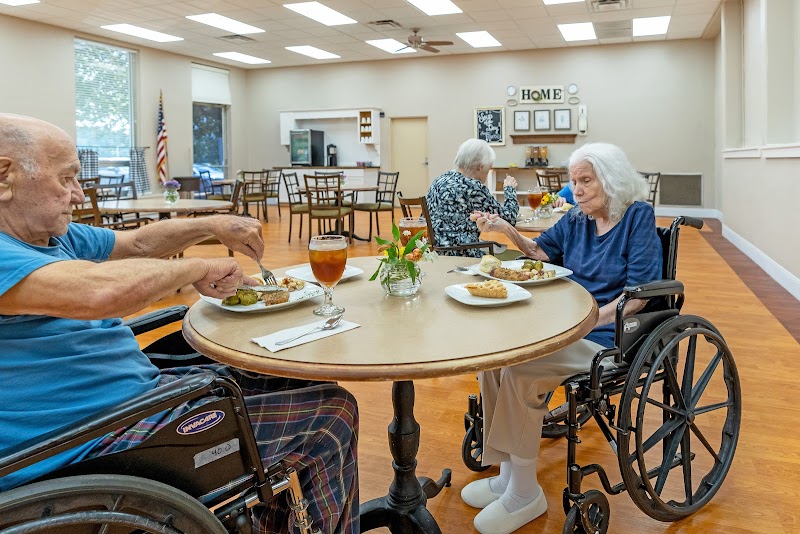
Who Owns and Operates Metropolis Rehab & Hcc?

METROPOLIS REHAB & HCC is owned by a for-profit company. For-profit facilities operate as businesses with obligations to shareholders or private owners. The facility is operated by TUTERA SENIOR LIVING & HEALTH CARE, a chain that manages multiple nursing homes. With 101 certified beds and approximately 75 residents (about 74% occupancy), it is a mid-sized facility located in METROPOLIS, Illinois.
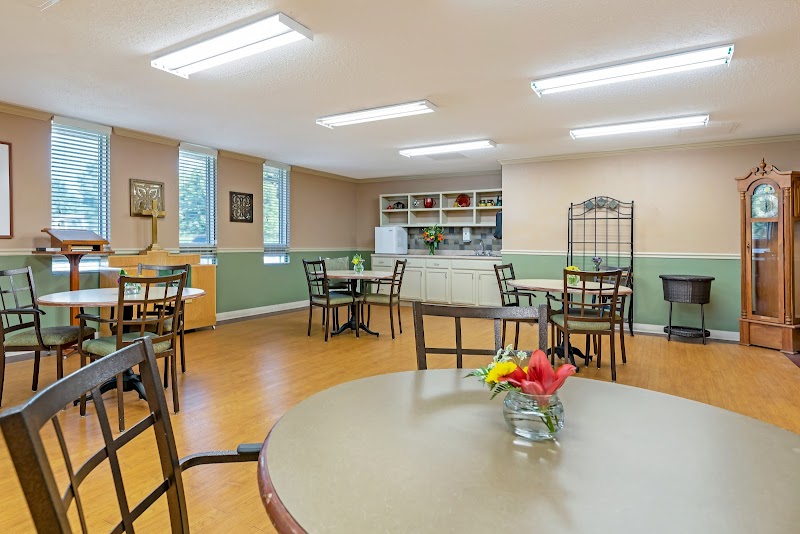
How Does Metropolis Rehab & Hcc Compare to Other Illinois Nursing Homes?

Compared to the 100 nursing homes in Illinois, METROPOLIS REHAB & HCC's overall rating (2 stars) is below the state average of 2.5, staff turnover (43%) is near the state average of 46%, and health inspection rating (4 stars) is above the national benchmark.

What Should Families Ask When Visiting Metropolis Rehab & Hcc?

Based on this facility's data, families visiting should ask: "Can you walk me through typical staffing levels on day, evening, and night shifts?" "Can I visit during a mealtime to observe dining assistance and food quality?" "How do you handle medical emergencies, and what is your hospital transfer rate?" "Can I speak with family members of current residents about their experience?" These questions are particularly relevant given the below-average staffing rating.

Is Metropolis Rehab & Hcc Safe?

Based on CMS inspection data, METROPOLIS REHAB & HCC has a clean safety record: no substantiated abuse findings (meaning no confirmed cases of resident harm), no Immediate Jeopardy citations (the most serious violation level indicating risk of serious injury or death), and is not on the Special Focus Facility watch list (a federal program monitoring the lowest-performing 1% of nursing homes). The facility has a 2-star overall rating and ranks #100 of 100 nursing homes in Illinois. While no facility is perfect, families should still ask about staff-to-resident ratios and recent inspection results during their visit.

Do Nurses at Metropolis Rehab & Hcc Stick Around?

METROPOLIS REHAB & HCC has a staff turnover rate of 43%, which is about average for Illinois nursing homes (state average: 46%). Moderate turnover is common in nursing homes, but families should still ask about staff tenure and how the facility maintains care continuity when employees leave.

Was Metropolis Rehab & Hcc Ever Fined?

METROPOLIS REHAB & HCC has been fined $43,455 across 4 penalty actions. The Illinois average is $33,513. While any fine indicates a compliance issue, fines under $50,000 are relatively common and typically reflect isolated problems that were subsequently corrected. Families should ask what specific issues led to these fines and confirm they've been resolved.

Is Metropolis Rehab & Hcc on Any Federal Watch List?

METROPOLIS REHAB & HCC is not on any federal watch list. The most significant is the Special Focus Facility (SFF) program, which identifies the bottom 1% of nursing homes nationally based on persistent, serious quality problems. Not being on this list means the facility has avoided the pattern of deficiencies that triggers enhanced federal oversight. This is a positive indicator, though families should still review the facility's inspection history directly.