SERENITY ESTATES AT MORRIS
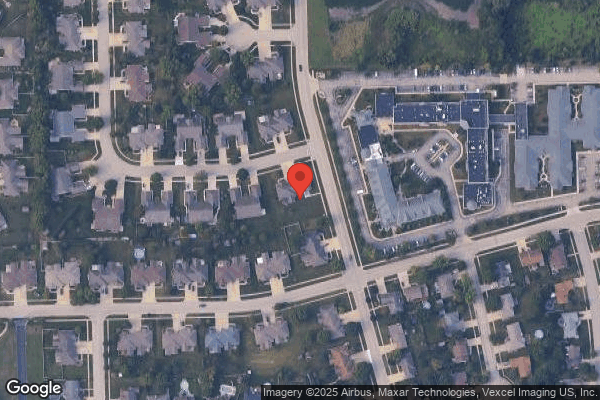
1223 EDGEWATER, MORRIS, IL 60450 (815) 416-6500
For profit - Limited Liability company 142 Beds Independent Data: November 2025
Trust Grade
30/100
#627 of 665 in IL
Last Inspection: October 2024

Within standard 12-15 month inspection cycle. Federal law requires annual inspections.

Overview

Serenity Estates at Morris has received a Trust Grade of F, indicating significant concerns and poor performance. With a state rank of #627 out of 665, they are in the bottom half of Illinois facilities, and they are ranked #2 out of 2 in Grundy County, meaning there is only one local option that is slightly better. The facility is showing signs of improvement, as the number of issues decreased from 15 in 2024 to 3 in 2025. However, staffing is a weakness, with a low rating of 1 out of 5 stars and a high turnover rate of 67%, which is concerning compared to the Illinois average of 46%. While the facility has not incurred any fines, there have been serious incidents, such as a resident suffering fractures due to improper transfer assistance and multiple complaints about meal quality and menu discrepancies, indicating potential issues in both care and nutrition services.

Trust Score
F
30/100
In Illinois
#627/665
Bottom 6%
Safety Record
Moderate
Needs review
Inspections
Getting Better
15 → 3 violations
Staff Stability
⚠ Watch
67% turnover. Above average. Higher turnover means staff may not know residents' routines.
Penalties
✓ Good
No fines on record. Clean compliance history, better than most Illinois facilities.
Skilled Nurses
○ Average
Each resident gets 40 minutes of Registered Nurse (RN) attention daily — about average for Illinois. RNs are the most trained staff who monitor for health changes.
Violations
⚠ Watch
40 deficiencies on record. Higher than average. Multiple issues found across inspections.
★☆☆☆☆
1.0
Overall Rating
★☆☆☆☆
1.0
Staff Levels
★☆☆☆☆
1.0
Care Quality
★★★☆☆
3.0
Inspection Score
Stable
2024: 15 issues
2025: 3 issues

The Good

  • Full Sprinkler Coverage · Fire safety systems throughout facility
  • No fines on record

Facility shows strength in fire safety.

The Bad

1-Star Overall Rating

Below Illinois average (2.5)

Significant quality concerns identified by CMS

Staff Turnover: 67%

20pts above Illinois avg (46%)

Frequent staff changes - ask about care continuity

Staff turnover is elevated (67%)

19 points above Illinois average of 48%

The Ugly 40 deficiencies on record

1 actual harm
Aug 2025 1 deficiency
CONCERN (D) 📢 Someone Reported This

A family member, employee, or ombudsman was alarmed enough to file a formal complaint

Potential for Harm - no one hurt, but risky conditions existed

Accident Prevention (Tag F0689)

Could have caused harm · This affected 1 resident

**NOTE- TERMS IN BRACKETS HAVE BEEN EDITED TO PROTECT CONFIDENTIALITY** Based on observation, interview, and record review, the facility failed to ensure that recommended fall preventive measures were...

Read full inspector narrative →
**NOTE- TERMS IN BRACKETS HAVE BEEN EDITED TO PROTECT CONFIDENTIALITY** Based on observation, interview, and record review, the facility failed to ensure that recommended fall preventive measures were put in place at all times for residents who were identified as high risk for falls. This applied to 2 of 3 residents (R2, R4) reviewed for falls in the sample of 5. The findings include: Findings Include: 1. R2's face sheet documents R2 is 82 years-old who has multiple medical diagnoses including repeated falls, unsteadiness on feet, lack of coordination, and Alzheimer's disease. R2's Minimum Data Set, dated [DATE], shows R2 is cognitively impaired. Facility's fall incident log, dated May 8 to August 12, 2025, shows R2 had multiple fall incidents on May 31, June 13, June 16, June 19, July 3, and July 13, 2025. R2's fall care plan with initiated date of May 30, 2025, shows: R2 is at risk for falls in relation to poor safety awareness, history of falls, and dementia. This same care plan shows multiple interventions which include wheelchair cushions with non-skid mat (Dycem) to chair. On August 7, 2025, from 2:50 PM to 3:28 PM, R2 was observed in the unit D dining room. R2 was sitting in her wheelchair, she was restless and was attempting to stand up. There was no sign of non-skid mat on the wheelchair seat. At 3:28 PM, V13 (Certified Nursing Assistant/CNA) assisted R2 to stand up with use of gait belt, however, there was no non-skid mat on the wheelchair seat. On August 11, 2025, R2 was observed multiple times. At 9:35 AM, R2 was sitting in her wheelchair in the dining room, and at 12:00 PM, she was eating in the dining room. Both times R2 does not have non-skid mat on her seat. On August 11, at 1:44 PM, V8 and V9 (Both CNAs) assisted R2 to the toilet with the assistance of V6 (Nurse). V8 and V9 assisted R2 to transfer from wheelchair to toilet seat. There was no non-skid mat in the wheelchair. 2. R4's face sheet shows R4 is 78 years-old who has multiple medical diagnoses including specified disorders of muscle, lack of coordination, repeated falls, and vascular dementia. Facility's fall incident log, dated May 8 to August 12, 2025, shows R4 had multiple fall incidents on May 27, June 8, June 13, June 14, August 6, and August 10. R4's care plan with revision date of August 6, 2025, shows R4 is at risk for falls in relation to poor safety awareness, use of an anti-depressant, use of a diuretic, dementia diagnosis, vertigo, and history of falls. This same care plan shows multiple inventions which include non-skid mat to wheelchair. On August 7, 2025, at 3:06 PM to 3:24PM, R4 was observed sitting in her wheelchair in the day room with other residents. There was no sign of non-skid mat on her seat. At 3:24 PM, V13 assisted R4 to stand up with the use of gait belt, however, there was no non-skid mat on her wheelchair. On August 11, 2025, R4 was observed multiple times. At 9:40 AM, R4 was in the hallway sitting in her wheelchair. At 1:20 PM, R4 was in the hallway socializing with R5. Both times R4 did not have the non-skid mat on her wheelchair seat. On August 11, 2025, at 1:28 PM, V8 and V9 (Both CNAs) assisted R4 to the bathroom. There was no non-skid mat on her wheelchair seat. V8 stated she had never seen R4's wheelchair seat with a non-skid mat. On August 12, 2025, at 10:51 AM, V15 (Nurse) stated, To prevent fall incidents one needs to find the root cause of the fall such as catching UTI (urinary tract infection) early, keeping the residents busy with activities, and regular toileting, understanding reason for falls and following recommended fall interventions. On August 12, 2025, at 11:37 AM, V2 (Director of Nursing/DON) stated she places multiple interventions for fall preventions such as hourly monitoring and non-skid chair mat on the wheelchair for people who have poor safety awareness and high-risk for fall. V2 also said she expects the staff to follow these interventions.
May 2025 1 deficiency
CONCERN (D) 📢 Someone Reported This

A family member, employee, or ombudsman was alarmed enough to file a formal complaint

Potential for Harm - no one hurt, but risky conditions existed

Pharmacy Services (Tag F0755)

Could have caused harm · This affected 1 resident

**NOTE- TERMS IN BRACKETS HAVE BEEN EDITED TO PROTECT CONFIDENTIALITY** Based on interview and record review, the facility failed to ensure medications were readily available to newly admitted residen...

Read full inspector narrative →
**NOTE- TERMS IN BRACKETS HAVE BEEN EDITED TO PROTECT CONFIDENTIALITY** Based on interview and record review, the facility failed to ensure medications were readily available to newly admitted residents. This applies to 2 of 3 residents (R1, R2) reviewed for medications in the sample of 3. The findings include: 1. R1's Face Sheet showed he was admitted to the facility on [DATE]. R1's 4/24/25 Minimum Data Set (MDS) showed he is cognitively intact. R1's Face Sheet showed his diagnoses include COPD (chronic obstructive pulmonary disease) with acute exacerbation, depression, emphysema, chronic respiratory failure, asthma, sciatica, hyperlipidemia, and a rib fracture. On 4/29/25 at 12:50 PM, R1 stated he waited a long time to get all of his medications after he was admitted . On 4/28/25 at 5:35PM, V3, LPN (Licensed Practical Nurse), stated she worked on 4/19/2025, and worked a double shift. V3 stated she assisted with R1's admission, but she was not his assigned nurse. V3 stated the cut-off time for the pharmacy ordering is between 4:00-5:00 PM for medications to be filled, but some medications are available in the facility's (medication storage). V3 stated it is a case-by-case scenario if a STAT delivery is needed. V3 stated she would take everything that was needed and available from the (medication storage) and then call the pharmacy for a STAT delivery. V3 stated a STAT delivery is supposed to deliver within three hours. V3 stated R1 came to the facility on 4/19/25, after 4:00 PM and he was assigned to V4 (LPN). On 4/29/25 at 11:51AM, V4 (LPN) stated she was assigned to R1 and R2 on 4/19/25, and she has worked at the facility for only three weeks. V4 stated she had 30 residents and two admissions on 4/19/25 and it was difficult. V4 stated she did not have access to the (medication storage), and was not aware that she could call the pharmacy to gain access. On 4/29/25 at 9:28AM, V5 (Pharmacist) stated deliveries are twice a day, around 8:00 AM and 4:00 PM. V5 stated if they get the orders after the cut off time, the meds will go to the following delivery. R1's Discharge paper from the hospital showed he was discharged at 4:01 PM from the hospital. R1's 4/19/25 discharge orders for his scheduled doses of atorvastatin and montelukast showed next dose: today (4/19/25) at bedtime. R1's April 2025 MAR (Medication Administration Record) showed his 4/19/25 doses of atorvastatin and montelukast scheduled at 8:00 PM simply had an X. R1's 4/19/25 discharge orders for five other medications (meloxicam, pantoprazole, sertraline, tamsulosin and an Incruse inhaler) showed next dose: tomorrow (4/20/2025) morning. R1's April 2025 MAR showed a 5 or a 9 for his 6:00 AM pantoprazole ad sertraline doses and his 8:00 AM doses of his Incruse inhaler, meloxicam, tamsulosin, Symbicort inhaler, and his buprenorphine/naloxone. Per the legend on the MAR, a checkmark indicates a medication was administered, and a 5 or 9 is a referral to a progress note. R1's 4/20/25 MAR progress notes from 8:53 AM showed meds not delivered yet, on way and 9:22 AM showed .will call pharm to see when delivery of narcotics and any missing meds . Notes from 11:57 for R1's Symbicort inhaler showed not available; at 12:04 PM for meloxicam n/a; 12:06 PM for pantoprazole n/a; and 3:51 PM for sertraline not done. The pharmacy medication delivery sign-in sheet showed R1's medications were delivered on 4/20/2025 at 2:26 PM, and were received by V4, LPN. 2. R2's Face Sheet showed she was admitted to the facility on [DATE]. R2's MDS showed she was cognitively intact. R2's Face Sheet showed her diagnoses include diabetes, peripheral vascular disease, congestive heart failure, stage 4 kidney disease, cerebral infarction, transient ischemic attacks, and pulmonary hypertension. On 4/28/25 at 12:45PM, V7 (R2's family) stated when she asked about R2's medications on Sunday 4/20/25, staff told her R2's medications were discontinued until Monday (4/21), and R2 did not get her medications. V7 stated R2 had been living in an Assisted Living and they had called her because they got a fax about R2's medication and she was no longer there. V7 stated she went to the Assisted Living and got all R2's medications to bring to the skilled care. V7 stated around 4:00 PM on Monday, she was told R2's medication arrived from the pharmacy, and the facility no longer needed the medications from the Assisted Living. On 4/28/25 at 1:37 PM, V8, RN (Registered Nurse), stated as soon a new admission comes in, staff look at the medication list that come from the hospital with the discharge instructions. V8 stated nurses enter the medications one at a time into the computer in the physician orders, then then pharmacy takes over. R2's hospital discharge orders from 4/19/25 showed she was to receive clopidogrel and Lasix next dose: today (4/19/25) evening, her Humalog insulin next dose: today (4/19/25) evening with meal, and her hydralazine next dose: today (4/19/25) at bedtime. The discharge orders also showed R2 was to receive six other medications (famotidine, fluoxetine, Farxiga, losartan, metolazone, and prednisone) next dose: tomorrow (4/20/25) morning, and levothyroxine next dose: tomorrow (4/20/25) morning before meal. R2's progress notes showed her medication orders were not entered in the computer until 4/20/25, starting at 6:39 PM, on Sunday. R2's Physician Order Sheet showed the orders were put in on the 4/20/25, and medications were to start being administered on Monday, 4/21/25. The pharmacy medication delivery manifest showed ten of R2's medications were delivered on Monday 4/21/25, and signed for by facility staff at 3:33 PM. R2's April MAR showed she missed twelve doses of various oral medications, three scheduled doses of insulin, and potentially five doses of sliding scale insulin. R2's progress note from 4/20/25 at 9:49 PM showed, Patient was admitted to (facility) at [4 PM] on 4/19/25. On 4/29/25 at 2:38 PM, V1 (Administrator) verified there was no documentation showing the physicians were notified about the medication administration delays. The facility's March 2023 Pharmacy Hours and Delivery Schedule policy showed, New orders and refill requests may be faxed or sent electronically at any time Facility-specific fax cut-off times are arranged between the facility and pharmacy New orders communicated to the [name] pharmacy after the cut-off time will automatically go into the next regular delivery for the facility . If .the resident is in need of medication as a STAT order, the medication should be started from the emergency dispensing kit if applicable, and/or an emergency delivery must be requested An emergency delivery can be requested by sending the order to the [name] pharmacy, contact the pharmacy by phone to alert them that you sent a STAT order . The facility's Unavailable Medications policy (implemented 8/1/24) showed, .4. Staff shall take immediate action when it is known that the medication is unavailable determine what efforts have been attempted by the facility or pharmacy provider to obtain the medication Notify Physician of inability to obtain medication medication .obtain alternative treatment orders and/or specific orders for monitoring . 5. Staff shall follow procedures for medication errors, including physician/family notification .
Jan 2025 1 deficiency
CONCERN (D) 📢 Someone Reported This

A family member, employee, or ombudsman was alarmed enough to file a formal complaint

Potential for Harm - no one hurt, but risky conditions existed

Accident Prevention (Tag F0689)

Could have caused harm · This affected 1 resident

Based on observation, interview, and record review, the facility failed to ensure a resident was safely transferred with a mechanical lift for 1 of 4 residents (R1) reviewed for falls in the sample of...

Read full inspector narrative →
Based on observation, interview, and record review, the facility failed to ensure a resident was safely transferred with a mechanical lift for 1 of 4 residents (R1) reviewed for falls in the sample of 4. The findings include: R1's Physician Order Sheet, printed on 1/17/25, shows R1 has diagnoses that include dementia, weakness, meniers disease, and hearing loss. R1's fall risk assessment, dated 1/8/25, shows R1 is high risk or falls. R1's careplan, dated 4/6/24, shows R1 is a risk for falls due to vision, hearing, weakness, gait balance problems with intervention to include transfer status, mechanical lift with 2 staff. On 1/17/25 at 10AM, R1 was lying in bed. Through communication board, he was able to say he was ok and was not in pain. V3 (License Practical Nurse-LPN) checked R1's head. A diffuse bruise, reddish black in color, was noted at the back of his head. R4 (R1's wife and roommate with a BIMS of 14-no cognitive impairment) said she was not in the room on 1/8/25 when the incident happened. She went to the dining room to get coffee. When she came back, R1 was noted lying on the floor. I came in, knelt down by him and put my hand beneath his head, I felt a big goose egg at the back of his head. He (R1) was alert but was just staring straight up, he looked shocked. He was sent to the hospital and came back. He has bruising at the back of his head. R4 said she was told R1 was being lifted from his wheelchair to bed. R1 fell backwards with his wheelchair with him, hitting his head on the floor. R4 said there should always be a staff behind R1 during transfers. On 1/17/25 at 10:15 AM, V7 (Certified Nursing Assistant-CNA) said she was one of the CNAs on 1/8/25 who transferred R1 using the mechanical lift. V7 said she was in front of R1 doing the controls, while V6 (CNA) was on R1's side. V7 said when R1 was being lifted via the mechanical lift, R1's wheelchair was also being lifted with him. V7 said they put R1 back down and checked what was going on; if any of the slings were being caught. Then they tried again. As R1 was being lifted via the mechanical lift the 2nd time, R1's wheelchair tipped backwards with R1 in the wheelchair, hitting his head on the floor. The mechanical lift sling was not securely attached to the metal hook. V7 said it happened so fast, we tried to grab him but he was already on the floor. V7 also said they were so focused on why the wheelchair was going up with R1, and were not able to ensure all the hooks/slings were secured. On 1/17/25 at 10:51 AM, V6 (CNA) said she was with V7 (CNA) on 1/8/25 transferring R1 from wheelchair to bed. As R1 was being raised via mechanical lift, the wheelchair was going up with R1. R1 was lowered down. As R1 was being lifted back up again, the mechanical sling on the right side came off. R1 tilted backwards with his wheelchair to the floor. V6 stated, (R1's) a heavy-set guy, we tried to grab him, but he still fell backwards. (R1) hit his head on the floor. V6 said she was on R1's left side, and not behind the wheelchair, so she was not able to stop the wheelchair tipping backwards. On 1/17/25, at 9:40 AM, V3 (License Practical Nurse- LPN) said she was the Nurse working on 1/8/25 when the incident happened. V7 and V6 (CNA's) were transferring R1 from his wheelchair to bed via mechanical lift. As R1 was being raised up, the wheelchair tilted backwards with R1 in it. The part of the loop (sling) came off. R1 fell backwards with his wheelchair hitting his head on the floor. V3 said fall assessments show no injury except redness at the back of his head. R1 was sent out via 911 and came back the same day. All tests were negative. R1's hospital records, dated 1/8/25, show R1 was diagnosed with scalp hematoma (bruise) and was discharged back to the facility same day (1/8/25) On 1/17/25 at 12:30 PM, V8 (Physical Therapist) said, When transferring a resident via mechanical lift, the resident should be positioned well under the pad. Make sure all straps (slings) were not getting caught on the wheelchair, all 4 slings securely placed in all the hooks and checking the sides and back to ensure resident is safe during the transfer. On 1/17/25 at 9:18 AM, V1 (Administrator) said all staff have been re-trained (including V6 and V7) regarding safe transfers using the mechanical lift. The facility policy entitled Safe Resident Handling/Transfers (undated) states, It is the policy of this facility to ensure that residents are handled and transferred safely to prevent or minimize risks for injury and and provide and promote a safe, secure and comfortable experience for the resident while keeping the employee safe in accordance with current standards and guidance.
Oct 2024 1 deficiency 1 Harm
SERIOUS (G) 📢 Someone Reported This

A family member, employee, or ombudsman was alarmed enough to file a formal complaint

Actual Harm - a resident was hurt due to facility failures

Accident Prevention (Tag F0689)

A resident was harmed · This affected 1 resident

**NOTE- TERMS IN BRACKETS HAVE BEEN EDITED TO PROTECT CONFIDENTIALITY** Based on interview and record review, the facility failed to provide safe transfer assistance. This applies to 1 resident (R1) o...

Read full inspector narrative →
**NOTE- TERMS IN BRACKETS HAVE BEEN EDITED TO PROTECT CONFIDENTIALITY** Based on interview and record review, the facility failed to provide safe transfer assistance. This applies to 1 resident (R1) of three reviewed for safe transfers. This failure resulted in R1 incurring a acute nondisplaced bimalleolar fracture and a nondisplaced oblique fracture of the distal fibula. Findings include: 1. R1's Medical diagnosis from the electronic record documents R1 as a [AGE] year old, with diagnoses to include Aphasia, Hemiplegia and Hemiparesis following a Cerebral Infarction. The Final Report to Illinois Department of Public Health, dated 10/17/2/2024, documents, On 10/11/2024, The resident was lowered to the ground after becoming weak during a transfer from her electric wheelchair to her bed via pivot transfer. A (mechanical lift) was used to lift the resident from the floor to the bed after a head to toe assessment revealed no obvious injury and subsequent assessments had not indicated any observable abnormalities to the right lower leg/ankle area. The resident later expressed pain to her right lower extremity during the early morning hours of 10/12/2024 and was sent to the ER (Emergency Room) for evaluation and sent back later that morning with no fractures or dislocation noted and norco for pain management as needed. The resident continued to have pain to the right leg with repositioning in bed and 10/14/2024 Dr ordered X-rays to the right hip/right femur/and right knee with no fracture of dislocation indicated. Dr. rounded on 10/15/2024 to evaluate the resident and ordered another set of X-rays to the right tibia/fibula, right ankle and right foot with the results sent to the facility on [DATE] with an acute non-displaced bimalleolar fracture and a non-displaced oblique fracture of the distal fibula. Dr. was notified and gave orders to send the resident back to the hospital for evaluation which confirmed the bimmalleolus fractures which appear to be minimally displaced and a soft cast was applied to the right lower extremity. A chronic fracture deformity of the right humeral neck and deformity of the right distal humerus which may require an elbow series if acute symptoms are present. A right arm sling was placed and resident was transferred back to the facility. Resident currently with Tylenol ordered for pain per family request. The Radiology Results Report for R1, dated 10/15/2024, documents under Findings: Right Tibia and Fibula~ An acute nondisplaced bimalleolar fracture is noted. The Radiology Report for R1, dated 10/16/2024, documents under impression Right Ankle~Displaced fractures through the lateral malleous and medial malleous. The care plan for R1 documents, The resident is risk for falls r/t (related to) Deconditioning, Gait/balance problems. Resident will have 2 cna assist to bed from scooter. Will use sit to stand or Hoyer transfer to and from the bed to motorized wheel chair. On 10/24/2024 at 10:45 AM, V2, Director of Nursing, stated, That was (V8, CNA) first shift in the building. She will not be back to work here. The one person transfer was not appropriate. On 10/24/2024 at 2:07 PM, V7, Licensed Practical Nurse, stated, None of us had never worked with (V8, Certified Nurse Aide/CNA) before. It was her first assignment from the staffing agency. At the beginning of the shift, we made it clear that if she needed anything to come and tell us. Everyone is more than willing to help with whatever you need. That why I couldn't believe what she did. She transferred (R1) by herself. The transfer is a two person transfer with (R1). (V8, CNA) told me she was doing a pivot transfer from the scooter to the bed when (R1's) leg buckled and (V8, CNA) lowered the resident to the floor. She should've asked us to help her with the transfer. On 10/25/2024 at 10:53 AM, V11, CNA, stated, (R1) is a two person assist for transfer, always. She's a sit to stand (mechanical) transfer. We always use a gait belt, the machine and two people. On 10/26/2024 at 2:22 PM, V4, Medical Director, stated, Yes I expect the staff to follow safe transfer procedure. That includes two to transfer for residents that require the support. I have already spoken to (V1, Administrator) regarding this. The policy titled Safe Resident Handling/Transfers, dated 10/01/2024, documents under #10. Two staff members must be utilized when transferring residents with a mechanical lift.
Oct 2024 14 deficiencies
CONCERN (D)

Potential for Harm - no one hurt, but risky conditions existed

Deficiency F0578 (Tag F0578)

Could have caused harm · This affected 1 resident

**NOTE- TERMS IN BRACKETS HAVE BEEN EDITED TO PROTECT CONFIDENTIALITY** Based on interview and record review, the facility failed to order a residents chosen Advanced Directives status of DNR (Do Not ...

Read full inspector narrative →
**NOTE- TERMS IN BRACKETS HAVE BEEN EDITED TO PROTECT CONFIDENTIALITY** Based on interview and record review, the facility failed to order a residents chosen Advanced Directives status of DNR (Do Not Resuscitate). This applies to 1 of 1 resident (R268) reviewed for Advanced Directives in a sample of 28. Findings include: R268 admitted to the facility on [DATE], with diagnoses that includes encephalopathy, frontotemporal neurocognitive disorder, convulsions, type 2 diabetes, hypertension, anxiety, and dementia. On 10/10/24 at 3:16 PM, V25 (Family Member) stated R268 code status is DNR. V25 stated the code status was a part of the POA (Power of Attorney) paperwork that was provided to the facility. V25 stated R268 made the determination of her DNR status before she had cognition changes. V26 (Family Member) confirmed R268 made the decision for a DNR status some years prior to admission to the facility. On 10/09/24 at 3:49 PM, V2, DON (Director of Nursing), stated, All residents should have a code status on admission so the facility can adhere to the residents wishes of extending life versus not resuscitating. If a resident is admitted to the facility without a POLST (Physicians Order for Life Sustaining Treatment) or DNR, they are a full code. Without a POLST or physicians DNR order, it is assumed the resident is a full code. On 10/10/24 at 3:31 PM, V3, ADON (Assistant Director of Nursing), stated, Physicians orders are required for code status on admission. If her code status was apart of her POA, it should still be followed. R268's physician orders did not contain orders directing staff on resident resuscitation directives / code status. R268's POA forms were scanned into the EMR (Electronic Medical Record). The POA for healthcare was signed and dated by R268 on Oct. 19, 2021. R268 wishes state the quality of my life is more important that the length of my life. If I am unconscious and my attending physician believes, in accordance with reasonable medical standards that I will not wake up or recover my ability to think, communicate with my family and friends, and experience my surroundings. I do not want treatments to prolong my life or delay my death, but I do want treatment or care to make me comfortable and relieve my pain. The facilities undated policy Communication of Code Status states it is the policy of this facility to adhere to the resident's right to formulate Advanced Directives. In accordance to these rights, this facility will implement procedures to communicate a resident's code status to those individuals who need to know this information.
CONCERN (D)

Potential for Harm - no one hurt, but risky conditions existed

ADL Care (Tag F0677)

Could have caused harm · This affected 1 resident

**NOTE- TERMS IN BRACKETS HAVE BEEN EDITED TO PROTECT CONFIDENTIALITY** Based on observation, interview, and record review, the facility failed to provide ADL (ADL/Activities of Daily Living) care to ...

Read full inspector narrative →
**NOTE- TERMS IN BRACKETS HAVE BEEN EDITED TO PROTECT CONFIDENTIALITY** Based on observation, interview, and record review, the facility failed to provide ADL (ADL/Activities of Daily Living) care to dependent residents. This applies to 2 of 2 residents (R307 and R356) reviewed for ADL care in the sample of 28. The findings include: 1. R307 was admitted to the facility on [DATE], with diagnoses of displaced transverse fracture of shaft of humerus, anxiety, muscle weakness, abnormalities of gait and mobility, polyneuropathy, depression, and arthritis. R307's MDS (MDS/Minimum Data Set), dated 09/06/24, showed R307 had moderate cognitive impairment. MDS task Section GG showed R307 required substantial/maximal assist to dependency with personal hygiene. R307's ADL Self-Care Performance Deficit care plan, initiated 04/21/24, showed R307 usually requires substantial- dependence for personal hygiene. Level of assistance may vary depending on resident's status. On 10/08/24 at 11:14 AM, R307 was in bed. R307's right eye had a crusted substance on the upper lid and the inner corner. On 10/09/24 at 2:22 PM, R307 continued to have a crusted substance to the upper eyelid and inner corner. R307 stated she wanted her face washed and the crust removed from her eye. On 10/10/24 at 12:21 PM, R307's right eye continued to have the crusted substance to the upper eyelid. R307 stated she had not had her face washed in a few days. R307 stated she wanted her face washed. On 10/10/24 at 12:31 PM, V17, (CNA/Certified Nursing Assistant), stated she had not washed R307's face today. V17 stated R307's eyes should not have a crusted substance. On 10/10/24 at 12:31 PM, V16 (CNA) stated she had not washed R307's face today. V16 stated R307 could get an eye infection if her face and eyes are not washed. V16 stated R307's face should have been washed when she woke up in the morning. On 10/10/24 at 12:34 PM, V22 (RN/Registered Nurse) stated R307 did not have an eye infection and is not receiving any eye drops or medications for an eye infection. V22 stated R307 does not have any drainage or redness to her eyes. On 10/10/24 at 3:13 PM, V2 (DON/Director of Nursing) stated, ADL's should be performed daily and every shift. Residents should have their faces washed every morning and when dirty. My expectation is that the CNA's accomplish ADL care every day. A visual assessment of the residents should be performed every day to see what they need. (R307) could get an eye infection if she has matter in her eyes. The facility's Activities of Daily Living (ADL's) Policy stated: Policy Explanation and Compliance Guidelines: 3. A resident who is unable to carry out activities of daily living will receive the necessary services to maintain good nutrition, grooming, and personal and oral hygiene. 2. R356's face sheet showed R356 was admitted to the facility with diagnoses including Parkinson's disease with dyskinesia, pressure ulcer of right buttock and left buttock, weakness, repeated falls, chronic fatigue, and spinal stenosis. R356's MDS (Minimum Data Set), dated 9/10/24, showed R356 was dependent on staff for toileting hygiene and required substantial assistance from staff for personal hygiene. On 10/9/24 at 2:05 PM, V13 (CNA/Certified Nurse Assistant) went to R356's to assist him during toileting. V13 assisted R356 to a standing position and pulled R356's pull-up and pants up. V13 watched R356 pivot into the wheelchair and assisted him out of the bathroom. V13 did not wipe R356 after he had a bowel movement, and V13 did not offer to R356 to wash hands after using the bathroom. On 10/10/24 at 2:16 PM, V13 said she would encourage the resident to wipe themselves if they wanted to, but she would check because they could have not cleaned everything off. V13 also said she should help them wash their hands. On 10/10/24 at 2:11 PM, V16 (CNA) said after toileting a resident, she would assist with wiping themselves to make sure they got everything clean and use proper protocol. V16 said she would also assist them to wash their hands after toileting, since their hands would be contaminated from trying to wipe themselves. On 10/10/24 at 2:05 PM, V17 (CNA) said she would wipe the residents after they had wiped themselves to make sure they were cleaned well and as soon as the resident was done toileting, she would take them to the sink to wash their hands. On 10/10/24 at 2:40 PM, V2 (DON/Director of Nursing) said he expected the CNAs to wipe the residents after the resident had attempted to wipe themselves to make sure their hygiene was appropriate, since some residents did not have the coordination to wipe correctly. V2 also said the staff should encourage the residents to wash their hands to prevent them from spreading any potential contamination they may have on their hands. The facility's undated Activities of Daily Living (ADLs) policy showed A resident who is unable to carry out activities of daily living will receive the necessary services to maintain good nutrition, grooming, and personal and oral hygiene.
CONCERN (D)

Potential for Harm - no one hurt, but risky conditions existed

Deficiency F0688 (Tag F0688)

Could have caused harm · This affected 1 resident

2. R354's face sheet showed she was admitted to the facility with diagnoses including displaced bimalleolar fracture of right lower leg, muscle weakness, arthritis, abnormalities of gait and mobility,...

Read full inspector narrative →
2. R354's face sheet showed she was admitted to the facility with diagnoses including displaced bimalleolar fracture of right lower leg, muscle weakness, arthritis, abnormalities of gait and mobility, need for assistance with personal care, and cognitive communication deficit. R354's POS (Physician Order Sheet) showed an order dated, 9/30/24: CAM boot can come off for ROM (Range of Motion) and stabilizing/exercise. On 10/8/24at 2:23 PM, R354 was lying in bed and a CAM (Controlled Ankle Motion) boot was on the resident's chair. R354 had signage in her room which showed CAM boot on at all times except bathing. On 10/9/24 at 2:17 PM, V14 (CNA/Certified Nurse Assistant) said R354 did not need to wear the CAM boot when she was in bed, only when she was in the chair. On 10/10/24 at 11:02 AM, V7 (CNA) said R354 only needed to wear the CAM boot when she was in the chair. V7 said she took care of R354 often, and when R354 was in bed, she did not need the CAM boot. On 10/10/24 at 1:59 PM, V20 (CNA) said he worked with R354, and her CAM boot was only supposed to be worn when R354 was in the wheelchair. On 10/10/24 at 2:28 PM, V21 (OT/Occupational Therapist) said R354 was non weight bearing to the right leg after a fracture on her right leg. V21 said when he had worked with her on 10/10/24 at 10:50 AM, R354 was in bed, and did not have the CAM boot on. V21 checked the POS (Physician Order Sheet) and said the CAM boot should not come off for anything other than range of motion and exercise, which were both activities done by therapy. V21 said the CAM boot should be on at all times, including when R354 was in bed. On 10/10/24at 2:40 PM, V2 (DON/Director of Nursing) said the orthopedic boot should be on at all times if there was an order for the boot to be on at all times, except during showers or wound care. Based on observation, interview, and record review, the facility failed to ensure anti-contracture devices and Controlled Ankle Movement (CAM) Boot were applied as ordered. This applies to 2 of 2 residents (R160 and R354) reviewed for assistive devices in a sample of 28. The findings include: 1. R160's Face Sheet shows diagnoses of Parkinsonism, weakness, and dementia. R160's Minimum Data Set of 10/17/24 shows R160's cognition is severely impaired. R160's Physician Order (POS) shows R160 has an order for hand rolls placed to reduce/risk of contractures every shift. R160's care plan, initiated 5/14/24, shows R160 has an Activities of Daily Living (ADL) self-care mobility performance deficit related to weakness, decreased mobility, with intervention to place handrolls in hands to reduce risk of contractures. On 10/8/24 at 11:52 AM, R160 was observed sitting in high back wheelchair in the dining room. R160's right hand was in fist form, arm folded on her abdomen. On 10/9/24 at 11:10 AM, R160 was sitting in her high back wheelchair in dining, with other resident; right hand still noted in fist form. On 10/10/24 at 12:14 PM, R160 was sitting in her high back wheelchair in dining room watching TV, right hand still noted in fist form, there was no splint in her hand. On 10/9/24 at 2:15 PM, V8 (Certified Nurse Aide/CNA) said R160 is not in any restorative program, they do not have restorative staff in facility. V8 said R160 has a carrot, that they use as a splint, and if it is dirty, she rolls up a washcloth and places it in R160's right hand. On 10/10/24 at 9:20 AM, V3 (Assistant Director of Nursing/ADON) said they do not have a restorative program for residents at the facility, and splints should be in place to prevent further contractures. The facility's Use of Assistive Device (no date) policy states it is the nurse's responsibility to monitor the resident for consistent use of the device and safety in the use of the device.
CONCERN (D)

Potential for Harm - no one hurt, but risky conditions existed

Incontinence Care (Tag F0690)

Could have caused harm · This affected 1 resident

**NOTE- TERMS IN BRACKETS HAVE BEEN EDITED TO PROTECT CONFIDENTIALITY** Based on observation, interview, and record review, the facility failed to keep the indwelling catheter bag below the bladder le...

Read full inspector narrative →
**NOTE- TERMS IN BRACKETS HAVE BEEN EDITED TO PROTECT CONFIDENTIALITY** Based on observation, interview, and record review, the facility failed to keep the indwelling catheter bag below the bladder level to prevent potential urinary tract infection (UTI). This applies to 1 of 2 residents (R57) reviewed for catheter care and treatment in a sample of 28. The Findings Includes: R57 is a [AGE] year-old male with severe cognitive impairment, as per the Minimum Data Set (MDS) dated [DATE]. R57 was admitted with an admitting diagnosis including urinary retention. On 10/8/24 at 11:00 AM, R57 was observed in his wheelchair with an indwelling catheter bag hanging behind his wheelchair and above his bladder level, with urine pooling in the catheter tubing. On 10/8/24 at 11:05 AM, V5 (Registered Nurse/RN) stated the therapist might be the one who left the indwelling catheter bag above bladder level. V5 also stated if the catheter bag is kept above bladder level, it can cause UTI. On 10/9/24 at 9:45 AM, V2 (Director of Nursing) stated the indwelling catheter bag should be below the bladder level, otherwise it could cause potential UTI. A review of the facility's Indwelling Catheter Use and Removal policy, dated 2023, documents: Secure the catheter to facilitate the flow of urine, prevent kinks in the tubing, and position it below the level of the bladder.
CONCERN (D)

Potential for Harm - no one hurt, but risky conditions existed

Deficiency F0694 (Tag F0694)

Could have caused harm · This affected 1 resident

**NOTE- TERMS IN BRACKETS HAVE BEEN EDITED TO PROTECT CONFIDENTIALITY** Based on observation, interview, and record review, the facility failed to follow their policy on maintaining a Peripherally Ins...

Read full inspector narrative →
**NOTE- TERMS IN BRACKETS HAVE BEEN EDITED TO PROTECT CONFIDENTIALITY** Based on observation, interview, and record review, the facility failed to follow their policy on maintaining a Peripherally Inserted Central Catheter (PICC) line. This applies to 1 of 1 resident (R62) reviewed for central line catheter care in a sample of 28. The Findings Includes: R62 is a [AGE] year-old male with cognition intact, as per the Minimum Data Set (MDS) dated [DATE]. R62 was admitted with a diagnosis of Sepsis, Right Lower Limb Cellulitis, and Osteolysis. On 10/08/24 at 10:42 AM, R62 was sitting on his chair with a left upper arm double lumen PICC line, with a dirty reinforced dressing, with no date or label, and was peeling off from the insertion site: On 10/08/24 at 10:42 AM, R62 stated he was not sure the facility had ever changed his PICC line dressing. Reviewing R62's Physician Order Sheet (POS) on 10/8/24 indicates no order to change R62's PICC line. On 10/08/24 at 11:20 AM, V5 (Registered Nurse/RN) stated there should have been an order to change the PICC line dressing. If the order were there, it would have been reflected in the Medication Administration Record (MAR) to change the PICC line dressing. V5 also added there was no documentation in MAR to prove staff changed the PICC line dressing every week. On 10/9/24 at 9:45 AM, V2 (Director of Nursing/DON) stated, The PICC line dressing changes are typically done weekly and as needed (PRN). The dressing should have been dated and labeled and that a dressing change order should be in place. If the dressing is not intact, it can cause central line-associated bloodstream infection (CLABSI). The facility presented PICC/Midline/Central Venous Access Device (CVAD) Dressing Change policy, reviewed /revised 10/1/24, documents: It is the policy of the facility to change PICC, midline or CVAD dressing weekly or, if soiled, in a manner to decrease the potential for infection and /or cross-contamination. Physician's orders will specify the type of dressing and frequency of changes.
CONCERN (D)

Potential for Harm - no one hurt, but risky conditions existed

Medication Errors (Tag F0758)

Could have caused harm · This affected 1 resident

**NOTE- TERMS IN BRACKETS HAVE BEEN EDITED TO PROTECT CONFIDENTIALITY** Based on interview and record review, the facility failed to obtain consents for psychotropic/antidepressant medications, and fa...

Read full inspector narrative →
**NOTE- TERMS IN BRACKETS HAVE BEEN EDITED TO PROTECT CONFIDENTIALITY** Based on interview and record review, the facility failed to obtain consents for psychotropic/antidepressant medications, and failed to follow pharmacy recommendations. This applies to 2 of 4 residents (R156 and R308) reviewed for unnecessary medications in a sample of 28. The findings include: 1. R308 was admitted to the facility on [DATE]. R308 had multiple diagnoses which included myalgic encephalomyelitis/chronic fatigue syndrome, major depressive disorder, anxiety, sleepwalking, and abnormalities of gait and mobility. R308's MDS (MDS/Minimum Data Set), dated 08/05/24, showed R308 had moderate cognitive impairment. The same MDS Section N showed R308 was taking an antianxiety and an antidepressant. R308's Psychotropic medication use for depression and anxiety showed R308 was taking Clonazepam and Mirtazapine. R308's active Order Summary Report, dated 10/10/24, showed R308 had current and active orders for: Clonazepam 0.5 mg two times per day for anxiety, started 07/18/24; and Mirtazapine 45 mg at bedtime for mood, started 01/17/24. R308 did not have signed consents in the EMR (EMR/Electronic Medical Record) for either medication. There were no progress notes that showed a verbal consent for the medications. R308's MAR (MAR/Medication Administration Record) for October 2024 showed the nurses administered Clonazepam 0.5 mg two times per day and Mirtazapine 45 mg at bedtime to R308. On 10/10/24 at 3:03 PM V1 (Administrator) stated there were no signed consents for Mirtazapine or Clonazepam. V1 stated, I do not see a verbal consent documented in the medical record that we have consent to give the medications. We normally call the family to get a verbal consent, they sign it when they come in. Psychotropic medications should not be given until we receive a consent. On 10/10/24 at 3:13 PM, V2 (DON/Director of Nursing) stated, Without consent from the POA (POA/Power of Attorney), the resident can become over sedated. There is a potential for an adverse reaction. Consent forms should be signed before starting the medication. AIMS (AIMS/Abnormal Involuntary Movement Scale) should be done every six months for anyone on antipsychotics. If they are not completed, we might miss some of the tremors that are associated with psychotropic medications. It affects their dentation as well. The facility's Use of Psychotropic Medication Policy stated: Policy Explanation and Compliance Guidelines: 3. The attending physician will assume leadership in medication management by developing, monitoring, and modifying the medication regimen in collaboration with residents, their families and/or representatives, other professionals, and the interdisciplinary team. 5. Residents and/or representatives shall be educated on the risks and benefits of psychotropic drug use, as well as alternative treatments/non-pharmacological interventions. 8. Residents who receive an antipsychotic medication will have an Abnormal Involuntary Movement Scale (AIMS) test performed on admission, quarterly, with a significant change in condition, change in antipsychotic medication, PRN (as needed) or as per facility policy. 2. R156's Face Sheet shows the following diagnoses Alzheimer's Disease, mild cognitive impairment, depression, unspecified psychosis, and unspecified severe dementia. R156's Physician Order shows the following orders for Escitalopram Oxalate 20 mg, give 1 tablet by mouth one time a day for depression and Olanzapine 2.5 mg give 1 tablet by mouth at bedtime for psychotic disorder. R156's Pharmacist's Medication Regimen Review completed on 8/2/24 recommended to complete DISCUS AIMS (Dyskinesia Identification Scale/Abnormal Involuntary Movement Scale) test to be performed and repeated every 6 months while resident continues to receive antipsychotic medications. On 10/10/24 at 4:56 PM, V4 (Infection Preventionist/IP) presented the AIMS test for R156. The facility completed the AIMS test during the survey on 10/10/24 at 4:51PM. At 5:11 PM, V4 said they do not have medication consent for Escitalopram and Olanzapine; she said there should be a consent in place prior to administering the medications. On 10/10/24 at 5:00 PM, V3 (Assistant Director of Nursing/ADON) said AIMS test should be completed within a day of the pharmacy recommendations.
CONCERN (E)

Potential for Harm - no one hurt, but risky conditions existed

Accident Prevention (Tag F0689)

Could have caused harm · This affected multiple residents

**NOTE- TERMS IN BRACKETS HAVE BEEN EDITED TO PROTECT CONFIDENTIALITY** 3. R360's face sheet showed R360 was admitted with diagnoses including repeated falls, traumatic subdural hemorrhage, seizures, ...

Read full inspector narrative →
**NOTE- TERMS IN BRACKETS HAVE BEEN EDITED TO PROTECT CONFIDENTIALITY** 3. R360's face sheet showed R360 was admitted with diagnoses including repeated falls, traumatic subdural hemorrhage, seizures, and osteoarthritis. R360's Morse Fall Scale. dated 2/3/24, showed R360 was at high risk for falls. R360's Care Plan, dated 2/10/24, showed R360 was at risk for falls [related to] recurrent falls which resulted in R360 being hospitalized in January 2024 for a subdural hematoma. She is a high fall risk related to generalized weakness, physical limitations, noted seizure activity, and decreased mobility, with interventions including to follow facility fall protocol. No interventions regarding fall mats were care planned for R360. On 10/8/24 at 11:51 AM, R360 was lying in bed. R360's bed was in the middle of the room, and she had one fall mat located on the left side of her bed. On 10/9/24 at 11:27 AM, R360 only had one fall mat on the left side of the bed. On 10/10/24 at 2:03 PM, R360 had one fall found on the left side of her bed. On 10/10/24 at 1:59 PM, V20 (CNA/Certified Nurse Assistant) said if a resident was at high risk for falls, there should be two fall mats in the room, one on each side if the resident's bed was not against the wall on either side. On 10/10/24 at 2:05 PM, V17 (CNA) said there should be fall mats on both sides of the bed. On 10/10/24 at 2:11 PM, V16 (CNA) said she would put fall mats on both sides of the resident's bed unless it was against the wall on one side. V16 said she was not sure why R360 only had one fall mat and there were extra fall mats in the facility. On 10/10/24 at 1:50 PM, V22 (RN/Registered Nurse) said the residents should have fall mats on both sides of the bed/ unless the bed was against the wall. On 10/10/24 at 12:19 PM, V3 (ADON/Assistant Director of Nursing) said the residents should have fall mats on both sides of the bed if the bed is not against the wall. V3 also said if the resident had fall mats in the room, they should be care planned for it. V3 said if there was an intervention put in place, the care plan should reflect the intervention. 4. R261 admitted to the facility on [DATE], with diagnoses that includes dementia, anxiety, insomnia and history of falling. R261's current care plan states R261 is at risk for falls related to confusion, deconditioning, gait / balance problems, history of falls, psychoactive drug use and unaware of safety needs. Interventions include the resident needs a safe environment and anticipation of resident's needs. The current MDS (Minimum Data Set) indicates R261 does not utilize any devices for mobility. On 10/08/24 at 10:42 AM, R261 was lying in bed. The left side of the bed was pushed against the wall under the window. The entire right side of the bed where R261 would exit had approximately 3 to 4 inches of the metal bed frame exposed. On 10/10/24 at 3:31 PM, V3, ADON (Assistant Director of Nursing), stated, Metal bed frames should not be exposed because a resident could be injured if the lay or fall on it. A resident lying in bed shouldn't have the frame exposed because could get caught on it. Based on observation, interview, and record review, the facility failed to provide appropriate fall interventions and a hazard free environment to all residents. This applies to 4 residents (R207, R158, R360 and R261) reviewed for safe environment in a sample of 28. The findings include: 1. R207's Face Sheet shows he was admitted to facility on 8/15/23. R207's Face sheet shows a diagnosis of long term use of anticoagulants. R207's Morse Fall Scale Assessment performed on 9/19/24 shows he is high risk for falling. R207's Care Plan initiated on 10/7/24 shows resident has potential for and actual impairment to skin integrity of skin tear to right elbow related to history of falls. Care Plan initiated on 7/28/24 shows resident is at risk for falls. Interventions show resident needs a safe environment. The facility's Un-witnessed Fall Report, dated 10/7/24 at 8:00 AM, shows R207 was found lying on the floor next to his bed and reported to the nurse that he rolled out of bed and hit the floor and had pain on the right side of his head. The report shows R207 had a large bump on the right side of his head and large skin tear to his right arm. The report documents R207 is on blood thinner and hit his head, and 911 was called and resident was sent to the hospital. R207's Nurses Note, dated 10/7/24 at 1:36 PM, states resident fell out of bed this morning at 8 AM. He was sent out due to hitting his head and acquiring a hematoma on the right side of his head and large skin tear to his right arm. R207's Hospital CT Scan Report, dated 10/7/24, shows small right frontotemporal scalp hematoma. R207's Hospital Patient Visit Information, dated 10/7/24, shows resident was seen for closed head injury and Wound Care in Emergency Department. On 10/8/24 at 12:41 PM, R207 was observed with purple bruising and approximately 10 steri-strips on his right outer elbow and a purple bruise to his right forehead. R207 said he fell out of bed while reaching for a battery on the floor on 10/7/24, and he was sent to the hospital. R207 was not wearing non-skid socks and did not have any fall mats in his room. R207 said he had multiple falls since his admission to the facility. On 10/10/24 at 12:01 PM, multiple fall mats were observed piled up in a cubby in the hallway of R207's room. On 10/10/24 at 10:51 AM, V23 (RN/Registered Nurse) said she was working when R207 fell and hit his head on 10/7/24. V23 said R207's fall interventions include low bed, fall mat, call light within reach, and keep floor clear of clutter. V23 said there was no fall mat next to R207's bed when he fell on [DATE]. V23 said staff must have forgotten to put the fall mat back next to R207's bed. On 10/10/24 at 3:10 PM, V3 (ADON/Assistant Director of Nursing) said she is the lead of the QAPI (Quality Assurance and Performance Improvement) initiated fall prevention plan and their main focus for the year is reducing falls in the facility. V3 said she was aware of R207's fall on 10/7/24. V3 said R207's fall interventions include low bed, and new intervention added after R207's fall on 10/7/24 was provide a safe environment. V3 said R207 should have fall mats as a fall intervention because he is fragile, and she was not aware he did not already have fall mats in place. The facility's policy titled Fall Prevention Program, dated 10/3/24, states, Policy: Each resident will be assessed for fall risk and will receive care and services in accordance with their individualized level of risk to minimize the likelihood of falls . Policy Explanation and Compliance Guidelines: . 8. Each resident's risk factors and environmental hazards will be evaluated when developing the resident's comprehensive plan of care. a. Interventions will be monitored for effectiveness. b. The plan of care will be revised as needed . 2. R158's Face Sheet shows the following diagnoses of Need for assistance with personal care, history of falling and dementia. R158's Minimum Data Set (MDS) of 9/21/24 shows 7her cognition is severely impaired. R158's Care Plan (initiated 12/17/22) stated the resident is at risk for falls related to confusion, with interventions for bed to be low position at night, keep call lights and personal items within reach. R158 is not care planned for liking her bed high. R158's Fall Scale Assessment of 3/30/23 shows R158 is high risk for falls. R158's progress notes of 2/4/23 at 10:29 AM states R158 was found on her right side on the floor in her room, resident rolled out of bed. Progress notes of 7/23/24 at 1:28 AM, R158 was on the floor in her room, resident said she rolled out of bed, CNA was unable to keep her from hitting her head. On 10/8/24 at 10:52 AM, R158 called out for assistance. R158 was sitting up in bed watching TV; R158's bed was high, about surveyor's hip height (approximately 3 feet). R158 said she needs some assistance. Surveyor asked R158 to use her call light to alert staff. R158 pushed her call light at 10:53 AM. At 10:56 AM, V7 (Certified Nurse Aide/CNA) came in the room; R158 informed V7 her brief needed to be changed. V7 left the room to get supplies, left the bed high. V7 returned with supplies, and completed R158's incontinent care, readjusted R158 in bed, but did not lower the bed. On 10/9/24 at 10:54 AM, R158 is observed in bed sleeping, bed is high, about surveyor hip height. On 10/10/24 at 12:10 PM, R158 is sitting up in bed, finishing up her lunch. R158's bed is still high. R158 said she likes her bed low, then said no, she likes high. On 10/10/24 at 12:11 PM, V7 (Certified Nurse Aide/CNA) entered R158's room; V7 said she set up R158 for lunch, and R158 likes her bed that high. On 10/9/24 at 9:27 AM, V1 (Administrator) said R158 likes her bed high, and has not had any recent falls, her last fall was on 2/4/23. On 10/10/24, at 4:34 PM, surveyor asked V2 (Director of Nursing/DON) for R158's fall interventions, he said he was not familiar with her fall interventions. At 4:44 PM, V2 provided surveyor with R158's fall intervention care plans.
CONCERN (E)

Potential for Harm - no one hurt, but risky conditions existed

Deficiency F0761 (Tag F0761)

Could have caused harm · This affected multiple residents

**NOTE- TERMS IN BRACKETS HAVE BEEN EDITED TO PROTECT CONFIDENTIALITY** 12. R304 was admitted to the facility on [DATE], with multiple diagnoses including chronic obstructive pulmonary disease, urinar...

Read full inspector narrative →
**NOTE- TERMS IN BRACKETS HAVE BEEN EDITED TO PROTECT CONFIDENTIALITY** 12. R304 was admitted to the facility on [DATE], with multiple diagnoses including chronic obstructive pulmonary disease, urinary tract infection, chronic respiratory failure with hypoxia, allergic rhinitis, and need for assistance with personal care. R304's MDS, dated [DATE], showed R304 was cognitively intact. R304's Order Summary Report dated 10/10/24 showed active and current orders for Fluticasone Propionate Nasal Suspension 50 mcg/act one spray in both nostrils one time a day for allergies; and Hydrocortisone External Cream 1% apply to labia topically every 12 hours as needed for labia itching. R304 did not have an assessment or care plan to self-administer medications. On 10/08/24 at 10:27 AM, R304 had a bottle of Fluticasone nasal spray and a tube of Vagisil Cream in a basket, on the bedside table. On 10/09/24 at 2:10 PM, the Fluticasone nasal spray and the Vagisil cream remained in the basket on the bedside table. R304 stated she uses the Fluticasone nasal spray every day and keeps it in her room. R304 stated the nurses do not watch her while she takes the medication, or ask if she has taken it. R304 stated she uses the Vagisil cream as needed when she is experiencing vaginal itching. R304 stated she keeps the Vagisil cream herself and does not inform the nurses when she uses it. On 10/10/24 at 12:25 PM, R304 stated she had vaginal itching this morning and she applied the Vagisil cream that was in the basket on the bedside table. R304 stated she did not inform the nurse that she applied the cream this morning. On 10/10/24 at 12:06 PM, V4 (Infection Preventionist/RN) stated she was the nurse for R304 today. V4 stated R304 has active orders for Fluticasone nasal spray and hydrocortisone external cream. V4 stated she gave R304 the nasal spray this morning from the medication cart. V4 stated she did not know R304 had the medications stored in her room, or was taking them on her own. V4 stated R304 should not have had the Vagisil and Fluticasone in her room. V4 stated R304 had not been assessed to self-administer medications. V4 stated R304 could under or over medicate herself if she takes medications on her own. V4 stated she had no knowledge of R304 administering the vaginal cream today. V4 stated all medications should be stored and locked in the medication cart and not in residents rooms. On 10/10/24 at 12:54 PM, V2 stated Hydrocortisone and Vagisil share the same components. Both medications are interchangeable. 8. R357 was admitted to the facility with diagnoses including enterocolitis due to clostridium difficile, urinary tract infection, adult failure to thrive, obesity, lymphedema, type 2 diabetes mellitus, depression, and osteoarthritis. R357's POS (Physician Order Sheet) did not have orders for Zycam nasal spray, Vicks [NAME] Severe nasal spray and Hemp [NAME] Maximum Strength pain relief plus hemp cream. R357's POS did not have any orders for R357 to have medications at the bedside. The EMR (Electronic Medical Record) did not have a Safety Assessment to show R357 was safe to store medications at bedside. On 10/8/24 at 12:10 PM, during the general tour of the facility, R357 was observed to have several medications at bedside, including two bottles of Zycam nasal spray, two bottles of Vicks [NAME] Severe nasal spray and Hemp [NAME] Maximum Strength pain relief plus hemp cream. While the surveyor was in the room, R357 threw away an empty bottle of Zycam nasal spray and an empty bottle of Vicks [NAME] Severe nasal spray. R357 asked if she was not supposed to have medications at the bedside. On 10/10/24 at 2:40 PM, V2 (DON/Director of Nursing) said residents needed to have orders to keep medications at their bedside. V2 said they would notify the physician for an order and a safety assessment would be needed to make sure they were able to administer their medications appropriately. V2 also said the resident's medications should be kept in a drawer as other residents could get to it. 9. R359 was admitted to the facility with diagnoses including dementia, pneumonia, obesity, and polyarthritis. R359's POS showed an order for Nystatin external powder 100,000 units per gram, not cream, and did not have any orders for R359 to have medications at the bedside. The EMR did not have a Safety Assessment to show R359 was safe to store medications at bedside. On 10/8/24 at 11:34 AM, R359's room had a tube of Nystatin Cream 100,000 units per gram sitting on the dressing table. The medication did not have any prescription sticker on the tube of cream. Based on observation, interview, and record review, the facility failed to label, store and dispose of medications to facilitate a safe administration to residents and avoid possible diversion of controlled substances; failed to assure medications, wound cleansers, and skin antiseptics / disinfectants were not accessible to residents; failed to dispose of expired medical supplies stored in the medication room; and failed to keep the medication room refrigerators free of excess ice buildup and maintain up to date temperature logs of medication room refrigerators. This applies to 7 residents (R60, R155, R206, R254, R259, R266 and R269) reviewed for safe medication storage in a sample of 28, and has the potential to affect all residents residing on the second floor. Findings include: On 10/10/24 at 2:14 PM, the second floor C/D medication cart was reviewed with V24, LPN (Licensed Practical Nurse). 1. A Aspart insulin pen labeled for R 269 was opened on 8/11, and expired on 9/9/24. R269's current physician's orders includes Aspart insulin sliding scale every morning and at bedtime for diabetes. V24, LPN, stated R269 still had a current physician order for Aspart insulin. V24 stated the pen should have been discarded when it expired. 2. A Glargine insulin pen labeled for R155 was accessed, and did not have an opened on or use by date written on it. R155 current physician's order includes Glargine 38 units in the morning for diabetes mellitus. V24, LPN, stated insulin pens are good for 30 days after they are opened, but there is not way to know when the pen expired if there are no opened on or use by dates written on it. 3. A Glargine insulin pen labeled for R254 was accessed, and did not have an opened on or use by date written on it. R254 current physician's orders includes Glargine 29 units daily for diabetes mellitus. On 10/10/24 at 11:40 AM, the narcotic count was conducted with V24, LPN. 4. The clonazepam 0.5MG (Milligrams) medication card for R266 count was 25 remaining tablets, with three of the blister packs taped. R266's current physician's orders includes clonazepam 0.5 MG one tablet two times a day for anxiety. V24 stated,The packs should not have been taped because the medication could have been contaminated. The medication should have been wasted. 5. The hydrocodone and acetaminophen 5/325 medication card for R259 count was 25 remaining tablets, with eight blister packs taped. There is no current physician's order in place for R259 to have hydrocodone and acetaminophen 5/325. The last administered dose documented on the controlled drug form for hydrocodone and acetaminophen 5/325 was on 3/27/24, after which D/C (discontinue) was written. V24 stated the medication was discontinued and should have been given to the supervisor for destruction. On 10/10/24 at 11:52 AM, the second-floor medication room was inspected with V24, LPN. The medication refrigerator freezer was filled with ice and did not have a temperature log. The medication refrigerator identified by V24 as the beer freezer section was filled with ice. The thermometer temperature reading was 32 degrees. The temperatures were logged for 10/1-10/8 with documented temperature readings of 36 each day and initialed MS. V24, LPN, stated the refrigerators need to be defrosted, but she did not know who was responsible for defrosting or logging the temperatures. Additionally, the following was observed: Seven universal catheterization trays expired on 12/31/22. Three IV (Intravenous) administration set tubing expired on 7/9/2023. Three IV administration set tubing expired on 7/4/2023. One iv administration set tubing expired on 10/6/2024. One urinary catheter tubing 14 fr (French) expired on 3/28/24. One urinary catheter tubing 14 fr expired on 7/28/24. Two urinary catheters tubing 18 fr expired on 4/28/24. V24, LPN, stated she didn't realize medical supplies had expiration dates on them. On 10/10/24 at 1:11 PM, the A unit cart inspection was begun with V2, DON (Director of Nursing). An Aspart insulin pen that had been accessed did not have a resident's name and opened on 8/10/24. V2 stated, Insulin pens expire 28 days after being opened. The product should not be used after the expiration date because it is less effective. The insulin should have a label, so you know who it belongs to and there is no cross contamination, but it uses a replaceable needle. When V2 was asked to explain what he meant by it uses a replaceable needle and should the expired insulin pen be stored in the cart, V2 refused to answer any further questions. V2 asked to ask the Administrator to come and observe further questioning for his comfort, and V2 refused. V2 stated the surveyor was attempting to ask tricky questions. V2 was asked if he should know what the expectations were for his nursing staff, V2 locked the medication cart and stated the surveyor would have to review the cart with the floor nurse and walked away. On 10/10/24 at 1:31 PM, V1, Administrator, stated insulin pens should be labeled with resident's name and dates, so they aren't used for the wrong resident. On 10/10/24 at 2:14 PM, the A unit medication cart was reviewed with V23, RN (Registered Nurse). Two packages of Diltiazem ER 120 MG were expired on 7/27/24 and did not have a patient's name. One green blister pack with cephalexin handwritten did not have a resident name on it or expiration date. Two packs of Pantoprazole sodium delayed release oral suspension did not have a resident's name on it. V23 RN stated it looks as if someone pulled them form the pyxis and left them in the cart. 6. An accessed Lispro insulin pen labeled for R206 did not have an opened on or use by date one it. An accessed Glargine insulin pen did not have an opened on or used by date and was in a bag of insulin pens belonging to another resident that was not on Glargine insulin. R206 has current physician orders for Lispro 5 units with meals for diabetes mellitus and sliding scale every morning and at bedtime for diabetes mellitus as well s Glargine 40 units at bedtime for diabetes mellitus. 7. An insulin Aspart pen belonging to R60 was opened on 8/10. No expiration date was written on the pen. R60's current physician order includes Aspart insulin sliding scale. On 10/10/24 at 3:31 PM, V3, ADON (Assistant Director of Nursing), stated, The night shift nurses should be logging medication room temperatures and keeping them defrosted. Ice build up throws off the temperature. Expired medications should be thrown out and no unlabeled medications should be stored in the medication carts. All personal use mediations should have the residents name on it, so it is not used on the wrong resident. Narcotics should not be taped, they can be contaminated and should be wasted by two nurses. The med can't be verified it is the same medication if it has been taped. Medications should not be used after they expire because the potency is diminished. Medical supplies should not be used after they expire because they could have germs. The rubber in urinary catheters can break down and should not be used. The undated facility policy Medication Storage states all drugs and biologicals will be stored in locked compartment under proper temperature controls. Refrigerated products are maintained within 36-46 degrees Fahrenheit. Charts kept on each refrigerator and recorded daily by charge nurse or designee. All medication rooms are routinely inspected by the consultant pharmacist for discontinued, outdated defective or deteriorated medications with worn illegible or missing labels. These medications are destroyed in accordance with the destruction of unused drugs policy. The facility undated Controlled Substance Administration and Accountability policy states nonstock drugs are returned to the pharmacy when no longer needed for the patient whose name they were issued as per state or pharmacy regulation. If the package has been opened or the tamper seal removed, it must be destroyed. The facility undated Insulin Pen policy states, insulin pens must be clearly labeled with the resident ' s name, physicians name, date dispensed, type of insulin, amount to be given, frequency and expiration date. If the label is missing, the pen will not be used: a new pen must be ordered from the pharmacy. Insulin pens should be disposed of after 28 days or according to the manufacture ' s recommendation. 10. R63 is a [AGE] year-old female with mild cognitive impairment as per the Minimum Data Set (MDS) dated [DATE]. On 10/08/24 at 10:35 AM, a half-full 60-gram Nystatin topical powder bottle (used to treat fungal or yeast skin infections) was observed at R63's bedside. 11. R64 is a [AGE] year-old female with cognition intact as per the MDS, dated [DATE]. On 10/08/24 at 10:38 AM, R64 was observed in her bed with a wound cleanser bottle (3/4th of a 16-ounce bottle, used to clean wounds), Hibiclens (3/4th of an 8-ounce bottle, used as an antimicrobial skin cleanser), and Betadine (half of an 8-ounce bottle, used to prevent infection and promote healing in skin wounds, pressure sores, or surgical incisions) at her bedside. On 10/09/24, at 9:45 AM, V2 (Director of Nursing / DON) stated the Nystatin, Hibiclens, Betadine, wound cleanser, etc., at the bedside should have been stored in the treatment cart. V2 added if the staff doesn't follow this guideline, the residents may likely ingest those. A review of the facility presented Medication Storage policy, revised 10/01/24, documents: All drugs and biologicals will be stored in locked compartments (i.e., medication carts, cabinets, drawers, refrigerators, medication rooms) under proper temperature control.
CONCERN (E)

Potential for Harm - no one hurt, but risky conditions existed

Infection Control (Tag F0880)

Could have caused harm · This affected multiple residents

Based on observation, interview, and record review, the facility failed to follow infection control practices for residents under TBP (Transmission Based Precautions) and during transportation of dirt...

Read full inspector narrative →
Based on observation, interview, and record review, the facility failed to follow infection control practices for residents under TBP (Transmission Based Precautions) and during transportation of dirty linen. This applies to 4 of 4 residents (R357, R356, R156, and R158) reviewed for infection control in a sample of 28. The findings include: 1. R357 was admitted to the facility with diagnoses including enterocolitis due to clostridium difficile. R357's POS (Physician Order Sheet) showed an order for Contact Isolation for CDIFF starting October 7, 2024. On 10/9/24 at 11:45 AM, V18 (Family Member) was in R357's room without wearing any PPE. V18 said goodbye to R357 and walked out of the room without washing her hands with soap and water. At 11:48 AM, V18 said she was in the facility every other day, and she was aware she was on isolation for C. Diff. V18 said she was never instructed on what she needed to wear prior to going into the room. V18 also said she was not instructed she needed to wash her hands prior to leaving the room. On 10/10/24 at 1:53 PM, V19 (Occupational Therapist) was in R357's room without any PPE (Personal Protective Equipment) on. On R357's doorway, there was signage posted for contact precautions and there was an isolation bin in front of her room with gowns and gloves in it. When V19 exited R357's room, she used Alcohol Based Hand Sanitizer. At 1:57 PM, V19 said she had gloves on in the room, and all she did was transfer the resident. V19 said R357 was under isolation for C. Diff. (Clostridium Difficile). V19 said she should have worn a gown, gloves, and mask, and wash hands with hand sanitizer prior to leaving the room. V19 said she was not aware she needed to wash her hands with soap and water. 2. R356's face sheet showed R356 was admitted to the facility with diagnoses including Parkinson's disease with dyskinesia, pressure ulcer of right buttock and left buttock, weakness, repeated falls, chronic fatigue, personal history of malignant neoplasm of prostate, and benign prostatic hyperplasia. R356's care plan dated 10/8/24 showed R356 was on Enhanced Barrier Precautions due to presence of foley catheter and wound with the goal being, Staff/Visitors will wear appropriate PPE when performing High-Contact Resident Care Activities. R356's POS showed an order dated 10/8/24 for Enhanced Barrier Precautions due to presence of foley catheter and wound. On October 8, 2024 at 12:23 PM, R356 was sitting in the wheelchair and his urinary catheter bag was on the ground. On 10/9/24 at 2:03 PM, R356 was sitting on the toilet and his wheelchair was next to him, which had the urinary catheter bag hanging underneath the wheelchair next to him. R356's call light was going off. R356 door had signage in place for EBP (Enhanced Barrier Precautions). At 2:05 PM, V13 (CNA/Certified Nurse Assistant) went to R356's room to answer his call light. V13 opened the isolation bin drawers and there were no gowns in the drawer. V13 put gloves on and went into the room and closed the door. V13 was assisting R356 in the bathroom, and the urinary catheter bag was on the ground, and V13 picked it off the ground and hung it underneath R356's wheelchair. On 10/9/24 at 2:08 PM, V13 said R356 was on isolation for MRSA (Methicillin Resistant Staphylococcus Aureus and she should have worn a gown, gloves and mask. V13 said she did not wear the gown because they were not provided in the isolation bin. V13 said she could contract MRSA by not wearing the appropriate PPE. On 10/10/24 at 1:59 PM, V20 (CNA) said for contact isolation, the staff should clean their hands, wear a gown and gloves, and wash hands with soap and water because C. Diff. is not killed using hand sanitizer. V20 said for EBP, staff should wear gowns and gloves when taking the residents to the bathroom or handling the urinary catheter. V20 also said the urinary catheter bag should not be placed on the ground. On 10/10/24 at 2:05 PM, V17 (CNA) said for contact isolation, staff need to clean hands, put on gowns and gloves, and wash hands with soap and water, as hand sanitizer is not appropriate to get C. Diff. infections off. V17 also said for EBP, she would wear a gown and gloves for high contact resident care. On 10/10/24 at 2:11 PM, V16 (CNA) said for contact isolation, the staff should wear a gown and gloves after cleaning hands, and then wash hands with soap and water before exiting the room. V16 said the urinary catheter bag should not go on the ground as the ground is dirty and could cause infections. On 10/10/24 at 2:40 PM, V2 (DON/Director of Nursing) said for contact isolation, the staff need to wear a gown and gloves only if they are getting within three feet of the resident. V2 said if the staff are dropping off a tray, they only need to wear gloves. V2 said for C. Diff., if the staff were to touch the resident, they would need to wear a gown and gloves, and can use 70% alcohol-based hand sanitizer. V2 reviewed the contact isolation signage, and said the sign showed to wash hands, put on gloves and gown before entering the room, and remove the gown and gloves before exiting the room. V2 said if their hands were visibly soiled, they should wash their hands. V2 said for EBP, the staff need to wear PPE when providing hygiene and assisting with toileting, and urinary catheter care. V2 said the staff should be notifying and educating resident families to wear the PPE for C. Diff., and to wash their hands with soap and water or alcohol-based hand sanitizer. V2 said if a family member is noncompliant, they should be care planned accordingly. V2 said the urinary catheter bag should not be placed on the ground as it could get contaminated and risk whatever was on the ground getting onto the tube and into the bladder. V2 said if it fell on the ground, he would expect the staff to clean the bag down. The facility's Management of C. Difficile Infection policy, dated 10/1/24, showed Once confirmed, contact precautions shall be implemented in accordance with a physician order and facility policy for transmission-based precautions. General principles related to contact precautions for C. difficile: All staff are to wear gloves and a gown upon entry into the resident's room and while providing care for the resident with C. difficile infection. Hand hygiene shall be performed by handwashing with soap and water in accordance with facility policy for hand hygiene. The facility's undated Enhanced Barrier Precautions policy showed, Make gowns and gloves available immediately near or outside of the resident's room. PPE for enhanced barrier precautions is only necessary when performing high-contact care activities .High-contact resident care activities include: Providing hygiene .Changing briefs or assisting with toileting. Device care or use .urinary catheters. The facility's undated Catheter Care policy showed, It is the policy of this facility to ensure that residents with indwelling catheters receive appropriate catheter care and maintain their dignity and privacy when indwelling catheters are in use.3. On 10/8/24 at 10:52 AM, R158 called out for assistance. R158 was sitting up in bed watching TV. R158 said she needs some assistance. R158 pushed her call light at 10:53 AM. At 10:56 AM, V7 (Certified Nurse Aide/CNA) came in the room; R158 informed V7 her brief needed to be changed. V7 left to room to get supplies. V7 returned to the room, with gloves on, completed incontinent care on R158, removed soiled brief, and soiled draw sheet, took the soiled brief and draw sheet to the soiled utility room at the end of the hall. V7 did not change her gloves nor perform any hand hygiene after incontinent care. V7 also did not put the soiled brief and linen in a garbage bag prior to transporting it to the soiled utility room. 4. On 10/8/24 at 11:11 AM, R156 was sitting in her wheelchair in her room. R156 said she feels like her pants are wet and needs to get changed. R156's call light was pushed at 11:16 AM. V7 came in to R156's room and was informed R156 needed to be changed. V7 took R156 to the bathroom, put on gloves, did not use hand sanitizer; transfered R156 from the wheelchair to the toilet, removed wet brief and pants. V7 informed R156 not to get up from the toilet while she went to get clean pants for her in the room. V7 left the bathroom, did not take off her gloves or wash hands. V7 returned with clean pants, changed R156's brief, put on clean pants, transfered R156 back to her wheelchair, asked if R156 wanted to wash her hands. V7 washed R156's hands, took her back to her room. V7 put soiled brief in trash bag, took off her gloves, put on new gloves, then took soiled brief and wet pants to the soiled utility room. V7 did not put the wet pants in a garbage bag. On 10/9/24 at 11:09 AM, V15 (CNA) said they can wheel carts for soiled linen and trash outside the resident rooms to dispose of trash and soiled linen, or they can take the trash and soiled linen to the soiled utility room; they would have to put them in a garbage bag before leaving residents' room before taking it to the soiled utility room. On 10/10/24 at 9:21 AM, V3 (Assistant Director of Nursing/ADON) said soiled linen/laundry and soiled briefs should be placed in garbage bags before taking it to the soiled utility room. V3 said the CNA should have changed gloves and done hand hygiene during incontinent care and taken off her gloves before leaving bathroom to get clean pants for R156. The facility's Handling Soiled Linen policy (revised 10/1/24) states the facility will handle, store, process, and transport linen in a safe and sanitary method to prevent the spread of infection. Used or soiled linen shall be collected at the bedside (or point of use) and placed in a linen bag or designated lined receptacle; the bag shall be closed securely and placed in soiled utility room. The facility's Disposal of Garbage and Refuse policy (revised 10/1/24) states that the facility will properly dispose of garbage and refuse. The facility's Hand Hygiene Policy (no date) states that all staff will perform proper hand hygiene procedures to prevent the spread of infection other personnel, residents and visitors. The use of gloves does not replace hand hygiene, If tasks requires gloves, perform hand hygiene prior to donning gloves and immediately after removing gloves.
CONCERN (F)

Potential for Harm - no one hurt, but risky conditions existed

Deficiency F0802 (Tag F0802)

Could have caused harm · This affected most or all residents

Based on interview and record review, the facility failed to employ sufficient staff to carry out the functions of the Food and Nutrition Services, including meal preparation. This applies to all resi...

Read full inspector narrative →
Based on interview and record review, the facility failed to employ sufficient staff to carry out the functions of the Food and Nutrition Services, including meal preparation. This applies to all residents that receive oral nutrition and foods prepared in the facility kitchen. Findings include: The facility's Long-Term Care Facility Application for Medicare and Medicaid (Form CMS-Centers for Medicare and Medicaid Services-671), dated 10/8/24, documents the total census was 90 residents. On 10/8/24 at 10:58 AM, V9 (Dietary Manager) said all residents eat from the facility kitchen; there are no NPO (Nothing by Mouth) residents. On Wednesday 10/8/24 at 11:45 AM, R205 said on the previous Monday they were supposed to have tuna salad on toast, but it was not served on toast, it was just white bread. On 10/10/24 at 11:27 AM, R205 said there had been multiple occasions when the meals served did not match the menu, and that made R205 feel like her ability to choose had been taken away from her. On 10/8/24 at 10:27 AM, V9 said the facility does not have sufficient Dietary staff. On 10/8/24 at 10:58 AM, V9 (Dietary Manager) said she switched the meals this week on Monday and Wednesday because they were short staffed on Monday. V9 said the Monday lunch meal was supposed to be chicken enchiladas, but chicken enchiladas have a long preparation time, and she only had 2 staff in the kitchen, herself and the cook. V9 said she is supposed to have at least 4 staff in the kitchen not including herself, the Dietary Manager. V9 said they should always be staffed with 1 Cook, 3 Dietary Aides, and 1 Dietary Manager. V9 said because she did not have enough staff on Monday, she prepared Wednesday's lunch on Monday, which was pulled pork, pasta salad, and pea salad. V9 said she does not want the resident's to suffer because the kitchen is short staffed. V9 said the facility has been short staffed for at least 2 months, and she ends up having to [NAME] sometimes. V9 said they are currently short a morning part time Cook, a part time Dietary Aide in the afternoon, a full time Dietary Aide in the morning, and an afternoon part time [NAME] position will be opening up on 10/20, when a staff member has their last day. On 10/9/24 starting at 10:57 AM, lunch service was observed, and the residents were served chicken enchiladas, street corn, and cheesecake. The facility's Spring Summer Menus 2024, Week 3 shows on Wednesday for Lunch the residents should be served Hawaiian Pork Sliders, pasta salad, pea salad, and cheesecake for dessert. The facility's Spring Summer Menus 2024, Week 3 shows on Monday for Lunch the residents should be served Chicken Enchiladas, Mexican Street Corn, and Dulce De Leche Cupcakes. The Monday Dinner shows the residents are supposed to be served an English Muffin Tuna Melt as their entrée. On 10/9/24 at 3:20 PM, V9 (Dietary Manager) said she did not know how often or when, but there had been other occasions besides Monday and Wednesday of this week that she had to switch meals around or substitute meals due to insufficient staff. V9 said she just wants the residents to get fed on time. V9 said she tries not to switch meals around because the residents don't like change, and the littlest change disrupts them. V9 said that V1 (Administrator) has had to help her in the kitchen before because of lack of staff. V9 said she was not present for dinner service on Monday, but she was not aware that residents were served regular bread instead of toasted bread for their English Muffin Tuna Melts on 10/7/24. V9 said there should be 4 staff in the kitchen at any given time, not including the Dietary Manager: 1 Cook, 3 Aides and herself. V9 said on the weekends they only have 2 Aides and a [NAME] for breakfast and then an Aide comes in at 11 before Lunch service. V9 then provided the staffing schedule from 7/8/24 through 10/27/24 and highlighted all of the days they had/will have insufficient staff. These days include: 7/8/24, 7/9/24, 7/10/24, 7/12/24, 7/13/24, 7/14/24, 7/18/24, 7/19/24, 7/28/24, 7/29/24, 7/30/24, 7/31/24, 8/1/24, 8/2/24, 8/8/24, 8/9/24, 8/19/24, 8/20/24, 9/2/24, 9/7/24, 9/8/24, 9/17/24, 9/23/24, 9/24/24, 9/25/24, 9/26/24, 9/30/24, 10/1/24, 10/2/24, 10/5/24, 10/6/24, 10/7/24, and 10/15/24. Out of 111 days, they had insufficient staff on 33 days. The facility provided Facility Assessment Tool, dated 12/13/2022, states, Part 3: Facility Resources Needed to Provide Competent Support and Care for our Resident Population Every Day and During Emergencies .Staffing Plan 3.2 Based on your resident population and their needs for care and support, describe your general approach to staffing to ensure that you have sufficient staff to meet the needs of the residents at any given time .Example 1. Evaluation of the overall number of facility staff needed to ensure a sufficient number of qualified staff are available to meet each resident's needs . Dietician or Dietary Manager: 1 Dietician and 1 Dietary Manager, Food and Nutrition Staff: 3-4/3-4 . Example 2. Describe your general staffing plan to ensure that you have sufficient staff to meet the needs of the residents at any given time .Dietary Staff: 4 AM and 4 PM .
CONCERN (F)

Potential for Harm - no one hurt, but risky conditions existed

Menu Adequacy (Tag F0803)

Could have caused harm · This affected most or all residents

Based on observation, interview, and record review the facility failed to follow their menus. This applies to all residents that receive oral nutrition and foods prepared in the facility kitchen. Fin...

Read full inspector narrative →
Based on observation, interview, and record review the facility failed to follow their menus. This applies to all residents that receive oral nutrition and foods prepared in the facility kitchen. Findings include: The facility's Long-Term Care Facility Application for Medicare and Medicaid (Form CMS-Centers for Medicare and Medicaid Services-671), dated 10/8/24, documents the total census was 90 residents. On 10/8/24 at 10:58 AM, V9 (Dietary Manager) said all residents eat from the facility kitchen; there are no NPO (Nothing by Mouth) residents. On Wednesday 10/8/24 at 11:45 AM, R205 said on the previous Monday they were supposed to have tuna salad on toast, but it was not served on toast, it was just white bread. On 10/10/24 at 11:27 AM, R205 said there had been multiple occasions when the meals served did not match the menu, and that made R205 feel like her ability to choose had been taken away from her. On 10/8/24 at 10:27 AM, V9 said the facility does not have sufficient dietary staff. On 10/8/24 at 10:58 AM, V9 (Dietary Manager) said she switched the meals this week on Monday and Wednesday because they were short staffed on Monday. V9 said the Monday lunch meal was supposed to be chicken enchiladas, but chicken enchiladas have a long preparation time, and she only had 2 staff in the kitchen, herself and the cook. V9 said she is supposed to have at least 4 staff in the kitchen not including herself, the Dietary Manager. V9 said they should always be staffed with 1 Cook, 3 Dietary Aides, and 1 Dietary Manager. V9 said because she did not have enough staff on Monday, she prepared Wednesday's lunch on Monday, which was pulled pork, pasta salad, and pea salad. V9 said she does not want the resident's to suffer because the kitchen is short staffed. On 10/9/24 starting at 10:57 AM, lunch service was observed, and the residents were served chicken enchiladas, street corn, and cheesecake. The facility's Spring Summer Menus 2024, Week 3 shows on Wednesday for Lunch the residents should be served Hawaiian Pork Sliders, pasta salad, pea salad, and cheesecake for dessert. The facility's Spring Summer Menus 2024, Week 3 shows on Monday for Lunch the residents should be served Chicken Enchiladas, Mexican Street Corn, and Dulce De Leche Cupcakes. The Monday Dinner shows the residents are supposed to be served an English Muffin Tuna Melt as their entrée. On 10/9/24 at 3:20 PM, V9 (Dietary Manager) said she did not know how often or when, but there had been other occasions besides Monday and Wednesday of this week that she had to switch meals around or substitute meals due to insufficient staff. V9 said she just wants the residents to get fed on time. V9 said she tries not to switch meals around because the residents don't like change, and the littlest change disrupts them. V9 said that V1 (Administrator) has had to help her in the kitchen before because of lack of staff. V9 said she was not present for dinner service on Monday, but she was not aware that residents were served regular bread instead of toasted bread for their English Muffin Tuna Melts on 10/7/24. The facility's undated policy titled, Menu Substitution Policy states, . Procedure: 1. Menu substitutions are necessary when a product is unavailable, residents request a substitution such as for Meal of the Month; or to take advantage of special pricing . This policy does not mention menu substitutions or switches are appropriate due to lack of sufficient kitchen staff.
CONCERN (F)

Potential for Harm - no one hurt, but risky conditions existed

Food Safety (Tag F0812)

Could have caused harm · This affected most or all residents

Based on observation, interview, and record review, the facility failed to properly label/date/store items, remove expired items, sanitize equipment, and wear hair restraints in the facility kitchen. ...

Read full inspector narrative →
Based on observation, interview, and record review, the facility failed to properly label/date/store items, remove expired items, sanitize equipment, and wear hair restraints in the facility kitchen. This applies to all residents that receive oral nutrition and foods prepared in the facility kitchen. Findings include: The facility's Long-Term Care Facility Application for Medicare and Medicaid (Form CMS-Centers for Medicare and Medicaid Services-671), dated 10/8/24, documents the total census was 90 residents. On 10/8/24 at 10:58 AM, V9 (Dietary Manager) said all residents eat from the facility kitchen; there are no NPO (Nothing by Mouth) residents. On 10/9/24 at 10:59 AM, V10 (Cook) was observed during lunch service. V10 checked the temperature of a tray of enchiladas and the placed the thermometer on the serving table, with the probe of the thermometer touching the table. The table was noted to have visible food debris/crumbs and dried liquid smudges on it. V10 then picked up the thermometer off the table, and without sanitizing the probe, stuck the thermometer in another tray of enchiladas to test the temperature. On 10/9/24 at 11:15 AM, V10 dropped the lid of a tray of enchiladas on the floor of the kitchen. V10 then picked up the lid off the kitchen floor with her oven mitts on, and placed the lid on the counter in the serving area. V10 then continued to use the same oven mitts to handle multiple food trays throughout lunch preparation. On 10/9/24 at 11:17 AM, V10 dropped the thermometer on the floor of the kitchen. V10 then picked up the thermometer off the floor and cleaned the probe with an alcohol wipe, but she did not alcohol wipe the digital display part of the thermometer which was also touching the floor. V10 then put the thermometer inside a small bin of enchiladas to check the temperature. The digital display portion of the thermometer was noted to be leaning against/touching the inside/side of the bin. On 10/9/24 at 11:36 AM, V11 (CNA/Certified Nurse Assistant) walked into the kitchen during lunch service, and walked past the meal trays being prepared for residents, with no hair restraint on. V11 had long pony tail that was swinging side to side while she was walking. On 10/9/24 at 11:49 AM, another CNA, V12, walked into the kitchen during lunch service to request a spoon from the kitchen staff. V12 did not put on a hairnet before entering the kitchen food prep area and her hair was not restrained. On 10/8/24 starting at 10:27 AM, the facility kitchen was toured in the presence of V9 (Dietary Manager) and the following was found: In the walk-in refrigerator: 1. A bag of diced chicken with no label or date. 2. 2 5 pound bags of frozen egg product with no date. V9 said she did not know when the egg product was moved from the freezer to the refrigerator to thaw. 3. A 5 pound tub of non fat vanilla yogurt not dated. 4. A large tray of facility prepared grape salad with no label or date In the walk-in freezer: 5. A large tray of facility prepared half eaten ice cream cake without a label or date. In the dry storage: 6. 2 chocolate ready pie crusts with expiration date of 9/8/24. In the kitchen prep area: 7. A medium tray of facility prepared caramel apple oatmeal cookies without a label or date. 8. 4 quart bin of baking powder with date of 2/3/23. 9. On 10/9/24 at 11:52 AM a large 22 quart bin of powdered sugar was seen in the food prep area without a date on it. On 10/9/24 at 3:20 PM, V9 (Dietary Manager) said all food items in the kitchen are supposed to be labeled and dated so the staff know they are safe to serve to the residents. V9 said all expired foods should be thrown away by their expiration date to prevent them from being served to residents and causing foodborne illness. V9 said food items that are moved from the freezer to the refrigerator should probably be dated with a defrost date, because after the food is thawed, the kitchen staff only have 7 days before it is dangerous to serve to the residents. V9 said all staff who enter the kitchen are supposed to wear a hairnet because hair can get into the resident food and lead to illness or a resident choking on the hair. V9 said the thermometer digital display touching the inside of the enchilada bin after falling on the floor is potential for cross contamination, and the entire thermometer should have been sanitized after touching the kitchen floor. V9 (Dietary Manager) said V10 (Cook) should have brought the enchilada lid that fell on the floor straight to the dish room and not placed the lid on the table in the serving area. V9 said that is cross contamination from the floor to the serving area table. V9 said V10 should have alcohol wiped the thermometer probe after it touched the serving area and put the cover back on the probe until she checked the temperature of the next food item to prevent cross contamination. The facility's policy titled Labeling and Dating Foods (Date Marking), dated 2020, states, Guideline: All foods stored will be properly labeled according to the following guidelines. Procedure: 1 . Expiration dates on commercially prepared, dry storage food items will be followed. 2. Date marking for refrigerated storage food items . Once a case is opened, the individual, refrigerated food items are dated with the date the item was received into the facility and placed in/on the proper storage location .5 . The freezing date and the thawing date must be clearly labeled on the container . The facility's policy titled, Food Storage (Dry, Refrigerated, and Frozen), dated 2020, states, Guideline: . Food shall be stored .using appropriate methods to ensure the highest level of food safety. Procedure: 1. General storage guidelines to be followed: a. All food items will be labeled. The label must include the name of the food and the date by which it should be sold, consumed, or discarded . c. Discard food that has passed the expiration date, and discard food that has been prepared in the facility after seven days of storing under proper refrigeration . f. Leftover contents of cans and prepared food will be stored in covered, labeled and dated containers in refrigerators and/freezers . 3. Frozen storage guidelines to be followed: . d. When freezing food that has been prepared on site, ensure clear labeling of the item. The facility provided untitled and undated policy regarding hair restraints states, Policy: In order to prevent physical contamination of food by hair, hair restraints will be worn by . staff in specific areas of the kitchen. Procedure: 1. Staff shall wear hair restraints in all food production . 2. Hair restraints, hats, and/or beard guards shall be used to prevent hair from contacting exposed food .
MINOR (C)

Minor Issue - procedural, no safety impact

QAPI Program (Tag F0867)

Minor procedural issue · This affected most or all residents

Based on interview and record review, the facility failed to produce documentation or evidence of the yearly Performance Improvement Projects (PIP) for falls, identified by the facility as a problem-p...

Read full inspector narrative →
Based on interview and record review, the facility failed to produce documentation or evidence of the yearly Performance Improvement Projects (PIP) for falls, identified by the facility as a problem-prone area. This has the potential to affect all 90 residents residing in the facility. The findings include: On 10/10/24 at 11:50 AM, V1 (Administrator) and V3 (ADON/Assistant Director of Nursing) conducted the QAPI/QAA (Quarterly Assurance and Performance Improvement/Quality Assessment and Assurance) task with the surveyor. V1 said she was unable to locate any documentation of the QAPI/QAA meetings and any information regarding the facility's PIP. V1 said they were also unable to provide any tracking or trending data to show which interventions were added to address the fall PIP, and whether these were effective in reducing the number of falls in the facility. At 12:30 PM, V3 said she had interventions in her head, but no interventions written out, as she had taken over QAPI two weeks prior. The facility's undated QAPI Feedback policy showed, It is the policy of this facility to collect feedback from staff, residents, and family members as part of the QAPI program. This is done in an effort to conduct structured, systematic investigations and analysis of underlying causes or contributing factors of problems affecting facility-wide processes that impact quality of care, quality of life, and resident safety. All identified problems will be addressed and prioritized, whether by frequency of data collection/monitoring or by the establishment of sub-committees chartered to complete performance improvement projects. The QAA committee will provide feedback by communicating the progress and outcomes of data collection/monitoring, as well as individually performance improvement projects, to interested parties such as staff, residents, and family members. The facility's undated QAPI Data Collection System policy showed, It is the policy of this facility to systematically collect data as part of the QAPI program to ensure the care and services it delivers meet acceptable standards of quality in accordance with recognized standards of practice. Data collection methodology is to be consistent, reproducible and accurate to produce valid and reliable data, and support all departments and the facility assessment. Performance indicators will be established based on data, and will be monitored/evaluated in the QAA Committee meetings.
MINOR (C)

Minor Issue - procedural, no safety impact

Deficiency F0868 (Tag F0868)

Minor procedural issue · This affected most or all residents

Based on interview and record review, the facility failed to hold a QAA (Quality Assessment and Assurance) meetings on a quarterly basis, and failed to have the appropriate committee members at QAA me...

Read full inspector narrative →
Based on interview and record review, the facility failed to hold a QAA (Quality Assessment and Assurance) meetings on a quarterly basis, and failed to have the appropriate committee members at QAA meetings. This has the potential to affect all 90 residents residing in the facility. The findings include: On 10/10/24 at 11:50 AM, V1 (Administrator) and V3 (ADON/Assistant Director of Nursing) conducted the QAPI/QAA (Quarterly Assurance and Performance Improvement/Quality Assessment and Assurance) task with the surveyor. V1 said the Medical Director did not participate in the last QAPI meeting since V3 took over two weeks before. V1 provided the sign in sheets for the QAA meetings, and the last meeting held was June 2024. V3 provided two sign-in sheets, dated 9/26/24 and 10/3/24, and said these meetings were not QAA meetings, but an introduction to what QAPI was for the staff attending. The 9/26/24 and 10/3/24 sign in sheets did not have the Medical Director in attendance. The facility's Quality Assessment and Assurance Committee policy showed, The Committee will be composed of staff who understand the characteristics and complexities of the care and services delivered in each unit and/or department. The QAA committee will be composed of, at a minimum: a. The Director of Nursing. b. The Medical Director or his/her designee. The QAA committee reports to the facility's governing body, or designated person(s) functioning as a governing body regarding its activities, including implementation of the QAPI program. The committee will: a. Meet at least quarterly and as needed.
Dec 2023 1 deficiency
CONCERN (D) 📢 Someone Reported This

A family member, employee, or ombudsman was alarmed enough to file a formal complaint

Potential for Harm - no one hurt, but risky conditions existed

Accident Prevention (Tag F0689)

Could have caused harm · This affected 1 resident

**NOTE- TERMS IN BRACKETS HAVE BEEN EDITED TO PROTECT CONFIDENTIALITY** Based on observation, interview, and record review, the facility failed to safely transfer a resident from her bed to her reclin...

Read full inspector narrative →
**NOTE- TERMS IN BRACKETS HAVE BEEN EDITED TO PROTECT CONFIDENTIALITY** Based on observation, interview, and record review, the facility failed to safely transfer a resident from her bed to her reclining wheelchair using a mechanical lift, resulting in a fall and skin tear. This applies to 1 of 3 residents (R1) reviewed for mechanical lift use. Findings Include: R1's 12/21/23 nursing note from 7:57 AM showed, Called to resident room by CNA [Certified Nursing Assistant]. Observed resident lying on her right side next to the wall by the foot of her bed, [mechanical lift] sheet partially underneath her. Blood noted by her right lower leg area .resident unable to say what transpired .CNA stated that during transfer [mechanical lift] started to tip over and as she (CNA) reached for the resident to prevent the fall the [mechanical lift] tipped anyway but she was able to break the fall so the resident did not hit the floor with her full body weight . The note showed 911 was called and R1 was transferred to the local Emergency Room. R1's nursing note from 11:30 AM showed she was returning and Xray [NAME] a CT scan were negative. R1 no longer resides in the facility. On 12/21/23 at 1:14 PM, V5, CNA (Certified Nursing Assistant), was interviewed with V6 (CNA). V5 stated they were the staff members that transferred R1 when R1 fell. V5 described the preparation process for R1's mechanical lift transfer. V5 stated once R1 was lifted up from the bed, the rolled the mechanical lift over to the wheelchair, and from there opened the legs of the lift to go in from the side. V5 stated she was behind R1, and V6 was steering the mechanical lift with R1 in it. V5 stated the lever on the machine was locked. V5 stated they heard a noise and the hydraulics on the lift started lowering R1 very quickly. V5 stated she tried to grab the cloth handle from R1's lift sling to pull her back and the machine moved to the left a little. V6 stated she noticed a little blood on R1's left leg and an older skin tear broke open. V6 stated it was about 5 centimeters. V6 stated R1 never complained any pain. On 11/26/23 at 2:15 PM, V7 (Maintenance Director) stated he had checked the lift and completed full maintenance on the lift the day R1 fell, and there was nothing wrong with it mechanically. V7 stated that the Control Valve might not have been completely locked. V7 raised the lift up and down and checked the base and it was fully functional. V7 stated once the control valve is closed (to the left), the machine should lock and be able to go up and down. V7 stated, The control valve once it is closed to the left, it raises the lift with the resident. Once you open it or turn to the right, it lowers the lift with the resident. It was a human error; there was nothing wrong with the machine. On 12/21/23 at 2:21 PM, V3 (CNA) stated once you put the control valve to the left, the machine should lock and be able to go up and down. Once you turn the control valve completely to the right, it controls the speed, and it will go down and help to position the resident. Under the Operation section in the photocopy of the mechanical lift's Owner's Manual (130235V) provided by facility, it showed There are two (2) controls on the pump assembly: 1. The Control Valve. 2. The pump handle. RAISING THE LIFT. The control valve must be in the closed position. (Control valve positioned towards pump handle) to move the pump up and down to elevate the boom and the patient. LOWERING THE LIFT. The control handle MUST be in the OPEN position (control valve positioned away from the pump handle) to lower the boom and the patient. The rate of descent can be controlled by varying the amount that the control valve is opened . Page 1 of the Manual showed WARNING! .ONLY operate this lift with the legs in maximum open position and locked in place. The base legs MUST be locked in the open position at all times for stability and patient safety when lifting and transferring a patient .
Sept 2023 9 deficiencies
CONCERN (D)

Potential for Harm - no one hurt, but risky conditions existed

Deficiency F0578 (Tag F0578)

Could have caused harm · This affected 1 resident

**NOTE- TERMS IN BRACKETS HAVE BEEN EDITED TO PROTECT CONFIDENTIALITY** Based on interview and record review, the facility failed to ensure resident's choice of Advanced Directive was correctly reflec...

Read full inspector narrative →
**NOTE- TERMS IN BRACKETS HAVE BEEN EDITED TO PROTECT CONFIDENTIALITY** Based on interview and record review, the facility failed to ensure resident's choice of Advanced Directive was correctly reflected on Physician Order Sheet (POS) to inform patient's wishes in case of emergency. This applies to 1 of 1 resident (R53) reviewed for advance directives in the sample of 19. The findings include: R53's EMR (Electronic Medical Records) included diagnoses of chronic systolic (congestive) heart failure, diverticulosis of large intestine without perforation or abscess without bleeding, chronic obstructive pulmonary disease, type 2 diabetes mellitus without complications, personal history of other venous thrombosis and embolism, need for assistance with personal care. On [DATE] at 2:11 PM, R53's EMR dashboard showed Full Code. No information for Advanced Directive was on POS (Physician Order Sheet). R53's POLST (Practitioner Order for Life-Sustaining Treatment) form uploaded in Documents section showed DNR (Do not Resuscitate) which was signed by Physician, POA (Power of Attorney), and witness on [DATE]. Social Services care plan, dated [DATE], included R53 has the following Advanced Directives: Health Care Power of Attorney, POLST- DNR. Goal for the same showed R53's wishes for DNR status as specified in their Advanced Directive documents will be honored and clearly delineated in the medical record in compliance with state law. Care plan interventions included: Ensure resident's wishes are honored in regards to any Advanced Directives. Maintain Advanced Directives in file in a consistent location. On [DATE] at 2:29 PM, V7 (LPN/Licensed Practical Nurse) stated the Advanced Directive is on the top of the EMAR (electronic medical administration record), and she checks it to determine the code status. On checking the EMAR, V7 stated she would administer CPR (Cardiopulmonary Resuscitation) to R53 as the dashboard shows Full Code. V7 also added the code status is also shown in the medical chart. V7 was notified to verify the orders per POLST. On [DATE] at 3:35 PM, V1 (Administrator) stated the signed order on the POLST form should be followed for the Advanced Directive. V2 (Director of Nursing), who was present, stated the nurses are supposed to update the POS based on the POLST form that is uploaded in the EMR.
CONCERN (D)

Potential for Harm - no one hurt, but risky conditions existed

Quality of Care (Tag F0684)

Could have caused harm · This affected 1 resident

**NOTE- TERMS IN BRACKETS HAVE BEEN EDITED TO PROTECT CONFIDENTIALITY** Based on observation, interview, and record review, the facility failed to ensure that residents identified with heart disease a...

Read full inspector narrative →
**NOTE- TERMS IN BRACKETS HAVE BEEN EDITED TO PROTECT CONFIDENTIALITY** Based on observation, interview, and record review, the facility failed to ensure that residents identified with heart disease and renal disease were weighed daily as ordered by the physician. This applies to 2 of 19 residents (R18 and R284) reviewed for physician orders in sample of 19. Findings include: 1. Review of R18's face sheet documents an [AGE] year old male readmitted to the facility on [DATE], with diagnoses that include End Stage Renal Disease, Chronic Obstructive Pulmonary Disease with Exacerbation, Type 2 Diabetes Mellitus with diabetic Neuropathy, and Hypertensive Heart Disease with Heart Failure. R18's Physician orders document the following order by V23 (Physician), dated August 15, 2023: Daily weight every day shift for Chronic Kidney Disease. R18's care plan for congestive heart failure documents the following: Monitor/document/report as needed any signs and symptoms of congestive heart failure: dependent edema of legs and feet, and weight gain unrelated to intake. R18's care plan for renal failure documents the following: Monitor/document/report as needed the following signs and symptoms: Edema, and weight gain of over 2 pounds a day. Review of R18's weights that are recorded in the weights/vitals section of R18's electronic medical record document weights on the following days only: 8/15/2023, 9/12/2023, 9/15/2023, and 9/19/2023. On September 25, 2023 at 10:35 AM, R18 was in the hallway of the facility about to go to out to dialysis. Both of R18's legs were extremely large and edematous. On September 26, 2023 at 10:48 AM, R18 was sitting in his room. Both of his legs were still very large and edematous. R18 stated the facility was not weighing him every day. 2. Review of R284 face sheet and progress notes documents a [AGE] year old female admitted to the facility on [DATE] with diagnoses that include Chronic Kidney Disease, Stage 3A, and Congestive Heart Failure. R284's Physician orders document the following order by V23 (Physician), dated September 8, 2023: Daily weight and record in the morning for edema. R284's care plan was absent of a care plan for Chronic Kidney Disease. Review of R284 weights that are recorded in the weights/vitals section of R284 electronic medical record document weights on the following days only: 9/8/2023, 9/18/2023, and 9/24/2023. On September 25, 2023 at 11:00 AM, R284 was sitting in her room in a wheelchair. R284's legs were very large and edematous. On September 27, 2023 at 1:50 PM, R284 was lying in the bed and looked uncomfortable. R284 stated the staff does not weight her every day. On September 26, 2023 at 2:43 PM, V2 (Director of Nursing/DON) stated she expects staff to follow doctor's orders. V2 stated the CNAs are charged with weighing residents. V2 (DON) stated nurses should chart the weights in the electronic medical record under the weights/vitals tab. While reviewing the weights in the electronic medical record with V2 (DON), V2 (DON) stated she does not see daily weights for R284 or R18, but will continue to look for where else in the electronic medical record it could be. V21 (Certified Nursing Assistant/CNA) was assigned to and working on R18's and R284's unit for the last 3 days of the survey (September 25, 26, and 27) On September 27, 2023 at 10:01 AM, V21 stated she has worked at the facility since April, and usually works on the unit she was on. V21 stated it is CNAs responsibility to weigh residents. V21 (CNA) stated there is no one on her unit that requires daily weights that she is aware of. On September 27, 2023 at 10:06 AM, V22 (Registered Nurse/RN) stated R18 and R284 should be weighed daily. V22 (RN) stated CNAs are responsible for weighing the residents. V22 stated she enters the weights that CNAs submit into the resident's electronic medical record. V22 stated it is the nurse's responsibility to let the CNAs know who needs to be weighed. V22 stated she did not tell the CNA to weigh R18 and R284. V22 stated she assumed V21 already knew to weigh R18 and R284. V22 stated communication was off, because she assumed the CNA already knew to weigh R18 and R284. On September 27, 2023 at 4:06 PM, V23 (Physician) stated the order for R18 to continue daily weights was a recommendation from the hospital upon discharge. V23 stated he continued the order because he was confident in hospital physicians to recommend it. V23 stated the hospital physicians probably wanted the resident to be closely monitored because of his diagnoses of Congestive Heart Failure and Chronic Kidney Disease. V23 stated he understands and had no concerns with that, thinking that is why he continued the orders. V23 (Physician) also stated R284's orders were written by his Advanced Practice Nurse at the facility R284 was being transferred from. V23 stated the reason for the daily weight order for R284 was because of R284's diagnoses of Congestive Heart Failure, Edema, and Chronic Kidney disease. V23 stated he expects his orders to be followed by the facility.
CONCERN (D)

Potential for Harm - no one hurt, but risky conditions existed

Deficiency F0688 (Tag F0688)

Could have caused harm · This affected 1 resident

Based on observation, interview, and record review, the facility failed to assess and provide supportive device/splint to a resident, to prevent further reduction in ROM (range of motion). This appli...

Read full inspector narrative →
Based on observation, interview, and record review, the facility failed to assess and provide supportive device/splint to a resident, to prevent further reduction in ROM (range of motion). This applies to 1 of 3 residents (R13) reviewed for range of motion in the sample of 19. The findings include: R13 had multiple diagnoses including hemiplegia and hemiparesis following unspecified cerebrovascular disease affecting left non-dominant side, weakness, and type 2 diabetes mellitus, based on the face sheet. R13's quarterly MDS (Minimum Data Set), dated July 31, 2023, showed the resident was cognitively intact and required extensive assistance from the staff with most of her ADLs (activities of daily living). The same MDS showed R13 had functional limitation in range of motion on one side of both upper and lower extremities. On September 25, 2023 at 11:27 AM, R13 was in bed, alert, oriented, and verbally responsive. R13 had weakness to her left arm and hand. R13 was not able to open her left hand to extend her fingers. R13 stated she does not use any splint or device on her left arm and/or hand. On September 26, 2023 at 11:05 AM, R13 was in bed, alert, oriented, and verbally responsive. R13 had weakness to her left arm and hand. R13 was not able to open her left hand to extend her fingers. R13 stated, I cannot open it, referring to her left hand. V3 (Assistant Director of Nursing), who was present during the observation, stated, her left hand is contracted. V3 was prompted to request the therapy department to screen and/or evaluate R13 with regards to the resident's left hand contracture. On September 26, 2023 at 2:38 PM, V6 (Physical Therapy Assistant) stated she had screened R13 that day before lunch per facility request. V6 stated during the screening of R13, the resident's left hand was in a fisted position (clenched). R13 was able to extend her left index, middle, ring and little fingers only with staff assistance, and R13's left thumb was contracted. According to V6, based on R13's screening, the resident needed a resting soft splint to the left hand to prevent the hand from being in constant fisted position, to prevent further contracture, for resident's comfort, and for easy cleaning of the hand. On September 27, 2023 at 12:06 AM, V2 (Director of Nursing) stated as part of the nursing service, the nursing staff should monitor any changes in a resident's range of motion and to refer to the therapy department for screening and/or evaluation as needed to determine the need to receive any services or for any needed splint application.
CONCERN (D)

Potential for Harm - no one hurt, but risky conditions existed

Deficiency F0805 (Tag F0805)

Could have caused harm · This affected 1 resident

Based on observation, interview, and record review, the facility failed to serve pureed consistency Teriyaki beef tips and rice for the lunch meal. This applies to 2 of 2 residents (R37, R44) reviewed...

Read full inspector narrative →
Based on observation, interview, and record review, the facility failed to serve pureed consistency Teriyaki beef tips and rice for the lunch meal. This applies to 2 of 2 residents (R37, R44) reviewed for pureed diets in the sample of 19. The findings include: On September 26, 2023, at 10:57 AM, the pureed meal prep by V19 (Dietary Aide) was observed in facility kitchen. V19 pureed three 4 oz/ounce portions each of cooked teriyaki beef and rice in a blender. V19 then opened the blender and stated it was ready for service, and was going to transfer the contents to a container. The pureed mixture appeared granular with shreds of intact beef and small grains of rice on the sides of blender. When taste tested, pureed item had grains of rice and small shreds of beef. V19 and V16 (Dietary Manager) were notified the mixture was not safe to serve. V16 stated the sides should have been scraped down and pureed again. V16 also added the item should be smooth like baby food. On September 26, 2023 at 01:26 PM, V18 (Dietitian) stated the final product of the pureed meat and rice mixture should have been like mashed potato consistency. Facility pureed recipe for Beef and Pepper [NAME] Bowl (Recipe #7064) included: 1. Remove portions required from the regular prepared recipe and place in food processor. 2. Process until fine in consistency. 4. Add broth and process until smooth. Scrape down sides of processor with a rubber spatula and process 30 seconds. Facility diet order list printed on September 25, 2023, included R37 and R44 were on pureed diet consistency.
CONCERN (D)

Potential for Harm - no one hurt, but risky conditions existed

Room Equipment (Tag F0908)

Could have caused harm · This affected 1 resident

**NOTE- TERMS IN BRACKETS HAVE BEEN EDITED TO PROTECT CONFIDENTIALITY** Based on observation, interview, and record review, the facility failed to ensure that the wheelchair breaks were maintained in ...

Read full inspector narrative →
**NOTE- TERMS IN BRACKETS HAVE BEEN EDITED TO PROTECT CONFIDENTIALITY** Based on observation, interview, and record review, the facility failed to ensure that the wheelchair breaks were maintained in working condition. This applies to 3 of 3 residents (R1, R32, R50) reviewed for falls in the sample of 19. The findings include: 1. R1's face sheet included diagnoses of history of falling, unsteadiness on feet, need for assistance with personal care, spinal stenosis, site unspecified, muscle weakness (generalized), other abnormalities of gait and mobility, spinal stenosis, site unspecified. R1's quarterly MDS (Minimum Data Set), dated August 24, 2023, showed R1 was cognitively intact. On September 25, 2023, at 10:48 AM and on September 26, 2023, at 10:16 AM, R1 stated, I fell 3 weeks ago. I was trying to get into or out of bed. The CNA (Certified Nursing Assistant) was helping me. It was something with the wheelchair. The brakes went out and went backwards as I was standing up from it. I sat down on floor. I did not hurt myself. It happened about a week and a half ago at around 10:30-11:30 PM. R1 identified the CNA by her first name. This information was relayed to V1 (Administrator), who stated she was not aware of the fall incident. V1 was also notified about wheelchair brakes not working. 2. R32's face sheet included diagnoses of history of falling, unsteadiness on feet, need for assistance with personal care, weakness, dementia in other diseases classified elsewhere, mild, without behavioral disturbance, psychotic disturbance, mood disturbance, and anxiety, encounter for other orthopedic aftercare. R32's Comprehensive MDS, dated [DATE], showed R32 was cognitively intact. On September 25, 2023, at 10:25 AM, R32 stated, The left brake on my wheelchair does not stay locked. It's dangerous. I told the therapy and the staff within the week or more than the week. R32 could not remember the names of the staff she told. R32 demonstrated on her wheelchair how the brake dislodges. R32 stated she used to walk with a rollator, and recently started using the wheelchair after a fall she had sustained in the room. R32's concern about the wheelchair was reported to V1 (Administrator), who stated she will have maintenance check the wheelchair immediately. 3. R50's face sheet included diagnoses of difficulty in walking, not elsewhere classified, unsteadiness on feet, dependence on other enabling machines and devices, other lack of coordination, other abnormalities of gait and mobility, need for assistance with personal care, unspecified dementia, unspecified severity, without behavioral disturbance, psychotic disturbance, mood disturbance, and anxiety. R50's quarterly MDS, dated [DATE], showed R50 was cognitively intact. On September 25, 2023 at 11:03 AM, R50 stated, The wheelchair brakes don't work. I have falling down more than once. R50 added he can self-transfer to wheelchair. R50 demonstrated how the brakes dislodges on the wheelchair. The concerns about wheelchair brakes were relayed to V1 (Administrator), who stated she will immediately ask maintenance to check it. On September 26, 2023, at 2:30 PM and 3:25 PM, V1 stated the wheelchair brakes were fixed by maintenance, and she confirmed through interviews that the fall incident of R1 had occurred. On September 27, 2023 at 11:55 AM, V20 (Maintenance) stated regarding checking R1's, R32's and R50's wheelchairs, The brakes on one side were not locking too well and I adjusted it and tightened it back up.
CONCERN (E)

Potential for Harm - no one hurt, but risky conditions existed

ADL Care (Tag F0677)

Could have caused harm · This affected multiple residents

**NOTE- TERMS IN BRACKETS HAVE BEEN EDITED TO PROTECT CONFIDENTIALITY** 5. R10 had multiple diagnoses on face sheet including spinal stenosis, thoracic region, other intervertebral disc degeneration,...

Read full inspector narrative →
**NOTE- TERMS IN BRACKETS HAVE BEEN EDITED TO PROTECT CONFIDENTIALITY** 5. R10 had multiple diagnoses on face sheet including spinal stenosis, thoracic region, other intervertebral disc degeneration, lumbosacral region, paraplegia, Type 2 diabetes mellitus with diabetic chronic kidney disease, muscle weakness, chronic diastolic (congestive) heart failure, atherosclerotic heart disease of native coronary artery without angina pectoris, peripheral vascular disease, and chronic obstructive pulmonary disease. R10's significant change of condition MDS, dated [DATE], showed R10 was moderately impaired in cognition and required extensive to total dependence of one -two persons for bed mobility and personal hygiene. R10's care plan, revised January 25, 2023, included R10 has impaired physical mobility requiring assistance with mobility. Interventions included : Ensure that all hygiene needs have been met, e.g. (example) skin care, oral care, hair, nails, and so forth. Assist with positioning/mobility while in bed or chair. On September 25, 2023 at 11:19 AM, R10 was lying flat on his bed and appeared to be grimacing and groaning. R10 stated his arms hurt and he received Tylenol about an hour ago. R10's skin on both arms appeared extremely dry, scaly, and flaky, with extensive bruising especially on right arm, with scattered open areas that had congealed and fresh blood. R10's finger nails were caked with blackish substance underneath most of the nail beds. When asked if he wants it cleaned, R10 remarked, It not dirt. It's dry blood. Probably from scratching. R10 appeared uncomfortable lying flat, and when asked if he would like to get up, R10 stated, Sure would like to get up. They tell me that I should stay in bed. I don't know why. On September 25, 2023 at 1:05 PM, V7 (Licensed Practical Nurse) was notified about R10's skin condition and nails and that R10 would like to get up from the bed. V7 stated, I'll have somebody clean him up. The activities usually do finger nails. They have a day to do so. On September 26, 2023, at 10:21 AM, R10 was still lying flat in bed and stated, Sure I would like to get up. But they have to help me and they don't get me up. R10's skin appeared more smooth with scattered flaky skin. R10 noted still scratching his arms. R10 remarked, They put something on it yesterday and its better but its still itches. This was relayed to V7, who stated R10 does not have any medicated topical's for anti itch ordered nor protective barriers for his arms. V7 stated she will notify the doctor and follow up. R10's requests of getting up to be seated in the recliner was again relayed to V7 and V8 (CNA/Certified Nursing Assistants). On September 26, 2023 at 2:26 PM, V7 stated she called the doctor and he ordered protective sleeves for R10 and a medicated topical [Triamcinolone Acetonide External Cream 0.1 %]. Based on observation, interview, and record review, the facility failed to assist residents identified as needing assistance with personal hygiene and mobility. This applies to 5 of 5 residents (R10, R13, R29, R63 and R75) reviewed for ADLs (activities of daily living) in the sample of 19. The findings include: 1. R13 had multiple diagnoses including hemiplegia and hemiparesis following unspecified cerebrovascular disease affecting left non-dominant side, weakness and type 2 diabetes mellitus, based on the face sheet. R13's quarterly MDS (Minimum Data Set), dated July 31, 2023, showed the resident was cognitively intact and required extensive assistance with personal hygiene. R13's active care plan showed the resident had impaired physical mobility requiring assistance with mobility related to CVA (cerebrovascular accident) with left hemiparesis and hemiplegia. The same care plan showed multiple interventions including, Ensure that all hygiene needs have been met, e.g. (for example) skin care, oral care, hair, nails, etc. On September 25, 2023 at 11:27 AM, R13 was in bed, alert, oriented, and verbally responsive. R13 had weakness to her left arm and hand. R13 was not able to open her left hand to extend her left fingers. R13's right hand fingernails had black substances underneath. On September 26, 2023 at 11:05 AM, R13 was in bed, alert, oriented and verbally responsive. R13 had weakness to her left arm and hand. R13 was not able to open her left hand to extend her left fingers. R13's right hand fingernails had black substances underneath. V3 (ADON/Assistant Director of Nursing) who was present during the observation stated that R13's fingernails needed cleaning. On September 26, 2023 at 12:20 PM, V5 (CNA/Certified Nursing Assistant) stated she was the regular staff assigned to take care of R13 at least four times a week. V5 stated R13 needed extensive to total assistance from the staff with regards to personal hygiene, including cleaning of fingernails. 2. R29 had multiple diagnoses including COPD (chronic obstructive pulmonary disease) and dementia without behavioral disturbance, based on the face sheet. R29's quarterly MDS, dated [DATE], showed the resident was cognitively intact and required extensive assistance from the staff with personal hygiene. R29 had an active care plan in place that showed the resident had ADL self-care performance deficit. The same care plan showed multiple interventions including, Personal hygiene/oral care: extensive assistance with 1 (one). On September 25, 2023 at 12:22 PM, R29 was in bed, alert, oriented, and verbally responsive. R29 had weakness to the left arm and was not able to open/extend her left hand fingers. R29's right hand fingernails had black substances underneath. R29 stated she wanted the staff to clean her fingernails. On September 26, 2023 at 11:10 AM, R29 was in bed, alert, oriented and verbally responsive. R29 had weakness to her left arm and was not able to open/extend her left hand fingernails. R29's right hand fingers had black substances underneath. V3 (ADON), who was present during the observation, acknowledged R29's right hand fingernails needed cleaning. 3. R63's active care plan in place, initiated on February 7, 2022, showed the resident had impaired physical mobility requiring assistance with mobility related to weakness, Alzheimer's disease and dementia. The same care plan showed multiple interventions including, Ensure that all hygiene needs have been met, e.g. (for example) skin care, oral care, hair, nails, etc. R63 had multiple diagnoses including, Alzheimer's disease, dementia without behavioral disturbance and need for assistance with personal care, based on the face sheet. R63's quarterly MDS, dated [DATE], showed the resident was cognitively impaired and required assistance with personal hygiene. On September 25, 2023 at 11:11 AM, R63 was sitting in her wheelchair inside the unit small dining area. R63 was alert and verbally responsive. R63 had accumulation of long curling hair on her chin area and on the sides of her mouth/lips. In the presence of V5 (CNA), R63 was asked if she wanted the staff to shave/remove her facial hair. R63 stated okay. 4. R75 had multiple diagnoses including dementia without behavioral disturbance, based on the face sheet. R75's quarterly MDS, dated [DATE], showed the resident was cognitively impaired and required one staff physical assistance with personal hygiene. R75's active care plan, initiated on May 10, 2023, showed the resident had impaired physical mobility requiring assistance with mobility related to dementia and weakness. The same care plan showed multiple interventions including, Ensure that all hygiene needs have been met, e.g. (for example) skin care, oral care, hair, nails, etc. On September 25, 2023 at 11:13 AM, R75 was ambulating inside the unit dining area. R75 was alert but confused. R75 had accumulation of long chin hair. R75 was asked if she wanted the staff to shave or remove her chin hair. R75 stated, Yes. V5 (CNA) was present during the observation. On September 26, 2023 at 12:19 PM, V5 stated she regularly took care of R75 during the morning shift, and at times during the afternoon shift. V5 stated R75 needed assistance from the staff with regards to personal hygiene, including removal of unwanted facial hair. On September 27, 2023 at 12:09 PM, V2 (Director of Nursing) stated it is part of the nursing care and service to provide assistance to all residents needing assistance with shaving/removal of unwanted facial hair and cleaning of fingernails to ensure and maintain good hygiene and grooming.
CONCERN (E)

Potential for Harm - no one hurt, but risky conditions existed

Incontinence Care (Tag F0690)

Could have caused harm · This affected multiple residents

Based on observation, interview, and record review, the facility failed to provide incontinence care in a manner that would prevent urinary tract infection (UTI). This applies to 4 of the 4 residents ...

Read full inspector narrative →
Based on observation, interview, and record review, the facility failed to provide incontinence care in a manner that would prevent urinary tract infection (UTI). This applies to 4 of the 4 residents (R4, R7, R9, R44) reviewed for incontinence care in the sample of 19. The findings include: 1. R7 is 82 years-old who has multiple medical diagnoses which include hemiplegia and hemiparesis following cerebral infarction affecting right dominant side, muscle weakness, and urinary tract infection (UTI). On September 25, 2023, at 11:29 AM, R7 was sitting on the bedside commode having bowel movement. There were some drops of loose stool or fecal matter on the floor. After R7 used the commode, V10 (Certified Nursing Assistant, CNA) assisted R7 to get up and proceeded to clean R7 from mid-perineum to the back peri-area. V10 wiped R7 multiple times using same wet wipes. V10 took another set of wipes and gave R7 one final sweep from the mid-perineum to the back peri-area. V10 proceeded to pull the incontinence brief and pant back in place. V10 did not clean the frontal area such as the pubic, labial folds, and groins, to ensure the urine and potential fecal material was removed. 2. R4 is 97 years-old who has multiple medical diagnoses which include Alzheimer's disease and generalized muscle weakness. On September 26, 2023, at 10:15 AM, V9 (CNA) assisted R4 to go to the bathroom where R4 voided. After R4 finished voiding, V9 assisted R4 to stand up, and proceeded to wipe the rectal area of R4. Then she (V9) pulled the incontinence brief and pants back in place. The brief was soiled with urine and had a fecal stain. V9 did not clean R4's frontal perineum (pubic area, labia, and groins). 3. R9 is 82 years-old who has multiple medical diagnoses which include UTI, urinary retention, and personal history of parasitic diseases. On September 26, 2023, at 10:39 AM, V9 (CNA) rendered incontinence care to R9, who was wet with urine and had a big bowel movement. She wiped the frontal perineum, wiped pubic area, and outer labial area. She (V9) did not separate labia to clean inner corners, and she did not clean R9's groins. V9 turned and repositioned R9 on the left side and proceeded to clean the back perineum. V9 used one wash cloth over and over by folding the washcloth repeatedly to wipe R9's rectal and buttocks area. Her gloved hands directly made contact with the fecal matter. V9 used another washcloth to give R9 one final sweep to clean R9's buttocks and rectal area. V9 did not ensure the area was completely free of any fecal material. Though V9 folded the washcloth multiple times and attempted to use the clean side of the washcloth, it was visibly soiled with fecal matter, which had penetrated through the washcloth. 4. R44 has multiple medical diagnoses which include mixed irritable bowel syndrome, hemiplegia, and hemiparesis, affecting right dominant side, vascular dementia, and generalized muscle weakness. On September 26, 2023, at 1:19 PM, V9 (CNA) rendered incontinence care to R44, who was wet with urine and had a bowel movement. When V9 opened R44's incontinence brief, the fecal matter was dry and caked on the rectal and buttocks area extending to the front in between R44's thighs and partly covering the outer lower labia. Using a wet washcloth, V9 wiped R44's pubic area; she folded the washcloth and wiped the outer labia a few times. She did not clean inner labia and groins. V9 proceeded to clean the back perineum, she used another washcloth, however, V9 folded the washcloth repeatedly and used it to clean the rectum and buttocks. When V9 completed the incontinence care and was about to close the clean incontinence brief, V9 was prompted to wipe the frontal perineum. As V9 did so, the washcloth showed fecal stains. V9 folded the washcloth multiple times and attempted to use the clean side of the washcloth; however, it was visibly soiled with fecal matter which had penetrated through the washcloth. On September 27, 2023, at 2:30 PM, V2 (Director of Nursing/DON) stated, When staff provides incontinence care, the staff should clean from front to back, wash the peri-area with washcloth with soap and water. If the washcloth becomes soiled with feces, they shouldn't fold it and use the other side, they should get a new washcloth. If there's bowel movement, get another washcloth. If the resident is female the staff must clean the outer and inner labia, groins, pubic area, and abdominal folds. If the resident is standing, the staff must wipe the front and the back. This is to prevent cross contamination and infection. Facility's Policy and Procedure for Perineal Care dated July 11, 2011, showed: Policy: It is the policy of this facility that perineal care will be done with AM and PM care and after each incontinence episode. Procedure: For female: b. Separate labia. With washcloth, soap and warm water or peri wash, clean downward from front to back with one stroke. Use clean surface of each washcloth with each wipe. c. Repeat as many times as necessary until the area is clean.
CONCERN (F)

Potential for Harm - no one hurt, but risky conditions existed

Food Safety (Tag F0812)

Could have caused harm · This affected most or all residents

Based on observation, interview, and record review, the facility failed to follow sanitary practices during dish washing, meal prep, and meal service. This has potential to affect all 80 residents tha...

Read full inspector narrative →
Based on observation, interview, and record review, the facility failed to follow sanitary practices during dish washing, meal prep, and meal service. This has potential to affect all 80 residents that received foods in the facility kitchen. The findings include: Facility Resident Census and Conditions of Residents form (CMS 672), dated September 24, 2023, showed the facility census was 80. Facility gave additional information there were no residents that were on nothing by mouth status. On September 25, 2023, at 9:49 AM, the initial tour of kitchen was conducted in the presence of V14 (Cook). In the reach in cooler, there was a container (1 gallon/container) of 2% milk, dated use by date September 24, 2023, which appeared less than half full. In the walk-in cooler, there were several unopened containers (1 gallon/container) showing use by dates as follows: 1 whole milk container September 3, 2023, 7 whole milk containers September 17, 2023, 4 whole milk containers September 24, 2023. V15 (Dietary Aide) stated that she served 2% milk for breakfast which was poured into jugs for service. On September 26, 2023, at 10:52 AM, V16 (Dietary Manager) stated, The Dietitian wants us to keep it for 2 days after till we smell it. But you were correct, it should have been dumped. On September 25, 2023, at 12:57 PM, V16 was at the dish machine unloading clean dishes. V16 was seen sorting out cleaned dishes that were just washed in the dish machine, and then put a few dishes back in the soiled area. V16 stated those dishes were not washed properly. V16 then went back to putting away cleaned dishes. V16 continued to go back and forth between cleaned and soiled area, repeating the procedure. V16 was not wearing gloves, and stated she washed her hands prior to starting the task initially. On September 26, 2023, 10:57 AM, during pureed meal prep of Teriyaki beef tips and rice mixture, V19 (Dietary Aide) placed a spatula on the prep counter that had dust and spills. V16 was going to use the same spatula to scrape down the sides of the blender. V16 was notified that area was not sanitary, and if spatula is used, the pureed mixture will not be safe to serve. On September 26, 2023, at 12:01 PM, V17 (Dietary Aide) delivered meal trays in an open cart from the kitchen to the hallway of B wing. The dessert of cream puff was noted open to air and not covered. There were multiple residents and staff in the hallway. One resident was noted to be coughing and was not wearing a mask. V16 was notified of the same and agreed that the dessert item should have been covered. On September 26, 2023, at 09:13 PM and at 10:57 AM, V18 (Dietitian) stated, The milk is good until it goes bad. Milk is pasteurized. There is no bacteria in there. When asked if the facility has a written policy with guidance for the same, V18 stated that the facility does not have a policy. When asked what guidance the staff should follow if there is no policy, V18 then stated the staff should use the milk by date shown on the container. V18 stated V16 should have washed hands in between touching dirty and clean dishes. V18 stated the staff should have put a plastic cover on top of the cart if any food item was open. V18 stated the clean utensils should not have been set on a dirty counter during pureed meal prep. Facility Policy and procedure titled Cold Food Storage (revised 3/31/21) included as follows: Policy: Food Service staff will practice safe storage techniques. Purpose: To reduce the risk of food borne illness. Procedure: 1. Follow first in, first out inventory control. 10. Potentially hazardous foods cannot be kept in the refrigerator for longer than 7 days. Facility policy and procedure titled Dishwashing Machine Operation (2020) included as follows: Procedure: 9f. Use clean, washed hands to pull out clean racks, and allow to air dry before putting dishes away for storage. Facility menu for week 2, Tuesday included Teriyaki beef tips, rice and puff pastry for the lunch meal.
CONCERN (F)

Potential for Harm - no one hurt, but risky conditions existed

Infection Control (Tag F0880)

Could have caused harm · This affected most or all residents

6. R53's face sheet included diagnoses of chronic systolic (congestive) heart failure, diverticulosis of large intestine without perforation or abscess without bleeding, chronic obstructive pulmonary ...

Read full inspector narrative →
6. R53's face sheet included diagnoses of chronic systolic (congestive) heart failure, diverticulosis of large intestine without perforation or abscess without bleeding, chronic obstructive pulmonary disease, Type 2 diabetes mellitus without complications, personal history of other venous thrombosis and embolism, need for assistance with personal care. R53's quarterly MDS (minimum data set) dated July 5, 2023 showed that R53 was cognitively intact. R53's POS (Physician Order Sheet) included contact isolation due to shingles (start date September 3, 2023). On September 25, 2023 at 12:05 PM, R53's room showed signage of 'Droplet/Contact Isolation' posted on door. The guidance on this signage included: In addition to standard precautions visitors report to nurses station before entering room. The following PPE/personal protection equipment is required: gloves, gown, N95 mask, surgical mask (over N95 mask). There was also a container with PPE stored at the entrance to R53's room and red isolation bins inside the room near the door. V11 (CNA/Certified Nursing Assistant), who was in the vicinity stated, She is on isolation for Shingles. On entering the room, R53 stated, I am not on isolation. They are supposed to take the sign down. I have been on isolation since I have been here on January 3rd. Nobody wears a mask or gown here when they come in. Nobody. Friends, relative, staff. My niece, my nephew, and great nephew were here visiting yesterday and they did not wear anything. The staff never wear it either. Nobody wears it other than you. My sister visits me roughly every two weeks and she doesn't wear any mask or gown. When they [visitors] asked, the front desk told the CNA who called up there that I was not on isolation. I have had shingles. I only have one scab left. I have sores on my head. They seem to be loosening up. I got shingles a week ago today. On September 25, 2023 at 10:21 AM, V12 (Housekeeper) went into R53's room, without donning any PPE, including face mask. When V12 was asked if she saw the signage posted on the door, V12 stated, I only cleaned the bathroom. On September 26 , 2023 at 12:15 PM, V13 (Social Service Director) went into R53's room to deliver a lunch meal tray, without donning any PPE including face mask. When asked about the signage for isolation, V13 remarked, I thought it was only for care. On September 26 , 2023 at 3:35 PM, V2 (Director of Nursing) stated anyone who enters a room with isolation for shingles should wear gown and gloves. Based on observation, interview, and record review, the facility failed follow standard infection control practices with regards to hand hygiene and gloving during provisions of incontinence care, and by not donning of personal protective equipment (PPE) when entering an isolation room. In addition, the facility also failed to ensure they have a process to measure or monitor the growth of Legionella and other opportunistic waterborne pathogens in building's water system. This applies to all the 80 residents in the facility. The findings include: Facility Resident Census and Conditions of Residents form (CMS 672), dated September 24, 2023, showed the facility census was 80. 1. On September 25, 2023, at 11:29 AM, R7 was sitting on the bedside commode having a bowel movement; there were droppings of loose fecal matter on the floor. When R7 finished using the commode, V10 (Certified Nursing Assistant/CNA) assisted R7 to get up from wheelchair, and proceeded to clean R7's back perineum, pulled the incontinence brief and pants back in place, assisted R7 to transfer back to the motorized chair, and moved the bedside commode, while wearing same soiled gloves. 2. On September 26, 2023, at 10:15 AM, V9 (CNA) assisted R4 to the bathroom. After R4 voided, V9 assisted R4 to get up and wiped her back perineum. Then she pulled the incontinence brief and pants back up and assisted R4 back to reclining chair, while using the same soiled gloves. 3. On September 26, 2023, at 10:39 AM, V9 (CNA) rendered incontinence care to R9 who was wet with urine and had a bowel movement. V9 clean the frontal perineum, repositioned R9 to the right side and proceeded to clean the back peri-area. While V9 was cleaning the rectal and buttocks area, her gloved hands made direct contact with fecal matter. In between the process of cleaning the buttocks, V9 placed a clean incontinent pad and brief underneath R9. V9 assisted R9 to reposition on her back and closed the incontinence brief. V9 wore the same soiled gloves all throughout the care. 4. On September 26, 2023, at 1:19 PM, V9 (CNA) rendered incontinence care to R44, who was wet with urine and had a bowel movement. The fecal matter was dry and pasty from the front to back perineum of R44. V9 cleaned R44 from front to back, and during that process, her gloved hands made direct contact with feces. V9 repositioned R44, then placed a clean incontinence brief underneath R44, while wearing the same soiled gloves. Afterwards, V9 placed the soiled washcloth, pad, and the incontinence brief in plastic bags, then removed her gloves, carried the soiled materials, and left the room, without hand hygiene. On September 27, 2023, at 11:46 AM, V2 (Director of Nursing/DON) stated before providing incontinence care, the staff should do hand hygiene and put on gloves. The staff should change gloves and perform hand hygiene before proceeding to clean task and before moving to another body part. This is to prevent transmission of potential infection and cross contamination. Facility's Policy and Procedure for Hand Washing/Hand Hygiene dated February 26, 2021, indicates: Policy: This facility considers hand hygiene the primary means to prevent the spread of infection. Procedures: 5-6. Employee must wash their hands for a minimum of twenty seconds using antimicrobial or non-antimicrobial soap and water under these conditions: c. After contact with blood or other body fluids, secretions, mucous membranes, or non-intact skin. d. After removing gloves. e. After handling items potentially contaminated with blood, body fluids, or secretions. 7. In most situations, the preferred method of hand hygiene is with an alcohol-based hand rub. If hands are not visibly soiled, use an alcohol-based hand rub containing 60-95% ethanol or isopropanol for all the following situations. a. Before and after contact with residents. f. Before moving from one contaminated body site to a clean body site during resident care. g. After contact with a resident's intact skin. 5. On September 27, at 11:46 AM, V2 (DON) stated she is not involved in the oversight and testing of the waterborne pathogens, including Legionella. On September 27, 12:47 PM, V20 (Environmental Supervisor) stated he doesn't know about the Legionella test in the facility. He also stated he has been in the facility for 2 years, and has not seen the policy or the assessment for Legionnaire's disease. V20 asked when this requirement for an assessment for Legionella or waterborne pathogen start. On September 27, at 1:40 PM, V1 (Administrator) stated they don't have the Legionnaire's testing and monitoring information, but they do have eye station and ice machine in the building. The facility was unable to present policy and procedure for Legionella testing and assessment. The facility's assessment tool did not include Legionnaire's or water borne pathogen policy or assessment.
Aug 2023 2 deficiencies
CONCERN (D) 📢 Someone Reported This

A family member, employee, or ombudsman was alarmed enough to file a formal complaint

Potential for Harm - no one hurt, but risky conditions existed

Notification of Changes (Tag F0580)

Could have caused harm · This affected 1 resident

**NOTE- TERMS IN BRACKETS HAVE BEEN EDITED TO PROTECT CONFIDENTIALITY** Based on interview and record review, the facility failed to make timely notifications of status changes to family and a physici...

Read full inspector narrative →
**NOTE- TERMS IN BRACKETS HAVE BEEN EDITED TO PROTECT CONFIDENTIALITY** Based on interview and record review, the facility failed to make timely notifications of status changes to family and a physician. This applies to 1 of 4 residents (R1) reviewed for condition changes in a sample of 12. Findings include: On [DATE] at 12:28 PM, V1 (Administrator) stated due to R1's cognitive impairments, V12 (R1's Husband) was making R1's decisions until he passed away in [DATE]. V1 stated at that point, V11 (R1's Daughter) became R1's emergency contact and decision maker, until V10 (R1's Daughter) obtained guardianship in [DATE]. R1's Progress Notes, dated [DATE], documents V12 expired on [DATE]. A Court Order Appointing Successor Guardianship for a Disabled Adult, dated [DATE], documents V10 (R1's Daughter) as R1's decision maker. 1. On [DATE] at 5:32 PM, V21 (Nursing Assistant) stated on [DATE], she was pushing R1 down the hall in her wheelchair after dinner, and as she was navigating R1 around another resident in the hallway, R1's arm accidentally scraped the hand rail causing a skin tear to her left forearm. The Skin Tear Incident Form completed by V6 (Nurse), dated [DATE] at 1:30 PM, documents R1 with a skin tear to her left forearm she incurred after bumping her arm while being transported in her wheelchair on [DATE]. This form further documents V10 and V9 (Physician) being notified on [DATE] at 1:30 PM. On [DATE] 1:55 PM, V6 stated V10 was not aware R1 had a skin tear until [DATE] when she arrived at the facility for a visit. V6 stated she made the initial notification to the physician at this time also. 2. The Skin Tear Incident Form, dated [DATE], documents R1 with a small pressure ulcer to the coccyx area which measured 1 X 2 X 0.1 centimeters (cm). R1's Order Summary Report, dated 3/1-[DATE], documents new orders on [DATE] to cleanse R1's pressure ulcer to coccyx with normal saline, apply calcium alginate and a hydrocolloid dressing every 3 days. R1's Electronic Medical Record (EMR) does not document family notification of R1's new treatment orders on [DATE]. On [DATE] at 12:12 PM, V2 (Director of Nursing) stated when a resident has a change in status, the physician and family is to be contacted in a timely manner. The Change in Residents Status or Condition Policy, dated [DATE], documents the facility should promptly notify family of a resident condition change and need to alter the residents treatment plan.
CONCERN (D) 📢 Someone Reported This

A family member, employee, or ombudsman was alarmed enough to file a formal complaint

Potential for Harm - no one hurt, but risky conditions existed

Pressure Ulcer Prevention (Tag F0686)

Could have caused harm · This affected 1 resident

Based on interview and record review, the facility failed to complete a comprehensive nursing assessment for a new pressure injury, failed to ensure routine monitoring of a pressure ulcer, and failed ...

Read full inspector narrative →
Based on interview and record review, the facility failed to complete a comprehensive nursing assessment for a new pressure injury, failed to ensure routine monitoring of a pressure ulcer, and failed to provide treatments as ordered by the physician. This applies to 1 of 3 residents (R1) reviewed for pressure injuries in a sample of 12. Findings include: The admission Record, printed 8/4/2023, documents R1 with diagnoses to include Dementia with Agitation, Diabetes, Hypertension and Arthritis. This record shows R1 discharged from the facility on 7/28/2023. R1's Skin Incident Form, dated 3/3/2023, documents R1 with a small pressure ulcer to the coccyx area which measured 1 X 2 X 0.1 centimeters (cm). R1's March 2023 TAR documents treatment orders during the period between 3/7 to 3/31/2023 for R1's coccyx pressure ulcer to include apply skin prep and a hydrocolloid dressing every four days. This TAR documents R1's treatment was not completed on 3/23/2023 and 3/31/2023 as ordered. R1's April 2023 TAR documents treatment orders during the period between 4/13 to 4/30/2023 for R1's coccyx pressure ulcer to include apply calcium alginate and a hydrocolloid dressing every three days. This TAR documents R1's treatment was not completed on 4/13/2023 and 4/19/2023 as ordered. The Electronic Medical Record (EMR) does not include a comprehensive nursing assessment or any weekly or routine nursing assessments of R1's pressure ulcer until 5/12/2023. The first documented comprehensive assessment of R1's coccyx pressure ulcer was completed on 5/11/2023 by V8 (Wound Physician). R1's Initial Wound Evaluation and Summary, completed 5/11/2023 by V8, documents R1 with a stage 2 pressure ulcer to her coccyx measuring 0.5 X 0.5 X 0.1 centimeters (cm) with moderate serous drainage and maceration around the wound. R1's Wound Evaluation and Summary, completed 5/15/2023 by V8, documents orders for a treatment to include apply honey and foam silicone dressing three times per week. R1's Wound Evaluation and Summary, completed 5/22/2023 and 6/5/2023 by V8, documents to continue the same treatment. R1's Wound Evaluation and Summary, completed 6/12/2023 documents orders for a treatment change to include apply calcium alginate, honey and a foam silicone dressing three times per week. R1's May 2023 Treatment Administration Record (TAR) documents treatment orders during the period between 5/16 to 5/31/2023 for R1's coccyx pressure ulcer to include apply honey and foam silicone dressing every three days (not three times weekly as ordered). This TAR shows R1 only had four treatments completed between 5/16 and 5/31/2023. R1's June 2023 TAR documents treatment orders during the period between 6/1-14/2023 for R1's coccyx pressure ulcer to include apply honey and foam silicone dressing every three days (not three times weekly as ordered). This TAR shows R1 only had three treatments completed between 6/1-14/2023. This TAR also documents R1's treatment as ordered on 6/12/2023 to apply calcium alginate, honey and a foam silicone dressing was not completed on 6/21/2023 as ordered. R1's Wound Evaluation and Summary reports documents R1's measurements of her coccyx pressure ulcer as follows: 5/15/2023-0.4 X 0.5 X 0.1 cm, 5/22/2023-0.4 X 0.2 X 0.1 cm, 6/5/2023-0.3 X 0.2 X 0.1 cm, 6/12/2023 0.3 X 0.2 X 0.1 cm, 6/22/2023 0.3 X 0.3 X 0.1 cm, 6/29/2023 0.3 X 0.4 X 0.1 cm. On 8/3/2023 at 12:12 PM, V2 (Director of Nursing) stated when any wound is identified, a comprehensive nursing assessment is completed and weekly assessment are completed thereafter until resolution. V2 confirmed R1's assessments and monitoring was not initially completed per their protocol. V2 stated if a treatment/dressing change is not signed off on the TAR as done, it is considered not completed. On 8/3/2023 2:50 PM, V8 stated he began seeing R1 for her coccyx pressure ulcer in May 2023. V8 stated her pressure ulcer was almost healed when she was discharged , so the wound was responding to his treatments and he expected the wound to completely heal. V8 stated he expects the facility to provide wound care to meet current standards of care which includes routine monitoring of the wound for changes in order to evaluate treatment effectiveness so changes can be made to promote healing. V8 stated if the facility was assessing and monitoring R1's pressure ulcer, it likely would have healed sooner and the lack of effectively doing that likely caused delays in the healing process.
Jul 2023 2 deficiencies
CONCERN (D) 📢 Someone Reported This

A family member, employee, or ombudsman was alarmed enough to file a formal complaint

Potential for Harm - no one hurt, but risky conditions existed

Notification of Changes (Tag F0580)

Could have caused harm · This affected 1 resident

Based on interview and record review, the facility failed to make timely notification to family of a newly developed pressure injury. This applies to 1 of 3 residents (R1) reviewed for pressure injur...

Read full inspector narrative →
Based on interview and record review, the facility failed to make timely notification to family of a newly developed pressure injury. This applies to 1 of 3 residents (R1) reviewed for pressure injuries in a sample of 17. Findings include: R1's Skin Attention CNA (Certified Nursing Assistant) Form, dated 3/27/2023, documents R1 with shearing to his buttock. The Initial Wound Evaluation and Management report, dated 3/30/2023, completed by V8 (Wound Physician), documents R1 with a stage 3 pressure injury to his right sacral area measuring 2 X 1.5 X 0.1 centimeters (cm) with recommendations to implement treatments. The Weekly Wound Observation report, dated 3/31/2023, documents R1's family was notified of R1's pressure injury on 3/30/2023. On 7/24/2023 at 10:36 AM, V2 (Director of Nursing) stated R1's family was not notified timely after R1 was noted with a pressure injury on 3/27/2023. The Change in Residents Status or Condition Policy, dated 2/15/2011, documents the facility should promptly notify family of a resident condition change and need to alter the residents treatment plan. This policy documents this notification should occur within 24 hours.
CONCERN (D) 📢 Someone Reported This

A family member, employee, or ombudsman was alarmed enough to file a formal complaint

Potential for Harm - no one hurt, but risky conditions existed

Pressure Ulcer Prevention (Tag F0686)

Could have caused harm · This affected 1 resident

**NOTE- TERMS IN BRACKETS HAVE BEEN EDITED TO PROTECT CONFIDENTIALITY** Based on interview and record review, the facility failed to obtain timely treatment orders and complete a comprehensive nursing...

Read full inspector narrative →
**NOTE- TERMS IN BRACKETS HAVE BEEN EDITED TO PROTECT CONFIDENTIALITY** Based on interview and record review, the facility failed to obtain timely treatment orders and complete a comprehensive nursing assessment for a new pressure injury, and failed to provide treatments as ordered. This applies to 1 of 3 residents (R1) reviewed for pressure injuries in a sample of 17. Findings include: R1's admission Record documents R1 as an [AGE] year old with diagnoses to include status post thoracotomy secondary to Empyema Pneumonia, Covid, Anemia, Atrial Fibrillation, and Chronic Obstructive Pulmonary Disease. R1's Skin Attention CNA (Certified Nursing Assistant) Form, dated 3/27/2023, documents R1 with shearing to his buttock area as indicated by an X marked on the posterior body on this document. On 7/24/2023 at 10:30 AM, V17 (CNA) stated this area looked like the skin was peeled off. The Initial Wound Evaluation and Management report, dated 3/30/2023, completed by V8 (Wound Physician), documents R1 with a stage 3 pressure injury to his right sacral area measuring 2 X 1.5 X 0.1 centimeters (cm). This report documents to implement a treatment to include application of honey and calcium alginate and cover with a dressing three times a week. The Weekly Wound Observation report, dated 3/31/2023, documents this nursing assessment as the first nursing observation of R1's sacral pressure injury. R1's Medication Review Report 3/7-4/6/2023 documents R1 with the initial order date of 3/31/2023 to cleanse R1's wound with wound cleanser, apply honey and calcium alginate and cover with a dressing three times a week starting 4/1/2023. R1's March and April Treatment Administration Record (TAR) documents the first and only dressing change to R1's right sacral pressure injury occurring on 4/1/2023 and the dressing change for 4/4/2023 is not documented as completed. On 7/24/2023 at 10:36 AM, V2 (Director of Nursing) stated, When any wound is identified a comprehensive nursing assessment is completed and the physician is contacted to obtain treatment orders. If a treatment/dressing change is not signed off on the TAR as completed, it is considered not completed. The wound was not assessed appropriately until 3/30/2023, and a treatment was not initiated timely after identification on 3/27/203, and should have been. On 7/24/2023 11:10 AM, V8 stated, Treatment should be implemented timely after identification of a pressure injury. (R1's) pressure injury was not preventable, and even if the facility started treatment sooner, it would not have changed the outcome.
Apr 2023 1 deficiency
CONCERN (E) 📢 Someone Reported This

A family member, employee, or ombudsman was alarmed enough to file a formal complaint

Potential for Harm - no one hurt, but risky conditions existed

Deficiency F0839 (Tag F0839)

Could have caused harm · This affected multiple residents

**NOTE- TERMS IN BRACKETS HAVE BEEN EDITED TO PROTECT CONFIDENTIALITY** Based on interview and record review, the facility failed to ensure a nursing staff member held a current nursing license. This...

Read full inspector narrative →
**NOTE- TERMS IN BRACKETS HAVE BEEN EDITED TO PROTECT CONFIDENTIALITY** Based on interview and record review, the facility failed to ensure a nursing staff member held a current nursing license. This had potential to affect 16 residents (R16-31) residing in the facility. Findings include: The facility's nursing schedule for [DATE] to [DATE], for R16-31 showed V4, LPN (Licensed Practical Nurse), provided nursing care to the unit where R16-R31 resided. V4's LPN Illinois Nursing License showed an expiration date of [DATE], with no disciplinary actions, and V4's HealthCare Worker Background Check showed no disqualifications. The Employee Report, dated [DATE], by V1, Administrator, documents, Employee reported to work knowing she did not have a valid nursing license. On [DATE] at 09:00 AM, V1 (Administrator) stated, We became aware of one nurse (V4) that thought she had renewed her license, but it wasn't valid. She told me there was a complication and had to resend all her information with the payment back to the State (Illinois Department of Professional Regulation {IDPR}). When she didn't hear back, she assumed her information was accepted and her license was renewed. It was not. She was removed from the building immediately, and has been working with (IDPR) trying to restore her license. On [DATE] at 1:30 PM, V12, Human Resource Director, stated, Yes, I missed it. I just started working here. Her license is expired.
Jul 2022 7 deficiencies
CONCERN (D)

Potential for Harm - no one hurt, but risky conditions existed

ADL Care (Tag F0677)

Could have caused harm · This affected 1 resident

**NOTE- TERMS IN BRACKETS HAVE BEEN EDITED TO PROTECT CONFIDENTIALITY** Based on observation, interview, and record review, the facility failed to provide peri-care in a manner that was sufficient to ...

Read full inspector narrative →
**NOTE- TERMS IN BRACKETS HAVE BEEN EDITED TO PROTECT CONFIDENTIALITY** Based on observation, interview, and record review, the facility failed to provide peri-care in a manner that was sufficient to thoroughly cleanse the residents. This applies to 3 of 8 residents (R27, R53, R420) reviewed for activities of daily living in the sample of 20. The findings include: 1. Face sheet shows R53 is [AGE] year-old who has multiple medical diagnoses which include, vascular dementia, Alzheimer's disease, and weakness. On 7/06/22 at 11:37 AM, V8 and V9, CNA's (Certified Nursing Assistants) assisted R53 to the toilet. R53 voided and had a bowel movement. When R53 finished using the toilet, she was assisted to get up. V8 cleaned R53's buttocks and rectum however, V8 did clean not R53's genitalia. 2. Face sheet shows R27 is 88 years-old who has multiple medical diagnoses which include chronic kidney disease, benign prostatic hyperplasia with lower urinary tract symptoms, generalized muscle weakness, and overactive bladder. On 7/06/22 at 1:31 PM, V9 (CNA) rendered incontinence care to R27, who was wet with urine and had a bowel movement. V9 cleaned R27's buttocks and rectum and applied new incontinence brief without cleaning R27's frontal perineum. 3. Face sheet shows R420 is 75 years-old with multiple medical diagnoses to include morbid obesity, muscle weakness, and needs assistance for personal care. On 7/05/22 at 1:34 PM, V6 (Certified Nursing Assistant/CNA) assisted R420 to the toilet. R420 voided and had a bowel movement. After using the toilet, R420 stood up, while V6 wiped her rectal area and buttocks. However, V6 did not clean R420's frontal peri-area. On 7/07/22 at 1:21 PM, V2 (Director of Nursing/DON) stated staff must clean the peri-area completely, the groins, abdominal fold, and the whole genitalia to avoid infection, and to keep the skin intact. Facility's Incontinence Care Policy showed: To cleanse the perineum and surrounding areas after an incontinent episode to assist the resident with keeping their skin clean, intact, and dry.
CONCERN (D)

Potential for Harm - no one hurt, but risky conditions existed

Quality of Care (Tag F0684)

Could have caused harm · This affected 1 resident

Based on observation, interview, and record review, the facility failed to follow physician's order for a resident who is known to have skin allergy. This applies to 1 of 6 residents (R24) reviewed f...

Read full inspector narrative →
Based on observation, interview, and record review, the facility failed to follow physician's order for a resident who is known to have skin allergy. This applies to 1 of 6 residents (R24) reviewed for skin condition in the sample of 20. The findings include: R24 is 93 years-old with multiple medical diagnoses which include generalized muscle weakness and need for assistance with personal care. Physician Order Sheet (POS) showed: - Place a cotton sheet in between body and incontinence pad every shift for allergy. - Econazole Nitrate Cream 1%, to apply to back, buttocks, legs topically every day and evening shift for rash mixed with barrier cream. On 7/05/22 at 1:46 PM, V6 (Certified Nursing Assistant/CNA) rendered incontinence care to R24, who was wet with urine. As V6 repositioned R24 to her left side, R24's backside was observed having redness from the mid- upper back down to the buttocks. V6 stated R24's skin tends to redden like that. There was no trace of old cream on the skin. R24's fitted sheet was dirty, with a big brown ring stain of which appeared to be dried urine, and a lot of old food debris scattered all over the sheet. V6 stated she does not know when the sheet got stained like that. V6 removed the bed sheet. The mattress had food crumbs and other unidentified debris all over. V6 placed a new fitted sheet and incontinence pad underneath R24 without cleaning or sanitizing the bed, and placed a new pad, but did not place any other sheet in between R24 and the incontinence pad. V6 applied barrier cream only. V6 did not call the nurse for the Econazole cream. On 7/07/22 at 12:45 PM, V2 (Director of Nursing/DON) stated if the linen and/or bedding is dirty, the staff should change it, and if the mattress is dirty, it's supposed to be sanitized first before they apply new bed linen for infection control, comfort, and cleanliness.
CONCERN (D)

Potential for Harm - no one hurt, but risky conditions existed

Deficiency F0697 (Tag F0697)

Could have caused harm · This affected 1 resident

Based on observation, interview, and record review, the facility failed to manage the resident's pain during wound care by not assessing for pain before dressing change. This applies to 1 of 1 residen...

Read full inspector narrative →
Based on observation, interview, and record review, the facility failed to manage the resident's pain during wound care by not assessing for pain before dressing change. This applies to 1 of 1 resident (R33) reviewed for pain in a sample of 20. The findings include: Record review on physician order sheet (POS) shows Morphine Sulfate 0.25 milliliters (20 milligrams per 5 milliliters) by mouth every 1 hour as needed for pain. Record review of medication administration record (MAR) shows Morphine Sulfate was not given to R33 on 7/7/22. On 7/7/2022 at 10:24 AM, V3 (Wound Care Nurse) began right heel dressing change for R33, without assessing for pain. V3 removed the right heel boot, and R33 began flinching and pulling away. While V3 was removing the old dressing, R33 was observed to be in pain and stated, Do you have to do it? Why, why, why? Shortly after, R33 stated, ooh, ooh that hurts, and ooh it hurts, why does it hurt? Observed V3 continuing with wound care and dressing change while R33 was verbalizing pain. On 7/7/2022 at 10:42 AM, V3 said R33 tends to refuse dressing change whenever assessed for pain, and that's why R33 wasn't assessed for pain. V3 stated, I'm not sure when the last pain medication was given. After reviewing medical records, V3 stated, R33 was given Norco at 4:58 AM as needed dose and scheduled dose given at 8 AM. If she complains of it hurting, I should have stopped. The facility's policy, dated 3/23/2018, titled Resident Pain Assessment, Prevention, and Management states: Licensed nurses will assess and manage pain routinely by asking cognitively intact residents about pain and monitoring them for changes in behavior or condition and by monitoring cognitively impaired residents for signs and symptoms of pain which may include grimacing, increased confusion, restlessness or other distressing behaviors by touching, looking at areas, and moving residents to thoroughly assess.
CONCERN (D)

Potential for Harm - no one hurt, but risky conditions existed

Pharmacy Services (Tag F0755)

Could have caused harm · This affected 1 resident

Based on observation, interview, and record review, the facility failed to acquire intravenous (IV) antibiotics from the pharmacy to administer promptly as per the physician's order. This applies to 1...

Read full inspector narrative →
Based on observation, interview, and record review, the facility failed to acquire intravenous (IV) antibiotics from the pharmacy to administer promptly as per the physician's order. This applies to 1 of 1 resident (R69) reviewed for intravenous medication therapy in a sample of 20. Findings include: Physician order sheet (POS) indicates Clindamycin 600 milligram intravenously was ordered every 8 hours times 21 doses, started on 6/27/22. Record review on medication administration record (MAR) for June 2022 documents R69 missed one dose of IV antibiotics on 6/28/22 and 6/29/22. July MAR documents R69 missed two doses of IV antibiotics on 7/2/22, one on 7/3/22, and two on 7/4/22. On 7/05/22 at 11:26 AM: R69 stated, I am not getting IV (intravenous) antibiotics as ordered. Some days, they gave me three doses, some days one dose, and sometimes two doses. They were saying they couldn't get the medication from the pharmacy on time. On 7/5/22 at 12:15 PM, V12 (Registered Nurse) stated, R69's IV antibiotics were completed last night. He didn't receive any dose yesterday. IV antibiotics were not administered on time as we didn't have the dose from the pharmacy. On 7/5/22 at 2:23 PM, V2 (Director of Nursing) stated, Nurses are supposed to administer IV antibiotics as per physician order. I am not sure why the resident was not getting IV antibiotics as ordered. They should have sent/called the emergency request to get the medications from the pharmacy. Record review on facility provided Pharmacy hours and Delivery Policy, dated May 2019, documents: An emergency delivery can be requested by sending the order to the pharmacy; contact the pharmacy by phone to alert them that you sent a STAT (immediate, without delay) order.
CONCERN (E)

Potential for Harm - no one hurt, but risky conditions existed

Deficiency F0761 (Tag F0761)

Could have caused harm · This affected multiple residents

**NOTE- TERMS IN BRACKETS HAVE BEEN EDITED TO PROTECT CONFIDENTIALITY** Based on observation, interview, and record review, the facility failed to ensure that insulin, nasal spray, eye drops, and othe...

Read full inspector narrative →
**NOTE- TERMS IN BRACKETS HAVE BEEN EDITED TO PROTECT CONFIDENTIALITY** Based on observation, interview, and record review, the facility failed to ensure that insulin, nasal spray, eye drops, and other multi vial dose medications and/or vaccines were labeled when it was opened to determine expiration dates. This applies to 7 residents (R13, R17, R28, R46, R48, R55, R59) reviewed for medication storage and labeling. The findings include: On [DATE] at 9:59 AM, medication cart inspections were conducted in the C and D Hall and the following were observed: 1. R55's Brimonidine Solution 0.15% eye drop was opened and not dated. 2. R17's Lantus (Insulin Glargine) 100 units/ml and Humalog Kwik Pen were opened and not dated. 3. R46's Vitamin B12 1000 mcg injectable vial was opened and not dated. 4. R28's Brinzolamide Suspension 1% eye drop, Latanoprost 0.005%, and Brimonidine Solution 0.2% were opened and not dated. 5. R13's Calcitonin Nasal Spray was opened and not dated. 6. R48's Brimo/Timolol Solution 0.2%/0.5%, Latanoprost Solution eye drop was opened and not dated. 7. R59's Olopatadine Solution 0.2% 2.5 ml was opened and not dated On [DATE] at 10:50 AM, the first-floor medication room was checked with V14 (Nurse), and the following was observed: 8. Humalog Kwik Pen was opened and not dated. Label showed it belonged to a resident who is no longer in the facility, according to V4. This Humalog Kwik Pen was mixed with active medications, with expiration date of [DATE]. 9. Tuberculin Purified Protein Derivative opened and not dated. 10. Four plastic bag full of medications for pharmacy return were all on the floor. 11. One open carton of med pass (1/4 full) on the floor. On [DATE] at 9:56 AM, V2 (Director of Nursing/DON) stated, Eye drops and insulins are to be labeled with the date it was opened, to determine when it's supposed to be discarded. The expiration dates start to move once it is opened. There should be no medication stored directly on the floor regardless of the container, this is for infection control. Facility's Policy and Procedure for Procurement and Storage Policy indicates: Policy: It is the policy for this facility that all medications will be procured and stored according to this policy for the well-being and safety of the resident. Procedure: 12. All discontinued/expired non-controlled medications are to be removed from the active medication storage area. All medications should then be returned to the pharmacy or destroyed per facility policy. 14. All multidose medication (i.e., insulin, eye drops, nasal sprays) are to be dated when opened. Insulin Expiration Dates according from Pharmacy List: 1. Glargine (Lantus)- stable for 28 days once in use. 2. Lispro (Humalog) stable for 28 days once pen/vial in-use. 3. Tuberculin PPD store at 35 degrees Fahrenheit to 46 F in the dark except when doses are being withdrawn from the vial. Discard vial in use after 30 days. 4. Calcitonin Nasal Spray- store bottle in use at room temperature between 15 to 30 degrees Centigrade in upright position for 35 days.
CONCERN (E)

Potential for Harm - no one hurt, but risky conditions existed

Infection Control (Tag F0880)

Could have caused harm · This affected multiple residents

Based on observation, interview, and record review, the facility failed to follow standard infection control practices with regards to hand hygiene and changing of gloves during provisions of bowel/bl...

Read full inspector narrative →
Based on observation, interview, and record review, the facility failed to follow standard infection control practices with regards to hand hygiene and changing of gloves during provisions of bowel/bladder care and during medication administration. This applies to 4 of 20 residents (R21, R27, R61, R420) reviewed for infection control in the sample of 20. 1. On 7/05/22 at 1:19 PM, V6 and V7, CNA's (Certified Nurse Aides) rendered activities of daily living (ADL) care to R61 including peri-care. V7 helped clean R61's frontal peri-area. Right after cleaning R61, V7 held R61's hand to comfort him, while V6 continued with oral care. V7 helped reposition R61 and touched clean surfaces while wearing same soiled gloves. 2. On 7/5/22 at 3:43 PM, V4 (Nurse) administered multiple medications to R420, which included three capsules of 150 milligram (mg) Clindamycin and one and a half (1.5) tablets of Acetaminophen 325 mg. As V4 was pouring the Clindamycin capsules into the medication cups, one of the Clindamycin capsules dropped on top of the medication cart. V4 picked it up with her bare hands, and put it in the medication cup without hand hygiene. V4 continued to prepare R420's medications, by taking 2 tablets of Acetaminophen from the container. She poured one tablet of the Acetaminophen to the medication cup, then she picked the other tablet of Acetaminophen and cut this tablet without wearing gloves and without hand hygiene. V4 was opening drawers and touching other objects prior to handling these said medications with bare hands. 3. On 7/06/22 at 1:46 PM, V8 and V9 (both CNA) rendered peri-care to R21. V8 used a wet washcloth to clean R21's frontal perineum, then V8 placed the soiled washcloth on the overbed table beside R21's drinking cup and clean paper container. V8 and V9 placed R21 on side lying position, and V9 proceeded to clean R21's rectum and buttocks. While wearing same gloves, V9 applied barrier cream to R21's buttocks. V9 removed soiled gloves, and without hand hygiene, handled pillow, assisted R21 to reposition, and straightened bedding. V8, while directly carrying soiled towels with her gloved hands, turned the doorknob to open the door and carried soiled uncovered/unbagged towels and placed it in the dirty linen cart. 4. On 7/06/22 at 1:31 PM, V9 (CNA) rendered incontinence care to R27 who was wet with urine and had a bowel movement. V9 cleaned R27's's buttocks and rectum, changed gloves without hand hygiene, then V9 applied new brief and barrier cream. On 7/07/22 at 12:41 PM, V2 (Director of Nursing/DON) stated when staff is providing care, they are supposed to perform hand hygiene and change gloves when going from a dirty to a clean task, and before the leaving the room. Staff should also place soiled towels, bedding, and clothes in a bag before they carry it to the hallway to the soiled linen cart. Soiled towels or other material can't be placed on the overbed table beside clean material. These are to be done for infection control. Facility's Infection Control Hand Hygiene Policy: Policy: The facility considers hand hygiene the primary means to prevent the spread of infection. Procedure: 6. Employees must wash their hands for 10-15 seconds using anti-microbial or non-antimicrobial soap and water under these conditions: a. Before and after contact with residents. c. After contact with blood, body fluids, secretions, mucous membranes, or non-intact skin. d. After removing gloves. e. After handling items potentially contaminated with blood, body fluids, or secretions. 7. In most situations, the preferred method of hand hygiene is with an alcohol-based hand rub. If hands are not visibly soiled, use an alcohol-based hand rub containing 60-95% ethanol or isopropanol for all the following situations. a. Before and after contact with residents. f. Before moving from a contaminated body site to a clean body site during resident care. j. After removing gloves. 10. The use of gloves does not replace hand washing/hand hygiene.
CONCERN (F)

Potential for Harm - no one hurt, but risky conditions existed

Food Safety (Tag F0812)

Could have caused harm · This affected most or all residents

Based on observation, interview, and record review, the facility failed to follow proper sanitation and remove expired food items. This applies to all 70 residents consuming food from the Kitchen. Fin...

Read full inspector narrative →
Based on observation, interview, and record review, the facility failed to follow proper sanitation and remove expired food items. This applies to all 70 residents consuming food from the Kitchen. Findings include: Record review on resident census and condition of residents form (CMS 672), dated 7/6/22, documents the facility census of 70 residents. On 7/6/22 at 11:55 AM, V11 (Registered Dietitian/Dietary Manager) stated, We have one resident with a gastrostomy, tube but consuming food orally. On 7/5/22 at 11:28 AM, observed kitchen dry storage with eight (46 ounces) bottles of thickened orange juice, expired on 4/24/22; two bottles (46 ounces) of iced tea, expired on 4/26/22; and one bottle (46 ounces) of hydrolytic thickened water, expired on 12/1/21. On 7/5/22 at 11:35 AM, V13 (Dietary Supervisor) stated, I usually check for expired food items when I stock them. I move old items forward to the front, and somehow, I didn't notice those expired items. I will throw out these expired items. On 7/5/22 at 11:45 AM, the surveyor observed the walk-in refrigerator with half a packet of Mozzarella cheese with mold on it (5-pound bag opened on 5/31/22). The walk-in refrigerator was also observed with half a pack of whipped cream with no date or label. On 7/6/22 at 11:55 AM, V11 (Registered Dietitian/Dietary Manager) stated, Every time staff stock items in storage, they should check and throw out expired items. We follow FIFO (First In First Out). Stored items in the refrigerator should be dated and labeled. On 7/6/22 at 10:30 AM, the surveyor observed V10 (Cook) running a test strip on a red sanitization bucket with no gloves on, then used dirty oven mitts to get meatloaf from the oven, and used a thermometer to check meat loaf temp, without washing hands after running test strip on the red bucket. V10 continued food preparation by putting meatloaf in the blender to make pureed meat, then got beef broth from the refrigerator and touched the coffee machine to get hot water to mix with beef broth. V10 touched pureed blender blade with pureed meatloaf to serve pureed meatloaf. V10 never used hand sanitizer or wore gloves during these observations on various stages of food preparation. On 07/06/22 at 11:48 AM, the surveyor observed V10 cutting tomatoes and touching salads with a bare hand, without wearing gloves. On 7/6/22 at 11:55 AM, V11 stated, (V10) shouldn't touch food items with her bare hands, and she should have washed her hands after running the test strip in the red bucket and after touching nonfood items to resume back to food preparation. The facility presented the Dry Food Storage Policy, updated 7/6/22, document: All food that has passed the expiration date will be discarded. This should be checked bi-weekly when putting stock away. Food stored outside its original package will be stored in a clean, covered container and labeled with the common name of the food. The facility presented Cold Food Storage Policy, revised 7/6/22, document: Potentially hazardous foods cannot be kept in the refrigerator for longer than seven days. The facility presented a hand washing policy (2011) document: All dining service employees will be required to wash their hands any time there was the potential for contamination.
Understanding Severity Codes (click to expand)
Life-Threatening (Immediate Jeopardy)
J - Isolated K - Pattern L - Widespread
Actual Harm
G - Isolated H - Pattern I - Widespread
Potential for Harm
D - Isolated E - Pattern F - Widespread
No Harm (Minor)
A - Isolated B - Pattern C - Widespread

Questions to Ask on Your Visit

  • "Why is there high staff turnover? How do you retain staff?"
  • "Can I speak with families of current residents?"
  • "What's your RN coverage like on weekends and overnight?"

Our Honest Assessment

Strengths
  • • No fines on record. Clean compliance history, better than most Illinois facilities.
Concerns
  • • 40 deficiencies on record, including 1 serious (caused harm) violation. Ask about corrective actions taken.
  • • Grade F (30/100). Below average facility with significant concerns.
  • • 67% turnover. Above average. Higher turnover means staff may not know residents' routines.
Bottom line: Trust Score of 30/100 indicates significant concerns. Thoroughly evaluate alternatives.

About This Facility

What is Serenity Estates At Morris's CMS Rating?

CMS assigns SERENITY ESTATES AT MORRIS an overall rating of 1 out of 5 stars, which is considered much below average nationally. Within Illinois, this rating places the facility higher than 0% of the state's 100 nursing homes. A rating at this level reflects concerns identified through health inspections, staffing assessments, or quality measures that families should carefully consider.

How is Serenity Estates At Morris Staffed?

CMS rates SERENITY ESTATES AT MORRIS's staffing level at 1 out of 5 stars, which is much below average compared to other nursing homes. Staff turnover is 67%, which is 20 percentage points above the Illinois average of 46%. High turnover can affect care consistency as new staff learn residents' individual needs.

What Have Inspectors Found at Serenity Estates At Morris?

State health inspectors documented 40 deficiencies at SERENITY ESTATES AT MORRIS during 2022 to 2025. These included: 1 that caused actual resident harm, 37 with potential for harm, and 2 minor or isolated issues. Deficiencies causing actual harm indicate documented cases where residents experienced negative health consequences.
Who Owns and Operates Serenity Estates At Morris?

SERENITY ESTATES AT MORRIS is owned by a for-profit company. For-profit facilities operate as businesses with obligations to shareholders or private owners. The facility operates independently rather than as part of a larger chain. With 142 certified beds and approximately 107 residents (about 75% occupancy), it is a mid-sized facility located in MORRIS, Illinois.
How Does Serenity Estates At Morris Compare to Other Illinois Nursing Homes?

Compared to the 100 nursing homes in Illinois, SERENITY ESTATES AT MORRIS's overall rating (1 stars) is below the state average of 2.5, staff turnover (67%) is significantly higher than the state average of 46%, and health inspection rating (3 stars) is at the national benchmark.

What Should Families Ask When Visiting Serenity Estates At Morris?

Based on this facility's data, families visiting should ask: "How do you ensure continuity of care given staff turnover, and what is your staff retention strategy?" "Can you walk me through typical staffing levels on day, evening, and night shifts?" "Can I visit during a mealtime to observe dining assistance and food quality?" "How do you handle medical emergencies, and what is your hospital transfer rate?" These questions are particularly relevant given the facility's high staff turnover rate and the below-average staffing rating.

Is Serenity Estates At Morris Safe?

Based on CMS inspection data, SERENITY ESTATES AT MORRIS has a clean safety record: no substantiated abuse findings (meaning no confirmed cases of resident harm), no Immediate Jeopardy citations (the most serious violation level indicating risk of serious injury or death), and is not on the Special Focus Facility watch list (a federal program monitoring the lowest-performing 1% of nursing homes). The facility has a 1-star overall rating and ranks #100 of 100 nursing homes in Illinois. While no facility is perfect, families should still ask about staff-to-resident ratios and recent inspection results during their visit.

Do Nurses at Serenity Estates At Morris Stick Around?

Staff turnover at SERENITY ESTATES AT MORRIS is high. At 67%, the facility is 20 percentage points above the Illinois average of 46%. High turnover means new staff may not know residents' individual needs, medications, or preferences. It can also be disorienting for residents, especially those with dementia who rely on familiar faces. Families should ask: What is causing the turnover? What retention programs are in place? How do you ensure care continuity during staff transitions?

Was Serenity Estates At Morris Ever Fined?

SERENITY ESTATES AT MORRIS has no federal fines on record. CMS issues fines when nursing homes fail to meet care standards or don't correct problems found during inspections. The absence of fines suggests the facility has either maintained compliance or corrected any issues before penalties were assessed. This is a positive indicator, though families should still review recent inspection reports for the full picture.

Is Serenity Estates At Morris on Any Federal Watch List?

SERENITY ESTATES AT MORRIS is not on any federal watch list. The most significant is the Special Focus Facility (SFF) program, which identifies the bottom 1% of nursing homes nationally based on persistent, serious quality problems. Not being on this list means the facility has avoided the pattern of deficiencies that triggers enhanced federal oversight. This is a positive indicator, though families should still review the facility's inspection history directly.