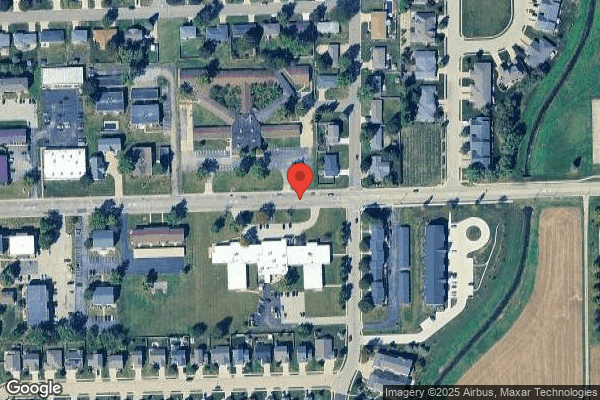
ARCADIA CARE MORTON

190 EAST QUEENWOOD ROAD, MORTON, IL 61550 (309) 266-9741
For profit - Corporation 106 Beds APERION CARE Data: November 2025 2 Immediate Jeopardy citations
Trust Grade
0/100
#446 of 665 in IL
Last Inspection: February 2025

Within standard 12-15 month inspection cycle. Federal law requires annual inspections.

Overview

Arcadia Care Morton has received a Trust Grade of F, indicating poor performance with significant concerns about resident care. It ranks #446 out of 665 nursing homes in Illinois, placing it in the bottom half of facilities statewide, and #4 out of 8 in Tazewell County, meaning only three local options are better. The facility shows an improving trend in health issues, reducing from 13 in 2024 to 11 in 2025, but it still faces serious challenges, including a concerning staff turnover rate of 70% and $181,946 in fines, which is higher than 83% of Illinois facilities. Specific incidents include a resident suffering an orbital fracture due to abuse, inadequate supervision during a fire that allowed a wandering resident to exit the facility unsupervised, and failures in infection control protocols during COVID-19 outbreaks, which resulted in at least one resident being hospitalized. While there is a level of improvement, families should weigh these significant issues against any strengths when considering this facility for their loved ones.

Trust Score
F
0/100
In Illinois
#446/665
Bottom 33%
Safety Record
High Risk
Review needed
Inspections
Getting Better
13 → 11 violations
Staff Stability
⚠ Watch
70% turnover. Above average. Higher turnover means staff may not know residents' routines.
Penalties
✓ Good
$181,946 in fines. Lower than most Illinois facilities. Relatively clean record.
Skilled Nurses
⚠ Watch
Each resident gets only 22 minutes of Registered Nurse (RN) attention daily — below average for Illinois. Fewer RN minutes means fewer trained eyes watching for problems.
Violations
⚠ Watch
42 deficiencies on record. Higher than average. Multiple issues found across inspections.
★☆☆☆☆
1.0
Overall Rating
★☆☆☆☆
1.0
Staff Levels
★★★☆☆
3.0
Care Quality
★★☆☆☆
2.0
Inspection Score
Stable
2024: 13 issues
2025: 11 issues

The Good

  • Full Sprinkler Coverage · Fire safety systems throughout facility
  • No fines on record

Facility shows strength in fire safety.

The Bad

1-Star Overall Rating

Below Illinois average (2.5)

Significant quality concerns identified by CMS

Staff Turnover: 70%

23pts above Illinois avg (46%)

Frequent staff changes - ask about care continuity

Federal Fines: $181,946

Well above median ($33,413)

Significant penalties indicating serious issues

Chain: APERION CARE

Part of a multi-facility chain

Ask about local staffing decisions and management

Staff turnover is elevated (70%)

22 points above Illinois average of 48%

The Ugly 42 deficiencies on record

2 life-threatening 3 actual harm
Aug 2025 3 deficiencies 1 Harm
SERIOUS (H) 📢 Someone Reported This

A family member, employee, or ombudsman was alarmed enough to file a formal complaint

Actual Harm - a resident was hurt due to facility failures

Deficiency F0725 (Tag F0725)

A resident was harmed · This affected multiple residents

Based on interview and record review, the facility failed to ensure sufficient nursing staff were available to meet the needs of residents. This failure has the potential to affect all 85 residents re...

Read full inspector narrative →
Based on interview and record review, the facility failed to ensure sufficient nursing staff were available to meet the needs of residents. This failure has the potential to affect all 85 residents residing in the facility.Findings include:The facility's Call Light policy revised 1/2022 documents resident call lights will be answered in a timely manner. All staff should assist in answering call lights. Nursing Staff members shall go into the resident's room to respond to call system and promptly cancel the call light when the room is entered. Bathroom lights should be viewed as emergencies and immediate attention will be given. Requests shall be responded to in a professional and courteous manner. The Facility Assessment (reviewed 8/16/2024) documents the following: Staffing Plan: The facility's plan to ensure sufficient staff to meet the needs of the residents at any given time is based on the staffing calculator, which takes into consideration the facility census and acuity levels impacting staffing needs.The facility's Resident Roster dated 8/18/25 documents 85 residents reside in the facility. On 8/18/25 at 2:34 PM V3(Ombudsman) stated it was mentioned in resident council on 8/7/25 that it was taking staff long periods of time to answer residents call lights and to be taken to the bathroom. On 8/19/25 at 1:55 PM V17 (Activity Director) stated she is responsible for resident council and typing the resident council concerns. V17 stated, I have not been documenting the concerns voiced in resident council on the resident council minutes. I was instructed not to from past administration. Usually if residents voice concerns, I go to the department head responsible for the department they are complaining about and let them know the concerns. Nothing gets documented. I believe it was brought up in the last resident council meeting that call lights have not been answered timely.On 8/19/25 at 11:40 AM, V12 (Licensed Practical Nurse) stated staffing is an issue because staff call in often. V12 stated when staff call in for their shift, we must make do with the staff we have which causes longer wait times for the residents. On 8/19/25 at 11:46 AM, V13 (Licensed Practical Nurse) stated staffing is an issue at the facility and Certified Nursing Assistants (CNAs) are understaffed. Residents will often complain that their call lights are not being answered timely because we don't have enough staff. On 8/19/25 at 11:56 AM, V14 (Certified Nursing Assistant) stated residents often experience long wait times and staff struggle to respond promptly due to limited coverage.On 8/19/25 at 12:40 PM, V19 (Certified Nursing Assistant) stated that the facility is often not clean, and the staff often work short which makes for longer wait times for residents. V19 stated the residents will complain often that they are not getting the help they need. On 8/18/25 at 9:18 AM R1 states from 2pm-10pm he has had to wait 3 hours before when he had turned on his call light. R1 stated, I hate sitting in my poop waiting for someone to change me. The staff rarely get to my call light timely on nights. I wait at least 30 minutes every night sometimes more for my call light to be answered. They don't have enough staff.On 8/19/25 at 1:45 PM, R3 stated his call light is frequently ignored, with wait times exceeding one hour, and expressed concern about insufficient staffing.The facility Concern Form dated 8/7/25 documents R8 expressed in Resident Council that R8 is having issues with her call light being answered in a timely manner, and staff state that R8 needs to wait. This form further documents R8 has had to wait for two hours for toileting assistance. On 8/20/25 at 12:35 PM, R8 stated that she often waits a long time for toileting assistance. R8 stated she requires a mechanical lift to be transferred to the toilet and staff will tell R8 that it takes too long to toilet her, so R8 often urinates and poops in her adult brief. R8 stated she has had to wait for hours in a soiled adult brief for staff to come and change her. The facility's Daily Assignment Sheet dated 8/9/25 documents the total Nursing Staff hours were 190 hours for the day. V21 (Regional Director of Operations) documented on Daily Assignment Sheet the facility was short 33 Nursing hours for 8/9/25 based on Facility Assessment staffing calculations. The facility's Daily Assignment Sheet dated 8/10/25 documents the total Nursing Staff hours were 185 hours for the day. V21 documented on Daily Assignment Sheet the facility was short 38.5 Nursing hours for 8/10/25 based on Facility Assessment staffing calculations. The facility's Daily Assignment Sheet dated 8/16/25 documents the total Nursing Staff hours were 176.9 hours for the day. V21 documented on Daily Assignment Sheet the facility was short 47.1 Nursing hours for 8/16/25 based on Facility Assessment staffing calculations. The facility's Daily Assignment Sheet dated 8/17/25 documents the total Nursing Staff hours were 177.5 hours for the day. V21 documented on Daily Assignment Sheet the facility was short 41.5 Nursing hours for 8/17/25 based on Facility Assessment staffing calculations. On 8/20/25 at 11:56 AM, V21 (Regional Director of Operations) confirmed staffing shortages on the above dates based on minimum staffing calculations.
CONCERN (D) 📢 Someone Reported This

A family member, employee, or ombudsman was alarmed enough to file a formal complaint

Potential for Harm - no one hurt, but risky conditions existed

Quality of Care (Tag F0684)

Could have caused harm · This affected 1 resident

**NOTE- TERMS IN BRACKETS HAVE BEEN EDITED TO PROTECT CONFIDENTIALITY** Based on interview and record review the facility failed to promptly provide medical care for a resident promptly after a declin...

Read full inspector narrative →
**NOTE- TERMS IN BRACKETS HAVE BEEN EDITED TO PROTECT CONFIDENTIALITY** Based on interview and record review the facility failed to promptly provide medical care for a resident promptly after a decline in condition for one of five residents (R2) reviewed for change in condition in a sample of nine. Findings include:The facility's Hospice Services, dated 10/2024, documents Guidelines: the facility shall honor the advance directives and care alternatives residents may desire when terminally ill and to afford residents with care that allows for dignity and comfort during the end stage of their lives. 2. The resident's advanced directives will be honored in all aspects of Hospice services. 9. Facility licensed personnel will be responsible to notify the Hospice Service Coordinator in the event of a change in the Hospice residence condition and prior to transfer of resident to another facility including an acute hospital.R2's admission Record, dated [DATE], documents R2 admitted to the facility on [DATE] with the following, but not limited to, diagnoses: Benign Prostatic Hyperplasia with Lower Urinary Tract Symptoms, Presence of Cardiac Pacemaker, Major Depressive Disorder, and Alzheimer's Disease. R2's current Census record documents R2 admitted to hospice on [DATE]. R2's IDPH (Illinois Department of Public Health) Uniform POLST (Practitioner Order for Life-Sustaining Treatment) form revised [DATE] documents R2 is a full code and to attempt CPR (Cardiopulmonary Resuscitation). This further documents R2 selected full treatment with primary goal of attempting to prevent cardiac arrest by using all indicated treatments. Utilize intubation, mechanical ventilation, and all other treatments as indicted. R2's Progress Note, dated [DATE] at 5:15 AM and signed by V22/Agency LPN (Licensed Practical Nurse), documents (R2) exhibiting [NAME] strokes breathing pattern. BP (Blood Pressure) 63/54, R (Respirations) 22, SPO2 (Saturation of Peripheral Oxygen) 84% (percent) on 2 L (liters) oxygen via NC (nasal cannula) continuous. Temperature 98.3. P (Pulse) 144. Generalized mottling noted. (Hospice) contacted. Spoke with (V23/Hospice Registered Nurse/RN) updated on (R2's) condition and signs and symptoms. (R2) remains full code at this time. (Hospice) is contacting appointed guardian on call phone number for clarification. (R2) continues medications for comfort. Hygienic cares performed and positioned for comfort.R2's Client Coordination Note, dated [DATE] at 5:22 AM and signed by V23/Hospice RN) documents V23 received a call from the facility that R2 had a change in condition with an elevated heart rate of 140 that was weak, R2's blood pressure was 60/30, and oxygen saturation reading was 84% despite oxygen therapy. V23 further documents she made facility aware that R2 remains a Full Code at this time and that V5/R2's Guardian did not feel that R2's medical record contained enough documentation to change R2's code status the last time they spoke. V23 made facility aware she would make some calls for guidance and call the facility back with updates. R2's Client Coordination Note, dated [DATE] at 5:50 AM and signed by V23/Hospice RN, documents V23 contacted V24/R2's on call Guardian and received guidance that nothing can be done to change R2's Code Status until the following day. V24 advised V23 that the facility should follow protocol for a resident with a declining condition that is a Full Code. V23 documents that V23 contacted the facility with this guidance and was told V23 would receive a call back after facility determines what they are required to do. R2‘s Progress Note, dated [DATE] at 6:04 AM and signed by V22/Agency LPN, documents Received return call from (V23/Hospice RN) with (Hospice.) Made aware (Hospice) spoke with on call guardian and made aware No attorney available over the weekend. (R2) to remain full code until further notice. (V23) scheduled (Hospice) visit with (R2) today. (R2) remains resting quietly with eyes closed. Comfort medications continue. Will continue to monitor.R2's Client Coordination Note, dated [DATE] at 8:05 AM and signed by V23/Hospice RN, documents that after multiple attempts to contact the facility nurse V23 spoke to V11/LPN who stated the nurse from the previous shift did not pass along R2's condition change or that V11 was to follow up with V23. This note further documents that V23 made V11 aware that R2 is a Full Code and R2's code status could not be changed until the following day, V23 requested that V11 contact V1/Administrator in Training (Prior Director of Nursing) for guidance as they should follow R2's current code status. V23 documents that V11 stated she would contact V1 and then call V23 back with an update. R2's Client Coordination Note, dated [DATE] at 10:00 AM and signed by V23/Hospice RN, documents V23 called the facility back and spoke with V11 who stated she has a call out to V1 and if she has not heard anything by the time V11 is done passing medications for the morning V11 will call again. V11 stated she will call V23 if she hears anything.R2's Progress Note, dated [DATE] at 5:22 PM and signed by V10/LPN documents This nurse spoke with (V23/Hospice RN) and contacted (V1/Administrator in Training) for approval to send (R2) to the emergency room. This nurse wasn't able to obtain a BP and (R2) had a low oxygen saturation. (R2) remained on 3 L of O2 (oxygen) until EMT (Emergency Medical Technicians) arrived. (R2) was sent to the emergency room via emergency medical transport. (V23) was made aware (R2) had been sent and stated to this nurse she (V23) would contact the guardian and keep the facility updated on (R2's) status.R2's Client Coordination Note, dated [DATE] at 11:15 AM and signed by V23/Hospice RN, documents V23 received a call from V11 who stated that R2 was being sent to the local hospital by ambulance.On [DATE] at 3:24 PM V5/R2's Guardian stated, The facility should have sent (R2) to the hospital right away if he was actively dying. I was never able to sign the DNR (Do Not Resuscitate) based on the information provided from the (Hospice) company prior to (R2) having to go to the hospital. I was upset when I found out the facility waited approximately five and a half hours before they sent (R2) out to the hospital since (R2) was still a Full Code. On [DATE] at 4:15 PM V23/Hospice RN stated, I thought it was an extreme amount of time to wait to send (R2) to the hospital on [DATE] since he was a full code. The facility contacted me at approximately 5:20 AM and stated (R2) was actively dying. I advised the facility to treat (R2) as they would with any resident who was a full code. The nurse that contacted me stated she was going to get ahold of the charge nurse before sending (R2) out to the hospital to see what they wanted to do. I never heard anything back from that nurse, so I called the facility back around 6:00 AM and spoke to the nurse again and let them know what (V24/R2's On Call Guardian) had stated. That nurse stated they were still waiting to speak to the charge nurse because they felt like since he was on hospice they shouldn't send him to the emergency room. I then called back around 8:00 AM and spoke to a different nurse on duty. I then explained again I would advise them to send (R2) out to emergency room. They stated they could hardly get a BP on (R2) and that (R2) had begun to mottle. The staff nurse continually told me they were going to wait for the charge nurse to let them know what to do. I let the facility know that would be on them, that (R2) is a full code and should be treated as such. Around 11:00 AM the facility called me and stated they were transferring (R2) to the hospital.On [DATE] at 12:27 PM V10/LPN stated I was not aware of (R2's) condition until (V23/Hospice RN) called the facility. I spoke to (V23) around 8:00 AM regarding the status of (R2). I told (V23) I would have to notify (V1/Administrator in Training) to see if they wanted me to send (R2) out to the hospital, since that is our facility's protocol. We (facility staff) have been told we have to let management know before sending someone out to the hospital to ensure it is ok since (R2) was hospice. I assessed (R2) and could hardly get a BP reading and you could tell (R2) was actively dying. I didn't know what to do since (R2) was on hospice, but still a full code. I believe I messaged (V1) around 8:30 AM because she was off that day. I did not hear back from (V1) until approximately 10:30 AM to send (R2) to the hospital. I did not get (R2) sent to the (local hospital) until around 11:00 AM. Between 8:00 AM and 10:30 AM (V23) kept calling to see where we were with sending (R2) out to the hospital because (V23) stated we should be sending (R2) since (R2) is still a full code. I kept telling (V23) I was waiting to hear back from (V1) to see what to do. To be honest I am a brand-new nurse and wasn't sure what to do. I did not document the time correctly in the progress notes. I accidently put 5:22 PM but it was technically around 11:00 AM when I sent (R2) out to the hospital.On [DATE] at 2:37 PM V1/Administrator in Training stated she was the prior Director of Nursing when R2 was sent out to the hospital on [DATE]. V1 stated, If any resident, including residents on hospice, are a full code and are actively dying staff should notify the physician and send the resident out to the hospital immediately. There is no rule at the facility that staff must get a hold of the Director of Nursing first. (R2) should have been sent out immediately when (R2) was experiencing a change in condition and was actively dying. V1 verified five and a half hours was too long to wait to send R2 out to the hospital on [DATE].
CONCERN (F) 📢 Someone Reported This

A family member, employee, or ombudsman was alarmed enough to file a formal complaint

Potential for Harm - no one hurt, but risky conditions existed

Safe Environment (Tag F0584)

Could have caused harm · This affected most or all residents

**NOTE- TERMS IN BRACKETS HAVE BEEN EDITED TO PROTECT CONFIDENTIALITY** Based on observation, interview, and record review the facility failed to implement adequate housekeeping services to keep the f...

Read full inspector narrative →
**NOTE- TERMS IN BRACKETS HAVE BEEN EDITED TO PROTECT CONFIDENTIALITY** Based on observation, interview, and record review the facility failed to implement adequate housekeeping services to keep the facility clean and free of odors. These failures have the potential to affect all 85 residents residing within the facility. Findings include:The facility's Daily Census form, dated 8/18/25, indicates that 85 residents are currently residing in the facility.The facility's Housekeeper policy revised 7/2023 documents the primary purpose of the housekeeper is to perform the day-to-day activities of the Housekeeping Department in accordance with current federal, state, and local standards, guidelines and regulations governing our facility, and as may be directed by the Administrator, and/or the Director of Environmental Services, to assure that our facility is maintained in a clean, safe, and comfortable manner. Ensure that work/cleaning schedules are followed as closely as practical. Clean floors including sweeping, dusting, damp/wet mopping, stripping, waxing, buffing, disinfecting etcetera.The facility's Housekeeping Supervisor Job Description revised 7/2023 documents the primary purpose of the Housekeeper Supervisor is to perform the day to day activities of the Housekeeping Department in accordance with current federal, state, and local standards, guidelines and regulations governing our facility, and as may be directed by the Administrator, and/or the Director of Environmental Services, to assure that our facility is maintained in a clean, safe, and comfortable manner. Ensure that work/cleaning schedules are followed as closely as practical. Coordinate daily housekeeping services with nursing services when performing routine cleaning assignments in resident living and/or residential areas. Clean floors including sweeping, dusting, damp/wet mopping, stripping, waxing, buffing, disinfecting etc.The facility's A Hall and B Halls daily cleaning list, provided by V7/Housekeeping Supervisor, documents, Mop floors in your section. This list does not include sweeping floors.The facility's Laundry and Housekeeping Schedule dated 7/28/25 through 8/24/25, documents two housekeepers and one laundry aide worked on 8/15/25 and 8/16/25, one housekeeper and one laundry aide worked 8/17/25, and two housekeepers and one laundry aide worked 8/17/25.On 8/18/25 from 9:25 AM through 9:31 AM a tour was conducted of A-Hall. room [ROOM NUMBER]'s floor was sticky with scattered debris through the room. A large sticky red spill was observed by the bed against the wall. room [ROOM NUMBER]'s floor had small stains throughout the floor with a large brown sticky stain observed underneath the bed and another large yellowing-brown stain slightly underneath the side table. Scattered debris was observed throughout the entire room. room [ROOM NUMBER] had a bright red sticky stain observed by the bed, with crumbs and debris scattered throughout the entire floor. room [ROOM NUMBER] had thick black marks on the floor in between the bathroom and the bed. The entire floor was sticky with old spill stains throughout the floor. room [ROOM NUMBER]'s floor was scattered in debris and was sticky throughout the entire room. A Hall (Short) was observed to have small sticky brown spots down the hallway with scattered debris, and multiple stains. A Hall (Long) was observed to have multiple stains down the hallway.On 8/18/25 at 2:07 PM V7/Housekeeping Supervisor confirmed at this time room [ROOM NUMBER]'s floor remained sticky with scattered debris, room [ROOM NUMBER]'s floor had small stains throughout the floor with a large brown sticky stain remaining underneath the bed and another large-yellowish brown stain slightly underneath the side table, room [ROOM NUMBER]'s floor remained scattered with crumbs, debris, and a red stain by the bed, room [ROOM NUMBER] had thick black marks on the floor and the floor remained sticky, room [ROOM NUMBER] remained sicky with scattered debris throughout room, and A Hall (long and short) remained with scattered stains. V7 stated, This past weekend we only had one housekeeper and one laundry aide for the entire building. I was here on Saturday, but we can't get everything done. Every other weekend is like that. On the weekend with one housekeeper, they will typically clean the dining room out from breakfast and lunch, clean the nurse's station, take out the trash from the rooms, clean the bathrooms, and do spot checks. During the week we typically schedule one laundry aide and two housekeepers, as well as me. One housekeeper will take A hall and one will take B hall. I assist with doing the small dining room, offices, and running the floor machine throughout the facility. We had a call in today, so we had one laundry, one housekeeper, and then me. I did spot checks today on B hall but couldn't get to everything. I still have a little more to do in some of the rooms.On 8/18/25 at 9:18 AM R1 stated housekeeping misses his room a lot for cleaning and states he does not believe housekeeping did much to his room over the weekend.On 8/18/25 at 2:14 PM R8 stated, My trash has not been taken out of my room since last Friday and no one has cleaned my room since then. They are always short on housekeepers, and I get tired of my room not getting cleaned. I tell them all the time and then no one comes back to speak to me about it. I don't like when my room gets that dirty.On 8/19/25 at 1:45 PM, R3 was sitting on his bed in his room. R3's room had a very strong urine odor. R3 stated housekeeping often does not come in and clean his room because they do not have enough help.On 8/19/25 at 11:46 AM V13/LPN (Licensed Practical Nurse) stated housekeeping is terrible and they do not do the job correct.On 8/19/25 at 11:56 AM, V14/CNA (Certified Nursing Assistant) stated the facility is dirty and they only have one housekeeper on each side of the facility per day and they cannot get to it all.On 8/19/25 at 12:40 PM V19/CNA stated that the facility is often not clean and stated there is only one housekeeper that cleans one time a day and is not able to get all the cleaning done. On 8/19/25 at 12:11 PM V15/Human Resource Director provided the hours worked per department for housekeeping and laundry for the dates 8/15, 8/16, 8/17, and 8/18/25. On 8/15/25 there were a total of 22 hours worked in housekeeping and laundry, 8/16/25 a total of 23 hours worked in housekeeping and laundry, 8/17/25 a total of 15 hours worked in housekeeping and laundry, and 8/18/25 a total of 23 hours worked in housekeeping and laundry. V15 stated at this time they use the calculation of 0.45 x (times) the census to determine how many housekeeping/laundry/and maintenance staff to schedule. V15 verified at this time 37.8 hours per day should have been staffed for 8/15, 8/16, 8/17, and 8/18 and were not.On 8/19/25 at 1:55 PM V1/Administrator in Training stated We (the facility) have 37.8 hours per day for housekeeping/laundry/maintenance. We currently are not meeting that.
Feb 2025 8 deficiencies
CONCERN (D)

Potential for Harm - no one hurt, but risky conditions existed

PASARR Coordination (Tag F0644)

Could have caused harm · This affected 1 resident

**NOTE- TERMS IN BRACKETS HAVE BEEN EDITED TO PROTECT CONFIDENTIALITY** 3. R32's OBRA (Omnibus Budget Reconciliation Act) dated 09/10/18 documents R32 was admitted on [DATE] and indicated nursing faci...

Read full inspector narrative →
**NOTE- TERMS IN BRACKETS HAVE BEEN EDITED TO PROTECT CONFIDENTIALITY** 3. R32's OBRA (Omnibus Budget Reconciliation Act) dated 09/10/18 documents R32 was admitted on [DATE] and indicated nursing facility services were appropriate. R32's Diagnosis Sheet documents on 01/24/20, R32 had a diagnosis of Schizophreniform Disorder. There was not a PASARR (Preadmission screening and resident review) II screening for further review after R32 was diagnosed with Schizophreniform Disorder. On 02/20/25 at 10:00 AM V1/Administrator stated he cannot provide a PASARR II for R32. Based on record review and interview, the facility failed to obtain a Pre-admission Screening and Resident Review (PASARR) and/or Level II Resident Reviews for three residents (R17, R32, R60) of six residents reviewed for diagnosed mental illness in the sample of 18. Findings include: The facility's Preadmission Screening and Annual Resident Review (PASARR) Policy dated 3/2024 documents: Annually and with any significant change of status, the facility will complete the PASARR Level I screen for those individuals identified per the Level II screen requiring specialized services. The facility will report any changes as identified via the screen to the state mental health authority or state intellectual disability authority promptly. 1. R17 was admitted to the facility on [DATE]; R17 was diagnosed with Schizoaffective Disorder with diagnosis date of 2/4/23. R17 does not have a PASARR screening in her current electronic medical records, and there is no evidence that a PASARR was initiated at the time of R17's Schizoaffective Disorder on 2/4/23. 2. R60 was admitted to the facility on [DATE]; R60 was diagnosed with Other Schizoaffective Disorder with diagnosis date of 10/2/23. R60 does not have a PASARR screening for his Other Schizoaffective Disorder in his current electronic medical records; and no evidence that a PASARR was initiated at that time. (Internet definition of Schizoaffective Disorder, dated 2/20/25, documents: Schizoaffective disorder is a chronic mental health condition characterized primarily by symptoms of schizophrenia, such as hallucinations or delusions, and symptoms of a mood disorder, such as mania and depression.) On 2/20/25 at 12:15pm, V14 Business Office Manager/BOM stated that the facility's procedure for significant change/new diagnosis for mental illness would be Staff would usually get a psychiatric eval for the residents, check with Nursing regarding new PASARRs, and then would do the agency notifications; this was not done. At this time, V14 stated that he came to the facility in October 2024; confirmed there were no PASARR Level I's and/or Level II's for R17 or R60's new diagnoses; and confirmed that the screenings should have been done. On 2/20/25 at 12:15pm, V14 stated that R17 was Grandfathered in on OBRA (Omnibus Budget Reconciliation Act) when she was admitted . V14 stated, We do not have PASARR screenings for R17's Schizoaffective disorder. On 2/20/25 at 10:05am, V14 stated that the facility did not do a PASARR for R60 for his new diagnosis; stated that All we have is the grandfathered OBRA screening for R60.
CONCERN (D)

Potential for Harm - no one hurt, but risky conditions existed

Deficiency F0646 (Tag F0646)

Could have caused harm · This affected 1 resident

**NOTE- TERMS IN BRACKETS HAVE BEEN EDITED TO PROTECT CONFIDENTIALITY** Based on record review and interview, the facility failed to notify the appropriate state mental health/intellectual disability ...

Read full inspector narrative →
**NOTE- TERMS IN BRACKETS HAVE BEEN EDITED TO PROTECT CONFIDENTIALITY** Based on record review and interview, the facility failed to notify the appropriate state mental health/intellectual disability authorities for newly diagnosed mental illness for two residents (R17, R60) of six residents reviewed for mental illness in the sample of 18. Findings include: The facility's Preadmission Screening and Annual Resident Review (PASARR) Policy dated 3/2024 documents: The facility will report any changes as identified via the screen to the state mental health authority or state intellectual disability authority promptly. F. Coordination of Care: iv. The facility will refer all level II residents and all residents with newly evident or possible serious mental disorder, intellectual disability, or related condition for a level II review upon a significant change in status assessment to the State PASARR representative. 1. R17 was admitted to the facility on [DATE]; R17 was diagnosed with Schizoaffective Disorder on 2/4/23. 2. R60 was admitted to the facility on [DATE]; R60 was diagnosed with Other Schizoaffective Disorder on 10/2/23. On 2/20/25 at 10:05am, V14 Business Office Manager/BOM confirmed that (V14) was responsible for initiating PASARR screenings in coordination with V9 Social Services Director/SSD; and on 2/20/25 at 12:15pm, V14 confirmed that R17 had a new diagnosis of Schizoaffective Disorder and R60 had a new diagnosis of Other Schizoaffective Disorder. On 2/20/25 at 12:15pm, V14 stated that the procedure for these significant change/new diagnoses was: Staff would usually get a psych eval for the residents and check with Nursing regarding new PASARRs, then would do the agency notifications. V14 stated at this time that he became employed at the facility in October 2024; stated there were no PASARR screenings initiated for R17 or R60's newest diagnoses, there were no notifications regarding their significant changes sent to authorities, and stated that these should have been done.
CONCERN (D)

Potential for Harm - no one hurt, but risky conditions existed

Quality of Care (Tag F0684)

Could have caused harm · This affected 1 resident

Based on observation, interview and record review the Facility failed to maintain intact right inner thigh and left inner ankle wound dressings for one Resident (R12) of 18 Residents reviewed for skin...

Read full inspector narrative →
Based on observation, interview and record review the Facility failed to maintain intact right inner thigh and left inner ankle wound dressings for one Resident (R12) of 18 Residents reviewed for skin conditions in a sample of 30. Findings include: The Facility Skin Condition Assessment and Monitoring (Pressure and Non-Pressure) Policy, revised 6/2018, documents: to establish guidelines for assessing, monitoring and documenting the presence of skin breakdown, pressure injuries and other non-pressure skin conditions and assuring interventions are implemented; non-pressure skin conditions will be assessed for healing progress and signs of complications or infection weekly; a skin condition assessment and pressure ulcer risk assessment (Braden) will be completed at the time of admission/readmission; dressings which are applied to wounds shall include the date of the licensed nurse who performed the procedure; the dressing will be checked daily for placement, cleanliness and signs/symptoms of infection; and a licensed nurse shall observe condition of wound incision daily, or with dressing changes as ordered. Facility Wound Physician Report, dated 2/18/25, documents R12's right thigh etiology as trauma/injury and R12's left ankle etiology as Diabetic. R12's right thigh measures 6.0 centimeters/cm by 3.0 cm by 0.2 cm and left ankle measure 0.8 cm by 0.8 cm by 0.1 cm. R12's Treatment Administration Record, dated 2/18/25, documents a Physician's treatment order for R12's right inner thigh (cleanse with wound cleanser, medicated covering/hydrocolloid and dry foam dressing) and a treatment to R12's left inner ankle (cleanse with wound cleanser, apply ointment/gentamycin and cover with gauze dressing). On 2/18/25 at 10:12 am and 1:15 pm, R12's right inner thigh did not have a wound dressing. R12's open right inner thigh wound was exposed to R12's incontinent pad and incontinence brief. R12's left inner ankle dressing was not dated/signed and fifty percent/half of the dressing was not adhered to R12's left inner ankle. On 2/18/25 at 10:12 am, R12 stated, I told them a couple hours ago that my dressing on my thigh came off and my ankle dressing is coming off too, but they still have not come in to do the treatments. R12's incontinence brief was soiled and not positioned over R12's peri-area, exposing R12's right inner thigh wound to the soiled incontinence brief. On 2/28/25 at 12:45 pm, R12 stated, They still have not been in to do my treatments. R12's right inner thigh did not have a wound dressing and left inner ankle was not dated/signed and fifty percent/half of the dressing was not adhered. On 2/18/25 at 2:06 pm, R12 stated, The nurse (V5/Licensed Practical Agency Nurse) finally just came in and changed my dressings and I have told them a few times, so they knew they needed changed. This happens all the time. On 2/18/25 at 11:48 am, V5 (License Practical Agency Nurse) verified that R12's dressing had not been changed and stated, I will get to it after I get my 'meds' passed.
CONCERN (D)

Potential for Harm - no one hurt, but risky conditions existed

Medication Errors (Tag F0758)

Could have caused harm · This affected 1 resident

**NOTE- TERMS IN BRACKETS HAVE BEEN EDITED TO PROTECT CONFIDENTIALITY** Based on observation, interview, and record review the facility failed to provide an appropriate indication for use of antipsych...

Read full inspector narrative →
**NOTE- TERMS IN BRACKETS HAVE BEEN EDITED TO PROTECT CONFIDENTIALITY** Based on observation, interview, and record review the facility failed to provide an appropriate indication for use of antipsychotic medication for one of five (R83) with a diagnosis of dementia in a sample of 30. Findings include: The facility's policy titled Psychotropic Medication - Gradual Dosage Reduction, revised 2/2018 documents, To ensure that residents are not given psychotropic drugs unless psychotropic drug therapy is necessary to treat a specific or suspected condition as per current standards of practice and are prescribed at the lowest therapeutic dose to treat such conditions. R83's admission Record documents that R83's date of admission to the facility was 11/25/24 and her diagnoses on admission include Dementia with other behavioral disturbance, Anxiety Disorder, Delusional Disorders, Depression, Dementia (mild) without behavioral disturbance, psychotic disturbance, mood disturbance and anxiety. R83's Minimum Data Set (MDS) assessment dated [DATE] documents a Brief Interview for Mental Status score of 7/15, indicating severe cognitive impairment, Section E documents no hallucinations, delusions; behaviors toward others 1-3 days and wandering behaviors 1-3 days. R83's Physician Order dated 11/25/24 documents R83 has an order for Fluphenazine (antipsychotic) 5 milligrams(mg) give one tablet by mouth at bedtime for psychosis. R83's psychiatric note dated 1/28/25, documents that R83 takes Fluphenazine (antipsychotic) for Behavioral and Psychological Symptoms of Dementia (BPSD). R83's Behavior Monitoring and Interventions dated 1/22/25 through 2/20/25 documents no behaviors observed. On 2/18/25 at 10:05am R83 is walking out of her bathroom to her wheelchair. She is dressed in clean clothes, well kempt and calm. On 2/19/25 at 12:30pm R83 sitting in her room in wheelchair eating lunch and she appears calm. On 2/20/25 at 9:20am, V9/Social Services stated, R83 is pleasantly confused. R83 has not had any behaviors since she has been here. On 2/20/25 at 9:23am, V12/Certified Nursing Assistant stated, R83 has no aggressive behaviors or any behaviors for that matter. R83 is sweet as pie. On 2/20/25 at 9:50am, V2/Director of Nursing stated that R83 admitted to facility on Fluphenazine (antipsychotic) for psychosis. V2 also stated, I cannot speak for psychiatry's diagnosis, we have not received orders to change the diagnosis. V2 stated she (V2) understands that behaviors of dementia are not an appropriate diagnosis for the use of R83's Fluphenazine (antipsychotic).
CONCERN (D)

Potential for Harm - no one hurt, but risky conditions existed

Unnecessary Medications (Tag F0759)

Could have caused harm · This affected 1 resident

Based on observation, interview and record review the facility failed to administer medications as ordered. There were 34 opportunities with eight errors resulting in a 23.53% error rate. This applies...

Read full inspector narrative →
Based on observation, interview and record review the facility failed to administer medications as ordered. There were 34 opportunities with eight errors resulting in a 23.53% error rate. This applies to one of seven Residents (R12) observed in the medication pass. Findings include: Facility Medication Administration Policy, revised 1/2025, documents: Licensed Nurse may prepare, administer and record administration of medications; documentation of medication administration is recorded on the Medication Administration Record; and medications must be administered in accordance with a Physician's order. R12's Medication Administration Details, dated 2/18/25, documents Physician Orders for medications to be administered at 8:00 am (Leftunomide 20 milligram/mg one tab by mouth; Glipizide 10 mg one tab by mouth three times a day; Furosemide 20 mg one tab by mouth; Lantus SoloStar 30 units Subcutaneous/SQ two times a day; Oxybutynin Chloride ER 10 mg one tab by mouth; MVI with minerals one tab by mouth; Omeprazole 40 mg one tab by mouth; and Lefluonomide 20 mg one tab by mouth). The Medication Administration Details documents that Leftunomide 20 milligram/mg was administered at 10:38 am; Glipizide 10 mg at 10:41 am; Furosemide 20 mg was administered at 10:38 am,; Lantus SoloStar 30 units Subcutaneous/SQ was offered and refused at 11:02 am; Oxybutynin Chloride ER 10 mg was administered at 10:55 am; MVI with minerals was administered at 10:40 am; Omeprazole 40 mg was administered at 10:40 am; and Lefluonomide 20 mg as administered at 10:38 am. On 2/18/25, at 10:12 am, R12 stated, I already ate my breakfast and I still have not gotten my morning medications. I am Diabetic and I take insulin and diabetic medications. I am supposed to take my insulin and medication before my breakfast. On 2/28/25 at 12:10 pm, R12 stated, (V5/License Practical Agency Nurse) just came in about an hour ago, and tried to give me my morning medications. I told her that I was refusing my insulin because I already ate my breakfast and it is almost lunch time for gosh sakes, I did not want it messing up my other doses. On 2/18/25 at 11:48 am, V5 (License Practical Agency Nurse) stated, I know that I am late passing a lot of my morning medications. I went in to give (R12's) 8:00 am medications around 10:45 am, and (R12) took all of the medications, but refused the insulin. (R12) said it was too close to lunch time for the insulin. On 2/18/25, at 12:15 pm, V2 (Director of Nursing) stated, It looks like (V5) started passing (R12's) 8:00 am medications between 10:30 am and 11:00 am. Medications should be administered according to the Physician's orders and what time is documented on the Treatment Record.
CONCERN (D)

Potential for Harm - no one hurt, but risky conditions existed

Infection Control (Tag F0880)

Could have caused harm · This affected 1 resident

2. On 02/19/25 at 1:51 PM V8/Licensed Practical Nurse entered R35's room. V8 provided catheter care to R35's indwelling urinary catheter wearing gloves and a mask. V8 did not wear a protective gown. O...

Read full inspector narrative →
2. On 02/19/25 at 1:51 PM V8/Licensed Practical Nurse entered R35's room. V8 provided catheter care to R35's indwelling urinary catheter wearing gloves and a mask. V8 did not wear a protective gown. On 02/19/25 at 2:47 PM V2/Director of Nursing stated her expectation would be that staff would wear gown and gloves when providing direct care to R35 due to him having an indwelling urinary catheter. Based on observation, interview and record review the Facility failed to perform hand hygiene after providing care, when removing contaminated gloves and touching contaminated gloves for one Resident (R51) and failed to follow their policy on Enhanced Barrier Precautions for two residents (R35, R64) of 18 reviewed for Infection Control in a sample of 30. Findings include: Facility Hand Hygiene/Handwashing Policy, revised 3/2023, documents: hand hygiene means cleaning your hands by using either handwashing with soap and water or alcohol based hand sanitizer; perform hand hygiene after direct contact with patient's intact skin, after contact with body fluids or excretions, mucous membranes, non-intact skin or wound dressings; after contact with inanimate objects, before glove placement and after glove removal. An Enhanced Barrier Precautions policy last revised 03/2024 documents, Enhanced Barrier Precautions (EBP): recommendations now include use of EBP for residents with chronic wounds or indwelling medical devices during high contact resident care activities regardless of their multi drug resistant organism status This policy also documents, EBP may be considered and implemented for wounds and/or indwelling medical devices (central line, feeding tube, tracheostomy, drains, etc. Personal protective equipment (PPE): Standard precautions must be followed with all cares. Additionally, gown and gloves must be worn when providing the following cares: medical device care. 1. R51's Physician Order Sheet, dated 2/20/25, documents orders for: enteral feed one time a day (Two Cal 2.0 at 55 milliliters/ml an hour) and to cleanse the feeding tube site with soap and water and apply split gauze; and indwelling urinary suprapubic catheter care every shift. On 2/19/25 at 8:35 am, V2 (Director of Nursing/DON) and V3 (Wound Nurse) were performing indwelling urinary suprapubic catheter care and feeding tube care to R51. Upon entrance to R51's room, a Transmission Based Precaution sign was present on the entrance entrance door to R51's room. While putting on gloves, V2 (DON) dropped a glove on R51's floor, and V2 picked up the glove off of the floor and disposed the glove into the trash can. V2 then retrieved a new glove from a supply cart in R51's room, and put it on and assisted V3 (Wound Nurse) with positioning R51. No hand hygiene was performed. On 2/19/25 at 8:35 am, V3 (Wound Nurse) completed indwelling suprapubic catheter care, changed contaminated gloves and performed hand hygiene. Then V3 performed feeding tube care to R51. V3 removed the contaminated gloves and put on a new pair of gloves, without performing hand hygiene. V2 and V3 positioned R51. V3 then pulled R51's bedding up over R51 and adjusted the bed with the bed controls. No hand hygiene was performed. On 2/20/25 at 1:15 pm, V1 (Administrator) verified that hand hygiene should be performed after contamination of gloves and after glove changes. 3. R64's admission record documents R64 admitted to facility on 8/16/22 and diagnosis include Quadriplegia C1-C4 Incomplete, Hyperlipidemia, Chronic Obstructive Pulmonary Disease, Neuromuscular Dysfunction of Bladder, and Epilepsy. R64's Minimum Data Set (MDS) assessment, dated 1/6/25, documents, in Section H, R64 has an indwelling catheter. On 2/18/25 at 9:30am, R64's room had no Enhanced Barrier Precaution (EBP) sign on door and no personal protective equipment (PPE) available. On 2/19/25 at 8:53am, R64's room continues to have no EBP sign or PPE available. On 2/19/25 at 2:05pm, V3/Licensed Practical Nurse entered room to perform suprapubic catheter care, no EBP sign or PPE bin available. V3 stated, R64 just moved rooms a while ago, unsure of exact date, but he should have an Enhanced Barrier sign on his door and a personal protective equipment bin outside of room. I'm not sure why or where R64's went.
CONCERN (F)

Potential for Harm - no one hurt, but risky conditions existed

Deficiency F0804 (Tag F0804)

Could have caused harm · This affected most or all residents

Based on observation, interview, and record review the facility failed to serve food that was visually appealing and palatable to residents. This failure has the potential to affect 78 residents in th...

Read full inspector narrative →
Based on observation, interview, and record review the facility failed to serve food that was visually appealing and palatable to residents. This failure has the potential to affect 78 residents in the facility who are prescribed oral intake. Findings include: Facility Matrix documents 80 residents reside in the facility. Two residents require feeding tubes and do not eat. On 2/18/25 at 11:35am, the lunch meal plating of beef stroganoff, steamed zucchini and chilled pears was observed being served from the kitchen and delivered to the residents in the dining room. During the plating of the food, the pears were in a designated separate bowl. The steamed zucchini was plated without being drained on the same plate as the beef stroganoff, and a moderate amount of standing zucchini water/liquid was mixed with the beef stroganoff causing the plated food to look moderately watery and unappetizing. R37, R39, R43, R52, and R71 did not eat served lunch and requested grilled cheese as an alternative. On 2/19/25 at 10:32am, R22 stated he does not like the food that is served. On 2/19/25 at 10:35am R2, R20, R25, R52 and R66 agreed that the food is often not warm, especially room trays. R22 stated the food is often not pleasing to taste. R38 stated the food is too salty. On 02/19/25 at 11:05am, V10/Ombudsman stated, The food palatability is a recurring issue that is brought up monthly at resident council meetings and often not addressed by staff. V10 also verified that V10 has seen the Resident meal trays, and the food is seldom appealing. On 2/20/25 at 9:30am, V2/Director of Nursing verified that two residents residing in the Facility do not eat and take nothing by mouth. .
CONCERN (F)

Potential for Harm - no one hurt, but risky conditions existed

Garbage Disposal (Tag F0814)

Could have caused harm · This affected most or all residents

Based on observation, interview, and record review, the facility failed to ensure two large trash dumpsters are secured from pest and rodents, in that the lids of the trash dumpsters were not closed. ...

Read full inspector narrative →
Based on observation, interview, and record review, the facility failed to ensure two large trash dumpsters are secured from pest and rodents, in that the lids of the trash dumpsters were not closed. This failure has the potential to affect all 80 residents residing in the facility. Findings include: Facility Policy, titled Trash Disposal, not dated, documents: The dietary department should dispose of trash appropriately and maintain the dumpster area for cleanliness and prevention of rodents. To prevent the spread of infection and deter pests and rodents. 2. The dietary department should ensure the dumpster lids are closed when disposing of trash and that no trash is on the ground surrounding the dumpster. The Department of Health and Human Services Centers for Medicaid and Medicare Services, Form 671-Long-Term Care Facility Application for Medicare and Medicaid, dated 2/18/25, documents 80 residents reside in the facility. On 02/19/25, at 11:01am, during follow-up tour, with V7/Regional Dietary Manager, the two trash dumpsters, located outside, had lids which were open, and one dumpster was over filled with facility trash. On 02/19/25, at 11:10am, V7/Regional Dietary Manager confirmed the trash dumpster lids should have been closed.
Apr 2024 10 deficiencies
CONCERN (D)

Potential for Harm - no one hurt, but risky conditions existed

Comprehensive Assessments (Tag F0636)

Could have caused harm · This affected 1 resident

**NOTE- TERMS IN BRACKETS HAVE BEEN EDITED TO PROTECT CONFIDENTIALITY** Based on observation, interview, and record review, the facility failed to accurately code visual status for one (R12) of 20 res...

Read full inspector narrative →
**NOTE- TERMS IN BRACKETS HAVE BEEN EDITED TO PROTECT CONFIDENTIALITY** Based on observation, interview, and record review, the facility failed to accurately code visual status for one (R12) of 20 residents reviewed for accurate resident assessments in a sample of 31. Findings include: On 4/9/24 at 9:30 AM, in R12's room above the head of R12's bed had a sign that documents (R12) is legally blind- please introduce yourself, place call light in resident's hand, and have bed controls in reach. At that same time, R12 stated he can see shadows but not details. R12's MDS/Minimum Data Set, dated [DATE], documents under Vision - Highly Impaired. R12's MDS/Minimum Data Set, dated [DATE], documents under Vision - Adequate. On 4/10/24 at 2:00 PM, V5 Licensed Practical Nurse/LPN verified R12 was visually impaired, and visitors needed to introduce themselves to the resident when entering the room. On 4/12/24 at 12:00 PM, V12 LPN Careplan Coordinator verified R12 was visually impaired, and should be documented as so on his MDS.
CONCERN (D)

Potential for Harm - no one hurt, but risky conditions existed

Comprehensive Care Plan (Tag F0656)

Could have caused harm · This affected 1 resident

Based on observation, interview, and record review, the facility failed to develop a vision careplan for one (R12) of 20 residents reviewed for careplans in a sample of 31. Findings include: Facility ...

Read full inspector narrative →
Based on observation, interview, and record review, the facility failed to develop a vision careplan for one (R12) of 20 residents reviewed for careplans in a sample of 31. Findings include: Facility Comprehensive Care Plan policy, revised 11/17/17, documents To develop a comprehensive careplan that directs the care team and incorporates the resident's services that are to maintain the resident's highest practicable physical, mental, and psychosocial well-being. On 4/9/24 at 9:30 AM, in R12's room above the head of R12's bed had a sign that documents (R12) is legally blind- please introduce yourself, place call light in resident's hand, and have bed controls in reach. At that same time, R12's three drawer dresser next to his bed had a cassette in a tape player with headphones for books on tape, R12 stated he can see shadows but not details, and staff was observed in the room and heard identifying themselves and telling the resident where things are in his room and on his meal trays. On 4/10/24 at 2:00 PM, V5 Licensed Practical Nurse/LPN verified R12 was visually impaired and introduced herself when entering the room to identify herself to R12. R12's current careplan does not document R12 is visually impaired. On 4/12/24 at 2:00 PM, V15 Social Services Director verified R12 was visually impaired, and this should be in his careplan.
CONCERN (D)

Potential for Harm - no one hurt, but risky conditions existed

Deficiency F0657 (Tag F0657)

Could have caused harm · This affected 1 resident

2. R62's current Care Plan documents: (R62) has a tracheostomy. (R62) has an altered respiratory status/difficulty breathing related to Chronic Obstructive Pulmonary Disease/COPD, respiratory failure,...

Read full inspector narrative →
2. R62's current Care Plan documents: (R62) has a tracheostomy. (R62) has an altered respiratory status/difficulty breathing related to Chronic Obstructive Pulmonary Disease/COPD, respiratory failure, tracheostomy. Oxygen at 10 liters per minute trache continuous. (Internet Definition of Tracheotomy (Trache), dated 4/12/24 documents: Tracheostomy is a procedure to help air and oxygen reach the lungs by creating an opening into the trachea (windpipe) from outside the neck. A person with a tracheostomy breathes through a tracheostomy tube inserted in the opening.) R62's 11/1/23 Progress Note dated 11/1/23 documents: Old Trache site to neck clean and open to air. R62's Progress Note dated 12/27/23 documents: (R62) has history of trache. Decannulated per pulmonology. R62's Progress Note dated 4/9/24 documents: Trache decannulated five months ago; old trache site still open and patient denies drainage from site when coughing. On 4/9/24 at 10:40am, V6 Registered Nurse/RN stated that (R62) did not have a trache. On 4/10/24 at 2:15pm, V11 Licensed Practical Nurse/LPN stated that R62's trache was taken out on 10/24/23 and (R62) will have surgery this month to close the (trache) hole. Observation of R62 at 10:25 on 4/9/24 showed that R62 did not have a trache in place. There was a small circular hole covered with border gauze where the trache was initially inserted. On 4/11/24 at 1:25pm, V12 Minimum Data Set/MDS/Care Plan Coordinator stated that (R62's) Care Plan should have stated History of trache instead of tracheostomy. On 4/11/24 at 1:20pm, V2 Director of Nursing/DON stated that R62's Care Plan should have had info about R62's airway was still open. On 4/11/24 at 1:30pm, V1 Administrator stated, (R62) does not have a trache; his Care Plan should say history of tracheostomy. Based on observation, record review and interview, the facility failed to revise a Comprehensive Care Plan for two residents (R52, R62) of 20 residents reviewed for Care Plan revision in a sample of 31. Findings includes: The facility's Comprehensive Care Plan dated 11/17/17 documents: To develop a Comprehensive Care Plan that directs the care team and incorporates the resident's goals, preferences, and services that are to be furnished to attain or maintain the resident's highest practical physical, mental, and psychosocial well-being. The facility will develop and implement a comprehensive person-centered care plan for each resident, consistent with the resident rights, that includes measurable objectives and timeframes to meet a resident's medical, nursing, and mental and psychosocial needs that are identified in the comprehensive assessment. The care plan should be revised on an ongoing basis to reflect changes for the resident and the care that the resident is receiving. 1. The current Care Plan for R52 documents R52 is oxygen dependent continuously. The Order Summary Report for R52 does not include a physician order for the use of continuous oxygen. On 4/9/24 at 10:00 am and 3:40 pm; on 4/10/24 at 1:40 pm; and on 4/11/24 at 8:05 am, R52 was lying in bed in no respiratory distress and not using oxygen. There was no oxygen in the room for R52's use. On 4/11/24 at 4:15 pm, V12 MDS (Minimum Data Set) Coordinator stated R52's Care Plan was just closed today after being updated. V12 MDS Coordinator stated she does not see Oxygen on R52's current Care Plan and R52 hasn't been on oxygen since he came off of Hospice in April of 2023.
CONCERN (D)

Potential for Harm - no one hurt, but risky conditions existed

ADL Care (Tag F0677)

Could have caused harm · This affected 1 resident

Based on observation, interview, and record review the facility failed to ensure shower and nail care were performed for one (R125) of two residents reviewed for activities of daily living in the samp...

Read full inspector narrative →
Based on observation, interview, and record review the facility failed to ensure shower and nail care were performed for one (R125) of two residents reviewed for activities of daily living in the sample of 31. Finding include: The facility's Certified Nursing Assistant policy and procedure, dated 5/2/2017, documents The Certified Nursing Assistant (CNA) is responsible for providing resident care and support in all activities of daily living and ensures the health, welfare and safety of all residents. Essential duties and responsibilities include: Provide assistance in personal hygiene by giving bedpans, urinals, baths, backrubs, shampoos, and shaves; and assisting with travel to the bathroom; helping with showers and baths. Document actions by completing forms, reports, logs, and records. The facility's Bathing-Shower and Tub Bath policy and procedure, revised 1/31/18, documents To ensure resident's cleanliness to maintain proper hygiene and dignity. A shower, tub bath or bed/sponge bath will be offered according to resident's preference two times per week or according to the resident's preferred frequency and as needed or requested. The facility's Nail Care policy and procedure, revised 1/25/18, documents Observe condition of resident nails during each time of bathing. Note cleanliness, length, uneven edges, hypertrophied (thickened or enlarged) nails. After bathing, use orange stick, and clean debris from around and under finger and toenails. Document provision of care and pertinent observations. The current Care Plan for R125 documents R125 with an ADL (activity of daily living) self-care/mobility performance (functional abilities) deficit that may fluctuate with activity throughout the day r/t (related to) recent nondisplaced fracture of cuboid (bone of foot) bone of the right foot, PVD (peripheral vascular disease), S/P (status post) amputation of right and left great toes with surgical wounds, balance deficit, unsteady gait and additional co-morbidities. Interventions include: Adjust provision of ADLS to compensate for resident's changing abilities and Monitor/document resident's abilities for ADL's and assist resident as needed. On 4/09/24 at 10:32 am, 4/10/24 at 2:35 pm, 4/11/24 at 8:10 am, and 4/12/24 at 8:38 am, R125's fingernails were overgrown and jagged to bilateral hands. R125's left 5th digit fingernail was grossly overgrown at approximately a quarter of an inch. On 4/10/24 at 2:39 pm, R125 stated he has not had a shower since he was admitted to the facility. R125 stated he just washes up at the sink on his own. R125 stated no one has come in and offered to trim his toenails or his fingernails and stated, My fingernails really need cut, it has been a while. On 4/10/25 at 2:35 pm, V2 DON/Director of Nurses, stated shower sheets are completed for each resident on shower days. The CNA's are to give a reason why they didn't do shower, shave, clip nails or change bed linens if they don't do them. The Shower Sheets are then turned into medical records to file. The EHR (Electronic Health Record) Bathing Task for R125 documents R125 received a shower on 4/4/24 and a bed bath on 4/8/24. There are no other documented showers or baths in this EHR. The Shower Sheets for R125, dated 3/28/24, 4/3/24, 4/4/24, and 4/8/24 do not document showers or nail care was completed nor do they document the condition of R125's fingernails. There is no documentation as to why R125's fingernail cares were not provided any of the days. The Shower Sheets dated 3/28/24 and 4/3/24 do not document why shower was not given. The Shower Sheet dated 4/4/24 contradicts the EHR as shower being refused. On 4/12/24 at 8:38 am, V18 RN/Registered Nurse stated nail care should be done on shower days or anytime it's needed. On 4/12/24 at 8:41 am, V16 CNA stated fingernail care is done on resident shower days or whenever they need it during down time. If the resident refuses shower, then we do it during down time. On 4/12/24 at 8:45 am, V17 CNA stated fingernail care is done on shower days. If the resident refuses their shower, then nail care is done at that time or when we have time throughout the day. On 4/12/24 at 2:00 pm, V2 DON stated she went to R125's room with fingernail clippers, confirmed R125's fingernails needed cut and R125 allowed her to cut his nails.
CONCERN (D)

Potential for Harm - no one hurt, but risky conditions existed

Incontinence Care (Tag F0690)

Could have caused harm · This affected 1 resident

Based on observation, interview, and record review the facility failed to have orders for indwelling catheter care and to record catheter output for two (R12 and R275) of five residents reviewed for i...

Read full inspector narrative →
Based on observation, interview, and record review the facility failed to have orders for indwelling catheter care and to record catheter output for two (R12 and R275) of five residents reviewed for indwelling catheters in a sample of 31. Findings include: Facility Urinary Catheter Care policy, revised 2/14/19, documents To establish guidelines to reduce the risk of or prevent infections in residents with an indwelling catheter. Routine hygiene (cleansing of the meatal surface during daily bathing or showering) is appropriate. Catheter drainage bags will be emptied one time on each shift. 1. On 4/09/24 at 2:19 PM, R12 was in bed with his catheter on the right side of the bed draining clear amber urine. At that same time, R12 stated he has had his catheter for a while. On 4/10/24 at 2:00 PM, and 4/11/24 at 10:30 AM, R12's catheter was at the side of bed draining clear amber urine. On 4/12/24 at 9 AM, R12 was up in a reclining chair with his catheter at the edge of the reclining chair draining clear amber urine. R12's current Order Summary Report, dated 4/11/24, has no orders to provide catheter care or to record catheter output for R12. R12's Treatment and Medication Administration reports (TAR/MAR) for April 2024 has no documentation R12 received catheter care, has no documentation of R12's catheter output. 2. On 4/09/24 at 10:03 AM, R275 was in bed with his catheter on the left side of the bed draining cloudy yellow urine. At that same time, R275 stated he has had his catheter for a while. R275's current Order Summary Report, dated 4/11/24, has no orders to provide catheter care or to record catheter output for R275. R275's Treatment and Medication Administration report for April 2024 has no documentation R275 received catheter care, has no documentation of R275's catheter output. On 4/12/24 10:02 AM, V18 Registered Nurse/RN stated I have a hard time finding where the CNAs/Certified Nurse Aides chart my catheters output. It is important to know the output of my residents with catheters, but I am unable to access any outputs for these residents' catheters. I don't see an order for catheter cares for (R12 and R275), and I don't chart on my TAR any catheter cares, or outputs if there isn't any orders. At that same time the CNA charting was reviewed for catheter care and was unable to be found.
CONCERN (E)

Potential for Harm - no one hurt, but risky conditions existed

Deficiency F0565 (Tag F0565)

Could have caused harm · This affected multiple residents

Based on observation, interview, and record review the facility failed to ensure residents know who the Grievance Officer is, failed to provide a private area for resident council meetings, and failed...

Read full inspector narrative →
Based on observation, interview, and record review the facility failed to ensure residents know who the Grievance Officer is, failed to provide a private area for resident council meetings, and failed to provide a response, action or rationale for Resident Council concerns for five (R17, R22, R34, R41, and R65) of five residents reviewed during Resident Council meeting in the sample of 31. Findings include: The facility's Grievance policy and procedure, revised 9/25/17, documents Purpose: To ensure prompt resolution of all grievances with respect to care and treatment which has been furnished as well as that which has not been furnished, the behavior of staff and of other residents, and other concerns regarding their status at this campus. Contact information of independent entities with whom grievances may be filed, that is, the pertinent State agency, Quality Improvement Organization, State Survey Agency, and State Long-Term Care Ombudsman program or protection and advocacy system shall be posted in prominent locations throughout the facility and/or provided to residents individually. Grievances may be filed orally (meaning spoken), in writing, or anonymously. Grievances may also be filed anonymously through the Corporate Compliance Hotline. Contact information for the Corporate Compliance Hotline shall be posted in prominent locations throughout the facility. All written grievances shall include: The date the grievance was received; A summary statement of the grievance; Department assigned to investigate; Steps taken to investigate the grievance; Summary of the pertinent findings or conclusions regarding the concern (s); Statement as to whether the grievance was confirmed or not confirmed; Corrective action taken or to be taken by the facility as a result of the grievance, including measures taken to prevent further potential violations of any resident right while the alleged violation is being investigated; and the date the written decision was issued to the resident or the complainant. The facility's undated Residents' Rights for People in Long-Term Care Facilities documents You have the right to participate in the resident council and You have the right to complain to your facility and to get a prompt response. The facility's Resident Family Handbook, dated 10/2013 documents You have the right to participate with other residents in the Resident Council. The facility must respond to concerns raised by the council. You have the right to present grievances to the facility and to get a prompt response. This same Handbook documents The purpose of the Resident Council is to protect and preserve residents' rights and to afford residents a forum to voice and discuss grievances and other problems and to participate in the resolution of these concerns. The Council is encouraged to make recommendations regarding facility operations, quality of life, resident care issues and to assist in the planning of outings, parties and special events and other activity programming. All suggestions, complaints or views of the Resident Council presented in writing to the Administrator, Social Service Director or other facility staff will be reviewed and acted upon. The Facilities Concern/Suggestion form will be used to document all concerns and complaints. The Administrator will respond to all written recommendations and complaints of the Council in writing and in accordance with the Facility grievance policy. On 4/10/24 at 10:00 am, a Resident group meeting was held with R17, R22, R34, R41, and R65 in the dining room. Two empty food carts, wrapped in plastic were placed at the entrance to the dining area as there were no doors to close to provide privacy for the residents to speak. During this meeting, staff and resident conversations could be heard from the opposite side of the food carts, outside of dining area. R17, R22, R34, R41, and R65 stated it is always loud during their Resident Council meetings and V19 Ombudsman confirmed and nodded head yes in agreement of loud noise level during the Resident Council meetings. R17, R22, R34, R41, and R65 stated they do not know who the facility's Grievance Coordinator is, do not know the location of the facility's required postings, and tell the facility what the issues and concerns are but never get a response from their concerns and have to keep complaining about it. The monthly Resident Council Minutes dated April 2023 through April 2024 reviewed and do not include follow up on resident complaints or concerns from the prior month. On 4/9/24 and 4/10/24 from 8:00 am to 4:30 pm, and on 4/11/24 from 8:00 am to 11:30 am, the only facility required posting was for Ombudsman office information. On 4/12/24 at 2:00 pm, V1 Administrator stated resident grievances are completed with the resident who reports the grievance and does not always address all of the resident council members. V1 Administrator stated she will ensure that Resident Council grievances are shared with the Council members and will make sure that everyone knows that V15 SSD/Social Service Director is the Grievance Officer. V1 Administrator confirmed the dining room is where Resident Council meetings are held and there is no door to close off the room. V1 Administrator stated she will look into having the Resident Council meetings in another area, possibly in the Conference room instead of the dining room. V1 Administrator also stated she has now posted all the required postings and the name of the Grievance Officer for the residents review and will ensure they remain where the residents can locate them.
CONCERN (F)

Potential for Harm - no one hurt, but risky conditions existed

Transfer Notice (Tag F0623)

Could have caused harm · This affected most or all residents

Based on interview and record review, the facility failed to notify in writing, and maintain a copy in the medical record notification to the Ombudsman and resident/resident representatives of residen...

Read full inspector narrative →
Based on interview and record review, the facility failed to notify in writing, and maintain a copy in the medical record notification to the Ombudsman and resident/resident representatives of residents that were reviewed for notices before transfers. This failure has the potential to affect all 70 Residents residing in the Facility. Findings include: Facility Bed Hold and Return to Facility policy, revised 9/17/17, documents To ensure that residents and/or resident representatives are notified of a transfer from the facility. On 4/11/24 at 1:21 PM, V2 RN/Registered Nurse DON/Director of Nursing was unable to provide any documentation the Ombudsman or resident/resident representative was notified of resident transfers. On 4/12/24 11:08 AM, V15 SSD/Social Services Director stated I only notify the Ombudsman if residents discharge out of the building but not if they transfer to the hospital. I do not notify the resident/resident representative in writing of transfers. I did not know I needed to do that. Facility Application for Medicare/Medicaid, dated 4/9/24, documents 70 Residents reside in the Facility.
CONCERN (F)

Potential for Harm - no one hurt, but risky conditions existed

Deficiency F0625 (Tag F0625)

Could have caused harm · This affected most or all residents

Based on interview and record review, the facility failed to notify in writing, and maintain a copy in the medical record notification of the bed hold policy to the resident/resident representatives o...

Read full inspector narrative →
Based on interview and record review, the facility failed to notify in writing, and maintain a copy in the medical record notification of the bed hold policy to the resident/resident representatives of residents that were reviewed for bed-holds. This failure has the potential to affect all 70 Residents residing in the Facility. Findings include: Facility Bed Hold and Return to Facility policy, revised 9/17/17, documents To ensure that residents and/or resident representatives are notified of the facility bed-hold policy and conditions for return to facility upon admission and at the time of a transfer from the facility. On 4/11/24 at 1:21 PM, V2 RN/Registered Nurse DON/Director of Nursing was unable to provide any documentation the resident/resident representative was notified of the bed-hold policy. On 4/12/24 at 11:00 AM, V2 DON stated We have told the staff to send the bed hold with the residents at the time of discharge. They are to make a copy and then it be put in the residents record but that has not been done yet. On 4/12/24 at 11:09 AM, V18 RN stated I have not documented in the chart a resident transfer with the bed hold policy. Facility Application for Medicare/Medicaid, dated 4/9/24, documents 70 Residents reside in the Facility.
CONCERN (F)

Potential for Harm - no one hurt, but risky conditions existed

Infection Control (Tag F0880)

Could have caused harm · This affected most or all residents

Based on observation, interview, and record review, the facility failed to implement enhanced barrier precautions. This has the potential to affect all 70 residents in the facility. Findings include: ...

Read full inspector narrative →
Based on observation, interview, and record review, the facility failed to implement enhanced barrier precautions. This has the potential to affect all 70 residents in the facility. Findings include: Facility Enhanced Barrier Precautions/EBP, revised 4/8/24, documents Enhanced Barrier Precautions refer to an infection control intervention designed to reduce transmission of multi-drug-resistant organisms that employees targeted gown and glove use during high contact resident care activities. EBP are indicated for residents with any of the following: wounds and/or indwelling medical devices, infection or colonization. Indwelling medical device examples include: Central lines, urinary catheters, feeding tubes, and tracheostomies. EBP should be used for any residents who meet the above criteria, wherever they reside in the facility. Facility provided a form, untitled and undated, documenting ten residents that consist of having wounds, feeding tubes, urinary catheters, ostomies, ESBL/Extended-Spectrum Beta-Lactamase Escherichia Coli and Klebsiella, and central lines. Facility email to V2 RN/Registered Nurse DON/Director of Nursing, dated 4/8/24 from corporate, documents for them to Implement EBP immediately effective 4/1/24. During the survey from 4/9-4/12/24 from 8:30 AM to 4:30 PM, no EBP signs were posted anywhere throughout the facility. On 4/10/24 at 2:00 PM, V5 LPN/Licensed Practical Nurse performed R12's treatments to his bilateral feet, ankle and suprapubic site wearing gloves only. At that same time, V9 RN/Registered Nurse Wound Nurse performed resident's PROM/passive range of motion to his lower legs with only gloves on. On 4/11/24, V9 RN Wound Nurse performed a Gastrostomy tube treatment for R52, open wound treatment on R70's midback, and pressure ulcer treatments to bilateral heels and left buttocks on R26 with gloves only. On 4/12/24 at 9:00 AM, V17 CNA/Certified Nurse Aide stated she uses gloves when caring for residents with catheters, ostomies, wounds, and feeding tubes. I did not know about wearing gowns with cares on residents with (the above) until yesterday. At that same time, V16 and V17 both CNAs verified they only wear gloves with cares, and all the CNAs work together to provide cares for everyone in the facility on both wings A and B. On 4/12/24 at 9:30 AM, V8 CNA was observed working with residents on A and B hall. At that same time, V8 stated I am the shower aide today for the nursing home where I do showers for both wings. I only wear gloves when giving showers. On 4/12/24 at 11:01 AM, V2 RN DON stated I sent an email on 4/8/24 at 7:12 PM that we were going to start EBP on 4/9/24 but State walked in. We got our signs this week, just educating now, (computer) education to CNAs, and waiting for guidelines before starting implementation. This just came in effect on 4/1/24. Facility Application for Medicare/Medicaid, dated 4/9/24, documents 70 Residents reside in the Facility.
MINOR (C)

Minor Issue - procedural, no safety impact

Deficiency F0575 (Tag F0575)

Minor procedural issue · This affected most or all residents

Based on observation, interview, and record review the facility failed to post required State and Federal postings for Long-Term Care Facility Resident use. This failure has the potential to affect al...

Read full inspector narrative →
Based on observation, interview, and record review the facility failed to post required State and Federal postings for Long-Term Care Facility Resident use. This failure has the potential to affect all 70 residents residing in the facility. Findings include: The facility Resident and Family Handbook dated 10/2013 and the facility's undated Residents' Rights for People in Long-Term Care Facilities policy and procedures document the Residents Rights with contacting outside organizations and advocates including the Ombudsman, Equip for Equality, State Agency, Medicaid Fraud Control Unit, and Identified Offender Information. On 4/9/24 and 4/10/24 from 8:00 am to 4:30 pm, and on 4/11/24 from 8:00 am to 11:30 am, the only facility required posting was for the Ombudsman office. There were no other required postings noted. On 4/10/24 at 11:25 am, V1 Administrator confirmed there are no postings other than the Ombudsman's information and stated, she has never had the required postings put up in any of her facilities and has only ever put the Ombudsman's poster. V1 Administrator stated she will check with V14 Activity Director who has been at the facility a long time. On 4/10/24 at 11:30 am, V14 Activity Director stated, the postings used to be up on the wall in the glass cabinet, but the previous Housekeeping Supervisor pulled them all down just prior to the start of the remodeling here which I think they started that in November last year. V14 Activity Director stated she will see if she can find them. The Resident Council Minutes, dated 9/9/23, documents Residents were reminded that the remodel is in full swing, and they will start doing the halls and the nurses' desks. On 4/10/24 at 1:30 pm, V14 Activity Director stated she could not find the postings, so they printed off new ones and hung them on the glass window in the front of the facility. The Long-Term Care Facility Application for Medicare and Medicaid form, dated 4/9/24, documents there are 70 residents currently residing in the facility.
Apr 2024 1 deficiency 1 IJ
CRITICAL (J) 📢 Someone Reported This

A family member, employee, or ombudsman was alarmed enough to file a formal complaint

Immediate Jeopardy (IJ) - the most serious Medicare violation

Free from Abuse/Neglect (Tag F0600)

Someone could have died · This affected 1 resident

**NOTE- TERMS IN BRACKETS HAVE BEEN EDITED TO PROTECT CONFIDENTIALITY** Based on interview and record review, the facility failed to prevent abuse for one resident (R2) of three residents reviewed for...

Read full inspector narrative →
**NOTE- TERMS IN BRACKETS HAVE BEEN EDITED TO PROTECT CONFIDENTIALITY** Based on interview and record review, the facility failed to prevent abuse for one resident (R2) of three residents reviewed for abuse in a sample of 15. This failure resulted in R2 being sent to the hospital diagnosed with an orbital fracture and suffering psychosocial harm that any reasonable person would after being abused. This past non-compliance, which involved R2, occurred from 3/09/23 to 3/14/23. This failure resulted in an Immediate Jeopardy. Prior to the survey date of 3/29/2024, the facility had taken the following actions to correct the non-compliance: 1) Immediate actions taken for those residents identified: On 3/9/24, R2 was assessed and sent to the hospital. On 3/11/24, R2's Abuse screening and Care Plan were reviewed and updated accordingly. On 3/9/24 R1 was assessed and placed on a 1:1 until he was sent to the hospital. On 3/9/24 when R1 returned from the hospital R1 was placed on a 1:1 and remains on 1:1. On 3/11/24 R1's Abuse screening and Care Plan were reviewed and updated accordingly. 2) Measures put into place/System changes: On 3/11/24 the Interdisciplinary Team reviewed the Facility's Abuse Prevention Policy with no changes needed at this time. On 3/13/24 V16 (Assistant Director of Nursing) reeducated all staff on the Facility Abuse Prevention Policy. On 3/12/24 the Interdisciplinary Team reviewed and updated all residents current abuse screenings. On 3/13/24 A Quality Assurance and Performance Improvement meeting was held with V12 (Medical Director) to discuss alleged allegation and facility comprehensive follow up. V1 (Administrator), V2 (Director of Nursing), V12 (Medical Director), and V16 (Assistant Director of Nursing) were in attendance. On 3/14/24 the Interdisciplinary Team reviewed and discussed Medical Records of referrals prior to admitting to ensure resident safety and well-being of residents with Dementia. On 3/14/24 the Interdisciplinary Team reviewed and discussed any New Admission's Abuse Screenings and Psychosocial Screenings to ensure resident safety and well-being of residents with Dementia. On 3/13/24 V16 (Assistant Director of Nursing), interviewed all residents to ensure they feel safe and report no similar occurrences. Findings Include: The Abuse Prevention and Reporting policy dated 11/28/16, documents The resident has the right to be free from abuse, neglect, misappropriation of resident property, and exploitation. Abuse is the willful infliction of injury, unreasonable confinement, intimidation, or punishment with resulting physical harm, pain or mental anguish. Abuse also includes the deprivation by an individual, including a caretaker, of goods or services that are necessary to attain or maintain physical, mental, and psychosocial well-being. Instances of abuse of all residents, irrespective of any mental or physical condition, cause physical harm, pain, or mental anguish. It includes verbal abuse, sexual abuse physical abuse and mental abuse including abuse facilitated or enabled through the use of technology. Willful, as used and this definition of abuse, means the individual must have acted deliberately, not that the individual must have intended to inflict injury or harm. The Final Abuse Investigation Report sent to (the State Agency) dated 3/9/24, documents that R2 a [AGE] year-old female was physically abused by R1. On 3/9/24, at 1:38 PM, (R1) came out of his room in his wheelchair to use the phone at the nurses station. (R2) was sitting at the nurse's station also. After hanging the phone up (R1) rolled his wheelchair backwards. (R2) moved her chair backward to get out of (R1's) way. When (R1) got turned around (R1) noticed (R2) sitting in her wheelchair. (R1) then moved toward (R2) ultimately making contact. Staff immediately ran to separate the two residents. (R1) then fell out of his wheelchair onto the floor. R2 had an abrasion to the bridge of her nose. On 3/29/24 at 2:40 PM, the video was observed of the incident between R1 and R2. R2 was sitting in the hall near the nurse's desk. R1 wheeled past R2 and went to the nurse's desk to use the phone. When R1 hung the phone up he was backing up in his wheelchair. R2 was backing up to move out of R1's way. R1 turned his wheelchair around and looked like R1 was going to go past R2. Suddenly R1 raised his fist towards R2. R2 put her hands up in front of her face. Quickly R1 grabbed R2's shirt with his left hand at her right shoulder so R2 could not move away from R1. R1 leaned forward in his wheelchair, fully extended his right arm hitting R2 in the face at full force with his fist. R1 hit R2 several times with at least a couple of the hits connecting with R2's face. R1 was trying to stand from his wheelchair as he was hitting R2 and R1 fell to the floor. When R1 fell to the floor R2's wheelchair rolled back and R2's face was out of camera view. R1's Face Sheet documents R1 was admitted to the facility on [DATE] with a diagnosis of Unspecified Dementia, Unspecified Severity, with Agitation, Paranoid Schizophrenia, Schizoaffective Disorder, Bipolar Type, Mixed Hyperlipidemia, Type 2 Diabetes Mellitus without Complications, Other Specified Chronic Obstructive Pulmonary Disease, Other Abnormalities of Gait and Mobility, Hemiplegia and Hemiparesis following Non Traumatic Intracerebral Hemorrhage Affecting Left Non Dominant Side, and Dysphagia, Oral Phase. R1's MDS (Minimum Data Set) dated 2/23/24 documents a BIMS (Brief Interview for Mental Status) Score of 4/15, indicating (severe impairment). R2's Face Sheet documents R2 was admitted to the facility on [DATE] with a diagnosis of Dementia in Other Diseases Classified Elsewhere, Moderate, without Behavioral Disturbance, Psychotic Disturbance, Mood Disturbance, and Anxiety, Familial Hypercholesterolemia, Other Lack of Coordination, Repeated Falls, Essential (Primary) Hypertension, Other Symptoms and Signs Involving the Musculoskeletal System, and Unilateral Primary Osteoarthritis, Right Knee R2's MDS (Minimum Data Set) dated 2/21/24 documents a BIMS (Brief Interview for Mental Status) could not be conducted due to resident is rarely/never understood. R2's primary language is Vietnamese. R2 has Long Term and Short Term Memory Problems. R2's Care Plan documents that R2 has impaired communication: R/T (related to) a language barrier. Date Initiated: 1/29/2021. R2 has an orbital fracture putting her at risk to experience Pain or related discomfort. Date Initiated: 3/11/2024. On 3/29/24 at 1:03 PM, V1 (Administrator) stated that she got a call from V2 (Director of Nursing) that there was an incident between R1 and R2. V1 got on her phone to watch the video of what happened. V1 stated It was disturbing. R1 came out of his room and went to the nurse's station to use the phone. R2 was sitting behind R1 in her wheelchair. R1 started to back up so R2 was backing up also. R1 then turned around and hit R2. The first punch went to R2's face. R2 blocked the second punch, and third punch was in the face also. I have never seen anything like it. R1 fell out of his wheelchair on the third punch. V10 (Agency Licensed Practical Nurse) jumped over R1 to get to R2. The staff got an ice pack and was trying to keep R2 calm. The police were called and 911 was called to take R2 to the hospital. On 3/29/24 at 11:44 AM, V4 (Laundry Assistant) stated that she was going down the hall and saw R1 going towards R2. R1 reached out to grab R2's wheelchair and hit R2 in the face. R1 hit R2 at least twice. R2 does not speak English. It was so fast R2 did not have time to protect herself. R2's glasses pushed into her nose and put a cut on the bridge of her nose. On 3/29/24 at 12:00 PM, V5 (Certified Nursing Assistant) stated that R1 was on the phone at the nurse's station and R2 was behind R1 so she could use the phone next. V5 went into another resident's room and heard a loud commotion in the hall. V5 came out and R1 was on the floor and V6 (CNA) had a towel holding on R2's face. R2 wears safety glasses and sustained cuts on R2's face. On 3/29/24 at 12:16 PM, V6 (Certified Nursing Assistant) stated that she was coming down the hall and heard R2 screaming and saw R1 raised up in his chair with his fist raised towards R2. R1 had already hit R2 and R1 kept hitting R2, R1 only stopped because he fell out of his wheelchair. R1 did not say why he hit R2. R2 does not speak English and did nothing to provoke R1 to hit her. On 3/29/24 at 2:01 PM, V9 (R2's Power of Attorney) (in broken English) stated that a guy punched R2 in the face and R2 got a fracture. On 3/29/24 at 3:04 PM, V10 (agency Licensed Practical Nurse) stated that she was charting and R1 and R2 were both close to the nurse's station. V10 walked to the med room and as V10 was coming back out R1 was attacking R2. R1 was hitting R2 in the face with his fist. R1 fell while he was hitting R2. V4 (Laundry Assistant) was close by R2 and V4 got in front of R2 to protect R2. R2 was pointing at R1, tears were coming from her eyes, and blood was coming from R2's nose. R2 was shocked and afraid. R2 was bleeding from a laceration that R1 caused. When V10 questioned R1, R1 said I didn't do that (R2) did it to herself. The B**** deserved it. On 3/29/24 at 12:27 PM, R1 was asked if he has ever hit anyone at the facility. R1 stated Some Vietnamese woman (R1 laughed). I hit her in the head. R1 was asked why he hit R2, and he stated that R2 talked to him bad in the war. (Unable to confirm if R1 was in the war.) R1's Behavior Note dated 3/9/24 at 4:45 PM, documents that R1 was sitting at the nurse's station with R2. The nurse got up to put a cup of water in the Med room and came back out and witnessed R1 attacking R2. R1 was able to strike R2 with his fist several times before staff members got to both residents. R1 had to be pulled off R2 physically by staff. R2 who was attacked was bleeding from the base of her nose and left hand. R2 was sent out to the hospital for medical attention. A Nurse questioned R1 and ask why he attacked R2. R1 denied doing anything. R1 also stated that R2 did it to herself. R1 was asked again by the nurse why he punched R2 in the face and R1 stated that R2 deserved it. R2's an A*****. R1 also expressed to a Certified Nursing Assistant that he did not like R2's kind because he went to war with them. R1 made a phone call to a family member and expressed to them that he just hit a Korean in the face. A Police report was filed and R1 was sent out to the hospital for a psych evaluation. R2's Emergency Department Nurses Note dated 3/9/24 at 2:34 PM documents that R2 arrived at the Emergency Department by Emergency Medical Services from (the facility) due to being assaulted just prior to arrival by another resident. R2 has abrasions on her face and bilateral hands. Staff reports no other reported injuries, no fall, no loss of consciousness. Patient is Vietnamese speaking only -video interpreter used for assessments. R2's Emergency Department Provider Notes dated 3/9/24 at 3:00 PM documents Chief Complaint -Assault Victim. Vietnamese interpreter used throughout visit. R2 is a [AGE] year-old female with past medical history of Hypertension, Hypercholesterolemia, Neurocognitive Disorder, presenting to the emergency department complaining of assault. R2 comes from a (facility), was struck multiple times by another resident with a closed fist in the center of R2's face. R2 was wearing glasses that got pushed into the bridge of her nose causing a superficial laceration. R2 denies any loss of consciousness or fall. R2 was able to lift her hands and block most of the other punches. Endorses pain to the bridge of her nose. R2's Computed Tomography/CT Facial Bone Scan dated 3/9/24 at 4:08 PM, documents [AGE] year-old status post blunt facial trauma. Bones: Acute moderately displaced fracture of the right medial orbital wall, which is depressed into the adjacent ethmoid air cells. Soft tissue: Mild stranding/thickening of the bilateral preseptal soft tissue. Impression: 1. Displaced fracture of the right medial orbital wall. A portion of the abutting right medial rectus muscle extends into the fracture defect. Correlate with ophthalmologic examination to exclude extraocular muscle entrapment. 2. Mild bilateral preseptal stranding/thickening which may suggest post traumatic contusion. Clinical Impressions, Right Orbital Fracture - Assault. R2's Emergency Department Discharge summary dated [DATE] at 6:04 PM documents to expect swelling around the eyes in the next few days, the swelling will die down. An orbital fracture is a break in the orbit or eye socket, which is the bony structure that protects the eye. This fracture usually causes swelling and pain, and it may affect vision. R2's Nursing Notes dated 3/9/24 at 11:26 PM, documents that R2 arrived back at the facility from the hospital at 7:00 PM with a diagnosis of a right orbital fracture. R2's Nursing Note dated 3/11/24 at 12:43 AM, documents that R2 is alert an unable to verbally express her needs due to a language barrier. There are no verbal or nonverbal signs of pain or discomfort. Adhesive strips are intact to the bridge of R2's nose, light bruising around right orbital area, and a small bruise to top of R2's forehead from previous incident. R2's Nursing Note dated 3/11/24 at 11:58 AM, documents that a call was place to an eye care center for R2 to be seen regarding a fracture. R2's 72 hour Follow Up assessment dated [DATE] at 3:48 PM, documents a laceration and hematoma following a resident-to-resident altercation. R2's Eye Appointment Follow Up dated 3/12/24 at 10:05 AM, documents Diagnosis orbital fracture, initial encounter for closed fracture. Comments This does not appear to be an orbital fracture, but if it is, the bones are in place. This can heal on its own. In time, this will heal, and the cheek pain will lessen. Order for Maxitrol for right eye four times a day. R2's Nursing Note dated 3/13/24 at 12:23 AM, documents that R1 is alert to self with confusion per baseline, and communication is difficult due to R2 not speaking English. R2 has discoloration around her nose, right/left orbital areas, small discoloration spot on top of R2's forehead and bruising to the top of R2's left hand from an incident a few days ago. R1's Physician Psychiatry Progress Note dated 3/21/24 at 9:44 AM, documents that R1 was seen due to physical aggressive behaviors. R1 is a male with a history of Paranoid Schizophrenia and Major Depressive Disorder. R1 is being seen at the request of staff for physically aggressive behaviors. Staff report that R1 struck R2. R1 states, (R2) got in my space and wouldn't let me use the phone so I punched the B****. R1 does not express remorse today, stating (R2) deserved it.
Feb 2024 1 deficiency 1 IJ
CRITICAL (J) 📢 Someone Reported This

A family member, employee, or ombudsman was alarmed enough to file a formal complaint

Immediate Jeopardy (IJ) - the most serious Medicare violation

Accident Prevention (Tag F0689)

Someone could have died · This affected 1 resident

**NOTE- TERMS IN BRACKETS HAVE BEEN EDITED TO PROTECT CONFIDENTIALITY** Based on observation, interview, and record review, the facility failed to provide adequate supervision during a facility fire a...

Read full inspector narrative →
**NOTE- TERMS IN BRACKETS HAVE BEEN EDITED TO PROTECT CONFIDENTIALITY** Based on observation, interview, and record review, the facility failed to provide adequate supervision during a facility fire as directed by the facility's policy for a known wandering resident with Dementia, failed to ensure staff were aware of the exit doors being unlocked when the fire alarm sounded and their responsibility to monitor wandering, confused residents during an emergency, and failed to keep the Wandering Resident binders updated, completed, and accessible for two (R2 and R9) of three residents reviewed for Elopement risk in a sample of 10. These failures resulted in a cognitively impaired resident (R2) with a known history of wandering, who required supervision or touch assistance by staff for locomotion and walking, exiting the facility without staff knowledge for approximately twenty minutes, being found after ambulating approximately 400 feet, crossing a one lane, low traffic, side street after midnight in the dark, going door to door at an apartment complex. The street in front of the facility approximately 400 feet from the apartment complex where R2 was located is a two lane street with moderate activity of traffic and a 35 mph (mile per hour) speed limit. These failures resulted in an Immediate Jeopardy. The immediate Jeopardy began February 9th, 2024, when the facility failed to provide R2 with adequate supervision and failed to ensure staff were monitoring wandering residents and/or exit doors during a facility fire emergency. R2 exited the facility at 12:32am unattended without staff knowledge and was found approximately 20 minutes later after ambulating approximately 400 feet, crossing a one lane, low traffic, side street, going door to door at an apartment complex. The street in front of the facility approximately 400 feet from the apartment complex where R2 was located is a two lane street with moderate activity of traffic and a 35 mph (mile per hour) speed limit On 2/22/24 at 10:59am V1 Administrator was notified of the Immediate Jeopardy. Findings include: A. The facility's Emergency Operations Plan-Fire Alarm/Detection System policy, dated 11/1/17, documents Purpose: Code Reference: Facilities shall have and maintain a plan for the protection of all persons in the event of fire, or other emergency, which would require either relocation or evacuation. This policy also states: Code Reference: For nursing homes/hospice facilities, the proper protection of residents requires the prompt and effective response of health care staff. The basic response required of staff includes removal of all occupants directly involved with the fire emergency, transmission of an appropriate fire alarm signal to warn other building occupants and summon staff, confinement of the effects of the fire by closing doors to isolate the fire area, and the relocation of residents. This policy goes on to state 3. Emergency Incident Command. 6. Assign supervision of those residents requiring special attention or services, such as wandering, confused, non-alert, or intellectually disabled residents. On 2/14/24, at 1:00pm, R2 is lying in bed awake, talking insensibly. V6 Agency Certified Nursing Assistant/CNA is seated in the room with R2. On 2/14/24, at 1:05pm, V6 CNA stated the following: I am her one on one. I am an agency CNA. I heard that during the fire (R2) got out and was over at the apartments inside someone's apartment for about 45 minutes. I think she heard the alarm, and it was her natural instinct to get out. I did not work that day but worked the day after. She is not really a wanderer. She walks back and forth out in the hallways but had never tried to leave before that I know of. She would stop at the exit doors and look out. She will push on the bar, but when it alarms, she'll step back. On 2/14/24, at 2:15pm, V4 Environmental Services Director stated that the exit doors automatically unlock when the fire alarms go off. R2's Elopement Risk Assessment, dated 1/25/24, documents R2 has a diagnosis of Dementia, has the physical ability to leave the building, spends time on the first floor or wanders between floors and units, is a risk to elope at this time and placement on the Elopement Risk Protocol is indicated. R2's Minimum Data Set/MDS assessment, dated 1/22/24, documents R2 is severely cognitively impaired, wanders, and requires supervision or touching assistance for ambulation. R2's Fall Risk Assessment, dated 2/8/24, documents R2 is disoriented x (times) three at all times, has balance problems while standing and walking, jerking or unstable when making turns, requires use of assistive device, and is at risk for falling. R2's current Care plan includes: R2 is an elopement risk/wanderer related to Dementia, ambulatory, and recent history of attempt to elope on 2/9/24 and additional comorbidities. R2 is an elopement risk/wanderer related to history of wandering off property at home prior to admission to facility, Dementia, ambulatory, and additional comorbidities. R2's Progress Note, dated 2/9/24 at 3:54am by V7 Licensed Practical Nurse/ LPN, documents: Resident was wandering and exit seeking during fire incident. Alarms and locks on doors were checked and intact during initial attempt to exit. Resident redirected away from door. When staff went to assist other resident's, staff eventually noticed resident was not in area. Staff began to look for resident. Management informed staff that resident was noted by police in residential apartment across the street. Resident assisted back to facility for cares, assessments, and monitoring. Full body assessment completed, and 15 minute checks initiated. All notifications were notified. On 2/15/24, at 1:55pm, this writer viewed the path out the exit door that R2 eloped from. The sidewalk has a slight downward slope and there is a high curb to step down into the side street. On 2/16/24, at 2:38pm and on 2/21/23 at 10:19am, V11 CNA stated the following about the night of the fire: I saw (R2) in another resident room, R2 got out of there and was redirected, but I didn't see (R2) try to get out. When the fire alarms sound the exit doors get disabled, I guess. (R2) moves very quickly. V11 continued to state that no one was assigned to monitor the wanderers. Our main thing to do when the fire happened was to get everybody out of their rooms. (R2) was in my group. (R2) is a wanderer so have to keep a close eye on her and pay attention. (R2) has pushed on exit doors before; she pushes on everything. The facility's Daily Assignment Sheet dated 2/8/24 documents the third shift nurse assigned to R2's (B) Hall was V7 Agency Licensed Practical Nurse/LPN; R2 was assigned to V10 and V11 CNA's group of residents. On 2/16/24, at 5:26pm, V7 Agency LPN, confirmed V7 was working on B Hall the night of the fire. V7 stated the following: V12 LPN was giving lots of orders and seemed to be taking charge. No one was assigned to watch the wanderers. (R2) wanders around the building. I noticed (R2) went to one of the exit doors. I didn't see her push it. I checked the door, and it was locked, and the fire alarms were sounding. Afterwards they said that eventually when it switches to the generator the doors unlock. V7 stated If it is a known thing that these (exit) doors unlocked then most definitely wanderers should be supervised. I don't think staff knew that. Not sure they have the staff for that though because they have a lot of elopement risk residents so doors should be watched. On 2/20/24, at 1:50pm, V1 Administrator confirmed the fire alarm sounded on 2/09/24 at 12:01am. This writer viewed the camera footage of R2 exiting the facility during the fire emergency with V1 Administrator. R2 was pacing the hall, going in/out of resident rooms, and standing by and looking out the exit door several times. At 12:32am R2 slipped out the exit door at the end of B hall. At 12:45am V11 CNA noticed R2 was missing. At 12:48am V1 announced to staff a resident was over at the apartment (per police notification). Staff took off running out the door including V1 Administrator and V11 CNA. At this time, V1 stated that a policeman came up to V1 in the front lobby area and informed V1 a resident was over at Apartment 10; the owners had called police. Police didn't know who the resident was. At 12:50am V1 came back in from outside the exit door then at 12:52am R2 was seen escorted back into facility at the B Hall exit door then placed in a wheelchair upon entrance. On 2/20/24, at 2:22pm, V12 LPN confirmed V12 worked on A Hall the night of the fire and stated the following: The nurse who was the Registered Nurse/RN was who was to be in charge. So (V21 RN) was in charge and they were reporting to (V21) what we were to do and (V21) was relaying it back to us. Not aware if anyone was put in charge of wanderers. They said afterwards that when the fire alarms go off the exit doors become unlocked. I did not know that before the fire, but it was only my second day. There could have been someone to monitor wanderers, but there is not a lot of staff at night to assign someone. There is an emergency plan at the nurses' station. I think it said that B wing nurse should be in charge, but not that someone should be in charge of the wanderers. On 2/20/24, at 2:47pm, V21 RN confirmed V21 was working on A Hall the night of the fire and is an Agency nurse. V21 stated the following: I was not specifically in charge for the emergency. From my understanding the fact that they had the Director of Nursing/DON (V2) there (V2) would have been in charge of everything. On 2/21/24, at 9:30am, V10 CNA stated the following regarding the night of the fire: I originally had (R2) in my group, but due to a call off I took a different group of residents. The exit doors unlock once the fire alarms go off, 15 seconds later. I suspected it beforehand but didn't know for sure until afterwards. No one was designated to watch the wanderers specifically. V10 stated that (R2) is confused and that it is unsafe for (R2) to be outside without supervision. On 2/21/24, at 11:13am, V2 Director of Nursing/DON stated the following: After I got here, I would have been considered the person taking charge. V2 confirmed (R2) is a wanderer. (R2) was in her room when I got here. (V7 LPN) and I got (R2) out of (R2's) room and (V7) took (R2) to the nurse's station. After that I don't think I saw (R2) again. No one was assigned to specific wandering residents. No one was assigned to watch exit doors, but they were in sight from nurse's station. (R2) did not have 1:1 during the fire. V2 is unaware that the facility's Emergency Operations Plan-Fire Alarm/Detection System policy documents that supervision is to be assigned to the wanderers during a facility fire emergency. The surveyor confirmed by observation, record review, interview that the Immediate Jeopardy was removed on 2/9//24, but noncompliance remains at Level Two because additional training is needed to evaluate the implementations and effectiveness of actions taken, due to concerns during observations when clearing the immediacy. Prior to the survey date, the facility took the following actions to correct the noncompliance. 1. On 2/9/24 R2 was immediately placed on 15 minute checks. R2's Elopement Risk Assessment and Care plan were reviewed and updated accordingly. 2. On 2/9/24 all staff were educated on the Facility's Elopement policy. 3. On 2/9/24 all staff were educated on the Facility's Code Pink Guidelines. 4. On 2/9/24 all staff were educated on the Facility's Code Red Guidelines. 5. On 2/9/24, all Resident's Elopement Assessments were reviewed and updated accordingly, and all Residents at Risk Plan of Cares were reviewed and updated accordingly based off the individual Elopement Assessment. 6. On 2/9/24 an Elopement drill was completed. B. R9's Elopement Risk Assessment, dated 1/13/24, documents R9 has dementia, physical ability to leave the building, spends time on the first floor or wanders between floors or units, frequently checks status of facility exits and/or stairways, verbalizes a serious/strong intent to leave the facility (pacing, packing belongings, etc.), at risk to elope and should be placed on the Elopement Risk Protocol. R9 is at high risk. On 2/16/24, at 11:48am, V15 and V16 CNAs were unable to locate the Wandering Resident binder at the A Hall nurse's station. On 2/16/24, at 11:50am, V17 LPN located the Wandering Resident binder in a cabinet drawer at the B Hall nurse's station. On 2/16/24, at 11:55am, V14 Social Service Director/SSD found the A Hall Wandering Resident binder in a cabinet drawer of the A Hall nurse's station hidden under a [NAME] of computer paper. On 2/16/24, at 11:56am V1 Administrator stated the Wandering Resident binders are not where they are supposed to be. They are to be left out and not moved. On 2/16/24, at 2:30pm, the Resident Wandering binders from A Hall, B Hall, and the front reception desk include a list of wanderers dated 1/22/24. These three binders' lists are not consistent with one another, contain residents who are no long wanderers and/or have been discharged , and are incomplete as they do not include R9. On 2/20/24, at 12:42pm, V14 SSD confirmed R9's Elopement Risk Assessment, dated 1/13/24, documents R9 is a high risk for elopement and is to be placed on the Elopement Risk protocol. V14 stated R9 should have been placed on the Elopement list on 1/13/24 and was not. V14 stated the wanderers should be on the list and have their facesheet and photo in each binder. V14 confirmed the current Wandering Resident list dated 1/22/24 is inaccurate. V14 confirmed that the 1/22/24 list in the binders were all different, but I fixed them. V14 stated But then yesterday when I came in the Wandering Resident binders were all different again. I found that they had been messed with. The B Hall binder was missing R2's information (no photo or face sheet), and another resident's information was also missing. The A hall binder was missing one resident. The B Hall binder was in a drawer today. The staff are to leave the Wandering Resident binders on the desk in full view, not in a drawer. On 2/20/24, at 1:15pm V2 Director of Nursing/DON stated they do not have an Elopement Risk protocol per say- it just means that wanderers will be monitored, care plans updated, and they will be placed on the Wandering Resident list in the binders. On 2/21/24, at 9:30am, V10 CNA stated, I don't believe anyone has shown them (Wandering Resident binders) to me if we do have them.
Jan 2024 1 deficiency 1 Harm
SERIOUS (G) 📢 Someone Reported This

A family member, employee, or ombudsman was alarmed enough to file a formal complaint

Actual Harm - a resident was hurt due to facility failures

Free from Abuse/Neglect (Tag F0600)

A resident was harmed · This affected 1 resident

Based on observation, interview, and record review the facility failed to ensure physical abuse did not occur for one (R2) of ten residents reviewed for abuse in the sample of 25. These failures resul...

Read full inspector narrative →
Based on observation, interview, and record review the facility failed to ensure physical abuse did not occur for one (R2) of ten residents reviewed for abuse in the sample of 25. These failures resulted in R1 hitting R2 in the right shoulder and punching R2 in the nose twice resulting in R2 bleeding from (R2's) nose and complaining of right shoulder pain. Findings include: The facility's Abuse Prevention and Reporting policy and procedure, revised 4/29/22, documents: The resident has the right to be free from abuse, neglect, misappropriation of resident property, and exploitation. This policy defines: Abuse is the willful infliction of injury, unreasonable confinement, intimidation, or punishment with resulting physical harm, pain or mental anguish . Instances of abuse of all residents, irrespective of any mental or physical condition, cause physical harm, pain or mental anguish. The facility shall also contact local law enforcement authorities (i.e., telephoning 911 where available) in the following situations: . 2. Physical abuse involving physical injury inflicted on a resident by another resident except in situations where the behaviors is associated with dementia or developmental disability. The Abuse Investigation regarding R1 and R2, dated 12/17/23, documents Summary of investigators findings: Investigation findings noted the (R1) approached (R2) when (R2) wouldn't turn down his TV (television), after repeatedly asked to do so. (R1) made contact in attempt to get (R2's) attention to turn his TV down as his previous attempts to get his attention didn't work as the TV was so loud. Staff witnessed the incident and immediately removed (R1) from the room. (R2) was assessed with no redness or bruising noted. (R2) states he was fine and stated yes when asked if he feels safe in his environment. (R1) was moved into a different room. This investigation does not indicate law enforcement was notified. The Progress Note for R1, dated 12/17/23, written by V13 LPN/Licensed Practical Nurse, documents I walked past residents' room, noted (R1) standing over roommates wheelchair. Observed (R1) strike roommate with closed fist twice. I yelled to stop, when he stopped and said that roommate would not turn down tv. No injuries noted to (R1). He was then moved to another room. The quarterly MDS (Minimum Data Set) assessment for R1, dated 12/6/23, documents R1 with moderately impaired cognition with no behaviors. The current Care Plan for R1, documents (R1) is at risk for abuse/neglect and has the potential to be physically and verbally aggressive r/t (related to) Dementia. Interventions include When (R1) becomes agitated: Intervene before agitation escalates; Guide away from source of distress; Engage calmly in conversation; If response is aggressive, staff to walk calmly away, and approach later and Observe (R1) when in company of peers. The Progress Note for R1, dated 12/17/23, written by V13 LPN, documents I observed (R2) in his room. (R1) was standing over (R2) and struck (R2) with closed fist in face two times. I yelled to stop. (R1) did stop, (R1) stated that (R2) would not turn down tv (television). (R1) was moved to another room. (R2) had bloody nose which was cleaned up. No other open areas noted, (R2) did complain of right shoulder pain. The quarterly MDS assessment for R2, dated 11/16/23, documents R2 with moderately impaired cognition without behaviors. The current Care Plan for R2, documents (R2) is at risk for abuse/neglect, has potential to be verbally aggressive r/t poor impulse control, prefers to keep to self, has limited range of motion in right upper and lower extremities related to CVA (stroke) resulting in hemiparesis (partial paralysis and weakness) and some left sided weakness, and has impaired communication. On 1/3/24, 1/4/24, and 1/5/24 between 8:20 am and 4:00 pm, R1 was sitting in a wheelchair and propelling himself in and out of his room, to and from the dining room and the television area independently. While sitting in the television area there were other residents in the vicinity at times with no staff present. No behaviors were noted. On 1/3/24, 1/4/24, and 1/5/24 between 9:38 am and 4:00 pm, R2 was sitting in a wheelchair or lying in bed in his room with no behaviors. On 1/4/24 at 8:20 am, R1 stated he has not had any problems with anyone at the facility. does not and has not had issues with any of the residents in the facility. When R1 was asked if he had any problems with his prior roommate R1 smiled and stated I don't know anything about that. I'm not a violent person at all. On 1/3/24 at 10:20 am, R2 stated he was watching television and R1 came up to him and punched (held up closed fist) him in the right shoulder and in the nose two times (held up two fingers) causing his nose to bleed and pain in his shoulder. R2 stated R1 was moved out of his room. On 1/3/23 V1 Administrator stated she is the Abuse Coordinator for the facility, and she was notified on 12/17/23 of an altercation between R1 and R2, R1 asking R2 to turn his television down and not doing it, and R1 hitting R2 in the nose causing his nose to bleed a little. V1 Administrator stated the residents were separated, R1 was moved to a different room and an investigation was completed. V1 stated she did not call the police or substantiate the resident-to-resident abuse allegation because R2 said he was fine, R1 apologized and doesn't remember anything, both residents are cognitively impaired and R1 did not intend to harm just to get R2's attention. On 1/4/24 at 9:08 am, V13 LPN/Licensed Practical Nurse stated she was walking past R1 and R2's room and saw that (R1) had (R2) backed up into a corner in their room and (R1) was standing in front of (R2). (R1) raised his closed fist and punched (R2) in the nose twice. V13 LPN stated she screamed out for R1 to stop and (R2) was bleeding from his nose. V13 LPN stated when she asked R1 why he was hitting R2, R1 was fumbling for words and making excuses and said He, He, I told him. V13 LPN stated she didn't see R1 hit R2's shoulder but R2 said R1 did and R2 was complaining of his right shoulder hurting and did not know why R1 hit him. V13 LPN stated evidently R1 was upset because he asked R2 to turn his television down and R2 did not do it. V13 LPN stated she cleaned R2 up and reported the altercation to R2's Physician, family and Administrator and moved R1 to another room on the other side of the facility. V13 LPN stated R1 will attempt to propel himself towards his old room and staff redirect him back to the other side of the facility. V13 LPN stated she believes that R1 Absolutely 100 percent knows what he is doing.
Dec 2023 2 deficiencies
CONCERN (E) 📢 Someone Reported This

A family member, employee, or ombudsman was alarmed enough to file a formal complaint

Potential for Harm - no one hurt, but risky conditions existed

Safe Environment (Tag F0584)

Could have caused harm · This affected multiple residents

**NOTE- TERMS IN BRACKETS HAVE BEEN EDITED TO PROTECT CONFIDENTIALITY** Based on observation, interview, and record review, the facility failed to have toilet paper for R8, clean hallways on B wing af...

Read full inspector narrative →
**NOTE- TERMS IN BRACKETS HAVE BEEN EDITED TO PROTECT CONFIDENTIALITY** Based on observation, interview, and record review, the facility failed to have toilet paper for R8, clean hallways on B wing affecting R1, R2, R3, R4, R7, and R8, clean resident rooms for R7 and R8, and ensure housekeepers were hired and in the facility for six of nine residents reviewed for a clean environment in a sample of ten. Findings include: Facility Isolation Room Cleaning-Housekeeping, revised 1/19/18, documents Collect all trash and put in a garbage bag. Clean and disinfect room, and mop room. Facility Housekeeping Supervisor, dated 3/23/17, documents The primary purpose of the housekeeper is to perform day to day activities of housekeeping to assure that our facility is maintained in a clean, and comfortable manner. Clean, wash, sanitize, and/or polish fixtures, ledges, room heating/cooling units, bathroom fixtures, etc. Clean floors to include sweeping, dusting, damp/wet mopping and disinfecting. Discard waste/trash into proper containers and reline trash receptacle with plastic liner. Facility Housekeeper, dated 3/23/17, documents The primary purpose of the housekeeper is to perform day to day activities of housekeeping to assure that our facility is maintained in a clean, and comfortable manner. Clean, wash, sanitize, and/or polish fixtures, ledges, room heating/cooling units, bathroom fixtures, etc. Clean floors to include sweeping, dusting, damp/wet mopping, and disinfecting. Discard waste/trash into proper containers and reline trash receptacle with plastic liner. V9's Time Card Report documents V9 was off work 11/28/23 from 9:35am-12/5/23, with a return date on 12/6/23 at 7:00am. Facility staffing for housekeeping documents V4 Housekeeping Supervisor and one other housekeeper was working 11/28/23-12/5/23. On 12/6/23 at 9:30am, V9 Housekeeping stated I just got back to work today, and I am unsure if they are hiring for housekeeping, there are only two housekeepers in our department and then our supervisor. I work fulltime 7-3:30pm every other weekend, our supervisor is to fill in when we are off work, I clean the shower room, nurses and CNA/Certified Nurse Aid room, utility room, resident rooms, dining room, and in the resident rooms I take out the garbage and clean the sink, toilet, and sweep and mop the room. The hallways our supervisor does because I don't have time to do them. On 12/6/23 at 9:50am, room [ROOM NUMBER] had a dried brown substance on the floor. R7 was alert and oriented and in the room. At that time, R7 stated We are in isolation for Covid, that spot has been on the floor for a couple of days, ever since I got here, they don't clean too good here. R7's medical record documents a room change on 12/4/23. At that same time, V12 CNA/Certified Nurse Aid verified R7's room needed cleaned and was not sure what was on the floor. On 2/7/23 at 10:40am, V8 Ombudsman was in the facility for resident council and stated, In resident council (R8) complained the facility was not cleaning their room for a week. On 12/7/23 at 11:30am, R8 was in her room, alert and oriented and dressed, and stated On December 1st my room was cleaned and was not cleaned again until December 5th. The CNAs were helping dump the garbage and pick up the room. Sunday or Monday (12/3 or 12/4/23) V4 Housekeeping Supervisor's housekeeping cart was outside my room, and she did not clean, sweep, or mop my room. I asked her if she was gonna clean my room and she said, 'yeah why?' and I said because you were outside our door and didn't clean. I was out of toilet paper for a week and the CNAs gave me Kleenex to use. (V4) did not say anything after that. I saw her in the hallway other days as well, but she never came into my room to clean. I sat in my wheelchair with the toilet plunger and a pamper (brief) on the toilet plunger to mop my floor, I tossed water on the floor with a cup and used the toilet plunger and pamper as a mop on 12/4/23. R8's medical record documents an admit date on 11/28/23. On 12/7/23 at 12:10pm, V3 ADON/Assistant Director of Nursing stated (V9) was off for eight days due to Covid. On 12/7/23 at 1:25pm, V4 Housekeeping Supervisor stated I did what I could with what I had, I changed garbages and cleaned where needed and bathrooms of where residents used the toilet, I am considered a working supervisor, I work till 4:30pm, I can't work more than six days a week, and the toilet paper and paper towels are locked in my room and no one can get them after I leave at 4:30pm due to supply issues. My administrator and corporate are aware we need help in housekeeping, I can't work every day, I can't have my staff work every day they have to have a day off, I don't have anyone that is cross trained to use in my department, only a couple of staff are in laundry, and we are supposed to be team players and we help out all the other departments but we seem to fall to the way side for help. We only put 3-4 bags in the garbages because the garbage bags have been disappearing and I have been going over budget. On 12/7/23 at 2:00pm, B Wing hall has wheelchair marks and black marks down the hallway. At that same time, V4 verified the hallway needed cleaned. On 12/6/23 at 9:40 am, V15 (Anonymous) stated, Our Department is really short staffed, we only have two employees total in the entire Housekeeping Department, and our Supervisor (V4). (V9/Housekeeper) was out all of last week and had COVID, and I was the only housekeeper here. We have two hallways (A Hall and B Hall) with Resident rooms that need cleaned and there is generally one Housekeeper assigned to each hallway. Last week (V4/Housekeeping Supervisor) tried to help a little with the B Hall, but (V4) had to go help in the Laundry Department because there was no one working there. Also, they do not take into consideration that we have days off during the week and also every other weekend. The B Hall has been slacking so much because no one has been over there to clean it. We also have to clean the dining rooms, front lobby and all the other areas in the building and it is stressful because we are so short staffed, and Management does not care or try to help us. On 12/6/23 at 12:05 pm, V4 (Housekeeping Supervisor) stated, I have two employees in my entire Department. I had one employee out last week (V9) with COVID and I was trying to help cover (V9's) B Hall. I tried to empty garbage cans, removed dishes out rooms and if I saw something on the floor, I would mop it. I also had to help in the Laundry Department. I did not clean all the bathrooms, especially if the Resident did not use the bathroom. We do have a lot of Resident's (34 Residents) scattered throughout the building that are COVID isolation rooms, and that also requires extra time to clean. V4 could not confirm that the resident rooms and isolation rooms on the B Hall were all cleaned. V4 stated, I do the best I can, because I also was helping with the laundry department too. I was trying to do everything I could. I am trying to hire more people, but they make more at a fast food place than they do here.
CONCERN (F) 📢 Someone Reported This

A family member, employee, or ombudsman was alarmed enough to file a formal complaint

Potential for Harm - no one hurt, but risky conditions existed

Infection Control (Tag F0880)

Could have caused harm · This affected most or all residents

**NOTE- TERMS IN BRACKETS HAVE BEEN EDITED TO PROTECT CONFIDENTIALITY** Based on observation, interview and record review the Facility failed to perform hand hygiene, wear proper Personal Protective E...

Read full inspector narrative →
**NOTE- TERMS IN BRACKETS HAVE BEEN EDITED TO PROTECT CONFIDENTIALITY** Based on observation, interview and record review the Facility failed to perform hand hygiene, wear proper Personal Protective Equipment/PPE (N95 masks, gowns, face shields and gloves), failed to keep garbage and linen off the floor, failed to keep COVID positive room doors closed; failed to follow dining room tray procedures, failed to have accessible PPE available for isolation rooms, and failed to have dedicated isolation waste disposal receptacles available. This failure has the potential to affect all 76 Residents residing in the Facility. Findings include: Facility Linen Handling, revised 12/28/21, documents To ensure the proper handling of linens and to prevent the spread of infection. Every effort will be made to ensure that soiled articles do not come into contact with the floor. Facility Infection Control Interim COVID-19 Policy revised 7/24/23, documents: to educate staff on current infection control and standard precautions and proper Personal Protective Equipment/PPE selection, use, donning/doffing as indicated; appropriate use of PPE; source control for suspected or confirmed COVID (SARS-CoV-2) infection, surgical masks may be used for an entire shift unless they become soiled, damaged, or hard to breathe through; when caring for residents with suspected or confirmed COVID infection, an N-95 Respirator should be worn and the N95 should be removed and discarded after the patient care encounter and a new one should be donned; hand hygiene should be performed before and after all resident contact, contact with potentially infectious material, and before putting on and after removing PPE, including gloves; workers who enter the room of a resident with suspected or confirmed COVID infection should adhere to Standard Precautions and use an approved (NIOSH) particulate respirator with N95 filters or higher, gown, gloves and eye protection (i.e., goggles or face shield that covers the front and sides of the face; PPE should be discarded and new applied between each resident encounter; the door should be kept closed (if safe to do so) and ideally the patient should have a dedicated bathroom; management of laundry, food service utensils and medical waste should be performed in accordance with routine procedures. Facility Resident Room Roster, documents 76 Residents residing in the Facility. V3 (Assistant Director of Nursing/ADON) provided a copy of the Facility Resident Room Roster, dated 12/7/23, documenting COVID positive isolation rooms. The Room Roster documents COVID isolation rooms (6, 8, 9, 11, 20, 21, 22, 27, 32, 35, 37, 40, 43, 46, 50, 51, 52, 54 and 55). On 12/6/23 and 12/7/23, the facility had an outbreak status sign at the front doors and the front desk. There were signs posted at the nursing desk that COVID-19 testing days are on Monday and Thursday. On 12/6/23 at 9:50am, R7's room had a brief and a sheet on the floor. R7 was alert and oriented and in the room. This room had stop see nurse sign on the open door, contact/droplet precautions sign on the door, and did not have PPE/Personal Protective Equipment outside of the room. At that time, R7 stated We are in isolation for COVID, and sometimes they wear a gown and gloves in the room. At that same time, V12 CNA/Certified Nurse Aid verified R7's room had a brief and sheet on the floor and should be in a bag. On 12/6/23 at 10:00am, V12 CNA stated I work 6-2pm, most of these residents with COVID have been coughing for a while. We have been in outbreak status for about three weeks, there are quarantine and COVID positive rooms all over the nursing home. We serve all trays on regular trays, we don't bag the trays, and all the trays go on the same cart. Staff has been putting out isolation bins and three drawer carts since you came in the building. At that same time, V12 CNA verified the following rooms did not have isolation supplies as follows: room [ROOM NUMBER]'s PPE holder was on the floor and not on the door as designed to do; Rooms 35, 36, 39, and 53 had no PPE outside of their rooms, and no isolation waste disposal receptacles available; and room [ROOM NUMBER] had an isolation waste disposal receptacle but no bags available to put PPE in the garbage to remove from the room. On 12/6/23 (at 9:00 am, 9:40 am, 11:50 am, 12:50 pm) and on 12/7/23 (at 8:25 am, 8:30 am, 11:02 am) COVID-19 isolation room doors were open and no isolation waste disposal receptacles (isolation barrels) were present in the isolation rooms (room [ROOM NUMBER], room [ROOM NUMBER], room [ROOM NUMBER], room [ROOM NUMBER], room [ROOM NUMBER], room [ROOM NUMBER], room [ROOM NUMBER], room [ROOM NUMBER], room [ROOM NUMBER], room [ROOM NUMBER], Room, 50, room [ROOM NUMBER] and room [ROOM NUMBER]). On 12/6/23 at 9:15 am through 9:40 am, V16 (Certified Nursing Assistant/CNA) and V18 (Certified Nursing Assistant/CNA) were working the A Hall. V16 and V18 were wearing a surgical mask. V16 entered room [ROOM NUMBER] (Covid-19 isolation room), exited room [ROOM NUMBER], entered room [ROOM NUMBER] (a non-COVID-19 isolation room) and exited room [ROOM NUMBER]. V18 entered room [ROOM NUMBER] (Covid-19 isolation room), exited room [ROOM NUMBER], entered room [ROOM NUMBER] (a non-COVID-19 isolation room) and exited room [ROOM NUMBER]. V16 and V18 did not have an N-95 mask, face shield or gown on. V16 and V18 did not perform hand hygiene when entering and exiting the rooms. On 12/6/23 at 8:25 am, V18 (Certified Nursing Assistant/CNA), wearing a surgical mask, was removing contaminated breakfast room trays and exited room [ROOM NUMBER] (COVID-19 isolation room) without an N-95 mask, face shield or gown on. V18 placed the contaminated uncovered (not bagged) breakfast room tray on to the dietary food cart in the A Hallway, near the Nursing Station, and V18 did not perform hand hygiene. V18 then entered room [ROOM NUMBER] (a non-COVID-19 isolation room) and exited the room with an uncovered breakfast tray and placed it on to the dietary food cart in the A Hallway, near the Nursing Station. V18 wore the same surgical mask while removing the trays and did not perform hand hygiene. On 12/7/23 at 8:10 am, V19 (CNA), wearing a surgical mask, was removing a contaminated breakfast room tray from room [ROOM NUMBER] (COVID-19 isolation room) without an N-95 mask, face shield or gown on. V19 placed the contaminated uncovered (not bagged) breakfast room tray on to the dietary food cart in the B Hallway, near the Nursing Station. V19 did not perform hand hygiene or remove contaminated Personal Protective Equipment (surgical mask) upon exiting. On 12/7/23 at 8:05 am, V15 (Housekeeper) entered a COVID-19 isolation room (room [ROOM NUMBER]) with a surgical mask on. V15 did not have on a N-95 mask, face shield or gown on. V19 then exited room [ROOM NUMBER] and did not perform hand hygiene or change PPE (surgical mask). On 12/7/23 at 8:30 am, V14 (CNA) was removing a contaminated breakfast room tray (not bagged) from a COVID-19 isolation room (room [ROOM NUMBER]) with a surgical mask on. V14 did not have on a N-95 mask, face shield or gown on. V14 then exited room [ROOM NUMBER] and entered room [ROOM NUMBER] (a non COVID-19 isolation room) and did not perform hand hygiene or change PPE (surgical mask). V14 stated, I only wear an N-95, gown or gloves, if I am providing patient care, I do not put all of the PPE on when I enter a COVID isolation room when I deliver or pick-up room trays. I also did not know that we had to bag the dirty room trays before bringing them back to the food cart. On 12/6/23 at 11:50 am, V16 (CNA) stated, I did not know that we were supposed to put COVID room trays in a bag before bringing them out of the room. We do not have any barrels or red bags in the COVID isolation rooms. On 12/6/23 at 11:52 am, V18 (CNA) stated, I do not use a barrel or red bag in my COVID isolation room. I thought surgical masks were okay to use in the COVID rooms. I cannot keep up with the rules. On 12/6/23 at 12:50 pm, V6 (Dietary Manager) stated, All Residents are receiving Room Trays right now because of our COVID outbreak. When the Aides are removing room trays from the COVID isolation rooms, they should be bagging them before placing them back onto the room tray cart, so that we can run the dishes through the dishwasher twice. They do not always place the isolation room trays in a bag through, and a lot of times the room trays come back without the meal tickets with resident names on them, so it is hard to determine which room trays came from the COVID rooms. It's a fifty-fifty draw on whether or not they get bagged. On 12/7/23 at 11:02 am, V3 (Assistant Director of Nursing) stated, I think the first COVID positive result was about two weeks ago, and we currently have thirty-four Residents with COVID. The last Resident tested COVID positive on Monday (12/4/23) and we had a staff member test COVID positive yesterday. If any employee enters a COVID isolation room, they should be wearing an N-95 mask, gown, gloves, and a face shield (PPE) and it should be removed before exiting the isolation room and they should put on new PPE when entering each isolation room, they enter. They should not be wearing the same surgical mask when they enter and exit resident rooms. We do not have isolation barrels in each individual room, the staff just bags the soiled clothing or trash and takes it to the main soiled utility room in the hallway.
Sept 2023 7 deficiencies 1 Harm (1 facility-wide)
SERIOUS (I) 📢 Someone Reported This

A family member, employee, or ombudsman was alarmed enough to file a formal complaint

Actual Harm - a resident was hurt due to facility failures

Infection Control (Tag F0880)

A resident was harmed · This affected most or all residents

⚠️ Facility-wide issue

**NOTE- TERMS IN BRACKETS HAVE BEEN EDITED TO PROTECT CONFIDENTIALITY** Based on observation, interview, and record review, the facility failed to implement infection control procedures of testing COV...

Read full inspector narrative →
**NOTE- TERMS IN BRACKETS HAVE BEEN EDITED TO PROTECT CONFIDENTIALITY** Based on observation, interview, and record review, the facility failed to implement infection control procedures of testing COVID-19 symptomatic staff members, perform contact tracing testing on staff and residents with direct exposure to the COVID-19 positive staff member and resident, and perform facility wide testing to prevent the potential spread of a highly contagious and potentially deadly disease to residents and staff. Direct care staff, while working with signs and symptoms of COVID-19 (headache, fatigue, and body aches) unnecessarily exposed residents to an infectious disease. These failures had the potential to affect all 77 residents residing within the facility. These failures resulted in R6 being hospitalized with the diagnosis of COVID-19 pneumonia. Findings include: The CDC (Centers for Disease Control and Prevention) COVID-19 Potential Exposure at Work, dated 9/23/22, documents, Following a higher-risk exposure, HCP (healthcare professionals) should: Have a series of three viral tests for SARS-CoV-2 infection. Testing is recommended immediately (but not earlier than 24 hours after the exposure) and, if negative, again 48 hours after the first negative test and, if negative, again 48 hours after the second negative test. This will typically be at day 1 (where day of exposure is day 0), day 3, and day 5. The facility's Interim COVID-19 Testing Residents and Staff policy, dated 5/12/23, documents, Testing of Symptomatic Residents and Staff: Anyone with even mild symptoms of COVID-19, regardless of vaccination status, should receive a viral test for SARS-CoV-1 as soon as possible. If using an antigen test, a negative result should be confirmed by either a negative NAAT (molecular PCR) or a second negative antigen test taken 48 hours after their first negative test and maintain transmission-based precautions until results are confirmed. Staff with signs and symptoms of COVID-19 must be tested and are expected to be restricted from the facility pending the results of COVID-19 testing. Staff who do not test positive for COVID-19 but have symptoms should follow facility policies to determine when they can return to work. Resident close contact exposures-Testing & Quarantine: Close contact is defined as being within six feet for a cumulative total of 15 minutes or more over a 24-hour period with someone with SARS-CoV-2 infection. These residents should still wear source control if able and should be tested as described below: Test #1 Immediately (but not earlier than 24 hours after the exposure). Test #2: If the 1st test was negative, test again 48 hours after the first negative test, and test #3: If the 2nd test was negative, again 48 hours after the second negative test. This will typically be at day 1 (where day of exposure is day 0), day 3, and day 5. Following the the exposure, the asymptomatic healthcare profession should be tested as follows: Test #1 Immediately (but not earlier than 24 hours after the exposure). Test #2: If the 1st test was negative, test again 48 hours after the first negative test, and test #3: If the 2nd test was negative, again 48 hours after the second negative test. This will typically be at day 1 (where day of exposure is day 0), day 3, and day 5. A single new case of SARS-CoV-2 infection in any healthcare professionals or resident should be evaluated to determine if others in the facility could have been exposed by completing contact tracing investigation. The approach to an outbreak investigation could involve either contact tracing or a broad-based approach. However, a broad-based (e.g., affected unit, floor, department or other specific area (s) of the facility or facility-wide testing approach is preferred if all potential contacts cannot be identified or managed with contact tracing or if contact tracing fails to halt transmission. Perform testing for all residents and healthcare professionals identified as close contacts or on the affected unit (s) if using a broad-based approach, regardless of vaccination status. Initial outbreak testing is recommended: Immediately (but not earlier than 24 hours after the exposure) and, if negative, again 48 hours after the first negative test and, if negative, again 48 hours after the second negative test. If additional cases are identified in in the initial outbreak testing and the facility has switched to the broad-based approach, testing should continue on affected unit (s) or facility-wide every 3-7 days until there are no new cases for 14 days. If antigen testing is used, more frequent testing (every 3 days), should be considered. Documentation of testing: For symptomatic residents and staff, document the date(s) and time(s) of the identification of signs or symptoms, when testing was conducted, when results were obtained, and the actions the facility took based on the results. Upon identification of a new COVID-19 case in the facility (i.e., outbreak), document the date the case was identified, the date that all other residents and staff are tested, the dates that staff and residents who tested negative are retested, and the results of all tests. On 9/11/23 at 8:50 a.m., the facility's main entry door held a sign stating that the facility had COVID-19 positive cases within the facility. A 3rd shift facility Assignment sheet, dated 8/15/23, documents that V4 (CNA-Certified Nursing Assistant) worked 3rd shift with V30 (CNA) and V36 (LPN-Licensed Practical Nurse) on the facility's B wing. On 9/18/23 at 10:10 a.m., V4 stated that she called off work sick on 8/16/23 with COVID-19 like symptoms. V4 also stated, When I went to the ER (Emergency Room) on 8/16/23, I had nausea, body aches, and a migraine. They (ER) didn't test me there. I notified the scheduler (V15) that evening that I wasn't coming in. I never once was asked to test after I called off on 8/16/23. On 9/14/23 at 11:10 a.m., V15 confirmed that she was aware that V4 called off on 8/16/23 for being sick. On 9/14/23 at 11:25 a.m., V14 (Human Resources) stated, I was aware that (V4) called off on 8/16/23, but I didn't know why. I think she gave me the ER note, but I didn't read it. V14 provided a hospital note, dated 8/17/23, that documents, (V4) was seen and treated in our emergency department on 8/17/23. V14 stated, I got this note, but I don't know why she was in the ER. The facility's COVID-19 Testing log, no date but provided by V1 (Administrator) on 9/13/23, has no documentation of V4 being COVID-19 tested following V4 calling off sick on 8/16/23. A 2nd shift facility Assignment sheet, dated 8/19/23, documents that V4 worked 2nd shift with V31 (Agency RN-Registered Nurse), V33 (Agency CNA), V34 (Agency CNA), and V35 (Agency CNA) on the facility's A wing. A 3rd shift facility assignment sheet, dated 8/19/23, documents that V4 worked with V3 (Nurse Supervisor LPN) and V11 (CNA) on the facility's A Wing. A 3rd shift facility assignment sheet, dated 8/20/23, documents that V4 worked with V23 (Agency Registered Nurse) and V11 on the facility's A Wing. The assignment sheet also documents that V3 worked until 10:00 p.m. on the A wing as well. On 9/13/23 at 2:15 p.m. V4 stated, I worked on 8/19/23 and still felt really sick. I was sick to my stomach, dizzy, runny nose, body aches, and just drained. It kept getting worse. So, when I came in on 8/20/23 at 10:00 p.m., (V3) was working so I told her I was still feeling sick, and my son was sick at home. It was around shift change so she told me she would leave some rapid tests out for me. I tested not once but twice, and the nurse (V23) was right there watching. She saw the positives as well. I took a picture and sent them to (V3) to let her know I was positive, and she sent me home. The next day, (V14 Human Resources) called and said I needed to come back to test. I was super sick and didn't have anyone to drive me in. So, I told her I wouldn't be able to come in. On 9/18/23 at 10:10 a.m., V4 stated, When I came back to work on 8/19/23, I was still having the headaches, nausea, and fatigue. I pushed through the symptoms to try and get my work done. The next night (8/20/23), the symptoms were real bad. I was so drained with fatigue and my body was hurting. I worked through my first set of rounds at 12:00 a.m. Then I tested myself. I notified V3 and sent her pictures of the positive test results at 12:59 a.m. After speaking to her and (V23), I went home. V4's Timecard, dated 9/14/23, documents that V4 worked on 8/19/23 from 8:42 p.m. to 6:00 a.m. and 8/20/23 from 10:09 p.m. to 1:18 a.m. On 9/13/23 at 2:45 p.m., V3 stated, That night (V4) told me that she was sick, and someone in her household was sick. So, she thought she should test. It was shift change, and I didn't have any tests. So, I sent her to the other hall to test. After I left, she contacted me and told me that she had tested positive. We agreed that she should go home, and I notified (V2 Director of Nursing) the following day. On 9/13/23 at 1:10 PM, V11 stated, I worked with (V4) on 8/19 and 8/20/23. On 8/19/23, (V4) was acting weird, and kind of avoiding us like she didn't feel good. On 8/20/23, (V3) was working when (V4) came in and said she wasn't feeling well. (V4) also said her son was sick at home as well. (V3) asked her if she thought she needed to test and (V4) agreed. However, (V3) never tested her because it was around shift change. (V23) ended up getting a test out for (V4) and (V4) tested herself. (V23) and the other nurse looked at the results which were positive and told (V4) she needed to go home since it was positive. (V4) worked for a while before she went home on 8/20/23. I worked with (V4) the whole weekend, but the facility has never tested me to this day. On 9/14/23 at 2:00 p.m., V23 stated, I gave (V4) the COVID-19 tests to take. She was pretty sick. I watched her swab herself, and I confirmed that they were both positive. I watched her take a picture of them and send them to (V3). After she told (V3) she was positive she went home. I generally work A-hall when I'm in the facility. I have not been tested at all by the facility since (V4) or (R3) tested positive, and I worked there after that. On 9/18/23 at 3:00 p.m., V31 stated, I was not aware that I was exposed to a staff member who was COVID-19 positive. I knew I had taken care of (R3) and (R16) prior to them testing positive, but not a staff member that I had worked with. I have never been tested by the facility, nor has my agency tested me. The facility's COVID-19 Testing log, no date but provided by V1 on 9/13/23, documents that resident COVID-19 testing was initiated on 8/22/23 for residents only residing on the A-Wing. The log has no documentation of contact tracing testing for those in direct contact of V4 while V4 was symptomatic beginning on 8/15/23 including, B wing residents, V11, V23, V30, V31, V33, V34, V35, and V36. The facility Resident COVID-19-line list, no date but provided on 9/11/23 by V1, documents that R3 tested positive for facility acquired COVID-19 on 8/22/23. R3's Nurses note, dated 8/22/23 at 5:30 p.m., document, Narrative: Resident tested COVID-19 positive and placed into contact and droplet isolation. Resident asymptomatic. A 1st shift facility assignment sheet, dated 8/21/23, documents that V24 (Agency LPN), V9 (CNA), V10 CNA, and V45 (CNA) were assigned to the facility's A-wing putting them in direct contact with R3. A 2nd shift facility assignment sheet, dated 8/21/23, documents that V24, V28 (CNA), V37 (CNA), and V40 (Agency CNA) were assigned to the facility's A-wing putting them in direct contact with R3. A 3rd shift facility assignment sheet, dated 8/21/23, documents that V41 (Agency LPN), and V42 (Agency CNA) were assigned to the facility's A-wing putting them in direct contact with R3. A 1st shift facility assignment sheet, dated 8/22/23, documents that V24, V38 (CNA), V10, and V43 (Agency CNA) were assigned to A-wing putting them in direct contact with R3. A 2nd shift facility assignment sheet, dated 8/22/23, documents that V24, V44 (Agency CNA), V39 (CNA), and V40 were assigned to A-wing putting them in direct contact with R3. The facility's COVID-19 Testing log, no date but provided by V1 on 9/13/23, documents that CNAs and nurses working with R3 on 8/22/23 2nd shift and 8/23/23 1st were the only staff members, with the exception of department heads, that were initially tested following R3's COVID-19 positive diagnosis. The log has no documentation of the direct exposure staff members (V9, V24, V28, V37, V39, V40, V43, V44) tested on 8/22 and 8/23/23 receiving the 2nd and 3rd testing in the sequence of contact tracing testing. There is also no documentation of V10, V38, V41, V42, or V45, who had direct contact/exposure with R3, receiving contact tracing testing. On 9/14/23 at 2:40 p.m., V24 stated, I worked with (R3) before right before the outbreak and after. I've never been tested until just last week. The facility's COVID-19 testing log, no date but provided by V1 on 9/13/23, documents that V24 was initially tested for COVID-19 on 8/23/23. The only other testing that V24 had received was on 9/8/23. The facility's Resident COVID-19-line listing, no date but provided by V1 on 9/11/23, documents that R6 tested positive for facility acquired COVID-19 on 8/24/23. R6's Nurses notes, dated 8/24/23 at 9:30 a.m., document, Resident tested COVID-19 positive. Resident remains asymptomatic. Resident moved from yellow zone quarantine to red zone isolation. R6's Alert note, dated 8/28/23 at 3:24 a.m., documents, The resident was sent out to hospital due to oxygen stats dropping. Went into the resident room around bedtime to give medications. The resident was halfway out of bed and did not look well. Resident vitals were checked, and results were blood pressure 166/85, pulse 70, respirations 24, temperature 96.7, sp02 (oxygen saturation) 70% (on room air). The resident was placed on oxygen at 4L (liters) stats increased to 97%. Doctor was notified of the situation and gave verbal orders to send residents out if stats dropped again. Resident stats were monitored throughout the shift up until 3 am. Resident stats dropped between 87-88% on 2L. wheezing was heard in both upper lungs along with rapid breathing. R6's Hospital Critical Care admission History & Physical, dated 9/3/23, documents, R6 is sent over from nursing for increasing oxygen requirement. He had increased work of breathing in the ED (emergency department) was placed on BiPAP (bilevel positive airway pressure). Respiratory symptoms possibly secondary to COVID-19 pneumonia versus heart failure exacerbation. He tested COVID-19 Testing log, no date but provided by V1 on 9/13/23, documents that testing for all residents residing on the B wing was not initiated until 9/8/23. The facility's Absence/[NAME] Report, dated 8/27/23, documents that V28 called off on this date because she was not feeling well. The report also documents, Directed her to come to facility for COVID-19 test. The facility Absence/[NAME] Report, dated 8/30/23, documents that V28 called off at 1:00 p.m. for her shift that was to begin on that date at 2:00 p.m. because she was still not feeling well. The facility COVID-19 Testing log, no date provided on 9/13/23, documents that the only testing that V28 received was on 8/22/23, 9/8/23, and 9/12/23. The facility's Absence/[NAME] Reports, dated 8/28, 8/29, 8/30, and 9/1/23, all document that V29 (laundry aide) called off on those days for symptoms of cough, sore throat, chills, chest hurting, head hurting, no energy, and troubles breathing. The facility's COVID-19 Testing log, no date but provided by V1 on 9/13/23, documents that V29 was not tested until 9/8/23 and 9/12/23. On 9/18/23 at 9:55 a.m., V29 stated, I tested the first day I called in on 8/28/23 and it was negative. That was the only COVID-19 test I got until 9/8/23. I didn't have to test when I came back to work. The facility's Absence/[NAME] Report, dated 8/31/23, documents that V30 (CNA) called off on this date at 7:38 p.m. for her 10 p.m. shift because she was not feeling well. The facility's COVID-19 Testing log, no date but provided by V1 on 9/11/23, documents that V30 was not COVID-19 tested until 9/2/23. On 9/18/23 at 1:50 p.m., V32 (Agency CNA) stated, I'm agency and I normally work here at least three or four times a month. I've never been COVID-19 tested by this facility, and my agency doesn't test us either. On 9/14/23 at 1:15 p.m., V2 (Director of Nursing) stated, Infection Preventionist (IP) monitors the Employee Illness log. All managers take their own call offs then notify IP. If staff report being sick, they are rapid COVID-19 tested and sent home. If it's after hours, then the nurse who is working is responsible for swabbing the staff member. If that is negative, they are sent home and required to retest in 48 hours. A negative is needed at that time to return to work. We found out on Monday (8/21/23) that (V4) supposedly tested positive. (V4) reported that she self-swabbed. So, we don't accept that. We needed her to come in to confirm her results. Since we weren't able to confirm that she was positive we presumed, she was positive. That is why we initiated testing. I'm not aware of her calling off sick on 8/16/23. If she called off for COVID-19 related symptoms, then she should have been tested. We tested all of the residents on A-Wing and the staff that worked on that hall. The staff working (A-hall) 8/22/23 on 2nd shift were all tested. On 9/8/23 we initiated all residents and all staff to make sure we didn't get out of outbreak and had more positive. We didn't' have to do that, but we wanted to be safe. Once we got through day 1, day 3, and day 5, we went to twice a week testing. If agency staff are here during outbreak they should be being tested. V2 confirmed that V11, V31, V33, V34, and V35 have not had any COVID-19 testing completed. On 9/18/23 at 3:15 p.m., V1 (Administrator) stated, When agency staff call off, we don't know the reasoning of calling off. It is all scheduled through an application. If an agency staff member is calling off, we get notified of a cancellation, and that is it. We don't call the agency to find out the reason of calling off. So, we have no way of knowing if they are sick. We do not test our agency staff, nor do we require them to test before coming back to work after calling off. On 9/19/23 at 10:05 a.m., V2 stated, On 8/16/23, (V4) should have been tested for COVID-19, and not returned to work until she had two negatives with being symptomatic. (V4) should never have worked at all on 8/19 or 8/20 with being symptomatic, and we had not COVID-19 tested her. (V23) saw the two positive COVID-19 cards. We do not test agency staff on a regular basis. The agency staff would not be aware of exposure or positives until they actually came back to the building to work. I don't feel like agency is any different than visitors when it comes to exposing the residents. I don't know if they are sick when they call off, and they should be reporting to us if they are sick while they are working. No staff were day 1, day 3, or day 5 tested initially with the outbreak. The next testing date was 8/30/23. Staff that were working on A hall that day and department heads were tested. It doesn't appear all staff were tested. We initiated testing all staff on 9/7 & 9/8. There were some staff who were not tested because we cannot force them to come in on their day off. We were implementing Tuesday and Friday Testing. If the staff did not test on 9/7 or 9/8/23 we tried to capture them on their next shift. They shouldn't have worked if they didn't test. (R6) was hospitalized for COVID-19 pneumonia. Staff who are symptomatic have to be tested within 24 hours and then 48 hours later. After the 2nd negative, they can return to work at any point as long as they are free of a fever for over 24 hours and not requiring medication. If a staff member calls off symptomatic, we were directing them in to be tested. On 8/28/23, (V28) tested and was negative. She should have tested again in order to come back to work especially since she called off on 8/30/23. There's no documentation that she was tested again. (V29) should have been tested more than just the first time. He shouldn't have come back to work without that 2nd negative. I began testing all of the residents on 9/8/23 to ensure everyone was negative before coming out of the outbreak. On 9/19/23 at 11:15 a.m., V1 stated, If staff have any COVID-19 like symptoms they should be told they can't work, and they are to come into the facility to be tested within 24 hours or they can be tested at the doctors. Staff members are required to do that testing, and if it's negative, they test again 48 hours later. At this point if that test is negative and they have no symptoms, they can return to work. (V4) would have tested the initial testing on 8/17/23 and then again 48 hours later in order to come back to work both should be negative. With COVID-19 like symptoms we presume them COVID-19 positive until we get two negatives. On 8/19/23, (V4) shouldn't have even come in if she was still stick. When she came back that day, she should have let us know she was sick again in order to be tested. She should have called her supervisor and said she was sick, and she wouldn't have been allowed to work without testing. On 8/20/23, if she told (V3) she was sick, (V3) should have tested her right there and sent her home. Whether that test was negative or positive she would have been sent home since. (V4) should not have continued working that night. I heard that she had tested positive the following day (8/21/23), but I was being told there was no proof. We requested she come to the facility for us to test her, but she refused to come in. Since she refused to come in, we had to presume her positive. The testing should have started for the whole facility at that point. We must presume her positive back to 8/16/23 when her symptoms started. All the residents would have been affected since she worked B hall on 8/15/23 and A hall on 8/19 and 8/20/23. The staff members that she had direct contact with should have done the day 1, day 3, and day 5 contact tracing testing for sure. That should have occurred with all the residents as well. As far as I was aware, A hall and all of A hall staff were being tested, and B hall testing as well as the rest of the staff testing started on 9/8/23. From the beginning, I thought we should have just done facility wide testing to be on the safe side. I wasn't aware that all the staff, especially the contact traced staff weren't being tested. When (R3) tested positive, we should have looked back at least 24 hours and immediately tested all those staff members who took care of him. There's no excuse for that. With not testing correctly we are exposing the residents and other staff members to potentially getting COVID-19. On 9/19/23 at 2:35 p.m., V47 (Medical Director) stated, Symptomatic staff members should not be working while they are showing symptoms. These staff need to be tested in order to return to work. If a resident or a staff member tests positive, those who were directly exposed to that person should be tested immediately. I would prefer the whole building be tested regardless of if there is any resident or staff member who tests positive. The facility room roster, dated 9/11/23, documents that the facility consists of two wings (A & B) that make up the whole facility of resident rooms. The Centers for Medicare and Medicaid (CMS) Resident's Census and Condition of Residents form 672, dated 9/19/23 and signed by V2, documents that 77 residents reside in the facility.
CONCERN (E) 📢 Someone Reported This

A family member, employee, or ombudsman was alarmed enough to file a formal complaint

Potential for Harm - no one hurt, but risky conditions existed

Deficiency F0557 (Tag F0557)

Could have caused harm · This affected multiple residents

Based on observation, interview, and record review, the facility failed to respect a resident's dignity by providing adult incontinent briefs for eight of eight residents (R7, R8, R9, R11, R15, R16, R...

Read full inspector narrative →
Based on observation, interview, and record review, the facility failed to respect a resident's dignity by providing adult incontinent briefs for eight of eight residents (R7, R8, R9, R11, R15, R16, R18, R19) reviewed for dignity in the sample of 32. Findings include: The facility's Dignity policy, dated 4/23/18, documents, The facility shall promote care for residents in a manner and in an environment that maintains or enhances each resident's dignity and respect in full recognition of his or her individuality. The facility shall consider the resident's lifestyle and personal choices identified through the assessment processes to obtain a picture of his or her individual needs and preferences. Staff shall carry out activities in a manner which assists the resident to maintain and enhance his/her self-esteem and self-worth. The state Ombudsman Program Residents' Rights for People in Long-Term Care Facilities, no date available, documents, Your rights to dignity and respect: Your facility must treat you with dignity and respect and must care for you in a manner that promotes your quality of life. Your facility must provide equal access to quality care regardless of diagnosis, condition, or payment source.' On 9/11/23 at 11:30 a.m., V6 (CNA-Certified Nursing Assistant) stated, We don't have any supplies to take care of these residents. We are out of (adult incontinent briefs) in large and extra-large. So, residents aren't getting up because of it or they wet through their clothes. This is ridiculous it happens all the time. They tell us they've ordered stuff, but it doesn't come in. Last time I worked was last Thursday and the supplies were scarce then. On 9/13/23 at 9:27 a.m., V10 (CNA) stated, We are out of large and extra-large (adult incontinent briefs) today, again. We've been out of them since Monday. (R11, R15 and R16) won't get up without a (adult incontinent briefs) on. They are embarrassed to get up because they know they are going to have an accident. V10 and V6 were in CNA storage closet demonstrating that the shelves contained no large or extra-large adult incontinent briefs. On 9/13/23 at 9:39 a.m., V7 (CNA) stated, We don't have large or extra-large adult incontinent briefs for these residents back here or anywhere. We've searched everywhere. (R9, 18, and R19) don't have any adult incontinent briefs so they aren't wanting to get up. On 9/13/23 at 10:34 a.m., R8 was alert sitting up in his wheelchair. R8 stated, I don't really pee anymore but occasionally I have bladder spasms, so I like to wear a adult incontinent briefs . The nurse told me last night that I couldn't have one because they were out of adult incontinent briefs . I don't have one for today either. I'm hoping I don't wet through my pants. On 9/13/23 at 10:40 a.m., R15 was alert lying in bed. R15 stated, I haven't gotten up yet. I don't know why. I would like to get up soon. That girl just cleaned me up. I'm waiting to get a adult incontinent briefs back on because I don't want that poopie stuff running down my legs. I need one on before I get up. I can't get up if I don't have one. V8 (CNA) stated, We don't have any adult incontinent briefs for her to wear. On 9/13/23 at 10:45 a.m., R16 was alert sitting up in her bed in a hospital gown. R16 stated, They are out of adult incontinent briefs so I can't get up either. I will not get up without having a adult incontinent briefs on. This is the 3rd day that we don't have adult incontinent briefs to use. I'm embarrassed to get up and have an accident. On 9/13/23 at 3:30 p.m., R7 was alert and oriented sitting up in her motorized wheelchair. R7 stated, This place has been a mess for a few months now. I don't know what the problem is. We have complained and complained, but nothing is changing. They are running out of supplies. It's ridiculous, and us residents have to suffer because of it. They are out of adult incontinent briefs right now. This is awful. I have accidents, and if I don't have a adult incontinent briefs on, it's going through to my clothes. It's embarrassing. On 9/14/23 at 11:10 a.m., V15 (CNA Scheduler) stated, Every week I check the storage room for supplies. Any supplies that are needed I give to (V2 Director of Nursing). (V2) then places the order, and it should be in by Friday normally. I let her know last week that we were low on adult incontinent briefs . The order did not come in until late yesterday (9/13/23). The CNAs were out of adult incontinent briefs Monday through Wednesday. I'm not sure why (V1 Administrator) or (V2) didn't just go out and buy some of them to cover us, but they didn't. On 9/14/23 at 1:15 p.m., V2 (Director of Nursing) stated, We provide adult incontinent briefs to all of our residents. I place the actual order. I placed it and the order was supposed to be in on Friday. However, it didn't come in until late yesterday. They shouldn't have ever been out of the adult incontinent briefs though.
CONCERN (E) 📢 Someone Reported This

A family member, employee, or ombudsman was alarmed enough to file a formal complaint

Potential for Harm - no one hurt, but risky conditions existed

Room Equipment (Tag F0908)

Could have caused harm · This affected multiple residents

Based on observation, interview, and record review, the facility failed to ensure the resident mechanical lifts were maintained in a safe operating condition. This had the potential to affect all 19 r...

Read full inspector narrative →
Based on observation, interview, and record review, the facility failed to ensure the resident mechanical lifts were maintained in a safe operating condition. This had the potential to affect all 19 residents (R2, R3, R7-R18, R28-R32) who require the use of a mechanical lift for transfers in the sample of 32. Findings include: The facility's Transfers-Manual Gait Belt and Mechanical Lifts policy, dated 1/19/18, documents, In order to protect the safety and well-being of the staff and residents, and to promote quality care, this facility will use mechanical lifting devices for the lifting and movement of residents. Guidelines: Mechanical lifting devices shall be used for any resident needing a two person assist, or who cannot be transferred comfortably and/or safely by normal transfer technique. Except during emergency situations or unavoidable circumstances, manual lifting is not permitted. Mechanical lifts shall be made readily available and accessible to staff 24 hours a day. Mechanical lift equipment shall undergo routine maintenance checks by the nursing and maintenance staff to ensure that equipment remains in good working order. On 9/11/23 at 11:30 a.m., V10 (Certified Nursing Assistant-CNA) stated, We never have equipment that works either. We have one mechanical lift for this hallway and half the time it doesn't even work. I had (R9) up in it the other day and it quit working when she was up in the air. I had to manually lower her down. Now she's scared and doesn't even want to get up. On 9/13/23 at 9:27 a.m., V10 stated, The (mechanical lift) isn't working again today. So, A-wing doesn't have a mechanical lift right now. It's almost 9:30 a.m. and we have multiple residents who can't even get out of bed. The residents we haven't gotten up because of it are (R3, R11, R12, R13, R14, R15, R16, and R17). (R10 and R8) should be a mechanical lift, but they had to get up, so we ended up two person lifting them to get them into their wheelchair. What else are we supposed to do when a resident wants up and we can't get them up. On 9/13/23 at 9:39 a.m., V7 (CNA) stated, We have one mechanical lift for the facility right now that is working. The bad thing is sometimes this one works and sometimes it doesn't. On 9/13/23 at 9:35 a.m., V6 (CNA) demonstrated that the A hall mechanical lift machine was not functioning using the attached remote control it would not go up or down. On 9/13/23 at 10:26 a.m., R11 was lying in her bed sleeping. On 9/13/23 at 10:27 a.m., R12 was lying in her bed with a hospital gown on watching television. On 9/13/23 at 10:29 a.m., R13 was lying in bed watching television. On 9/13/23 at 3:30 p.m., R7 was alert and oriented sitting up in her motorized wheelchair. R7 stated, This place has been a mess for a few months now. I don't know what the problem is. We have complained and complained, but nothing is changing. The equipment doesn't work. It's ridiculous, and us residents have to suffer because of it. They have had issues with the mechanical lift not working for over a month now. They only have one in the building that is actually working, and sometimes it doesn't even work. There's been days I don't get up because it's not working. So, then I have to lay in bed all day. On 9/13/23 at 10:34 a.m., R8 was alert sitting up in his wheelchair with a mechanical lift sling underneath of him. R8 stated, (V12) and (V1) lifted me up by themselves and got me in the wheelchair today. On 9/13/23 at 10:40 a.m., R15 was lying in bed. R15 stated, I haven't gotten up yet. I don't know why. I would like to get up soon. On 9/13/23 at 10:45 a.m., R16 was alert sitting up in her bed in a hospital gown. R16 stated, This is ridiculous the mechanical lift isn't working so they can't get me out of bed. The mechanical lift are always broken around here. On 9/14/23 at 11:40 a.m., R9 was alert lying in bed. R9 stated she was up in the air in mechanical lift sling when it got stuck. She also stated she's scared now and doesn't want to get up because of it. On 9/14/23 at 10:10 a.m., V16 (Maintenance Supervisor) stated, They called me last Saturday (9/9/23) and told me the mechanical lift wasn't working. The charger itself was not working. So, they couldn't charge the battery when it went dead. I had to adjust the prongs of charger, so the battery made proper connection to charge. I wasn't aware it wasn't working yesterday. On 9/14/23 at 11:50 a.m., V17 (Restorative Nurse) provided list of residents who require a mechanical lift transfer using the resident room roster, dated 9/11/23. The roster documented those 19 residents (R2, R3, R7-R18, R28-R32) require the use of a mechanical lift for transfers. V17 stated, If a resident requires a mechanical lift lift to be transferred and the mechanical lift isn't working properly, they can't be transferred. If staff, try to lift a resident who requires a mechanical lift they are risking their safety and the resident's safety.
CONCERN (F) 📢 Someone Reported This

A family member, employee, or ombudsman was alarmed enough to file a formal complaint

Potential for Harm - no one hurt, but risky conditions existed

Deficiency F0558 (Tag F0558)

Could have caused harm · This affected most or all residents

Based on observation, interview, and record review, the facility failed to answer call lights in a timely manner. This failure had the potential to affect all 77 residents residing within the facility...

Read full inspector narrative →
Based on observation, interview, and record review, the facility failed to answer call lights in a timely manner. This failure had the potential to affect all 77 residents residing within the facility. Findings include: The facility's Call light policy, dated 2/2/18, documents, Purpose: To respond to residents' requests and needs in a timely and courteous manner. Guidelines: Resident call lights will be answered in a timely manner. All staff should assist in answering call lights. Nursing staff members shall go to resident room to respond to call system and promptly cancel the call light when the room is entered. Procedure: Answer light (signal) promptly. The facility's Resident Council minutes, dated 3/2/23, documents, Nursing-Call lights are not being answered in a timely matter. The facility's Resident Council minutes, dated 5/4/23, document, Nursing: Call lights not being answered in a timely manner. On 9/11/23 at 2pm, flooring had been removed on the A hallway for rooms 11-18 (R11-R14, R21-R25) The doorway of each room had tape across the door, and the contracted workers were applying floor glue. On 9/11/23 at 2:20 p.m., R12 and R25' call light was on as well as R14's call light. On 9/11/23 at 2:35 p.m., R12/R25 and R14's call lights remained on. V27 (LPN-Licensed Practical Nurse) stated, The workers have had the glue down and the doors blocked off for about the last twenty minutes. No one is allowed to walk on the glue. So, we can't go down to answer the call lights. V27 confirmed that R12/R25 and R14's call lights were on. On 9/11/23 at 2:40 p.m., V5 (CNA-Certified Nursing Assistant) stated, I don't know what we are supposed to do with not being able to go down that hallway with the floor stripped and glue. I don't like it. It's a mess with the residents still in their rooms. I don't know why we didn't move the residents out. We can't get to them to answer call lights. On 9/11/23 at 2:45 p.m., R12/R25's call light was shut off. R14's call light was still on. On 9/11/23 at 2:49 p.m., R14's call light was shut off. On 9/13/23 at 10:30 a.m., R14 was alert lying in bed. R14 stated, It took them forever to answer my call light yesterday because they were doing the floors on my hall, and no one could come in. I needed my heat shut off, and I was uncomfortable needing help with moving in the bed. I deal with long call lights all the time. On 9/13/23 at 10:34 a.m., R8 was alert sitting up in his wheelchair with a mechanical lift sling underneath of him. R8 stated, They take a long time to answer my call light a lot. Last night I had my call light on forever. I was lying in bed, and I had bladder spasms, so I was wet. On 9/13/23 at 10:45 a.m., R16 was alert sitting up in her bed in a hospital gown. R16 stated, They don't have enough staff to take care of all of us. When they only have three CNAs to take care of all of us, they don't get things done like our showers, and we wait forever to have our call lights answered. I've waited up to 30 minutes before for them to answer my call light. On 9/14/23 at 1:15 p.m., V2 (Director of Nursing) stated, I would say greater than five minutes is too long of a wait for call lights. The residents shouldn't be waiting any longer than that. On 9/19/23 at 2:20 p.m., V46 (R8's Power of Attorney) stated, (R8) has issues frequently with it taking forever for them to answer his call light. A lot of that has to do with them working short staffed. There were only two girls working the other night and 29 people to take care of on that whole hallway. That is a little much. With that amount of people to care for the call light times is going to be long. On 9/19/23 at 11:15 a.m., V1 (Administrator) stated, The residents had the option to go to the dining room or stay in their room (while floors being completed). Staff was instructed to continue to answer call lights. Resident care was to come first. The workers were to make it possible for the staff to still be able to get to the residents. There was no reason for staff to not answer the call lights. The Centers for Medicare and Medicaid (CMS) Resident's Census and Condition of Residents form 672, dated 9/19/23 and signed by V2 (Director of Nursing), documents that 77 residents reside in the facility.
CONCERN (F) 📢 Someone Reported This

A family member, employee, or ombudsman was alarmed enough to file a formal complaint

Potential for Harm - no one hurt, but risky conditions existed

Safe Environment (Tag F0584)

Could have caused harm · This affected most or all residents

Based on observation, interview, and record review, the facility failed to maintain a clean comfortable homelike environment. These failures had the potential to affect all 77 residents residing withi...

Read full inspector narrative →
Based on observation, interview, and record review, the facility failed to maintain a clean comfortable homelike environment. These failures had the potential to affect all 77 residents residing within the facility. Findings include: The facility Housekeeper Cleaning Checklist, no date but provided by V18 (Housekeeping Supervisor) documents, Each task is to be initialed when completed. Checklist is to be turned into supervisor at the end of each shift with the date and signature on bottom of page. Sweep and mop floor in resident room. Every room is to be swept and mopped daily. Windowsill and top of air conditioning unit is to be wiped off. Any linen that is not at the foot of the bed is to be taken to the soiled utility room. The facility's Housekeeping Cleaning Schedule, no date, documents, Purpose: To establish a schedule which ensures the building and equipment is maintained in a clean and sanitary manner. All items may be cleaned more frequent if necessary. Daily: Resident room floors; Lobbies and hallways; Front entry; Corridors (spray buff twice a week). Weekly: Air conditioning units; Baseboards. Quarterly: Air vents. The facility's Resident Council minutes, dated 3/2/23, documents, Department reviews: Housekeeping-Residents are aware that they are needing more staff. The facility's Resident Council Minutes, dated 6/1/23, document, Maintenance: Some of the blinds in the rooms need replaced, (Maintenance) is aware and ordering more. The facility's Housekeeping/Laundry Schedule dated 9/11-10/8/23, documents that one housekeeper was scheduled to work on 9/11/23. On 9/11/23 at 8:50 a.m., the main entrance to the facility entryway had a large area with no flooring or tile. On 9/11/23 at 9:20 a.m., a soiled hospital gown and a clear trash bag filled with trash were lying on the ground in the hallway. Paint splatters were scattered all throughout the hallway on the flooring. Thick dark brown/black substances were along the walls and in the door jams. The hallway floors had scattered brown/black streaks and marks all throughout as well. On 9/11/23 at 9:25 a.m., V21 (Housekeeper) was sweeping in a resident room. V21 confirmed the gown and trash in hallway as well as the markings on the floor. V21 stated, I'm working A hall today. There is no one to work B hall today because of call off. One hallway is a full day's work. One person can't do two hallways. I try to sweep and mop the hallways every morning. (V18 Housekeeping Supervisor) is supposed to go around with the floor scrubber every day, but it doesn't happen that often. It's hard to keep rooms clean when the construction is going on and the residents are eating in their rooms. The hallway floors need mopped, and the stuff along the wall and the doors is a buildup of dirt. On 9/11/23 at 9:53 a.m., V48 (R1's family) stated, I know they are doing construction, but that place is filthy. (R1's) room looked like it had never been swept or mopped with black stuff on the floor. The hallways had dirt everywhere. On 9/11/23 at 11:15 a.m., R4 was alert and oriented sitting up on the side of the bed. R4 stated, They are short on housekeepers right now. If (V2 Housekeeper) who is normally on this wing is off, then I ' m not sure who covers this hallway. No one has been in here today. As you can see the stuff on the floor that needs to be swept. The hallway floors are covered in paint splatters and dirty looking areas. They are supposed to be scrubbing the floors with a machine, but I haven ' t seen them do that in a long time. On 9/11/23 at 11:30 a.m., R20 was lying in bed sleeping. R20's room had oatmeal, cookies, and other debris on the floor. R20's trashcan was overflowing, and gloves were lying on the floor beside the trashcan. R20's wall air conditioning unit was covered with a gray/brown soft substance all along the front of the unit. R20's bathroom trashcan was also overflowing. R6 and R10 (Both CNAs-Certified Nursing Assistants) confirmed the room needed cleaned. On 9/11/23 at 2:20 PM, R5's ceiling above his window air conditioning unit had a 3-foot x 3-foot area where the first layer of the ceiling had peeled off. The area had scattered small and large spots of brown. Some of the brown areas had a fuzzy like matter to them. The front of the air conditioner unit was covered with a gray, brown fuzzy substance, inside of the vents contained large pieces of a white material. R5 stated, The ceiling has been like that since I got here in February. The roof has leaked at some point, and that whole are needs replaced. That brown stuff is where it was wet and now moldy. On 9/11/23 at 2:28 p.m., V16 (Maintenance Director) stated the large area on R5's ceiling is from a leak in the roof. V16 also stated, That whole area needs replaced and a new piece of drywall put in. The air conditioning unit has dirt and dust lining the vents it should be cleaned at least one time a month. V16 removed the cover of the air conditioner unit to reveal an air filter with significant buildup of a gray dusty fluffy matter, and the white material in the vent air. V16 stated, This filter needs cleaned. The white stuff in the unit is pieces of the area of the ceiling that was wet. The chunks have fallen off and went into the air conditioner. V16 confirmed there was a dirt buildup around doorways and along baseboard area that needed. On 9/11/23 at 2:30 p.m., On the A-Wing there was a rectangular opening in the ceiling in the hallway with air blowing out of it. V16 stated, I'm pretty sure that's an air conditioning duct, but it doesn't have a cover on it. On 9/11/23 at 3:12 p.m., R49 (Receptionist) stated that the floor in the main entryway has been torn out l for over a week now. On 9/13/23 at 8:30 a.m., the main entrance to the facility entryway continued to have a large area with no flooring or tile. On 9/13/23 at 8:45 a.m., The B hallway floors had scattered brown/black dirt marks and paint splatters on the flooring. On 9/13/23 at 9:17 a.m., R26's room had window blinds with multiple broken off pieces and tape attempting to hold some of it together. On 9/13/23 at 9:18 a.m., V20 (Housekeeper) stated, We work short a lot. So, there are things I'm not able to get done on a daily basis. Like today, normally I mop the hallways first thing in the morning. I haven't mopped them today, and I won't have time to get to them. They need done though because they are dirty. So, they won't get done today. I also don't have time to dust the rooms. The air conditioning units we are supposed to wipe them down, but who has time to do that. Maintenance is supposed to clean the filters, but they don't do that either. On 9/13/23 at 9:27 a.m., the A hall flooring had brown/black dirt streaks and marks scattered throughout the floor. On 9/13/23 at 10:45 a.m., R16 stated, My air conditioner never gets cleaned. Look at it. It's covered in dust, and I'm pretty sure that's black mold in the vents. I imagine there's mold in the wall where the wall is peeling around the air conditioner. It has leaked at some point, but the wall has been like that for a long time. On 9/13/23 at 10:52 a.m., R16's wall unit air conditioner unit had multiple black fuzzy spots on the vents, and the front of the unit was covered with a fuzzy gray substance. The area of the wall surrounding the air conditioner was cracked and peeling off in large pieces. On 9/13/23 at 3:11 p.m., V22 (Housekeeper) was cleaning a resident room. V22 stated, We are responsible for cleaning the air conditioning units. (V18) is the one who mops the hallways. I haven't seen her do it for a few days. The floors do look like they need mopped. On 9/13/23 at 3:30 p.m., R7 stated, The housekeepers are even working short. There are days we are told there is no housekeeper for our hallway. So, our rooms don't get cleaned that day. They don't clean our air conditioners though. They look awful. I don't know who mops the hallways, but they are always filthy. On 9/14/23 at 8:15 a.m., front entrance remains with tiled area cut out and not replaced. On 9/14/23 at 10:00 a.m. R27 and R28's window blinds in each of their rooms were broken. On 9/14/23 at 10:10 a.m., V16 confirmed the broken blinds in Room R26, R27, and R28's rooms. V16 also stated that it was black mold spots R16's in air conditioning unit vents and it was wet and peeling around the unit from a leak. On 9/14/23 at 10:20 a.m. the central area of building's flooring had multiple dirt marks and streaks. On 9/19/23 at 2:20 p.m., V46 (R8's Power of Attorney) stated, (R8's) room is always filthy and stinks. It feels like there is no air flow. I don't think they even sweep around here let alone mop There's always stuff on the floor. The building always has a dirty feel to it. (R8's) air conditioning is covered in dust build up. On 9/14/23 at 8:44 a.m., V18 stated, Each wing's housekeeper is responsible for following their check list and signing it at the end of their shift that they have completed all of their assigned duties. The housekeepers should be spot cleaning the hallway floors as they see areas that need mopped. I go through daily during the week with the floor scrubber. I have not done it at all this week. Housekeepers clean the top of the air conditioner units during the monthly deep cleans, but the front of the air conditioner units is maintenance's responsibility. On 9/19/23 at 11:15 a.m., V1 (Administrator) stated, I've had several conversations about the cleanliness and keeping it going even with the remodel going on. This isn't an option. The hallways and rooms need cleaned, and they look like they haven't been taken care of. I want the morning person cleaning the floors, so they look nice before the day starts. I discussed it with housekeeping and maintenance to make sure they are taking care of the cleaning of the air conditioner units. The Centers for Medicare and Medicaid (CMS) Resident's Census and Condition of Residents form 672, dated 9/19/23 and signed by V2 (Director of Nursing), documents that 77 residents reside in the facility.
CONCERN (F) 📢 Someone Reported This

A family member, employee, or ombudsman was alarmed enough to file a formal complaint

Potential for Harm - no one hurt, but risky conditions existed

Deficiency F0725 (Tag F0725)

Could have caused harm · This affected most or all residents

Based on observation, interview, and record review, the facility failed provide sufficient staff to care for dependent residents. This failure has the potential to affect all 77 residents residing in ...

Read full inspector narrative →
Based on observation, interview, and record review, the facility failed provide sufficient staff to care for dependent residents. This failure has the potential to affect all 77 residents residing in the facility. Findings include: The facility Assessment Tool, dated 6/7/23, documents, Based on your resident population and their needs for care and support, describe your general approach to staffing to ensure that you have sufficient staff to meet the needs of the residents at any given time. Staff: Licensed Nurses providing direct care: Day shift: 3, Night shift 2. CNA (Certified Nursing Assistants), Restorative Aides providing direct care: Day shift: 6-8, Evening shift: 6-8, Night shift: 4. The facility's Resident Council minutes, dated 3/2/23, documents, Nursing-Call lights are not being answered in a timely matter. The facility's Resident Council minutes, dated 5/4/23, document, Nursing: Call lights not being answered in a timely manner. On 9/11/23 at 8:50 a.m., one nurse and three CNAs were working on each side of the facility. One CNA was also assigned to care for a resident 1:1 only. On 9/11/23 at 9:00 a.m. V26 (LPN-Licensed Practical Nurse) stated, I'm working B-hall today. There are only two nurses working the floor one for each side. I have three CNAs (Certified Nursing Assistant) with me on this hallway as well. We are supposed to have three nurses, but we are hardly every have that. It's a struggle for us to get stuff done with one nurse on each side, and only three CNAs. On 9/11/23 at 9:15 a.m., V27 (LPN) stated, I'm working A-Hall. I have three CNAs working the floor and an additional one working as a 1-1 with a resident. There are only two of us nurses right now. On 9/11/23 at 11:30 a.m., V6 (CNA) stated, There are three of us CNAs working on each side of the building. The 1:1 CNA can't help out because they are only with that one resident. We've told them over and over again, that it's not possible to get everything done like we should with just three CNAs. We can't answer the call lights like we should, and I know showers aren't always being done either. On 9/12/23 at 2:30 p.m., V25 (LPN) stated, If they can't find staff to fill the shortage, they won't even help us. Staff are walking out. On 3rd shift at times we are working with one nurse and one CNA on a wing. They know we work like that, and no one is willing to help. Working short staffed affects the resident. I'm only one person and I'm trying to be a nurse and a CNA. During medication pass it's so busy it's hard for us to help out the CNA. Cares are delayed. It's taking longer to get residents changed. It's hard to answer call lights. Showers aren't getting done. With so few people you can only do so much. On 9/13/23 at 10:34 a.m., R8 was alert sitting up in his wheelchair with a mechanical lift sling underneath of him. R8 stated, They take a long time to answer my call light a lot. The other night, there was only like two people working, and I had my call light on forever. I was lying in bed, and I had bladder spasms, so I was wet. On 9/19/23 at 2:20 p.m., V46 (R8's POA) stated, It's ridiculous. (R8) has issues frequently with it taking forever for them to answer his call light. A lot of that has to do with them working short staffed. There were only two girls working the other night and 29 people to take care of on that whole hallway. That is a little much. With that amount of people to care for the call light times is going to be long. When they work short, (R8) doesn't get his showers like he should either. R8's Point of Care Bathing task, dated 9/19/23, documents that R8 is to receive showers on Tuesdays and Fridays during day shift. The form also documents that in the last thirty days (8/19-9/19/23), R8 only received a shower one time only during the weeks of 8/20-8/26/23, 9/3-9/9/23, and 9/10-9/16/23. R8 did not receive any bathing for the week of 8/27-9/2/23. On 9/13/23 at 10:45 a.m., R16 stated, They don't have enough staff to take care of all of us. When they only have three CNAs to take care of all of us, they don't get things done like our showers, and we wait forever to have our call lights answered. I've waited up to 30 minutes before for them to answer my call light. On 9/13/23 at 12:20 p.m., V51 (Former Infection Preventionist) stated, A wing was getting all of the admissions and it was heavy. They need at least four CNAs on that side. The people are demanding and require a lot of care. On 9/13/23 at 3:30 p.m., R7 stated, The staff have to work shorthanded. It's ridiculous, and us residents have to suffer because of it. The poor staff have to work shorthanded, and a lot of us residents take a lot of care. The office says they are fully staffed if they have three CNAs on each hallway, but even with that they can't get to everyone. I don't always get my showers. I'm used to showering every day, but I'm compromising with having two a week. However, I'm not even getting that. The staff will offer to do a bed bath when they don't have time for showers or the mechanical lift isn't working. I'll take it rather than nothing, but I feel gross because I don't feel completely clean. The call light wait time can get ridiculous as well. I've waited over 30 minutes for them to answer my call light. It never gets better. R7's Point of Care Bathing task, dated 9/14/23, documents that R7 is to receive showers on Tuesdays and Fridays during day shift. The form also documents that in the last thirty days (8/14-9/14/23), R7 only received a shower one time only during the weeks of 8/14-8/19/23, 8/20-8/26/23, and 8/27-9/2/23. R3's Care plan conference, dated 3/21/23, documents, CNAs need faster response time. More frequent bathing. On 9/14/23 at 11:10 a.m., V15 (CNA Scheduler) stated the minimum staffing numbers are: 1st and 2nd seven CNAs; 3rd shift 4 CNAs; Nurses 1st 12 hours is three and 2nd 12 hours is two. V15 also stated, These numbers include the 1:1 on 1st and 2nd shift. If it was up to me, we would have at least 8 CNAs on 1st and 2nd shift. They've expressed their concerns to me that they aren't able to get everything done on their shift for instance showers. I understand on an average if there are six CNAs working the hall, they would have at least 10 rooms that they are responsible. So, they are responsible for up to 20 people. How in a 7.5-hour period are they supposed to provide all of the cares for these residents. It's hard for them, and things aren't getting done. On 9/14/23 at 1:15 p.m., V2 (Director of Nursing) stated, There's been complaints from the staff about working short, but they are used to having more staff. We had more staff when our census was higher, and this is what corporate tells us we are to run with. I would say greater than 5 minutes is too long of a wait for call lights. The residents shouldn't be waiting any longer than that. On 9/19/23 at 11:15 a.m., V1 (Administrator) stated, Corporate determines our staffing numbers. Our acuity has significantly increased, and there is a lot of mechanical lifts. So, we need to be adjusting to that. Staff have made me aware of them feeling them short staffed with working only six on the floor. Once our census hits about 80 we would look at increasing staff numbers. The Centers for Medicare and Medicaid (CMS) Resident's Census and Condition of Residents form 672, dated 9/19/23 and signed by V2, documents that 77 residents reside in the facility. The 672 also documents the following assistance is required for the facility's residents: Dressing: 44 require one to two staff assist, 21 are dependent; Transferring: 27 require one to two staff assist, 22 are dependent; Toilet use: 34 require one to two staff assist, 26 are dependent.
CONCERN (F) 📢 Someone Reported This

A family member, employee, or ombudsman was alarmed enough to file a formal complaint

Potential for Harm - no one hurt, but risky conditions existed

Deficiency F0882 (Tag F0882)

Could have caused harm · This affected most or all residents

Based on observation, interview, and record review, the facility failed to have a staff member dedicated to the Infection Preventionist role. This had the potential to affect all 77 residents residing...

Read full inspector narrative →
Based on observation, interview, and record review, the facility failed to have a staff member dedicated to the Infection Preventionist role. This had the potential to affect all 77 residents residing in the the facility. Findings include: On 9/11/23 at 8:50 a.m., the facility's main entry door held a sign stating that the facility had COVID-19 positive cases within the facility. The facility's COVID-19 Resident Line Listing, no date provided by V1 Administrator on 9/11/23, documents that R3 tested positive for facility acquired COVID-19 on 8/22/23, and R6 tested positive on 8/24/23. The facility COVID-19 Staff Line Listing, no date provided by V1 on 9/11/23, documents that V12 (Certified Nursing Assistant) tested positive for facility acquired COVID-19 on 8/30/23. During this survey, 9/11, 9/13, 9/14, 9/18, and 9/19/23, no dedicated Infection Preventionist was present within the facility. On 9/13/23 at 8:35 a.m., V1 stated, We do not have an Infection Preventionist in the facility at this time. Our last Infection Preventionist quit 9/6/23. The Centers for Medicare and Medicaid (CMS) Resident's Census and Condition of Residents form 672, dated 9/19/23 and signed by V2, documents that 77 residents reside in the facility.
Aug 2023 1 deficiency
CONCERN (E) 📢 Someone Reported This

A family member, employee, or ombudsman was alarmed enough to file a formal complaint

Potential for Harm - no one hurt, but risky conditions existed

Deficiency F0602 (Tag F0602)

Could have caused harm · This affected multiple residents

Based on interview and record review the facility failed to prevent misappropriation of property for 7 residents (R1, R2, R3, R4, R5, R6, and R7) of 9 reviewed for misappropriation of property in the ...

Read full inspector narrative →
Based on interview and record review the facility failed to prevent misappropriation of property for 7 residents (R1, R2, R3, R4, R5, R6, and R7) of 9 reviewed for misappropriation of property in the sample of 11. The Findings include: Abuse Prevention and Reporting policy dated 11/28/2016, documents This facility affirms the right of our residents to be free from abuse, neglect, exploitation, misappropriation of property, deprivation of goods and services by staff or mistreatment. This facility therefore prohibits abuse, neglect, exploitation, misappropriation of property, and mistreatment of residents. In order to do so, the facility has attempted to establish a resident sensitive and resident secure environment. The purpose of this policy is to assure that the facility is doing all that is within its control to prevent occurrences of abuse, neglect, exploitation, misappropriation of property, deprivation of goods and services by staff and mistreatment of residents. Misappropriation of Resident Property means the deliberate misplacement, exploitation, or wrongful temporary, or permanent use of a residence belongings or money without the residence consent. The Final Investigation Report sent to the (State Agency) dated 7/23/23, documents (V10/Licensed Practical Nurse/LPN), (V4/LPN), reported to (V3/Assistant Director of Nursing) that there was a missing card for Norco 10-325mg (Milligrams), and that on 7/22/2023 pharmacy delivered this same medication for (R1). (V10) and (V4) were caught off guard as (R1) had not any previous orders for pain medication and there had been nothing in report related to new pain for (R1). (V10) and (V4) identified that a new order has been entered and then once the medication had been received the order had been Dc'd (Discontinued). (V4) looked for the medication on 7/23/2023 and the card of medication was missing including the Pharmacy Packing Slip showing it was received. (V5/Registered Nurse) originally stated when interviewed by (V2/Director of Nursing) and (V1/Administrator) that (R1) had pain and she faxed the MD (Physician) for an order. Then when (V5) didn't receive the order, she stated she just wrote the order herself, but (V5) knew it was wrong, so when the medication was delivered to the facility, (V5) destroyed the medication. After questioning, (V5) admitted that she had a drug problem, that she had a C (Cesarean)-Section and fibroids and had a lot of pain. (V5) stated that she would write the new scripts for the pain medication and then take the medication. After a thorough and comprehensive investigation, it has been found that this is a Criminal Investigation as New Scripts were written without Physician Orders. These Medications were then taken. On 8/7/23 at 11:00 AM, V10 ( Licensed Practical Nurse) stated that when the pharmacy brought the narcotics, she signed for them. V10 noticed a card of Norco for R1. V10 thought it was strange for R1 to have Norco because he had not complained of pain. V10 asked R1 if he was having any pain and R1 just smiled and walked away. V10 put the medication away then looked in R1's chart to see if there was any documentation about R1 having pain and there was not. The next day she was told the medication and the paperwork was gone. On 8/7/23 at 11:50 AM, V4 (Licensed Practical Nurse) stated that when the pharmacy delivered the Norco for R1 it did not seem right. R1 never complains of pain and takes very few medications. The Norco was checked in and the paperwork was filed. The next day the Norco and the paperwork was gone. On 8/7/23 at 6:50 PM, V5 (Registered Nurse) stated that she got a call from V1 (Administrator) and V2 (Director of Nursing) and they wanted her to go for a drug test then to go to the facility. V1 asked V5 about some missing Norco. V5 stated I came clean. I admitted that I put in an order for (R1's) medication without a doctor's order and then panicked. That was the first time I did it and when the drugs came in, I destroyed them. V5 was asked if she has a drug problem. V5 stated I do not have a drug problem or a pain problem. It was just a stupid mistake. On 8/8/23 at 12:45 PM, V2 (Director of Nursing) stated that from what she understood V5 (Registered Nurse) took a blank order form and filled the top of it out. V5 then copied V18's (V12's Nurse Practitioner) signature by cutting and pasting it on the order sheet. When the order sheet was faxed to the pharmacy it looked like a legitimate order. The residents that V5 ordered Norco for did not take Norco. When the Norco came in V5 would take the medication and all of the paperwork so there was nothing that looked suspicious. There is no documentation that the Norco that V5 ordered for R1- R7 was given to them or destroyed. On 8/9/23 at 3:10 PM, V2 (Director of Nursing) stated that R1-R7 were not having any problems with pain and had no reason for Norco to be ordered for them. I think it was because (R1) takes very few meds and doesn't complain of pain that it triggered the nurses to question (R1's) order for Norco. (V5/Registered Nurse) did not admit to taking any other resident's medication except for (R1) but it is possible that (V5) took their medication as well. Each of their orders follow the same pattern as (R1's). A Written Statement signed by V1 (Administrator) and V2 (Director of Nursing) dated 7/23/23, documents at approximately 11:43 AM on 7/23/23, (V2) called to report suspected alleged potential drug diversion by (V5/Registered Nurse) on night shift. It was brought to (V2's) attention by (V3/Assistant Director of Nursing) that another staff (V4/Licensed Practical Nurse/LPN) stated that there was a missing card for Norco tablet 10/325 milligram (Hydrocodone-Acetaminophen) Give 1 tablet by mouth every 4 hours as needed for severe back pain, missing from the med cart. On July 22, 2023, pharmacy delivered medications that had 30 Norco tablets in a card for (R1) and (V4) and (V10/LPN) were caught off guard that (R1) had pain meds delivered on (7/23/23), (V4) was double checking the medication because she felt something wasn't right. When (V4) checked into the medication it was noted to be missing from the Med cart and there were no narcotic sheets in the book to show that there was medication delivered. It was said that the night shift nurse (V5/Registered Nurse) in question went to B wing and took the pharmacy packing sheet that had the medications listed that were delivered that day. (V4) then called (V3) to report the missing medication. (V5) was called and put on suspension pending investigation. (V5) did not question the suspension and said OK. At 12:31 PM the local police were called, and the incident was reported to them, an officer came to the building and spoke with (V2). After speaking with (V7/Regional Nurse Coordinator) about the incident we called and asked (V5) to go get a drug test done. (V5) complied by going and having a drug test done at (the local urgent care). The drug test was sent off for further testing. The (State Agency) was notified of the incident via fax at 1:25 PM. (V12/Medical Director) was called and notified of the incident. As (V2) was on the phone with (V1) and (V7), she was getting a call from (V15/LPN) and (V15) told (V2) that (V5) reached out to her several times and texted her. (V5) ask (V15) to say that she destroyed the Norco medication with her. (V15) stated to (V2) that she did not destroy medication with (V5) and that she was not comfortable with (V5) asking her to say she did. (V5) then came to the building to give a statement about the incident. (V5) stated that on Tuesday, (R1) complained of pain so, (V5) faxed and order to (V12/R1's Primary Physician) requesting medication but not get a response back. Therefore, (V5) put in order in the computer for the medication without approval. (V5) then stated since she had not received an approval for the medication, she kind of panicked and destroyed the medication by herself. (V5) knows she did wrong, and she should have reported it to (V2). During the conversation the things (V5) was saying weren't adding up and (V1) said that this doesn't make sense and ask (V5) if this is really what happened. (V5) sat quietly not saying anything, but we could tell she wanted to say something. At that point, (V5) was asked to tell us the truth and she asked if we had to call the police. (V5) stated she didn't want the police called and she didn't want to lose her job. She stated that she didn't want to lie and wanted to be honest with us. (V5) stated that her husband is aware of her drug problem. That she needed to get help but had two small children that they didn't have anyone to care for the children. Her husband works days, and she works nights, and they had no babysitter. It was explained to (V5) by (V1) that (V1) would have to call (V7) and see if there was any programming the company offered. (V5) admitted to (V1) and (V2) that she had a problem. The problem started back when (V5) had a C (Cesarean)- Section and Fibroids, and she had a lot of pain. (V5) stated that she has done this several times, that she has (V12's) signature from a previous order, and she used it to order the medication. (V5) repeatedly ask for the police not to be called, that it will never happen again, she will go to rehab to get better. After the conversation (V5) left the building with the understanding that we would have to follow up with (V7) and that (V5) was suspended pending investigation. (V12) was notified and given an update on how the medication was prescribed. (V12) wants all medication including controlled substances to go through the pharmacy from now on. A Statement written by V15 (Licensed Practical Nurse/LPN) dated 7/23/23, documents I was called by (V5/Registered Nurse) at approximately 11:35 AM on 7/23/23 after missing the call (V5) text me and said, hey girl sorry to bother you can you please give me a call when you wake up. I returned (V5's) phone call at 11:38 AM. During this phone call (V5) admitted to ordering meds for (R1) without a doctor's order. She stated on 7/22/23 she realized she didn't have an order and proceeded to waste the controlled substance and discontinue the order. (V5) said that she meant to tell me but forgot and asked if I could sign/tell (V2/Director of Nursing) when or if (V2) called me that we signed and wasted medication together. A Statement written by V4 (Licensed Practical Nurse/LPN) dated 7/23/23, documents Yesterday 7/22/23 (V10/LPN) received Norco for (R1) 10/325 mg. (V10) read the card out loud and we both looked and questioned as to why (R1) was receiving this medication and never complained of any pain. Looking at the order the order was placed by (V5/Registered Nurse). Meds were given to (V14/Agency Registered Nurse) and she questioned the meds also. Next day this nurse went to A wing and noticed the narc sheet was gone and the count went from 15 to 14 (V3/Assistant Director of Nursing) made aware. A Statement written by V10 (Licensed Practical Nurse/LPN) dated 7/25/23, documents I signed for pharmacy and noticed (R1) had a 30-count card of 10/325 mg (milligram) Norco. I said his name out loud and (V4/ LPN) the other nurse on B wing was like really. I then brought meds over to A wing to (V14/Agency Registered Nurse) She then went (R1) ugh, I wasn't told in report about him having pain or anything as to why he would be getting these. So, I then got on his chart to see if there was any documentation or anything that had happened to him overnight that the prior nurse might have forgot to tell in report. Upon doing this I and (V14) looked through progress notes all the way to March, and nothing documented of a fall, c/o (complaint of pain), X-rays, etc. (etcetera). So, I then ask (R1) if he had any pain anywhere and he stated No. A Complaint Form sent to the (State Agency) dated 7/26/23, documents that V5 (Registered Nurse) admitted to falsifying prescriptions then taking the medication. The medication was Norco a class II medication. V5 was terminated from employment at the facility. The police and (State Agencies) were notified. A Complaint Form sent to the (State Agency) for regulation dated 7/23/23, documents the facility was notified that narcotics were missing. Internal investigation was performed, and V5 (Registered Nurse) admitted to falsifying scripts and stealing the narcotics. The List of Narcotics ordered by V5 (Registered Nurse) printed 8/7/23, documents that Norco was ordered for seven residents R1 - R7 then V5 discontinued the orders after they were delivered to the facility. 1. The List of Narcotics ordered by V5 (Registered Nurse) printed 8/7/23, documents that R1 was ordered Norco 10-325 mg tablets on 6/24/23 at 4:01 AM and discontinued on 6/25/23. Norco 10-325 mg tablets ordered on 7/21/23 at 3:52 AM and discontinued on 7/22/23. R1's Medication Administration Records/MAR for 6/1/23-6/30/23 and 7/1/23-7/31/23 documents that R1 has three medications ordered. R1 takes Aricept daily (Dementia), Multivitamin daily (Wernicke's Encephalopathy), and Acetaminophen as needed for pain. R1's pain level was assessed twice a day with no pain indicated and no Acetaminophen given. The June MAR also documents an order for Norco 10-325 mg tablets that was ordered 6/24/23 at 4:01 AM and discontinued 6/25/23 at 1:10 AM. None of the medication was given. The July MAR also documents an order for Norco 10-325 mg tablets that was ordered 7/21/23 at 3:52 AM, discontinued on 7/22/23 at 6:18 PM. None of the medication was given. On 8/9/23 at 4:10 PM, V13 (Pharmacy Tech) confirmed that Norco 10-325 mg tablets ordered on 6/24/23 and 7/21/23 were delivered to the facility for R1. R1's Pharmacy Delivery Manifest dated 6/24/23 at 7:08 PM, documents 30 Norco 10-325 mg tablets were delivered and signed for by V19 (Registered Nurse) on 6/24/23 at 5:41 PM. R1's Pharmacy Delivery Manifest dated 7/22/23 at 10:09 AM, documents 30 Norco 10-325 mg tablets were delivered and signed for by V10 (Licensed Practical Nurse) on 7/22/23 at 8:53 AM. On 8/8/23 at 2:55 PM, R1 was asked if he has pain often and he stated no. 2. The List of Narcotics ordered by V5 (Registered Nurse) printed 8/7/23, documents that R2 was ordered Norco 7.5-325 mg tablets on 10/24/22 at 3:17 AM and discontinued on 10/25/22. On 8/9/23 at 4:10 PM, V13 (Pharmacy Tech) confirmed that Norco 7.5-325 mg tablets ordered on 10/24/22 and 6/5/23 were delivered to the facility for R2. R2's Pharmacy Delivery Manifest dated 10/24/22 at 8:25 PM, documents 30 Norco 7.5-325 mg tablets were delivered and signed for by V5 (Registered Nurse) on 10/24/23 at 8:18 PM. R2's Pharmacy Delivery Manifest dated 6/5/23 at 7:53 PM, documents 30 Norco 7.5-325 mg tablets were delivered and signed for by V20 (Registered Nurse) on 6/5/23 at 5:53 PM. On 8/9/23 at 2:25 PM, R2 stated that he does not take Norco and has never taken Norco. He takes scheduled Tramadol twice a day. 3.The List of Narcotics ordered by V5 (Registered Nurse) printed 8/7/23, documents that R3 was ordered Norco 10-325 mg tablets on 7/18/23 at 3:22 AM and it was discontinued 7/19/23. On 8/9/23 at 4:10 PM, V13 (Pharmacy Tech) confirmed that Norco 10-325 mg tablets ordered on 7/5/23 and 7/18/23 were delivered to the facility for R3. R3's Pharmacy Delivery Manifest dated 7/5/23 at 9:08 PM, documents 30 Norco 10-325 mg tablets were delivered and signed for by V5 (Registered Nurse) on 7/5/23 at 7:49 PM. R3's Pharmacy Delivery Manifest dated 7/19/23 at 11:10 PM, documents 30 Norco 10-325 mg tablets were delivered and signed for by V5 (Registered Nurse) on 7/19/23 at 7:40 PM. On 8/9/23 at 2:45 PM, R3 stated I only take Tylenol when I have pain. I have taken Norco but not since coming to the facility. It is very addicting and I'm sensitive to it. 4. The List of Narcotics ordered by V5 (Registered Nurse) printed 8/7/23, documents that R4 was ordered Norco 7.5-325 mg tablets on 6/24/23 at 3:57 AM and discontinued 6/25/23. On 8/9/23 at 4:10 PM, V13 (Pharmacy Tech) confirmed that the order for Norco 7.5-325 mg tablets ordered on 6/24/23 was delivered to the facility for R4. R4's Pharmacy Delivery Manifest dated 6/24/23 at 6:48 PM, documents 30 Norco 7.5-325 mg tablets were delivered and signed for by V21 (Licensed Practical Nurse) on 6/24/23 at 5:36 PM. 5. The List of Narcotics ordered by V5 (Registered Nurse) printed 8/7/23, documents that R5 was ordered Norco 5-325 mg on 6/24/23 at 3:57 AM and it was discontinued 6/25/23. On 8/9/23 at 4:10 PM, V13 (Pharmacy Tech) confirmed that Norco 5-325 mg tablets ordered on 6/24/23 was delivered to the facility for R5. R5's Pharmacy Delivery Manifest dated 6/9/23 at 10:56 PM, documents 30 Norco 5-325 mg tablets were delivered and signed for by V5 (Registered Nurse) on 6/9/23 at 9:41 PM. 6. The List of Narcotics ordered by V5 (Registered Nurse) printed 8/7/23, documents that R6 was ordered Norco 10-325 mg tablets on 10/21/23 at 4:03 AM and it was discontinued 10/22/23. On 8/9/23 at 4:10 PM, V13 (Pharmacy Tech) confirmed that Norco 10-325 mg tablets ordered on 10/21/23 was delivered to the facility for R6. R6's Pharmacy Delivery Manifest dated 10/21/22 at 7:59 PM, documents 30 Norco 10-325 mg tablets were delivered and signed for by V19 (Registered Nurse) on 7/5/23 at 7:51 PM. 7. The List of Narcotics ordered by V5 (Registered Nurse) printed 8/7/23, documents that R7 was ordered Norco 10-325 mg tablets ordered 6/6/23 at 4:35 AM and discontinued 6/8/23. On 8/9/23 at 4:10 PM, V13 (Pharmacy Tech) confirmed that Norco 10-325 mg tablets ordered on 6/6/23 was delivered to the facility for R7. R7's Pharmacy Delivery Manifest dated 6/7/23 at 8:36 PM, documents 30 Norco 10-325 mg tablets were delivered and signed for by V5 (Registered Nurse) on 6/7/23 at 7:30 PM.
Dec 2022 8 deficiencies
CONCERN (D)

Potential for Harm - no one hurt, but risky conditions existed

Deficiency F0676 (Tag F0676)

Could have caused harm · This affected 1 resident

**NOTE- TERMS IN BRACKETS HAVE BEEN EDITED TO PROTECT CONFIDENTIALITY** Based on observation, interview and record review the facility failed to utilize a consistent method for communication with a no...

Read full inspector narrative →
**NOTE- TERMS IN BRACKETS HAVE BEEN EDITED TO PROTECT CONFIDENTIALITY** Based on observation, interview and record review the facility failed to utilize a consistent method for communication with a non-English speaking resident or provide a communication board for a non-English speaker to make their basic needs known which affects one of one residents (R54) reviewed for language communication in a sample of 30. Findings include: A Facility Assessment with a date range of 10/13/21-10/12/22 states, Cultural, ethnic, and religious factors may be defined in terms of communications, actions, customs, beliefs, values, institutions associated, racial, ethnic or linguistic groups, and spiritual, geographical, or sociological characteristics. Every resident is evaluated and addressed according to their needs. A Dignity policy dated 4/23/18 states, This facility shall promote care for residents in a manner and in an environment that maintains or enhances each resident's dignity and respect in full recognition of his or her individuality. R54's list of current diagnoses includes Signs and Symptoms involving the Musculoskeletal System, Other Signs and Symptoms involving Emotional State, Dysphagia, Oropharyngeal Phase; Malaise, Acute Conjunctivitis, Lack of Coordination, Unilateral Primary Osteoarthritis, right Knee; Hypertension, Dementia without behavioral disturbance, Psychotic Disturbance, Mood Disturbance, and Anxiety. R54's Minimum Data Set (MDS) assessment dated [DATE] documents R54 needs an interpreter to communicate with a doctor or health care staff because R54's preferred language is Vietnamese. This same MDS documents R54 requires supervision or assistance from staff for bed mobility, transfers, walking, locomotion on and off the unit, eating, dressing, toilet use, and personal hygiene. R54's MDS documents R54 is occasionally incontinent of urine, frequently incontinent of bowel, and has a history of falls while admitted to the facility. In addition, this MDS documents R54 is on a restorative program for communication. On 11/28/22 at 10:18a.m. R54 was seated just outside her room in a wheelchair. When spoken to, R54 shook her head no and did not appear to comprehend what was being said to her. On 11/29/22 at 9:04a.m. V22 (Certified Nurse Aide/CNA) stated that she is one of R54's usual CNAs. V22 stated that R54 does not speak English. V22 stated that R54 has a communication board in her room but that V22 does not usually use it. V22 stated that she can communicate with R54 well enough using gestures. V22 stated that R54 can make her needs known by pointing to items she needs and that R54 can say a few words such as yes and no in English. At 9:10a.m. V22 entered R54's room to demonstrate how she communicates with R54. R54 was fully clothed while lying on the bed. V22 initially looked in R54's chest of drawers, closet and on R54's bedside table for a communication board, but V22 was unable to find it. V22 proceeded to make a gesture with her hand near V22's mouth and said OK? to R54. In response R54 looked confused but shook her head yes. V22 then pressed her fingers together and made another gesture towards her mouth while saying to R54 Eat? Did you eat? R54 again looked confused but shook her head yes. V22 did not attempt to ask R54 if she had any concerns or needs before leaving R54's room. V22 also did not offer to replace R54's lost communication board. On 11/30/22 at 9:23a.m. V4 (Restorative Nurse) stated that R54 has a communication board to communicate her basic needs to staff. V4 also stated that staff can use a translation application on their phones to determine what R54 is trying to communicate to them. V4 stated that R54's family made a binder full of Vietnamese words with pictures so R54 could communicate her needs. V4 stated this binder is kept at the nurses' station for staff to use when caring for R54. V4 walked to the nurse's station located near R54's room. On the desk was a large binder with laminated pages containing pictures of different body parts, emotions, animals etc. (Etcetera). V4 noted that R54 was seated in the hallway in front of her room. V4 walked to where R54 was seated and proceeded to attempt to talk with R54. R54 was holding a bottle of saline eye drops and pointed to the eye drop container and then to her eye. V4 asked R54 if she wanted her eye drops administered to which R54 did not respond except to continue pointing to the eye drops and then her eye. Without utilizing the communication binder, V4 pushed R54's wheelchair in her room and administered R54's eye drops. V4 talked to R54 in English continuously throughout the procedure but R54 did not appear to comprehend what V4 was saying. R54 appeared to make gestures to V4 as though she needed something but V4 could not understand what R54 needed. V4 initially tried asking R54 in English what she needed but R54 was unable to make her needs known to V4. V4 proceeded to look all around R54's room for the communication board that was supposed to be at her bedside but was unable to locate it. V4 then retrieved the large binder from the nurse's station. V4 stated the binder was not in any order so V4 sat next to R54 and thumbed through the first several pages which included pictures of random items such as animals to try to figure out what R54 needed. As V4 was thumbing through the pages, R54 pointed to the pictures for sad and angry. V4 could not determine what R54 was sad or angry about so she left R54's room and walked down the hallway to her office on the other side of the building to retrieve V4's phone. When V4 returned she had opened a translation application on her phone to assist with communicating with R54. After several attempts to make R54 understand that she needed to speak into the phone, R54 spoke briefly into the phone which translated what she said as This place gets you. V4 stated that she didn't think that was what R54 meant, and that the translation application doesn't translate Vietnamese to English very well. V4 stated she thought R54 was simply trying to convey that she wanted to keep her eye drops in her room. V4 stated to R54 in English, You can't keep these in your room, before V4 left R54's room. V4 did not return to R54's room to replace the communication board that was supposed to be at R54's bedside. On 12/1/22 at 9:51a.m. V2 (Director of Nurses) provided an emailed copy of a communication board that the facility can use for residents who cannot verbally communicate their needs. This communication board included pictures of common items a resident may want, physical needs such as pain medicine, pictures of a doctor and a nurse, and pictures of emotions to convey how a resident is feeling. V2 stated this is not the communication board staff are using to provide care for R54, but instead, staff use the large binder kept at the nurse's station which was made by R54's family. The facility's failures resulted in two deficient practice statements. Based on observation, record review and interview, the facility failed to provide feeding and dressing assistance to one of two residents (R13) reviewed for Activities of Daily Living, in a sample of 30. Findings include: The Electronic Medical Record documents R13 has the current diagnoses of Cerebral Infarction, Lack of Coordination and Spastic Hemiplegia affecting the Right Dominant Side. Minimum Data Set assessments, dated 7/01/22 and 9/30/22, document R13 requires the physical assistance of one person while eating and extensive assistance of two staff for dressing. A Plan of Care, dated 9/30/22, documents (R13) has an (Activities of Daily Living) self-care performance deficit (related to) history of Cerebral Infarction resulting in right dominant side spastic hemiparesis and instructs staff under Eating: (R13) requires supervision, set up, and assist with task. On 11/28/22, at 1:23 pm and at 3:02 pm, R13 was sitting up in bed wearing only a hospital gown. On 11/29/22 at 8:20 am, R13 was eating breakfast independently wearing only a hospital gown, putting her hand directly into a bowl of cereal with milk, and eating it with her hands. R13 was dripping milk and dropping cereal on her gown as she attempted to feed herself. R13 was continuously observed until 8:44 am, when V17 (Housekeeper) went into R13's room and removed her meal tray. During that time, no staff entered R13's room to assist her with breakfast. At 12:38 pm and 2:10 pm, R13 was still wearing a hospital gown. At that time, R13 was asked if she had her own clothing and she motioned to a closet, which had numerous shirts, pants and gowns. R13 was asked if she would prefer to be dressed in her own clothes and she stated yes. On 11/30/22 at 8:43 am, R13 was in her room, wearing a hospital gown and eating breakfast in bed. R13 was trying to feed herself scrambled eggs with her left hand instead of a utensil. As R13 attempted to put the piece of egg in her mouth with her fingers, she dropped the egg onto the floor. R13 was asked if staff ever assist her with eating, she shook her head 'no'. R13 continued to try to pick up pieces of egg and eat it by herself. She was able to get some egg into her mouth, but dropped additional pieces. On 11/29/22 at 12:48 pm, V13 (Certified Nursing Assistant) stated she was not aware that R13 needed assistance when eating, and she typically eats in her room, with no help. On 11/30/22 at 11:12 am, V12 (Certified Nursing Assistant) entered R13's room to provide Passive Range of Motion exercises and get R13 ready for the day. V12 stated R13 has her own gowns and clothing, but stated they typically only get R13 up and dressed on the day her Sister comes to visit and on Wednesdays for BINGO. On 11/30/22 at 12:17 p.m., V2 (Director of Nursing)stated all residents are to be dressed and encouraged to get out of bed daily, unless they were ill or refused.
CONCERN (D)

Potential for Harm - no one hurt, but risky conditions existed

Quality of Care (Tag F0684)

Could have caused harm · This affected 1 resident

**NOTE- TERMS IN BRACKETS HAVE BEEN EDITED TO PROTECT CONFIDENTIALITY** Based on record review and interview, the facility failed to ensure abnormal blood glucose readings were reported to the physici...

Read full inspector narrative →
**NOTE- TERMS IN BRACKETS HAVE BEEN EDITED TO PROTECT CONFIDENTIALITY** Based on record review and interview, the facility failed to ensure abnormal blood glucose readings were reported to the physician and clarify hospital medication discharge instructions for a resident with Type II Diabetes Mellitus, for one of six residents (R39) reviewed for Insulin administration , in a sample of 30. Findings include: The facility policy, titled Physician/Family Notification - Change in condition (revised 11/13/18), documents Purpose: To ensure that medical care problems are communicated to the attending physician or authorized designee and family/responsible party in a timely, efficient and effective manner. The policy further documents that the facility staff are to notify the Physician or Nurse Practitioner when there is A need to alter treatment significantly (i.e., a need to discontinue and existing form of treatment due to adverse consequences, or to commence a new form of treatment). The Electronic Medical Record documents R39 was admitted to the facility on [DATE] with the diagnosis of Type II Diabetes Mellitus with Chronic Kidney Disease. Physician's orders document that R39 was prescribed Novolin Insulin 15 unit injections three times per day upon her admission to the facility and was additionally prescribed, on 7/29/22, Insulin Detemir Solution 100 Units/ML (milliliter) 28 units injected at bedtime for Type II Diabetes Mellitus. A Plan of Care, dated 10/21/22, documents (R39) has Type II Diabetes Mellitus and (is) at risk for complications and advises staff to Monitor/document/report (as needed) any (signs/symptoms) of hyperglycemia (high blood sugar levels). Nursing Progress Notes, dated 11/23/22, document R39 was admitted to the hospital and returned to the facility on [DATE] for Urinary Tract Infection and Sepsis related to MRSA (methicillin-resistant Staphylococcus Aureus). Hospital discharge instructions, dated [DATE], under Discharge Medications include an order for Insulin syringe U-100 (Unit), rotate sites, use a new syringe each time, uses four syringes daily for insulin for diagnosis: Type II Diabetes Mellitus with hyperglycemia, with long-term current use of insulin. However, the Hospital Discharge Medication list does not include an order for Insulin or any other medication to treat Type II Diabetes Mellitus. On 12/01/22, R39's current Physician's Orders advise staff to monitor R39's blood glucose levels before meals and at bedtime, but does not include any medication orders for the medical management of elevated blood glucose levels. After R39's readmission to the facility on [DATE], the Electronic Medical Record documents the following elevated Blood Glucose readings: 11/25/22 at 10:13 pm 143 mg/dL, 11/26/22 at 4:04 am 176 mg/dL, 11/26/2022 at 12:01 pm 271.0 mg/dL, 11/26/2022 at 4:41 pm 228.0 mg/dL, 11/26/2022 at 11:01 pm 177.0 mg/dL, 11/27/2022 at 11:05 am 212.0 mg/dL, 11/27/2022 at 3:38 pm 235.0 mg/dL, 11/28/2022 at 1:19 am 207.0 mg/dL, 11/28/2022 at 6:30 am 144.0 mg/dL, 11/28/2022 at 11:00 am 234.0 mg/dL, 11/28/2022 4:39 pm 231.0 mg/dL, 11/28/2022 9:40 pm 227.0 mg/dL, 11/29/2022 at 11:26 am 133.0 mg/dL, 11/29/2022 6:10 pm 136.0 mg/dL, 11/29/2022 9:55 pm 171.0 mg/dL, 11/30/2022 at 4:48 am 145.0 mg/dL and 11/30/2022 at 11:01am 225.0 mg/dL. There is no documented evidence that the physician was notified of R39's elevated blood glucose levels and lack of insulin orders. The American Diabetes Association recommends that blood sugar levels for a person with Type II Diabetes should fall within 70 to 130 mg/dl (Milligrams per decilitre) when tested before meals and less than 180 mg/dl 1 to 2 hours after a meal. On 11/29/22 at 11:23 am V18 (Licensed Practical Nurse) stated she had been caring for R39 since she returned from the hospital on [DATE]. V18 stated R39's hospital discharge instructions did not included any orders for insulin and they have just been monitoring R39's blood glucose. V18 stated, prior to R39's recent hospitalization, R39 had been receiving Insulin injections four times a day to control her blood sugar. V18 acknowledged that R39's blood sugars have been running high since her readmission. V18 was questioned as to what abnormal blood glucose values should be reported to the physician and V18 indicated none were given for this resident, but the physician will be in tomorrow and can review them then. On 11/30/22 at 12:17 PM, V2 (Director of Nursing) stated Licensed Nursing Staff would be expected to contact the physician and notify him of elevated blood sugars, especially if resident is diabetic and had a history of needing insulin to manage their Diabetes. V2 stated R39's physician should have been contacted to determine if insulin needed restarted upon her 11/25/22 readmission.
CONCERN (D)

Potential for Harm - no one hurt, but risky conditions existed

Accident Prevention (Tag F0689)

Could have caused harm · This affected 1 resident

Based on observation, record review and interview, the facility failed to ensure staff supervised a resident with Dysphasia (difficulty swallowing) while eating, for one of four residents (R13) review...

Read full inspector narrative →
Based on observation, record review and interview, the facility failed to ensure staff supervised a resident with Dysphasia (difficulty swallowing) while eating, for one of four residents (R13) reviewed for supervision in a sample of 30. Findings include: The Electronic Medical Record documents R13 has the current diagnoses of Dysphagia following Cerebral Infarction and Spastic Hemiplegia affecting the Right Dominant Side. Minimum Data Set assessments, dated 7/01/22 and 9/30/22, document R13 requires supervision for eating. A Plan of Care, dated 9/30/22, documents (R13) has an (Activities of Daily Living) self-care performance deficit (related to) history of Cerebral Infarction resulting in right dominant side spastic hemiparesis and instructs staff under Eating: (R13) requires supervision, set up, and assist with task. The Plan of Care also instructs staff to Monitor/document/report (as needed) any (sign/symptoms) of dysphagia: Pocketing, Choking, Coughing, Drooling, Holding food in mouth, Several attempts at swallowing, Refusing to eat, Appears concerned during meals. A Nurses Notes, dated 11/25/2022, document (R13) had some difficulty swallowing corn during supper in the dining room, was able to cough it up without nursing intervention. On 11/29/22 at 8:20 am, R13 was sitting up in her bed, which is furthest from the door, with the privacy curtain pulled so she could not be visualized from the hallway. Behind the curtain, R13 was eating breakfast independently, putting her hand directly into a bowl of cereal with milk, and putting it in her mouth with her fingers. R13 also had scrambled eggs and toast on her breakfast plate. R13 was continuously observed and no staff entered R13's room until 8:28 am, when V17 (Housekeeper), went into room to remove trash and immediately left. At 8:35 am, V16 (Certified Nursing Assistant) walked down the hall looking room to room, without entering any and returned to the nurses station. At 8:42 am, V16 walked back down the hall, stopping at R13's doorway to as R13's roommate if she was finished eating. V16 did not enter R13's room to visualize R13 behind the pulled privacy curtain. At 8:44 am, V17 went into R13's room and took R13's tray. On 11/29/22 at 12:38 pm, R13 was sitting in her room with the privacy curtain pulled, obstructing anyone's view of R13 from the hallway. R13 was sitting in bed eating her lunch, with no staff supervision. R13 was observed continuously until 12:48 pm to not be supervised by staff while eating lunch. On 11/30/22 at 8:43 am, R13 was in her room eating breakfast in her bed. Again, R13's privacy curtain was pulled obstructing staff's view of her from the hallway. On 11/29/22 at 12:48 pm, V13 (Certified Nursing Assistant) stated she was not aware that R13 needed assistance or supervision when eating, so she typically eats in her room. On 11/30/22 at 2:12 PM, V2 (Director of Nursing) stated any resident that has been determined to need supervision while eating, should be in the hallway or cafeteria for dining, where staff are present to monitor them.
CONCERN (D)

Potential for Harm - no one hurt, but risky conditions existed

Incontinence Care (Tag F0690)

Could have caused harm · This affected 1 resident

**NOTE- TERMS IN BRACKETS HAVE BEEN EDITED TO PROTECT CONFIDENTIALITY** Based on observation, interview, and record review the facility failed to ensure urinary drainage tubing from an indwelling cath...

Read full inspector narrative →
**NOTE- TERMS IN BRACKETS HAVE BEEN EDITED TO PROTECT CONFIDENTIALITY** Based on observation, interview, and record review the facility failed to ensure urinary drainage tubing from an indwelling catheter was not secured to a leg band and failed to ensure an indwelling catheter drainage bag was in a dignity bag for one of two residents (R57) for indwelling catheters in a sample of 30. Findings include: The facility's Urinary Catheter Care Policy revised 2-14-19, documents, Indwelling catheters may be secured to prevent trauma and tension. According to R57's Electronic Face Sheet R57 has diagnoses of Traumatic Brain Injury, Quadriplegia, Aphasia, Hemiplegia of left side, pressure ulcer of sacral region, infection and inflammatory reaction due to indwelling urethral catheter, Epilepsy and Schizophrenia. R57's MDS/Minimum Data Set assessment dated [DATE], documents R57 has severely impaired cognition, requires extensive assist of two staff for bed mobility for ADL's/Activities of Daily Living, has Functional limitation in Range of Motion on both sides of upper and lower extremities, and has an indwelling catheter. R57's current Electronic indwelling catheter plan of care documents, Goal: (R57 will be free from catheter related trauma. Interventions: Check tubing for kinks as needed and make sure dignity bag is always on. R57's current Electronic Stage IV Pressure injury to coccyx region plan of care documents, Avoid positioning (R57) as much as tolerated. Low air loss mattress, heel lift boots and ensure catheter tubing secured when repositioning. On 11/29/22 at 1:26 PM, During wound dressing care with V4/Wound Nurse and V15/CNA/Certified Nursing Assistant, R57 was laying in bed with severely contracted legs with his indwelling catheter tubing tangled up between his legs and his drainage bag hanging on the side of the bed with no dignity bag. V15 rolled R57 over to his left side while V4 performed the treatment. R57's indwelling catheter tubing was tangled up between his legs at this time. R57 had a leg strap on his right leg but his tubing was not attached to the strap. During the treatment R57 had a bowel movement. V4 proceeded to clean R57 up then V15 rolled R57 back to his back. At this time R57's tubing was tangled between his legs and V15 proceeded to untangle the tubing. V4 stated, Yes (R57's) indwelling catheter tubing should have been attached in his leg strap. On 11/30/22 at 10:45 AM, V14/LPN/Licensed Practical Nurse stated, I sent (R57) out to the hospital this morning because his catheter was out and it has to be surgically inserted. V14 also stated, (R57) has had to be sent to the hospital many times because it (catheter) has came out.
CONCERN (D)

Potential for Harm - no one hurt, but risky conditions existed

Deficiency F0692 (Tag F0692)

Could have caused harm · This affected 1 resident

**NOTE- TERMS IN BRACKETS HAVE BEEN EDITED TO PROTECT CONFIDENTIALITY** Based on observation interview, and record review the facility failed to provide a therapeutic diet with supplements as ordered ...

Read full inspector narrative →
**NOTE- TERMS IN BRACKETS HAVE BEEN EDITED TO PROTECT CONFIDENTIALITY** Based on observation interview, and record review the facility failed to provide a therapeutic diet with supplements as ordered for one of three residents (R62) reviewed for nutrition in a sample of 30. Findings include: A Diet Orders policy (undated) states, Each resident will have a diet order prescribed by the physician (or Registered Dietitian where allowed by State and Federal Guidelines) and documented in the health Record. A Nutritional Intervention Program policy (undated) states, Residents identified as needing additional nutrition interventions will be started on the NIP (Nutritional Intervention Program) Program. This policy states that residents to be included in the program have had a significant weight loss over one, three or six months; have had a significant change in food intake or had a significant weight change upon readmission. In addition, this policy states interventions to address residents' nutritional needs include adding health shakes, double portions, supplemental foods such as puddings or ice cream, or adding fortified super foods. R62's list of monthly weights dated 7/16/22 to 11/2/22 documents that at the time of admission on [DATE] R54 weighed 161.2 lbs (pounds). On 8/2/16 R62 weighed 158 lbs, on 9/1/22 157 lbs, on 10/1/22 147 lbs, and on 11/2/22 R62 weighed 145 lbs. These weights indicate that R62 has suffered a significant weight loss of 8.23% (percent) in three months and a 10.05% weight loss over the last four months. R62's physician's orders (POS) document R62 was ordered to have a regular diet with nectar consistency liquids, a fortified ice cream BID (two times daily) with lunch and dinner, and a fortified cereal with breakfast. R62's Minimum Data Set (MDS) assessment dated [DATE] documents R62 is severely cognitively impaired and requires the supervision of one person for eating. V19's (Registered Dietitian) progress note dated 10/10/22 states, (R62) referred for nutritional risk consult r/t significant and unplanned wt (weight) losses of 7.5% x 1 mo (month) and 8.8% x 3 mos. and Receiving hyper caloric diet and supplements for wt stability. V19's progress note dated 11/25/22 states, (R62) referred for nutritional risk consult d/t significant wt losses of 8.2% x 3 mos and 10% since admission x 4 mos ago. Receiving a general diet w/ nectar thickened liquid, magic cup supplement BID and super cereal (with breakfast). On 11/29/22 at 11:59a.m. R62 was seated at the nurses' station with his lunch tray on the desk in front of him. There were multiple other residents lined up in their wheelchairs in the hallway eating their meals while staff were present. R62 was served spaghetti with meat sauce, cooked mixed vegetables, bread, thickened milk and thickened pink juice. there was no fortified ice cream served on R62's tray as per physician's order. R62 was feeding himself and proceeded to spill his milk and juice onto R62's food tray, desk, and floor. V15 (Certified Nurse Aide) walked around to where R62 was seated and proceeded to use a towel to wipe up R62's spilled milk and juice. V15 verified R62 did not receive fortified ice cream on his tray and stated she did not know if R62 was supposed to have fortified ice cream served with lunch. V15 stood next to R62 for several minutes then walked away without offering to replace R62's spilled milk and juice. At 12:14p.m. V21 (Registered Nurse) stated that R62 was supposed to be served fortified ice cream with his lunch stating, (R62) gets (fortified ice cream) when they have it. They don't always have it. V21 verified R62 did not receive the fortified ice cream on his lunch tray. On 11/30/22 at 10:30a.m. V10 (Dietary Manager) stated that R62 is supposed to receive a fortified ice cream two times daily because of R62's significant weight loss. V10 stated that sometimes the facility runs out of the fortified ice cream. V10 stated the facility has been out of fortified ice cream since 11/26/22. V10 stated dietary staff are supposed to substitute fortified pudding if the fortified ice cream is not available. V10 stated that dietary staff must have forgotten to serve the fortified pudding to R62 when they didn't have the fortified ice cream. On 11/30/22 at 1:45p.m. V19 verified that R62 has had a significant weight loss over the past four months and was ordered to have fortified ice cream two times daily with lunch and dinner and fortified cereal with breakfast to help increase his caloric intake to prevent further weight loss. V19 stated that the calories in the fortified ice cream and/or fortified pudding as well as the calories and nutrition in R62's milk and juice are important for R62 to maintain or gain weight and improve his nutritional status. V19 stated that R62 should be served the fortified ice cream or substitute on his lunch and dinner tray as ordered. V19 stated R62's milk and juice should have been replaced when he spilled it during lunch on 11/29/22 to ensure R62 is receiving all the calories he needs.
CONCERN (E)

Potential for Harm - no one hurt, but risky conditions existed

Deficiency F0557 (Tag F0557)

Could have caused harm · This affected multiple residents

Based on observation, interview and record review the facility failed to ensure residents were provided with a dignified dining experience for nine of 84 residents (R54, R22, R36, R31, R58, R62, R15, ...

Read full inspector narrative →
Based on observation, interview and record review the facility failed to ensure residents were provided with a dignified dining experience for nine of 84 residents (R54, R22, R36, R31, R58, R62, R15, R64, R82) reviewed for dignity while dining in a sample of 84. Findings include: A Dignity policy dated 4/23/22 states, The facility shall promote care for residents in a manner and in an environment that maintains or enhances each resident's dignity and respect in full recognition of his or her individuality, and Staff shall carry out activities in a manner which assists the resident to maintain and enhance his/her self-esteem and self-worth. A Dining Room Standards policy (undated) states, The community will ensure that an attractive, cheerful dining room is maintained with comfortable sound, lighting, furnishings, temperature and adequate space. On 11/28/22, 11/29/22, 11/30/22 between 11:15a.m. to 12:30p.m. R31, R22, R36, R15, R64, R54 were seated in their wheelchairs in the hallway outside their rooms lined up one in front of the others with tray tables placed in front of each of them with their lunch trays in place. R62 and R82 were seated behind the nurses' desk with their lunch trays on the counter of the nurses' desk. R58 was seated in the hallway in her wheelchair on the other end of the nurses' desk with a tray table in front of her wheelchair with R58's lunch tray in place. These residents were not seated in a way that socialization could occur between them as most were facing the back of other residents' wheelchairs. On 11/28/22 at 2:32p.m. V20 (Licensed Practical Nurse) stated that R62, R31, R22, R36, R15, R64, R58, R82, R54 are lined up in the hallway for their meals because they all require supervision or assistance to eat. V20 stated that by lining residents up outside their rooms during meals staff can provide sufficient supervision and assistance while also remaining on the unit to assist other residents at the same time. On 11/30/22 at 12:18p.m. while residents were lined up in the hallway eating their lunches, V21 (Registered Nurse) stated the R62, R31, R22, R36, R15, R64, R58, R82, R54 are all residents who need to be supervised to make sure they eat their meals or don't choke. V21 stated these residents must eat lined up in the hallway or behind the nurses' station because the facility does not have enough staff to supervise this many residents in the dining room. On 11/30/22 at 12:10p.m. V2 (Director of Nurses) stated that keeping the feeders in the hallway outside their rooms during meals was started during the facility's COVID outbreak. V2 stated that the facility no longer has a COVID outbreak but the facility has not started taking R62, R31, R22, R36, R15, R64, R58, R82, R54 to the dining room with other residents for meals because the facility turned the dining room that was dedicated for residents needing assistance into an activity room. V2 stated that the main dining room does not have enough tables and chairs for these residents who require supervision or assistance. V2 stated, It's not ideal, but that the facility is working to transition to order more tables and chairs, so residents who need assistance to eat or more supervision can eat their meals in the dining room with other residents in the facility.
CONCERN (E)

Potential for Harm - no one hurt, but risky conditions existed

Deficiency F0688 (Tag F0688)

Could have caused harm · This affected multiple residents

Based on observation, record review and interview, the facility failed to provide ROM (Range of Motion) programming for residents with limited ROM, for four of 11 residents (R13, R76, R39, R74) review...

Read full inspector narrative →
Based on observation, record review and interview, the facility failed to provide ROM (Range of Motion) programming for residents with limited ROM, for four of 11 residents (R13, R76, R39, R74) reviewed for limitations in ROM, in a sample of 30. Findings include: The facility policy, titled Passive Range of Motion Exercises (no date), documents 1) Residents will be assessed for their need of passive range of motion (PROM) per the functional Limitation in Range of Motion assessment. 2) If the resident is recommended for a PROM program, trained nursing staff will provide the range of motion exercises as outlined under Range of Motion Technique. 3) Active Range of Motion (AROM) is provided when the resident performs the movement and the staff provides instructions on range completion. Active Assistive Range of Motion (AAROM) is provided when the muscle is too weak to complete the entire range and resident and staff work together. Passive Range of Motion (PROM) is provided by the staff with no assist form the resident. The facility policy, titled Restorative Nursing Program (revised 1/04/19), documents Purpose: To promote each resident's ability to maintain or regain the highest degree of independence as safely as possible. Includes, but is not limited to, programs in walking/mobility, dressing and grooming, eating and swallowing, transferring, bed mobility, communication, splint or brace assistance, amputation care and continence programs. 1. A Minimum Data Set assessment, dated 9/30/22, documents R13 has the diagnoses of Spastic Hemiplegia affecting the right dominant side, Unsteadiness on Feet, Abnormalities of Gait and Mobility, and Lack of Coordination. The Minimum Data Set assessment documents R13 requires extensive to complete assistance with all ADLs (Activities of Daily Living), with the exception of eating, and has Functional Limitation in Range of Motion in both upper and lower extremities. The Minimum Data Set assessment documents (under Section O) that R13 is not participating in any Restorative Nursing Programs, which include: Active/Passive Range of Motion, Splint/brace assistance, and training/skill practice in bed mobility, transfer, walking, dressing/grooming, and eating/swallowing. R13's current Plan of Care, dated 9/30/22, documents staff are to provide PROM and AROM for 15 minutes per day, six days per week, including demonstration of exercises and having resident return demonstration. The Electronic Medical Record Task, beginning on 7/13/21, documents staff are to initiate Rehab/Restorative PROM- (R13) will be able to tolerate range of 5-10 reps of flexion/extension exercises to right upper and lower extremity, with staff supporting each joint, explaining each segment of task, not pushing past resistance for at least 15 minutes 6 of 7 days per week through the next review date. On 11/28/22 12:38 PM R13 is lying in bed with a noticeable flaccid right arm with her right hand contracted inward, like a fist. There is no splint or hand roll in the right hand to minimize the contracture. R13's right foot is slightly contracted inward. On 11/30/22 at 11:12 am, V12 (Certified Nursing Assistant) entered R13's room to provide, what V12 called range of motion exercises and to get R1 dressed for the day. Again, R13 had noticeable right sided hemiparesis and the fingers on the right hand are contracted inward, while her right foot is slightly contracted inward. R13 does not have a splint or hand roll in the right hand. V12 took R13's left arm and had her extend it straight out away from her body and then bring it up across her chest for 8 repetitions. V12 then had R13 lift her left leg upward on her own twice, and put on her sock. V12 then instructed R13 to lift her right leg upward once, which was minimal elevation, and put on her other sock. V12 then put pants on R13 and transferred her with the assistance of V13 (Certified Nursing Assistant) and a mechanical lift to her wheelchair. V12 then put on her bra, sweater and shoes and R13 propelled out of the room. On 11/30/22 at 12:41 pm, V4 (Wound/Restorative Nurse) stated R13 is on a Range of Motion Program for all extremities, which is outlined in R13's Plan of Care. V4 stated R13 is to have a splint or hand roll in her right hand due to contracture that was present upon admission, but R13 often refuses it. V4 stated staff should have at least washed the inside of R13's right hand while doing her PROM, because the fingers can not be fully extended due to contracture. 2. A Minimum Data Set assessment, dated 10/06/22, documents R76 has the diagnoses of Unsteadiness on Feet, Abnormalities of Gait and Mobility, and Lack of Coordination. The Minimum Data Set assessment documents R76 requires extensive assistance with all ADLs (Activities of Daily Living), with the exception of eating, and has Functional Limitation in Range of Motion in both upper and lower extremities. The Minimum Data Set assessment documents (under Section O) that R76 is not participating in any Restorative Nursing Programs, which include: Active/Passive Range of Motion, Splint/brace assistance, and training/skill practice in bed mobility, transfer, walking, dressing/grooming, and eating/swallowing. A Plan of Care, dated 10/14/22, documents (R76) has potential for limited ROM after a significant decline in health warranting hospice, requires assistance with (Activities of Daily Living) and cares and instructs staff (R76) will tolerate PROM exercises to all extremities without pain through next review date The Electronic Medical Record fails to identify specific PROM exercises in the daily Task section as an area that staff need to be performing with R76. On 11/29/22 at 12:55 pm and on 11/30/22 at 8:23 am, R76 was observed sitting in a high back reclining chair behind the nurses station, requiring the total assistance of staff to eat her meal. On 11/30/22 at 9:48 am V16 (Certified Nursing Assistant) stated R76 does not have any kind of Range of Motion program in place at this time and she spends the majority of her day in her high back reclining chair at the Nurses Station to be supervised. 3. A Minimum Data Set assessment, dated 11/21/22, documents R39 has the diagnoses of Hemiplegia affecting the left non-dominant side, Abnormalities of Gait and Mobility, and Lack of Coordination. The Minimum Data Set assessment documents R39 requires extensive assistance of one staff to complete assistance with all ADLs (Activities of Daily Living), with the exception of eating, and has Functional Limitation in Range of Motion in one upper and lower extremities. The Minimum Data Set assessment documents (under Section O) that R39 is participating in a Restorative Nursing Programs, that includes Passive Range of Motion. A 10/21/22 Restorative Nursing Program Data Assessment, documents R39 would benefit from a Restorative Program of PROM and (R39) continues on her PROM exercises to prevent further contracture to her left side. She continues to refuse at times for ADLs (Activities of Daily Living) and to get out of bed. The Electronic Medical Record Task List, initiated on 1/05/22, instructs, Nursing Rehab/Restorative: Passive Range Of Motion Program: Complete 3 sets of 5 reps of flexion and extension exercises to all extremities. Do not push pass resistance of extremity and hold above and below each joint. Report any pain to nurses. A 10/21/22 Plan of Care documents, (R39) has limited range of motion in all extremities (related to) left sided hemiparesis, (Cerebral Vascular Accident, impaired mobility requiring 2 assist of staff members for all care and additional co-morbidities. (R39) will participate in PROM exercises of flexion and extension for 3 sets of 5 reps through next review date. On 11/30/22 at 9:43 AM, R39 was lying in her bed asleep. At that time V12 (Certified Nursing Assistant) stated she had just performed PROM on R39. V12 was then asked to verbalize R39's ROM program and describe exactly what exercises she did for R39. V12 stated she did 10 reps (repetitions) on (R39's) arms and legs, like usual. On 11/30/22, at 12:41 pm, V4 (Restorative Nurse) confirmed that the number of repetitions V12 completed on R39 when doing PROM, is not consistent with was outlined in R39's Plan of Care and Range of Motion Program and R39's fingers and toes should have been included. 4. A Minimum Data Set assessment, dated 11/04/22, documents R74 has the diagnoses of Hemiplegia following Cerebral Infarct affecting Right Dominant Side, Abnormalities of Gait and Mobility, and Lack of Coordination. The Minimum Data Set assessment documents R74 has Functional Limitation in Range of Motion in both upper and lower extremities. The Minimum Data Set assessment documents (under Section O) that R74 is not participating in any Restorative Nursing Programs, which include: Active/Passive Range of Motion, Splint/brace assistance, and training/skill practice in bed mobility, transfer, walking, dressing/grooming, and eating/swallowing. A Plan of Care, dated 8/05/22, documents (R74) has an ADL (Activities of Daily Living) self-care performance deficit (due to diagnosis of Cerebral Vascular Accident) with hemiparesis/Hemiplegia right side, anxiety, depression, chronic pain syndrome and other comorbidities and limited physical mobility in right lower extremities. On 11/29/22 at 12:03 PM, R74 showed me her right hand, which was resting on her abdomen as she sat in her wheelchair. R74's middle, ring and pinkie fingers of the right hand were contracted inward and she was unable to extend them. R74 could extend her index finger and thumb on the right hand. R74 did not have a splint or hand roll in place at that time to prevent further contraction. R74 was asked in writing, as she is deaf, if staff perform any type of exercises or repetitive movement of her arms or legs, and R74 wrote 'no.' On 11/30/22 at 9:49 am, V16 (Certified Nursing Assistant) confirmed that R74 does not have any restorative or ROM program in place at this time, as she doesn't really need it. On 11/30/22 at 12:41 pm, V4 (Restorative Nurse) stated that routine ROM exercises are needed to prevent contractures. V4 stated she was uncertain if R74 truly has a contracture of her right hand, but stated R74 has been non-compliant with splints/hand rolls in the past.
MINOR (C)

Minor Issue - procedural, no safety impact

Safe Environment (Tag F0584)

Minor procedural issue · This affected most or all residents

Based on observation, interview, and record review, the facility failed to maintain the resident rooms, corridors, and dining room in good repair. This failure has the potential to affect all resident...

Read full inspector narrative →
Based on observation, interview, and record review, the facility failed to maintain the resident rooms, corridors, and dining room in good repair. This failure has the potential to affect all residents residing in the facility. Findings include: The Facility's Maintenance policy (undated), states Purpose: To conduct regular environmental tours/safety audits to identify areas of concern within the facility. Preventative Maintenance Program will review the following areas during random rounds: 5. All facility areas are kept clean and in safe condition; 6. Floor tiles are assessed for cracking and wear. 13. Paint is free from watermarks or spots. On 11/28/22 at 11:45 a.m., R17's wall behind her bed had a softball size divot out of the painted drywall. This same wall and the adjacent wall had numerous small divots out of the painted drywall. R17's window blinds were broken on the bottom left side. On 11/30/22 at 9:01 a.m., R17 stated her walls and blinds have been in poor repair as long as she can recall. R17 stated no one comes in to patch the walls or paint. R17 also stated the window blind will have to be replaced and staff are aware of the condition of R17's room. On 11/30/22 at 2:38 p.m., the following environmental observations were made: the main dining room floor had two triangle shaped missing tiles; The double fire doors leading into the B hall were marred with chipped paint; all door frames on the B hall had chipped paint; Resident room numbers 40, 41, 42, 43, 44, and 45 all had divots in the painted drywall that were in need of repair. On 11/30/22 at 1:45 p.m., V8 (Maintenance Director) stated he is aware of the poor repair of the B hall paint, walls, doors, and flooring. V8 stated he is the only employee in the maintenance department and only has time to get his work orders and paperwork done. V8 stated the door frames get beat up moving beds in and out of the rooms and from wheelchairs. It seems like the blinds are constantly being broken in some of the rooms. V8 stated he had no extra pieces of the dining room flooring to repair the holes. V8 stated when he started this position approximately one and a half years ago, he found a small piece of the flooring that he pieced in the broken area but it was not a big enough piece to fill the entire gap. The Centers for Medicare and Medicaid Services Resident Census and Conditions of Residents dated 11/28/22 and completed by V2 (Director of Nursing), documents there are 84 residents residing in the facility.
Understanding Severity Codes (click to expand)
Life-Threatening (Immediate Jeopardy)
J - Isolated K - Pattern L - Widespread
Actual Harm
G - Isolated H - Pattern I - Widespread
Potential for Harm
D - Isolated E - Pattern F - Widespread
No Harm (Minor)
A - Isolated B - Pattern C - Widespread

Questions to Ask on Your Visit

  • "What changes have you made since the serious inspection findings?"
  • "Why is there high staff turnover? How do you retain staff?"
  • "Can I speak with families of current residents?"
  • "What's your RN coverage like on weekends and overnight?"

Our Honest Assessment

Strengths
  • • Licensed and certified facility. Meets minimum state requirements.
Concerns
  • • Multiple safety concerns identified: 2 life-threatening violation(s), 3 harm violation(s), $181,946 in fines. Review inspection reports carefully.
  • • 42 deficiencies on record, including 2 critical (life-threatening) violations. These warrant careful review before choosing this facility.
  • • $181,946 in fines. Extremely high, among the most fined facilities in Illinois. Major compliance failures.
  • • Grade F (0/100). Below average facility with significant concerns.
Bottom line: Trust Score of 0/100 indicates significant concerns. Thoroughly evaluate alternatives.

About This Facility

What is Arcadia Care Morton's CMS Rating?

CMS assigns ARCADIA CARE MORTON an overall rating of 1 out of 5 stars, which is considered much below average nationally. Within Illinois, this rating places the facility higher than 0% of the state's 100 nursing homes. A rating at this level reflects concerns identified through health inspections, staffing assessments, or quality measures that families should carefully consider.

How is Arcadia Care Morton Staffed?

CMS rates ARCADIA CARE MORTON's staffing level at 1 out of 5 stars, which is much below average compared to other nursing homes. Staff turnover is 70%, which is 23 percentage points above the Illinois average of 46%. High turnover can affect care consistency as new staff learn residents' individual needs. RN turnover specifically is 69%, which is notably high. RNs provide skilled clinical oversight, so turnover in this role can affect medical care quality.

What Have Inspectors Found at Arcadia Care Morton?

State health inspectors documented 42 deficiencies at ARCADIA CARE MORTON during 2022 to 2025. These included: 2 Immediate Jeopardy (the most serious level, indicating potential for serious harm or death), 3 that caused actual resident harm, 35 with potential for harm, and 2 minor or isolated issues. Immediate Jeopardy findings are rare and represent the most serious regulatory concerns. They require immediate corrective action.

Who Owns and Operates Arcadia Care Morton?

ARCADIA CARE MORTON is owned by a for-profit company. For-profit facilities operate as businesses with obligations to shareholders or private owners. The facility is operated by APERION CARE, a chain that manages multiple nursing homes. With 106 certified beds and approximately 85 residents (about 80% occupancy), it is a mid-sized facility located in MORTON, Illinois.

How Does Arcadia Care Morton Compare to Other Illinois Nursing Homes?

Compared to the 100 nursing homes in Illinois, ARCADIA CARE MORTON's overall rating (1 stars) is below the state average of 2.5, staff turnover (70%) is significantly higher than the state average of 46%, and health inspection rating (2 stars) is below the national benchmark.

What Should Families Ask When Visiting Arcadia Care Morton?

Based on this facility's data, families visiting should ask: "What changes have been made since the serious inspection findings, and how are you preventing similar issues?" "How do you ensure continuity of care given staff turnover, and what is your staff retention strategy?" "Can you walk me through typical staffing levels on day, evening, and night shifts?" "Can I visit during a mealtime to observe dining assistance and food quality?" These questions are particularly relevant given the facility's Immediate Jeopardy citations, the facility's high staff turnover rate, and the below-average staffing rating.

Is Arcadia Care Morton Safe?

Based on CMS inspection data, ARCADIA CARE MORTON has documented safety concerns. Inspectors have issued 2 Immediate Jeopardy citations (the most serious violation level indicating risk of serious injury or death). The facility has a 1-star overall rating and ranks #100 of 100 nursing homes in Illinois. Families considering this facility should ask detailed questions about what corrective actions have been taken since these incidents.

Do Nurses at Arcadia Care Morton Stick Around?

Staff turnover at ARCADIA CARE MORTON is high. At 70%, the facility is 23 percentage points above the Illinois average of 46%. Registered Nurse turnover is particularly concerning at 69%. RNs handle complex medical decisions and coordinate care — frequent RN changes can directly impact care quality. High turnover means new staff may not know residents' individual needs, medications, or preferences. It can also be disorienting for residents, especially those with dementia who rely on familiar faces. Families should ask: What is causing the turnover? What retention programs are in place? How do you ensure care continuity during staff transitions?

Was Arcadia Care Morton Ever Fined?

ARCADIA CARE MORTON has been fined $181,946 across 5 penalty actions. This is 5.2x the Illinois average of $34,898. Fines at this level are uncommon and typically indicate a pattern of serious deficiencies, repeated violations, or failure to correct problems promptly. CMS reserves penalties of this magnitude for facilities that pose significant, documented risk to resident health or safety. Families should request specific documentation of what issues led to these fines and what systemic changes have been implemented.

Is Arcadia Care Morton on Any Federal Watch List?

ARCADIA CARE MORTON is not on any federal watch list. The most significant is the Special Focus Facility (SFF) program, which identifies the bottom 1% of nursing homes nationally based on persistent, serious quality problems. Not being on this list means the facility has avoided the pattern of deficiencies that triggers enhanced federal oversight. This is a positive indicator, though families should still review the facility's inspection history directly.