MOWEAQUA REHAB & HCC
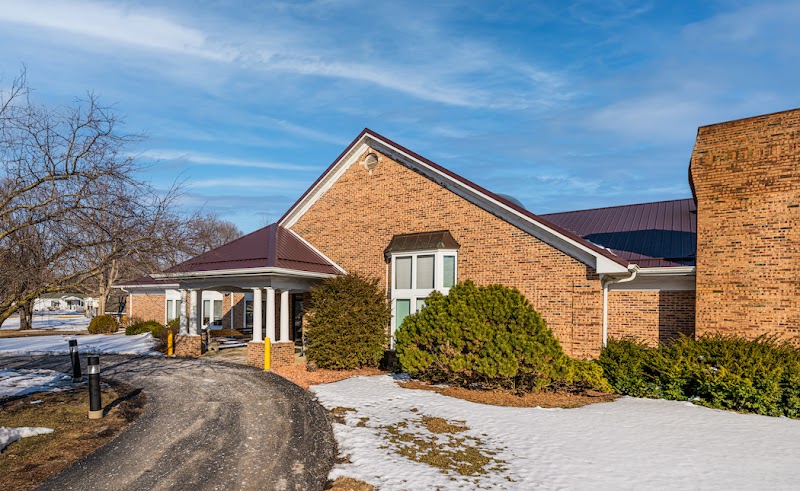
525 SOUTH MACON STREET, MOWEAQUA, IL 62550 (217) 768-3951
Non profit - Corporation 70 Beds TUTERA SENIOR LIVING & HEALTH CARE Data: November 2025
Trust Grade
0/100
#583 of 665 in IL
Last Inspection: November 2024

Within standard 12-15 month inspection cycle. Federal law requires annual inspections.

Overview

Moweaqua Rehab & HCC has received a Trust Grade of F, indicating significant concerns about the facility's quality of care. It ranks #583 out of 665 nursing homes in Illinois, placing it in the bottom half of facilities statewide, and #2 out of 3 in Shelby County, meaning only one local option is better. While the facility shows an improving trend, reducing issues from 37 in 2024 to just 1 in 2025, there are still serious staffing concerns with a low rating of 1 out of 5 stars and less RN coverage than 80% of Illinois facilities. Additionally, the facility has accumulated $226,000 in fines, which is higher than 95% of Illinois facilities, suggesting ongoing compliance issues. Specific incidents have raised alarms, such as a resident losing significant weight due to poor dietary management and another resident experiencing anxiety and refusal of care due to unmet living arrangement preferences. Overall, while there are some positive trends, families should be cautious given the facility's history of serious deficiencies and significant fines.

Trust Score
F
0/100
In Illinois
#583/665
Bottom 13%
Safety Record
High Risk
Review needed
Inspections
Getting Better
37 → 1 violations
Staff Stability
○ Average
Turnover data not reported for this facility.
Penalties
⚠ Watch
$226,000 in fines. Higher than 92% of Illinois facilities. Major compliance failures.
Skilled Nurses
○ Average
Each resident gets 31 minutes of Registered Nurse (RN) attention daily — about average for Illinois. RNs are the most trained staff who monitor for health changes.
Violations
⚠ Watch
80 deficiencies on record. Higher than average. Multiple issues found across inspections.
★☆☆☆☆
1.0
Overall Rating
★☆☆☆☆
1.0
Staff Levels
★★★☆☆
3.0
Care Quality
★☆☆☆☆
1.0
Inspection Score
Stable
2024: 37 issues
2025: 1 issues

The Good

  • Full Sprinkler Coverage · Fire safety systems throughout facility
  • No fines on record

Facility shows strength in fire safety.

The Bad

1-Star Overall Rating

Below Illinois average (2.5)

Significant quality concerns identified by CMS

Federal Fines: $226,000

Well above median ($33,413)

Significant penalties indicating serious issues

Chain: TUTERA SENIOR LIVING & HEALTH CARE

Part of a multi-facility chain

Ask about local staffing decisions and management

The Ugly 80 deficiencies on record

7 actual harm
Feb 2025 1 deficiency
CONCERN (D) 📢 Someone Reported This

A family member, employee, or ombudsman was alarmed enough to file a formal complaint

Potential for Harm - no one hurt, but risky conditions existed

Deficiency F0760 (Tag F0760)

Could have caused harm · This affected 1 resident

**NOTE- TERMS IN BRACKETS HAVE BEEN EDITED TO PROTECT CONFIDENTIALITY** Based on observation, interview, and record review, the facility failed to follow physician orders when administering medication...

Read full inspector narrative →
**NOTE- TERMS IN BRACKETS HAVE BEEN EDITED TO PROTECT CONFIDENTIALITY** Based on observation, interview, and record review, the facility failed to follow physician orders when administering medications including multiple doses of intravenous antibiotics for two (R7, R8) residents out of three residents reviewed for medication administration in a sample list of eight residents. Findings include: 1. R7's Electronic Medical Record (EMR) documents medical diagnoses as Multiple Sclerosis, Heart Failure, Epilepsy, Acute Osteomyelitis, Sacral Pressure Ulcer, Need for Personal Care, and Bacteremia. R7's Minimum Data Set (MDS), dated [DATE], documents R7 as cognitively intact. R7's Physician Order Sheet (POS), dated February 2025, documents a physician order starting 2/1/25 for Ertapenem Sodium one Gram (GM) every 24 hours intravenously for wound infection until 2/3/25. This same POS documents a physician order starting on 2/3/25 for Ertapenem Sodium one gram (gm) every 24 hours intravenously for wound infection until 2/11/25. Notify Physician if medication is missing. R7's Medication Administration Record (MAR), dated February 2025, documents R7 was not administered Ertapenem Sodium One GM on 2/1/25, 2/2/25, 2/5/25, 2/8/25 and 2/10/25. R7's Nurse Progress Notes do not document R7's Ertapenem Sodium One Gram (GM) not being administered on 2/1/25, 2/2/25, 2/5/25, 2/8/25 and 2/10/25. R7's Nurse Progress Notes do not documents notifications being made to R7's Physician, R7, nor R7's Power of Attorney (POA). R7's Medication Error Report, dated 2/3/25, documents R7's Ertapenem Sodium One GM was not administered on 2/1/25 and 2/2/25 due to staff not being able to locate the medication. The facility was unable to provide medication error reports due to R7's Ertapenem Sodium not being administered on 2/5/25, 2/8/25 and 2/10/25. On 2/11/25 at 1:00 PM, R7 was laying in his bed with a Peripherally Inserted Central Catheter (PICC) line in place in his Left Upper arm. On 2/11/25 at 1:05 PM, R7 stated the nurses are 'hit an miss' administering his Ertapenem Sodium One Gram (GM) via his PICC (peripherally inserted central catheter) line. R7 stated, Sometimes they (staff) are good about it and other times I have to wait for hours. Then I ask about it and they tell me they will get it. No one ever returns to give me the antibiotic. That is the entire reason I have to have this PICC line. If they (staff) aren't going to give it to me, then I should not have to have this PICC line. Now I was told that I have to have it (IV antibiotic) for more days due to the staff didn't give it right. That isn't right. On 2/11/25 at 1:45 PM, V7, Agency Registered Nurse (RN), stated she worked on 2/1/25 and 2/2/25 as R7's nurse. V7 RN stated she looked for R7's Ertapenem Sodium IV antibiotic, but was not able to find it. V7, RN, stated she did not give R7's antibiotic on those two days, and did not notify the Physician. V7, RN, stated she was told later that the facility has a back up medication storage system, which did include the antibiotic, which was onsite that weekend. V7, RN, stated, I guess I should have called somebody, but I can't be expected to give something I can't find. I should not have to call the doctor every time someone doesn't get their medication. 2. R8's Electronic Medical Record (EMR) documents medical diagnoses of Epilepsy and Dementia. R8's Minimum Data Set (MDS), dated [DATE], documents R8 as severely cognitively impaired. R8's Physician Order Sheet (POS), dated December 2024, documents a physician order starting 12/6/24 for Briviact Oral Tablet 50 milligram (MG). Give 50 mg by mouth two times a day for Epilepsy. R8's Medication Administration Record (EMR), dated December 2024, documents R8 received the scheduled doses of Briviact 50 mg in the morning and evening of 12/17/24. R8's Nurse Progress Note, dated 12/17/24 at 8:04 PM, documents R8 was given the wrong dose of Briviact (anti-epileptic) medication. This same note documents, (R8) was mistakenly given two doses from a card of another resident with 100 milligram (mg) Briviact, though (R8) is ordered 50 mg of Briviact. R8's Medication Error Report, dated 12/17/24, documents R8 received the wrong dose of Briviact. This same report documents R8 was ordered 50 mg Briviact twice daily and was mistakenly given Briviact 100 mg on 12/17/24. On 2/11/25 at 3:00 PM, V5, Nurse Practitioner (NP), stated R7's Intravenous (IV) antibiotic Ertapenem Sodium One GM was ordered daily for R7's Sacral Pressure Ulcer, which is infected. V5, NP, stated Ertapenem wound be considered a critical medication necessary for R7's wound healing. V5, NP, stated V5 is not aware R7 had any side effects from the staff not administering this medication, but 'absolutely could have'. V5, NP, stated there is no excuse for V7, Agency Registered Nurse (RN), to not call V5, NP, on 2/1/25 to report R7's medication could not be located. V5, NP, stated the facility did in fact have R7's Ertapenem, which was in the Stat Safe medication storage system. V5, NP, stated she found out R7 did not have his Ertapenem on 2/3/25. V5, NP, stated V5 is onsite five days per week for half days, which is during the time R7 is scheduled to receive his IV antibiotic through his PICC line. V5, NP, stated the staff could have notified her while she was in the building, and she would have addressed the situation immediately. V5, NP, stated R8 has Briviact 50 mg ordered twice daily for his Seizure Disorder. V5, NP, stated all residents medications should be administered as ordered by the prescriber. V5, NP, stated V6, Agency Licensed Practical Nurse (LPN), mistakenly administered Briviact 100 mg to R8. V5, NP, stated R8 did not have any significant medical complications due to this error. V5, NP, stated, (R8) was lucky to not have any significant issues due to this error. It could have been much worse. Overdosing the resident's neurological symptoms could cause ill effect. On 2/13/25 at 10:05 AM, V1, Administrator, stated the facility does not have a policy or guidelines on medication errors. V1 stated it is the expectation for nursing staff to follow the physician orders, and if there a reason a resident does not get their medication or gets the wrong dose, then the staff should reach out to the provider.
Dec 2024 4 deficiencies 2 Harm
SERIOUS (G) 📢 Someone Reported This

A family member, employee, or ombudsman was alarmed enough to file a formal complaint

Actual Harm - a resident was hurt due to facility failures

Deficiency F0692 (Tag F0692)

A resident was harmed · This affected 1 resident

Based on observation, interview, and record review, the facility failed to provide a residents' dietary recommendations to the physician, notify the Registered Dietician and physician of continued wei...

Read full inspector narrative →
Based on observation, interview, and record review, the facility failed to provide a residents' dietary recommendations to the physician, notify the Registered Dietician and physician of continued weight loss, obtain weights as ordered, follow dietary orders, and failed to report a residents' peg tube (gastric tube) placement to the Registered Dietician upon readmission to the facility. These failures affect one (R3) of three residents reviewed for nutrition on a total sample list of eight residents. These failures resulted in R3 losing 13.5% of his body weight in three and a half months, resulting in malnutrition, dehydration, and peg tube placement due to nutritional insufficiency. Findings include: The facility weight assessment and intervention policy, dated 12/2024, documents the nursing staff will measure residents weight on admission, weekly for four weeks thereafter, and then monthly, if no weight concerns are noted. R3's progress notes, dated 8/16/24, document R3 was admitted to the facility with a history of intellectual disability, hematuria, hydronephrosis, genitourinary surgery, depression, chronic leukemia, spondylosis, osteoarthritis, persistent atrial fibrillation and a need for assistance with personal care. R3's weight summary, dated 8/16/24, documents: R3 weighed 149 pounds on 8/16/24, 131.6 pounds on 10/2/24, 130 pounds on 11/27/24 and 128.9 pounds on 12/2/24. No weight was documented in September 2024. R3's progress notes, dated 10/2/24, document R3 weighed 131 pounds, having lost l2% of his body weight. At this time, recommendations for weight gain were made by V4, Registered Dietician, to provide twice daily supplements and an appetite stimulant, neither of which were implemented. On 10/31/24, R3 was sent to the hospital for blood in the urine and a penile abcess. R3's hospital notes, dated 11/3/24, document a potassium level of 3.3milligrams (mg) compared to R3's potassium level, dated 7/18/24, of 3.8mg and R3's magnesium level dated 11/3/24 of 1.8mg, indicative of malnourishment, dehydration, and weakness to the degree that a feeding tube was placed for supplemental nutrition and fluids. R3's body mass index was documented on this date at 17.3, severely malnourished. On 11/3/24, hospital physician progress notes document a gastric tube placement will be discussed with the guardian given severe malnutrition which appears to have been going on for some time. R3's hospital discharge records, dated 11/27/24, document R3 returned to the facility with orders for oral intake of soft and bite sized food on a dysphagia three diet, with supplemental peg tube feedings. The formula included Osmolite 1.5 at 90 milliliters ml per hour, starting at 6:00PM and stopping at 8:00AM, and 50ml flushes with tap water every four hours. R3's intake records document the facility failed to provide R3 with the Osmolite 1.5 at 90 ml per hour for 14 hours, and instead provided it for 12 hours. Additionally, they did not provide R3 with oral nutrition from 11/27/24 until 11/30/24, when they obtained a nothing by mouth order until a speech consultation is obtained, due to weakness and inability for R3 to eat. R3's intake summary, dated 11/28/24 to 12/7/24, documents the first time oral nutrition is provided to R3 was on 12/5/24. R3's weight summary, dated 12/2/24, documents R3's weight measured 128 pounds, a loss of 13.5 percent of R3's total body weight in 3.5 months. On 12/3/24 at 9:15AM, R3 was laying in bed, with blood and feces covering his sheets. R3's left arm was covered with a bandage, and his fingernails were caked with dark, thick, dough-like matter. R3's teeth were black and brown, with some teeth missing. R3 appeared severely underweight, with bones protruding from his translucent skin, and both legs contracted. On 12/3/24 at 9:17AM, V7 and V11, Certified Nursing Assistants, were cleaning R3's fingernails and body. V7, CNA, stated they were cleaning feces from underneath R3's nails. Both stated when R3 came to the facility in August of 2024, R3 was able to feed himself, they only supervised, and was able to wheel himself throughout the facility in a wheelchair, but now he is too weak to do anything for himself. R3's medical record does not document an attempt to obtain dental services for R3. On 12/4/24 at 10:45AM, V2, Corporate Nurse, stated R3 should have been offered dental services in light of his rotting teeth and weight loss. On 12/3/24 at 11:15AM, V3, Nurse Practitioner (NP), stated R3's tube feeding order from the hospital was intended to be a supplement to oral feedings, and did not contain enough calories to help with weight gain, which is why an additional oral feeding was ordered. V3, NP, stated R3 is malnourished and needs more calories, and the failure on the part of the facility to feed R3 and to notify V4, Registered Dietician, of R3's new tube placement and feeding order, as well as the failure to notify V5, MD, of the recommendations for weight gain by V4, RD, all contributed to R3's increased weight loss. On 12/3/24 at 2:51PM, V5, Medical Doctor (MD), stated he was not made aware of R3's significant weight loss or of V4, RD's, recommendations. V5, MD, stated he was called on 11/30/24 and told R3 was so weak that he couldn't eat. He said he told them not to feed R3 until a speech consult was obtained to make sure he was safe to eat. V5, MD, said he would have utilized the recommendations of (V4, RD), had he known about them, and he was accustomed to collaborating in other facilities with Dieticians. On 12/3/24 at 12:06PM, V4, Registered Dietician (RD), stated she was not aware the facility didn't implement the supplements and other recommendations she made on 10/10/24, and she wasn't notified R3 returned to the facility on a tube feeding until today. V4, RD, stated, I should have been notified of a new resident with a tube feed. (R3's) weight loss was preventable had they implemented supplements, provided me with regular weights, let me know what his oral intake looked like, and communicated with me so that I might have been able to help. He should have had an assessment when he returned. He just continues to lose weight and hyponatremia and hypomagnesemia are indicative of malnutrition and dehydration. On 12/4/24 at 10:15AM, V4, Registered Dietician (RD), stated she calculated R3's current tube feeding order, and it is insufficient to meet R3's caloric needs. (R3) is currently only receiving 990 calories and 42 grams of protein. This is why we have to be involved in all tube feedings from the start so that they get the nutritional support that they need and don't continue to lose weight.
SERIOUS (G) 📢 Someone Reported This

A family member, employee, or ombudsman was alarmed enough to file a formal complaint

Actual Harm - a resident was hurt due to facility failures

Tube Feeding (Tag F0693)

A resident was harmed · This affected 1 resident

Based on interview and record review, the facility failed to monitor and document a residents' tube feeding administration amounts, gastric tube placement, residuals, feeding complications, and consul...

Read full inspector narrative →
Based on interview and record review, the facility failed to monitor and document a residents' tube feeding administration amounts, gastric tube placement, residuals, feeding complications, and consultation to ensure adequate nutritional intake was being administered via the tube feeding. These failures affect one (R3) of one resident reviewed for tube feedings from a total sample list of eight residents reviewed. These failures resulted in R3 having nausea and vomiting with tube feeding administration, the tube feeding being shut off without a physician order/consultation, and R3 experiencing continued significant weight loss. Findings include: The undated facility tube feeding skills checklist documents to monitor resident for feeding intolerance, document the verification of tube placement, amount and time of enteral feeding and amount of flush and report complications to the supervisor and medical practitioner. R3's progress notes, dated 8/16/24, document R3 was admitted to the facility with a history of intellectual disability, hematuria, hydronephrosis, genitourinary surgery, depression, chronic leukemia, spondylosis, osteoarthritis, persistent atrial fibrillation, and a need for assistance with personal care. R3's admission nutritional assessment, dated 8/29/24, documents an order for R3 to have regular, soft, bite sized foods. R3's weight summary, dated 8/16/24, documents R3's admission weight at 149 pounds. R3's weight summary, dated 10/2/24, documents R3's weight at 131.6 pounds, a 12% weight loss in 17 days. R3's medical record does not document the implementation of any Dietician recommendations or physician notifications of Dietician recommendations from admission throughout R3's entire facility stay. On 10/31/24, R3 was sent to the hospital for blood in the urine and a penile abscess. R3's hospital notes, dated 11/3/24, document a potassium level of 3.3milligrams (mg), compared to R3's potassium level, dated 7/18/24 of 3.8mg, and R3's magnesium level, dated 11/3/24 of 1.8mg, indicative of malnourishment, dehydration, and weakness to the degree that a feeding tube was placed for supplemental nutrition and fluids. R3's body mass index was documented on this date at 17.3, severely malnourished. R3's hospital discharge notes document on 11/27/24, R3 returned to the facility with a peg tube and an order for Osmolite 1.5 at 90cubic centimeter (cc) per hour for 14 hours with a 50cc tapwater flush every four hours, in addition to an oral diet of soft, bite sized food, dysphagia level three. R3's physician orders, dated 11/27/24, document the facility was administering R3's Osmolite 1.5 at 90cc for 12 hours, instead of the 14 hours as ordered upon discharge. R3's weight summary, dated 11/27/24, documents R3's weight as 130 pounds. R3's weight summary, dated 12/2/24, documents R3's weight as 128.9 pounds. R3's physician progress notes, dated 12/3/24, documents V5, Physician, was asked to review R3's situation regarding poor oral intake, deconditioning, and weight loss. R3's notes document that the peg tube feeding is running from 6:00PM to 6:00AM, 12 hours at a time, and another two pound weight loss has occurred. R3's physician orders, dated 12/3/24, document a change in tube feeding formula from Osmolite 1.5 at 90cc per hour to Jevity 1.5 at 50cc per hour to increase in 10 cc increments until reaching 70cc per hours for twelve hours, from 6:00PM to 6:00AM. R3's progress notes document R3 vomiting once on 12/4/24 and three times on 12/7/24 with feedings stopped on 12/4/24 and 12/7/24. R3's physician orders do not document an order to stop feedings, nor any consultation with the Dietician. R3's medical record does not contain documentation of verification of tube placement, amount of enteral feeding administered, or that all episodes of vomiting were reported to the physician and supervisor. On 12/9/24 at 10:20AM, V22, Registered Nurse/RN stated on 12/6/24 at 2:00AM, R3 vomited after dinner, and after his tube feeding was started, he vomited twice more. V22 stated she turned off R3's tube feeding and did not notify anyone. On December 7, 2024, I saw that he ate about 25% of his meal and then threw it up. The on call physician was then notified by the other nurse. At one point, we discussed talking with the Dietician, but it just didn't go anywhere. On 12/9/24 at 10:06AM, V4, Registered Dietician (RD), stated she was unaware the MD did not accept her recommendations for the tube feeding formula amounts and she was not made aware of R3 vomiting, so that another type of formula could be tried. Stopping the feedings was not the right choice in someone with malnourishment, we could have tried different formulas. On 12/9/24 at 12:00PM, V3, Nurse Practitioner stated she was never provided V4's, RD, recommendations. If I had gotten them, I would have communicated them to the doctor and definitely considered them, but neither I nor the physician were made aware of them. On 12/9/24 at 12:15PM, V2, Corporate Director of Nursing, stated when caring for residents with tube feedings, staff should be documenting intake and output incuding flushes and tube feedings, verification of placement and any complications. If they don't (document), you don't know if they are receiving all of the nutrition that they need. I would expect the Dietician would be involved at admission, weekly, and when there is a change of condition. Certainly the physician and Director of Nursing should be notified with any complications related to the feeding.
CONCERN (D) 📢 Someone Reported This

A family member, employee, or ombudsman was alarmed enough to file a formal complaint

Potential for Harm - no one hurt, but risky conditions existed

Resident Rights (Tag F0550)

Could have caused harm · This affected 1 resident

**NOTE- TERMS IN BRACKETS HAVE BEEN EDITED TO PROTECT CONFIDENTIALITY** Based on interview and record review, the facility failed to ensure the dignity of two (R4 and R5) of three residents reviewed f...

Read full inspector narrative →
**NOTE- TERMS IN BRACKETS HAVE BEEN EDITED TO PROTECT CONFIDENTIALITY** Based on interview and record review, the facility failed to ensure the dignity of two (R4 and R5) of three residents reviewed for dignity from a total sample list of eight residents reviewed. Findings include: 1.) R4's undated care plan documents R4 has diagnoses that include: amyotrophic lateral sclerosis, low back pain, depression, weakness, dysphagia, speech disturbance, and need for personal care. R4's progress notes dated 10/19/24 document admission to the facility. R4's Minimum Data Set, dated [DATE], documents R4 is cognitively intact. On 12/4/24 at 11:23AM, R4 stated a week or so ago, she told the staff at the facility she didn't want V15, Certified Nursing Assistant (CNA), caring for her anymore. R4 stated V15 CNA is very impatient with her and intolerant of her needs, and V15, CNA, makes her feel very disrespected when she needs assistance. On 12/4/24 at 1:35PM, V11, CNA, stated to her knowledge, R4 has never complained about any staff member before, R4 is completely clear headed, and on the day R4 told V11 about the issue, She was so upset, it just broke my heart. On 12/4/24 at 1:42PM, V18, CNA, stated R4 is very easy to care for and very clear. She never complains. On 12/9/24 at 1:30PM, V1, Administrator, stated she is still investigating R4's allegation toward V15, CNA, and V15, CNA, remains suspended. 2.) R5's undated care plan documents R5 has diagnoses that include: hypothyroidism, anxiety, depression, history of a cerebrovascular accident and transient ischemic attack, history of right knee replacement, weakness, cellulitis, and need for assistance with personal care. R5's progress notes document on 11/19/24 R5 was admitted to the facility. R5's Minimum Data Set, dated [DATE], documents R5 is cognitively intact. On 12/4/24 at 2:00PM, R5 stated she hesitates to get anyone in trouble and she had not reported this to staff, but V15, CNA, is disrespectful to R5. She rushes me and is intolerant of waiting. She is so impatient that I have had to call her back into my room at times and she is irritated. I don' t have problems with any of the other girls. I don't need this. On 12/9/24 at 3:10PM, V2, Corporate Director of Nursing, stated the expectation of the facility is that dignity should be provided to all residents with all care.
CONCERN (E) 📢 Someone Reported This

A family member, employee, or ombudsman was alarmed enough to file a formal complaint

Potential for Harm - no one hurt, but risky conditions existed

ADL Care (Tag F0677)

Could have caused harm · This affected multiple residents

**NOTE- TERMS IN BRACKETS HAVE BEEN EDITED TO PROTECT CONFIDENTIALITY** Based on observation, interview, and record review, the facility failed to provide bathing, oral care, and nail care to three (R...

Read full inspector narrative →
**NOTE- TERMS IN BRACKETS HAVE BEEN EDITED TO PROTECT CONFIDENTIALITY** Based on observation, interview, and record review, the facility failed to provide bathing, oral care, and nail care to three (R1, R3, R4) of three dependent care residents reviewed for activities of daily living from a total sample list of eight residents reviewed. Findings includes: 1.) R1's undated care plan documents admission to the facility on 5/24/24, with diagnoses including: sepsis with septic shock, encephalopathy, dysphagia, depression, morbid obesity, rheumatoid arthritis, weakness, and a need for assistance with personal care. R1's Minimum Data Set, dated [DATE], documents R1 as cognitively intact. R1's care plan, dated 5/28/24, documents R1 is dependent on bathing twice weekly, and on bathing days, staff are to check, clean, and trim nails as needed. On 12/9/24 at 3:03PM, R1's nails appeared long, more than 1/2 inch past the toe, with white and yellow matter on and between the toes. On 12/9/24 at 3:00PM, R1 stated her toenails are too long. I have asked the nurse's to cut my toenails and they just don't do it. I'm not a diabetic or anything, but I have stuff between my toes and my toenails and I just don't feel clean but I can't do it, I can't reach them. 2.) R3's undated care plan documents diagnoses that include: history of intellectual disability, hematuria, hydronephrosis, genitourinary surgery, depression, chronic leukemia, spondylosis, osteoarthritis, persistent atrial fibrillation, and need for assistance with personal care. R3's undated census sheet documents R3 was readmitted to the facility from the hospital on [DATE]. On 12/3/24 at 9:15AM, R3 was laying on a dried, bloody, bedsheet. R3's beard and hair were greasy. R3's had an odor of feces and body fluids. R3's teeth were black and brown, some teeth rotten with mucous covering them. R3's fingernails had a thick brown substance under them. R3's toenails were 1/2 inch beyond the end of the toe, with a yellow substance covering and between the toes. On 12/3/24 at 9:16AM, V7 and V11, Certified Nursing Assistants (CNA), were cleaning under R3's fingernails. V7, CNA, confirmed they were cleaning feces from underneath R3's fingernails and could not say how long it had been there. R3's Minimum Data Set, dated [DATE], documents R3 is severely cognitively impaired. R3's care plan, dated 8/20/24, documents R3 requires assistance for oral care and bathing. R3's task documentation for showers, dated 12/9/24, documents R3 is to have a shower twice weekly and as needed. R3's task documentation for oral care and bathing, dated 12/9/24, has no documentation for R3 for the last 28 days. 3.) R4's undated diagnosis sheet documents diagnoses that include: amyotrophic lateral sclerosis, low back pain, depression, weakness, dysphagia, speech disturbance, and need for personal care. R4's Minimum Data Set, dated [DATE], documents R4 is cognitively intact. On 12/4/24 at 11:23AM, R4 was sitting in a wheelchair in her private resident room. R4's hair appeared greasy (surrounding the edges) while wearing a hat. R4's teeth appeared to have a layer of mucus covering them. On 12/9/24 at 2:45PM, R4's teeth appeared to have mucous covering them. R4 stated she had not had her teeth brushed that day, and she does not always get a shower every week. R4's Minimum Data Set, dated [DATE], documents R4 is dependent for oral care and requires maximum assistance for showering/bathing. R4's task documentation for oral care, dated 12/9/24, does not document any oral care for the past 28 days. R4's task documentation for bathing, dated 12/9/24, documents R4 is to get showers twice weekly and as needed. The facility provided shower sheets documenting that R4 received a shower on 11/27/24 and then again on 12/8/24, eleven days later. On 12/9/24 at 3:10PM, V2, Corporate Director of Nursing, stated dependent residents should be assisted with bathing and nail care as often as scheduled or requested, and oral care should be provided at the beginning and end of each day.
Nov 2024 17 deficiencies 1 Harm
SERIOUS (G)

Actual Harm - a resident was hurt due to facility failures

Deficiency F0561 (Tag F0561)

A resident was harmed · This affected 1 resident

Based on observation, interview, and record review, the facility failed to honor repeated requests of a resident's (R263) choice of living arrangements. This failure affects one (R263) of six resident...

Read full inspector narrative →
Based on observation, interview, and record review, the facility failed to honor repeated requests of a resident's (R263) choice of living arrangements. This failure affects one (R263) of six residents reviewed for self-determination in a sample list of 34. This failure resulted in R263 becoming anxious, angry, refusing to eat, drink, and receive care from staff. Findings Include: R263's admission progress note, dated 11/15/24, documents, (R263) arrived from (hospital) at approximately 5pm. Nurse to nurse report indicates advanced Amyotrophic Lateral Sclerosis, with Benign Prostatic Hypertrophy, and Osteoporosis cited as the only comorbidities. Resident is non-verbal. Resident is a Do Not Resuscitate. Regular diet with a Gluten Intolerance; requires maximum assistance. Resident takes pills crushed in applesauce/pudding/yogurt. Ambulance service stated the resident traveled to the area via plane from New York, and his family promptly admitted him to (hospital), where he's been since 11/7/24 awaiting placement. Skin check reveals some redness on the posterior, which was communicated by (hospital) who had been using a Zinc barrier cream. CNAs (Certified Nursing Assistants) advised to do the same. Resident would not permit writer to take vitals. Resident uses a sheet with letters to communicate but struggles significantly. An electronic tablet is available in his belongings, but he preferred to use the paper. Resident was also aggressive with CNAs when they were changing him. R263's Progress note, dated 11/15/24 at 11:00PM, by V23, Nurse Practitioner, documents, Reported by nurse that resident is not satisfied with cares that has been provided in facility and wants to go back to hospital. Stable condition. No acute medical issue at this time. Nurse will contact family members and social worker to talk to the (R263) and monitor. On 11/17/24 at 9:00AM, R263 was observed lying in bed leaning to the right side. R263 had severe contractures to all extremities and was unable to speak. R263 had a communication board and was able to express himself by pointing to letters or responses on the board. When asked if R263 was being cared for by facility staff, R263 laboriously spelled out No. I want to go to the hospital. I am afraid. I will die. I want to get up in my wheelchair. When asked if staff took time to listen to R263's wants or needs, R263 pointed to No on the board. R263 spelled out I need help. R263's full breakfast was on the over the bed tray untouched. When asked if R263 can feed self, R263 pointed to no. When asked if staff had offered to help, R263 pointed to no. There was a full cup of water on R263's over the bed tray. When asked if staff offer R263 drinks, R263 pointed to no. When asked if R263 refused care, R263 spelled out I don't trust. I am afraid. Nobody comes. On 11/20/24 at 11:00AM, V20, Licensed Practical Nurse (LPN), stated, I wanted to send (R263) to the hospital when he insisted. He is cognitively intact and can make his own decisions. He can communicate with the board, but it takes a very long time. We really do not have enough staff to meet (R263's) needs. (R263) is physically dependent and has contractures of both arms and legs. I know (R263) was very scared and frustrated because we do not have the staff to spend the time with (R263) that (R263) needs. On 11/20/24 at 2:30PM, V21, Registered Nurse (RN), stated, I was the nurse who admitted (R263). (R263) is completely physically dependent and has contractures to both lower and upper extremities. (R263) in alert, oriented, and fully functional cognitively. (R263) is nonverbal but can communicate using the stroke board. (R263) makes his own decisions. (R263) wanted to go to the hospital. I contacted the Nurse Practitioner who advised me not to send (R263) to the hospital. This facility can not meet (R263's) needs. We have one CNA (Certified Nurse's Aide) for a hall and two nurses in the entire facility. There is not staff time even to effectively communicate with (R263). I knew he was angry and very fearful and honestly, I could see why. Several attempts were made to contact V23, Nurse Practitioner (who refused to send (R263) to the hospital). V1, Administrator, and other corporate staff reached out to V23, but V23 did not contact surveyor. V15, Corporate Nurse, denies the facility has a specific policy addressing resident self-determination.
CONCERN (D)

Potential for Harm - no one hurt, but risky conditions existed

Accident Prevention (Tag F0689)

Could have caused harm · This affected 1 resident

**NOTE- TERMS IN BRACKETS HAVE BEEN EDITED TO PROTECT CONFIDENTIALITY** Based on interview and record review, the facility failed to investigate, determine root cause, and implement resident centered ...

Read full inspector narrative →
**NOTE- TERMS IN BRACKETS HAVE BEEN EDITED TO PROTECT CONFIDENTIALITY** Based on interview and record review, the facility failed to investigate, determine root cause, and implement resident centered fall interventions for one resident (R54) of one resident reviewed for falls in a sample list of 34. Findings Include: R54's Minimum Data Set (MDS), dated [DATE], documents R54 is cognitively intact. On 11/17/24 at 10:00AM, R54 stated, I fell here (at the facility) and my surgical incision busted open and I bled all over the floor. R54's hospital history and physical documents, (R54) presented to emergency room from Extended Care Facility where he had a mechanical fall in which his left lower extremity wound opened up and he was found to have bleeding. R54's progress Note, dated 10/1/24 at 2:45PM, documents, nurse was called to residents room due to resident falling. Resident's daughter was in his room with him when resident got up from his wheelchair to walk to his bed and fell. Resident was sitting on the floor next to his bed with his daughter sitting behind him holding him up. Noted a moderate amount of blood on the floor under his left leg. This nurse received permission from resident and daughter to cut residents right pant leg to expose where blood was coming from. Noted to residents left lower leg a large dehisced area from lower part of incision to left leg. A large amount of 4x4 gauze placed on open wound and secured with (stretch Gauze). Secured with Coban. Assessment completed and Vital Signs obtained. On 11/19/24 V1, Administrator, provided only a brief risk management reiterating the above Progress note. No fall investigation or root cause analysis were provided. V1 stated, We didn't do an in depth investigation because there were no injuries.z' When surveyor inquired about the wound dehiscence and referred to the hospital record, V1 stated, Well we thought since (R263) already had the incision it wasn't a new injury. On 11/20/24 at 10:00AM, V15, Corporate Nurse, stated the facility does not have a policy specific to Incident reporting and investigation.
CONCERN (D)

Potential for Harm - no one hurt, but risky conditions existed

Respiratory Care (Tag F0695)

Could have caused harm · This affected 1 resident

Based on observation, interview, and record review, the facility failed to administer oxygen as ordered, failed to correctly apply a nasal cannula, failed to provide oxygen humidification, and failed ...

Read full inspector narrative →
Based on observation, interview, and record review, the facility failed to administer oxygen as ordered, failed to correctly apply a nasal cannula, failed to provide oxygen humidification, and failed to maintain clean, dated, and labeled oxygen tubing for one (R160) of five residents reviewed for respiratory care from a total sample list of 34 residents reviewed. Findings include: The facility provided Oxygen Administration Policy, dated 1/2017, documents there must be an order for oxygen administration and that the nasal cannula tube should be placed approximately one-half inch into the resident's nose, held in place by an elastic band placed around the resident's head. Equipment and supplies include a nasal cannula and humidifier bottle that should be replaced weekly and as needed. R160's physician orders, dated 10/23/24, documents oxygen to be administered at two liters per nasal cannula continuously to keep R160's oxygen saturation above 92%. R160's physician orders, dated 10/23/24, documents oxygen tubing to be changed weekly on Wednesday nights. On 11/17/24 at 11:09AM, R160 was laying in bed with a nasal cannula blowing into her cheek at 2.5 liters. R160's tubing was dated 11/7/24, and the humidification bottle was empty. On 11/18/24 at 9:14AM, R160 was wearing a nasal cannula blowing into her cheek at 2.5 liters. R160's tubing was dated 11/7/24, and the humidification bottle was empty and R160's oxygen continues at 2.5 liters per nasal cannula. On 11/18/24 1:16PM, V2, Director of Nursing, stated R160 should be receiving the ordered amount of oxygen (2 liters) and that the nurses and Certified Nursing Assistants are responsible for monitoring oxygenation to ensure that the proper amount of oxygen is being administered, the tubing is in place and dated, and that the oxygen is humidified. V2, Director of Nursing, stated the oxygen tubing and water should be replaced weekly and as needed.
CONCERN (D)

Potential for Harm - no one hurt, but risky conditions existed

Medication Errors (Tag F0758)

Could have caused harm · This affected 1 resident

**NOTE- TERMS IN BRACKETS HAVE BEEN EDITED TO PROTECT CONFIDENTIALITY** 2.) R30's physician order sheet (POS), dated 11/19/24, documents orders for alprazolam 0.125 milligrams (mg) daily for anxiety w...

Read full inspector narrative →
**NOTE- TERMS IN BRACKETS HAVE BEEN EDITED TO PROTECT CONFIDENTIALITY** 2.) R30's physician order sheet (POS), dated 11/19/24, documents orders for alprazolam 0.125 milligrams (mg) daily for anxiety with a start date of 5/8/24, sertraline 100mg daily for major depressive disorder (MDD) start date 3/9/24, buspirone 5mg three times daily for MDD start date of 3/22/24, and abilify(antipsychotic) 2mg daily with start date of 3/30/24. R30's face sheet, dated 11/19/24, documents medical diagnosis including anxiety disorder (3/7/23), Parkinson's disease (10/1/23), and major depression disorder (1/12/24). R30's care plan (CP), dated 9/20/24, documents R30 has behavioral issues, anxiety, and major depressive disorder. These all indicate interventions to monitor behaviors and document interventions used. R30's medication administration record for month of November 2024 documents orders to monitor for signs of anxiety and depression behaviors including medication side effects, with a start date of 11/19/24. R30's medical record does not document behavior tracking with individualized non-pharmacological interventions. R30's Pharmacy recommendations, dated 4/7/24, documents R30 is receiving duplicate therapies with multiple anxiolytic agents of alprazolam, buspirone, and abilify. Recommends physician change medications or respond with rationale for R30 requiring all three medications. Response marked disagree on document with no rationale provided on 4/9/24. R30's Pharmacy recommendations, dated 7/5/24, documents need for reduction of R30's sertraline dosage of 100mg or physican must provide rationale, box marked disagree with no rationale provided. On 11/19/24 at 2:45 PM, attempt made to contact physician listed on pharmacy recommendation document. Message left with office staff. No return call received. On 11/20/24 at 12:25 PM, V2, Director of Nursing (DON), stated there was no behavioral tracking documentation. 3. R41's medication administration record, dated November 2024, documents orders for Cymbalta(antideppressant,antianxiety) 60mg daily, mirtazapine (antidepressant) 7.5mg every night, Rexulti (antipsychotic) 3mg daily, trazadone (antidepressant) 25mg every night, and Austedo (involuntary movements) 12mg twice daily. R41's diagnosis sheet, dated 11/20/24, documents medical diagnosis including traumatic subdural hemorrhage 7/28/23, epilepsy 8/3/23, schizophrenia 8/3/23, alcohol abuse disorder 7/28/23, major depressive disorder (MDD) 8/15/23 and insomnia 12/11/23. R41's care plan, dated 10/31/24, documents the following diagnosis with interventions to monitor behaviors, psychosocial well-being problems, depression, insomnia, schizophrenia, and delirium related to traumatic subdural hemorrhage. R41's admission abnormal involuntary movement scale (AIMS), dated 9/20/23, documents severity of abnormal movements on a scale of 0-4. 0 equals none, 1 minimal, 2 mild, 3 moderate and 4 severe. Facial muscles including lip area rated at 2, tongue movement rated 3, and jaw movement at 0. Upper body movement rated 2, lower body rated 3, and trunk area 1. Overall global movement rated at 2 with incapacitation from abnormal movements at a 3. Also documents patient has awareness of abnormal movements. R41's AIMS, dated 4/9/24, documents same scores for all areas as documented in 9/20/23 AIMS, as well as adds jaw movement rated at 2. R41's pharmacy recommendation, dated 5/6/24, documents since Rexulti was added in August of 2023 R41's AIMS has increased which resulted in additional medication of Austedo in February 2024. AIMS continues to show increase in abnormal movements and recommends alternate antipsychotic. Physician response marked disagree with no rationale dated 5/7/24. R41's medication administration record (MAR) for month of November 2024 documents orders to monitor for signs of depression, suicidal thoughts and intentions, and psychotic behaviors including medication side effects, with a start date of 11/19/24. MAR does not document monitoring prior to 11/19/24. R41's medical record does not document behavior tracking with individualized non-pharmacological interventions. On 11/20/24 at 9:45 AM, R41 noted to have facial movements around jaw that appear abnormal. Tongue protrusion with rapid movement and grimacing noted to face. Total body movement in a rocking motion appears uncontrollable to R41. R41 stated he can't stop doing it. On 11/20/24 at 12:25 PM, V2, DON, stated there was no behavioral tracking documentation. Based on interview and record review, the facility failed to regularly assess residents, obtain informed consent, identify or track specific managed behaviors, and provide therapy rationale. This failure affects for three residents (R262, R30, R41) taking psychotropic medication of five residents reviewed for medications in a sample list of 34. Findings Include: The facility's policy Psychotropic Medication Use ,dated 09/2022, states, Staff will complete Psychoactive Medication Review assessment on admission, when any new psychotropic medication is ordered, with a change in condition, and quarterly. This assessment will be completed for any medication prescribed to manage behaviors i.e. Depakote, Nudexa, etc. Prior to starting psychotropic medications, informed consent will be obtained from residents/representative per state guidelines. Residents who are admitted from the community or transferred from a hospital and are already receiving psychotropic medication will be evaluated for appropriateness and indications for use. 1. R262's Current Physicians for November 2024 orders include the following active orders for psychotropic medications: Aripiprazole (antipsychotic) Oral Tablet 5 MG One daily, Duloxetine HCl (antidepressant) Oral Capsule Delayed Release Sprinkle 30 MG Daily, Doxepin HCl (antidepressant) Oral Tablet 3 MG at bed time, Amitriptyline HCl (antidepressant)Oral Tablet 25 MG at bed time. R262's Face Sheet, printed 11/20/24, documents R262 was admitted on [DATE]. R262's Care Plan, dated 11/2/24, does not address R262's use of psychotropic medication. R262's current electronic medical record for November 2024 does not document a psychotropic assessment or identification or tracking of targeted behaviors to justify the use of psychotropic medications. On 11/19/24 at 2:00PM, V15, Corporate Nurse, verified the facility did not complete a psychotropic medication assessment or identify targeted behaviors for R262.
CONCERN (D)

Potential for Harm - no one hurt, but risky conditions existed

Dental Services (Tag F0791)

Could have caused harm · This affected 1 resident

Based on observation, interview, and record review, the facility failed to provide dental services for one (R16) of one residents reviewed for dental services from a total sample list of 34 residents....

Read full inspector narrative →
Based on observation, interview, and record review, the facility failed to provide dental services for one (R16) of one residents reviewed for dental services from a total sample list of 34 residents. Findings include: R16's nutritional assessment, dated 8/8/24, documents R16 is edentulous and requires nutritional supplements in addition to a regular pureed diet with snacks. On 11/17/24 at 10:48AM, R16 was edentulous and stated she would like to have dentures. On 11/19/24 at 9:38AM, V12, Social Services Director (SSD), stated she does not recall asking R16 if she needs dentures, and the resident has never asked them about it. V12 stated the facility does not have a dentist who will provide dentures. On 11/19/24 at 3:31PM, V18, Family Member, stated they had never been asked about R16's dental issues, and she has been in need of dentures for some time, and would like her to be seen. On 11/20/24 at 10:03AM, V2, Director of Nursing, stated R16 is provided nutritional supplements because she isn't a good eater and needs the calories.
CONCERN (D)

Potential for Harm - no one hurt, but risky conditions existed

Deficiency F0805 (Tag F0805)

Could have caused harm · This affected 1 resident

2. R19's physician order, dated 2/5/24, documents diet order of regular diet mechanical soft texture with nectar thick fluids. On 11/17/24 at 10:55 AM, V6, R19's family member, states she comes to fe...

Read full inspector narrative →
2. R19's physician order, dated 2/5/24, documents diet order of regular diet mechanical soft texture with nectar thick fluids. On 11/17/24 at 10:55 AM, V6, R19's family member, states she comes to feed R19 lunch everyday, but feels that she doesn't get fed other meals. On 11/17/24 at 12:04, R19 was served red liquid in cup. Liquid thin, no label on pitcher. R19 was assisted with drink by V8, CNA. V8 states there are no thicked liquids on drink cart, and confirmed R19 recieved thin liquid. On 11/17/24 at 1:10 PM, R19's plate of food includes plain carrots sliced, brown colored rice with brown orange cubes, and green peas and fried breading pieces mixed in. 1/2 cup red paste looking puree on side of plate. Side small plate has crumbled yellow cake substance with white frosting. Smal side bowl contains plain macaroni noodles and brown lentil beans with clear, thin liquid. V6, R19's family member, demonstrated carrots hard and unable to cut. R19's meal ticket, dated 11/17/24 Lunch, indicates general mechanical soft diet with nectar thick liquids. On 11/18/24 at 1:25 PM, R19 was in dining room. R19 had pureed food, stating the served meal she was unable to eat. V6 states the puree was ice cold. Thin liquids, chocolate milk with served food. V6 confirmed chocolate milk was thin and poured from pitcher. R19 consumed 1/3 of meal. On 11/19/24 at 1:15 PM, R19 was served salad with chuncks of chicken and shredded cheese, no dressing, brownie square whole, and chocolate milk from kitchen pitcher. V6 stated it was not thickened and was the same milk all other residents served in dining room. R19's meal ticket, dated 11/19/24 Lunch, indicates general mechanical soft diet with nectar thick liquids.3. R16's physician order, dated 5/10/24, documents an order for a regular diet with pureed texture including nectar thick fluids and low concentrated sweets with added fortified pudding with lunch and supper. On 11/19/24 at 8:35AM, R16 was drinking regular chocolate milk, without thickener. On 11/19/24 at 8:36AM, V10, Certified Nursing Assistant, stated it was regular chocolate milk, not thickened, and she saw it poured directly from the container this morning. Based on observation, interview, and record review, the facility failed to provide the the correct food consistency for three residents (R263,R16, R19) of five residents reviewed for dietary consistency in a sample of 34 residents. Findings Include: 1. R263's Hospital History and physical, dated 11/8/24, documents, (R263) liquid/?pureed diet. This same history and Physical documents (R263) has been diagnosed with Advanced Amyotropic Lateral Sclerosis (AMS) for the past eight years. On 11/17/24 at 9:00AM, R263 was observed lying in bed leaning to the right side. R263 had severe contractures to all extremities and was unable to speak. R263 had a communication board and was able to express himself by pointing to letters or responses on the board. R263's full breakfast (ground consistency) was on the over the bed tray, untouched. When asked if R263 can feed self, R263 pointed to no. When asked if staff had offered to help, R263 pointed to no. There was a full cup of water on R263's over the bed tray. When asked if staff offer R263 drinks, R263 pointed to no. When asked if R263 refused care, R263 spelled out I don't trust. I am afraid. Nobody comes. When asked if R263 could swallow, R263 spelled out 'liquids' on his communication board. When asked if someone from Dietary had spoken with R263, he pointed to 'no'. When asked if R263 was in fear of choking, R263 pointed to 'yes'. On 11/20/24 at 9:12AM V19, Registered Dietitian, stated, I have not evaluated (R263). I was not aware (R263) has swallowing issues or was on a liquid or pureed consistency diet in the past. Given the history of AMS and swallowing problems, I would not think the ground meat appropriate for (R263). I would have hoped the facility would have alerted me of this when (R263) was admitted , but they didn't. I don't physically visit the facility. I am (out of state) and I do my consulting by telehealth. R263's Progress note by V2, Director of Nursing, dated 11/20/24 at 11:49AM, documents, Speech Therapy evaluated (R263) this AM and it was determined that resident is unsafe with pureed food and thickened liquids- recommendation was NPO. (Nothing by Mouth) Medical Doctor was notified and New Order received to send (R263) to emergency room for evaluation of Aspiration.
CONCERN (E)

Potential for Harm - no one hurt, but risky conditions existed

Grievances (Tag F0585)

Could have caused harm · This affected multiple residents

Based on interview and record review, the facility failed to resolve grievances for four (R31, R33, R48 and R49) of five residents reviewed for grievances from a total sample list of 34 residents. Fin...

Read full inspector narrative →
Based on interview and record review, the facility failed to resolve grievances for four (R31, R33, R48 and R49) of five residents reviewed for grievances from a total sample list of 34 residents. Findings include: The facility provided Resident Grievance Policy and Procedure, dated May 2018, documents it is the intent of the facility to encourage residents, their residents, or representatives to communicate any concerns, suggestions, complaints or opportunities for improvement in care or services. Each grievance will be investigated and addressed with a response. The Administrator/Executive Director will ensure grievances are addressed and resolved within a five-day time frame and final outcome communicated to the person originating the grievance. The resident council minutes, dated 1/3/24, document concerns including call lights taking too long and the food being cold. The facility resident council minutes, dated 11/4/24, document a grievance of late breakfast and late lunch was noted along with call lights not being address. The response to the grievance was that low staffing and missing ingredients cause the kitchen staff to be behind which causes late meals. The facility provided grievances, dated 9/23/24, document it took three hours for a call light to be answered when a catheter was leaking and that the food is cold. The facility provided grievances, dated 9/26/24, document staff did not provide timely care causing a resident to go in her pants. On 11/18/24 at 10:09AM, R31 stated, We have on going issue with staffing and food. The dining room is served is first. If you get a special order it is hot, but the regular food is cold. On 11/18/24 at 10:13AM, R33 stated, I didn't get my breakfast this morning until after 9:00AM. On 11/18/24 at 10:15AM, R48 stated she didn't' get her breakfast until after 9:00AM this morning, and that she often gets medications late. I have medicines that need to be given with food and lunch time is running into smoke time.We are not fed for an hour to two hours after. They need a plate warmer and more people to pass trays. On 11/18/24 at 10:20AM, R49 stated the hall trays are set out and left for hours to be given. On 11/18/24 at 10:22AM, R31 stated, Your insulin isn't given until after you eat and our medications that need to be given are given after we eat.
CONCERN (E)

Potential for Harm - no one hurt, but risky conditions existed

ADL Care (Tag F0677)

Could have caused harm · This affected multiple residents

3. On 11/19/24 at 1:27PM, R16 was eating chicken with her fingers. R16's fingernails had copious quantities of feces (dark brown substance) between the nail and fingertip. On 11/19/24 at 1:28PM, V11,...

Read full inspector narrative →
3. On 11/19/24 at 1:27PM, R16 was eating chicken with her fingers. R16's fingernails had copious quantities of feces (dark brown substance) between the nail and fingertip. On 11/19/24 at 1:28PM, V11, Certified Nursing Assistant, confirmed R16 had feces under her nails and that they would take care of it. On 11/20/24 at 10:56AM, V2 Director of Nursing, stated nail care should be provided on shower days to all dependent residents, especially anytime feces is found under the nails. Based on observation, interview, and record review, the facility failed to provide fingernail care, bathing, and timely toileting/incontinence cares for three (R16, R21, R30) of 16 residents reviewed for Activities of Daily Living (ADLs) in the sample list of 34 residents. Findings include: 1. The facility grievance log (January-November 18, 2024) documents 19 formal resident complaints related to call light response times. Facility Grievance Forms document the following recent grievances made during Resident Council meetings: -8/7/24: 3rd shift not cleaning up residents letting the resident in urine and not cleaning up the resident and Call lights aren't being answered in a timely manner -9/23/24: Took 3 hours for call light to be answered when (urinary) catheter was leaking -9/26/24: staff member didn't provide timely care resulting in her to go in her pants -10/9/24: Call lights not being answered in a timely manner. -11/4/24: Call lights not being answered in a timely manner. R30's diagnosis list (printed 11/19/2024) documents R30's diagnoses include: Hemiplegia/Hemiparesis (partial or total paralysis on one side of the body), Parkinson's Disease (brain disorder that causes unintended or uncontrollable movements), Anxiety Disorder, Major Depressive Disorder, and Muscle Weakness. R30's quarterly assessment (8/5/2024) documents R30 requires substantial or maximal assistance from facility staff for all activities of daily living. The same record documents R30 is frequently incontinent of bladder and always incontinent of bowel. R30's Care Plan (9/20/2024) documents R30 is incontinent of bladder and at risk of septicemia (life-threatening infection that occurs when bacteria, viruses, or fungi enter the bloodstream and spread) from urinary tract infections. The same record documents facility staff should check R30 every two hours for incontinence and also as-needed per R30's request. On 11/17/2024 at 10:23AM, R30 was in bed and reported facility staff do not answer call lights timely, and R30 has waited over an hour before to get an incontinence brief changed. R30 reported getting uncomfortable waiting on staff for care. 2. R21's diagnosis list (printed 11/20/2024) documents R21's diagnoses include: Multiple Sclerosis (chronic neurological disorder resulting in muscle weakness/spasms in the arms and legs, problems with walking/standing, tremors, dizziness, and speech problems), Feeding Difficulties, Muscle Weakness, Abnormal Posture, Lack of Coordination, and Muscle Wasting/Atrophy. R21's quarterly assessment (8/8/2024) documents R21 has both upper and lower extremity range of motion impairment and requires substantial/maximal staff assistance for eating. R21's Care Plan (11/9/2024) documents R21 has difficulty feeding R21's self and needs staff assistance. The same record documents R21 requires 1:1 staff assistance for meals. On 11/17/2024 at 11:09AM, R21 reported eating meals in R21's room, and staff routinely drop a meal tray off in his room, but don't return for an hour to assist R21 with eating. R21 reported being the first resident to receive a hall tray, so staff pass all other trays before returning to help R21 eat R21's meals.
CONCERN (E)

Potential for Harm - no one hurt, but risky conditions existed

Quality of Care (Tag F0684)

Could have caused harm · This affected multiple residents

**NOTE- TERMS IN BRACKETS HAVE BEEN EDITED TO PROTECT CONFIDENTIALITY** Based on interview and record review, the facility failed to follow physicians orders for treatment of a nonpressure wound for o...

Read full inspector narrative →
**NOTE- TERMS IN BRACKETS HAVE BEEN EDITED TO PROTECT CONFIDENTIALITY** Based on interview and record review, the facility failed to follow physicians orders for treatment of a nonpressure wound for one resident (R54) of two residents reviewed for nonpressure wounds in a sample list of 34. Findings Include: R54's Minimum Data Set (MDS), dated [DATE], documents R54 is cognitively intact. R54's Treatment Administration Record (TAR) for November documents a current physician's order to Change wound vac dressing day shift every day shift every Monday, Wednesday,and Friday. R54's Hospital discharge orders, dated 10/10/24, document, Left Medial Calf- Negative pressure therapy to be changed three times per week. Vac (vacuum) is continuous at 125mmHg. R54's TAR for November documents that treatment was not completed Monday 11/4/24, Friday 11/8/24, Monday 11/11/24, or Friday 11/15/24. On 11/17/24 at 10:00AM, R54 stated, I fell here (at the facility) and my surgical incision busted open and I bled all over the floor. That was when I got the wound vacuum. The nurse don't bother to change the dressing like the doctor ordered. On 11/19/24 at 12:30PM, V2, Director of Nursing, stated, I wasn't aware these treatments have been missed, but I do see that they were not signed off as ordered. On 11/20/24 at 10:00AM, V15, Corporate Nurse, stated the facility does not have a policy specific to wound vacuums.
CONCERN (E)

Potential for Harm - no one hurt, but risky conditions existed

Menu Adequacy (Tag F0803)

Could have caused harm · This affected multiple residents

Based upon observation, interview, and record review, the facility failed to to ensure the resident's menus and/or the individual resident's food plan met her/his nutritional needs and preferences for...

Read full inspector narrative →
Based upon observation, interview, and record review, the facility failed to to ensure the resident's menus and/or the individual resident's food plan met her/his nutritional needs and preferences for four (R14, R16, R19, R43) of four residents reviewed from a total sample list of 34. 1.) R19's physician order, dated 2/5/24, documents diet order of regular diet mechanical soft texture with nectar thick fluids. On 11/17/24 at 1:10 PM, R19's plate of food includes carrots sliced, plain. [NAME] colored rice with brown orange cubes and green peas; fried breading piece mixed in; 1/2 cup red paste looking puree on side of plate. Side small plate has crumbled yellow cake substance with white frosting. Bowl contains plain macaroni noodles and brown lentil beans with clear liquid and thin red liquid as drink. V6, Resident family member, demonstrated carrots hard and unable to cut as well as cold when served. R19's Dietary slip, with meal dated 11/17/24 Lunch, documents diet as general, mechanical soft and nectar thick liquids. Meal to be served, pasta faggioli soup, white rice, grilled fried shrimp, glazed carrots and frosted yellow cake. 2.) On 11/17/24 at 9:45 AM, R43 stated her meals haven't been right since last week. They are not following menu, did not receive requested meal; specifically no biscuits gravy sausage, got eggs and oatmeal. When I don't like what is served for a meal, I'm only offered peanut butter and jam alternative. On 11/17/24 at 9:50 AM, R43's breakfast plate on bedside table untouched. Meal ticket with plate documents biscuits and gravy and oatmeal circled as breakfast choices. Egg choice was scratched off ticket. Breakfast plate has scrambled eggs only, and small bowl contains oatmeal. 4. R16's physician order, dated 5/10/24, documents an order for a regular diet with pureed texture including nectar thick fluids and low concentrated sweets with added fortified pudding with lunch and supper. R16's breakfast menu sheet, dated 11/19/24, documents pureed western scramble, oatmeal, wheat toast, sausage links, and crushed pineapple. On 11/19/24 at 9:15AM, R16 received pureed western scramble, sausage, and oatmeal. No pineapple or toast was provided as ordered. On 11/19/24 at 9:16AM, V11, Certified Nursing Assistant, stated R16 should have received pureed pineapple and toast. 3. The facility Diet Report (11/18/2024) documents R14 receives a pureed diet. R14's Physician Orders (printed 11/20/2024) document R14 is ordered a pureed diet. The facility menu (11/17/2024) documents residents receiving a pureed diet will receive pureed frosted cake during the lunch meal. On 11/17/2024 at 1:50PM, R14 was eating lunch in the facility dining room. R14's meal slip was present, with R14's menu selections circled including pureed frosted cake. No cake was present with R14's lunch meal. On 11/20/2024 at 9:17AM, V19 (Registered Dietician) reported the facility should be serving therapeutic diets as ordered.
CONCERN (E)

Potential for Harm - no one hurt, but risky conditions existed

Deficiency F0804 (Tag F0804)

Could have caused harm · This affected multiple residents

On 11/17/24 at 10:55 AM, V6, R19's family member states she comes to feed R19 lunch everyday at noon scheduled time, but lunch is being served late everyday between 1:00pm and 2:00pm. On 11/17/24 at ...

Read full inspector narrative →
On 11/17/24 at 10:55 AM, V6, R19's family member states she comes to feed R19 lunch everyday at noon scheduled time, but lunch is being served late everyday between 1:00pm and 2:00pm. On 11/17/24 at 12:04 PM resident in dining room, served red liquid in cup. No food in dining room. On 11/17/24 at 1:10 PM, R19 was served a plate. V6, family member, demonstrated carrots hard and unable to cut, as well as cold when served. On 11/18/24 at 1:25 PM, R19 was served a plate in dining room, V6, family member, stated the puree was ice cold. On 11/19/24 at 1:10 PM, R19 was served a lunch plate. Chicken temp was 98.2 degrees farenheit (F), soup temp 102.0 degrees F. 7. On 11/17/24 at 9:45 AM, R43 stated, Most of the time my food is cold and they never serve it on time. Sometimes I don't get lunch until 2:00 PM. Based on observation, interview, and record review, the facility failed to serve timely and palatable meals to residents. These failures affect seven residents (R18, R19, R21, R25, R30, R31, R43) of 15 reviewed for meals in the sample list of 34. Findings include: On 11/17/2024 at 8:39AM, V3 (Cook) reported facility meal times are 7:30AM, 12:00PM, and 5:30PM. On 11/19/2024 at 12:46PM, facility meal times were posted in the hallway outside of the dining room. The meals times posted were: breakfast at 7:30AM, lunch at 12:00PM, and supper at 5:30PM. The facility grievance log (January-November 18, 2024) documents 47 formal resident complaints related food. Facility Grievance Forms document the following recent grievances made during Resident Council meetings: --9/18/24: Cold food and Food is tasteless. --9/23/24: Food is cold and bad. Coffee is bad. --10/9/24: Cold food on hall trays and dining room. --10/9/24: Meals are not being served on time. --11/4/24: Breakfast on the hall 9:00/9:30AM Lunch on the hall 1:00/1:30PM. 1. On 11/17/2024 at 10:20AM, R30 reported supper meals have been late the last two weeks and should be served at 5:30-6PM, but have been served at late as 7:00PM. R30 stated it (the late meals) sucks, because I am hungry. 2. On 11/17/2024 at 11:09AM, R21 reported eating all meals in R21's room, and the meals are always late and cold. 3. On 11/19/2024 at 12:52PM, R31 reported hall meal trays do not arrive for breakfast until 9:15AM and lunch trays between 1:30-1:45PM and supper trays between 6:30-6:45PM. R31 reported the kitchen staff often get into verbal fights screaming at each other and have to shut the doors between the resident dining room and kitchen. She reported the staff fights make her feel not good. 4. On 11/19/2024 at the noon meal service, R18 did not receive lunch until 12:55PM. 5. On 11/19/2024 at 12:58PM, R25 was eating lunch in the facility dining room. R25 held up the dinner roll staff served for lunch and stated what do you think about that? The dinner roll was entirely black in coloration on the bottom and extremely hard when touched. 6. On 11/17/2024 at 12:45PM at the dining room designated for residents requiring feeding assistance, no lunch meals were present for residents. V8 (Certified Nurse Aide) was present and reported facility staff transport residents to the dining room at noon and meals are late every day, and don't usually arrive until around 12:45PM, and hall trays don't arrive until 1:45PM. V8 reported lunch is supposed to be served to residents at 12:00PM. R19 was seated at the dining table waiting for lunch with V6, R19's family member. V6 reported being at the facility daily at noon with R19, and meals are always late and cold. Lunch meals were served at 12:55PM, and R19's meal temperature measured 90 degrees Fahrenheit by Illinois Department of Public Health thermometer. V6 stated, that's (R19's lunch meal) cold.
CONCERN (F)

Potential for Harm - no one hurt, but risky conditions existed

Deficiency F0727 (Tag F0727)

Could have caused harm · This affected most or all residents

Based on interview and record review, the facility failed to provide sufficient Registered Nursing (RN) hours on two of sixteen days reviewed for RN staffing. This failure has the potential to affect ...

Read full inspector narrative →
Based on interview and record review, the facility failed to provide sufficient Registered Nursing (RN) hours on two of sixteen days reviewed for RN staffing. This failure has the potential to affect all 54 residents in the facility. Findings include: The facility Nursing Schedule (January 8, 2025 through January 18, 2025) documents on Wednesday 1/8/25, Thursday 1/9/25, Sunday 1/12/25, Monday 1/13/25 and Tuesday 1/14/25, the facility scheduled zero (0) hours of RN coverage for a 24 hour period. On 1/27/25 at 1:45 PM, V16, Regional Consultant Administrator, provided a time card for V2 that documents V2 is employed as the Director of Nursing and is employed in supervisory role. The facility Resident Midnight Census, dated 1/21/25, documents 54 residents reside in the facility.
CONCERN (F)

Potential for Harm - no one hurt, but risky conditions existed

Deficiency F0801 (Tag F0801)

Could have caused harm · This affected most or all residents

Based on observation, interview, and record review, the facility failed to employ a clinically qualified Director of Food and Nutrition Services, and failed to employ a person-in-charge (PIC) with the...

Read full inspector narrative →
Based on observation, interview, and record review, the facility failed to employ a clinically qualified Director of Food and Nutrition Services, and failed to employ a person-in-charge (PIC) with the required Food Protection Manager Certification. These failures have the potential to affect all 54 residents in the facility. Findings include: On 11/17/2024 at 9:58AM, V5 (Dietary Manager) was actively supervising Dietary operations in the facility kitchen. V5 reported being the full-time manager of the facility Food Service, and reported not being a clinically qualified Certified Dietary Manager or having equivalent training. V5 denied meeting the State of Illinois standards to be a Food Service Manager or Dietary Manager. V5 also denied being a certified Food Protection Manager, as required, for every person in charge of a food service. On 11/18/2024 at 12:43PM, V5 (Dietary Manager) reported being unaware if the facilty employed a Dietician. V5 reported never seeing or hearing of any Dietician working in the facility in the past several months. V5 denied: -being a Dietician; -being a Certified Dietary Manager; -having an associate's or higher degree in food service management or in hospitality; -having 2 or more years of experience in the position of Director of Food and Nutrition Services in a nursing facility setting; -being a graduate of a dietetic and nutrition school or program authorized by the Accreditation Council for Education in Nutrition and Dietetics, the Academy of Nutrition and Dietetics, or the American Board of Nutrition; -being a graduate, prior to July 1, 1990, of a Department (Illinois Department of Public Health) approved course that provided 90 or more hours of classroom instruction in food service supervision and having experience as a supervisor in a health care institution which included consultation from a dietician; -or having completed an Association of Nutrition & Foodservice Professionals approved Certified Dietary Manager or Certified Food Protection Professional course. The Food and Drug Administration Food Code (2022) documents a dietary service Person in Charge (PIC) shall be a Certified Food Protection Manager. Throughout the duration of the survey, from 11/17/2024-11/20/2024, the facility failed to effectively sanitize dishes, failed to prevent direct cross-contamination of ice, failed to prevent the potential for biological cross-contamination of stored food, failed to prevent the potential for physical cross-contamination of food, failed to date and label TCS (time/temperature control for safety) food, failed to maintain sanitation test equipment supplies, and failed to maintain sanitary food service flooring areas. The following dietary service conditions were noted: 1. On 11/17/2024 at 8:39AM, V3 (Cook) was working in the facility kitchen. When asked if the kitchen had dishwasher sanitizer test strips, V3 reported not being aware and stated, I have not been shown that yet, how to do that (how to use sanitizer test strips to test the dishwasher for adequate sanitizer concentration). On 11/17/2024 at 9:10AM, V4 (Dietary Aide) was washing resident dishes in the facility mechanical chlorine sanitizing dishwasher. When asked if the kitchen had sanitizer test strips to test the facility dishwasher to ensure the dishwasher was effectively sanitizing dishes, V4 proceeded to walk from the dishwashing room to the adjacent main kitchen area where the three-basin sink was located. V4 returned with a container of sanitizer test strips labeled to test quaternary ammonia sanitizer and not chlorine based sanitizer solutions. On 11/18/2024 at 12:45PM, V9 (Dietary Aide) was washing resident dishes in the above mechanical dishwasher. The dishwasher sanitizer solution concentration measured zero parts per million as measured by Illinois Department of Public Health chlorine sanitizer test strip. V9 observed the test strip and stated yes (the concentration of sanitizer in the dishwasher was zero parts per million). V9 reported thinking previously in the day something was wrong with the dishwasher because V9 had recently changed out the dishwasher's empty container of chlorine sanitizer for a full container and then tested the chlorine level with a sanitizer test strip from above, but still measured zero chlorine present in the dishwasher. V9 reported telling V5 (Dietary Manager) about the dishwasher problem, but V5 didn't respond to V9's concerns. A dishwasher log sheet (October 2024) was located on the wall beside the dishwasher, and did not have any log entries past October 3, 2024 documenting routine testing of the dishwasher sanitizer level to ensure effective dish sanitation. On 11/18/2024 at 12:38PM, the kitchen three-basin sink was in use with all three basins filled with solutions. The sanitize basin contained cooking pans and tested 100 parts per million sanitizer concentration by both a facility sanitizer test strip and Illinois Department of Public Health test strip. The container of sanitizer located immediately above the sanitize basin was empty. The manufacturer's label on the container documented a sanitizer concentration of 200-400 parts per million is required to effectively sanitize dishes. 2. On 11/17/2024 at 9:00AM, the kitchen ice machine was not operational and not producing ice. The storage bin on the machine was nearly empty, containing a layer of ice on the bottom of the bin appearing 3-4 in depth. V1 (Administrator) entered the kitchen and placed seven intact plastic bags of commercially prepared ice into the bin. The bags were randomly resting in direct contact with the existing ice located at the bottom of the bin. The exterior of several of the bags was visibly soiled with black-colored dirt and debris. V3 (Cook) was present and when asked if the ice in the bags would be emptied into the storage bin with the existing ice and then used for resident drinks, V3 stated yeah. On 11/17/2024 at 9:59AM, the above ice machine was operational and imminently ready to release ice into the storage bin. V3 was present and reported V3 was going to wait until the first batch of ice dropped down into the bin and then V3 was planning to empty the above bagged ice on top of the newly produced ice (effectively mixing together the ice in contact with the soiled plastic bags with newly formed ice). 3. On 11/17/2024 at 8:50AM, the reach-in cooler located by the kitchen two-basin sink had an open 48 ounce container of apple juice, an open 48 ounce container of orange juice, and an eight inch pie pan of quiche. None of the food items were labeled with the date opened or prepared or a use-by date. On 11/17/2024 at 8:52AM, the reach-in coolers located near the kitchen three-basin sink contained one-half of a deli ham roll wrapped in plastic, a gallon ziploc bag half full of hot dogs, a two liter plastic container full of a red liquid, a three liter plastic container filled with tuna salad, a gallon ziploc bag half full of ready to eat roast beef deli meat, a metal pan of cooked potatoes nested into a metal pan of cooked pasta (the bottom of the potato pan was in direct contact with the pasta), and a gallon ziploc bag half full of raw bacon. The exterior of the bacon bag was greasy when touched. None of the food packages were labeled with date opened or a use-by date. The raw bacon package was stored directly on top of the other stored food items, including the ready-to-eat deli meat. An adjacent reach-in cooler contained one-half of a sliced tomato wrapped in plastic, and two slices of tomato partially immersed in a white-colored opaque liquid in a ziploc bag. None of the packages were labeled with a use-by date. 4. On 11/172024 at 8:45AM, bulk sugar was stored in the manufacturer's bag in the kitchen pantry. A disposable plastic cup was located inside of the bag and all portions were in direct contact with the sugar. On 11/17/2024 at 8:52AM, the kitchen table-mounted can opener was soiled with sticky food accumulations and metal shavings. On 11/18/2024 at 12:38PM, the can opener remained in the same condition as above. 5. On 11/17/2024 at 8:45AM, floor surfaces throughout the kitchen, dishwashing room, and pantry areas were excessively soiled with accumulations of decomposing food debris, condiment packets, discarded hair nets, disposable utensils, drinking straws, and cardboard. On 11/18/2024 at 12:38PM, the floors remained as above. The Facility Assessment (undated) documents the facility will employ a Dietician and Certified Dietary Manager to provide care to residents in the facilty. On 11/17/2024 at 9:58AM, V5 reported food from the facility kitchen is available for all residents in the facility to eat. The facility Long-Term Care Facility Application for Medicare and Medicaid (11/17/2024) documents 54 residents reside in the facility.
CONCERN (F)

Potential for Harm - no one hurt, but risky conditions existed

Food Safety (Tag F0812)

Could have caused harm · This affected most or all residents

Based on observation, interview, and record review, the facility failed to effectively sanitize dishes, failed to prevent direct cross-contamination of ice, failed to prevent the potential for biologi...

Read full inspector narrative →
Based on observation, interview, and record review, the facility failed to effectively sanitize dishes, failed to prevent direct cross-contamination of ice, failed to prevent the potential for biological cross-contamination of stored food, failed to prevent the potential for physical cross-contamination of food, failed to date and label TCS (time/temperature control for safety) food, failed to maintain sanitation test equipment supplies, and failed to maintain sanitary food service flooring areas. These failures have the potential to affect all 54 residents residing in the facility. Findings include: 1. On 11/17/2024 at 8:39AM, V3 (Cook) was working in the facility kitchen. When asked if the kitchen had dishwasher sanitizer test strips, V3 reported not being aware and stated, I have not been shown that yet, how to do that (how to use sanitizer test strips to test the dishwasher for adequate sanitizer concentration). On 11/17/2024 at 9:10AM, V4 (Dietary Aide) was washing resident dishes in the facility mechanical chlorine sanitizing dishwasher. When asked if the kitchen had sanitizer test strips to test the facility dishwasher to ensure the dishwasher was effectively sanitizing dishes, V4 proceeded to walk from the dishwashing room to the adjacent main kitchen area where the three-basin sink was located. V4 returned with a container of sanitizer test strips labeled to test quaternary ammonia sanitizer and not chlorine based sanitizer solutions. On 11/18/2024 at 12:45PM, V9 (Dietary Aide) was washing resident dishes in the above mechanical dishwasher. The dishwasher sanitizer solution concentration measured zero parts per million as measured by Illinois Department of Public Health chlorine sanitizer test strip. V9 observed the test strip and stated yes (the concentration of sanitizer in the dishwasher was zero parts per million). V9 reported thinking previously in the day something was wrong with the dishwasher because V9 had recently changed out the dishwasher's empty container of chlorine sanitizer for a full container and then tested the chlorine level with a sanitizer test strip from above, but still measured zero chlorine present in the dishwasher. V9 reported telling V5 (Dietary Manager) about the dishwasher problem, but V5 didn't respond to V9's concerns. A dishwasher log sheet (October 2024) was located on the wall beside the dishwasher, and did not have any log entries past October 3, 2024 documenting routine testing of the dishwasher sanitizer level to ensure effective dish sanitation. On 11/18/2024 at 12:38PM, the kitchen three-basin sink was in use with all three basins filled with solutions. The sanitize basin contained cooking pans and tested 100 parts per million sanitizer concentration by both a facility sanitizer test strip and Illinois Department of Public Health test strip. The container of sanitizer located immediately above the sanitize basin was empty. The manufacturer's label on the container documented a sanitizer concentration of 200-400 parts per million is required to effectively sanitize dishes. 2. On 11/17/2024 at 9:00AM, the kitchen ice machine was not operational and not producing ice. The storage bin on the machine was nearly empty, containing a layer of ice on the bottom of the bin appearing 3-4 in depth. V1 (Administrator) entered the kitchen and placed seven intact plastic bags of commercially prepared ice into the bin. The bags were randomly resting in direct contact with the existing ice located at the bottom of the bin. The exterior of several of the bags was visibly soiled with black-colored dirt and debris. V3 (Cook) was present and when asked if the ice in the bags would be emptied into the storage bin with the existing ice and then used for resident drinks, V3 stated yeah. On 11/17/2024 at 9:59AM, the above ice machine was operational and imminently ready to release ice into the storage bin. V3 was present and reported V3 was going to wait until the first batch of ice dropped down into the bin and then V3 was planning to empty the above bagged ice on top of the newly produced ice (effectively mixing together the ice in contact with the soiled plastic bags with newly formed ice). 3. On 11/17/2024 at 8:50AM, the reach-in cooler located by the kitchen two-basin sink had an open 48 ounce container of apple juice, an open 48 ounce container of orange juice, and an eight inch pie pan of quiche. None of the food items were labeled with the date opened or prepared or a use-by date. On 11/17/2024 at 8:52AM, the reach-in coolers located near the kitchen three-basin sink contained one-half of a deli ham roll wrapped in plastic, a gallon ziploc bag half full of hot dogs, a two liter plastic container full of a red liquid, a three liter plastic container filled with tuna salad, a gallon ziploc bag half full of ready to eat roast beef deli meat, a metal pan of cooked potatoes nested into a metal pan of cooked pasta (the bottom of the potato pan was in direct contact with the pasta), and a gallon ziploc bag half full of raw bacon. The exterior of the bacon bag was greasy when touched. None of the food packages were labeled with date opened or a use-by date. The raw bacon package was stored directly on top of the other stored food items, including the ready-to-eat deli meat. An adjacent reach-in cooler contained one-half of a sliced tomato wrapped in plastic, and two slices of tomato partially immersed in a white-colored opaque liquid in a ziploc bag. None of the packages were labeled with a use-by date. 4. On 11/172024 at 8:45AM, bulk sugar was stored in the manufacturer's bag in the kitchen pantry. A disposable plastic cup was located inside of the bag and all portions were in direct contact with the sugar. On 11/17/2024 at 8:52AM, the kitchen table-mounted can opener was soiled with sticky food accumulations and metal shavings. On 11/18/2024 at 12:38PM, the can opener remained in the same condition as above. 5. On 11/17/2024 at 8:45AM, floor surfaces throughout the kitchen, dishwashing room, and pantry areas were excessively soiled with accumulations of decomposing food debris, condiment packets, discarded hair nets, disposable utensils, drinking straws, and cardboard. On 11/18/2024 at 12:38PM, the floors remained as above. On 11/17/2024 at 9:58AM, V5 (Dietary Manager) reported food from the facility kitchen is available for all residents in the facility to eat. The facility Long-Term Care Facility Application for Medicare and Medicaid (11/17/2024) documents 54 residents reside in the facility.
CONCERN (F)

Potential for Harm - no one hurt, but risky conditions existed

Deficiency F0865 (Tag F0865)

Could have caused harm · This affected most or all residents

Based on interview and record review, the facility failed to implement a comprehensive quality program. This failure has the potential to affect all 54 residents who reside in the facility. Findings i...

Read full inspector narrative →
Based on interview and record review, the facility failed to implement a comprehensive quality program. This failure has the potential to affect all 54 residents who reside in the facility. Findings include: The facility provided Long-Term Care Facility Application for Medicare and Medicaid, dated 11/18/24, documents 54 residents reside in the facility. The facility provided Quality Assurance Performance Improvement (QAPI) policy, dated January 2024, documents that the QAPI Program takes a systematic, comprehensive, and data-driven approach to maintaining and providing safety and quality while involving all caregivers in practical and creative problem solving. The community QAPI Program achieves the following: monitor quality/performance, find opportunities for improvement, improve performance, achieve resident/family desired outcomes, meet regulatory requirement, understand the CNA survey process and regulations, provide a QAPI path to correcting issues. The QAPI Program consist of monthly/quarterly meeetings, daily quality assurance activities, quality tasks and performance improvement plans. On 11/19/24 at 12:15PM, V1, Administrator, stated she was unaware of an active quality program functioning in the facility at this time, and that moving forward, she would be directing a comprehensive quality program.
CONCERN (F)

Potential for Harm - no one hurt, but risky conditions existed

QAPI Program (Tag F0867)

Could have caused harm · This affected most or all residents

Based on interview and record review, the facility failed to develop quality based performance improvement projects including collecting and measuring data. This failure has the potential to affect al...

Read full inspector narrative →
Based on interview and record review, the facility failed to develop quality based performance improvement projects including collecting and measuring data. This failure has the potential to affect all 54 residents in the facility. Findings include: The facility provided Long-Term Care Facility Application for Medicare and Medicaid, dated 11/18/24, documents 54 residents reside in the facility. The facility provided Quality Assurance Performance Improvement (QAPI) policy dated January 2024 documents that the QAPI Program takes a systematic, comprehensive, and data-driven approach to maintaining and providing safety and quality while involving all caregivers in practical and creative problem solving. The community QAPI Program achieves the following: monitor quality/performance, find opportunities for improvement, improve performance, achieve resident/family desired outcomes, meet regulatory requirement, understand the CNA survey process and regulations, provide a QAPI path to correcting issues. The QAPI Program consist of monthly/quarterly meeetings, daily quality assurance activities, quality tasks and performance improvement plans. On 11/19/24 at 12:15PM, V1, Administrator, and V17, Licensed Practical Nurse (LPN), were interviewed. V17, LPN, stated she had been an employee of the facility for several years, and she was unaware of any performance improvement projects or of quality measures being implemented by the facility. On 11/19/24 at 12:20PM, V1, Administrator, stated she was unable to locate any documentation of any performance improvement projects over the past year, and that moving forward quality improvement/performance improvement activities would be implemented.
CONCERN (F)

Potential for Harm - no one hurt, but risky conditions existed

Deficiency F0868 (Tag F0868)

Could have caused harm · This affected most or all residents

Based on interview and record review, the facility failed to hold quarterly quality improvement committee meetings, and failed to include the required members at these meetings. This failure has the p...

Read full inspector narrative →
Based on interview and record review, the facility failed to hold quarterly quality improvement committee meetings, and failed to include the required members at these meetings. This failure has the potential to affect all 54 residents in the facility. Findings include: The facility provided Long-Term Care Facility Application for Medicare and Medicaid, dated 11/18/24, documents 54 residents reside in the facility. The facility provided Quality Assurance Performance Improvement (QAPI) policy, dated January 2024, documents that the QAPI Program takes a systematic, comprehensive, and data-driven approach to maintaining and providing safety and quality while involving all caregivers in practical and creative problem solving. The community QAPI Program achieves the following: monitor quality/performance, find opportunities for improvement, improve performance, achieve resident/family desired outcomes, meet regulatory requirement, understand the CNA survey process and regulations, provide a QAPI path to correcting issues. The QAPI Program consist of monthly/quarterly meeetings, daily quality assurance activities, quality tasks and performance improvement plans. The facility provided one of four required sign in sheets for the last four quarterly quality meetings that did not include an Infection Preventionist in attendance. On 11/19/24 at 12:20PM, V1, Administrator, stated she would expect quarterly quality meetings to be held and that all required members of the quality committee should be in attendance including the Medical Director, Administrator, Director of Nursing, Infection Preventionist, and Pharmacist. At next year's annual, they will be done.
Oct 2024 5 deficiencies
CONCERN (D) 📢 Someone Reported This

A family member, employee, or ombudsman was alarmed enough to file a formal complaint

Potential for Harm - no one hurt, but risky conditions existed

Accident Prevention (Tag F0689)

Could have caused harm · This affected 1 resident

**NOTE- TERMS IN BRACKETS HAVE BEEN EDITED TO PROTECT CONFIDENTIALITY** Based on observation, interview, and record review, the facility failed to implement fall interventions for one (R4) resident ou...

Read full inspector narrative →
**NOTE- TERMS IN BRACKETS HAVE BEEN EDITED TO PROTECT CONFIDENTIALITY** Based on observation, interview, and record review, the facility failed to implement fall interventions for one (R4) resident out of three residents reviewed for falls in a sample list of eleven residents. Findings include: R4's undated Face Sheet documents R4's medical diagnoses as Right Femur Fracture, Hemiplegia and Hemiparesis following Cerebral Infarction, Diabetes Mellitus Type II, Acute Kidney Failure, Adult Failure to Thrive, Asthma, Atrial Fibrillation, Dysphagia, Repeated Falls, Metabolic Encephalopathy, Chronic Heart Failure, Muscle Weakness, and Age Related Physical Debility. R4's Minimum Data Set (MDS), dated [DATE], documents R4 as moderately cognitively impaired. This same MDS documents R4 requires moderate assistance with toileting, dressing, bathing, and supervision when moving from a sitting position to a standing position. R4's Fall Risk Assessment, dated 8/8/24, documents R4 as a high fall risk. R4's Care Plan intervention, dated 8/18/24, instructs staff to re-direct R4 to a common area or activities when noted to be wandering in his wheelchair. Staff to intervene immediately if they see R4 attempting to stand up from his wheelchair when he is wandering throughout facility. This same Care Plan documents an intervention, dated 8/22/24, for R4's furniture in his room to be rearranged. R4's Nurse Progress Note, dated 8/22/24 at 5:47 PM, documents R4 had an unwitnessed fall while self ambulating in room. R4's Fall Investigation, dated 8/22/24, documents R4 was walking independently in his room when he fell. This same investigation documents R4's fall was unwitnessed and was incontinent at the time of the fall. R4's Nurse Progress Note, dated 9/20/2024 at 9:03 PM, documents, Staff did not witness fall. (R4) was last toileted before supper at 5:30 PM-6:00 PM. R4's Fall Investigation, dated 9/20/24, documents R4 had an unwitnessed fall at 8:45 PM in his room. This same investigation documents R4 was yelling I fell. I fell and was found laying between his wheelchair and bed on his Right side. This same investigation stated R4 stated he was bending over messing with his sheets on his mattress. This same investigation documents R4 was incontinent at the time of his fall. On 10/22/24 at 3:43 PM, R4 was walking independently in his room from bathroom to his bed with no staff present. R4 was leaned over while walking and grabbing onto furniture. On 10/22/24 at 3:45 PM, V21, Licensed Practical Nurse (LPN), was sitting at nurses station when V21 was informed R4 was walking independently in his room. V21 walked into R4's room and stated, (R4) you are not supposed to be up. You could fall. That is not safe. I don't know where all the staff are, but they should be watching you. On 10/23/24 at 9:40 AM, R4 was sitting in his wheelchair in his room. R4 grabbed the siderail on his bed and stood up and began to walk the length of his bed. There were no staff present. On 10/24/24 at 11:00 AM, R4 was laying sideways in his bed with his feet on the floor and head laying over the opposite side of his bed. There were no staff present. On 10/24/24 at 11:15 AM, R4 was standing in his room independently. No staff present. On 10/23/24 at 9:45 AM, V2, Assistant Director of Nurses (ADON), walked into R4's room and stated, (R4) is busy today. (R4) is always on the move. We (staff) can't keep up with him. On 10/23/24 at 9:50 AM, V17, Certified Nurse Aide (CNA), stated the facility had mentioned moving R4's furniture around in his room due to his falls. V17 stated, They (facility) never did move anything. It was just talk. (R4) falls a lot. We (staff) can't keep up with him. On 10/23/24 at 1:00 PM, V7, Regional Clinical Nurse, stated R4 has fallen multiple times. V7 stated the staff are supposed to monitor R4 to help prevent falls. V7 stated when a resident falls, the assigned floor nurse is to initiate an intervention. V7 stated the Interdisciplinary Team (IDT) meets after that, and reviews the fall and interventions. V7 stated R4's Careplan does state R4 should be re-directed to the common area, and that R4's room was to be rearranged to help prevent falls.
CONCERN (D) 📢 Someone Reported This

A family member, employee, or ombudsman was alarmed enough to file a formal complaint

Potential for Harm - no one hurt, but risky conditions existed

Pharmacy Services (Tag F0755)

Could have caused harm · This affected 1 resident

Based on interview and record review, the facility failed to administer antibiotics as ordered by the physician for two of four residents (R2, R10) reviewed for antibiotic medication administration in...

Read full inspector narrative →
Based on interview and record review, the facility failed to administer antibiotics as ordered by the physician for two of four residents (R2, R10) reviewed for antibiotic medication administration in the sample list of eleven. Findings include: 1. R2's August 2024 Electronic Medical Administration Record (e-MAR) documents an order for Doxycycline Monohydrate oral tablet 100 milligrams (mg) - give one tablet two times a day for Pneumonia until 8/30/24, start date 8/20/24. This same e-MAR documents the antibiotic Doxycycline Monohydrate was not given on 8/21/24 (AM dose), due to R2's refusal, and not given on 8/23/24 (PM dose) due to other-see progress note. Both 8/21/24 and 8/23/24 dates have no documentation of the physician being notified of R2 not receiving the antibiotic, or any reasoning for the refusal and just not being given in R2's medical record. 2. R10's e-MAR dated August 2024, documents an order for Augmentin 500-125 mg one twice a day by mouth. This same e-MAR documents the following: August 21, both AM and PM doses as 6; August 22, AM dose documents 5 and August 22 PM dose 6; August 23, both AM and PM doses as 6; August 24, both AM and PM doses as 6; and August 25, AM dose as 6. According to the Chart Code on this same e-MAR, 5 stands for hold-see progress notes and 6 stand for other-see progress notes. There is no further documentation as to why these medications were not administered in R10's medical record. On 10/22/24 at 3:36 PM, V7, Regional Clinical Nurse, stated if a resident refuses a medication, the doctor should be notified, and V7 does not see any rational documented for these antibiotics not being given in the residents' medical records. The facility's Administration of Medications, dated Revised 07/24, documents if for any reason a physician's order cannot be followed, the physician shall be notified and a notation should be made on the nurse's progress notes in the patient's clinical record. This same policy documents the facility should check the Physician's Order Sheet and Medication Administration Record against the current Physician's Orders to assure proper administration of medications to the residents.
CONCERN (E) 📢 Someone Reported This

A family member, employee, or ombudsman was alarmed enough to file a formal complaint

Potential for Harm - no one hurt, but risky conditions existed

Resident Rights (Tag F0550)

Could have caused harm · This affected multiple residents

**NOTE- TERMS IN BRACKETS HAVE BEEN EDITED TO PROTECT CONFIDENTIALITY** 2. R4's undated Face Sheet documents R4's medical diagnoses as Right Femur Fracture, Hemiplegia and Hemiparesis following Cerebr...

Read full inspector narrative →
**NOTE- TERMS IN BRACKETS HAVE BEEN EDITED TO PROTECT CONFIDENTIALITY** 2. R4's undated Face Sheet documents R4's medical diagnoses as Right Femur Fracture, Hemiplegia and Hemiparesis following Cerebral Infarction, Diabetes Mellitus Type II, Acute Kidney Failure, Adult Failure to Thrive, Asthma, Atrial Fibrillation, Dysphagia, Repeated Falls, Metabolic Encephalopathy, Chronic Heart Failure, Muscle Weakness, Age Related Physical Debility. R4's Minimum Data Set (MDS), dated [DATE], documents R4 as moderately cognitively impaired. This same MDS documents R4 requires moderate assistance with toileting, dressing, bathing and supervision when moving from a sitting position to a standing position. R4's Care Plan intervention, dated 12/12/2023, documents R4 requires one assist bathing, transfers and toileting. The undated facility shower schedule documents R4 is to receive a shower on Wednesday and Saturdays on dayshift. R4's Electronic Medical Record (EMR) does not document any refusals or follow ups to R4 refusing her showers. R4's EMR documents R4 was not provided a shower on 9/4/24, 9/7, 9/11, 9/14, 9/18, 9/21, 9/25, 9/28, 10/2, 10/5, 10/16, 10/19 and 10/23/24. On 10/23/24 at 2:20 PM, R4 had ungroomed facial hair with food debris in it. R4's fingernails were packed with unknown brown substance. 3.) R7's undated Face Sheet documents medical diagnoses of Alzheimer's Disease, Abnormal Posture, Muscle Weakness, Unsteadiness on Feet, Morbid Obesity, and History of Falls. R7's Minimum Data Set (MDS), dated [DATE], documents R7 as severely cognitively impaired. This same MDS documents R7 requires moderate assistance with eating and dependant on staff for personal and oral hygiene. R7's Care plan intervention, dated 10/31/2022, documents R7 prefers to be shaved on her shower days. This same Care plan documents an intervention, dated 7/22/22, to check R7's nail length and trim and clean on bath day and as necessary. Report any changes to the nurse. On 10/22/24 at 3:20 PM, R7 was in her wheelchair in a reclining position. R7 has multiple pieces of food debris on her face and on the front of her shirt. All of R7's fingernails were packed with dark brown unknown substance. R7 lifted her hand to her face touching her fingernail area to her lips. R7 had overgrowth of chin hairs approximately a half inch long. On 10/22/24 at 3:21 PM, R7's floor was cluttered with food and unknown debris. R7's garbage can was overflowing with soiled incontinence briefs. R7's room smelled of urine. On 10/23/24 at 2:40 PM, R7 was in her wheelchair in a reclining position. R7 had multiple pieces of cheesy pasta on the front of her shirt, and yellow cheese on the sides of her mouth. R7's fingernails were unchanged with dark brown unknown substance. R7 had overgrowth of chin hairs approximately a half inch long. On 10/24/24 at 10:40 AM, R7 was in her wheelchair reclined back in her room. R7 has multiple pieces of food debris including pieces of yellow egg on her face and on the front of her shirt. On 10/24/24 at 10:42 AM, V24, Certified Nurse Aide (CNA), stated R7 is fully dependent on staff for help with eating. V24 stated, I made sure everyone had on clothing protectors in the dining room this morning, but whoever took (R7) out of the dining room should have made she sure was cleaned off instead of rolling her through the hallway looking like this. On 10/24/24 at 10:45 AM, V3, Assistant Director of Nurses (ADON), stated the staff should make sure that residents are cleaned up after eating. V3 stated, You can clearly see the food all over (R7). I don't know why (R7) wasn't cleaned up. I have a lot of teaching to do here. On 10/24/24 at 12:00 PM, V7, Regional Clinical Nurse, stated the facility does not have a policy to make sure staff are assisting residents with hygiene after meals. V7 stated the standard of care is to make sure all residents are assisted with cares. V7 stated cares includes washing a resident's face and hands after meals, making sure residents are wearing clean clothing and fingernails are kept clean. The State of Illinois Department of Aging facility handout titled Residents' Rights for People in Long-term Care Facilities revised on October 2014 documents residents have the right to a dignified existence. Residents will be treated with consideration, respect and dignity recognizing each resident's individuality. Based on observation, interview, and record review, the facility repeatedly failed to maintain the dignity of four residents (R4, R7, R11, R3) out of four residents reviewed for dignity in a sample list of eleven residents. Findings include: 1. R11's Care Plan, dated 10/22/24, documents actual skin impairments to skin integrity related to incontinence and has areas of pressure to left hip, right Ischium, and right hip. This same Care Plan, with a date of 6/17/24, documents resident has bladder and bowel incontinence and to check and change every two hours and as needed. On 10/24/24 at 12:13 PM, R11 was lying in bed with the top sheet mostly covered with a light brown substance that has fading brown color towards the edges of the sheet. R11 was lying on a bed pad that is covered with a light brown substance that has fading brown color towards the edges of the pad. At this same time, R3, who is the roommate of R11, stated no one has been into change R11 at all this morning. R3 and R11's room has an odor of urine and bowel movement. On 10/24/24 at 12:16 PM, V7, Regional Clinical Nurse, stated V7 does smell an odor and noticed the color of the top sheet and bed pad as being brown. V7 stated R11 needs incontinent care, and it needs to be addressed. On 10/24/24 at 12:22 PM, V26, Certified Nursing Assistant (CNA), stated V26 has not gotten to changing R11. V26 stated V26 came in for V26's shift at 6:00 AM this morning. V26 stated the residents should be checked every two hours and changed as needed. V26 stated the residents should be checked in the morning coming on shift to see if the resident is incontinent. V26 stated R11 is incontinent of bowel and bladder. V26 stated V26 is aware of the impact on skin with incontinent residents.
CONCERN (E) 📢 Someone Reported This

A family member, employee, or ombudsman was alarmed enough to file a formal complaint

Potential for Harm - no one hurt, but risky conditions existed

Safe Environment (Tag F0584)

Could have caused harm · This affected multiple residents

**NOTE- TERMS IN BRACKETS HAVE BEEN EDITED TO PROTECT CONFIDENTIALITY** Based on observation, interview, and record review, the facility failed to maintain a clean environment for four (R3, R4, R7, R9...

Read full inspector narrative →
**NOTE- TERMS IN BRACKETS HAVE BEEN EDITED TO PROTECT CONFIDENTIALITY** Based on observation, interview, and record review, the facility failed to maintain a clean environment for four (R3, R4, R7, R9) residents out of five residents reviewed for cleanliness of environment in a sample of eleven residents. Findings include: The facility Resident Council report, dated 9/10/2024, documents, Description: Residents would like the rooms cleaned better. Wipe down room, sweep, mop. Summary/Findings: Some rooms needed more attention, but for the most part rooms have been cleaned. Action Taken: Housekeeping Supervisor will do spot checks to ensure cleanliness of rooms and hallways. The facility Resident Council Report, dated 10/9/12024, documents, Description: Would like rooms cleaned and wiped down, sweep and mop. Action Taken: Bedrooms should be cleaned daily and residents should assist us in keeping clutter down in their rooms by allowing staff to assist them in straightening. 1.) R3's Minimum Data Set (MDS), dated [DATE], documents R3 as cognitively intact. This same MDS documents R3 requires maximum assistance with toileting, bathing, dressing and dependent on staff for transfers. On 10/23/24 at 9:32 AM, R3 was laying in her bed in high position. R3's floor had multiple/dozens of pieces of unknown debris and food particles. On 10/23/24 at 9:35 AM, R3 stated R3's room is cleaned twice a week on average. R3 stated, Look at this mess. There is stuff all over the floor. That draws bugs. I can't get up and clean it or I would. I don't want to live in this mess. 2.) R4's Minimum Data Set (MDS), dated [DATE], documents R4 as moderately cognitively impaired. This same MDS documents R4 requires moderate assistance with toileting, dressing, bathing and supervision when moving from a sitting position to a standing position. On 10/22/24 at 3:44 PM, R4's floor in his room was cluttered with debris. R4's bed was not made. Incontinence briefs were sitting out on top of R4's dresser. On 10/23/24 at 9:41 AM, R4's floor in his room had multiple pieces of debris and food particles on the floor. R4's bed was not made. On 10/24/24 at 11:01 AM, R4 was laying on his bed with food particles on his bed linens and all over R4's floor. 3.) R7's Minimum Data Set (MDS), dated [DATE], documents R7 as severely cognitively impaired. This same MDS documents R7 requires moderate assistance with eating, and dependant on staff for personal and oral hygiene. On 10/22/24 at 3:21 PM, R7's floor was cluttered with food and unknown debris. R7's garbage can was overflowing with soiled incontinence briefs. R7's room smelled of urine. On 10/23/24 at 2:42 PM, R7's floor had food debris scattered around R7's floor. R7's garbage can was overflowing with garbage with soiled incontinence wipes laying on the floor next to R7's garbage can. 4.) R9's Minimum Data Set (MDS), dated [DATE], documents R9 as severely cognitively impaired. This same MDS documents R9 as requiring maximum assistance with eating and dependant on staff for all other cares including personal hygiene, bathing, transfers and dressing. On 10/22/24 at 2:15 PM, R9's floor of her room had multiple pieces of food debris and unknown debris all of her floor. R9's garbage can was overflowing with garbage with soiled tissues on the floor next to R9's garbage can. R9 had multiple pillows and her bath basin sitting on the floor. On 10/22/24 at 2:20 PM, R9 stated, My room is always dirty. I guess they (facility) thinks it's ok to live like pigs. On 10/23/24 at 10:02 AM, V13, Housekeeper, stated the facility does not have a Housekeeping Supervisor and has housekeeping on day shift only. V13 stated, There are times when I come in and can tell the resident rooms have not been cleaned, but sometimes we (staff) get called to do room moves or have deep cleans and then the resident rooms just don't get cleaned either. On 10/23/24 at 10:07 AM, V14, Housekeeper, stated some of the housekeepers do clean the resident rooms including sweeping. V14 stated, Not everyone can bend over to see what is under a resident bed or under their chairs. So there are a lot of times the resident rooms may just get their garbage changed or just the middle of the room swept but nothing else. On 10/23/24 at 10:15 AM, V25, Maintenance Director, stated the facility does not have a Housekeeping Supervisor, and V25 is not in charge of anything to do with housekeeping. V25 stated, I can see that the rooms need cleaned, but I have enough to do with trying to fix all the broken stuff here. On 10/23/24 at 3:00 PM, V7, Regional Clinical Nurse, stated the facility does not have a separate policy on cleaning of the rooms. V7 confirmed the facility does not have a Housekeeping Supervisor. V7 stated the expectation is that all resident rooms and bathrooms are cleaned daily. V7 stated once the housekeeping staff has cleaned the room, the nursing staff would be responsible for cleaning up any nursing related incidents.
CONCERN (E) 📢 Someone Reported This

A family member, employee, or ombudsman was alarmed enough to file a formal complaint

Potential for Harm - no one hurt, but risky conditions existed

ADL Care (Tag F0677)

Could have caused harm · This affected multiple residents

**NOTE- TERMS IN BRACKETS HAVE BEEN EDITED TO PROTECT CONFIDENTIALITY** 4.) R3's undated Face Sheet documents medical diagnoses as Encephalopathy, Neuropathy, Dysphagia, Major Depressive Disorder, Obs...

Read full inspector narrative →
**NOTE- TERMS IN BRACKETS HAVE BEEN EDITED TO PROTECT CONFIDENTIALITY** 4.) R3's undated Face Sheet documents medical diagnoses as Encephalopathy, Neuropathy, Dysphagia, Major Depressive Disorder, Obstructive Sleep Apnea,Morbid Obesity, Chronic Pain Syndrome, Rheumatoid Arthritis, Need for Assistance with Personal Care, Abnormalities of Gait and Mobility, Lack of Coordination, and History of Respiratory Failure with Hypoxia. R3's Minimum Data Set (MDS), dated [DATE], documents R3 as cognitively intact. This same MDS documents R3 requires maximum assistance with toileting, bathing, dressing, and dependent on staff for transfers. R3's Care Plan intervention, dated 5/28/2024, documents R3 requires two staff members to provide a bath twice a week and as necessary. The undated facility shower schedule documents R3 is to receive a shower on Tuesday and Fridays on dayshift. R3's Electronic Medical Record (EMR) does not document any refusals or follow ups to R3 refusing her showers. R3's EMR documents R3 was not provided a shower on 9/3/24, 9/10/24, 9/13/24, 9/17/24, 9/20/24, 10/1/24, 10/4/24, 10/8/24 and 10/15/24. On 10/23/24 at 9:37 AM, R3 stated, I haven't had a shower in a long time before yesterday (10/22). I smelled so bad. I don't know why they (staff) won't give me a shower. I don't like to smell. They (staff) tell me I refuse. I don't refuse the shower or bedbath. They (staff) don't even ask me. They just mark me down as refused. 5.) R4's undated Face Sheet documents R4's medical diagnoses as Right Femur Fracture, Hemiplegia and Hemiparesis following Cerebral Infarction, Diabetes Mellitus Type II, Acute Kidney Failure, Adult Failure to Thrive, Asthma, Atrial Fibrillation, Dysphagia, Repeated Falls, Metabolic Encephalopathy, Chronic Heart Failure, Muscle Weakness, Age Related Physical Debility. R4's Minimum Data Set (MDS), dated [DATE], documents R4 as moderately cognitively impaired. This same MDS documents R4 requires moderate assistance with toileting, dressing, bathing, and supervision when moving from a sitting position to a standing position. R4's Care Plan intervention, dated 12/12/2023, documents R4 requires one assist bathing, transfers, and toileting. The undated facility shower schedule documents R4 is to receive a shower on Wednesday and Saturdays on dayshift. R4's Electronic Medical Record (EMR) does not document any refusals or follow ups to R4 refusing her showers. R4's EMR documents R4 was not provided a shower on 9/4/24, 9/7/24, 9/11/24, 9/14/24, 9/18/24, 9/21/24, 9/25/24, 9/28/24, 10/2/24, 10/5/24, 10/16/24, 10/19/24 and 10/23/24. On 10/23/24 at 2:20 PM, R4 had ungroomed facial hair with food debris in it. R4's fingernails were packed with unknown brown substance. On 10/23/24 at 3:00 PM, V2, Assistant Director of Nurses (ADON), stated the staff need to do a better job getting residents clean. V2 stated the residents should have their face and hands washed after every meal and should not be wearing clothing with food on it. V2 stated there is not a facility policy that states the residents should get showers twice per week. V2 stated residents should receive the standard of care, which is two baths per week. V2 stated, I have a lot of teaching to do with the staff at this facility. Based on observation, interview, and record review, the facility failed to provide planned showers for five residents (R2, R3, R4, R5 R6) out of seven residents reviewed for showers in a sample list of eleven residents. Findings include: 1.) R2's Minimum Data Set (MDS), dated [DATE], documents R2 is not cognitively intact. This same MDS documents R2 requires substantial/maximal assist with bathing. R2's Care Plan, dated 8/28/24, documents R2 has an Activities of Daily Living (ADL) self care deficit related to impaired mobility and right sided Hemiparesis. R2's documented bathing ADL log documents R2 received three showers/baths (on 8/19/24, 8/20/24, 8/29/24) out of eight monthly baths R2 should have received. This same type of log for R2's baths for September 2024, documents R2 received a shower/bath on 9/2/24. R2's Shower Sheets document R2's refusals on 9/5/24 and 9/18/24. There is no further documentation in R2's medical record stating if R2 was offered or given shower/baths on other days, and no documentation as to staff further interventions offered. R2's bathing ADL log for October 2024, does not have any showers/baths as given to R2. R2's shower/bath sheets, dated 10/4/24 and 10/9/24, document R2 refused showers/baths. There is no further documentation in R2's medical record stating if R2 was offered or given shower/baths on other days and no documentation as to staff further interventions offered. 2.) R5's MDS, dated [DATE], documents R5 is not cognitively intact. This same MDS documents R5 requires substantial/maximal assist with bathing. R5's Care Plan, dated 9/3/24, documents R5 has an ADL self care deficit related to weakness and contractures. R5's bathing ADL log for August 2024, documents R5 received 3 showers/baths out of eight that should have been given for this month. R5's bathing ADL log for September 2024, documents R5 received one of eight showers/baths that should have been given during this month. R5's Shower sheets for September 2024, document R5 received two showers on 9/5/24 and 9/13/24 for this month. According to these documents, R5 received three of eight showers that should have been given during the month of September 2024. There is no further documentation in R5's medical record stating if R5 was offered or given shower/baths on other days and no documentation as to staff further interventions offered. 3.) R6's MDS, dated [DATE], documents R6 is not cognitively intact. This same MDS documents R6 requires substantial/maximal assist with bathing. R6's Care Plan, dated 8/12/24, documents R6 has limited physical mobility related to Cerebral Vascular Accident (CVA). R6's bathing ADL log for August 2024, documents R6 received two of eight showers (8/18/24, 8/31/24) that should have been given for this month. R6's bathing ADL log and shower sheets for September 2024, document R6 received four of eight showers (9/4/24, 9/7/24, 9/11/24, 9/18/24) that should have been given for this month. R6's bathing ADL log and shower sheets for October 2024, document R6 received four of six showers (10/5/24, 10/9/24, 10/16/24, 10/23/24) that should have been given for this month. There is no further documentation in R6's medical record stating if R6 was offered or given shower/baths on other days and no documentation as to staff further interventions offered. On 10/22/24 at 11:55 AM, V7, Regional Clinical Nurse, stated residents should be getting 2 showers a week.
Oct 2024 5 deficiencies
CONCERN (D) 📢 Someone Reported This

A family member, employee, or ombudsman was alarmed enough to file a formal complaint

Potential for Harm - no one hurt, but risky conditions existed

Deficiency F0558 (Tag F0558)

Could have caused harm · This affected 1 resident

Based on observation, interview, and record review, the facility failed to ensure a resident had adequate storage for personal belongings and space to accommodate a resident bed for one of three resid...

Read full inspector narrative →
Based on observation, interview, and record review, the facility failed to ensure a resident had adequate storage for personal belongings and space to accommodate a resident bed for one of three residents residents (R7) reviewed for environment on the sample list of seven. Findings Include: R7's Current Care Plan states R7 is dependent on staff for activities, cognitive stimulation, and social interaction related to impaired mobility, and R7 prefers to not be around others in social settings, with an initiated of 06/02/2024. On 9/30/24 at 11:50 AM, two boxes of R7's personal belongings were in the hallway outside R7's room, with R7's personal pillow laying on top of the boxes, exposed to anyone walking in and out the adjacent entry/exit door. On 9/30/24 at 11:50 AM, R7 stated there is not enough room for her personal belongings in the room, and the staff put her belongings in the hallway. R7 stated anyone can steal her belongings, and R7 would never know. R7 stated this makes her upset that she cannot keep track of her belongings. On 9/30/24 at 11:50 AM, R7 stated staff have to move her bed to close the door, and often times the door hits her bed and jolts her, making her uncomfortable when the staff try to close the door harder. R7 stated there is not enough room for the door to close when the bed is positioned straight. On 9/30/24 at 12:46 PM, V4, Corporate Registered Nurse, confirmed there are two bariatric beds in the room, and there is lack of space for personal belongings. On 9/30/24 at 12:50 PM, V1 confirmed the room cannot accommodate the resident's personal belongings, and R7 has personal belongings in the hallway and the wheelchair across from the room.
CONCERN (D) 📢 Someone Reported This

A family member, employee, or ombudsman was alarmed enough to file a formal complaint

Potential for Harm - no one hurt, but risky conditions existed

ADL Care (Tag F0677)

Could have caused harm · This affected 1 resident

**NOTE- TERMS IN BRACKETS HAVE BEEN EDITED TO PROTECT CONFIDENTIALITY** 2. R2's Care Plan (current) documents BATHING: R2 requires one staff participation with bathing. Date Initiated: 07/25/2024 The ...

Read full inspector narrative →
**NOTE- TERMS IN BRACKETS HAVE BEEN EDITED TO PROTECT CONFIDENTIALITY** 2. R2's Care Plan (current) documents BATHING: R2 requires one staff participation with bathing. Date Initiated: 07/25/2024 The Facility Resident Shower Schedule documents R2 is to receive showers on Tuesday and Friday on day shift. R2's Point of Care (POC) Bathing Record for September 2024 documents R2 has only received one shower in the month of September. On 9/30/24 at 11:50AM, R2 stated since admission on [DATE], R2 has only received one shower. 3. R7's Care Plan (current) documents BATHING: R7 is dependent on staff to provide a bath two times weekly and as necessary. Date Initiated: 05/28/2024 The Facility Resident Shower Schedule documents R7 is to receive showers on Monday and Thursday on day shift. R7's POC Bathing Record for September 2024 documents R7 received one shower in the month of September (9/17/24). On 10/2/25 at 10:05AM, V4, Corporate Registered Nurse, stated all residents are to receive a minimum of two showers per week. V4 stated V4 is unable to provide shower sheets or proof of showers given. Based on observation, interview, and record review, the facility failed to provide bath/showers on a regular basis for three residents (R2,R5,R7) of three residents reviewed for hygiene in a sample list of seven residents. Findings Include: 1. R5's Progress notes document R5 was admitted to the facility 8/29/24. R5's Minimum Data Set (MDS), dated [DATE], documents R5 is cognitively intact and totally dependent for shower or bath. R5's Plan of Care (POC) History for bathing, dated 9/1/24 to 10/1/24, does not document a bath or shower was provided for R5 during that time period. On 10/2/24 at 11:00AM, R5 was observed in a Bariatric bed receiving care. R5 stated, I have not gotten a full bath since I got here. I've not been out of bed. I didn't get up at home for a while either. I'd like to have my feet washed. On 10/1/24 at 2:00 PM, V3, Corporate Registered Nurse (RN), provided one hand written shower sheet that was dated 9/17/24, but stated, This is the only shower or bath I see documented since (R1's) admission. Upon request for a policy regarding Activities of Daily Living (ADLs) or bathing/showering for residents V1, Administrator stated, We don't have that policy.
CONCERN (D) 📢 Someone Reported This

A family member, employee, or ombudsman was alarmed enough to file a formal complaint

Potential for Harm - no one hurt, but risky conditions existed

Quality of Care (Tag F0684)

Could have caused harm · This affected 1 resident

**NOTE- TERMS IN BRACKETS HAVE BEEN EDITED TO PROTECT CONFIDENTIALITY** Based on interview and record review, the facility failed to provide diabetic care for one resident (R1) of three residents revi...

Read full inspector narrative →
**NOTE- TERMS IN BRACKETS HAVE BEEN EDITED TO PROTECT CONFIDENTIALITY** Based on interview and record review, the facility failed to provide diabetic care for one resident (R1) of three residents reviewed for diabetic care in a sample list of seven residents. Findings Include: R1's face sheet documents R1 was admitted to the facility 8/14/24, with the diagnosis of Type II Diabetes Mellitus, Chronic Kidney Disease Stage III, Cardiomyopathy, and Cognitive Communication Deficit. R1's Progress note, dated 9/14/24 at 5:20PM, documents, (R1) noted diaphoretic, Altered Mental Status see current V/S (vital signs). Blood Glucose noted at 56. Nurse Practitioner on call for Patient Care Provider, gave new order Glucagon 1ml (milliliter), (IM) Intramuscular now. Recheck Blood sugar in 30 minutes. Resident noted [NAME] arms and legs. Writer phoned Wife she stated, 'I want him sent to emergency room at (hospital).' (nurse) phoned 911, 5:30PM first responders showed up (blood glucose) at this time 52. 6:30PM (Ambulance) here to transport resident, to (hospital). 6:30PM Report called to (hospital emergency room) spoke with Triage nurse, gave report. R1's Progress note, dated 9/15/24 at 4:08AM, documents, Hospital phoned for update on (R1). (R1) admitted to (hospital) for hypoglycemia. R1's Progress note, dated 9/23/24 at 4:13 PM, documents R1 was admitted to our community. See the Nursing Admission/readmission Data Collection for additional information. There are no blood glucose levels documented for R1 on 9/23/24 or 9/24/24. R1's Physician's Orders document a physician's order initiated 9/25/24 for blood glucose checks before meals. R1's Medical Record does not include documentation of follow up with the physician to obtain an order for blood glucose monitoring before 9/25/24. On 10/2/24 at 9:45AM, V3, Corporate Registered Nurse (RN), confirmed, given R1's fluctuating blood glucose prior to R1's admission to the hospital, the admitting nurse should have notified the Physician or Nurse Practitioner upon admission to seek a physician's order for blood glucose monitoring.
CONCERN (D) 📢 Someone Reported This

A family member, employee, or ombudsman was alarmed enough to file a formal complaint

Potential for Harm - no one hurt, but risky conditions existed

Deficiency F0697 (Tag F0697)

Could have caused harm · This affected 1 resident

Based on interview and record review, the facility failed to seek a prescription for an ordered controlled pain medication prior to depleting supply for one resident (R5) of three residents reviewed f...

Read full inspector narrative →
Based on interview and record review, the facility failed to seek a prescription for an ordered controlled pain medication prior to depleting supply for one resident (R5) of three residents reviewed for pain in a sample list of seven residents. Findings Include: R5's current Physician's Orders include a Physician's Order, initiated 8/29/24, for Tramadol 50 Milligrams by mouth for moderate pain. R5's Medication Administration Record (MAR) documents R5 did not receive Tramadol 9/6/24, 9/7/24, 9/8/24, 9/9/24, 9/10/24, or 9/11/24. During that time, R1's pain on a scale of 1-10 ranged from a low of 0 to a high of 8. On 10/2/24 at 11:00AM, R5 stated, I have pain most of the time and they were out of my pain pill for about a week. I really hurt and it was so bad I had trouble sleeping. R5's Progress note, dated 9/9/24 at 11:00PM, by V10, Nurse Practitioner, documents, Per nurse, Still need this script Prescription (Script) sent ASAP (R1) is out of Tramadol and unable to pull from stat (emergency supply) due to needing script. On 10/2/24 at 2:00 PM, V3, Registered Nurse (RN) Corporate Nurse, confirmed R5 was out of Tramadol from 9/6/24 to 9/11/24. V3 also confirmed R5 should have had Tramadol available, especially when R5 experienced pain level of 8/10. On 10/2/24 at 3:00 PM, V1, Administrator, stated the facility does not have a policy for pain control. V1 further stated the facility was in the process of updating policies and procedures with their new Medical providers, and do not have policies until this process is completed.
CONCERN (D) 📢 Someone Reported This

A family member, employee, or ombudsman was alarmed enough to file a formal complaint

Potential for Harm - no one hurt, but risky conditions existed

Deficiency F0773 (Tag F0773)

Could have caused harm · This affected 1 resident

2. R5 admitted to facility on 8/29/24 from an acute care hospital for short stay rehab following covid 19 illness, as documented on hospital discharge date d 8/29/24. R5's face sheet, dated 10/1/24, ...

Read full inspector narrative →
2. R5 admitted to facility on 8/29/24 from an acute care hospital for short stay rehab following covid 19 illness, as documented on hospital discharge date d 8/29/24. R5's face sheet, dated 10/1/24, documents a diagnosis of type 2 diabetes mellitus. R5's Physician order, sheet dated 10/1/24, documents a laboratory order for hemoglobin A1C (measures glucose in blood) on 8/29/24. Nursing progress notes, dated 9/3/24, document, lab (laboratory) not present. Nursing progress notes, dated 9/24/24, document not a lab day. R5's electronic medical record does not document any laboratory results completed. On 9/30/24 at 1:50 PM, R5 confirmed no one had taken any blood for labs from her during her stay at facility, and she was going home today. On 10/1/24 2:30 PM, R5's laboratory results for lab tests ordered on 8/29/24 were requested from V3, Regional Registered Nurse. On 10/2/24 9:30 AM, V1, Administrator, verified there were no labs on file for R5. Based on interview and record review, the facility failed to provide laboratory services for two of three residents (R2 and R5) reviewed for laboratory services on the sample list of seven. Findings Include: 1. R2's progress note, dated 9/9/24 at 11:00PM, written by V10, Nurse Practitioner, documents an order for a urinalysis. R2's progress note, dated 9/10/24 at 1:54PM, by V8, Licensed Practical Nurse, documents a physician order was received for a urinalysis. R2's clinical physician orders do not document an active order was entered for a urinalysis to be completed. On 9/30/24 at 11:50AM, R2 stated R2 has felt like R2 has a urinary tract infection and staff have not collected a urine sample. On 10/2/24 at 10:05AM, V4, Corporate Nurse, stated V10 did enter a progress note with an order for a urinalysis 9/9/24. V4 then stated V8 entered a progress note documenting an order was given by the physician to obtain a urinalysis on 9/10/24. V4 confirmed there is no active order in R2's clinical physician orders for a urinalysis to be performed. On 10/2/24 at 10:05AM, V4 confirmed R2's urine was not collected for the urinalysis until 10/1/24, on the night shift. V4 confirmed there is no documentation of physician notification of a delay in completing the urinalysis.
Sept 2024 1 deficiency
CONCERN (E) 📢 Someone Reported This

A family member, employee, or ombudsman was alarmed enough to file a formal complaint

Potential for Harm - no one hurt, but risky conditions existed

ADL Care (Tag F0677)

Could have caused harm · This affected multiple residents

**NOTE- TERMS IN BRACKETS HAVE BEEN EDITED TO PROTECT CONFIDENTIALITY** Based on observation, interview, and record review, the facility failed to provided showers to dependent residents. This failure...

Read full inspector narrative →
**NOTE- TERMS IN BRACKETS HAVE BEEN EDITED TO PROTECT CONFIDENTIALITY** Based on observation, interview, and record review, the facility failed to provided showers to dependent residents. This failure affects four of four residents (R1, R2, R4, and R5) reviewed for showers and hygiene care on the sample list of five. Findings Include: 1. R1's Comprehensive Assessment, dated 8/12/24, documents R1 is severely cognitively impaired with one sided lower limb impairment, and requires moderate assistance from staff with showers. R1's Care Plan (current) documents R1 requires assistance by staff with bathing. The Facility Resident Shower Schedule documents R1 is to receive showers on Monday and Thursday on day shift. R1's Point of Care (POC) Bathing Record for August and September 2024 documents R1 has only received two showers in the month of August and none in the month of September. This same record documents R1's last shower/bed bath was on 8/7/24. On 8/30/24 at 10:45am, R2 stated R2's showers are supposed to be on Monday and Thursday, during the day. R2 stated R2 has been receiving showers twice a week now that R2 complained about not receiving showers to the Ombudsman, V1, Administrator, and V2, Director of Nursing (DON). R2 stated he had only been receiving showers on Mondays. R2 stated R2 ended up with a yeast infection under abdominal folds. R2 stated showers not being given is due to staffing most likely, as staff are assigned to rooms, and if it is not their assigned room, staff won't assist other staff. 2. R2's Comprehensive Assessment, dated 7/17/24, documents R2 is cognitively intact and requires moderate assistance from staff for showers. R2's Care Plan (current) documents R2 requires participation of one staff (two staff if R2 feeling weak) with bathing. The Facility Resident Shower Schedule documents R2 is to receive showers on Monday and Thursday on day shift. R2's POC Bathing Record for August 2024 documents R2 received two showers in the month of August (8/1/24 and 8/26/24). R2's Physician Order Sheet (current) documents an order, dated 8/26/24, for Nystatin (antifungal) Powder 100,000 units per gram; apply topically to abdominal folds and breast every day and night shift for yeast. 3. R4's Face Sheet documents R4 was admitted to the facility on [DATE]. R4's Comprehensive Assessment, dated 8/9/24, documents R4 is cognitively intact with upper/lower limb impairments and dependent on staff for bathing. R4's Care Plan (current) documents to provide R4 with a sponge bath when a full bath or shower cannot be tolerated. Further documents R4 requires staff assistance with bathing. On 9/3/24 at 9:55am, R4 was laying in bed in R4's room. R4 had dry, peeling skin on R4's face and around R4's mouth. R4 stated R4 has not been out of bed since R4 has been here. R4 stated, Staff just don't want to do it. R4 stated R4 has a yeast infection under R4's arm, abdominal folds, and in groin area that is uncomfortable. R4 stated R4 admitted with the yeast infection, however, It's not getting any better not getting any showers. The Facility Resident Shower Schedule documents R4 is to receive showers on Monday and Thursday on day shift. R4's POC Bathing Record for August 2024 documents R4 received a shower on 8/5/24 and refused on 8/14/24. 4. R5's Comprehensive Assessment, dated 7/24/24, documents R5 is cognitively intact with bilateral lower limb impairments, and requires partial/moderate staff assistance with bathing. R5's Care Plan (current) documents R5 requires staff assistance of one with bathing. The Facility Resident Shower Schedule documents R4 is to receive showers on Tuesday and Friday on evening shift. R5's POC Bathing Record for August 2024 documents R5 has only received two showers in the month of August (8/6/24 and 8/9/24). The facility Grievance Log documents shower/bath not given grievances filed by R2 on 7/27/24, 8/18/24, and 8/23/24; R4 on 8/20/24, and R5 on 8/23/24. This same record documents shower/bath not given grievances filed from resident council on 7/8/24 and 8/7/24. Resident Council Meeting Minutes, dated 7/8/24, under Nursing documents: showers not getting done. On 9/3/24 at 11:16am, V2, DON, stated the facility had a shower aide during the day, but showers were hit or miss and charting was not being done. V2 stated V2 assigned Certified Nursing Assistants (CNA's) room assignments, as the facility no longer has a shower aide. V2 stated the CNA's are responsible for their assigned rooms showers and for charting the showers. V2 stated showers/bed baths are to be provided to residents twice a week at minimum.
May 2024 1 deficiency
CONCERN (D) 📢 Someone Reported This

A family member, employee, or ombudsman was alarmed enough to file a formal complaint

Potential for Harm - no one hurt, but risky conditions existed

Resident Rights (Tag F0550)

Could have caused harm · This affected 1 resident

**NOTE- TERMS IN BRACKETS HAVE BEEN EDITED TO PROTECT CONFIDENTIALITY** Based on interview and record review, the facility failed to ensure call lights were answered in a timely manner for three of th...

Read full inspector narrative →
**NOTE- TERMS IN BRACKETS HAVE BEEN EDITED TO PROTECT CONFIDENTIALITY** Based on interview and record review, the facility failed to ensure call lights were answered in a timely manner for three of three residents (R3, R5, R6) reviewed for call lights on the sample list of 6. Findings Include: 1. R3's admission Record, dated 02/17/2021, documents R3 is diagnosed with Muscle Weakness, Unsteadiness On Feet, and Limitation Of Activities Due To Disability. R3's care plan, dated 8/6/21, documents R3 is at risk for falls r/t (related to) impaired mobility. The care plan, dated 04/20/2022, documents R3 has bladder incontinence and R3 is able to utilize call light and let staff know when she has to use bedpan, which she uses for bowel and bladder. R3 has a Minimum Data Set (MDS) dated [DATE]. Section C of the MDS states a Brief Interview for Mental Status (BIMS) of 15, indicating R3 is cognitively intact. On 5/21/24 at 11:00 am, R3 stated it can take, and often does take, a long time for staff to answer the call light when activated for help. R3 stated CNA's (Certified Nursing Assistants) will come into the room and turn off the call light then leave the room. R3 stated this has been brought up during resident council meetings in each of the last three monthly meetings. Resident council minutes from 3/14/24, 4/4/24 and 5/2/24 were reviewed. R3 (resident council president) confirmed resident council minutes from all three months state call lights are not answered timely and can take over 30 minutes to be answered by staff. 2. R5's admission Record, dated 07/21/2021, documents R5 is diagnosed with Difficulty In Walking, Anxiety Disorder, Overactive bladder. R5's care plan, dated 10/1/2021, documents R5 has bladder incontinence staff is to check the resident(Q2(every 2 hours)) and as required for incontinence. Care plan, dated 08/17/2021, documents R5 requires occasional (when weak) 1 staff assist to use toilet. R5 has a Minimum Data Set (MDS) dated [DATE]. Section C of the MDS states a Brief Interview for Mental Status (BIMS) of 15, indicating R5 is cognitively intact. On 5/20/24 at 11:50 am, R5 states a couple of days ago R5 pressed the call light and waited 32 minutes before getting up and walking to the nurse's station to find staff at the nurses station talking, and R5 had to request someone to come help her change her brief after being incontinent of urine. 3. R6's admission Record, dated 04/17/2024, documents R6 is diagnosed with History Of Falling, Need For Assistance With Personal Care, and Abnormalities Of Gait And Mobility. R6's Care plan, dated 04/17/2024, states R6 is at risk for falls due to weakness, shortness of breath, history of falls. Staff should assist R6 with ADLS (activities of daily living) and ambulation as needed. R6 has a Minimum Data Set (MDS) dated [DATE]. Section C of the MDS states a Brief Interview for Mental Status (BIMS) of 15, indicating R6 is cognitively intact. On 5/20/24 at 12:00 pm, R6 stated he does not need to press the call light for much assistance, but when he has to it can sometimes take a long time for someone to come and help. R6 stated the call lights are answered slower in the evenings than the day shift. On 5/21/24 at 09:50 am V2, Director of Nurses, stated V2 is aware of the extended call light times. V2 stated there is a higher acuity of residents who need more assistance in the facility. V2 confirmed, It is important for staff to answer call lights as quickly as possible. This is especially important for those residents who require staff assistance for toileting, activities of daily living, and those who are at risk for falls. The goal is to provide resident centered care and meet the residents' needs and expectations quickly and efficiently.
Feb 2024 4 deficiencies
CONCERN (D) 📢 Someone Reported This

A family member, employee, or ombudsman was alarmed enough to file a formal complaint

Potential for Harm - no one hurt, but risky conditions existed

Notification of Changes (Tag F0580)

Could have caused harm · This affected 1 resident

Based on interview and record review, the facility failed to notify a resident's representative of a new Physician's Order for a chest xray, and failed to notify the resident's representative of the r...

Read full inspector narrative →
Based on interview and record review, the facility failed to notify a resident's representative of a new Physician's Order for a chest xray, and failed to notify the resident's representative of the results of that chest xray for one of three residents (R1) reviewed for notification in the sample list of eight. Findings include: The facility's Significant Condition Change & (and) Notification policy with a reviewed date of November, 2019 documents, Purpose: To ensure that the resident's family and/or representative and medical practitioner are notified of resident changes such as those listed below: A significant change in the resident's physical, mental or psychosocial status. Sudden onset of shortness of breath Symptoms of an infectious process Change in level of consciousness such as agitation, lethargy, sudden lack of responsiveness or manic behavior Other abnormal assessment findings Calls will be made to the resident's representative until they are reached. R1's Progress Notes, dated 2/5/24, document diagnoses including Metabolic Encephalopathy, Dysphagia, Oropharyngeal Phase, and Unspecified Dementia. R1's Nurse's Note, dated 1/16/24 at 11:24 AM, by V3, Director of Nursing, documents R1 is experiencing a change in condition, and is currently experiencing a cough and congestion with COVID exposure, and documents the physician and family were notified. R1's Nurse's Note, dated 1/17/24 at 1:25 PM, by V16, Licensed Practical Nurse (LPN), documents there was a new order received to obtain a chest xray with two views. There is no documentation the resident's representative was notified of this new order. R1's Nurse's Note, dated 1/18/24 at 1:11 PM by V16, documents R1's chest xray results are back, and there was no acute cardiopulmonary disease. This note documents the results were faxed to the physician, but there is no documentation that the resident's representative was notified of the results. On 2/5/24 at 10:50 AM, V3 confirmed there is no documentation that anyone other than the physician was notified of the xray order on 1/17/24 and the results on 1/18/24. V3 confirmed the resident's representative should have been notified.
CONCERN (D) 📢 Someone Reported This

A family member, employee, or ombudsman was alarmed enough to file a formal complaint

Potential for Harm - no one hurt, but risky conditions existed

Deficiency F0583 (Tag F0583)

Could have caused harm · This affected 1 resident

Based on interview and record review, the facility failed to protect the confidential health information for one of one resident (R1) reviewed for confidentiality in the sample list of eight. The find...

Read full inspector narrative →
Based on interview and record review, the facility failed to protect the confidential health information for one of one resident (R1) reviewed for confidentiality in the sample list of eight. The findings include: R1's Healthcare Power of Attorney, dated 4/7/21, documents, I (R1) intend for the person named as my agent to be treated as I would be with respect to my rights regarding the use and disclosure of my individually identifiable health information or other medical records, including records or communications governed by the Mental Health and Developmental Disabilities Confidentiality Act. This release authority applies to any information governed by the Health Insurance Portability and Accountability act of 1996 (HIPAA) and regulation thereunder. I intend for the person named as my agent to serve as my personal representative as that term is defined under HIPAA and regulations thereunder. On 2/5/24 at 10:37 AM, V22, Licensed Practical Nurse/LPN confirmed she has notified V20, who is not R1's POA, for some issues. V22 stated V20 would call for updates on R1, and V22 would give V20 the information, even though she was not the POA. On 2/1/24 at 10:52 AM, V19, R1's family, stated the facility has called V20, R1's family who is not R1's Power of Attorney for Healthcare, and given personal information regarding R1. V19 stated V21, R1's spouse, is the POA and was not always contacted as he should have been. V19 stated V19 is concerned about HIPAA violations. R1's Nurse's Note, dated 1/11/24 at 2:46 PM, by V15, Social Services Director (SSD), documents V20, R1's family, was notified this day R1 will be moving rooms. R1's Nurse's Note, dated 1/16/24 at 11:24 AM by V15, documents V20 R1's family was notified R1 will be moving to a different room this day. R1's Nurse's Note, dated 1/26/24 at 12:34 PM, by V22, Licensed Practical Nurse (LPN), documents a call was made to the husband and the daughter (who is not the POA) at this time to update on R1. On 2/5/24 at 10:00 AM, V15 confirmed she notified V20, R1's family, who is not the POA of R1's room moves. On 2/5/24 at 10:37 AM, V22, LPN, confirmed she has notified V20, who is not R1's POA, for some issues. V22 stated V20 would call for updates on R1, and V22 would give V20 the information, even though she was not the POA. On 2/5/24 at 2:45 PM, V1, Administrator, confirmed R1's family, that is not POA, had been notified regarding R1. V1 stated upon admission, they document emergency contacts in the computer, and V20 is documented as an emergency contact, so she thought they could contact her.
CONCERN (D) 📢 Someone Reported This

A family member, employee, or ombudsman was alarmed enough to file a formal complaint

Potential for Harm - no one hurt, but risky conditions existed

Quality of Care (Tag F0684)

Could have caused harm · This affected 1 resident

Based on interview and record review, the facility failed to follow up with the physician to ensure timely care for one of three residents (R1) reviewed for COVID 19 infection in the sample list of ei...

Read full inspector narrative →
Based on interview and record review, the facility failed to follow up with the physician to ensure timely care for one of three residents (R1) reviewed for COVID 19 infection in the sample list of eight. Findings include: The facility's Significant Condition Change & (and) Notification policy with a reviewed date of November/2019 documents, Purpose: To ensure that the resident's family and/or representative and medical practitioner are notified of resident changes such as those listed below: A significant change in the resident's physical, mental or psychosocial status. The medical practitioner will be contacted immediately for any emergencies regardless of the time of evening or night shift. This applies to any day of the week including holidays. If the medical practitioner cannot immediately be reached in any emergency, the medical director will be called. If that medical practitioner cannot be reached, the director of nursing or the charge nurse can make arrangements for transportation to the emergency department. Each attempt will be charted as to the time the call was made, who was spoken to, and what information was given to the medical practitioner. In a non-emergency situation, the primary medical practitioner will be called unless he/she has left an alternate name to call. If after two attempts, there is no response to the calls, the medical director will be contacted. R1's Progress Notes, printed on 2/5/24, document diagnoses including Metabolic Encephalopathy, Dysphagia, Oropharyngeal Phase, and Unspecified Dementia. R1's Nurse's Note, dated 1/24/24 at 8:32 AM by V23, Licensed Practical Nurse (LPN), documents, (R1) tested (positive) for COVID-19 on 1/19. Today, (R1) has harsh, productive sounding cough. Lungs are diminished all lobes. O2 (oxygen) 92% (percent) on RA (room air), BP (blood pressure) 70/54, HR (heart rate) 100. (R1) alert & (and) acknowledges writer but not willing to eat breakfast this morning nor take a drink. Concerns for dehydration & COVID pneumonia. Faxed MD (medical doctor) (V24 R1's Physician) suggesting IV (intravenous) fluids and CXR (chest X-ray). Awaiting response. There is no further documentation on 1/24/24 in R1's Nurse's Notes regarding contact or attempted contact with V24 regarding R1's status or request for chest X-ray and fluids. R1's Nurse's Note, dated 1/25/24 at 6:54 PM by V22, LPN, documents, (R1) continues with droplet isolation dt (due to) COVID + (positive), (R1) continues to be lethargic and poor appetite, pushing fluids, vs (vital signs) wnl (within normal limits). There are no other Nurse's Notes documented on 1/25/24, no contact or attempted contact with V24. R1's Nurse's Note, dated 1/26/24 at 10:30 AM by V22, documents a new order was received from V24's office to obtain a portable chest X-ray, CBC (complete blood count) and CMP (complete metabolic profile). V22 documents at 12:39 PM on 1/26/24, V24 ordered Levaquin (antibiotic) 500 mg (milligrams) daily for 10 days. R1's Medication Administration Record for January 2024 documents R1 received one dose of Levaquin 500 mg on 1/26/24 at 2:00 PM. R1's Nurse's Note, dated 1/27/24 at 12:40 PM by V16, LPN, documents R1 is experiencing a change in condition of lethargy, lung sounds diminished, and non-productive cough, and R1 is not eating or drinking. R1's Nurse's Note, dated 1/27/24 at 12:40 PM by V16, documents V16 spoke to V21, R1's POA (Power of Attorney), and he gave permission to send R1 to the Emergency Room. V16 documents V16 received an order by V24, Physician, to send R1 to the hospital if R1 got worse. V16 documents V16 notified the ambulance for transportation. V16 documents at 12:49 PM on 1/27/24, the ambulance was there to transport R1 to the hospital. On 2/5/24 at 10:37 AM, V22, LPN, stated she had spoken to V21, R1's POA, and he wanted R1 to stay at the facility as long as possible. V22 confirmed she entered the order for the chest X-ray and laboratory work on 1/26/24 when she received it. On 2/5/24 at 2:31 PM, V3, Director of Nursing, confirmed there is no documentation of physician contact or attempted contact between the 1/24/24 at 8:32 AM request by V23, and the documented order received on 1/26/24 at 10:30 AM, more than 48 hours later. V3 stated she does not know why it took so long, or why no one attempted to contact V24 again.
CONCERN (F) 📢 Someone Reported This

A family member, employee, or ombudsman was alarmed enough to file a formal complaint

Potential for Harm - no one hurt, but risky conditions existed

Infection Control (Tag F0880)

Could have caused harm · This affected most or all residents

Based on observation, interview, and record review, the facility failed to ensure staff wear the required PPE (Personal Protective Equipment) when entering an isolation room, failed to don procedure/i...

Read full inspector narrative →
Based on observation, interview, and record review, the facility failed to ensure staff wear the required PPE (Personal Protective Equipment) when entering an isolation room, failed to don procedure/isolation face masks in resident care areas, and failed to correctly wear procedure/isolation face masks in resident care areas. These failures have the potential to affect all 53 residents residing in the facility. Findings include: The facility's Action Plan - COVID-19, updated on 5/22/23, documents, Source Control - refers to use of respirators, well-fitting face masks, or well-fitting cloth masks to cover a person's mouth and nose to prevent spread of respiratory secretions when they are breathing, talking, sneezing, or coughing. Ensure everyone is aware of recommended IPC (Infection Prevention and Control) practices in the facility. When used solely for source control, any of the options listed above could be used for an entire shift unless they become soiled, damaged, or hard to breathe through. If they are used during the care of (a) resident for which a NIOSH Approved respirator or facemask is indicated for personal protective equipment (PPE) (e.g. {example} NIOSH Approved Particulate respirators with N95 filters or higher during the care of a resident with SARS-CoV-2 infection, facemask during a surgical procedure or during care of a resident on Droplet Precautions), they should be removed and discarded after the resident care encounter and a new one should be donned. Source control is recommended more broadly as described in CDC's (Centers for Disease Control) Core IPC Practices in the following circumstances: By those residing or working on a unit or area of the facility experiencing a SARS-CoV-2 or other outbreak of respiratory infection; universal use of source control could be discontinued as a mitigation measure once the outbreak is over. Respiratory assessment to be performed when resident is in isolation every shift; vital signs and O2 (oxygen) saturation every 4 hours. On 2/1/24 at 8:58 AM, V2, Assistant Administrator, stated the facility has four active cases of COVID-19 in residents, and is not sure if all of the employees are back to work yet. V3, Director of Nursing, stated the residents with active COVID-19 are in isolation, and so are the residents with exposure. On 2/1/24 at 9:25 AM, V9, Certified Nursing Assistant/Transportation, was sitting at the nurse's station working on the computer with the face mask pulled down underneath V9's chin, not covering the nose or mouth. There was a resident on the outside of the nurse's station within five feet of V9. On 2/1/24 at 9:25 AM, V10, Certified Nursing Assistant (CNA), was walking down the hall to a resident's room with the face mask down below her nose only covering her mouth. On 2/1/34 at 10:52 AM, V19, R1's family, stated R1 has had COVID-19 three times since R1 has been at the facility. V19 stated R1 came in September of 2021. On 2/1/24 at 1:34 PM, V5, CNA, was at the nurse's station with her face mask down below her chin, not covering her nose or mouth. On 2/1/24 at 1:35 PM, V3, Director of Nursing (DON), was standing in the doorway of R7's room, with R7 present in the room, with her mask down below her chin, not covering her nose or mouth. V6, Rehab Tech, and V7, Therapy Assistant, both were in R7's room at this time, with no face masks on at all. On 2/1/24 at 1:37 PM, V8, Physical Therapy Assistant, was in R8's room without a mask on within five feet of R8 talking to R8. On 2/5/24 at 8:40 AM, V1, Administrator, stated they have seven new cases of COVID-19 in residents. On 2/5/24 at 9:31 AM, V17, Certified Nursing Assistant (CNA), was in R6's isolation room (contact and droplet), with no PPE donned, and her face mask was pulled below her chin. V17 was sitting in a chair next to R6, and was within one foot of R6 talking without a face mask covering her nose and mouth. On 2/5/24 at 9:35 AM, V14, CNA, was at the nurse's station with her face mask below her nose. On 2/5/24 at 9:35 AM, V10, CNA, had her face mask pulled down underneath her chin exposing her nose and mouth. V10 was loading the laundry cart with clean linens while her nose and mouth were exposed. On 2/5/24 at 10:00 AM, V2, Director of Nursing/DON, stated she has started re-education with staff regarding PPE use and wearing masks. V2 stated staff should be wearing gowns, gloves, face masks, and eye protection in an isolation room for COVID-19, and should not be pulling down their masks in resident care areas. V2 stated she was not aware therapy staff were not even wearing any face masks. On 2/5/24 at 2:23 PM, V11, CNA, was walking in the hallway by the nurse's station and near residents with no face mask on. The facility's Midnight Census report, dated 2/1/24, documents 53 residents reside in the facility.
Dec 2023 2 deficiencies
CONCERN (D) 📢 Someone Reported This

A family member, employee, or ombudsman was alarmed enough to file a formal complaint

Potential for Harm - no one hurt, but risky conditions existed

ADL Care (Tag F0677)

Could have caused harm · This affected 1 resident

**NOTE- TERMS IN BRACKETS HAVE BEEN EDITED TO PROTECT CONFIDENTIALITY** Based on observation, interview, and record review, the facility failed to provide timely incontinence care for two (R1, R8) of ...

Read full inspector narrative →
**NOTE- TERMS IN BRACKETS HAVE BEEN EDITED TO PROTECT CONFIDENTIALITY** Based on observation, interview, and record review, the facility failed to provide timely incontinence care for two (R1, R8) of four residents reviewed for incontinence in the sample list of eight. Findings include: 1.) R8's Minimum Data Set (MDS), dated [DATE],3 documents R8 has moderate cognitive impairment, is dependent on staff for toileting hygiene, and is always incontinent of bowel and bladder. R8's Care Plan, dated as revised 9/29/23, documents R8's incontinence, and includes an intervention to check R8 for incontinence every two hours and as required. On 12/18/23 at 10:11 AM, 10:50 AM, 11:35 AM and 1:22 PM, R8 was sitting in a geriatric chair near the nurse's station. At 1:36 PM, V7 and V10 Certified Nursing Assistants (CNAs), pushed R8 in the geriatric chair to R8's room, transferred R8 into bed using a full mechanical lift, and provided R8's incontinence care. R8's brief was wet with urine and contained a moderate amount of bowel movement. V7 stated R8 was last laid down after breakfast, just long enough to change R8. V10 stated R8 was last checked for incontinence around 10:00 AM/10:30 AM. V10 stated residents are suppose to be checked and changed every 2 hours, and today has just been kind of overwhelming. On 12/18/23 at 3:06 PM, V3, Assistant Director of Nursing, stated there were five CNAs scheduled for dayshift, one CNA called off, so the facility had four CNAs on dayshift today. 2.) R1's MDS, dated [DATE], documents R1 has moderate cognitive impairment, is dependent on staff for toileting hygiene, and is always incontinent of bowel and bladder. R1's Care Plan, dated as revised 8/11/23, documents R1's incontinence, and includes an intervention to check R1 for incontinence every two hours and as required. On 12/18/23 at 10:24 AM, R1 stated sometimes R1 is not changed timely, waits hours to be changed, and this happens mostly on second shift. On 12/18/23 at 2:46 PM, V5, CNA, stated V5 works day, evening, and night shifts. V5 stated R1 is to be checked for incontinence/changed every two hours, but sometimes it's rough. Sometimes during the morning shifts there are times where residents aren't changed for 3-3.5 hours, including (R1). On 12/20/23 at 11:41 AM, V2, Director of Nursing, stated residents should generally be checked for incontinence every two hours; some residents are checked more/less frequently and this would be care planned.
CONCERN (D) 📢 Someone Reported This

A family member, employee, or ombudsman was alarmed enough to file a formal complaint

Potential for Harm - no one hurt, but risky conditions existed

Accident Prevention (Tag F0689)

Could have caused harm · This affected 1 resident

**NOTE- TERMS IN BRACKETS HAVE BEEN EDITED TO PROTECT CONFIDENTIALITY** Based on observation, interview, and record review, the facility failed to implement fall interventions and thoroughly investiga...

Read full inspector narrative →
**NOTE- TERMS IN BRACKETS HAVE BEEN EDITED TO PROTECT CONFIDENTIALITY** Based on observation, interview, and record review, the facility failed to implement fall interventions and thoroughly investigate falls for one (R1) of three residents reviewed for falls in the sample list of eight. Findings include: R1's undated Diagnoses List documents R1's admission diagnosis as traumatic subdural hemorrhage effective 7/28/23. R1's Minimum Data Set, dated [DATE], documents R1 has moderate cognitive impairment, is dependent on staff for toileting hygiene and transfers, and is always incontinent of bowel and bladder. R1's Care Plan, dated as revised 11/10/23, documents R1 is at high risk for falls, and includes interventions for Call Don't Fall signs next to bed and across room implemented on 8/12/23, nonskid socks implemented on 7/28/23, helmet to be worn as ordered and R1 is able to remove helmet, implemented on 8/20/23. R1's medical record does not document an order for this helmet, and there is no routine documentation of the application or refusal of this helmet. R1's Care Plan, dated as revised 8/11/23, documents R1's incontinence, and includes an intervention to check R1 for incontinence every two hours and as required. R1's Nursing Note, dated 9/5/2023 at 4:44 AM, documents R1 was found lying on R1's side on the mat next to R1's bed. R1 did not have any injuries. R1's helmet was on the floor next to R1. R1's Nursing Note, dated 9/27/2023 at 4:45 PM, documents, writer (V20 Licensed Practical Nurse) was near (R1's) doorway administering medications. (R1's) bed was noted to be high from ground, (R1) was playing with the bed remote, and (R1) rolled out of bed onto the floor mat without injury. There is no documentation if R1 was wearing R1's helmet prior to or at the time of R1's fall. R1's Fall Investigation, dated 9/5/23, documents at 4:30 AM, R1 had an unwitnessed fall, R1 was found lying on the floor on the mat next to R1's bed, and R1's helmet was on the floor beside R1. R1 was found incontinent of bowel and bladder. V19's (Registered Nurse) note documents, I do not believe (R1) removed it (helmet) because (R1) usually throws it (helmet) when (R1) does (removes). This investigation documents R1 was last observed at 3:00 AM in bed, but does not document if R1 was checked for incontinence at this time, or if R1 was asleep or restless at that time. This investigation documents R1 was wearing regular socks (not nonskid socks) and N/A (Not Applicable) is recorded for the last time R1 was last toileted prior to the fall. There is no documentation if R1 was wearing R1's helmet prior to the fall. The post fall intervention was to turn R1's bed so R1 can look out the window. R1's Fall Investigation ,dated 9/27/23, documents R1 had an unwitnessed fall at 4:45 PM. V20's Note documents R1 had the bed remote, raised R1's bed in elevated position, and rolled over the edge of R1's scoop mattress and onto the floor. R1 reported R1's call light had fallen. There is no documentation if R1 was wearing R1's helmet prior to or at the time of R1's fall. The post fall interventions were staff education on call light placement and to keep the bed remote out of R1's reach. On 12/18/23 at 10:11 AM, R1 was sitting in a geriatric chair near the nurse's station and was wearing regular socks. At 10:18 AM, V7 and V14 Certified Nursing Assistants (CNAs) transferred R1 into bed using a full mechanical lift, and R1 was wearing regular socks. The only Call Don't Fall sign in R1's room was on the wall positioned behind the head of R1's bed, out of R1's view. On 12/18/23 at 10:24 AM, R1 stated R1 has fallen while attempting to self transfer out of bed, but R1 was unable to recall information regarding R1's falls. On 12/18/23 at 2:34 PM, V13, CNA, confirmed CNAs have access to resident care plans, and that is where fall interventions are documented. V13 stated R1 is supposed to wear nonskid socks at all times. V13 entered R1's room and confirmed R1 was wearing regular socks, and confirmed the only Call Don't Fall sign in R1's room was positioned out of R1's view. V13 stated V13 will have to place the sign in R1's view. V13 moved this sign onto the wall adjacent to R1's bed. On 12/20/23 at 10:43 AM, the only Call Don't Fall sign in R1's room was posted on the wall adjacent to R1's bed. R1 was lying in bed wearing regular socks. On 1220/23 at 11:41 AM, V2, Director of Nursing, stated R1 admitted to the facility with an order to wear a helmet. R1 was supposed to wear the helmet when out of bed, and the facility implemented this helmet in bed also, due to R1 attempts to self transfer. V2 stated R1 frequently refused to wear the helmet. V2 stated the helmet was discontinued after 12/7/23, when R1 had cranial surgery. V2 stated application/refusal of the helmet should be documented in the nursing notes, and is not documented daily on the Medication/Treatment Administration Record. V2 was unable to locate R1's helmet order. V2 reviewed R1's fall investigations and nursing notes. V2 confirmed application/refusal of the helmet is not documented daily. V2 confirmed there is no documentation if R1 was wearing the helmet prior to R1's falls. V2 stated care plans document fall interventions and the interventions should be implemented. V2 stated there should be a Call Don't Fall sign next to R1's bed, and another sign across the room. V2 stated R1 does not attempt to stand, but nonskid socks are an intervention on R1's care plan. V2 confirmed R1's fall investigation, dated 9/5/23, documents R1 was last observed by staff at 3:00 AM, but does not document what R1 was doing at that time and if incontinence care was provided at that time. V2 stated residents should generally be checked for incontinence every two hours, some residents are checked more/less frequently, and this would be care planned. The facility's Fall policy, dated as revised 9/17/19, documents after a fall occurs staff will complete an Occurrence Report and document details of the fall. Potential factors causing the fall will be identified and investigated, interventions will be implemented, and the care plan updated.
Nov 2023 2 deficiencies 2 Harm
SERIOUS (G) 📢 Someone Reported This

A family member, employee, or ombudsman was alarmed enough to file a formal complaint

Actual Harm - a resident was hurt due to facility failures

Deficiency F0552 (Tag F0552)

A resident was harmed · This affected 1 resident

**NOTE- TERMS IN BRACKETS HAVE BEEN EDITED TO PROTECT CONFIDENTIALITY** Based on observation, interview, and record review, the facility failed to allow the right to refuse a laboratory blood draw for...

Read full inspector narrative →
**NOTE- TERMS IN BRACKETS HAVE BEEN EDITED TO PROTECT CONFIDENTIALITY** Based on observation, interview, and record review, the facility failed to allow the right to refuse a laboratory blood draw for one (R5) of two residents reviewed for abuse on the sample list of five. This failure resulted in R5 having a negative reaction to the situation, in which R5 sustained skin tears to the left hand and arm. This failure also resulted in R5 having psychosocial harm in which R5 was afraid to sleep at night. Findings include: The facility's Final Report, dated 11/6/23, documents on 10/30/23, V1, Administrator, was notified R5 stated V9, Phlebotomist (Laboratory staff), held him down this morning. R5's undated witness statement documents, Told many times didn't want blood drawn. I told them over and over I have bad blood. They said they would call the Fire department and they kept grabbing me and had their claws coming out. They grabbed and grabbed, and I said no, no, no. There was 3 or 4 of them. On 11/27/23 at 11:30 AM, R5 stated in regards to the incident on 10/30/23, R5 told them R5 didn't want his blood drawn, but they held R5 down, and made him do it. R5 stated R5 told them over and over he didn't want it done, but they treated him like a pig and did it anyway. R5 then started to cry and stated, I can't sleep at night, I am so worried she will come back in here. I just shake terrible thinking about it. At that time V12 (R5's family member) stated R5 has PTSD (Post Traumatic Stress Disorder) from serving in the Army. V12 stated R5 becomes very upset about the situation. V12 stated he hasn't had any problems with his PTSD for many years until this occurred. V12 then lifted the right sleeve of his shirt, and R5 had several healed scars. V12 pointed to 3 areas on the arm, and stated these are from the lab draw. V12 stated these areas can heal, but the mental damage will be forever. On 11/27/23 at 12:25 PM, V9 stated she came in to the facility on [DATE] to draw labs. V9 stated it was time to draw R5's labs, and he was roaming the halls. V9 stated she got an (unknown) Certified Nurse's Assistant (CNA) to help her. V9 stated she was trying to get him to go to his room and he was confused, and was going in the wrong direction. V9 stated R5 was being argumentative and finally got him turned around. V9 stated, We were heading in the right direction and the CNA left, and I yelled back 'what room is his' and she said third on the right. We got in the room and I shut the door. V9 stated V9 got R5 situated and had the lab supplies ready. V9 stated after she put the tourniquet on R5, he became combative and was heading to the door. V9 stated she was trying to get the tourniquet off and he had his hand on the door and wouldn't let go, so neither of them could get out. V9 stated V9 attempted to take his hand off the door knob. V9 stated she didn't realize how sensitive his skin was. V9 stated she finally got the door opened and got the tourniquet off, and he had two or three skin tears from taking his hand off the door, and one on his arm from taking the tourniquet off. V9 stated she wrapped his arm with gauze. V9 stated V9 was able to finish the blood draws after that. V9 stated, Thinking back on the incident; when he was agitated in the hall, I should have not even tried to obtain the lab. On 11/27/23 at 12:43 PM, V10, CNA, stated, (V9) came in to draw (R5's) blood, and (V9) couldn't get it, so she hollered down the hall, and he kept saying he didn't want it, and he had bad blood. After the nurse explained the procedure he let us draw it (the blood). I held his hand while she drew it, and he was fine. I was holding his left hand and he was squeezing my other hand with his right hand. At that point he let us. After the fact, he kept coming up to the nurse's station and stated he doesn't want blood drawn any longer, and stated he has bad blood and he didn't want it drawn. V10 stated R5 did have skin tears from pulling away from the lab lady. On 11/27/23 at 2:22 PM, V1, Administrator, stated, (V9) was already upset when he was going down the hall to his room to have his blood drawn. At that point, since he was already agitated, they should have waited. V1 stated they should have just quit attempting when he said he didn't want it done. On 11/27/23 at 2:22 PM, V1 stated all CNAs are provided with a copy of Resident Rights. V1 then provided a paper copy of the Resident Rights which documents residents have the right to choose a physician and treatment, and participate in decisions and care planning. The Resident Rights documents also states, Residents are entitled to exercise their rights and privileges to the fullest extent possible. Our facility will make every effort to assist each resident in exercising his or her rights to assure that the resident is always treated with respect, kindness, and dignity.
SERIOUS (G) 📢 Someone Reported This

A family member, employee, or ombudsman was alarmed enough to file a formal complaint

Actual Harm - a resident was hurt due to facility failures

Accident Prevention (Tag F0689)

A resident was harmed · This affected 1 resident

Based on observation, interview, and record review, the facility failed to provide safe cares for one (R5) of two residents reviewed for abuse on the sample list of five. This failure resulted in R5 s...

Read full inspector narrative →
Based on observation, interview, and record review, the facility failed to provide safe cares for one (R5) of two residents reviewed for abuse on the sample list of five. This failure resulted in R5 sustaining skin tears to the right hand, wrist, and elbow. Findings include: The facility's final investigation report, dated 11/6/23, documents on 10/30/23, R5 became combative when the laboratory technician was completing a blood draw and sustained skin tears. On 11/27/23 at 11:30 AM, R5 stated, I told them I didn't want my blood drawn but they held me down and made me do it. I told them over and over I didn't want it done but they treated me like a pig and did it anyway. At that time, V12 (R5's family member) lifted the right sleeve of R5's shirt. R5 had several healed scars. V12 pointed to 3 areas on the arm and wrist and stated this is where his skin had been torn from the lab draw. R5's skin assessment, dated 10/30/23, documents a skin tear to the right hand measuring 1.5 centimeters in length, a skin tear to the right hand measuring 1 centimeter by 0.1 centimeter, a skin tear to the right hand measuring 1.2 centimeters by 0.2 centimeters, a skin tear to the right elbow measuring 2.2 centimeters by 0.5 centimeters, and a skin tear to the right wrist measuring 4 centimeters by 0.5 centimeters. On 11/27/23 at 12:25 PM, V9, Laboratory Technician, stated on 10/30/23, V9 came into the facility to do blood draws. V9 stated when she got to R5's blood draw, R5 was roaming the hallways. V9 stated R5 was going the wrong way to his room and became argumentative with the staff. V9 stated when R5 got into the room, V9 closed the door and applied the tourniquet. V9 stated she was about to draw R5's blood when R5 became argumentative and combative, and wheeled over by the door and grabbed the door knob. V9 stated there was no way out of the room except through the door. V9 stated R5 would not let go of the door knob and was upset and yelling. V9 stated she had to grab R5's hand and pull it off of the door, which caused skin tears to his hand. V9 stated R5 sustained a skin tear to the arm when she was trying to remove the tourniquet. V9 stated when R5 was combative and argumentative in the hallway, she should have not tried to do the blood draw. On 11/27/23 at 2:22 PM, V1, Administrator, stated V9 could have done something other than grab R5's hand, like wait for him to calm down, go to the other side of the room, or use her cell phone to call. V1 stated R5 was already upset when he was going down the hall. V1 stated, At that point, since he was already agitated, they should have waited. V1 stated they should have just quit attempting when he said he didn't want it done.
Oct 2023 9 deficiencies
CONCERN (D)

Potential for Harm - no one hurt, but risky conditions existed

Deficiency F0602 (Tag F0602)

Could have caused harm · This affected 1 resident

**NOTE- TERMS IN BRACKETS HAVE BEEN EDITED TO PROTECT CONFIDENTIALITY** Based on interview and record review, the facility failed to prevent misappropriation of property for one (R12) of one residents...

Read full inspector narrative →
**NOTE- TERMS IN BRACKETS HAVE BEEN EDITED TO PROTECT CONFIDENTIALITY** Based on interview and record review, the facility failed to prevent misappropriation of property for one (R12) of one residents reviewed for misappropriation of property from a total sample list of 20 residents. Findings include: The facility Abuse Prevention and Prohibition Policy, dated October 2022, documents residents have the right to be free from abuse including misappropriation of resident property. Misappropriation of resident property will be prevented by Social Services assisting the resident/family to identify and mark personal possessions upon admission. An inventory will be completed and maintained in the resident's clinical record. The Social Services designee in collaboration with the Administrator will investigate all reports or complaints of missing resident property following the policy and procedure. The facility admission Agreement, dated February 2019, documents the resident or authorized representative will be responsible to complete a personal item inventory sheet and update the inventory sheet as needed. The facility shall not be liable for any of the resident's items that are lost or stolen. R12's Minimum Data Set, dated [DATE], documents R12 as cognitively intact. R12's admission inventory sheet, dated 1/16/22, documents R12 was admitted with 7 pairs of slacks/pants, 3 bras, and 3 pairs of pajama pants, as well as other items. There is no line item for jeans on the inventory form. R12's grievance report form, dated 7/26/22, documents R12 is missing 4 pairs of jeans. The facility documented they did not think R12 had jeans, despite the fact the inventory list included 7 pairs of pants. R12's grievance report form, dated 1/27/23, documents R12 is missing 2 bras and a pink pair of pajama bottoms. The facility documented they could not find these items. Despite the fact that these items were on the admission inventory list, the facility documented they would only refund the items if they were re-purchased by the resident. R12's grievance report form, dated 4/3/23, documents R12 is missing a maroon cardigan sweater. This item was located. R12's grievance report form, dated 6/5/23, documents R12 continues to be missing 4 pairs of pants, 4 bras, and 1 pair of black shorts. The facility found the shorts and one bra. Despite the fact the admission inventory list contains 7 pairs of pants and 3 bras, the facility did not investigate how these items continue to be missing. On 10/16/23 at 12:56PM, R12 stated, I'm missing jeans and they haven't replaced them since I was admitted . I've told them over and over. On 10/17/23 at 3:00PM, V1, Administrator, said V1 would have replaced R12's jeans if V1 really believed R12 ever had them. When asked about the 7 pairs of pants on the inventory sheet, V1, Administrator, said nothing. On 10/18/23 at 11:55AM, V1, Administrator, stated V1 had not considered that by asking the resident to replace items that were on the inventory sheet, the resident was paying for the item/items twice.
CONCERN (D)

Potential for Harm - no one hurt, but risky conditions existed

Deficiency F0675 (Tag F0675)

Could have caused harm · This affected 1 resident

**NOTE- TERMS IN BRACKETS HAVE BEEN EDITED TO PROTECT CONFIDENTIALITY** Based on observation, interview, and record review, the facility failed to provide a nicotine transdermal patch as ordered for o...

Read full inspector narrative →
**NOTE- TERMS IN BRACKETS HAVE BEEN EDITED TO PROTECT CONFIDENTIALITY** Based on observation, interview, and record review, the facility failed to provide a nicotine transdermal patch as ordered for one (R19) of two residents reviewed for smoking from a total sample list of 20. Findings include: The facility provided Administration of Medications Policy, dated April 2021, documents, If for any reason a physician's order cannot be followed, the physician shall be notified as soon as is reasonable. A notation shall be made on the nurse's progress notes in the patient's clinical record. The Center's for Disease Control Quit Smoking program documentation, dated 11/28/22, documents three strengths of Nicotine patches; 7 milligram, 14 milligram and 21 milligram. R19's diagnosis sheet, dated 9/23/23, documents a diagnosis of Nicotine Dependence. R19's physician orders, dated 10/11/23, document an order for a Nicotine patch 21 milligrams per 24 hours to be applied daily. R19's October 2023 medication administration record documents a patch was most recently placed on R19 on October 14, 2023. R19's October 2023 medication administration record did not document a Nicotine patch was administered on October 15, 2023. On October 16, 2023 at 2:55PM, R19's October 2023 medication administration record did not document a Nicotine patch had been applied that day. R19's Minimum Data Set, dated [DATE], documents R19 as cognitively intact. On 10/16/23 at 2:45PM, R19 stated R19 is a smoker, but R19 does not feel well enough to smoke at the facility. R19 then stated, I need my Nicotine patch but they haven't had it for me for days. They say that they are out of it. I feel anxious and I need it. I wish that they would have just left (the old one) on. On 10/16/23 at 2:55PM, R19 did not have a Nicotine patch on R19's body. On 10/16/23 at 3:00PM, V13, Licensed Practical Nurse (LPN), stated, I was not told in report that (R19) didn't have a Nicotine patch on, and I'm sure that it makes (R19) anxious not to have the patch. On 10/16/23 at 2:50PM, V2, Director of Nursing, said the lack of a patch could cause R19 to have withdrawal symptoms. On 10/18/23 at 10:45AM, V2, Director of Nursing (DON), said R19 didn't get R19's medication because V2, DON, had not been notified R19 was out. I provided education to the staff about this, and that there is always a local pharmacy or other places that we can get the medication.
CONCERN (D)

Potential for Harm - no one hurt, but risky conditions existed

Quality of Care (Tag F0684)

Could have caused harm · This affected 1 resident

Based on observation, interview, and record review, the facility failed to obtain a wound care treatment order or complete a wound assessment for one of one resident (R30) reviewed for Moisture Associ...

Read full inspector narrative →
Based on observation, interview, and record review, the facility failed to obtain a wound care treatment order or complete a wound assessment for one of one resident (R30) reviewed for Moisture Associated Skin Damage (MASD) in a sample list of 20. Findings Include: On 10/16/23 at 10:10 AM, V6, Hospice Certified Nurse's Aide, stated (R30) developed excoriation as a result of moisture. (R30) has been experiencing diarrhea as a possible side effect from a recently completed antibiotic. V6 and V7, Certified Nurse's Aides (CNAs), were observed completing incontinence care for R30. R30 had an area approximately 1 inch in diameter on R30's left buttock which was beefy red, with a small amount of red drainage. V6 applied a white cream to the open area following cleaning. V6 stated V6 was applying zinc oxide because that is what hospice does for open areas caused by moisture. R30's current physician's order sheet (POS) for October 1, 2023 through October 31, 2023 does not include an order for zinc oxide or any other treatment to R30's MASD. R30's electronic medical record does not include a wound assessment or measurements of R30's MASD. On 10/18/23 at 11:00 AM, V2, Director of Nursing, stated, There should be a treatment order and wound assessment for (R30's) MASD.
CONCERN (D)

Potential for Harm - no one hurt, but risky conditions existed

Incontinence Care (Tag F0690)

Could have caused harm · This affected 1 resident

**NOTE- TERMS IN BRACKETS HAVE BEEN EDITED TO PROTECT CONFIDENTIALITY** Based on observation, interview, and record review, the facility failed to secure a resident's indwelling urinary catheter tubin...

Read full inspector narrative →
**NOTE- TERMS IN BRACKETS HAVE BEEN EDITED TO PROTECT CONFIDENTIALITY** Based on observation, interview, and record review, the facility failed to secure a resident's indwelling urinary catheter tubing to one (R4) of three residents reviewed for indwelling urinary catheters from a total sample list of 20 residents. Findings include: The facility provided Catheter Care, Urinary Policy, dated January 2017, documents the purpose of the policy is to prevent catheter-associated urinary tract infections by ensuring the catheter remains secured with a leg strap to reduce friction and movement at the insertion site. The catheter tubing should be strapped to the resident's inner thigh. R4's physician orders, dated 6/20/23, documents an order for an indwelling urinary catheter, with a securement device to be placed and the catheter to be changed as needed for Neurogenic Bladder. R4's physician orders, dated 10/12/23, documents to give Cefipime (antibiotic) 1 gram per 50 milliliters, intravenously, every 24 hours for 6 days for a urinary tract infection. R4's Minimum Data Set, dated [DATE], documents R4 with moderate cognitive impairment. On 10/18/23 at 11:00AM, R4 was receiving catheter care, and no security device was holding the urinary catheter tubing in place. The tubing was pulled taught from the insertion site. On 10/18/23 at 11:00AM, V2, Director of Nursing, said a catheter securement device is supposed to be used to anchor the catheter and to prevent infection. On 10/18/23 at 11:05AM, V12, Certified Nursing Assistant, stated R4's urinary catheter tubing should have a securement device. (R4) usually has one. I will go get one now. On 10/18/23 at 1:45PM, R4 said R4 had a securement device on R4's leg and displayed it. R4 then stated, I have one now, but I don't usually have one.
CONCERN (D)

Potential for Harm - no one hurt, but risky conditions existed

Deficiency F0726 (Tag F0726)

Could have caused harm · This affected 1 resident

Based on interview and record review, the facility failed to ensure all licensed nurses were competent in medication administration to ensure residents take medication as ordered. This failure affects...

Read full inspector narrative →
Based on interview and record review, the facility failed to ensure all licensed nurses were competent in medication administration to ensure residents take medication as ordered. This failure affects one of 20 residents (R3) reviewed for medication safety in a sample list of 20. Findings include: R3's Nurse's Progress note, dated 9/22/23 at 9:54PM, documents (V16), Licensed Practical Nurse (LPN) in (R3's) room to assure (R3) takes meds (medications) but (R3) stated (R3) will take them when (R3) gets done cleaning all the stuff out of (R3's) bed. (V16) took meds back and told (R3) (V16) would bring them back when (R3) is ready. (V16) back in room to give meds and (R3) (showed) (V6) meds that (R3) has had for days hoarded in room and also (wanted to) take with tonight's meds. (V6) did take out meds that (were) hoarded in room and explained to (R3) that (R3) cannot take all the meds at the same time because (they are) the same meds. (R3) did allow (V6) to take meds out and throw away. There is no documentation in R3's electronic medical record to indicate the physician was ever notified of this. There is no documentation to indicate the Director of Nursing was notified or an investigation was ever completed to address this incident. There is no documentation V16 attempted to identify what pills R3 had in R3's room. On 10/18/23 at 9:00AM V2, Director of Nursing (DON), stated V2 was not aware (V16) had found the medication in (R3's) room and had not investigated this incident, but now V2 was aware, V2 plans to in-service nurse's to physically observe medications being taken by all residents at all times. V2 denieD the facility has a policy specific to medication pass, but verifieD it is standard nursing practice to always observe medications are taken. V2 verified R3 is mostly cognitively intact, but refuses care and medication on a regular basis. On 10/18/23 at 1:57PM V16, LPN, stated, I work at (the facility) through an agency and it may have been one of my first shifts there when I found those medications (R3) had hoarded in (R3's) room. I can't tell you for sure that I saw all the medications I threw away were (R3) evening pills, or even what the pills were, but there were at least four or five pills (R3) had and I think some of them were (R3's) blood thinners, so I knew not to let (R3) take all of them.
CONCERN (E)

Potential for Harm - no one hurt, but risky conditions existed

Medication Errors (Tag F0758)

Could have caused harm · This affected multiple residents

**NOTE- TERMS IN BRACKETS HAVE BEEN EDITED TO PROTECT CONFIDENTIALITY** Based on observation, interview, and record review, the facility failed to obtain psychotropic medication assessments for five (...

Read full inspector narrative →
**NOTE- TERMS IN BRACKETS HAVE BEEN EDITED TO PROTECT CONFIDENTIALITY** Based on observation, interview, and record review, the facility failed to obtain psychotropic medication assessments for five (R1, R4, R12, R20, R21) of five residents reviewed for psychotropic medications in the sample list of 20. Findings include: The facility's Psychotropic Medication Policy, dated September 2022, documents residents will only receive psychotropic medications when necessary to treat specific conditions for which they are indicated and effective. Staff will complete the Psychoactive Medication Review Assessment on admission, when any new psychotropic medication is ordered, with a change of condition, and quarterly. 1.) R4's physician order sheet, dated 9/16/22, documents Zoloft (antidepressant) 12.5 milligrams (mg) 6 days a week, with one day off. R4's physician order, dated 8/18/23, documents a Zoloft decrease to 12.5mg 5 days a week, with two days off for Depression. No assessments for Zoloft were documented in R4's medical record. On 10/16/23 at 9:46AM, R4 was crying in R4's room. R4 stated, I just feel stuck. I can't get out of here. 2.) R12's physician order sheet, dated 6/22/23, documents Zoloft 150mg daily. R12's physician order sheet, dated 7/17/23, documents increased Zoloft 150mg daily for Depression. No assessments for Zoloft were documented in R12's medical record. On 10/16/23 at 9:57AM, R12 was observed in R12's room with a flat affect.4.) R20 Medication Administration Record for October 1, 2023 to October 31, 2023 includes the following orders for psychotropic medications: Sertraline HCL (Hydrochloride) (Antidepressant) 50 MG (milligrams), take 1 tablet by mouth daily. Quetiapine Fumarate (Antipsychotic) 50 MG take 1 tablet by mouth at bedtime. There is no documentation included in R20's electronic medical record to indicate R20 has not had a psychotropic medication assessment or an Abnormal Involuntary Movement Scale (AIMS) since 11/2/22. 5.) R21's Medication Administration Record for October 1, 2023 to October 31, 2023 includes the following orders for psychotropic medications Alprazolam (Antianxiety) Oral tablet 0.5 MG give 0.5 mg by mouth every 4 hours as needed for Anxiety. Sertraline HCL (antidepressant) 25 MG take 1/2 tablet (12.5MG) by mouth every day on Monday-Saturday Alprazolam (antianxiety) 0.25 MG Take 1 tablet by mouth at noon . Alprazolam (antianxiety)0.5 MG take 1 tablet by mouth twice daily (8:00AM and 8:00PM). Risperidone (Antipsychotic) 0.5 MG Take 1 tablet by mouth at bed time. There is no documentation included in R20's electronic medical record to indicate R20 has had a psychotropic medication assessment or an Abnormal Involuntary Movement Scale (AIMS) since 11/3/22. On 10/18/23 at 10:00AM, V11, ADON (Assistant Director of Nursing), stated, I am aware the psychotropic medication assessments are not up to date. I just haven't had a chance to get them caught up. On 10/18/23 at 10:28AM, V1, Administrator, stated, There were no assessments completed for antipsychotic medications. On 10/18/23 at 11:50AM, V2, Director of Nursing, stated that assessments for psychotropics should have been completed. I just hadn't gotten to it. 3.) R1's Physician's Orders document an order for Seroquel Tablet (antipsychotic) 25 mg (milligrams) half a tablet twice a day related to Unspecified Dementia, Unspecified Severity, With Agitation with an order date of 8/30/23. R1's Minimum Data Set (MDS), dated [DATE], documents R1 was taking an antipsychotic seven days a week. R1's Care Plan, dated 8/11/22, documents R1 has a mood problem related to Anxiety with an intervention to administer antipsychotic medication as ordered dated 8/11/22. R1's MDS, dated [DATE], documents R1 is still taking an antipsychotic seven days a week. R1's medical record documents the last psychotropic medication assessment completed was on 10/10/22. There are no quarterly psychotropic medication assessments after this date in R1's medical record. On 10/17/23 at 10:13 AM, R1 was in R1's wheelchair in R1's room rolling the wheelchair back and forth in place in R1's room. On 10/18/23 at 9:43 AM, V1, Administrator, confirmed there are no psychotropic medication assessments for the last 12 months for R1.
CONCERN (F)

Potential for Harm - no one hurt, but risky conditions existed

Deficiency F0741 (Tag F0741)

Could have caused harm · This affected most or all residents

Based on observation, interview, and record review, the facility failed to provide behavioral health interventions to ensure the safety of one resident (R33) and other residents R33 has access to in t...

Read full inspector narrative →
Based on observation, interview, and record review, the facility failed to provide behavioral health interventions to ensure the safety of one resident (R33) and other residents R33 has access to in the facility. This failure has the potential to affect all residents who reside at the facility. Finding Include: The Resident Census and Condition of Residents Report, dated 10/16/23, documents the census is 41 residents. R33's Diagnoses list reviewed on 10/18/23 includes the following diagnoses: Alcohol Abuse, Seizures, Wernicke's Encephalopathy, Anxiety Disorder, Unspecified Dementia, and Atherosclerotic Heart Disease. R33's Minimum Data Set (MDS),, dated 8/1/23 documents R33 exhibits Disorganized Thinking, Inattention, and wandering. This MDS also documents R33 is completely independent with all Activities of Daily Living (ADLs) and only requires supervision with eating. R33's Progress Note 8/29/2023 at 2:00 AM, (R33) was found in a females resident's bed. CNA had woke (R33) up and (R33) began to start yelling and cussing and saying F*** (Expletive) you! Writer had done many different tasks at redirecting (R33) and after about a half hour writer was able to get (R33) in (R33's) room and to bed. R33's Progress note, dated 9/3/2023 at 3:04 PM, documents, (R33) was threatened to be punched in the face by another resident. Writer asked (R33) if the threat scared or intimidated (R33) in anyway. (R33) responded with no. R33's Progress note, dated 9/10/2023 at 8:01PM, documents, (R33) was sitting on couch watching TV when another resident rolled by in her wheelchair and kicked (R33) in the shin, writer assessed (R33) and there is no red area or discoloration where (R33) was kicked, POA (Power of Attorney) called and made aware, and administrator notified. R33's Progress note, dated 9/28/2023 at 10:11AM, documents, (R33) was sitting on couch at nurses desk watching TV when another male resident approached (R33) in a wheelchair accusing (R33) of trying to kill his wife. Unsure what (R33) had said back, then writer heard the other male resident tell (R33) I'm going to f***ing (expletive) hit you resident then drew his arm back & attempted to hit (R33) when (R33) had jumped up off the couch and grabbed the male residents arm and pushed it down and words were exchanged. Writer attempted to separate the two but they both admit about hitting one another, although no connections were made (punches). Writer did get in-between them. ADON (Assistant Director of Nursing) heard the commotion then took other male resident back to room, and writer walked (R33) the other direction. Administrator made aware. R33's Progress note, dated 9/29/2023 10:38PM, documents, POA (Power of Attorney) came up to writer about 8:35 PM. Stated she had a conversation with (R33) about another resident entering his room through the bathroom doors. (note: the bathroom is shared by 2 rooms) and that (R33) got upset/ was aggravated about being woken up and that the other resident and (R33) got into an altercation were he might of hit the other resident. Writer then spoke with other resident about this info. The other resident stated that (R33) hit him in the head. About 5 am in the morning. Writer then immediately called the administrator to report this information. POA aware that (R33) is being placed in (another room) on another hallway away from other resident and close to nurse's station. R33's Progress note, dated 10/5/2023 at 9:30AM, documents, (R33) followed another staff member out of building, was in visual sight of staff the entire time he was outside. (R33) refused to come back into the building after several attempts. (R33) became agitated stating things like ' F*** (expletive) this place, I'm not going back in there please I just want to go home'. (R33) would walk away from building and was redirected by staff. Staff stayed with resident outside and called wife to come and assist. Staff called (local) police department to assist as well. (Local) police arrived and sat with resident. (R33) talking with staff and police but does not make sense related to dementia. Resident continues to refuse to come inside building. Writer called (local) ambulance service to transport to (local hospital) for evaluation. Resident stayed with staff at this time outside of building. On 10/16/23 at 12:30PM, R33 was observed running at full speed (quickly) out of the main dining room being followed closely by V2, Director of Nursing (DON). On 10/16/23 at 3:00PM, R33 was observed to come very close to surveyor and talk unintelligibly. At 3:10PM, R33 was observed going into a male resident's room. Male resident shouted, Get the H*** (Expletive) out of here. R33 obliged. On 10/17/23 at 4:00PM, R33 wandered into the main office where surveyor was talking with V1, Administrator, and V2, DON. R33 came very close to surveyor and mumbled something unintelligible. V1 stated, (R33) does have aggressive behaviors. We are aware (R33) needs intervention. We have reached out to other facilities and psychiatric providers to facilitate a possible transfer but have not identified an alternative placement for (R33). We did not get the complete picture of (R33's) behaviors when we admitted (R33). V1 verified R33 is independently ambulatory and has access to the entire facility. The facility did not provide a specific policy for behavior management.
CONCERN (F)

Potential for Harm - no one hurt, but risky conditions existed

Food Safety (Tag F0812)

Could have caused harm · This affected most or all residents

Based on observation, interview, and record review, the facility failed to prevent cross-contamination of ice and sherbet, and failed to maintain a sanitary ice scoop. These failures have the potentia...

Read full inspector narrative →
Based on observation, interview, and record review, the facility failed to prevent cross-contamination of ice and sherbet, and failed to maintain a sanitary ice scoop. These failures have the potential to affect all 41 residents residing in the facility. Findings include: 1. On 10/16/2023 at 9:44AM, the dietary service ice machine was heavily soiled with accumulations of mineral deposits along all sides of the attached ice bin. The evaporator/condenser unit located immediately above the ice bin was actively leaking condensation water along all edges and down onto the exterior of the ice bin, and also leaking directly inside of the attached ice bin, cross-contaminating the ice stored inside of the bin. The bin had a hinged plastic door opening where staff access the ice and several pieces of plastic were missing from the hinge area of the door located directly above the stored ice. V15 (Dietary Manager) was present, and reported being unaware of the location of the missing pieces of plastic. On 10/17/2023 at 2:58PM, the ice machine remained as above. 2. On 10/16/2023 at 9:45AM, an ice scoop was stored in a plastic caddy on the wall located adjacent to the kitchen ice maker. The tip of the scoop was resting onto the bottom of the caddy which was soiled with a dark substance resembling mildew. V15 (Dietary Manager) was present and took the caddy to the dishwashing area of the kitchen to be cleaned. 3. On 10/16/2023 at 10:00AM, the kitchen reach-in freezer evaporator was leaking condensation from the interior roof of the freezer onto food stored on shelves below the evaporator. The condensation formed accumulations of ice on multiple items including two cardboard boxes of individual servings of sherbet, one bag of partially used French fries, one partially used box of French fries, one box of tater tots, and one box of hashbrowns. The sherbet cups all had peel top paper seals, and numerous servings were completely covered with ice. On 10/17/2023 at 2:58PM, the above reach-in freezer and contents remained the same. On 10/18/2023 at 11:58AM, V5 (Regional Dietary Manager) stated, Yes (the food in the kitchen is available for all residents in the facility to eat). On 10/18/2023 at 2:45PM,, V5 (Regional Dietary Manager) reported thinking the above reach-in freezer malfunction was due to a low refrigerant level in the freezer's cooling system. The facility Resident Census and Conditions of Residents report (10/16/2023) documents 41 residents reside in the facility.
MINOR (C)

Minor Issue - procedural, no safety impact

Deficiency F0577 (Tag F0577)

Minor procedural issue · This affected most or all residents

Based on observation, interview, and record review, the facility failed to post notice of availability of survey results and failed to post the most up to date survey inspection results in an area acc...

Read full inspector narrative →
Based on observation, interview, and record review, the facility failed to post notice of availability of survey results and failed to post the most up to date survey inspection results in an area accessible to residents and families. This failure has the potential to affect all 41 residents residing in the facility. Findings include: On 10/17/23 at 10:33 AM, R14 (Resident Council President), R25, and R28, stated they were not aware of where survey inspection results were kept for viewing or they were even able to view them. The facility's Survey Inspection Results binder was located at the main entrance between double glass doors on the outside of the building and double glass, alarmed, locked doors on the inside of the building, on a bottom shelf of an entry table. The plain white survey binder was not labeled or identified. The last survey inspection results inside of the binder were dated 2/22/23. The facility's results of substantiated survey inspections for surveys dated 5/30/23, 7/24/23, 8/1/23, and 8/9/23 were not located inside the binder. There was no notice posted for the availability of survey results location for viewing. On 10/18/23 at 12:41 PM, V14, Regional Nurse, confirmed the facility's Survey Inspection Results binder was not up to date with most recent survey results, and was not located where residents and visitor could easily access them. V14 confirmed there was no signage was posted indicating where the survey results were located. Resident Census and Conditions of Residents Report, dated 10/16/23 and signed by V1, Administrator, documents a 41 residents reside in the facility.
Aug 2023 1 deficiency
CONCERN (D) 📢 Someone Reported This

A family member, employee, or ombudsman was alarmed enough to file a formal complaint

Potential for Harm - no one hurt, but risky conditions existed

Resident Rights (Tag F0550)

Could have caused harm · This affected 1 resident

**NOTE- TERMS IN BRACKETS HAVE BEEN EDITED TO PROTECT CONFIDENTIALITY** Based on observation, interview, and record review, the failed failed to promote the right to dignity for one (R1) of three resi...

Read full inspector narrative →
**NOTE- TERMS IN BRACKETS HAVE BEEN EDITED TO PROTECT CONFIDENTIALITY** Based on observation, interview, and record review, the failed failed to promote the right to dignity for one (R1) of three residents reviewed for dignity on the sample list of 4. Findings include: R1's care plan, dated 7/28/23, documents R1 has a self care deficit and requires one person to assist him with dressing. On 8/16/23 at 9:41 AM, R1 was lying in bed. When asked if the facility takes good care of him, R1 shook his hand back forth giving the so so sign. When asked if he would like to wear clothes, R1 stated yes. On 8/16/23 at 12:00 PM, R1 was sitting in the dining room in a surgical gown in a reclining geriatric chair. The chair was reclined, and R1 was lifting R1's legs. The bottom of R1's surgical gown was sitting at the top of R1's legs. R1 was not wearing socks. R1's feet, legs, and incontinence brief were not covered and easily visible. R1's chair was at the back wall of the dining room and was facing out towards the entrance to the dining room. The dining room was full of residents and staff at this time. On 8/16/23 at 8:24 AM, R1 was sitting up in a reclining geriatric chair in the day room. R1 was wearing a surgical gown. Staff and other residents were walking by this area. On 8/16/23 at 11:45 AM, R1 was sitting in the dining room and was wearing a surgical gown. R1's incontinence brief was visible. On 8/16/23 at 10:22 AM, V2, Director of Nursing, stated R1 was admitted on [DATE]. V2 stated R1 did not come with clothing. V2 stated R1 has not worn clothing since he was admitted .
Aug 2023 2 deficiencies
CONCERN (D) 📢 Someone Reported This

A family member, employee, or ombudsman was alarmed enough to file a formal complaint

Potential for Harm - no one hurt, but risky conditions existed

Free from Abuse/Neglect (Tag F0600)

Could have caused harm · This affected 1 resident

**NOTE- TERMS IN BRACKETS HAVE BEEN EDITED TO PROTECT CONFIDENTIALITY** Based on interview and record review, the facility failed to ensure one resident (R2) of four residents was not subjected to abu...

Read full inspector narrative →
**NOTE- TERMS IN BRACKETS HAVE BEEN EDITED TO PROTECT CONFIDENTIALITY** Based on interview and record review, the facility failed to ensure one resident (R2) of four residents was not subjected to abuse from another resident (R1). This failure affects three of four(R1, R2, R8) residents reviewed for abuse on the sample list of 14. This past non-compliance occurred on 7/17/23. Findings Include: The facility's Abuse, Prevention and Prohibition Policy, dated Revised 10/22, documents each resident has the right to be free from abuse, residents must not be subjected to abuse by anyone, and this facility prohibits abuse of residents. The facility's Final Report, dated 7/21/23, documents R8 witnessed R1 hit R2 on R2's head with a shoe (on 7/17/23). This report also documents on 7/18/23, R2 was noted to have an area of discoloration on R2's left side by R2's hairline. R1's Electronic Medical Record (EMAR) documents R1's diagnosis as Alzheimer's Disease with late onset. R1's Minimum Data Set (MDS), dated [DATE], documents R1 is severely cognitively impaired. R1's Care Plan, dated 7/17/23, documents R1 becomes agitated with others during redirection with interventions for staff to monitor and intervene when other residents attempt to redirect R1. R2's EMAR documents R2's diagnoses as Unspecified Dementia, unspecified severity with Psychotic Disturbance and Cognitive Communication Deficit. R2's MDS, dated [DATE], documents R2 is cognitively intact. R2's EMAR also documents to monitor bruise to left side of forehead every day until healed and Eliquis oral tablet 10 milligrams (mg) 1 by mouth twice a day. On 8/1/23 at 1:10 PM, R2 stated R2 was trying to direct resident traffic and told R1 that R1 is supposed to wear R1's shoes, and then R1 picked up R1's shoe and threw it at R2 and hit R2 in the left forehead. R2 stated her forehead was a little sore. On 8/1/23 at 1:16 PM, R1 stated she does not remember the incident and stated, I hope I didn't hurt anybody. On 8/1/23 at 1:25 PM, R8, who reported the abuse, stated R8 does not remember the incident. On 8/1/23 at 1:30 PM, V1, Administrator, stated this incident did happen between R1 and R2, and then R1 and R2 were separated. V1 stated it was added to R1's CP to redirect R1 if she appeared to get anxious around others. V1 stated R2 was telling R1 to go to her room and then the incident occurred. There was no evidence provided by the facility of further incidents between R1 and R2. Prior to the survey date 8/4/23, the facility had taken the following actions to correct the non-compliance: 1. Immediate Corrective Action: The DON (Director os Nursing) was educated by the Administrator/Registered Nurse Consultant that residents are to be supervised to prevent abuse from happening; R1's Care Plan was reviewed and added new intervention of staff to redirect other residents if they are trying to tell R1 what to do. - 7/17/23 2. Other Residents with the Potential to be Affected: All residents have the potential to be affected by the alleged deficient practice. - evaluated 3. Systemic Changes to Ensure Compliance: Staff educated that they need to redirect residents if they see or hear then trying to tell R1 what to do; Quality Assurance Performance Improvement (QAPI) meeting held with Medical Director was held on 7/17/23. 4. System Maintenance: DON or designee will observe residents 5 times a week for 6 weeks to ensure they are being supervised appropriately, Any noted issues will be immediately addressed and reviewed in the QAPI process. - no reported issues Compliance Achieved 7/17/23.
CONCERN (F) 📢 Someone Reported This

A family member, employee, or ombudsman was alarmed enough to file a formal complaint

Potential for Harm - no one hurt, but risky conditions existed

Deficiency F0882 (Tag F0882)

Could have caused harm · This affected most or all residents

Based on observation, record review, and interview, the facility failed to ensure they employed an Infection Preventionist that has completed mandatory training in Infection Control and Prevention per...

Read full inspector narrative →
Based on observation, record review, and interview, the facility failed to ensure they employed an Infection Preventionist that has completed mandatory training in Infection Control and Prevention per the Centers of Disease Control (CDC). This failure has the potential to affect all 45 residents residing in facility. Findings include: The facility's Resident List Report, dated 8/1/23, documents 45 residents reside in facility. On 8/1/23 at 10:53 AM, V1, Administrator, stated the Director of Nursing (DON) nor the Assistant Director of Nursing (ADON), have the Infection Preventionist training certificate. On 8/2/23 at 10:23 AM, V2, DON, stated V2 has done modules 1-4 (observed) for the infection prevention training, and the current ADON has not started the infection prevention training. Throughout the survey days 8/1/23, 8/2/23, 8/3/23, 8/4/23, no designated Infection Preventionist was observed in the facility. The facility's Action Plan-COVID 19, dated Updated 5/22/23, documents, assign one or more individuals with training in IPC (Infection Prevention Control) to provide on-site management of the IPC program.
Jun 2023 1 deficiency
CONCERN (D) 📢 Someone Reported This

A family member, employee, or ombudsman was alarmed enough to file a formal complaint

Potential for Harm - no one hurt, but risky conditions existed

Incontinence Care (Tag F0690)

Could have caused harm · This affected 1 resident

Based on observation, interview, and record review, the facility failed to document the completion of urinary catheter care and failed to store a urinary catheter drainage bag in a sanitary manner, fo...

Read full inspector narrative →
Based on observation, interview, and record review, the facility failed to document the completion of urinary catheter care and failed to store a urinary catheter drainage bag in a sanitary manner, for two of three residents (R4 and R3) reviewed for urinary catheters on the total sample list of 10. Findings include: The facility's policy, with a revision date of January 2017, titled Urinary Catheter Care documents, The purpose of this procedure it to prevent catheter associated urinary tract infections. Infection Control: b- Be sure the catheter tubing and drainage bag are kept off the floor. Documentation: The following information should be recorded in the resident's medical record: 1- The date and time that catheter care was given, 2- Any problems noted at the catheter-urethral junction during perineal care such as drainage, redness, bleeding, irritation, crusting, or pain. 3- Any problems or complaints made by the resident related to the procedure. 4- If the resident refused the procedure, the reason why and the intervention taken. 1) On 6/6/23 at 10:00 AM, R4 had a urinary catheter in place with a urinary catheter drainage bag, containing dark yellow liquid, attached to the left sided bed rail. R4's physician orders include: 16 French 10 cubic centimeter (Urinary) catheter, start date: 2/3/2023. R4's medical record did not document the completion of urinary catheter care from 2/3/23 through 6/5/23. R4's care plan , with a revision date of 3/20/23, documents, R4 has a (urinary) catheter related to Neuromuscular Dysfunction of Bladder. Intervention/Task: Catheter care every shift and PRN (as needed). 2) R3's physician orders include: Foley (Urinary Catheter) to (Bed Side Drainage) 16 French 30 cc with securement device, may be changed monthly. Diagnosis: Neurogenic Bladder, start date: 4/13/23. On 6/6/23 at 9:15 AM, 9:30 AM, and 2:00 PM, R3 was laying in bed, R3's urinary catheter drainage bag, containing yellow liquid, was laying on the floor to the right side of R3's bed. On 6/6/23 at 9:45 AM, V3, Assistant Director of Nursing, stated, (urinary) catheter care should be completed by Certified Nursing Assistants whenever continence care is done on a resident. They document when it is completed. When (R4) readmitted from the hospital in February 2023, it (catheter care) did not get reinstated (prompted to complete and sign out) in (R4's) medical record. Catheter bags should be kept off of the floor at all times.
Dec 2022 3 deficiencies
CONCERN (D) 📢 Someone Reported This

A family member, employee, or ombudsman was alarmed enough to file a formal complaint

Potential for Harm - no one hurt, but risky conditions existed

Resident Rights (Tag F0550)

Could have caused harm · This affected 1 resident

**NOTE- TERMS IN BRACKETS HAVE BEEN EDITED TO PROTECT CONFIDENTIALITY** Based on observation, interview and record review the facility failed to ensure dignity was maintained when one resident (R3) wa...

Read full inspector narrative →
**NOTE- TERMS IN BRACKETS HAVE BEEN EDITED TO PROTECT CONFIDENTIALITY** Based on observation, interview and record review the facility failed to ensure dignity was maintained when one resident (R3) was subjected to a staff members inappropriate statement. when requesting care. The facility also failed to provide timely care for toileting for a resident (R7). These failures affect two (R3, R7) of seven residents reviewed dignity/timeliness of ADL(activities of daily living) assistance on sample list of 8. Findings include: On 12/28/22 at 11:03 am V1, Administrator/ Abuse Prevention Coordinator stated the facility does not have a dignity policy, V1's expectation is that all residents are treated with respect, in a dignified manner. The facility initial Report of Alleged Resident Abuse dated 12/21/22 documents an allegation of physical abuse of R3 by V6, Certified Nursing Assistant. The same allegation Abuse Investigation Report dated December 22, 2022 documents Neglect as the abuse allegation. The reports documents V6, CNA refused to pull R3 up in bed and get R3 caffeinated coffee for a headache. The facility abuse investigation, regarding R3 by V6, CNA, witness statements include the following: Interview with (R3) who stated that the (V6, CNA) just isn't very nice V6 gives R3 coffee from the hall cart that does not have caffeine and V6, CNA Has refused to help another CNA pull him up in bed. Interview with (R5), (R3's) roommate who stated that (V6, CNA) isn't as friendly as the other girls are. He (R5) stated that he had heard (V6, CNA) say that she was not going to pull (R3) up. As I was leaving the room after my interview with (R5), (R3) thanked him (R5) for backing him up. Interview with (V6, CNA) V6, CNA does not address the alleged abuse allegations in the facility interview that R3 asked for coffee with caffeine, and does not document R3 ask her to pull R3 up in bed or that V6 told R3 no. 1.) R3's admission Record face sheet print dated of 12/21/22 documents the following diagnoses: Multiple Sclerosis, Abnormal Posture, Muscle Weakness, Unspecified Lack of Coordination, Muscle Wasting and Atrophy, Not Elsewhere Classified ,Unspecified and Localized Edema. R3's Minimum Data Set (MDS) dated [DATE] documents R3's Brief Interview of Mental Status (BIMS) score as 15 out of a possible 15, indicating no cognitive impairment. The same MDS documents R3 is totally dependent on two staff assistance for bed mobility. R5's MDS dated [DATE] documents R5's BIMS score as 15 out of a possible 15, indicating no cognitive impairment. On 12/21/22 at 1:00 pm R5 stated There are not any staff that have refused me (R5) care. Staff have told my roommate (R3) no when he asks for things. That has happened several times. It is not right. I feel for him. He (R3) needs help with everything. It upsets him. You can ask him about that. It really upsets him. On 12/21/22 at 1:20 pm R3 lying in bed. R3 stated staff provide care and treat R3 well. R3 then stated Repositioning is another story with one CNA (Certified Nursing Assistant). There is an (older female) CNA (later identified as V6,) working today that always tells me no when I ask to be pulled up in bed. She tells me no a lot. She told me no this morning. I also told her I had a very bad headache this morning. I needed coffee from the kitchen because it has caffeine in it. She told me no then. That (older female) CNA (V6) doesn't need to tell me no all the time. She doesn't give any explanation. She just says no and walks away. The other CNA's are great sometimes they are busy. They come back to help me. The (V6, CNA) never comes back. The other CNA's always come back and treat me well. I don't have any problem with them. It really does upset me most when I ask for help repositioning. I slide down in my bed and I can't move up on my own. The (older female) (V6, CNA) knows it and doesn't care. I get very uncomfortable sometimes. I have to get comfortable. I spend most of my time in bed for a reason. My bed is where I can get the most comfortable. R3 also stated I was just getting ready to call for (V5, LPN) the nurse. It had been a good thirty minutes since that (V6, CNA) told me no and walked out of my room. I put on my call light and two other CNAs (unidentified) came in and repositioned me. I was going to tell (V5, LPN) what I told you (surveyor). I am really upset, and feel very disrespected, about this CNA. I have a bad headache now. I need caffeine. On 12/27/22 at 1:00 pm V6, CNA acknowleged V6, CNA did tell R3 no and left the room. I did not think I offended him. V6, CNA also stated I was going to the hall to tell the CNA's (unidentified) he needed repositioned. I thought (R3) knew that. I guess he (R3) only heard me say no. On 12/27/22 at 10:30 am V1, Administration/ Abuse Prevention Coordinator stated (R3's) the final abuse investigation report has been sent to IDPH. V1, Administrator also stated the investigation was concluded last week and was unfounded. V1 also stated (V6, CNA) was educated on customer service and should have been more clear that she would find CNA's that would reposition him. On 12/27/22 at 12:30 pm R3 stated (V6, CNA) is not allowed in my room, ever. I haven't been upset since. Staff are suppose to provide care. That is what they are here for. I do feel that (V6, CNA) was neglecting her duties, disrespected me and I did feel I was abused. I am helpless laying here in bed. I am glad (V1, Administrator/ Abuse Prevention Coordinator) told (V6, CNA) never to come in here again. On 12/27/22 at 12:50 pm R5 stated R3 couldn't stop talking about the (V6, CNA) the other day. He was really upset. He really shouldn't be treated that way by anybody. He needs a lot more help than I do. Everybody else does great. I don't understand how she (V6, CNA) sleeps at night after treating him the way she does. On 12/27/22 at 3:50 pm V12, Medical Director/ Physician stated R3 is alert and oriented and has never reported being mistreated by staff. V12, Physician also stated R5 is reliable. V12 stated R5 supporting R3's account of the events and the CNA (V6) confirming she had told the resident no she would not reposition R3, V12 stated This is believable. I have nothing that can discount that (R3) felt mentally abused. 2.) R7's admission Record face sheet print dated of 12/27/22 documents the following diagnoses: Morbid Obesity Severe Due to Excess Calories, Muscle Weakness Generalized, Muscle Wasting and Atrophy, Not Elsewhere Classified Multiple Sites, Other Reduced Mobility and Major Depressive Disorder, Single Episode, Unspecified. and Localized Edema. R7's Minimum Data Set (MDS) dated [DATE] documents R7's Brief Interview of Mental Status (BIMS) score as 15 out of a possible 15, indicating no cognitive impairment. The same MDS documents R7 is totally dependant on physical staff assistance of two for transfers, has limited range of motion in both upper and lower extremities, and is occasionally incontinent of bowel and bladder. On 12/28/22 at 2:15 pm R7's call light was activated above R7's doorway. The light was on and sounding to alert staff. There were multiple staff (unidentified) at the nurse's station, walking down R7's hall, past R7's room and in the common lounge within 20 feet of R7's room. When walking past R7's room, R7's bedroom door was wide open. R7 sat in a bariatric wheelchair, and motioned for this surveyor to come in. R7 stated I (R7) have been waiting one and a half hours for staff to transfer (R7) to bed to use the bed pan. (R7) stated she knows it had been that long because she (R7) asked soon after she received (R7) insulin and finished her lunch. R7 stated (V6, CNA) and (V21, CNA) were getting me (R7) ready to be transferred and found out the battery was dead on the (full body mechanical lift) they use. R7 stated (R7) has been waiting so long (R7) wet (urinated) herself. R7 stated I am so humiliated. There is no reason I should have to wait an hour and a half to go to the bathroom. They got me out of bed using the same (mechanical lift), they should have plugged it in after that, if the battery needed charged while I went to lunch. That would have prevented this delay. I have peed (urinated) all over the place. I am so humiliated. On 12/28/22 at 2:20 pm V3, Assistant Director of Nursing (ADON) came into R7's room and listened to R7's who repeated R7 is humiliated, urinated on herself and her wheelchair is wet due to (V6, CNA and V21, CNA) not coming back to transfer R7 to the bed pan. R7 told V3, ADON it has been one hour and a half wait for the (mechanical lift) battery to charge. V3, ADON told R7 someone will be right in to take care of R7. On 12/28/22 at 2:25 pm V3, ADON stated I can't speak to that situation with (R7), until I investigate. I think R7 is probably mistaken about the time frame she waited because it doesn't take an hour and a half to charge the (mechanical lift) battery. On 12/28/22 at 2:30 pm V22, Registered Nurse (RN) stated I can look up (on electronic medical record) when I gave (R7) her insulin. I gave it to (R7) off to the side of the dining room when (R7) was almost finished eating. V22, RN reviewed R7's electronic medical record, medication administration record and stated I gave (R7) her insulin at 12:12 pm. When (R7) was back in her room after lunch, (V6, CNA) or (V21, CNA) told me the (mechanical lift) for large people had a dead battery, they needed to charge. They would have to transfer her later. It only takes 30 minutes for the battery to charge. She (R7) shouldn't have had to wait at all, but 30 minutes would have been the max (maximum). I can't say what time she came back from the dining room for sure. Lunch is usually over close to 1:00 pm. I can see where she would wet herself in that amount of time. I am sure it made her upset. Abuse, Prevention and Prohibition Policy dated revised November 2018 documents the following: Statement of Intent Each resident has the right to be free from abuse, corporal punishment, and involuntary seclusion. Residents must not be subjected to abuse by anyone, including, but not limited to, facility staff, other residents, consultants or volunteers, staff of other agencies serving the resident, family members or legal guardians, friends, or other individuals. · · This facility prohibits mistreatment, neglect or abuse of residents. This also includes the deprivation by an individual, including a caretaker, of goods or services that are necessary to attain or maintain physical, mental and psychosocial well being. This presumes that all instances of abuse, even those residents in a coma, can cause physical harm, pain or mental anguish. The facility also prohibits misappropriation of resident property. The residents must not be subjected to abuse by anyone. The facility will educate all employees upon hire and at least annually of the definitions of the Abuse Prevention and Prohibition Policy including definitions pertaining to abuse and neglect. The same policy documents: Definitions: Abuse -means the willful infliction of injury, unreasonable confinement, intimidation, or punishment with resulting physical harm, pain or mental anguish. Abuse also includes the deprivation by an individual, including a caretaker, of goods or services that are necessary to attain or maintain physical, mental, and psychosocial we/I-being. Instances of abuse of all residents, irrespective of any mental or physical condition, cause harm, pain or mental anguish. It includes verbal abuse, sexual abuse, physical abuse and mental abuse including abuse facilitated or enabled through the use of technology. Willful, as used in this definition of abuse, means that the individual must have acted deliberately, not that the individual must have intended to inflict injury or harm. Mental Abuse includes but is not limited to, humiliation, harassment, and threats of punishment or deprivation. Mental abuse includes but is not limited to, abuse that is facilitated or caused by nursing home staff taking or using photographs or recordings in any manner that would demean or humiliate a resident. Neglect means failure to provide goods and services necessary to avoid physical harm, pain, mental anguish, or emotional distress. Verbal Abuse is defined as the use of oral, written, or gestured language that willfully includes disparaging and derogatory terms to residents or their families, or within the hearing distance, regardless of their age, ability to comprehend, or disability. Examples of verbal abuse include, but are limited to: threats of harm; saying things to frighten a resident, such as telling a resident that he/she will never be able to see his/her family again.
CONCERN (D) 📢 Someone Reported This

A family member, employee, or ombudsman was alarmed enough to file a formal complaint

Potential for Harm - no one hurt, but risky conditions existed

ADL Care (Tag F0677)

Could have caused harm · This affected 1 resident

**NOTE- TERMS IN BRACKETS HAVE BEEN EDITED TO PROTECT CONFIDENTIALITY** Based on record review, observation and interview the facility failed to provide timely personal care for two dependent resident...

Read full inspector narrative →
**NOTE- TERMS IN BRACKETS HAVE BEEN EDITED TO PROTECT CONFIDENTIALITY** Based on record review, observation and interview the facility failed to provide timely personal care for two dependent residents (R3, R7). R3 and R7 are two of seven residents reviewed for timely Activities of Daily Living (ADL's) care on the sample list of 8. Findings include: 1.) R3's admission Record face sheet print dated of 12/21/22 documents the following diagnoses: Multiple Sclerosis, Abnormal Posture, Muscle Weakness, Unspecified Lack of Coordination, Muscle Wasting and Atrophy, Not Elsewhere Classified, Unspecified and Localized Edema. R3's Minimum Data Set (MDS) dated [DATE] documents R3's Brief Interview of Mental Status (BIMS) score of 15 out of a possible 15, indicating no cognitive impairment. The same MDS document R3 is totally dependent on two staff assistance for bed mobility. R5's (R3's roommate) MDS dated [DATE] documents R5's BIMS score as 15 out of a possible 15, indicating no cognitive impairment. On 12/21/22 at 1:00 pm R5 stated There are not any staff that have refused me (R5) care. Staff have told my roommate (R3) no when he asks for things. That has happened several times. It is not right. I feel for him. He (R3) needs help with everything. It upsets him (R3). You can ask him about that. It really upsets him. On 12/21/22 at 1:20 pm R3 lying in bed. R3 stated V6, Certified Nursing Assistant told R3 no when he asked for coffee with caffeine and to be repositioned in bed. R3 stated V6, CNA tells R3 no a lot. R3 also stated (V6, CNA) says no and walks away. R3 then stated I slide down in my bed and I can't move up on my own. The (V6, CNA) knows it and doesn't care. I get very uncomfortable sometimes. I have to get comfortable. I spend most of my time in bed for a reason. My bed is where I can get the most comfortable. R3 then stated I was just getting ready to call for (V5, LPN) the nurse. It had been a good thirty minutes since that (V6, CNA) told me no and walked out of my room. I put on my call light and two other CNA's (unidentified) came in and repositioned me (thirty minutes after asking V6, CNA). I was going to tell (V5, LPN) what I told you (surveyor). I am really upset, and feel very disrespected, about this CNA. I have a bad headache now. I need caffeine. On 12/27/22 at 1:00 pm V6, CNA acknowledged V6, CNA did tell R3 no and left the room. I did not think I offended him. V6, CNA also stated I was going to the hall to tell the CNA's (unidentified) he needed repositioned. I thought (R3) knew that. I guess he (R3) only heard me say no. On 12/28/22 at 9:55 am V6, CNA stated V6, CNA, V6, CNA can not remember who the CNA's were V6, CNA told R3 need help repositioning. On 12/27/22 at 10:30 am V1, Administration/ Abuse Prevention Coordinator acknowledged the and investigated R3's concerns related to not being repositioned and served caffeinated coffee. V1 also stated V6, CAN was educated on Customer Service and should have been more clear that she would find CNA's that would reposition R3. On 12/28/22 at 10:35 am V15, CNA stated V15 worked 12/21/22 and V15 is sure V6, CNA didn't ask R3 to help reposition R3. 2.) R7's admission Record face sheet print dated of 12/27/22 documents the following diagnoses: Morbid Obesity Severe Due to Excess Calories, Muscle Weakness Generalized, Muscle Wasting and Atrophy, Not Elsewhere Classified Multiple Sites, Other Reduced Mobility and Major Depressive Disorder, Single Episode, Unspecified. and Localized Edema. R7's Minimum Data Set (MDS) dated [DATE] documents R7's Brief Interview of Mental Status (BIMS) score as 15 out of a possible 15, indicating no cognitive impairment. The same MDS documents R7 is totally dependant on physical staff assistance of two for transfers, has limited range of motion in both upper and lower extremities, and is occasionally incontinent of bowel and bladder. On 12/28/22 at 2:15 pm R7's call light was activated doorway and was on and sounding to alert staff. There were multiple staff (unidentified) at the nurse's station, walking down R7's hall, past R7's room and in the common lounge within 20 feet of R7's room. When walking past R7's room, R7's bedroom door was wide open. R7 sat in a bariatric wheelchair, and motioned for this surveyor to come in. R7 stated (R7) had been waiting one and a half hours for staff to transfer (R7) to bed to use the bed pan. (R7) stated she knows it had been that long because she (R7) asked soon after she received (R7) insulin and finished her lunch. R7 stated (V6, CNA) and (V21, CNA) were getting me (R7) ready to be transferred and found out the battery was dead on the use. R7 stated she has been waiting so long she wet herself. R7 stated I am so humiliated. There is no reason I should have to wait an hour and a half to go to the bathroom. They got me out of bed using the same (mechanical lift), they should have plugged it in after that if the battery needed charged. I went to lunch that would have prevented this delay. I have peed all over the place. I am so humiliated. On 12/28/22 at 2:20 pm V3, Assistant Director of Nursing (ADON) came into R7's room and listened to R7's who repeated R7 is humiliated, urinated on herself and her wheelchair is wet due to (V6, CNA and V21, CNA) not coming back transfer R7 to bed to use the bed pan. On 12/28/22 at 2:30 pm V22, Registered Nurse (RN) stated I can look up when I gave (R7) her insulin. I gave it to (R7) off to the side of the dining room when (R7) was almost finished eating. V22, RN reviews R7's electronic medical record, medication administration record and stated I gave (R7) her insulin at 12:12 pm. When (R7) was back in her room after lunch, (V6, CNA) or (V21, CNA) told me the (mechanical lift) for large people had a dead battery, they needed to charge. They would have to transfer her later. It only takes 30 minutes for the battery to charge. She (R7) shouldn't have had to wait at all, but 30 minutes would have been the max. I can't say what time she came back from the dining room for sure. Lunch is usually over close to 1:00 pm. I can see where she would wet herself in that amount of time. I am sure it made her upset. The undated facilty policy Bowel and Bladder Elimination documents the following: Keeping incontinent residents clean and dry - Proper incontinent care is key in preventing UTl's and skin break down. - Moist. wet skin is more prone to breakdown. - Not changing bed linens and incontinent briefs timely increases risk of UTls - Residents should be toileted and/or checked for elimination/incontinent care needs per the plan of care. - lncontinent briefs should be fitted properly with no bunching in the grrn11, w,t applied too tight and tape applied only to the brief, never the skin. - The resident's [NAME] will include the resident's elimination and incontinent needs - Answering call lights in a timely manner is essential to assisting residents to maintain continence and to stay clean and dry. It also helps prevent falls.
CONCERN (D) 📢 Someone Reported This

A family member, employee, or ombudsman was alarmed enough to file a formal complaint

Potential for Harm - no one hurt, but risky conditions existed

Quality of Care (Tag F0684)

Could have caused harm · This affected 1 resident

**NOTE- TERMS IN BRACKETS HAVE BEEN EDITED TO PROTECT CONFIDENTIALITY** Based on interview, and record review, the facility failed to ensure a resident call light was answered in a timely manner and a...

Read full inspector narrative →
**NOTE- TERMS IN BRACKETS HAVE BEEN EDITED TO PROTECT CONFIDENTIALITY** Based on interview, and record review, the facility failed to ensure a resident call light was answered in a timely manner and according to the plan of care which resulted in a resident (R2) calling 911 for emergency medical assistance. R2 is one of seven residents reviewed for call light response on the sample list of 8. Findings include: R2's admission Record face sheet printed 12/21/22 documents the following diagnoses: Morbid (Severe) Obesity Due To Excess Calories, Chronic Obstructive Pulmonary Disease Unspecified, Heart Failure Unspecified, Atrial Fibrillation, Type II Diabetes Mellitus Without Complications, Chronic (Diastolic) Congestive Heart Failure, Acute Respiratory Failure with Hypercapnia, Respiratory Failure with Hypoxia, Muscle Weakness (Generalized) Essential (Primary) Hypertension, Obstructive Sleep Apnea, Anxiety Disorder Unspecified, Shortness of Breath, and Dyspnea. R2's Care Plan documents an intervention initiated 3/29/22 as follows: Be sure (R2's) call light is within reach and encourage (R2) to use it for assistance as needed. (R2) needs prompt response to all request for assistance. The same plan of care documents R2 requires a full mechanical lift for transfers. R2's Minimum Data Set (MDS) dated [DATE] documents R2's Brief Interview of Mental Status (BIMS) score of 15 out of a possible 15, indicating no cognitive impairment. The same MDS documents R2 has bilateral lower extremity impaired range of motion, requires physical of two staff assistance for transfers and had not ambulated during the look back period of the assessment. On 12/21/22 at 1:50 pm R2 was lying in bed with the head of the bed elevated. Oxygen was in the on position and delivered on at three liters per nasal cannula. R2 stated They (staff) ghost me (R2) at times. Don't answer the all light right away. I am a large person. I think the CNA's (Certified Nursing Assistants) that haven't work with me think I am going to be hard to reposition because of my size. I am not. They hesitate, sometimes turn off my call light and come back with a second person to put the bed pan under me. R2 then stated As far as staff telling me no, that has never happened directly. Staff ghosting me is kind of like saying no. Not outright no, they have never said it (no) out loud. That morning (12/13/22), they acted like I wasn't here, and they said they didn't know my call light was on or hear me yelling. They had to see my call light on and ignored it. My light was on for several minutes, at least 15 minutes, if not longer. I had to call 911 myself last week (12/13/22). I was literally drowning in my own secretions. My secretions were frothy when I woke up ten or 15 minutes before I called 911. I put on my call light right away. I am a registered nurse. My chest was hurting, and I couldn't not catch my breath. I put on my call light immediately. I looked back at the call light wall outlet to make sure it was activated. (R2 pushed the call light to display the outlet has a red light that illuminates when on). I tried to relax and wait. I got anxious after a about 10 or 15 minutes. My chest was heavy, and I was short of breath. I picked up my phone. I always keep it on my table within reach. I was going to call the nurses station and decided to call 911 instead. I was sure I was going to have an all-out cardiac event. I hollered out repeatedly. My shortness of breath got worse. When I couldn't yell any longer, I picked up my cup (lifts large thermo cup to demonstrate) and started hitting my table to get staff attention. Staff had to hear something. Nobody came until the assisted living CNA (later identified as V8) came in my room. The CNA said an ambulance was on its way, that EMS (Emergency Medical Service) called the facility, she (V8, CNA) answered (clarified later to be V17, Receptionist) their call. That CNA said someone was on their way to tell the nurse (later identified as V17, Receptionist). EMS was in my room about the same time the nurse (unidentified) came in a couple minutes later. It was a frightening situation. I never want to be in again. On 12/27/22 at 8:30 am V8, Certified Nursing Assistant (CNA) stated V8, CNA worked the Assisted Living unit the morning (12/13/22) when R2 called 911. V8, CNA stated (V17,) Receptionist answered the phone and told me (V8, CNA) R2 called 911. I went directly over to R2's room. (V17), Receptionist went down to tell the nurse (V9, LPN). When I entered (R2's) room, R2 was lying almost flat, maybe thirty degrees (elevated head of the bed) and could not talk. She (R2) was so out of breath. I raised the head of her (R2's) bed. Her breathing was still really labored. (R2) was not able to talk when I first came into her room. I tried to calm her (R2). I told her the ambulance was on the way and (V17) was going to get the nurse. (R2) was then able to tell me her chest felt heavy and she (R2) was having a hard time breathing. I turned off her call light. (R2) then said her call light had been on a half hour. I did not see any other call light on. There were no other call lights activated when I came over here (to R2's hall). It took a couple minutes for the nurse (V9, LPN) to get down to (R2's) room. (V17) was coming down the hall and said she told the nurses who were charting a the nurses station. (V17) went to meet the ambulance at the front door. When the nurse (later identified as V9, LPN) came in the room, I went to meet the ambulance too. The ambulance people entered the building right after. I (V8, CAN) directed them to (R2's) room. The nurse (V9, LPN) was in (R2's) room trying to talk to (R2), when the ambulance people went in. On 12/27/22 at 9:20 am V17, Receptionist stated V17 answered the phone and went directly to the nurses stations to inform the nurse. I don't remember if there were any call lights on. (V9, LPN) the night nurse and (V5, LPN) day nurse were seated at the nurses station doing (given shift report) report. I told them (R2) called 911 for shortness of breath. I went to meet the ambulance at the front door. (V9, LPN) said they (the nurses) would go talk to (R2). (V8, CNA) was in (R2's) room by then. On 12/28/22 at 10:35 am V15, CNA stated on 12/13/22, and stopped to see if she could help the CNA (unidentified) in R2's room, EMT's were in R2's room. V15 stated R2 told V15 that morning She (R2) turned on her light, waited ten or fifteen minutes, yelled out for help for several minutes, and started banging her cup on the bedside table for several minutes when she ran out of breath. She told me she had to call 911 herself after 30 minutes all together of waiting, she got scared, couldn't breath right and her chest started hurting She was really anxious when she told me. She doesn't really complain about anything. She doesn't ask for much. She does a lot from her bed, herself. On 12/23/22 at 3:29 pm V9, Licensed Practical Nurse (LPN) stated V9, LPN was giving report to the day nurses (V5, LPN and V19, LPN)) at the nurses station. I can't say for sure one way or another if (R2's) light was on. There were so many lights going on at that time. I can say I did not hear (R2) yelling for help, the morning (R2) called 911. I did not know anything about it until the (V17, Receptionist) and Assisted Living CNA (V8,) and came over and said she (R2) called 911 and an ambulance is on the way. On 12/23/22 at 1:37 pm V5, Licensed Practical Nurse stated V5, LPN couldn't say one way or the other if R2's call light was on that morning. V5, stated V5, LPN had to walk past her (R2's) door when V5, LPN came into work at 6:00 am. V5, LPN stated V8, CNA was already with R2 and V17 at the facility front door. The local county sheriff dispatch Call Detail Report dated 12/13/22 documents R2 called at 5:56 am. The same Call Detail Report document (R2) was having breathing problem The same report documents Caller disconnected (R2) The dispatcher called the facility and Spoke with (V17, Receptionist), and (V17) will go check on patient (R2) until EMS arrives. The (Private) ambulance Pre-Hospital Report documents the ambulance arrived at the facility at 6:05 am. Call Type: Breathing Problem Disposition: Patient Treated, Transported by this EMS (Emergency Medical Service) Unit Resp. Mode: Emergent (Immediate Response) Transport Mode: Emergent (Immediate Response) Location: Nursing home Destination: Private Hospital and address).Patient Care Report Narrative: R2's care was managed on at the facility by the emergency medical personnel. R2 was having Severe difficulty breathing The patient (R2) was clammy on EMS's arrival. The same Pre-Hospital Report documents EMT's established intravenous access, performed a three lead (electrodes placed on the chest to check for heart conditions) EKG (Electrocardiography), assessed vital signs and Glasgow coma scale (GCS) obtained repeatedly. Abnormal Vitals were taken at 06:16:00. The pulse rate was 112 (tachycardia). The respiratory rate was 30 (elevated). Blood pressure was 134/87 (elevated). SpO2 was 91 (low oxygen saturation). GCS was 15 spontaneously (All Age Groups), Verbal = 5- Oriented (>2 Years); Smiles, oriented to sounds, follows objects, interacts, Motor= 6- Obeys commands (>2Years); Appropriate response to stimulation. EMT's monitored R2's blood glucose level, and provided oxygen via Bipap (bilevel positive airway pressure). The same report documents: 12/13/2022 the (Private Company) Response EMS The incident occurrence was at the Nursing home located (address). The unit was notified at 05:58, responded at 06:03, arrived at the scene at 06:05, left the scene at 06:53, arrived at the destination at 07:14 and completed the call at 08:00. The use of lights and sirens to the scene was Emergent (Immediate Response). The use of lights and sirens from the scene was Emergent (Immediate Response). R3's hospital emergency room report History of Present Illness dated 12/13/22 documents(R2) who has a chronic CHF (Congestive Heart Failure), COPD (Chronic Obstructive Pulmonary Disease) woke of this morning with chest pains rating (radiating) to her back. Patient (R2) felt like she was having a heart attack. Patient has a history of CHF, in the past COPD and Pulmonary Emboli. The same report documents R2 was admitted to the hospital from the emergency department on 12/13/22. R2 was discharged from the hospital 12/16/22. On 12/27/22 at 3:50 pm V12, Medical Director stated V12 was aware R2 called 911 herself. V12 stated there should have been an immediate response by staff to answer R2's call light.
Nov 2022 2 deficiencies
CONCERN (D) 📢 Someone Reported This

A family member, employee, or ombudsman was alarmed enough to file a formal complaint

Potential for Harm - no one hurt, but risky conditions existed

Deficiency F0602 (Tag F0602)

Could have caused harm · This affected 1 resident

Based on interview and record review, the facility failed to prevent unauthorized purchases on a resident's bank card for one of three residents (R4) reviewed for Misappropriation of Resident Property...

Read full inspector narrative →
Based on interview and record review, the facility failed to prevent unauthorized purchases on a resident's bank card for one of three residents (R4) reviewed for Misappropriation of Resident Property on the total sample list of six. Findings include: R4's (Minimum Data Set) assessment, dated 11/4/22, documents a BIMS (Brief Interview for Mental Status) score of 15, indicating R4 is cognitively intact. On 11/10/22 at 9:00 AM, R4 stated, I had (V3, Activity Director) order (incontinence briefs) for me online, no one told me not to do it that way, I gave (V3) my debit card number and (V3) put it on (V3's) (personal online shopping vendor) account and ordered the (incontinence briefs) one time each month, it had been occurring each month for a couple months. They cost around $38.00 each month. Then in September 2022, I got my bank statement and I noticed a charge on my bank account record for $38.53 (the normal charge for the incontinence briefs) and another charge of $41.22 on a different date to the same (online shopping vendor). I knew I didn't make the purchase of $41.22 to the vendor. So I asked (V3) about it, (V3) didn't know either, then (V3) came back the next day and said (V3) had found out (V3's) son had used (V3's) (personal online shopping vendor) account to make a purchase and must have used my bank card account information (V3) had stored on her (personal online shopping vendor) account. (V3) said 'I will get you the money back, don't tell anyone because I will get fired', weeks went by, never got the money, then more weeks went by and never got the money. On 10/31/22, staff were in my room talking about (V3) finding another job and I mentioned to them I would not be getting my money back and told them what happened; they reported it. R4's personal bank account record documents an unauthorized transaction, dated 8/19/22, in the amount of $41.22 to an (online shopping vendor). On 11/10/22 at 9:22 AM, V11, Registered Nurse, stated, I was working the floor on 10/31/22 and was in (R4's) room, (R4) had this worry some look on her face and I asked what was wrong, (R4) stated (R4) didn't want to get anyone in trouble but (V3's son) had used (R4's) bank card number to buy something on-line and (V3) was supposed to pay (R4) back but (V3) had not. (R4) said (R4) had given (V3) her bank card number to order and buy (Incontinence briefs) online because they were cheaper than the store, I asked (R4) when this happened and (R4) stated it had been a while ago and (R4) told me (R4) mentioned it to (V3) and (V3) told (R4) (V3) would look into it, then (V3) told her (R4) her son had used (R4's) bank card information on the account for a purchase. On 11/10/22 at 10:45 AM, V3, Activity Director, stated, (R4) told me (R4) needed (incontinence briefs) and felt they were expensive at the (local store) so I looked them up online and showed (R4) what they had and the prices, (R4) asked me if I could order them monthly. (R4) gave me (R4's) bank card information and I put in on my (personal online shopping vendor account). The first order was in May 2022. I ordered them in June, July, and August 2022 was the last time I purchased them for (R4). Sometime in September, (R4) received (R4's) monthly bank statement. On October 4th, a staff member told me (R4) wanted to speak to me. (R4) showed me the $41.22 charge on (R4's) bank card statement to the (online shopping vendor). I knew it wasn't for the (incontinence briefs) because the cost for those was always around $38.00 and the $41.22 charge was an additional (online shopping vendor) charge to (R4's) bank card account. I looked on my (personal online shopping vendor) account and saw the charge of $41.22 for an order my son had placed in August. I apologized and told (R4) I would repay (R4). I swore I had deleted (R4's) bank card information on my account. On 11/9/22 at 1:25 PM, V1, Administrator, stated, On 10/31/22 I received a call from (V11) that (R4) had reported that (V3) had used (R4's) bank card to purchase (incontinence briefs) online and (R4's) bank card information was on (V3's) personal account and there was an unauthorized purchase amount on (V3's) card for $41.22. (V3) said her son had accidentally ordered something online and used (R4's) bank card information on the account. (V3) had never reported it.
CONCERN (D) 📢 Someone Reported This

A family member, employee, or ombudsman was alarmed enough to file a formal complaint

Potential for Harm - no one hurt, but risky conditions existed

Abuse Prevention Policies (Tag F0607)

Could have caused harm · This affected 1 resident

Based on interview and record review, the facility failed to operationalize it's Abuse Prohibition Policy to prevent the Misappropriation of Resident Property by failing to ensure staff did not save a...

Read full inspector narrative →
Based on interview and record review, the facility failed to operationalize it's Abuse Prohibition Policy to prevent the Misappropriation of Resident Property by failing to ensure staff did not save a resident's credit card information to the staff's personal shopping account for one of three residents (R4) reviewed for abuse on the total sample list of six. Findings include: The facility's policy, with a revision date of November 2018, titled Abuse, Prevention and Prohibition Policy, documents, Policy: This facility prohibits mistreatment, neglect or abuse of residents. This facility also prohibits misappropriation of resident property. The abuse prohibition program includes the following seven components: Screening, Training, Prevention, Identification, Investigation, Protection and Reporting/Response. Prevention: The facility shall notify new and existing residents/resident representatives of facility policies and programs, which are designed to prevent abuse, neglect and misappropriation of resident property and to encourage residents and their representatives to seek assistance and support from administration without fear of retaliation. Prevention of Misappropriation of Resident Property: Social Service will educate the resident on how to report suspected occurrences, explaining the need to report, how to report, the investigation process and the facility's response to the allegation. The facility's investigation file documents, On 10/31/22 (V11) reported to (V1) that (R4) reported that (V3) owes (R4) money and keeps pushing it off. (R4) told (V11) that there was an (unauthorized) charge on (R4's) bank account record for $41.22 on 8/19/22 to an (online shopping vendor). (V3) stated she had purchased (incontinence briefs) from (online shopping vendor) previously, so (R4's bank account card information) was saved in her (personal online shopping vendor account). (V3) stated she had been meaning to reimburse (R4) but was sick and had just gotten paid. On 11/10/22 at 9:00 AM, R4 stated, I had (V3, Activity Director) order (incontinence briefs) for me online, I gave (V3) my debit card number and (V3) put it on (V3's) (personal online shopping vendor) account. In September 2022, I got my bank statement and I noticed a charge on my bank account record for $38.53 (the normal charge for the incontinence briefs) and another charge of $41.22 on a different date to the same (online shopping vendor), I knew I didn't make the purchase of $41.22 to the vendor. So I asked (V3) about it, (V3) didn't know either, then (V3) came back the next day and said (V3) had found out (V3's) son had used (V3's) (personal online shopping vendor) account to make a purchase and must have used my bank card account information. On 11/10/22 at 12:55 PM, V1, Administrator, stated, (V3) should not have used her personal account for (R4) when ordering things online for (R4), (V3) could have helped (R4) set up her own online account or had (R4) give (V3) money for the items and purchase them in the store.
Sept 2022 20 deficiencies 2 Harm
SERIOUS (G)

Actual Harm - a resident was hurt due to facility failures

Pressure Ulcer Prevention (Tag F0686)

A resident was harmed · This affected 1 resident

**NOTE- TERMS IN BRACKETS HAVE BEEN EDITED TO PROTECT CONFIDENTIALITY** 2. R26's medical record documents R26 was admitted to facility on 7/24/22, with diagnoses of Coronary Artery Disease, Diabetes, ...

Read full inspector narrative →
**NOTE- TERMS IN BRACKETS HAVE BEEN EDITED TO PROTECT CONFIDENTIALITY** 2. R26's medical record documents R26 was admitted to facility on 7/24/22, with diagnoses of Coronary Artery Disease, Diabetes, Hypertension, Spinal Stenosis and Congestive Heart Failure. R26's Hospital discharge instructions, dated [DATE], documents, Wound care per facility protocol. R26's admission Skin Integrity assessment, dated 7/24/22, documents, Open area to lower back. No measurements or a wound description is documented. R26's Nurses Notes documented on 7/24/22, by V18, Licensed Practical Nurse, Resident has an open area on lower back. V18 LPN stated, On 7/24/22, (R26) admitted with a stage 2, open area to the sacrum, there was no drainage to the wound, the wound bed was pink, there was no slough or eschar to the wound. I don't know exact measurements, it was bigger than a dime but smaller than a quarter. R26's Braden skin risk assessment, dated 7/24/22, documents a score of 16, indicating at risk for skin breakdown. R26's medical record does not document a physician ordered treatment to R26's open area to lower back from admission date of 7/24/22 through hospital admission date of 8/4/22. R26's medical record documents on 8/4/22, R26 was sent to the emergency room and admitted to the hospital with a diagnosis: Septic Shock. R26's hospital records document, Hospitalist admission History and Physical, date of service: 8/4/22, Physical Exam: Stage two thoracic pressure ulcer. R26's Hospital Wound Clinic Consult notes, signed by V23 (Hospital Wound Nurse) documents, Wound 8-5-22 Sacrum open, black wound bed, Unstageable. Wound on 8-11-22, wound bed: full thickness, eschar full coverage, brown, black fragile red, wound length: 1.6 centimeters, wound width: 3.6 centimeters, wound depth: 0.2 centimeters, wound surface area: 5.76 centimeters squared. R26 readmitted back to the facility on 8/17/22. R26's hospital discharge orders dated 8/17/22, Wound care instructions: Wound care: cleanse sacral wound with normal saline and pat dry edges apply Santyl nickel thickness to necrotic wound bed pack with saline moistened gauze cover with Aquacel (foam dressing), change twice a day and as needed. R26's readmission skin integrity assessment, dated 8/17/22, documents, skin integrity: does resident have impaired skin integrity: yes, Resident was readmitted with the following skin issues: assessment is blank. R26's medical record does not document a description, type of wound or wound measurements for R26's sacral wound from readmission date of 8/17/22 through 8/22/22. R26's medical record does not document the hospital wound care instructions, dated 8/17/22, were implemented by the facility until 8/22/22. R26's Physician order summary documents, Cleanse sacral wound with normal saline, pat dry, apply Santyl (enzymatic debrider) to necrotic wound bed and pack with saline moistened gauze, cover with Aquacel (foam dressing), two times a day for Wound care, start date: 8/22/2022, end date: 9/9/2022. R26's Skin Wound Evaluation form, completed by V2, Director of Nursing, dated 8/22/22, documents, Pressure, Unstageable, Slough/Eschar, location: is blank, acquired: present on admission, how long present: Unknown, Wound Measurements: (surface area: 6.72 centimeters squared), wound length: 3.2 centimeters, width: 2.1 centimeters, depth: not applicable. Treatment- dressing appearance: Missing is checked. Notes: readmitted to facility on 8/17/22 from hospital with sacral wound. Treatment orders in place. Wound care to see on next visit. R26's Skin Wound Evaluation form, dated 9/2/22, documents, Pressure, Unstageable, Location: is blank, Wound measurements: blank, slough, increased drainage. No notes, no measurements documented. R26's Skin Wound Evaluation form, dated 9/7/22, documents, Pressure, Unstageable, Location: is blank, Wound measurements: 4.5-centimeter length, 1.9 cm width by 2.9 cm depth. (Surface area: 8.55 cm2.) R26's Skin Wound evaluation form, dated 9/13/22 documents, Pressure, Unstageable, Location: is blank, Wound measurements: 4.9 centimeters length, 1.5 centimeter width, depth: not applicable. (Surface area: 9.31 cm2). R26's Skin Wound Evaluation, form dated 9/20/22, documents, Pressure, Unstageable, Location: is blank, Wound measurements: 4.1 centimeters length, 2.3 centimeters width, depth: not applicable. (Surface area: 9.43 cm2). R26's Physician orders summary documents, Cleanse sacral wound with Generic Wound Cleanser, apply Santyl and Calcium Alginate and cover with Silicone bordered foam. May substitute Promogran Prisma if out of Calcium Alginate. two times a day for Wound care, start date: 9/9/2022 end date: 9/16/2022. R26's Physician order summary documents, Cleanse sacral wound with Generic Wound Cleanser, apply Santyl and Calcium Alginate and cover with Silicone bordered foam. May substitute Promogran Prisma if out of Calcium Alginate, two times a day for Wound care, start date: 9/17/2022. R26's Treatment Administration Records (TAR) do not document the completion of physician ordered treatment to R26's sacral wound: at 8:00 AM on 8/26/22, 8/27/22, 8/28/22, 8/30/22, 8/31/22, 9/3/22, 9/4/22, 9/6/22, 9/10/22, 9/11/22, 9/14/22, at 7:00 PM on 8/23/22, 8/25/22, 8/26/22, 9/1/22, 9/3/22, 9/4/22, 9/7/22, 9/12/22, 9/13/22, 9/15/22, or at 1:00 AM on 9/23/22 and 1:00 PM on 9/18/22, 9/19/22, 9/20/22, 9/24/22 and 9/25/22. On 09/26/22 at 11:29 AM, R26 states, Sometimes they do the treatment once a day and sometimes it is twice a day, just depends on if they have time or not. R26's Minimum Data Set assessment, dated 8/24/22, documents R26 as cognitively intact. On 9/27/22 at 2:15 PM, V2, DON, stated, The nurse that does the admission on hallway is responsible to assess and measure wounds. Normally, if a resident admits with a wound, they have Physician orders, if not we have a protocol the nurse can follow and call and get physician orders. If the staff do not feel comfortable they can notify (V3 Wound Nurse) and (V3) will do the assessment and obtain and write orders. Wounds should be measured weekly and the description documented. Nurses are to sign out treatments on the TARs after they are completed, if a resident refuses it is to be documented on the TAR's, if it is blank that can mean they forgot to sign it out or they did not do it. Wound care observations were completed on 9/27/22 at 3:02 PM with V21, Registered Nurse, and V3, Wound Nurse. V3 measured R26's sacral wound, R26's wound depth was: 0.7 cm, width was 3.4 cm and length was 3.4 cm (wound surface area: 11.56 cm2), V3 stated, the wound is unstageable. no undermining, no tunneling is present. R26's wound bed appeared red with minimal scattered spots of slough present. On 9/28/22 at 10:10 AM, V22 (Physician's nurse) stated, (V9, R26's Physician) expects the facility to assess a residents wound on admission, contact the physician or wound care provider in house for a treatment order, apply the physician ordered treatment, and monitor the wounds weekly. On 9/28/22 at 3:00 PM, V3, Wound Nurse, confirmed there was no assessment, measurement, or treatment for R26's sacral wound from 7/24/22 through 8/4/22. V3 also confirmed no assessment was completed for R26's sacral wound after readmission from hospital on 8/17/22 until 8/22/22, and a treatment was not initiated to R26's sacral wound ulcer until 8/22/22. V3 confirmed R26's TAR's do not document the completion of R26's physician ordered treatment twice a day as ordered. 3. R246's medical record documents an admission date of 9-16-22. R246's admission Skin integrity assessment, dated 9-16-22, documents a Stage 1 pressure ulcer to sacrum (admitted with) and a Stage 2 pressure ulcer to ischium (admitted with). No measurements or wound description is documented on this assessment. R246's physician order summary documents the following: (hydrocolloid dressing) Apply to Ischium topically every night shift every 3 days for Wound healing, start date 9/16/22 and (hydrocolloid dressing) Apply to sacrum topically every night shift every 3 days for wound healing, start date: 9/16/2022. R246's progress notes, dated 9/16/22, document Has one (hydrocolloid dressing) covering coccyx area. (no measurements or wound description is documented). R246's Pressure Ulcer Risk Assessment, dated 9/16,22 score of 10, indicating at high risk for skin breakdown. R246's Careplan, initiated on 9/19/22, documents, (R246) has potential/actual impairment to skin integrity related to stage I pressure ulcer to sacrum ad stage II pressure ulcer to ischium. Evaluate wound for: Size, Depth, Margins: peri-wound skin, sinuses, undermining, exudates, edema, granulation, infection, necrosis, eschar, gangrene. Document progress in wound healing on an ongoing basis. Notify physician as indicated. R246's medical record does not document the measurements or a wound assessment for R246's wounds from admission on [DATE] through 9/28/22. On 9/28/22 at 12:45 PM, V3, Wound Nurse, confirmed R246 did not have measurements or wound description documented in R246's medical record. 4) R27's Care Plan (8/19/2022) documents R27 has impaired skin integrity and a coccyx wound. The same record documents staff are to keep R27 off of R27's back while in bed and to respond immediately to any complaints of pain. R27's diagnoses sheet (9/28/2022) documents the diagnosis of Stage 4 Pressure Ulcer. R27's Minimum Data Set (8/7/2022) documents R27 is at risk for developing pressure ulcers/injuries and has one or more unhealed pressure ulcers. On 9/25/2022 at 11:11 AM, R27 was laying on R27's back in bed on top of a mechanical lift sling, and reported having pain on R27's left back area. R27 reported telling staff thirty minutes ago about having pain, and they replied they would come back in five minutes to help R27, but R27 reported nobody returned to R27's room. V28 (Certified Nurse Aide) was present in the hallway outside of R27's room, and reported R27 had a wrinkle in the fabric mechanical lift sling he was laying on, and V28 was not going to fix the wrinkle for R27 until R27 was transferred from the bed for lunch, which was not until 12:00 PM. Based on observation, interview, and record review, the facility failed to prevent the development and worsening of pressure ulcers by failing to: ensure a residents brace was in proper position and monitored, monitor skin condition underneath a brace, implement turning and positioning programs, assess a pressure ulcer upon admission, provide pressure ulcer treatments and interventions, and routinely assess, monitor, and provide pressure relieving interventions for residents. These failures affect four (R33, R26, R246, R27) of five residents reviewed for pressure ulcer on the sample list of 37. This failure resulted in R33 developing an unstageable pressure ulcer to the right lower leg exposing muscle and ligaments, a unstageable pressure ulcer to the heel, and three stage two pressure ulcers to the right, left hip, and sacrum, and resulting in R26 developing an unstageable pressure ulcer to the sacrum. Findings include: 1. R33's admission assessment, dated 8/12/22 at 12:31 PM, documents R33 does not have pressure ulcers, and is at mild risk for pressure ulcer. R33's Nurse's note, dated 8/12/2022 at 2:44 PM, documents R33 has a black immobilizer to the right leg that R33 is to wear at all times. R33's medical record does not include an order for the brace, the position in which the brace should be placed, monitoring of the brace's position, or monitoring the skin under the brace. R33's Pressure Ulcer Risk Assessment, dated 8/19/22 with a lock date of 9/8/22, documents R33 is a moderate risk for pressure ulcers. R33's admission Minimum Data Set assessment, dated 8/25/22, documents R33 is totally dependent with two person assist for turning and positioning. R33's Skin/Wound Note dated 8/27/2022 at 11:11 AM documents, New pressure wound noted to inner (right) ankle. (10.5 centimeter (cm) X 4 cm). Severe pain to the area. Foul odor noted (with) moderate drainage. Wound was noted after removing the leg brace off her lower R leg/ Indentation from the brace noted to the R (right) ankle. Although, brace is to be on her Upper thigh for the healing femur (fracture). Also, eschar noted to R heel. R33's Skin and Wound Evaluation, dated 9/20/22, documents a new, in house acquired open lesion to the left buttock measuring 2.9 cm by 2.7 cm by 1.6 cm wound. R33's Skin and Wound Evaluation, dated 9/20/22, documents a new, in house acquired open lesion to the right buttock measuring 2.8 cm by 2.1 cm by 1.8 cm wound. R33's Skin and Wound Evaluation, dated 9/20/22, documents Moisture Associated Skin Damage to the Sacrum measuring 10.5 cm by 6.1 cm by 2.8 cm. On 9/27/22 at 1:38 PM, V21, Registered Nurse, and V3, Licensed Practical Nurse/Wound Nurse, changed the dressing to R33's wounds. The wound to R33's right lower leg was 8 centimeters (cm) by 3.5 cm with a depth of 0.9 cm. The wound was 90 percent covered with dark yellow gray slough. The outer edge of the wound exposed muscle and ligaments. There was a unstageable pressure ulcer to R33's right heel that measured 1.1 cm by 1.9 cm. This wound was covered with black eschar. There was a stage two circular pressure ulcer to the sacrum measuring 1.2 cm in diameter. There was scarring to R33's left and right buttocks. V3 stated these areas were healed facility acquired stage two pressure ulcers. On 9/27/22 at 9:45 AM, V17, Licensed Practical Nurse (LPN), stated when she assessed the area, she noticed that the brace was in the wrong spot; it was supposed to be on the upper leg. The brace was an immobilizer and was supposed to be positioned so the she could not bend at the knee. It should not have been positioned as low as it was. The (unknown) Certified Nurse's Assistants came and got me because they noticed blood on her leg around her ankle. V17 stated she ended up taking it off because she didn't have an order for the brace. V17 stated it was the first time she had taken care of her, and she usually has a different hall. V17 stated the wound to the inner ankle had a lot of drainage, and she could tell it was caused from pressure, because there was an indentation where the brace was sitting. V17 stated, It was an irregular shaped ulcer with an indentation and that the wound bed was green. V17 stated her right heel was also black. Review of R33's medical record does not document R33 was on a turning and positioning program or that R33 received turning or positioning. On 9/28/22 at 12:56 PM, V22 (Physician's Nurse) stated V9 (R33's physician) would have expected an order for R33's Brace including the placement of the brace, monitoring the position of the brace, and monitoring the skin under the brace. V22 stated V9 would have expected a turning and positioning program to be implemented to prevent the development of pressure ulcers On 9/26/22 at 4:02 PM, V2 Director of Nursing confirmed a turning and positioning program was not implemented for R33. V2 confirmed R33's medical record did not document the receipt of turning and positioning. V2 also confirmed R33's medical record did not contain an order for the brace, the position in which the brace should be placed, monitoring of the brace's position, or monitoring the skin under the brace. The facility's pressure ulcer pressure injury prevention policy, dated 4/2018, documents for residents at moderate risk for pressure ulcer the facility will implement, Individualized turning and repositioning (utilizing a 30-degree rule).
SERIOUS (G)

Actual Harm - a resident was hurt due to facility failures

Accident Prevention (Tag F0689)

A resident was harmed · This affected 1 resident

**NOTE- TERMS IN BRACKETS HAVE BEEN EDITED TO PROTECT CONFIDENTIALITY** 2. On 9/25/22 at 9:11 AM, R10 stated, I tripped over a (mechanical lift) leg, the staff left in the room a couple weeks ago, my ...

Read full inspector narrative →
**NOTE- TERMS IN BRACKETS HAVE BEEN EDITED TO PROTECT CONFIDENTIALITY** 2. On 9/25/22 at 9:11 AM, R10 stated, I tripped over a (mechanical lift) leg, the staff left in the room a couple weeks ago, my hip is sore from it. I am able to walk around with my cane. R10's medical record documents on 9/9/2022 at 10:53 AM, Resident stated that (R10) was moving the machine out of her room (mechanical lift) and tripped over it as (R10) was pushing it out of the door way. An area of redness was noted to resident's left deltoid area from when she slid through the doorway and bumped arm on the doorway as she fell. Resident landed on left side of buttocks before laying back to her left side. The facility's Fall Details report documents, R10, type: fall, location: residents room, witness: V7 LPN, Environmental conditions: Obstacles in path- (Mechanical Lift). Conclusion: resident was going into her room after breakfast and moved the lift out of the way and tripped over it. Education completed with staff to move equipment out of room when care is completed. On 9/26/22 at 9:36 AM, V2, Director Of Nursing, stated, The (mechanical lift) had been used by staff for (R10's) roommate, staff had left it in the room, R10 tripped over it. On 9/28/22 at 11:40 AM, V7, Licensed Practical Nurse, stated, I was on the hallway passing medications and I saw the (mechanical lift) come out or R10's room and then R10 fall out the doorway beside the (mechanical lift). Staff had left the mechanical lift in (R10's) room, (R10) stated (R10) was trying to push the mechanical lift out of (R10's) room. (R10) had redness to her left arm that later turned into a bruise. I educated staff to not keep medical equipment in resident rooms. Based on observation, interview, and record review, the facility failed to prevent falls by failing to provide supervision; failing to ensure a safe room environment; and failing to maintain wheelchair brakes in working condition for three (R197, R10, R20) of five residents reviewed for falls on the sample list of 37. This failure caused R197 to fall sustaining a laceration to his left eye brow which required medical intervention to close. Findings Include: 1. R197's admission record, printed 9/29/22, lists the following diagnoses: Dementia with Behavioral Disturbance, Type II Diabetes with Neuropathy, Cognitive Communication Deficit, Muscle Weakness, Unsteadiness on Feet, Chronic Kidney Disease, Altered Mental Status, and Parkinson's Disease. R197's Minimum Data Set (MDS), dated [DATE], documents R197 is severely cognitively impaired, experiences hallucinations and Delusions, displays physical, verbal, and other behavioral symptoms directed at others, and wanders. R197's Care Plan, reviewed 9/20/22, documents (R197) is at risk for falls (related to) Deconditioning. (R197) will be free of falls through the review date. Call Don't Fall sign. Assess clothing for proper fit. Be sure (R197) call light is within reach and encourage (R197) to use it. Encourage (R197) to participate in activities that promote exercise, physical activity for strengthening and improved mobility. Ensure personal items are within reach. R197's progress note, dated 9/24/2022 at 4:15 PM, documents, (R197) was wandering in the hallways and staff found him exiting through the Assisted Living Facility doorway. CNA (Certified Nurse's Assistant) noticed his face was bleeding and he stated he had stubbed his toe and fell to the floor hitting his head and left side of his face. Writer administered first aid, started neurochecks, vital signs, and evaluated his range of motion. (R197) was sent to emergency room for evaluation. R197's Progress note, dated 9/24/22 at 8:22 PM, documents, (hospital) called to report (R197's) CT (computerized tomography) scan was negative and the laceration to his eyebrow was (closed with wound adhesive). He is ready to return to facility. On 9/25/22 at 11:11 AM, (R197) was laying across unoccupied bed in his room feet on the floor and his upper body across bed. R197 had a laceration approximately 3 inches long above his left eye brow. Transparent wound adhesive is visible on the laceration. There was also a purple bruise surrounding R197's eye. R197 was struggling to upright himself. There were no staff visible in room or surrounding corridor. When asked if (R197) is able to get back up, (R197) mumbled and shook his head to indicate he was not. As R197 struggled, he moved his upper body closer to the edge of the bed. On 9/26/22 at 2:20 PM, V26, Certified Nursing Assistant, (CNA) stated, I was working (9/24/22) when (R197) fell. (R197) wanders a lot and tries to get out the door. He thinks he's going home. The kitchen is close to the double doors into the assisted living area. The doors are alarmed, but the kitchen staff help out by putting in the code and turning off the alarms when they sound because people like maintenance staff go in and out that door a lot. Another staff (V32, Certified Nursing Assistant) came to the nurse's station to find the nurse. She said she found (R197) all the way through the double doors into the assisted living area and he was bloody. I went up to the hall by the kitchen and found bloody foot prints in the hall and (R197) was on the floor in the front hall of assisted living. The nurse came and we got (R197) back to his room. The nurse called the ambulance and (R197) went to the emergency room. The facility's Fall investigation report does not include the witness as described by V26. On 9/26/22 at 3:00 PM, V1, Administrator, stated, That was (V32, Certified Nursing Assistant). V1 provided a copy of a hand written statement by (V32). The statement documents, I (V32) heard the alarm go off at the assisted living area and I saw (R197) walking and bleeding. I did not witness the fall. V32 could not be reached for interview. On 9/27/22 at 11:00 AM, V2, Director of Nursing, stated, (R197) does wander a lot. He should not have made it all the way over to Assisted Living. We have a lot of challenges when it comes to staffing. The kitchen staff should not be shutting off the door alarms unless they check why it is alarming. 3. On 9/25/2022 at 10:30 AM, R20 reported R20's right wheelchair brake does not work; it will not effectively engage. R20's right wheelchair brake was observed immediately disengaging after any force was applied to R20's wheelchair. R20's wheelchair was unable to remain in a stationary position with the dysfunctional right brake. R20 reported telling facility staff several days ago about the failed wheelchair brake, but no staff had yet responded to R20. R20 reported requiring the use of a mechanical lift for transferring from R20's bed to R20's wheelchair, and using the wheelchair brakes engaged during those transfers, and also while seated at the dining room table. On 9/28/2022 at 11:10 AM, R20 was seated in the above wheelchair, and again reported telling maintenance about five days ago about R20's right wheelchair brake not working, but maintenance staff have not fixed the brake yet. R20 reported direct care staff sometimes complain about the non-functioning wheelchair brake when transferring R20 to R20's wheelchair. R20 then demonstrated the right brake not being able to remain engaged. R20 reported liking to have the brakes engages while at the dining room table to keep from rolling backwards. Resident Council minutes (5/6/2022) documents, (R20) needs (R20's) brakes fixed on her chair. The same record documents on 9/6/2022, (R20) needs wheelchair fixed. The facility's Fall Prevention Policy, revised 2021, states, Following any falls the facility completes an occurrence report. Details of the fall will be reported and potential casual factors identified and investigated. Interventions will be immediately implemented following each fall and added to the resident's plan of care.
CONCERN (D)

Potential for Harm - no one hurt, but risky conditions existed

Deficiency F0554 (Tag F0554)

Could have caused harm · This affected 1 resident

2. R43's admission Record, printed 9/28/22, includes the following diagnoses: Chronic Obstructive Pulmonary Disease, Anxiety, and Schizophrenia. On 09/25/22 at 11:43 AM, R43 was resting in his bed. Th...

Read full inspector narrative →
2. R43's admission Record, printed 9/28/22, includes the following diagnoses: Chronic Obstructive Pulmonary Disease, Anxiety, and Schizophrenia. On 09/25/22 at 11:43 AM, R43 was resting in his bed. There were two unidentified white tablets, a Symbicort inhaler, and a bottle of Vicks Vapor Rub sitting on R43's over the bed table. R43 stated, I think the pills are some kind of vitamins. I take these with my meals so they just leave them in here. R43's Care Plan, with a revision date of 9/21/22, documents, (R43) wishes to keep (simethicone and inhaler) at bedside. This care plan includes a goal that (R43) will demonstrate proper medication administration daily by 12/13/22. This care plan includes the following interventions to meet this goal: (R43) will demonstrate proper medication administration, (R43) will keep medication in a safe location, and Licensed staff to re-evaluate self-medication administration quarterly and as needed. R43's most recent Physician's order, dated 8/25/21, documents, okay to have Albuterol inhaler at bedside, simethicone gas relief pills at bedside. R43's most recent Self Administration of Medication assessment, dated 10/7/21, documents R43 wishes to keep Biotene mouth solution at bedside. This assessment does not include an assessment for the Symbicort inhaler, simethicone tablets, or for Vicks Vapor Rub. On 9/26/22 at 4:03 PM, V2, Director of Nursing, stated, (R43) should not have had Symbicort, Vicks or any tablets at his bed side. Based on observation, interview, and record review, the facility failed to assess the ability to self administer medications for two of two residents (R43, R245) reviewed for self administration of medications on the sample list of 37. Findings include: 1. R245's admission Assessment, dated 9/3/22, documents R245 was admitted to the facility with a diagnosis of Cellulitis, Chronic Obstruction Pulmonary Disease, Weakness, and a Decline in Mental Status. This admission Assessment documents under the section, Self Administration of Medications, R245 does not wish to self administer medications. R245's medical record did not contain an assessment for the self administration of medications, or an order for R245 to self administer medications. On 9/27/22 at 1:10 PM, V5, Licensed Practical Nurse, put a vial of Ipratropium Bromide and Albuterol Sulfate 0.5/3 milligram per 3 milliliter into R245's nebulizer and turned on the nebulizer machine. V5 then handed R245 the nebulizer mask and began to walk out of the room. R245 was talking and moving mask away from her face to talk as V5 was walking out of the room. V5 then told R245 to keep mask up to her face, and then walked out of the room. R245 continued self administer the nebulizer. At 1:33 PM, V5 stated she wasn't sure if R245 has an order to self administer medications, and that was how she was trained to administer her breathing treatments.
CONCERN (D)

Potential for Harm - no one hurt, but risky conditions existed

Deficiency F0561 (Tag F0561)

Could have caused harm · This affected 1 resident

Based on observation, interview, and record review, the facility failed to honor a resident's dining location preference. This failure affects one (R2) of 24 residents reviewed for dining choices in t...

Read full inspector narrative →
Based on observation, interview, and record review, the facility failed to honor a resident's dining location preference. This failure affects one (R2) of 24 residents reviewed for dining choices in the sample of 37. Findings include: R2's Care Plan (8/16/2022) documents R2 does not like to eat in the facility dining room, and likes to eat all meals in R2's room. The same record documents R2's dietary preferences will be honored by the facility. R2's Nutrition Assessment (5/18/2022) documents R2 prefers to eat all meals in R2's room. On 9/25/2022 at 9:40 AM, R2 reported eating meals in R2's room. On 9/26/2022 at 12:00 PM, R2 was eating lunch in the facility dining room. On 9/27/2022 at 12:30 PM, R2 reported eating lunch in R2's room every day, except the last two days because staff requested he eat in the facility dining room during those lunch times. R2 reported wanting to eat in R2's room.
CONCERN (D)

Potential for Harm - no one hurt, but risky conditions existed

Free from Abuse/Neglect (Tag F0600)

Could have caused harm · This affected 1 resident

Based on interview and record review, the facility failed to prevent the physical abuse of one resident (R40) by another resident (R41) for two of two residents (R40, R41) reviewed for resident to res...

Read full inspector narrative →
Based on interview and record review, the facility failed to prevent the physical abuse of one resident (R40) by another resident (R41) for two of two residents (R40, R41) reviewed for resident to resident altercations on the sample list of 37. Findings include: R41's nurse's note, dated 9/19/22 at 11:39 AM, written by V2, Director of Nursing, documents, (R41)) was propelling self in hallway in wheelchair. (R41) passed by another resident (R40) and struck (R40's) arm with her hand and kept propelling self in wheelchair. (R41) didn't say anything to the other resident (R40) and denies hitting her when asked why she struck her. Skin assessment completed of both residents and residents were immediately separated. On 9/29/22 at 9:27 AM, V2, Director of Nursing, stated On 9/19/22 at 11:30 AM, (V5, Licensed Practical Nurse) came to me and stated (R41) hit (R40) in the hallway and seen it happen so she intervened. She separated the residents. (R40) was up by the bathroom facing towards the nurse's station and (R41) wheeled by (R40) and kind of just swung her arm back on the way by and hit (R40) on the arm. So, I went right to (V1, Administrator) and notified her. V5's Witness Statement documents V5 was passing medications and heard R40 say stop it and V5 turned around and saw R41 hit R40 on the arm. The facility's final investigation report, dated 9/26/22, written by V1, Administrator, documents, The Administrator (V1) was made aware that on September 19, 2022 staff witnessed (R41) hit (R40). This report documents, Based on interviews with (R40) and (V5), I can conclude that the alleged event did occur, and abuse is founded. On 9/29/22 at 8:30 AM, V1 stated V2 notified her of the incident involving R40 and R41. V1 stated it was reported to her R40 was sitting by the nurse's station and V5 heard R40 say stop it, and V5 saw R41 smack R40 on her hand/wrist area. (V5) was present and intervened. (R41) was just going by (R40) and (R41) smacked at (R40's) hand. V1 stated she did substantiate the allegation of abuse.
CONCERN (D)

Potential for Harm - no one hurt, but risky conditions existed

Incontinence Care (Tag F0690)

Could have caused harm · This affected 1 resident

Based on observation, interview, and record review, the facility failed to secure urinary catheters and failed to prevent back flow of urine during cares for two of three residents (R26 and R42) revie...

Read full inspector narrative →
Based on observation, interview, and record review, the facility failed to secure urinary catheters and failed to prevent back flow of urine during cares for two of three residents (R26 and R42) reviewed for urinary catheters on the total sample list of 37. Findings include: The facility's policy, with a revision dated of January 2017, titled Urinary Catheter Care, documents, Purpose: The purpose of this procedure is to prevent catheter-associated urinary tract infections. Maintaining Unobstructed Urine Flow: 3- The urinary drainage bag must be held or positioned lower than the bladder at all times to prevent the urine in the tubing and drainage bag from flowing back into the urinary bladder. Changing catheters: 2- Ensure that the catheter remains secured with a leg strap to reduce friction and movement at the insertion site. 1. On 9/26/22 at 1:45 PM, R26's urinary catheter tubing was not secured with a leg band or securement device. R26's urinary catheter tubing was draped over top of R26's left thigh, with the tubing attached to the urinary drainage bag chamber system on the right side of R26's bed rail. During wound and incontinence care observations, V15, Certified Nursing Assistant, removed R26's urinary drainage bag chamber system from the right side of the bed rail, lifted it up over the the level of R26's bladder, and placed the urinary drainage bag on top of R26's mattress, between R26's feet. R26 was then rolled over onto R26's right side; incontinence care was provided by V15, CNA. R26 was then rolled onto R26's back. V5, Licensed Practical Nurse/LPN, lifted R26's drainage bag up off of the bed, above R26's bladder level, with urine noted draining upwards in the urinary catheter tubing. R26 was then rolled onto R26's left side, and the urinary drainage bag chamber system was placed on the left side of the bed. V5, Licensed Practical Nurse, stated, We do not secure every residents catheters. During wound care observations on 9/27/22 at 3:02 PM with V21, Registered Nurse, and V3, Wound Nurse, R26's catheter tubing was draped over the top of R26's left thigh, and was not secured to R26's leg. V3 Wound Nurse removed R26's urinary drainage bag chamber system from the side of the bed, and lifted the bag up and over R26's body (over the level of R26's bladder). Urine was running upwards in the urinary drainage tubing. 2. On 9/27/22 at 1:17 PM, V15 provided catheter care to R42's catheter. V15 removed R42's pants, and when pulling catheter bag through the leg of the pants, R42 said oww. R42's catheter tubing was not secured to R42's leg. When removing the catheter from the pants leg, V15 lifted the bag up over the level of the bladder, causing the remaining urine left in the tubing to backflow up towards the urethra. On 9/27/22 at 2:30 PM, V2, Director of Nursing, confirmed catheters should be secured with securement devices. On 9/29/22 at 9:30 AM, V2, Director of Nursing, stated, Urinary drainage bags should be held or positioned lower than the bladder during cares.
CONCERN (D)

Potential for Harm - no one hurt, but risky conditions existed

Respiratory Care (Tag F0695)

Could have caused harm · This affected 1 resident

Based on observation, interview, and record review, the facility failed to develop written resident care policy and procedures for aerosol drug delivery system storage in residents rooms, and failed t...

Read full inspector narrative →
Based on observation, interview, and record review, the facility failed to develop written resident care policy and procedures for aerosol drug delivery system storage in residents rooms, and failed to ensure personal aerosol drug delivery system equipment was stored properly to prevent cross-contamination for one of two residents (R245) reviewed for respiratory therapy on the total sample list of 37. Findings include: R245's progress notes document 9/23/2022 at 12:48 PM, Bilateral lung sounds congested in all lung fields. (as needed) breathing treatments administered without effectiveness. Resident complains of shortness of breath and coughing. R245's progress noted document 9/25/2022 at 10:05 PM, Lung sounds remain coarse all lobes with productive cough. On 9/25/22 at 9:15 AM and 9/26/22 at 8:20 AM, R245 had an aerosol generating delivery system (mask and tubing) on R245's nightstand beside R245's bed. On 9/26/22 at 8:20 AM, R245 grabbed the nebulizer mask and tubing and was turning the machine on and off stating, I need a breathing treatment. On 9/27/22 at 1:10 PM, V5, Licensed Practical Nurse, provided R245 with a physician ordered nebulizer treatment. On 9/27/22 at 9:40 AM, V1, Administrator, stated, We have not have a policy and procedure on respiratory care or nebulizers. On 9/27/22 at 10:00 AM, V2 ,Director of Nursing, stated, Nebulizer masks and tubing (aerosol drug delivery system equipment) should be stored in bags in resident rooms.
CONCERN (D)

Potential for Harm - no one hurt, but risky conditions existed

Deficiency F0697 (Tag F0697)

Could have caused harm · This affected 1 resident

Based on observation, interview, and record review, the facility failed to provide timely pain control for one resident (R198) of two residents reviewed for pain in a sample list of 37. Findings incl...

Read full inspector narrative →
Based on observation, interview, and record review, the facility failed to provide timely pain control for one resident (R198) of two residents reviewed for pain in a sample list of 37. Findings include: R198's admission Record, printed 9/28/22, includes the following diagnoses: Repeated falls, Muscle Weakness, Lack of Coordination, Unsteadiness on feet, Breast Cancer, Anemia, Anxiety, and Major Depression. R198's Care Plan, initiated on 9/15/22, documents, (R198) has pain (R198) will verbalize adequate relief of pain or ability to cope with incompletely relieved pain through the review date. Monitor/record/report to Nurse. (R198's) complaints of pain or requests for pain treatment. Notify physician if interventions are unsuccessful or if current complaint is a significant change from (R198's) past experience of pain. Monitor/record pain characteristics (each shift) and PRN (as needed): Quality (e.g. sharp, burning); Severity (1 to 10 scale); Anatomical location; Onset; Duration (e.g., continuous, intermittent); Aggravating factors; Relieving factors. monitor/record/report to Nurse any signs/symptoms/ of non-verbal pain: Changes in breathing (noisy, deep/shallow, labored, fast/slow); Vocalizations (grunting, moans, yelling out, silence); mood/behavior (changes, more irritable, restless, aggressive, squirmy, constant motion); Eyes (wide open/narrow slits/shut, glazed, tearing, no focus); Face (sad, crying, worried, scared, clenched teeth, grimacing) Body (tense, rigid, rocking, curled up, thrashing). Anticipate (R198's) need for pain relief and respond immediately to any complaint of pain. Monitor/document for side effects of pain medication. Observe for constipation; new onset or increased agitation, restlessness, confusion, hallucinations, dysphoria; nausea; vomiting; dizziness and falls. Report occurrences to the physician. On 9/23/22 at 9:00 AM, R36 stated, I put on my call light to get a pain pill and it is often a really long time before I get the pill. The thing is I have breast cancer and if I get the pill every time when it's due the pain doesn't get any more than a 6 or seven, but if it takes a long time it's not long before it get to be a 10. When my pain gets that high I am just exhausted. It's hard to take. On 9/26/22 at 3:28 PM, V29 (R198's family member) stated, (R198) put her call light on 20 minutes ago and she is in severe pain. Nobody has came to even see what is going on. (R198) is on Chemotherapy and knows when she can get a pain pill. If they don't bring it the pain gets a lot worse. R198 stated, If I don't take the pill while the pain is tolerable it gets so bad I can't stand it. Right now it's a six but if I let it go it will be a 10. I've been dealing with this cancer for a while now and I know what works for my pain. At 3:35 PM, the call light had not been answered. At 3:36 PM (V16) Registered Nurse (RN) entered the room with a pain pill for R198 (28 minute wait). R198's Medication Administration Record for 9/1/22 to 9/30/22 documents a physician's order for Hydrocodone 5/325 milligrams every six hours as needed for pain. This document also records a dose was given at 8:42 AM. A dose of this medication would have been available to (R198) at 2:42 PM.
CONCERN (D)

Potential for Harm - no one hurt, but risky conditions existed

Deficiency F0698 (Tag F0698)

Could have caused harm · This affected 1 resident

Based on interview and record review, the facility failed to assess a dialysis site for one of one (R31) resident reviewed for dialysis in a sample list of 37. Findings Include: R31's admission Reco...

Read full inspector narrative →
Based on interview and record review, the facility failed to assess a dialysis site for one of one (R31) resident reviewed for dialysis in a sample list of 37. Findings Include: R31's admission Record, printed 9/28/22, includes the following diagnoses: End Stage Renal Disease and Dependence on Renal Dialysis. R31's Care Plan, dated 8/17/22, documents, (R31) needs dialysis hemodialysis related to renal failure · (R31) will have immediate intervention should signs/symptoms of complications from dialysis occur through the review date. (R31) will have no signs/symptoms of complications from dialysis through the review date. Do not draw blood or take B/P (Blood Pressure in arm with graft. (R31) receives dialysis at (local dialysis center) (R31) has a chair time at 11:45 am. Our facility to provide transportation to and from dialysis. (R31) is to eat lunch prior to dialysis. (R31) has labs done at (Dialysis Center) and weights done Monday, Wednesday and Fridays at her dialysis appointments. Monitor for dry skin and apply lotion as needed. Monitor/document/report to MD PRN any signs/symptoms of infection to access site: Redness, Swelling, warmth or drainage. Monitor/document/report to MD PRN for signs/symptoms of renal insufficiency: changes in level of consciousness, changes in skin turgor, oral mucosa, changes in heart and lung sounds. Monitor/document/report to MD PRN for signs/symptoms of the following: Bleeding, Hemorrhage, Bacteremia, septic shock. ·Notify nephrologist or dialysis center immediately in case of: - No pulse, vibration or thrill in the fistula or graft (arteriovenous graft only) - Pus draining from catheter, fistula, or graft Redness or swelling in the accessed arm - Enlarging hematoma or pain in the accessed arm - Coldness, numbness, aching, or weakness of the accessed arm Obtain vital signs and weight per protocol. Report significant changes in pulse, respirations and BP immediately. R31's Medication Administration Record (MAR) and Treatment Administration Record (TAR) for 9/1/22 though 9/30/22 does not document any assessment of (R3's signs/symptoms) dialysis site. There are no assessments of R31's dialysis site found in R32's medical record. On 9/26/22 at 4:03 PM, V2, Director of Nursing, stated, (R31) should have assessments of her dialysis site included on her Treatment Administration Record. It is important for (R31's) care to monitor the site. V1, Administrator, denies the facility has a specific policy for care of a dialysis site.
CONCERN (D)

Potential for Harm - no one hurt, but risky conditions existed

Deficiency F0700 (Tag F0700)

Could have caused harm · This affected 1 resident

Based on observation, interview, and record review, the facility failed to assess R21 for bed side rail use, including an evaluation of alternatives prior to bed rail use, risk of entrapment, and bene...

Read full inspector narrative →
Based on observation, interview, and record review, the facility failed to assess R21 for bed side rail use, including an evaluation of alternatives prior to bed rail use, risk of entrapment, and benefits of use. This failure affects one resident (R21) reviewed for side rail use in the sample list of 37. Findings include: R21's Minimum Data Set (8/1/2022) documents R21 has severe cognitive impairment. On 9/25/2022 at 11:33AM, R21's right side bed rail was loose, and appeared to be an entrapment hazard, easily moving outward away from the mattress when grasped. The top of the rail had a large gap between the rail and R21's headboard. On 9/26/2022 at 3:09PM, R21's bed side rail was in the elevated position, and had a seven inch gap between the top of the rail and the headboard attached to the bed frame. On 9/27/2022 at 11:16AM, V4 (Licensed Practical Nurse) reported R21 is not cognitively intact, does move while in bed, but R21 does not use the bed side rail ever. V4 reported R21's family wanted the bed side rail, and that is the reason why the facility began using the rail for R21. On 9/27/2022 at 11:30AM, V19 (Certified Nurse Aide) reported care staff place R21 in bed after every meal and the side rail is raised to the elevated position. On 9/27/2022 at 2:40PM, no side rail assessment was located in R21's electronic medical record. V3 was present and unable to locate any side rail assessment for R21. R21's Care Plan (8/25/2022) documents staff are to reposition R21's side rail as needed to avoid injury. The same record does not document any less restrictive interventions to attempt prior to bed rail use. The facility Proper Use of Side Rails policy (2/2021) documents side rails are only permissible when used to treat a medical symptom, or to assist with mobility and transfer. The same policy documents an assessment for use will be completed for side rail use documenting the risks and benefits of side rail use, and less restrictive interventions will be incorporated into the residents care plan.
CONCERN (D)

Potential for Harm - no one hurt, but risky conditions existed

Deficiency F0744 (Tag F0744)

Could have caused harm · This affected 1 resident

**NOTE- TERMS IN BRACKETS HAVE BEEN EDITED TO PROTECT CONFIDENTIALITY** Based on interview and record review, the facility failed to initiate resident centered Dementia care interventions for one of o...

Read full inspector narrative →
**NOTE- TERMS IN BRACKETS HAVE BEEN EDITED TO PROTECT CONFIDENTIALITY** Based on interview and record review, the facility failed to initiate resident centered Dementia care interventions for one of one resident (R197) reviewed for Unsafe wandering in a sample list of 37. Findings Include: R197's admission record, printed 9/29/22, lists the following diagnoses: Dementia with Behavioral Disturbance, Type II Diabetes with Neuropathy, Cognitive Communication Deficit, Muscle Weakness, Unsteadiness on Feet, Chronic Kidney Disease, Altered Mental Status, and Parkinson's Disease. R197's Minimum Data Set (MDS), dated [DATE], documents R197 is severely cognitively impaired, experiences hallucinations and Delusions, displays physical, verbal, and other behavioral symptoms directed at others, and wanders. R197's progress note, dated 9/24/2022 at 4:15 PM, documents, (R197) was wandering in the hallways and staff found him exiting through the Assisted Living Facility doorway. CNA (Certified Nurse's Assistant) noticed his face was bleeding and he stated he had stubbed his toe and fell to the floor hitting his head and left side of his face. Writer administered first aid, started neurochecks, vital signs , and evaluated his range of motion. (R197) was sent to emergency room for evaluation. R197's Care Plan does not address R197's wandering or other behaviors. On 9/26/22 at 2:20 PM V26, Certified Nursing Assistant (CNA) stated, (R197) wanders a lot and tries to get out the door. He thinks he's going home. On 9/26/22 at 4:03 PM, V2, Director of Nursing, stated, (R197) does wander and exit seek. He has dementia and these behaviors are part of that. There should have been a care plan for wandering exit seeking. On 9/28/22 at 3:00 PM, V1, Administrator, stated, We do not have a specific policy for Dementia, wandering or behaviors.
CONCERN (D)

Potential for Harm - no one hurt, but risky conditions existed

Medication Errors (Tag F0758)

Could have caused harm · This affected 1 resident

**NOTE- TERMS IN BRACKETS HAVE BEEN EDITED TO PROTECT CONFIDENTIALITY** Based on interview and record review ,the facility failed to justify the use of psychotropic medications by failing to complete ...

Read full inspector narrative →
**NOTE- TERMS IN BRACKETS HAVE BEEN EDITED TO PROTECT CONFIDENTIALITY** Based on interview and record review ,the facility failed to justify the use of psychotropic medications by failing to complete quarterly psychotropic assessments and identifying targeted behaviors, failing to limit the use of an as needed antianxiety medication to 14 days for two (R36, R197) of five residents reviewed for psychotropic medications in a sample list of 37. Findings include: 1. R36's admission Record, dated 9/28/22, includes the following diagnoses: Repeated Falls, Type II Diabetes, Anxiety, Unsteady on Feet, Muscle Weakness, and Major Depression. R36's Medication Administration Record for 9/1/22 through 9/30/22, documents R36 has physician's orders for the following psychotropic medications: 1. Lexapro (antidepressant) 20 MG Give 1 tablet by mouth one time a day. 2. Melatonin (sleep inducing) Give 5 mg by mouth at bedtime 3. Seroquel (antipsychotic) 50 Milligrams twice daily 4. Vistaril (Antihistamine) 25 MG Give 1 tablet by mouth every 6 hours. There is no assessment or identified targeted behaviors documented in R36's medical record to justify the need for these psychotropic medications. 2. R197's admission record, printed 9/29/22, lists the following diagnoses: Dementia with Behavioral Disturbance, Type II Diabetes with Neuropathy, Cognitive Communication Deficit, Muscle Weakness, Unsteadiness on Feet, Chronic Kidney Disease, Altered Mental Status, and Parkinson's Disease. R197's Minimum Data Set (MDS), dated [DATE], documents R197 is severely cognitively impaired, experiences hallucinations and Delusions, displays physical, verbal, and other behavioral symptoms directed at others, and wanders. R197's Medication Administration Record for 9/1/22 through 9/30/22, documents R197 has physician's orders for the following psychotropic medications: 1) Seroquel (Antipsychotic) 25 milligrams at bedtime. 2. Ativan (antianxiety) 0.5 milligrams as needed every 24 hours. 3. Trazodone (Antidepressant) Give 50 milligrams at bedtime as needed. There is no assessment or identified targeted behaviors documented in R36's medical record to justify the need for these psychotropic medications. The order dated for R197's Ativan is documented as 8/11/22. There is no physician's documentation of an end date for this PRN order, and no physician's documentation or rationale for continuation of this medication beyond 14 days. On 9/26/22 at 3:00 PM, V2, Director of Nursing (DON), stated, There should be an assessment including identified behaviors for psychotropic medication at least every quarter. The facility's policy Psychotropic Medication Use, reviewed 2/12/21, states, Residents will only receive psychotropic medications when necessary to treat specific conditions for which they are indicated and effective.
CONCERN (D)

Potential for Harm - no one hurt, but risky conditions existed

Unnecessary Medications (Tag F0759)

Could have caused harm · This affected 1 resident

Based on observation and record review, the facility failed to administer eye drops per manufacturer's directions for one (R36) of five residents reviewed for medication administration on the sample l...

Read full inspector narrative →
Based on observation and record review, the facility failed to administer eye drops per manufacturer's directions for one (R36) of five residents reviewed for medication administration on the sample list of 37. These failures resulted in two medication errors out of 25 opportunities resulting in a 8.0% error rate. Findings include: The Manufacturer's Instructions for Ipratropium Bromide eye drops, printed by V2, Director of Nursing, documents instructions to, Separate administration of other ophthalmic agents by at least 5 minutes. On 9/26/22 at 8:15 AM, V5, Licensed Practical Nurse, administered eye drops to R36. V5 administered one drop of Alphagan eye drops into both of R36's eyes, then immediately administered one drop of Sodium Chloride into both of R36's eyes. V5 did not wait 5 minutes between the administration of the eye drops.
CONCERN (D)

Potential for Harm - no one hurt, but risky conditions existed

Deficiency F0909 (Tag F0909)

Could have caused harm · This affected 1 resident

Based on observation and interview, the facility failed to maintain a resident bed side rail in a safe condition. This failure affects one resident (R21) reviewed for side rails in the sample list of ...

Read full inspector narrative →
Based on observation and interview, the facility failed to maintain a resident bed side rail in a safe condition. This failure affects one resident (R21) reviewed for side rails in the sample list of 37. Findings include: On 9/25/2022 at 11:33 AM, R21's right side bed rail was in the elevated position, and appeared to be leaning outward. When grasped, the rail easily moved both towards and away from the mattress four inches or more in each direction. The top of the rail was seven inches in distance from the headboard attached to the bed frame. On 9/26/2022 at 3:09 PM, R21's bed side rail remained as above. On 9/27/2022 at 11:16 AM, V4 (Licensed Practical Nurse) viewed R21's loose and improperly fitting bed side rail, and reported the rail was probably not safe. On 9/27/2022 at 11:30 AM, V19 (Certified Nurse Aide) reported R21 is transferred to R21's bed after each meal, and facility staff place R21's bed side rail in the elevated position.
CONCERN (E)

Potential for Harm - no one hurt, but risky conditions existed

ADL Care (Tag F0677)

Could have caused harm · This affected multiple residents

**NOTE- TERMS IN BRACKETS HAVE BEEN EDITED TO PROTECT CONFIDENTIALITY** 3. R246's care plan initiated: 9/19/22 documents (R246) has an Activities of Daily Living Self Care Performance Deficit, Wears p...

Read full inspector narrative →
**NOTE- TERMS IN BRACKETS HAVE BEEN EDITED TO PROTECT CONFIDENTIALITY** 3. R246's care plan initiated: 9/19/22 documents (R246) has an Activities of Daily Living Self Care Performance Deficit, Wears palm splints to bilateral hands. Personal Hygiene/Oral Care: (R246) requires staff participation with personal hygiene. On 9/25/22 at 9:40 AM, R246 had facial hair covering cheeks, chin, upper lip and neck area. R246 had palm splints intact to bilateral upper extremities. On 9/26/22 at 10:45 AM, R246 had facial hair covering his cheeks, chin, upper lip and neck area. When asked if R246 prefers to be shaved, R246 nodded head up and down, moved eyes up and down and stated, yes. R246 then looked across room and nodded towards an electric razor on a stand in the room. (R246 wears palm splints to bilateral right and left arms and is unable to lift arms, so R246 is unable to point at objects.) On 9/27/22 at 12:35 PM, R246 was sitting up in recliner in room with facial hair covering cheeks, chin, upper lip and neck area, when asked if R246 had been shaved yet R246 nodded head no. On 9/27/22 at 1:45 PM, V5 Licensed Practical Nurse confirmed R246 needs assistance with shaving. 4. R198's admission Record, printed 9/28/22, includes the following diagnoses: Repeated falls, Muscle Weakness, Lack of Coordination, Unsteadiness on feet, Breast Cancer, Anemia, Anxiety, and Major Depression. R198's Care Plan, initiated 9/14/22, documents, (R198) has limited physical mobility (R198) will remain free of complications related to immobility, including contractures, thrombus formation, skin-breakdown, fall related injury through the next review date. Monitor/document/report to MD PRN signs and symptoms of immobility: contractures forming or worsening, thrombus formation, skin-breakdown, fall related injury Provide gentle range of motion as tolerated with daily care. Provide supportive care, assistance with mobility as needed. Document assistance. On 9/23/22 at 9:15 AM, R198 stated, I am continent, but it can take a long time to get lights answered. I am not able to safely walk myself to the toilet. I have had accidents when I just can't hold the urine any longer. It makes me feel helpless and it is uncomfortable. I guess they just can't get help. Sometimes it's been as long as an hour or more. When you need to go you need to go. 5. R36's admission Record, dated 9/28/22, includes the following diagnoses: Repeated Falls, Type II Diabetes, Anxiety, Unsteady on Feet, Muscle Weakness, and Major Depression. R36's Minimum data Set (MDS), dated [DATE], documents R36 is cognitively intact, frequently incontinent of bowel and bladder, and requires extensive assistance of two or more staff for bed mobility and transfer. On 9/23/22 at 9:00 AM, R36 stated, A week ago yesterday (9/15/22) I put my call light on. I had to be cleaned up I had lost control of my kidneys. I put the call light on at 7:20 AM. I don't see well so I have this button. (R36 pushed the device and it stated the time). They would come in and turn it off and not help me. I would turn it back on. Finally, I screamed out at 9:00 AM and a therapy person came in and helped me. Another time my (incontinence brief) was soaked clear through and so were my jeans. I called and called but got no help. Finally, my niece came to visit and helped me. I was embarrassed for my family to see me that way. Anybody would be. They leave me wet and sometimes dirty all the time. On 9/26/22 at 4:03 PM, V2, Director of Nursing, stated, It can be a long time for call lights to be answered. We have the staff scheduled, but we often have no call no shows or call ins. We all pitch in, but this building is pretty spread out. Call lights are not answered as fast as we would like. 6) R2's Diagnoses sheet (9/28/2022) documents R2 has the following diagnoses: Multiple Sclerosis, Feeding Difficulties, Muscle Weakness, and Lack of Coordination. R2's Care Plan (8/16/2022) documents R2 requires staff assistance for eating. R2's Minimum Data Set (9/5/2022) documents R2 requires one staff assistance for eating and bilateral impairment of upper extremity range of motion. On 9/27/2022 at 12:30 PM, R2 reported eating meals in R2's room, with staff dropping off R2's meal tray first, then passing all the other resident meal trays, before returning thirty minutes later to assist R2 with eating. R2 reports the food is cold by the time staff return to assist R2 with eating, and R2 does not attempt to eat without assistance because R2 has upper extremity impairment. R2 reported R2 waits for staff assistance to eat or (the food) would spill on my hands and body and blankets and then they'd (the facility staff) would have to change my bed. 7) R38's Care Plan (9/8/2022) documents R38 has bladder incontinence and should be checked frequently. R38's Minimum Data Set (9/3/2022) documents R38 is always incontinent of urine and requires maximum staff assistance for toileting. On 9/25/2022 at 9:30 AM, R38 reported call light response times are long and take up to two hours several times a month to get answered on evening shift around dinner time. R38 reported R38 sits waiting to get R38's wet incontinent brief changed, and facility staff will come in and turn R38's call light off and tell R38 they will return, but they don't return to perform R38's needed cares, so R38 turns the call light back on. R38 stated it makes R38 not feel good. R38 reported direct care staff are helping with meals in the dining room during supper time and not helping on the hallways and if CNA's (Certified Nurse Aides) are supposed to be here to help me, why in the hell are they passing out the food. Based on observation, interview, and record review, the facility failed to provide shaving, incontinence care, and assistance with eating for residents. This failure affects seven (R44, R18, R246, R198, R36, R2, and R38) of 24 residents reviewed for assistance with activities of daily living on the sample list of 37. Findings include: 1. R44 care plan, dated 9/7/22, documents R44 requires one assist with personal hygiene and oral care. On 9/25/22 at 8:50 AM, R44 had multiple whiskers on her chin. On 9/28/22 at 9:44 AM, R44 continued to have whiskers on her chin. R44 started to cry when asked if she would like them removed from her chin. R44 stated she can not do it herself, and would like them shaved off. 2. R18's care plan, with a revision date of 3/25/22, documents R18 requires assistance with activities of daily living due to spinal cord injury On 9/25/22 at 11:00 AM, R18 stated she waited 3 hours to get assistance with getting changed. On 9/26/22 at 4:02 PM, V2, Director of Nursing, stated call lights aren't getting answered due to being short staffed. V2 stated untimely incontinence care is due to short staffing.
CONCERN (F)

Potential for Harm - no one hurt, but risky conditions existed

Deficiency F0725 (Tag F0725)

Could have caused harm · This affected most or all residents

Based on observation, interview, and record review, the facility failed to provide a continued sufficient level of staff to care for resident's needs for seven (R20, R197, R198, R36, R38, R18, and R2)...

Read full inspector narrative →
Based on observation, interview, and record review, the facility failed to provide a continued sufficient level of staff to care for resident's needs for seven (R20, R197, R198, R36, R38, R18, and R2) of 24 residents reviewed for sufficient staffing on the sample list of 37. This failure also has the potential to affect all 50 residents in the facility. Findings include: 1. On 9/26/22 at 1:05 PM, R20 (Resident Council President) stated, The call light response time is not good; we have to wait forever for help. We have to wait for food to be served at meal times for long periods of time, and showers are not being given twice a week. It has been a problem for months now. Resident Council Minutes, dated 4/11/22, documents a Nursing concern that: sometimes call lights are being ignored. Resident Council Minutes, dated 7/6/22, documents, a Nursing concern that: call lights are still not being answered. Resident Council Minutes, dated 8/5/22, documents, a Nursing concern that: Certified Nursing Assistants (CNAs) need to start answering call lights. Resident Council Minutes, dated 9/6/22, documents, a Nursing concern that: One hour to One and a half hours of waiting on call lights with CNA's. Showers are almost non-existent. The facility's grievance logs documents under Nature of Complaint the following concerns: 5/29/22 - when assisted to toilet will have to sit for a lengthy period of time before someone can assist back to chair or bed, Action taken: staff educated to answer call lights in a timely manner. 6/7/22 - stated has been sitting with call light on for 45 minutes needing help, Action taken: staff education, nurses need to be more willing/helpful with residents needs other than med pass. 7/6/22 - not answering call lights, Action taken: All staff/employee inservice was conducted regarding answering call lights. 8/8/22 - states staff are not taking to bathroom and has to soil in bed, Action taken: staff re-educated to answer call lights in a timely manner. 8/11/22- states call light has not been getting answered in a timely manner, Action taken: staff re-educated on answering call lights in a timely manner. 8/17/22- states had call light on for over 45 minutes to use the bedpan before another department answered the light, Action taken: Nursing staff were re-educated on answering call lights in a timely manner. 8/25/22 - states turned on call light and no one answered it in a timely manner, multiple staff walked by by and no one stopped, Action taken: Nursing staff re-educated on answering call lights in a timely manner. 8/31/22- stated clothing not being changed and staff are not offering to get out of bed for meals and not following repositioning schedule, Action taken: Staff re-educated on providing assistance with changing of clothing items, staff re-educated on offering to get up for meals and to reposition while in bed. 9/5/22- did not receive shower showers on scheduled shower days, Action taken: Re-educated staff to follow scheduled shower days for all residents. 9/22/22 -being left on bed pan for hours at at time, not being taken off, Action taken: re-educated staff during in-service regarding call light wait time and follow up with residents. 2. R197's progress note, dated 9/24/2022 at 4:15 PM, documents, (R197) was wandering in the hallways and staff found him exiting through the Assisted Living Facility doorway. On 9/27/22 at 11:00 AM, V2, Director of Nursing, stated, (R197) does wander a lot. He should not have made it all the way over to Assisted Living. We have a lot of challenges when it comes to staffing. 3. On 9/23/22 at 9:15 AM, R198 stated I am continent, but it can take a long time to get lights answered. I am not able to safely walk myself to the toilet. I have had accidents when I just can't hold the urine any longer. It makes me feel helpless and it is uncomfortable. I guess they just can't get help. Sometimes it's been as long as an hour or more. When you need to go you need to go. 4. On 9/23/22 at 9:00 AM, R36 stated, A week ago yesterday (9/15/22) I put my call light on. I had to be cleaned up I had lost control of my kidneys. I put the call light on at 7:20 AM. I don't see well so I have this button. (R36 pushed the device and it stated the time). They would come in and turn it off and not help me. I would turn it back on. Finally, I screamed out at 9:00 AM and a therapy person came in and helped me. Another time my (incontinence brief) was soaked clear through and so were my jeans. I called and called but got no help. Finally, my niece came to visit and helped me. I was embarrassed for my family to see me that way. Anybody would be. They leave me wet and sometimes dirty all the time. 5. On 9/25/2022 at 9:30 AM, R38 reported call light response times are long and take up to two hours several times a month to get answered on evening shift around dinner time. R38 reported R38 sits waiting to get R38's wet incontinent brief changed, and facility staff will come in and turn R38's call light off, and tell R38 they will return, but they don't return to perform R38's needed cares, so R38 turns the call light back on. R38 stated it makes R38 not feel good. R38 reported direct care staff are helping with meals in the dining room during supper time and not helping on the hallways and if CNA's (Certified Nursing Assistants) are supposed to be here to help me, why in the hell are they passing out the food? 6. On 9/25/22 at 11:00 AM, R18 stated she waited 3 hours to get assistance with getting changed. 7. On 9/27/2022 at 12:30 PM, R2 reported eating meals in R2's room, with staff dropping off R2's meal tray first, then passing all the other resident meal trays, before returning thirty minutes later to assist R2 with eating. R2 reports the food is cold by the time staff return to assist R2 with eating, and R2 does not attempt to eat without assistance, because R2 has upper extremity impairment. R2 reported R2 waits for staff assistance to eat or (the food) would spill on my hands and body and blankets and then they'd (the facility staff) would have to change my bed. On 9/26/22 at 4:02 PM, V2, Director of Nursing, stated, Call lights aren't getting answered due to being short staffed. We hired task aides to help with call lights. Untimely incontinence care is due to short staffing. The Census and Condition Report, dated 9/25/22, signed by V10, Minimum Data Set Coordinator, documents there are 50 residents residing in the facility.
CONCERN (F)

Potential for Harm - no one hurt, but risky conditions existed

Deficiency F0802 (Tag F0802)

Could have caused harm · This affected most or all residents

Based on observation, interview, and record, review the facility failed to employ sufficient dietary staff to serve resident meals on standard tableware. This failure has the potential to affect all 5...

Read full inspector narrative →
Based on observation, interview, and record, review the facility failed to employ sufficient dietary staff to serve resident meals on standard tableware. This failure has the potential to affect all 50 residents residing in the facility. Findings include: On 9/25/2022 during the breakfast meal service, residents were served their meals on foam instead of standard ceramic tableware. On 9/25/2022 at 9:06 AM, V8 (Dietary Manager) was preparing resident meals in the facility kitchen, and reported the kitchen currently has low staffing, so V8 is currently working as the only cook to get meals served to the residents; today is V8's fourth double shift worked in a row. V8 reported the kitchen normally has three cooks including V8. V8 reported the facility gave permission for the kitchen to serve the resident breakfast meals on foam due to low staffing. On 9/25/2022 at 12:50 PM, V8 was working in the kitchen and stated, they (the facility) need to do something, I'm tired already. On 9/28/22 at 11:10 AM, R20 reported the facility doesn't have enough dietary staff, and the residents have been served on foam tableware off and on for the last three weeks, because of staffing shortages in the facility dietary department. The facility Resident Census and Conditions of Residents report (9/25/2022) documents 50 residents reside in the facility.
CONCERN (F)

Potential for Harm - no one hurt, but risky conditions existed

Deficiency F0804 (Tag F0804)

Could have caused harm · This affected most or all residents

Based on interview and record review, the facility failed to serve resident meals at a palatable temperature for three (R2, R7, and R37) of 24 residents reviewed for dining on the sample list of 37. T...

Read full inspector narrative →
Based on interview and record review, the facility failed to serve resident meals at a palatable temperature for three (R2, R7, and R37) of 24 residents reviewed for dining on the sample list of 37. This failure has the potential to affect all 50 residents in the facility. Findings include: On 9/25/2022 at 9:40 AM, R2 reported the meals in the facility are always cold and R2 is used to cold lunch and that makes R2 feel not that good. Resident Council meeting minutes document the following food complaints: 4/11/2022 - kitchen - nothing has changed still the same 4/11/2022 - food being cold 5/6/2022 - late meals, cold food. 6/3/2022 - still mixed feelings about food. Getting better but still needs improvement especially with the food being cold. 7/6/2022 - food still being cold 8/5/2022 - food is still being delivered cold 9/6/2022 - food terrible The facility Grievance Log document the following food complaints: R7 complained on 4/11/2022 of food served late and cold. R37 complained on 5/23/2022 of food being served cold on an ongoing basis. The facility Resident Census and Conditions of Residents report (9/25/2022) documents 50 residents reside in the facility.
CONCERN (F)

Potential for Harm - no one hurt, but risky conditions existed

Food Safety (Tag F0812)

Could have caused harm · This affected most or all residents

Based on observation and interview, the facility failed to prevent the potential for cross-contamination of stored food. This failure has the potential to affect all 50 residents residing in the facil...

Read full inspector narrative →
Based on observation and interview, the facility failed to prevent the potential for cross-contamination of stored food. This failure has the potential to affect all 50 residents residing in the facility. Findings include: On 9/25/2022 at 9:06 AM, the kitchen reach-in freezer evaporator was partially covered in frozen waste water that had leaked from the condenser onto the contents of the freezer. Six cardboard boxes containing individual servings of ice cream and nutritional supplements were stored beneath the leak on multiple shelves, and were partially covered with the frozen waste water. The waste water leak had partially destroyed the box stored on the top freezer shelf, covering many of the individual servings of ice cream and supplements before exiting the bottom of the box and covering part of the five additional boxes of food stored below. V8 (Dietary Manager) was present and reported the food in the kitchen was available for all residents to eat. On 9/26/2022 at 11:51 AM, the freezer and contents remained as above. On 9/27/2022 at 12:17 PM, the freezer remained as above, and V8 reported the freezer has been that way (leaking condenser waste water on the food) a couple of weeks. V8 reported the maintenance staff are aware, and V8 stated the freezer drain pipe may be clogged. The facility Resident Census and Conditions of Residents report (9/25/2022) documents 50 residents reside in the facility.
CONCERN (F)

Potential for Harm - no one hurt, but risky conditions existed

Infection Control (Tag F0880)

Could have caused harm · This affected most or all residents

Based on observation, interview, and record review, facility staff failed to follow the facility's infection control prevention protocols while the facility was in an outbreak status by failing to wea...

Read full inspector narrative →
Based on observation, interview, and record review, facility staff failed to follow the facility's infection control prevention protocols while the facility was in an outbreak status by failing to wear a surgical mask and eye protection. This failure has the potential to affect all 50 residents in the facility. Findings include: The facility's census and condition report, dated 9/25/22, documents there are 50 residents residing in the facility. On 9/25/22 through 9/28/22, there was a sign located at the front entrance of the facility that stated all staff and visitors are the wear a N95 (respirator mask) and eye protection while in the facility. On 9/25/22 at 2:30 PM, V28, Certified Nursing Assistant (CNA), was in the hall talking with family members. V28 was not wearing a mask or eye protection. V28 then went in and out of resident rooms on the 100 hall. On 9/26/22 at 10:00 AM, V2, Director of Nursing, stated We are currently on outbreak status because we have a staff member who tested positive. Our County transmissibility rate is high. There is no reason any staff member would not be wearing a mask and eye protection especially in a resident care area. On 9/27/22 at 2:02 PM, V28 was in the hall taking linen off a cart. V28 was not wearing a mask or eye protection. V28 stated, I have a heart condition and it makes me feel like I can't breathe. V28 stated he has had no Covid vaccine or booster. V28 stated, I am assigned to rooms for resident care, but we work together especially when we are so short of staff, so I go in all resident's rooms during a shift.
Understanding Severity Codes (click to expand)
Life-Threatening (Immediate Jeopardy)
J - Isolated K - Pattern L - Widespread
Actual Harm
G - Isolated H - Pattern I - Widespread
Potential for Harm
D - Isolated E - Pattern F - Widespread
No Harm (Minor)
A - Isolated B - Pattern C - Widespread

Questions to Ask on Your Visit

  • "Can I speak with families of current residents?"
  • "What's your RN coverage like on weekends and overnight?"

Our Honest Assessment

Strengths
  • • Licensed and certified facility. Meets minimum state requirements.
Concerns
  • • Multiple safety concerns identified: 7 harm violation(s), $226,000 in fines, Payment denial on record. Review inspection reports carefully.
  • • 80 deficiencies on record, including 7 serious (caused harm) violations. Ask about corrective actions taken.
  • • $226,000 in fines. Extremely high, among the most fined facilities in Illinois. Major compliance failures.
  • • Grade F (0/100). Below average facility with significant concerns.
Bottom line: Trust Score of 0/100 indicates significant concerns. Thoroughly evaluate alternatives.

About This Facility

What is Moweaqua Rehab & Hcc's CMS Rating?

CMS assigns MOWEAQUA REHAB & HCC an overall rating of 1 out of 5 stars, which is considered much below average nationally. Within Illinois, this rating places the facility higher than 0% of the state's 100 nursing homes. A rating at this level reflects concerns identified through health inspections, staffing assessments, or quality measures that families should carefully consider.
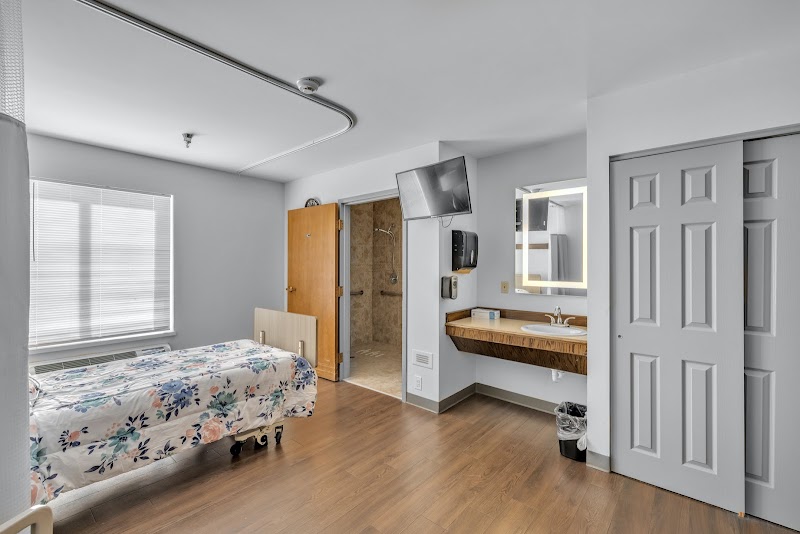
How is Moweaqua Rehab & Hcc Staffed?

CMS rates MOWEAQUA REHAB & HCC's staffing level at 1 out of 5 stars, which is much below average compared to other nursing homes.

What Have Inspectors Found at Moweaqua Rehab & Hcc?

State health inspectors documented 80 deficiencies at MOWEAQUA REHAB & HCC during 2022 to 2025. These included: 7 that caused actual resident harm, 72 with potential for harm, and 1 minor or isolated issues. Deficiencies causing actual harm indicate documented cases where residents experienced negative health consequences.
Who Owns and Operates Moweaqua Rehab & Hcc?

MOWEAQUA REHAB & HCC is owned by a non-profit organization. Non-profit facilities reinvest revenue into operations rather than distributing to shareholders. The facility is operated by TUTERA SENIOR LIVING & HEALTH CARE, a chain that manages multiple nursing homes. With 70 certified beds and approximately 42 residents (about 60% occupancy), it is a smaller facility located in MOWEAQUA, Illinois.
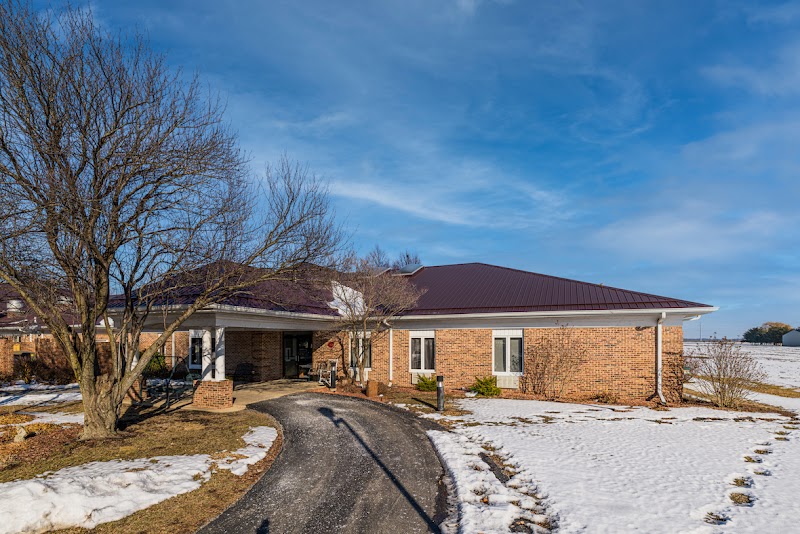
How Does Moweaqua Rehab & Hcc Compare to Other Illinois Nursing Homes?

Compared to the 100 nursing homes in Illinois, MOWEAQUA REHAB & HCC's overall rating (1 stars) is below the state average of 2.5 and health inspection rating (1 stars) is much below the national benchmark.

What Should Families Ask When Visiting Moweaqua Rehab & Hcc?

Based on this facility's data, families visiting should ask: "Can you walk me through typical staffing levels on day, evening, and night shifts?" "Can I visit during a mealtime to observe dining assistance and food quality?" "How do you handle medical emergencies, and what is your hospital transfer rate?" "Can I speak with family members of current residents about their experience?" These questions are particularly relevant given the below-average staffing rating.

Is Moweaqua Rehab & Hcc Safe?

Based on CMS inspection data, MOWEAQUA REHAB & HCC has a clean safety record: no substantiated abuse findings (meaning no confirmed cases of resident harm), no Immediate Jeopardy citations (the most serious violation level indicating risk of serious injury or death), and is not on the Special Focus Facility watch list (a federal program monitoring the lowest-performing 1% of nursing homes). The facility has a 1-star overall rating and ranks #100 of 100 nursing homes in Illinois. While no facility is perfect, families should still ask about staff-to-resident ratios and recent inspection results during their visit.

Do Nurses at Moweaqua Rehab & Hcc Stick Around?

MOWEAQUA REHAB & HCC has not reported staff turnover data to CMS. Staff turnover matters because consistent caregivers learn residents' individual needs, medications, and preferences. When staff frequently change, this institutional knowledge is lost. Families should ask the facility directly about their staff retention rates and average employee tenure.

Was Moweaqua Rehab & Hcc Ever Fined?

MOWEAQUA REHAB & HCC has been fined $226,000 across 1 penalty action. This is 6.4x the Illinois average of $35,339. Fines at this level are uncommon and typically indicate a pattern of serious deficiencies, repeated violations, or failure to correct problems promptly. CMS reserves penalties of this magnitude for facilities that pose significant, documented risk to resident health or safety. Families should request specific documentation of what issues led to these fines and what systemic changes have been implemented.

Is Moweaqua Rehab & Hcc on Any Federal Watch List?

MOWEAQUA REHAB & HCC is not on any federal watch list. The most significant is the Special Focus Facility (SFF) program, which identifies the bottom 1% of nursing homes nationally based on persistent, serious quality problems. Not being on this list means the facility has avoided the pattern of deficiencies that triggers enhanced federal oversight. This is a positive indicator, though families should still review the facility's inspection history directly.