MEADOWBROOK MANOR - NAPERVILLE
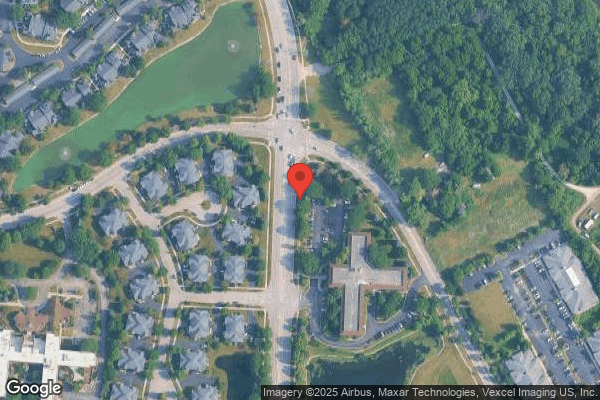
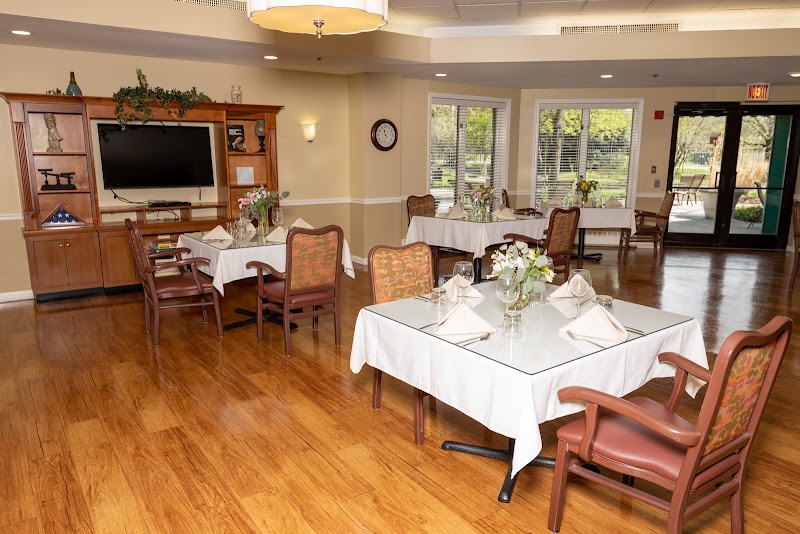
720 RAYMOND DRIVE, NAPERVILLE, IL 60563 (630) 355-0220
For profit - Limited Liability company 249 Beds Independent Data: November 2025 1 Immediate Jeopardy citation
Trust Grade
0/100
#580 of 665 in IL
Last Inspection: October 2024

Within standard 12-15 month inspection cycle. Federal law requires annual inspections.

Overview

Meadowbrook Manor in Naperville has received a Trust Grade of F, indicating significant concerns and poor overall performance. It ranks #580 out of 665 facilities in Illinois, placing it in the bottom half, and #36 out of 38 in Du Page County, showing that there are only two local options that perform better. The facility has a troubling trend, as it reported 58 issues during inspections, although this is an improvement from 13 issues in 2024 to 12 in 2025. Staffing is rated 2 out of 5 stars, with a turnover rate of 48% which is average for the state, but there is good RN coverage, exceeding that of 86% of facilities in Illinois. However, the facility has faced serious incidents, including a failure to protect a resident from sexual abuse, resulting in an Immediate Jeopardy situation, and two other serious incidents involving a diabetic resident developing a significant ulcer and another resident falling and needing hospitalization for a traumatic brain injury. Families should weigh these significant weaknesses against the facility's strengths when considering care options.

Trust Score
F
0/100
In Illinois
#580/665
Bottom 13%
Safety Record
High Risk
Review needed
Inspections
Getting Better
13 → 12 violations
Staff Stability
⚠ Watch
48% turnover. Above average. Higher turnover means staff may not know residents' routines.
Penalties
○ Average
$234,465 in fines. Higher than 60% of Illinois facilities. Some compliance issues.
Skilled Nurses
✓ Good
Each resident gets 50 minutes of Registered Nurse (RN) attention daily — more than average for Illinois. RNs are trained to catch health problems early.
Violations
⚠ Watch
58 deficiencies on record. Higher than average. Multiple issues found across inspections.
★☆☆☆☆
1.0
Overall Rating
★★☆☆☆
2.0
Staff Levels
★☆☆☆☆
1.0
Care Quality
★★☆☆☆
2.0
Inspection Score
Stable
2024: 13 issues
2025: 12 issues

The Good

  • Full Sprinkler Coverage · Fire safety systems throughout facility
  • No fines on record

Facility shows strength in fire safety.

The Bad

1-Star Overall Rating

Below Illinois average (2.5)

Significant quality concerns identified by CMS

Staff Turnover: 48%

Near Illinois avg (46%)

Higher turnover may affect care consistency

Federal Fines: $234,465

Well above median ($33,413)

Significant penalties indicating serious issues

The Ugly 58 deficiencies on record

1 life-threatening 5 actual harm
Sept 2025 2 deficiencies
CONCERN (D) 📢 Someone Reported This

A family member, employee, or ombudsman was alarmed enough to file a formal complaint

Potential for Harm - no one hurt, but risky conditions existed

Pressure Ulcer Prevention (Tag F0686)

Could have caused harm · This affected 1 resident

Based on observation, interview and record review the facility failed to provide personal care to a resident with a pressure ulcer. This applies to 1 of 4 (R1) residents reviewed for pressure wounds i...

Read full inspector narrative →
Based on observation, interview and record review the facility failed to provide personal care to a resident with a pressure ulcer. This applies to 1 of 4 (R1) residents reviewed for pressure wounds in a sample of 6.Findings include:On 9/2/25 at 11:48 AM, R1stated she had recently admitted , but had developed a pressure wound on her buttocks and UTI (Urinary Tract Infection) since arriving to the facility. R1 stated the facility is short staffed. R1 stated on a few occasions she had called for incontinence care and left waiting for hours. R1 stated on one occasion she called V8 Family Member requesting he call the nursing station after waiting hours to be provided care. On 9/2/25 at 11:55 AM, V6 CNA (Certified Nursing Assistant) and V13 PT (Physical Therapist) came to R1's bedside for skin and brief observation. R1's undergarment was dry with large streak of dried feces. Dried caked feces were between the gluteal fold. R1's labia and gluteal fold was reddened. R1 had a small open area on her coccyx.On 9/2/25 at 12:32 PM, V6 CNA stated her shift started a 6AM, but she had not provided incontinence care or turned R1 prior to 11:55 AM. V6 stated the wound nurse provided incontinence care and repositioned the resident during the dressing change.On 9/2/25 at 12:42 PM, R1 stated V6 had not provided any incontinence care during her shift and repositioned her at 11:55 with the physical therapist.On 9/2/25 at 3:10 PM, V8 Family Member stated R1 had called him a couple of times with request for him to call nursing station for assistance. V8 stated on one of the calls R1 had complained of being left in soiled brief for over two hours.On 9/2/25 at 3:18 PM, V9 RN (Registered Nurse) stated R1 was on antibiotics for a UTI and had a pressure wound on her coccyx. On 9/2/25 at 4:50 PM, V3 Wound Nurse stated V3 stated R1 is obese and unable to reposition without the assistance of two staff members. R1 is incontinent of bowel and bladder moisture is a contributing factor to skin break down. V3 stated nursing staff is responsible for repositioning and providing incontinence care for R1.On 9/2/25 at 6:17 PM, V1 Administrator stated should not need to call their family members to obtain staff assistance.The facility policy Wound Care Prevention dated April 2025 states, all residents will receive appropriate care to decrease the risk of skin break down. The nursing department will review all new admissions / readmissions to put a plan in place for the prevention based on the resident's activity level, comorbidities, mental status, risk assessment and other pertinent information. Clean skin at time of soiling and at routine intervals.The facility policy Incontinence Care dated April 2025 states, incontinence care is provided to keep residents as dry comfortable and odor free as possible. It also helps in preventing skin breakdown. On 9/2/25 at 11:48 AM, R1stated she had recently admitted , but had developed a pressure wound on her buttocks and UTI (Urinary Tract Infection) since arriving to the facility. R1 stated the facility is short staffed. R1 stated on a few occasions she had called for incontinence care and left waiting for hours. R1 stated on one occasion she called V8 Family Member requesting he call the nursing station after waiting hours to be cleaned up of urine and feces. On 9/2/25 at 11:55 AM, V6 CNA (Certified Nursing Assistant) and V13 PT (Physical Therapist) came to R1's bedside for skin and brief observation. R1's undergarment was dry with large streak of dried feces. Dried caked feces were between the gluteal fold. R1's labia and gluteal fold was reddened. R1 had a small open area on her coccyx.On 9/2/25 at 12:32 PM, V6 CNA stated her shift started a 6AM, but she had not provided incontinence care or turned R1 prior to 11:55 AM. V6 stated the wound nurse provided incontinence care and repositioned the resident during the dressing change.On 9/2/25 at 12:42 PM, R1 stated V6 had not provided any incontinence care during her shift and repositioned her at 11:55 with the physical therapist.On 9/2/25 at 3:10 PM, V8 Family Member stated R1 had called him a couple of times with request for him to call nursing station for assistance. V8 stated on one of the calls R1 had complained of being left in soiled brief for over two hours.On 9/2/25 at 3:18 PM, V9 RN (Registered Nurse) stated R1 was on antibiotics for a UTI and had a pressure wound on her coccyx. V9 did not see any documentation of a pressure wound or UTI prior to or on admission.On 9/2/25 at 4:50 PM, V3 Wound Nurse stated there was no documentation of a coccyx pressure wound on 8/27/25 when R1 was admitted to the facility. V3 stated there was no documentation of a coccyx pressure wound was in R1's hospital discharge records. V3 stated she discovered and documented R1's wounds on 8/29/25 during the skin assessment. V3 stated the coccyx wound measured 2.0 cm (centimeters)x 0.2 cm x 0.2cm. V3 stated R1 is obese and unable to reposition without the assistance of two staff members. R1 is incontinent of bowel and bladder moisture is a contributing factor to skin break down. V3 stated nursing staff is responsible for repositioning and providing incontinence care for R1.On 9/2/25 at 6:17 PM, V1 Administrator stated should not need to call their family members to obtain staff assistance.The facility policy Wound Care Prevention dated April 2025 states, all residents will receive appropriate care to decrease the risk of skin break down. The nursing department will review all new admissions / readmissions to put a plan in place for the prevention based on the resident's activity level, comorbidities, mental status, risk assessment and other pertinent information. Clean skin at time of soiling and at routine intervals.The facility policy Incontinence Care dated April 2025 states, incontinence care is provided to keep residents as dry comfortable and odor free as possible. It also helps in preventing skin breakdown.
CONCERN (E) 📢 Someone Reported This

A family member, employee, or ombudsman was alarmed enough to file a formal complaint

Potential for Harm - no one hurt, but risky conditions existed

Deficiency F0725 (Tag F0725)

Could have caused harm · This affected multiple residents

Based on observation, interview and record review the facility failed to provide adequate staffing to meet the care needs of residents. Staffing was insufficient to provide residents with assistance w...

Read full inspector narrative →
Based on observation, interview and record review the facility failed to provide adequate staffing to meet the care needs of residents. Staffing was insufficient to provide residents with assistance with incontinence care, preventing the development of pressure wounds, assisting with care needs, answering the call light and screams for help.This applies to 4 residents R1, R2, R3 and R6 in a sample of 6. Findings include:1.On 9/2/25 at 11:48 AM, R1stated she had recently admitted , and had a pressure wound on her buttocks and UTI (Urinary Tract Infection) since arriving to the facility. R1 stated the facility is short staffed. R1 stated on a few occasions she had called for incontinence care and left waiting for hours. R1 stated on one occasion she called V8 (Family Member) requesting he call the nursing station after waiting hours to be cleaned up of urine and feces. On 9/2/25 at 11:55 AM, V6 (CNA -Certified Nursing Assistant) and V13 (PT -Physical Therapist) came to R1's bedside for skin and brief observation. R1's undergarment was dry with a large streak of dried feces. Dried caked feces were between the gluteal fold. R1's labia and gluteal fold was reddened. R1 had a small open area on her coccyx.On 9/2/25 at 12:32 PM, V6 CNA stated her shift started a 6AM, but she had not provided incontinence care or turned R1 prior to 11:55 AM. V6 stated the wound nurse provided incontinence care and repositioned the resident during her dressing change.On 9/2/25 at 12:42 PM, R1 stated V6 had not provided any incontinence care during her shift and repositioned her at 11:55 with the physical therapist.On 9/2/25 at 3:10 PM, V8 Family Member stated R1 had called a few times with request for him to call nursing station for assistance. V8 stated on one of the calls R1 had complained of being left in soiled brief for over two hours.On 9/2/25 at 3:18 PM, V9 RN (Registered Nurse) stated R1 was on antibiotics for a UTI and had a pressure wound on her coccyx. On 9/2/25 at 6:17 PM, V1 Administrator stated should not need to call their family members to obtain staff assistance.2. On 9/2/25 at 10:50 AM, R2 was screaming for help. The call light was on and visible in the hall. Staff were observed walking past R2's room without addressing the calls for help. R2 stated she vomited earlier in the morning and had continued nausea. R2 also stated her bilateral knee braces were causing her discomfort because they were on too tight, and she wanted them loosened. R1 stated her room was too hot and wanted the temperature decreased. R2 stated she request V5 LPN (Licensed Practical Nurse) for assistance but did not receive it. R2 stated there isn't enough staff to complete the work needing to be done including providing her assistance. R2 stated she had been waiting since before 7AM for nausea and vomiting medication and hadn't gotten anything. During R2's interview staff were observed passing R2's room without addressing her call light.On 9/2/25 at 11:13 AM, V7 CNA (Certified Nursing Assistant) answered R2's call light stating she would let the nurse know a third time about R2's nausea.On 9/2/25 at 11:31 AM, V5 stated R2 complained of nausea not vomiting. V5 stated Ondansetron was ordered for R2's nausea but she had not given her any. On 9/2/25 at 3:26 PM, V10 Nursing Supervisor stated if the CNA reports resident concern to the nurse, the nurse should go to the resident right away or as soon as possible. R2's MDS (Minimum Data Set) dated 6/16/25 shows she is cognitively intact with a BIMS (Brief Interview for Mental Status) Score of 15. The facility policy Call Light Response dated April 2025, states answer the patient or resident's call as soon as possible. Listen to the patient / resident's request.3. On 9/2/25 at 2:58 PM, V12 (Family Member) stated staffing was insufficient and if she didn't visit the facility regularly nothing would get done for R3. V12 stated she arrived at approximately 11:55 AM. R3's undergarment was soaked through her clothing, and the staff didn't come and provide incontinence care until about 1:00 PM. V12 stated that the floor was dirty and R3's laundry hamper was overflowing with urine-soaked clothing.4. On 9/2/25 at 12:16 PM, R6 stated she didn't believe there was enough staff. R6 stated she has been told by staff they are working short of staff. R6 stated it can take ten minutes to three hours for the call light to be answered. R6 stated if staff are feeding other residents she must wait for incontinence care. R6 stated she put her call light on at about 8:30 AM to get dressed and out of bed but was not gotten up until 11AM.On 9/2/25 at 12:07 PM, V7 CNA (Certified Nursing Assistant) stated she sometimes has 17 to 20 residents to care for. V7 stated sometimes she is unable to complete like resident showers. Residents must sometimes wait a long time to have their call light answered. What we don't get done we inform the scheduler, and the task is passed on to the next shift or the next day. Some residents aren't happy when they're not showered when it's scheduled.On 9/2/25 at 3:50 PM, V11 CNA stated when there is a staffing shortage the residents may miss getting showered. If there is staffing shortage and no one picks up it's expected the CNAs working will make up the shortage.On 9/2/25 at 4:26 PM, V4 Scheduler stated if there is a staffing shortage the managers and restorative aids should fill in and assist but aren't taking a full team. V4 stated she was a CNA able to fill in on the floor if needed.On 9/3/25 at 3:50 PM, V4 Scheduler stated staff are to initial on the schedule when they work. A check mark by nursing staff names mean they did not initial but they were working and accounted for. If there is no initial or check mark by the staff name that means they called off. Names that are lined out means that staff member was reassigned to another unit. V4 stated the staffing ratios for the 1st floor AM and PM shifts should have 3-4 nurses and 4-5 CNAs. The 1st floor night shift should have 2 nurses and 3 CNAs. The 2nd floor AM and PM shifts should have 3 nurses and 5-6 CNAs. The Night shift 2nd floor should have 2 nurses and 4 CNAs. The 3rd floor AM and PM shifts should have 2 nurses and 3 CNAs. The 3rd floor night shift should have 1 nurse and 2 CNAs. The memory care unit AM and PM should have 1 nurse and 2-3 CNAs. The memory care unit night shift should have 1 nurse and 2 CNAs.The staffing schedule for August 2025 and September to date were reviewed. The facility had 22 shifts that worked with less than the required number of nurses or CNAs as determined by the facility for August 2025.On 9/2/25 at 6:17 PM, V1 Administrator stated there was no facility policy for staffing.
Jul 2025 6 deficiencies 2 Harm
SERIOUS (G) 📢 Someone Reported This

A family member, employee, or ombudsman was alarmed enough to file a formal complaint

Actual Harm - a resident was hurt due to facility failures

Deficiency F0687 (Tag F0687)

A resident was harmed · This affected 1 resident

**NOTE- TERMS IN BRACKETS HAVE BEEN EDITED TO PROTECT CONFIDENTIALITY** Based on observation, interview, and record review, the facility failed to ensure a diabetic resident's feet were monitored to p...

Read full inspector narrative →
**NOTE- TERMS IN BRACKETS HAVE BEEN EDITED TO PROTECT CONFIDENTIALITY** Based on observation, interview, and record review, the facility failed to ensure a diabetic resident's feet were monitored to prevent complications. This failure resulted in the resident acquiring a necrotic diabetic ulcer on her left heel. This applies to 1 out of 3 residents (R5) reviewed for foot care. The findings include: R5's EMR (Electronic Medical Record) showed R5 was admitted to the facility on [DATE] with multiple diagnoses, including hemiplegia and hemiparesis following cerebral infarction, diabetes, stenosis, and vascular disease. R5's EMR said she was dependent on staff assistance with her mobility and hygiene care, and at risk for developing ulcers. On 6/30/2025 at 9 AM, V24 (Wound Care Nurse/WCN) changed R5's left heel wound dressing. R5's wound was open with serosanguinous drainage. V24 said R5's diabetic wound was acquired on 3/31/2025, and now required an outpatient vascular consultation for possible vascular surgical intervention because of her wound. V24 said nursing staff was expected to perform and document routine resident skin checks, including their feet. V24 said CNAs (Certified Nurse Assistants) were also expected to check residents' skin daily when providing care and report changes such as redness or discoloration. V24 said R5's heel wound was acquired with 100% hard eschar (necrotic) tissue measuring 4.5 centimeters (cm) x 4.5 cm x depth unknown. V24 said R5's wound should have been identified prior to becoming necrotic or at a smaller size. On 6/30/2025 at 3:25 PM, V10 (Nurse) said on 3/28/2025 she assessed R5's heel. V10 said R5's heel did not appear normal because it had a hard, black wound. V10 said R5 was new to the unit, and it was unclear when she acquired the wound. V10 said CNAs were expected to complete skin checks during routine care and report any changes to prevent skin complications. On 7/01/2025 at 12 PM, V6 (Podiatrist) said her team provided routine foot care services and facility foot care recommendations. V6 said residents with diabetes and vascular disease were at a higher risk for skin deterioration to pressure point areas because of their impaired circulation and sensation. V6 said facility staff was required to check skin routinely and report any changes to the providers because residents with these comorbidities were at a higher risk for accelerated skin deterioration and complications. R5's care plan initiated on 10/29/2024, said she was at risk for developing skin breakdown due to her immobility, diabetes, impaired circulation, and altered neurological status. R5's care plan included multiple skin monitoring preventions including Inspect foot/ankle/calf skin per facility protocol/as provider orders for changes; maceration (white, wrinkly, moist), redness, purple tinge, blue, rust coloring, weeping, edema, puffiness, tenderness, area with no sensation. R5's podiatry consult note dated 3/04/2025 said R5's skin on her feet was noted dry. The consultation included general foot hygiene recommendations, including daily look for swelling in the feet and ankles, use lotion daily, and reviewed the importance of getting regular foot care. R5's new skin condition note dated 3/28/2025 said R5's left heel was noted with hard, dry discoloration and swelling. R5's daily skin monitoring log from 3/01/2025-3/31/2025 showed no skin alterations were observed on her feet. R5's Skin Monitoring: Comprehensive CNA Shower Review sheets provided by the facility, dated 3/17/2025, 3/21/2025, and 3/24/2025, showed no skin alterations were observed. R5's Wound Assessment Details Report dated 3/31/2025 said R5 was at high risk for skin breakdown and had a newly acquired diabetic ulcer to her left heel. The report said the wound measured 4.5 cm length x 4.5 cm width x unknown depth, with 100% necrotic, hard, firm adherent tissue. R5's Wound Assessment Details Report dated 6/24/2025 said R5's left heel wound now measured 4.5 x 4 x 1.5 cm with 50% bright beefy red and 50% necrotic soft adherent tissue. The facility's policy titled Foot Care dated 03/2018, said Residents will receive appropriate care and treatment in order to maintain mobility and foot health. Policy Interpretation and Implementation 1. Residents will be provided with foot care and treatment in accordance with professional standards of practice. 2. Overall foot care will include the care and treatment of medical conditions associated with foot complications (e.g., diabetes, peripheral vascular disease, etc.). The facility's policy titled Prevention of Pressure Injuries dated 04/2020, said Skin Assessment .2. During the skin assessment, inspect: a. Presence of erythema; b. Temperature of skin and soft tissue; c. Edema. 3. Inspect the skin on a daily basis when performing or assisting with personal care or ADLs. a. Identify any signs of developing pressure injuries (i.e., non-blanchable erythema). For darkly pigmented skin, inspect for changes in skin tone, temperature, and consistency; b. Inspect pressure points (sacrum, heels .). Monitoring 1. Evaluate, report and document potential changes in the skin.
SERIOUS (G) 📢 Someone Reported This

A family member, employee, or ombudsman was alarmed enough to file a formal complaint

Actual Harm - a resident was hurt due to facility failures

Accident Prevention (Tag F0689)

A resident was harmed · This affected 1 resident

**NOTE- TERMS IN BRACKETS HAVE BEEN EDITED TO PROTECT CONFIDENTIALITY** Based on interview and record review, the facility failed to supervise a resident with high risk for falls. This failure resulte...

Read full inspector narrative →
**NOTE- TERMS IN BRACKETS HAVE BEEN EDITED TO PROTECT CONFIDENTIALITY** Based on interview and record review, the facility failed to supervise a resident with high risk for falls. This failure resulted in the resident falling and requiring hospitalization for acute traumatic brain injury, seizures, and altered mental status. This applies to 1 out of 3 residents (R1) reviewed for accidents. The findings include: R1's EMR (Electronic Medical Record) showed R1 was admitted to the facility on [DATE] with multiple diagnoses including history of falls, traumatic subdural hemorrhage, hydrocephalus with presence of cerebrospinal fluid drainage device, hallucinations, vascular dementia with moderate agitation, abnormalities of gait and mobility, unsteadiness on feet, difficulty in walking, cognitive deficit, and hearing loss. R1's EMR did not show a history of seizures. R1's MDS (Minimum Data Set) dated 8/22/2024 said R1 was severely cognitively impaired and required staff assistance with transfers. On 6/30/2025 at 3:15 PM, V9 (Nurse) said on 10/23/2024 at 12:30 PM, R1 was observed sitting on the floor in front of his wheelchair in his room. V9 said R1 was at a high risk for falls because he had a known history of falls, was confused, and impulsive. V9 said he assessed and initiated neurological checks for R1 after his unwitnessed fall. V9 said R1's neurological assessment was normal and did not appear to have any injury or change in condition. V9 said staff then assisted R1 into his wheelchair and transported him to the main dining area for lunch, where he was supervised. On 6/30/2025 at 1:50 PM, V2 (Director of Nursing/DON) said R1 was monitored after his fall per protocol, and at 3:15 PM, he was noted with a bump to his head. V2 said V5 (Nurse Practitioner/NP) was updated and gave orders to send R1 to the hospital for further evaluation. V2 said routine paramedics then transferred R1 into the ambulance when he started to have a massive seizure. V2 said the paramedics then contacted the emergency paramedics for additional support, and R1 was transferred to the hospital. V2 said R1 was admitted for altered mental status, seizure, and traumatic brain injury. V2 said the facility felt they could not determine if R1's acute change in medical condition was related to his fall incident because the facility elected to admit R1 into inpatient hospice care and not proceed with additional diagnostic testing. V2 said R1 had a known history of recurrent falls and head trauma with an intracranial bleed. V2 said fall incidents were investigated and fall prevention interventions were implemented in the residents' plan of care. On 6/30/2025 at 3:50 PM, V5 (NP) said she expected facility staff to complete a root cause analysis after a resident's fall to investigate the cause and then implement interventions to prevent reoccurrences. R1's fall care plan report initiated on 3/08/2024 said R1 was at risk for falls related to his confusion, deconditioning, gait and balance problems, poor comprehension, unaware of safety needs, dementia, hallucinations, and recurrent falls. R1's care plan included multiple fall interventions, including conduct rounds, toilet resident and place in dining room, hallways or nurses' station for more visual supervision, and increase supervision in the room. Monitor any attempt of self transfer. R1's fall incident reports showed he had 8 unwitnessed falls in his room prior to 10/23/2024. Falls had occurred on 3/12/2024, 4/13/2024, 5/28/2024, 7/17/2024, 8/11/2024, 8/23/2024, 8/23/2024, and 8/30/2024. The fall incident reports showed R1 falls occurred because he was trying to self-transfer in and out of his wheelchair. R1's fall incident report dated 10/23/2024 said R1 had another unwitnessed fall in his room after attempting to stand up from his wheelchair unassisted. The report said R1 was observed at 12:35 PM sitting on the floor facing his wheelchair with his legs flexed and holding on to his wheelchair. The report said after R1's fall assessment, he was then transported to the main dining room for his lunch. The report continued to say at 3:15 PM, a bump was noted to R1's right side of the head, and when being transported by medical paramedics to the hospital, he had a seizure. The report said emergency paramedics were then contacted for additional support, and R1 was transported to the hospital for further management. V17's (R1's assigned Certified Nurse Assistant/CNA) incident statement dated 10/23/2024 said, When the incident happened, I did not witness it happening. I was helping in the dining room with passing trays and feeding residents. V9's (R1's assigned Nurse) incident statement dated 10/23/2024 said, At the time of fall, I was at the nurse's station. Fall not witnessed. R1's hospital notes dated 10/24/2024 said R1 was admitted post-fall with a suspected significant head trauma likely subdural hematoma, acute encephalopathy, seizures, and dilated left pupil and flaccid left side. The note said R1 remained unresponsive and family elected for hospice care. The facility's policy titled Falls and Fall Risk, Managing undated, said Based on previous evaluations and current data, the staff will identify interventions related to the resident's specific risks and causes to try to prevent the resident from falling and to try to minimize complications from falling .Resident-Centered Approaches to Managing Falls and Fall Risk 1. The staff, with the input of the attending physician, will implement a resident-centered fall prevention plan to reduce the specific risk factors(s) of falls for each resident at risk or with a history of falls .If falling recurs despite initial interventions, staff will implement additional or different interventions, or indicate why the current approach remains relevant .
CONCERN (D) 📢 Someone Reported This

A family member, employee, or ombudsman was alarmed enough to file a formal complaint

Potential for Harm - no one hurt, but risky conditions existed

Investigate Abuse (Tag F0610)

Could have caused harm · This affected 1 resident

Based on interview and record review, the facility failed to investigate and report an allegation of financial abuse by a family member. This applies to 1 out of 3 residents (R4) reviewed for financia...

Read full inspector narrative →
Based on interview and record review, the facility failed to investigate and report an allegation of financial abuse by a family member. This applies to 1 out of 3 residents (R4) reviewed for financial abuse. The findings include: On 6/30/2025 at 1:10 PM, R4 was fatigued in bed. R4 at times during the interview became frustrated and showed signs of impaired memory. R4 said V8 (Family Member) had stolen his money from his bank account. R4 was unable to provide details of when it occurred and how much money he believed was stolen. R4 said after the alleged incident, he made sure V8 no longer had access to his bank account. R4 said he also removed V8 from his financial power of attorney (POA). On 6/30/2025 at 3 PM, V5 (Nurse Practitioner/NP) said R4 had recently started to decline physically and cognitively. V5 said R4's cognition was impaired and unable to make decisions on his own now. On 6/30/2025 at 10:45 AM, V2 (Director of Nursing/DON) said on 4/23/2025, V7 (R4's Family Member) called the facility, alleging R4 informed her V8 was stealing from his bank account. V2 said she informed V3 (Social Services/SS). On 6/30/2025 at 10:25 AM, V28 (Business of Manager) said V8 (Family Member) had contacted the facility on 6/30/2025, requesting assistance in obtaining a new financial POA because she was informed by R4's bank that it was invalid. On 6/30/2025 at 2:30 PM, V3 (SS) said residents were assessed for their risk for abuse and care plans are updated. V3 said she followed up with R4 on 4/25/2025, and he verbally revoked his financial POA from V8. On 6/30/2025 at 2 PM, V1 (Administrator) said he was the facility abuse coordinator. V1 said he was aware of V7's financial abuse allegation involving R4. V1 said he did not report or further investigate the allegation because he believed it was a misunderstanding on R4's behalf. R4's care plan initiated on 6/18/2024, said he was at risk for abuse. The care plan had multiple interventions, including Report issues pertaining to potential abuse/neglect situations per policy. R4's progress note dated 4/23/2025 said Received a call from [V7] .indicated that her father has indicated that his current wife/POA along with his daughter [daughter] have been stealing his money from his bank account. The facility did not have any abuse allegation/investigation Illinois Department of Public Health eportable incident for R4's allegation of financial abuse by his family member from 4/23/2025. The facility's policy titled Abuse Prevention Program undated, said This facility desires to prevent abuse, neglect, exploitation, mistreatment, and misappropriation of resident property by establishing a resident sensitive and resident secure environment. This will be accomplished by a comprehensive quality management approach involving the following: Concern Identification and Follow-up: Resident and family concerns will be recorded, reviewed, addressed, and responded .Internal Reporting Requirements and Identification of Allegations .Protection of Residents .Internal Investigation 1. Incidents will be reviewed, investigated, and documented, whether or not abuse, neglect, exploitation, mistreatment or misappropriation of resident property occurred, was alleged or suspected .External Reporting .Public health shall be informed that an occurrence of potential abuse, neglect, exploitation, mistreatment or misappropriation of resident property has been reported and is being investigated .
CONCERN (D) 📢 Someone Reported This

A family member, employee, or ombudsman was alarmed enough to file a formal complaint

Potential for Harm - no one hurt, but risky conditions existed

Pressure Ulcer Prevention (Tag F0686)

Could have caused harm · This affected 1 resident

Based on observation, interview, and record review, the facility failed to ensure the pressure ulcer intervention of a pressure-relieving mattress was working for a resident with known multiple pressu...

Read full inspector narrative →
Based on observation, interview, and record review, the facility failed to ensure the pressure ulcer intervention of a pressure-relieving mattress was working for a resident with known multiple pressure wounds. This applies to 1 out of 3 residents (R4) reviewed for pressure wounds. The findings include: On 6/29/2025 at 9:45 AM, R4 said he had pain all over his back. R4 was in bed on an air-loss mattress, with a beeping alarm. V20 (Certified Nurse Assistant) turned R4 in bed, and R4 was lying on two overlapping cloth pads and a sheet, which were bunched up together. V25 (Wound Care Nurse/WCN) said R4 was recently readmitted with multiple pressure wounds and required the use of an air-loss mattress. V25 changed R4's dressing to his left posterior lower leg vascular wound and pressure wounds to his bilateral mid buttock, coccyx, and right lateral buttock. At 10:15 AM, V20 and V25 finished providing care to R4's wounds. The beeping alarm on R4's mattress continued and the mattress was not inflated because the mattress was disconnected from the pump. V25 said she believed R4's mattress was working properly. On 6/30/2025 at 1:20 PM, V24 (WCN) said R4 had a facility-acquired deep tissue injury to his left buttock that was new. V24 said R4 had a history of non-compliance with skin management and required the use of an air-loss mattress to assist in relieving pressure. V24 said staff was expected to respond and troubleshoot medical equipment alarms, including air-loss mattresses to prevent bottoming out. R4's skin care plan initiated on 6/18/2025 said R4 was at risk for developing further skin breakdown. The care plan included multiple interventions, including Pressure reducing mattress provided for pressure relief and prevention. R4's Order Summary Report dated 6/30/2025 had an active order for Pressure Reducing Mattress to Bed: Ensure Placement and Functionality. Every shift for Prevention of developing/worsening pressure injury initiated on 6/19/2025. R4's Wound Assessment Details Reports dated 6/29/2025 said R4 had unstageable pressure injuries to bilateral buttocks and coccyx and a deep tissue injury to his right buttock. R4's Wound Assessment Details Report dated 6/30/2025 said R4 had a newly acquired deep tissue pressure injury to his left buttock on 6/30/2025. The wound measured 1.3 centimeters (cm) length x 1 cm width x unknown depth, with 100% deep maroon tissue. On 6/30/2025 at 4:30 PM, V2 (Director of Nursing/DON) said the facility did not have a specific policy regarding air-loss mattresses. The facility's policy titled Prevention of Pressure Injuries dated 04/2020, said The purpose of this procedure is to provide information regarding identification of pressure injury risk factors and interventions for specific risk factors .Provide support devices and assistance as needed .
CONCERN (D) 📢 Someone Reported This

A family member, employee, or ombudsman was alarmed enough to file a formal complaint

Potential for Harm - no one hurt, but risky conditions existed

Deficiency F0745 (Tag F0745)

Could have caused harm · This affected 1 resident

Based on interview and record review, the facility failed to assist a resident with his social services needs. This applies to 1 out of 3 residents (R4) reviewed for social service needs. The finding...

Read full inspector narrative →
Based on interview and record review, the facility failed to assist a resident with his social services needs. This applies to 1 out of 3 residents (R4) reviewed for social service needs. The findings include: On 6/30/2025 at 1:10 PM, R4 was fatigued in bed. R4 at times during the interview became frustrated and showed signs of impaired memory. R4 said V8 (Family Member) was no longer his Power of Attorney (POA) for health and finance. R4 said he believed V7 (Family Member) was now his assigned POA for health and finance. On 6/30/2025 at 10:45 AM, V2 (Director of Nursing/DON) said on 4/23/2025, V7 (R4's Family Member) called informing the facility that R4 was seeking legal aid to assist him in revoking his POA and divorce from V8. V2 said she informed V3 (Social Services/SS). On 6/30/2025 at 2:30 PM, V3 (SS) said residents were provided with social services, and if needed outside, referrals were made. V3 said R4 was a long-term care resident at the facility. V3 said she followed up with R4 on 4/25/2025, and he verbally revoked his financial and health POA from V8. V3 said R4 continued to say he wanted to proceed with his divorce and wanted V7 to be his POA. V3 said she believed V7 had POA documents indicating R4's directives. V3 said R4 was informed that it was expected he obtain his POA documents from V7 (who was out-of-state) to provide to the facility and proceed with his divorce on his own. V3 said she was unsure if V26 (Ombudsman) was assisting R4 with his legal aid request. On 6/30/2025 at 3 PM, V5 (Nurse Practitioner/NP) said R4 had recently started to decline physically and cognitively. V5 said R4's cognition was impaired and unable to make decisions on his own now. V5 said R4 was now physically impaired and dependent on staff for his care. On 6/30/2025 at 11:40 AM, V27 (Ombudsman) was called and said no referral was received for R4. R4's progress note dated 4/23/2025 said Received a call from [V7] .wanted to inform the facility that the resident was seeking legal aid to assist him with a divorce and with revoking his current POA for financial and healthcare . The facility's policy titled Social Services dated 10/2010, said Our facility provides medically-related social services to assure that each resident can attain or maintain his/her highest practicable physical, mental, or psychosocial well-being .Making referrals to social service agencies as necessary or appropriate .
CONCERN (D) 📢 Someone Reported This

A family member, employee, or ombudsman was alarmed enough to file a formal complaint

Potential for Harm - no one hurt, but risky conditions existed

Deficiency F0760 (Tag F0760)

Could have caused harm · This affected 1 resident

Based on interview and record review, the facility failed to follow insulin administration instructions for a diabetic resident. As a result of this failure, R4 had an acute episode of hypoglycemia, w...

Read full inspector narrative →
Based on interview and record review, the facility failed to follow insulin administration instructions for a diabetic resident. As a result of this failure, R4 had an acute episode of hypoglycemia, which required the administration of emergency reversal-medications by emergency paramedics. This applies to 1 out of 3 residents (R4) reviewed for diabetes management. The findings include: On 6/30/2025 at 11:45 AM, V11 (Nurse) said she administered R4's scheduled insulin on 6/17/2025. V11 said insulin was administered based on the order. V11 continued to say that if a resident refuses to eat, they should not receive their fast-acting insulin because their blood sugar would drop. V11 said she believed residents with diabetes required an active order for emergency glucagon for emergency episodes of hypoglycemia. On 6/30/2025 at 12 PM, V18 (Certified Nurse Assistant/CNA) said on 6/17/2025, R4 refused his breakfast and lunch meals. V18 said she was concerned R4's blood sugar would drop and informed the nurse on duty and V18 documented R4's meal refusals. On 6/30/2024 at 11:50 AM, V12 (Nurse) said on 6/17/2025 at approximately 4 PM, he noticed R4 was in a deep sleep, not responding to physical stimuli, and had abnormal breathing. V12 said emergency paramedics were called, and they checked R4's blood sugar. V12 said R4's blood sugar was 22, and they administered emergency intravenous fluids and glucagon. V12 said he was not aware of the facility's hypoglycemic protocol. V12 said if he had been informed of R4's insulin administration and meal refusals, he would have monitored his blood sugar closely. V12 said R4 was transferred to the hospital for further evaluation. On 6/30/2025 at 3 PM, V5 (Nurse Practitioner/NP) said she expected nurses to administer insulin as ordered and use clinical judgment when administering short-acting insulin for residents who refused their meals. V5 said she believed the facility's hypoglycemic protocol was standard of care for diabetic residents. R4's Medication Administration Record (MAR) for June 2025 said on 6/17/2025, R4 was administered Humalog insulin (fast-acting) 2 units at 9 AM and Fiasp insulin (fast-acting) 28 units at 8 AM and 12 PM. The MAR included specific instructions for the administration of Humalog, to administer with meals. R4's nutritional intake log for 6/17/2025 showed R4 refused his breakfast and lunch meals. R4's Order Summary Report dated 6/30/2025 did not have an active order for Glucagon emergency injection for hypoglycemia. R4's diabetic care plan initiated on 6/26/2024 said Monitor/document/report to MD PRN s/sx of hypoglycemia and Diabetes medication as ordered by doctor. R4's hospital note dated 6/17/2025 said R4 received treatment for hypoglycemia. The note said, He received insulin this morning and this afternoon. Did not have lunch. Was found to be less responsive later this afternoon. EMS was called he was hypoglycemia with a sugar of 22. Was given glucagon and D10. The facility's document titled Hypoglycemia Protocol undated, said residents needed to be assessed for their level of consciousness, pulse, blood pressure, and respirations. The document provided instructions of nursing inteventions for the management of residents with acute episodes of hypoglycemia. The facility's policy titled Insulin Administration dated 09/2014, said Purpose To provide guidelines for the safe administration of insulin to residents with diabetes .3. The type of insulin, dosage, requirements, strength, and method of administration must be verified before administration, to assure that it corresponds with the order on the medication sheet and the physician's order. 5. The nursing staff will have access to specific instructions (from the manufacturer if appropriate) on all forms of insulin delivery system(s) prior to their use .Rapid-acting Onset 10-15 min Peak 0.5-3 hrs .
Jun 2025 1 deficiency
CONCERN (D) 📢 Someone Reported This

A family member, employee, or ombudsman was alarmed enough to file a formal complaint

Potential for Harm - no one hurt, but risky conditions existed

Accident Prevention (Tag F0689)

Could have caused harm · This affected 1 resident

**NOTE- TERMS IN BRACKETS HAVE BEEN EDITED TO PROTECT CONFIDENTIALITY** Based on observation, interview, and record review, the facility failed to use a two-person transfer with a gait belt, as shown ...

Read full inspector narrative →
**NOTE- TERMS IN BRACKETS HAVE BEEN EDITED TO PROTECT CONFIDENTIALITY** Based on observation, interview, and record review, the facility failed to use a two-person transfer with a gait belt, as shown in the EMR (Electronic Medical Record), for a resident with a history of multiple falls. This applies to 1 of 3 residents (R2) reviewed for accidents and supervision in the sample of 3. The findings include: On June 12, 2025, at 11:21 AM, V3 (CNA-Certified Nursing Assistant) transferred R2 from the wheelchair to the toilet. No other staff were present. V3 said R2 was wearing regular socks and did not have shoes. V3 tightly held R2's waist band of her pants and R2's incontinence brief to lift the resident from the wheelchair to the toilet. V3 did not use a gait belt. As V3 was attempting to stand R2, R2's knees were buckling and R2 was unable to bear her full weight as she was being transferred to the toilet. R2 was unable to follow V3's instructions due to her cognitive status. V3 said R2 needed a new incontinence brief due to R2's previous incontinence brief being torn after it was used to lift the resident during transfer. V3 obtained a new incontinence brief and instructed R2 to hold the handrail and the handle of her wheelchair. As R2 reached for the handrail, a yellow plastic wrist band was visible on R2's right wrist. V3 said when a resident is wearing a yellow wrist band, it means the resident is a high fall risk. V3 again attempted to lift R2 without using a gait belt. V3 was able to lift the resident from the toilet to a standing position. As V3 attempted to place the clean incontinence brief on R2, R2's knees began to buckle and V3 had to lower R2 back down to the toilet. A pair of shoes was in a clear bag next to R2's bed and V3 said she was not aware R2 owned shoes. V3 placed the shoes on R2's feet. V3 left R2 unattended and left the bathroom to find another CNA to help her. V3 returned to the bathroom with V6 (CNA). V3 applied a gait belt to R2. V3 and V6 completed R2's toilet hygiene, applied a new incontinence brief, and transferred R2 back to the wheelchair. V6 said the type of transfer a resident requires is shown in the EMR and each CNA should carry their own gait belt, which is a required part of a CNA's uniform. The EMR shows R2 was admitted to the facility on [DATE], with multiple diagnoses including, acute kidney failure, anxiety disorder, hypertensive heart and chronic kidney disease, gastro-esophageal reflex disease, history of falling, sensorineural hearing loss, dementia, chronic kidney disease, depression, Alzheimer's disease, benign paroxysmal, vertigo, localized edema, visual loss, history of cancer of large intestine, anemia, history of breast cancer, essential tremor, and irritable bowel syndrome. R2's MDS (Minimum Data Set) was not completed at the time of this investigation. R2's care plan for ADL (Activities of Daily Living) self-care performance deficient, initiated on June 12, 2025, shows multiple interventions initiated on June 12, 2025, including, Transfer: Requires dependent of 2 people with transfers. The EMR shows the following special instructions for R2, Transfer code: dependent assist of 2 (mod A x 2) (Moderate Assistance with two people) stand pivot transfer. The EMR shows R2 sustained falls at the facility on June 8, 9, 10, and 11, 2025. On June 12, 2025, at 1:25 PM, V4 (Risk Management RN-Registered Nurse), said R2 has severe cognitive impairment and has impulsive behaviors. R2 is a two person transfer assist. All CNAs should use a gait belt when transferring residents. V4 continued to say the resident's transfer status is shown in the EMR and each CNA is required to know the transfer status of the resident they are caring for before transferring the resident. V4 said R2's four recent falls at the facility were due to poor safety awareness due to cognitive impairment and anxiety disorder. The facility's undated policy entitled, Resident Transfer Protocol shows: Statement of policy: It is the policy of [the facility] to attempt to protect both its residents and employees from injury in the course of transferring patients/residents. Procedure: .3. The transfer technique that is appropriate for each resident will be listed on the Special Instructions in [EMR] and a transfer code will be posted on the resident's foot board. 4. No resident is to be transferred without first verifying the transfer technique assigned to that resident to know what type of transfer is required by that resident on that day. The facility's undated policy entitled, Gait Belt Usage shows: Statement of Policy: It is the policy of the facility that all residents and staff are safe from injury during all transfers. It is the policy of this facility that a gait belt will be used when performing transfers or when ambulating a resident unless contraindicated or resident refuses. Procedure: 1. Gait belts are a part of the staff's uniform; all staff has to have individual gait belts with them during the entire shift that they are scheduled to work. 2. When transferring a resident (sit to stand, bed to chair, chair to bed, chair to toilet, toilet to chair), a gait belt must be used unless contraindicated or refused.
Jan 2025 3 deficiencies 1 Harm
SERIOUS (G) 📢 Someone Reported This

A family member, employee, or ombudsman was alarmed enough to file a formal complaint

Actual Harm - a resident was hurt due to facility failures

Pressure Ulcer Prevention (Tag F0686)

A resident was harmed · This affected 1 resident

**NOTE- TERMS IN BRACKETS HAVE BEEN EDITED TO PROTECT CONFIDENTIALITY** Based on observation, interview, and record review, the facility failed to ensure residents with pressure ulcers were reposition...

Read full inspector narrative →
**NOTE- TERMS IN BRACKETS HAVE BEEN EDITED TO PROTECT CONFIDENTIALITY** Based on observation, interview, and record review, the facility failed to ensure residents with pressure ulcers were repositioned at regular intervals as ordered by the physician, received timely incontinence care, and received wound care treatments to ensure wounds are clean, as ordered by the physician. This failure resulted in delayed healing of R1's facility-acquired pressure ulcer. This failure applies to 2 of 3 residents (R1 and R2) reviewed for pressure ulcers in the sample of 6. The findings include: 1. The EMR (Electronic Medical Record) shows R1 was admitted to the facility on [DATE]. The EMR continues to show R1 was sent to the local hospital on January 2, 2025 and returned to the facility on January 9, 2025. R1 has multiple diagnoses including, acute encephalopathy due to sepsis, acute respiratory failure with hypoxia, diabetes, multiple sclerosis, paraplegia, major depressive disorder, PVD (Peripheral Vascular Disease), heart disease, idiopathic neuropathy, cognitive communication deficit, dysphagia, severe sepsis with septic shock, pneumonitis due to inhalation of food and vomit, hydronephrosis, Stage 4 pressure ulcer of the sacral region, weakness, dementia, hearing loss, history of falling, and acquired absence of right leg above the knee. R1's MDS (Minimum Data Set) dated November 4, 2024 shows R1 is cognitively intact, is dependent on facility staff for transfers between surfaces, and requires substantial/maximal assistance with all other ADLs (Activities of Daily Living). R1 is always incontinent of bowel and bladder. R1's pressure ulcer care plan, created on July 11, 2024 shows, Reopened Stage 3 pressure injury on the coccyx with treatment in place and rendered. September 2, 2024: Wound on coccyx is now Stage 4 pressure injury. R1 has multiple care plan interventions, including, Get up in the wheelchair during lunchtime and be back in bed after 2 hours or when requested to go back to bed initiated on September 27, 2024. Turn/reposition resident at regular intervals and as needed initiated on September 28, 2024. On January 27, 2025 at 9:36 AM, R1 was lying in bed. R1 was lying on his back with one pillow behind his head. No other pillows or positioning wedges were visible in R1's room. On January 27, 2025 at 10:44 AM, R1 was lying in the same position in his bed, with one pillow behind his head and no other pillows or positioning wedges in the room. V5 (Spouse of R1) was sitting at R1's bedside. V5 said, she came to the facility around 9:45 AM. V5 said R1 was lying on his back when she arrived, and no facility staff had been in the room to change his position. On January 27, 2025 at 12:05 PM, R1 was lying in his bed, covered by a top sheet. A large bulge was visible on R1's lower abdomen, through the top sheet of the bed. V5 (Spouse of R1) pulled back the top sheet and showed R1 was wearing an incontinence brief. V5 opened R1's incontinence brief. Inside R1's incontinence brief was a folded bath towel and a second incontinence brief. Loose stool was present between R1's legs and covering his scrotum. The folded bath towel was wet, and a urine odor was present. R1 continued to be lying on his back, with one pillow behind his head, and no other pillows or positioning wedges visible in the room. V5 said no facility staff had been in the room to reposition R1 since she arrived at 9:45 AM. On January 27, 2025 at 12:31 PM, R1 remained lying on his back, with one pillow behind his head. V7 (CNA-Certified Nursing Assistant) said, I changed [R1's] incontinence brief at 8:00 AM. I have not had time to do it again. V7 continued to say she had not repositioned R1 since 8:00 AM. V7 was asked if there were additional pillows or positioning wedges for R1 and V7 said, What would I need those for? R1 was turned to his left side by V7 (CNA) while V4 (WCN/LPN-Wound Care Nurse/Licensed Practical Nurse) cleaned stool from the area of R1's pressure ulcer and provided wound care to R1's sacral pressure ulcer. A four-inch by 5-inch dressing was covering R1's sacral pressure ulcer. An area approximately 1.5 inches in diameter of dark red drainage was visible on the dressing before the dressing was removed from R1's sacrum. V4 (WCN/LPN) removed the dressing and cleaned the wound with normal saline. The wound appeared to be approximately two inches in diameter. V4 was able to insert her gloved fingers approximately 1.5 inches into the wound and demonstrated the area of the wound where tunneling was present. V4 packed the wound with two calcium alginate/silver foam dressings, and then covered the wound with a four-inch by 5-inch dressing. V4 said R1 should be getting up to the chair every day and should be turned at regular intervals. V4 continued to say if R1 was in the same position since 8:00 AM, he was not being repositioned often enough. V4 said the pressure ulcer was identified on July 11, 2024 as an unstageable pressure ulcer and is now a Stage 4 pressure ulcer. V4 also said R1's pressure ulcer was assessed by V6 (Wound Care NP-Nurse Practitioner) at approximately 8:00 AM that same day and the wound measurements were 5.1 cm. (centimeters) long by 3.1 cm. wide by 3.6 cm. deep, with tunneling from 11 o'clock to 5 o'clock at a depth of 6.3 cm. On January 28, 2025 at 10:48 AM, V10 (Physician) documented, Sacrum and Coccyx: Stage 4 pressure injury to coccyx. Wound measures as 5.1 cm. by 3.1 cm. by 3.6 cm. with 6.3 cm. undermining from 12 o'clock to 5 o'clock. Wound with 100 percent granulation tissue. Moderate serosanguineous exudate. Deteriorated surface area. Due to patient's multiple comorbidities, patient is at high risk for developing new and worsening wounds. To reduce risk for developing new and/or worsening wounds, recommend turning repositioning to relieve pressure on areas at risk and to maintain general skin integrity. Recommend to offload bilateral heels at all times. Case discussed with the members of wound care team. We will re-evaluate patient during the next visit. Patient seen and examined during wound rounds today. Case discussed with [V6] (Wound Care NP). Agree with documentation and plan as outlined. The EMR shows the following order for R1 dated November 4, 2024 and discontinued on December 16, 2024: Dakin's (1/4 strength) External solution (antiseptic solution). Apply to coccyx topically two times a day for wound care. Cleanse with normal saline, pat dry. Loosely pack soaked roll gauze to 1/4 strength of Dakin's solution and cover with dry dressing. R1's TAR (Treatment Administration Record) shows R1's wound care was scheduled at 5:00 AM and 5:00 PM daily. The facility does not have documentation to show R1 received the wound care treatment as ordered by the physician on the following dates and times: November 7, 2024 5:00 PM November 8, 2024 5:00 AM, 5:00 PM November 9, 2024 5:00 AM November 11, 2024 5:00 AM, 5:00 PM November 15, 2024 5:00 PM November 16, 2024 5:00 AM, 5:00 PM November 17, 2024 5:00 PM November 18, 2024 5:00 AM November 21, 2024 5:00 PM November 22, 2024 5:00 AM November 23, 2024 5:00 PM November 24, 2024 5:00 AM, 5:00 PM November 25, 2024 5:00 PM November 26, 2024 5:00 PM November 27, 2024 5:00 PM November 28, 2024 5:00 PM November 29, 2024 5:00 AM November 30, 2024 5:00 AM, 5:00 PM December 4, 2024 5:00 PM December 5, 2024 5:00 PM December 6, 2024 5:00 AM, 5:00 PM December 8, 2024 5:00 AM, 5:00 PM December 9, 2024 5:00 PM December 11, 2024 5:00 PM December 13, 2024 5:00 PM December 14, 2024 5:00 AM The EMR shows the following order for R1 dated December 17, 2024 and discontinued on January 3, 2025: Dakin's (1/4 strength) External Solution. Apply to coccyx topically every day shift for wound care. Cleanse with 1/4 strength Dakin's solution, pat dry and apply alginate Ag and cover with dry dressing. The facility does not have documentation to show R1 received the wound care treatment as ordered by the physician on December 21, 28, and 31, 2024. The EMR shows the following order for R1 dated January 11, 2025: Coccyx cleanse with normal saline, pat dry. Loosely pack silver alginate to wound and cover with dry dressing every day shift for wound care. The facility does not have documentation to show R1 received the wound care treatment as ordered by the physician on January 18, 19, and 26, 2025. 2. The EMR shows R2 was admitted to the facility on [DATE] with multiple diagnoses including, multiple sclerosis, hypertension, dysphagia, open left leg wound, PVD (Peripheral Vascular Disease), weakness, cognitive communication deficit, hydronephrosis, history of falling, right buttock pressure ulcer, and anemia. R2's MDS dated [DATE] shows R2 is cognitively intact, requires setup assistance with eating, supervision with oral hygiene, substantial/maximal assistance with toilet hygiene, showering, dressing, personal hygiene, and bed mobility, and is dependent on facility staff for transfers between surfaces. R2 has an indwelling urinary catheter and is frequently incontinent of stool. R2's care plan created on September 23, 2022 shows, Resident developed unstageable pressure injury on the sacrum. R2's care plan was revised on October 14, 2024 to show, 10/14/2024 sacrum extending to right buttock Stage 4 pressure injury. R2's care plan shows multiple interventions created on September 23, 2022 including, Treatment done per M.D. orders. On January 27, 2025 at 11:57 AM, R2 was lying in bed in his room. R2 did not wish to be interviewed regarding his wound care treatments. On January 27, 2025, V10 (Wound Care Physician) documented, Sacrum and coccyx: Wounds to coccyx and right buttock are now coalesced into one contiguous wound. Stage 4 pressure injury to coccyx extending to right buttock. Reopened. Wound measures as 1 x 0.6 x 0.1 cm. with 100 percent granulation tissue. Scant serous exudate. Deteriorated surface area. The EMR shows the following order for R2 dated November 12, 2024, and discontinued on December 9, 2024: Sacrum, extending to right buttock. Cleanse with normal saline, pat dry. Apply alginate then cover with foam dressing. Apply triad to periwound every day shift for wound care. The facility does not have documentation to show R2 received the wound care treatment as ordered by the physician on December 7 or 8, 2024. The EMR shows the following order for R2 dated December 10, 2024 and discontinued on January 6, 2025: Sacrum extending to right buttock. Cleanse with normal saline, pat dry. Apply silver alginate then cover with foam dressing. Apply triad to periwound every day shift for wound care. The facility does not have documentation to show R2 received the wound care treatment as ordered by the physician on December 21, 22, 28, 29, 30, and 31, 2024, and January 4 and 5, 2025. The EMR shows the following order for R2 dated January 14, 2025: Sacrum extending to right buttock. Cleanse with normal saline, pat dry. Apply alginate and cover with foam dressing every day shift for wound care. The facility does not have documentation to show R2 received the wound care treatment as ordered by the physician on January 18, 19, and 26, 2025. On January 27, 2025 at 1:42 PM, V6 (Wound Care NP) said she assesses the residents with pressure ulcers every Monday and provides her notes to V10 (Wound Care Physician). V10 then provides written notes to the facility of V6's examination. V6 (Wound Care NP) said, I expect the facility staff to provide the wound care treatments as ordered, and as needed with incontinence episodes. The wounds need to be kept clean. [R1] needs to be turned at regular intervals, based on his tolerance. Four or five hours in the same position is too long for him. I was not aware he was missing wound treatments, not receiving timely incontinence care, and not being repositioned. All those failures are contributing factors as to why his pressure ulcer isn't healing. On January 28, 2025 at 12:10 PM, V2 (DON-Director of Nursing) said, The standard of care is to reposition residents every two hours. No resident should be lying in the same position for hours at a time. No resident should be wearing two briefs or not receiving timely incontinence care. Residents should get their wound care treatments as ordered by the physician. I was not aware we were having a problem with that. [V6] (Wound Care NP) sees the residents every week and submits a report to me. [V10] (Wound Care Physician) submits his progress notes to us for downloading into the medical record, but [V6] is the one who actually sees the residents. The wound care IDT (Interdisciplinary Team) has fallen by the wayside. We have not been meeting about pressure ulcers. The facility's policy entitled Prevention of Pressure Injuries, revised April 2020 shows: Purpose: The purpose of this procedure is to provide information regarding identification of pressure injury risk factors and interventions for specific risk factors. Mobility/Repositioning: 1. Reposition all residents with or at risk of pressure injuries on an individualized schedule, as determined by the interdisciplinary care team. 2. Choose a frequency for repositioning based on the resident's risk factors and current clinical guidelines. The facility's policy entitled Wound Care, revised October 2010 shows: Purpose: the purpose of this procedure is to provide guidelines for the care of wounds to promote healing. Preparation: 1. Verify that there is a physician's order for this procedure . Documentation: The following information should be recorded in the resident's medical record: 1. The type of wound care given. 2. The date and time the wound care was given. 3. The position in which the resident was placed. 4. The name and title of the individual performing the wound care. 5. Any change in the resident's condition.8. Any problems or complaints made by the resident related to the procedure. 9. If the resident refused the treatment and the reason(s) why. 10. The signature and title of the person recording the data. Reporting: 1. Notify the supervisor if the resident refuses the wound care .
CONCERN (D) 📢 Someone Reported This

A family member, employee, or ombudsman was alarmed enough to file a formal complaint

Potential for Harm - no one hurt, but risky conditions existed

Notification of Changes (Tag F0580)

Could have caused harm · This affected 1 resident

**NOTE- TERMS IN BRACKETS HAVE BEEN EDITED TO PROTECT CONFIDENTIALITY** Based on interview and record review, the facility failed to follow their policy to immediately notify a resident's representati...

Read full inspector narrative →
**NOTE- TERMS IN BRACKETS HAVE BEEN EDITED TO PROTECT CONFIDENTIALITY** Based on interview and record review, the facility failed to follow their policy to immediately notify a resident's representative when a resident had a change in condition requiring transfer to the local hospital. This applies to 1 of 3 residents (R1) reviewed for change in condition notification in the sample of 6. The findings include: The EMR (Electronic Medical Record) shows R1 was admitted to the facility on [DATE]. The EMR continues to show R1 was sent to the local hospital on January 2, 2025, and returned to the facility on January 9, 2025. R1 has multiple diagnoses including, acute encephalopathy due to sepsis, acute respiratory failure with hypoxia, diabetes, multiple sclerosis, paraplegia, major depressive disorder, PVD (Peripheral Vascular Disease), heart disease, idiopathic neuropathy, cognitive communication deficit, dysphagia, severe sepsis with septic shock, pneumonitis due to inhalation of food and vomit, hydronephrosis, Stage 4 pressure ulcer of the sacral region, weakness, dementia, hearing loss, history of falling, and acquired absence of right leg above the knee. R1's MDS (Minimum Data Set) dated November 4, 2024 shows R1 is cognitively intact, is dependent on facility staff for transfers between surfaces, and requires substantial/maximal assistance with all other ADLs (Activities of Daily Living). R1 is always incontinent of bowel and bladder. On January 2, 2025 at 8:37 PM, V3 (LPN-Licensed Practical Nurse) documented R1 had three episodes of vomiting and was clammy, with an elevated heart rate. V3 documented, she notified R1's doctor and family and he was sent to the local hospital at 8:30 PM. On January 27, 2025 at 12:05 PM, R1 was lying in bed in his room. V5 (Spouse of R1) was sitting at R1's bedside. V5 said, R1 was sent to the local hospital on January 2, 2025. V5 said, No one called me to tell me my husband (R1) was sent to the hospital. I had no idea. The next morning the hospital calls me and tells me [R1] was being rushed to surgery. I didn't even know he was at the hospital, and I didn't get to see him before he went to surgery. This was very upsetting to both of us. We have been married over 40 years, and I would have wanted to be there for him. He ended up with a kidney stone and other problems, and he ended up in intensive care. I was told by [V2] (DON-Director of Nursing) that the nurse called the wrong number when she tried to call me. She used the wrong area code. My number is in the chart. There is no reason for this. They also have his sister's phone number, and our daughter's phone number. Why didn't they try to call someone else if they weren't able to reach me? Instead, they left a message on a total stranger's telephone about my husband. On January 27, 2025 at 11:23 AM, V3 (LPN) said, [R1] was clammy, and his heart rate was elevated. I called the NP (Nurse Practitioner) and she said to send him out to the hospital. I thought I called the family, but I called the wrong area code, so I never spoke to the wife. I did not try to call the wife again. I did not try to call his other emergency contacts. On January 28, 2025 at 12:10 PM, V2 (DON) said, The nurse called the wrong number when [R1] went to the hospital, and never spoke to a family member. She should have kept trying to call the spouse, and if she wasn't able to reach her, then reach out to one of the other two contact numbers we have for his other family members. The wife did call me and tell me she was very upset about not being notified by us. No one wants to hear from the hospital that their family member has been there overnight and is going to surgery when they thought they were here sleeping in their bed. The facility's policy entitled Notification of Change in Condition, Discharge, and Transfer, created October 9, 2021 shows: Policy Statement: It is the policy of this facility that changes in a resident's condition or treatment are immediately shared with the resident and/or the resident representative, according to their authority, and reported to the attending physician or delegate (hereafter designated as the physician). Procedure: 1. The nurse will immediately notify the resident, resident's physician and the resident representative(s) for the following (list is not all inclusive): .b. A significant change in the resident's physical, mental, or psychosocial status that is a deterioration in the health, mental or psychosocial status in either life threatening conditions or clinical complication.d. A decision to transfer or discharge the resident from the facility.
CONCERN (E) 📢 Someone Reported This

A family member, employee, or ombudsman was alarmed enough to file a formal complaint

Potential for Harm - no one hurt, but risky conditions existed

ADL Care (Tag F0677)

Could have caused harm · This affected multiple residents

**NOTE- TERMS IN BRACKETS HAVE BEEN EDITED TO PROTECT CONFIDENTIALITY** Based on observation, interview, and record review, the facility failed to follow their policy to ensure residents received time...

Read full inspector narrative →
**NOTE- TERMS IN BRACKETS HAVE BEEN EDITED TO PROTECT CONFIDENTIALITY** Based on observation, interview, and record review, the facility failed to follow their policy to ensure residents received timely incontinence care, showers, oral care, and assistance with shaving. This failure applies to 5 of 6 residents (R1, R2, R3, R5, and R6) reviewed for assistance with ADLs (Activities of Daily Living) in the sample of 6. The findings include: 1. The EMR (Electronic Medical Record) shows R1 was admitted to the facility on [DATE]. The EMR continues to show R1 was sent to the local hospital on January 2, 2025 and returned to the facility on January 9, 2025. R1 has multiple diagnoses including, acute encephalopathy due to sepsis, acute respiratory failure with hypoxia, diabetes, multiple sclerosis, paraplegia, major depressive disorder, PVD (Peripheral Vascular Disease), heart disease, idiopathic neuropathy, cognitive communication deficit, dysphagia, severe sepsis with septic shock, pneumonitis due to inhalation of food and vomit, hydronephrosis, Stage 4 pressure ulcer of the sacral region, weakness, dementia, hearing loss, history of falling, and acquired absence of right leg above the knee. R1's MDS (Minimum Data Set) dated November 4, 2024 shows R1 is cognitively intact, is dependent on facility staff for transfers between surfaces, and requires substantial/maximal assistance with all other ADLs (Activities of Daily Living). R1 is always incontinent of bowel and bladder. R1's care plan initiated on February 5, 2020 shows R1 has an ADL Self-care performance deficit due to decreased strength and decreased functional mobility. Care plan interventions, initiated on February 5, 2020 include, Bathing: Resident requires total assistance of 2 people using full lift machine with bathing transfer. Resident requires substantial assistance of 1 person with bathing. Resident requires substantial people to turn and reposition. Resident requires substantial assistance of 1 person with personal hygiene/oral care. Resident requires dependent assistance of 2 people using full lift machine with transfers. On January 27, 2025 at 9:36 AM, R1 was lying in bed. R1 had facial hair stubble, and his teeth had visible debris. On January 27, 2025 at 10:44 AM, R1 was lying in the same position in his bed. V5 (Spouse of R1) was sitting at R1's bedside. V5 said, I came in this morning and shaved him and brushed his teeth. If I don't come in and do it every day, it doesn't get done. He never receives showers anymore, just bed baths. He really enjoys getting showers, and never refuses. R1 appeared clean-shaven. R1 said no facility staff had helped him brush his teeth or shaved him. R1 continued to say he wants to get a shower and does not understand why the facility only gives him bed baths when he prefers showers. On January 27, 2025 at 12:05 PM, R1 was lying in his bed, covered by a top sheet. A large bulge was visible on R1's lower abdomen, through the top sheet of the bed. V5 (Spouse of R1) pulled back the top sheet and showed R1 was wearing an incontinence brief. V5 opened R1's incontinence brief. Inside R1's incontinence brief was a folded bath towel and a second incontinence brief. Loose stool was present between R1's legs and covering his scrotum. The folded bath towel was wet, and a urine odor was present. On January 27, 2025 at 12:31 PM, V7 (CNA-Certified Nursing Assistant) said, I changed [R1's] incontinence brief at 8:00 AM. I have not had time to do it again. There are still people I haven't been able to get to. I have 20 patients to take care of today. No one is getting showers today! We usually shave people during their showers. I did not have time to brush teeth or shave anyone. On January 27, 2025 at 2:21 PM, V5 (Spouse of R1) said, I gave him a bed bath because the CNA said he will not be getting a shower today. If I don't do it, no one else will. The facility's undated Assignment Sheet shows R1 should receive showers on Mondays between 6:00 AM and 2:00 PM, and Fridays between 2:00 PM and 10:00 PM. The facility's Skin Monitoring: Comprehensive CNA Shower Review sheets for R1 show R1 received a bed bath on January 13, 2025, January 15, 2025, and January 24, 2025. The facility does not have documentation to show R1 received his scheduled shower or a bed bath on January 10, 2025, January 17, 2025, or January 20, 2025. The facility does not have documentation to show R1 receives daily oral care. 2. On January 27, 2025 at 11:57 AM, R2 was lying in bed. R2's teeth appeared caked with a black debris. R2 said he had not received oral care by facility staff, nor had facility staff brought him a toothbrush with toothpaste to do his own oral care. R2 said, I can't get out of the bed, so how am I supposed to get toothpaste onto my toothbrush to brush my teeth. The facility does not have documentation to show R2 received oral care by facility staff. The EMR shows R2 was admitted to the facility on [DATE] with multiple diagnoses including, multiple sclerosis, hypertension, dysphagia, open left leg wound, PVD, weakness, cognitive communication deficit, hydronephrosis, history of falling, right buttock pressure ulcer, and anemia. R2's MDS dated [DATE] shows R2 is cognitively intact, requires setup assistance with eating, supervision with oral hygiene, substantial/maximal assistance with toilet hygiene, showering, dressing, personal hygiene, and bed mobility, and is dependent on facility staff for transfers between surfaces. R2 has an indwelling urinary catheter and is frequently incontinent of stool. 3. On January 27, 2025 at 12:02 PM, R3 was lying in bed. R3 had long facial hair. R3 said, I need a shave. On January 28, 2025 at 9:31 AM, R3 was lying in bed, fully dressed. R3 continued to have long facial hair and debris in his teeth. The EMR shows R3 was admitted to the facility on [DATE]. The EMR continues to show R3 was transferred to the local hospital on January 2, 2025 with altered mental status and returned to the facility on January 13, 2025. R3 has multiple diagnoses including metabolic encephalopathy, hemiplegia affecting the left non-dominant side, multiple sclerosis, heart disease, spinal stenosis, anxiety disorder, delirium, major depressive disorder, weakness, muscle disorder, hematuria, restlessness and agitation, epilepsy, and urinary tract infection. R3's MDS dated [DATE] shows R3 is cognitively intact, requires setup assistance with eating, supervision with oral hygiene, substantial/maximal assistance with dressing and bed mobility, and is dependent on facility staff for toilet hygiene, showering, and transfers between surfaces. R3 has an indwelling urinary catheter and is frequently incontinent of stool. R3's care plan for ADL self-care performance deficit due to decreased strength, created on February 28, 2020 shows multiple interventions created on February 28, 2020, including, Resident requires dependent of 1 person with bathing. Personal hygiene/oral care: Resident requires substantial of 1 person with personal hygiene. The facility's Assignment Sheet shows R3 should receive showers on Tuesdays between 6:00 AM and 2:00 PM, and Saturdays between 2:00 PM and 10:00 PM. The facility's Skin Monitoring: Comprehensive CNA Shower Review sheets show R3 refused a shower on January 14, 2025 and January 17, 2025. The shower sheets show R3 received a shower on January 24, 2025. The facility does not have documentation to show R3 received his scheduled showers on January 18, 2025 or January 21, 2025. The facility does not have documentation to show R3 received oral care or assistance with shaving. 4. On January 27, 2025 at 9:15 AM, during initial tour of the facility, R5 and R6 were observed with long facial hair. R5 and R6 are male residents. R5 and R6 said they do not like having long facial hair and would like facility staff to assist them with shaving. R5's MDS dated [DATE] shows R5 requires setup assistance with eating and oral hygiene, partial/moderate assistance with personal hygiene, substantial/maximal assistance with bed mobility and transfers between surfaces, and is dependent on facility staff for toilet hygiene, showering, and dressing. R6's MDS dated [DATE] shows R6 is dependent on facility staff for transfers between surfaces and requires substantial/maximal assistance with all other ADLs. On January 28, 2025 at 12:10 PM, V2 (DON-Director of Nursing) said, Showers should be given twice a week. Unless their preference is a bed bath, then the resident should get a shower. [V5] (Spouse of R1) told me in early January that she was upset [R1] wasn't receiving showers. I don't know why he still isn't getting showers. There is no reason for any resident not to get their showers. V2 continued to say no residents should be wearing double briefs or have a bath towel folded inside their incontinence brief and residents should receive incontinence care every two hours. V2 also said there was plenty of staff in the facility on January 27, 2025 to assist V7 (CNA) if she was falling behind with her residents. The facility's policy entitled, Supporting Activities of Daily Living revised March 2018 shows: Policy Statement: Residents will be provided with care, treatment and services as appropriate to maintain or improve their ability to carry out activities of daily living (ADLs). Residents who are unable to carry out activities of daily living independently will receive the services necessary to maintain good nutrition, grooming and personal and oral hygiene. Policy Interpretation and Implementation: .2. Appropriate care and services will be provided for residents who are unable to carry out ADLs independently, with the consent of the resident and in accordance with the plan of care, including appropriate support and assistance with: a. Hygiene (bathing, dressing, grooming, and oral care); b. Mobility (transfer and ambulation, including walking); c. Elimination (toileting); d. Dining (meals and snacks); and e. Communication (speech, language, and any functional communication systems). .4. If residents with cognitive impairment or dementia resist care, staff will attempt to identify the underlying cause of the problem and not just assume the resident is refusing or declining care. Approaching the resident in a different way or at a different time or having another staff member speak with the resident may be appropriate.
Oct 2024 9 deficiencies 1 Harm
SERIOUS (G)

Actual Harm - a resident was hurt due to facility failures

Pressure Ulcer Prevention (Tag F0686)

A resident was harmed · This affected 1 resident

**NOTE- TERMS IN BRACKETS HAVE BEEN EDITED TO PROTECT CONFIDENTIALITY** Based on observation, interview and record review, the facility failed to provide wound treatment as ordered. This applies to 1 ...

Read full inspector narrative →
**NOTE- TERMS IN BRACKETS HAVE BEEN EDITED TO PROTECT CONFIDENTIALITY** Based on observation, interview and record review, the facility failed to provide wound treatment as ordered. This applies to 1 of 7 residents (R112) reviewed for pressure ulcer prevention and treatment in the sample of 35. This failure resulted in the worsening of an acquired pressure ulcer wound from a stage 2 to an unstageable wound. The findings include: R112's EMR (Electronic Medical Record) showed R112, was admitted to the facility on [DATE], with multiple diagnoses including unspecified dementia, age related osteoporosis, unspecified macular degeneration, cognitive communication deficit, adult failure to thrive and mild protein-calorie malnutrition. R112's MDS (Minimum Data Set) dated September 10, 2024, showed R112 had severe cognitive impairment and required assistance with ADLs (Activities of Daily Living) including substantial assistance with eating, oral hygiene, toileting, bathing, dressing, personal hygiene, and bed mobility and was dependent on staff for transfer. R112's wound assessment dated [DATE], showed R112 had developed newly acquired pressure wounds on the sacrum and right buttock identified on October 6, 2024. The pressure wound on the sacrum measured 3.00 cm (centimeter) x 1.50 cm (centimeter) with a surface area of 4.5 cm and was identified as unstageable. The pressure wound on the right buttock measured 1.0 cm x 1.0cm x 0.10 cm depth with a surface area of 1.00 cm and was identified as a stage 2 wound with 100% (percent) pink tissue in the wound bed. On October 9, 2024, at 9:52 AM, V32 (Licensed Practical Nurse-Wound Care Nurse) and V14 (Registered Nurse- Unit Manager Third floor) performed wound care to the pressure wounds on the sacrum and right buttock. Upon removing the disposable brief, there was no dressing covering the right buttock wound present. V32 was asked if there should be a dressing covering the right buttock wound and V32 responded yes. V32 stated the right buttock wound was now worse and now an unstageable wound with 100% slough covering the wound bed. V32 stated the last time she saw the wound was October 7, 2024, when she assessed the wound and did the treatment. On October 9, 2024, at 2:24 PM, V18 (Nurse Practitioner) stated R112, right buttock wound, if left uncovered without a dressing, would leave the wound exposed to urine and fecal contamination and that exposure could cause the wound to get worse. V18 also stated unrelieved pressure would contribute to pressure wound development but was not sure if R112 had unrelieved pressure from sitting in the wheelchair. R112's October 2024, TAR (Treatment Administration Record) showed an order for the right buttock wound initiated October 7, 2024, Right buttock cleanse with normal saline pat dry. Apply hydrocolloid dressing as needed for wound care. There is no documentation that this treatment had been administered on October 7, 8, or 9th. There also was an order initiated and discontinued on October 9, 2024, that showed right buttock cleanse with normal saline pat dry. Apply hydrocolloid dressing every day shift Mon, Wed, Fri for wound care. There is no documentation this treatment was administered. On October 9, 2024, at 11:10 AM, V33 (CNA/Certified Nursing Assistant) stated she was the primary CNA assigned to R112 on the day shift and often worked the evening shift as well. V33 stated she was present on October 6, 2024, when the wounds to the sacrum and right buttock were discovered and informed V14. V33 stated that R112's normal routine was to get up on the night shift, maybe around 5:00 AM and was up already when V33 arrived to work at 6:00 AM. V33 stated R112 required a full mechanical lift for transfer and R112 would remain sitting in the wheelchair until after lunch when V33 would put R112 back to bed and change her incontinent brief. When asked if R112 had been repositioned while seated in the wheelchair from early morning until after lunch, V33 replied that R112 did not wet the brief very much because R112 would not drink much and did not need changing very often. During intermittent observations on October 7, and October 8, 2024, R112 remained seated in the high back wheelchair in the dining room. R112's care plan for risk for developing unavoidable skin breakdown-initiated February 12, 2024, showed an intervention to turn and reposition resident at regular intervals and as needed. There is no intervention to identify for staff how to reposition R112 while seated in the wheelchair. On October 10, 2024, at 11:30 AM, V2 (DON) stated it is the expectation if a new wound is discovered that the CNA would report to the Nurse and the Nurse would assess the wound, contact the Physician, obtain a treatment order, and notify the wound team for follow up. V2 stated upon observation of a wound dressing missing, the CNA should report the missing dressing to the nurse and the nurse would replace the wound dressing in accordance with the Physician orders. V2 stated residents should be repositioned in accordance with clinical standards of practice, every 2 hours. The facility's policy title Wound Care dated October 2010, showed . Purpose .The purpose of this procedure is to provide guidelines for the care of wounds to promote healing .and .Preparation .1. Verify that there is a Physician's order for this procedure. The Facility's policy titled Prevention of Pressure Injuries dated April 2020, showed Mobility/Repositioning .1. Reposition all residents with or at risk of pressure injuries on an individualized schedule, as determined by the interdisciplinary care team.
CONCERN (D)

Potential for Harm - no one hurt, but risky conditions existed

Deficiency F0688 (Tag F0688)

Could have caused harm · This affected 1 resident

Based on observation, interview and record review, the facility failed to apply a resting hand splint for a resident to prevent contractures. This applies to 1 of 4 residents (R155) reviewed for range...

Read full inspector narrative →
Based on observation, interview and record review, the facility failed to apply a resting hand splint for a resident to prevent contractures. This applies to 1 of 4 residents (R155) reviewed for range of motion in the sample of 35. The findings include: R155's face sheet included diagnoses of Parkinson's disease without dyskinesia, without mention of fluctuations, cognitive communication deficit, spinal stenosis, site unspecified. R155's significant change MDS (minimum data set) dated August 30, 2024 included that R155 is cognitively intact and has upper extremity impairment on both sides. R155's care plan-initiated May 15, 2024 included that R155 requires splint to left hand related to further deterioration. Interventions for the same included to apply splint/brace to left hand. On AM/Off at lunch by the restorative nurse. R155's Physician Order Sheet showed Patient to wear left hand resting splint, on with morning ADL (activities of daily living) and off after lunch, off for hygiene, exercise and skin check every shift by nursing staff. On October 7, 2024 at 12:12 PM, R155 was seen in her room seated on a wheelchair beside her spouse R37 who also resided in the same room. V15 (R155's daughter) was also in the room visiting. R155 was noted to be wearing a protective sleeve on her right arm. V15 stated She wears that sleeve on her right hand to bring down the swelling. No hand splint was seen on R155's left hand or anywhere within sight in the room. On October 7, 2024 at 03:10 PM, R155 was revisited and enquired about how often she wears the hand splint on her left hand. As R155 was having difficulty expressing herself clearly, R37 who was very alert and oriented, remarked She does not have it at all except when V13 (Restorative Aide) puts it on twice a week when she see's her [R155] for exercise. V16 (Certified Nursing Assistant) who was in the vicinity, was called to the room to enquire about the hand splint. V16 stated that he was not aware of the same and stated that it is the restorative staff that put on the splint for the residents. V16 called the restorative department who relayed to him that the splint is in the room. On searching the room, the resting hand splint was not able to be located. R37 remarked Its in one of the (dresser) drawers. After searching in all the dresser drawers of dressers in the room, the resting hand splint was located in the second drawer of the dresser behind R155's wheelchair. On October 8, 2024 at 11:16 AM, V13 stated that she sees R155 for AROM (active range of motion) and PROM (passive range of motion) 5-6 times a week. V13 stated that she is the one who puts on the splints for the residents. V13 stated that she had put on R155's resting hand splint in the morning and it must have been removed when she received a shower that morning. On October 8, 2024 at 12:01 PM, V17 (Certified Nursing Assistant) stated that R155 was not wearing a resting hand splint when she took her for a shower that morning. On October 9, 2024 at 2:05 PM, V28 OT (Occupational Therapist) stated that she saw R155 between March 25-May 15, 2024 for occupational therapy and evaluated her and recommended a resting hand splint to prevent further contractures on discharge from therapies. V28's OT Discharge Summary for R155 dated May 15, 2025 included Patient will be issued left hand splint due to emerging flexion contracture, establish appropriate wearing schedule and placed on appropriate nursing restorative programs. Facility policy for Contracture/Splint Management included as follows: Devices should provide support for the body skeleton, offer a reduction in amount of shearing force exerted on the body surface, and relieve/reduce pressure Purpose: To prevent contractures of joints
CONCERN (D)

Potential for Harm - no one hurt, but risky conditions existed

Accident Prevention (Tag F0689)

Could have caused harm · This affected 1 resident

**NOTE- TERMS IN BRACKETS HAVE BEEN EDITED TO PROTECT CONFIDENTIALITY** Based on observation, interview, and record review, the facility failed to ensure safe transfer for a resident who requires 2 st...

Read full inspector narrative →
**NOTE- TERMS IN BRACKETS HAVE BEEN EDITED TO PROTECT CONFIDENTIALITY** Based on observation, interview, and record review, the facility failed to ensure safe transfer for a resident who requires 2 staff assistance for transfer from one area to another. This applies to 1 of 3 residents (R99) reviewed for transfers in the sample of 35. The findings include: Face sheet shows R99 is 82 years-old who has multiple medical diagnoses which include Alzheimer's disease, unspecified dementia, unspecified severity, without behavioral disturbance, psychotic disturbance, mood disturbance, and anxiety, encounter for palliative care. R99 is under hospice care. Minimum Data Set (MDS) dated [DATE], shows R99 is cognitively impaired and requires maximum assistance for activities of daily living (ADL) care. On October 7, 2024, at 11:18 AM, V7 (Hospice Certified Nursing Assistant/CNA) transferred R99 from bed to the reclining wheelchair via mechanical lift. V7 transferred R99 by himself (V7) without another staff to help him. On October 9, 2024, at 10:53 AM, V35 (Restorative Director) stated, there should always be two staff transferring a resident on a mechanical lift, for safety measure. R99's active care profile report has a special instruction which shows that his transfer code is a full lift with total assist of 2 staff. Care Plan shows, R99 has an ADL self-care performance deficit, he has limited mobility, and is on hospice. The same care plan shows multiple interventions to include TRANSFER: Requires dependent assist of 2+ with full lift with transfers. R99's fall assessment dated [DATE], shows that R99 is at risk for fall.
CONCERN (D)

Potential for Harm - no one hurt, but risky conditions existed

Deficiency F0692 (Tag F0692)

Could have caused harm · This affected 1 resident

Based on observation, interview and record review, the facility failed to provide the alternate meal with similar nutritive value as the main entrée for residents that had history of weight los...

Read full inspector narrative →
Based on observation, interview and record review, the facility failed to provide the alternate meal with similar nutritive value as the main entrée for residents that had history of weight loss. This applies to 2 of 6 residents (R60, R152) reviewed for nutrition in the sample of 35. The findings include: Facility spread sheet for Week 2 Tuesday showed that the main meal for lunch consisted of Turkey Burger Patty Melt (1 portion=3 oz protein). On October 8, 2024 at 12:05 PM, V12 (Assistant Cook) stated that she prepared egg salad sandwich for the substitute menu and put 2 oz/ounce of egg salad per sandwich using a #16 scoop. The egg salad sandwiches that were already prepared appeared to have a thin layer of egg salad within each sandwich. Facility scoop guidance titled Disher Capacity showed that blue color #16 scoop =2.07 fluid oz. Recipe for Egg Salad Sandwich for 3 oz portion serving included to portion 2 #10 scoops of egg salad unto half of bread slices. Serve 1 sandwich (2 halves) with 2,#10 scoops of egg salad for 3 oz protein serving. 1. R152's face sheet included diagnoses of cerebrovascular disease, type 2 diabetes mellitus without complications, unspecified dementia, with other behavioral disturbance. On October 8, 2024 at 12:35 during lunch meal service on the second floor R152 received egg salad sandwich with tater tots. Dietician Progress notes dated September 8, 2024 included that R60 has had significant weight loss for one month and six months. R152's current weight history showed as follows: 135.0 Lbs (10/1/2024 ), 137.0 Lbs (9/5/2024), 152.5 (8/6/2024), 155.1 lbs (7/2/2024), 152.9 (6/4/2024). 2. R60's face sheet included diagnoses of hemiplegia and hemiparesis following cerebral infarction affecting left non-dominant side, dysphagia, oral phase, unspecified dementia, unspecified severity, without behavioral disturbance, psychotic disturbance, mood disturbance, and anxiety. On October 8, 2024 at 12:42 PM, during lunch meal service on the second floor, R60 received a room tray with egg salad sandwich with tater tots. Dietitian Progress note dated August 22, 2024 included that R152 had exhibited significant weight loss in 6 months and has requested for extra portions. On October 8, 2024 at 3:02 PM, V9 (Director of Dining Services) stated that she agrees that a substitute item for the meal should equal to the same amount served at the meal. Facility policy titled Substitute or Alternate Menu included as follows: At least one substitute will be of similar nutritive value. This means that a substitute food will be offered from the same group in an equivalent amount as the food eaten. For example, a three-ounce portion of hamburger could be substituted for a three ounce portion of fish
CONCERN (D)

Potential for Harm - no one hurt, but risky conditions existed

Unnecessary Medications (Tag F0759)

Could have caused harm · This affected 1 resident

Based on observation, interview, and record review, the facility failed to follow physician's order during medication administration. There were 32 medication opportunities with 5 errors resulting to ...

Read full inspector narrative →
Based on observation, interview, and record review, the facility failed to follow physician's order during medication administration. There were 32 medication opportunities with 5 errors resulting to 15.63% medication error rate. This applies to 2 of 4 residents (R25 and R164) reviewed for medication administration in the sample of 35. The findings include: 1. On October 8, 2024, at 9:35 AM, V4 (Nurse) administered multiple medications to R25. Prior to the administration, V4 prepared the medications by putting it in the medication cup and identifying each medication and its dosage one of the medications and/or vitamins included was Vitamin D3 (Cholecalciferol). V4 said that she was giving one tablet of Vitamin D3 1000 units (IU) or 25 micrograms (mcg). V4 took one tablet of the Vitamin D3 from the container bottle in the cart and the bottle was labeled Vitamin D3 10mcg (400IU). R25's Medication Administration Record (MAR) for the month of October 2024, shows multiple medications scheduled for the morning which included Cholecalciferol 1000 units, Cyanocobalamin 1000 mcg, and Polyethylene Glycol 3350 17 gm (gram). The Cyanocobalamin and Polyethylene Glycol medications/supplements were not observed given to R25. 2. On October 8, 2024, at 10:30 AM, V6 (Nurse) administered multiple medications to R164. One of the medications she administered was Albuterol Sulfate HFA inhaler. V6 administered 3 consecutive puffs to R164 without a minute interval in between dose. V6 said the order was to give 2 puffs, however, R164's routine was to get 3 puffs, otherwise she would get very upset. R164's MAR dated October 2024, shows Albuterol Sulfate inhaler to give 2 puffs for shortness of breath, and Fluticasone Propionate nasal spray, to give 2 sprays in each nostril. However, the Fluticasone Propionate nasal spray was not observed administered to R164. On October 9, 2024, at 3:48 PM, V6 stated that R164 usually refuses the Fluticasone Propionate nasal spray so she did not bring the medication to R164. On October 9, 2024, at 2:16 PM, V2 (Director of Nursing/DON) stated that when administering medications, the nurses must follow the physician's order. The nurses should also remember the 5 rights of administering medications, such as the right person, right route, right time, right medications, and right dose. On October 9, 2024, at 3:56 PM, V2 also stated that if a resident is continuously refusing the medication, the nurse should call and notify the physician to discontinue the medication. Facility's Policy and Procedure for Administering Medications through Metered Dose Inhaler dated October 2010 shows: Purpose: The purpose of this procedure is to provide guidelines for the safe administration of inhaled medications. Steps in the Procedure: 15. Repeat inhalation, if ordered. Allow at least one (1) minute between inhalations of the same medication and at least two (2) minutes between inhalations of different medications.
CONCERN (D)

Potential for Harm - no one hurt, but risky conditions existed

Infection Control (Tag F0880)

Could have caused harm · This affected 1 resident

Based on observation, interview, and record review, the facility failed to follow infection control practices related to hand hygiene, removal of gown after leaving resident's bedroom, and disposal of...

Read full inspector narrative →
Based on observation, interview, and record review, the facility failed to follow infection control practices related to hand hygiene, removal of gown after leaving resident's bedroom, and disposal of soiled linen and gown. This applies to 3 of 35 residents (R25, R129, and R146) reviewed for infection control in the sample of 35. The findings include: 1. R25 is on EBP (Enhanced Barrier Precaution). On October 8, 2024, at 9:35 AM V4 (Nurse) administered intravenous (IV) medication to R25. Prior to administration, V4 donned isolation gown and gloves. After V4 administered the IV medication, V4 removed her gloves and left the bedroom still wearing the isolation gown. V4 went to the medication cart which was parked across the hallway from R25's bedroom, where V4 continued to prepare R125's oral medications. V4 re-entered R25's bedroom to administer the oral medications, while wearing the same gown. V4 came out again without removing the gown to write a label for the IV medication. When asked why she had not removed the gown, V4 said that that she was not yet done with R25. 2. On October 8, 2024, at 10:08 AM, V34 (CNA/Certified Nursing Assistant) was observed coming out of R146's bedroom, carrying the soiled linens and gown of R146 without a plastic bag. V34 carried it down the hallway and placed in the soiled linen bin, while wearing gloves. V34 was also carrying a plastic bagful of soiled items which she threw in the garbage in the garbage bin. 3. On October 8, 2024, at 12:46 PM, V36 (Certified Nursing Assistant/CNA) delivered the lunch tray to R129. V36 assisted R129 to reposition and straightened his beddings and set up his meals. After she assisted R129, V36 removed her gloves and left the bedroom without hand hygiene. On October 9, 2024, at 2:08 PM, V2 (Director of Nursing/DON) stated that staff must place the soiled linens and gowns in a plastic bag before bringing it out of the bedroom to prevent potential spread of infection. The staff must perform hand hygiene prior to leaving the bedroom. The staff should also remove the isolation gown prior to leaving the bedroom of EBP (Enhance Barrier Precaution) and isolation rooms, this is to prevent spread of potential infection. Facility's Policy and Procedure for Handwashing/Hand Hygiene dated 2019 shows: This facility considers hand hygiene the primary means to prevent the spread of infections. 7. Use alcohol-based hand rub containing at least 62% alcohol; or, alternatively, soap (anti-microbial or non-anti-microbial) and water for the following situations: b. Before and after direct contact with the resident. m. After removing gloves. 8. Hand hygiene is the final step after removing and disposing of personal protective equipment. 9. The use of gloves does not replace hand washing/hand hygiene. Integration of glove use along with routine hand hygiene is recognized as the best practice for preventing healthcare-associated infections. The Facility's Policy and Procedure for Soiled Laundry and Bedding with revision date of October 2018 shows: Policy Statement: Soiled laundry and bedding shall be handled, transported, and processed according to best practices for infection prevention and control. Policy Interpretation and Implementation: Handling: 1. All used laundry is handled as potentially contaminated until it is properly bagged and labeled for appropriate processing. b. Laundry that is contaminated with blood and body substances is placed in a leak-proof bags or containers.
CONCERN (E)

Potential for Harm - no one hurt, but risky conditions existed

ADL Care (Tag F0677)

Could have caused harm · This affected multiple residents

**NOTE- TERMS IN BRACKETS HAVE BEEN EDITED TO PROTECT CONFIDENTIALITY** 6. R149's EMR (Electronic Medical Record) showed R149 was admitted to the facility on [DATE], with multiple diagnoses including ...

Read full inspector narrative →
**NOTE- TERMS IN BRACKETS HAVE BEEN EDITED TO PROTECT CONFIDENTIALITY** 6. R149's EMR (Electronic Medical Record) showed R149 was admitted to the facility on [DATE], with multiple diagnoses including hemiplegia and hemiparesis following a cerebral infarction, other specified disorders of the brain, epilepsy, unspecified, unsteadiness on feet, adult failure to thrive, presence of left artificial hip joint and Alzheimer's disease. R149's MDS (Minimum Data Set) dated August 23, 2024, showed R149 was severely cognitively impaired, and required assistance with ADL's including substantial assistance with personal hygiene, bathing, toileting, dressing, bed mobility, dependent on staff for transfer and set up assistance for eating. On October 8, 2024, at 11:20 AM, R149, an alert, female, was seated in her wheelchair in the dining room. R149 had many long gray strands of facial hair above her lip, on her chin and the sides of her mouth. R149 stated she would like the hair removed but did not know how to remove it. V14 (Registered Nurse/Third Floor Unit Manager) was present and made aware of the need for facial hair removal. On October 9, 2024, at 10:55 AM, R149 was again observed seated in the dining room with the continued presence of long gray strands of facial hair on her chin, upper lip, and sides of her mouth. 7. R58's EMR showed R58 was readmitted to the facility on [DATE], with multiple diagnoses including Parkinson's disease, Diabetes type 2 with hypoglycemia, diabetic neuropathy, adult failure to thrive and Alzheimer's disease. R58's MDS dated [DATE], showed R58 had severe cognitive impairment, and required assistance with all ADL's including substantial assistance with eating, oral hygiene, dressing toileting, bathing and personal hygiene and was dependent on staff assistance for transfer. On October 8, 2024, at 11:27 AM, R58 was observed in the dining room, seated in a reclining wheelchair, with his hands in his lap. R58's fingernails on both hands, had black/brown substance beneath the tips of the nails. V14 was present and made aware of the need for nail care. On October 10, 2024, at 11:30 AM, V2 (DON/Director of Nursing) stated nursing staff should provide grooming and nail care for residents to maintain a presentable appearance. V2 stated hair should be combed, nails should be kept clean and trimmed and shaving should be provided in accordance with a male resident's preference and females should not have unwanted facial hair. The facility policy titled Fingernails/Toenails, Care of, dated February 2018, showed The purpose of this procedure are to clean the nail bed, to keep nails trimmed, and to prevent infection .General Guidelines .1. Nail care includes daily cleaning and regular trimming. The facility policy titled Activities of Daily Living (ADLs), Supporting dated March 2018, showed Residents who are unable to carry out activities of daily living independently will receive the services necessary to maintain good nutrition, grooming, and personal and oral hygiene. 3. Face sheet shows that R129 is 77 years-old who has multiple medical diagnoses which include hemiplegia and hemiparesis following cerebral infarction affecting left non-dominant side. On October 7, 2024, at 9:55 AM, R129 was observed lying in bed, alert and oriented. R129 able to verbalize needs. R129 was displaying unkempt or disheveled, overgrown beard and mustache and long uneven fingernails having brown/black substances underneath nails. R129 said that he wanted his facial hair shaven and his nails to be clipped. On October 8, 2024, at 4:50 PM, R129 was awake and resting in bed, he remained with unkempt facial hair and long dirty fingernails. R129's MDS (Minimum Data Set) dated August 19, 2024, shows that R129 requires moderate assistance with hygiene and grooming. 4. Face sheet shows that R153 is 69 years-old who has multiple medical diagnoses which include hemiplegia and hemiparesis following cerebral infarction affecting right dominant side. On October 7, 2024, at 10:50 AM, R153 was resting on her bed. She was alert and oriented alert and oriented when she was being interviewed. R153 displayed long dirty fingernails with brown/black substance underneath, stated she wanted it clip, she also had unkept/uncombed hair. R153 said she feels dirty and uncomfortable. On October 8, 2024, at 11:00 AM, R153 said that she was given a bed bath last night around 10 PM, however, her hair remained unkept and her fingernails remained long with black/brown substances underneath the fingernails. R153's MDS dated [DATE], shows R153 requires extensive assistance for grooming and hygiene. 5. Face sheet shows that R152 is 95 years-old who has multiple medical diagnoses which include unspecified dementia, unspecified severity, with other behavioral disturbance. On October 7, 2024, at 1:07 PM, R152 was eating in the dining room, picking her food from the plate to eat it. R152 was confused and was unable to answer surveyor's questions. R152's hair was uncombed, she has whiskers on her chin, and has long fingernails with black/brown substances underneath. On October 9, 2024, at 10:20 AM, R152 was in the dayroom/dining room with other residents. R152 remained with whiskers on her chin and long fingernails with black/brown substances underneath. R152's MDS dated [DATE], shows R152 requires extensive assistance for grooming and hygiene. On October 09, 2024, at 2:03 PM, V2 (Director of Nursing/DON) stated the provision of ADL (activities of daily living) care includes shaving, trimming the nails, oral care, combing hair, and shower/bathing, during shower/bathing days and as needed. Based on observation, interview and record review, the facility failed to assist residents identified as needing assistance with personal hygiene and grooming. This applies to 7 of 7 residents (R29, R58, R129, R149, R152, R153 and R180) reviewed for ADL (activities of daily living) in the sample of 35. The findings include: 1. R29 had multiple diagnoses including dementia without behavioral disturbance and weakness, based on the face sheet. R29's admission MDS (minimum data set) dated September 27, 2024 showed that the resident was moderately impaired with cognitive skills for daily decision making and required substantial/maximum assistance with personal hygiene. On October 7, 2024 at 12:11 PM, R29 was eating inside the unit dining room. R29 was non-verbal. R29 had accumulation of facial hair above her upper lip. On October 8, 2024 at 10:20 AM, R29 was sitting in her wheelchair inside the unit dining room. R29 had accumulation of facial hair above her upper lip. V3 (Assistant Director of Nursing) was present and stated that R29's facial hair needs to be removed and that R29 needs the assistance of the staff with shaving. R29's active care plan initiated on October 4, 2024 showed that the resident requires assistance with grooming related to impaired mobility. R29's active care plan initiated on September 27, 2024 showed that the resident has an ADL self-care performance deficit. The same care plan showed multiple interventions including, Requires substantial staff participation with personal hygiene. 2. R180 Had multiple diagnoses including metabolic encephalopathy, cerebral infarction and dementia with psychotic disturbance, based on the face sheet. R180's quarterly MDS dated [DATE] showed that the resident was moderately impaired with cognition and required substantial/maximum assistance with personal hygiene. On October 7, 2024 at 11:11 AM, R180 was in bed, alert, oriented and verbally responsive. R180's fingernails were very long, jagged with accumulation of black substances under his fingernails. R180 stated that he wants the staff to trim and clean his fingernails because he cannot do it on his own. On October 8, 2024 at 10:24 AM, R180 was in bed, alert, oriented and verbally responsive. R180's fingernails were very long, jagged with accumulation of black substances under his fingernails. In the presence of V3, R180 requested for the staff to trim and clean his fingernails. V3 acknowledged that R180's fingernails needs trimming and cleaning. According to V3, R180 needs staff assistance to trim and clean his fingernails. R180's active care plan initiated on April 12, 2024 showed that the resident has an ADL self-care performance deficit. The same care plan showed multiple interventions including, Requires substantial assist of 1 staff participation with personal hygiene. On October 9, 2024 at 3:33 PM, V3 stated that it is part of the facility's nursing care and services to assist all residents needing assistance with ADLs including shaving/removal of unwanted facial hair, especially for female residents and nail care. V3 added that all residents needing assistance with ADLs should be assisted by the staff to ensure and maintain the residents good hygiene and grooming.
CONCERN (E)

Potential for Harm - no one hurt, but risky conditions existed

Deficiency F0761 (Tag F0761)

Could have caused harm · This affected multiple residents

Based on observation, interview and record review, the facility failed to label and date medications after it was opened to determine expiration dates and failed to remove expired medications from the...

Read full inspector narrative →
Based on observation, interview and record review, the facility failed to label and date medications after it was opened to determine expiration dates and failed to remove expired medications from the medication carts. In addition, the facility failed to ensure that a narcotic with a broken package/container is discarded. This applies to 10 of 10 residents (R16, R27, R88, R106, R115, R129, R132, R146, R148, and R180) reviewed for medication storage in the sample of 35. The findings include: On October 09, 2024, from 10:59 AM through 12:16 PM, multiple medication carts were inspected with the corresponding nurses (V23, V29, V30, V31) assigned to each cart, and the following were observed. 1. R180's Insulin Glargine and Insulin Lispro were opened and not dated. 2. R27's Lantus Pen was opened and not dated. 3. R129's vial of Lispro has a label which shows that it was opened on 9/1/24 and expired on 10/1/24. 4. R16's Alprazolam 0.25 mg tab #25 container was torn open and taped over. 5. R148's Insulin Lispro has a label which shows that it was opened on 8/24/24 and expired on 9/23/24. In addition, R148's Insulin Glargine also has a label which shows that it was opened on 8/25/24, and it expired on 9/24/24. 6. R146's Insulin Lispro with a label that showed that it was opened on 8/25/24 and expired on 9/24/24, and there was a vial of Lantus vial that was opened on 8/5/24 and expired on 9/4/24. 7. R88's Insulin Lispro has a label which shows that it was opened on 8/1/24 and expired on 9/1/24. 8. R132's Insulin Lispro has a label which shows that it was opened 8/3/24 and expired 9/2/24. 9. R115's Insulin Lantus was opened on 6/28/24 and expired 7/28/24. R115 has another vial of Insulin Lantus which was opened and not dated. 10. R106's Insulin Glargine -YFGN was opened and not dated. On October 9, 2024, at 2:31 PM, V2 (Director of Nursing/ DON) stated that Insulins should be labeled and dated when it is opened the first time because it's only good for 28 days this is to determine expiration. V2 also said if the packaging of the narcotic medication gets torn, the medication should be wasted with a second nurse as witness to ensure that it's not being diverted somewhere. Facility's policy and procedure for controlled medication with revision date of April 2019 shows: b. Medications that are opened and subsequently not given (refused or only partly administered) are destroyed. Waste and/or disposal of controlled medication are done in the presence of the nurse and a witness who also signs the disposition sheet. The Pharmacy's Storage Recommendations for Injectable Diabetes Medications dated 2023 shows that Lantus and Lispro insulins' expiration date is 28 days after it was opened.
CONCERN (F)

Potential for Harm - no one hurt, but risky conditions existed

Food Safety (Tag F0812)

Could have caused harm · This affected most or all residents

Based on observation, interview the facility failed to ensure that sanitary practices are maintained to prevent cross contamination during dishwashing procedure and storage of dish rags. This applies...

Read full inspector narrative →
Based on observation, interview the facility failed to ensure that sanitary practices are maintained to prevent cross contamination during dishwashing procedure and storage of dish rags. This applies to 199 residents that receive foods prepared and served from the facility kitchen. The findings include: The facility provided information that on October 7, 2024 the facility census was 203 residents with 4 residents on NPO (nothing by mouth) status. On October 7, 2024 at 9:20 AM, during initial tour of the kitchen, multiple rags that were both dry and wet/dirty were seen strewn on free standing carts. On October 7, 2024 at 9:24 AM, during the dishwashing procedure at the high temperature dish machine, V10 (Dietary Aide), who was wearing gloves, was observed washing and rinsing dirty dishes prior to loading them on racks to send through the dish machine for sanitation. V10 was then seen going to the clean side without changing her gloves or washing her hands and unloading cleaned water pitchers and a plate guard and put them away on a shelf. V11 (Dietary Aide) was seen walking in from outside the kitchen and without washing hands or putting on gloves, put away some of the cleaned cups that were air drying after being washed. V11 left the dish room for a few minutes and then came back again and put away more cleaned dishes. When asked where he came from, V11 stated that he had gone upstairs to bring down the carts with the used tableware after breakfast. V11 was asked why he did not wash his hands before touching the cleaned dishes and V11 then proceeded to go to the hand sink. V9 (Director of Dining Services) was notified of the observations and relayed that the dishes that were touched by both V10 and V11 will have to be rewashed. V9 agreed and stated that V10 should have stayed in the dirty side of the dish washing area and V11 should have washed his hands prior to putting away the cleaned dishes. On October 9, 2024 at 12:10 PM, V9 added that the clean dish rags should have been placed in a bucket assigned for wash and/or with sanitizing solution and the dirty rags in a separate container for dirty linen. V9 stated that the facility does not have a policy for the same. Facility also did not have a policy for dishwashing procedures that included directives about cross contamination.
Sept 2024 1 deficiency
CONCERN (D) 📢 Someone Reported This

A family member, employee, or ombudsman was alarmed enough to file a formal complaint

Potential for Harm - no one hurt, but risky conditions existed

Report Alleged Abuse (Tag F0609)

Could have caused harm · This affected 1 resident

Based on observation, interview, and record review, the facility failed to report allegations of resident abuse for 1 of 6 residents (R1) in the sample of 6 residents reviewed for abuse. The findings ...

Read full inspector narrative →
Based on observation, interview, and record review, the facility failed to report allegations of resident abuse for 1 of 6 residents (R1) in the sample of 6 residents reviewed for abuse. The findings include: On 9/18/24 AT 10:00 AM, R1 was noted to have yellow/green bruising around her left eye orbit and a small purple mark under her left eye near her cheek bone. When asked what happened to her eye, R1 imitated a fist punching her in the left eye while saying the muchacho. R1 then became tearful and used a tissue to dab at her eyes. On 9/18/24 at 10:09 AM, V5, Licensed Practical Nurse (LPN), said if a resident had a new bruise, he would ask them what happened. He would ask the CNAs (certified nursing assistants) if they knew about any injuries to the resident. V5 said he would report it to the supervisor and the administrator. V5 said they would need to investigate it. V5 said the investigation would include interviewing staff from the present shift back 24-48 hours prior to find out if anything happened during care of the resident. They could review video to see if it would provide any clues too. V5 said he believes the injury gets reported to IDPH, as well. On 9/18/24 at 11:26 AM, V4, LPN, said when he came in the morning, he noticed a little bump and some slight bruising around R1's eye. V4 said he made an incident report and reported it to the nurse practitioner, but he did not report it to the supervisor or the administrator. On 9/18/24 at 10:30 AM, V8, R1's son, said he was in the facility on 9/15/24 and R1 had a bruise around her eye. V8 said when he asked what happened, R1 told him a man hit her. V9, R1's daughter-in-law, said she went to see R1 later that week and again asked R1 what happened to her eye and R1 told her a man punched her. V9 said R1's story did not change from what she had told V8 previously. On 9/18/24 at 11:43 AM, V2, Director of Nursing (DON), said injuries of unknown origin would be reported to V1, Administrator, as that is abuse and they would help with the investigation. V2 said nothing was reported to her about potential abuse or an injury of unknown origin regarding R1. On 9/18/24 AT 12:00 PM, V3, Assistant DON, said he saw R1 had a bruise and he spoke to V4, V6, CNA, and V7, CNA, and was told R1 did not have any falls or incidents. V3 said if there is an injury of unknown origin, they report the incident to V1. V3 said R1's bruise was not related to abuse because the staff would report it if they think it is abuse. V3 agreed that a bruise has the potential to be caused by abuse and should be investigated further. V3 said if they think an injury is abuse, they contact V1 right away. V3 said he didn't feel he needed to tell V1 about R1's bruising. On 9/18/24 at 9:50 AM, V1 said he has not had any abuse allegations/investigations since July of 2024 or any injuries of unknown origin. On 9/18/24 at 11:03, V1 said a resident with an injury of unknown origin has to be considered abuse. He would investigate the injury, file a report with public health, and notify the police. On 9/18/24 at 1:36 PM, V1 said R1's facial bruise was not reported to him because V3 said the nurses did not think it was abuse, so it was not reported to him. V1 said if he had known, he would have initiated an abuse investigation. R1's Progress Notes dated 9/10/24 at 2:30 PM, show, Resident noted with bruising of unknown origin around the L [left] eye. R1's Skin Condition sheet dated 9/10/24 at 1:40 PM, shows R1 has a bruise to her face. R1's current care plan provided by the facility shows R1 has potential risk for abuse/neglect and any issues pertaining to potential abuse/neglect situations are to be reported per policy. The facility's Investigating Injuries Policy (undated) shows injuries of unknown source are to be reported to the abuse coordinator.
Aug 2024 1 deficiency
CONCERN (D) 📢 Someone Reported This

A family member, employee, or ombudsman was alarmed enough to file a formal complaint

Potential for Harm - no one hurt, but risky conditions existed

Quality of Care (Tag F0684)

Could have caused harm · This affected 1 resident

**NOTE- TERMS IN BRACKETS HAVE BEEN EDITED TO PROTECT CONFIDENTIALITY** Based on observation, interview, and record review, the facility failed to assess and obtain treatment orders for a resident wit...

Read full inspector narrative →
**NOTE- TERMS IN BRACKETS HAVE BEEN EDITED TO PROTECT CONFIDENTIALITY** Based on observation, interview, and record review, the facility failed to assess and obtain treatment orders for a resident with a known surgical wound. This applies to 1 of 3 residents (R1) reviewed for quality of care. The findings include: R1's EMR (Electronic Medical Record) showed a readmission date of 8/05/2024. R1's EMR showed R1 had multiple diagnoses including left gluteal abscess, urinary tract infection, right arm deep vein thrombosis, metabolic encephalopathy, vascular dementia, morbid obesity, and malnutrition. R1's MDS (Minimum Data Set) dated 7/03/2024 showed R1 was incontinent of bowel and bladder and required substantial to maximal staff assistance with toileting hygiene. On 8/09/2024 at 12:30 PM, V10 (Certified Nurse Assistant/CNA) and V11 (Restorative Aide) were providing care to R1 and were asked to check R1's skin. V10 said R1 was readmitted with a wound to her left inner groin area that was not covered. R1 had an exposed open tunneling wound to her left inner gluteal fold area. R1's wound bed had 100% granular tissue with serosanguineous drainage. Then V9 (Wound Care Nurse/WCN) came to assist with R1's skin check. V9 said she was notified on 8/06/2024 that R1 was readmitted on [DATE] with an abscess wound to her left inner groin area that was surgically drained at the hospital. V9 said R1 had a dressing covering the wound during her readmission which was not removed. V9 continued to say R1's wound had not yet been assessed and R1 did not have treatment orders in place. V9 proceeded to clean R1's wound with wound cleanser then packed the wound with an iodoform packing strip dressing and covered it with a dry dressing. On 8/09/2024 at 2:47 PM, V7 (Nursing Unit Manager) said the facility was informed by the hospital of R1's left groin abscess wound during her readmission. V7 said she performed a skin check on R1 on 8/05/2024 and noticed a dressing in R1's left groin area. V7 said she did not assess nor contact R1's physician to obtain treatment orders for R1's wound. V7 said she notified V9 (WCN) of R1's surgical wound dressing on 8/06/2024. R1's hospital document titled Report of Inpatient Wound Care Consultation dated 8/05/2024 showed R1 had a left gluteal fold abscess wound that was surgically drained on 8/01/2024. The report showed R1's wound was assessed and measured 1 cm (centimeter) in length, 0.5 cm in width, 1 cm in depth, and had tunneling at 12 o'clock which measured 2.2 cm. The report said R1's wound was a full-thickness wound with pink and red granular tissue that had moderate serosanguineous drainage. The report continued to show R1 had discharge wound care orders to cleanse the wound with saline and pack with iodoform packing strip then cover with a foam dressing daily and as needed. R1's Order Summary Report reviewed on 8/09/2024 did not show treatment orders for R1's left gluteal fold wound prior to 8/09/2024. The facility does not have documentation to show R1's left gluteal fold wound was assessed when she was readmitted on [DATE] through 8/09/2024. R1's Wound Assessment Details Report dated 8/12/2024 showed R1's left gluteal fold surgical wound was assessed on 8/12/2024 (during the survey). The report said R1's wound measured 1 cm in length x 0.3 cm in width x 0.5 in depth with undermining between 12 o'clock to 6 o'clock measuring 1 cm. The report said R1's wound had 100% bright pink or red tissue with moderate serosanguineous exudate. R1's care plan reviewed on 8/09/2024 showed R1 was at risk for developing skin breakdown. The care plan showed multiple interventions including Observe skin routinely .and report any possible signs of skin breakdown and/or changes immediately. On 8/05/2024 at 4:00 PM, V2 (Director of Nursing/DON) said nurses are responsible for performing skin assessments, and if an alteration is noted they are expected to contact the physician to obtain treatment orders and refer to the wound care nurse. V2 said she reviewed R1's facility EMR and R1's wound was not assessed nor had treatment orders when she readmitted to the facility. The facility's policy titled Prevention of Pressure Injuries with a revised date of 04/2020 showed Skin Assessment 1. Conduct a comprehensive skin assessment upon (or soon after) admission .3. Inspect the skin on a daily basis when performing or assisting with personal care or ADLS .Monitoring 1. Evaluate, report and document potential changes in the skin. 2. Review the interventions and strategies for effectiveness on an ongoing basis. The facility's policy titled Pressure Injury Risk Assessment with a revision date of 03/2020 showed Steps in the Procedure .4. Conduct a comprehensive skin assessment with every risk assessment .b. Once inspection of the skin is completed document the findings on a facility-approved skin assessment tool. c. If a new alteration is noted, initiated a (pressure or non-pressure) form related to the type of alteration in skin. 5. Develop the resident-centered care plan and interventions based on the risk factors identified in the assessment, the condition of the skin, the resident's overall clinical condition .Documentation The following information should be recorded in the resident's medical record utilizing facility forms: 1. The type of assessment(s) conducted. 2. The date and time and type of skin care provided, if appropriate .4. Any change in the resident's condition, if identified. 5. The condition of the resident's skin (i.e., the size and location of any red or tender areas), if identified .11. Initiation of a (pressure or non-pressure) form related to the type of alteration in skin if new skin alteration noted. 12. Documentation in medical record addressing MD notification if new skin alteration in skin noted with change of plan of care, if indicated .
Apr 2024 1 deficiency
CONCERN (D) 📢 Someone Reported This

A family member, employee, or ombudsman was alarmed enough to file a formal complaint

Potential for Harm - no one hurt, but risky conditions existed

Report Alleged Abuse (Tag F0609)

Could have caused harm · This affected 1 resident

**NOTE- TERMS IN BRACKETS HAVE BEEN EDITED TO PROTECT CONFIDENTIALITY** Based on interview and record review, the facility staff (V3, Registered Nurse) and (V16, CNA/Certified Nursing Assistant) faile...

Read full inspector narrative →
**NOTE- TERMS IN BRACKETS HAVE BEEN EDITED TO PROTECT CONFIDENTIALITY** Based on interview and record review, the facility staff (V3, Registered Nurse) and (V16, CNA/Certified Nursing Assistant) failed to report an allegation of mistreatment and or potential sexual abuse to the administrator. This applies to one of nine residents (R1) reviewed for abuse in the sample of 12. The findings include: The EMR (Electronic Medical Record) showed that R1, an [AGE] year-old female, was admitted to the facility on [DATE]. R1's diagnoses included osteomyelitis of vertebra, lumbar region, spinal stenosis, COPD (chronic obstructive pulmonary disease), polyneuropathy, ASHD (atherosclerotic heart disease), depression, history of UTI (urinary tract infection), history of malignant neoplasm of uterus, and contact dermatitis. The MDS (Minimum Data Set) assessment dated [DATE] showed that R1 was cognitively intact with BIMS (Brief Interview Mental Status) score of 15/15. The MDS showed R1's functional status that she required moderate to extensive assistance with ADLs (Activities of Daily Living) and that R1 was always incontinence of bowel and bladder function. On 4/2/2024 at 10:20 A.M., R1 was observed lying in her bed. R1 was alert, coherent, and oriented. R1 stated that she reported to a nurse and Nurse Aide that another aide was rough when providing care. V3 (Nurse) responded during interview of April 2, 2024, that on 3/29/2024 around 10:30 A.M., when she was giving incontinence care, R1 had informed her that on 3/28/2024, V4 (Certified Nurse Aide) was rough during the incontinence care. According to V3, R1 claimed that V4 had inserted her finger into her vagina, and it hurt. V3 also stated that she did not report this allegation to the facility administrator. The progress notes dated 3/29/2024 at 10:49 A.M. showed that V3 had documented a CNA from yesterday (3/28/2024) wiped her so hard that she's unable to urinate today. On 4/3/2024 at 10:15 A.M. V16 (CNA) said that sometime around the morning of 4/1/2024, she had provided incontinence care to R1. During the care, R1 mentioned to her be gentle because the other day (V4) was very rough with me when she was cleaning me down there and it had hurt my vagina. V16 said she did not report to anyone including V1 regarding R1's allegation of mistreatment by V4. Review of the facility's undated abuse policy showed V. Internal Reporting and Identification of allegations: Employees are required to report any incident, allegation or suspicion of potential abuse, neglect, exploitation, mistreatment . that they observed, hear, about or suspect to the administrator immediately or to an immediate supervisor who must then immediately report it to the administrator.
Jan 2024 1 deficiency 1 IJ
CRITICAL (J) 📢 Someone Reported This

A family member, employee, or ombudsman was alarmed enough to file a formal complaint

Immediate Jeopardy (IJ) - the most serious Medicare violation

Free from Abuse/Neglect (Tag F0600)

Someone could have died · This affected 1 resident

**NOTE- TERMS IN BRACKETS HAVE BEEN EDITED TO PROTECT CONFIDENTIALITY** Based on observation, interview, and record review, the facility failed to protect a resident's right to be free from sexual abu...

Read full inspector narrative →
**NOTE- TERMS IN BRACKETS HAVE BEEN EDITED TO PROTECT CONFIDENTIALITY** Based on observation, interview, and record review, the facility failed to protect a resident's right to be free from sexual abuse. R6 was found with R7 in his closed bedroom with a chair placed to block the door. R6 is severely cognitively impaired and she was sitting on R7's bed, exposed, with her pants and incontinence brief around her ankles. R7 was naked from the waist down. Staff also failed to identify R7's behaviors (getting into a female resident's bed and disrobing in the hallway) as potentially sexually inappropriate behaviors, and failed to report those behaviors. This applies to 2 of 4 residents (R6, R10) reviewed for abuse. As a result, this type of inappropriate, nonconsensual sexual contact would reasonably cause psycho-social harm, and it can be determined that a reasonable person in R6's position would have experienced psycho-social harm (such as humiliation and fear) as a result of the sexual abuse. This failure resulted in an Immediate Jeopardy (IJ). The IJ began on December 24, 2023 when R7 (male resident) climbed into the bed with R10, a female resident. V1 (Administrator) was notified of the Immediate Jeopardy on January 16, 2024 at 12:40 PM, and V1 was provided an IJ template which outlined the failure. While the immediacy was removed on January 18, 2024 at 4:00 PM, the facility remains out of compliance at Severity Level 2 because additional time is needed to evaluate the implementation of the in-service training and auditing the effectiveness. The findings include: The facility's initial January 8, 2024 IDPH (Illinois Department of Public Health) Reportable Event from R6's Electronic Medical Record (EMR) showed On 1/8/2024 [no time] staff reported seeing [R6] to be sitting by the side of her bed with her undergarments down to her ankles and [R7, a male resident] was by the side of the bed and pulling his pants up On January 10, 2024 at 03:02 PM, V8 (Activity Aide) said that around lunch time on January 8, 2024, she left R6 and R7's unit (locked dementia unit) to do the lunch trays in the dining room outside the unit. V8 said before she left, R6 and R7 were sitting together by a window. V8 said when she returned, R6 and R7 were no longer in the dining room and she started gathering residents for lunch. V8 said when she arrived at R7's room, his door was closed, and no one answered when she knocked. V8 said when she opened the door, a chair fell that was being used to block the closed door. V8 said she saw R6 sitting in the middle R7's bed with her pants and incontinence brief around her feet. V8 stated R7 was standing about a foot away from R6, wearing no pants or incontinence brief. V8 stated I saw them both with no bottoms on and told R6 she had a phone call and needed to go eat lunch, and ran to get the nurse (V6, RN/Registered Nurse). V8 stated she did not take R6 with her. V8 said she went to get the nurse and R7 covered his perineal area with clothing. V8 said R7 was confused and had a behavior of going to other residents' rooms. V8 continued, R7 is one of our newest residents from the beginning of December. V8 said he walked independently. V8 stated R7 gets confused so sometimes he goes to another room, sees it's not his and then goes back to his room. V8 stated R6 has been at the facility for a while, and she doesn't have that behavior. V8 stated R6 follows directions, and she has never seen her having this behavior. V8 stated for R7's first few weeks, R7 was getting adjusted, so he was alone and would sit by the TV or in the dining room or would walk in the hallways. On January 10, 2024 at 2:00 PM, V6 (RN/Registered Nurse) said on January 8, 2024 when V8 went to deliver R7's tray, R7 had put a chair on the back of the door and when she tried to open the door, the chair fell. V6 stated when she got to R7's room, R7 told her that R6 needed help with something and that was why he had brought her into his room. V6 stated she completed a full body assessment, including checking for semen between R6's legs, and everything was ok. V6 stated when she asked R6 about the incident, R6 was sitting on the bed and smiling, and R6 told her R7 had brought her to his room. V6 stated R6 likes to sit with people, rub their hands and she wanders. V6 stated R6 does not know what room she is going into, but R6 and R7 can both walk. V6 stated R7's pants were completely off, but he covered himself with clothes, leaving his buttocks exposed. V6 stated R6's pants and brief were down, and she thought staff caught them in the process before anything happened. V6 stated R6 and R7's families were told that based on their assessment, it was probably going to happen that they were going to have sex. On January 11, 2024 at 10:22 AM, V6 stated R6 is a very pleasant lady. V6 added R6 has not had issues with the male residents. R6's medical record showed she was admitted with diagnoses including dementia, Alzheimer's, restlessness and agitation, delirium, and altered mental status. R6's October 16, 2023 Minimum Data Set (MDS) showed she is severely cognitively impaired. On January 10, 2024 at 2:50 PM, R6 was sitting in the dining room flipping through a magazine. R6 said she was doing good and said she ate her lunch when she was asked about it. R6 laughed inappropriately during the conversation with Surveyor. R6 was unable to answer questions regarding incident on January 8, 2024. On January 10, 2024 at 2:19 PM, V12 (CNA) stated R7 needs to be watched for wandering. V12 stated sometimes she has seen R7 go into other residents' rooms, but she redirects him. V12 stated when R6 moves, it is because she needs to use the bathroom. On January 11, 2024 at 11:28 AM, V9 (CNA) stated she worked on January 8, 2024. V9 stated R6 is nice, and she doesn't know what she is doing. V9 stated R6 is able to walk by herself and she does not go into other residents' rooms. V9 stated R7 walks by himself, and he is always walking. V9 stated R6 and R7 did not have a relationship and she did not get any special instructions about R7 and did not know what happened on January 8, 2024. R6's Care Plan listing does not include any care plan that shows she is at risk for abuse. R6's impaired cognitive function/dementia or impaired thought processes related to Alzheimer's care plan (revised January 30, 2022) showed a goal to be able to communicate basic needs. Interventions include to ask her yes/no questions and cue, reorient, and supervise as needed. R6's other impaired cognitive function or impaired thought processes care plan (revised February 4, 2022) included a focus of Difficulty making decisions, impaired decision-making related to dementia. Interventions include to engage in simple, structured activities that avoid overly demanding tasks. R6's Activities of Daily Living care plan (revised January 10, 2024) showed a February 4, 2022) intervention that showed DRESSING: Requires substantial [assist] of 1 staff participation to dress. There is no evidence that showed R6 is able to consent to any sexual activity. On January 19, 2024 at 12:40 PM, R6 was sitting in the dining room. When asked, R6 introduced herself and said she was [AGE] years old and then her speech became unintelligible. R6 was able to stand up and walk without staff assistance. R7's admission Record showed he was admitted to the facility on [DATE] with diagnoses of liver abscess and urinary tract infection. A diagnosis of unspecified dementia, unspecified severity, with other behavioral disturbance was added on January 9, 2024. R7's December 5, 2023 MDS showed he was severely cognitively impaired. On January 11, 2024 at 12:03 PM, V10 (CNA) stated she had worked in the locked memory unit on January 8, 2024 and was on break when R6 and R7 were found in R7's room. V10 stated the nurse did not tell her what had happened but told her to keep an eye on R7. V10 stated she had never received report about R7 sleeping in another resident's bed or to continue monitoring for the behavior. On January 11, 2024 at 01:09 PM, V7 (R7's POA-Power of Attorney) said on January 8, 2024, she was told R7 was caught attempting to have sexual intercourse with a female resident. V7 said R7 had dementia and would only be able to identify himself and close family members. V7 said this was the second incident that was reported to her, with the first occurring on December 24, 2023 where she was told by V5 (LPN) that he had found R7 attempting to have sexual intercourse with R6. V7 said when she came to the facility after Christmas Eve, V5 pointed out R6 to her. V7 said she was told for the first incident, V5 found R7 taking his pants off. V7 said when she was notified of the second incident, she was told by staff that R7 was pulling his pants up. V7 said after the second incident on January 8, 2024, she was told the facility was increasing R7's medications and adding an estrogen-based medication to lower his testosterone. V7 said the social worker told her they were labeling R7 as hyper-sexual due to the two incidents. R6's Family was unable to be reached during the survey. Prior to the January 8, 2024 incident, R7's December 24, 2023 V5's (LPN/Licensed Practical Nurse) nursing progress note from 8:43 PM (23 days after R7's admission) showed Resident climbed into another female resident bed to sleep while she was in bed. Resident was educated that he [cannot do] that. Resident got agitated with the nurse screaming to the nurse to get out. Nurse [calmed] down resident and got him out of the room. [V7, R7's POA] notified of resident behavior. On January 10, 2024 at 2:28 PM, V5 LPN (Licensed Practical Nurse) stated there was one time he found R7 sleeping in another resident's bed, stating it was R10's bed. V5 stated he didn't take it as anything .most of them go sleep on somebody else's bed- it's a dementia unit, but I did chart it. V5 said he did not notify R10's POA. R10's December 24, 2023 progress notes showed no specific mention of the event, and instead showed a December 24, 2023 entry from 8:39 PM that showed Nurse called [local] hospital to follow up with resident and was told the resident is been admitted . However, the receptionist could not give diagnosis. R10's and R6's Census in their EMRs showed R10 and R6 shared a room prior to R10's discharge. No documentation was present in either R6's or R10's progress notes regarding the December 24, 2023 incident. On January 11, 2024 at 12:20 PM, V5 was again asked about the incident on December 24, 2023 where R7 was in R10's bed. V5 stated he notified R7's Power of Attorney (POA) and the Social Workers and he did not talk to R10's POA. V5 stated he told the on-coming night shift agency nurse to monitor him, but not about what happened, adding I didn't see it as any big issue. V5 stated I said to keep an eye on him because he might go sleep in someone else's bed. On January 11, 2024 at 12:40 PM, V32 (Social Services) said she was told R7 wandered frequently and went into another resident's room and got into another resident's bed on Christmas Eve. V32 said she was told R7 was the only one in the room and she updated R7's care plan. V32 said R7 is more agitated in the evenings and interventions were for staff to monitor him and to redirect him into activities. V32 said the next incident she had heard was from January 8, 2024 when R7 was found halfway unclothed with R6. V32 said there had been miscommunication about what happened on Christmas Eve and she had only read the progress note on January 10, 2024, and she did not know who that resident was from the earlier incident. V32 stated if R7 had the behaviors, he should have been more closely monitored so the incident on January 8, 2024 would not have occurred. V32 said residents on the memory care unit for the most part are not able to make decisions for themselves, including R6 and R7. V32 said when she read R7's progress notes from December 24, 2023 and January 8, 2024, they were different stories than what she had received. V32 said it was not made clear that R7 was climbing into bed with another resident already in the bed, and if she had known, a room change would have been done on December 24, 2023. R7's Behaviors care plan (initiated December 28, 2023, four days after the incident with R10 and written by V32, Social Services) showed On occasion, [R7] is seen displaying inappropriate behaviors such as climbing into other residents' beds. As well as yelling/screaming at staff. Goals include attempting to follow staff redirections and refraining from going into other resident rooms and beds. The only intervention listed is [Interdisciplinary Team] will monitor, which was revised on January 16, 2024 (during the survey), from [Social Services] will monitor. R7's December 26, 2023 Nurse Practitioner (NP) progress note showed Nurse reported some behavior concerns/agitation. Patient went into another resident's bed the other night and was removed by staff. In house psych to follow- agitation in hospital and had been on Seroquel .Nurse reports overnight patient agitated removing clothes and wandering hall. On January 11, 2024 at 02:45 PM, V14 (Psychiatric NP) said he saw R7 for the first time on January 8, 2024 for hyper-sexual behaviors and Alzheimer's dementia with behavioral disturbances. V14 said the staff told him R7 made a lot of sexual comments and would speak to females in a flirtatious manner. V14 said he went to the facility on January 8, 2024, and the staff told him they had caught R7 attempting to perform some type of sexual activity with a female resident. V14 said when he came to evaluate R7, he saw R7 speaking to a female CNA and could tell R7 was flirting with her. V14 said R7 should not be left alone with female residents. V14 stated he increased R7's antidepressant medication to reduce his sexual behaviors. On January 18, 2024 at 02:10 PM, V14 said he would expect the staff to report resident behaviors to the NP or the Physician- behaviors like going into other residents' rooms, sexual acts, groping, being sexually threatening, making sexual comments or specific comments about a resident's breasts or genitalia, taking one's clothes off in public places, touching their own genitalia in public places, having an erection in the middle of interacting with someone, and climbing into another resident's bed with another resident in the bed. V14 said if a resident appeared to be fixated on another resident, he would have told the staff to keep monitoring the resident and to separate them from one another. V14 said he was not notified R7 had climbed into another resident's bed on December 24, 2023. V14 said if he had known of the incident on December 24, 2023, he would have increased R7's psychotropic medications then and ordered behavioral monitoring to ensure he was not left alone with female residents. V14 said the residents on the memory care unit cannot make decisions for themselves, and none of them would be able to consent to sexual contact. On January 11, 2024 at 11:42 AM, V13 (CNA) stated staff monitor R7. V13 stated she never received any instructions about R7. V13 stated R6 is always sitting in the dining room, and she will ask staff to use the bathroom. V13 stated she has never seen R6 have any inappropriate behaviors with other residents. V13 stated when she came back to work after Christmas, she was told she needed to watch [R7]. V13 stated they said something happened, but I don ' t know what. The facility's January 12, 2024 final IDPH Reportable Event for the January 8, 2024 abuse allegation notification showed .Investigation shows that both residents [R6 and R7] had no malicious intent towards each other there would not have been any time for either resident to have touched each other in any sexual manner It is obvious to staff that they had a liking to each other, took a walk and may have wanted a nap as husband and wife .The allegation of sexual abuse is unsubstantiated . The facility's Abuse, Neglect, Mistreatment and Misappropriation of Resident Property policy (revised November 1, 2021) defined Sexual abuse as non-consensual sexual contact of any type with a resident. The facility's 11/01/2021 Abuse Policy showed It is the policy of [Facility] that each resident will be free from 'Abuse.' Abuse can include .sexual . No abuse or harm of any type will be tolerated, and residents and staff will be monitored for Protection . Under Resident Assessment in the Procedure section, the policy showed Every resident is unique and may be subject to 'abuse' based on a variety of circumstances, including .the resident's health, behavior, or cognitive level . Under 4. Population, the policy showed a. The facility's population presents the following factors, which could result in maltreatment of residents: The assessment, planning of care and services, and monitoring of residents with needs and behaviors which might lead to conflict or neglect, such as residents with a history of cognitive deficits, sensory deficits, aggressive behaviors, residents who have behaviors such as entering other residents' rooms, wandering behaviors .socially inappropriate behaviors, verbal outbursts, residents with communication disorders, those who are nonverbal .b. The facility will ensure a comprehensive dementia management program to prevent resident abuse . Under Identification, the policy showed .It is the policy of this facility that all staff monitor residents and will know how to identify potential signs and symptoms of abuse. Occurrences, patterns, and trends that may constitute abuse will be investigated . The first immediacy removal plan presented by the facility on January 16, 2024 at 4:00 PM was rejected, and the revision presented at 7:34 PM was also returned. The second revision submitted on January 17, 2024 at 10:40 AM was rejected. The third revision of the immediacy removal plan was submitted on January 17, 2024 at 12:50 PM and it was accepted. Based on interview, and record review, the Surveyor determined immediacy was removed on January 18, 2024 at 4:00 PM after the facility: Removed R6 from the dementia unit Assigned ongoing 1:1 supervision for R7 Care plans were updated for R6 and R7 All facility staff were trained on Recognizing the Signs of Potential Sexual Activity with the Dementia Population, reporting the behaviors, and notifying staff of resident behaviors that put others at risk, and documentation in the Electronic Medical Record All facility staff were in-serviced on the need to ensure residents who are cognitively impaired and cannot make decisions for themselves are free from abuse
Dec 2023 1 deficiency
CONCERN (D) 📢 Someone Reported This

A family member, employee, or ombudsman was alarmed enough to file a formal complaint

Potential for Harm - no one hurt, but risky conditions existed

Infection Control (Tag F0880)

Could have caused harm · This affected 1 resident

Based on observations, interviews, and record reviews the facility failed to isolate to control the spread of a potential communicable disease for residents identified with suspicious rashes. This app...

Read full inspector narrative →
Based on observations, interviews, and record reviews the facility failed to isolate to control the spread of a potential communicable disease for residents identified with suspicious rashes. This applies to 3 of 3 residents (R1-R3) reviewed for infection control practices. The finding includes: On 12/26/2023 at 10:46 AM, R1 was in bed, he said he was itchy. R1 had scattered dry spots on his left arm, right posterior thigh area, neck area, and left chest fold area. R1 said he saw the dermatologist and had a skin biopsy and does not know the results. R1 said the dermatologist ordered the cream and told him to shower. R1 said he was never isolated for his rash. R1 said his roommate R2 was also itchy. On 12/26/2023 at 11:00 AM, R2 was in bed covered with a blanket and scratching his leg underneath the blanket. R2 was non-interviewable. On 12/26/2023 at 1:10 PM, R3 was sitting in her wheelchair in her room (R3's room is accross R1 and R2's room). R3 said her rash was terrible and could not stop scratching. R3 said that when she's in therapy she needs to constantly stop to scratch. R3 pulled up her right pant leg, R3 had multiple scattered red marks throughout her leg, and said she had new bumps on her thigh and buttock area. R3 said she saw the dermatologist and was prescribed creams. R3 also said she told the dermatologist her scabies test came back negative, and the doctor told her those tests can be unreliable. R3 said she was never isolated for her rash. On 12/26/2023 V13 (Registered Nurse/RN) said R1 was referred to the dermatologist on 12/17/2023 for itchiness and rash on his back. V13 said R1's roommate R2 also went to the dermatologist on 12/7/2023 for a follow-up appointment for itchiness. V13 said he reports suspicious rashes to the Director of Nursing (DON) and does not recall if R1 and R2 were isolated for their rashes. V14 (RN) said R3 was also referred to the dermatologist and she was still very itchy. V14 said that residents with scabies and suspicious rashes should be isolated to protect the other residents and does not know if R3 was isolated for her rash. R1's dermatology consult report dated 12/15/2023 showed R1 was treated empirically for scabies though low suspicion. R1's MAR (Medication Administration Record) showed he received Permethrin Cream 5% on 12/17/2023 and 12/24/2023. R2's dermatology consult report dated 11/9/2023 showed R2 was treated for rashes with an unclear etiology, possibly including scabies. R2's MAR showed he received Ivermectin Oral on 11/10/2023 and 11/17/2023. R3's dermatology consult report dated 12/15/2023 showed R3 needed to be treated for possible scabies. R3's MAR showed she received Permethrin Cream 5% on 12/16/2023 and 12/23/2023. On 12/26/2023 at 12:33 PM, V2 (Director of Nursing/DON) said she was the Infection Preventionist for the facility. V2 said there was no resident being isolated for scabies or suspicious rashes. V2 said she did not know if she is supposed to keep track of residents with suspicious rashes or scabies and does not know the policies associated. V2 said as an Infection Preventionist she monitors infections because it is a state requirement and to limit infections. V2 said scabies is not an infection. V2 said she suspected R3's rash was scabies on 11/27/2023 and then R3 was seen by the Infection Nurse Practitioner in the facility and R3's scabies scraping done in the facility was negative. V2 said R3 was then referred to the dermatologist because they were still concerned about her rash, and R3 returned from the dermatology appointment with treatment for scabies. V2 said she was not aware of any other suspicious rash and was not familiar with R1 and R2. On 12/26/2023 at 3:50 PM, V19 (Regional Nurse Consultant) said the facility's corporation office reviewed their scabies policy last week and with the guidance of the regional Infectious Disease Nurse Practitioner (ID NP) they updated the policy. V19 said that the ID NP told them that not all skin irritations need to be scraped for scabies because they can tell by looking at the rash if it is dermatitis. V19 said that she was aware that the facility had residents with rashes and that V5 (Infection Nurse Practitioner/NP) had scraped residents and they tested negative. V19 continued to say that some residents were referred to the dermatologist and they were the second layer to check those with rashes. V19 said that once residents are seen by the dermatologist and if diagnosed, they should be isolated, and she thinks that residents were treated prophylactic for their rashes. V19 also said that the local health department had instructed the prior Director of Nursing (DON) to monitor those residents with rashes closely. On 12/26/2023 at 4:11 PM, V16 (County Health Lead Disease Specialist) said the last correspondence he had with the facility's prior DON was on December 16, 2022, during their last scabies outbreak. V16 said he told the facility that they should continue to isolate for 24 hours following appropriate treatment for residents that are symptomatic even if they don't have a positive skin scraping. V16 provided the facility with resources to manage scabies and suspicious rashes including a document titled, Initiating Management of Scabies in Illinois Healthcare & Residential Facilities. The document said Diagnosis: If a skin scraping or biopsy is taken and returns negative, it is possible that a person is still infested with scabies .If all skin scrapings are negative but all other symptoms point to a scabies infestation it may be necessary to proceed with the investigation and control measures based on symptoms rather than a verified diagnosis .Isolation of Patients: Healthcare facilities should follow the Centers for Disease Control and Prevention (CDC) Guideline for Isolation Precautions in Hospitals (1996) and use Contact Precautions for patients known or suspected to be infested with scabies. The facility's prior policy titled Scabies Identification, Treatment, and Environmental Cleaning with a revised date of August 2016 said General Guidelines 7. Diagnosis may be established by recovering the mite from its burrow and identifying it microscopically. Failure to identify scrapings as positive does not necessarily exclude the diagnosis. It is difficult to obtain a positive scraping because only one or two mites may cause multiple lesions. Often diagnosis is made from signs and symptoms and treatment followed without scraping, although scrapings are preferred. The updated policy titled Scabies Identification, Treatment, and Environmental Cleaning with a revised date of August 2016 now says General Guidelines 7. Diagnosis may be established by recovering the mite from its burrow and identifying it microscopically. The facility's policy titled Policies and Practices-Infection Control (undated) said This facility's infection control policies and practices are intended to facilitate maintaining a safe, sanitary and comfortable environment and to help prevent and manage transmission of diseases and infections .2. The objectives of our infection control policies and practices are to: a. Prevent, detect, investigate, and control infections in the facility; b. Maintain a safe, sanitary, and comfortable environment for personnel, residents, visitors, and the general public .
Nov 2023 10 deficiencies
CONCERN (D)

Potential for Harm - no one hurt, but risky conditions existed

Quality of Care (Tag F0684)

Could have caused harm · This affected 1 resident

Based on observations, interviews and s reviews, the facility failed to report and provide necessary care to 2 residents (R24, R46) who were reviewed for change in condition in a sample of 73. 1. On ...

Read full inspector narrative →
Based on observations, interviews and s reviews, the facility failed to report and provide necessary care to 2 residents (R24, R46) who were reviewed for change in condition in a sample of 73. 1. On 10/31/23 R24, who has a history of coronary artery disease, hypertension, arrhythmia, atrial fibrillation, and a history of myocardial infarction, was observed in her bed reporting to have chest pain and her call light was not in reach. R24 said she had not called for help because she was unable to find her call light. The surveyor reported to R24's nurse V5, that R24 was complaining of chest pain. At 11:59am V5 came into R24's room and R24 told her she was having chest pain. V5 told her she would go get her some Tylenol for her pain and left R24's room. V5 did not assess R24's vital signs at that time. Then at 12:05pm V5 returned to R24's room and gave R24 the Tylenol but still did not take R24's vital signs. On 10/31/23 at 11:59am V5 was asked why she did not take R24's vital signs and she said because she complains of chest pain a lot and was sent out to the hospital in the past for chest pains and there were no cardiac concerns. V5 said that the hospital told the facility not to send R24 back to the hospital any more for chest pain just give her Tylenol. On 11/2/23 at 9:53 am V5 said that when a resident complains of chest pain it is a priority. First thing you do is an assessment, check the vital signs to see how the body is functioning then contact the doctor right away and call 911. On 11/2/23 at 1:21pm V2 DON (Director of Nurses) said if a resident complains of chest pain they are to be assessed including vital signs and range or description of pain, and to call the doctor, and if the vital signs are abnormal 911 is to be called. V2 said, (while looking at R24's electronic record), that R24 has not had any reports of being sent to the hospital for complaints of chest pain, Not even one. V2 said that V5 should have assessed R24 including her vital signs and called R24's doctor. V2 said, again while looking at R24's electronic record, V5 did not call R24's doctor, nor did she tell me about it until about an hour ago. A review of R24's electronic record did not show any hospital transfers for R24 for complaints of chest pain in the last 5 months. A review of the last 7 days of vital signs did not show any vital signs being taken on 10/31/23. A review of R24's progress notes did not show that R24's doctor was notified of her chest pain on 10/31/23. R24's 10/13/23 care plan showed - altered cardiovascular status related to diagnosis of hypertension atrial fibrillation and history of myocardial infarction. The interventions showed R24 will be free from complications of cardiac problems with interventions including assess for chest pain every shift. Enforce the need to call for assistance when pain starts. Monitor vital signs as ordered. Notify position of significant abnormalities. Monitor document and report any changes, and monitor document and report any signs or symptoms of coronary artery disease: chest pain . 2. On 10/31/23 at 1:35pm V9 CNA (Certified Nurse's Assistant) was preparing R46 for a shower. V9 removed R46's brief and observed urine in his brief, R46 has an indwelling catheter. V9 told R46 that his catheter must be leaking, and she would tell his nurse. Then R46 complained of his back itching and when his shirt was removed there was a red rash to the lower right side of his back. V9 again said she would tell his nurse. On 11/1/23 at 2:58pm a review of R46's electronic records did not show any documentation of a report of a rash to R46's back or that his catheter was leaking urine. On 11/2/23 at 9:38am V5 (Nurse) said that V9 never reported R45's rash on his back nor did V9 report that R45's catheter was leaking. On 11/2/23 at 10:08am V5 checked R46's brief and observed urine in his brief and R46's back was observed with a red rash on both the right and left side of his back. At 10:13am V5 said that she notified R46's Nurse Practitioner about the leaking catheter and was given orders to change the catheter, V5 said she also notified the Infectious Disease doctor about the rash and received an order for his itching. On 11/2/23 at 1:47pm, V2 DON said that if a resident complains of itching or if a rash is observed it should be reported, and if urine is observed in a brief of a person with a catheter, it also should be reported. V2 said This should be done because the catheter could be damaged or kinked and it could be causing the resident pain or could cause a urinary tract infection, it has to be assessed. V2 said if a resident complains of itching or rash is observed it has to be reported because it could be contagious, and the resident needs to be in isolation. V2 said, while looking at R46's electronic record, the facility contacted the infectious disease doctor today, and an order for cream was given, and R46's doctor was contacted today as well and gave an order to change the catheter and monitor for pulling was given. The facility's Resident Change in Condition policy dated 2/18/23 showed under Guidelines 3. When there is a change in condition, or any accident/incident identified and observed, the nurse will perform an assessment, provide immediate nursing interventions, continue to monitor, and follow current order to manage symptoms/emergent situations. Nurse will notify physician, on call, or NP of change in condition, assessments, interventions, and resident's status.
CONCERN (D)

Potential for Harm - no one hurt, but risky conditions existed

Pressure Ulcer Prevention (Tag F0686)

Could have caused harm · This affected 1 resident

**NOTE- TERMS IN BRACKETS HAVE BEEN EDITED TO PROTECT CONFIDENTIALITY** Based on observation, interview and record review the facility failed to implement interventions to prevent a resident from deve...

Read full inspector narrative →
**NOTE- TERMS IN BRACKETS HAVE BEEN EDITED TO PROTECT CONFIDENTIALITY** Based on observation, interview and record review the facility failed to implement interventions to prevent a resident from developing a pressure ulcer. This applies to 1 of 4 resident R115 reviewed for facility acquired pressure ulcers in a sample of 73 residents. Findings include: R115 was admitted to the facility on [DATE] with diagnoses that includes dementia, osteoporosis, dysphagia, and failure to thrive. R115 developed a stage 4 pressure ulcer 11 months after admission to the faciity. On 11/01/23 at 10:24 AM, wound care was observed. Due to R115's positioning and severity of the finger ontracture the wound was not visualized. When the soiled dressing was removed from R115 right hand and bright red blood was observed. V30 (Restorative Aid) stated R115 was supposed to have a rolled washcloth in her contracted hand at all times. V31 (Wound Nurse) stated R115 was admitted to the facility with contractures, but developed the right hand wound while in the facility. If R115 had a hand splint or rolled washcloth in use at all times's her contracture (shortening and hardening of muscle, tendons that leads to deformity and rigidity of joints) wouldn't have worsened, and she would not have developed the wound. On 11/02/23 at 1:06 PM, V21 (Restorative Director) stated the restorative department is responsible for placing splints and palm protectors. Nursing is responsible for placing rolled washcloths, but the restorative department will also when range of motion exercises are done. R115 has been followed by the restorative department since her admission to the facility. R115 had a carrot splint ordered, but the second finger is bent now and has a skin break down. Currently she is using a roll gauze. The carrot would prevent her hand from becoming more contracted. It is only used for a few hours. The restorative aids would take the carrot out and place a towel. The towel would prevent her hand from contracting further. She's at high risk for skin break down because of her contractures. On 11/2/23 at 3:54 PM, R28 NP (Nurse Practitioner) stated she was unsure when R115's came to the facility or when the wound developed. R28 stated because of the extent of R115's contracture to the phalanges (finger bones) with or without a palm protector the wound would have developed. The bent phalanges caused the decreased blood flow and constant pressure on the skin between the fingers is what caused the wound to develop. Review of R115 MDS (Minimum Data Set) dated 9/25/23 shows severe cognitive impairment and requires extensive one person staff assistance with ADLs (Activities of Daily Living). R115's medical record showed a pressure wound to the right fourth finger developed on 9/13/23. The current care plan is dated 9/21/23. R115 has an ADL selfcare performance deficit and limited mobility. Intervention to apply / maintain roller gauze to right hand at all times daily, maintain proper hygiene daily. Review of July 2023 documentation for the placement of roller gauze to the right hand and hand hygiene was not done on 7/2, 7/3, 7/9, 7/16, 7/21, 7/23 or 7/31. Documentation for August 2023 shows placement of roller gauze to the right hand and hand hygiene was not done on 8/5, 8/6, 8/7, 8/8, 8/12, 8/13, 8/18, and 8/25. Documentation for September 2023 shows placement of roller gauze to the right hand and hand hygiene was not done on 9/1, 9/3, and 9/8. Review of the facility undated policy Contracture / Splint Management states devices should provide support for the body skeleton, offer reduction in the amount of shearing force exerted on the body and relieve / reduce pressure. The purpose is to prevent contractures of the joints, maintain and improve mobility and range of motion, support and stabilize a joint, improve alignment, prevent deformity, decrease pain, and prevent skin breakdown. After four days of immobility contractures are noticeable.
CONCERN (D)

Potential for Harm - no one hurt, but risky conditions existed

Deficiency F0688 (Tag F0688)

Could have caused harm · This affected 1 resident

**NOTE- TERMS IN BRACKETS HAVE BEEN EDITED TO PROTECT CONFIDENTIALITY** Based on observation, interview and record review, the facility failed to ensure anti-contracture devices were applied as ordere...

Read full inspector narrative →
**NOTE- TERMS IN BRACKETS HAVE BEEN EDITED TO PROTECT CONFIDENTIALITY** Based on observation, interview and record review, the facility failed to ensure anti-contracture devices were applied as ordered. This applies to 1 of 16 residents (R195) reviewed for anti-contracture devices in a sample size of 73. The findings include: On 10/31/2023 at 10:54 AM, R195 was observed with his left hand in a fist position. R195 did not have a splint on. He said staff has not been applying his splint. A sign on top of his bed said R195 needs a splint on his left hand, on after breakfast and off before dinner. On 11/1/2023 at 11:10 AM, R195 was not wearing a splint on his left hand. On 11/1/2023 at 2:23 PM, R195 had no splint on his left hand. On 11/02/2023 at 9:12 AM, V21 (Restorative Director) said R195 needs to wear splint for stiffness on his left hand. V21 said if splint is not worn, the stiffness will get worse. R195 admission Records show R195 was admitted to the facility on [DATE]. R195's diagnoses included hemiplegia and hemiparesis affecting left nondominant side. R195's Physician Order Sheet (POS) showed R195 had an order dated 9/9/23 for left hand resting splint, on after breakfast and off before dinner, off for hygiene, exercise and skin check every shift by nursing staff. R195's Care Plan dated showed R195 requires splint to left hand to prevent further deterioration. Intervention stated apply splint as ordered. Facility's undated Policy on Contracture/Splint Management stated the following: . Purpose: To maintain and improve mobility and ROM.
CONCERN (D)

Potential for Harm - no one hurt, but risky conditions existed

Incontinence Care (Tag F0690)

Could have caused harm · This affected 1 resident

Based on observation, interviews and record reviews, the facility failed to provide necessary catheter care in a timely manner to 1 of 3 residents (R46) reviewed for catheter care in a sample of 73. ...

Read full inspector narrative →
Based on observation, interviews and record reviews, the facility failed to provide necessary catheter care in a timely manner to 1 of 3 residents (R46) reviewed for catheter care in a sample of 73. On 10/31/23 at 1:35pm V9 CNA (Certified Nurse's Assistant) was preparing R46 for a shower. V9 removed R46's brief and observed urine in his brief, R46 has an indwelling catheter. V9 told R46 that his catheter must be leaking, and she would tell his nurse. On 11/1/23 at 2:58pm a review of R46's electronic records did not show any documentation of a report that R46's catheter was leaking urine. On 11/2/23 at 9:38am V5 (Nurse) said that V9 never reported that R45's catheter was leaking. On 11/2/23 at 10:08am V5 checked R46's brief and observed urine in his brief. At 10:13am V5 said that she notified R46's Nurse Practitioner about the leaking catheter and was given orders to change the catheter. On 11/2/23 at 1:47pm, V2 DON said that if urine is observed in a brief of a person with a catheter, it should be reported. V2 said This should be done because the catheter could be damaged or kinked and it could be causing the resident pain or could cause a urinary tract infection, it has to be assessed. V2 said, while looking at R46's electronic record, that R46's doctor was contacted today and an order to change the catheter was given. The facility's Resident Change in Condition policy dated 2/18/23 showed under Guidelines 3. When there is a change in condition, or any accident/incident identified and observed, the nurse will perform an assessment, provide immediate nursing interventions, continue to monitor, and follow current order to manage symptoms/emergent situations. Nurse will notify physician, on call, or NP of change in condition, assessments, interventions, and resident's status. Facility's Catheter Care, Urinary policy dated September 2014, showed that the catheter should be changed based on clinical indications, and to notify the physician and change catheter if the catheter is contributing to an obstruction.
CONCERN (D)

Potential for Harm - no one hurt, but risky conditions existed

Respiratory Care (Tag F0695)

Could have caused harm · This affected 1 resident

**NOTE- TERMS IN BRACKETS HAVE BEEN EDITED TO PROTECT CONFIDENTIALITY** Based on observation, interview and record review, the facility failed to ensure sanitary storage of respiratory equipment when ...

Read full inspector narrative →
**NOTE- TERMS IN BRACKETS HAVE BEEN EDITED TO PROTECT CONFIDENTIALITY** Based on observation, interview and record review, the facility failed to ensure sanitary storage of respiratory equipment when not in use. This applies to 3 out of 4 (R5, R27, and R97) residents reviewed for use of respiratory equipment in the sample size of 73. 1. Different observations on 10/31/2023 at 11:03 AM and 11/1/2023 showed R97's firm plastic suction tip was not contained and was left on top of the suction machine. R97 had a decannulated tracheostomy with stoma open to air. On 11/2/2023 at 9:31 AM, V2 (DON-Director of Nursing) said respiratory equipment should be cleaned and contained in a bag for infection control. R97's admission Records show R97 was admitted on 8/ 16/2023. R97's diagnoses included malignant neoplasm of lung and larynx. Facility's Departmental (Respiratory Therapy) - Prevention of Infection Policy revised on November 2011 sated the following: . Purpose: The purpose of this procedure is to guide associated with respiratory tasks and equipment, including ventilators, among residents and staff. Infection Control Considerations Related to Oxygen Administration . 8. Keep the oxygen cannulae and tubing used PRN in a plastic bag when not in use. Infection Control Considerations Related to Medication Nebulizers/Continuous Aerosol .7. Circuit in a plastic bag, marked with date and resident's name, between uses. Facility's Policy on Cleaning and Disinfection of Resident-Care Items and Equipment revised in October 2018 stated the following: . 1. b. Semi-critical items consist of items that may come in contact with mucous membranes or non-intact skin (e.g., respiratory equipment). Such devices should be free from all microorganisms, although small numbers of bacterial spores are permissible.2. Critical and semi-critical items will be sterilized/disinfected in a central processing location and stored appropriately until use. 2. On 10/31/23 at 11:12 AM, R27 was sitting by the side of her bed. R27 had a nebulizer machine, mask, and tubing on her bedside table. The nebulizer mask had dried whitish particles; R27 said self-administers the nebulizers four times a day. On 11/1/23 at 9:22 AM, R27's nebulizer machine, mask and tubing still noted on her bedside table, mask was still dirty, tubing and mask not contained. R27's face sheet (11/1/23) showed the following diagnoses of chronic respiratory failure with hypoxia, chronic obstructive pulmonary disease with acute exacerbation and dependence on supplemental oxygen. R27's current POS (Physician Order Sheet) was reviewed; R27 has orders for nebulizer treatments. On 11/2/23 at 9:46 AM, V2 (DON) said respiratory equipment, such as masks, nasal canula, should be cleaned and contained in bag when not in use so as to prevent bacteria from getting on them. 3. On 10/31/23 at 11:05 AM, R5 was sitting in her WC (wheelchair) and R5's oxygen concentrator at her bedside with nasal cannula hanging over it and not contained. R5 verbalized she used the oxygen at night. V30 (Restorative nurse) stated R5 uses her oxygen when she sleeps. On 11/1/23 at 9:00 AM, R5 was again observed sitting in the WC eating breakfast in her room. The nasal cannula was noted to be hanging over the concentrator at the bedside, not contained. R5 stated, she used the oxygen last night. R5's face-sheet showed, R5 was admitted to the facility on [DATE] with diagnoses to include congestive heart failure, chronic kidney failure and Hypertension. R5's MDS (Minimum Data Set) dated 9/26/23 showed she had no cognitive impairment and requires extensive assistance with activities of daily living. On 11/2/23 at 1:03 PM, V21 (LPN-Licensed Practical Nurse) stated, oxygen cannula must be contained in a bag and not left open to air to prevent collection of dust on the cannula and cross contamination. On 11/2/23 at 9:48 AM, V2 (DON-Director of Nursing) stated, respiratory equipment including nasal cannula must be cleaned and contained in a bag after each use.
CONCERN (E)

Potential for Harm - no one hurt, but risky conditions existed

Deficiency F0554 (Tag F0554)

Could have caused harm · This affected multiple residents

Based on observation, interview and record review, the facility failed to assess residents for self-administration of medications and, failed to obtain physician orders to have medications stored in r...

Read full inspector narrative →
Based on observation, interview and record review, the facility failed to assess residents for self-administration of medications and, failed to obtain physician orders to have medications stored in resident rooms. This applies to 4 of 4 residents (R27, R67, R84 and R105) reviewed for medications in the sample of 73. The findings include: 1. On 10/31/23 at 10:23 AM, during initial tour rounds, R67 was resting in bed. R67 had a bottle of Miconazole nitrate 2% (antifungal powder) on her bedside table. R67 said she uses if for the rash under her arms. R67's current physician order sheet (POS) reviewed; R67 did not have an order for the antifungal powder or to self-administer medications. R67's care plan was reviewed, R67 was to care planned to self-administer medications. 2. On 10/31/23 at 11:12 AM, R27 was sitting by the side of her bed; R27 had Albuterol Sulfate HFA (hydrofluoroalkane) inhaler, Qvar redihaler (Beclomethasone Dipropionate HFA) breath activated inhaler aerosol on her bedside table. R27 had a clear plastic bag which had a glucometer, bottle insulin test strips, and six lancets on the dresser. In R27's refrigerator, there were four ampules of Arformoterol Tartrate Inhalation Nebulization Solution 15 MCG/2ML. R27 said the inhaler were her rescue inhaler, she self-administers the nebulizers four times a day, and checks her blood glucose levels at night. On 11/1/23 at 9:22 AM, the inhalers, glucometer, lancets, test strips were still on R27's bedside table and there were seven ampules Arformoterol Tartrate Inhalation Nebulization Solution 15 MCG/2ML in the refrigerator. On 11/2/23 at 9:10 AM, the inhalers, glucometer, lancets, test strips were still on R27's bedside table and the ampules of Arformoterol Tartrate Inhalation Nebulization Solution 15 MCG/2ML in the refrigerator. R27's current POS was reviewed; R27 had an order for blood glucose monitoring four times a day, before meals and at bedtime, Albuterol Sulfate Nebulization solution, Arformoterol Tartrate Inhalation Nebulization Solution 15 MCG/2ML via nebulizer every morning and at bedtime related to acute and chronic respiratory failure with hypoxia, Qvar Redihaler inhalation aerosol breath activated 80mcg/act (Beclomethasone Dipropionate HFA) two puffs inhale orally two times a day for respiratory condition. R27 did not have an order for Albuterol Sulfate HFA inhaler, or an order to self-administer medications or check glucose levels. On 11/2/23 at 9:31 AM, V2 (DON/Director of Nursing) said, the facility does not have residents that can self-administer medications or store medications at the bedside. The facility's Storage of Medications policy (revised 11/2020) states that the facility stores all drugs and biologicals in a safe, secure, and orderly manner. The facility's Self-Administration of Medications policy (revised 12/2016) states that residents have the right to self-administer medications if the interdisciplinary team has determined that it is clinically appropriate and safe for the residents to do so; self-administered medications must be stored in a safe and secure place, which will not be accessible by other residents. 3. On 10/31/23 at 11:51 AM, a bottle of Acetaminophen PM Extra Strength (ES) 500 mg, 24 caplets, was seen on R105's bedside table. The bottle of medication was not labeled. R105 stated he likes to have the medication handy for when he is in pain. On 11/02/2023 at 9:31 AM, V2 (DON-Director of Nursing) said there is no resident in the facility who has an order for self-administration of medication. V2 said there should not been any Acetaminophen on resident's bedside. V2 said Acetaminophen has a daily limit and nurses need to monitor how much resident uses in a day. V2 said there is also a potential for allergic reaction because there are a lot of people with Acetaminophen allergy. R105's Physician Order Sheet for October and November 2023 shows he has no order for Acetaminophen PM ES, no order for medication to stay at the bedside and no order for R105 to self-administer medication. 4. On 10/31/23 at 1:13pm one open tube of permethrin cream 5%, used to treat scabies, and one 1oz tube of Neosporin antibiotic/pain relieving cream was found in R84's bathroom. R84's MDS (Minimum data set) dated 9/12/23 documents that R84 cognition is severely impaired. A record review of R84's physician orders did not include physician's orders for medication to be at bedside or for medication to be administered by the resident. On 11/2/23 at 2:02pm V2 DON (Director of Nursing) said that no ordered creams should be in any residents' bathrooms. V2 does not have an order to self-medicate, and he has not had an assessment to self-medicate. V2 said that since R84 cognition is severely impaired he cannot self-medicate, he cannot even hold medications. V2 said that the creams and ointments should not be in any residents' bathrooms because it is not secure, a resident can ingest it. Facility's Policy on Medications Brought to the Facility by the Resident/Family revised in April 2007 stated the following: . 2. The facility discourages the use of medication brought in from the outside, and will inform residents and families of that policy as well as applicable laws and regulations.
CONCERN (E)

Potential for Harm - no one hurt, but risky conditions existed

Deficiency F0557 (Tag F0557)

Could have caused harm · This affected multiple residents

**NOTE- TERMS IN BRACKETS HAVE BEEN EDITED TO PROTECT CONFIDENTIALITY** 3. R141 has medical diagnoses that includes end stage renal disease, aphasia, type 2 diabetes, and Alzheimer's disease. R141's P...

Read full inspector narrative →
**NOTE- TERMS IN BRACKETS HAVE BEEN EDITED TO PROTECT CONFIDENTIALITY** 3. R141 has medical diagnoses that includes end stage renal disease, aphasia, type 2 diabetes, and Alzheimer's disease. R141's Physician orders includes blood glucose monitoring four times a day for diabetes, before meals and at bedtime. Review of R141's MDS (Minimum Data Set) dated 8/23/23 shows R141 is cognitively impaired. R141 was not interview able, but a reasonable person would not want a medical intervention conducted in the view of others. On 10/31/23 at 11:28 AM, V19 LPN (Licensed Practical Nurse) checked the blood glucose of R141 at the dining table. On 11/2/23 at 12:07 PM, V2 DON (Director of Nursing) stated blood glucose monitoring should be done in a private area to maintain the resident's dignity. Blood glucose monitoring should not be done at the dining room table even if the resident requests if be done there. Based on observation, interview and record review, the facility failed to provide dignified care during medication administration and failed to promote dignity of a resident with indwelling catheter. This applies to 4 of 4 residents (R56, R138, R141 and R195) reviewed for dignity in a sample of 73. The findings include: 1. On 11/1/23 at 11:00 AM, V23 (Agency Registered Nurse) administered R56's G-Tube (Gastrostomy) medications in her room. R56's bed was close to the window; V23 failed to close R56's privacy curtain and close the door during the medication administration. R56 was visible from the hallway, and R164 (R56's roommate) was in the room during the g-tube medication administration. R56's face sheet (11/1/23) showed the following diagnoses of generalized idiopathic epilepsy and epileptic syndromes, hemiplegia and hemiparesis following cerebral infarction affecting left non-dominant side, adult failure to thrive. R56's MDS (Minimum Data Set) dated 9/6/23 shows that her cognition is moderately impaired. 2. On 11/1/23 at 11:38 AM, V13 (RN/Registered Nurse), transported R195 in his wheelchair from the dining room to his bedroom. R195's bed was closer to the door, V13 placed R195 by his bed. V13 checked R195's blood glucose level and administered insulin to R195's right lower abdomen. V13 failed to close the door, and R195 was visible from the hallway. R195's face sheet (11/1/23) showed the following diagnoses of Cerebral infarction, Type 2 Diabetes mellitus with diabetic chronic kidney disease, and spastic hemiplegia affecting left nondominant side. R195's MDS (dated 9/20/23) showed that his cognition is intact. On 11/2/23 at 9:41 AM, V2 (DON/Director of Nursing) said staff should provide privacy to residents during medication administration. The facility's Quality of Life- Dignity policy (revised 2/2020) states that residents are always treated with dignity and respect and staff to promote, maintain, and protect resident privacy, including bodily privacy during assistance with care and during treatment procedures. 4. On 10/31/23 at 11:36 AM, R138's urinary catheter bag was half full and hung on the side of the bed towards the door. It was not covered in a dignity bag and was visible from the hallway. An empty dignity bag was hanging next to the urinary bag. R138's face-sheet showed, R138 was admitted to the facility on [DATE] with diagnoses to include congestive heart failure, atrial fibrillation and Type 2 Diabetes Mellitus. R138's MDS (Minimum Data Set) dated 9/14/23 showed he had no cognitive impairment (BIMS-Brief Interview for Mental Status score of 14). R138's MDS also showed he needs extensive assist for ADLs (Activities of Daily Living). Care plan dated 9/5/23 showed, 'keep urinary drainage bag covered to promote dignity'. On 11/2/23 at 9:48 AM, V2 (DON-Director of Nursing) stated, the urinary bag must be placed in a dignity bag, to keep up the dignity of the resident, and it should be hung on the side of the bed not visible from the entrance of the room. Facility policy on 'Quality of Life - Dignity', revised in 02/2020 showed, ' 11. Demeaning practices and standards of care that compromise dignity are prohibited. Staff are expected to promote dignity and assist residents. Eg: a. Helping residents to keep urinary bags covered .'.
CONCERN (E)

Potential for Harm - no one hurt, but risky conditions existed

Deficiency F0558 (Tag F0558)

Could have caused harm · This affected multiple residents

**NOTE- TERMS IN BRACKETS HAVE BEEN EDITED TO PROTECT CONFIDENTIALITY** Based on observation, interview, and record review, the facility failed to have call lights accessible to dependent residents. ...

Read full inspector narrative →
**NOTE- TERMS IN BRACKETS HAVE BEEN EDITED TO PROTECT CONFIDENTIALITY** Based on observation, interview, and record review, the facility failed to have call lights accessible to dependent residents. This applies to 5 of 5 residents (R24, R26, R164, R175, and R184) reviewed for accommodation of needs in a sample of 73. The findings include: 1. On 10/31/23 at 11:54 AM, during initial tour rounds on the second floor, R175 was observed sitting in his wheelchair by the bedside. R175's call light could not be located. R175's face sheet (11/1/23) showed the following diagnoses of Parkinson's disease without dyskinesia, dementia, neuro cognitive disorder with Lewy bodies and history of falling. R175's MDS (Minimum Data Set) dated 9/18/23 showed that R175's cognition is severely impaired and needs extensive assistance with two or more person physical assist with toilet use. R175's care plan (revised on 9/22/23) is at risk for falls, with interventions to educate resident, family and care givers about safety reminders. 2. On 10/31/23 at 12:03 PM, R164 called out from her room and asked if there was staff available to assist her to the bathroom. R164 was unable to use her call light, R164 said she could not reach her call light. R164 was sitting in her wheelchair, closer to the door, and the call light was on the other side of the bed, out of R164's reach. Surveyor pushed the call light and V17 (Ward Clerk) came in to assist R164. On 11/1/23 at 11:01 AM, R164 called out from her room and asked V23 (Agency Registered Nurse) to move her call light close to her. R164 was in her wheelchair, which was closer to the door, and her call light was on the other side of her bed. V23 moved the call light closer to R164. R164's face sheet (11/1/23) showed the following diagnoses of showed the following diagnoses of intervertebral disc degeneration lumbar region, overactive bladder, dementia, acquired abscess of both cervix and uterus and urinary tract infection. R164's MDS dated [DATE] showed that R164's cognition is moderately impaired and needs extensive assistance with one person physical assist with toilet use. R164's care plan (initiated 9/14/23) showed that R164 is at risk for falls with interventions for call lights to be within reach and encourage to use it for assistance as needed. 3. On 11/1/23 at 9:27 AM, R184 was sitting up in her wheelchair eating her breakfast in the room. R184 could not locate the call light and looked around and then pointed to the call light which was on her bed and said that she could not reach the call light. R184's face sheet (11/1/23) showed the following diagnoses of hemiplegia and hemiparesis following cerebral infarction affecting left non-dominant side, multiple subsegmental pulmonary emboli without acute cor-pulmonale and glaucoma. R184's MDS dated [DATE] showed that her cognition is severely impaired and needs extensive assistance with two or more person physical assist with toilet use. R184's care plan (revised on 8/30/23) showed that R184 is at risk for falls related to impaired mobility with left sided hemiplegia/hemiparesis with interventions for call lights to be within reach and encourage to use it for assistance as needed. 4. On 10/31/23 at 11:48am R24 was in her bed and her call light was under her bed out of her reach. R24 said that she was having chest pain and didn't call anyone because she could not find her call light. At 11:59am V5 (Nurse) came to R24's room and R24 told V5 that she was having chest pains. V5 left R24 room, not placing R24's call light in place. At 12:05pm V5 returned to R24's room, gave R24 Tylenol for her chest pain, and then found R24's call light and placed it within R24's reach. On 11/2/23 at 1:21pm V2 DON (Director of Nurses) said that R24 has a history of coronary artery disease, hypertension, arrhythmia, atrial fibrillation, and a history of myocardial infarction. A review of R24's electronic record did confirm R24's cardiac history of coronary artery disease, hypertension, arrhythmia, atrial fibrillation, and a history of myocardial infarction. 5. On 11/1/23 at 2:25 PM, R26, sitting on his motorized wheelchair stated, he wanted to get back into bed, but cannot call for help as the call light is not within his reach. Observed the call light was hanging behind the head-board of the bed and was out of resident's reach. R26's face-sheet showed, R26 was admitted to the facility on [DATE] with diagnoses to include multiple sclerosis, right above knee amputation and paraplegia. R26's MDS (Minimum Data Set) dated 8/9/23 documented that R26 was cognitively intact. and totally dependent on staff for transfer. On 11/2/23 at 9:48 AM, V2 (DON-Director of Nursing) stated, call lights must be placed within reach of the resident where the resident can reach it easily. On 11/2/23 at 9:35 AM, V2 (DON/Director of Nursing) said call lights should be always within reach so residents can use if it when they need assistance. The facility's Call light policy (3/2020) states that all residents shall always have the nurse call light system available and within easy accessibility to the resident at the bedside or other reasonable accessible location.
CONCERN (E)

Potential for Harm - no one hurt, but risky conditions existed

Accident Prevention (Tag F0689)

Could have caused harm · This affected multiple residents

2. On 10/31/23 at 11:17 AM, a heating pad was observed on the positioning wheelchair of R37. V20 (Activity Aid) stated R37's massaging heating pad brought in by R37's family is used in the afternoon. ...

Read full inspector narrative →
2. On 10/31/23 at 11:17 AM, a heating pad was observed on the positioning wheelchair of R37. V20 (Activity Aid) stated R37's massaging heating pad brought in by R37's family is used in the afternoon. On 10/31/23 at 12:00 PM, V19 LPN (Licensed Practical Nurse) stated R37 did not have a physicians order for the heating pad. On 11/2/23 at 9:53 AM, V19 stated the heating pad was taken away because the physician did not approve it. R37 does not talk. The heating pad is not safe to use on R37 because if it gets too hot, she cannot notify staff. On 11/01/23 at 3:29 PM, V2 DON (Director of Nursing) stated she did not know the policy for resident use of a heating pad. V2 stated she would not use a device or heating pad on a resident if there was not a policy and physician order. 3. On 11/1/23 at 8:44 AM, R157 was observed lying in bed. The protective floor mat was folded up and not in placed on floor near resident's bed. On 11/1/23 at 8:50 AM, V5 RN (Registered Nurse) stated the C.N.A (Certified Nursing Assistant) assigned to R157 stepped away to toilet another resident. V6 (Restorative Aid) stated the floor mat is to protect R157 from injury if she falls from bed. The floor mat should only be folded up and placed to the side if the resident is out of bed. If the mat is not open and in place at the side of the bed R157 will not be protected from injury. 4. On 10/31/23 at 12:57 PM, a can of disinfectant spray was observed on R163's nightstand. R163 stated he got the disinfectant spray when he went out with his family. On 11/2/23 at 12:07 PM, V2 DON stated residents should not have any cleaning supplies, disinfectant sprays, or medications in their rooms. The resident could have an allergy. Another resident could walk in and grab it. They may ingest, inhale it, or expose another resident who may be allergic to it. There is an added concern if this occurs on the dementia unit because they are not competent to make decisions. Based on observation, interview and record review, the facility failed to maintain hazard free environment to residents. This applies to 5 of 5 residents (R27, R37, R157, R163 and R191) reviewed for accidents and supervision in a sample of 73. The findings include: 1. On 10/31/23 at 11:12 AM, R27 was sitting by the side of her bed. R27 had a clear plastic bag which had a glucometer, bottle insulin test strips, and six lancets on the dresser. On 11/1/23 at 9:22 AM, the glucometer, lancets, test strips were still on R27's dresser. On 11/2/23 at 9:10 AM, the glucometer, lancets, test strips were still on R27's dresser. R27 said she checks her glucose levels every night because her glucose levels runs high. There were no sharps container in R27's room; surveyor asked R27 where she disposes the used lancets, R27 pointed to the trash can by her bedside. R27's face sheet (11/1/23) showed the following diagnoses of Type 2 Diabetes Mellitus with hypoglycemia, Type 2 Diabetes Mellitus with other circulatory complications, chronic kidney disease, stage 3 and acquired absence of kidney. R27's current POS (Physician Order Sheet) was reviewed; R27 had an order for blood glucose monitoring four times a day, before meals and at bedtime. R27 did not have an order to check her own glucose levels. On 11/2/23 at 9:32 AM, V2 (DON/Director of Nursing) said there are no residents that are allowed to check their own blood glucose levels. V2 said lancets are sharp, and they have to be locked up or have to be in a secure place. V2 said there should also be a sharps container for disposal in the room. V2 said it is a potential harm to the resident and anyone else that could walk into the resident's room. The facility's Sharps Disposal policy (revised 1/2012) states that the facility shall discard contaminated sharps into designated containers; contaminated sharps will be discarded into containers that are closable, puncture resistance, leak proof on sides and bottom, impermeable and capable of maintaining impermeability through final waste disposal. 5. On 10/31/23 at 11:48am a 24 oz bottle of Clorox disinfection bleach and a 7.5 ounce bottle of dawn antibacterial dish soap was found next to two open containers of Pringles chips in R191's room. On 11/2/23 at 1:55pm V2 DON (Director of Nurses) said under no circumstance should bleach or dish soap be in residence rooms at all because it is harmful. What if that resident or another resident drinks it or spills it on their skin it can cause a burn. It could also contaminate the chips next to it.
CONCERN (E)

Potential for Harm - no one hurt, but risky conditions existed

Infection Control (Tag F0880)

Could have caused harm · This affected multiple residents

**NOTE- TERMS IN BRACKETS HAVE BEEN EDITED TO PROTECT CONFIDENTIALITY** 2. On 10/31/2023 at 12:30 PM, R111 was transferred to bed by V25 (Shower Aide) and V26 (CNA- Certified Nurse Assistant) after sh...

Read full inspector narrative →
**NOTE- TERMS IN BRACKETS HAVE BEEN EDITED TO PROTECT CONFIDENTIALITY** 2. On 10/31/2023 at 12:30 PM, R111 was transferred to bed by V25 (Shower Aide) and V26 (CNA- Certified Nurse Assistant) after shower. R111 needed incontinence care which was provided by V26 and assisted by V25. V26 cleaned R111's buttocks with wipes. After cleaning R111's buttocks, with soiled gloves, V26 applied new incontinent brief and clean incontinent pads. With same soiled gloves, V26 was touching R111's back and arms. V26 took gloves off and without performing hand hygiene, applied new gloves. V25 and V26 made R111 comfortable in bed, took off gloves and washed hands. On 11/2/2023 at 9:31 AM, V2 (DON-Director of Nursing) said hand hygiene should be done before and after putting on gloves. V2 said gloves needs to be removed after dirty part, do hand hygiene, and put on new gloves for infection control. Facility's Policy on Handwashing/Hand Hygiene revised in August 2019 stated the following: . Policy Statement: This facility considers hand hygiene the primary means to prevent the spread of infections. Policy Interpretation and Implementation . 8. Hand hygiene is the final step after removing and disposing of personal protective equipment.Procedure . Applying and Removing Gloves:1. Perform hand hygiene before applying non-sterile gloves.5. Perform hand hygiene. 3. On 10/31/23 1:35pm, V9 CNA (Certified Nursing Assistant), was giving R46 a shower. V9 washed R46's upper body and armpits and then washed R46's hands and never cleaned the washcloth before moving to new area on R46's body. When V9 was done with R46's shower, V9 dropped the soiled towels and washcloth on the floor. After V9 dried R46 off V9 then put R46's dirty clothes back on R46 that he was wearing before his shower. V9 wore the same pair of gloves when providing care to R46 from removing his dirty clothes, removing his soiled brief, washing his body, drying his body off, and putting his clothes back on. On 11/2/23 V2 DON (Director of Nursing) said, dirty towel should not be on the floor because of infection control, the staff should have cleaned her hands and changed her gloves after going from dirty before going to clean, and that the staff should not have washed R46's hands after washing his upper body and armpits with the same dirty washcloth because of possible infection and for cleanliness. The facility's Departmental (Environmental Services) - Laundry and Linen policy dated January 2014, showed that all soiled linen must be placed directly into covered laundry hamper. 4. On 10/31/23 at 11:17am V3 CNA was observed in R114 room, R114 is under contact isolation. V3 was observed removing her PPE (Personal Protective Equipment) which included a gown and gloves, then she was observed coming out of R114's room but never cleaning her hands. V3 then was observed going to the nurse's station talking to other staff and then leaving the nurse's station, still not cleaning her hands. V3 was then stopped and asked if she was just providing care to R114 and her answer was yes, I put a blanket on his bed. V3 said she was not sure why she did not wash her hands after removing her PPE and before leaving R114's room. V3 said that she should have because it can cause others to get sick if she doesn't. R114 electronic record review showed that on 10/30/23, R114 was placed under contact isolation for possible shingles with suspicious rash. R114's 10/30/23 physician orders showed that R114 had a skin scraping for scabies. On 11/2/23 at 1:59pm V2 DON said that staff should clean their hands after taking off PPE before leaving a contact isolation room because it is for infection control, your hands are possibly contaminated. .Based on observation, interview and record review, facility failed to follow contact isolation precautions, follow appropriate hand hygiene, contain soiled linen and provide appropriate personal hygiene. This applies to 4 of 4 residents (R5, R111, R46 and R114) reviewed for infection control in a sample size of 73. Findings include: 1. R177's stool culture report dated 11/1/23 showed clostridium difficile toxin antigen positive. Progress notes dated 10/30/23 at 10:41 showed stool sample was collected, as R177 had diarrhea two times. On 10/31/23 at 10:53 AM, R177's room had a 'contact isolation' sign board outside his room and PPE (personal protective equipment) was available outside the room. R177 was sitting on his adult reclining chair in his room with two visitors at his bedside without PPE on. Visitors were seen to be touching the bed of R177. R177's face-sheet showed, R177 was admitted to the facility on [DATE] with diagnoses to include congestive heart failure, encephalopathy and Type 2 Diabetes Mellitus. R177's MDS (Minimum Data Set) dated 8/30/23 showed he had moderate cognitive impairment. R177's MDS also showed he needs extensive assist for ADLs (Activities of Daily Living). On 10/31/23 at 11:00 AM, V13 (RN-Registered Nurse) stated, R177 is on contact isolation precaution and anybody entering his room must wear PPE to prevent transmission of infection. On 11/2/23 at 9:48 AM, V2 (DON-Director of Nursing) stated, the nurse should educate the visitors about wearing PPE and they must wear PPE before entering the room. Facility policy on 'Isolation- Categories of Transmission-Based Precautions', revision dated 10/2018, showed .5. When a resident is placed on transmission-based precautions, appropriate notification is placed on the room entrance door . and visitors are aware of the need for and the type of precaution. (a) The signage informs . instructions for use of PPE and instructions to see a nurse before entering the room.
Jul 2023 3 deficiencies 1 Harm
SERIOUS (G) 📢 Someone Reported This

A family member, employee, or ombudsman was alarmed enough to file a formal complaint

Actual Harm - a resident was hurt due to facility failures

Free from Abuse/Neglect (Tag F0600)

A resident was harmed · This affected 1 resident

**NOTE- TERMS IN BRACKETS HAVE BEEN EDITED TO PROTECT CONFIDENTIALITY** Based on interview and record review, the facility failed to protect the resident's right to be free from neglect when a nurse r...

Read full inspector narrative →
**NOTE- TERMS IN BRACKETS HAVE BEEN EDITED TO PROTECT CONFIDENTIALITY** Based on interview and record review, the facility failed to protect the resident's right to be free from neglect when a nurse refused to provide R1 with feeding assistance while administering crushed medications to the resident. This failure resulted in psycho-social harm for the resident, when R1 said she felt anxious at the thought of not receiving her medications, was unable to sleep, and felt powerless to help herself. This applies to 1 of 4 residents (R1) reviewed for improper nursing care in the sample of 4. The findings include: On June 29, 2023 at 9:33 AM, R1 was sitting at the side of her bed. R1 was attempting to eat her breakfast. R1's hands appeared shaky, and all of her finger joints appeared swollen. R1 said she has arthritis in her hands, making simple tasks difficult for her. R1 said, There were three different times recently when [V3] (LPN-Licensed Practical Nurse) refused to help me take my medications. I get my medications crushed with pudding or applesauce. All of the other staff crush the medications and then feed them to me with a spoon or using a tongue depressor. Three different evenings, [V3] refused to give me my medications. She said she would not feed the medications to me, and if I wanted the medications, I would have to feed myself. She crushed the medications, put them in a little cup and left them on the bedside table for me to take. I asked her to feed them to me and she refused to feed me. I was unable to take the medications. Look at my hands! I have arthritis so bad that I cannot hold that tiny cup in my hand and feed myself. I can barely feed myself my meals as it is. Not only that, but I broke a bone in my left hand recently, and it is painful. [V3] refused to give me the medications and walked away. It made me feel very upset. I have anxiety, and that kind of thing makes me nervous. It was evening, right before bedtime, and then I could not sleep all night because I was so upset that she treated me that way. I felt totally helpless. I was not able to take my medications. I was powerless to help myself, and my only option was to call my daughter and ask her to intervene on my behalf. The EMR (Electronic Medical Record) shows R1 was admitted to the facility on [DATE]. R1 has multiple diagnoses including, osteoarthritis, chronic DVT (Deep Vein Thrombosis) of the lower extremity, atrial fibrillation, heart failure, cardiomyopathy, dyskinesia of the esophagus, aortic aneurysm, left shoulder rotator cuff tear, anxiety, presence of a cardiac pacemaker, presence of an artificial hip joint, hearing loss, and mitral valve prolapse. R1's MDS (Minimum Data Set) dated April 26, 2023 shows R1 is cognitively intact, is able to eat with supervision, and requires extensive assistance with all other ADLs (Activities of Daily Living). R1 is frequently incontinent of bowel and bladder. R1's left hand Radiology Results Report dated June 6, 2023 shows R1 has Diffuse soft tissue swelling and acute fracture of the proximal phalanx of the fourth digit (ring finger). On June 16, 2023 at 8:45 PM, V3 (LPN) documented, 8:00 PM nurse passing medications to resident, and resident states that nurse is supposed to feed the medications to her and if you do not I'm going to tell [V8] (ADON-Assistant Director of Nursing) that you left my medication at my bedside. I know you are not supposed to leave it here. Nurse asked the resident are you going to take your medication? If not I will get rid of them. Nurse replied, I'm not supposed to feed you the medications because you can use your hands and you can feed yourself food, which is why you can take your medications yourself. Resident replied, no I'm not going to take them. On June 16, 2023 at 9:26 PM, V3 (LPN) documented, At 9:05 resident's daughter (V5) called the facility to speak with the nurse. She wanted to know why resident did not get her medications. Nurse explained to her as to what happened during the 8:00 PM medication pass, and the family understood and asked nurse if she can please make more medication to give to her because there were important meds she had to take, nurse replied yes that would be no problem. Medications were made over, and nurse gave resident her medications to take. On June 17, 2023 at 8:37 PM, V3 (LPN) documented, 8:00 PM nurse passing medication to resident, medication was given resident states, I want you to feed it to me. Nurse replied, we went through this yesterday concerning your medications (you can do this yourself). Resident was again educated on taking her medication, when nurse gave her the meds in the cup, resident says, leave them here. The nurse states I can't do that. Nurse also states can I have them back if you are not going to take them as nurse began to pick them up resident grabbed from my hand. The other nurse [V10] (LPN) was across the hall and resident says I want her (V10) to feed them to me. Nurse asked [V10] can she please give resident her meds and she replied, yes. On July 3, 2023 at 1:32 PM, V10 (LPN) said, I was passing my meds and I overheard the conversation between [R1] and [V3]. [R1] was very upset. I am very familiar with [R1's] preferences. She has preferences as to how she takes her medications and getting the care she needs. I feed her the medications every time I administer them. Ever since I've known [R1] she has been particular. Also, she was recovering from a fractured finger, she has a lot of pain, and it is hard for her to reach her arms above a certain point due to bursitis in her shoulders. It is easier for her if we feed the medications to her, and how she prefers it. I don't know why [V3] (LPN) wouldn't just give the medications. [V3] kept trying to explain to the resident that she is in rehab, and she should be able to feed herself, and [R1] couldn't understand why she could not have her medications fed to her. I was out in the hallway passing medications to the residents assigned to me, and I could see [R1] kept looking at me to help. I didn't want [R1] to miss her medication, and for that reason I offered to assist her. I stepped in and gave the medications because [V3] refused to. On June 24, 2023 at 8:47 PM, V3 (LPN) documented, 8:30 PM nurse asked the other nurse to give resident her medications D/T (due to) resident not wanting to take meds from her nurse. Medications was given to resident to take, resident states to the nurse, You are supposed to feed me the medication because it is a matter of life and death! Nurse replied, That is why you should take your medication. Nurse went to her med cart and came back 10 minutes later, and resident had medication on the table. Nurse asked, Why you didn't take your medicine? Resident states, It will stay here until someone feeds it to me. Nurse says, The medication cannot stay here, I will return in 1/2 hour and if the medication is still here I will get rid of it because I can't leave medication at the bedside. Nurse informed [V5] (Daughter/POA-Power of Attorney of R1) about situation. On June 29, 2023 at 3:32 PM, V3 (LPN) said, I used to work at the facility and then I left for a year or so When I used to take care of [R1], she could feed herself. We are a rehab facility. She wanted me to feed her the medications and I told her she could do it herself. She told me she wanted me to feed her the medications and I told her no. I left the medications in her room and thought she would try to feed herself the medications, but she did not. She kept telling me she wanted me to feed them to her. I was not going to do that because I don't want her to get weaker. She wanted me to feed her, and I said no. I left the medications on her bedside table. Later the CNA (Certified Nursing Assistant) came to me and said she helped the resident take her medication. I did not see the resident take the medications. V3 was asked if the nurse sees a decline in a resident, such as not being able to feed themselves as they did in the past, is the nurse supposed to refer the resident to restorative therapy or to the rehab department, but still provide the resident care, and V3 responded, yes. On July 3, 2023 at 9:27 AM, V5 (Daughter/POA of R1) said, The first time [V3] refused to feed the medications to my mom (June 16, 2023), my mom called me and said [V3] won't give me my medications. All of the staff know she needs her medications crushed and put in pudding and fed to her. She has arthritis in her hands and a fracture in her left hand. This nurse (V3) refused to feed it to her and left the medication sitting there. [R1] called me and told me about it. I called and spoke to [V3] and [V3] said she would not feed the medication to my mom. The second time [V3] called me and told me my mom refused to take her medication. It really was a matter of [V3] telling my mom to take it yourself, you are capable, and my mom being unable to feed herself. I said to the nurse, come on, can you please just give the medication to her, and she responded, I won't do it. [R1] did the best she could, and she had to have an aide help her, but she could not do it unassisted. After the first incident on June 16, I spoke to [V8] (ADON) and she said she spoke to [V3], and the situation was taken care of. I assumed the facility would not have [V3] care for my mom again. That did not happen, because I got a second phone call on June 17. I had assumed the nurse was reassigned to other residents, and theoretically she will never work with my mother again, but that would mean she will be able to do that to other residents. [R1] was very upset because she did not understand why every other staff member has no problem feeding her the crushed medications, but [V3] refused to. She was very anxious. This place is her whole world. It just upset her. When she becomes anxious, then her hands get shaky, and it makes it worse, and harder for her when it comes to feeding herself, and her blood pressure typically goes up because that has always been her response to stressful situations. She said she felt powerless, and indeed she was powerless, and unless I am standing there, I cannot help her. This really created a lot of anxiety for my mom. Then she couldn't sleep because she was so upset. I am not aware there was a third instance on June 24, 2023. On June 29, 2023 at 11:30 AM, V8 (ADON) said the first time V3 (LPN) refused to feed medication to R1 was on June 16, 2023. On the second occasion, (V10) (LPN) separated R1 and V3 and spoke to V3 off the unit and said residents should not be spoken to the way she heard V3 speak to R1. V8 continued to say she was contacted by V5 (Daughter/POA of R1) regarding the issue with V3 refusing to feed medications to R1. V8 said, [V3] was refusing to place the medications in [R1's] mouth because she said [R1] could do it herself. The facility's policy entitled Administering Oral Medications, revised October 2010, shows: 12. Place medications on the bedside table or tray. 15. Offer water to assist the resident in swallowing medications. 16. Allow the resident to swallow oral tablets or capsules at his or her comfortable pace. 20. Remain with the resident until all medications have been taken.
CONCERN (E) 📢 Someone Reported This

A family member, employee, or ombudsman was alarmed enough to file a formal complaint

Potential for Harm - no one hurt, but risky conditions existed

Deficiency F0658 (Tag F0658)

Could have caused harm · This affected multiple residents

**NOTE- TERMS IN BRACKETS HAVE BEEN EDITED TO PROTECT CONFIDENTIALITY** Based on observation, interview and record review, the facility failed to meet professional standards of nursing when nursing st...

Read full inspector narrative →
**NOTE- TERMS IN BRACKETS HAVE BEEN EDITED TO PROTECT CONFIDENTIALITY** Based on observation, interview and record review, the facility failed to meet professional standards of nursing when nursing staff failed to follow the facility's policy to remain with the resident while oral medications were administered, left medications unattended at the resident's bedside, and documented the medications had been administered to the residents despite medications remaining at the resident's bedside. This applies to 4 of 4 residents (R1, R2, R3, and R4) reviewed for improper nursing in the sample of 4. The findings include: 1. The EMR (Electronic Medical Record) shows R1 was admitted to the facility on [DATE]. R1 has multiple diagnoses including, osteoarthritis, chronic DVT (Deep Vein Thrombosis) of the lower extremity, atrial fibrillation, heart failure, cardiomyopathy, dyskinesia of the esophagus, aortic aneurysm, left shoulder rotator cuff tear, anxiety, presence of a cardiac pacemaker, presence of an artificial hip joint, hearing loss, and mitral valve prolapse. R1's MDS (Minimum Data Set) dated April 26, 2023 shows R1 is cognitively intact, is able to eat with supervision, and requires extensive assistance with all other ADLs (Activities of Daily Living). R1 is frequently incontinent of bowel and bladder. On June 24, 2023 at 8:47 PM, V3 (LPN-Licensed Practical Nurse) documented, 8:30 PM nurse asked the other nurse to give resident her medications D/T (due to) resident not wanting to take meds from her nurse. Medications was given to resident to take, resident states to the nurse, You are supposed to feed med the medication because it is a matter of life and death! Nurse replied, That is why you should take your medication. Nurse went to her med cart and came back 10 minutes later, and resident had medication on the table. Nurse asked, Why you didn't take your medicine? Resident states, It will stay here until someone feeds it to me. Nurse says, The medication cannot stay here, I will return in 1/2 hour and if the medication is still here I will get rid of it because I can't leave medication at the bedside. Nurse informed [V5] (Daughter/POA-Power of Attorney of R1) about situation. On June 29, 2023 at 3:32 PM, V3 (LPN) said, I used to work at the facility and then I left for a year or so, when I used to take care of [R1], she could feed herself. We are a rehab facility. She wanted me to feed her the medications and I told her she could do it herself. She told me she wanted me to feed her the medications and I told her no. I left the medications in her room and thought she would try to feed herself the medications, but she did not. She kept telling me she wanted me to feed them to her. I was not going to do that because I don't want her to get weaker. She wanted me to feed her, and I said no. I left the medications on her bedside table. Later the CNA (Certified Nursing Assistant) came to me and said she helped the resident take her medication. I did not see the resident take the medications. 2. The EMR shows R2 was admitted to the facility on [DATE]. R2 has multiple diagnoses including, left knee osteoarthritis, major depressive disorder, generalized anxiety disorder, abdominal hernia, heart disease, Vitamin D deficiency, GERD (Gastro-Esophageal Reflux Disease), biliary acute pancreatitis, bilirubin metabolism disorder, nausea and vomiting, and history of falling. R2's MDS dated [DATE] shows R2 is cognitively intact, eats with supervision, is totally dependent on facility staff for bathing and transfers between surfaces, and requires extensive assistance with all other ADLs. R2 is always incontinent of bowel and bladder. On June 29, 2023 at 9:36 AM, R2 was lying in bed. A medication cup was sitting on R2's bedside table. Six pills were in the medication cup. R2 said, The pills were left at my bedside by the nurse (V6) (RN-Registered Nurse). I am waiting for her to come back at 10:00 AM before I take the pills because I want to make sure she did not give me the Lasix (diuretic medication) because I don't want to take that pill anymore. If there is Lasix in the cup, then I want her to take the pill out of the cup. As of 10:00 AM, R2's pills had not been administered to R2 and remained in a cup at the bedside. The facility's Medication Administration Audit Report dated June 29, 2023 shows V6 (RN) documented administration of all of R2's medications at 9:40 AM. On June 29, 2023 at 9:43 AM, V6 (RN) said she was caring for R2 and left all of her scheduled medications on her bedside table. 3. The EMR shows R3 was admitted to the facility on [DATE]. R3 has multiple diagnoses including, acute post-hemorrhagic anemia, muscle disorder, weakness, dysarthria following cerebral infarction, COPD (Chronic Obstructive Pulmonary Disease), diabetes, asthma, dysphagia following cerebral infarction, hemiplegia and hemiparesis affecting left non-dominant side, chronic kidney disease, myocardial infarction, carotid artery stenosis, major depressive disorder, cardiac murmur, and anxiety disorder. R3's MDS dated [DATE] shows R3 is cognitively intact, requires supervision with eating, limited assistance for locomotion, and extensive assistance with all other ADLs. R3 is frequently incontinent of bowel and bladder. On June 29, 2023 at 9:35 AM, R3 was sitting up in her room in a wheelchair. R3's breakfast tray remained on her bedside table. A medication cup was sitting on R3's breakfast tray. Pieces of crushed medications were mixed with a brown substance and a tongue depressor was sitting inside of the cup. On June 29, 2023 at 9:43 AM, V6 (RN) said she was caring for R3 and left all of her scheduled medications on her bedside table. At 9:55 AM, the medications remained on R3's bedside table. At 10:13 AM, the medications remained on R3's bedside table. At 10:40 AM, this surveyor requested assistance from V8 (ADON-Assistant Director of Nursing) regarding the medications left at R3's bedside. At 10:50 AM, V8 (ADON) responded and confirmed the medication cup at R3's bedside contained medications. V8 confiscated the medications and said the nurse should stay with the resident until the medications are consumed by the resident, and the medications should not be left at the resident's bedside. The facility's Medication Administration Audit Report dated June 29, 2023 shows V6 (RN) documented administration of all of R3's medications at 9:01 AM. 4. The EMR shows R4 was admitted to the facility on [DATE]. R4 has multiple diagnoses including, spinal stenosis of the lumbar region, heart disease, paresthesia of the skin, weakness, gout, major depressive disorder, asthma, neuropathy, hearing loss, and history of falling. R4's MDS dated [DATE] shows R4 is cognitively intact, requires extensive assistance with bathing and bed mobility, limited assistance with transfers between surfaces, dressing, and toilet use, and supervision with all other ADLs R4 is occasionally incontinent of bowel and bladder. On June 29, 2023 at 10:19 AM, R4 was sitting up in his room in a wheelchair reading close to the window. A medication cup with two pills in it was sitting on R4's bedside table, approximately four feet away from R4. At 10:35 AM, the medications remained on R4's bedside table. At 10:45 AM, V8 (ADON) confiscated the medications from R4's bedside. The facility's Medication Administration Audit Report dated June 29, 2023 shows V6 (RN) documented administration of all of R4's medications at 10:04 AM. On July 3, 2023 at 12:37 PM, V1 (Administrator) said, V8 said the medications left on R4's bedside table on June 29, 2023 were Finasteride 5 mg. (Milligrams) (prostate medication), and Metoprolol Succinate 25 mg. (hypertension/cardiac medication). The facility's policy entitled Administering Oral Medications, revised October 2010, shows: 12. Place medications on the bedside table or tray. 15. Offer water to assist the resident in swallowing medications. 16. Allow the resident to swallow oral tablets or capsules at his or her comfortable pace. 20. Remain with the resident until all medications have been taken. The facility's policy entitled Documentation of Medication Administration, revised April 2007 shows: The facility shall maintain a medication administration record to document all medications administered. 2. Administration of medication must be documented immediately after it is given.
CONCERN (E) 📢 Someone Reported This

A family member, employee, or ombudsman was alarmed enough to file a formal complaint

Potential for Harm - no one hurt, but risky conditions existed

Quality of Care (Tag F0684)

Could have caused harm · This affected multiple residents

**NOTE- TERMS IN BRACKETS HAVE BEEN EDITED TO PROTECT CONFIDENTIALITY** Based on observation, interview, and record review, the facility failed to follow their policy to administer medications as sche...

Read full inspector narrative →
**NOTE- TERMS IN BRACKETS HAVE BEEN EDITED TO PROTECT CONFIDENTIALITY** Based on observation, interview, and record review, the facility failed to follow their policy to administer medications as scheduled in the EMR (Electronic Medical Record). This applies to 4 of 4 residents (R1, R2, R3, R4) reviewed for improper nursing care in the sample of 4. The findings include: 1. On June 29, 2023 at 9:33 AM, R1 was sitting at the side of her bed. R1 was attempting to eat her breakfast. R1's hands appeared shaky, and all of her finger joints appeared swollen. R1 said she has arthritis in her hands, making simple tasks difficult for her. R1 said, she was upset she had not been given her medications as of 9:33 AM. The EMR (Electronic Medical Record) shows R1 was admitted to the facility on [DATE]. R1 has multiple diagnoses including, osteoarthritis, chronic DVT (Deep Vein Thrombosis) of the lower extremity, atrial fibrillation, heart failure, cardiomyopathy, dyskinesia of the esophagus, aortic aneurysm, left shoulder rotator cuff tear, anxiety, presence of a cardiac pacemaker, presence of an artificial hip joint, hearing loss, and mitral valve prolapse. R1's MDS (Minimum Data Set) dated April 26, 2023 shows R1 is cognitively intact, is able to eat with supervision, and requires extensive assistance with all other ADLs (Activities of Daily Living). R1 is frequently incontinent of bowel and bladder. On June 29, 2023 at 9:52 AM, V7 (RN-Registered Nurse) administered the following medications to R1: Gabapentin 100 mg. (Milligrams) (pain) - scheduled at 8:00 AM in the EMR Cholecalciferol 2000 units (supplement) - scheduled at 8:00 AM in the EMR Tylenol Extra Strength 1000 mg. (pain) - scheduled at 8:00 AM in the EMR Timolol Maleate 0.5% eye drops in both eyes (for glaucoma) - scheduled at 8:00 AM in the EMR Furosemide 20 mg. (heart failure) - scheduled at 8:00 AM in the EMR Carvedilol 3.125 mg. (heart failure) - scheduled at 8:00 AM in the EMR 2. On June 29, 2023 at 9:36 AM, R2 was lying in bed. A medication cup was sitting on R2's bedside table. Six pills were in the medication cup. R2 said, The pills were left at my bedside by the nurse (V6) (RN-Registered Nurse). I am waiting for her to come back at 10:00 AM before I take the pills because I want to make sure she did not give me the Lasix (diuretic medication) because I don't want to take that pill anymore. If there is Lasix in the cup, then I want her to take the pill out of the cup. As of 10:00 AM, R2's pills had not been administered to R2 and remained in a cup at the bedside. The EMR shows R2 was admitted to the facility on [DATE]. R2 has multiple diagnoses including, left knee osteoarthritis, major depressive disorder, generalized anxiety disorder, abdominal hernia, heart disease, Vitamin D deficiency, GERD (Gastro-Esophageal Reflux Disease), biliary acute pancreatitis, bilirubin metabolism disorder, nausea and vomiting, and history of falling. R2's MDS dated [DATE] shows R2 is cognitively intact, eats with supervision, is totally dependent on facility staff for bathing and transfers between surfaces, and requires extensive assistance with all other ADLs. R2 is always incontinent of bowel and bladder. On June 29, 2023 at 9:43 AM, V6 (RN) said she was caring for R2 and left all of her scheduled medications on her bedside table. As of 10:00 AM, R2 had not received the following medications as scheduled in the EMR due to the medications still sitting on her bedside table: Furosemide 20 mg. (hypertension) - scheduled at 8:00 AM in the EMR Lisinopril 20 mg. (hypertension) - scheduled at 8:00 AM in the EMR Gabapentin 300 mg. (for left hip osteoarthritis) - scheduled at 8:00 AM in the EMR Colace 100 mg. (constipation) - scheduled at 8:00 AM in the EMR Claritin 10 mg. (sinus symptoms) - scheduled at 8:00 AM in the EMR Aspirin delayed release 81 mg. (for prophylaxis) - scheduled at 8:00 AM in the EMR 3. On June 29, 2023 at 9:35 AM, R3 was sitting up in her room in a wheelchair. R3's breakfast tray remained on her bedside table. A medication cup was sitting on R3's breakfast tray. Pieces of crushed medications were mixed with a brown substance and a tongue depressor was sitting inside of the cup. The EMR shows R3 was admitted to the facility on [DATE]. R3 has multiple diagnoses including, acute post-hemorrhagic anemia, muscle disorder, weakness, dysarthria following cerebral infarction, COPD (Chronic Obstructive Pulmonary Disease), diabetes, asthma, dysphagia following cerebral infarction, hemiplegia and hemiparesis affecting left non-dominant side, chronic kidney disease, myocardial infarction, carotid artery stenosis, major depressive disorder, cardiac murmur, and anxiety disorder. R3's MDS dated [DATE] shows R3 is cognitively intact, requires supervision with eating, limited assistance for locomotion, and extensive assistance with all other ADLs. R3 is frequently incontinent of bowel and bladder. On June 29, 2023 at 9:43 AM, V6 (RN) said she was caring for R3 and left all of her scheduled medications on her bedside table. At 9:55 AM, the medications remained on R3's bedside table. At 10:13 AM, the medications remained on R3's bedside table. At 10:40 AM, this surveyor requested assistance from V8 (ADON-Assistant Director of Nursing) regarding the medications left at R3's bedside. At 10:50 AM, V8 (ADON) responded and confirmed the medication cup at R3's bedside contained medications. V8 confiscated the medications. As of 10:50 AM, R3 had not received the following medications as scheduled in the EMR due to the medications still sitting on her bedside table: Plavix 75 mg. (blood thinner) - scheduled at 8:00 AM in the EMR Protonix delayed release 40 mg. (gastric reflux) - scheduled at 8:00 AM in the EMR Glipizide 10 mg. (diabetes) - scheduled at 8:00 AM in the EMR Multivitamin 1 tablet - scheduled at 8:00 AM in the EMR Folic Acid 1 mg. (supplement) - scheduled at 8:00 AM in the EMR Docusate Sodium 100 mg. (constipation) - scheduled at 8:00 AM in the EMR Cyanocobalamin 1000 mcg. (Micrograms) (supplement) - scheduled at 8:00 AM in the EMR Ferrous Sulfate 325 mg. (supplement) - scheduled at 8:00 AM in the EMR Zoloft 150 mg. (depressive disorder) - scheduled at 8:00 AM in the EMR Aspirin 81 mg. (prophylaxis) - scheduled at 8:00 AM in the EMR Potassium Chloride extended release 20 meq. (Milliequivalents) (Cardiac condition) - scheduled at 8:00 AM in the EMR Atenolol 50 mg. (hypertension/chest pain) - scheduled at 8:00 AM in the EMR 4. On June 29, 2023 at 10:19 AM, R4 was sitting up in his room in a wheelchair reading close to the window. A medication cup with two pills in it was sitting on R4's bedside table, approximately four feet away from R4. At 10:35 AM, the medications remained on R4's bedside table. At 10:45 AM, V8 (ADON) confiscated the medications from R4's bedside. The EMR shows R4 was admitted to the facility on [DATE]. R4 has multiple diagnoses including, spinal stenosis of the lumbar region, heart disease, paresthesia of the skin, weakness, gout, major depressive disorder, asthma, neuropathy, hearing loss, and history of falling. R4's MDS dated [DATE] shows R4 is cognitively intact, requires extensive assistance with bathing and bed mobility, limited assistance with transfers between surfaces, dressing, and toilet use, and supervision with all other ADLs R4 is occasionally incontinent of bowel and bladder. On July 3, 2023 at 12:37 PM, V1 (Administrator) said, V8 said the medications left on R4's bedside table on June 29, 2023 were Finasteride 5 mg. (Milligrams) (prostate medication), and Metoprolol Succinate 25 mg. (hypertension/cardiac medication). As of 10:45 AM, R4 had not received the following medications as scheduled in the EMR due to the medications still sitting on the bedside table: Metoprolol Succinate extended release (hypertensive heart disease) - scheduled at 8:00 AM in the EMR Finasteride 5 mg. (prostate medication) - scheduled at 8:00 AM in the EMR The facility's policy entitled Administering Oral Medications, revised October 2010, shows: 12. Place medications on the bedside table or tray. 15. Offer water to assist the resident in swallowing medications. 16. Allow the resident to swallow oral tablets or capsules at his or her comfortable pace. 20. Remain with the resident until all medications have been taken. The facility's policy entitled Documentation of Medication Administration, revised April 2007 shows: The facility shall maintain a medication administration record to document all medications administered. 2. Administration of medication must be documented immediately after it is given. The facility's policy entitled Administering Medications, revised April 2019 shows, Medications are administered in a safe and timely manner, and as prescribed. 7. Medications are administered within one (1) hour of their prescribed time, unless otherwise specified (for example, before and after meal orders).
Jun 2023 1 deficiency
CONCERN (E) 📢 Someone Reported This

A family member, employee, or ombudsman was alarmed enough to file a formal complaint

Potential for Harm - no one hurt, but risky conditions existed

Quality of Care (Tag F0684)

Could have caused harm · This affected multiple residents

Based on observation, interview, and record review, the facility failed to administer medications as ordered. This applies to 4 of 4 residents (R1, R2, R3, R4) reviewed for administration of medicati...

Read full inspector narrative →
Based on observation, interview, and record review, the facility failed to administer medications as ordered. This applies to 4 of 4 residents (R1, R2, R3, R4) reviewed for administration of medications. Findings include: 1. On June 13, 2023, at 11:25 AM, R1 said he does not always get his medications at regular intervals. R1 said recently he did not receive all his morning medications at once and had notified his wife. R1 said his wife called the facility and could not reach anyone, so came to the facility and spoke to the floor nurse to get R1 his medications. R1 said by the time the nurse gave him his medications, it was much later than normally due. R1's Face Sheet showed his diagnoses include drug-induced secondary parkinsonism, vascular disorder of intestine, and generalized anxiety disorder. R1's May 9, 2023, MDS (Minimum Data Set) showed R1 was cognitively intact. On June 13, 2023, at 9:45 AM, V3 (R1's Family Member) said over the weekend, R1 notified them that he only received two out of his eight morning medications. V3 said another family member came to the facility and spoke with the floor nurse to get R1 the rest of his medications. V3 said that a similar incident also occurred on May 27, 2023. R1's Medication Admin Audit Report from June 1, 2023, through June 14, 2023, showed: On June 3, 2023, R1's metoprolol (blood pressure/heart failure medication) that was scheduled for 8:00 AM was administered at 11:20 AM (over two hours late); it was administered at 11:55 AM (almost three hours late) on June 4; and it was administered at 3:42 PM on June 7 (over six hours late). On June 7, 2023, R1's 4:00 PM medications were administered at 10:18 PM (over five hours late), and they were combined with R1's scheduled 8 PM medications. On June 2, 2023, R1's scheduled 4:00 PM medications were administered at 6:15 PM, and his 8:00 PM medications were administered at 10:02 PM. On June 9, 2023, all R1's 8:00 AM medications were administered at 11:45 AM. On June 11, 2023, R1's 8:00 AM medications were administered at 10:38 AM. On June 14, 2023, at 12:04 PM, V16 (NP/Nurse Practitioner) said the nurses should be giving the medications as ordered. On June 14, 2023, at 3:30 PM, V17 (Pharmacist) said the medications ordered should be given when they are due, adding the window for medication administration is an hour before and an hour after scheduled. 2. R2's June 2023 MAR (Medication Administration Record) showed R2 had medications scheduled to be administered at 8:00 AM. On June 13, 2023, V6 (LPN/Licensed Practical Nurse) prepared R2's 8:00 AM medications at 10:08 AM. V6 said R2's 8:00 AM Eliquis was unavailable for administration. On June 14, 2023, at 3:30 PM, V17 (Pharmacist) said Eliquis should be given at the right times because the medication can build up in the system and can increase the risk of bleeding if doses are given too closely together. R2's Face Sheet showed her diagnoses include congestive heart failure, atherosclerotic heart disease, atrial fibrillation, ischemic cardiomyopathy, and pulmonary embolism, and her June 1, 2023, MDS showed R2 was cognitively intact. R2's Medication Admin Audit Report from June 1, 2023, through June 14, 2023, also showed late administration times, including: On June 2, 2023, R2's 4:00 PM medications were given at 6:18 PM. On June 3, 2023, R2's 8:00 AM medications were administered at 11:15 AM, and her 4:00 PM medications were given at 7:08 PM. On June 5, 2023, R2's 8:00 AM medications were administered 10:12 AM. On June 7, 2023, R2's 4:00 PM medications were given at 6:46 PM. On June 8, 2023, R2's 8:00 AM medications were administered at 11:36 AM, and R2's Cortisporin eardrop due at 8:00 AM was administered at 2:12 PM. On June 9, 2023, R2's 8:00 AM medications were administered at 11:43 AM. On June 10, 2023, R2's 8:00 AM medications were administered at 11:23 AM. On June 12, 2023, R2's 8:00 AM medications were administered at 10:20 AM. On June 13, 2023, R2's 8:00 AM medications were administered at 10:16 AM, and R2's 8:00 AM Eliquis 2.5 mg was administered at 12:01 PM. 3. R3's June 2023 MAR showed R3 had medications that were scheduled to be administered at 8:00 AM. On June 13, 2023, V6 (LPN) prepared R3's 8:00 AM medications at 10:32 AM. On June 13, 2023, at 10:43 AM, R3 said she gets her medications, but the times she gets them varies. R3's Face Sheet showed her diagnoses include anxiety, peripheral vascular disease, pressure ulcers, and lymphedema. R3's Medication Admin Audit Report from June 1, 2023, through June 14, 2023, showed: On June 1, 2023, R3's 4:00 PM medication was given at 9:36 PM. On June 2, 2023, R3's 4:00 PM medication was given at 6:24 PM. On June 3, 2023, R3's 4:00 PM medication was given at 7:11 PM. On June 5, 2023, R3's scheduled 8:00 AM medications were given 10:26 AM. On June 6, 2023, R3's 4:00 PM medication was given at 9:09 PM. On June 8, 2023, R3's 4:00 PM medication was given at 6:29 PM. On June 10, 2023, R3's 8:00 AM medications were given at 10:17 AM. On June 11, 2023, R3's 8:00 AM medications were given between 11:02 AM. On June 13, 2023, R3's 8:00 AM medications were administered between 10:34 AM. 4. R4's March 24, 2023, MDS showed R4 was cognitively intact. On June 13, 2023, at 10:44 AM, R4 said she does not get her medications as scheduled. R4 said her morning medications were due at 8:00 AM. R4 added that on June 9, 2023, she did not receive her evening dose of potassium. R4 said she messaged the doctor about not receiving her potassium as ordered and was told the doctor would investigate it. On June 14, 2023, at 12:04:00 PM, V16 (Nurse Practitioner) said R4 had contacted her over the weekend about not receiving the potassium. V16 said R4 was alert and oriented, and when V16 reviewed R4's June MAR, R4 had not received her evening dose on June 9, 2023. R4's June 2023 MAR showed no signature to indicate her evening dose of potassium was given on June 9, 2023. R4's Face Sheet showed her diagnoses include congestive heart failure, asthma, neuromuscular dysfunction of the bladder, lymphedema, morbid obesity, and chronic pain. On June 13, 2023, V6 (LPN) gave R4 her 8:00 AM medications at 11:11 AM (over two hours late). R3's Medication Admin Audit Report from June 1, 2023, through June 14, 2023, also showed: On June 1, 2023, R4 received her 4:00 PM medications at 9:31 PM. On June 2, 2023, R4 received her 4:00 PM medications at 6:21 PM. On June 3, 2023, R4 received her 4:00 PM medications at 7:16 PM. On June 4, 2023, R4 received her 12:00 AM medications at 2:05 AM, and her 4:00 PM medications at 6:02 PM. On June 5, 2023, R4 received her 8:00 AM medications at 10:20 AM, and her 4:00 PM medications at 6:18 PM. On June 6, 2023, R4 got her 4:00 PM medications at 9 PM. On June 7, 2023, R4 received her 12:00 PM medications at 2:10 PM. On June 8, 2023, R4 received her 4:00 PM medications at 6:29 PM. On June 9, 2023, R4 received her 5:00 AM medications at 7:06 AM, and some of her 8:00 AM medications at 11:47 AM. On June 10, 2023, R4 received her 12:00 AM medications at 2:30 AM, her 5:00 AM medications at 7:46 AM, and her 8:00 AM medications at 10:04 AM. On June 11, 2023, R4 received her 12:00 AM medications at 2:57 AM, her 5:00 AM medications at 7:08 AM, and her 8:00 AM medications were given at 10:50 AM. On June 13, 2023, R4's scheduled 8:00 AM medications were given at10:52 AM. The facility's Administering Medications policy dated October 29, 2021, shows Medications are administered within one (1) hour of their prescribed time.
Mar 2023 2 deficiencies
CONCERN (D) 📢 Someone Reported This

A family member, employee, or ombudsman was alarmed enough to file a formal complaint

Potential for Harm - no one hurt, but risky conditions existed

Quality of Care (Tag F0684)

Could have caused harm · This affected 1 resident

**NOTE- TERMS IN BRACKETS HAVE BEEN EDITED TO PROTECT CONFIDENTIALITY** Based on interview and record review, the facility failed to ensure a resident with a diagnosis of dry eye syndrome, received ey...

Read full inspector narrative →
**NOTE- TERMS IN BRACKETS HAVE BEEN EDITED TO PROTECT CONFIDENTIALITY** Based on interview and record review, the facility failed to ensure a resident with a diagnosis of dry eye syndrome, received eye drops as ordered by the physician. This applies to 1 of 3 residents (R1) reviewed for improper nursing in the sample of 3. The findings include: The EMR (Electronic Medical Record) shows R1 was admitted to the facility on [DATE]. R1 has multiple diagnoses including, congestive heart failure, moderate protein-calorie malnutrition, left side lumbago with sciatica, cervical disc degeneration, dementia, Crohn's disease of the small intestine without complications, ventricular tachycardia, dry eye syndrome, hypertensive heart disease with heart failure, history of falling, atrial fibrillation, and constipation. R1's MDS (Minimum Data Set) dated February 6, 2023 shows R1 has severe cognitive impairment, is totally dependent on facility staff for bathing, and requires extensive assistance by facility staff with all other ADLs (Activities of Daily Living), including eating. R1's MDS continues to show R1 does not have behaviors. The EMR shows the following order for R1: Bion Tears PF Solutions 0.1-0.3%, instill 1 drop in both eyes four times a day. R1's February 2023 MAR (Medication Administration Record) shows the following documentation for R1's Bion Tears eye drops: February 6, 2023 4:00 PM - Pending delivery February 7, 2023 9:10 AM - Unavailable February 8, 2023 8:18 AM and 11:48 AM - On Order February 9, 2023 8:13 AM and 11:54 AM - On Order February 12, 2023 1:57 PM - Not available, follow up with pharmacy February 13, 2023 5:36 PM - Pharmacy needs authorization The EMR shows the following order for R1: Systane Gel 0.4-0.3%, instill 1 drop in both eyes in the evening. R1's February 2023 MAR shows the following documentation for R1's Systane eye drops: February 3, 2023 10:05 PM - Not available February 13, 2023 4:00 PM - Pharmacy needs authorization On March 8, 2023 at 9:50 AM, V15 (Pharmacist) said, The facility requested the eye drops to be refilled. Due to insurance payment issues, we need authorization from the facility before we can dispense the eye drops. We are awaiting authorization from the facility before dispensing the eye drops.
CONCERN (D) 📢 Someone Reported This

A family member, employee, or ombudsman was alarmed enough to file a formal complaint

Potential for Harm - no one hurt, but risky conditions existed

Pharmacy Services (Tag F0755)

Could have caused harm · This affected 1 resident

**NOTE- TERMS IN BRACKETS HAVE BEEN EDITED TO PROTECT CONFIDENTIALITY** Based on interview and record review, the facility failed to ensure medications were reordered in a timely fashion to prevent a ...

Read full inspector narrative →
**NOTE- TERMS IN BRACKETS HAVE BEEN EDITED TO PROTECT CONFIDENTIALITY** Based on interview and record review, the facility failed to ensure medications were reordered in a timely fashion to prevent a delay in medication administration. This applies to 1 of 3 residents (R1) reviewed for improper nursing in the sample of 3. The findings include: The EMR (Electronic Medical Record) shows R1 was admitted to the facility on [DATE]. R1 has multiple diagnoses including, congestive heart failure, moderate protein-calorie malnutrition, left side lumbago with sciatica, cervical disc degeneration, dementia, Crohn's disease of the small intestine without complications, ventricular tachycardia, dry eye syndrome, hypertensive heart disease with heart failure, history of falling, atrial fibrillation, and constipation. R1's MDS (Minimum Data Set) dated February 6, 2023 shows R1 has severe cognitive impairment, is totally dependent on facility staff for bathing, and requires extensive assistance by facility staff with all other ADLs (Activities of Daily Living), including eating. R1's MDS continues to show R1 does not have behaviors. The EMR shows the following order for R1: Diltiazem HCL (blood pressure medication) ER (Extended-Release) 120 mg. (Milligrams) by mouth one time a day. On March 1, 2023 at 8:21 AM, V14 (LPN-Licensed Practical Nurse) documented R1's Diltiazem was on order. The EMR shows the following order for R1: Bion Tears PF Solutions 0.1-0.3%, instill 1 drop in both eyes four times a day. R1's February 2023 MAR (Medication Administration Record) shows the following documentation for R1's Bion Tears eye drops: February 6, 2023 4:00 PM - Pending delivery February 7, 2023 9:10 AM - Unavailable February 8, 2023 8:18 AM and 11:48 AM - On Order February 9, 2023 8:13 AM and 11:54 AM - On Order February 12, 2023 1:57 PM - Not available, follow up with pharmacy February 13, 2023 5:36 PM - Pharmacy needs authorization The EMR shows the following order for R1: Systane Gel 0.4-0.3%, instill 1 drop in both eyes in the evening. R1's February 2023 MAR shows the following documentation for R1's Systane eye drops: February 3, 2023 10:05 PM - Not available February 13, 2023 4:00 PM - Pharmacy needs authorization On March 8, 2023 at 9:50 AM, V15 (Pharmacist) said, The facility reordered R1's Diltiazem on March 1, 2023 just after 9:00 AM. Usually, we ask for a couple of days' notice to reorder a medication. Our delivery cut off time is before 10:00 AM. If they order the medication before 10:00 AM, the medication should make it on the delivery that goes out at 1:00 PM. The medication was requested electronically. It was delivered to the facility on March 1, 2023 at 5:28 PM. The facility requested the eye drops to be refilled. Due to insurance payment issues, we need authorization from the facility before we can dispense the eye drops. We are awaiting authorization from the facility before dispensing the eye drops.
Feb 2023 10 deficiencies
CONCERN (D)

Potential for Harm - no one hurt, but risky conditions existed

Quality of Care (Tag F0684)

Could have caused harm · This affected 1 resident

Based on observation, interview, and record review, the facility failed to ensure a resident with a diagnosis of congestive heart failure received the necessary care and services. This applies to 1 of...

Read full inspector narrative →
Based on observation, interview, and record review, the facility failed to ensure a resident with a diagnosis of congestive heart failure received the necessary care and services. This applies to 1 of 35 residents (R54) in the sample of 35. The findings include: 1. R54's admission Record dated 1/31/2023 shows R54 has a diagnosis of acute on chronic diastolic (congestive) heart failure. On 2/1/2023 R54's Order Summary Report dated 1/30/2023 shows a physician's order for R54 to have Weight check daily, every day shift for Acute on Chronic diastolic CHF. with a start date of 11/9/2021 and no end date. On 2/1/2023 R54's Weights and Vitals Summary dated 1/31/2023 shows R54 was weighed 22 days out of the last 62 days reviewed in January 2023 and December 2022. The facility's Heart Failure - Clinical Protocol revised November 2018 states . The physician will review and make recommendations for relevant aspects of the nursing care plan; for example, what symptoms to expect, how often and what (weights, renal function, digoxin level, etc.) to monitor, when to report findings to the physician.
CONCERN (D)

Potential for Harm - no one hurt, but risky conditions existed

Deficiency F0688 (Tag F0688)

Could have caused harm · This affected 1 resident

**NOTE- TERMS IN BRACKETS HAVE BEEN EDITED TO PROTECT CONFIDENTIALITY** Based on observation, interview and record review the facility failed to provide restorative services and failed to apply splint...

Read full inspector narrative →
**NOTE- TERMS IN BRACKETS HAVE BEEN EDITED TO PROTECT CONFIDENTIALITY** Based on observation, interview and record review the facility failed to provide restorative services and failed to apply splint to prevent further decline of functional ability to 1 of 12 residents (R69) reviewed for range of motion in the sample of 35. The findings include: R69's Physician Order Sheet dated 2/22 shows, Provide passive range of motion (PROM) to left upper extremity (LUE) followed by application of LUE splint daily. R69's facility assessment dated [DATE] shows that R69 is cognitively intact. The same facility assessment shows R69 has limitations to upper extremity due to stroke. On 1/30/23 at 12:55 PM, R69 was in bed. R69's contracted left arm was in her lap. R69 used her right arm to to lift her contracted left arm to show to this surveyor. R69 said her splint has been missing for weeks. R69 also said no one comes to her room to exercise her left arm. R69 said she worries that she will lose function of her left arm. On 1/31/23 at 10:00 AM, V24 (Restorative Director) said she was informed last week that R69's left hand splint was missing. V24 said she was planning to meet with therapy today to see if they have a spare splint to use for R69. V24 also said R69 should receive passive range of motion (PROM) exercises. These are both important (splint and PROM) to prevent further decline and maintain current function of R69's contracted left arm. R69's careplan dated 4/13/22 shows, (R69) has contracture to left hand R/t (related to) DX (diagnosis) of CVA (stroke) with left sided hemi. Apply necessary splint or brace to: Left hand. Will maintain current level of function in bed mobility, transfers, eating, dressing, toilet use, personal hygiene, bathing and range of motion in all extremities. (R69) would benefit from a PROM restorative program due to decreased strength and decreased functional mobility.
CONCERN (D)

Potential for Harm - no one hurt, but risky conditions existed

Incontinence Care (Tag F0690)

Could have caused harm · This affected 1 resident

**NOTE- TERMS IN BRACKETS HAVE BEEN EDITED TO PROTECT CONFIDENTIALITY** Based on observation, interview and record review the facility failed to provide incontinence care in a manner to prevent infect...

Read full inspector narrative →
**NOTE- TERMS IN BRACKETS HAVE BEEN EDITED TO PROTECT CONFIDENTIALITY** Based on observation, interview and record review the facility failed to provide incontinence care in a manner to prevent infection to 1 of 4 residents (R58) reviewed for incontinence care in the sample of 35. The findings include: R58's facility assessment dated [DATE] shows R58 is totally incontinent of bowel and bladder functions and R58 has history of urinary tract infections. On 1/30/23 at 10:33 AM V25 (Certified Nursing Assistant-CNA) removed R58's incontinent pad, fully saturated with urine. V5 (Wound Nurse RN) and V25 (CNA) turned R58 to her side. V25 took disposable incontinent wipes and cleansed R58's buttocks then applied a new incontinent pad. No further cleansing was provided to R58. No cleansing to R58's frontal area. On 1/30/23 at 11:00AM V5 said when providing incontinence care, staff should clean the front area including thighs and periareas to prevent urinary tract infections R58's careplan dated 9/12/22 show [R58] is incontinent of bowel and bladder with intervention to include: Check and change approximately every 2 hours. The facility Policy entitled Perineal Care dated 2018 shows, The purpose of this procedure are to provide cleanliness and comfort to the resident. to prevent infection and skin irritation and to observe resident's skin condition. For female resident- b. wash perineal area wiping from front to back. Separate labia and wash area downward front to back. 2. Continue to wash the perineum moving inside outward to the thighs. Rinse perineum thoroughly in the same direction.
CONCERN (D)

Potential for Harm - no one hurt, but risky conditions existed

Deficiency F0692 (Tag F0692)

Could have caused harm · This affected 1 resident

**NOTE- TERMS IN BRACKETS HAVE BEEN EDITED TO PROTECT CONFIDENTIALITY** Based on observation, interview and record review the facility failed to obtain and monitor weights for residents with significa...

Read full inspector narrative →
**NOTE- TERMS IN BRACKETS HAVE BEEN EDITED TO PROTECT CONFIDENTIALITY** Based on observation, interview and record review the facility failed to obtain and monitor weights for residents with significant weight loss. The facility also failed to ensure a resident with significant weight loss received nutritional supplements. These failures apply to 2 of 13 residents (R34, R185) reviewed for weight loss in the sample of 35. The findings include: 1. R34's care plan dated May 2, 2022 showed R34 was at risk for weight loss related to her history of arterial skin ulcers and diagnoses of depression and anxiety. R34's Weights and Vitals Summary showed R34 weighed 103 lbs (pounds) on December 7, 2022 and 92.4 lbs on January 5, 2023. The summary showed R34 sustained a 10.29 % (10.6 lbs) weight loss in one month. The summary showed no recorded weights for R34 after January 5, 2023. R34's Dietary/Nutrition note dated January 5, 2023 showed, Jan. weight 92.4 lbs, [DATE] lbs with loss of 5% in a month. Resident visited, appeared thin, weight loss apparent. Preferences updated, discontinue ice cream, change to super pudding L/D (lunch and dinner). Weekly weights x next 3 weeks, continue to follow. On January 30, 2023 at 12:40 PM, R34 was seated in a wheelchair in her room, with her lunch tray in front of her. No pudding of any type was noted on R34's lunch tray. On January 30, 2023 at 1:16 PM, R34 remained seated in her room, falling asleep in her wheelchair. R34 had consumed a few bites of ham. R34 had not consumed any of her plated vegetables, fruit, bread, or whole milk. No pudding was noted on R34's tray. On January 31, 2023 at 9:40 AM, V10 Corporate Nurse stated, For people that eat in their rooms, the CNA (certified nursing assistant) delivers the trays to the rooms. If a pudding or supplement is missing, the CNA (certified nursing assistant) would add it to the tray or call the kitchen to get it. On January 31, 2023 at 10:15 AM, V11 Registered Dietary Technician stated, Residents are weighed monthly or more as ordered by the physician or dietician. Nursing is responsible for weighing residents and recording the weights in the computer. We monitor residents for weight loss by monitoring their oral intake and weights. The goal is to make sure a resident's weight remains stable and prevent any weight loss from becoming significant. Nursing is responsible for following any dietician recommendations. Nursing is responsible for following residents for weight loss. (R34) is at risk for weight loss. Based on (R34's) dietary note (dated 1/5/23), it looks like she was supposed to be weighed once a week for three weeks. It looks like that wasn't done. She is supposed to get fortified pudding for lunch and dinner. I don't know. It looks like the dietician's recommendations were overlooked. 2. R185's Weight and Vitals Summary showed R185 weighed 172 lbs on December 7, 2022 and 158.7 lbs on January 12, 2023. The summary showed R185 sustained a significant weight loss of 7.73 % (13.3 lbs) in one month. The summary showed no recorded weights for R185 after January 12, 2023. R185's Dietary/Nutrition note dated January 12, 2023 showed R185 had sustained a significant weight loss of 5% in one month (December 2022-January 2023). The note showed, Request weekly weights for 2 weeks. A physician order for R185 dated January 13, 2023 showed, Weekly weights for 2 weeks. On January 31, 2023 at 10:15 AM, V11 Registered Dietary Technician reviewed R185's dietary note dated January 12, 2023. V11 stated, I see (R185) has had significant weight loss. It looks like he was supposed to be weighed more frequently and it wasn't done. His last recorded weight is from January 12, 2023. This must have gotten overlooked too. The facility's Nutrition (Impaired)/Unplanned Weight Loss-Clinical Protocol policy dated September 2017 showed, The nursing staff will monitor and document the weight and dietary intake of residents in a format which permits comparisons over time .The staff and physician will identify pertinent interventions based on identified causes and overall resident condition, prognosis, and wishes .
CONCERN (D)

Potential for Harm - no one hurt, but risky conditions existed

Pharmacy Services (Tag F0755)

Could have caused harm · This affected 1 resident

Based on observation, interview and record review the facility failed to ensure prescription medications were administered according to standards of practice for 2 of 35 residents (R34, R5) reviewed f...

Read full inspector narrative →
Based on observation, interview and record review the facility failed to ensure prescription medications were administered according to standards of practice for 2 of 35 residents (R34, R5) reviewed for pharmacy services in the sample of 35. The findings include: 1. R34's (physician) Order Summary Report printed January 30, 2023 showed R34 was prescribed Abilify 2 mg (milligrams), ascorbic acid 500 mg, bupropion ER 150 mg, citalopram 20 mg, Flomax 0.4 mg, Lasix 20 mg, levothyroxine 50 micrograms (mcg), Nephro-Vite tablet 0.8 mg, prednisone 10 mg, Eliquis 2.5 mg, ferrous sulfate 325 mg, Florastor Capsule 250 mg, metoprolol 12.5 mg, and Senna 8.6/50 mg, once a day at 8:00 AM. R34's report showed no physician order to allow R34 to self-administer any of her medications. On January 30, 2023 at 9:20 AM, R34 was seated in her room with her bedside table in front of her. On R34's table, was a small plastic cup containing 14 pills in various sizes, shapes, and colors. No staff were noted in R34's room. R34 pointed to the cup of pills and stated, Those are my morning medications. 2. R5's (physician) Order Summary Report printed January 30, 2023 showed R5 was prescribed allopurinol 100 mg, aspirin 81 mg, cholecalciferol 2000 units, Docusate 1 tablet, dutasteride 0.5 mg, levothyroxine 125 mcg, Renal-Vite 0.8 mg, Amoxicillin 500 mg, ascorbic acid 500 mg, magnesium oxide 400 mg, potassium chloride ER 20 milliequivalants, and Midodrine 10 mg, once a day at 8:00 AM. R5's report showed no physician order to allow R5 to self-administer any of her medications. On January 30, 2023 at 9:24 AM, R5 was seated in her room, eating breakfast. On R5's breakfast tray, was a small plastic cup that contained 12 pills in various sizes, shapes, and colors. No staff were noted in R5's room. When R5 was asked about the pills in the cup, R5 stated, Those are my medications. I will take them after I eat my breakfast. On January 30, 2023 at 9:46 AM, R5 continued to eat breakfast in her room with the cup of pills in front of her. No staff were present in R5's room. On January 31, 2023 at 8:34 AM, V7 Licensed Practical Nurse stated he did leave R34's and R5's medications at their bedside on January 30, 2023. V7 stated, They (R34 and R5) don't want to take their medications right away. If I wait for them to take their medications, it would put me way far behind on my morning med pass. On January 31, 2023 at 9:40 AM, V10 Corporate Nurse stated, Medications are not to be left at a resident's bedside. We currently have no one in the facility that can self-administer their medications. For a resident to keep medications in their room, they would need a physician order to do so and to be screened to self-medicate. Nurses need to watch residents take their medications. The facility's Administering Medications policy dated April 2019 showed, Medications are administered in a safe and timely manner, and as prescribed. Residents may self-administer their own medications only if the Attending Physician, in conjunction with the Interdisciplinary Care Planning Team, has determined that they have the decision-making capacity to do so safely.
CONCERN (D)

Potential for Harm - no one hurt, but risky conditions existed

Medication Errors (Tag F0758)

Could have caused harm · This affected 1 resident

Based on interview and record review the facility failed to ensure PRN (as needed) anti-anxiety (psychotropic) medications had a duration/end date. This applies to 1 of 5 residents (R75) reviewed for ...

Read full inspector narrative →
Based on interview and record review the facility failed to ensure PRN (as needed) anti-anxiety (psychotropic) medications had a duration/end date. This applies to 1 of 5 residents (R75) reviewed for unnecessary medications in the sample of 35. The findings include: 1. On 2/1/23 R75's Order Summary Report dated 1/30/2023 shows a physician's order for Lorazepam concentrate 2mg/mL. Give 0.5 milliliters by mouth every 4 hours as needed for Anxiety with a start date 3/17/22 and no specified end date. On 2/1/23, V14 Nurse Practitioner (NP) said PRN anti-anxiety medications need to have a 14 day stop date. The facility's Antipsychotic Medication Use policy revised December 2016, states . The need to continue PRN orders for psychotropic medications beyond 14 days requires that the practitioner document the rationale for the extended order. The duration of the PRN order will be indicated in the order.
CONCERN (D)

Potential for Harm - no one hurt, but risky conditions existed

Deficiency F0761 (Tag F0761)

Could have caused harm · This affected 1 resident

Based on observation, interview, and record review the facility failed to date an opened insulin pen. This applies to 1 of 1 resident (R68) reviewed for medication storage in the sample of 35. The fi...

Read full inspector narrative →
Based on observation, interview, and record review the facility failed to date an opened insulin pen. This applies to 1 of 1 resident (R68) reviewed for medication storage in the sample of 35. The findings include: 1. On 2/1/23 R68's Order Summary Report dated 1/31/23 shows an order for Lantus (Glargine) 100 units/mL(milliliter) inject 8 units subcutaneously at bedtime. R68's Medication Administration Record dated 1/1/23 - 1/31/23 shows R68 has received Lantus (Glargine) on 1/1/23 - 1/23/23 and 1/25/23 - 1/30/23. On 2/1/23 V3 Assistant Director of Nursing (ADON) said when opening a new insulin pen it should be labeled with an open date and the pen is only good for 30 days after being opened. The facility's Administering Medications policy revised April 2019 states . When opening a multi-dose container, the date opened is recorded on the container.
CONCERN (D)

Potential for Harm - no one hurt, but risky conditions existed

Infection Control (Tag F0880)

Could have caused harm · This affected 1 resident

Based on observation, interview, and record review the facility failed to ensure the appropriate personal protective equipment was donned prior to entering an isolation room. This applies to 1 of 5 re...

Read full inspector narrative →
Based on observation, interview, and record review the facility failed to ensure the appropriate personal protective equipment was donned prior to entering an isolation room. This applies to 1 of 5 residents (R497) reviewed for isolation in the sample of 35. The findings include: R497's Order Summary Report shows an active order dated 1/28/23 that states, Resident placed on PUI; (persons under investigation) for COVID 19. Droplet and contact isolation. On 1/30/23 at 9:42 AM, V20 (CNA) entered R497's room after donning a disposable gown, gloves, and a mask. On 1/30/23 at 1:01 PM, V20 said that only a gown, mask, and gloves were required to enter R497's room. On 1/31/23 at 9:06 AM, V21 (CNA) entered R497's room after donning only a mask. On 1/31/23 at 9:07 AM, V22 (RN) said that a mask, gown, gloves, and eye protection are required when entering R497's room. On 2/1/23 at 9:07 AM, V22 said that wearing the correct personal protective equipment when entering an isolation room is important in order to prevent cross contamination and spread infection. The Facility Isolation- Categories of Transmission-Based Precautions Policy reviewed on 6/2/2022 states, 2. Transmission-based precautions are additional measures that protect staff, visitors, and other residents from becoming infected. These measures are determined by the specific pathogen and how it is spread from person to person. The three types of transmission-based precautions are contact, droplet, and airborne. Droplet Precautions: 4. Gloves, gown and goggles should be worn if there is risk of spraying respiratory secretions.
CONCERN (D)

Potential for Harm - no one hurt, but risky conditions existed

Deficiency F0883 (Tag F0883)

Could have caused harm · This affected 1 resident

**NOTE- TERMS IN BRACKETS HAVE BEEN EDITED TO PROTECT CONFIDENTIALITY** Based on interview and record review the facility failed to ensure that residents were offered the influenza and pneumonia vacci...

Read full inspector narrative →
**NOTE- TERMS IN BRACKETS HAVE BEEN EDITED TO PROTECT CONFIDENTIALITY** Based on interview and record review the facility failed to ensure that residents were offered the influenza and pneumonia vaccines upon admission to the facility. This applies to 3 of 5 residents (R58, R110, R153) reviewed for immunizations in the sample of 35. The findings include: 1. R58's EMR (Electronic Medical Record) shows that R58 was admitted to the facility on [DATE]. There is no documentation in R58's EMR of the influenza or pneumonia vaccines being offered or administered to R58 until 2/1/23 (during the survey). The Progress Note dated 2/1/23 states, Administrator spoke to family and gave consent for both flu and pneumonia vaccines which will be administered at next clinic. 2. R110's EMR shows that R110 was admitted to the facility on [DATE]. There is no documentation in R110's EMR of the pneumonia vaccine being offered or administered to R110 until 2/1/23 (during the survey). The Progress Note dated 2/1/23 states, Spoke with granddaughter and she informed me that (R110's Emergency Contact) has passed away and she will now be the Emergency Contact #1. (Granddaughter) gave consent for the pneumonia vaccine that will be administered at the next scheduled clinic. 3. R153's EMR shows that R153 was admitted to the facility on [DATE]. There is no documentation in R153's EMR of the influenza or pneumonia vaccine being offered or administered to R153 until 2/1/23 (during the survey). The Progress Note dated 2/1/23 states, Spoke to son and he does not want his father to get the flu vaccine. I told him if he ever changes his mind to let us know so that we can administer it. He is appreciative of the call. A second note also dated 2/1/23 states, Spoke to son, and he declines for his father to receive pneumonia vaccine at this time. On 2/01/23 at 12:41 PM, V3 (Infection Preventionist (IP)) and V10 (Corporate Nurse) stated, We need to do a catch up for all the ones that have been missed. We can't go back and do them on admission so we have set up a clinic for February 12th. We had an IP before but she also had other duties. The floor nurses were assisting with the immunizations. We have a new process in place going forward and the process will be more streamlined. The facility policy entitled Infection Control- Influenza and Pneumococcal Immunizations for Residents dated 6/2/22 states, Each resident is offered and influenza immunization October 1 through March 31 annually. This same policy states, Each resident is offered pneumococcal immunizations, unless the immunization is medically contraindicated or the resident has already been immunized.
CONCERN (E)

Potential for Harm - no one hurt, but risky conditions existed

Accident Prevention (Tag F0689)

Could have caused harm · This affected multiple residents

**NOTE- TERMS IN BRACKETS HAVE BEEN EDITED TO PROTECT CONFIDENTIALITY** Based on observation, interview, and record review the facility failed to ensure a resident's room was free of a portable electr...

Read full inspector narrative →
**NOTE- TERMS IN BRACKETS HAVE BEEN EDITED TO PROTECT CONFIDENTIALITY** Based on observation, interview, and record review the facility failed to ensure a resident's room was free of a portable electric space heater. The facility also failed to ensure fall interventions were in place for a resident at risk for falls. This applies to 4 of 35 residents (R140, R142, R64, R172) reviewed for safety in the sample of 35. The findings include: 1. a. On 1/30/23 at 9:49 AM a portable electric space heater was in R140 and R142's room. The unit's electrical cord was fully extended and the rear wheels were broken, causing the unit to tilt backward when in use. On 1/30/23 at 9:49 AM R142 said the room can get cold and the room heater sometimes blows out cold air. On 1/31/23 at 9:01 AM R142 said the portable electric space heater is not theirs. The facility allowed use of the space heater last year because it was going to be cold out. R142 said that the facility removed it in the morning on 1/31/23. R142's Minimum Data Set (MDS) dated [DATE] shows R142's Brief Interview for Mental Status (BIMS) score was a 15, which shows R142 is cognitively intact. b. On 1/31/23 at 8:40 AM, R172 complained of a cold room. R172 was upset stating, Someone took my little heater out of my room 'cause State is here.' It was a little one that heats up water you can't get burned on it. They gave it to me here 'cause I raised a ruckus'. On 1/31/23 at 1:59 PM V17 Certified Nursing Assistant (CNA) stated that she saw a small heater for about two days in R172's room and she was unaware of how it got there or where it went. V17 said she did not remove the unit from R172's room. On 1/31/23 at 9:40 AM V1 (Administrator) said the facility does not have a policy on space heaters because per life safety code, space heaters are not allowed. V1 also said that if space heaters were found, the facility would let the resident and their family know space heaters are not allowed and the facility would have to remove it. Staff is to be doing daily rounds and if a space heater was found, staff should remove it from the room. V1 said the facility has provided space heaters before and the facility was cited for it in the past. On 1/31/23 at 1:30 PM, V23 (Maintenance Director) said that space heaters are not allowed because they get hot. If a resident were to touch a space heater, the resident would burn themself. 2. On 1/30/23 at 10:36 AM R64 was in bed. There were no staff present in his room. A fall mat was folded up and resting against the wall. R64's face sheet shows he has diagnoses including: Alzheimer's disease, unspecified dementia, anxiety disorder, and a history of falls. R64's fall risk assessment dated [DATE] shows he is high risk for falls. R64's fall risk care plan revised on 4/23/21 states, Keep resident's bed at its lowest position with wheels locked, with floor mats on side when resident is by himself in bed. On 1/31/23 at 9:00 AM V15 (Unit Manager) said when R64 is in bed his floor mats should be down on the floor next to his bed.
Dec 2022 1 deficiency
CONCERN (E) 📢 Someone Reported This

A family member, employee, or ombudsman was alarmed enough to file a formal complaint

Potential for Harm - no one hurt, but risky conditions existed

Infection Control (Tag F0880)

Could have caused harm · This affected multiple residents

**NOTE- TERMS IN BRACKETS HAVE BEEN EDITED TO PROTECT CONFIDENTIALITY** Based on observation, interview and record review, the facility failed to implement their policy regarding treatment of scabies ...

Read full inspector narrative →
**NOTE- TERMS IN BRACKETS HAVE BEEN EDITED TO PROTECT CONFIDENTIALITY** Based on observation, interview and record review, the facility failed to implement their policy regarding treatment of scabies to prevent its possible spread. This applies to 6 of 8 residents (R1, R2, R5 through R8) reviewed for skin rashes and identified by facility as highly suspicious of scabies. The findings include: On 12/27/2022 at 10:30 A.M., V2 (Director of Nursing) and V4 (Infection Control Nurse) stated that the facility has 1 resident (R2) confirmed with diagnosis of scabies. V2 and V4 said that confirmation was done via skin scrapping and this was identified on 12/6/2022. V2 and V4 also said that skin monitoring for residents with suspicious rashes that might suggest scabies was implemented after R2 was confirmed with scabies on 12/6/2022. On 12/28/2022 at 2:30 P.M., V2 said that the skin monitoring for residents with suspicious rashes done on 12/14/2022 shows that 19 residents were identified with suspicious rashes. V2 added that mass prophylactic treatment using oral medication of Ivermectin (antiparasitic medication to control infestation such as scabies) was the choice of treatment used but facility did not implement this course of treatment until 12/20/2022. V2 said that she informed attending physicians of each resident on 12/19/2022 and an order for Ivermectin was obtained. V2 added that Ivermectin was administered on 12/20/2022 and 12/27/2022 to most but not all of residents on the second floor where R2 resides. 1. The EMR (Electronic Medical Record) shows that R2, a [AGE] year-old with diagnoses that included COPD (chronic obstructive pulmonary disease), diabetes mellitus type 2, obesity, heart failure and chronic kidney disease. The Dermatology Physician progress note dated 12/6/22 documents R2 has a diagnosis of scabies a positive scabies prep was performed and shows R2 was positive for scabies. The same reports showed orders for Elimite cream (scabicide agent) to apply to full body and wash off in 12 hours and repeat in 7 days and to follow the nursing home protocol for scabies. The EMAR (Electronic Administration Medication Administration Record) for December 2022 shows orders on 12/7/22 and 12/14/22 for Elimite cream to apply to R2's full body and wash off in 12 hours. The EMAR also shows that the second application was missed. V2 explained that due to human error, the Elimite cream that was supposed to be applied for 12/17/2022 was missed, so physician was called and Elimite cream was ordered again and was applied to R2's body on 12/17/2022. V2 also added that R2 was also given an order dated 12/17/2022 for Ivermectin 12 mg. oral tablets and was administered on 12/20/2022 and 12/27/2022. On 12/28/2022 at 2:30 P.M., V2 said that this added treatment was to ensure maximum effect to eradicate scabies infestation due to R2's missed dose on 12/17/2022. On 12/27/2022 at 12:50 P.M., together with V2 (Director of Nursing), R2 was checked for skin rashes. R2 was lying in bed. R2 was asleep and refused her whole body to be checked. R2 was noted with rashes with brown scabs on the arms. 2. The EMR shows that R1, an [AGE] year-old, was admitted to the facility on [DATE]. R1's diagnoses included diabetes mellitus type 2, osteoporosis, history of falling, cervical 7th vertebra fracture, anxiety disorder, hypothyroidism, overactive bladder, and history of Covid-19 infection on 11/17/2022. The MDS (Minimum Data Set) dated 12/5/2022 shows R1 has a score of 15/15 for BIMS (Brief Interview Mental Status). The physician/nurse practitioner notes dated 12/5/2022, documented by V3 (Advanced Nurse Practitioner) shows that R1 was visited by V3 due to a nurse's report that R1 has rashes on her body with itching and discomfort. The record also shows that R1 was alert and that R1 was complaining of itching in her upper body and more on the back area. V3 documents that upon examination of R1's skin, a generalized rash was noted on the upper body, more on the back with scattered macular (a flat, reddened area of skin present in a rash) rash and itching. V3's assessment and plan were for R1's rashes was possible contact dermatitis V3 ordered a trial Triamcinolone cream twice a day for 2 weeks and infection control consult to determine the cause of the rashes and further treatment. The EMAR for the month of December 2022 shows that R1 was administered Ivermectin oral medication. First dose was given on 12/20/2022 and second dose was given on 12/27/2022. On 12/27/2022 at 12:30 P.M., together with V2 (Director of Nursing), R1 was checked for rashes. R1 was sitting in her wheelchair in her room. R1 said The staff was giving me cream for my rashes and it did not help, but when they give me my tablet, I felt some relief from itching. R1's upper arms and back were noted with rashes that were dark maroon in color and some with brown scabs. There were no rashes on the lower extremities. V2 explained that R1 was referring to her Triamcinolone cream and the tablet was the Ivermectin oral tablet. On 12/28/2022, at 2:23 P.M. V2 and V5 (Nurse Consultant) were interviewed. V2 reiterated that R2 was the first and currently the only resident in the building that was confirmed with scabies via skin scrapping on 12/6/2022. V2 said that on 12/5/2022, R1 had complained of generalized rashes, itching and discomfort. V2 and V5 said that due to R2's confirmed diagnosis of scabies, a mass prophylactic treatment of oral antiparasitic medication (Ivermectin) was the chosen course of treatment provided to residents on the second floor. V2 said that Ivermectin was administered to most but not all of residents on the second floor on 12/20/2022 and 12/27/2022. V2 and V5 said that Ivermectin medication was not administered according to facility's policy for scabies specific to mass prophylactic due to lack of Ivermectin pharmacy supply. V2 and V5 also said that there were no alternate measures that was implemented to prevent silent transmission of scabies when there was lack of Ivermectin medication supply. V2 also said residents' skin monitoring on 12/24/2022 shows that there were 19 residents identified with suspicious rashes that is indicative of scabies. V2 also said that these 19 residents also included R5, R7 and R8. V2 and V5 also said that facility policy was to provide immediate action and administer scabicide agent/ cream or oral form when there a was a confirmed scabies to residents as mass prophylactic. Record review and interview with V2 on 12/28/2022 at 3:00 shows the following: -R1, was identified with generalized rashes on 12/5/2022, Ivermectin was not given until 12/20/2022 and 12/27/2022. -R2 was given an order for Ivermectin and this was not administered until 12/20/2022 and 12/27/2022. -R5, was identified with rashes on 12/16/2022, Ivermectin was not given until 12/20/2022 and 12/27/2022. R5 was also R1's roommate from 11/19/2022 through 12/01/2022. -R6, was R2's roommate on 12/14/2022, complained of itching and Ivermectin was not given until 12/20/2022 and 12/27/2022. -R7, was identified with suspicious rashes on 12/5/2022. Ivermectin was not given until 12/20/2022 and 12/27/2022. -R8, was identified with suspicious rashes on 12/14/2022. Ivermectin was not given until 12/20/2022 and 12/27/2022. On 12/28/2022 at 2:43 P.M., V3 said that she saw and examined R1 on 12/5/2022. V3 also said that R1 had complained of generalized rashes mostly on the back area, itching and discomfort. V3 added that she had ordered an infection control consult to determine any possible infestation, infection, and for further treatment. V3 also said the Triamcinolone cream was to stop the itching but not to treat what was the cause of the rashes. V3 also said the facility did not inform her that R2 was confirmed with scabies diagnosis on 12/6/2022. V3 further added that if she would have made aware of the confirmed diagnosis of scabies of a resident in the building, R1's treatment course would have been change immediately such as utilizing scabicide agent cream or an oral antiparasitic medication as prophylaxis measure for R1. The facility's undated policy for scabies treatment and management shows These recommendations were developed to provide a rational approach to the prevention and control of sporadic scabies in healthcare facilities, long term care .8.) Health care facilities should take immediate action when the threshold for a scabies outbreak has been reached Controlling an Outbreak . Control of an outbreak involves a choice between treating only symptomatic cases and their know contacts, or treating all possible contacts including asymptomatic residents, healthcare workers, volunteers and visitors (mass prophylaxis). Treatment of only symptomatic cases may result in continuous transmission over a sustained period and may require re-treatment of all or some of the cases.Treatment Schedules . To prevent SILENT transmission of scabies, all those included in the treatment schedule should be treated in the same 24-hour treatment periods. If nursing units or separate areas of a facility are to be treated in succession, it is best to limit rotating staff until all units/areas have completed the treatment.
Dec 2022 1 deficiency
CONCERN (E) 📢 Someone Reported This

A family member, employee, or ombudsman was alarmed enough to file a formal complaint

Potential for Harm - no one hurt, but risky conditions existed

Infection Control (Tag F0880)

Could have caused harm · This affected multiple residents

**NOTE- TERMS IN BRACKETS HAVE BEEN EDITED TO PROTECT CONFIDENTIALITY** Based on observation, interview and record review the facility failed to implement infection control measures for a resident dia...

Read full inspector narrative →
**NOTE- TERMS IN BRACKETS HAVE BEEN EDITED TO PROTECT CONFIDENTIALITY** Based on observation, interview and record review the facility failed to implement infection control measures for a resident diagnosed with scabies and for residents with suspected scabies by not placing residents on contact precautions, failed to ensure appropriate treatment was completed, failed to ensure environmental cleansing was performed, failed to report to the local health department and failed to ensure residents with rashes were monitored to prevent the spread of infection this applies to 5 of 7 (R1-R3, R5, R7) residents reviewed for infection control in the sample of 7. The findings include: 1. R1's Dermatology Physician progress note dated 12/6/22 documents R1 has a diagnosis of scabies a positive scabies prep was performed and shows R1 positive for scabies. The same reports showed orders for Elimite cream (scabicide agent) to apply to full body and wash off in 12 hours and repeat in 7 days and to follow the nursing home protocol for scabies (linen, isolation etc.). R1's Physician Order Sheets dated through December 2022 shows orders for contact isolation for scabies. R1's Medication Administration Record for December 2022 shows orders on 12/7/22 and 12/14/22 for Elimite cream (scabicide agent) to apply to full body and wash off in 12 hours. The M.A.R. shows there was no documentation on 12/14/22, R1 was administered the scabicide agent. R1's shower sheets shows she received a shower on 12/9/22; two days after the scabicide application. R1's shower sheets shows on 12/13/22 document scabs and red blister rash documented on both arms, both legs, chest, back, and buttock. On 12/16/22 at 9:09 AM, R1 was lying in her bed. A bright red rash was observed to her right arm, with crusted areas and multiple raised red welted bumps to her entire right arm. The rash was also observed to her left arm and chest. R1 said it itches my arms. R1 and R7 reside in the same room [ROOM NUMBER]. R1's room was not on contact isolation precautions. On 12/16/22 at 9:03 AM, V7 (Agency RN) said R1 has a rash to her arms and was diagnosed with scabies, she completed her treatment and is not on isolation. V7 said she does not know how long a resident should be isolated when they have scabies. On 12/16/22 at 12:35 PM, V2 (Director of Nursing) said R1 should be on contact isolation and confirmed R1 did not receive her shower after the first application of her scabicide treatment and did not receive her 2nd treatment as ordered. V2 said residents should be on isolation during the treatment of scabies and showers should be given 8-12 hours after the scabicide agent is applied and staff should document the shower on the shower sheets. 2. On 12/16/22 at 9:13 AM, a sign was posted on R2's door showing he is on droplet/contact precautions. R2 was sitting in his wheelchair a red raided rash with scabbed areas observed to both arms. R2 said it's itchy. R2's Medication Administration Record for December shows orders on 12/9/22 for Elimite (scabicide agent) to apply to full body and wash off in 12 hours. R2's Shower sheets shows he received a shower on 12/13/22 (4 days after) the scabicide agent was applied. The shower sheets documents R2 has scabs, rash and blisters on both arms, legs/things, and buttocks. The facility's Isolation List dated 12/15/22 shows R2 on isolation for a suspicious rash. 3. On 12/16/22 at 9:35 AM, R3 was observed in her room lying in bed. There was no isolation sign posted on her door. R3 was moving her back side to side against the mattress. R3 said her back itches. R3 said she's had a rash for awhile and it itches. On 12/16/22 at 9:31 AM, V6 (Agency LPN) said R3 has a rash, but not sure what kind. Said she is not on isolation. V6 said she is not aware of any of her residents being treated for scabies. R3's Physician Order Sheets dated through December 2022 shows orders for a dermatology consult on 12/13/22. R3' Medication Administration Record dated through December 2022 shows orders on 12/9/22 and 12/16/22 for Elimite (scabicide agent) to apply to entire body and shower after 8 hours to prevent the spread of scabies. The M.A.R. shows no documentation on 12/16/22 the scabicide agent was administered. R3's Shower Sheets shows she received a shower on 12/11/22 (two days later) the scabicide agent was applied. R3's Infectious Disease Practitioner note dated 12/8/22 documents reason for follow up: itching. The progress note documents permethrin cream two doses at one-week intervals orders. Wash all clothing and belongings in hot water. Disinfect all other belongings that are not washable. 4. R5's Infectious Disease Practitioner note dated 12/8/22 documents reason for visit rashes reports itching will do prophylactic permethrin cream two doses at one week interval. Wash all clothing and belongings in hot water. Disinfect all other belongings that are not washable. R5's Medication Administration Record for December 2022 shows orders on 12/9/22 for Elimite (scabicide agent) to apply to entire body and shower after 8 hours to prevent the spread of scabies. The M.A.R. shows no documentation on 12/16/22 the scabicide agent was administered. On 12/16/22 at 9:18 AM, V8 (Certified Nursing Assistant) said residents have had rashes for a couple of months. They report to nursing the rashes, but they don't do anything about it. Said several residents have complained of itching. Residents were not placed on isolation until recently. R1 still has a rash and she's not on isolation. On 12/16/22 at 1:59 PM, V4 ( County Health Department) said the facility did not report the scabies until today (10 days) later. They should have reported the scabies ten days ago and we provide the guidance for managing scabies and should report to us daily. Residents who are symptomatic and residents receiving treatment should be placed on contact precautions while receiving the scabicide treatment and 24 hours after the 2nd treatment completed. The facility should be following the IDPH guidelines for management of Scabies. On 12/16/22 at 11:30 AM, V3 (Infection Control Nurse) said she's not sure when the resident rashes started. R1 was referred to the dermatologist for her rash. She had a scrapping, and it was positive for scabies. After she was identified with scabies she was placed on isolation until her treatment was completed on 12/7/22. R2 developed a rash and was treated with the scabicide, but they did not do a scrapping on him. When the CNA's showers the residents, they should report the rash to the nurse. No other residents in the facility were treated for scabies prophetically. We did not monitor any other residents because there was no other residents with symptoms of rashes. Residents should be isolated until the 2nd treatment is completed. She does not know the practices or guidelines for treatment or management of scabies. On 12/16/22 at 11:00 AM, V5 (Housekeeper Director) said R2's room was deep cleaned, but no items in the room were placed in plastic bags. He was not aware of any other residents who were treated for scabies and there were no other rooms disinfected for scabies treatment. There were no resident items or clothing bagged up in the facility. On 12/16/22 at 12:35 PM, V2 (DON) confirmed there was no surveillance for residents with rashes. Staff should be applying the cream and notifying the CNA's when wash off the cream (8-12 hours). Staff should be changing the linen after the application of the cream, after washing the cream off and daily. The rooms and resident items should be disinfected, and items bagged. V2 confirmed the facility did not follow the guidelines for scabies. The Illinois Department of Public Health (IDPH) guidelines for Management of Scabies in Illinois Healthcare & Residential Facilities states Scabies prevention and control programs should include the following measures: .4) Healthcare and residential facilities should place patients with signs and symptoms suggestive of scabies in contact isolation until the infestation has been ruled out or appropriately treated; Healthcare and residential facilities should take immediate action when the threshold of a scabies outbreak has been reached; 9) Healthcare and residential facilities should have policies and procedures in place for investigating and controlling scabies outbreaks and a system for recording epidemiological and clinical information on suspect and confirmed persons; Treatment Schedules: Once it was been determined whether limited or facility wide mass treatment is necessary, a treatment schedule should be defined. Isolation of Patients: Healthcare facilities should follow the Centers for Disease and Prevention (CDC) Guidelines for Isolation Precautions in hospitals and use Contact Precautions for patients who known or suspected to be infested with scabies. Only patients who have symptoms or have positive skin scrapings need to be placed in isolation (Contact Precautions) and then for only 24 hours following the appropriate treatment Environmental Control: Because outbreak reports have implicated laundry and clothes as probable sources of transmission, all bed linens, towels, and clothes used by the affected persons within 72 hours prior to treatment should be placed in plastic bags inside the resident room, and laundered at 50 degrees Celsius (122 degrees Fahrenheit). Nonwashable blankets and articles can be placed in a plastic bag for 7 days, dry cleaned or tumbles in a hot clothes dryer for 20 minutes. All bed linens, towels and clothes should be changed daily during the treatment period. Mattresses, pillows, upholstered furniture, floors, rugs and carpeting should be vacuumed on the day of treatment and on the following day. Routine disinfection procedures are adequate daily all other equipment that might be shared by residents should be cleaned on the day of treatment with an approved phenolic disinfectant or quaternary ammonium compound (QUAT). The facility's Scabies Identification, Treatment and Environmental Cleaning Policy dated 2016 states, The purpose of this procedure is to treat residents with Sarcoptes scabiei and to prevent the spread of scabies to other residents and staff. Scabies is spread by skin to skin contact with the infected area, or through contact with bedding, clothing, privacy curtains and some furniture. Affected residents should be closely monitored until 24 hours after treatment. During a scabies outbreak among residents and/or personnel, the Infection Preventionist or Committee will coordinate interdepartmental planning to facilitate a rapid and effective treatment program. Place residents with typical scabies on contact precautions during the treatment period; 24 hours after the last application of scabicides requiring more than one application.
Nov 2022 4 deficiencies
CONCERN (D) 📢 Someone Reported This

A family member, employee, or ombudsman was alarmed enough to file a formal complaint

Potential for Harm - no one hurt, but risky conditions existed

Deficiency F0676 (Tag F0676)

Could have caused harm · This affected 1 resident

**NOTE- TERMS IN BRACKETS HAVE BEEN EDITED TO PROTECT CONFIDENTIALITY** Based on observation, interview, and record review, the facility failed to follow their policy for providing communication devic...

Read full inspector narrative →
**NOTE- TERMS IN BRACKETS HAVE BEEN EDITED TO PROTECT CONFIDENTIALITY** Based on observation, interview, and record review, the facility failed to follow their policy for providing communication devices and initiating a communication care plan for residents identified as non-English speaking. This applies to 3 of 3 residents (R2, R5, R6) reviewed for improper nursing and resident's rights in the area of translation, in the sample of 8. The findings include: An undated list provided by the facility entitled Translation Services shows R2, R5 and R6 require translation services. 1. On November 14, 2022 at 11:52 AM, R2 was lying in bed. An attempt was made to interview R2, however, due to R2's inability to speak English, R2 was unable to answer questions. No communication device was present in R2's room to assist with translation. R2 said he speaks Spanish. V7 (LPN-Licensed Practical Nurse) entered R2's room for glucose monitoring and medication pass. V7 was unable to communicate with R2 due to the language barrier. V7 said, I work for a staffing agency. This is the first time I have been assigned to [R2]. No one told me [R2] does not speak English. I do not speak Spanish. I do not know if there are any Spanish speaking employees at the facility to help me speak to [R2]. I am not aware of a translation service outside of the facility that can be accessed by phone. The EMR (Electronic Medical Record) shows R2 was admitted to the facility on [DATE]. R2 has multiple diagnoses including, acute cystitis, heart disease with heart failure, muscle weakness, abnormal gait and mobility, heart failure, diabetes, prostate cancer, cardiomyopathy, PVD (Peripheral Vascular Disease), urine retention, and implantable cardiac defibrillator. R2's MDS (Minimum Data Set) dated September 30, 2022 shows R2 is cognitively intact, is able to eat with limited assistance of one person, is totally dependent on facility staff for transfers between surfaces and requires extensive assistance with all other ADLs (Activities of Daily Living). R2 has an indwelling urinary catheter and is frequently incontinent of stool. As of November 13, 2022, the facility did not have a care plan in place for R2 regarding R2's need for translation and communication devices. On November 14, 2022, V2 (DON-Director of Nursing) said, I think [R2] had a communication board when he resided on the first floor. He moved to the second floor on November 3, 2022. Maybe it got lost. He should have one. 2. On November 14, 2022 at 12:20 PM, R5 was lying in bed. R5 was not able to answer questions due to a language barrier. V15 (Daughter of R5) was standing at R5's bedside. V15 said R5 speaks Cantonese. V15 said she made some translation materials at home to enable staff to communicate with R5 because the facility had not provided any communication board or devices for R5. The EMR shows R5 was admitted to the facility on [DATE]. R5 has multiple diagnoses including hemiplegia and hemiparesis following cerebral infarction, asthma, hypertension, major depressive disorder, cervicalgia, and traumatic subdural hemorrhage with loss of consciousness. R5's MDS (Minimum Data Set) dated October 4, 2022 shows R5's race/ethnicity is Asian. The MDS continues to show R5 needs/wants an interpreter to communicate with a doctor or health care staff. R5 has moderate cognitive impairment, is totally dependent on facility staff for transfers between surfaces and requires extensive assistance with all other ADLs. R5 is always incontinent of bowel and bladder. As of November 13, 2022, the facility did not have a care plan in place for R5 regarding R5's need for translation and communication devices. 3. On November 16, 2022 at 10:31 AM, R6 was sitting up in a chair in his room reading. R6 was not able to answer questions due to a language barrier. R6 did not speak English or understand English when spoken to. No communication device was visible in the room. The EMR shows R6 was admitted to the facility in October 2020. R6 has multiple diagnoses including, spinal stenosis, paresthesia of the skin, weakness, heard disease, gout, major depressive disorder, asthma, history of falling, and compression fracture of the vertebrae. R6's MDS dated [DATE] shows R6's race/ethnicity as Asian. The MDS continues to show R6 needs or wants an interpreter to communicate with a doctor or health care staff. R6 has modified independence for daily decision making, requires supervision with transfers between surfaces, walking, locomotion, dressing, eating and toilet use. R6 requires extensive assistance with personal hygiene, bathing, and bed mobility. R6 is occasionally incontinent of urine and frequently incontinent of stool. As of November 13, 2022, the facility did not have a care plan in place for R6 regarding R6's need for translation and communication devices. On November 16, 2022 at 10:44 AM, V2 (DON) said facility staff can look at a resident's care plan to see if the resident requires translation services or devices. V2 continued to say R2, R5, and R6 did not have care plans in place prior to November 14, 2022 to address their need for translation and communication devices. The facility's undated policy entitled Communication Policy and Procedure shows: Purpose: To establish a system for ensuring that communication with non-English speaking residents is being addressed on an individual basis. Procedure: 1. During assessment of residents, the Social Services staff will determine the resident's ability to speak and understand the English language. 2. For those residents who are identified to be unable to speak and/or understand English, a communication tool will be put in place to assist with communicating between staff and residents. 3. Individual communication tools will be provided by Social Services staff for these residents. These communication tools will contain basic information that would need to be communicated between staff and resident to meet the needs of the resident. These tools will be placed in the resident's room or in other prominent space as indicated. A copy of the communication tools are also available at the nurse's station.5. The facility staff will also solicit the assistance of other staff members who speak the same language to provide additional translation services for the resident. 6. The facility staff also has the ability to call language translation services at [phone number given]. 7. A communication care plan will be developed by Social Services staff to reflect the individualized communication needs of the resident as well as the contact numbers of the family members to contact for assistance.
CONCERN (D) 📢 Someone Reported This

A family member, employee, or ombudsman was alarmed enough to file a formal complaint

Potential for Harm - no one hurt, but risky conditions existed

ADL Care (Tag F0677)

Could have caused harm · This affected 1 resident

**NOTE- TERMS IN BRACKETS HAVE BEEN EDITED TO PROTECT CONFIDENTIALITY** Based on observation, interview, and record review, the facility failed to promptly respond to a resident's call light and faile...

Read full inspector narrative →
**NOTE- TERMS IN BRACKETS HAVE BEEN EDITED TO PROTECT CONFIDENTIALITY** Based on observation, interview, and record review, the facility failed to promptly respond to a resident's call light and failed to provide timely incontinence care to the resident. This applies to 1 of 4 residents (R5) reviewed for timely incontinence care in the sample of 8. The findings include: On November 14, 2022 at 2:15 PM, R5's call light was illuminated in the resident hallway and audibly alarming at the nurse's station. R5 was lying in bed, but unable to answer questions due to her cognitive status. A strong feces odor was present in the room. V15 (Daughter of R5) was standing at R5's bedside. V15 said R5 urinated and had a bowel movement in her incontinence brief just after 1:40 PM. R5 said, I pushed the call light at 1:45 PM and no one has answered it yet. This is the worst time to press the call light because the staff are doing shift change, but what can I do? Continuous observations were made from 2:15 PM until facility staff responded to R5's call light at 2:41 PM. V10 (CNA-Certified Nursing Assistant) and V11 (CNA) provided incontinence care. V10 removed R5's incontinence brief and urine and feces were present in the brief. The EMR (Electronic Medical Record) shows R5 was admitted to the facility on [DATE]. R5 has multiple diagnoses including hemiplegia and hemiparesis following cerebral infarction, asthma, hypertension, major depressive disorder, cervicalgia, and traumatic subdural hemorrhage with loss of consciousness. R5's MDS (Minimum Data Set) dated October 4, 2022 shows R5 has moderate cognitive impairment, is totally dependent on facility staff for transfers between surfaces and requires extensive assistance with all other ADLs (Activities of Daily Living) including personal hygiene and toilet use. R5 is always incontinent of bowel and bladder. R5's care plan for potential impairment to skin integrity due to decreased mobility and incontinence, created September 28, 2022 shows multiple interventions including: Keep skin clean and dry. R5's care plan for bladder incontinence, created October 5, 2022 shows: Goal: [R5] will remain free from skin breakdown due to incontinence and brief use through the review date. Created 10/05/2022. Multiple interventions created October 5, 2022 show interventions including: Brief use: [R5] uses disposable briefs. Change upon rising, after meals, before bed and PRN (as needed). The facility's undated policy entitled Call Lights shows: Policy: It is the policy of the facility to have a system in place to allow the staff to respond promptly to a resident's call for assistance and to ensure that the call system is in proper working order. The call system will be available in the resident's room as well as in the resident's bathroom. Procedure: 2. Call lights are to be answered promptly by staff who see that the call light has been activated. 3. Even if you are unable to meet the need of a resident, you can report the need to the appropriate staff member. 4. Bedside call lights will be seen and heard over the door of the resident's room as well at the nurse's station area. 6. Answer the call light in a prompt, courteous manner; turning off the call light upon entrance to the room.
CONCERN (D) 📢 Someone Reported This

A family member, employee, or ombudsman was alarmed enough to file a formal complaint

Potential for Harm - no one hurt, but risky conditions existed

Pressure Ulcer Prevention (Tag F0686)

Could have caused harm · This affected 1 resident

**NOTE- TERMS IN BRACKETS HAVE BEEN EDITED TO PROTECT CONFIDENTIALITY** Based on interview and record review, the facility failed to ensure residents received pressure ulcer treatments as ordered by t...

Read full inspector narrative →
**NOTE- TERMS IN BRACKETS HAVE BEEN EDITED TO PROTECT CONFIDENTIALITY** Based on interview and record review, the facility failed to ensure residents received pressure ulcer treatments as ordered by the physician. This applies to 3 of 4 residents (R2, R3, R4) reviewed for pressure ulcers in the sample of 8. The findings include: 1. On November 14, 2022 at 12:24 PM, V3 (Wound Care Nurse) said, [R2] had a facility-acquired pressure ulcer on his buttocks/sacral area. When he was admitted there was just a scab there, but then the wound opened up. [V12] (Wound Care Physician) saw him right away. On November 8, 2022 it was 0.7 cm (centimeters) long by 0.7 cm. wide by 0.1 cm. deep. We provided a low air loss mattress and cushion for his wheelchair. This morning [V12] saw the resident and said the wound has now healed, though we are still monitoring it. Up until this morning, he had orders for wound care to that area. There is no wound care nurse in the facility on Saturdays or Sundays, so the floor nurses should be doing the wound care and signing the TAR (Treatment Administration Record) after they do the wound care. The EMR (Electronic Medical Record) shows R2 was admitted to the facility on [DATE]. R2 has multiple diagnoses including, acute cystitis, heart disease with heart failure, muscle weakness, abnormal gait and mobility, heart failure, diabetes, prostate cancer, cardiomyopathy, PVD (Peripheral Vascular Disease), urine retention, and implantable cardiac defibrillator. R2's MDS (Minimum Data Set) dated September 30, 2022 shows R2 is cognitively intact, is able to eat with limited assistance of one person, is totally dependent on facility staff for transfers between surfaces and requires extensive assistance with all other ADLs (Activities of Daily Living). R2 has an indwelling urinary catheter and is frequently incontinent of stool. The EMR shows an order dated November 8, 2022 to cleanse R2's left buttock with 0.9 percent normal saline, pat dry and apply Medi honey and cover with a dry dressing, every day shift for wound care. The EMR continues to show the order was discontinued on November 14, 2022 at 11:06 AM. The facility does not have documentation to show R2 received pressure ulcer wound treatment as ordered by the physician on Saturday November 12, or Sunday November 13, 2022. 2. On November 14, 2022 at 12:38 PM, R3 was sitting up in his bed eating lunch. R3 said he received wound treatment from the physician earlier in the morning. R3 continued to say he does not always receive wound treatments every day. On November 14, 2022 at 12:24 PM, V3 (Wound Care Nurse) said, [R3] was admitted to the facility with a sacral wound. It healed and then reopened. There were two wounds, one on the right buttock and one on the sacrum. The wound got bigger when the two wounds merged and became one wound. The wound measurements obtained by [V12] (Wound Care Physician) on November 14, 2022 were 4.5 cm. long by 18.5 cm. wide. The EMR shows R3 was admitted to the facility on [DATE]. R3 has multiple diagnoses including, infection and inflammatory reaction due to indwelling urethral catheter, Covid-19, ESBL (Extended Spectrum Beta Lactamase) resistance, diabetes, acute kidney failure, diabetes with neuropathy and foot ulcer, neuromuscular bladder dysfunction, obstructive uropathy, heart failure, bradycardia, pressure-induced tissue damage of left heel, sacral pressure ulcer, chronic atrial fibrillation, vascular dementia, PVD (Peripheral Vascular Disease), and major depressive disorder. R3's MDS dated [DATE] shows R3 is cognitively intact, is able to eat with supervision, is totally dependent on facility staff for transfers between surfaces and requires extensive assistance with all other ADLs. R3 has an indwelling urinary catheter and is always incontinent of stool. The EMR shows an order dated October 27, 2022 to apply Santyl ointment to R3's sacrum topically, every day shift for wound care and to cleanse with 0.9 percent normal saline prior to the application of the Santyl ointment. The facility does not have documentation to show R3 received pressure ulcer wound treatment as ordered by the physician on Saturday November 12, or Sunday November 13, 2022. 3. On November 14, 2022 at 12:36 PM, R4 was sitting up in bed in his room. R4 had a low air loss mattress in place. The EMR shows R4 was admitted to the facility on [DATE] with multiple diagnoses including, Stage 4 pressure ulcer of the left buttock, Stage 3 pressure ulcer of the left buttock, atrial fibrillation, anemia, disorder of bone density, and indwelling urinary catheter. R4's MDS dated [DATE] shows R4 is cognitively intact, requires limited assistance by one person with eating, is totally dependent on facility staff for transfers between surfaces and bathing, and requires extensive assistance with all other ADLs. R4 has an indwelling urinary catheter and is always incontinent of stool. V12 (Wound Care Physician) documented on November 14, 2022, R4 has a Stage 4 sacral pressure ulcer measuring 10.0 cm long by 23 cm. wide by 2.3 cm. deep, a Stage 3 pressure ulcer of the left ischium measuring 6.2 cm. x 3.3 cm. x 0.1 cm., a Stage 3 pressure ulcer of the distal back measuring 1.5 cm. by 1.0 cm. by 0.1 cm., and an unstageable pressure ulcer of the proximal back measuring 2.5 cm. by 2.0 cm. by 0.5 cm. The EMR shows the following order dated October 18, 2022: Left ischium: Cleanse with 0.9 percent normal saline, pat dry. Apply calcium alginate and cover with dry dressing, every day shift for wound care. The facility does not have documentation to show R4 received pressure ulcer wound treatment as ordered by the physician on October 20, 23, 27, 30, 2022 and November 5, 12, and 13, 2022. The EMR shows the following order dated October 18, 2022: Back distal: Cleanse with 0.5 percent normal saline, pat dry. Apply calcium alginate and cover with dry dressing every day shift for wound care. The facility does not have documentation to show R4 received pressure ulcer wound treatment as ordered by the physician on October 20, 23, 27, 30, 2022 and November 5, 12, and 13, 2022. The EMR shows the following order dated October 18, 2022: Back proximal: Cleanse with 0.9 percent normal saline, pat dry. Apply Santyl ointment and cover with dry dressing, every day shift for wound care. The facility does not have documentation to show R4 received pressure ulcer wound treatment as ordered by the physician on October 20, 23, 27, 30, 2022 and November 5, 12, and 13, 2022. On November 17, 2022 at 9:18 AM, V12 (Wound Care Physician) said, It is my expectation that nursing staff follow my orders. If the order states daily, then the staff should do the dressing change daily. The facility's policy entitled Wound Care, revised October 2010 shows: Purpose: The purpose of this procedure is to provide guidelines for the care of wounds to promote healing. Documentation: The following information should be recorded in the resident's medical record: 1. The type of wound care given. 2. The date and time the wound care was given. 3. The position in which the resident was placed. 4. The name and title of the individual performing the wound care. 5. Any change in the resident's condition. 6. All assessment data (i.e., wound bed color, size, drainage, etc.) obtained when inspecting the wound. 7. How the resident tolerated the procedure. 8. Any problems or complaints made by the resident related to the procedure. 9. If the resident refused the treatment and the reason(s) why. 10. The signature and title of the person recording the data.
CONCERN (D) 📢 Someone Reported This

A family member, employee, or ombudsman was alarmed enough to file a formal complaint

Potential for Harm - no one hurt, but risky conditions existed

Accident Prevention (Tag F0689)

Could have caused harm · This affected 1 resident

**NOTE- TERMS IN BRACKETS HAVE BEEN EDITED TO PROTECT CONFIDENTIALITY** Based on interview and record review, the facility failed to follow their policies for internally reporting a resident's fall, a...

Read full inspector narrative →
**NOTE- TERMS IN BRACKETS HAVE BEEN EDITED TO PROTECT CONFIDENTIALITY** Based on interview and record review, the facility failed to follow their policies for internally reporting a resident's fall, and implementing fall interventions following a resident fall. This applies to 1 of 3 residents (R2) reviewed for improper nursing care in the area of falls in the sample of 8. The findings include: 1. On November 14, 2022 at 11:52 AM, R2 was lying in bed. An attempt was made to interview R2, however, due to R2's inability to speak English, R2 was unable to answer questions. The EMR (Electronic Medical Record) shows R2 was admitted to the facility on [DATE]. R2 has multiple diagnoses including, acute cystitis, heart disease with heart failure, muscle weakness, abnormal gait and mobility, heart failure, diabetes, prostate cancer, cardiomyopathy, PVD (Peripheral Vascular Disease), urine retention, and implantable cardiac defibrillator. R2's MDS (Minimum Data Set) dated September 30, 2022 shows R2 is cognitively intact, is able to eat with limited assistance of one person, is totally dependent on facility staff for transfers between surfaces and requires extensive assistance with all other ADLs (Activities of Daily Living). R2 has an indwelling urinary catheter and is frequently incontinent of stool. R2's fall risk assessments dated September 23, 2022, October 30, 2022 and November 15, 2022 show R2 is a high fall risk. On October 30, 2022 at 1:44 AM, V22 (Nurse) documented [R2] noted on the floor at 1:20 AM lying on the floor alert verbally responsive. Resident on blood thinner. Resident complained of pain on his left shoulder. Called 911. 1:25 AM 911 with five paramedics arrived in the unit. Resident was transported to ER (Emergency Room) [local hospital] with 911 paramedics. Son made aware and leave a message to daughter. Hospital records for R2 dated October 30, 2022 shows R2 had a CT scan of the head and cervical spine with no acute fractures or internal injury noted. R2 was sent back to the facility the same evening. The facility does not have documentation to show a fall investigation was completed following R2's fall. The facility does not have documentation to show new fall interventions were initiated following R2's fall. On November 14, 2022 at 2:53 PM, V2 (DON-Director of Nursing) said, No fall investigation was completed for [R2's] fall in October. No new fall interventions were put in place after the fall because the fall was not recorded with risk management, so we did not know about the fall. After a fall the nurse should do an assessment of the resident, post-fall notification of the physician and family, put in a progress note, complete a risk management form, and initiate a new care plan intervention. This should be completed right away. None of those things happened following [R2's] fall on October 30, 2022. Also, every resident should be assessed for fall risk upon admission to the facility, and after every fall incident. The facility's policy entitled Managing Falls and Fall Risk, revised March 2018 shows: Resident-Centered Approaches to Managing Falls and Fall Risk: 1. The staff, with the input of the attending physician, will implement a resident-centered fall prevention plan to reduce the specific risk factor(s) of falls for each resident at risk or with a history of falls. 5. If falling recurs despite initial interventions, staff will implement additional or different interventions, or indicate why the current approach remains relevant. The facility's undated policy entitled Fall Management shows: Fall Response: 1. Evaluate and monitor resident for 72 hours after the fall. 2. Investigate fall circumstances. Initiate Risk Management/Fall Event. 5. Implement immediate intervention post fall at least within same shift. 7. Develop plan of care.
Understanding Severity Codes (click to expand)
Life-Threatening (Immediate Jeopardy)
J - Isolated K - Pattern L - Widespread
Actual Harm
G - Isolated H - Pattern I - Widespread
Potential for Harm
D - Isolated E - Pattern F - Widespread
No Harm (Minor)
A - Isolated B - Pattern C - Widespread

Questions to Ask on Your Visit

  • "What changes have you made since the serious inspection findings?"
  • "Can I speak with families of current residents?"
  • "What's your RN coverage like on weekends and overnight?"

Our Honest Assessment

Strengths
  • • Licensed and certified facility. Meets minimum state requirements.
Concerns
  • • Multiple safety concerns identified: 1 life-threatening violation(s), 5 harm violation(s), $234,465 in fines. Review inspection reports carefully.
  • • 58 deficiencies on record, including 1 critical (life-threatening) violation. These warrant careful review before choosing this facility.
  • • $234,465 in fines. Extremely high, among the most fined facilities in Illinois. Major compliance failures.
  • • Grade F (0/100). Below average facility with significant concerns.
Bottom line: Trust Score of 0/100 indicates significant concerns. Thoroughly evaluate alternatives.

About This Facility

What is Meadowbrook Manor - Naperville's CMS Rating?

CMS assigns MEADOWBROOK MANOR - NAPERVILLE an overall rating of 1 out of 5 stars, which is considered much below average nationally. Within Illinois, this rating places the facility higher than 0% of the state's 100 nursing homes. A rating at this level reflects concerns identified through health inspections, staffing assessments, or quality measures that families should carefully consider.
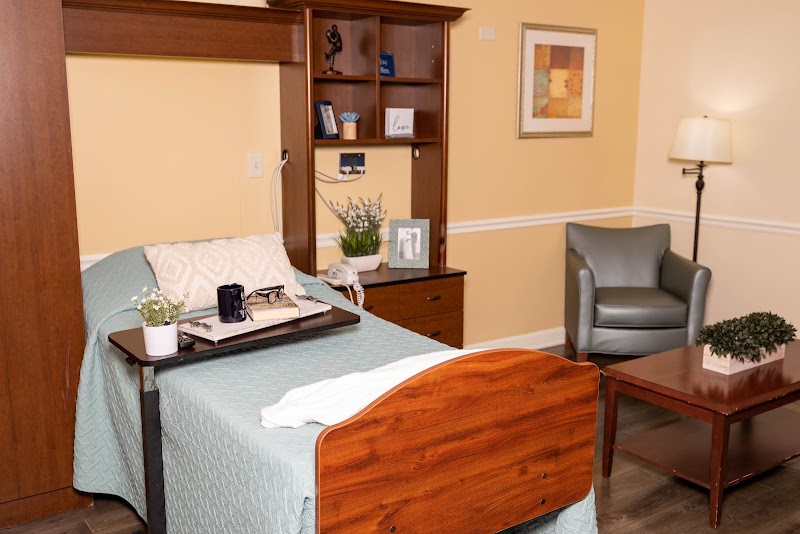
How is Meadowbrook Manor - Naperville Staffed?

CMS rates MEADOWBROOK MANOR - NAPERVILLE's staffing level at 2 out of 5 stars, which is below average compared to other nursing homes. Staff turnover is 48%, compared to the Illinois average of 46%.

What Have Inspectors Found at Meadowbrook Manor - Naperville?

State health inspectors documented 58 deficiencies at MEADOWBROOK MANOR - NAPERVILLE during 2022 to 2025. These included: 1 Immediate Jeopardy (the most serious level, indicating potential for serious harm or death), 5 that caused actual resident harm, and 52 with potential for harm. Immediate Jeopardy findings are rare and represent the most serious regulatory concerns. They require immediate corrective action.
Who Owns and Operates Meadowbrook Manor - Naperville?

MEADOWBROOK MANOR - NAPERVILLE is owned by a for-profit company. For-profit facilities operate as businesses with obligations to shareholders or private owners. The facility operates independently rather than as part of a larger chain. With 249 certified beds and approximately 209 residents (about 84% occupancy), it is a large facility located in NAPERVILLE, Illinois.
How Does Meadowbrook Manor - Naperville Compare to Other Illinois Nursing Homes?

Compared to the 100 nursing homes in Illinois, MEADOWBROOK MANOR - NAPERVILLE's overall rating (1 stars) is below the state average of 2.5, staff turnover (48%) is near the state average of 46%, and health inspection rating (2 stars) is below the national benchmark.

What Should Families Ask When Visiting Meadowbrook Manor - Naperville?

Based on this facility's data, families visiting should ask: "What changes have been made since the serious inspection findings, and how are you preventing similar issues?" "Can you walk me through typical staffing levels on day, evening, and night shifts?" "Can I visit during a mealtime to observe dining assistance and food quality?" "How do you handle medical emergencies, and what is your hospital transfer rate?" These questions are particularly relevant given the facility's Immediate Jeopardy citations and the below-average staffing rating.

Is Meadowbrook Manor - Naperville Safe?

Based on CMS inspection data, MEADOWBROOK MANOR - NAPERVILLE has documented safety concerns. Inspectors have issued 1 Immediate Jeopardy citation (the most serious violation level indicating risk of serious injury or death). The facility has a 1-star overall rating and ranks #100 of 100 nursing homes in Illinois. Families considering this facility should ask detailed questions about what corrective actions have been taken since these incidents.

Do Nurses at Meadowbrook Manor - Naperville Stick Around?

MEADOWBROOK MANOR - NAPERVILLE has a staff turnover rate of 48%, which is about average for Illinois nursing homes (state average: 46%). Moderate turnover is common in nursing homes, but families should still ask about staff tenure and how the facility maintains care continuity when employees leave.

Was Meadowbrook Manor - Naperville Ever Fined?

MEADOWBROOK MANOR - NAPERVILLE has been fined $234,465 across 4 penalty actions. This is 6.6x the Illinois average of $35,424. Fines at this level are uncommon and typically indicate a pattern of serious deficiencies, repeated violations, or failure to correct problems promptly. CMS reserves penalties of this magnitude for facilities that pose significant, documented risk to resident health or safety. Families should request specific documentation of what issues led to these fines and what systemic changes have been implemented.

Is Meadowbrook Manor - Naperville on Any Federal Watch List?

MEADOWBROOK MANOR - NAPERVILLE is not on any federal watch list. The most significant is the Special Focus Facility (SFF) program, which identifies the bottom 1% of nursing homes nationally based on persistent, serious quality problems. Not being on this list means the facility has avoided the pattern of deficiencies that triggers enhanced federal oversight. This is a positive indicator, though families should still review the facility's inspection history directly.