PEARL OF NAPERVILLE, THE
200 MARTIN AVENUE, NAPERVILLE, IL 60540 (630) 355-4111
For profit - Limited Liability company 115 Beds PEARL HEALTHCARE Data: November 2025
Trust Grade
20/100
#392 of 665 in IL
Last Inspection: September 2024

Within standard 12-15 month inspection cycle. Federal law requires annual inspections.

Overview

Pearl of Naperville has a Trust Grade of F, indicating significant concerns and a poor overall standing in care quality. It ranks #392 out of 665 facilities in Illinois, placing it in the bottom half, and #29 out of 38 in Du Page County, suggesting limited local options for better care. The facility shows an improving trend, with issues decreasing from 20 in 2024 to 7 in 2025, which is a positive sign. Staffing is rated at 2 out of 5 stars, with a turnover rate of 55%, which is average for Illinois, indicating that while staff do stay, there is room for improvement in consistency. Notably, there have been serious incidents, including a failure to protect a resident from sexual abuse and a lack of medication for fecal impaction, which resulted in distress for the resident. Overall, while there are strengths in RN coverage, there are critical weaknesses that families should carefully consider.

Trust Score
F
20/100
In Illinois
#392/665
Bottom 42%
Safety Record
High Risk
Review needed
Inspections
Getting Better
20 → 7 violations
Staff Stability
⚠ Watch
55% turnover. Above average. Higher turnover means staff may not know residents' routines.
Penalties
✓ Good
No fines on record. Clean compliance history, better than most Illinois facilities.
Skilled Nurses
✓ Good
Each resident gets 62 minutes of Registered Nurse (RN) attention daily — more than 97% of Illinois nursing homes. RNs are the most trained staff who catch health problems before they become serious.
Violations
⚠ Watch
51 deficiencies on record. Higher than average. Multiple issues found across inspections.
★★☆☆☆
2.0
Overall Rating
★★☆☆☆
2.0
Staff Levels
★★★☆☆
3.0
Care Quality
★★☆☆☆
2.0
Inspection Score
Stable
2024: 20 issues
2025: 7 issues

The Good

  • Full Sprinkler Coverage · Fire safety systems throughout facility
  • No fines on record

Facility shows strength in fire safety.

The Bad

2-Star Overall Rating

Below Illinois average (2.5)

Below average - review inspection findings carefully

Staff Turnover: 55%

Near Illinois avg (46%)

Frequent staff changes - ask about care continuity

Chain: PEARL HEALTHCARE

Part of a multi-facility chain

Ask about local staffing decisions and management

Staff turnover is elevated (55%)

7 points above Illinois average of 48%

The Ugly 51 deficiencies on record

2 actual harm
Apr 2025 1 deficiency
CONCERN (F) 📢 Someone Reported This

A family member, employee, or ombudsman was alarmed enough to file a formal complaint

Potential for Harm - no one hurt, but risky conditions existed

Safe Environment (Tag F0584)

Could have caused harm · This affected most or all residents

**NOTE- TERMS IN BRACKETS HAVE BEEN EDITED TO PROTECT CONFIDENTIALITY** Based on observation, interview, and record review, the facility failed to ensure resident rooms and hallways were adequately cl...

Read full inspector narrative →
**NOTE- TERMS IN BRACKETS HAVE BEEN EDITED TO PROTECT CONFIDENTIALITY** Based on observation, interview, and record review, the facility failed to ensure resident rooms and hallways were adequately cleaned and free of debris and urine odors, and failed to follow the facility's policy to deep clean each resident room at least once every quarter. This applies to all 79 residents residing in the facility. The findings include: The Facility Data Sheet, dated April 21, 2025, shows 79 residents reside in the facility. 1. On April 21, 2025 at 10:03 AM, upon entrance to the facility and while walking in the resident hallways, a strong urine odor was present throughout the facility. The white/light gray tiled section of the hallway near R8 and R9's room, in front of the nurse's station, appeared dirty with multiple black/brown marks and smudges. Multiple trash receptacles and soiled linen receptacles in the hallway where R8 and R9 reside were full, and some old meal trays were sitting on top of the trash receptacles. 2. The EMR (Electronic Medical Record) shows R1 was admitted to the facility on [DATE] with multiple diagnoses including, dementia, hypertension, insomnia, adult failure to thrive, falls, lack of coordination, and difficulty walking. R1's MDS (Minimum Data Set), dated March 21, 2025, shows R1 is rarely/never understood, has moderate cognitive impairment, requires setup assistance with eating and personal hygiene, and supervision with all other ADLs (Activities of Daily Living). R1 is always incontinent of bowel and bladder. On April 21, 2025 at 10:24 AM, R1 was sitting up in a wheelchair in her room. R1 was unable to answer questions regarding the condition of her room. On the floor near R1's bed was a piece of dark brown wood, possibly from the headboard of R1's bed. Also, on the floor near R1, was a piece of plexiglass, approximately 18 to 24 inches long by 4 inches wide. The plexiglass appeared to be from an overhead lighting fixture. Multiple wadded up paper towels, medication cups, and food debris was strewn on the floor near R1. On April 21, 2025 at 1:31 PM, R1 was transferring herself from her wheelchair to her bed without staff present to assist her. Copious amounts of food debris, including dark brown food crumbs littered the floor around R1's wheelchair and the seat of R1's wheelchair. Multiple clear, plastic food wrappers were strewn around R1's bed and wheelchair. 3. The EMR shows R3 was admitted to the facility on [DATE]. R3 has multiple diagnoses including, atrial fibrillation, anemia, PVD (Peripheral Vascular Disease), congestive heart failure, lymphedema, cardiac arrhythmia, muscle wasting and atrophy, difficulty walking, lack of coordination, repeated falls, and overactive bladder. R3's MDS, dated [DATE], shows R3 has severe cognitive impairment, requires setup assistance with eating, partial/moderate assistance with oral and personal hygiene, and substantial/maximal assistance with all other ADLs. R3 is frequently incontinent of bowel and bladder On April 21, 2025 at 10:33 AM, R3 was sitting up in her wheelchair in the hallway just outside of her room. The floor in the hallway just outside of R3's doorway was filled with clutter, including the support legs from another resident's wheelchair, paper wrappers from drinking straws, full trash bins, and crumpled paper towels. The hallway floor appeared dirty and smudged with a black substance. Food debris was present on the floor. No housekeeping staff were observed sweeping or mopping the hallway floor. R3 pointed inside her room doorway and said her bed was located nearest to the door. Just inside R3's doorway, next to R3's bed on the floor, was a whole banana with a completely black banana peel, multiple foil-wrapped candies, and an empty plastic drinking cup, turned on its side, as well as food debris. R3 said, Oh, if I leave my room, someone will come in here and clean it up sometime today. 4. The EMR shows R4 was admitted to the facility on [DATE], with multiple diagnoses including wedge compression fracture of T11-T12 vertebra, cirrhosis of the liver, schizoaffective disorder, dementia, gallbladder disease, psychosis, and history of falling. R4's MDS dated [DATE], shows R4 is rarely/never understood, has moderate cognitive impairment, requires setup assistance with eating, partial/moderate assistance with oral and personal hygiene, substantial/maximal assistance with toilet hygiene, showering, and lower body dressing, and dependent on facility staff for bed mobility, and transfers between surfaces. R4 is frequently incontinent of urine, and always incontinent of stool. R4's care plan for potential for falls, initiated on November 9, 2024, shows multiple interventions, including, rooms and hallways should be clutter-free. Floors and surfaces should be clean and dry. On April 21, at 10:25 AM, R4 was walking in the hallway outside of her room. R4 had multiple bed blankets stacked up on her walker as she was walking towards her room. There was debris on the floor in the hallway outside of R4's room, which R4 had to step over to walk into her room, including a crumpled brown paper towel, multiple small medication cups, a torn plastic bag, and copious amounts of a crumbled dark black substance, which appeared like dried, caked mud from the bottom of someone's shoes. Once R4 entered her room, she took the blankets she was carrying on her walker and placed the folded blankets on almost every surface in her room, including the heating/air conditioning unit on the wall. The garbage can in R4's room was overflowing, and small medication cups were littered on the floor of her room next to the garbage can. 5. On April 21, 2025 at 2:15 PM, R5 said she is the Resident Council President, and has resided at the facility for many years. R5's room had a lot of personal clutter from the many personal items R5 preferred to keep in her room. R5's floor had debris on the floor and appeared to need sweeping. R5 said, There used to be a great housekeeper here named (V13). I don't think she works here anymore. Since she left, my room has not been kept clean. I really miss her. 6. On April 21, 2025 at 12:52 PM, the floor in R6's room had a large area, approximately six to eight feet in diameter of a dark brown, crumbled food item. R6 was not in the room at the time. R6's half-eaten lunch meal tray had a few pieces of chocolate brownie remaining on the tray. 7. On April 21, 2025 at 10:23 AM, R7 was lying in bed in his room. R7 was lying directly on the low air loss mattress. No sheets were on the bed. Three white sheets were crumpled in [NAME] on the floor of his room and food debris was on the floor. On April 21, 2025 at 1:08 PM, V3 (Housekeeping Director) said, Most of the residents eat in their rooms. There are 52 rooms in the facility. After each meal, the housekeeping staff has to go to each resident room to sweep. We have three housekeepers here right now to clean the resident rooms, and a person to clean the hallways, and help me with maintenance. We clean/buff the hallway floors two times a month. It was done three weeks ago. We do a deep clean of one room per week. On April 21, 2025 at 1:35 PM, V10 (Housekeeper) said she was responsible for cleaning resident rooms only, and was not assigned to clean resident hallways. On April 22, 2025 at 10:53 AM, V1 (Administrator) and V3 (Housekeeping Director) said the facility does a deep cleaning of one resident room per week, so each room gets deep cleaned one time per year. V3 corrected his previous statement and said the facility has 56 resident rooms, not 52 as stated on April 21, 2025. V1 (Administrator) said the facility does not have documentation to show each resident room is deep cleaned at least quarterly as shown in the facility's policy. V3 continued to say the facility has one person assigned to clean the hallways and empty hallway trash receptacles, another person to clean the public restroom, showers, internet café area, and dining room, and assist with maintenance, and a total of three housekeepers, each assigned to one of the three resident hallways. The housekeepers assigned to a block of rooms in a resident hallway are responsible to clean inside the resident rooms, including sweeping the floors in those resident rooms. V3 said the staff member (V11) assigned to clean the hallway floors did not work on April 20 or 21, 2025. V12 (Housekeeper) was expected to clean the hallway floors as well as his other duties of picking up hallway trash, cleaning the public restroom, showers, internet café area, and dining room. V1 (Administrator) said V13 (Housekeeper) has taken a medical leave and only works at the facility sporadically. The facility does not have documentation to show monthly cleaning schedules for quarterly deep cleaning of each resident room. The facility does not have documentation to show the use of audit tools to ensure compliance with the facility policy. The facility's policy entitled Physical Environment, adopted 07/11/2018, shows, Policy: Residents are provided with a safe, clean, comfortable and homelike environment and encouraged to use their personal belongings to the extent possible. Procedures: 1. Routine Deep Cleaning: A. Each resident room will be deep cleaned at least once every quarter. B. A cleaning schedule shall be developed at the beginning of each month by the Housekeeping Supervisor. C. Schedule considerations include room occupancy, resident needs, and staff availability.10. Post-Cleaning Procedures: .C. Document the completion of cleaning, including the date, time, and staff involved in the housekeeping log.12. Training and Accountability: A. All housekeeping staff shall receive training on deep cleaning procedures and infection control practices. B. The Housekeeping Supervisor will conduct regular audits to ensure compliance with the policy .
Mar 2025 1 deficiency
CONCERN (D) 📢 Someone Reported This

A family member, employee, or ombudsman was alarmed enough to file a formal complaint

Potential for Harm - no one hurt, but risky conditions existed

Pharmacy Services (Tag F0755)

Could have caused harm · This affected 1 resident

**NOTE- TERMS IN BRACKETS HAVE BEEN EDITED TO PROTECT CONFIDENTIALITY** Based on interview and record review, the facility failed to ensure prescribed medications were available and administered in ac...

Read full inspector narrative →
**NOTE- TERMS IN BRACKETS HAVE BEEN EDITED TO PROTECT CONFIDENTIALITY** Based on interview and record review, the facility failed to ensure prescribed medications were available and administered in accordance with facility policy. This applies to 1 of 3 residents (R3) reviewed for medication administration in the sample of 9. The findings include: The EMR (Electronic Medical Record) showed R3 was admitted to the facility on [DATE], with multiple diagnoses including interstitial pulmonary disease, pulmonary fibrosis, polymyositis organ involvement unspecified, fracture of unspecified tarsal bones right foot, dysphagia, heart failure unspecified, difficulty walking, unspecified glaucoma, and essential hypertension. R3's MDS (Minimum Data Set), dated February 19, 2025, showed R3 was cognitively intact, and required assistance with ADLs including set up assistance with eating and oral hygiene, supervision with bed mobility side to side, partial assistance with upper body dressing, personal hygiene, substantial assistance with bathing, sitting up in bed, and dependent on staff for lower body dressing, toileting, and transfer. R3's physician order summary showed Mycophenolate Mofetil 500 mg. oral tablet give 3 tablets, 1500 mg every 12 hours ordered February 15, 2025. Dorzolamide HCl ophthalmic solution 2% instill 1 drop in left eye 3 times a day was ordered on February 15, 2025. Pantoprazole sodium delayed release 40 mg two times a day, give first dose at 6:00 AM, was ordered on February 16, 2025. R3's February 2025 EMAR (Electronic Medication Administration Record) showed Pantoprazole sodium extended release 40 mg was not documented as administered on February 21, and February 28, the 06:00 AM doses. R3's March 2025 EMAR showed Dorzolamide HCL ophthalmic solution 2% was not documented as administered because it was unavailable, on March 1st, 2025, at 9:00 PM, and March 2, 2025, at 9:00 AM dose and 5:00 PM. Mycophenolate mofetil 500 mg was not documented as administered because it was unavailable on March 2, 2025, at 9:00 AM. On March 1, 2025, at 12:38 PM, R3 expressed frustration regarding not receiving her medications as prescribed while in the facility. R3 stated she is well aware of what medications she takes, and stated she knows what medication to take and when to take it, because she took her medications herself when at home. R3 stated the facility runs out of her medication, even though she provides some of the medication she takes from home supply, and stated the staff have brought her the wrong medication and feels staff get upset with her when she won't take the medication being offered her because she knows the medication is not right. On March 2, 2025, at 6:20 PM, a medication cart audit was completed with V16 (Licensed Practical Nurse/LPN) to ensure medication ordered was available to be administered. R3's medication supply was missing 2 ordered medications, Dorzolamide HCL ophthalmic solution 2% and Mycophenolate mofetil 500 mg (milligrams), dose 1500 mg. V16 stated she did not administer either medication at the scheduled 9:00 AM dose, because the medication was not available. V16 also stated R3 told her this morning she did not receive her Mycophenolate mofetil last evening because the medication was not available. The facility's policy titled Medication Administration, dated April 18, 2024, showed, Guideline .14. Document as each medication is prepared on the MAR .18. If medication is not given as ordered document the reason on the MAR .19. If the medication is given at a different time, update the MAR to reflect administration time .21. If medication error is identified, notify MD/NP .24. If medication is ordered but not present, check to see if it was misplaced and then call the pharmacy to obtain the medication .
Feb 2025 1 deficiency
CONCERN (E) 📢 Someone Reported This

A family member, employee, or ombudsman was alarmed enough to file a formal complaint

Potential for Harm - no one hurt, but risky conditions existed

Deficiency F0558 (Tag F0558)

Could have caused harm · This affected multiple residents

**NOTE- TERMS IN BRACKETS HAVE BEEN EDITED TO PROTECT CONFIDENTIALITY** Based on observation, interview, and record review, the facility failed to ensure call lights were within reach for 5 of 8 resid...

Read full inspector narrative →
**NOTE- TERMS IN BRACKETS HAVE BEEN EDITED TO PROTECT CONFIDENTIALITY** Based on observation, interview, and record review, the facility failed to ensure call lights were within reach for 5 of 8 residents (R2-R6) reviewed for call lights. Findings include: 1) On 02/05/25 at 11:10 AM, R2 was in her bed. R2's call light was not visible, and R2 said she hadn't had a call light for at least a couple of months. R2 said she gets help when they make rounds, and having a call light for emergencies would be helpful. R2 confirmed knowing the function of call light and having the ability to use it appropriately. V4 (Director of Maintenance) and V5(Registered Nurse) witnessed R2 not having the working call light access. R2's EMR (Electronic Medical Records) showed R2 is a [AGE] year-old female, with diagnoses including diabetes, restless leg syndrome, spinal stenosis, intraverbal disc degeneration with back pain, and hypertensive cardiac diseases. R2's MDS (Minimum Data Set), dated 11/09/2024, showed R2 is cognitively intact and requires one person's assistance for activities of daily living. R2's Current care plan, dated 11/05/2024, showed R2 is a fall risk potential resident with a fall event on 11/08/2024, and intervention included the call light to be within reach of the resident. 2) On 02/05/2025 at 11:45 AM, R4 was in her bed. R4 did not have a call light, and R4 said she hadn't had one for a long time. R4 and R4's roommate said this problem is not new. R4 confirmed knowing the call light's function and ability to use it appropriately. V8 (Certified Nursing Assistant) said R4 had her call light within reach earlier, and she might have dropped it. V8 was asked to show the call light, and she was unable to show one. R4's EMR (Electronic Medical Records) showed R4 is a [AGE] year-old female, with diagnoses including diabetes type 2, hemiplegia, pathological fracture, and hypertension. R4's MDS (Minimum Data Set), dated 11/05/2024, showed that R4 is cognitively intact and requires supervision of one person's assistance for activities of daily living. R4's Current care plan, dated 02/01/2025, showed R4 is a potential fall risk resident due to hemiplegia and hemiparesis with a fall event on 10/12/2024, and intervention included the call light to be within reach of the resident. 3) On 02/05/2025 at 12:00PM, R3 was in the dining room, ambulating with a walker, said she is a roommate of R2, and they don't have call light access. R3 said when R2 (Roommate) had a fall, she had to come out of her room and scream for help. R3 said it has been reported, and nothing has been done yet. R3 confirmed knowing the function of the call light and being able to use it appropriately. R3 said if there are any emergencies that would be a problem. V4 (Director of Maintenance) witnessed not having the working call light for R3. R3's EMR (Electronic Medical Records) showed R3 is a [AGE] year-old female, with diagnoses including pain in both legs, abnormality of gait, cellulitis of left limb, history of falls, and hypertension. R3's MDS (Minimum Data Set), dated 02/28/2024, showed R3 is cognitively moderately intact and requires the supervision of one staff assistance for daily living activities. R3's current care plan, dated 12/20/2024, showed R3 is a fall-risk potential resident due to poor balance and unsteady gait. The intervention included the call light being within reach of the resident. 4) On 02/05/2025 at 12:27 PM, R5's call light was on the floor by the head end of R5's bedside. R5 was asked where R5's call light was, and how R5 called for help. R5 said, I don't know what to do, and confirmed knowing the function of the call light and using it appropriately. V2(Director of Nursing), V2(Assistant Director of Nursing), and V5(Registered Nurse) witnessed R5 not having the call light within reach. R5's EMR (Electronic Medical Records) showed R5 is a [AGE] year-old female, with diagnoses including hemiplegia, diabetes, cardiac disease, morbid obesity, and end-stage renal failure dependent on dialysis. R5's MDS (Minimum Data Set), dated 11/245/2024, showed R5 is cognitively intact and two persons maximum assistance for activities of daily living, including mobility and transfer. R5's care plan, dated 01/082024, showed R5 is a potential fall risk resident due to incontinence and muscle weakness, and intervention included the call light being within reach of the resident. 5) On 02/05/2025 at 2:00 PM, R6's call light was not visible, and R6 said she didn't know where it was. R6 confirmed knowing the function of the call light and using it appropriately. V5(Registered Nurse) witnessed the call light under the blanket, and not having a call light within reach of R6. R6's EMR (Electronic Medical Records) showed R6 is an [AGE] year-old female, with diagnoses including osteoarthritis, congestive heart failure, high blood pressure with low heart rate, and unsteady gait. R6's MDS (Minimum Data Set), dated 11/27/2024, showed R6 is cognitively moderately intact and one to two persons maximum assistance for activities of daily living, including mobility and transfer. R6's care plan, dated 11/26/2024, showed R6 is a fall risk potential resident with a recent incident dated 12/24/2024, and intervention included the call light being within reach of the resident. During an interview on 02/05/2025, at different times, V2 (Director of Nursing), V3(Assist Director of Nursing), V4 (Director of Maintenance), R5(Registered Nurse), and V8 (Certified Nursing Assistant) all indicated residents should have call light access. A policy titled Call Lights Use, revised on 06/2024, showed residents capable of using call lights appropriately will have call lights accessible at all times. Direct care staff will check these residents during check-and-change rounds and ADL care, and call lights will be checked by the maintenance director and maintained at least monthly and as needed.
Feb 2025 3 deficiencies
CONCERN (D) 📢 Someone Reported This

A family member, employee, or ombudsman was alarmed enough to file a formal complaint

Potential for Harm - no one hurt, but risky conditions existed

Resident Rights (Tag F0550)

Could have caused harm · This affected 1 resident

**NOTE- TERMS IN BRACKETS HAVE BEEN EDITED TO PROTECT CONFIDENTIALITY** Based on interview and record review, the facility failed to provide an environment where residents are treated with dignity and...

Read full inspector narrative →
**NOTE- TERMS IN BRACKETS HAVE BEEN EDITED TO PROTECT CONFIDENTIALITY** Based on interview and record review, the facility failed to provide an environment where residents are treated with dignity and respect and requests for care are honored. This applies to 2 of 3 residents (R1 and R3) reviewed for ADLs (Activities of Daily Living) in the sample of 6. The findings include: 1). The EMR (Electronic Medical Record) showed R1 was admitted to the facility on [DATE], with multiple diagnosis including ALS (Amyotrophic Lateral Sclerosis), ulcerative colitis, juvenile myoclonic epilepsy, benign prostatic hyperplasia without lower urinary tract symptoms, generalized anxiety disorder, and essential hypertension. R1's MDS (Minimum Data Set), dated January 1, 2025, showed R1 was cognitively intact and required assistance with ADLs partial assistance with eating, upper body dressing, and personal hygiene, substantial assistance with lower body dressing, bathing, tub transfer and toileting and dependent on staff for bed mobility and transfer. The mobility device is listed as a wheelchair. On February 1, 2025, at 12:26 PM, R1 stated he used to get around the facility in his electric wheelchair, but he has not gotten out of bed into his chair since October 31, 2024. R1 stated he is tired of just lying in the bed and only gets out of bed by a gurney to go to medical appointments. R1's electric wheelchair was sitting in his room. R1 stated it is more difficult for him now to manage the control on the wheelchair, but he is still capable of sitting in his chair and staff could assist him to maneuver the wheelchair until his rehabilitation clinic provided an adaptation to the control. R1 also expressed frustration that staff don't even offer to assist him to get out of bed. R1 stated none of his health care providers have told him he could not get out of bed. R1 also stated last Sunday early morning around 6:00 AM, V8 (Certified Nursing Assistant/CNA) and V9 (CNA orientee) provided incontinence care to R1. R1 stated he told them he did not feel clean. R1 stated V8 told him their shift was over and they had to leave, leaving R1 soiled. R1 also complained R2 closed his door during the night shift on January 23, 2025, and he waited a long time for his call light to be answered because R1 wasn't sure if the call light was working. R1 had an adaptive call light that activates when R1 touches the pad with his head. R1 stated he reported to V11 (CNA) and V13 (CNA) while they provided care to him during the evening shift on January 24, 2025. The staff schedule showed V8 was assigned to R1 during the overnight shift January 25, 2025, and V9 was also working that shift. The staff schedule showed V11 was assigned to R1 on the evening shift of January 24, 2025. On January 31, 2025, at 4:34 PM, V11 stated while he and V13 were providing care, R1 reported R2 closed the door to his room during the previous night shift. V11 stated R1 was really upset he was left behind a closed door, and was anxious while telling V11 about it. On February 1, 2025, at 10:58 AM, V13 stated she did assist V11 with R1's care on January 24, 2025, during the evening shift, and R1 did report R2 had closed the door on R1 during the previous overnight shift. On February 1, 2025, at 12:16 PM, R2 stated he did close R1's door during the overnight shift on January 23, 2025. R2 stated he closed R1's door because he was yelling for the staff to come and help him. Review of R1's current physician order summary showed R1 did not have an order for bedrest. R1's orders showed R1 was able to go out on pass with supervision and medications. R1's medical record contained an after-visit summary from the rehabilitation outpatient clinic dated December 3, 2024, that showed R1 needed an appointment to be scheduled at the clinic for a wheelchair evaluation and adjustment of the controller. The facility did not provide documentation the appointment was scheduled when requested. On February 1, 2025, at 3:37 PM, in response to the request for the scheduling of the wheelchair clinic appointment, V1 stated the facility's maintenance staff repaired R1's wheelchair. V18 (Maintenance Director) explained he repaired R1's wheelchair. V18 stated R1's wheelchair is in good repair and able to be used. V18 stated there is also an alternative wheelchair with supportive seating available for use already in the facility that R1 could use. V18 stated he used to see R1 out of bed and going all around the facility and that made R1 happy. V18 stated he has not seen R1 out of bed for months. 2). R3's EMR showed R3 was admitted to the facility on [DATE], with multiple diagnoses including asthma, heart failure, type 2 diabetes, obesity (severe), autonomic neuropathy in diseases classified elsewhere, primary osteoarthritis of both right and left knees, and acquired absence of kidney. R3's MDS, dated [DATE], showed R3 was cognitively intact and required assistance with ADLs including set up assistance with eating, oral hygiene, and personal hygiene, supervision with upper body dressing, substantial assistance with dressing, and dependent on staff for toileting, bathing, bed mobility and transfer. On January 31, 2025, at 1:24 PM, R3 identified herself as the Resident Council President. R3 stated she does not like to complain because she does not want staff to be mad at her. R3 stated because she is the Resident Council President, other residents come and complain to her regarding care. R3 was unable to provide specific dates or times of recent complaints from residents. R3 stated she was upset recently regarding not being provided incontinence care when she needed it, and not being provided with a shower and getting her hair washed for over a week. R3 stated on the evening and night shift beginning on January 29, 2025, R3 asked V14 (CNA) to provide her with incontinence care after her zoom meeting call ended at 8:30 PM. R3 stated at 9:00 PM, she put on her call light to request assistance with incontinence care, but no staff came, and V14 did not return to R3's room. R3 stated V15 (CNA) came to her room around 10:00 PM, and R3 asked V15 to change her. R3 stated V15 did not change R3 until 5:30 AM on January 30, 2025. R3 stated V15 told her she would not change her at the beginning of her shift because she would not do the work the second shift was supposed to do. V15 declined to be interviewed during this investigation. On February 1, 2025, at 1:58 PM, V1 (Administrator) stated staff should be treating residents as if they are family members, with respect. The facility's policy titled Activities of Daily Living: dated October 22, 2024, showed Policy Statement: Facility ensures that residents receive ADL assistance and maintains the resident's safety and dignity .Procedures 6. Assist the resident to be clean, neat and well groomed . 8. Resident will be up out of bed dressed as per the resident's choice.13. Patient Dignity will always be maintained.
CONCERN (E) 📢 Someone Reported This

A family member, employee, or ombudsman was alarmed enough to file a formal complaint

Potential for Harm - no one hurt, but risky conditions existed

ADL Care (Tag F0677)

Could have caused harm · This affected multiple residents

**NOTE- TERMS IN BRACKETS HAVE BEEN EDITED TO PROTECT CONFIDENTIALITY** Based on observation, interview, and record review, the facility failed to provide assistance to residents with ADLs (Activities...

Read full inspector narrative →
**NOTE- TERMS IN BRACKETS HAVE BEEN EDITED TO PROTECT CONFIDENTIALITY** Based on observation, interview, and record review, the facility failed to provide assistance to residents with ADLs (Activities of Daily Living), specifically incontinence care and bathing, in accordance with resident needs and as outlined in their policy. This applies to 4 of 4 residents (R1, R3, R5 and R6) reviewed for ADL care in the sample of 6. The findings include: 1). R6's EMR (Electronic Medical Record) showed R6 was admitted to the facility on [DATE], with multiple diagnoses including encounter for orthopedic after care following surgical amputation, type 2 diabetes with foot ulcer, acquired absence of left above knee, peripheral vascular disease, obstructive sleep apnea, and other disorders of the nervous system. R6's MDS (Minimum Data Set), dated January 6, 2025, showed R6 was cognitively intact and required assistance with ADLs including set up assistance with eating, and oral hygiene, supervision with personal hygiene, substantial assistance with bathing, and dependent on staff with lower body dressing, toileting, bed mobility, and transfer. On January 31, 2025, at 3:26 PM, V17 (Certified Nursing Assistant/CNA) was observed giving incontinence care to R6. R6's brief was saturated; the indicator lines had disappeared from the brief indicating excessive wetness. V17 validated R6's brief was saturated. R6's perianal and posterior upper left thigh skin was pink under white cream. R6 stated the area under his left upper posterior thigh felt like it was burning. R6 stated he had not been changed since earlier that morning. R6 also stated he did not get the shower that was scheduled for that day during the AM shift. R6 stated the CNA on the day shift told R6 he would be getting a shower that day, and then came back around 1:30 PM and told R6 the scheduled had been changed, and R6 would not be getting his shower as scheduled. V17 was asked how showers are documented as given. V17 stated showers are documented in the POC (Point of Care) task in PCC (Point Click Care), the EMR software. On February 1, 2025, at 1:58 PM, V2 (Director of Nursing/DON) stated she was not aware of any schedule or assignment change on January 31, 2025, day/AM shift. V2 stated if a shower is missed as scheduled, it should be done on the next shift. The POC task documentation showed R6 did not receive a shower on Friday January 31, 2025. The facility's shower schedule, dated December 6, 2024, showed R6 was scheduled for a shower on Friday AM shift and Tuesday PM shift each week. 2). R1's EMR showed R1 was admitted to the facility on [DATE], with multiple diagnoses including ALS (Amyotrophic Lateral Sclerosis), ulcerative colitis, juvenile myoclonic epilepsy, benign prostatic hyperplasia without lower urinary tract symptoms, generalized anxiety disorder, and essential hypertension. R1's MDS, dated [DATE], showed R1 was cognitively intact and required assistance with ADLs partial assistance with eating, upper body dressing, and personal hygiene, substantial assistance with lower body dressing, bathing, tub transfer and toileting and dependent on staff for bed mobility and transfer. On February 1, 2025, at 12:26 PM, R1 stated he had not been getting his showers as scheduled, especially in early January. R1 stated he prefers a shower to a bed bath, and has his own sling for the full mechanical lift device used to transfer R1 to the shower gurney. R1 stated he does not feel clean after a bed bath, and has not had a shower, only a bed bath offered to him. R1's bathing POC documentation January 2025, showed R1 did not receive a shower until January 9, 2025, and the next documented shower was January 20, 2025. The facility's shower schedule, dated December 6, 2024, showed R1 was scheduled to receive showers on Monday AM shift and Thursday PM shift each week. 3). R5's EMR showed R5 was admitted to the facility on [DATE], with multiple diagnoses including acute kidney failure, unspecified, type 2 diabetes with diabetic polyneuropathy, unspecified asthma, mild protein calorie malnutrition, obstructive and reflux uropathy, and adult failure to thrive. R5's MDS, dated [DATE]. 2024, showed R5 was cognitively intact and required assistance with ADLs including set up assistance with eating, and oral hygiene, partial assistance with personal hygiene, substantial assistance with toileting, bathing, dressing, and bed mobility, dependent on staff for transfer. On January 31, 2025, at 3:11 PM, R5 stated she does not get the assistance she needs with showers. R5 stated she does not get a shower when scheduled. R5's POC documentation for the past 30 days for showers, showed R5 received one shower on January 14, 2025. Not applicable is documented on January 4, 2025 and January 19, 2025. There is no documentation regarding showers after January 21, 2025. According to the facility shower schedule, dated December 6, 2024, R5 is scheduled for a shower on Saturday AM shift and Tuesday PM shift. 4). R3's EMR showed R3 was admitted to the facility on [DATE], with multiple diagnoses including asthma, heart failure, type 2 diabetes, obesity (severe), autonomic neuropathy in diseases classified elsewhere, primary osteoarthritis of both right and left knees, and acquired absence of kidney. R3's MDS, dated [DATE], showed R3 was cognitively intact and required assistance with ADLs including set up assistance with eating, oral hygiene, and personal hygiene, supervision with upper body dressing, substantial assistance with dressing, and dependent on staff for toileting, bathing, bed mobility and transfer. On January 31, 2025, at 1:24 PM, R3 stated she is the Resident Council President. R3 stated she had a concern about incontinence care not being done timely, and not getting a shower and hair washed when scheduled. R3 stated on the evening and night shift beginning on January 29, 2025, R3 asked V14 (CNA) to provide her with incontinence care after her zoom meeting call ended at 8:30 PM. R3 stated at 9:00 PM, she put on her call light to request assistance with incontinence care, but no staff came, and V14 did not return to R3's room. R3 stated V15 (CNA) came to her room around 10:00 PM and R3 asked V15 to change her. R3 stated V15 did not change R3 until 5:30 AM on January 30, 2025. R3 stated she did not get her shower and hair washed last week. R3's POC documentation for showers showed there was no documentation of a shower being given to R3 between January 17 and January 27, 2025. According to the facility shower schedule, dated December 6, 2024, R3 is scheduled for shower on Thursday AM shift and Monday PM shift. The facility's policy titled Activities of Daily Living Support, dated July 24, 2024, showed, Policy statement: Residents who are unable to carry out activities of daily living independently will receive the services necessary to maintain good nutrition, grooming, personal and oral hygiene. 2. Appropriate care and services will be provided for residents who are unable to carry out ADLs .in accordance with the plan of care including assistance with Elimination (Toileting) .Showers/bathing will be provided at least weekly, PRN, and or based on resident preferences .Documentation and Record facility staff will record showers on the shower sheet or POC after showers are given.
CONCERN (E) 📢 Someone Reported This

A family member, employee, or ombudsman was alarmed enough to file a formal complaint

Potential for Harm - no one hurt, but risky conditions existed

Deficiency F0725 (Tag F0725)

Could have caused harm · This affected multiple residents

**NOTE- TERMS IN BRACKETS HAVE BEEN EDITED TO PROTECT CONFIDENTIALITY** Based on interview and record review, the facility failed to provide staff in sufficient quantity to meet the residents' bathing...

Read full inspector narrative →
**NOTE- TERMS IN BRACKETS HAVE BEEN EDITED TO PROTECT CONFIDENTIALITY** Based on interview and record review, the facility failed to provide staff in sufficient quantity to meet the residents' bathing, incontinence, and mobility care needs, and ensure timely answering of call lights during the evening and night shifts. This applies to 4 of 5 residents (R1, R3, R5, R6) reviewed for ADL care in the sample of 6. The findings include: The Facility Data sheet completed by V1 (Administrator), dated January 31, 2025, showed the facility census was 87. The Resident Council Meeting Minutes of November 22, 2024, showed one member requested more staff were needed each shift. The minutes reflect V1's (Administrator) response indicated it was quality of staff not quantity of staff the facility was looking for. On January 31, 2025, at 12:50 PM, V4 (Staff Scheduler) stated the staffing pattern included CNAs (Certified Nursing Assistants) work 8-hour shifts, and Nurses work 12-hour shifts. V4 stated there are 3-4 scheduled CNAs for the overnight shift (10PM-6AM), and 5-6 CNAs scheduled for the evening shift (2PM-10 PM) and 6-7 CNAs scheduled for the day shift (6AM-2:00 PM). Review of the schedules as worked from January 23, through January 31, 2025, showed over the course of 9 days: The CNAs for the evening shift worked with 4 staff on 4 out of 9 days and worked with 5 staff on 5 out of 9 days. During the evening shift, 4 of 9 shifts worked with less than the staffing pattern described by V4. During the overnight shift, 10 PM-6 AM, 5 out of 9 days worked with 3 CNAs, and 4 out of 9 shifts worked with 4 CNAs. Based on the resident census of 87, the CNA ratio of staff to residents on the overnight shift for 4 staff was 1:22 and 3 staff 1:29. 1). R1's MDS (Minimum Data Set), dated January 1, 2025, showed R1 was cognitively intact and required assistance with ADLs partial assistance with eating, upper body dressing, and personal hygiene, substantial assistance with lower body dressing, bathing, tub transfer and toileting and dependent on staff for bed mobility and transfer. The mobility device is listed as a wheelchair. On February 1, 2025, at 12:26 PM, R1 stated he used to get around the facility in his electric wheelchair, but he has not gotten out of bed into his chair since October 31, 2024. R1 stated when he asks staff to get him out of bed, staff tell him it takes too long to get him up and they don't have time. R1 stated his son brings him water and keeps it in R1's bedside refrigerator, and staff appreciate that because when R1 asks for water, the staff don't have to walk so far to bring the water to him. R1 stated he doesn't get showers because staff tell him they don't have time. During the night shift of January 23, 2025, R1 stated he waited an extended period for his call light to be answered and a resident peer closed the door to his room, which made him feel unsafe. On February 1, 2025, at 3:37 PM, V18 (Maintenance Director) stated R1's wheelchair is in good repair and able to be used. V18 stated there is also an alternative wheelchair with supportive seating available for use already in the facility that R1 could use if needed. R1's wheelchair was parked in his room. R1's POC (Point of Care) documentation showed R1 did not receive a shower between January 9, 2025, and January 20, 2025. On February 1, 2025, at 12:15 PM, R2 stated he did close the door to R1's room during the night shift on January 23, 2025. R2 stated he closed R1's door because R1 was yelling for staff to help him. The staffing schedule, dated January 23, 2025, showed there were 3 CNAs working the night shift. 2). R3's MDS, dated [DATE], showed R3 was cognitively intact and required assistance with ADLs including set up assistance with eating, oral hygiene, and personal hygiene, supervision with upper body dressing, substantial assistance with dressing, and dependent on staff for toileting, bathing, bed mobility and transfer. On January 31, 2025, at 1:24 PM, R3 identified herself as the Resident Council President. R3 stated she waited over an hour for her call light to be answered on January 29, 2025. R3 requested V14 to provide incontinence care during the evening shift on January 29, 2025. The schedule dated January 29, 2025, showed V14 worked both the evening and night shift that day. R3 stated she was not provided incontinence care by V14. 3). R5's MDS, dated [DATE]. 2024, showed R5 was cognitively intact and required assistance with ADLs including set up assistance with eating, and oral hygiene, partial assistance with personal hygiene, substantial assistance with toileting, bathing, dressing, and bed mobility, dependent on staff for transfer. On January 31, 2025, at 3:11 PM, R5 stated she does not get the assistance she needs with showers. R5 stated she does not get a shower when scheduled. R5's POC documentation for the past 30 days for showers, showed R5 received one shower on January 14, 2025. According to the facility shower schedule, dated December 6, 2024, R5 is scheduled for a shower on Saturday AM shift and Tuesday PM shift. R5's shower was scheduled to be given on January 25, 2025, on day shift and January 28th PM shift. The staffing assignment sheet for January 25, 2025, day shift showed there were 6 CNAs assigned for that shift. The staff assigned to give R5 a shower had a total of 4 showers assigned to be given. No other staff were assigned to give 4 showers that shift. Of the remaining staff, on that shift, 2 were assigned 1 shower, 2 were assigned 2 showers, and 1 was assigned 3 showers. R5 did not receive a shower that shift. The staffing assignment shift, dated January 28, PM shift, showed there were 5 CNAs assigned to that shift. The staff assigned to give R5 a shower had 4 showers assigned to give that shift. Of the remaining staff, 3 staff had 3 showers assigned to give and 1 staff assigned to 2 showers. The staff assigned to R5 had 17 assigned residents to care for and 4 showers to give. R5 did not receive a shower that shift. 4). R6's MDS (Minimum Data Set), dated January 6, 2025, showed R6 was cognitively intact and required assistance with ADLs including set up assistance with eating, and oral hygiene, supervision with personal hygiene, substantial assistance with bathing, and dependent on staff with lower body dressing, toileting, bed mobility, and transfer. On January 31, 2025, at 3:26 PM, V17 (CNA) was observed giving incontinence care to R6. R6's brief was saturated, as validated by V17. R6 stated he had not been changed since earlier that morning. R6 also stated he was supposed to get a shower that day and did not receive a shower. The staffing assignment sheet, dated January 31, 2025, showed there were 7 CNA staff scheduled for the day shift. The staff assigned to R6 had 13 residents assigned to be cared for and 3 residents assigned to be given showers during that shift. R6 did not receive incontinence care, or a shower as needed that shift. On January 31, 2025, at 4:34 PM, V11 (agency CNA) stated he has been a CNA for 17 years and has worked in different facilities. R1 identified V11 as a CNA who takes good care of him. V11 stated compared to other facilities, the assignments at this facility are hard to give good care, because there are too many residents who need a lot of care assigned to one CNA. V11 stated he has spoken to colleagues who also work for the agency who stated working at the facility is a last choice due to the workload of the assignments. On February 1, 2025, at 10:58 AM, V13 (CNA) stated she works on a PRN (as needed) basis and finds the assignments keep her busy the whole shift and she rarely has time to take a break. V13 stated, at times, there is an inequity in the assignments, especially when it comes to shower assignments, as sometimes staff are assigned to 1 shower while other staff are assigned to 4 on the same shift. The facility policy titled Activities of Daily Living Support, dated July 24, 2024, showed, Policy Statement: Residents who are unable to carry out activities of daily living independently will receive the services necessary to maintain good nutrition, grooming, personal and oral hygiene.2. Appropriate care and services will be provided for residents who are unable to carry out ADLs .including appropriate support and assistance with hygiene (bathing, dressing, grooming) Elimination (toileting). Documentation and Record Facility staff will record showers on the shower sheets and or POC after showers are given.
Jan 2025 1 deficiency
CONCERN (D) 📢 Someone Reported This

A family member, employee, or ombudsman was alarmed enough to file a formal complaint

Potential for Harm - no one hurt, but risky conditions existed

Unnecessary Medications (Tag F0759)

Could have caused harm · This affected 1 resident

**NOTE- TERMS IN BRACKETS HAVE BEEN EDITED TO PROTECT CONFIDENTIALITY** Based on observation, interview, and record review, the facility failed to administer medications as ordered by the physician. T...

Read full inspector narrative →
**NOTE- TERMS IN BRACKETS HAVE BEEN EDITED TO PROTECT CONFIDENTIALITY** Based on observation, interview, and record review, the facility failed to administer medications as ordered by the physician. There were 27 opportunities with 3 medication errors resulting in a 11.11% medication error rate. This applies to 1 of 3 residents (R2) reviewed for medication administration in the sample of 3. The findings include: R2's EMR (Electronic Medical Record) showed R2 was admitted to the facility on [DATE], with multiple diagnoses including chronic kidney disease, pulmonary hypertension, peripheral vascular disease, hypertensive chronic kidney disease, chronic pulmonary embolism, hypertension, and anemia. R2's medication care plan dated December 21, 2022, showed, [R2] is on diuretic therapy. The care plan continued to show multiple interventions dated December 21, 2022, including Administer diuretic medications as ordered by physician. Monitor for side effects and effectiveness every shift. R2's Order Summary Report, dated December 31, 2024, at 11:44 AM, showed an order, dated December 20, 2022, for Spironolactone tablet 25 mg, give 50 mg by mouth one time a day for diuretic. The Report continued to show an order, dated September 4, 2024, for Vitamin D3 tablet 1000 unit, give 1000 unit by mouth one time a day for vitamin D insufficiency. The Report showed an order, dated August 29, 2024, for Lidocaine External patch, apply to left knee are topically one time a day for pain, Lidocaine 4% pain patch to left knee. On December 31, 2024, at 9:40 AM, V4 (RN/Registered Nurse) prepared the following medications for R2: one tablet aspirin 81 mg (milligrams), one tablet docusate 100 mg, two tablets potassium chloride 10 mEq (milliequivalents), one tablet spironolactone 25 mg, one tablet metoprolol 100 mg, one tablet vibegron 75 mg, one tablet vitamin D3 2000 units, one tablet diphenhydramine 25 mg, and one lidocaine patch. V4 said she had nine pills to administer to R2. At 9:50 AM, V4 administered R2's medications. At 9:54 AM, V4 removed a lidocaine patch from R2's left lower back and placed the new patch on R2's left lower back. On December 31, 2024, at 11:33 AM, V2 (DON/Director of Nursing) said it is the expectation for a nurse to ensure the correct medication dose is administered to a resident. V2 continued to say V4 should have administered the correct doses of spironolactone and vitamin D3 to R2. V2 said V4 should have followed physician orders and applied the lidocaine patch to the prescribed area of the left knee. The facility's policy titled Medication Administration, dated August 1, 2024, showed, Policy and Procedure, Subject: Medication Administration, Intent: All medications are administered safely and appropriately to aid residents to overcome illness, relieve and prevent symptoms and help in diagnosis. Level of Responsibility: RN, LPN (Licensed Practical Nurse). Guideline: .5. Check medication administration record prior to administering medication for the right medication, dose, route, patient and time. 6. Read each order entirely. 7. Remove medication from drawer and read label three times; when removing from drawer, before pouring and after pouring .
Nov 2024 1 deficiency 1 Harm
SERIOUS (G) 📢 Someone Reported This

A family member, employee, or ombudsman was alarmed enough to file a formal complaint

Actual Harm - a resident was hurt due to facility failures

Free from Abuse/Neglect (Tag F0600)

A resident was harmed · This affected 1 resident

**NOTE- TERMS IN BRACKETS HAVE BEEN EDITED TO PROTECT CONFIDENTIALITY** Based on observation, interview, and record review, the facility failed to ensure a resident was free from sexual abuse. This re...

Read full inspector narrative →
**NOTE- TERMS IN BRACKETS HAVE BEEN EDITED TO PROTECT CONFIDENTIALITY** Based on observation, interview, and record review, the facility failed to ensure a resident was free from sexual abuse. This resulted in R1 being being afraid and in shock. This applies to 1 of 3 residents (R1) reviewed for abuse in the sample of 3. The findings include: R1's face sheet shows she is a [AGE] year-old female admitted to the facility 8/9/23, with diagnoses including major depressive disorder, unspecified dementia, and frontotemporal neurocognitive disorder. R1's Minimum Data Set assessment dated [DATE] shows she is cognitively intact with a Brief Interview for Mental Status score of 15, with no behaviors of psychosis including hallucinations, delusions, no behavioral symptoms or rejections of cares. The facility's Initial Report, dated 10/21/24, documents R1 alleged housekeeping services V4 (Former Employee/Laundry Aide) exposed himself in an appropriate manner. The Final Report documents R1 alleged V4 entered her room and exposed himself while R1 was sleeping. An interview conducted with V4 stated, I have no answer, I do not know what happened. V4 has been employed at the facility as a laundry aide through a community program PAEP (Parents Alliance Employment Project), which is an organization that assists individuals with mild cognitive deficits to obtain and retain employment. R1's roommate was interviewed, but she was not able to recall any disturbances. V4 has been terminated from the facility. V4's statement, dated 10/21/24 at 3:45 PM, states, I do not know why this happened. I do not have an answer for you. I don't know what to say. On 11/1/24 at 9:51 AM, R1 was observed in her room. She was well groomed, alert to person, time, and place. R1 said she has been at the facility over one year and a couple of months. On 10/21/24, in the afternoon, she was in her room lying down on her side facing the window. She was reading a book and fell asleep. She felt something near her face; she opened her eyes and V4 was standing there with his instrument out. She said she jumped from her bed. V4 left her room and stated, I didn't do anything. R1 ran out of her room and reported the incident to staff who were in the hallway. V4's genitals were fully exposed. R1 stated, I was afraid and in shock. R1 reported to V1 (Administrator) it was V4 who exposed himself to her. They called V4's brother and V1, Administrator, promised me he will never be back here. On 11/1/24 at 10:42 AM, V7 (Admissions Director) said on 10/21/24, she was walking down the hallway with V6 (Regional Director of Admissions), when R1 ran out of her room pointing to V4, and said he was in her room and exposed himself to her. R1 pointed to V4 and said, It was you. V4 said, I didn't do anything; I didn't do anything. R1 looked shocked and was visibly distraught. V7 stated she went to V1's office and reported the incident. On 11/1/24 at 11:13 AM, V6 (Regional Director of Admission) said she was walking down the hall on 10/21/24 with V7. R1 came out of her room and pointed to V4. R1 said V4 pulled out his penis and exposed himself to her. R1 was very upset and shaken up. On 11/1/24 at 10:53 AM, V8 (Maintenance Director) said V4 had been employed at the facility for about three months. He (V4) was hired as a laundry aide, but it did not work out. V8 said V4 had been helping him with maintenance. On 10/21/24, he was working outside with V4. He turned around and V4 was not there; he went inside the building and heard a resident yelling. He did not think of anything because that is common in this setting. He then heard his name paged over head to report to V1's office. (V1) asked me where (V4) was. I told (V1), (V4) was outside with me, but then I could not find (V4). V1 reported to him there was an incident with V4 and R1. V4 was in the laundry room. V8 said he asked V4 what happened. V4 was kind of confused and said, I didn't do anything. V8 said he escorted V4 to V1's office and he remained in the room. V1 asked him what happened, and V4 said he didn't remember. V8 said he reviewed the camera, and it showed V4 entering R1's room, but V4 said he does not remember going into R1's room. (V4) has some special needs, and usually does not go into resident rooms by himself, and I was supposed to be with him. (V4) left without telling me where he was going, and I did not know where he was. (V4) did not have any reason going into (R1's) room. (V4's) brother was notified and picked him up from the facility. On 11/1/24 at 11:26 AM, V3 (Assistant Director of Nursing/ADON) said she talked to R1 after the incident. (R1) told me V4 was a nice guy, but something was wrong with him. She said she was lying down sleeping and woke up with (V4's) genitals out in front of her. (R1) has been at the facility for a while, she is pleasant, she knows me by name and comes to me with concerns. R1 does not have any behaviors and if that's what she said happened, I have to believe her. On 11/1/24 at 11:31 AM, V10 (Social Service Director) said R1 reported to her she was lying down in her bed reading a book and V4 exposed himself to her. She followed him out of the room and reported the incident. R1 is alert and oriented and does not have a history of fabrication. V10 would call this abuse. On 11/1/24 at 11:39 AM, V9 (Certified Nursing Assistant-CNA) said R1 is alert with no behaviors. She lets staff know what she needs. R1 is very alert. On 11/1/24 at 1:12 PM, V1 (Administrator) said he was notified by V6 and V7 regarding the incident. (R1) said she was asleep in her room and (V4) exposed himself and she chased after him out of the room. V1 interviewed V4; he had a flat affect and stated, 'I don't know, I don't remember' repeatedly. This was a tough one, there was two different stories and there was no witness. I don't know what happened. If it did happen, V1 would consider this abuse. (V4) was terminated, out of the best interest of everyone, it was not the right setting for him. At 2:21 PM, V1 said he reviewed the camera, and it showed V4 entering R1's room at the same time of the alleged incident. It shows R1 leaving the room after V4 left her room and reporting the incident to V6 and V7, but V4 denied going into R1's room. The facility's Abuse Prevention Program and Policy states, residents have the right to be from abuse, neglect, exploitation, misappropriation, of property or mistreatment . Abuse means any physical or mental injury or sexual assault inflicted upon a resident other than by accidental means .
Oct 2024 4 deficiencies
CONCERN (D) 📢 Someone Reported This

A family member, employee, or ombudsman was alarmed enough to file a formal complaint

Potential for Harm - no one hurt, but risky conditions existed

Investigate Abuse (Tag F0610)

Could have caused harm · This affected 1 resident

**NOTE- TERMS IN BRACKETS HAVE BEEN EDITED TO PROTECT CONFIDENTIALITY** Based on interview and record review, the facility failed to investigate and report an allegation of potential abuse/neglect. Th...

Read full inspector narrative →
**NOTE- TERMS IN BRACKETS HAVE BEEN EDITED TO PROTECT CONFIDENTIALITY** Based on interview and record review, the facility failed to investigate and report an allegation of potential abuse/neglect. This applies to 1 of 6 residents (R1) reviewed for potential abuse/neglect in the sample of 10. The findings include: The EMR (Electronic Medical Record) showed R1 is a [AGE] year-old with diagnoses of ALS (amyotrophic lateral scoliosis), gastroenteritis, colitis, epilepsy, BPH (benign prostatic hypertrophy), and lack of coordination. R1 was admitted to the facility on [DATE]. The MDS (Minimum Data Set), dated August 24,2024, showed R1 was cognitively intact with BIMS (Brief Interview Mental Status) score of 15/15. The MDS also showed R1 requires substantial assistance from staff for ADL (Activities of Daily Living) including oral care, hygiene, and grooming. On September 30,2024 at 12:36 P.M., R1 stated V9 (CNA, Certified Nurse Assistant from staffing agency) was very rude and had refused to give care when asked. R1 stated this was reported immediately to (V4, ADON/Assistant Director of Nursing) and to (V16, scheduler/MOD/manager on duty) on September 25,2024. V16 said on September 25,2024, sometime during the day shift, R1 had reported to her V9 was rude and refused to help brush R1's teeth. V16 said she made sure V4 was made aware of the complaint from R1. On September 30,2024 at 1:10 P.M., V1 (Administrator) stated he was off for a wee,k including the time R1 had reported the allegation. V1 added V2 (Regional Operation Manager) was the designated designee as the Administrator and Abuse Task Coordinator in V1's absence. V1 added he had not received any report of alleged abuse from V2 when he returned to work. V1 said there was no investigation conducted regarding this allegation from R1. On September 30,2024 at 1:15 P.M., V2 was interviewed, and confirmed she was the designee administrator and abuse task coordinator when V1 was away for a week. V2 also said on September 25, 2024, V2 was the designee as the abuse task coordinator. V2 said she was never informed by any staff including (V4, V3-interim DON and V16) regarding (R1's) allegation. On September 30,2024 at 1:20 P.M., V4 was interviewed via phone with V1 present. V4 said, I remember that (R1) had complained about his nutritional supplement and medications not available and there were no other complaints. I wrote this in the grievance form on September 25,2024. V4 then added she remembered R1 had complained V9 was rude and refused to brush (R1's) teeth. V4 added she reported R1's complaint to V3 and V2, and was advised to document a customer service report. The facility's Abuse policy, dated September 5,2024, showed: NEGLECT .Regardless of the specific nature of the allegation (physical, sexual, verbal/mental abuse, theft, neglect, unreasonable confinement/involuntary seclusion, or exploitation), the investigation shall consist of: -Completion of a written report on the status of the investigation within 24 hours of the occurrence or as soon as possible, but no more than 2 hours. The Facility's undated policy for Abuse showed: Residents have the right to be free from abuse, neglect Neglect is a facility's failure to provide, or willful withholding of adequate personal care or assistance with activities of daily living that is necessary to avoid physical harm, mental anguish and mental illness of a resident .Employees are required to report any allegation of potential abuse, neglect that they observe, hear about, or suspect to the administrator immediately, to an immediate supervisor who must then immediately report it to the administrator. In the absence of the administrator, reporting can be made to an individual who has been designated to act in the administrator's absence.
CONCERN (D) 📢 Someone Reported This

A family member, employee, or ombudsman was alarmed enough to file a formal complaint

Potential for Harm - no one hurt, but risky conditions existed

ADL Care (Tag F0677)

Could have caused harm · This affected 1 resident

**NOTE- TERMS IN BRACKETS HAVE BEEN EDITED TO PROTECT CONFIDENTIALITY** Based on observation, interview, and record review, the facility failed to provide incontinence care to dependent residents. Th...

Read full inspector narrative →
**NOTE- TERMS IN BRACKETS HAVE BEEN EDITED TO PROTECT CONFIDENTIALITY** Based on observation, interview, and record review, the facility failed to provide incontinence care to dependent residents. This applies to 2 of 5 residents (R7 and R10) reviewed for incontinence care in the sample of 10. The Findings include: 1. R7 is an [AGE] year-old, with diagnoses including type 2 diabetes mellitus, osteoarthritis, bipolar disorder, anxiety disorder, dementia, stage 4 kidney disease and adult failure to thrive. R7 was admitted to the facility on [DATE]. R7's MDS (Minimum Data Set), dated March 3, 2024 and September 3, 2024 showed R7's cognition was severely impaired. The MDS showed R7 was dependent from staff for ADL (Activities of Daily Living) including toilet needs and hygiene. R7's care plan, dated September 3, 2024, showed R7 was incontinent of bladder and bowel elimination and requires assistance for toilet needs and hygiene. On September 30,2024, at 11:00 A.M., R7 was sitting in her wheelchair in her room. V7 and V17 (CNAs/Certified Nurse Assistants) assisted R7 to the bathroom. V7 said the last time she changed R7's incontinence brief was around 9: 00 A.M. V17 and V7 did not provide care at this time, due to R7's refusal to rise from the chair. Later, at 2:30PM, V7 and V17 provided care, and R7 was noted to be heavily saturated with urine. R7's pants and clothing were noted to saturated with urine. V7 confirmed no other attempts had been made to provide care to R7 between 11:00AM and 2:30PM. On September 30, 2024 at 4:30 P.M., V10 (LPN/Licensed Practical Nurse/MOD/Manager on Duty on September 21,2024 day shift) said V33 (R7's POA, Power of Attorney for Health Care) had complained on September 21, 2024 when she came in at 11:30 A.M. and saw R7 heavily saturated with urine. V10 said she saw R7's incontinence brief V33 had complained about. V10 said it appeared that the brief was saturated with urine. On October 01,2024 at 10:35 A.M., V11 (LPN, assigned to R7 on September 21,2024 day shift) said V33 came in around 11:30 A.M. on September 21, 2024. V11 said R33 had complained R7 was heavily saturated with urine that was soaked though all the way R7's clothes and bed sheets. V11 said she saw the brief that was heavily saturated with urine. 2. R10, a [AGE] year-old, with diagnoses of Alzheimer's disease, dementia, type 2 diabetes mellitus, stage 4 kidney disease. R10 was admitted to the facility on [DATE]. The MDS, dated [DATE], May 25,2024, and May 25,2023, showed R10's cognition was severely impaired. R10 also requires extensive assistance from staff for ADLs (Activities of Daily Living) including toileting and hygiene. On October 01,2024 at 11:15 A.M., R10 was noted to be in bed. V7 and V26 (Nurse Aide/CNA) were observed providing incontinence to R10. The incontinence briefs that R10's was wearing was heavily saturated with urine, and the brief padding had already coagulated into a gel. V7 and V26 said they have not provided incontinence care to R10 since they came to work at 6:00 A.M. The facility policy for incontinence care, dated October 20,2021, showed: Policy Statement; Our facility will ensure and provide appropriate services and treatment to help residents restore or improve bladder function and prevent urinary tract infections to the extent possible. 12. Incontinence Care a. Incontinence care will be provided by nurse or C.N.A every shift based on incontinence needs of resident. Staff will ensure that incontinence care needs are met. b. Staff will check, and change based on frequency of needs and will keep resident clean and dry.
CONCERN (D) 📢 Someone Reported This

A family member, employee, or ombudsman was alarmed enough to file a formal complaint

Potential for Harm - no one hurt, but risky conditions existed

Deficiency F0692 (Tag F0692)

Could have caused harm · This affected 1 resident

**NOTE- TERMS IN BRACKETS HAVE BEEN EDITED TO PROTECT CONFIDENTIALITY** Based on interview and record review, the facility failed to provide nutritional supplement to prevent weight loss to a resident...

Read full inspector narrative →
**NOTE- TERMS IN BRACKETS HAVE BEEN EDITED TO PROTECT CONFIDENTIALITY** Based on interview and record review, the facility failed to provide nutritional supplement to prevent weight loss to a resident who had history of significant weight loss. This applies to 1 of 3 residents (R1) reviewed for nutritional supplement in the sample of 10. The findings include: The EMR (Electronic Medical Record) showed R1 is a [AGE] year-old with diagnoses of ALS (amyotrophic lateral scoliosis), gastroenteritis, colitis, epilepsy, BPH (benign prostatic hypertrophy), and lack of coordination. R1 was admitted to the facility on [DATE]. The MDS (Minimum Data Set), dated August 24,2024, showed R1 was cognitively intact with BIMS (Brief Interview Mental Status) score of 15/15. The MDS also showed R1 showed no negative behavior including verbal, physical threatening and had not rejected care. The POS (Physician Order Sheet) for the month of September 2024 showed a physician order, dated August 27, 2024, for High Calorie drink two times a day, nursing to give 237 ml-240 ml. with preferred flavor of vanilla or strawberry. The care plan, dated October 01,2024, showed: -R1 has had significant loss in weight which multi-factorial in nature, abdominal pain, and constipation with decreased intake at times; has ongoing varied intake; is a finicky eater, and decreased ability to feed self due to progression of ALS diagnosis. The goal was for R1's nutritional status to be maintained, and without significant weight loss. The intervention included nutritional supplement (High Calorie drink 2 times a day) be given as ordered. The Nutrition/Dietary Notes, dated September 18,2024, showed V14 (Dietitian) had changed the High Calorie drink to a different brand (clear type supplement) due to R1's intollerance to the regular supplement. The notes also showed the supplement was needed to boost calorie intake and prevent R1's weight loss. On October 01,2024 at 12:30 P.M., V14 said R1 had been having loose stools due to the High Calorie drink. V14 also said R1 was not able to tolerate the High Calorie drink, and it was also exacerbated by R1's diagnoses of colitis and gastroenteritis. V14 said this was the reason why the nutritional supplement was changed to the clear supplement on September 18, 2024. V14 added R1 was a high risk of acquiring significant weight loss due to ALS diagnosis, was a very picky eater, meal intake was variable, and most of all, R1 has had history of significant weight loss. V14 added the supplement was an intervention to R1 for weight loss prevention. A review of the EMR (Electronic Medical Record) showed R1 did not recieve the supplement September 19, 20, 21, 25, and 26. V3 (Interim DON/Director of Nursing) and V14 (Nurse) confirmed this information. On September 30,2024 at 1:15 P.M., V5 (Ancillary staff) said she was not able to order the clear supplement because she was off for 10 days. V5 said she only ordered it on September 24,2024, it arrived the 26th, and was given to R1 on the 27th of September 2024. On September 30,2024 at 12:36 P.M., R1 said he cannot tolerate the regular High Calorie drink, as it gives him abdominal pain and loose stools. R1 said due to this reason, it was changed to the clear supplement. R1 confirmed he was not provided the supplement until September 27, 2024. The facility's Weight Management Policy, dated June 20,2024, showed: INTENT: It is the policy of the facility to provide care and services related to weight management . 15. RD to plan person-specific nutrition related goal(s), implement plan/interventions, and reevaluate .
CONCERN (D) 📢 Someone Reported This

A family member, employee, or ombudsman was alarmed enough to file a formal complaint

Potential for Harm - no one hurt, but risky conditions existed

Deficiency F0760 (Tag F0760)

Could have caused harm · This affected 1 resident

**NOTE- TERMS IN BRACKETS HAVE BEEN EDITED TO PROTECT CONFIDENTIALITY** Based on interview and record review, the facility failed to follow physician orders to administer neuromuscular medication to a...

Read full inspector narrative →
**NOTE- TERMS IN BRACKETS HAVE BEEN EDITED TO PROTECT CONFIDENTIALITY** Based on interview and record review, the facility failed to follow physician orders to administer neuromuscular medication to a resident (R1) with diagnosis of ALS (amyotrophic lateral scoliosis) and a neuropathy pain medication to a resident (R2) with diagnosis of diabetic neuropathy. This applies to 2 of 2 residents (R1 and R2) reviewed for significant medications in the sample of 10. The findings include: 1. The EMR (Electronic Medical Record) showed R1 is a [AGE] year-old, with diagnoses of ALS, gastroenteritis, colitis, epilepsy, BPH (benign prostatic hypertrophy), and lack of coordination. R1 was admitted to the facility on [DATE]. R1's MDS (Minimum Data Set) assessment, dated August 24,2024, showed R1 was cognitively intact. R1's care plan, dated October 01, 2024, showed to administer R1's ALS' medication as ordered by the physician to address ALS disease process. The POS (Physician Order Sheet) for the month of September 2024 showed a physician order, dated August 18, 2024, for Riluzole 50 mg film tablet one tab twice a day for ALS. The order was changed on September 5, 2024 for Riluzole 50 mg tablet every 12 hours. Review of Medication Drug Book (2024) showed Riluzole is used for ALS and other motor neuron disease. This medication is used to delay the onset of ventilator-dependence or tracheostomy. On October 1, 2024 at 2:45 P.M., together with V4 (ADON/Assistant Director of Nursing), R1's EMAR (Electronic Medication Administration Record) for the month of September 2024 was reviewed. There was no documentation R1 had received Riluzole 50 mg. film tablet on September 5, 6, 7, and 8 of 2024. V4 said based on the EMAR documentation, R1 missed a total of 8 doses. V4 also said R1 had reported to her that he did not receive his Riluzole medications for many days, and therefore, V4 had reordered the medication on September 9, 2024. On September 30,2024 at 12:36 P.M., R1 said he did not receive his Riluzole 50 mg. film tablet for at least 5 days. R1 said he reported this to V4. R1 also said this medication was ordered by his neurologist to delay the disease process of his ALS. 2. The EMR showed R2 is a [AGE] year old, with diagnoses of diabetic mellitus type 2, RA (rheumatoid arthritis), COPD (chronic obstructed pulmonary disease,) lack of coordination, morbid obesity and neuropathy. R2 was admitted to the facility on [DATE]. R2's MDS, dated [DATE], showed R2's cognition was moderately impaired. R2's care plan, dated August 12,2024, showed R2 was on pain management related to neuropathy and RA. Intervention included administration of pain medications as ordered. The POS for the month of September 2024 showed an order for Gabapentin 100 mg. twice a day for neuropathy pain scheduled to be given 9:00 A.M. and 5:00 P.M. On September 30,2024 at 12:34 P.M., R2 said he was not administered his scheduled 9:00 A.M. morning medications, and was still waiting from V28 (Registered Nurse). V28 reviewed the EMAR and it showed all R2's scheduled 9:00 A.M. medications were not yet administered. On October 01,2024, at 4:30 P.M., V13 (Nurse Practitioner) said R1's Riluzole medication was to for R1's ALS and is a significant medication, and by not administering this medication, it was a significant medication error. V13 said R2's Gabapentin 100 mg. medication twice a day that was scheduled at 9:00 A.M. and 5:00 P.M. was a significant error, since this pain medication for neuropathy should be space equally for administration, to maximize the optimum effect of pain control. The facility's policy for Medication Pass, dated March 20,2024, showed: INTENT: All medications are administered safely and appropriately to aid residents to overcome illness, relieve and prevent symptoms and help in diagnosis.
Sept 2024 8 deficiencies
CONCERN (D)

Potential for Harm - no one hurt, but risky conditions existed

Notification of Changes (Tag F0580)

Could have caused harm · This affected 1 resident

**NOTE- TERMS IN BRACKETS HAVE BEEN EDITED TO PROTECT CONFIDENTIALITY** Based on interview and record review, the facility failed to notify a provider of a resident not receiving anticoagulant medicat...

Read full inspector narrative →
**NOTE- TERMS IN BRACKETS HAVE BEEN EDITED TO PROTECT CONFIDENTIALITY** Based on interview and record review, the facility failed to notify a provider of a resident not receiving anticoagulant medication. This applies to 1 of 1 resident (R45) reviewed for provider notification in the sample of 18. The findings include: The EMR (Electronic Medical Record) showed R45 was admitted to the facility on [DATE], with multiple diagnoses including cerebral infarction, atrial fibrillation, and peripheral vascular disease. R45's anticoagulant care plan, revised on September 8, 2024, showed, The resident is on anticoagulant therapy (aspirin) for prophylaxis. On warfarin as ordered. The care plan continued to show multiple interventions, dated August 7, 2024, including, Administer anticoagulant as ordered by physician. Monitor for side effects and effectiveness every shift. R45's Order Audit Report, dated September 19, 2024, showed an order, dated August 10, 2024, for Rivaroxaban starter pack oral tablet therapy pack 15 and 20 mg (milligram), give 15 mg by mouth two times a day. R45's Order Audit Report, dated September 19, 2024, showed an order, dated August 12, 2024, for, Enoxaparin Sodium Injection Solution, inject 50 mg subcutaneously every 12 hours for bridging with warfarin. A progress note, dated August 12, 2024, at 1:25 PM, by V7 showed, .PE (Pulmonary Embolism: Review of eMAR (Electronic Medication Administration Record) indicates patient has not received anticoagulant rivaroxaban since returned from hospital on August 10. Per nurse notes prior authorization was needed. No documentation found that provider was notified of this. Instructed nurse to give rivaroxaban scheduled doses today with plan to start warfarin and bridge with enoxaparin until INR (International Normalized Ratio) therapeutic. This provider notified In-house PCP (Primary Care Physician) of above and agreeable with plan of care . On September 18, 2024, at 11:48 AM, V7 (Nurse Practitioner) said R45 was hospitalized with a pulmonary embolism and was readmitted to the facility on [DATE]. V7 continued to say R45 was ordered to receive rivaroxaban twice a day upon discharge from the hospital. V7 said on August 12, 2024, she performed a chart review, and found R45 had not been receiving the rivaroxaban due to the need for prior authorization from R45's insurance. V7 said she was not notified R45 was not receiving anticoagulant medication. V7 continued to say no provider was notified R45 was not receiving anticoagulant medicine. V7 said a provider should have been notified there was a delay in R45 receiving an anticoagulant. R45's August 2024 MAR (Medication Administer Record) showed R45 did not receive rivaroxaban on August 11, 2024. The MAR continued to show R45 did not receive six out of 25 doses of prescribed enoxaparin. The facility does not have documentation to show a provider was notified of R45 not receiving anticoagulation medication. On September 18, 2024, at 11:55 AM, V2 (Regional Nurse Consultant/Acting Director of Nursing) said nurses should have notified R45's provider about R45 not receiving anticoagulation medication. On September 3, 2024, at 3:00 PM, V3 (Assistant Director of Nursing) said nurses should document when a provider is notified. The facility's policy titled Policy: Resident Change in Condition, dated January 1, 2021, showed, Policy Statement: Our facility will ensure and provide appropriate services and treatment to the extent possible when a change in condition occurs. Guidelines: 1. The nurse will notify the resident's, physician, on call, or NP (Nurse Practitioner) when there has been a significant occurrence, accident or incident involving the resident, a pattern of refusal of care and or treatments or any significant change in resident's physical, medical, and mental condition .
CONCERN (D)

Potential for Harm - no one hurt, but risky conditions existed

Deficiency F0582 (Tag F0582)

Could have caused harm · This affected 1 resident

**NOTE- TERMS IN BRACKETS HAVE BEEN EDITED TO PROTECT CONFIDENTIALITY** Based on interview and record review, the facility failed to ensure the correct and complete Beneficiary Protection Notification...

Read full inspector narrative →
**NOTE- TERMS IN BRACKETS HAVE BEEN EDITED TO PROTECT CONFIDENTIALITY** Based on interview and record review, the facility failed to ensure the correct and complete Beneficiary Protection Notification forms were issued to residents who were receiving Medicare Part A Services in the facility. This applies to 2 of 3 residents (R76 and R392) reviewed for beneficiary notice in the sample of 18. The findings include: 1. R76's EMR (Electronic Medical Record) showed R76 was admitted to the facility on [DATE], with diagnoses that included other disorders of the nervous system, morbid obesity, vasculitis limited to the skin, polyneuropathy, and cellulitis of bilateral lower limbs. R76's SNF ABN (Skilled Nursing Facility Advance Beneficiary Notification) form showed R76's Medicare Part A skilled services started on February 24, 2024, and last covered day of Medicare Part A services was May 24, 2024. R76 was discharged from Medicare Part A services by the facility when the Medicare Part A services days were exhausted. The facility did not issue a NOMNC (Notice of Medicare Non- Coverage), instead they documented on the SNF Beneficiary Notification Review form not an insurance plan. On September 17, 2024, at 9:29 AM, V20 (SSD/Social Services Director) stated R76 was admitted to the facility on [DATE], and remained in the facility as private pay. V20 said, The NOMNC (Notice of Medicare Non-Coverage) form is presented to a resident when they are no longer covered by their insurance. Typically, residents are notified as soon as the facility is made aware of the last covered Medicare Part A days. V20 said she did not issue R76 an ABN form because she was new to the facility and was not aware she had to do so. 2. R396's EMR (Electronic Medical Record) showed R392 was admitted to the facility on [DATE], with diagnosis that included multiple fractures of ribs on the left side, difficulty walking, and muscle weakness. R76 was discharged from the facility on March 15, 2024. On September 17, 2024, at 9:17 AM, V20 (SSD) said R392 was admitted on [DATE], and discharged from the facility on March 15, 2024, when family initiated the discharge. V20 said she was unable to provide any evidence of documentation that family initiated R392's discharge from the facility. R392's progress note from the business office dated March 6, 2024, showed V21 (R392's family member) reported she was not notified that R392 was going to be private pay. On September 17, 2024, at 12:02 PM, V12 said, When residents are done with their Medicare days, they would either become private pay or they need to apply for Medicaid. When residents are admitted to the facility to receive Medicare Part A services, the first 20 days Medicare pays 100%, the next 80 days Medicare pays 80%, and the remaining 20 % is either covered by either supplemental insurance or out of pocket payment. V12 said once a week they have a Medicare meeting and that is when they discuss each resident who is receiving Medicare Part A services and they look to see how many more days each resident has left of Medicare Part A services coverage. Residents are given the opportunity to appeal for private insurance coverage.
CONCERN (D)

Potential for Harm - no one hurt, but risky conditions existed

Deficiency F0760 (Tag F0760)

Could have caused harm · This affected 1 resident

**NOTE- TERMS IN BRACKETS HAVE BEEN EDITED TO PROTECT CONFIDENTIALITY** Based on interview and record review, the facility failed to follow provider orders to administer anticoagulant medication to a ...

Read full inspector narrative →
**NOTE- TERMS IN BRACKETS HAVE BEEN EDITED TO PROTECT CONFIDENTIALITY** Based on interview and record review, the facility failed to follow provider orders to administer anticoagulant medication to a resident. This applies to 1 of 1 resident (R45) reviewed for significant medications in the sample of 18. The findings include: The EMR (Electronic Medical Record) showed R45 was admitted to the facility on [DATE], with multiple diagnoses including cerebral infarction, atrial fibrillation, and peripheral vascular disease. R45's Order Audit Report ,dated September 19, 2024, showed an order, dated August 10, 2024, for Rivaroxaban starter pack oral tablet therapy pack 15 and 20 mg (milligram), give 15 mg by mouth two times a day. A progress note, dated August 10, 2024, at 5:03 PM, by V22 (RN/Registered Nurse) showed, Resident has returned from hospital in stable condition. New orders for oral antibiotic, [rivaroxaban], and losartan. All orders verified by [V8 (Nurse Practitioner)] . R45's anticoagulant care plan, revised on September 8, 2024, showed, The resident is on anticoagulant therapy (aspirin) for prophylaxis. On warfarin as ordered. The care plan continued to show multiple interventions dated August 7, 2024, including, Administer anticoagulant as ordered by physician. Monitor for side effects and effectiveness every shift. A progress note, dated August 12, 2024, at 1:25 PM, by V7 showed, .PE (Pulmonary Embolism: Review of eMAR (Electronic Medication Administration Record) indicates patient has not received anticoagulant rivaroxaban since returned from hospital on August 10. Per nurse notes prior authorization was needed. No documentation found that provider was notified of this. Instructed nurse to give rivaroxaban scheduled doses today with plan to started warfarin and bridge with enoxaparin until INR (International Normalized Ratio) therapeutic. This provider notified In-house PCP (Primary Care Physician) of above and agreeable with plan of care . R45's August 2024 MAR (Medication Administer Record) showed R45 did not receive rivaroxaban on August 11, 2024. R45's Order Audit Report, dated September 19, 2024, showed an order, dated August 12, 2024, for Enoxaparin Sodium Injection Solution, inject 50 mg subcutaneously every 12 hours for bridging with warfarin. R45's August 2024 MAR showed R45 did not receive six out of 25 doses of prescribed enoxaparin. The facility does not have documentation to show R45 refused the enoxaparin. On September 18, 2024, at 11:48 AM, V7 (Nurse Practitioner) said R45 was hospitalized with a pulmonary embolism and was readmitted to the facility on [DATE]. V7 continued to say R45 was ordered to receive rivaroxaban twice a day upon discharge from the hospital. V7 said on August 12, 2024, she performed a chart review and found R45 had not been receiving the rivaroxaban due to the need for prior authorization from R45's insurance. V7 said she was not notified R45 was not receiving anticoagulant medication. V7 continued to say no provider was notified R45 was not receiving anticoagulant medicine. V7 said a provider should have been notified there was a delay in R45 receiving an anticoagulant. V7 said it is very important for a resident with a new diagnosis of a pulmonary embolism to receive anticoagulation to prevent further complications. V7 continued to say her expectation is facility staff should follow provider orders and administer medications as ordered. A progress note, dated September 15, 2024, at 6:13 PM, by V17 (Registered Nurse/RN) showed, Lab results received and relayed to nurse practitioner. New order received to increase warfarin to 5 mg . R45's September 2024 MAR showed R45 was not administer warfarin on September 15, 2024. The facility does not have documentation to show R45 refused the warfarin dose. On September 17, 2024, at 10:48 AM, V7 said on September 15, 2024, V7 ordered warfarin 5 mg to be administered to R45. V7 said it was her expectation R45 was administered warfarin on September 15, since R45's laboratory results showed his levels were subtherapeutic. V7 said R45 missing a dose of warfarin puts R45 at an increased risk for developing blood clots. On September 18, 2024, at 11:55 AM, V2 (Regional Nurse Consultant/Acting Director of Nursing) said R45 should have received anticoagulant medication as ordered in August and should have received warfarin on September 15, 2024, as ordered. The facility's policy titled Anticoagulant Therapy, dated 9/16, showed, General: To provide guidance for the staff for residents on anticoagulation therapy of [enoxaparin/warfarin] . Policy: 1. All residents on anticoagulation therapy can have a flow sheet produced by the electronic medical records system. 2. When the lab is called to the physician, the nurse will give the current dosage, previous dosage, current PT (Pro-Time) and INR, and any new medications started. 3. The medication will not be given until the physician is notified of the lab results. 4. Once the physician is notified, the new order will be recorded in the electronic medical recrd. If there is no new order, it will be so noted in the medical record.
CONCERN (E)

Potential for Harm - no one hurt, but risky conditions existed

Deficiency F0645 (Tag F0645)

Could have caused harm · This affected multiple residents

**NOTE- TERMS IN BRACKETS HAVE BEEN EDITED TO PROTECT CONFIDENTIALITY** 2. R75's EMR (Electronic Medical Record) showed R75 was admitted to the facility on [DATE], with diagnoses that included depress...

Read full inspector narrative →
**NOTE- TERMS IN BRACKETS HAVE BEEN EDITED TO PROTECT CONFIDENTIALITY** 2. R75's EMR (Electronic Medical Record) showed R75 was admitted to the facility on [DATE], with diagnoses that included depression, schizoaffective disorder, and alcohol abuse. R75's PASRR (Pre-admission Screening and Resident Review), dated April 9, 2024, showed R75's PASRR Level I screen was completed. The Level I screen showed R75 may have a serious mental illness or intellectual/developmental disability (IDD). R75 met the criteria for Convalescent Care and was approved for up to 60 calendar days in the nursing facility without further PASRR assessment as long as he also required the level of services provided by a nursing facility. R75's PASRR Level I showed if R75 needed to stay longer than the approved days, the nursing facility must submit a new PASRR screen request to Maximus, 7 to 10 days before the time approval expires. 3.R6's EMR showed R6 was admitted to the facility on [DATE], with diagnoses that included bipolar disorder, depression, and anxiety disorder. R6's PASRR, dated March 27, 2024, showed the Level 1 determination was an exempted hospital discharge. A 30-day stay is authorized. A re-screening must occur on or before the 30th day if the individual is expected to stay in the nursing facility beyond the authorization timeframe. 4. R53's EMR showed R53 was admitted to the facility on [DATE] with diagnoses that included alcohol abuse with intoxication, major depressive disorder single episode, and generalized anxiety disorder. R53's PASRR, dated September 26, 2023, showed the Level 1 determination was an exempted hospital discharge. A 30-day stay is authorized. A re-screening must occur on or before the 30th day if the individual is expected to stay in the nursing facility beyond the authorization timeframe. On September 17, 2024 at 10:26 AM, V9 (Admissions Director) said when residents are admitted to the facility, they need to have a PASSAR (Pre-admission Screening and Resident Review) Level I done. V9 said once they are in the facility, she said she will log into (system) on her computer, and it is there where we can see if someone has an alert to have an updated PASARR I or if they need a PASARR II screening. V9 said R6 and R53 should have had an updated screening 30 days from their admission, and R75 should have had an updated screening after 60 days. The facility provided their policy titled admission Criteria, with a revision date of April 18, 2024. The policy showed 9. All new admissions and readmissions are screened for a mental disorder (MD), intellectual disorder (ID), or related disorders (RD) per the Medicaid Pre-admission Screening and Resident Review (PASARR) process . b. If the Level I screen indicates that the individual may meet the criteria for a MS, ID, or RD, he or she is referred to the state PASARR representative for the Level II (evaluation and determination) screening process. Based on interview and record review, the facility failed to provide re-screening of residents with serious mental illness as instructed on each of the residents Level I PASARR (Preadmission Screening and Resident Review), to ensure that residents are offered the most appropriate setting and services for their individual needs. This applies to 4 of 4 residents (R6, R50, R53, and R75) reviewed for PASARR in the sample of 18. The findings include: 1. R50 was admitted to the facility on [DATE], with multiple diagnoses including chronic obstructive pulmonary disease, type 2 diabetes mellitus, schizoaffective disorder, and anxiety disorder, based on the face sheet. R50's screening verification form, dated February 5, 2024, showed the resident was screened on January 16, 2024, and the screening indicated nursing facility services are appropriate. R50's PASARR level I screening, dated February 2, 2024, showed the resident had mental health disability, documenting the resident was diagnosed or suspected with schizophrenia and schizoaffective disorder. The screening documented R50's primary medical conditions requiring nursing facility care were unsteady gait, frequent falls, normal pressure hydrocephalus, and therapy was recommended for short term rehabilitation. The screening showed the physician had required 30 days or less of nursing facility care. The same screening documented under outcome rationale showed, Exempted hospital Discharge 30 day approval - A 30 day or less stay in the NF (Nursing Facility) is authorized. Re-screening must occur by or before the 30th day if the individual is expected to remain in the NF beyond the authorization timeframe. On September 16, 2024 at 5:02 PM, V9 (admission Director) stated R50 was assessed at the hospital for the Level I PASARR prior to admission to the facility. V9 stated she was not aware, and had missed to have the re-screening of R50 before his 30th day of stay at the facility. According to V9, R50 was only re-screened on September 15, 2024 (more than seven months of stay at the facility) and had triggered the Level II onsite PASARR assessment. R50's Level II PASARR report, dated September 18, 2024, documented the resident had a serious mental health condition, and his care needs are appropriate to be serviced in a nursing facility setting. The report documented under PASARR determination explanation, R50's PASARR level II mental health condition of schizoaffective disorder requires regular follow up with mental health provider and regular management of medication regimen. The same report showed R50 does not require specialized services, however, attending groups may provide support and socialization for the resident.
CONCERN (E)

Potential for Harm - no one hurt, but risky conditions existed

ADL Care (Tag F0677)

Could have caused harm · This affected multiple residents

**NOTE- TERMS IN BRACKETS HAVE BEEN EDITED TO PROTECT CONFIDENTIALITY** Based on observation, interview, and record review, the facility failed to assist residents identified as needing assistance wit...

Read full inspector narrative →
**NOTE- TERMS IN BRACKETS HAVE BEEN EDITED TO PROTECT CONFIDENTIALITY** Based on observation, interview, and record review, the facility failed to assist residents identified as needing assistance with personal hygiene and grooming. This applies to 4 of 6 residents (R23, R28, R58 and R77) reviewed for ADL (activities of daily living) in the sample of 18. The findings include: 1. R23 had multiple diagnoses including cerebral infarction, neurologic neglect syndrome, Alzheimer's disease and dementia without behavioral disturbance, based on the face sheet. R23's quarterly MDS (minimum data set), dated June 27, 2024, showed the resident was severely impaired with cognitive skills for daily decision making. The same MDS showed the resident required assistance from staff with personal hygiene. R23's active care plan, initiated on April 22, 2022, showed the resident had ADL self-care performance deficit and decreased functional mobility. The same care plan showed multiple interventions including staff assistance with personal hygiene and to check nail length and trim and clean on bath day and as necessary. On September 16, 2024 at 12:20 PM, R23 was sitting in his wheelchair near the nursing station. R23 was alert, verbally responsive, but confused. His fingernails were short, jagged, with black substances underneath the nails. V3 (Assistant Director of Nursing) was present during the observation, and stated R23 needs the assistance of the staff to file and clean his nails. At 12:31 PM, R23 was eating his lunch independently. R23 was served tuna sandwich and macaroni salad, which he ate using his fingers. V2 (Regional Nurse Consultant/acting Director of Nursing) and V3 were present during this lunch observation. V2 and V3 saw the black substances underneath R23's fingernails while the resident was eating using his fingers. V2 acknowledged R23's fingernails needs to be cleaned by the staff. On September 18, 2024 at 10:52 AM, R23 was sitting in his wheelchair near the nursing station. R23 was alert, verbally responsive, but confused. R23's fingernails were short, with black substances underneath the nails. V3 was present during the observation and acknowledged the resident's fingernails needs cleaning because there were black substances under the nails. 2. R77 had multiple diagnoses including ALS (amyotrophic lateral sclerosis), based on the face sheet. R77's quarterly MDS, dated [DATE], showed the resident was cognitively intact. The same MDS showed R77 had functional limitation in range of motion to one side of the upper extremity and required assistance from the staff with personal hygiene. R77's active care plan last, revised by the facility on September 13, 2024, showed the resident had ADL self-care performance deficit related to ALS. The same care plan showed multiple interventions including, Check nail length and trim and clean on bath day and as necessary. On September 16, 2024 at 10:26 AM, R77 was sitting in his motorized wheelchair inside his room. R77 was alert, oriented, and verbally responsive. His fingernails were long and jagged. R77 stated he wanted the staff to trim his fingernails because he has problem with his hands. R77 had weakness in his hands and some of his fingers were stiff with minimal movement. V16 (CNA/Certified Nursing Assistant) was present during the observation, and heard R77's request for assistance to have his nails trimmed. On September 17, 2024 at 12:50 PM, R77 was sitting in his motorized wheelchair at the hallway. R77 was alert, oriented, and verbally responsive. R77's fingernails remained long and jagged. According to R77, the staff did not trim his fingernails, even after he made the request on September 16, 2024 V3 (Assistant Director of Nursing) was informed of R77's request to have his fingernails trimmed. According to V3, R77 requires staff assistance with trimming and cleaning his fingernails. 3. R28 had multiple diagnoses including cerebral atherosclerosis, transient cerebral ischemic attack and dementia with other behavioral disturbance, based on the face sheet. R28's quarterly MDS, dated [DATE], showed the resident was severely impaired with cognitive skills for daily decision making and required maximum assistance from the staff with personal hygiene. R28's active care plan, initiated on February 3, 2021, showed the resident had ADL self-care performance deficit. The same care plan showed multiple interventions including staff assistance with personal hygiene and to check nail length and trim and clean on bath day and as necessary. On September 17, 2024 at 12:30 PM, R28 was sitting in her reclining wheelchair near the nursing station. R28 was alert, verbally responsive with confusion. R28's fingernails were long, jagged, and with black substances under the nails. On September 18, 2024 at 11:15 AM, R28 was sitting in her reclining wheelchair near the nursing station. R28 was alert, verbally responsive with confusion. R28's fingernails were long, jagged, and with black substances under the nails. V5 (CNA) was present during the observation, and stated R28 needs extensive to total assistance from the staff with trimming and cleaning her fingernails. 4. R58 had multiple diagnoses including dementia without behavioral disturbance, based on the face sheet. R58's quarterly MDS, dated [DATE], showed the resident was severely impaired with cognitive skills for daily decision making. The same MDS showed R58 required maximum assistance from the staff with most of her ADLs including dressing. R58's active care plan, initiated on February 22, 2024, showed the resident had ADL self-care performance deficit related to weakness. On September 16, 2024 at 12:17 PM, R58 was sitting in her wheelchair near the nursing station. R58 was alert but non-verbal. R58's maroon colored pants were observed with lots of white flaky debris on the lap area. V3 was present during the observation. According to V3, R58 requires staff assistance with dressing. On September 18, 2024 at 10:59 AM, V3 stated it is part of the facility's nursing care and services to assist all residents needing assistance with ADLs including nail trimming, nail cleaning, and dressing. V3 added all residents needing assistance with ADLs should be assisted by the staff to ensure and maintain the residents good hygiene and grooming. The facility's policy and procedure regarding activities of daily living support showed, Residents who are unable to carry out activities of daily living independently will receive the services necessary to maintain good nutrition, grooming, and personal and oral hygiene. The same policy showed in-part under the procedure, 2. Appropriate care and services will be provided for residents who are unable to carry out ADLs (activities of daily living) independently, with the consent of the resident and in accordance with the plan of care, including appropriate support and assistance with: Hygiene (bathing, dressing, grooming and oral care).
CONCERN (F)

Potential for Harm - no one hurt, but risky conditions existed

Food Safety (Tag F0812)

Could have caused harm · This affected most or all residents

Based on observation, interview, and record review, the facility failed to ensure that kitchen was maintain clean, foods were stored properly, and washed pans and buckets for beverages were air dried....

Read full inspector narrative →
Based on observation, interview, and record review, the facility failed to ensure that kitchen was maintain clean, foods were stored properly, and washed pans and buckets for beverages were air dried. This applies to 85 residents who receives meals prepared in the facility kitchen. The findings include: Facility provided information that the census on September 16, 2024, was 85 residents with 2 (two) residents on NPO (nothing by mouth) status. On September 16 ,2024, at 10:00 AM during the initial tour of the kitchen with V15 (Food Service Dietary Manager), the following were observed: -a Dietary Aide was washing dishes using the dish machine. The left side of the dish machine were clean dishes and right side were dirty dishes. The dish machine was entirely soiled with heavy buildup of greenish colored lime debris. The floor under the dish machine all the way to the opening of the sewage drain was a heavy buildup of black debris that looks like a mud puddle. The pipe that goes to the sewer drain that was exposed was rusted. V15 said they will clean the dish machine and use a lime build up degreaser. V15 said she does not know when the kitchen was deep cleaned and why there was a buildup of the mud- puddle like under the dish machine. - 2 big plastic buckets stacked wet, and water drops in between buckets water were visible. V15 said they use the buckets as mixing containers for beverages, such as iced tea, orange drink, and fruit punch. -multiple sizes of washed pans stored in the 3 tier shelves cart. All the pans were stacked together and were stored wet, and drops of water noted from inside the pans. -walk in cooler showed 2 large pitchers of orange colored beverage with no label. -walk in freezer showed a large bag, open and no label. Also found staff lunches (yogurts and lunch bag) next to pan of oatmeal for the residents. V15 said staff lunches should be placed on the designated refrigerator for employees and not mixed with residents' food. -walk in freezer showed a large bag of round deli meat that was unlabeled -side of oven next to flat top stove had heavy buildup of debris -dry storage area showed open bag of undated elbow macaroni. On September 16, 2024, a quick tour for second time in the kitchen was made. There were 2 large plastic bucket containers on the food preparation area. These 2 large bucket containers were stacked together and were wet. V15 was aware, and said same buckets were used for mixing beverages. On September 17, 2024, at 10:00 AM, during the observation for the pureed diet preparation, V14 (Cook) had pureed eggs for egg salad sandwich. V14 took a quart size stainless pan from the 3 tier shelves cart. The quart sixe was stored together with other pans that were stacked together. There were drops of water from the pans that were stacked wet. V14 used the quart size pan that was stored wet and not air dried. On September 17, 2024 at 10:15 AM, together with V15, the walk-in cooler was checked. There were 2 staff lunches still stored in the residents' food area. V15 said these employee lunches should be stored in the staff lounge refrigerator. Facility Policy titled Major Kitchen and Floor Cleaning (undated) included as follows: Policy Statement: The Dining Services Department will keep the kitchen maintained in good condition . ensuring is kept cleaned, sanitize . Facility policy titled Air Drying Tableware and Utensils (undated) included as follows: Policy Statement: Food is stored, prepared, distributed and served under sanitary condition .Once utensils are clean and sanitized, they are allowed to air dry . Facility policy titled Labeling and Dating: Air Drying Tableware and Utensils (July 30, 2023) included as follows: Policy Statement: Leftovers and opened foods shall be clearly labeled with date food item is to be discarded. Food items to be labeled and dated include items prepared in house and food items that are opened and stored for later use .label includes: name of food item; discard date . Facility policy titled Staff Personal Food Storage dated June 14, 2019, included as follows: Policy Statement:1. Food brought in by staff will be in by staff shall be stored in designated areas only .1. Food brought in by staff will be identified with name of owner and date placed in designated refrigerator.
CONCERN (F)

Potential for Harm - no one hurt, but risky conditions existed

Infection Control (Tag F0880)

Could have caused harm · This affected most or all residents

Based on observation, interview, and record review, the facility failed to follow their water management plan for Legionella. This applies to all 87 residents residing in the facility. The findings ...

Read full inspector narrative →
Based on observation, interview, and record review, the facility failed to follow their water management plan for Legionella. This applies to all 87 residents residing in the facility. The findings include: The facility's Long-Term Care Facility Application for Medicare and Medicaid, dated September 16, 2024, at 11:50 AM, showed the facility census was 87 residents. On September 18, 2024, at 9:02 AM, V18 (Maintenance Director) said he has been in charge of the monitoring for the water management plan for Legionella for about two months. V18 continued to say he is supposed to check water temperatures including the hot water tank weekly, but V18 has not started monitoring or logging the temperatures yet. V18 said chlorine testing of the water is supposed to be performed, but he has not started testing yet. V18 said the facility has two eye wash stations. V18 continued to say he has only cleaned and tested the eye wash stations to ensure the caps come off twice in the past two months. V18 said he does not flush the eye wash stations. On September 18, 2024, at 9:09 AM, in the laundry room, V18 demonstrated how he tests the eye wash stations. V18 turned the water on and within five seconds the caps came off the eye wash station, and V18 turned the water off. V18 did not flush the eye was station for two minutes. On September 18, 2024, at 11:45 AM, V1 (Administrator) said V18 has been monitoring the water management plan for legionella for about two months. V1 continued to say the facility does not have any documentation of monitoring of the water management plan for Legionella, including temperature gauge checks and chlorine testing. V1 said the expectation is V18 completes the monitoring required in the water management plan for Legionella. On September 18, 2024, at 2:01 PM, V1 said the facility just received chlorine testing kits to start performing chlorine level tests. The facility's Water Management Plan, revised on July 23, 2024, showed the facility's Hazard Analysis of the facility's Cold Water Distribution was Risk Basis: Medium Risk: Based on the potential variable chlorine present in the cold-water supply, the potential for microbiological growth is reduced compared to a hot water system. The factors for microbiological growth in conjunction with the potential for water to be aerosolized present a medium risk at this processing step. In addition, distribution piping materials vary based on the various building ages and construction practices. Controls: 1. Systematic water flushing to move disinfectant through the piping system. 2. Emergency disinfection when indicated by added secondary disinfection to the cold-water system. 3. Temporary utilization of Point of Use Filters when indicated. 4. Identify, remove and/or mitigate potential dead-legs and/or cross connections that may exist within the distribution system. 5. Identify, remove and/or mitigate aerators/faucet flow restrictors that may exist within the distribution system. The Plan continued to show the Cold Water Distribution's Critical Control Limit was Potable Water Oxidant: 'Free' Chlorine 0.2 to 4.0 ppm (Parts per Million); monitoring: Free Residual Oxidant Check (Chlorine); Frequency: weekly; Limit Deviation Corrective Action: Vacant resident care areas or any other area/room with plumbing fixtures are to be manually flushed for two minutes every day. The Plan continued to show the facility's Hazard Analysis of the facility's Hot Water Tank Heater and/or Hot Water Storage, MV Mixing Valve was High Risk: There is potential for microbiological growth at the heating step. This is reduced at temperatures greater than 124 degrees Fahrenheit. Elevated temperatures targets also present a noticeable scalding hazard. These factors provide further reason why maintenance of the target temperatures are an essential control measure. Controls: 1. Adjust temperature to provide further microbiological control and prevent scalding. The Plan showed the Critical Control Limit was Hot Water Storage: Domestic Tanks- not less than 140 degrees Fahrenheit. Mixing valve to prevent scalding and to deliver water between 100 degrees Fahrenheit and 110 degrees Fahrenheit. Deliver water to kitchen/laundry not less than 140 degrees Fahrenheit; Monitoring: Temperature gauge check; Frequency: Daily. The Plan continued to show the facility's Hazard Analysis for Emergency Eye Wash was Medium Risk: The Emergency Eye Washes and Showers are usually classified as medium risk due to the rarity of their use and the specific situation when they are used. Controls: 1. Monthly Preventative Maintenance/Testing of Emergency Eye washes and showers. The Plan showed Emergency Eye Wash: Critical Control Limit: Perform Regular Flushing; Monitoring: Manually flush for two minutes; Frequency: weekly. The facility does not have documentation to show monitoring was completed for the water management plan for Legionella. The facility's undated policy titled Water Management Program Policy showed General: Facility will participate in the Water Management Program described below to prevent introduction and growth of Legionella in the facility environment. All facilities have been identified as increased risk due to: Patient/residents staying overnight; Treatment of chronic/acute medical problems or weakened immune systems; Patients/residents 65 years and over. Responsible Party: Administrator; Maintenance Supervisor; Housekeeping/Laundry Supervisor; Regional Director of Operations. Assessment: 1. Complete facility legionella environment assessment. Testing: .3. The Maintenance Supervisor will test the potable water system as required for residual chlorine at no less than four locations using test kit provided. Prescribed locations for monthly testing include: Source Water Tank; Hot water holding tank; A random resident faucet- Hot water; A random resident shower- handheld or fixed shower head- Hot water. 4. A reading of 0.4 to 1.0 at the cold water main site and 0.2 to 1.0 at the hot water holding tank and the hot water resident tap locations listed above is considered a safe residual for controlling legionella bacteria growth. 5. If chlorine levels at the end points (faucets/tubs/showers) are below 0.2 the following actions are necessary: Flush the sample point for 10 minutes and retest. Test other sources in the general are- adjacent rooms. Note results on log; If low levels continue notify the facility Water Quality Management Team and share results on log sheet. The Water Quality Management Team will contact the licensed contractor to formulate remedy action for low levels; All points will be retested to assure remedy action is effective . Program Monitoring and Documentation: 1. The Maintenance Supervisor will fill out the water management log sheets . As of September 18, 2024, at 2:01 PM, the facility did not have completed water management log sheets.
CONCERN (F)

Potential for Harm - no one hurt, but risky conditions existed

Deficiency F0887 (Tag F0887)

Could have caused harm · This affected most or all residents

Based on interview and record review, the facility failed to develop and implement a COVID-19 immunization policy for staff and residents. This applies to all 87 residents residing in the facility. Th...

Read full inspector narrative →
Based on interview and record review, the facility failed to develop and implement a COVID-19 immunization policy for staff and residents. This applies to all 87 residents residing in the facility. The findings include: The facility's Long-Term Care Facility Application for Medicare and Medicaid, dated September 16, 2024 at 11:50 AM, showed the facility census was 87 residents. On September 16, 2024, at 10:00 AM, V1, Administrator, was requested to provide a COVID-19 immunization policy and procedure. As of September 19, 2024, at 3:00 PM, the facility had not provided a COVID-19 immunization policy and procedure despite multiple requests. The facility provided a policy titled COVID-19 Guidance, dated May 25, 2023, which showed .b. Vaccinations: Facility will encourage residents, staff, and families to remain up to date with COVID-19 vaccination, including all eligible booster doses. 4. Reporting of Staff and Resident COVID-19 Vaccinations and Testing: Facility will continue to report SARS-CoV-2 infection and vaccination data to the National Healthcare Safety Network (NHSN) Long-term Care Facility (LTCF) COVID-19 Module . The facility's policy does not include the following: procedures for offering the COVID-19 vaccine to residents and staff members; providing education to residents and staff members regarding the benefits, risks, and potential side effects associated with the vaccine; allowing the resident or staff member the opportunity to accept or refuse the COVID-19 vaccine; and the required documentation in the resident's medical record. On September 18, 2024, at 10:00 AM, V3 (Assistant Director of Nursing/Infection Preventionist) said it is her understanding the facility does not offer the COVID-19 vaccine to staff members without health insurance. V3 continued to say these staff members are expected to receive the vaccine on their own. V3 said the facility had a vaccine clinic in January 2024, and multiple staff members consented to receiving the COVID-19 vaccine, but were not able to receive the vaccine at the facility because they did not have health insurance. V3 said corporate told her the staff without health insurance cannot receive the vaccine at the facility, but V3 has been asking corporate to provide vaccination to staff members without health insurance. On September 18, 2024, at 11:16 AM, V19 (CNA/Certified Nursing Assistant) said she requested to receive the COVID-19 vaccine at the facility's January 2024 vaccine clinic. V19 continued to say she did not get the COVID-19 vaccine at the facility, and had to go to a pharmacy and pay to receive the vaccine, because she does not have health insurance. On September 19, 2024, at 9:48 AM, V3 said the provided list showed the highlighted staff members who requested to receive the COVID-19 vaccine at the facility, but were not able to due to not having health insurance. The list showed eight employees requested the COVID-19 vaccine at the January 2024 vaccine clinic, but did not receive the vaccine at the facility.
Aug 2024 2 deficiencies
CONCERN (E) 📢 Someone Reported This

A family member, employee, or ombudsman was alarmed enough to file a formal complaint

Potential for Harm - no one hurt, but risky conditions existed

ADL Care (Tag F0677)

Could have caused harm · This affected multiple residents

**NOTE- TERMS IN BRACKETS HAVE BEEN EDITED TO PROTECT CONFIDENTIALITY** Based on observation, interview, and record review, the facility failed to provide personal care to dependent residents. This a...

Read full inspector narrative →
**NOTE- TERMS IN BRACKETS HAVE BEEN EDITED TO PROTECT CONFIDENTIALITY** Based on observation, interview, and record review, the facility failed to provide personal care to dependent residents. This applies to 6 of 7 residents (R2, R3, R4, R5, R6, and R7) reviewed for activities of daily (ADL) care in a sample of 7. The Findings Include: 1. R2 is a [AGE] year-old male with cognition intact as per the MDS (Minimum Data Set), dated 7/5/24. The MDS also documented R2 (deaf and blind) requires substantial assistance with toileting hygiene. On 8/17/24 at 10:25 AM, R2 was observed with a soaked incontinent brief with urine and feces. On 8/17/24 at 10:25 AM, V7 (Manager on Duty / MOD/Licensed Practical Nurse/LPN) stated, Our staff is supposed to check on residents every two hours and as needed. They are shorthanded today. A review of R2's incontinent care plan documents: Clean peri-area after each incontinent episode. 2. R3 is a [AGE] year-old female with mild cognitive impairment as per the MDS dated [DATE]. On 8/17/24 at 10:32 AM, R3 stated, I have been waiting for 30 minutes to be changed. I was changed at 8:30 PM last night. Nobody has changed me yet. On 8/7/24 at 10:35 AM, V8 (Certified Nursing Assistant/CNA) transferred R3 to the wheelchair to take her to the bathroom. V8 stated R3 wanted to be changed in the bathroom after she used the toilet. R3 was observed with a urine-soaked incontinent brief with discoloration (light blackish). A review of R3's incontinent care plan documents: Check and as required for incontinence. Wash, rinse, and dry perineum. 3. R4 is a [AGE] year-old male with moderate cognitive impairment as per the MDS dated [DATE]. On 8/17/24 at 10:05 AM, V7 checked on R4 and observed a soaked, incontinent brief with stool. On 8/17/24 at 10:07 AM, V7 stated, (V10, Certified Nursing Assistant) is the assigned CNA for R4. (V10) just came at 9:30 AM, and I am going to change (R4). A review of R4's incontinent care plan documents: Clean peri-area with each incontinent episode. Check for incontinence. Wash, rinse, and dry perineum. Change clothing as needed after incontinent episodes. 4.R5 is a [AGE] year-old female admitted on [DATE]. On 8/17/24 at 9:55 AM, R5 was on her bed with the feeding pump beeping. On 8/17/24 at 9:58 AM, V13 (R5's Husband) stated, The pump was beeping for a while, and nobody is coming. I came here at around 8:00 AM, and nobody has changed my wife since I came. On 8/17/24 at 10:00 AM, V7 checked on R5, and observed an external urinary catheter with urine leaked onto the incontinent brief and with a bowel movement. V7 stated she is going to change R5. A review of R5's incontinent care plan documents: Clean peri-area with each incontinent episode. Check for incontinence. Wash, rinse, and dry perineum. Change clothing as needed after incontinent episodes. 5. R6 is a [AGE] year-old female with cognition intact as per the MDS dated [DATE]. On 8/17/24 at 9:40 AM, R6 said, I called 10 minutes ago to change my brief. They changed me before 7:00 AM by the night staff. On 8/17/24 at 9:45 AM, V11 (CNA) stated, I didn't have a chance to change (R6). I started at 6:00 AM, and I was the only CNA in this hallway. Another one just showed up now. I was passing trays and feeding residents. We need more staff on the floor. A review of R6's incontinent care plan documents: Provide peri care after each incontinent episode. 6. R7 is a [AGE] year-old female with cognition intact as per the MDS dated [DATE]. On 8/17/24 at 9:20 AM, R7 stated she is wet and is waiting to be changed. On 8/17/24 at 9:10 AM, V6 (Certified Nursing Assistant / CNA) stated, I started my shift at 6:00 AM. I have 14 residents, and four of them require feeding assistance. I was feeding the residents, and I haven't had a chance to change (R7) yet. A review of R7's incontinent care plan documents: Clean peri-area with each incontinent episode. Check for incontinence. Wash, rinse, and dry perineum. Change clothing as needed after incontinent episodes. On 8/17/24 at 1:20 PM, V2, Director of Nursing, stated, Our staff is supposed to provide incontinent care every two hours and as requested by residents. The facility presented Urinary Continence and Incontinence Assessment and Management policy, revised on 4/18/24, documents: It is a standard of care to provide incontinent care as needed.
CONCERN (E) 📢 Someone Reported This

A family member, employee, or ombudsman was alarmed enough to file a formal complaint

Potential for Harm - no one hurt, but risky conditions existed

Deficiency F0725 (Tag F0725)

Could have caused harm · This affected multiple residents

**NOTE- TERMS IN BRACKETS HAVE BEEN EDITED TO PROTECT CONFIDENTIALITY** Based on observation, interview, and record review, the facility failed to provide adequate staffing to meet the care needs of r...

Read full inspector narrative →
**NOTE- TERMS IN BRACKETS HAVE BEEN EDITED TO PROTECT CONFIDENTIALITY** Based on observation, interview, and record review, the facility failed to provide adequate staffing to meet the care needs of residents. Staffing was insufficient to provide residents with assistance in Activities of Daily Living. This applies to 6 of 7 residents (R2-R7) reviewed for staffing concerns in a sample of 7. Findings include: On 8/17/24 at 8:50 AM, V4 (Licensed Practical Nurse / LPN) stated, We have 80 residents in the building and only four nurses and four CNAs on the floor now. We need at least 5-6 CNAs to provide resident care. I heard another CNA is coming late, around 9:30 AM. CNAs work from 6:00 AM to 2:00 PM. 1.R2 is a [AGE] year-old male with cognition intact as per the MDS (Minimum Data Set) dated 7/5/24. The MDS also documented R2 (deaf and blind) requires substantial assistance with toileting hygiene. R2 was observed on 8/17/24 at 10:25 AM, with a soaked incontinent brief with urine and feces. On 8/17/24 at 10:25 AM, V7 (Manager on Duty / MOD/Licensed Practical Nurse/LPN) stated, Our staff is supposed to check on residents every two hours and as needed. They are shorthanded today. 2. R3 is a [AGE] year-old female with mild cognitive impairment as per the MDS dated [DATE]. On 8/17/24 at 10:32 AM, R3 stated, I have been waiting for 30 minutes to be changed. I was changed at 8:30 PM last night. Nobody has changed me yet. On 8/7/24 at 10:35 AM, V8 (Certified Nursing Assistant/CNA) transferred R3 to the wheelchair to take her to the bathroom. V8 stated R3 wanted to be changed in the bathroom after she used the toilet. R3 was observed with a urine-soaked incontinent brief with discoloration (light blackish). 3. R4 is a [AGE] year-old male with moderate cognitive impairment as per the MDS dated [DATE]. On 8/17/24 at 10:05 AM, V7 checked on R4 and observed a soaked, incontinent brief with stool. V7 stated, (V10) is the assigned CNA for (R4). (V10) just came at 9:30 AM, and I am going to change (R4). 4. R5 is a [AGE] year-old female admitted on [DATE]. On 8/17/24 at 9:55 AM, R5 was observed in bed with the feeding pump beeping. V13 (R5's Husband) stated, The pump was beeping for a while, and nobody is coming. I came here at around 8:00 AM, and nobody had changed my wife since I came. On 8/17/24 at 10:00 AM, V7 checked on R5 and observed an external urinary catheter with urine leaked onto the incontinent brief and with a bowel movement. V7 stated she is going to change R5. 5. R6 is a [AGE] year-old female with cognition intact as per the MDS dated [DATE]. On 8/17/2024 at 9:40AM, R6 stated, I called 10 minutes ago to change my brief. They changed me before 7:00 AM by the night staff. On 8/17/24 at 9:45 AM, V11 (CNA) stated, I didn't have a chance to change (R6). I started at 6:00 AM, and I was the only CNA in this hallway. Another one just showed up now. I was passing trays and feeding residents. We need more staff on the floor. 6. R7 is a [AGE] year-old female with cognition intact as per the MDS dated [DATE]. On 8/17/24 at 9:20 AM, R7 stated she is wet and is waiting to be changed. On 8/17/24 at 9:10 AM, V6 (Certified Nursing Assistant / CNA) stated, I started my shift at 6:00 AM. I have 14 residents, and four of them require feeding assistance. I was feeding the residents, and I haven't had a chance to change (R7) yet. On 8/17/24 at 1:20 PM, V2, Director of Nursing, stated, Our staff is supposed to provide incontinent care every two hours and as requested by residents. On 8/17/24 at 2:30 PM, V1 (Administrator) stated, We are trying our best to put sufficient staffing on the floor. Sometimes, the call-off and no-call, no-show create some staffing issues. We contracted with staffing agencies to get more CNAs. The facility presented Urinary Continence and Incontinence Assessment and Management policy, revised on 4/18/24, documents: It is a standard of care to provide incontinent care as needed.
Aug 2024 2 deficiencies
CONCERN (D) 📢 Someone Reported This

A family member, employee, or ombudsman was alarmed enough to file a formal complaint

Potential for Harm - no one hurt, but risky conditions existed

Quality of Care (Tag F0684)

Could have caused harm · This affected 1 resident

Based on interview and record review, the facility failed to ensure a medicated patch was removed before another medicated patch was applied to prevent potential overdose of the medication. This appl...

Read full inspector narrative →
Based on interview and record review, the facility failed to ensure a medicated patch was removed before another medicated patch was applied to prevent potential overdose of the medication. This applies to 1 of 3 residents (R1) reviewed for application of medicated patch/gel in the sample of 5. The findings include: R1 had multiple diagnoses including end stage renal disease, type 2 diabetes mellitus with diabetic chronic kidney disease, with diabetic nephropathy and with hyperglycemia, dementia without behavioral, psychotic, and mood disturbance and anxiety, based on the face sheet. R1's quarterly MDS (Minimum Data Set), dated July 3, 2024, showed the resident is severely impaired with cognition and required maximum assistance with most of her ADLs (activities of daily living). R1's order summary report showed multiple orders including hospice care, dated March 10, 2024, and Scopolamine transdermal patch, 1 mg (milligram) to be applied at bedtime, every three days for secretions, dated June 26, 2024. On July 29, 2024 at 4:53 PM, V7 (LPN/Licensed Practical Nurse) stated when V5 (daughter/POA [Power of Attorney]) was visiting R1, she was informed by V5 there were two scopolamine patches behind R1's ears, one on each side, and V5 took pictures. V7 does not remember the date of the incident, and she was not sure who was the nurse who she had endorsed the incident to. On July 29, 2024 at 5:12 PM, V2 (Director of Nursing) was asked if she was informed by the nurses or V5 about R1 having two scopolamine patches found behind the ears. V2 responded she was not aware. On July 30, 2024 at 8:56 AM, V2 stated she spoke to V9 (LPN) on July 29, 2024 after being informed by the State Agency personnel about the two scopolamine patches that were found behind R1's ears. V2 stated according to V9, she was informed by V7 that R1 had two scopolamine patches behind her ears, and V5 took pictures of it. V9 stated she had the two scopolamine patches behind R1's ears, had removed both of the patches and applied a new one. V9 does not remember when this double scopolamine incident happened. On July 30, 2024 at 9:18 AM, V9 stated sometime early July 2024 (does not remember the specific date) while working her night shift (7:00 PM through 7:00 AM), she was about to apply a scopolamine patch to R1 at around 9:00 PM, when she noticed there were two patches of scopolamine behind the resident's ears, one on each side. V9 stated she removed both of the patches, cleaned the areas, and applied a new scopolamine patch behind R1's ear (does not remember which side) as scheduled, based on the order and MAR (medication administration record). V9 stated the nurse who was assigned to R1 prior to her discovering the two scopolamine patches was V7, who worked from 7:00 AM through 7:00 PM. V9 remembered that after finding the two patches behind R1's ears, she gave the report to the incoming nurse, who was again V7, about the incident and only during that time, V7 informed her V5 had shown her (V7) the two scopolamine patches on the resident's ears. According to V7, she was told by V5 (R1's daughter/POA) not to remove it, and that V5 had taken pictures of it. The facility presented a medication error report, dated July 30, 2024, which showed under nursing description, As per report the daughter reported to AM (morning) nurse that there are noted 2 scopolamine patch applied to each ear. Per nurse, daughter even took picture of the patches. The report showed under immediate action taken, Night Nurse remove the 2 scopolamine patch as per interview yesterday (July 29, 2024). Unable to recall the date. The same report showed the incident happened on July 5, 2024. Further review of the medication error report showed according to V7, who was the nurse on duty on July 5, 2024, R1's daughter had observed two patches of Scopolamine behind the resident's ears, and the daughter refused for her to remove the patches. The same report showed according to V9 (LPN), she does not remember the date when she noticed the two patches behind R1's ear. According to V9, she removed the two patches and applied a new one. On July 31, 2024 at 3:20 PM, V13 (Nurse Practitioner) stated for the scopolamine patch, it is expected for the nurse to remove the old patch before applying the new patch behind the ear of the resident. On July 31, 2024 at 3:40 PM, V14 (Pharmacist) stated before applying a new scopolamine patch, the old patch should be removed first because the said medicated patch has a residual effect even beyond the three days, and there is a chance that the resident could receive more dose of the ordered medication, if another patch is applied without removing the old one.
CONCERN (D) 📢 Someone Reported This

A family member, employee, or ombudsman was alarmed enough to file a formal complaint

Potential for Harm - no one hurt, but risky conditions existed

Deficiency F0694 (Tag F0694)

Could have caused harm · This affected 1 resident

Based on interview and record review, the facility failed to discontinue the resident's IV (Intravenous) catheter as ordered, and failed to ensure that maintenance care of the IV catheter was performe...

Read full inspector narrative →
Based on interview and record review, the facility failed to discontinue the resident's IV (Intravenous) catheter as ordered, and failed to ensure that maintenance care of the IV catheter was performed and documented. This applies to 1 of 3 residents (R1) reviewed for IV (intravenous) catheter in the sample of 5. The findings include: R1 had multiple diagnoses including end stage renal disease, type 2 diabetes mellitus with diabetic chronic kidney disease, with diabetic nephropathy and with hyperglycemia, dementia without behavioral, psychotic, and mood disturbance and anxiety, based on the face sheet. R1's quarterly MDS (Minimum Data Set), dated July 3, 2024, showed the resident is severely impaired with cognition and required maximum assistance with most of her ADLs (activities of daily living). R1's progress notes, dated May 22, 2024 at 1:23 PM created by V16 (Nurse Practitioner), showed R1 was on hospice care with significant history of CKD (chronic kidney disease) and CHF (congestive heart failure). It was documented R1's labs showed AKI (acute kidney injury) on CKD. The progress notes showed R1's daughter spoke with hospice doctor and agreed for intravenous fluids. The same progress notes under assessment and plan showed one liter of intravenous fluid will be administered to the resident. R1's active medication report, which was provided by the facility on July 29, 2024, showed an active order, dated May 22, 2024, to administer 0.9 Sodium Chloride 1000 ml (milliliters) to run for 100 ml per hour via left brachial IV (intravenous) catheter. The same order showed, Start IV and discontinue IV when fluids are complete. R1's May 22, 2024 MAR (medication administration record) showed the IV infusion of Sodium Chloride 1000 ml was a one-time administration only for hydration. The same MAR showed it was started on May 22, 2024 and to be administered until May 23, 2024 at 5:00 AM. R1's progress notes, dated May 22, 2024 at 8:29 PM, showed an intravenous line was placed on the resident's left brachial and the 1000 ml of Sodium Chloride was being infused at the rate of 100 ml per hour. R1's progress notes, dated May 23, 2024 at 7:03 AM, showed the 1000 ml of intravenous fluid was administered to the resident at the rate of 100 ml per hour as ordered via the midline catheter on the left arm. Review of R1's progress notes for the month of May 2024 showed no documentation when the left midline catheter was removed. On July 30, 2024 at 2:29 PM, V11 (RN/Registered Nurse) stated it was a couple of months ago (does not remember the exact date) when she received a call from hospice that R1's daughter reported the resident still had her midline catheter, even though R1's IV fluid had been completed for some time and there was no ongoing IV therapy. According to hospice, the IV line should be discontinued. V11 stated she removed R1's midline catheter the same day the hospice called after checking the order. V11 stated she remembered the order of the IV fluid and to discontinue the IV line when the IV fluid was completed. V11 admitted she did not document in the progress notes when she removed the midline catheter. The hospice notes, dated May 28, 2024, showed a call was placed to the facility at 10:45 PM, because the hospice received an email from R1's daughter reporting that resident's angiocath (peripheral vascular access) was still in place. It was documented the hospice nurse spoke to V11 (RN). The hospice notes showed according to V11, she did not know the angiocath was supposed to be removed, and V11 told the hospice nurse she will check the order and if she sees the order, she will remove it. On July 31, 2024 at 4:06 PM, V15 (Hospice Nurse) stated the IV fluid ordered for R1 on May 22, 2024 was a one time order for hydration, made by the hospice Physician and approved by the facility Physician or Nurse Practitioner. The order was to remove the IV line after the 1000 ml of Sodium Chloride was infused. On August 1, 2024 at 11:47 AM, V16 (Nurse Practitioner) stated when R1's laboratory results taken prior to May 22, 2024 showed the resident had acute kidney injury on chronic kidney disease, R1's daughter, who was very involved with the resident's care, wanted R1 to receive one liter of IV fluid. V16 stated on May 22, 2024, one liter of Sodium Chloride was ordered to be administered intravenously with the approval of the hospice Physician. V16 stated the IV fluid was ordered for hydration and kidney function. According to V16, R1 had ESRD (end stage renal disease) and CHF (congestive heart failure), and dialysis was recommended, but the resident and her daughter refused the procedure. V16 stated on May 22, 2024, IV fluid order was a one-time order, and after the one liter of Sodium Chloride was infused, the IV line should have been removed because there was no order to administer additional IV fluid. According to V16, giving more IV fluid to R1 will not help with the resident's ESRD, and it will make the resident's heart to work harder due to the extra fluids. On August 1, 2024 at 12:24 PM, V2 (Director of Nursing) acknowledged after the infusion of Sodium Chloride 1000 ml to R1 on May 23, 2024, the facility did not remove the midline catheter of the resident. According to V2, R1's midline catheter was only removed by V11 (Registered Nurse) on May 28, 2024, after receiving the call from the hospice nurse. V2 stated the removal of R1's midline catheter was not documented on the residents records including the progress notes. V2 stated that while the midline catheter was still in place and not in active use, the nurses should flush the catheter with 10 ml of normal saline daily, the nurses should measure the arm circumference and the external catheter length, and the appearance of the insertion site should be documented every shift based on the facility's standard IV infusion orders. According to V2, based on R1's records, there was no documented evidence the midline catheter was flushed with 10 ml of normal saline daily, there was no documented evidence the arm circumference and the external catheter length was measured, and there was no documented evidence the insertion site was monitored to ensure placement and patency of the midline catheter while not in use. Review of the facility's pharmacy policy regarding flushing of midline catheter dated September 1, 2016 showed, Midline and Central Line IV catheters will be flushed to maintain patency. The policy showed under flushing protocol showed in part, 1. Flush catheters at regular intervals to maintain patency and before and after the following: e. Converting from continuous to intermittent therapies. The facility's standard IV infusion orders showed, Document insertion site appearance [every] shift and Midline measure arm circumference.
May 2024 2 deficiencies
CONCERN (D) 📢 Someone Reported This

A family member, employee, or ombudsman was alarmed enough to file a formal complaint

Potential for Harm - no one hurt, but risky conditions existed

ADL Care (Tag F0677)

Could have caused harm · This affected 1 resident

**NOTE- TERMS IN BRACKETS HAVE BEEN EDITED TO PROTECT CONFIDENTIALITY** Based on observation, interview, and record review, the facility failed to provide timely incontinent care to dependent resident...

Read full inspector narrative →
**NOTE- TERMS IN BRACKETS HAVE BEEN EDITED TO PROTECT CONFIDENTIALITY** Based on observation, interview, and record review, the facility failed to provide timely incontinent care to dependent residents. This applies to 3 of 4 residents (R2, R3, and R4) reviewed for activities of daily (ADL) care in a sample of 5. The Findings Include: 1. R2 is an [AGE] year-old female with severely impaired cognition as per the Minimum Data Set (MDS) Assessment, dated 2/23/24, and dependent on toileting hygiene. On 5/18/24 at 10:20 AM, R2 was in her bed, totally confused, and with a urine smell. On 5/18/24 at 10:22 AM, V12 (Certified Nursing Assistant/CNA) checked R2's incontinent brief and observed R2 with urine-soaked incontinent brief and discoloration from prolonged wetness. On 5/18/24 at 10:20 AM, V12 stated, I am not her assigned CNA, and I am unsure who is assigned to (R2). I am going to change her now. A review of R2's incontinent care plan document: Provide peri care after each incontinent episode. 2. R3 is a [AGE] year-old female with moderate cognitive impairment as per the MDS dated [DATE]. The MDS also indicates R3 requires substantial/maximal assistance with toileting hygiene. On 5/18/24 at 10:47 AM, R3 stated, They changed me last night, and I am wet now. On 5/18/24 at 10:50 AM, V8 (CNA) checked R3's incontinent brief and observed a dirty urine-soaked incontinent brief. On 5/18/24 at 10:50 AM, V8 stated she changed R3 at around 6:45 AM today, and they should check every two hours. A review of R3's incontinent care plan document: Provide peri care after each incontinent episode. 3. R4 is a [AGE] year-old male with cognition intact as per the MDS dated [DATE]. The MDS also indicates R3 requires substantial/maximal assistance with toileting hygiene. On 5/18/24 at 10:25 AM, R4 was observed on his bed, and R4 stated, They changed me last night at around 10:30 PM, and I am wet now. On 5/18/24 at 10:27 AM, V9 (CNA) checked on R4's incontinent brief, and R4 was observed to have a urine-soaked incontinent brief. On 5/18/24 at 1:20 PM, V2 stated, Our staff is supposed to provide incontinent care every two hours and as requested by residents. They should have followed our policy to offer incontinent care every two hours. The facility presented an incontinent care policy that was reviewed on 3/10/24: Incontinent care is provided to keep residents dry, comfortable, and odor-free as possible. It also helps prevent skin breakdown.
CONCERN (D) 📢 Someone Reported This

A family member, employee, or ombudsman was alarmed enough to file a formal complaint

Potential for Harm - no one hurt, but risky conditions existed

Accident Prevention (Tag F0689)

Could have caused harm · This affected 1 resident

**NOTE- TERMS IN BRACKETS HAVE BEEN EDITED TO PROTECT CONFIDENTIALITY** Based on interview and record review, the facility failed to investigate and revise fall care plans as per their fall policy and...

Read full inspector narrative →
**NOTE- TERMS IN BRACKETS HAVE BEEN EDITED TO PROTECT CONFIDENTIALITY** Based on interview and record review, the facility failed to investigate and revise fall care plans as per their fall policy and procedure. This applies to 2 of the 3 residents reviewed (R1 and R2) for fall in a sample of 5. The findings include: 1. R1 is a [AGE] year-old male with moderate cognitive impairment as per the MDS(Minimum Data Set) assessment dated [DATE]. R1 stated during interview of 5/18/2024 at 9:30AM, I fell numerous times, and one time they sent me to hospital. I didn't have any injury or fracture. A review of the facility's fall log documents R1 was noted to have a fall on 3/30/2024, 4/12/24, and 4/22/24. A review of the fall care plan documented the facility did not investigate and revise the fall care plan after the falls of 4/12/24 and 4/22/24. A review of the health status note, dated 4/12/24, documents R1 was sent out to a local hospital for further evaluation after the fall on 4/12/24, and he returned the same day with no injury/fracture. On 5/19/24 at 12:15 PM, V2 (Director of Nursing/DON) stated, I can't find any documentation to prove that post-fall investigation was conducted after (R1's) fall on 4/12/24 and 4/22/24 and updated fall care plan with new interventions to prevent further fall. 2. R2 is an [AGE] year-old female with severely impaired cognition as per the MDS dated [DATE] and dependent on toileting hygiene. The facility's fall log documents R2 fell on 2/19/24 and 3/9/24. A review of the fall care plan failed to document any revision to the plan of care after the 2/19/24 fall. The lack of revision of the fall care plan was confirmed by V2 during interview. The facility presented the Fall Prevention and Management Policy (Revised on 10/30/2023) documents: 6. Development of Plan of Care: c. Development of the fall interventions plan is based on results of the falls assessment as well as investigation of all circumstances and related resident outcomes. 7. Fall Intervention Monitor: b. If necessary, fall assessment and fall interventions will be reviewed, revised, and updated as necessary.
Apr 2024 1 deficiency
CONCERN (D) 📢 Someone Reported This

A family member, employee, or ombudsman was alarmed enough to file a formal complaint

Potential for Harm - no one hurt, but risky conditions existed

Report Alleged Abuse (Tag F0609)

Could have caused harm · This affected 1 resident

**NOTE- TERMS IN BRACKETS HAVE BEEN EDITED TO PROTECT CONFIDENTIALITY** Based on interview and record review, the facility failed to follow their policy and immediately report an allegation of abuse t...

Read full inspector narrative →
**NOTE- TERMS IN BRACKETS HAVE BEEN EDITED TO PROTECT CONFIDENTIALITY** Based on interview and record review, the facility failed to follow their policy and immediately report an allegation of abuse to the administrator and report to the state agency. This applies to 1 of 3 residents (R2) reviewed for abuse in the sample of 7. The findings include: R2's EMR (Electronic Medical Record) showed R2 was admitted to the facility on [DATE], with multiple diagnoses including heart failure, bipolar disorder, anxiety, schizoaffective disorder, and major depressive disorder. R2's MDS (Minimum Data Set), dated February 1, 2024, showed R2 had moderate cognitive impairment. R2's trauma care plan, dated August 3, 2023, showed, Given my trauma history and health decline. I present with some risk for failure to thrive secondary to poor insight/awareness and making questionable decisions. I present with a compromised history, and I am observed/monitored to mitigate potential risk towards becoming a recipient or perpetrator of abuse/neglect or further trauma. I have a history of physical, emotional and mental abuse from my ex-husband. The care plan continued to show multiple interventions dated August 3, 2023, including Recognize that the resident is an adult living with chronic, debilitating comorbidities in a skilled care setting and may experience feelings of lack of control and powerless. Work with the resident to overcome these feelings; advocate for expression of resident rights, autonomy and encourage independent decision making. On April 1, 2024, at 12:39 PM, R2 said on March 24, 2024, around 11:00 AM, R2 told V6 (CNA/Certified Nursing Assistant) that V3 (CNA) abused R2. R2 continued to say V6 had V4 (RN/Registered Nurse) and another nurse come to R2's room. R2 said she told V4 and the other nurse what V3 did to her. On April 1, 2024, at 2:09 PM, V4 said she worked on March 24, 2024, from 7:00 PM to 7:00 AM. V4 continued to say around midnight on March 25, 2024, V6 told V4 R2 said she was abused by the previous CNA. V4 said she went to R2's room with V7 (Nurse) and R2 told them she was abused by V3. V4 continued to say after R2 made the allegation of abuse, V4 assessed R2, gave R2 an alprazolam and waited until the morning to report the abuse to V8 (ADON/Assistant Director of Nursing). V4 said she did not report R2's allegation of abuse immediately, V4 waited until V8 arrived at the facility around 7:00 AM, to report R2's allegation. On April 1, 2024, at 3:06 PM, V6 said around 11:00 AM on March 24, 2024, R2 told V6 the previous CNA hurt her. V6 said R2 was crying and shaking in the bathroom. V6 said she went and got V4 and V4 spoke with R2. V6 continued to say she did not report R2's allegation to anybody else and V4 told V6 she would report it. On April 1, 2024, at 3:51 PM, V8 said when she came to work on March 25, 2024, around 8:00 AM, V4 reported R2's abuse allegation to her. V8 said she reported to V2 (DON/Director of Nursing) and V1 (Administrator) immediately. On April 1, 2024, at 3:54 PM, V1, Administrator, said when a staff member receives an allegation of abuse from a resident, it should be reported to V1 immediately. V1 continued to say the State agency should be notified within two hours of the allegation. V1 said the initial report of R2's abuse allegation was submitted on March 25, 2024, at 9:38 AM. V1 said V4 should have reported R2's allegation to him immediately. The facility's Initial Report submitted to the State Agency on March 25, 2024, at 9:38 AM, by V1 showed, Brief Description of Incident: [R2] alleged that care provided by [V3] was not up to facility standards. [V3] suspended pending investigation. Head to toe assessment performed on [R2] with no injuries noted. Family representative and NP (Nurse Practitioner) of [R2] notified. Local law enforcement notified. Investigation initiated. A progress note, dated March 25, 2024, at 2:17 AM, by V4 (RN) showed, Resident pull call light at 11:00 [PM] on 3-24-24, crying in the washroom in her room. CNA notified the nurse of resident's behavior, two nurses including the CNA went to resident's room. Per resident the CNA that took care of her during the afternoon shift (2:00 to 10:00 PM) abuse her sexually by putting one of her finger in her vagina while changing her diaper and cleaning her which made her very uncomfortable and anxious. Alprazolam 0.5 mg (milligram) oral given for anxiety, vital taken within normal limits, resident denies any pain, made comfortable and assisted back to her bed. Resident is sleeping now with no sign of distress. Writer will continue to monitor, ensure the safety of the resident and notify DON in the morning. The facility's undated policy titled Abuse Prevention Program - Policy showed, Abuse Prevention Policy: Residents have the right to be free from abuse, neglect, exploitation, misappropriation of property or mistreatment. This includes but is not limited to corporal punishment, involuntary seclusion, and any physical or chemical restraint not required to treat the resident's medical symptoms . Protocol . II. Identification and Internal Reporting .B. Internal Reporting. Employees are required to report any allegation of potential abuse, neglect, exploitation, mistreatment or misappropriation of resident property they observe, hear about, or suspect to the administrator immediately, to an immediate supervisor who must then immediately report it to the administrator . V. Reporting & Response . C. Initial Report. An initial report to the State licensing agency, Illinois Department of Public Health, shall be notified immediately after the resident has been assessed and the alleged perpetrator has been removed .
Nov 2023 6 deficiencies
CONCERN (D)

Potential for Harm - no one hurt, but risky conditions existed

Deficiency F0554 (Tag F0554)

Could have caused harm · This affected 1 resident

Based on observation, interview, and record review, the facility failed to ensure physician prescribed medications were not left with a resident for 1 of 1 resident (R9) reviewed for self-administrati...

Read full inspector narrative →
Based on observation, interview, and record review, the facility failed to ensure physician prescribed medications were not left with a resident for 1 of 1 resident (R9) reviewed for self-administration of medications in the sample of 19. The findings include: R9's face sheet, printed on 11/30/23, showed diagnoses including but not limited to dementia, cerebral infarction, kidney disease, heart failure, chronic obstructive pulmonary disease, and chronic rhinitis. R9's facility assessment, dated 9/15/23, showed severe cognitive impairment. The same assessment showed R9 has disorganized thinking and displays behaviors of yelling out and rejection of care. On 11/28/23 at 12:39 PM, R9 was seated in a wheelchair and alone in her room. R9 said she has skin issues on her sides and stomach. R9 stated she uses a powder on her skin to help it. R9 said the powder is kept in her top drawer of the bedside table. R9's drawer was opened, and a half medication cup of white powder was inside. A box labeled ipratropium bromide 0.03% (inhaler medication) and a second labeled fluticasone propionate (nasal spray) were also observed in the top drawer. R9 said she puts the powder on by herself many times. R9 said she uses the nasal spray by herself. R9 said she has been using it a lot lately with the colder weather and her increased runny nose. On 11/29/23 at 9:50 AM, V5 and V6 (Certified Nurse Assistants) performed morning cares and dressed R9. R9 had a white powder under her breasts and under the abdominal fold. V6 said it is a powder the nurse put on this morning. V6 said R9 is not allowed to apply it herself. This surveyor opened the bedside drawer and asked if the half-used cup of white powder was the same powder R9 had on. V6 answered yes it was the same medicated powder. V5 and V6 were questioned about the two boxes of prescription medications also in the drawer and stated they did not know if R9 uses them or not. On 11/30/23 at 9:55 AM, V3 (Wound Care Nurse) stated R9 is alert and speaks, but is confused a lot of the time. On 11/30/23 at 10:37 AM, V2 (Director of Nursing) and this surveyor observed R9 alone in her room and seated in a wheelchair. The cup of medicated powder and one of the boxed medications were still in the top drawer of the bedside table. The second boxed medication (nasal spray) was located next to R9 on her table and easily within reach. V2 stated, (R9) is confused and very forgetful at times. It is not appropriate for her to self-administrate her medications and they should not be in the room. There is the potential to double dose herself or forget to take it. V2 reviewed R9's medical record and said there is no assessment or order to allow her to keep medications in her room. V2 said R9 is not cognitively intact enough to correctly give herself the medicines. V2 verified all three medications need a physician's order to administer. The facility's Self-Administration of Medication Program policy last revision, dated 4/20/23, states: 1. The facility will allow the resident to self-administer drugs if the interdisciplinary team has determined that this practice is safe. Nurse will complete a Self-Administration of Medication Assessment. The facility's Administration Procedures for all Medications policy effective, dated 10/25/14, states: J. After administration, return to cart, replace medication container and document administration .
CONCERN (D)

Potential for Harm - no one hurt, but risky conditions existed

Pressure Ulcer Prevention (Tag F0686)

Could have caused harm · This affected 1 resident

Based on observation, interview, and record review, the facility failed to ensure a pressure relieving mattress was set to meet the resident's needs were in place for 1 of 4 residents (R35) reviewed f...

Read full inspector narrative →
Based on observation, interview, and record review, the facility failed to ensure a pressure relieving mattress was set to meet the resident's needs were in place for 1 of 4 residents (R35) reviewed for pressure in the sample of 19. The findings include: R35's face sheet, printed on 11/30/23, showed diagnoses including but not limited to cerebral atherosclerosis, malnutrition, acute kidney failure, and prostate cancer. R35's facility assessment, dated 9/22/23, showed severe cognitive impairment, extensive staff assistance for bed mobility, transfers, dressing, eating, toilet use and personal hygiene. The same assessment showed R35 is always incontinent of urine and bowel. R35's wound assessment, dated 11/28/23, showed bilateral MASD (moisture-associated skin damage) to the buttocks measuring 6.20 x 8.10 x 0.10 centimeters (length x width x depth). R35's pressure ulcer risk assessment, dated 11/22/23, showed a high risk of additional skin breakdown. R35's care plan showed a focus area, start dated 11/14/23, related to actual impairment to skin integrity of the bilateral buttocks and is high risk for additional skin breakdown related to fragile skin, decreased bed mobility, stays in bed most of the time, incontinence of both bowel and bladder, use of anticoagulant and corticosteroids. Interventions included the use of an air loss mattress. On 11/28/23 at 11:09 AM, R35 was lying in bed on his back. There was a pressure reducing mattress on the bed that was turned on and set to the 290 mark. On 11/29/23 at 8:57 AM, R35 was lying in bed on his back. The air mattress was on and set at the 290 mark. R35 appeared thin, weak, and confused. On 11/30/23 at 9:21 AM, V3 (Wound Care Nurse) and V4 (Wound Care Tech/CNA) turned R35 to his side, and a foam dressing was observed on his buttock. V3 stated, (R35) is on hospice and has an open area on his buttocks. The air mattress and heel boots are needed to prevent further skin breakdown. (R35) has multiple issues that increase the potential for more to develop. V3 was asked to clarify the setting on the air mattress, and stated it was set at 290. V3 said the setting is based on weight. V3 and the surveyor checked R35's most recent weight in the electronic medical record, which was recorded at 173.2 pounds as of 10/16/23. V3 said there is an order that monthly weights are no longer needed since he became hospice. V3 said he likely weights even less than that now. V3 said, The mattress setting needs to be at or near his actual weight. The ability to prevent or heal skin break down is decreased when the pressure reducing mattress is set incorrectly. V3 said 290 is too high, and turned the setting to 220. On 11/30/23 at 10:19 AM, V2 (Director of Nursing) stated, Pressure reducing mattresses need to be set correctly. It defeats the purpose of preventing and healing the wounds when they are too soft or too hard. Staff should be checking them every shift to ensure they are working and set correctly. It can cause wounds to get worse if they are not used correctly. The facility's Treatment/Services to Prevent/Heal Pressure Ulcers policy, last revision dated 6/12/23, states: 5. Interventions will be implemented in the resident's plan of care to prevent deterioration and promote healing of the pressure sore.
CONCERN (D)

Potential for Harm - no one hurt, but risky conditions existed

Deficiency F0697 (Tag F0697)

Could have caused harm · This affected 1 resident

**NOTE- TERMS IN BRACKETS HAVE BEEN EDITED TO PROTECT CONFIDENTIALITY** Based on observation, interview, and record review, the facility failed to provide adequate pain relief for 1 of 2 residents (R2...

Read full inspector narrative →
**NOTE- TERMS IN BRACKETS HAVE BEEN EDITED TO PROTECT CONFIDENTIALITY** Based on observation, interview, and record review, the facility failed to provide adequate pain relief for 1 of 2 residents (R224) reviewed for pain in the sample of 19. The findings include: R224's face sheet showed she was admitted to the facility on [DATE], with diagnoses to include displaced fracture of medial malleolus of right tibia, fracture of lower end of right ulna, fracture of the lower end of right radius, fracture of fifth metacarpal bond right hand, fracture of fourth metacarpal bone left hand, and contusion of abdominal wall. R224's facility assessment, dated 11/18/23, showed she had no cognitive impairment. R224's care plan, initiated 11/16/23, showed, The resident has acute/chronic pain related to MVC - motor vehicle crash, multiple trauma, multiple fractures, right open distal radius and ulnar fracture and right fourth finger metacarpal fracture, s/p (status post) ORIF (open reduction and internal fixation) right wrist (11/6/23), left fourth metacarpal fracture, right medial malleolus fracture, s/p right ankle ORIF (11/10/23) . Administer analgesia as per orders. Give 1/2 hour before treatments or care . Notify physician if interventions are unsuccessful or if current complaint is a significant change from residents past experience of pain. R224's November 2023 POS (Physician Order Sheet) showed an order, dated 11/15/23, for Norco 7.5 mg-325 mg, give 1 tablet by mouth every 6 hours as needed for pain. On 11/29/23 at 12:05 PM, R224 was lying in her bed a cast on her right arm, right leg, and left arm. R224 said it took a whole day to get her pain meds. She said she came in around 3-4 PM (11/15/23), and she did not get any pain medication until later into the next day. R224 said the nurses told her they were waiting on the pharmacy and a doctor order. R224 said the first dose she received was an emergency dose, and then she did not get any more for a long time. R224 said she asked for it several times because she was hurting. R224 said her pain was at a 10 for pain level on day 1 and 2. R224 said she was in a car accident and had several fractures and had surgery on her left wrist and left ankle and had a fracture to her right wrist. R224's November 2023 eMAR (electronic Medication Administration Record) showed the first dose of R224's Norco was administered on 11/16/23 at 1:47 AM. R224's eMAR showed she did not receive another dose of Norco until 11/17/23 at 2:17 AM. (Over 24 hours since her previous dose was administered.) The Packing Slip Proof of Delivery from the pharmacy showed R224's Norco was received in the facility on 11/17/23 at 2:10 AM. On 11/30/23 at 1:19 PM, V10, RN (Registered Nurse), said the facility has a kiosk machine that has extra medications. V10 said to get Norco from that kiosk they would have to call the pharmacy and get a code to enter into the kiosk. V10 said it doesn't take her long to get Norco out of the kiosk, she said she requests the access code and goes directly to the box. V10 said it is a pretty quick process. V10 said if there was an issue getting the pain medication they would notify the DON (Director of Nursing) right away. On 11/30/23 at 1:27 PM, V2, DON, said, If a resident's pain medication is not at the facility and the resident is complaining of pain,, the nurses need to call the physician and update them that the resident is not receiving their pain medication and see if there is something else they can give them in the mean time. It is important to treat a resident's pain because it is pain; no one wants to be in pain. The facility's policy and procedure, with review date of 1/20/22, showed, Pain Management . Policy: The facility shall provide adequate management of pain to ensure that residents attain or maintain the highest practicable physical, mental, and psychosocial well-being . Procedure: 1. Evaluate the resident for pain upon admission, during periodic scheduled assessments, and with change in condition or status . 3. Assessment and evaluation by the appropriate members of the interdisciplinary team may include: a. Asking the patient to rate the intensity of his/her pain using a numerical scale . b. Review the resident's diagnoses or conditions and any additional factors that may be causing or contributing to pain .h. Current prescribed pain medications, dosage, and frequency . j. The resident's goals for pain management and his/her satisfaction with the current level of pain control . 4. If the resident's pain is not controlled by the current treatment regimen, the practitioner should be notified .
CONCERN (D)

Potential for Harm - no one hurt, but risky conditions existed

Pharmacy Services (Tag F0755)

Could have caused harm · This affected 1 resident

**NOTE- TERMS IN BRACKETS HAVE BEEN EDITED TO PROTECT CONFIDENTIALITY** Based on interview and record review, the facility failed to ensure a medication was available from pharmacy for 1 of 1 resident...

Read full inspector narrative →
**NOTE- TERMS IN BRACKETS HAVE BEEN EDITED TO PROTECT CONFIDENTIALITY** Based on interview and record review, the facility failed to ensure a medication was available from pharmacy for 1 of 1 residents (R226) reviewed for pharmacy services. The findings include: R226's face sheet showed he was admitted to the facility on [DATE], with diagnoses to include collapsed vertebra, pressure ulcer of sacral region, protein calorie malnutrition, anemia, hypo-osmolality and hyponatriemia, chronic kidney disease, and dysphagia. R226's care plan, initiated 11/21/23, showed, The resident has anemia Give medications as ordered . R226's November 2023 eMAR (electronic Medication Administration Record) showed an order, dated 11/19/23, for Epoetin Alfa Injection to be given three times weekly for anemia. The same order was entered and discontinued on the same day. The same November 2023 eMAR showed a new order, entered 11/21/23, for Retacrit 2000 Unit/ml to be given by injection three times weekly for anemia. R226's November 2023 eMAR showed no doses had been administered since admission (4 missed doses). R226's order administration note, dated 11/25/23, showed, Retacrit 2000 Unit/ml Solution . Medication unavailable, writer called pharmacy and left a voicemail. On 11/30/23 at 12:20 PM, V2, DON (Director of Nursing), said, If a medication is not available, the facility informs the doctor . We inform them that they didn't receive the medication and see if there is an alternate. The nurse on the floor would make that call and document in the progress notes. Some nurses notify administration if there is a medication that is not available. V2 said, We want to be notified as soon as possible and if they inform administration we call the NP (Nurse Practitioner). I am not aware of this missing medication (R226's Retacrit). The facility's policy and procedure, with effective date of 10/25/2014, showed, Unavailable Medications, Policy: . The facility must make every effort to ensure that medications are available to meet the needs of each resident . The facility's policy and procedure, with effective date of 10/25/2014, showed, Ordering and Receiving non-controlled medications from the dispensing pharmacy. Policy: Medications and related products are received from the dispensing pharmacy on a timely basis .
CONCERN (F)

Potential for Harm - no one hurt, but risky conditions existed

Food Safety (Tag F0812)

Could have caused harm · This affected most or all residents

Based on observation, interview, and record review, the facility failed to ensure the kitchen was maintained in a clean and sanitary fashion. This applies to all 73 residents who reside in the facilit...

Read full inspector narrative →
Based on observation, interview, and record review, the facility failed to ensure the kitchen was maintained in a clean and sanitary fashion. This applies to all 73 residents who reside in the facility. The findings include: The facility Census and Condition of Residents form 671, dated 11/30/2023, documents there are 73 residents residing in the facility. On 11/28/23 at 10:46 AM, the oven's glass windows, the wire racks, and the bottom of the inside of the oven was covered in a brown substance along with cooked food debris. The stove top around the burners had a thick layer of a brown tarry substance that could be scraped up (with a pen). The dry wall, above a food preparation table, was damaged and sagging with an opening through the dry wall. In another part of the kitchen, there was a large vent that was covered in dust, along with the ceiling around the vent, which had dust suspended from the ceiling over another preparation table. The fluorescent light fixtures were covered in dust. On 11/28/23 at 11:15 AM, V13 (Cook) said, Sometimes liquid comes out of the hole in the ceiling. On 11/29/23 at 12:34 PM, V11, DM (Dietary Manager), said, The damaged part of the ceiling is below the air-conditioner, and when it's running the condensation from the air-conditioner comes through the ceiling. That is an infection control issue and not sanitary. V11 said she doesn't have the staff to do a good cleaning schedule. The 11/29/23 cleaning schedule shows the stove top and oven are to be cleaned daily, and a deep clean of the oven on a weekly basis. The same document shows the vents, ceiling, and walls, are to be cleaned monthly or as needed. The undated Policy and Procedure for Sanitation and Food Safety shows, Food contact surfaces, non-food contact surfaces, equipment, pans and utensils must be kept clean at all times. This includes but not limited to free of grease deposits, food residue, dust and other soil accumulation/debris.
CONCERN (F)

Potential for Harm - no one hurt, but risky conditions existed

Infection Control (Tag F0880)

Could have caused harm · This affected most or all residents

2. R48's Face Sheet, dated 11/30/23, showed diagnoses to include Multiple Sclerosis (MS); other abnormalities of red blood cells; COVID-19; vitamin D deficiency; weakness; migraine; anemia; insomnia; ...

Read full inspector narrative →
2. R48's Face Sheet, dated 11/30/23, showed diagnoses to include Multiple Sclerosis (MS); other abnormalities of red blood cells; COVID-19; vitamin D deficiency; weakness; migraine; anemia; insomnia; hypertension; hyperlipidemia; major depressive disorder; and thoracic kyphosis. R48's COVID 19 Testing, collected 11/27/23, showed R48 tested positive for COVID-19. R48's Physician Order Sheet, dated 11/30/23, showed, Transmission Based Precautions. Contact and Droplet Precautions, with Eye Protection. every shift for COVID positive . On 11/28/23 at 10:53 AM, R48's door had Contact and Droplet Isolation signs outside the door. There was an isolation bin outside R48's door that was not fully stocked. The isolation bin contained N95 masks, shoes covers, two face shields, one dried can of dried out sanitizing wipes, and no gowns or gloves. V7 (Lab staff) entered R48's room with a blue, disposable gown, gloves, and a surgical mask. V7 was not wearing an N95 mask or eye protection. V7 obtained a blood sample from R48. Upon exit, V7 removed her gloves and disposable, blue lab coat. V7 left the same surgical mask in place. V7 said she was required to wear a gown, gloves, and surgical mask in Contact/Droplet isolation rooms. V7 said she didn't know why R48 was on Contact/Droplet Isolation. V7 stated, They don't tell us anything. I just keep the same surgical mask on the entire time I'm here. V7 said she wasn't sure if she needed any N95 or eye protection in this type of room. The surveyor pointed to the sign on the door that showed, eye protection needed, and V7 replied, I don't think I do in here. On 11/30/23 at 1:09 PM, V8 (Infection Preventionist) said R48 is COVID positive, and is on Contact and Droplet Precautions to prevent the spread of COVID. V8 said the isolation bins should be stocked with the items anyone would need to enter the room. V8 said before entering R48's room, a gown, gloves, N95 mask, and eye protections should be applied. V8 said a surgical mask is not appropriate in COVID positive isolation rooms. V8 said before exiting R48's room the gown, gloves, N95, and eye protection should be removed. V8 said a clean surgical mask or N95 can be obtained from the isolation cart after performing hand hygiene. V8 said all staff are required to wear eye protection and an N95 mask in R48's room. V8 said this is to protect the staff member from getting COVID-19 and to prevent the spread of COVID-19 to other staff and residents. V8 stated, That should not have happened. The facility's Droplet Precautions Sign showed, Droplet Precautions. Everyone Must: Clean their hands, including before entering and when leaving the room. Make sure their eyes, nose and mouth are fully covered before room entry. Remove face protection before room exit. The facility's Isolation - Initiating Transmission-Based Precautions reviewed 6/5/23 showed, Transmission-Based Precautions are initiated when a resident develops signs and symptoms of a transmissible infection; arrives for admission with symptoms of infection; or has a laboratory confirmed infection; and is at risk of transmitting infection to other residents. Transmission Based Precautions may include Contact Precautions, Droplet Precautions, or Airborne Precautions Procedure: .3. When Transmission-Based Precautions are implemented, the Infection Preventionist (or designee): d. Clearly identifies the type of precautions, the anticipated duration, and the personal protective equipment (PPE) that must be used; .g. Determines the appropriate notification on the room entrance door and on the front of the resident's chart so that personnel and visitors are aware of the need for and type of precautions: 1. The signage informs the staff of the type of CDC precaution(s), instructions for use of PPE, and/or instructions to see a nurse before entering the room . h. Ensures that protective equipment (i.e. gloves, gowns, masks, etc.) is maintained outside the resident's room so that anyone entering the room can apply the appropriate equipment . 3. R13's Face Sheet, dated 11/30/23, showed diagnoses to include, but not limited to: left clavicle and humerus fracture; neuromuscular dysfunction of the bladder; peripheral vascular disease; polyosteoarthritis; spastic quadriplegic cerebral palsy; generalized muscle weakness; dysphagia; lack of coordination; cognitive communication deficit; acute kidney failure; hearing loss; low vision; and contractures. R13's Physician Order Sheet, dated 11/30/23, showed an order for Enhanced Barrier Precautions. On 11/30/23 at 10:28 AM, V3 (Wound Care Nurse) and V4 ( Wound Tech/CNA) went to R13's room. R13's door had an Enhanced Barrier Precautions sign on the door, and a stocked isolation cart outside the door. V3 and V4 were already wearing surgical masks. They donned gloves before entering R13's room. They did not don gowns. V3 (Wound Care Nurse) said the wound care doctor saw R13 this morning, so his treatments were already completed. V3 said R13 had a pressure ulcer to his left buttocks. V3 stood on one side of the bed and V4 stood on the other side of the bed. V3 and V4's scrubs were in contact with R13's linens and bed frame. They turned R13 onto his right side and V4 held R13 on his right side. R13's foam dressing to his left buttock was soiled with stool. V3 said, We will have to get (R13) cleaned up and change that dressing. R13 was placed back onto his back. V3 left the room to get V9 (CNA) to asssist with R13's care. At 10:35 AM, V9 (CNA) entered the room with clean linens and wipes. V9 was wearing a gown and gloves. V9 provided catheter care and perineal care to R13's genital area. V4 (Wound Tech) left R13's room and returned with a gown and gloves on. V4 and V9 provided incontinence care. V3 (Wound Care Nurse) returned with a wound care supplies. V3 was now wearing a gown, gloves, and surgical mask. V3 provided wound care to R13. V3 properly doffed her PPE and left R13's room. V3 said R13 was on Enhanced Barrier Precautions because he had a wound and indwelling catheter. V3 said the staff should wear a gown and gloves whenever they are putting their hands on the resident and providing any care. On 11/30/23 at 1:09 PM, V8 (Infection Preventionist) said, Enhanced Barrier Precautions are used for residents that have wounds, indwelling catheters, gastric feeding tubes, and other risk factors. (R13) is on Enhanced Barrier Precautions because he had a wound and indwelling catheter. Staff should wear gown and gloves when providing any care or touching the resident or frequently touched items in the residents room. If the staff puts hands on the resident, then they should be wear a gown and gloves to prevent the risk of cross-contamination and spreading MDROs (Multi-drug resistant organism). This protects our residents and staff. The facility's Enhanced Barrier Precautions sign showed, STOP. Enhanced Barrier Precautions. Every Must: Clean their hands, including before entering and when leaving the room. Providers and staff must also: Wear gloves and gown for following High-Contact Resident Care Activities. Dressing, Bathing/Showering, Transferring; Changing lines; Providing hygiene; Changing briefs or assisting with toileting. Device care or use: central line, urinary catheter, feeding tube, tracheostomy. Wound Care: any skin opening requiring a dressing. Do not wear same gown and gloves for the care of more than one person. Based on interview and record review, the facility failed to have a water management program for Legionella in place, and failed to wear proper PPE (Personal Protective Equipment) in isolation rooms. This applies to all 73 residents residing in the facility. The findings include: 1. The facility Census and Condition of Residents form 671, dated 11/30/2023, documents there are 73 residents residing in the facility. On 11/30/23 at 12:46 PM, V15 (Maintenance Director) said he is not aware of any water management plan other than having an outside company come in every 6 months to test the water for contaminant including Legionella. V15 said he has never been given any flow diagrams of the building where he can determine potential risk areas. V15 said he did not believe he was part of the water management team. On 11/30/23 at 1:13 PM, V1 (Administrator) indicated V15 was the Water Management Team. V1 did not mention anyone else. On 11/29/23 at 10:55 AM, V8, LPN (Licensed Practical Nurse) and IP (Infection Preventionist), said she is not part of any water management team that she knows of. V8 said since she started here in February of 2023, the facility has not tested residents with pneumonia for legionnaires' disease. The Policy and Procedure for Legionella Surveillance and Detection (reviewed 6/1/2023) shows .all cases of pneumonia that are diagnosed in residents greater than 48 hours after admission will be investigated for possible Legionnaire's disease. The same document shows the diagnosis of Legionnaire's disease is based on a culture of lower respiratory secretions and urinary antigen testing (concurrently). The Facility's WMP (Water Management Plan) dated 6/17/2022 shows, The facility will put in place a Water Management Plan to ensure water is safe along all distribution points. A team will be created consisting of the Administrator, Maintenance Director, Infection Preventionist and a Corporate Team Member. Team members must be familiar with the risk factors and safety controls needed to mitigate risks . The same document shows the facility will develop process flow diagrams to describe how water is processed in the facility, and the facility will verify that the process flow diagrams are accurate by an on-site verification. A process flow diagram was requested but not received. All testing for Legionnaire's disease was requested but not received.
Nov 2023 1 deficiency
CONCERN (D) 📢 Someone Reported This

A family member, employee, or ombudsman was alarmed enough to file a formal complaint

Potential for Harm - no one hurt, but risky conditions existed

Respiratory Care (Tag F0695)

Could have caused harm · This affected 1 resident

**NOTE- TERMS IN BRACKETS HAVE BEEN EDITED TO PROTECT CONFIDENTIALITY** Based on interview and record review, the facility failed to ensure a resident received CPAP/BiPAP (Continuous Positive Airway P...

Read full inspector narrative →
**NOTE- TERMS IN BRACKETS HAVE BEEN EDITED TO PROTECT CONFIDENTIALITY** Based on interview and record review, the facility failed to ensure a resident received CPAP/BiPAP (Continuous Positive Airway Pressure/BiLevel Positive Airway Pressure) as ordered by the physician. This applies to 1 of 3 residents (R1) reviewed for improper nursing care in the sample of 3. The findings include: The EMR (Electronic Medical Record) shows R1 was admitted to the facility on [DATE]. The EMR continues to show R1 was sent to the local hospital on October 8, 2023, after R1 complained of feeling short of breath. R1 was admitted to the local hospital with a diagnosis of sepsis and pneumonia. R1 did not return to the facility. The EMR documents R1 had multiple diagnoses including acute and chronic respiratory failure, acute pulmonary edema, COPD (Chronic Obstructive Pulmonary Disease), diabetes, morbid obesity, kidney transplant, dysphagia, lack of coordination, heart failure, acute kidney failure, encephalopathy, syncope and collapse, oxygen dependence, chronic atrial fibrillation, and lymphedema. R1's MDS (Minimum Data Set), dated September 13, 2023, douments R1 had moderate cognitive impairment, was totally dependent on facility staff for transfers between surfaces, locomotion, and bathing, required extensive assistance with bed mobility, dressing, and personal hygiene, and was able to eat with supervision. R1 was always incontinent of bowel and bladder. The MDS documents R1 had two Stage 2 pressure ulcers present on admission or readmission to the facility. The EMR documents the following timeline for R1's multiple hospitalizations and CPAP/BiPAP orders between August 23, 2023 and October 8, 2023. August 23, 2023: R1's initial admission to the facility: R1's hospital discharge orders, dated August 23, 2023, do not show orders for the initiation of CPAP/BiPAP. August 25, 2023: R1 transferred to the local hospital due to an elevated white blood cell count. R1 received intravenous antibiotics at the hospital and was readmitted to the facility on [DATE]. R1's hospital discharge instructions, dated [DATE] at 2:05 PM, documents multiple orders including: CPAP 13 CWP (Continuous Water Pressure) while sleeping . The EMR documents the following order, dated September 1, 2023: CPAP settings - Medium sized full-face mask, set 4 flow, 8 LPM (Liters Per Minute). Patient to wear during bedtime at bedtime related to Obstructive Sleep Apnea. The facility does not have documentation to show R1's CPAP was administered to R1 as ordered by the physician. September 2, 2023: R1 appeared lethargic and had decreased oxygen saturation levels and was transferred to the local hospital. R1 was admitted to the hospital for respiratory failure. R1 was readmitted to the facility on [DATE]. R1's hospital discharge instructions, dated [DATE] at 9:44 AM, show multiple orders including: BiPAP 15/10 at night while sleeping - please bleed in oxygen 5 L (Liters) NC (Nasal Cannula). The facility does not have documentation to show R1's physician was notified of the change from CPAP to BiPAP. The facility does not have documentation to show nursing staff requested order clarification from V10 (Physician) regarding R1's CPAP and BiPAP orders. The facility does not have documentation to show the BiPAP equipment was ordered from the supplier. The facility does not have documentation to show R1's BiPAP order was initiated upon readmission. On September 14, 2023 at 1:28 PM, V11 (RT-Respiratory Therapist) documented: Seen today for respiratory assessment. Seen in bed with HOB (Head of Bed) elevated. No SOB (Shortness of Breath) or respiratory distress noted. Noted with lethargy, arousable and answers appropriately. Denies cough or SOB. CPAP checked and applied to face to fit mask SPO2 (Oxygen Saturation) 85%. Reapplied CPAP with Oxygen SPO2 97% . Plan to continue to use CPAP at night, during naps and when SOB. Discussed with nursing . On November 16, 2023, V11 (RT) said, The first time I saw [R1] was on September 14, 2023. I was not notified that she was at the facility until September 14. I was not aware she had been readmitted to the facility on [DATE] with orders to start CPAP. I also was not aware her hospital discharge orders from September 9, 2023 showed she needed to be on BiPAP. Unless the facility notifies me, I would not be aware. When I saw [R1] on September 14, she was lethargic. Her CPAP unit was sitting off to the side. She did not have a BiPAP machine. CPAP and BiPAP are two different machines. I told her she needed to wear the CPAP and I applied the unit, and she kept it on. I do not touch the machine settings at all. The machines come preset with what the physician ordered. If the orders need to be changed, then I have to be made aware of that. We would notify the vendor to send a new machine. Because the facility does not have documentation, we have no way of knowing if the machine was placed on the resident at bedtime or not. I heard she did not like to wear it, but I never had that problem with her. The EMR shows R1 refused to wear the CPAP on September 14, 2023 and September 30, 2023. The facility does not have documentation to show R1 refused to wear the CPAP/BiPAP on days other than September 14, or September 30, 2023. On November 20, 2023 at 9:27 AM, V2 (DON-Director of Nursing) said, [R1] came to us on August 23, 2023 and then went out to the hospital two days later. When she came back on August 30, 2023 she had an order for CPAP. If the nurses don't have anything on the MAR (Medication Administration Record) or the TAR (Treatment Administration Record), they won't know the resident needs to use CPAP or BiPAP. There was nothing on [R1's] MAR or TAR to show she needed it. There is no documentation to show it was being placed on her at bedtime. If the resident is alert and there is a machine by the resident's bedside, then maybe the resident would put on the call light and tell the nurse they were going to sleep and needed help with the machine. It is our responsibility to place it on the resident, not the resident's. On November 20, 2023 at 9:54 AM, V10 (Physician) said, It would have been my expectation they start [R1] on CPAP on August 30, 2023. They should have brought in the RT (Respiratory Therapist) right away and said if the resident was on CPAP. Lack of RT and documentation were failures. The facility's BIPAP/CPAP Guidelines dated 4/01/2023 douments: Continuous Positive Airway Pressure - Purpose: Continuous Positive Airway Pressure (CPAP) uses positive end-expiratory pressure to spontaneously breathing residents. Indications include: for use in obstructive sleep apnea, to prevent or correct atelectasis, to increase functional residual capacity, to decrease the work of breathing. Policy: Respiratory Therapy Services oversee the initiation and delivery of CPAP to residents who require CPAP BiLevel Positive Airway Pressure (BiPAP) - Purpose: BiLevel Positive Airway Pressure (BiPAP) provides non-invasive positive pressure at different levels during exhalation and inhalation and may be appropriate for persons who require high pressure CPAP. Policy: Respiratory Therapy Services oversee the initiation and delivery of BiPAP to residents who require BiPAP .
Nov 2023 1 deficiency
CONCERN (D) 📢 Someone Reported This

A family member, employee, or ombudsman was alarmed enough to file a formal complaint

Potential for Harm - no one hurt, but risky conditions existed

Accident Prevention (Tag F0689)

Could have caused harm · This affected 1 resident

**NOTE- TERMS IN BRACKETS HAVE BEEN EDITED TO PROTECT CONFIDENTIALITY** Based on observation, interview, and record review, the facility failed to ensure fall interventions were implemented for a resi...

Read full inspector narrative →
**NOTE- TERMS IN BRACKETS HAVE BEEN EDITED TO PROTECT CONFIDENTIALITY** Based on observation, interview, and record review, the facility failed to ensure fall interventions were implemented for a resident with a history of falls. This applies to 1 of 3 residents (R2) reviewed for falls. Findings Include: R2's Face Sheet showed R2 is a [AGE] year-old resident who was admitted to the facility on [DATE]. R2's 11/9/23 MDS (Minimum Data Set) showed R2 has severely impaired cognition. R2's listed diagnoses include fetal alcohol syndrome, dementia, Tourette's disorder, unspecified hearing loss, psychotic disturbance, and unspecified forms of tremor. R2's records indicated R2 had two different falls at the facility since admission, and both falls were unwitnessed with no pain or injury. One fall was on 11/9/23 at 4:00 AM, where the nurse noted R2 kneeling on the floor mat. R2's first fall was on 11/3/23 at 4:54 PM (the day of admission) when he was observed on the floor. R2's updated Care plan on 11/9/23 indicated R2 had an actual fall, and was high risk for falls. Interventions showed to have fall mats in place on both sides of R2's bed while he is in bed. On 11/8/23 at 11:54 AM, R2 was in bed on his right side in fetal position. One floor mat was present on the left side of his bed between his bed and the wall. R2 was on isolation related to COVID. On 11/8/23 at 3:37 PM, R2 was observed the same way again, with one floor mat to his left side. A chair was placed on the mat at the head of the bed. On 11/9/23 8:48 AM, V2, DON (Director of Nursing), was interviewed about the fall interventions for R2. V2 stated R2 should be in a low bed, and fall mats should be present on both sides of his bed. The facility's Fall Prevention and Mangement policy (revied 10/30/23) showed, Policy Statement: The facility is committed to its duty of care to residents and patients in reducing risk, the number and consequences of falls, including those resulting in harm and ensuring that a safe patient environment is maintained .
Feb 2023 1 deficiency
CONCERN (D) 📢 Someone Reported This

A family member, employee, or ombudsman was alarmed enough to file a formal complaint

Potential for Harm - no one hurt, but risky conditions existed

Unnecessary Medications (Tag F0759)

Could have caused harm · This affected 1 resident

Based on observation, interview, and record review, the facility failed to administer medications as ordered by the physician. There were 25 opportunities with 3 errors, resulting in a 12% medication ...

Read full inspector narrative →
Based on observation, interview, and record review, the facility failed to administer medications as ordered by the physician. There were 25 opportunities with 3 errors, resulting in a 12% medication error rate. This applies to 2 of 3 residents (R10 and R11) observed during the medication pass in the sample of 11. The findings include: 1. On February 15, 2023 at 9:50 AM, V3 (Nurse) prepared multiple medications for R10, including Hydroxychloroquine Sulfate 200 mg, 0.5 tablet and Hydroxychloroquine Sulfate 200 mg, 1 tablet. When V3 was ready to administer all the morning medications she had prepared for R10, V3 was prompted to re-check the physician order, MAR (medication administration record) and the medications that she had prepared. V3 did not realize the extra dose of the Hydroxychloroquine Sulfate. V3 had to be prompted to again re-check the physician orders and the labels of the Hydroxychloroquine Sulfate 200 mg, 0.5 tablet and Hydroxychloroquine Sulfate 200 mg, 1 tablet blister packs. It was only then V3 realized the Hydroxychloroquine Sulfate 200 mg, 1 tablet was the ordered medication to be given that morning, and not the Hydroxychloroquine Sulfate 200 mg, 0.5 tablet. R10 has multiple diagnoses which includes rheumatoid arthritis, generalized muscle weakness and joint pain, based on the face sheet. R10's order summary report shows active orders, both dated January 25, 2023, for Hydroxychloroquine Sulfate 200 mg, 0.5 tablet by mouth at bedtime for arthritis and Hydroxychloroquine Sulfate 200 mg, 1 tablet by mouth one time a day for arthritis. R10's electronic MAR for the month of February 2023 shows the Hydroxychloroquine Sulfate 200 mg, 0.5 tablet is scheduled to be given at 9:00 PM, and the Hydroxychloroquine Sulfate 200 mg, 1 tablet is scheduled to be given at 9:00 AM. 2. On February 15, 2023 at 10:02 AM, V3 (Nurse) checked R11's blood sugar level and obtained a reading of 225 (mg/dL) milligram per deciliter. At 10:07 AM, V3 prepared multiple medications for R11, including oral medications, Aspart (insulin) flexpen with the dial dose set at 3 units and Fluticasone Propionate 50 mcg/act (microgram per actuation) nasal spray. After administering all of R11's oral medications, V3 asked R11 where she wanted her insulin to be injected. R11 stated she wanted it on her abdomen. Prior to the administration of the insulin, V3 was requested to step out of R11's room. Outside of R11's room, V3 was asked to check the Aspart (insulin) flexpen to verify the insulin belonged to R11. After prompting, V3 acknowledged the Aspart (insulin) flexpen belonged to another resident. V3 had to prepare R11's Aspart insulin using R11's labeled insulin bottle, and then injected the said insulin to R11's left lower abdomen. After the administration of R11's insulin, V3 left the resident's room and stated she had given all of R11's medication for that time frame. V3 proceeded to continue her medication pass for other residents. At 10:44 AM, the State Agency personnel went back to V3 to confirm all of R11's prepared medications were administered during the earlier (10:07 AM) medication pass observation. V3 responded all the medications she had prepared for R11 that morning was given to the resident. V3 was told the Fluticasone Propionate nasal spray was not administered. V3 responded, I did not give it? After prompting, V3 went back to R11's room and administered the nasal spray. R11 has multiple diagnoses which includes type 2 diabetes mellitus with diabetic polyneuropathy and diabetic chronic kidney disease, based on the face sheet. R11's order summary report shows active orders both dated February 10, 2023 for Fluticasone Propionate 50 mcg/act (microgram per actuation), 2 sprays in both nostrils one time a day for pain, itching or swelling of nares and insulin Aspart sliding scale, 3 units for blood sugar between 201 - 230. On February 17, 2023 at 1:25 PM, V2 (Director of Nursing) stated she expects the nurses to administer all of the resident's medications as ordered by the physician. According to V2, the nurses should follow the five rights before administering any medication to reduce errors and to prevent harm to the residents. V2 stated the five rights are, the right medication, the right dose, the right resident, the right route, and the right time. The facility's policy and procedure regarding medication administration last reviewed by the facility on January 20, 2023 showed, All medications are administered safely and appropriately to aid residents to overcome illness, relieve and prevent symptoms and help in diagnosis. The same policy and procedure showed in-part under guidelines, 5. Check medication administration record prior to administering medication for the right medication, dose, route, patient, and time and 8. If there is discrepancy between the MAR (medication administration record) and label, check orders before administering medications.
Feb 2023 1 deficiency
CONCERN (D) 📢 Someone Reported This

A family member, employee, or ombudsman was alarmed enough to file a formal complaint

Potential for Harm - no one hurt, but risky conditions existed

Accident Prevention (Tag F0689)

Could have caused harm · This affected 1 resident

**NOTE- TERMS IN BRACKETS HAVE BEEN EDITED TO PROTECT CONFIDENTIALITY** Based on observation, interview and record review, the facility failed provide adequate assistance for residents requiring a 2 p...

Read full inspector narrative →
**NOTE- TERMS IN BRACKETS HAVE BEEN EDITED TO PROTECT CONFIDENTIALITY** Based on observation, interview and record review, the facility failed provide adequate assistance for residents requiring a 2 person transfer, and failed to ensure a trained and qualified staff provided a transfer for toileting needs. This applies to 2 of 4 residents (R1 and R4) reviewed for transfers and incontinence care. The findings include: 1.The EMR (Electronic Medical Record) shows R1 is 77-years old, and was admitted to the facility on [DATE]. The POS (Physician Order Sheet) for the month of 4/202015 documents R4's diagnoses including but not limited to: hemiplegia affecting the left non-dominant side, epilepsy, Alzheimer's disease, dementia, AHSD (Athero sclerotic heart disease), left leg above knee amputee and right leg below the knee amputee. The MDS (Minimum Data Set), dated 1/17/2023, shows R1's BIMS (Brief Interview Mental Status) score of 14/15; cognition was intact. The MDS also shows R1 was assessed as requiring 3/3, extensive assistance with 2 person plus physical assistance for bed mobility, transfer, and toilet use. R1 was also assessed with upper and lower impairment of functional range of motion. The facility's incident report, dated 1/21/2023 at 2:00 A.M., shows nurse on duty(V13) was informed by staff/CNA (Certified Nursing Assistant) (V14) that while (V14) was trying to turn (R1) to change in bed to his left side, (R1) slipped to the floor. No visible injuries (R1) was sent to the hospital for further evaluation due to R1 on blood thinners .(R1) said that while (V14) was trying to change him, he went to the edge of the bed and slipped out of the bed. The progress notes, dated 1/21/2023, shows R1 had returned to the facility same day with no injuries and negative for bleeding. On 1/31/2023 at 1:30 P.M., V14 said she provided incontinence care to R1 on 1/21/2023 at around 2:00 A.M. V14 added during this provision of care, R1 was lying in bed. V14 said R1's bed was an air floatation mattress. V14 added the perimeter border of the air mattress was worn out and deflated. V14 added when she turned R1 to the left side, R1 slipped down from the slippery bed to the floor. V14 said no one had informed her R1 requires 2 person assit for bed mobility, so she did not asked for help, and she did provided care to R1 by herself. On 1/31/2023 at 12:51 P.M, V13 (LPN/Licensed Practical Nurse) said she was informed by (V14) that she turned R1 to the left side by herself, and that during this turn, R1 slipped down from the bed top the floor. V14 added the air mattress R1 was lying on was made of vinyl material, and is slippery. V14 also added the bed perimeters were deflated and worn out, so there was nothing for R1 to hold unto during the turn; this did not help to prevent R1 slipping down to the floor. On 1/30/2023 at 10:30 A.M., R1 was observed lying in bed. R1's bed mattress was an air mattress with vinyl material. The perimeters of the bed were deflated. When V3 and V4 (CNAs) turned R1 to left side for incontinence care, R1 has no device to hold unto, and the space between the edge of the bed and R1 was minimal. R1 said, I fell the other week when an aide turned me to my left side, and I have nothing to hold unto, and I slipped down the floor. The momentum and gravity with this kind of bed, I have no chance than slipped down the floor. The care plan, dated 1/17/2023, shows it was only on 1/27/2023 that 2-person assist for bed mobility was initiated for R1, which was after the fall incident of 1/21/2023. 2. The EMR (Electronic Medical Record) shows R4, a [AGE] year-old, was admitted to the facility on [DATE]. The POS (Physician Order Sheet) for the month of January 2023 shows R4's diagnoses includes but is not limited to radiculopathy lumbar region, spondylolisthesis lumbar region, chronic pain syndrome, fatty liver, diabetes, idiopathic peripheral autonomic neuropathy, cirrhosis of liver, pain in leg, hypertension, hyperlipidemia, depression, overactive bladder, GERD, glaucoma bilateral eyes, repeated falls, Wedge compression fractures T11-T12 vertebrae, spondylosis without myelopathy, anxiety and depression. The most recent MDS (Minimum Data Set), dated 1/17/2022, documents R4's BIMS (Brief Interview Mental Status) score was 15/15; cognitively intact. R4 was also assessed for her balance during transfers, and moving on and off from toilet was not steady. R4 weighs 186 pounds and height was 66 inches. The medical practitioner notes History and Physical shows: (R4), elderly patient with history of multiple advanced complex comorbidities admitted from hospital for subacute rehab .Patient is a [AGE] year-old female with past medical history of hypertension, diabetes type 2 with complications, peripheral neuropathy, hyperlipidemia, GERD, cirrhosis secondary to hepatitis C, depression/anxiety/mood disorder/bipolar disorder, chronic pain, overactive bladder, presented to emergency department with multiple complaints including abdominal pain, med low back pain, left lower extremity weakness and generalized weakness. Most of these issues were reported to be chronic but worse as of recent to presentation to ED (Emergency Department). She had CT (Computerized Tomography) scan of the head, venous duplex lower extremity, CT abdomen and head negative for any acute abnormality, Dopplers negative, neurology was consulted. Once cleared by multi-specialty she was admitted for subacute rehab. CT abdomen and pelvis with chronic hepatic cirrhosis with portal hypertension deferred to outpatient GI follow-up, coronary artery disease on medical management, diabetes type 2 on medical management, abdomen and back pain thought to be chronic and functional, overactive bladder on tolterodine, and for psychiatric conditions continue home medications recommended by discharging internist. Patient has had multi-specialty consultation at Hospital. Overall elderly patient with history of multiple advanced complex somewhat irreversible comorbidities, advanced age and advancing trajectory of chronic disease process with limitation of testing and treatment as nursing home bound currently, seems to be hemodynamically stable and continue to monitor .Current medication list is from prior providers/MD/multiple specialist from recent hospitalization/outpatient PCP/prior facility-this patient is new to our service here and we are following orders in good faith after reviewing available and relevant records in the realm of internal medicine .Patient to continue any medications/anticoagulation prescribed by prior medical team/hospital team/PCP/multiple specialist prior to admission to this facility . The hospital transfer instructions record, dated 1/11/2023, shows R4 was assessed from head to toe as follows: -right and left feet with weakness, numbness and tingling sensation, 2 plus edema (2 mm); musculoskeletal with general weakness, limited movement and pain; impaired vision to both eyes related to glaucoma. The assessment also shows R2 requires extensive assistance for mobility and transfers and requires 2 persons assist, gait belt as assistive safety device. R2 also uses sit to stand mechanical transfer lift device. The facility's incident log shows R4 had a witnessed fall on 1/20/2023 at 1:00 P.M. and on 1/27/2023 at 5:05 P.M. The fall risk, dated 1/21/2023, shows R4 had a score of 21, which was considered a high risk. R4 also had history of falls during the past three months. Through investigation, it was identified V8 (Activity Director) was the staff who transferred R4 from wheelchair to the toilet on 1/20/2022 fall incident. On 1/31/2023 at 3:49 P.M., V8 said, I transferred (R2) from wheelchair to the toilet because she said she must go. So, I grabbed the back of her pants, lifted her up by pulling up her pants, then she lost her balance. I then cannot control her going down the floor, so she ended falling to the floor in a sitting position. I am not a CNA/Certified Nurse Assistant, nor I was trained to transfer a resident for toilet needs. I was told by (V1, Administrator) not do it again, and was told to ask for trained staff such as CNAs or nurses to provide toilet needs/transfer to residents. The incident report, dated 1/27/2023 at 5:05 A.M., shows, a staff transferred (R4) to the toilet and missed the toilet seat and (R4) ended to the floor. On 1/31/2023 at 4:49 P.M., V10 (CNA) said, On 1/27/2022 at around 5:00 A.M., V9 (CNA) asked for my help by calling my cell phone to help her get up (R4) from the bathroom floor because (R4) fell. V10 said, (V9) assisted (R4) to the bathroom by herself, left (R4) alone sitting on the toilet seat for privacy. (R4) got up unassisted and ended on the floor. When she was on the floor, (R4) pulled the call light in the bathroom, but she was already kneeling on the floor with her back behind the toilet seat and she was facing the bathroom door. We placed a pillow under her knees as a pad, one knee at a time lifting them to insert the pillow. She was kneeling so it's a common sense just to put a pad. We did not use a gait belt when we tried to lift her to put the pillow since (R4) was large, breast was also large and gait belt is not going to fit around her since she is big. (V11, nurse) was outside the bathroom, and she didn't not tell us to stop placing the pillow under her knees. (R4) was large and requires 2-person physical assist for transfer. (R4) was complaining of pain to her knees, nurse called paramedics and she was sent out to the hospital and the paramedics lifted (R4) up from kneeling position. (V9) did not asked help from me to transfer (R4) to the toilet, she (V9) did transfer (R4) by herself. On 2/1/2023 at 12:20 P.M., V9 said, I will never transfer (R4) by myself because I know I will hurt my back and I will know she will end up to the floor. (R4) is very large and she requires 2-person assist. On 2/1/2023 at 12:30 P.M., V11(LPN/Licensed Practical Nurse) said V9 called her when R4 was already kneeling on the floor on 1/27/2022 at 5:05 A.M. V11 also said V9 did not ask for assistance to transfer R4 to the toilet. V11 also said R4 requires 2-person assist for transfer since R4 is a large resident and with lower extremities weakness and chronic pain. The progress notes, dated 1/27/2023, shows R2 returned to the facility the same day with knee immobilizer, and R2 was not seen with a fracture. On 2/1/2023 at 9:00 A.M., R4 was observed being transferred from sit to stand lift device by V7 (CNA) by herself. V7 said she was aware a 2 person is required when using transferring a resident with a mechanical lift device such as the seat to stand lift. V7 added she did not asked help from other staff to transfer R4 using the device lift. V7 said they are busy with their own assignment. R4 said she had fallen twice at the facility on 1/20 and 1/27/2022. R4 said she was assisted to the bathroom by 1 staff aide for both fall incidents. When asked if gait belt was used during transfer, R4 responded a gait belt was not used. R4 also said the first fall (1/20/2023) was an activity staff (V8) that assisted her. R4 further added t for the 1/27/2023 fall early morning, she was transferred by one aide (V9), who left her on the toilet seat for privacy, then she forgot to use the call light, then she transferred herself, knees got weak, and she ended to the floor in kneeling position. R4 also said staff came in at once and put pillow under her knees, but was not able to get her up so paramedics assisted her and took her to the hospital. On 2/1/2023 at 12:08 P.M., V15 (Physical Therapist) said he evaluated R4 on 1/12/2023 for therapy. V15 said R4 has chronic pain on her knees and more to the left due to medical condition. V15 added R4 needs 1-2 person assist for transfers. V15 also said, (R4) fluctuates with functioning, and it is up to staff discretion when to use 1- or 2-person assistance. When verified with V15 there was no specification as to safely transfer R4, and the day R4 was transferred to the facility, R4 was assessed as requiring 2-person physical assist and was using the transfer lift device, V15 responded, that is my evaluation, she uses transfer board from bed to wheelchair, and 1-2 person assist for toilet use. V15 was not able to provide the rationale behind not following hospital transfer treatment for the continuity of care. V15 also said a gait belt has to be used to ensure safety transfer. On 2/1/2023 at 12:37 P.M., V16 (Physiatrist) said that he did not evaluate R4 yet. V16 said that in his professional opinion, there caution should be maintained for R4 to ensure safety transfer including using a gait belt. On 2/1/2023 at 12:10 P.M., V17 (R4's Attending Physician) said he saw and examined R4 the day after R4 was admitted to the facility. V17 also added there were multiple visits with R4 after that. V17 said he expected for the continuity of care and safety, the hospital assessment of care should have been continued to R4 such as assisting with 2-person assist, and using the sit to stand lift, if these are what R4 was provided at the hospital to be cautiou,s and monitor R4 capabilities regarding functionality, especially since R4 has chronic pain due to multiple comorbidities. V17 also added, Fortunately, (R4) did not sustained injuries from the falls, and (R4) is expected to decline in mobility, functionality overall medical condition related to multiple irreversible comorbidities. The current care plan shows it was only on 1/27/2023, after the fall incident of R4 that 2-person assist was initiated. The facility policy for Gait Belt, dated 5/20/2020, shows, Gait belts are used to help to prevent injury of staff or residents during transfers and ambulation. RESPONSBILE PARTY: All Nursing Staff, Therapy Staff GUIDELINE: 1. Gait belts should be used by all staff when ambulating or transferring a resident. The facility's policy, dated 5/7/2021, for safe handling using the mechanical transfer lift device shows that 2-person assist is required during a resident transfer using the lift device.
Jan 2023 12 deficiencies
CONCERN (D)

Potential for Harm - no one hurt, but risky conditions existed

Resident Rights (Tag F0550)

Could have caused harm · This affected 1 resident

**NOTE- TERMS IN BRACKETS HAVE BEEN EDITED TO PROTECT CONFIDENTIALITY** Based on observation, interview, and record review, the facility failed to ensure dignity by not covering a resident's urinary c...

Read full inspector narrative →
**NOTE- TERMS IN BRACKETS HAVE BEEN EDITED TO PROTECT CONFIDENTIALITY** Based on observation, interview, and record review, the facility failed to ensure dignity by not covering a resident's urinary catheter collection bag. This applies to 1 of 1 resident (R69) reviewed for dignity in a sample of 22. The findings include: The EMR (Electronic Medical Record) showed R69 was admitted to the facility on [DATE], with multiple diagnoses including stroke, diabetes, heart disease, retention of urine, and chronic kidney disease stage 4. R69's MDS (Minimum Data Set), dated November 28, 2022, showed R69 had severe cognitive impairment and required extensive assistance of facility staff for bed mobility and personal hygiene. The MDS continued to show R69 had an indwelling urinary catheter. On January 17, 2023, at 11:18 AM, R69 was lying in bed. R69's indwelling urinary catheter collection bag was hanging on the side of R69's bed. The urine collection bag had yellow urine in it, and was visible from the common hallway. On January 18, 2023, at 9:00 AM, R69 was lying in bed. R69's indwelling urinary catheter collection bag was hanging on the side of R69's bed. The urine collection bag had yellow urine in it, and was visible from the common hallway. On January 18, 2023, at 2:39 PM, R69 was lying in bed. R69's indwelling urinary catheter collection bag was hanging on the side of R69's bed. The urine collection bag had yellow urine in it, and was visible from the common hallway. On January 19, 2023, at 10:22 AM, R69 was lying in bed. R69's indwelling urinary catheter collection bag was hanging on the side of R69's bed. The urine collection bag had yellow urine in it, and was visible from the common hallway. On January 19, 2022, at 1:36 PM, V2 (DON/Director of Nursing) said the facility uses privacy bags for resident's indwelling urinary catheter collection bags. V2 continued to say privacy bags should be used when a resident is in bed, and urine collection bags should not be visible from the resident's doorway. The facility policy titled, Physical Environment, reviewed on March 22, 2022, showed, Procedure: . 11. [Indwelling urinary catheter] bags are secured inside privacy bags .
CONCERN (D)

Potential for Harm - no one hurt, but risky conditions existed

Deficiency F0552 (Tag F0552)

Could have caused harm · This affected 1 resident

**NOTE- TERMS IN BRACKETS HAVE BEEN EDITED TO PROTECT CONFIDENTIALITY** Based on interview and record review, the facility failed to obtain consent for psychotropic medications prior to administering ...

Read full inspector narrative →
**NOTE- TERMS IN BRACKETS HAVE BEEN EDITED TO PROTECT CONFIDENTIALITY** Based on interview and record review, the facility failed to obtain consent for psychotropic medications prior to administering it to the residents. The facility also failed to follow their policy to indicate the route, frequency, and use of psychotropic medication on the consent. This applies to 3 of 6 residents (R3, R35, R45) reviewed for unnecessary medications in the sample of 22. The findings include: 1. R3's Electronic Health Record (EHR) showed R3 was admitted on [DATE], and has diagnoses including bipolar type schizoaffective disorder, frontotemporal neurocognitive disorder, and neuroleptic induced Parkinson's. R3's Minimum Data Set (MDS), dated [DATE], showed R3 has severe cognitive impairment. R3's Care Plan, dated January 4, 2023, showed R3 uses antidepressant medication related to depression and bipolar - administer antidepressant medications as ordered by physician and educate R3 about risks, benefits, and the side effects and/or toxic symptoms. The Care Plan showed R3 uses antipsychotic medications related to disease process of bipolar, schizoaffective disorder - administer psychotropic medications as ordered by physician, discuss with doctor/family regarding ongoing need for use of medication. The Care Plan showed R3 uses psychotropic medications related to diagnoses of schizophrenia, bipolar - discuss with doctor/family regarding ongoing need for use of medication R3's Physician Order Sheet (POS) showed an order, dated December 29, 202,2 for aripiprazole tablet 30 milligrams (mg), give one tablet by mouth at bedtime related to schizoaffective disorder; an order, dated December 29, 2022, for trazadone hydrochloride (HCL) tablet 100 mg, give one tablet by mouth at bedtime for insomnia; an order, dated January 4, 2023, for lorazepam concentrate 2 mg/mL (milliliters), give 0.5 mL by mouth every 4 hours as needed (PRN) for anxiety and agitation; and an order, dated January 11, 2023, to administer fluphenazine decanoate solution 25 mg/mL, inject 3 mL intramuscularly one time a day every 21 days for schizophrenia, on January 30, 2023. On January 18, 2023, V2 (Director of Nursing - DON) provided R3's Psychoactive Medication Consent that listed the medications fluphenazine, trazadone and aripiprazole, with dose, but did not indicate the route, frequency, and use of the medication. The consent showed V30,\ (R3's Power of Attorney - POA) consented for all psychotropic medications, but did not indicate the date consent was given, and V2 did not sign the consent until January 18, 2023. The consent provided did not list the medication lorazepam concentrate 2 mg/mL (milliliters), give 0.5 mL by mouth every 4 hours as needed (PRN) for anxiety and agitation, ordered on January 4, 2023. R3's January 2023 Medication Administration Record (MAR) showed R3 was administered the PRN lorazepam on January 4, 2023 at 4:00 AM and 10:41 PM. 2. R45's Electronic Health Record (EHR) showed R45 was admitted on [DATE], and has diagnoses including major depressive disorder and anxiety disorder. R45's Minimum Data Set (MDS), dated [DATE], showed R45 was cognitively intact. R45's Care Plan, dated November 7, 2022, showed R45 uses anti-anxiety medication - lorazepam as ordered, and administer anti-anxiety medications as ordered by physician and educate the resident/family/caregivers about risks, benefits and the side effects and/or toxic symptoms of medication. The Care Plan showed R45 uses antidepressant medication - duloxetine as ordered, and administer anti-depressant medications as ordered by physician and educate the resident/family/caregivers about risks, benefits, and the side effects and/or toxic symptoms of medication. R45's Physician Order Sheet (POS) showed an order, dated October 5, 2022, for buspirone HCL tablet 5 milligram (mg) by mouth two times a day related to anxiety disorder, one tablet at lunch and dinner; an order, dated August 31, 2022, for duloxetine HCL capsule delayed release particles 20 mg, give one capsule by mouth two times a day related to major depressive disorder; an order, dated January 10, 2023, for lorazepam oral tablet 0.5 mg, give one tablet by mouth every 12 hours as needed (PRN) for anxiety for 14 days. On January 18, 2023, V2 (DON) provided R45's Psychoactive Medication Consents. The consent dated May 5, 2022, showed the medication duloxetine, with the dose, but did not give the route and frequency. None of the consents provided listed the medication buspirone HCL tablet 5 milligrams (mg) by mouth two times a day related to anxiety disorder, one tablet at lunch and dinner. A search of R45's EHR did not show a psychotropic consent for buspirone. R45's October 2022 to January 2023 Medication Administration Records (MAR) showed R45 took the medication twice daily since October 5, 2022. On January 19, 2023, V2 stated, Resident or representative consent is required for psychotropic medications, and the consent should include the name of the medication, dose, frequency, and use of the medication. 3. On January 18, 2023 at 4:38 PM, R35 stated, I don't take anything for sleep, I have not signed any consent forms for my medication and how could I agree to a dose increase if I am not taking any medication for sleep? R35's EMR (Electronic Medical Record) showed R35 had multiple diagnoses including Alzheimer's disease, major depressive disorder, hypothyroidism, and obstructive sleep apnea. R35's MDS (Minimum Data Set), dated October 8, 2022, showed R35 was cognitively intact. R35's POS (Physician Order Set) showed on September 18, 2022, an order for Trazadone 50 mg, give 50 mg by mouth at bedtime for sleep. POS, dated September 30, 2022, showed Trazadone HCL (hydrochloride) was increased from 50 mg to 75 mg by mouth at bedtime for sleep. R35's December 2022 and January 2023 MARs (Medication Administration Records) showed R35 was administered Trazadone HCL (hydrochloride) 75 mg (milligrams) by mouth every night at bedtime for sleep. On January 18, 2023, at 10:10 AM, review of R35's Psychoactive Medication Consent form in her EMR showed an order for Trazadone HCL 50 mg. There was no diagnosis/reason for the use of this medication, no schedule of when to be administered, and no signature giving consent on the form. The top of the form showed the consent form was effective September 30, 2022. V2 (DON) provided a copy of the psychoactive consent form that was in the computer. The consent form provided showed an order for Trazadone HCL Tablet 50 mg, with last administration January 17, 2023, at 9:26 PM. There was new information filled out on the back of the form, and when V2 was asked about the new information on the form, she said she had added the information in the additional comments box to show resident met with physician on September 30, 2022 and agreed to increase in Trazadone due to an increase in insomnia. R35's name and phone numbers were also now provided on the form, and V2 had signed the form. The increased dose of medication was not provided on the consent form. This consent did not show the correct dosage of the last administered dose or route it was given. Progress notes were reviewed, and there was no documentation R35 had met with any physician on September 30, 2022. The facility policy titled Psychotropic Drug Use (Created March 2020; Reviewed June 18, 2022) showed: General: The purpose is to promote the safe and effective use of psychotropic medications that are used in lowest possible dose and time frame and have indication for use that enhances the resident's quality of life Guideline: Initiating the Use of Psychotropic Medications: 7) If an order is obtained for a Psychotropic Medication, the resident, family, or Power of Attorney (POA) must be informed of the risks and benefits of the medication. The facility must obtain an informed consent. If the family or significant other is not able to sign the consent, phone consent will be taken with by a nurse verifying the consent. This documentation will be placed in the medical record in the designated area
CONCERN (D) 📢 Someone Reported This

A family member, employee, or ombudsman was alarmed enough to file a formal complaint

Potential for Harm - no one hurt, but risky conditions existed

Quality of Care (Tag F0684)

Could have caused harm · This affected 1 resident

**NOTE- TERMS IN BRACKETS HAVE BEEN EDITED TO PROTECT CONFIDENTIALITY** 3. On January 17, 2022 at 10:58 AM, R72 reported the nurses have left her medications in a medicine cup at the bedside for her t...

Read full inspector narrative →
**NOTE- TERMS IN BRACKETS HAVE BEEN EDITED TO PROTECT CONFIDENTIALITY** 3. On January 17, 2022 at 10:58 AM, R72 reported the nurses have left her medications in a medicine cup at the bedside for her to self-administer. R72's EMR (Electronic Medical Record) showed R72 was admitted to the facility on [DATE], with diagnoses that included hemiparesis and hemiplegia from cerebral vascular accident (stroke), hypertension, malignant neoplasm of unspecified site right breast with metastasis to the lymph nodes, lungs, brain, and right femur. R72's EMR did not show R72 had been evaluated to self administer her medications. There was no order in her POS (Physician Order Set) that showed she was able to self administer her medications. R72's MDS (Minimum Data Set), dated November 4, 2022, showed R72 was cognitively intact. R72's care plans was reviewed and there was no care plan for R72 to self administer her medications. The facility's policy and procedure regarding self-administration of medication, last reviewed by the facility on June 1, 2022, showed in part under procedure, 12. The resident will be re-evaluated on their ability to continue to self-administer medications in conjunction with the resident assessment instrument. Based on observation, interview, and record review, the facility failed to ensure that residents received medications as ordered by the physician and according to the individualized medication self-administration safety assessment. This applies to 3 of 3 residents (R22, R27, and R72) reviewed for medication administration in the sample of 22. The findings include: 1. R27 has multiple diagnoses which includes generalized muscle weakness, morbid (severe) obesity due to excess calories, PVD (peripheral vascular disease) and stage 3 chronic kidney disease. R27's quarterly MDS (Minimum Data Set), dated November 5, 2022, showed that the resident was cognitively intact. On January 17, 2023 at 11:13 AM, R27 was sitting on the side of her bed. R27 was alert, oriented, and verbally responsive. R27 stated the nurses would leave the medication cup, containing her night (8:00 PM) medications, on top of her overbed table. R27 stated the medication cup would contain diuretic medication, something for the legs and an orange medication. According to R27, the nurses would leave the cup of medications, and she would take the said medications without the supervision of the nurse. During the same interview, a bottle of Fluticasone Propionate 50 mcg (microgram) per spray (no label for resident and no direction) was observed on top of R27's overbed table. R27 stated it is her nasal spray that she currently uses. There was also an unused (still inside the box) Fluticasone Propionate 50 mcg, with pharmacy label for resident, with instruction to instill 2 sprays in each nares once daily for allergic nasal symptom. R27 stated she uses the Fluticasone Propionate (Flonase) daily and at times at night (does not know how often) for nasal congestion. According to R27, she uses the Flonase daily, and as needed at night, she would spray twice on each of her nostrils. According to R27, she would administer the nasal spray on her own without the supervision/presence of the nurse/staff. R27 was asked if she informs the nurses whenever she takes the nasal spray specially when she experiences nasal congestion. She responded, They know that I always have nasal congestion. On January 17, 2023 at 11:40 AM, V3 (Nurse) was informed of the nasal sprays that were observed on top of R27's overbed table. V3 went to R27's room and removed the 2 nasal sprays from the resident's room. V3 stated she did not give/administer the nasal spray to R27 that morning because the resident would give/administer the nasal spray to herself without the nurse being present. According to V3, she does not know who gave the nasal spray bottles for the resident to keep at bedside. R27's active physician order report showed an order, dated November 9, 2022 for, Flonase Suspension 50 mcg/act [microgram/actuation] (Fluticasone Propionate), 2 spray in both nostrils one time a day for allergic nasal symptom. There was no order to administer the Flonase as needed and there was no order to keep the said medication at bedside. Further review of R27's active physician order report and MAR (medication administration record) for January 2023, showed the resident receives the Flonase nasal spray one time a day in the morning (9:00 AM). The same MAR showed R27 receives Gabapentin 400 mg (milligrams) at bedtime (9:00 PM) for nerve pain, Hydroxyzine HCl (hydrochloride) 25 mg at bedtime for itching (antihistamine) and Eliquis 2.5 mg at bedtime (9:00 PM) (anticoagulant). R27's available medication self-administration safety screen, dated May 26, 2021, showed, May self-administer medications with supervision. The medication that are being considered for resident's self-administration was Flonase. The screening showed the storage of the Flonase medication is, with staff. The same screening showed the resident (R27) is completely capable of correctly stating the time/frequency the medication is to be taken, and R27 is completely capable of appropriately documenting self-administration of the medication listed. The same medication self-administration screening did not include any other medications. R27's records showed no other current/latest medication self-administration safety screening in place. R27's care plan, initiated on May 26, 2021, showed R27 prefers to self-administer her nasal spray. This care plan has 2 interventions to continue to offer assistance to [R27] for medication administration and provide education about proper administration of nasal spray medications. On January 19, 2023 at 11:56 PM, V19 (Nurse/Clinical consultant) stated for residents assessed for self-administration of medication, the resident should be re-evaluated every 3 months in conjunction with the resident assessment instrument, based on the facility's policy and procedure. On January 19, 2023 at 12:14 PM, R27 was asked if she documents the days and times of when she used the Flonase nasal spray that was at her bedside on January 17, 2023. R27 responded, I don't write it down. I know I take it daily, 2 sprays each nostril and at times at night as needed for congestion. R27 stated she does not inform the nurse whenever she administers the nasal spray as needed for congestion. On January 19, 2023 at 12:48 PM, V15 (Pharmacist) stated based on the pharmacy record, R27 has a routine order to administer the Flonase nasal spray once a day, giving 2 sprays in both nostrils for allergic nasal symptom. V15 stated there is no order to administer the Flonase PRN (as needed). According to V15, the traditional dosage for Flonase is the same as what was ordered for R27. The common side effects of Flonase usage includes nasal burning, headache, nasal irritation, nausea, and coughing. V15 stated the staff should have informed the physician the resident was using the Flonase daily and PRN, so the physician could assess to see if the resident is a valid candidate for PRN administration, and a change in the order could be made. On January 19, 2023 at 1:51 PM, V2 (Director of Nursing) stated R27 should be supervised when taking her medications and the resident's Flonase nasal spray should not be kept at R27's bedside based on the resident's medication self-administration safety screening dated May 26, 2021. 2. R22 has multiple diagnoses which includes PVD (peripheral vascular disease), stage 5 chronic kidney disease, type 2 diabetes mellitus with diabetic retinopathy without macular edema and with diabetic neuropathy, and gastro-esophageal reflux disease with esophagitis and bleeding, based on the face sheet. R22's quarterly MDS, dated [DATE], showed the resident was cognitively intact. On January 17, 2023 at 11:00 AM, R22 was in bed, alert, oriented, and verbally responsive. R22 stated all his medications, between 9 to 10 tablets, are left by the nurse on top of his overbed table during the morning medication pass. According to R22, he takes only 3 medications at a time, every 30 minutes, so the nurses leave the cup of medications for him to take in the morning. R22 stated, They leave it for me to take because I take my time and they do not want to wait that long. R22 showed an empty medication cup and stated, Here is the empty cup from this morning's medications. R22's available medication self-administration safety screen, dated April 8, 2021, showed that the resident, may self-administer medications with supervision. The list of medications that are being considered for resident self-administration includes, multivitamins with minerals, Atorvastatin, Colace, Aspirin EC (enteric coated), Sodium bicarbonate, Carafate suspension, Imodium, Zofran, Claritin, and Verapamil. All the above listed medications will be stored with the staff. The same screening showed the resident is unable to appropriately document self-administration of the medication listed. R22's records showed no other current/latest medication self-administration safety screening in place. R22's MAR (medication administration record) for the month of January 2023, showed the resident was receiving the following medications during the 9:00 AM medication pass: Aspirin 81 mg [milligram] (anticoagulant), Calcitriol 0.25 mcg [microgram] (supplement) three times a week, Clopidogrel Bisulfate 75 mg (anticoagulant), Ferrous Sulfate 325 mg (supplement), Lokelma packet 10 gm [gram] (for hyperkalemia), Loratadine 10 mg (for allergies), Nephro-Vite 1 mg (multivitamins), Vitamin D3 25 mcg (supplement), Sodium Bicarbonate 650 mg (supplement), Verapamil HCl (hydrochloride) extended release 120 mg (for hypertension). R22's active care plan in place, initiated on April 8, 2021 and was last revised on July 28, 2022, with target date of March 9, 2023, showed the resident prefers to take his medications unsupervised. Nurses may leave medications at bedside once prepared by nurse. The same care plan showed 3 (three) interventions which includes, may leave oral medications at bedside for unsupervised self-administration. Nurses to prep [prepare] oral medication for resident as per order and Provide education about proper administration of oral medications. This care plan contradicts the medication self-administration safety screen, dated April 8, 2021, which showed that, may self-administer medications with supervision. On January 19, 2023 at 1:51 PM, V2 (Director of Nursing) acknowledged R22's medication self-administration safety screen dated April 8, 2021 contradicts with the resident's care plan. V2 stated the safety screening should be followed and the nurses should be present when R22 takes his medications to supervise the resident.
CONCERN (D)

Potential for Harm - no one hurt, but risky conditions existed

Deficiency F0757 (Tag F0757)

Could have caused harm · This affected 1 resident

Based on observation, interview, and record review, the facility failed to ensure that an indication for use and physician order were in place before administering a narcotic (opioid) medication to a ...

Read full inspector narrative →
Based on observation, interview, and record review, the facility failed to ensure that an indication for use and physician order were in place before administering a narcotic (opioid) medication to a resident. This applies to 1 of 22 residents (R9) reviewed for medications in the sample of 22. The findings include: R9 has multiple diagnoses which includes type 2 diabetes mellitus with diabetic neuropathy and diabetic chronic kidney disease, polyneuropathy, diabetic nephropathy, COPD (chronic obstructive pulmonary disease), fibromyalgia and dementia with other behavioral disturbance, based on the face sheet. R9's significant change in status MDS (Minimum Data Set), dated November 6, 2022, showed the resident is severely impaired with cognition and would require extensive to total assistance from the staff with her ADLs (activities of daily living). On January 17, 2023 at 12:36 PM, R9 was in bed sleeping on and off. V8 (Nurse) stated R9 just received Tramadol medication because the resident had complained of pain on her lower extremities and had felt uncomfortable; the resident requested to have her brief loosened. Review of R9's active physician order report showed no order for the Tramadol medication. However, there was an order, dated January 27, 2022, for Tramadol HCl (hydrochloride) 50 mg, give 1 tablet by mouth every 8 hours as needed for pain. This Tramadol order was discontinued on August 10, 2022. Further review of R9's active physician order report showed orders for, Lidocaine Patch 4 %, apply to left hip topically one time a day for left hip pain on in AM and off at HS (bedtime), dated October 21, 2022, Lidoderm Patch 5 % (Lidocaine), apply to bilateral knees topically two times a day for pain, dated December 20, 2022, and Diclofenac Sodium Gel 1 %, apply to both knees topically every 12 hours as needed for knee pain, dated December 20, 2022. R9's physician order report ,dated October 21, 2022, showed an order for, Hydrocodone-Acetaminophen [Norco] 5-325 mg, give 1 tablet by mouth every 6 hours as needed for pain [every] 4-6 hours. This Norco order was discontinued on December 18, 2022. On January 18, 2023 at 4:37 PM with V3 (Nurse), the north medication cart controlled medication compartment was observed. Inside the controlled medication compartment was a blister pack of Tramadol HCl 50 mg (milligram), dispensed by the pharmacy on July 11, 2022, originally containing 30 tablets, for R9. The label on the blister pack showed, Tramadol HCl tablet 50 mg, take 1 tablet by mouth every 8 hours as needed for pain not to exceed 100 mg/24 H (hours). The said blister pack of Tramadol HCl 50 mg had 20 tablets remaining that were intact and sealed (from #1 through #20), while there were 3 additional tablets with broken seal that were taped over at the back (from #22 through #24). The total tablets of Tramadol HCl 50 mg contained in the blister pack were 23. Review of R9's controlled drug receipt/record/disposition form showed in-part, Tramadol HCl tablet 50 mg, take 1 tablet by mouth every 8 hours as needed for pain. The same controlled drug receipt showed R9 received 1 tablet of Tramadol HCl 50 mg on November 10, 2022 at 10:00 PM, December 14, 2022 at 12:00 PM, January 14, 2023 at 9:00 AM, January 16, 2023 at 5:00 PM and January 17, 2023 at 9:00 AM. Based on this information, R9 had received the Tramadol medication 5 (five) times after it was ordered to be discontinued. Review of R9's MAR (Medication Administration Record) for November 10, 2022, December 14, 2022 and from January 1 through 18, 2023, showed no documentation of Tramadol 50 mg order or documentation it was given to the resident. Further review of R9's MAR for November 10, 2022, December 14, 2022, January 14, 2023, January 16, 2023 and January 17, 2023 showed, Pain evaluation every day and night shift for monitoring of patient's pain level. The said MAR for pain evaluation showed no pain documentation during the day and night shift. R9's most current and available pain assessment, dated December 21, 2022, showed in -part, no pain noted at this time. R9's progress notes, dated November 10, 2022, December 14, 2022, January 14, 2023, January 16, 2023 and January 17, 2023, showed no documentation of pain or documentation Tramadol medication was given. There was also no evidence the Physician or the Nurse Practitioner was notified of R9's pain that would result in opioid medication use. R9's active care plan, initiated on March 15, 2022, showed the resident has alteration in musculoskeletal status related to gout, osteoarthritis on right knee. This care plan showed multiple interventions which includes, Give analgesics as ordered by the physician. Monitor and document for side effects and effectiveness. R9's active care plan, initiated on April 7, 2021, showed the resident has potential for pain related to presence of multiple wounds and nerve pain to both lower extremities. This care plan showed multiple interventions which includes, Administer analgesic as per orders, Evaluate the effectiveness of pain interventions. Review for compliance, alleviating of symptoms, dosing schedules and resident satisfaction with results, impact on functional ability and impact on cognition, Monitor/record/report to nurse resident complaints of pain or requests for pain treatment and observe and report changes in usual routine, sleep patterns, decrease in functional abilities, decrease ROM (range of motion), withdrawal or resistance to care. On January 19, 2023 at 11:21 AM, V13 (NP/Nurse Practitioner) stated, If the facility had given Tramadol without an order, it is a concern. V14 stated the resident is not opioid naive because resident used to use the Tramadol and Norco before. V13 stated if the resident is in pain, the physician or NP should be called before administering the Tramadol, even though the Tramadol medication is available in the medication cart, because in R9's case there was no order for it to be administered. On January 19, 2023 at 12:59 PM, V14 (NP/Pain management) stated R9 had history of alternating Tramadol and Norco medication. V14 stated when R9 went to the hospital sometime October 2022, her pain medications changed. According to V14, she last saw R9 at the facility on December 13, 2023, and based on her progress notes, R9's pain was controlled by Norco and there was no need to re-order the Tramadol medication. V14 stated the nurse should not administer any medication, including opioids or other controlled medications without an order. According to V14, if the nurse had called to inform of the resident's pain, she would have re-assessed the resident for the need for Tramadol or any other pain medications, and would have ordered the appropriate pain medication. V14 commented, How did the facility reconcile the medications and not take out the Tramadol from the medication cart, because there was no order for it. V14 added, There was medication error when the nurses administered the Tramadol without an order, but it was not significant.
CONCERN (D)

Potential for Harm - no one hurt, but risky conditions existed

Medication Errors (Tag F0758)

Could have caused harm · This affected 1 resident

**NOTE- TERMS IN BRACKETS HAVE BEEN EDITED TO PROTECT CONFIDENTIALITY** Based on interview and record review, the facility failed to ensure a physician's order was in place prior to administering a ps...

Read full inspector narrative →
**NOTE- TERMS IN BRACKETS HAVE BEEN EDITED TO PROTECT CONFIDENTIALITY** Based on interview and record review, the facility failed to ensure a physician's order was in place prior to administering a psychotropic medication. This applies to 1 of 6 residents (R11) reviewed for unnecessary medications in the sample of 22. The findings include: R11's EMR (electronic medical records) showed R11 was admitted on [DATE] and included diagnoses of anxiety disorder, major depressive disorder, recurrent, moderate, unspecified psychosis not due to a substance or known physiological condition, unspecified, unspecified dementia, unspecified severity, without behavioral disturbance, psychotic disturbance, mood disturbance, and anxiety chronic systolic (congestive) heart. R11's discontinued medications on POS (Physician Order Sheet) showed Ativan Tablet 0.5 MG (Lorazepam) Give 1 tablet by mouth every 12 hours as needed for Anxiety related to Anxiety Disorder, Unspecified for 14 Days was ordered on September 9, 2022 at 11:45 AM with end date of August 22, 2022 (status was completed). On January 19, 2023 at 9:44 AM, the narcotic's count was done on the 100 hallway in the presence of V8 (Licensed Practical Nurse). R11's Controlled Drug Receipt/Record/Disposition Form showed 28 tablets of Lorazepam 0.5 mg/milligrams were received on September 9, 2022 and 1 tablet each of the same was dispensed on December 19 at 4:00 PM, on January 9 at 5:00 PM, and January 16 at 10:00 AM. On January 19, 2022 at 3:35 PM and 3:52 PM, V2 (Director of Nursing) was asked to verify the year this medication was dispensed as only the dates (December 19, January 9, January 16) were written on the disposition form. V2 stated since this medication was received on Deptember 9, 2022, it should have been dispensed in December 2022 and January 2023. V2 also stated R11's December 2022 and January 2023 behavior tracking logs show R11 has not had any behaviors and they are unable to print out this information. Facility also did not have documentation to show has had behaviors on December 19, 2022, January 9, 2023 and January 16, 2023. On January 19, 2023 at 2:54 PM, V13 (Nurse Practitioner) stated the above (Lorazepam 0.5 mg/milligrams) medication should not have been given if there was no order for it. V13 stated, They should have called me and renewed the order. R11's most recent Psychiatric Follow up Evaluation, dated Decembe 13, 2022 at 8:43 AM, included medications Prozac, Buspar, Risperdal. Lorazepam was not listed on Psychiatry progress notes.
CONCERN (E)

Potential for Harm - no one hurt, but risky conditions existed

Pharmacy Services (Tag F0755)

Could have caused harm · This affected multiple residents

5. On 01/19/23 at 9:44 AM, the narcotic count was done on the 100 hallway in the presence of V8 (Licensed Practical Nurse). R11's Controlled Drug Receipt/Record/Disposition Form showed that 28 tablets...

Read full inspector narrative →
5. On 01/19/23 at 9:44 AM, the narcotic count was done on the 100 hallway in the presence of V8 (Licensed Practical Nurse). R11's Controlled Drug Receipt/Record/Disposition Form showed that 28 tablets of Lorazepam 0.5 mg/milligrams were received on 9/9/22 and 1 tablet each of the same (blisters 28, 27 and 26) was dispensed on 12/19 at 4:00 PM, on 1/9 at 5:00 PM and 1/16 at 10:00 AM. The same blister card showed 25 tablets (#1 to #25) remaining in the blister card which matched the controlled drug receipt record disposition form for date 1/16/23 (10:00 AM). However it was noted that the blister containing the Lorazepam tablet on #1 was punched and then taped over at the back. V8 stated that taping the blister pack is not allowed and if it happened when she was passing medications, she would destroy it and notify V2 (Director of Nursing). Based on observation, interview, and record review, the facility failed to ensure accurate and timely accounting of controlled medications. The facility failed to promptly identify loss or potential diversion of controlled medications and the facility also failed to ensure that blister packs containing controlled medications are maintained intact to ensure safe and effective use of the medications. This applies to 5 of 5 residents (R4, R9, R11, R16 and R63) reviewed for controlled medications in the sample of 22. The findings include: On January 18, 2023 at 4:35 PM, V3 (Nurse) was sitting inside the north nursing station. V3 stated she had completed the afternoon medication pass, and all the residents assigned to her in the north unit had already received their afternoon medications. On January 18, 2023 at 4:37 PM with V3, the north medication cart was observed with locked controlled medication compartment. V3 stated on January 18, 2023, she came in the unit at around 9:30 AM. According to V3, the outgoing second shift (7PM to 7AM) nurse performed the controlled medication count with V4 (Nurse), because she (V3) came in late. V3 stated V4 was the assigned nurse on the other unit. V3 added she did not perform the controlled medication count with V4 when she started her shift that morning. Review of the January 2023 narcotic and controlled substance shift to shift count sheet, showed that on January 18, 2023, the first shift (7AM to 7PM) in coming nurse placed his/her initial on the said count sheet, and the outgoing second shift nurse also placed his/her initial to document the controlled substance count was completed. Further review of the same narcotic and controlled substance shift to shift count sheet showed, All resident supply and emergency supply controlled substances must be counted at every shift change by two nurses with initials. During the same review in the presence of V3, the following observations were made: 1. R9 had a blister pack of Tramadol HCl (hydrochloride) 50 mg (milligram), dispensed by the pharmacy on July 11, 2022 originally containing 30 tablets. The said blister pack of Tramadol HCl 50 mg had 20 tablets remaining that were intact and sealed (from #1 through #20), while there were 3 additional tablets with broken seal that were taped over at the back (from #22 through #24). The total tablets of Tramadol HCl 50 mg contained in the blister pack were 23. Review of R9's controlled drug receipt/record/disposition form for the Tramadol HCl 50 mg showed there should be 21 tablets remaining in the blister pack. 2. R63 had a blister pack of Tramadol HCl 50 mg, dispensed by the pharmacy on January 9, 2023 originally containing 30 tablets. The said blister pack of Tramadol HCl 50 mg had 12 tablets remaining that were intact and sealed (from #1 through #12). Review of R63's controlled drug receipt/record/ disposition form for the Tramadol HCl 50 mg showed there should be 14 tablets remaining in the blister pack. V3 stated there were 2 missing Tramadol tablets because she did not sign out on R63's controlled drug receipt when she gave the resident's medications on January 18, 2023 during the morning and afternoon medication pass. 3. R16 had a blister pack of Pregabalin 300 mg, dispensed by the pharmacy on January 15, 2023 originally containing 30 capsules. The said blister pack of Pregabalin 300 mg had 24 tablets remaining that were intact and sealed (from #1 through #24). Review of R16's controlled drug receipt/record/ disposition form for the Pregabalin 300 mg showed there should be 25 tablets remaining in the blister pack. V3 stated there was 1 missing Pregabalin tablet because she did not sign out on R16's controlled drug receipt when she gave the resident's medication on January 18, 2023 during the afternoon medication pass. 4. R4 had a bottle of Lorazepam 2 mg/ml (milliliter), dispensed by the pharmacy on October 29, 2022 originally containing 30 ml. The Lorazepam 2 mg/ml had 19 ml remaining in the bottle, which was visible on the side of the said bottle that had printed markings. The label on the Lorazepam 2 mg/ml box showed R4 is to receive 0.5 ml (1 mg) by mouth every 4 hours as needed for anxiety/agitation. Review of R4's controlled drug receipt/record/disposition form for the Lorazepam 2 mg/ml, showed there should be 19.5 ml remaining in the bottle. Review of the same controlled drug receipt showed on January 2, 2023 at 11:05 (no indication whether AM or PM), there were 22 ml remaining in the bottle after R4 received 0.5 ml of Lorazepam. Further review of the said controlled drug receipt showed on January 14, 2023 at 7:30 PM, the remaining medication was only 20 ml, even though there was no documentation R4 received the Lorazepam after the documented administration on January 2, 2023 at 11:05 and before January 14, 2023 at 7:30 PM. From January 14, 2023 at 7:30 PM, with the remaining 20 ml of Lorazepam, R4 received her next dose of Lorazepam 2 mg/ml (0.5 ml) on January 17, 2022 at 4:00 PM, which showed total remaining of 19.5 ml. On January 18, 2023 at 4:59 PM, V2 (Director of Nursing) confirmed the remaining Lorazepam 2 mg/ml in the bottle for R4 was 19 ml. V2 reviewed R4's controlled drug receipt for Lorazepam, and stated there are at least 2 ml that was unaccounted for, based on the documentation from January 2, 2023 through January 17, 2022. V2 acknowledged she was not informed or made aware of the discrepancy with regards to R4's Lorazepam. V2 stated the nurse should immediately sign the controlled drug receipt form after the controlled medication was taken out of the blister pack or container to properly account the medication and to prevent discrepancies. V2 stated the seal of the controlled medication blister packs should not be broken and re-sealed using a tape. According to V2, if the controlled medications seal has been broken, it should be discarded and signed out by 2 nurses, to prevent potential diversion of medication. During the same interview, V2 stated the incoming and the outgoing nurses should sign or initial the narcotic/controlled substance shift to shift count sheet to ensure the narcotics/controlled substances are all accounted and documented. On January 19, 2023 at 11:56 AM, V19 (Nurse/Clinical Consultant) stated it is not acceptable to tape or re-tape the back of the controlled substance blister pack after the seal was broken. Review of the facility's policy regarding Narcotics, last reviewed by the facility on January 20, 2022, showed, in-part, under the guidelines, 2. When narcotic medication is administered it should be signed out on individual narcotic sign out record and MAR. 3. Individual narcotic sign out record should include date given, time given, dosage, signature of nurse administering medications and number remaining . 5. Two nurses must count narcotics at the beginning and end of each shift, initialing the narcotic count record. The two nurses counting should be the incoming and outgoing nurses. 6. If there is a discrepancy in the narcotic count, the DON/ADON (Director of Nursing/Assistant Director of Nursing) should be notified immediately. If the DON/ADON cannot reconcile the count, the Administrator should be notified.
CONCERN (E)

Potential for Harm - no one hurt, but risky conditions existed

Menu Adequacy (Tag F0803)

Could have caused harm · This affected multiple residents

**NOTE- TERMS IN BRACKETS HAVE BEEN EDITED TO PROTECT CONFIDENTIALITY** Based on observation, interview, and record review, the facility failed to have a menu with alternate meal choice available to m...

Read full inspector narrative →
**NOTE- TERMS IN BRACKETS HAVE BEEN EDITED TO PROTECT CONFIDENTIALITY** Based on observation, interview, and record review, the facility failed to have a menu with alternate meal choice available to make a selection based on residents' preferences. This applies to 4 of 4 residents (R44, R59, R60, R65) observed for dining in the sample of 22. The findings include: Resident Council Meeting Minutes for December, 2022 showed residents had concerns about menus not being available in order to see what was going to be served, so that they could make their own selections. Ombudsman reports and Resident Council Meeting conducted in presence of surveyor on January 18, 2023 also verified lack of menu food choices. During lunch meal observations on January 18, 2023, R44, R59, R60 and R65 were noted to eat their rooms. The main menu for the day was posted in the hallway leading from the reception, but no alternate menu's were posted. On January 17, 2023 at 10:59 AM, R59 stated, We are given no food choices and the food is terrible. I don't want a lot of carbs. I don't eat the food here. My girlfriend brings me food. R59's 5 day admission MDS (Minimum Data Set), dated December 20, 2022, showed R59's cognition was intact. On January 17, 2023 at 11:23 AM, R44 stated, I can't eat some of the foods. I don't know what is on the menu. Sometimes I ask them to give me something else but they won't do it. R44's Annual MDS, dated [DATE], showed R44's cognition was intact. On January 17, 2023 at 12:30 PM, R60 was noted to be served pork chop with mashed potatoes and gravy. R60 stated she does not want the meal, as she prefers something lighter for lunch, like a sandwich. R60 stated, They don't offer a choice. I don't know what they have. It has been like that for a while and they never show us a menu. Its crazy. R60 was told grilled cheese was available in the kitchen, and R60 stated she was not aware of that and would love to have the same. V7 (Speech Language Therapist), who was in the vicinity, was notified, and R60 was brought a grilled cheese sandwich. R60's 5 day MDS, dated [DATE], showed R60's cognition was moderately impaired. On January 17, 2023 at 12:52 PM, R65 stated, Before, we were given a menu for a week and we crossed out what we don't want and there was a list of other choices, like cheese burger, peanut butter and jelly sandwich. But they don't pay any attention to what we ask for, and just give us whatever they cook that day. Now they don't give us the menus anymore. R65's 5 day admission MDS, dated [DATE], showed R65's cognition was intact. On January 18, 2023 at 9:03 AM, V6 (Food Service Manager) stated, We used to do selective menus. We gave it to those who attend the Food Committee meeting. The Director of Activities used to go around and give them the selective menus. It took a lot of time to go to each resident for breakfast, lunch and dinner as they (Activity Department) are also short staffed. When we were giving them weekly menus, they were bringing me big X's marked over menu items and residents requesting for things not on the menu, so I stopped doing that. V6 also added she plans to make the menus available to the residents along with the alternate meal selections once she has stable staff to track these menu requests; currently there is not enough of us to go around. Facility always available extensions listed for Regular diets included: Grilled cheese sandwich, Hot dog on bun, peanut butter and jelly sandwich, deli sandwich, Hamburger on bun, side salad. Facility policy and procedure titled Philosophy of Diet and nutrition Therapy for Skilled Nursing Communities included as follows: Each resident is provided with a nourishing, palatable, well-balanced that meets his or her daily nutritional and special dietary needs, taking into consideration the preferences of each resident. The resident may request specifically prepared or alternative food that is not on the meal or snack menu.
CONCERN (E)

Potential for Harm - no one hurt, but risky conditions existed

Deficiency F0883 (Tag F0883)

Could have caused harm · This affected multiple residents

**NOTE- TERMS IN BRACKETS HAVE BEEN EDITED TO PROTECT CONFIDENTIALITY** Based on interview and record review, the facility failed to follow their policies to provide residents with immunizations for i...

Read full inspector narrative →
**NOTE- TERMS IN BRACKETS HAVE BEEN EDITED TO PROTECT CONFIDENTIALITY** Based on interview and record review, the facility failed to follow their policies to provide residents with immunizations for influenza and pneumococcal pneumonia. This applies to 6 of 6 residents (R73, R38, R69, R1, R46, and R33) reviewed for vaccinations in a sample of 22. The findings include: 1. On January 19, 2023, at 3:55 PM, V2 (DON/Director of Nursing) said, Residents should be offered the influenza and pneumococcal vaccines on admission. Residents should be offered influenza and pneumococcal vaccines yearly. We have the influenza and pneumococcal vaccines at the facility. On January 19, 2023, at 4:04 PM, V16 (Regional Nurse Consultant) said, The residents should have been offered the vaccines. We have provided all of the vaccine documentation we have for these residents. The EMR (Electronic Medical Record) showed R73 was admitted to the facility on [DATE], with multiple diagnoses including bronchitis, sepsis, respiratory failure, and pneumonia due to gram negative bacteria. As of January 19, 2023, at 2:30 PM, the facility did not have documentation to show R73 had received the influenza or pneumococcal vaccine. The facility also did not have documentation to show R73 was offered the vaccines. 2. The EMR showed R38 was admitted to the facility on [DATE] with multiple diagnoses including chronic obstructive pulmonary disease, diabetes, nicotine dependence, and stroke. As of January 19, 2023, at 2:30 PM, the facility did not have documentation to show R38 had received the influenza or pneumococcal vaccine. The facility also did not have documentation to show R38 was offered the vaccines. 3. The EMR showed R69 was admitted to the facility on [DATE], with multiple diagnoses including stroke, diabetes, heart disease, and chronic kidney disease stage 4. As of January 19, 2023, at 2:30 PM, the facility did not have documentation to show R69 had received the influenza or pneumococcal vaccine. The facility also did not have documentation to show R69 was offered the vaccines. 4. The EMR showed R1 was admitted to the facility on [DATE], with multiple diagnoses including chronic heart failure, diabetes, and acute kidney failure. On January 19, 2023, at 4:19 PM, V16 (regional Nurse Consultant) said [R1] should been offered the PPSV23 (Pneumococcal polysaccharide vaccine), but was not. As of January 19, 2023, at 2:30 PM, the facility did not have documentation to show R1 had received the influenza vaccine or the PPSV23. The facility also did not have documentation to show R1 was offered the vaccines. 5. The EMR showed R46 was admitted to the facility on [DATE], with multiple diagnoses including gastro-esophageal reflux disease, and spondylosis. As of January 19, 2023, at 2:30 PM, the facility did not have documentation to show R46 had the PPSV23. The facility also did not have documentation to show R46 was offered the PPSV23. 6. The EMR showed R33 was admitted to the facility on [DATE], with multiple diagnoses including metabolic encephalopathy, diabetes, ischemic cardiomyopathy, chronic heart failure, chronic kidney disease, and hypertensive heart disease with heart failure. As of January 19, 2023, at 2:30 PM, the facility did not have documentation to show R33 had received the influenza or pneumococcal vaccine. The facility also did not have documentation to show R33 was offered the vaccines. The facility policy titled, INFLUENZA POLICY,, reviewed on March 17, 2021, showed, GENERAL: The purpose of this policy is to provide the facility with current guidance for preventing and controlling influenza cases and outbreaks and with information on the reporting requirement in the eve of a suspected or confirmed influenza outbreak. Facility will defer to the appropriate guidance for the situation currently occurring in the community and the state, as more restrictive guidance mat be recommended due to the COVID-19 Pandemic . GUIDELINE: For Residents: 1. Facility will implement a multi-faceted approach in preventing transmission of Influenza in the facility that includes the following: a. Influenza Vaccination . 2. Before an outbreak occurs, Influenza vaccination will be offered and provided routinely to all residents and healthcare personnel in the facility. 3. Standing orders for influenza vaccine will be in effect for all residents. 4. Residents will be vaccinated on an annual basis, unless a. Contraindicated medically b. The resident or legal representative refuses vaccination; or c. The vaccine is not available because of shortage 5. Informed consent will be required to implement a standing order for vaccination, but this does not necessarily mean a signed consent must be present. 6. Facility will offer vaccine by the end of October. However, facility may continue to offer the influenza vaccine in December or later, even if influenza activity has already begun. 7. In the even that a new patient or resident is admitted after the influenza vaccination program has concluded in the facility, the benefits of vaccination maybe discussed, educational materials will be provided, and an opportunity for vaccination will be offered to the new resident after admission to the facility . The facility policy titled, Administering Pneumococcal Vaccinations,, reviewed on June 13, 2022, showed, Purpose: To reduce morbidity and mortality from pneumococcal disease by vaccinating all adults who meet the criteria established by the Centers for Disease Control and Prevention's Advisory Committee on Immunization Practices. Policy: Where allowed by state law, standing orders enable eligible nurses, pharmacists, and other healthcare professionals to assess the need for vaccination and to vaccinate adults who meet any of the criteria below. Procedure: 1. Assess adults for need of vaccination against Streptococcus pneumoniae (pneumococcus) infection according to the following criteria: Routine Pneumococcal Vaccination: age [AGE] years or older Risk-Based Pneumococcal Vaccination: age [AGE] through 64 years with any of the following conditions: Non-immunocompromised conditions: chronic heart disease, chronic lung disease, diabetes mellitus, chronic liver disease, cirrhosis, cigarette smoking, alcoholism, cochlear implant, cerebrospinal fluid (CSF) leak. Immunocompromising conditions: sickle cell disease, other hemoglobinopathy, congenital or acquired asplenia, congenital or acquired immunodeficiency, HIV (Human Immunodeficiency Virus), chronic renal failure, nephrotic syndrome, leukemia, lymphoma, multiple myeloma, generalized malignancy, Hodgkin's disease, solid organ transplant, iatrogenic immunosuppression. Chronic heart disease includes congestive heart failure and cardiomyopathies. Chronic lung disease includes chronic obstructive pulmonary disease, emphysema, and asthma . 5. Administer PCV15 (Pneumococcal Conjugate Vaccine), PCV20, and PPSV23, 0.5 mL (milliliter), according to the following schedules based on the recipient's history of pneumococcal vaccination: . Recommendations for a) all adults age [AGE] years or older and b) all adults age [AGE] through 64 years with an indication for pneumococcal vaccination due to a medical condition or other risk factor: For adults with no or unknown history of any pneumococcal vaccination: select only one of the two options below: Option 1: Administer PPSV20 or Option 2: Administer PCV15, then administer PPSV23 at least one year later . For adults with a history of PCV13 vaccination with or without a history of PPSC23: select option below based on the patient's age. Table 1. Routine vaccination for all adults 65 and older History of PCV13, no or unknown history of PPSV23, Recommended vaccination schedule: Administer PPSV23 at least one year later after PCV13; if PPSV23 unavailable, administer one dose of PCV20 .
CONCERN (E)

Potential for Harm - no one hurt, but risky conditions existed

Deficiency F0887 (Tag F0887)

Could have caused harm · This affected multiple residents

**NOTE- TERMS IN BRACKETS HAVE BEEN EDITED TO PROTECT CONFIDENTIALITY** Based on interview and record review, the facility failed to offer residents the COVID-19 vaccine. This applies to 6 of 6 reside...

Read full inspector narrative →
**NOTE- TERMS IN BRACKETS HAVE BEEN EDITED TO PROTECT CONFIDENTIALITY** Based on interview and record review, the facility failed to offer residents the COVID-19 vaccine. This applies to 6 of 6 residents (R73, R38, R69, R1, R46, and R33) reviewed for vaccinations in a sample of 22. The findings include: 1. On January 19, 2023, at 3:55 PM, V2 (DON/Director of Nursing) said facility staff had not offered R73 the COVID-19 vaccine. The EMR (Electronic Medical Record) showed R73 was admitted to the facility on [DATE], with multiple diagnoses including bronchitis, sepsis, respiratory failure, and pneumonia due to gram negative bacteria. The facility did not have documentation to show R73 had received the COVID-19 vaccine or was offered the vaccine. 2. On January 19, 2023, at 3:55 PM, V2 said facility staff had not offered R38 the COVID-19 vaccine. The EMR showed R38 was admitted to the facility on [DATE] with multiple diagnoses including chronic obstructive pulmonary disease, diabetes, nicotine dependence, and stroke. The facility did not have documentation to show R38 had received the COVID-19 vaccine or was offered the vaccine. 3. On January 19, 2023, at 3:55 PM, V2 said facility staff had not offered R69 the COVID-19 vaccine. The EMR showed R69 was admitted to the facility on [DATE], with multiple diagnoses including stroke, diabetes, heart disease, and chronic kidney disease stage 4. The facility did not have documentation to show R69 had received the COVID-19 vaccine or was offered the vaccine. 4. On January 19, 2023, at 4:19 PM, V16 (Regional Nurse Consultant) said R1 had only received one COVID-19 vaccine in a two-dose vaccination series. V16 continued to say R1 had not been administered another COVID-19 vaccine. On January 19, 2023, at 3:55 PM, V2 said facility staff had not offered R1 the COVID-19 vaccine. The EMR showed R1 was admitted to the facility on [DATE], with multiple diagnoses including chronic heart failure, diabetes, and acute kidney failure. The facility did not have documentation to show R1 was offered another COVID-19 vaccine. 5. On January 19, 2023, at 3:55 PM, V2 said facility staff had not offered R46 the COVID-19 vaccine. The EMR showed R46 was admitted to the facility on [DATE], with multiple diagnoses including gastro-esophageal reflux disease, and spondylosis. The facility did not have documentation to show R46 had received the COVID-19 vaccine or was offered the vaccine. 6. On January 19, 2023, at 3:55 PM, V2 said facility had not offered R33 the COVID-19 vaccine. The EMR showed R33 was admitted to the facility on [DATE], with multiple diagnoses including metabolic encephalopathy, diabetes, ischemic cardiomyopathy, chronic heart failure, chronic kidney disease, and hypertensive heart disease with heart failure. The facility did not have documentation to show R33 had received the COVID-19 vaccine or was offered the vaccine. The facility policy titled, Policy: Interim Infection Prevention and Control Recommendations for Healthcare Personnel During the Coronavirus Disease 2019 (COVID-19) Pandemic September 23, 2022 (Update from 11/04/2022 IDPH (Illinois Department of Public Health) Guidance) updated on November 10, 2022, showed, Policy Statement: Facility will follow health care infection prevention and control (IPC) recommendations in this guidance, and all facility policies related to SARS-CoV-2 based on IDPH, CMS (Centers for Medicare and Medicaid Services), and CDC (Center for Disease Control and Prevention) guidance. This interim guidance provides guidelines to mitigate the spread of COVID-19 in the facility and reflects CDC Interim Infection Prevention and Control Recommendations for Healthcare Personnel During the Coronavirus Disease 2019 (COVID-19) Pandemic, released on September 23, 2022, which is based on 'the high levels of vaccine- and infection-induced immunity and the availability of effective treatment and prevention, which have substantially reduced the risk for medically significant COVID-19 illness (severe acute illness and post-COVID-19 conditions) and associated hospitalization and death.' Guideline: .5. Vaccinations: 1. The facility will encourage residents, staff, and families to remain up to date with COVID-19 vaccination, including all eligible boosters .
CONCERN (E)

Potential for Harm - no one hurt, but risky conditions existed

Deficiency F0947 (Tag F0947)

Could have caused harm · This affected multiple residents

Based on interview and record review, the facility failed to ensure that the certified nursing assistants (CNAs) working in the facility have received the required Dementia training and annual trainin...

Read full inspector narrative →
Based on interview and record review, the facility failed to ensure that the certified nursing assistants (CNAs) working in the facility have received the required Dementia training and annual trainings. This applies to 11 out of 22 residents (R1, R9, R11, R21, R30, R32, R38, R41, R63, R68, R187) residing in the facility with a diagnosis of dementia in the sample of 22. The findings include: The facility CNAs' training records were provided by human resources and reviewed. The new hires in 2021 and 2022 did not receive dementia training during orientation. The CNAs who started at the facility prior to 2022, have not received annual dementia training. This includes V9, V10, V11, V12, V20, V21, V22, V23, V24, V25, V26, V27, V28, V29, V31, V32, V33, V34, V35, V36, V37, V38, V39 (all CNAs). On January 19, 2021 at 3:14 PM, V1 (Administrator) stated social services does all the trainings, and that person left last week. V1 was unable to provide a training record for dementia that had been completed. On January 19, 2023 at 1:38 PM, V2 (DON/Director of Nursing) stated she does not know what types of trainings are needed by the CNAs annually. The Electronic Health Records (EHR) of R1, R9, R11, R21, R30, R32, R38, R41, R63, R68, R187 show they have diagnosis of dementia. Facility assessment tool,, with the date of assessment or update as May 2021 to May 2022, showed, Purpose of the assessment is to determine what resources are necessary to care for residents competently during both day-to-day operations and emergencies .Using a competency-based approach focuses on ensuring that each resident is provided care that allows the resident to maintain or attain their highest practicable physical, mental, and psychosocial well-being .Part 1: Our Resident Profile Acuity 1.5 Describe your resident's acuity level that help you to understand potential implications regarding the intensity of care and services needed. The intent of this is to give an overall picture of acuity over the past year, or during a typical month .Care Area Assessment Summary Cognitive loss/Dementia 91 .Part 2 : Services and Care We Offer Based on our Resident's needs 2.1 .Mental health and behavior .care of someone with cognitive impairment Part 3 Facility Resources Needed to Provide Competent Support and Care for our Resident Population Every Day and During Emergencies .Staff training/education and competencies 3.4 training topics .(3) Care/Management of persons with dementia .Required in-service training for nurse aides. In-service training must: Be sufficient to ensure the continuing competency of nurse aides Include dementia management training .for nurse aides providing services to individuals with cognitive impairment, also address the care of the cognitively impaired. Competencies .caring for persons with Alzheimer's or other dementia. Facility provided the General New Hire Orientation checklist. Under Part 6 Caring for Our Patients .Dementia Care and Management was listed as a training to have been completed and had not been checked off or completed by any of the CNAs. Facility provided Special-Care Memory Unit Comprehensive Evaluation/Care policy with date of November 17, 2022. The policy showed .12. Staff Training: Staff will be given training upon hire on Dementia and care for the cognitively impaired and as needed.
CONCERN (F)

Potential for Harm - no one hurt, but risky conditions existed

Infection Control (Tag F0880)

Could have caused harm · This affected most or all residents

**NOTE- TERMS IN BRACKETS HAVE BEEN EDITED TO PROTECT CONFIDENTIALITY** Based on interview and record review, the facility failed to obtain daily water temperatures as shown on the facility's Water Ma...

Read full inspector narrative →
**NOTE- TERMS IN BRACKETS HAVE BEEN EDITED TO PROTECT CONFIDENTIALITY** Based on interview and record review, the facility failed to obtain daily water temperatures as shown on the facility's Water Management Plan. The facility also failed to follow their policy for tracking resident infections. This applies to all 81 residents residing in the facility. The findings include: The Facility's document titled Resident Census and Conditions of Residents (Form CMS/Center for Medicare and Medicaid Services - 672), dated January 18, 2023, shows census of 81 residents. 1. On January 19, 2023, at 8:51 AM, V5 (Maintenance Director) said, The only testing I perform on water is obtaining water temperatures. I test water temperatures once every two weeks. I do not know about the Water Management Plan. The facility does not have a working water softener; it has not worked since I started here 10 months ago. On January 19, 2023, at 11:20 AM, V1 (Administrator) said, [V5] should be testing water temperatures daily. [V5] should be following the Water Management Plan. I am unaware of what PPM (Parts per Million) is testing for. On January 19, 2022, at 10:07 AM, the Water Temperature Logs were reviewed with V5. V5 said, I monitor the water temperatures three days during the month, and I take the average temperature of the water and put it on this log. In November 2022, I tested the water temperatures on November 2, November 13, and November 27. In December 2022, I tested the water temperatures on December 3, December 17, and December 30. In January 2023, I tested the water temperatures on January 3 and January 15. The facility provided Water Temperature Logs for the period of August 2022 through present. The facility's documentation did not show daily water temperatures were obtained for the period of August 2022 to present. The facility's Water Management Plan, dated June 17, 2022, showed, Water Management Plan - WMP . General: The facility will put in place a Water Management Plan to ensure water is safe along all distribution points. A team will be created consisting of the Administrator, Maintenance Director, Infection control Preventionist and a corporate team member. Team members must be familiar with the risk factor and safety controls needed to mitigate risks. The WMP team should communicate quarterly to discuss any updates that may be needed and overall effectiveness of the WMP. 1. Identifying water source and quality of water. If the facility receives its water from a municipal source a copy of the water quality report should be downloaded and kept with all WMP documents. 2. A WMP should include a diagram with the five types of distribution and all distribution sites. Receiving, cold water, heating, hot water distribution, and wastewater. The diagram, will then address each potential risk and control measures used to mitigate. Four main risks and mitigators: Temperature - (77-108 is optimal temp for growth of legionella) Facilities should heat hot water temperatures to at least 140. Hot water tanks should be above 120 to limit growth per VHA (Veterans Health Administration) guidelines. Due to the immediate concern of scalding, temperatures should be no higher than 110 at outlet with three minute warm up. These guidelines were interpreted from research compiled by the EPA (Environmental Protection Agency) listed in EPA 801-R-16-001 from 2016. Stagnation - Water should be used from all plumbed water sources regularly and dead ends should be removed. Lack of Disinfectant - disinfectant is added to municipal water but must maintain the proper PPM to be effective. The age of water can affect its disinfectant PPM. Water should periodically be checked at various sources and then documented. (Test strips and [NAME] water consultant). External hazard - broken water main or municipal water source issue. These threats are best detected by communication with sources. (Community alerts) . Mitigation Measures: Facility uses hot water heaters and water softener tanks to ensure water is safe for bathing, cooking, and consumption. Additionally, drinking water is filtered throughout the facility. Maintenance Director monitors and tests water temperatures on a daily basis. Water is tested at various sources to ensure the appropriate PPM on a quarterly basis. Low traffic faucets are ran monthly. 2. On January 18, 2023, at 3:21 PM, V2 (DON/Director of Nursing) said the facility utilizes McGeer Criteria for infection surveillance. V2 said McGeer Criteria should be done for every resident receiving an antibiotic. V2 continued to say she does not utilize any other forms for infection surveillance. V2 said she will search for isolation orders to know which residents are on isolation to track infections. The medical record was reviewed with V2; the medical record showed R39 returned to the facility on December 9, 2022, from the local hospital with clostridium difficile. V2 continued to say, in order to track infections, she reviews the medical record for isolation orders. V2 reviewed the medical record with this surveyor, and was unable to find isolation orders for R39. Following the review of R39's medical record, V2 said reviewing isolation orders was not an effective tool to track infections. V2 said she did know how R39 contracted clostridium difficile, and did not know if there was a trend of clostridium difficile in the facility. V2 was unable to provide documentation of monthly tracking of resident infections, and infection trends throughout the facility. On January 19, 2023, at 1:55 PM, V16 (Regional Nurse Consultant) said the expectation is McGeer Criteria should be completed on all residents who receive an antibiotic. V16 said there were multiple residents without McGeer Criteria documentation. V16 continued to say the Infection Preventionist should be monitoring resident infections for trends throughout the facility. The facility was unable to provide the following infection surveillance documentation: Gathering Surveillance Data (infection documentation records, antibiotic review, and prioritizing of laboratory results); Data collection and recording (date of onset of infection, treatment measures and precautions, determination if infection was a healthcare-associate infection, and targeted surveillance including a monthly line list of resident infections); and Calculating infection rates The facility policy titled Surveillance for Infections, reviewed on June 2, 2022, showed, Policy Statement: The Infection Preventionist will conduct ongoing surveillance for Healthcare- Associated Infections (HAIs) and other epidemiologically significant infections that have substantial impact on potential resident outcome and that may require transmission- based precautions and other preventative interventions. Procedure: 1. The purpose of the surveillance of infections is to identify both individual cases and trends of epidemiologically significant organisms and Healthcare-Associated Infections, to guide appropriate interventions, and to prevent further infections. 2. The criteria for such infections are based on the current standard definitions of infections 3. Infections that will be included in routine surveillance include those with: a. Evidence of transmissibility in a healthcare environment; b. Available processes and procedures that prevent or reduce the spread of infection; c. clinically significant morbidity and mortality associated with infection (e.g. pneumonia, UTIs (Urinary Tract Infections), clostridium difficile); and d. Pathogens associated with serious outbreaks. (e.g. invasive Streptococcus Group A, acute viral hepatitis, norovirus, scabies, influenza). 4. Infections that may be considered in surveillance include those with limited transmissibility in a healthcare environment; and/or limited prevention strategies . Gathering Surveillance Data: 1. The Infection Preventionist or designated infection control personnel is responsible for gathering and interpreting surveillance data. The Infection Control Committee and/or QAPI (Quality Assurance and Performance Improvement) Committee may be involved in interpretation of the data. 2. The surveillance should include a review of any or all of the following information to help identify possible indicators of infections: d. Laboratory Records; e. Skin care sheets; f. Infection control rounds or interviews; g. Verbal reports from staff; h. Infection documentation records; i. Temperature logs; j. Pharmacy records; k. Antibiotic Review; and l. Transfer log/summaries 3. If laboratory reports are used to identify relevant information, the following findings merit further evaluation: m. positive blood cultures; n. Positive wound cultures that do not just represent surface colonization; o. Positive urine cultures (bacteriuria) with corresponding signs and symptoms that suggest infection; p. Positive sputum culture; q. Other positive cultures (i.e. stool culture, eye cultures, etc.); and r. All cultures positive for Group A Streptococcus. 4. After removing duplicates and negative reports, prioritize the reports as follows: s. Multidrug- resistant reports: 1. All multidrug-resistant reports require immediate attention. 2. Ensure that appropriate precautions, if needed, are in place. 3. If this is a new or unexpected report notify the Administrator, Direct of Nursing Services, and Medical Director; t. Blood cultures; c. Positive wound cultures if there are corresponding signs and symptoms that indicate infection; d. Positive sputum cultures; e. Bacteriuria with corresponding signs and symptoms of UTI; and f. Other positive cultures (i.e. eye cultures). 5. In addition to collecting data on the incidence to collecting data on the incidence of infections, the surveillance system is designed to capture certain epidemiologically important data that may influence how the overall surveillance data is interpreted; for example, focused surveillance data may be gathered for residents with a high risk for infection or those with a recent hospital stay. Data Collection and Recording: 2. For residents with infections that meet the criteria for definition of infection for surveillance, collect the following data as appropriate: a. Identifying information (i.e. resident's name, age, room number, unit, and attending physician); b. Diagnoses; c. admission date, date of onset of infection (may list onset of symptoms, if known, or date of positive diagnostic test); d. Infection site; e. Pathogens; f. Invasive procedures or risk factors; g. Pertinent remarks (additional relevant information, i.e., temperatures, other symptoms of specific infection, white blood cell count, etc.). Also, record if the resident is admitted to the hospital, or expires; and h. Treatment measures and precautions (interventions and steps taken that may reduce risk). 3. Using the current suggested criteria for Healthcare-Associated Infections, determine if the resident has a Healthcare-Associated Infection. 4. For targeted surveillance and reporting through the CDC (Centers for Disease Control and Prevention) National Health Safety Network (NHSN), follow the surveillance protocols for each module using the data collection tools provided at http://www.cdc.gov/nhsn/ltc/index.html. 5. For target surveillance facility may follow these guidelines: a. DAILY (as indicated): Record detailed information about the resident and infection on an individual infection report form (e.g., Infection Treatment/Tracking Report, Infection Report Form, or similar form). b. MONTHLY: Collect information from individual resident infection reports and enter line listing of infections by resident for the entire month (e.g. Line Listing of Infections by Resident or similar form). c. MONTHLY: Summarize monthly data for each nursing unit by site and by pathogen (e.g., Facility-Wide Monthly Infection Report by Site, Facility -Wide Monthly Infection Report by Pathogen, or similar form.) d. MONTHLY/QUARTERLY: Identify predominant pathogens or sites of infection among residents in the facility or in particular units by recording them month to month and observing trends. (See Facility-Wide 12-Month Pathogen Trends or Facility-Wide 12-Month Infection Site Trends of similar tool.) e. MONTHLY/QUARTERLY: Compare incidence of current infections to previous data to identify trends and patterns. Use an average infection rate over a previous time period (for example, over the past 12 month) as the baseline. Compare subsequent rates to the average rate to identify possible increases in infection rates. Calculating Infection Rates 6. Obtain the month's total resident days from the business office. The following data is used as the denominator to calculate the monthly infection rate: a. Total resident days (daily census of each day in the designated time period added together). 7. To determine the incidence of the infection per 1000 resident days, divide the number of new healthcare associated infections for the month by the total resident days for the month (obtained from the business office) times 1000.
CONCERN (F)

Potential for Harm - no one hurt, but risky conditions existed

Deficiency F0882 (Tag F0882)

Could have caused harm · This affected most or all residents

Based on interview and record review, the facility failed to have an Infection Preventionist with completed specialized training in infection prevention and control. This applies to all 81 residents r...

Read full inspector narrative →
Based on interview and record review, the facility failed to have an Infection Preventionist with completed specialized training in infection prevention and control. This applies to all 81 residents residing in the facility. The findings include: The Facility's document titled Resident Census and Conditions of Residents (Form CMS/Center for Medicare and Medicaid Services - 672), dated January 18, 2023, shows census of 81 residents. On January 17, 2023 at 10:51 AM, V2 (DON/Director of Nursing) said she was the Infection Preventionist, but she had not completed the specialized training in infection prevention and control. On January 18, 2023, at 3:21 PM, V2 said, [V16 (Regional Nurse Consultant)] does not oversee the facility's infection prevention and control program. On January 19, 2023, at 11:30 AM, V16 said the expectation is V2 should have completed the specialized training within the four months she has been working as the infection preventionist at the facility. V16 continued to say she was unaware of V2's lack of infection surveillance and antibiotic use monitoring. V16 said she herself was not conducting the infection surveillance or antibiotic use monitoring for the facility. The facility could not provide documentation to show infection surveillance and review of antibiotic use was being conducted from September 2022 to present.
Nov 2022 1 deficiency 1 Harm
SERIOUS (G) 📢 Someone Reported This

A family member, employee, or ombudsman was alarmed enough to file a formal complaint

Actual Harm - a resident was hurt due to facility failures

Deficiency F0697 (Tag F0697)

A resident was harmed · This affected 1 resident

**NOTE- TERMS IN BRACKETS HAVE BEEN EDITED TO PROTECT CONFIDENTIALITY** Based on observation, interview, and record review, the facility failed to provide medications for fecal impaction and address t...

Read full inspector narrative →
**NOTE- TERMS IN BRACKETS HAVE BEEN EDITED TO PROTECT CONFIDENTIALITY** Based on observation, interview, and record review, the facility failed to provide medications for fecal impaction and address the resident's cries of pain related to the impaction. This failure led to R1 suffering pain and anxiety related to fecal impaction and R1 needing to call 911 emergency services for assistance. This applies to 1 of 3 residents (R1) reviewed for pain. The findings include: R1's quarterly MDS (Minimum Data Set), dated 10/13/22, showed R1 was cognitively intact. Hospital ER (Emergency Room) records, dated 10/31/22, showed R1 fell in ER room and sustained a fracture to right tibia and had an immobilizer. R1's care plan, revised 10/27/22, included R1 has constipation related to impaired mobility, polypharmacy - potential drug adverse reaction with goal (target date 1/4/22) R1 will pass soft, formed stool at the preferred frequency through the review date). Interventions included to administer stool softeners, laxatives as ordered, Monitor/document/report as needed signs and symptoms of complications related to constipation: Change in mental status, new onset: confusion, sleepiness, inability to maintain posture, agitation, Bradycardia (slow, low pulse), abdominal distension, vomiting, small loose or stools, fecal smearing, bowel sounds, diaphoresis, abdomen: tenderness, guarding, rigidity, fecal compaction. R1's care plan for pain for the same period included resident will verbalize adequate relief of pain or ability to cope with incompletely relieved pain through the review date (target date 1/4/22). Interventions included to anticipate the resident's need for pain relief and respond immediately to any complaint of pain, monitor/record/report to nurse resident complaints of pain or requests for pain treatment. R1's EMR records document R1 was readmitted to the facility on [DATE], with diagnoses including acute and chronic respiratory failure with hypoxia, other chronic pain, secondary pulmonary arterial hypertension, acute kidney failure with medullary necrosis, other bacterial infections of unspecified site, acute on chronic diastolic (congestive) heart failure, carpal tunnel syndrome, bilateral upper limbs, panic disorder [episodic paroxysmal anxiety]. R1's POS (Physician Order Sheet) included multiple standing orders for stool softeners including Fleet Enema 7-19 GM/118ML/milliliter (Sodium Phosphates) Insert 133 milliliter rectally every 24 hours as needed for constipation (status active), Magnesium Citrate Solution 1.745 GM/30ML Give 296 ml by mouth every 24 hours as needed for constipation (status active). The same POS also included Bisacodyl Suppository 10 MG every 24 hours as needed for constipation (status active) and PEG 3350 Packet (Polyethylene Glycol 3350) Give 17 gram by mouth two times a day for constipation (status active), Colace Capsule 100mg (Docusate Sodium) give one capsule by mouth two times a day for constipation (status active). R1's MAR (Medication Administration Records) printed on 11/12/22 at 13:26:22 showed Fleet Enema and Magnesium Citrate Solution were not given on 11/11/22 and on 11/12/22 . The same MAR showed PEG 3350 Packet 17 gram was given on 11/11/12 (1700) was ineffective, and Colace Capsule 100mg given on 11/11/22 (1700) was ineffective. The MAR also showed Bisacodyl Suppository 10 mg was only given on 11/12/22 (1149). R1's EMR included nurses notes, dated 11/12/2022 05:26, documented as follows: Resident complaints that she is constipated, don't know when last bowel movement. NP [Nurse Practitioner] made aware was made aware, ordered Bisacodyl supp [suppository] 1 rectally daily as needed, and Senna 2 tab po [tablets by mouth] daily. Given Supp 1 rectally, Resident keep on screaming to push it out for her, placed resident on her side to be able to help her in position. Also pharmacy called for Magnesium Citrate. On 11/12/22 at 10:32 AM, R1 was heard yelling out repeatedly from her room Somebody help me. R1's cries were heard from all the way down the hallway. On entry to R1's room, R1 was seen lying in bed and appeared very distressed, and was grimacing and moaning with tears in her eyes and stated, The nurse will not get it out of me with her fingers. On further enquiry, R1 stated she is constipated, and she is in excruciating pain. R1 stated she got Norco that morning for pain related to a fracture she had had at the hospital after a fall with transfer. R1's right leg was noted to be in an immobilizer cast. R1 kept crying out Help me, help me get it out. When R1's hallway was checked, two staff member, one CNA/Certified Nurses Assistant and a nurse (V7), who was at her nurse's cart were seen further down the same hallway from where R1's room was. Another nurse (V6) was seen in the adjacent hallway which was a few feet from R1's room. V6 (Licensed Practical Nurse) was notified of R1's cries of pain and V6 stated she is not R1's nurse, but will relay this to V7 who is R1's nurse. V6 was then seen going into R1's room briefly to enquire about her concerns, and R1 was heard asking for an enema. On 11/12/22 at 10:48 AM, R1 was still heard yelling from her room, and V7 was asked if she was notified of R1's concerns. V7 stated she has to finish giving the residents in her hallway their medications before she attends to R1. V7 stated V6 is looking for an enema to give to R1. On 11/12/22 at 11:47 AM, R1 was lying in bed and appeared very distressed and was seen dialing the phone and stated, I am still in excruciating pain. They said they don't have an enema and gave me another suppository and told me to wait. I am calling my brother to ask him to go and buy me some Dulcolax [laxative] and enema. On 11/12/22 at 11:51 AM, V7 was seen at her med cart passing medications and R1's ongoing cries of pain and concerns of not getting an enema was relayed. V7 stated, It's been an ongoing issue since last night and maybe before that. She (R1) has a history of constipation, and she is pretty impacted. I looked into her rectum and took out what I was able to see outside. The size of the stool feels like a big ball and only the doctors can remove it digitally. The night nurse called the Nurse Practitioner and got an order to give additional Senna 2 tablets daily and I gave it this morning. She also received a suppository last night. The facility did not have Magnesium Citrate and was unable to locate Enemas. V2 (Director of Nursing) was notified about it and she gave another suppository this morning. On 11/12/22 at around 12:15 PM, the concern of R1's impaction and cry's of pain were relayed to V3 (Regional Nurse). On 11/12/22 at 1:11 PM, V7 stated R1 had called 911 and they [paramedics] arrived when V3 went into the room. V3, who was in the vicinity, verified R1 was on the phone with 911 when she went into the room. V3 stated she repositioned R1 to the side with the assistance of a CNA (Certified Nursing Assistant), and R1 was able to have a bowel movement by the time the paramedics arrived. On 11/12/22 at around 11:30 AM and on 11/14/22 at 9:52 AM, V2 stated R1 had been in the hospital since 10/31/22, and returned to the facility on [DATE]. V2 stated V7 paged her on 11/12/22 and notified her that she cannot find the enema and has no suppository on hand in the unit. V2 stated, I was able to find a suppository up front and gave R1 a suppository as (V7) was tied up. The Magnesium Citrate and Enemas were house stock, and the facility did not have any on hand as the supply person who orders them was terminated last Thursday. On 11/14/22 at 12:26 PM, V8 (Certified Nurse Practitioner) stated R1 pain medications and immobility can cause constipation. V8 stated somebody from the facility should have called her when the previous stool softeners were found ineffective. V8 stated manual extraction for impaction is based on facility policy. V8 stated if she was notified, she would have ordered to give fleet enema and if that doesn't work, to give another Ducolax suppository. V8 stated if there was still no outcome, she would have tried additional options like Ducolax tablets, magnesium citrate or lactulose. Facility point of care documentation's by nursing staff showed R1's first bowel movement since readmission on [DATE] (at 2022) was on 11/12/22 at 12:59 PM. V2 verified this information.
Nov 2022 1 deficiency
CONCERN (D) 📢 Someone Reported This

A family member, employee, or ombudsman was alarmed enough to file a formal complaint

Potential for Harm - no one hurt, but risky conditions existed

Deficiency F0760 (Tag F0760)

Could have caused harm · This affected 1 resident

**NOTE- TERMS IN BRACKETS HAVE BEEN EDITED TO PROTECT CONFIDENTIALITY** Based on interview and record review, the facility failed to administer anti-diabetic and anti-hypertensive medications as order...

Read full inspector narrative →
**NOTE- TERMS IN BRACKETS HAVE BEEN EDITED TO PROTECT CONFIDENTIALITY** Based on interview and record review, the facility failed to administer anti-diabetic and anti-hypertensive medications as ordered by the physician and implement facility policy regarding medication administration. This applies to 1 of 4 residents (R1) reviewed for significant medications. The findings include: R1 is [AGE] years old, with diagnoses that included but not limited to: type 2 diabetes mellitus, major depressive disorder, chronic kidney disease and hypertension. R1 was admitted to the facility on [DATE], and was transferred to another facility on 10/25/2022. The POS (Physician Order Sheet) for the month of October 2022 shows on 10/21/2022, R1's medication orders with scheduled time for administration were as follows: - Glimepiride 4 mg., (antidiabetic), 1 tablet by mouth two times a day, scheduled to be given daily at 9:00 A.M. and 5:00 P.M. -Metformin HCL 1000 mg., (antidiabetic), 1 tablet by mouth two times a day, scheduled to be given daily at 9:00 A.M. and 5:00 P.M. -Lisinopril 5 mg., (Antihypertensive), 1 tablet by mouth daily, scheduled to be given daily at 9:00 A.M. -Desvenlafaxine ER (Extended Release) 50 mg., (antianxiety/antidepressant), 1 tablet daily, scheduled to be given at daily at 9:00 A.M. -Pravastatin 40 mg. (for hyperlipidemia), 1 tablet by mouth daily, scheduled to be given daily at 9:00 P.M. The EMAR (Electronic Medication Administration Record) for the month of October 2022 shows there were occasions that there no nurses signatures in R1's EMAR to validate the above medications were administered as ordered by the physician. The Glimepiride 4 mg. was not signed as given on 10/22/2022 at 9:00 A.M.; Metformin 1000 mg was not signed as given on 10/21/2022 at 5:00 P.M.; Lisinopril 5 mg. was not signed as given on 10/22/2022 at 9:00 A.M.; Pravastatin 40 mg. was not given at 9:00 P.M. on 10/21/2022; and Desvenlafaxine ER 50 mg. was not given on 10/22/2022 at 9:00 A.M. On 10/27/2022 at 2:00 P.M., V1 (Administrator) and V2 (Director of Nursing) stated R1 had arrived at the facility around 3:30 P.M. on 10/21/2022. On 10/31/2022 at 8:25 P.M., V3 (Registered Nurse) assigned to R1 on 10/21/2022 from 7:00 P.M. through 7:00 A.M. of 10/21-22/2022, said R1 was already in the facility when she came in at 7:00 P.M. on 10/21/2022. V3 said the day nurse was the one who received R1 from the paramedics. V3 also said she did not administer any medications to R1. On 10/31/2022 at 3:24 P.M., V5 (Licensed Practical Nurse) said she was R1's nurse on 10/22/2022 from 7:00 A.M. through 7:00 P.M. V5 said it is the standard of practice and also the facility's policy for signing the EMAR immediately after medications were administered. V5 said she provided R1 her medications. However, the EMAR had no signatures from V5 to validate R1's due medications were administered as ordered. On 10/31/2022 at 8:35 P.M., it was discussed with V2 that R1's medications were not signed as given in the EMAR. V2 said it is the standard of practice and the facility's policy that each medication administered should have been documented as given immediately in the EMAR. V2 added nurses who administered the medications should have sign their signatures in the EMAR as proof medications were given. V2 also reviewed R1's EMAR and validated these medications were not given since it was not documented an no nurses' signature that medications were administered. The nurse practitioner notes, dated 10/24/2022, shows R1's plan of care were as follows: -Depression; Desvenlafaxine daily medication, monitor mood and psyche consult as needed -for CHF (Congestive Heart failure) HTN (hypertension); and HL (hyperlipidemia) were NAS (No added salt diet); and for medications Lisinopril 5 mg daily and Pravastatin 40 mg every night -for type 2 diabetes mellitus; were blood sugar test, and for medications Glimepiride 4 mg. BID (twice a day) and Metformin 1,000 mg BID. The physician progress notes, dated 10/25/2022 documented by V4 (R1's attending physician), shows to continue with medications as ordered in order to manage hypertension, major depressive disorder, hyperlipidemia, and diabetes mellitus. On 10/22/2022 at 5:26 P.M., V4 said missed medications were very important to R1. V4 also said Glimepiride and Metformin was important to stabilize and control R1's blood sugar; Lisinopril and Pravastatin to help control R1's hypertension, and the Desvenlafaxine to reduce R1's anxiety and help with mood and depression. The facility's policy for Medication Administration, dated 1/20/2021 with a review date of 8/20/2021, shows INTENT: All medications are administered safely and appropriately to aid residents to overcome illness, relieve and prevent symptoms and help in diagnosis . .14. Document as each medication is prepared on the MAR (Medication Administration Record).
Understanding Severity Codes (click to expand)
Life-Threatening (Immediate Jeopardy)
J - Isolated K - Pattern L - Widespread
Actual Harm
G - Isolated H - Pattern I - Widespread
Potential for Harm
D - Isolated E - Pattern F - Widespread
No Harm (Minor)
A - Isolated B - Pattern C - Widespread

Questions to Ask on Your Visit

  • "What safeguards are in place to prevent abuse and neglect?"
  • "Why is there high staff turnover? How do you retain staff?"
  • "Can I speak with families of current residents?"
  • "What's your RN coverage like on weekends and overnight?"

Our Honest Assessment

Strengths
  • • No fines on record. Clean compliance history, better than most Illinois facilities.
Concerns
  • • Multiple safety concerns identified: Federal abuse finding, 2 harm violation(s). Review inspection reports carefully.
  • • 51 deficiencies on record, including 2 serious (caused harm) violations. Ask about corrective actions taken.
  • • Grade F (20/100). Below average facility with significant concerns.
  • • 55% turnover. Above average. Higher turnover means staff may not know residents' routines.
Bottom line: This facility has a substantiated abuse finding. Extreme caution advised. Explore alternatives.

About This Facility

What is Pearl Of Naperville, The's CMS Rating?

CMS assigns PEARL OF NAPERVILLE, THE an overall rating of 2 out of 5 stars, which is considered below average nationally. Within Illinois, this rating places the facility higher than 0% of the state's 100 nursing homes. A rating at this level reflects concerns identified through health inspections, staffing assessments, or quality measures that families should carefully consider.
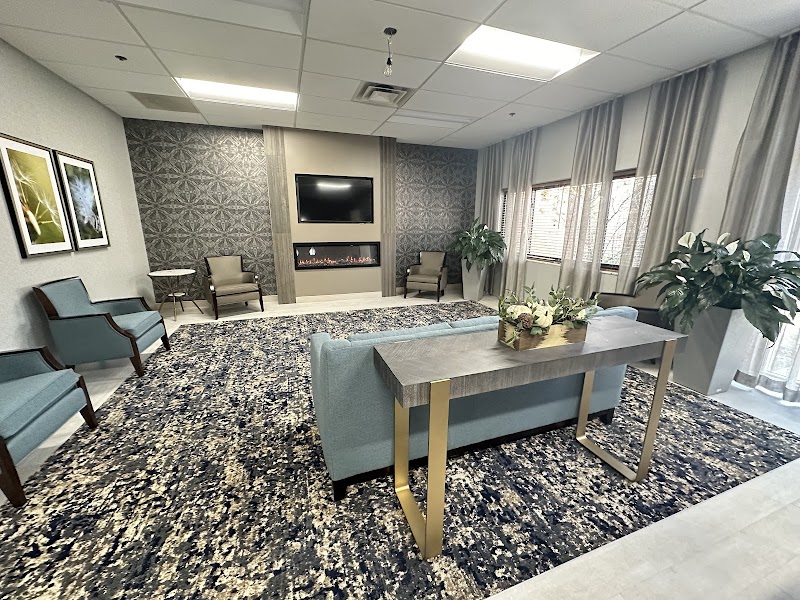
How is Pearl Of Naperville, The Staffed?

CMS rates PEARL OF NAPERVILLE, THE's staffing level at 2 out of 5 stars, which is below average compared to other nursing homes. Staff turnover is 55%, which is 9 percentage points above the Illinois average of 46%. High turnover can affect care consistency as new staff learn residents' individual needs.

What Have Inspectors Found at Pearl Of Naperville, The?

State health inspectors documented 51 deficiencies at PEARL OF NAPERVILLE, THE during 2022 to 2025. These included: 2 that caused actual resident harm and 49 with potential for harm. Deficiencies causing actual harm indicate documented cases where residents experienced negative health consequences.
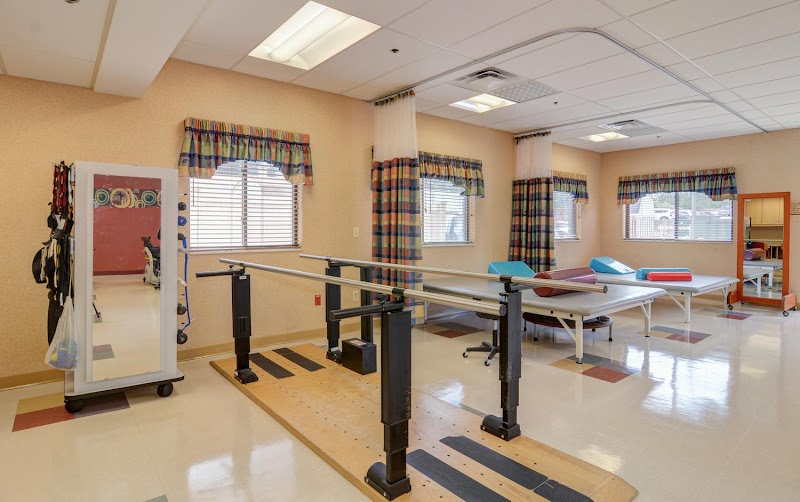
Who Owns and Operates Pearl Of Naperville, The?

PEARL OF NAPERVILLE, THE is owned by a for-profit company. For-profit facilities operate as businesses with obligations to shareholders or private owners. The facility is operated by PEARL HEALTHCARE, a chain that manages multiple nursing homes. With 115 certified beds and approximately 81 residents (about 70% occupancy), it is a mid-sized facility located in NAPERVILLE, Illinois.
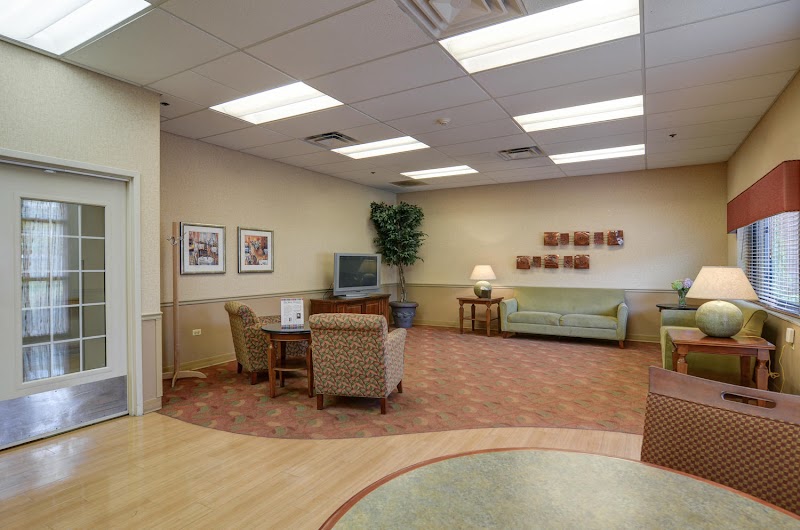
How Does Pearl Of Naperville, The Compare to Other Illinois Nursing Homes?

Compared to the 100 nursing homes in Illinois, PEARL OF NAPERVILLE, THE's overall rating (2 stars) is below the state average of 2.5, staff turnover (55%) is near the state average of 46%, and health inspection rating (2 stars) is below the national benchmark.

What Should Families Ask When Visiting Pearl Of Naperville, The?

Based on this facility's data, families visiting should ask: "What safeguards and monitoring systems are in place to protect residents from abuse or neglect?" "How do you ensure continuity of care given staff turnover, and what is your staff retention strategy?" "Can you walk me through typical staffing levels on day, evening, and night shifts?" "Can I visit during a mealtime to observe dining assistance and food quality?" These questions are particularly relevant given the substantiated abuse finding on record, the facility's high staff turnover rate, and the below-average staffing rating.

Is Pearl Of Naperville, The Safe?

Based on CMS inspection data, PEARL OF NAPERVILLE, THE has documented safety concerns. The facility has 1 substantiated abuse finding (meaning confirmed case of resident harm by staff or other residents). The facility has a 2-star overall rating and ranks #100 of 100 nursing homes in Illinois. Families considering this facility should ask detailed questions about what corrective actions have been taken since these incidents.

Do Nurses at Pearl Of Naperville, The Stick Around?

Staff turnover at PEARL OF NAPERVILLE, THE is high. At 55%, the facility is 9 percentage points above the Illinois average of 46%. High turnover means new staff may not know residents' individual needs, medications, or preferences. It can also be disorienting for residents, especially those with dementia who rely on familiar faces. Families should ask: What is causing the turnover? What retention programs are in place? How do you ensure care continuity during staff transitions?

Was Pearl Of Naperville, The Ever Fined?

PEARL OF NAPERVILLE, THE has no federal fines on record. CMS issues fines when nursing homes fail to meet care standards or don't correct problems found during inspections. The absence of fines suggests the facility has either maintained compliance or corrected any issues before penalties were assessed. This is a positive indicator, though families should still review recent inspection reports for the full picture.

Is Pearl Of Naperville, The on Any Federal Watch List?

PEARL OF NAPERVILLE, THE is not on any federal watch list. The most significant is the Special Focus Facility (SFF) program, which identifies the bottom 1% of nursing homes nationally based on persistent, serious quality problems. Not being on this list means the facility has avoided the pattern of deficiencies that triggers enhanced federal oversight. This is a positive indicator, though families should still review the facility's inspection history directly.