ST PATRICK'S RESIDENCE
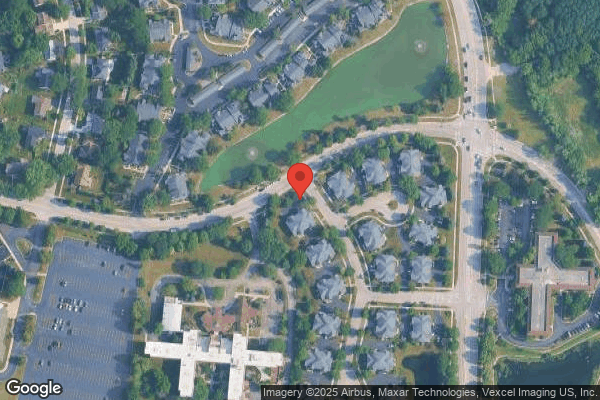

1400 BROOKDALE ROAD, NAPERVILLE, IL 60563 (630) 416-6565
Non profit - Corporation 209 Beds CARMELITE SISTERS FOR THE AGED & INFIRM Data: November 2025
Trust Grade
63/100
#187 of 665 in IL
Last Inspection: January 2025

Within standard 12-15 month inspection cycle. Federal law requires annual inspections.

Overview

St. Patrick's Residence in Naperville, Illinois, has a Trust Grade of C+, indicating it is slightly above average but not outstanding. It ranks #187 out of 665 facilities in the state, placing it in the top half, and #13 out of 38 in Du Page County, meaning there are only a few local options that are better. The facility is showing improvement, with issues decreasing from 8 in 2024 to 6 in 2025. Staffing is a strength, with a rating of 4 out of 5 stars and a turnover rate of 34%, which is lower than the state average of 46%. However, the facility has faced some serious concerns, such as a resident requiring hospitalization due to dehydration and not receiving proper tube feeding, which highlights some gaps in care. Additionally, there were issues with the arbitration agreement process that may not have been communicated clearly to residents, suggesting room for improvement in transparency.

Trust Score
C+
63/100
In Illinois
#187/665
Top 28%
Safety Record
Moderate
Needs review
Inspections
Getting Better
8 → 6 violations
Staff Stability
○ Average
34% turnover. Near Illinois's 48% average. Typical for the industry.
Penalties
○ Average
$20,885 in fines. Higher than 61% of Illinois facilities. Some compliance issues.
Skilled Nurses
✓ Good
Each resident gets 55 minutes of Registered Nurse (RN) attention daily — more than average for Illinois. RNs are trained to catch health problems early.
Violations
⚠ Watch
23 deficiencies on record. Higher than average. Multiple issues found across inspections.
★★★★☆
4.0
Overall Rating
★★★★☆
4.0
Staff Levels
★★☆☆☆
2.0
Care Quality
★★★★☆
4.0
Inspection Score
Stable
2024: 8 issues
2025: 6 issues

The Good

  • 4-Star Staffing Rating · Above-average nurse staffing levels
  • Full Sprinkler Coverage · Fire safety systems throughout facility
  • No fines on record
  • Staff turnover below average (34%)

    14 points below Illinois average of 48%

Facility shows strength in staffing levels, fire safety.

The Bad

Staff Turnover: 34%

12pts below Illinois avg (46%)

Typical for the industry

Federal Fines: $20,885

Below median ($33,413)

Minor penalties assessed

Chain: CARMELITE SISTERS FOR THE AGED & IN

Part of a multi-facility chain

Ask about local staffing decisions and management

The Ugly 23 deficiencies on record

1 actual harm
Jan 2025 6 deficiencies
CONCERN (D)

Potential for Harm - no one hurt, but risky conditions existed

Quality of Care (Tag F0684)

Could have caused harm · This affected 1 resident

**NOTE- TERMS IN BRACKETS HAVE BEEN EDITED TO PROTECT CONFIDENTIALITY** Based on observation, interview, and record review, the facility failed to assess, identify, and document a resident's skin lesi...

Read full inspector narrative →
**NOTE- TERMS IN BRACKETS HAVE BEEN EDITED TO PROTECT CONFIDENTIALITY** Based on observation, interview, and record review, the facility failed to assess, identify, and document a resident's skin lesion. The facility also failed to follow physician orders to consult a dermatologist for skin lesions. This applies to 1 of 4 residents (R18), reviewed for skin conditions in the sample of 34. The findings include: R18's face sheet showed her to be a [AGE] year-old female admitted to the facility on [DATE] with diagnoses that include Vascular Dementia with mild anxiety, Chronic Diastolic Heart Failure, Chronic Kidney Disease, Personal history of Cerebral infarction, and Long Term Use of Anticoagulants. On January 13, 2025 at 10:21 AM, R18 was observed with a red lesion on the top of her nose and forehead. On January 14, 2025 at 2:27 PM, R18 was in the dining room and the red lesions to her nose and forehead were still present. V19 (Registered Nurse/RN) stated the lesions to R18 nose and forehead were skin cancer. V19 stated there are no treatments for the lesions. V19 stated they are applying A & D ointment to the area and keeping the areas from getting dry. On January 15, 2025 at 1:07 PM, V13 (Family member of R18) stated that he saw R18 yesterday and last week on Tuesday or Friday and R18 had the same lesion to her nose last week and yesterday. V18 stated that he is not aware of his mother going to the Dermatologist while residing at the facility. R18 stated she has reoccurring lesions to her nose. On January 14, 2025 at 4:25 PM, V2 (Director of Nursing) stated she wasn't aware of any wound on R18's nose and was only aware of the wound to R18's forehead. On January 15, 2025 at 10:37 AM, V7 (Wound Care Doctor) stated she was just made aware of the wound to R18's nose. V7 stated she is not sure what the wound was on R18's nose. V7 stated she saw that R18 had an order for a Dermatology consult in 2023, but she was not sure if R18 saw the Dermatologist. V7 stated she recommends that R18 visit a Dermatologist. V7 stated the Dermatologist can do a biopsy to determine if the lesions are cancerous. V7 stated in the meantime, they will keep it moist with Vaseline, and A & D ointment. V7 stated that reoccurring wounds might be suspicious for cancer. R18's Initial Wound Evaluation & Management Summary dated January 15, 2025 by V7, showed the following: Diagnosis: Nodular lesion of skin or subcutaneous tissue, Location: nose and face, Duration at least 7 days. History: scabby lesion on tip of nose, staff reports that it comes and goes, patient has been observed scratching the lesion at times. There is verbal history that the lesion on the forehead was previously diagnosed as a skin cancer (no known details). Patient was advised to go to dermatology in 2023, unclear per records if she saw a Dermatologist. No reported pain, pruritus, or drainage from nose lesion. Lesion measures 0.5 x 0.9 x 0.2 cm (centimeter). Treatment recommend referral to Dermatology. Additional Treatment information: Recommend Vaseline ointment to lesion daily. Recommend dermatology consult for biopsy if family is agreeable due to the thin skin and location of the lesion. R18 has an order dated July 8, 2023 that showed the following: Dermatology consult for nose lesion. Another order dated November 9, 2024 showed the following. Monitor skin on shower days. Document abnormal findings in progress notes. R18's care plan, shower sheets, and progress notes were reviewed for last week and this week, and there was no documentation of R18's nose lesion as of January 14, 2025 at 4:30 PM. On January 15, 2025 at 1:00 PM, V2 stated she has no knowledge of R18 seeing a Dermatologist. On January 15, 2024 at 2:35 PM, V20 (Medical Records) stated she is responsible for making doctor appointments for residents. V20 stated she was not aware of any appointment for Dermatology being made for R18 before today. On January 16, 2025 at 10:26 AM and 11:08 AM, V2 stated if the staff notices a new skin issue, the nurse should assess the skin, update the doctor and family, and document it in the medical record. V2 stated the staff should be documenting new skin tear or skin issues in the nursing progress note and detailing the assessment, who they notified, and any ordered treatments. V2 stated that she expects the staff to follow the doctor's orders. The facility's Wound and Skin Care-Wound Assessment and Documentation policy dated June 5, 2024 showed the following: 14. Progress note should be completed initially when a new wound is identified and whenever there is a change in the wound that indicates potential infection or deterioration, and as needed.
CONCERN (D)

Potential for Harm - no one hurt, but risky conditions existed

Deficiency F0692 (Tag F0692)

Could have caused harm · This affected 1 resident

**NOTE- TERMS IN BRACKETS HAVE BEEN EDITED TO PROTECT CONFIDENTIALITY** Based on interview and record review, the facility failed to follow their policy to notify the physician of a resident's signifi...

Read full inspector narrative →
**NOTE- TERMS IN BRACKETS HAVE BEEN EDITED TO PROTECT CONFIDENTIALITY** Based on interview and record review, the facility failed to follow their policy to notify the physician of a resident's significant weight loss and to consult the dietitian to evaluate a resident with significant weight loss. This applies to 1 of 5 residents (R98) reviewed for nutrition in the sample of 34. The findings include: The EMR (Electronic Medical Record) showed R98 was admitted to the facility on [DATE], with multiple diagnoses including chronic kidney disease, congestive heart failure, dementia, and major depressive disorder. R98's Weights and Vitals Summary dated January 16, 2025, showed on July 13, 2024, R98 weighed 158 pounds and on January 13, 2025, R98 weighed 127.7 pounds resulting in a 19.18 % (percent) weight loss in six months. The documentation continued to show on October 1, 2024, R98 weighed 138.6 pounds and on November 2, 2024, R98 weighed 128.2 pounds resulting in a 7.5% weight loss in one month. As of January 15, 2025, at 10:00 AM, the facility does not have documentation to show R98 was evaluated by the dietitian for R98's significant weight loss in November 2024, or January 2025. On January 14, 2025, at 4:21 PM, V12 (Dietitian) said V12's last evaluation documented for R98 was in August 2024. V12 continued to say R98 has not been on V12's radar for weight loss monitoring. V12 said R98 needs to be evaluated to see if she needs fortified foods or supplements. V12 continued to say R98 is not currently receiving supplements. On January 14, 2025, at 4:38 PM, V5 (Unit Manager) said she reviewed R98's progress notes and does not see any progress notes regarding staff notifying R98's physician regarding R98's significant weight loss. V5 said facility staff are expected to document a progress note when a physician is notified of significant weight loss. On January 15, 2025, at 9:46 AM, V2 (Director of Nursing) said when a resident experiences significant weight loss, the physician and dietitian should be notified. V2 continued to say the dietitian would complete a nutrition evaluation for the resident. V2 said V12 had not completed an evaluation for R98's significant weight loss in November or in January. V2 said it should be documented in the medial record. On January 16, 2025, at 10:21 AM, V2 said a significant weight loss is a 5% or greater weight loss in one month and a 10% or greater weight loss in six months. V2 continued to say V12's standard of practice for significant weight loss is to document and care plan on a monthly basis. The facility does not have documentation to show R98 has had monthly care plan updates or documentation since R98's significant weight loss in November 2024. R98's Nutrition Comprehensive Assessment dated August 29, 2024, by V12 showed R98 weighed 165.8 pounds and R98's goal weight was to maintain weight. The documentation continued to show the goal for R98 was for no unplanned weight changes and R98 was at risk for malnutrition. R98's nutrition care plan dated July 26, 2024, showed [R98] is at risk for inadequate intake of nutrition and/or hydration related to diuretic therapy and diagnosis including diabetes mellitus type 2, congestive heart failure, chronic kidney disease stage 4, depression and dementia . The care plan continued to show multiple interventions dated February 15, 2024, including Registered Dietitian to evaluate and make recommendations as needed. The facility's policy titled Weight Monitoring dated October 6, 2024, showed Policy: Based on the resident's comprehensive assessment, the facility will ensure that all residents maintain acceptable parameters of nutritional status, such as usual body weight or desirable body weight range and electrolyte balance, unless the resident's clinical condition demonstrates that this is not possible or resident preferences indicate otherwise. Compliance Guidelines: Weight can be a useful indicator of nutritional status. Significant unintended changes in weight (loss or gain) or insidious weight loss (gradual unintended loss over a period of time) may indicate a nutritional problem . 7. Documentation: a. The physician should be informed of a significant change in weight and may order nutritional interventions. b. The physician should be encouraged to document the diagnosis or clinical that may be contributing to weight loss . e. The Registered Dietitian or Dietary Manager should be consulted to assist with interventions; actions are recorded in the nutrition progress notes. f. Observations pertinent to the resident's weight status should be recorded in the medical record as appropriate. g. The interdisciplinary plan of care communicates care instructions to staff.
CONCERN (D)

Potential for Harm - no one hurt, but risky conditions existed

Laboratory Services (Tag F0770)

Could have caused harm · This affected 1 resident

**NOTE- TERMS IN BRACKETS HAVE BEEN EDITED TO PROTECT CONFIDENTIALITY** Based on interview and record review, the facility failed to follow physician orders for laboratory tests for a resident receivi...

Read full inspector narrative →
**NOTE- TERMS IN BRACKETS HAVE BEEN EDITED TO PROTECT CONFIDENTIALITY** Based on interview and record review, the facility failed to follow physician orders for laboratory tests for a resident receiving intravenous hydration. This applies to 1 of 1 resident (R149) reviewed for laboratory services in the sample of 34. The findings include: The EMR (Electronic Medical Record) showed R149 was admitted to the facility on [DATE], with multiple diagnoses including hyperosmolality (fluid and electrolyte imbalance disorder) and hypernatremia (elevated sodium levels), Alzheimer's disease, dementia, and chronic kidney disease. On January 13, 2025, at 10:50 AM, R149 was sitting in her wheelchair. R149 had intravenous fluids infusing. R149's Order Summary Report dated January 15, 2025, showed an order dated January 12, 2025, for laboratory tests every Monday. The report continued to show an order dated January 12, 2025, Sodium Chloride Intravenous Solution 0.45% (percent), use 1000 mL (milliliters) intravenously one time a day every Monday for IVF (Intravenous Fluids), HANG AFTER MORNING LABS HAVE BEEN DRAWN! R149's January 2025 MAR (Medication Administration Record) showed R149 received the ordered intravenous fluids on January 13, 2025, at 6:00 AM. R149's Laboratory Results Report showed R149's laboratory tests were collected on January 14, 2025. On January 15, 2025, at 1:29 PM, V2 (Director of Nursing) said R149's laboratory tests were ordered to be drawn before the intravenous fluids were started on January 13, 2025, but the laboratory tests were performed the day after. V2 said it is the expectation for physician orders for laboratory tests to be followed as ordered.
CONCERN (F)

Potential for Harm - no one hurt, but risky conditions existed

Deficiency F0847 (Tag F0847)

Could have caused harm · This affected most or all residents

Based on interview and record review the facility's Arbitration Agreement failed to have the required language in the Arbitration Agreement Contract. This applies to all 170 residents residing in the ...

Read full inspector narrative →
Based on interview and record review the facility's Arbitration Agreement failed to have the required language in the Arbitration Agreement Contract. This applies to all 170 residents residing in the facility. The findings include: The facility's Long-Term Care Facility Application for Medicare and Medicaid dated January 13, 2025, by V1 (Administrator) showed the facility census was 170 residents. The facility provided their Facility's admission Contract Between Resident and [Facility] (Short-Term Rehabilitation Care and Long-Term Care Services) contract. On pages 17-18, the contract explained the arbitration agreement, but failed to let the resident and /or the resident representative know that signing this contract was not a condition of their admission to this facility or that after signing the agreement, that they had 30 days to rescind the agreement. On January 13, 2025 at 9:32 AM, during entrance conference, V1 (Administrator) said the arbitration agreement is part of the admission packet. V1 said she has not had any newly admitted resident or their representative refuse to sign the Admission/Arbitration agreement. On January 14, 2025, at 3:53 PM, V3 (Assistant Administrator) said the current admission packet with the arbitration agreement in it, is from 2018.
CONCERN (F)

Potential for Harm - no one hurt, but risky conditions existed

Deficiency F0848 (Tag F0848)

Could have caused harm · This affected most or all residents

Based on interviews and record review the facility's Arbitration Agreement failed to have a process for selecting a neutral arbitrator. The facility also failed to provide a selection of venues that i...

Read full inspector narrative →
Based on interviews and record review the facility's Arbitration Agreement failed to have a process for selecting a neutral arbitrator. The facility also failed to provide a selection of venues that is suitable for residents or their representatives. This applies to all 170 residents residing the facility. The findings include: The facility's Long-Term Care Facility Application for Medicare and Medicaid dated January 13, 2025, by V1 (Administrator) showed the facility census was 170 residents. On January 14, 2025, at 3:03 PM, the facility's admission Packet which included the facility's Arbitration Agreement showed under General (q) Alternative Dispute Resolution: (i) Arbitration Agreement: .The Parties will cooperate with one another in selecting an arbitrator from the arbitration company panel of arbitrators and pursue diligently the arbitration . (Name of Association) Dispute Resolution Service will Administer the arbitration . If (Name of Association) or it's successor is not available to administer the arbitration, then the Facility will select another arbitration service to administer the arbitration . The arbitration hearing will be in the county in which the facility is located. On January 13, 2025 at 9:32 AM, during entrance conference, V1 (Administrator) said the arbitration agreement is part of the admission packet. V1 said she has not had any new admissions or their representative refuse to sign the arbitration agreement. On January 14, 2025, at 3:53 PM, V3 (Assistant Administrator) said the current admission packet with the arbitration agreement in it, is from 2018.
CONCERN (F)

Potential for Harm - no one hurt, but risky conditions existed

Infection Control (Tag F0880)

Could have caused harm · This affected most or all residents

**NOTE- TERMS IN BRACKETS HAVE BEEN EDITED TO PROTECT CONFIDENTIALITY** 2. R34's EMR (Electronic Medical Record) showed R34 was admitted to the facility on [DATE], with diagnoses that included fractur...

Read full inspector narrative →
**NOTE- TERMS IN BRACKETS HAVE BEEN EDITED TO PROTECT CONFIDENTIALITY** 2. R34's EMR (Electronic Medical Record) showed R34 was admitted to the facility on [DATE], with diagnoses that included fracture of left pubis, history of falling, weakness, and overactive bladder. R34's MDS (Minimum Data Set) dated January 2, 2025 showed R34 had severely impaired cognition and R34 required substantial/maximal assistance with toileting and showering. R34's care plan showed R34 had functional bowel and bladder incontinence related to impaired mobility and staff are to clean R34's perineal area with each incontinence episode. On January 15, 2025, at 9:27 AM, V8 (CNA/Certified Nurse Assistant) and V9 (Nurse Manager) assisted R34 to the bathroom. Both V8 and V9 put on clean gloves. V8 positioned R34's wheelchair so R34 was facing the wall with the grab bar. R34 held onto grab bar and V8 and V9 assisted R34 to stand and pivot so the toilet was behind her. V8 pulled down R34's pants and soiled incontinence brief. While R34 was sitting on the toilet, with the same gloves, V8 combed R34's hair and then put a new brief on R34 and loosely fastened it. When R34 said she was done, V8 and V9 assisted R34 to stand there was a small amount of stool on the toilet seat. V8 cleaned R34 from front to back. V8 sprayed the toilet seat with the same cleaner used to clean R34. V8 wiped the toilet seat clean and then pulled R34's incontinence brief and pants up. V8 and V9 assisted R34 back into her wheelchair. V8 sprayed R34's hands with the spray. V9 asked V8 to help R34 wash her hands with soap and water. V8 moved R34 in front of the sink and R34 washed her hands with soap and water. R34 was wheeled out of the bathroom and into her room. V8 had the same gloves on during the entire incontinence care. On January 15, 2025, at 10:46 AM, V2 (Director of Nursing) said the staff need to clean from dirty to clean. The staff should wash hands, put on gloves, assist resident to bathroom, once standing in front of the toilet, the staff can pull the resident's pants and incontinence brief down and remove the soiled brief. While the resident is using the bathroom, the staff needs to remove gloves, sanitize their hands, and put on new gloves. When resident is done, the staff need to clean both the front groin area especially if the incontinence brief was soiled and gloves need to be changed after cleaning the front area and before moving to the back area. The back area (buttock) needs to be cleaned from front to back. After cleaning the staff needs to remove their gloves, perform hand hygiene (soap and water or hand sanitizer), and put on new gloves before putting on and pulling up the incontinence brief and pants. 3. R168's face sheet showed her to be a [AGE] year-old female admitted to the facility on [DATE] with diagnoses that include Heart Failure, Chronic Kidney Disease, Major Depressive Disorder, Pain in Left and Right Legs, and Adult Failure to Thrive. On January 14, 2024 at 10:20 AM during wound rounds with V7 (Wound Care Doctor), V6 (Certified Nursing Assistant) and V4 (Wound Care Nurse), V4 removed dressing from R168's right ankle, and sprayed the wound with wound cleaner, and dried it with a 4x4 gauze. While the V6 held R168 on her right side, V4 then pulled the foam dressing off R168's left ischium and sacrum. V4 pulled up R168's buttocks up to visualize and clean part of the left ischium wound. V4's gloves were touching between R168 buttocks on the white barrier cream substance. V4 then sprayed the left ischium wound with wound cleaner and wiped it with 4X4. Without removing her gloves or performing hand hygiene, V4 applied skin prep and grabbed alginate and tore it with her hands, placed it on the left ischium wound, and then a foam dressing on top of that. V4 then sprayed the sacral wound and wiped it with a 4x4 gauze. Without removing her gloves or performing hand hygiene, V4 applied skin prep, tore another piece of alginate, and put it on the sacral wound then put a foam dressing on top of that. On January 14, 2024 at 11:45 AM, during wound care, R168 had a right heal wound covered in black necrotic tissue right bunion wound covered in black necrotic tissue, a right inner ankle wound covered in grayish slough, and a sacral wound covered in grayish slough. V4 (Wound Care Nurse) sprayed the right foot wounds with wound cleanser and wiped dry with 4x4 gauze. Without removing her gloves, and performing hand hygiene, V4 applied skin prep to the 2 right foot wounds and the right inner ankle wound. V4 then place alginate and a new foam dressing on top of the right inner ankle wound. V4 then removed the dressing from R168's sacrum and right ischium, sprayed the wound with wound cleaner, wiped the wounds with 4x4 gauze, and then without removing her gloves or performing hand hygiene, V4 placed alginate and foam dressing on to R168's sacral wound. On January 15, 2025 at 10:32 AM, V4 stated she should remove her gloves and perform hand hygiene when moving from dirty to clean areas during wound care. V4 stated she probably forgot to remove gloves and perform hand hygiene because she was nervous. On January 16, 2025 at 10:26 AM, V2 stated when performing wound care and moving from dirty to clean areas, the staff should remove gloves and perform hand hygiene. V2 stated not removing gloves and performing hand hygiene could contaminate the wound and increase the risk of infection. The facility's hand hygiene policy dated May 2024 showed the following: 2. Hand hygiene is indicated and will be performed under the conditions listed in, but not limited to the attached table. When, during resident care, moving from a contaminated body site to a clean body site. Based on interview and record review, the facility failed to follow their Water Management Plan for Legionella. The facility also failed to perform hand hygiene during provisions of care. This applies to all 170 residents residing in the facility. The findings include: 1. The facility's Long-Term Care Facility Application for Medicare and Medicaid dated January 13, 2025, by V1 (Administrator) showed the facility census was 170 residents. The facility's Water Management Plan dated September 17, 2024, showed Overview: Scope: The Water Management Plan (WMP) outlines procedures for minimizing the risk of Legionnaires' disease for persons at [the facility] site. The water systems on the site are described in tables and flow diagrams; the systems requiring control measures are noted in the Hazard Analysis . Objective: The objective of the WMP is to minimize the risk of Legionnaires' disease by managing certain building water systems for the control of Legionella bacteria. Organization: The WMP will be overseen by the team leader and members listed in the 'Team' section. The team's duties are listed in the 'Management' section . Cooling Towers: Sample cooling towers for Legionella testing within two weeks of start-up following shutdown (whether shutdown for the season or for maintenance) and at least once every three months (ideally monthly) during operation . Decorative Fountains: Test decorative fountains for Legionella at least once every three months during operation . Risk Assessment Per Hazard Analysis: The risk assessment report is based on an analysis of the building water systems for the hazards outlined in the Overview (Cope) of the WMP. The 'Significant Risk' column shows the team's determination as to whether the system/device presents a significant risk potential for one of the hazards outlined in the WMP scope . The Water Management Plan continued to show multiple areas at significant risk for Legionella growth, including: the cooling tower systems, the domestic hot water systems, and the decorative fountain. The Water Management Plan showed, Control Measures: Cooling Tower Maintenance: Monitoring: .4. Test for Legionella before fans are started following a shutdown (whether shut down for the season or for maintenance)-no less than one hour and no more than 14 days after water has been circulating with routine chemical treatment-and at least once every 90 days during operation. Test sample(s) of water from the cooling tower basin or water returning to the cooling tower from the load per the WMP validation program and any applicable regulations . Control Measure: Domestic Water System Maintenance. Monitoring: Check the hot water return pumps to make sure they are running. Log date and time of inspection. Frequency of control measure task: Every one day . Control Measure: Domestic Water System Maintenance. Monitoring: Record hot water temperatures at a few faucets annually. For each measurement, record the number of seconds it took to reach the peak temperature. Log temperature complaints. Frequency of control measure task: Every one day . Control measure: Domestic Water System Maintenance. Monitoring: Record thermostatic mixing valve outlet temperature gauge readings at least once weekly, preferably daily .Control Measures: Domestic Water System Maintenance. Monitoring: Record water heater and hot water storage tank outlet temperature gauge readings at least once weekly, preferably daily . On January 15, 2025, at 9:38 AM, V10 (Chief Engineer) provided the facility's documentation of control measures for the facility's Water Management Plan for Legionella. V10 said the decorative fountain was cleaned and started on March 13, 2024, and shut down on October 8, 2024. V10 said the cooling tower was started on June 10, 2024. V10 said the only maintenance on the cooling tower at that time was cleaning and chemicals were added. V10 provided a calendar and said calendar included the dates the cooling tower was cleaned and started, when the fountain was cleaned and started, when the cooling tower was shut down and drained, when the decorative fountain was shut down and drained, and hot water temperatures from a few residents' rooms on Mondays through Fridays. V10 said the facility tested for Legionella once in 2024, on August 15, 2024. The facility does not have documentation to show Legionella testing was performed every three months on decorative fountain, Legionella testing was performed on the cooling tower within 14 days of the cooling tower starting for the year, daily hot water temperature readings including the time to reach the temperature, weekly readings of the thermostatic mixing valve outlet temperature gauge, weekly readings of the water heater and hot water storage tank outlet temperature gauge, or daily monitoring of the hot water return pumps. On January 15, 2025, at 12:55 PM, V1 (Administrator) said it is the expectation V10 perform the monitoring listed in the control measures of the facility's Water Management Plan.
Feb 2024 8 deficiencies
CONCERN (D)

Potential for Harm - no one hurt, but risky conditions existed

Resident Rights (Tag F0550)

Could have caused harm · This affected 1 resident

2. On 2/20/24 at 12:57 PM, V5 (3rd floor Unit Manager) was observed feeding R60 and R77 at the same time during lunch on the 3rd floor. V5 was standing while feeding both residents. R60's MDS of 1/3/...

Read full inspector narrative →
2. On 2/20/24 at 12:57 PM, V5 (3rd floor Unit Manager) was observed feeding R60 and R77 at the same time during lunch on the 3rd floor. V5 was standing while feeding both residents. R60's MDS of 1/3/24 shows that R60 requires assistance while eating. R77's MDS of 11/30/23 shows that R77 requires assistance while eating. On 2/22/24 at 9:18 AM, V2 said staff should sit or be at the same level while assisting with feeding residents for dignity reasons. The facility's Resident Rights Promoting and Maintaining Resident Dignity during Mealtimes (4/26/2023) states that all staff members involved in providing feeding assistance to residents promote and maintain resident dignity during mealtimes. All staff will be seated while feeding a resident. Based on observation, interview, and record review, the facility failed to provide a dignified dining experience to residents and failed to provide privacy during incontinence care. This applies to 3 of 3 residents (R9, R60, R77) reviewed for dignity in a sample of 38. The findings include: 1. On 02/20/24 at 11:50 AM, V13 (Certified Nursing Assistant/CNA) started to provide incontinence care for R9 when the state surveyor came into the room. V13 then stopped providing care and said, I need to get more help. She then left the room with the resident with her gown up over her chest, the sheet and blanket pulled down to the end of the bed, and the curtain and door open. R9 was left exposed to anyone walking in the hallway. At 11:54 AM, V13 return to the room with V14 (CNA). On 02/21/24 at 10:31 AM, R9 said it bothered her to be left exposed with the door and curtain open. I'm not for their show and tell. R9 said it has happened before and that staff should be more in tuned to what the patient is feeling and how leaving the door open makes them feel. On 02/20/24 at 12:03 PM, V13 said she should have closed the curtain and door before leaving the room for the residents' privacy. On 02/22/24 at 10:08 AM, V2 (Director of Nursing) said the staff should have pulled the sheets up and pulled the curtain before getting help. V2 said this should be done for dignity and privacy of the resident. The facility's Perineal Care policy (date 1/10/2023) showed, while providing perineal care provide privacy by pulling privacy curtain or closing the door in a private room.
CONCERN (D)

Potential for Harm - no one hurt, but risky conditions existed

Deficiency F0558 (Tag F0558)

Could have caused harm · This affected 1 resident

Based on observation, interview, and record review, the facility failed to provide an appropriate size wheelchair for a resident. This applies to 1 of 1 resident (R70) reviewed for wheelchairs in a sa...

Read full inspector narrative →
Based on observation, interview, and record review, the facility failed to provide an appropriate size wheelchair for a resident. This applies to 1 of 1 resident (R70) reviewed for wheelchairs in a sample of 38. The findings include: On 2/20/24 at 10:42 AM, during initial tour of the facility, surveyor asked R70 if she had any concerns. R70 stated, Yes, I do have a concern. I'm missing my wheelchair. This wheelchair here is not mine. Mine had my name on it and it was bigger. It was black. This wheelchair is too small. It's too low to the ground and too tight across my hips. I don't remember when it was exactly missing. I've told everyone that has come to my room that it's missing. I've told them the new wheelchair is uncomfortable, but no one is doing anything about it. I need my old one back. I can't use this one because it's just not the right size and it's uncomfortable. On 2/20/24 at 11:00 AM, surveyor tried to locate R70's Certified Nursing Assistant/CNA. V23 (CNA) stated R70's CNA was on her break. Surveyor asked V23 if R70 ever complained to her that her wheelchair was not the appropriate size. V23 stated no and said she doesn't normally work on the unit full time and that she floats all over the facility. Surveyor asked V23 if she could transfer R70 into her wheelchair. After transferring R70 in the wheelchair, surveyor was unable to slide a finger in between the sides of the wheelchair. It was too tight. R70 stated, It's too tight on the sides and it's causing pain. It's too low on the ground. This isn't going to work. On 2/20/24 at 11:13 AM, V22 (LPN/Licensed Practical Nurse/ 2nd floor Unit Manager) stated, Yes, I'm aware that (R70's) own wheelchair is missing. We are looking for it, but we can't find it. We did provide her with another one. She didn't mention it to me that it's too small. I did rounds this morning and she never said anything. I will go talk to (R70). On 2/20/24 at 11:17 AM, V22 came back to surveyor and stated, I talked to (R70), and she said her wheelchair causes pain. I told her she doesn't have to use it. We are looking for her wheelchair. I will try to find it. Thanks for telling me. On 2/21/24 at 10:08 AM, V21 (RN/Registered Nurse/Restorative Nurse) stated, I will have therapy evaluate (R70) today and get the correct wheelchair. We are actively looking for her old wheelchair. They personally didn't tell me it was missing. If we knew the wheelchair that we gave her was causing issues, therapy or the restorative nurse (me) would come and assess that new wheelchair. On 2/21/24 at 10:56 AM, V20 (Social Services) stated, We received an email from this family on Friday 2/16/24 stating that her wheelchair has been misplaced. On Monday, we started searching for her wheelchair. Yesterday, I was informed that she was uncomfortable in the new wheelchair that was provided. I talked with our supply manager, and we provided a new wheelchair to her. It was much more comfortable and suitable. V20's email from R70's son dated 2/16/24 documents: I did tell mom's (R70) nurse about this today, but I guess she was brought back to her room in the wrong wheelchair after her shower earlier this week. Her chair has special brake extensions, and it says (R70's last name) and (room number) on the white tag hanging off the back of the seat. Just wanted to help tracking it down and returning it to her room. Thank you. V20's email to R70's son dated 2/20/24 after surveyor brought it to the facility's attention documents: Your mom (R70) reported that the current wheelchair that she has was uncomfortable. Our supplies manager switched it out with one that she states is more comfortable until her chair has been located. On 2/21/24 at 1:55 PM, V19 (Director of Mission Integration) stated, When residents come in, they are given a wheelchair based on height and weight. If at any time, they are uncomfortable with their wheelchair, we will get physical therapy and/or occupational therapy involved and have them assess the resident with the wheelchair. Sometimes, they need longer footrests, or the wheelchair is too snug or too wide or we may have to provide them with different brake extenders. I don't have a policy regarding this. R70's face sheet shows diagnoses of cerebral infarction, chronic obstructive pulmonary disease (COPD), and wedge compression fracture of T5-T8 vertebra. R70's MDS (Minimum Data Set) dated 1/24/24) shows a BIM's (Brief Interview for Mental Status Score) of 14, which means she is cognitively intact. It also shows she uses a wheelchair. R70's care plan dated 11/3/23 shows a problem that she has limited physical mobility related to weakness, chronic back pain (Kyphoplasty due to compression fractures T5-T6 and T7-T8) in 12/2023, pathological fracture T12-L1), osteoporosis, COPD, and coronary artery disease. Approach: Locomotion: Wheelchair. Facility was unable to provide concerns/grievance form for R70's missing wheelchair and they were unable to provide a policy on wheelchairs.
CONCERN (D)

Potential for Harm - no one hurt, but risky conditions existed

Transfer Notice (Tag F0623)

Could have caused harm · This affected 1 resident

**NOTE- TERMS IN BRACKETS HAVE BEEN EDITED TO PROTECT CONFIDENTIALITY** 3. R107's face-sheet showed, R107 was admitted to the facility on [DATE] and her diagnoses included inflammation of the gallblad...

Read full inspector narrative →
**NOTE- TERMS IN BRACKETS HAVE BEEN EDITED TO PROTECT CONFIDENTIALITY** 3. R107's face-sheet showed, R107 was admitted to the facility on [DATE] and her diagnoses included inflammation of the gallbladder and laparoscopic cholecystectomy. R107's MDS (Minimum Data Set) dated 4/14/23 showed, R107 is cognitively intact (BIMS-Brief Interview of Mental Status-score of 15) and required extensive assist for ADLs (activities of daily living). R107's progress notes dated 4/17/23 at 7:51 PM showed R107 was sent to the hospital for investigation and confirmation of fracture of the right hip. Records lacked documentation to show that the notice of transfer or discharge was given in writing to the resident or her representative upon transfer or discharge or as soon as practicable. Records lacked documentation to show, the facility sent a copy of the notice to a representative of the Office of the State Long-Term Care Ombudsman within 30 days. On 2/22/24 at 12:15 PM, V19 (Director of Mission Integration) stated, notice of transfer or discharge was not given in writing, to the resident or her representative upon transferring R107 to the hospital on 4/17/23. On 2/22/24 at 12:18 PM, V1 (Administrator) stated, notice of transfer or discharge was not given in writing to a representative of the Office of the State Long-Term Care Ombudsman upon transferring R107 to the hospital on 4/17/23. Based on interview and record review, the facility failed to provide a resident and/or his family/power of attorney in writing for the reason of transfer to the hospital. They also failed to notify the ombudsman of the transfer. This applies to 3 of 3 residents (R41, R107, R208) reviewed for discharge in a sample of 38. The findings include: 1. On 2/22/24 at 11:56 AM, V19 (Director of Mission Integration) stated, We didn't inform (R41) or his representative of the reason for transfer in writing at the time of discharge to the hospital or afterwards. R41's face sheet shows an admission date of 10/5/23 to the facility. R41's progress notes document the following: On 12/23/23 at 11:40 AM, (R41) had a scant amount of pink tinged sputum. On 12/23/23 at 3:48 PM, Spoke with nurse practitioner. Verbal order read back to send out (R41) to the hospital ER (Emergency Room) Spoke with (R41's) POA. He is aware of the situation and transfer to the hospital. Left facility via 911 at 3:43 PM. On 12/23/23 at 9:02 PM, Spoke with staff at hospital ER. (R41) will be admitted with a diagnosis of pneumonia and hemostasis. On 12/28/23 at 7:40 PM, (R41) arrived with 2 ambulance personnels via stretcher from the hospital at 7:40 PM. (R41) was transferred to his bed. Review of R41's electronic medical record shows nothing was uploaded regarding the discharge letter to the resident/POA. Review of R41's January POS (Physician Order Sheet) does not show a physician's order to be transferred to the hospital. 2. On 2/22/24 at 12:01 PM, V19 (Director of Mission Integration) stated, We didn't inform (R208) or her representative of the reason for transfer in writing at the time of discharge to the hospital or afterwards. R208's face sheet documents an admission date of 11/10/23. R208's progress notes document the following: On 1/2/24 at 8:01 AM, (R208) observed on right side in his room at 6:55 AM. Noted with alarm sound in (R208's) room. (R208) stated, I was trying to hurry and go to the bathroom. I'm just humiliated that I have to use the bathroom by myself. Noted with stating again during assessment, I'm just clumsy and not careful. Encouraged to use call light to allow staff to assist with needs. She verbalized of having pain to left leg/hip. Bruise noted below the right elbow. Express with flexing extremities of having pain to left leg/hip. Notified medical doctor and informed. New orders received for x-rays of right arm and elbow, left hip, pelvis, and femur. Spoke with daughter and informed. On 1/2/24 at 10:00 AM, (R208) seen and evaluated by medical doctor with order to send (R208) to hospital (ER) due to pain on left lower trochanter post fall and irregular heartbeat. (R208)'s daughter at bedside. (R208) sent to emergency room for further evaluation and treatment. (R208)'s daughter to follow. Report given to nurse at emergency room. Informed of urine culture specimen result with positive UTI (Urinary Tract Infection). On 1/2/24 at 4:00 PM, (R208) sent back from the hospital. (R208) sent out due to pain after fall and irregular heartbeat. Per report, (R208) was administered with Rocephin IV while in hospital. New order for oral antibiotics for UTI from hospital received. (R208) is allergic to prescribed antibiotic. Medical doctor informed with order to change to Macrobid 500 MG (Milligrams) orally twice a day x 5 days. Noted and carried out. On 1/5/24 at 6:33 PM, CNA (Certified Nursing Assistant) alerted this nurse that (R208) is on the floor. Upon assessment, (R208) observed lying supine, both legs straight down with head tilted down with occiput against the bedside table next to her bed .Unable to recall how she fell on the floor. Complained of pain on left hip. Body assessment done and showed no break in skin. 911 called due to complaint of left hip pain without moving resident from the floor other than placing a pillow on head for comfort. (R208) has recent history of left hip fracture with displaced intertrochanteric fracture of left femur. Daughter (POA) informed and will follow resident in hospital. Medical doctor and supervisor informed. Report called into hospital and spoke with ER nurse. On 1/5/24 at 11:05 PM, (R208) returned from hospital via ambulance at 8:50 PM will continue to monitor. Review of R208's electronic medical record shows nothing was uploaded regarding the discharge letter to the resident/POA. R208's January 2024 POS does not show an order for transfer to the hospital on 1/5/24. V19 provided an email of a list residents that were discharged in December and emailed to the ombudsman. R208's name was not on the list. V19 stated that if R208's name is not on the list, then the ombudsman was not made aware of the discharge to the hospital. Facility's policy titled Discharge and Transfer from the Facility (10/15/22) documents: B. Timing of The Notice-1. Before the facility will transfer or discharge a resident, the facility will provide a written notice to the resident and resident representative in a manner and language understandable to the party. 2. For facility-initiated transfer or discharge of a resident, the facility will send a copy of the notice of transfer or discharge to the representative of the Office of the State Long Term care (LTC) Ombudsman. If information changes prior to the resident's discharge, the notice will be update and distributed to all required parties. 5. Emergency Transfers-When a resident is temporarily transferred on an emergency basis to an acute care facility, this type of transfer is considered to be a facility-initiated transfer and a notice of transfer must be provided to the resident and resident representative as soon as practicable. Copies of notices for emergency transfers must also be sent to the ombudsman, but they may be sent when practicable, such as in a list of residents on a monthly basis.
CONCERN (D)

Potential for Harm - no one hurt, but risky conditions existed

Deficiency F0625 (Tag F0625)

Could have caused harm · This affected 1 resident

**NOTE- TERMS IN BRACKETS HAVE BEEN EDITED TO PROTECT CONFIDENTIALITY** 3. R107's face-sheet showed, R107 was admitted to the facility on [DATE] and her diagnoses included inflammation of the gallblad...

Read full inspector narrative →
**NOTE- TERMS IN BRACKETS HAVE BEEN EDITED TO PROTECT CONFIDENTIALITY** 3. R107's face-sheet showed, R107 was admitted to the facility on [DATE] and her diagnoses included inflammation of the gallbladder and laparoscopic cholecystectomy. R107's Minimum Data Set (MDS) dated [DATE] showed R107 is cognitively intact (BIMS-Brief Interview of Mental Status-score of 15) and required extensive assist for ADLs (activities of daily living). R107's progress notes dated 4/17/23 at 7:51 PM showed R107 was sent to the hospital for investigation and confirmation of fracture of the right hip. Records lacked documentation to show that the facility provided the resident and the resident representative written notice of bed-hold policy and return. On 2/22/24 at 12:25 PM, V1 (Administrator) and V19 (Director of Mission Integration) stated, notice of bed-hold policy was not given in writing, to the resident or her representative, when R107 was transferred to the hospital on 4/17/23. Based on interview, and record review, the facility failed to provide in writing to residents and their families/POA (Power of Attorney) regarding bed hold and return at the time of discharge to the hospital. This applies to 3 of 3 residents (R41, R107, R208) reviewed for discharge in a sample of 38. The findings include: 1. On 2/22/24 at 12:02 PM, V1 (Administrator) stated R41 was not given a bed hold notice at the time of discharge to the hospital. She stated that during the time of admission, the residents are given a contract regarding bed holds, but not at discharge. R41's face sheet shows an admission date of 10/5/23 to the facility. R41's progress notes document the following: On 12/23/23 at 11:40 AM, (R41) had a scant amount of pink tinged sputum. On 12/23/23 at 3:48 PM, Spoke with nurse practitioner. Verbal order read back to send out (R41) to the hospital ER (Emergency Room) Spoke with (R41's) POA. He is aware of the situation and transfer to the hospital. Left facility via 911 at 3:43 PM. On 12/23/23 at 9:02 PM, Spoke with staff at hospital ER. (R41) will be admitted with a diagnosis of pneumonia and hemostasis. On 12/28/23 at 7:40 PM, (R41) arrived with 2 ambulance personnels via stretcher from the hospital at 7:40 PM. (R41) was transferred to his bed. Review of R41's electronic medical record shows nothing was uploaded regarding the bed hold to the resident/POA. Neither was anything mentioned in the progress notes. 2. On 2/22/23 at 12:08 PM, V1 stated that R208 was not given a bed hold notice at the time of discharge to the hospital. R208's face sheet documents an admission date of 11/10/23. R208's progress notes document the following: On 1/2/24 at 8:01 AM, (R208) observed on right side in his room at 6:55 AM. Noted with alarm sound in (R208's) room. (R208) stated, I was trying to hurry and go to the bathroom. I'm just humiliated that I have to use the bathroom by myself. Noted with stating again during assessment, I'm just clumsy and not careful. Encouraged to use call light to allow staff to assist with needs. She verbalized of having pain to left leg/hip. Bruise noted below the right elbow. Express with flexing extremities of having pain to left leg/hip. Notified medical doctor and informed. New orders received for x-rays of right arm and elbow, left hip, pelvis, and femur. Spoke with daughter and informed. On 1/2/24 at 10:00 AM, (R208) seen and evaluated by medical doctor with order to send (R208) to hospital (ER) due to pain on left lower trochanter post fall and irregular heartbeat. (R208)'s daughter at bedside. (R208) sent to emergency room for further evaluation and treatment. (R208)'s daughter to follow. Report given to nurse at emergency room. Informed of urine culture specimen result with positive UTI (Urinary Tract Infection). On 1/2/24 at 4:00 PM, (R208) sent back from the hospital. (R208) sent out due to pain after fall and irregular heartbeat. Per report, (R208) was administered with Rocephin IV while in hospital. New order for oral antibiotics for UTI from hospital received. (R208) is allergic to prescribed antibiotic. Medical doctor informed with order to change to Macrobid 500 MG (Milligrams) orally twice a day x 5 days. Noted and carried out. On 1/5/24 at 6:33 PM, CNA (Certified Nursing Assistant) alerted this nurse that (R208) is on the floor. Upon assessment, (R208) observed lying supine, both legs straight down with head tilted down with occiput against the bedside table next to her bed .Unable to recall how she fell on the floor. Complained of pain on left hip. Body assessment done and showed no break in skin. 911 called due to complaint of left hip pain without moving resident from the floor other than placing a pillow on head for comfort. (R208) has recent history of left hip fracture with displaced intertrochanteric fracture of left femur. Daughter (POA) informed and will follow resident in hospital. Medical doctor and supervisor informed. Report called into hospital and spoke with ER nurse. On 1/5/24 at 11:05 PM, (R208) returned from hospital via ambulance at 8:50 PM will continue to monitor. Review of R208's electronic medical record shows nothing was uploaded regarding the bed hold to the resident/POA. Neither was anything mentioned in the progress notes. On 2/22/24, surveyor requested the policy regarding the bed hold notice and it was not provided. On 2/22/24 at 12:15 PM, V19 (Director of Mission Integration) stated she just created a policy on bed hold notice. She confirmed that the bed hold notice should be given at the time of discharge.
CONCERN (D)

Potential for Harm - no one hurt, but risky conditions existed

Accident Prevention (Tag F0689)

Could have caused harm · This affected 1 resident

Based on observation, interview, and record review, the facility failed to provide interventions and supervision to 2 of 2 residents (R9, R29) who were at risk for falls in a sample of 38. The findin...

Read full inspector narrative →
Based on observation, interview, and record review, the facility failed to provide interventions and supervision to 2 of 2 residents (R9, R29) who were at risk for falls in a sample of 38. The findings include: 1. On 02/20/24 between 11:50 AM to 11:54 AM, R9 was observed in her bed that was in a high position. At 11:50 AM, V13 (Certified Nursing Assistant/CNA) had started to provide incontinence care for R9, when V13 stopped and said she needed to go get assistance, leaving R9 in her bed, with the bed in a high position. At 11:54 AM, V13 and V14 (CNA) returned to R9's room to continue incontinence care. On 02/20/24 at 12:03 PM, V13 said she had meant to put R9's bed back in a low position. V13 said that R9's bed should not have been left in a high position because it is a fall risk. On 02/22/24 at 10:06 AM, V2 (Director of Nursing/DOM) said the staff should not have left R9 in a high position when she went to go get help because it is a fall risk and possible injury. 2. On 02/20/24 at 10:45 AM, R29 was observed in bed with the bed in a high position. On 02/21/24 at 11:53 AM, R29 was observed in bed and awake. R29's bed was in a medium height position. R29 said, I'm all mixed up today. R29 was confused and unable to use the bed control. On 02/21/24 at 12:00 PM, R29's bed was still in a medium height position and V15 (CNA) came into the room. The state surveyor asked V15 if R29's bed was in the lowest position and V15 said no and then lowered the bed about 24 inches. V15 said that she was R29's CNA for the day and was not sure if her bed is to be in the lowest position while she is in it. R29's 1/5/24 care plan showed R2's has an increased risk for falls related to poor balance, history of falls, receiving antipsychotic which could cause dizziness, and incontinence. R29's care plan showed interventions including, The facility will strive to prevent a major injury, and bed locked in lowest position when care not being provided. R29's 12/14/23 Minimum Data Set (MDS) showed that R29 cognition is severely impaired. On 02/22/24 at 10:02 AM, V2 said that R29's bed should be in a low position when she is in bed. V2 said this should be done because if she does fall, there is more of a risk for injury if she falls from a high area. V2 said the staff should have known that R29's bed should be in a low position and should have looked at R29's (plan of care) for her care needs. The facility's Fall Risk Assessment Policy (11/2/2022) showed that it is the policy of the facility to provide an environment that is free from accident hazards over which the facility has control and provides supervision and assistive devices to each resident to prevent avoidable accidents.
CONCERN (E)

Potential for Harm - no one hurt, but risky conditions existed

ADL Care (Tag F0677)

Could have caused harm · This affected multiple residents

Based on observation, interview, and record review, the facility failed to ensure residents dependent upon staff for ADLs (Activities of Daily Living) received nail grooming for 4 of 38 residents (R18...

Read full inspector narrative →
Based on observation, interview, and record review, the facility failed to ensure residents dependent upon staff for ADLs (Activities of Daily Living) received nail grooming for 4 of 38 residents (R18, R101, R139, & R146) reviewed for ADLs in a sample of 38. The findings include: 1. On 02/20/24 at 11:05 AM, R18 was observed with long jagged nails, with brown substances under the nails. R18 said that she didn't like them that way and wanted them cut and filed. R18 has diagnoses including, cerebral atherosclerosis, and polyarthritis osteoporosis. R18's 11/5/24 Care plan showed an ADL self-care performance deficit related to Activity Intolerance, Dementia, Impaired balance, Limited Mobility. She was admitted to hospice services and the goal is comfort with interventions including, check nail length and trim and clean on bath day and as necessary. R18's 12/28/23 Minimum Data Set (MDS) showed that R18 cognition is severely impaired, and in Section GG I. Personal hygiene R18 needs substantial/maximal assistance. 2. On 02/20/24 at 10:49 AM, R101 was observed with her fingernails long, jagged, and brown substances under nails. R101 said I asked about a month ago for them to cut them and nobody has helped me. R101 has diagnoses including, Parkinson's disease, osteoarthritis, and muscle weakness. R101's 1/3/24 MDS section C showed that her cognition is intact. Section GG I. of the MDS showed that R101 needs setup or clean up assistance for personal hygiene. R101's 1/3/24 care plan showed that R101 has an ADL self-care performance with interventions including, Check nail length and trim and clean on bath day and as necessary, and personal hygiene - supervision maximal 1 assist. 3. On 02/20/24 at 11:00 AM, R139 was observed with his fingernails long, jagged, and brown substances under nails. R139 said, The last time they cut them was a couple of weeks ago. I would rather they be cut short. R139's diagnoses include, Cerebral infarction, weakness, need for assistance with personal care, Dementia, and Alzheimer's disease. R139's 1/2/24 care plan showed he has an ADL self-care performance deficit related to a history of Cerebral Vascular Accident (CVA), dementia, and weakness. The care plan interventions included, check nail length and trim and clean on bath day and as necessary, and personal hygiene with moderate to maximal 1 person assistance. R139's MDS showed that his cognition is moderately impaired and in section GG I. He is to receive substantial maximal assistance with personal hygiene. 4. On 02/20/24 at 11:14 AM, R146 was observed with her fingernails long, jagged, and with brown substances under nails. R146 said that it was probably about a month since the last time they were cut, and that staff does not offer to cut them. On 02/21/24 at 10:58 AM, R146 was observed with her fingernails long, jagged, and with brown substances under nails. R146 has diagnoses including hemiplegia and hemiparesis, dementia, and weakness. R146's 1/23/24 care plan showed she has an ADL self-care performance deficit related to weakness, left hemiparesis post Cerebral Vascular Accident (CVA), osteoarthritis, and activity intolerance .with approaches including, personal hygiene - moderate to maximal to dependent 1 person assistance. R146's 1/29/24 MDS section GG I. personal hygiene showed that she needs substantial/maximal assistance. On 02/22/24 at 09:59 AM, V2 (Director of Nursing) said that the residents' nails should be clean and short, and staff should be providing ADL care routinely and as needed. V2 said this should be done for infection control, to prevent skin tears, cleanliness, and dignity. The facility's Activities of daily living (ADL) policy (1/18/2023) showed, that care and services will be provided for the following activities of daily living, bathing, dressing, grooming, and oral care. The policy's Explanation and Compliance guidelines showed, 3. a resident who is unable to carry out activities of daily living will receive the necessary services to maintain good nutrition, grooming, and personal and oral hygiene.
CONCERN (E)

Potential for Harm - no one hurt, but risky conditions existed

Infection Control (Tag F0880)

Could have caused harm · This affected multiple residents

Based on observation, interview, and record review, the facility failed to maintain infection control while entering isolation, while feeding residents, and during incontinent care. This applies to 10...

Read full inspector narrative →
Based on observation, interview, and record review, the facility failed to maintain infection control while entering isolation, while feeding residents, and during incontinent care. This applies to 10 of 10 residents (R1, R9, R59, R60, R76, R77, R89, R98, R104 and R109) reviewed for infection control in a sample of 38. The findings include: 1. On 2/22/24 at 10:39 AM, V6 (Social Services) was observed entering R59's room without gown and gloves. At 10:41 AM, V6 came out of R59's room. V6 said she went to issue R59 a notice of discharge. V6 only had on her N95 mask and goggles on when she entered the room. V6 said thought that all the PPE (Personal Protective Equipment) she was on was sufficient, she did not look at the isolation sign on the door. There was a sign for Contact Precautions and Droplet Precautions on the door. For the contact precaution sign, providers and staff must put on gloves and gown before entering the room, discard gloves and gown before exiting the room. R59's lab result of 2/14/24 showed that R59 tested positive for RSV (Respiratory Syncytial Virus). R59's EMR (Electronic Medical Record) showed that R59 was placed on contact/droplet precaution for RSV on 2/14/24 and end of isolation will be 2/23/24. On 2/22/24 at 10:43 AM, V9 (Agency LPN/Licensed Practical Nurse) said that R59 was on isolation for RSV and staff requires full PPE before going in the resident's room. On 2/22/24 at 10:47 AM, V2 (DON/Director of Nursing) said staff should have full PPE (gown, gloves, N95, face shield) prior to entering the room. On 2/22/24 at 12:15 PM, V10 (Infection Preventionist) said RSV is a respiratory infection and requires droplet isolation, staff are to wear full PPE to prevent possible spread of infection. 2. On 2/20/24 at 12:38 PM, during lunch on the 3rd floor, V8 (Volunteer) was observed feeding R104 and R109 at the same time. V8 used the same hand to feed both residents and did not perform any hand hygiene in between feeding both residents. R104's MDS (Minimum Data Set) of 1/5/24 shows that R104 requires assistance with meals. R109's MDS of 12/29/23 shows that R109 requires assistance with meals. 3. On 2/20/24 at 12:50 PM, V4 (MDS/Minimum Data Set Coordinator) was observed feeding R76 and R89 at the same time during lunch on the 3rd floor. V4 used the same hand to feed both residents and did not perform any hand hygiene while feeding both residents. On 2/21/24 at 12:15 PM, V7 (CNA/Certified Nurse Aide) was observed feeding R76 and R89 at the same time, using the same hand. V7 failed to perform any hand hygiene while feeding both residents. R76's MDS of 12/13/23, shows that R76 requires assistance with meals. R89's MDS of 2/1/24 shows that R89 requires assistance with meals. 4. On 2/20/24 at 12:57 PM, V5 (3rd floor Unit Manager) was observed feeding R60 and R77 at the same time during lunch on the 3rd floor. V5 failed to perform any hand hygiene while feeding both residents. R60's MDS of 1/3/24 shows that R60 requires assistance while eating. R77's MDS of 11/30/23 shows that R77 requires assistance while eating. On 2/22/24 at 9:18 AM, V2 (DON) said staff should wash their hands before, after, and in between feeding every resident. The facility's Infection Control- Management of Respiratory Syncytial Virus (RSV) policy (2/16/24) states that infection control principles will be followed to decrease the risk of transmission, based on federal, state or local guidance. The principle includes, hand hygiene, respiratory and cough etiquette, transmission-based precautions, appropriate personal protective equipment as indicated, cleaning and disinfecting of high-touched surfaces. 5. On 02/20/24 at 12:30 PM, V17 (RN/Registered Nurse) was observed feeding 2 residents R98 and R1 at the same time. V17 was observed using only her right hand and used R98's and R1's spoons, forks, and cups, never cleaning her hands. At 12:39 PM, V16 (CNA) took over feeding R98 and R1. V16 was observed using only her right hand and using R98's and R1's spoons, forks, and cups, never cleaning her hands. On 02/20/24 at 12:32 PM, V17 said that she had cleaned her hands before she started serving the lunch trays and felt that should have been enough. V17 said that it is not ideal to keep cleaning your hands while feeding two people. V17 said that it is possible for cross contamination if you feed two people at the same time and don't clean your hands in-between. On 02/22/24 at 09:48 AM, V2 (Director of Nursing) said that staff should not be feeding two residents at the same time because there can be cross contamination, it is for infection control. 6. On 02/20/24 at 11:54 PM, V13 and V14 (CNAs) were observed providing incontinence care for R9. V14 removed R9's soiled brief, did not remove her gloves or clean her hands, and put her hands on R9's hip stabilizing R9 as V13 cleaned R9's buttock area. After V13 provided perineal care to R9, V13 removed her gloves but did not clean her hands before putting on clean gloves. V13 then assisted in putting on R9's new brief, and repositioning R9 in the bed. V14 also assisted with putting on R9's new brief, repositioned her in the bed, adjusting R9's sheet and blanket and touching the bed control to adjust R9's bed, still with the dirty gloved hands. On 02/20/24 at 12:03 PM, V13 (CNA) said she should have cleaned her hands before putting on new gloves. V13 said she should have cleaned her hands after going from a dirty area to clean for infection control. On 02/20/24 at 12:04 PM, V14 said she should have removed her gloves and cleaned her hands after going from a dirty area. V14 said she forgot to do it after removing the brief. V14 said this should be done for infection control. On 02/22/24 at 9:50 AM, V2 said that staff should clean their hands and change gloves when going from dirty to clean. V2 said this should be done for infection control to prevent the spread of infections. The facility's Infection Control - Hand Washing policy (11/30/2022) showed that the facility considers hand hygiene the primary means to prevent the spread of infections.
CONCERN (F)

Potential for Harm - no one hurt, but risky conditions existed

Food Safety (Tag F0812)

Could have caused harm · This affected most or all residents

Based on observation, interview, and record review, the facility failed to properly label, date, and store food items and maintain a clean kitchen. This applies to all residents that receive oral nutr...

Read full inspector narrative →
Based on observation, interview, and record review, the facility failed to properly label, date, and store food items and maintain a clean kitchen. This applies to all residents that receive oral nutrition and foods prepared in the facility kitchen. Findings include: The facility's Long-Term Care Facility Application for Medicare and Medicaid (Form CMS-Centers for Medicare and Medicaid Services-671) dated 2/20/24 documents that the total census was 162 residents. On 2/22/24 at 12:24 PM, V18 (Diet Office Assistant) said there is only 1 NPO (Nothing by Mouth) resident, and the other 161 residents eat from the facility kitchen. On 2/20/24 from 9:14 AM through 10:21 AM, the facility kitchen was toured in the presence of V3 (Director of Food and Nutrition), and the following was found: In the Cook's refrigerator: 1. A small bin of pureed ham with expiration date of 2/15. 2. A small bin of ground ham with expiration date of 1/31. 3. An unlabeled and undated opened package of what V3 said was baloney. 4. A 4 Quart bin of processed ham dated opened on 2/18 and expiration on 2/29. V3 said those dates were not correct, processed meats are not good for 11 days. 5. A medium sized plastic bin of tuna salad dated 2/18 and expiration of 2/29. V3 said that expiration date was wrong, that tuna salad, or any salad mixed with mayonnaise is only good for 3 days. 6. A 2-quart bin of processed turkey labeled opened on 2/18 and expiration of 2/29. In the Dry Storage: 7. Four 48-ounce glass jars of grape jelly with best by date of 9/27/23. 8. Two 9-ounce taco seasoning mixes with expiration date of 12/6/23. 9. A 1 quart bottle of foam free liquid oven cleaner spilled on the floor, with the contents white and dried up on the floor. V3 said she did not know how or when the cleaner spilled. In Walk-In refrigerator #2 10. A pink liquid spill on the floor under the chicken cutlets rack. 11. On 2/20/24 at 9:14 AM in the kitchen in front of the 3-compartment sink there was a sheet of plywood on the floor with a lot of dust surrounding it. V3 said a pipe in the floor was dug up on 2/19/24 because of a blockage. On 2/20/24 at 10:16 AM the kitchen floor was still dirty from the pipe work and the dust/dirt had shoe prints in it and was being tracked through the kitchen. V3 said we were going to mop it, but maintenance told us to leave it because they were coming back again tonight to continue repairs. We can mop it up, because we are tracking it through the kitchen. On 2/21/24 at 11:08 AM, V3 said the construction company was in the kitchen working on the pipe until 2/20/24 at 4:30 AM and they still had to concrete and re-tile the floor to finish the repair. 12. For the duration of the kitchen tour on 2/20/24 from 9:14 AM to 10:21 AM, V3's hairnet was only covering half of her head. V3's hair was not restrained from the top middle of her head forward. V3's hair net was only covering the top middle of her head back down to her neck. On 2/22/24 at 9:37 AM, V3 (Director of Food and Nutrition) said all food items in the kitchen should be labeled and dated to make sure the food is safe for the residents to eat. V3 said expired food items should be thrown away because they would be a health hazard if consumed by the residents. V3 said processed meats are good for 3 days once opened. V3 said the kitchen staff slice their own deli meats and she was not sure if deli meats sliced on site last longer than pre-sliced and packaged meats. V3 said she would refer to the facility policy for expiration of deli meats. V3 said the risk with serving expired processed meats is foodborne illness. V3 said prepared salads like tuna salad are good for 3 days in the refrigerator. V3 said hairnets need to be worn covering all hair on the head while in the facility kitchen because hair could potentially fall in the food and contaminate it. V3 said the floors in the kitchen and storage areas should be mopped after each meal. The facility's policy titled, Expired/Recalled Product revised 12/18 states, Procedure: .3. Outdated or recalled product will be discarded . The facility's policy titled, Food Storage and Expiration Dates revised 11/23 states, Policy: All opened food that is placed into storage shall be labeled with the product name, date opened and/or expiration, or use by date. If a product has a manufacturer expiration or use by date, follow that date unless removed from the original container .The day the product is opened is counted as day one. Procedures: Foods that expire 3 days after opening: leftover foods, prepared salads (egg, tuna, etc.), leftover deli meats .The dining service manager will: .2. Assure labeling guidelines are followed . The facility's policy titled, Labeling & Dating for Food Storage revised 11/30/22 states, Storage and packaging practices help assure proper ingredient usage and food safety. All foods that require time and temperature control (TCS) should be labeled with the following: common name of the food, date the food was made, and use by date . Any unopened items with a printed manufacturers use by date may be used until the date listed on the product . The facility's policy titled, Hair Restraints revised 11/30/22 states, Employees shall use effective hair restraints to prevent the contamination of food or food contact surfaces .Hair shall be covered at all times while in the kitchen and during service of food . The facility's policy titled, Cleanliness and Sanitation of Service Area effective 1/2023 states, Policy: The cleanliness and sanitation of the serving area is to be maintained. Procedures: Employees involved in the service of food in the serving area must observe the following procedures to ensure safety: .After Service: 1 .Monitor racks, carts, and coolers, checking for any spillage. 2. Sweep and clean floors after meal service .
Apr 2023 8 deficiencies
CONCERN (D)

Potential for Harm - no one hurt, but risky conditions existed

Pressure Ulcer Prevention (Tag F0686)

Could have caused harm · This affected 1 resident

Based on observation, interview, and record review the facility failed to ensure a dressing was changed to a resident's pressure ulcer and failed to ensure the dressing was in place to a resident's pr...

Read full inspector narrative →
Based on observation, interview, and record review the facility failed to ensure a dressing was changed to a resident's pressure ulcer and failed to ensure the dressing was in place to a resident's pressure ulcer. This applies to 1 of 5 residents (R46) reviewed for pressure ulcers in a sample of 27. The findings include: On 4/3/23 at 1:28 PM V13(Certified Nurse Assistant/CNA) transferred R46 to bed using a mechanical lift. R46 had a dressing on right outer knee dated 3/29/23. V13 stated, That is her bone under there. R46's Wound Evaluation and Management Summary dated 3/29/23 shows that R46 has a 1 cm x 0.7 cm x not measurable full thickness wound to her right knee. It is documented as Other viable tissue- 100% (Bone). The objective for this wound is: control infection, palliation. R46's March Treatment Administration Record shows that R46 has an order for: Right Knee: Cleanse with Normal Saline/wound cleanser and pat dry gently. Apply sure-prep skin protectant to the peri wound, apply (petroleum gel) gauze to the wound bed, cover with bordered foam. Every day shift every Monday, Wednesday, and Friday for wound care watch for signs and symptoms of infection. This order is signed out as having been done on 3/29/23 and 3/31/23. On 4/5/23 at 10:10 AM V1 (Administrator) stated that she had talked to the nurse that worked on 3/31/23 and the nurse told her that she had gotten busy and was not able to change the dressing to R46's knee on 3/31/23. On 4/4/23 at 9:30 AM V13 (CNA) took R46 to her room. V13 lifted R46's pant leg and there was no dressing in place over R46's right knee wound. The area appeared dry and scabbed/calloused with a white, solid, thin piece of tissue protruding through the skin. V13 stated, That is her bone. V13 explained that V14 (Agency CNA) was assigned to R46 today. V14 entered the room and stated that R46's bandage was on the blanket when she came in this morning to get R46 up for breakfast. V15 (Registered Nurse/Wound Care Nurse) was present and reached in the garbage to find the old dressing dated 4/3/23. V15 stated she was did not know that the dressing had come off this morning. V15 then cleaned R46's right knee wound and applied a new dressing. The undated facility policy entitled Clean Dressing Change states, It is the policy of this facility to provide wound care in a manner to decrease potential for infection and /or cross contamination. Physician's orders will specify type of dressing and frequency of changes.
CONCERN (D)

Potential for Harm - no one hurt, but risky conditions existed

Deficiency F0688 (Tag F0688)

Could have caused harm · This affected 1 resident

**NOTE- TERMS IN BRACKETS HAVE BEEN EDITED TO PROTECT CONFIDENTIALITY** Based on observation, interview, and record review the facility failed to ensure a resident with a contracture had a splint appl...

Read full inspector narrative →
**NOTE- TERMS IN BRACKETS HAVE BEEN EDITED TO PROTECT CONFIDENTIALITY** Based on observation, interview, and record review the facility failed to ensure a resident with a contracture had a splint applied and failed to provide restorative services for 3 of 5 residents (R35, R60, R131) reviewed for restorative/range of motion in the sample of 27. 1. On 04/03/23 at 10:13 AM, R131 was in sleeping in bed with her right hand resting on her chest. R131's fingers were slightly bent in towards the palm of her hand. There was a blue splint on the nightstand in R131's room. On 04/03/23 at 2:20 PM, R131 was up in a reclining wheelchair in the lounge area. R131 did not have a splint on her right hand. On 04/04/23 at 08:53 AM, R131 was in bed. R131's hand splint was on the nightstand in her room. On 04/04/23 at 9:32 AM, V10 (Registered Nurse) stated R131 has a right-hand contracture. She should have a brace on when she gets up and off at nights. We put it on when she gets in chair in the afternoon. On 04/05/23 at 11:21 AM, V11 (Occupational Therapy) stated R131 has a right-hand contracture. At first, we only did a palm protector. Then we were able to open her hand up more and we were able to use a resting hand splint. It is used to keep her hand open and prevent her hand from contracting further. According to the order, it should be on in morning and off at night to help keep her hand open. R131's Physician Orders shows, and order dated 2/9/23 for Patient to wear right resting hand splint during the daytime, off at night, in the morning APPLY. R131's Care Plan shows R131 has deficit related to hemiparesis post cerebrovascular accident Right resting hand splint: On in morning. Off at bedtime. The facility's Splint/Brace Policy dated 11/9/22 shows that any resident who has been assessed by a Rehabilitation Therapist and determined to demonstrate the medical necessity for the use of a splint/brace, to obtain an order for the device and provide care and services for maintaining joint mobility and for contracture care. 2. R60's Face Sheet shows diagnoses of: multiple sclerosis and contracture of left hand. R60's Minimum Data Set assessment dated [DATE] shows that her cognition is intact and has limited range of motion on both sides of her upper and lower extremities. On 4/3/23 at 1:54 PM, R60 was lying in bed. R60 was unable to move her left upper extremity or her bilateral lower legs. R60 said that she has multiple sclerosis. R60 said when she went to the neurologist in November, they wanted her to start physical therapy. R60 said that she did not get approved for therapy. R60 said that they used to come in a do exercise with her arms and legs and it would help a lot with her pain and stiffness. R60 said that she no longer gets any exercises, and they told her that they no longer have that program. On 4/4/23 at 1:35 PM, V18 (Certified Nursing Assistant) said that R60 is not on a restorative program. V18 said that the facility got rid of the restorative program a while ago. On 4/4/23 at 1:50 PM, V2 (Director of Nursing) said that they do not have a restorative program. R60's Restorative Care Plan shows, The resident has a potential for decline in range of motion due to ROM and mobility limitations, progressive MS (multiple sclerosis) disease process, and pain AAROM (active-assist range of motion) to BUE (bilateral upper extremities), 10 reps x 2 sets, with 1-staff limited assist, daily, 6-7 days per week Restorative PROM (passive range of motion: Altered functional range of motion of bilateral lower extremities r/t (related to) MS disease process. At risk for joint deformities/contractures. Contractures present in left shoulder, elbow, and left 3rd, 4th, and 5th fingers PROM to BLE (bilateral lower extremities), 6 reps x 2 sets, with 1-staff assist, daily, 6-7 days per week . The facility's undated Prevention of Decline in Range of Motion Policy shows, Based on the comprehensive assessment, the facility will provide interventions, exercises and/or therapy to maintain or improve range of motion Care plan interventions will be developed and delivered through the facility's restorative program, or through specialized rehabilitative services as ordered by the attending practitioner. 3. On 4/3/23 at 10:19 AM R35 stated, I don't get therapy anymore they say there is a limitation for it related to Medicare. No one has ever come in and done exercises with me. R35 also stated that he prefers to stay in his room most of the time and does not usually participate in activities. R35's EMR (Electronic Medical Record) shows an order dated 5/4/22 (11 months ago) Restorative AROM program, resident will participate in group exercise or individual exercise 6-7 times per week x's 15 mins. When viewed on 4/4/23 this same order is marked as canceled. R35's Physical Therapy Discharge Instructions dated 4/2/21 state, DC(Discharge) to facility with restorative program. R35's Occupational Therapy Discharge Instructions dated 3/14/23 state, Patient to stay as a long-term care resident at (facility). Patient educated in thera-band exercises for both upper extremities strengthening to be done in his room by tying the band on the bed rail. Patient has red thera-band in his room and verbalized understanding. On 4/5/23 at 10:10 AM the facility presented a statement dated 4/4/23 that reads, Met with resident in his room to discuss exercises. Resident states he prefers to not have group exercises with activities or 1:1 active range of motion and passive range of motion exercises with CNA in room. Resident stated he prefers to perform his own exercises while up in the wheelchair while in his room. Offered to add short exercise videos (sit down low exertion) on desktop computer and for staff to remind him to perform exercises. (R35) in agreement with this plan. Exercise tools to be provided for resident to use. At this time V1 (Administrator) stated, (R35) prefers not to have one on one or group exercises- he prefers to be in his room. We decided we could download different exercises on his computer that he could do on his own and he was agreeable to that. The AROM (Active range of motion should be incorporated into the ADLs (activities of daily living) with the CNAs.
CONCERN (D)

Potential for Harm - no one hurt, but risky conditions existed

Accident Prevention (Tag F0689)

Could have caused harm · This affected 1 resident

**NOTE- TERMS IN BRACKETS HAVE BEEN EDITED TO PROTECT CONFIDENTIALITY** Based on observation, interview, and record review the facility failed to transfer a resident in a safe manner for 1 of 27 resid...

Read full inspector narrative →
**NOTE- TERMS IN BRACKETS HAVE BEEN EDITED TO PROTECT CONFIDENTIALITY** Based on observation, interview, and record review the facility failed to transfer a resident in a safe manner for 1 of 27 residents (R23) reviewed for safety in the sample of 27. The findings include: On 04/03/23 at 10:34 AM, R23 was sitting up in her wheelchair, slowly propelling herself down the hall. At 10:36 AM, V6 (Certified Nursing Assistant) assisted R23 to the bathroom in her room. R23 said she didn't want to go to the bathroom, she just wanted to go to bed. V6 than moved R23's wheelchair to the bed. R23 grabbed onto the rail of the bed and half stood up. V6 (with the gait belt around V6's waist) grabbed the back of R23's pants and helped R23 to stand, pivot, and sit down in bed. On 04/04/23 at 01:42 PM, V7 (Registered Nurse) said R23 is a one person for transfers. V7 said everyone should use a gait belt during transfers for safety. R23's Minimum Data Set, dated [DATE] shows R23 is cognitively impaired and requires extensive assistance of two persons for transfer. The facility's Safe Lifting and Movement of Residents Policy dated 7/2017 shows Resident safety, dignity, comfort, and medical condition will be incorporated into goals and decisions regarding the safe lifting and moving of residents staff responsive for direct resident care will be trained in the use of manual gait/transfer belts.
CONCERN (D)

Potential for Harm - no one hurt, but risky conditions existed

Incontinence Care (Tag F0690)

Could have caused harm · This affected 1 resident

2. On 04/03/23 at 10:07 AM, V8 and V9 (CNA) used a sit to stand mechanical lift machine to transfer R81 from the wheelchair to the recliner. As R81's mechanical lift sling was attached to the mechanic...

Read full inspector narrative →
2. On 04/03/23 at 10:07 AM, V8 and V9 (CNA) used a sit to stand mechanical lift machine to transfer R81 from the wheelchair to the recliner. As R81's mechanical lift sling was attached to the mechanical lift, V8 was holding R81's urinary catheter bag up in air at her waist level while R81 remained seated in the wheelchair. R81's urinary catheter tubing was filled with yellow urine with some sediment. V8 continued to hold R81's catheter bag and her waist level (above the level of R81's bladder) while R81 was assisted to stand with the machine and then lowered to the recliner. V8 than draped R81's catheter bag over the arm of the recliner. V9 than picked up R81's urinary catheter bag and held it up in the air (above the level of R81's bladder) while V8 went to get basin to put catheter bag in. At 10:10 AM, when V9 put R81's urinary catheter bag into a basin on the floor, there was air bubbles in tubing rising upwards as urine drained into the bag. On 04/03/23 at 11:55 AM, V6 (CNA) and V8 (CNA), assisted R81 to transfer from the recliner to the wheelchair with a sit to stand mechanical lift. R81's mechanical lift sling was attached to the lift and the lift machine would not work. V8 placed R81's urinary catheter bag on floor and went to get a new mechanical lift machine. V8 then picked up R81's urinary catheter bag and held it at her waist height. (Above the level of R81's bladder) V8 than clipped the urinary catheter bag onto the rail of the sit to stand and R81 was lifted and then lowered into his wheelchair. V8 than clipped R81's urinary catheter bag onto the bottom of R81's wheelchair. Yellow urine with some sediment was seen throughout the tubing. On 04/04/23 at 9:32 AM, V10 (Registered Nurse) stated urinary catheter bags should be below the resident's knee to allow the urine to flow by gravity. There is less chance of infection if the urine is not backing up in tubing and into the resident. R81's Care Plan dated 1/5/23 shows R81 has an indwelling urinary catheter due to obstructive uropathy with an intervention to maintain integrity of drainage system. The facility's Catheter Care Policy dated 2022 shows Ensure drainage bag is located below the level of the bladder to discourage backflow of urine. Based on observation, interview, and record review the facility failed to ensure appropriate care and services were performed to prevent a urinary tract infection or to prevent a urinary tract infection from worsening and failed to ensure an indwelling urinary catheter bag was kept below the level of the bladder to prevent infections for 2 of 27 residents (R42 and R81) reviewed for continence/catheters in the sample of 27. The findings include: R42's Physician Progress Notes from 3/31/23 shows that she has a history of urinary tract infections. R42's Nursing Notes dated 4/2/23 shows, Observed resident calling for bathroom multiple times since this morning more than usual received orders .UA (Urinalysis) with reflex to culture .orders carried out. R42's Nursing Notes dated 4/3/23 shows, Urine collection is still pending. Tried urine collection using specimen hat this afternoon, resident put toilet paper with the specimen. On 4/3/23 at 1:37 PM, R42 was sitting on the toilet. V17 (Certified Nursing Assistant/CNA) lifted her from the toilet using a mechanical sit to stand devices. There was a specimen hat on the toilet and urine in the hat. V17 cleaned R42's front perineal area by wiping from back to front x 3. On 4/4/23 at 11:15 AM, R42 was sitting in a wheelchair in the hallway. R42 said that she feels weak and has no energy. R42 said that she has to constantly go to the bathroom and the staff are getting mad at her. This surveyor notified V18 (CNA) that she had to use the restroom. V18 said that the other CNA already took her to the bathroom a few times this morning and it is all in her head and then told her that he was bringing her to lunch. R42 said that she did not feel good. V18 then brought her to the nurse and the nurse took R42's vitals and then she was brought to the dining room. On 4/4/23 at 1:30 PM, V17 said that he has taken R42 to the restroom a few times and two of the times she did urinate. V17 said that he was not aware that R42 needed a urine specimen collected. On 4/4/23 at 1:40 PM, V19 (Registered Nurse) said that if a urinalysis is ordered, it should be collected right away. V19 said that she spoke with the supervisor earlier about R42's urinalysis that was ordered. R19 said that it had not been obtained yet but she will straight cath her later to get the sample. On 4/4/23 at 1:50 PM, V2 (Director of Nursing) said that if a urinalysis is ordered, it should be collected within the nurse's shift. V2 said that if a resident can use the bathroom, the staff could collect the specimen by using a collection hat on the toilet. V2 said that if a resident is unable to use the toilet, the nurse can straight cath the resident to get the specimen. V2 said that it is important to get the specimen right away so treatment can be started immediately if they have an infection. The facility's Bathroom, Assisting a Resident to Policy shows, If the resident needs help in cleaning himself or herself, put on gloves. Clean the perineum from front to back with toilet tissue .
CONCERN (D)

Potential for Harm - no one hurt, but risky conditions existed

Pharmacy Services (Tag F0755)

Could have caused harm · This affected 1 resident

Based on observation, interview, and record review the facility failed to ensure that a resident received his medication at the ordered time. This applies to 1 of 27 residents (R38) reviewed for medic...

Read full inspector narrative →
Based on observation, interview, and record review the facility failed to ensure that a resident received his medication at the ordered time. This applies to 1 of 27 residents (R38) reviewed for medication administration in a sample of 27. The findings include: On 4/3/23 at 10:51 AM R27 (R38's wife) stated, I don't care for agency nurses. Last night 11-7 the nurse came in and gave me my medicine walked out-never came back for (R38). He still never got his morning medications and that concerns me. (R27 was not aware of what medications R38 was supposed to get.) On 4/3/23 at 11:00 AM R38 returned from a dentist visit. R38 stood up using walker and assist from V12 (Certified Nurse Assistant/CNA). R38 had a lidocaine patch on his left hip patch that was dated 4/2/23. R38's April Medication Administration Record shows that R38 has orders for Aspercreme Lidocaine Patch 4%, Apply to back topically every 12 hours. Apply patch to back at 6:00 AM and remove patch at 6:00PM. On 4/4/23 at 9:54 AM V21 (2nd Floor Nursing Supervisor) stated, I was doing rounds yesterday and (V2 Director of Nursing) texted me about the medication. I looked in the med cart and all the meds were gone from that day, and they were signed out. I wasn't sure if the patch was put on (he didn't have a patch on), so I changed it about 10:30 AM- 11:00 AM. R38's Progress notes dated 4/3/23 state, Lidocaine patch to lower back fell off. Applied new one to lower back. Resident tolerated well. No complaints of pain or discomfort. The undated facility policy entitled Administering Medications states, Medications must be administered in accordance with the orders, including any required time frame.
CONCERN (E)

Potential for Harm - no one hurt, but risky conditions existed

Safe Environment (Tag F0584)

Could have caused harm · This affected multiple residents

Based on observation, interview, and record review the facility failed to ensure mechanical stand lifts were clean and homelike. This applies to 26 of 26 residents (R5, R15, R20, R25, R40, R41, R47, R...

Read full inspector narrative →
Based on observation, interview, and record review the facility failed to ensure mechanical stand lifts were clean and homelike. This applies to 26 of 26 residents (R5, R15, R20, R25, R40, R41, R47, R52, R56, R57, R58, R59, R62, R64, R74, R77, R79, R81, R83, R87, R90, R91, R93, R99, R100 & R110) reviewed for homelike environment in the sample of 27. The findings include: On April 3, 2023, at 11:57 AM, R81 was being transferred with a mechanical stand lift. The standing platform had food and dried unknown debris caked on it. The stand lift didn't work so it was changed out for another lift. The lift appeared the same, food and unknown dried debris caked on the standing platform. R81 was wearing only socks. On April 4, 2023, at 9:00 AM, a mechanical stand lift remained dirty with food and unknown dried debris caked on the standing platform. At 1:55 PM mechanical stand lifts on the third and second floor were dirty with food and unknown dried debris caked on the standing platforms. The wheels had clumps of hair knotted into the barrels of all the wheels. On April 4, 2023, at 10:34 AM, R56 stated, all the equipment is very dirty. They are not cleaning them from the top down. The facility's list of residents who use mechanical stand lifts provided on April 5, 2023, shows, R5, R15, R20, R25, R40, R41, R47, R52, R57, R58, R59, R62, R64, R74, R77, R79, R81, R83, R87, R90, R91, R93, R99, R100 & R110 use mechanical stand lifts. On April 5, 2023, at 10:12 AM, V1 (Administrator) stated they were aware the mechanical stand lifts were dirty and needed to be cleaned. The facility's resident council minutes dated February 17, 2023, shows, Housekeeping/Laundry: The sit-to-stand (mechanical stand lifts) bases need to be cleaned.
CONCERN (E)

Potential for Harm - no one hurt, but risky conditions existed

Deficiency F0761 (Tag F0761)

Could have caused harm · This affected multiple residents

Based on observation, interview, and record review the facility failed to ensure a multi-dose vial was dated when opened. This has the potential to affect 22 of 22 residents (R17, R65, R67, R72, R73, ...

Read full inspector narrative →
Based on observation, interview, and record review the facility failed to ensure a multi-dose vial was dated when opened. This has the potential to affect 22 of 22 residents (R17, R65, R67, R72, R73, R78, R82, R122, R123, R127, R135 & R290-R300) reviewed for medication storage in the sample of 27. The findings include: On April 4, 2023, at 2:02 PM, 2 TB (tuberculosis) multi dose vials were in the first-floor refrigerator. The vials were opened and not dated. V16 (Registered Nurse) stated, they are supposed to date medications when they open the vial/bottle. Both labels on the TB vials show, discard 30 days after opening. The facility's roster provided on April 5, 2023, shows, R17, R65, R67, R72, R73, R78, R82, R122, R123, R127, R135 & R290-R300 reside on the first floor. The facility's administering medications policy (no date) shows, 8. When opening a multi-dose container, the date shall be recorded on the container.
CONCERN (F)

Potential for Harm - no one hurt, but risky conditions existed

Deficiency F0882 (Tag F0882)

Could have caused harm · This affected most or all residents

Based on interview and record review the facility failed to have a Certified Infection Preventionist to oversee the Infection Control Program of the facility. This applies to all residents residing in...

Read full inspector narrative →
Based on interview and record review the facility failed to have a Certified Infection Preventionist to oversee the Infection Control Program of the facility. This applies to all residents residing in the facility. The findings include: The Census and Condition report dated 4/4/23 show there are 137 residents residing in the facility. On 4/4/23 at 9AM, V2 (Director of Nursing/DON) and V4 (Infection Control Nurse) both said they are not Certified Infection Control Preventionist (IP) and have not taken the required training to become an IP. V4 said the facility's IP was the previous DON. V5 (QA, Payroll Staff) is serving as the IP at the facility and had taken the training. Both V2 and V4 said they were not familiar with V5's qualifications. V2 said V21 (Nurse Supervisor) also went through the IP Nurse training but was not the Infection Control -IP nurse at this time. At 11:10 AM, V5 said she has a degree with Civil Engineer but no degree in Health Sciences. V5 said she has no degree with public health, epidemiology, microbiology, medical technology, or any related fields. V5 said her work is focused on data collection. V5 said she knows numbers and when the number is up then she tells the Infection Control Nurse or DON that they need to be looked into and provide in-services to the staff. V5 said V2 (DON) is the one coordinating the Infection Control program of the facility. On 4/5/23 V1 (Administrator) said she knows the importance of having an IP nurse at the facility and V4 (Infection Control Nurse) was now in the process of completing the IP training. The facility job description qualification for Infection Control Nurse show, Policy: It is the policy of this home to designate one or more (individual (s) with appropriate education and training to act as the infection preventionist (IP) (s) to be responsible for the home's Infection Prevention and Control Program. Qualifications: Education, Experience: Registered Nurse (preferred) or an individual with public health, epidemiology, clinical laboratory science, medical technology, or related fields. The primary purpose of the Infection Preventionist (IP) is to be responsible for coordinating the infection prevention and control program. The individual will develop, implement and evaluate the .infection prevention program, perform surveillance, develop an annual surveillance plan based on the population served, evaluate services provided and analyze the surveillance data, utilize epidemiologic principle to conduct surveillance and investigation; evaluate and modify the surveillance plan as necessary, develop, interpret and assist with implementation of infection prevention and control policies and protocols, communicate infection prevention and control information and data to various committee and health care workers across the home as assigned and monitor the program.
Dec 2022 1 deficiency 1 Harm
SERIOUS (G) 📢 Someone Reported This

A family member, employee, or ombudsman was alarmed enough to file a formal complaint

Actual Harm - a resident was hurt due to facility failures

Deficiency F0692 (Tag F0692)

A resident was harmed · This affected 1 resident

**NOTE- TERMS IN BRACKETS HAVE BEEN EDITED TO PROTECT CONFIDENTIALITY** Based on observation, interview, and record review, the facility failed to provide adequate hydration to a resident to prevent d...

Read full inspector narrative →
**NOTE- TERMS IN BRACKETS HAVE BEEN EDITED TO PROTECT CONFIDENTIALITY** Based on observation, interview, and record review, the facility failed to provide adequate hydration to a resident to prevent dehydration and failed to ensure residents receive tube feeding and water flushes as ordered by the physician. This failure resulted in R1 requiring hospitalization due to elevated sodium levels and dehydration. This applies to 2 of 3 residents (R1, R3) reviewed for improper nursing care in the area of tube feedings and hydration in the sample of 5. The findings include: 1. On December 20, 2022 at 11:02 AM, R1 was sitting in a high-back wheelchair in the activity room, near the nurse's station. R1 was not able to answer questions due to his cognitive status. R1 was not receiving tube feeding at the time of the observation. R1's tube feeding machine was in his room. The EMR (Electronic Medical Record) shows R1 was admitted to the facility on [DATE]. R1 has multiple diagnoses including Parkinson's Disease, dementia, dysphagia, gastrostomy, hypertension, insomnia, major depressive disorder, PVD (Peripheral Vascular Disease), cerebral infarction, history of falling, and osteoarthritis of the right shoulder. R1's MDS (Minimum Data Set) dated October 5, 2022 shows R1 has severe cognitive impairment, is totally dependent on facility staff for eating, and requires extensive assistance with all other ADLs (Activities of Daily Living). R1 uses a wheelchair for mobility. R1 is frequently incontinent of bowel and bladder. The MDS continues to show R1 is fed through an abdominal feeding tube and receives 51 percent or more of his total calories through tube feeding, and R1's average fluid intake by tube feeding is 501 cc (cubic centimeters) or more per day. Facility documentation of R1's CMP (Comprehensive Metabolic Panel) results dated December 5, 2022 shows R1's sodium level was 165 mEq/L (Milliequivalents/Liter) (Reference Range 138-147), and BUN (Blood Urea Nitrogen) level as 54 mg/dL (milligrams/deciliter) (Reference range 7-28). On December 5, 2022 at 7:02 PM, V4 (LPN-Licensed Practical Nurse) documented, Received critical lab result for CBC with diff (Complete Blood Count with differential) and CMP. Informed MD. MD order send resident out for ER (Emergency Room) for further eval and treat. Order in place. On December 6, 2022 at 3:06 AM, V5 (RN-Registered Nurse) documented, [R1] admitted at [local hospital], diagnosis: Hypernatremia (elevated sodium level) and dehydration. At the time of R1's hospitalization, the EMR showed the following enteral feeding orders and water flushes for R1: An order dated October 13, 2022 for (Brand name of feeding) 1.5 at 90 ml/hour (milliliters/hour) for 17 hours to infuse a total of 1530 ml/day via G-tube (Start 3:00 PM, off 8:00 AM or until 1530 ml is infused). An order dated October 13, 2022 for flush G-tube with 350 ml of H2O (water) QID (four times a day) at midnight, 6:00 AM, 12:00 PM, and 6:00 PM. Hospital documentation dated December 5, 2022 at 8:31 PM shows R1's blood levels were checked upon admission to the hospital and R1's sodium level was 166 mEq/L and BUN was 57 mg/dL. On December 6, 2022 at 10:08 AM, V9 (Hospital Nephrologist) documented, Reason for Consultation: AKI (Acute Kidney Injury/Hypernatremia). Assessment/Plan: 1) Hypernatremia - due to minimal intake; PO (Oral) intake/GT (gastrostomy) intake/free water flushes unclear. Unlikely to have diabetes insipidus; no evidence of an osmotic diuretic; meds benign. Plan - adjust IVF (Intravenous Fluids) (hypotonic); start free water flushes via GT; evaluate urine electrolytes. On December 6, 2022 at 9:57 AM, V10 (Hospital Dietitian) documented, Patient status: [AGE] year-old male admitted on 12/5 presents from NH (Nursing Home) with hypernatremia. Patient screened due to consult for tube feeding. Per chart, patient is on (Brand name of feeding) 1.5 at 90 ml/hour for 17 hours (3:00 PM to 8:00 AM) with FWF (Free Water Flush) 350 ml QID (Four Times a Day).Also discussed the FWF regimen ordered would be more than enough to keep patient hydrated and patient was likely not receiving this fluid . On December 20, 2022 at 1:57 PM, V3 (Dietitian) said, This is a big red flag that [R1] got sent out for dehydration. I had no words when I saw that. I do not think he got his water flushes and that is why he was dehydrated. Also, when I calculate the tube feeding rate and amount, I make my calculations based on the needs of the resident. In addition to the water flushes, a large part of the tube feeding is also water, so my calculations for water flushes and tube feeding will calculate exactly what is needed by the resident to maintain their nutrition and hydration status. On December 21, 2022 at 8:40 AM, R1 was sitting in a high-back wheelchair in the activity room. R1 was not receiving tube feeding at the time of the observation. On December 21, 2022 at 8:45 AM, R1's tube feeding pump readings were checked with V6 (RN). V6 said R1's tube feeding was complete, and the pump was turned off after the feeding was completed. V6 turned on the pump. The pump showed the following readings: Rate: 80 ml/hr., water flush 325 ml every 6 hours, total volume to be infused 1530 ml. V6 reviewed the 24-hour history on the pump. The history showed R1 received 1156 ml of tube feeding in 24 hours (R1 should receive 1530 ml in 24 hours) and the 48-hour history showed R1 received 2734 ml (R1 should receive 3060 ml in 48 hours). The feeding pump did not show R1 received the 1530 ml of tube feeding daily as ordered by the physician. On December 21, 2022 at 9:20 AM, R1's tube feeding pump readings were reviewed with V2 (DON-Director of Nursing). V2 pressed buttons on the pump to display the history and confirmed the history showed R1 received 1156 ml of tube feeding in 24 hours and 2734 ml of tube feeding in 48 hours. V2 said the readings on the pump did not look correct since R1 should have received 1530 ml in 24 hours and 3060 ml in 48 hours. V2 continued to say she was going to check with the manufacturer of the pump regarding the readings on the feeding pump. V2 said she was not sure if the pump history was cleared out when the nurse cleared the pump settings. V2 cleared the pump settings, turned off the pump, and then turned the feeding pump power back on and the same history numbers of 1156 ml in 24 hours and 2734 ml in 48 hours. The amount fed history did not clear from the pump when the pump numbers were cleared, and the pump was turned off. A review of the EMR showed R1 had an order dated December 9, 2022 to flush the enteral feeding tube with 250 ml of water every four hours. Documentation shows the order was changed by V11 (LPN) on December 13, 2022 to 250 ml every 4 hours until December 14, 2022 and then discontinued. The facility does not have documentation to show R1 received water flushes from December 14, 2022 at 6:00 AM to December 20, 2022 at 12:00 PM. On December 22, 2022 at 2:18 PM, V2 (DON) said, A new nurse (V11) was told the water flush order was going to change and V11 discontinued the water flush order. V11 did not enter the new water flush order. At 2:44 PM, V2 continued to say, the new water flush order from December 13, 2022 should have been 325 ml every 6 hours via G-tube. On December 21, 2022 at 10:53 AM, V7 (Attending Physician) said, [R1's] BUN was elevated, and his sodium was off the charts. He went to the hospital and responded well to hydration, and I agree he was dehydrated. I assume he was not getting enough fluids and that is why he was dehydrated. The hospital did not change any of his medications or find other concerns such as a UTI (Urinary Tract Infection). He did not have vomiting, diarrhea, or fever to dehydrate him. He is a mouth breather and does drool at times but receives medication to dry up his secretions. It was either negative hydration or mouth breathing, though it was probably the former. His kidney function was fine. They just hydrated him, and he responded well. It is my expectation the facility staff give the tube feeding and water flushes as ordered. Also, I was not aware until I walked into the facility this morning that [R1] has not received water flushes since December 14. 2. On December 21, 2022 at 8:49 AM, R3 was lying in her bed. R3's (Brand name of feeding) 1.5 tube feeding was running at 75 ml/hour, and the tube feeding pump showed 150 ml of tube feeding had been fed to R3. The tube feeding pump also showed R3 was receiving 350 ml of water flush every 6 hours. R3 could not respond to questions due to her cognitive status. V4 (LPN) was standing just outside of R3's room and said she was assigned to care for R3. V4 said she asks the nurse from the previous shift how much tube feeding the resident received on the night shift and the nurse reports the number to her. V4 could not state how much tube feeding R3 had received during the night shift. V5 (RN) was standing at the nurse's station and said he was the night shift nurse assigned to R3 and had started at 7:00 PM the previous night. V5 continued to say R3's tube feeding was running when he started his shift the previous evening at 7:00 PM and the day shift nurse did not tell him when the tube feeding was started or how much tube feeding had infused. On December 21, 2022 at 9:27 AM, R3's tube feeding pump was turned off and no tube feeding was infusing to R3. V2 (DON) turned on R3's tube feeding pump. The tube feeding display window showed R3 would receive 350 ml of water flush every 6 hours, and tube feeding at 75ml per hour for a total volume of 1200 ml when the tube feeding pump is powered on. V2 reviewed the 24- and 48-hour history display. The 24-hour history showed R3 received 667 ml of tube feeding. The 48-hour display showed R3 received 1868 ml of tube feeding. V2 said R3 should have received 1200 ml of tube feeding in 24 hours and 2400 ml of tube feeding in 48 hours and V2 could not understand why the readings showed R3's tube feeding was short of the amount ordered by the physician and would have to check with the manufacturer. V4 (LPN) was at the nurse's station and was asked why the tube feeding pump was turned off. V4 said, I turned off the pump at 9:00 AM because the night shift nurse told me the resident needed 150 ml of tube feeding and then she would be finished. I do not know how to check if the resident got the total amount of tube feeding. I do not know how to work the pump or how to check the machine. The EMR shows R3 was admitted to the facility on [DATE] with multiple diagnoses including cerebral palsy, gastrostomy tube, dysphagia, anemia, adult failure to thrive, hypertension, major depressive disorder, encephalopathy, kidney stones, hydronephrosis, muscle spasm, UTI (Urinary Tract Infection), and chronic pain. R3's MDS dated [DATE] shows R3 is cognitively intact, is totally dependent on facility staff for transfers between surfaces, dressing, and personal hygiene, and requires extensive assistance with all other ADLs. R3 has an indwelling urinary catheter and is always incontinent of stool. The EMR shows an order dated December 6, 2022 for(Brand name of feeding) 1.5 tube feeding at 75 ml/hour for 16 hours or until 1200 ml is reached. The EMR shows an order dated December 6, 2022 for 350 ml water flush every 6 hours for hydration. The facility does not have documentation to show R3 received the water flush as ordered on December 13, 2022 at midnight and 6:00 AM. On December 20, 2022 at 1:57 PM, V3 (Dietitian) said, [R3's] calories are obtained 100 percent from her tube feeding. She does have an order for pleasure feeding. She cannot feed herself or give herself fluids. The Operation and Service Manual for the facility's enteral feeding pump, effective date February 28, 2007 shows, History: The totals of FEED mL and FLUSH mL will be shown for the requested history time. The manual continues to show the history can be displayed for a maximum of 72 hours past history and the 72-hour history includes time when the pump is powered off. The facility's policy entitled Enteral Nutrition, revised November 2018 shows, Policy Statement: Adequate nutritional support through enteral nutrition is provided to residents as ordered.3. The dietitian, with input from the provider and nurse: a. estimates calorie, protein, nutrient and fluid needs; b. determines whether the resident's current intake is adequate to meet his or her nutritional needs; c. recommends special food formulations; and d. calculates fluids to be provided (beyond free fluids in formula). 4. Enteral nutrition is ordered by the provider based on the recommendations of the dietitian. If a feeding tube is ordered, the provider and interdisciplinary team document why enteral nutrition is medically necessary.11. The nurse confirms that orders for enteral nutrition are complete. Complete orders include a. the enteral nutrition product; b. delivery site (tip placement); c. the specific enteral access device (nasogastric, gastric, jejunostomy tube, etc.; d. administration method (continuous, bolus, intermittent); volume and rate of administration; f. the volume/rate goals and recommendations for advancement toward these; and g. instructions for flushing (solution, volume, frequency, timing and 24-hour volume).
Understanding Severity Codes (click to expand)
Life-Threatening (Immediate Jeopardy)
J - Isolated K - Pattern L - Widespread
Actual Harm
G - Isolated H - Pattern I - Widespread
Potential for Harm
D - Isolated E - Pattern F - Widespread
No Harm (Minor)
A - Isolated B - Pattern C - Widespread

Questions to Ask on Your Visit

  • "Can I speak with families of current residents?"
  • "What's your RN coverage like on weekends and overnight?"

Our Honest Assessment

Strengths
  • • 34% turnover. Below Illinois's 48% average. Good staff retention means consistent care.
Concerns
  • • 23 deficiencies on record, including 1 serious (caused harm) violation. Ask about corrective actions taken.
  • • $20,885 in fines. Higher than 94% of Illinois facilities, suggesting repeated compliance issues.
Bottom line: Mixed indicators with Trust Score of 63/100. Visit in person and ask pointed questions.

About This Facility

What is St Patrick'S Residence's CMS Rating?

CMS assigns ST PATRICK'S RESIDENCE an overall rating of 4 out of 5 stars, which is considered above average nationally. Within Illinois, this rating places the facility higher than 99% of the state's 100 nursing homes. This rating reflects solid performance across the metrics CMS uses to evaluate nursing home quality.
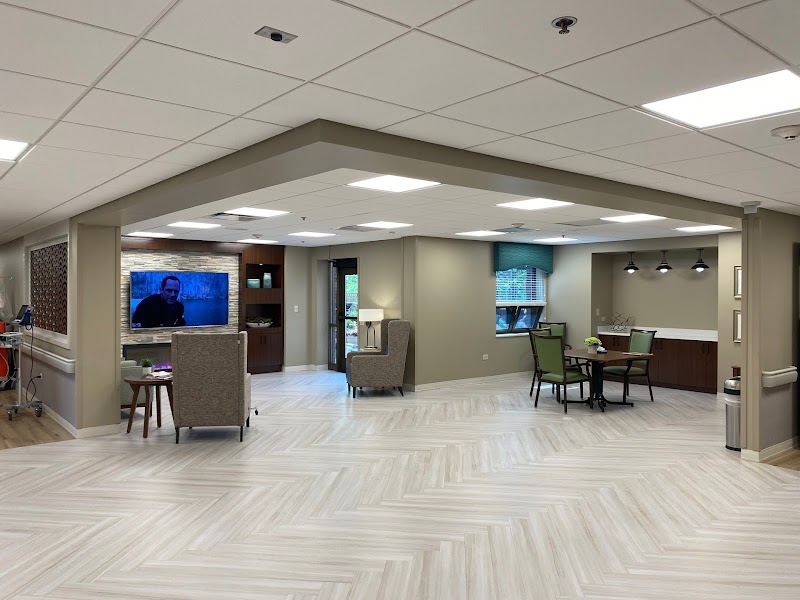
How is St Patrick'S Residence Staffed?

CMS rates ST PATRICK'S RESIDENCE's staffing level at 4 out of 5 stars, which is above average compared to other nursing homes. Staff turnover is 34%, compared to the Illinois average of 46%. This relatively stable workforce can support continuity of care.

What Have Inspectors Found at St Patrick'S Residence?

State health inspectors documented 23 deficiencies at ST PATRICK'S RESIDENCE during 2022 to 2025. These included: 1 that caused actual resident harm and 22 with potential for harm. Deficiencies causing actual harm indicate documented cases where residents experienced negative health consequences.
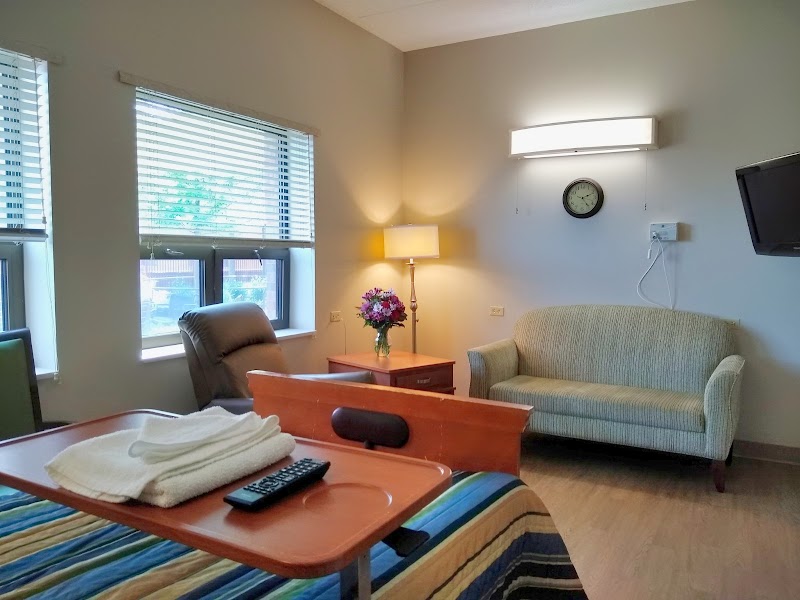
Who Owns and Operates St Patrick'S Residence?

ST PATRICK'S RESIDENCE is owned by a non-profit organization. Non-profit facilities reinvest revenue into operations rather than distributing to shareholders. The facility is operated by CARMELITE SISTERS FOR THE AGED & INFIRM, a chain that manages multiple nursing homes. With 209 certified beds and approximately 166 residents (about 79% occupancy), it is a large facility located in NAPERVILLE, Illinois.
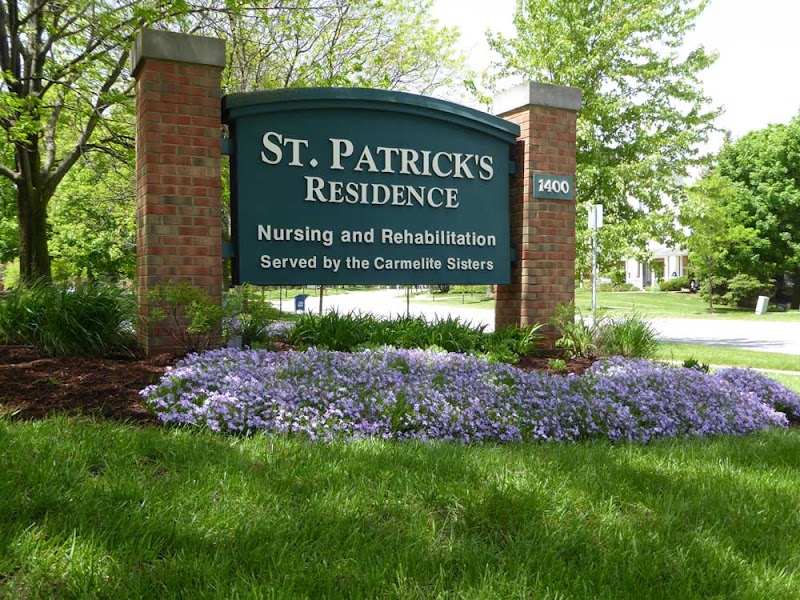
How Does St Patrick'S Residence Compare to Other Illinois Nursing Homes?

Compared to the 100 nursing homes in Illinois, ST PATRICK'S RESIDENCE's overall rating (4 stars) is above the state average of 2.5, staff turnover (34%) is significantly lower than the state average of 46%, and health inspection rating (4 stars) is above the national benchmark.

What Should Families Ask When Visiting St Patrick'S Residence?

Based on this facility's data, families visiting should ask: "Can I visit during a mealtime to observe dining assistance and food quality?" "How do you handle medical emergencies, and what is your hospital transfer rate?" "Can I speak with family members of current residents about their experience?"

Is St Patrick'S Residence Safe?

Based on CMS inspection data, ST PATRICK'S RESIDENCE has a clean safety record: no substantiated abuse findings (meaning no confirmed cases of resident harm), no Immediate Jeopardy citations (the most serious violation level indicating risk of serious injury or death), and is not on the Special Focus Facility watch list (a federal program monitoring the lowest-performing 1% of nursing homes). The facility has a 4-star overall rating and ranks #1 of 100 nursing homes in Illinois. While no facility is perfect, families should still ask about staff-to-resident ratios and recent inspection results during their visit.

Do Nurses at St Patrick'S Residence Stick Around?

ST PATRICK'S RESIDENCE has a staff turnover rate of 34%, which is about average for Illinois nursing homes (state average: 46%). Moderate turnover is common in nursing homes, but families should still ask about staff tenure and how the facility maintains care continuity when employees leave.

Was St Patrick'S Residence Ever Fined?

ST PATRICK'S RESIDENCE has been fined $20,885 across 1 penalty action. This is below the Illinois average of $33,288. While any fine indicates a compliance issue, fines under $50,000 are relatively common and typically reflect isolated problems that were subsequently corrected. Families should ask what specific issues led to these fines and confirm they've been resolved.

Is St Patrick'S Residence on Any Federal Watch List?

ST PATRICK'S RESIDENCE is not on any federal watch list. The most significant is the Special Focus Facility (SFF) program, which identifies the bottom 1% of nursing homes nationally based on persistent, serious quality problems. Not being on this list means the facility has avoided the pattern of deficiencies that triggers enhanced federal oversight. This is a positive indicator, though families should still review the facility's inspection history directly.