ALTA REHAB AT OAK BROOK
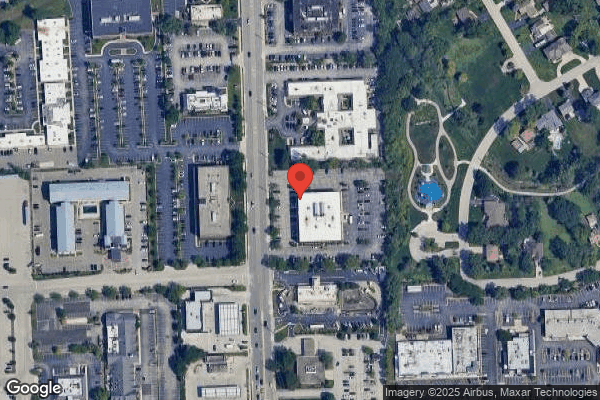
2013 MIDWEST ROAD, OAK BROOK, IL 60521 (630) 495-0220
For profit - Corporation 156 Beds APERION CARE Data: November 2025
Trust Grade
25/100
#318 of 665 in IL
Last Inspection: July 2024

Within standard 12-15 month inspection cycle. Federal law requires annual inspections.

Overview

Alta Rehab at Oak Brook has received a Trust Grade of F, indicating significant concerns and a poor standing among nursing homes. They rank #318 out of 665 in Illinois, placing them in the top half of facilities, but #25 out of 38 in Du Page County suggests there are local options that are better. The facility is showing signs of improvement, reducing serious issues from 20 in 2024 to 7 in 2025; however, they still have serious deficiencies, including failing to provide timely wound care for a resident, which led to a wound worsening, and not ensuring proper transfer assistance for another resident, resulting in a head injury. Staffing is average with a 52% turnover rate, and while they have more RN coverage than 78% of Illinois facilities, they have incurred $48,604 in fines, which is concerning but aligns with the average for the state. Families should weigh these strengths and weaknesses carefully when considering this home for their loved ones.

Trust Score
F
25/100
In Illinois
#318/665
Top 47%
Safety Record
High Risk
Review needed
Inspections
Getting Better
20 → 7 violations
Staff Stability
⚠ Watch
52% turnover. Above average. Higher turnover means staff may not know residents' routines.
Penalties
✓ Good
$48,604 in fines. Lower than most Illinois facilities. Relatively clean record.
Skilled Nurses
✓ Good
Each resident gets 65 minutes of Registered Nurse (RN) attention daily — more than 97% of Illinois nursing homes. RNs are the most trained staff who catch health problems before they become serious.
Violations
⚠ Watch
48 deficiencies on record. Higher than average. Multiple issues found across inspections.
★★☆☆☆
2.0
Overall Rating
★★★☆☆
3.0
Staff Levels
★★★☆☆
3.0
Care Quality
★★☆☆☆
2.0
Inspection Score
Stable
2024: 20 issues
2025: 7 issues

The Good

  • Full Sprinkler Coverage · Fire safety systems throughout facility
  • No fines on record

Facility shows strength in fire safety.

The Bad

2-Star Overall Rating

Below Illinois average (2.5)

Below average - review inspection findings carefully

Staff Turnover: 52%

Near Illinois avg (46%)

Higher turnover may affect care consistency

Federal Fines: $48,604

Above median ($33,413)

Moderate penalties - review what triggered them

Chain: APERION CARE

Part of a multi-facility chain

Ask about local staffing decisions and management

The Ugly 48 deficiencies on record

4 actual harm
Sept 2025 1 deficiency
CONCERN (D) 📢 Someone Reported This

A family member, employee, or ombudsman was alarmed enough to file a formal complaint

Potential for Harm - no one hurt, but risky conditions existed

Deficiency F0551 (Tag F0551)

Could have caused harm · This affected 1 resident

**NOTE- TERMS IN BRACKETS HAVE BEEN EDITED TO PROTECT CONFIDENTIALITY** Based on interview and record review, the facility failed to ensure that a resident representative was given accurate informatio...

Read full inspector narrative →
**NOTE- TERMS IN BRACKETS HAVE BEEN EDITED TO PROTECT CONFIDENTIALITY** Based on interview and record review, the facility failed to ensure that a resident representative was given accurate information regarding authorization to use an electronic monitoring device in the resident room, resulting in miscommunication and lack of informed consent related to resident rights. This applies to 1 of 3 residents (R1) reviewed for electronic monitoring device in the sample of 8.The findings include: R1 was admitted to the facility on [DATE] with multiple diagnoses including muscle wasting and atrophy, COPD (chronic obstructive pulmonary disease), acute bronchitis, and positive Covid 19, based on the face sheet.R1's admission observation record dated August 29, 2025 showed that the resident was alert and oriented x two (to person and place). R1's OT (occupational therapy) evaluation dated August 30, 2025 showed that the resident was moderately impaired with decision making. R1's OT treatment encounter notes dated September 1, 2025 showed, that the resident was confused. On September 4, 2025 at 9:58 A.M, V7 (daughter) stated she is the POA (Power of Attorney) for R1. V7 stated that on August 30 2025, she talked to V11 (RN (Registered Nurse)/ Supervisor) about installing a video surveillance camera inside R1's room. V7 stated that she was informed by V11 that according to V2 (Director of Nursing), video surveillance is not allowed. V7 stated that she had sent an email to V2 on September 1, 2025 for the follow up of video surveillance and V2 had not replied to the email.The facility's grievance/complaint form dated August 31, 2025 at 1:30 PM created by V11 (RN Supervisor) showed that R1's family would like to install camera in the room, emphasizing rights.On September 6, 2025 at 3:35 PM, V2 (Director of Nursing) stated that on Sunday, August 31, 2025 she received a call from V11 informing her that V7 (daughter) was requesting to have a surveillance camera inside R1's room. According to V2 she informed V11 that she believed the facility's policy prohibits the use of the camera in the resident room. V2 stated that after talking to V11 she requested a copy of the admission contract, which she received via text message (does not remember who among the administrative staff sent the text message). According to V2, she reviewed the facility's admission contact, which showed that video camera in resident room is prohibited. V2 stated that she called back V11 after reviewing the admission contract and told V11 that camera inside a resident room is prohibited. During the same interview, V2 admitted that when she read the admission contract she focused on the statement, Video cameras are prohibited in resident rooms and she did not noticed the following statement on the same admission contract that read, unless the resident and/or resident representative has followed the steps outlined under the law. V2 stated that she did not receive any email from V7, nor did she talk personally or over the phone to V7 with regards to video camera in R1's room.On September 6, 2025 at 4:02 PM, V14 (admission Assistant) stated that on Sunday, August 31, 2025 (not sure of the time), V2 requested a copy of the facility's admission contract, specifically the part regarding video camera in the resident room and also requested to show the specific part to V11. According to V14, she sent the requested copy to V2, and she showed R1's unsigned admission contract regarding video camera in the room to V11. After showing the said part of the admission contract to V11, she (V14) proceeded to R1's room to discuss the contract and have it signed by the resident. V14 stated that on August 31, 2025 between 1:00 PM and 2:00 PM, she arrived at R1's room and at that time V7 (daughter) was present. According to V14, the contract was discussed and signed by R1 in the presence of V7 and during the discussion, V7 asked about installing a camera inside R1's room. V14 stated that she showed the part of the admission contract regarding video camera to V7 while R1 was present. V14 stated that V7 made a comment, This tells me that I have to do certain procedures, but it is allowed as long as steps are followed to which she (V14) agreed. According to V14, V7 did not ask for any further question.R1's signed admission contract dated August 31, 2025 showed under electronic device policy, Cameras: Video Cameras are prohibited in resident rooms unless the resident and/or Resident Representative has followed the steps outlined under Illinois law Authorized Electronic Monitoring in Long Term Care Facilities. (210 ILCS 32/1, et seq.). This includes notifying the Facility of an intent to place the camera and obtaining consent from the Resident and Resident's Roommate, if any. Once the Facility has been notified of the intent to place a camera, the other aspects of the applicable law will be reviewed with the Resident and/or Representative to ensure compliance and to answer any questions.On September 6, 2025 at 4:13 PM, V11 stated that on Sunday, August 31, 2025 at around 1:30 PM, V7 (daughter) asked about putting a camera inside R1's room. According to V11, she told V7 that she was not familiar with the facility's policy regarding camera in the room, but she will find out. V11 stated that she called V2 and asked if the facility allows camera in resident room. V11 stated that according to V2, camera is not allowed in the room, so she went back to V7 and informed that according to V2, camera in the room is not allowed. After providing the said information, V7 insisted that she wanted to put a camera in the resident's room and that it is the resident's right, so she called back V2 about V7's insistence. Prior to her (V11) calling back V2, V14 (admission Assistant) was at the unit and according to V14 she will go inside R1's room to discuss and have R1 sign the admission contract. V11 denied seeing the facility admission contract, specifically regarding the use of camera in the resident room. V11 stated that while V14 was inside R1's room, she called back V2 and informed that V7 was insisting that she wanted to put a camera in the room, V2 again told her that per facility policy, camera is not allowed in the room, which according to V2 had been verified with the Regional Nurse consultant. According to V11, she went back to R1's room after V14 had left the room on August 31, 2025 and she (V11) informed V7 that she again talked to V2 and was again informed that camera in the resident room is not allowed. V11 added that after the said conversation with V7, V7 stated that family will file a complaint about the facility not allowing resident to have camera in the room.On September 6, 2025 at 4:25 PM, V2 stated that she was not aware that V11 had informed the family that camera is not allowed in the room, after V14 had discussed and shown the family the facility's admission contract. V2 again stated that when she reviewed the facility's admission contract, she was focused on the statement that video camera is prohibited in resident room, not realizing that there was a following statement that read, unless the resident and/or resident representative has followed the steps. According to V2, based on R1's signed admission contract, the resident has the right to have a camera in the room as long as steps are followed including signing of the consent, since R1 at the time had no roommate.
Aug 2025 2 deficiencies
CONCERN (D) 📢 Someone Reported This

A family member, employee, or ombudsman was alarmed enough to file a formal complaint

Potential for Harm - no one hurt, but risky conditions existed

Grievances (Tag F0585)

Could have caused harm · This affected 1 resident

**NOTE- TERMS IN BRACKETS HAVE BEEN EDITED TO PROTECT CONFIDENTIALITY** Based on interview and record review, the facility failed to ensure that grievances were identified, documented, and addressed i...

Read full inspector narrative →
**NOTE- TERMS IN BRACKETS HAVE BEEN EDITED TO PROTECT CONFIDENTIALITY** Based on interview and record review, the facility failed to ensure that grievances were identified, documented, and addressed in accordance with facility policy. This applies to 1 of 4 residents (R1) reviewed for grievances.The Findings Include: Review of the Electronic Medical Record (EMR) showed that R1, a [AGE] year-old male, was admitted to the facility on [DATE], from a hospital following a fall. R1's documented diagnoses included, but were not limited to: dementia, repeated falls, ataxia, muscle wasting, lack of coordination, type 2 diabetes mellitus, chronic obstructive pulmonary disease (COPD), cirrhosis, protein-calorie malnutrition, and depression. The Minimum Data Set (MDS) dated [DATE], identified R1 as having moderately impaired cognition and requiring substantial to maximum assistance with activities of daily living (ADLs).An admission skin assessment dated [DATE], documented the following impairments: -Left elbow skin tear measuring 0.5 cm x 0.5 cm x 0.1 cm with 100% bright pink tissue and light serous drainage -Deep tissue injury (DTI) to sacrum measuring 3.0 cm x 2.5 cm with 100% dark maroon tissue --Bruise to left hip measuring 2 cm x 2 cm x 0 cmFurther initial assessment observations by the Wound Nurse (V3) included: -multiple bruises to upper arms, lower legs, right chest, right foot, and ankle; edema in the upper arms; scabbing to the right knee and anterior lower leg. Facility-acquired skin tears were documented as follows: -Left shoulder - Identified August 1,2025 : measured 2 cm x 0.1 cm -Right shoulder - Identified August 1,2025 : measured 1.45 cm x 1.0 cm x 0.1 cm -Right forearm - Identified August 4,2025: measured 15 cm x 13 cm x 0.1 cm with light bloody drainage. -Lesion to top of head - Identified August 1,2025: measured 0.5 cm x 0 cm with scant serosanguinous drainage and 100% slough/necrotic tissue.On August 20, 2025, at 2:30 P.M., the Wound Care Nurse (V4) stated that she performed a dressing change on the right forearm wound on August 6, 2025 at approximately 6:45 A.M. She observed significant bloody drainage and used four ABD pads and Kerlix wrap for coverage. However, she did not notify the physician or Nurse Practitioner (V6) despite the change in wound status.On August 20, 2025, at 12:22 P.M., V8 (Social Service Director) stated that V7 (R1's spouse) had voiced concerns regarding poor wound care on August 4, 2025, citing dried blood leaking through R1's shirt. V7 subsequently requested R1's transfer to another facility. V8 acknowledged that she did not report this grievance to either the Administrator (V1) or the Assistant Director of Nursing (V2).During a phone interview on August 20, 2025, at 1:00 P.M., V7 stated: They butchered my husband. what they called a ‘skin tear' was a huge wound, bleeding, and extending from the wrist almost to the elbow. No one told me how bad it was until I saw it at the other facility. He was immediately sent to the hospital and is now in hospice.Review of the facility's grievance documentation showed no record that V7's concerns were reported, investigated, or resolved.On August 20, 2025, at 4:40 P.M., both the Administrator (V1) and the Assistant Director of Nursing (V2) confirmed that they had not received any report of a grievance related to R1's wound care from V8 or other facility staff.Review of the facility's Grievance Policy (dated November 20, 2012) stated: The purpose of this policy is to ensure prompt resolution of all grievances related to care and treatment provided or not provided, staff and resident behavior, and other concerns during the resident's stay.
CONCERN (D) 📢 Someone Reported This

A family member, employee, or ombudsman was alarmed enough to file a formal complaint

Potential for Harm - no one hurt, but risky conditions existed

Quality of Care (Tag F0684)

Could have caused harm · This affected 1 resident

**NOTE- TERMS IN BRACKETS HAVE BEEN EDITED TO PROTECT CONFIDENTIALITY** Based on interview and record review, the facility failed to provide treatment for a skin tear as ordered by the physician. The ...

Read full inspector narrative →
**NOTE- TERMS IN BRACKETS HAVE BEEN EDITED TO PROTECT CONFIDENTIALITY** Based on interview and record review, the facility failed to provide treatment for a skin tear as ordered by the physician. The facility also failed to reassess a worsening skin impairment, did not notify the physician of its changes to ensure timely and appropriate interventions, and lacked a care plan outlining specific interventions to manage multiple skin impairments.This applies to 1 of 4 residents (R1) reviewed for skin impairments. The Findings Include:The Electronic Medical record (EMR) showed that R1, a [AGE] year-old male admitted to the facility on [DATE], from a hospital following a fall. R1's diagnoses included, but were not limited to, dementia, repeated falls, ataxia, muscle wasting, lack of coordination, type 2 diabetes mellitus, chronic obstructive pulmonary disease (COPD), cirrhosis, protein-calorie malnutrition, and depression.The Minimum Data Set (MDS) dated [DATE], identified R1 as having moderately impaired cognition and requiring substantial to maximum assistance with activities of daily living (ADLs).The admission skin assessment dated [DATE] documented the following skin impairments: 1) Left elbow skin tear measuring 0.5 cm x 0.5 cm x 0.1 cm with 100% bright pink tissue and light serous drainage. Treatment Order: Cleanse with normal saline, pat dry, apply Adaptic and dry dressing three times per week (M/W/F). 2) Deep tissue injury (DTI) to sacrum measuring 3.0 cm x 2.5 cm with 100% dark maroon tissue. Treatment Order: Cleanse with saline, pat dry, apply Venelex and dry dressing daily. 3) Bruise to left hip measuring 2 cm x 2 cm x 0 cm.Review further of the initial assessment showed that additional observations by the Wound Nurse (V3) on admission included multiple bruises to the upper arms, lower legs, right chest, right foot and ankle, edema in the upper arms, and scabbing to the right knee and anterior lower leg.Subsequent wound records showed R1's facility-acquired skin tears as follows: 1) Left shoulder (identified August 1,2025): 2 cm x 0.1 cm. 2) Right shoulder (identified August 1,2025): 1.45 cm x 1.0 cm x 0.1 cm. 3) Right forearm (identified August 4,2025): 15 cm x 13 cm x 0.1 cm with light bloody drainage. Treatment Order: Adaptic dressing, ABD pads, Kerlix wrap, 3x/week (M/W/F) 4) Lesion to top of head (identified August 1, 2025): 0.5 cm x 0 cm, with scant serosanguinous drainage and 100% slough/necrotic tissue. The manufacturer specification for the ABD showed that this kind of dressing (Army Battle Dressing) is a type of wound dressing used to absorb fluids from large or heavily draining wounds. During a group interview on August 20, 2025, at 2:30 P.M., with the Assistant Director of Nursing (V2), Wound Care Coordinator (V5), and Wound Nurses (V3 and V4), the following information was obtained: -V3 said that while she observed the wounds on admission, she did not notify the physician or obtain specific orders. Instead, she implemented standard treatment protocols. -V4 stated she performed a dressing change on the right forearm wound on August 6, 2025, at approximately 6:45 A.M. She noted significant bloody drainage and used four ABD pads and Kerlix wrap for coverage. Despite observing increased drainage, V4 did not notify the physician or Nurse Practitioner (V6). -V2, V3, and V5 confirmed there was no documentation of treatment on August 4, 2025, when the right forearm skin tear was first identified. The also validated that their facility protocol was to document provided treatment into the ETAR (Electronic Treatment Administration Record). Review of the ETAR for the month of August 4,2025, wound notes, and progress notes for showed no documentation of treatment being administered to R1's right forearm skin tear on August 4, 2025.The care plan dated July 21, 2025, lacked specific interventions to address R1's fragile skin or prevent further deterioration of skin integrity, despite multiple skin injuries and diagnoses increasing risk for skin breakdown.On August 20,2025 at 12:22 P.M., V8 said that V7 (R1's spouse) reported concerns to regarding poor wound care and draining wounds on August 4,2025. V8 said that V7 noted a dried blood that leaked through R1's shirt. As a result, V7 requested a transfer to another facility.In a phone interview on August 20, 2025, at 1:00 P.M., V7 stated: They butchered my husband. what they called a ‘skin tear' was a huge wound, bleeding, and extending from the wrist almost to the elbow. No one told me how bad it was until I saw it at the other facility. He was immediately sent to the hospital and is now in hospice.On August 20,2025 at 1:05 P.M., V9 and V10 (Admissions and Executive Director at the receiving facility), R1 arrived on August 6, 2025, around noontime, was assessed by nurse (V11), and transferred to the hospital via 911 due to deep wounds and significant pain.On August 21,2025 at 6:30 P.M., V11 said that when she immediately assessed R1 upon arrival to their facility. V11 said that V7 was present during the assessment. V11 described that R1 was a poor historian, now aware of what happened to his impaired skin integrity. V11 said she noted that R1's large bandage wrapped around R1's forearm that had extended from the wrist to the elbow. V11 said that the outer bandage was a mixed of saturated dried and fresh red blood drainage. V11 said she used approximately 200 cc of normal saline to ensure that when primary dressing be removed, there would be easy to remove without compromising what was under the dressing. V11 said that she noted multiple ABD pads, and a mesh like dressing that was embedded to the skin tissue to a deep wound on the right forearm. V11 describe the wound an approximated size from wrist to the elbow. V11 added that aside from the multiple dressing to shoulders, R1's extremities were with scattered bruises and note especially the left middle finger that extend to the elbow. V11 said that R1 was retracting his arm when the dressing was removed, whimpering of pain. V11 said she was not able to open other dressing and R1 was send via 911 for further evaluation of the large weeping wounds and pain.The documentation dated August 8,2025 entered by V11 validated V11's statement. The Hospital ED (Emergency Department) report dated August 6,2025 showed that R1 was noted with diffuse bruising and swelling in upper and lower extremities; multiple skin tears to right forearm and with significant bruising ; upper and lower patchy bruising diffused around trunk. On August 20,2025, V6 (Facility's Nurses Practitioner) stated that she was not notified that it was a large wound and not a skin tear. V6 added that a skin tear was non-significant since it was superficial, but a weeping, draining large wound need further evaluation and treatment. V11 added that should she been notified, R1 would have been sent out for further evaluation and treatment of wounds to prevent complication such as infection.
Aug 2025 1 deficiency
CONCERN (D) 📢 Someone Reported This

A family member, employee, or ombudsman was alarmed enough to file a formal complaint

Potential for Harm - no one hurt, but risky conditions existed

Accident Prevention (Tag F0689)

Could have caused harm · This affected 1 resident

Based on observation, interview and record review the facility failed to ensure residents were transferred in a safe manner to 2 of 62 residents (R9, R42) reviewed for safety in the sample of 62. The ...

Read full inspector narrative →
Based on observation, interview and record review the facility failed to ensure residents were transferred in a safe manner to 2 of 62 residents (R9, R42) reviewed for safety in the sample of 62. The findings include:1.R9's face sheet printed on 8/4/25 show R9 has diagnoses that include hemiplegia affecting right dominant side, multiple sclerosis, renal failure and bladder mass.R9's facility assessment show R9 has no cognitive impairment.R9's progress notes dated 7/18/2025 timed at 4:20 PM, documents, resident (R9) was transferring from wheelchair to bed with two staff assist using stand lift machine when her legs started to give out, resident said she has right leg pain and cannot stand longer in the machine, so resident was lowered to the floor by staff. Resident eased to lie down on the floor with pillow underneath her head, resident wanted to go back to bed so staff transferred resident to bed using (Mechanical lift machine). NP was notified with orders to administer PRN pain medication and if pain persists order an X-ray follow up assessment, resident said she's fine, no new complaints of pain were reported.On 8/5/2025 at 11 AM, R9 was in bed alert and pleasant. R9 said when she was being transferred from her chair to go to bed, her knees gave out. R9 said she had pain after it happened, then the pain was on and off. On 8/6/25 at 3:30 PM, V22 (R9's daughter) said R9's knees buckled, she was not able to hold unto the lift machine.On 8/4/25 at 12:38 PM, V24 (Certified Nursing Assistant-CNA) said he was R9's CNA. It was around 4PM last 7/18/25, R9 was being transferred from her wheelchair to bed via the mechanical stand lift machine. After the safety straps were applied, it was noted that R9's right side was not working well, her right hand was weak she had a stroke, she was only able to hold unto the handle using her left hand. As R9 was being raised to standing position, she leaned towards her right side, she was not able to stand. V24 said he pulled R9 from the chair to a standing position. R9 made a loud sound like she was in pain while her knees buckled with her legs spread out. V24 said he asked the other CNA to get help. The Nurse was passing meds just outside R9's room, the nurse came and R9 was lowered to the floor.On 8/5/25 at 10:10 AM, V11 (CNA) said it was her second day on the job. This was her first job as a CNA. On 7/18/25, she was working with CNA (V24) who was showing her around and observing how things were being done. R9 was being transferred to bed using the stand lift machine. V11 said she assisted V24 to place R9's foot in the sit to stand. V11 said she then stayed behind the wheelchair to observe how R9 was being transferred in the stand lift machine. V24 transferred R9 by himself As R9 was being lifted with the stand lift, she noticed R9 was no longer in the machine and all of a sudden all of R9's weight came down, R9 was so closed to the ground, V11 said she went to get help, as V24 was holding unto R9. The Nurse (V10) was just outside the room, V10 came in and assisted to lower R9 to the floor. On 8/4/25 at 1PM, V10 (License Practical Nurse-LPN) said she was passing evening meds, she was called to R9's room, R9 was hanging on the sit to stand, her legs buckled. V10 said R9's left hand was able to hold unto the stand lift but R9's right hand was weak, her right arm cannot hold on, that made her buckled. R9 was lowered down to the floor. V10 said she put pillows on the floor to cushion R9's head. R9 was complaining of pain to right leg. Unable to assess full range of motion because it was limited due to foot drop and MS. (R9's baseline) V10 said she notified the NP. (V12)On 8/5/25 at 11:05 AM, V12 (Nurse Practitioner) said she was notified that while R9 was being transferred to bed via stand lift, her legs buckled outwards, she was lowered to the ground she did not fall. V12 said she was surprised when she was told R9 was being transferred via seat to stand instead of a mechanical lift. R9 has MS, foot drop right sided weakness. Mechanical lift would have been safer for R9.On 8/5/25 at 9:25 AM, V13 (Physical Therapist) said she assessed R9 for a stand lift transfer. Due to R9's right sided weakness, two staff need to assist R9. One staff should be in the R9's right-sided weakness assisting in the hand placement of the right hand (weak side) and the other staff to maneuver the machine, this ensures R9's safety during the transfer.On 8/6/25 at 1PM, V2 (Director of Nursing) said R9 was now on mechanical lift on all transfers.2. R42's Physician Order Sheet POS dated 7/25 show R42 has diagnoses that include hemiplegia and hemiparesis due to cerebral infarction (stroke) affecting her left dominant side. On 8/4/2025 at 2:05 pm, V14 and V15 both Certified Nursing Assistants- (CNAs) transferred R42 from wheelchair via mechanical stand lift machine to be toileted. After the safety sling was applied, R42 was instructed to hold unto the stand lift handle. R42 was able to hold unto the right handle with a tight grip using her right hand. R42 was not able to lift her left hand to hold unto the left handle. R42's left hand was hanging in her left side R42 was not able to lift her left hand. R42 complained of discomfort to left armpits as it rubbed in the sling. V15 applied a washcloth as a cushion under both armpits. R2 was then transferred to the bathroom with V14 maneuvering the sit to stand machine. V15 was behind R42 holding unto R42's pants. R42 was leaning to her left side with her left hand hanging to her side. When R42 was done using the bathroom, R42 was again placed in the stand lift machine to her wheelchair with R42 in the stand lift with right hand holding in the handle and left hand hanging in her side. On 8/5/25 at 9:25 AM, V13 (Physical Therapist) said when using stand lift machine to a resident with weakness due to stroke, there should be 2 staff assisting the resident. One staff assisting the resident assisting the weak side and other staff guiding the machine for resident's safety.
Mar 2025 1 deficiency
CONCERN (E) 📢 Someone Reported This

A family member, employee, or ombudsman was alarmed enough to file a formal complaint

Potential for Harm - no one hurt, but risky conditions existed

ADL Care (Tag F0677)

Could have caused harm · This affected multiple residents

**NOTE- TERMS IN BRACKETS HAVE BEEN EDITED TO PROTECT CONFIDENTIALITY** Based on observation, interview, and record review, the facility failed to provide ADL (Activities of Daily Living) care for res...

Read full inspector narrative →
**NOTE- TERMS IN BRACKETS HAVE BEEN EDITED TO PROTECT CONFIDENTIALITY** Based on observation, interview, and record review, the facility failed to provide ADL (Activities of Daily Living) care for residents who required staff assistance for toileting, repositioning, and bathing. This applies to 16 of 16 residents (R1-R16) reviwed for ADL (Activities of Daily Living) care in a sample of 16. The findings include: 1. Face sheet, dated 3/18/25, shows R3's diagnoses include senile degeneration of brain, Alzheimer's disease, bipolar disorder, history of seizures, depression, psychosis, and anxiety. MDS (Minimum Data Set), dated 1/7/25, shows R3 was severely impaired and required substantial assistance from staff for toileting. The MDS showed R3 was always incontinent of bowel and bladder. Bowel and bladder incontinence care plan, initiated 2/17/25, shows R3 was unable to make her needs known and needed assistance with toileting. The care plan shows R3's approaches include checking R3 every two hours and assisting with toileting her as needed. Advanced Practice Registered Nurse progress note, dated 2/18/25, shows R3 was recently treated for a urinary tract infection. On 3/18/25 at 10:11 AM, V5 (Restorative Aide) stated R3 required two staff for transfers and R3 would have her incontinence brief checked and changed after lunch. On 3/18/25 during continuous observation in the multipurpose room between 10:00 AM and 1:05 PM , R3 sat in the dementia unit multipurpose room in her wheelchair without her incontinence brief being checked/changed and without being repositioned. At 1:05 PM R3 was taken to her room by V7 (CNA-Certified Nursing Assistant) to have her incontinence brief changed and be placed in bed. V7 stated R3's incontinence brief was not wet but had a smear of bowel movement in the brief. On 3/18/25 at 1:10 PM, V5 stated the last time R3 had her incontinence brief checked/changed was when she got her up and out of bed at approximately 9:45-10:00 AM. On 3/18/25 at 1:05 AM, V7 (CNA-Certified Nursing Assistant) stated she had not checked/changed R3's incontinence brief during her shift that day. On 3/18/25 at 2:00 PM, V5 (Restorative Aide) stated all incontinent residents were to be checked and changed every two hours. V5 stated if residents can not communicate if they wanted to go to the bathroom and were incontinent, the staff were to take them to their room and have their briefs checked/changed. V5 stated staff were expected to reposition residents every two hours or more often. On 3/18/25, V2 (Director of Nursing) stated incontinent residents were to have their incontinence briefs checked and changed every two hours. V2 stated residents were also to be repositioned every two hours. Facility Incontinence Care Policy, revised 1/16/18, shows the purpose of the policy was to prevent excoriation and skin breakdown, discomfort, and maintain dignity. The policy guidelines show incontinent residents will be checked periodically in accordance with the assessed incontinent episodes or every two hours and provided perineal and genital care after each episode. 2. Face sheet, dated 3/18/25, shows R4's diagnoses included dementia and anxiety. MDS, dated [DATE], shows R4's cognition was severely impaired, R4 was dependent on staff for toileting, and R4 was frequently incontinent of bowel and bladder. R4's care plans show R4 required a mechanical lift and two staff for transfers and two staff for assistance with incontinence brief checks/changes. The care plan shows R4 was to be kept clean and dry and was to be repositioned every two hours. On 3/18/25 during continuous observation in the multipurpose room between 10:00 AM and 12:23 PM, R4 sat in her wheelchair in the multipurpose room with no repositioning and no staff checked/changed her incontinence brief. On 3/18/25 at 12:23 PM, V7 (CNA) stated she was assigned to R4 as her CNA and last toileted R4 when she got her up when she got R4 up for breakfast some time prior to 9:00 AM. V7 checked/changed R4's incontinence brief and stated the brief was not wet with urine but R4 had had a bowel movement. 3. Face sheet, dated 3/18/25, shows R2's diagnoses included fractured left femur, dementia, protein-calorie malnutrition, depression, and lack of coordination. MDS, dated [DATE], shows R2 was severely cognitively impaired, was dependent on staff for toileting, and R2 was occasionally incontinent of urine and frequently incontinent of bowel. R2's care plan, dated 3/11/25, shows R2 was dependent on two staff for transfers and incontinence brief checks and changes. R2's care plan, dated 3/10/25, shows R2 had a pressure injury to her right him related to immobility. On 3/18/25 during continuous observation in the multipurpose room, R2 sat in her wheelchair from 10:00 AM to 10:31 AM when she was taken to therapy. At 11:02 AM, R2 was returned to the multipurpose room from therapy and V11 (Occupational Therapist) stated R2 was not toileted while in therapy. Between 11:08 AM and 11:14 AM R2 was removed briefly from the multipurpose room and returned without toileting. R2 continued to sit in her wheelchair in the multipurpose room from 11:14 AM to 12:42 PM when she was taken to her room by V7 for incontinence brief check/change and to be placed in bed. V7 stated R2's brief was dry when it was changed. On 3/18/25 at 12:42 PM, V7 stated R2 was assigned to V7 and V7 had not checked/changed R2's incontinence brief since before 9:00 AM. 4. Face sheet, dated 3/18/25, shows R1's diagnoses included dementia, morbid obesity, depression, and anxiety. MDS, dated [DATE], shows R1's cognition was moderately impaired, R1 required substantial/maximum assistance with toileting, and was always incontinent of bowel and bladder. Care plan, revised on 4/4/24, shows R1 required one staff to assist resident with incontinence brief check and changes. On 3/17/25 at 1:14 PM, V10 (Family) stated when she arrived to visit R1, R1 was in a soiled incontinence brief. V10 stated after visiting for 2.5 hours, no staff came to check/change R1's incontinence brief. V10 stated she checked R1's incontinence brief and it was soiled so she put the call light on for staff to come change the brief. V10 stated the prior week she arrived to visit R1 and R1's incontinence brief was so soiled it soaked through her clothes and through her bed linens. Review of R1's weekly skin observations and skin condition assessments, dated 2/25/25 to 3/11/25, show R1's sacrum was reported to have blanchable redness with skin intact as well as a fungal rash on her bilateral inner buttocks. On 3/18/25 at 1:39 PM, V9 (Wound Nurse) stated R1 has on and off fungal rashes on her buttocks. V9 stated R1 has chronic loose bowel movements that irritate her skin. V9 state R1's skin never opens and R1 is treated with antifungal powder and zinc ointment. 5. Grievance, dated 12/17/25, shows a concern was expressed that staff were very slow and not responding to R6's request for assistance. The grievance shows R6 waited 45 to 60 minutes for staff to respond to her request for assistance. Grievance, dated 1/20/25, shows R7 was found by family to be soaked through his incontinence brief and did not get any assistance feeding him lunch. The family reported that the resident did not get assistance with feeding at lunch a day they visited a week prior. The family expressed ongoing concerns regarding lack of assistance which was the reason the family visited often. The resolution showed a staff was assigned to provide feeding assistance and education was provided to the CNA about rounding and checking on residents with cognitive impairment. Grievance, dated 1/20/25, shows on 1/18/25 the family of R8 was requesting her incontinence brief to be changed and reported overhearing a CNA state that the resident had an upcoming shower on the 3/11 shift and would have her incontinence brief changed at that time. Grievance, dated 1/21/25, shows the family of R9 expressed concern that no CNA came in overnight to check and change the resident's incontinence brief. Grievance, dated 1/22/25, shows the family of R10 reported the resident was in need of an incontinence brief change. Grievance, dated 2/2/25, shows the family of R11 placed R11's call light on to use the bathroom and the daughter came out of the room twice to see if assistance was coming. The grievance shows the daughter spoke to staff who asked if she needed something and the family reported the resident needed to use the bathroom. The grievance shows the family was told the resident could walk to the toilet. Grievance resolution shows the resident requires one staff to transfer her while toileting and education was provided to staff. Grievance, dated 2/3/25, shows R12 expressed concern that he was experiencing long wait times at night for assistance toileting and that staff were not rounding overnight. The grievance resolution shows the resident required assistance with transfers and toileting. Grievance, dated 2/15/25, shows the family of R13 arrived to visit the resident on 2/14/25 at approximately noon and the resident was still in bed with her gown on and not up, dressed and out of bed. The grievance shows when the family asked for assistance to get the resident dressed and out of bed, staff responded they would not be able to assist until after lunch trays were finished. The grievance resolution shows the staff had a slow start due to staffing delays. Grievance, dated 3/6/25, shows the family of R14 visited the resident and found her with her incontinence brief overflowing with feces and R14 was attempting to clean herself with wipes and tissues she had available at the bedside. The family also expressed concerns that the resident was still in the same clothes as the day prior at 1:30 PM the following day. Grievance, dated 3/7/25, shows family expressed concerns that R15 did not receive a shower on his scheduled shower days. Grievance, dated 3/11/25, shows R16 expressed concern that she pressed her call light for assistance from staff to use the restroom for over 25 minutes while she heard staff talking outside the room near the nursing station. The grievance shows staff finally arrived, put R16's walker near her while sitting in a lift recliner, and told her she was in a lift recliner and could go to the bathroom herself without staff assistance. The resolution shows R16 would no longer be assigned that CNA. Resident council meeting minutes, dated 12/19/24, show a resident expressed concerns he was not getting him up early enough on the weekends. Resident council meeting minutes, dated 1/23/25, show that families of residents stated the CNAs have to wait to use the facility mechanical lift because it is in use and there are delays in resident care. Resident council meeting minutes, dated 2/20/25, show a request for the facility to purchase an additional mechanical lift, a resident reported that her roommate was left on the toilet for over 30 minutes, and multiple residents stated the CNA response time to call lights could improve.
Feb 2025 2 deficiencies
CONCERN (D) 📢 Someone Reported This

A family member, employee, or ombudsman was alarmed enough to file a formal complaint

Potential for Harm - no one hurt, but risky conditions existed

Quality of Care (Tag F0684)

Could have caused harm · This affected 1 resident

**NOTE- TERMS IN BRACKETS HAVE BEEN EDITED TO PROTECT CONFIDENTIALITY** Based on interview and record review, the facility failed to ensure a resident was promptly assessed for injury following an inc...

Read full inspector narrative →
**NOTE- TERMS IN BRACKETS HAVE BEEN EDITED TO PROTECT CONFIDENTIALITY** Based on interview and record review, the facility failed to ensure a resident was promptly assessed for injury following an incident during transfer with the mechanical lift machine. This applies to 1 of 3 residents (R1) reviewed for assessment, in the sample of 7. The findings include: The EMR (Electronic Medical Record) shows R1 was admitted to the facility on [DATE] and was discharged to the local hospital on September 6, 2024. R1 did not return to the facility. R1 had multiple diagnoses including drug-induced polyneuropathy, sepsis, left food drop, metabolic acidosis, hemorrhage, UTI (Urinary Tract Infection), acute kidney failure, colon cancer, abnormal posture, history of falling, cardiac arrhythmia, anemia, and atrial fibrillation. R1's MDS (Minimum Data Set) dated June 25, 2024 shows R1 was cognitively intact, required supervision with eating, oral and personal hygiene, substantial/maximal assistance with bed mobility, and was dependent on facility staff for all other ADLs (Activities of Daily Living), including transfers between surfaces. R1 was always incontinent of bowel and bladder. The facility's incident report dated September 5, 2024 shows R1 Suffered abrasion and redness in his left arm. V7 (CNA-Certified Nursing Assistant) documented R1's statement: Per resident he was being transferred using stand lift from wheelchair to bed. When he could not feel the bed behind him and thought he would fall, that is why he just let go of the machine. The facility's incident report does not have documentation to show R1 was assessed for pain, range of motion, vital signs, or injury following the incident involving the sit-to-stand mechanical lift device. On September 5, 2024 at 6:46 PM, V4 (LPN-Licensed Practical Nurse) documented, Resident suffered abrasion and redness in his left arm. Seen by treatment nurse and nurse on duty. Applied A&D to affected areas. V4 did not document an assessment of R1, including vital signs, the range of motion of R1's right and left arms, or R1's pain level. V4 did not document notifying R1's physician or family member. On September 5, 2024 at 4:45 PM, V3 (WCN-Wound Care Nurse) documented, Seen resident with bruises and redness on the left arm and A&D ointment applied. NOD (Nurse on Duty) and ADON (Assistant Director of Nursing) aware. V3 did not document the appearance of R1's left arm, including area of redness or bruising, or the size of the bruises. V3 did not document R1's pain level. On February 18, 2025 at 1:53 PM, V7 (CNA) said, I wrote a report and gave it to my supervisor. I was training another CNA (V6). [R1] wanted a shower. He did not want a bed bath. We transferred him to the shower chair next to his bed. We used the sit-to-stand lift. When we finished, we went back to the room, and I told him to hold onto the lift. I told the other CNA where to hook the sling for the sit-to-stand, and when he was standing, she was able to guide him to the bedside, and he was screaming he wanted us to go faster. He let go of the handles, and the sling from the lift was hitting his arm by his intravenous line on his arm. He got really angry, and he said his arm hurt. He was saying his arm hurt a lot. He was literally about six inches above the mattress when [R1] let go of the sit-to-stand handles and his butt just lowered the six inches to the mattress. He never fell. I notified the nurse. On February 18, 2025 at 1:40 PM, V4 (LPN) said, [R1] let go of the sit-to-stand during transfer. He did not fall. I did not assess his pain or skin. I asked the wound care nurse to do that. On February 19, 2025 at 10:23 AM, V3 (WCN) said, I remember the resident. His skin was intact. I put A&D ointment on it for protection. I don't remember much about it. I was only there to look at his skin. I did not assess his pain or range of motion. On February 19, 2025 at 8:52 AM, V2 (DON-Director of Nursing) said the facility does not have documentation to show R1 was assessed following the incident on September 5, 2024 involving the sit-to-stand mechanical lift. V2 continued to say if the resident was complaining of extreme pain, the resident should have been assessed, including vital signs, range of motion, and level of pain. On September 6, 2024 at 6:09 PM, V26 (NP-Nurse Practitioner) documented, [R1] seen and examined. Patient seen lying in bed with left arm swelling, erythema, and warmth to touch. Patient with limited ROM (Range of Motion) and inability to straighten elbow and is in severe pain during physical assessment. Doppler and X-ray orders sent to NOD. [V8] (Spouse of R1) came to my office later in the day asking about ultrasound and room status. Directed to social services or admission for room concerns, NOD check on STAT orders for doppler ultrasound and X-ray. Later in the day, DON contacted me reporting testing was not yet completed and patient's wife requesting to send patient out for quicker evaluation and results. Agreed to sent patient out to ED. V23's (RN) SBAR (Situation, Background, Appearance, Review and Notify) Communication Form dated September 6, 2024: Upon greeting patient in AM, noticed that left forearm is bruised and swollen and area directly under PICC (Peripherally Inserted Central Catheter) line is reddened. Forearm is warm to touch and patient having difficulty moving arm. The form continues to show V8 (Spouse of R1) was notified on September 6, 2024 at 11:00 AM. On February 19, 2025 at 11:19 AM, V23 (RN) said, I was not in the facility on the day of the incident (September 5, 2024). When I went in to see him on September 6, I noticed his left arm was swollen. It was swollen from the elbow down. The dressing on his midline catheter was intact. [R1] said he had a fall, and he was telling me it was hurting and sore, and when I touched the arm, his arm felt boggy, and I told him I would have the nurse practitioner look at it. I put in STAT orders from the nurse practitioner for a left arm X-ray and venous doppler. When [V8] (Spouse of R1) came in, I updated her and told her about the orders and told her the nurse practitioner saw [R1]. When the resident told me he was in pain, I offered morphine, and he declined. He left the facility around dinnertime. I never saw any open skin on his arm. Hospital records show R1 had an ultrasound venous doppler of his left arm on September 6, 2024. The results showed: Conclusion: 1. Left upper extremity DVT (Deep Vein Thrombosis) with occlusive axillary vein thrombus possibly extending into junction with one of the brachial veins in the proximal arm. Left forearm X-rays completed at the hospital on September 6, 2024 were negative for acute fracture or subluxation. On February 20, 2025 at 10:43 AM, V19 (Physician) said facility staff should assess a resident following an incident where the resident complains of extreme pain. The facility's policy entitled Accidents and Incidents - Investigating and Reporting revised September 2021 shows: All accidents or incidents involving residents, employees, visitors, vendors, etc., occurring on our premises shall be investigated and reported to the Administrator. Policy Interpretation and Implementation: 1. The Nurse Supervisor/Charge Nurse and/or the department director or supervisor shall promptly initiate and document investigation of the accident or incident. 2. The following data, as applicable, shall be included on the Report of Incident/Accident form: a. The date and time the accident or incident took place; b. The nature of the injury/illness (e.g., bruise, fall, nausea, etc.); .g. The time the injured person's attending physician was notified, as well as the time the physician responded and his or her instructions; h. the date/time the injured person's family was notified and by whom; i. the condition of the injured person, including his vital signs .
CONCERN (D) 📢 Someone Reported This

A family member, employee, or ombudsman was alarmed enough to file a formal complaint

Potential for Harm - no one hurt, but risky conditions existed

Incontinence Care (Tag F0690)

Could have caused harm · This affected 1 resident

**NOTE- TERMS IN BRACKETS HAVE BEEN EDITED TO PROTECT CONFIDENTIALITY** Based on interview and record review, the facility failed to ensure a resident's leaking indwelling urinary catheter was changed...

Read full inspector narrative →
**NOTE- TERMS IN BRACKETS HAVE BEEN EDITED TO PROTECT CONFIDENTIALITY** Based on interview and record review, the facility failed to ensure a resident's leaking indwelling urinary catheter was changed in a timely manner, and a resident's indwelling urinary catheter was changed monthly as documented by the physician. This applies to 2 of 3 residents (R2, R4) reviewed for indwelling urinary catheters in the sample of 7. The findings include: 1. The EMR (Electronic Medical Record) shows R2 was admitted to the facility on [DATE]. The EMR continues to show R2 was sent to the local hospital on December 24, 2024 and returned to the facility on January 6, 2025. R2 has multiple diagnoses including, cellulitis of the left and right lower limbs, heart failure, chronic kidney disease, acute kidney failure, COPD (Chronic Obstructive Pulmonary Disease), lack of coordination, unstageable pressure ulcer of the sacral region, nicotine dependence, unsteadiness on feet, morbid obesity, and PVD (Peripheral Vascular Disease). R2's MDS (Minimum Data Set) dated January 9, 2025 shows R2 is cognitively intact, requires supervision with eating, partial/moderate assistance with oral hygiene, and is dependent on facility staff for all other ADLs (Activities of Daily Living). R2's MDS continues to show R2 has an indwelling urinary catheter and is always incontinent of stool. The MDS continues to show R2 had one unstageable pressure ulcer present on admission to the facility. Facility documentation dated February 19, 2025 shows R2 has an unstageable pressure ulcer of the sacrum that was present on admission to the facility. R2's pressure ulcer measurements on February 19, 2025 were 9.0 cm. (centimeters) long by 8.0 cm. wide, by 2.5 cm. deep. On February 18, 2025 at 10:18 AM, R2 was lying in bed, on a low air loss mattress. The mattress was fully inflated. R2 had an indwelling urinary catheter with clear, yellow urine draining into the collection bag. R2 said several weeks ago, she experienced an entire day where her indwelling urinary catheter was leaking, and she felt she was soaking wet while lying in bed. R2 said she asked multiple staff members to check and change the catheter, but no staff addressed her concerns. On January 31, 2025 at 7:32 AM, V22 (RN-Registered Nurse) documented, At the end of shift, CNA (Certified Nursing Assistant) reported resident's [indwelling urinary catheter] was leaking, during report to oncoming nurse, writer informed nurse regarding [indwelling urinary catheter], and oncoming nurse acknowledged to follow up. On January 31, 2025 at 7:00 PM, V11 (LPN-Licensed Practical Nurse) documented, Around 7:30 AM, received report from night shift nurse, patient [indwelling urinary catheter] was leaking last night, it was reported by the staff CNA. Around 8:00 AM, nurse did rounds, noticed patient was a sleep. Around 8:30 AM, informed to the morning staff CNA to let me know if the patient is wet, the CNA stated She is passing morning breakfast, after she is done, she will check on the patient. 9:30 AM the CNA went to resident room to change the patient, noticed patient was on the phone talking to family. Around 9:40 AM, the CNA insisted to change patient briefs, patient refused. 10:40 AM, patient family POA (Power of Attorney) came, she was yelling to the staff nurse. The nurse tried to explain to the POA, the POA was over talking, Stating give me a [profanity] time, she was threatening saying I am going to call the police, she is going call the lawyer. On February 18, 2025 at 1:07 PM, V11 (LPN) said, I remember the catheter situation with [R2]. I received report in the morning around 7:15 AM from the night shift that the resident's indwelling urinary catheter needed to be observed by the nurse because the CNA said it was leaking. What the nurse told me was I needed to go and check on her. I finished report and then did the narcotic count. I went to check on her and she was asleep. I came out and I told my CNA to let me know if the catheter was leaking or not. The CNA was passing breakfast. She told me as soon as she was done passing breakfast she would go and check on her. Then the DON (Director of Nursing) sent me a message around 11:00 AM and said the catheter needed to be changed. I do not know if she was sitting in wetness from the day before. I was not aware of that. V11 said she did not change R2's indwelling urinary catheter as requested by the DON. On February 18, 2025 at 3:23 PM, V2 (DON) said on February 1, 2025 she was told R2 was having problems with her indwelling urinary catheter and gave directions to staff to change out the catheter. V2 said, I said, please change it out. I got an okay from [V11] (LPN), and then she told me she did not change it out. Then I was notified by [V13] (Daughter/POA of R2) that it still had not been changed out. I had to send someone else to change it. It was a considerable amount of time before it was changed. I expect the staff to follow my direction the first time. It sounds like [R2] had a lot of sediment in the tubing, and the night nurse flushed it, and she thought it was working. On February 19, 2025 at 9:19 AM, V13 (Daughter/POA of R2) said, The incident with the leaking catheter happened on January 31, 2025. I had to literally talk to [V2] (DON) before we could get something done about it. It took until the next day to get the catheter situation taken care of. In the meantime, she sat in a soaking wet bed with her huge pressure ulcer sitting in all that urine. Facility documentation shows R2's indwelling urinary catheter was noted leaking in the early morning hours of January 31, 2025. Facility documentation shows R2's indwelling urinary catheter was changed on February 2, 2025 at 12:48 PM. On February 2, 2025 at 12:48 PM, V16 (LPN) documented, [V13] (Daughter/POA of R2) .Resident [indwelling urinary catheter] leaking, catheter balloon deflated. Removed 30 cc (cubic centimeters) of sterile water. [Indwelling urinary catheter] replaced by Supervisor using sterile technique, 16 French catheter inserted with urine return noted. POA made aware. 2. The EMR shows R4 was admitted to the facility on [DATE]. R4 has multiple diagnoses including, metabolic encephalopathy, acute kidney failure, urinary tract infection, heart failure, low potassium, multiple sclerosis, hemiplegia, diabetes, anxiety disorder, lack of coordination, dementia, major depressive disorder, heart failure, and hypertension. R4's MDS dated [DATE] shows R4 is cognitively intact, requires supervision with eating and oral hygiene, partial/moderate assistance with personal hygiene, substantial/maximal assistance with toilet hygiene, and is dependent on facility staff for all other ADLs (Activities of Daily Living). R4 has an indwelling urinary catheter and is always incontinent of stool. On February 19, 2025 at 10:27 AM, R4 was lying in bed in her room. R4 had an indwelling urinary catheter in place draining clear, yellow urine into a collection bag. R4 said she has had multiple UTIs (Urinary Tract Infections). The EMR shows the following order dated October 27, 2024: Insert [indwelling urinary catheter]. Facility documentation shows R4 had multiple urine cultures with results indicating urinary tract infections with multiple organisms, including urine cultures dated November 4, 2024, December 19, 2024, and January 7, 2025. Facility documentation shows R4 was hospitalized from [DATE] to November 29, 2024 due to UTI and altered mental status. On November 18, 2024 V19 (Physician) documented, Patient seen and examined for recurrent UTI, ESBL (Extended Spectrum Beta-Lactamases) UTI, mental status changes, diabetes mellitus type 2, history of CHF (Congestive Heart Failure), restless leg syndrome. Patient seen examined seems stable, seems to be doing well, no current complaints, tolerating medications, has completed the nitrofurantoin (antibiotic), and prophylactic antibiotics have been resumed. She continues with [indwelling urinary catheter] and we did discuss exchanging the catheter on a monthly basis. She seems to be tolerating this well . On December 12, 2024, V19 (Physician) documented, Bladder: Continue with [indwelling urinary catheter] and, exchanges monthly. On December 24, 2024, V19 (Physician) documented, Bladder: Continue with [indwelling urinary catheter] and, exchanges monthly. On December 26, 2024, V19 (Physician) documented, History of multiple sclerosis with neurogenic bladder: Continue with [indwelling urinary catheter] and, exchanges monthly, due this week. On December 30, 2024, V19 (Physician) documented, Patient seems stable, doing well. [Indwelling urinary catheter] has not been exchanged, we did discuss this with the nursing staff, they verbalized understanding. History of multiple sclerosis with neurogenic bladder: Continue with [indwelling urinary catheter] and, exchanges monthly, due this week. On January 6, 2025, V19 (Physician) documented, History of multiple sclerosis with neurogenic bladder: Continue with [indwelling urinary catheter] and, exchanges monthly, due this week. On January 9, 2025, V19 (Physician) documented, History of multiple sclerosis with neurogenic bladder: Continue with [indwelling urinary catheter] and, exchanges monthly, due this week. On January 23, 2025, V19 (Physician) documented, History of multiple sclerosis with neurogenic bladder: Continue with [indwelling urinary catheter] and, exchanges monthly, due at the end of the month, round the 25th. On January 27, 2025, V19 (Physician) documented, History of multiple sclerosis with neurogenic bladder: Continue with [indwelling urinary catheter] and, exchanges monthly, due at the end of the month, round the 25th. On February 3, 2025, V19 (Physician) documented, History of multiple sclerosis with neurogenic bladder: Continue with [indwelling urinary catheter] and, exchanges monthly, due at the end of the month, round the 25th. On February 10, 2025, V19 (Physician) documented, History of multiple sclerosis with neurogenic bladder: Continue with [indwelling urinary catheter] and, exchanges monthly, due at the end of the month, round the 25th. On February 13 2025, V19 (Physician) documented, History of multiple sclerosis with neurogenic bladder: Continue with [indwelling urinary catheter] and, exchanges monthly, due at the end of the month, round the 25th. On February 17, 2025, V19 (Physician) documented, History of multiple sclerosis with neurogenic bladder: Continue with [indwelling urinary catheter] and, exchanges monthly, due at the end of the month, round the 25th. The facility does not have documentation to show R4's indwelling urinary catheter was changed monthly as documented in V19's (Physician) progress notes. On February 20, 2025 at 10:43 Am, V19 (Physician) said R4 has had multiple UTIs, and it was his expectation that R4's indwelling urinary catheter be changed monthly. V19 continued to say he discussed changing the indwelling urinary catheter monthly with the nursing staff. The facility's policy entitled Equipment Replacement - Disposable - Nursing revised on 1-16-18 shows: Purpose: Equipment will be changed following established schedules to prevent contamination. a. [Indwelling urinary catheter] bags are changed only if they become cloudy, leak, or have an odor. b. [Indwelling urinary catheters] are changed only for system breakdown and prn (as needed) unless physician's order specifies otherwise . The facility's policy entitled Urinary Catheter Care revised on 2-14-19 shows: 10. Urinary catheter and tubing may be removed and reinserted when any of the following are observed: a. Inability to observe urine contents in the urinary drainage bag or tubing. b. Observation of gross contamination. c. Obstruction of the catheter or tubing. d. Upon physician's orders.17. The date of the catheter insertion shall be documented in the nurse's notes and Treatment Record.
Nov 2024 1 deficiency
CONCERN (D) 📢 Someone Reported This

A family member, employee, or ombudsman was alarmed enough to file a formal complaint

Potential for Harm - no one hurt, but risky conditions existed

Accident Prevention (Tag F0689)

Could have caused harm · This affected 1 resident

**NOTE- TERMS IN BRACKETS HAVE BEEN EDITED TO PROTECT CONFIDENTIALITY** Based on observation, interview, and record review, the facility failed to ensure a resident was transferred with two people whi...

Read full inspector narrative →
**NOTE- TERMS IN BRACKETS HAVE BEEN EDITED TO PROTECT CONFIDENTIALITY** Based on observation, interview, and record review, the facility failed to ensure a resident was transferred with two people while using a mechanical lift as shown in the facility's policy. This applies to 1 of 3 residents (R1) reviewed for falls in the sample of 5. The findings include: On November 25, 2024 at 9:01 AM, R1 was sitting in the dining room in a high back wheelchair. R1 was unable to answer questions due to her cognitive status. On November 25, 2024 at 10:28 AM, R1 was transferred to her bed from the high back wheelchair using a mechanical lift. V8 (CNA-Certified Nursing Assistant) provided incontinence care to R1. As V8 removed R1's pants, a four-by-four-inch dressing was visible on R1's left shin. The date 11/24 was written on the dressing. The dressing was dry and intact. No bruising was noted. The EMR (Electronic Medical Record) shows R1 was admitted to the facility on [DATE]. R1 has multiple diagnoses including, senile brain degeneration, dementia with agitation, depressive episodes, dysphagia, hypertension, and restlessness and agitation. R1's MDS (Minimum Data Set) dated October 16, 2024 shows R1 has severe cognitive impairment, requires substantial/maximal assistance with eating, personal hygiene, and bed mobility, and is dependent on facility staff for transfers between surfaces, lower body dressing, showering, toilet hygiene, and oral hygiene. R1 is always incontinent of bowel and bladder. R1's mechanical lift care plan, initiated on March 16, 2024, and revised on May 17, 2024 shows multiple interventions. The goal of the mechanical lift transfer care plan, also initiated on March 16, 2024 shows: I will be able to transfer with the use of the [total body mechanical lift] safely from bed to chair and vice versa with 2-person assist. The following intervention was initiated on March 16, 2024: There will always be 2 staff to assist resident. One staff will control the lift as the other will guide resident and support back and neck to transfer surface. The following intervention was initiated on May 17, 2024: Updated room signage related to [total body mechanical lift] transfers x 2 assist. On November 3, 2024 at 2:59 AM, V7 (RN-Registered Nurse) documented R1 was being transferred using a total body mechanical lift by the CNA on November 2, 2024 at 9:00 PM. R1 slid out of the mechanical lift to the floor between the bed and the mechanical lift. V7 noticed a skin tear on R1's left lower extremity. R1 denied discomfort or pain, the skin tear was cleaned with normal saline, and a dressing was applied. R1 was assessed by facility staff and hospice nursing staff, and no further injuries were identified. On November 25, 2024 at 11:17 AM, V2 (DON-Director of Nursing) said, On November 2, 2024, [R1] was transferred from the chair to the bed using a [total body mechanical lift]. [V3] (Agency CNA) failed to ask another staff member to assist her. There are supposed to be two CNAs present when using a mechanical lift, but [V3] was alone. All agency staff are educated on our transfer protocols. She was trying to get [R1] back into bed as quickly as possible. There was an issue where the sling came unhooked on one side and [R1] fell from the sling onto the floor and sustained a skin tear to her shin. V2 continued to say R1 did not sustain any other injury following the fall from the mechanical lift. The facility's policy entitled, Transfers - Manual Gait Belt and Mechanical Lifts revised 1-19-18 shows: Purpose: In order to protect the safety and well-being of the staff and residents, and to promote quality care, this facility will use mechanical lift devices for the lifting and movement of residents. Guidelines: 1. Mechanical lifting devices shall be used for any resident needing a two person assist, or who cannot be transferred comfortably and/or safely by normal transfer technique. Except during emergency situations or unavoidable circumstances, manual lifting is not permitted.5. The transferring needs of residents will be assessed on an ongoing basis and designated into one of the following categories: 0 = Independent. 1 = 1 person transfer. 2 = 2 person transfer with gait belt (only when use of mechanical lift is not possible). SS = sit-to-stand lift with 2 caregivers. H = Mechanical lift [total body mechanical lift] with 2 caregivers.8. Failure to comply with the lifting guidelines may result in disciplinary action as deemed appropriate.
Nov 2024 1 deficiency
CONCERN (D) 📢 Someone Reported This

A family member, employee, or ombudsman was alarmed enough to file a formal complaint

Potential for Harm - no one hurt, but risky conditions existed

Deficiency F0760 (Tag F0760)

Could have caused harm · This affected 1 resident

**NOTE- TERMS IN BRACKETS HAVE BEEN EDITED TO PROTECT CONFIDENTIALITY** Based on interview and record review, the facility failed to follow physician orders to administer antihypertensive and pain med...

Read full inspector narrative →
**NOTE- TERMS IN BRACKETS HAVE BEEN EDITED TO PROTECT CONFIDENTIALITY** Based on interview and record review, the facility failed to follow physician orders to administer antihypertensive and pain medications to a resident (R1) with diagnoses of hypertension, recent back surgery, and chronic back pain. This applies to 1 of 4 residents (R1) reviewed for significant medications in the sample of 4. The findings include: The EMR (Electronic Medical Record) showed that R1, a [AGE] year-old with diagnoses that includes spondylosis with radiculopathy, lumbar region, encounter for orthopedic after care, hypertension, hyperlipidemia, GERD (gastro-esophageal regurgitation disease), hypothyroidism, anemia, protein calorie malnutrition, lactose intolerance, s/p (status post) L5/S1 (lumbar and sacral) laminectomy on October 8,2024, and chronic back pain. R1 was admitted to the facility on [DATE] at 1:36 P.M., and was discharged home against medical advice on October 11,2024. R1 left the facility at 9:45 A.M. The POS (Physician Order Sheet) for the month of October 2024 showed physician orders dated October 10,2024 for the following antihypertensive and pain medications that included but not limited to: -Gabapentin 100 mg. 1 capsule by mouth every evening for pain scheduled to be given 6:00 P.M. daily -Losartan Potassium -HCTZ (hydrochlorothiazide) 100-12.5 mg., 1 tablet a day for hypertension scheduled to be given 8:00 A.M. The pharmacy delivery manifesto showed that R1's medications were delivered to the facility on October 11,2024 at 3:42 A.M. The medications that were delivered included Losartan Potassium- HCTZ 100-12.5 mg. with total of 14 tablets; and Gabapentin 100 mg with total of 14 tablets. The nurses notes dated October 11,2024 at 7:58 A.M., which was documented by V7 (LPN/Licensed Practical Nurse) showed that R1 was upset and wanted her medications, before she eats breakfast, immediately. V7 noted then that R1's blood pressure was 184/95 at 8:08AM. V7 documented that V10 (physician) was notified and ordered to give R1 her morning medications and added a new medication and directed V7 to check the blood pressure again. V7's notes document that R1 called her son and he picked her up at 9:25AM and R1 left the facility. On November 8,2024 at 1:20 P.M., V7 stated that R1 was upset on October 11,2024 around 8:00 A.M. V7 said that R1 was asking for the blood pressure medications. V7 said that upon checking R1's vital signs, R1 blood pressure was high. V7 said the BP was 184/95. V7 said that R1's antihypertensive medications were not available, so she called V10 for an alternate medication. V7 said that at 8:10 A.M., she was able to get an order from V10 for an alternate medication for hypertension and was to be given one time, and immediately and to resume the original order for antihypertensive medications when it arrives from pharmacy. V10 said that the alternate medications were Amlodipine 5 mg. 1 tablet and Losartan Potassium 50 mg. 1 tablet. V7 said that EMAR is to be always utilized to show that medications were administered. V7 had no explanation why R1's EMAR was not signed that she gave the alternate medications Amlodipine and Losartan Potassium 50 mg.) The EMAR (Electronic Medication Administrator Record) for the month of October 2024 showed Gabapentin was not given to R1 as ordered on October 10,2024 at 6:00 P.M. The EMAR also showed that Losartan Potassium HCTZ 100-12.5 mg. and or the alternate Amlodipine 5 mg and Losartan Potassium 50 mg. as ordered by the physician were not given to R1. On November 8,2024 at 1:30 P.M. the EMAR for October 2024, nurse's notes dated October 11,2024 pharmacy manifesto dated October 11,2024, list of medications available in the convenience box at the facility were reviewed with V2 (Director of Nursing). V2 said that R1's medications including the antihypertensive (Losartan-Potassium 100 mg-12.5 mg.) and pain medication (Gabapentin 100 mg) were delivered to the facility on October 11,2024 at 3:35 A.M. V2 added that R1's original order for antihypertensive medication which was the Losartan Potassium combined with HCTZ was delivered but was not administered to R1. V2 also said that the Gabapentin for pain was also not given as ordered. V2 also said that V7 must have not able to find R1's delivered medications but can take the alternate medications from the facility's convenience box. On November 8,2024 at 1:45 P.M., V10 (R1's Attending Physician) said that she saw R1 the day of admission which was October 10,2024 in the afternoon. V10 said that R1 expressed going home because her specific brand of antihypertensive medication was not available in the facility. V10 said that the morning of October 11,2024 around 8:00 A.M., the nurse in the facility had updated her because R1's blood pressure was high so V10 had given an alternate medication to be given while waiting for the right medications. V10 added that she had expected that these alternate medications for hypertension was administered so R1's blood pressure will go down. V10 also added that the antihypertensive medication (Amlodipine, Losartan) and pain medication (Gabapentin) were significant medications since it can cause a significant result if medications were omitted. The facility's policy for medication administration dated September 2019 shows: Policy: Medications administered as prescribed in accordance with good nursing principles and practices and only by persons legally authorized to do so . Procedure: 7. The medication administration record (MAR) is always employed during medication administration. Documentation including electronic: 1. The individual who administers the medication dose records the administration on the resident's MAR directly after the medication is given. At the end of each medication pass, the person administering the medications reviews the MAR to ensure necessary doses were administered and documented. In no case should the individual who administered the medications report off-duty without first recording the administration of any medications.
Nov 2024 1 deficiency
CONCERN (D) 📢 Someone Reported This

A family member, employee, or ombudsman was alarmed enough to file a formal complaint

Potential for Harm - no one hurt, but risky conditions existed

ADL Care (Tag F0677)

Could have caused harm · This affected 1 resident

**NOTE- TERMS IN BRACKETS HAVE BEEN EDITED TO PROTECT CONFIDENTIALITY** Based on observation, interview, and record review, the facility failed to provide feeding assistance and timely incontinent car...

Read full inspector narrative →
**NOTE- TERMS IN BRACKETS HAVE BEEN EDITED TO PROTECT CONFIDENTIALITY** Based on observation, interview, and record review, the facility failed to provide feeding assistance and timely incontinent care to dependent residents. This applies to 2 of 4 residents (R1 and R4) reviewed for activities of daily living (ADL) care in a sample of 4. The Findings Include: 1. R1 is a [AGE] year-old male admitted on [DATE] with an admitting diagnosis, including cervical spine myelopathy. The MDS (Minimum Data Set) assessment dated [DATE] documents that R1 has intact cognition. R1's Physician Order Sheet (POS) dated 10/17/24 documented that R1 is on a regular, thin-liquid diet, with one to one feeding. On 10/31/24 at 8:45 AM, R1 stated, I need feeding assistance; they just started feeding me yesterday. Before, I was like a dog, putting my face on a plate to eat what I could get like a dog. I don't have a good grip on my hand. My condition deteriorated from cervical myelopathy. On 10/31/24 at 11:10 AM, V3 (Certified Nursing Assistant/CNA) stated, If a resident is a feeder, it should be on the diet card. Nothing on the dietary card says R1 is a 1:1 feeder. On 10/31/24 at 11:20 AM, V7 (CNA) confirmed during interview that R1 was not noted to be one to one feeding. V7 stated, R1 was not on 1:1 feed as per the dietary card. I didn't know about the 1:1 feed order from MD. On 11/1/24 at 2:00 PM, V11 (Dietary Manager) stated that he would review the chart to see the diet order when they had a new admission. V11 added that he didn't notice the 1:1 feed instruction, which is why it wasn't showing up on the dietary card. On 10/31/24 at 2:05 PM, V5 (Nurse Practitioner/NP) stated that R1 said his hands were weak and it was difficult for him to eat independently. V5 ordered a 1:1 feed. V5 continued that R1 has cervical myelopathy, which causes his arm weakness, so he should get a 1:1 feed. On 10/31/24 at 2:15 PM, V6 (Occupational Therapist) stated that R1 was complaining of arm weakness and couldn't eat by himself, so V6 recommended adaptive equipment for his feeding. V6 continued that R1 was unable to eat with his adaptive equipment, so the Physician (MD) ordered a 1:1 feed on 10/17/24. On 10/31/24 at 2:50 PM, V2 (Director of Nursing /DON) stated, The staff should have followed the 1:1 feed order from the physician (MD) on 10/17/24 to feed R1. The dietary card should have reflected 1:1 feed for R1. 2. R4 is a [AGE] year-old female admitted on [DATE]. The Minimum Data Set (MDS) dated [DATE] indicates that her cognition is intact. The MDS also indicates R4 was dependent on two people assist for toileting hygiene and rolling in bed from left and right. On 10/31/24 at 2:10 PM, R4 was observed slid to the bottom of the bed (approximately 18 inches from the headboard, and feet two inches from footboard), and R4 stated, I have to eat like a turtle; they are not pulling me up. They treat me like a dead fish (sobbing). They don't have enough people and would say I am on the bed close to the headboard and don't need to be pulled up. They just changed me at around 2:00 PM. The last time they changed me was 3:00 PM yesterday. Even though, the night CNA checked on me at 4:00 AM, I was dry that time. When I put the call light on, the CNA supervisor will answer it and turn it off, saying she will let my CNA know I need a diaper change. But nobody won't show up for hours, and care is delayed. On 11/1/24 at 10:23 AM, R4 was observed again in her bariatric bed and slid down to the bottom. On 11/1/24 at 10:23 AM, R4 stated, Look, I am like a turtle. Nobody pulled me up today. I called at 3:00 AM to be changed, and they changed me at 4:45 AM. I wrote down the timings in my book. I have a working clock in my room to know the time. I am going to put the call light on now as I need to be changed now. Wait and see how they are going to respond. At 10:25 AM, R4 triggered call light to receive incontinence care. On 11/1/24 at 10:30 AM, V12 (Wound Care Nurse) entered R1's room to answer the call light and turned it off. V12 told R1 the CNA was on break and she would let the CNA know R1 needed a brief change. On 11/1/24 at 10:40 AM, V13 (R4's assigned CNA) entered the room and told R4 she was on break and would return in a little while with V12 (Wound Care Nurse) to do wound care and brief change together. On 11/1/24 at 10:50 AM, V12 and V13 were observed providing incontinent care to R4. R4 had a urine-soaked brief with urine-stained linen. On 11/1/24 at 1:10 PM, V2 stated that the staff should have offered incontinent care without delay when R1 requested it. A review of R4's Activities of Daily Living (ADL) care plan document: Assist with personal hygiene as needed, including oral/dental care; Assist with repositioning in bed. The facility presented revised incontinent care guidelines in a document dated 4/20/21: Incontinent residents will be checked periodically, approximately every two hours, in accordance with the assessed incontinent episodes and provided perineal and genital care after each episode.
Sept 2024 3 deficiencies
CONCERN (D) 📢 Someone Reported This

A family member, employee, or ombudsman was alarmed enough to file a formal complaint

Potential for Harm - no one hurt, but risky conditions existed

Grievances (Tag F0585)

Could have caused harm · This affected 1 resident

**NOTE- TERMS IN BRACKETS HAVE BEEN EDITED TO PROTECT CONFIDENTIALITY** Based on observation, interview, and record review, the facility failed to follow their policy ensure resident and family grieva...

Read full inspector narrative →
**NOTE- TERMS IN BRACKETS HAVE BEEN EDITED TO PROTECT CONFIDENTIALITY** Based on observation, interview, and record review, the facility failed to follow their policy ensure resident and family grievances are promptly resolved. This applies to 3 of 3 residents (R1, R2, and R3) reviewed for assistance with ADLs (Activities of Daily Living) in the sample of 4. The findings include: 1. The EMR (Electronic Medical Record) shows R1 was admitted to the facility on [DATE] with multiple diagnoses including, lymphedema, hypertension, morbid obesity, polyosteoarthritis, bursitis of right shoulder, depression, noncompliance with medical treatment, candidiasis of skin and nails, uterine cancer, and functional urinary compliance. R1's MDS (Minimum Data Set) dated July 8, 2024 shows R1 is cognitively intact, requires setup assistance with eating and oral hygiene, partial/moderate assistance with personal hygiene, and is dependent on facility staff for toilet hygiene, showering, lower body dressing, bed mobility,, and transfers between surfaces. R1 is always incontinent of bowel and bladder. On September 16, 2024 at 9:31 AM, R1 was lying in bed in a bariatric bed in her room. R1 said her incontinence brief had not been changed since 2:00 AM and was wet with urine. R1 continued to say she has not received a shower since being admitted to the facility. R1 said facility staff provide her with bed baths, and occasionally use a shampoo cap to wash her hair in the bed. On September 16, 2024 at 11:20 AM, R1 was lying in bed in her room. R1's call light was illuminated and audibly alarming. R1's call light continued to be illuminated and audibly alarm for 26 minutes and 24 seconds before facility staff came to the room to meet R1's needs. R1 said her incontinence brief was still wet and no staff had changed her brief since 2:00 AM. V5 (Agency CNA-Certified Nursing Assistant) said she reported for duty at the facility at 9:30 AM, was assigned to care for R1, and had not changed her incontinence brief during the time she had been on duty. V6 (CNA) and V7 (WCN-Wound Care Nurse/RN-Registered Nurse) entered the room to assist with R1's incontinence care. The sheets under R1 were soaking wet, with a dark brown dry ring on the outside the circle of wetness. The circle of wetness under R1 was approximately four feet in diameter. R1's gown and incontinence brief were also soaking wet and V5 (Agency CNA) said the incontinence brief, resident gown, and sheets were soaked with urine. The EMR shows R1 should receive showers on Mondays and Thursdays. The facility does not have documentation to show R1 had received a shower/bed bath twice a week as shown in their policy. The facility does not have documentation to show R1's hair was shampooed more than twice during the 30-day look back period. 2. The EMR shows R2 was admitted to the facility on [DATE] with multiple diagnoses including, metabolic encephalopathy, sepsis, UTI (Urinary Tract Infection), acute pyelonephritis, acute cough, hemiplegia, and hemiparesis following cerebral infarction, diabetes, aphasia following cerebral infarction, heart disease, dementia, lack of coordination, and cognitive communication deficit. R2's MDS dated [DATE] shows R2 is rarely/never understood, has moderate cognitive impairment, is dependent on facility staff for all ADLs (Activities of Daily Living), and is always incontinent of bowel and bladder. On September 16, 2024 at 12:50 PM, V8 (Activity Aide) placed R2 and her wheelchair in R2's room and left the room. R2's left hand was in a splint and her left arm and hand were resting on R2's left groin area. The bilateral groin areas of R2's pants was soaked, and a strong urine odor was present. R2 was unable to answer questions regarding her incontinence due to her medical condition. V9 (CNA) entered R2's room and said he was responsible for caring for R2. V9 said, I got [R2] out of bed at 9:30 AM, and that was the last time I checked her incontinence brief and changed her. She is a heavy wetter. V9 used a gait belt to lift R2 from the wheelchair and onto her bed. As V9 lifted R2 from her wheelchair, the back side of R2's pants became visible in the buttocks area. The entire backside of R2's pants was soaked, approximately 12 to 18 inches in diameter. The padding under R2's buttocks on her wheelchair was also soaked, and a strong urine odor was present. V9 (CNA) removed R2's incontinence brief. V9 said the brief was soaked with urine. V9 turned R2 onto her left side in the bed. Stool was present on R2's lower back and buttocks from the top of the incontinence brief towards R2's perineal area. The stool was caked on R2's skin and V9 had to use a peeling motion to remove the incontinence brief that appeared stuck to R2's skin because of the amount of stool present. V9 then provided incontinence care to R2. On August 26, 2024, V12 (Son of R2) submitted a Concern Form. The Concern Form dated August 26, 2024 shows: Family members visited [R2] on August 26, 2024 at 8:00 PM and discovered [R2] in bed wearing a urine-soaked [incontinence brief]. The urine had soaked through onto clothing and bed sheets. Family members were concerned about the body band [R2] wears, which seems to be dirty often and has an odor. On September 17,2024 at 9:51 AM, V12 (Son of R2) said he filled out the concern form after finding R2 soaked in urine and had hoped the incidents had resolved after filing the grievance. The EMR shows R2 should receive showers on Wednesdays and Saturdays. The facility does not have documentation to show R2's hair was shampooed during the 30-day look back period. 3. The EMR shows R3 was admitted to the facility on [DATE]. R3 was sent to the local hospital for lethargy on September 3, 2024 and returned to the facility on September 9, 2024. R3 has multiple diagnoses including, metabolic encephalopathy, UTI, cerebral infarction, sepsis, pneumonitis, dysphagia, pancreatitis, Covid-19, abnormal gait, acute respiratory failure, anemia, acute kidney failure, and heart disease. R3's MDS dated [DATE] shows R3 has no speech, is rarely understood, and has moderately impaired cognition. R3 requires partial/moderate assistance with personal hygiene, substantial/maximal assistance with oral hygiene and eating, and is dependent on facility staff for all other ADLs. R3 is always incontinent of bowel and bladder. On September 16, 2024 at 3:30 PM, V8 (Activity Aide) said R3 had been sitting in the dining room in her wheelchair since lunchtime and no staff had taken her to her room for incontinence check or change. On September 16, 2024 at 3:42 PM, V10 (CNA) and V11 (CNA) used a mechanical lift to transfer R3 from her wheelchair to the bed and provided incontinence care to R3. R3 was not able to be interviewed due to her medical condition. V10 and V11 said they reported for duty at 3:00 PM and had not checked R3 for incontinence. V10 removed R3's incontinence brief. Stool was present in R3's brief. A pressure ulcer was visible on R3's sacrum. No dressing was covering the pressure ulcer. On August 5, 2024, V15 (Sister of R3) submitted a Concern Form. The concern form shows: [R3's] wheelchair was very pissy and smelled very bad. Her clothes were wet, and her sweater was wet as well. I want the CNA to check on her and make sure she's not wet. Just take care of her please. On September 17, 2024 at 10:16 AM, R4 said she is the Resident Council President. Resident Council meeting minutes for the period May 1, 2024 to present were reviewed with R4. R4 confirmed the concerns shown on the Resident Council meeting minutes had been discussed. R4 continued to say call light response times, showers, and timely incontinence care is an ongoing issue and frequently discussed at Resident Council meetings without any resolution. Resident Council meeting minutes dated May 16, 2024 show residents had concerns regarding being left in feces for hours and leaving residents in soiled briefs until the next shift. Concerns were also documented regarding residents being left in their wheelchairs for more than two hours. Resident Council meeting minutes dated June 20, 2024 show residents had concerns regarding the response time for answering call lights and CNAs, especially agency CNAs, on the weekends, come into answer lights, shut them off and never return. Another resident voiced concerns with waiting more than 20 minutes for a call light to be answered while soiled. Resident Council meeting minutes dated August 15, 2024 show a family member stated a resident was found soiled in her chair, and the CNA did not clean the chair. Another family member speaking on behalf of a resident stated that the CNAs do not do a two hour check and change, and all others agreed with same. The facility's Grievance Policy revised 9-25-17 shows: Purpose: To ensure prompt resolution of all grievances with respect to care and treatment which has been furnished as well as that which has not been furnished, the behavior of staff and of other residents, and other concerns regarding their stay at this campus.Every effort shall be made to resolve grievances in a timely manner, usually within 5 business days (excludes weekends and holidays). Under certain circumstances, additional time may be needed to complete an investigation and implement measures to resolve the grievance. In such cases, the resident or complainant should be notified of the extension.
CONCERN (D) 📢 Someone Reported This

A family member, employee, or ombudsman was alarmed enough to file a formal complaint

Potential for Harm - no one hurt, but risky conditions existed

Comprehensive Care Plan (Tag F0656)

Could have caused harm · This affected 1 resident

**NOTE- TERMS IN BRACKETS HAVE BEEN EDITED TO PROTECT CONFIDENTIALITY** Based on interview and record review, the facility failed to follow their policy to develop resident-centered care plans. This a...

Read full inspector narrative →
**NOTE- TERMS IN BRACKETS HAVE BEEN EDITED TO PROTECT CONFIDENTIALITY** Based on interview and record review, the facility failed to follow their policy to develop resident-centered care plans. This applies to 3 of 3 residents (R1, R2, and R3) reviewed for resident rights and policy and procedure in the sample of 4. The findings include: 1. On September 16, 2024 at 11:20 AM, R1 was lying in bed in her room. R1 said her incontinence brief was wet and no staff had changed her brief since 2:00 AM. V5 (Agency CNA-Certified Nursing Assistant) said she reported for duty at the facility at 9:30 AM, was assigned to care for R1, and had not changed her incontinence brief during the time she had been on duty. V5 continued to say she had never worked with R1 and was not familiar with R1's care preferences, including if R1 requires assistance with turning in the bed, or has incontinence or skin care concerns. V6 (CNA) and V7 (WCN-Wound Care Nurse/RN-Registered Nurse) entered the room to assist with R1's incontinence care. R1 was very particular regarding her positioning during the incontinence care episode as well as the technique used by V5 (Agency CNA), and frequently corrected V5 and spoke loudly towards V5 when R1 became upset with V5 for not knowing R1's care needs. V5 repeated multiple times this was the first time she had cared for R1 and was not familiar with her care needs or preferences. The EMR (Electronic Medical Record) shows R1 was admitted to the facility on [DATE] with multiple diagnoses including, lymphedema, hypertension, morbid obesity, polyosteoarthritis, bursitis of right shoulder, depression, noncompliance with medical treatment, candidiasis of skin and nails, uterine cancer, and functional urinary compliance. R1's MDS (Minimum Data Set) dated July 8, 2024 shows R1 is cognitively intact, requires setup assistance with eating and oral hygiene, partial/moderate assistance with personal hygiene, and is dependent on facility staff for toilet hygiene, showering, lower body dressing, bed mobility, and transfers between surfaces. R1 is always incontinent of bowel and bladder. R1's care plan initiated April 4, 2024 shows R1 has, ADL self-care deficit or potential: Needs assistance or is dependent in oral/dental care, bed mobility, transfer, locomotion, dressing, toilet use, personal hygiene, and bathing. R1's care plan shows multiple interventions initiated April 4, 2024 including Provide adaptive/safety equipment: (Specify: wheelchair, walker, other). The intervention does not clearly specify which adaptive/safety equipment should be used by R1. R1's care plan does not show R1 requires bed baths only and the use of a shampoo shower cap for hair hygiene due to the fact the facility does not have a bariatric shower chair/bed that will fit through the door to enable R1 to take showers, and therefore requires bed baths only. Interventions for R1's ADL self-care deficit do not address R1's inability to move her lower limbs without staff assistance. R1's ADL interventions also show to Provide only the amount of assistance/supervision that is needed with ADLs (Specify: Stand-by, contact guarding, cueing/prompting, hands-on, hand-over-hand). R1's care plan does not specify the amount of assistance/supervision that is needed. R1's care plan is not resident-centered or specific to R1's care needs. The green care card posted on the wall in R1's room did not detail R1's specific care needs to alert staff to R1's specific care needs. 2. On September 16, 2024 at 12:50 PM, V9 (CNA) entered R2's room and said he was responsible for caring for R2. V9 said, I got [R2] out of bed at 9:30 AM, and that was the last time I checked her incontinence brief and changed her. She is a heavy wetter. V9 used a gait belt to lift R2 from the wheelchair and onto her bed. V9 did not ask other staff to assist him with R2's transfer. The green care card posted in R2's room was smudged, and R2's transfer status was illegible. V9 (CNA) removed R2's incontinence brief. V9 said the brief was soaked with urine. V9 turned R2 onto her left side in the bed. Stool was present on R2's lower back and buttocks from the top of the incontinence brief towards R2's perineal area. The stool was caked on R2's skin and V9 had to use a peeling motion to remove the incontinence brief that appeared stuck to R2's skin because of the amount of stool present. V9 then provided incontinence care to R2. On September 17, 2024 at 9:00 AM, R2 was sitting up in bed. R2 had a splint on her left hand and her left hand and arm were resting in her lap. R2 was attempting to feed herself pureed foods from the plate on her overbed table. R2 had a cup with thickened liquids located on the left side of R2's meal tray, out of R2's reach. No staff were present in the room helping R2 eat. No staff were present ensuring slow rate of eating, small bites/drinks or providing one-to-one feeding assistance. V9 (CNA), the CNA assigned to care for R2, was observed entering and exiting the resident room across the hall from R2 but was not in R2's room assisting R2 with eating. The EMR shows R2 was admitted to the facility on [DATE] with multiple diagnoses including, metabolic encephalopathy, sepsis, UTI (Urinary Tract Infection), acute pyelonephritis, acute cough, hemiplegia, and hemiparesis following cerebral infarction, diabetes, aphasia following cerebral infarction, heart disease, dementia, lack of coordination, and cognitive communication deficit. R2's MDS dated [DATE] shows R2 has unclear speech, is rarely/never understood, has moderate cognitive impairment, is dependent on facility staff for all ADLs (Activities of Daily Living), and is always incontinent of bowel and bladder. As of September 17, 2024 at 11:49 AM, the EMR showed the following order for R2 dated July 10, 2024: Low-concentrated sweets diet, puree texture, honey-thick liquids consistency, 1:1 feeding assist, upright at 90 degrees, slow rate, allow for extra swallows, small bites/drinks, 1/2 teaspoon bites, no straws, stop if patient coughing. R2's ADL care plan, initiated and revised on August 21, 2024 shows R2 requires assist with oral/dental care, bed mobility, transfer, walking, locomotion, dressing, eating, toilet use, personal hygiene, and bathing. R2's ADL care plan shows just two ADL interventions, each initiated on August 21, 2024: Provide 2 person assist with transfer. PT/OT (Physical Therapy/Occupational Therapy) evaluation and treatment as per MD orders. R2's care plan does not show interventions to address R2's one-to-one feeding assistance, the type of 2-person transfer required, such as a mechanical lift device or stand and pivot transfer, bathing assistance needed, or the need for incontinence care. The facility did not have documentation to show a care plan for R2's unclear speech, or how staff should communicate with R2. 3. On September 16, 2024 at 11:15 AM, V5 (Agency CNA-Certified Nursing Assistant) said she reported for duty at the facility at 9:30 AM and was assigned to care for R3. V5 said she was not familiar with R3's care needs and had never taken care of R3. V5 said she was not aware if R3 could speak or had incontinence issues. On September 16, 2024, R3 was intermittently observed sitting in the dining room from 1:00 PM to 3:42 PM. No staff were observed checking R3 for incontinence. R3's position was not changed during the observation period. On September 16, 2024 at 3:30 PM, V8 (Activity Aide) said R3 had been sitting in the dining room in her wheelchair since lunchtime and no staff had taken her to her room for incontinence check or change. On September 16, 2024 at 3:42 PM, V10 (CNA) and V11 (CNA) used a mechanical lift to transfer R3 from her wheelchair to the bed and provided incontinence care to R3. V10 and V11 were asked how they were aware of R3's need for mechanical lift transfer. V10 said there is usually a green care card posted in each resident's room with some of their care needs, but R3 did not have a care card posted in her room. V10 said she made the assumption R3 required mechanical lift transfer because the resident was sitting on a mechanical lift transfer sling in her wheelchair. R3 was not able to be interviewed due to her medical condition. V10 and V11 said they reported for duty at 3:00 PM and had not checked R3 for incontinence. V10 removed R3's incontinence brief. Stool was present in R3's brief. A pressure ulcer was visible on R3's sacrum. The EMR shows R3 was admitted to the facility on [DATE]. R3 was sent to the local hospital for lethargy on September 3, 2024 and returned to the facility on September 9, 2024. R3 has multiple diagnoses including, metabolic encephalopathy, UTI, cerebral infarction, sepsis, pneumonitis, dysphagia, pancreatitis, Covid-19, abnormal gait, acute respiratory failure, anemia, acute kidney failure, and heart disease. R3's MDS dated [DATE] shows R3 has no speech, is rarely understood, and has moderately impaired cognition. R3 requires partial/moderate assistance with personal hygiene, substantial/maximal assistance with oral hygiene and eating, and is dependent on facility staff for all other ADLs. R3 is always incontinent of bowel and bladder. R3's ADL care plan initiated on September 6, 2024 and revised on September 10, 2024 shows R3 has an ADL self-care/mobility performance deficit that may fluctuate, and R3 needs assistance or is dependent in oral/dental care, bed mobility, transfer, locomotion, dressing, toilet use, personal hygiene, and bathing. R3's ADL care plan does not specify the type of assistive mobility device needed by R3, R3's incontinence issues or type of toileting assistance, dressing needs, or bed mobility needs. The facility does not have documentation to show R3 has a care plan to address R3's lack of speech, or that she is rarely understood, and what interventions are in place to enable staff to communicate with R3. On September 17, 2024 at 9:41 AM, V13 (ADON-Assistant Director of Nursing) reviewed resident care plans and said R1, R2, and R3's care plans did not show specific care plan interventions to address resident's care needs. V16 continued to say green care cards should be posted in each resident room to show resident care needs. On September 17, 2024 at 10:16 AM, R4 said she is the Resident Council President. R4 said, Agency staff are not prepared to care for us. They don't know what level of assistance we need. For instance, they don't know that I need help putting on my socks and shoes. This is the topic of discussion at Resident Council quite frequently. On September 17, 2024 at 11:46 AM, V16 (Restorative Manager/RN-Registered Nurse) said R2 receives tube feeding and a pureed diet. [R2] needs one-to-one feeding assistance. I am supposed to update the care plans. Whenever there are therapy changes, they have to give restorative an update and update the green card in the resident's room The facility's Comprehensive Care Plan Policy revised 11-17-17 shows: Purpose: To develop a comprehensive care plan that directs the care team and incorporates the resident's goals, preferences, and services that are to be furnished to attain or maintain the resident's highest practicable physical, mental, and psychosocial well-being. Guidelines: The facility will develop and implement a comprehensive person-centered care plan for each resident, consistent with the resident rights, that includes measurable objectives and timeframes to meet a resident's medical, nursing, and mental and psychosocial needs that are identified in the comprehensive assessment. The comprehensive care plan must describe the following: The services that are to be furnished to attain or maintain the resident's highest practicable physical, mental, and psychosocial well-being.A comprehensive care plan must be developed within 7 days after completion of the comprehensive assessment.
CONCERN (D) 📢 Someone Reported This

A family member, employee, or ombudsman was alarmed enough to file a formal complaint

Potential for Harm - no one hurt, but risky conditions existed

ADL Care (Tag F0677)

Could have caused harm · This affected 1 resident

**NOTE- TERMS IN BRACKETS HAVE BEEN EDITED TO PROTECT CONFIDENTIALITY** Based on observation, interview, and record review, the facility failed to promptly respond to call lights when a resident requi...

Read full inspector narrative →
**NOTE- TERMS IN BRACKETS HAVE BEEN EDITED TO PROTECT CONFIDENTIALITY** Based on observation, interview, and record review, the facility failed to promptly respond to call lights when a resident required assistance, failed to provide timely incontinence care, failed to provide feeding assistance as ordered by the physician, and failed to provide showers/bed baths as shown in the facility's policy. This applies to 3 of 3 residents (R1, R2, and R3) reviewed for assistance with ADLs (Activities of Daily Living) in the sample of 4. The findings include: 1. The EMR (Electronic Medical Record) shows R1 was admitted to the facility on [DATE] with multiple diagnoses including, lymphedema, hypertension, morbid obesity, polyosteoarthritis, bursitis of right shoulder, depression, noncompliance with medical treatment, candidiasis of skin and nails, uterine cancer, and functional urinary compliance. R1's MDS (Minimum Data Set) dated July 8, 2024 shows R1 is cognitively intact, requires setup assistance with eating and oral hygiene, partial/moderate assistance with personal hygiene, and is dependent on facility staff for toilet hygiene, showering, lower body dressing, bed mobility, and transfers between surfaces. R1 is always incontinent of bowel and bladder. R1's care plan initiated April 4, 2024 shows R1 has, ADL self-care deficit or potential: Needs assistance or is dependent in oral/dental care, bed mobility, transfer, locomotion, dressing, toilet use, personal hygiene, and bathing. R1's care plan initiated June 6, 2024 shows R1 has, Potential for impairment to skin integrity related to decreased mobility, fragile skin, impaired mobility, and incontinence. Interventions dated June 6, 2024 include: Keep skin clean and dry. Use lotion on dry skin. On September 16, 2024 at 9:31 AM, R1 was lying in bed in her room. R1 said her incontinence brief had not been changed since 2:00 AM and was wet with urine. R1 continued to say she has not received a shower since being admitted to the facility. R1 said facility staff provide her with bed baths, and occasionally use a shampoo cap to wash her hair in the bed. On September 16, 2024 at 11:20 AM, R1 was lying in bed in her room. R1's call light was illuminated and audibly alarming. R1's call light continued to be illuminated and audibly alarm for 26 minutes and 24 seconds before facility staff came to the room to meet R1's needs. R1 said her incontinence brief was still wet and no staff had changed her brief since 2:00 AM. V5 (Agency CNA-Certified Nursing Assistant) said she reported for duty at the facility at 9:30 AM, was assigned to care for R1, and had not changed her incontinence brief during the time she had been on duty. V6 (CNA) and V7 (WCN-Wound Care Nurse/RN-Registered Nurse) entered the room to assist with R1's incontinence care. V5, V6, and V7 turned R1 to her side in the bed. A pungent urine odor was present in the room as R1 was turned to her side. The sheets under R1 were soaking wet, with a dark brown, dry ring around the perimeter of the circle of wetness. The circle of wetness under R1 was approximately four feet in diameter. R1's gown and incontinence brief were also soaking wet and V5 (Agency CNA) said the incontinence brief, resident gown, and sheets were soaked with urine. On September 16, 2024 at 1:37 PM, V14 (WCC-Wound Care Coordinator) said the facility is unable to provide a shower for R1 due to her obesity. V14 said the facility does not have a shower chair or shower bed that will fit through the door of the resident's room or shower room to provide R1 with a shower. V14 continued to say she was standing out in the hallway at 11:20 AM while incontinence care was provided to R1, and the pungent smell of urine was noticeable in the hallway outside of R1's room. On September 16, 2024 at 1:32 PM, V2 (DON-Director of Nursing) said all showers and hair washing should be documented in the EMR. V2 said residents are supposed to receive two showers a week. V2 continued to say the facility does not document showers on paper shower sheets. The EMR shows R1 should receive showers on Mondays and Thursdays. The EMR shows the following documentation for R1 for showering/bed baths and shampooing hair for the 30-day look back period of August 19, 2024 to September 17, 2024: Monday, August 19, 2024 - bed bath provided, no documentation of hair shampooing Thursday, August 22, 2024 - no documentation of bed bath/shower or hair shampooing Monday, August 26, 2024 - bed bath provided, no documentation of hair shampooing Thursday, August 29, 2024 - refused bed bath, no documentation of hair shampooing Friday, August 30, 2024 - bed bath provided; hair shampooed Monday, September 2, 2024 - bed bath provided, no documentation of hair shampooing Thursday, September 5, 2024 - no documentation of bed bath/shower or hair shampooing Monday, September 9, 2024 - no documentation of bed bath/shower or hair shampooing Thursday, September 12, 2024 - bed bath provided, no documentation of hair shampooing Saturday, September 14, 2024 - bed bath provided; hair shampooed The facility does not have documentation to show R1 had received a shower/bed bath twice a week as shown in their policy. The facility does not have documentation to show R1's hair was shampooed more than twice during the 30-day look back period. 2. The EMR shows R2 was admitted to the facility on [DATE] with multiple diagnoses including, metabolic encephalopathy, sepsis, UTI (Urinary Tract Infection), acute pyelonephritis, acute cough, hemiplegia, and hemiparesis following cerebral infarction, diabetes, aphasia following cerebral infarction, heart disease, dementia, lack of coordination, and cognitive communication deficit. R2's MDS dated [DATE] shows R2 is rarely/never understood, has moderate cognitive impairment, is dependent on facility staff for all ADLs (Activities of Daily Living), and is always incontinent of bowel and bladder. R2's care plan initiated August 21, 2024 shows R2, Requires assist with oral/dental care, bed mobility, transfer, walking, locomotion, dressing, eating, toilet use, personal hygiene, and bathing. R2's care plan initiated July 26, 2024 shows R2 has A potential for impairment to skin integrity related to fragile skin, impaired mobility. Interventions initiated July 26, 2024 include: Keep skin clean and dry. Use lotion on dry skin. Turn and reposition with care, every two hours, per individualized turn schedule. On September 16, 2024 at 12:50 PM, V8 (Activity Aide) was pushing R2 in a wheelchair towards R2's room. V8 continued to say she is responsible for pushing R2 in her wheelchair from the dining room to her room after lunch is finished. V8 placed R2 and her wheelchair in R2's room and left the room. R2's left hand was in a splint and her left arm and hand were resting on R2's left groin area. The bilateral groin areas of R2's pants were soaking wet, and a strong urine odor was present. R2 was unable to answer questions regarding her incontinence due to her medical condition. V9 (CNA) entered R2's room and said he was assigned to care for R2. V9 said, I got [R2] out of bed at 9:30 AM, and that was the last time I checked her incontinence brief and changed her. She is a heavy wetter. V9 used a gait belt to lift R2 from the wheelchair onto her bed. As V9 lifted R2 from her wheelchair, the back side of R2's pants became visible. The entire backside of R2's pants was soaked, approximately 12 to 18 inches in diameter, on her buttocks area. The padding under R2's buttocks on her wheelchair was also soaked, and a strong urine odor was present. V9 (CNA) removed R2's incontinence brief. V9 said the brief was soaked with urine. V9 turned R2 onto her left side in the bed. A large amount of stool was present on R2's lower back and buttocks from the top of the incontinence brief towards R2's perineal area. The stool was caked on R2's skin and V9 had to use a peeling motion to remove the incontinence brief that appeared stuck to R2's skin because of the amount of stool present. V9 then provided incontinence care to R2. On August 26, 2024, V12 (Son of R2) submitted a Concern Form. The Concern Form dated August 26, 2024 shows: Family members visited [R2] on August 26, 2024 at 8:00 PM and discovered [R2] in bed wearing a urine-soaked [incontinence brief]. The urine had soaked through onto clothing and bed sheets. Family members were concerned about the body band [R2] wears, which seems to be dirty often and has an odor. On September 17,2024 at 9:51 AM, V12 (Son of R2) said he filled out the concern form after finding R2 soaked in urine and had hoped the incidents regarding lack of timely incontinence care had resolved after filing the grievance. On September 17, 2024 at 9:00 AM, R2 was sitting up in bed. R2 had a splint on her left hand and her left hand and arm were resting in her lap. R2 was attempting to feed herself pureed foods from the plate on her tray table. R2 had a cup with thickened liquids located on the left side of R2's meal tray, out of R2's reach. No staff were present in the room to help R2 eat. Food was falling from R2's fork onto her lap and tray table. No staff were present ensuring slow rate of eating, small bites/drinks or providing 1:1 feeding assistance. V9 said he was assigned to care for R2. V9 was observed entering and exiting the resident room across the hall from R2 but was not in R2's room assisting R2 with eating. As of September 17, 2024 at 11:49 AM, the EMR showed the following active order for R2 dated July 10, 2024: Low-concentrated sweets diet, puree texture, honey-thick liquids consistency, 1:1 feeding assist, upright at 90 degrees, slow rate, allow for extra swallows, small bites/drinks, 1/2 teaspoon bites, no straws, stop if patient coughing. The EMR shows R2 should receive showers on Wednesdays and Saturdays. The EMR shows the following documentation for R2 for showering/bed baths and shampooing hair for the 30-day look back period of August 19, 2024 to September 17, 2024: August 21, 2024 - Shower, no documentation of hair shampooing August 24, 2024 - Shower, no documentation of hair shampooing August 28, 2024 - Shower, no documentation of hair shampooing August 31, 2024 - No documentation of shower or hair shampooing September 4, 2024 - Shower, no documentation of hair shampooing September 7, 2024 - Shower, no documentation of hair shampooing September 11, 2024 - Shower, no documentation of hair shampooing September 14, 2024 - No documentation of shower or hair shampooing The facility does not have documentation to show R2's hair was shampooed during the 30-day look back period. 3. The EMR shows R3 was admitted to the facility on [DATE]. R3 was sent to the local hospital for lethargy on September 3, 2024 and returned to the facility on September 9, 2024. R3 has multiple diagnoses including, metabolic encephalopathy, UTI, cerebral infarction, sepsis, pneumonitis, dysphagia, pancreatitis, Covid-19, abnormal gait, acute respiratory failure, anemia, acute kidney failure, and heart disease. R3's MDS dated [DATE] shows R3 has no speech, is rarely understood, and has moderately impaired cognition. R3 requires partial/moderate assistance with personal hygiene, substantial/maximal assistance with oral hygiene and eating, and is dependent on facility staff for all other ADLs. R3 is always incontinent of bowel and bladder. R3's care plan initiated June 6, 2024, and revised on September 10, 2024 shows R3 has an ADL self-care/mobility performance deficit that may fluctuate with activity throughout the day due to decreased activity tolerance, impaired balance. Needs assistance or is dependent in oral/dental care, bed mobility, transfer, locomotion, dressing, toilet use, personal hygiene, bathing. R3's care plan initiated June 6, 2024 for potential for impairment to skin integrity related to fragile skin and impaired mobility shows multiple interventions dated June 6, 2024, including, Keep skin clean and dry. Use lotion on dry skin. Minimize pressure over boney prominences. Turn and reposition with care every two hours. On September 16, 2024, R3 was intermittently observed sitting in the dining room from 1:00 PM to 3:42 PM. No staff were observed checking R3 for incontinence. R3's position was not changed during the observation period. On September 16, 2024 at 3:30 PM, V8 (Activity Aide) said R3 had been sitting in the dining room in her wheelchair since lunchtime and no staff had taken her to her room for incontinence check or change. On September 16, 2024 at 3:42 PM, V10 (CNA) and V11 (CNA) used a mechanical lift to transfer R3 from her wheelchair to the bed and provided incontinence care to R3. R3 was not able to be interviewed due to her medical condition. V10 and V11 said they reported for duty at 3:00 PM and had not checked R3 for incontinence. V10 removed R3's incontinence brief. Stool was present in R3's brief. A pressure ulcer was visible on R3's sacrum. No dressing was covering the pressure ulcer. On August 5, 2024, V15 (Sister of R3) submitted a Concern Form. The concern form shows: [R3's] wheelchair was very pissy and smelled very bad. Her clothes were wet, and her sweater was wet as well. I want the CNA to check on her and make sure she's not wet. Just take care of her please. On September 17, 2024 at 10:16 AM, R4 said she is the Resident Council President. Resident Council meeting minutes for the period May 1, 2024 to present were reviewed with R4. R4 confirmed the concerns shown on the Resident Council meeting minutes had been discussed. R4 continued to say call light response times, showers, and timely incontinence care are ongoing issues and frequently discussed at Resident Council meetings with no resolve. Resident Council meeting minutes dated May 16, 2024 show residents had concerns regarding being left in feces for hours and leaving residents in soiled briefs until the next shift. Concerns were also documented regarding residents being left in their wheelchairs for more than two hours. Resident Council meeting minutes dated June 20, 2024 show residents had concerns regarding the response time for answering call lights and CNAs, especially agency CNAs, on the weekends, come into answer lights, shut them off and never return. Another resident voiced concerns with waiting more than 20 minutes for a call light to be answered while soiled. Resident Council meeting minutes dated August 15, 2024 show a family member stated a resident was found soiled in her chair, and the CNA did not clean the chair. Another family member speaking on behalf of a resident stated that the CNAs do not do a two hour check and change, and all others agreed with same. The facility's Call Light Policy revised 2-2-18 shows: Purpose: To respond to residents' requests and needs in a timely and courteous manner. Guidelines: Resident call lights will be answered in timely manner.2. All staff should assist in answering call lights. Nursing staff members shall go to resident room to respond to call system and promptly cancel the call light when the room is entered. The facility's Bathing - Shower and Tub Bath Policy, revised 1-31-18 shows: Purpose: To ensure resident's cleanliness to maintain proper hygiene and dignity. Guidelines: A shower, tub bath or bed/sponge bath will be offered according to the resident's preference two times per week or according to the resident's preferred frequency and as needed or requested.Document bathing task and assistance provided in the electronic record, including pertinent observations. The facility's Incontinence Care Policy revised 4-20-21 shows: Purpose: To prevent excoriation and skin breakdown, discomfort and maintain dignity. Guidelines: Incontinent resident will be checked periodically in accordance with the assessed incontinent episodes or approximately every two hours and provided perineal and genital care after each episode.
Jul 2024 10 deficiencies 1 Harm
SERIOUS (G)

Actual Harm - a resident was hurt due to facility failures

Pressure Ulcer Prevention (Tag F0686)

A resident was harmed · This affected 1 resident

**NOTE- TERMS IN BRACKETS HAVE BEEN EDITED TO PROTECT CONFIDENTIALITY** Based on observation, interview, and record review, the facility failed to report, assess, and obtain treatment orders for a res...

Read full inspector narrative →
**NOTE- TERMS IN BRACKETS HAVE BEEN EDITED TO PROTECT CONFIDENTIALITY** Based on observation, interview, and record review, the facility failed to report, assess, and obtain treatment orders for a resident identified with a new wound before it became unstageable. This failure resulted in R61 receiving delayed wound care and deterioration of the wound. This applies to 1 of 3 residents (R61) reviewed for pressure ulcers in a sample of 23. The findings include: The EMR (Electronic Medical Record) showed R61 admitted to the facility on [DATE]. R61's EMR showed multiple diagnoses including encephalopathy, malnutrition, intervertebral disc degeneration of the lumbar region, history of malignant neoplasm of the prostate, dementia, anxiety, pain, ataxia, and left foot drop. R61's MDS (Minimum Data Set) dated 3/15/2024 showed R61 required substantial to maximal staff assistance with personal hygiene and bed mobility. The MDS continued to show R61 was at risk for developing pressure ulcers because R61 had acquired an unstageable ulcer at the facility. On 7/16/2024 at 11:23 AM, V16 (Wound Care Nurse/WCN) said she was going to change R61's sacral wound dressing. V16 removed R61's sacral packing dressing and said R61's wound had muscle and bone exposed and there was undermining between 9-2 o'clock. V16 continued to say R61's sacral wound had 30% slough tissue (non-viable tissue). V16 said R61's stage 4 pressure ulcer to his sacrum was facility-acquired. On 7/18/2024 at 12:47 PM, V23 (Certified Nurse Assistant/CNA) said she reports any skin alteration right away to the nurse on duty. V23 said in February 2024, she noticed R61 had a small open area to his sacrum that was covered with a dressing. V23 said she reported the new skin alteration to the nurse on duty. On 7/18/2024 at 10:56 AM, V15 (Wound Care Coordinator/WCC) said she was notified of R61's sacral wound on 2/27/2024. V15 said she assessed the wound, and it measured 4 cm x 5 cm x 0.1 cm (centimeters) and had 90% slough tissue and 10% granulation tissue on 2/27/2024. V15 said R61's sacral wound was determined to be an unstageable pressure ulcer. V15 said she then obtained treatment orders. V15 said the facility has wound care nurses on duty 7 days a week and R61 was being managed for other wounds at that time. V15 said she was concerned and interviewed the staff involved with R61's care. V15 said she interviewed V23 (CNA) and V23 said that she had notified the nurse on duty a week prior to 2/27/2024 of R61's identified skin alteration to his sacrum. V15 (WCC) said she reviewed R61's EMR and was unable to find documentation of when R61's wound was identified, nor if wound care was initiated prior to 2/27/2024. V15 said nursing staff is expected to report any new skin alteration immediately to ensure wounds are assessed and treatments initiated. V15 said R61's sacral wound deterioration could have been prevented if reported appropriately. V15 continued to say R61's sacral wound should have not been identified at an unstageable stage and could have been prevented if reported promptly to the wound care team when it was originally identified. On 7/18/2024 at 1:54 PM, V24 (Wound Physician) said she was managing R61's wounds. V24 said R61's sacral wound was identified as an unstageable pressure ulcer. V24 said R61 was at risk for pressure ulcers because he had a history of skin alteration on his prior admission, was non-mobile, incontinent of bowel and bladder, had poor nutrition, and was dependent on staff to reposition him. V24 said she expects facility staff to be checking for skin alteration during routine care and reporting new changes. V24 continued to say if the wound care staff is not notified of new skin alterations and/or treatments are not started promptly, the wounds can worsen. R61's Skin Risk Assessment Tool dated 1/02/2024 showed R61 was at a high risk for pressure ulcers. R61's Care Plan reviewed on 7/18/2023 showed R61 was at risk for impaired skin integrity. The care plan showed multiple interventions including Assess/record changes in skin status and follow facility policies/protocols for the prevention/treatment of skin breakdown. R61's Weekly Skin Observation assessment dated [DATE] showed R61 had a new skin problem observed to his sacral area. The assessment said the new pressure injury to his sacrum was unstageable mesuring 4.0 cm x 5.0 cm x 0.1 cm with 90% slough and 10% granulation. R61's Physician Order dated 2/27/2024 showed Apply to sacrum topically one time a day for pressure injury cleanse wound with NSS. Pat dry. Apply santyl and alginate. Cover with dry dressing daily. R61's Wound Visit Report dated 2/28/2024 said R61 acquired an unstageable pressure ulcer to his sacral area on 2/27/2024. The report said the wound measured 3.5 cm x 3.3 cm x 0.3 cm and had a medium amount of serous drainage noted. The report continued to show the wound was noted to have a foul odor after cleansing and had 67-100% (large amount) of necrotic tissue within the wound bed including slough tissue. The report showed daily treatment orders to R61's sacrum, to apply moist gauze with Dakin's solution to the wound bed and cover it with gauze; and an order to start on antibiotic Augmentin 875 mg BID x 14 days for sacral wound infection. R61's Wound Assessment Details Report dated 7/17/2024 said R61's sacral wound measured 6.5 cm x 4.0 cm x 2.5 cm with an undermining of 5.0 cm between 9-6 o'clock. The report continued to say R61's wound had 10% deep maroon tissue, 80% bright pink or red tissue, and 10% slough loosely adherent tissue with moderate serosanguineous drainage. The facility's policy titled Pressure Injury and Skin Condition Assessment with a revision date of 1/17/2018 showed Purpose: To establish guidelines for assessing, monitoring and documenting the presence of skin breakdown, pressure injuries and other ulcers and assuring interventions are implemented .1. A skin condition assessment and pressure ulcer risk assessment (Braden) will be completed at the time of admission .2. Residents identified will have a weekly skin assessment by a licensed nurse. 3. A wound assessment will be initiated and documented in the resident chart when pressure and/or other ulcers are identified by licensed nurse. 4. Each resident will be observed for skin breakdown daily during care and on the assigned bath days by the CNA. Changes shall be promptly reported to the charge nurse who will perform the detailed assessment .6. Care givers are responsible for promptly notifying the charge nurse of skin breakdown. 7. At the earliest sign a pressure injury or other skin problem, the resident, legal representative, and attending physician will be notified. The initial observation of the ulcer or skin breakdown will also be described in the nursing progress notes . The facility's policy titled Pressure Ulcer Prevention with a revision date of 1/15/2018, showed Purpose: To prevent and treat pressure sores/pressure injury. Guidelines: . 2. Inspect the skin several times daily during bathing, hygiene, and repositioning measures .5. Turn dependent residents approximately every two hours or as needed and position residents with pillow or pads protecting bony prominences as indicated .8. If redness does not disappear within 30 minutes the turning schedule may be shortened to 1 hour .
CONCERN (D)

Potential for Harm - no one hurt, but risky conditions existed

Deficiency F0558 (Tag F0558)

Could have caused harm · This affected 1 resident

**NOTE- TERMS IN BRACKETS HAVE BEEN EDITED TO PROTECT CONFIDENTIALITY** Based on observation, interview, and record review, the facility failed to place residents' call lights within reach. This appl...

Read full inspector narrative →
**NOTE- TERMS IN BRACKETS HAVE BEEN EDITED TO PROTECT CONFIDENTIALITY** Based on observation, interview, and record review, the facility failed to place residents' call lights within reach. This applies to 2 of 2 residents (R41, R58) assessed for accommodation of needs in a sample of 23. The findings include: 1. On July 16, 2024 at 1:20 PM, V37 (R41's Family Member) said when she arrived at the facility, R41 was sitting in the wheelchair and her call light was behind her, out of reach. V37 said her biggest concern was the staff would put R41 in the chair and the call light was not in reach, and she wanted her mother to be able to call for help. On July 17, 2024 at 2:05 PM, V37 said she noticed the housekeeping staff do not put the call light within reach of R41 after making the beds and felt the facility staff should attach the call light to the wheelchair. On July 18, 2024 at 9:14 AM, R41 was lying in bed and V39 (LPN/Licensed Practical Nurse) and V30 (CNA/Certified Nurse Assistant) were providing care for R41. After providing care, V39 and V30 left R41's room, and R41's adaptive call light was in a basket behind R41's bed, out of reach to the resident. At 9:20 AM, R41 said she was able to would push the button if she needed help. At 10:19 AM, R41's adaptive call light was still out of reach to the resident. R41's room had a sign above the bed which included the following, The alert button should be attached to one of the pillows on my left. R41's face sheet showed she was admitted to the facility on [DATE] with diagnoses including hemiplegia on the right side, dysphagia, hyperlipidemia, chronic obstructive pulmonary disease, pain, atrial fibrillation, and dementia. R41's MDS (Minimum Data Sheet) dated April 12, 2024 showed R41 required moderate assistance for oral hygiene and eating, maximal assistance for upper and lower body dressing, and was dependent on staff for toileting hygiene, shower/bathing, putting on/taking off footwear, and personal hygiene. R41's care plan initiated on April 10, 2024 showed a focus care plan of Call light touch pad- Resident with right sided weakness uses call light touch pad to alert care staff for her needs by simply pressing the pad placed on her hand, with interventions showing to Adjust call light touch pad on resident's right hand to make it accessible. On July 18, 2024 at 1:02 PM, V28 (CNA) said the call light should be placed within the person's reach and accessible to the hand the resident can use. V28 also said the resident should receive a call light pad if they are not able to press the call light button. On July 18, 2024 at 1:10 PM, V30 (CNA) said if a resident was in bed, the call light should be across their chest in an accessible place for them. V30 said the call light should be placed on the side the resident can move. V30 said R41 would not be able to reach the call light if the call light was placed behind her while she was in the bed or the chair. On July 18, 2024 at 12:55 PM, V25 (LPN) said the call light should be within reach of the resident, on the side they are able to use. V31 (Housekeeper) said the call light should be placed on the resident. 2. On July 16, 2024 at 1:01 PM, R58 was sitting in her chair and the call light was out of reach to R58 and it was behind her on the bed. R58 said the housekeeper put the call light on the bed and the CNA had put her in the wheelchair. R58 attempted to reach for the call light, but was unable to reach it and said she would need to call somebody to help her since she could not reach the call light. R58's face sheet showed R58 was admitted to the facility on [DATE] with diagnoses including generalized osteoarthritis, hypertension, shortness of breath, asthma, pain, low back pain, tremors, and repeated falls. R58's MDS dated [DATE] showed R58 was cognitively intact and required set up assistance for eating, oral hygiene, moderate assistance for upper body dressing and personal hygiene, maximal assistance for shower/bathing, and was dependent on staff for oral hygiene. R58's Fall Care Plan initiated March 22, 2024 showed to Keep call light in reach and encourage resident to use it for assistance. On July 18, 2024 at 1:10 PM, V30 (CNA) said R58 would not be able to reach the call light if it was behind her on the bed while she was in the chair. On July 18, 2024 at 1:41 PM, V2 (DON/Director of Nursing) said the call lights should be within reach. V2 also said the call lights should be placed within reach of the resident's dominant and unaffected upper extremity. The facility's Call Light policy revised on February 2, 2018 showed All residents that have the ability to use a call light shall have the nurse call light system available at all times and within easy accessibility to the resident at the bedside or other reasonable accessible location.
CONCERN (D)

Potential for Harm - no one hurt, but risky conditions existed

Quality of Care (Tag F0684)

Could have caused harm · This affected 1 resident

**NOTE- TERMS IN BRACKETS HAVE BEEN EDITED TO PROTECT CONFIDENTIALITY** Based on observation, interview, and record review, the facility failed to reassess a resident for an appropriate-fitting device...

Read full inspector narrative →
**NOTE- TERMS IN BRACKETS HAVE BEEN EDITED TO PROTECT CONFIDENTIALITY** Based on observation, interview, and record review, the facility failed to reassess a resident for an appropriate-fitting device who had a hand wound; failed to ensure skin prevention interventions were implemented for a resident with a known behavior of scratching; and failed to check blood glucose levels prior to a resident eating or wipe the first drop of blood. This applies to 2 of 3 residents (R58, R61) reviewed for quality of care in a sample of 23. The findings include: 1. The EMR (Electronic Medical Record) showed R61 had multiple diagnoses including encephalopathy, dementia, and anxiety. R61's MDS (Minimum Data Set) dated 7/05/2024 showed R61 was dependent on facility staff for activities of daily living (ADLs). On 7/16/2024 at 10:41 AM, R61 was assisted back to bed after his shower for dressing by V17 (Certified Nurse Assistant/CNA). R61 had dressings to his left hand and right anterior thigh; and an open area to his left anterior thigh. V17 said she noticed R61's left thigh open area that morning during his shower. R61's fingernails were not cut and did not appear maintained. R61's left hand was contracted in a closed fixed fist. R61 was observed tugging and pulling at his sheets. At 11:23 AM V16 (Wound Care Nurse/WCN) said she was going to change R61's wound dressings. V16 said R61 had a behavior of scratching and causing open areas to his body including his thighs. V16 proceeded to change R61's dressing to his right thigh; V16 said R61's right anterior thigh wound was an abrasion caused by his scratching. Then V16 changed R61's dressing to his left hand; V16 said R61 had a full-thickness wound between the webbing of his 1st and 2nd fingers. V16 said she was unsure of the cause of R61's left-hand wound. V16 said she was going to assess R61's new open skin on his left thigh. On 7/18/2024 at 11:28 AM, R61 was in bed tugging on his sheets. R61 had protective fabric stockings covering his forearms from his wrists to his elbows. R61 also had a palm protector device on his left hand; the device had a finger separator strap that was over R61's 1st and 2nd fingers. R61 also had a dressing wrapped around his left hand covering his left-hand wound. R61's fingernails remained untrimmed and not maintained. R61 did not have any protective gloves on. On 7/18/2024 at 10:29 AM, V7 (Restorative Nurse) said she assesses residents for restorative programs including for contracture devices. V7 said R61's left hand was contracted and was to always use his left-hand palm protector device. V7 said nursing and restorative staff were responsible for applying R61's hand device and assessing the skin underneath to prevent complications. V7 said she was not aware R61 had a wound to his left hand. V7 said R61 should have not continued to use his left-hand palm protector device due to his open left hand wound. V7 said R61 should have been reassessed for a different hand device. On 7/18/2024 at 10:56 AM, V15 (Wound Care Coordinator/WCC) said R61 was receiving wound care for ongoing self-inflicted scratch injuries to his body. V15 said R61's plan of care to prevent him from inflicting more injuries included keeping his nails cut and trimmed, applying gloves, and monitoring and redirecting him when observed scratching. V15 said nurses and CNAs were responsible for ensuring R61's gloves and nail care were implemented. V15 said R61's left-hand wound was noticed on 6/10/2024 and believed R61's arm protective elastic sleeves with a thumb loop caused the injury between his fingers. V15 said she changed R61's arm sleeves but was not aware R61 was using a palm protector device with a finger separator strap. V15 said R61 should have been reassessed for an alternative contracture device. V15 was asked to assess R61's hands and fingers. V15 said R61's fingernails did not appear cut and trimmed and he did not have his gloves on. R61's care plan reviewed on 7/18/2024 showed a focus problem for skin impairment and had multiple interventions including Identify potential causative factors and eliminate/resolve when possible .Inform/instruct staff of causative factors and measures to prevent skin tears. The care plan continues to show other interventions related to R61's behavior of scratching and picking at his skin including Per treatment nurse: Bilateral tubi grips (for arms), Bilateral hand gloves and Left palm protector ON at all times, or as tolerated. May remove for hygiene. May use rolled up towel when palm protector is being washed and The resident needs their nails kept short to reduce risk of scratching or injury from picking at skin. R61's Wound Assessment Details Report dated 6/10/2024 showed a trauma laceration wound to R61's left hand between his 1st and 2nd digit. The assessment showed the wound measured 3.0 cm x 1.0 cm x 0.3 cm (centimeters) and had 100% bright pink or red tissue with light amount of serosanguineous drainage. R61's Wound Assessment Detail Report dated 7/17/2024 showed R61's left-hand wound measured 0.4 cm x 0.4 cm x 0.2 cm and had 100% bright pink or red tissue with moderate amount of serous drainage. R61's Wound Assessment Detail Report dated 7/17/2024 showed R61 had a new trauma abrasion wound to his left anterior thigh. The assessment showed the wound measured 2.4 cm x 1.0 cm x 0.1 cm and had 100% bright pink or red tissue with scant amount of serous drainage. R61's Restorative Observation assessment dated [DATE] was assessed for contractures and no new recommendations were done for his left hand. The facility's policy titled Pressure Injury and Skin Condition Assessment with a revision date of 1/17/2018 showed, Purpose: To establish guidelines for assessing, monitoring and documenting the presence of skin breakdown, pressure injuries and other ulcers and assuring interventions are implemented. The facility's policy titled Restorative Services with a revision date of 2/2022 showed, Policy: Each resident will be screened for restorative nursing upon admission, annually, quarterly and with any significant change in function .Splint or Brace Assistance .2) where staff have a scheduled program applying and removing a splint or brace, assess the resident's skin and circulation under the device .Procedure: .Review current restorative programs for appropriateness. Develop an individualized restorative program based on the assessment information and update the resident care plan. 2. On July 17, 2024 at 8:17 AM, V25 (LPN/Licensed Practical Nurse) was observed during medication pass. V25 went to R58's room and began to do a blood glucose level test. V25 wiped R58's finger with an alcohol swab, then lanced the finger and tested R58's blood glucose level using the first drop of blood. On July 18, 2024 at 12:55 PM, V25 said when checking blood glucose levels, you are supposed to test the second drop of blood to make sure there was not any alcohol on the finger. On July 18, 2024 at 12:53 PM, V27 (LPN) said the procedure was to wipe the first drop of blood and test the second drop of blood. On July 18, 2024 at 1:41 PM, V2 (DON/Director of Nursing) said her expectation of staff was to wipe the first drop of blood away and test the second drop of blood when checking blood glucose levels. R58's face sheet showed R58 was admitted to the facility on [DATE] with diagnoses including type 2 diabetes mellitus, generalized osteoarthritis, hypertension, asthma, pain, low back pain, tremors, and repeated falls. R58's POS (Physician Order Set) showed an order to check her blood glucose twice daily before meals, and an order for Humulin KwikPen Inject 25 unit subcutaneously one time a day for [Diabetes Mellitus].
CONCERN (D)

Potential for Harm - no one hurt, but risky conditions existed

Deficiency F0688 (Tag F0688)

Could have caused harm · This affected 1 resident

**NOTE- TERMS IN BRACKETS HAVE BEEN EDITED TO PROTECT CONFIDENTIALITY** Based on observation, interview, and record review, the facility failed to prevent a resident's decrease in range of motion. Th...

Read full inspector narrative →
**NOTE- TERMS IN BRACKETS HAVE BEEN EDITED TO PROTECT CONFIDENTIALITY** Based on observation, interview, and record review, the facility failed to prevent a resident's decrease in range of motion. This applies to 1of 3 residents (R36) reviewed for range of motion in a sample of 23. Findings include: R36 was admitted to the facility on [DATE]. R36's primary diagnoses include acute kidney failure, gastro-esophageal reflux disease, hyperlipidemia, major depressive disorder, hypertension, gout, dementia and poly-osteoarthritis. On 7/17/24 at 1:58 PM, R36 was lying in bed and her left hand was contracted; R36 was unable to extend the fingers of her left hand. R36 stated she did not have a splint for her hand. On 7/17/24 at 2:02 PM, V6 C.N.A (Certified Nursing Assistant) stated R36 did not have hand splint on her plan. On 7/17/24 at 2:06 PM, V7 Restorative Nurse stated when R36 was admitted to the facility, she should have had an OT (Occupational Therapy) and PT (Physical Therapy) assessment. The assessments direct the staff on how she transfers and the care assistance she requires. V7 stated R36 did not have any documentation of contractures on admission. V7 stated R36 is seen by the restorative aide. If the restorative aide observes any changes, they should document it in the EMR (Electronic Medical Record) and notify the Restorative Nurses so a referral to therapy services can be obtained. On 7/17/24 at 2:13 PM, V7 Restorative Nurse accompanied surveyor to R36's bedside. V7 stated R36 had contractures to her left middle and ring fingers. V7 stated a palm protector will prevent R36's fingers from further contracting and possibly causing injury to her palm from her nails digging into her skin. On 7/17/24 at 2:19 PM, V8 Restorative Aide stated R36 has contractures to her left hand. V8 stated she does not know how long R36 has had the contracture. V8 stated she documents in the EMR and verbally notifies V7 Restorative Nurse of any changes she observes. V8 stated R36 is supposed to receive restorative services on Monday Wednesday and Friday. V8 stated if there are too may other residents to see or the restorative aide is pulled to work as a CNA, R36 will not receive a restorative visit. V7's restorative observation assessment of R36 dated 2/21/24 does not document contractures or limited range of motion in R36's left hand. V7 documented R36 would benefit from active range of motion through the restorative programs. There is no Restorative Aide documentation for R36 before 4/21/24. No documentation was found or provided regarding change in R36's left hand fingers. On 7/18/24 at 11:12 AM, V34 Director of Rehab Services stated residents are assessed OT and PT within the first week in the facility. V34 stated she was unable to access R36's OT and PT assessments. On 7/18/24 at 11:19 AM, V35 OT (Occupational Therapist) stated she evaluated R36 on 7/18/24 (during the survey) related to tightness and decreased ability to extend the middle, ring and pinky finger. V35 stated R36's history of gout, osteoarthritis and dementia may cause her not to extend her fingers, causing the muscles to become tighter, more difficult to extend and more painful. V35 stated restorative services usually works with the residents for range of motion to all their extremities. Interventions to keep R36 from developing the difficulty extending her finger are engagement and restorative activities because she may not be able to self-initiate. R36's MDS (Minimum Data Set) dated 5/27/24 states R36 has functional limitations in range of motion on both sides of her body upper and lower extremities. R36 requires substantial / maximal staff assistance with her activities of daily living. R36's care plan dated 6/16/24 includes R36 will maintain existing ADL (Activities of Daily Living) self-performance; includes to provide Restorative nursing and report significant changes in ADL status to Medical Doctor and responsible party. Nursing Rehab / Restorative active range of motion exercises on upper and lower extremities as tolerated. Report to nurse immediately for any pain or discomfort. The facility did not have a completed and signed restorative nurse assessment since 2/21/24. The facility policy Therapy- Specialized Rehabilitative Services Guidelines dated 7/16/24 states services shall be provided in accordance with the assessment results, the written comprehensive plan of care in accordance with physician's orders. The facility policy Restorative dated 1/4/19 states the purpose is to promote each resident to maintain or regain the highest degree of independence as safely as possible. Each resident is to be screened for restorative services upon admission, annually, quarterly and with any change in function. A licensed nurse supervises the program. Each resident's progress will be evaluated periodically by the licensed nurse.
CONCERN (D)

Potential for Harm - no one hurt, but risky conditions existed

Drug Regimen Review (Tag F0756)

Could have caused harm · This affected 1 resident

**NOTE- TERMS IN BRACKETS HAVE BEEN EDITED TO PROTECT CONFIDENTIALITY** Based on interview and record review the facility failed to act on the pharmacy MRR (Medication Regimen Review) and provide docu...

Read full inspector narrative →
**NOTE- TERMS IN BRACKETS HAVE BEEN EDITED TO PROTECT CONFIDENTIALITY** Based on interview and record review the facility failed to act on the pharmacy MRR (Medication Regimen Review) and provide documentation monthly MMR. This applies to 2 of 5 (R44 and R52) residents reviewed for unnecessary medications and Monthly MMR in a sample of 23. Findings include: 1. R44 was admitted to the facility on [DATE]. R44 has diagnoses that include dementia with anxiety and agitation, hyperlipidemia, psychosis, major depressive disorder, osteoporosis, and repeated falls. R44 is currently being followed by hospice and has a physician's order for DNRCC (Do Not Resuscitate Comfort Care). The pharmacist MRR for R44 dated 1/10/24 states resident on psychotropic therapy Mirtazapine 7.5mg at bedtime since 2/2/23. Pharmacist request for physician review for GDR, such as discontinue Mirtazapine via gradual taper and document if any change in therapy is contraindicated. V43 MD written response No changes. Continue Mirtazapine on 3/18/24, more than two months after MRR was submitted by pharmacist. The pharmacist MRR for R44 dated 5/7/24 requesting a stop date for an as needed order for lorazepam did not have a physician signed response to continue the order or rational to continue. The pharmacist MRR dated 9/26/23 requesting a GDR (Gradual Dose Reduction) of Quetiapine 25mg (Milligrams) in the am and 12.5mg at bedtime did not receive a response from V43 MD (Medical Doctor) to decrease Quetiapine to 12.5mg twice a day until 10/12/23. The pharmacist MRR for R44 dated 5/7/24 citing hospice resident experienced a recent fall and receives the following mediation escitalopram and quetiapine may increase the risk of falling. Pharmacist request to reevaluate continued use of the medications at current doses. Pharmacist suggested a GDR of quetiapine. Pharmacist also suggested considering periodic checks for possible orthostatic hypotension. The MRR did not have a physician or prescriber response to pharmacy recommendations. The pharmacist MRR for R44 dated 6/6/24 requesting a stop date for an as needed haloperidol did not have a signed prescriber response. The pharmacist MRR for R44 dated 7/9/24 recommends reviewing the current use of haloperidol and quetiapine, both antipsychotics. R44 has had recent falls. The combined use of 2 or more antipsychotics has not been demonstrated to be more effective than a single agent and can increase the potential for side effects. The MRR did not have a physician or prescriber response to pharmacy recommendations. The pharmacist MRR for R44 dated 7/9/24 requesting a stop date for as needed order for lorazepam did not have a physician signed response to continue the order or rational to continue. The facility was unable to provide documentation of MRR conducted for July 2023, August 2023, October 2023, November 2023, December 2023, February 2024, 2. R52 was admitted to the facility on [DATE]. R52 has diagnoses that include failure to thrive, depression, attention -deficit hyperactivity disorder, bipolar, dissociative amnesia, hyperlipidemia, major depressive disorder, rheumatoid arthritis, dementia, history of falling, mixed anxiety disorder, tremors and history of transient ischemic attack. The facility was unable to provide documentation of MRR conducted for March 25, 2024, with pharmacy EMR documentation to see report for noted irregularities and recommendations. The pharmacist MRR for R52 dated 5/7/24 recommends reviewing the use of quetiapine and Abilify- two antipsychotics; the use of two or more antipsychotics has not been demonstrated to be more effective than a single agent and can increase the potential for side effects. R43 MD (Medical Doctor) did not sign order to discontinue Abilify until 6/3/24. The facility did not provide the entire MRR for July 7, 2024, with irregularities and recommendations.The pharmacist MRR for R52 dated 7/9/24 provided by the facility was missing pages 1,2 and 4. The recommendations to nursing on page 3 states R52 has an order for Seroquel. The diagnosis associated with the medication in the EMR (Electronic Medical Record) of antipsychotic. The medication class is not an appropriate indication for use. The requesting to clarify the supporting indication and update medication order in the EMR (Electronic Medical Record) did not have a written response. Review of R52's physician orders show the order date with updated indication for agitation on 7/15/24. On 7/17/24 at 2:42 PM, V2 DON (Director of Nursing) when the pharmacist makes recommendations the physician is to write the response directly on the MRR sign and date. V2 stated the monthly pharmacy MRR are sent to V10 RN (Registered Nurse) Subacute Coordinator. V10 sends recommendations for psychotropics to V9 RN Psychotropics Nurse. V2 stated recommendations from the pharmacist should be submitted to the Physician or NP (Nurse Practitioner) within 24 hours or the next business day. V2 DON stated she or V3 ADON (Assistant Director of Nursing) are responsible for making sure the pharmacy MRR's are addressed. V2 stated she verbally follows up with V9 and V10 to assure the MRR have been addressed. On 7/18/24 at 10:21 AM, V9 RN Psychotropic Nurse stated she does not address the pharmacy MRR's for hospice residents and she did not know who was responsible for them. V9 stated she sends recommendations to V43 MD on Thursdays. V9 stated V43 reviews recommendations when V43 rounds on the residents. V9 stated V43 sees residents every three months if they are on an antipsychotic or antidepressant. V9 stated she did not know if there was a policy directing the time frames in which a MRR should be sent to the physician or the time frame in which they should respond. V10 RN (Registered Nurse) Subacute Coordinator was not in the facility during the survey and was not available for interview. The facility did not provide a policy related to the Medication Regime Review as requested.
CONCERN (D)

Potential for Harm - no one hurt, but risky conditions existed

Deficiency F0760 (Tag F0760)

Could have caused harm · This affected 1 resident

**NOTE- TERMS IN BRACKETS HAVE BEEN EDITED TO PROTECT CONFIDENTIALITY** Based on observation, interview, and record review, the facility failed to prime an insulin pen prior to administration. This ap...

Read full inspector narrative →
**NOTE- TERMS IN BRACKETS HAVE BEEN EDITED TO PROTECT CONFIDENTIALITY** Based on observation, interview, and record review, the facility failed to prime an insulin pen prior to administration. This applies to 1 of 3 residents (R58) reviewed for significant medication error in a sample of 23. The findings include: On July 17, 2024 at 8:17 AM, V25 (LPN/Licensed Practical Nurse) was observed during medication pass. V25 said he was going to administer 25 units of Humalog insulin and after cleaning the pen and attaching the needle, turned the pen to administer 25 units. V25 did not prime the insulin pen prior to administration. V25 then administered the 25 units of Humalog insulin to R58. On July 18, 2024 at 12:55 PM, V25 said you have to prime the needle before giving a dose using the insulin pen. On July 18, 2024 at 12:53 PM, V27 (LPN) said the procedure is to prime the insulin pen with two units of insulin prior to administration. On July 18, 2024 at 1:41 PM, V2 (DON/Director of Nursing) said the insulin pen should be primed with two units of insulin prior to administration. R58's face sheet showed R58 was admitted to the facility on [DATE] with diagnoses including type 2 diabetes mellitus, generalized osteoarthritis, hypertension, asthma, pain, low back pain, tremors, and repeated falls. R58's POS (Physician Order Set) showed an order for Humulin KwikPen Inject 25 unit subcutaneously one time a day for [Diabetes Mellitus]. The facility's Insulin Pen Procedure reviewed on August 4, 2020 showed to prime the insulin pen. Priming means removing air bubbles from the needle and ensures that the needle is open and working. The pen must be primed before each injection. To prime the insulin pen, turn the dosage knob to the 2 units indicator. With the pen pointing upward, push the knob all the way. At least one drop of insulin should appear.
CONCERN (D)

Potential for Harm - no one hurt, but risky conditions existed

Deficiency F0790 (Tag F0790)

Could have caused harm · This affected 1 resident

**NOTE- TERMS IN BRACKETS HAVE BEEN EDITED TO PROTECT CONFIDENTIALITY** Based on interview and record review, the facility failed to provide dental services to a resident requesting and requiring dent...

Read full inspector narrative →
**NOTE- TERMS IN BRACKETS HAVE BEEN EDITED TO PROTECT CONFIDENTIALITY** Based on interview and record review, the facility failed to provide dental services to a resident requesting and requiring dentures. This applies to 1 of 1 resident (R41) reviewed for dental services in a sample of 23. The findings include: On July 16, 2024 at 1:20 PM, V37 (R41's Family Member) said R41 had dentures that no longer fit and she had asked for a new set. V37 said a dental hygienist came to visit R41 and said she needed dentures, but no dentist came to see her. V37 said the visit happened two months ago. V37 said R41 was on a mechanical soft diet because she needed new dentures and had passed the swallow test to have a regular diet. On July 18, 2024 at 2:10 PM, V37 said a dental hygienist came in and cleaned and sanitized R41's dentures, gave her oral swabs, and tested out R41's dentures and said they were the wrong size and she needed to be seen by the dentist. V37 said R41 had a stroke, and she was told by the staff who assisted with testing her feeding ability that R41 could be seen by a dentist while in the facility to be fitted for new dentures. V37 said she filled out a form to see the dentist a few months ago, but no dentist had come to see R41. V37 said she was told by the dental hygienist that they may need to pay for dentures out of pocket, and she told the hygienist R41 had Medicaid. On July 19, 2024 at 2 PM, V41 (Registered Dental Hygienist) said she had two notes regarding R41. V41 said she was probably rounding with R41's roommate and offered to clean R41's dentures. V41 said with the second visit, the family wanted to be seen by the dentist to get fitted for dentures, and as she left the facility, tried to find the facility coordinator, but was told they had left for the day. V41 said she submitted her notes, which get emailed to the facility coordinator as well as the [Dental Program] and expected there to be follow up because the note showed R41's family requested a visit by the dentist. V41 said even if a family member refused the dental hygiene plan, they are still allowed and able to see the dentist. On July 18, 2024 at 2:46 PM, V40 (Clinical Support for [Dental Program]) said all residents can be seen by the dental hygienist, whether or not they are on the program. V40 said usually, facility staff would have called to ask for a dentist if a resident or family requested one, and V40 said they never received a call. V40 said the facility sends the [Dental Program] a face sheet when a resident or family is interested. V40 said it was a free service to have a dentist visit the resident as the dentist needed to evaluate whether the resident was a good candidate for dentures, and to ensure the resident did not have any other dental issues. On July 19, 2024 at 12:30 PM, V40 said she expects that the reports submitted are reviewed by the facility staff responsible for overseeing and reviewing the dental program. On July 17, 2024 at 1:14 PM, V42 (Social Services Director) said she was not aware of any denture needs for R41. V42 said nursing makes the follow up appointments and V39 (Medical Records) would schedule the appointments. At 1:32 PM, after reviewing the dental hygienist notes, V42 said R41's family member did not want to follow up because of the cost. On July 18, 2024 at 2:20 PM, V39 (Medical Records Director) said the dentist comes every month and R41 had not been visited by the dentist. V39 said the Dental Program was first set up in March 2024. V39 said when a resident is a new admission, they are told about the programs the facility offers, but if the resident was admitted before the program began, they were notified of the program by word of mouth. On July 18, 2024 at 1:53 PM, V2 (DON/Director of Nursing) said R41 did not wear the dentures because they did not fit correctly or she did not like wearing them, which was one of the concerns for why she was put on a mechanical soft diet, due to not having any teeth. V2 said R41's family member was interested in seeing the dentist but not the hygienist because she did not have any teeth. V2 said R41 did not sign up for the program but she was not sure what the enrollment process was, as it was a new program. V2 said she was not sure what the missing piece was between signing up for the program and scheduling the dental appointment but was under the impression there was a monthly fee. V2 was unable to provide any documentation showing R41 or R41's family member refusing to be a part of the program and who was in charge of following up with the dentist when a resident requested to be seen by the dentist. V2 was unable to provide the application V37 had filled out. R41's face sheet showed she was admitted to the facility on [DATE] with diagnoses including hemiplegia on the right side, dysphagia, hyperlipidemia, chronic obstructive pulmonary disease, pain, atrial fibrillation, and dementia. R41's MDS (Minimum Data Sheet) dated April 12, 2024 showed R41 required moderate assistance for oral hygiene and eating. R41's EMR (Electronic Medical Record) showed two notes uploaded under the miscellaneous tab. The first note was dated May 3, 2024 and written by V41. The note showed, Needs better fitting dentures. Edentulous swab. The second note was written by V41 on June 6, 2024, and showed the following: Spoke to daughter and she requested not to be charged for dental services but wants DDS (Doctor of Dental Surgery) to look at/make new dentures. Will let facility coordinator know and tell them to follow up with the patient. The facility's undated [Dental Program] pamphlet showed For eligible Medicaid recipients, this program is fully reimbursed and does not cost the resident or facility any money out of pocket.
CONCERN (D)

Potential for Harm - no one hurt, but risky conditions existed

Deficiency F0847 (Tag F0847)

Could have caused harm · This affected 1 resident

**NOTE- TERMS IN BRACKETS HAVE BEEN EDITED TO PROTECT CONFIDENTIALITY** Based on interview and record review, the facility failed to explain and obtain an appropriate arbitration agreement contract fr...

Read full inspector narrative →
**NOTE- TERMS IN BRACKETS HAVE BEEN EDITED TO PROTECT CONFIDENTIALITY** Based on interview and record review, the facility failed to explain and obtain an appropriate arbitration agreement contract from a resident (R67) with impaired decision-making. This applies to 1 out of 5 (R67) residents in a sample of 23. The findings include: R67's Electronic Medical Record (EMR) showed R67 admitted to the facility on [DATE] with multiple admission diagnoses including dementia. R67's MDS (Minimum Data Set) dated 2/16/2024 showed R67 was severely cognitively impaired. On 7/17/2024 at 2:05 PM, R67 was in bed. R67 was confused and unable to engage in an interview. V13 (Registered Nurse/RN) said R67 was very confused and unable to make decisions. On 7/16/2024 at 3:55 PM V12 (Admissions Assistant) said she was responsible for obtaining arbitration agreement contracts for residents. V12 said she shows the residents or residents' representatives an arbitration video and at the end of the video she asks them if they want to sign or decline the arbitration agreement contract. V12 said if a resident has a cognitive deficit like dementia, she contacts the next of kin or the resident's identified decisional maker. On 7/18/2024 at 9:01 AM, V11 (Admissions Director) said an arbitration agreement contract is when a resident or resident's representative agrees to an arbitrator to assist if there is a dispute between the resident or resident's representative and the facility rather than going to court. V11 said if a resident has dementia or is cognitively impaired, the facility must review and obtain the arbitration agreement contract from the resident's representative because the resident has impaired decision-making. R67's Arbitration Agreement Rider to the admission Contract dated 2/13/2024 showed R67 signed on 3/08/2024 and agreed to an alternative means of resolving a dispute in place of court litigation .Binding Arbitration is private, less costly and less time-consuming than traditional litigation. The parties agree to submit their dispute to an impartial authorized to resolve the controversy(s) by rendering a final and binding decision(s). Which can be enforced by the court. NEITHER PARTY WILL BE ENTITLED TO DEMAND A JURY IN ARBITRATION. The facility's policy titled Resident Rights with a reviewed date of 1/04/2019 showed Purpose: To promote the exercise of rights for each resident, including any who face barriers (such as communication problems, hearing problems, and cognition limits) in the exercise of these rights.
CONCERN (F)

Potential for Harm - no one hurt, but risky conditions existed

Food Safety (Tag F0812)

Could have caused harm · This affected most or all residents

Based on observation, interview and record review, the facility failed to discard outdated food items and maintain the kitchen in a manner that prevent food borne illness. This applies to 108 of 109 ...

Read full inspector narrative →
Based on observation, interview and record review, the facility failed to discard outdated food items and maintain the kitchen in a manner that prevent food borne illness. This applies to 108 of 109 residents serviced by the dietary services. Findings include: 1. On 7/16/24 at 10:10 AM, the kitchen was toured with V4 Dietary Manager. On 7/16/24 at 10:29 AM, the vent covers over the stove were covered with grease and lint / dust. On 7/16/24 at 10:32 AM, the covered meat slicer had smears of grease on the blade and crust on slicers base. On 7/16/24 at 10:35 AM, V4 Dietary Manager stated testing logs were not maintained for the three sanitizing buckets. On 7/16/24 at 1:17 PM, V5 Dietary Staff stated the kitchen staff was responsible for maintaining the unit refrigerators cleaning, discarding outdate items, and the temperature logs. On 7/16/24 at 1:30 PM, V4 stated the same sanitizer that is used for the three-compartment sink is used for the disinfecting buckets. V4 stated the policy the facility follows for the three-compartment sink applies to the sanitization buckets. The label on the sanitizer used is sink and surface cleaner sanitizer with active ingredients of dodecylbenzenesulfonic acid, lactic acid and other ingredients. The facility policy Manual Sanitizing dated 2010, states equipment, utensils and tableware will be washed and sanitized in a method that complies with federal food code and any state or local ordinances. The policy does not direct the frequency of testing or documentation for the dishwasher, three compartment sink or sanitization buckets. The policy does not document the disinfecting product utilized by the facility, it's ppm (Parts Per Million) concentration, or surface contact time. 2. On 7/16/24 at 10:29 AM, a three-gallon concentrate of orange juice and a three-gallon concentrate of strawberry kiwi had expired on 7/15/24. On 7/16/24 at 11:57 AM, the garden level refrigerator had one 236 ml (Milliliter) of whole milk and two 236ml of chocolate milk that expired on 7/15/24. Two cups of a creamy white substance in brown bowls were not labeled or dated. Signage on the refrigerator read anything after 3 days is thrown out. Any items without information will be discarded. On 7/16/24 at 1:14 PM, the main level refrigerator had three cups of applesauce with a use by date of 7/14/24. On 7/16/24 at 1:19 PM the bistro refrigerator had a 16-ounce store bought container of sour cream that expired on 7/13/24 and did not have a name or date. On 7/18/24 at 11:46 AM, V4 Dietary Manager stated food that is expired should be thrown out. The expiration date maybe overlooked and served to the resident(s). V4 stated the kitchen staff is responsible for discarding expired and unlabeled food items. 3. On 7/18/24 at 11:37 AM, V4 dietary manager was observed conducting food holding temperatures on the garden level. V4 did not perform hand hygiene prior to conducting temperatures. On 7/18/24 at 11:50 AM, V4 dietary manager was observed conducting food holding temperatures on the main level. V4 did not perform hand hygiene prior to conducting temperatures. The facility did not provide a policy for kitchen staff hand hygiene and head coverings.
MINOR (B)

Minor Issue - procedural, no safety impact

Deficiency F0916 (Tag F0916)

Minor procedural issue · This affected multiple residents

Based on observation, interview, and record review, the facility failed to ensure residents' rooms were located at or above ground level. This applies to 25 residents (R65, R59, R2, R55, R44, R81, R54...

Read full inspector narrative →
Based on observation, interview, and record review, the facility failed to ensure residents' rooms were located at or above ground level. This applies to 25 residents (R65, R59, R2, R55, R44, R81, R54, R52, R74, R18, R17, R26, R68, R67, R7, R33, R10, R51, R36, R40, R24, R61, R82, R50, and R354) reviewed for facility environment. The findings include: On 7/16/2024 at 10:32 AM during the initial tour of the facility, 25 residents (R65, R59, R2, R55, R44, R81, R54, R52, R74, R18, R17, R26, R68, R67, R7, R33, R10, R51, R36, R40, R24, R61, R82, R50, and R354) were observed residing on the lower-level floor in rooms located below ground level. The facility's Resident Roster report dated 7/16/2024 showed R65, R59, R2, R55, R44, R81, R54, R52, R74, R18, R17, R26, R68, R67, R7, R33, R10, R51, R36, R40, R24, R61, R82, R50, and R354 were all residing in rooms on the lower floor below ground level. On 7/16/2024 at 10:24 AM, V14 (Regional Administrator) said she was aware of the facility's noncompliance with having residents residing in rooms below grade level on the lower-level floor. V14 said the facility had not received a building waiver for the rooms located below ground level (100, 101, 102, 103, 104, 105, 106, 107, 108, 109, 110, 111, 112, and 114).
Apr 2024 1 deficiency
CONCERN (D) 📢 Someone Reported This

A family member, employee, or ombudsman was alarmed enough to file a formal complaint

Potential for Harm - no one hurt, but risky conditions existed

Pressure Ulcer Prevention (Tag F0686)

Could have caused harm · This affected 1 resident

**NOTE- TERMS IN BRACKETS HAVE BEEN EDITED TO PROTECT CONFIDENTIALITY** Based on observation, interview, and record review, the facility failed to implement strategies and equipment to prevent pressur...

Read full inspector narrative →
**NOTE- TERMS IN BRACKETS HAVE BEEN EDITED TO PROTECT CONFIDENTIALITY** Based on observation, interview, and record review, the facility failed to implement strategies and equipment to prevent pressure injury. This applies to 1 resident (R2) of 3 residents observed for prevention and treatment of pressure injury. According to the MDS (minimum data set) for R2, R2 was admitted to the facility January 9, 2024 with advanced dementia and requires moderate assistance with bed mobility and substantial assistance with all transfers. The facility provided records of R2's pressure injuries which shows R2 has a pressure injury to the left heel, diagnosed on [DATE]. The wound is described as unstageable. The wound assessment performed by the Wound Doctor, dated April 10, 2024, shows the wound as worsening. The wound assessment performed by the Wound Doctor, dated April 17, 2024, shows the wound as improving. On April 17, 2024 at 11:30am, R2 was in the dining room eating lunch. After lunch was finished, R2 was assisted to bed and was in bed at 1:00pm. R2 was positioned on turned to the right side, supine. R2 had no heel floating boots on while in bed. On April 17, 2024 at 1:00pm, an intermittent observation of R2 was commenced. Every 15 minutes between 1:00pm and 3:05pm, R2 was observed in the same position and without heel floating boots. During this period, no staff entered R2's room with heel floating boots. On April 17, 2024 at 3:00pm, V7 (RN - Registered Nurse) checked R2 for the heel float boots and showed there were none. On April 17, 2024 at 3:00pm, V7 stated the heel float boots should be on the resident in bed. V2 searched the room and was not able to locate the boots. On April 17, 2024, V5 (Wound care Nurse) stated the heel float boots should be on the resident - without them the wound will likely get worse. The POS (physician's order sheet) for R2 includes the Doctor's order with a start date of February 12, 2024 that says: Apply off loading boots: while in bed every shift.
Apr 2024 1 deficiency 1 Harm
SERIOUS (G) 📢 Someone Reported This

A family member, employee, or ombudsman was alarmed enough to file a formal complaint

Actual Harm - a resident was hurt due to facility failures

Deficiency F0692 (Tag F0692)

A resident was harmed · This affected 1 resident

**NOTE- TERMS IN BRACKETS HAVE BEEN EDITED TO PROTECT CONFIDENTIALITY** Based on interview and record review the facility failed to ensure residents received adequate nutrition, thorough assessment an...

Read full inspector narrative →
**NOTE- TERMS IN BRACKETS HAVE BEEN EDITED TO PROTECT CONFIDENTIALITY** Based on interview and record review the facility failed to ensure residents received adequate nutrition, thorough assessment and assistance with eating to prevent significant weight loss. This failure resulted in R1 experiencing a weight loss of 20.7 % in three months. This applies to 1 of 3 residents (R1) reviewed for weight loss in the sample of 4. The findings include: R1's EMR (Electronic Medical Record) showed R1 was admitted to the facility on [DATE], with multiple diagnoses including dementia, presence of left artificial hip, malignant neoplasm of the prostrate, and pressure ulcer of the sacrum. R1's MDS (Minimum Data Set) dated March 15, 2024, showed R1 was severely cognitively impaired and required assistance with ADLs including partial assistance with eating and dependent on staff for bed mobility, dressing, bathing, toileting and transfer. R1's care plan for ADLs revised on March 27, 2024. showed per report, resident noted able to lift utensils and appear to place food in his mouth during meals but spills them to his clothes. Resident may benefit with staff feeding assistance with meals. R1's weight record documentation showed: January 3, 2024- 163.0 lbs. (Pounds) January 16, 2024- 152.2 lbs. February 6, 2024-152.6 lbs. March 5, 2024-142.2 lbs. March 14, 2024-134.0 lbs. March 16, 2024-129.3 lbs. March 31, 2024-128.2 lbs. April 4, 2024-126.5 lbs. April 10, 2024-127.1 lbs. On April 9, 2024, at 2:30 PM, V3 (CNA) stated R1 used to go to the dining room and feed himself at meals but had a hard time holding the utensils and would spill the food a lot. V3 also stated now that the staff feed him on a 1:1 basis he eats 100%. of his meals. V3 was unsure how long R1 was receiving 1:1 feeding assistance but stated maybe a week. On April 10, 2024, at 11:15 AM, V7 (CNA) stated she has been R1's caretaker since his admission to the facility. V7 stated prior to R1 being in contact isolation, R1 would eat his meals in the dining room and after the staff set up his meal tray R1 would feed himself. V7 stated when R1 fed himself, there would be a lot of food spillage and it seemed R1 would only see half of his plate of food. V7 described R1 would also lean to the side while sitting in his wheelchair and wasn't sure if that caused R1 to reach only for half of his plate of food or not. R1's physician orders showed R1's diet order revised on March 27, 2024, General diet, regular texture, thin consistency, feeding assist. An order for contact precautions for MRSA (Methicillin Resistant Staphylococcus Aureus) of the sacral wound was initiated on April 8, 2024. R1's Documentation Survey Report for the task of Eating, the ability to use suitable utensils to bring food and or liquid to the mouth and swallow food, for February 2024, showed documentation on 22/29 days coded as follows: Code 6-Independent, - 7 days, Code 5-set up assistance provided -9 days. Code 4- Supervision, verbal cues provided - 4 days. Code 3- partial assistance provided-2 days. R1's OT (Occupational Therapy) discharge note for dates of service March 10, 2024, through April 8, 2024, showed R1 required partial/moderate assistance with the task of eating, which did not change from baseline level of function. The OT discharge recommendation dated April 8, 2024, showed R1 required MAX A (Maximum Assistance) globally with ADL's. The OT discharge summary was amended on April 10, 2024, to include continue with restorative 1:1 feeding program. R1's EMR showed R1 had continued weight loss of 15.7 lbs. while receiving OT services. R1's weight was documented as 142.2 lbs. on March 5, 2024, and 126.5 lbs. on April 4, 2024. On April 10. 2024, at 11:38 AM, V8 (Restorative Nurse) and V9 (Restorative Aide) both stated that R1 was never on a restorative 1:1 feeding program. On April 10, 2024, at 2:45 PM, V5 (RD, Registered Dietician) stated she has been the facility's RD since February 1, 2024, and was made aware of R1's weight loss in early February, however V5's initial assessment was completed on March 7, 2024. V5's progress note identified significant weight loss of 6.8% in one month and 12.8% weight loss in 2 months and made no recommendation. V5 stated she has access to the EMR and can look at intake records remotely but was unaware of R1's spillage of food during self-feeding. V5 stated the food spillage would affect R1's food intake and could contribute to weight loss. On April 10, 2024, at 3:20 PM, V4 (Physician) stated when the dietician becomes aware of weight loss, he would expect a nutritional assessment be completed. V4 stated in the event of significant weight loss he would expect the facility staff to monitor the resident's meal intake and that food spillage during a meal would affect the resident's meal intake, which would contribute to weight loss. V4 stated for residents with significant weight loss, he would expect that a weight be taken every 1 or 2 weeks, nutritional supplements be given, and assessments completed to determine the reason for the weight loss as well as put interventions in place to prevent further weight loss. The Facility's policy titled Unintentional Weight Loss, dated 2022, showed Causes /Risk Factors of Unintentional Weight Loss .frequent causes of unintentional weight loss include inadequate oral food and beverage intake . and Screening to Identify Individuals with Unintentional Weight Loss .Observation of individuals at mealtimes is often the best way to identify people that have a change in normal eating patterns, or are eating poorly and at risk for weight loss.
Jan 2024 1 deficiency
CONCERN (D) 📢 Someone Reported This

A family member, employee, or ombudsman was alarmed enough to file a formal complaint

Potential for Harm - no one hurt, but risky conditions existed

Deficiency F0760 (Tag F0760)

Could have caused harm · This affected 1 resident

**NOTE- TERMS IN BRACKETS HAVE BEEN EDITED TO PROTECT CONFIDENTIALITY** Based on interview and record review, the facility failed to administer medications as ordered by the physician and failed to fo...

Read full inspector narrative →
**NOTE- TERMS IN BRACKETS HAVE BEEN EDITED TO PROTECT CONFIDENTIALITY** Based on interview and record review, the facility failed to administer medications as ordered by the physician and failed to follow the facility's policy for medication administration. This applies to 3 of 3 residents (R1, R2, and R3) reviewed for improper nursing care in the sample of 3. The findings include: 1. The EMR (Electronic Medical Record) shows R1 was admitted to the facility on [DATE]. R1 left the facility AMA (Against Medical Advice) on December 31, 2023. R1 had multiple diagnoses including periprosthetic fracture around internal prosthetic right knee joint, fracture of right tibia, bronchitis, sleep apnea, heart failure, atrial fibrillation, and heart disease. R1's MDS (Minimum Data Set) dated December 19, 2023 shows R1 was cognitively intact. R1 was able to eat with set up assistance, required partial/moderate assistance with oral hygiene, personal hygiene, and bed mobility, and substantial/maximal assistance with toilet hygiene, showering and dressing. R1 was occasionally incontinent of urine, and always continent of stool. The MDS continues to show R1 did not have pressure ulcers at the time of his admission. The EMR shows the following order for R1 dated December 17, 2023: Lasix (diuretic medication) 40 mg. (Milligrams) daily by mouth. Hold if BP (Blood Pressure) is less than 110/60 mmHg (Millimeters of Mercury). The EMR shows R1 received the Lasix medication on the following dates and with the following blood pressure readings, which were below the ordered blood pressure parameters: December 19, 2023 9:00 AM - BP 105/62 mmHg. December 20, 2023 9:00 AM - BP 97/50 mmHg. December 23, 2023 9:00 AM - BP 108/68 mmHg. December 24, 2023 9:00 AM - BP 104/70 mmHg. December 26, 2023 9:00 AM - BP 99/56 mmHg. December 30, 2023 9:00 AM - BP 105/65 mmHg. December 31, 2023 9:00 AM - BP 95/60 mmHg. The facility does not have documentation to show nursing staff contacted R1's physician to clarify if the Lasix medication should have been administered when R1's blood pressure reading was below the ordered blood pressure parameters. The facility also does not have documentation to show nursing staff contacted R1's physician to report the Lasix medication was administered to R1 when his blood pressure readings were lower than the parameters ordered by the physician. The EMR shows the following order for R1 dated December 17, 2023: Carvedilol 12.5 mg. orally, twice a day. Monitor blood pressure and pulse. R1's Carvedilol medication order does not show R1's physician ordered to hold the medication due to certain blood pressure or pulse parameters. The EMR shows R1's Carvedilol medication was not administered on the following dates and times: Held December 22, 2023 at 6:30 AM - BP 101/51 mmHg, pulse 70 BPM (Beats per Minute) Held December 26, 2023 6:30 AM - BP 99/56 mmHg, pulse 62 BPM Held December 26, 2023 5:00 PM - BP 107/63 mmHg, pulse 62 BPM Held December 27, 2023 6:30 AM - BP 107/61 mmHg, pulse 65 BPM Held December 28, 2023 6:30 AM - BP 118/62 mmHg, pulse 54 BPM Held December 31, 2023 6:30 AM - BP 95/60 mmHg, pulse 70 BPM The facility does not have documentation to show nursing staff contacted R1's physician to clarify if the Carvedilol medication should have been held due to the resident's blood pressure or pulse readings. 2. The EMR shows R2 was admitted to the facility on [DATE] with multiple diagnoses including metabolic encephalopathy, COPD (Chronic Obstructive Pulmonary Disease) with exacerbation, pneumonia, atelectasis, spinal stenosis, atherosclerotic heart disease, anemia, hypokalemia, and non-pressure chronic ulcer of the skin. R2's MDS dated [DATE] shows R2 requires substantial/maximal assistance with toilet hygiene and transfers between surfaces, partial/moderate assistance with shower hygiene, upper body dressing, and bed mobility, and set up assistance with eating and oral hygiene. R2 is frequently incontinent of urine, and occasionally incontinent of stool. The EMR shows the following order for R2 dated December 15, 2023: Amlodipine (cardiac medication) 2.5 mg. orally, daily. Monitor blood pressure and pulse. R2's Amlodipine medication order does not show R2's physician ordered to hold the medication due to certain blood pressure or pulse parameters. The EMR shows R2's Amlodipine medication was not administered on the following dates and times: Held December 24, 2023 9:00 AM - BP 92/52 mmHg, pulse 62 BPM Held December 27, 2023 9:00 AM - BP 100/51 mmHg, pulse 78 BPM The facility does not have documentation to show nursing staff contacted R2's physician to clarify if the Amlodipine medication should have been held due to the resident's blood pressure or pulse readings. The EMR shows the following order for R2 dated December 15, 2023: Lisinopril (cardiac medication) 10 mg. orally, daily. Monitor blood pressure and pulse. R2's Lisinopril order does not show R2's physician ordered to hold the medication due to certain blood pressure or pulse parameters. The EMR shows R2's Lisinopril medication was not administered on the following dates and times: Held December 24, 2023 9:00 AM - BP 92/52 mmHg, pulse 62 BPM Held December 25, 22023 9:00 AM - BP 107/66 mmHg, pulse 96 BPM Held December 27, 2023 9:00 AM - BP 100/51 mmHg, pulse 78 BPM The facility does not have documentation to show nursing staff contacted R2's physician to clarify if the Lisinopril medication should have been held due to the resident's blood pressure or pulse readings. The EMR shows the following order for R2 dated December 15, 2023: Metoprolol Succinate ER (Extended-Release) (cardiac medication) 50 mg. orally, twice a day. Monitor blood pressure and pulse. R2's Metoprolol Succinate ER order does not show R2's physician ordered to hold the medication due to certain blood pressure or pulse parameters. The EMR shows R2's Metoprolol medication was not administered on the following dates and times: Held December 20, 2023 5:00 PM - Nursing documentation on the MAR (Medication Administration Record) shows: Low B/P. No vital signs were documented for the medication administration, and the EMR shows B/P not collected. Pulse not collected. December 23, 2023 5:00 PM - no documentation to show it was administered. Held December 24, 2023 9:00 AM - BP 92/52 mmHg, pulse 62 BPM Held December 24, 2023 5:00 PM - BP 90/54 mmHg, pulse 84 BPM Held December 25, 2023 9:00 AM - BP 107/66 mmHg, pulse 96 BPM Held December 27, 2023 9:00 AM - BP 100/51 mmHg, pulse 78 BPM Held December 27, 2023 5:00 PM - BP 106/83 mmHg, pulse 52 BPM The facility does not have documentation to show nursing staff contacted R2's physician to clarify if the Metoprolol Succinate should have been held due to the resident's blood pressure or pulse readings. 3. The EMR shows R3 was admitted to the facility on [DATE]. R3 has multiple diagnoses including, displaced lower leg fracture, scalp contusion, repeated falls, adult failure to thrive, heart failure, presence of a cardiac pacemaker, Alzheimer's disease, and anxiety disorder. R3's MDS dated [DATE] shows R3 has severe cognitive impairment, requires substantial/maximal assistance with toilet hygiene, showering, dressing, and bed mobility, and partial/moderate assistance with all other ADLs. R3 is always incontinent of stool, and frequently incontinent of urine. The EMR shows the following order for R3 dated December 20, 2023: Carvedilol 6.25 mg., orally, every 12 hours. Monitor blood pressure and pulse. R3's Carvedilol order does not show R3's physician ordered to hold the medication due to certain blood pressure or pulse parameters. The EMR shows R3's Carvedilol medication was not administered on the following dates and times: Held December 20, 2023 9:00 PM - BP 103/38 mmHg, pulse 60 BPM Held December 26, 2023 9:00 PM - BP 138/51 mmHg, pulse 61 BPM Held December 28, 2023 9:00 AM - BP 101/46 mmHg, pulse 72 BPM The facility does not have documentation to show nursing staff contacted R3's physician to clarify if the Carvedilol medication should have been held due to the resident's blood pressure or pulse readings. The EMR shows R1 and R3 were under the care of V7 (Cardiologist). On January 11, 2024 at 1:57 PM, V7 (Cardiologist) said, Typically we do not order to hold blood pressure medications until the systolic blood pressure is below 100 mmHg. If the nurses were holding the medications for several days, then I should have been notified. The facility staff should call the cardiologist and ask what they should do about the blood pressure medications. The facility's policy entitled: IIB1: Administration Procedures for All Medications, effective November 2020 shows: Policy: To administer medications in a safe and effective manner. Procedures: C. Review 5 Rights (3) times: 1) Prior to removing the medication package/container from the cart/drawer; d. Check for vital signs, other tests to be done during/prior to medication administration. I. Obtain and record any vital signs or other monitoring parameters ordered or deemed necessary prior to medication administration. P. Notification of Physician/Prescriber. 2) Held medications for pulse, blood pressure, low or high blood sugar, or other abnormal test results, vital signs, resulting in medications being held.
Jan 2024 1 deficiency
CONCERN (D) 📢 Someone Reported This

A family member, employee, or ombudsman was alarmed enough to file a formal complaint

Potential for Harm - no one hurt, but risky conditions existed

Accident Prevention (Tag F0689)

Could have caused harm · This affected 1 resident

**NOTE- TERMS IN BRACKETS HAVE BEEN EDITED TO PROTECT CONFIDENTIALITY** Based on observation, interview and record review the facility failed to ensure a resident would be free from accident/hazards. ...

Read full inspector narrative →
**NOTE- TERMS IN BRACKETS HAVE BEEN EDITED TO PROTECT CONFIDENTIALITY** Based on observation, interview and record review the facility failed to ensure a resident would be free from accident/hazards. This applies to 1 of 3 resident (R1) reviewed for accidents/hazards. The findings include: The facility's 12/21/23 Final Incident Report showed that R1 complained of pulsating right index finger pain on 12/11/23 that happened during mealtime. The Report showed the time the incident was reported was 12 noon. The Report then showed on 12/13/23, R1's right index finger was observed with increased swelling, redness/dicoloration and her MD ordered a hospital evaluation. The Report showed R1 returned from the hospital the same day, and per hospital report, resident with superficial burn of right index finger and she was to continue with her oral antibiotic. On 12/29/23 at 10:15 AM R1 was in her room, alert and in a wheelchair. R1 said she burned her right pointer finger (index finger) on a meal plate that was too hot but could not remember the date when the incident occurred. R1 said the servers in the dining room told her that her plate was hot and to be careful. R1 said she lifted the plate up to turn it around and got burned. R1 said she does not remember if there was a plate warmer under the plate or not. R1 said her finger on the first day of being burned was swollen and pulsating on the inside and she notified the nurses on the same day the burn occurred. R1 said the plates during mealtimes are normally hot. R1 said she went to the hospital and came right back and this was her first time being burned from the meal plates. R1's right hand index finger wrapped with white bandage (18 days after the incident). R1 said the nurse changed the bandage this morning and R1 did not want the dressing removed. On 12/29/23 at 11:53 AM, two dietary staff members were preparing the plates for lunch in the dining room and the food was on a steam table. The plates being used to serve the residents lunch were stacked on the steam table. Two empty plates from the steam table were touched and they felt hot. On 12/29/23 at 1:14 PM V3 (Dietary Aide) said sometimes he serves the residents food in the main dining room. V3 said all plates and food come from the kitchen downstairs. V3 said no one checks the temperature of the plates before they are served to the residents. V3 said all plates are kept on the warmer and the steam tables. V3 said all residents who eat their meals in the dining room are always informed that the plates are hot. On 12/29/23 at 1:25 PM V4 (Dietary Manager) said that at times he prepares meal plates for the residents. V4 said plates are kept inside a warmer. V4 said the CNAs (CNA/Certified Nursing Assistant) or activity aides pass the meals/trays to the residents. V4 said for the residents who eat in their room, their meals are served on a tray with a plate warmer. V4 said for the residents who eat in the dining room, they do not use a tray on the table or a plate warmer. V4 said no one checks the temperature of the plates before they are served to the residents. V4 said for the residents who eat in the dining room, their plates are kept on a cart and not on top of the steam table. On 12/29/23 at 2:01 PM, V2 (DON/Director of Nursing) said she was informed by the Nurse Practitioner (NP) on 12/11/23 that R1's finger was red and painful and she went with her to assess R1's right hand. V2 said R1 told her that she burned her finger on a plate. V2 said her assessment with the NP showed no evidence of a burn. V2 said the doctor was notified and orders were given for an antibiotic for possible infection. V2 said on the next day 12/12/23, R1's finger was assessed again and looked like a blood blister right below the nail bed. V2 said the doctor came in on 12/13/23 and assessed R1's finger and gave orders to send R1 to the hospital for an evaluation. V2 stated R1 returned to the facility on the same day and the hospital diagnosed the right finger as a burn. R1's Face Sheet showed she was [AGE] years old. R1 had multiple diagnoses which included hemiplegia and hemiparesis following cerebral infarction affecting left non-dominant side, unspecified sequelae of nontraumatic intracerebral hemorrhage, dysarthria following cerebral infarction, occlusion and stenosis of right middle cerebral artery, atrial fibrillation, dysphagia, macular degeneration, hypertension, major depressive disorder, anxiety, pain, bradycardia, and dry eye syndrome. R1's 11/08/23 MDS (Minimum Data Set) showed R1 was cognitively intact. The same MDS showed R1 required partial/moderate assistance with eating. R1's 12/14/23 care plan showed R1 had a superficial burn of R index finger. R1's general nutrition status care plan dated 02/14/23 updated on 11/08 23 showed staff to provide assist with feeding as needed as an intervention. R1's progress notes dated 12/11/23 showed R1 complained of pulsating pain to her right pointing finger. R1's progress notes dated 12/12/23 showed R1's pointer finger is bruised and showed the physician examined R1's finger and said the finger had worsened over the last three days and orders were given for R1 to go to the hospital for an evaluation. R1's Physician progress noted dated 12/15/23 showed R1 had a right finger burn/injury. When requested, the facility was unable to provide a policy for the temperature of meal plates.
May 2023 8 deficiencies
CONCERN (D)

Potential for Harm - no one hurt, but risky conditions existed

Deficiency F0583 (Tag F0583)

Could have caused harm · This affected 1 resident

2. On 5/08/23 at 10:12 AM, R192 was resting in bed, with indwelling urinary catheter bag hanging at the side of his bed. The urinary bag had no cover and was facing the door. V43 (R192's daughter) vis...

Read full inspector narrative →
2. On 5/08/23 at 10:12 AM, R192 was resting in bed, with indwelling urinary catheter bag hanging at the side of his bed. The urinary bag had no cover and was facing the door. V43 (R192's daughter) visited R192 and left the bedroom door wide open with the catheter bag in direct view from the hallway. On 5/09/23 at 4:14 PM, V41 and V42 (Both CNAs) rendered incontinence and catheter care to R192 who has a bowel movement. During incontinence care, R192 was left exposed and uncovered from the waist down. The door was opened multiple times by different people, while R192 was naked from waist down. V41 and V42 did not attempt to cover while they were washing hands, changing gloves and getting new washcloth in between task. 3. On 5/08/23 at 12:30 PM, R193 was in the dining room eating lunch. R193 had an indwelling urinary catheter with the drainage bag not covered and could be seen by everyone in the dining area. Based on observation, interview and record review the facility failed to ensure that residents were not left exposed while in bed during the provision of incontinence care. The facility also failed to ensure that urinary catheter drainage bags are covered. This applies to 3 of 20 residents (R50, R192 and R193) reviewed for privacy in the sample of 20. The findings include: 1. R50 has multiple diagnoses which includes hypertensive heart disease with heart failure, dementia without behavioral disturbance, major depressive disorder, primary open-angle glaucoma (bilateral), and muscle wasting and atrophy, based on the face sheet. R50's annual MDS (minimum data set) dated April 2, 2023 shows that the resident is moderately impaired with regards to cognitive skills for daily decision making and requires extensive assistance from the staff with most of his ADLs (activities of daily living) including bed mobility, dressing, toilet use and personal hygiene. The same MDS shows that R50 is always incontinent of bladder function and occasionally incontinent of bowel function. On April 8, 2023 at 12:51 PM, R31 was sitting on his wheelchair inside the room while V9 (CNA/Certified Nursing Assistant) was providing incontinence care to R50. R31 was able to see the incontinence care being rendered to R50. R50's door was wide open and the curtain in between the two beds (R31 and R50) was pulled back and was placed behind the reclining chair. R50 was exposed and visible from the hallway. R50 was naked from the waist down and was turned towards the door, exposing his front private area. The spouse of a resident next door to R50's room was in the hallway. R31 was later seen leaving the room with the door remaining wide open and the curtain pulled back, while R50's incontinence care was ongoing. R50's active care plan effective since July 7, 2021 shows that the resident is totally incontinent of bladder. The same care plan shows multiple interventions which includes, Provide privacy when providing continence care. On May 9, 2023 at 4:36 PM, V3 (Director of Nursing) stated that all nursing procedures to be performed for any resident, the privacy curtain showed be drawn at all times and the door should also be closed to ensure that privacy and dignity is afforded to the resident, especially during provision of incontinence care. The facility's policy and procedure regarding perineal care last revised in February 2020 shows in-part under procedure, 7. Provide privacy, pull privacy curtain or close the door.
CONCERN (D)

Potential for Harm - no one hurt, but risky conditions existed

Accident Prevention (Tag F0689)

Could have caused harm · This affected 1 resident

**NOTE- TERMS IN BRACKETS HAVE BEEN EDITED TO PROTECT CONFIDENTIALITY** 2. R39's Electronic Health Record (EHR) showed R39 was admitted to the facility on [DATE] and has multiple diagnoses including d...

Read full inspector narrative →
**NOTE- TERMS IN BRACKETS HAVE BEEN EDITED TO PROTECT CONFIDENTIALITY** 2. R39's Electronic Health Record (EHR) showed R39 was admitted to the facility on [DATE] and has multiple diagnoses including dysphagia following cerebral infarction, hemiplegia following cerebral infarction affecting right dominant side, and vascular dementia. R39's Multiple Data Set (MDS) dated [DATE] showed R39 is severely impaired for decision making. The MDS showed R39 requires one person supervision for eating. R39's Care Plan dated March 17, 2023 showed: -R39 is at risk for aspiration, due to dysphagia following cerebral vascular accident. Encourage to chew thoroughly and swallow cautiously; Check for residual of food in mouth after eating; Observe for gagging, regurgitation of food/fluids through the nares, clearing of throat, coughing, vomiting, or watery eyes while eating; Observe aspiration precautions; Observe tolerance of feeding. -R39 has medical and/or mental health conditions or behaviors which may compromise her nutritional status in the future Mechanical soft texture, thin liquids ; Provide staff intervention and attention, as needed Aspiration precautions, direct supervision, set up tray, open packets, upright position, small bites/sips of liquid, chew fully, swallow rate-allow time between bites/sips, swallow food before taking/giving next bite, refrain from eating/feeding when coughing/talking, post meal position, wait 20-30 minutes after eating before lying down, multiple swallows per bite. R39's Physician Order Sheet (POS) showed: -An order dated August 8, 2022 for: All foods are to be mechanical soft (Grounded meat); All liquids are to be thin; Swallow problem Oral-chewing/Swallowing; Direct supervision, set up tray, open packets; Upright Position; Small Bites/ sips of liquid; Chew each bite fully; Swallow rate-allow enough time between bites/sips; Swallow food before taking /giving next bite; and Check mouth for pocketing during and after meal - per V37 (Speech Therapy). -An order dated August 8, 2022 for all foods are to be mechanical soft (Grounded meat). -An order dated August 20, 2020 for aspiration precaution. -An order dated April 5, 2023 for staff to assist at meal times. On May 8, 2023 at 12:21 PM, R39 was sitting in her wheelchair at the dining table by herself. A staff member sat at the table kiddie corner to R39 and assisted another resident with eating, but the staff's back was to R39 and made it impossible to observe her. R39 had a peanut butter and jelly sandwich cut into several pieces, varying about an inch to inch and a half in size, and the crust was removed from the bread and left in full length pieces and left on the plate. R39 had about a two inch by one inch piece of sandwich that sat between her lips. R39 tried several, unsuccessful times to push the sandwich in her mouth. When asked if she needed help, R39 shook her head yes. R39 attempted a few more times and got the piece in her mouth, attempted to chew a few times, but the piece remained whole at the roof of her mouth. On May 8, 2023 at 12:25 PM, V31 (Activity Assistant) came by R39's table and asked if she needed help, put a piece of sandwich on a fork and attempted to give it to R39. This surveyor alerted V31, that R39 still had a large piece in her mouth, so she did not give it to R39. V31 stated, we do not assist with eating, the Certified Nursing Assistant (CNA) is supposed to help. When asked if a resident who needs supervision should be given their food before staff is there to assist, V31 stated, they usually wait until staff is there to assist. V31 was not aware which CNA was supposed to assist R39 and went to find someone to help. R39 attempted to put another piece of sandwich in her mouth, while she still had an unchewed piece in his mouth. On May 8, 2023 at 12:31 PM, V32 (CNA) sat down to assist R39 with eating. V32 stated, she was not R39's CNA, but would assist her. V32 stated, she did not know who gave her the plate. V32 stated, she needs to have tiny bites and eats very slow, and about an inch bite size is okay. R39's meal ticket that came with her lunch tray showed general mechanical soft diet .*Aspiration Precaution* Likes: peanut butter and jelly sandwich Staff to assist at meal times Multiple swallows, per bite Upright position small bites, small sips, chew each bite fully, swallow rate - allow enough time between bites and sips, swallow food before taking/giving next bite, check mouth for pocketing during and after meal. During an interview on May 10, 2023, V18 (Registered Dietician - RD) stated, R39 needs assistance with eating due to declined cognition but she can feed herself at times. When asked if staff should sit with R39 since she requires supervision and staff assistance, V38 stated, staff are in the dining room and keep an eye on R39 and assist if needed. During an interview on May 10, 2023, when asked if a staff member should remain with a resident on aspiration precautions and supervision, V3 (Director of Nursing - DON) stated, they should. Based on observation, interview, and record review, the facility failed to discontinue and intervene when a resident began to exhibit signs of coughing, throat clearing and increased secretions while being fed. The facility also failed to provide feeding supervision to a resident requiring supervision during eating. This applies to 2 of 2 residents (R33 and R39) reviewed for aspiration precautions in a sample of 20. The findings include: 1. MDS (Minimum Data Set), dated 5/5/23, shows R33's cognition was severely impaired. Physician note, dated 5/4/23, shows R33's diagnosis included dysphagia/possible aspiration with food and dementia. The note shows R33 was evaluated after possible aspiration and coughing while eating lunch. Speech therapy and a pulmonary evaluation were ordered and a chest x-ray was performed. The note shows R33 required close monitoring. Nursing note, dated 5/4/23, shows R33's diet was downgraded from regular texture/thin liquids to mechanical soft/nectar thick liquids. Physician note, dated 5/7/23, shows R33's diagnoses included dysphagia and Alzheimer's dementia. The note shows R33 was receiving speech therapy to asses R33 for the least restrictive diet tolerated due to dysphagia. The note shows therapy was working on R33's safety awareness, aspiration precautions, and education. On 5/8/23 during lunch service at 12:38 PM, V33 (CNA - Certified Nursing Assistant) was feeding R33 and R33 began to cough and clear his throat. V36 (Licensed Practical Nurse) stated, Something went down. V33 continued to feed R33 and R33 continued to cough and clear his throat while eating. At 1:34 PM, R33 was moved to sit outside the dining area and R33 had a significant amount of nasal secretions dripping from his nose. On 5/10/23 at 10:25 AM, V3 (Director of Nursing) stated if a resident exhibited coughing during a meal, the staff should discontinue feeding the resident and confer with the Speech Language Pathologist. On 5/10/23 at 12:04 PM, V29 (Therapy Department Program Manager) stated the staff should have reported R33's coughing, clearing throat, and increased secretions to the nurse and the nurse should report to the speech therapist. Nursing note, written by V36 (Licensed Practical Nurse) and dated 5/8/23 at 8:07 PM, shows, Writer received orders from [SLP - Speech Language Pathologist] that resident's feeding guidelines mechanical soft with nectar liquids due to oral-chewing/swallowing and pharyngeal. The following technique to follow when eating and feeding resident were recommended upright position, small bites/sips of liquid, chew each bite fully, swallow rate - allow enough time between bite/sips, refrain from eating /feeding when coughing or talking and do not use straw with thickened liquids. Writer verified orders and were in mar (Medication Administration Record) on 5/4/23. Speech Therapy Plan of Care, signed 5/5/23, shows R33 was referred for skilled speech therapy related to a choking incident and observed coughing while drinking thin liquids. The note shows therapy was necessary for improving safety with R33's meal intake. The evaluation shows R33 was coughing and choking during oral intake. Speech Therapy Daily Treatment Note, dated 5/4/23, shows R33 demonstrated coughing with thin liquids and changing liquids to nectar thick liquids showed no overt signs/symptoms of aspiration. R33's diet was changed to mechanical soft and nectar thick liquids and R33 required 1:1 feeding assistance. Treatment Notes, dated 5/5/23 and 5/8/23, show R33 showed no overt signs/symptoms of aspiration on the mechanical soft nectar thick liquid diet change and 1:1 feeding assistance. General Nutrition Status Care Plan and Eating Care Plan, printed 5/10/23, show on 5/4/23 R33's care plan was updated and shows R33's diet was changed to mechanical soft nectar thick liquids from regular texture and thin liquids. Review of R33's care plans show no aspiration precautions specific to R33's dysphagia. The care plan shows, Provide staff intervention and attention, as needed. Facility Aspiration Precautions policy/procedure, dated 9/2015, shows 2. If resident/patient has frequent coughing or incidents of choking then refer to speech therapy for further evaluation and notify the physician. 3. Once coughing or choking is observed the resident/patient should be placed in an area where they can be observed more closely. 4. Aspiration precautions needs to be addressed in the care plan and specific instructions for nurse's and Nurses Aides placed in Sigma Care.
CONCERN (D)

Potential for Harm - no one hurt, but risky conditions existed

Incontinence Care (Tag F0690)

Could have caused harm · This affected 1 resident

Based on observation, interview, and record review, the facility failed to ensure that the catheter tube and bag were not touching the floor and not positioned over the bladder. The facility also fail...

Read full inspector narrative →
Based on observation, interview, and record review, the facility failed to ensure that the catheter tube and bag were not touching the floor and not positioned over the bladder. The facility also failed to provide urinary catheter care and failed to secured the catheter to the resident. This applies to 3 of the 4 residents (R53, R192, R193) observed for urinary catheter care in the sample of 20. The findings include: 1. Face sheet shows that R193 is 85 years-old, who has multiple medical diagnoses which include benign prostatic hyperplasia (BPH). On 5/08/23 at 12:30 PM, R193 was in the dining room sitting in his wheelchair with indwelling urinary catheter bag directly touching the floor. On 5/10/23 at 1:33 PM, V38, V39, V40, and V42 (All Certified Nursing Assistants/CNA) transferred R193 via mechanical lift from wheelchair to the bed. V42 placed the catheter bag on the floor while they were attaching the sling of the mechanical lift. As R193 was being lifter up by the mechanical lift from the wheelchair, V40 took the urinary bag from the floor and held it higher than R193's bladder which made the urine to back flow towards the bladder. 2. Face sheet shows that R192 is 76 years-old, who has multiple medical diagnoses which include benign prostatic hyperplasia (BPH). On 5/09/23 at 4:14 PM, V41 (Certified Nursing Assistant/CNA) rendered incontinence and catheter care to R192 who had a bowel movement. V41 cleaned R192's back and frontal perineum, however V41 did not clean the indwelling urinary catheter tube. It was also observed during care that the tube was not secured to R192. On 5/10/23 at 4:23 PM, V4 (Assistant Director of Nursing/ADON) stated that the catheter bag should not be touching the floor. When providing catheter care, the staff should clean the catheter tube and the tube should be secured or anchored to prevent tugging of the catheter from resident's urethra. 3. R53 had multiple diagnoses which includes hemiplegia and hemiparesis following cerebral infarction affecting right dominant side, type 2 diabetes mellitus with diabetic neuropathy, urinary tract infection and neuromuscular dysfunction of the bladder, based on the face sheet. R53's admission MDS (minimum data set) dated February 22, 2023 shows that the resident is moderately impaired with cognition and requires extensive assistance with most of her ADLs (activities of daily living) including toilet use (management of catheter). The same MDS shows that R53 has an indwelling urinary catheter. On May 8, 2023 at 10:49 AM, R53 was in bed, alert and verbally responsive. R53's urinary catheter drainage bag was hooked on the resident's bed frame, however, the drainage bag was touching the floor. On May 9, 2023 at 9:21 AM, R53 was in bed, alert and verbally responsive. R53's urinary catheter drainage bag and part of the catheter tubing were observed directly resting on the floor. V10 (LPN/Licensed Practical Nurse) was in the room during the observation. On May 9, 2023 at 1:15 PM, R53 was in bed, alert and verbally responsive. V9 (CNA/Certified Nursing Assistant) was putting clean clothing onto R53. R53's urinary catheter drainage bag and catheter tubing were, placed on top of the resident's bed by the foot area. R53's urinary catheter tubing had minimal amount of white sediments. V12 (CNA/Restorative Aide) came in the room with a urinal. V12 lifted the urinary catheter drainage bag and urinary tubing from the bed to drain the urine. V12 lifted the urinary catheter drainage bag and tubing above the resident's bladder (above the resident and the bed) which caused the urine from the catheter tubing to visibly flow back towards the urinary opening. V12 had to be prompted to lower the urinary catheter drainage bag and catheter tubing below R53's bladder. V9 and V12 drained the urine from the catheter drainage bag and obtained 1,000 ml of dark yellow colored urine. R53's physician progress notes dated March 28, 2023 showed that the resident has history of urinary retention and neurogenic bladder. R53's physician order sheet shows an active order dated May 3, 2023 for, Hiprex 1 gram. Give 1 tablet by oral route 2 times per day. The same order indicated that this antibiotic medication is for treatment of UTI (urinary tract infection). R53's medication administration record shows that the resident is currently receiving the above mentioned antibiotic. R53 has an active care plan in place started by the facility on February 16, 2023 which shows that the resident has indwelling urinary catheter due to neurogenic bladder. The goal of this care plan shows, Catheter will remain patent and resident will be free from s/s (signs/symptoms) of urinary tract infection. On May 9, 2023 at 4:29 PM, V3 (Director of Nursing) stated that the staff should always make sure that the urinary catheter drainage bag and catheter tubing should not be touching the floor to prevent infection. V3 also stated that the urinary catheter drainage bag should always be lower than the level of the bladder to prevent urine from going back to the bladder that could cause infection. The facility's undated policy and procedure regarding catheter care showed in-part, Daily catheter care will be done to prevent infection. The purpose of this policy is to prevent infection and to ensure proper flow of catheter. The same policy under procedure showed in-part, 17. Position [urinary catheter] bag lower than the level of the bladder to prevent ascending infection.
CONCERN (D)

Potential for Harm - no one hurt, but risky conditions existed

Respiratory Care (Tag F0695)

Could have caused harm · This affected 1 resident

Based on observation, interview and record review the facility failed to follow physician's order with regards to administration of continuous oxygen via nasal cannula. This applies to 1 of 1 resident...

Read full inspector narrative →
Based on observation, interview and record review the facility failed to follow physician's order with regards to administration of continuous oxygen via nasal cannula. This applies to 1 of 1 resident (R11) reviewed for oxygen therapy in the sample of 20. The findings include: R11 has multiple diagnoses which includes chronic diastolic (congestive) heart failure, persistent atrial fibrillation, Alzheimer's disease, anxiety disorder, pleural effusion and COPD (chronic obstructive pulmonary disease), based on the face sheet. R11's quarterly MDS (minimum data set) dated April 25, 2023 shows that the resident is moderately impaired with cognition and requires extensive assistance from the staff with most of her ADLs (activities of daily living). R11's active physician's order showed an order dated April 27, 2023 for, continuous oxygen at 3 liter per minute via nasal cannula every day. On May 8, 2023 at 10:26 AM, R11 was in bed, alert and verbally responsive. R11 was observed with shortness of breath. R11 was receiving oxygen via nasal cannula at 4 liters per minute using an oxygen concentrator. V10 (LPN/Licensed Practical Nurse) was notified of R11's shortness of breath. On May 9, 2023 at 9:25 AM, R11 was in bed, alert and verbally responsive. R11's half eaten breakfast in a meal tray was observed in front of the resident, on top of the over bed table. R11 was observed with shortness of breath, breathing through her mouth and her bilateral shoulders were visibly moving up and down every time she breaths. R11 stated that she stopped eating her breakfast because she is having difficulty breathing. R11 was asked why she was not using her oxygen (via nasal cannula). R11 stated that when the staff came in to deliver her breakfast meal tray that morning, the staff removed her oxygen and told her that she has 10 minutes to eat without the oxygen. V10 (LPN/Licensed Practical Nurse) was immediately informed that R11's nasal cannula for oxygen was not in place and that R11 was having difficulty breathing. V10 stated that she saw R11 earlier with her oxygen via nasal cannula in place. According to V10, she regularly check R11 because of the resident's oxygen needs. V10 went to R11's room, applied the resident's oxygen via nasal cannula set at 4 liters per minute, then checked the resident's oxygen saturation which registered at 90%. V10 also checked R11's vital signs and obtained the following, blood pressure of 164/93 and pulse rate of 94. V10 again attempted to check R11's oxygen saturation but was not registering on the machine, because according to V10, sometimes it takes a long time, especially because her (R11) hands and fingers are cold. On May 9, 2023 at 9:35 AM, V11 (CNA/Certified Nursing Assistant) stated that she was the staff that delivered the breakfast meal tray for R11. V11 also stated that she removed R11's nasal cannula for oxygen. V11 was asked why she removed the resident's oxygen? V11 responded, because she has to eat. According to V11 she did not inform the nurse that she removed the oxygen of R11. R11's active care plan shows that the resident requires continuous oxygen therapy at 3 liters per minute via nasal cannula. The same care plan has multiple interventions which includes provision of oxygen per physician order. R11's progress notes dated May 10, 2023 (9:25 AM) showed, that the nurse went to R11's room and noted the resident with labored breathing and oxygen nasal cannula not in place. The progress notes documented that oxygen was applied, vital signs were , blood pressure -164/93, pulse 94, temperature 97.2, respiration 22 and oxygen saturation was not registering on the machine. The same progress notes documented that the nurse warmed up R11's fingers with a warm pack and finally obtained the resident's oxygen saturation of 94% with oxygen on going. On May 9, 2023 at 11:20 AM, V3 (Director of Nursing) stated that only the nurses can remove and administer a resident's oxygen as ordered by the physician. V3 stated that the CNA is expected to inform the nurse if there is any concern with regards to the resident's oxygen, to ensure that the resident is monitored, and the resident's oxygen level is checked. The facility's policy regarding oxygen therapy last revised in August 2021 showed that the physician order should be followed for device and flow rate. The same policy showed in-part, C.N.A's (Certified Nursing Assistant) cannot assist with adjusting flow rate and C.N.A's will call R.N. (Registered Nurse) with questions relating to oxygen therapy.
CONCERN (D)

Potential for Harm - no one hurt, but risky conditions existed

Unnecessary Medications (Tag F0759)

Could have caused harm · This affected 1 resident

Based on observation, interview, and record review the facility failed to administer medications as ordered by the physician. There were 25 opportunities with 6 errors resulting in a 24% error rate. ...

Read full inspector narrative →
Based on observation, interview, and record review the facility failed to administer medications as ordered by the physician. There were 25 opportunities with 6 errors resulting in a 24% error rate. This applies to 2 of 7 residents (R193 and R391) in the sample of 20. The findings include: 1. The Physician order sheet (POS) shows R391 has diagnoses that includes acute respiratory failure with hypoxia, congestive heart failure, atrial fibrillation and seasonal allergies. On May 9, 2023 at 9:01 AM during medication administration observation of R391, V21 (Licensed Practical Nurse/LPN) prepared and administered multiple oral medications. V21 (LPN) stated she is not giving two anticoagulant medications due to a physician order to hold for three days. V21 did not mention any medication that would not be given because of unavailability. Upon reconciliation of medication administration, V21 had not administered Azelastine 0.1% nasal spray scheduled to be given twice a day (9:00 AM and 9:00 PM) and Metamucil 3.4 grams oral powder scheduled to be given twice a day (9:00 AM and 5:00 PM). Review of R391's Medication Administration Record for May 2023 showed the Metamucil had not been given on May 6 and May 8, 2023. During interview on May 9, 2023 at 1:50 PM, V21 stated she did not give the nasal spray or the Metamucil at 9:00 AM because they were not available in the medication cart and needed to be ordered from the pharmacy. V21 then opened the medication cart to look for the missed medication and found the Azelastine in the drawer in the cart and stated, oh I missed it this morning. On May 10, 2023 at 2:10 PM, V3 (Director of Nursing/DON) stated it is the expectation that Nurses follow the Physician order for administering medications. The Facility's policy, Specific Medication Administration Procedures dated July 2018, states Review and confirm medication orders for each individual resident on the Medication Administration Record PRIOR to administering medications to each resident. 2. On 05/08/23 at 4:17 PM, V15 (Nurse) administered multiple medications to R193 via gastrostomy-tube (G-tube). V15 crushed R193's Eliquis, Furosemide, Sulfamethoxazole/trimethoprim, and multivitamin. V15 mixed it all together in a cup and diluted it with water. V15 administered it all at the same time through R193's G-tube. On 5/10/23 at 4:25 PM, V4 (Assistant Director of Nursing/ADON) stated to administer medications to a resident via the G-tube, staff should crush the medications and administer the medications one at a time and flush with water after each medication to prevent untoward interaction or altered therapeutic response of the medications when being combined and administered all together. Facility's Policy and Procedure for Medication Administration indicates: 12. f. Administer one medication at a time, flushing with water after each administration.
CONCERN (D)

Potential for Harm - no one hurt, but risky conditions existed

Deficiency F0808 (Tag F0808)

Could have caused harm · This affected 1 resident

Based on observation, interview, and record review, the facility failed to serve 2 Gram Sodium diets as ordered/planned to residents who had physician orders for the therapeutic diets. This applies to...

Read full inspector narrative →
Based on observation, interview, and record review, the facility failed to serve 2 Gram Sodium diets as ordered/planned to residents who had physician orders for the therapeutic diets. This applies to 3 of 3 residents (R27, R11 and R9) reviewed for therapeutic diets. The findings include: Facility Client List Report, dated 5/9/23, shows R27, R11 and R9 all had physician diet orders which included two gram sodium diet. Facility Daily Spread Sheet Week Three Monday, undated, shows residents with a 2 gram sodium diet order were to be offered/served either baked fish or roasted turkey on a bun. The Spread Sheet showed residents receiving general diets were to be offered stuffed shells with tomato sauce or bratwurst. 1. Face sheet, dated 5/9/23, shows R27's diagnoses included dementia, diabetes, atrial fibrillation, atherosclerotic heart disease, and essential hypertension. MDS (Minimum Data Set), dated 3/27/23, shows R27's cognition was severely impaired. On 05/08/23 at 11:45 AM during meal service, R27 received two cheese-stuffed shells with tomato sauce as her entree for lunch. R27's diet card showed R27 was to be served a 2 gram sodium low concentrated sweets, no added salt diet. 2. R11's face sheet showed R11's diagnoses included chronic diastolic congestive heart failure, persistent atrial fibrillation, hypertension, Alzheimer's disease and pleural effusion. On 5/8/23 at 12:31 PM during lunch service, R11 was served a bratwurst on a hot dog bun. 3. R9's face sheet showed R9's diagnoses included heart failure. On 5/8/23 at 12:20 PM during lunch service, R9 was served a bratwurst on a bun. R9 stated she was un a regular diet. On 05/10/23 at 9:54 AM, V6 (Food Service Director) stated the facility kitchen was expected to serve residents with a two gram sodium diet order the foods listed on the 2 gram sodium diet spreadsheet. V6 stated the fish and/or turkey should have been offered to residents with diet orders for a two gram sodium diet at lunch on 5/8/23. On 5/10/23 at 10:43 AM, V18 (Dietitian) stated residents with orders for a two gram sodium diet should have been offered the fish and/or turkey sandwich and not the bratwurst or stuffed shells during lunch on 5/8/23. On 5/08/23 at 12:05 PM, V8 (Certified Nursing Assistant) stated the staff should offer the food items based on the diet listed on their tray card unless the resident states they do not want that item. On 5/10/23 10:58 AM V8 (Certified Nursing Assistant) stated during meal service staff read the resident diet order to the cook from the resident diet card and the cook serves the food appropriate for the two gram sodium. Facility Cycle Menu policy and procedure, dated 2018, shows, The cycle menu will include a menu spreadsheet with columns for the standard types of diets served Menus planned by the consultant dietitian's company will be approved and signed by the consultant dietitian. Menus planned by the foodservice vendor will be approved and signed by the vendor's dietitian . The menu spreadsheets will be used in tray service On 5/11/23 at 1:00 PM, V3 (Director of Nursing) stated the facility had no documentation showing R27, R11, or R9 previously chose to decline their two gram sodium diets.
CONCERN (E)

Potential for Harm - no one hurt, but risky conditions existed

ADL Care (Tag F0677)

Could have caused harm · This affected multiple residents

**NOTE- TERMS IN BRACKETS HAVE BEEN EDITED TO PROTECT CONFIDENTIALITY** 10. R31 has diagnoses of hemiplegia, affecting the left dominant side, Transient cerebral ischemic attack, chronic obstructive p...

Read full inspector narrative →
**NOTE- TERMS IN BRACKETS HAVE BEEN EDITED TO PROTECT CONFIDENTIALITY** 10. R31 has diagnoses of hemiplegia, affecting the left dominant side, Transient cerebral ischemic attack, chronic obstructive pulmonary disease and congestive heart failure according to the face sheet. R31's Minimum Data Set (MDS) dated [DATE] shows resident is cognitively intact and requires extensive assistance with personal hygiene tasks. On May 8, 2023 at 11:00 AM R31 was in his bed alert and verbally responsive. R31's face and neck was covered with hair and in need of shaving. R31 stated he would like to be shaved. On May 8, 2023 at 11:15 AM, V20 (Social Services Staff) was made aware of R31's request to be shaved. R31's active care plan goal for activities of daily living (ADL) states ADL needs will be met on a daily basis and an intervention states to shave resident as needed. Based on observation, interview, and record review, the facility failed to reposition, toilet, and groom residents who required staff assistance for their ADLs (Activities of Daily Living). This applies to 10 of 10 residents (R3, R5, R24, R25, R27, R31, R33, R41, R47 and R191) reviewed for ADLs in the sample of 20. The findings include: 1. MDS, dated [DATE], shows R25 required the extensive assistance of staff for transfers and toileting and R25 was frequently incontinent of both bowel and bladder. Care plan, printed 5/10/23, shows R25's diagnoses included dementia, was chairfast and required one staff for transfers, was incontinent of bowel and bladder, and required staff to check R25 every two hours for incontinence and change her incontinence brief as needed. The care plan shows R25 had fragile skin, was at high risk for skin breakdown, and required staff to turn and reposition R25 frequently to reduce the risk of skin breakdown. On 5/8/23 during continuous observation between 10:36 AM and 1:20 PM, R25 continuously sat in her wheelchair in the multipurpose room of the dementia unit. During continuous observations, R25 remained in his wheelchair and no staff repositioned R25 or checked her incontinence brief for soiling. On 5/8/23 at 1:20 PM, V33 (CNA - Certified Nursing Assistant) took R25 to her room to place her in bed. V33 changed R25's incontinence brief and stated the last time she checked/changed R25's incontinence brief was at approximately 8:30 AM. R25 had a large amount of yellow-brown loose stool in her incontinence brief. On 5/9/23 at 3:49 PM, V3 (Director of Nursing) stated his expectations were that facility staff turn and reposition all residents every two hours. V3 stated incontinent residents were expected to have their incontinence briefs checked every two hours and changed as needed. 2. MDS (Minimum Data Set), dated 12/2/22, shows R3's cognition was severely impaired, R3 required limited assistance from staff for transfers and toilet use, and R3 was occasionally incontinent of urine and frequently incontinent of bowel. Care plan, printed 5/10/23, shows R3's diagnoses included dementia with a history of delirium. The care plan shows R3 was chairfast, required two staff for transfers, required turning and repositioning frequently, was incontinent of bladder, and had a scheduled toileting program which included toileting at 6:30 AM-7:00 AM, 9:30 AM-10:00 AM as well as at 12:30 PM-1:00 PM. The care plan also shows R3 had fragile skin and was at high risk for skin breakdown. On 5/8/23 during continuous observation between 10:36 AM and 1:32 PM, R3 sat in her wheelchair in the multipurpose room of the dementia unit. During continuous observation, R3 remained in her wheelchair and no staff repositioned R3 or checked her incontinence brief for soiling. At 1:32 PM, V8 (CNA) took R3 to her room to perform incontinence care. V8 stated the last time she was able to perform incontinence care on R3 was at approximately 9:00 AM when she got R3 up from bed. R3's brief was wet with urine. 3. MDS, dated [DATE], shows R33's cognition was severely impaired, R33 required the extensive assistance of two staff for toileting and transfers, and R33 was frequently incontinent of urine and occasionally incontinent of bowel. Care plan, printed 5/10/23, shows R33's diagnoses included dementia with behavioral disturbances. The care plan shows R33 was frequently incontinent of bowel and bladder, needed extensive assistance for toileting, required staff to check R33 every two hours for incontinence and change his incontinence brief as needed, and required two staff to assist R33 with transfers. The care plan shows R33 was at high risk for skin breakdown and R33 had fragile skin which required staff to turn and reposition R33 frequently to prevent pressure ulcers. On 5/8/23 during continuous observation between 10:36 AM and 1:34 PM, R33 continuously sat in his wheelchair in the multipurpose room of the dementia unit. During the continuous observations, R33 remained in his wheelchair in the multipurpose room and no staff repositioned R33 or checked R33's incontinence brief for soiling. On 5/8/23 at 1:34 PM, V33 (CNA- Certified Nursing Assistant) stated R33 was one of the last residents she got up from bed at approximately 10:00 AM. V33 stated she last performed incontinence care on R33 at the time she got R33 up from bed. 4. MDS, dated [DATE], shows R41 was severely cognitively impaired, required limited assistance from staff for transfers and toileting, and was frequently incontinent of urine and occasionally incontinent of bowels. Care plan, printed 5/10/23, shows R41 required one staff for transfers and was incontinent of bladder. The care plan shows R41 had fragile skin and required staff to check his incontinence brief every two hours and change as needed. On 5/8/23 during continuous observation between 10:36 AM and 12:55 PM , R41 remained in the multipurpose room and no staff checked his incontinence brief for soiling. On 5/8/23 at 1:04 PM, V33 stated the last time she checked R41's incontinence brief was at approximately 8:30 AM. V33 stated R41 was sometimes incontinent during the day. 5. MDS, dated [DATE], shows R47 was cognitively impaired, required extensive assistance from two staff for transfers and toileting, and was always inconvenient of urine. Care plan, printed 5/10/23, shows R47's diagnoses included advanced senile dementia, R47 required two staff for transfers, and required staff to check her incontinence brief every two hours and change as needed. The care plan shows R47 had fragile skin and required frequent turning and repositioning when sitting to prevent skin breakdown. On 5/8/23 during continuous observation between 10:36 AM and 1:09 PM, R47 sat in her wheelchair in the multipurpose room and no staff checked her incontinence brief or repositioned her in her wheelchair. On 5/8/23 at 1:09 PM, V8 (CNA) stated the last time she checked R47's incontinence brief was at approximately 8:45 AM. 6. MDS, dated [DATE], shows R5 was severely cognitively impaired, required limited assistance from staff for transfers and toileting, and was frequently incontinent of urine and occasionally incontinent of bowel. Care plan, printed 5/10/23, shows R5 was chairfast and required one staff for transfers, was frequently incontinent of bladder and bowel, and required staff to check R5's incontinence brief every three hours and change as needed. The care plan shows R5's skin was fragile, was at high risk for skin breakdown, and R5 was to turn and reposition frequently to prevent skin breakdown. On 5/8/23 during continuous observation between 10:36 AM and 1:36 PM, R5 sat in her wheelchair in the multipurpose room and no staff checked her incontinence brief or repositioned her in her wheelchair. On 5/8/23 at 1:36 PM, V33 (CNA) stated she got R5 out of bed at approximately 9:30 AM and checked/changed her incontinence brief at that time. V33 stated R5 is incontinent throughout the day. 7. MDS, dated [DATE], shows R27's cognition was severely compromised, R27 required the extensive assistance of staff for transfers and toileting, and R27 was always incontinent of urine and occasionally incontinent of bowel. Care plan, printed 5/10/23, shows R27 was confused, was frequently incontinent of bowel/bladder, required two people for transfers, needed to be turned and repositioned frequently, and required staff to check R27's incontinence brief every two hours and change as needed. The care plan shows R27 had a planned, scheduled toileting plan which showed R27 was to be toileted at 6:30-7:00 AM, 9:30-10:00 AM, and 12:30-1:00 PM. The care plan shows R27's skin was fragile and R27 was at high risk for skin breakdown. On 5/8/23 during continuous observation between 10:36 AM and 12:54 PM, R27 sat in her wheelchair in the multipurpose room and no staff checked her incontinence brief or repositioned her in her wheelchair. On 5/8/23 at 12:54 PM, V8 (CNA) took R27 to her room to change her incontinence brief and stated she had not checked or changed R27's incontinence brief since she got her up from bed at approximately 9:30 AM. 8. R191 is 82 years-old who has multiple medical diagnoses which include urinary tact infection (UTI). R191's baseline care plan assessment with initiated date of 5/4/23 shows that R191 is incontinent and requires extensive assistance by 2 staff. On 5/09/23 at 1:00 PM, V13 and V14 (Both Certified Nursing Assistants/CNA) rendered incontinence care to R191. R191's incontinence brief was heavily saturated with urine, her pants was also wet. R191's pants had brown stains in the buttocks area with brown ring stains at the edges. The wound dressing to her coccyx area was also saturated with urine. V13 stated that the last time R191 received incontinence care was after breakfast which was provided by V16 (CNA). V13 also said that this was the first time that she cleaned and changed R191 during her morning shift. On 5/09/23 at 1:59 PM, V15 (Nurse) stated that R191 got up this morning to eat around 8 AM. On 05/09/23 at 2:11 PM, V16 (CNA) stated that the last time she changed R191's was between 7:45 AM to 8 AM. On 5/09/23 at 3:49 PM, V5 (Wound Care Coordinator) stated that the protocol is to check and change resident for incontinence every 2 hours and as needed. R191 is newly admitted to the facility, so she's under the bowel and bladder diary for 5 days. The expectation is R191 should be kept clean and dry, to prevent skin breakdown and prevent deterioration, being clean promotes healing. On 5/10/23 at 4:20 PM, V4 (Assistant Director of Nursing/ADON) stated that ideally the residents are to be check and change for incontinence every 2 hours and as needed. R191 was not given incontinence care for 5 hours. 9. R24 has multiple diagnoses which includes encephalopathy, chronic obstructive pulmonary disease with exacerbation, chronic respiratory failure with hypoxia and type 2 diabetes mellitus, based on the face sheet. R24's admission MDS (minimum data set) dated May 1, 2023 shows that the resident is cognitively intact and requires extensive assistance with most of her ADLs (activities of daily living), including personal hygiene. On May 8, 2023 at 10:27 AM, R24 was in bed, alert, oriented and verbally responsive. R24 was observed with accumulation of facial hair on her chin area. R24 stated that she wants the staff to shave her chin hair. V10 (LPN/Licensed Practical Nurse) was present during the observation and was aware of R24's request to be shaven. R24's active care plan effective since April 22, 2023 shows that the resident requires assistance with personal hygiene. During separate interviews held on May 10, 2023 which started at 11:53 AM, V3 (Director of Nursing) and V4 (Assistant Director of Nursing) both stated that all residents requiring assistance with ADLs should be assisted by the staff, including shaving unwanted facial hair, especially for female residents, to maintain grooming and personal hygiene.
MINOR (B)

Minor Issue - procedural, no safety impact

Deficiency F0916 (Tag F0916)

Minor procedural issue · This affected multiple residents

Based on observation and interview, the facility failed to ensure that all resident rooms in the lower level (Gardenview Units) are located at or above grade level. This affects 19 of 19 residents (R...

Read full inspector narrative →
Based on observation and interview, the facility failed to ensure that all resident rooms in the lower level (Gardenview Units) are located at or above grade level. This affects 19 of 19 residents (R3, R4, R5, R15, R25, R27, R33, R34, R37, R40, R41, R46, R47, R55, R56, R60, R63, R68, R242) reviewed for rooms below grade level in sample of 20. The findings include: On May 10, 2023 during a tour of the unit for the annual survey, 13 rooms (100 - 112, 114) in the lower level residential nursing care unit, were observed to be below the surrounding ground level . There were 19 residents living residing in this unit (R3, R4 R5, R15, R25, R27, R33, R34, R37, R40, R41, R46, R47, R55, R56, R60, R63, R68, R242). Lighting in the lower level residential unit was sufficient. Daylight is provided through windows in the dining room and all resident rooms had at least one window which provides daylight. No resident or family member made any complaint about their room being below the grade level during the annual survey. On May 10, 2023 at 1:35 PM, V1 (Administrator) stated that there were no concerns reported by residents or family regarding the resident rooms being below ground level. V1 stated there were no plans to make any structural changes to the building regarding the grade level.
Apr 2023 3 deficiencies 1 Harm
SERIOUS (G) 📢 Someone Reported This

A family member, employee, or ombudsman was alarmed enough to file a formal complaint

Actual Harm - a resident was hurt due to facility failures

Accident Prevention (Tag F0689)

A resident was harmed · This affected 1 resident

**NOTE- TERMS IN BRACKETS HAVE BEEN EDITED TO PROTECT CONFIDENTIALITY** Based on observation, interview, and record review, the facility failed to ensure a resident was transferred by two facility sta...

Read full inspector narrative →
**NOTE- TERMS IN BRACKETS HAVE BEEN EDITED TO PROTECT CONFIDENTIALITY** Based on observation, interview, and record review, the facility failed to ensure a resident was transferred by two facility staff members as shown on the resident's ADL (Activity of Daily Living) care plan. This failure resulted in R2 sustaining a head laceration following a fall due to an improper transfer. This applies to 1 of 3 residents (R2) reviewed for falls in the sample of 4. The findings include: On March 30, 2023, at 3:45 PM, R2 was sitting in her wheelchair in her room. R2 had two staples on the back of her head. R2 said, A few days ago, I fell backwards in the shower and hit my head. There was only one CNA (Certified Nursing Assistant) with me when the shower was over. I was grabbing onto the bar, and I couldn't hold myself up anymore. The CNA was with me for most of the shower, but she had me stand up holding onto the bar in the shower while she got my wheelchair. I couldn't hold onto the bar anymore and I fell backwards. R2's EMR (Electronic Medical Record) showed R2 was admitted to the facility on [DATE], with multiple diagnoses including chronic obstructive pulmonary disease, Alzheimer's disease, heart failure, osteoporosis, and anxiety. R2's MDS (Minimum Data Set) dated January 27, 2023, showed R2 was cognitively intact and required extensive assistance of two facility staff for transfers. The MDS continued to show R2 required two facility staff physical assistance with bathing. R2's ADL (Activity of Daily Living) care plan dated April 7, 2022, showed Resident requires assistance with bed mobility, transfers, locomotion in unit, locomotion off unit, ambulation, dressing, personal hygiene, eating, and bathing. The care plan continued to show multiple interventions dated April 7, 2022, including, Provide two person assist with transfer. On April 3, 2023, at 10:31 AM, V6 (CNA) said, I gave [R2] a shower on March 28, 2023. I put all of clothes on and helped her stand up using the shower bar. I went a couple steps away to get her wheelchair, but she let go of the shower bar and fell. She fell onto her butt and then hit her head on the wall. I transferred [R2] by myself. [R2] is supposed to be a two person assist for transfers. On March 30, 2023, at 3:25 PM, V8 (Nurse Practitioner) said, [R2] fell in the shower and suffered a head laceration and a forearm skin tear. [R2] is on blood thinners so I wanted her to get a head CT (Computerized Tomography). She went to the hospital and got two staples for the head laceration. My expectation is staff follow a resident's transfer status. The improper transfer of [R2] is what could have led to her falling. On March 30, 2023, at 12:43 PM, V2 (Director of Nursing/DON) said V6 (CNA) performed an improper transfer of R2. V2 continued to say R2 required the assistance of two facility staff members to transfer. V2 said on the day of R2's fall, V6 transferred R2 by herself and did not have anybody else with her during the transfer. A progress note dated March 28, 2023, at 11:57 AM, by V13 (Registered Nurse/RN) showed, Assessment Findings: back of the head, occipital site bleeding, right forearm skin tears. Describe Incident in Detail: CNA stated that she was trying to transfer the patient after shower to the wheelchair, and patient lost balance and slid down to the floor. Send patient out to the emergency room.
CONCERN (D) 📢 Someone Reported This

A family member, employee, or ombudsman was alarmed enough to file a formal complaint

Potential for Harm - no one hurt, but risky conditions existed

ADL Care (Tag F0677)

Could have caused harm · This affected 1 resident

**NOTE- TERMS IN BRACKETS HAVE BEEN EDITED TO PROTECT CONFIDENTIALITY** Based on observation, interview, and record review, the facility failed to ensure a resident received timely incontinence care. ...

Read full inspector narrative →
**NOTE- TERMS IN BRACKETS HAVE BEEN EDITED TO PROTECT CONFIDENTIALITY** Based on observation, interview, and record review, the facility failed to ensure a resident received timely incontinence care. This applies to 1 of 3 residents (R4) reviewed for timely incontinence care in the sample of 4. The findings include: R4's EMR (Electronic Medical Record) showed R4 was admitted to the facility on [DATE], with multiple diagnoses including metabolic encephalopathy, sepsis, urinary tract infection, acute kidney failure, and acute respiratory failure. R4's MDS (Minimum Data Set) dated March 28, 2023, showed R4 was cognitively intact and required extensive assistance from facility staff for bed mobility and toilet use. On April 3, 2023 at 2:05 PM, V14 (Certified Nursing Assistant/CNA) said [R4] came back from a doctor appointment about 30 minutes ago. [R4] went to her appointment at 11:00 AM. I last checked and changed her incontinence brief at 8:45 AM. On April 3, 2023 at 2:15 PM, V14 changed R4's incontinence brief and V9 (Licensed Practical Nurse/LPN) assisted. R4's incontinence brief was heavily saturated. V14 said R4's incontinence brief was soiled with urine. V9 said R4's perineal area was reddened from the soiled incontinence brief. On April 3, 2023 at 4:42 PM, V2 (Director of Nursing/DON) said a resident's incontinence brief should be checked and changed at least every two hours. V2 continued to say a resident should be checked and provided incontinence care nearest to the time of transportation to a doctor appointment.
CONCERN (D) 📢 Someone Reported This

A family member, employee, or ombudsman was alarmed enough to file a formal complaint

Potential for Harm - no one hurt, but risky conditions existed

Quality of Care (Tag F0684)

Could have caused harm · This affected 1 resident

**NOTE- TERMS IN BRACKETS HAVE BEEN EDITED TO PROTECT CONFIDENTIALITY** Based on interview and record review, the facility failed to ensure the nurse was immediately notified of a resident's witnessed...

Read full inspector narrative →
**NOTE- TERMS IN BRACKETS HAVE BEEN EDITED TO PROTECT CONFIDENTIALITY** Based on interview and record review, the facility failed to ensure the nurse was immediately notified of a resident's witnessed fall. This applies to 1 of 3 residents (R1) reviewed for falls in the sample of 4. The findings include: R1's EMR (Electronic Medical Record) showed R1 was admitted to the facility on [DATE] with multiple diagnoses including dementia, anxiety, left hip replacement, urinary tract infection, and psychosis. Facility documentation titled Restorative Functional Assessment, dated February 22, 2023, showed R1 required extensive assistance of one facility staff for transfers between surfaces. On March 30, 2023, at 1:30 PM, V4 (Licensed Practical Nurse/LPN) said, On March 10, 2023, [V5] (Certified Nursing Assistant/CNA) reported to me she was giving [R1] a shower around 8:30 AM and was about to transfer [R1] from the shower chair to the wheelchair, but [R1]'s knees gave out. She said [R1] hit her buttocks on the floor. She did not report the fall to me until 1:30 PM. I assessed [R1] after I was notified of the fall. On March 30, 2023, at 12:44 PM, V2 (Director of Nursing/DON) said V5 (CNA) transferred R1 in the shower. V2 continued to say during the transfer, R1 suffered a fall resulting in a femur fracture. V2 said it was five hours between the time R1 fell and when the nurse was notified of the fall. V2 continued to say the expectation of staff is to immediately report a fall. On April 3, 2023, at 3:43 PM, V12 (CNA) said I helped [V5] get [R1] off the floor. I told [V5] to report the fall. A progress note dated March 10, 2023, at 7:22 PM, by V4 showed, CNA reported to the nurse around 1:30 PM that the patient fell down around 8:30 AM in the shower room while she was transferring the patient from the shower chair to her wheelchair. She hit her buttocks on the floor. Facility documentation titled, IDPH (Illinois Department of Public Health) Initial Report, dated March 11, 2023, showed, Date of Original Incident: March 10, 2023. Description of the occurrence: . Diagnostic imaging performed and indicated acute subcapital fracture of right femoral neck. Physician and family notified. Resident transfer to emergency room for evaluation.
Mar 2023 1 deficiency
CONCERN (E) 📢 Someone Reported This

A family member, employee, or ombudsman was alarmed enough to file a formal complaint

Potential for Harm - no one hurt, but risky conditions existed

Deficiency F0678 (Tag F0678)

Could have caused harm · This affected multiple residents

**NOTE- TERMS IN BRACKETS HAVE BEEN EDITED TO PROTECT CONFIDENTIALITY** Based on observation, interview, and record review, the facility failed to ensure residents have code status on their wristbands...

Read full inspector narrative →
**NOTE- TERMS IN BRACKETS HAVE BEEN EDITED TO PROTECT CONFIDENTIALITY** Based on observation, interview, and record review, the facility failed to ensure residents have code status on their wristbands for 5 out of 15 residents (R4, R5, R18, R19, and R20) reviewed for advanced directives in a sample of 20. Findings include: The facility's Code Blue Policy, with a revision date of September 2015, indicates, if a resident experiences cardiopulmonary arrest if the medical chart is not available at the location, the wristband will identify a DNR (Do Not Resuscitate) order with the use of a purple dot. The policy procedure, in part, showed the first person on the scene checks the wristband for code status. On 03/07/2023 at 1:10 PM and at 1:40 PM, V7 (Registered Nurse) and V8 (Licensed Practical Nurse) said residents with DNR will have a purple dot on the wristband, and when residents become unresponsive, they scream for help and check the wristband for code status. On 03/07/2023 at 2:30 PM, V9 (Registered Nurse) accompanied surveyor to check the residents' wristbands for the code status, stating the staff checks wristbands for code status when residents are found unresponsive. On 03/08/2023 at 2:15PM, V10 and V11 (Certified Nursing Assistants) said when they find residents unresponsive, they scream for help and check residents' wristbands for code status. V10 and V11 said when there is a purple dot on the wristband, that means DNR. On 03/08/2023 at 2:35 PM, V2 (Director of Nursing) said their policy states staff checks wristbands for code status when residents are unresponsive. V2 said Social Services and nurses are responsible for ensuring residents have a code status on their wristbands. On 03/08/2023 at 3:30 PM, V1 (Administrator) said upon admission, and when there is a change in condition, the social worker is responsible for checking the resident's code status, nurses are accountable for checking physician orders and updating the status change in EMR (Electronic Medical Record), and nurses are responsible for ensuring that the residents wear wristbands. 1. R4 was admitted to the facility on [DATE] per the current Physician's order sheet, which also shows that R4 was a DNR (Do Not Resuscitate) candidate. An uploaded POLST form (Practitioner Order for Life-Sustaining Treatment) shows a signed date of 09/28/2021. On 03/07/2023 at 3:10 PM, along with V9 (Registered Nurse), R4's wristband was checked for code status. R4's wristband did not have a purple dot on the wristband. 2. R5 was admitted on [DATE] per the current Physician's order sheet with a DNR order dated 2/13/2023. An uploaded POLST form shows a signed date of 08/06/2020. On 03/07/2023 at 3:10 PM, along with V9 (Registered Nurse), R5's wristband was checked for code status. R5's wristband did not have a purple dot on the wristband. 3. R18 was admitted on [DATE] per the current Physician's order sheet with a DNR order dated 03/03/2023. An uploaded POLST form shows a signed date of 03/03/2023. On 03/07/2023 at 3:12 PM, along with V9 (Registered Nurse), R18's wristband was checked for code status. R18 did not have a wristband, and R18 was alert and said someone just came and removed it, and she did not know why. 4. R19 was admitted on [DATE] per the current Physician's order sheet with a DNR order dated 02/28/2023. An uploaded POLST form shows a signed date of 02/21/2023. On 03/07/2023 at 3:20 PM, along with V9 (Registered Nurse), R19's wristband was checked for code status. R19 did not have a wristband. 5. R20 was admitted on [DATE] per the current Physician's order sheet with a DNR order dated 11/29/2022. Advance directive documents were uploaded, dated, and signed on 09/22/2019. On 03/07/2023 at 3:40 PM, along with V9 (Registered Nurse), R20's wristband was checked for code status. R20 did not have a wristband.
Nov 2022 2 deficiencies 1 Harm
SERIOUS (G) 📢 Someone Reported This

A family member, employee, or ombudsman was alarmed enough to file a formal complaint

Actual Harm - a resident was hurt due to facility failures

Accident Prevention (Tag F0689)

A resident was harmed · This affected 1 resident

**NOTE- TERMS IN BRACKETS HAVE BEEN EDITED TO PROTECT CONFIDENTIALITY** Based on interview and record review, the facility failed to safely transfer a resident, staff utilized a stand pivot transfer i...

Read full inspector narrative →
**NOTE- TERMS IN BRACKETS HAVE BEEN EDITED TO PROTECT CONFIDENTIALITY** Based on interview and record review, the facility failed to safely transfer a resident, staff utilized a stand pivot transfer instead of using a mechanical lift as care planned. This failure resulted in R1 sustaining a right femur fracture, and a laceration requiring skin staple closure following an improper transfer. This applies to 1 of 3 residents (R1) reviewed for resident injury in the sample of 3. The findings include: On November 2, 2022, at 10:15 AM, R1 way lying in her bed. R1 was not able to be interviewed due to her cognitive status. A sign posted in R1's room showed R1 required a mechanical lift for all transfers between surfaces. The EMR (Electronic Medical Record) shows R1 was admitted to the facility on [DATE], with multiple diagnoses including COPD (Chronic Obstructive Pulmonary Disease), acute respiratory failure with hypoxia, encephalopathy, heart failure, dementia without behaviors, psychotic disturbance, mood disturbance and anxiety, anemia, osteoarthritis, and scoliosis. R1's MDS (Minimum Data Set) dated September 26, 2022, shows R1 has moderate cognitive impairment, requires supervision with eating, is totally dependent on two facility staff members for transfers between surfaces, and requires extensive assistance with all other ADLs (Activities of Daily Living). R1 is always incontinent of bowel and bladder. R1's Restorative Functional Assessment, created November 15, 2021, shows R1 requires a mechanical lift for transfers between surfaces. R1's Mechanical Lift care plan, effective January 27, 2021, shows Resident requires the use of [total body mechanical lift] for transfers related to weakness. The facility's Resident Medical Alerts report for R1 dated January 27, 2021 at 3:55 PM shows Transfer Support - Mechanical Lift. The facility's incident report for R1, dated October 28, 2022 shows, on October 20, 2022, R1 sustained an injury following a transfer by two facility staff requiring medical treatment at the local hospital. The incident report shows: Description of the occurrence: During bedtime care, CNA (Certified Nursing Assistant) notified nurse of open area to right lower leg. Nurse assessed area, treatment applied, and MD and family were notified. MD ordered for resident to be sent to ER (Emergency Room) for evaluation. Staff involved with the incident were interviewed. It was determined that staff grazed right lower leg against the footrest area of the wheelchair during two-person transfer. Area was noted later in the shift when CNA changed resident into a nighttime gown. MD notified and ordered to send to [local hospital] for evaluation. Resident received 3 staples to area and has returned to the facility. Wheelchair inspected by building manager and all parts in working order. CNA staff were reeducated on transfer techniques and to inspect skin after transfers. Wound care will be following area to promote proper healing. Interdisciplinary plan of care reviewed and updated as indicated. The facility's incident report does not show R1 sustained a fracture. Hospital documentation dated October 20, 2022, shows R1 was admitted to the local hospital with a distal right impacted femur fracture and a laceration to her right lower leg. R1 returned to the facility on October 24, 2022, with a right knee immobilizer in place and staples to her right leg laceration. R1's skin assessment dated [DATE], shows R1's leg laceration was 3 centimeters long and closed with 7 staples and 3 steri-strips and R1 had an immobilizer on her right lower extremity. On October 23, 2022, at 11:59 AM, V8 (Orthopedic Physician) documented, Right anterior leg laceration, right distal femur osteoporotic fracture, non-displaced, but angulated . D/C (Discharge) planning: To subacute rehab when medically stable. I discussed the potential benefits of surgical stabilization of right femur fracture. These would include improved pain management, ease of transfer, potentially less stress to cardiovascular system. She is not currently interested in surgery due to surgical risks. On November 2, 2022, at 12:07 PM, V3 (CNA) said, On October 20, I started my shift at 3:00 PM. I was surprised to see [R1] sitting up in a chair in her room since she is never out of bed. She told me she did not feel good and asked to be put back to bed. She complained of feeling nauseous. I asked [V4] (CNA) to come help me. I had never transferred her before that day. The two of us got on each side of her, picked her up, did a stand and pivot transfer, and put her on the bed. Her feet touched the ground before we turned her and put her in the bed. We put her on the bed and [V4] grabbed her top half, and I grabbed her feet and we positioned her in the bed. She kept saying her right leg hurt. She did not eat her dinner. When I went in later that evening to get her ready for bed, I removed her pants and I saw a wound on her leg. I brought the nurse back in and showed her the leg wound. The nurse went to wrap the wound up and [R1] was hollering in pain. On November 2, 2022, at 2:42 PM, V4 (CNA) said, The CNA asked me to help her transfer [R1] back to bed. There was a sign on the wall that showed we should use the [mechanical lift] but we thought it would be easier to just lift her by her armpits and put her in the bed. We did not use the [mechanical lift]. The fabric sling for the [mechanical lift] was under the resident when she was sitting in the wheelchair, but we did not use it. We did not know she got injured during the transfer. On November 2, 2022, at 12:19 PM, V2 (DON-Director of Nursing) said, Every resident room has a sign over the resident to indicate what type of transfer is needed for the resident. At the time of [R1's] injury, the sign was posted in the room. She was supposed to be transferred using a [mechanical lift]. The staff said they did not use the [mechanical lift] because they wanted to make it a quick transfer. The staff should have used a [mechanical lift] to transfer [R1]. On November 2, 2022, at 11:30 AM, V5 (NP-Nurse Practitioner) said, I am in the building Monday through Friday. I am aware [R1] has a fracture and has a knee immobilizer in place. If a resident has osteoporosis, a turn or a twist can cause a fracture. You do not have to have a fall to cause a fracture. [R1] is usually bedbound. I never see her up in the chair. We can say the laceration was caused by the transfer. I would expect the facility staff to follow the recommendation by therapy to use a mechanical lift to transfer a resident, especially if the resident is not able to stand or bear weight. On November 2, 2022, at 3:09 PM, V11 (Physician) said, I do not know how [R1] is supposed to be transferred day in and day out. This is the first I am hearing of her not being transferred correctly. I would expect the staff to follow the transfer recommendations determined by the therapy or the restorative department. If she should have been transferred with a mechanical lift, then that is what they should have used to prevent her from becoming injured due to an improper transfer. The facility's Resident Transfer Policy revised 9/2015 shows: Policy: In order to provide a safe environment all residents/patients will be assessed for their ability to transfer from bed to chair and back again by either nursing or physical therapy dependent upon their condition. Procedure: 1. Residents/patients will be assessed by nursing or physical therapy upon admission and at least quarterly and annually or if there is a change in condition. 2. Transfer status will be communicated via the care plan . 3. Residents/Patients will be assigned either: a. one person transfer, b. two person transfer, c. Mechanical transfer [total body mechanical lift] required to complete transfer (2 people required), d. Sit to Stand lift required to complete transfer. 4. Safety belt usage is required for all transfers.
CONCERN (D) 📢 Someone Reported This

A family member, employee, or ombudsman was alarmed enough to file a formal complaint

Potential for Harm - no one hurt, but risky conditions existed

Quality of Care (Tag F0684)

Could have caused harm · This affected 1 resident

**NOTE- TERMS IN BRACKETS HAVE BEEN EDITED TO PROTECT CONFIDENTIALITY** Based on interview and record review the facility failed to assess a resident with a lower leg laceration and pain, and document...

Read full inspector narrative →
**NOTE- TERMS IN BRACKETS HAVE BEEN EDITED TO PROTECT CONFIDENTIALITY** Based on interview and record review the facility failed to assess a resident with a lower leg laceration and pain, and document clinical findings in the clinical record. The facility also failed to have documentation to show ongoing assessment and monitoring of the resident following an injury that resulted in a right femur fracture and laceration. This applies to 1 of 3 residents (R1) reviewed for resident injury in the sample of 3. The findings include: On November 2, 2022, at 10:15 AM, R1 way lying in her bed. R1 was not able to be interviewed due to her cognitive status. The EMR (Electronic Medical Record) shows R1 was admitted to the facility on [DATE], with multiple diagnoses including COPD (Chronic Obstructive Pulmonary Disease), acute respiratory failure with hypoxia, encephalopathy, heart failure, dementia without behaviors, psychotic disturbance, mood disturbance and anxiety, anemia, osteoarthritis, and scoliosis. R1's MDS (Minimum Data Set) dated September 26, 2022, shows R1 has moderate cognitive impairment, requires supervision with eating, is totally dependent on two facility staff members for transfers between surfaces, and requires extensive assistance with all other ADLs (Activities of Daily Living). R1 is always incontinent of bowel and bladder. R1's Restorative Functional Assessment, created November 15, 2021, shows R1 requires a mechanical lift for transfers between surfaces. The facility's incident report for R1, dated October 28, 2022, shows, on October 20, 2022, R1 sustained an injury following a transfer by two facility staff requiring medical treatment at the local hospital. The incident report shows: Description of the occurrence: During bedtime care, CNA (Certified Nursing Assistant) notified nurse of open area to right lower leg. Nurse assessed area, treatment applied, and MD and family were notified. MD ordered for resident to be sent to ER (Emergency Room) for evaluation. Staff involved with the incident were interviewed. It was determined that staff grazed right lower leg against the footrest area of the wheelchair during two-person transfer. Area was noted later in the shift when CNA changed resident into a nighttime gown. MD notified and ordered to send to [local hospital] for evaluation. Resident received 3 staples to area and has returned to the facility. Wheelchair inspected by building manager and all parts in working order. CNA staff were reeducated on transfer techniques and to inspect skin after transfers. Wound care will be following area to promote proper healing. Interdisciplinary plan of care reviewed and updated as indicated. The facility's incident report does not show R1 sustained a fracture following the transfer. Hospital documentation dated October 20, 2022, shows R1 was admitted to the local hospital with a distal right impacted femur fracture and a laceration to her right lower leg. R1 returned to the facility on October 24, 2022, with a right knee immobilizer in place and staples to her right leg laceration. R1's skin assessment dated [DATE], shows R1's leg laceration was 3 centimeters long and closed with 7 staples and 3 steri-strips and R1 had an immobilizer on her right lower extremity. The facility does not have documentation by V6 (Agency Nurse) to show R1's injuries were assessed by V6 following the report of injury by CNA staff. The facility does not have an Unusual Occurrence Report completed by V6 following the injury. The facility does not have descriptive notes of R1's laceration, including size, depth, and drainage if any or any treatment provided by V6. V6 did not document the appearance of R1's right leg, including temperature, swelling, complaints of pain, or ability to perform range of motion. V6 did not document she monitored the resident, notified the physician or R1's family. On October 23, 2022, at 11:59 AM, V8 (Orthopedic Physician) documented, Right anterior leg laceration, right distal femur osteoporotic fracture, non-displaced, but angulated . D/C (Discharge) planning: To subacute rehab when medically stable. I discussed the potential benefits of surgical stabilization of right femur fracture. These would include improved pain management, ease of transfer, potentially less stress to cardiovascular system. She is not currently interested in surgery due to surgical risks. On November 2, 2022, at 12:07 PM, V3 (CNA) said, On October 20, I started my shift at 3:00 PM. I was surprised to see [R1] sitting up in a chair in her room since she is never out of bed. She told me she did not feel good and asked to be put back to bed. She complained of feeling nauseous. I asked [V4] (CNA) to come help me. I had never transferred her before that day. The two of us got on each side of her, picked her up, did a stand and pivot transfer, and put her on the bed. Her feet touched the ground before we turned her and put her in the bed. We put her on the bed and [V4] grabbed her top half, and I grabbed her feet and we positioned her in the bed. She kept saying her right leg hurt. She did not eat her dinner. When I went in later that evening to get her ready for bed, I removed her pants and I saw a wound on her leg. I brought the nurse back in and showed her the leg wound. The nurse went to wrap the wound up and [R1] was hollering in pain. On November 2, 2022 at 12:19 PM, V2 (DON) said, [V6] (Agency Nurse) was caring for [R1] the evening of the incident. [V6] did not document an assessment of the resident or her injuries. We asked her to come back to the facility to document about the injuries [R1] had after the transfer incident, but she refused. We do not have documentation to show [R1] was assessed. The facility was asked to provide a policy regarding assessing a resident following an injury. V2 (DON) provided the policy entitled Change in Condition revised 9/2015. V2 said V6 should have followed the skin breakdown portion of the policy and documented the size, depth, and drainage of the wound, as well as her notification of the physician and family member. The facility's policy entitled Change in Condition with a revision date of 9/2015 shows: Condition/Status: .6. Skin breakdown, development of pressure sores any treatment with no improvement or response. Actions taken and documentation: Write descriptive notes of the sores. Include size, depth, and drainage if any. Date/time physician/family notified. Follow physician's orders. Monitor progress and results. Record and report progress. The facility's policy continues to show: Condition/Status: 1. Accident/Incidents with or without injuries. Actions Taken and Documentation: Date/time incident occurred. Notification of physician and family member. Date/time physician notified. Results and follow-through of orders if any. Date/time and name of family member notified. Complete Unusual Occurrence Report. Monitor vital signs per policy.8. Cuts, bruises, marks skin discoloration with no known incidents. Actions Taken and Documentation: Date/time physician/family notified. Follow physician's orders. Complete an unusual occurrence. Make follow-up notes as to progress results. The facility's undated Fall/Incident Report Guide shows: A. Resident Interview/Assessment (must be done at the time of incident): • Cognition - Are they alert? Oriented? Is this their baseline cognition? • Head to toe assessment - Any skin tears? Bruising? Bumps? Malalignment of extremities? Bleeding? • Pain - New onset of pain? Description of pain and location? • Vital signs - Blood pressure, pulse, respiratory rate, temperature, oxygen and blood sugars (if diabetic) • What did the resident verbalize regarding the incident? B. Interventions (what happened during the shift of incident) • When was the supervisor, MD/NP and POA (Power of Attorney) updated? • Was first aide necessary for skin tears/lacerations? What aid was provided? • What kind of pain management was provided to the resident? (Medication, ice packs, immobilization to an extremity, repositioning). Was it effective? • Was the resident sent out? Where? Time? Hospital nurse who report was given to? What condition did the resident leave in?
Aug 2022 7 deficiencies
CONCERN (D)

Potential for Harm - no one hurt, but risky conditions existed

Deficiency F0554 (Tag F0554)

Could have caused harm · This affected 1 resident

Based on observation, interview, and record review, the facility failed to assess a resident for self-administration of medications and obtain physician orders for resident medication to be at the bed...

Read full inspector narrative →
Based on observation, interview, and record review, the facility failed to assess a resident for self-administration of medications and obtain physician orders for resident medication to be at the bedside. This applies to 1of 1residents (R8) reviewed for medications in the sample of 29. Findings include: On 8/9/22 at 12:15 PM, in R8's room, there were 3 cups of medication stacked in each other on R8's bedside table. The medication cups had 4 round unlabeled medications. R8 said the nurse left medications for her to take earlier, but she was falling asleep, so she did not take the medications. On 8/9/22 at 12:58 PM, V4 (Agency Nurse) said R8 only gets Aspirin and Lisinopril in the morning. V4 said R8 told her she would take her medications after eating and R8 has no issues with taking her medications. V4 said I just come back to make sure she takes it, R8 takes her medications when she wants to. V4 said she does not usually leave resident's medications at the bedside; she makes sure they take their medications. On 8/9/22 at 1:28 PM, V1 (Administrator) said, we do not have anyone on a self-administration of medication program. On 8/9/22 at 1:38 PM, V2 ADON (Assistant Director of Nursing) said they do not have any residents that can self-administer medications. V2 said the nurse cannot leave until the residents take their medications. V2 said there has to be a physician order and the resident has to have and assessment done to have medications at the bedside. R8's physician order documents: Aspirin 81 mg oral route once daily at 9am and Lisinopril 5mg by oral route once daily at 9am. R8 did not have a care plan and a physician order for medication self-administration. The facility's (2015) Self Administration of Medication policy showed under Procedure, 1. For administration of medication by non-staff members (i.e. patients, family members) the individual(s) must be deemed competent for self-administration prior to the physician or authorized prescriber ordering the medication. The nurse will provide education and observe that the patient is competent before allowing self-administration. This must be documented. 2. Specific medication order(s) are written by the physician or authorized prescriber, for self-administration by the patient or caregiver, including the medication, dose, frequency, route, indication, and whether the mediation is to be stored at the bedside.
CONCERN (D)

Potential for Harm - no one hurt, but risky conditions existed

Deficiency F0676 (Tag F0676)

Could have caused harm · This affected 1 resident

Based on observations, interviews, and record reviews, the facility failed to effectively communicate with 2 out of 2 residents (R46 and R31) that do not speak or understand English, in a sample of 29...

Read full inspector narrative →
Based on observations, interviews, and record reviews, the facility failed to effectively communicate with 2 out of 2 residents (R46 and R31) that do not speak or understand English, in a sample of 29. The findings include: 1. On 8/10/22 at 11:34am R46, a Chinese speaking only person, was in her room with V7 (Wound Doctor) and V5 (Wound Nurse). R46 was receiving wound care to a wound to the left side of her face. V5 said that R46 received 2 Tylenol extra strength at 10am for pain. V5 said that R46 speaks English and when V5 asked R46 twice was she in pain she nodded her head yes. V5 said that she doesn't know if R46 understood her, but she didn't believe she was in pain. V5 then called V13, R46's daughter, who asked her mother if she was in pain and according to V13 R46 denied pain. Then after the phone call V5 began wound care and asked R46 to turn her head to the right. She asked this of her twice and R46 did not do what was asked and showed a look of confusion on her face. Then R46 stood up and turned toward her right. V5 touched her and gestured to sit down and began cleaning the wound. As V5 was cleaning R46's wound R46 began to moan and had made a facial grimace. V5 asked R46 at that time was she in pain but R46 did not reply. V5 asked R46 do you want me to stop and again R46 did not reply. V5 continued wound care until she was done. V7 then examined the wound and said that the wound was warm to touch and would contact R46's primary doctor to see if she wanted to order medication for possible infection. After V7 completed her exam and V5 dressed R46's wound, V5 said she was not sure if R46 understood her, and she should have called her daughter again. R46's Care Plan dated 3/22/21 showed under Communication Foreign Language, Goals, The resident will communicate through assistance from a translator her daughter interprets. R46's 8/3/22 orders showed Tylenol Extra Strength 500 mg tablet. Give 2 tablets (1,000mg) by oral route every 6 hours as needed. Protocol: assess level of pain before and evaluate effectiveness after one hour not to exceed 3000mg of acetaminophen per day. 2. On 8/10/22 at 12:10pm R31, a Polish speaking only person, was in the dining room eating lunch. R31 was asked if she liked her lunch. R31 just smiled and pointed to 2 empty cups that had ice-cream and chocolate pudding in them. R31 started speaking but it was unknown what was said. Then V11 CNA (Certified Nurse's Assistant) was asked what R31 was saying. V11 said, I don't speak polish and I don't know what she is saying. V11 said that R31 may have a communication board but didn't know for sure. V11 left and came back with a communication board for R31. V11 tried to ask R31 what she was trying to communicate about the ice-cream and pudding. V11 said, I don't know what she is trying to say about the ice cream and pudding. I don't know if she is in pain, or if she has to go to the toilet. Sometimes when she starts to holler, I just go and see if she needs something, and I just assume what are her needs. V11 said that she thinks that the communication board should be with her at all times and didn't know why it wasn't with her while she was in the dining room. Then V12-Memory Care Coordinator came over and said she didn't know what R31 was saying because she only speaks Polish. V12 said, I don't know what she really needs right now. V12 then gave R31 the communication board, and R31 looked at the board, turned the board over, looked at the other side, smiled, and handed the board back to V12. R31's Care plan dated 12/23/21 showed under Communication Focus, Patient with communication impairment .She speaks Polish language . CNA's Nurses and staff use hand gestures and provide simple options with yes or no answers and also use the Communication Board. R31's care plan showed under Goals, Resident will continue to: communicate basic needs of hunger, pain, thirst QD (everyday). On 8/9/22 at 1:43 pm V2 - ADON (Assistant Director of Nursing) said we have Polish and Spanish speaking staff to communicate with residents that only speak Polish or Spanish but not 24 hours a day. On 08/11/22 at 2:51 PM V2 said that Polish or Chinese speaking residents get a communication board to communicate or we use staff to communicate that speak Polish or Spanish. V2 said the facility does not have a staff that speaks Chinese and the staff that speaks Polish only work mornings and nights. V2 said that a communication board should always be with the residents. V2 said that there should be one communication board in the nurse's station and one in the residents' rooms. V2 said that if the communication board does not work with communicating and no one is around that speaks the resident's language, the staff should call a family member to communicate with the resident. V2 said that she had just discovered the previous day, 8/10/22, that R31 did not have a communication board, and got her one that day, (8/10/22). V2 said that her expectations are that all staff are trained on how to use the communication board and how to communicate with resident, so they can provide the needs of the residents. V2 said the facility should buy a communication app. to communicate with the residents. The facility's Translation and/or Interpretation of Facility Services policy dated 9/2021 showed under Policy Statement, This facility's language access program will ensure that individuals with limited English proficiency (LEP) shall have meaningful access to information and services provided by the facility. The policy showed under Policy Interpretation and Implementation, 8. It is understood that in order to provide meaningful access to services provided by this facility, translation and/or interpretation must be provided in a way that is culturally relevant and appropriate to the LEP, (Limited English Proficiency) individual.
CONCERN (D)

Potential for Harm - no one hurt, but risky conditions existed

Deficiency F0694 (Tag F0694)

Could have caused harm · This affected 1 resident

**NOTE- TERMS IN BRACKETS HAVE BEEN EDITED TO PROTECT CONFIDENTIALITY** Based on observation, interview, and record review, the facility failed to provide Peripherally Inserted Central Catheter (PICC)...

Read full inspector narrative →
**NOTE- TERMS IN BRACKETS HAVE BEEN EDITED TO PROTECT CONFIDENTIALITY** Based on observation, interview, and record review, the facility failed to provide Peripherally Inserted Central Catheter (PICC) line care and Midline care by not measuring the length of the external catheter and upper arm circumference upon admission. This applies to 2 of 2 residents (R148 and R151) reviewed for intravenous access site care in a sample of 29. Findings include: 1. R151 is an [AGE] year-old female admitted on [DATE]. On 8/9/22 at 12:36 PM, R151 was observed with a left upper arm PICC line with a dressing dated 8/3/22. Record review on Administration Documentation History Detail Report (ADHDR) for R151 documents that the facility didn't measure the length of the external catheter (PICC) and upper arm circumference upon admission on [DATE] (initially measured on 8/9/22). On 8/9/22 at 1:52 PM, V2 (Assistant Director of Nursing - ADON) stated, We are supposed to measure the length of the external catheter (PICC) and upper arm circumference upon admission. We didn't have the PICC line dressing change kit upon admission to change the dressing; hence the length of the external catheter and upper arm circumference was not measured upon admission. Record review on Infusion Maintenance Table document: Measurements: For PICCs and Midlines, measure upper arm circumference upon insertion, admission, every three days, and PRN (as needed). 2. R148 is a [AGE] year-old female admitted on [DATE]. On 8/10/22 at 9:46 AM, during wound care, R148 was observed with a right upper arm midline insertion site with blackish dirt accumulated around the insertion site. On 8/10/22 at 10:05 AM, V2 stated, The black dirt at the midline insertion site should be cleaned up. I will tell my staff to clean it up. The facility presented the Administration Documentation History Detail Report document: Change PICC line or Midline dressing weekly and PRN. Record review on ADHDR for R148 documents that the facility didn't measure the length of the external catheter (Midline) and upper arm circumference upon admission on [DATE] (initially measured on 7/29/22).
CONCERN (D)

Potential for Harm - no one hurt, but risky conditions existed

Deficiency F0697 (Tag F0697)

Could have caused harm · This affected 1 resident

Based on observation, interview, and record review, the facility failed to manage residents' pain during wound treatment for 2 of 2 residents (R46 and R53) reviewed for pain in the sample of 29. Find...

Read full inspector narrative →
Based on observation, interview, and record review, the facility failed to manage residents' pain during wound treatment for 2 of 2 residents (R46 and R53) reviewed for pain in the sample of 29. Findings include: 1. On 8/10/22 at 11:13 AM V5 (Wound Care Nurse) gathered supplies for the wound dressing change, performed hand hygiene, don gloves and informed R53 of the dressing change. V6 CNA (Certified Nurse Aide) had positioned R53 to her right side. V5 proceeded with the wound treatment to R53's sacral wound. While V5 was cleaning the wound, V6 asked if R53 was in pain, R53 said she was in pain and said ouch. V5 said I'm sorry, but continued to clean the wound. After that, V5 began applying treatment to R53's wound, V5 asked R53 was if she was fine or if she should wait before continuing the treatment. R53 said you can wait. V5 waited about 5 seconds and continued to apply treatment and completed the treatment. V5 and V6 repositioned R53; V5 gathered her supplies and garbage and washed her hands. V5 did not address or offer R53 pain medication during the wound treatment. On 8/10/22 at 11:27 AM V5 (Wound Care Nurse) said she assessed R53 prior to starting the wound treatment, and she will ask R53's nurse to offer her pain medications. On 8/10/22 at 12:30 PM V2 ADON (Assistant Director of Nursing) said, if the resident is in pain, the wound nurse should stop treatment, cover the resident, find the nurse assigned to the resident and ask the nurse to give pain medication. V2 said the wound nurse should re-assess the resident and make sure the resident is comfortable and then continue the dressing change. The Physician Order Sheet (POS) documents that R53 has an order for Acetaminophen 325 mg 2 tabs by oral route every 6 hours as needed for pain. The Electronic Medication Record (EMAR) showed that R53 did not receive any pain medication for the month of August. The facility's policy titled Dressing Change (2011) documents under Procedure, D. Assess resident for pain related to dressing change. E. If pain is identified, treatment nurse will refer to charge nurse for pain management prior to doing the treatment. F. Allow time for pain medication to take effect. 2. On 8/10/22 at 11:34am R46, a Chinese speaking only person, was in her room with V7 (Wound Doctor) and V5 (Wound Nurse). R46 was receiving wound care to a wound to the left side of her face. V5 said that R46 received 2 Tylenol extra strength at 10am for pain. V5 said that R46 speaks English and when V5 asked R46 twice was she in pain she nodded her head yes. V5 said that she doesn't know if R46 understood her, but she didn't believe she was in pain. V5 then called V13, R46's daughter, who asked her mother if she was in pain and according to V13, R46 denied pain. Then after the phone call V5 began wound care and asked R46 to turn her head to the right. She asked this of her twice and R46 did not do what was asked and showed a look of confusion on her face. Then R46 stood up and turned toward her right. V5 touched her and gestured to sit down and began cleaning the wound. As V5 was cleaning R46's wound R46 began to moan and made a facial grimace. V5 asked R46 at that time was she in pain but R46 did not reply. V5 asked R46 do you want me to stop and again R46 did not reply. V5 continued wound care until she was done. V7 then examined the wound and said that the wound was warm to touch and would contact R46's primary doctor to see if she wanted to order medication for possible infection. After V7 completed her exam and V5 dressed R46's wound, V5 said she was not sure if R46 understood her, and she should have called her daughter again. R46 Care Plan dated 3/22/21 showed under Communication Foreign Language, Goals, The resident will communicate through assistance from a translator her daughter interprets. R46's 8/3/22 orders showed Tylenol Extra Strength 500 mg tablet. Give 2 tablets (1,000mg) by oral route every 6 hours as needed. Protocol: assess level of pain before and evaluate effectiveness after one hour not to exceed 3000mg of acetaminophen per day. The facility's Translation and/or Interpretation of Facility Services policy dated 9/2021 showed under Policy Statement, This facility's language access program will ensure that individuals with limited English proficiency (LEP) shall have meaningful access to information and services provided by the facility. The policy showed under Policy Interpretation and Implementation, 8. It is understood that in order to provide meaningful access to services provided by this facility, translation and/or interpretation must be provided in a way that is culturally relevant and appropriate to the LEP, (Limited English Proficiency) individual.
CONCERN (D)

Potential for Harm - no one hurt, but risky conditions existed

Menu Adequacy (Tag F0803)

Could have caused harm · This affected 1 resident

**NOTE- TERMS IN BRACKETS HAVE BEEN EDITED TO PROTECT CONFIDENTIALITY** Based on the observation, interview, and record review, the facility staff failed to follow the ordered food preferences regardi...

Read full inspector narrative →
**NOTE- TERMS IN BRACKETS HAVE BEEN EDITED TO PROTECT CONFIDENTIALITY** Based on the observation, interview, and record review, the facility staff failed to follow the ordered food preferences regarding food choices for 1 of 29 residents (R196) reviewed for diets. Findings include: R196 is a [AGE] year-old male admitted to the facility on [DATE]. R196's diagnoses included but were not limited to sepsis, osteomyelitis left heals and foot, chronic kidney disease, type 2 diabetes, and hypertension. On 08/09/2022 at approximately 11:45 AM, during an initial tour of the facility, R196 was observed sitting in his room alert, oriented, and interviewable. R196 was eating pasta, and his meal tray was on his side table with mashed potatoes, gravy and a salad. R196 said he is a vegetarian and the mashed potatoes has a gravy that has meat in it. R196 said he had eaten a tomato sandwich without realizing it had meat in it. R196 said he tried to remove the meat part and eat it. However, R196 said he doesn't like the meat smell. R196 said he had been here only for a week, but has had meat served to him a few times. The physician order dated 08/04/2022, dietary assessment, baseline initial care plan dated 08/05/2022, and meal ticket were reviewed on 08/09/2022, beginning at approximately 1:00 PM. The specified diet was regular, thin liquid, no added sugar, and vegetarian. V8(Dietary Manager) was interviewed on 08/10/2022 at approximately 10:35 AM. V8 stated that he had assessed R196 on 08/05/2022 and said R196 clearly said he is a vegetarian. V8 said a menu sheet is given to each resident to choose their options before the distribution of trays. V8 said an assigned staff collects the menu sheets, takes it to the food counter, and asks the kitchen staff to place the menu items requested by the residents on their trays. V8 said the staff who distributed it apparently did not collect the right food. V2(Assistant Director of Nursing) on 08/10/2022 at approximately 2:00 PM said R196 should have been honored his preferred meal choices. V9(Certified Nursing Assistant), who was assigned to R196, said she didn't realize to not use Gravy on the smashed potato. V9 said she should have read his meal ticket correctly before reading his menu to the kitchen staff. The Facility Policy on Food Preference revised in January 2021 shows: Per the resident's preferences as expressed in the Resident Council food committee meeting, the resident's requested food items will be provided as requested and per the resident's diet order. The procedure, in part, included A designated person who will monitor to ensure that food preferences are always honored.
CONCERN (D)

Potential for Harm - no one hurt, but risky conditions existed

Food Safety (Tag F0812)

Could have caused harm · This affected 1 resident

Based on observation and interview the facility failed to serve food in a sanitary condition for 1 of 1 residents in a sample of 29. The findings include: On 8/9/22 at 12:30pm R41 was in his room with...

Read full inspector narrative →
Based on observation and interview the facility failed to serve food in a sanitary condition for 1 of 1 residents in a sample of 29. The findings include: On 8/9/22 at 12:30pm R41 was in his room with his lunch tray on his bedside table and his urinal, with a clear liquid in the urinal, was laying on its side next to the lunch tray. No food had been touched. On 8/9/22 at 12:30pm V10 CNA (Certified Nurse's Assistant) said I shouldn't have put his lunch tray down on his bed side table with his used urinal next to it because it is cross contamination and can cause infections. On 8/9/22 at 1:43 pm V2 - ADON (Assistant Director of Nurses) said, The lunch tray should not have been put on the table next to the urinal, because of infection control. The facility's Use of Bedpans, Urinals & Basins, no date, showed under Procedure 1. All bedpans and urinals will be stored in the drawer inside the washroom when not in use.
MINOR (B)

Minor Issue - procedural, no safety impact

Deficiency F0916 (Tag F0916)

Minor procedural issue · This affected multiple residents

Based on observation and interview, the facility failed to ensure that all resident rooms in the lower level Gardenview Units are located at or above grade level. This affects 21 out of 21 residents (...

Read full inspector narrative →
Based on observation and interview, the facility failed to ensure that all resident rooms in the lower level Gardenview Units are located at or above grade level. This affects 21 out of 21 residents (R6, R58, R10, R85, R43, R31, R34, R29, R42, R48, R81, R47, R24, R61, R28, R41, R245, R46, R37, R7 & R27) reviewed for rooms below grade level out of a sample of 29. Findings include: On 8/9/22 during the screening process of the annual survey, 14 resident rooms (100-114) in the Gardenview Unit were observed to be below the surrounding ground level. There were 21 residents living in this unit (R6, R58, R10, R85, R43, R31, R34, R29, R42, R48, R81, R47, R24, R61, R28, R41, R245, R46, R37, R7 & R27) Lighting in the Gardenview unit is sufficient. Daylight is provided through windows in the dining room and all resident rooms have at least 1 window which is operational, and which provides daylight. No resident or family member made any complaint about their Gardenview room during the annual survey. On 8/11/22 at 11:58 AM, V1 (Administrator) denied receiving any complaints about the Gardenview rooms being below ground level. V1 stated that there are no plans to make any structural changes to the Gardenview Unit.
Understanding Severity Codes (click to expand)
Life-Threatening (Immediate Jeopardy)
J - Isolated K - Pattern L - Widespread
Actual Harm
G - Isolated H - Pattern I - Widespread
Potential for Harm
D - Isolated E - Pattern F - Widespread
No Harm (Minor)
A - Isolated B - Pattern C - Widespread

Questions to Ask on Your Visit

  • "Can I speak with families of current residents?"
  • "What's your RN coverage like on weekends and overnight?"

Our Honest Assessment

Strengths
  • • Licensed and certified facility. Meets minimum state requirements.
Concerns
  • • Multiple safety concerns identified: 4 harm violation(s), $48,604 in fines, Payment denial on record. Review inspection reports carefully.
  • • 48 deficiencies on record, including 4 serious (caused harm) violations. Ask about corrective actions taken.
  • • $48,604 in fines. Higher than 94% of Illinois facilities, suggesting repeated compliance issues.
  • • Grade F (25/100). Below average facility with significant concerns.
Bottom line: Trust Score of 25/100 indicates significant concerns. Thoroughly evaluate alternatives.

About This Facility

What is Alta Rehab At Oak Brook's CMS Rating?

CMS assigns ALTA REHAB AT OAK BROOK an overall rating of 2 out of 5 stars, which is considered below average nationally. Within Illinois, this rating places the facility higher than 0% of the state's 100 nursing homes. A rating at this level reflects concerns identified through health inspections, staffing assessments, or quality measures that families should carefully consider.

How is Alta Rehab At Oak Brook Staffed?

CMS rates ALTA REHAB AT OAK BROOK's staffing level at 3 out of 5 stars, which is average compared to other nursing homes. Staff turnover is 52%, compared to the Illinois average of 46%.

What Have Inspectors Found at Alta Rehab At Oak Brook?

State health inspectors documented 48 deficiencies at ALTA REHAB AT OAK BROOK during 2022 to 2025. These included: 4 that caused actual resident harm, 41 with potential for harm, and 3 minor or isolated issues. Deficiencies causing actual harm indicate documented cases where residents experienced negative health consequences.

Who Owns and Operates Alta Rehab At Oak Brook?

ALTA REHAB AT OAK BROOK is owned by a for-profit company. For-profit facilities operate as businesses with obligations to shareholders or private owners. The facility is operated by APERION CARE, a chain that manages multiple nursing homes. With 156 certified beds and approximately 104 residents (about 67% occupancy), it is a mid-sized facility located in OAK BROOK, Illinois.
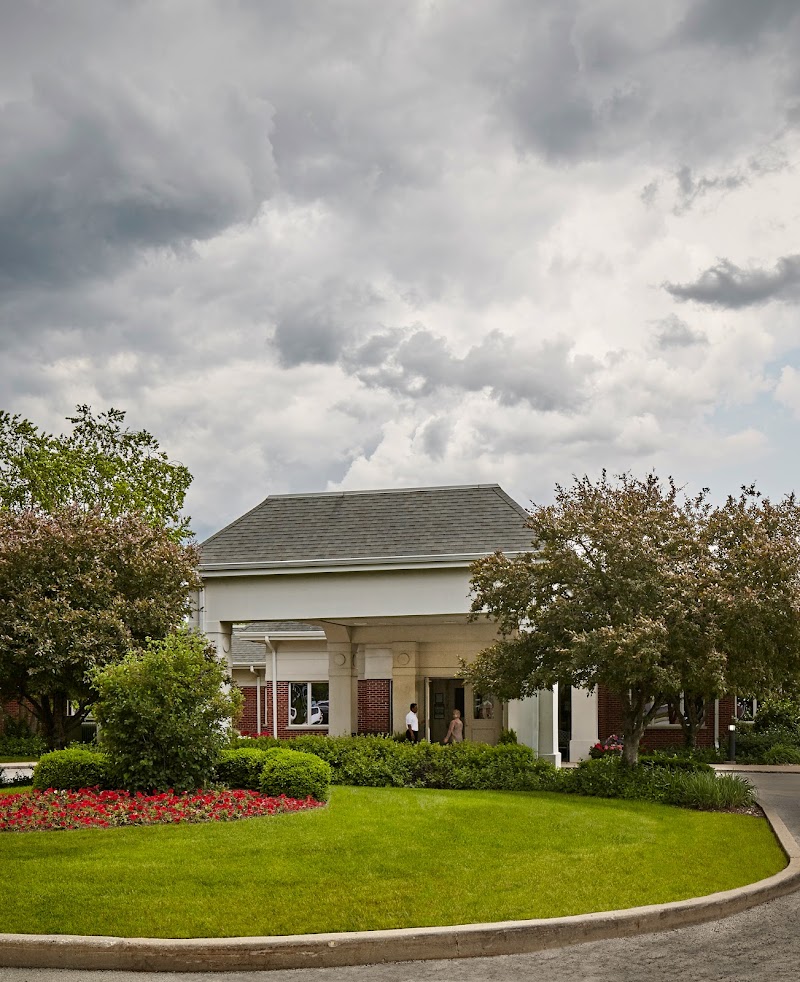
How Does Alta Rehab At Oak Brook Compare to Other Illinois Nursing Homes?

Compared to the 100 nursing homes in Illinois, ALTA REHAB AT OAK BROOK's overall rating (2 stars) is below the state average of 2.5, staff turnover (52%) is near the state average of 46%, and health inspection rating (2 stars) is below the national benchmark.

What Should Families Ask When Visiting Alta Rehab At Oak Brook?

Based on this facility's data, families visiting should ask: "Can I visit during a mealtime to observe dining assistance and food quality?" "How do you handle medical emergencies, and what is your hospital transfer rate?" "Can I speak with family members of current residents about their experience?"

Is Alta Rehab At Oak Brook Safe?

Based on CMS inspection data, ALTA REHAB AT OAK BROOK has a clean safety record: no substantiated abuse findings (meaning no confirmed cases of resident harm), no Immediate Jeopardy citations (the most serious violation level indicating risk of serious injury or death), and is not on the Special Focus Facility watch list (a federal program monitoring the lowest-performing 1% of nursing homes). The facility has a 2-star overall rating and ranks #100 of 100 nursing homes in Illinois. While no facility is perfect, families should still ask about staff-to-resident ratios and recent inspection results during their visit.

Do Nurses at Alta Rehab At Oak Brook Stick Around?

ALTA REHAB AT OAK BROOK has a staff turnover rate of 52%, which is 6 percentage points above the Illinois average of 46%. Moderate turnover is common in nursing homes, but families should still ask about staff tenure and how the facility maintains care continuity when employees leave.

Was Alta Rehab At Oak Brook Ever Fined?

ALTA REHAB AT OAK BROOK has been fined $48,604 across 2 penalty actions. The Illinois average is $33,565. While any fine indicates a compliance issue, fines under $50,000 are relatively common and typically reflect isolated problems that were subsequently corrected. Families should ask what specific issues led to these fines and confirm they've been resolved.

Is Alta Rehab At Oak Brook on Any Federal Watch List?

ALTA REHAB AT OAK BROOK is not on any federal watch list. The most significant is the Special Focus Facility (SFF) program, which identifies the bottom 1% of nursing homes nationally based on persistent, serious quality problems. Not being on this list means the facility has avoided the pattern of deficiencies that triggers enhanced federal oversight. This is a positive indicator, though families should still review the facility's inspection history directly.