
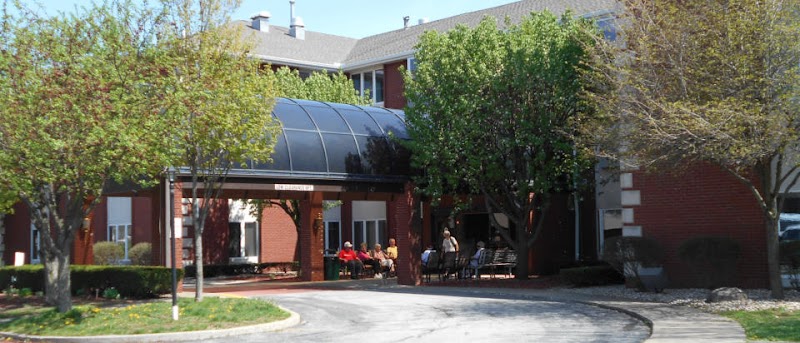
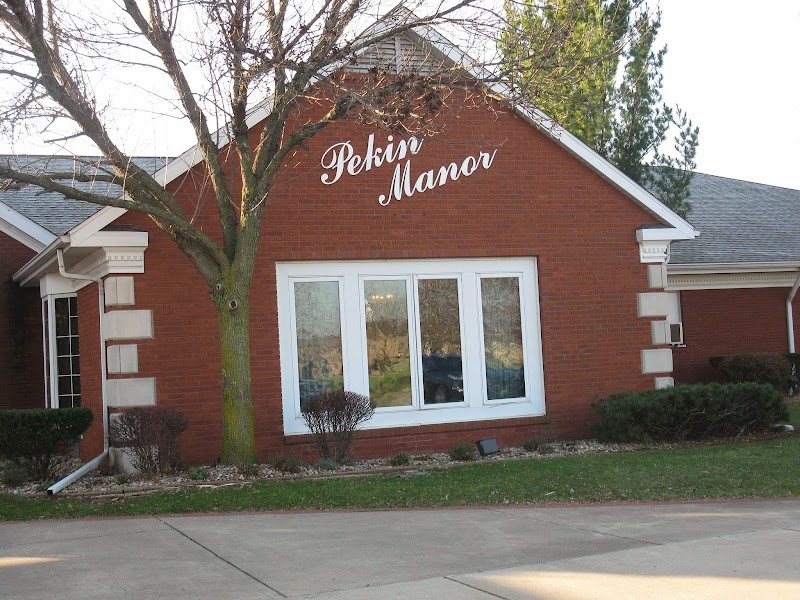


PEKIN MANOR

1520 EL CAMINO DRIVE, PEKIN, IL 61554 (309) 353-1099
Non profit - Corporation 130 Beds UNLIMITED DEVELOPMENT, INC. Data: November 2025
Trust Grade
60/100
#178 of 665 in IL
Last Inspection: September 2024

Within standard 12-15 month inspection cycle. Federal law requires annual inspections.

Overview

Pekin Manor has a Trust Grade of C+, which indicates that the facility is slightly above average but not exceptional. It ranks #178 out of 665 nursing homes in Illinois, placing it in the top half of facilities in the state, and #3 out of 8 in Tazewell County, meaning only two local options are better. The facility is improving, as it reduced its number of issues from 7 in 2024 to 4 in 2025, though it still has below-average staffing ratings with a turnover rate of 48%, which is consistent with the state average. Notably, there are serious concerns regarding resident care; for instance, three residents developed severe pressure ulcers due to a lack of appropriate interventions, and one resident fell and sustained significant injuries because of a trip hazard. On a positive note, Pekin Manor has not incurred any fines, which suggests compliance with regulatory standards. However, it has less RN coverage than 86% of Illinois facilities, which raises concerns about the level of nursing oversight in resident care.

Trust Score
C+
60/100
In Illinois
#178/665
Top 26%
Safety Record
Moderate
Needs review
Inspections
Getting Better
7 → 4 violations
Staff Stability
⚠ Watch
48% turnover. Above average. Higher turnover means staff may not know residents' routines.
Penalties
✓ Good
No fines on record. Clean compliance history, better than most Illinois facilities.
Skilled Nurses
⚠ Watch
Each resident gets only 27 minutes of Registered Nurse (RN) attention daily — below average for Illinois. Fewer RN minutes means fewer trained eyes watching for problems.
Violations
⚠ Watch
23 deficiencies on record. Higher than average. Multiple issues found across inspections.
★★★★☆
4.0
Overall Rating
★★☆☆☆
2.0
Staff Levels
★★★☆☆
3.0
Care Quality
★★★★☆
4.0
Inspection Score
Stable
2024: 7 issues
2025: 4 issues

The Good

  • Full Sprinkler Coverage · Fire safety systems throughout facility
  • No fines on record

Facility shows strength in fire safety.

The Bad

Staff Turnover: 48%

Near Illinois avg (46%)

Higher turnover may affect care consistency

Chain: UNLIMITED DEVELOPMENT, INC.

Part of a multi-facility chain

Ask about local staffing decisions and management

The Ugly 23 deficiencies on record

2 actual harm
Jun 2025 3 deficiencies 1 Harm
SERIOUS (G) 📢 Someone Reported This

A family member, employee, or ombudsman was alarmed enough to file a formal complaint

Actual Harm - a resident was hurt due to facility failures

Pressure Ulcer Prevention (Tag F0686)

A resident was harmed · This affected 1 resident

**NOTE- TERMS IN BRACKETS HAVE BEEN EDITED TO PROTECT CONFIDENTIALITY** Based on observation, interview, and record review the facility failed to develop and implement pressure relieving interventions...

Read full inspector narrative →
**NOTE- TERMS IN BRACKETS HAVE BEEN EDITED TO PROTECT CONFIDENTIALITY** Based on observation, interview, and record review the facility failed to develop and implement pressure relieving interventions to prevent pressure ulcer development, conduct a pressure ulcer risk assessment once a week for four weeks after admission and then quarterly thereafter, update pressure ulcer care plans with pressure relieving interventions, and failed to provide a treatment as ordered by the physician for three of three residents (R1, R2, and R3) reviewed for facility acquired pressure ulcers in the sample of four. These failures resulted in R1 developing a stage four full thickness pressure ulcer to the medial heel that required surgical debridement, R2 developing an infected, painful stage four pressure ulcer to the left lateral ankle that required surgical debridement, and R2 developing a painful stage four pressure ulcer to the right lateral heel that required surgical debridement. Findings include: The facility's Pressure Injury/Pressure Ulcer Prevention and Treatment Protocol dated 10-24-22 documents Objective and Purpose: To ensure that measures are taken to prevent skin breakdown and to provide guidelines for treatment of any pressure injury or pressure ulcer that might develop. Pressure Ulcer/Injury refers to localized damage to the skin and/or underlying soft tissue usually over a bony prominence or related to a medical or other device. A pressure injury will present as intact skin and may be painful. A pressure injury will present as an open ulcer. The appearance of which will vary depending on the stage and may be painful. The injury occurs as a result of intense and/or prolonged pressure or pressure in combination with shear. Soft tissue damage related to pressure and shear may also be affected by skin temperature and moisture, nutrition, perfusion, co-morbidities, and condition of the soft tissue. Principles: 1. A skin assessment (Braden Scale Pressure Ulcer Risk Assessment) is completed on all residents upon admission and weekly for the first four weeks after admission, quarterly, and whenever there is a change in the resident's condition. 2. An individualized plan of care will be developed for the resident following the guidelines of the assessment. 3. All high and moderate risk residents will be assessed for the needs of the items below. If the intervention is initiated, it will be added to the care plan. A. Special mattress and wheelchair cushions. B. PROMS (Passive Range of Motions). C. Protein and/or Nutritional Supplements. D. Turning and positioning schedule. E. Skin Checks. F. Elbow/heel protectors/bridging of heels. 6. When a resident is admitted to the facility or develops a pressure injury in the facility, the following will occur: A. Assess the pressure injury for location, size, wound bed, drainage, odor, tunneling, undermining or sinus tract, wound edges/surrounding tissues, and pain at site. B. Determine the injury's current stage of development: Stage One Pressure Injury: Non-blanchable erythema of intact skin. Stage Two Pressure Ulcer: Partial thickness skin loss with exposed dermis, presenting as a shallow open ulcer. The wound bed is viable, pink, or red, moist, and may also present as an intact or ruptured serum-filled blister. Adipose (fat) is not visible and deeper tissues are not viable. Granulation (new tissue) tissue, slough (dead tissue in wounds), and eschar (black or brown hardened layer of dead tissue that forms over a wound) are not present. Stage Three Pressure Ulcer: Full thickness loss of skin, in which subcutaneous fat is visible in the ulcer and granulation tissues are epibole (rolled wound edges) are often present. Slough and or/eschar may be visible but does not obscure the depth of tissue loss. If slough or eschar obscures the wound bed, it is an unstageable pressure ulcer/pressure injury. Unstageable Pressure Ulcer: Full-thickness skin and tissue loss in which the extent of tissue damage with the ulcer cannot be confirmed because the wound bed is obscured by slough or eschar. Stable eschar (dry, adherent, intact without erythema or fluctuance) should only be removed after careful consideration and consultation with the resident's physician, or nurse practitioner, physician assistant, or clinical nurse specialist. Deep Tissue Pressure Injury: Persistent non-blanchable deep red, maroon, or purple discoloration due to damage of underlying soft tissue, this area may be preceded by tissue that is painful, firm, mushy, boggy, warmer, or cooler as compared to adjacent tissue, This injury results from intense and/or prolonged pressure and shear forces at the bone-muscle interface. C. Notify the physician of the above assessment and obtain orders for treatment of pressure ulcer/injury. If pressure ulcer/injury is showing no improvement, Physician will be notified so change of treatment may be obtained, E. Care plan will be established for treatment of existing pressure ulcers/injuries. G. For pressure ulcer with drainage the physician will be notified, and culture obtained if ordered. Pressure Injury and Treatment Protocol: H. Weekly measurements will be conducted and entered in the chart under wound management. J. Turning and repositioning assistance will be given to those residents that are unable to reposition themselves. K. Special devices will be used to relieve pressure, L. All treatment and charting of pressure ulcers/injuries will be done by licensed staff. 1. R1's Face Sheet documents R1 is an [AGE] year-old admitted to the facility on [DATE] with the diagnoses Muscle Weakness, Lack of Coordination, Cognitive Communication Deficit, and Vascular Dementia. R1's MDS (Minimum Data Set) assessment dated [DATE] documents R1 is severely cognitively impaired, requires moderate assistance with personal hygiene and rolling left to right, is at risk for developing pressure ulcers, has one stage four facility acquired pressure ulcer, and is not on a turning and repositioning program. R1's current Physician's Order Sheets dated 5/26/25 through 6/26/25 document, Start Date: 6/17/25 Stage four pressure wound of right lateral ankle cleanse with wound cleanser, pat dry, apply hydrogel to would bed, cover with abdominal pad and kerlix (rolled gauze). Change dressing daily and as needed for impaired dressing integrity. R1's Braden Scale for Predicting Pressure Sore Risk assessment dated [DATE] documents a score of 16 indicating R1 was at risk of development of pressure ulcers. This same Braden Scale documents R1 was chairfast, was slightly limited in mobility, and required minimum staff assistance in moving to prevent friction and shearing. R1's Medical Record dated 6/27/24 through 6/27/25 does not include any quarterly Braden Scale Pressure Risk Assessments except for the one completed on 12/26/24. R1's Wound Evaluation and Management Summary dated 3/12/24 and signed by V14 (Wound Physician) documents, Stage four pressure wound of the right medial heel full thickness. Etiology: Pressure. Stage four. Duration: Less than 62 days. Wound Size: 5.0 cm (centimeters) by 5.3 cm by not measurable depth. Exudate: Moderate serosanguinous (pinkish drainage). Slough: 40 % (percent). Granulation tissue: 60 %. General Recommendations: Off-load wound, reposition per facility protocol, float heels in bed, and prevalon (heel floating cushioned) boots. Surgical Excisional Debridement procedure to remove necrotic tissue and establish the margins of viable tissue. R1's current Pressure Ulcer Care Plan does not include the interventions to ensure R1 is wearing heel pressure relieving boots and did not include pressure relieving interventions to prevent pressure to the heels prior to the development of R1's right medial heel pressure ulcer. On 6/26/25 from 11:00 AM through 11:45 AM R1 was sitting up in her wheelchair. R1 did not have heel protecting boots on, or a dressing covering the right outer heel wound. On 6/26/25 at 1:00 PM V16 (Wound Nurse) stated, I do not know why (R1) did not have a dressing on her right heel. On 6/27/25 at 9:35 AM R1 was lying on a low air-loss mattress. R1's heels were lying directly on the bed. R1 did not have pressure relieving heel boots on, or her heels off-loaded as ordered by the physician. R1's right foot was facing outward, putting pressure directly on the right ankle pressure wound. During this time, V17 (CNA/Certified Nursing Assistant) verified he did not know R1 was supposed to wear heel protector boots. On 6/27/25 at 9:30 AM V2 (DON/Director of Nursing) performed the wound treatment to R1's right outer heel. R1's right outer heel was covered in 40 percent slough and was approximately five cm round. On 6/27/25 at 12:00 PM V2 (DON) stated, (R1) has only had one Braden Scale Pressure Risk Assessment done within the last year. (R1) should have had Braden Scale Pressure Risk Assessments done quarterly. (R1's) pressure relieving heel boots are not on the care plan and (R1) did not have any pressure relieving interventions to the heels prior to the development of the pressure ulcer to the right heel. (R1's) wound to the right medial heel was caused by pressure. (V17/CNA) is new to taking care of (R1) and is probably not aware that (R1) needs a heel boot on. 2. R2's Face Sheet documents R2 is a [AGE] year-old admitted to the facility on [DATE] with the diagnoses of Fracture of the Right Humerus, Osteoarthritis, Chronic Diastolic Congestive Heart Failure, Reduced Mobility, Stiffness of the Left Ankle, Left Knee and Right Ankle, Chronic Kidney Disease Stage Three, and Hypertension. R2's MDS assessment dated [DATE] documents R2 is cognitively intact, is dependent on staff for personal hygiene, rolling side to side, and transfers, is at risk of developing pressure ulcers, has one facility acquired stage three pressure ulcer, has one stage four facility acquired pressure ulcer, and is not on a turning/repositioning program. R2's current Physician's Order Sheets dated 5/26/25 through 6/26/25 document, Start Date: 5/6/25 Stage four pressure ulcer wound of left lateral ankle cleanse with wound cleanser, pat dry, apply xeroform (petroleum gauze) to wound bed, cover with abdominal pad, and [NAME] with kerlix once daily. Start Date: 6/14/25 Stage three pressure wound of right lateral heel cleanse with wound cleanser, pat dry, apply xeroform, cover with abdominal pad, wrap with kerlix and secure with tape daily and as needed. R2's Treatment Administration Record dated 6/1/25 through 6/27/25 documents R2's treatments to the right lateral heel pressure ulcer and left lateral ankle were not performed on 6/20/25. R2's Braden Scale for Predicting Pressure Sore Risk assessment dated [DATE] documents a score of 14 indicating R2 is at moderate risk of development of pressure ulcers. This same Braden Scale documents R2 is chairfast, is very limited in mobility, and requires moderate to maximum assistance in moving to prevent friction and shearing. R2's Medical Record dated 5/28/24 through 6/27/25 does not include any Braden Scale Pressure Risk Assessments weekly times four weeks after admission, or quarterly except for the one assessment dated [DATE]. R2's Wound Evaluation and Management Summary dated 4/22/25 and signed by V14 (Wound Physician) documents, Stage four pressure wound of the left lateral ankle full thickness. Etiology: Pressure. Stage four. Duration: Less than one day. Wound Size: 0.9 cm by 1.5 cm by non-measurable cm. Exudate: Moderate serosanguinous. Slough: 80%. Granulation tissue: 20%. Dressing Treatment Plan: Xeroform gauze apply once daily as needed if saturated, soiled, or dislodged. Surgical excisional debridement procedure to remove necrotic tissue and establish the margins of viable tissue. General Recommendations: Off-load wound, reposition per facility protocol, turn side-to-side in bed, elevate legs, and float heels in bed. Specific to visit recommendations: Pressure off-loading boot-prevalon. R2's Wound Evaluation and Management Summary dated 5/6/25 and signed by V14 (Wound Physician) documents, Stage four pressure wound of the left lateral ankle full thickness. Etiology: Pressure. Stage four. Duration: Less than 15 days. Wound Size: 1.3 cm by 1.3 cm by non-measurable cm. Exudate: Moderate sero-sanguinous. Slough: 80%. Granulation tissue: 20%. Dressing Treatment Plan: Xeroform gauze apply once daily as needed if saturated, soiled, or dislodged. Deep swab technique of stage four pressure wound of left lateral ankle demonstrates MRSA (Methicillin-Resistant Staphylococcus Aureus) and Proteus Mirabilis on 5/6/25. Start Bactrim DS (Double Strength) BID (twice daily) for 14 days. Probiotics daily for 30 days. Surgical excisional debridement procedure to remove necrotic tissue and establish the margins of viable tissue. Stage three pressure wound of the right lateral heel full thickness. Etiology: Pressure. Stage: Three. Duration: Less than one day. Wound Size: 2.0 cm by 1.5 cm by 0.4 cm. Exudate: Light serosanguinous. Dressing Treatment Plan: Xeroform gauze apply once daily as needed if saturated, soiled, or dislodged. Secondary dressing abdominal pad once daily and as needed. General Recommendations: Off-load wound, reposition per facility protocol, turn side-to-side in bed, elevate legs, and float heels in bed. Specific to visit recommendations: Pressure off-loading boot-prevalon. R2's Wound Evaluation and Management Summary dated 6/26/25 and signed by V14 (Wound Physician) documents, Stage four pressure wound of the left lateral ankle full thickness. Etiology: Pressure. Stage four. Duration: Less than 66 days. Wound Size: 0.8 cm by 0.5 cm by 0.3 cm. Exudate: Moderate sero-sanguinous. Slough: 30%. Granulation tissue: 70%. Dressing Treatment Plan: Xeroform gauze apply once daily as needed if saturated, soiled, or dislodged. Sharp selective debridement procedure to remove biofilm and remove devitalized epidermis and/or dermis. Stage four pressure wound of the right lateral heel full thickness. Etiology: Pressure. Stage: four. Duration: Less than 52 days. Wound Size: 1.2 cm by 0.8 cm by non-measurable depth cm. Exudate: Moderate Serous. Slough: 100%. Dressing Treatment Plan: Xeroform gauze apply once daily as needed if saturated, soiled, or dislodged. Secondary dressing abdominal pad once daily and as needed. Surgical excisional debridement procedure to remove necrotic tissue and establish the margins of viable tissue. General Recommendations: Off-load wound, reposition per facility protocol, turn side-to-side in bed, elevate legs, and float heels in bed. Specific to visit recommendations: Pressure off-loading boot-prevalon. Low air-loss mattress. R2's current Pressure Ulcer Care Plan does not include the interventions to ensure R2's low air-loss bed and did not include pressure relieving interventions to prevent pressure to the heels/ankles prior to the development of R2's right lateral heel and left lateral ankle pressure ulcers. On 6/27/25 at 9:48 AM V2 (DON) performed wound treatments to R2's left lateral ankle and R2's right lateral heel. R2's left lateral ankle wound was approximately 1.3 cm round and covered in 80 percent slough. R2's right lateral heel was approximately 2.0 cm by 1.5 cm with a slight depth and red in color. On 6/27/25 at 12:15 PM V2 (DON) stated, (R2) did not get the Braden Pressure Ulcer Risk Assessments done weekly for four weeks after admission or quarterly. The only Braden Pressure Ulcer Risk Assessment (R2) had done was on 6/24/25. (R2's) treatments to the left lateral ankle and right lateral heel were not done as ordered on 6/20/25. (R2's) wounds to the left lateral ankle and right later heel were caused by pressure. (R2) did not have pressure relieving interventions to the heels or ankles prior to developing the pressure ulcers. (R2's) care plan does not include (R2's) low air-loss mattress. 3. R3's Face Sheet documents R3 is a [AGE] year-old admitted to the facility on [DATE] with the diagnoses of a Fracture to the Right Femur, Dementia, Psychotic Disturbance, Mood Disturbance, Anxiety, Major Depressive Disorder, Chronic Pain, Hypertension, Cognitive Communicative Deficit, and Hearing Loss. R3's admission Braden Scale for Predicting Pressure Sore Risk assessment dated [DATE] documents a score of 16 indicating R3 was at risk of development of pressure ulcers. This same Braden Scale documents R3 was chairfast, had no limitations in mobility, 3 and required moderate to maximum assistance in moving to prevent friction and shearing. R3's admission MDS assessment dated [DATE] documents R3 was significantly cognitively impaired, was dependent on staff for turning left to right, personal hygiene, and transferring to the chair. This same MDS documents R3 was at risk for developing pressure ulcers, had no pressure ulcers upon admission, and was not on a turning/repositioning program. R3's Significant Change MDS assessment dated [DATE] documents R3 is severely cognitively impaired, is dependent on staff for turning left to right, personal hygiene, and transferring to the chair. This same MDS documents R3 was at risk of developing pressures, had no pressure ulcers as of 4/25/25, and was not on a turning/repositioning program as of 4/25/25. R3's Medical Record dated 3/25/25 through 6/27/25 does not include any Braden Scale Pressure Risk Assessments weekly times four weeks after admission, or after a change in condition except for the one assessment dated [DATE]. R3's Progress Notes dated 6/14/25 at 4:59 AM and signed by V15 (LPN/Licensed Practical Nurse) document, Two cm open area noted to right ischium. Area cleansed and hydrocolloid applied. R3's current Physician's Order Sheets dated 5/26/25 through 6/26/25 document, Start Date: 6/14/25 apply hydrocolloid to right ischium every three days and as needed. R3's Treatment Administration Records dated 6/14/25 through 6/26/25 document R3 did not get a treatment performed as scheduled to the right ischium on 6/20/25. R3's Initial Wound Evaluation and Management Summary dated 6/19/25 and signed by V14 (Wound Physician) documents, Stage two pressure wound of the right ischium partial thickness. Etiology: Pressure. Stage two. Duration: Less than one day. Wound Size: 1.0 cm by 0.7 cm by 0.1 cm. General Recommendations: Off-load wound, reposition per facility protocol, turn side-to-side in bed, and float heels in bed. Low air loss mattress. Dressing Treatment Plan: Hydrocolloid three times per week and as needed if saturated, soiled, or dislodged. R3's Wound Evaluation and Management Summary dated 6/26/25 and signed by V14 (Wound Physician) documents, Stage two pressure wound of the right ischium partial thickness. Etiology: Pressure. Stage two. Duration: Less than eight days. Wound Size: 1.0 cm by 0.7 cm by 0.1 cm. General Recommendations: Off-load wound, reposition per facility protocol, turn side-to-side in bed, and float heels in bed. Low air loss mattress. Dressing Treatment Plan: Hydrocolloid three times per week and as needed if saturated, soiled, or dislodged. R3's Care Plan dated 3/25/25 through 6/26/25 does not include the physician ordered pressure relieving interventions to provide a low air-loss mattress, off-load pressure to the wound, or float R3's heels while in bed. On 6/26/25 V2 (Director of Nursing) stated, (R3) has had no other Braden Scale Pressure Sore Risk Assessments since admission 3/25/25 and should have had a Braden Pressure Risk Assessment done weekly after admission and after a change of condition. On 6/26/25 from 11:35 AM through 2:00 PM and 6/27/25 at 9:15 AM R3 was lying in bed on her back, on a regular mattress (not low air-loss as ordered by the physician). R3's heels were lying directly on the bed. R3 did not have heel protection boots on, or her heels off-loaded as ordered by the physician. On 6/27/25 at 9:15 AM V2 (Director of Nursing/DON)) performed the wound treatment to R3's right ischium. When removing the hydrocolloid dressing, R3 was moaning and saying ouch. The right ischium wound was approximately 1 cm round pink with reddened skin surrounding the wound. During this time V2 stated, I do not know if (R3's) heels should be off-loaded or if (R3) is supposed to have a low air-loss mattress or heel boots. I will have to look at (R3's) orders. On 6/27/25 at 12:30 PM V16 (Wound Nurse) stated, I did not get (R3) a low air-loss mattress or pressure relieving boots. I do rounds with (V14) and have never looked at (V14's) recommendations. I will make sure I look now. (R3's) air-loss mattress and pressure relieving boots never got added to (R3's) care plan. The staff should always make sure (R3's) pressure is off (R3's) ischium wound and heels. On 6/27/25 at 10:30 AM V14 (Wound Physician) stated the facility should always off-load R3's heels to prevent pressure to the heels and the facility should have contacted hospice to order a low air-loss mattress and prevalon boots for the resident. R3's wound to the right ischium was caused from pressure. R1 and R3's wounds were caused from pressure according to my notes. V14 verified R1, R2, and R3 should have had pressure relieving interventions tried prior to development of pressure ulcers to prevent their (R1, R2, and R3's) pressure ulcers from developing.
CONCERN (D) 📢 Someone Reported This

A family member, employee, or ombudsman was alarmed enough to file a formal complaint

Potential for Harm - no one hurt, but risky conditions existed

Resident Rights (Tag F0550)

Could have caused harm · This affected 1 resident

Based on observation, interview, and record review the facility failed to answer a call light timely to provide timely incontinence cares and dressing, failed to maintain a resident's dignity for one ...

Read full inspector narrative →
Based on observation, interview, and record review the facility failed to answer a call light timely to provide timely incontinence cares and dressing, failed to maintain a resident's dignity for one of four residents (R4) reviewed for resident rights in the sample of four. Findings include: The facility's Resident Rights policy dated 11/28/17 documents, the resident has a right to a dignified existence, self-determination, and communication with and access to persona and services inside and outside the facility, including those specified in this section. A facility must treat each resident with respect and dignity and care for each resident in a manner and in an environment that promotes maintenance or enhancement of his or her qualify of life, recognizing each residents' individuality. The facility must protect and promote the rights of the resident. The facility's Call Light Policy dated 01/20024 documents, Answer a call light promptly. Listen to resident's request. Do not make him/her feel that you are too busy to help. Respond to request. Offer further assistance before leaving resident's room. R4's current Care Plan documents R4 needs one assistance of staff for incontinence cares. On 6/27/25 at 10:30 AM R4 was lying in bed. During this time R4 had on an adult brief and a gown that was soiled with feces and the feces was running down both of R4's legs and up R4's stomach. R4's call light was on. R4 stated, I have been waiting for someone to clean me up for over a half an hour. I had to go to the bathroom, and no one answered my call light in time. I am sorry. This is embarrassing. Over two hours ago I turned on my call light. I wanted to get up out of bed and get dressed for the day. (V20/CNA/Certified Nursing Assistant) came in earlier, shut off my call light, and said she would be back. (V20) never returned. I have a brace to my right knee and cannot get dressed or get up on my own. On 6/27/25 at 10:45 AM V20 (CNA) stated, I was passing hall trays earlier this morning when (R4) wanted to get up. I did not have time to get (R4) up at that time, so I did turn off (R4's) call light. On 6/27/25 at 12:15 PM V2 (Director of Nursing) stated R4 should not have had to lay in her own stool and R4's call light should have been answered quicker.
CONCERN (E) 📢 Someone Reported This

A family member, employee, or ombudsman was alarmed enough to file a formal complaint

Potential for Harm - no one hurt, but risky conditions existed

Infection Control (Tag F0880)

Could have caused harm · This affected multiple residents

Based on observation, interview, and record review the facility failed to implement enhanced barrier precautions and contact precautions during wound and incontinence cares for four of four residents ...

Read full inspector narrative →
Based on observation, interview, and record review the facility failed to implement enhanced barrier precautions and contact precautions during wound and incontinence cares for four of four residents (R1-R4) reviewed for infection control practices in the sample of four. Findings include: The facility's Enhanced Barrier Precautions Policy dated 3/28/24 documents, It is the policy of the facility to use proper PPE (Personal Protective Equipment) during high-contact resident care activities that provide opportunities for transfer of MDROs (Multi-Drug Resistant Organisms) to staff hands and clothing. 1. Enhanced Barrier Precautions (EBP) refer to an infection control intervention designated to reduce transmission of multidrug resistant organisms that employs targeted gown and glove use during high contact resident care activities. 2. EBP are used in conjunction with standard precautions and expand the use of PPE to donning of gown and gloves during high-contact resident care activities that provide opportunities for transfer of MDROs to staff hands and clothing. 3. EBP are indicated for residents with any of the following: a. Infection or colonization with a targeted MDRO contact precautions do not otherwise apply. b. Wounds and/or indwelling medical devices even if the resident is not known to be infected or colonized with a MDRO. Examples of high-contact resident care activities requiring gown and glove use for EBP include dressing, bathing, transferring, providing hygiene, changing linens, changing briefs or assisting with toileting, device care, or wound care. The facility's Infection Control Policy dated 12/17/19 documents gowns, gloves, and proper hand washing will be applied when entering the room and utilized during all cares with residents in transmission based precautions/contact precautions. 1. R1's current Care Plan documents R1 has ESBL (Extended-Spectrum Beta-Lactamase) of the urine and requires contact isolation. This same Care Plan documents R1 has a stage four pressure injury to the right lateral ankle and requires EBP during cares. On 6/27/25 at 9:30 AM R1 was lying in bed and had an enhanced barrier precautions sign, and a contact precautions sign posted on her door. V2 (Director of Nursing/DON) entered R1's room and performed a wound treatment to R1's right outer heel. During this wound treatment V2 did not wear a gown. 2. R2's current Care Plan documents R2 has MRSA of the wound and requires contact isolation. This same Care Plan documents R2 has a stage four pressure injury to the left lateral ankle and stage three pressure ulcer to the right heel that requires EBP during cares. On 6/27/25 at 9:48 AM R2 was lying in bed and had an enhanced barrier precautions sign, and a contact precautions sign posted on his door. V2 (DON) entered R2's room and performed a wound treatment to R2's left lateral ankle and R2's right lateral heel. During these wound treatments V2 did not wear a gown. During this same time V7 (CNA/Certified Nursing Assistant) assisted V2 with R2's wound cares and helped R2 to place his penis in a urinal. V7 did not wear a glove during wound cares or while helping R2 with the urinal. 3. R3's current Care Plan documents R3 has a stage two pressure injury to the right ischium that requires EBP during cares. On 6/27/25 at 9:15 AM R3 was lying in bed and had an enhanced barrier precautions sign posted on R3's door. V2 (Director of Nursing/DON) entered R3's room and performed a wound treatment to R3's right ischium. During this treatment V2 did not wear a gown. 4. R4's Physician's Orders dated 6/18/25 through 6/27/25 document, Start dated 6/18/25 EBP due to buttock wound. On 6/27/25 at 10:30 AM R4 was lying in bed and had an enhanced barrier precautions sign posted on her door. During this time R4 had feces down both of her legs and up her stomach. V19 (LPN/Licensed Practical Nurse) and V20 (CNA) provided R4 with incontinence cares. During R4's incontinence cares V19 and V20 did not wear a gown. On 6/27/25 at 10:00 AM V2 (Director of Nursing) stated, I should have worn a gown while doing wound cares with (R1, R2, and R3). Staff should wear gowns and gloves during wound cares and incontinence cares with all residents who are in contact precautions or enhanced barrier precautions.
Feb 2025 1 deficiency 1 Harm
SERIOUS (G) 📢 Someone Reported This

A family member, employee, or ombudsman was alarmed enough to file a formal complaint

Actual Harm - a resident was hurt due to facility failures

Accident Prevention (Tag F0689)

A resident was harmed · This affected 1 resident

**NOTE- TERMS IN BRACKETS HAVE BEEN EDITED TO PROTECT CONFIDENTIALITY** Based on interview, observation and record review, the facility failed to ensure the floor was free and clear of trip hazards fo...

Read full inspector narrative →
**NOTE- TERMS IN BRACKETS HAVE BEEN EDITED TO PROTECT CONFIDENTIALITY** Based on interview, observation and record review, the facility failed to ensure the floor was free and clear of trip hazards for one of three residents (R1) reviewed for falls with injury in a sample of four. On 01/05/25, R1 fell at the facility after a cord on the floor of the walkway entering her room became trapped in the wheel of her walker. R1 sustained a laceration to her forehead requiring placement of nine sutures, a skin tear and bruising to her right third finger, and fractures to C1 (first cervical vertebrae) and C2 (second cervical vertebrae), requiring R1 to wear a hard cervical collar at all times. Findings include: R1's Fall Investigation (dated 01/05/25) documents the following: On 01/05/25, at approximately 03:10 PM, RN (Registered Nurse) was notified by CNA (Certified Nursing Assistant) resident (R1) had a witnessed fall. Resident was walking with her walker and assist of one CNA with gait belt in place to the bathroom when resident's walker caught on the bed remote causing resident to lose her balance and fall to her right side. Nurse immediately went to assess the resident upon notification of fall. The resident was observed lying on the floor near the end of her bed with a CNA holding a washcloth to resident's forehead, shoes on with laces tied, walker near feet lying on its side, gait belt in place. RN completed assessment and noted laceration to center of forehead, skin tear to middle finger of right hand with bruising and vitals WNL (within normal limits). Nurse noted resident pain to be a 6 out of 10. CNA continued to apply pressure to forehead and keep resident's head secured until (local ambulance transport service) arrived. Resident is current with hospice care. Resident was transported to (local emergency department) for further evaluation/possible treatment. POA (Power of Attorney), MD (Physician), Hospice, and (V2, Director of Nursing) were notified. Staff interviews conducted post event were completed. CNA stated at approximately 03:10 PM, she was walking resident to the bathroom with resident's walker and a gait belt in place when resident's walker caught on the bed remote causing the resident to lose her balance and fall to her right side. Resident was evaluated in (local emergency department). Resident returned to (facility) 01/05/25 for continued long term care. Diagnosis: Cervical Fracture of C1 & C2 (with Cervical Collar in place) and laceration to forehead with nine stitches. Resident POA (Power of Attorney) chose no surgical intervention at this time and to remain of hospice care keeping resident comfortable. Hospice adjusted pain medication to help ensure resident comfort. Family to provide more frequent monitoring. New interventions put into place, staff educated and care plan updated. POA and MD (Physician) notified and are in agreement with plan of care. R1's 01/05/25 Fall Investigation also documents the following: Evaluation Notes: (R1) is alert with confusion at baseline (Brief Interview of Mental Status score of 3, indicating severe cognitive impairment), (R1) had a witnessed fall in her bedroom while ambulating with CNA (V6, Certified Nursing Assistant), resident's walker got wrapped in the bed remote cord, this is believed to be the root cause of the incident. (R1) obtained C1 and C2 fracture, laceration and bruising as result from this incident. Care Plan reviewed, new intervention: bed remote control fixed to bed. On 02/05/25 at 01:25 PM, V5 (Certified Nursing Assistant) verified her written statement included in R1's 01/05/25 fall investigation and stated the following: I was right across the hall when (R1) fell. (V6, Certified Nursing Assistant) was walking (R1) into her room, and (V6) called out for help after the fall. The right front wheel of (R1's) walker ran over the loose cord that was on the ground in the walkway near the footboard of (R4's, R1's roommate) bed. The cord was hanging from (R4's) bed and it caused (R1) to fall after it got stuck in her walker's wheel. The cord connects to the bed remote, which (R4) cannot utilize due to her Dementia. The cord was still stuck around the right front wheel of (R1's) walker when I entered the room. (R4) had just moved back into that room a day or two before (R1's) fall. The bed remote cord must have become unsecured when (R4's) bed was moved. I went and got (V12, Registered Nurse), who responded to R1's room right away. On 02/05/25 at 03:50 PM, V6 (Certified Nursing Assistant) stated she was the staff member assisting R1 when she fell. V6 stated, The cord from the bed remote of (R4's) bed had came loose. It was dangling from the underneath of (R4's) bed and was sitting on the floor. I was walking with (R1) to the bathroom. She uses a walker when she walks, and I had a gait belt on her. She must have ran over the remote cord hanging from (R4's) bed while we were walking into the room. While we were walking, I felt (R1) suddenly jolt backwards. I'm guessing this is when the cord that was tangled in the wheel of her walker became taut, and this caused her to lose her balance and fall. I tried to stop her, but she just went down so quick. After she had fallen, you could see the cord from (R4's) bed was tangled in the right front wheel of (R1's) walker. She had a big cut in the middle of her forehead, and a skin tear on her right middle finger. (V5, Certified Nursing Assistant) was right across the hall in another resident's room, and I called her to come in the room for help. She came into R1's room, I explained what had just happened, and she immediately went and got (V12, Registered Nurse), who came in right away. On 02/05/25 at 02:30 PM, V9 (Certified Nursing Assistant) stated she was working when R1 fell on [DATE]. V9 stated, I last saw (R1) when she was in the day room. (V6, Certified Nursing Assistant) was walking with her when she fell. The cord from a bed remote got stuck in the wheel of her walker. I saw the cord stuck in the wheel when I entered the room after (R1) fell. On 02/10/25 at 08:30 AM, V12 (Registered Nurse) stated she was the nurse that responded after R1's 01/05/25 fall. V12 verified her written statement form R1's fall investigation, which documents the following: This nurse was called to (R1's) room by (V5, Certified Nursing Assistant) due to resident being on the floor. Resident observed on floor with another CNA (V6, Certified Nursing Assistant) holding wash cloth to resident's forehead, shoes on with laces tied, walker near feet lying on its side, gait belt in place. Upon inspection, resident observed to have a laceration to center of forehead, skin tear to middle finger of right hand with bruising and knot present. Fall witnessed by (V6, Certified Nursing Assistant). Pressure applied to forehead and sent to ER (Emergency Room) for further evaluation. Hospice, MD (Physician), POA (Power of Attorney) and (V2, Director of Nursing) notified. V12 stated due to R1's extensive confusion, she estimated R1's pain to be a 6 out of 10 based on the Wong-Baker Faces Pain Scale (visual analog pain scale used to assess pain in children and adults). On 02/05/25 at 01:45 PM, R1 was reclined in a recliner with a blanket covering her lap near the nurse's station. R1's eyes were closed, and a hard cervical collar was in place around R1's neck. R1 appeared confused, did not open her eyes or respond to verbal stimuli, and was moaning incomprehensible phrases. A moon-shaped scar with well-approximated edges was present in the middle of R1's forehead. A small scabbed area with faint bruising was present on R1's right third digit. R1's (local hospital) emergency department medical record (dated 01/05/25) documents the following: HPI (History of present illness): Patient is a [AGE] year-old female who presents to the emergency department today for evaluation of injuries sustained from a ground level fall. She has a history of advanced dementia and resides at a nursing facility. She is currently enrolled in hospice but due to the size of lacerations involved she was sent here for evaluation and repair of the lacerations. It is reported that she fell forward. Sustained a large laceration to her forehead and a laceration to her right middle finger. (R1) Has also been complaining of some neck pain since the fall occurred. She is not on any form of blood thinners. She did not lose consciousness. She has not had any vomiting since injury occurred. This same medical record also documents, Skin: Positive for wound (large forehead laceration); Comments: 10 centimeter laceration to forehead with visualized portion of skull; Neck: Diffuse posterior neck tenderness; Musculoskeletal: 1.5 centimeter laceration to dorsal aspect of right middle finger. R1's same (local hospital) medical record documents the following: CT (computed tomography) Cervical Spine without Contrast: Cervical: There is an acute, obliquely oriented, complete type II fracture of the base of the dens (second cervical vertebrae). There is no displacement at the fracture site at this time. An acute, nondisplaced fracture of the right-sided posterior arch of C1 (first cervical vertebrae) is also present. R1's (local hospital) emergency department medical record also documents the following: Medical Decision Making: CT (computed tomography) of the head showed no acute fractures or bleeds. Unfortunately, CT of the cervical spine did show a nondisplaced type II dens fracture with a non-displaced posterior arch fracture of C1 on the right side. I did discuss patient's case with (V15, local Neurosurgeon) who was on on-call for Neurosurgery. He notes that this would usually require surgical repair. However, patient is a hospice patient with advanced dementia. Family is very reluctant to have her undergo surgery. (V15) notes if this is the case the only other alternative would be to place patient in (hard cervical collar). Patient's power of attorney had extensive discussion with other family members. It was decided by family and power of attorney that they would forego extensive trauma workup or surgical intervention. They would like patient to be kept as comfortable as possible. They do understand that if patient moves her neck in certain way could lead to neurological defects or death. They would like to respect her wishes and allow her to be discharged back to the nursing facility on hospice. We will provide her with a small amount of Lortab (pain medication) elixir. She tolerated suture procedure of her forehead very well. Dissolvable sutures were placed so she would not have to undergo suture removal. Well, the laceration on her finger could benefit from some sutures. The edges are well-approximated and attempting to repair it has caused her distress. Family is okay with just bandaging the finger for now and letting it heal. On 02/05/25 at 03:20 PM, V1 (Administrator) verified R1 fell as a result of her wheeled walker contacting a cord that was hanging from the foot of R4's bed. V1 verified that R1 has to ambulate past R4's bed to enter her bathroom. V1 verified that R1 returned to the facility after her evaluation in the local emergency department with a C1 and C2 fracture sustained during her fall on 01/05/25, requiring R1 to wear a hard cervical collar. V1 also verified R1 had 9 sutures placed to a large laceration in her forehead, and had a dressing in place on the skin tear sustained to her right third digit after her 01/05/25 fall.
Sept 2024 5 deficiencies
CONCERN (D)

Potential for Harm - no one hurt, but risky conditions existed

Resident Rights (Tag F0550)

Could have caused harm · This affected 1 resident

**NOTE- TERMS IN BRACKETS HAVE BEEN EDITED TO PROTECT CONFIDENTIALITY** Based on observation, interview, and record review, the facility failed to cover a urinary catheter bag with a privacy bag for o...

Read full inspector narrative →
**NOTE- TERMS IN BRACKETS HAVE BEEN EDITED TO PROTECT CONFIDENTIALITY** Based on observation, interview, and record review, the facility failed to cover a urinary catheter bag with a privacy bag for one of 24 residents (R18) reviewed for dignity in the sample of 33 Findings include: The Resident Rights Booklet, dated 11/18, documents, Your facility must treat you with dignity and respect and must care for you in a manner that promotes your quality of life. Your facility must be safe, clean, comfortable, and homelike. R18's current computerized medical record documents R18 was admitted to the facility on [DATE], with diagnoses which included Neuromuscular Dysfunction of Bladder, Overactive Bladder, Type 2 Diabetes Mellitus with Diabetic Neuropathy, and Essential (Primary) Hypertension. R18's MDS (Minimum Data Set) Assessment, dated 8/29/24, documents a BIMS (Brief Interview for Mental Status) Score of 14/15, indicating cognition intact and has an indwelling catheter. R18's Care Plan, dated 8/18/21, documents R18 has a catheter related to neuromuscular dysfunction of bladder. R18's Physicians Order, dated 12/19/23, documents R18 has a (indwelling) catheter. On 9/23/24 at 12:20 PM, R18 was sitting in the dining room. R18's urinary drainage bag was not covered with a privacy bag. The urinary drainage bag was hooked under R18's chair, and the bag with urine was visible. R18 was asked if she would like the catheter bag to be covered. R18 stated she thought it was covered and if not, she would like it covered. On 9/23/24 at 12:25 PM, V4/Registered Nurse verified R18's catheter bag was not covered with a privacy bag, but should be. On 9/25/24 at 10:12 AM, V2/Director of Nursing stated catheter bags are to be covered with a privacy bag. V2 also stated, There is no policy for using a dignity bag to cover the catheter bag, but that is standard practice.
CONCERN (D)

Potential for Harm - no one hurt, but risky conditions existed

Transfer Notice (Tag F0623)

Could have caused harm · This affected 1 resident

**NOTE- TERMS IN BRACKETS HAVE BEEN EDITED TO PROTECT CONFIDENTIALITY** Based on interview and record review, the facility failed to notify the facility Ombudsman of Facility Discharges/Transfers, mon...

Read full inspector narrative →
**NOTE- TERMS IN BRACKETS HAVE BEEN EDITED TO PROTECT CONFIDENTIALITY** Based on interview and record review, the facility failed to notify the facility Ombudsman of Facility Discharges/Transfers, monthly, for two residents (R26 and R67) of 7 reviewed for discharges in the sample of 33. Findings include: 1. R26's current Medical Record, documents R26 was admitted to the facility on [DATE], with diagnoses which included Chronic Obstructive Pulmonary Disease, Anxiety, Vascular Dementia, Peripheral Vascular Disease, Fibromyalgia, Essential (Primary) Hypertension, and Severe Sepsis with Septic Shock R26's Nursing Note, dated 6/3/24 at 10:56 AM, documents R26 was taken to the hospital for evaluation. R26's Nursing Note, dated 6/3/24 at 11:13 AM, documents R26 was admitted to the hospital with a diagnosis of UTI/Urinary Tract Infection. R26's Social Service Note, dated 6/11/24 at 12:15 PM, documents R26 was back in the facility. R26's Nursing Note, dated 6/18/24 at 6:23 AM, documents emergency services were called to take R26 to the Emergency Room. R26's Nursing Note, dated 6/18/24 at 9:51 AM, documents R26 is being admitted to the hospital. R26's Nursing Note, dated 6/26/24 at 5:24 PM, documents R26 returned from the hospital. R26's Bed hold Notice, dated 6/4/24, documents R26 went to the hospital on 6/3/24 for a diagnosis of UTI/ Urinary Tract Infection. R26's Bed Hold Notice, dated 6/19/24 documents R26 went to the hospital for sepsis. The Admit/Discharge Report, dated 6/1/24 - 6/30/24, does not document R26 was discharged to the hospital on 6/3/24 and 6/18/24. On 9/25/24 at 10:37 AM, V5/Social Services stated R26 was not on the June 2024 list of admit/discharge that was provided to the Ombudsman. V5 also stated, The information was put in the system. I don't know why it didn't show up on the report. 2. R67's current Medical Record documents R67 was admitted to the facility on [DATE], with diagnoses which included Chronic Kidney Disease Stage 3, Sepsis, Anxiety, Essential (Primary) Hypertension, and Chronic Systolic (Congestive) Heart Failure. R67's Nursing Note, dated 1/9/24 at 4:46 PM, documents R67 was not responding to questions or stimuli. R67 was sent to the hospital for evaluation and treatment. R67 left the facility at 4:40 PM. R67's Nursing Note, dated 1/9/24 at 6:07 PM, documents R67 was admitted to the hospital with a diagnosis of UTI/Urinary Tract Infection. R67's Nursing Note, dated 1/13/24 at 1:46 PM, documents R67 returned to the facility. R67's Bed Hold, dated 1/10/24, documents that R67 went to the hospital on 1/9/24 with a diagnosis of UTI/Urinary Tract Infection. The Admission/Discharge Log, dated 6/1/24 to 6/30/24, does not document R67 was discharged to the hospital on 1/9/24. On 9/25/24 at 10:42 AM, V5/Social Services stated R67 was not on the January 2024 list of admit/discharge that was provided to the Ombudsman. V5 also stated, The information was put in the system. I don't know why it didn't show up on the report.
CONCERN (D)

Potential for Harm - no one hurt, but risky conditions existed

Comprehensive Care Plan (Tag F0656)

Could have caused harm · This affected 1 resident

**NOTE- TERMS IN BRACKETS HAVE BEEN EDITED TO PROTECT CONFIDENTIALITY** Based on interview and record review the facility failed to develop a Person Centered Care Plan for one resident (R67) out of 24...

Read full inspector narrative →
**NOTE- TERMS IN BRACKETS HAVE BEEN EDITED TO PROTECT CONFIDENTIALITY** Based on interview and record review the facility failed to develop a Person Centered Care Plan for one resident (R67) out of 24 reviewed for Care Plans in a sample of 33. Findings Include: The Care Plan Policy, dated 6/1/22, documents, It is the policy of this facility to develop and implement a Base Line Care Plan, a Comprehensive Person-Centered Care Plan and conduct Care Plan Meetings as appropriate for each resident, consistent with resident rights, that includes measurable objectives and timeframe's to meter resident's medical, nursing, and mental and psychosocial needs that are identified in the resident's comprehensive assessment. 6. The comprehensive care plan will be developed within 7 (seven) days after the completion of the comprehensive MDS (Minimum Data Set) assessment as outlined in the RAI (Resident Assessment Instrument) manual guidelines. Address other factors identified by the interdisciplinary team, or in accordance with the resident's preference, will also be addressed in the plan of care. 9. The comprehensive care plan will be reviewed and revised by the interdisciplinary team after each comprehensive and quarterly MDS assessment. R67's current Medical Record documents R67 was admitted to the facility on [DATE], with diagnoses which included Chronic Kidney Disease Stage 3, Sepsis, Anxiety, Essential (Primary) Hypertension, and Chronic Systolic (Congestive) Heart Failure. R67's MDS (Minimum Data Set) Assessment, dated 1/20/24, documents R67 takes an anticoagulant. R67's Physicians Order for Eliquis 5 mg/Milligrams documents a start date of 1/13/24, Take Eliquis 5 mg twice a day. Care Plan, dated 9/24/24 at 3:59 PM, documents, (R67) uses an anticoagulant medication related to CHF (Congestive Heart Failure). On 9/26/24 at 9:32 AM, V10/MDS/Care Planner, stated R67 did not have a Care Plan for an anticoagulant until 9/24/24, although there should have been.
CONCERN (D)

Potential for Harm - no one hurt, but risky conditions existed

Respiratory Care (Tag F0695)

Could have caused harm · This affected 1 resident

**NOTE- TERMS IN BRACKETS HAVE BEEN EDITED TO PROTECT CONFIDENTIALITY** Based on observation, interview, and record review, the facility failed to change an oxygen tubing/humidifier bottle for one res...

Read full inspector narrative →
**NOTE- TERMS IN BRACKETS HAVE BEEN EDITED TO PROTECT CONFIDENTIALITY** Based on observation, interview, and record review, the facility failed to change an oxygen tubing/humidifier bottle for one resident (R2) of two residents reviewed for oxygen therapy in the sample of 33. Findings Include: The Oxygen Therapy policy, dated 3/16/17, documents, To provide a source of oxygen to persons experiencing an insufficient supply of same. Procedure: 7. Oxygen set-up (cannula/mask, tubing) must be exchanged every 7 (seven) days. R2's current Medical Record documents R2 was admitted to the facility on [DATE], with diagnoses which included Acute Respiratory Failure with Hypoxia (Primary), Chronic Obstructive Pulmonary Disease, Acute and Chronic Respiratory Failure with Hypercapnia, and Shortness of Breath. R2's Care Plan documents R2 has COPD/Chronic Obstructive Pulmonary Disease, Chronic Respiratory Insufficiency, Obstructive Sleep Apnea, Restrictive Lung Disease, Recent Respiratory Acidosis, Recent Acute Hypercapnia, and Respiratory Failure. R2's oxygen setting is to be at three liters. R2's Physician Order, dated 3/30/24, documents oxygen at three liters continues every shift. R14's Physician Order, dated 3/12/24, documents oxygen at 2 (two) liters per minute by nasal cannula every shift. On 9/23/24 11:25 AM, R2 was sitting in her room wearing oxygen. It was connected to the humidifier bottle. The humidifier bottle was dated 8/18/24. On 9/23/24 at 11:26 AM, V4/Registered Nurse verified the date on the humidifier bottle was 8/18/24. V4 also stated the tubing and humidifier bottle is to be changed weekly on the night shift. On 9/25/24 at 10:12 AM, V2/Director of Nursing stated oxygen tubing and humidifier bottles are supposed to be changed weekly. The staff are to date the tubing and humidifier bottle when they are changed.
CONCERN (D)

Potential for Harm - no one hurt, but risky conditions existed

Medication Errors (Tag F0758)

Could have caused harm · This affected 1 resident

Based on observation, interview, and record review, the facility failed to document a diagnosis and monitor for specific adverse behaviors to warrant the use of an antipsychotic medications for one of...

Read full inspector narrative →
Based on observation, interview, and record review, the facility failed to document a diagnosis and monitor for specific adverse behaviors to warrant the use of an antipsychotic medications for one of five residents (R249) reviewed for unnecessary medications in a sample of 33. Findings include: The facility's Psychopharmacological Drug Usage Procedure, revised 10/18/17, documents the documentation of behaviors and conditions requiring the use of these medications must be done on a routine basis, as well as medications response and adverse consequences. R249's current Medication Administration Record documents to take Quetiapine (antipsychotic) 25mg daily for Alzheimer's disease, unspecified. On 9/23/24 at 10:30am, R249 was being assisted to his wheelchair, cooperative with care. On 9/24/24 at 1:30pm, R249 was sleeping in his wheelchair. On 9/25/24 at 10:30am, R249 was sleeping in his wheelchair. R249 was encouraged to lay in bed but refused. On 9/25/24 at 11:30am, V13, Certified Nursing Assistant, stated R249 does not show any signs of adverse behaviors. V13 verified R249 is cooperative with care. On 9/25/24 at 1:30pm, R249 was sleeping in his wheelchair in his room. On 9/25/24 at 11:45am, V6, Assistant Director of Nursing, verified R249 does not have any adverse behaviors or diagnosis for the use of an antipsychotic medication. V6 stated R249 shows signs of increase confusion in the evenings, but is easily redirected.
Mar 2024 2 deficiencies
CONCERN (D) 📢 Someone Reported This

A family member, employee, or ombudsman was alarmed enough to file a formal complaint

Potential for Harm - no one hurt, but risky conditions existed

Deficiency F0602 (Tag F0602)

Could have caused harm · This affected 1 resident

Based on observation, interview, and record review, the facility failed to prevent misappropriation of property for 1 resident (R1) of 3 residents reviewed for misappropriation of property in the samp...

Read full inspector narrative →
Based on observation, interview, and record review, the facility failed to prevent misappropriation of property for 1 resident (R1) of 3 residents reviewed for misappropriation of property in the sample of 7. The Findings include: The Abuse policy, dated 11/28/19, documents, The facility actively prohibits resident abuse including neglect, corporal punishment, involuntary seclusion, misappropriation of property, injuries of unknown sources, exploitation and use of any physical or chemical restraint not required to treat residents' symptoms. To protect residents from any kind of abuse such as verbal, sexual, mental, physical, including corporal punishment, involuntary seclusion, neglect, misappropriation of property, exploitation and any physical or chemical restraint not required to treat the resident's symptoms. The Final Investigation Report sent to the (State Agency), dated 2/13/24, documents a Drug Diversion Investigation. On 2/8/24, V2 (Regional Nurse Coordinator) notified V1 (Administrator) of a possible drug diversion for a bottle labeled Morphine Sulfate. During a routine medication cart audit by V4 (Pharmacy Nurse Consultant), V4 noted a bottle labeled morphine sulfate for R1. The bottle was stored in a zip lock bag along with the dosing syringe. The content of the bottle was gray in color. The morphine that is provided by the facility pharmacy is blue in color. V4 removed the bottle of morphine and the sign out sheet and took it to V5 (Previous Director of Nursing) due to her concerns. V4 left the bottle labeled Morphine for R1 containing the gray liquid, sign out sheet, and dosing syringe in V5's office. V5 and V3 (Assistant Director of Nursing) immediately initiated an investigation. After completion of interviews with all nursing staff, the time frame for this occurrence has been determined to be after 1/22/24. R1's Physician Order, dated 12/6/22, documents, Morphine Concentrate - Schedule II solution; 100 mg (Milligram)/5 ml (Milliliter) (20 mg/ml); Amount to Administer: 0.25 ml; oral. R1's Controlled Substance Record documents 30 ml of Morphine was delivered on 12/6/23. There was 27.5 ml remaining out of 30 ml. At the top of the sheet written in marker is Dark color - reported. R1's Medication Administration Record documents the last time R1 received Morphine was on 1/21/24 at 1:54 PM given by V16. On 3/5/24 at 10:56 AM, V3 had two bottles of Morphine. The bottles were white plastic with a clear area on the side where the medication could be seen and measured. The contents of R1's bottle was gray in color. The bottle had 27.5 ml of liquid in it out of the original 30 ml's. The unopened bottle of morphine was blue in color. R1's Morphine bottle had an expiration date of 7/25. On 3/5/24 at 11:21 AM, V1 (Administrator) stated V4 found a bottle of morphine for R1 that V4 thought had been tampered with during V4's medication audit. The bottle should have had a blue medication in it, but what was in the bottle was gray. An investigation was done, and the facility was unable to identify what happened to (R1's) medication. On 3/4/24 at 2:32 PM, V3 (Assistant Director of Nursing) stated when V4 was doing her medication audit, V4 found a bottle of Morphine that V4 questioned if it was really Morphine. V4 brought the bottle to V3 and V5 and said she thought the color was different than it should be. V3 and V5 agreed the medication did not look like the correct medication. The bottle was a white bottle with a strip on the side that the color can be seen through. The medication should have been blue but was gray. V3 also stated V16 (Licensed Practical Nurse) was the last person to give the medication to R1 on 1/21/24. V16 said the medication she removed from the bottle for R1 was blue. On 3/4/24 at 1:36 PM, V4 (Pharmacy Nurse Consultant) stated when she was doing the narcotic counts at the facility, V4 noticed a bottle of Morphine for R1 that was gray in color instead of blue. The Morphine looked as though it had been tampered with. V4 also stated she could not say what was in the bottle, but knew it was not Morphine.
CONCERN (D) 📢 Someone Reported This

A family member, employee, or ombudsman was alarmed enough to file a formal complaint

Potential for Harm - no one hurt, but risky conditions existed

Deficiency F0676 (Tag F0676)

Could have caused harm · This affected 1 resident

Based on observation, interview, and record review, the facility failed to provide nail care to 1 resident (R1) of 3 residents reviewed for nail care in the sample of 7. The Findings include: The Nail...

Read full inspector narrative →
Based on observation, interview, and record review, the facility failed to provide nail care to 1 resident (R1) of 3 residents reviewed for nail care in the sample of 7. The Findings include: The Nail Care policy, dated 3/2004, documents to provide cleanliness and prevent infection the nails should be trimmed. The Personal Care of Residents policy, dated 12/2002, documents, It is the policy of the facility to provide a plan of personal care for residents. To provide that residents of the facility receive adequate care. Each resident shall have proper daily personal attention and/or care, including skin, nails, hair, and oral hygiene, in addition to treatments ordered by the physician. R2's Nursing Note, dated 2/6/24 at 12:50 PM, documents R2 was seen today by V6 (Advanced Practical Nurse) and received an order to provide nail care. R2's Nursing Note, dated 2/7/24 at 10:48 AM, documents R2 has received a shower today and no new skin concerns. Areas on the bilateral lower extremity/BLE shows self-inflicted scratches. R2's nails have been trimmed and triamcinolone cream applied to the BLE. On 3/4/24 at 2:55 PM, R2's fingernails were observed. The fingernails were jagged with some sharp edges. V1 (Administrator) was asked to look at R2's fingernails. V1 observed R2's nails and stated she would have the nails cut. On 3/5/24 at 10:00 AM, V3 (Assistant Director of Nursing) stated she looked at R2's fingernails on 3/4/24, and although they were short, they were jagged and sharp. V3 told V20 (Certified Nursing Assistant) to cut R2's fingernails, and V20 said he had recently cut them. V3 told V20 the fingernails were sharp, and to do it again. On 3/5/24 at 10:25 AM, V6 (Advanced Practice Nurse) state she had ordered R2's nails be cut because R2's left hand is contracted, R2's nails were long, and V6 was concerned the nails would dig into R2's hand. V6 also stated R2's nails did need to be addressed. On 3/6/24 at 12:29 PM, V19 (Assistant Occupational Therapist) stated she worked with R2 four times from February 8th to 3/6/24. (R2's) fingernails were not super long, but longer than they should have been.
Nov 2023 2 deficiencies
CONCERN (D)

Potential for Harm - no one hurt, but risky conditions existed

Incontinence Care (Tag F0690)

Could have caused harm · This affected 1 resident

Based on observation, interview, and record review, the facility failed to perform indwelling urinary catheter care according to facility policy and failed to keep the urinary bag below the bladder an...

Read full inspector narrative →
Based on observation, interview, and record review, the facility failed to perform indwelling urinary catheter care according to facility policy and failed to keep the urinary bag below the bladder and off the floor for one (R7) of two residents reviewed for indwelling catheters in a sample of 26. Findings include: The facility's undated Catheter (Maintenance and Removal) policy documents Procedure: 2. Attach drainage bag to bed frame, below level of resident's bladder - not touching the floor. Key Points: To allow flow with gravity and to avoid backflow of urine, secure catheter to thigh/lower abdomen for men .Procedure: 7. Cleanse the meatus and adjacent catheter. (Follow 'Catheter Care' procedure.) The facility's undated Catheter Care policy documents Procedure: 4. Wash perineal area with soap and water or perineal cleanser. Begin cleansing from the cleanest area in front to the most soiled area in back .On a circumcised male resident, wash the skin folds at the top of the penis using a circular motion. Clean the meatus around the catheter first and work downward .Gently clean catheter tubing nearest the body, wiping away from where it enters the meatus. R7's current Physician Order Sheet/POS documents R7 has an indwelling urinary catheter with a diagnosis of Unspecified complication of genitourinary prosthetic device, implant, and graft. 1. On 11/01/23, at 2:05 pm, R7 was lying in bed with an indwelling urinary catheter draining into a catheter bag. V5, Certified Nursing Assistant/CNA, prepared supplies to empty R7's urinary catheter bag and perform catheter care. V5 held a graduate on the top of R7's bed and lifted the catheter bag over the graduate (above R7's bladder), and emptied the urine from the bag into the graduate. While lifted up, R7's catheter tubing was filled with cloudy urine, flowing towards R7's bladder, and was not emptied out at this time. V5 emptied the urine into the toilet, removed V5's gloves then re-applied gloves without hand sanitizing or cleansing. V5, CNA, then cleansed R7's catheter tubing with cleansing cloths from R7's penis down to the bag. No cleansing was completed of R7's penis or meatus. V5 removed V5's gloves, then with bare hands, V5 adjusted R7's bed height, finished tying the garbage trash liner, brought R7 his ice water pitcher, glass, remote, and basket of personal supplies to R7's bedside table. V5 put a new liner in the trash can. All of this was completed prior to washing hands. On 11/01/23, at 2:32 pm, V5, CNA, stated V5 should not have held the catheter bag above R7's bladder. I didn't know where to put it while you were here. I usually just hold it and I didn't want to spill it. V5 stated V5 did not use hand sanitizer after removing gloves or before putting clean ones on and should have. V5 also stated V5 did not cleanse R7's penis during the catheter and should have. I thought you wanted to see catheter care. 2. On 10/31/23, at 10:26 am, R7 sat in a wheelchair in his room with an indwelling urinary catheter bag hooked under R7's seat and touching the floor. On 10/31/23, at 10:39 am, V4, Certified Nursing Assistant/CNA, confirmed R7's catheter bag was touching the floor and should not be. On 11/2/23, at 10:09 am, V3, Infection Control Preventionist, stated, They should use hand sanitizer between glove changes and put on a clean pair of gloves. On 11/2/23, at 10:51 am, V2, Director of Nursing/DON, stated during catheter care, the staff should wash the head of the penis, penis, inner thighs and all down the tubing. V2 stated the urinary catheter bag should be always kept below the bladder and up off the floor.
CONCERN (D)

Potential for Harm - no one hurt, but risky conditions existed

Infection Control (Tag F0880)

Could have caused harm · This affected 1 resident

**NOTE- TERMS IN BRACKETS HAVE BEEN EDITED TO PROTECT CONFIDENTIALITY** Based on observation, interview, and record review, the facility failed to remove Personal Protective Equipment/PPE and perform ...

Read full inspector narrative →
**NOTE- TERMS IN BRACKETS HAVE BEEN EDITED TO PROTECT CONFIDENTIALITY** Based on observation, interview, and record review, the facility failed to remove Personal Protective Equipment/PPE and perform hand hygiene upon exiting a COVID-19 positive resident room to prevent cross-contamination; failed to follow their COVID-19 policy regarding wearing masks for one resident (R79); and failed to perform hand hygiene during incontinence care for one resident (R7) of 19 residents reviewed for infection control in a sample of 26. Findings include: The facility's Standard Precautions policy, dated 08/09, documents Policy: Standard Precautions will be used in the care of all residents regardless of any suspected or confirmed presence of an infectious agent. Standard Precautions are based on the principle that all, blood, body fluids, secretions, excretions (except sweat), non-intact skin, and mucous membranes may contain transmissible infectious agents. Objective: To prevent the spread of infectious agents among residents and healthcare personnel in the facility Procedure: 1. Hand hygiene: a. Refers to washing hands with water and either plain soap or soap/detergent containing an antiseptic agent: or thoroughly applying an alcohol-based hand rub (ABHR) .c. Hand hygiene should be performed immediately after gloves are removed, between resident contacts, and when otherwise indicated to avoid transfer of microorganisms to other residents or environment. Utilize hand hygiene between tasks and procedures on the same resident to prevent cross-contamination of different body sites 2. Gloves: c. Change gloves between tasks and procedures on the same resident after contact with material that may contain infectious agents. d. Remove gloves promptly after use, before touching noncontaminated items and environmental surfaces, and before going to another resident. Wash hands immediately to avoid transfer of infectious agents to other residents or environments. The facility's undated Proper Hand Washing Procedure documents When to Wash Hands: Employee must wash their hands: After removing disposable gloves. After engaging in any activity that would contaminate hands. The facility's COVID-19 policy, dated 8/28/23, documents Policy: The Infection Control Program (ICP) at this facility recognizes Novel Coronavirus (COVID-19) as a highly contagious virus and has a focus to reduce the risk of unnecessary exposures among residents, staff, and visitors. Measures are based on guidance from the Centers for Disease Control (CDC), Center for Medicare and Medicaid Services (CMS) and state and local authorities. Interventions focus on prevention of exposure, early detection of symptoms, effective triage and isolation of potentially infectious residents. Purpose: The purpose of this policy is to prevent/minimize the risk of COVID-19 from being introduced into the facility and provide care for resident suspected or confirmed to have COVID-19 .Prevention: Masking: 3. Facility will follow current CDC/CMS recommendations regarding masking while in an outbreak. The CDC's COVID-19 guidelines, provided by the facility and dated 5/25/23, documents The Core Principles of COVID-19 Infection Prevention: 6. Implement Source Control Measures: Source control refers to use of respirators or well-fitting masks to cover a person's mouth and nose to prevent the spread of respiratory secretions when they are breathing, talking, sneezing, or coughing .Source control is always recommended for individuals in health care settings who: Reside or work on a unit or area of the facility experiencing a SARS-CoV-2 (Severe acute respiratory syndrome coronavirus-2) outbreak .If a facility is experiencing an outbreak of COVID-10 or other respiratory illnesses, at a minimum, HCP (Healthcare Personnel) must wear a well-fitted mask while on the unit or floor experiencing an outbreak. R79's current Physician Order Sheet/POS documents diagnoses including COVID-19 Acute Respiratory Disease (Primary). On 11/2/23, at 10:01 am, V3 Infection Control Preventionist/ICP stated that one or more COVID-19 positive is considered outbreak. V3 stated that staff who are working on that hallway where the COVID Isolation room is, have to wear a surgical mask when caring for the other residents on that hall. 1. On 10/31/23, at 11:34 am, V6, Floor Tech, donned a gown, gloves, N95 face mask, and face shield. V6 stepped inside R79's Isolation room and wiped the isolation garbage lid with a disinfectant spray. When finished, V6 placed the soiled cloth into a clear bag. V6 removed his gown and gloves. Without any hand hygiene and while wearing the same soiled N-95 face mask and face shield, V6 took the clear bag and disinfectant spray bottle, walked up the resident hall, around the corner past a small resident dining area, and down the next resident hall to the end passing by occupied resident rooms. V6 then stepped into the housekeeping office. V6 removed V6's face shield, put a glove on and placed the clear bag with the soiled cloth into another bag then stepped out and carried it to the dirty linen closet to dispose of it. Upon exiting the closet, V6 removed his soiled N-95 face mask. On 10/31/23, at 11:41 am, V6 stated V6 usually wears the mask and face shield clear through (the task). V6 stated, I should not have walked through the hall with it on and should have washed my hands right when I left the room. On 11/2/23, at 10:12 am, V3, Infection Control Preventionist/ICP, stated, It is not correct to be wearing the same face shield or the N95 beyond the COVID isolation room - it should be changed to a surgical mask. 2. On 10/31/23, between 9:30 am and 2:30 pm, R79 was in bed in a COVID-19 Isolation room. Staff noted to be working at various times on this hall were not wearing any face masks, and included V4, V8, and V9, Certified Nursing Assistants/CNAs. On 10/31/23, at 10:10 am, V9, CNA, was in between answering resident call devices on the COVID-19 hall. V9 was not wearing any face mask. On 10/31/23, at 11:27 am, V4, CNA, stood outside R79's Isolation room and handed supplies to V10, Registered Nurse/RN, who had donned PPE and entered R79's room. V4, CNA, was not wearing any face mask. On 11/1/23, at 2:18 pm, V8, CNA, now wearing a surgical face mask on the COVID-19 hall, stated V3, Infection Control Preventionist, told them today they are supposed to wear a surgical mask when working on this (COVID-19) hall. V8 confirmed V8 was not wearing one yesterday (10/31/23). On 11/2/23, at 10:01 am, V3, Infection Control Preventionist/ICP, stated staff who are working on that hallway where the COVID-19 Isolation room is, have to wear a surgical mask when caring for the other residents on that hall. 3. On 10/31/23, at 11:27 am, R79 was lying in bed in an Isolation room. V10, Registered Nurse/RN, donned PPE (Personal Protective Equipment) and entered R79's room to pass medications. After completion and removing V10's PPE at R79's doorway, V10 walked past occupied resident rooms (approximately 25 feet up the hall) then used hand sanitizer. On 11/02/23, at 10:09 am, V3, ICP, stated, Staff should be either washing their hands or using hand sanitizer as soon as they leave the room. Not to be walking up the hall to sanitize. 4. On 11/01/23, at 10:12 am, R7 sat in a wheelchair in his room. V5, Certified Nursing Assistant/CNA, assisted R7 to the bathroom to put lotion on R7's bottom per his request. As V5 pulled down R7's pants and brief, V5 noticed stool on R7's brief. V5 assisted R7 to sit back down into his wheelchair then gathered supplies for incontinence care. With gloved hands, V5 assisted R7 to stand, lowered and removed R7's soiled brief, and tossed it into the garbage can. V5 wiped stool from R7's bottom with cleansing wipes. With the same soiled gloves, V5 put a clean brief on R7, applied lotion to R7's thighs per his request, then assisted R7 to sit down in his wheelchair. V5 removed her soiled gloves, then with bare hands, adjusted the wheelchair pedals and removed the gait belt from R7. On 11/01/23, at 10:16 am, V5 stated V5 should have changed V5's gloves after cleaning (R7's) butt. On 11/2/23, at 10:09 am, V3, Infection Control Preventionist, stated, They should use hand sanitizer between glove changes. For incontinence care, they should use fresh gloves before start, and [NAME] soiled cloths into the bag, then dropping their gloves into the bag as well, and then sanitizing and putting on a clean pair of gloves.
Aug 2023 1 deficiency
CONCERN (D) 📢 Someone Reported This

A family member, employee, or ombudsman was alarmed enough to file a formal complaint

Potential for Harm - no one hurt, but risky conditions existed

Accident Prevention (Tag F0689)

Could have caused harm · This affected 1 resident

Based on observation, interview, and record review, the facility failed to perform neurological (neuro) checks every four hours as directed by the facility's policy after a resident sustained a fall w...

Read full inspector narrative →
Based on observation, interview, and record review, the facility failed to perform neurological (neuro) checks every four hours as directed by the facility's policy after a resident sustained a fall with a head injury for one of three residents (R2) reviewed for falls in the sample of three. Findings include: The facility's Emergency Care Procedure policy, dated 4-3-18, documents after a fall with a head injury neuro checks should be performed every four hours for twenty-four hours following the fall. On 8-22-23 at 10:30 AM, R2 was sitting in a wheelchair in the dining room. R2 had a quarter-sized hematoma above her left eye and had extensive yellowish-purplish bruising below the left eye that extended down into R2's left cheek and left chin and R2 had yellow-purplish bruising under the right eye. R2's Progress Notes, dated 8-6-23 at 11:07 PM and signed by V7 (LPN), document, Called to resident room by CNA (Certified Nursing Assistant). (R2) observed lying on left side next to bed. (R2) has four cm (centimeter) by four cm hematoma over left eye. Complaints of pain of hematoma. No other injuries noted. Moves all extremities per normal (R2) assisted back into bed. Bed lowered to floor and floor mats placed. Family and (V9/R2's Physician) notified. Ice pack applied to hematoma. R2's Electronic Health Record documents neurological checks were only performed on 8-7-23 at 2:43 AM and 8-7-23 at 3:23 PM (not every four hours as directed by the facility's policy). On 8-23-23 at 10:30 AM, V2 (Director of Nursing) stated, Neuro checks should have been done every four hours for twenty four hours after (R2) fell and hit her head on 8-6-23. There is no evidence that the nurses did (R2's) neuro checks every four hours after the fall on 8-6-23.
Jul 2023 2 deficiencies
CONCERN (D) 📢 Someone Reported This

A family member, employee, or ombudsman was alarmed enough to file a formal complaint

Potential for Harm - no one hurt, but risky conditions existed

Deficiency F0657 (Tag F0657)

Could have caused harm · This affected 1 resident

Based on interview and record review, the facility failed to revise a care plan for new onset of pain location, for one resident (R1) out of three residents reviewed for care plans in a sample of thre...

Read full inspector narrative →
Based on interview and record review, the facility failed to revise a care plan for new onset of pain location, for one resident (R1) out of three residents reviewed for care plans in a sample of three. Findings include: The facility's Care Plan policy, dated 6/1/22, documents, 3. In the event that the comprehensive assessment and comprehensive care plan identified a change in the resident's goals, physical, mental or psychosocial functioning, which was otherwise not identified in the baseline care plan, those changes shall be incorporated into an updated summary provided to the resident and his or her representative, if applicable. R1's physician visit summary, dated 6/19/23, documents, Seen today for follow-up-up service since recent admission to skilled nursing facility .(R1) reports pain to the right upper extremity as an 8-9, states she thinks her arm was strained during mobility or transfer recently. R1's physical therapy notes, dated 6/17/23, documents, (R1) stating her right arm hurts, states night male CNA (Certified Nursing Assistant) hurt it when transferring her out of her recliner to go to the bathroom last PM he didn't mean to, but pulled on it to help get me up. Took patient to floor nurse to give report of events. After, patient was given medication by nurse and agrees to do therapy. R1's medical record, dated 6/20/23, documents an X-ray was obtained for R1's right upper extremity due to new onset of shoulder pain. R1's physician visit note, dated 6/22/23, document,s Patient seen today for review of x-ray results and follow-up regarding right shoulder pain. R1's care plan does not address R1's onset of right upper extremity pain or interventions to address her right upper extremity pain. On 7/6/23 at 10:56 AM, V4, Advanced Practice Nurse (APN), stated, I followed up with (R1) on 6/22 and let her know her right shoulder pain was due to significant arthritis in that joint. She was still complaining of pain, so I gave a new order for some pain medications. I believe the pain was due to her therapy sessions. It's common to see an increase in pain in arthritic joints during therapy. That's why I wanted her to rest it a few days before trying any pain medications. On 7/8/23 at 12:27 PM, V1, Administrator, verified R1's new onset of right upper extremity pain was not added to the care plan.
CONCERN (D) 📢 Someone Reported This

A family member, employee, or ombudsman was alarmed enough to file a formal complaint

Potential for Harm - no one hurt, but risky conditions existed

Accident Prevention (Tag F0689)

Could have caused harm · This affected 1 resident

Based on interview and record review, the facility failed to assess, investigat,e and notify the physician of a possible resident injury for one resident (R1) out of three residents reviewed for injur...

Read full inspector narrative →
Based on interview and record review, the facility failed to assess, investigat,e and notify the physician of a possible resident injury for one resident (R1) out of three residents reviewed for injury in a sample of three Findings include: The facility's Accident and Incident Report policy, dated 4/2/19, documents, Objective: 1. TO document all accidents/incidents occurring to resident's, visitors and employees. Resident: A. Provide necessary emergency care. B. Notify Charge Nurse, who then must notify Physician and family. C. If there has been no apparent injury, follow-up must continue for 24 hours. D. If there is apparent injury, follow-up must continue for at least 72 hours. E. Documentation must be on Resident Accident and Incident Report as well as in the Nurse's Notes. R1's minimum data set (MDS) documents a Brief Interview of Mental Status (BIMS) of 14. A BIMS of 12-15 indicates an individual in cognitively intact. R1's physical therapy notes, dated 6/17/23, documents, (R1) stating her right arm hurts, states night male CNA (Certified Nursing Assistant) hurt it when transferring her out of her recliner to go to the bathroom last PM he didn't mean to, but pulled on it to help get me up. Took patient to floor nurse to give report of events. After, patient was given medication by nurse and agrees to do therapy. R1's physician visit summary, dated 6/19/23, documents, Seen today for follow-up-up service since recent admission to skilled nursing facility .(R1) reports pain to the right upper extremity as an 8-9, states she thinks her arm was strained during mobility or transfer recently. R1's progress noted does not document a resident reported incident of injury. R1's medical record does not include an investigation into R1's reported incident of injury. On 7/6/23 at 9:03 AM, R1 stated, I'm not sure what day it was, but a staff member was trying to help me get out the recliner and I felt a pop in my shoulder, and it started hurting. I told the nurse when it happened.' On 7/6/23 at 10:56 AM, V4, Advanced Practice Nurse (APN) stated, I saw (R1) on 6/19. At that time, (R1) was complaining of pain to her right upper extremity (RUE). I ordered an X-ray to rule out any injuries. According to my notes, the facility never contacted me. I saw (R1) on 6/19 as part of a routine follow-up. I followed up with (R1) on 6/22 to let her know her right shoulder pain was due to significant arthritis in that joint. She was still complaining of pain, so I gave a new order for some pain medications. I believe the pain was due to her therapy sessions. It's common to see an increase in pain in arthritic joints during therapy. That's why I wanted her to rest it a few days before trying any pain medications. On 7/8/23 at 9:00 AM, V5, Licensed Practical Nurse (LPN), stated, I was working Monday (6/19) when I heard (V4, APN) tell the bridge nurse to put in an X-ray order for (R1)'s right upper extremity. I asked why they were putting in an order for it when she didn't say anything to me about any new pain. I was told that she hurt her arm over the weekend, possibly while therapy was working with her to get her out of her chair. From what I understand, therapy questioned (R1) about it, and (R1) said that it wasn't therapy, it was a male CNA that was trying to get her out of her chair and accidentally hurt her arm. On 7/8/23 at 12:24 PM, V2, Director of Nursing (DON), stated, In a situation like (R1)'s, the nurse should have done an assessment when it was reported to her on 6/17, documented the incident, started an incident report and notify the administration and physician. Unfortunately, it wasn't done.
Sept 2022 7 deficiencies
CONCERN (D)

Potential for Harm - no one hurt, but risky conditions existed

Comprehensive Care Plan (Tag F0656)

Could have caused harm · This affected 1 resident

Based on observation, interview, and record review, the facility failed to develop and implement a comprehensive care plan with interventions to address significant weight loss (R67), psychotropic med...

Read full inspector narrative →
Based on observation, interview, and record review, the facility failed to develop and implement a comprehensive care plan with interventions to address significant weight loss (R67), psychotropic medication use (R81), and proper transfer status (R135), for three of 18 residents reviewed for comprehensive care planning, in a sample of 32. Findings include: The facility policy, titled Care Plan Policy (revised 11/28/19) documents, It is the policy of this facility to develop and implement a Base Line Care Plan, a Comprehensive Person-Centered Care Plan and conduct Care Plan Meetings as appropriate for each resident, consistent with resident rights, that includes measurable objectives and time frames to meet a resident's medical, nursing, and mental and psychosocial needs that are identified in the resident's comprehensive assessment. The policy further documents, The comprehensive care plan will describe, at a minimum, the following: a. The services that are to be furnished to attain or maintain the resident's highest practicable physical, mental and psychosocial well-being and 10. The comprehensive care plan will include measurable objectives and time frames to meet the resident's needs as identified in the comprehensive assessment. 1. The Electronic Medical Record documents R67 weighed 144 pounds on 5/03/22. The next documented weight in the Electronic Medical Record is on 7/06/22, with R67 weighing 131 pounds, which is a decrease of 9.03% in two months. Minimum Data Set assessment, dated 8/10/22, documents R67 requires set up assistance and supervision for dining. R67's Progress Notes by V10 (Registered Dietitian), dated 7/12/2022, documents R67 experienced a significant weight loss, and advises staff to implement specific nutritional interventions. R67's current Plan of Care, dated 8/26/22, fails to identify Significant Weight Loss as an area of focus, or any interventions to be implemented to attempt to prevent further weight loss. 2. The Electronic Medical Record documents R81 has the current diagnoses of Unspecified Dementia with Behavioral Disturbances, Atrial Premature Depolarization, Hyperlipidemia and Hypercholesterolemia. The electronic Physician's Orders document R81 was prescribed Zyprexa (anti-psychotic medication) 2.5 mg (milligrams) daily on 6/07/22, for Unspecified Dementia with Behavioral Disturbances. That Prescription Order advises staff to View Safety Alert Acknowledgements when using Zyprexa in residents that have Unspecified Dementia with Behavioral Disturbances, Atrial Premature Depolarization, Hyperlipidemia and Hypercholesterolemia and instructs extreme caution to be taken, as the resident's condition is to be monitored. R81's current Plan of Care, dated 8/25/22, fails to identify the use of Anti-psychotic medications and what specific conditions are to be monitored with their use. 3. The Electronic Medical Record documents R135 was admitted to the facility for Therapy Services following the surgical amputation of the right lower extremity on 8/31/22. The Electronic Medical Record documents R135 has the current diagnoses of Unsteadiness on Feet, Muscle Weakness, Abnormal Gait, and Lack of Coordination. On 9/12/22 at 1:30 PM, V7 (Certified Nursing Assistant) assisted R135 to transfer from her wheelchair to her bed using a stand aid (transfer-assist unit which actively engages the patient in the standing process). V7 did not have a gait belt, and provided stand by assistance to R135 as she transferred her with the stand aid. At that time, V7 stated she was unsure if a gait belt was to be utilized during R135's transfer. R135's current Plan of Care, dated 9/02/22, fails to identify what level or method of transfer assistance R135 requires, and what safety measures are to be implemented by staff when transferring. On 9/14/22 at 2:59 PM, V2 (Director of Nursing) stated the facility should have a plan of care developed that is resident specific, and includes focus areas such as, the use of psychotropic medications, nutritional concerns and specifics related to Activities of Daily Living.
CONCERN (D)

Potential for Harm - no one hurt, but risky conditions existed

Pressure Ulcer Prevention (Tag F0686)

Could have caused harm · This affected 1 resident

Based on observation, interview, and record review, the facility failed to ensure a pressure ulcer dressing/packing was not soiled with feces prior to covering it with a dressing for one of two reside...

Read full inspector narrative →
Based on observation, interview, and record review, the facility failed to ensure a pressure ulcer dressing/packing was not soiled with feces prior to covering it with a dressing for one of two residents (R12) reviewed for pressure ulcers in the sample of 32. Findings include: The facility's Wound Care policy, dated 3/2004, documents, Objective: To prevent the wound from contamination and control bleeding. All wound treatments should be done in an aseptic manner, employing standard precautions throughout. R12's Wound Evaluation & Management Summary, dated 9/13/22, documents R12 has a full thickness stage 4 pressure ulcer to her coccyx measuring 1.8 cm (centimeters) x 1.3 cm x 1 cm. R12's Physician's Orders, dated 9/14/22, documents R12 has an order to cleanse R12's coccyx, apply skin prep to peri-wound, apply collagen to wound bed, lightly pack with calcium alginate, and cover with a border dressing two times a day. On 9/14/22 at 11:04 AM, R12 had open area to her coccyx with significant depth. The edges of the wound were macerated. V9 (Licensed Practical Nurse) cleansed the wound with wound cleanser, and using her finger, packed the wound with collagen. Then, V9 packed the wound with calcium alginate using her finger again. During this process, R12 was incontinent of her bowels. While the wound was uncovered but packed, V11 (Certified Nursing Assistant) provided incontinent care using disposable wipes. While providing the care, bm (bowel movement) was wiped onto the calcium alginate packing. Once V11 was finished, V9 covered the wound with a border gauze. V11 rolled R12 to her back to redress R12, when the surveyor stopped staff due to the resident having a bm contaminated dressing on. On 09/14/22 at 11:24 AM, V9 removed the dressing and confirmed the calcium alginate did have bm on it.
CONCERN (D)

Potential for Harm - no one hurt, but risky conditions existed

Accident Prevention (Tag F0689)

Could have caused harm · This affected 1 resident

Based on observation, interview, and record review, the facility failed to ensure a gait belt was used during a transfer with a stand aid, for one of six residents (R135) reviewed for transfer assista...

Read full inspector narrative →
Based on observation, interview, and record review, the facility failed to ensure a gait belt was used during a transfer with a stand aid, for one of six residents (R135) reviewed for transfer assistance in a sample of 32. Findings include: The facility policy, titled Safe Resident Handling (revised 11/12) documents, the Facility is dedicated to providing quality care to residents who have entrusted their lives to us, and to provide a work environment that is safe and enjoyable to our staff. Our Safe Resident Handling Program is designed to meet the following goals: Improve working conditions by reducing the incident of back fatigue and musculoskeletal injuries; Maintain a high level of resident dignity and quality of care; Standardize all lifting procedures and provide the tools to life safely; Protect staff and residents from injury. The policy later documents, 9. When physically transferring residents, gait belts will be used to maintain appropriate transfer technique. The Electronic Medical Record documents R135 was admitted to the facility for Therapy Services following surgical amputation of the right lower extremity on 8/31/22. The Electronic Medical Record documents R135 has the current diagnoses of Unsteadiness on Feet, Muscle Weakness, Abnormal Gait, and Lack of Coordination. On 9/12/22 at 1:30 PM, V7 (Certified Nursing Assistant) assisted R135 to transfer from her wheelchair to her bed using a stand aid (transfer-assist unit which actively engages the patient in the standing process). V7 did not have a gait belt, and provided stand by assistance to R135, as she gripped the handles of the stand aid and pulled herself to an upright position. V7 wheeled the stand aid as R135 stood in an upright position, from the wheelchair to the bed. Before V7 started to lower R135 to the bed, R135 verbally reminded V7 to lock the stand aid, so it would not roll away from the bed. V7 locked the stand aid, and lowered R135 to a sitting position on the side of the bed. At that time, V7 was questioned if she had a gait belt, and if it was facility protocol to utilize a gait belt when transferring a resident. V7 stated it was her first day working at the facility and she was not given a gait belt to use during transfers. V7 stated she was unaware of the facility protocol for transferring residents with a stand aid. On 9/14/22 at 10:54 AM, V1 (Administrator) stated staff should be utilizing a gait belt when using a stand aid to ensure resident safety.
CONCERN (D)

Potential for Harm - no one hurt, but risky conditions existed

Deficiency F0692 (Tag F0692)

Could have caused harm · This affected 1 resident

Based on interview and record review, the facility failed to follow the Registered Dietitian's dietary recommendations in a timely manner for a resident that experienced a significant weight loss, for...

Read full inspector narrative →
Based on interview and record review, the facility failed to follow the Registered Dietitian's dietary recommendations in a timely manner for a resident that experienced a significant weight loss, for one of two residents (R67) reviewed for nutrition, in a sample of 32. Findings include: The facility policy, titled Weight Monitoring (revised 6/21) documents, Objective: 1. To consistently assess residents for significant weight loss or gain. The policy documents that Licensed staff will notify the physician of the following: A. 5% or more gain or loss in 30-day period. B. 7 1/2 % or more gain or loss in a 90 day period. C. 10% or more gain or loss in a 180 day period. Notification to the physician must be documented, and also whether or not new orders were received. Lastly, the policy advises, 6. The RD (Registered Dietitian) will review significant weight losses and any other residents referred by the weight committee on a monthly basis, and make recommendations to physicians as necessary. The Electronic Medical Record documents R67 has the current diagnoses of Vascular Dementia with Behavioral Disturbance, Cognitive Communication Deficit and Dysphagia. Minimum Data Set assessment, dated 8/10/22, documents R67 requires set up assistance and supervision for dining. The Electronic Medical Record documents R67 weighed 144 pounds on 5/03/22. The next documented weight in the Electronic Medical Record is on 7/06/22, with R67 weighing 131 pounds, which is a decrease of 9.03% in two months. On 7/12/2022, Progress Notes by the Registered Dietitian document, July (weight 7/6/22) 131.6 (pounds); (significant loss of) 8.7% (13 pound weight loss in two months), (significant) 11.7% (~17#) (weight) loss in (3 months), & (significant) 5.9% (~25#) (weight loss in 6 months). BMI (Body Mass Index) = 25.7; (overweight). (Oral) intakes are poor. Receiving Ensure or Boost Breeze (twice per day) between meals. (Recommend): 1) High Calorie High Protein Supplementation 2) One (multivitamin with) minerals (orally) daily 3) Weekly (weights) x 4 (weeks). Encourage (oral) intakes. On 8/17/2022, Progress Notes by the Registered Dietitian document, (August weight 8/10/22) 132 (pounds); (significant) 8.5% (~12 pound weight) loss in 3 (months and significant) 10.8% (16 pound weight) loss in 6 (months). (Weight) is down ~17 (pounds from) from previous annual assessment. BMI = 25.78; (Overweight). (Oral) intakes at mealtime appear to be poor but supplement & snack intakes appear to be good. (R67) has an Advance Directive for no feeding tubes. (Multi-vitamin with) minerals was added on (8/09/22) per previous (recommendations on 7/12/22) & (high calorie high protein supplement) was also approved on (8/9/22) but not yet in orders; requesting follow-up. R67's Physician's Orders in the Electronic Medical Record documents R67's Multi-Vitamin with Minerals was started 8/09/22 (four weeks after the recommendation), and the High Calorie/High Protein Supplement was not started until 8/17/22 (five weeks after the recommendation). Additionally, there are no documented weekly weights beginning 7/12/22. On 9/14/22 at 1:39 PM, V2 (Director of Nursing) stated staff are expected to promptly act upon all of the Registered Dietitian's recommendations, and a physician's order is not needed to start a resident on a high calorie/high protein supplement. On 9/14/22 at 1:46 PM, V10 (Registered Dietitian) stated she would expect all resident dietary changes to be followed through within a couple of days. V10 stated there are issues with the Physician taking long periods of time, sometimes a couple of weeks, to authorize her dietary orders.
CONCERN (D)

Potential for Harm - no one hurt, but risky conditions existed

Medication Errors (Tag F0758)

Could have caused harm · This affected 1 resident

**NOTE- TERMS IN BRACKETS HAVE BEEN EDITED TO PROTECT CONFIDENTIALITY** Based on observation, interview, and record review, the facility failed to document clinically indicated diagnoses and behaviors...

Read full inspector narrative →
**NOTE- TERMS IN BRACKETS HAVE BEEN EDITED TO PROTECT CONFIDENTIALITY** Based on observation, interview, and record review, the facility failed to document clinically indicated diagnoses and behaviors to justify the use of an antipsychotic, failed to initiate an antipsychotic at the lowest dose, failed to implement non-pharmacological interventions, failed to perform a GDR (Gradual Dose Reduction), and failed to complete an AIMs (Abnormal Involuntary Movements) assessment for three of six residents (R18, R46, R49) reviewed for antipsycotic medication use, in the sample of 32. Findings include: The facility's Psychopharmacologic Drug Usage Procedure, dated 10/18/17, documents, AIMS testing must be done on all residents receiving anti-psychotic (neuroleptic) drugs at initiation of the therapy and at least every six months thereafter. Documentation of behaviors and conditions requiring the use of these medications must be done on a routine basis, as well as medication response and adverse consequences. Gradual Dose Reductions must be attempted. Psychopharmacologic drugs must have a reduction attempt at least in two separate quarters during the first year (with at least one month between attempts) and then annually, unless clinically contraindicated. Reduction of medication must be done per physician's order. The ultimate goal of successful gradual dose reduction is to discontinue the medication, or to utilize the lowest possible dose of medication necessary for the benefit of the resident and to minimize adverse consequences. 1. On 9/12/22 at 1:18 PM, R46 was alert sitting up in her wheelchair. R46 was pleasant and smiling not displaying any behaviors. On 9/14/22 at 12:50 PM, R46 was alert sitting up in her wheelchair in her room eating lunch. R46 was pleasant and laughing in conversation. R46 did not display any behaviors. R46's Physician's orders, dated 9/14/22, document R46 has an order to receive Seroquel (antipsychotic) 25 mg (milligrams) by mouth twice a day, dated 2/23/22. R46's Medication consent, dated 12/8/21, documents R46 is receiving Seroquel to decrease episodes of behaviors. R46's Prescription order, dated 2/23/22, documents R46 is receiving Seroquel for the diagnosis of vascular dementia with behavioral disturbance. R46's Minimum Data Set (MDS), dated [DATE], documents that R46 has not displayed any behaviors, and receives seven days of antipsychotic medications. R46's care plan, dated 9/13/22, documents, Problem: (R46) is at risk for adverse consequences related to receiving antipsychotic, anti-depressant and anti-anxiety medication for treatment of vascular dementia with behavioral disturbances. R46's Pharmacy Note to Attending Physician/Prescriber, dated 5/18/22, documents, (R46) receives the following medication used for BPSD (Behavioral and Psychological Symptoms in Dementia): Seroquel 25 mg BID (twice a day). The Centers for Medicare and Medicaid Services (CMS) requires attempts at dosage reductions on medications used for BPSD twice a year in two separate quarters (with at least one month between attempts), within the first year of admission or initiation unless clinically contraindicated. After the first year, dosage reduction attempts are required annually unless clinically contraindicated. (R46) is due for an evaluation. The Pharmacy note also documents the physician signed the note on 7/20/22, agreeing to reduce the Seroquel to 12.5 mg in the morning and 25 mg in the evening. R46's Pharmacy Note to Attending Physician/Prescriber, dated 6/23/22, documents, 2nd Request. The Pharmacy note is recommending again that R46's Seroquel have a GDR. The Pharmacy note also documents that the physician signed the note on 7/20/22 agreeing to reduce the Seroquel to 12.5 mg in the morning and 25 mg in the evening. On 9/14/22 at 1:56 PM, V3 stated R46's diagnosis for the use of Seroquel is Vascular Dementia. On 9/14/22 at 3 PM, V2 stated, (R46's) pharmacy recommendation on 5/18/22 and 6/23/22 were both to reduce (R46's) Seroquel. They are both signed and dated 7/20/22, but I did not receive them back until last Friday (9/9/22). The physician agreed on both of them to reduce the Seroquel. I should have followed up earlier. 2. On 9/12/22 at 1:53 PM, R49 was lying in bed pleasant in conversation, and not displaying any behaviors. On 9/14/22 at 12:03 PM, R49 was alert sitting up in her bed reading, pleasant, and no behaviors were observed. R49's Physician's orders, dated 9/14/22, documents R49 has an order to receive Zyprexa (antipsychotic) 20 mg (milligrams) by mouth once a day dated 4/29/21. R49's Mood and Behavior Assessment, dated 4/22/22, documents R49 does not have any behaviors. R49's Pharmacy Note to Attending Physician/Prescriber, dated 1/20/22, documents, 2nd Request. (R49) receives the following medication used for psychiatric condition: Zyprexa 20 mg every day. The Centers for Medicare and Medicaid Services (CMS) requires attempts at dosage reductions on medications used for psychiatric symptoms twice a year in two separate quarters (with at least one month between attempts), within the first year of admission or initiation unless clinically contraindicated. After the first year, dosage reduction attempts are required annually unless clinically contraindicated. (R49) is due for an evaluation. The Pharmacy note also documents that the physician signed the note on 2/15/22, agreeing to reduce the Zyprexa to 15 mg every day. However, there is a hand written statement of, Declined due to family request. R49's Pharmacy Note to Attending Physician/Prescriber, dated 6/23/22, documents, 2nd Request. (R49) currently receiving Zyprexa 20 mg every day. in excess of the CMS-recommended daily maximum. The recommended maximum for this medication in elderly patients, per CMS, is 5 mg a day. Noted from recommendation in February that family is against any dose reduction and has a listed diagnosis of bipolar disorder. Some of the potential warnings: Orthostatic hypotension: may lead to subsequent falls and increased risk of fractures. High anticholinergic burden: Increased risk for new onset delirium, cognitive dysfunction and falling. If the medication is continued as written, please write a brief statement explaining the rationale, and that the risk vs benefit has been considered. The Pharmacy note has no documentation of a response to this recommendation, nor a signature. R49's Pharmacy Note to Attending Physician/Prescriber, dated 6/23/22, documents, 4th Request. (R49) currently receiving Zyprexa 20 mg every day. in excess of the CMS-recommended daily maximum. The recommended maximum for this medication in elderly patients, per CMS, is 5 mg a day. Noted from recommendation in February that family is against any dose reduction and has a listed diagnosis of bipolar disorder. Some of the potential warnings: Orthostatic hypotension: may lead to subsequent falls and increased risk of fractures. High anticholinergic burden: Increased risk for new onset delirium, cognitive dysfunction and falling. If the medication is continued as written, please write a brief statement explaining the rationale, and that the risk vs benefit has been considered. The Pharmacy note has no documentation of a response to this recommendation, nor a signature. R49's MDS, dated [DATE], documents R49 receives antipsychotic medication 7 days a week, and no GDR has been attempted since the last assessment. R49's Care plan, dated 9/12/22, documents, (R49) was admitted to the facility on a routine antipsychotic - Zyprexa related to the diagnosis of Bipolar. R49's care plan has no documentation of the target behaviors that R49 is receiving an antipsychotic for. The most recent AIMS on R49's current medical record is dated 1/27/22. R49's medical record has no documentation of monitoring for R49's behaviors. On 9/14/22 at 12:38 PM, V3 stated, I'm in charge of tracking all psychotropics. I'm not sure of what (R14's) target behaviors are for the Zyprexa. That's a good question. On 9/14/22 at 12:46 PM, V2 (Director of Nursing) stated, (R49) hasn't had any behaviors since she was admitted in April 2021. We haven't reduced it because the family won't allow it. V2 also confirmed R49's most recent AIMs was completed on 1/27/22, and R49 has not had a GDR done. 3. R18's current diagnoses include: Metabolic encephalopathy, Cognitive communication deficit, Vascular Dementia with behavioral disturbance, Depression and Anxiety. R18's Prescription Order documents the following: Start date 5/7/2022, Seroquel 25 mg (milligram) twice a day; Start date 5/9/2022, Risperdal tablet, 1 mg (milligram) twice a day for a diagnosis of Vascular Dementia. R18's current MAR (Medication Administration Record), dated 9/2022, documents R18 receives the following medications: Fentanyl Patch,25 mcg/hr (microgram/hour) every 72 hours, started on 8/29/2022; Lorazepam 0.5 mg (milligram) three times a day (started 9/7/2022) and at bedtime (started 5/13/2022) for anxiety; Seroquel 25 mg twice a day for Vascular Dementia with behavioral disturbance, started 5/7/2022; Tramadol 50 mg, 1 tablet BID (twice a day) started 8/8/2022 and Morphine 100 mg/5 ml (milliliter) (20 mg/ml) 0.5-1 ml every two hours PRN (as needed) started 8/25/2022. This same MAR documents the Morphine has been given 2-4 times a day from 9/1/2022-9/13/2022. R18's Behavior Analysis records were reviewed, dated 4/25/2022-9/13/2022. These forms document the following behaviors are being monitored for R18: wandering, physical symptoms directed towards others, verbal behavioral symptoms directed towards others, and rejection of care. R18's current care plan documents the following problem with goals and interventions: (R18) has a diagnosis of depression. (R18) has had some recent traumatic family events that have lead to an increase in symptoms including statements of self harm. Symptoms of depressions fluctuate day to day and seem to be increased after family visits. (R18) has been displaying verbal behaviors directed towards staff and family. (R18) displays rejection of care and at times can be physical during cares. R18's psychotropic medictions, including Seroquel are documented as interventions for falls on R18's current fall care plan. On 9/12/2022 at 11:30 AM, R18 was lying in her bed, sleeping. On 9/13/2022 and 9/14/2022 at 11:45 AM- 12:10 PM, R18 was sitting in a high back wheelchair, slumped over on her side sleeping. On 9/14/2022 at 1:30 PM, R18 was in her high back wheelchair in the dining room. Staff woke her up and told her to eat, she took a bite and rested her head on her right hand and said she was tired. On this same date and time, R18 was continuing to take a bite of food and then lean over on a hand between bites. On this date at 1:35 PM, R18 took off her clothing protector, slumped to the right and closed her eyes. On 9/14/2022 at 12:20 PM V8, LPN (Licensed Practical Nurse) stated R18 sleeps all day, and is up all night. V8 stated R18 crawls out of her bed and wheelchair and puts herself on the floor. V8, Licensed Practical Nurse/LPN stated, Since this new medication regimen she is doing much better. V8 stated R18's Ativan used to be PRN, and now it is scheduled. On this same date and time, R18 was sitting in her high back wheelchair, slumped to her right side sleeping. On 9/14/2022 at 12:00 PM, V9, LPN (Licensed Practical Nurse), stated R18 is sleeping more since they started her on new meds. V9 stated she is not her nurse, so she is unsure what the medications are. On this same date and time, R18 was sitting in her high back wheelchair, slumped to her right side sleeping. On 9/14/2022 at 12:45 PM V2, DON (Director of Nursing) stated R18's behaviors are putting herself on the floor, crying, yelling, resisting care, cussing, and spitting, and has a history of a family member getting murdered.
CONCERN (F)

Potential for Harm - no one hurt, but risky conditions existed

Food Safety (Tag F0812)

Could have caused harm · This affected most or all residents

Based on observation, interview, and record review, the facility failed to maintain a clean kitchen including can openers, refrigerators, ovens and fans; failed to label and or discard food items as n...

Read full inspector narrative →
Based on observation, interview, and record review, the facility failed to maintain a clean kitchen including can openers, refrigerators, ovens and fans; failed to label and or discard food items as needed, and failed to keep scoops out of food bins. This has the potential to affect all 90 residents living in the facility. Findings: The Food Storage and Labeling Policy, dated 10/21, states Keep all food covered in a resealable bag or container or the original container if applicable. Discard any food item past it's use by date or expiration date. Do not store any utensil in a container of food. The label should include: Product Name; Date; Discard Date; Staff Initials. Items left in their original containers should say Opened with the date. Gallons of milk should be labeled by the Open Date. The discard date is within seven days of the open date. If the expiration date is less than seven days, the milk should be discarded on the expiration date. All staff are responsible for monitoring and discarding outdated items. The Sanitation and Safety Policy, dated 9/10, stated, Can openers shall be cleaned daily. Stove tops will be cleaned daily as well as monthly. Refrigerators and Freezers will be cleaned on an assigned schedule. Foods under refrigerators and in freezers shall be inspected daily. Foods shall be labeled and dated. Once a week food will be removed from shelves which are cleaned with detergent. A cleaning schedule will be developed and posted by the (Dietary Manager) and posted. The schedule will include all items to be cleaned as used, on a daily, weekly or monthly basis. It will include the staffs name and will be checked when cleaned. On 9/12/22 at 10:05 AM, the outside and inside of the coolers, ovens, and storage drawers, had splashes, crumbs, and a build up of unknown food debris. The door handles were sticky. The grease pans under the range had not been emptied, one of the drawers would not open because of a build up of grease. Both large manual can openers had a black sticky, gooey substance, including on the table base. The wall fan that blows over a food preparation area had grime and dust hanging on the blades. The window air conditioner, located by the three compartment sink, has dust on the area where air blows out of the appliance. The air conditioner did not fit flush with the window frame, and there is one and a half inch by one half inch area open directly to the outside. Large scoops were in the large storage bins containing flour, sugar and oats. A gallon of skim milk that was in the milk cooler had a use by date of 9/03/22. The walk in cooler had two opened five pound bags of lettuce with 50 % used. The appearance of the lettuce was a darker green, watery and slimy. One bag of lettuce had no open date, and the other was dated 9/05/22. An opened 16 ounce bag of whipped topping, with 50 % used was not labeled. Four boxes containing two, 10 pounds each of hamburger, and, four, eight to ten pound raw turkey breasts thawing, were stored on a shelf above a 20 pound smoked, ready to eat ham, three 15 pound cases of bacon and two 10.7 pound boxes of peeled boiled eggs. The reach in cooler at the door by the dining room contained an opened 46 ounce container of undated or labeled tomato juice; one pound remaining of a five pound bag of shredded cheddar cheese; one pound remaining of a five pound bag of shredded blended cheese, both bags not sealed; Three pounds remaining in a five pound shredded cheddar cheese bag, no label; ten pounds of sliced bulk American Cheese, in a container without any wrapping or lid; six ounces remaining in a 32 ounce package of deli smoked ham, no open date; one half full pan of chicken noodle soup, uncovered and no label; two half pans, one full containing sliced onions and one with one cup of sliced pickles, uncovered, unlabeled;. In the stock room, an opened five pound bag, 50 % remaining of cornbread mix, dated 5/05/22; an opened five pound bag, 50 % remaining of a bag of basic muffin mix, dated 6/07/22, with a brown sticky substance on the outside of the package; and an opened five pound bag white cake mix, no label. On 9/12/22 at 11:10 AM, V1, Administrator, acknowledged the above items which were shown to her. V1 stated, This kitchen will be cleaned up. We have a new Certified Dietary Manager starting who will make sure the kitchen stays that way. The Centers for Medicare and Medicaid (CMS) Resident's Census and Condition of Residents' Report, form 672, dated 9/12/22 and signed by V2, Director of Nursing, documents at the time of the survey 90 residents live in the facility.
CONCERN (F)

Potential for Harm - no one hurt, but risky conditions existed

Infection Control (Tag F0880)

Could have caused harm · This affected most or all residents

Based on observation, interview, and record review, the facility failed to ensure all staff was wearing required Personal Protective Equipment (PPE) according to Centers for Disease Control (CDC)guide...

Read full inspector narrative →
Based on observation, interview, and record review, the facility failed to ensure all staff was wearing required Personal Protective Equipment (PPE) according to Centers for Disease Control (CDC)guidelines. This failure has the potential to affect all 90 residents in the building. Findings include: The facility's COVID-19 policy, dated 1/19/2022, documents the following: The Infection Control Program (ICP) at this facility recognizes Novel Coronavirus (COVID-19) as a highly contagious virus and has a focus to reduce the risk of unnecessary exposures among residents, staff and visitors. Measures are based on guidance from the Centers for Disease Control (CDC), Center for Medicare and Medicaid Services (CMS) and state and local authorities. Interventions focus on prevention of exposure, early detection of symptoms, effective triage and isolation of potentially infectious residents. Prevention: 6. All employees must wear a well-fitted face mask while present in resident care areas. Other PPE (personal protective equipment) may be required. The facility's electronic records document R339 and R340 were diagnosed COVID-19 positive on 9/12/2022. On 9/13/2022 from 7:58 AM-8:20 AM and on 9/14/2022 from 9:25 AM-9:35 AM, V6, RN (Registered Nurse) had a face mask on that sat below her nose. On 9/14/2022 at 9:40 AM, V6, RN verified her mask was under her nose, and should be covering her nose. On 9/14/2022 from 9:25 AM- 9:35 AM, V5, LPN, (Licensed Practical Nurse) was sitting in the COVID-19 hallway with her facemask under her nose. On 9/14/22 at 9:35 AM, V4, ICP (Infection Control Preventionist) observed, and verified V5, LPN, was wearing her facemask under her nose while working in the COVID Unit. V5 verified there are two COVID Positive residents on the hall, and R339 and R340 tested positive for COVID-19 on 9/12/2022. V4, ICP stated, (V5, LPN) should have her mask covering her nose, as well as have a gown on.
Understanding Severity Codes (click to expand)
Life-Threatening (Immediate Jeopardy)
J - Isolated K - Pattern L - Widespread
Actual Harm
G - Isolated H - Pattern I - Widespread
Potential for Harm
D - Isolated E - Pattern F - Widespread
No Harm (Minor)
A - Isolated B - Pattern C - Widespread

Questions to Ask on Your Visit

  • "Can I speak with families of current residents?"
  • "What's your RN coverage like on weekends and overnight?"

Our Honest Assessment

Strengths
  • • No fines on record. Clean compliance history, better than most Illinois facilities.
Concerns
  • • 23 deficiencies on record, including 2 serious (caused harm) violations. Ask about corrective actions taken.
Bottom line: Mixed indicators with Trust Score of 60/100. Visit in person and ask pointed questions.

About This Facility

What is Pekin Manor's CMS Rating?

CMS assigns PEKIN MANOR an overall rating of 4 out of 5 stars, which is considered above average nationally. Within Illinois, this rating places the facility higher than 99% of the state's 100 nursing homes. This rating reflects solid performance across the metrics CMS uses to evaluate nursing home quality.

How is Pekin Manor Staffed?

CMS rates PEKIN MANOR's staffing level at 2 out of 5 stars, which is below average compared to other nursing homes. Staff turnover is 48%, compared to the Illinois average of 46%.

What Have Inspectors Found at Pekin Manor?

State health inspectors documented 23 deficiencies at PEKIN MANOR during 2022 to 2025. These included: 2 that caused actual resident harm and 21 with potential for harm. Deficiencies causing actual harm indicate documented cases where residents experienced negative health consequences.

Who Owns and Operates Pekin Manor?

PEKIN MANOR is owned by a non-profit organization. Non-profit facilities reinvest revenue into operations rather than distributing to shareholders. The facility is operated by UNLIMITED DEVELOPMENT, INC., a chain that manages multiple nursing homes. With 130 certified beds and approximately 93 residents (about 72% occupancy), it is a mid-sized facility located in PEKIN, Illinois.

How Does Pekin Manor Compare to Other Illinois Nursing Homes?

Compared to the 100 nursing homes in Illinois, PEKIN MANOR's overall rating (4 stars) is above the state average of 2.5, staff turnover (48%) is near the state average of 46%, and health inspection rating (4 stars) is above the national benchmark.

What Should Families Ask When Visiting Pekin Manor?

Based on this facility's data, families visiting should ask: "Can you walk me through typical staffing levels on day, evening, and night shifts?" "Can I visit during a mealtime to observe dining assistance and food quality?" "How do you handle medical emergencies, and what is your hospital transfer rate?" "Can I speak with family members of current residents about their experience?" These questions are particularly relevant given the below-average staffing rating.

Is Pekin Manor Safe?

Based on CMS inspection data, PEKIN MANOR has a clean safety record: no substantiated abuse findings (meaning no confirmed cases of resident harm), no Immediate Jeopardy citations (the most serious violation level indicating risk of serious injury or death), and is not on the Special Focus Facility watch list (a federal program monitoring the lowest-performing 1% of nursing homes). The facility has a 4-star overall rating and ranks #1 of 100 nursing homes in Illinois. While no facility is perfect, families should still ask about staff-to-resident ratios and recent inspection results during their visit.

Do Nurses at Pekin Manor Stick Around?

PEKIN MANOR has a staff turnover rate of 48%, which is about average for Illinois nursing homes (state average: 46%). Moderate turnover is common in nursing homes, but families should still ask about staff tenure and how the facility maintains care continuity when employees leave.

Was Pekin Manor Ever Fined?

PEKIN MANOR has no federal fines on record. CMS issues fines when nursing homes fail to meet care standards or don't correct problems found during inspections. The absence of fines suggests the facility has either maintained compliance or corrected any issues before penalties were assessed. This is a positive indicator, though families should still review recent inspection reports for the full picture.

Is Pekin Manor on Any Federal Watch List?

PEKIN MANOR is not on any federal watch list. The most significant is the Special Focus Facility (SFF) program, which identifies the bottom 1% of nursing homes nationally based on persistent, serious quality problems. Not being on this list means the facility has avoided the pattern of deficiencies that triggers enhanced federal oversight. This is a positive indicator, though families should still review the facility's inspection history directly.