TIMBERCREEK REHAB & HEALTHCARE CENTER
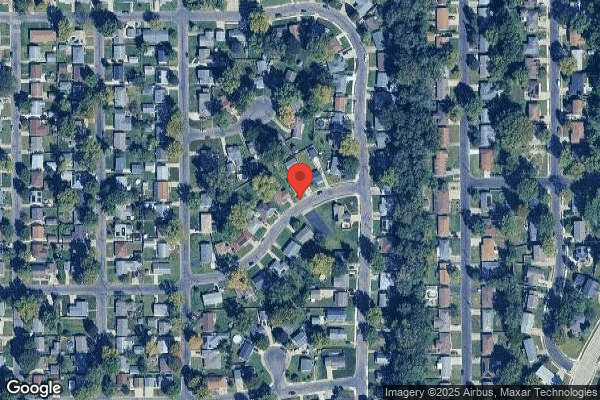

2220 STATE STREET, PEKIN, IL 61554 (309) 347-1110
For profit - Corporation 202 Beds PETERSEN HEALTH CARE Data: November 2025 1 Immediate Jeopardy citation
Trust Grade
0/100
#655 of 665 in IL
Last Inspection: August 2024

Within standard 12-15 month inspection cycle. Federal law requires annual inspections.

Overview

Timbercreek Rehab & Healthcare Center currently holds an F trust grade, indicating significant concerns about the facility's overall quality and care. Ranking #655 out of 665 in Illinois places it in the bottom half of all state facilities, while being #7 out of 8 in Tazewell County suggests limited local options for better care. Although the facility is showing improvement, reducing issues from 26 in 2024 to 8 in 2025, it still reported 71 total deficiencies, including serious incidents that caused harm, such as a resident wandering off unsupervised for three days and another waiting over 24 hours for emergency care after a fracture. Staffing is a notable weakness with a troubling 66% turnover rate, and RN coverage is less than that of 96% of facilities in Illinois, which may lead to inadequate monitoring of residents’ needs. Additionally, the facility has incurred $213,731 in fines, which raises concerns about ongoing compliance issues.

Trust Score
F
0/100
In Illinois
#655/665
Bottom 2%
Safety Record
High Risk
Review needed
Inspections
Getting Better
26 → 8 violations
Staff Stability
⚠ Watch
66% turnover. Above average. Higher turnover means staff may not know residents' routines.
Penalties
✓ Good
$213,731 in fines. Lower than most Illinois facilities. Relatively clean record.
Skilled Nurses
⚠ Watch
Each resident gets only 17 minutes of Registered Nurse (RN) attention daily — below average for Illinois. Fewer RN minutes means fewer trained eyes watching for problems.
Violations
⚠ Watch
71 deficiencies on record. Higher than average. Multiple issues found across inspections.
★☆☆☆☆
1.0
Overall Rating
★☆☆☆☆
1.0
Staff Levels
★☆☆☆☆
1.0
Care Quality
★☆☆☆☆
1.0
Inspection Score
Stable
2024: 26 issues
2025: 8 issues

The Good

  • Full Sprinkler Coverage · Fire safety systems throughout facility
  • No fines on record

Facility shows strength in fire safety.

The Bad

1-Star Overall Rating

Below Illinois average (2.5)

Significant quality concerns identified by CMS

Staff Turnover: 66%

19pts above Illinois avg (46%)

Frequent staff changes - ask about care continuity

Federal Fines: $213,731

Well above median ($33,413)

Significant penalties indicating serious issues

Chain: PETERSEN HEALTH CARE

Part of a multi-facility chain

Ask about local staffing decisions and management

Staff turnover is elevated (66%)

18 points above Illinois average of 48%

The Ugly 71 deficiencies on record

1 life-threatening 9 actual harm
Aug 2025 3 deficiencies 1 Harm
SERIOUS (G) 📢 Someone Reported This

A family member, employee, or ombudsman was alarmed enough to file a formal complaint

Actual Harm - a resident was hurt due to facility failures

Notification of Changes (Tag F0580)

A resident was harmed · This affected 1 resident

Based on Interview and Record review, the facility failed to notify a resident's physician of new onset, unilateral extremity pain for a resident with severe cognitive impairment for one of three resi...

Read full inspector narrative →
Based on Interview and Record review, the facility failed to notify a resident's physician of new onset, unilateral extremity pain for a resident with severe cognitive impairment for one of three residents (R1) reviewed for injury in the sample of four. This failure resulted in R1 waiting over 24 hours to receive emergency care/ imaging for a fracture of R1's right tibia and fibula.Findings include: R1's current Care Plan, dated 8/11/25, documents R1 has diagnoses including but not limited to Alzheimer's Disease, Anxiety, Senile Degeneration, and Severe Dementia with Psychotic disturbance. This care plan documents Resident has a behavior problem of increased confusion with anxiety related to: Alzheimer's or related dementia.R1's electronic progress note, dated 8/5/2025 at 1:26 PM and signed by V4 (Licensed Practical Nurse), documents, Late entry: 8/3/25 (R1) was observed in hallway acting per normal. Propelling herself while whimpering she wants to go home repeatedly. While in the dining room, this nurse attempted to administer medications and PRN (as need) ABH (Ativan, Benadryl, Haldol, anti-anxiety/ antipsychotic medicated cream) and (R1) became extremely upset and refused medications. A later reattempt to apply ABH cream with CNA (Certified Nursing Assistant) and successful. A little while later same CNA (V15) said she thought she knew what was wrong with (R1) and palpated right hip area in which (R1) winced and attempted to pull away. PRN morphine (narcotic pain medication) administered with some difficulty, however then resident rested in wheelchair at the nurse's desk for a while. Later another resident needed to use phone at the desk so when staff went to move (R1) back in her chair (R1) grabbed (her) leg at the right knee and brought towards her chest. No reported incidents to explain her pain as resident is primarily nonverbal with limited communication. Continued to monitor.On 8/22/25 at 2:45 PM, V4 (Licensed Practical Nurse) confirmed she was the nurse for R1 on 8/3/25 and stated, I took care of (R1). On Sunday morning (8/3/25), she was tooling around and acting normal. She did not want her morning meds, sometimes she does that though. (V15 CNA) brought (R1) to the nurse's station and said I think she is in pain and when (V15) went to touch (R1's) right hip area, she winced from that. (R1) later grabbed her right knee and brought it to her center, almost like a guarding motion. Those were her only signs she displayed of pain. Neither was a normal behavior for her. I was afraid to order an X-Ray because she'd be non-compliant, she would need held and not handle that well. All of this happened just after breakfast on 8/3/25. I know (R1) was later taken to lunch and I don't think anything else was ever said. I didn't notify the DON (V2, Director of Nursing) or the MD (V7, R1's Physician).On 8/22/25 at 3:05 PM, V15 (CNA) stated, On 8/3/25, I was taking care of (R1) and I told the nurse (V4) when I touched (R1) on the right hip she acted like she was in pain and hurting. I know she drew her knee up at one point later too when she was in front of the nurse's station. She was displaying pain on the side. She was confused often and that day she couldn't be calmed down with music or other interventions. I could tell (R1) was more anxious and not acting her normal self. On 8/23/25 at 9:20 AM, V14 (Registered Nurse) confirmed she was R1's nurse on the evening of 8/3/25 until the morning of 8/4/25. V14 stated, I was told in report the day before (8/3/25) that (R1) was having some pain. The next morning (8/4/25) the CNA (V16) called me in the room, and we couldn't really tell what was wrong. (R1) was grabbing towards her right knee. We decided not to get her up or move her and that when dayshift comes in, they can order an x-ray. This was all before 6 AM, before we were going to change shifts. (R1) kind of guarded her right knee. That morning with (V16), she had been more resistive to care. V14 confirmed she did not notify R1's Physician (V7) or (V20, R1's Guardian).R1's nursing progress notes, dated 8/4/2025 at 11:03 AM and signed by V6 (Licensed Practical Nurse), documents R1 was refusing all pain medications and was sent to the emergency department for evaluation and imaging. On 8/23/25 at 10:33 AM, V6 (Licensed Practical Nurse) stated, I took report on 8/4/25 (morning) and it was stated to me that (R1) was acting strange towards the end of the night shift. I assessed (R1) and when trying to assist her she recoiled and seemed fearful. I thought it could be her leg bothering her, but I wasn't sure. It was strange that (R1) wasn't allowing staff to help her. That was new behavior for her. I was not aware of anyone notifying the (V7, R1's Physician), (V20, R1's Guardian), or (V2, Director of Nursing) prior to myself, that morning. R1's Emergency Department notes, dated 8/4/25 at 2:34 PM and signed by V21 (emergency room doctor), documents R1 was brought to the emergency room for right ankle swelling and later admitted to the hospital with a right closed Tibia-Fibula fracture and Dementia.On 8/23/25 at 12:10 PM, V2 (Director of Nursing) confirmed he was notified of the situation with R1 on the date she was sent out to the hospital (8/4/25). V2 stated he was unaware she was having symptoms of pain the day prior (8/3/25). V2 confirmed when R1 was sent to the emergency room it was discovered she had a lower right leg fracture of both bones and that V7 (R1's Physician) and V20 (R1's Guardian) was not notified of the change in R1's condition until 8/4/25. The facility's Significant Condition Change and Notification policy, dated 12/2024, documents To ensure the resident's family and or representative and medical practitioner are notified of resident changes such as: A significant change in the resident's physical, mental or psychological status; Abnormal or unusual or new complaints of pain. This policy also documents When any of the situation exist, the licensed nurse will contact the resident's representative and their medical practitioner. The medical practitioner will be contacted immediately for any emergencies regardless of the time of day. Non-emergency notifications may be made the next morning if the situation occurs on the late evening or night shift. This applies to any day of the week including holidays. If the medical practitioner cannot immediately be reached in any emergency, the medical director will be called. If the medical practitioner cannot be reached, the director of nursing or the charge nurse can make arrangements for transportation to the emergency department. Each attempt will be charted as to the time the call was made, who was spoken to, and what information was given to the medical practitioner. All significant changes will be recorded on the (facility's electronic record program) communication board in the resident record. Charting will include an assessment of the resident's current status as it relates to the change in condition.
CONCERN (D) 📢 Someone Reported This

A family member, employee, or ombudsman was alarmed enough to file a formal complaint

Potential for Harm - no one hurt, but risky conditions existed

Deficiency F0697 (Tag F0697)

Could have caused harm · This affected 1 resident

Based on interview and record review, the facility failed to assess and document a resident's pain and administer pain medication to a resident with severe cognitive impairment, who was later diagnose...

Read full inspector narrative →
Based on interview and record review, the facility failed to assess and document a resident's pain and administer pain medication to a resident with severe cognitive impairment, who was later diagnosed with right lower leg fractures for one of three residents (R1) reviewed for accidents in the sample of four. Findings include:R1's current Care Plan, dated 8/11/25, documents R1 has diagnoses including but not limited to Alzheimer's Disease, Anxiety, Senile Degeneration, and Severe Dementia with Psychotic disturbance. This care plan documents Resident has a behavior problem of increased confusion with anxiety related to: Alzheimer's or related dementia.R1's Treatment Administration Record (TAR), dated 8/1/25-8/22/25, documents R1 has an order for Pain monitoring every shift, every day and night shift. Start Date, 3/10/2025. This record does not document dayshift pain monitoring was assessed on 8/2/25 or 8/3/25. This same TAR documents on the evening of 8/3/25, R1's pain was assessed to be a 7/10, severe pain.R1's Medication Administration Record (MAR), dated 8/1/25-8/22/25, documents R1 has an order for Morphine Sulfate (Concentrate) Oral Solution 20 Milligrams/Milliliter (ml) (Liquid Narcotic pain medication). Give 0.25 ml by mouth every two hours as needed for Pain or Air Hunger. Start Date, 3/06/2025. This same MAR does not document any other medications for pain were in place on 8/3/25 and does not document any pain medication was administered to R1 on 8/3/25.On 8/22/25 at 2:45 PM, V4 (Licensed Practical Nurse) confirmed being R1's nurse on the dayshift of 8/3/25. V4 stated, V15 (Certified Nursing Assistant, CNA) brought (R1) to the nurse's station (on 8/3/25) and said, I think she is in pain and when the CNA went to touch (R1's) right hip area, she winced from that. (R1) later grabbed her right knee and brought it to her center, almost like a guarding motion. Those were her only signs she displayed of pain. Neither was a normal behavior for her. I maybe charted Morphine administration in the progress notes; I am not sure if it was charted in the MAR or not. All of this happened just after breakfast on 8/3/25.On 8/23/25 at 9:20 AM, V14 (Registered Nurse) confirmed she was R1's nurse on the evening of 8/3/25 until the morning of 8/4/25. V14 stated, I was told in report the day before (8/3/25) that R1 was having some pain. The next morning the CNA (V16) called me in (R1's room) and we couldn't really tell what was wrong. (R1) was grabbing towards her knee. We decided not to get her up or move her and when dayshift comes in, they can order an x-ray when the place opens. This was before 6 am, just before we were going to change shifts. She kind of guarded her right knee. That morning with (V16), she had been more resistive to care. I think I was able to squirt some Morphine in her mouth for pain. I am not sure if it was charted on the MAR. Sometimes we chart on the MAR or chart in the narcotic sign out book.R1's Nursing Progress notes do not contain any pain assessments, progress notes or pain medication administrations for R1 on 8/3/25. R1's Emergency Department notes, dated 8/4/25 at 2:34 PM and signed by V21 (emergency room doctor), documents R1 was brought to the emergency room for right ankle swelling and later admitted to the hospital with a right closed Tibia-Fibula fracture and Dementia.On 8/23/25 at 12:10 PM, V2 (Director of Nursing) confirmed he was notified of the situation with R1 on the date she was sent out to the hospital (8/4/25). V2 stated he was unaware she was having symptoms of pain the day prior (8/3/25). V2 confirmed when R1 was sent to the emergency room it was discovered she had a lower right leg fracture of both bones. V2 stated if the Morphine was being administered it should be charted on the Medication Administration Record to show it was given.On 8/25/25 at 2:00 PM, V1 (Administrator) stated that V1 and V2 have searched for the Morphine sign out sheet for R1's narcotic pain medication from 8/1/25-8/22/25 and they are not able to find it. V1 confirmed there is no way to determine if R1 was properly assessed and given pain medication on 8/3/25 because it is not charted in R1's medical record.The facility's Pain Management policy, dated 2/2025, documents Effective pain management can remove the adverse psychological and physiological effects of unrelieved pain. Optimal management of the resident experiencing pain enhances the healing and promotes both physical and psychological wellness. It is the responsibility of all clinical staff to assess and periodically reassess the resident for pain and relief from pain. Expressions of pain may be verbal or nonverbal and are subjective to the resident including but not limited to: negative verbalizations and vocalizations (groaning, crying, whimpering, screaming), behavior such as resisting care, distressed pacing, irritability, depressed mood or decreased participation in usual physical and/or social activities. If the resident has been identified with pain, the resident will undergo reassessment of pain at least once per shift and before and after every pain control mechanism employed by the resident's care providers. Pain control mechanisms include but are not limited to: Medications administered for the control or relief of pain, Medications administered for the control or relief of anxiety, Repositioning of the resident. Management of the resident's pain is an interdisciplinary process, and it is to be included on the resident's interdisciplinary care plan.The facility's Controlled Substance policy, dated 12/2024, documents Controlled substances are subject to special handling, storage, disposal, and record-keeping requirements. The facility will maintain compliance with these special provisions. The licensed nurse or CMT (Certified Medication Technician) where applicable will sign the medication out on the Controlled Substance Proof of use form immediately and will document the medication on the Medication Administration record immediately after administering the drug. The Controlled Substance Proof of use record is to be kept in the Controlled Medication Book. When completed, these records are to be placed in the resident's permanent record.
CONCERN (F) 📢 Someone Reported This

A family member, employee, or ombudsman was alarmed enough to file a formal complaint

Potential for Harm - no one hurt, but risky conditions existed

Deficiency F0725 (Tag F0725)

Could have caused harm · This affected most or all residents

Based on Observation, Interview and Record Review, the facility failed to ensure that direct resident care staffing was adequate to meet the needs of residents in the facility. This failure has the po...

Read full inspector narrative →
Based on Observation, Interview and Record Review, the facility failed to ensure that direct resident care staffing was adequate to meet the needs of residents in the facility. This failure has the potential to affect all 83 residents residing in the facility.Findings include:The facility's Resident Roster dated 8/22/25 and provided by V1 (Administrator), documents there are 83 residents residing in the facility.The facility's (undated) Resident Acuity spreadsheet provided by V1 (Administrator) on 8/25/25, documents the facility has 75 residents who require some level of staff assistance with Activities of Daily Living. Of those 75 residents, 27 of them require moderate assistance and 36 require total dependence on staff. This spreadsheet also documents 40 residents have behavioral mental health needs, 14 of which display aggression.R3's Grievance/ Complaint form, dated 8/4/25 and signed by V1 (Administrator), documents, This resident came to the SSD (Social Services Director, V5) to talk about the staffing. The resident is happy with staff but is unhappy with the cuts/ shortages. (R3) is worried about prolonged waits to be helped and get medications.R3's current Care Plan, dated 10/11/24, documents R1 has diagnoses including but not limited to Congestive Heart Failure, Chronic Kidney Disease, and Restless Legs Syndrome. This care plan documents R1 has a plan of Actual / At Risk and/or Potential for complications with deficits with ADL's (Activities of Daily Living) related to current medical/physical status. Has medications and diagnoses that can/may affect ADL's. This same plan of care documents R3 requires limited assistance of one staff member for transferring, toileting, locomotion, and dressing.On 8/22/25 at 2:05 PM, R3 was sitting in a recliner chair in her room. R3 stated she does not feel like the facility has enough staff to care for the residents. R3 stated, This morning, they had an emergency, and my morning medications did not get to me until lunchtime. I know it is because the nurses are just busy, and they have a lot to do. The CNAs (Certified Nursing Assistants) are busy too. I wait a long time when I do push my call light. If I need help to the use the restroom, I may wait 30-45 minutes before someone comes in to help. They just don't have enough staff working to get to everyone. R3 confirmed she requires a wheelchair to get around the facility and she has a history of falling.R4's current Care Plan, dated 8/5/24, documents R4 has diagnoses including but not limited to Heart Failure, Hemiplegia affecting right side, Epilepsy, Spastic Hemiplegia affecting left side, Chronic Kidney Disease, Joint Stiffness, Muscle Weakness, Difficulty Walking, Chronic Pain, Lack of Coordination and Abnormal Posture. This care plan documents R4 has a plan of (R4) is at risk for falls related to a history of falls, spastic hemiplegia affecting left side, decrease muscle coordination, use of assistive device, dependent on staff to stand. This care plan documents R4 requires extensive assistance of two staff for transfers and bed mobility.On 8/22/25 at 1:30 PM, R4 was sitting in the hallway outside of his room in a wheelchair. At this time R4 stated he has been waiting 45 minutes to get into bed and use the urinal. R4 stated, Staff are busy, they are not just sitting around. I know it's the end of lunch time, but I can't use the toilet because I require a (mechanical lift) to transfer so I need to get to bed and use a urinal. They need two staff to transfer me and so I must wait too long because there isn't enough of them.On 8/22/25 at 1:40 PM, V12 (Licensed Practical Nurse) stated staffing has been a challenge at times. V12 stated I am a nurse for 32 residents today in my area. I have several residents who require (mechanical lifts), two residents on dialysis and so they have decreased strength levels on several day of the week, I have another resident with a gastrostomy tube. We are not staffed based on the needs of these residents. I believe we have around 19 residents who have CHF (Congestive Heart Failure) and they need daily weights. It's a lot for two nursing assistants to keep up with.On 8/22/25 at 3:05 PM, V15 (Certified Nursing Assistant) stated, Staffing depends on the day. We have a resident (R1) on 15-minute watch right now. I have around 22 residents in my hall. Of those I have five to six (mechanical lifts) and that requires two staff members for every transfer. It can be very difficult to keep up with everything. On 8/23/25 at 10:33 AM, V6 (Licensed Practical Nurse) stated, We did just have some staffing cuts which makes it difficult at times to get things accomplished. Treatments and charting are things that often can't be caught up on. Especially charting. For example, that day (8/4/25) I had two residents transfer out to the hospital and it put me behind on everything else. It's hard to give safe resident care when you don't have enough staff in the building. The residents will often complain of longer wait times and that staff morale has decreased.On 8/22/25 at 3:20 PM, V2 (Director of Nursing) confirmed the facility is hearing more resident complaints on not having enough staff. V2 stated, Residents have complained to me about the staffing cuts that were made. We also have increased our census so we are getting more residents and more behaviors/care needs and we are scaling back on staff. It is noticeable to residents and of course staff feel it too.The facility's Facility Assessment, dated 7/13/25, does not include numerical staffing requirements necessary of nurses and nursing assistants for each shift, to meet the needs of the residents based on the resident population and census. This same assessment documents, The facility's plan to ensure sufficient staff to meet the needs of the residents at any given time is based on the (state minimum) staffing calculator, which takes into consideration the facility census and acuity levels impacting staffing needs.The facility's (undated) Activities of Daily Living policy, documents, This facility provides each resident with care, treatment, and services according to the resident's individualized care plan. Based on the individual resident's comprehensive assessment, facility staff will ensure that each resident's abilities in activities of daily living do not diminish unless circumstances of the resident's clinical condition demonstrate that the decline was unavoidable, including bathing, dressing, grooming, transferring, locomotion, ambulation, toileting, eating, communication including using speech, language or other functional communication systems specific to the needs of the individual resident.
Jul 2025 1 deficiency
CONCERN (D) 📢 Someone Reported This

A family member, employee, or ombudsman was alarmed enough to file a formal complaint

Potential for Harm - no one hurt, but risky conditions existed

Free from Abuse/Neglect (Tag F0600)

Could have caused harm · This affected 1 resident

**NOTE- TERMS IN BRACKETS HAVE BEEN EDITED TO PROTECT CONFIDENTIALITY** Based on interview and record review, the facility failed to protect a resident (R2) from physical abuse by another resident (R1...

Read full inspector narrative →
**NOTE- TERMS IN BRACKETS HAVE BEEN EDITED TO PROTECT CONFIDENTIALITY** Based on interview and record review, the facility failed to protect a resident (R2) from physical abuse by another resident (R1), reviewed for abuse, in a sample of seven.Based on interview and record review, the facility failed to protect a resident (R2) from physical abuse by another resident (R1), reviewed for abuse, in a sample of seven.FINDINGS INCLUDE:The facility policy, Abuse, Prevention and Prohibition Policy, dated 03/2025 directs staff, Each resident has the right to be free from abuse, corporal punishment and involuntary seclusion. Residents must not be subjected to abuse by anyone, including, but not limited to, facility staff, other residents, consultants or volunteers, staff of other agencies serving the resident, family members or legal guardians, friends or other individuals.R1's facility form admission Record, documents that R1 was admitted to the facility on [DATE] with the following diagnoses, Schizophrenia, Mood Disorder, Anxiety, Depression, Schizoaffective Disorder and Mild Intellectual Disabilities. R1's current Care Plan, dated 3/12/24 includes the following Focus Areas, (R1) has the potential to be physically aggressive related to Mood Disorder, Schizophrenia; (R1) has the potential to be verbally aggressive related to Mood Disorder, Schizophrenia.The facility form, Allegation of Abuse, dated 5/30/25 at 2:30 P.M. and completed by V2/Director of Nurses documents, (R1) was in the hallway near the front lobby screaming at another resident (R2). (R1) struck (R2) with a closed fist to the face. Both residents separated and brought to separate rooms to discuss the incident. Neither resident was injured during this incident. (R1) quickly apologized. POA (Power of Attorney) and DR (Doctor) notified. Both residents separated and debriefed on incident. (V1) notified to complete investigation. (R1) was informed that he would have to be referred to other facilities if he is unable to keep his hands to himself or stop calling staff and residents vulgar names. (R1) apologized and apologized to (R2) and staff. (R1) was given ideas for better outlets of frustration.On 7/15/25 at 10:30 A.M., V2/Director of Nurse verified he was present when (R1) hit (R2) with a closed fist to (R2)'s face. At that time V2 stated that R1 has a history of being verbally and physically aggressive to staff and residents.
Jun 2025 1 deficiency
CONCERN (E) 📢 Someone Reported This

A family member, employee, or ombudsman was alarmed enough to file a formal complaint

Potential for Harm - no one hurt, but risky conditions existed

Safe Environment (Tag F0584)

Could have caused harm · This affected multiple residents

4.) On 06/09/25 at 11:18 AM R7 and R68's window had no blinds, and the curtain was hanging halfway off the bracket and unable to be closed. R7 and R68's six-foot-long baseboard heater was lying on the...

Read full inspector narrative →
4.) On 06/09/25 at 11:18 AM R7 and R68's window had no blinds, and the curtain was hanging halfway off the bracket and unable to be closed. R7 and R68's six-foot-long baseboard heater was lying on the floor, not attached to the wall. R7 and R68's bathroom floor had a thick brown stain surrounding the base boards and the toilet. On 06/11/25 at 11:33 AM V3 (LPN/Licensed Practical Nurse) verified R7 and R68's window had no blinds or curtains that were able to be closed. On 06/11/25 at 11:36 AM V18 (Housekeeper) stated, (R7 and R68's) bathroom floor has always been stained and (R7 and R68's) window has never had a working blind or curtains. I do not know how long the heater has been lying on the floor. Based on observation, interview, and record review the facility failed to ensure resident rooms were clean and free of urine odor, resident room windows had privacy blinds or curtains in good repair, resident heating units were properly attached to the wall, and failed to ensure all resident rooms had adequate cooling for five of 18 residents (R4, R7, R9, R38 and R68) reviewed for homelike environment in the sample list of 40. Findings include: The facility's Resident Rights policy dated 12/2024 documents it is the responsibility of the staff in the facility to provide services to the residents, and advocate for Resident Rights. 1.) 06/10/25 10:36 AM 06/09/25 11:17 AM R4 had two cardboard boxes taped to the window covering the windows with silver tape. On 6/10/25 at 12:10 PM, V20 (Certified Nursing Assistant) stated there are cardboard boxes that cover windows because the windows let in hot/cold air. 06/09/25 11:00 AM, V5 (Maintenance Director) stated the blinds do not block out the sun, so residents will often ask to have boxes over the windows. V5 further stated the facility plans to fix the issues in the facility, but they have not been given the funding to do so yet. 2.) 06/09/25 02:07 PM R9's room had a very strong smell of urine. On top of R9's bedside table was a full urinal of amber colored urine. R9's bed had no fitted sheet and R9 was laying on top of the mattress. R9's floor was sticky with dirt and debris. R9's Current Medical Diagnosis List documents R9 has a mental illness of Schizophrenia. R9's current care plan documents R9 needs assistance with activities of daily living (ADLs). This same care plan documents R9 does not keep up with personal hygiene related to R9's mental illness and requires staff assistance. On 6/11/25 at 2:00 PM, V2 (Director of Nursing) stated resident rooms should be clean and in good working order. 3.) On 6/10/25 at 1100 AM, R38's room did not contain an air conditioning unit. An electronic temperature reader revealed R38's room temperature was 76 degrees. R38's Nurse Progress notes dated 6/5/25 documents R38 was sent to the local hospital for a planned surgery. 06/10/25 11:22 AM, V5 (Maintenance Director) stated V5 is not doing temperature checks in the facility. V5 stated R38's room does not have a window air conditioning unit at this time, but the facility will be installing one in R38's room. V5 confirms R38's room does not have central air conditioning. V5 stated the unit was removed from that room awhile back. On 6/10/25 at 12:10 PM, V20 (Certified Nursing Assistant) and V21 (Certified Nursing Assistant) stated R38 has always wanted R38's room to be very cold. V20 further stated R38 would often complain that R38's room was too hot. On 6/10/25 at 1:00 PM, V2 (Director of Nursing) stated R38 has been moved several times to different rooms because it's been hard to find a roommate that likes the room as cool as R38 does. V2 stated V2 is aware that R38s room does not have an air conditioning unit and the facility is working to install a new unit. R38's electronic medical record documents under the census line that R38 was moved into R38's room on 5/1/25.
Apr 2025 1 deficiency
CONCERN (D) 📢 Someone Reported This

A family member, employee, or ombudsman was alarmed enough to file a formal complaint

Potential for Harm - no one hurt, but risky conditions existed

Free from Abuse/Neglect (Tag F0600)

Could have caused harm · This affected 1 resident

**NOTE- TERMS IN BRACKETS HAVE BEEN EDITED TO PROTECT CONFIDENTIALITY** Based on interview and record review, the facility failed to prevent abuse for one resident (R2) reviewed for abuse in a sample ...

Read full inspector narrative →
**NOTE- TERMS IN BRACKETS HAVE BEEN EDITED TO PROTECT CONFIDENTIALITY** Based on interview and record review, the facility failed to prevent abuse for one resident (R2) reviewed for abuse in a sample of six. Findings include: The Initial Incident Report sent to (State agency) for 4/1/25 incident between R1 and R2 documents, (R1) allegedly walked a crossed the hallway to (R2's) room and swatted at (R2) while (R2) was in bed. The Final Incident Report sent to (State agency) for 4/1/25 incident between R1 and R2 documents, (R2) was lying in bed yelling out, as he does sometimes when he forgets to use the call light, and resident (R1) with dementia came in (R2's) room and swatted at (R2), (R1) left .right after, then staff came in and made sure he (R2) was okay. On 4/23/25 at 11:59 AM, V1/Administrator stated, (R2) was in his room in bed yelling for staff and (R1) went to (R2's) room to tell (R2) hush and swatted at (R2). (R1) swatted at (R2) more than once. V1 was asked if physical contact was made and V1 stated, Yes. On 4/24/25 at 11:20 AM, R2 stated, I had my call light on, but staff hadn't come yet, so I was yelling for them. I was lying in bed with my back to the door. Next thing I know (R1) was beating on me. (R1) hit me several times in the arm, side of face and head. It hurt but there weren't any cuts or anything. It upset me that (R1) came in my room and that (R1) hit me. On 4/24/25 at 1:20 PM, V15 Licensed Practical Nurse/LPN stated, (R2) said that (R1) came to his room and hit him in the arm and side of his face. R1's Face Sheet documents R1 is an [AGE] year-old female admitted to the facility on [DATE] with the following, but not limited to diagnoses: Alzheimer's Disease with Late Onset, Dementia and Other Diseases Classified Elsewhere, Moderate, with Mood Disturbance, and Anxiety. R1's current Care Plan documents, (R1) has potential to be physically aggressive r/t (related to) Alzheimer's or other related Dementia, Anxiety. R1's MDS (Minimum Data Set) Assessment, dated 4/14/25, documents R1 has a BIMs (Brief Interview for Mental Status) of 4 (severely impaired). R1's Nursing Note written by V15/LPN dated 4/2/25 at 12:10 AM, documents, (R1) allegedly walked into room across the hall and hit the resident (R2) that occupies that room multiple times on his right arm, shoulder and right side of his face, when writer (V15) was notified of incident by (R2) that was hit, (R1) was laying in her bed in her room, (R1) is alert with confusion per baseline. R1's Progress Note written by V1/Administrator dated 4/3/25 at 12:48 PM, documents, QA (Quality Assurance) met to review incident on 4/1/2025. Resident (R1) had walked across the hall into a male resident's room and proceeded to swat at (R2), then walked back to her room. R2's Face Sheet documents R2 is a [AGE] year-old male admitted to the facility on [DATE] with the following, but not limited to diagnoses: Hemiplegia and Hemiparesis following Cerebral Infarction Affecting Left Non-Dominant Side, Depression, and Anxiety. R2's MDS Assessment, dated 1/24/25, documents R2 has a BIMs of 15 (cognition intact). R2's Nursing Note written by V15/LPN dated 4/2/25 at 12:38 AM, documents, It was reported by CNA (Certified Nursing Assistant) (V18) that resident (R2) was yelling from his room for CNA and nurse. (V18) went to residents room and (R2) reported to (V18) that resident (R1) from across the hall came in and hit (R2) multiple times. (V18) immediately reported incident to (V15), (V15) went to (R2's) room to assess situation and (R2), (R2) stated that he was yelling out for CNA to get his urinal and (R1) from across the hall walked into his room and was yelling at (R2) to hush at the end of his bed then (R1) walked to side of (R2's) bed and slapped (R2) with open hand multiple times on (R2's) right arm, shoulder and side of his face. (R2) stated he lifted his right arm to try to block (R1) from hitting him, then (R1) walked back to her room. R2's Progress Note written by V1/Administrator dated 4/3/25 at 12:53 PM, documents, QA met to review incident from 4/1. (R2) was lying in bed yelling out as he does sometimes, and a female resident (R1) with dementia came in and swatted at (R2). The Incident Investigation form written by V1/Administrator interviewing V15/LPN dated 4/2/25 documents, (V15) said (R1) went over to (R2's) room and swatted at (R2). The Incident Investigation form written by V1/Administrator interviewing R2 dated 4/2/25 documents, (R2) states that a small little woman came into his room while he was in bed. (R2) said he told her (R1) to leave, and she (R1) then looked at him and started swatting at him (R2). He (R2) then yelled for the staff. They came and removed her (R1). The Abuse, Prevention and Prohibition policy Dated 3/2025 documents Statement of Intent: Each resident has the right to be free from abuse, corporal punishment, and involuntary seclusion. Residents must not be subjected to abuse by anyone, including, but not limited to, facility staff, other residents, consultants or volunteers, staff or other agencies serving the resident, family members or legal guardians, friends, or other individuals. Policy: This facility prohibits mistreatment, neglect, or abuse of residents. This also includes the deprivation by an individual, including a caretaker, of goods or services that are necessary to attain or maintain physical, mental, and psychosocial well-being. This presumes that all instances of abuse, even those residents in a coma, can cause physical harm, pain, or mental anguish. The facility also prohibits misappropriation of resident property. The residents must not be subjected to abuse by anyone. The facility will educate all employees upon hire and at least annually of the definitions of the Abuse Prevention and Prohibition Policy including definitions pertaining to abuse and neglect. Annually, the Administrator will conduct local law enforcement to review the requirements for reporting to law enforcement. Protection: Resident-to-Resident Altercations: Resident to Resident abuse includes the term willful. The word willful means that the individual's action was deliberate (not inadvertent or accidental), regardless of whether the individual intended to inflict injury or harm. An example of a deliberate (willful) action would be a cognitively impaired resident who strikes out at a resident with his/her reach, as opposed to a resident with a neurological disease who has involuntary movements (e.g. (example), muscle spasms, twitching, jerking, writhing movements) and his/her body movements impact a resident who is nearby.
Apr 2025 2 deficiencies
CONCERN (D) 📢 Someone Reported This

A family member, employee, or ombudsman was alarmed enough to file a formal complaint

Potential for Harm - no one hurt, but risky conditions existed

Deficiency F0761 (Tag F0761)

Could have caused harm · This affected 1 resident

Based on observation, interview and record review the facility failed to properly store medications for 2 residents (R6 and R8) of seven residents reviewed for medication pass in a total sample of 8. ...

Read full inspector narrative →
Based on observation, interview and record review the facility failed to properly store medications for 2 residents (R6 and R8) of seven residents reviewed for medication pass in a total sample of 8. Findings Include: The Facility's Procurement and Storage of Medication policy reviewed 12/16/24 documents, All medications, except those requiring refrigeration, shall be kept in the locked medicine room or locked medication cart. On 4/2/25 at 10:05 AM there were two albuterol inhalers each with over 100 doses left on R6's bedside table. The inhalers did not have any label on them with name or date dispensed. There was no one in the room. On 4/2/25 at 10:10 AM V5 (Licensed Practical Nurse) confirmed there were two albuterol inhalers on R6's bedside table. V5 stated R6 did not have an order for the albuterol inhaler. V5 stated, (R6) used to have an order for the inhalers. I don't know why he has some in his room, he shouldn't. On 4/2/25 at 10:15 AM there was a Combivent Inhaler on R8's bedside table. There was no one in the room. The inhaler had R8's name and dispensing information from the pharmacy on a label. R8's Medication Administration Record for April 2025 documents, Combivent Respimat Inhalation Aerosol Solution 20-100 mcg (microgram)/act (Activation). R8's Combivent was signed off for 4/2/25 at 6:00 AM. On 4/2/25 at 10:20 AM V5 (Licensed Practical Nurse) confirmed R8's Combivent Inhaler was at his bedside. It should not have been left in here.
CONCERN (E) 📢 Someone Reported This

A family member, employee, or ombudsman was alarmed enough to file a formal complaint

Potential for Harm - no one hurt, but risky conditions existed

Quality of Care (Tag F0684)

Could have caused harm · This affected multiple residents

Based on observation, interview and record review the facility failed to ensure residents consumed their medications for five residents (R1, R2, R3, R5 and R7) and the facility failed to have a physic...

Read full inspector narrative →
Based on observation, interview and record review the facility failed to ensure residents consumed their medications for five residents (R1, R2, R3, R5 and R7) and the facility failed to have a physician's order for medication administered for one resident (R7) of 8 residents reviewed for medication administration. Findings Include: The Facility's Medication Administration policy dated 12/16/24 documents, Drug administration shall be defined as an act in which a single dose of a prescribed drug or biological is given to a resident by an authorized person in accordance with all laws and regulations governing such acts. The complete act of administration entails removing an individual dose from a previously dispensed, properly labeled container (including a until dose container), verifying it with the physician's orders, giving the individual dose to the proper resident, and promptly recording the time and dose given. The Facility's Medication Administration policy documents, Observe the resident consume the medication to insure resident swallows medication. Never leave prepared medications unattended. No medications should be left at bedside unless specifically ordered by the physician and then only in limited amounts as described by the physician. 1. On 4/2/25 at 9:00 AM R2 was sitting up in his bed with the head of the bed up. R2 had a medicine cup full of pills on his bedside with his name written in black marker across the side. R2 stated those were his morning medicines that (V6/LPN) brought him to take. R2's April Medication Administration Record documents, R2's morning medicine as: Bisoprolol Fumarate 5 mg (milligrams), Finasteride 5 mg, Furosemide 20 mg, Losartan Potassium 50 mg, Phentermine HCL 37.5 mg, Tamsulosin .4 mg Bactrim DS 800-160mg, Eliquis 5 mg, and hydralazine 50 mg. 2. On 4/2/25 at 9:05 AM R1 was sitting in her bed with the head of the bed up. R1 had a medicine cup full of pills on her bedside table that were spilled and R1 was rolling the pills towards her one by one and taking them. R1 stated she spilled her medicine, so she was rolling it towards herself and then taking it. R1 was not sure what kinds of medicines were in the cup. R1's April Medication Administration Record documents R1's morning medications as: Jardiance 25 mg (milligrams), Multivitamin 1 tablet, Oyster Calcium 1 tablet, Docusate Sodium 100 mg, Eliquis 5 mg, Enalapril Maleate 10 mg, Metoprolol Tartrate 50 mg and Gabapentin 600 mg. 3. On 4/2/25 at 9:07 AM R1's roommate (R5) was taking medicine out of a medicine cup with his name written on the side. R5 confirmed that those were all his scheduled morning medicines. R5's April Medication Administration Record documents R5's morning medications as: Ferrous Sulfate 325 mg (milligrams), Multivitamin 1 tablet, oxybutynin 5 mg, Tamsulosin ,4 mg, Zinc 3. Sulfate 220 mg, Carvedilol 3.125 mg, Cranberry Oral 450 mg, Cyclobenzaprine 10 mg, Magnesium Oxide 400 mg, Methenamine Hippurate 1 GM (Gram), Omeprazole 20 mg, Sucralfate 1 gram and Vitamin C 500 mg. 4. On 4/2/25 at 9:20AM R3 was lying in his bed. On R3's bedside table was a medicine cup full of medicine with his name on it. R3 stated Oh right, I still need to take those. R3 did not make any move to take his medicine. R3's April Medication Administration Record documents his morning medications as: Calcium 600 mg(milligrams)Vitamin D 400 IU (International Units), Citalopram 40 mg, Metformin 500 mg, Aldactone 25 mg, Metoprolol 25 mg, Multivitamin 1 tablet, Omeprazole 20 mg, Pramipexole 0.25 mg (give 2 tablets), Vitamin B-12 100 mcg (micrograms), Acidophilus 1 capsule, buspirone 30 mg, cyclosporine 100 mg, Doxycycline 100 mg, Ferrous Sulfate 325 mg, Lasix 20 mg, Magnesium Oxide 400 mg and Acetaminophen 1000 mg. 5. On 4/2/25 at 9:40 AM R7 was sitting in the main dining room with a medicine cup with her name on it. In the medicine cup were 4 gummies. Resident states she will eat them in a little bit. R7 states they are vitamins of some kind. R7's April Medication Administration Record did not have any documentation of a Physician's order for any type of gummy. On 5/2/25 at 10:00 AM V4 (Licensed Practical Nurse) stated that the gummies in R7's medication cup would have been 2 of the juice plus vegetable blend and 2 of the juice plus fruit blend vitamin/supplement. V4 confirmed there was no doctor's order for these vitamin/supplements. On 4/4/25 at 9:00 AM V2 (Director of Nursing) confirmed that none of these residents (R1, R2, R3, R4, R5, R6 and R7) had self-administration of medication assessments done. Those (medications) should not have been left with the residents. The nurses should have stayed until the medicine was taken.
Dec 2024 1 deficiency 1 Harm
SERIOUS (G) 📢 Someone Reported This

A family member, employee, or ombudsman was alarmed enough to file a formal complaint

Actual Harm - a resident was hurt due to facility failures

Accident Prevention (Tag F0689)

A resident was harmed · This affected 1 resident

**NOTE- TERMS IN BRACKETS HAVE BEEN EDITED TO PROTECT CONFIDENTIALITY** Based on observation, interview, and record review the facility failed to ensure resident safety during van transportation for o...

Read full inspector narrative →
**NOTE- TERMS IN BRACKETS HAVE BEEN EDITED TO PROTECT CONFIDENTIALITY** Based on observation, interview, and record review the facility failed to ensure resident safety during van transportation for one (R1) of three residents reviewed for accidents in a sample of five. This failure resulted in R1 sustaining a fall and suffering from pain and fractured ribs. Findings include: The facility's Fleet Safety Program, undated, documents, Safety Policy: (Named facility) has implemented a fleet management program to establish minimum safety requirements for the operation of vehicles used for company business. We are committed to providing and maintaining a safe working environment for our employees and protecting our residents and citizens of the community from injury and property loss. Your commitment to these policies and procedures are vital to building a safe driving culture within (named facility) and ensuring your own safety, the safety of others and the success of the business. This document continues to state Employee/Driver: Comply with the requirements of this program .Follow all safe driving rules, traffic regulations, and ensure driver(s) and all passengers are wearing appropriate securement device (e.g., seat belt and shoulder harness, wheelchair securement straps.) The consent form included in this Fleet Safety Program includes As a driver of a company vehicle or a private vehicle on company business I understand that it is my responsibility to operate the vehicle in a safe manner and follow to drive defensively to prevent injuries and property damage. R1's Quality Care Reporting Form, dated 11/12/24, documents R1 had a fall in the parking lot resulting in a small discoloration and pain to R1's chin. R1 was sent to the hospital for evaluation and treatment. Summary of event and any actions taken: Transport staff to be educated on safety and proper transportation safety. R1's hospital Emergency Provider Notes, dated 11/15/24, documents, HPI (History of Present Illness): Patient reportedly fell on [DATE]. She was reportedly in a handicap van and was being unloaded, however the lift was not up, and her wheelchair was rolled/dropped out of the van. She fell to the ground and struck her face/head and landed on her left side. She was evaluated at (named facility) who did a CT (Computed Tomography) of her head and neck but did not do imaging of her back/ribs. R1's hospital CT Chest without Contrast, dated 11/15/24, documents, Impression: 1. T8-T9 left rib fractures with associated small hemothorax. On 12/11/24, at 11:43am, R1 sat in a wheelchair in a lounge area. R1 stated the following: I was in the back of the van, and she (V7 Transportation driver) pushed me up (to the rear of the van). I guess she (V7) thought the lift was up, but it wasn't. I went down, fell on the ground, and broke two ribs. They sent me out to the hospital and the hospital said I had two broken ribs. I had pain when moving, but not now. There was one other resident in the van. They let him off the lift first then they never brought the lift back up. (V7) was in front of me and I was going backwards. It made me feel unsafe. They are supposed to take care of you and not you taking care of them. It scared me when I fell. My side hurt from falling on it, but I didn't know right away that I had two broken ribs until the hospital told me. R1 stated that the pain was 10/10 in the beginning and then for about two days. On 12/11/24, at 10:30am V5 Transportation Scheduler stated the following: (R1) was in the hospital and was picked up by (V7 Transportation Driver). I was with another resident (R5) at his appointment then we all returned together. The incident happened upon return. We got back here with both residents. (V5) was unloaded first as I lowered the ramp with (V5) on it. (V5) couldn't propel through the parking lot so I wheeled (V5) to the more even sidewalk and he was in a safe place. As I came back around to the back of the van to help with (R1) I saw (V7 Transportation Driver) wheeling (R1) to put (R1) on the ramp which was still on the ground. I tried to run to try to catch (R1) but it happened so fast. Not sure how I could have stopped it from happening. (R1) went down chair and all. (V7) was in front of (R1's) wheelchair pushing her out backwards. The wheelchair tipped and landed on its backside. (R1) was sent back to the hospital for evaluation. (R1) had redness on her shoulder blade and back, but not on her face or head. (V7) could have looked to see if the lift was up or double checked to make sure and not assume things were done. I am not sure if (V7) heard me say that I was taking (R5) further up to the sidewalk. I should have verified (V7) heard me and double checked the ramp was in proper place for the next resident. On 12/11/24, at 2:07pm, V7 Transportation Driver stated the following: We had two residents on the van, (R1 and R5) and (V5) was helping me. (R1) was in the front part of the back end of the van and (R5) was at the back. (V5) unloaded (R5) out the back using the lift. I had unhooked (R5's) wheelchair and (V5) lowered (R5) down. As (V5) lowered (R5) I went to unhook (R1) and rolled (R1) to the back. I thought (V5) had put the lift up and (V5) had not. I pushed (R1) back and was holding onto the wheelchair when I realized the lift wasn't up. That's when (R1) hit the ground hitting her head. V7 continued to state that usually the first person who lowers the lift for one resident is the one who brings it back up for the next resident because they are the one who has the controls. (R1) had said her chin hurt. (R1) was sent out to hospital. I should have checked to make sure the lift was up without assuming. V7's current Personnel file includes but is not limited to includes Supervisor Report of Counsel with a date of occurrence as 11/11/24 (error - should state 11/12/24). Description of Occurrence: Resident being transported in facility van. Upon arriving at Facility, staff member went to unload resident from van and did not use proper lift equipment. V7's file also includes Term History, Termination Date: 11/22/24. Reason: Safety Violations; Notes: Violated van safety protocols. On 12/12/24, at 2:00pm, V1 Administrator stated the following: (V8 Regional Director) and I discussed (R1's incident) and decided we should terminate (V7) and not let that happen again. It was lack of awareness. All safety protocols were in place. Human error. I was not a witness. The investigation did notate that the lift was on the ground when (R1) was wheeled out of the van. Better awareness of surroundings may have prevented the incident.
Nov 2024 3 deficiencies
CONCERN (D) 📢 Someone Reported This

A family member, employee, or ombudsman was alarmed enough to file a formal complaint

Potential for Harm - no one hurt, but risky conditions existed

Deficiency F0602 (Tag F0602)

Could have caused harm · This affected 1 resident

Based on interview and record review the facility failed to ensure one resident (R1) was free from misappropriation of funds of three residents reviewed for abuse. Findings Include: The Facility's A...

Read full inspector narrative →
Based on interview and record review the facility failed to ensure one resident (R1) was free from misappropriation of funds of three residents reviewed for abuse. Findings Include: The Facility's Abuse Prevention Program dated 11/28/2016 documents, This facility affirms the right of our residents to be free from abuse, neglect, misappropriation of resident property, and exploitation as defined below. This includes, but is not limited to freedom from corporal punishment, involuntary seclusion and any physical or chemical restraint not required to treat the resident's medical symptoms. This facility therefore prohibits mistreatment, exploitation, neglect or abuse of its residents, and has attempted to establish a resident sensitive and resident secure environment. The purpose of this policy is to assure that the facility is doing all that is within its control to prevent occurrences of mistreatment, exploitation, neglect or abuse of our residents. The Facility's Abuse Prevention Program also defines Misappropriation of resident property means the deliberate misplacement, exploitation, or wrongful, temporary, or permanent use of a resident's belongings or money without the resident's consent. On 11/6/24 at 9:30 R1 stated about a week ago she noticed she had not gotten a gift card in the mail that she had been expecting. R1 stated she also wanted to talk to V14 (Business Office Manager) about opening her mail. R1 reports she went to V14 and was shown where she (R1) had signed that she wanted her mail opened by the facility. R1 said, I tore that up right then and there and then told (V14/Business Office Manager) I was going to (V1/Administrator) because I had not received my gift card yet and I did. The very next day (V1/Administrator) was down here apologizing and giving me the cash for what was on the card. I am pretty sure (V14/BOM) got fired, but I don't care. We (residents) don't get much, and no one should be stealing what we do get. An undated summary of events presented by V1 (Administrator) documented that R1 expressed concerns regarding a gift card that she had not received. V14 (Business Office Manager) was sent home and a business office manager from a sister facility conducted the investigation and upon completion of the investigation it was determined that (V14/Business Office Manager) had used the gift for personal purchases and that V14 had admitted to using the card.
CONCERN (D) 📢 Someone Reported This

A family member, employee, or ombudsman was alarmed enough to file a formal complaint

Potential for Harm - no one hurt, but risky conditions existed

Quality of Care (Tag F0684)

Could have caused harm · This affected 1 resident

Based on Observation, Interview and Record review, the facility failed to complete physician ordered wound treatments daily for one of three residents (R1) reviewed for Wound Care in the sample of thr...

Read full inspector narrative →
Based on Observation, Interview and Record review, the facility failed to complete physician ordered wound treatments daily for one of three residents (R1) reviewed for Wound Care in the sample of three. Finding Include: The facility's Health Care Decubitus Care/Pressure Areas policy, dated 1/2018, documents, It is the policy of this facility to ensure a proper treatment program has been instituted and is being closely monitored to promote the healing of any pressure ulcer. Complete all areas of the Treatment Administration Record or Wound Documentation Record. Initiate physician order on the treatment sheet. Documentation of the pressure area must occur upon identification and at least once each week on the TAR (Treatment Administration Record) or Wound Documentation Form. On 11/4/2024, at 11:28 AM, R1 had a surgical wound to left stump that was red where sutures were, with minimal swelling. Wound was 3cm in length, 2cm in width, and was 1.2cm deep. Wound was bleeding and had blood dripping on the floor. R1 stated that the wound was sensitive to touch, and hurts when it is touched, or during wound dressing changes. R1 stated that wound dressing changes were not done daily. R1's October 2024 Treatment Administration Record (TAR), documents a Physician ordered wound treatment of L (left) stump-apply NS (normal saline) soaked gauze to open area, wrap with (elastic bandage), secure with tape, and apply (compression sock) daily. This order has a start date of October 7th, 2024. This same TAR documents on October 8, 16, 17, 19, 22, 23 ,24, 25, and 31, R1's treatments were not completed. R1's November 2024 Treatment Administration Record (TAR), documents a Physician ordered wound treatment of L (left) stump-apply NS (normal saline) soaked gauze to open area, wrap with (elastic bandage), secure with tape, and apply (compression sock) daily. This same TAR documents on November 1, R1's treatment was not completed. On 11/6/2024 at 2:00 PM, V2 (Director of Nursing) stated V2 was not reading the order for R1's wound change to be done daily and read the order as PRN (as needed). V2 stated, Yes, nursing staff should have been doing the wound dressing changes daily as ordered.
CONCERN (D) 📢 Someone Reported This

A family member, employee, or ombudsman was alarmed enough to file a formal complaint

Potential for Harm - no one hurt, but risky conditions existed

Infection Control (Tag F0880)

Could have caused harm · This affected 1 resident

Based on observation, interview and record review, the facility failed to follow Enhanced barrier precautions while performing wound care and follow hand hygiene for one of three residents (R1) review...

Read full inspector narrative →
Based on observation, interview and record review, the facility failed to follow Enhanced barrier precautions while performing wound care and follow hand hygiene for one of three residents (R1) reviewed for Wound Care, and Infection Control in a sample of three. Findings include: The Facility's Enhanced Barrier Precautions Policy, dated 7/13/23, documents, Enhance Barrier Precautions (EBP) should be used when contact precautions do not apply, for residents with any of the following: Open wounds that require a dressing change. Enhance Barrier Precautions require use of a gown and gloves during high-contact resident care activities that provide opportunities for the transfer of MDRO's to staff hands and clothing. EBP is primarily intended to use for care that occurs within a resident's room, when high-contact resident care activities are bundled together. Outside of a resident's room, EBP should be followed when performing transfers in the shower/assisting with shower and when assisting a resident with toileting in common restrooms. High contact care activities include: Wound care (pressure ulcers, diabetic ulcers, unhealed surgical wounds, chronic venous stasis wounds). The Facility's Hand Hygiene Policy, dated 8/14/23, documents, All staff will comply with current CDC hand hygiene guidelines to reduce the incidence of healthcare associated infections. Indications for Hand Washing-When hands are visibly soiled or contaminated with blood or other body fluids, before and after eating and using the restroom. Handwashing can also be used routinely in the following clinical situations: 1. After contact with body fluids, excretions, mucous membranes, non-intact skin and wound dressings. 2. Before and after direct resident care. 4. When moving from contaminated body site to clean body site during resident care. 5. After contact with intact skin. 6. After removing gloves. Indications for Alcohol Based Hand Rub (ABHR)-When hands are not visibly soiled, ABHR may be used for routinely decontaminating hands in the following clinical situations: 1. Before and after having direct contact with residents. 3. After contact with a resident's intact skin. 4. After contact with inanimate objects (including medical equipment). 5. After removing gloves. On 11/4/2024 at 10:28 AM, V3 (LPN) entered R1's Enhanced Barrier Precautions room without a gown, V3 washed hands, and applied gloves. V3 removed compression wrap, removed tape, removed gauze and disposed in trash can. Surgical site was red around suture area, with minimal swelling. V3 removed gloves and went to get a cotton swab stick, along with measuring tape. V3 did not sanitize hands or wash them before donning new gloves as she reentered the room. On the distal portion of the surgical site there was an opening wound where the sutures were closed making a wound 3cm in length, 2cm in width, 1.2cm deep. Wound was bleeding and had blood dripping on the floor. V3 cleansed the wound with wound cleaner, soaked gauze with wound cleaner, placed gauze around wound. V3 then wrapped gauze around lower leg and below the knee and secured gauze with tape. V3 removed gloves and labeled tape. On 11/4/2024 at 10:45 AM, V3 (LPN) stated that she forgot R1 was in Enhanced Barrier Precautions and explained the reason R1 was in Enhanced Barrier Precautions was maybe due to her oxygen, I need to go look into that. V3 stated that she realized she did not wear a gown and that she did not practice hand hygiene when she returned from grabbing the cotton swab on a stick and measuring tape. On 11/6/2024 at 2:00 PM, V2 (Director of Nursing) stated in Enhanced Barrier Precaution rooms, that staff should be wearing a gown and gloves when having direct contact cares or when changing linens. V2 stated staff should be practicing hand hygiene. V2 stated staff should use hand sanitizer before entering a room, and before exiting a room unless the resident is in a contact precaution room or if there is visible soiling then the staff member should be washing their hands.
Oct 2024 1 deficiency 1 Harm
SERIOUS (G) 📢 Someone Reported This

A family member, employee, or ombudsman was alarmed enough to file a formal complaint

Actual Harm - a resident was hurt due to facility failures

Pressure Ulcer Prevention (Tag F0686)

A resident was harmed · This affected 1 resident

Based on interview and record review, the facility failed to assess a wound and promptly initiate treatment upon identification of pressure ulcer for one of three residents (R2) reviewed for pressure ...

Read full inspector narrative →
Based on interview and record review, the facility failed to assess a wound and promptly initiate treatment upon identification of pressure ulcer for one of three residents (R2) reviewed for pressure ulcer wound treatment in the sample of eleven. This failure resulted in R2's pressure ulcer worsening to Unstageable. Findings include: Facility's Decubitus Care/Pressure Area Policy Revised 1/2018 documents: 2. The pressure area will be assessed and documented on the Treatment Administration Record/TAR or the Wound Documentation Record. 3. Complete all areas of the Treatment Administration Record or Wound Documentation Record. I) Document size, stage, depth, drainage, color, odor, and treatment (upon obtaining from the physician); 4) Notify the physician for treatment orders. R2's Face Sheet documents R2's diagnoses include: Cerebral infarction, aphasia, weakness, metabolic encephalopathy, myocardial infarction type, atherosclerotic heart disease, essential hypertension, hyperlipidemia, type 2 diabetes mellitus. R2's current Care Plan documents: (R2) is at risk for impaired skin integrity including skin tears, bruising and/or pressure related to very limited mobility, inadequate nutrition, and problems with friction and shearing of skin due to needing maximum assistance for moving and changing position. R2's Braden Scale for Predicting Pressure Ulcer Risk Dated 6/22/24 documents a score of 13 (16 and less = High Risk for developing pressure ulcers). R2's Progress Note Dated 8/8/24 documents: Quality Assurance/QA team reviewed (R2's) new pressure ulcer to coccyx. Nurse reported new open pressure ulcer to coccyx on 8/4/24. On 10/2/24 at 9:10am, V7 Licensed Practical Nurse/LPN stated she was the nurse for R2 on 8/4/24 and noted R2's coccyx wound. R2's Physician Orders Dated 8/2024 has no documentation of a physician ordered treatment obtained upon identification of R2's wound on 8/4/24. R2's Treatment Administration Record/TAR did not contain documentation that wound treatments were performed on 8/4/24 or 8/5/24. On 10/2/24 at 9:30am, V14 Certified Nursing Assistant/CNA stated she was R2's Caregiver on 8/5/24. V14 stated that during R2's bed bath, she observed an open area on R2's coccyx. V14 stated, It was tiny, less than 0.5 cm/centimeters like a pin drop. It was open with a little redness around it. It was tiny. R2's initial Wound Assessment and Plan signed and dated 8/6/24 by V13 Wound Physician documents R2's pressure ulcer to her coccyx had an onset date of 8/4/24. The assessment documents R2's pressure ulcer was unstageable, measures 3cm x 2cm, and the wound bed contains 70 percent slough (yellow tissue). On 10/2/24 at 11:10am, V13 stated, I saw (R2's) coccyx wound on 8/6/24 when the treatment was started. The staff did not reach out to me prior to 8/6/24. V13 stated with no treatment in place, R2's pressure ulcer could worsen overnight.
Aug 2024 14 deficiencies
CONCERN (D)

Potential for Harm - no one hurt, but risky conditions existed

Assessment Accuracy (Tag F0641)

Could have caused harm · This affected 1 resident

Based on observation, interview and record review, the facility failed to ensure resident Minimum Data Set/MDS Resident Assessments were completed correctly for two (R16 and R17) of two residents in a...

Read full inspector narrative →
Based on observation, interview and record review, the facility failed to ensure resident Minimum Data Set/MDS Resident Assessments were completed correctly for two (R16 and R17) of two residents in a sample of 37. Findings include: The facility's Comprehensive Care Planning policy, revised 7/20/22, documents, It is the policy of (named facility) to comprehensively assess and periodically reassess each Resident admitted to this facility. The results of this Resident assessment shall serve as the basis for determining each Resident's strengths, needs, goals, life history and preferences to develop a person centered comprehensive plan of care for each Resident that will describe the services that are to be furnished to attain or maintaining the Resident's highest practicable physical, mental, and psychosocial well-being. The Resident Assessment (RAI) shall be the guide utilized for all comprehensive assessments, care area assessments and care planning. 1. On 8/4/24, at 10:40am, R17 was in her room with oxygen infusing per nasal cannula. R17's Minimum Data Set/MDS assessments, dated 3/6/24 and 6/6/24, do not indicate R17 uses oxygen. On 8/07/24, 1:22pm V24 MDS Coordinator stated R17 should have oxygen marked on her MDS if she was on it continuously or on it during the past 7 days prior to MDS. V24 confirmed that R17's 3/6/24 and 6/6/24 MDSs do not have oxygen marked. V24 was unable to produce any documentation proving R17 was not using oxygen during the MDS assessment periods. 2. On 8/4/24 R16's bedroom door held a Contact Isolation sign, PPE (Personal Protective Equipment) bin next to entrance of door, and two barrels in the bathroom marked for linens and garbage. On 8/7/24 V15 LPN (Licensed Practical Nurse) performed wound care to R16's left hip and right buttock wounds. The final laboratory culture for R16, documents a wound culture was obtained from R16's left lateral hip and sent to the facility laboratory on 3/12/24 with final results received on 3/17/24 and positive for Heavy Growth of MRSA (Methicillin-resistant Staphylococcus aureus), Klebsiella Pneumonias, Proteus Mirabilia, Lactose Fermenter, and Bacillus Species. The Physician Orders for R16, document R16 started the antibiotic Doxycycline for MRSA infection of wound on 3/20/24. The 3/19/24 admission MDS (Minimum Data Set) assessment and the 6/19/24 Quarterly MDS for R16 do not document R16's wound infection. On 8/5/24 at 8:50 am, R16 stated his wounds were checked when he first came to the facility and showed he had MRSA and has been in contact isolation since the day he came to the facility. R16 stated no one has re-tested his wound so he doesn't know if he still has the infection or not.
CONCERN (D)

Potential for Harm - no one hurt, but risky conditions existed

Deficiency F0645 (Tag F0645)

Could have caused harm · This affected 1 resident

Based on interview and record review, the facility failed to ensure a PASRR (Preadmission Screening and Resident Review) Level II screening for mental disorder was completed for one (R66) of one resid...

Read full inspector narrative →
Based on interview and record review, the facility failed to ensure a PASRR (Preadmission Screening and Resident Review) Level II screening for mental disorder was completed for one (R66) of one resident reviewed for PASRRs in a sample of 37. Findings include: R66's current Face sheet documents an admission date of 5/8/23. R66's Physician Order Sheet/POS, dated 5/8/23, documents diagnoses (including but not limited to) schizoaffective disorder. R66's Notice of PASRR (Preadmission Screening and Resident Review) Level I Screen Outcome, dated 5/1/23, documents PASRR Level I Determination: No Level II Required - Situational Symptoms and Your Level I screen shows low-level behavioral health symptoms which appear to be situational. The nursing facility will watch your symptoms/behaviors to see if they improve or resolve within 30-60 days of this screen. If they do not, a nursing facility staff member must submit another Level I screen to maximus. This is called a status change. The status change will decide if you need a PASRR Level II evaluation for serious mental illness. This screening also documents Mental Health Diagnoses - Check any or all of the following mental health conditions that are diagnosed or suspected for this individual now or in the past: No mental health diagnosis is known or suspected. The facility was unable to produce a PASRR policy. On 8/07/24, at 2:50pm, V12 BOM/Business Office Manager stated V12 is the one who gets the PASRR screenings but does not review them. V12 confirmed that R66 transferred to this facility with her Level I screening, which states that R66 does not have a mental disorder and does not need a Level II. V12 also confirmed that R66 admitted with a diagnosis of schizoaffective disorder and should have had a Level II completed.
CONCERN (D)

Potential for Harm - no one hurt, but risky conditions existed

Deficiency F0655 (Tag F0655)

Could have caused harm · This affected 1 resident

Based on observation, interview, and record review the facility failed to ensure resident Baseline Care plan includes oxygen for one (R28) of 19 residents reviewed for Care plans in a sample of 37. Fi...

Read full inspector narrative →
Based on observation, interview, and record review the facility failed to ensure resident Baseline Care plan includes oxygen for one (R28) of 19 residents reviewed for Care plans in a sample of 37. Findings include: The facility's Care Plan policy, revised 1/11/23, documents, Purpose: To provide guidance to the facility in developing, implementation and communicating the individualized plan of care of residents.' On 8/4/24, at 6:25 am, R28 was in her room with oxygen infusing per nasal cannula. R28's Nurse's Note, dated 6/26/24, documents R28 arrived at the facility for admission with nasal oxygen via concentrator. R28's current Baseline Care plan does not document oxygen or any cares for oxygen. On 8/07/24, at 1:30pm, V23 Care Plan Coordinator confirmed that R28's Baseline care plan does not have oxygen on it. V23 stated, There is no place to mark it on the sheet. It should have been written in. V23 confirmed at this time that R28 was admitted to the facility with oxygen.
CONCERN (D)

Potential for Harm - no one hurt, but risky conditions existed

Deficiency F0657 (Tag F0657)

Could have caused harm · This affected 1 resident

Based on observation, interview, and record review the facility failed to revise resident Care Plans to reflect resident condition for three (R38, R41, and R43) of 19 residents reviewed for Care Plann...

Read full inspector narrative →
Based on observation, interview, and record review the facility failed to revise resident Care Plans to reflect resident condition for three (R38, R41, and R43) of 19 residents reviewed for Care Planning in the sample of 37. Findings include: The facility's Comprehensive Care Planning policy and procedure, revised 7/20/22, documents It is the policy of (the facility) to comprehensively assess and periodically reassess each Resident admitted to this facility. The CCP (Comprehensive Care Plan) shall be reviewed after each Annual, Significant Change and Quarterly MDS (Minimum Data Set) and revised as necessary to reflect the resident's current medical, nursing, and mental and psychosocial needs as identified by the IDT (Interdisciplinary Team). The Care Plan shall be revised as necessary when the needs/problems and care and services specified in the plan of care no longer reflect those of the Resident. The facility's Resident Weight Monitoring policy and procedure, revised 3/19, documents Significant changes in weights are documented in the care plan with goals and approaches/interventions listed. On 8/6/24 at 11:45 am, V24 MDS (Minimum Data Set) Coordinator stated the paper Care Plans in the resident's chart is the working Care Plan and the most current. Each Department Head and the Nurses are encouraged to update the Care Plans with any new information as it changes. On 8/6/24 at 12:10 pm, V23 CPC (Care Plan Coordinator) confirmed the paper Care Plans in the Resident charts are the most current Care Plans and stated Staff are supposed to update them if something comes up or changes and should notify V23 CPC. 1. The current Physician Orders for R38 documents an order dated 7/23/24 to decrease R38's gastrostomy feedings to 60 ml (milliliters) every eight hours three times daily. The Dietary Manager Note, dated 6/8/24, documents R38 returned from the hospital with gastrostomy tube still in place and with a diet order of puree with nectar thick liquids for pleasure feedings. The RD (Registered Dietician) Note, dated 6/25/24, documents R38 receives puree with honey thick liquids for comfort, otherwise nutrition from gastrostomy tube feeding. On 8/04/24 at 10:07 am, R38 was lying in bed with a gastrostomy feeding tube to abdomen. The facility Weight Log, documents: On 06/01/2024, R38 weighed 105.0 lbs. On 08/01/2024, R38 weighed 81.0 pounds which is a -22.86 % Loss. The current Care Plan for R38 was not revised to include R38's pleasure feedings, decrease in gastrostomy feeding or significant weight loss. On 8/6/24 at 11:45 am, V24 MDS (Minimum Data Set) Coordinator and on 8/6/24 at 12:10 pm, V23 CPC (Care Plan Coordinator) confirmed R38's does not include R38's pleasure feedings, decrease in feeding or significant weight loss. 2. A Physician Order for R43, dated 7/30/24, documents the Physician cleared R43 to have a soft food diet. The current Care Plan for R43 was not revised to include R43's mechanical soft diet. On 8/6/24 at 11:45 am, V24 MDS and on 8/5/24 at 12:10 pm, V23 CPC confirmed R43's Care Plan does not include R43's new diet order. 3. The facility's Monthly Weight Log documents R48's June 2024 weight as 98.0 pounds and August 2024 weight as 80.0 pounds, which is an 18.37 percent weight loss. The Fall Investigation for R48 documents R48 had an unwitnessed fall and for visual cue to be placed for R48 to ask for assistance. The current Care Plan for R48, as of 8/7/24, was not revised to include R48's significant weight loss or R48's 8/4/24 fall interventions. On 8/6/24 at 11:45 am, V24 MDS and on 8/5/24 at 12:10 pm, V23 CPC confirmed R48's Care Plan does not include R48's significant weight loss or 8/4/24 fall interventions.
CONCERN (D)

Potential for Harm - no one hurt, but risky conditions existed

Pressure Ulcer Prevention (Tag F0686)

Could have caused harm · This affected 1 resident

Based on observation, interview, and record review the facility failed to assess and monitor pressure ulcers weekly and failed to perform hand hygiene in between glove changes for one (R16) of four re...

Read full inspector narrative →
Based on observation, interview, and record review the facility failed to assess and monitor pressure ulcers weekly and failed to perform hand hygiene in between glove changes for one (R16) of four residents reviewed for pressure ulcers in the sample of 37. Findings include: The facility's Decubitus Care/Pressure Areas policy and procedure, revised 1/18, documents, It is the policy of this facility to ensure a proper treatment program has been instituted and is being closely monitored to promote the healing of any pressure ulcer. Documentation of the pressure area must occur upon identification and at least once each week on the TAR (treatment administration record) or Wound Documentation Form. The facility's Hand Hygiene policy and procedure, updated 8/14/23, documents, All staff will comply with current CDC (Centers for Disease Control and Prevention) hand hygiene guidelines to reduce the incidence of healthcare associated infections. This policy documents hand washing should occur when hands are visibly soiled or contaminated with blood or other body fluids. After contact with body fluids, excretions, mucous membranes, non-intact skin and wound dressings. Before and after direct resident care. When moving from contaminated body site to clean body site during resident care. After contact with intact skin. After removing gloves. The Indications for Alcohol Based Hand (ABH) Rub include: When hands are not visibly soiled, before and after having direct contact with residents, after contact with a resident's intact skin, after contact with inanimate objects, and after removing gloves. The Cumulative Diagnosis Log for R16, includes diagnoses: Spinal Bifida, Mild Mental Retardation, Chronic Osteomyelitis, Paraplegia, Depression, Neurogenic Bowel, Chronic Obstructive Poly-nephritis, Constipation, Acute Kidney Injury, Obesity, Gastroesophageal Reflux Disease, Obstructive Sleep Apnea, History of Sepsis and UTI (urinary tract infection). The facility Laboratory Results for R16 documents left hip wound culture was obtained on 3/12/24 and final result reported on 3/17/24 with Heavy Growth of Klebsiella Pneumonias, Proteus Mirabilis, MRSA, Lactose Fermenter, and Bacillus Species. This Laboratory form, documents lab was obtained from prior facility and reported to current facility after admission to this facility on 3/17/24. There are no other laboratory reports in R16's medical record indicating R16's wound was recultured or that R16's hip wound does not have any infections. The current Physician Orders for R16, document the following physician orders as: 6/25/24 Weekly Skin Documentation on back of TAR on Wednesday; 8/16/24 Silver CA (calcium) Alginate 4x4 (four by four size) dressing, apply topically to left lateral hip and ABD (abdominal padded dressing), change once daily and as needed; and 8/16/24 Silver CA Alginate 4x4 dressing, apply topically to right buttocks and ABD, change once daily. The date of 8/16/24 is what is documented in the orders, which is a future date. The backside of July and August TAR's for R16, do not include wound documentation. The most current Weekly Wound Tracking for R16, dated 7/23/24, documents R16 has a Stage two pressure ulcer to his left lateral hip and a Stage three pressure ulcer to his right buttock with onset date of 6/26/24 for both wounds. The Weekly Wound Tracking for R16, dated June through August, does not include any assessments or measurements of R16's wounds for the week of 7/17/24 or 7/31/24. On 8/4/24 at 7:00 am, 8/5/24 at 8:50 am, and 8/6/24 at 8:15 am, A Contact Isolation Precautions sign was posted to R16's door that documents instructions for those entering R16's room. The Sign read 1. Mask (required) 2. Gloves (Required) Change after contact with infective material. Remove before leaving the room. 3. Gown when entering room. (If at risk for splashing or sprays of body fluids, secretions, or blood or excretions) remove before leaving room. 4. Eye Protection (If involved in procedure or activity that is likely to generate splashes or sprays of blood, body fluids, secretions or excretions.) 5. Equipment (Dedicate the use of non-critical Resident Care equipment to a single resident.) An empty PPE (personal protective equipment) bin was at the entrance of R16's room with a box of gloves on top of the bin. In R16's bathroom there were two barrels; one marked linens and one marked garbage. Neither of the barrels contained soiled gowns, gloves or masks. On 8/5/24 at 8:50 am, R16 stated he came to the facility with pressure ulcers to his right buttock and left lateral hip and the dressings are supposed to be changed every day on day shift but does not always get done when it is supposed to be. R16 stated he tested positive for MRSA (methicillin-resistant staph aureus) in his left lateral hip wound when he first came to the facility and is unsure if he still has an infection because the facility has not retested it. R16 stated he does not think his wounds have been measured weekly. On 8/6/24 at 8:15 am, R16 stated V17 LPN did not do his pressure ulcer dressing changes yesterday and he told V2 DON about it again this morning. R16 stated V17 LPN told him she had one more thing to do and would be in to do the dressing changes but never came back. Instead, the third shift night nurse had to come and wake me up at three something this morning to do the treatment. R16 stated, I am so tired this morning. I don't know why she (V17 LPN) won't do the treatment. On 8/07/24 at 1:40 pm, V15 LPN (Licensed Practical Nurse) and V16 CNA (Certified Nursing Assistant) entered R16's room, applied gloves without performing hand hygiene, and assisted R16 onto his left side. V15 LPN placed the community use wound cleanser and gauze, R16's wound ointments and dressings onto the foot of R16's bed while V16 CNA held R16's position. V15 LPN removed R16's soiled dressing from his right buttock, cleansed R16's right buttock pressure ulcer, changed gloves, applied new treatment and dressing without performing hand hygiene in between glove changes. V15 LPN then removed the soiled dressing from R16's left lateral hip pressure ulcer, changed gloves, cleansed R16's left lateral hip wound, changed gloves, and applied wound treatment and placed dressing over the wound without performing hand hygiene in between glove changes. With same soiled gloved hands V15 LPN proceeded to place community use wound cleanser, remaining gauze and scissors back into the community use treatment cart without cleansing or prior to performing hand hygiene. On 8/7/24 at 1:50 pm, V15 LPN confirmed this is how she generally does dressing changes for the residents. On 8/6/24 at 8:45 am, V2 DON confirmed there are missing wound measurements, and the facility has a new Wound Doctor starting today and V4 Nurse Manager will be doing rounds with him today. On 8/6/24 at 8:50 am V4 Nurse Manager confirmed R16 has open pressure ulcers and is unsure if all the weekly measurements have been done because she just started as the Nurse Manager on 7/1/24. On 8/7/24 at 2:30 pm, V2 DON confirmed staff should be performing hand hygiene in between glove changes or touching anything soiled.
CONCERN (D)

Potential for Harm - no one hurt, but risky conditions existed

Accident Prevention (Tag F0689)

Could have caused harm · This affected 1 resident

Based on observation, interview, and record review the facility failed to investigate a resident fall and conduct a root cause analysis for one (R48) of two residents reviewed for falls in the sample ...

Read full inspector narrative →
Based on observation, interview, and record review the facility failed to investigate a resident fall and conduct a root cause analysis for one (R48) of two residents reviewed for falls in the sample of 37. Findings include: The facility's Accidents and Incidents policy and procedure, revised 9/6/23, documents, All accidents/incidents involving a resident shall require an incident report. The interdisciplinary team (IDT) will complete an investigation to determine root cause and implement appropriate interventions. It is the responsibility of the DON (Director of Nursing)/Designee to investigate and ensure appropriate completion, notification, and follow-up on all accidents and incidents. The Fall Risk Assessment for R48, dated 6/11/24 and 7/3/24 document R48 with a total score of 21 indicating R48 is a High risk for fall. A Quality Care Reporting Form for R48, dated 7/11/24 at 4:10 am, documents a CNA reported R48 had an alleged fall. This Form does not include any other fall details for R48's alleged fall. The Physician Progress Notes for R48, dated 6/14/24 and 7/30/24 do not document any follow up fall information. On 8/5/24 at 2:00 pm, V2 DON (Director of Nursing) confirmed that this is all the documentation he has for R48's fall. On 8/7/24 at 2:00 pm, V4 Nurse Manager confirmed R48 had a fall on 7/11/24 and was unable to provide any further details or documentation that an investigation was completed for R48's fall.
CONCERN (D)

Potential for Harm - no one hurt, but risky conditions existed

Deficiency F0692 (Tag F0692)

Could have caused harm · This affected 1 resident

Based on observation, interview, and record review the facility failed to ensure Registered Dietician recommendations were communicated to the Physician and failed to document daily weights on the Med...

Read full inspector narrative →
Based on observation, interview, and record review the facility failed to ensure Registered Dietician recommendations were communicated to the Physician and failed to document daily weights on the Medication Administration Records for two (R41 and R48) of five residents reviewed for nutrition in the sample of 37. Findings include: The facility's Resident Weight Monitoring policy and procedure, revised 3/19, documents, It is the policy of (the facility) that resident weights are recorded and monitored at least monthly. Monthly weights are obtained by CNA's (Certified Nursing Assistants) or designated staff by the 5th of the month. Monthly weights are entered in the computer in batch by the Dietary Manager, Care Plan Coordinator, or designee. The Food Service Manager and interdisciplinary team review the resident's weights and nutritional status and make recommendations for intervention. The Dietitian shall review and document all significant weight changes along with any recommended nutritional interventions in the dietary progress notes in the medical record monthly. Nursing contacts the physician to convey recommendations from the interdisciplinary team and/or dietitian and obtains any new orders. 1. The facility's Monthly Weight Report documents R48 June's weight as 98.0 pounds, does not list a weight for July, and August weight as 80.0 pounds which is an 18.37 percent weight loss for R48. The Dietary Note for R48, dated 6/13/24, by V31 Dietary Manager, documents R48 as new admission to the facility on a regular thin liquid NAS (no added salt) diet. Is 5 feet, 5 inches tall and weighs 98 pounds. R48 is thin upon admission so weight gain is a goal. The RD (Registered Dietician) gave a dietary recommendation for R48, dated 7/23/24 as: Weight is < IBW (below ideal body weight) range at 98# (pounds), NAS diet adequate for needs. Recommend MPS (med pass supplement) for nutrition support and help with weight. Monitor and Refer PRN (as needed). The recommendation is for the MPS 60 ml (milliliters) twice daily. As of 8/7/24, this recommendation has not been signed or dated by V32 (R48's) PCP (Primary Care Physician). The August MAR (Medication Administration Record) does not include a MPS for R48. The Physician Notes for R48, dated 6/14/24 and 7/30/24 do not address R48's diet or weight loss. The POS (Physician Orders Sheet) for R48 for July and August 2024 do not include a Physician Order for R48's NAS diet or a dietary supplement for R48. On 8/7/24 at 2:30 pm, V4 Nurse Manager confirmed R48 has lost 18 pounds since his June admission, the Dietician gave a recommendation in July and the recommendation has not been signed or dated by V32 (R48's) PCP. 2. The MAR (Medication Administration Record) for R41, dated 7/1/24 through 7/31/24, documents a Physician Order for R41 as Daily weight d/t (due to) CHF (Congestive Heart Failure). This same MAR does not have daily weights documented for R41. The MAR for R41, dated 8/1/24 through 8/31/24, does not document daily weights were obtained for R41. The Monthly Weight log for R41, documents R41's weight range from August 2023 through August 2024 between 135 and 146. On 8/4/24 at 10:18 am, R41 was sitting in recliner with eyes closed. R41 is overly thin and frail in appearance. On 8/5/24 at 8:25 am, R41 stated he eats breakfast before he goes to dialysis, doesn't take any food with him, and eats lunch when he gets back, if he feels like it. R41 stated he only gets weighed at dialysis, on Tuesday, Thursdays, and Saturdays. R41 stated no one at the facility gets his weight, and he is not weighed every day. On 8/7/24 at 10:15 am, V15 LPN (Licensed Practical Nurse) stated if a resident is on a med pass supplement it would be on the MAR (Medication Administration Record), the kitchen brings them to us, and the daily weights are also documented on the MAR. V15 LPN stated there are no residents on the B hall on a daily weight. V15 LPN confirmed R41's MAR documents R41 has an order for daily weights that are not documented on his MAR.
CONCERN (D)

Potential for Harm - no one hurt, but risky conditions existed

Tube Feeding (Tag F0693)

Could have caused harm · This affected 1 resident

Based on observation, interview, and record review the facility failed to provide gastrostomy feeding per order and provide gastrostomy tube care for one (R43) of two residents reviewed for enteral fe...

Read full inspector narrative →
Based on observation, interview, and record review the facility failed to provide gastrostomy feeding per order and provide gastrostomy tube care for one (R43) of two residents reviewed for enteral feedings in the sample of 37. Findings include: The facility's Enteral Feeding policy and procedure, revised 2/08, documents, It is the policy of (the facility) to provide nutrition via Nasogastric or Gastrostomy tubes when ordered by physician. The resident may receive nutrition and hydration either by intermittent, continuous, or bolus feeding into the stomach by means of a tube when the oral route cannot be used. On 8/4/24 at 1:57 pm, An enteral feeding pump was resting in front of R43's bathroom door without a bottle hanging and not running. When writer asked R43 if she had a gastrostomy feeding tube, R43 raised her shirt to reveal a gastrostomy tube in her abdomen. The dressing covering R43's gastrostomy tube was undated and soiled a light tan at the split of the dressing. On this same date and time R43 stated she cannot remember when the dressing was changed last and stated the feeding pump is no longer used. R43 stated she can eat food now. On 8/7/24 at 1:29 pm, V19 LPN (Licensed Practical Nurse) performed gastrostomy tube care for R43. V19 LPN removed R43's soiled dressing, dated 8/5/24 and stated, I didn't get her dressing changed yesterday and I should have. V19 LPN stated R43's G-tube dressing is to be changed daily. V19 LPN also stated R43 has not been getting any feeding or flushes since she (R43) started eating a week or so ago and We are still waiting for the physician to give us clarification as to what to do with R43's g-tube. The RD (Registered Dietician) Progress Note for R43, dated 7/23/24, documents R43 is on TF (tube feeding) for nutritional needs. Receives Jevity 1.5 at 45 ml (milliliters) x (times) 23 hours providing 1035 ml, 1550 calories, 66 grams of protein, and 731 ml of free fluids. R43 does get ahold of food and has Speech therapy evaluation on July 30th. Recommend changing diet to 55 ml x 22 hours for 1210 ml, 1800 calories, 77 grams of protein, and 854 ml of free fluids. 230 ml of water flush four times daily, monitor tolerance of changes. Changes to help support weight/nutritional needs. Refer PRN (as needed). The Dining RD (Registered Dietician) Request for Diet Change for R43, dated 7/23/24, documents recommendation to change Summary: Rec (recommend) change TF (tube feeding) to Jevity 1.5 55 ml (milliliters) x (times) 22 hours, flush 160 ml 4 x/day. Provides 1800 calories, 77 grams of Protein, and 854 ml of free fluids. Monitor tolerance of changes. Refer PRN (as needed). Please change diet to: Jevity 1.5 to 55 ml x 22 hours, flush 160 ml 4x day. This recommendation is signed by V30 (R43's) PCP (Primary Care Physician) on 7/26/24. The July POS for R43 documents: 7/30/24 Diet upgrade to mechanical soft diet with thin liquids and 6/27/24 Jevity 1.5 cal (calories) at 45 ml (milliliters) continuous via G-tube (gastrostomy tube). This POS does not include a physician order for gastrostomy tube water flushes or to discontinue to R43's gastrostomy feedings. The July MAR (Medication Administration Record) for R43, documents R43's gastrostomy feeding tube order as Jevity 1.5 calories via G-tube continuous at 45 ml per hour between July 1 through July 31. There are 62 entries available for documentation with 35 entries left blank, indicating R43 did not receive the scheduled feeding as ordered. The last documented gastrostomy tube feeding R43 received is signed out on 7/27/24. This MAR box has three lines through it and documents D/C (discontinued). There is not date indicating when this order was discontinued and was not previously documented as 55 ml per hour x 22 hours. There is no documented gastrostomy tube water flush on this July MAR. The July TAR (Treatment Administration Record) for R43, dated 7/1/24 through 7/31/24 documents gastrostomy tube cares to be done every shift, to cleanse and apply a splint sponge after cleansing. This TAR has 39 blank entries of the 62 available entries, indicating that R43 did not receive gastrostomy feeding tube cares. The August POS (Physician Order Sheet) for R43, does not include any gastrostomy tube feedings, flushes, or cares and no Physician Orders to discontinue R43's gastrostomy tube. The QA (Quality Assurance) Note for R43, dated 7/29/24 documents: Team reviewed R43's G-tube related to broken jaw. R43 currently receiving Jevity 1.2 kcal @ 55ml/hr. x 22 hours daily. R43 has no complaints of pain or discomfort and no signs or symptoms of infection. R43 caloric needs are being met as evidenced by weight maintenance and healing wounds. Awaiting swallow study to discontinue G-tube. Will continue to monitor and provide cares per orders. The Physician Telephone Order for R43, dated 7/7/24, documents Speech therapy to evaluate and treat to upgrade diet. The Dietary Note for R43, dated 7/30/23 at 8:45 am documented by V31 Dietary Manager documents: Resident (R43) upgraded to mechanical soft, thin liquids. D/C G-tube per Speech (therapist). Will continue to monitor. The Progress Notes for R43, dated 7/30/24, documents, Diet upgrade to mechanical soft with thin liquids with doctor office contacted in regards to G-tube clarifications and awaiting return phone call. On 8/6/24 at 8:52 am, V4 Nurse Manager confirmed there is no Physician Order for R43's gastrostomy tube feedings to be discontinued.
CONCERN (D)

Potential for Harm - no one hurt, but risky conditions existed

Deficiency F0761 (Tag F0761)

Could have caused harm · This affected 1 resident

Based on interview and record review, the facility failed to ensure medications were not left at residents' bedside for one (R17) of 19 residents reviewed for medication storage in a sample of 37. Fin...

Read full inspector narrative →
Based on interview and record review, the facility failed to ensure medications were not left at residents' bedside for one (R17) of 19 residents reviewed for medication storage in a sample of 37. Findings include: The facility's Medication Administration policy, revised 11/18/17, documents, 14. Observe the resident consume the medication to insure resident swallows medication. Never leave prepared medications unattended. No medications should be left at bedside unless specifically ordered by the physician and then only in limited amounts as described by the physician. On 8/4/24, at 10:40 am, R17 was lying in bed with R17's pharmacy labeled Stiolto Inhaler and Ipratropium Nasal 0.06% spray resting on overbed table. At this time R17 stated, I can do my own inhalers. They just leave them here for me. R17's August 2024 POS/Physician Order Sheet documents orders for Ipratropium 0.06% Nasal for Atrovent Nasal Spray and Stiolto 2.5-2.5mcg/act (micrograms/activation) inhaler. R17's August 2024 POS/Physician Order Sheet does not include any order that allows R17 to keep any medications at the bedside. On 8/06/24, at 2:43pm, V25 Licensed Practical Nurse/LPN stated, (R17) is allowed to keep nasal spray and her inhaler at her bedside since she's always used them on her own. It started a couple of weeks ago when I was told in report. There should be a doctor order for it. At this time V25 looked in R17's clinical chart and did not find an order for R17's medications to be left at the bedside.
CONCERN (E)

Potential for Harm - no one hurt, but risky conditions existed

Transfer Notice (Tag F0623)

Could have caused harm · This affected multiple residents

Based on interview and record review the facility failed to issue a written Notification of Hospital Transfer upon Discharge for four (R38, R41, R51 and R61) of four Residents reviewed for hospitaliza...

Read full inspector narrative →
Based on interview and record review the facility failed to issue a written Notification of Hospital Transfer upon Discharge for four (R38, R41, R51 and R61) of four Residents reviewed for hospitalization in the sample of 37. Findings include: 1.R51's Census List, dated 8/6/24, documents R51's Hospital Unpaid Leave dates of 4/13/24, 5/14/24, 5/18/24, 5/29/24 and 6/8/24. 4. R61's Hospital After Visit Summary, dated 7/23/24, documents R61 returned from a hospital stay in which, A paper copy of the discharge instructions/after visit summary/information was given to the patient (R61) or caregiver. On 8/05/24, at 11:03am, V11 Social Services Worker confirmed that V11 does not give any written notice for reason resident is going out to the hospital to residents' representative. On 8/5/24 at 12:35 pm, V1 (Administrator in Training/AIT) stated, I cannot find a specific policy for handwritten hospital discharge notifications. Also, I cannot locate any written confirmation, for any of the hospitalization transfer/discharge for the last six months for any of our resident's. We just do not have any. 2. The local hospital record for R38, document R38 was admitted to the local hospital on 6/4/24 through 6/8/24. The Dietary Progress Note for R38, dated 6/8/24, documents R38 returned to the facility after hospitalization. On 8/7/24 at 12:20 pm, V3 ADON (Assistant Director of Nursing) confirmed R38 had a hospital stay, however, there are no Nursing Progress Notes documenting R38 had a hospitalization. 3. On 8/5/24 at 8:25 am, R41 stated he has been in and out of the hospital since his admission to the facility, always comes back, and does not have any complaints. The medical record for R41, documents R41 was sent to the local hospital on 1/8/24, 1/12/24, 3/13/24, 3/30/24, 6/11/24, and 7/30/24. R41 came back and does not have any complaints.
CONCERN (E)

Potential for Harm - no one hurt, but risky conditions existed

Comprehensive Care Plan (Tag F0656)

Could have caused harm · This affected multiple residents

**NOTE- TERMS IN BRACKETS HAVE BEEN EDITED TO PROTECT CONFIDENTIALITY** Based on observation, interview and record review the facility failed to develop a comprehensive person-centered care plan for e...

Read full inspector narrative →
**NOTE- TERMS IN BRACKETS HAVE BEEN EDITED TO PROTECT CONFIDENTIALITY** Based on observation, interview and record review the facility failed to develop a comprehensive person-centered care plan for eight of 19 residents (R16, R17, R21, R28, R33, R41, R43, R63) reviewed for care plans in the sample of 36. Findings include: The facility's Comprehensive Care Planning policy, revised 7/20/22, documents, It is the policy of (Name of Facility Organization) to comprehensively assess and periodically reassess each Resident admitted to this facility. The results of this Resident assessment shall serve as the basis for determining each Resident's strengths, needs, goals, life history and preferences to develop a person centered comprehensive plan of care for each Resident that will describe the services that are to be furnished to attain or maintaining the Resident's highest practicable physical, mental, and psychosocial well-being .The following procedures shall be utilized in the development and maintenance of care plans: 3.) Components of the CPC (Comprehensive Plan of Care) may include: e.) Care Plan- Plan of care describing a need/problem and indicating approaches/interventions to be instituted to assist the Resident in maintaining/receiving care in relation to the need/problem. A care Plan may or may not specify a goal for the Resident. On 8/6/24 at 11:45 am, V24 MDS (Minimum Data Set) Coordinator stated the paper Care Plans in the resident's chart is the working Care Plan and the most current. Each Department Head and the Nurses are encouraged to update the Care Plans with any new information as it changes and notify V23 CPC (Care Plan Coordinator) if something is new. On 8/6/24 at 12:10 pm, V23 CPC confirmed the paper Care Plans in the Resident charts are the most current Care Plans and stated the Staff are supposed to update them if something comes up or changes and should notify V23 CPC if something is new so that V23 CPC can develop a new Care Plan. 1. R63's current physician's orders documents R63 admitted to facility on 7/15/22 and R63 has a diagnosis of Post-Traumatic Stress Disorder (PTSD). R63's Minimum Data Set/MDS assessment dated [DATE] documents that R63 is cognitively intact and documents R63 of an Active Diagnosis of PTSD. On 08/06/24 at 12:01 PM, R63 stated she has PTSD due to being abused by R63's father as a child and loud noises make her anxious and fearful. R63 stated she stays in her room and limits her socialization to Bingo twice a week and smoking as needed. R63 stated she is seen by V10 (Social Service Director) weekly for one to one and sometimes twice weekly and feels it is very helpful. R63 stated that she continues to go to psychiatrist every three months. On 08/07/24 at 01:40 PM, V23 (Licensed Practical Nurse, Care Plan Coordinator) stated V23 is responsible for Care Plans but shares responsibility with each entity such as Social Services, Dietary and Activities. V23 stated if a specific section on the Care Plan is not completed after 14 days that V23 will utilize notes or ask questions to ensure Care Plan are fully completed. As of 08/06/24 at 12:43 PM, R63's Care Plan did not contain any documentation related to R63's PTSD diagnosis or triggers. 2. R21's current Physician Order dated August 2024 documents R21 with a diagnosis of Heart Failure. R21's Physician Order dated 4/14/24 documents an order for Oxygen 2-4 Liters to keep oxygen saturations greater than 90% (percent). On 08/04/24 at 10:00 AM, R21's room contained an Oxygen concentrator with a nasal cannula attached. As of 8/5/24 at 3:00 PM, R21's current Care Plan did not contain any documentation regarding R21's oxygen use. 3. On 8/4/24, at 10:40am, R17 was in her room with oxygen infusing per nasal cannula. R17's current Care Plan does not include the use of or cares for oxygen. On 8/07/24, at 1:33pm, V23 Care Plan Coordinator confirmed that R17's Comprehensive care plan should include oxygen. 4. The facility's Care Plan policy, revised 1/11/23, documents, Policy Interpretation and Implementation: 1. A comprehensive care plan for each resident is developed within seven (7) days of completion of the resident assessment (MDS - Minimum Data Set). On 8/4/24, at 6:25 am, R28 was in her room with oxygen infusing per nasal cannula. R28's medical chart does not include a Comprehensive Care plan. R28's admission MDS assessment was completed on 7/2/24. On 8/07/24, at 1:26pm, V23 Care Plan Coordinator confirmed R28 should have a completed Comprehensive Care plan. V23 stated, (R28) only has a Baseline Care plan at this time. I try to keep on the MDS (Minimum Data Set) schedule, but our admissions have been heavy, so I am behind. 5. On 8/4/24 a Contact Precautions sign was posted to R16's bedroom door, PPE (Personal Protective Equipment) at entrance to room, and garbage and linen barrels in R16's room. The facility Laboratory Results for R16 documents a left hip wound culture was obtained on 3/12/24 and final result reported to the facility on 3/17/24 with Heavy Growth of Klebsiella Pneumonias, Proteus Mirabilis, MRSA, Lactose Fermenter, and Bacillus Species. The current Care Plan for R16, does not document an Infection Care Plan was developed for R16's left hip pressure ulcer wound infection and does not include infection precaution status. 6. The Face Sheet for R41, documents R41 with diagnoses: End Stage Renal Disease, Anemia in Chronic Kidney Disease, Acute Kidney Failure and Moderate Protein-Calorie Malnutrition. The current facility Matrix, dated 8/4/24, documents R41 is receiving dialysis services. The current Care Plan for R41 does not include a Dialysis care plan was developed for R41. 7. The current Physician Orders Sheet for R33 documents R33 is receiving hospice services from a local Hospice organization. The current facility Matrix, dated 8/4/24, documents R33 is receiving hospice services. The current Care Plan for R33 does not include a Hospice care plan was developed for R33. 8. The Weekly Wound Report for R43, dated 7/10/24, documents R43 has an unstageable pressure ulcer to her left buttocks and a stage two pressure ulcer to her right buttock. The current Care Plan for R43 does not include a Pressure Ulcer care plan was developed for R43.
CONCERN (E)

Potential for Harm - no one hurt, but risky conditions existed

Respiratory Care (Tag F0695)

Could have caused harm · This affected multiple residents

7. On 8/4/24 at 9:40 am and 8/5/24 at 8:23 am, R51 was lying in bed with oxygen tubing attached to R51's nares and oxygen concentrator setting on 2.5 liters. The oxygen tubing was not dated, was layin...

Read full inspector narrative →
7. On 8/4/24 at 9:40 am and 8/5/24 at 8:23 am, R51 was lying in bed with oxygen tubing attached to R51's nares and oxygen concentrator setting on 2.5 liters. The oxygen tubing was not dated, was laying on the floor and a humidification bottle was not attached to the oxygen concentrator. R51's current Care Plan documents that R51 has an order for oxygen therapy related to Chronic Obstructive Pulmonary Disease, Shortness of Breath and Hypoxemia. R51's Physician Order Sheet, 8/2024, does not document R51's Oxygen Therapy orders or cares. On 8/5/24 at 11:10 am, V2 (Director of Nursing/DON) stated, 'The staff should be dating the oxygen tubing when they are changing the tubing. Based on observation, interview, and record review the facility failed to ensure physician orders were obtained, oxygen tubing and humidifier bottles were changed routinely and dated, oxygen signs were posted, and oxygen cylinders were stored safely for seven (R17, R28, R33, R38, R41, R48, R51) of seven residents reviewed for oxygen in a sample of 37. Findings include: The facility's Oxygen Storage and Assembly policy, revised 01/02, documents, Policy: To properly store and assemble oxygen tanks and accessories in a safe and correct manner. This policy also states Safety and Storage of Oxygen Tanks: 1. Store tanks in a cool place away from a source of heat. 2. A chain, on a care or on a stand must secure tanks .5. Post oxygen safety warning sign outside the room where oxygen is stored or is in use. The facility's Oxygen Therapy policy, revised 8/03, documents, Note: Oxygen therapy may be used provided there is a written order by the physician. The order must state liter flow per minute, mask or cannula, time frame. On an emergency basis, oxygen may be administered until the physician is notified. Procedure: 1. Verify physician's order .12. Place oxygen sign on door to resident's room .13. Change oxygen tubing/mask/cannula/and/or tracheostomy mask on a weekly basis .Date tubing changes and document on the treatment sheet. 14. If humidification is indicated, date prefilled bottles when changed. On 8/6/24, at 11:22am, V2 Director of Nursing/DON stated, Oxygen tanks are kept in an outdoor storage shed outside in the parking lot if not in a resident room. They are only to be in a resident's room if they are in the oxygen tank holder on the back of their wheelchair and they go out of their room a lot. It (oxygen cylinder) should not be free standing alone on the floor of a resident's room. I don't want it to be free standing anywhere. It should be treated like a medication and behind a locked door. On 8/07/24, at 1:42pm, V2 DON/Director of Nursing stated that they should be changing out oxygen tubing and humidifiers every Sunday and date them. If a resident is on routine oxygen (prn or continuous) then they need a physician order. 1. On 8/4/24, at 10:40 am, R17 sat in a wheelchair in her room with oxygen infusing per nasal cannula via oxygen concentrator. R17's oxygen tubing and humidifier bottle are dated 7/14/24. A free standing oxygen cylinder tank is on the floor behind R17's wheelchair. On 8/5/24 at 7:52am and 8/6/24 at 10:50am, R17 sat in a wheelchair in her room with oxygen infusing per nasal cannula via oxygen concentrator. A free standing oxygen tank is on the floor behind R17 against a back wall. R17's July and August Physician Order Sheets do not document any physician orders for oxygen use. 2. On 8/4/24 at 6:25 am, 8/5/24 at 7:50am, and 8/6/24, at 11:20am, R28 was in her room with oxygen infusing per nasal cannula. R28's door does not have any oxygen in use signage. R28's oxygen tubing and humidifier bottle are not dated. R28's current POS/Physician Order Sheet does not document an order for oxygen. 3. On 8/4/24 at 7:00 am, R41's room contained an oxygen cylinder tank, free standing on the floor, that was not secured in a cart or holder. R41's oxygen concentrator was running at the rate of 2 liters and the humidifier bottle and oxygen tubing were dated 7/22/24. On 8/5/24 at 8:25 am, R41 sat in a recliner chair with an oxygen cylinder tank free standing next to the wall, not secured in a cart or holder. The August Physician Orders for R41, do not include a Physician order for the administration of oxygen. 4. On 8/4/24 at 7:25 am, R33 was lying in bed with oxygen concentrator infusing at 3.5 liters via nasal canula. The humidifier bottle was empty, and the bottle and oxygen tubing were undated. On 8/5/24 at 8:35 am, an oxygen cylinder tank was free standing on the floor in R33's room and not secured in a cart or holder. The August Physician Orders for R33 do not include a Physician Order for the administration of Oxygen. 5. On 8/4/24 at 10:04 am, R48 was sitting in recliner chair with oxygen concentrator infusing at 4 liters per nasal canula. The humidifier bottle was empty, and the bottle and tubing were dated 7/21/24. The August POS for R48 does not include a Physician order for administration of Oxygen. 6. On 8/4/24 at 10:07 am, R38 was lying in bed with oxygen concentrator next to his bed. The oxygen bottle and tubing were dated 7/21/24. On 8/5/24 at 9:14 am, R38 was lying in bed and oxygen bottle and tubing remained dated 7/21/24. The August Physician Orders do not include an order for the administration of oxygen.
CONCERN (F)

Potential for Harm - no one hurt, but risky conditions existed

Infection Control (Tag F0880)

Could have caused harm · This affected most or all residents

3. On 8/4/24 at 10:50 am and 8/5/24 at 6:55 am, R5 was lying in bed, with an indwelling urinary catheter bag draining clear yellow urine. R5's current Care Plan documents that R5 has an Indwelling Ur...

Read full inspector narrative →
3. On 8/4/24 at 10:50 am and 8/5/24 at 6:55 am, R5 was lying in bed, with an indwelling urinary catheter bag draining clear yellow urine. R5's current Care Plan documents that R5 has an Indwelling Urinary Catheter to be changed monthly/as needed and provide catheter care/flush every shift. R5's Physician Order Sheet, 8/2024, does not document R5's Indwelling Urinary Catheter orders or cares. R5's entrance door did not have a sign for Enhanced Barrier Precautions. Based on observation, record review and interview the facility failed to ensure enhanced barrier precautions and/or contact precautions were in place for six (R5, R8, R13, R16, R38, R43) of six residents reviewed for Infection Control) in the sample of 37. This failure has the potential to affect all 90 residents who currently reside in the facility. Findings include: Facility Contact Precaution policy reviewed on 04/03/23 documents, In addition to Standard Precautions, use Contact Precautions or the equivalent for specified residents known or suspected to be infected or colonized with epidemiologically important microorganisms that can be transmitted by direct contact with the resident (hand or skin to skin contact that occurs when performing resident care activities that require touching the residents dry skin) or indirect contact (touching with environmental surfaces or resident care items in the residents environment). This policy also documents gowns and gloves should be used when entering resident rooms. Enhanced Barrier Precautions policy dated 07/13/23 documents, Purpose: To reduce transmission of multidrug-resistant organisms. Enhanced barrier precautions (EBP) should be used when contact precautions do not apply, for residents with any of the following: Open wounds that require a dressing change, indwelling medical devices, infection or colonized with MDRO (Multi drug resistant organism). The EBP Policy continues, Enhance Barrier Precautions require use of a gown and gloves during high-contact resident care activities that provide opportunities for the transfer of MDRO's to staff hands and clothing. EBP is primarily intended to use for care that occurs within a resident room, when high-contact resident care activities are bundled together. High contact care activities are listed as: dressing, bathing or showering, transfers (when bundled with other high-contact resident care activities), hygiene changing linens, changing briefs or toileting, caring for medical devices (central lines, urinary catheters, feeding tubes, tracheotomies, drainage tubes, ports), wound care (pressure ulcers, diabetic ulcers, unhealed surgical wounds, chronic venous stasis wounds, skilled therapies. The Centers for Disease Control and Prevention Guideline for Isolation Precautions: Preventing Transmission of Infectious Agents in Healthcare Settings (2007) documents multi-drug-resistant organisms, infection or colonization, (including ESBL (Extended Spectrum Beta-Lactamase) require contact and standard precautions. 1. R13's urine culture dated 7/17/24 documents a culture result of ESBL. R13's Nurses Note dated 7/24/24 documents, Cath (indwelling catheter) is patent and draining dark yellow urine. Resident in ISO (isolation) d/t (due to) ESBL. On 08/24/24 at 9:39 am R13's room was observed to have a small bin in the hallway outside of R13's door which held disposable gowns. There was no sign posted on R13's door. R13 had two large barrels inside of the room, one with a red bag containing trash and one with a clear bag containing soiled laundry. There were no disposable gowns noted in the trash barrel. On 08/04/24 at 10:11 am V21 CNA (Certified Nursing Assistant) and V22 CNA were observed providing R13's catheter care. V21 and V22 donned only gloves, no gowns were donned. V21 was asked why the two barrels are in R13's room. V21 stated, because of her urine. V21 and V22 were asked if either typically wore gowns while giving catheter care to R13 or anyone who has a catheter. Both V21 and V22 stated, No. V21 and V22 both reported they were not told to and there is no sign on the door indicating R13 is in isolation or to use precautions. V21 stated she just recently returned to this hallway as she is assigned throughout the facility depending on needs. On 8/7/24 at 12:15 pm, V2 DON (Director of Nursing) confirmed that anyone with EBSL should be on contact precautions. V1 stated he noted R13 did not have a contact isolation precaution sign during walk through this morning. 2. R8's Physician Order Sheet signed on 07/29/24 documents a handwritten entry, 07/30/24 coccyx (wound) - cleanse, apply oil emulsion and border gauze dressing every 6 days. R8's Wound Assessment and Plan dated 08/06/24 documents R6 has a 3 centimeter (length) by 1.2 (width) centimeter by 0.2 centimeter (depth) stage 3 (full thickness, depth to subcutaneous tissue) pressure ulcer. The date of wound onset is 06/26/24. On 08/04/24 at 9:33 am, R8's room was observed. R8 had a private room with no personal protective equipment (PPE) was noted inside or outside of R8's room with the exception of disposable gloves. There was no PPE noted in R8's trash cans. On 08/05/24 at 1:18 pm, V21 and V22 CNA's assisted R8 from her wheelchair to bed using a mechanical lift. V21 and V22 placed R8 on a bedpan donning only gloves. V21 and V22 did not wear gowns. On 08/05/24 at 1:25 pm, V4 Nurse Manager/Infection Preventionist assisted R8 in rolling over, pulling back incontinence brief and observe R8's wound. V4 donned only gloves but did not don a gown. 4. On 8/4/24 at 7:00 am a Contact Precautions sign hung on R16's door that documents instructions for those entering R16's room. The Sign read 1. Mask (required) 2. Gloves (Required) Change after contact with infective material. Remove before leaving the room. 3. Gown when entering room. (If at risk for splashing or sprays of body fluids, secretions, or blood or excretions) remove before leaving room. 4. Eye Protection (If involved in procedure or activity that is likely to generate splashes or sprays of blood, body fluids, secretions, or excretions.) 5. Equipment (Dedicate the use of non-critical Resident Care equipment to a single resident.) An empty Isolation PPE bin sat at the entrance of R16's room with a box of gloves on the top of it. The hand sanitizer dispenser in the hallway, near R16's room was empty. The Cumulative Diagnosis Log for R16 includes the following diagnoses: Spinal Bifida, Mild Mental Retardation, Chronic Osteomyelitis, Paraplegia, Depression, Neurogenic Bowel, Chronic Obstructive pyelonephritis, Constipation, Acute Kidney Injury, Obesity, Gastroesophageal Reflex Disease, Obstructive Sleep Apnea, History of Sepsis and Urinary Tract Infection. The current Physician Order Sheet for R16 does not include Physician Orders for Contact Precautions or Enhanced Barrier Precautions (EBP). The current Treatment Administration Record, and current Care Plan for R16, document R16 receives: Pressure ulcer treatments to his left lateral hip and right buttock; Suprapubic Catheter care; and Colostomy care. There is no Physician order for R16 to be in Contact Isolation or Enhanced Barrier Precautions. The Laboratory sheet for R16, documents a left hip wound culture was obtained on 3/12/24 with final results reported on 3/17/24 as: Heavy Growth of Klebsiella Pneumoniae, Proteus Mirabilis, MRSA (Methicillin Resistant Staphylococcus Aureus), Lactose Fermenter, and Bacillus Species. This same laboratory sheet has a had written physician order on the bottom for Doxycycline 100 mg (milligrams) BID (twice daily) for 12 days. There are no other culture or laboratory test results in R16's medical record indicating that R16 no longer has MRSA or other infections in his left hip wound. On 8/5/24 at 8:50 am, an empty Isolation bin sat at the entrance of R16's room with a box of gloves on top of it. R16's bathroom contained two isolation barrels; One marked for garbage and the other for linens. During these same dates and times there were no isolation gowns, masks, or gloves inside the isolation barrels. There were a few blue gloves in the small garbage can in R16's room. R16's bathroom soap dispenser was lying broken on R16's bathroom floor and there were no other soap products or hand sanitizer in R16's bathroom or in his bedroom. The hand sanitizer dispenser in the hallway was empty. On 8/5/24 at 8:50 am, R16 stated he has a supra pubic urinary catheter, a colostomy, and pressure ulcers on his buttock. R16 stated his wounds were checked when he first came to the facility, and he had MRSA in them. R16 stated I don't know if I still have it. They have not tested them since. R16 stated the Isolation sign has been on his door since the day he came to the facility. R16 stated a wound culture was done when he first came to the facility and showed he had MRSA, and he has been in isolation ever since. R16 stated no one has ever recultured his wound so he doesn't know if he still has MRSA or not. R16 stated the staff have not and do not wear any of that (PPE) other than gloves when they do his pressure ulcer treatment, or when they provide cares for his suprapubic urinary catheter or colostomy. On 8/6/24 at 8:15 am, the Contact Precautions sign remained on R16's bedroom door with isolation bin at the entrance. V33 CNA (Certified Nursing Assistant) and V2 DON were in R16's room without gowns, gloves, or masks on as per Contact Precaution signage. V33 CNA exited R16's room without performing hand hygiene. V2 DON then exited R16's room without performing hand hygiene. The isolation barrels in R16's bathroom did not contain isolation gowns, masks or gloves. R16 stated the staff do not wear that (PPE- gowns, gloves or mask) in here. The broken soap dispenser was no longer on the bathroom floor and there was no soap or paper towels in R16's bathroom. On 8/6/24 at 8:45 am, V2 DON (Director of Nursing) confirmed R16 had a Contact Precaution sign to his door with an empty bin of PPE. V2 stated anyone that has MRSA should be in contact isolation precautions and stated he does not know why the Contact Precaution sign was on R16's door. V2 DON stated V4 Nurse Manager does all the wound and infection tracking and all of the staff education for the facility. On 8/6/24 at 8:50 am, V4 Nurse Manager stated R16 had MRSA when he first came and was treated with antibiotics so R16 will not need to be re-tested for MRSA and does not need to be in isolation. V4 Nurse Manager confirmed R16 has open pressure ulcers, a suprapubic urinary catheter and colostomy. V4 also stated she does not know if R16 needs to be in EBP because she does not know what the policy says and will have to check. On 8/7/24 at 1:40 pm, there is no longer a Contact Precautions sign and no Enhanced Barrier Precaution sign on R16's bedroom door. The PPE bin remains outside at the entrance to R16's room with gowns, gloves, and masks in it at this time. There remains two barrels in R16's bathroom, marked linens and garbage and there are no isolation gowns, masks, or gloves inside the barrels. There are a few pairs of blue gloves in the small garbage can in R16's room. During this same time V15 LPN (Licensed Practical Nurse) and V16 CNA entered R16's room to do wound care without performing hand hygiene or applying gown, mask, or gloves. V15 LPN rolled the community use treatment cart into R16's room, opened the drawer and pulled out the community use wound cleanser and gauze pads and placed them on R16's bed. During wound care V15 LPN did not perform hand hygiene in between gloves changes, and with soiled gloves picked up community use wound cleanser and unused gauze and placed them back into the treatment cart. V15 LPN then entered R16's bathroom, turned on the water, looked around for soap, unable to locate ran her hands under the sink faucet, rinsing with water. V15 LPN then exited R16's bathroom and asked V16 CNA to go find paper towels for her. V15 LPN then dried her hands. When writer asked her if there was soap in the bathroom, V15 LPN stated No, just water. V15 LPN then asked V16 CNA to go find soap for her. V15 LPN re-entered the bathroom and washed her hands with soap. V15 LPN confirmed she usually does the treatments this way. On 8/7/24 at 2:00 pm, V16 CNA provided supra pubic urinary catheter care for R16, changed gloves when going from soiled to clean but did not perform hand hygiene in between glove changes. V16 CNA confirmed she does not wear gowns or masks during the resident cares unless she is told to. 5. On 8/4/24 at 1:57 pm, an enteral feeding pump was in R43's room, was shut off and not infusing. No Contact or Enhanced Barrier Precaution signage was in place on or near R43's door. When writer asked R43 if she had a gastrostomy feeding tube, R43 raised her shirt revealing a gastrostomy tube in her abdomen. R43 stated the Nurses change her dressing and wear gloves, but has not seen anyone in her room wearing a gown or mask. The current Physician Order Sheet for R43, documents R43 to receive feeding at 45 ml (milliliters) an hour continuously via gastrostomy tube. As of 8/7/24 at 10:00 am, there is currently no Physician order to discontinue the feeding. There is no Physician Order for Enhanced Barrier Precautions. The current Treatment Administration Record for R43, documents a Physician order for G-tube (gastrostomy tube) cares every shift, apply new split sponge after cleansing. On 8/7/24 at 1:29 pm, V19 LPN entered R43's bedroom. V19 performed gastrostomy tube dressing change for R43 with gloves only and without a gown or mask on. V19 LPN confirmed R43 was not in any type of precautionary room and no isolation. 6. On 8/4/24 at 10:07 am, R38 was lying in bed with urinary catheter in place and a gastrostomy tube. There are no Enhanced Barrier Precautions in place and no signage for R38's room. The current Physician Order Sheet for R38 document R38 receiving routine gastrostomy feedings every eight hours and a water flush every four hours. On 8/7/24 at 12:15 pm V2 DON confirmed he has not seen a policy on enhanced barriers from the new ownership company; however, according to the policy for the previous company, V2 confirmed anyone with a wounds, gastrostomy tube, or indwelling medical device should be on enhanced barrier precautions. V2 confirmed that at the start of the survey on 8/04/24 and through today (8/7/24), there are no enhanced barrier precautions in place for anyone in the facility. The Long Term Care Facility Application for Medicare and Medicaid, CMS (Central Management Services) Form 671, signed and dated on 8/4/24 by V1 AIT (Administrator in Training), documents there are currently 90 residents residing in the facility.
CONCERN (F)

Potential for Harm - no one hurt, but risky conditions existed

Antibiotic Stewardship (Tag F0881)

Could have caused harm · This affected most or all residents

Based on record review and interview the facility failed to monitor active infections in the facility and failed to implement their Antibiotic Stewardship Program. These failures have the potential to...

Read full inspector narrative →
Based on record review and interview the facility failed to monitor active infections in the facility and failed to implement their Antibiotic Stewardship Program. These failures have the potential to affect all 90 residents who currently reside in the facility. Findings include: Facility Antibiotic Stewardship Program dated 11/1/17 documents, Purpose: To improve the use of antibiotics in healthcare to protect residents and reduce the threat of antibiotic resistance through a set of commitments and actions designed to optimize the treatment of infections while reducing adverse events associated with antibiotic use. Infection Control Surveillance and Monitoring policy last reviewed by the facility on 12/7/18 documents, It is the policy of the facility to do routine surveillance and monitoring of the facility to determine if compliance with work practices and care of protective clothing and equipment is maintained. Procedure: Monitoring the effectiveness of the facility work practices and protective equipment will be conducted by the Administrator, ICP (Intervention Control Preventionist) and DON (Director of Nurses). This includes but is not necessarily limited to: a. Surveillance of the facility to ensure that required work practices are observed and that protective clothing and equipment are provided and properly used; b. Investigation of known or suspected parenteral exposure to blood/body fluids to establish the conditions surrounding the exposures; and c. Improvement in training, work practices or protective equipment to prevent recurrence; d. Maintain a procedure of notification to physicians, and IDPH/ Illinois Department of Public Health as required by regulation, of any infection cases. e. Review all policies, procedures, and programs relating to infection control including environmental controls on a yearly basis. 2. Monitoring of the day to day operation of the Infection Control Program will be conducted by the DON. On 08/06/24 at 3:08pm V2 DON stated, I cannot provide antibiotic stewardship logs, I will look for an infection control log. On 08/07/24 at 10:13am V1 AIT (Administrator in Training) stated regarding infection control/antibiotic stewardship tracking, We have a new DON. The other DON is not here for a reason. On 08/07/24 at 1:13pm V2 DON confirmed he could not provide infection control logs for the past 6 months. The Long Term Care Facility Application for Medicare and Medicaid, CMS (Central Management Services) Form 671, signed and dated on 8/4/24 by V1 AIT, documents there are 90 residents currently residing in the facility.
Jul 2024 2 deficiencies 1 IJ (1 affecting multiple)
CRITICAL (K) 📢 Someone Reported This

A family member, employee, or ombudsman was alarmed enough to file a formal complaint

Immediate Jeopardy (IJ) - the most serious Medicare violation

Accident Prevention (Tag F0689)

Someone could have died · This affected multiple residents

**NOTE- TERMS IN BRACKETS HAVE BEEN EDITED TO PROTECT CONFIDENTIALITY** Based on observation, interview and record review, the facility failed to prevent a resident with known wandering and exit seeki...

Read full inspector narrative →
**NOTE- TERMS IN BRACKETS HAVE BEEN EDITED TO PROTECT CONFIDENTIALITY** Based on observation, interview and record review, the facility failed to prevent a resident with known wandering and exit seeking behaviors from leaving the facility without staff supervision for one of four residents (R1) reviewed for elopement in a sample of four. R1 was last seen by staff in the facility on 7/13/24 at 6:00 pm and was located three days later (7/16/24) on a local park bench, approximately two and a half miles from the facility, in 90-degree Fahrenheit temperature. This failure resulted in R1 requiring transportation to the local hospital for evaluation and treatment. This failure has the potential to affect all Elopement Risk Residents residing in the facility. Findings include: This failure resulted in an Immediate Jeopardy. While the immediacy was removed on 7/24/24, the facility remains out of compliance at a Severity Level two as additional time is needed to evaluate the implementation and effectiveness of the removal plan including their In-service training and Quality Assessment oversight. Accu-weather documents: low temperature on 7/13/24 was 72 degrees Fahrenheit/F and a high of 91 degrees F; low temperature on 7/14/24 was 73 degrees F and a high of 90 degrees F; low temperature on 7/15/24 was 68 degrees F and a high of 93 degrees F; and low temperature on 7/16/24 was 70 degrees F and a high of 82 degrees F. Google Maps documents the facility is approximately two and a half miles from the address where R1 was located on a park bench. Facility Elopement Prevention Policy, revised 10/2006, documents: It is the Facility Policy to provide a safe and secure environment for all Residents; to ensure this process, the staff will assess all Residents for potential elopement; determination of risk will be assigned for each individual resident and interventions for prevention be established in the plan of care to minimize the risk of elopement; at the time of screening and/or upon admission, ask the Resident/Representative/Family/Past Care Givers if the Resident has a history of wandering or elopement; a licensed nurse will complete the Elopement Risk Assessment upon and/or within eight hours of admission to the Facility; an interim plan of care for minimizing the risk for elopement will be initiated upon high risk determination; staff will take a photograph of the Resident and photograph will be placed in the Medication Administration Record and the Resident will have their photograph and basic identifying information placed in a special folder/binder to be maintained at the Nurse's Station; Department Supervisors will be provided with a listing of Residents at high risk for elopement and will disclose this information to their employees as necessary; the Interdisciplinary Team/IDT will initiate a plan of care for any Resident determined high risk for elopement and specific measures will be included in each high risk Resident's plan of care to minimize risk factors and communication of these interventions will be made to direct care staff through exposure to the Resident's plan of care and periodic review and disclosure of the contents' of Elopement File/Binder; any high risk Resident will be promptly and courteously escorted back to the appropriate nursing unit, activity room, dining area or Resident room when noted to be near an Exit door; revision of the Elopement Risk Assessment will be completed quarterly and after an isolated elopement attempt, monthly for Residents who attempt elopement more than five times a week and upon significant change in condition and as needed; the plan of care for minimizing elopement risks will be reviewed each time the Risk Assessment is completed with initials and dating of the care plan by any member of the IDT present for review; and any employee will be educated within a reasonable time frame of hire and throughout the year with elopement education on the location of the elopement file/binder and Elopement Prevention Policy. Facility Missing Resident Policy, revised 8/13/24, documents: It is the Facility policy reasonable precautions are taken to minimize the risks of Resident elopement attempts; reasonable precautions include, but are not limited to door alarms, staff intervention, staff education regarding door alarms and individual resident intervention; is the policy of the Facility to demand immediate response to elopement attempts, door alarm activation and participation in search attempts in the even a Resident is deemed missing; a Resident is deemed missing when an initial reasonable search of the Facility interior and immediate grounds has not rendered physical evidence of the Resident's person, there exists no evidence of the Resident's whereabouts upon examination of documents including but not limited to the medical record, calendar of events and sign out books/sheets and after questioning of Facility staff and residents evidence of whereabouts remains uncertain; when a Resident fails to return from community outing within a reasonable time frame of estimated time of return or within reasonable time frame of known and established past habits/patterns; it is the staff responsibility to immediately notify the Charge Nurse; report to the Charge Nurse for assignment; conduct a search of the Facility interior including under beds, closets, bathrooms, storage areas, laundry/maintenance areas and to conduct a sweep of areas with staff members working together to sweep each consecutive room to avoid the possibility of Resident moving to adjacent rooms undetected and to interview people of unimpaired cognitive ability for possible sightings; conduct a search of the Facility grounds including outdoor buildings/sheds/garages, parked cars, ditches and interview people on the grounds; expand the search to the neighborhood streets and yards within four to five blocks of the Facility if unable to locate on Facility premises; continue to expand the search until the Resident is located and returned to the Facility; the Charge Nurse/Director of Nursing/DON responsibility is to determine when and where the Resident was last seen, notify the Administrator, DON, Department Supervisors, auxiliary staff, off duty staff to assist in the search; notify the Responsible Party/Guardian/Family and notify the attending Physician; Administrator responsibility is to notify the Regional Director of Operations and/or Director of Clinical Operations upon designation of Resident missing, notify Law Enforcement officials and request assistance if the Resident is not located on the premises or surrounding immediate neighborhood and facilitate/coordinate staff assistance in investigation/search under the direction of Law Enforcement; after return to the Facility conduct a complete assessment, initiate Emergency Care Policy, notify personnel involved in the search the Resident has been located (Responsible Party, Administrator, DON, Department Supervisors, Attending Physician and Law Enforcement); complete a Quality Care Reporting Form, document all observations, assessments, interventions and Resident response in the medical record; conduct a thorough Investigation Report of Missing Resident and report the findings to the Quality Assurance/QA Committee with a timeline of occurrences, interventions and responses and prepare a report of staff performance; report as required by State and Federal regulation to the appropriate regulatory agencies; and review of the occurrence in the morning QA meeting to establish a Facility specific strategy to prevent further occurrence. Facility Assessment Tool, dated 8/18/2017, documents: The purpose of the assessment is to determine what resources are necessary to care for Residents competently during day-to-day operations and emergencies, to provide care allows Residents to maintain/attain their highest practicable physical, mental and psychosocial well-being; Appendix PP provides survey guidance through interpretive Guidelines in the State Operations Manual if systemic care concerns are identified are related to the Facility's planning, review of Assessment to determine if these concerns are considered part of the Assessment process; other medical diagnoses or conditions may be considered for admission and the QA team will meet and identify any new needs or resources needed to provide care and support for the person; the Resident's care is based on their individual needs (i.e., enteral tube feeding, preferences and routines, provide culturally competent care, identify hazards and risks for Resident; and develop, implement and maintain an effective training program for staff; ensure providing competent care to Residents every day and during emergencies. Facility Resident Rights, dated 11/2018, documents: The Facility must provide equal access to quality care regardless of diagnosis, condition or payment source; must provide services to keep your physical and mental health at highest practicable levels; be safe; develop a person-centered Care Plan including personal and cultural choices and must make reasonable arrangements to meet your needs and choices; you have the right to move out of your Facility after you give the Administrator, Nurse or Doctor written notice you plan to move and your discharge plan and steps to achieve the goal should be included in your Care Plan; and before your Facility can transfer or discharge you it must prepare you to be sure your discharge is safe and appropriate. On 7/18/24, the Facility Elopement Risk Binder did not document a Resident Information Sheet/Picture for R1 but contained a handwritten note R1 is an identified Elopement Risk. R2, R3, and R4 are documented as Elopement Risk Residents and have a Resident Information Sheet/Picture. R1's Hospital Discharge History and Physical, dated 5/13/24, documents R1 requires: 24-hour care and physical assistance and supervision due to decreased cognition, command following, decreased Upper Extremity Range of Motion, dependence on Activities of Daily Living; and requires Speech Therapy and Occupational Therapy. R1's Physician Order Sheet/POS, dated 5/17/24 through 7/13/24, documents R1 admitted to the facility on [DATE] and V14 (R1's Physician) has read and approves the Plan of Care. R1's POS documents diagnoses including Acute Respiratory Failure with Hypoxia and Hypercapnia, Closed Fracture of the Occipital Bone and Occipital Condyle, Intraparenchymal Hemorrhage of the Brain, Traumatic Subdural Hematoma, Subarachnoid Hemorrhage status post internal Hemorrhoid Ligation, Alcohol and Cocaine Abuse, Hyponatremia, Back Injury, history of Lumbar Disc Herniation, Anemia, Acute Encephalopathy, history of Falls and Altered Mental Status R1's Physician Order Sheets do not document a Discharge Order for R1. R1's New admission Information Sheet, undated, documents R1 admitted to the facility on [DATE] and R1's Emergency contact person is V11 (R1's Sister) and V12 (R1's Brother-n-Law). R1's Interdisciplinary Discharge Summary for Resident, dated 5/17/24, documents R1 requires staff assistance with Activities of Daily Living/ADLs, needs medication assistance, is not oriented to time and place, meal preparation service is necessary and requires a wheelchair. R1's Facility admission Screening Form notes (handwritten on untitled blank paper), dated 5/17/24, documents: R1 admitted to the Facility a mechanical lift for transfers; had a Cervical Collar (C-Collar) to stay on at all times for one month, and the Facility to schedule a follow-up Computed Tomography laboratory test (CT Scan) in one month for removal of the C-Collar; talks but is confused; has a Gastrostomy Tube (G-tube) being used for medications; and speaks Spanish. R1's Medication Administration Record/MAR, dated 7/1/24 through 7/14/24, documents R1 was out (of facility) for R1's 7/13/24 8:00 pm medications. All medications on 7/14/24 document R1 was out of facility. R1's Nursing Notes, dated 5/17/24 through 7/13/24, do not document on 7/13/24. R1 exited the building and was not able to be located. On 7/18/24 and 7/19/24, the facility could not provide or locate documentation of R1's Nursing Notes from the dates of 5/29/24 through 7/14/24 at 6:00 am. On 7/19/24 at 10:28 am, after multiple requests, V1 (Administrator) stated, We do not have any Nursing Note documentation for (R1) for the time period of 5/29/24 through 7/14/24 at 6:00 am. I cannot provide any Nurse's Notes about the events of (R1) getting out of the building. On 7/18/24 at 12:08 pm, V2 (Director of Nursing/DON) stated, We do not have any Nursing documentation for (R1) for the time period of 5/29/24 through 7/14/24 at 6:00 am. On 7/19/24 V2 stated, I still cannot find any of (R1's) Nursing documentation for the time period of 5/29/24 through 7/14/24 at 6:00 am, we just do not have any. I also do not see anyone charted the events surrounding when (R1) went missing or anyone notified (V14/R1's Doctor) (R1) was missing. R1's Minimum Data Set/MDS, dated [DATE], documents R1 requires setup with Activities of Daily Living. R1's A.I.M. for Wellness Assessments (used to notify the Physician), dated 5/17/24 through 7/13/24, do not document a 7/13/24 entry for R1 exiting/eloping the building. R1's Elopement Evaluation, dated 5/17/24, documents an entry R1 had physical impairments requiring assistance outside of the building and R1 had severe Mental Illness/CVA (Cerebrovascular Accident)/Brain Injury/Traumatic Brain Injury/Alzheimer's or Dementia. No evaluation updates were documented on R1's Elopement Evaluation. R1's Social Service Progress Notes, dated 5/17/24, documents R1 admitted to the Facility and uses a wheelchair to move around. The Progress Note also documents R1 will be a rehabilitation to home so the Social Service Director will contact the appropriate agencies before discharge. R1's Prescreen of Risk for Violence, dated 5/17/24, documents R1 has been the victim of physical or sexual abuse, has poor impulse control, risk taking or reckless behavior, currently use of alcohol/recreational drugs, had a recent relapse of substance abuse and was physically able to harm others. R1's Prescreening/Screening Assessment for Harmful Behaviors, dated 5/17/24, documents: R1's history of talking about/threatening harm/aggressive behaviors towards others; talking about/threatening self-harm, suicide or engage in self-destructive behaviors; maintains considerable anger and hostility/strong dislikes towards others; and has a history of addictive substances and recognizes chemical addition as self-destructive behavior. R1's current Care Plan, undated, documents: incontinence complications with bowel/bladder; risk for falls related to history of Hypoxia and Respiratory Failure and do not leave unattended in the bathroom; arrange for discharge as needed, discuss feelings/goals for placement, share concerns, involve family/friends, obtain Physician order for discharge, set up services for durable medical equipment as needed for safe discharge and Social Services to intervene as needed. R1's Fall Risk Assessment, dated 5/17/24, documents R1 is a high Fall Risk. R1's Bowel and Bladder Assessment, dated 5/17/24, documents R1 will begin therapy. R1's Quality Assurance/QAT Progress Notes, dated 5/12/24 through 7/13/24, do not document R1's exit from the building or exit seeking behaviors. R1's Release of Responsibility for Discharge Against Medical Advice, dated 7/16/24, is incomplete and does not document implications of discharge against medical advice, following alternatives or R1 assuming responsibility of care. On 7/18/24 at 1:10 pm, V1 (AIT) verified the Release was filled out three days after R1 exited the building and is incomplete. The Police Department Event Report (24-110644) dated 7/14/24, documents the Police arrived at the Facility on 7/14/24 at 12:47 am for a Missing Person complaint and documents (R1) followed a visitor out of the front doors and (V1/AIT) still did not want to report (R1) as missing at this time. R1's Hospital History and Physical/H&P, date of service 7/16/24, documents R1 presents with leg swelling and per chart review, patient eloped from Skilled Nursing Facility (SNF) a few days ago and was found on a park bench today with swollen legs and was transferred to (a nearby local Hospital) after seeing abnormal findings on a head Computed Tomography (CT). The H&P also documents: R1 was asleep, and R1 stated R1 was sleepy because R1 had been walking a lot for the past few days and R1 could not recall how R1 got to the Hospital and does not remember if R1 was in the park earlier today; R1 was unsure if R1 had a fall over the past few days, but R1 did recall R1 fell into dumpster's a few months ago, which led him to the Hospital a couple months ago; R1 endorses bilateral leg swelling, tenderness and erythema; R1 stated R1 had blisters on the soles of bilateral feet, with suspected onset a few days ago; R1 used a C-collar (cervical collar) but took it off three days ago; R1 currently states neck pain with chronic headache on the back of the head; imaging test results document an Acute Left Frontal Convexity Subdural Hematoma and Encephalomalacia in the Anterior Frontal Lobes new since prior CT; positive for dizziness, light-headedness, numbness in bilateral fingers and headaches; and PEG (percutaneous endoscopic gastrostomy) tube in place. The H&P documents R1 assessment and active Hospital Problem as Acute on Chronic intracranial subdural hematoma and leg swelling (Stasis Dermatitis versus/vs. Cellulitis vs. new onset Congestive Heart Failure vs. Deep Vein Thrombosis vs. Lymphedema vs. Peripheral Vascular Disease). The Facility Admission/Discharge Report, dated 6/1/24 through 7/18/24, documents on 7/13/24, R1 was discharged to other. The Report does not document R1's discharge to home, another Facility or a Hospital. On 7/18/24 at 12:17 pm, V3 (Maintenance Director) stated, I heard (R1) got out of the building and we all showed up to look for (R1), but we could not find (R1). Then I heard (V5) went and picked (R1) up from a park bench and took him to the Hospital. On 7/18/24 at 11:40 am, V5 (Housekeeping Supervisor) stated, I got called to the Facility very late on Saturday, 7/13/24, because (R1) went missing. Everyone was looking for (R1), we had people look all over the Facility, outside on the property and I even volunteered to go into the woods behind the Facility and I searched for him and called his name out for well over an hour and could never find him. Then we started looking in the nearby neighborhoods and still could not find him. We were all here until the early hours, on 7/14/24, looking for him. We even had off duty Certified Nursing Assistant/CNAs) looking for him and staff over the next couple of days. Then, my wife called me, she was going to a doctor's appointment, on 7/16/24 around 9:30 am, and she saw him sleeping on a park bench near the Medical Center here in town. So, I immediately called (V1/AIT) and went over and picked (R1) up and took (R1) to the hospital. (R1) told me (R1) had been walking so much, (R1's) feet to knees hurt so bad. I asked (R1) if (R1) was hungry and (R1) did say (R1) had just eaten a cheeseburger. (R1) was gone from the night of 7/13/24 through 7/16/24 and (R1) looked pretty rough and (R1's) legs were so swollen. I saw (R1) setting off the door alarms multiple times. (R1) was always setting off the door alarms. Just a few weeks ago, (R1) got out of the B Hall door and I caught up with him, and just walked with him around the entire building, to let him get some exercise. On 7/22/24 at 7:58 am, V10 (R1's Brother-n-Law) stated, (R1) left and they took him to the hospital. On 7/23/24 at 2:49 pm, V16 (Care Plan Nurse/Licensed Practical Nurse/LPN) stated, I was never informed (R1) was exit seeking. The staff should be telling me, so I can get it on R1's Care Plan. On 7/23/24 at 5:49 am, V12 (Police Officer) and V13 (Police Officer) jointly stated, On 7/14/24 around 12:30 or 12:45 am, (V12 and V13) both responded to a call from the Facility, for a missing person. When we asked (V1/AIT) about (R1's) status and medical condition, they told us (V12 and V13) (R1) was not an endangered person and did not want us to report (R1) as missing. (V1) said when (V1) checked the camera's it looked like (R1) walked right out of the front door, earlier night around 7:30 pm, and a lot of staff had already tried to locate (R1) but were unsuccessful. We were not aware (R1) had a feeding tube and needed medical assistance, because they did not tell us any of. We searched the surrounding areas for (R1) and were unable to locate (R1). Then a couple days later we received a phone call a staff member's family (Spouse) found (R1) on a park bench and they took (R1) to the hospital, so we no longer needed to search for (R1). On 7/18/24 at 3:53 pm, V6 (Registered Nurse/RN) stated, July 13, 2024, was my first day back and I had not been at facility for a long time. My shift started at 6:00 pm, I got report and started my medication pass. Around 8:30 pm, (V7/Certified Nursing Assistant/CNA) came and told me when (V7) checked on (R1), (V7) could not find (R1). I never even saw (R1) the entire time, and do not even really know (R1). Some of the staff did say (R1) was known to walk around and get lost in the Facility a lot and was even known to attempt to go outside, and they would have to redirect (R1). I was busy passing my medication and getting report, so I had not seen (R1) either at this point. We notified V2 (Director of Nursing/DON), then made sure to check every room and the building looking for (R1). The last time anyone saw (R1) was determined to be at dinner, which would have been around 6:00 pm. They did end up looking at video surveillance and found (R1) left the building around 7:30 pm. All management staff and the Police were called, and search began for (R1). I am a 6:00 pm to 6:00 am night shift nurse, and (R1) had still not been located by the time I had left on 7/14/24 at 6:00 am. There is an Elopement binder at the Nurse's Station name people elope, but I never had time to look at it. On 7/19/24 at 1:22 pm, V7 (Certified Nursing Assistant/CNA) stated, I was scheduled on the 6:00 pm to 6:00 am shift the night of 7/13/24. I noticed (R1) was gone and this was not unusual for (R1) because (R1) tries to get out quite often, but I would always find him. I have a good relationship with (R1), and we bonded, and (R1) would tell me (R1) would not try and get out if I was taking care of (R1) over there (B Hall). That night, I was by myself, and it was hard to keep eyes on everyone. On 7/13/24, around 8:30 pm, I noticed (R1) was missing. I had just thought to myself I had not seem him yet. I had to answer three call lights first, then I went to look for (R1) and could not find him. I went and reported him missing. There were previous times I would find (R1) over on the other wing sleeping in another bed, so I then started checking every single bedroom, every closet, bathroom and every room I could possibly think of, but I could not find him. We called (V2/DON) to notify (V2), then the next thing, every manager came in. The Police were called to help to search for him, but we never found him. About three weeks ago, I personally wrote (R1's) name in the Elopement Binder at the B Hall Nursing Station, because of (R1) attempting to exit the building and getting lost in the building so much. Also, about 2 weeks ago, I noticed (R1) was going downhill a little bit more than usual and getting more confused. (R1) would take (R1's self) to the bathroom, but I would have to help clean (R1) up afterwards. (R1) also had a feeding tube they were caring for. I personally did not ever see (R1) get out of the building alone, if we saw (R1) getting out we did not let (R1) go out alone, a staff would always follow him. (R1) would attempt to get out of the building a lot and would always set the door alarms off. The whole time I ever took care of (R1), (R1) never said anything to me about leaving Against Medical Advice or eloping from the facility. On 7/18/24 at 2:50 pm, V4 (Corporate/Clinical and Regulatory Compliance) stated, I advised (V1/AIT) this was not an incident needed reported or investigated, because I instructed (V1) to treat it as an unplanned discharge Against Medical Advice/AMA. The Police were called, and all managers came in to search for (R1), but (R1) was never found until three days later on 7/16/24. The Facility does not normally call the local Police Department or Management staff in for a resident chooses to go AMA. On 7/18/24 at 12:08 pm, V2 (Director of Nursing/DON) stated, I got a phone call on 7/13/24 around 9:00 pm or 10:00 pm, (R1) could not be found. They had last seen (R1) around 6:00 pm. Since I got the phone call first, I came in immediately and we looked at the security camera and found out how (R1) got out. Around 7:30 pm, it showed a family member walking in the front door and (R1) walking out right at the same time. (R1) looked like a 'regular' person, so they probably did not even question (R1) leaving. We called the Police and filed a report and called in the nursing team and department heads and did a local search for (R1) and did not find (R1). We could not get a hold of (V11/R1's Sister) because none of the telephone numbers work. (R1) was semi-homeless, an immigrant and spoke mostly Spanish, but was able to understand English. The search for (R1) was stopped around 3:00 am/4:00 am on 7/14/24. On 7/16/24, when (R1) was located a few miles away, on a park bench at a Medical Complex, (V5/Housekeeping Supervisor) went and picked (R1) up and transported (R1) to the Hospital. At time, we asked (R1) to sign Against Medical Advice/AMA form. I never completed an investigation, and I cannot locate any nursing notes or anything in (R1's) medical record about (R1) leaving the building. On 7/18/24 at 1:10 pm, V1 (Administrator in Training/AIT) stated, Here is my timeline of events from 7/13/24, I have it on a post-it note. On 7/13/24 at 11:45 pm, (V2/Director of Nursing/DON) contact me about (R1) not being in the building. On 7/14/24 at 12:13 am, my team and I were enroute to the Facility. On 7/14/24 at 12:49 am, I notified the local Police Department (R1) was missing. My entire staff searched the grounds/surrounding areas on 7/14/24 from at least midnight 7/14/24 at 3:00 am. I reviewed the cameras and noticed (R1) left out the front door at 7:38 pm, when a family member was coming in, (R1) went out. When we attempted to contact the family; we could not leave a message or voicemail. We considered Against Medical Advice (AMA) when (R1) left the faciity on 7/13/24. I did not do an investigation or notify Public Health of (R1) eloping, because as I said, we considered (R1) leaving AMA. (R1) did have a feeding tube, and we did not do any discharge planning or anything for (R1). I did notify the Police and we did do a search of the facility and through town for (R1) though, we do not normally call the Police or do a search for people would leave AMA. We have not offered any services such as Therapy, or screening of (R1's) Assessments and known behaviors. We cannot find any Behavior Tracking Sheets for (R1). (R1) used to come and go out of the facility on his own but would always stay close. We usually require all residents sign in and out at the front desk when leaving the facility but (R1's) is blank. On 7/18/24 at 1:10 pm, V1 (Administrator in Training/AIT stated, On 7/16/24, we sent (V5/Housekeeping Supervisor) to pick up (R1) from the bench and transport (R1) to the Hospital and asked (R1) sign a Release of Responsibility for Discharge Against Medical Advice. V1 (AIT) verified the Release is incomplete and was dated three days after (R1's) exit from the building. On 7/18/24 at 1:10 pm, V1 (AIT) stated, On 7/13/24, I got a phone call to come to the facility because (R1) was missing. I immediately tried to call (V4/Corporate/Clinical and Regulatory Compliance). I tried calling her about twenty times and could not get a hold of her. I then came into the facility and was here until around 3:00 am-3:30 am, searching for (R1). I called the Police when I got here and they came and searched for (R1) also, but no one could locate (R1). I do not normally call the local Police Department or ask Management staff to search for a Resident just goes AMA. A few days later, (R1) was located on a nearby park bench and transported to the hospital. (V4) finally called me back on 7/14/24 around 11:50 am, and (V4) advised me to handle it as an unplanned discharge (Against Medical Advice), so I did not think I needed to investigate it or report it to Public Health. We do not have any investigation or any documentation to provide on (R1's) exit from the building or Unplanned Discharge. V1 verified no documentation in R1's medical record was available regarding (R1) exiting the building. On 7/19/24 at 10:10 am, V1 (AIT) stated, (R1) used to come and go out of the facility on his own but would always stay close. We usually require all Residents sign in and out at the front desk when leaving the facility but (R1's) Sign Out/Acceptance of Responsibility for Leave of Absence sheet is blank. On 7/25/24 at 11:00 AM, (V1/AIT) stated, Come to find out, (R1) was exit seeking and had also attempted to get out of the facility earlier same day (7/13/24). I just found out through my investigation. The Immediate Jeopardy began on 7/13/24 at 7:30 pm, when R1 who had known wandering and exit seeking behaviors exited the facility through an alarmed entrance door without staff supervision. R1 was found on a local park bench, approximately two and a half miles from the facility, in 90-degree Fahrenheit temperature. V1 (Administrator in Training) was notified of the Immediate Jeopardy on 7/23/24 at 1:44 pm. On 7/25/24 at 10:30 am, the surveyor confirmed through interview, observation and record review the facility took the following actions to remove the Immediate Jeopardy: R1's, R2's, R3's and R4's Elopement Assessment and Care Plans were reviewed and updated accordingly. All Resident's Elopement Assessments were reviewed and updated, and Residents at Risk Plan of Cares were reviewed and updated. All Staff were in-serviced on Elopement Policy and Abatement Plan, dated 7/24/24 reviewed. (Door Alarm Policy and Elopement Prevention Policy) Weekly Door Alarm Testing was initiated on 7/13/24. Quarterly QA Meeting, dated 7/24/24, reviewed (notified Medical Director of Immediate Jeopardy/Abatement Plan, Survey Compliance, Safety issues, Personnel). Notification of the Allegation of Immediate Jeopardy to the Medical Director was completed on 07/24/2024. On 7/25/24, the Elopement Binder was reviewed. Elopement Prevention Policy, Missing Resident Policy, Door Alarm Policy, Investigate Report of Missing Resident Form and Emergency Codes were reviewed. Continue to monitor R2, R3 and R4 and other high-risk for elopement residents. Monitor Residents with potential to be affected by the alleged deficient practice: All residents who have the ability to exit a door without assistance have the potential to be affected by this alleged deficient practice. The Facility (V15//Social Services and V16/Care Plan/Minimum Data Set/MDS) will review immediate actions and changes to Facility systems and review/update all elopement assessments on all residents. (Completed on 7/13/2024) V2 (DON) and V16 (Care Plan/MDS) will review and update all Care Plans for elopement related to supervision and monitoring. (Completed on 7/24/2024) V3 (Maintenance Director) will check door alarm functionality and review all doors and alarms. (Completed on 6/7/2024) and ongoing weekly by V3. V15 (Social Service Director) will review/update the Facility elopement books. (Completed on 7/15/2024) V2 (DON) to complete training/educate staff with Staff on the Elopement Policy, monitor the door alarms, and [TRUNCATED]
CONCERN (D) 📢 Someone Reported This

A family member, employee, or ombudsman was alarmed enough to file a formal complaint

Potential for Harm - no one hurt, but risky conditions existed

Comprehensive Care Plan (Tag F0656)

Could have caused harm · This affected 1 resident

**NOTE- TERMS IN BRACKETS HAVE BEEN EDITED TO PROTECT CONFIDENTIALITY** Based on record review and interview, the facility failed to develop a comprehensive person-centered Care Plan for one (R1) of f...

Read full inspector narrative →
**NOTE- TERMS IN BRACKETS HAVE BEEN EDITED TO PROTECT CONFIDENTIALITY** Based on record review and interview, the facility failed to develop a comprehensive person-centered Care Plan for one (R1) of four residents reviewed for Care Plans in a sample of four. Findings include: Facility Elopement Prevention Policy, revised 10/2006, documents: the Interdisciplinary Team/IDT will initiate a plan of care for any Resident determined high risk for elopement and specific measures will be included in each high risk Resident's plan of care to minimize risk factors and communication of these interventions will be made to direct care staff through exposure to the Resident's plan of care and periodic review; the plan of care for minimizing elopement risks will be reviewed each time the Risk Assessment is completed with initials and dating of the care plan by any member of the IDT present for review. Facility Care Plan Policy, revised 7/20/22, documents: it is the policy of the Facility to comprehensively assess and periodically reassess each Resident admitted to the Facility; the results of the assessment shall serve as the basis for determining each Resident's strengths, needs, goals, life history and preferences to develop a person centered comprehensive plan of care to describe the services that are to be furnished to attain or maintain the Resident's highest practicable physical, mental and psychosocial well-being; the Care Plan shall be developed within seven days of completion of the Resident Assessment Instrument/RAI and reviewed after Annual, Significant Change and Quarterly Minimum Data Set/MDS and revised as necessary to reflect the Resident's current medical, nursing and mental and psychosocial needs; and revised when needs/problems and care and services specified in the plan of are no longer reflect the Resident; components include Care Plan Summary, [NAME], Auxiliary Evaluations, Physician Order Sheet, Care Plan and Quality Improvement Review. R1's Physician Order Sheet/POS, dated 5/17/24 through 7/13/24, documents that R1 admitted to the facility on [DATE], with an enteral Gastrostomy Tube (G-tube); perineum medicated ointment (Triad Cream) four times a day; and a Cervical Spine Collar to be removed and cleansed with soap and water and barrier foam dressing applied and change foam dressing every three days. On 7/18/24, the Facility Elopement Risk Binder did not document a Resident Information Sheet/Picture for R1 but had a handwritten note that R1 is an identified Elopement Risk. R1's current care plan does not document R1's enteral Gastrostomy Tube (G-tube); perineum medicated ointment (Triad Cream) four times a day; a Cervical Spine Collar to be removed and cleansed with soap and water and barrier foam dressing applied and change foam dressing every; or R1's Elopement Risk and exit seeking behaviors. On 7/19/24 at 1:22 pm, V7 (Certified Nursing Assistant/CNA) stated, There were times prior to 7/13/24, that I would find (R1) over on the other wing sleeping in someone else's bed or we saw (R1) trying to get out of an exit door, but we never let (R1) go out alone, staff would always follow (R1). (R1) would attempt to get out of the building a lot and would always set the door alarms off. When (R1) actually ended up eloping on 7/13/24. About three weeks ago, I personally wrote (R1's) name in the Elopement Binder at the B Hall Nursing Station, because (R1) was always attempting to exit the building and getting lost in the building so much. Also, about 2 weeks ago, I noticed that (R1) was going downhill a little bit more than usual and getting more confused. (R1) would take (R1's self) to the bathroom, but (R1) started needing more help and I started having to help clean (R1) up afterwards. (R1) also had a feeding tube. On 7/18/24 at 11:40 am, V5 (Housekeeping Supervisor) stated, (R1) had a history of trying to escape the building, (R1) was always setting off the door alarms and I had to re-direct (R1) multiple times. Just a few weeks ago, (R1) got out of the B Hall door and I caught up with him, and just walked with him around the entire building, to let (R1) get some exercise, then I was able to redirect (R1) back into the building. On 7/23/24 at 2:49 pm, V16 (Care Plan Nurse/Licensed Practical Nurse/LPN) stated, I was never informed that (R1) had exit seeking behaviors, the staff should be telling me that, so I can get it on the Care Plan. When someone first admits to the Facility, I try and do an initial Care Plan, and then I update the Care Plan for the first Care Plan conference, but it does not look like we even did a Care Plan conference with (R1), so I am sure that (R1's) Care Plan never got updated. I do work the floor some too, so I get pulled away from the Care Plans on and off. (R1's) Care Plan should have Exit Seeking/Elopement, Feeding Tube and skin issue focus areas and interventions, but it looks like (R1's) current Care Plan does not.
Apr 2024 2 deficiencies 2 Harm
SERIOUS (G) 📢 Someone Reported This

A family member, employee, or ombudsman was alarmed enough to file a formal complaint

Actual Harm - a resident was hurt due to facility failures

Accident Prevention (Tag F0689)

A resident was harmed · This affected 1 resident

**NOTE- TERMS IN BRACKETS HAVE BEEN EDITED TO PROTECT CONFIDENTIALITY** Based on interview and record review the Facility failed to prevent accidents/falls with injury for one of three residents (R1) ...

Read full inspector narrative →
**NOTE- TERMS IN BRACKETS HAVE BEEN EDITED TO PROTECT CONFIDENTIALITY** Based on interview and record review the Facility failed to prevent accidents/falls with injury for one of three residents (R1) reviewed for accidents. This failure resulted in R1 requiring hospital evaluation and treatment for injuries and a decline in Activities of Daily Living (R1). Findings include: Facility Fall Prevention Policy, revised 1/10/18, documents: to provide for Resident safety and to minimize injuries related to falls, decrease falls and still honor each Resident's wishes/desires for maximum independence and mobility; all staff observe residents for safety; final risk score will be determined by the Interdisciplinary Team/IDT based on fall risk score, history of falls, medical condition which directly impacts on equilibrium and/or ambulation; unit nurse will immediately assess the Resident and provide care or treatment if needed and a fall huddle will be conducted with staff on duty to help identify circumstances of the even and appropriate interventions; unit nurse will place documentation of the circumstances of the event and appropriate interventions; report all falls during the morning Quality Assurance/QA meeting; transfer with proper number of assist and gait belt; and remind staff to allow residents to proceed at their own pace. Facility Mechanical Lift Policy, revised 10/30/18, documents the mechanical lift may be used to lift and move a resident with limited ability during transfer while providing safety and security for residents and nursing personnel; move resident to chair and lower resident, the guidance strap may be used to guide the resident in to a proper position while resident is being lowered; and provide resident any assistance needed prior to leaving the area. Facility Patient Lifts Safety Guide, undated documents: check patient's condition before using a patient lift; check patient's physical capabilities; check to see if patient can assist with transfer; check patient's weight and physical condition; use manufacturer's guidelines to make sure lift is appropriate; determine how many caregivers are required to safely lift the patient; determine number of caregivers needed; most lifts require two or more caregivers to safely operate lift and handle patient. Facility Resident Council Minutes, dated 3/27/24, document Residents do not like we have too many Agency staff here. On 4/25/24 at 2:00 pm, the Facility was unable to provide V4's (Agency Certified Nursing Assistant/CNA) in-servicing on the Facility mechanical lifts. 1. R1's Physician Order Sheet/POS, dated 4/1/24 through 4/30/24, documents R1's diagnoses including a History of Falls, Hypertension, Congestive Heart Failure, Neuropathy, Osteoarthritis, Hyperlipidemia, Diabetes, Left Hip pain and Dependent Edema. R1's POS documents an order for pain medication (Norco one tablet every six hours), dated 4/3/24. R1's Skilled Progress Note, dated 3/25/24, documents R1's transfer status as a stand-up lift transfer. R1's Bowel and Bladder Assessment, dated 3/12/24, documents R1's functional assessment for help with mobility and help with toilet transfer as limited assistance. R1's Fall Risk Assessment, dated 3/12/24, documents R1 requires assistance to stand and is a high fall risk, ten points or more is a high fall risk (score of 18). R1's Minimum Data Set/MDS, dated [DATE], documents R1's Brief Mental Status (11/15) and R1 requiring partial/moderate assistance with Toileting and Chair to Bed Transfer and Toilet Transfer as dependent with the assistance two or more staff. R1's Care Plan, dated 12/13/23, documents R1 as a sit to stand transfer. R1's current Care Plan, documents on 4/17/24, R1's Activity of Daily Living/ADL's and Transfer status is a full mechanical lift (Hoyer) and requires two staff members. R1's Grievance/Complaint Report, dated 3/28/24, document concerns with not enough sit to stands. R1's Grievance/Complaint Report, dated 4/24/24, document concerns with CNA's (Certified Nursing Assistants) will not take people to the bathroom during meals they them they have to wait until after lunch. No method of correction was documented. R1's Grievance/Complaint Report, dated 4/24/24, document concerns with Second and Third Shift do not do peri-care after using the bedpan. No method of correction was documented. R1's Grievance/Complaint Report, dated 4/24/24, document concerns with R1 waiting thirty minutes to be taken to the bathroom, by the time they came she had gone. R1's local Hospital Emergency Department After Visit Summary documents R1's reason for visit as Fall and the medics state, (R1) was in the bathroom and was on a sit to stand. They were moving (R1) back to the recliner when they were not close enough to the chair. (R1) lost (R1's) footing and slipped down to the ground in what she explained as a pretzel. (R1) states (R1) did not hit head or loss of consciousness. States it was a witnessed fall. (R1) complains of back pain and leg pain. The Summary also documents R1 has pain in both knees and bilateral low back pain. The Summary reports family at bedside states (R1) was on the edge of the chair, when the seat on the sit-to-stand (lift) was released, causing (R1) to slide off the chair onto the floor with (R1's) knees tucked towards (R1's) chest. The Summary documents Radiology tests (Lumbar Spine, Right Knee, and Left Knee) were performed. Pain medication as needed for pain control and may apply ice and heat to lower back and bilateral knees for pain control. R1's Nursing Progress Note, dated 4/15/24, documents an incident with a transfer from a mechanical lift to a recliner. (V4/Certified Nursing Assistant/CNA) was performing a one-person mechanical lift transfer. V4 misjudged the seat of the recliner and R1 was dangling in the (mechanical lift) sling causing R1 to slip towards the floor. R1 complained of pain and was sent to the local Hospital for evaluation and treatment. R1's Nursing Progress Note, dated 4/15/24 at 6:30 pm, documents a CNA requested (V11/Licensed Practical Nurse/LPN) to assist with getting R1 into the recliner. R1 was dangling in the sling and V11 was able to seat R1 on the edge of the chair. R1's Nursing Progress Note, dated 4/15/24 at 7:00 pm, documents V6 (R1's Daughter) asked V11 (LPN) about R1's fall. V6 stated R1 told V6 R1 fell and had to be picked up off the floor. V6 stated R1 was in excruciating pain to hips and thighs, legs, knees, feet and lower back and R1 wanted to go to the hospital. R1 told V11 (LPN) R1 fell when V4 (CNA) dropped me out of the machine. V11 stated R1 was still hooked up to the sit to stand and it was not on the floor. R1 stated, it happened before V11 entered the room. R1's Nursing Progress Note, dated 4/15/24 at 7:05 am, documents R1's transfer to the local Hospital Emergency Department. R1's Nursing Progress Note, dated 4/16/24 at 1:00 am, documents R1 returned to the Facility. Pain medication administered. R1's Nursing Notes, dated 4/15/24 through 4/16/24, do not document an assessment of R1 for injuries or pain. V8's (Registered Nurse) written statement, dated 4/15/24 at 6:30 pm, documents when V8 was leaving for the day, V4 (CNA) asked for help with a transfer for R1. When V8 arrived to R1's room, R1 was sitting in a sling in the sit to stand close to the floor. V4's (CNA's) written statement, dated 4/15/23, documents on 4/15/24 at 6:30 pm, R1 needed to use the bathroom and then get in to R1's chair. V4 got the sit to stand and took R1 to the bathroom and as V4 was taking R1 to the chair, R1 dropped down and said R1's legs gave out. V4 immediately went and got help. The whole time R1 was still strapped in the sit to stand and R1's butt was a couple inches from the ground. The Nurse (V11) helped me get R1 in to the chair. V4's written statement does not document the assistance of two staff performing the transfer. On 4/25/24 at 2:00 pm, V12 (Staffing Agency) stated, We do not normally in-service our staff on mechanical lift for the Facility's, we just do basic training. On 4/25/24 at 2:10 pm, V2 stated, We normally leave it to the Staffing Agencies to provide training to their staff on things like mechanical lifts and transferring. On 4/25/24, at V12 and V2 could not provide in-service documentation for V4 (CNA) on the Facility mechanical lift usage. On 4/25/24 at 10:45 am V9 (CNA) stated, We got new sit to stands when the new company bought this place, but we have not been in-serviced on them yet. On 4/25/24 at 10:45 am, V10 (Agency CNA) stated, I have not been in-serviced on the mechanical lifts. The facility got new ones and we actually like the old lifts better. On 4/25/24 at 4:20 pm, V7 (R1's Daughter/Power of Attorney) stated, On the night of 4/15/24, my mom (R1) called me and was very, very upset and crying. She told me she got dropped while in the sit to stand coming back from the bathroom being put into her recliner. (V4/CNA) missed the recliner chair and mom slid out. So, I called my sister (V6) because she lives close to the Facility and is a Nurse Practitioner. She was there within ten minutes. My mom was in excruciating pain and wanted to go the hospital but at first, they would not send her because they (V11) said she did not even fall. My mom told me just one Aide was doing the sit to stand, and there actually should be two. I am worried about my mom because she does not have a tailbone and her midback is compressed, so when she said her back hurt, I was concerned more damage was done. My mom does have chronic pain, but now she has been complaining of even more pain since this happened. I asked V2 (Director of Nursing/DON) for a report and I have never gotten one. We even had a Care Plan meeting, and no one would answer my questions about what happened with transfer. On 4/25/24 at 4:49 pm, V6 (R1's Daughter) stated, My Sister (V7) called me to tell me Mom had called her and was in terrible pain from a fall, so I live five to ten minutes from the Facility, and I went immediately there. Mom was in horrible pain. On 4/25/24 at 9:40 am, R4 (R1's Roommate) stated, I was sitting right here in my recliner, and I saw everything. Little Aide (V4) did not know what she was doing. She kept messing with the buttons on the lift. (V4) did not lift (R1) up high enough to reach the seat of the recliner and (R1) went down and slid all the way to the floor and (R1's) feet were still on the sit to stand. Little girl (V4) went running out of the room yelling, Oh my gosh, help, help! Then the nurse (V11) came in and helped get (R1) back into the recliner. They were scrambling around to get her off the floor. They were saying (R1) was not on the floor but (R1) was. I could see if right from here (pointing to area straight in front of R4's recliner). R1 was screaming and crying and was in pain. Then they did not want to send her to the hospital because they were saying she was not hurt and did not actually touch the floor. (R1) was definitely hurt because you could tell she was so scared and was crying. (R1) then called her daughter (V7) and (V7) sent the other daughter (V6) up. (V6) had to ask them to send (R1) out to the hospital to be looked at. Half of the time the slings do not even work either, just a few days ago we found a bunch of pieces of the strap laying on the floor, we picked them up and they were in shreds. On 4/25/24 at 9:30 am, R1 stated, I was dropped on the floor during a transfer back from the bathroom. By the way, (V4/Agency Certified Nursing Assistant/CNA) was doing my transfer by herself, and there usually are two Aides helping. I was using a sit-to-stand lift and (V4) took me to the bathroom. When we got back to put me in my recliner, (V4) did not have me high enough to go onto the seat of the recliner and my butt dropped and I slid to the ground. My legs were still up on the sit to stand, and I was dangling, and my legs were bent so far up against my chest, I was like a pretzel. My Roommate (R4) was yelling really loud for the nurse to come and help me. (V4) starting yelling for help too and left the room to get help but (V4) left me dangling in the sit to stand by myself. Then (V8/Registered Nurse) came to my doorway and yelled 'Oh my God, oh my God she is on the floor' and then left and did not even offer to help me. (V8) told me was the change of shift and (V8) was leaving. So then (V11/Licensed Practical Nurse) and (V4/CNA) came and helped me into the chair. I called my daughter (V7), and she called my other Daughter (V6) who is a Nurse Practitioner and lives close, and (V6) came immediately here to help me. I was in lots of pain and hurting all over, they kept telling me they were not going to send me to the hospital because they said 'my butt did not hit the floor' so I did not need to go to the Emergency Room. I wanted to go to make sure nothing was hurt, so (V6) made them call 911, because they were not going to call. I got X-Rays at the hospital. Now because of this, I have been downgraded and made to be a (full mechanical lift), instead of a sit-to-stand, all because (V4) did not know how to use the sit-to-stand. They tell me the (full mechanical lift) will not fit into the bathrooms, so know I have I have to use a bedpan, and it takes them forever to get to me because I am a full lift now and they need two people. I normally have pain anyway but now my pain has been way worse because of this. They changed my pain medicine to 'Norco' but then they were out of 'Norco' and I had to go without it for an entire day, and I have been in a lot of pain because of this. They did not even offer me anything else to get rid of my pain. No one has ever talked to me about what happened or even looked at my body, so I have no idea if I have any bruising or anything. On 4/25/24 at 10:57 am, V8 (Registered Nurse) stated, I was the day shift nurse day and was giving report to V11 (Licensed Practical Nurse). V4 (CNA) was transferring R1 in a sit to stand back from the bathroom and missed R1's recliner, so R1 slid down towards the floor. R1 did not have another staff member with R1 to help, and us two nurses (V8 and V11) were giving report. I walked down to R1's room after V4 came down yelling for help. I did walk down to R1's room after but I did not help get her up, because my shift was over. If I were being honest, I did not see another CNA helping and I honestly cannot say if R1 did land on the floor, because I was not in there. I do know when I went to the doorway of the room, R1 was still hanging in the sit to stand sling and her bottom was just a few inches off the floor. On 4/25/24 at 5:04 pm, V11 (Licensed Practical Nurse) stated, I was getting shift change report from (V8/RN) and (V4 CNA) came yelling down the hallway (V4) was having problems getting (R1) in to the recliner during a sit to stand transfer after the bathroom. (V4) and I were the only two on whole side (100 Hall, 300 Hall and 400 Hall) and (V4) was my only CNA night and there was no one else to help her. When I got to (R1's) room to help, (R1) was kind of dangling from the sit to stand lift with (R1's) feet raised up high in the sit to stand. We then helped get (R1) back into the recliner by pulling on the sling and (R1's) pants and were finally able to get (R1) into the recliner. When I went in to (R1)'s room, (R1) was about three or four inches off the floor. Now (R1) is a (full mechanical lift) and uses a bed pan. Our Hoyer's do not fit in our bathrooms, so everyone is a (full mechanical lift) has to use a bed pan. We sent (R1) out to the hospital to be evaluated, per (V6's / R1's Daughter) request. I was still there when (R1) returned, but I missed the hospital orders for ice and heat or Ibuprofen to be given for pain. On 4/25/24 at 9:30 am, V2 (Director of Nursing/DON) stated, We did not technically consider (R1) fell, so I never looked into the fall to investigate it. From what I understand, was (V4/CNA) was transferring (R1) by herself and (V4) missed the recliner. I will say (V4) should not have been transferring with a mechanical lift by herself, we usually like two people to do together. We did send (R1) out the hospital and she was sent back a few hours later with no fractures. I do know she has been in a lot of pain, but she does get a scheduled pain [NAME] (Norco).
SERIOUS (G) 📢 Someone Reported This

A family member, employee, or ombudsman was alarmed enough to file a formal complaint

Actual Harm - a resident was hurt due to facility failures

Deficiency F0697 (Tag F0697)

A resident was harmed · This affected 1 resident

Based on observation, interview and record review the Facility failed to supply Physician ordered pain medication and manage pain for one Resident (R1) of three reviewed for pain in a sample of three....

Read full inspector narrative →
Based on observation, interview and record review the Facility failed to supply Physician ordered pain medication and manage pain for one Resident (R1) of three reviewed for pain in a sample of three. This failure resulted in R1's increased level of pain and decline in Activity of Daily Living. Findings include: Facility Pain Prevention and Treatment Policy, revised 12/7/17, documents: it is the Facility policy to assess for, reduce the incidence of and the severity of pain in an effort to minimize further health problems, maximize Activity of Daily Living functioning and enhance the quality of life; assessment of pain and if appropriate, treatment in order to assure the needs of the resident who experience problems with pain are met; intervention implemented to reduce pain which may include the use of medication, medical devices or treatments, but are not limited to heat or cold or massages; and a plan based on information gathered during a resident pain assessment that identifies the resident's needs and specifies appropriate interventions to alleviate pain to the extent feasible and medically appropriate. Facility Conformance with Physician Medication Orders, reviewed 9/27/17, documents all medications shall be given only upon written order of a Physician; and shall be given as prescribed by the Physician and at the designated time. R1's Physician Order Sheet/POS, dated 4/1/24 through 4/30/24, documents R1's diagnoses including a History of Falls, Hypertension, Congestive Heart Failure, Neuropathy, Osteoarthritis, Hyperlipidemia, Diabetes, Left Hip pain and Dependent Edema. R1's POS documents an order for pain medication (Norco one tablet every six hours), dated 4/3/24. R1's local Hospital Emergency Department After Visit Summary documents R1's reason for visit as Fall and the medics state, (R1) was in the bathroom and was on a sit to stand. They were moving (R1) back to the recliner when they were not close enough to the chair. (R1) lost (R1's) footing and slipped down to the ground in what she explained as a pretzel. (R1) states (R1) did not hit head or loss of consciousness. States it was a witnessed fall. (R1) complains of back pain and leg pain. The Summary also documents R1 has pain in both knees and bilateral low back pain. The Summary reports family at bedside states (R1) was on the edge of the chair, when the seat on the sit-to-stand (lift) was released, causing (R1) to slide off the chair onto the floor with (R1's) knees tucked towards (R1's) chest. The Summary documents Radiology tests (Lumbar Spine, Right Knee, and Left Knee) were performed. Pain medication as needed for pain control and may apply ice and heat to lower back and bilateral knees for pain control. R1's Medication Administration Record/MAR, dated 4/1/24 through 4/25/24, documents pain medication Norco 5/325 milligram/mg one tab every six hours. The MAR does not document administration of pain medication (Norco) on 4/19/24, at 11:00 am, 5:00 pm or 11:00 pm. The MAR documents a note ordered again. The MAR does not document pain medication administration (Norco) for the 4/19/24 scheduled doses from 5:00 am through 11:40 pm. R1's Medication Administration Record and Treatment Administration Record, dated 4/1/24 through 4/25/24, does not document any additional pain management for R1 and does not document the hospital order for pain control and may apply ice and heat to lower back and bilateral knees for pain control. R1's Grievance/Complaint Report, dated 4/24/24, documents, Ran out of (R1's) pain medications and missed days because pharmacy did not deliver them. R1's Pain Assessment, dated 3/12/24, documents R1's pain presence, occasional pain frequency and effect on function and rarely over the last five days has pain limited daily activities. R1's current Care Plan documents: has chronic pain; anticipate the Resident's need for pain relief and respond immediately to any complaint of pain; evaluate the effectiveness of pain interventions, dosing schedules and resident satisfaction with results; monitor/report to nurse any signs or symptoms of non-verbal pain; and notify Physician if interventions are unsuccessful or if current complaint is significant from Resident's experience with pain. On 4/25/24 at 4:20 pm, V7 (R1's Daughter/Power of Attorney) stated, On the night of 4/15/24, my mom (R1) called me and was very, very upset and crying. She told me that she got dropped while in the sit to stand coming back from the bathroom being put into her recliner. (V4/CNA) missed the recliner chair and Mom slid out. My mom was in excruciating pain. I am worried about my mom because she does not have a tailbone and her midback is compressed, so when she said her back hurt, I was concerned that more damage was done. My Mom does have chronic pain, but now she has been complaining of even more pain since this happened. They ran out of pain medication for her and since this fall, she has now been changed to a (brand name) lift instead of a sit to stand. They told her that she now has to use a bed pan because the lift will not fit into the bathrooms. This pain has caused (R1) to have a decline in comfort. On 4/25/24 at 4:49 pm, V6 (R1's Daughter) stated, My Sister (V7) called me to tell me that Mom had called her right after Mom was dropped in a mechanical lift and was in terrible pain l, so I live five to ten minutes from the facility, and I went immediately there. Mom was in horrible pain. Then apparently they did not have her medication available a day or so after she came back from the hospital, so she was in terrible pain then, I am not even sure if they even offered her anything then. On 4/25/24 at 9:40 am, R4 (R1's Roommate) stated, I was sitting right here in my recliner, and I saw everything. Little Aide (V4) did not know what she was doing. She kept messing with the buttons on the lift. (V4) did not lift (R1) up high enough to reach the seat of the recliner and (R1) went down and slid all the way to the floor and (R1's) feet were still on the sit to stand. Little girl (V4) went running out of the room yelling, Oh my gosh, help, help! Then the nurse (V11) came in and helped get (R1) back into the recliner. They were scrambling around to get her off of the floor. They were saying that (R1) was not on the floor but (R1) was. I could see if right from here (pointing to area straight in front of R4's recliner). R1 was screaming and crying and was in pain. Then they did not want to send her to the hospital because they were saying that she was not hurt and did not actually touch the floor. (R1) was definitely hurt because you could tell that she was so scared and was crying. Ever since that fall, she has been complaining of being in more pain in her back and legs, and because of that, they now have to use that machine (mechanical lift) to move her and now she has to use a bedpan, and that hurts her butt. On 4/25/24 at 9:30 am, R1 stated, I was dropped on the floor by my recliner during a transfer on a sit to stand, coming back from the bathroom. When we got back to put me in my recliner, (V4) did not have me high enough to go onto the seat of the recliner and my butt dropped and I slid to the ground. My legs were still up on the sit-to-stand lift and I was dangling, and my legs were bent so far up against my chest, I was like a pretzel. My Roommate (R4) was yelling really loud for the nurse to come and help me. (V4) starting yelling for help too and left the room to get help but (V4) left me dangling in the sit to stand by myself. I called my daughter (V7), and she called my other Daughter (V6) who is a Nurse Practitioner and lives close, and (V6) came immediately here to help me. I was in lots of pain and hurting all over. I normally have pain anyway, but now my back and leg pain has been way worse because of this. They changed my pain medicine (Norco) but then they were out of it, so I had to go without it for an entire day, and I have been in a lot and lot of pain because of this. They did not even offer me anything else to get rid of my pain. On 4/25/24 at 11:15 am, R1 stated, I was so upset that day that I could not get any pain medication, I had to go all day without it, and I am not sure that they even tried to do anything to help me. On 4/25/24 at 5:03 pm, V11 (Licensed Practical Nurse) stated, I was the nurse that was on duty when (R1) went to the hospital and came back. I did not see the orders from the Hospital for ice and heat, so I did not transcribe them onto the orders. On 4/25/24 at 1:05 pm, V2 (Director of Nursing) stated, (R1) did experience an incident on 4/15/24 and went to the Hospital. When (R1) came back from the Hospital, (R1) had been complaining of more pain. R1's MAR and TAR (Medication or Treatment Administration Record) does not document to ice or heat for pain relief for 4/16/24 through 4/24/24, I do not think that got transcribed from the Hospital records. It does look like (R1) did not get any scheduled pain medication (Norco) either, on 4/19/24 after the 5:00 am dose and I do not see that anything else was offered. We should have offered (R1) an alternative or to at least ice/heat it when the Norco was not available. I also do not see that we notified the Physician that the medication was not here, to be able to have given something as an alternative.
Apr 2024 1 deficiency
CONCERN (F) 📢 Someone Reported This

A family member, employee, or ombudsman was alarmed enough to file a formal complaint

Potential for Harm - no one hurt, but risky conditions existed

Abuse Prevention Policies (Tag F0607)

Could have caused harm · This affected most or all residents

Based on record review and interview the facility failed to follow their Abuse Prevention policy to perform a health care worker background check and failed to obtain a fingerprint based criminal hist...

Read full inspector narrative →
Based on record review and interview the facility failed to follow their Abuse Prevention policy to perform a health care worker background check and failed to obtain a fingerprint based criminal history check of an employed unlicensed dietary aide with two disqualifying criminal offenses. These failures have the potential to affect all 89 residents residing within the facility. Findings include: The facility's Resident Directory dated 4-5-24 documents the facility's resident census as 89 residents currently residing within the facility. The facility's Abuse Prevention Program policy dated 11-28-26 documents, Pre-Employment Screening of Potential Employees. This facility will not knowingly employ any staff convicted of any of the crimes listed in the Illinois Healthcare Worker Background Check Act (unless waivered under the provision of the act), or with findings of abuse listed on the Illinois Health Care Worker Registry. Prior to a new employee starting a work schedule the facility will under the Health Care Worker Background Check Act and facility Criminal Background Check Policy, we are required to request a fingerprint based criminal history records check for all non-licensed employees. The facility's Administrator's Job Description (undated) documents, Administrative Functions: Ensure that appropriate policies and procedures are followed when conducting background checks. The facility's Background Check policy and procedure (undated) documents, All offers of employment at (the facility) are contingent upon clear results of a thorough background check. Health Care Worker Background Check Act includes review of criminal convictions and probation and certifies with all requirements and regulations issued pursuant to the Illinois Health Care Worker Background Check Act. The nature of the crime and its relationship to the position, disqualifying criminal convictions unless there is a waiver granted by IDPH (Illinois Department of Public Health). V3's (Dietary Aide) Employee Data Sheet documents V3 was hired on 4-11-18. V3's Employee Personnel File does not include evidence of the facility performing a health care worker registry background check on V3 prior to hire on 4-11-18 or through 4-5-24. On 4-5-24 at 9:30 AM V1 (Administrator-In-Training) obtained V3's (Dietary Aide) Illinois Department of Public Health Care Worker Registry Report. This report dated 4-5-24 documents V3 had two disqualifying criminal offenses on 10-23-23 and had no waivers on file. On 4-5-24 at 9:45 AM V1 stated, I do not see that a healthcare worker background registry check was done on (V3) prior to employment. I verified (V3) was registered with the healthcare worker registry on 1-19-24 but did not know that when I verified that I should run a healthcare worker registry background check. Had I done that I would have known that (V3) had disqualifying convictions. I am not sure what (V3's) convictions are. I will have to try and run a CHIRP (Criminal History Information Response Process) report to see what those are. (V3) does not have a waiver to be allowed to work here. (V3) has worked here since 2018. On 4-5-24 at 10:05 AM V7 (Dietary Manager) stated, I did not know (V3) has criminal convictions. (V3) records all of the resident's food intakes into the books when residents are eating, cleans up after all of the residents, and gets the residents anything they request from the kitchen. On 4-5-24 at 10:10 AM V3 stated, On 10-23-23 I was convicted of assault and battery for spitting on my ex-girlfriend. The judge ordered me to take anger management classes. I spent a night in jail.
Mar 2024 1 deficiency
CONCERN (E) 📢 Someone Reported This

A family member, employee, or ombudsman was alarmed enough to file a formal complaint

Potential for Harm - no one hurt, but risky conditions existed

Deficiency F0761 (Tag F0761)

Could have caused harm · This affected multiple residents

Based on observation, interview, and record review, the facility failed to ensure that its medication cart was locked at all times when not in view, and failed to ensure Schedule II meds were double l...

Read full inspector narrative →
Based on observation, interview, and record review, the facility failed to ensure that its medication cart was locked at all times when not in view, and failed to ensure Schedule II meds were double locked in the Medication Cart when the cart was not in view, per facility policy. This failure has the potential to affect five residents (R11, R12, R13, R14, and R15) of five residents reviewed for Pharmaceutical Services. Findings include: Procurement and Storage of Medications Policy darted 11/6/18, documents: 8. All medications, except those requiring refrigeration, shall be kept in the locked medicine room or locked medication cart. 10. Schedule II drugs are to be stored under double-lock subject to different key. Controlled Substances Policy dated 11/6/18 documents: Policy: It is the policy of the facility that all drugs listed as schedule II drugs are subject to specified handling, storage, disposal and record keeping. 1. Schedule II drugs are to be kept under two separate locks requiring two separate keys. A permanently affixed locked cabinet within the locked medication cart may be used for safe keeping. The Schedule II cabinet must remain locked, and the charge nurse shall have the key in her possession at all times. Medication Administration Policy dated 11/18/17, documents: 5. Keep the medication cart in view at all times. If it is likely the medication cart will be out of visual control at any time, it must be locked. On 3/12/24 at 11:50am, observed the facility's B Wing Medication Cart was located near R11, R12, R13, R14, and R15's rooms on the B Wing. The Medication Cart was unlocked, and drawers were able to be opened. V17 Licensed Practical Nurse/LPN for the B Wing was not in the vicinity. On 3/12/24 at 11:53am, V2 Director of Nursing/DON arrived at the B Wing medication cart. V2 DON stated, It is our policy to not leave the cart unlocked when it was not in view. V2 DON then pushed the lock in to lock the cart. On 3/12/24 at 12:00pm, V17 LPN was noted rounding the corner at the front of the facility and arrived back at the Medication Cart. V17 LPN stated, I was not supposed to leave the cart unlocked; I went to get oxygen for a resident and might have left it unlocked.
Jan 2024 1 deficiency 1 Harm
SERIOUS (G) 📢 Someone Reported This

A family member, employee, or ombudsman was alarmed enough to file a formal complaint

Actual Harm - a resident was hurt due to facility failures

Accident Prevention (Tag F0689)

A resident was harmed · This affected 1 resident

Based on observation, record review and interview the facility failed to prevent a resident fall with injury for one of four residents (R3) reviewed for falls in a sample of four. This failure resulte...

Read full inspector narrative →
Based on observation, record review and interview the facility failed to prevent a resident fall with injury for one of four residents (R3) reviewed for falls in a sample of four. This failure resulted in R3 sustaining a large hematoma to right forehead and R3 having pain. On 1/2/2023 at R3 was observed sitting in the main dining room in a reclining chair. R3 had a noticeable hematoma to right forehead with a yellowish color around the hematoma and down R3's right lateral face. R3's Nurses Notes, dated 12/202/2023, documents, (R3) was noted on the floor in her room. (R3's) face was down to right side of bed with head towards door and feet to window. (R3) was rolled over onto back and noted a large bump to right forehead. (R3) was sent to the local hospital for evaluation. On 1/3/2024 at 10:45AM V4/LPN (Licensed Practical Nurses) stated, When I entered R3's room the wheel was broken off R3's wheelchair and on the floor. R3 was laying on the floor face down. R3's Quality Care Reporting Form, dated 12/20/2023 at 3PM, documents, (R3) sent to local hospital for an evaluation after alleged fall. (R3) complained of pain to right forehead. (R3) sustained injury to right forehead. R3's Investigation Report for Falls, dated 12/20/2023, documents the following: (R3) was reaching forward and fell face down, beside bed facing toward the doorway of the room. (R3's) wheelchair was used and device was not in good working repair. Left wheel to wheelchair was broke. R3's Emergency Notes, dated 12/20/2023, documents, Fall from wheelchair and Injury of Head large. Hematoma in the right frontal scalp. R3's Hospitalist History and Physical, dated 12/20/2023, documents the following: Chief Complaint: Fall (R3) present to the emergency room from the long-term care facility following an unwitnessed fall from (R3's) wheelchair. (R3) presents with a large hematoma to her right forehead. R3's CT Brain scan, dated 12/202/2023, documents, (R3) has a large hematoma to right frontal scalp. On 1/2/2024 at 2:14PM V1/Administrator stated, (R3) fell out of the wheelchair. (R3) did get a bump to her forehead. (R3) was not sent out because (R3) fell. On 1/3/2024 at 1:34PM V2/Director of Nurses stated, I do believe that (R3) sustained an injury that warranted a trip to the emergency room, to get evaluated. The wheelchair that (R3) was using is out in the garage. Someone tried to solder the wheelchair wheel back on.
Nov 2023 1 deficiency
CONCERN (D) 📢 Someone Reported This

A family member, employee, or ombudsman was alarmed enough to file a formal complaint

Potential for Harm - no one hurt, but risky conditions existed

ADL Care (Tag F0677)

Could have caused harm · This affected 1 resident

**NOTE- TERMS IN BRACKETS HAVE BEEN EDITED TO PROTECT CONFIDENTIALITY** Based on observation, record review, and interview the facility failed to ensure residents were showered twice weekly per their ...

Read full inspector narrative →
**NOTE- TERMS IN BRACKETS HAVE BEEN EDITED TO PROTECT CONFIDENTIALITY** Based on observation, record review, and interview the facility failed to ensure residents were showered twice weekly per their plan of care and their preferences for three of three residents (R1, R2, R3) reviewed for Activities of Daily Living in the sample of three residents. 1. R1's Baseline Care Plan documents R1 was admitted to the facility on [DATE], is dependent on two staff for bathing, and dependent on one staff for grooming. The facility's Shower Log and R1's Shower/Abnormal Skin Reports dated 11-10-23 (Admission) through 11-28-23 document R1 has only had two baths/showers since R1's admission on [DATE] and document R1 has had no bath or shower since 11-17-23. On 11-28-23 at 8:45 AM R1 was lying in bed. R1's face had a dried crusty substance around his mouth and R1's hair was unkempt. R1's beard and mustache were grown out approximately a half an inch long. R1 stated, I have only had one shower since I have been here. I like to have a bath or shower at least three times a week and I like to be clean shaven. I have only been shaved once since I have been here. 2. R2's Quality Care Reporting Form documents R2 was admitted to the hospital on [DATE] and is still residing within the hospital. R2's Care Plan dated 10-14-23 documents R2 will receive showers two times per week as R2 tolerates and will be provided assistance of one or more staff for bathing. The facility's Shower Log and R2's Shower/Abnormal Skin Reports dated 11-1-23 through 11-20-23 document R2 has only had two baths/showers between 11-1-23 through 11-20-23. On 11-28-23 at 8:50 AM V5 (R2's Family Member) stated, When (R2) went to the hospital on [DATE], (R2) was dirty and told me she was not getting bathed at the facility. 3. R3's Care Plan dated 10-9-21 documents R3 will be offered showers two times per week and requires assist of one staff for bathing. R3's Grievance/Complaint Report dated 11-22-23 and signed by V6 (Activity Director) documents, Describe details of grievance or complaint: Not getting showers. The facility's Shower Log and R3's Shower/Abnormal Skin Reports dated 11-1-23 through 11-28-23 document R3 has only had two baths/showers between 11-1-23 through 11-28-23 and document R3 has had no bath or shower since 11-9-23. On 11-28-23 at 9:45 AM R3 was sitting in a wheelchair in her room. R3's hair was stringy and dry. R3 stated, This last month has been terrible. I have only gotten a few showers. I have complained about it, and I still have not gotten my showers. On 11-28-23 at 9:30 AM V7 (CNA/Certified Nursing Assistant) stated, Some days we are not able to give the residents their scheduled showers. It depends on the day. On 11-28-23 at 10:00 AM V6 (Activity Director) stated, (R3) complained during resident council that she is not getting her showers. On 11-28-23 at 10:15 AM V8 (CNA) stated, We (facility staff) do not always have time to give the residents their showers.
Nov 2023 1 deficiency 1 Harm
SERIOUS (G) 📢 Someone Reported This

A family member, employee, or ombudsman was alarmed enough to file a formal complaint

Actual Harm - a resident was hurt due to facility failures

Accident Prevention (Tag F0689)

A resident was harmed · This affected 1 resident

**NOTE- TERMS IN BRACKETS HAVE BEEN EDITED TO PROTECT CONFIDENTIALITY** Based on interview and record review, the facility failed to prevent a fall for one (R4) of three residents reviewed for acciden...

Read full inspector narrative →
**NOTE- TERMS IN BRACKETS HAVE BEEN EDITED TO PROTECT CONFIDENTIALITY** Based on interview and record review, the facility failed to prevent a fall for one (R4) of three residents reviewed for accidents in a sample of three. This failure resulted in R4 being transferred to the Emergency Department/ED with injuries to face, sustaining a hematoma and an uncontrolled nose bleed. Findings include: The facility's Fall Prevention Policy, dated 11/10/18, documents: Policy: To provide for resident safety and to minimize injuries related to falls; decreases falls and still honor each resident's wishes/desires for maximum independence and mobility. 2. Identify, on admission, the resident's risk for falls. 5. Immediately after any resident fall the unit nurse will assess the resident and provide any care or treatment needed for the resident. R4's diagnoses included: Adult Failure to thrive, Iron deficiency anemia, hypertension, osteoarthritis, major depressive disorder, obstructive sleep apnea, syncope, chronic subdural hematoma, diabetes mellitus, encephalopathy, unsteady gait, recurrent falls. R4's Minimum Data Set (MDS) dated [DATE] documents R4 has a BIMS (Brief Interview of Mental Status) score of 6. (MDS indicates that on a scale of 0 - 15, 13 to 15 cognitively intact; 8 to 12 moderate impairment; and 0 to 7 severe impairment.) R4's Progress Note dated 11/3/23 documents: Patient sent to (Local Hospital Emergency Room/ER) due to unwitnessed fall to her face down prone position. R4's November Incident/Accident Log documents: 11/3/23 R4 fell at 10:00am by rolling out of bed and sustaining a hematoma to head. Interventions bariatric bed. R4's Facility Incident Log report to (State) Department of Public Health, dated 11/6/23, documents: Final Report: Intervention put into place to contact hospice company and request a bariatric bed to give her more room to reposition herself while laying down. R4's Hospital documentation dated 11/3/23 documents: Diagnosis of ground-level fall; contusion of face. Chief Complaint: Fall. Laceration on the inside of her upper lip. (Facility Staff) reported that they found (R4) face down on the floor this morning. Both rails were down on her bed and it appeared that (R4) had rolled out of bed. (R4's) nose had been bleeding and swelling was noted to the left side of her face. R4's current Care Plan documents: Self-care deficit-needs supervision and/or assist to complete quality care and/or poorly motivated to complete Activities of Daily Living Skills/ADLS. (Full Mechanical Lift); transfer; problem/need inability to transfer safely without assistance related to musculoskeletal impairment, physical deconditioning due to history of falls, osteoarthritis, unsteady gait, fatigue/weakness. Patient does not understand mobility limits due to cognitive limitations. Resident has been known to attempt to get out of bed unattended. On 11/15/23 at 2:20pm, V11 Registered Nurse/RN/Hospice stated R4 fell on [DATE] and was sent to (local Hospital Emergency Room/ER) for evaluation. V11 stated, (The facility) couldn't get the nose bleeding to stop. At this same time, V11 stated that prior to R4's fall on 11/3/23, R4 was on a standard sized bed and demonstrated increased movement while in bed. V11 stated, The facility staff called and we discussed providing (R4) with a larger mattress, a bariatric bed and mattress, and fall mats. On 11/15/23 at 12:00pm, V2 Director of Nursing/DON stated R4 was on hospice because of having a decline; stated R4 would get restless in bed and somehow had rolled herself out of bed on 11/3/23. On 11/15/23 at 12:00pm, V2 DON stated, (R4) moves more in the bed and slings her legs over the sides of the bed. When I worked on the floor, I noticed her hovering close to the side of her bed, I'd get her an extra blanket and reposition her to the middle of bed. When (R4) fell, she burst her lips and then a bruise around her nose developed a couple of days later.
Sept 2023 17 deficiencies 1 Harm
SERIOUS (G)

Actual Harm - a resident was hurt due to facility failures

Quality of Care (Tag F0684)

A resident was harmed · This affected 1 resident

Based on interview and record review the facility failed to follow physician orders for one resident (R64) of 19 residents reviewed for physician orders in the sample of 39. This failure resulted in R...

Read full inspector narrative →
Based on interview and record review the facility failed to follow physician orders for one resident (R64) of 19 residents reviewed for physician orders in the sample of 39. This failure resulted in R64 experiencing unresolved back and shoulder pain. Findings include: Facility Fall Prevention Policy, revised 11/10/18, documents: to provide for resident safety and to minimize injuries related to falls; decrease falls and still honor each resident's wishes/desires for maximum independence and mobility; immediately after any resident fall the Unit Nurse will assess the resident and provide any care or treatment needed for the resident; a fall huddle will be conducted with staff on duty to help identify circumstances of the event and appropriate interventions; the Unit Nurse will place documentation of the circumstances of a fall in the Nurses Notes or on an AIM for Wellness form along with any new intervention deemed to be appropriate at the time. 1. R64's Physician Telephone Order, dated 8/16/23, documents an order for a Magnetic Resonance Imaging laboratory test/MRI to R64's Right Shoulder for complains of pain. R64's Laboratory Patient Report (X-ray of Right and Left Shoulder), dated 7/6/23, documents an impression result of Osteoarthritis of the Right Shoulder and joint space. The Left Shoulder impression result of Humeral Neck Sclerosis suspicious of fracture, age indeterminate. R64's Laboratory Patient Report (X-ray of Right Shoulder), dated 7/28/23, documents a Right Shoulder impression result of possible Subtle Fracture involving the Medial Humeral Neck, new since prior (7/6/23 X-ray). The Lab Result documents V13's (R64's Physician) order for an Orthopedic consult. R64's Nursing Note, dated 8/16/23, documents a Physician's Order to increase R64's pain medication (Gabapentin) and schedule a Magnetic Resonance Imaging laboratory test (MRI) for R64's bilateral shoulders. R64's Medical Record, dated 8/16/23 through 9/21/23, does not document a result for the MRI or an Orthopedic consult. On 9/21/23 at 7:45 am, R64 stated, I fell out of bed a couple of weeks ago, and fell into the garbage can, and banged my arm up, and they found me on the floor. They really have not done anything for me. I was also supposed to get an X-Ray weeks ago too and an 'MRI' but nothing has been done. I have not been seen by an orthopedic doctor yet either. My shoulder and back are still killing me and I do not have any answers. I just have to take a lot of pain medication and it never really helps it, so I sit here in pain all the time. On 9/19/23 at 12:30 pm, V4 (Care Plan Nurse) stated, I just looked at (R64's) Physician Telephone Orders and it looks like (R64) was supposed to have an MRI and Orthopedic follow up, but I do not see that any of that was ever done. Our Transportation Driver schedules all of our appointments and transports the residents, said that she never scheduled the appointments either. On 9/21/23 at 8:59 am, V2 (Director of Nursing/DON) stated, I am the one that wrote the telephone order on 8/16/23, when I was doing rounds with (V13/R64's Physician), for the MRI and we never scheduled that. I also do not see that an Orthopedic appointment was ever scheduled. R64's medical chart does not have any Orthopedic appointment notes or MRI results either. We also cannot find any documentation that (R64) was ever transported for an MRI or Orthopedic appointment. I did not schedule the MRI appointment or tell anyone to schedule the MRI after I took the order. On 9/21/23 at 9:05 am, V1 (Administrator in Training) stated, I checked in to the transportation schedule and it looks like (R64) was never transported to an MRI or Orthopedic appointment.
CONCERN (D)

Potential for Harm - no one hurt, but risky conditions existed

Accident Prevention (Tag F0689)

Could have caused harm · This affected 1 resident

Based on observation, interview and record review the facility failed to monitor unwitnessed fall injuries and initiate fall interventions (R64) and assess for Smoking Safety and Smoking assistance (R...

Read full inspector narrative →
Based on observation, interview and record review the facility failed to monitor unwitnessed fall injuries and initiate fall interventions (R64) and assess for Smoking Safety and Smoking assistance (R131) for two of six residents reviewed for accidents in a sample of 39. Findings include: 1. Facility Fall Prevention Policy, revised 11/10/18, documents: to provide for resident safety and to minimize injuries related to falls; decrease falls and still honor each resident's wishes/desires for maximum independence and mobility; immediately after any resident fall the Unit Nurse will assess the Resident and provide any care or treatment needed for the resident; a fall huddle will be conducted with staff on duty to help identify circumstances of the event and appropriate interventions; the Unit Nurse will place documentation of the circumstances of a fall in the Nurses Notes or on an AIM for Wellness form along with any new intervention deemed to be appropriate at the time. Facility Skin Condition Policy, revised 1/2018, documents: It is the policy of the Facility to provide proper monitoring, treatment and documentation of any resident with skin abnormalities; upon notification of skin lesion, wound or skin abnormality, the nurse will assess and document the findings in the nurses notes and complete the Quality Assurance/QA form for newly acquired skin conditions; notify Physician and obtain a treatment order, type of treatment, location of area to be treated and frequency; any skin abnormality will have a specific treatment order until resolved; documentation of a skin abnormality must occur upon identification and at least weekly until the area is healed and include the size, shape, depth, characteristic, color and presence of tissue. R64's Physician Order Sheet/POS, dated 9/1/23 through 9/21/23, documents R64 was admitted to the Facility with diagnoses including Unable to Care for Self, Morbid Obesity, Osteoarthritis and Spondylosis. R64's POS does not document fall interventions or treatment orders for R64's, 9/12/23, fall or fall injuries to the Right Forearm and Right Knee. Facility Incident/Accident Log, dated 9/2023, documents that R64 fell on 9/12/23 at 12:30 am in R64's room and sustained injuries to the Right Forearm and Right Knee. The Incident/Accident Log does not document fall interventions, injury descriptions or treatment of the injuries. R64's AIM for Wellness Assessment, dated 9/12/23, documents R64 sustained a fall on 9/12/23. Pain Evaluation (Question Eight) documents R64's intensity of pain scale (2/10 and 3/10) in the Right Forearm and Right Knee. The AIM for Wellness Assessment does not have any documentation under the Skin Evaluation (Question Seven). R64's Nursing Note, dated 9/12/23 at 12:20 am, documents an unwitnessed fall and that R64 was found on the floor next to R64's bed. R64 was assessed and a red area was noted to R64's Right Forearm and R64 complained of Right Knee Pain (Pain Scale 3/10). Pain medication was administered for complaints of pain. R64's Nursing Note does not document monitoring or treatment of the injuries or neurological assessments for the unwitnessed fall. R64's Nursing Note, dated 9/12/23 at 11:30 pm, documents that pain medication was administered but does not document fall interventions, injury descriptions or treatment of the injuries. R64's Nursing Notes, dated 9/13/23 through 9/22/23, do not document monitoring or treatment of R64's Right Forearm or Right Knee injuries. R64's Quality Assurance Note, dated 9/12/23, does not document the treatment or monitoring of R64's Right Forearm or Right Knee injuries or neurological assessments for the unwitnessed fall. R64's current Care Plan does not document R64's 9/12/23 fall or fall interventions. R64's Care Plan does not document fall interventions, or Right Forearm and Right Knee monitoring or treatment. R64's Medication Administration Record, dated 9/1/23 through 9/21/23, does not document monitoring of R64's Right Forearm or Right Knee. On 9/21/23 at 7:45 am, R64 stated, I fell out of bed a couple of weeks ago, and fell into the garbage can, and banged my arm up, and they found me on the floor. They really have not done anything for me. I was also supposed to get an X-Ray weeks ago too. On 9/19/23 at 12:30 pm, V4 (Care Plan Nurse) stated, I do not see that (R64's) 9/12/23 fall and interventions made it on to the Care Plan and I do not see any monitoring or treatments for those injuries in the chart either. On 9/20/23 at 1:30 pm, V2 (Director of Nursing/DON) stated, (R64) fell earlier in the month out of bed during the night and staff found (R64) on the floor. According to our policy, probably should have done neurological checks for the unwitnessed fall and also should have been monitoring (R64's) injuries. I do not see any where the size and appearance of (R64's) injury is documented in (R64's) chart and it looks like I cannot find that there was any documentation of us monitoring of (R64's) arm or knee or neurological monitoring either. 2. The facility's Safe Smoking and Vaping policy and procedure, revised 10/27/22, documents Policy: The facility works to provide appropriate care for residents keeping safety and comfort in mind. Residents may have the desire to smoke/vape and accommodations will be provided as the facility deems appropriate. Procedure: 1. Implementation of the Smoking Safety Risk Assessment will be conducted once the resident indicates they may want to smoke. 2. Development of the Resident Smoking Contract will be completed by the Social Service Designee and the resident. 3. Discussion of the Safe Smoking Policy rules will be discussed by the Social Service Designee and the resident . 4. Provide the resident with smoking materials as directed by the Smoking Safety Risk Assessment allows. On 9/19/23 at 9:36 am, R131 stated he will smoke some days when he wants to go outside. On 9/19/23 at 3:00 pm, R131 was sitting outside on patio in his wheelchair smoking cigarettes with other residents and staff. On 9/20/23 at 9:46 am, V2 DON (Director of Nursing) stated Social Service does smoking assessments prior to residents being able to smoke. On 9/20/23 at 9:56 am, V5 SSD (Social Service Director) stated she is the one who completes all the Smoking Assessments with the residents and completes the required documentation for residents who want to smoke. The residents are assessed for safety and amount of assistance they need, then it gets care planned. V5 SSD stated she has a check list she uses prior to the residents being able to smoke at the facility. V5 SSD provided four required forms she uses prior to residents smoking: Smoking Disclosure Resident and Family Notification; Smoking Assessment for Comprehensive/Behavior and Physical abilities; Resident Smoking Assessment; and Smoking Safety Risk Assessment. V5 SSD stated these required forms are to be completed and signed prior to residents smoking. R131's Medical Record does not include any of the required smoking Assessments or Documents having been completed or signed. On 9/21/23 at 1:00 pm, V1 Administrator in Training stated she was unaware of R131 being a smoker, confirmed the list of Residents who smoke does not include R131, and would have V5 SSD do the smoking assessments for R131.
CONCERN (D)

Potential for Harm - no one hurt, but risky conditions existed

Incontinence Care (Tag F0690)

Could have caused harm · This affected 1 resident

2. R33's Physician Order Sheet/POS, dated 9/2023, documents R33's diagnoses including: Hemiplegia, Peripheral Artery Disease, Diabetes Mellitus, Disorder of Brain, Urinary Tract Infection, Cirrhosis o...

Read full inspector narrative →
2. R33's Physician Order Sheet/POS, dated 9/2023, documents R33's diagnoses including: Hemiplegia, Peripheral Artery Disease, Diabetes Mellitus, Disorder of Brain, Urinary Tract Infection, Cirrhosis of Liver and Urinary Retention. R33's POS also documents a Physician's Order for R33's Supra Pubic Indwelling Urinary Catheter and an Indwelling Urinary Catheter treatment (Split Gauze twice daily). R33's current Care Plan, documents an Alteration in Bladder Elimination with an Indwelling Urinary Catheter due to Neuromuscular Dysfunction of the Bladder. R33's Urine Culture Laboratory Results Report/Results Report, dated 8/9/23, document a urine infection of Pseudomonas Aeruginosa. The Results Report documents that R33 was treated for a Urinary Tract Infection/UTI based on a Urine Analysis (UA) but has a chronic Indwelling Urinary Catheter (Foley), so specimen and urine culture may represent a colonization versus active infection. R33's POS, dated 8/8/23, documents an order for an antibiotic (Keflex 500 milligram/mg three times daily for ten days) for a diagnosis of UTI. On 9/20/23 at 1:40 pm, an Enhanced Barrier Precaution sign was noted on the door at the entrance to R33's room. The Centers for Disease Control and Prevention/CDC's Enhanced Barrier Precautions Door Sign documents: STOP; everyone must clean their hands including before entering and when leaving the room; providers and staff must also wear gloves and a gown for following high-contact resident care activities including providing hygiene and device care (Urinary Catheter). On 9/20/23 at 1:45 pm, V7 (Licensed Practical Nurse/LPN) entered R33's room to provide indwelling urinary catheter care. R33 was sitting in a wheelchair with an indwelling urinary catheter bag attached. V7 (LPN) proceeded to wash V7's hands with soap and water, then applied clean disposable gloves and did not apply a clean gown. V7 then removed the contaminated gauze dressing from R33's abdominal indwelling urinary catheter entrance site (stoma site). V7 then cleansed around the suprapubic indwelling urinary catheter with wound cleanser and then applied a new clean gauze dressing. V7 then removed V7's gloves and discarded them into the trash can, exited R33's room without performing hand hygiene and proceeded to nurses station to take a phone call. On 9/20/23 at 2:00 pm, V7 (LPN) was asked about the Enhanced Barrier Precaution sign posted on the outside of (R33's) door. V7 stated, I am not sure which resident that is for. I think that is an old sign and should be taken down. I do not believe either resident in that room is on Enhanced Barrier Precautions. On 9/20/23 at 2:10 pm, V7 (LPN) stated Per (V2/Director of Nursing/DON), (R33) is on Enhanced Barrier Precautions. That (Enhanced Barrier Precautions) is a new term to me, I don't really know. On 9/20/23 at 2:15 pm, V2 (Director of Nursing/DON) stated (R33) is on Enhanced Barrier Precautions and the staff should be using a gown and gloves when providing cares in those rooms. If a room has an Enhanced Barrier Precautions sign on it, the staff should be gowning and gloving upon entering the room. They should also be doing hand hygiene when they enter the room and when they leave the room. Based on observation, interview and record review the facility failed to perform hand hygiene and put on Personal Protective Equipment upon entering an Enhanced Barrier Precautions room of residents with suprapubic indwelling urinary catheters for two residents (R26 and R33) of six residents reviewed for indwelling urinary catheters in a sample of 39. Findings include: The Facility's Enhanced Barrier Precautions Policy dated 7/13/23 documents: the purpose is to reduce transmission of Multidrug-Resistant Organisms/MDRO. Enhance Barrier Precautions/EBP should be used when contact precautions do not apply, for residents with any of the following: Indwelling Medical Devices and Infection or Colonized with a MDRO; EBP requires the use of a gown and gloves during high-contact resident care activities that provide opportunities for the transfer of MDRO's to staff hands and clothing; EBP is primarily intended to use for care that occur within a resident's room; this same Policy documents high-contact care activities that include caring for medical devices such as urinary catheters; the procedure documents to educate Staff on EBP; identify Residents with an infection or colonized with a MDRO and residents with medical devices that do not require contact precautions; post approved EBP signage that indicates high-contact activities; Ensure that disposable or washable isolation gowns and gloves are available to health care providers, where high-contact resident care activities may be required; and the policy documents ESBL (Extended Spectrum Beta-Lactamase) as an example of MDRO The Centers for Disease Control and Prevention/CDC's Enhanced Barrier Precautions Door Sign documents: STOP, everyone must clean their hands including before entering and when leaving the room; providers and staff must also wear gloves and a gown for following high-contact resident care activities including providing hygiene and device care (Urinary Catheter). 1. R26's Physician Order Sheet, dated 8/1/23-8/31/23 documents an order for a Suprapubic Indwelling Urinary Catheter. R26's Nursing Notes, dated 8/11/23, 8/18/23 8/19/23 and 8/20/23, document R26's Antibiotic use for a Urinary Tract Infection. R26's Urine Culture, dated 6/18/23, documents a result of Klebsiella Pneumoniae/ESBL and Confirmed ESBL Producing Organism. R26's Treatment Administration Record/TAR, dated 7/1/23 through 7/31/23, documents a Physician's Order for Indwelling Urinary Catheter Care (Cath Care) every shift. On 9/18/23, at 6:50 am, V7 (Licensed Practical Nurse/LPN) entered R26's room with medication. V7 did not perform hand hygiene or put on personal protective equipment upon entrance in to R26's room. R26 was lying in bed with a suprapubic indwelling urinary catheter drainage bag noted to be hanging on R26's bed frame. The entrance door to R26's room had a sign with the Center for Disease's Control/CDC's Enhanced Barrier Precautions taped to it. A bin containing personal protective equipment (gowns and gloves) was located at the entrance of R26's room. V7 stated, I am not sure what type of infection is in this room. Maybe (R26) has an urine infection, but I am not sure. I do not have to put on gown or gloves because (R26) has a catheter, so it is contained. On 9/20/23, at 10:14 am, V7 (LPN) entered R26's room to provide suprapubic indwelling urinary catheter care and V7 did not perform hand hygiene or put on personal protective equipment upon entrance in to R26's room. The entrance door to R26's room had a sign with the Center for Disease's Control/CDC's Enhanced Barrier Precautions taped to it. A bin containing personal protective equipment (gowns and gloves) was located at the entrance of R26's room. V7 sat on R26's bed and applied gloves, without performing hand hygiene, and proceeded to clean R26's suprapubic catheter. V7 stated, I am not sure what time of infection (R26) even has, I never did find out. I am not even sure why that sign is hanging on (R27's) door. On 9/20/23, at 10:27 am, V13 (Assistant Director of Nursing/ADON) stated, Our Corporate put the Enhanced Barrier Precautions in effect for people that have high risk for infections, such as wounds or catheters. We are supposed to at least, clean our hands and put on a gown and gloves before entering those specific Resident rooms. On 9/20/23, at 11:15 am, V2 (Director of Nursing/DON) stated, When a resident room has an Enhanced Barrier Precautions Sign on the door, our staff should be putting on gowns and gloves upon entrance into the room. They also should be performing hand hygiene. The whole purpose for the sign is that these residents have a high risk of infections.
CONCERN (D)

Potential for Harm - no one hurt, but risky conditions existed

Deficiency F0692 (Tag F0692)

Could have caused harm · This affected 1 resident

**NOTE- TERMS IN BRACKETS HAVE BEEN EDITED TO PROTECT CONFIDENTIALITY** Based on observation, interview, and record review the facility failed to follow their Resident Weight Monitoring policy and pro...

Read full inspector narrative →
**NOTE- TERMS IN BRACKETS HAVE BEEN EDITED TO PROTECT CONFIDENTIALITY** Based on observation, interview, and record review the facility failed to follow their Resident Weight Monitoring policy and procedure for two (R54 and R131) of seven residents reviewed for nutrition in the sample of 39. Findings include: The facility's Resident Weight Monitoring policy and procedure, revised 3/2019, documents It is the policy of (the facility) that resident weights are recorded and monitored at least monthly. Procedure: 1. New admission weight is obtained within 24 hours of admit and on the following two consecutive days after admission by CNA (Certified Nursing Assistant) as directed by nurse 3. Monthly weights are entered in the computer in batch by the Dietary Manager, Care Plan Coordinator, or designee . 5. If the monthly weight shows a significant change in 30 days (i.e 5. % +/-) the resident will be re-weighed. Re-weights are done by CNA or designated staff. Re-weights are again reviewed, and entered in the computer by the Dietary Manager, Care Plan coordinator or designee. 6. Monthly weights are recorded by designated staff on the Report of Monthly Weight and Vitals from in the Progress Note section of the medical record. 7. If there is an actual significant weight change (i.e. +/- 5% in 1 month, +/- 7.5% in 3 months, +/- 10% in 6 months), the resident, POAHC (Power of Attorney for Health Care)/family/guardian, physician and dietitian are notified. The physician shall be notified using the MD (Medical Doctor) notification of weight change form . 10. Nursing contacts the physician to convey recommendations from the interdisciplinary team and/or dietitian and obtains any new orders . 12. Residents who have been determined by the Weight Committee to be at increased risk for weight loss will be put on weekly weights for at least 4 weeks. After four weeks, if weight has stabilized monthly weights will be re-established. 13. All new admissions and re-admissions will be weighed weekly for at least 4 weeks. If weight is stable, weight will be monitored monthly. On 9/20/23 at 1:30 pm, V1 Administrator in Training stated the residents are weighed monthly and weekly weights are reviewed every Friday during the weight meeting. If a resident is weighed and the weight is in question, then a re-weight would be done. 1. On 9/18/23 at 11:35 am, R54 stated she has lost some weight and is not very hungry sometimes. On 9/19/23 at 12:38 pm, R54 was sitting in a wheelchair in the dining room with tablemates for the noon meal and was coloring a picture. On 9/20/23 at 1:03 pm, R54 was sitting in a wheelchair in dining room eating lunch. R54 left the table after eating only 25% of mixed vegetables, 25% of mashed potatoes and gravy and only bites of her Salisbury steak and gravy, and only bites of a yellow pudding. R54 did drink 100% of the four-ounce nutritional supplement. The Report of Monthly Weight and Vitals form for R54, documents the following monthly weights for R54 as: January 147 pounds, February 146 pounds, March 148 pounds, April 144 pounds, May 146 pounds, June 143 pounds, July 139 pounds, August 142 pounds, and September 138 pounds. The RD (Registered Dietician) Dietary Note for R54, dated 7/6/23, documents R54 with Gradual weight loss with recommendation to discontinue the fortified pudding and add 4-ounces (nutritional supplement) twice daily at lunch and supper. The Dietary Services Communication form for R54, dated and signed on 7/12/23, documents to discontinue fortified pudding with recommendation for 4-ounce (nutritional supplement) twice daily at lunch and supper due to gradual weight. On 9/21/23 at 9:50 am, V10 RD confirmed she evaluated R54 on 7/6/23 and R54 had gradual weight loss and she (V10) made recommendations to discontinue the fortified pudding due to R54 not eating it and recommended a 4-ounce nutritional supplement at lunch. The Food and Fluid Intake Sheet for R54, dated July 2023 does not document R54 received fortified pudding at lunch. The Intake Sheets dated August 2023 document R54 did not eat any of the pudding on 13 days, 25% of the pudding on nine days, 50% of the pudding on five days, 75% of the pudding one day, and 100% of the pudding on three days of the 31 days in August. The Intake Sheets dated September 2023 documents R54 is continuing to receive the fortified pudding and has not eaten any of the pudding from 9/1/23 through 9/19/23. The RD Dietary Note for R54, dated 9/8/23, documents R54 with continued Gradual weight loss with recommendation to add additional 60 ml (nutritional supplement) twice daily at 10:00 am and 2:00 pm. The Dietary Services Communication form for R54, dated and signed on 9/13/23, documents 60 ml (nutritional supplement) twice daily at 10:00 am and 2:00 pm in addition to the already ordered nutritional supplement due to gradual weight loss. On 9/21/23 at 9:50 am, V10 RD confirmed she re-evaluated R54 on 9/8/23 and R54 had continued gradual weight loss and she (V10) made a recommendation to add a 60 ml nutritional supplement at 10 am and 2 pm, in addition to the 4-ounce supplement R54 receives at lunch. The MAR (Medication Administration Record) for R54, dated 9/1/23 through 9/30/23, documents the Dietary Recommendation made on 9/8/23 for R54 to receive 60 ml of nutritional supplement at 10:00 am and 2:00 pm, was not added to R54's September MAR until 9/13/23 and R54 has only received the supplement on 9/20/23 at 10:00 am and 2:00 pm. On 9/21/23 at 8:15 am, V2 DON (Director of Nursing) stated the Nurses do not call the Physician for Dietary recommendations. V2 DON stated V10 RD gives all the Dietary recommendations to V8 DM (Dietary Manager) who then faxes them to the residents' physicians for orders and sometimes it can take a while. On 9/21/23 at 8:17 am, V16 Corporate Compliance Nurse stated going forward if a resident has a significant weight loss, we will have the nurses call the Physician. 2. On 9/18/23 at 7:00 am, R131 was in his room in bed and appears malnourished. On 9/19/23 at 10:14 am, R131 stated he has lost some weight since he has been at the facility and is not sure why. R131 stated the food is pretty good and he usually eats what he is served. The admission POS (Physician Orders Sheet) for R131, dated 8/16/23 documents R131 was admitted to the facility on [DATE] with a diagnosis of Severe Malnutrition, regular/thin liquid diet and no orders for nutritional supplements. The Hospitalist Progress Note for R131, dated 8/15/23, documents R131's weight at 138 pounds and 14.2 ounces. The admission Dietary Note, dated 8/18/23, documents R131 admitted to the facility on a regular/thin liquid diet, is 66 inches tall and weighs 138 pounds. The Nutritional Assessment for R131, dated 9/7/23, completed by V10 RD documents R131 has a diagnosis of Malnutrition and a current weight at 128.0 and BMI (body mass index) of 20.71 and R131 underweight. Weight loss noted with good intakes of 100% times 3 meals. V10 RD documented R131's admission weight shows 7.2% significant weight loss in three weeks. V10 RD documented recommendation to do weekly weights for four weeks. The Report of Monthly Weight and Vitals form for R131 was in R131's medical record with no documented weights for R131 for August or September 2023. The facility's Monthly Weight Grid, dated April 2023 through September 2023, documents R131's August admission weight at 138 and September weight at 128 with a 7.25% weight loss in 30 days with BMI at 20.6. On 9/21/23 at 9:53 am, V10 RD confirmed she assessed R131 on 9/7/23 and R131 had a significant weight loss in three weeks, and she recommended weekly weights for R131 and will reassess on next visit to the facility.
CONCERN (D)

Potential for Harm - no one hurt, but risky conditions existed

Deficiency F0699 (Tag F0699)

Could have caused harm · This affected 1 resident

Based on interview and record review the facility failed to assess a resident for Post Traumatic Stress disorder/PTSD for one of two residents (R50) reviewed for PTSD in a sample of 39. Findings Incl...

Read full inspector narrative →
Based on interview and record review the facility failed to assess a resident for Post Traumatic Stress disorder/PTSD for one of two residents (R50) reviewed for PTSD in a sample of 39. Findings Include: The Facility's Trauma Informed Care Policy dated 8/23/23 documents the purpose of the policy is to ensure that residents who are trauma survivors receive culturally competent, trauma-informed care in accordance with professional standards of practice and accounting for residents' experiences and preferences in order to eliminate or mitigate triggers that may cause re-traumatization of the resident. Upon admission the Social Service Director will review hospital discharge records and interview the resident or the resident's representative to determine any history of trauma. The Social Service Director will complete a Trauma Informed Care Screen to evaluate for any history of a traumatic experience that a resident may have had. The Facility's Trauma Informed Care Policy dated 8/23/23 documents, Residents will be assessed for any history of trauma annually, quarterly and with a significant change in condition. On 9/20/23 at 10:00 AM, R50 stated, I used to go to counseling for PTSD before I got sick and came here (Nursing Home). I was working on my known triggers and how to handle them. Right now, I just deal with it. I would love to be back in some sort of group or counseling for my PTSD. R50's Medical Record does not include any assessment for Trauma or any documentation of R50 being asked about any history of trauma in her life. On 9/21/23 at 10:00 AM V5 (Social Services Director) stated, I didn't know I needed to be asking everyone about PTSD. I don't know anything about (R50's) trauma or what her triggers are.
CONCERN (D)

Potential for Harm - no one hurt, but risky conditions existed

Pharmacy Services (Tag F0755)

Could have caused harm · This affected 1 resident

Based on observation, interview and record review the facility failed to administer medications to one resident at a time for three residents (R17, R36, R61) of 19 residents reviewed for medications i...

Read full inspector narrative →
Based on observation, interview and record review the facility failed to administer medications to one resident at a time for three residents (R17, R36, R61) of 19 residents reviewed for medications in the sample of 39. The Facility's Medication Administration Policy dated 11/18/17 documents, Drug administration shall be defined as an act in which a single dose of a prescribed drug or biological is given to a resident by an unauthorized person in accordance with all laws and regulations governing such acts. The complete act of administrations entails removing an individual dose from a previously dispensed, properly labeled container (including a unit dose container) verifying it with the physician's orders, giving the individual dose to the proper resident, and promptly recording the time and dose given. On 9/19/23 at 12:30 PM V6 (Licensed Practical Nurse/LPN) was walking in the dining room with three clear medicine cups stacked on each other in one hand. None of the clear cups in V6's hand were labeled in any way as to which medicine cup belonged to which resident. V6 stated she was giving R17, R36 and R61 their scheduled noon medicine. V6 stated, I know whose is whose. V6 then gave R36 one of the medicine cups and she took the medicine in it, then she gave R61 a medicine cup and told her to take her medicine and then V6 gave R17 the last cup of medicine. 1. R17's Medication Administration Record for 9/19/23 documents R17 received Acetaminophen 1005 mg (milligrams) at lunchtime. R36's Medication Administration Record for 9/19/23 documents R36 received Gabapentin 600 mg and Hydrocodone 7.5 mg-Acetaminophen 325 mg (milligrams) at lunchtime. R61's Medication Administration Record for 9/19/23 documents R61 received Acetaminophen 650 mg (milligrams). On 9/20/23 V2 (Director of Nursing) stated, Nurses should only pass medication to one resident at a time.
CONCERN (D)

Potential for Harm - no one hurt, but risky conditions existed

Drug Regimen Review (Tag F0756)

Could have caused harm · This affected 1 resident

Based on record review and interview the facility failed to address Medication Reconciliation Reports for two residents (R12 and R49) of five residents reviewed for medication review in a total sample...

Read full inspector narrative →
Based on record review and interview the facility failed to address Medication Reconciliation Reports for two residents (R12 and R49) of five residents reviewed for medication review in a total sample of 39. Findings Include: The Facility's Consultant Reports policy dated 1/6/10 documents, It is the policy of (this facility) that any consultant reports with irregularities be reported to the resident's attending Physician and Director of Nursing and the report must be acted upon. The resident's attending Physician will review the consultant reports for acceptance or rejection and check the form accordingly. 1. R12's Consultation Report dated 6/8/23-6/9/223 documents, (R12) receives dual antiplatelet therapy with Aspirin Low Dose and Clopidogrel and does not have a CBC (Complete Blood Count) documented in the medical record within the previous 6 months. Recommendation: Please monitor a CBC on the next convenient lab day and every 6 months thereafter. Consider routine fecal occult blood tests, if clinical indicated (e.g., every 6 months for those at high risk for GI (Gastrointestinal) bleed). R12's Consultation Report dated 6/9/23-6/9/23 is signed by V13 (Physician) but is not marked if the recommendation is accepted, accepted with modifications, or declined. 2. R49's Consultation Report dated 6/8/23-6/9/23 documents, (R49) receives Pravastatin and does not have fasting lipid panel documented in the medical record in the previous 12 months. Recommendation: Please monitor a fasting lipid panel on the next convenient lab day and every 12 months after. R49's Consultation Report dated 6/8/23-2/9/23 is signed by V14 (Physician) but is not marked if the recommendation is accepted, accepted with modifications, or declined. V14 wrote, See (Name of hospital electronic charting system)/H&P (History and Physical). R49's Consultation Report dated 6/8/23-6/9/23 documents (R49) receives medication that increases the risk for kidney injury and electrolyte abnormalities, Lisinopril, but does not have a serum creatinine or electrolyte evaluation documented in the medical record within the previous 6 months. Recommendation: Please obtain a BMP (Basic Metabolic Panel) on the next convenient lab day and every 6 months thereafter. R49's Consultation Report dated 6/8/23-6/9/23 is signed by V14 (Physician) but is not marked if the recommendation is accepted, accepted with modifications, or declined. V14 wrote, See (Name of hospital electronic charting system). On 9/21/23 at 11:00 AM, V1 (Administrator in Training) confirmed that the nurses that work at the facility would not have access to (name of hospital electronic charting system) and stated she wasn't sure if Pharmacy or the Director of Nursing had access to (name of hospital electronic charting system). V1 also verified R12's Consultant Report was not completed entirely by V13.
CONCERN (D)

Potential for Harm - no one hurt, but risky conditions existed

Medication Errors (Tag F0758)

Could have caused harm · This affected 1 resident

Based on record review and interview the facility failed to identify target behaviors for use of psychotropic medications for three residents (R12, R50 and R54) and failed to determine the origin of a...

Read full inspector narrative →
Based on record review and interview the facility failed to identify target behaviors for use of psychotropic medications for three residents (R12, R50 and R54) and failed to determine the origin of a psychosis diagnosis for one resident (R54) of five residents reviewed for mood and behavior in a total sample of 39. Findings Include: The Facility's Psychotropic Medication Policy documents It is the policy of this facility that residents shall not be given unnecessary drugs. Unnecessary drug is any drug used: 1. in an excessive dose, including in duplicative therapy 2. For excessive duration 3. Without adequate monitoring 4. Without adequate indications for its use 5. In the presence of adverse consequences that indicate the drugs should be reduced or discontinued. That these medications be withheld if the resident is lethargic and/or exhibiting signs of over sedation and the physician will be contacted if these conditions persist. These medications will not be given solely for staff convenience, This same policy also documents any resident receiving such medications shall have a psychiatric diagnosis or documented evidence of maladaptive behavior, which can be considered harmful to themselves or others, destructive to property, or if emotional problems exist which cause the resident frightful distress. 1.R12's Current Physician Order Sheet dated September 2023 documents R12 receives Bupropion XL 150 mg (milligrams) every morning for depression, Sertraline 25 mg every morning for anxiety, Melatonin 6 mg at bedtime. R12's Psychotropic medication consent-Antidepressant dated 2/14/23 documents, Your physician has ordered the following medications. Your consent is necessary in order to start or increase the medication in this drug category. Medication: Bupropion Medication dosage: 150 mg. Medication used for these identified behaviors and diagnosis: The area was blank. R12's September 2023 Behavior Monitoring Form documents, Target behaviors: False allegations toward staff. No instances of false allegations were marked. R12's Psychotropic Medication Consent-Antidepressant dated 2/14/23 documents, Your Physician has ordered the following medications. Your consent is necessary in order to start or increase the medication in this drug category. Medication: Sertraline Medication Dosage: 100 mg (milligrams). Medication used for these identified behaviors and diagnosis: The area was blank. R12's Medical Record did not contain a consent for Melatonin, or any diagnosis or behavior associated with Melatonin use. 2. R50's Current Physician Order Sheet dated September 2023 documents R50 receives Fluoxetine HCL (Hydrochloride) 40 mg (milligrams) daily for depression, Clonazepam 0.5 mg every morning, Clonazepam 1 mg every evening and Trazadone 50 mg every bedtime. R50's Psychotropic Medication Consent-Antidepressant dated 3/17/23 documents, Your physician has ordered the following medication. Your consent is necessary in order to start or increase the medication in this drug category. Medication: Trazadone Medication Dosage 50 mg (milligrams) at bedtime. Medication used for these identified behaviors and diagnosis the area was blank. R50's Psychotropic Medication Consent-Antidepressant dated 3/17/23 documents, Your physician has ordered the following medication. Your consent is necessary in order to start or increase the medication in this drug category. Medication: Clonazepam Medication Dosage: 0.5 mg in the morning and 1 mg at bedtime. Medication used for these identified behaviors and diagnosis: the area was blank. R50's Behavior Monitoring Tracking for September 2023 documents, Target behavior: False Allegations towards staff. On 9/20/23 at 10:00 AM, V5 (Social Services Director) stated she did not have any investigations into either R12 or R50 that demonstrated R12 or R50 had any non-factual statements about any staff. V5 stated, They like to talk about people. They are very nosey. V5 stated no other residents had complained to her about R12 or R50 interfering in their cares. V5 stated, I guess I have to take that off. On 9/20/23 at 10:00 AM, V5 (Social Services Director) stated she didn't know what behaviors R12 or R50 have had that affected any other residents in the past. 3. On 9/18/23 from 11:35 am through 4:00 pm, 9/19/23 and 9/20/23 from 8:00 am through 4:00 pm R54 did not exhibit any identified behaviors of psychosis. On 9/18/23 at 11:35 am, R54 denied having any history of psychosis, delusions or hallucinations and has never seen a psychiatrist. The POS (Physician Order Sheet) for R54, dated 9/1/23 through 9/30/23, documents a physician order for Seroquel 25 mg (milligrams) take half tablet by mouth once daily. This POS includes the following diagnoses for R54: Dementia without Behavioral Disturbances, Depression, Cognitive Deficit, and Altered Mental Status. There is no clinical diagnosis to support the use of the antipsychotic Seroquel. The Cumulative Diagnosis Log for R54, documents the following diagnoses: Dementia without Behavioral Disturbance, Depression, and Cognitive Communication Deficit. This list of does not include a clinical diagnosis to support the use of an antipsychotic medication. The Annual MDS (minimum data set) assessment, dated 6/25/23, does not include a diagnosis of Psychosis and no behaviors of Delusions or Hallucinations. There are no triggered care areas for psychosocial well-being, mood state, behavioral symptoms, or delirium. This same MDS documents there are no primary or secondary SMI (serious mental illness) diagnoses of Schizophrenia, Delusional disorder, Schizoaffective disorder, Psychotic disorder, Bipolar disorders I or II and no TBI (Traumatic Brain Disorder). There is no listed diagnosis to support the use of Seroquel for R54. The facility provided a Consultation Report from V17 Consulting Pharmacist, dated 7/21/21, that documents, (R54) receives an antipsychotic. Quetiapine (Seroquel) without documentation of diagnosis and adequate indication for use, in the medical record. Currently she has a diagnosis of dementia without behaviors listed in her record. This report documents to discontinue R54's Seroquel and is signed by V18 (R54's) Primary Care Physician on 7/21/21. The Behavioral Tracking Records for R54, dated July through September 2023 do not document R54 with any behaviors of Delusions/Hallucinations. The Medical Record for R54, does not include any Psychiatrist services or history of Psychosis documented. The current Care Plan for R54 does not include R54's use of the antipsychotic Seroquel or any identified behavioral issues regarding Delusions or Hallucinations. On 9/20/23 at 4:00 pm, V17 Consulting Pharmacist stated he has Psychosis listed as the diagnosis for R54's Seroquel use and does not know where the diagnosis came from. On 9/21/23 1:00 pm, V16 Corporate Compliance Nurse stated at some point in time the medication must have been restarted and R54 was hallucinating which is a symptom of Psychosis. V16 was unable to provide documentation of a diagnosis of Psychosis or any Psychiatric services R54 may have received.
CONCERN (D)

Potential for Harm - no one hurt, but risky conditions existed

Medical Records (Tag F0842)

Could have caused harm · This affected 1 resident

2. R26's Treatment Order Administration/TAR Sheets, dated 7/01/23 through 7/31/23 do not document completed Physician ordered treatments during this time frame for the following orders: topical medica...

Read full inspector narrative →
2. R26's Treatment Order Administration/TAR Sheets, dated 7/01/23 through 7/31/23 do not document completed Physician ordered treatments during this time frame for the following orders: topical medication (Nystatin Powder twice daily) nine doses total on the 6:00 am to 6:00 pm shift; (Calcium Alginate to the Left Posterior Thigh daily) ten doses; (Left Posterior Upper Medial Thigh dry dressing daily) on three days; (Left Lateral Thigh dry dressing daily) on five days; (Left Lower Thigh dry dressing daily) on four days. R26's Medication Administration Record/MAR Sheets, dated 8/1//23 through 8/31/23, do not document administration of Physician Ordered medications during this time frame for the following medications: Iron 325 milligram/mg daily five doses; Diabetic medication (Tresiba Pen 30 Units subcutaneous daily and Trulicity 0.75 mg every week) on 8/30/23; anticonvulsant medication (Depakote 125 mg three times a day) 20 doses total; anticonvulsant medication (Gabapentin 300 mg three times a day) 20 doses total. On 9/21/23 at 8:59 am, V2 (Director of Nursing/DON) stated, I expect all my nurses to follow Doctor orders and to chart on the MAR (Medication Administration Record) after they give their medications. By looking at (R26's) MAR and TAR's (Treatment Administration Record) it looks like they did not even do the treatments or give the medications. I need to in-service them on this, this is not right. Based on interview and record review the facility failed to ensure resident's complete/accurate medical records and thinned records were easily assessable for two (R26, R54) of two residents reviewed for medical records in the sample of 39. Findings include: The facility's undated Thinning Current Resident Records policy and procedure, documents, Information contained in the medical records of current residents will be thinned regularly. Once the information is removed, it will be filed chronologically in a 'thinned' folder or envelope. All information will be maintained in such a manner that it is easily accessible upon request from properly authorized persons such as nursing staff or surveyors. Information which must remain in the record and is never thinned. 1. admission record/admission transfer form. 2. Physician admission orders. 3. Original assessments by all disciplines. 4. Nursing admission assessment and nursing note. 5. History and physical examination. The facility's undated, Schedule for Thinning policy, documents, History and Physical is never removed, MD (Medical Doctor) progress notes remain in chart for one year, and Consultations retain one year. The facility Record Retention Recommendations, revised 3/18/22, documents, Nursing Communication Memos: This is a communication tool, not part of any resident's file. Retain for three years; and MD faxes regarding residents: Needs to be filed in the resident's active medical record and needs to be filed in the resident's soft file when thinned, Retain for seven years. R54's active Medical Record does not contain any Physician Progress Notes or hospital records to support the use of Seroquel for R54. On 9/21/23 at 11:30 am V16 Corporate Compliance Nurse stated she had to go to the shed and see if she could find any documents that contain who gave the diagnosis of Psychosis for R54's use of the antipsychotic Seroquel and to look for any prior Psychiatric services and is still looking. V16 stated the Progress Notes for R54 should have been in R54's Medical Record and is not sure why they weren't.
CONCERN (E)

Potential for Harm - no one hurt, but risky conditions existed

Comprehensive Care Plan (Tag F0656)

Could have caused harm · This affected multiple residents

3. R52's current facility Care Plan does not document R52 is on hospice. R52's current POS/physician order sheet, dated 9/1-9/30/23, documents Vitas Hospice. On 9/20/23, at 12:31 pm, V4 MDS/CPC (Care...

Read full inspector narrative →
3. R52's current facility Care Plan does not document R52 is on hospice. R52's current POS/physician order sheet, dated 9/1-9/30/23, documents Vitas Hospice. On 9/20/23, at 12:31 pm, V4 MDS/CPC (Care Plan Coordinator) stated, The Care Plan needs updated to include (R52's) hospice diagnosis. On 9/20/23 at 1:30 pm, V1 Administrator in Training stated, That is all we have for our Care Plan on (R52). 4. Facility Trauma Informed Care Policy, dated 8/23/23, documents the Interdisciplinary Team/IDT will develop a Resident centered Care Plan that will identify the stressors, triggers, clinical manifestations, and interventions to mitigate against re-traumatization. R64's Physician Order Sheet, dated 9/1/23 through 9/21/23, documents R64 admitted to the Facility with diagnoses including Post Traumatic Stress Disorder/PTSD. R64's Trauma Informed Care Screen, dated 8/23/23, documents R64's Traumatic Event Triggers (loud noises/people, constant talking, talks about drugs or drug use). The Trauma Informed Care Screen documents R64's interventions (remove to quiet place, reduce stimuli, music therapy, writing in journal and taking a car ride). R64's current Care Plan does not document R64's PTSD diagnosis, stressors, triggers, clinical manifestations, or interventions. On 9/20/23, at 2:40 pm, V5 (Social Service Director/SSD) stated, It is a good question on how the PTSD information gets into the Care Plan, I am not sure how that gets communicated. I just put the screening (PTSD/Trauma Informed Care Screen) directly into the Resident's chart and I assumed that nursing would see it in there. I guess I never thought about how to get them the information from the screening, so it could get on R64's Care Plan. On 9/19/23 at 12:30 pm, V4 (Care Plan Nurse) stated, I do not see that (R64's) PTSD diagnosis or triggers are on to the Care Plan, and they probably should be. 2. R36's Physician Order Sheet, 9/1/23-9/30/23 and 8/1/23-8/31/23 documents R36 as a DNR/Do Not Resuscitate and that R36 is on Hospice Care. R36's Nurse's Notes in June 2023 and July 2023 document R36 is under the care of hospice. As of 9/20/23, R36's current Care Plan did not contain any documentation regarding R36's Hospice status. On 9/20/23 at 9:48 AM, V4 (Care Plan Coordinator) verified that R36 is currently on hospice care; R36's current care plan did not document R36's Hospice status; and that it should. Based on observation, interview, and record review the facility failed to develop a Comprehensive Care Plan for Hospice services for two residents (R36 and R52); Care Plan for PTSD (Post Traumatic Stress Disorder) for one resident (R64) and Care Plan for smoking, weight loss, and risk for urinary tract infection for one resident (R131) of 20 residents reviewed for care planning in the sample of 39. Findings include: The facility's Comprehensive Care Planning policy and procedure, revised 7/20/22, documents It is the policy of (the facility) to comprehensively assess and periodically reassess each resident admitted to this facility. The results of this resident assessment shall serve as the basis for determining each resident's strengths, needs, goals, life history and preferences to develop a person centered comprehensive plan of care for each resident that will describe the services that are to be furnished to attain or maintaining the resident's highest practicable physical, mental, and psychosocial well-being. The Comprehensive Care Plan (CCP) shall be developed within 7 days of the completion of the RAI (Resident Assessment Instrument). The Program Plan consists of, at minimum: a. Statement of the targeted problem/need. b. Goals stating the expected outcome of the reduction of the targeted problem. c. Interventions/Approaches aimed at reducing the causative factors of the targeted problem. The Comprehensive Care Plan shall strive to be person centered. This same policy documents to Address in the CCP the appropriate goals of care, preferences, needs and strengths of the resident as identified in interview and the comprehensive resident assessment. On 9/20/23 at 8:50 am, V4 CPC (Care Plan Coordinator) stated a Baseline Care Plan will be developed upon admission to the facility and the Nurses or Management staff are responsible for updating the Baseline Care Plan until the full Care Plan has been developed by the fourteenth day after admission. The Nurses and Management staff are also responsible to develop a Care Plan for any new areas arising in between the Annual and Quarterly MDS's. V4 CPC stated if he is notified of any new Physician orders or concerns that need to be addressed on the Resident's Care Plan, he will make sure that it is added. V4 CPC also stated he is not always aware if he is on vacation, out of the facility, or working the floor. 1. On 9/18/23 at 1:00 pm and on 9/19/23 at 3:00 pm, R131 was sitting outside in his wheelchair on the outside patio smoking a cigarette with other residents. On 9/19/23 at 12:34 pm and on 9/20/23 at 8:40 am and 1:05 pm, R131 fed self meal and ate 100% of all food items. On 9/18/23 6:30 am R131's room smelled strongly of urine. On 9/18/23 at 1:19 pm, R131 stated he recently had a UTI and was given medication for it. On 9/19/23 at 9:00 am, R131 stated the food is good, he usually eats whatever the facility gives him and is unsure why he continues to lose weight. R131 stated that he likes to go outside and smoke sometimes. The admission Physician Order Sheet for R131, dated 8/16/23, documents a diagnosis of Severe Malnutrition. The facility's Monthly Weight Grid, dated April 2023 through September 2023, documents R131's August admission weight at 138 and September weight at 128 with a 7.25% weight loss in 30 days with BMI at 20.6. The Nutritional Assessment for R131, dated 9/7/23, completed by V10 RD documents R131 has a diagnosis of Malnutrition and a current weight at 128.0 and BMI (body mass index) of 20.71 and R131 underweight. Weight loss noted with good intakes of 100% times 3 meals. The Baseline Care Plan for R131, dated 8/16/23, does not include R131's history or risk of UTI's, R131's smoking status or required smoking assist needed and does not document R131's diagnosis of Malnutrition or risk of weight loss. On 9/20/23 at 8:50 am, V4 CPC confirmed R131's Comprehensive Care Plan was due to be completed on 8/30/23 and a Care Plan was not developed for R131's Smoking, history of weight loss or diagnosis of malnutrition, or R131's risk of UTI (urinary tract infection) and should have been.
CONCERN (E)

Potential for Harm - no one hurt, but risky conditions existed

Deficiency F0657 (Tag F0657)

Could have caused harm · This affected multiple residents

4. R52's current facility care plan documents R52 is a full code. R52's Physician Order Sheet, dated 9/1-9/30/23, documents Code Status- Do Not Resuscitate. R52's Practitioner Order for Life-Sustaini...

Read full inspector narrative →
4. R52's current facility care plan documents R52 is a full code. R52's Physician Order Sheet, dated 9/1-9/30/23, documents Code Status- Do Not Resuscitate. R52's Practitioner Order for Life-Sustaining Treatment form, signed 7/15/22, documents Do not attempt resuscitation-DNR. Comfort-focused treatment: Primary goal of maximizing comfort. On 9/20/23, at 12:31pm, V4 MDS/CPC (Minimum Data Set/Care Plan Coordinator) stated, I see she is a DNR and the Care Plan needs updated; the Care Plans are to be individualized. On 9/20/23 at 1:30pm, V1 Administrator in Training stated, That is all we have for our care plan on (R52). 5. R64's Physician Order Sheet, dated 9/1/23 through 9/21/23, documents R64 was admitted to the Facility with diagnoses including Unable to Care for Self, Morbid Obesity, Osteoarthritis and Spondylosis. Facility Incident/Accident Log, dated 9/2023, documents R64 fell at 12:30 am, in R64's room and sustained injury to the right forearm and right knee. R64's Nursing Note, dated 9/12/23, documents R64 was found on the floor, next to R64's bed. R64 was assessed and a red area was noted to R64's right forearm and R64 complained of right knee pain. R64's AIM for Wellness, dated 9/12/23, documents R64 sustained a fall on 9/12/23. R64's current Care Plan does not document R64's 9/12/23 fall or fall interventions. On 9/19/23 at 12:30 pm, V4 (Care Plan Nurse) stated, I do not see that (R64's) 9/12/23 fall or fall interventions made it on to the Care Plan and I do not see any monitoring of the injuries in the chart either. 3. On 9/18/23 at 7:25 AM, V1 (Administrator) stated that there are no positive cases of COVID-19 currently in the facility. R36's current Face Sheet documents R36 with an Advanced Directive Status of Do Not Resuscitate. R36's POLST (Physician Orders for Life Sustaining Treatment) form, documents R36 as a DNR (Do not resuscitate). R36's Physician Order Sheet, dated 9/1/23-9/30/23 and 8/1/23-8/31/23 documents R36 as a DNR/Do Not Resuscitate and that R36 is on Hospice Care. R36's Nurse's Notes in June 2023 and July 2023 document R36 is under the care of hospice. R36's Dietary Note dated 7/17/23 documents R36 with the following: a 5.69%/percent weight loss in 30 days; weekly weight monitoring; and R36 being moved to the assisted feeding table to improve oral intakes. R36's Dietary Note dated 8/9/23 documents R36 the following: significant weight loss of 7.53% in 90 days; hospice services; weekly weight monitoring; and R36 continues at the assisted feeding table. R36's Dietary Note dated 9/8/23 documents R36 with the following: significant weight loss of 8.9% in 90 days; weekly weight monitoring; and hospice services. Throughout the days of 9/18/23-9/21/23, R36 was not in contact or droplet isolation for any type of infections, including COVID-19. R36's current Care Plan documents R36 with an Advanced Directive Status with a start date of 11/26/20 and states R36 Will be resuscitated-Full Code. R36's Nutritional Care Plan documents a start date of 11/26/20 and does not document R36's significant weight loss or weekly weight monitoring. This same Care Plan documents R36 is in contact/droplet isolation for being positive for COVID-19. On 9/20/23 at 9:48 AM, V4 (Care Plan Coordinator) verified R36's care plan needs updated to include R36's DNR status and significant weight loss. V4 also stated R36's COVID-19 positive status needs removed from R36's Care Plan. V4 stated, I will fix all of that by the end of the day. Based on interview and record review the facility failed to revise resident care plans for five (R8, R36, R52, R54, R64) of 20 residents reviewed for care planning in the sample of 39. Findings include: The facility's Comprehensive Care Planning policy and procedure, revised 7/20/22, documents, It is the policy of (the facility) to comprehensively assess and periodically reassess each Resident admitted to this facility. It is to be noted that the Care Plan is for planning care and services. The CCP (Comprehensive Care Plan) shall be reviewed after each Annual, Significant Change and Quarterly MDS (minimum data set) and revised as necessary to reflect the resident's current medical, nursing, and mental and psychosocial needs as identified by the IDT (Interdisciplinary Team). The Care Plan shall be revised as necessary when the needs/problems and care and services specified in the plan of care no longer reflect those of the Resident. On 9/20/23 at 8:50 am, V4 CPC (Care Plan Coordinator) stated the Nurses and Management staff are responsible to update the resident Care Plans for any new areas arising in between the Annual and Quarterly MDS's. V4 CPC stated if he is notified of any new Physician orders or concerns that need to be addressed on the Resident's Care Plan, he will make sure that it is added. V4 CPC also stated he is not always aware if he is on vacation, out of the facility, or working the floor. 1. The POS (Physician Order Sheet) for R8, dated 9/1/23 through 9/30/23, documents R8 as a Do Not Resuscitate. This same POS documents, 4 ounces (nutritional supplement) at lunch. The POLST (Physician Orders for Life Sustaining Treatment) form for R8, documents R8 as a DNR (Do not resuscitate). The Report of Monthly Weight and Vitals form for R8, documents R8's weights for 2023 as follows: January 176 pounds, February 167 pounds, March 173 pounds, April 172 pounds, May 156 pounds, June 162 pounds, July 161 pounds, and August 164 pounds. The RD (Registered Dietician) Dietary Note for R8, dated 5/8/23, documents R8 with significant weight loss of 9.30% in 30 days with recommendation for a four-ounce nutritional supplement at lunch. The current Care Plan for R8 does not include R8's DNR code status, significant weight loss, or the physician ordered 4-ounce nutritional supplement at lunch. On 9/20/23 at 8:50 am, V4 CPC confirmed R8's DNR code status was not revised in R8's current Care Plan and stated, That is my fault. I just missed it and will get it updated. V4 CPC also confirmed R8's actual weight loss and four-ounce nutritional supplement were not added in R8's Care Plan and stated he would update R8's Care Plan. 2. The POS (Physician Order Sheet) for R54, dated 9/1/23 through 9/30/23, documents the following physician orders: Seroquel (antipsychotic medication) 25 mg (milligrams) half tablet by mouth daily; 4 (four) ounces (nutritional supplement) twice daily at lunch and supper; and 60 ml (milliliters) additional (nutritional supplement) twice daily at 10:00 am and 2:00 pm. The Report of Monthly Weight and Vitals form for R54, documents R54's weights for 2023 as follows: January 147 pounds February 146 pounds, March 148 pounds, April 144 pounds, May 146 pounds, June 143 pounds, July 139 pounds, August 142 pounds, and September 138 pounds. The RD (Registered Dietician) Dietary Note for R54, dated 7/6/23, documents R54 with Gradual weight loss with recommendation to discontinue the fortified pudding and add 4 ounces (nutritional supplement) twice daily at lunch and supper. The Dietary Services Communication form for R54, dated and signed on 7/12/23, documents to discontinue fortified pudding with recommendation for 4-ounce (nutritional supplement) twice daily at lunch and supper due to gradual weight. The RD Dietary Note for R54, dated 9/8/23, documents R54 with continued Gradual weight loss with recommendation to add additional 60 ml (nutritional supplement) twice daily at 10:00 am and 2:00 pm. The Dietary Services Communication form for R54, dated and signed on 9/13/23, documents 60 ml (nutritional supplement) twice daily at 10:00 am and 2:00 pm in addition to the already ordered nutritional supplement due to gradual weight loss. The current Care Plan for R54 was not revised to include R54's gradual weight loss, the 4-ounce nutritional supplements at lunch and dinner, the 60 ml nutritional supplements at 10:00 am and 2:00 pm or R54's use of the antipsychotic Seroquel. On 9/20/23 at 8:50 am, V4 CPC confirmed R54's current Care Plan does not include R54's weight loss, two nutritional supplements, or R54's use of the antipsychotic Seroquel for Psychosis and stated R54's Care Plan should have been revised.
CONCERN (E)

Potential for Harm - no one hurt, but risky conditions existed

Deficiency F0883 (Tag F0883)

Could have caused harm · This affected multiple residents

Based on record review and interview the facility failed to offer and/or administer Influenza and Pneumonia Vaccinations for four residents (R12, R44, R49 and R77) of five reviewed for immunizations i...

Read full inspector narrative →
Based on record review and interview the facility failed to offer and/or administer Influenza and Pneumonia Vaccinations for four residents (R12, R44, R49 and R77) of five reviewed for immunizations in a total sample of 39. Findings Include: The Facility's Immunization of Residents dated 5/19/23 documents (This Facility) will offer immunizations and vaccinations that aid in the prevention of infectious diseases unless medically contraindicated or otherwise ordered by the resident's attending physician or the facility's medical director. Assess all newly admitted residents' pneumococcal and influenza vaccination status upon admission and record last known immunization on the resident's Immunization Record. Offer the Pneumococcal vaccination within 30 days of admission. Offer the influenza immunization annually from September 1st through March 31st. R12's Immunization Record has no information under Influenza or Pneumococcal Vaccination. R44's Immunization Record has no information under Influenza or Pneumococcal Vaccination. R49's Immunization Record has no information under Influenza or Pneumococcal Vaccination. R77's Immunization Record has no information under Influenza or Pneumococcal Vaccination. On 9/21/23 at 1:30 PM, V3 (Assistant Director of Nursing/Infection Preventionist) stated, I have no idea if those residents (R12, R44, R49 and R77) have had or want to have any vaccinations, I just took this job over. I can go find out and document it right now, but I have no other logs of vaccinations or information available.
CONCERN (F)

Potential for Harm - no one hurt, but risky conditions existed

Deficiency F0727 (Tag F0727)

Could have caused harm · This affected most or all residents

Based on interview and record review, the facility failed to provide the services of a registered nurse (RN) for eight hours in a 24-hour period, seven days a week. This failure has the potential to a...

Read full inspector narrative →
Based on interview and record review, the facility failed to provide the services of a registered nurse (RN) for eight hours in a 24-hour period, seven days a week. This failure has the potential to affect all 81 residents residing in the facility. Findings Include: Facility Facility Assessment Tool, revised 8/15/23 documents the average daily census is 70-80 residents. Staffing Plan: The facility's plan to ensure sufficient staff to meet the needs of the residents at any given time is based on the staffing calculator, which takes into consideration the facility census and acuity levels impacting staffing needs. Review expectations for minimum staffing requirements at the federal and state level. Federal law requires nursing homes to have sufficient staff to meet the needs of residents, to use the services of a registered nurse for at least 8 consecutive hours a day, 7 days a week. Facility Nurse Staffing undated documents, It is the policy to provide sufficient licensed and unlicensed nursing staff on each shift of the day to attain or maintain the highest practical physical, mental, and psychosocial well-being of each resident. The facility's nursing schedule dated 8/18/23 through 9/18/23 does not have an RN scheduled for eight hours a day on the following days: 8/19/23 no RN for eight hours; 8/20/23 and 9/2/23 short two hours for RN coverage; 9/3/23, 9/4/23, 9/10/23, and 9/16/23 no RN for eight hours; and 9/17/23 short two hours for RN coverage. On 9/19/23 at 12:54 pm, V1 Administrator in Training stated, Staffing is done by corporate, they tell us what we get and then we staff accordingly. I do staffing as well as the Director of Nursing and Assistant Director of Nursing. Corporate staffs by the state staffing guidelines, but we staff above that. We use agency as needed to fill the openings in the schedule, and we have no staffing waivers. On 9/21/23 at 1:30 pm, V1 Administrator in Training stated, We were just cited for staffing about a month ago for no Registered Nurse/RN. I know I have weekends where there is no RN. I can't just make RNs appear, and we are using agency. Facility Resident Census and Conditions of Residents dated 9/18/23, documents 81 residents reside in the facility.
CONCERN (F)

Potential for Harm - no one hurt, but risky conditions existed

Social Worker (Tag F0850)

Could have caused harm · This affected most or all residents

Based on record review and interview, the facility failed to employ a qualified Social Service Director. This has the potential to affect all 81 residents residing in the facility. Findings include: T...

Read full inspector narrative →
Based on record review and interview, the facility failed to employ a qualified Social Service Director. This has the potential to affect all 81 residents residing in the facility. Findings include: The Facility Assessment Tool dated 8/15/23 documents the facility is licensed for 202 residents and documents that the facility provides services to patients having a variety of mental health illnesses as well as medical needs. The facility's Social Service Director Job Summary, undated, states, Job Summary: Assist in planning, developing, organizing, implementing, and directing social service programs in accordance with current existing federal, state, and local standards as well as our established policies and procedures in order to ensure that the medically related emotional and social needs of the resident are met and maintained on an individual basis. This same Job Summary documents general job duties: f. Evaluate social and family information and assist in determining plan for social treatment; g. Work with emotional problems including assisting resident/family with anxieties and stress caused by illness and admission to the facility, difficulties in coping with residual physical disabilities, fears related to helplessness and death and the need for institutional and specialized care. The facility's Department Head Phone List, provided by V1 (Administrator) and dated 7/1/23 documents, V5 as Social Services. On 9/21/23 at 1:34 PM, V5 (Social Service Director/SSD) verified that V5 does not have a college degree, any certifications related to social service work nor any prior work experience in social service. V5 stated V5 has gone back and forth as being the Housekeeping Supervisor and Social Service Director at the facility. V5 stated V5 recently has been in the SSD role for the past couple years after the previous SSD left. On 9/21/23, V5's employee file was reviewed. V5's employee file did not contain documentation that V5 has obtained a college degree. The Resident Census and Condition of Residents signed and dated by V4 (Care Plan Coordinator) on 9/18/23 documents 81 residents currently reside in the facility.
CONCERN (F)

Potential for Harm - no one hurt, but risky conditions existed

Deficiency F0868 (Tag F0868)

Could have caused harm · This affected most or all residents

Based on interview and record review the Facility failed to ensure that the designated Medical Director, designated Director of Nursing and designated Infection Preventionist was present at the Facili...

Read full inspector narrative →
Based on interview and record review the Facility failed to ensure that the designated Medical Director, designated Director of Nursing and designated Infection Preventionist was present at the Facility's Quality Assurance Meetings. This failure has the potential to affect all 81 Resident's residing in the Facility. Findings include: Facility Quality Assurance/QA Plan, undated, documents to continually improve the way Residents are cared for, safety and operations within the facility through the Quality Assurance process, Quality Assurance activities are to be completed continuously and objectively to provide a comprehensive review of the facility's activities; that the Facility will conduct a quarterly meeting (at the minimum); the Quality Assurance Committee reviews all the activities of daily Quality Assurance Team; and the Quality Assurance Committee will review patterns or trends, areas identified for improvement and make recommendations as needed. Facility's Resident Census and Condition Report, dated 9/18/23, documents 81 Residents residing in the Facility. The Facility Quarterly Quality Assurance Sign-In Sheet, dated 10/21/22, does not document an Infection Preventionist in attendance. The Facility Quarterly Quality Assurance Sign-In Sheet, dated 1/20/23, does not document a Medical Director or Infection Preventionist in attendance. The Facility Quarterly Quality Assurance Sign-In Sheet, dated 4/21/23, does not document a Director or Nursing or Infection Preventionist in attendance. The Facility Quarterly Quality Assurance Sign-In Sheet, dated 7/21/23, do not document a Medical Director or Infection Preventionist in attendance. On 9/20/23 at 12:32 pm, V1 (Administrator in Training) stated, Our Director of Nursing (V2) who has been here about a year, is not a certified Infection Preventionist. We just hired a new Assistant Director of Nursing (V3) and (V3) is certified in Infection Preventionist training and will be attending the meetings. Our Medical Director (V13) joins the quarterly meetings if (V13) is available. I know we had some meetings without some of the required people, but we should have everyone in place now.
CONCERN (F)

Potential for Harm - no one hurt, but risky conditions existed

Antibiotic Stewardship (Tag F0881)

Could have caused harm · This affected most or all residents

**NOTE- TERMS IN BRACKETS HAVE BEEN EDITED TO PROTECT CONFIDENTIALITY** Based on record review and interview the facility failed to thoroughly monitor active infections in the facility and failed to i...

Read full inspector narrative →
**NOTE- TERMS IN BRACKETS HAVE BEEN EDITED TO PROTECT CONFIDENTIALITY** Based on record review and interview the facility failed to thoroughly monitor active infections in the facility and failed to implement their Antibiotic Stewardship Program. These failures have the potential to affect all 81 residents who currently reside in the facility. Findings Include: The Facility's Antibiotic Stewardship Program dated 3/20/23 documents the purpose of the program is, To improve the use of Antibiotics in healthcare to protect residents and reduce the threat of antibiotic resistance through a set of commitments and actions designed to optimize the treatment of infections while reducing adverse events associated with antibiotic use. This will be accomplished utilizing the Core Elements. Tracking: Monitor at least one process measure of antibiotic use and at least one outcome from antibiotic use. The Facility's Infection Control Surveillance and Monitoring Policy dated 12/7/18 documents the Director of Nursing updates the Infection Control Log on a daily basis in order to analyze data and identify trends that would indicate need for additional controls to prevent any further spread of an infection. The Facility's McGeer/[NAME] (Society for Healthcare Epidemiology of America)/CDC (Centers for Disease Control and Prevention) Criteria for Signs/Symptoms of UTI (Urinary Tract Infections) documents Both Criteria 1 and 2 Must be satisfied to diagnose UTI (Urinary Tract Infection) in Long Term Care: Criteria 1: At least one of A,B or C must be met: A. Acute burning on urination or acute pain or tenderness of the testes, epididymis or prostate OR B. Fever or leukocytosis and at least one of the following: acute costovertebral angle pain/tenderness 2. Suprapubic pain 3. Gross hematuria 4. New or marked increase in incontinence 5. New or marked increase in urgency 6. New or marked increase in frequency OR C. In the absence of fever or leukocytosis, then two or more of the following sub criteria: 1. Suprapubic pain 2. Gross hematuria 3. New or marked increase in incontinence 4. New or marked increase in urgency 5. New or marked increase in frequency. Criteria 2: A. At least 100,000 cfu/ml (colony-forming unit per milliliter) of no more than two species of microorganisms in a voided urine sample OR B. At least 100 Cfu/ml of any number of organisms in a specimen collected by in and out catheter. The Facility's Resident Infection Control and Antimicrobial Log dated August 2023 and the current working September 2023 lists residents that received antibiotics. These logs do not contain the following information for any of the residents listed on the logs: admit date , date resolved, whether any cultures were obtained, whether the infections were house acquired or not or if the residents needed to isolate. The Facility's Resident Infection Control and Antimicrobial Log dated August 2023 and the current working September 2023 does not include any documentation of monitoring of at least one process measure of antibiotics use or any outcome from any of the residents listed on the report. On 9/20/23 at 10:30 AM, V6 (Licensed Practical Nurse/LPN) stated she did not know what an antibiotic stewardship program was or if she needed to do anything different with antibiotic orders. On 9/20/23 at 10:45 AM, V12 (LPN) stated she did not know what an antibiotic stewardship program was and stated, We do have to let the office know when the doctor orders antibiotics, but that's it. On 9/21/23 at 1:00 PM, V7 (LPN) stated he had no knowledge of anything special with antibiotics. V7 stated, The doctor orders the medicine, I give it. On 9/20/23 at 1:15 PM, V11 (LPN) stated she had no knowledge of an antibiotic stewardship program. On 9/21/23 at 130 PM, V3 (Assistant Director of Nursing/Infection Preventionist) stated, I back tracked and filled those logs in as best as I could when I took this job over two months ago. V3 stated he had no further information regarding the infections listed on the Resident Infection Control and Antimicrobial Logs for August 2023 nor any on the current working Resident Infection Control and Antimicrobial Log for September 2023. The Resident Census and Condition Report dated 9/18/23 documents 81 residents currently in reside in the facility.
MINOR (C)

Minor Issue - procedural, no safety impact

Staffing Information (Tag F0732)

Minor procedural issue · This affected most or all residents

Based on observation, interview, and record review, the facility failed to post the required nurse staffing information. This has the potential to affect all 81 residents residing in the facility. Fin...

Read full inspector narrative →
Based on observation, interview, and record review, the facility failed to post the required nurse staffing information. This has the potential to affect all 81 residents residing in the facility. Findings include: Facility Facility Assessment Tool, dated 8/15/23 documents, Review expectations for minimum staffing requirements at the federal and state level. During the hours of 9/18/23 at 6:00 am through 9/20/23 at 1:00 pm the facility did not have the required nurse staffing information posted. On 9/20/23 at 1:05 pm, V2 DON/Director of Nursing stated I don't post any staffing information outside of my door, or the nurses desk. What is it you are looking for? I have seen the daily nurse staffing sheet posted in other buildings but not here. We do not post in the lobby or out front. On 9/21/22 at 1:30pm, V1 Administrator in Training stated, I did not know we were supposed to post nurse staffing information and I have been an administrator for about two years. Facility Resident Census and Conditions of Residents dated 9/18/23, documents 81 residents reside in the facility.
Aug 2023 11 deficiencies
CONCERN (D) 📢 Someone Reported This

A family member, employee, or ombudsman was alarmed enough to file a formal complaint

Potential for Harm - no one hurt, but risky conditions existed

Notification of Changes (Tag F0580)

Could have caused harm · This affected 1 resident

**NOTE- TERMS IN BRACKETS HAVE BEEN EDITED TO PROTECT CONFIDENTIALITY** Based on interview and record review, the facility failed to notify a resident's Power of Attorney/Representative of a resident ...

Read full inspector narrative →
**NOTE- TERMS IN BRACKETS HAVE BEEN EDITED TO PROTECT CONFIDENTIALITY** Based on interview and record review, the facility failed to notify a resident's Power of Attorney/Representative of a resident room change and of transfers to the hospital after a change in condition for two of four residents (R1 and R2) reviewed for notification of change in the sample of four. Findings include: The facility's Room Move Policy revised 9/17/18 states, It is the policy of (name of facility Corporation) to notify a resident, resident's roommate/s, and resident representative of any room move with as much advance notice as the situation allows. The residents, the resident's representative and the roommate/s have the right to know why the move is being made. The facility will take the residents preferences into account when those moves are made. Procedure: 1. With as much advanced notice as possible, notify the resident, resident representative, and the roommate of any impending room moves. 2. Fill out the Resident Notification of Room/Roommate Change form and have the resident/responsible party and/or the roommate sign and date. 3. The Resident Notification of Room/Roommate Change form will be placed in the resident's record once completed. The facility's Notification for Change in Resident Condition or Status Policy revised 12/7/17 states, The facility and/or facility staff shall promptly notify appropriate individuals (i.e., Administrator, DON/Director of Nursing, Physician, Guardian, HCPOA/Health Care Power of Attorney, etc.) of changes in the resident's medical/mental condition and/or status. This same policy states the resident's next of kin or representative will be notified when there is a need to change a resident's room assignment and/or it is necessary to transfer the resident to a hospital/treatment center. The facility's Transfer and Discharge Policy and Procedure, undated, states, It is the policy of (name of facility company) in-house transfers shall take place: when the Care Plan committee determines the health or psychosocial well-being of a resident would be enhanced by changing room or roommate; or when an in-house transfer is required to maximize occupancy. All considerations will be given to the resident's needs and the family's wishes. In-house transfers shall be discussed with the resident, resident's representative, guardian or agency before being carried out. A 24-hour notice shall be provided and documented in the resident's record. The 24-hour notice may be waived if resident safety is concerned. The Residents' Rights for People in Long-Term Care Facilities Booklet states, You have the right to be told in advance and in writing if your room is being changed. You have the right to receive notice, including the reason for the change before your room or roommate in the facility is changed. 1. R2's Face Sheet documents R2 was admitted to the facility on [DATE] and documents V10 as R2's Representative/Family Member. On 8/15/23, V1 (Administrator) provided a summary of R2's room changes. This sheet documents R2 had room changes on the following dates: 8/4/23; 8/8/23; and 8/11/23. On 8/15/23 at 9:09 AM, V10 (R2's Representative/Family Member) stated since R2 has admitted to the facility, R2 has moved room three times. V10 stated the first two times R2 had room changes, V10 didn't know about them until V10 came to the facility to visit R2. V10 stated, I went to (R2's) room and all her stuff was gone and she wasn't in her room. I got scared something had happened to (R2). This happened twice. After (R2's) Care Plan Meeting, I told (V4/Social Service Director)was upset no one had called me about (R2's) room changes. (V4) told me she would make sure I knew about any future room changes. V10 stated V4 did call V10 about R2's most recent room change. On 8/15/23 at 12:35 PM, V4 (Social Service Director) stated a resident's representative/Power of Attorney should be notified anytime there is a resident room change. V4 stated there are room move papers the facility should be using when a resident room change occurs. V4 stated, We haven't used them for a while, we started back up with them last week. V4 stated in R2's recent care plan meeting, V10 expressed concern V10 was not notified of R2's recent room changes. V4 stated, I made sure to call (V10) with this last room move (R2) had. V4 stated R2 had to move rooms due to R2's confusion and conflicts with roommates. V4 verified V10 should have been notified of R2's room changes. V4 verified R2's medical record did not contain Resident Notification of Room/Roommate Change Form or documentation supporting V10 was notified of R2's first two room moves. As of 8/17/23, R2's medical record did not contain any documentation noting V10 was notified of R2's room moves on 8/4/23 or 8/8/23. 2. R1's Profile Face Sheet documents R1's current admission date as 3/30/23 and documents V7 as R1's Family Member/Power of Attorney/POA. R1's current Power of Attorney for Health Care documents V7 as R1's POA. R1's Nursing Note on 8/9/23 at 9:25 AM documents R1 was sent to the local area hospital for a nose bleed and blood in the urine. R1's After Visit Summary/AVS dated 8/9/23 documents R1 was seen and treated at the local area hospital for a nosebleed and a urinary tract infection. R1's After Visit Summary/AVS dated 7/31/23 documents R1 was seen and treated at the local area hospital for a nosebleed. R1's Nursing Note on 7/15/23 (no time) documents R1 was sent to the local area hospital due to altered mental status and a weight gain of five pounds. R1's After Visit Summary/AVS dated 7/15/23 documents R1 was seen and treatedat the local area hospital for shortness of breath, pulmonary hypertension and left lower lobe pneumonia. R1's Nursing Note on 6/18/23 (no time) documents R1 was sent to the local area hospital due to a change in condition. R1 is documented as not responding to questions, staring when questions are asked, jittery and lips quivering. R1's Nursing Note on 6/23/23 (no time) documents R1 returned to the facility via ambulance stretcher after being admitted to the hospital on [DATE]. On 8/15/23 at 10:44 AM, R1 was sitting up in bed with oxygen in place via nasal cannula. R1 stated R1 has had two recent hospital visits due to nose bleeds. R1 stated R1 has been to the hospital a few other times recently due to infections. R1 stated for all of R1's hospital visits/stays, the facility never called R1's Power of Attorney (V7) to notify of R1's changes in condition. R1 stated, I had to call (V7) myself every single time. I shouldn't have to do that. It irritates me. R1 stated V7 would tell R1 that V7 did not know anything about R1 being in the hospital each time. On 8/15/23 at 11:15 AM, V7 stated, No one ever told me (R1) was in the hospital. There was one time she was at the hospital for almost a week and I never heard from anyone at the facility about it. I call there almost every day, they don't tell me anything. What if (R1) was not in a condition to be able to call me? I would never know. On 8/16/23 at 10:30 AM, V2 (Director of Nursing) stated the nurses should be calling residents' POA/Representative to notify them when a resident is being sent to the hospital. It should be documented in the Nurses' Notes or on the A.I.M. (Assess, Intercommunicate, Manage) for Wellness Form if one was created. V2 verified R1's medical record did not contain documentation supporting V7 was notified of R1's transfers to the hospital. As of 8/17/23, R1's medical record did not contain any documentation stating V7 (R1's Power of Attorney) was notified of R1's 6/18/23, 7/15/23, 7/31/23 or 8/9/23 transfer to the local area hospital.
CONCERN (D) 📢 Someone Reported This

A family member, employee, or ombudsman was alarmed enough to file a formal complaint

Potential for Harm - no one hurt, but risky conditions existed

Comprehensive Care Plan (Tag F0656)

Could have caused harm · This affected 1 resident

Based on observation, interview and record review, the facility failed to develop a plan of care for a resident's Anticoagulant Use, Oxygen Use, and Enhanced Barrier Precautions for one of four reside...

Read full inspector narrative →
Based on observation, interview and record review, the facility failed to develop a plan of care for a resident's Anticoagulant Use, Oxygen Use, and Enhanced Barrier Precautions for one of four residents (R1) reviewed for change in condition in the sample of four. Findings include: The facility's Comprehensive Care Planning policy, dated 7/20/22, documents It is the policy of (name of facility company) to comprehensively assess and periodically reassess each resident admitted to this facility. The results of this resident assessment shall serve as the basis for determining resident strengths, needs, goals, life history and preferences to develop a comprehensive plan of care for each resident that will describe the services that are to be furnished to attain or maintaining the resident's highest practicable physical, mental, and psychosocial well-being. Comprehensive Care Plans shall strive to describe: b. The resident's medical, nursing, physical, mental and psychosocial needs and preferences. c. Person centered measurable objectives and timeframe's for ease of evaluating resident progress toward achieving goals. The facility's Enhanced Barrier Precautions Policy dated 7/13/23 documents Enhance Barrier Precautions (EBP) should be used with residents who have indwelling medical devices. EBP require use of a gown and gloves during high-contact resident care activities that provide opportunities for the transfer of MDROs (Multidrug-Resistant Organisms) to staff hands and clothing. R1's Physician Order Sheet/POS dated 8/1/23-8/31/23 documents R1 takes Aspirin 81 milligram/mg tablet daily, Eliquis 5 mg tablet twice a day, has an indwelling urinary catheter and has order for oxygen two Liters per minute via nasal cannula as needed. R1's After Visit Summary/AVS from the local area hospital documents R1 was seen and treated for nosebleeds on 7/31/23 and 8/9/23. On 8/15/23 at 10:44 AM, R1 was sitting up in R1's bed. An oxygen concentrator was on the left side of R1's bed. R1 was wearing a nasal cannula with oxygen on at two liters per minute. R1 stated R1 wears the oxygen all the time. A sign was posted on the outside of R1's bedroom door documenting, Enhanced Barrier Precautions were to be used when providing high contact resident care. A bin of PPE/personal protective equipment, to include gown and gloves was outside of R1's room. As of 8/17/23 at 12:00 PM, R1's current Care Plan did not document R1's anticoagulant medications with nosebleed complications, R1's Enhanced Barrier Precautions or R1's oxygen use. On 8/17/23 at 12:50 PM, V8 (Care Plan Coordinator) verified R1's care plan did not document R1's anticoagulant use, enhanced barrier precautions or R1's oxygen use and that it should. V8 stated, I will get to working on this now.
CONCERN (D) 📢 Someone Reported This

A family member, employee, or ombudsman was alarmed enough to file a formal complaint

Potential for Harm - no one hurt, but risky conditions existed

Deficiency F0657 (Tag F0657)

Could have caused harm · This affected 1 resident

Based on interview and record review, the facility failed to revise a resident's care plan for one of four residents (R4) reviewed for change in condition in the sample of four. Findings include: The ...

Read full inspector narrative →
Based on interview and record review, the facility failed to revise a resident's care plan for one of four residents (R4) reviewed for change in condition in the sample of four. Findings include: The facility's Comprehensive Care Planning Policy, revised 7/20/22, documents the Comprehensive Care Plan shall be revised as necessary to reflect the resident's current medical, nursing, mental and psychosocial needs. R4's Current Care Plan documents R4 with altered elimination initiated on 11/21/22 with a goal to be free from infection for 90 days initiated on 2/19/23. R4's Urine Culture result reported on 7/28/23 documents a result of Escherichia coli ESBL (Extended Spectrum Beta-Lactamase). This same culture result states, Confirmed ESBL producing organism. R4's Physician Order Sheet/POS dated 7/01/23-7/31/23 documents orders on 7/30/23 to send R4 to the ER/emergency room for placement of a PICC/Peripherally Inserted Central Catheter Line related to urinalysis culture and sensitivity results and for a Urology Consult. R4's After Visit Summary/AVS from the local area hospital on 7/30/23 documents the following: R4's reason for visit was abnormal lab; A diagnosis of Acute Cystitis without Hematuria was given; and R4 was ordered to start taking the medication Nitrofurantoin (Macrobid) 100 milligram capsule twice a day for seven days. This same AVS states, Instructions: Urine culture shows susceptibility to Nitrofurantoin which is an oral medication that can be given for UTIs. (R4) does not have an allergy to this therefore after discussion with the hospitalist team they have recommended that (R4) try this medication. If not successful, outpatient arrangements can be made for PICC line placement and IV (Intravenous) antibiotics if necessary. We do not have the capabilities of placing a PICC line in this facility on the weekends and during most hours during the week. This is usually something that will require scheduling. If this is something that needs to be done in the future, I would recommend calling ahead of time to ensure that is a possibility before sending the patient in. Please follow-up with (R4's) doctor tomorrow. Return to the ER for worsening symptoms or other concerns. R4's Medication Administration Record for August 2023 documents R4's last dose of Macrobid was given on 8/6/23. R4's medical record contains a Physician Order dated 8/14/23 which documents an order for PICC line placement for antibiotic/UTI. On 8/15/23 at 10:28 AM, R4 was sitting in a wheelchair in R4's room. R4 stated R4 has been dealing with a UTI for a month. R4 stated, I went to the hospital for my UTI, it hurt so bad. They gave me an antibiotic but it hasn't helped. I was supposed to start IV (intravenous) antibiotics, but I haven't yet. It's still hurting when I pee so bad. R4 was noted to be clenching R4's fists when describing R4's urinary pain. R4 stated, I don't even have the words to describe the pain. It's awful. It only hurts when I pee, but it would make me yell and raise me off the toilet seat. As of 8/17/23 at 12:30 PM, R4's current Care Plan was not revised to include R4's current UTI, Urinary Pain, Antibiotic Use, PICC Line or Urology Consults. On 8/17/23 at 12:50 PM, V8 (Care Plan Coordinator) verified R4's Care Plan was not updated to reflect R4's current urinary status. V8 stated, I didn't know (R4) had all this going on. It should be on the Care Plan.
CONCERN (D) 📢 Someone Reported This

A family member, employee, or ombudsman was alarmed enough to file a formal complaint

Potential for Harm - no one hurt, but risky conditions existed

Incontinence Care (Tag F0690)

Could have caused harm · This affected 1 resident

**NOTE- TERMS IN BRACKETS HAVE BEEN EDITED TO PROTECT CONFIDENTIALITY** Based on observation, interview and record review, the facility failed to notify a resident's physician of a resident's continue...

Read full inspector narrative →
**NOTE- TERMS IN BRACKETS HAVE BEEN EDITED TO PROTECT CONFIDENTIALITY** Based on observation, interview and record review, the facility failed to notify a resident's physician of a resident's continued complaints of pain with urination after completion of oral antibiotics for a urinary tract infection (R4), failed to ensure physician orders for a PICC (Peripherally Inserted Central Catheter) Line and Urology Consult were completed timely (R4) and failed to ensure enhanced barrier precautions were maintained for a resident with an indwelling urinary catheter during catheter care (R1) for two of four residents (R1 and R4) reviewed for change in condition in the sample of four. Findings include: 1. The facility's Notification for Change in Resident Condition or Status Policy, revised 12/7/17 documents the facility and/or facility staff shall promptly notify appropriate individuals, including the physician of changes in the resident's medical/mental condition and/or status. This same policy states, Procedure: The nurse supervisor/charge nurse will notify the resident's attending physician or on-call physician when there has been that: a. any symptom, sign or apparent discomfort that is: 1. Sudden in onset. 2. A marked change (i.e., more severe) in relation to usual signs or symptoms 3. Unrelieved by measures already prescribed. l. Symptoms of any infectious process. p. Abnormal complaints of pain. 3. Except in medical emergencies, notifications will be made within twenty-four hours of a change occurring in the resident's medical/mental condition or status. The facility's Registered Nurse and Licensed Practical Nurse Job Summary, (both undated), documents the following responsibilities: Notifies and consults with physicians with information received during resident assessments; reviews physician orders on assigned residents prior to care; Communicates pertinent information; and requests physician's orders when appropriate to plan resident's care. The Registered Nurse/RN Job Summary also documents the RN is: adaptable to the needs of the resident during health and illness; has the ability to prioritize; and communicates pertinent information throughout the shift and at shift change. R4's Profile Face Sheet documents R4 admitted to the facility on [DATE]. R4's Cumulative Diagnosis Log documents R4 with diagnoses to include but not limited to: Chronic Kidney Disease Stage III; Acute Cystitis; Urinary Tract Infection/UTI; ESBL (Extended Spectrum Beta-Lactamase) Resistance; Type II Diabetes Mellitus and Muscle Weakness. R4's Minimum Data Set Assessment, dated 8/8/23 documents R4 as Cognitively Intact, Frequently Incontinent with seven or more episodes of urinary incontinence and R4 is dependent on one-person physical assist for toilet use. R4's Current Care Plan documents R4 with altered elimination with interventions of monitor for infection such as burning urination, urinary frequency, complaints of pain, foul odor, etc., Notify physician if symptoms occur; If change in character of urine is noted, encourage fluids more frequently, dipstick urine. If urine doesn't clear in 24 hours or if other signs and symptoms of UTI occur, report to MD (Medical Doctor). R4's Urine Culture result reported on 7/28/23 documents a result of Escherichia coli ESBL (Extended Spectrum Beta-Lactamase). This same culture result states, Confirmed ESBL producing organism. R4's Physician Order Sheet/POS dated 7/01/23-7/31/23 documents orders on 7/30/23 to send R4 to the ER/emergency room for placement of a PICC/Peripherally Inserted Central Catheter Line related to urinalysis culture and sensitivity results and for a Urology Consult. R4's Nursing Notes dated May 2023-July 2023 documents the following: R4 completed an antibiotic for UTI on 5/5/23; New Urinalysis Culture and Sensitivity Results were received on 7/3/23; On 7/4/23, R4 started an antibiotic for a UTI and R4 continued to complain of painful urination; R4 was incontinent of bowel and bladder; R4 was sent to the local area hospital on 7/30/23 for PICC (Peripherally Inserted Central Catheter) Line placement related to urine culture results. R4's Nursing Note on 7/30/23 at 1:05 PM states, (R4) returned to facility, hospital unable to place PICC Line on Sundays, will need to be scheduled ASAP (as soon as possible). R4's After Visit Summary/AVS from the local area hospital on 7/30/23 documents the following: R4's reason for visit was abnormal lab; A diagnosis of Acute Cystitis without Hematuria was given; and R4 was ordered to start taking the medication Nitrofurantoin (Macrobid) 100 milligram capsule twice a day for seven days. This same AVS states, Instructions: Urine culture shows susceptibility to Nitrofurantoin which is an oral medication can be given for UTIs. (R4) does not have an allergy to this therefore after discussion with the hospitalist team they have recommended (R4) try this medication. If not successful, outpatient arrangements can be made for PICC line placement and IV (Intravenous) antibiotics if necessary. We do not have the capabilities of placing a PICC line in this facility on the weekends and during most hours during the week. This is usually something that will require scheduling. If this is something that needs to be done in the future, I would recommend calling ahead of time to ensure that is a possibility before sending the patient in. Please follow-up with (R4's) doctor tomorrow. Return to the ER for worsening symptoms or other concerns. R4's Medication Administration Record for August 2023 documents R4's last dose of Macrobid was given on 8/6/23. R4's Physician Order Sheet documents an order on 7/30/23, after R4's return from the hospital states, Schedule PICC Line Placement. R4's medical record contains a Physician Order dated 8/3/23 states, New order to have PICC Line administered for antibiotic treatment. R4's medical record contains a Physician Order dated 8/14/23 which documents an order for PICC line placement for antibiotic/UTI. On 8/15/23 at 10:28 AM, R4 was sitting in a wheelchair in R4's room. R4 stated R4 has been dealing with a UTI for a month. R4 stated, I went to the hospital for my UTI, it hurt so bad. They gave me an antibiotic but it hasn't helped. I was supposed to start IV (intravenous) antibiotics, but I haven't yet. It's still hurting when I pee so bad. R4 was noted to be clenching R4's fists when describing R4's urinary pain. R4 stated, I don't even have the words to describe the pain. It's awful. It only hurts when I pee, but it would make me yell and raise me off the toilet seat. R4 stated R4 has been telling the nursing staff about R4's pain with urination and the staff keeps telling R4, The doctor will be in soon to see you. R4 stated, I don't know if they ever actually called (V5/R4's Physician). No PICC line was noted on R4. At this time, R4 verified R4 has not yet had a PICC line placed. On 8/16/23 at 9:45 AM, V12 (Licensed Practical Nurse) stated R4 has not had R4's PICC line placed yet. V12 stated V12 initially sent R4 out to have the PICC line placed on 7/30/23 after V5 became aware of R4's urine culture results. V12 stated the hospital was not able to place the PICC line because no one is at the hospital on the weekends can do it. V12 stated the hospital was wanting a signed physician order for the PICC line to be placed as outpatient. V12 stated V12 was then off work for a week and when V12 returned, V12 noticed R4 still had not had the PICC line placed or scheduled to be placed. V12 stated R4 is still complaining of urinary pain also. V12 stated R4 should have had the PICC line placed by now and V5 should have been notified of R4's continued complaints of pain. V12 stated there is no continuity of care with the nurses. V12 stated, It depends who is working on whether things get done or not. There's no reason this all should not have already been taken care of. V12 stated Agency Staff has been working at the facility and stated that is a big reason for breakdown in communication. On 8/16/23 at 12:19 PM, V9 (Transport/Scheduler) stated V9 gets notified when physician appointments and consultations need to be made and V9 is responsible for making the appointments. V9 stated prior to 8/16/23, V9 was never made aware of R4's order for a Urology consult. V9 stated, I didn't get a referral form for (Urology consult) until today. V9 stated a physician signature was needed for R4's PICC line placement. V9 could not explain the delay in getting a signature from V5 for R4's PICC line placement. On 8/16/23 at 10:30 AM, V2 (Director of Nursing) verified V5 should have been notified right away of R4's complaints of urinary pain, especially after just completing an antibiotic. V2 stated there should not have been a two-week delay in getting R4's PICC line placement or Urology consult arranged. On 8/16/23 at 2:38 PM, V5 (R4's Physician) stated V5 would have expected to have been notified of R4's continued complaints of urinary pain and was not. V5 stated R4 should have had R4's PICC line placement by now and denied being made aware of a delay in getting the procedure done. V5 stated V5 would have expected arrangements for R4's Urology Consult to be made when the order was given. As of 8/15/23, R4's medical record did not document physician notification regarding R4's continued urinary pain since 7/30/23, did not document physician notification regarding the delay in PICC line placement and did not document any attempts at completing the process for the Urology consult. 2. The facility's Enhanced Barrier Precautions Policy, dated 7/13/23 states, Purpose: To reduce transmission of Multidrug-resistant organisms/MDRO. Enhance Barrier Precautions (EBP) should be used when contact precautions do not apply, for residents with any of the following: Open wounds that require a dressing change; Indwelling medical devices, and Infection or colonized with a MDRO. EBP require use of a gown and gloves during high-contact resident care activities that provide opportunities for the transfer of MDROs to staff hands and clothing. EBP is primarily intended to use for care that occur within a resident's room, when high contact resident care activities are bundled together. This same policy documents high-contact care activities include: caring for medical devices such as urinary catheters. Procedure: 1. Educate staff on EBP. 2. Identify residents with an infection or colonized with a MDRO, residents with medical devices or chronic wounds that do not require contact precautions. 3. Post approved EBP signage that indicates high-contact activities. 4. Ensure that disposable or washable isolation gowns and gloves are available to health care providers, where high-contact resident care activities may be required. This same policy documents an example of a MDRO is ESBL (Extended Spectrum Beta-Lactamase). The CDC's (Centers for Disease Control and Prevention)Enhanced Barrier Precautions door signage states, STOP. Everyone must: Clean their hands including before entering and when leaving the room. Providers and staff must also: Wear gloves and a gown for the following high-contact resident care activities: Providing Hygiene, Device Care or Use: Urinary Catheter. R1's Cumulative Diagnosis Log documents R1 with diagnoses to include but not limited to: Morbid Obesity; ESBL (Extended Spectrum Beta-Lactamase) Resistance; Bilateral Lower Extremity Above the Knee Amputations; Neuromuscular Dysfunction of the Bladder; Chronic Kidney Disease Stage III. R1's Urine Culture result on 6/18/23 documents a result of Klebsiella Pneumoniae ESBL. This same culture states, Confirmed ESBL Producing Organism. R1's Nursing Note on 6/23/23 documents the following: R1 returned to the facility after a hospital stay; R1 was on an antibiotic regimen; and R1 was in contact isolation for ESBL. R1's Physician Order Sheet dated 8/1/23-8/31/23 documents an order for an indwelling urinary catheter. R1's Nursing Notes on 8/11/23 documents R1 with a patent indwelling urinary catheter. On 8/15/23 at 10:44 AM, R1 was sitting up in bed with an indwelling urinary catheter drainage bag noted to be hanging from the left side of R1's bed in a dignity bag. The CDC's Enhanced Barrier Precautions sign was taped on the outside of R1's bedroom door. A three-drawer bin containing personal protective equipment, gowns and gloves, was outside of R1's room ready for use. On 8/15/23 at 2:59 PM, V14 (Certified Nursing Assistant/CNA) was observed exiting R1's room. V14 stated gown and gloves were not necessary for R1 and stated, I think that stuff is for the resident who was in this room before. On 8/17/23 at 10:30 AM, V13 (CNA) and V14 (CNA) entered R1's room to provide indwelling urinary catheter care. V14 retrieved an empty graduated triangular container from the bathroom to empty R1's urinary catheter bag into. V13 and V14 removed the urinary catheter bag from the dignity bag. V13 held the bag while V14 cleansed the drainage tube at the bottom of the bag prior to draining it. V14 held the empty graduated triangular container in between V14's legs while V14 was using V14's hands to clean the tubing. V14 then emptied the bag of urine into the container. After washing hands and placing on clean gloves, V13 and V14 returned to R1's bedside and performed perineal hygiene care and indwelling urinary catheter care. Throughout the procedure, V13 and V14 were each standing on one side of R1's bed and V13 and V14 both took turns wiping R1's perineal area and cleansing the indwelling urinary catheter tubing at R1's urethra and down. Throughout the entire time being in R1's room and providing perineal hygiene and indwelling urinary catheter care, neither V13 or V14 wore an isolation gown. On 8/17/23 at 10:56 AM, V13 and V14 were asked about the Enhanced Barrier Precautions sign posted on the outside of R1's door and about the container of PPE (personal protective equipment) outside of R1's room and if they should have been donned prior to completing R1's care. V14 stated, I asked about that when you had asked me about it the other day. Our previous DON (Director of Nursing) has us gown and glove for anyone with a wound or catheter. We haven't been doing that with (V2/DON). They're not enforcing it. I don't know why that's (door signage and PPE container) there. On 8/17/23 at 11:12 AM, V1 (Administrator in Training) stated the facility follows Enhanced Barrier Precautions at the facility. V1 stated staff should don/doff PPE for any resident with catheter or wounds when direct patient care is being provided. V1 stated signs are posted on the outside of resident room doors and PPE is outside of the resident's room. V1 stated the staff was recently in-serviced on these procedures.
CONCERN (D) 📢 Someone Reported This

A family member, employee, or ombudsman was alarmed enough to file a formal complaint

Potential for Harm - no one hurt, but risky conditions existed

Deficiency F0773 (Tag F0773)

Could have caused harm · This affected 1 resident

Based on interview and record review, the facility failed to ensure resident laboratory result values were reported to the physician in a timely manner for two of four residents (R1 and R3) reviewed f...

Read full inspector narrative →
Based on interview and record review, the facility failed to ensure resident laboratory result values were reported to the physician in a timely manner for two of four residents (R1 and R3) reviewed for notification of change in laboratory results in the sample of four. Findings include: The facility's Notification for Change in Resident Condition or Status Policy revised 12/7/17 documents the facility and/or facility staff shall promptly notify appropriate individuals, including the physician of changes in the resident's medical/mental condition and/or status. This same policy states, Procedure: The nurse supervisor/charge nurse will notify the resident's attending physician or on-call physician when there has been: m. Abnormal lab findings. 3. Except in medical emergencies, notifications will be made within twenty-four hours of a change occurring in the resident's medical/mental condition or status. The facility's Laboratory Tests Policy reviewed 9/27/17 states, Appropriate laboratory monitoring of disease processes and medications require consideration of many factors including concomitant disease(s) and medication(s), wishes of the resident and family and current standards of practice. This same policy states laboratory testing will be completed in collaboration with physician orders. The facility's Registered Nurse and Licensed Practical Nurse Job Summary, (both undated), documents the following responsibilities: Notifies and consults with physicians with information received during resident assessments; Reviews physician orders on assigned residents prior to care; Communicates pertinent information; and Requests physician's orders when appropriate to plan resident's care. The Registered Nurse/RN Job Summary also documents the RN is: adaptable to the needs of the resident during health and illness; has the ability to prioritize; and communicates pertinent information throughout the shift and at shift change. On 8/16/23 at 10:30 AM, V2 stated it is the expectation that if laboratory values are faxed to a doctor's office and there is no physician response, the staff would call the office or the physician directly. V2 stated a physician response would be expected that same day. V2 verified R1 and R3's laboratory results were not reported to R1 and R3's physicians in a timely manner. V2 stated, Someone dropped the ball. 1. R1's Physician Order Sheet/POS dated 8/1/23-8/31/23 documents R1 takes Aspirin 81 milligram/mg tablet daily and Eliquis 5 mg tablet twice a day. R1's After Visit Summary/AVS from the local area hospital documents R1 was seen and treated for nosebleeds on 7/31/23 and 8/9/23. R1's Nursing Note on 8/8/23 at 11:50 PM documents R1's left nostril was packed three times for a nosebleed. R1's Nursing Note on 8/9/23 at 9:25 AM documents: R1 with another nosebleed and blood in urine; R1 was pale in color; and documents R1 is on the blood thinning medication, Eliquis. R1's POS documents R1's Aspirin was discontinued and R1's Eliquis dose was held for three days and then reduced by half after R1's 8/9/23 hospital visit. R1's Laboratory Result on 8/10/23 documents a Complete Blood Count/CBC was obtained. This CBC documents a Hemoglobin/HGB result of 7.6 g/dl (grams per deciliter) and a Hematocrit (HCT) level of 24.9 %/percent. The normal HGB range is documented as 12-16 g/dl. The normal HCT range is documented as 36-48%. The HGB and HCT are documented as low. The CBC results are documented as faxed on 8/11/23. This CBC result is not signed off by V5/R1's Physician. R1's previous resulted HGB and HCT levels are documented on 6/14/22 with levels of 12.9 g/dl and 41.8 %, respectively. As of 8/15/23, R1's medical record does not document a physician response to R1's low HGB or HCT levels. On 8/16/23 at 2:38 PM, V5 (R1's Physician) stated the facility should have called V5 with R1's low CBC results. V5 stated, I sign all of my lab results that I see. If I didn't sign this, then I didn't see it. V5 stated V5 has an Anemia Protocol that would be initiated. V5 stated newer guidance states for Hemoglobin levels less than 7 or if greater than 7 and if active bleeding, they may require a blood transfusion. 2. R3's current Physician Order Sheet (POS), dated 8/1/23-8/31/23 documents R3 with diagnoses to include but not limited to: History of Cardiac Arrest; History of Cerebrovascular Accident/CVA; Chronic Anticoagulation; and Coagulopathy. This same POS documents R3 is prescribed the blood thinning medication, Coumadin. R3's current Care Plan documents R3 needs monitored for side effects of anticoagulant medication for treatment of CVA. This same Care Plan documents the following anticoagulant interventions: Medication dose varies based on lab values; to monitor PT/INR (prothrombin time/international normalized ratio) as ordered; and Refer results outside of norm to the physician as soon as possible for follow up orders. R3's Coagulation Panel Footnote documents Standard Anticoagulant INR range of 2-3 and an Aggressive Anticoagulant INR range of 2.5-3.5. R3's Coagulation Panel on 8/7/23 documents a PT (prothrombin time) result of 64.4 seconds and a critical INR result of 6.5. R3's POS on 8/7/23 documents an order to hold Coumadin and recheck PT/INR daily due to critically high INR levels. R3's Coagulation Panel on 8/8/23 documents a PT result of 41.3 seconds and an INR result of 4.1. R3's POS on 8/8/23 documents an order to hold Coumadin for three days and recheck PT/INR on 8/11/23. R3's Coagulation Panel on 8/11/23 documents a PT result of 20.5 seconds and an INR result of 1.9. As of 8/15/23 at 11:00 AM, R3's medical record did not document a physician response to R1's 8/11/23 laboratory result. On 8/18/23 at 7:52 AM, in a post-exit telephone interview, V6 (R3's Physician) stated, I am always available 24/7 by cell phone. I don't send my calls to an answering service. V6 stated V6 should have absolutely been notified of R3's PT/INR lab result by 8/12/23 at the latest. V6 stated V6 end up resuming R3's Coumadin medication based off of the 8/11/23 INR result of 1.9. V6 verified R3 went longer without Coumadin than necessary due to a lack of follow through from the facility. On 8/16/23 at 9:45 AM, V12 (Licensed Practical Nurse) stated that there is no continuity of care with the nurses. V12 stated, It depends who is working on whether things get done or not. V12 stated R3's lab results should have immediately been reported to V6. V12 stated Agency Staff has been working at the facility and states that is a big reason for breakdown in communication.
CONCERN (F) 📢 Someone Reported This

A family member, employee, or ombudsman was alarmed enough to file a formal complaint

Potential for Harm - no one hurt, but risky conditions existed

Transfer Notice (Tag F0623)

Could have caused harm · This affected most or all residents

Based on interview and record review, the facility failed to provide a written reason for residents' transfers to the hospital for evaluation and treatment to residents' representatives. This has the ...

Read full inspector narrative →
Based on interview and record review, the facility failed to provide a written reason for residents' transfers to the hospital for evaluation and treatment to residents' representatives. This has the potential to affect all 82 residents who reside in the facility. Findings include: On 8/15/23 at 12:03 PM, V1 (Administrator in Training) stated written reasons for residents' transfers to the hospital are not provided to resident representatives. V1 stated resident representatives are only notified verbally. V1 stated, It is not a requirement that we do (notify resident representatives in writing). 1. R1's Profile Face Sheet documents V7 as R1's Family Member/Power of Attorney/POA. R1's current Power of Attorney for Health Care documents V7 as R1's POA. R1's Nursing Note on 6/18/23 (no time) documents R1 was sent to the local area hospital due to a change in condition. R1 is documented as not responding to questions, staring when questions are asked, jittery and lips quivering. R1's Nursing Note on 7/15/23 (no time) documents R1 was sent to the local area hospital due to altered mental status and a weight gain of five pounds. R1's After Visit Summary/AVS dated 7/15/23 documents R1 was seen and treated at the local area hospital for shortness of breath, pulmonary hypertension and left lower lobe pneumonia. R1's After Visit Summary/AVS dated 7/31/23 documents R1 was seen and treated at the local area hospital for a nosebleed. R1's Nursing Note on 8/9/23 at 9:25 AM documents R1 was sent to the local area hospital for a nose bleed and blood in the urine. R1's After Visit Summary/AVS dated 8/9/23 documents R1 was seen and treated at the local area hospital for a nosebleed and a urinary tract infection. On 8/15/23 at 11:15 AM, V7 stated, No one ever told me (R1) was in the hospital. There was one time she was at the hospital for almost a week and I never heard from anyone at the facility about it. V7 stated, I am not even called about (R1) being sent to the hospital, they definitely don't tell me in writing. As of 8/17/23, R1's medical record did not contain documentation written reasons for any of R1's transfers to the hospital were provided to V7 (R1's Power of Attorney). 2. R2's Profile Face Sheet documents V10 as R2's Family Representative. R2's Nursing Note on 8/12/23 at 4:30 PM documents R2 upset and combative, actively exit seeking, and delusional. R2's Nursing Note on 8/12/23 at 4:55 PM documents V5 (R2's Physician) gave an order to send R2 to the hospital for evaluation. On 8/15/23 at 9:09 AM, V10 denied being given a written reason for R2's transfer to the hospital on 8/12/23. V10 stated, They only called me. As of 8/17/23, R2's medical record did not contain documentation written reason for R2's transfer to the hospital on 8/12/23 was provided to V10 (R2's Representative). The Resident Census and Conditions of Residents Form dated 8/15/23 documents 82 residents currently reside in the facility.
CONCERN (F) 📢 Someone Reported This

A family member, employee, or ombudsman was alarmed enough to file a formal complaint

Potential for Harm - no one hurt, but risky conditions existed

Deficiency F0727 (Tag F0727)

Could have caused harm · This affected most or all residents

Based on interview and record review the facility failed to provide the services of a registered nurse eight hours a day, seven days a week. This failure has the potential to affect all 82 residents r...

Read full inspector narrative →
Based on interview and record review the facility failed to provide the services of a registered nurse eight hours a day, seven days a week. This failure has the potential to affect all 82 residents residing in the facility. Findings include: The Facility's Facility Assessment Tool reviewed 8/15/23 documents the facility with an average daily census of 70-80 residents. This same Facility Assessment states, Federal law requires nursing homes to have sufficient staff to meet the needs of residents, to use the services of a registered nurse for at least eight consecutive hours a day, seven days a week. The facility's Nurse Staffing Policy reviewed 12/7/17 documents the facility will provide sufficient licensed nursing staff on each shift of the day to attain or maintain the highest practical physical, mental, and psychosocial well-being of each resident. The facility's Nurse's Daily Assignment Sheets document the facility did not have eight consecutive hours of registered nurse (RN) coverage in the building to provide services on the following dates: 7/1/23; 7/4/23; 7/8/23; 8/5/23; 8/12/23; or 8/14/23. The Facility's Daily Census Report on 7/1/23; 7/4/23; 7/8/23; 8/5/23; 8/12/23; and 8/14/23 documents the facility with a resident census of 77; 77; 78; 83; 83; and 81, respectively. On 8/17/23 at 11:10 AM, V1 (Administrator in Training) confirmed that the facility was without eight hours of RN coverage on the 7/1/23; 7/4/23; 7/8/23; 8/5/23; 8/12/23; and 8/14/23 dates. The facility's Resident Census and Condition of Residents dated 8/15/23 documents 82 residents currently reside in the facility.
CONCERN (F) 📢 Someone Reported This

A family member, employee, or ombudsman was alarmed enough to file a formal complaint

Potential for Harm - no one hurt, but risky conditions existed

Infection Control (Tag F0880)

Could have caused harm · This affected most or all residents

Based on observation, interview and record review the facility failed to ensure contact isolation precautions were initiated for one of four residents (R4) reviewed for change in condition in the samp...

Read full inspector narrative →
Based on observation, interview and record review the facility failed to ensure contact isolation precautions were initiated for one of four residents (R4) reviewed for change in condition in the sample of four. This failure has the potential to affect all 82 residents who currently reside in the facility. Findings include: The facility's Contact Precautions Policy reviewed 4/3/23 states, In addition to Standard Precautions, use Contact Precautions, or the equivalent for specified residents known or suspected to be infected or colonized with epidemiologically important microorganisms that can be transmitted by direct contact with the resident (hand or skin to skin contact that occurs when performing resident care activities that require touching the residents dry skin) or indirect contact (touching with environmental surfaces or resident care items in the residents environment). This same policy documents gown and gloves will be worn when entering the resident's room. The CDC (Centers for Disease Control and Prevention) Guideline for Isolation Precautions: Preventing Transmission of Infectious Agents in Healthcare Settings (dated 2007) documents Multidrug-resistant organisms (MDROs), infection or colonization, for example, ESBLs (Extended Spectrum Beta-Lactamase) require contact and standard precautions. R4's Cumulative Diagnosis Log documents R4 with diagnoses to include but not limited to: Chronic Kidney Disease Stage III; Acute Cystitis; Urinary Tract Infection/UTI; ESBL Resistance; Type II Diabetes Mellitus and Muscle Weakness. R4's Minimum Data Set Assessment, dated 8/8/23 documents R4 as Frequently Incontinent with seven or more episodes of urinary incontinence and documents that R4 is dependent on one-person physical assist for toilet use. R4's Urine Culture result reported on 7/28/23 documents a result of Escherichia coli ESBL (Extended Spectrum Beta-Lactamase). This same culture result states, Confirmed ESBL producing organism. R4's Physician Order Sheet/POS dated 7/01/23-7/31/23 documents an order to send R4 to the emergency room for placement of a PICC/Peripherally Inserted Central Catheter Line related to urinalysis culture and sensitivity results. Throughout the days of 8/15/23-8/17/23, no contact isolation precaution sign was noted on the outside of R4's bedroom door and no personal protective equipment was noted outside R4's bedroom ready for use indicating R4 was in contact isolation. Staff members were observed going in R4's room without gown or glove use prior. On 8/15/23 at 8:59 AM, V14 (Certified Nursing Assistant) was observed entering and exiting R4's room without donning or doffing PPE (personal protective equipment). V14 denied that R4 was in contact isolation precautions. V14 stated, No one on this hall is in contact isolation precautions. On 8/15/23 at 10:28 AM, R4 was sitting in a wheelchair in R4's room. R4 stated R4 has been dealing with a UTI for a month. R4 stated, I went to the hospital for my UTI, it hurt so bad. They gave me an antibiotic but it hasn't helped. I was supposed to start IV (intravenous) antibiotics, but I haven't yet. It's still hurting when I pee so bad. On 8/16/23 at 2:38 PM, V5 (R4's Physician) stated R4 should be in contact isolation related to R4's urine culture result on 7/28/23. V5 stated that since R4 is still symptomatic with painful urination, contact isolation is expected. The Resident Census and Conditions of Residents Form dated 8/15/23 documents 82 residents currently reside in the facility.
CONCERN (F) 📢 Someone Reported This

A family member, employee, or ombudsman was alarmed enough to file a formal complaint

Potential for Harm - no one hurt, but risky conditions existed

Antibiotic Stewardship (Tag F0881)

Could have caused harm · This affected most or all residents

Based on interview and record review, the facility failed to follow facility policies to monitor antibiotic use to ensure proper antibiotic prescription and to identify antibiotic use trends to improv...

Read full inspector narrative →
Based on interview and record review, the facility failed to follow facility policies to monitor antibiotic use to ensure proper antibiotic prescription and to identify antibiotic use trends to improve resident outcomes and reduce antibiotic resistance. This has the potential to affect all 82 residents in facility. Findings include: The facility's Assessment of Infections and Antimicrobial Usage Policy reviewed 3/20/23 states, Assessing antimicrobial use is essential for determining antimicrobial use trends. Antimicrobial use should be reviewed regularly to measure progress of antimicrobial stewardship activities. After completing the review, the facility should be able to describe who is getting antibiotics and why. Additionally, the results are useful to identify gaps in communication, inconsistencies in documentation, and compliance with facility policies and evidence-based recommendation for antimicrobial prescribing. The policy further documents, Assessment: 1. Obtain the list of antimicrobials monthly. 2. For the first antibiotic on the list note the resident name, date of the order, drug, dose, duration, route and indication as stated by the provider. 3. Review the additional data source(s) for infection related documentation. For example, review clinical documentation for documented signs/symptoms of infection for that resident around the time period that the antimicrobial was prescribed. 4. If reviewing only essential data sources, please skip to #6. Determine whether microbiology testing was done; document test that were done and the results. 5. When all of the data sources have been reviewed for infection-related information, move on to the next antibiotic on the list and repeat the process until you reach the end of the list. 6. When the end of the list of antimicrobials is reached, summarize the information in the table. Look for trends in the documentation to identify improvement goals. Consider the following trends: Trends by infectious syndrome; Trends by provider; Trends by antimicrobial; Drug dose, route, frequency; Appropriateness of use; Other notable prescribing trends. 7. Use the results of the review to develop a plan to resolve gaps and barriers for optimizing antimicrobial prescribing through: Effective communication between nurses and providers; Thorough documentation of resident signs and symptoms; Communicating results to the antimicrobial stewardship committee/workgroup; Communicating aggregate and/or individual antimicrobial use results to providers. The facility's Antibiotic Stewardship Program reviewed 3/20/23 states, Purpose: To improve the use of Antibiotics in healthcare to protect residents and reduce the threat of antibiotic resistance through a set of commitments and actions designated to optimize the treatment of infections while reducing adverse events associated with antibiotic use. The facility's Infection Control Log book did not contain any documentation related to the monitoring of antimicrobials ordered or any identified trends in relation to antibiotic/antimicrobial use, such as trends by infectious symptom, provider, antimicrobial and appropriateness of use. On 8/16/23, V2 (Director of Nursing) provided a binder of the last twelve months of Resident Infection Control and Antimicrobial Surveillance/Logs. The past 12 months of the logs were not maintained and the surveillance binder failed to document the total number and type of infections, identified pattern/trends, interventions, specific microbiology (organism), and if the clinical documentation supported the antibiotic use. On 8/16/23 at 3:33 PM, V3 (Assistant Director of Nursing) stated V3 has an Infection Preventionist Certification but V3 has not been working as the Infection Preventionist at the facility. V3 stated V3 has not received any training on what is needed to be done for the Infection Preventionist role and V3 denied tracking residents' antibiotic use. On 8/17/23 at 9:37 AM, V2 verified the facility's monthly Antimicrobial Logs had not been completed and verified trends in antimicrobial drug use had not been identified. V2 verified the Antimicrobial Logs did not contain any documentation or trend analysis as outlined in the Antibiotic Stewardship policy, other than a monthly pharmacy print out of the antibiotics prescribed at the facility. V2 stated, All I can say is that we are working on it. The Facility's Resident Census and Conditions of Residents form dated 8/15/23 documented 82 residents currently reside in the facility.
CONCERN (F) 📢 Someone Reported This

A family member, employee, or ombudsman was alarmed enough to file a formal complaint

Potential for Harm - no one hurt, but risky conditions existed

Deficiency F0882 (Tag F0882)

Could have caused harm · This affected most or all residents

Based on interview and record review, the facility failed to designate a trained Infection Control Preventionist (ICP). This failure has the potential to affect all 82 residents who currently reside i...

Read full inspector narrative →
Based on interview and record review, the facility failed to designate a trained Infection Control Preventionist (ICP). This failure has the potential to affect all 82 residents who currently reside in the facility. Findings Include: The facility's Infection Control Surveillance and Monitoring Policy, revised 4/11/22, states, It is the policy of the facility to do routine surveillance and monitoring of the facility to determine if compliance with infection control practices is maintained. The facility shall employ, at a minimum, a part time Infection Control Preventionist (ICP). These duties may be performed by the Director of Nursing (DON) with an approved Infection Control Certification. This same policy documents that the DON/ICP will: Investigate and implement controls to prevent infections in the facility; Direct the correct procedures to prevent the spread of infections; Follows up on documentation and reporting of infections to the physicians; Maintains programs that prohibits employees with communicable diseases from direct resident contact; Maintains and enforces hand washing by all staff; Updates the Infection Control Log on a daily basis; and Prepares quarterly Infection Control reports for presentation to the Quality Assurance Committee. The facility's Infection Preventionist Job Description dated 3/3/23 documents the Infection Preventionist must be able to relate information concerning the Infection Control Program. This same Job Description states, The IP is accountable for decreasing the incidence and transmission of infection diseases between residents. staff, visitors, and community. On 8/16/23 at 3:33 PM, V3 (Assistant Director of Nursing) stated V3 has an Infection Preventionist Certification but V3 has not been working as the Infection Preventionist at the facility. V3 stated V3 got his certificate about a year ago for his previous job and that V3 has not done anything for the ICP role at the facility since V3 started working at the facility a couple months ago. V3 stated V3 has not received any training on what is needed to be done for the Infection Preventionist role and that V2 (Director of Nursing) has been completing the Infection Preventionist duties. On 8/17/23 at 9:23 AM, V2 (Director of Nursing) stated V3 is new to the facility and although V3 does have an Infection Preventionist Certification, V3 has not started doing any responsibilities associated with the role yet. V2 stated V2 has been helping with ICP job duties. V2 verified V2 has not completed the required training to receive an Infection Control Certification. During the survey, concerns were identified with Infection Control Practices and Procedures, Cross Reference F690, F880, and F881. The Resident Census and Conditions of Residents Form dated 8/15/23 documents 82 residents currently reside in the facility.
MINOR (B) 📢 Someone Reported This

A family member, employee, or ombudsman was alarmed enough to file a formal complaint

Minor Issue - procedural, no safety impact

Deficiency F0625 (Tag F0625)

Minor procedural issue · This affected multiple residents

Based on interview and record review, the facility failed to provide a Notice of Bed Hold Policy to a resident and/or resident's representative upon discharge to the hospital for two of four residents...

Read full inspector narrative →
Based on interview and record review, the facility failed to provide a Notice of Bed Hold Policy to a resident and/or resident's representative upon discharge to the hospital for two of four residents (R1 and R2) reviewed for change in condition in the sample of four. Findings include: The facility's Bed Hold Guarantee Policy revised 8/1/17 documents a resident who is discharged to an acute care setting has a bed reserved for his/her return. Beds shall be held for ten days for hospitalizations. This same policy states, The resident, resident family or legal representative will be given the appropriate Notice of Bed Hold Policy at the time of discharge or therapeutic leave, if possible, but notice will be given no longer than 24 hours after discharge or initiation of leave. On 8/15/23 at 12:03 PM, V1 (Administrator in Training) stated the facility's Notice of Bed Hold Policy should be sent with resident's at the time of discharge for acute care transfers. V1 stated V4 (Social Service Director) sends the notices. On 8/15/23 at 12:35 PM, V4 (Social Service Director) denied giving Bed Hold Notices to residents and/or residents' representatives for acute care transfers. V4 stated, I think nursing does it. On 8/16/23 at 10:30 AM, V2 (Director of Nursing) did not know who gives the Notices of Bed Hold to residents and/or residents' representatives for acute care transfers. On 8/17/23 at 11:12 AM, V1 (Administrator in Training) was unable to provide documentation that a Notice of Bed Hold Policy was provided to R1, R2 or their representatives at the time of their acute care transfers. 1. R1's Profile Face Sheet documents V7 as R1's Family Member/Power of Attorney/POA. R1's current Power of Attorney for Health Care documents V7 as R1's POA. R1's Nursing Note on 6/18/23 (no time) documents R1 was sent to the local area hospital due to a change in condition. R1 is documented as not responding to questions, staring when questions are asked, jittery and lips quivering. R1's Nursing Note on 7/15/23 (no time) documents R1 was sent to the local area hospital due to altered mental status and a weight gain of five pounds. R1's After Visit Summary/AVS dated 7/31/23 documents R1 was seen and treated at the local area hospital for a nosebleed. R1's Nursing Note on 8/9/23 at 9:25 AM documents R1 was sent to the local area hospital for a nose bleed and blood in the urine. On 8/15/23 at 11:15 AM, V7 denied being given a Notice of Bed Hold Policy for any of R1's transfers to the hospital. As of 8/17/23, R1's medical record did not contain documentation that the facility's Notice of Bed Hold Policy was provided to R1 and/or R1's representative for any of R1's acute care transfers. 2. R2's Profile Face Sheet documents V10 as R2's Family Representative. R2's Nursing Note on 8/12/23 at 4:30 PM documents R2 upset and combative, actively exit seeking, and delusional. R2's Nursing Note on 8/12/23 at 4:55 PM documents V5 (R2's Physician) gave an order to send R2 to the hospital for evaluation. On 8/15/23 at 9:09 AM, V10 denied being given a copy of the facility's Notice of Bed Hold Policy for R2's transfer to the hospital on 8/12/23. As of 8/17/23, R2's medical record did not contain documentation that the facility's Notice of Bed Hold Policy was provided to R2 and/or R2's representative for R2's acute care transfer on 8/12/23.
Mar 2023 4 deficiencies
CONCERN (D) 📢 Someone Reported This

A family member, employee, or ombudsman was alarmed enough to file a formal complaint

Potential for Harm - no one hurt, but risky conditions existed

Notification of Changes (Tag F0580)

Could have caused harm · This affected 1 resident

**NOTE- TERMS IN BRACKETS HAVE BEEN EDITED TO PROTECT CONFIDENTIALITY** Based on interview and record review, the facility failed to notify the resident's family and physician after a fall for two of ...

Read full inspector narrative →
**NOTE- TERMS IN BRACKETS HAVE BEEN EDITED TO PROTECT CONFIDENTIALITY** Based on interview and record review, the facility failed to notify the resident's family and physician after a fall for two of three residents (R5, R6) reviewed for falls in the sample of seven. Findings Include: The facility's Notification for Change in Resident Condition or Status policy, dated 12/7/17, documents, The facility and or facility staff shall promptly notify appropriate individuals (such as, Administrator, Director of Nursing, Physician, Guardian, Health Care Power of Attorney, etcetera) of changes in the resident's medical/mental condition and/or status. The nurse supervisor/charge nurse will notify the resident's attending physician or on-call physician when there has been: Any symptoms, sign or apparent discomfort that is sudden in onset, a marked change in relation to usual signs or symptoms, unrelieved by measures already prescribed. An accident involving the resident. The nurse supervisor/charge nurse will notify the Director of Nursing, physician, and unless otherwise instructed by the resident by the resident's next of kin or representative when the resident has any of the afore mentioned situations. 1. R5's Nursing Progress note, dated 1/14/23, documents, 11:00 PM, staff entered room and noted resident on floor face-down by bed. Resident confused when asked what happened. Three by three centimeter raised discolored area to upper right forehead. Ice applied. R5's Quality care Reporting form, dated 1/16/23, documents R5 suffered a fall on 1/14/23 and the responsible party notified was (Hospice). R5's fall report and nursing notes do not document that R5's family (V20) was notified. On 3/23/23 at 1:50 PM, V1 (Administrator) confirmed that V20 (R5's family) was not notified after R5 suffered a fall on 1/14/23. V1 stated, R5's family (V20) sometimes doesn't have a working phone line. They (nursing staff) should always notify family after a fall and they should of course document the attempt to notify the family, even if contact hasn't been made. 2. R6's current care plan, dated 2/27/23 documents, (R5) has risk factors that require monitoring and intervention to reduce potential for self-injury. Interventions include Inform medical doctor of any falls, including report of injuries. R6's Nursing Progress notes, dated 3/15/23 and signed by V17 (Licensed Practical Nurse) document, 8:00 PM, (R6) had an unwitnessed fall. No injuries noted at this time. R6's Wellness report, undated, documents that on 3/15/23, R6 suffered an unwitnessed fall. This report documents that V14 (R6's family) was notified on 3/15/23, with no specified time. This report also documents that V16 is R6's Physician but does not document that he was notified of R6's fall. On 3/22/23 at 12:05 PM, V14 stated, We don't know for sure what happened. No one called me or any family to let us know (R6) had a fall on 3/15. The only notification was by text message and I don't even know how to do that. The nurse on duty that night sent a text. I am [AGE] years old and I didn't even know a message was on my phone for several days until my family looked at it. The nurse that night it happened was (V17, Licensed Practical Nurse) and I was told she is a temporary nurse and no longer works there. They never notified the doctor (V16) of her fall either. He said he was not aware of her fall or anything happening and they should have notified him. On 3/23/23 at 2:00 PM, V16 (R6's Physician) stated, I don't recall being notified of (R6's) fall on 3/15/23. On 3/23/23 at 10:00 AM, V2 (Director of Nursing) stated, March 15th at 11:21 PM, the nurse (V17) text me and said (R6) had an unwitnessed fall in the hallway. A few days later (R6's) family had said (V17) text them from her personal cell phone. (V17) no longer works here, as soon as she realized she messed up she didn't want to work here, and we didn't want to have her back. When a family is notified, it should be via phone. Staff should not be texting that information, ever. The family and the Physician should have been notified that night after the fall occurred. I do not see where that happened. Typically, when someone falls the protocol is to fill out a wellness form, notify the physician, start neurological checks, if they are on blood thinners, they go to emergency room and power of attorney/family should be notified.
CONCERN (D) 📢 Someone Reported This

A family member, employee, or ombudsman was alarmed enough to file a formal complaint

Potential for Harm - no one hurt, but risky conditions existed

Pressure Ulcer Prevention (Tag F0686)

Could have caused harm · This affected 1 resident

Based on observation, interview and record review the facility failed to ensure physician ordered daily skin checks and wound treatments were completed for three of three residents (R1, R4, R5) review...

Read full inspector narrative →
Based on observation, interview and record review the facility failed to ensure physician ordered daily skin checks and wound treatments were completed for three of three residents (R1, R4, R5) reviewed for pressure ulcers in the sample of seven. Findings include: The facility's Decubitus Care/ Pressure Areas policy, dated 01/2018, documents, It is the policy of this facility to ensure a proper treatment program has been instituted and is being closely monitored to promote the healing of any pressure ulcer. The pressure area will be assessed and documented on the Treatment Administration Record (TAR) or Wound Documentation Record. The facility's Skin Condition Monitoring policy, dated 3/16/23, documents, It is the policy of this facility to provide proper monitoring, treatment, and documentation of any resident with skin abnormalities. 1. R1's current care plan, dated 2/15/20, documents, (R1) is high risk for pressure ulcer per (skin) risk assessment. This care plan documents an intervention of High risk- daily skin check with documentation as needed with any new open area. R1's current (skin) scale for predicting pressure ulcer risk, dated 3/21/23, documents R1 is at high skin breakdown risk and has current unresolved pressure ulcers. R1's current Physician order sheet, dated 3/1/23-3/31/23, documents an order for a Weekly skin check. R1's current TAR, dated 3/1/23-3/12/23, documents R1 had a skin check performed on 3/3/23 and no further skin checks are documented. 2. R4's current care plan, dated 8/26/22, documents R4 is at a moderate risk for pressure ulcers. R4's wound evaluation management summary, dated 3/14/23, documents R4 has a Stage three pressure wound of the right medial buttock full thickness. R4's current physician order sheet, dated 3/1/23-3/31/23, documents and order for Daily skin check. This order sheets also documents Right medial buttock cleanse, pat dry, apply silver alginate and island dressing daily. R4's TAR, dated 3/1/23-3/31/23, documents Right medial buttock cleanse, pat dry, apply silver alginate and island dressing daily. This treatment has a start date of 2/22/23. This treatment does not document the treatment was completed on 10 occasions between 3/1/23 and 3/17/23 when R4 was sent to the hospital. This same TAR documents, Daily skin check. This TAR does not contain documentation for 13 skin checks from 3/1/23-3/17/23. 3. R5's current care plan, dated 8/23/22, documents, Pressure ulcer present, location: coccyx, treatment per physician order sheet and treatment administration record. On 3/22/23 at 10:00 AM, R5 was lying in bed in her room. At this time V13 (Licensed Practical Nurse) performed R5's pressure ulcer care to R5's coccyx. V13 stated R5 has had this area for a while and tolerates the treatment well. R5's current physician order sheet, dated 3/1/23-3/31/23, documents an order for Coccyx treatment, apply calcium alginate with silver, cover with island dressing daily and as needed. R5's TAR, dated 3/1/23-3/31/23, documents Coccyx treatment, apply calcium alginate with silver, cover with island dressing daily and as needed. This TAR does not document any treatment was given (daily or as needed) to R5's coccyx on seven scheduled days from 3/1/23-3/20/23. This same TAR documents an order for daily skin check and does not document skin checks were completed on 15 days from 3/1/23-3/20/23. On 3/22/23 at 12:23 PM, V11 (Licensed Practical Nurse/ Resident Care Coordinator) confirmed there are missing skin checks on the TAR for R1 and missing skin checks and treatments that were not completed for R4 and R5 on the TAR. V11 confirmed that treatments and skin checks by the facility nurses should be documented on the TAR. V11 stated, Since I've been here we've had a ton of agency nurses. They should document the checks, assessments and treatments. If things are not documented, then they are not done.
CONCERN (D) 📢 Someone Reported This

A family member, employee, or ombudsman was alarmed enough to file a formal complaint

Potential for Harm - no one hurt, but risky conditions existed

Accident Prevention (Tag F0689)

Could have caused harm · This affected 1 resident

Based on interview and record review, the facility failed to complete a post fall assessment, continued resident assessments with neurological checks and complete the facility required post fall docum...

Read full inspector narrative →
Based on interview and record review, the facility failed to complete a post fall assessment, continued resident assessments with neurological checks and complete the facility required post fall documentation after an unwitnessed fall for one of three residents (R6) reviewed for Falls in the sample of seven. Findings include: The facility's Fall Prevention policy, dated 11/10/18, documents, To provide for resident safety and to minimize injuries related to falls; decreases falls and still honor resident's wishes/desires for maximum independence and mobility. This policy also documents Immediately after any resident fall the unit nurse will assess the resident and provide any care or treatment needed for the resident. The unit nurse will place documentation of the circumstances of a fall in the nurses notes or on a wellness form along with any new intervention on the certified nursing assessment worksheet. R6's current care plan, dated 2/27/23 documents, (R5) has risk factors that require monitoring and intervention to reduce potential for self injury. R6's Nursing Progress notes, dated 3/15/23 and signed by V17 (Licensed Practical Nurse) document, 8:00 PM, (R6) had an unwitnessed fall. No injuries noted at this time. R6's Wellness report, undated, documents that V17 was contacted by telephone for interview, to fill in the post fall wellness form. This form documents that on 3/15/23, R6 suffered an unwitnessed fall. It does not document that any vital signs were obtained immediately post fall. It does not document a description of the fall, the resident's responses or any recommenced interventions. There is no time or date for the completion of this wellness form. R6's neurological (neuro)/head trauma assessment form documents on 3/16/23, two scheduled hourly neuro checks were not documented. This form also documents that on 3/17/23 and 3/18/23, the 2:00 AM neuro checks were not completed. R6's hospital record, dated 3/18/23, documents R6 was brought into the hospital with swelling of the left foot and an X-ray report which showed a left femoral neck fracture. On 3/22/23 at 12:05 PM, V14 (R6's family) stated, We don't know for sure what happened. On the 18th when I noticed the swelling in her ankle, I showed the nurse who was (V13, Licensed Practical Nurse) and she agreed it needed X-rays. She showed me that 3 days prior she had a fall report with no injuries. (R6) had a hip replacement last night. On 3/23/23 at 10:00 AM, V2 (Director of Nursing) stated, Typically, when someone falls the protocol is to fill out a wellness form, notify the physician, start neuro checks, if they are on blood thinners they go to emergency room and power of attorney/family should be notified. Residents are to be and monitored for 72 hours after a fall. V17 did neuro checks until 10:00 PM, the neuro-checks should be done for 3 days. The next nurse coming on stated she did them, but she did not document. No assessment was documented after the fall to check for injury, no wellness form. I had to call her and fill out the wellness and get information about the fall. On 3/23/23 at 2:00 PM V16 (R6's physician) stated, The thing is (R6) may have felt fine initially but it is up to the nurses to thoroughly assess a resident. Sometimes they are fine but then an hour or two later they have pain or swelling. This resident has dementia so (R6) may not have complained or verbalized pain because of her cognition. It becomes a nurses responsibility to keep assessing and see the changes in those hours after a fall has occurred.
CONCERN (D) 📢 Someone Reported This

A family member, employee, or ombudsman was alarmed enough to file a formal complaint

Potential for Harm - no one hurt, but risky conditions existed

Incontinence Care (Tag F0690)

Could have caused harm · This affected 1 resident

Based on observation, interview and record review the facility failed to ensure physician ordered urinary catheter care and catheter flushes were completed for two of three residents (R1, R3) reviewed...

Read full inspector narrative →
Based on observation, interview and record review the facility failed to ensure physician ordered urinary catheter care and catheter flushes were completed for two of three residents (R1, R3) reviewed for catheters in the sample of seven. Findings include: The facility's Catheter Care policy, dated 3/15/23, documents Purpose: Catheter care is provided daily and as needed to all residents who have an indwelling catheter to reduce incidence of infection. Responsibility: All nursing personnel under the direction of the Charge Nurse. The facility's Suprapubic Catheter Care policy, dated 3/15/23, documents Purpose: To provide daily and as needed catheter care to residents with suprapubic catheters to reduce incidence of infection. Responsibility: All nursing personnel under the direction of the Charge Nurse. 1. R1's Current care plan, dated 3/27/19, documents, (R1) has an alteration in bladder elimination with suprapubic catheter. Size twenty French, 30 milliliter. This same care plan lists interventions to Flush per order and Suprapubic catheter care every shift as ordered, see physician order sheet and treatment administration record for current orders. R1's current Physician Order sheet, dated 3/1/23-3/31/23, documents, Site: (Catheter) Flush with 100 milliliters (ml) sterile water twice daily. This same order sheet documents Suprapubic Catheter care every shift. R1's Treatment Administration Record (TAR), dated 2/1/23-2/28/23, documents Foley flush with 100 ml sterile water twice daily. This TAR does not document that physician ordered catheter flushes were provided to R1 on 13 occasions. R1's TAR, dated 3/1/23-3/31/23, documents, Foley flush with 100 ml sterile water twice daily. This TAR does not document that physician ordered catheter flushes were provided to R1 on 15 occasions from 3/1/23-3/12/23 when R1 was hospitalized . R1's TAR, dated 2/1/23-2/28/23, documents, Suprapubic catheter care every shift. This TAR does not document that physician ordered catheter care was provided to R1 on 15 occasions. R1's March 2023 TAR does not contain the transcribed order to provide suprapubic catheter care. This TAR does not contain any documentation to show R1's catheter was cleaned for the month of March until 3/12/23 when R1 was hospitalized . 2. On 3/20/23 at 11:30 AM, R3 was in his room sitting in a recliner sleeping. R3 had an indwelling urinary catheter drainage bag attached to a hook on his bedside. At this time V4 (R3's family) stated she is able to visit often and she is unsure how often R3's catheter gets cleaned or changed because she can see the tubing and condition of the catheter look the same as they did over a month ago. R3's current care plan, dated 2/16/23, documents, Resident has an indwelling (urinary) catheter related to his obstructive uropathy. This same care plan list an intervention for (Indwelling urinary) catheter care twice daily with cares with soap and water. R3's current Physician Order sheet, dated 3/1/23-3/31/23, documents, (indwelling urinary) catheter cares every shift. R3's TAR dated 2/16/23-2/28/23, documents, (Indwelling urinary) catheter care every shift. This same TAR does not have documentation to show the physician ordered catheter care was provided on 16 occasions. R3's March 2023 TAR does not contain the transcribed order to provide indwelling urinary catheter care. This TAR does not contain any documentation to show R3's catheter was cleaned for the month of March prior to 3/21/23. On 3/22/23 at 12:33 PM, V11 (Licensed Practical Nurse/ Resident Care Coordinator) confirmed that R1 and R3's documentation for urinary catheter cares and R1's catheter flushes contain several blanks. V11 confirmed these cares should be performed as ordered and charted in the TAR for proof of care. V11 stated, Since I've been here, we've had a ton of agency nurses. If things are not documented, then they are not done.
Oct 2022 3 deficiencies 1 Harm
SERIOUS (G)

Actual Harm - a resident was hurt due to facility failures

Accident Prevention (Tag F0689)

A resident was harmed · This affected 1 resident

Based on observation, interview, and record review, the facility failed to evaluate each residents fall, failed to conduct root cause analysis and failed to implement interventions to reduce the risk ...

Read full inspector narrative →
Based on observation, interview, and record review, the facility failed to evaluate each residents fall, failed to conduct root cause analysis and failed to implement interventions to reduce the risk of future falls for one of three residents (R38) reviewed for falls in the sample of 33. This failure resulted in R38 falling on 7/19/22 and receiving a trimalleolar fracture of the right ankle. Findings include: The facility's Fall Prevention policy, dated 11/10/18, documents, Policy: to provide for resident safety and to minimize injuries related to falls; decrease falls and still honor each resident's wishes/desires for maximum independence and mobility. Immediately after any resident fall the unit nurse will assess the resident and provide any care or treatment needed for the resident. A fall huddle will be conducted with staff on duty to help identify circumstances of the event and appropriate interventions. The unit nurse will place documentation of the circumstances of a fall in the nurses notes or on an AIM for Wellness form along with any new intervention deemed to be appropriate at the time. The unit nurse will also place any new intervention on the CNA (Certified Nursing Assistant) assignment worksheet. Report all falls during the morning Quality Assurance meetings Monday through Friday. All falls will be discussed in the Morning Quality Assurance meeting and any new interventions will be written on the care plan. On 10/02/22 at 09:59 AM, R38 was alert sitting up in bed. R38 stated she was on a motorized wheel chair and stood in the bathroom by herself when she lost her balance and slid down the wall. R38 stated she wasn't supposed to transfer herself but no staff were available. R38 uncovered her right leg to show she had a splint from her foot up to the top of her calf that was covered with an ace bandage. R38 stated she ended up breaking her ankle when she fell. R38's Nurses' notes, dated 5/31/22 at 4:20 p.m., documents, (R38) noted on floor in room sitting up on buttocks. She was between end of bed, wheelchair, and tv stand. 2 skin tears noted to left arm near wrist (1.5 cm (centimeters) and 0.7 cm) and left forearm near elbow (2 cm and 5.5 cm) wounds cleaned and dressed with island dressings. R38's Hospitalist History and Physical, dated 7/4/22, documents, Chief complaint: Patient presents with fall. R38's current medical record has no documentation of a fall investigation being completed for R38's falls on 5/31/22 and 7/4/22 nor the implementation of new interventions to prevent future falls. R38's Hospital notes, dated 7/19/22, document, R38 presents today for fall and right ankle pain. R38 is a resident from the facility and was trying to get from her wheelchair when she came down the wall onto her knee and felt a 'pop' from her right knee and ankle. She states her pain is a 10/10 and continuous like someone is 'beating it with a hammer. R38's Hospital Right Ankle X-Ray, dated 7/19/22, documents, Impression: Acute right trimalleolar ankle fracture and mild posterior subluxation of the tibiotalar joint. R38's State Agency Notification, dated 7/21/22, documents, Upon investigation, R38 was trying to transfer independently from her motorized wheel chair to the toilet without assist and fell on 7/19/22. R38 sent to ER (Emergency room) for evaluation and treatment due to complaints of right ankle pain. X-ray completed at hospital showing a trimalleolar fracture of the right ankle. Orthopedic follow up appointment scheduled. Physician and family notified. Interventions put in place were to exchange motorized wheel chair for standard wheel chair for safety with transfers and to educate resident on using call light/asking for assist with all transfers. R38's Nurses' notes, dated 7/19/22 at 11:40 p.m., documents, R38 returned from ER via AMT (Advanced Medical Transport) wheel chair van at 11:30 p.m. with new orders to follow up with orthopedic center in one day related to right ankle fracture. NWB (non-weight bearing) to RLE (right lower extremity). R38's Physician order, dated 7/19/22, documents, New order to follow up with orthopedic center in one day (7/20/22) related to trimalleolar closed fracture of right ankle. NWB to RLE. Keep splint CDI (Clean Dry and Intact), keep RLE elevated. Monitor for decreased capillary refill numbness and tingling to RLE and if present return to ER. R38's Care plan, dated 6/16/22, documents, Alteration in transfer ability. Unable to transfer independently related to diagnosis of COPD (Chronic Obstructive Pulmonary Disease) with oxygen dependence, CHF (Congestive Heart Failure), fatigue, weakness evidenced by history of falls. R38's care plan has no documentation of new interventions being implemented following R38's falls on 5/31/22, 7/4/22, and 7/19/22. On 10/04/22 at 12:05 PM, V1 (Administrator) stated, (R38) had a fall in July while she was out on a home visit. The family took her to the emergency room and then she was discharged from there back to the facility. We did not do a fall investigation because she wasn't in the facility when the fall happened. On 10/04/22 at 01:41 PM, V2 (Director of Nursing) stated, I cannot find a fall investigation for (R38's) fall on 5/31/22. On 10/04/22 at 2:55 PM, V4 (Care Plan Coordinator) stated that R38's care plan was not updated following R38's falls on 5/31/22, 7/4/22, nor 7/19/22.
CONCERN (D)

Potential for Harm - no one hurt, but risky conditions existed

Pressure Ulcer Prevention (Tag F0686)

Could have caused harm · This affected 1 resident

Based on observation, record review and interview the facility failed to perform a pressure ulcer wound treatment as ordered for one of two residents (R12) reviewed for pressure ulcers in a sample of ...

Read full inspector narrative →
Based on observation, record review and interview the facility failed to perform a pressure ulcer wound treatment as ordered for one of two residents (R12) reviewed for pressure ulcers in a sample of 33. Findings Include: The facility policy titled Skin Condition Monitoring, dated 1/2018, documents It is the policy of this facility to provide proper monitoring, treatment, and documentation of any resident with skin abnormalities. On 10/4/2022 at 10:47 AM V7/LPN (Licensed Practical Nurse) performed wound care on (R12) coccyx area. Cleansed area with a wound cleanser, area was patted dry, and Alginate Calcium with Silver (topical wound dressing) with a secondary dressing of gauze island border was applied. Wound size measured approximately 1.5 cm x 0.5 cm (centimeters) with yellow - tannish dead tissue in the wound bed. Peri-wound is red. (R12) Wound Evaluation and Management Summary, dated 10/4/2022, documents, (R12) has a stage 4 pressure wound on coccyx for at least 53 days duration. There is moderate serosanguinous exudate. (R12) TAR (Treatment Administration Record), dated 5/17-5/31/2022, documents, nurses to perform a scheduled treatment to coccyx area of an application of Hydrocolloid (Transparent dressing for wounds) change every 3 days and as needed. The TAR documents that the treatment was started on 5/17/2022. The TAR has no documentation that the treatment was done on 5/20 or 5/23. (R12) TAR (Treatment Administration Record), dated 7/1/2022-7/31/2022, does not document any treatment to the coccyx area was performed. (R12) TAR ,dated 8/1-8/31/2022, documents, the following treatment to be performed to the coccyx area. Cleanse coccyx area, pat dry, apply Silver Calcium Alginate and island dressing (topical wound dressing) change every day and as needed. The TAR documents that the treatment was not performed on 8/1-8/8, 8/12, 8/18, 8/22, 8/23, 8/30 and 8/31/2022. (R12) TAR, dated 9/1-9/30/2022, documents, the following treatment to be done on coccyx area. Coccyx cleanse, pat dry, apply Silver Calcium Alginate (topical wound dressing) and island dressing change every day and as needed. R12's TAR documents the treatment was not done on 9/3-9/7, 9/10-9/20, 9/22, 9/26, 9/27, 9/28, 9/29, and 9/30/2022. (R12) Physician's Order Sheet, dated 10/1-10/31/2022, documents, Site: coccyx cleanse, pat dry and apply Cal Alginate Silver then island dressing daily and as needed. On 10/5/2022 at 2:30 PM V2/DON (Director of Nurses) stated, I cannot speak to what happened prior to me, but yes, it does appears that for the dates not documented the treatment was not done.
CONCERN (D)

Potential for Harm - no one hurt, but risky conditions existed

Medication Errors (Tag F0758)

Could have caused harm · This affected 1 resident

2. On 10/3/22 at 10:00 AM, R27 was in his room lying in bed. R27 stated he is happy with his care and denied having any concerns. R27 was not displaying any behaviors. R27's current Physician Order Sh...

Read full inspector narrative →
2. On 10/3/22 at 10:00 AM, R27 was in his room lying in bed. R27 stated he is happy with his care and denied having any concerns. R27 was not displaying any behaviors. R27's current Physician Order Sheet, dated 10/1/22- 10/31/22, documents R27 is to take Olanzapine (antipsychotic medication) 2.5 milligrams by mouth at every other bedtime. R27's Psychotropic Medication Consent, dated 1/12/22, documents Olanzapine medication used for these identified behaviors and diagnosis: Neurological-cognitive disorder with behaviors; Self isolation, Agitation, Nightmares. R27's Behavior Tracking record, dated August and September 2022 document R27's target behaviors are Self isolates. These records also document R27 was not displaying any behaviors throughout the entire month of August or September. R27's Nursing Progress notes, dated 8/3/22 at 2:06 PM, documents Discontinue Olanzapine per pharmacy recommendation. R27's Nursing Progress notes, dated 8/15/22 at 1:45 AM, documents (R27) has been awake the entire evening. On the call light before aides can make it to the nurses desk. (R27) is alert and able to make needs known. (V6, R27's Physician) notified of behaviors with request of scheduling Xanax (anti-anxiety medication) at bedtime. Awaiting response. Will continue to monitor. R27's Nursing Progress notes do not document any further behaviors on 8/15/22. R27's Telephone Physician order, dated 8/15/22 at 9:30 AM and signed by V6, documents Restart Olanzapine 2.5 milligram tablet by mouth every other day at bedtime. Failed GDR (Gradual Dose Reduction) attempt. On 10/5/22 at 11:00 AM, V5 (Social Service Director) stated Since (R27) had his stroke he has become more sexual, sometimes he is caught in his room being sexual towards himself. (R27) does go to his room and stay there a lot, but he does also join in activities. (R27) isn't sexual with other residents. His behaviors are not harmful to himself or anyone else. On 10/5/22 at 11:10 AM, V2 (Director of Nursing) confirmed R27 is not being monitored for psychotic behaviors, does not have the diagnosis or the behaviors to warrant use of an antipsychotic and confirmed the GDR was not failed. V2 stated Those are not behaviors of psychosis. I will have to speak with his physician (V6) about this medication. Based on observation, interview and record review, the facility failed to justify duplicative antipsychotic therapy of three antipsychotics, failed to obtain a physician ordered psychiatric evaluation and failed to document a clinically indicated diagnosis and adverse behaviors to warrant the use of an antipsychotic for two of three residents (R15, R27) reviewed for antipsychotic medications in the sample of 33. Findings include: 1. The facility's Psychotropic Medication policy, dated 6/17/22, documents, It is the policy of this facility that residents shall not be given unnecessary drugs. Unnecessary drug is any drug used: In an excessive dose, including duplicative therapy and without adequate indications for its use. These medications will not be given solely for staff convenience. Definition of duplicative drug therapy: Any drug therapy that duplicates a particular drug effect on the resident without any demonstrative therapeutic benefit. For example, any two or more drugs, whether from the same drug category or not, that have a sedative effect. This policy also documents Any resident receiving such medications shall have a psychiatric diagnosis or documented evidence of maladaptive behavior, which can be considered harmful to themselves or others, destructive to property, or if emotional problems exist which cause the resident frightful distress. R15's Physician's orders, dated 10/1-10/31/22, documents the following orders: Abilify (antipsychotic) 10 mg (milligrams) by mouth daily dated 3/15/22; Risperdal (antipsychotic) 1 mg by mouth twice a day dated 12/8/21; Seroquel (antipsychotic) 50 mg by mouth daily at bedtime dated 9/27/22. R15's Pharmacy consultation report, dated 6/24/22, and signed 8/3/22, documents, R15 receives three antipsychotics: Risperdal 1 mg PO twice daily, Seroquel 25 mg by mouth every bedtime, and Abilify 10 mg by mouth once daily. The Seroquel was added on 5/24/22 and a referral to psychiatric services was ordered. Recommendation: Please re-evaluate the need for three antipsychotics in this individual. Physician's Response: R15 has had increased agitation and increased hallucinations. Much better controlled on current medications. R15's Nurses' notes, dated 5/24/22 at 11:40 a.m., document, Seen by physician today. Referral to Geriatric psychiatry. Seroquel 25 mg by mouth at bedtime. R15's medical record has no justification of the physician's reasoning for R15 needing a third antipsychotic. R15's current medical record has no documentation of a geriatric psychiatric evaluation completed nor justification for R15 to be receiving duplicative therapy of three different antipsychotics. On 10/04/22 at 01:49 PM, V1 (Administrator) confirmed that R15 did not receive a psychiatric evaluation.
Understanding Severity Codes (click to expand)
Life-Threatening (Immediate Jeopardy)
J - Isolated K - Pattern L - Widespread
Actual Harm
G - Isolated H - Pattern I - Widespread
Potential for Harm
D - Isolated E - Pattern F - Widespread
No Harm (Minor)
A - Isolated B - Pattern C - Widespread

Questions to Ask on Your Visit

  • "What changes have you made since the serious inspection findings?"
  • "Why is there high staff turnover? How do you retain staff?"
  • "Can I speak with families of current residents?"
  • "What's your RN coverage like on weekends and overnight?"

Our Honest Assessment

Strengths
  • • Licensed and certified facility. Meets minimum state requirements.
Concerns
  • • Multiple safety concerns identified: 1 life-threatening violation(s), 9 harm violation(s), $213,731 in fines, Payment denial on record. Review inspection reports carefully.
  • • 71 deficiencies on record, including 1 critical (life-threatening) violation. These warrant careful review before choosing this facility.
  • • $213,731 in fines. Extremely high, among the most fined facilities in Illinois. Major compliance failures.
  • • Grade F (0/100). Below average facility with significant concerns.
Bottom line: Trust Score of 0/100 indicates significant concerns. Thoroughly evaluate alternatives.

About This Facility

What is Timbercreek Rehab & Healthcare Center's CMS Rating?

CMS assigns TIMBERCREEK REHAB & HEALTHCARE CENTER an overall rating of 1 out of 5 stars, which is considered much below average nationally. Within Illinois, this rating places the facility higher than 0% of the state's 100 nursing homes. A rating at this level reflects concerns identified through health inspections, staffing assessments, or quality measures that families should carefully consider.

How is Timbercreek Rehab & Healthcare Center Staffed?

CMS rates TIMBERCREEK REHAB & HEALTHCARE CENTER's staffing level at 1 out of 5 stars, which is much below average compared to other nursing homes. Staff turnover is 66%, which is 19 percentage points above the Illinois average of 46%. High turnover can affect care consistency as new staff learn residents' individual needs. RN turnover specifically is 80%, which is notably high. RNs provide skilled clinical oversight, so turnover in this role can affect medical care quality.

What Have Inspectors Found at Timbercreek Rehab & Healthcare Center?

State health inspectors documented 71 deficiencies at TIMBERCREEK REHAB & HEALTHCARE CENTER during 2022 to 2025. These included: 1 Immediate Jeopardy (the most serious level, indicating potential for serious harm or death), 9 that caused actual resident harm, 59 with potential for harm, and 2 minor or isolated issues. Immediate Jeopardy findings are rare and represent the most serious regulatory concerns. They require immediate corrective action.

Who Owns and Operates Timbercreek Rehab & Healthcare Center?

TIMBERCREEK REHAB & HEALTHCARE CENTER is owned by a for-profit company. For-profit facilities operate as businesses with obligations to shareholders or private owners. The facility is operated by PETERSEN HEALTH CARE, a chain that manages multiple nursing homes. With 202 certified beds and approximately 87 residents (about 43% occupancy), it is a large facility located in PEKIN, Illinois.

How Does Timbercreek Rehab & Healthcare Center Compare to Other Illinois Nursing Homes?

Compared to the 100 nursing homes in Illinois, TIMBERCREEK REHAB & HEALTHCARE CENTER's overall rating (1 stars) is below the state average of 2.5, staff turnover (66%) is significantly higher than the state average of 46%, and health inspection rating (1 stars) is much below the national benchmark.

What Should Families Ask When Visiting Timbercreek Rehab & Healthcare Center?

Based on this facility's data, families visiting should ask: "What changes have been made since the serious inspection findings, and how are you preventing similar issues?" "How do you ensure continuity of care given staff turnover, and what is your staff retention strategy?" "Can you walk me through typical staffing levels on day, evening, and night shifts?" "Can I visit during a mealtime to observe dining assistance and food quality?" These questions are particularly relevant given the facility's Immediate Jeopardy citations, the facility's high staff turnover rate, and the below-average staffing rating.

Is Timbercreek Rehab & Healthcare Center Safe?

Based on CMS inspection data, TIMBERCREEK REHAB & HEALTHCARE CENTER has documented safety concerns. Inspectors have issued 1 Immediate Jeopardy citation (the most serious violation level indicating risk of serious injury or death). The facility has a 1-star overall rating and ranks #100 of 100 nursing homes in Illinois. Families considering this facility should ask detailed questions about what corrective actions have been taken since these incidents.

Do Nurses at Timbercreek Rehab & Healthcare Center Stick Around?

Staff turnover at TIMBERCREEK REHAB & HEALTHCARE CENTER is high. At 66%, the facility is 19 percentage points above the Illinois average of 46%. Registered Nurse turnover is particularly concerning at 80%. RNs handle complex medical decisions and coordinate care — frequent RN changes can directly impact care quality. High turnover means new staff may not know residents' individual needs, medications, or preferences. It can also be disorienting for residents, especially those with dementia who rely on familiar faces. Families should ask: What is causing the turnover? What retention programs are in place? How do you ensure care continuity during staff transitions?

Was Timbercreek Rehab & Healthcare Center Ever Fined?

TIMBERCREEK REHAB & HEALTHCARE CENTER has been fined $213,731 across 6 penalty actions. This is 6.1x the Illinois average of $35,216. Fines at this level are uncommon and typically indicate a pattern of serious deficiencies, repeated violations, or failure to correct problems promptly. CMS reserves penalties of this magnitude for facilities that pose significant, documented risk to resident health or safety. Families should request specific documentation of what issues led to these fines and what systemic changes have been implemented.

Is Timbercreek Rehab & Healthcare Center on Any Federal Watch List?

TIMBERCREEK REHAB & HEALTHCARE CENTER is not on any federal watch list. The most significant is the Special Focus Facility (SFF) program, which identifies the bottom 1% of nursing homes nationally based on persistent, serious quality problems. Not being on this list means the facility has avoided the pattern of deficiencies that triggers enhanced federal oversight. This is a positive indicator, though families should still review the facility's inspection history directly.