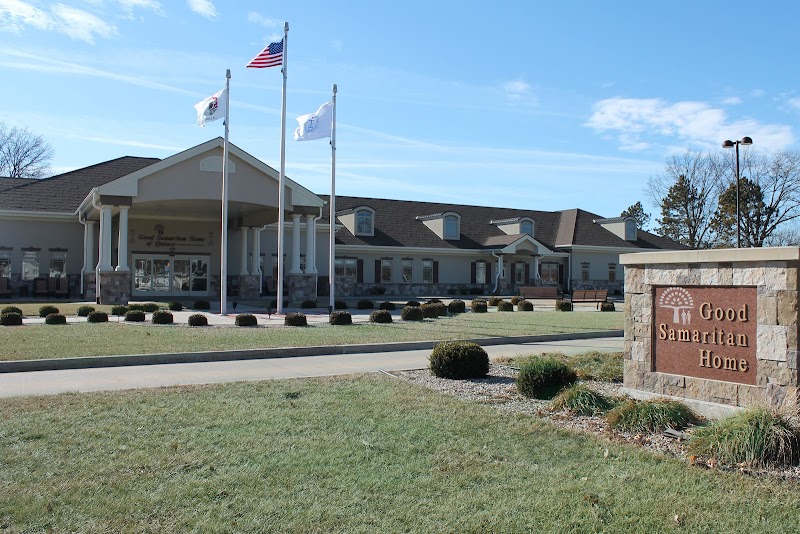
GOOD SAMARITAN HOME

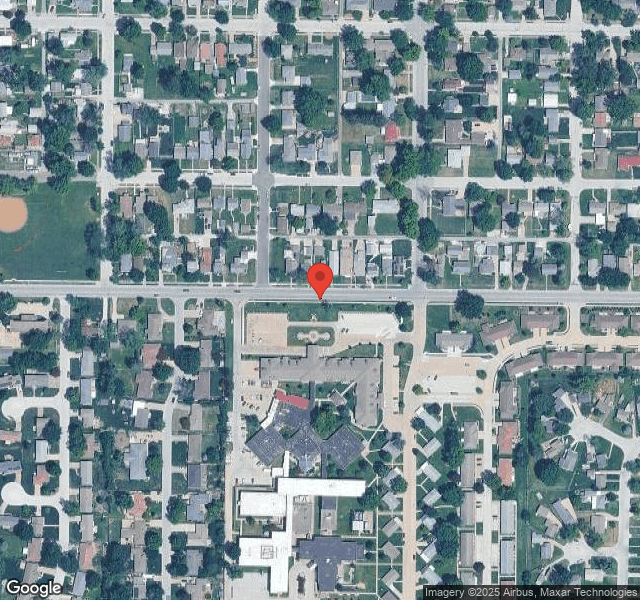
2130 HARRISON STREET, QUINCY, IL 62301 (217) 223-8717
Non profit - Corporation 203 Beds Independent Data: November 2025 2 Immediate Jeopardy citations
Trust Grade
51/100
#37 of 665 in IL
Last Inspection: August 2024

Within standard 12-15 month inspection cycle. Federal law requires annual inspections.

Overview

Good Samaritan Home in Quincy, Illinois has a Trust Grade of C, which means it is average compared to other facilities, sitting in the middle of the pack. It ranks #37 out of 665 facilities in the state, placing it in the top half, and #2 out of 6 in Adams County, indicating only one local option is better. The facility is improving, with the number of issues decreasing from 7 in 2024 to 2 in 2025. Staffing is a strong point, rated 5 out of 5 stars with a turnover rate of 32%, which is much lower than the state average of 46%. However, the facility has faced some serious concerns, including critical failures in infection control that led to a COVID-19 outbreak and a serious incident involving a resident with dementia who eloped from the facility and was found outside after a lack of proper supervision. While there are notable strengths, such as excellent staffing ratings, these incidents highlight significant areas needing improvement.

Trust Score
C
51/100
In Illinois
#37/665
Top 5%
Safety Record
High Risk
Review needed
Inspections
Getting Better
7 → 2 violations
Staff Stability
○ Average
32% turnover. Near Illinois's 48% average. Typical for the industry.
Penalties
○ Average
$26,640 in fines. Higher than 50% of Illinois facilities. Some compliance issues.
Skilled Nurses
✓ Good
Each resident gets 59 minutes of Registered Nurse (RN) attention daily — more than average for Illinois. RNs are trained to catch health problems early.
Violations
⚠ Watch
16 deficiencies on record. Higher than average. Multiple issues found across inspections.
★★★★★
5.0
Overall Rating
★★★★★
5.0
Staff Levels
★★☆☆☆
2.0
Care Quality
★★★★☆
4.0
Inspection Score
Stable
2024: 7 issues
2025: 2 issues

The Good

  • 5-Star Staffing Rating · Excellent nurse staffing levels
  • Full Sprinkler Coverage · Fire safety systems throughout facility
  • No fines on record
  • Staff turnover below average (32%)

    16 points below Illinois average of 48%

Facility shows strength in staffing levels, fire safety.

The Bad

Staff Turnover: 32%

14pts below Illinois avg (46%)

Typical for the industry

Federal Fines: $26,640

Below median ($33,413)

Moderate penalties - review what triggered them

The Ugly 16 deficiencies on record

2 life-threatening 1 actual harm
Sept 2025 1 deficiency 1 Harm
SERIOUS (G) 📢 Someone Reported This

A family member, employee, or ombudsman was alarmed enough to file a formal complaint

Actual Harm - a resident was hurt due to facility failures

Notification of Changes (Tag F0580)

A resident was harmed · This affected 1 resident

**NOTE- TERMS IN BRACKETS HAVE BEEN EDITED TO PROTECT CONFIDENTIALITY** Based on interview and record review, the facility failed to ensure a resident was provided timely provider notifications to ens...

Read full inspector narrative →
**NOTE- TERMS IN BRACKETS HAVE BEEN EDITED TO PROTECT CONFIDENTIALITY** Based on interview and record review, the facility failed to ensure a resident was provided timely provider notifications to ensure medical intervention was received with an acute change in condition for one of four residents (R1) reviewed for change in condition in the sample of four. This failure resulted in R1 experiencing a delay in evaluation and treatment while experiencing an acute ischemic stroke.Findings include:The facility's Change in Resident Condition Policy, dated 10/8/24, documents, Standard: The attending physician, resident representative, and RCC (Resident Care Coordinator) will be notified of any change in the condition of a resident. Policy: A significant change in a resident's condition must be relayed to the physician, resident, representative, RCC, and DON (Director of Nursing) or ADON (Assistant Director of Nursing) timely. Procedure: 2. Any significant change in a resident's condition must be immediately relayed by phone to the attending physician and the resident representative. In addition, notify the supervisor, RCC, DON, or ADON. A significant change in condition is a major decline in a resident's status that will not normally resolve itself without interventions. A significant change in condition may include but not be limited to the following: B. Emergent Situations: Symptoms such as chest pain, loss of consciousness, or other signs or symptoms of heart attack or stroke that may signify a significant change. Sudden unexpected decline in a resident's condition. 4. Call the physician or provider on-call for questions, concerns, or any significant change in condition.R1's Face Sheet documents R1 is an [AGE] year-old female who admitted to the facility on [DATE] with the following, but not limited to, diagnoses: Postprocedural hemorrhage of right eye and adnexa following other procedure, Repeated Falls, Tinea Pedis, and Encephalopathy.R1's MDS (Minimum Data Set) Assessment, dated 7/1/25, documents R1 is cognitively intact and requires supervision or touching assistance with ambulation, sitting to standing, and transfers. This same MDS documents R1 has no impairments to R1's upper or lower extremities.R1's Care Plan, dated 7/8/25, documents, Problem Start Date: 07/08/2025 ADLs (Activities of Daily Livings) Functional Status/Rehabilitation Potential: (R1) requires varying levels of assist d/t (due to) Weakness, Ataxia and Edema. Approach Start Date: 07/08/2025 Report any further deterioration in status to physician.R1's Progress Note, dated 9/11/25 and signed by V9/Agency LPN (Licensed Practical Nurse), documents, (R1) was complaining of left leg weakness and vision problems. (R1) was seen yesterday by (V4/R1's Nurse Practitioner) for these issues. (R1) weakness increased with left leg, needing assistance to transfer to the bathroom. Vital Signs in normal range, ask (R1) if she was in pain, dizzy, or having headache, (R1) voiced no, but her vision was not good and left leg weak. (R1) ate well both meals talking well, took (R1) to the bathroom and to chair to elevate legs, (R1) took a nap. Checked on (R1) her head was down to neck and looked uncomfortable in chair, (R1) woke up and complaints of pain in neck. (R1) asked to go the bathroom (R1's) left arm was flaccid, (R1) transferred two assists. (R1) request to be seen. This same progress documents V10/Nurse Practitioner was notified and gave an order to send R1 to local emergency room.R1's local ED (Emergency Department) Note, dated 9/11/25, documents, Chief Complaint: Stroke-Like Symptoms. (R1) is an [AGE] year-old who presents to the ED with complaints of stroke-like symptoms that began today. (R1) reports waking up with vision problems and requiring assistance to go to the bathroom. This same ED Note documents, Critical Findings: Acute Ischemic Stroke. Admit to Hospital.R1's Hospital Discharge Orders and Summary, dated 9/14/25, documents, Admitting Diagnoses: Left-Sided Weakness and Stroke.On 9/18/25 at 11:46 AM, R1 stated a day or two before being admitted to the hospital on [DATE], R1 experienced changes in vision and reported having leg cramps. A Nurse Practitioner, identified as V4, reportedly saw R1 the day before R1's hospital admission and initiated new orders. The day of R1's hospital admission, before lunch, R1 reported her vision changes became more severe, and developed weakness to her left leg. R1 used her call light because she was too weak to transfer on her own and had to use the bathroom. R1 stated, Two staff members had to assist me to the bathroom. I could not move my left leg and I reported my vision was getting worse. R1 reported a nurse, identified as V9/Agency LPN, came down and assessed R1 and told R1, V4/Nurse Practitioner, had previously assessed R1 the day prior, so V9 was just going to monitor R1. R1 stated, I went to lunch and my vision was getting worse and my left leg was extremely weak. Again, (V9) told me (V4) had just seen me the day prior, so she pushed me down to my room, assisted me to my recliner, and elevated my legs. (V9) told me to try and rest. Around two to three hours later, I put back on my call light to get help with using the bathroom. At this time, I was unable to move my left leg, my left arm, and could hardly see. It took two staff members to assist me to the bathroom once again. (V9) finally sent me out to the ED.On 9/18/25 at 1:27 PM, V11/CNA (Certified Nursing Assistant) stated she was working with R1 on 9/11/25, the day R1 was sent out to the local hospital. V11 stated, (R1) did not complain of anything early that morning. Right before lunch (R1) had turned on her call light. (V12) and I went to (R1's) room and (R1) was visibly upset saying she needed to use the bathroom. (R1) expressed to me that something was wrong with her vision and her left leg. (R1) was complaining of weakness on her left side and could not physically lift her left leg. (V12) and I assisted (R1) to the bathroom. As we stood (R1) up to hold on to the grab bars in the bathroom, (V12) and I had to manipulate (R1's) left leg to get her positioned correctly to sit on the toilet. (R1) was unable to move her left leg which was out of character for (R1). V11 expressed R1 never utilizes her call light or asks for assistance. V11 reported she notified V9/Agency LPN to let her know about the new concerns with R1, V9 came to examine R1 and stated since V4 had already seen her the day prior, V9 would just monitor R1. V11 stated, I did express to (V9) that something was not right with (R1) and that (R1) never requires assistance.On 9/18/25 at 1:35 PM, V9/Agency LPN verified she was the nurse taking care of R1 on 9/11/25, the day R1 was sent to the local hospital. V9 stated, Before lunch I was called to (R1's) room. (R1) was complaining of her left leg being weak and having some vision trouble. (R1) required more assistance at that time to go to the bathroom. I had read (R1's) notes and (V4) had been in to see her the day prior for leg cramps and vision changes. I let (R1) know that and told (R1) I would monitor her. I did not call a physician at that time. (R1) ate lunch fine but was still complaining of some vision changes and left leg weakness. I let (R1) know that (V4) had written an order for (R1) to see an ophthalmologist again, and that I would push (R1) to her room and assist her withing propping her leg up in the recliner and told (R1) to try and rest. When (R1) woke up around 3:00 PM, (R1) was complaining of neck pain. (R1) was talking fine and responding fine but stated her left leg didn't feel right. I called (V12/CNA) to assist me with taking (R1) to the bathroom. At that time (R1's) mobility decreased even more. I then called (V10/Nurse Practitioner) at that time and got (R1) sent out to the local hospital. V9 reported when V9 typed R1's assessments in R1's progress note, V9 did not document correct times of when R1 was complaining of everything. V9 verified she typed everything that occurred throughout the day in one progress note right before she sent R1 out to the local hospital. V9 confirmed she should have documented R1's events throughout the day as they occurred at the correct times.On 9/19/25 at 10:43 AM V12/CNA stated, I was getting resident's up for lunch, when (R1) had put on her call light sometime between 11:00 AM and 11:30 AM. It was weird that (R1) had her call light on because (R1) is independent and never uses her call light. (V11/CNA) and I both went down to (R1's) room. (R1) was saying her eyes were bothering her, (R1) couldn't see how she normally could, and that (R1) couldn't really move her left leg. (R1) stated she was needing to go to the bathroom. (V11) and I assisted (R1) to the bathroom. When (V11) and I assisted (R1) up to the grab bar in the bathroom, (R1) could hardly move her left leg and (V11) and I had to help guide it, to get (R1) on the toilet. (V11) went and got (V9/Agency LPN) because something was not right with (R1). (R1) never requires assistance. (V9) came to (R1's) room, but basically just told (R1) that (V4/R1's Nurse Practitioner) was already aware from the day prior and that (V9) would just monitor (R1). I am not sure how (R1) got back to her room after lunch because I was called to work on a different unit for a few hours. When I got back to the floor (V9) had asked me if I could come to (R1's) room and help (V9) assist (R1) to the bathroom. This was around 3:00 PM. When I got to (R1's) room (R1) stated she now was unable to move her left arm. I believe right after that is when (V9) got (R1) sent out to the hospital.On 9/18/25 at 12:39 PM, V4/R1's Nurse Practitioner stated she saw R1 on 9/10/25 at the facility. R1 told V4 she was having cramps in her legs, and it was worse at night along with vision changes. V4 stated she did initiate orders for V4, but at that time didn't see any stroke-like symptoms. V4 stated, (R1) could move her left leg up and down when I had seen her and had no problems with weakness. I did initiate orders for (R1's) complaints of leg cramps. I would have expected the facility to notify (V17/R1's Physician) or myself right away if (R1's) if (R1) was experiencing increased weakness or required more assistance with ADL's (Activities of Daily Living).On 9/19/25 at 10:02 AM, V2/Director of Nursing verified she would have expected a nurse to notify the resident's provider immediately with any significant changes in a resident's condition like R1 was experiencing on 9/11/25 when R1 first was requiring more assistance with ADL's and complaining of increased weakness and more severe vision changes.
Jul 2025 1 deficiency
CONCERN (D) 📢 Someone Reported This

A family member, employee, or ombudsman was alarmed enough to file a formal complaint

Potential for Harm - no one hurt, but risky conditions existed

Infection Control (Tag F0880)

Could have caused harm · This affected 1 resident

**NOTE- TERMS IN BRACKETS HAVE BEEN EDITED TO PROTECT CONFIDENTIALITY** Based on observation, interview, and record review, the facility failed to utilize Enhanced Barrier Precautions for 2 (R1 and R3...

Read full inspector narrative →
**NOTE- TERMS IN BRACKETS HAVE BEEN EDITED TO PROTECT CONFIDENTIALITY** Based on observation, interview, and record review, the facility failed to utilize Enhanced Barrier Precautions for 2 (R1 and R3) of 3 residents reviewed for wound care in a total sample of 5. Findings Include:The facility's undated Enhanced Barrier Precautions policy documents: It is the policy of the facility to use Enhanced Barrier Precautions in addition to standard precautions as a method of infection control, requiring the use of gown and gloves in situations of high-contact resident care. Definition: Enhanced Barrier Precautions (EBP) refer to an infection control intervention designed to reduce transmission of multidrug-resistant organisms. EBP requires gown and glove use during high-contact resident care activities and prevents the spread of infection to and among residents and staff. EBP will also be initiated for all residents with indwelling medical devices such as, but not limited to central lines, urinary catheters, feeding tubes and tracheostomies. A peripheral intravenous line (not peripherally inserted central catheter) is not considered an indwelling medical device for the purpose of EBP. Resident with wounds such as but not limited to, pressure ulcers, diabetic foot ulcers, unhealed surgical wounds and venous stasis ulcers will also be placed on EBP. In addition to following Standard Precautions, gowns and gloves should be worn during the following: Wound care; any skin opening requiring a dressing. 1.R1's medical record indicates R1 was admitted [DATE], with diagnosis to include but not limited to atherosclerosis of native arteries with intermittent claudication bilateral lower extremities, chronic kidney disease, and hypertension. On 7/17/25 at 9:30 AM, V5 (Registered Nurse) performed R1's wound care as ordered by the physician. V5 only wore gloves during wound care. During the cares, V5 stated R1 is not on Enhanced Barrier Precautions because R1's wound drainage has never seeped through the dressing, and R1 has never been diagnosed with a MDRO (Multi-drug Resistant Organism).2.R3's Medical Record documents she was admitted in 6/13/25, with diagnosis to include but not limited to systemic scleroderma. R3 was admitted with two pin point open areas between her 3rd and 4th toes on the right foot. On 7/17/25 at 10:15 AM, V5 (Registered Nurse) performed R3's scheduled wound care as ordered by the physician. V5 only wore gloves during the wound care. During the cares, V5 stated R3 was not in Enhanced Barrier Precautions because the drainage from her wound has never soaked through her primary dressing,On 7/17/25 at 11:45 AM, V2 (Director of Nursing) confirmed EBP (Enhanced Barrier Precautions) should be used with every resident who has a wound, regardless of the drainage being contained by the dressing or not.
Oct 2024 3 deficiencies
CONCERN (D) 📢 Someone Reported This

A family member, employee, or ombudsman was alarmed enough to file a formal complaint

Potential for Harm - no one hurt, but risky conditions existed

Transfer Requirements (Tag F0622)

Could have caused harm · This affected 1 resident

Based on record review and interview, the facility failed to provide documentation by a physician regarding the basis of a resident's involuntary discharge with indications for why a resident should n...

Read full inspector narrative →
Based on record review and interview, the facility failed to provide documentation by a physician regarding the basis of a resident's involuntary discharge with indications for why a resident should not return to the facility following hospitalization, what resident needs could not be met at the facility, what the facility's efforts were to meet those needs, and the specific services the receiving facility could provide to meet the needs of the resident which could not be met at the facility for one of three residents (R1) reviewed for involuntary discharge in the sample of four. Findings include: R1's Progress Notes, dated 8-31-24 at 4:00 PM, document R1 was sent to the emergency room by ambulance due to R1 having combative behaviors, threatening staff and (V10/R1's Family Member), hallucinating, and having increased paranoia. R1's Progress Notes, dated 9-1-24 at 2:16 AM, document R1 was being admitted to the hospital for treatment of a urinary tract infection and chronic kidney disease. R1's Progress Notes, dated 9-12-24 at 3:00 PM and signed by V4/Admission's Coordinator, document, Admissions: Spoke with (V1/Administrator) and (V2/Director of Nursing) about (R1's) possible return to (the facility). They (V1 and V2) feel that (R1's) condition has changed to a point that our staff can no longer meet (R1's) needs. Notified (V8/Hospital Case Manager) and (V10) that (R1) cannot return to (the facility) due to his condition changing to a point that our staff can no longer meet (R1's) needs. (R1) will be discharged from (the facility) to the hospital effective today 9-12-24. R1's Medical Record and Physician's Orders, dated 8-31-24 to 10-26-24, do not include documentation by V17/R1's Physician regarding the basis of R1's involuntary discharge with the indications for why R1 should not return to the facility following hospitalization, what needs of R1 could not be met at the facility, what the facility's efforts were to meet R1's needs, and the specific services the receiving facility could provide to meet R1's needs of which could not be met at the facility. On 10-25-24 at 11:05 AM, V9 (Nurse Practitioner) stated, I cover for (V17/R1's Primary Physician). I was not consulted by the facility when the facility decided not to let (R1) come back. I know (V17) was not consulted, either therefore there was no documentation by (V17) or myself of why the facility could not meet (R1's) needs. I did not know the decision was being made to not re-admit (R1) back to the facility. On 10-25-24 at 1:30 PM, V1 (Administrator) verified the facility does not have an involuntary discharge policy and did not receive an order or get documentation by V17/R1's Physician regarding the basis of R1's involuntary discharge with the indications for why R1 should not return to the facility following hospitalization, what needs of R1 could not be met at the facility, what the facility's efforts were to meet R1's needs, and the specific services the receiving facility could provide to meet R1's needs of which could not be met at the facility. V1 stated, I did not know we (the facility) need to have documentation by the physician in (R1's) record with the reason for (R1's) discharge with the needs the facility could not meet.
CONCERN (D) 📢 Someone Reported This

A family member, employee, or ombudsman was alarmed enough to file a formal complaint

Potential for Harm - no one hurt, but risky conditions existed

Transfer Notice (Tag F0623)

Could have caused harm · This affected 1 resident

Based on record review and interview, the facility failed to notify the resident, resident's representative, and the Ombudsman in writing of the reasons for discharge for one of three residents (R1) r...

Read full inspector narrative →
Based on record review and interview, the facility failed to notify the resident, resident's representative, and the Ombudsman in writing of the reasons for discharge for one of three residents (R1) reviewed for involuntary discharge notice in the sample of four. Findings include: The Ombudsman's Residents' 'Rights for People in Long-Term Care Facilities policy, dated 11/2018, documents, You have the right to keep living in your facility. You must be given written notice if your facility wants you to move from the facility. The notice must: tell you why your facility wants you to move; tell you how to appeal the decision to the Illinois Department of Public Health; and provide a stamped and addressed envelope for you to mail your appeal in. R1's Progress Notes, dated 8-31-24 at 4:00 PM, document R1 was sent to the emergency room by ambulance due to R1 having combative behaviors, threatening staff and (V10/R1's Family Member), hallucinating, and having increased paranoia. R1's Progress Notes, dated 9-1-24 at 2:16 AM, document R1 was being admitted to the hospital for treatment of a urinary tract infection and chronic kidney disease. R1's Progress Notes, dated 9-12-24 at 3:00 PM and signed by V4/Admission's Coordinator, document, Admissions: Spoke with (V1/Administrator) and (V2/Director of Nursing) about (R1's) possible return to (the facility). They (V1 and V2) feel that (R1's) condition has changed to a point that our staff can no longer meet (R1's) needs. Notified (V8/Hospital Case Manager) and (V10) that (R1) cannot return to (the facility) due to (R1's) condition changing to a point that our staff can no longer meet (R1's) needs. (R1) will be discharged from (the facility) to the hospital effective today 9-12-24. R1's Medical Record, dated 8-31-24 to 10-26-24, does not include documentation of R1, V10/R1's Family Member, or V16/Ombudsman being given a notice of discharge regarding the basis of R1's involuntary discharge with the indications of why R1 should not return to the facility following hospitalization, what needs of R1 could not be met at the facility, what the facility's efforts were to meet R1's needs, and the specific services the receiving facility could provide to meet R1's needs of which could not be met at the facility. On 10-25-24 at 11:28 AM, V10 (R1's Family Member) stated, I was not provided a written notice of (R1's) discharge from the facility. On 10-25-24 at 1:30 PM, V1 (Administrator) verified the facility did not provide R1, V10/R1's Family Member, or V16/Ombudsman a notice of discharge regarding the basis of R1's involuntary discharge with the indications for why R1 should not return to the facility following hospitalization, what needs of R1 could not be met at the facility, what the facility's efforts were to meet R1's needs, and the specific services the receiving facility could provide to meet R1's needs of which could not be met at the facility. On 10-25-24 at 4:00 PM, V16/Ombudsman, stated, The facility never notified me that they were refusing to re-admit (R1) back to the facility from the hospital. I should have received a written notice. It is important that I get a notice so I can meet with the resident and the resident's family to ensure they know their appeal rights and I can help to ensure (R1) gets proper placement at another facility to meet his needs.
CONCERN (D) 📢 Someone Reported This

A family member, employee, or ombudsman was alarmed enough to file a formal complaint

Potential for Harm - no one hurt, but risky conditions existed

Deficiency F0625 (Tag F0625)

Could have caused harm · This affected 1 resident

Based on record review and interview, the facility failed to provide a bed hold notice to a resident and a resident's representative upon transfer to the hospital for one of three residents (R1) revie...

Read full inspector narrative →
Based on record review and interview, the facility failed to provide a bed hold notice to a resident and a resident's representative upon transfer to the hospital for one of three residents (R1) reviewed for bed hold notice in the sample of four. Findings include: The facility's Bed Hold and readmission Policy, dated 10-26-18, documents, Purpose: The primary purpose of the policy for bed hold and readmission to (the facility) is to establish uniform guidelines for the resident, family member, or legal representative in the event a resident is transferred to a hospital, to another level of care, or takes a leave of absence from the home. A written copy of the bed-hold policy will be provided to the resident at the time of transfer for hospitalization or therapeutic leave. R1's Progress Notes, dated 8-31-24, document R1 was sent to the emergency room and admitted to the hospital. R1's Medical Record does not include documentation of a bed hold noticed being given to R1 nor (V10/R1's Family Member) after R1 was sent to the hospital on 8-31-24. On 10-25-24 at 11:28 AM, V10 (R1's Family Member) stated, Me and (R1) were not given a bed hold notice when (R1) was sent to the hospital on 8-31-24. I do not even know what that notice is about. On 10-26-24 at 10:15 AM, V2 (Director of Nursing) stated, We (the facility) did not send a bed hold notice to (V10) and there is no documentation in (R1's) medical record of the facility giving (R1) a bed hold notice.
Aug 2024 4 deficiencies
CONCERN (D)

Potential for Harm - no one hurt, but risky conditions existed

Report Alleged Abuse (Tag F0609)

Could have caused harm · This affected 1 resident

**NOTE- TERMS IN BRACKETS HAVE BEEN EDITED TO PROTECT CONFIDENTIALITY** 2. R81's current electronic Medical Record documents R81 was admitted to the facility on [DATE] with the following, but not limi...

Read full inspector narrative →
**NOTE- TERMS IN BRACKETS HAVE BEEN EDITED TO PROTECT CONFIDENTIALITY** 2. R81's current electronic Medical Record documents R81 was admitted to the facility on [DATE] with the following, but not limited to, diagnoses: Parkinson's Disease with Dyskinesia, Dementia, Malignant Neoplasm of Uterine Adnexa, Depression, Polyneuropathy, and Anxiety. R81's MDS Assessment, dated 6/10/24, documents R81 has a BIMS (Brief Interview for Mental Status) score of 10 out of 15, indicating moderate cognitive impairment. R81's Nursing Note written by V9/Licensed Practical Nurse/LPN, dated 7/18/24 at 9:46 AM, documents, CNA (Certified Nursing Assistant) came to this nurse and said (R81) has a dark purple bruise on back of right leg, bruising with redness on rt (right) upper leg, and several discoloration areas on both of (R81's) arms. R81's Event Report, dated 7/18/24 at 9:54 AM and signed by V9 (LPN/Licensed Practical Nurse/LPN), documents, Right leg bruise is three cm/centimeters by two cm, upper right leg five cm by three cm, and several two cm discolorations to both arms. The bruises are purplish black and reddish blue in color with mild pain. Was event witnessed? No. Residents Statement Doesn't know how it happened. On 8/14/24 at 1:15 PM, V2, Director of Nursing/DON stated she does not know how R81 got the bruises to her legs and arms, but assumes it was from when a family member helped R81 to the bathroom. V2 also stated there was no notification sent to the State Agency to report the bruises on R81. Based on record review and interview, the facility failed to report bruises of unknown origin to the State Agency for two of two residents (R35 and R81) reviewed for abuse in the sample of 34. Findings include: Abuse Prevention Program Facility Policy, dated 6/19/2021, documents, Internal Reporting Requirements and identification of Allegations: Any reasonable suspicion of a crime against a resident or individual receiving care from the facility, including but not limited to, alleged violations of abuse, neglect, exploitation of mistreatment including injuries of unknown source and misappropriation of resident property must be reported to the state survey agency (IDPH/Illinois Department of Public Health) under the following time frames: Alleged Abuse or Serious Bodily Injury - Immediately but no later than 2 (two) hours after forming the suspicion. Allegation of neglect, exploitation, mistreatment, or misappropriation of resident property and does not result in serious bodily injury -not later than 24 hours after forming the suspicion. Reports should be documented in a record kept of the documentation. An injury should be classified as an injury of unknown source when both the following conditions are met: The source of the injury was not observed by any person or the source of the injury could not be explained by the resident; and The injury is suspicious because of the extent of the injury or the location of the injury (e.g. (for example), the injury is located in an area not generally vulnerable to trauma) or the number of injuries observed at one particular point in time or the incident of injury overtime. 1. R35's MDS (Minimum Data Set) Assessment, dated 6-7-24, documents R35 is severely cognitively impaired. R35's Progress Notes, dated 7-21-24 at 1:59 PM, documents, While taking (R35) to the bathroom noted a ten cm (centimeter) round dark purple bruise to rt (right) hip. possibly from bumping on shower chair or bars on toilet. R35's Progress Notes, dated 4-8-24 at 5:36 AM, documents, (R35) was provided (a) shower this am and a bruise on left inner thigh (was found) measuring nine inches by eight inches was noted. Area is dark blue/black in color. (R35) states that it does not hurt. R35's Event Report, dated 4-8-24 and signed by V8 (LPN/Licensed Practical Nurse), documents, Bruise to left inner thigh. Was event witnessed? No. Color black, blue. Size nine cm (centimeters) by eight inches. R35's Event Report, dated 7-21-24 at 1:58 PM and signed by V7 (LPN/Licensed Practical Nurse/LPN), documents, Dark purple bruise to right hip 10 cm round. Was event witnessed? No. R35's Medical Record does not include R35's bruises of unknown origin found on 4-8-24 or 7-21-24 being reported to IDPH (Illinois Department of Public Health) On 08/13/24 at 1:30 PM V2 (Director of Nursing/DON) stated, Both of (R35's) bruises were unwitnessed. I did not report (R35's) bruises of unknown origin to the state (IDPH).
CONCERN (D)

Potential for Harm - no one hurt, but risky conditions existed

Investigate Abuse (Tag F0610)

Could have caused harm · This affected 1 resident

**NOTE- TERMS IN BRACKETS HAVE BEEN EDITED TO PROTECT CONFIDENTIALITY** 2. R81's current electronic Medical Record documents R81 was admitted to the facility on [DATE] with the following, but not limi...

Read full inspector narrative →
**NOTE- TERMS IN BRACKETS HAVE BEEN EDITED TO PROTECT CONFIDENTIALITY** 2. R81's current electronic Medical Record documents R81 was admitted to the facility on [DATE] with the following, but not limited to, diagnoses: Parkinson's Disease with Dyskinesia, Dementia, Malignant Neoplasm of Uterine Adnexa, Depression, Polyneuropathy, and Anxiety. R81's MDS Assessment, dated 6/10/24, documents R81 has a BIMS (Brief Interview for Mental Status) score of 10 out of 15, indicating moderate cognitive impairment. R81's Nursing Note written by V9/Licensed Practical Nurse/LPN, dated 7/18/24 at 9:46 AM, documents, CNA (Certified Nursing Assistant) came to this nurse and said (R81) has a dark purple bruise on back of right leg, bruising with redness on rt (right) upper leg, and several discoloration areas on both of (R81's) arms. R81's Event Report, dated 7/18/24 at 9:54 AM and signed by V9 (LPN/Licensed Practical Nurse/LPN), documents, Right leg bruise is three cm/centimeters by two cm, upper right leg five cm by three cm, and several two cm discolorations to both arms. The bruises are purplish black and reddish blue in color with mild pain. Was event witnessed? No. Residents Statement 'Doesn't know how it happened.' R81's Medical Record does not include an abuse investigation of R81's bruises of unknown origin found on 7/18/24. On 8/14/24 at 1:15 PM, V2, Director of Nursing/DON stated she did not do an abuse investigation regarding R81's bruise found on 07/18/24. Based on record review and interview, the facility failed to initiate abuse investigations for bruises of unknown origin for two of two residents (R35 and R81) reviewed for abuse in the sample of 34. Findings include: Abuse Prevention Program Facility Policy, dated 6/19/2021, documents, Internal Reporting Requirements and identification of Allegations, The nursing staff is responsible for reporting on a facility incident report the appearance of bruises, lacerations, or other abnormalities as they occur. Upon report of such occurrences, the nursing supervisor is responsible for assessing the resident, reviewing the documentation, and reporting to the administrator. If the resident complains of physical injuries or if resident harm is suspected, the resident physician will be contacted for further instructions. Internal Investigation of Abuse, Neglect or Misappropriation Allegations and Response. 1. All incidents will be documented, whether or not abuse occurred, was alleged or suspected. 2. Any incident or allegation involving abuse, neglect or misappropriation will result in an abuse investigation. 3. For any other incident or pattern involving reasonable cause to suspect abuse, neglect or misappropriation, the administrator will appoint a person to gather further facts prior to making a determination to conduct an abuse investigation. An injury should be classified as an injury of unknown source when both the following conditions are met: The source of the injury was not observed by any person or the source of the injury could not be explained by the resident; and The injury is suspicious because of the extent of the injury or the location of the injury (e.g. (for example), the injury is located in an area not generally vulnerable to trauma) or the number of injuries observed at one particular point in time or the incident of injury overtime. 1. R35's MDS (Minimum Data Set) Assessment, dated 6-7-24, documents R35 is severely cognitively impaired. R35's Progress Notes, dated 7-21-24 at 1:59 PM, documents, While taking (R35) to the bathroom noted a ten cm (centimeter) round dark purple bruise to rt (right) hip. possibly from bumping on shower chair or bars on toilet. R35's Progress Notes, dated 4-8-24 at 5:36 AM, documents, (R35) was provided (a) shower this am and a bruise on left inner thigh (was found) measuring nine inches by eight inches was noted. Area is dark blue/black in color. (R35) states that it does not hurt. R35's Event Report, dated 4-8-24 and signed by V8 (LPN/Licensed Practical Nurse), documents, Bruise to left inner thigh. Was event witnessed? No. Color black, blue. Size nine cm (centimeters) by eight inches. R35's Event Report, dated 7-21-24 at 1:58 PM and signed by V7 (LPN/Licensed Practical Nurse/LPN), documents, Dark purple bruise to right hip 10 cm (centimeters) round. Was event witnessed? No. R35's Medical Record does not include an abuse investigation of R35's bruises of unknown origin found on 4-8-24 or 7-21-24. On 08/13/24 at 1:30 PM, V2 (Director of Nursing/DON) stated, I did not do abuse investigations of (R35's) bruises of unknown origin.
CONCERN (D)

Potential for Harm - no one hurt, but risky conditions existed

Accident Prevention (Tag F0689)

Could have caused harm · This affected 1 resident

Based on interview and record review, the facility failed to ensure a resident was transferred safely during a shower to avoid falling for one of five residents (R45) reviewed for falls in the sample ...

Read full inspector narrative →
Based on interview and record review, the facility failed to ensure a resident was transferred safely during a shower to avoid falling for one of five residents (R45) reviewed for falls in the sample of 34. Findings include: The facility's Program for Reduction of Fall Risk, dated 7/23/15, documents, As part of the program for the prevention of falls, all newly admitted residents and those residents experiencing a change in function will be assessed for the risk of falls. Interventions to prevent falls will be implemented on the basis of the risk assessment. Purpose: To prevent falls and enable staff to recognize those residents who have been found to be at increased risk for falls. R45's current Care Plan, dated 5/28/24, documents, I (R45) have had a decline in my strength/independence during transfers. I use a (mechanical lift) lift for transfers. This same Care Plan documents, I am at increased risk for falls related to impaired cognition, poor safety awareness, diuretic use and weakness. I use a mechanical lift. R45's Safety Event Fall report, dated 7/19/24, documents R45 suffered a fall in the shower room at 5:40 AM while being transferred by V10 (Certified Nursing Assistant). This form documents, Summary of Findings: (R45's) Knees buckled, (mechanical lift) was not in use. Interventions in place to prevent future falls: Staff re-educated to review assignment sheet and obtain report requiring transfer needs. On 8/14/24 at 2:18 PM, V3 (Assistant Director of Nursing) confirmed R45 fell in the shower room with V10 on 7/19/24. V3 stated, The nurse who was on that morning (V11, Licensed Practical Nurse) went into the shower room and found (R45) on the floor on his knees and (V10) standing in front of him. He had been having a decline and became a (mechanical lift) for all transfers on 7/11/24. (V10) had wheeled (R45) into the shower room on 7/19/24 and then assisted him to transfer to standing, using a gait belt. (R45's) knees buckled and that is when he fell. The intervention for this was to educate staff on ensuring they are aware of all transfer status when oncoming to their shift. She (V10) just didn't use the proper equipment to transfer (R45).
CONCERN (F)

Potential for Harm - no one hurt, but risky conditions existed

Food Safety (Tag F0812)

Could have caused harm · This affected most or all residents

Based on observation, interview, and record review, the facility failed to use the Heat Stickers to ensure dishes reach the correct/required surface temperature when in the rinse cycle in the dish mac...

Read full inspector narrative →
Based on observation, interview, and record review, the facility failed to use the Heat Stickers to ensure dishes reach the correct/required surface temperature when in the rinse cycle in the dish machine and failed to have staff wash hands with soap and water as required between handling dirty dishes and clean dishes in the dish room. This has the potential to affect all 101 residents living in the facility. Findings: 1. The document, Dish Machine Temperature Recording for Food Service Staff Policy, 4/2024, states, It is the policy of the Food Service Department that the acceptable wash temperature (should be) 150 - 165 degrees Fahrenheit (F) and the acceptable rinse temperature is 180 degrees F or above. Any temperature reading below 150 degrees F wash, or 180 degrees F rinse should be noted, and a department supervisor or designee notified. On 8/12/24 at 10:55 AM, V5, Assistant Dietary Manager, stated, We do not use the Surface Temperature Stickers for the dish machine. You (Illinois Department of Public Health (IDPH) Surveyor) had me get the (surface temperature stickers) last time, and I ended up throwing them away because they became outdated. Writer inquired if the surface temperature stickers were being used as required after the IDPH surveyor was last at the facility. V5 did not respond to the question stating, I've been told that we do not need to use the surface temperature stickers. I put a thermometer in the rack and send it through the dish machine. If it registers 160 degrees F, then it's okay. V15, Dietary Manager, has a calculation that shows the temperatures reach what they should. Writer explained without using the surface temperature stickers, it would be unknown if they reached the appropriate surface level of heat for dishes, utensils, glasses, etc . V5 stated, No one else requires the surface temperature stickers to be used. Why do you? I will get (V15) to explain that we don't need the surface temperature stickers. When V15 was asked about this issue, V15 stated, Yes the surface temperature stickers should be used, and I will order them right away. 2. The document, Handwashing, dated 2/2024, states, Proper handwashing technique is used for the prevention of transmission of infectious diseases. A policy for when it is required to wash hands when in the kitchen was requested. The facility states that they do not have a specific policy of when to wash hands, including when staff are using the dish machine. On 8/12/24 at 11:05 AM, V6, Dietary Aide, was observed putting dirty dishes and equipment into racks and sending the soiled dishes through the dishwasher. V6 then reached up, got a squirt out of the sanitation solution container that is affixed to the wall next to the dishwasher and above the area where the dirty dishes are racked. V6 rubbed his hands together and then proceeded to take clean dishes and other clean equipment out of the just washed items in the racks and put them on a cart to be taken into the kitchen. V6 stated. Yes, I always use the sanitation solution. On 8/12/24 at 11:10 AM, V5, Assistant Dietary Manager, stated, I noticed that they didn't have a handwashing sink in the dish room, but use the sanitizer solution when I started working here. I was told that a hand washing sink would not be put in the dish room. Staff should go into the kitchen and wash their hands between handling the dirty dishes and clean dishes. The facility's Long-Term Care Facility Application for Medicare and Medicaid Form CMS (Centers for Medicare and Medicaid Services) 671, dated 8/12/24, signed by V2, Director of Nursing, documents 101 residents currently reside within the facility.
Nov 2023 1 deficiency
CONCERN (D) 📢 Someone Reported This

A family member, employee, or ombudsman was alarmed enough to file a formal complaint

Potential for Harm - no one hurt, but risky conditions existed

Report Alleged Abuse (Tag F0609)

Could have caused harm · This affected 1 resident

Based on interview and record review, the facility failed to immediately report an allegation of potential verbal abuse to the administrator and the State Agency for one of three residents (R2) review...

Read full inspector narrative →
Based on interview and record review, the facility failed to immediately report an allegation of potential verbal abuse to the administrator and the State Agency for one of three residents (R2) reviewed for abuse in the sample of three. Findings include: The Facility's Abuse Prevention Program, dated 7/24/19, states, Employees are required to report any incident, allegation, or suspicion of potential abuse, neglect or misappropriation of property they observe, hear about, or suspect to the administrator or the person in charge of the facility acting on behalf of the administrator, or an immediate supervisor who must then immediately notify the administrator. A Final Incident Investigation Report, dated 11/6/23, documents an employee, V5/Dietary staff, reported R2 was attempting to get up from her chair after lunch, and V7/Licensed Practical Nurse was heard raising her voice at R2 and trying to get R2 to sit back down. This same investigation documents the incident occurred on 11/5/23, but was not reported to the Administrator or the State Agency until 11/6/23. On 11/14/23 at 2:10 p.m., V2 (Director of Nursing) stated the allegation V7 was verbally too loud to R2 was on 11/5/23. V2 stated V5 reported the allegation to her direct supervisor V6 (Dietary Manager). V2 stated V6 wrote a note and slid the note under Nursing Administrations door on 11/5/23, and it was not found until the next morning on 11/6/23. V2 stated V6 should have immediately notified V1 (Administrator) on 11/5/23 when he became aware of V5's allegation of potential abuse.
Aug 2023 2 deficiencies 1 IJ
CRITICAL (J)

Immediate Jeopardy (IJ) - the most serious Medicare violation

Accident Prevention (Tag F0689)

Someone could have died · This affected 1 resident

Based on observation, interview, and record review, the facility failed to respond immediately to a sounding exit door alarm, failed to adequately supervise a known wandering resident (R8), failed to ...

Read full inspector narrative →
Based on observation, interview, and record review, the facility failed to respond immediately to a sounding exit door alarm, failed to adequately supervise a known wandering resident (R8), failed to re-assess R8 as high risk for elopement once R8 started to exit seek, failed to develop and implement interventions and plan of care to address R8's exit-seeking behaviors after R8 attempted to exit seek, and failed investigate and report R8's elopement thoroughly for one of three residents (R8) reviewed for elopement in the sample of 41. These failures resulted in R8, a severely cognitively impaired resident with the diagnosis of Dementia, eloping from the facility approximately 70 feet from the facility, falling, and being found on the curb next to the road, after attempting to exit the building earlier that evening on 6-7-23. These failures resulted in an Immediate Jeopardy. While the immediacy was removed on 8-19-23, the facility remains out of compliance at a severity Level II as the facility continues to investigate R8's elopement on June 7, 2023, and provide a final report to IDPH within five days, provide in-servicing to all staff on R8's elopement interventions and the facility's Elopement Policy, including the Administrator/V11 upon her return to the facility on 8-21-23, residents are assessed quarterly and with a change in condition or when exhibiting exit seeking behavior for elopement risk, and each exit-seeking episode by residents will be audited by V13 (Compliance Officer) and re-education will be provided and disciplinary action for noncompliance will be given as necessary. Findings of all audits and re-education will be reported to the QAA (Quality Assurance Assessment) committee and the compliance committee on a quarterly basis and reviewed monthly by the QAPI (Quality Assurance and Performance Improvement) committee. Findings include: The facility's Resident Elopement Policy, dated 6-12-18, documents, Policy: It is the policy of this facility that all residents are afforded adequate supervision to provide the safest environment possible. All residents will be assessed for behaviors or conditions that put them at risk for elopement. All residents so identified will have these issues addressed in their individual care plans. All staff are responsible. Missing resident shall be defined as a resident who has left the main building without signing him/herself out of the facility. Residents who are at risk for elopement shall be provided at least one of the following safety precautions by the facility: Door alarms on facility exits, code alert bracelet, staff supervision of facility exits, and pictures of residents at risk for elopement will be kept at the front desk for quick identification. Elopement assessment will be done on admission, quarterly, and change in condition which puts them at risk for elopement. Residents at risk for impaired safety awareness and wandering as well as elopement shall be identified by the elopement assessment and interventions documented in the individual plan of care. Residents at risk for elopement shall be identified on the Resident Watch List with accompanying photograph as well as in the clinical record, The list shall be updated whenever new resident safety issues are identified. Photographs of each resident are located in the Medication Administration Record, face sheet, and front receptionist desk. When responding to an exterior door alarm: If a resident is found leaving the building, attempt to prevent departure. After assessing resident's behavior, nursing administration will determine the need for ever 15 minute/ever one hour documented checks. Care plan session will be held to review/modify care plan approach. Procedures for missing resident and/or elopements: Notify the Administrator. R8's Physician's Order Sheets, dated 8-1-23 through 8-31-23, document R8 has the diagnoses of Dementia without behavioral disturbance, Psychotic Disturbances, Mood Disturbance, and Anxiety. R8's MDS (Minimum Data Set) Assessment, dated 6-26-23, documents R8 is severely cognitively impaired and requires supervision of one staff physical assistance for locomotion of and on the unit and walking in his room and in the corridor, and requires extensive assistance of one person physical assistance for transfers. R8's PASRR (Preadmission Screening and Resident Review), dated 4-2-22, documents, You know who you are but you do not know where you are, why the time, or date. You are not able to focus and our mood changes a lot. You need supervision. R8's Event Report, dated 6-7-23 at 5:30 PM, and signed by V3 (RN/Registered Nurse) documents, Resident was found between double doors of the east exit of Eastbrook Lane (floor within facility). Combativeness and resisting redirection from staff prior to elopement. New onset of agitation and confusion. Immediate measures taken-returned resident to room. Interventions ineffective. R8's Progress Notes, dated 6-7-23 at 5:30 PM and signed by V3 (RN/Registered Nurse), document, (R8) attempted to leave through the east door on Eastbrook Lane (floor within facility). (R8) stopped and escorted back to his room. (R8) was not using his walker at the time. (R8) stated that he wanted to get his keys out (of) his car. Nurse and CNA (Certified Nursing Assistant/V8) re-directed him. Nurse grabbed walker and nurse and CNA (V8) escorted him back to his room. R8's Event Reports, dated 6-7-23 at 7:00 PM and signed by V3, documents, (R8) exited through the south side door on Eastbrook. (R8) was found by road next to cottage at about 7:00 PM. Combativeness, elopement attempts, and resisting redirection from staff behaviors exhibited prior to elopement. New onset of agitation, resistiveness, and restlessness. Resident was laying on ground next to road by cottages on his side. He was picking flowers in the grass. R8's Progress notes, dated 6-7-23 at 7:05 PM and signed by V3, documents, (R8) has an unwitnessed fall following an elopement. (R8) exited the unit through the south door of (facility unit). (R8) was found laying on his side in the grass with his walker next to him. He has no complaints of pain. Assessment showed no injuries. (R8) was wearing shoes in good repair and was using his walker. (R8) was found by nurse and CNA (Certified Nursing Assistant) (V8) who used (mechanical lift) to get (R8) off the ground and into his wheelchair. Placed resident next to nurses station and placed on 15 minute checks. R8 did not have a comprehensive care plan developed regarding R8's wandering, exit-seeking, or elopement until 7-3-23 (26 days after R8's elopement). R8 did not have an elopement risk assessment completed once R8 started exhibiting exit-seeking behaviors, as directed by the facility's resident elopement policy, until 6-21-23 (14 days after R8's elopement). On 08/14/23 at 10:44 AM, R8 was in his bed. R8 was unable to answer where he was, what time of day it was, or what day it was. On 8-14-23 at 2:10 PM, V3 (RN) stated, On 6-7-23, (R8) has having behaviors and trying to exit-seek. (R8) had exited around 5:30 PM and was found between the double doors of the east exit. (R8) was confused and combative and did not have his walker. I had to get his walker and take (R8) back to his room. I left for supper break and told the CNA's to keep a close eye on (R8) because he was trying to exit-seek. When I came back from the supper break, I heard the end of the south side door alarm going off. None of the staff were responding to the alarm. I went and answered the alarm and asked the staff where (R8) was. Nobody knew where (R8) was. I went outside and found (R8) outside by the road, laying on the curb, between the two cottage buildings. (R8) had fell (sic) to the ground with his walker beside him. I got him up and helped him back inside. I did not notify the Administrator (V11) or Director of Nursing (V1) of (R8's) elopement. On 8-15-23 at 11:45 AM, V7 (CNA) stated, I was on break when (R8) went outside unattended on 6-7-23. I did not know (R8) had tried to exit earlier that night. I am not sure who found (R8) outside or if anything was done to monitor (R8) afterwards. On 8-15-23 at 12:15 PM, V8 (Agency CNA) stated, I was working contract at the facility and did not know (R8) very well. I did not know (R8) had tried to exit-seek earlier that night (on 6-7-23). (V3/RN) did not tell me that (R8) had tried to exit earlier, and did not tell me to monitor (R8) closely. Sometime around 7:00 PM, (V3) yelled at me and said she needed help because (R8) was outside and had fell (sic). I went outside with (V3) and (R8) had fell over the curb and was laying on the curb by the road. Me and (V3) had to use the mechanical lift to get (R8) back up off the ground and into a wheelchair. (R8) was not hurt. I wheeled (R8) back into the building. I am not aware of (R8) being put on 15 minute checks afterwards. I did not hear the exit-alarm sounding when (R8) went outside because I was in a room with another resident. On 8-15-23 at 12:40 PM, V9 (CNA) stated, On 6-7-23 I came to work at 6:30 PM. I did not know (R8) had try to exit earlier that night (on 6-7-23). I heard an alarm going off and thought it was the alarm where the residents who smoke go outside. I did not realize (R8) had eloped. On 8-14-23 at 2:00 PM, V2 (Director of Nursing) stated, I did not report to IDPH (Illinois Department of Public Health) when (R8) eloped. I was not told that (R8) had gotten outside unattended, so no investigation was done. I only was told (R8) had tried to exit. There were no exit-seeking or elopement interventions implemented or an elopement risk assessment completed once (R8) started to exit-seek on 6-7-23. The Immediate Jeopardy was identified to have started on June 7, 2023, when the facility failed to provide adequate supervision and implement elopement interventions after R8 was found attempting to exit-seek around 5:30 PM and then later that night around 7:00 PM R8 eloped from the facility approximately 70 feet from the facility, falling, and being found on the curb next to the road, unattended by staff. V1 (Director of Nursing/DON) was notified of the Immediate Jeopardy on 8-16-23 at 12:10 PM. The surveyor confirmed through observation, interview, and record review that the facility took the following actions to remove the Immediate Jeopardy: 1. All staff who were working 8-16-23 through 8-19-23 were educated by V14 (Education Coordinator) on the facility's Elopement Policy including assessing residents for elopement risk, response to alarms and elopement attempts and when to implement elopement interventions once the resident starts to exit-seek, and R8's specific elopement interventions including moving R8 to a room near the nurses station, doing hourly rounding of R8's location, applying an electronic monitoring bracelet to R8's ankle, and including R8's name on the facility's elopement risk list. 2. V14 educated V15 (Associate Administrator), V1 (DON), and V2 (Assistant Director of Nursing/ADON) regarding the Resident Elopement Policy including assessing residents for elopement risk, investigation and reporting requirements, response to an elopement attempt/when to implement elopement interventions once the resident starts to exit-seek, and reviewed R8's elopement interventions. 3. V1 (DON) submitted an initial report to IDPH regarding R8's elopement. 4. V1 (DON), V2 (ADON) and V12 (Resident Care Coordinator) reviewed R8's elopement interventions, and R8's elopement care plan was updated on 8-16-23 to include moving R8 to a room near the nurses' station, doing hourly rounding of R8's location, applying an electronic monitoring bracelet to R8's ankle, and including R8's name on the facility's elopement risk list. 5. All residents at risk for elopement were placed on hourly staff monitoring and nurses documented the rounding on the electronic medication administration records.
CONCERN (D)

Potential for Harm - no one hurt, but risky conditions existed

Medication Errors (Tag F0758)

Could have caused harm · This affected 1 resident

**NOTE- TERMS IN BRACKETS HAVE BEEN EDITED TO PROTECT CONFIDENTIALITY** Based on observation, interview, and record review, the facility failed to assess a resident for an underlying condition prior t...

Read full inspector narrative →
**NOTE- TERMS IN BRACKETS HAVE BEEN EDITED TO PROTECT CONFIDENTIALITY** Based on observation, interview, and record review, the facility failed to assess a resident for an underlying condition prior to increasing an anti-psychotic medication, and failed to attempt gradual dose reductions of an anti-psychotic medication for one of four residents (R8) reviewed for anti-psychotic use with the diagnosis of Dementia in the sample of 41. Findings include: The facility's Medication Monitoring Psychotropic Drug Management Program Policy, dated 3-11-19, documents, There will be an attempt at dose reduction of psychotropic medications and/or attempts of alternative behavioral interventions in two separate quarters at least one month apart and then annually thereafter. R8's admission Physician's Order Sheets (POS's), dated 5-5-20, document Risperidone one mg (milligram) at bedtime daily for the diagnosis of Unspecified Dementia without behavioral disturbance. R8's POSs, dated 4-29-21, document R8's Risperidone was increased to one mg at bedtime daily and 0.5 mg daily at 8:00 AM daily, for the diagnosis of Unspecified Dementia without behavioral disturbance. R8's POSs, dated 8-1-23 through 8-31-23, document R8's Risperidone continues at one mg at bedtime daily and 0.5 mg at 8:00 AM daily. R8's MDS (Minimum Data Set) Assessments, dated 6-26-23 and 3-30-23, document R8 is severely cognitively impaired, has no behaviors, received an anti-psychotic medication daily, and has not received a gradual dose reduction of the anti-psychotic medication. R8's MDS, dated [DATE], documents R8 does not have physician documentation as to why a gradual dose reduction would be clinically indicated. R8's Electronic Medical Record does not include a gradual dose reduction of R8's Risperidone since 4-29-21, and does not include evidence of the facility assessing R8 for an underlying condition prior to increasing his Risperidone on 4-29-21. On 8-14-23 at 10:44 AM, R8 was sleeping quietly in bed. On 8-14-23 from 11:45 AM through 1:00 PM, R8 was in the dining room eating lunch. R8 had no behaviors during this time. On 8-14-23 at 11:11 AM, V16 (RN/Registered Nurse) stated, (R8's) behaviors are yelling for ice cream and not wanting to get up out of bed sometimes. (R8) tries to exit seek. (R8) does not try to hurt himself or other residents. On 8-17-23 at 11:45 AM, V1 (Director of Nursing) stated, (R8) has not had a gradual dose attempt of his Risperidone. We (the facility) did not assess (R8) for an underlying condition prior to increasing his Risperidone on 4-29-21.
Sept 2022 4 deficiencies 1 IJ (1 affecting multiple)
CRITICAL (K)

Immediate Jeopardy (IJ) - the most serious Medicare violation

Infection Control (Tag F0880)

Someone could have died · This affected multiple residents

**NOTE- TERMS IN BRACKETS HAVE BEEN EDITED TO PROTECT CONFIDENTIALITY** Based on observation, interview, and record review, the facility failed to ensure the facility's COVID-19 (Coronavirus Disease 2...

Read full inspector narrative →
**NOTE- TERMS IN BRACKETS HAVE BEEN EDITED TO PROTECT CONFIDENTIALITY** Based on observation, interview, and record review, the facility failed to ensure the facility's COVID-19 (Coronavirus Disease 2019) Infection Prevention and Control Program policy was followed, failed to screen all staff for COVID-19 symptoms before the start of their scheduled shifts, filed to remove symptomatic employees from work immediately, failed to test and quarantine employees who had symptoms of COVID-19 immediately, and failed isolate residents who were unvaccinated or not up to date with the COVID-19 vaccination immediately after exposure to COVID-19 positive employees. These failure affected 24 of 24 residents (R4, R7, R12, R20, R22, R26, R38, R45, R49, R51, R63, R64, R72, R83, R85, R87, R88, R90, R91, R93, R94, R100, R107, R256) reviewed for COVID-19 infection control procedures in the sample of 60. These failures resulted in numerous symptomatic COVID-19 positive staff working directly with residents, resulting in an outbreak of COVID-19 within the facility and 24 residents developing symptomatic COVID-19 (a severe acute respiratory syndrome). These failures resulted in an Immediate Jeopardy. While the immediacy was removed on 9-8-22, the facility remains out of compliance at a severity Level II as the facility continues to screen and audit to ensure employees screen prior to their shift for COVID-19, test employees and residents who are symptomatic for COVID-19 immediately, remove employees from the facility immediately who have symptoms of COVID-19, isolate residents who are not up to date with the COVID-19 vaccination or are unvaccinated and have direct contact with anyone who is COVID-19 positive, in-service staff on the facility's COVID-19 Infection Prevention and Control Program policy, and report audits/findings to the Quality Assurance Committee monthly. Findings include: The facility's COVID-19 Infection Prevention and Control Program policy, dated 3-22-22, documents, Description: (The facility) has developed a COVID-19 infection prevention and control program to decrease the risk of residents and staff becoming infected with SARS-CoV-2 (Severe Acute Respiratory Syndrome Coronavirus 2), the virus that causes COVID-19. Nursing homes have been severely impacted by COVID-19, with outbreaks causing high rates of infection, morbidity, and mortality. The vulnerable nature of the nursing home population combined with the inherent risks of congregate living in a healthcare setting, requires aggressive efforts to limit COVID-19 exposure and to prevent the spread of COVID-19 within nursing homes. Policy: It is the policy of (the facility) to implement COVID-19 infection prevention and control policies and procedures under the recommendation and guidance of the Centers for Disease Control and Prevention (CDC), (State agency), and the (Local Health Department/ACHD) to decrease the risk of COVID-19 transmission to our residents. Leadership Responsibilities: Administrative Leadership- Responsibilities: to develop, implement, and oversee the facility COVID-19 Infection Prevention and Control policies and procedures, to stay current on changes and updates to any provided guidance from the state and federal governing authorities to delegate facility departmental tasks to adhere to changes in restrictions and infection control precautions, to communicate with ACHD and governing authorities as needed and requested. B. Nursing Leadership- Responsibilities: to oversee and implement COVID-19 Infection Prevention and Control policies and procedures for all direct care staff, to stay current on changes and updates to any provided guidance from the state and federal governing authorities requested, review and store all infection control logs for staff screenings, resident screenings, and infection totals, to ensure an appropriate amount of Personal Protective Equipment (PPE) is available, report infection control information in the daily standup meetings, and as necessary. Testing Plan and Response Strategy: The occurrence and frequency of all future testing will be based upon the results of facility testing, changes in the surrounding community, and the current requirements of state and federal authorities. All future testing will be completed using a contracted testing laboratory (PCR/Polymerase Chain Reaction testing) and/or point-of-care testing. Although PCR testing remains the gold standard for testing, point-of-care antigen (rapid) testing is acceptable. A. When to test: Symptomatic residents and/or staff regardless of vaccination status (testing should take place immediately.) D. Confirmed Positive Tests: If COVID-19 testing results in positive cases of COVID-19 amongst staff and/or residents, the appropriate protocols will be followed to decrease the spread of illness. All confirmed cases will be reported to ACHD and CDC. Employees- Any employee who tests positive or is suspicious for having COVID-19 will immediately leave the facility and follow the instructions from their medical provider and/or health department. E. Facility Response to a Positive Test (Investigation): Affected Neighborhoods (exposed)- If resident is asymptomatic and not up to date and are considered to be a close contact to the individual who tested positive, room quarantine for 14 days even if testing negative. Staff should wear full PPE (Personal Protective Equipment) when providing care to this resident (N95, eye protection, gown, and gloves). Interventions: Employee Screenings- Employees will need to screen at the beginning of each shift using a checklist-based screening protocol in written format. All symptomatic employees must be immediately removed from the resident area, receive a SARS-CoV-2 rapid test, and sent home. If rapid antigen test is positive, please see confirmed positive tests for employees for further guidance. If rapid antigen test is negative, employee must receive a confirmatory SARS-CoV-2 PCR (Polymerase Chain Reaction) test and will be restricted from work pending result. Screenings will check for COVID-19 infection criteria in accordance with the CDC. Vaccinations and Vaccine Boosters: COVID-19 vaccinations and vaccine boosters will be offered to all consenting and eligible employees and residents onsite at scheduled dates and times through the [NAME] County Health Department. Additional vaccination locations will be shared with employees as they become available. (The facility) will continue to provide educations and promote the vaccination to all staff, residents, and families who are not up to date. The CDC COVID-19 Data Tracker, dated 8-29-22 through 9-6-22, documents COVID-19 Community Level of contracting COVID-19 as High for [NAME] County Illinois (the county the facility is within). The CDC's Interim Infection Prevention and Control Recommendations for Healthcare Personnel During the Coronavirus Disease 2019 (COVID-19) Pandemic, dated 2-2-22, documents, Establish a process to identify anyone entering the facility, regardless of their vaccination status, who has any of the following three criteria so that they can be properly managed: A positive viral test for SARS-CoV-2 (Severe Acute Respiratory Syndrome Coronavirus Two) symptoms of COVID-19, close contact with someone with SARS-CoV-2 infection, or a higher-risk exposure (for healthcare personnel (HCP). Options could include (but are not limited to): individual screening on arrival at the facility; or implementing an electronic monitoring system in which individuals can self-report any of the above before entering the facility. HCP should report any of the 3 above criteria to occupational health or another point of contact designated by the facility, even if they are up to date with all recommended COVID-19 vaccine doses. Recommendations for evaluation and work restriction of these HCP are in the Interim Guidance for Managing Healthcare Personnel with SARS-CoV-2 Infection or Exposure to SARS-CoV-2. The CDC (Centers for Disease Control and Prevention) Interim Infection Prevention and Control Recommendations to Prevent SARS-CoV-2 (Severe Acute Respiratory Syndrome Coronavirus two) Spread in Nursing Homes Nursing Homes & Long-Term Care Facilities website, dated 2-2-22, documents, Manage residents who had close contact with someone with SARS-CoV-2 Infection: Residents who are not up to date with all recommended COVID-19 (Coronavirus Disease 2019) vaccine doses and who have had close contact with someone with SARS-CoV-2 infection should be placed in quarantine after their exposure, even if viral testing is negative. HCP (Health Care Personnel) caring for them should use full PPE (gowns, gloves, eye protection, and N95 or higher-level respirator). Residents can be removed from Transmission-Based Precautions after day 10 following the exposure if they do not develop symptoms. Residents can be removed from Transmission-Based Precautions after day 7 following the exposure if a viral test is negative for SARS-CoV-2 and they do not develop symptoms. 1. R88's Face Sheet, dated 6-30-22, documents R88 is an [AGE] year-old, with the diagnoses of Dysphagia, Acute Respiratory Disease, Anemia, Hypertension, and Dementia without Behavioral Disturbance. R88's Progress Notes, dated 6-22-22, document, Unit: [NAME] Center. (R88) having symptoms of coughing, clear nasal drainage, and complaints of sore throat, and having weakness. Negative COVID test and us (the facility) sending off a PCR COVID test. Doctor gave orders for Mucinex and Tussin. R88's COVID-19 Antigen Test, dated 6-23-22, documents R88 tested positive for COVID-19. 2. R26's Face Sheet, dated 8-25-16, documents R26 is a [AGE] year-old, with the diagnoses of Alzheimer's Disease, Abnormal Weight Loss, Major Depression, Restlessness and Agitation, and Primary Weakness. R26's COVID-19 Antigen Test, dated 6-26-22, documents R26 tested positive for COVID-19. R26's Progress Notes, dated 6-27-22 at 3:05 PM, document R26 developed symptoms of a runny nose and cough. 3. R91's Face Sheet, dated 10-28-21, documents R91 is a [AGE] year-old, with the diagnoses of Dementia without behavioral disturbance, Muscle Weakness, Congestive Heart Failure, Stage four Chronic Kidney Disease, Anemia, Malignant Neoplasm (Cancer) of the right lung, Type II Diabetes Mellitus, Cardiac Pacemaker, and Obesity. The facility's COVID-19 Positive Log documents R91 resided on the [NAME] Center hallway, and developed symptoms of COVID-19 on 6-26-22 of loose stools and malaise, and tested positive for COVID on 6-26-22. R91's COVID-19 Antigen Test, dated 6-26-22, documents R91 tested positive for COVID-19. 4. R20's Face Sheet, dated 3-4-22, documents R20 is a [AGE] year-old, with the diagnoses of Hypertension, Muscle Weakness, Alzheimer's disease, and Cognitive Deficit. The facility's COVID-19 Positive Log documents R20 resided on the [NAME] Center hallway, and developed symptoms of COVID-19 on 6-26-22 of a cough and congestion, and tested positive for COVID-19 on 6-26-22. R20's COVID-19 Antigen Test, dated 6-26-22, documents R20 tested positive for COVID-19. 5. R72's Face Sheet, dated 12-13-18, documents R72 is a [AGE] year-old, with the diagnoses of Anemia, Major Depression Dementia with behavioral disturbance, Congestive Heart Failure, Chronic Atrial Fibrillation, and Nutritional Deficiency. The facilities COVID-19 Positive Log documents R72 resided on the [NAME] Center hallway, and developed symptoms of COVID-19 on 6-27-22 of diarrhea and non-productive cough, and tested positive for COVID-19 on 6-27-22. R72's COVID-19 Antigen Test, dated 6-27-22, documents R72 tested positive for COVID-19. 6. R45's Face Sheet, dated 2-19-18, documents R45 is a [AGE] year-old, with diagnoses of Alzheimer's Disease, Chronic Pain, Anxiety, and Hyperlipidemia. The facilities COVID-19 Positive Log documents R45 resided on the [NAME] Center hallway, and developed symptoms of COVID-19 on 6-27-22 of runny nose and non-productive cough, and tested positive for COVID-19 on 6-27.22. R45's COVID-19 Antigen Test, dated 6-27-22, documents R45 tested positive for COVID-19. 7. R7's Face Sheet, dated 1-2-19, documents R7 is a [AGE] year-old, with the diagnoses of Alzheimer's Disease, Anxiety, Fatigue, Dysphagia, Major Depressive Disorder, Chronic Pain, Hypertension, Muscle Weakness, and Cardiac Pacemaker. The facilities COVID-19 Positive Log documents R7 resided on [NAME] Center hallway, and developed symptoms of COVID-19 on 6-27-22 of cough, and tested positive for COVID-19 on 6-27-22. R7's COVID-19 Antigen Test, dated 6-27-22, documents R7 tested positive for COVID-19. 8. R64's Face Sheet, dated 6-16-17, documents R64 is a [AGE] year-old, with the diagnoses of Heart Failure, Muscle Weakness, Anemia, Neuromuscular Dysfunction, Hypertension, and Epilepsy. The facilities COVID-19 Positive Log documents R64 resided on Eastbrook Lane, and tested positive for COVID-19 on 6-27-22. R64's COVID-19 Antigen Test, dated 6-27-22, documents R64 tested positive for COVID-19. 9. R22's Face Sheet, dated 12-08-21, documents R22 is an [AGE] year-old, with diagnoses of Dementia without behavioral disturbance, Parkinson's disease, Hypertension, Cerebral infarction, Mixed Hyperlipidemia, and Lack of coordination. The facilities COVID-19 Positive Log documents R22 resided on [NAME] Gardens hallway, and developed symptoms of COVID-19 on 6-29-22 of body aches, and tested positive for COVID-19 on 6-29-22. R22's COVID-19 Antigen Test, dated 6-29-22, documents R22 tested positive for COVID-19. 10. R107's Face Sheet, dated 7-15-21, documents R107 is an [AGE] year-old, with diagnoses of Anemia, Dementia without behavioral disturbance, Hypertension, Nonrheumatic aortic valve stenosis, and Type 2 Diabetes. The facilities COVID-19 Positive Log documents R107 resided on [NAME] Gardens hallway, and developed symptoms of COVID-19 on 7-05-22 of cough and sneezing, and tested positive for COVID-19 on 7-05-22. R107's COVID-19 Antigen Test, dated 7-05-22, documents R107 tested positive for COVID-19. 11. R63's Face Sheet, dated 6-09-22, documents R63 is a [AGE] year-old, with a diagnoses of Hemiplegia and hemiparesis following cerebral infarction affecting right dominating side, Cerebral infarction, Hypertension, Muscle weakness, and Chronic Kidney Disease. The facilities COVID-19 Positive Log documents R63 resided on [NAME] Gardens hallway, and tested positive for COVID-19 on 7-07-22. R63's COVID-19 Antigen test, dated 7-06-22, documents R63 tested positive for COVID-19. 12. R256's Face Sheet, dated 6-22-22, documents R256 is an [AGE] year-old, with diagnoses of Cerebral infarction, Chronic kidney disease, Muscle weakness, Type 2 diabetes mellitus, and Hyperlipidemia. The facilities COVID-19 Positive Log documents R256 resided on [NAME] Gardens hallway, and developed symptoms of COVID-19 on 7-05-22 of cough and congestion, and tested positive for COVID-19 on 7-07-22. R256's COVID-19 Antigen Test, dated 7-07-22, documents R256 tested positive for COVID-19. 13. R51's Face Sheet, dated 4-20-21, documents R51 is a [AGE] year-old, with diagnoses of Hyperlipidemia, Muscle weakness, Dementia without behavioral disturbance, and Anemia. The facilities COVID-19 Positive Log documents R51 resided on [NAME] Center hallway, and developed symptoms of COVID-19 on 7-05-2022 of being fatigued and confused, and tested positive for COVID-19 on 7-08-2022. R51's COVID-19 Antigen test, dated 7-07-22, documents R51 tested positive for COVID-19. 14. R49's Face Sheet, dated 4-13-21, documents R49 is an [AGE] year-old, with diagnoses of Parkinson disease, Dementia without behavioral disturbance, Muscle weakness, and Polyneuropathy. The facilities COVID-19 Positive Log documents R49 resided on [NAME] Gardens hallway, and developed symptoms of COVID-19 on 7-09-2022 of confusion, runny nose, weakness, and fatigue, and tested positive for COVID-19 on 7-09-22. R49's COVID-19 Antigen Test, dated 7-9-22, documents R49 tested positive for COVID-19. 15. R83's Face Sheet, documents R83 is a [AGE] year-old, with diagnoses of Chronic obstructive pulmonary disease, Dementia without behavioral disturbance, Malignant neoplasm of the breast, Polyneuropathy, Hypertension, Heart failure, and Hyperlipidemia. The facilities COVID-19 Positive Log documents R83 resided on [NAME] hallway, and developed symptoms of COVID-19 on 7-13-2022 of congestion and fever, and tested positive for COVID-19 on 7-14-22. R83's COVID-19 Antigen Test, dated 7-14-22, documents R83 tested positive for COVID-19. 16. R100's Face Sheet, dated 7-15-2021, documents R100 is an [AGE] year-old, with diagnoses of Dementia without behavioral disturbance, Type 2 diabetes mellitus, Hypertension, Anemia, Alzheimer's disease, and Hyperlipidemia. The facilities COVID-19 Positive Log documents R100 resided on [NAME] hallway, and developed symptoms of COVID-19 on 7-16-22 of cough, nausea, and not feeling well, and tested positive for COVID-19 on 7-16-22. R100's COVID-19 Antigen Test, dated 7-16-22, documents R100 tested positive for COVID-19. 17. R38's Face Sheet, dated 6-21-22, documents R38 is a [AGE] year-old with diagnoses of Hypothyroidism, Malignant neoplasm of lung, Muscle weakness, Transient cerebral ischemic attack, Type 2 diabetes mellitus, Hyperlipidemia, and Dementia without behavioral disturbance. The facilities COVID-19 Positive Log documents R38 resided on [NAME] hallway, and developed symptoms of COVID-19 on 7-16-22 of sore throat and congestion, and tested positive for COVID-19 on 7-16-22. R38's COVID-19 Antigen Test, dated 7-16-22, documents R38 tested positive for COVID-19. 18. R4's Face Sheet, dated 1-23-20, documents R4 is a [AGE] year-old with diagnoses of Chronic kidney disease, Acute kidney failure, muscle weakness, Hypothyroidism, and Hypertension. The facilities COVID-19 Positive Log documents R4 resided on [NAME] hallway, and developed symptoms of COVID-19 on 7-19-22 of hoarseness and cough, and tested positive for COVID-19 on 7-19-22. R4's COVID-19 Antigen Test, dated 7-19-22, documents R4 tested positive for COVID-19. 19. R85's Face Sheet, dated 7-30-21, documents R85 is an [AGE] year-old, with the diagnoses of Hypokalemia, Diabetes mellitus, Muscle weakness, Cardiac arrhythmia, Hemiplegia, Hypertension, and Hyperlipidemia. The facilities COVID-19 Positive Log documents R85 resided on [NAME] hallway, and developed symptoms of COVID-19 on 7-19-22 of runny nose and fatigue, and tested positive for COVID-19 on 7-19-22. R85's COVID-19 Antigen Test, dated 7-19-22, documents R85 tested positive for COVID-19. 20. R12's Face Sheet, dated 9-07-21, documents R12 is a [AGE] year-old, with the diagnoses of Malignant neoplasm of rectum, Chronic ischemic heart disease, Iron deficiency anemias, Muscle weakness, and Type 2 diabetes Mellitus. The facilities COVID-19 Positive Log documents R12 resided on Eastbrook Lane hallway, and developed symptoms of COVID-19 on 7-26-22 of fever and diarrhea, and tested positive for COVID-19 on 7-26-22. R12's COVID-19 Antigen Test, dated 7-26-22, documents R12 tested positive for COVID-19. 21. R87's Face Sheet, dated 11-21-19, documents R87 is a [AGE] year-old, with the diagnoses of Cerebellar stoke syndrome, Dementia without behavioral disturbance, Muscle weakness, and Hypertension. The facilities COVID-19 Positive Log documents R87 resided on Eastbrook Lane hallway, and developed symptoms of COVID-19 on 8-02-22 of headache and nausea, and tested positive for COVID-19 on 8-02-22. R87's COVID-19 Antigen Test, dated 8-02-22, documents R87 tested positive for COVID-19. 22. R93's Face Sheet, dated 8-03-22, documents R93 is a [AGE] year-old, with the diagnoses of Iron deficiency anemia, Hyperlipidemia, Parkinson's disease, Anxiety, and Type 2 diabetes. The facilities COVID-19 Positive Log documents R93 resided on [NAME] Gardens hallway, and developed symptoms of COVID-19 on 8-02-22 of sore throat, and tested positive for COVID-19 on 8-03-22. R93's COVID-19 Antigen Test, dated 8-03-22, documents R93 tested positive for COVID-19. 23. R90's Face Sheet, dated 11-27-20, documents R90 is a [AGE] year-old, with the diagnoses of Dementia without behavioral disturbance, Anxiety, Muscle weakness, Hypertension, and Hypothyroidism. The facilities COVID-19 Positive Log documents R90 resided on Eastbrook Lane hallway, and developed symptoms of COVID-19 on 8-15-22 of headache and cough, and tested positive for COVID-19 on 8-15-2022. R90's COVID-19 Antigen Test, dated 8-15-22, documents R90 tested positive for COVID-19. 24. On 8-29-22 at 1:56 PM, R94 was sitting in a contact isolation private room on the Sunny Dale hallway. R94 stated, I still do not feel the greatest. I am still weak. R94's Face Sheet, dated 8-24-22, documents R94 is an [AGE] year-old ,with the diagnoses of Dementia without behavior disturbance, Hypertension, Muscle Weakness, Hyperlipidemia, and Atrial fibrillation. The facilities COVID-19 Positive Log documents R94 resided on [NAME] Gardens hallway, and developed symptoms of COVID-19 on 8-21-2022 of shortness of breath, and tested positive for COVID-19 on 8-22-22. R94's COVID-19 Antigen Test, dated 8-22-22, documents R94 tested positive for COVID-19. V5's (Registered Nurse/RN) Timecard Summary documents V5 worked on the [NAME] Center hallways from 8:24 AM through 4:00 PM on 6-21-22, and 8:32 AM to 4:28 PM on 6-20-22. The facility's COVID-19 Employee Tracking Log documents V5 developed symptoms of COVID-19 on 6-21-22 of a headache, runny nose, cough, and fever, exposed the [NAME] Center residents on 6-20-22 and 6-21-22, and did not test for COVID-19 until 6-22-22. V5's COVID-19 Antigen Testing form, dated 6-22-22, documents V5 tested positive for COVID-19 on 6-22-22 at 7:30 AM. V6's (CNA/Certified Nursing Assistant) Timecard Summary documents V6 worked on the [NAME] Center hallways from 6:08 AM through 2:31 PM on 6-21-22, and 6:06 AM through 10:12 AM on 6-23-22. V6's COVID-19 Self Employee Screening, dated 6-21-22 and 6-23-22 at 6:00 AM, documents V6 had no signs/symptoms of COVID-19. The facility's COVID-19 Employee Tracking Log documents V6 developed symptoms of COVID-19 on 6-21-22 of a cough, runny nose, and cough, exposed the [NAME] Center residents on 6-20-22, 6-21-22, and 6-23-22, and did not test for COVID-19 until 6-23-22. V6's COVID-19 Antigen Testing form, dated 6-23-22, documents V6 tested positive for COVID-19 on 6-23-22 at 10:00 AM. On 9-1-22 at 9:00 AM, V6 stated, I had a stuffy nose and cough a few days before I tested positive for COVID. I did take a rapid COVID test, and it was negative. I did not know I had to take a PCR test or quarantine while I had symptoms. My supervisors did not tell me that I could not work with symptoms. V7's (LPN/Licensed Practical Nurse) Timecard Summary documents V7 worked on the [NAME] Gardens hallways from 6:24 PM through 9:13 PM on 6-26-22. The facility's COVID-19 Employee Tracking Log documents V7 developed symptoms of COVID-19 on 6-26-22 of fever and body ache, and exposed the [NAME] Center hallway residents on 6-26-22. V7's COVID-19 Antigen Testing form, dated 6-26-22, documents V7 tested positive for COVID-19 on 6-26-22 at 7:30 PM. On 9-1-22 at 11:15 AM, V3 (Assistant Director of Nursing) stated, (V7) did not complete a pre-screening for COVID-19 symptoms before her shift on 6-26-22. V8's (Non-Certified Assistant) Timecard Summary documents V8 worked on the [NAME] Gardens hallways from 6:25 AM through 3:30 PM on 6-26-22, and 6:25 AM through 6:45 AM on 6-27-22. V8's COVID-19 Self Employee Screening, dated 6-25-22, 6-26-22, and 6-27-22 at 6:30 AM, documents V8 had no signs/symptoms of COVID-19. The facility's COVID-19 Employee Tracking Log documents V8 developed symptoms of COVID-19 on 6-24-22 of sneezing and body aches, and exposed the [NAME] Gardens hallway residents on 6-25-22 and 6-26-22. V8's COVID-19 Antigen Testing form, dated 6-27-22, documents V8 tested positive for COVID-19 on 6-27-22 at 6:50 AM. On 9-1-22 at 1:30 PM, V8 stated, I did work with the residents on [NAME] Gardens while I was having body aches and sneezing. I sneezed like 30 times, but did not think anything about it. I thought it was allergies. I was never told to do a PCR test or to quarantine until my symptoms were gone. V9's (CNA) Timecard Summary documents V9 worked on the Eastbrook Lane hallways on 6-24-22 from 6:32 PM until 7:12 AM on 6-25-2022. The facilities COVID-19 Employee Tracking Log documents V9 developed symptoms of COVID-19 on 6-25-22 of sore throat, body aches, and headache, and exposed Eastbrook Lane hallways on 6-24-22. V9's COVID-19 Antigen Testing form, dated 6-28-22, documents V9 tested positive for COVID-19 on 6-28 at 1:52 PM. On 9-1-22 at 11:15 AM, V3 (Assistant Director of Nursing/ADON) stated, (V9) did not complete a prescreening for COVID-19 symptoms before her shifts on 6-24-22 and 6-25-22. V10's (Housekeeper) Timecard Summary documents V10 worked on the [NAME] Gardens hallways on 6-30-22 from 6:56 AM until 3:30 PM. V10's COVID-19 Self Employee Screening, dated 6-30-2022 at 5:00 AM, documents V10 had no signs/symptoms of COVID-19. The facilities COVID-19 Employee Tracking Log documents V10 developed symptoms of COVID-19 on 6-30-22 of fever and cough, and exposed [NAME] Gardens hallways on 6-30-22. V10's COVID-19 Antigen Testing form, dated 7-01-22, documents V10 tested positive for COVID-19 on 7-01-2022 at 12:26 PM. On 9-1-22 at 1:45 PM ,V10 stated, I had a fever and cough that I got during my shift on 6-30-22. I tried to make it through work, and then I went to the hospital the next morning and was tested for COVID and was positive. V11's (CNA) Timecard Summary documents V11 worked on the [NAME] Gardens hallways on 7-03-22 from 02:03 AM until 11:54 AM. The facilities COVID-19 Employee Tracking Log documents V11 developed symptoms of COVID-19 on 7-03-2022 of runny nose and cough, and exposed [NAME] Gardens hallways on 7-03-2022. V11's COVID-19 Antigen testing form, dated 7-03-2022, documents V11 tested positive for COVID-19 on 7-03-22 at 11:50 AM. On 9-1-22 at 11:15 AM, V3 stated, (V11) did not complete a prescreening for COVID-19 symptoms before her shift on 7-03-22. V12's (CNA) Timecard Summary documents V12 worked on the Eastbrook Lane hallways on 6-29-22 from 6:30 PM until 6-30-22 at 7:15 AM, 6-30-22 from 6:26 PM until 7-01-22 7:00 AM, and 7-01-2022 from 10:30 PM until 7-02-2022 at 6:00 AM. The facilities COVID-19 Employee Tracking Log documents V12 developed symptoms of COVID-19 on 6-28-2022 of cough, sore throat, and double ear infection, and last exposed Eastbrook Lane hallways on 7-02-22. V12's COVID Antigen testing form, dated 7-02-22, documents V12 tested positive for COVID-19 on 7-02-22 at 6:00 AM. On 9-1-22 at 11:15 AM, V3 stated, (V12) did not complete a prescreening for COVID-19 symptoms before her shift on 7-01-22 and 7-02-22. (V12) worked with COVID-19 symptoms on 6-29-22, 6-30-22, 7-01-22, and 7-02-22, exposing all the residents on Eastbrook Lane hallway to COVID-19. On 9-1-22 at 11:52 AM, V12 stated, I had a cough and sore throat for several days before I tested positive for COVID. I worked with the residents while I had symptoms. I did not know I had to quarantine or do a PCR test. I do not remember doing a prescreening for COVID symptoms before my shifts. V13's (Non-Certified Assistant) Timecard summary documents V13 worked on the Southern Court hallways on 7-05-22 from 6:32 AM until 3:04 PM, 7-07-22 from 6:32 AM until 2:30 PM, and 7-09-22 from 6:25 AM until 7:17 AM. The facilities COVID-19 Employee Tracking log documents V13 developed symptoms of COVID-19 on 7-07-22 of sore throat, headache, runny nose, and cough, and exposed Southern Court hallways on 7-05-22, 7-06-22, 7-07-22, and 7-09-22. V13's COVID-19 Antigen testing form, dated 7-09-22, documents V13 tested positive for COVID-19 on 7-09-22 at 7:15 AM. On 9-1-22 at 11:15 AM, V3 stated, (V13) did not complete a prescreening for COVID-19 symptoms before her shifts on 7-05-22, 7-07-22, and 7-09-22. On 9-1-22 at 11:50 AM, V13 stated, I did not think anything about my symptoms of a headache, sore throat, or sinus drainage. I never knew I had to report those symptoms to the facility or do a prescreening for COVID before my shifts. I did work with the residents on Southern Court when I had these symptoms. V14's (CNA) Timecard Summary documents V14 worked on the Eastbrook Lane hallways from 5:58 AM through 2:31 PM on 7-9-22, 5:58 AM through 2:35 PM on 7-10-22, and worked the [NAME] hallways from 5:55 AM through 2:30 PM on 7-11-22. The facility's COVID-19 Employee Tracking Log documents V14 developed symptoms of COVID-19 on 7-10-22 of a cough and congestion, and exposed the Eastbrook Lane hallway residents on 7-9-22 and 7-10-22, and [NAME] hallway residents on 7-11-22. V14's COVID-19 Antigen Testing form, dated 7-11-22, documents V14 tested positive for COVID-19 on 7-11-22 at 8:42 AM. On 9-1-22 at 11:15 AM, V3 stated, (V14) did not complete a pre-screening for COVID-19 symptoms before her shifts on 7-9-22, 7-10-22, or 7-11-22. V17's (Dietary Aide) Timecard log documents V17 worked on the Eastbrook Lane hallways on 7-21-22 from 3:49 PM to 8:02 PM, and 7-22-2022 from 3:54 PM to 8:00 PM. V17's COVID-19 Self Employee screening, dated 7-21-22 and 7-22-22 at 4:00 PM, was incomplete and did not include whether V19 had signs/symptoms of COVID-19. The facilities COVID-19 Employee Tracking log documents V17 developed symptoms of COVID-19 on 7-21-22 of sore throat/headache, and exposed Eastbrook Lane hallways on 7-21-22 and 7-22-22. V17's COVID-19 Antigen testing form, dated 7-23-2022, documents V17 tested positive for COVID-19 on 7-23-2022. On 9-1-22 at 4:24 PM, V17 stated, I did not always fill out the prescreening for COVID every day before my shifts. I worked when I had a sore throat, headache, and runny nose. I thought I just had a cold. I did not report my symptoms to anybody. I did end up testing positive for COVID. On 9-2-22 at 1:00 PM, V3 (Assistant Director of Nursing) provided a list of the following residents who are either unvaccinated or not up to date with their COVID-19 boosters (R4, R7, R20, R26, R38, R45, R51, R63, R64, R72, R83, R88, R90, R91, R93, and R100). On 8-31-22 at 12:30 PM, V3 (Assistant Director of Nursing) stated, I oversee the COVID-19 policy and procedures. The outbreak of the COVID-19 virus with the [NAME] Center residents started with (V5/RN) and (V6/CNA), the outbreak of COVID-19 with the [NAME] Gardens residents started with (V11 CNA), the outbreak of COVID-19 with the Eastbrook Lane residents started with (V17/Dietary Aide), and the outbreak of COVID-19 with the [NAME] residents started with (V14/CNA). (V5, V6, V11, V14, V17) worked with the residents while having symptoms of COVID-19. I do not know why (V5, V6, V11, V14, V17) did not report that they were having symptoms. All employees are to screen themselves for COVID-19 before the start of their shifts every day. Not all staff have been screening themselves prior to their shifts. I do not think anybody is monitoring to make sure staff are prescreening for symptoms before their shifts. The staff have been in-serviced that they are to report to their supervisor immediately if they have signs and symptoms of COVID-19, and not work with the residents. Employees who have symptoms of COVID-19 are supposed to rapid test immediately for COVID-19. If the employee is negative by rapid testing, the employee must submit a PCR (Polymerase Chain Reaction) test for COVID-19 and quarantine until they receive the result of the PCR. I did not know that residents who are unvaccinated or not up to date with the COVID-19 vaccination are to be isolated once coming into contact with anyone symptomatic or testing positive of COVID-19. (R4, R7, R20, R26, R38, R45,
CONCERN (D)

Potential for Harm - no one hurt, but risky conditions existed

Deficiency F0805 (Tag F0805)

Could have caused harm · This affected 1 resident

Based on observation, interview, and record review, the facility failed to provide a Physician ordered diet to one of three residents (R72) reviewed for nutrition in a sample of 60. Findings include: ...

Read full inspector narrative →
Based on observation, interview, and record review, the facility failed to provide a Physician ordered diet to one of three residents (R72) reviewed for nutrition in a sample of 60. Findings include: The facility's Using the Diet Order Communication Form Policy, dated 2022, documents, In health care communities, nutritional care and selection of diet therapy is accomplished through an organized process of assessment and communication. In licensed long term care communities, this occurs after admission, with diet order being written by the attending Physician or authorized designee (such as Registered and /or Licensed Dietitian when allowed by state regulator and licensing authorities). The Diet Order Form is a suggested tool to assist with the communication between nursing and dining services to ensure proper and accurate implementation of the Physician's order. It is suggested that the Dining Services Manager periodically review the written Physician's diet orders against the meal cards to ensure accuracy of meal delivery/service. R72's Nutritional Status plan of care, dated 4/26/22, documents on 6/2/22, Diet changed to regular, fortified foods soft and bite size with pureed meat, staff assistance to monitor for pocketing. R72's current electronic Physician Order Sheet, dated 8/6/22 to 9/6/22, documents R72's diet order as, Fortified Foods, soft and bite sized with pureed meat. On 8/29/22 at 11:55 am., R72 was served mechanical soft carrots, mechanical soft chunks of chicken with gravy, and dessert. R72 ate 100 percent of the meal. On 8/29/22 at 11:58 am., V20 (CNA/Certified Nursing Assistant) verified R72 was not served pureed chicken for lunch.
CONCERN (E)

Potential for Harm - no one hurt, but risky conditions existed

Deficiency F0887 (Tag F0887)

Could have caused harm · This affected multiple residents

Based on record review and interview, the facility failed to offer and administer all required boosters for the Pfizer-BioNTech and Moderna COVID-19 (Coronavirus Disease 2019) vaccinations to maintain...

Read full inspector narrative →
Based on record review and interview, the facility failed to offer and administer all required boosters for the Pfizer-BioNTech and Moderna COVID-19 (Coronavirus Disease 2019) vaccinations to maintain these residents up to date for 24 of 26 residents (R3, R7, R11, R20, R26, R35, R41, R45, R50, R51, R63, R64, R75, R78, R79, R80, R81, R88, R89, R90, R91, R93, R96, R104) reviewed for COVID-19 immunizations in the sample of 60. Findings include: The facility's COVID-19 Infection Prevention and Control Program policy, dated March 22, 2022, documents, Description: (The facility) has developed a COVID-19 infection prevention and control program to decrease the risk of residents and staff becoming infected with SARS-CoV-2 (Severe Acute Respiratory Syndrome Coronavirus 2), the virus that causes COVID-19. Vaccinations and Vaccine Boosters: COVID-19 vaccinations and vaccine boosters will be offered to all consenting and eligible employees and residents onsite at scheduled dates and times through the (local health department). Additional vaccination locations will be used as they become available. The CDC (Centers for Disease Control and Prevention) COVID-19 webpage, dated 5-24-22, documents: Vaccines: Primary Series: Doses of Pfizer-BioNTech given three to eight weeks apart. Fully Vaccinated: Two weeks after final dose in primary series. Boosters: One booster for most people at least five months after the final dose in the primary series. Second booster of either Pfizer-BioNTech or Moderna COVID-19 vaccine for adults ages 50 years and older at least four months after the first booster. Up to Date: Immediately after getting all boosters recommended for you. On 9-2-22 at 1:00 PM, V3 (Assistant Director of Nursing), provided a list of the following residents (R3, R7, R11, R20, R26, R35, R41, R45, R50, R51, R63, R64, R75, R78, R79, R80, R81, R88, R89, R90, R91, R93, R96, R104) who have been due for the Pfizer booster or Moderna booster. These same residents or POAs (Power of Attorney) have given consent to receive the booster; However, the facility has not provided the booster to these identified residents. On 8-31-22 at 12:30 PM, V3 (Assistant Director of Nursing) stated, Most of the resident's boosters were due in February 2022, and the resident's did not get them. The health department did not come to the facility to offer boosters until June, 2022, when there was an outbreak of COVID-19 within the facility. We (the facility) did not try to get the residents boosted by taking them anywhere else, and did not contact the health department before June to see if they could get the (eligible) residents their boosters.
CONCERN (F)

Potential for Harm - no one hurt, but risky conditions existed

QAPI Program (Tag F0867)

Could have caused harm · This affected most or all residents

Based on record review and interview, the facility failed to develop and implement a Quality Assurance and Performance Improvement (QAPI) action plan to address symptomatic staff to resident COVID-19 ...

Read full inspector narrative →
Based on record review and interview, the facility failed to develop and implement a Quality Assurance and Performance Improvement (QAPI) action plan to address symptomatic staff to resident COVID-19 outbreaks within the facility. This failure had the potential to affect all 114 residents residing within the facility. Findings include: The CMS (Centers for Medicare & Medicaid Services) Form 672 (Resident Census and Conditions of Residents), dated 8-31-22 and signed by V2 (Director of Nursing), documents 114 residents reside within the facility. The facility's Quality Assurance Performance Improvement policy, dated 2-11-21, documents, The long term care facility will develop, implement, and maintain an effective, comprehensive, data-driven QAPI program that focuses on indicators of outcomes of care and quality of life. Based on resident interviews, observations, family interviews, or record reviews any issues that are identified as potentially causing harm to the resident will be immediately brought to the attention of the administrator, addressed, and resolved. Performance Improvement Plans (PIPs) may be created for the deficient F Tag responses or area of concerns that require extensive ongoing monitoring. Be sure all areas of the PIP are completed-Definition, Team, Analysis, Measures, Interventions. Document the conclusion of the PIP when completed. The facility's COVID-19 tracking logs, dated 6-1-22 through 8-2-22, document there were numerous resident facility outbreaks of COVID-19 due to staff working directly with residents while having symptoms of COVID-19 throughout this timeframe. On 9/06/22 at 10:30 AM, V3 (Assistant Director of Nursing), stated the facility had discussed the concerns of the outbreak of COVID-19 in the Quality Assurance and Safety meetings monthly, and the concerns of staff not reporting symptoms of COVID-19 and exposing the residents, but the facility never developed a plan or any additional monitoring/training of staff to try to prevent further COVID-19 outbreaks within the facility due to staff working while symptomatic. On 9/06/22 at 10:20 AM, V1 (Administrator) stated, We (the facility) have not developed a QAPI plan to address the COVID-19 outbreak within the facility. The only thing we have done differently was implement staff to wear N95 masks.
Understanding Severity Codes (click to expand)
Life-Threatening (Immediate Jeopardy)
J - Isolated K - Pattern L - Widespread
Actual Harm
G - Isolated H - Pattern I - Widespread
Potential for Harm
D - Isolated E - Pattern F - Widespread
No Harm (Minor)
A - Isolated B - Pattern C - Widespread

Questions to Ask on Your Visit

  • "What changes have you made since the serious inspection findings?"
  • "Can I speak with families of current residents?"
  • "What's your RN coverage like on weekends and overnight?"

Our Honest Assessment

Strengths
  • • 32% turnover. Below Illinois's 48% average. Good staff retention means consistent care.
Concerns
  • • Multiple safety concerns identified: 2 life-threatening violation(s), 1 harm violation(s), $26,640 in fines. Review inspection reports carefully.
  • • 16 deficiencies on record, including 2 critical (life-threatening) violations. These warrant careful review before choosing this facility.
  • • $26,640 in fines. Higher than 94% of Illinois facilities, suggesting repeated compliance issues.
  • • Grade C (51/100). Below average facility with significant concerns.
Bottom line: Mixed indicators with Trust Score of 51/100. Visit in person and ask pointed questions.

About This Facility

What is Good Samaritan Home's CMS Rating?

CMS assigns GOOD SAMARITAN HOME an overall rating of 5 out of 5 stars, which is considered much above average nationally. Within Illinois, this rating places the facility higher than 99% of the state's 100 nursing homes. This rating reflects solid performance across the metrics CMS uses to evaluate nursing home quality.

How is Good Samaritan Home Staffed?

CMS rates GOOD SAMARITAN HOME's staffing level at 5 out of 5 stars, which is much above average compared to other nursing homes. Staff turnover is 32%, compared to the Illinois average of 46%. This relatively stable workforce can support continuity of care.

What Have Inspectors Found at Good Samaritan Home?

State health inspectors documented 16 deficiencies at GOOD SAMARITAN HOME during 2022 to 2025. These included: 2 Immediate Jeopardy (the most serious level, indicating potential for serious harm or death), 1 that caused actual resident harm, and 13 with potential for harm. Immediate Jeopardy findings are rare and represent the most serious regulatory concerns. They require immediate corrective action.

Who Owns and Operates Good Samaritan Home?

GOOD SAMARITAN HOME is owned by a non-profit organization. Non-profit facilities reinvest revenue into operations rather than distributing to shareholders. The facility operates independently rather than as part of a larger chain. With 203 certified beds and approximately 100 residents (about 49% occupancy), it is a large facility located in QUINCY, Illinois.

How Does Good Samaritan Home Compare to Other Illinois Nursing Homes?

Compared to the 100 nursing homes in Illinois, GOOD SAMARITAN HOME's overall rating (5 stars) is above the state average of 2.5, staff turnover (32%) is significantly lower than the state average of 46%, and health inspection rating (4 stars) is above the national benchmark.

What Should Families Ask When Visiting Good Samaritan Home?

Based on this facility's data, families visiting should ask: "What changes have been made since the serious inspection findings, and how are you preventing similar issues?" "Can I visit during a mealtime to observe dining assistance and food quality?" "How do you handle medical emergencies, and what is your hospital transfer rate?" "Can I speak with family members of current residents about their experience?" These questions are particularly relevant given the facility's Immediate Jeopardy citations.

Is Good Samaritan Home Safe?

Based on CMS inspection data, GOOD SAMARITAN HOME has documented safety concerns. Inspectors have issued 2 Immediate Jeopardy citations (the most serious violation level indicating risk of serious injury or death). The facility has a 5-star overall rating and ranks #1 of 100 nursing homes in Illinois. Families considering this facility should ask detailed questions about what corrective actions have been taken since these incidents.

Do Nurses at Good Samaritan Home Stick Around?

GOOD SAMARITAN HOME has a staff turnover rate of 32%, which is about average for Illinois nursing homes (state average: 46%). Moderate turnover is common in nursing homes, but families should still ask about staff tenure and how the facility maintains care continuity when employees leave.

Was Good Samaritan Home Ever Fined?

GOOD SAMARITAN HOME has been fined $26,640 across 1 penalty action. This is below the Illinois average of $33,345. While any fine indicates a compliance issue, fines under $50,000 are relatively common and typically reflect isolated problems that were subsequently corrected. Families should ask what specific issues led to these fines and confirm they've been resolved.

Is Good Samaritan Home on Any Federal Watch List?

GOOD SAMARITAN HOME is not on any federal watch list. The most significant is the Special Focus Facility (SFF) program, which identifies the bottom 1% of nursing homes nationally based on persistent, serious quality problems. Not being on this list means the facility has avoided the pattern of deficiencies that triggers enhanced federal oversight. This is a positive indicator, though families should still review the facility's inspection history directly.