ROBINSON REHAB AND NURSING
600 EAST ROBINWOOD DRIVE, ROBINSON, IL 62454 (618) 544-3192
For profit - Partnership 67 Beds STERN CONSULTANTS Data: November 2025
Trust Grade
50/100
#282 of 665 in IL
Last Inspection: August 2024

Within standard 12-15 month inspection cycle. Federal law requires annual inspections.

Overview

Robinson Rehab and Nursing has a Trust Grade of C, indicating it is average and falls in the middle tier of nursing homes. In Illinois, it ranks #282 out of 665 facilities, placing it in the top half, and is ranked #1 out of 2 in Crawford County. The facility has shown improvement, reducing its issues from 6 in 2024 to 3 in 2025. However, staffing is a concern, with a low rating of 1 out of 5 stars and a high turnover rate of 59%, which is above the state average. On a positive note, the facility has no fines on record, which is a good sign, and it has decent RN coverage. Specific incidents noted during inspections include a failure to respond promptly to a resident's call for assistance, leading to discomfort and humiliation, and another incident where a resident fell multiple times due to inadequate fall prevention measures, resulting in serious injuries. Overall, while there are some strengths, such as the lack of fines and improved health inspections, the staffing concerns and specific serious incidents highlight areas that families should consider carefully.

Trust Score
C
50/100
In Illinois
#282/665
Top 42%
Safety Record
Moderate
Needs review
Inspections
Getting Better
6 → 3 violations
Staff Stability
⚠ Watch
59% turnover. Above average. Higher turnover means staff may not know residents' routines.
Penalties
✓ Good
No fines on record. Clean compliance history, better than most Illinois facilities.
Skilled Nurses
✓ Good
Each resident gets 42 minutes of Registered Nurse (RN) attention daily — more than average for Illinois. RNs are trained to catch health problems early.
Violations
⚠ Watch
18 deficiencies on record. Higher than average. Multiple issues found across inspections.
★★★☆☆
3.0
Overall Rating
★☆☆☆☆
1.0
Staff Levels
★★★★☆
4.0
Care Quality
★★★★☆
4.0
Inspection Score
Stable
2024: 6 issues
2025: 3 issues

The Good

  • 4-Star Quality Measures · Strong clinical quality outcomes
  • Full Sprinkler Coverage · Fire safety systems throughout facility
  • No fines on record

Facility shows strength in quality measures, fire safety.

The Bad

3-Star Overall Rating

Near Illinois average (2.5)

Meets federal standards, typical of most facilities

Staff Turnover: 59%

13pts above Illinois avg (46%)

Frequent staff changes - ask about care continuity

Chain: STERN CONSULTANTS

Part of a multi-facility chain

Ask about local staffing decisions and management

Staff turnover is elevated (59%)

11 points above Illinois average of 48%

The Ugly 18 deficiencies on record

2 actual harm
Sept 2025 2 deficiencies 1 Harm
SERIOUS (G) 📢 Someone Reported This

A family member, employee, or ombudsman was alarmed enough to file a formal complaint

Actual Harm - a resident was hurt due to facility failures

Resident Rights (Tag F0550)

A resident was harmed · This affected 1 resident

**NOTE- TERMS IN BRACKETS HAVE BEEN EDITED TO PROTECT CONFIDENTIALITY** Based on interview and record review, the facility failed to respond to residents' requests for assistance in a timely manner to...

Read full inspector narrative →
**NOTE- TERMS IN BRACKETS HAVE BEEN EDITED TO PROTECT CONFIDENTIALITY** Based on interview and record review, the facility failed to respond to residents' requests for assistance in a timely manner to promote dignity and respect for 1 (R1) of 4 residents reviewed for call light response in the sample of 4. This failure resulted in R1 having to urinate on herself, causing her feelings of discomfort, anxiety, humiliation, and embarrassment.Findings Include: R1's admission Record documented an admission date of 4/27/25 and included diagnoses of morbid (severe) obesity due to excess calories, spinal stenosis, need for assistance with personal care, presence of right artificial hip joint, pain in right hip, presence of artificial knee joint, bilateral, essential tremor, anxiety, and muscle weakness. R1's Minimum Data Set (MDS) assessment dated [DATE] documented a Brief Interview for Mental Status (BIMS) score of 15, indicating R1 is cognitively intact. This MDS also documents under Functional Abilities and Goals, R1 is dependent for toileting hygiene, shower/bathe self, upper body dressing, and putting on/taking off footwear. R1's current Care Plan included a focus area of I currently have an alteration to my ability to care for self and need assistance d/t (due to) Anxiety, Cognitive impairment, Weakness initiated on 1/31/25. Corresponding interventions include: encourage resident to participate to the fullest extent possible with each interaction, encourage resident to use bell to call for assistance, praise all efforts at self care, PT (physical therapy), OT (occupational therapy) and ST (speech therapy) evaluation and treatment. R1 also has a focus area of I am currently able to perform mobility with 2 assist, gait belt and walker initiated on 5/7/25 with corresponding interventions of: encourage (R1) to use bell to call for assistance if needed and monitor/document ability to perform ADLs (activities of daily living).Facility Resident Council meeting minutes dated 7/18/25 document under 4. New Business: (R1) says only one CNA (Certified Nurse Assistant) at night needs more. A facility Resident/Family Concern/Grievance Form dated 07/18/2025 documented Resident Council by the Resident Name. Under Section 1, the Nature of Concern documented Resident states not enough CNA's on the floor at night. Says she needs things like ice water and there is no one to get it. In Section 2 under Review and Action Taken, V2 (Director of Nursing/DON) documented Nurse managers come in to assist as needed, assured resident council that there is always at least 3 CNAs overnight. Staff more assist b/t (between) 6 - 10p and 4-6a to help during busy X's (times). Facility Resident Council meeting minutes dated 8/15/25 under #4, New Business documented Still not enough CNAs at night.On 08/29/2025 at 10:53 AM, R1 stated she sometimes has trouble getting her call light answered. R1 stated on night shift, there is one CNA per hall. R1 stated that she has been told staff have been hired but she has yet to see any new faces. R1 stated that she has peed on herself waiting for her call light to be answered. R1 stated she knows of three times that this has happened and added that this has only occurred on weekends. R1 stated it's embarrassing when she's in the hall and has to pee on herself. R1 said she does not like that she had to pee on herself, but she had to wait too long. R1 stated there isn't a problem on day shift, that shift always has plenty staff. R1 said on weekends the staff number is much lower than during the week. R1 stated she has complained about staffing in resident council meetings and has even sent a text message to V7 (Assistant Director of Nursing/Licensed Practical Nurse - ADON/LPN) on 08/22/2025 and told her that she has had her call light on for over an hour. R1 stated the staff that work here are really good, there just isn't always enough staff to take care of all the residents. On 08/29/2025 at 11:09 AM, V3 (Family Member) stated that R1 called him about 6 weeks to 2 months ago crying and upset. V3 couldn't recall the exact date, but stated R1 told him her call light had been on for 2 hours and no one was answering. V3 stated he told R1 that if she had an accident that was ok, she couldn't help that no one was answering. V3 said he told R1 if you go in the hallway and have pee on yourself then maybe they will help you. V3 stated he hated to tell R1 that, but he did not know what else to do. V3 stated that he was furious, so he called the facility and sternly told them to go take care of R1. V3 stated the nurse who answered the phone told him if you think you can do it better then you need to come here and help. V3 stated he then got on social media and found V7 (ADON/LPN) and explained to her what happened. V3 stated V7 said she would take care of the problem. V3 stated he had no issues with this until last weekend 08/23/2025 and 08/24/2025. V3 stated on 08/23/2025 around 8:00 PM, R1 called because her call light had been on since she came back from the dining room after supper. V3 stated R1 said she told the staff member pushing her that she needed to use the restroom but R1 ended up having to relieve herself and was incontinent. V3 said R1 didn't say who the staff member was. V3 stated he checked with R1 on 08/24/2025 and R1 had no complaints at that time, but R1 called V3 later that night on 08/24/2025 around 8:30 PM and told V3 that R1's call light had been on for over an hour, and no one had answered it. V3 stated that R1 is very proper and that it is degrading that the facility does not have enough help to the point R1 is having to urinate on herself. V3 stated he told R1 that he will notify the proper people and will get this handled. V3 stated on the weekends, the staffing is much lower than during the week. V3 stated if it is happening to R1 who is alert and with it, it is happening to other residents who cannot speak. On 08/29/2025 at 11:35 AM, V7 (ADON/LPN) stated she was contacted by V3 (Family Member) months ago about an issue and it was addressed. V7 stated that R1 sent her a text and told her R1's call light had been on for over an hour, and no one was answering it. V7 stated that it was between 6:00 and 7:00 PM and that time frame is very busy for the staff. V7 stated as soon as staff was available, they went in the room and took care of R1. V7 stated they try to keep a staff member on the hall during meals, but it is hard to meet all the needs after supper. V7 stated they try to schedule enough staff and sometimes if a call in occurs, it doesn't pan out. On 08/29/2025 at 11:39 AM, V2 (DON) stated when R1 was incontinent a couple months ago, she couldn't remember exactly when but she was aware of it as she was working as a CNA that night. V2 stated she went and toileted/cleaned R1, changed her clothes, and placed her in bed. V2 stated they educate the staff all the time about answering call lights promptly. V2 stated she was not aware of any issues that occurred over the weekend with R1. V2 stated call lights should be answered within 10-15 minutes. V2 stated for the weekend of 08/23/2025 and 08/24/2025, there were 3 or 4 CNA's scheduled to work. V2 stated she thinks that one called in and was not replaced. V2 stated in those situations, they try to have a CNA stay late until around 10 PM and then have a day shift person come in around 2:00 - 04:00 A.M. V2 stated they must have not found someone to come in. V2 stated that ideally, she would like to have 4 CNA's every night, but it does not matter what she thinks staffing should be. V2 stated there are two nurses on night shift. V2 stated there are 35 residents in the facility that require two staff assist. V2 stated that on evening/nights, the toughest time is from 6:00 PM to 10:00 PM. V2 stated they attempt to cover when needed but it doesn't always happen. V2 stated they are attempting to hire more staff and get them trained.On 08/29/2025 at 11:44 AM, V1 (Administrator) stated she was not made aware of the call light concerns regarding R1 on the weekend of 08/23/2025 and 08/24/2025 until now. V1 stated the call light does not have a report that can be viewed to see how long the call light was going off. V1 stated she has never been made aware of any resident complaining about call lights going off for an hour. On 08/29/2025 at 2:04 PM, V12 (CNA) stated at times I feel like we are understaffed. V12 stated it is hard to get to call lights on night shift because there are not a lot of staff working. V12 stated there are a lot of times there are only three CNA's in the building for the entire night. V12 stated lately when there are 4 scheduled and someone calls in, they are not replaced on the schedule. V12 stated she gets the bare basics done for the residents, but there are too many that require two-person assist and they have to wait for up to an hour.On 08/29/2025 at 3:21 PM, V11 (CNA) stated R1 had incontinent episodes over the weekend of 08/23/2025 - 08/24/2024. V11 stated that it is not typical for R1 to be incontinent. V11 stated we cannot get to all the residents after supper in a timely manner. V11 stated it happens more often than not. V11 stated a lot of residents have to wait when they shouldn't. V11 stated the staff try to get everyone out of the dining room, residents changed who are wet, the ones who want laid down, laid down and answer the call lights. V11 stated management is aware of the issues as the night shift staff have complained. V11 stated they are told to ask the other CNA's or the nurse for help. V11 stated that all the staff are busy including the nurses and it is hard to get the call lights answered. V11 stated the staff issues are mostly on the weekends. V11 stated she does not do as well as she could because it is impossible. V11 stated if I would have been able to get to R1 in time she would not have been incontinent. V11 stated if a resident is a two assist, they have to wait until there are two staff available and it can easily take an hour. V11 also stated that the weekend laundry staff recently quit so they have to do the laundry on night shift too.On 09/02/2025 at 2:21 PM, V15 (LPN) stated she was working and was R1's nurse the weekend of 8/23-8/24/25 when R1 had an incontinent episode. V15 stated R1 is normally continent, and she thought it was odd that this happened. V15 stated it wasn't until later in the shift, R1 told her that she was incontinent because the call light was on for over an hour. V15 stated that one nurse and one certified nurse assistant is not enough for the 30 residents that reside on R1's hall. V15 stated this last Saturday 08/30/2025 a CNA called in and the nurse on call (V7) did not find any coverage and did not come in to help. V15 stated it seems every weekend they are short staffed. V15 stated all the residents cannot receive the care they need with the current staffing they have.A facility provided census sheet documented there are 27 residents that reside on R1's hall. Of those 27 residents, V2 indicated by placing a dot beside resident names that there were 15 residents who require the assist of two staff for transfers and care, with R1 being one of those residents. V2 indicated by yellow highlight that 10 residents on that hall require the assist of one staff member for transfers and care. Facility policy titled Facility Resident Rights Policy and Procedure with no date documents under section V. Respect and dignity. Every resident has a right to be treated with respect and dignity.
CONCERN (F) 📢 Someone Reported This

A family member, employee, or ombudsman was alarmed enough to file a formal complaint

Potential for Harm - no one hurt, but risky conditions existed

Deficiency F0725 (Tag F0725)

Could have caused harm · This affected most or all residents

**NOTE- TERMS IN BRACKETS HAVE BEEN EDITED TO PROTECT CONFIDENTIALITY** Based on interview and record review, the facility failed to ensure sufficient staff were scheduled/available to provide timely ...

Read full inspector narrative →
**NOTE- TERMS IN BRACKETS HAVE BEEN EDITED TO PROTECT CONFIDENTIALITY** Based on interview and record review, the facility failed to ensure sufficient staff were scheduled/available to provide timely care to meet residents' needs. This failure has the potential to affect all 60 residents residing in the facility. Findings Include:1. R1's admission Record documented an admission date of 4/27/25 and included diagnoses of morbid (severe) obesity due to excess calories, spinal stenosis, need for assistance with personal care, presence of right artificial hip joint, pain in right hip, presence of artificial knee joint, bilateral, essential tremor, anxiety, and muscle weakness. R1's Minimum Data Set (MDS) assessment dated [DATE] documented a Brief Interview for Mental Status (BIMS) score of 15, indicating R1 is cognitively intact. This MDS also documented under Functional Goals and Abilities R1 is dependent for toileting hygiene, shower/bathe self, upper body dressing, and putting on/taking off footwear.R1's current Care Plan included a focus area of I currently have an alteration to my ability to care for self and need assistance d/t (due to) Anxiety, Cognitive impairment, Weakness initiated on 1/31/25. Corresponding interventions include: encourage resident to participate to the fullest extent possible with each interaction, encourage resident to use bell to call for assistance, praise all efforts at self care, PT (physical therapy), OT (occupational therapy) and ST (speech therapy) evaluation and treatment. R1 also has a focus area of I am currently able to perform mobility with 2 assist, gait belt and walker initiated on 5/7/25 with corresponding interventions of: encourage (R1) to use bell to call for assistance if needed and monitor/document ability to perform ADLs (activities of daily living).On 08/29/2025 at 10:53 AM, R1 stated she sometimes has trouble getting her call light answered. R1 stated on night shift there is one certified nurse assistant (CNA) per hall. R1 stated on weekends the staff number is much lower than during the week. R1 stated she has complained about staffing in resident council meeting and even sent a text message to V7 (Assistant Director of Nursing/Licensed Practical Nurse - ADON/LPN) on 08/22/2025 telling V7 she had her call light on for over an hour. R1 stated the staff that work there are really good, there's just not enough staff to take care of all the residents.2. R2's admission Record documented an admission date of 10/13/2024 and included diagnoses of iron deficiency anemia, major depressive disorder, anemia, osteoarthritis of knee, morbid obesity, major depressive disorder, anxiety disorder, chronic pain syndrome, essential hypertension, unspecified atrial fibrillation, and unspecified systolic congestive heart failure. R2's MDS assessment dated [DATE] documented a BIMS score of 15, indicating R2 is cognitively intact. The same MDS documented under Functional Abilities and Goals R2 is dependent for toileting hygiene and putting on/taking off footwear. The MDS also documented substantial maximum assist for shower/bathe self and lower body dressing.R2's current Care Plan included a focus area of I currently have an alteration to my ability to care for self and need assistance. The interventions listed are to encourage resident to participate to the fullest extent, encourage resident to use bell for assistance and praise all efforts.On 08/29/2025 at 11:27 AM, R2 stated that staffing on weekends is sparse. R2 stated she has to wait long periods of time on the weekends to get her call light answered. R2 stated the staff are all very helpful and can only do what they can. R2 stated that they do not have enough staff on night shift to take care of everyone.3. R3's admission Record documented an admission date of 12/11/2024 and included diagnoses of aftercare following joint replacement, pain in right knee, difficulty walking, morbid obesity, major depressive disorder, acute kidney failure, sleep apnea, essential hypertension, and chronic obstructive pulmonary disease.R3's MDS assessment dated [DATE] documented a BIMS score of 15, indicating R3 is cognitively intact. This MDS documented under Functional Abilities and Goals R3 requires substantial/maximum assist for toileting, showering, dressing, and putting on/taking off footwear.R3's current Care Plan dated 05/22/2025 documents a focus area of I currently have an alteration in my ability to care for myself and need assistance. Interventions listed include encourage provide range of motion, praise all efforts, and therapy as ordered.On 08/29/2025 at 12:10 PM, R3 stated it takes up to an hour for call lights to be answered on weekends. R3 stated the facility does not have enough staff on nights.4. R4's admission Record documented an admission date of 11/08/2022 and included diagnoses of contracture of the left hip, major depressive disorder, atherosclerosis of native arteries, anemia, morbid obesity, essential hypertension, chronic atrial fibrillation, chronic systolic heart failure, and chronic obstructive pulmonary disease.R4's MDS assessment dated [DATE] documented a BIMS score of 15, indicating R4 is cognitively intact. The MDS under Functional Abilities and Goals documented R4 requires substantial/maximum assist for toileting, shower/bathe self, dressing, and putting on/taking off footwear.R4's current Care Plan with a date of 10/21/2024 included a focus area of I currently have an alteration to my ability to care for self and need assistance. The interventions listed are encourage resident to participate to the fullest extent, encourage resident to use bell for assistance and praise all efforts.On 08/29/2025 at 1:42 PM, R4 stated staffing on the weekends is very slim. R4 stated that staff are running around sweating the entire shift because there are not enough staff. R4 stated that there's one CNA on each hall at nights. R4 stated there is not enough staff to cover the residents needs. R4 stated during the day it only takes 15 minutes or less for call lights to get answered but on evenings and weekends, it is 30 minutes to an hour. R4 stated at supper time, you cannot get a staff member to answer a call light. R4 stated that it is very difficult to get staff to help after supper. On 08/29/2025 at 2:04 PM, V12 (Certified Nurse Assistant/CNA) stated at times I feel like we are understaffed. V12 stated it is really hard to get to call lights on night shift because there are not a lot of staff working. V12 stated there are a lot of times there are only three CNA's in the building for the entire night. V12 stated lately when there are 4 scheduled and someone calls in, they are not replaced on the schedule. V12 stated she gets the bare basics done for the residents, but there are too many that require two-person assist and they have to wait for up to an hour.On 08/29/2025 at 2:11 PM, V2 (Director of Nursing/DON) stated for the weekend of 08/23/2025 and 08/24/2025, there were 3 or 4 CNA's scheduled to work. V2 stated she thinks that one called in and was not replaced. V2 stated in those situations, they try to have a CNA stay late until around 10 PM and then have a day shift CNA come in around 2:00 - 04:00 AM. V2 stated they must have not gotten someone to come in. V2 stated that ideally, she would like to have 4 CNA's every night, but it does not matter what she thinks staffing should be. V2 stated there are 35 residents in the facility that require two staff assist. V2 stated that on evening/nights, the toughest time is from 6:00 PM - 10:00 PM. V2 stated they attempt to cover when needed but it doesn't always happen. V2 stated they are attempting to hire more staff and get them trained.On 08/29/2025 at 3:21 PM, V11 (CNA) stated we cannot get to all the residents after supper in a timely manner. V11 stated it happens more often than not. V11 stated a lot of residents have to wait when they shouldn't. V11 stated the staff try to get everyone out of the dining room, residents changed who are wet, the ones who want laid down, laid down and answer the call lights. V11 stated management is aware of the issues as the night shift staff have complained. V11 stated they are told to ask the other CNA's or the nurse for help. V11 stated that all the staff are busy including the nurses and it is hard to get the call lights answered. V11 stated the staff issues are mostly on the weekends. V11 stated she does not do as well as she could because it is impossible. V11 stated if a resident is a two assist, they have to wait until there are two staff available and it can easily take an hour. V11 also stated that the weekend laundry staff recently quit so they have to do the laundry on night shift too. V11 stated she cannot even get her showers done when she works.On 09/02/2025 at 2:21 PM, V15 (LPN) stated that one nurse and one certified nurse assistant is not enough for the 30 residents that reside on the R1's hall. V15 stated this last Saturday 08/30/2025, a CNA called in and the nurse on call (V7, ADON/LPN) did not find any coverage and did not come in to help. V15 stated it seems every weekend they are short staffed. V15 stated all the residents cannot receive the care they need with the current staffing they have. The July 2025 Certified Nurse Assistant schedule documented on 07/04, 07/11, 07/18 and 07/19 there were only three certified nurse assistants scheduled to work.The August 2025 Certified Nurse Assistant schedule documented on 08/09, 08/15, 08/23, 08/24 there were only three certified nurse assistants scheduled to work.A facility provided census sheet documented there are 3 halls in the facility, one being East/Far East, one being West, and one being North. This document shows 60 residents reside in the facility, with V2 indicating 35 of those residents require two staff assist for care and transfers by placing a dot beside the resident names. V2 indicated by yellow highlight (without a dot) that 19 residents require the assist of one staff member for care and transfers. The East/Far East Hall denotes 27 residents reside on the hall, with 15 requiring the assist of two staff for transfers and care, and 10 requiring the assist of one staff member for transfers and care. The document shows 18 residents reside of the [NAME] Hall, with 11 requiring the assist of two staff for transfers and care and 4 requiring the assist of one staff for transfers and care. The North Hall notes 16 residents reside on the hall, with 9 residents requiring the assist of two staff for transfers and care and 5 residents requiring the assist of one staff for transfers and care. The facility's policy titled Staffing with a revision date of 02/20/2025 documented under section titled Procedure: The facility will provide sufficient staff with the appropriate competencies and skills sets to provide nursing and related services to assure resident safety and attain or maintain the highest practicable physical, mental, and psychosocial well- being of each resident.A facility matrix dated 08/29/2025 documented a total of 60 residents residing at the facility.
Jul 2025 1 deficiency
CONCERN (E) 📢 Someone Reported This

A family member, employee, or ombudsman was alarmed enough to file a formal complaint

Potential for Harm - no one hurt, but risky conditions existed

Safe Environment (Tag F0584)

Could have caused harm · This affected multiple residents

**NOTE- TERMS IN BRACKETS HAVE BEEN EDITED TO PROTECT CONFIDENTIALITY** Based on observation, interview and record review the facility failed to maintain air conditioning equipment and provide comfort...

Read full inspector narrative →
**NOTE- TERMS IN BRACKETS HAVE BEEN EDITED TO PROTECT CONFIDENTIALITY** Based on observation, interview and record review the facility failed to maintain air conditioning equipment and provide comfortable temperatures for 21 of 21 residents (R1-R21) reviewed for environment in the sample of 21. Findings Include: On 06/27/2025 at 11:30 A.M. while entering the building fans were observed in resident rooms, and lights were off in the dining room. On 06/27/2025 at 11:56 A.M. V1 (Administrator) stated that there was a recent problem with the air, but it was fixed yesterday 06/26/2025. On 06/27/2025 at 1:12 P.M. V3 (Agency Registered Nurse) stated that it is cooler in the facility. V3 stated that it was hot in the building but not unbearable. V3 stated there were fans in the hallway blowing air. V3 stated she is not aware of any residents that had heat related issues. On 06/27/2025 at 1:20 P.M. R3 stated that it has been miserable with the temperatures in the building. R3 stated she has two fans and is uncomfortable, but she was sure that everyone else is too. R3 stated that she did not complain to anyone about being hot because she figured everyone was hot. R3's MDS (Minimum Data Set), dated 03/08/2025, documents that R3 has a BIMS (Brief Interview for Mental Status) of 15, indicating R3 is cognitively intact. On 06/27/2025 at 1:23 P.M. R4 stated that it was really hot in the dining room, so they quit eating in it. R4 stated that he is still warm even though there is a fan in his room. R4 stated he had ice water and had no complaints about his care. R4 stated it has been toasty in the facility with the air braking and he is hot. R4's MDS (Minimum Data Set), dated 05/26/2025, documents that R5 has a BIMS (Brief Interview for Mental Status) of 15 indicating that R4 is cognitively intact. On 06/27/2025 at 1:25 P.M. V4 (Certified Nurse Assistant) stated it's hot in this building still. V4 stated, I am not sure if they fixed the problem or not. It is still hot. On 06/27/2025 at 1:27 P.M. a sign was observed posted on the activity calendar stating Bingo store postponed until 06/30/2025 due to temperature in the dining room. On 06/27/2025 at 1:36 P.M. [NAME] Hall thermostat temperature was reading 80 degrees. On 06/27/2025 at 1:38 P.M. North Hall thermostat temperature was reading 80 degrees. On 06/27/2025 at 1:40 P.M. V1 (Administrator) stated it was warmer in the building on Monday, 06/23/2025 than normal. V1 stated that it was just thought that it was hotter than normal outside, so she was not surprised that the building is warmer. V1 stated she monitored the temperatures but did not record anything because the temperatures were within the allotted range. V1 stated that on Tuesday, 06/24/2025, around 12:00 P.M. the east hall and the kitchen temperatures were ranging between 81 and 84 degrees. V1 stated she notified the home office at 3:30 P.M. on 06/24/2025 of the temperatures. V1 stated that the home office then reached out to a heating and air conditioning company to send them to the facility. V1 was told that the company would arrive on Wednesday, 06/25/2025 in the morning. V1 stated they did not come, and she reached out to the home office and was told they were running behind and would be there later Wednesday afternoon. V1 stated the heating and air conditioning company did not show up Wednesday. V1 was told by the home office that the company would be here first thing on Thursday. V1 stated at 3:00 P.M. on Thursday the heating and air company had still not arrived, so she decided to call someone else to come out. V1 stated at 5:00 P.M. she called a local heating and air company, and they came out Thursday 06/26/2025 to look at it. V1 stated she is not sure what was wrong with it but that it was fixed. V1 stated that when the issue first occurred, she was instructed by the home office to turn off the unit to east hall to prevent it from burning up. V1 stated the temperature in the building had been warmer than normal due to the higher temperatures outside. V1 stated they immediately put fans in the hallways to circulate air, and they offered popsicles and encouraged residents to consume extra fluids. V1 stated that no residents had any ill side effects from the heat in the building being higher than normal. V1 stated on Wednesday, the residents were encouraged to eat in their rooms due to the temperatures in the dining room. V1 stated that she checked a few resident rooms but did not document their temperatures. V1 stated that it was hotter in east hallway than in the resident rooms. V1 stated the temperature is better in the facility today than it was on Thursday but feels like it will take some time for the air to catch up since it is 95 degrees outside. On 06/27/2025 at 1:50 P.M. V2 (Director of Nursing) stated that she noticed on Monday, 06/23/2025, that it was warmer in the building than normal. V2 stated that V1 was observing the thermostats, and they were not noted to be above 81 degrees. V2 stated that they tried to get someone to come look at it, but that company was busy, so they had to wait. V2 stated they shut blinds, added fans to the hallways and tried to keep residents out of the dining room because that is where it seemed to be the warmest at. V2 stated the air was working on the far east so they placed fans to blow the air from the far east to the east hall. V2 stated that they had to completely turn off the air to the east hall. V2 stated that they offered a hydration station and passed extra ice water. V2 stated they also passed popsicles for a couple days. V2 stated that they also made activities have smaller groups so that there were no heat related issues. V2 stated that if a resident was observed to have a red face, the resident would get their temperature checked and would get offered a cool washcloth. V2 stated that any resident with a diagnosis with anything lung related was observed first. On 06/27/2025 at 2:30 P.M. a digital metal stemmed thermometer used for taking temperatures for this survey was checked for accuracy using the ice-point method and was accurate within +/_ 2 degrees Fahrenheit (F). On 06/27/2025 2:33 P.M. The following temperatures were taken: East Hall thermostat was registering 78 degrees F. Surveyor thermometer was displaying 79.1 degrees F. North Hall thermostat was registering 81 degrees F. Surveyor thermostat displaying 81.6 degrees F. [NAME] Hall thermostat was registering 80 degrees F. Surveyor's thermometer was displaying 79.9 degrees F. The lounge was 82.7 degrees F on the surveyor's thermometer. The sitting area by the nurse station was 82.4 degrees F on the surveyor's thermometer. At 2:55 P.M. room [ROOM NUMBER], 79.5 degrees F, at 2:57 P.M. room [ROOM NUMBER], 81.1 degrees F. At 2:58 P.M. room [ROOM NUMBER], 81.1 degrees F , at 2:59 P.M. room [ROOM NUMBER], 82 degrees F, at 3:01 P.M. room [ROOM NUMBER], 82 degrees F. On 07/01/2025 at 9:45 A.M. V5 (Certified Nurse Assistant) stated that when the air went down it was miserable on east hall. V5 stated the facility put fans in the hallways but it was still really hot. V5 stated that residents on east hall were complaining about the temperature of the building. V5 stated that everyone was complaining about how hot it was in here. V5 stated there were times when the air was down that she would have to go into the shower room and hose her head down with cold water because it was so hot. On 07/01/2025 at 9:54 A.M. V1 stated that the heating and air company came back out Friday evening to evaluate the units again. V1 stated the front air conditioner was noticed to be blowing warm air again and the heating and air company is here this morning working on it again. V1 stated they have diagnosed the problem as being a coil is out. V1 stated they have gone to get the part and it should be fixed when they get back. V1 stated there were no resident related issues this weekend due to the temperature of the building. On 07/01/2025 at 11:20 A.M. V6 (Registered Nurse) stated when the air was down, the facility put fans in the halls to help circulate air. V6 stated that staff passed extra ice water and would shut some lights off to help with the temperature. V6 stated that she was hot while she was working. On 07/01/2025 at 2:34 P.M. V8 (Maintenance Director) stated he can't remember when he was made aware of the air conditioner issue. V8 stated that when he was told he went out to the unit to look at it. V8 stated he wasn't sure what was wrong with it, but a company was called to come look at it. V8 stated that he was told a compositor was out and it was fixed. V8 stated that it was still warm in certain areas of the building, so they called the company to come back out. V8 stated there is now a coil out of another unit and the company is supposed to be here with the part today to fix it. Facility temperature logs document that on 06/24/2025 temperatures on east hall were at 3:00 P.M. 83 degrees F, at 4:00 P.M. 83 degrees F, at 6:00 P.M. 84 degrees F, at 8:00 P.M. 83 degrees F, and 10:00 P.M. 81 degrees F. Facility temperature logs document that on 06/25/2025 temperatures on east hall were at 7:00 A.M. 80 degrees F, at 9:00 A.M. 81 degrees F, at 11:00 A.M. 83 degrees F, at 1:00 P.M. 84 degrees F, at 3:00 P.M. 84 degrees F, at 5:00 P.M. 84 degrees F, at 7:00 P.M. 83 degrees F, and at 9:00 P.M. 82 degrees F. Facility temperature logs documents that on 06/26/2026 temperatures on the east hall were at 7:00 A.M. 81 degrees F, at 9:00 A.M. 82 degrees F, at 11:00 A.M. 84 degrees F, at 1:00 P.M. 84 degrees F, at 3:00 P.M. 84 degrees F, at 5:00 P.M. 84 degrees F, and at 7:00 P.M. 81 degrees F. Facility document titled Extreme Heat documents extreme heat events are defined as periods when the heat index is 100 degrees or higher for one or more days, or when the heat index is 95 degrees or higher for two or more consecutive days. Prolonged periods of this heat accompanied by high humidity create dangerous situation for vulnerable populations. Elderly residents and those with chronic medical conditions such as cardiopulmonary conditions, high blood pressure and residents with mental illness are at increased risk for heat exhaustion, heat stroke and heat cramps. According to historical climate data found on the website Weather Underground (https://www.wunderground.com/history/daily/us/il/), the highest temperature and humidity levels were recorded for the following dates: 06/24/2025 (Tuesday) at 2:15 PM a temperature of 94 degrees F and 42% humidity level, 6/25/2025 (Wednesday) at 2:53 PM a temperature of 94 degrees F and 49% humidity level, 6/26/25 (Thursday) at 4:53 PM a temperature of 96 degrees F and 46% humidity level, and 6/27/25 (Friday) at 12:53 PM a temperature of 96 degrees F and 41% humidity level. Based on the historical data provided from the Weather Underground website and National Weather Service Heat Index chart, the heat index for the following dates is: 6/24/25 97 degrees F, 6/25/25 97 degrees F, 6/26/25 104 degrees F, and 6/27/25 101 degrees F. The facility provided MDS (Minimum Data Set) Resident Matrix dated 06/27/2025 documented R1-R21 reside on the East Hall of the facility.
Aug 2024 5 deficiencies
CONCERN (D)

Potential for Harm - no one hurt, but risky conditions existed

Comprehensive Assessments (Tag F0636)

Could have caused harm · This affected 1 resident

Based on interview and record review the facility failed to ensure comprehensive assessments were completed in accordance with required time frames for two (R12, R44) of two residents reviewed for com...

Read full inspector narrative →
Based on interview and record review the facility failed to ensure comprehensive assessments were completed in accordance with required time frames for two (R12, R44) of two residents reviewed for comprehensive assessments and timing in the sample of 35. The Findings Include: R12's Face Sheet documented an admission date of 7/29/22. R12's previous Comprehensive Minimum Data Set (MDS) assessment documented an Assessment Reference Date (ARD) of 7/4/23. R12's most recent completed and submitted Quarterly MDS assessment, Section A documented an Assessment Reference Date (ARD) of 4/7/24. R12's current Comprehensive MDS assessment Section A documented it had been initiated with an ARD of 7/2/24 but documents no completion date as of the date of this review on 08/16/24. This indicates more than 92 days between quarterly completion of assessments, more than 366 days between completion of comprehensive assessments, and shows R12's comprehensive assessment had not been completed/submitted within 14 days after the ARD of 7/2/24. R44's Face Sheet documented an admission date of 8/30/22. R44's previous Comprehensive MDS assessment documented an ARD of 7/12/23. R44's most recent completed and submitted Quarterly MDS assessment, Section A documented an ARD of 4/7/24. R44's current Comprehensive MDS assessment Section A documented it had been initiated with an ARD of 7/6/24, but documents no completion date as of the date of this review on 08/16/24. This indicates more than 92 days between quarterly completion of assessments, more than 366 days between completion of comprehensive annual assessments, and shows R44's comprehensive assessment had not been completed/submitted within 14 days after the ARD of 7/6/24. On 8/15/24 at 2:00 PM, V3 (MDS Coordinator) confirmed that R12 and R44's MDS Assessments had not been submitted timely due to V3 being pulled to the floor to cover shifts due to staff illness and call-ins. V3 stated that the MDS's were created/initiated in July, but she is now currently working on catching up on these. The Center for Medicare and Medicaid Services (CMS) Resident Assessment Instrument (RAI) Version 3.0 Manual Chapter 2 documents the following: Assessment Schedule: An OBRA (Omnibus Budget Reconciliation Act) assessment (Comprehensive or Quarterly) is due every quarter unless the resident is no longer in the facility. There must be no more than 92 days between OBRA assessments. An OBRA comprehensive assessment is due every year unless the resident is no longer in the facility. There must be no more than 366 days between comprehensive assessments . According to the Center for Medicare and Medicaid Services (CMS) Resident assessment Instrument (RAI) Version 3.0 Manual Chapter 2: Assessments for the RAI .The MDS completion date (item Z0500B) must be no later than 14 days from the ARD (ARD + 14 calendar days) .
CONCERN (D)

Potential for Harm - no one hurt, but risky conditions existed

Deficiency F0808 (Tag F0808)

Could have caused harm · This affected 1 resident

**NOTE- TERMS IN BRACKETS HAVE BEEN EDITED TO PROTECT CONFIDENTIALITY** Based on observation, interview and record review, the facility failed to provide therapeutic diets as ordered for 1 (R47) of 2 ...

Read full inspector narrative →
**NOTE- TERMS IN BRACKETS HAVE BEEN EDITED TO PROTECT CONFIDENTIALITY** Based on observation, interview and record review, the facility failed to provide therapeutic diets as ordered for 1 (R47) of 2 residents reviewed for dietary supplements in the sample of 35. Findings Include: R47's Face Sheet documented an admission date of 11/13/23 and included the following diagnoses of unspecified protein-calorie malnutrition, dysphagia, oropharyngeal phase. R47's Minimum Data Set (MDS) dated [DATE] documented a Brief Interview for Mental Status (BIMS) score of 11, indicating moderate cognitive impairment. This same MDS documents under section I Active Diagnoses, a diagnosis of I5600 Malnutrition (protein, calorie) risk of malnutrition. R47's Physician Order Summary dated 5/13/2024 documented high protein pudding. On 8/13/2024 at 12:05 PM, R47 was sitting with V9 (Speech Language Pathologist/SLP) being served a regular mechanical diet of ground pulled pork with gravy, creamed corn, baked beans-no bacon, soft chopped fruit, and cornbread/margarine. R47's meal tray did not include high protein pudding. On 8/14/2024 at 12:05 PM, R47 was sitting with V9 (Speech Language Pathologist/SLP) being served a regular mechanical diet of ground meatballs with mushroom gravy, mashed potatoes and gravy, soft chopped California blend vegetables, frosted cake and bread/margarine. R47's meal tray did not include high protein pudding. On 8/14/2024 at 12:10 PM, V9 stated, R47 should have a high protein pudding with lunch and supper meals. On 8/14/2024 at 12:11 PM, V10 (Certified Nurse Assistant/CNA) stated she wasn't sure if R47 was supposed to have high protein pudding, but she would check with dietary. On 8/14/2024 at 12:15 PM, V11 (Dietary Manager) stated R47 should have high protein pudding with her lunch and dinner. V11 stated it was a dietary oversite that she did not get it the last two days. On 8/16/2024 at 11:32 AM, V1 (Administrator) stated she would expect dietary staff to follow physician orders and provide nutritional supplements. R47's menu ticket dated 8/13/2024 and 8/14/2024 documented Regular diet, mechanical soft texture diet. The following is documented under the Notes section: high protein pudding at lunch and supper.
CONCERN (D)

Potential for Harm - no one hurt, but risky conditions existed

Deficiency F0810 (Tag F0810)

Could have caused harm · This affected 1 resident

**NOTE- TERMS IN BRACKETS HAVE BEEN EDITED TO PROTECT CONFIDENTIALITY** Based on observation, interview and record review, the facility failed to provide adaptive utensils for one (R21) of one residen...

Read full inspector narrative →
**NOTE- TERMS IN BRACKETS HAVE BEEN EDITED TO PROTECT CONFIDENTIALITY** Based on observation, interview and record review, the facility failed to provide adaptive utensils for one (R21) of one resident reviewed for assistive devices in the sample of 35. Findings include: R21's Face Sheet documented an admission date of 7/8/23 and includes the following diagnoses encephalopathy, unspecified, hemiplegia and hemiparesis following nontraumatic subarachnoid hemorrhage affecting left non-dominant side, cerebral infarction due to unspecified occlusion or stenosis of other cerebral artery, and dysphagia, oropharyngeal phase. R21's Minimum Data Set (MDS) dated [DATE] documents a Brief Interview for Mental Status (BIMS) score of 11, indicating moderate cognitive impairment. This same MDS documents under section K0100-Swallowing Disorder, C. coughing or choking during meals or when swallowing medications. R21's Physicians Orders dated 8/14/2024 documented an order for, Low Concentrated Sweets, diet, dysphagia mechanical texture, regular/thin consistency (No bread, toast, buns, pancakes, french fries, banana bread, biscuits.) R21's Care Plan dated 5/21/2024 documents nosey cups for liquids. No bread, toast, buns, pancakes, french fries, banana bread, biscuits. On 08/13/24 at 12:00 PM, during lunch in the dining room, R21 was observed sitting with V9 (Speech Language Pathologist/SLP) being served a regular mechanical diet of ground pulled pork with gravy, creamed corn, baked beans-no bacon, soft chopped fruit, and cornbread/margarine with two beverages served in regular cups with straws. On 8/14/2024 at 12:07 PM during lunch in the dining room, R21 was observed sitting with V9 (Speech Language Pathologist/SLP) being served a regular mechanical diet of ground meatballs with mushroom gravy, mashed potatoes and gravy, frosted cake and bread/margarine with two beverages served in regular cups with straws. On 8/14/2024 at 12:09 PM, R21 stated he does use a nose out cup to drink from. R21 stated, they are in his room. On 8/14/2024 at 12:10 PM, V9 stated R21 had been using cups with straws to drink from but does use his nose out cups as well. On 8/14/2024 at 12:11 PM, V10 (Certified Nurse Assistant/CNA) stated she is not sure if R21 uses nose out cups but will check with dietary. On 8/14/2024 at 12:15 PM, V11 (Dietary Manager) stated R21 does use the nose out cups but is unable to find them. V11 stated he thought they got thrown away. On 8/15/2024 at 10:11 AM, V1 (Administrator) stated V11 ordered four nose out cups yesterday for R21 and they found two in his room for him to use. R21's menu ticket dated 8/13/2024 and 8/14/2024 documented Regular diet, mechanical soft with no breads. Adaptative Equipment: Nose Out Cup. On 8/16/2024 at 2:30 PM, V1 (Administrator) stated, the facility does not have a policy regarding adaptive utensils for residents, however, she would expect staff to follow physician orders and provide adaptive utensils.
CONCERN (D)

Potential for Harm - no one hurt, but risky conditions existed

Infection Control (Tag F0880)

Could have caused harm · This affected 1 resident

**NOTE- TERMS IN BRACKETS HAVE BEEN EDITED TO PROTECT CONFIDENTIALITY** Based on observation, interview and record review, the facility failed to maintain aseptic technique while performing urinary ca...

Read full inspector narrative →
**NOTE- TERMS IN BRACKETS HAVE BEEN EDITED TO PROTECT CONFIDENTIALITY** Based on observation, interview and record review, the facility failed to maintain aseptic technique while performing urinary catheter care and implement transmission based precautions for two (R23, R47) of two residents reviewed for infection control in a sample of 35. Findings include: 1. R23's Face Sheet documented an admission date of 8/13/22. R23's Face Sheet included the following diagnoses: multiple sclerosis, neuromuscular dysfunction of bladder, unspecified, dementia, unspecified, cerebral infarction due to embolism of left middle cerebral artery. R23's Minimum Data Set (MDS) dated [DATE] documents a Brief Interview for Mental Status (BIMS) score of 3, indicating R23 had severe cognitive impairment. This same MDS documents under section H0100, Appliances yes for an indwelling catheter. R23's Physician Order Sheet (POS) documented an order dated 12/24/2022 Foley Catheter Care every shift. R23's Care Plan documented a focus area of an indwelling catheter related to neurogenic bladder with interventions to monitor for evidence of catheter blockage, signs and symptoms of urinary tract infection. On 8/15/2024 at 11:05 AM, V4 (Certified Nurse Assistant/CNA) provided indwelling urinary catheter care as well as incontinence/perineal care for R23. V4 set up on a clean surface with a water basin, washcloths, and a no rinse peri-wash. There was no hand sanitizer or extra gloves set up for care. V4 washed her hands prior to the procedure, donned gloves, gowns and proceeded to remove R23's brief that contained fecal matter. Once R23's dirty brief had been removed, V4 started cleaning the perineal area without donning new gloves or completing hand hygiene. After the procedure was completed, V4 applied a new brief to R23 without donning new gloves or completing hand hygiene. V4 was not observed to complete hand hygiene or gloves changed throughout the entire perineal/incontinence care procedure. On 8/15/2024 at 11:30 AM, V4 (CNA) stated she did not change her gloves during R23's perineal care. V4 stated she had not worked the floor as a certified nurse assistant for a while. V4 stated she was nervous and had forgotten to change her gloves. On 08/15/24 at 12:25 PM, V2 (Director of Nursing/DON) stated she would expect staff to follow the facility policy and procedure and use appropriate hand hygiene with donning and doffing gloves during incontinent/perineal care. V2 stated V4 did notify her that she did not change her gloves during the foley catheter procedure because she was nervous. On 8/15/2024 at 1:07 PM, V1 (Administrator) stated she would expect staff to use appropriate hand hygiene with donning and doffing gloves during incontinent/perineal care and follow the facility policy and procedure. The facility policy titled Perineal/Incontinence (revised 9/11/2020) documents under Procedure step 7 remove soiled brief/underpad from resident by rolling the brief/underpad to contain as much fecal matter as possible. If gloves visibly soiled or you touch stool, remove gloves, complete hand hygiene and don new gloves. Step 14 remove gloves and perform hand hygiene. Step 15 Apply clean brief and reapply clothing. 2. R29's Face Sheet documented an admission date of 3/17/23 and included the following diagnoses: Alzheimer's disease, unspecified, altered mental status, and dementia. R29's Minimum Data Set (MDS) dated [DATE] documents a Brief Interview for Mental Status (BIMS) score of 2, indicating R29 had severe cognitive impairment. R29's Progress Note dated 8/12/2024 documented a positive coronavirus result reported to V6 (Physician). On 8/15/2024 at 11:15 AM, R29's door was closed with an isolation droplet precaution sign and report to nurse before entering sign on R29's door. There was a bin outside R29's door with personal protective equipment (PPE) that included gowns, gloves, mask, hand sanitizer, and disinfection wipes. V6 (Physician) observed walking into R29's room with no PPE on and left R29's door open while completing his assessment. On 8/15/2024 at 11:20 AM, V6 (Physician) stated, R29 was feeling better. V6 stated, the Coronavirus (Covid) is just a cold, and he does not believe residents should be isolated for it. V6 stated it affects the mental health of dementia residents to be isolated. On 8/15/2024 at 11:30 AM, V7 (Registered Nurse/RN) stated, she had requested V6 don PPE prior to entering R29's room and V6 declined. On 8/15/2024 at 12:25 PM, V2 (Director of Nursing/DON) stated, she would expect physicians to follow the Center for Disease Control (CDC) guidelines for Covid positive residents. V2 stated, V6 had been educated on wearing appropriate PPE in Covid positive rooms. On 8/15/2024 at 1:07 PM, V1 (Administrator) stated, V6 had been educated on wearing appropriate PPE in Covid positive resident rooms. V1 stated, she would expect physicians to follow the CDC guideline for Covid. R29's Physician Order Summary dated 8/12/2024 documented isolation droplet precaution related to covid. Every shift for isolation. The facility policy titled Coronavirus Disease (revised 9/26/2023) documented under section 11.6 Visitation of Residents on quarantine/Isolation: visitors should adhere to the core principles of infection prevention and control, which includes hand hygiene, well-fitting face covering, appropriate physical distancing and PPE. The Center for Disease Control (CDC) website, https://www.cdc.gov/coronavirus/2019-ncov/hcp/infection-control-recommendations.html#r1, (updated 3/18/2024) documents, any health care provider who enters the room of a patient with suspected or confirmed SARS-CoV-2 infection should adhere to Standard Precautions and use a NIOSH Approved particulate respirator with N95 filters or higher, gown, gloves, and eye protection (i.e., goggles or a face shield that covers the front and sides of the face).
CONCERN (E)

Potential for Harm - no one hurt, but risky conditions existed

Deficiency F0638 (Tag F0638)

Could have caused harm · This affected multiple residents

Based on interview and record review, the facility failed to ensure quarterly assessments were completed within the required time frames for nine (R13, R16, R25, R27, R47, R48, R49, R52 and R54) of ni...

Read full inspector narrative →
Based on interview and record review, the facility failed to ensure quarterly assessments were completed within the required time frames for nine (R13, R16, R25, R27, R47, R48, R49, R52 and R54) of nine residents reviewed for quarterly assessments in a sample of 35. The Findings Include: R13's Face Sheet documented an admission date of 1/13/23. R13's most recent completed and submitted quarterly Minimum Data Set (MDS) Section A documented an Assessment Reference Date (ARD) of 4/27/24. The next quarterly MDS Section A was initiated with an ARD of 7/28/24 but had not been completed or submitted as of the date of this review on 08/16/24. This indicates more than 92 days between completion of assessments and shows R13's quarterly assessment had not been completed/submitted within 14 days after the ARD of 7/28/24. R16's Face Sheet documented an admission date of 10/12/22. R16's most recent completed and submitted quarterly MDS Section A documented an ARD of 4/16/24. The next quarterly MDS Section A was initiated with an ARD of 7/5/24 but had not been completed or submitted as of the date of this review on 8/16/24. This indicates more than 92 days between completion of assessments and shows R16's quarterly assessment had not been completed/submitted within 14 days after the ARD of 7/5/24. R25's Face Sheet documented an admission date of 1/6/23. R25's most recent completed and submitted quarterly MDS Section A documented an ARD of 4/12/24. The next quarterly MDS Section A was initiated with an ARD of 7/1/24 but had not been completed or submitted as of the date of this review on 8/16/24. This indicates more than 92 days between completion of assessments and shows R25's quarterly assessment had not been completed/submitted within 14 days after the ARD of 7/1/24. R27's Face Sheet documented an admission date of 2/13/20. R27's most recent completed and submitted quarterly MDS Section A documented an ARD date of 4/5/24. The next quarterly MDS Section A was initiated with an ARD of 7/4/24 but had not been completed or submitted as of the date of this review on 8/16/24. This indicates more than 92 days between completion of assessments and shows R27's quarterly assessment had not been completed/submitted within 14 days after the ARD of 7/4/24. R47's Face Sheet documented an admission date of 3/5/22. R47's most recent completed and submitted quarterly MDS Section A documented an ARD date of 4/9/24. The next quarterly MDS Section A was initiated with an ARD of 7/8/24 but had not been completed or submitted as of the date of this review on 8/16/24. This indicates more than 92 days between completion of assessments and shows R47's quarterly assessment had not been completed/submitted within 14 days after the ARD of 7/8/24. R48's Face Sheet documented an admission date of 11/8/22. R48's most recent completed and submitted quarterly MDS Section A documented an ARD date of 4/9/24. The next quarterly MDS Section A was initiated with an ARD of 7/8/24 but had not been completed or submitted as of the date of this review on 8/16/24. This indicates more than 92 days between completion of assessments and shows R48's quarterly assessment had not been completed/submitted within 14 days after the ARD of 7/8/24. R49's Face Sheet documented an admission date of 4/6/23. R49's most recent completed and submitted quarterly MDS Section A has an ARD date of 4/6/24. The next quarterly MDS Section A was initiated with an ARD of 7/5/24 but had not been completed or submitted as of the date of this review on 8/16/24. This indicates more than 92 days between completion of assessments and shows R49's quarterly assessment had not been completed/submitted within 14 days after the ARD of 7/5/24. R52's Face Sheet documented an admission date of 4/5/24. R52's most recent completed and submitted quarterly MDS Section A documented an ARD date of 4/7/24. The next quarterly MDS Section A was initiated with an ARD date of 7/6/24 but had not been completed or submitted as of the date of this review on 8/16/24. This indicates more than 92 days between completion of assessments and shows R52's quarterly assessment had not been completed/submitted within 14 days after the ARD of 7/6/24. R54's Face Sheet documented an admission date of 9/7/23. R54's most recent completed and submitted quarterly MDS Section A documented an ARD date of 4/19/24. The next quarterly MDS Section A was initiated with an ARD of 7/8/24 but had not been completed or submitted as of the date of this review on 8/16/24. This indicates more than 92 days between completion of assessments and shows R54's quarterly assessment had not been completed/submitted within 14 days after the ARD of 7/8/24. On 8/15/24 at 2:00 PM, V3 (MDS Coordinator) confirmed that R13, R16, R25, R27, R47, R48, R49, R52 and R54's MDS Assessments had not been submitted timely due to V3 being pulled to the floor to cover shifts due to staff illness and call-ins. V3 stated that the MDS's were created/initiated in July, but she is now currently working on catching up on these. The Center for Medicare and Medicaid Services (CMS) Resident Assessment Instrument (RAI) Version 3.0 Manual Chapter 2 documents the following: Assessment Schedule: An OBRA (Omnibus Budget Reconciliation Act) assessment (Comprehensive or Quarterly) is due every quarter unless the resident is no longer in the facility. There must be no more than 92 days between OBRA assessments. An OBRA comprehensive assessment is due every year unless the resident is no longer in the facility. There must be no more than 366 days between comprehensive assessments . According to the Center for Medicare and Medicaid Services (CMS) Resident assessment Instrument (RAI) Version 3.0 Manual Chapter 2: Assessments for the RAI .The MDS completion date (item Z0500B) must be no later than 14 days from the ARD (ARD + 14 calendar days) .
Mar 2024 1 deficiency 1 Harm
SERIOUS (G) 📢 Someone Reported This

A family member, employee, or ombudsman was alarmed enough to file a formal complaint

Actual Harm - a resident was hurt due to facility failures

Accident Prevention (Tag F0689)

A resident was harmed · This affected 1 resident

**NOTE- TERMS IN BRACKETS HAVE BEEN EDITED TO PROTECT CONFIDENTIALITY** Based on observation, interview and record review, the facility failed to implement progressive person centered interventions fo...

Read full inspector narrative →
**NOTE- TERMS IN BRACKETS HAVE BEEN EDITED TO PROTECT CONFIDENTIALITY** Based on observation, interview and record review, the facility failed to implement progressive person centered interventions for fall prevention for 1 (R1) of 3 residents reviewed for falls in the sample of 3. This failure resulted in R1 experiencing 4 falls between 2/20/24 and 3/3/24 which required emergency room evaluation and/or treatment for injuries that included skin tears to right arm, a right orbital fracture, head lacerations, and baseball size hematoma to the head. Findings Include: R1's admission Record documented an initial admission date to the facility as 9/22/23. R1 is documented on this same record as being [AGE] years old with diagnoses including but not limited to: Unspecified Dementia, unspecified severity, with agitation; Type 2 Diabetes Mellitus; Major Depressive Disorder; Insomnia; Muscle Weakness; and Cognitive Communication Deficit. V9 (Physician) is documented as being R1's Primary Care Physician. R1 was observed as being alert to person only during this survey. Review of R1's Progress Notes in her Electronic Health Record documented falls most recently occurred on 2/20/24, 2/23/24, 2/29/24, 3/3/24, 3/13/23, and 3/27/24. R1's Electronic Health Record included the following documentation in relation to these falls: 1. A Nursing Progress Note documented on 2/20/24 at 11:02 AM that at 6:00 AM that day, R1 was found in her room lying on the floor following an apparent fall. Resident was lying flat on her back and clearly had a laceration to her right orbital. The fall was not witnessed and resident was not able to provide any information otherthan (sic) she had fallen. Pressure was applied to the laceration until EMS (Emergency Service Personnel) arrived, resident was encouraged to stay in place The local hospital Discharge Instructions dated 2/20/24 documented the diagnosis of Blow-out fracture of orbital floor; Facial laceration. A Nursing Progress Note documented on 2/20/24 at 7:24 PM, that R1 returned to the facility from the local hospital with x-ray's to R1's right wrist and shoulder being normal, but a CT (Computed Tomography) of her head revealing a FX (fracture) to right orbital. 4 sutures are documented as being in place to right orbital laceration. R1's current Plan of Care documented a focus area of being at high risk for falls, initiated on 9/26/23. Interventions listed following this fall include: hipsters with a date initiated of 2/21/24, and Therapy to screen with a date initiated of 2/20/24. On 3/27/24 at 10:13 AM, V1 (Administrator) confirmed the accuracy of the documented interventions. 2. A Nursing Progress Note documented on 2/23/24 at 8:23 PM that R1 experienced unwitnessed fall. States hit their head. Has two skin tears 2 in. (inches) in length and 0.5 in. diameter to the right forearm. C/o (complains of) shoulder and arm pain. No visible injuries to the head V9 (Physician) is documented as being notified with orders to send to ER (Emergency Room) for evaluation and treatment. The local hospital Discharge Instructions dated 2/23/24 documented the diagnosis of, Carotid artery calcification; Closed head injury; fall. Major Tests and Procedures documented as being completed on this same form include a CT of head or brain without contrast and CT of spine cervical without contrast. No findings of significance were discovered in relation to the fall. Review of R1's current Plan of Care documented no new interventions were implemented following this fall. On 3/27/24 at 10:13 AM, V1 confirmed R1's Plan of Care was reviewed, and no new interventions were implemented following this fall as she stated new interventions had just been implemented following her previous fall and not had time to show their effectiveness yet. 3. A Nursing Progress Note dated 2/29/24 at 9:38 AM documented R1, Found on the floor, yelling help. Unwitnessed fall. Resident states they hit their head trying to walk. Notable laceration to the R (right) temple. R (right) temple bleeding. Resident denies hitting any other part of body. Alert to person only. Resident follows commands, and eyes can track movement. V9 is documented as being notified with orders to send to the ER for head trauma. 911 was called for transport. This note also documents Chair next to residents bed knocked over. The local hospital ED (Emergency Department) Note - Physician dated 2/29/24, documented a chief complaint of, Fell this am, 3rd fall in 1 week, opened old wounds to right eye brow. 1 3 cm (centimeter) laceration and 1 1 cm to right eye brow. History of Present Illness includes the following notation, Differential includes intercranial hemorrhage, skull fracture, laceration. CT scan obtained and independently interpreted by myself. Is negative for internal injuries Given that the wound is old and now reopened, there is no indication to close it. This will have to heal by secondary intent . R1's current Plan of Care documented a focus area of being at high risk for falls. Therapy screenings were documented as being completed on 2/27/24, with services now being provided. The plan documented a new intervention of Resident to wear soft helmet for head protection 2/29/2024. If resident takes off or refuses to wear. Staff is to chart behavior. Soft helmet use following this fall with date of initiation documented as 2/29/24. On 3/27/24 at 10:13 AM, V1 confirmed the accuracy of R1's documented interventions and confirmed the soft helmet use was to be implemented at all times, removed only for bathing. 4. A Nursing Progress Note dated 3/3/24 at 9:26 AM documented .CNA (Certified Nurse Assistant) called for help. This nurse went to resident's room. Resident was laying on her back. She was next to the sink. Her walker was turned over and laying above her head. An additional note made on 3/3/24 at 9:27 AM documented, .Resident did c/o (complain of) head pain. Nurse assessed a significant size hematoma to the parietal area on the back of the head .MD notified. NO (new order) to send to ER for eval and treat . The local hospital ED Note - Physician dated 3/3/24 documented a chief complaint of, .unwitnessed fall this am. Per report from (V2's name-Registered Nurse/ RN), patient has frequent falls and old laceration and bruising above right eye and old fx (fracture) to right wrist. Today, baseball size hematoma to right occipital area . A CT scan of R1's head is documented as being obtained, demonstrating a scalp hematoma. R1's current Plan of Care documented no new interventions implemented after this fall. The care plan documents Continue with therapy for balance and strengthening with a date initiated of 3/3/2024. In addition, therapy services are documented as being continued for balance and strengthening on the Intervention Timeline 2024 provided by V1. On 3/27/24 at 10:13 AM, V1 confirmed the accuracy of R1's documented interventions. On 3/26/24 at 1:32 PM, V2 (RN) stated that R1's normal status is confused and forgetful. V2 stated that staff are to document if R1 refused to utilize equipment such as her helmet. V2 stated she cannot recall who the CNA (Certified Nurse Assistant) was that called for help during R1's fall on 3/3/24. V2 stated that she recalled R1 was lying in front of the sink on the floor, in her room. V2 stated R1's helmet was not in place at the time of the fall. V2 stated the fall occurred in the morning and she had not yet seen R1 yet that day. V2 stated R1 had a large knot to the back part of her head. V2 stated that if R1 is refusing to comply with fall interventions, such as wearing her helmet, staff should re-approach later to offer interventions and document the refusal if that is still the case after later failed attempts. On 3/27/24 at 9:13 AM, V14 (CNA) stated she was the staff member working on 3/3/24 when she observed R1 lying on her back in front of the sink in her room. V14 stated she had heard something, and when she went to check, found R1 on the floor. V14 stated R1 didn't have her helmet on and isn't sure if it had even been implemented yet at the time of this fall. V14 stated once the helmet was implemented, it was to be worn at all times. V14 stated she doesn't know if R1 can remove the helmet herself. V14 stated R1 seems to leave the helmet on as far as she knows and has observed, at the times she's worked with R1. V14 stated at the time of R1's fall, R1 was complaining of her head hurting. V14 stated that R1 is not supposed to walk by herself but is very confused and does. R1's Electronic Health Record documented no refusal notation regarding R1's soft helmet on 3/3/24. An Orders - Administration Note dated 3/3/24 at 8:55 AM, entered by V2 (RN) stated Note Text as, Ensure frequent rounding is being done by staff and ensure soft helmet and hipsters are in place. Chart any non-compliance. Every shift for MONITORING. Resident non-compliant with soft helmet. On 3/27/24 at 11:35 AM, V16 (Director of Nursing/DON) stated that she does recognize R1's Clinical Record lacks documentation regarding any refusal of services R1 has had or different interventions the facility staff may have attempted in an effort for fall prevention. V16 stated that she would expect staff to document any refusal of care or interventions such as the helmet in her record. V16 stated that R1 was not always compliant with wearing her helmet and did have some refusals at the start of its initiation, but is doing better now. In reference to the Administration Note documented above, V16 stated she views non-compliant and refusal as having two separate meanings. V16 stated non-compliant would mean that redirection is needed to fulfill the intended task. Such as if R1 would allow her helmet to be on, but needed frequent reminders to leave it in place, or re-apply the helmet .the desired outcome could be reached with the task being re-attempted, etc. V16 stated refusal of a service would be that despite redirection and interventions, R1 would not allow the service or intervention to be provided. V16 stated there is no official program or direction in place to deal with R1 being non-compliant or refusals. V16 stated if R1 was refusing to wear her helmet, there was no alternative intervention in place to implement. V16 stated that the Administration Note (referenced above) in R1's Progress Notes stems from entries staff have made in the Medication or Treatment Administration Record (MAR/TAR) that automatically transcribe over into the progress notes then. V16 stated that she had put entries on R1's Treatment Administration Record to remind staff of interventions in place for R1's falls. V16 confirmed for example, the Administration Note made in R1's record at 8:55 AM on 3/3/24 of R1 being non-compliant with her soft helmet, does not mean R1 was refusing to wear her helmet at that time, or was even being viewed at that time, but is a general entry statement for the shift that day. V16 stated if R1's status was to change where she was actually refusing, a progress note should have been made to document that status. On 3/27/24 at 11:57 AM, V2 stated she does not recall the circumstances that triggered the entry that R1 was being non-compliant with her soft helmet on 3/3/24, as she had not seen her that morning prior to her fall. V2 stated she does not recall anything being reported to her regarding any non-compliance or refusal of services with R1 that morning. V2 stated usually what she does, is if it is reported to her that a resident is refusing a service, she will make a progress note in the record. For entries on the TAR reminding staff to ensure interventions, she makes the TAR entry at the time she is initially viewing the resident for that shift. On 3/27/24 at 10:13 AM, V1 confirmed that R1 was to wear her helmet at all times. V1 stated that in the beginning of the helmet being implemented, R1 would refuse to wear it, and she would expect those refusals to be documented. V1 acknowledged R1's record contains a lack of documentation which would have reflected more frequent refusals of wearing the helmet, should they have existed. V1 acknowledges the need for revision of a residents person centered care plan and documentation of interventions being implemented to add in addition to or replace ineffective interventions for effective fall prevention. On 3/27/24 at 9:33 AM, V13 (Nurse Practitioner) stated that she has seen R1, but mainly just for continued evaluation for therapy progress. V13 stated she believes overall, R1 did pretty well with therapy, but just has a lot of confusion which results in behaviors and contributes to her falls. V13 stated V9 is R1's primary caregiver and would be the staff who receive the day to day calls of events. V13 stated she would expect the facility to revise a resident's Plan of Care to fit the resident needs for fall prevention. On 3/27/24 at 10:53 AM, V9 confirmed he is the Primary Care Provider for R1. V9 stated that R1's mental status has recently suffered a significant decline due to her progressing dementia. V9 stated that the facility does a good job of notifying him of any changes in a resident's status. V9 stated he would expect a resident's plan of care to be revised to fit their specific person centered needs and does acknowledge that should R1 have been wearing her helmet during a fall, it could potentially lessen or negate a head injury. V9 stated that R1 has sustained a facial fracture from a fall in the past, so protecting her head is important. 5. A Nursing Progress Note dated 3/13/24 at 9:51 AM documented, R1 observed on floor in doorway by this nurse. Stated she just fell down. No injuries . R1's current Plan of Care documented a focus area of being at high risk for falls. A new intervention following this fall with an initiation date of 3/13/24 is documented as Refer resident to (name of outside acute psychiatric care hospital) for increased behaviors 3/13/2024. Another intervention listed as being initiated on 3/21/24 documents Resident often leaves walker away from her and walks without it. Remind resident that she needs to have her walker with her and someone with her when ambulating. On 3/26/24 at 12:38 PM, V1 stated that the facility received no response from (name of outside acute psychiatric care hospital) following the referral made. On 3/27/24 at 10:13 AM, V1 confirmed the accuracy of R1's documented intervention of a (name of outside acute psychiatric care hospital) behavioral service referral following her 3/13/24 fall with no contact made with them as of 3/27/24. 6. A Nursing Progress Note dated 3/27/24 at 2:20 PM documented, This nurse was outside the dining room and heard a noise, resident observed on the floor with chair turned on its side. Resident wearing soft helmet, and hipsters. CNA in the dining room witnessed event. Resident was assessed, neuro checks initiated, ROM (range of motion) performed. Resident denied any pain or injuries. No visible injuries were noted R1's Fall Risk Assess. (Assessment) dated 9/24/23, documented a score of 12, indicating she was assessed as being at high risk for falls. The Fall Reduction Policy with a revision date of June 17, 2022 documented the purpose of the policy included, .To identify residents who are at risk for falling and to develop appropriate interventions to provide supervision and assistive devices to prevent or minimize fall related injuries. To promote a systematic approach and monitoring process for the care of residents who have fallen and/or those who are determined to be at risk. The same policy also documented under the section of Prevention and Treatment Guidelines, .12. The care plan should be reviewed after every fall and updated with a new intervention, when applicable.
Oct 2023 7 deficiencies
CONCERN (D)

Potential for Harm - no one hurt, but risky conditions existed

Deficiency F0558 (Tag F0558)

Could have caused harm · This affected 1 resident

**NOTE- TERMS IN BRACKETS HAVE BEEN EDITED TO PROTECT CONFIDENTIALITY** 2. On 10/19/23 at 10:35 AM, R3 was observed lying in bed, sleeping, rolled on her side, with the side of face in direct contact ...

Read full inspector narrative →
**NOTE- TERMS IN BRACKETS HAVE BEEN EDITED TO PROTECT CONFIDENTIALITY** 2. On 10/19/23 at 10:35 AM, R3 was observed lying in bed, sleeping, rolled on her side, with the side of face in direct contact with the partial side rail. R3's call light button was observed in her reach, attached to the partial side rail. A bell was also observed on her bedside table, which was out of R3's reach. R3's call light was pushed by surveyor, attempting to be activated, with no light illuminating in the hall above the resident's door or sounding. Staff were observed walking by the room for 5 minutes as evidence by watching a clock and continuous observation, with none stopping to assist R3 away from the rail. On 10/19/23 at 10:48 AM, R3 was observed as being repositioned in bed, still sleeping, with her face off of the bed rail. R3's call light button as well as the bell were observed out of her reach. On 10/19/23 at 10:58 AM, V1 (Administrator) confirms that R3's call light was not functioning and the bell was out of her reach. V1 acknowledges that R3's cognition is not such that she could potentially utilize a call light consistently, but despite a resident's cognition status, a functioning call system should be available for resident use. V1 stated that she would expect staff to check on R3 more frequently due to her low cognition to ensure her well being. Review of R3's Minimum Data Set (MDS) dated [DATE] documented as Brief Interview for Mental Status (BIMS) score of 7, indicating she is cognitively impaired. Review of this same MDS documents in section G0110 for bed mobility that R3 requires extensive assistance of 2 plus persons physical assistance. Review of the facility policy titled, Policy & Procedure Resident Call Bells with a revised date of 11/5/20 documents, .5. If a resident is unable to utilize the communication system, it should still remain within reach of resident however staff will check resident at an increased frequency which will be based on nursing's assessment of the residents needs. Based on record review, observation and interview the facility failed to ensure that call bells are placed within reach of residents for 2 of 15 residents (R3 and R25) reviewed for call lights in a sample of 34. The Findings Include: 1. R25's admission record documents an admission date of 1/27/20. This record also lists medical diagnosis that include: paralytic gait, anxiety disorder, contracture of the left and right hand and hemiplegia and hemiparesis following a cerebral infarction affecting right dominant side. R25's Quarterly Minimum Data Set, dated [DATE] documents that R25's Brief Interview for Mental Status score is a 9 indicating he has a moderate impairment of cognition. This same document in Section G indicates that R25 requires extensive assistance of two persons for: bed mobility, transfers, toilet use, persona hygiene, and dressing. On 10/17/23 at 10:30 AM, R25 was observed in bed watching television and his call bell was over on a bedside dresser not within reach. When asked how he notifies staff of his needs, R25 stated that the call lights don't work and that 'little bell' is of no use that far away. R25 stated that he will just have to yell when he needs something, and that happens frequently because they forget to move the bell close to him.
CONCERN (D)

Potential for Harm - no one hurt, but risky conditions existed

Deficiency F0657 (Tag F0657)

Could have caused harm · This affected 1 resident

Based on record review and interview the facility failed to update the comprehensive care plan with new focus areas and interventions for 1 of 15 residents (R47) reviewed for care plans in a sample of...

Read full inspector narrative →
Based on record review and interview the facility failed to update the comprehensive care plan with new focus areas and interventions for 1 of 15 residents (R47) reviewed for care plans in a sample of 34. The Findings Include: R47's admission record documents an admission date of 1/23/23. This same document includes the following diagnosis: Alzheimer disease, anxiety, and depression. On 9/24/23 a dietary recommendation note for R47 written by V6 (Registered Dietitian) documents r/t (related to) wt (weight loss) and current intakes , rec (recommend) mighty shakes bid (twice daily). R47's current physician order sheet has an order for mighty shakes with meals twice a day with a start date of 9/25/23. On 10/19/23 at 12:30 PM, V4 (Minimum Data Set Coordinator/Care Plan Coordinator) verified that R47's weight loss and mighty shake were not on the comprehensive care plan and stated that she will speak with the Dietary Manager to see about updating the care plan to ensure all problem areas are included. The Comprehensive Care Plan Policy dated 6/25/20 states that an individualized comprehensive care plan that includes measurable objectives and timetables to meet the resident's medical, nursing, mental, and psychological needs is developed for each resident 5. Care Plans are revised as changes in the resident dictate. Care Plans are reviewed at least quarterly.
CONCERN (D)

Potential for Harm - no one hurt, but risky conditions existed

Deficiency F0757 (Tag F0757)

Could have caused harm · This affected 1 resident

Based on interview and record review, the facility failed to ensure a residents medication regimen was free from unnecessary medications for one of five residents (R33) reviewed for unnecessary medica...

Read full inspector narrative →
Based on interview and record review, the facility failed to ensure a residents medication regimen was free from unnecessary medications for one of five residents (R33) reviewed for unnecessary medications in the sample of 34. Findings include: R33's Face Sheet documented an admission date of 11/19/22 and diagnoses including Alzheimer's Dementia and Unspecified Psychosis. R33's Physicians Orders documented an order for Risperdal 0.25mg (milligrams) one tablet at bedtime with a start date of 9/11/23. R33's Psychopharmacological Medication Flow Sheet documented an entry dated 6/23/21,Risperdal 0.5mg give one at bedtime, and the next entry dated 9/11/23, (decrease) Risperdal to 0.25mg. at bedtime. A 9/11/23 Medication Review Request documented,Risperdal 0.5mg Can we possibly do a GDR (Gradual Dose Reduction) or place her on a different medication?, with the Physicians response,Decrease Risperdal to 0.25mg. daily. There was no documentation in R33's chart to indicate a GDR was attempted between 6/23/21 and 9/11/23. On 10/20/23 at 09:32 am, V2 (Director of Nurses) confirmed that R33 did not receive a GDR for R33's Risperdal between 6/23/21 and 9/11/23. V2 stated the interdisciplinary committee meets usually once per month to discuss resident GDRs. V2 stated residents on psychotropic medications should be reviewed for a possible GDR at least quarterly. V2 stated after the committee meets and a GDR is recommended, a GDR Review Request is sent to the prescribing MD (Medical Doctor). V2 stated they have had difficulty with getting the Review Requests back from the doctor so V2 recently submitted a Quality Assurance plan to address this issue. An Unnecessary Medications Policy dated 11/9/19 stated,The purpose of this procedure is to ensure the resident is free from unnecessary medications. An unnecessary medication is an excessive dose, for excessive duration, without adequate monitoring, (or) without adequate indications for use.
CONCERN (D)

Potential for Harm - no one hurt, but risky conditions existed

Deficiency F0760 (Tag F0760)

Could have caused harm · This affected 1 resident

2. R47's admission record indicates an admission date of 1/23/23. This same document lists R47's medical diagnosis that include: Alzheimer's Disease, Depression, and Anxiety. R47's October 2023 Physi...

Read full inspector narrative →
2. R47's admission record indicates an admission date of 1/23/23. This same document lists R47's medical diagnosis that include: Alzheimer's Disease, Depression, and Anxiety. R47's October 2023 Physician Order Sheet listed an order for Alprazolam 0.25 milligrams 1 tablet every 8 hours as needed for anxiety, with a start date of 10/4/23 for 14 days. R47's medication administration record documents that a Alprazolam 0.25 milligrams was administered as a PRN (as needed dose) on 10/19/23. On 10/19/23 at 1:00 PM, V2 (Director of Nursing) verified that the Alprazolam given on 10/19/23 did not have a current order and that she would call the physician to report a med error and find out if he would like to renew the prescription. A Medication Error Management Policy dated 11/5/19 documented, It is the policy of this facility to establish and follow a uniform process of medication error management. It is the responsibility of every employee to report any known, suspected, or potential medication error. It will be the responsibility of nursing administration to monitor these reports and initiate any appropriate action. Based on record review and interview, the facility failed to ensure residents were free from significant medication errors for two of 14 residents (R33, R47) reviewed for medication errors in the sample of 34. Findings include: 1. R33's Face Sheet documented an admission date of 6/8/21 and diagnoses including Cerebral Infarction, Unspecified Psychosis, Alzheimer's Dementia, and Hypertension. R33's Physicians Orders documented an order for Trazodone 50 mg (milligrams) one tablet twice daily with a start date of 9/11/23. R33's Medication Administration Record for September and October 2023 indicated R33 was receiving Trazodone 50mg one tablet twice daily. A Medication Review Request dated 9/11/23 and signed by R33's Physician documented, Increase Trazodone to 50mg one half tablet twice daily, (diagnosis), Other Depressive Episodes. On 10/20/23 at 09:32 am, V2, Director of Nurses, acknowledged the 9/11/23 medication order for R33 had been incorrectly entered into the medical record. V2 stated she would call R33's Physician immediately to report the error and obtain further instructions. V2 stated R33 has had no adverse effects from the medication increase.
CONCERN (D)

Potential for Harm - no one hurt, but risky conditions existed

Deficiency F0761 (Tag F0761)

Could have caused harm · This affected 1 resident

Based on observation, interview, and record review the facility failed to store controlled medications under double locks per current standards of practice for 1 of 4 residents (R29) reviewed for cont...

Read full inspector narrative →
Based on observation, interview, and record review the facility failed to store controlled medications under double locks per current standards of practice for 1 of 4 residents (R29) reviewed for controlled medication storage in the sample of 34. Findings Include: On 10/20/23 at 9:47 AM, observation of the locked medication storage room with V3 (Licensed Practical Nurse) present revealed a refrigerator labeled for medication storage only. This refrigerator was not observed as being locked. Present inside the refrigerator was an open bottle of Lorazepam oral concentrate 2 milligrams / milliliter labeled for R29. V3 confirms that this refrigerator is not kept locked, although the Lorazepam is acknowledged to be stored in this refrigerator. Other medications such as insulin and vaccinations were also noted to be stored in this refrigerator. On 10/20/23 at 10:41 AM, V2 (Director of Nursing), confirms that Lorazepam is a controlled medication and despite receiving conflicting information from their pharmacy, should be kept under a double lock system. V2 stated that nursing staff have previously been instructed not to store the Lorazepam in that refrigerator, due to the inability for the medication to be double locked. As found at https://www.deadiversion.usdoj.gov/schedules/, Lorazepam is listed as being a Schedule IV medication. Review of the facility policy for Controlled Substance Storage, dated November 2021 documents, Schedule II-V medications and other medications subject to abuse or diversion are stored in a permanently affixed, double-locked compartment separate from all other medication or per state regulation .
CONCERN (E)

Potential for Harm - no one hurt, but risky conditions existed

Resident Rights (Tag F0550)

Could have caused harm · This affected multiple residents

5. On 10/18/23 at 10:36 AM, R12 stated the bell call system is not always effective in providing timely assistance, especially when the door to his room is closed. R12 stated that at times he has had ...

Read full inspector narrative →
5. On 10/18/23 at 10:36 AM, R12 stated the bell call system is not always effective in providing timely assistance, especially when the door to his room is closed. R12 stated that at times he has had to wait longer than 30 minutes for staff to answer his call bell request. R12 stated that staff do apologize and express they were busy assisting other residents. R12 stated he is able to state the 30 minute response time, by evidence of watching the clock in his room. R12 stated that he uses just the hand bell, and not the electronic call light system as it does not function properly. R12 confirms that the facility has attempted to make repairs and is awaiting installation of a new call light system. R12 was alert and oriented to person, place and time during this interview. Grievance Logs documented the following: 9/15/23: Call lights (not) fixed. 8/18/23: Call lights. 5/19/23: Too long to answer call lights. 4/21/23: Too long for call lights. A Resident Call Bells Policy dated 11/5/20 stated, The facility will be adequately equipped to allow residents to call for staff assistance through a communication system which relays the call directly to a staff member or to a centralized staff work area from each residents bedside, toilet, and bathing facilities. Calls for assistance shall be answered timely. Based on interview and record review the facility failed to provide timely staff response to call lights for five residents of five residents (R12, R40, R45, R46, R53) reviewed for call lights in the sample of 34. Findings include: 1. On 10/17/23 at 10:48 am, R45, who is alert and oriented, stated call lights take a long time, too long, but could not indicate how long. R45's Face Sheet documented an admission date of 4/17/23 and diagnoses including Hemiplegia and Hemiparesis of the Right Dominant Side and Epilepsy. 2. On 10/18/23 at 9:45 am, R46 was alert and oriented. R46 stated call lights often take up to 40 minutes to be answered. R46's Face Sheet documented an admission date of 7/21/23 and diagnoses including Polyneuropathy, Hypertension, Chronic Pain, and Chronic Non Pressure Ulcers of the Lower Extremities. 3. On 10/17/23 at 12:53 pm, V5 (family member of R53) was observed ambulating R53 out of the bathroom. R53 was alert but oriented only to self. V5 stated she had been trying for 45 minutes to get staff to help her take R53 to the bathroom, but, They kept saying they would but they never did, so I decided to take him myself. V5 stated she visits R53 daily from early in the morning until bedtime, and waiting 45 minutes or more for staff assistance is an ongoing problem. V5 stated because of this issue, at the end of October 2023 she plans to take R53 back home. R53's Face Sheet documented an admission date of 9/1/23 and diagnoses including Parkinsons Disease, Hypertension, and Unspecified Dementia. 4. On 10/17/23 at 1:45 pm, R40 was in her room lying in bed. R40 who was alert and oriented stated call lights routinely take up to 45 minutes to be answered. R40 activated her call light, which was answered by staff 21 minutes and 29 seconds later. R40 stated some of the call light system on that hall has been inoperable for over a month. R40 stated sometimes staff do not hear the residents bells ringing so she has to go get staff herself to go help them. R40's Face Sheet documented an admission date of 1/14/22 and diagnoses including Hypertension, Diabetes Type 2, Major Depressive Disorder, and Difficulty Walking.
CONCERN (F)

Potential for Harm - no one hurt, but risky conditions existed

Deficiency F0919 (Tag F0919)

Could have caused harm · This affected most or all residents

Based on observation, interview, and record review the facility failed ensure a functioning or equivalent notification call system was available for resident use. This failure has the potential to eff...

Read full inspector narrative →
Based on observation, interview, and record review the facility failed ensure a functioning or equivalent notification call system was available for resident use. This failure has the potential to effect all 60 residents residing in the facility. Findings Include: On 10/17/23 at 10:00 AM, V1 (Administrator) stated that the electronic call light system is not working. V1 stated after ordering new parts which failed to correct the problem, a whole new call light system has been ordered. The current plan is that they are telling residents to ring their hand bell, along with using the call light. V1 stated that the call light system will light up, but it doesn't make a sound. Residents are told to use both the call light and the bell, or just the bell. The staff then go down the hall to find who's bell it is, and if they use the call light it helps them respond quicker. The system will take a couple weeks to install once it comes in. There is not a definite date on when this will occur due to waiting on the system to be delivered. 1. On 10/19/23 at 10:35 AM, R3 was observed lying in bed, sleeping, rolled on her side, with her side of face in direct contact with the side rail. R3's call light button was observed in her reach, attached to the side rail. A bell was also observed on her bedside table, which was out of R3's reach. R3's call light was pushed, attempting to be activated, with no light illuminating in the hall, above the resident's door. Staff were observed walking by the room for 5 minutes as evidence by watching a clock, with none stopping to assist R3. On 10/19/23 at 10:58 AM, V1 confirmed that R3's call light was not functioning and the bell was out of her reach. V1 acknowledges that R3's cognition is not such that she could potentially utilize a call light consistency, but despite a resident's cognition status, a functioning call system should be available for resident use. V1 stated that she would expect staff to check on R3 more frequently to ensure her well being. V1 confirms that R3's call light was not properly functioning. 2. On 10/18/23 at 10:36 AM, R12 stated the bell call system is not always effective in providing timely assistance, especially when the door to his room is closed. R12 stated that at times he has had to wait longer than 30 minutes for staff to answer his call bell request. R12 stated that staff do apologize and express they were busy assisting other residents. R12 stated he is able to state the 30 minute response time, by evidence of watching the clock in his room. R12 stated that he uses just the bell, and not light system as it does not function properly. R12 confirms that the facility has attempted to make repairs and is awaiting installation of a new call light system. R12 was alert and oriented to person, place and time during this interview. 3. On 10/17/23 at 1:45 PM, R40 was in her room lying in bed. R40 who was alert and oriented stated call lights routinely take up to 45 minutes to be answered. R40 activated her call light, which was answered by staff 21 minutes and 29 seconds later. R40 stated some of the call light system on that hall has been inoperable for over a month. R40 stated sometimes staff do not hear the residents bells ringing so she has to go get staff herself to go help them. Grievance Logs documented the following: 9/15/23: Call lights (not) fixed. 8/18/23: Call lights. 5/19/23: Too long to answer call lights. 4/21/23: Too long for call lights. Review of the facility policy with a revision date of November 5, 2020 documents, The facility will be adequately equipped to allow resident to call for staff assistance through a communication system which relays the call directly to a staff member or to a centralized staff work area from each resident's bedside, toilet and bathing facilities. Calls for assistance shall be answered timely. The same policy goes on to state, .2. A tap bell supply/hand bell will be available to be used in the case of a communication system malfunction. In the event the primary communication system malfunctions, a tap/hand bell shall be issued to each resident to call for assistance with and shall serve as the new communication system until the primary communication system is functioning again. Review of the Resident Matrix dated 10/17/23 documents 60 residents reside in the facility.
Feb 2023 1 deficiency
CONCERN (E) 📢 Someone Reported This

A family member, employee, or ombudsman was alarmed enough to file a formal complaint

Potential for Harm - no one hurt, but risky conditions existed

ADL Care (Tag F0677)

Could have caused harm · This affected multiple residents

**NOTE- TERMS IN BRACKETS HAVE BEEN EDITED TO PROTECT CONFIDENTIALITY** Based on observation, interview, and record review, the facility failed to provide twice weekly showers to 4 of 4 dependent resi...

Read full inspector narrative →
**NOTE- TERMS IN BRACKETS HAVE BEEN EDITED TO PROTECT CONFIDENTIALITY** Based on observation, interview, and record review, the facility failed to provide twice weekly showers to 4 of 4 dependent residents (R2, R4, R7, R8) reviewed for ADL(Activities of Daily Living) care in the sample of 10. Findings include: 1. On 01/31/23 at 8:20 am, V8, Certified Nursing Assistant (CNA)/Shower Aid, was observed showering R4. R4 was alert and oriented to person and place, but not time. R4 stated he is supposed to be getting two showers a week, but for awhile has only been getting one. R4's Minimum Data Set(MDS) dated [DATE] documented that R4 requires physical help from at least one staff member for bathing/showering. R4's January 2023 ADL Flowsheet documented that R4 received showers only on 1/6/23, 1/13/23, 1/17/23, 1/24/13, and 1/31/23. There was no documentation indicating R4 had refused any showers. 2. On 02/02/23 at 9:34 am, R7 was alert and oriented to person, place, and time. R7 stated he is supposed to get a shower twice a week, but for the last couple months, he has only been getting one a week. R7's MDS dated [DATE] documented that R7 requires physical help from at least one staff member for bathing/showering. R7's January 2023 ADL Flowsheet documented R7 received showers only on 1/11/23, 1/14/23, 1/18/23. and 1/21/23. There was no documentation indicating R7 had refused any showers. 3. On 02/02/23 at 9:55 am, R8 was alert and oriented to person, place, and time. R8 stated she is not getting twice weekly showers and has not had a shower in several days. R8's MDS dated [DATE] documented that R8 requires physical help from at least one staff member for bathing/showering. R8's January 2023 ADL Flowsheet documented that R8 received showers only on 1/6/23, 1/13/23, and 1/20/23. There was no documentation indicating R8 had refused any showers. 4. R2's Face Sheet documented an admission date of 1/14/23 and a discharge date of 1/24/23. R2's MDS dated [DATE] documented that R2 is totally dependent on at least two staff members for bathing/showering. R2's January 2023 ADL Flowsheet documented that during R2's ten day stay, R2 received one shower, on 1/20/23. There was no documentation indicating R2 had refused any showers. On 2/2/23 at 11:40 am, V8 (CNA) stated she is the primary staff member responsible for showering residents. V8 stated residents are supposed to get two showers a week unless their preference is otherwise. V8 stated she works 4 days per week from 5:00am to 3:00pm. V8 stated she is scheduled for up to 20 showers per day. V8 stated it is often impossible to do that many showers in a day. V8 stated she documents all the showers in the residents electronic record. V8 stated if she is unable to get to all the showers that day, CNA's are supposed to be doing them later that day. On 2/2/23 at 1:45 pm, V2, Director of Nurses, stated as far as she was aware, residents were receiving twice weekly showers, and she had not received any complaints to the contrary. On 2/3/23 at 12:10 pm, V1, Administrator, confirmed that showers are to be given twice weekly. V1 stated if residents refuse a shower or bath, it should indicated in the ADL Flowsheet. V1 stated she believes twice weekly showers are being given but not documented. A Shower Care Policy dated 11/24/20 stated, It is the practice of this facility to assist residents with bathing to maintain proper hygiene and help prevent skin issues.
Sept 2022 1 deficiency
CONCERN (F)

Potential for Harm - no one hurt, but risky conditions existed

Deficiency F0761 (Tag F0761)

Could have caused harm · This affected most or all residents

Based on observation, record review, and interview, the facility failed to discard expired medication and to properly store liquid medication, enteral feeding solution, liquid nutritional supplements,...

Read full inspector narrative →
Based on observation, record review, and interview, the facility failed to discard expired medication and to properly store liquid medication, enteral feeding solution, liquid nutritional supplements, and medical supplies to prevent potential contamination. This has the potential to affect all 45 residents living at the facility. Findings include: On 08/31/22 at 1:50pm, observation of the facility's medication storage room showed the following: A full sized residential refrigerator containing nutritional supplements and resident snacks such as individual serving cups of applesauce, had stored within it a locked clear plastic box containing #2 stock bottles of Lorazepam 2 milligrams 30cc (cubic centimeters) per bottle. Two containers of the applesauce were open, not covered and not dated. A small refrigerator contained a broken non-functional thermometer and a stock box of 12 Bisacodyl suppositories 10 milligrams with an expiration date of 6/30/22. Being stored on the floor of the room were the following: One case of trade name enteral feeding solution, 1.5 calorie #8 1000cc bags. 9 cases of trade name liquid nutritional supplement each containing #24 8 ounce bottles. A case of #1500 size large synthetic gloves, which was open to air. A case of #100 rolled gauze bandages, which was open to air. 2 cases of #1000 plastic spoons, one of which was open to air. On 08/31/22 at 2:30pm, V2, Director of Nurses, confirmed the facility only has one medication storage room. V2 was then made aware of the above issues. V2 stated she will immediately replace the thermometer and check the current temperature of the refrigerator as well as the temperature log to ensure the medications have been stored at the proper temperature. V2 stated the facility needs more storage space and different storage options have been discussed. V2 stated the above issues would be resolved before the end of the day. A Storage and Labeling of Over the Counter Medications and Destruction and Disposal of Medication Policy dated 11/9/21 documented,Purpose: To ensure that medications and biological(s) are stored in a secure(manner of) storage and safe handling. No discontinued, outdated, or deteriorated medication should be available for use in the facility. All such medications are destroyed per policy. Medications requiring refrigeration should be stored in the refrigerator located in the drug room at the nurses station. Medication should be stored separately from food and must be labeled. Facility Resident Census and Conditions Form dated 08/29/22 documented a total of 45 residents living at the facility.
Understanding Severity Codes (click to expand)
Life-Threatening (Immediate Jeopardy)
J - Isolated K - Pattern L - Widespread
Actual Harm
G - Isolated H - Pattern I - Widespread
Potential for Harm
D - Isolated E - Pattern F - Widespread
No Harm (Minor)
A - Isolated B - Pattern C - Widespread

Questions to Ask on Your Visit

  • "Why is there high staff turnover? How do you retain staff?"
  • "Can I speak with families of current residents?"
  • "What's your RN coverage like on weekends and overnight?"

Our Honest Assessment

Strengths
  • • No fines on record. Clean compliance history, better than most Illinois facilities.
Concerns
  • • 18 deficiencies on record, including 2 serious (caused harm) violations. Ask about corrective actions taken.
  • • Grade C (50/100). Below average facility with significant concerns.
  • • 59% turnover. Above average. Higher turnover means staff may not know residents' routines.
Bottom line: Mixed indicators with Trust Score of 50/100. Visit in person and ask pointed questions.

About This Facility

What is Robinson Rehab And Nursing's CMS Rating?

CMS assigns ROBINSON REHAB AND NURSING an overall rating of 3 out of 5 stars, which is considered average nationally. Within Illinois, this rating places the facility higher than 99% of the state's 100 nursing homes. This mid-range rating indicates the facility meets federal standards but may have areas for improvement.
How is Robinson Rehab And Nursing Staffed?

CMS rates ROBINSON REHAB AND NURSING's staffing level at 1 out of 5 stars, which is much below average compared to other nursing homes. Staff turnover is 59%, which is 13 percentage points above the Illinois average of 46%. High turnover can affect care consistency as new staff learn residents' individual needs. RN turnover specifically is 65%, which is notably high. RNs provide skilled clinical oversight, so turnover in this role can affect medical care quality.

What Have Inspectors Found at Robinson Rehab And Nursing?

State health inspectors documented 18 deficiencies at ROBINSON REHAB AND NURSING during 2022 to 2025. These included: 2 that caused actual resident harm and 16 with potential for harm. Deficiencies causing actual harm indicate documented cases where residents experienced negative health consequences.
Who Owns and Operates Robinson Rehab And Nursing?

ROBINSON REHAB AND NURSING is owned by a for-profit company. For-profit facilities operate as businesses with obligations to shareholders or private owners. The facility is operated by STERN CONSULTANTS, a chain that manages multiple nursing homes. With 67 certified beds and approximately 64 residents (about 96% occupancy), it is a smaller facility located in ROBINSON, Illinois.
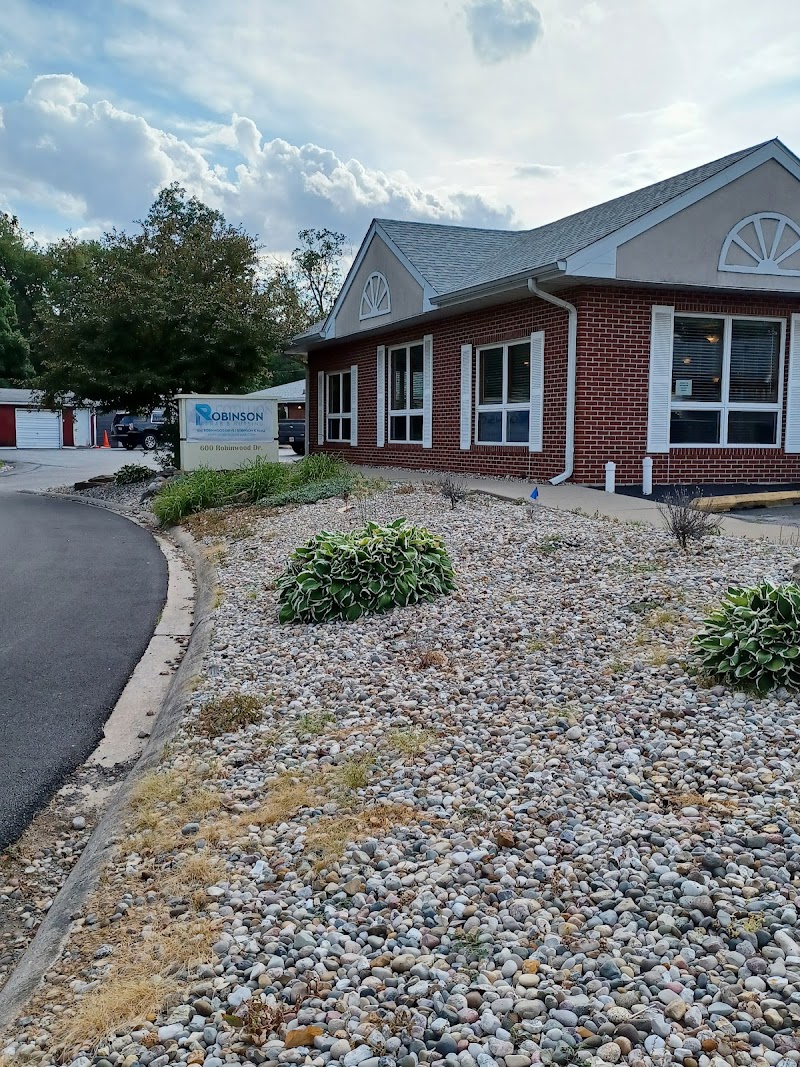
How Does Robinson Rehab And Nursing Compare to Other Illinois Nursing Homes?

Compared to the 100 nursing homes in Illinois, ROBINSON REHAB AND NURSING's overall rating (3 stars) is above the state average of 2.5, staff turnover (59%) is significantly higher than the state average of 46%, and health inspection rating (4 stars) is above the national benchmark.

What Should Families Ask When Visiting Robinson Rehab And Nursing?

Based on this facility's data, families visiting should ask: "How do you ensure continuity of care given staff turnover, and what is your staff retention strategy?" "Can you walk me through typical staffing levels on day, evening, and night shifts?" "Can I visit during a mealtime to observe dining assistance and food quality?" "How do you handle medical emergencies, and what is your hospital transfer rate?" These questions are particularly relevant given the facility's high staff turnover rate and the below-average staffing rating.

Is Robinson Rehab And Nursing Safe?

Based on CMS inspection data, ROBINSON REHAB AND NURSING has a clean safety record: no substantiated abuse findings (meaning no confirmed cases of resident harm), no Immediate Jeopardy citations (the most serious violation level indicating risk of serious injury or death), and is not on the Special Focus Facility watch list (a federal program monitoring the lowest-performing 1% of nursing homes). The facility has a 3-star overall rating and ranks #1 of 100 nursing homes in Illinois. While no facility is perfect, families should still ask about staff-to-resident ratios and recent inspection results during their visit.

Do Nurses at Robinson Rehab And Nursing Stick Around?

Staff turnover at ROBINSON REHAB AND NURSING is high. At 59%, the facility is 13 percentage points above the Illinois average of 46%. Registered Nurse turnover is particularly concerning at 65%. RNs handle complex medical decisions and coordinate care — frequent RN changes can directly impact care quality. High turnover means new staff may not know residents' individual needs, medications, or preferences. It can also be disorienting for residents, especially those with dementia who rely on familiar faces. Families should ask: What is causing the turnover? What retention programs are in place? How do you ensure care continuity during staff transitions?

Was Robinson Rehab And Nursing Ever Fined?

ROBINSON REHAB AND NURSING has no federal fines on record. CMS issues fines when nursing homes fail to meet care standards or don't correct problems found during inspections. The absence of fines suggests the facility has either maintained compliance or corrected any issues before penalties were assessed. This is a positive indicator, though families should still review recent inspection reports for the full picture.

Is Robinson Rehab And Nursing on Any Federal Watch List?

ROBINSON REHAB AND NURSING is not on any federal watch list. The most significant is the Special Focus Facility (SFF) program, which identifies the bottom 1% of nursing homes nationally based on persistent, serious quality problems. Not being on this list means the facility has avoided the pattern of deficiencies that triggers enhanced federal oversight. This is a positive indicator, though families should still review the facility's inspection history directly.