ST ANTHONY'S NSG & REHAB CTR
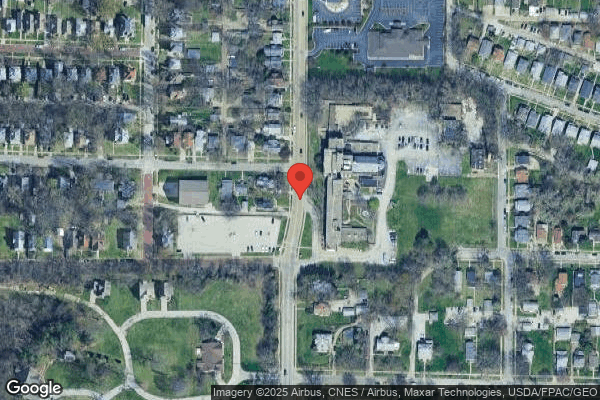
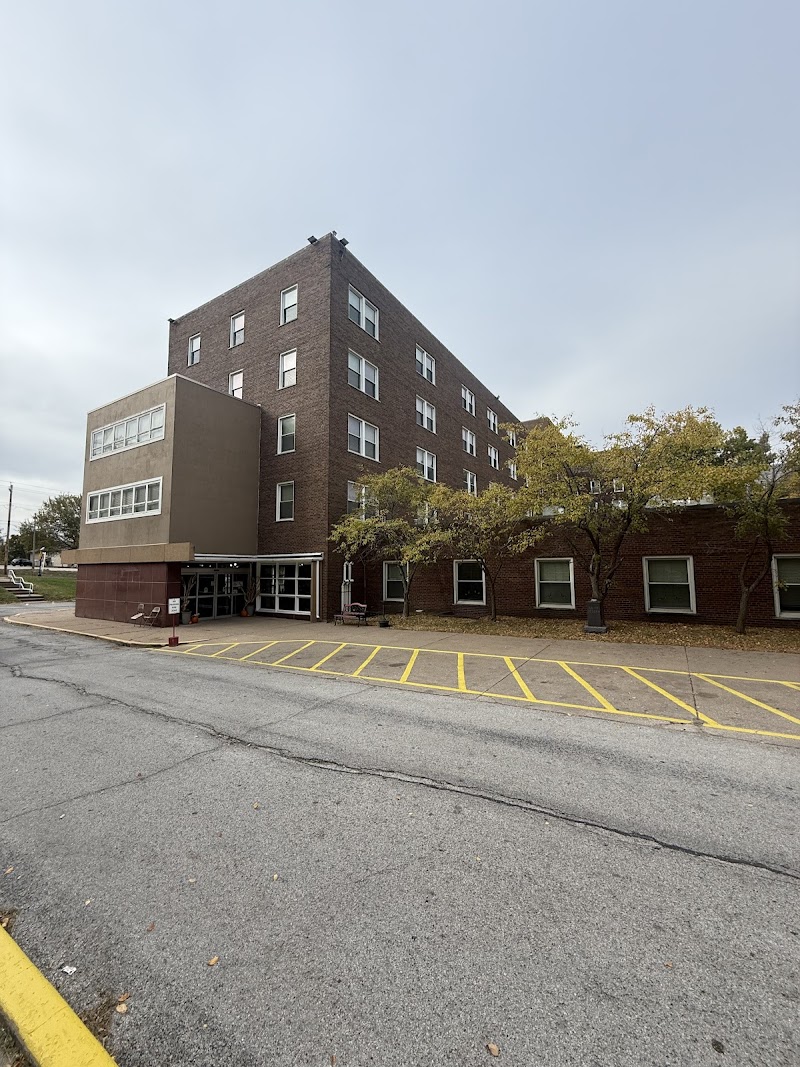
767 30TH STREET, ROCK ISLAND, IL 61201 (309) 788-7631
For profit - Limited Liability company 130 Beds Independent Data: November 2025 3 Immediate Jeopardy citations
Trust Grade
0/100
#636 of 665 in IL
Last Inspection: February 2025

Within standard 12-15 month inspection cycle. Federal law requires annual inspections.

Overview

St. Anthony's Nursing & Rehab Center has received a Trust Grade of F, indicating significant concerns about the facility's quality of care. It ranks #636 out of 665 in Illinois, placing it in the bottom half of nursing homes in the state, and is the lowest-ranked facility in Rock Island County. While the facility is on an improving trend, having reduced issues from 23 in 2024 to 12 in 2025, it still reported 50 deficiencies, including critical failures that affected resident safety. Staffing is a weakness, with only 1 out of 5 stars, and the turnover rate is 50%, which is average for the state, but concerning nonetheless. Specific incidents include a lack of qualified staff for CPR and inadequate supplies for tracheostomy care, both of which posed immediate risks to residents. The facility also faces a troubling $445,029 in fines, indicating serious compliance issues that could impact the quality of care provided.

Trust Score
F
0/100
In Illinois
#636/665
Bottom 5%
Safety Record
High Risk
Review needed
Inspections
Getting Better
23 → 12 violations
Staff Stability
⚠ Watch
50% turnover. Above average. Higher turnover means staff may not know residents' routines.
Penalties
✓ Good
$445,029 in fines. Lower than most Illinois facilities. Relatively clean record.
Skilled Nurses
⚠ Watch
Each resident gets only 23 minutes of Registered Nurse (RN) attention daily — below average for Illinois. Fewer RN minutes means fewer trained eyes watching for problems.
Violations
⚠ Watch
50 deficiencies on record. Higher than average. Multiple issues found across inspections.
★☆☆☆☆
1.0
Overall Rating
★☆☆☆☆
1.0
Staff Levels
★★★☆☆
3.0
Care Quality
★☆☆☆☆
1.0
Inspection Score
Stable
2024: 23 issues
2025: 12 issues

The Good

  • Full Sprinkler Coverage · Fire safety systems throughout facility
  • No fines on record

Facility shows strength in fire safety.

The Bad

1-Star Overall Rating

Below Illinois average (2.5)

Significant quality concerns identified by CMS

Staff Turnover: 50%

Near Illinois avg (46%)

Higher turnover may affect care consistency

Federal Fines: $445,029

Well above median ($33,413)

Significant penalties indicating serious issues

The Ugly 50 deficiencies on record

3 life-threatening 4 actual harm
Sept 2025 1 deficiency
CONCERN (D) 📢 Someone Reported This

A family member, employee, or ombudsman was alarmed enough to file a formal complaint

Potential for Harm - no one hurt, but risky conditions existed

Deficiency F0760 (Tag F0760)

Could have caused harm · This affected 1 resident

Based on interview and record review the facility failed to administer medication as ordered by the physician for one resident (R3), reviewed for respiratory treatments, in a sample of three residents...

Read full inspector narrative →
Based on interview and record review the facility failed to administer medication as ordered by the physician for one resident (R3), reviewed for respiratory treatments, in a sample of three residents. The facility's Medication Administration Policy dated 10/14/24 documents, The facility will provide pharmaceutical services, including procedures that assure the accurate acquiring, receiving, dispensing, and administering of all medications, to meet the needs of each resident.R3's medical record documents R3 was admitted to the facility 9/15/25 with the following diagnoses: Acute respiratory failure with hypoxia, pneumonia, chronic obstructive pulmonary disease (with acute exacerbation), chronic systolic (congestive) heart failure, atrial fibrillation, and hypertension. R3's hospital discharge order documents the following: Albuterol (2.5milligrams/ 3 milliliters) 0.083% nebulizer solution, take 2.5 milligrams by nebulization every six hours.A review of R3's Order Summary Report and Medication Administration Records dated September 2025 document, Albuterol Sulfate Nebulization Solution (2.5 milligrams/ 3 milliliters) 0.083%, 2.5 milligrams inhale orally via nebulizer every six hours as needed for SOB (shortness of breath), does not show staff documentation of medication being administered as ordered.R3 stated that R3 admitted to the facility 9/15/25 from the hospital and he did not receive any nebulizer treatments while residing at facility (1 day). R3 stated that he has been prescribed continuous oxygen therapy and nebulizer treatments for many years. R3 stated that he asked to be discharged on 9/16/25 because he was not getting the medication he needed. V15 (Facility Nurse Practitioner) verified R3's nebulizer treatment orders were not transcribed or administered as ordered.
Jul 2025 1 deficiency
CONCERN (D) 📢 Someone Reported This

A family member, employee, or ombudsman was alarmed enough to file a formal complaint

Potential for Harm - no one hurt, but risky conditions existed

Pressure Ulcer Prevention (Tag F0686)

Could have caused harm · This affected 1 resident

**NOTE- TERMS IN BRACKETS HAVE BEEN EDITED TO PROTECT CONFIDENTIALITY** Based on interview and record review the facility failed to identify a pressure injury prior to advanced staging and failed to a...

Read full inspector narrative →
**NOTE- TERMS IN BRACKETS HAVE BEEN EDITED TO PROTECT CONFIDENTIALITY** Based on interview and record review the facility failed to identify a pressure injury prior to advanced staging and failed to assess a new pressure injury for 1of 3 residents (R1) reviewed for pressure injuries in the sample of 3.The findings include:R1's admission record shows she was admitted on [DATE] with multiple diagnoses including unspecified severe protein-calorie malnutrition, anemia, Alzheimer's Disease and anxiety. She was discharged on 7/15/25.R1's admission resident assessment and care screening dated 4/25/25 documents R1 to have severe cognitive impairment. She was dependent on staff for bed mobility including rolling side to side. She was always incontinent of bowel and bladder. The same assessment documents R1 was at risk for pressure injuries and had no open wounds on admission.On 7/23/25 at 12:15 PM, V5 Certified Nursing Assistant (CNA) said R1 was dependent on staff for all of her care. She required assistance to get up in her chair for meals, had to be fed by staff and was incontinent of bowel and bladder. She was checked and changed every 2 hours and repositioned. R1s nursing progress notes of 6/4/25 documents 2 small superficial open areas were found on the right and left buttocks. The notes have no indication of measurements, staging or assessment of the wounds.R1s nursing progress notes for 6/24/25 show V4 Registered Nurse (RN) identified a new stage 2 pressure injury on R1s right shoulder. The wound measured 7.8 cm length by 2.2 cm wide by 0.2 cm depth.On 7/23/25 at 1:00 PM, V2 Director of Nursing (DON) said when R1 was admitted she was unable to really speak, dependent on staff for all of her needs, and was unable to move herself in bed. She had upper and lower body contractures. She was at a high risk for pressure injury due to her being underweight, and her nutrition was not good. The aides should be checking her skin every time they provide care and report any reddened or open areas. She said wounds should be identified and found prior to becoming stage 2. Early identification helps so the wound can possibly be healed and prevent any potential for infection.On 7/24/25 at 12:20 PM, V3 Nurse Practitioner (NP) said on 6/4/25, V9 Licensed Practical Nurse (LPN) should have documented the open areas as stage 1 and noted a little more information regarding the wounds including measurements.The facility 4/18/25 pressure ulcer policy document the facility is committed to the prevention, early identification, and evidence-based treatment of pressure ulcers. Identification and Documentation: Documentation will include wound type and stage (if pressure ulcer), location, size (length by width by depth), tissue type, drainage, odor, surrounding skin condition, pain level.
Apr 2025 1 deficiency 1 Harm
SERIOUS (G) 📢 Someone Reported This

A family member, employee, or ombudsman was alarmed enough to file a formal complaint

Actual Harm - a resident was hurt due to facility failures

Pressure Ulcer Prevention (Tag F0686)

A resident was harmed · This affected 1 resident

**NOTE- TERMS IN BRACKETS HAVE BEEN EDITED TO PROTECT CONFIDENTIALITY** Based on interview and record review the facility failed to initiate a skin assessment upon admission, failed to initiate admiss...

Read full inspector narrative →
**NOTE- TERMS IN BRACKETS HAVE BEEN EDITED TO PROTECT CONFIDENTIALITY** Based on interview and record review the facility failed to initiate a skin assessment upon admission, failed to initiate admission wound orders and failed to initiate an appropriate wound care plan for one resident (R1) with a sacral pressure wound of three residents reviewed for pressure wounds. This failure resulted in R1 acquiring a Stage IV necrotic sacral pressure ulcer. Findings include: Facility Policy/Pressure Ulcers/Skin Integrity/Wound Management (undated) documents: A system is in place for the prevention, identification, treatment, and documentation of pressure and non-pressure wounds. Procedure Upon admission: A head to toe skin assessment will be conducted by a licensed nurse. It is recommended that this assessment is completed within the shift that the resident was admitted ; however, it must be completed within 24 hours of admission. It is important that each existing pressure ulcer be identified, whether present on admission or developed after admission, and that the factors that may have influenced its development, the potential for development of additional ulcers, or the deterioration of the pressure ulcer(s) be recognized, assessed, and addressed. Residents with risk for or who have a loss of skin integrity will receive the appropriate treatment/services, and residents who are determined to be at risk for or who have loss of skin integrity will receive the appropriate treatment/services which may include: Specific physician ordered medications/treatment Documentation Re: Assessment History of pressure ulcers For a resident who was admitted with a pressure ulcer or who developed one within two days, the admission documentation should include at least the following: Ulcer site and characteristics at the time of admission, including measurements; Possibility of underlying tissue damage because of immobility or illness prior to admission; Skin condition on and within a day of admission if suspected deep tissue injury. Care Planning: For new admission/readmissions, an immediate plan of care will be developed to address the immediate interventions to preserve and/or treat skin integrity issues. This should be communicated to staff. The care plan should address prevention of any skin breakdown, including shearing or friction, repositioning, offloading; pressure relief equipment; and the care and treatment to be provided to the resident for a pressure ulcer or non-pressure wound behaviors and characteristics. If a resident refuses or resists staff interventions, the care plan should reflect efforts to seek alternatives as well as education to resident and/or family regarding the risks. This education should be documented. All care plan interventions should be revised if there is recurring pressure ulcers, a lack of progress toward healing, or if the resident acquires a new ulcer. Physician Orders dated 10/18/24 indicates R1 was transferred from an out-of-state VA (Veterans Administration) hospital to a Skilled Nursing Facility (previous facility) on that date. Skilled Nursing Facility Progress Notes dated 10/19/24 at 9:41pm indicate R1 had Small sheared area under scrotum and coccyx with shearing and multiple small open areas. Initial (Physician) Wound Evaluation & Management Summary dated 10/21/24 indicates R1 with a History of Stage IV sacral pressure wound/full thickness Now with scattered areas with minimal depth. Summary indicates wound size 6cm (centimeters) x 6cm x 0.1cm; cluster wound with open ulceration area; light serous exudate; 80% granulation tissue; 20% intact normal color skin. Summary Treatment Plan/Primary Dressing: Zinc ointment to affected area twice daily and as needed. for 30 days. Skilled Nursing Facility Physician Orders indicate R1 had the following orders upon discharge and transfer (10/24/24) to current facility: Cleanse sacral area with soap and water and apply Zinc twice daily and as needed (order date 10/21/24). Facility admission [DATE]) Physician Orders indicate wound care orders for R1 were not initiated until 11/1/24. TAR (Treatment Administration Record) dated 11/1/24 indicates sacral wound treatment was initiated on that date after R1 was seen by Wound Physician on 11/1/24. R1 received no wound treatment from 10/24/224 to 11/1/24. No admission skin assessment was found or presented after R1 was admitted to the facility on [DATE] until 11/1/24. On 4/1/25 at 2:45pm V2, DON (Director of Nursing) confirmed a skin assessment was not completed upon admission for R1 and acknowledged the first skin assessment completed for R1 was provided by V6, Wound Physician on 11/1/24. Telemedicine Wound Care Follow Up Evaluation dated 11/1/24 indicates R1 sacral pressure wound as full thickness Stage IV: Wound Size: 9.0cm x 8.5cm x not measurable Depth not measurable due to presence of nonviable tissue and necrosis. Periwound Radius: Surrounding DTI (Deep Tissue Injury) Moderate serous exudate Thick adherent black necrotic tissue (eschar): 100% Wound Progress: Exacerbated due to unknown since admission to facility on 10/24/24. Wound Evaluation Treatment Plan dated 11/1/24 included: Initiate Leptospermum Honey once daily for 30 days, cover with foam silicone border for 30 days. No sharp debridement due to Telemedicine visit. Wound Evaluation and Management Summaries dated 1/16/25, 12/19/24 and 11/20/24 indicate R1 received surgical debridement of his sacral wound by V6, Wound Physician on those dates. Telemedicine Wound Care Follow Up Evaluation dated 1/23/25 indicates R1 sacral pressure wound as full thickness Stage IV with healing potential as Poor with following description: Wound Size: 12.4cm x 10.1cm x 0.2cm Periwound Radius: Erythema, Induration Moderate serous exudate Thick adherent black necrotic tissue (eschar): 100% Wound Progress: Exacerbated due to infection. Wound Evaluation Treatment Plan dated 1/23/25 included: Off-load wound; reposition per facility protocol; antibiotic choice: Cipro 750mg (milligram) once daily and Metronidazole 500mg three times per day x 7 days. Progress Note dated 1/23/25 at 10:16am R1 colostomy with no BM (Bowel Movement) noted this shift. NP (Nurse Practitioner) made aware and notified, R1 sent to ED (Emergency Department). Progress Note dated 1/23/25 at 10:54am indicates Notified POA (Power of Attorney) of (R1) transfer to ED and change in condition. Hospitalist Progress Note dated 1/28/25 indicates: Patient (R1) is [AGE] year-old male who has significant past medical history of including but not limited to diabetes type 2, coronary artery disease, hypertension, history of colostomy, status post C2-T4 spinal fusion with laminectomy C2-C3, vertigo, paraplegia, neurogenic bladder with indwelling urinary catheter, history of brain bleed, patient was sent to the emergency room on January 23, 2025 from nursing care facility with chief complaint of low urine output. As per information from the chart, patient (R1) was recently diagnosed with UTI (Urinary Tract Infection). On further evaluation it was also noted that patient (R1) has a large sacral pressure ulcer, foul-smelling (pictures in the chart). Patient was admitted . Patient (R1) underwent excisional debridement of sacral wound in preparation for flap closure on January 27, 2025. Hospital Palliative Care Note dated 1/29/2025 LOS (Length of Stay) 5 days: Massive wounds. stage IV pressure ulcer located on his sacrum, stage III pressure ulcer located on his scrotum and a stage III pressure ulcer located on his right ischium. ID (Infectious Disease) discussed with R1's family that the best case scenario of R1 going to a tertiary care center where there is a plastic surgery/general surgery and grafting and in the best cases this heals versus wound care recurrent infection, and this does not heal. Discussed comfort care hospice care limited care. R1's Care Plan indicates Problem Area date initiated and revised 10/28/24 indicates Alteration in skin integrity - location coccyx. Identified on admission. Care Plan indicates Initial size and stage - see wound notes. All Interventions were initiated on 10/28/24 and are as follows: Refer to Nurse Practitioner as appropriate Dietary consult as indicated Turn and reposition routinely. Document any refusal. R1's care plan was never reviewed, revised or updated despite wound deteriorating, debridement by wound physician and did not include any pressure relief equipment, changes in treatments or subsequent wound infection. On 4/1/25 at 3:10pm V7, NP (Nurse Practitioner) stated I did not actually visualize (R1's) wound when he was here. I was doing physiatry - not wounds at that time. I knew he came in with a wound. He was previously at another local facility. (R1) was being followed by wound physicians at (the previous facility) so it was continued when he came here. I would never have recommended debridement for that wound. It was too extensive. I had no idea it was that big. I'm surprised they debrided it in the hospital. V7 stated R1 was very non-compliant with care and resistive to weight shifting, offloading when he was at this facility. V7 stated R1 was also verbally aggressive, cussing staff out. V7 stated (R1) would never have complied with precautions or interventions after debridement. It would have ended up infected. V7 stated that R1's care plan should have included his non-compliance with wound care interventions. On 4/2/25 at 1:18pm V4, Wound Physician stated R1 did not have eschar on his sacral wound when she saw him on 10/21/24 (prior to facility admission on [DATE]). V4 acknowledged she recommended Zinc for R1's wound at that time and stated, Zinc is not an appropriate treatment for a wound with eschar. V4 stated that she ordered Zinc because the wound had low drainage and would protect fragile skin. V4 stated I doubt if not having Zinc for a week would lead to a wound covered in 100% Eschar - so there must have been more factors at play. The order for Zinc twice daily should have been carried over though or re-evaluated upon admission.
Feb 2025 7 deficiencies
CONCERN (D) 📢 Someone Reported This

A family member, employee, or ombudsman was alarmed enough to file a formal complaint

Potential for Harm - no one hurt, but risky conditions existed

Free from Abuse/Neglect (Tag F0600)

Could have caused harm · This affected 1 resident

Based on record review and interview the facility failed to ensure a resident was free from sexual abuse by a staff member for 1 of 3 residents (R33) reviewed for abuse in a sample of 33. Findings inc...

Read full inspector narrative →
Based on record review and interview the facility failed to ensure a resident was free from sexual abuse by a staff member for 1 of 3 residents (R33) reviewed for abuse in a sample of 33. Findings include: A policy titled Abuse and Neglect Prevention last revised 10/14/24 defines abuse as the willful infliction of injury, unreasonable confinement, intimidation or punishment with resulting physical harm, pain, or mental anguish. It includes abuse, sexual abuse, physical abuse, and mental abuse including facilitated or enabled through the use of technology. The policy continues, 3. Willful, as defined at 483.4 and as used in the definition of abuse means the individual must have acted deliberately, not that the individual must have intended to inflict injury or harm and 6. Mistreatment means inappropriate treatment r exploitation of a resident. This abuse policy documents, No abuse or harm of any type will be tolerated, and residents and staff will be monitored for protection. A facility reported incident report dated (undated) documents R33 has a Brief Interview for Mental Status/ BIMS of 15 indicating he is cognitively intact. This report documents that on 02/21/25 at approximately 12:30 PM R33 showed a staff member a picture of a woman's naked vagina and some messages. R33 stated V8/Registered Nurse (RN) sent him the photo and messages. The messages were sent under the name Hot (V8's first name) and were from V8's phone number. The message read, Tell me the first thing that comes to mind when you see this. Mine was holocaust victim. An interview with R33 dated 02/21/25 and signed by V2/Director of Nursing documents R33 showed V2, V1/Administrator and V3/Human Resources a nude photo which R33 stated V8 had sent to him via text message. The message was from Hot/ (V8's first name) and was from V8's personal cell phone number. R33 stated that he and V8 do sometimes exchange messages, but he didn't expect or appreciate this message. R33 stated that he wasn't really too upset, but that it was inappropriate and shouldn't have happened. An interview dated 02/24/25 and signed by V2 titled (V8) abuse investigation documents V1 and V3 interviewed V8 and asked if V8 had sent an explicit photo to R33. V8 initially denied this and then admitted she had sent the photo to R33. V8 stated she knew it was inappropriate to send the photo, but she doesn't have many friends outside of work, so just thought she'd send it to R33. On 02/25/25 at 11:07 AM R33 stated V8 had sent him inappropriate text messages and pictures trying to entice him. R33 stated the messages upset him and were inappropriate so he reported this occurrence to staff and to V1. An undated final report, provided to surveyors on 02/26/25 documents, The facility has concluded its investigation and does believe (V8) is guilty of sending an explicit photo to (R33). V8 was terminated on 02/24/25.
CONCERN (D)

Potential for Harm - no one hurt, but risky conditions existed

Medication Errors (Tag F0758)

Could have caused harm · This affected 1 resident

Based on observation, interview and record review the facility failed to provide an appropriate indication for use of an antipsychotic medication and failed to provide supporting behaviors for the use...

Read full inspector narrative →
Based on observation, interview and record review the facility failed to provide an appropriate indication for use of an antipsychotic medication and failed to provide supporting behaviors for the use of an antipsychotic medication for one resident (R21) with a diagnosis of Dementia of five residents reviewed for unnecessary medications in the sample of 33. Findings include: Facility Policy/Psychotropic Medications dated 10/14/24 documents: The facility must ensure that residents who: Have not used psychotropic drugs are not given these drugs unless the medication is necessary to treat a specific condition as diagnosed and documented in the clinical record. Antipsychotics will be used only for Behavioral Symptoms that are: A danger to the resident or to others OR cause the resident inconsolable or persistent distress, a significant decline in function, and/or substantial difficulty receiving needed care, AND Not due to a medical condition or problem AND Persistent or likely to reoccur without continued treatment AND Not sufficiently relieved by non-pharmacological interventions AND Not due to environmental stressors that can be addressed to improve the psychotic symptoms or maintain safety AND Not due to psychological stressors that can be expected to improve or resolve as the situation is addressed AND Conditions/diagnoses listed in the (Mental Illness Directory) or subsequent editions: Schizophrenia Schizoaffective disorder Delusional disorder Mood disorders Schizophreniform disorder Psychosis NOS Atypical psychosis Brief psychotic disorder Dementing illnesses with associated behavioral symptoms Medical illnesses or delirium with manic or psychotic symptoms R21's January 2025 Physician Order Report Summary indicates Quetiapine/Seroquel (antipsychotic) 100mg (milligrams) twice daily was ordered on 6/25/24 and indicates on 1/27/25 that order was changed to Seroquel 100mg three times daily on 1/27/25. R21's February 2025 Physician Order Report Summary indicates R21 continued on Seroquel 100mg three times per day until 2/27/25 for Mild Vascular Dementia with Behavioral Disturbance. R21's Current Care Plan indicates R21 has the potential to be verbally aggressive, yelling out exaggerated claims example: ripping his hair out when putting on his shirt. Care Plan indicates R21 has Ineffective coping skills and Mental/Emotional illness; Poor impulse control; Rolls self out of bed when not getting enough attention. (Last revised 9/14/22). Care Plan also indicates R21 has a behavior problem of yelling out constantly for help and wants someone to be in his room at all times; attention seeking; loud and disruptive. (Last Revised 09/14/2022) On 2/25/25 and 2/26/25 at random times throughout both days R21 was observed in his room, frequently calling out for help. On 2/27/25 at 3:15pm V2, DON (Director of Nursing) stated R21's behavior is mostly a constant yelling out. V2 stated they are going to try and reduce R21's Seroquel/Quetiapine and acknowledged it hasn't really reduced R21's yelling out behavior and also acknowledged the dosage is higher than usual.
CONCERN (D)

Potential for Harm - no one hurt, but risky conditions existed

Deficiency F0760 (Tag F0760)

Could have caused harm · This affected 1 resident

Based on observation, interview and record review the facility failed to prevent a significant medication error for one resident (R21) who receives an antipsychotic medication of five residents review...

Read full inspector narrative →
Based on observation, interview and record review the facility failed to prevent a significant medication error for one resident (R21) who receives an antipsychotic medication of five residents reviewed for unnecessary medications in the sample of 33. Findings include: Facility Policy/Medication Administration dated 10/14/24 documents: The facility will provide pharmaceutical services, including procedures that assure the accurate acquiring, receiving, dispensing, and administering of all medications, to meet the needs of each resident. On 2/25/25 and 2/26/25 at random times throughout both days R21 was observed in his room, frequently calling out for help. On 2/27/25 at 3:15pm V2, DON (Director of Nursing) stated R21's behavior is mostly a constant yelling out. Hospice Physician Order dated 1/22/25 indicates to Start Seroquel (antipsychotic) 50mg (milligrams) by mouth three times per day. Nurse Note dated 1/27/25 at 11:22am indicates Hospice nurse in facility for routine visit and received new orders for R21 to increase the following medications from twice daily to three times daily: Lorazepam (antianxiety) 1mg, Seroquel 50mg, Tramadol (pain) 50mg, and Trazodone (antidepressant) 100mg. Orders updated. R21's January 2025 Physician Order Report Summary indicates Quetiapine/Seroquel (antipsychotic) 100mg twice daily was ordered on 6/25/24 and indicates on 1/27/25 that order was changed to Seroquel 100mg three times daily on 1/27/25. R21's Medication Administration Record (MAR) dated January 2025 indicates R21 received Seroquel 100mg three times per day from 1/27/25 until 2/27/25 when the error was discovered. The MAR indicates R21 received twice the dosage ordered (300mg per day instead of 150mg per day) from 1/27/25 through 2/27/25. Medication Error Report - Date and Time of Error 1/27/25 at 1200 for R21 indicates: Medication ordered: Seroquel (antipsychotic) 50mg (milligrams) three times per day Medication given: Nurse (V8) entered Seroquel 100mg three times per day into R21 Physician orders Report indicates No Adverse Effects noted At this time On 2/26/25 at 3:25pm V2, DON stated It looks like this is a medication error. The nurse who transcribed the order in error has already been terminated for other reasons.
CONCERN (D)

Potential for Harm - no one hurt, but risky conditions existed

Infection Control (Tag F0880)

Could have caused harm · This affected 1 resident

**NOTE- TERMS IN BRACKETS HAVE BEEN EDITED TO PROTECT CONFIDENTIALITY** Based on observation, interview, and record review, the facility failed to ensure staff follow infection control practices durin...

Read full inspector narrative →
**NOTE- TERMS IN BRACKETS HAVE BEEN EDITED TO PROTECT CONFIDENTIALITY** Based on observation, interview, and record review, the facility failed to ensure staff follow infection control practices during wound care, in that, V4/Licensed Practical Nurse failed to change gloves during pressure ulcer wound care for R25. This failure has the potential to effect one resident [R25] of two residents reviewed for Pressure ulcer wound care, in a total sample of 33. Findings include: The [NAME], A., [NAME], P., [NAME], W., & [NAME], N. (2024). Clinical Nursing Skills & Techniques (11th ed., pp. 1115-1116). Elsevier Health Sciences, document: 11. Apply clean gloves and remove soiled dressings; remove gauze one layer at a time; 12. Examine dressings for quality of drainage (color, consistency), presence or absence of odor, and quantity of drainage (note if dressings were saturated, slightly moist, or had no drainage). Discard dressings in waterproof biohazard bag. Remove and discard gloves; 13. Perform hand hygiene and apply clean gloves; 17. Apply dressings per order. Place time, date, and initials on new dressing; and 19. Discard biohazard bag and soiled supplies per agency policy. Remove and dispose of gloves. Perform hand hygiene. R25's Electronic Medical Record/EMR Physician Order, dated 2/24/25, document, Cleanse right buttock with NS [normal saline], apply barrier cream and border gauze daily and prn [as needed] until healed. On 2/25/2025, at 10:15 a.m., V4 performed hand hygiene, applied gloves, and without changing gloves, V4 removed R25's wound dressing from R25's right buttock wound; grabbed a clean 4 x 4 gauze; cleansed R25's wound; grabbed a dry 4 x4 gauze and dried R25's wound; grabbed container of barrier cream and placed small amount of V4's glove; applied barrier cream to wound area; and grabbed new foam dressing and applied to R25's right buttock wound. On 2/25/25 at 10:30 a.m., V4 confirmed not changing gloves after removing R25's soiled right buttock wound dressing. On 2/27/25, at 8:25 a.m., V2/Director of Nursing confirmed the expectation that V4 should have changed gloves/performed hand hygiene after removing R25's soiled right buttock wound dressing.
CONCERN (E)

Potential for Harm - no one hurt, but risky conditions existed

Accident Prevention (Tag F0689)

Could have caused harm · This affected multiple residents

Based on observation, interview and record review the facility failed to prevent one of five residents (R46) from sustaining a smoking/vape-related burn and failed to complete quarterly Smoking Assess...

Read full inspector narrative →
Based on observation, interview and record review the facility failed to prevent one of five residents (R46) from sustaining a smoking/vape-related burn and failed to complete quarterly Smoking Assessment Evaluations for four of 18 Residents (R33, R46, R51 and R79) reviewed for smoking in the sample of 33. Findings include: Facility Resident and Employee Smoking Policy dated 10/14/24 documents: It is the policy of the facility to provide a safe environment for Residents, staff and visitors by providing guidelines for the use of smoking materials; and the Smoking Evaluation tool will be done upon admission, quarterly and with change of condition; and the information will be available to staff members and will be updated with any changes in the Resident's capabilities and needs. Procedure for Residents: Smoking is only permitted under the supervision of a staff member in the facilities designated smoking areas based upon a smoking evaluation. the Smoking Evaluation tool will be done upon admission, quarterly and with change of condition; and the information will be available to staff members and will be updated with any changes in the Resident's capabilities and needs. The Facility Resident Smoking List, dated 2/24/25, documents R33, R46, R51 and R79 as smokers. Progress Note dated 2/10/25 at 11:31am indicates V11. NP (Nurse Practitioner) reported to V2, DON (Director of Nursing) that R46 showed V11 an area on his right forearm and stated he burned it while he was out smoking. Note indicates V2 assessed R46 and observed a 3cm (centimeter) X 1.6cm red and yellow area to R46's right forearm. At that time R46 told V2 he might have got the wound from his vape pen. Note indicates R46's wound Does appear size and shape of a vape pen. Note indicates V2 spoke with R46 regarding his non-compliance with only smoking at supervised times. Note indicates R46 stated he will go outside whenever he wants to. Note indicates an alarm was applied to R46's wheelchair to alert staff whenever R46 attempts to leave the unit/enter the elevator. Skin Check Note dated 2/10/25 at 12pm indicates R46 has a new skin issue right anterior arm - Type: Partial Thickness Burn. On 2/26/25 at 2:25pm R46 pulled his right sleeve up and an oval thickened scabbed wound was noted middle anterior arm. Peri wound had no signs/symptoms of infection. At that time R46 acknowledged vaping at times when he was unsupervised. On 2/27/25 at 10:20am V11, NP stated that the affected area on R46's right arm did initially look like it may have had blistering but blisters were not present when she first saw the wound. V11 stated R46 told her the burn was from a vape pen. R46's current Care Plan indicates R46 has an actual skin impairment of right forearm related to a burn from vape/cigarettes. Care Plan indicates R46 is not compliant with Smoking Policy as he is supposed to be supervised but leaves his unit unattended. Care Plan indicates R46 is non-compliant with Smoking Policy as evidenced by going outside to smoke at undesignated times. Care Plan indicates R46 requires Supervision during smoking. R51's Medical Record documented R51's most recent Smoking Assessment (dated 6/18/24). R33's 06/04/24 Smoking assessment documents Resident is cognitively intact, able to light his own cigarettes and put his cigarettes out safely. Resident is able to self propel himself outside. He is safe to smoke without supervision. There is not a quarterly assessment completed for R33. A sheet of residents who smoke dated 02/24/25 documents R79 smokes independently. Review of R79's assessments does not have a smoking assessment. On 02/26/25 at 10:05 AM V1/Administrator stated there is no quarterly smoking assessment for R33 and no smoking assessment completed for R79. On 2/27/25 at 10:05 am, V1 (Administrator) stated, We do not have any quarterly Smoking Assessments for R33, R46, R51 or R79. It looks like we are only doing the Assessments annually.
CONCERN (F)

Potential for Harm - no one hurt, but risky conditions existed

Deficiency F0887 (Tag F0887)

Could have caused harm · This affected most or all residents

Based on record review and interview the facility failed to document staff were provided education regarding the benefits and potential risks associated with the Covid-19 vaccination. This failure has...

Read full inspector narrative →
Based on record review and interview the facility failed to document staff were provided education regarding the benefits and potential risks associated with the Covid-19 vaccination. This failure has the potential to affect all 82 residents in the facility. Findings include: A Policy titled Employee Vaccination last revised 10/14/24 documents the purpose of this policy is, To reduce the risk of infectious disease transmission among employees, residents, and visitors by providing access to recommended immunizations. Procedure 4. Education and Awareness documents, Educational materials regarding the benefits, risks and availability of vaccines will be provided to all employees. Employees will be informed about recommended vaccination schedules and any updates from the Centers for Disease Control and Prevention (CDC) or Illinois Department of Public Health (IDPH). Review of employee Covid-19 Consent forms for staff who received a Covid-19 vaccination this year documents three staff received the Covid-19 vaccination (V4, V12, V13). There is no documentation these three or any staff received education regarding the benefits and potential risks associated with the Covid-19 vaccination. On 02/26/25 at 11:34 AM V9/Assistant Director of Nursing and Infection Preventionist confirmed she cannot provide documentation that staff were provided with education regarding the potential risks and benefits of receiving the Covid-19 vaccination.
MINOR (C)

Minor Issue - procedural, no safety impact

Deficiency F0577 (Tag F0577)

Minor procedural issue · This affected most or all residents

Based on observation, interview, and record review, the facility failed to have the survey binder readily available, and in a conspicuous place, for residents review the results of State Agency survey...

Read full inspector narrative →
Based on observation, interview, and record review, the facility failed to have the survey binder readily available, and in a conspicuous place, for residents review the results of State Agency surveys. This failure has the potential to affect all 82 residents residing in the facility. FINDINGS INCLUDE: Centers for Medicare and Medicaid Services [CMS] form 671 [Long-term Care Facility Application for Medicare and Medicaid, dated 2/27/2025, signed by V1/Administrator, document 82 residents reside in the facility. On 2/25/2025 and 2/26/2025, during the facility's annual survey [by the State Agency], the survey binder, containing State Agency survey results, could not be located. On 2/26/2025, at 10:00 a.m., Resident Counsel residents, R12, R13, R28, R45-Resident Council President, and R66 all statee they were not aware the survey binder existed, nor were they aware they were entitled to review the results/findings of State Agency surveys. On 2/27/2025, at 8:45 a.m., V1, Administrator confirmed the binder containing survey results was not readily available to residents.
Feb 2025 1 deficiency
CONCERN (D) 📢 Someone Reported This

A family member, employee, or ombudsman was alarmed enough to file a formal complaint

Potential for Harm - no one hurt, but risky conditions existed

Incontinence Care (Tag F0690)

Could have caused harm · This affected 1 resident

**NOTE- TERMS IN BRACKETS HAVE BEEN EDITED TO PROTECT CONFIDENTIALITY** Based on record review and interview the facility failed to change an indwelling catheter as ordered and failed to monitor urina...

Read full inspector narrative →
**NOTE- TERMS IN BRACKETS HAVE BEEN EDITED TO PROTECT CONFIDENTIALITY** Based on record review and interview the facility failed to change an indwelling catheter as ordered and failed to monitor urinary output for one resident (R6) of three residents reviewed for indwelling catheter in a total sample of seven. Findings Include: R6's Physician Order Sheet dated October 2024 documents 16 fr (french) (indwelling) catheter for neurogenic bladder. Change every month and PRN (As needed). On 1/31/25 at 10:00 AM V2 (Registered Nurse/Director of Nursing) stated that all residents with catheters should have I & O (Intakes and Outputs) done every shift. V2 stated that she was not aware of any issues with R6's catheter. R6's Electronic Medical Record did not contain any documentation of R6's urinary output from the time of his admission [DATE]) until transfer to the hospital (1/23/25). V1 (Administrator) provided hand written day sheet notes that did have urinary outputs documented on 10/27/24,10/31/24,11/25/24,11/26/24,11/29/24,11/30/24,12/1/24,12/5/24,12/9/24 and 12/11/24. V1 had multiple other day sheet notes but the dates listed on those day sheets were duplicates of the days already listed. R6's Treatment Administration Records for October, November and December 2024 and January 2025 document 16 fr (indwelling catheter. Change every month and PRN (as needed). All months had an x through every date. None of the Treatment Administration Records documented that R6 ever got his catheter changed while at the facility. On 2/4/25 at 10:00 AM V2 (Registered Nurse/Director of Nursing) confirmed that there was no documentation of R6 getting his catheter changed while at the facility. V2 stated she believed that R6 got his catheter changed at some point at the hospital but was unable to provide any documentation or further details about that possible catheter change. R6's Nurse's Notes dated 11/13/24 document that R6 had increased confusion and aggression so a urinalysis was obtained and R6 had a urinary tract infection that was treated with antibiotics. R6's Nurse's Notes dated 1/23/25 at 1:25 PM document that R6 was sent to the emergency room due to no bowel movement in his colostomy bag. On 2/4/25 at 3:00 PM V15 (Registered Nurse) stated I am the nurse that sent (R6) to the hospital on [DATE]). He was not acting right and he usually had some bowel movement every shift and his colostomy bag was empty. His catheter did have output but I do not recall how much or what it looked like. R6's emergency room Note dated 1/23/25 written by V2 (emergency room Doctor) documents that R6 was being admitted to the hospital for IV (Intravenous) Antibiotics and further diagnostics with diagnosis of hypoxia, Pneumonia of the right lower lobe due to infectious organism and urinary tract infection associated with indwelling urethral catheter. On 2/4/25 at 1:30 V17 (R6's Doctor) stated People with catheters are already a higher risk for urinary tract infections because the catheter is in place. Changing the catheter every month is essential or urinary tract infections will certainly start happening like they did with (R6).
Jan 2025 1 deficiency
CONCERN (D) 📢 Someone Reported This

A family member, employee, or ombudsman was alarmed enough to file a formal complaint

Potential for Harm - no one hurt, but risky conditions existed

Report Alleged Abuse (Tag F0609)

Could have caused harm · This affected 1 resident

**NOTE- TERMS IN BRACKETS HAVE BEEN EDITED TO PROTECT CONFIDENTIALITY** Based on Interview and Record review, the facility failed to report an allegation of misappropriation of jewelry to the state ag...

Read full inspector narrative →
**NOTE- TERMS IN BRACKETS HAVE BEEN EDITED TO PROTECT CONFIDENTIALITY** Based on Interview and Record review, the facility failed to report an allegation of misappropriation of jewelry to the state agency or local law enforcement for one of three residents (R1) reviewed for misappropriation in the sample of four. Findings include: The facility's Abuse policy (undated), documents It is the policy of (the facility) to encourage and support all residents, staff, families, visitors, volunteers and resident representatives in reporting any suspected acts of abuse, neglect, exploitation, involuntary seclusion or misappropriation resident property from abuse, neglect, misappropriation of resident property, and exploitation. Any nursing home employee or volunteer who becomes aware of abuse, mistreatment, neglect, exploitation or misappropriation shall immediately report to the nursing home Administrator/Designee. The nursing home Administrator/Designee will report abuse/neglect and/or allegations thereof to (the state agency) per state requirements. This same policy documents The facility will ensure that all alleged violations involving abuse, neglect, exploitation or mistreatment, including injuries of unknown source and misappropriation of resident property, are reported immediately, but not later than two hours after the allegation is made, if the events that cause the allegation involve abuse or result in serious bodily injury, or not later that 24 hours if the events that cause the allegation do not involve abuse and do not result in serious bodily injury, to the administrator/designee of the facility and to other officials including (the state agency) and adult protective services. In addition, local law enforcement will be notified of any reasonable suspicion of a crime against a resident in the facility. R1's nursing progress note, dated 1/1/2025 at 9:38 AM and completed by V7 (Licensed Practical Nurse), documents (R1's family member, V5) reported that (R1's) ring is missing. Room searched by staff. (V2, Director of Nursing) notified and (V1, Administrator In Training, AIT) notified. On 1/27/25 at 4:40 PM, V5 (R1's Family) confirmed that R1 resided in the facility from [DATE]-[DATE]. V5 stated I visited every day while (R1) was in the facility. The last day she was there I noticed her ring was not on her finger. This ring was never found. That was the day she went to the hospital. I went in to see her and her ring was missing. It was my grandmother's ring and not replaceable. V5 confirmed she reported the missing item to the nurse working that day but hasn't heard anything since. On 1/28/25 at 12:34 PM, V7 (Licensed Practical Nurse) confirmed working the day that R1 was sent to the hospital. V7 stated Before the ambulance came (V5) came down to the nurses station and was very upset. She said (R1's) ring was missing. The ring was from her grandmother. (V5) said the ring had been on her the day before and it was missing. I notified (V1, AIT) because he is the Abuse Coordinator, and that is all I know. On 1/27/25 at 2:22 PM, V1 (AIT) confirmed being made aware that R1 was missing a ring on 1/1/25. V1 stated I did not report the missing ring to (the state agency) or local authorities. The family never got back with me to discuss what they wanted to do.
Nov 2024 1 deficiency
CONCERN (F) 📢 Someone Reported This

A family member, employee, or ombudsman was alarmed enough to file a formal complaint

Potential for Harm - no one hurt, but risky conditions existed

Abuse Prevention Policies (Tag F0607)

Could have caused harm · This affected most or all residents

Based on interview and record review the facility failed to follow their abuse policy and complete a background check on a contracted employee with a known criminal history. This failure has the poten...

Read full inspector narrative →
Based on interview and record review the facility failed to follow their abuse policy and complete a background check on a contracted employee with a known criminal history. This failure has the potential to affect all 89 residents currently residing in the facility. Findings include: The Facility's Healthcare Worker Background Check policy, revised 10/14/24, documents, The purpose of this policy is to establish and maintain a safe environment for residents, staff, and visitors. Before employment, all prospective healthcare employees must undergo a criminal history background check. This screening process ensures compliance with the (State) Healthcare Worker Background Check Act. The background check will include verification through the (State Agency) Health Care Worker Registry to identify any disqualifying offenses. A check against the U.S. Department of Health and Human Services (HHS) Office of Inspector General's List of Excluded Individuals and Entities, ensuring the candidate is eligible for employment in federally funded healthcare programs. Healthcare employees with criminal convictions specified as disqualifying under the (State) Healthcare Worker Background Check Act are ineligible for employment in direct care roles unless they obtain a waiver from (State Agency). Disqualifying offenses may include certain violent crimes, abuse, neglect, financial exploitation, and specific drug offenses. Background check records and any associated waivers will be securely maintained in each employee's file and managed by Human Resources. The Facility's Abuse Policy, not dated, documents, It is the policy of this facility to screen employees and volunteers prior to working with residents. Screening components include verification of references, certification and verification of license and criminal background check. Before new employees are permitted to work with residents, references provided by the prospective employee will be verified as well as appropriate board registrations and certifications regarding the prospective employee's background. The facility will not employ or otherwise engage individuals who have been found guilty of abuse, neglect, exploitation, misappropriation of property, or mistreatment by a court of law. a criminal background check will be conducted on all prospective employees. A significant finding on the background check will result in denied employment consistent with the criminal background check policy in accordance with State and Federal Regulation. On 11/13/24 at 9:30am, V6 (Maintenance Assistant) stated V10 (Maintenance Consultant) was hired a couple of weeks ago to consult with maintenance staff on the building. V6 (Maintenance Assistant) stated that V10 (Maintenance consultant) had worked in the facility a couple of years ago and is familiar with the building. V6 (Maintenance Assistant) also stated that V10 (Maintenance Consultant) is inside the building sometimes and was inside facility 11/12/24. On 11/13/24 at 10:00am, V19 (Human Resources/HR) stated that he oversees all the employee and consultant background checks. V19 also stated that he does not know if V10's (Maintenance Consultant) background and fingerprint results were done. On 11/13/24 at 10:50am, V8 (Operations Manager) stated that due to V10 (Maintenance Consultant) being a contracted consultant from another company the facility is not required to do the background or fingerprint checks. V10's (Maintenance Consultant) pre-employment Health Care Worker Background Check Authorization, dated 10/20/24, documents that he had been convicted of a criminal offense. V10's (Maintenance Consultant) health care worker registry, dated 10/20/24, documents, No worker found. V10's (Maintenance Consultant) employee file missing Fee App or Eligibility to work. On 11/13/24 at 1:00pm, V19 verified that V10's Fee App and Eligibility to work were not completed. On 11/15/24 at 10:30am, V8 (Operation Manager) stated that he was aware of V10's (Maintenance Consultant) criminal history and did not pursue any further background checks such as fingerprinting. The facility room roster, dated 11/8/24, and provided by V2 (Director of Nursing/DON), documents 89 residents currently reside in the facility.
Oct 2024 1 deficiency
CONCERN (E) 📢 Someone Reported This

A family member, employee, or ombudsman was alarmed enough to file a formal complaint

Potential for Harm - no one hurt, but risky conditions existed

Resident Rights (Tag F0550)

Could have caused harm · This affected multiple residents

Based on interview and record review the Facility failed to promote an environment to provide respect and dignity for four (R2, R3, R4 and R5) of five Residents reviewed for Resident Rights in a sampl...

Read full inspector narrative →
Based on interview and record review the Facility failed to promote an environment to provide respect and dignity for four (R2, R3, R4 and R5) of five Residents reviewed for Resident Rights in a sample of five. Findings include: Facility Resident Rights Policy, revised 11/18, was reviewed and documents that the Facility must treat you with dignity and respect, must care for you in a manner that promotes your quality of life and provide services to keep your physical and mental health at their highest practical levels. Facility Grievance Policy and Procedure, undated, documents: the Administration at this Facility will make every effort to promptly and satisfactorily resolve complaints, concerns or grievances brought to the attention of the Facility. This includes grievances filed concerning allegations of improper Resident treatment; and will make prompt efforts to resolve grievances the Resident may have. Facility Resident Council Minutes, dated 7/1/24 through 10/16/24, were reviewed. Resident Council Minutes, dated 9/25/24, document concerns that R2 reported concerns with V7 (Certified Nursing Assistant/CNA) and V10 (CNA) arguing on the Floor in front of Residents. Facility Grievance/Complaint Report, dated 9/25/24, documents that on Second Shift on 9/20/24, V7 (CNA) was swearing and arguing with V10 (CNA). The Report documents corrective action. that both CNA's were interviewed in the Human Resource office and were counseled on the Facility Manual. Facility Certified Nursing Assistant/CNA Job Summary, undated, was reviewed and documents: The Certified Nursing Assistant/CNA is responsible for providing direct care to the Residents and serving the needs of Residents in a manner conductive to their safety and comfort; the CNA must abide by the philosophy, procedures and policies of the Facility; must be able to work with peers supervisors and Residents in a cooperative, considerate and helpful manner; must be able to effectively communicate with Residents, families and personnel; uses and promotes positive working relationships with co-workers and other departments; uses and promotes effective communication techniques with staff, Residents and other health caregivers; and promotes a positive image of the Facility at all times. V7's In-Service/Oral Counseling Documentation, dated 9/25/24, documents that V7 was issued a warning for engaging in abusive behavior towards other CNA's, including inappropriate language, unprofessional interactions and actions that violate the standards of respect and teamwork expected in the workplace. V7's (CNA's) and V13's (CNA's) Notice of Professional Conduct and Resident Care Expectations, dated 10/15/24 and signed by V7 and V13, documents that V7 and V13 were involved in an incident with workplace conduct, in the presence of Residents, not meeting the Facility standards. Facility termination letter to V7 (CNA), dated 10/17/24, documents V7's termination for unprofessional conduct for a physical altercation with V13 in the Facility lobby violating violence, including verbal and physical altercations. On 10/16/24 at 11:02 am, R3 (Resident Council President/alert and oriented) stated, (V7) yells and curses when other Residents are around and it is not right, (V7) does not like to help anyone (CNA's) when they need help. We have complained about it in our Council Meetings. I thought they took care of it, but it happened again this weekend. It makes us feel uncomfortable. On 10/16/24 at 11:10 am, R4 (alert and oriented) stated, I have heard (V7) fight with other staff, (V7) is loud and cusses and the Resident's do not like it. On 10/16/24 at 11:27 am, R6 (alert and oriented) stated, Oh yea, I have heard (V7) in a huge fight, yelling and screaming, in front of the elevator. (V7) said that (V7) was going to call the Police and that 'you are going to jail.' (V7) is not very nice and I need to feel safe. I just wanted to hurry and get inside the elevator to get away from it. I do not even remember who (V7) was yelling at. On 10/16/24 at 12:49 pm, R5 (alert and oriented) stated, I do not like when (V7/CNA) works because (V7) is always yelling and cussing with everyone. I do not say anything, but I would like to crack their heads together. I do not want (V7) taking care of me. On 10/16/24 at 12:55 pm, R2 (alert and oriented) stated, A couple of weeks ago, I witnessed (V7/CNA) and (V13/CNA) cussing and screaming at each other, and they were so loud. They were yelling the 'F' word and 'B' word. (V7) was literally standing right in front of my doorway screaming at (V13). (V13) tried to get away from (V7)., but (V7) just kept on cussing and yelling. (V7) thinks that (V7) knows everything and does not listen to what I want. (V7) does not treat me the best, (V7) is opinionated and I really do not like (V7) taking care of me, it makes me feel uncomfortable and I do not like (V7's) attitude. The nurses do not do anything about it either. On 10/17/24 at 10:43 am, V2 (Director of Nursing) stated, The first I heard about (V7's) and (R2's) 9/20/24 incident with the yelling and cussing in the hallways around the Residents, was just yesterday, (V7) did get counseled at that time though. Then on 10/14/24, (V7) had another confrontation in front of Residents, with (V13/CNA) while they were both working on the Fourth Floor, so we changed (V7's) assignment to the Second Floor, and left (V13) on the Fourth Floor. Then on 10/15/24, (V7) sought out (V13) when (V13) was clocking out, and (V13) tried to avoid (V7). (V7) called the Police on both occasions but the Police really could not do anything, and I am not really sure what (V7) needed when (V7) called them. They did say that they knew (V7) from multiple incidents out in the community. (V7) has not been employed here but about a month and (V7's) background check information all came back okay, I just do not get why people act like that for no reason. (V7) is getting terminated today, because we do not tolerate co-workers acting like that and exposing our Resident's to that type of environment.
Aug 2024 3 deficiencies
CONCERN (D) 📢 Someone Reported This

A family member, employee, or ombudsman was alarmed enough to file a formal complaint

Potential for Harm - no one hurt, but risky conditions existed

Infection Control (Tag F0880)

Could have caused harm · This affected 1 resident

Based on record review, observation and interview, the facility failed to implement isolation precautions as ordered for suspected scabies for one of two residents (R4) reviewed for infection control ...

Read full inspector narrative →
Based on record review, observation and interview, the facility failed to implement isolation precautions as ordered for suspected scabies for one of two residents (R4) reviewed for infection control practices in a sample of nine. Findings include: The Scabies Policy, reviewed 01/01/24, documents PPE (Peresonal Protective Equipment) Usage: Staff should use gloves and gowns when providing direct care to residents suspected or confirmed to have scabies. Contact Precautions: Implement Contact Precautions for residents with confirmed or suspected scabies, including the use of gloves, gowns, and dedicated equipment. R4's Progress Notes, 7/10/24 at 5:44 PM, documents R4 was seen by the physician regarding scabs scattered around arms and legs. The physician believes them to be scabies. R4 placed on conact isloation. R4's Physician's Order, dated 7/10/24, documents R1 is to be on strict contact precaution isolation related to scabies. On 7/29/24 at 10:15 AM, R4's room lacked a Contact Precaution signage and personal protective equipment. On 7/29/24 at 10:15 AM, R4 stated I'm in isolation. Everyone is to wear gowns and gloves. I don't know what's going on. I have new bites on the back of my head, arms, both sides (pointed to flanks) and legs. On 7/29/24 at 1:45 PM, R4 was observed to be at the nurse's station speaking with staff. On 7/29/24 at 12:45 PM, V2 (Director of Nursing) stated R4 is on contact precautions for scabies, although the test was never obtained to confirm diagnosis. On 7/29/24 at 1:45 PM, V3 (Assisting Director of Nursing) stated R4 should be in contact isolation.
CONCERN (E) 📢 Someone Reported This

A family member, employee, or ombudsman was alarmed enough to file a formal complaint

Potential for Harm - no one hurt, but risky conditions existed

Quality of Care (Tag F0684)

Could have caused harm · This affected multiple residents

Based on record review and interview, the facility failed to ensure residents cares were implemented for four of six residents (R1, R2, R4, R6) reviewed for improper nursing care in a sample of six. F...

Read full inspector narrative →
Based on record review and interview, the facility failed to ensure residents cares were implemented for four of six residents (R1, R2, R4, R6) reviewed for improper nursing care in a sample of six. Findings include: The Wound Care Policy, no date, documents If the residents Braden score equals out to high risk, they will continue to have appropriate interventions in place deemed necessary by wound care nurse/Director of Nursing. Any high-risk resident or a resident with a wound will receive the appropriate pressure relieving devices deemed appropriate by the wound care nurse/Director of Nursing. The Scabies Policy, reviewed 01/01/24, documents 5. Identification Regular skin assessments should be conducted for all residents to identify signs and symptoms of scabies. 6. Diagnosis Skin scrapings should be obtained to confirm the presence of mites.9. Monitoring and Follow-up Reassess residents forty-eight hours after treatment to ensure the effectiveness of the treatment and absence of new symptoms. 1. R1's 3/11/24 Wound Care Notes documents R1's Left Distal Thigh wound type is surgical; Left Hip wound type was surgical and Left Posterior Knee wound type was a result from trauma. R1's 5/1/24 through 5/31/24 Treatment Administration Record noted the following: Left posterior knee wound care was not conducted 16 of 31 days; Left Distal Thigh wound care was not conducted 10 of 31 days; Left Hip wound care was not conducted 16 of 31 days. Weigh once daily on Monday, Wednesday and Friday was not conducted ten of 14 days; Apply Barrier Cream twice daiy was not conducted per order 13 of 62 ordered treatments; Extensor brace to left leg twice daily was not conducted 14 of 62 ordered treatments. R1's 6/1/24 through 6/31/24 Treatment Administration Record noted the following: Left posterior knee wound care was not conducted seven of 30 days; Left Distal Thigh wound care was not conducted four of 30 days; Left Hip wound care was not conducted two of ten days. Weigh once daily on Monday, Wednesday and Friday was not conducted seven of 12 days. R1's 07/1/24 through 0/31/24 Treatment Administration Record noted the following: Left posterior knee wound care was not conducted two of eight days; Left Distal Thigh wound care was not conducted two of four days; Left Hip wound care was not conducted one of two days; Gentamycin Ointment apply to left hip every day was not conducted three of eight days; Weigh once daily on Monday, Wednesday and Friday was not conducted two of three days. R1's Braden Scale for Predicting Pressure Ulcer Risks conducted on 08/23/23, 07/27/23 and 05/2/23 documents R1 is a t High-Risk for the development of pressure ulcers. R1's 01/25/24 Careplan documents R1 is totally dependent on one to two staff for repositioning and turning in bed every two hours and as necessary. On 07/30/24, R1 was observed to be in bed lying in a supine position at 9:45 AM, 10:30 AM, 11:05 AM, 1:30 PM, 2:30 PM and 3:15 PM. 2. R2's 07/10/24 at 5:44 PM Progress Notes documents R2 was seen by the physician regarding scabs scattered around arms and legs. The physician believes them to be scabies. R2's Medication Administration Record documents on 07/11/24 (discontinue date 07/12/24) the physician's order for Ivermectin give three grams (incorrect dose) by mouth two times a day for scabies was administered on 07/11/24 and 07/12/24. R2's Medication Administration Record documents on 07/15/24 (discontinued 07/22/24) the physician's order for Ivermectin give twenty-one grams (incorrect dose) by mouth one time a day every two weeks on Monday for scabies for two weeks twenty-one milligrams (correct dose) by mouth every two weeks was administered on 07/15/24. R2's Medication Administration Record documents on 07/23/24 Ivermectin three milligrams give twenty-one milligrams by mouth one time only for possible scabies was administered on 07/23/24, 13 days after the initial diagnosis of suspected scabies. R2's Medication Error Report completed by V2 (Director of Nursing) on 07/22/24 documents on 07/15/24 Ivermectin three milligrams was administered and not the twenty-one milligrams as ordered. R2's Progress Notes documents a physician's order to test R2's skin for scabies was received on 07/22/24. R2's record lacked documentation of the results of final scabies test as of 07/30/24. R2's record lacks documentation of ongoing skin assessments to determine effectiveness of treatment. 3. R4's 07/10/24 at 5:44 PM Progress Notes documents R4 was seen by the physician regarding scabs scattered around arms and legs. The physician believes them to be scabies. R4 Medication Administration Record documents on 07/11/24 (discontinue date 07/12/24) the physician's order for Ivermectin give three grams (incorrect dose) by mouth two times a day for scabies was not administered and the record lacked documentation as to the reason the medication was not administered as ordered. R4's Medication Administration Record documents on 07/15/24 (discontinued 07/22/24) the physician's order for Ivermectin give twenty-four grams (incorrect dose) by mouth one time a day every two weeks on Monday for scabies for two weeks twenty-four milligrams (correct dose) by mouth every two weeks was administered on 07/15/24. R4's Medication Error Report completed by V2 (Director of Nursing) on 07/22/24 documents on 07/15/24 Ivermectin twenty-four milligrams (correct dose) was not administered. R4's Medication Administration Record documents on 07/23/24 Ivermectin three milligrams give twenty-four milligrams by mouth one time only for possible scabies was administered on 07/23/24, 13 days after the initial diagnosis of suspected scabies. R4's Progress Notes documents a physician's order to test R4's skin for scabies was received on 07/22/24. R4's record lacked documentation of the results of final scabies test as of 07/30/24. R4's record lacks documentation of ongoing skin assessments to determine effectiveness of treatment. On 07/31/24 at 11:00 AM, V2 (Director of Nursing) stated R4's Ivermectin was not administered on 07/15/24. V2 stated R4's scabies test was not conducted due to confusion between the laboratory and facility specimen collection protocol. On 7/29/24 at 10:55 AM, R4 stated The scabies diagnosis is not confirmed and I have new bites on back of head, arms, both sides (flanks) and legs. They gave him a couple pills for it (scabies) last Monday. 4. R6's record documents R6's coccyx wound type is a pressure wound, left great toe and penis wound type is related to traumatic and left hip wound type is a pressure ulcer. R6's 6/1/24 through 6/31/24 Treatment Administration Record noted the following: Coccyx wound care was not conducted three of seventeen days; Left Great Toe wound care was not conducted two of two days; Penis wound care was not conducted three of seventeen days. R6's 07/01/24 through 07/31/24 Treatment Administration Record noted the following: Coccyx wound care was not conducted three of sixteen days; Right Ischium wound preventative care was not conducted one of three days; Penis wound care was not conducted eight of 30 days. On 7/30/24 at 2:00 PM, V3 (Assisting Director of Nursing) reviewed R1 and R6's record and confirmed wound care and intervention were not conducted as ordered.
CONCERN (F) 📢 Someone Reported This

A family member, employee, or ombudsman was alarmed enough to file a formal complaint

Potential for Harm - no one hurt, but risky conditions existed

Deficiency F0925 (Tag F0925)

Could have caused harm · This affected most or all residents

Based on interview, observation and record review, the facility failed to maintain an effective pest management program. This failure has the potential to affect all 80 residents residing in the facil...

Read full inspector narrative →
Based on interview, observation and record review, the facility failed to maintain an effective pest management program. This failure has the potential to affect all 80 residents residing in the facility. Findings include: On 07/29/24 at 10:15 AM, R4 stated, In the other room I was in, there were roaches and that is probably what was biting me. Last time I went to the eye doctor, I was waiting in the room and saw a cock roach coming out of my bag. I hurried and killed it and threw it away before the doctor saw it. I have not seen anyone spraying. On 07/29/24 at 10:30 AM, R7 stated, The roaches are big and have wings. They are very prominent in the big and little shower room and soiled linen room. There are roaches in the hall. They like to come out more at night. On 07/29/24 at 11:00 AM, R8 stated, We have roaches and flies down on the third floor. They are big. On 7/29/24 at 2:10 PM, V8 (Housekeeping Supervisor) We have water roaches mostly in the basement, but they are up on the floors too. They come through the pipes. On 7/29/24 at 1:45 PM, V12 (Certified Nursing Assistant) stated, We have huge monster roaches that fly. I've never seen bigger roaches. They like to come out at night. On 7/29/24 at 1:50 PM, V13 (Certified Nursing Assistant) stated, The insects come out at night and there are a lot of them. On 7/30/24 at 10:55 AM, R9 stated, Yes, I saw a roach, waterbug, some type of grasshopper in my room. I don't know what it was, but it was big. That was last month. On 7/30/24 at 10:55 AM, V3 (Assistant Director of Nursing) stated, We have insects here (facility). Why do you think staff keep their purses and bags wrapped in trash bags at the nurse's station? They are at the water coolers, in the elevators and patient's rooms. I've never seen anyone here to spray. On 07/31/24 from 10:50 AM - 11:20 AM, a facility-wide tour was conducted. At 11:05 AM, V9 (Certified Nursing Assistant) was walking toward the soiled utility room carrying a bag of trash and a bag of soiled linens on the facility's 3rd floor. V9 was asked if she had ever observed insects in the building and V9 stated, Yep. Roaches. All the time. They're all over this building, and you see more of them at night. I just stepped on one. Keep walking and you'll see it. Approximately 15 feet further down the hallway in the center of the floor, an insect resembling a cockroach was lying on it's back in the middle of the hall. The insect appeared to have a crush injury, and was slowly moving it's legs and antennae. Multiple, small, white worm-like parasites were crawling out of and around the insect resembling a cockroach. On 07/31/24 at 2:20 PM, V10 (Operational Excellence Specialist) provided copies of various documents from local pest control companies. (Local pest control company #1) Pest Elimination Services Agreement documents an agreement was established on 09/20/22. V10 stated the facility terminated their agreement and has not utilized this company after receiving a significant bill back in February 2024. V10 then provided a copy of an invoice (dated 07/07/24) from (Local pest company#2), that indicates cost of supplies purchased for April 2024 - June 2024. (Local pest control company #2) could not be located in a search directory or contacted via telephone due to a non-working telephone number noted on the form. V10 then provided a copy of a Monthly (local pest control company #3), which did not include a signature page verifying the agreement. V10 stated (local pest control company #3) was in the facility on 07/30/24. On 07/31/24 at 02:30 PM, V11 (Local pest control company #3 representative) stated (local pest control company #3) was at the facility on 07/30/24, but only to provide a quote for future service. V11 stated (local pest company #3) has never provided services for the facility as of 07/31/24. The facility's Daily Census Sheet (dated 07/29/24) documents 80 residents currently reside in the facility.
Jul 2024 1 deficiency
CONCERN (D) 📢 Someone Reported This

A family member, employee, or ombudsman was alarmed enough to file a formal complaint

Potential for Harm - no one hurt, but risky conditions existed

Abuse Prevention Policies (Tag F0607)

Could have caused harm · This affected 1 resident

Based on interview and record review, the facility failed to implement its abuse policy of protecting a resident from further potential abuse during an abuse investigation, for one of three residents ...

Read full inspector narrative →
Based on interview and record review, the facility failed to implement its abuse policy of protecting a resident from further potential abuse during an abuse investigation, for one of three residents (R1) reviewed for abuse in the sample of 3. Findings include: The facility policy, Resident Abuse and Neglect Prevention Policy, dated 6/3/2000 directs staff, An Owner, Licensee, Administrator, Licensed Nurse, Employee or Volunteer of a nursing home shall not physically, mentally,or emotionally abuse, mistreat or neglect a resident. Protection: It is the policy of this facility that the resident will be protected from the alleged offenders. Procedures must be in place to provide the resident with a safe, protected environment during the investigation. The alleged perpetrator will immediately be removed and resident protected. Employees accused of alleged abuse will be immediately removed from the facility and will remained removed pending the results of a thorough investigation. The facility Investigation, dated 7/9/24 documents, (R1) reported during third shift to V5/Certified Nursing Assistant (CNA) at 2:15 A.M. that a CNA on the previous second shift had been 'rough' with her during cares. POA (Power of Attorney) and Physician notified. Investigation initiated and identification of time/persons involved to be determined. On 7/11/24 at 8:30 A.M., V1/Administrator stated, I received a telephone call from (V5/CNA) on 7/9/24 around 2:30 in the morning. She told me that (R1) reported to her that a CNA on the previous second shift had been rough with her. (R1) told (V5) that the CNA had grabbed her face and chin. The next morning, (V5/CNA) and (V3/CNA) both left notes under my door. (V3) stated she had answered (R1's) call light on last rounds and (R1) wanted her dentures taken out. When (V3) gathered the supplies and went to take (R1's) dentures out, (R1) told her no, to get her own teeth and leave hers alone. (V3) left the room and was so concerned about the situation, (V3) left a note under my door to report it. I called (R1's) granddaughter and told her about the situation and she said she thought her grandmother had been becoming more confused lately. Because of the inconsistencies in the story, we didn't suspend (V3). I just moved her to another floor. My investigation is still incomplete. I have a couple more interviews to finish V3's facility Time Card report, provided by V1/Administrator documents that V3/Certified Nursing Assistant continued to work in the facility on 7/9/24 from 1:45 P.M. until 2:45 P.M; and on 7/10/24 from 1:45 P.M. until 10:15 P.M.
Mar 2024 9 deficiencies
CONCERN (D)

Potential for Harm - no one hurt, but risky conditions existed

Deficiency F0688 (Tag F0688)

Could have caused harm · This affected 1 resident

**NOTE- TERMS IN BRACKETS HAVE BEEN EDITED TO PROTECT CONFIDENTIALITY** Based on Observation, Interview and Record review, the facility failed to provide Range of Motion programing to residents with l...

Read full inspector narrative →
**NOTE- TERMS IN BRACKETS HAVE BEEN EDITED TO PROTECT CONFIDENTIALITY** Based on Observation, Interview and Record review, the facility failed to provide Range of Motion programing to residents with limitations in Range of Motion for three of three residents (R22, R45, R58) reviewed for limited range of motion in the sample of 32. Findings include: The facility's (undated) Restorative Rehabilitation Services policy documents The facility will provide Rehabilitation Services, consisting of Physical Therapy, Occupational Therapy, Speech Therapy, Restorative Nursing and Occupation and Physical Rehabilitation programs. Restorative Nursing. Restorative nurse care techniques are used consistently for residents to: Gain and maintain function. Prevent further disability. Restore function to resident's greatest potential. Restorative programs will be performed by Certified Nursing Assistants seven days per week on all three shifts. This same policy also documents Passive range of motion (PROM) will be performed to prevent contractures and prevent further loss of range of motion. Certified nursing assistants will provide passive range of motion to at least one more extremity at least twice a day. Certified nursing assistants will document on the PROM progress record each time PROM's are performed. PROM's will be done two times a day, by the employee who gets the resident up in the morning and by the employee who puts the resident to bed at night. 1. On 3/18/24 at 11:35 AM, R22 was in his room, laying in bed with his hands bent at the wrist and fingers straight resting on his chest. R22 did not express many words verbally in conversation but nodded head yes when asked if he was doing OK. R22's Minimum Data Set assessment, dated 12/30/23 documents R22 has range of motion impairment to his upper and lower extremities on both sides. R22's Current Care Plan, dated 2/14/24 documents R22 has a diagnosis of Contractor of Muscle, multiple sites and a plan of care for An ADL (Activities of Daily Living) self-care performance deficit related to activity intolerance, fatigue, impaired balance, limited ROM, musculoskeletal impairment. Nursing/ Rehab Restorative: active ROM to upper extremities as ordered and tolerated by client. Nursing/ Rehab Restorative: passive range of motion to lower extremities as ordered and tolerated by client. R22's AROM (Active Range of Motion) CNA (Certified Nursing Assistant) task documents (R22) will participate in AROM exercises before or after one meal to upper extremities, five repetitions each motion two times daily for 15 minutes. This record documents R22 did not have AROM for 15 minutes two times daily on 2/20/24, 2/24/24, 2/27/24, 2/29/24, 3/1/24, 3/2/24, 3/3/24, 3/5/24, 3/8/24, 3/13/24, 3/14/24, 3/16/24, 3/17/24 and 3/18/24. R22's PROM (Passive Range of Motion) CNA task documents (R22) will tolerate PROM exercises to lower extremities five repetitions each motion before or after one meal, to be given by staff. Two times daily for 15 minutes. This record documents R22 did not have PROM for 15 minutes two times daily on 2/20/24, 2/22/24, 2/23/24, 2/24/24, 2/27/24, 2/28/24, 2/29/24, 3/1/24, 3/2/24, 3/5/24, 3/8/24, 3/10/24, 3/13/24, 3/14/24, 3/16/24, and 3/18/24. On 3/21/24 at 10:20 AM, V2 (Interim Director of Nursing) confirmed R22 is not receiving the scheduled 15 minutes two times a day of active an passive range of motion. V2 stated It's not being done as scheduled; we are lacking staff in the restorative department. We do not have a restorative nurse or dedicated restorative CNA (Certified Nursing Assistant). They (CNA's) should be doing it for 15 minutes two times per day like it is scheduled. 2. On 3/18/24 at 11:55 AM, R45 was in his room laying in bed. R45 stated he has a below the knee amputation of his left leg. R45 stated That (amputation) has been about a year. I was on therapy but it got too expensive, not on therapy anymore. No exercises are done with staff either, we don't do that. R45's current care plan, dated 7/26/23, documents Resident is at risk for decline in bed mobility performance abilities due to decreased ROM (Range of Motion), decreased strength, cognitive deficits, unable to sequence task R45's Minimum Data Set assessment, dated 3/4/24, documents R45 has lower extremity impairment to one side and R45 is not receiving therapy service or range of motion programing. R45's electronic medical record does not document a ROM program for R45's limitations in lower extremity ROM. On 3/19/24 at 11:40 AM V13 (CNA) stated (R45) is stubborn and doesn't like to get out of bed. He spends a lot of time in bed. He only gets upper extremity restoratives. Nothing on his lower extremities that I am aware. On 3/21/24 at 10:20 AM, V2 (Interim Director of Nursing) confirmed R45 does have a below the knee amputation to his left extremity and spends the majority of his time in bed. V2 stated He does not have a lower ROM restorative programing. We are looking to hire more staff for specific restorative programming. We don't want him developing a contracture in that knee joint. He should be receiving lower ROM exercises. 3. R58 was readmitted on [DATE] with diagnoses of Cerebral Vascular Accident with Hemiplegia and Diabetes Mellitus Type 2. R58's current care plan documented R58 was at risk for decline in ROM (Range of Motion) performance abilities d/t (due to) a decreased ROM, decreased strength, cognitive deficits, unable to sequence task. R58 participates in restorative PROM (Passive Range of Motion) program with total assistance for performance ability. R58 will participate in PROM exercise BID (twice daily) to all extremities 5 reps (repetitions) each motion before or after 1 meal and PRN (as needed) through next review. R58's PROM CNA (Certified Nursing Assistant) task documents PROM was not conducted in December 2023, 15 of 19 days; in January 2024, 22 of 31 days; February 2024, 17 of 29 days; and March 2024, 7 of 15 days. On 3/21/24 at 12:30 PM, V1 (Administrator) reviewed R58's record and verbally agreed R58's Passive ROM was not conducted per the Plan of Care.
CONCERN (D)

Potential for Harm - no one hurt, but risky conditions existed

Incontinence Care (Tag F0690)

Could have caused harm · This affected 1 resident

Based on Record Review and Interview, the facility failed to complete a scheduled suprapubic urinary catheter change per the physician's order for one of three resident (R22) reviewed for catheters in...

Read full inspector narrative →
Based on Record Review and Interview, the facility failed to complete a scheduled suprapubic urinary catheter change per the physician's order for one of three resident (R22) reviewed for catheters in the sample of 32. Findings include: The facility's (undated) Urinary Catheter Insertion policy documents There must be a physician's order for catheter insertion specifying the size and type of urinary catheter and why the catheter is clinically necessary. Document the procedure in the resident's chart. R22's Physician Order Sheet, dated 3/20/24, documents Suprapubic Catheter 16 French with ten milliliter balloon, change catheter and urinary bag every 45 days and (as needed) if blockage or leakage occurs notify physician. One time a day every 45 day(s) for catheter care. This order has a start date of 10/9/2023. R22's Treatment Administration Record, dated 1/1/24-1/31/24, documents R22's catheter was changed on 1/7/24 and no other days that month document a catheter change was completed. R22's Treatment Administration Record, dated 2/1/24-2/29/24, does not document R22's catheter was changed on the scheduled date of 2/21/24 (45 days), or any other day in February. R22's Treatment Administration Record, dated 3/1/24- 3/21/24, documents R22's catheter was changed on 3/21/24 (29 days after the scheduled catheter change). On 3/21/24 at 10:20 AM, V2 (Interim Director of Nursing) confirmed R22 did not have his urinary suprapubic catheter changed in February when it was scheduled. V2 stated I am not sure why his catheter wasn't changed in February when it was due. I don't know if it just got missed maybe.
CONCERN (D)

Potential for Harm - no one hurt, but risky conditions existed

Deficiency F0692 (Tag F0692)

Could have caused harm · This affected 1 resident

Based on Record Review and Interview, the facility failed to complete Physician order weekly weights for a resident with a severe protein calorie malnutrition for one of one resident (R22) reviewed fo...

Read full inspector narrative →
Based on Record Review and Interview, the facility failed to complete Physician order weekly weights for a resident with a severe protein calorie malnutrition for one of one resident (R22) reviewed for nutrition in the sample of 32. Findings include: The facility's (undated) Weight Policy documents Weights will be done at least monthly to identify any changes in weight. Additional weights shall be taken at the discretion of the physician, nursing staff, dietician, and food service director as ordered. R22's Physician Order Sheet dated 3/20/24, documents R22 has a diagnosis of Severe Protein- Calorie Malnutrition and an order for Weekly weight to be done one time a day every Tuesday. This orders start date is 9/26/23. R22's Care Plan, dated 10/5/23 documents R22 has a diagnosis of malnutrition (R22 is) Malnourished as evidenced by Nutritional Screening Tool. Monitor weight closely for gain/loss. R22's Weights and Vitals Summary, dated 3/20/24, does not document a weekly weight was completed for R22 from September 26th 2024 through March 20th 2024. On 3/21/24 at 10:20 AM, V2 (Interim Director of Nursing) confirmed R22 is supposed to be getting weighed every week and hasn't been. V2 stated (R22's) weekly weights are sporadic and not done weekly like they should be.
CONCERN (D)

Potential for Harm - no one hurt, but risky conditions existed

Deficiency F0698 (Tag F0698)

Could have caused harm · This affected 1 resident

**NOTE- TERMS IN BRACKETS HAVE BEEN EDITED TO PROTECT CONFIDENTIALITY** 2. R27's current care plan, dated 3/19/21, documents (R27) has the Potential for complications related to diagnosis of End Stage...

Read full inspector narrative →
**NOTE- TERMS IN BRACKETS HAVE BEEN EDITED TO PROTECT CONFIDENTIALITY** 2. R27's current care plan, dated 3/19/21, documents (R27) has the Potential for complications related to diagnosis of End Stage Renal Failure, resident goes to dialysis three times a week. This care plan has interventions that include Communicate with dialysis staff regarding: condition changes, labs, etcetera. Review documentation from dialysis center and maintain in residents record. Monitor for new orders from medical doctor. R27's current care plan, dated 3/4/22, documents I am on a Renal Diet. Interventions for this plan of care include Monitor weight and labs as available. R27's Current Physician Order Sheet, dated 3/20/24, documents Weights Monday, Wednesday, and Friday, dialysis days one time a day every Monday, Wednesday, Friday for weight monitoring. R27's electronic medical record does not document communication with the dialysis center is being done every Monday, Wednesday and Friday. R27's medical Weights and Vitals summary, dated 3/20/24, does not document a recorded weight for R27 every Monday, Wednesday and Friday. On 3/20/24 at 11:35 AM, V12 (Licensed Practical Nurse) stated We only get communication forms back from dialysis when something has changed or if its been a while and then they will say no changes or to continue current fluid restriction. We don't get a report or communication of the residents status each time they come back from dialysis. On 3/21/24 at 10:20 AM V2 (Interim Director of Nursing) confirmed that R27 is not being weighed each day that she goes out to dialysis and should be. V2 stated We have sometimes when the scale isn't readily available cause it's located on third floor but they (weights) should be getting done as ordered. We also should be getting a communication record back from dialysis with each visit. Based on interview and record review, the facility failed to obtain the physician ordered daily weights prior to dialysis treatments and failed to provide ongoing communication with the dialysis center for two of two residents (R27 and R38), reviewed for dialysis, in a sample of 32. FINDINGS INCLUDE: The facility policy, Dialysis, dated (reviewed) 10/20/21 directs staff, It is the policy of this facility to provide coordination of care with the resident's dialysis provider. The facility will co-coordinate care with the dialysis provider in developing an appropriate plan of care to include: Weights as ordered by the physician. A communication tool is utilized to report on the resident. 1. R38's current Physician Order Sheet, dated March 2023 documents that R38 was admitted to the facility on [DATE] with the following diagnoses: End Stage Renal Disease, Obstructive and Reflux Uropathy and Dependence on Renal Dialysis. Dialysis three times a week on Tuesday, Thursday and Saturday. R38's Weight form for January 1, 2024 through March 19, 2024 documents no physician ordered weights were obtained prior to dialysis on January 2, 11, 13, 16, 20, 23, 25, 27 and 30, 2024; February 10, 15, 20, 22, 24, 27 and 29, 2024 and March 9, 12, 14, 2024. On 3/20/23 at 10:00 A.M., a review of R38's electronic medical record documents one facility Dialysis Communication Form, dated 1/12/2024, present on R38's chart. On 3/20/2024 at 10:00 A.M., V10/Licensed Practical Nurse (LPN) verified the missing weights and dialysis communication forms for R38. At that time, V10/LPN stated, (R38) left for dialysis around 5:30 this morning. I'm not sure if he took a communication form with him. I don't recall ever seeing (R38) bring a communication form back with him. On 3/20/2024 at 10:14 A.M., V3/Assistant Director of Nurses (ADON) states, All dialysis patients are supposed to take a communication form with them to dialysis. The dialysis center reviews the vital signs and adds pertinent information that occurred during the dialysis treatment and any new physician orders to the form and it comes back to the facility. The nurse on duty is supposed to implement the new orders, then give the form to (V11 - Medical Records) to scan into the resident's medical record. All dialysis patients get weights and vital signs taken before each treatment. They get added to the medical record and placed on the dialysis communication form. On 3/20/2024 at 10:20 A.M.,V11 stated, Any dialysis communication forms I get from the nurses on floor, I scan into the electronic medical record, right away. I don't recall scanning any (dialysis communication forms) for (R38), recently.
CONCERN (D)

Potential for Harm - no one hurt, but risky conditions existed

Deficiency F0699 (Tag F0699)

Could have caused harm · This affected 1 resident

**NOTE- TERMS IN BRACKETS HAVE BEEN EDITED TO PROTECT CONFIDENTIALITY** Based on interview and record review, the facility failed to identify Post Traumatic Stress Disorder (PTSD) triggers and identif...

Read full inspector narrative →
**NOTE- TERMS IN BRACKETS HAVE BEEN EDITED TO PROTECT CONFIDENTIALITY** Based on interview and record review, the facility failed to identify Post Traumatic Stress Disorder (PTSD) triggers and identify specific interventions to address the behaviors for one of one resident (R40), reviewed for PTSD, in a sample of 32. FINDINGS INCLUDE: The (undated) facility policy, PTSD (Post Traumatic Stress Disorder) directs staff, It is the policy of this facility to provide care and services which, in addition to meeting professional standards, are delivered using approaches which are culturally-competent, account for experiences and preferences, and addresses the needs of trauma survivors by minimizing triggers and/or re-traumatization. The facility will identify triggers which may re-traumatize residents with a history if trauma. Trigger-specific interventions will identify ways to decrease the resident's exposure to triggers, as well as identify ways to mitigate or decrease the effect of the trigger on the resident, and will be added to the care plan. R40's current Physician Order Sheet, dated March 2024 documents that R40 was admitted to the facility on [DATE] with the following diagnoses: Panic Disorder, Depression, Anxiety Disorders, Psychoactive Substance Abuse, Post-Traumatic Stress Disorder and Bipolar Disorder. R40's facility Trauma Informed Care Screener, dated 10/27/2023 and signed by V6/Social Services Director documents, Screening Indicator: Exposure to any form of trauma including natural disaster, community violence, war, interment/concentration camp, serious injury or illness, amputation, serious accident, assault with a weapon, impoverishment, homelessness, depravation, persistent bullying, kidnapping or hostage situation: Yes- will care plan. R40's Care Plan, dated Initiated 11/3/2023 documents, (R40) has a mood problem/related to diagnosis of Bipolar disorder and PTSD and anxiety disorder. No specific PTSD triggers were identified nor any specific care plan interventions for R40's behaviors associated with PTSD were identified.
CONCERN (D)

Potential for Harm - no one hurt, but risky conditions existed

Deficiency F0761 (Tag F0761)

Could have caused harm · This affected 1 resident

Based on observation, interview and record review, the facility failed to ensure medications were stored at the proper temperature for three of three residents (R59, R192 and R197) reviewed for medica...

Read full inspector narrative →
Based on observation, interview and record review, the facility failed to ensure medications were stored at the proper temperature for three of three residents (R59, R192 and R197) reviewed for medication storage, in a sample of 32. FINDINGS INCLUDE: The (undated) facility policy, Storage of Medications, directs staff, Ensure that medications are stored in a safe, secure and orderly manner. Medications requiring refrigeration must be stored in the refrigerator located in the drug room at the nurse's station. Medications must be stored separately from food and must be labeled. On March 19, 2024 at 8:30 A.M., an observation of the facility Second Floor medication storage refrigerator, with V10/Licensed Practical Nurse present, revealed a Refrigerator Temperature Log, dated March 2024 hanging on the outside of the door. The refrigerator contained (3) 150 ML (Milliliter) Normal Saline balls with Acyclovir (Antiviral) 750 MG (Milligrams) for intravenous use, for R192; (6) 100 ML Normal Saline balls with Meropenem (Carbopenem Antibiotic) 1 Gram for intravenous use, for R197; and (4) Glargine Insulin pens for R59. The facility form, (Facility) Refrigerator Temperatures, dated February 2024, for the facility Second Floor medication storage refrigerator, documents temperatures obtained by facility staff, for February 1- February 29, 2024 on only eight of twenty-nine days (February 3 ,4, 5,12,14,16,17,18). The facility form, (Facility) Refrigerator Temperatures, dated March 2024, for the facility Second Floor medication storage refrigerator, documents temperatures obtained by facility staff, for March 1- February 19, 2024 on only eight of nineteen days (March 1, 2, 3, 4, 6, 7, 16, 17). On 3/19/2024 at 1:45 P.M., V3/Assistant Director of Nurses verified the missing daily temperature checks for February and March 2024. At that time, V3/ADON stated, The medication storage refrigerators, for each floor (Second, Third and Fourth) should have the temperature checked and recorded, daily.
CONCERN (D)

Potential for Harm - no one hurt, but risky conditions existed

Infection Control (Tag F0880)

Could have caused harm · This affected 1 resident

**NOTE- TERMS IN BRACKETS HAVE BEEN EDITED TO PROTECT CONFIDENTIALITY** Based on document review and interview, it was determined the facility failed to ensure infection prevention precautions were im...

Read full inspector narrative →
**NOTE- TERMS IN BRACKETS HAVE BEEN EDITED TO PROTECT CONFIDENTIALITY** Based on document review and interview, it was determined the facility failed to ensure infection prevention precautions were implemented for 1 of 2 (R58) residents in a sample of 32 residents. Findings include: The Procedure for Isolation: Initiation of Isolation Precautions policy reviewed 6/12/18 documented use Contact Precautions for residents known or suspected to be infected with microorganisms that can be easily transmitted by direct or indirect contact, such as handling environmental surfaces or resident-care items. Organisms such as Methicillin-resistant Staphylococcus aureus (MRSA). R58 was admitted on [DATE] with diagnoses of Cerebral Vascular Accident with Hemiplegia and Diabetes Mellitus Type 2. R58's urine culture collected on 2/26/24 by the facility's staff documented Methicillin resistant Staphylococcus aureus (MRSA) growth which was reported on 2/29/24. R58's urine culture collected on 3/8/24 during a hospital visit documented MRSA growth which was reported on 3/10/24. On 3/2/24, 3/9/24 and 3/11/24 antibiotics were ordered for treatment of a Urinary [NAME] Infection (UTI). A Physician's order for Contact Precautions was ordered on 3/18/24, 18 days after the initial MRSA diagnosis. On 3/21/24 at 12:30 PM, V1 (Administrator) displayed a text message on V1's cell phone from V24 (Licensed Practical Nurse) and stated I was notified by V24 on 3/18/24 that R58 had MRSA. I didn't know anything about it until then. We didn't have an infection nurse at that time. V1 verbally agreed R58 should have been placed on Contact Isolation Precautions upon notification 2/29/24.
CONCERN (D)

Potential for Harm - no one hurt, but risky conditions existed

Deficiency F0883 (Tag F0883)

Could have caused harm · This affected 1 resident

Based on record review and interview, the facility failed to ensure pneumococcal immunizations were offered/administered to four residents (R22, R27, R35, and R57) of five residents (R6, R22, R27, R35...

Read full inspector narrative →
Based on record review and interview, the facility failed to ensure pneumococcal immunizations were offered/administered to four residents (R22, R27, R35, and R57) of five residents (R6, R22, R27, R35, and R57) reviewed for pneumococcal immunization administration/status in a total sample of 32 residents. FINDINGS INCLUDE: Facility policy, entitled Pneumonia Vaccine-Pneumococcal Immunization-PPV, not dated, document, 1. PPV should be administered to all residents in the facility unless it is contraindicated or refused. R22, R27, R35, and R57's Electronic Medical Records (EMR) were reviewed for immunizations. R22, R27, R35, and R57's EMR does not document pneumococcal immunizations were ordered, offered, nor provided. 03/20/24 02:21 PM V4/Infection Prevention Nurse confirmed R22, R27, R35, and R57 should have, but did not, receive the pneumonia vaccine and to V4's knowledge, R22, R27, R35, and R57 do not have any contraindications, nor refusals, on file, for the pneumococcal vaccine.
CONCERN (E)

Potential for Harm - no one hurt, but risky conditions existed

Deficiency F0578 (Tag F0578)

Could have caused harm · This affected multiple residents

**NOTE- TERMS IN BRACKETS HAVE BEEN EDITED TO PROTECT CONFIDENTIALITY** Based on record review and interview, it was determined the facility failed to ensure physician orders for life sustaining treat...

Read full inspector narrative →
**NOTE- TERMS IN BRACKETS HAVE BEEN EDITED TO PROTECT CONFIDENTIALITY** Based on record review and interview, it was determined the facility failed to ensure physician orders for life sustaining treatment where accurate and complete for 5 of 5 (R6, R24, R35, R38 and R58) residents in a sample of 32 residents. Findings include: The policy (not titled/dated) documented The facility will place the POLST (Physician's Order for Life Sustaining Treatment) form in the Medical Record (scan to the electronic health record) along with the residents advance directives if he/she has one. Social Services/Nursing will complete the POLST form with the individual or the legally recognized health care decision maker, after discussing options for care. POLST forms will be reviewed at the time of careplans and at the time of any significant change in the resident's condition, and at the residents' request. At any time, an individual with decision making capability can revoke the POLST form or change his/her mind about treatment preferences by executing a written advanced directive or, with consultation a new POLST form. The new POLST form must be be signed by the physician and the resident and witnessed. Their physician should be notified and appropriate changes to the physician orders should be obtained to ensure the resident's wishes are accurately reflected in the plan of care. The Do Not Resuscitate policy (not dated) documented Purpose: To provide a process which will insure that the decision to enter a Do Not Resuscitate order (DNR), is made in a medically responsible fashion which is ethical, sensitive to the rights of the resident and promotes communication among the resident, the resident's family or significant other, the attending physician, the nursing staff and other involved parties. The Illinois Department of Public Health Uniform Practitioner Order for Life Sustaining Treatment (POLST) Form dated 2017 documented in Section A, the Cardiopulmonary section two options: Attempt Resuscitation/CPR (cardiopulmonary resuscitation) and Do Not Attempt Resuscitation. Section B, Medical Interventions documented 3 options: Full Treatment, Selective Treatment and Comfort-Focused Treatment. The Selective Treatment option documented Primary goal of treating medical conditions with selected medical measures. In addition, to treatment described in Comfort-Focused Treatment, use medical treatment, IV (Intravenous) fluids and IV medications (may include antibiotics and vasopressors), as medically appropriate and consistent with patient preference. Do Not Intubate. May consider less invasive airway support. Transfer to hospital, if indicated. The Comfort-Focused Treatment option documented Primary goal of maximizing comfort. Relieve pain and suffering through the use of medication by any route as needed; use oxygen, suctioning and manual treatment of airway obstruction. Request transfer to hospital only if comfort needs cannot be met in current location. 1. R6 was admitted on [DATE] with diagnoses of Atrial Fibrillation and Heart Failure. R6's POLST dated [DATE] was not in the 3rd floor POLST binder. 2. R24 was admitted on [DATE] with diagnoses of Cerebral Vascular Accident with Hemiplegia and abnormal posturing. R24's POLST dated [DATE] was observed in the 3rd floor POLST binder and documented the Do Not Attempt Resuscitation/DNR Comfort Focused Only option. The medical record noted an active physician's order for Full Code (Full Treatment option) dated [DATE] and lacked a scanned copy of the [DATE] POLST form 3. R37 was admitted on [DATE] with diagnoses of Essential Hypertension and Diabetes Mellitus Type 2. R37's POLST form dated [DATE] was observed in the 3rd floor POLST binder and documented the Selective Treatment option. The POLST form was not scanned into the medical record and the physician's order dated [DATE] documented DNR and lacked the Selective Treatment Option. 4. R58 was admitted on [DATE] with diagnoses of Cerebral Vascular Accident with Hemiplegia and Diabetes Mellitus Type 2. R58's POLST form dated [DATE] was not in the POLST binder. On [DATE] at 11:45 AM, V6 (Director of Social Services) stated V6 manages the POLST (Physician's Order for Life Sustaining Treatment) binders on each floor and staff have been instructed to utilize the electronic medical record or the binder as the resource during an emergency. V6 reviewed the POLST binder on the 3rd floor and agreed R6 and R58's POLSTs were not in the binder. V6 stated V6 did not review the physician orders in the electronic medical record for accuracy. V6 reviewed R24 and R37's records and agreed the Physician Order's in the electronic medical record were inaccurate and did not match the most recent POLST which were not scanned into the medical record. 5. R38's current Physician Order Sheet, dated [DATE] documents that R38 was admitted to the facility on [DATE]. This same form also includes the following physician orders: DNR (Do Not Resuscitate), [DATE]. R38's current Plan Of Care, dated [DATE] documents R38's code status as: Full Code. On [DATE] at 8:50 A.M., V6/Social Services Director (SSD) verified the discrepancy in R38's current physician orders and R38's Care Plan. On [DATE] at 12:30 PM, V1 (Administrator) stated the facility's staff was to use the POLST binders as the first line of resources for the most current POLST form.
Jan 2024 4 deficiencies 2 IJ (1 facility-wide)
CRITICAL (J) 📢 Someone Reported This

A family member, employee, or ombudsman was alarmed enough to file a formal complaint

Immediate Jeopardy (IJ) - the most serious Medicare violation

Respiratory Care (Tag F0695)

Someone could have died · This affected 1 resident

**NOTE- TERMS IN BRACKETS HAVE BEEN EDITED TO PROTECT CONFIDENTIALITY** A. Based on observation, interview and record review, the facility failed to ensure tracheostomy supplies were available for tra...

Read full inspector narrative →
**NOTE- TERMS IN BRACKETS HAVE BEEN EDITED TO PROTECT CONFIDENTIALITY** A. Based on observation, interview and record review, the facility failed to ensure tracheostomy supplies were available for tracheostomy care and emergency treatment, failed to obtain physician orders for tracheostomy care, failed to have a tracheostomy policy and procedure, failed to ensure staff were qualified and/or competent to perform tracheostomy care and order appropriate tracheostomy supplies for 3 of 3 residents (R3, R6, R7) admitted with tracheostomies int the sample of 22. These failures resulted in an Immediate Jeopardy: The Immediate Jeopardy started on [DATE]. The administrator was notified of the Immediate Jeopardy on [DATE]. While the immediacy was removed on [DATE], the facility remains out of compliance at a Severity Level two as additional time is needed to evaluate the implementation and effectiveness of their plan of correction and Quality Assessment oversite. Findings include: R3 was admitted to the facility on [DATE] with diagnoses of cerebral vascular accident (stroke), had an inability to speak, was cognitively impaired, had acute respiratory failure that required an insertion of a tracheostomy (an opening in the neck into the windpipe to help air and oxygen reach the lungs). On [DATE] a Physician's Order noted to Provide tracheostomy cleaning daily and PRN/as needed every night shift for Trach (Tracheostomy) care. Suction tracheostomy as needed for increased sputum production and Sodium Chloride Inhalation Nebulization Solution 3% 4 ml (milliliter) inhale orally via nebulizer two times a day for SOB/shortness of breath and wheezing Start Date:[DATE] D/C/discontinue Date: [DATE]. The Medication Administration Record noted R3's lung sounds were clear before and after nebulizer treatments [DATE] through [DATE]. On [DATE] at 3:45 AM, the Progress Note noted the trach was nasopharyngeal (suction catheter inserted into the nose down to the back of the throat to remove upper airway secretions) suctioned for a small amount of thin green secretions. On [DATE] at 5:27 AM, the Progress Note noted V3 (Licensed Practical Nurse/LPN) Attempted to suction resident at beginning of shift due to increased secretions, inner cannula not in place. On [DATE] at 8:35 PM, the Progress Note noted V23 (LPN/Agency) Suctioned trach as needed with return of thin clear secretions. On [DATE] at 2:37 PM, the Progress Note documented V21 (Attending Physician/Medical Director) made aware of residents situation due to trach not having inner canula. Verbal phone order to send resident to ER (emergency room). On [DATE] the ED/Emergency Department Provider's Note stated R3 presented to the ED by ambulance for a tracheostomy tube problem; the ED physician consulted with RT/Respiratory Therapist regarding tracheostomy tube replacement which was ultimately replaced successfully; then, R3 was discharged back to facility. On [DATE] at 7:30 PM, the Progress Note noted R3 returned to facility per AMT/Advanced Medical Transport, no new orders received. Resident remains alert and w/o/without s/s/signs and symptoms of distress. Tracheostomy tube size 4 DCT (disposable cuffed tracheostomy) in place with inner cannula noted. On [DATE] at 8:26 PM, the Progress Note noted the Advanced Practical Nurse was contacted for tracheostomy orders, new orders were received, and an extra trach tube (provided by the hospital) was affixed to the wall above head of bed for emergency interventions. On [DATE] the Order Summary Report noted orders to Change tracheostomy tube (size 4 DCT) every month and prn/as needed; Change tracheostomy inner cannula daily and prn; Tracheal suctioning every shift and prn; Tracheostomy care every shift et (and) prn. On [DATE] at 2:42 PM, V3 (LPN) stated R3 did have an inner cannula upon admission and identified the inner cannula was missing on [DATE]. V3 stated the lack of inner cannula was known by the former Director of Nursing/DON (V4) on [DATE]. V3 stated V4 was observed to suction R3 without the inner cannula in place and that's when we (V3 and V23/LPN) knew R3 had to go to the hospital and get this remedied (new trach tube insertion). Oxygen levels never dropped and R3 was never in distress. On [DATE] at 3:31 PM, V3 stated No, you can definitely not suction a resident without an inner cannula in place or you could damage their airway. On [DATE] at 3:00 PM, V1 (Administrator) stated I know V4 DON took the inner cannula (from R3's room). We didn't have any (tracheostomy tubes) that size. I sent V4 to (a medical supply store) but they didn't have that size. We called the hospital, but they said they didn't have any either. I don't know that the admissions office would call to ensure we had the right size of trach prior to admission and I'm sure it's not in any policy. V1 stated that V4 had been suctioning R3 without the inner canula in place. V1 stated there was a module for tracheostomy care and maintenance on the facilities e-learning software although the module had not been assigned or completed by any employee as of [DATE]. On [DATE] at 1:00 PM, V21 (Medical Director/R3's Attending Physician) stated I asked them (facility) to get a Respiratory Therapist to come down and assess or evaluate R3. I told them they needed to have the RT review the trach protocol with them (facility staff). I specifically told them to consult RT during rounds with V4. I was surprised they had a trach patient here. Staff never stated they felt uncomfortable, but I don't think they get any training on it (trach care). I actually sent them a faxed protocol from (local hospital) for trach care. Yes, they should have emergency equipment available and tach tubes, inner cannulas and ambu bags should be at the patient's bedside. At this point I haven't heard that anything has been put into place to keep this from happening again. We need a Respiratory Therapist, and one should be on call. I didn't even know the facility would accept a trach patient. Really surprised me. As of [DATE] at 1:30 PM, the facility lacked a policy and procedure for tracheostomy care based on nationally recognized guidelines. On [DATE] at 1:59 PM, V1 (Administrator) was notified of the Immediate Jeopardy. On [DATE] at 10:00 AM, V1 (Administrator) stated V21 (Medical Director) had not reviewed policies, the survey plan of care or staff training material. V1 stated the Quality meeting will be next week and the material will be presented to V21 at that time. V1 stated the Tracheostomy Care policy updated [DATE] and the Tracheostomy Care Education presented to the staff on [DATE] and [DATE] lacked a reference it was based on a Nationally Recognized Guidelines. V1 verbally agreed the policy and the staff education presented lacked procedural instruction for tracheostomy suctioning and required emergency equipment. On [DATE] the surveyor confirmed through observation, interview, and record review that the facility took the following actions to remove the Immediate Jeopardy: 1. A Service Agreement with a medical staffing agency signed on [DATE] by V38 (Facilities Chief Executive Officer) and the staffing service's National Business Development Manager. The contract noted staffing service will provide CPR certifications (if applicable). This Service Agreement is intended for use of Respiratory Therapy staff. 2. On [DATE], the 2nd (R13, tracheostomy resident) and 3rd floor (R3, tracheostomy resident) nurses' station was observed to have a stock of required tracheostomy equipment and R3 and R13's rooms were observed to have suction, oxygen, and tracheostomy supplies. On [DATE], ambu bags were observed in R3 and R13's rooms. 3. On [DATE] and [DATE], a contracted Respiratory Therapist began in-servicing all nursing staff on tracheostomy care, supplies and treatment. The in-services will continue to be offered until all staff have been trained. 4. On [DATE], the Tracheostomy policy was updated although lacked instruction on suctioning, emergency equipment required and which nationally recognized guidelines the policy was based on. 5. On [DATE], Tracheostomy care audit tools were developed and began implementation of the audit tool on [DATE]. This audit will be ongoing. 6. Quality Assurance/QAA process going forward will be overseen by V1 (Administrator) and V21 (Medical Director).
CRITICAL (L) 📢 Someone Reported This

A family member, employee, or ombudsman was alarmed enough to file a formal complaint

Immediate Jeopardy (IJ) - the most serious Medicare violation

Deficiency F0678 (Tag F0678)

Someone could have died · This affected most or all residents

⚠️ Facility-wide issue

**NOTE- TERMS IN BRACKETS HAVE BEEN EDITED TO PROTECT CONFIDENTIALITY** This failure resulted in two deficient practice statements. A. Based on interview and record review, the facility failed to have...

Read full inspector narrative →
**NOTE- TERMS IN BRACKETS HAVE BEEN EDITED TO PROTECT CONFIDENTIALITY** This failure resulted in two deficient practice statements. A. Based on interview and record review, the facility failed to have adequate qualified staff to conduct basic life support/cardiopulmonary resuscitation (BLS/CPR) per their job descriptions, failed to provide BLS/CPR for 1 resident (R6) of 9 residents reviewed for CPR in the sample of 22. B. Based on document review and interview, it was determined the facility failed to ensure emergency equipment was available for resident care. This failure has the potential to affect all residents with a current census of 87 residents. These failures resulted in an Immediate Jeopardy. The Immediate Jeopardy started on [DATE]. The Immediate Jeopardy was identified on [DATE] and the administrator was notified on [DATE]. While the immediacy was removed as of [DATE], the facility remained out of compliance at a Severity Level 2 as additional time is needed to evaluate the implementation and effectiveness of their removal plan and quality assurance monitoring. Findings include: The facility assessment dated 12/23 documents, The facility must have sufficient nursing staff with appropriate competencies and skills sets to provide nursing and related services to assure resident safety and attain or maintain the highest practicable physical, mental, and psychosocial well-being of each resident. The Physician Services policy dated [DATE] documents H. Any significant change in resident's condition will be reported to the attending physician immediately. At the time of accident or injury, personnel trained in first aid procedures shall provide immediate treatment. On [DATE], the physician's admitting orders noted R6 was a full resuscitation, and the record lacked a Practitioner Order for Life-Sustaining Treatment (POLST/an advanced directive for resuscitation orders) form. On [DATE] at 10:15 AM, V5 (Licensed Practical Nurse/LPN/day shift nurse) stated R6 couldn't talk and didn't understand English. I repositioned R6 to R6's left side toward the window and R6's (family member) played music and was moving around like she/he was dancing and singing and R6 smiled like R6 enjoyed the activity. When I came in the next morning V12 (LPN) stated R6 had expired during the night. R6's (family member) was here ([DATE]) and stated I don't understand. What happened? R6 was so bright yesterday.R6 was a full code (resuscitation), and CPR was not initiated. On [DATE] at 3:15 PM, V13 (LPN/second shift nurse) stated R6 was ok. I did trach (tracheostomy) care and R6 was on an antibiotic. R6 didn't really respond but R6 couldn't speak or understand English. R6 was stable on my shift. On [DATE] at 4:14 PM, V12 (LPN/third shift nurse) stated I don't recall the trach (R6) or what I was doing in the room, but I questioned R6's condition and what was R6's baseline. I went back (to nurse's station) to review R6's admission papers to determine if R6 needed to be transferred out (to hospital). I couldn't really tell if R6 was a code or not. I called 911 but when I went back into the room, R6 had expired. I canceled the transport. V12 stated V12 did not have a current BLS/CPR certification. On [DATE] at 3:25 PM, V21 (Medical Director and Attending Physician) stated If R6 had a full code order, CPR should have been initiated. On [DATE] the Third Shift ([DATE] 10:00 PM to 6:00 AM shift) daily assignment sheet noted V12, V19 and V20 were the three (3) LPNs assigned to staff the three (3) floors with residents in the facility. The facility was unable to provide current BLS/CPR certifications for 3 of 3 (V12, V19, V20) LPN's working in the facility when R6 expired on [DATE] as of [DATE]. B. The Crash Cart Checklist (Third Shift Nurse Check Every Wednesday) noted Top of Cart 1. Suction Machine 2. 02 (oxygen) [NAME] (Full in Proper Container) 3. CPR (cardiopulmonary resuscitation) Backboard 4. Supply List; Drawer 1 1. Stethoscope 2. Blood Pressure Cuff 3. Trash Bags 4. Note Pad/Ink Pens 5. Box of Non-Sterile Gloves 6. Face Shield; Drawer 2. 1. 1000 CC (cubic centimeters) of Normal Saline 2. IV (Intravenous) Start Kit 3. Sterile Water 4. J Loop IV accessory) 5. 3 cc Syringes for IV Flush 6. 22 Gauge IV Catheter 7. 24 Gauge IV Catheter 8. Alcohol Prep Pads 9. Continue Flo IV Tubing 10. Suction Tubing 11. Yankar Suction; Drawer 3 1. Oxygen Masks 2. Oxygen Cannulas 3. Oxygen Extension Tubing 4. Oxygen Connector 5. Oxygen Wrench 6. Oxygen Regulator; Drawer 5. Ambu Bag with 02 Connection Apparatus 2. IV Pump On [DATE] at 11:10 AM, the 3rd floor emergency/crash cart was observed in the nurse's station. The first drawer contained two (2) 3/16 by 1 1/2-inch sterile suction tubing's which were observed to have brown and red stains on the packages and were expired [DATE]. The second drawer also contained the same suction tubing and was expired on [DATE]. The cart lacked a suction machine, a backboard, stethoscope, blood pressure cuff, face shields, normal saline, 22- or 24-gauge catheters, oxygen wrench, oxygen regulator and IV pump. The crash cart checklist/supply list located on top of the emergency cart was noted as last being checked on 4/23. On [DATE] at 10:40, V11 (LPN, 3rd floor) stated What is an airway box? Do you mean like a crash cart? V11 demonstrated the crash cart. V11 stated I haven't received trach care education since the previous patient. Maybe 6 months to a year. At 12:10 PM, V11 stated R3 hasn't had oxygen since being on this floor. (If oxygen was needed) I'd call the head of housekeeping and they would bring it (oxygen concentrator) up and I'd take it in there (residents' room). The suction machine (for the crash cart) is in R3's room. On [DATE] at 12:00 PM, V9 (LPN Admissions Coordinator) stated If there is an admission, especially one with special needs, I send a message to everyone on our dashboard (electronic medical record). I will get the key from the DON or floor nurse and check storage. The ADON or DON are supposed to check to ensure supplies are available and now I'm the Assisting Director of Nursing.C The American Red Cross CPR/AED (Automated External Defibrillator) for Professional Rescuers and Health Care Providers handbook documents If unconscious but breathing, place in a recovery position; If unconscious and no breathing but there is a pulse, give ventilations; If unconscious and no breathing or pulse, begin CPR. An Immediate Jeopardy situation was identified on [DATE]. On [DATE] at 1:59 PM, V1 (Administrator) was notified of the Immediate Jeopardy. On [DATE], the surveyor confirmed through observation, interview and record review the facility took the following actions to remove the Immediate Jeopardy. 1. On [DATE], V1 (Administrator) signed a contract with a provider who will provide American Heart Association's Basic Life Support Course effective [DATE]. 2. On /17/24, V38 (Human Resources) and V9 (Nurse Scheduler) began to develop a staff tracking sheet which also includes agency staff with BLS/CPR certification dates to ensure facility was staffed with a minimum of two (2) BLS/CPR certified personnel 3. On [DATE] and [DATE], the 2nd, 3rd and 4th floors were observed to have CPR certified nurses on shift. 4. The staff assignment sheets dated [DATE], [DATE], [DATE], [DATE], [DATE], [DATE] and [DATE] noted two (2) staff members with current BLS/CPR certifications were assigned to each shift. 5. On [DATE], V2 (Acting Director of Nursing) began in-servicing all nursing staff on the Death of a Resident, POLST (Physician Order for Life Sustaining Treatment) and Documentation for Nurses policies. This in-service was completed on [DATE]. 6. On [DATE], a Death Chart Review audit tool was developed and V2 and V9 began to conduct audits on all deaths.
SERIOUS (G) 📢 Someone Reported This

A family member, employee, or ombudsman was alarmed enough to file a formal complaint

Actual Harm - a resident was hurt due to facility failures

Deficiency F0635 (Tag F0635)

A resident was harmed · This affected 1 resident

**NOTE- TERMS IN BRACKETS HAVE BEEN EDITED TO PROTECT CONFIDENTIALITY** Based on record review and interview, the facility failed to ensure physician orders were clarified upon admission to provide ca...

Read full inspector narrative →
**NOTE- TERMS IN BRACKETS HAVE BEEN EDITED TO PROTECT CONFIDENTIALITY** Based on record review and interview, the facility failed to ensure physician orders were clarified upon admission to provide cares for 2 of 7 (R3, R6) residents reviewed for orders. This failure resulted in R3 and R6 receiving care without verified admission orders from their attending physician in the sample of 18. Findings include: 1. R3 was admitted to the facility on [DATE] with diagnoses of cerebral vascular accident (stroke), cognitive impairment, and had acute respiratory failure which required a tracheostomy (an opening in the neck into the windpipe to help air and oxygen reach the lungs). On 12/11/23, R3's Order Summary Report noted to provide tracheostomy cleaning every evening and on an as needed basis. The record lacked orders about the tracheostomy size, how often to change the tracheostomy tube and if the inner cannula was reusable or disposable and how often to change the tracheostomy inner cannula. On 1/10/24 at 1:30 PM, V21 (Medical Director and R3's attending physician) stated the facility should have called V21 to clarify tracheostomy care orders. 2. R6 a non-English speaking cognitively impaired resident, was admitted to the facility on [DATE] with diagnoses of stroke and acute respiratory failure with a tracheostomy tube. The record lacked documentation and admission orders were faxed to the admitting physician for signature or obtained verbally. The record noted the Hospital's Physician Progress Notes last dated 9/18/23, the most recent medication list was dated 9/13/23 and the record lacked a hospital discharge summary. On 1/11/24 at 11:25 AM, V24's (V21's office staff member for Medical Records specific to Nursing homes) stated I will look for R6's referral and orders. On 1/11/24 at 4:00 PM, V24 stated no admission records or faxes for orders were received by the office for R6. On 1/18/24 at 10:00 AM, V9 (admission Nurse) stated We don't send orders to the physician, and we don't call to clarify orders. The doctors have signed off on them at the previous hospital. We use the discharge orders. On 1/17/24 at 12:30 PM, V21 stated Normally, admission orders are sent via fax to my office for review and signature. I would expect the facility to notify me of an admission. The Physician Services policy dated 10/20/21 noted C. Upon resident admission, the physician is responsible for informing this facility in writing of the following: a. Medications b. Treatments. e. Special procedures for continuing health and safety of patient i. Code Status.
CONCERN (D) 📢 Someone Reported This

A family member, employee, or ombudsman was alarmed enough to file a formal complaint

Potential for Harm - no one hurt, but risky conditions existed

Deficiency F0726 (Tag F0726)

Could have caused harm · This affected 1 resident

**NOTE- TERMS IN BRACKETS HAVE BEEN EDITED TO PROTECT CONFIDENTIALITY** Based on record review and interview the facility failed to ensure staff were qualified and competent related to tracheostomy ca...

Read full inspector narrative →
**NOTE- TERMS IN BRACKETS HAVE BEEN EDITED TO PROTECT CONFIDENTIALITY** Based on record review and interview the facility failed to ensure staff were qualified and competent related to tracheostomy care for 1 of 1 (R3) resident with a tracheostomy. Findings include: The following residents were admitted with tracheostomies: a) R3 was admitted on [DATE] through 10/24/23 and on 12/11/23 to present. b) R6 was admitted on [DATE] through 9/22/23. c) R7 was admitted on [DATE] through 12/8/20 and on 2/23/21 through 5/29/23. During record review of R3 6 of 7 (V3, V23, V25, V32, V33, V34) nurses who conducted tracheostomy care on R3 between 12/11/23 and 12/18/23 lacked documentation of tracheostomy training. During record review of R6 4 of 4 (V5, V12, V13, V35) nurses who conducted tracheostomy care on R6 between 9/20/23 and 9/22/23 lacked documentation of tracheostomy training. The Inservice Attendance Record for Nurses Meeting dated 10/3/23 noted 8 of 32 (V5, V8, V11, V13, V19, V20, V36, V37) nurses received education on tracheostomy care. On 1/9/24 at 3:31 PM, V3 (Licensed Practical Nurse/LPN) stated I've worked here (facility) for 4-5 years, and I've not completed any competencies in trach care. I have skilled nurse experience from previous employer but nothing recent. On 1/10/24 at 11:30 AM, V8 (LPN) stated I haven't had any (residents with trachs) up here but that doesn't mean we couldn't. I got training (tracheostomy) a couple years ago at a different place I worked at but not here. On 1/10/24 at 10:30 AM, V10 (LPN) stated I am an orientee. This is only my third day. I just cleaned R3's trach but I need to read the orders now about what to do with it (trach). I received training (trach care) in school, and I trained with another staff member here one time. I just need to figure out the machine (suction). They are different than what I've used. I've only had R3 once. I don't feel comfortable with you watching me (conduct trach care) and I probably can't answer your questions either. On 1/11/24 at 4:14 PM, V12 (LPN) stated I have some trach and vent (ventilator) experience, but it really bothered me there was no Respiratory Therapist available and the nurses never got any education (related to trachs). The nurses are just hung out to dry, and they only bring their own experiences. I went onto YouTube and educated other nurses about how to perform trach care and suctioning. On 1/11/24 at 11:51 AM, V13 (part time Registered Nurse) stated I'm just part time but I work in home care taking care of pediatric patients with trachs and vents (ventilators) so I'm very familiar with them (trachs). I started August of 2023. I did not receive any training (trach care). On 1/10/24 at 3:25 PM, V21 (Medical Director) stated We haven't accepted any nationally recognized guidelines regarding Trach care. I didn't know we even accepted trach patients. That's why I told them to get a respiratory therapist to come over and educate the staff. On 1/8/24 at 3:00 PM, V1 (Administrator) stated there was a module for tracheostomy care and maintenance on the facilities e-learning software although the module had not been assigned or completed by any employee as of 1/11/24. The facility assessment, dated 12/23, documents in the section titled Special Treatments and Conditions the number or average number of residents in the past year that required tracheostomy care Average 0% of population. The facility assessment documents in the section titled Staff training/education and competencies Describe the staff training/education and competencies that are necessary to provide the level and types of support needed to care for your resident population. potential data sources include hiring, education, training, competency instruction and testing policies. The facility assessment documents in the section titled Policies and Procedures for Provision of Care to describe how you evaluate what policies and procedures might be required in the provision of care and ensure how those meet the current professional standards of practice. Examples of policies and procedures include specialized respiratory care for tracheotomies. The facility lacked a tracheostomy policy related to the provisions of care required based on nationally recognized guidelines.
Jan 2024 4 deficiencies 1 IJ
CRITICAL (J) 📢 Someone Reported This

A family member, employee, or ombudsman was alarmed enough to file a formal complaint

Immediate Jeopardy (IJ) - the most serious Medicare violation

Pressure Ulcer Prevention (Tag F0686)

Someone could have died · This affected 1 resident

**NOTE- TERMS IN BRACKETS HAVE BEEN EDITED TO PROTECT CONFIDENTIALITY** Based on observation, interview and record review, the facility failed to implement wound interventions, failed to notify reside...

Read full inspector narrative →
**NOTE- TERMS IN BRACKETS HAVE BEEN EDITED TO PROTECT CONFIDENTIALITY** Based on observation, interview and record review, the facility failed to implement wound interventions, failed to notify resident representative of a new wound, failed to follow physician orders, failed to develop a plan of care to address all wounds, failed to assess a posterior knee wound dressing resulting in an avoidable traumatic wound to right contracted posterior knee for one resident (R1) reviewed for wounds in the sample of four. These failures resulted in an Immediate Jeopardy. While the immediacy was removed on 12/27/23, the facility remains out of compliance at a Severity Level two as additional time is needed to evaluate the implementation and effectiveness of their wound management program. and Quality Assessment oversite. Findings include: Facility Policy/Pressure Ulcers/Skin Integrity/Wound Management (undated) documents: Definitions: Pressure Ulcer: A pressure ulcer is any lesion caused by unrelieved pressure that results in damage to the underlying tissue(s). Although friction and shear are not primarily causes of pressure ulcers, friction and shear are important contributing factors to the development of pressure ulcers. Avoidable means that the resident developed a pressure ulcer and that the facility did not do one or more of the following: Define and Implement interventions that are consistent with the resident needs, resident goals, and recognized standards of practice; Monitor and evaluate the impact of the intervention's; and/or revise the interventions as appropriate. Wound Assessment: All interventions should be evaluated for efficacy and modified/changed as needed. Documentation: Assessment information should identify specific factors that might increase the risk of pressure ulcer development or healing of a pressure ulcer such as: decreased mobility, cognitive impairment, significant weight loss in a resident who has mobility/positioning concerns, impaired nutrition or history of impaired nutrition, non-compliance or history of non-compliance, altered sensory perception, incontinence, significant abnormal lab values, history of pressure ulcers and any decline in clinical status or co-morbid diagnoses affecting mobility/positioning or tissue tolerance. Care Planning: For the resident who is at risk for developing a pressure ulcer or who has a pressure ulcer, an individualized care plan will be developed per the Resident Assessment Manual/care plan timelines. The care plan should address prevention of any skin breakdown, including shearing or friction, repositioning or off-loading, pressure relief equipment and the care and treatment to be provided to the resident for a pressure ulcer or non-pressure wound behaviors and preferences. All care plan interventions should be revised if there is recurring pressure ulcers, a lack of progress toward healing, or if the resident acquires a new ulcer. Routine/Ongoing Documentation: Daily and/or routine ongoing documentation should be conducted by the licensed nurse related to the resident's skin condition and the resident's response to the care and treatment of the skin. Measurements of all pressure ulcers and non-pressure wounds will be done at least weekly and with any noticeable changes. Facility Policy/Wound Care Policy, Comprehensive Wound Program (undated) documents: If a residents Braden score equals out to high risk, they will continue to have appropriate interventions in place deemed necessary by wound care nurse/DON (Director of Nursing). Any high-risk resident or a resident with a wound will receive the appropriate pressure relieving devices deemed appropriate by wound care nurse/DON. The designated wound nurse will weekly measure all wounds, completing weekly wound care report. The care committee will review and discuss. The facility wound care program takes into account the patient as a whole including nutrition, Braden scale, dietary supplements needed to heal the wound, weight loss and weekly wound changes. Facility Policy/Wound Care Documentation and Management dated 8/25/19 documents: It is the policy of this facility to provide wound care as needed and to record care given. Wound assessment documentation will be completed at least weekly and as changes in the wound are apparent. Weekly wound documentation will include a description of the area, including color, size, depth, location, extent of any drainage; condition of the wound area, as well as surrounding area; assess for pain. Weekly documentation of skin care will include measures used to prevent development of pressure ulcers (special mattress, protective dressings or lotions, pressure-relief devices, etc.) Also included will be any signs and symptoms of infection, cultures obtained. Documentation of all skin injuries will include a description of condition, size, and treatment required, how the accident happened, reports completed, and notification of family and physician. Treatment of all wounds will be administered per physician/Wound NP (Nurse Practitioner) order. Current Physician Order Summary Report indicates R1 was admitted to the facility on [DATE] with diagnoses that include End Stage Renal Disease/Dialysis Dependent, Seizure Disorder, Hemiplegia/Hemiparesis following Cerebral Infarction affecting Left Non-Dominant Side, Unspecified Protein Calorie Malnutrition, Dementia, Gastrostomy. Order Summary indicates R1 has orders as follows: --Liquid nutritional feeding every 24 hours as needed may give 2 cans of (liquid nutrition) if dialysis meal is not available before leaving for dialysis and/or returning from Dialysis; flush with 170cc water before and after bolus, date ordered 11/13/23. --Enteral Feed three times per day bolus 1 can (liquid nutrition) with water flush 170cc before and after bolus, date ordered 11/30/23. --Instill 500ml (milliliters) water into R1 stomach through feeding tube three times per day, give R1 at least one 8-ounce container of thickened water orally every 8 hours, date ordered 11/8/23. --Cleanse R1 middle finger to left hand with normal saline, pat dry, apply triple antibiotic ointment and cover with bandage every 8 hours everyday shift and as needed. --Doxycycline Hyclate (antibiotic) 100mg (milligrams) two times a day for wound to left middle finger, date ordered 11/27/23. --Left distal thigh treatment: Cleanse with normal saline, apply antibiotic ointment to wound bed, cover with (petrolatum infused gauze) 4 x 4 dressing, abdominal dressing, wrap daily and as needed related to Necrotizing Fasciitis, date ordered 11/27/23. Braden Scale for Predicting Pressure Ulcer Risk dated 8/2/23 indicates R1 is at High Risk for pressure ulcer development. Practitioner Wound Care Note dated 12/11/23 indicates R1 has multiple wounds including a left hip to knee wound with history of Necrotizing Fasciitis and debridement, left hip surgical wound, left posterior knee traumatic wound, and wound to left middle finger knuckle. Note indicates left posterior knee wound Traumatic, onset 11/20/23 suspect related to dressing and patient contractures. Wound description includes 10% yellow slough, moderate exudate, wound bed pink. Note indicates left middle finger knuckle traumatic wound length 0.9cm (centimeters), width 0.8cm, depth 0.1-0.2cm with slight decline in depth; wound bed pink, moderate exudate; 70% slough with observed shiny striation/suspect possible tendon. Wound Plan Note indicates: Discussed with PT (Physical Therapy) - need for strengthening and endurance exercises. Discussed with Dietician - treatment plan including need for protein supplements with meals. Discussed with OT (Occupational Therapy) need for evaluation for ADL's (Activities of Daily Living). Discussed with patient frequent repositioning for pressure relief/nutritional support/hygiene and incontinent cares. Discussed with RN (Registered Nurse)/ADON (Assistant Director of Nursing) treatment plan, frequent wound care treatment orders and risk for significant wound decline. Patient and staff re-instructed to wear pants/sweats at all times to promote wound healing. Instructed staff to attempt to place small pillow to posterior calf/post thigh for his contracture. On 12/12/23 at 1:30pm R1 was in bed with a mitt restraint on right hand and left hand partially tucked underneath left side of R1's body. R1's left hand was in a closed position with all knuckles of left hand pressing against the mattress surface. R1's left hand was removed from under his body by V4, Wound Nurse and a small bandage was removed from around left middle finger knuckle. At that time V4 stated that I personally believe the wound to (R1's) knuckle is from pressure/friction from the way R1's arm/hand get positioned under his body against the sheets. V4 stated R1's left side of his body is the stroke-affected side. V4 stated she discussed with V5, Wound NP (Nurse Practitioner) about putting a restraint mitt on R1's left hand as well to try to keep the pressure off his knuckles. V4 then removed the bandage from R1's left knuckle which exposed an irregular ulcer of R1's entire knuckle and stated (R1) is receiving antibiotics for wound infection. V4 cleansed the left knuckle wound, re-bandaged and placed R1's arm/hand back onto the bed with no off-loading of affected areas. R1's left leg was noted to be in a contracted position without any pillows or appliances in place to lessen the severity of the contracted leg. V4 removed the wrapped gauze from R1's left upper thigh that extended down past R1's knee which exposed a large scar that extended from mid-left anterior thigh past R1's left kneecap. The area closest to R1's knee was open requiring cleansing and treatment. V4 then assessed behind R1's left knee which also had an open area. At that time V4 stated the wound behind R1's knee was caused from having the gauze wrap dressings too tight - so a combination of constricted pressure and R1's contracted knee joint. The wound behind R1's knee was reddened with a white cord -like striation extending across the open wound. V4 stated The wound didn't look like that the other day. I've never seen it this bad. I think that's an exposed tendon. The other day it was just red with some drainage. V4 stated that when the wound under the knee started out it was from trauma. I believe it was from bandage being too tight. There should have been some padding to prevent a wound from forming. Now as of yesterday we are adding an ABD (abdominal pad) under the gauze wrap. V4 also stated Today is the most extended I've seen (R1's) leg. It's usually more contracted and difficult to assess. No pillow or other positioning device was placed under R1's knee after wound care was completed. V13, R1's POA (Power of Attorney) was also present during R1's wound care. V13 stated that she has talked to staff about keeping a carrot or rolled washcloth in R1's left hand to help with the contraction and would also help keep his knuckles from pressing into or rubbing on the sheets. V13 then asked V4 when R1 had developed the wound under his knee because she was not notified. V13 stated This is the first I'm finding out about this wound. On 12/13/23 at 10am R1 was sitting in a recliner chair in the hallway. R1's left hand was positioned partially under the left side of his body with all fingers/knuckles of left hand in contact with the chair cushion. On 12/14/23 at 9:10am V5, Wound Nurse Practitioner (NP) stated half of the time he encounters R1 at the facility his dressings are off. V5 stated he had to initiate the elastic stocking over R1's left leg to keep the dressings in place for the anterior wounds on R1's left leg. V5 stated the combination of the gauze wrap on R1's leg and leg contractures caused the wound behind R1's left knee. V5 stated If the tendon is exposed behind (R1's) knee it would require a surgeon to assess because that type of wound would be beyond my ability to heal. (R1) is probably not a surgical candidate due to his present physical state and dialysis. V5 stated I can put in all the best orders but if they're not followed, they won't work. V5 stated that the nutrition and protein supplements are Essential for healing R1's wounds These are key factors in wound healing. V5 stated R1 can't feed himself so he is reliant on staff to follow orders and be sure he is getting the nutrition and hydration he needs. Wound NP wound assessment notes dated 12/11/23 indicates left posterior knee wound measures 1.6cm (centimeter) x 1.4cm x 0.1cm. NP wound assessment notes dated 12/18/23 indicates left posterior knee wound measures 3.1cm x 1.2cm x 0.2cm. Note indicates wound with moderate serosanguinous drainage, 30% yellow with striation - suspect tendon and 70%pink. Note indicates Referral to surgeon related to possible tendon. Progress Note dated 12/18/23 at 3:24pm indicates New order for surgeon in regard to possible tendon (exposure) of left posterior knee. R1's current care plan - date initiated 5/17/23/revised 10/17/23 - indicates R1 has a pressure ulcer or potential for pressure ulcer development related to disease process, history of ulcers. Care plan indicates R1 has necrotizing Fasciitis to left hip, thigh, knee. Care plan does not identify left finger knuckle wound or left (popliteal) posterior knee wound. Interventions include: R1 Requires supplemental protein, amino acids, vitamins, minerals as ordered to promote wound healing, date initiated 5/17/23. Inform caregivers/family of any new area of skin breakdown, date initiated 5/17/23. Weekly treatment documentation to include measurements of each area of skin breakdown - width, length, depth, type of tissue and exudate, date initiated 5/17/23. Dietician to review nutritional needs for wound healing, date initiated 11/23/23. No interventions to off-load, reposition or any preventative interventions are included in R1's current care plan to prevent further damage or deterioration of wounds. Dietary Recommendation dated 11/13/23 indicates R1 had a non-significant undesirable weight change of (negative) 2.5% 1 month, 3 months and 6 months. An order added: On Dialysis days (M/W/F) if dialysis meal is not available before or upon returning from dialysis, give 2 cans (therapeutic liquid nutrition) in place of meal with water flush 170cc (cubic centimeters) before and after bolus. Dietary Recommendation dated 11/30/23 indicates increase R1's nutrient needs related to Hemodialysis. Added liquid nutrition (therapeutic liquid nutrition) bolus three times per day with water flush 170cc (cubic centimeters) before and after bolus. Medication Administration Record (MAR) dated 11/23 to 11/30/23 indicates the following: Progress Notes dated 11/3, 11/6, 11/8, 11/10, 11/13, 11/22, 11/27 and 11/29, 2023 indicates liquid nutrition was not given prior to dialysis due to R1 Ate 100% of breakfast meal. No (liquid nutrition) needed. CNA (Certified Nurse Assistant) documentation Amount Eaten (per meal) indicates R1 did not eat 100% on these dates. Amount eaten was zero on 11/3, 11/8, 11/13, 11/22; 51-75% on 11/27 and 26-50% on 11/29. MAR dated 12/1/23 to 12/31/23 indicates the following: Progress Notes dated 12/6, 12/8, 12/11 and 12/13 indicate liquid nutrition was not given due to R1 Ate 100% of breakfast. No (liquid Supplement) needed. CNA documentation Amount Eaten indicates R1 ate zero on 12/6, 51-75% on 12/8, 12/13 and 25-50% on 12/11, 2023. None of the current physician orders or dietary recommendations are based on a percent of meal eaten by R1. TAR (Treatment Administration Record) dated 12/1/23 to 12/31/23 indicates Record feeding intake at the end of every shift for R1. No intake is documented for day shift on 12/1, 12/3 through 12/10, 100ml is documented on 12/11, 12/12, 12/13, 12/15, 12/16 and 12/18; 500ml is documented on 12/2 and 875ml is documented on 12/18/23. TAR indicates no intake is documented for evening shift on 12/2, 12/3, 12/8, 12/9, 12/10. No intake documentation for night shift except 12/5 and 12/14, 2023. TAR dated 12/1/23 to 12/31/23 indicates Record water intake at end of each shift for gastric tube. No water intake is documented for 12/1, 12/3, 12/4 and 12/6 through 12/10. On 12/13/23 at 2:40pm V7, LPN (Licensed Practical Nurse) stated We haven't had cans of (liquid nutrition) for a long time. We use these and showed a large bottle (1000ml/milliliters) of liquid nutrition. V7 stated she gives R1 320ml three time/day. At that time, V8, LPN stated Well, isn't that interesting? I give 240ml. V7 then stated If you ask other nurses, they will probably also give a different amount. V7 also stated (R1) ate 100% of his meal this morning. He didn't need extra. Both V7 and V8 did not know how much was in one can of liquid supplement or how much the physician's order indicated to give. Both V7 and V8 acknowledged the amount (volume) of liquid nutrition to be given should have been clarified with the dietician. Nutrition/Dietary Note dated 12/18/23 at 1:44pm indicates RD (Registered Dietician) note for malnutrition diagnosis, dialysis and tube feeding. Note indicates R1 oral intake per intake log is between zero and 75% which most likely does not meet enteral nutrition as evidenced by general appearance and dialysis information. On 12/19/23 at 9:41am V14, RD (Registered Dietician) stated that one can of (liquid supplement) is 237ml or 8 ounces. V14 stated she was not aware the facility did not have cans of liquid supplements or that nurses were giving various amounts. V14 stated her expectation is R1 should be getting meals and supplements as ordered. V14 stated R1 is no longer getting the liquid supplements based on percent of meal eaten That order changed on 11/30/23. V14 stated she spoke to the dialysis dietician on 11/30/23 and was told R1 was coming into dialysis dehydrated so recommendation was made to give additional water by bolus and orally. V14 stated that R1's Albumin level did drop and is now 3.2g/dl (grams per deciliter). V14 stated We are offering an excessive amount of calories to maintain his general nutritional status. The focus with residents with dialysis and wounds is protein - an essential part of healing. On 12/15/23 at 11:30am V4, Wound Nurse stated prior to 12/13/23 there was no wound documentation in R1's chart. V4 stated R1 does not have an air mattress but he should have because he is prone to pressure. On 12/19/23 at 11:40am V4 stated she previously was the ADON) Assistant Director of Nursing) at the facility and in the summer she became the wound nurse. V4 stated she does not have any specific wound training and only started (this month) doing wound care plans. The Immediate Jeopardy was identified on 11/20/23. V1, Administrator was notified of the Immediate Jeopardy on 12/20/23 at 1:23pm. The following Abatement Plan was submitted on 12/20/23: In order to abate this Immediate Jeopardy and to ensure that all associated issues are resolved, the facility has completed and/or will have completed the following by end of day on 12/21/23: 1) All residents who have been assessed as high risk for pressure ulcers shall have their clinical records reviewed assuring that updated skin/pressure ulcer assessments are in place; all dietary recommendations for these residents are either put in place or otherwise declined by the physician and then put in place and care planned accordingly; and that all wound measurements and assessments are entered into the electronic health record as part of the resident's clinical record. 2) All residents who have been identified as high risk for pressure ulcers have their wound care plans updated and current with any preventative measures appropriately care planned, 3) All nursing staff are being re-in serviced/educated on the facility's policies and procedures regarding skin care, repositioning, assessing skin, use of shower sheets, reporting any areas of concern to nurse responsible for communicating those issues to the wound nurse/wound NP/physician and POAs/responsible family members. This education has been conducted with those staff who have been on site since time of IJ citation and training will be ongoing each day until all nursing staff have received this education. 4) Audit tools have been developed for the purpose of auditing: Wound care/skin/pressure ulcer assessments being completed timely and recorded in the resident's medical record. Dietary recommendations and/or nutritional orders for the purpose of wound healing being implemented or otherwise declined by physician and care planned accordingly; Wound care plans for residents with pressure ulcers or at high risk being kept current and accurate. These tools shall be implemented with audits being conducted for 8 residents per week for 3 weeks, then 4 residents per week for 4 weeks and 2 residents per week for 2 additional weeks. All results to be reviewed weekly and addressed at morning leadership meeting so issues can be addressed immediately. Total results to be reviewed at QAPI (Quality Assurance Performance Improvement) meeting with determination if additional PIP (Performance Improvement Plan) needs to be initiated or audits need to be continued. COMPLETION DATE: December 21, 2023 Facility has also hired a new Wound Care Nurse/RN (registered Nurse) to oversee facility's wound care program. She will join the team on January 2, 2024. The removal plan could not be accepted until 12/27/23 due to the amount of wound care documentation needing to be added to resident medical records and the absence of the only wound care nurse in the facility that had access to resident wound assessments and documentation. On 12/27/23 the surveyor confirmed through observation, interview and record review the facility fully implemented all components of its abatement plan and immediacy was removed.
CONCERN (D) 📢 Someone Reported This

A family member, employee, or ombudsman was alarmed enough to file a formal complaint

Potential for Harm - no one hurt, but risky conditions existed

Deficiency F0604 (Tag F0604)

Could have caused harm · This affected 1 resident

**NOTE- TERMS IN BRACKETS HAVE BEEN EDITED TO PROTECT CONFIDENTIALITY** Based on observation, interview and record review the facility failed to obtain a physician's order for a hand mitt restraint, f...

Read full inspector narrative →
**NOTE- TERMS IN BRACKETS HAVE BEEN EDITED TO PROTECT CONFIDENTIALITY** Based on observation, interview and record review the facility failed to obtain a physician's order for a hand mitt restraint, failed to re-evaluate the need for a mitt restraint and failed to document release of a mitt restraint for one resident (R1) of one resident reviewed for restraints. Findings include: Facility Policy/Restraint Free Environment dated 2023 documents: Physical Restraint: refers to any manual method or physical or mechanical device, material, or equipment attached to or adjacent to the resident's body that the individual cannot remove easily which restricts freedom of movement or normal access to one's body. Physical restraints may include but are not limited to: Applying leg or arm restraints, hand mitts, soft ties, or vests that the resident cannot remove. A physician's order alone is not sufficient to warrant the use of a physical restraint. The facility is responsible for the appropriateness of the determination to use a restraint. The need for any said restraint shall be assessed and documented by the facility, and care planned accordingly. Before a resident is restrained, the facility will determine the presence of a specific medical symptom that would require the use of restraints, and determine: How the use of the restraint would treat the medical symptom. The length of time the restraint is anticipated to be used to treat the medical symptom, who may apply the restraint, and the time and frequency the restraint will be released. The type of direct monitoring and supervision that will be provided during the use of the restraint. How the resident will request staff assistance and how his/her needs will be met while the restraint is in place. The resident's record needs to include documentation that less restrictive alternatives were attempted to treat the medical symptom but were ineffective, ongoing re-evaluation of the need for the restraint, and the effectiveness of the restraint in treating the medical symptom. The care plan should be updated accordingly to include development and implementation of interventions, to address any risks related to the use of the restraint. The resident's representative may request the use of a physical restraint; however, the facility is responsible for evaluating the appropriateness of the request. On 12/19/23 at 11:15am V1, Administrator stated that there are no other residents in the facility with restraints. Current Physician Order Summary Report indicates R1 was admitted to the facility on [DATE] with diagnoses that include End Stage Renal Disease/Dialysis Dependent, Seizure Disorder, Hemiplegia/Hemiparesis following Cerebral Infarction affecting Left Non-Dominant Side, Unspecified Protein Calorie Malnutrition, Dementia, Gastrostomy. On 12/12/23 at 1:30pm R1 was in bed with a mitt restraint on right hand and left hand partially tucked underneath left side of R1's body. R1's left hand was flaccid and R1 was unable to move left arm/hand due to hemiplegia. V4, Wound nurse removed the mitt from R1's right hand and R1 was able to move his fingers and hand when the mitt was removed. At that time, V4 stated that R1 is unable to use his left hand to pull at the dressings and needs the mitt on his good hand so he doesn't pull off his dressings. Later V4 stated that R1 is still able to move and displace his wound dressings even with the mitt on his hand. Restraint-Physical (Initial Evaluation) dated 8/2/23 at 5:33am indicates R1 uses right hand to try to pull out feeding tube. Evaluation also indicates Significant Other states she has always used a mitt to discourage (R1) from pulling on the tube. R1's Evaluation Decision to Restrain indicates previous DON (Director of Nursing) made the decision along with input from the IDT (Interdisciplinary Team). R1's Evaluation indicates Mitt may be used to right hand to assist with discouraging resident from pulling on feeding tube. May use at all times. Remove for cares. Remove at least one time every 2 hours for 10 minutes. Evaluation indicates Date of Order as 5/15/23. Current Physician Order Summary Report did not include a physician's order for a mitt restraint. R1's Current Care Plan indicates Safety/Potential for: (R1) pulling feeding tube out date initiated/revised 5/15/23. Care Plan interventions include to remove mitt for cares and at least once every 2 hours for 10 minutes, date initiated/revised 5/15/23. Care plan does not address risks or medical symptoms for use. No documentation was found or presented that indicated R1's mitt restraint was being removed every 2 hours for 10 minutes.
CONCERN (D) 📢 Someone Reported This

A family member, employee, or ombudsman was alarmed enough to file a formal complaint

Potential for Harm - no one hurt, but risky conditions existed

Incontinence Care (Tag F0690)

Could have caused harm · This affected 1 resident

Based on observation, interview and record review the facility failed to reschedule a Urology appointment, failed to provide justification for an indwelling urinary catheter and failed to provide the ...

Read full inspector narrative →
Based on observation, interview and record review the facility failed to reschedule a Urology appointment, failed to provide justification for an indwelling urinary catheter and failed to provide the physician ordered size catheter for two residents (R6, R8) of three residents reviewed for urinary catheters. Findings include: Facility Policy/(Indwelling) Catheter Management dated 7/17/20 documents: There will be medical necessity/justification for the use of a urinary catheter which is identified in the physician order. The resident's care plan will reflect the use of a catheter, including size and balloon size, the type indicated for use, the bag utilized, and any facility protocols for the need to change catheter bag and/or tubing. Physician's Order Report Summary indicates R6 has orders initiated on 11/12/23 for an indwelling urinary catheter size 18Fr (French) with a 10cc (cubic centimeter) balloon. Orders do not indicate necessity/justification for catheter. Current Care Plan indicates R6 has an indwelling urinary catheter for neurogenic bladder, date initiated/revised 9/8/22. None of the care plan interventions have been updated since 9/8/22. Progress Notes dated 11/13/23 at 3:01am indicate R6's catheter was patent and draining clear yellow urine. Progress Notes dated 11/16/23 indicate a nurse inserted an 18-10ml (milliliter) coude catheter with immediate return of urine. Progress Notes dated 11/23/23 at 1:28pm indicates pulled cath yesterday; at 1:49pm (R6) does not have catheter in place. CNA reports that (R6) pulled it out yesterday. Progress Note dated 11/23/23 at 7:11pm indicates pulled out. Progress Notes dated 11/24/23 at 2:33am indicates (catheter) out. Lying on bed. (R6) denied knowledge of when it came out. Became agitated when told a new one would need to be inserted. Progress Notes dated 12/3/23 at 10:37am indicates R6 with catheter patent and draining yellow urine. Progress Notes dated 12/3/23 at 2:42pm indicates R6 does not have catheter in. Progress Notes dated 12/3/23 at 6:49pm indicates No (catheter). Progress Notes dated 12/4/23 at 3:03am indicates Inserted #16Fr-30ml using sterile technique. Neither progress notes nor TAR (Treatment Administration Record) indicate if any attempts were attempted to replace R6's catheter between 11/23/23 and 12/4/23. Attempts were made three times to contact V21, RN (Registered Nurse who documented inserting the 16Fr-30ml balloon catheter on 12/4/23) - all attempts were unsuccessful. No documentation was found or presented to indicate why a different size catheter from the physician order was placed. On 12/22/23 at 1:08pm V1, Administrator acknowledged progress notes and documentation should be clear when a catheter needs to be replaced and/or if a different size catheter needs to be used than the one that's ordered. On 12/22/23 at 1:10pm V23, LPN/Admissions stated she did place the catheter orders when R6 was readmitted to the facility. V23 stated that floor nurses and the ADON (Assistant Director of Nursing) should audit resident admission orders for any clarifications or additions. 2) Physician's Order Summary Report dated 12/1/23 to 12/31/23 indicates R8 has diagnoses that include Obstructive and Reflex Uropathy, Urinary Tract Infection and End Stage Renal Disease. Physician Order Report Summary indicates that R8's indwelling urinary catheter orders were discontinued on 10/9/23. R8's current care plan indicates R8 has an indwelling catheter for neurogenic bladder, date initiated 12/01/22. None of the interventions have been updated since 12/01/22. Progress Note dated 11/11/23 at 2:49am indicates R8 complained of urethral burning, physician was notified and ordered Pyridium (analgesic) for R8. Progress Note dated 11/12/23 at 7:40am indicates R8 complained of severe urethral pain/burning and nurse was unable to pass a catheter to attempt to relieve R8's discomfort. Note indicates physician was notified and ordered R8 be sent to the hospital for evaluation. Note indicates R8 returned from the hospital with an order to start antibiotics for UTI (Urinary Tract Infection). R8 returned without an indwelling catheter. Progress Note dated 11/13/23 at 3:50pm indicates an indwelling catheter was unable to be placed due to urethral obstruction and the NP (Nurse practitioner) was notified of a Urology appointment scheduled for 11/20/23. Progress Note dated 11/13/23 at 7:50pm indicates R8 continued to complain of urethral burning. Progress Note dated 11/20/23 at 2:08pm indicates R8 went to the Urology appointment as scheduled on that date and began to vomit after arriving at the Urology office. Note indicates Urologist recommended R8 be transferred to the hospital for evaluation, R8 refused and was transferred back to the facility. Progress Note dated 11/24/23 indicates R8 continues without a catheter. Hospital ED (Emergency Department) Notes dated 11/12/23 indicates an indwelling catheter was not able to be placed while in the ED. Hospital Note indicates an order for prophylactic antibiotics were ordered and recommendation to follow up with Urology. Urology Notes dated 11/20/23 at 1:30pm indicates R8 presented to the appointment for urethral pain, however on being brought into the room, R8 was projectile vomiting and was immediately transferred to the emergency room for further evaluation with no (Urology) treatment provided on that date. On 12/19/23 at 2:15pm V2, DON (Director of Nursing) stated It looks like the appointment got dropped and never rescheduled.
CONCERN (D) 📢 Someone Reported This

A family member, employee, or ombudsman was alarmed enough to file a formal complaint

Potential for Harm - no one hurt, but risky conditions existed

Deficiency F0692 (Tag F0692)

Could have caused harm · This affected 1 resident

**NOTE- TERMS IN BRACKETS HAVE BEEN EDITED TO PROTECT CONFIDENTIALITY** Based on observation, interview and record review the facility failed to follow physician orders, dietary and dialysis recommend...

Read full inspector narrative →
**NOTE- TERMS IN BRACKETS HAVE BEEN EDITED TO PROTECT CONFIDENTIALITY** Based on observation, interview and record review the facility failed to follow physician orders, dietary and dialysis recommendations for liquid nutrition and hydration for one resident (R1) of three resident reviewed for hydration. Findings include: Facility Policy/Hydration (undated) documents: All residents shall be served sufficient fluids with meals, medication passes and in between meals. Fluid restrictions, intakes/outputs will be monitored and recorded. The facility shall assure that residents are provided with adequate fluid intake to maintain proper hydration and health. Current Physician Order Summary Report indicates R1 was admitted to the facility on [DATE] with diagnoses that include End Stage Renal Disease/Dialysis Dependent, Seizure Disorder, Hemiplegia/Hemiparesis following Cerebral Infarction affecting Left Non-Dominant Side, Unspecified Protein Calorie Malnutrition, Dementia, Gastrostomy. Order Summary indicates R1 has orders as follows: --Liquid nutrition every 24 hours as needed may give 2 cans of (liquid nutrition) if dialysis meal is not available before leaving for dialysis and/or returning from Dialysis; flush with 170cc water before and after bolus, date ordered 11/13/23. --Enteral Feed three times per day bolus 1 can (liquid nutrition) with water flush 170cc before and after bolus, date ordered 11/30/23. --Instill 500ml (milliliters) water into R1 stomach through feeding tube three times per day, give R1 at least one 8 ounce container of thickened water orally every 8 hours, date ordered 11/8/23. Dietary Recommendation dated 11/13/23 indicates R1 had a non-significant undesirable weight change of (negative) 2.5% 1 month, 3 months and 6 months. Order added: On Dialysis days (M/W/F) if dialysis meal is not available before or upon returning from dialysis, give 2 cans (therapeutic liquid nutrition)in place of meal with water flush 170cc (cubic centimeters) before and after bolus. Dietary Recommendation dated 11/30/23 indicates increase R1's nutrient needs related to HemoDialysis. Added liquid nutrition (therapeutic liquid nutrition) bolus three times per day with water flush 170cc (cubic centimeters) before and after bolus. On 12/13/23 at 2:40pm V7, LPN (Licensed Practical Nurse) stated We haven't had cans of (liquid nutrition) for a long time. We use these and showed a large bottle (1000ml/milliliters) of enteral liquid nutrition. V7 stated she gives R1 320ml three time/day. At that time, V8, LPN stated Well, isn't that interesting? I give 240ml. V7 then stated If you ask other nurses, they will probably also give a different amount. V7 also stated (R1) ate 100% of his meal this morning. He didn't need extra. Both V7 and V8 did not know how much was in one can of liquid supplement or how much the physician's order indicated to give. Both V7 and V8 acknowledged the amount (volume) of liquid nutrition to be given should have been clarified with the dietician. V8 stated that the orders for (500ml) water bolus's weren't entered into R1's medical record properly and never showed up on R1's MAR or TAR so wasn't followed. V7 stated I just thought it was a recommendation, not an actual order. Nutrition/Dietary Note dated 12/18/23 at 1:44pm indicates RD (Registered Dietician) note for malnutrition diagnosis, dialysis and tube feeding. Note indicates R1 oral intake per intake log is between zero and 75% which most likely does not meet enteral nutrition as evidenced by general appearance and dialysis information. On 12/19/23 at 9:41am V14, RD (Registered Dietician) stated that one can of (liquid supplement) is 237ml or 8 ounces. V14 stated she was not aware the facility did not have cans of liquid supplements or that nurses were giving various amounts. V14 stated her expectation is R1 should be getting meals and supplements as ordered. V14 stated R1 is no longer getting the liquid supplements based on percent of meal eaten That order changed on 11/30/23. V14 stated she spoke to the dialysis dietician on 11/30/23 and was told R1 was coming into dialysis dehydrated so recommendation was made to give additional water by bolus and orally. V14 stated that R1's Albumin level did drop and is now 3.2g/dl (grams per deciliter). V14 stated We are offering an excessive amount of calories to maintain his general nutritional status. The focus with residents with dialysis and wounds is protein - an essential part of healing. On 12/14/23 at 9:10am V5, Wound Practitioner stated I can put in all the best orders but if they're not followed they won't work. V5 stated that the nutrition and protein supplements are Essential for healing R1's wounds These are key factors in wound healing. V5 stated R1 can't feed himself so he is reliant on staff to follow orders and be sure he is getting the nutrition and hydration he needs. R1's current care plan - date initiated 5/17/23/revised 10/17/23 - indicates R1 has a pressure ulcer or potential for pressure ulcer development related to disease process, history of ulcers. Care plan indicates R1 has necrotizing fasciitis to left hip, thigh, knee. Interventions include: R1 Requires supplemental protein, amino acids, vitamins, minerals as ordered to promote wound healing, date initiated 5/17/23. Dietician to review nutritional needs for wound healing, date initiated 11/23/23. Medication Administration Record (MAR) dated 11/123 to 11/30/23 indicates the following: Progress Notes dated 11/3, 11/6, 11/8, 11/10, 11/13, 11/22, 11/27 and 11/29, 2023 indicates liquid nutrition was not given prior to dialysis due to R1 Ate 100% of breakfast meal. No (liquid nutrition) needed. CNA (Certified Nurse Assistant) documentation Amount Eaten (per meal) indicates R1 did not eat 100% on those dates. Amount eaten was zero on 11/3, 11/8, 11/13, 11/22; 51-75% on 11/27 and 26-50% on 11/29. MAR dated 12/1/23 to 12/31/23 indicates the following: Progress Notes dated 12/6, 12/8, 12/11 and 12/13 indicate liquid nutrition was not given due to R1 Ate 100% of breakfast. No (liquid Supplement) needed. CNA documentation Amount Eaten indicates R1 ate zero on 12/6, 51-75% on 12/8, 12/13 and 25-50% on 12/11, 2023. None of the current physician orders or dietary recommendations are based on a percent of meal eaten by R1. TAR (Treatment Administration Record) dated 12/1/23 to 12/31/23 indicates Record feeding intake at the end of every shift for R1. No intake is documented for day shift on 12/1, 12/3 through 12/10, 100ml is documented on 12/11, 12/12, 12/13, 12/15, 12/16 and 12/18; 500ml is documented on 12/2 and 875ml is documented on 12/18/23. TAR indicates no intake is documented for evening shift on 12/2, 12/3, 12/8, 12/9, 12/10. No intake documentation for night shift except 12/5 and 12/14, 2023. TAR dated 12/1/23 to 12/31/23 indicates Record water intake at end of each shift for gastric tube. No water intake is documented for 12/1, 12/3, 12/4 and 12/6 through 12/10/23. On 12/20/23 at 9:00am V15, Dialysis Administrator/Registered Nurse stated that the recommendation for the water bolus's was due to R1 coming to dialysis dehydrated which was evidenced by a high sodium level and causes blood to thicken. V15 also stated (R1) has a feeding tube so there is no reason for him to be dehydrated unless staff are not giving him water. Dehydration Risk Screener dated 7/27/23 (only screen in medical record) identifies R1 scored a 9. Assessment indicates a score of 10 or higher indicates a resident is At Risk for dehydration and further assessment should be conducted to review residents fluid status. Assessment indicates Dehydration Risk Screener is to be completed on admission, significant change in condition or medication that affects hydration and quarterly. Last quarterly comprehensive assessment was completed on 11/1/23.
Oct 2023 4 deficiencies 1 Harm
SERIOUS (G) 📢 Someone Reported This

A family member, employee, or ombudsman was alarmed enough to file a formal complaint

Actual Harm - a resident was hurt due to facility failures

Pressure Ulcer Prevention (Tag F0686)

A resident was harmed · This affected 1 resident

**NOTE- TERMS IN BRACKETS HAVE BEEN EDITED TO PROTECT CONFIDENTIALITY** Based on interview and record review, the facility failed to follow its policy of assessing a resident's skin condition using a ...

Read full inspector narrative →
**NOTE- TERMS IN BRACKETS HAVE BEEN EDITED TO PROTECT CONFIDENTIALITY** Based on interview and record review, the facility failed to follow its policy of assessing a resident's skin condition using a standardized assessment, failed to implement interventions to prevent the development of pressure wounds, for a resident that was at risk for developing pressure wounds and failed to monitor a resident's skin for the development pf pressure wounds. These failures resulted in R1 developing an avoidable, infected, unstageable wound that resulted in surgical amputation of R1's, first metatarsal and the development of osteomyelitis. FINDINGS INCLUDE: The (reviewed 08/20/2021) facility policy, Pressure Ulcers/Skin Integrity/Wound Management, directs staff, A system is in place for the prevention, identification, treatment and documentation of pressure and non-pressure wounds. Upon admission: A Braden skin assessment be completed upon admission. Those residents who represent a high risk will have further preventative interventions put in place. Weekly: A weekly skin check will be conducted and documented for at-risk residents. This is a hands-on, direct visual assessment. Assessment information should identify specific factors that might increase the risk of pressure ulcer development such as: Decreased mobility, Cognitive impairment, Significant weight loss in a resident who also has mobility/positioning concerns, impaired nutrition of history of impaired nutrition, altered sensory perception, incontinence. Care Planning: For the resident at risk for developing a pressure ulcer or who has a pressure ulcer, an individualized care plan will be developed per care plan timelines. The care plan should address prevention of any skin breakdown including, sheering or friction, repositioning, pressure relief equipment and the care and treatment to be provided to the resident. Daily and/or routine ongoing documentation should be conducted by the licensed nurse related to the resident's response to the care and treatment of the skin. R1's facility Face Sheet documents that R1 was admitted to the facility on [DATE] with the following diagnoses: Cerebrovascular Disease with Aphasia, Dysphasia and Hemiplegia, Type 2 Diabetes Mellitus, Quadriplegia, Retention of Urine, Severe Protein-Calorie Malnutrition, Contractures of Muscle. R1's baseline Care Plan, dated 9/12/23 documents, (R1) NPO (Nothing Per mouth), Tube Feeding, Non-verbal, Total Dependence on staff for ADLs (Activities of Daily Living), Tracheostomy, Incontinent of Bowel, Foley Catheter. No interventions to prevent/minimize the development of pressure wounds are included. R1's electronic medical record contains R1's Braden Scale, dated 9/12/2023, that is incomplete. R1's September and October 2023 Treatment Administration Records for 2023 contain no documentation that R1's skin was assessed weekly and documented, as required. R1's individualized care plan, developed 10/2/2023 contains no reference to R1's risk for development of pressure wounds nor interventions to prevent/minimize the development of pressure wounds are included. R1's Nursing Progress Notes, signed by V3/Wound Nurse and dated 10/23/23 at 3:21 P.M. document, (R1's) sister reported to nurse that (R1) had an open wound on his right foot. Upon examination of the foot, it was (an) ulcer on his bunion the size was 6.5 x 2.5 and on the lateral side of his great toe measured 4.0 cm x 2.0 cm. Both wounds were 80% yellow and 20% pink in color. A call was placed to NP (Nurse Practitioner) to get orders for the treatment: Ordered: Cleanse with normal saline, apply (enzymatic debrider) to the wound bed, apply Z-guard to the peri-wound, cover with 4x4's, wrap with gauze daily. (NP) also ordered an air mattress. The dressing was applied as ordered. (NP) ordered Doxycycline (antibiotic)100 mg (milligrams) BID (twice daily) x 14 days for the infection of the wound. R1's Nursing Progress Notes, dated 10/24/2023 at 9:48 A.M. document, (R1)'s sister came in and requested (R1) to be sent to the hospital to have the Dr. (Doctor) look at the wound on (R1's) foot and bottom to make sure we are cleaning his wounds and doing the proper treatment. (R1) sent by ambulance. R1's emergency room Report, dated 10/24/2023 documents, Chief Complaint Patient presents with Wound Check. 60 y.o. (year old) male presenting to the ED (Emergency Department) by ambulance for a wound check. Sister reports that she noticed a wound to the medial aspect of patient's right foot yesterday. She explains that patient has been living in a nursing home for the past month. In addition to patient's wound, sister claims that patient has lost a significant amount of weight and has had a nonstop cough for the past week. Sister states that (R1) has 'not been acting like himself' recently. Brother voices that (R1) has a history of diabetes. Sister reports that (R1) is non-verbal at his baseline. They deny that (R1) has had any recent episodes of fevers. Feet: Right foot: Skin integrity: Ulcer (Ulceration to the medial aspect of the first MTP joint measuring approximately 3 cm in length and depth to the subcutaneous layer) present. Disposition: Admit. Clinical Impression and Disposition: Ulcer of right foot, unspecified ulcer stage. R1's Hospital Note documents, Date of Service: 10/25/2023. Procedure(S) Arthroplasty Right First Metatarsal. Preop Diagnosis: Decubitus ulcer right foot first metatarsal, osteomyelitis first metatarsal. Postop Diagnosis: Same. Procedure Performed: Resection right first metatarsal head. (R1) was brought to the operating room placed in a supine position. Anesthesia via the trach (Tracheostomy). The right lower extremity was scrubbed prepped and draped in the usual aseptic technique. A standard timeout was performed. An incision was made on the dorsal medial first metatarsal. Dissection was carried down to the first metatarsal head. The first metatarsal head was dissected free and then a sagittal saw was used to perform a transverse cut through the neck region of the first metatarsal. The head of the first metatarsal was then surgically removed from the operative field. A rongeur on the back table was used to harvest a sample of bone for aerobic and anaerobic culture. The metatarsal head itself was also sent for gross. The operative site was then flushed with saline, and 3-0 nylon was used for skin closure. The right foot was washed with saline. Xeroform 4 x 4's Kerlix and an Ace wrap was applied to the right lower extremity. Patient tolerated this procedure well. There were no known complications. (R1) will be discharged back to hospitalist care for further treatment. On 10/30/23 at 8:50 A.M., V4/LPN (Licensed Practical Nurse) stated, I was the nurse that admitted (R1). I didn't do a Braden Scale (assessment) on the day (R1) was admitted . (R1) would be considered high risk for pressure wounds due to his immobility, incontinence, decreased sensation and poor nutrition. On 10/30/23 at 12:24 P.M., V3/Wound Nurse stated, A Braden Scale (skin assessment) is supposed to be done upon admission to assess whether a resident is at risk for skin breakdown. I can't find a completed Braden Scale for (R1) when he was admitted . He was at high risk for breakdown because of his immobility and incontinence. When a resident is at risk for skin breakdown, they are supposed to have a care plan to address their skin and weekly skin checks by a nurse. The weekly skin checks get documented on the TAR (Treatment Administration Record). I don't see any weekly skin checks for (R1). At that time, V3/Wound Nurse confirmed that R1's care plan did not address R1's skin risk and no interventions were in place to reduce/modify the risks.
CONCERN (D) 📢 Someone Reported This

A family member, employee, or ombudsman was alarmed enough to file a formal complaint

Potential for Harm - no one hurt, but risky conditions existed

Deficiency F0657 (Tag F0657)

Could have caused harm · This affected 1 resident

**NOTE- TERMS IN BRACKETS HAVE BEEN EDITED TO PROTECT CONFIDENTIALITY** Based on interview and record review, the facility failed to update a plan of care to include pressure wound prevention interven...

Read full inspector narrative →
**NOTE- TERMS IN BRACKETS HAVE BEEN EDITED TO PROTECT CONFIDENTIALITY** Based on interview and record review, the facility failed to update a plan of care to include pressure wound prevention interventions for one resident (R1) of three residents reviewed for pressure wounds, in sample of 3. FINDINGS INCLUDE: The (reviewed 08/20/2021) facility policy, Pressure Ulcers/Skin Integrity/Wound Management, directs staff, A system is in place for the prevention, identification, treatment and documentation of pressure and non-pressure wounds. Upon admission: A Braden skin assessment be completed upon admission. Those residents who represent a high risk will have further preventative interventions put in place. Weekly: A weekly skin check will be conducted and documented for at-risk residents. This is a hands-on, direct visual assessment. Assessment information should identify specific factors that might increase the risk of pressure ulcer development such as: Decreased mobility, Cognitive impairment, Significant weight loss in a resident who also has mobility/positioning concerns, impaired nutrition of history of impaired nutrition, altered sensory perception, incontinence. Care Planning: For the resident at risk for developing a pressure ulcer or who has a pressure ulcer, an individualized care plan will be developed per care plan timelines. The care plan should address prevention of any skin breakdown including, sheering or friction, repositioning, pressure relief equipment and the care and treatment to be provided to the resident. Daily and/or routine ongoing documentation should be conducted by the licensed nurse related to the resident's response to the care and treatment of the skin. R1's facility Face Sheet, documents that R1 was admitted to the facility on [DATE] with the following diagnoses: Cerebrovascular Disease, Type 2 Diabetes Mellitus, Quadriplegia, Retention of Urine, Contractures of Muscle. R1's baseline Care Plan, dated 9/12/23 documents, (R1) NPO (Nothing Per mouth), Tube Feeding, Non-verbal, Total Dependence on staff for ADLs (Activities of Daily Living), Tracheostomy, Incontinent of Bowel, Foley Catheter. R1's Comprehensive Care Plan, provided by the facility, dated 9/12/2023 does not address R1's risk for pressure ulcer development or include interventions to reduce R1's pressure ulcer risk. On 10/30/23 at 8:50 A.M., V4/LPN (Licensed Practical Nurse) stated, I was the nurse that admitted (R1). I checked his skin on admission and it was clear. (R1) would be considered high risk for pressure wounds due to his immobility, incontinence, decreased sensation and poor nutrition. At that time, V4/LPN verified that R1's Comprehensive Care Plan did not address R1's high risk status for developing pressure wounds or interventions to prevent the development of pressure wounds.
CONCERN (D) 📢 Someone Reported This

A family member, employee, or ombudsman was alarmed enough to file a formal complaint

Potential for Harm - no one hurt, but risky conditions existed

Tube Feeding (Tag F0693)

Could have caused harm · This affected 1 resident

**NOTE- TERMS IN BRACKETS HAVE BEEN EDITED TO PROTECT CONFIDENTIALITY** Based on interview and record review, the facility failed to obtain the required weekly weights for three of three residents (R1...

Read full inspector narrative →
**NOTE- TERMS IN BRACKETS HAVE BEEN EDITED TO PROTECT CONFIDENTIALITY** Based on interview and record review, the facility failed to obtain the required weekly weights for three of three residents (R1, R2 and R3) reviewed for feeding tubes, in a sample of 3. FINDINGS INCLUDE: The facility policy, Enteral Feedings documents, Enteral tube feeding provides nourishment and/or medication (s) when the resident is unable to take food and/or fluids by mouth for an extended period of time. Weigh resident weekly to monitor for weight loss. 1.) R1's Physician Order Sheet, dated October 2023 documents that R1 was admitted to the facility on [DATE] and includes the following diagnoses: Dysphasia following cerebral infarction, Quadriplegia, Severe Protein- Calorie Malnutrition, Gtube. R1's Mini Nutritional Assessment, completed 9/21/2023 documents, At risk of malnutrition. R1's Care Plan, dated 10/10/2023 includes the following interventions for potential for malnutrition, Monitor weight closely for gain/loss. R1's electronic medical record, Weights and Vitals Summary documents, 9/21/2023 Weight 120 LBS (pounds). No further weights for R1 are documented. 2.) R2's Physician Order Sheet, dated October 2023 documents that R2 was admitted to the facility on [DATE] with the following diagnoses: Multiple Sclerosis, Protein Deficiency, Severe Protein-Calorie Malnutrition, Dysphasia and Gastronomy Status. R2's Mini Nutritional Assessment, completed 10/5/2023 documents, At risk for malnutrition. R2's Care Plan, dated 10/5/2023 includes the following interventions for potential for malnutrition, Monitor weight closely for gain/loss. R2's electronic medical record, Weights and Vitals Summary documents, 9/28/2023 Weight 107 LBS (pounds), and 10/1/2023 Weight 107 LBS. No further weights for R2 are documented. 3.) R3's Physician Order Sheet, dated October 2023 documents that R3 was admitted to the facility on [DATE] with the following diagnoses: Cocaine Abuse, Opioid Abuse, Viral Hepatitis C, Homelessness, Alcoholic Fatty Liver, Type 2 Diabetes Mellitus, Vitamin Deficiency, Dysphasia and Gastronomy Status. R3's Mini Nutritional Assessment, completed 10/5/2023 documents, At risk for malnutrition. R3's Care Plan, dated 10/5/2023 includes the following interventions for potential for malnutrition, Monitor weight closely for gain/loss. R3's electronic medical record, Weights and Vitals Summary documents, 10/5/2023 Weight 116 LBS. No further weights for R3 are documented. On 10/31/2023 at 10:20 A.M., V1/Administrator stated, My DON (Director of Nurses) is currently on medical leave, I don't have an Assistant Director of Nurses, or a Care Plan Coordinator and our Wound Nurse is an LPN (Licensed Piratical Nurse). We are missing nursing oversight and weekly weights aren't being obtained.
CONCERN (F) 📢 Someone Reported This

A family member, employee, or ombudsman was alarmed enough to file a formal complaint

Potential for Harm - no one hurt, but risky conditions existed

Deficiency F0727 (Tag F0727)

Could have caused harm · This affected most or all residents

Based on interview and record review, the facility failed to provide the services of a registered nurse, as required. This failure has the potential to affect all 89 residents currently in the facilit...

Read full inspector narrative →
Based on interview and record review, the facility failed to provide the services of a registered nurse, as required. This failure has the potential to affect all 89 residents currently in the facility. FINDINGS INCLUDE: Facility Nursing Schedule staffing sheets dated 10/29/2023 and 10/30/2023 document no registered nurse in the facility for 8 hours out of 24 hours, on each day. On 10/31/2023 at 10:15 A.M., V1/Administrator stated, We don't have many RN's (registered nurses) on staff. I don't have any nurse management RNs, except my DON (Director of Nurses). (V2/Director of Nurses) left here in an ambulance about a week and a half ago (10/18/2023) due to a back injury and hasn't been back. (V2/DON) has given her (resignation) notice and her last day is today (10/31/2023). I will have to hire an interim DON (Director of Nurses), until I can hire a full time one. We need an Assistant Director of Nurses, too. At that time, V1/Administrator confirmed no registered nurses were present in the facility on 10/29/2023 and 10/30/2023. The facility Room Roster dated 10/30/2023 confirms 89 residents currently reside in the facility.
Oct 2023 1 deficiency
CONCERN (E) 📢 Someone Reported This

A family member, employee, or ombudsman was alarmed enough to file a formal complaint

Potential for Harm - no one hurt, but risky conditions existed

ADL Care (Tag F0677)

Could have caused harm · This affected multiple residents

Based on observation and interview the facility failed to assist 11 residents (R4-R14) out of bed and provide feeding set up and assistance out of 22 reviewed for assistance with activities of daily l...

Read full inspector narrative →
Based on observation and interview the facility failed to assist 11 residents (R4-R14) out of bed and provide feeding set up and assistance out of 22 reviewed for assistance with activities of daily living. Findings Include: On 10/18/23 at 8:10 AM V6 (Licensed Practical Nurse) stated We had one call in and one no call no show today, it has been only myself and (V11/Certified Nurse Aide) here since 6:00 AM when third shift left. I have had to give medicine and call a doctor and a family member, so I have not had time to help (V11) get anyone up yet. On 10/18/23 at 8:30 AM V11 (Certified Nurse Aide) stated I am waiting on (V6/LPN) to help me get the two person assist people up. But when breakfast gets up here, we will have to stop and pass trays then wait for them to get done eating and then change everyone again and get them up, hopefully before lunch. On 10/18/23 8:35 AM V12 (Restorative CNA) entered the 200 hallway and stated, I am here to help to get people up. On 10/18/23 breakfast was posted to be served at 8:30 am. On 10/18/23 at 8:35 AM V4 was lying in bed with a hospital gown on. V4 stated I'm ready, come on get me up. On 10/18/23 at 8:36 AM R5 was lying in bed in a hospital gown attempting to eat cold cereal that was in a bowl on his over bed table and stated I cannot do this, I need help. On 10/18/23 at 8:37 AM R6 was lying in bed in a hospital gown with unkempt hair. R6 stated he was hungry when asked questions. On 10/18/23 at 8:38 AM R7 stated It's been a rough morning; I am usually up and at breakfast, but I think they need more help out there. This happens a lot. On 10/18/23 at 8:39 AM R8 was asleep in bed in a hospital gown with unkempt hair. R8's breakfast was on her bedside table covered and nothing eaten. On 10/18/23 at 8:40 AM R9 stated I wanted to get up for breakfast, but someone called in. I hope they (staff) can get me up soon. On 10/18/23 at 8:41 AM R10 was asleep in bed in a hospital gown with unkempt hair. R10 did not answer any questions when asked. R10 had a mechanical lift pad positioned under him in preparation to be lifted out of bed. On 10/18/23 at 8:45AM R12 and R13 who are husband and wife roommates were asleep in their beds in pajamas and unkempt hair. Stated What time is it? Why didn't anyone wake us up for breakfast? On 10/18/23 at 8:50 R14 was in bed in a hospital gown. R14 stated I wanted to get up, they said they would be back soon. I guess I am eating breakfast in here (room). On 10/18/23 at 11:00 AM V1 (Administrator) stated Someone should have went to help the second floor, she can't get anyone up that would require two assist unless the nurse was available.
Mar 2023 2 deficiencies
CONCERN (D) 📢 Someone Reported This

A family member, employee, or ombudsman was alarmed enough to file a formal complaint

Potential for Harm - no one hurt, but risky conditions existed

Deficiency F0554 (Tag F0554)

Could have caused harm · This affected 1 resident

**NOTE- TERMS IN BRACKETS HAVE BEEN EDITED TO PROTECT CONFIDENTIALITY** Based on observation, interview and record review the facility failed to assess two residents (R1, R2) for self-administration o...

Read full inspector narrative →
**NOTE- TERMS IN BRACKETS HAVE BEEN EDITED TO PROTECT CONFIDENTIALITY** Based on observation, interview and record review the facility failed to assess two residents (R1, R2) for self-administration of medications of three residents reviewed for self-administered medications. Findings include: Facility Policy/Self-Administration of Medications dated 2016 documents: Residents have the right to self-administer medications if the interdisciplinary team has determined that it is clinically appropriate and safe for the resident to do so. 1. As part of the evaluation, the staff and practitioner will assess each resident's mental and physical abilities to determine whether self-administering medications is clinically appropriate for the resident. 8. Self-administered medications must be stored in a safe and secure place, which is not accessible by other residents. 9. Staff shall identify and give to the Charge Nurse any medications found at the bedside that are not authorized for self-administration. 1. On 3/28/23 at 11:20am V3 (Licensed Practical Nurse/LPN) stated that she is usually R1's assigned nurse. V3 stated Out of the blue, (R1's) family brought in a bottle of multivitamins that R1 wanted to keep at her bedside and self-administer. V3 stated that she told R1 that she couldn't keep them in her room and R1 became upset that she was not allowed to keep them in her room. V3 stated that she faxed R1's physician to get an order to self-administer the vitamins and on the 2nd day the facility received an order. V3 stated that R1 did have an order for multivitamins that the nurses were administering prior to the vitamins brought for R1. Facsimile record dated 3/17/23 indicates (R1) has obtained a Generic High Potency Liposomal Multivitamin from her daughter and would like to keep them at her bedside. (R1) currently takes a multivitamin from us daily. Progress Notes dated 3/20, 2/21, 3/22, 3/24 2023 indicate R1 was self-medicating per physician order. Progress Notes indicate R1 was admitted to the hospital on [DATE] and readmitted to the facility on [DATE]. Progress Note dated 3/28/23 at 12:59pm indicates V5 (Registered Nurse/RN) called and spoke with Psychiatry team to collaborate on R1's plan of care and to determine if R1 is deemed competent to self-administer medications. R1 has a multi-vitamin supplied by her family member that R1 is requesting be kept at her bedside. V5 spoke with Nurse Practitioner regarding this matter and the decision was made for further evaluation and assessment, which will be completed during next visit by physician. Progress Note dated 3/30/23 at 9:57am indicates V2 (Director of Nursing/DON) notified R1 that she was unable to keep the vitamins in her room. R1 was cooperative and surrendered the vitamins without incident. On 3/28/23 at 2:45pm V2 (DON) stated that the actual assessment to determine ability for R1 to self-administer medications was not completed until today. V2 stated that it should have been done prior to R1 being allowed to keep the medication in her room. 2. Current Physician's Order Report indicates R2 was admitted to the facility on [DATE]. Order dated 12/15/22 indicates R2 may have oral medications and rescue inhalers (Albuterol) at bedside and can take on his own per Hospice Nurse. On 3/28/23 at 3:10pm R2 was seen in bed with an Advair (bronchodilator) inhaler on the bedside table by his bed. R2 stated that he was moved from a different room after testing positive for COVID on March 27. R2 stated that he needed his (Albuterol/bronchodilator rescue inhaler) which was still in his previous room. On 3/28/23 at 3:15pm R2's Albuterol inhaler was sitting out in the open in R2's previous room with R7 watching television. R7 acknowledged the inhaler and other belongings did not belong to him. At that time, V7 (Nurse) stated that they had to make room changes due to residents testing positive for COVID and had not yet moved R2's belongings - including his Albuterol inhaler - into R2's room. On 3/28/23 at 2:45pm V2 (DON) stated that the actual assessment to determine ability for R2 to self-administer medications was not completed until today. V2 stated that it should have been done prior to R2 being allowed to keep the medication in his room and R2's inhalers should not have been left unsecured, in a room now occupied by another resident. Neither R1 or R2's care plans addressed self-administering medications.
CONCERN (F)

Potential for Harm - no one hurt, but risky conditions existed

Infection Control (Tag F0880)

Could have caused harm · This affected most or all residents

Based on observation, interview and record review the facility failed to ensure contract services follow facility PPE (Personal Protective Equipment) COVID guidelines. This failure has the potential t...

Read full inspector narrative →
Based on observation, interview and record review the facility failed to ensure contract services follow facility PPE (Personal Protective Equipment) COVID guidelines. This failure has the potential to affect all 78 residents in the facility. Findings include: Facility Resident Room Roster dated 3/28/23 indicates 78 residents reside in the facility. Facility COVID Response Policy dated/revised 3/28/23 documents: An outbreak is defined as one confirmed case of COVID-19 and at least one case of COVID-like illness with onsets within 14 days of each other. General PPE Usage: Everyone who enters the facility must wear a face mask as appropriate and additional PPE as appropriate. This applies to all visitors, staff, State Officials, including surveyors or any other 3rd party who may enter the facility at this time. For transport the patient should wear well-fitting source control (if tolerated). If transport personnel must prepare the patient for transport, transport personnel should wear all recommended PPE. EMS (Emergency Medical Services) personnel should wear all recommended PPE because they are providing direct medical care and are in close contact with the patient for longer periods of time. 1. On 3/28/23 at 9:00am signs requiring masks within the facility were posted at the entrance to the facility. Masks and hand sanitizer were available at the reception desk. On 2/28/23 at 10:30am V2 (Director of Nursing/DON) stated that the facility went into COVID outbreak status on 3/27/23 when seven residents and three nurses tested positive for COVID. V2 stated that all staff, visitors are required to wear masks and eye protection. On 3/29/23 at 9:30am four EMS (Emergency Medical Services) responders came into the facility on the 1st floor to pick up R6 on 4th floor. The 1st floor is a non-residential floor, however does have residents who access therapy and other departments which are located on the 1st floor. At approximately 9:45am, EMS responders were seen on the 1st floor, exiting the building with R6 on the transport cart - none of the EMS responders were wearing masks and R4's mask was under his chin - not covering his mouth or nose. On 3/29/23 at 10:30am R5 stated his room is directly across from R6's room and EMS responders did not have masks on when they arrived on the unit, while they were attending to R6 or when they left the unit. On 3/29/23 at 10:49am V6 (Assistant Director of Nursing)/Floor Nurse confirmed that EMS responders did not have masks on during transport or during treatment of R6. V6 stated she did not ask them to put on masks, stating, They should already know to have masks on. On 3/29/23 at 11:15am V2 (DON) stated, We had another resident transferred to the hospital late last night. I even told dispatch that we were in outbreak status with COVID positive residents, and the EMS responders all showed up without masks. I gave them masks and they put them on. We will have to educate nurses and tell them to enforce PPE guidance - even to EMS. 2. On 3/30/23 at 2:00pm V20 (Transporter) was seen leaving R7's room pushing an empty wheelchair toward the elevator. V20 was asked why she wasn't wearing a mask. V20 responded, I didn't know I needed one. I'll get one next time. V20 was asked if she saw the signs on the door. V20 responded, There's always signs all over the doors. No one told me. 3. On 3/28/23, 3/29/23 and 3/30/23 R2's room had various signs posted on the door to his room. Signs indicated that anyone going into R2's room should wear gown, gloves, mask and eye protection due to droplet/contact precautions. A PPE station was set up outside of R2's room. On 3/28/23 at 2:00pm R2 stated he tested COVID positive on 3/27/23 and his roommate was also COVID positive. On 3/30/23 at 3:30pm V19 (Nursing Assistant) was coming out of R2's room. V19 had no gown, gloves, mask or eye protection. V19 was asked if she saw the signs on the door and if she was aware that both residents in the room were COVID positive, V19 responded Yes. At the time V19 was exiting R2's room, V7 (Nurse) was standing directly outside of R2's room with a medication cart. V7 stated he did not notice V19 going into R2's room without required PPE. V7 stated V19 should follow the guidance on the signs.
Mar 2023 2 deficiencies
CONCERN (F) 📢 Someone Reported This

A family member, employee, or ombudsman was alarmed enough to file a formal complaint

Potential for Harm - no one hurt, but risky conditions existed

Deficiency F0725 (Tag F0725)

Could have caused harm · This affected most or all residents

Based on observation, interview and record review the facility failed to provide sufficient Certified Nurse Assistant staffing. This failure has the potential to affect all 77 residents in the facilit...

Read full inspector narrative →
Based on observation, interview and record review the facility failed to provide sufficient Certified Nurse Assistant staffing. This failure has the potential to affect all 77 residents in the facility. Findings include: Current Facility Assessment indicates: Staffing: Review current daily census to ensure staffing needs are adequate for patient care. Due to the unique layout of the building additional staff are needed above what would be typical census. Direct Care Staff ratio: Days 1 to 9 (total licensed or certified) Evenings 1 to 9 Nights 1:15 On 3/7/23 Daily Nurse Staff Posting indicated that there were 77 residents in the facility on that date. Resident Room Roster dated 3/7/23 indicates: 26 residents on 2nd floor 31 residents on 3rd floor 37 residents on 4th floor On 3/7/23 resident interviews with R1 through R7 found all reported the facility being short staffed - especially on nights and weekends. On 3/7/23 V1 (Assistant Administrator) stated that the facility currently has five NAs (Nurse Assistants) (V6, V7, V10, V12, V13) that are working in the facility. V1 stated the NAs are not certified and either still need to enroll in a course or need to retest. Interviews with V5, V14, V15 and V17 (Certified Nurse Assistants/CNAs) on 3/7/23 and 3/8/23 found all reported facility is short staffed and trying to fill positions by using uncertified nursing assistants. V5, V14 and V17 stated that they do not know who are CNAs and who are NAs and that NAs are having to take resident assignments and are working like CNAs. V5, V14 and V17 also stated that management is aware as they are the ones who do the staffing. On 3/8/23 at 9:50am V9 (Licensed Practical Nurse/LPN) stated she did work with V6, V7 and V10 on the 2nd floor, 2nd shift on 3/5/23. V9 stated she was completely unaware at the time they were all NAs and were not supposed to be doing direct resident care. V9 confirmed there were no actual CNAs working on that shift - only the NAs. V9 stated, The NAs and the CNAs should be identified on the schedule, and we should have a list of who are NAs. V9 stated she did know V7 was an NA but completely unaware V6 and V10 were also NAs. V9 stated that all three NAs provided 100% of the care for residents on 3/5/23. V9 stated that care included incontinent care, transfers, personal hygiene and any other type of care the residents needed. V9 confirmed there are many residents who require more than 1 assist with cares. Daily nurse schedule dated 3/5/23 indicates V6, V7 and V10 were the only (Nursing Assistant) staff scheduled for 3/5/23 2nd floor, 2nd shift. On 3/8/23 at 11:13am V2 (Director of Nursing) stated she usually goes over the schedule after V3 (Scheduler) makes it out but didn't see the one for 3/5/23. V2 stated 3 NAs should never be the only staff assigned to a unit. V2 stated that V3 could have moved the NAs around so they weren't the only staff on the unit. V2 stated the nurse schedule should identify who is a CNA and who is an NA. V2 confirmed the schedule and nurse postings do indicate the NAs are being counted as certified staff. On 3/8/23 at 3:50pm V3 (Scheduler) stated, It was my mistake - I didn't notice they were all NAs (on 3/5/23). I'm just trying to get shifts covered. V3 also confirmed there have been shifts where only one CNA and one NA are the only direct staff scheduled - indicating only one CNA for more than 20 to 30 residents. On 3/8/23 at 2:45pm V16 (Resident Advocate) stated, I fill out the daily nurse/CNA staff posting. I count all the staff - I included the NAs with the CNAs. I was wondering if I should do it that way. I go based off the schedule and it doesn't indicate which staff are NAs or CNAs.
CONCERN (F) 📢 Someone Reported This

A family member, employee, or ombudsman was alarmed enough to file a formal complaint

Potential for Harm - no one hurt, but risky conditions existed

Deficiency F0726 (Tag F0726)

Could have caused harm · This affected most or all residents

Based on observation, interview and record review the facility failed to ensure uncertified staff were not assigned and/or providing hands-on direct care to residents. This failure has the potential t...

Read full inspector narrative →
Based on observation, interview and record review the facility failed to ensure uncertified staff were not assigned and/or providing hands-on direct care to residents. This failure has the potential to affect all 77 residents in the facility. Findings include: On 3/7/23 Daily Nurse Staff Posting indicated that there were 77 residents in the facility on that date. On 3/7/23 V1 (Assistant Administrator) stated that the facility currently has five Nurse Assistants (NAs) (V6, V7, V10, V12, V13) that are working in the facility. V1 stated the NAs are not certified and either still need to enroll in a course or need to retest. On 3/8/23 at 10:45am V7 (NA) was working on the 2nd floor and stated that as an uncertified nurse assistant or tech she is not allowed to do any hands on care with residents, not even allowed to assist with hands on care. V7 stated she is only able to get supplies, pass ice water and pass meal trays. V7 stated the NAs work with CNAs - not alone. Sign posted at the 2nd floor nurse station reads as follows: NAs Can: Empty trash, pass trays, pass ice, do vital signs, answer call lights, make beds, stock supplies and are allowed to stand by assist. Sign indicates NAs No Direct Care. Interviews with V5, V14, V15 and V17 (Certified Nursing Assistants/CNAs) on 3/7/23 and 3/8/23 found all reported facility is short staffed and trying to fill positions by using uncertified nursing assistants. V5, V14 and V17 stated that they do not know who are CNAs and who are NAs and that NAs are having to take resident assignments and are working like CNAs. V5, V14 and V17 also stated that management is aware as they are the ones who do the staffing. On 3/7/23 at 2:45pm V8 (Registered Nurse) stated that she doesn't know who is and who isn't an NA. V8 stated that the NAs should be identified on the daily nursing schedule otherwise it looks like they are all CNAs. V8 stated she has worked with V10 (NA) however stated V8 is not sure if she knew V10 was not a certified nurse assistant and was restricted in duties. On 3/7/23 at 4:10pm V4 (Licensed Practical Nurse/LPN) stated that she has no idea who is an NA - other than (V7). V8 stated she prefers not to have the NAs work on her unit as they are not supposed to do anything. On 3/8/23 at 9:50am V9 (LPN) stated she did work with V6, V7 and V10 on the 2nd floor, 2nd shift on 3/5/23. V9 stated she was completely unaware at the time they were all NAs and were not supposed to be doing direct resident care. V9 confirmed there were no actual CNAs working on that shift - only the NAs. V9 stated, The NAs and the CNAs should be identified on the schedule, and we should have a list of who are NAs. V9 stated she did know V7 was an NA but completely unaware V6 and V10 were also NAs. V9 stated that all three NAs provided 100% of the care for residents on 3/5/23. V9 stated that included incontinent care, transfers, personal hygiene and any other type of care the residents needed. V9 confirmed there are many residents who require more than 1 assist with cares. Daily nurse schedule dated 3/5/23 indicates V6, V7 and V10 were the only (nursing assistant) staff scheduled for 3/5/23 2nd floor, 2nd shift. On 3/8/23 at 2:30pm V14 (CNA) stated she has worked at the facility for 6 years. V14 stated she has worked many times with V6, V7 and V10 and had no idea they were NAs (until told during that interview). V14 stated they do everything the actual CNAs do, so she was unaware they were not CNAs. V14 stated they get assignment just like the CNAs. On 3/8/23 at 11:13am V2 (Director of Nursing) stated she usually goes over the schedule after V3 (Scheduler) makes it out but didn't see the one for 3/5/23. V2 stated 3 NAs should never be the only staff assigned to a unit. On 3/8/23 at 3:50pm V3 (Scheduler) stated, It was my mistake - I didn't notice they were all NAs (on 3/5/23). I'm just trying to get shifts covered. All 5 NAs (V6, V7, V10, V12 and V13) signed a document upon hire entitled: Public Health Administrative Code, Section 300.662 Resident Attendants. This document indicates a resident attendant does not include an individual who is a nursing assistant. This document indicates a facility may employ resident attendants to assist the nurse aides with the activities authorized under subsection (a) of the Section and indicates The resident attendants shall not count in the minimum staffing requirements. This document also indicates A facility may not use on a full time or other paid basis any individual as a resident attendant in the facility unless the individual: - has completed a Department-approved training and competency evaluation program encompassing the tasks the individual provides and; - is competent to provide feeding, hydration and personal hygiene services. The individual shall be deemed to be competent if he/she is able to perform a hands on return demonstration of required skills, as determined by a nurse. On 3/7/28 at 3:00pm V1 (Assistant Administrator) stated that V18 (Administrator) had the NAs sign that document, and she would not have had them sign, as it is irrelevant to their actual job. On 3/7/23 at 1:50PM V11 (Human Resources) stated that the State Administrative Code is the document V18 told her to have the NAs sign when they were hired. There is no actual job description for their duties.
Dec 2022 6 deficiencies 1 Harm
SERIOUS (G)

Actual Harm - a resident was hurt due to facility failures

Pressure Ulcer Prevention (Tag F0686)

A resident was harmed · This affected 1 resident

Based on observation, interview and record review the facility failed to perform wound care as ordered by the physician for two residents (R49 and R70) of four residents reviewed for pressure ulcers i...

Read full inspector narrative →
Based on observation, interview and record review the facility failed to perform wound care as ordered by the physician for two residents (R49 and R70) of four residents reviewed for pressure ulcers in a total sample of 18. This failure resulted in causing R49's wound to bleed and lose viable tissue during a wound care treatment. Findings Include: 1. R49's Medical Records document R49 was admitted with a tunneling sacral wound and a right outer ankle wound on 10/28/22. R49's Physician Order Sheet dated December 2022 documents: Right outer ankle (Petroleum Jelly Impregnated Gauze) 1(inch)x 8 (inches): apply to the right outer ankle topically one time a day every Monday, Wednesday, and Friday, cover with (rolled gauze). On 12/14/22 at 9:00 A.M. V5 (Wound Doctor) removed the dressing on R1's right outer ankle. The wound bed of the ankle began seeping blood and there was noticeable scabs/skin debris on the dressing. V5 stated Someone put the wrong dressing on this ankle, see this bleeding? All the stuff on the dressing is all good tissue that we wanted to keep. V5 stated It was a Telfa Dressing that I took off, and that shouldn't have been on there. That type of dressing is used when we want the dressing to stick to tissue. I specifically told these nurses to not use Telfa on (R49) because then we must heal the damage we just did with the dressing. It is a vicious circle. R49's TAR (Treatment Administration Record) dated December 2022 documents (Sodium Chloride Dressing) may use plain packing or Dakin's 25% Moistened (rolled gauze) when (Sodium Chloride Dressing) not available. Change as needed when soiled or displaced. One time a day for pressure wound for 30 days (Sodium Chloride Dressing) packed into wound daily and cover with silicone gauze bordered. This entry on R49's Treatment on the TAR was scheduled for 8:00 PM. All administration boxes are marked out. On 12/14/22 at 11:30 AM, V11 (LPN/Wound Nurse) stated The order with the (Sodium Chloride Dressing) and Dakin's solution for (R49) is for his sacral wound and that should be getting done every day. The order should read daily and as needed until healed. V11 confirmed that the treatment had not been signed off as completed for the entire month of December (12/1/2022-12/14/2022). R49's TAR dated November 2022 documents Collagen-Antimicrobial Sheet apply to right ankle topically three times a week on Monday, Wednesday, and Fridays for pressure wound. The November Treatment Administration Record was timed for 9:00AM and 6:00PM on Monday, Wednesday, and Fridays. On 12/14/22 at 11:30 AM, V11 (LPN/Wound Nurse) stated No they should not have been done twice a day every three days, I don't know why it is on there (Treatment Administration Records) like that. 2. R70's Wound Evaluation and Management Summary dated 11/30/22 documents R70 has a wound to his left posterior thigh measuring 1.2 centimeters (cm) x 15.0 cm x 0.1 cm. On 12/14/22 it documents the wound measurement at 1.9 cm x 10 cm x 0.1 cm. R70's physician order sheet (POS) and TAR dated 11/18/22 documents Collagenase Powder: Apply to left posterior thigh topically one time a day for wound healing collagen powder, mix with hydrogel, apply to wound bed, cover with dry dressing. R70's TAR dated 12/1/22 through 12/31/22 documents R70's treatment to his left posterior thigh documents a code nine (Other/See progress notes) on 12/1, 12/5, 12/7, 12/9, and 12/13. R70's medical record dated 12/1/22 through 12/14/22 does not document treatment notes for the days coded as a nine as indicated on the TAR. On 12/14/22 at 12:19 PM, V3, Registered Nurse (RN), verified he entered code nine on 12/5, 12/7, 12/9, and 12/13 and then looked at R70's medical record and stated Let me see why I entered a code nine for those days. Oh, ok, so he didn't get a treatment those days. No, it's not documented in the progress notes, but I remember I didn't complete his treatments because he was gone for therapy. His therapy and treatment are both scheduled at 12:00 PM. Yeah, like yesterday (12/13) I didn't do the treatment because he was at therapy. They take him to therapy every day when his treatment window is so I can't change it if he's gone. No, I didn't change it when he got back. I don't know why I didn't change it. On 12/14/22 at 12:47 PM, V11, Wound nurse, stated Having therapy and a treatment order at the same time is not an excuse of why he should have missed a wound treatment. If (R70) was at therapy, then it should have been completed when he got back or before he even left. On 12/15/22 at 11:43 AM, V5, Wound Doctor, stated There was no change in R70's wound over the last few weeks. I don't think not changing his bandage a few days made a difference on the progression of his wound healing. It's better for the patient to get the wound treatments as ordered. Given (R70)'s diagnosis and non-compliance, I don't think it would have changed the outcome of the wound healing. On 12/15/22 at 12:15 PM, V1, Administrator, stated Yes, the wound treatments should have been completed every day as ordered by the physician. I'm looking for a policy that states they (Nurse) must follow a physician order, but I don't see one.
CONCERN (D)

Potential for Harm - no one hurt, but risky conditions existed

Deficiency F0554 (Tag F0554)

Could have caused harm · This affected 1 resident

**NOTE- TERMS IN BRACKETS HAVE BEEN EDITED TO PROTECT CONFIDENTIALITY** Based on observation, interview and record review the facility failed to determine the clinical appropriateness for one resident...

Read full inspector narrative →
**NOTE- TERMS IN BRACKETS HAVE BEEN EDITED TO PROTECT CONFIDENTIALITY** Based on observation, interview and record review the facility failed to determine the clinical appropriateness for one resident (R47) to self-administer medications of 18 residents reviewed for medications in the sample of 18. Findings include: Facility Policy/Self-Administration of Medications dated 2016 documents: Residents have the right to self-administer medications if the interdisciplinary team has determined that it is clinically appropriate and safe for the resident to do so. 1. As part of the evaluation, the staff and practitioner will assess each resident's mental and physical abilities to determine whether self-administering medications is clinically appropriate for the resident. 8. Self-administered medications must be stored in a safe and secure place, which is not accessible by other residents. 9. Staff shall identify and give to the Charge Nurse any medications found at the bedside that are not authorized for self-administration. Current Physician's Order Report indicates R47 was admitted to the facility on [DATE]. On 12/13/22 at 1:10pm R47 was in bed. At that time a medication cup with two medications (one pink, one white) were on the bedside table next to R47. R47 stated Those are mine, she (the nurse) just brought those. I need those, they're my blood pressure pills. I'm going to take them. V8 LPN (Licensed Practical Nurse) came into R47's room and stated that she gave R47 those pills in the morning. V8 stated Those are morning pills. He usually takes them. He can take them alone. V8 acknowledged the medications were Metoprolol (antihypertensive) 25mg (milligrams) and Lasix (diuretic) 40mg. At that time two inhalers labeled Albuterol (steroid) 90 mcg (micrograms) were on another table on the other side of R47's bed. Neither of the inhalers were marked with R47's name. V8 stated those are R47's rescue inhalers and he can have them in his room. 12/14/22 at 9:00am and on 12/15/22 at 10:30am the two Albuterol inhalers were still on R47's bedside stand. R47's Current Medication Administration Record (MAR) indicates Metoprolol 25mg and Lasix are to be administered daily at 8am. MAR also indicates that Albuterol inhaler is to be given every 6 hours as needed for shortness of breath.
CONCERN (D)

Potential for Harm - no one hurt, but risky conditions existed

Deficiency F0657 (Tag F0657)

Could have caused harm · This affected 1 resident

**NOTE- TERMS IN BRACKETS HAVE BEEN EDITED TO PROTECT CONFIDENTIALITY** Based on observation, interview and record review the facility failed to revise the individualized care plan for two residents (...

Read full inspector narrative →
**NOTE- TERMS IN BRACKETS HAVE BEEN EDITED TO PROTECT CONFIDENTIALITY** Based on observation, interview and record review the facility failed to revise the individualized care plan for two residents (R47, R57) of 18 residents reviewed for care plans in the sample of 18. Findings include: 1) Current Physician's Order Report indicates R47 was admitted to the facility on [DATE] with diagnoses that include Chronic Obstructive Pulmonary Disease (COPD) and Acute and Chronic Respiratory Failure with Hypoxia. Report indicates R47 has orders for oxygen at 2 - 4 liters per nasal cannula as needed for Shortness of Breath. Progress Note dated 9/16/22 indicates R47 was admitted to the facility under Hospice Care. Hospice Visit Notes dated 11/28/22 through 12/13/22 indicate R47 receives continuous oxygen at 2 Liters. Note also indicates R47 is alert and fully oriented. On 12/13/22 at 11:10am R47 stated that he uses oxygen 24/7 and has for the last 3 years. On 12/13/22, 12/14/22 and 12/15/22 R47 had oxygen via nasal cannula on at all times. Current Care Plan initiated on 9/16/22 and revised on 9/28/22 indicates R47 has a diagnosis of Emphysema/COPD with intervention dated 9/16/22 Oxygen settings: oxygen via nasal cannula at 2 - 4 liters (as needed). Care Plan was not revised to include actual oxygen administration or interventions related to continuous oxygen use. 2) Current Physician Order Report indicates R57 was admitted to the facility on [DATE] with order initiated on 8/21/22 for No Added Salt diet, Mechanical Soft texture and Nectar/ Mildly Thick (liquid) consistency. On 12/13/22, 12/14/22 and 12/15/22 R57 was observed in her room with a cup of (unthickened) water with a lid and straw on a table in front of R57. R57 also had several cans of soda pop available in the room. On 12/14/22 at 11:20am R57 swallowed medications with (unthickened) water. On the wall above R57's bed were two posted signs: (R57) Liquid Consistency: Nectar-Thick; Upright in chair at 90 degrees during and for 30 minutes after meals; Will feed herself but may needs help toward end of meals as she fatigues; small bites and sips; eat slowly; check right side of mouth for pocketing; take a drink every 2-3 bites to clear mouth; ask food and liquid preferences via 'yes/no' questions; oral care after meals. Please take (R57) to the dining room for meals. (R57) likes cold cereal at breakfast and black coffee - Nectar Thick. Speech Therapy Discharge Summary Recommendations dated 8/3/22 indicates: To facilitate optimal cognitive-communicative performance, the following strategies are recommended during oral intake: alternation of liquids and solids, bolus size modifications, hard throat clear/swallow, No straws and upright posture until 30 minutes after meals. On 12/14/22 at 11:45am V10, SLP (Speech Language Pathologist) stated the sign posted in R57's room are a recommendation for nectar thick liquids, however R57 and family decided to continue with thin liquids as a quality of life issue. V10 stated that the note is on the wall to provide staff with safest interventions possible. Current Care Plan indicates R57 has a swallowing problem and is on a Mechanical Soft diet and indicates this problem was initiated and revised on 11/21/2021. Interventions include All staff to be informed of my special dietary and safety needs (initiated 11/11/2021) and Diet to be followed as prescribed (initiated 11/11/2021). No care plan revision was made after 11/11/21 to include change to Nectar Thick liquid or special instruction recommendations by V10, SLP on 8/3/22. On 12/15/22 V9, Care Plan Coordinator stated both R47 and R57's care plans should have been revised to include actual, specific problems and appropriate interventions.
CONCERN (D)

Potential for Harm - no one hurt, but risky conditions existed

Respiratory Care (Tag F0695)

Could have caused harm · This affected 1 resident

**NOTE- TERMS IN BRACKETS HAVE BEEN EDITED TO PROTECT CONFIDENTIALITY** Based on observation, interview and record review the facility failed to provide oxygen humidification and failed to monitor oxy...

Read full inspector narrative →
**NOTE- TERMS IN BRACKETS HAVE BEEN EDITED TO PROTECT CONFIDENTIALITY** Based on observation, interview and record review the facility failed to provide oxygen humidification and failed to monitor oxygen saturation levels for one resident (R47) of three residents reviewed for oxygen administration in the sample of 18. Findings include: Facility Policy/Oxygen Administration dated/revised 2010 documents: Check the mask, tank, humidifying jar, etc to be sure they are in good working order and are securely fastened. Be sure there is water in the humidifying jar and that the water level is high enough that the water bubbles as oxygen flows through. Periodically re-check water level in humidifying jar. Before administering oxygen and while the resident is still receiving oxygen therapy, assess for the following: Arterial blood gases and oxygen saturation, if applicable Current Physician's Order Report indicates R47 was admitted to the facility on [DATE] with diagnoses that include Chronic Obstructive Pulmonary Disease (COPD) and Acute and Chronic Respiratory Failure with Hypoxia. Report indicates R47 has orders for oxygen at 2 - 4 liters per nasal cannula as needed for Shortness of Breath. Progress Note dated 9/16/22 indicates R47 was admitted to the facility under Hospice Care. Hospice Visit Notes dated 11/28/22 through 12/13/22 indicate R47 receives continuous oxygen at 2 Liters. Note also indicates R47 is alert and fully oriented. On 12/13/22 at 11:10am R47 stated that he uses oxygen 24/7 and has for the last 3 years. At that time R47 questioned whether the oxygen humidifier bottle had any water in it. The humidifier bottle was attached to R47's oxygen tubing was dated 11/28/22 and was completely empty/dry. R47 stated No wonder my nose is so dry. They need to put another bottle in there. At that time V8, LPN (Licensed Practical Nurse) stated that she was unsure when oxygen tubing and the bubbler were supposed to be changed and acknowledged that the bubbler was very dry and needed to be replaced. On 12/15/22 at 10:15am R47 was resting in bed with oxygen running via nasal cannula. The oxygen concentrator delivering R47's oxygen had a humidifier bottle secured to the concentrator, however the bottle (dated 12/13/22) was not attached to the oxygen tubing and as a result was not humidifying R47's oxygen. At that time, R47 stated Well, that's why my nose is still dry. At that time V2, DON (Director of Nursing) and V4, LPN (Licensed Practical Nurse) confirmed the humidifier bottle was completely disconnected from R47's oxygen and needed to be attached correctly. Current Medication Administration Record indicates oxygen is to be administered 2 - 4 liters as needed for shortness of breath and indicates oxygen saturation levels require daily documentation, however R47 actually receives continuous oxygen. No documentation was found or presented to indicate R47's oxygen saturation levels were being monitored. On 12/15/22 at 10:20am V2, DON stated that if a resident is receiving oxygen, saturation levels should be done every shift and equipment checked at that time to ensure everything is hooked up and working correctly.
CONCERN (D)

Potential for Harm - no one hurt, but risky conditions existed

Medication Errors (Tag F0758)

Could have caused harm · This affected 1 resident

Based on observation, interview and record review the facility failed to provide an appropriate indication for use of an antipsychotic medication and failed to identify specific target behaviors for o...

Read full inspector narrative →
Based on observation, interview and record review the facility failed to provide an appropriate indication for use of an antipsychotic medication and failed to identify specific target behaviors for one resident (R34) with a diagnosis of Dementia of five residents reviewed for unnecessary medications in the sample of 18. Findings include: Facility Policy/Antipsychotic Medication Use dated/revised 2016 documents: Antipsychotic medications may be considered for residents with Dementia but only after medical, physical, functional, psychological, emotional, psychiatric, social and environmental causes of behavioral symptoms have been identified and addressed. 1. Residents will only receive antipsychotic medications when necessary to treat specific conditions for which they are indicated and effective. 3. The attending Physician and other staff will identify, evaluate and document, with input from other disciplines and consultants as needed, symptoms that may warrant the use of antipsychotic medications. Current Physician's Order Report indicates R34 was admitted to the facility 3/3/21 with diagnoses that include Hallucinations (3/5/21) and Unspecified Dementia, Without Behavioral Disturbance (7/1/21). Report indicates R47 has orders for: --Quetiapine (antipsychotic) 100mg (milligrams) at bedtime for Schizophrenia, Hallucinations/order date 6/1/22 --Quetiapine 50mg twice daily for Unspecified Dementia/order date 10/16/22. No diagnosis of Schizophrenia was found anywhere else in R34's medical record. Current Care Plan date initiated 11/15/21/revised 1/13/22 indicates R34 requires psychotropic medication to help with mood/behavior with major depressive disorder and hallucination features. Care Plan indicates R34 is taking antidepressant/psychotic class of medications. Care plan interventions include side effects to be monitored but does not include specific target behaviors to be monitored. On 12/14/22 V8, LPN (Licensed Practical Nurse) stated (R34) really doesn't have any behaviors. He hallucinates at night. V8 stated that the CNA's (Certified Nurse Assistants) don't document behaviors and they don't have a behavior documentation book. On 12/15/22 at 10:30am R34 stated that he hasn't seen a doctor lately and has concerns about the medications he's on for the visions he has at night and difficulty sleeping. R34 stated he still see's things he knows are not there and voices he knows aren't there at night. R34 stated he's not sure if he's asleep or awake or both when they occur. R34 stated he has been on the medications for a long time and they haven't seemed to help. It's the same as it always was. R34 stated he wears a hearing device and his hearing impairment probably has something to do with what he thinks he's hearing. Acknowledgement and Informed Consent for Psychoactive and Psychotropic Medication Administration dated 7/14/21 indicates Seroquel (quetiapine) 50mg twice daily and 100mg at bedtime was ordered for symptoms: Hallucinations. Consent does not indicate Therapeutic reason antipsychotic was ordered. On 12/15/22 at 2:30pm V1, Administrator stated that R34 has been on that same dosage for a long time. V1 stated that she thinks a nurse entered the Schizophrenia diagnosis in error and does not think R34 has Schizophrenia.
CONCERN (F)

Potential for Harm - no one hurt, but risky conditions existed

Food Safety (Tag F0812)

Could have caused harm · This affected most or all residents

Based on observation, record review, and interview, the facility failed to store food in a manner that ensures food safety, in that refrigerated items were opened and undated. This failure has the pot...

Read full inspector narrative →
Based on observation, record review, and interview, the facility failed to store food in a manner that ensures food safety, in that refrigerated items were opened and undated. This failure has the potential to affect 74 residents of 75 residents, residing in the facility. Findings include: Central Management Services Form 672, entitled Resident Census and Conditions of Residents, 12/13/22, document 75 residents, reside in the facility, with one resident receiving nutrition through a feeding tube. Facility Policy, entitled Storage of Refrigerated Foods, dated Copyright 2018, document, Policy: Refrigerated food is stored in a manner which ensures food safety and preservation of nutritive value and quality. Procedure: Foods stored in the refrigerator is covered, labeled and dated with the use by date. On 12/13/22, at 9:30 a.m., during the initial kitchen tour, with V12 /Dietary Manager, the walk-in refrigerator had the following open and undated packages of food: bag of Cheese, Roast beef slices, ham slices, frozen cooked eggs, hot dogs, bacon, 2 pounds hamburger, and salad. On 12/13/22, at 9:45 a.m., V12 confirmed the open and undated food, described above, should have been sealed and dated.
Understanding Severity Codes (click to expand)
Life-Threatening (Immediate Jeopardy)
J - Isolated K - Pattern L - Widespread
Actual Harm
G - Isolated H - Pattern I - Widespread
Potential for Harm
D - Isolated E - Pattern F - Widespread
No Harm (Minor)
A - Isolated B - Pattern C - Widespread

Questions to Ask on Your Visit

  • "What changes have you made since the serious inspection findings?"
  • "Can I speak with families of current residents?"
  • "What's your RN coverage like on weekends and overnight?"

Our Honest Assessment

Strengths
  • • Licensed and certified facility. Meets minimum state requirements.
Concerns
  • • Multiple safety concerns identified: 3 life-threatening violation(s), 4 harm violation(s), $445,029 in fines, Payment denial on record. Review inspection reports carefully.
  • • 50 deficiencies on record, including 3 critical (life-threatening) violations. These warrant careful review before choosing this facility.
  • • $445,029 in fines. Extremely high, among the most fined facilities in Illinois. Major compliance failures.
  • • Grade F (0/100). Below average facility with significant concerns.
Bottom line: This facility has 3 Immediate Jeopardy findings. Serious concerns require careful evaluation.

About This Facility

What is St Anthony'S Nsg & Rehab Ctr's CMS Rating?

CMS assigns ST ANTHONY'S NSG & REHAB CTR an overall rating of 1 out of 5 stars, which is considered much below average nationally. Within Illinois, this rating places the facility higher than 0% of the state's 100 nursing homes. A rating at this level reflects concerns identified through health inspections, staffing assessments, or quality measures that families should carefully consider.
How is St Anthony'S Nsg & Rehab Ctr Staffed?

CMS rates ST ANTHONY'S NSG & REHAB CTR's staffing level at 1 out of 5 stars, which is much below average compared to other nursing homes. Staff turnover is 50%, compared to the Illinois average of 46%.

What Have Inspectors Found at St Anthony'S Nsg & Rehab Ctr?

State health inspectors documented 50 deficiencies at ST ANTHONY'S NSG & REHAB CTR during 2022 to 2025. These included: 3 Immediate Jeopardy (the most serious level, indicating potential for serious harm or death), 4 that caused actual resident harm, 42 with potential for harm, and 1 minor or isolated issues. Immediate Jeopardy findings are rare and represent the most serious regulatory concerns. They require immediate corrective action.
Who Owns and Operates St Anthony'S Nsg & Rehab Ctr?

ST ANTHONY'S NSG & REHAB CTR is owned by a for-profit company. For-profit facilities operate as businesses with obligations to shareholders or private owners. The facility operates independently rather than as part of a larger chain. With 130 certified beds and approximately 85 residents (about 65% occupancy), it is a mid-sized facility located in ROCK ISLAND, Illinois.
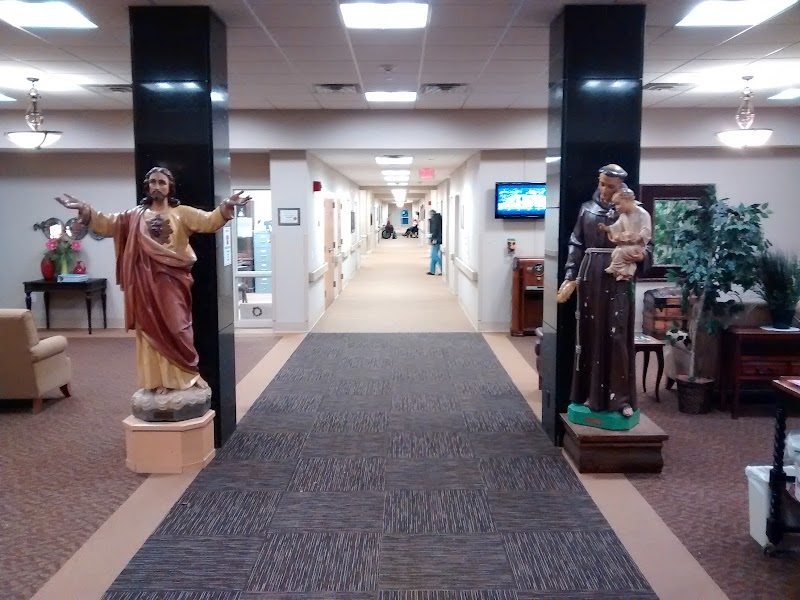
How Does St Anthony'S Nsg & Rehab Ctr Compare to Other Illinois Nursing Homes?

Compared to the 100 nursing homes in Illinois, ST ANTHONY'S NSG & REHAB CTR's overall rating (1 stars) is below the state average of 2.5, staff turnover (50%) is near the state average of 46%, and health inspection rating (1 stars) is much below the national benchmark.

What Should Families Ask When Visiting St Anthony'S Nsg & Rehab Ctr?

Based on this facility's data, families visiting should ask: "What changes have been made since the serious inspection findings, and how are you preventing similar issues?" "Can you walk me through typical staffing levels on day, evening, and night shifts?" "Can I visit during a mealtime to observe dining assistance and food quality?" "How do you handle medical emergencies, and what is your hospital transfer rate?" These questions are particularly relevant given the facility's Immediate Jeopardy citations and the below-average staffing rating.

Is St Anthony'S Nsg & Rehab Ctr Safe?

Based on CMS inspection data, ST ANTHONY'S NSG & REHAB CTR has documented safety concerns. Inspectors have issued 3 Immediate Jeopardy citations (the most serious violation level indicating risk of serious injury or death). The facility has a 1-star overall rating and ranks #100 of 100 nursing homes in Illinois. Families considering this facility should ask detailed questions about what corrective actions have been taken since these incidents.

Do Nurses at St Anthony'S Nsg & Rehab Ctr Stick Around?

ST ANTHONY'S NSG & REHAB CTR has a staff turnover rate of 50%, which is about average for Illinois nursing homes (state average: 46%). Moderate turnover is common in nursing homes, but families should still ask about staff tenure and how the facility maintains care continuity when employees leave.

Was St Anthony'S Nsg & Rehab Ctr Ever Fined?

ST ANTHONY'S NSG & REHAB CTR has been fined $445,029 across 5 penalty actions. This is 11.9x the Illinois average of $37,529. Fines at this level are uncommon and typically indicate a pattern of serious deficiencies, repeated violations, or failure to correct problems promptly. CMS reserves penalties of this magnitude for facilities that pose significant, documented risk to resident health or safety. Families should request specific documentation of what issues led to these fines and what systemic changes have been implemented.

Is St Anthony'S Nsg & Rehab Ctr on Any Federal Watch List?

ST ANTHONY'S NSG & REHAB CTR is not on any federal watch list. The most significant is the Special Focus Facility (SFF) program, which identifies the bottom 1% of nursing homes nationally based on persistent, serious quality problems. Not being on this list means the facility has avoided the pattern of deficiencies that triggers enhanced federal oversight. This is a positive indicator, though families should still review the facility's inspection history directly.