ABBINGTON VLGE NRSG & RHB CTR
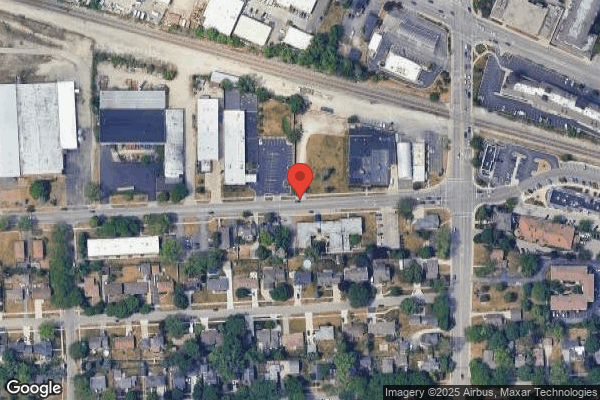
31 WEST CENTRAL, ROSELLE, IL 60172 (630) 894-5058
For profit - Corporation 82 Beds ATIED ASSOCIATES Data: November 2025
Trust Grade
60/100
#199 of 665 in IL
Last Inspection: February 2025

Within standard 12-15 month inspection cycle. Federal law requires annual inspections.

Overview

Abbington Village Nursing & Rehabilitation Center has a Trust Grade of C+, indicating they are slightly above average but not outstanding. They rank #199 out of 665 facilities in Illinois, placing them in the top half, and #17 out of 38 in Du Page County, meaning there are only a few local options better than this facility. The facility is improving, with issues decreasing from 15 in 2024 to 13 in 2025. However, staffing is a concern, rated at 2 out of 5 stars, with a turnover rate of 47%, which is close to the state average. Notably, there were no fines reported, and the center boasts more RN coverage than 98% of Illinois facilities, ensuring better oversight of resident care. Despite these strengths, there are significant weaknesses, including concerns about sanitary practices in the kitchen, with staff failing to wash hands properly while handling dishes. Additionally, the facility did not adhere to its water management plan, raising potential risks for residents. There was also an incident where residents did not receive the planned meals, indicating issues with food supply and menu adherence. Families should weigh these factors carefully when considering this nursing home.

Trust Score
C+
60/100
In Illinois
#199/665
Top 29%
Safety Record
Low Risk
No red flags
Inspections
Getting Better
15 → 13 violations
Staff Stability
⚠ Watch
47% turnover. Above average. Higher turnover means staff may not know residents' routines.
Penalties
✓ Good
No fines on record. Clean compliance history, better than most Illinois facilities.
Skilled Nurses
✓ Good
Each resident gets 72 minutes of Registered Nurse (RN) attention daily — more than 97% of Illinois nursing homes. RNs are the most trained staff who catch health problems before they become serious.
Violations
⚠ Watch
37 deficiencies on record. Higher than average. Multiple issues found across inspections.
★★★☆☆
3.0
Overall Rating
★★☆☆☆
2.0
Staff Levels
★★★★☆
4.0
Care Quality
★★★☆☆
3.0
Inspection Score
Stable
2024: 15 issues
2025: 13 issues

The Good

  • 4-Star Quality Measures · Strong clinical quality outcomes
  • Full Sprinkler Coverage · Fire safety systems throughout facility
  • No fines on record

Facility shows strength in quality measures, fire safety.

The Bad

3-Star Overall Rating

Near Illinois average (2.5)

Meets federal standards, typical of most facilities

Staff Turnover: 47%

Near Illinois avg (46%)

Higher turnover may affect care consistency

Chain: ATIED ASSOCIATES

Part of a multi-facility chain

Ask about local staffing decisions and management

The Ugly 37 deficiencies on record

Sept 2025 2 deficiencies
CONCERN (D) 📢 Someone Reported This

A family member, employee, or ombudsman was alarmed enough to file a formal complaint

Potential for Harm - no one hurt, but risky conditions existed

Safe Environment (Tag F0584)

Could have caused harm · This affected 1 resident

**NOTE- TERMS IN BRACKETS HAVE BEEN EDITED TO PROTECT CONFIDENTIALITY** Based on observations, interviews, and record reviews the facility failed to ensure resident's clothing items were labeled and s...

Read full inspector narrative →
**NOTE- TERMS IN BRACKETS HAVE BEEN EDITED TO PROTECT CONFIDENTIALITY** Based on observations, interviews, and record reviews the facility failed to ensure resident's clothing items were labeled and safeguarded from loss. This failure applies to 3 residents (R1, R2, and R3) reviewed for laundry services. Findings include:Based on observations, interviews, and record reviews the facility failed to follow their policy and procedures for personal effects by not ensuring resident's clothing items were properly labeled and safeguarded from loss. This failure applies to 3 residents (R1, R2, R3) reviewed for laundry concerns. Findings include: 1.On September 09, 2025 at a10:45 AM, R1 stated he has at least 5-6 pairs of gray pants that are missing, the facility's washing machines are down, his laundry was picked up to be taken out to be cleaned this morning, and he would like to know where his clothes are that were since the first time they were sent out. 2.On September 09, 2025 t 10:58 AM, R2 stated his clothes don't come back from the laundry. 3.On September 09, 2025 at 3:05 PM R3 stated he had some clothing items go missing when he was first admitted to the facility. R3's face Sheet showed he was admitted [DATE]. On September 09, 2025 at 9:57 AM V1 (Administrator) stated a couple of months ago, they switched from in-house laundering of personal clothes to outside laundry services because the washers in the building were broken. V1 stated there have been some complaints about missing clothes. V1 stated there were approximately four grievances of residents reporting missing clothing, along with email communication and documentation between she and the laundry vendor regarding this issue. On September 09, 2025 at 11:40 AM, V13 (Housekeeper) transported a laundry cart with several laundry bags, delivered them to residents room, removed the clothing from the bags, and hung up the clothes in the resident's closets. V8 (Dietary Aide) helped translate with V13. V13 stated she collects clean laundry from the large blue bins on Tuesdays and Fridays and delivers the clothing to the residents. V13 stated she has received complaints from residents about missing clothing. On September 09, 2025 at 11:52 AM, multiple laundry bags in the cart had no clear labeling on them to identify who the clothing items belonged to. V11 (Activity Director) helped translate with V13 (Housekeeper). V13 stated if there is no clear label on the bag, she will open them and look for labels on the clothing to identify who they belong to. On September 09, 2025 at 12:27 PM, a large, tall, blue storage container contained several clear bags of clean laundry with no labeling on the bags. V13 (Housekeeper) opened the bags to identify who the clothes belonged to, and the clothes were also not labeled. V13 she could not determine who the bags of clothing belonged to. On September 10, 2025 at 8:51 AM, V2 (Director of Nursing) stated last week on Tuesday or Wednesday, R1 reported to her that his clothes were missing and she explained to him that clothes are sent out on Tuesday will be returned on Friday. V2 could not explain why R1's clothes that were collected last Tuesday were still missing. V2 stated the CNAs (Certified Nursing Assistants) and nurses inventory resident's items upon admission, and then sometimes family members and activities aides will label residents clothes within 24 hours of admission. V12 (Housekeeping Supervisor) stated either he or the laundry aide label laundry bags with the room and bed numbers, and the CNAs collect laundry bags from the rooms. V12 stated if a resident doesn't have a laundry bag, clear bags are used and labeled, and the bags and clothes should be labeled. Resident Council Concern Form regarding housekeeping dated 05/30/2025 showed a concern regarding residents not getting their laundry back. Resident Council Meeting reports from June to August 2025 showed concerns regarding residents clothes missing from laundry, and a resident reporting his clothes were placed in a clear bag that was not labeled and was missing. Multiple Grievance forms from September 2025 document multiple residents reported missing clothing, including R1. A 09/05/2025 email communication from administrator to the laundry vendor showed the administrator reported residents' clothes had been missing for weeks, laundry bags have been provided to the laundry vendor and not returned, and over 30-40 items are missing. The facility's Personal Effect's Policy received 09/10/2025 showed: .It is the policy of this facility to promptly investigate all reports of missing resident personal property and appropriately resolve the issue.Policy Specifications. To promote resident satisfaction and comfort regarding handling and security of personal property.The facility, at the discretion of the Administrator, may replace any items for which it cannot account .
CONCERN (E) 📢 Someone Reported This

A family member, employee, or ombudsman was alarmed enough to file a formal complaint

Potential for Harm - no one hurt, but risky conditions existed

Deficiency F0558 (Tag F0558)

Could have caused harm · This affected multiple residents

**NOTE- TERMS IN BRACKETS HAVE BEEN EDITED TO PROTECT CONFIDENTIALITY** Based on observations, interviews, and record reviews the facility failed to ensure residents had functioning call lights within...

Read full inspector narrative →
**NOTE- TERMS IN BRACKETS HAVE BEEN EDITED TO PROTECT CONFIDENTIALITY** Based on observations, interviews, and record reviews the facility failed to ensure residents had functioning call lights within their reach.This failure applies to 6 of 9 residents (R1, R2, R6, R7, R8, and R9) reviewed for accommodation of needs.Findings include: 1.On September 09, 2025 at 10:45 AM, R1 stated his roommates have no call light. R1 stated R2 (roommate) complains about his call light constantly, and R1 had to pull his call light closer to his bed because it is out of reach. R1's room had only one call light positioned closer to R2's bed and pulled over to R1's bed. R1's Face Sheet showed he is a [AGE] year-old male with diagnoses of multiple sclerosis, chronic congestive heart failure, and recurrent major depressive disorder, and he was admitted to the facility 08/27/2025. On September 09, 2025 at 10:58 AM, R2 stated he doesn't have a call light and he has to yell out or come out of his room for assistance. R2's Face Sheet showed he is an [AGE] year-old male with diagnoses of schizoaffective disorder, stage 2 chronic kidney disease, peripheral vascular disease, lymphedema and prostate cancer, and he was admitted to the facility 09/23/2024. On September 10, 2025 at 8:51 AM ,V2 (Director of Nursing) acknowledged that R2 did not have a call light. V2 stated residents should have call lights and she isn't sure why there is only one call light in R1 and R2's room. R2 responded to V2's statements with talk to maintenance. 2.On September 09, 2025 at 9:24 AM, R6 was asleep in her wheelchair a few feet away from and next to her bed, and her call light was behind her bed on the floor, several feet away from her and out of her reach. V3 (Assistant Director of Nursing) stated R6's call light should be clipped to her wheelchair as R6 could not access it. R6's face Sheet showed R6 is an [AGE] year-old female with diagnoses of partial paralysis due to stroke, vascular dementia, and contractures, and she was admitted to the facility 09/25/2024. 3.On September 09 at 9:30 AM, R7 was lying in her bed in her room. R7 stated her call light doesn't work and she is checked on infrequently by staff. R7 pressed her call light and it did not work. R7 stated her call light hasn't worked since her admission to the facility and she has told everyone that has come into her room about it but there has been no follow up. R7's Face Sheet showed she is a [AGE] year-old female who was admitted on [DATE] with diagnoses of multiple sclerosis, chronic embolism and thrombosis, generalized osteoarthritis, and contracture of right knee. Additionally, there was only one call light in R7's room that she shared with R8. V2 (Director of Nursing) then tested R7's call light and it did not work. 4.On September 09, 2025 at 9:38 AM, R8 sat on her bed with a walker in front of her and stated she doesn't have a call light and would like one. V2 stated R8 is able to use the call light and could not explain why R8 did not have her own call light. R8's Face Sheet showed she is a [AGE] year-old female with diagnoses of cerebral ischemia (insufficient brain blood flow), stage 1 chronic kidney disease, muscle disorders, difficulty in walking, and abnormalities of gait and mobility, and she was admitted to the facility 09/19/2024. 5.On September 09, 2025 at 9:40 AM, R9 was in her wheelchair with a bedside table in front of her near the foot of her bed. R9's call light was several feet away at the head of her bed and out of her reach. V2 stated R9's call light should be next to her, and although R9 could ambulate to access it, it was not advisable because R9's gait is unsteady. R9's Face Sheet showed she is a [AGE] year-old female with diagnoses of Alzheimer's disease, vertigo, difficulty in walking, and lack of coordination, and she was admitted to the facility 11/27/2023. The facility's Answering Call Light Policy Received 09/10/2025 showed: The purpose of this procedure is to respond to the resident's requests and needs.When the resident is in bed or confined to a chair be sure the call light is within easy reach of the resident.Report all defective call lights to the Maintenance Department promptly.Call lights must be accessible to residents from their bed or other sleeping accommodation. The call light system should be accessible to a resident lying on the floor.
Feb 2025 11 deficiencies
CONCERN (D)

Potential for Harm - no one hurt, but risky conditions existed

Deficiency F0583 (Tag F0583)

Could have caused harm · This affected 1 resident

Based on observation, interview, and record review, the facility failed to provide privacy during provision of wound care. This applies to 1 of 15 residents (R41) reviewed for privacy in the sample o...

Read full inspector narrative →
Based on observation, interview, and record review, the facility failed to provide privacy during provision of wound care. This applies to 1 of 15 residents (R41) reviewed for privacy in the sample of 15. The findings include: On February 19, 2025, at 10:30 AM, V3 (Assistant Director of Nursing/ADON/Wound Care Nurse) rendered wound care to R41 who had a pressure ulcer to her left buttock. During dressing change, V3 left R41's bedroom to get additional items to use for the wound care. V3 did not cover R41 with a blanket or a sheet which left R41 naked or exposed from the waist below. On February 20, 2025, at 11:50 AM, R41 said that staff (V3) should have covered her nakedness prior to leaving. R41's MDS (Minimum Data Sheet) dated 1/19/2025 shows that R41 is alert and oriented. On February 20, 2025, at 3:04 PM, V3 (ADON/Wound Care Nurse) stated that staff must ensure that privacy is always provided for dignity. Facility's Policy for Quality of Life-Dignity with revised date of 2017 shows: Policy Statement: Each resident shall be cared for in a manner that promotes and enhances quality of life, dignity, respect, and individuality. Policy Interpretation: 10. Staff shall promote, maintain and protect resident privacy, including bodily privacy during assistance with personal care and during treatment procedures.
CONCERN (D)

Potential for Harm - no one hurt, but risky conditions existed

Comprehensive Care Plan (Tag F0656)

Could have caused harm · This affected 1 resident

**NOTE- TERMS IN BRACKETS HAVE BEEN EDITED TO PROTECT CONFIDENTIALITY** Based on interview and record review, the facility failed to implement a person-centered care plan for a resident with a diagnos...

Read full inspector narrative →
**NOTE- TERMS IN BRACKETS HAVE BEEN EDITED TO PROTECT CONFIDENTIALITY** Based on interview and record review, the facility failed to implement a person-centered care plan for a resident with a diagnosis of PTSD (Post Traumatic Stress Disorder) This applies to 1 of 1 resident (R44) reviewed for PTSD in the sample of 15. The findings include: R44's EMR (Electronic Medical Record) showed R44 was admitted to the facility on [DATE], with diagnoses that included major depressive disorder, recurrent, severe with psychotic symptoms, unspecified psychosis not due to a substance or known physiological condition, anxiety disorder, and post-traumatic stress disorder, unspecified. R44's MDS (Minimum Data Set) dated December 23, 2024, showed R44 had a diagnosis of PTSD. Progress note dated December 3, 2024, at 2:38 PM, by V21 (Nurse Practitioner) showed R44's history and physical identified R44 as having PTSD and a history of sexual abuse as a child. There was no care plan in place that addressed R44's diagnosis of PTSD (financial abuse, physical assault, sexual assault, mental abuse), nor identified her triggers, nor identified interventions to meet her medical, physical, or mental needs. On February 20, 2025, at 1:20 PM with V18 (Social Services) said she was unaware of R44's PTSD, stating she has only been at the facility for two weeks. V18, went into R44's EMR and pulled up the Trauma-Informed Care Observation done on admission and saw that R44 had personally experienced financial abuse, sexual assault, physical assault, and mental abuse. There were no triggers identified. V18 said she would have to review care plan and see what the previous social worker had addressed in R44's care plan. V18 said had she been aware that R44 had a history of PTSD, she would have met with the resident, identified her triggers, and updated her care plan. On February 21, 2025, at 9:47 AM, V1 (Administrator) said the facility does not have a policy on Trauma- Informed Care for Residents with PTSD.
CONCERN (D)

Potential for Harm - no one hurt, but risky conditions existed

ADL Care (Tag F0677)

Could have caused harm · This affected 1 resident

**NOTE- TERMS IN BRACKETS HAVE BEEN EDITED TO PROTECT CONFIDENTIALITY** Based on observation, interview, record review, the facility failed to provide hygiene and grooming for residents who require as...

Read full inspector narrative →
**NOTE- TERMS IN BRACKETS HAVE BEEN EDITED TO PROTECT CONFIDENTIALITY** Based on observation, interview, record review, the facility failed to provide hygiene and grooming for residents who require assistance for activities of daily living (ADL) care. This applies to 3 of the 4 residents (R4, R9, R31) reviewed for ADL care in the sample of 15. The findings include: 1. On February 18, 2025, at 11:04 AM, R4 was in her bedroom sitting in her wheelchair. R4 displayed overgrown facial hair on the upper lip and chin, long nasal hair which was sticking out from her nostrils, jagged and discolored fingernails, and uncombed/disheveled hair. On February 19, 2025, at 11:08 AM, V19 and V20 (Both Certified Nursing Assistant/CNA) rendered incontinence care to R4. R4 remained with overgrown nasal hair, facial hair, jagged and discolored nails, and uncombed disheveled hair. After V19 and V20 completed the incontinence care, they left R4 to attend to another resident without offering to shave her facial hair, trim her nasal hair, comb her hair, and provide nail care. On February 20, 2025, at 10:20 AM, R4 remained with overgrown facial hair on the upper lip and chin, jagged and discolored fingernails and overgrown nasal hair sticking from her nostril, uncombed/disheveled hair. Surveyor brought the concern of R4's grooming to V11. R4's MDS (Minimum Data Set) dated January 13, 2025, shows that R4 is totally dependent on staff for hygiene care/grooming care. 2. On February 18, 2025, at 11:08 AM, R31 was in her bedroom. She was alert and oriented, and pleasant upon approached. R31 displayed jagged and discolored fingernails and curly facial hair. On February 20, 2025, at 11:15 AM, R31 was resting in bed, alert and oriented. She remained with jagged and discolored fingernails, and curly facial hair. R31 verbalized that she wanted her facial hair shaven, and her fingernails clipped and cleaned. R31's MDS dated [DATE], showed that R31 requires substantial to maximal assistance for grooming and hygiene. On February 20, 2025, at 3:00 PM, V3 (Assistant Director of Nursing/ADON) stated that nail care and shaving is supposed to be done during shower days and as needed. Hair care is to be done daily and as needed, this is to be done as part of the personal hygiene and grooming. 3. Face sheet showed that R9 is [AGE] years old who was admitted to the facility on [DATE], with diagnoses that include radiculopathy of the cervical region, multiple sclerosis, diabetes mellitus with diabetic nephropathy, chronic pain, other muscle spasms, myalgia, difficulty in walking, and other abnormalities of gait and mobility. R9's Minimum Data Set (MDS) dated [DATE], showed her to be cognitively intact and requiring substantial/maximal assistance for toileting hygiene. On February 18, 2025, at 12:10 PM, R9 was assisted to the bed for a head-to-toe assessment. V14 (Registered Nurse) assessed R9 and as she pulled down R9's pants to assess her hips and thighs, it showed that R9 was wearing double incontinence briefs. V14 removed the fasteners from the right side of the two incontinence briefs. The inner was soiled from the front to the back. V14 then closed both incontinence briefs and went to the R9's left side. Surveyor asked if R9 was wearing 2 incontinence briefs. R9 then stated they always put two incontinence briefs on her. The staff did not respond to the question. V14 then opened both incontinence briefs on R9's left side and examined R9's left hip and groin area. The brief closest to R9's skin was again observed to be soiled. V14 then refastened both incontinent briefs onto R9's hip and was about to grab R9's pants when surveyor asked if R9 incontinent brief was soiled. In response, V14 said, No. It is dry, as she grabbed R9's double incontinent briefs at the crouch area and squeezes it. V14 then reopened the left side of R9's incontinence briefs, looked and said, Yes, it is soiled. On February 20, 2025, at 3:35 PM, V3 (Assistant Director of Nursing) stated that when a resident has a soiled incontinence brief, the resident should be cleaned immediately. V3 stated, residents should be kept clean, dry, and comfortable. V3 stated it is not a practice of the facility to put residents on double incontinence briefs because of risks of urinary tract infections. R9's physician orders do not include any diuretics. R9's Elimination and Activities of Daily Living care plans dated October 7, 2024, showed the following: R9 requires partial/Moderate assistance 1 person with personal hygiene and maximal assistance with toileting hygiene. R9 has alteration in elimination as evidenced by urinary incontinence and bowel incontinence requiring incontinent care. R9 continues to use the toilet for needs. One of the approaches to care for R9 was to provide R9 with incontinence care as soon as incontinence was noted. The facility's incontinent care policy showed the following: Purpose: to keep skin clean, dry, and free of irritation and odor.
CONCERN (D)

Potential for Harm - no one hurt, but risky conditions existed

Deficiency F0687 (Tag F0687)

Could have caused harm · This affected 1 resident

**NOTE- TERMS IN BRACKETS HAVE BEEN EDITED TO PROTECT CONFIDENTIALITY** Based on observation, interview, and record review, the facility failed to ensure that a resident who needed foot care is seen b...

Read full inspector narrative →
**NOTE- TERMS IN BRACKETS HAVE BEEN EDITED TO PROTECT CONFIDENTIALITY** Based on observation, interview, and record review, the facility failed to ensure that a resident who needed foot care is seen by a podiatrist. This applies to 1 of 1 resident (R26) reviewed for foot care in the sample of 15. The findings include: On February 19, 2025, at 9:44 AM, V11 (Certified Nursing Assistant) rendered hygiene care to R26. During hygiene care and skin assessment, it was observed that R26 had overgrown toenails. The long nails curled over the top of each toe. V11 stated that she already reported it to the nurse a while ago. V11 was not sure why it has not been clipped yet. On February 19, 2025, at 3:15 PM, R26 was sitting on his wheelchair and stated that he wishes that someone would clip his toenails because it is too long. R26 said that his toenails has not been cut since he came in the facility. R26 stated he mentioned to his CNA multiple times that he wanted his toenails clipped. On February 19, 2025, at 2:17 PM, V10 (Nurse) stated that whenever they do admission, they (nurses) do head to toe assessments, and when they see anything that needs attention of the physician, they would refer the resident. One of the routine consents that they obtained is the podiatry consult. R26 was admitted on [DATE], and he signed consent for podiatry service at the time of his admission. R26 should have been seen by the podiatrist. R26's Minimum Data Set (MDS) dated [DATE], shows that R26 is alert and oriented and requires substantial/maximal assistance for grooming/hygiene.
CONCERN (D)

Potential for Harm - no one hurt, but risky conditions existed

Deficiency F0697 (Tag F0697)

Could have caused harm · This affected 1 resident

**NOTE- TERMS IN BRACKETS HAVE BEEN EDITED TO PROTECT CONFIDENTIALITY** Based on observation, interview, and record review, the facility failed to apply pain adhesive patches to residents that had a P...

Read full inspector narrative →
**NOTE- TERMS IN BRACKETS HAVE BEEN EDITED TO PROTECT CONFIDENTIALITY** Based on observation, interview, and record review, the facility failed to apply pain adhesive patches to residents that had a Physician order for the same. This applies to 2 of 2 residents (R19, R203) reviewed for pain management in the sample of 15. The findings include: 1. R19's face sheet showed diagnoses of radiculopathy, cervical region, hemiplegia and hemiparesis following unspecified cerebrovascular disease affecting left non-dominant side, other reduced mobility, bilateral primary osteoarthritis of knee. R19's quarterly MDS (minimum data set) dated February 4, 2025 showed that R19 was cognitively intact. R19's POS (Physician Order Summary) included as follows: Lidocaine adhesive patch, medicated, 4%, apply one patch topical. Special Instructions: apply to bilateral lower heels for pain. Apply at 6:00 AM and remove at 6:00 PM. Lidocaine adhesive patch, medicated, 4%, apply one patch topical. Special Instructions: site lower back, apply at 6:00 AM and remove at 6:00 PM. Lidocaine adhesive patch, medicated, 4%, apply one patch topical. Special Instructions: site neck, apply at 6:00 AM and remove at 6:00 PM. On February 18, 2025 at 11:12 AM, R19 stated that he is in pain scored at 8/10 and has not got his pain patch for a week. R19 stated that he has pain in his heels, neck and lower back. R19 stated They say they don't have any (pain patch). That's not good at all. R19's roommate R203, who was in the room, chimed in from behind the curtain He (R19) did not get a pain patch. I heard the nurse say that they don't have any. On February 18, 2025 at 11:28 AM, V4, RN (Registered Nurse) stated that R19 gets a pain patch which is applied by the night nurse. V4 stated that R19 also gets Norco (Acetaminophen tablet 650 mg) every 6 hours as needed and he already received the same that morning. On February 18, 2025 at 11:54 AM, R19's neck and heels were checked in presence of V4 and there was no patch. R19 stated again that he does not have any on as they haven't had any for a week. V4 stated that she was aware that there was no Lidocaine patch on February 17, 2025. V4 stated Yesterday they told me that they don't have any. But I thought they got it after that. He (R19) did not tell me this morning that he did not get a pain patch. When asked is she was going to notify the doctor, V4 stated He already got his Norco. It is not time for him to get it again. On February 20, 2025 at 9:20 AM, V17 (Licensed Practical Nurse) confirmed that she worked overnight (February 16-February 17, 2025) as the night nurse and administers the pain patch in the morning. V17 recalls one instance where there was no Lidocaine patch available and she explained it to R19 and gave him an as needed Norco. V17 stated that she also does not put it on R19's shower days and the AM nurse is supposed to put it on after his shower at 10:30 AM. R19's care plan initiated February 4, 2025 showed that R19 has complained of chronic neck (radiculopathy cervical), lower back pain related to history of compression fracture of left-spine he sustained from fall at home April/2022 prior to admission to facility. Interventions included to apply Lidocaine pain patches to neck, lower back, bilateral lower heels daily and remove after 12 hours. 2. R203's face sheet included spinal stenosis, cervical region, arthritis due to other bacteria, right ankle and foot, osteomyelitis of vertebra, lumbar region. R203's admission MDS dated [DATE] showed that R203 was cognitively intact. R203's POS had an order for Lidocaine adhesive patch, medicated 4 %, 1 patch, topical. Apply to the neck for pain. Apply at 6:00 AM and remove at 6:00 PM. On February 18, 2025 at 2:48 PM, R203 stated that he is supposed to get a patch on his neck but has not gotten one in the last two or three days. R203 stated They said they don't have any. R203 stated that he has a pain score of 7/10. This information was relayed to V4 (RN) who stated that he may not have gotten any Lidocaine patch as they did not have any in the house. On February 19, 2025 at 9:54 AM, V2 (Director of Nursing) stated that the Lidocaine adhesive patch are house stock and that V9 (Central Supply) orders it. V2 stated that if not available, the nurse's should call the doctor and order another medication. V2 stated that previously the facility would get doctors order to change to Biofreeze topical cream until Lidocaine patch available. On February 19, 2025 at 1:24 PM, V9 (Central Supply Staff) stated that he orders Lidocaine adhesive patch weekly and that he places the order on Thursday and the order comes in on Thursday unless there is a deficit in supply. V9 stated that the nurses usually call the doctors and switch to a cream and there must have been a miscommunication. V9 stated I wasn't made aware that they were running short. V9 added that he went and picked up Lidocaine adhesive patch from their supply chain when it was brought to his attention on February 18, 2025. R203's pain care plan initiated February 12, 2025 showed that R203 has diagnoses of spinal stenosis, cervical region, arthritis due to other bacteria, right ankle and foot (septic- arthritis, right foot) and has complaints of chronic pain on neck, lower back and right lower extremity. Intervention for the same included to administer medications: see MAR (medication administration sheet) / ORDERS for details. Administer Lidocaine [OTC/over the counter] adhesive patch,medicated; 4 %; amount: 1 patch; topical Special Instructions: Apply to the neck for pain. Apply at 6:00 AM and remove at 6:00 PM.
CONCERN (D)

Potential for Harm - no one hurt, but risky conditions existed

Deficiency F0699 (Tag F0699)

Could have caused harm · This affected 1 resident

**NOTE- TERMS IN BRACKETS HAVE BEEN EDITED TO PROTECT CONFIDENTIALITY** Based on interview and record review, the facility failed to identify triggers and provide trauma-informed care for a resident w...

Read full inspector narrative →
**NOTE- TERMS IN BRACKETS HAVE BEEN EDITED TO PROTECT CONFIDENTIALITY** Based on interview and record review, the facility failed to identify triggers and provide trauma-informed care for a resident with a diagnosis of PTSD (Post Traumatic Stress Disorder). This applies to 1 of 1 resident (R44) reviewed for PTSD in the sample of 15. The finding include: R44's EMR (Electronic Medical Record) showed R44 was admitted to the facility on [DATE] with diagnoses that included major depressive disorder, recurrent, severe with psychotic symptoms, unspecified psychosis not due to a substance or known physiological condition, anxiety disorder, and post-traumatic stress disorder, unspecified. Progress note dated December 3, 2024, at 2:38 PM, by V21 (Nurse Practitioner) showed R44's history and physical identified R44 as having PTSD and a history of sexual abuse as a child. R44's MDS (Minimum Data Set) dated December 23, 2024, showed R44 had a diagnosis of PTSD. R44's Care Plan dated December 20, 2024 showed R44 is an adult living with chronic mental illness. The intervention showed to review the PASRR (Pre-admission Screening and Resident Review) material and incorporate information that remains relevant into the assessment and care plan process. Discuss /review any discrepancies between the current assessment/evaluation and the PASRR document. PASRR II showed R44's diagnoses included PTSD, Bipolar Disorder, Depressive Disorder, Anxiety Disorder, and Polysubstance Abuse. R44's admission Trauma-Informed Care Observation dated December 3, 2024, showed R44 has personally experienced financial trauma, physical assault, sexual assault, and mental abuse. The area on the form where it asks about triggers, what was her reaction when reminded of the events, and what type of help has she received to address her response to the events, was all left blank. Under current treatment plan, refer to psych services was checked. Behavior monitoring was reviewed and there were no resident specific behaviors identified for staff to be mindful of. Progress notes were reviewed and showed R44 has seen V22 (Psychiatric Nurse Practitioner) on December 18, 2025, January 11, 2025, and February 15, 2025. V22 only identified medication as a plan for treating her mental illness. On February 20, 2025, at 1:20 PM with V18 (Social Services) said she was unaware of R44's PTSD, stating she has only been at the facility for two weeks. V18, went into R44's EMR and pulled up the Trauma-Informed Care Observation done on admission and saw that R44 had personally experienced financial abuse, sexual assault, physical assault, and mental abuse. There were no triggers identified. V18 said she would have to review R44's care plan and see what the previous social worker had addressed in R44's care plan. V18 said had she been aware that R44 had a history of PTSD, she would have met with the resident, identified her triggers, and updated her care plan. On February 21, 2025, at 9:47 AM, V1 (Administrator) said the facility does not have a policy on Trauma- Informed Care for Residents with PTSD.
CONCERN (D)

Potential for Harm - no one hurt, but risky conditions existed

Deficiency F0805 (Tag F0805)

Could have caused harm · This affected 1 resident

Based on observation, interview, and record review, the facility failed to serve pureed consistency diets for residents that have an order for the same. This applies to 2 of 2 residents (R13, R32) rev...

Read full inspector narrative →
Based on observation, interview, and record review, the facility failed to serve pureed consistency diets for residents that have an order for the same. This applies to 2 of 2 residents (R13, R32) reviewed for pureed diets in the sample of 15. The findings include: Week at a glance menu for week 1 Tuesday, February 18 lunch meal included Beef Taco and Spanish Rice. On February 18, 2025 at 9:44 AM, V8 (Cook) stated that the ground beef did not come in as ordered and that she is using ground turkey instead. V8 stated that she is preparing pureed food for 2 residents. On February 18, 2025 at 12:36 PM, the tray line, and food consistencies was observed in the facility kitchen. The pureed rice and pureed turkey appeared granular and lumpy and R13 and R32 received the same. A sample when taste tested, was very granular and had to be chewed in order to be swallowed. When V5 (Consultant Dietitian), who was in the vicinity was shown the same, she stated that the consistency does not look smooth enough for pureed. V5 remarked that the pureed food should be smooth, pudding or mashed potato consistency that can be swallowed without chewing. V5 and V8 were notified that the pureed meals already plated for R13 and R32 were not safe to serve. Facility policy titled National Dysphagia Diet Level 1 Pureed (NDD Level 1) taken from Nutrition Manual for Healthcare Communities, 2021 included as follows: The dysphagia pureed diet (also known as NDD Level 1) is the least advanced of the texture modified diets. It provides foods that are pureed, homogenous, and cohesive. The food should be semi-solid smooth consistency. No chewing or bolus formation is required. All foods must be pureed or be naturally pudding like. Facility Client List Report printed February 18, 2025 showing resident diet orders included that R13 and R32 are on pureed diets.
CONCERN (E)

Potential for Harm - no one hurt, but risky conditions existed

Safe Environment (Tag F0584)

Could have caused harm · This affected multiple residents

**NOTE- TERMS IN BRACKETS HAVE BEEN EDITED TO PROTECT CONFIDENTIALITY** 3. On February 18, 2025, at 10:09 AM, in R43 there was a cord hanging down from the ceiling. It was a television cord that was i...

Read full inspector narrative →
**NOTE- TERMS IN BRACKETS HAVE BEEN EDITED TO PROTECT CONFIDENTIALITY** 3. On February 18, 2025, at 10:09 AM, in R43 there was a cord hanging down from the ceiling. It was a television cord that was in a flex-tube and was running from the television to the cable jack on the opposite side of the room. The television was mounted on the wall approximately two feet from the ceiling. The ceiling in the room was approximately 9 feet. The cord was currently attached to the television and then it was attached in the corner of the room above the room door. The cord from the television to the corner was sagging in the middle where it was not secured to the wall. The cord was connected to random areas on the wall near the ceiling but was sagging in between the areas connected to the wall. As the cord got closer to the left back corner of the room, the cord was coming down lower towards the cable jack. There was a cable splitter with a long, pointed screw that was not connected to anything. On one side of the cable splitter the cable from the television was connected to it and then connected to the cable jack in the wall. The cable jack on the wall was approximately four feet from the floor. There was an area of the wall in the back right corner of the room where the wall was dented in, and dry wall was crumbling onto the floor. 4. On February 18, 2025, at 10:27 AM, in R45's, the metal radiator that runs along the wall in the room under the windows, was dented and the covering was falling off the wall. It had areas of rust on it that were cracking and flaking. On February 19, 2025, at 11:21 AM, V12 (Maintenance Director) said he is only covering this building, until the new maintenance man starts on Monday (February 24). V12 said there is a lot of work to be done in this building for sure. V12 went into R43's and R45's rooms and said the concerns shared by surveyor definitely needed to be repaired. Based on observation, interview, and record review, the facility failed to maintain a homelike environment for residents residing in the facility. This applies to 4 of 15 residents (R9, R24, R43, R45) reviewed for homelike environment in the sample of 15. The findings include: 1. Face sheet showed R9 is 61 years-old who was admitted to the facility on [DATE], with diagnoses that include radiculopathy of the cervical region, multiple sclerosis, diabetes mellitus with diabetic nephropathy, chronic pain, other muscle spasms, myalgia, difficulty in walking, and other abnormalities of gait and mobility. On February 18, 2025, at 10:45 AM, V13 (Visitor/Volunteer for local church) was in R9's room when R9 agreed to speak with the surveyor. V13 stated she is in the facility regularly visiting residents. R9's bed was close to the window about 2-3 feet away. R9's window did not have a curtain or blinds up to the window. There was a bath towel placed and dangling in between two overlapping windowpanes in the middle of the window. Above the window air conditioner, there was a piece of Plexi-glass that had small holes in it all around the edge. R9 stated it was very cold in her room, especially since there was no curtain at the window. Surveyor observed it to be cold by the window. R9's curtain and its metal rod were lying against the wall between the inner/outside wall and the resident's tall wooden cabinet. R9 stated there has not been a curtain there for at least 3 days. R9 stated she told the staff three days ago that she needed a curtain up to her window. V13 then stated it is a shame how they don't keep up this facility. R9 and V13 pointed to the peeling paint on the ceiling next to the window and there was a pink (hospital) basin on the top of R9's cabinet below the peeling paint and water stain. R9 stated the basin was there to catch the water dripping from the ceiling. On the upper left window frame, there was a peeling paint and a couple of large holes in the dry wall. R9 stated she had told the staff about the peeling paint on the wall and the leakage; however, no one has fixed it. V13 stated the leaking from the ceiling happened in January and they still have not fixed the ceiling or wall. R9 stated one of the staff placed the towel in the window to help with the draft. V13 stated R24, another resident, has the same issue. R9 stated they don't fix anything here and she should not have to live here with these conditions. On February 19, 2025, at 9:00 AM, R9 still did not have a curtain up to her window, the towel was still stuck and dangling in the middle of the window, and the wall and ceiling were not repaired. On February 19, 2025, at 12:48 PM, R9 stated her room was cold and it was very cold last night. R9's window still did not have window coverings including blinds or curtain but still had the towel dangling in the middle of the window. On February 20, 2025, at 9:03 AM, the towel was off R9's window, frigid cold air was observed coming through the windowpanes, where the towel was located. R9 still did not have any window coverings. 2. Face sheet showed R24 is 74 years-old who was admitted to the facility on [DATE], with diagnoses that include: poly-osteoarthritis, hypertensive heart disease without heart failure, spinal stenosis, radiculopathy cervical region, and other genetic causes of short stature. On February 18, 2025, at 10:50 AM, V13 (Volunteer) and surveyor walked into R24's bedroom. R24 was lying in bed. R24 stated water was dripping on her for days and the water wet her entire pillow. R24 stated they finally moved her to her current bed. While pointing up above her head at the water-stained ceiling, R24 stated that water has been dripping on her in her current bed also. R24 was angry and stated, You can tell them to fix things, and nothing happens. R24 pointed at the large water stains above her old bed and the wall that had a large area of peeling paint. R24 stated, They don't do anything here. V13 stated, it was sad for her to see the residents living in these conditions. V13 stated she has told the staff more than once about R24's wall. V13 stated the stains and peeling paint have been there at least since January. R24 stated the damaged wall and ceiling has been like that for a while and they moved her bed in January of 2025. R24's Resident Census showed she moved from bed 3 by the window to her current location (bed 2) on January 3, 2025. On February 20, 2025, at 9:23 AM, R24's wall still had peeling paint on the wall and water stains on the ceiling. On February 19, 2025, at 10:23 AM, V1 (Administrator) presented surveyor with maintenance request logs but the original dates of the maintenance request were not present. V1 said she did not know the original dates of the requests and the original forms of maintenance request where she transcribed them from was already thrown away. R24's maintenance request did not appear on any of the maintenance logs. V12 (Maintenance Director) and surveyor went to R9's bedroom. There was still a towel stuck in the window. V12 removed the towel and placed his hand where the towel was and stated There is a draft coming from the window. That is why the towel was probably stuck in there.
CONCERN (E)

Potential for Harm - no one hurt, but risky conditions existed

Deficiency F0916 (Tag F0916)

Could have caused harm · This affected multiple residents

Based on observation, interview, and record review, the facility failed to ensure residents' rooms were located at or above ground level. This applies to 13 residents (R1, R5, R6, R7, R8, R23, R30, R3...

Read full inspector narrative →
Based on observation, interview, and record review, the facility failed to ensure residents' rooms were located at or above ground level. This applies to 13 residents (R1, R5, R6, R7, R8, R23, R30, R33, R43, R44, R45, R52, and R53) on the first floor reviewed for room/level/location. The findings include: On February 18, 2025, at 9:58 AM, during the initial tour of the facility, observations were made that seven rooms (101, 102, 103, 104, 105, 106, and 107) were below ground level. The facility's Resident Roster dated February 17, 2025, showed R1, R5, R6, R7, R8, R23, R30, R33, R43, R44, R45, R52, and R53 were all residing in the bedrooms on the first floor below ground level. On February 20, 2024, at 3:27 PM, V1 (Administrator) said she was aware of the facility's noncompliance with having residents residing in rooms below ground level on the first floor. V1 said the facility sent in an application for a waiver. V1 did not provide any waiver but provided a letter received from IDPH (Illinois Department of Public Health) after the previous annual survey was completed. The letter showed, As a result of this survey and any revisits, the Department is recommending to the Centers for Medicare and Medicaid Services and the Illinois Department of Healthcare and Family Services that the facility be certified for continuing participation in the Medicare (Title 18) and Medicaid (Title 19) programs. Based on review of this document, there was no waiver awarded to this building for the rooms located below ground level (101, 102, 103, 104, 105, 106, and 107).
CONCERN (F)

Potential for Harm - no one hurt, but risky conditions existed

Food Safety (Tag F0812)

Could have caused harm · This affected most or all residents

Based on observation, interview, and record review, the facility failed to follow sanitary practices in the facility kitchen. This applies to 57 residents that received foods prepared in the facility ...

Read full inspector narrative →
Based on observation, interview, and record review, the facility failed to follow sanitary practices in the facility kitchen. This applies to 57 residents that received foods prepared in the facility kitchen. The findings include: Facility filled CMS Form 671 dated February 18, 2025, showed that the facility census was 57 residents. Facility provided information that there were no residents on NPO (nothing by mouth) status. On February 18, 2025, at 9:35 AM, during initial tour of kitchen, V6 (Dietary Aide) was washing dishes on the soiled side of the dish machine and was seen putting on new gloves without washing her hands and go to the clean side to pick up cleaned dishes. The hand sink near the dish machine did not have soap nor paper towels. V7 (Dietary Aide) who was in the area stated that there is none and she asked the Housekeeping for supplies, and they did not have it either. A red sanitizer bucket in the kitchen area was tested with a QUATS (quaternary ammonia) test strip and showed an almost white to pale yellow color. This when compared to the color scale of the test strip reel, registered at 0-150 ppm (parts per million). V8 (Cook) stated that she just changed the sanitation buckets and wiped down the counters with the same. In the walk-in Cooler, was a tub of cottage cheese with a broken lid in two places and exposed the contents. The use by date on the tub showed January 31, 2025. In the walk-in Freezer, there was a 4 lb. (pound) plastic bag of sliced strawberries and a 3 lb. plastic bag of blueberries both of which were opened to air. V7 (Dietary Aide) stated that it is used for one resident (R300). On February 18, 2025, at 12:45 PM, V5 (Consultant Dietitian) stated that the QUATS sanitizer strip should test between 150-400 ppm, ideally 200 ppm. V5 stated that the staff should wash their hands before donning clean gloves. V5 added that if not wearing gloves, hands must be washed when going from dirty to clean side of the dish machine. V5 stated that all items that are opened in cooler and freezer must be sealed or wrapped and dated with open on or use by date. Facility policy taken from Policy and Procedure Manual 2017 titled Dish Room Safe Food Handling included as follows: The task of loading the dirty dishes and utensils into the dish machine is handled by one person. The task of removing the clean dishes and utensils from the dish machine is handled by a different person. If there is only one person working in the dish room, the person will remove their gloves, wash their hands, and put on fresh gloves whenever they cross over to the clean side of the dish machine to unload the sanitized dishes and utensils. Facility policy taken from Policy and Procedure Manual 2017 titled Storage of Frozen Foods included that if taken out of original container, food is tightly wrapped and labeled with name of item and use by date. Facility policy titled taken from Policy and Procedure Manual 2017 titled Sanitation Buckets/Wiping Cloths. included as follows: Policy: Wiping cloths kept in a sanitation bucket containing a solution of water and chemical sanitizer are used to sanitize food contact surfaces and equipment too large to immerse in the three-compartment sink. Procedure: In the red sanitation bucket mix the water and the chemical sanitizer. The most common chemical sanitizers are chlorine, iodine, and quaternary ammonia. Sanitizing the food contact surfaces and equipment is accomplished according to the following color chart: Quaternary 150-400 or 200-400 per manufacturers direction.
CONCERN (F)

Potential for Harm - no one hurt, but risky conditions existed

Infection Control (Tag F0880)

Could have caused harm · This affected most or all residents

Based on interview and record review, the facility failed to follow their water management plan for Legionella. The facility also failed to have control measures in their water management plan to addr...

Read full inspector narrative →
Based on interview and record review, the facility failed to follow their water management plan for Legionella. The facility also failed to have control measures in their water management plan to address prolonged closure of a resident unit. This applies to all 57 residents residing in the facility. The findings include: The facility's Long-Term Care Facility Application for Medicare and Medicaid dated February 28, 2025, showed the facility's census was 57 residents. The facility's undated Water Management Program showed Purpose: To manage the risk of exposure to Legionella from the water in the facility. The Identifying Buildings at Increase Risk Assessment was completed. Due to the fact that we are a healthcare facility with residents who stay overnight, a water management program is indicated . The following areas where Legionella could grow and spread were noted: A. Municipal water intake. a. External factors- construction, water main break, disruption in water service: i. The facility will monitor village activity. ii. Test disinfectant (free chlorine) residual values where water enters our building quarterly. B. Ice Machine. a. Possible conditions for bacteria spread. i. The ice machine is visually inspected for signs of biofilm and cleaned monthly by an outside service. ii. Ice machine is fed by all copper piping. C. Sinks/Showers. a. Sinks and showers. i. Temperatures are tested weekly. See spreadsheet for acceptable ranges. ii. Residual free chlorine levels are tested quarterly. iii. Fixtures closest to and farthest away from the central distribution point will be tested. D. Water Heaters. a. Water heater 1, 2, 3, and 4 have temperature gauges which are checked monthly. Units will be adjusted accordingly to maintain temperatures about 120 degrees. E. In the event of any water system failure or interruption, testing the entire system will be completed. F. All testing will be documented and kept in the maintenance director's office. Activities of the water management program will be reviewed during the safety committee meetings and Quality Assurance meetings. The facility does not have documentation to show quarterly free chlorine testing was conducted, monthly ice machine maintenance was conducted, weekly water temperatures of the sinks/showers conducted, or monthly monitoring of the water heaters were conducted. On February 19, 2025, at 10:54 AM, V1 (Administrator) said she does not have any water temperature logs. V1 continued to say V12 (Maintenance Director) does not keep water temperature logs. On February 19, 2025, at 11:14 AM, V12 said he does not have any documentation regarding the control measures of the facility's water management plan for Legionella. V12 said he thinks the ice machine company comes to the facility quarterly for ice machine maintenance. V12 said he does not have documentation to show the last time the company performed an inspection or cleaning of the ice machines. V12 said he does not have documentation of free chlorine testing of the water. On February 19, 2025, at 11:33 AM, V2 (DON/Director of Nursing) said the second floor was closed to residents on April 8 or April 9. 2024, and reopened to residents in September 2024. V2 said the census was low on the second floor until recently. The facility does not have documentation to show control measures were conducted on the second floor during the prolonged closure of the second floor. The facility does not have documentation to show Legionella testing was conducted while the second floor was not being inhabited by residents or prior to reopening the second floor after being closed for five months.
Jun 2024 1 deficiency
CONCERN (F) 📢 Someone Reported This

A family member, employee, or ombudsman was alarmed enough to file a formal complaint

Potential for Harm - no one hurt, but risky conditions existed

Menu Adequacy (Tag F0803)

Could have caused harm · This affected most or all residents

Based on observation, interview and record review, the facility failed to serve food items to residents as shown on the facility's planned and approved menu. This applies to all 27 residents residing...

Read full inspector narrative →
Based on observation, interview and record review, the facility failed to serve food items to residents as shown on the facility's planned and approved menu. This applies to all 27 residents residing in the facility reviewed for missing food items and menus served as planned. The findings include: The Facility Data Sheet dated June 18, 2024 shows 27 residents reside in the facility. The facility's Client List Report dated June 18, 2024 shows all 27 residents have physician orders for an oral diet. On June 18, 2024 at 10:41 AM, a general tour of the kitchen was conducted with V5 (Cook). The walk in cooler and walk in freezer shelves were sparse, with very few food items. Also noted was that the facility did not have eggs, mayonnaise in a jar or in individual packets, and no ketchup in a jar or individual packets. V5 said the facility ran out of bread over the weekend while serving hot dogs. On June 18, 2024 at 10:54 AM, R1 was lying in bed in his room. R1 said, On Sunday, it was Father's Day. We were supposed to be served roast beef. Instead, we got two cold hot dogs. They ran out of bread and buns, so I was served two plain hot dogs with no ketchup, no mayo, and no apple juice. Wow, happy Father's Day to me! Yesterday, I asked for a ham sandwich. They did not have mayonnaise, so they gave me tartar sauce instead. Would you want to eat a ham sandwich with tartar sauce? This has been going on for a few weeks now. On June 18, 2024 at 11:00 AM, R2 was sitting in a chair in his room. R2 said, The other day they did not have mustard for the hot dogs. They also ran out of yogurt, which I really enjoy. They serve hard boiled eggs almost every day for breakfast. I don't like hard boiled eggs, but what choice do I have? I just eat the dry cereal and give my eggs to my roommate because he likes hard boiled eggs. When we do get condiments like ketchup and mustard packets, I keep the ones I don't use for a rainy day when they are out of them. On June 18, 2024 at 11:10 AM, R3 was sitting in a chair in his room. R3 said the facility recently ran out of ketchup, hot dog buns, bread, and apple juice. They run out of everything. We never get what they say they are going to serve us. On June 18, 2024 at 12:30 PM, R4 was sitting in the dining room eating a pulled chicken barbeque sandwich. R4 said, I thought today was going to be taco Tuesday. I really wanted tacos. Now they served us barbeque chicken on a bun. Also, they gave us mashed potatoes but no gravy. They were supposed to give us Spanish rice. The potatoes are too dry to eat. On June 18, 2024 at 12:04 PM, The facility's Daily Spreadsheet entitled S/S 24 (Spring/Summer 2024) Week 1 was reviewed with V3 (FSD-Food Service Director) and V4 (Dietitian). The spreadsheet shows the following menu items should have been served to the residents: Sunday (June 16, 2024): Lunch: Herb rubbed roast beef (2 ounces protein) Brown gravy (2 fluid ounces) Cauliflower mash (1/2 cup) Green peas (1/2 cup) Lemon cheese bar (1 bar) Bread (1 slice) Margarine (1 teaspoon) Coffee/Tea (6 ounces) Condiments (1 each) V3 (FSD) said the following items were substituted for the planned menu and served to the residents on Sunday, June 16, 2024 for lunch: Hot dogs Tater tots Bread/bun Oatmeal pies Coffee/Tea/Juice V3 said she made the choice to substitute hot dogs for the roast beef on the planned menu because she was told to cut the dietary budget and the beef roast was too costly. V3 continued to say the facility ran out of bread and ketchup on Sunday so some residents did not receive bread or a hot dog bun with their meal. V3 also said no green peas were served, and the oatmeal pie was the substitution for the lemon cheese bar. V3 continued to say the alternate food options of peanut butter and jelly sandwich, grilled cheese sandwich, and deli meat sandwich could not be served at lunchtime because the facility did not have bread. The only substitute available to residents was cottage cheese with fruit. V3 also said the facility ran out of ketchup packets and mayonnaise packets. The Daily Spreadsheet continues to show the following items were to be served on Sunday, June 16, 2024 for dinner: Turkey and Swiss cheese sandwich (1 sandwich) Cucumber and tomato salad (1/2 cup) Chilled pears (1/2 cup) Sandwich bread 2 slices 2 percent milk (8 ounces) V3 said she substituted chicken pasta salad with veggies for the turkey and Swiss cheese sandwich, garlic bread, Italian ice cup and coffee/tea/juice. V3 continued to say she substituted the Italian ice cup for the pears on the menu. V4 (Dietitian) said Italian ice is not a substitution for fruit. V4 continued to say she had not been consulted regarding the menu substitutions made by V3 to ensure the same nutritive value food items were being served to the residents. The facility Daily Spreadsheet for Week 1 Monday shows the following items should have been served for breakfast on Monday, June 17, 2024: Choice of Vitamin C Juice (6 ounces) Choice of hot or cold cereal (1/2 cup or 3/4 cup) Scrambled eggs with cheese (2 ounces protein) English Muffin (1 slice) Jelly (1 each) Margarine (1 each) 2 percent Milk (8 ounces) Decaf coffee (6 ounces) Condiments V3 said the facility served hot or cold cereal, a sausage patty, and a biscuit with jelly for breakfast because the facility ran out of eggs and also did not have English muffins. V3 said the facility also ran out of apple juice. V3 continued to say the reason she ran out of eggs was due to the budget cut. V3 said she was only able to order one case of eggs, so the residents were not served scrambled eggs. V3 continued to say she did not order yogurt for the residents because of the budget cuts she was told to make. Monday's Daily Spreadsheet Week 1 shows the following items should have been served for lunch on June 17, 2024: Pulled pork and bean burrito (1 each) Mexican rice (1/2 cup) Roasted corn (1/2 cup) Fresh melon cubes (1/2 cup) V3 said the residents were served mostacciolli with sausage, mixed vegetables, and a cookie on Monday June 17, 2024 at lunch. V3 said she ran out of fresh melon and did not substitute another fruit option for the melon. The facility's Daily Spreadsheet Week 1 for Tuesday shows the following items should have been served for breakfast on June 18, 2024: Choice of Vitamin C Juice (6 ounces) Choice of Hot or Cold Cereal (1/2 cup or 3/4 cup) Scrambled Eggs (1 ounce protein) Sausage Gravy (2 ounces) Biscuit (1 each) 2 percent milk (8 ounces) Decaf coffee (6 ounces) Condiments (1 each) V3 said she was unable to serve the scrambled eggs on Tuesday, June 18, 2024 because the facility ran out of eggs. V3 said she also was unable to serve the planned biscuit from the menu because she used the biscuits the day before with breakfast, and also did not serve the sausage gravy. V3 said she did not substitute another protein for the sausage gravy. The facility's Daily Spreadsheet Week 1 for Tuesday shows the following items should have been served for lunch on June 18, 2024: Pierogi Casserole (1 piece) Buttered cabbage (1/2 cup) Parslied carrots (1/2 cup) Rice Krispie bar (1 bar) Coffee/Tea (6 ounces) Condiments (1 each) The menu cards provided to the residents on Tuesday June 18, 2024 showed a change from the planned menu. The diet card dated Tuesday, June 18, 2024 showed chicken tacos, Spanish rice, mandarin oranges, bread, and margarine were going to be served for lunch in place of the pierogi casserole. On Tuesday June 18, 2024 at 12:15 PM, the residents were served a pulled chicken barbeque sandwich on a bun, mashed potatoes without gravy, broccoli, and mandarin oranges. V3 said she made the change from pierogi casserole to chicken tacos due to the hot temperatures outside and wanting to keep the kitchen cooler and not have to turn on the oven to cook the pierogi casserole. V3 continued to say she ran out of the taco shells due to the budget cuts. V3 served the pulled barbecue chicken in place of the chicken tacos. On June 18, 2024 at 2:39 PM, V1 (Administrator) said, We were over budget and working on decreasing the budget by decreasing the amount of money spent on food. [Corporate] provides the food menus and put the budget restriction on [V3] (FSD). The food budget was cut in half about three weeks ago. The facility's policy entitled Menu Changes, dated 2017 shows: Menu items will be served as planned whenever possible. Due to unavoidable circumstances, temporary changes may be made on the menu. Changes will be indicated on the posted menu prior to meal service. The menu change will be noted in a file kept for that purpose. The reason for the change will be noted. Changes made will be of similar nutritive value. Permanent changes in the menu must be approved by the dietitian.
Mar 2024 14 deficiencies
CONCERN (D)

Potential for Harm - no one hurt, but risky conditions existed

Deficiency F0554 (Tag F0554)

Could have caused harm · This affected 1 resident

**NOTE- TERMS IN BRACKETS HAVE BEEN EDITED TO PROTECT CONFIDENTIALITY** . Based on observation, interview, and record review, the facility failed to assess a resident for self-administration of medica...

Read full inspector narrative →
**NOTE- TERMS IN BRACKETS HAVE BEEN EDITED TO PROTECT CONFIDENTIALITY** . Based on observation, interview, and record review, the facility failed to assess a resident for self-administration of medication and obtain physician orders for resident medication to be at the bedside. This applies to 1 of 3 residents (R8) reviewed for medications in the sample of 24. Findings include: On 3/7/23 at 10:45 AM, R8 had the following medication on her bedside table: ipratropium-albuterol solution for nebulization; 0.5 mg-3 mg; amt: 3ml. On 3/7/24 at 10:45 AM, R8 stated she took nebulization treatment herself couple days ago during the day-time, using the nebulization mask and machine in her room. V6 (RN-Registered Nurse) witnessed this conversation. On asking, R8 stated, she had the nebulization medicine with her on her bedside table. R8 stated, nobody watches her and that she can do it herself. R8's face-sheet showed she was admitted to the facility on [DATE] with diagnoses to include Spondylosis and Depression. R8's Physician Order Sheet showed, ipratropium-albuterol solution for nebulization; 0.5 mg-3 mg, amt: 3ml every 4 hours as needed. There were no orders documenting that the resident can have the medication at the bedside. R8's Care Plan or Progress Notes did not include any documentation stating that R8 can self administer. On 3/7/24 at 10:50 AM, V6 (RN) stated, R8 should not have medications in her room. There has to be an order from the physician for this. If there is an order for medications at bedside, then the nurse has to do an assessment with the resident to see if she can safely administer medications. On 3/7/24 at 11:00 AM, V2 (DON-Director of Nursing) stated, R8 should not have had the medication at the bedside. V2 stated, the IDT (Inter-Disciplinary Team) had not determined that R8 can take the nebulizer herself without supervision. Facility policy on 'Self-Administration of Nebulization Treatment' dated 7/2022 showed, ' . 1.The IDT must assess the resident whether resident is capable or not capable of self-administration of nebulizer 4.The Care-Plan must incorporate if resident is capable of self administration of nebulizer .'. Facility protocol on 'Medication Pass' dated 7/2022, showed, 'Medications should never be stored or left at the bedside or self-administered unless specifically ordered for self-administration.
CONCERN (D)

Potential for Harm - no one hurt, but risky conditions existed

Deficiency F0578 (Tag F0578)

Could have caused harm · This affected 1 resident

2. R256's Face Sheet dated 3/06/2024, showed an admission date of 2/08/2024 and there were no advanced directives selected. On 3/06/2024 V6 (Registered Nurse/RN) and V7 (RN) both searched in R256's EM...

Read full inspector narrative →
2. R256's Face Sheet dated 3/06/2024, showed an admission date of 2/08/2024 and there were no advanced directives selected. On 3/06/2024 V6 (Registered Nurse/RN) and V7 (RN) both searched in R256's EMR (Electronic Medical Record) and said there was no code status or uploaded advanced directive documents. They said that if there was no code status in a resident's EMR they treat the patient as a full code. They continued to say V4 (Social Worker) uploads a copy of the advance directive documents into the resident's EMR and places another copy in the unit's advanced directive binder located at the nursing station. On 3/6/2024 at 2:53 PM, V4 said she verifies the residents' code status then enters an alert with their code status in their EMR and if available uploads a copy of their advance directive form in their EMRs. V4 said she also places a copy of the advance directives in the unit's advanced directive binder. V4 continued to say the residents' EMRs code status should match with the unit's advanced directive binder. V4 said R256 was recently admitted to the facility and had an advance directive form indicating she was DNR (Do Not Attempt Resuscitation) with comfort-focused treatment. V4 said she forgot to upload R256's advanced directive form and enter a code status alert into R256's EMR but placed it inside the unit's advanced directive binder located at the nursing station. R256's Practitioner Order for Life-sustaining Treatment (POLST) Form dated 2/15/2024 showed advanced directive selections for DNR and Comfort-Focused Treatment. Based on interview and record review, the facility failed to maintain accurate advanced directives for 2 residents' (R31 & R256) medical records in a sample of 24. Findings include: 1. On 03/06/24 at 10:25 AM the facility's Advance Directive Binder showed R31' s POLST (Uniform Practitioner Orders for Life-Sustaining Treatment) form dated 1/30/20 with a DNR (Do Not Resuscitate) status, and R31's EHR (Electronic Health Record) showed she was a full code (if a person's heart stops beating or they stop breathing all resuscitation procedures will be provided to keep them alive). 03/07/24 12:18 PM V1 (Administrator) said that the POLST should be the same as the EHR, so the staff knows how to proceed in an emergency.
CONCERN (D)

Potential for Harm - no one hurt, but risky conditions existed

Deficiency F0583 (Tag F0583)

Could have caused harm · This affected 1 resident

Based on observation, interview, and record review, the facility failed to maintain a functional privacy curtain/curtain track. This applies to 1 resident (R16) reviewed for privacy in a sample of 24...

Read full inspector narrative →
Based on observation, interview, and record review, the facility failed to maintain a functional privacy curtain/curtain track. This applies to 1 resident (R16) reviewed for privacy in a sample of 24. The findings include: On 3/5/24 at 12:00 PM, the surveyor hit her head on a white TV cable hanging from R16's ceiling. V17 (CNA/Certified Nurse Assistant) said R16 told her on 3/4/24 that she wanted the hanging cord fixed and V17 told R16 that she could not fix it. V17 (CNA) said she got busy and forgot to notify V10 (Maintenance Director) of the hanging cable. On 3/5/24 at 12:01 PM, R16 said she did not remember when the white cable first fell, but the way the cord was hanging down was blocking her from being able to pull her privacy curtain closed. R16 said she wanted to be able to close her privacy curtain. It was then noticed that there were two TV cables, a white and a black, that were hanging off the ceiling and blocking the curtain track, preventing the curtain from closing the last 5 feet by the foot of R16's bed. The next day, on 3/6/24 at 1:06 PM, R16 said the curtain not closing is a concern to me, I like to be covered up a little bit for privacy. It was then noticed that the white TV cable had been removed, but the black cable was still hanging off the ceiling, preventing R16 from being able to close her privacy curtain the last 2-3 feet. R16 is in a room with 2 other roommates, one roommate's bed is adjacent to R16's bed to her left and the other roommate's bed is located against the opposite wall across the room. The roommate whose bed is located on the opposite wall can visualize R16's space at any time due to the privacy curtain being blocked from closing all the way. On 3/7/24 at 12:55 PM, V1 (Administrator) went with surveyor into R16's room to inspect the privacy curtain. V1 tried to close R16's curtain and was unable to close the curtain the last 2-3 feet. V1 agreed that R16's roommate on the opposite wall could see past R16's privacy curtain at any time because the curtain did not close all the way. V1 said V10 (Maintenance Director) was in R16's room on 3/6/24 and removed the white TV cable, but he did not resolve the black TV cable that is still blocking the privacy curtain track and preventing the curtain from being able to close completely. V1 said R16's curtain needs to be fixed so that it can close all the way for privacy. The facility's undated policy titled, Dignity and Respect Policy states, Policy: Each resident shall be cared for in a manner that promotes and enhances quality of life, dignity, respect and individuality with appropriate accommodations for confidentiality and personal privacy . Procedures: .9. e. Staff shall promote, maintain and protect resident privacy, including bodily privacy during assistance with personal care and during treatment procedures .delivery of personal resident care which is provided behind closed curtains with the room door closed, including, but not limited to physician/nurse practitioner/nurse examination, changing an incontinent product, delivery of wound care or other intimate, personal care delivery .
CONCERN (D)

Potential for Harm - no one hurt, but risky conditions existed

Safe Environment (Tag F0584)

Could have caused harm · This affected 1 resident

Based on observation, interview, and record review the facility failed to provide a safe, warm, home-like environment for 1 resident (R49) in a sample of 24. Findings include: On 03/05/24 at 10:15 AM,...

Read full inspector narrative →
Based on observation, interview, and record review the facility failed to provide a safe, warm, home-like environment for 1 resident (R49) in a sample of 24. Findings include: On 03/05/24 at 10:15 AM, R49 was in her bed. A thin sheet of plastic covered her upper window where the glass would have been. No glass or plexiglass covered the window above the window air conditioner, and the opening was approximately 2' X 3'. R49 said that the window lets air blow in all the time, and she doesn't like it. On 03/06/24 at 12:46 PM R49 said her room was cold and would like it to be warmer. The plastic above the air conditioner unit was observed being blown from the wind. On 03/06/24 at 12:14 PM R49 was in bed asleep with 2 blankets on. The window was observed still with only a plastic sheeting over the opening. On 03/07/24 at 09:10 AM V10 (Maintenance Director) checked the temperature in R49's room while R49 was in bed asleep, and the temperature was 66° Fahrenheit. V10 said that about a week and a half ago, during a storm, the Visqueen (plastic sheeting) above the air conditioner in R49's room was blown open, so he tore the rest out and then put a clear plastic weather sheeting over the whole window, including the air conditioner. On 03/07/24 at 11:54 AM V1 (Administrator) said that the temperature's in the resident's rooms should be between 71° to 81°. V1 said that a temperature of 66° is not acceptable it should be higher. V1 said that R49's window should not have plastic on it. V1 said that the plastic and the air conditioner unit should have been removed, and the window closed, or the facility should have put plexiglass above the air conditioner unit. The facility's maintenance log showed: 2/28/24 R49's window plastic came out, room is too cold. - date completed (check mark) The facility's Environment of Care policy (no date) shows it is the policy of the facility to provide an environment of care for the residents which is safe, functional, effective and as near a homelike environment as possible.
CONCERN (D)

Potential for Harm - no one hurt, but risky conditions existed

Deficiency F0679 (Tag F0679)

Could have caused harm · This affected 1 resident

Based on observation, interview, and record review, the facility failed to provide meaningful activities for a resident. This applies to 1 of 24 residents (R31) in a sample of 24. Findings include: On...

Read full inspector narrative →
Based on observation, interview, and record review, the facility failed to provide meaningful activities for a resident. This applies to 1 of 24 residents (R31) in a sample of 24. Findings include: On 03/05/24 at 10:43 AM, R31 was observed in her bed, awake, with the window curtains closed and no TV on or any stimuli in her room, including books, magazines, or word search puzzles. On 03/06/24 at 12:22 PM, R31 was observed in her bed awake, window closed, lights off, TV off, and no music or any stimuli on in her room, including books, magazines, or word puzzles. On 3/07/24 at 10:19 AM, R31 was observed in her bed asleep. No word search puzzles, or magazines present at that time. On 03/07/24 at 10:24 AM V9 (Activities Director) said that there is only herself and one assistant in the activities department and her assistant has been out for 2 weeks. V9 said she doesn't know when her assistant will be returning to work. V9 said that R31 had not received any activities on 3/4/24 - 3/7/24 since her assistant is the only person who provides R31's activities. V9 said that there was no one to provide activities on Monday because she is off on Mondays. On 03/07/24 at 12:02 PM V1 (Administrator) said that staff should have provided R31 with activities every day to keep her mind active and for R31's mental health. R31's 11/15/23 care plan showed, Problem: Activities: Limited participation: R31 has limited participation in recreation programs. Goal - R31 will respond to reading stimuli at least 15 minutes as evidenced by visiting and bringing independent activities for as long as R31 needs. Activity staff will visit R31 and give her independent activities to keep her busy when R31 chooses not to attend scheduled activity groups. We check in on her daily while doing morning rounds and encourage and or leave magazines, word search and books. The facility's Activities policy (no date) showed that it is the facility's policy to provide an activity program to the residents which is appropriate to their needs and interest and capacity to participate and benefit. Activities are designed to stimulate physical and mental capabilities in order to obtain the optimal social, physical and emotional state. Activity programming will include daily activities including weekends and at least two evenings per week.
CONCERN (D)

Potential for Harm - no one hurt, but risky conditions existed

Accident Prevention (Tag F0689)

Could have caused harm · This affected 1 resident

**NOTE- TERMS IN BRACKETS HAVE BEEN EDITED TO PROTECT CONFIDENTIALITY** . Based on observation, interview and record review, facility failed to ensure residents return their smoking materials back to ...

Read full inspector narrative →
**NOTE- TERMS IN BRACKETS HAVE BEEN EDITED TO PROTECT CONFIDENTIALITY** . Based on observation, interview and record review, facility failed to ensure residents return their smoking materials back to the receptionist for safe-keeping after smoking. This applies to 2 (R1, R26) of 6 residents reviewed for smoking in the sample of 24. Findings include: 1) On 3/5/24 at 11:35 AM, observed R1 in the Dining Room awaiting lunch. R1 stated, what she liked to do the most was to smoke. Then R1 pulled out one lighter and 14 cigarettes from her shirt pocket. R1 stated she usually kept the smoking materials with her. R1's face-sheet showed she is admitted to the facility on [DATE] with diagnoses to include schizoaffective disorder and lumbar disc degeneration. R1's Minimum Data Set (MDS) dated [DATE] showed moderate cognitive impairment. R1's Care Plan dated 5/19/23, reviewed 1/4/24, had a goal, R1 will understand and accept facility policy on smoking. On 10/17/22 R1 signed facility policy on 'Smoking', stating ' . I will immediately turn over all smoking materials (i.e. cigarettes, ., lighters, matches to a staff person) if so requested. Also 'I understand I must follow each and every rule governing smoking '. 2) On 3/5/24 at 10:20 AM, V12 (RN-Registered Nurse) administered R26's medications in the hallway. R26 turned his wheelchair to move on and asked why his wheelchair was not moving. V12 stated, R26 had dropped his lighter and one cigarette. V12 picked up the lighter and returned it to him. R26 took the lighter and put it in his shirt pocket. The cigerette was crushed under the wheel of the wheelchair. Then V12 (RN) propelled R26 back to his room, returned and continued with her medication administration. R26's face-sheet showed he is admitted to the facility on [DATE] with diagnoses to include Alzheimer's disease and left hemiplegia. R26's Minimum Data Set (MDS) dated [DATE] showed moderate cognitive impairment. R26's Care Plan dated 6/5/23, reviewed 2/19/24, had a goal, R26 will be compliant with facility's smoking rules and policies. On 10/17/22 R26 signed facility policy on 'Smoking', stating ' . I will immediately turn over all smoking materials (i.e. cigarettes, ., lighters, matches to a staff person) if so requested. Also 'I understand I must follow each and every rule governing smoking '. On 3/7/24 at 10:57 AM, V11 (Receptionist) stated, At set smoking hours, residents come and ask for their cigarette and lighter. Each resident had their own lighter and it is labelled. Each resident get one cigarette for each smoking hour/time. After smoking, they are expected to return their lighter back to the receptionist. The next time they come to get their cigarette, if the receptionist does not have their lighter, they do not get their cigarette and their lighter is taken from them. The following smoking time, they get their one cigarette and their lighter as long as they bring their lighter back to the receptionist. Residents are not allowed to keep their lighter with themselves at any time for risk of fire hazard. On 3/7/24 at 11:20 AM, V4 (Social Worker) stated, residents are expected to return the smoking materials to the receptionist when they are done with smoking for that particular 'smoking time'. On 3/7/24 at 11:15 AM, V2 (DON-Director of Nursing), residents holding onto their lighters is a fire hazard risk and hence staff should ensure they return their smoking materials to the receptionist as per policy. On 3/7/24 at 8:30 AM, V1 (Administrator) stated, residents are not allowed to keep the smoking materials with themselves at any time due to fire hazard. Residents are educated by the Social Worker and they sign a 'Smoking Behavior Contract'. V1 (Administrator) stated, the staff must ensure that the residents practice the policy. Facility policy on Smoking Times, undated, showed, 'See receptionist . You must return your lighter to the receptionist'.
CONCERN (D)

Potential for Harm - no one hurt, but risky conditions existed

Incontinence Care (Tag F0690)

Could have caused harm · This affected 1 resident

**NOTE- TERMS IN BRACKETS HAVE BEEN EDITED TO PROTECT CONFIDENTIALITY** Based on observation, interview, and record review, the facility failed to ensure a resident's urinary catheter drainage bag was...

Read full inspector narrative →
**NOTE- TERMS IN BRACKETS HAVE BEEN EDITED TO PROTECT CONFIDENTIALITY** Based on observation, interview, and record review, the facility failed to ensure a resident's urinary catheter drainage bag was kept off the floor. This applies to 1 of 4 residents (R49) reviewed for catheter care and services. The findings include: On 03/05/24 at 10:15 AM, R49 was observed in her bed and her catheter bag was on the floor. On 03/05/24 at 12:51 PM, R49 was observed in her bed and her catheter bag was hanging from her bed and the bag was touching the floor. On 03/05/24 at 01:49 PM R49 was in bed and her catheter bag was hanging from her bed and the bag was touching the floor. R49 is a [AGE] year old female with diagnoses including urinary retention with indwelling catheter and history of urinary tract infections. On 03/07/24 at 12:13 PM V1 (Administrator) said that catheter bags and tubing should not be on the floor for infection control reasons.
CONCERN (D)

Potential for Harm - no one hurt, but risky conditions existed

Unnecessary Medications (Tag F0759)

Could have caused harm · This affected 1 resident

3. R41's Physician Order Report dated 2/07/2024 showed an order for cyanocobalamin (vitamin B-12) tablet; 1000 mcg; amt: 2 tablet; oral Once A Day; 09:00 AM. On 3/06/2024 at 8:52 AM, V5 (Registered Nu...

Read full inspector narrative →
3. R41's Physician Order Report dated 2/07/2024 showed an order for cyanocobalamin (vitamin B-12) tablet; 1000 mcg; amt: 2 tablet; oral Once A Day; 09:00 AM. On 3/06/2024 at 8:52 AM, V5 (Registered Nurse/RN) was preparing R41's scheduled 9 AM medications. V5 omitted R41's scheduled cyanocobalamin (vitamin B-12) 1000 mcg (microgram) 2 tablets to be taken orally at 9 AM. At 9:34 AM, V5 said R41 missed his morning scheduled dose of cyanocobalamin because he did not administer it as ordered. The facility's policy titled Medication Administration Record with a revised date of 7/2022 said Procedure: .7. It will be the responsibility of the licensed nurse to assure all meds are given . Based on observation, interview, and record review, the facility failed to administer medications as ordered. There were 32 opportunities with 3 errors, resulting in a 9.38% error rate. This applies to 2 (R26 and R41) out of 6 residents observed for medication pass. Findings include: 1. On 3/5/24 at 10:20 AM, V12 (RN-Registered Nurse) checked the blood pressure for R26 and it was 131/60 mmHg. V12 (RN) stated, the BP (blood pressure) was out of the parameters set by the ordering physician and she did not administer metoprolol to R26. The order stated, 'Metoprolol tartrate tablet; 25 mg; amt: 1/2 tablet; oral, Twice A Day; 09:00 AM, 05:00 PM'. Special Instructions: hold if SBP (Systolic Blood Pressure-top number) is < 110/70. 2. On 3/5/24 at 10:20 AM, V12 (RN-Registered Nurse) checked the blood pressure for R26 and it was 131/60 mmHg. V12 (RN) stated, the BP was was out of the parameters set by the ordering physician and she did not administer Lisinopril to R26. The order stated, 'Lisinopril tablet; 20 mg; amt: 1 Tablet; oral Once A Day; 09:00 AM. Special Instructions: Hold if SBP <110/70. On 3/7/24 at 11:38 AM, V12 (RN) stated, she did not administer the metoprolol and the lisinopril on 3/5/24 because the diastolic pressure was less than the stipulated 70 mmHg. Facility 'Medication Pass protocol', revised 7/2022, showed, ' .11. Follow medication instructions specifically .'.
CONCERN (D)

Potential for Harm - no one hurt, but risky conditions existed

Deficiency F0760 (Tag F0760)

Could have caused harm · This affected 1 resident

. Based on observation, interview, and record review, the facility failed to ensure residents are free from repeated significant medication errors with blood pressure medications. This applies to 1 (...

Read full inspector narrative →
. Based on observation, interview, and record review, the facility failed to ensure residents are free from repeated significant medication errors with blood pressure medications. This applies to 1 (R26) out of 6 residents observed for medication administration in a sample of 24. Findings include: 1) On 3/5/24 at 10:20 AM, V12 (RN-Registered Nurse) checked the blood pressure for R26 and it was 131/60 mmHg. V12 (RN) stated, the BP (blood pressure) was out of the parameters set by the ordering physician and did not administer metoprolol to R26. The order stated, 'Metoprolol tartrate tablet; 25 mg; amt: 1/2 tablet; oral, Twice A Day; 09:00 AM, 05:00 PM'. Special Instructions: hold if SBP (Systolic Blood Pressure- top number) is < 110/70. V12 also stated she did not administer Lisinopril to R26 because it was outside the blood pressure parameters as well. The order stated, 'Lisinopril tablet; 20 mg; amt: 1 Tablet; oral Once A Day; 09:00 AM. Special Instructions: Hold if SBP <110/70. 2) On 3/7/24 at 11:30 AM, R26's MAR (Medication Administration Record) showed, V12 (RN) did not administer the metoprolol due at 9:00 AM on 3/4/24 as R26's BP was 120/62 mmHg, and did not administer the Lisinopril due at 9:00 AM. On 3/7/24 at 11:38 AM, V12 stated, she did not administer the metoprolol and the lisinopril on 3/4/24 and 3/5/24 because the diastolic pressure (bottom number) was less than the stipulated 70 mmHg. On 3/7/24 at 11:38 AM, V2 (DON) stated, V12 should have administered the metoprolol and the lisinopril on 3/4/24 and 3/5/24, when R26's SBP was > 110/70 mmHg. Facility 'Medication Pass protocol', revised 7/2022, showed, ' .11. Follow medication instructions specifically .'.
CONCERN (D)

Potential for Harm - no one hurt, but risky conditions existed

Infection Control (Tag F0880)

Could have caused harm · This affected 1 resident

Based on observations, interviews, and record reviews, the facility failed to perform handwashing and glove changes when moving from soiled to clean areas. This applies to 2 of 24 residents (R5, R56)...

Read full inspector narrative →
Based on observations, interviews, and record reviews, the facility failed to perform handwashing and glove changes when moving from soiled to clean areas. This applies to 2 of 24 residents (R5, R56) reviewed for infection control practices in the sample of 24. Findings include: 1. On 03/06/24 at 10:56 AM V3 (Nurse) was providing wound care for R5's wound to his right calf. With gloved hands, V3 removed R5's soiled dressing, cleaned R5's wound, and then applied a new dressing to R5's wound. V3 did not remove her soiled gloves, clean her hands, and put on clean gloves after she cleaned the wound. On 03/06/24 01:42 PM V3 said that she should have removed her gloves, cleaned her hands and put on new gloves after cleaning the wound for infection control. On 03/07/24 at 12:16 PM V1 (Administrator) said that when staff are providing wound care, staff are to clean their hands before putting on new gloves when going from dirty to clean. V1 said they are to do this for infection control, so they don't spread bacteria. The facility's Dressing Change Procedure (7/2022) showed, the single most important technique in preventing spread of disease is good hand washing. The procedure showed that after assessing a resident's pain the nurses to wash her hands, remove soiled dressing, wash hands, put on clean gloves, clean wound according to physicians' orders, remove gloves and wash hands, put on clean gloves, perform wound dressing according to physicians' orders, remove gloves, and wash hands. 2. On 03/07/24 10:31 AM V8 Certified Nurse's Assistant (CNA) provided incontinence care for R156. V8 with gloved hands, cleaned R156's perineal area, removed the soiled brief, applied a new brief, and adjusted R156's bed linen. V8 did not remove his gloves or perform hand hygiene after cleaning R156's perineal area and removing the soiled brief. 3. On 03/07/24 at 10:41 AM, V8 (CNA) provided incontinence care for R5. V8 put on gloves before beginning, cleaned R5's perineal area, removed R5's soiled brief, applied a new brief, adjusted R5 in the bed, adjusted R5's linen, and adjusted the bed using the bed control. V8 did not remove his soiled gloves or perform hand hygiene when going from a dirty area and before going to a clean area. On 03/07/24 at 10:52 AM V8 said he did not realize he had not removed his soiled gloves and perform hand hygiene before he moved to a clean area, but he should have. On 3/7/24 at 11:48 AM, V1 (Administrator) said that when staff are providing incontinence care, staff are to remove their gloves and clean their hands before putting on new gloves when going from a dirty area to a clean area to prevent cross contamination. The facility's Hand Hygiene Policy Procedure (no date) showed all members of the healthcare team will comply with current Centers for Disease control and prevention hand hygiene guidelines. A. Indications for hand washing- when hands are visibly dirty or contaminated with proteinaceous materials or visibly soiled with blood or other bodily fluids, wash hands with either a non-antimicrobial soap and water or with an antimicrobial soap and water. Hand washing may also be used for routine decontamination of hands for the following clinical situations: before and after having direct contact with patients and during ADL care, after contact with the residence intact skin, after contact with body fluids or excretions, mucous membranes, non-intact skin, and wound dressings, even if hands are not visibly soiled, when moving from a contaminated body site to a clean body site during patient care, and after removing gloves.
CONCERN (E)

Potential for Harm - no one hurt, but risky conditions existed

ADL Care (Tag F0677)

Could have caused harm · This affected multiple residents

Based on observation, interview, and record review, the facility failed to ensure residents dependent upon staff for ADLs (activities of daily living) received nail grooming. This applies to 4 reside...

Read full inspector narrative →
Based on observation, interview, and record review, the facility failed to ensure residents dependent upon staff for ADLs (activities of daily living) received nail grooming. This applies to 4 residents (R49, R35, R54, & R18) of 24 residents were reviewed for ADLs in the sample of 24. Findings include: 1. On 03/05/24 at 10:30 AM, R35 was observed with long jagged nails. R35 said that she would like her nails shorter, and it had been about a month or two since she hand them trimmed. On 03/06/24 at 12:15 PM, R35 was observed with long jagged nails. R35 said she had gotten a shower, but staff still has not cut and filed her nails. R35's 10/17/23 care plan showed Problem: ADL : requires assistance with ADL task performance as follows: Substantial/Maximal assistance with personal Hygiene. R35 had diagnose including Hemiplegia and hemiparesis following cerebral infarction affecting left non-dominant side which has impacted her ability to perform/participate with ADLs. 2. On 03/05/24 at 10:15 AM, R49 was observed with long jagged nails, with brown substances under the nails. R49 said that staff hasn't helped her with her nail care since she has been admitted , including not leaving a nail file for her to do her nails. R49 said it would be nice if the staff would help her with her nail hygiene. On 03/06/24 at 12:46 PM, V14 (Nurse) went into R49's room and observed R49's nails. V14 said that R49's nails should not be long and jagged with substances under them. V14 said that the CNAs (Certified Nurses' Assistants) should be cutting and filing them when they are long and jagged. V14 said any one of the CNAs and nurses can clean the residents' nails. R49's 2/1/24 care plan showed, Problem: ADLs: R49 requires Partial/Moderate assistance with her personal Hygiene ADLs, and staff is to provides assistance needed to meet her needs daily. 3. On 03/05/24 at 10:45 AM, R18 was observed with long, jagged nails. On 03/06/24 at 12:25 PM, R18's nails were observed long, jagged and sharp. R18's 2/7/24 care plan showed that R18 has an ADL deficit and needs Substantial/Maximal to Dependent assistance with ADLS . personal hygiene . On 03/06/24 at 03:01 PM a review of R18's progress notes for the last 30 days did not show any documentation regarding refusal of patient care. A review of R18's last 30 days of POC (point of care) under Responses to ADL care, showed, no data found. 4. On 03/05/24 at 10:35 AM, R54 was observed with jagged nails with brown substances under the nails. The next day on 03/06/24 at 12:19 PM, R54 was observed with jagged nails with brown substances under the nails. R54's 6/8/23 care plan showed, Problem: ADL: R54 requires Partial/Moderate assistance for ADLS. On 03/07/24 at 12:05 PM, V1 (Administrator) said that staff should provide the residents with nail care every day. V1 said that if someone refuses nail care the staff will document it and then try to provide nail care again and continue to try. V1 said that staff is to provide assistance with ADLs even if they are a minimum assistance, set up or verbal prompts. V1 said that nail hygiene/care should be done for safety reasons, or scratching. V1 said it is an infection control measure to prevent the spread of bacteria. The facility's Personal Care Services (ADL Care) policy (7/22) showed, each resident shall receive nursing care and supervision based on individual needs. Residents' fingernails and toenails will be kept clean and trimmed.
CONCERN (E)

Potential for Harm - no one hurt, but risky conditions existed

Deficiency F0813 (Tag F0813)

Could have caused harm · This affected multiple residents

Based on observation, interview, and record review, the facility failed to monitor the refrigerator temperatures for 4 residents' refrigerators (R49, R18, R5, & R19) in a sample of 24. Findings inclu...

Read full inspector narrative →
Based on observation, interview, and record review, the facility failed to monitor the refrigerator temperatures for 4 residents' refrigerators (R49, R18, R5, & R19) in a sample of 24. Findings include: 1. On 3/5/34 at 10:45 AM, R5's personal refrigerator was observed with a package in the refrigerator and a dried brown substance on the floor of the refrigerator. The February/March 2024 Refrigerator Temperature Log taped outside of the refrigerator showed one entry for February 4th and the documented temperature was 40°. On 3/06/24 at 12:39 PM, V14 (Nurse) went into R5's room and observed R5's temperature log with only one entry dated for February 4th and said that staff should be checking the refrigerators daily. 2. On 03/05/24 at 10:45 AM, R18's personal refrigerator in his room was observed with salad dressing, cream, and butter in it and no temperature log on the refrigerator. On 3/6/24 at 12:39pm v14 (Nurse) went into R18's room and observed that R18 did not have a temperature log on his refrigerator and said that R18 should have a temperature log posted on his refrigerator. 3. On 03/05/24 at 11:25 AM R19's personal refrigerator in his room was observed with food in it. The food included: 2 sandwiches in bags with no dates on them,1 open package of salami with no date on it, several cans of pop, 1 sealed container of orange juice with the sealed lid bulging, 2 packages of cheese with no dates on them, and 1 cup of liquid with no date on it. The February/March 2024 temperature log on the refrigerator hand only one entry on it and it was for February 4th and the documented temperature was 50°. On 03/06/24 at 12:44 PM V14 observed and removed R19's temperature log. The log only had one entry on it, and it was for February 4th. 4. On 03/05/24 at 10:15 AM R49's personal refrigerator in her room was observed with food inside of the refrigerator. The food included: a bagged plate of food with no date on it, pop and milk. The February/March 2024 temperature log taped to the outside of the refrigerator only had one entry and that was for February 4th documenting a temperature of 50°. On 03/06/24 at 12:12 PM R49's personal refrigerator was observed with the February/March 2024 Temperature log taped to it showing only one entry, and that was for February 4th 2024. On 03/07/24 at 12:10 PM, V1 (Administrator) said that the residents' personal refrigerators should have temperature logs on them, and staff should be checking the refrigerators daily for food, cleanliness, and logging the temperatures. V1 said that the CNAs (Certified Nurse's Assistants) are the staff who are responsible for checking the food and logging the temperatures daily. The housekeeping staff are responsible for wiping down the refrigerators weekly. The facility's Refrigerator (Resident) policy (no date) showed to ensure that all residents refrigerators are in proper working order and are kept clean. The staff are responsible to ensure residents' refrigerators are in proper working order and clean. The CNA responsible for overseen care for a resident with a refrigerator will check all contents for proper date of food items and check for cleanliness of the refrigerator on a daily basis. If CNA finds the refrigerator has outdated food, the CNA will dispose of all outdated food and notify the resident. If the CNA finds that the refrigerator is not clean, he/she will notify the maintenance/housekeeping staff to clean the refrigerator. The maintenance/housekeeping staff will clean resident refrigerator on a weekly basis and as needed. Maintenance/housekeeping supervisor will ensure all residents refrigerators are in working order and kept clean. A thermometer will be kept in a residence refrigerator and the temperature will be taken and recorded daily.
CONCERN (F)

Potential for Harm - no one hurt, but risky conditions existed

Room Equipment (Tag F0908)

Could have caused harm · This affected most or all residents

Based on observation, interview, and record review, the facility failed to ensure the toaster in the kitchen was functional. This applies to all residents that receive a regular diet from the facility...

Read full inspector narrative →
Based on observation, interview, and record review, the facility failed to ensure the toaster in the kitchen was functional. This applies to all residents that receive a regular diet from the facility kitchen. Findings include: The facility's Long-Term Care Facility Application for Medicare and Medicaid (Form CMS-Centers for Medicare and Medicaid Services-671) dated 3/5/24 documents that the total census was 58 residents. On 3/7/24 at 11:35 AM, V15 (Dietary Manager) said mechanical soft diets do not get toast, they are given soft bread because the toast would be too crunchy for them to eat. The diet list provided by V15 (Dietary Manager) on 3/7/24 shows that 46 of the 58 residents receive a regular diet, for a total of 79% of the residents. On 3/5/24 at 11:18 AM, R26 said the facility doesn't have a toaster. R26 said the facility used to have a toaster, but it broke and they have been saying they will get a new toaster for over a year. On 3/6/24 at 3:37 PM, R51 said he is not the only one who is upset that the toaster is broke. R51 said everybody is upset that we don't have a toaster and he would prefer his bread was toasted for breakfast like the menu says. The Fall/Winter 23/24 Menu Daily Spreadsheet shows toast on the menu for 10 days out of the 28 day cycle. Most recently according to the Week at a Glance Menu, the residents on a regular diet should have received toast on Tuesday March 5th and Thursday March 7th. On 3/6/24 at 11:44 AM, V15 (Dietary Manager) said the facility toaster broke around November 2023. V15 said V10 (Maintenance Director) removed the toaster from the kitchen when it broke and ordered the parts to fix it. V15 said until the toaster is fixed, the cook has been toasting the bread in the oven. On 3/6/24 at 12:20 PM, V16 (Cook) said the toaster has been broken for a long time; it broke around September 2023. V16 said she prepares breakfast for the residents and she does not toast the bread in the oven because when she tried to, the bread became too hard and the residents couldn't chew it. V16 said she just gives a regular, untoasted slice of bread to the residents on a regular diet. On 3/6/24 at 2:49 PM, V10 (Maintenance Director) said the toaster motor broke and he ordered a new motor around 12/25/23. V10 said he got notice that the toaster was backordered in January 2024 so he canceled the order and reordered the motor from another company in the middle of February 2024. On 3/6/24 at 3:15 PM, V10 provided invoices that showed the original replacement motor was ordered on 10/25/23. E-mail confirmation shows V10 received notification on 12/20/23 that the motor was backordered and was not estimated to ship until 2/16/24. The second invoice for the most recent replacement motor was placed on 2/23/24. On 3/7/24 at 11:37 AM, V1 (Administrator) said she was aware that the toaster was broken but she could not remember when it broke. V1 said she thought the [NAME] was toasting the bread in the oven. V1 said the facility does have petty cash available that could have been used to buy a toaster until the original toaster could be fixed. The facility's policy titled, Menu Production last revised April 2016 states, Procedure: .2. Accurately follow menu prepared and approved by Registered Dietician .
MINOR (B)

Minor Issue - procedural, no safety impact

Deficiency F0916 (Tag F0916)

Minor procedural issue · This affected multiple residents

Based on observation, interview, and record review, the facility failed to ensure residents' rooms were located at or above ground level. This applies 11 residents (R3, R7, R13, R16, R20, R26, R34, R3...

Read full inspector narrative →
Based on observation, interview, and record review, the facility failed to ensure residents' rooms were located at or above ground level. This applies 11 residents (R3, R7, R13, R16, R20, R26, R34, R37, R45, R51, and R52) reviewed for facility environment. The findings include: On 3/05/2024 at 9:52 AM during the initial tour of the facility, 11 residents (R3, R7, R13, R16, R20, R26, R34, R37, R45, R51, and R52) were observed residing on the first floor in rooms located below ground level. The facility's Resident Roster report dated 3/05/2024 showed R3, R7, R13, R16, R20, R26, R34, R37, R45, R51, and R52 were all residing in rooms on the first floor below ground level. On 3/06/2024 at 4:16 PM, V1 (Administrator) said she was aware of the facility's noncompliance with having residents residing in rooms below grade level on the first floor. V1 said the facility had not received a building waiver for the rooms located below ground level (101, 102, 103, 104, 105, 106, and 107).
May 2023 9 deficiencies
CONCERN (D)

Potential for Harm - no one hurt, but risky conditions existed

Deficiency F0694 (Tag F0694)

Could have caused harm · This affected 1 resident

**NOTE- TERMS IN BRACKETS HAVE BEEN EDITED TO PROTECT CONFIDENTIALITY** Based on observation, interview and record review the facility failed to change a soiled peripherally inserted central catheter ...

Read full inspector narrative →
**NOTE- TERMS IN BRACKETS HAVE BEEN EDITED TO PROTECT CONFIDENTIALITY** Based on observation, interview and record review the facility failed to change a soiled peripherally inserted central catheter site (PICC) dressing according to the Physician's order. This applies to 1 of 2 residents (R43) reviewed for intravenous catheter care in a sample of 16. The findings include: R43 was readmitted to the facility from the acute care hospital on April 23, 2023 with multiple diagnoses including multiple sclerosis, acute osteomyelitis of the right ankle and foot wound, methiocillian resistant staphylococcus aureus infection of the right heel, and long term use of antibiotics, based on the face sheet. R43's Minimum Data Set (MDS) dated [DATE] shows that the resident is cognitively intact and requires extensive assistance with all activities of daily living (ADLs). R43's physician order sheet (POS) for April 2023 shows R43 was readmitted for intravenous (IV) therapy antibiotics of vancomycin every 12 hours and ceftriaxone daily until June 5, 2023 for treatment of osteomyelitis of the right heel wound. The POS also includes an order for the PICC line dressing to be changed PRN (as needed). On May 1, 2023 at 10:33 AM, R43's right upper arm PICC line dressing was observed with red drainage on gauze, covered with a transparent dressing dated April 26, 2023. R43's April 2023 treatment administration history shows the prior dressing change was documented on April 30, 2023. R43's PICC line dressing was not changed until May 3, 2023 after drainage was noted by survey team on May 1, 2023. The treatment administration record documents under comments, soiled dressing. On May 3 2023 at 12:34 PM V2 (Director of Nursing) stated if a PICC line dressing is soiled it should be changed immediately. The facility's PICC Line Policy, dated July 2022 states Monitor the PICC line area daily for signs of infection.
CONCERN (E)

Potential for Harm - no one hurt, but risky conditions existed

Deficiency F0645 (Tag F0645)

Could have caused harm · This affected multiple residents

**NOTE- TERMS IN BRACKETS HAVE BEEN EDITED TO PROTECT CONFIDENTIALITY** Based on interview and record review, the facility failed to follow it's policy when they did not have a Preadmission Screen and...

Read full inspector narrative →
**NOTE- TERMS IN BRACKETS HAVE BEEN EDITED TO PROTECT CONFIDENTIALITY** Based on interview and record review, the facility failed to follow it's policy when they did not have a Preadmission Screen and Resident Review (PASARR) Level I completed for residents suspected of or having a mental illness, to assess if a Level II screen was needed to determine if the resident was appropriate for the nursing facility setting, or if the facility needed to have mental health services in place for the residents. This applies to 4 of 4 residents (R7, R11, R29, R33) reviewed for PASARRs. The findings include: 1. R7's Electronic Health Record (EHR) showed R7 was admitted to the facility on [DATE] and has multiple diagnoses including major depressive disorder, single episode, unspecified (date of diagnosis April 22, 2013); and unspecified psychosis not due to a substance or known physiological condition (date of diagnosis April 22, 2013); and unspecified mood [affective] disorder (date of diagnosis April 25, 2013). 2. R11's EHR showed R11 was admitted on [DATE] and has multiple diagnoses including major depressive disorder, recurrent, unspecified; unspecified schizophrenia; and unspecified psychosis not due to a substance or known physiological condition (all with the date of diagnosis September 11, 2019). 3. R29's EHR showed R29 was admitted to the facility on [DATE] and has multiple diagnoses including paranoid schizophrenia (date diagnosed March 17, 2016) and other psychotic disorder not due to a substance or known physiological condition (date diagnosed February 12, 2016). 4. R33's EHR showed R33 was admitted to the facility on [DATE] and has multiple diagnoses including unspecified dementia, unspecified severity, without behavioral disturbance, psychotic disturbance, mood disturbance, and anxiety; major depressive disorder, single episode, severe with psychotic features; bipolar disorder, current episode mixed, severe, with psychotic features; generalized anxiety disorder; and unspecified psychosis not due to a substance or known physiological condition (all with the date diagnosed August 3, 2020) The State Operations Manual (Revision 208, October 1, 2022) showed the Preadmission Screening and Resident Review (PASARR) is a federal requirement to help ensure that individuals who have a mental disorder or intellectual disabilities are not inappropriately placed in nursing homes for long term care. The initial pre-screening is referred to as PASARR Level I, and is completed prior to admission to a nursing facility. A negative Level I screen permits admission to proceed and ends the PASARR process unless a possible serious mental disorder or intellectual disability arises later. A positive Level 1 screen necessitates an in-depth evaluation of the individual by the state-designated authority, known as PASARR Level II, which must be conducted prior to admission to a nursing facility. The facility was asked to provide the PASARR for R11 and R29. On May 2, 2023, the facility provided a PASARR Level I Screen Outcome dated March 10, 2023, that was initiated when R11 was in the hospital. The outcome showed R11 had evidence of a serious mental illness or intellectual/developmental disability, but met the criteria for a 30 day hospital discharge exemption and did not need further PASARR evaluation. The outcome showed, This means you may stay up to thirty days in a Medicaid-certified nursing facility without further PASARR evaluation. The outcome showed, If you or your care provider thinks you need to stay longer than thirty days, a nursing facility staff member must submit a new Level I screen This must be competed by or before the 30th day after your admission to the nursing facility. R11's EHR showed she was hospitalized from [DATE]-March 12, 2023 and April 11, 2023 was R11's 30th day in the facility. On May 2, 2023, V12 (Business Office Manager) stated, R29 did not have a PASARR completed. On May 3, 2023, when asked what the facility process if for getting a Level I/II PASARR screen, V12 stated, the hospital starts that PASARR process, before the resident is admitted to the facility. V12 stated, she reviews the result of the PASARR to see if a Level 2 is needed, enters the information into the PASARR program, and requests an assessment to be done. On May 3, 2023, V1 (Administrator) stated, when she was made aware there was no PASARR for R11 and R29, she looked into the matter. V1 stated, when the PASARR Level I became mandated around 2020, all residents had to be entered into the computer program that tracks PASARRs (Assessment Pro) and a Level I screen requested. V1 stated, when she started on August 1, 2023, she did an audit to make sure all current residents, was entered into the program. V1 stated, all residents were entered by previous staff, but until now, she was not aware that they did not take the next step to request a Level I screen be done. V12 stated, they did another audit and there were 42 residents who did not get a screen, including R7, R11, R29 and R33, so she had V12 request a Level I screen for all of those residents. V1 stated, any new admissions, since her start date, had a Level I screen completed and a Level II, if the resident was suspected of having a mental illness. V1 agreed that since R11 was past the 30 day exemption and indicated to have a mental illness, she should have been re-screened. The facility policy titled PASARR Guideline (Preadmission Screening and Resident Review) (Revised November 2017) showed The objective of the PASARR guideline is to ensure that the individuals with mental illness and intellectual disability received the care and services that they need in the most appropriate setting. Procedure: 1) admission and readmission a) The facility will participate in or complete the Level I screen for all potential admissions, regardless of payer source to determine if the individual meets the criterion for mental disorder, intellectual disability or related condition. b) Based upon the Level I screen, if an individual is determined to meet the above criterion, the facility will not admit an individual, the facility will refer the potential admission to the State PASARR representative for the Level II screening process. c) Upon completion of the Level II screen, the facility will review the screen recommendations and determine the facility's ability to provide the specialized services outlined.
CONCERN (E)

Potential for Harm - no one hurt, but risky conditions existed

ADL Care (Tag F0677)

Could have caused harm · This affected multiple residents

**NOTE- TERMS IN BRACKETS HAVE BEEN EDITED TO PROTECT CONFIDENTIALITY** Based on observation, interview and record review the facility failed to provide assistance with personal hygiene, grooming and ...

Read full inspector narrative →
**NOTE- TERMS IN BRACKETS HAVE BEEN EDITED TO PROTECT CONFIDENTIALITY** Based on observation, interview and record review the facility failed to provide assistance with personal hygiene, grooming and incontinence care to residents identified needing assistance. This applies to 6 of 6 residents (R5, R9, R20, R32, R40 and R305) reviewed for ADL (activities of daily living) in the sample of 16. The findings include: 1. R20 has multiple diagnosis including Parkinson's disease, neurocognitive disorder with Lewy bodies, and chronic obstructive pulmonary disease according to the face sheet. R20's Minimum Data Set (MDS) dated [DATE] shows severe cognitive impairment and requires extensive staff assistance for all ADL's. R20's care plan for ADL's, dated March 14, 2023 stated requires extensive assistance with ADL's including personal hygiene, with the goal to remain clean and neat daily. On May 2, 2023 at 1:50 PM, R20's fingernails on both hands were long with black/brown substance underneath and long facial hair across the upper lip. R20 stated she wanted the upper lip hair removed and the fingernails cut and cleaned. V4, Certified Nursing Assistant (CNA) was present and made aware. 2. R305 was admitted to the facility April 17, 2023, with multiple diagnoses including acute osteomyelitis of the mandible, malignant neoplasm of the lungs, and malignant neoplasm of the pancreatic duct according to the face sheet. R305's MDS of April 20, 2023 indicates moderate cognitive impairment and requires extensive assistance with all ADL's. R305's current care plan for ADLs stated requires extensive assistance with most of his ADL's. On May 1, 2023 at 10:53 AM, R305 was observed with long fingernails on both hands with black/brown substance underneath and facial hair that the resident said was in need of trimming. R305 stated wanted both nail trim, cleaning and shaving. V6 (CNA) was made aware. 4. R40 is 93 years-old who has multiple medical diagnoses such as dementia, chronic kidney disease, reduced mobility, and weakness. R40's Quarterly MDS dated [DATE] showed that R40 is cognitively impaired and requires extensive assistance for toileting and hygiene. On 5/02/23 at 1:30 PM. V6 (Certified Nursing Assistant/CNA) rendered incontinence care to R40 who was heavily saturated with urine which overflowed to her pants. V6 stated that he last changed R40's incontinence brief around 9:15 AM. 5. R32 is 74 years-old who has multiple medical diagnoses which include needing assistance with personal care. R32's admission MDS dated [DATE] showed that R32 is alert and oriented and requires extensive assistance for toileting and hygiene. On 5/02/23 at 1:44 PM, V6 (CNA) rendered incontinence care to R32 who was heavily saturated with urine. R32's urine overflowed to her pad. She stated that her incontinence brief has not been changed since beginning of morning shift. V6 (CNA) who is assigned to R32 stated that this is his first time this shift that he will provide incontinence care to R32. V6 did not give reason why he was not able to provide incontinence care to R32 earlier. 6. R5 is 87 years-old who has multiple medical diagnoses which include vascular dementia, weakness, and needing assistance for personal care. R5's quarterly MDS dated [DATE] shows that R5 is cognitively impaired and requires extensive assistance for toileting and hygiene. On 5/02/23 at 2:15 PM, V6 (CNA) rendered incontinence care to R5 who was heavily saturated with urine. V6 stated that it's his first time that he will be changing R5's incontinence brief for this shift, because when he came in the beginning of shift (7 AM), R5 was already changed, and was sitting on her wheelchair. On 5/03/23 at 9:05 AM, V2 (Director of Nursing/DON) stated that staff must check and change resident for incontinence every 2 hours and as needed. This is part of the ADL care. 3. R9 has multiple diagnoses which includes Parkinson's disease and mild dementia with psychotic disturbance, based on the face sheet. R9's significant change in status MDS (minimum data set) dated February 20, 2023 shows that the resident is moderately impaired in cognition and requires extensive assistance from the staff with most of her ADLs (activities of daily living) including personal hygiene. On May 1, 2023 at 11:52 AM, R9 was in bed, alert and verbally responsive. R9's fingernails were long with black substances underneath. R9 stated that she wants the staff to trim and clean her fingernails. V6 (CAN/Certified Nursing Assistant) was made aware of R9's request for nail trimming and cleaning. R9's active care plan initiated on February 23, 2023 shows that the resident requires extensive assistance with most of ADLs. The same care plan shows multiple approaches which includes provision of extensive assistance with personal hygiene. On May 3, 2023 at 9:06 AM, V2 (Director of Nursing) stated that it is part of the nursing service to ensure that resident's needing assistance with fingernails trimming and cleaning are assisted. V2 also stated that it is also part of the nursing service to remove/shave facial hair for female residents and for those residents who wanted to be shaven, to maintain cleanliness and hygiene. On May 3, 2023 at 10:34 AM, R9 was in bed alert and verbally. R9's fingernails remained long and with black substances underneath. R9 stated that she wants the staff to trim and clean her fingernails. V7 (Activity Assistant) was present during the observation and was aware of the resident's request.
CONCERN (E)

Potential for Harm - no one hurt, but risky conditions existed

Deficiency F0805 (Tag F0805)

Could have caused harm · This affected multiple residents

Based on observation, interview and record review, the facility failed to prepare pureed consistency diet for the lunch meal. This applies to all the 5 residents (R6, R11, R20, R24, R34) who are rece...

Read full inspector narrative →
Based on observation, interview and record review, the facility failed to prepare pureed consistency diet for the lunch meal. This applies to all the 5 residents (R6, R11, R20, R24, R34) who are receiving pureed diet in the facility. The findings include: On 5/1/23 at 11:26 AM, V10 (Food Service Director) pureed Turkey Pot Pie and Seasoned Broccoli in the food blender. After she pureed the food, V10 poured the pureed Broccoli and Pot Pie in a small metal container and covered it with plastic wrap. V10 stated that it's ready to be serve to the residents. V10 did not taste the pureed food prior to placing it in the small metal container. The state surveyor tasted the pureed broccoli and pot pie. Both food items were grainy. On 5/01/23 at 12:45 PM, V11 (Certified Nursing Assistant/CNA) was feeding R34 in the bedroom. R34 was observed eating with good appetite. However, it was noted that she occasionally manipulated food in her mouth then she would spit out a solid food particle. R34 was also observed spitting out a cube of turkey from the pureed pot pie that was fed to her. V11 stated that she regularly feeds R34 during lunch and R34 usually spit out food that was not properly pureed. This is not the first time that it happened. On 5/03/23 at 12:24 PM, V9 (Registered Dietitian) stated the pureed food should be smooth like pudding and mash potatoes consistency. Facility's Guidelines for Pureed Preparation indicates: Policy: The pureed diet provides food with semi-liquid to semi-solid consistency (i.e., pudding-like). Please keep following pointers in mind.
CONCERN (E)

Potential for Harm - no one hurt, but risky conditions existed

Food Safety (Tag F0812)

Could have caused harm · This affected multiple residents

Based on observation, interview, and record review, the facility failed to prepare pureed food in a sanitary process. This applies to all the 5 residents (R6, R11, R20, R24, R34) who are receiving pu...

Read full inspector narrative →
Based on observation, interview, and record review, the facility failed to prepare pureed food in a sanitary process. This applies to all the 5 residents (R6, R11, R20, R24, R34) who are receiving pureed diet in the facility. The findings include: On 5/1/23 at 11:26 AM, V10 (Food Service Director) pureed Turkey Pot Pie and Seasoned Broccoli in the food blender. V10 wore a pair of gloves while preparing and pureeing the food. She touched other surfaces and equipment with her gloved hands. V10 used her right gloved hand to pour the chicken broth slowly into the food blender to help puree the broccoli. After she completed pureeing the broccoli, she carried the food blender in her left hand, while her right gloved hand carried a small metal container. She placed it on top of a food prep table. V10 proceeded to scoop the pureed broccoli from the blender to the small metal container using her right gloved hand. V10 repeated the same process while pureeing the turkey pot pie. On 5/03/23 at 11:45 AM, V10 stated that it is ok to use a gloved hand to scoop or scrape the pureed food from the blender to a regular container if the staff does not touch anything else aside from the pureed food. Otherwise, the staff must use a spatula. The Facility's Food and Nutrition Services, Sanitation and Food Safety indicates: Policy: Food and nutrition services employees will practice safe food handling to prevent food borne illness. Procedure: Disposable gloves worn to handle ready-to-eat food shall be single-use only for one task.
CONCERN (E)

Potential for Harm - no one hurt, but risky conditions existed

Infection Control (Tag F0880)

Could have caused harm · This affected multiple residents

**NOTE- TERMS IN BRACKETS HAVE BEEN EDITED TO PROTECT CONFIDENTIALITY** 6. R3's Electronic Health Record (EHR) showed R3 was admitted to the facility on [DATE] and has multiple diagnoses including rhe...

Read full inspector narrative →
**NOTE- TERMS IN BRACKETS HAVE BEEN EDITED TO PROTECT CONFIDENTIALITY** 6. R3's Electronic Health Record (EHR) showed R3 was admitted to the facility on [DATE] and has multiple diagnoses including rheumatoid arthritis, cervicalgia, and scoliosis. R3's Minimum Data Set (MDS) dated [DATE] showed R3 is cognitively intact. R3's Care Plan dated April 28, 2023 showed R3 has chronic cervical pain due to neck fracture and multiple comorbidities impacting pain. Administer Norco (hydrocodone-acetaminophen), as needed for pain relief. R3's Physician Order Sheet (POS) showed an order dated April 19, 2023 for Norco (hydrocodone-acetaminophen) 10-325 mg, give one tablet by mouth every eight hours, as needed for pain. On May 3, 2023 at 11:32 AM, V13 (Licensed Practical Nurse - LPN) did not do hand hygiene before prepared and administered R3's Norco, which V13 held the medication cup to R3's mouth and poured in the tablet. When V13 was made aware that she did not do hand hygiene, she was apologetic and stated, she would make sure to do it going forward. During an earlier interview on May 3, 2023, V13 stated, she did receive infection control training from the facility, which included hand hygiene. The facility policy titled Hand Hygiene Policy Procedure (Revised 2022) showed, Purpose: Effective hand hygiene reduces the incidence of healthcare-associated infections. Procedure: Indications for handwashing and hand rubbing. A3) Handwashing may also be used for routinely decontaminating hands in the following clinical situations:. After contact with a patient's intact skin (e.g., when taking a pulse or blood pressure and lifting a patient); Before and after administering ophthalmic medications, after transdermal patch application, before and after invasive procedures (injections, accuchecks, etc.), after touching an oral medication during administration; After contact with body fluids or excretions, mucous membranes, non-intact skin and wound dressings, event if hands are not visibly soiled; When moving from contaminated body site to a clean body site during patient care; After contact with inanimate objects (including medical equipment) in the immediate vicinity of the patient; After removing gloves. Based on observation, interview, and record review, the facility failed to follow standard infection control practices related to hand hygiene and gloving during provisions medications and incontinence care. The facility also failed to ensure that the medications and glucometer machine are placed on clean surface. This applies to 6 of 16 residents (R3, R5, R23, R32, R40, R105) observed for infection control in the sample of 16. The findings include: 1. R23 is 87 years-old who has multiple medical diagnoses which include weakness and diabetes mellitus. Minimum Data Set (MDS) dated [DATE] shows that R23 is alert and oriented and requires extensive assistance for grooming and hygiene. On 5/02/23 10:08 AM, V6 (Certified Nursing Assistant/CNA) incontinence care to R23 who was wet with urine and had a bowel movement. V6 cleaned R23 from front to back perineum, he applied barrier cream, and applied incontinence brief. V6 changed gloves in between task, however, he did not perform hand hygiene. After completing incontinence care, V6 removed his gloves and left the room without hand hygiene. 2. R40 is 93 years-old who has multiple medical diagnoses such as dementia, chronic kidney disease, reduced mobility, and weakness. R40's Quarterly MDS dated [DATE] showed that R40 is cognitively impaired and requires extensive assistance for toileting and hygiene. On 5/02/23 at 1:30 PM. V6 rendered incontinence care to R40 who was heavily saturated with urine. V6 cleaned R40's peri-area from front to back, applied new incontinence brief. V6 changed his gloves and without hand hygiene, he applied the barrier cream. V6 changed his gloves and again without hand hygiene to close the incontinence brief and repositioned R40. 3. R32 is 74 years-old who has multiple medical diagnoses which include needing assistance with personal care. R32's admission MDS dated [DATE] showed that R32 is alert and oriented and requires extensive assistance for toileting and hygiene. On 5/02/23 at 1:44 PM, V6 rendered incontinence care to R32 who was heavily saturated with urine and had a small bowel movement. V6 cleaned R32's frontal perineum, he changed gloves without hand hygiene and continued to clean the buttocks. V6 changed gloves again without hand hygiene, then he applied barrier cream, and while wearing same gloves applied incontinence brief. 4. R5 is 87 years-old who has multiple medical diagnoses which include vascular dementia, weakness, and needing assistance for personal care. R5's quarterly MDS dated [DATE] shows that R5 is cognitively impaired and requires extensive assistance for toileting and hygiene. On 5/02/23 at 2:15 PM, V6 rendered incontinence care to R5 who was heavily saturated with urine and had a bowel movement. V6 cleaned R5 from front to back, with same gloves, placed clean incontinence brief underneath R5's buttocks. V6 changed his gloves without hand hygiene, and proceeded to apply barrier cream, closed incontinence brief. On 5/03/23 at 9:41 AM, V2 (Director of Nursing/DON) stated that the staff should change gloves and perform hand hygiene in between task during incontinence care to prevent cross contamination and infection. 5. During medication pass observation held on May 2, 2023 at 9:01 AM, V5 (Nurse) prepared R105's medications. After preparing R105's medications, V5 went inside the resident room, placed the medication cup containing all of R105's medications and the blood sugar monitoring supplies on top of the resident's overbed table, beside R105's urinal which contained urine. V5 put on a pair of gloves, attempted to get R105's blood sugar to monitor, but was not successful and needed to get extra lancet. V5, still wearing the same gloves went outside of R105's room to the medication cart to get more lancet. V5 turned the door knob, opened the medication cart, got several lancets, closed the medication cart, went back inside R105's room, closed the resident's door by handling the door knob and with the same gloves, continued to take the residents blood sugar. On May 3, 2023 at 9:11 AM, V2 (Director of Nursing) stated that the nurse should have removed the urinal with urine from the overbed table and disinfect the table, before putting the medication cup and blood sugar monitoring supplies to maintain infection control. During the same interview, V2 stated that the nurse should remove her gloves, wash hands or use the alcohol based rub before handling the door knob and opening the medication cart to get more lancets, then again wash hands or use the alcohol based rub, before putting on a new pair of gloves before obtaining R105's blood sugar, to ensure that infection control is maintained.
CONCERN (E)

Potential for Harm - no one hurt, but risky conditions existed

Deficiency F0919 (Tag F0919)

Could have caused harm · This affected multiple residents

Based on observation, interview and record review, the facility failed to have all portions of the call light system functioning to ensure that residents calls are received and answered by the staff. ...

Read full inspector narrative →
Based on observation, interview and record review, the facility failed to have all portions of the call light system functioning to ensure that residents calls are received and answered by the staff. This applies to 35 of 35 residents (R1, R2, R3, R5, R6, R7, R11, R14, R15, R17, R19, R21, R22, R23, R25, R26, R27, R28, R31, R32, R33, R34, R35, R38, R39, R40, R41, R42, R44, R45, R46, R48, R51, R52 and R255) reviewed for functioning call light system on the second floor. The findings include: During the resident council meeting held on May 2, 2023 at 11:00 AM attended by 11 residents (five residents from the first floor) and (six residents from the second floor), a second floor resident complained that call lights are not being answered timely on the second floor unit. During random observations made on May 2, 2023 (10:00 AM, 12:05 PM and 12:44 PM), R32's call light was observed with the light above the room, but no sound could be heard at the nursing station. Review of the resident council from November 2022 through April 2023 showed concerns with regards to timely call light responses. On May 3, 2023 at 12:25 PM, V1 (Administrator) stated that after the State Agency informed her of the resident council meeting concern regarding the call light on May 2, 2023, the facility checked all the call light system on both first and second floors. The facility found out that all the second floor call light system have the light above each resident doors working when the call lights were activated, but not the sound (call light) system at the nursing station. V1 stated that the facility's call light system is both visual (light above the door) and sound (beeping sound on the nursing station) system and should both be functioning at all times to ensure that resident's calls are received and answered by the staff. According to V1, it is possible that resident's call lights are not immediately answered because the staff are not able to hear the call light. V1 stated that the facility does not know when the sound portion of the call light system stopped functioning. The facility presented a signed statement dated May 3, 2023 created by V1 which documented that the facility completed call light system audit of the entire facility (first and second floor). The statement showed, All call lights on the second floor were lighting up but not beeping at the nurses' station. Review of the resident room roster showed that the facility has 35 residents residing in the second floor unit. The residents were R1, R2, R3, R5, R6, R7, R11, R14, R15, R17, R19, R21, R22, R23, R25, R26, R27, R28, R31, R32, R33, R34, R35, R38, R39, R40, R41, R42, R44, R45, R46, R48, R51, R52 and R255.
CONCERN (F)

Potential for Harm - no one hurt, but risky conditions existed

Menu Adequacy (Tag F0803)

Could have caused harm · This affected most or all residents

Based on observation, interview, and record review, the facility failed to meet the nutritional needs of residents in accordance to spread sheet or nutrition guidelines. This applies to all 53 reside...

Read full inspector narrative →
Based on observation, interview, and record review, the facility failed to meet the nutritional needs of residents in accordance to spread sheet or nutrition guidelines. This applies to all 53 residents who are served food in the facility. The findings include: According from the facility census on 5/1/23, there were a total of 54 residents in the facility. On 5/3/23 at around 11:30 AM, V10 (Food Service Supervisor) stated that they only have one resident who was complete NPO (nothing by mouth) in the facility. On 5/1/23 at 12:15 PM, the dietary department served Turkey Pot Pie and Seasoned Broccoli for lunch. The residents were either served 1 Turkey Pot Pie for regular meal order or 2 Turkey Pot Pies for those who had orders for double portions. V10 (Food Service Manager) separated out the turkey portion of the pie. The turkey was separated from the other ingredients. There were small cubes of turkey meat in the pie which weighed a total of 0.5 ounces on the weighing scale. The nutritional label for the pot pie lists the total protein content of the item to be 10 grams, meaning the pot pie only provides a total of 1.4 ounces of protein (this is the total amount of protein and includes other incomplete protein found in the pie). The planned daily menu spread sheet documents the turkey pot pie as containing 3 ounces of protein. On 5/03/23 at 12:24 PM, V9 (Registered Dietitian) stated that the nutritional content depends on the food item being served to the resident. If it is written in the spread sheet 3 ounces of protein in the meal, then there should be 3 ounces of protein the pot pie that was served.
MINOR (B)

Minor Issue - procedural, no safety impact

Deficiency F0916 (Tag F0916)

Minor procedural issue · This affected multiple residents

Based on observation, interview and record review, the facility failed to ensure resident rooms were located at or above ground level. This applies to 19 residents (R4, R8, R9, R10 R12, R13, R16, R18,...

Read full inspector narrative →
Based on observation, interview and record review, the facility failed to ensure resident rooms were located at or above ground level. This applies to 19 residents (R4, R8, R9, R10 R12, R13, R16, R18, R19, R20, R24, R30, R36, R37, R43, R47, R49, R105, R305) reviewed for facility environment. The findings include: On 5/1/23 at 11:55 AM during initial tour of the facility, 19 residents (R4, R8, R9, R10 R12, R13, R16, R18, R19, R20, R24, R30, R36, R37, R43, R47, R49, R105, R305) were observed residing on the first floor in rooms located below ground level. Facility Bed File roster, dated 4/30/23, shows R4, R8, R9, R10 R12, R13, R16, R18, R19, R20, R24, R30, R36, R37, R43, R47, R49, R105, R305 were all residing in rooms on the first floor. Rooms are 102,104, 107,109, 110,112,114,115,201,205,210,214,215,219,222,223 05/03/23 12:51 PM V1 (Administrator) stated she understood in the past the facility received a waiver for the first floor rooms that were located below ground level because the building was out of compliance.
Understanding Severity Codes (click to expand)
Life-Threatening (Immediate Jeopardy)
J - Isolated K - Pattern L - Widespread
Actual Harm
G - Isolated H - Pattern I - Widespread
Potential for Harm
D - Isolated E - Pattern F - Widespread
No Harm (Minor)
A - Isolated B - Pattern C - Widespread

Questions to Ask on Your Visit

  • "Can I speak with families of current residents?"
  • "What's your RN coverage like on weekends and overnight?"

Our Honest Assessment

Strengths
  • • No major safety red flags. No abuse findings, life-threatening violations, or SFF status.
  • • No fines on record. Clean compliance history, better than most Illinois facilities.
Concerns
  • • 37 deficiencies on record. Higher than average. Multiple issues found across inspections.
Bottom line: Mixed indicators with Trust Score of 60/100. Visit in person and ask pointed questions.

About This Facility

What is Abbington Vlge Nrsg & Rhb Ctr's CMS Rating?

CMS assigns ABBINGTON VLGE NRSG & RHB CTR an overall rating of 3 out of 5 stars, which is considered average nationally. Within Illinois, this rating places the facility higher than 99% of the state's 100 nursing homes. This mid-range rating indicates the facility meets federal standards but may have areas for improvement.

How is Abbington Vlge Nrsg & Rhb Ctr Staffed?

CMS rates ABBINGTON VLGE NRSG & RHB CTR's staffing level at 2 out of 5 stars, which is below average compared to other nursing homes. Staff turnover is 47%, compared to the Illinois average of 46%.

What Have Inspectors Found at Abbington Vlge Nrsg & Rhb Ctr?

State health inspectors documented 37 deficiencies at ABBINGTON VLGE NRSG & RHB CTR during 2023 to 2025. These included: 35 with potential for harm and 2 minor or isolated issues.

Who Owns and Operates Abbington Vlge Nrsg & Rhb Ctr?

ABBINGTON VLGE NRSG & RHB CTR is owned by a for-profit company. For-profit facilities operate as businesses with obligations to shareholders or private owners. The facility is operated by ATIED ASSOCIATES, a chain that manages multiple nursing homes. With 82 certified beds and approximately 56 residents (about 68% occupancy), it is a smaller facility located in ROSELLE, Illinois.

How Does Abbington Vlge Nrsg & Rhb Ctr Compare to Other Illinois Nursing Homes?

Compared to the 100 nursing homes in Illinois, ABBINGTON VLGE NRSG & RHB CTR's overall rating (3 stars) is above the state average of 2.5, staff turnover (47%) is near the state average of 46%, and health inspection rating (3 stars) is at the national benchmark.

What Should Families Ask When Visiting Abbington Vlge Nrsg & Rhb Ctr?

Based on this facility's data, families visiting should ask: "Can you walk me through typical staffing levels on day, evening, and night shifts?" "Can I visit during a mealtime to observe dining assistance and food quality?" "How do you handle medical emergencies, and what is your hospital transfer rate?" "Can I speak with family members of current residents about their experience?" These questions are particularly relevant given the below-average staffing rating.

Is Abbington Vlge Nrsg & Rhb Ctr Safe?

Based on CMS inspection data, ABBINGTON VLGE NRSG & RHB CTR has a clean safety record: no substantiated abuse findings (meaning no confirmed cases of resident harm), no Immediate Jeopardy citations (the most serious violation level indicating risk of serious injury or death), and is not on the Special Focus Facility watch list (a federal program monitoring the lowest-performing 1% of nursing homes). The facility has a 3-star overall rating and ranks #1 of 100 nursing homes in Illinois. While no facility is perfect, families should still ask about staff-to-resident ratios and recent inspection results during their visit.

Do Nurses at Abbington Vlge Nrsg & Rhb Ctr Stick Around?

ABBINGTON VLGE NRSG & RHB CTR has a staff turnover rate of 47%, which is about average for Illinois nursing homes (state average: 46%). Moderate turnover is common in nursing homes, but families should still ask about staff tenure and how the facility maintains care continuity when employees leave.

Was Abbington Vlge Nrsg & Rhb Ctr Ever Fined?

ABBINGTON VLGE NRSG & RHB CTR has no federal fines on record. CMS issues fines when nursing homes fail to meet care standards or don't correct problems found during inspections. The absence of fines suggests the facility has either maintained compliance or corrected any issues before penalties were assessed. This is a positive indicator, though families should still review recent inspection reports for the full picture.

Is Abbington Vlge Nrsg & Rhb Ctr on Any Federal Watch List?

ABBINGTON VLGE NRSG & RHB CTR is not on any federal watch list. The most significant is the Special Focus Facility (SFF) program, which identifies the bottom 1% of nursing homes nationally based on persistent, serious quality problems. Not being on this list means the facility has avoided the pattern of deficiencies that triggers enhanced federal oversight. This is a positive indicator, though families should still review the facility's inspection history directly.