PAVILION ON MAIN STREET, THE
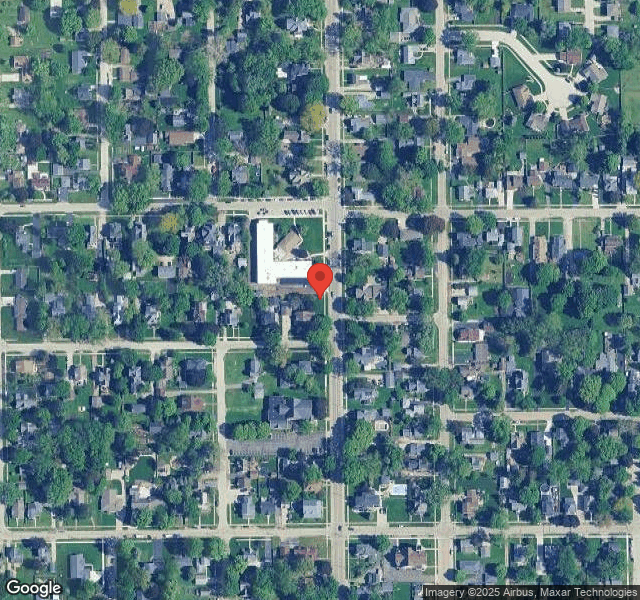
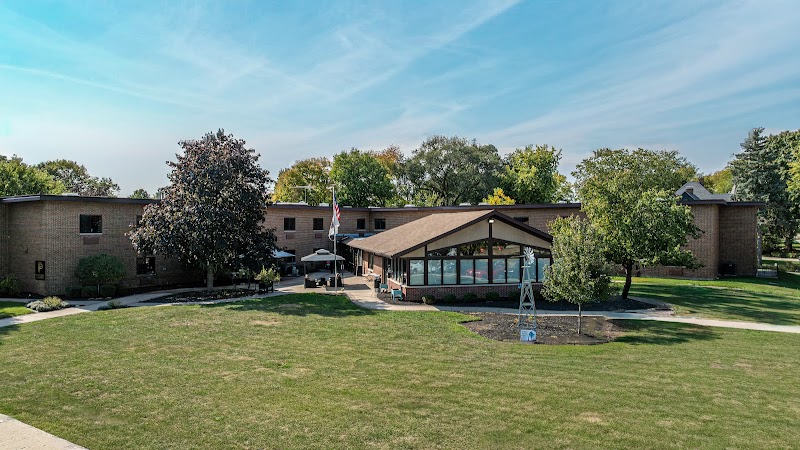
515 NORTH MAIN, SANDWICH, IL 60548 (815) 786-8426
For profit - Corporation 113 Beds PAVILION HEALTHCARE Data: November 2025 1 Immediate Jeopardy citation
Trust Grade
16/100
#389 of 665 in IL
Last Inspection: October 2024

Within standard 12-15 month inspection cycle. Federal law requires annual inspections.

Overview

Pavilion on Main Street in Sandwich, Illinois, has received a Trust Grade of F, indicating significant concerns about the facility's quality of care. Ranked #389 of 665 in Illinois and #5 of 7 in DeKalb County, it sits in the bottom half of both state and local rankings. Unfortunately, the facility is worsening, with issues increasing from 3 in the previous year to 4 in 2025. Staffing is a relative strength, with a turnover of 26%, which is well below the Illinois average, but the overall staffing rating is only 2 out of 5 stars. However, the facility faces serious issues, such as a resident being physically abused by staff, leading to bruising, and a failure to manage a bed rail safely, resulting in a resident requiring stitches. Additionally, one resident experienced uncontrolled pain from fractured ribs due to inadequate pain management. While the facility has some strengths in staffing retention, the numerous concerning incidents and high fines of $192,163 suggest families should approach with caution.

Trust Score
F
16/100
In Illinois
#389/665
Bottom 42%
Safety Record
High Risk
Review needed
Inspections
Getting Worse
3 → 4 violations
Staff Stability
✓ Good
26% annual turnover. Excellent stability, 22 points below Illinois's 48% average. Staff who stay learn residents' needs.
Penalties
✓ Good
$192,163 in fines. Lower than most Illinois facilities. Relatively clean record.
Skilled Nurses
○ Average
Each resident gets 40 minutes of Registered Nurse (RN) attention daily — about average for Illinois. RNs are the most trained staff who monitor for health changes.
Violations
⚠ Watch
44 deficiencies on record. Higher than average. Multiple issues found across inspections.
★★☆☆☆
2.0
Overall Rating
★★☆☆☆
2.0
Staff Levels
★★★☆☆
3.0
Care Quality
★★☆☆☆
2.0
Inspection Score
Stable
2024: 3 issues
2025: 4 issues

The Good

  • Low Staff Turnover (26%) · Staff stability means consistent care
  • Full Sprinkler Coverage · Fire safety systems throughout facility
  • No fines on record
  • Staff turnover is low (26%)

    22 points below Illinois average of 48%

Facility shows strength in staff retention, fire safety.

The Bad

2-Star Overall Rating

Below Illinois average (2.5)

Below average - review inspection findings carefully

Federal Fines: $192,163

Well above median ($33,413)

Significant penalties indicating serious issues

Chain: PAVILION HEALTHCARE

Part of a multi-facility chain

Ask about local staffing decisions and management

The Ugly 44 deficiencies on record

1 life-threatening 2 actual harm
Sept 2025 2 deficiencies 1 Harm
SERIOUS (G) 📢 Someone Reported This

A family member, employee, or ombudsman was alarmed enough to file a formal complaint

Actual Harm - a resident was hurt due to facility failures

Accident Prevention (Tag F0689)

A resident was harmed · This affected 1 resident

**NOTE- TERMS IN BRACKETS HAVE BEEN EDITED TO PROTECT CONFIDENTIALITY** Based on observation, interview, and record review, the facility failed to ensure a bed rail was maintained in a safe manner for...

Read full inspector narrative →
**NOTE- TERMS IN BRACKETS HAVE BEEN EDITED TO PROTECT CONFIDENTIALITY** Based on observation, interview, and record review, the facility failed to ensure a bed rail was maintained in a safe manner for 1 of 3 residents (R1) reviewed for resident injury in the sample of 9. This failure resulted in R1 receiving an injury to her right lateral leg, being sent to a local hospital where she received stitches for her injury.The findings include:R1's admission Record, printed by the facility on 9/16/2025, showed she had diagnoses including, but not limited to, displaced comminuted fracture of shaft of humerus left arm (5/6/25), moderate protein-calorie malnutrition, difficulty in walking, reduced mobility, lack of coordination, pain in left should and left elbow, disorders of muscle, dysphagia, unsteadiness on feet, need for assist with personal care, age-related osteoporosis , repeated falls, hypertension, muscle spasm, history of healed stress fracture, dementia, glaucoma, weakness, abnormal gait and mobility, and malignant neoplasm of skin. R1's facility assessment dated [DATE] showed she had severe cognitive impairment. The assessment showed R1 had no verbal behaviors or physical behaviors (i.e., hitting, kicking, pushing, or grabbing others) towards others during the look back period of the assessment. The assessment also showed R1 required substantial to maximal assist for toileting, bathing, upper and lower body dressing, putting shoes on/off, personal hygiene, rolling side to side in bed, going from lying to sitting position, and sitting to lying position. The assessment showed R1 was dependent on staff for all transfers.On 9/16/2025 at 8:55 AM, R1 was sitting at a table with three other females after the breakfast meal. R1 was alert and smiling at staff. On 9/16/2025 at 9:20 AM, V4 (Registered Nurse-RN) said he was working the day R1 was sent out to the hospital (9/2/2025). V4 said the 9/2/2025 incident was the second time R1 went out recently to the hospital for stitches on her legs. V4 said the first incident happened in August 2025. V4 said R1 had a wound on her left leg time, was sent to the hospital and got 11 stitches to her left leg. V4 said he does not know what caused the injury to R1's left leg. He said interventions were to reinforce 2 staff assist with care and transfers and put protective sleeves on her to protect her arms. V4 said the most recent incident on 9/2/2025, R1 got a wound to her right leg. The CNA was V5 and the nurse on duty when it occurred was V6 (LPN-agency nurse). V4 said he was just starting his shift. He went down to see R1's leg on 9/2/25 before the ambulance arrived. V4 said V6 had already wrapped it, so he removed the bandage to see the wound. On 9/16/2025 at 9:31 AM, V5 (CNA) said she had just come back from a long medical leave and had only worked a few days since returning to work. V5 said it was her first time taking care of R1. V5 said R1 is fearful. V5 said, She is afraid she is going to fall. She was holding onto the side rail real tight. I was going to get her up and clean her up while she was on the toilet. I took her boots off. I came around to the right side of R1. I put the 1/2 side rail up. I was putting her gait belt on her, and she waved her hand and said, Leave me alone. She was scared. I put one arm behind her and one under her legs. I turned her to sit her up on the side of her bed. When I got her sat up on the side of the bed, she stopped, looked at me and said, My leg hurts. I looked down and there was a lot of blood. I informed the agency nurse (V6). The nurse wrapped R1's wound and called an ambulance to have R1 sent out. V5 said after they looked at the side rail it did not have the little stoppers on the ends. V5 said, They had to pad the rails. Without the stoppers it is sharp. She was a little combative and did not want to get up, but I don't recall saying she was kicking. She moved one arm to say leave me alone and the other hand was holding onto the railing. It was literally only a couple minutes. At 9:48 AM, this surveyor went with V5 to look at R1's bed. V5 demonstrated how after she put a gait belt on R1, she put one hand behind her and put the other hand under her legs to turn R1. V5 said as soon as she brought R1's legs around to the side of the bed, R1 stopped talking, looked at V5 and said, My leg hurts. V5 said she looked down and saw a puddle of blood on the floor, so she laid R1 back down, placed her leg on a pillow, grabbed something to wipe the floor really quick so no one slipped on it, and then hurried to get the nurse. V5 said maintenance padded the rail and the bed frame after the incident. On 9/16/2025 at 9:51 AM, V8 (Maintenance Director) was on the hall R1 resides looking down at a sheet of paper. V8 said he was looking at the list showing rooms had side rails with no end caps on them when they did a building wide sweep to check all the side rails. V8 said there were several siderails didn't have the caps on. Eight on the 2nd floor and 15 on the 1st floor were missing the end caps on the side rails. V8 said he was double- checking all of them and would provide the list when done. V8 was asked to come to R1's room to remove the tape and pool noodle so this surveyor could see the end of side rail. Observed the end cap on the side rail at time. The metal bars on the end of the side rail were rough where the caps met the metal. V8 said he put end caps on after R1's incident and padded the rail and bed frame.On 9/16/2025 at 10:28 AM, V7 (Licensed Practical Nurse-LPN) said R1 can be very verbal at times with staff. Her skin is like paper. V7 said R1 had a history of skin tears.On 9/16/2025 at 11:06 AM, R1 was taken to her room for wound care. R1 said she does not remember how her injury happened. R1 said she thinks it is getting better. R1 was transferred from her wheelchair to her bed by V22 (certified occupational therapist-COTA) and V23 (Certified Nursing Assistant-CNA). R1 complained of back pain after sitting down on the side of the bed. Staff said they would let the nurse know. R1's right leg was right by the end of the railing where it was now padded and covered with black tape. V9 (Wound Nurse) did the dressing changes for R1. V9 said R1's staples were removed last week. V9 said we steri-stripped it, and it looks really good. R1 had an area on her right lateral leg was secured with multiple steri-strips. The area was curved (u-shaped). After completing the right leg dressing change. V9 removed the dressing from the left lower leg (shin area). R1 had a large, reddened area on the left leg with an opened area inside the red area. V9 said R1 had a laceration on area prior to getting the laceration on the right leg. V9 said the day before R1 got the laceration to her right leg, she was started on an antibiotic due to an infection in the left leg wound. During the wound care resident was alert and pleasant. No resistance to care observed. After wound care, resident was transferred back to her wheelchair and taken back to the dining room/activity area. On 9/16/2025 4:02 PM, V6 (Agency staff-LPN) said she worked 9/1/2025 on the overnight shift. V6 said at the end of her shift, the morning of 9/2/2025 an aide came to her and said she needed me to come with to R1's room. The aide said R1 had fluid coming from her leg. V6 said, I asked the aide what kind of fluid. She said blood. V6 said R1 was in her bed when she got to her room. Blood was on the sheet and a pillow. V6 said, The laceration was deep. I asked what happened and the aide said she did not know. It was a big gash. V6 said she told V4 (RN) oncoming nurse R1 needs to be sent out. He said call the doctor, family, and 911. R1 was sent to the hospital. V6 said V5 (CNA) did not say anything about R1 kicking or being resistant. V6 said, When I went in the resident did not seem upset or resistive. V6 said V5 said she was getting R1 up and noticed fluid coming out of leg. On 9/17/2025 at 2:10 PM, V5 CNA said V1 (Administrator) and V3 (Regional VP of Clinical Operations) met with her right after she talked with this surveyor the previous day. V5 said they asked her what this surveyor was talking with her about, then they handed her a paper and said we forgot to have you sign the statement about what happened with R1's incident. V5 said she started reading it and was told to just sign it. V5 said she told them she was going to read it first. V5 said she told them she did not recall saying anything about R1 kicking. V5 said V1 and V3 said You did, just sign it. V5 said she told them R1 was not kicking, she just waved her hand and told me to go away because she did not want to get up. V5 said she felt pressured into signing the form and just signed it. V5 said as soon as she did, she regretted it, and wished she had not signed the statement.On 9/17/2025 at 2:57 PM, V2 (Director of Nursing-DON) said they determined something happened with the metal on the bed caused R1's injury. V2 said that is why her bed got padded. V2 said she expects staff to report any equipment might cause a safety issue for residents, and to take the equipment out of service until it can be repaired.On 9/18/2025 at 12:56 PM, V19 (R1's Physician/facility's Medical Director) said R1 is a very fragile individual. V19 said, She (R1) doesn't just get skin tears; she has skin explosions. V19 said there were not many days between the 9/2/2025 incident, and the one before. V19 said he would expect the facility staff to make sure the equipment used is smooth with no rough edges.The facility's investigation and QAPI plan for R1's 9/2/2025 incident showed R1 was sent to the hospital for a laceration to her right leg occurred while sitting the resident up on the side of her bed. R1 returned to the facility with 20 sutures. The list V8 had been going over showing side rails in which there were no end caps, or the end caps needed to be replaced showed over 20 side rails either did not have end caps, or they needed to be replaced. The facility's investigation file had staff interviews in it. V5's interview statement showed V5 said R1 was resistant and kicking her legs. V5's statement had a date up at the top of the form dated 9/2/2025. (These interviews were not provided to this surveyor until after V5 was interviewed by this surveyor). The facility's list of residents with wounds, provided on 9/16/2025 showed R1 has had 7 skin tears in the last three months. The facility's 9/16/2025 Wound Report for non-pressure wounds showed R1 had two active wounds as of 9/16/2025. One to her left lower leg in the front, from a previous incident on 8/25/2025 (facility was cited for this on annual survey), and one to her right lateral lower extremity measured 4.5 centimeters (cm) in length x 6.5 cm width. R1's Wound Assessment Details Report dated 9/11/2025 showed R1 sustained a laceration and was sent to the emergency room (ER). Staples dry and intact to site Resident with mild episodic pain to site. R1's 9/2/2025 notes from a local hospital showed New laceration of right lower extremity status post suture repair today. The facility's undated policy and procedure titled Supplies and Equipment, Environmental Services showed Equipment shall be monitored for good working condition or any needed repairs.
CONCERN (D) 📢 Someone Reported This

A family member, employee, or ombudsman was alarmed enough to file a formal complaint

Potential for Harm - no one hurt, but risky conditions existed

Pharmacy Services (Tag F0755)

Could have caused harm · This affected 1 resident

**NOTE- TERMS IN BRACKETS HAVE BEEN EDITED TO PROTECT CONFIDENTIALITY** Based on interview and record review, the facility failed to ensure a resident's medications were available and administered as ...

Read full inspector narrative →
**NOTE- TERMS IN BRACKETS HAVE BEEN EDITED TO PROTECT CONFIDENTIALITY** Based on interview and record review, the facility failed to ensure a resident's medications were available and administered as ordered for 1 of 3 residents (R4) reviewed for medications in the sample of 10.The findings include: On 9/17/2025 at 8:39 AM, V6 (R4's wife) said R4 did not get his medications for 3 days when he was first admitted to the facility. V6 said she was not sure what medications. V6 said R4 just told her he was not getting all his medications. V6 said the facility told them the hospital did not send them. V6 said, I could not go into the facility when he was first admitted because I had the flu. I told (R4) to say something about not getting all his medications. V6 said she knows she spoke to someone about the medications. V6 said, He is on a lot of medications. I was worried he was going to have withdrawal because he is on methadone. V6 could not identify who she spoke to at the facility regarding R4's medications. V6 said when R4 was discharged from the facility back to home, they did not give him a prescription for diuretics. Bumetanide. V6 said R4 was discharged on a Tuesday (9/9/2025). The home health nurse came on Thursday (9/11/2025), so he did not start taking the diuretic until Friday. V6 said R4 missed Wednesday and Thursday's diuretic.On 9/17/25 at 11:20 AM, V24 (Registered Nurse-RN) said she was the nurse on duty when R4 was admitted to the facility on [DATE]. V24 said she did some of R4's admission. Other nurses completed some of the assessments for his admission because it was near the end of her shift. V24 said there were medications that R4 missed due to the medications not being available. V24 said she marked in R4's medication administration record (MAR) on 8/12/2025 and 8/13/2025 that the methadone and Lyrica were not available. The methadone is used for pain. The Lyrica is also for pain. V24 said when a new resident is admitted to the facility, the nurse will fax a script (prescription) to the physician. The doctor signs the script and faxes it back to the facility, the nurse will fax it to the pharmacy, and the pharmacy will dispense it for delivery. V24 said it could take 24-48 hours on admit before we receive the medications. V24 said, We must have the script to dispense the medications. V24 said as soon as we fax the signed script to the pharmacy, we can request a code if we have that medication in the C-box medications. V24 said she was not sure if those are in the C-box. V24 said there were medications that the facility did not have available and R4 did miss some medications. At 11:38 AM, V24 said she was also the nurse that discharged R4 on 9/9/2025. V24 said, He discharged home with a multivitamin that he brought in and DuoNeb treatments. I asked (R4) if he needed any medications to take home, he said no just those two. Neither him, nor his wife (V6) asked for any prescriptions. I even offered to request scripts from the doctor, and he said no. (V6) was here when he was discharged . I went over the discharge instructions and showed them which medications we were sending with them. His wife asked me to write down when all his medications were last given and when they were due next.On 9/17/25 at 1:49 PM, V2 (Director of Nursing-DON) said the hospital did not send a script for methadone and Lyrica when R4 was admitted . V2 said, We were trying to find a doctor to get the script. V19 (R4's physician while in the facility, and the facility's Medical Director) was his physician on admission. (V19) ended up signing the script. Initially (V19) told the nurse to contact the hospital. The hospital would not sign the script, so (V19) ended up signing it. Methadone is used for pain, and R4 said he had been on it for 13 years. When I found out about his methadone not being available, I went to make sure he was not in withdrawal. He said he was not having any withdrawal symptoms but was concerned that he may start having them soon. That is when he told me he had been taking it for 13 years. At 2:36 PM, V2 said R4 was admitted on [DATE]. V2 said there was an order for methadone and Lyrica, but there were no signed scripts. V2 said if there is no script, the nurse should call the doctor, and the pharmacy. If there are problems getting a script, then the nurse should call me. V2 said she was told the nurses reached out to V19, and the hospital, and was told the hospital would not send one to the facility because he was basically our problem. V2 said, Within one hour of speaking with (R4's) daughter and finding out about the medications not being available, I had the signed script sent to the pharmacy. V2 said then the facility had to wait for the pharmacy to deliver it. On 9/18/2025 at 1:56 PM, V19 (R4's physician while in facility/facility's Medical Director) he said he is familiar with R4. V19 said R4 is a challenging individual. V19 said the hospital should have sent 2-3 days' worth of the methadone with R4 on admission or sent a valid script with him. V19 said unfortunately, this is an ongoing issue with hospitals. V19 said the facility notified him to request the e-script (electronic script). V19 was not in a location where he could look it up on a computer to see when the facility first notified him of the needed e-scripts. V19 said the facility is usually pretty good at letting him know when they need one. V19 said R4 should have come to facility with the prescription, or the hospital should have let me know. V19 said they are not medications that the facility would probably have at the facility. V19 said the facility should have requested 2-3 days' worth of them from hospital.R4's August 2025 Medication Administration Record (MAR) showed an order for Pregabalin (Lyrica) 150 mg. Give 1 capsule two times a day for pain. The MAR showed four doses were not administered (8/11/25 at 8 PM, 8/12/25 at 8:00 AM, 8/12/25at 8:00 PM, and 8/13/25 at 8:00 AM). The MAR showed an order for Methadone Hydrochloride 5 mg. Give 1 tablet three times a day for pain. The MAR showed six doses were not administered as ordered. (8/11/25 at 9:00 PM, 8/12/25 at 8:00 AM, 12:00 PM, and 9:00 PM, and on 8/13/25 at 8:00 AM and 12:00 PM). R4's progress notes showed on 8/11/25, 8/12/25, and 8/13/25 the facility was awaiting delivery from pharmacy for the methadone. The 8/13/25 notes showed the facility was waiting on R1's Lyrica to be delivered from pharmacy. The 8/13/25 notes showed V2 (DON) documented at 3:38 PM that she received a call from R4's family regarding his missing medications. The notes showed the pharmacy informed her they had not received prescriptions from the doctor. 8/13/25 at 4:34 PM, V2 documented the pharmacy called and verified they received the prescriptions, and the medications would be delivered within four hours.R4's referral notes from the local hospital dated 8/10/2025 showed he was receiving methadone 5 mg three times daily and Lyrica 75 mg nightly in the hospital.The facility provided the pharmacy's packing slip showing the methadone and Lyrica were delivered to the facility on 8/13/2025 at 11:47 PM.The facility's policy and procedure titled Reconciliation of Medications, with a revision date of October 2018, showed, Gather the information needed to reconcile the medication list: a. Approved mediation reconciliation form. b. Discharge summary from referring facility. c. admission order sheet. d. All prescription and supplement information obtained from the resident/family during the medication history. e. Most recent electronic medication administration record, if this is a readmission. The policy showed, General Guidelines: 1. Medication reconciliation is the process of generating a master list of the resident's current medications. 2. Medication reconciliation reduces medication errors and enhances resident safety by ensuring that the medications the resident needs and has been taking continue to be administered without interruption, in the correct dosages and routes, during the admission/transfer process. 6. If there is a discrepancy or conflict in medications, dose, route, or frequency, determine the most appropriate action to resolve the discrepancy. For example: a. Contact the nurse from the referring facility; b. Contact the physician from the referring facility; c. Discuss with the resident or family; d. Contact the resident's primary physician in the community.Contact the admitting and/or attending physician . 7. Document findings and actions in the resident's electronic medical record. Documentation.If the discrepancy was unresolved, document how the discrepancy was communicated to the charge nurse, physician, pharmacy, and/or next shift.
Jul 2025 2 deficiencies
CONCERN (F) 📢 Someone Reported This

A family member, employee, or ombudsman was alarmed enough to file a formal complaint

Potential for Harm - no one hurt, but risky conditions existed

Infection Control (Tag F0880)

Could have caused harm · This affected most or all residents

**NOTE- TERMS IN BRACKETS HAVE BEEN EDITED TO PROTECT CONFIDENTIALITY** Based on observation, interview and record review the facility failed to immediately isolate residents with a suspected infectio...

Read full inspector narrative →
**NOTE- TERMS IN BRACKETS HAVE BEEN EDITED TO PROTECT CONFIDENTIALITY** Based on observation, interview and record review the facility failed to immediately isolate residents with a suspected infectious rash. The facility failed to ensure staff did not expose residents to a suspected infectious rash. The facility failed to ensure residents on isolation remained in their rooms to prevent the possible spread of infection. The facility failed to clean and disinfect resident rooms and linen in a manner to prevent the possible re-exposure of a skin infection. These failures have the potential to affect all 94 residents in the facility. The findings include:The Facility Data Sheet dated 7/23/25 showed a resident census of 94 residents. A facility isolation list dated 7/23/25 showed R1 was on contact isolation for a suspicious rash. R2, R3, and R7 were on contact isolation due to scabies.1. R1's resident assessment dated [DATE] showed R1 was severely cognitively impaired and dependent on staff for all cares.R1's nurses note dated 7/19/25 showed R1 was found to have a petechial rash to legs, torso, chest and back.A physician order dated 7/22/25 showed R1 was placed on contact isolation (2 days after her rash was noted). On 7/23/25 at 8:28 AM, no contact isolation signage was noted on or around R1's doorway. No isolation cart with PPE (personal protective equipment) was noted by or around the entrance to R1's room. No bins for isolation garbage or linen were noted in R1's room. On 7/23/25 at 8:58 AM, a contact isolation sign was noted on R1's door. V8 Housekeeping Director was placing isolation garbage and linen bins by the entrance to R1's room. No PPE cart was noted by or around the entrance to R1's room. V8 stated V15 Licensed Practical Nurse (LPN)/Acting Infection Preventionist (IP) had placed the contact isolation sign on R1's door a few moments ago. R1 was in bed with a red, pinpoint rash noted to her left upper and lower abdomen.On 7/23/25 at 8:51 AM, V5 Certified Nursing Assistant (CNA) stated R1 was not put on contact isolation until this morning. V5 CNA stated although she knew R1 had a rash, R1 has been brought out of her room by staff, that morning, to eat breakfast in the dining room with the other residents.On 7/23/25 at 8:51 AM, V6 CNA also confirmed R1 had eaten her breakfast in the main dining room that morning despite staff knowing about R1's rash. 2. R2's nurses note dated 7/21/25 showed R2 was found to have a petechial rash to his left upper leg. The note showed, Clothes and linens washed. Room deep cleaned. R2's physician order and July 2025 Medication Administration Record (MAR), dated 7/22/25, showed R2 was placed on contact isolation for his rash (one day after the rash was noted). R2's MAR dated 7/21/25 showed R2 received his first treatment of Permethrin Cream 5% (cream to treat scabies) topically for his rash. On 7/23/25 at 8:36 AM, a contact isolation sign hung on the door to R2's room. A PPE cart was noted by R2's doorway. This surveyor donned PPE and entered R2's room. R2 was in bed with a red, pinpoint rash to his right upper arm, right elbow, right breast area, and right upper abdomen. R2 was actively scratching his right upper arm. R2 stated to this surveyor, No one has been wearing that stuff (PPE) you have on. You are the first. R2 stated he's had his rash for a couple of days now. R2 stated he was treated with a cream and then showered but no one had changed his bed linen or cleaned his room since the application of the cream and shower. On 7/23/25 at 10:21 AM, V8 Housekeeping Director stated R2's room should have been deep cleaned and his bed linen changed after R2's first Permethrin treatment and prior to him coming back to his room from his shower, but we are working on it. We haven't done it yet.3. R3's nurses note dated 7/19/25 showed R3 was found to have a petechial rash to his right upper and lower leg. The note showed, Clothes and linens washed. Room deep cleaned. R3's MAR dated 7/21/25 showed R3 received his first treatment of Permethrin Cream 5% (cream to treat scabies) topically for his rash. R3's physician order dated 7/22/25 showed R3 was placed on contact isolation for his rash (3 days after his rash was noted). On 7/23/25 at 8:45 AM, a contact isolation sign hung on the door to R3's room. A PPE cart was noted by R3's doorway. This surveyor donned PPE and entered R3's room. R3 was seated in a wheelchair by his bed. A red, pinpoint rash was noted to R3's left breast area and left arm. R3 stated he also had the rash to his bilateral inner thigh areas. R3 stated the rash to his left breast was still itchy. R3 stated to this surveyor, This is the first time seeing anyone in that garb (PPE). R3 stated he was put on isolation that morning (7/23/25), after he had eaten breakfast in the main dining room with other residents. R3 stated he'd had his first Permethrin treatment and shower, but no one had cleaned his room or changed his bedding in the last few days. On 7/23/25 at 8:51 AM, V5 and V6 CNAs stated R3 did eat breakfast in the main dining room that morning (7/23/25) despite staff knowing about R3's rash. V5 and V6 CNA each stated R3 was not put on isolation until the morning of 7/23/25. On 7/23/25 at 10:21 AM, V8 Housekeeping Director stated R3's room had yet to be deep cleaned, and his bedding had not been changed. On 7/23/25 at 10:51 AM, V15 LPN/Acting IP stated she had been the facility's Infection Preventionist for over a year but had yet to successfully complete the test for the infection preventionist course and receive the certification. V15 stated skin scrapings had not been done on R1-R3 or R7's rashes however they were assuming the rashes were scabies based on exposure and the appearance/symptoms associated with the rashes. V15 stated R1 was the first to develop a rash, on 7/3/25, that didn't seem to ever go away. V15 stated she believed R1-R3 and R7 had been exposed to an infectious rash by V6 CNA. V15 stated she was notified on 6/15/25 by an unnamed staff member, that on 6/10/25, V6 CNA was treated for a scabies-type rash by her physician. V15 stated she gave V6 CNA a verbal reprimand on 6/15/25 for not reporting her rash to administration and because she continued to work in the facility while having the rash. V15 stated V6 CNA provided cares to R1-R3 and R7 in June 2025 and July 2025. V15 stated staff are to place residents on contact isolation immediately once a suspicious rash is identified on a resident. V15 stated residents on contact isolation are not to come out of their rooms until their treatment is completed due the potential of spreading the rash to other residents. V15 stated, per facility policy, a resident's rash is to be treated with Permethrin cream, wait eight hours, and then shower the resident. This treatment is repeated seven days later. V15 stated, While the resident is in the shower, his/her room is to be deep cleaned, and all the bedding is to be changed. If that is not done and the resident comes back to a dirty room. This could potentially re-infect the resident with scabies. V15 stated she had not reported V6 CNA's or R1-R3, R7's skin rashes to the local health department. A facility Coaching/Corrective Action for Minor Offenses form dated 6/15/25 showed V6 CNA was given a documented verbal warning/training for a failure to disclose communicable disease in a timely manner or unreported. V6 CNA's June 2025 timecard showed V6 worked in the facility 6/4/25-6/9/25 and 6/11/25-6/13/25. The facility's Policy and Procedure Scabies dated 12/22/23 showed, Purpose: To identify and treat residents that have rashes that have the potential of being contagious. Residents that have been identified with a suspicious rash may be treatment prophylactically without confirmation testing and skin scrapings with medications ordered by the resident's attending physician. Initiate contact precautions upon identification of the suspicious rash. Apply scabicide (Permethrin cream) to the skin. Allow the cream to sit on the skin following the MD orders. Re-shower the resident to wash off lotion. Terminally clean resident's room. Wash all linens, curtains, and soft items. Items that can be washed must be bagged and not used for 14 days. Repeat procedure in 7 days or according to MD order.
CONCERN (F) 📢 Someone Reported This

A family member, employee, or ombudsman was alarmed enough to file a formal complaint

Potential for Harm - no one hurt, but risky conditions existed

Deficiency F0882 (Tag F0882)

Could have caused harm · This affected most or all residents

Based on interview and record review the facility failed to employ an Infection Preventionist that had successfully tested and completed infection preventionist training and education. This failure ha...

Read full inspector narrative →
Based on interview and record review the facility failed to employ an Infection Preventionist that had successfully tested and completed infection preventionist training and education. This failure has the potential to affect all 94 residents in the facility. The findings include:The Facility Data Sheet dated 7/23/25 showed a resident census of 94 residents. V15's Licensed Practical Nurse (LPN)/Acting Infection Preventionist (IP) Nursing Home Infection Preventionist Training Course records printed 7/23/25 showed V15 started the course on 9/30/2023 but had yet to successfully complete the test portion of the course and receive the certification. On 7/23/25 at 10:51 AM, V15 LPN/Acting IP stated she had been the facility's Infection Preventionist for over a year but had yet to successfully complete the test for the infection preventionist course and receive the certification. V15 stated she had been acting as the IP under the IP certification the previous Director of Nursing (DON) had but that DON no longer worked at the facility. On 7/23/25 at 11:57 AM, V1 Administrator stated the facility did not currently have a certified Infection Preventionist. The facility's Infection Preventionist job description (undated) showed the Infection Preventionist education and experience requirements included a certification in Infection Prevention.
Oct 2024 2 deficiencies
CONCERN (D)

Potential for Harm - no one hurt, but risky conditions existed

Pharmacy Services (Tag F0755)

Could have caused harm · This affected 1 resident

Based on observation, interview, and record review the facility failed to monitor a resident during medication administration. This applies to 1 of 4 residents (R79) reviewed for pharmacy services in ...

Read full inspector narrative →
Based on observation, interview, and record review the facility failed to monitor a resident during medication administration. This applies to 1 of 4 residents (R79) reviewed for pharmacy services in the sample of 19. The findings include: On 10/28/2024 at 9:43 AM, R79 was observed sitting up in her bed with medications sitting in a pill cup on her bedside table. R79 said the medications in the cup were her medications and she forgot to take them. R79 said the medications were left by the nurse about an hour prior. On 10/29/2024 at 9:11 AM, V3 Licensed Practical Nurse (LPN) said [R79] does not have a self-administration order for medications. V3 said she would not leave medications at the bedside for [R79]. V3 said the nurse should stay with a resident during medication administration because they could choke or drop a pill on the floor. On 10/30/2024 at 9:16 AM, V2 Director of Nursing (DON) said medications should not be left at the bedside and the nurse should make sure the resident takes the medications. R79's Order Summary Report dated 10/28/2024 does not list a self-administration order for medications. The facility's Administering Medications policy dated 11/2020, states . Residents may self-administer their own medication only if the Attending Physician, in conjunction with the Interdisciplinary Care Planning Team, has determined that they have the decision-making capacity to do so safely and resident has successfully completed a competency for self-administration.
CONCERN (E)

Potential for Harm - no one hurt, but risky conditions existed

Food Safety (Tag F0812)

Could have caused harm · This affected multiple residents

Based on observation, interview, and record review the facility failed to ensure staff wore beard coverings when serving food. This applies to 4 of 4 residents (R52, R70, R43, R80) reviewed for food s...

Read full inspector narrative →
Based on observation, interview, and record review the facility failed to ensure staff wore beard coverings when serving food. This applies to 4 of 4 residents (R52, R70, R43, R80) reviewed for food sanitation in the sample of 19. The findings include: On 10/29/24 at 10:30 AM, during the resident council meeting hosted by this surveyor and attended by R52, R70, R43 and R80, a concern was brought up by residents that beard coverings are often not being worn when staff are serving food. On 10/29/24 at 12:23 PM, the noon meal was being served on the first floor. V5 (Cook) was scooping and plating the food from a portable serving table. The plates were then handed to V4 (Dietary Aide) to put on trays and add liquids and other food items before handing it to staff to serve to the residents on the first floor. V4 had a beard and mustache and did not have any face covering over his beard. At 12:30 PM the first floor service was over and V4 and V5 took the portable serving table up to the second floor to serve those residents. V5 verified that she and V4 had been together serving the entire first floor. At 12:34 PM, V4 and V5 were beginning the meal service for second floor. V4 still had no face covering on. At 12:38 PM, V7 (Dietary Aide) went up to V4 and told him he needed gloves and handed him a face mask which V4 then applied. On 10/29/24 at 1:47 PM, R52 said that V4 is the staff he was referring to who will not wear a beard covering when he is serving food. On 10/29/24 at 2:09 PM, V6 (Dietary Manager) said staff who have beards should be wearing at least a face mask to cover their facial hair when serving or plating food. V6 said some staff don't like the beard coverings the facility has so she is going to try and order new ones. R52, R70, R43 and R80's face sheets and dietary orders all show they reside on the first floor are served food from the facility kitchen. The facility provided Hair Restraints/jewelry/Nail Polish/False Eyelashes policy revised 2017 shows that food and nutrition employees should wear hair restraints and beard guards.
Jun 2024 1 deficiency
CONCERN (D) 📢 Someone Reported This

A family member, employee, or ombudsman was alarmed enough to file a formal complaint

Potential for Harm - no one hurt, but risky conditions existed

Deficiency F0625 (Tag F0625)

Could have caused harm · This affected 1 resident

Based on interview and record review the facility failed to supply a bed hold notice to a resident representative at the time of transfer for 1 of 1 resident (R1) reviewed for resident rights in the s...

Read full inspector narrative →
Based on interview and record review the facility failed to supply a bed hold notice to a resident representative at the time of transfer for 1 of 1 resident (R1) reviewed for resident rights in the sample of 3. The findings include: R1's Notice of Involuntary Transfer or Discharge form dated 5/21/24 showed, R1 was transferred out of the facility due to the safety of individuals in the facility were endangered. The same form had a box checked that indicated a copy of the facility bed hold policy was given to the resident or their responsible party. On 6/25/24 at 10:07 AM, V4 (Social Service Director) stated she was responsible for completing the form. V4 said she did not actually send a copy of the bed hold policy at that time. V4 said the bed was held for the required 10 days automatically, so she just checked the box to show that. On 6/25/24 at 12:30 PM, V2 (Director of Nurses) stated she did not have any documentation of a bed hold notice sent with R1 at the transfer. V2 said the form box was marked incorrectly and nothing was ever provided to the resident or his state guardian. The facility's undated Holding Bed Space policy states: 1. Upon admission and when a resident is transferred for hospitalization or for therapeutic leave, a representative of the business office will provide information concerning our bed-hold policy.
Sept 2023 11 deficiencies 1 Harm
SERIOUS (G)

Actual Harm - a resident was hurt due to facility failures

Deficiency F0697 (Tag F0697)

A resident was harmed · This affected 1 resident

**NOTE- TERMS IN BRACKETS HAVE BEEN EDITED TO PROTECT CONFIDENTIALITY** Based on observation, interview, and record review the facility failed to provide pain control for a resident with fractured rib...

Read full inspector narrative →
**NOTE- TERMS IN BRACKETS HAVE BEEN EDITED TO PROTECT CONFIDENTIALITY** Based on observation, interview, and record review the facility failed to provide pain control for a resident with fractured ribs for 1 of 1 resident (R289) reviewed for pain. This failure resulted in R289 experiencing difficulty sleeping, difficulty participating in therapy and uncontrolled pain. The findings include: R289's face sheet showed she was admitted to the facility on [DATE] with diagnoses to include multiple fractures of ribs, left side, need for assistance with personal care, abnormalities of gait and mobility, opioid dependence, spinal stenosis, low back pain, and intervertebral disc degeneration lumbar and lumbosacral region. R289's 9/20/23 Clinical admission note entered at 7:19 PM showed R289 reported an aching and radiating pain to left lower back at a 4 on the pain scale with the frequency of the pain being constant. R289's care plan initiated 9/21/23 showed, [R289] has acute/chronic pain related to disease process and multiple left rib fractures . [R289] will verbalize adequate relief of pain or ability to cope with incompletely relieved pain through the review date . Administer analgesia as per orders Evaluate the effectiveness of pain interventions per facility policy. Review for compliance, alleviating of symptoms, dosing schedules and resident satisfaction with results, impact on functional ability and impact on cognition. R289's September 2023 Physician Order Sheet showed R289 was admitted with an order for oxycodone-acetaminophen 10-325 (1 tablet) to be administered as needed every 4 hours for pain. R289's 9/20/23 admission Summary entered at 8:07 PM showed, Resident arrived to facility at 3:40 PM. Resident alert and oriented x 3 . Resident admitted to the facility for therapy due to a fall at home. Resident does complain of pain to left ribs due to multiple non-displaced fractures of the 6-10 ribs . On 9/28/23 at 10:29 AM, R289 said, Over the weekend, I think it was Sunday (9/24/23). I had pain in my shoulder and side. I have 6 broken ribs. I guess they didn't get my oxycodone from the pharmacy. Then last night at bedtime I asked for my pain medication and they said they didn't have it. They said there was not an order for the oxycodone so they gave me a muscle relaxer instead. I've been taking the oxycodone here so it didn't make sense. It was about 7-8 PM last night when I requested it for pain. I rated my pain at an 8 at that time. When I asked the nurse last night where the oxycodone was, she threw her hands up and walked out of my room. I didn't sleep last night so it was hard to do therapy this morning. I didn't sleep because I was in pain all night. On 9/28/23 at 11:07 AM, V8 RN (Registered Nurse) said R289 does have an order for oxycodone but she doesn't have any here (in the facility) currently. V8 said the sticker had been pulled so she believed it was reordered. V8 said the record showed it was last ordered on 9/28/23 (the day of this interview). V8 said the facility does have a supply of common medications from the pharmacy that she thought included oxycodone. At 1:28 PM, V8 said R289 still did not receive oxycodone. V8 said the NP (Nurse Practitioner) was in the facility today and said he had electronically sent in the prescription this morning. V8 said the NP was going to his office and was going to check and see what happened with the prescription. V8 said the nurses cannot take anything from the convenience supply without the prescription first so they were waiting for that. V8 confirmed R28 was still requesting the oxycodone at this time. V8 said, Well, she has broken ribs so of course she is requesting it The facility's Controlled Drug Receipt/Record/Disposition Form for R289's supply of oxycodone showed a dose given on 9/24/23 at 5:48 AM was the last tablet of oxycodone available for R289 until the next pharmacy delivery. The facility's pharmacy requisition dated 9/24/23 at 9:09 PM showed R289's supply of oxycodone was received at the facility (16 hours after R289's last dose was administered). The facility's Controlled Drug Receipt/Record/Disposition Form for R289's supply of oxycodone received on 9/24/23 at 9:09 PM showed R289's supply of oxycodone was exhausted again on 9/27/23 at 11:03 AM. R289's September 2023 eMAR (electronic Medication Administration Record) showed R289's last dose of oxycodone was given on 9/27/23 at 11:02 AM (approximately 26 hours prior). On 9/28/23 at 1:49 PM, V2 DON (Director of Nursing) said, We typically reorder medications before they run out which is the goal. We have the [convenience supply] we can get medications out when that happens so we don't leave the resident without their medication. Sometimes we do need a new prescription. It is important to treat the resident's pain because it can cause a lot of other issues for the resident. The facility's policy and procedure revised 10/2020 showed, Pain Assessment and Management; Purpose: The purposes of this procedure are to help the staff identify pain in the resident, and to develop interventions that are consistent with the resident's goals and needs and that address the underlying causes of pain . 1. The pain management program is based on a facility-wide commitment to resident comfort. 2. Pain Management id defined as the process of alleviating the resident's pain to a level that is acceptable to the resident and is based on his or her clinical condition and established treatment goals .
CONCERN (D)

Potential for Harm - no one hurt, but risky conditions existed

ADL Care (Tag F0677)

Could have caused harm · This affected 1 resident

**NOTE- TERMS IN BRACKETS HAVE BEEN EDITED TO PROTECT CONFIDENTIALITY** Based on observation, interview, and record review the facility failed to provide timely incontinence care for a dependent resid...

Read full inspector narrative →
**NOTE- TERMS IN BRACKETS HAVE BEEN EDITED TO PROTECT CONFIDENTIALITY** Based on observation, interview, and record review the facility failed to provide timely incontinence care for a dependent resident for 1 of 1 resident (R38) reviewed for incontinence care in the sample of 21. The findings include: R38's face sheet showed she was admitted to the facility on [DATE] with diagnoses to include acute pyelonephritis, obstructive and reflux uropathy, bacteremia, acute respiratory failure with hypoxia, dysphagia, urinary tract infection, anxiety disorder, osteoarthritis, and mixed incontinence. R38's facility assessment dated [DATE] showed she is cognitively intact and requires extensive assist of 2 staff for most cares. R38's September 2023 Physician Order Sheet showed she is receiving Nitrofurantoin macrocrystal (antibiotic) daily for prophylaxis (preventative) for urinary tract infections. R38's care plan initiated 11/11/21 showed, . dependent on staff to complete all ADLs (Activities of Daily Living) due to immobilization and limited range of motion . will be kept clean, dry, and well dressed and groomed at all times . Check and change for incontinence every 2 hours. Provide peri care and apply moisture barrier after each incontinent episode. R38's care plan initiated 7/24/23 showed, The resident has potential to impaired skin integrity related to fragile skin and impaired mobility . Keep skin clean and dry . On 9/28/23 at 9:57 AM, R38 was laying in her bed waiting for her medications from the nurse with her call light on. R38 said she had a sore on her bottom that recently healed. R38 said her incontinence brief had not been changed since 4:30 AM. R38 said she was very wet. R38 said an aide had come to the door but that there was a housekeeper in the room so she just backed out. R38 said she thinks they might be shorthanded today and that's why no one has been in to clean her up. On 9/28/23 at 10:20 AM, V12 RN (Registered Nurse) and V13 RN entered R38's room, opened R38's incontinence brief and rolled her over to the side for this surveyor to observe R38's skin. R38's brief was saturated with a strong, foul, odor. After this surveyor observed R38's skin, V12 and V13 rolled R38 to her back and reapplied the same incontinence brief. V12 told R38 she would let a CNA (Certified Nursing Assistant) know she needed her brief changed. On 9/28/23 at 1:49 PM V2 DON (Director of Nursing) said she expects incontinence care to be provided every two hours to prevent wounds, MASD (moisture associated skin damage) and infections. The facility's policy and procedure dated 3/2014 showed, Incontinence care . Purpose: To provide guidelines that will aide in resident care and the prevention of nosocomial infections . 4. Bedridden, incontinent residents must be turned every 2 hours and inspected for fecal incontinence. 5. Residents must be cleaned after each episode of incontinence .
CONCERN (D)

Potential for Harm - no one hurt, but risky conditions existed

Quality of Care (Tag F0684)

Could have caused harm · This affected 1 resident

**NOTE- TERMS IN BRACKETS HAVE BEEN EDITED TO PROTECT CONFIDENTIALITY** Based on observation, interview and record review the facility failed to ensure physician ordered wound dressings were completed...

Read full inspector narrative →
**NOTE- TERMS IN BRACKETS HAVE BEEN EDITED TO PROTECT CONFIDENTIALITY** Based on observation, interview and record review the facility failed to ensure physician ordered wound dressings were completed as ordered for 2 of 2 residents (R46, R47) reviewed for non-pressure wounds in the sample of 21. The findings include: 1. R46's admission record shows she was admitted to the facility on [DATE]. R46's physician order sheet shows a 9/20/23 order to cleanse left lower leg with wound cleanser, apply xeroform to open blistered area on back of the left leg. Wrap with kerlix. Change daily and PRN (as needed), until healed. On 9/28/23 at 10:39 AM, R46 said her leg dressing does not get changed every day. V9 CNA (Certified Nursing Assistant) removed R46's sock to reveal a dressing dated 9/24/23. The September 2023 TAR (Treatment Administration Record) shows V15 LPN (Licensed Practical Nurse) documented R46's treatment as completed on 9/25/23, 9/26/23 and 9/27/23. The same record shows the daily dressing change was not completed on 9/20/23, 9/22/23 and 9/23/23. On 9/28/23 at 12:28 PM, V2 DON said the floor nurses should be completing the dressing daily when ordered. They do not need to date the dressing; it is not our policy. They can look at the TAR to see when it was last completed. They did not do the treatment; they should not be documenting it as completed. 2. R47's admission record shows he was admitted to the facility on [DATE]. His physician order summary report shows a 9/12/23 order to cleanse open areas on right lower extremity and the left lower extremity with wound cleanser, apply collagen sheet to wound bed, cover with calcium alginate with silver and ABD pad, wrap with kerlix and affix with tape daily and PRN if soiled or loose. R47's care plan documents he has a venous/stasis ulcer of the left lower leg and the distal right lower leg related to chronic venous insufficiency and edema. On 9/26/23 at 11:26 AM, R47 said his dressings do not get changed every day, it was not done yesterday. They seem to be short staffed here, so it doesn't get done. The September 2023 TAR shows the right and left wound dressings were 8/30/23. The right lower extremity dressing was not documented as completed on 9/2, 9/5, 9/8, 9/12, and 9/25/23. The left lower extremity dressing was not completed on 9/2, 9/12, and 9/25/23. On 9/28/23 at 10:49 AM V5 wound nurse said she works Tuesday through Saturday and when she is not in the facility, it is the responsibility of the floor nurses to ensure the wound dressing changes are completed. On 9/28/23 at 12:32, V2 said on the off days of the wound nurse, the floor nurses should be completing the dressing changes.
CONCERN (D)

Potential for Harm - no one hurt, but risky conditions existed

Pressure Ulcer Prevention (Tag F0686)

Could have caused harm · This affected 1 resident

**NOTE- TERMS IN BRACKETS HAVE BEEN EDITED TO PROTECT CONFIDENTIALITY** Based on observation, interview, and record review the facility failed to ensure pressure reduction interventions were in place ...

Read full inspector narrative →
**NOTE- TERMS IN BRACKETS HAVE BEEN EDITED TO PROTECT CONFIDENTIALITY** Based on observation, interview, and record review the facility failed to ensure pressure reduction interventions were in place and failed to identify and report skin changes for a resident at a high risk for pressure for one of nine residents (R78) reviewed for pressure in the sample of 21. The findings include: R78's face sheet printed on 9/28/23 showed diagnosis including but not limited to history of sepsis, diabetes mellitus, hypertension, and urinary tract infection. R78's facility assessment dated [DATE] showed extensive staff assistance required for bed mobility, transfers, dressing, toilet use, and personal hygiene. The same assessment showed R78 is always incontinent of urine and bowel. The assessment showed two, stage 2 pressure ulcers present on admission. The assessment showed no severe cognitive impairment. R78's weekly wound summary assessment report dated 9/26/23 showed left lateral heel and right lateral heel stage 2 pressure ulcers. There were no other wound assessments on R78's body, other than the two heels. On 9/26/23 at 11:15 AM, R78 was lying in bed. Both of R78's heels were pressed up against the footboard of the bed. At 1:09 PM, R78's heels were still pressed up against the footboard. R78's private caregiver was in the room and assisted R78 to raise her heels. Reddened areas were present and both heels had clear, undated dressings on them. R78's caregiver rolled R78 to her side and an open, uncovered wound to her coccyx (upper buttocks) was observed. R78 was worried the open wound was laying in urine every time she is incontinent. The facility supplied pressure ulcer and non-pressure logs, both printed on 9/26/23 showed R78 had two, stage 2 pressure ulcer to both heels. There was no other wound documentation for R78 on the logs. R78's September 2023 physician order report showed an order start dated on 9/7/23 for Medi-boots (heel protector boots) to both feet while in bed. The same report showed an order start dated 9/7/23 for daily skin checks every evening shift for skin monitoring. On 9/27/23 at 12:43 PM, R78 was in bed lying on her back. Both heels were directly on the mattress and she was not wearing any heel protectors. R78 stated she has a sore on her buttocks for a couple of weeks now. R78 was not sure how or if it was being treated in any way. At 12:54 PM, V9 and V17 (CNAs-Certified Nurse Aides) entered the room and began to perform incontinence care. The CNAs confirmed R78 was not lying on any type of specialized air mattress used to reduce pressure. The CNAs confirmed R78 needs her heels floated to prevent them from touching the mattress. The aides said R78 already has pressure ulcers on her heels and more pressure will prevent them for healing. V17 went to R78's closet and a pair of green heel protectors were located on the bottom shelf. The aides pointed them out and left them in the closet. V9 and V17 rolled R78 to her side and removed the wet incontinence brief. Two red, open areas were observed on her buttocks near the right and left skin folds. Both were approximately one inch in length. There were no dressings on either area. V9 and V17 stated the areas have been there for about a week and a half. The aides said a barrier cream is the only thing currently being used on the areas. The aides stated V5 (Wound Care Nurse) checks on resident skin changes, and they were unsure if V5 had seen R78's buttock yet. V9 and V17 completed peri care and exited the room. On 9/28/23 at 9:15 AM, R78's EMAR (electronic medical record) was again reviewed for any assessments or treatment orders for the open buttock areas. This surveyor was unable to locate any documentation in the EMAR. On 9/28/23 at 10:08 AM, V5 (WCN) stated R78 likes to stay in bed a lot and she has blisters on both heels. V5 said her heels need to be floated or she should wear heel boots to help with healing. R78's heels need to be floated at all times when she is in bed. It is important to prevent further breakdown and to ensure the heels are not rubbing on the bed. V5 said R78 has orders for daily skin checks on the evening shift. It is a head-to-toe check done by the nurses. V5 stated the CNAs do skin checks with all cares, for example during hygiene and showers. V5 said aides should notify the floor nurse immediately after seeing any skin changes, within an hour or two. V5 stated she had no reports or knowledge of any skin issues with R78's back side. V5 stated wound need to be assessed and treatments begun to reduce the risk of infection and the decline of a wound. R78's wound reports dated 9/28/23 at 10:51 AM (after interview with V5) showed a left inner buttock wound measuring 1.80 cm x 1.20 cm x 0.10 cm (centimeters). A second report dated 9/28/23 at 10:41 AM, showed a right inner buttock wound measuring 0.80 cm x 1.2 cm x 0.10 cm. The facility's Prevention of Pressure Ulcers/Injuries policy dated 1/2019 states under the mobility/repositioning section: 10. When in bed every attempt should be made to 'float heels' (keep heels off the bed). The policy states under the general preventive measures section: 7. Immediately report any signs of a developing pressure ulcer to the supervisor.
CONCERN (D)

Potential for Harm - no one hurt, but risky conditions existed

Incontinence Care (Tag F0690)

Could have caused harm · This affected 1 resident

**NOTE- TERMS IN BRACKETS HAVE BEEN EDITED TO PROTECT CONFIDENTIALITY** Based on observation, interview and record review the facility failed to ensure indwelling catheter care was performed in a mann...

Read full inspector narrative →
**NOTE- TERMS IN BRACKETS HAVE BEEN EDITED TO PROTECT CONFIDENTIALITY** Based on observation, interview and record review the facility failed to ensure indwelling catheter care was performed in a manner to prevent cross contamination (R25) and failed to ensure an indwelling catheter was changed as ordered (R6) for two of two residents reviewed for catheters in the sample of 21. The findings include: 1. R25's face sheet printed on 9/28/23 showed diagnoses including but not limited to neuropathic bladder, retention of urine, and intellectual disabilities. R25's facility assessment dated [DATE] showed severe cognitive impairment and extensive staff assistance needed for bed mobility, locomotion, dressing, eating, toilet use, and personal hygiene. The same assessment showed R25 is always incontinent of urine and bowel. R25's September order summary report showed an order start dated 2/21/22 for an indwelling catheter for urinary retention. The same report showed enhanced barrier precautions initiated on 6/2/23 for catheter use. On 9/26/23 at 10:31 AM, R25 was lying in bed with a catheter bag hanging from the bed railing. A large orange sign was posted on her door that said: STOP ENHANCED BARRIER PRECAUTIONS. The sign clearly showed staff must wear gloves and a gown for high-contact resident care activities. The activities listed included providing hygiene and the use of a urinary catheter. On 9/27/23 at 1:16 PM, V16 (Certified Nurse Aide) gathered supplies and entered R25's room to perform catheter care. V16 wore gloves but did not don any gown. V16 unhooked the drainage bag from the bed rail and set it on top of the bedside table, well above the bladder. Cloudy urine was observed flowing backwards in the tubing. The urine was drained into a plastic urinal container that had dried yellowish-brownish urine all around the rim. V16 continued draining the bag while lowering it to the floor. The catheter tubing rested against the side of the urinal the entire time. V16 re-inserted the tube back into the bag and did not sanitize the tubing prior. V16 continued to wear the same gloves and cleansed R25's catheter tubing then rolled her to the side to cleanse her buttocks. V16 laid the unbagged, contaminated cloths on top of R25's bedside table. V16 placed a pillow behind R25, adjusted her blankets, and positioning wedge. V16 grabbed the dirty cloths and laid them on the roommate's bedside table while adjusting the roommate's linens. At no time did V16 change her contaminated gloves or wear a gown during catheter care. At 1:30 PM, V16 exited the room and this surveyor asked V16 about the sign on the room door. V16 stated, I think that is up there by mistake. She does not have any infection. I am guessing housekeeping put that up by mistake. She doesn't have any infections like MRSA or C-diff. Plus, there is not a PPE bin outside her room. I will ask though and see what is going on. V16 returned to the doorway less than one minute later with V13 (Registered Nurse). V13 said the enhanced barrier precautions signs are used for residents with certain devices like a foley catheter, feeding tube, or IVs. V13 said staff only need gloves in these rooms as extra precautions. Gowns are not a must. Gowns are only needed if the resident is on contact or droplet isolation. R25's care plan was reviewed and showed a focus area initiation dated 6/8/23 related to history of urinary tract infections and requires enhanced barrier precautions for foley catheter use. On 9/28/23 at 11:25 AM, V6 (Infection Control Preventionist) said all staff need a gown and gloves when providing high-contact direct resident care. An indwelling catheter is an example of a high contact care. V6 said catheter bags need to remain below the level of the bladder to prevent urine from flowing backwards into the bladder. Tubing needs to be sanitized prior to reinsertion back into the bag. Both can increase the risk of urinary tract infections. V6 said staff should know to use relatively clean containers for urine drainage. All contaminated peri care items should go directly into a bag. Gloves should be changed between all dirty and clean steps. Changing gloves after they become contaminated stops the spread of germs and urine. V6 said we just did a staff training about six months ago with the infectious disease doctor. Enhanced barrier precautions were fully explained and I thought all staff understood what they included. The facility's Enhanced Barrier Protection policy dated 5/2022 states: Healthcare providers must don a gown and gloves prior to entering a room and doff after leaving the room for high contact resident care activities. The policy listed high contact activities which included urinary catheters. The policy also stated: Make sure PPE, including gowns and gloves are available immediately outside of the resident room. Position a trash can inside the resident room and near the exit for discarding the PPE after removal . (R25 did not have a PPE bin outside of her room or a dirty isolation bin inside her room.) The facility's Urinary Catheter Care policy dated 3/2014 states: The primary purpose for giving daily urinary catheter care is to prevent infection. Maintain aseptic technique at all times when handling and caring for the catheter. The policy states: When emptying a drainage bag .the drainage spigot and the non-sterile container should never come in contact. Wipe the tip of the urine tubing with an alcohol wipe after emptying. The policy states: 20. Remove and discard gloves. 21. Clean and disinfect the bedside table or overbed table. The facility's Standard Precautions policy dated 1/2014 states under the gloves section: Change gloves, as necessary, during the care of a resident to prevent cross-contamination from one body part to another, when moving from a 'dirty' site to a 'clean' site. Remove gloves promptly after use, before touching non-contaminated items and environments surfaces and before going to another resident . 2. R6's admission record shows she was admitted to the facility on [DATE]. The physician order summary sheet for September 2023 shows order dated 1/24/23 to change indwelling catheter bag every 14 days for infection control and hygiene. On 9/27/23 at 9:15 AM, R6 said the staff just empty the catheter bag and do not change it. R6's catheter drainage bag was observed to be dated 8/1/23. On 9/28/23 at 9:50 AM, V8 RN (Registered Nurse) said according to R6's orders, the drainage bag should be changed every 14 days, and said it appears the drainage bag is dated for 8/1. And the catheter should be changed every 30 days. The September 2023 TAR (Treatment Administration Record) shows orders to change the catheter drainage bag every 14 days. The TAR show it was not completed on 9/5 as ordered, and it was documented completed on 9/19/23. The order to change the catheter every 30 days was to be completed on 9/21/23, and it was not signed off as completed by nursing. On 9/28/23 at 12:34 PM, V2 said the nurse should be changing the bag and catheter as it is ordered. If the nurses are not completing the order, it should not be documented as completed.
CONCERN (D)

Potential for Harm - no one hurt, but risky conditions existed

Deficiency F0694 (Tag F0694)

Could have caused harm · This affected 1 resident

**NOTE- TERMS IN BRACKETS HAVE BEEN EDITED TO PROTECT CONFIDENTIALITY** Based on observation, interview and record review the facility failed to change a PICC (Peripheral Inserted Central Catheter) li...

Read full inspector narrative →
**NOTE- TERMS IN BRACKETS HAVE BEEN EDITED TO PROTECT CONFIDENTIALITY** Based on observation, interview and record review the facility failed to change a PICC (Peripheral Inserted Central Catheter) line dressing for 1 of 1 residents (R6) reviewed for intravenous catheters in the sample of 21. The findings include: R6's admission record shows she was admitted to the facility on [DATE]. The order summary sheet shows a 9/1/23 order to change the PICC line dressing every Sunday for infection control and hygiene. Use sterile technique. R6's September 2023 MAR (Medication Administration Record) shows the PICC line dressing change as completed on 9/24/23 by V19 RN (Registered Nurse). On 9/26/23, R6's PICC line dressing was observed to have a dated dressing of 9/20/23. On 9/28/23 at 10:04 AM V8 RN said PICC line dressing changes are done once a week, and must be completed by an RN, and the dressing is dated when changed. She said R6's dressing is dated for 9/20, and it should have been changed yesterday. On 9/28/23 at 12:33 PM, V2 DON (Director of Nursing) said the PICC line dressing should be changed weekly, R6's dressing should have been changed on 9/27/23. She said the nurses should not be documenting the dressing as completed if it is not done. The facility's 3/2014 policy for PICC line dressing changes documents General Guidelines 1. Change PICC line catheter dressing 24 hours after catheter insertion, every 7 days, or if it is wet, dirty, not intact, or compromised in any way.
CONCERN (D)

Potential for Harm - no one hurt, but risky conditions existed

Pharmacy Services (Tag F0755)

Could have caused harm · This affected 1 resident

**NOTE- TERMS IN BRACKETS HAVE BEEN EDITED TO PROTECT CONFIDENTIALITY** Based on observation, interview, and record review the facility failed to ensure a prescribed medication was available for admin...

Read full inspector narrative →
**NOTE- TERMS IN BRACKETS HAVE BEEN EDITED TO PROTECT CONFIDENTIALITY** Based on observation, interview, and record review the facility failed to ensure a prescribed medication was available for administration for 1 of 1 resident (R289) reviewed for pharmacy services. The findings include: R289's face sheet showed she was admitted to the facility on [DATE] with diagnoses to include multiple fractures of ribs, left side, need for assistance with personal care, abnormalities of gait and mobility, opioid dependence, spinal stenosis, low back pain, and intervertebral disc degeneration lumbar and lumbosacral region. R289's 9/20/23 Clinical admission note entered at 7:19 PM showed R289 reported an aching and radiating pain to left lower back at a 4 on the pain scale with the frequency of the pain being constant. On 9/28/23 at 10:29 AM, R289 said, Over the weekend, I think it was Sunday (9/24/23) I had pain in my shoulder and side, I have 6 broken ribs. I guess they didn't get the oxycodone from the pharmacy .last night at bedtime (9/27/23) I asked for my pain medication and they said they didn't have it. They specifically said there wasn't an order for it but I've been taking it so it didn't make sense. That was at about 7-8 PM last night . they still don't have it. On 9/28/23 at 11:07 AM, V8 RN (Registered Nurse) said R289 has an order for oxycodone but she doesn't have any in the facility currently. V8 checked the electronic system and said R289's oxycodone was showing it was on order. On 9/28/23 at 1:49 PM, V2 DON (Director of Nursing) said, We typically reorder medications before they run out which is the goal. We have the [convenience supply] we can get medications out of when that happens so we don't leave the resident without their medications . The facility's policy and procedure with revision date of 06/2020 showed, Ordering Medications; Policy: Medications and related products are ordered from [pharmacy] on a timely basis. Procedure: 2. Refill orders are completed electronically through the MAR (Medication Administration Record) or the orders portal in [the electronic system], Reorder medication three days in advance of need to assure an adequate supply is on hand .
CONCERN (D)

Potential for Harm - no one hurt, but risky conditions existed

Deficiency F0761 (Tag F0761)

Could have caused harm · This affected 1 resident

Based on observation, interview, and record review the facility failed to follow their policy by not ensuring medications were stored properly for three of three residents (R288, R84, R20) reviewed fo...

Read full inspector narrative →
Based on observation, interview, and record review the facility failed to follow their policy by not ensuring medications were stored properly for three of three residents (R288, R84, R20) reviewed for medication storage. The findings include: On 9/27/23 at 8:12 AM, V14 (LPN-Licensed Practical Nurse) was at the medication cart and prepared R288's morning medications. V14 opened the cart drawer and pulled out a clear bag containing two bottles of Amoxicillin-Pot Clavulanate (liquid antibiotic). Both bottles were labeled with open dates of 9/19 and expiration dates of 9/29. Directly above the dates were clearly marked labels stating, Shake well and keep in refrigerator. V14 dispensed the medication and put the antibiotic bottles back into the medication cart. On 9/27/23 at 8:49 AM, V15 (LPN) dispensed the morning medications for R28. V15 and this surveyor entered the room and R28's roommate (R84) was seated in a wheelchair. A bottle of prescription medication was directly next to R84 on the bedside table. The label showed it was an anti-fungal powder prescribed to a completely different resident. V15 said she had no idea how the powder got into the room. V15 said there is no reason it should have been left on the bedside table. On 9/27/23 at 8:01 AM, V13 (Registered Nurse) dispensed the morning medications for R20. V13 and this surveyor entered the room and R20 was lying in bed with his breakfast tray over him on the bedside table. Directly next to the meal tray was a box of prescription medication. The label showed it was an inhaler prescribed to a completely different resident. V13 stated he had no idea why the inhaler was in the room. V13 said, It should not be there because any resident could come by and take the medication. On 9/28/23 at 1:00 PM, V2 (Director of Nurses) stated medications requiring refrigeration can lose the ability to work correctly if they are not kept cool. V2 said refrigeration maintains the efficacy of the medication. The ability to fight infection is reduced when it is not stored correctly. V2 said resident medications should never be left unattended, especially ones not prescribed to them. There is the potential for them to go missing and not be available to treat them. The facility's Medication Storage in the Facility policy dated 6/29/21 states: Medications and biologicals are stored safely, securely, and properly following the manufacturer or supplier recommendations. The policy further states: 11. Medications requiring 'refrigeration' or temperatures between 36 degrees Fahrenheit and 46 degrees Fahrenheit are kept in a refrigerator .
CONCERN (D)

Potential for Harm - no one hurt, but risky conditions existed

Infection Control (Tag F0880)

Could have caused harm · This affected 1 resident

**NOTE- TERMS IN BRACKETS HAVE BEEN EDITED TO PROTECT CONFIDENTIALITY** 2. R13's face sheet showed she was admitted to the facility on [DATE] with diagnoses to include Type 2 Diabetes, peripheral vasc...

Read full inspector narrative →
**NOTE- TERMS IN BRACKETS HAVE BEEN EDITED TO PROTECT CONFIDENTIALITY** 2. R13's face sheet showed she was admitted to the facility on [DATE] with diagnoses to include Type 2 Diabetes, peripheral vascular disease, bipolar disorder, morbid obesity due to excess calories, anxiety disorder, abnormalities of gait and mobility, and urinary incontinence. R13's facility assessment dated [DATE] showed she has no cognitive impairment, requires extensive assist of 2 staff members for most cares, and always incontinent of bladder. R13's care plan initiated 11/28/2019 showed, . ADL self-care performance deficit related to diagnoses of UTI (urinary tract infection), Diabetes, Bipolar disorder, obesity, weakness . Personal Hygiene Routine: Extensive, two staff assistance related to weakness and activity intolerance; Toilet Use: requires Extensive, two staff assistance related to weakness and activity intolerance . On 9/26/23 at 10:09 AM, V9 CNA (Certified Nursing Assistant) was providing care for R13. V9 applied gloves. V9 used a moistened towel and wiped under R13's abdominal fold. R13's abdominal fold was red and had a moist, white substance under it. V9 then used the same towel and wiped down the left and right side of R13's perineal area before folding the towel to an unused portion. V9 then wiped R13's buttocks and placed a new incontinence brief under her. V9 applied cream to R13's back and to a reddened area on the right side of R13's perineal area before removing her gloves. The same pair of gloves was worn for the entirety of R13's perineal care. Based on observation, interview, and record review the facility failed to ensure PPE (personal protective equipment) was used in a manner to prevent cross contamination and failed to clean equipment after use in a contact isolation room (R33) and failed to cleanse a resident in a manner to prevent cross contamination (R13) for two of two residents reviewed for infection control in the sample of 21. The findings include: 1. R33's September order summary report showed an order start dated 9/2/23 for: Contact isolation precautions related to MRSA (Methicillin Resistant Staphylococcus Aureus) and ESBL (Extended Spectrum Beta Lactamase) of the left leg wound every shift. On 9/26/23 at 10:37 AM, R33 was observed from the doorway and was lying in bed. A sign was posted on the door showing contact isolation and to see the nurse prior to entering. V13 (Registered Nurse) stated a mask, gown, and gloves were needed prior to entering the room.V13 stated R33 has poor circulation and a chronic venous wound to her left lower leg. V13 stated R33is on contact isolation for the leg infection and is seen weekly by the wound doctor. On 9/26/23 at 12:38 PM, V18 (Certified Nurse Aide) donned a gown, gloves and surgical mask and entered R33's room. R33 stated she was incontinent and needed to be changed. V18 rolled R33 to the side and cleaned her groin and buttock areas. V18 laid the unbagged, contaminated cloths on the pillow, next to R33's head. V18 continued to wear the same gloves and applied a barrier cream to R33's inner thighs which were red and irritated. R33 was rolled to the side again and began to have a bowel movement. V18 used toilet tissue to wipe away the BM then repositioned the bed pad and bed sheet. V18 wore the same gloves to adjust R33's pressure ulcer mattress controls and the power cord. V18 removed her gloves and gown then exited the room for more bed linens and towels. V18 and V13 (RN) returned to the room, both wearing gowns and gloves. V18 cleansed R33's buttocks again and used the same gloves to apply more barrier cream to the inflamed inner thighs. V18 then exited the room while still wearing the isolation gown and contaminated gloves. V18 got a red liner bag out of the PPE bin in the hall and pushed the mechanical lift into the room. R33 was transferred to her wheelchair while V18 still wore the contaminated gloves. At no time did V13 correct or prompt V18 to remove her contaminated PPE. V18 pulled dirty clothing out of the used isolation bin and bagged them in the red liner just obtained from the PPE bin. V18 stated the isolation bins should not be this full and she was unsure who was responsible for emptying them. V18 noticed R33's water humidification container was almost empty on the oxygen machine. V18 wore the same contaminated gloves to put more water into the container and hook it back up to the machine. V18 removed her gown and gloves and pushed the mechanical lift back into the hallway, without any type of sanitizing. On 9/28/23 at 11:25 AM, V6 (Infection Control Preventionist) stated gowns and gloves need to be removed before exiting a contact isolation room and gloves changed after peri care. Soiled linens need to be put in a bag as soon as they are used. Fresh gloves are needed when applying barrier creams to resident skin. V6 stated, It is important to change gloves and remove PPE in the room to prevent bacteria from spreading. There is the potential of urinary tract infections and the organism the resident is infected with can spread to others. All equipment used in contact isolation rooms should be thoroughly wiped down after use to stop the germs from spreading to other residents. The facility's Contact Precautions policy dated 5/22 states: During the course of providing care for residents, gloves will be changed after having contact with infective material that may contain high concentrations of microorganisms, (fecal material or wound drainage) . [NAME] gown upon entry into the room or cubicle. Remove gown and observed hand hygiene before leaving the resident-care environment .If common use of equipment for multiple residents is unavoidable, clean and disinfect such equipment before use on another resident.
CONCERN (E)

Potential for Harm - no one hurt, but risky conditions existed

Accident Prevention (Tag F0689)

Could have caused harm · This affected multiple residents

**NOTE- TERMS IN BRACKETS HAVE BEEN EDITED TO PROTECT CONFIDENTIALITY** 2. R8's face sheet showed she was admitted to the facility on [DATE] with diagnoses to include polyneuropathy, convulsions, hype...

Read full inspector narrative →
**NOTE- TERMS IN BRACKETS HAVE BEEN EDITED TO PROTECT CONFIDENTIALITY** 2. R8's face sheet showed she was admitted to the facility on [DATE] with diagnoses to include polyneuropathy, convulsions, hyperlipidemia, history of falling, weakness, abnormalities of gait and mobility, and age-related osteoporosis. R8's facility assessment dated [DATE] showed she has no cognitive impairment and requires extensive assistance from staff for transfers. R8's care plan initiated 4/12/16 showed, . has an ADL (Activity of Daily Living) self-care performance deficit related to complexities of medical diagnoses for example diagnoses of convulsions, weakness . Further risk related to history of R (right) lower extremity fracture and deconditioning. Impaired strength, endurance, balance, mobility, pain Toilet Use: The resident requires extensive assist of 1 staff for toileting. Transfer: The resident requires extensive assist of 1 staff to move between surfaces . On 9/26/23 at 11:06 AM, V17 CNA (Certified Nursing Assistant) assisted R8 from the wheelchair to toilet by pulling on the back of her pants. V17 did not use a gait belt. R8 said she needs one person to assist with transfers. R8 said the staff pull her up by the top of her pants or will use her arms. On 9/28/23 at 1:49 PM, V2 DON (Director of Nursing) said the facility requires gait belts be used when assisting residents with transfers. V2 said using the gait belt is for safety for both the residents and staff. The facility's policy with revision date of 3/2014 showed, Gait Belts, Policy: Direct care staff, CNAs, nurses, and therapist are required to use a gait belt when ambulating or transferring a resident . Based on observation, interview, and record review the facility failed to ensure oxygen tanks were stored in a secure manner (R44, R78, R33) and failed to transfer a resident in a safe manner (R8) for four of four residents reviewed for falls in the sample of 21. The findings include: 1. On 9/26/23 at 9:58 AM, R44 was seated on the edge of his bed. A metal oxygen tank was in the corner near his bed. R44 was mentally confused and could not state why the tank was in his room. The tank was not secured in any manner. Oxygen tubing and a nasal cannula were attached to the tank. Both were undated and lying directly on the floor. At 11:56 AM, the tank was still unsecured in R44's room. On 9/26/23 at 11:15 AM, R78 was lying bed. An oxygen tank was near her bed, and it was not secured in any manner. Oxygen tubing and a nasal cannula were attached to the tank. Both were undated and lying directly on the floor. On 9/26/23 at 12:38 PM, R33 was lying in bed and V18 (Certified Nurse Aide) was providing peri care. An oxygen tank was near the head of the bed and was not secured in any manner. V18 stated she did not know why the metal tank was in her room and took it out after peri care. On 9/28/23 at 1:00 PM, V2 (Director of Nurses) stated oxygen tanks need to be stored correctly and securely. There should be a stable cart to hold the tanks when they are in resident rooms. Unsecured tanks have the risk of falling over and a high potential to combust. (R44, R78, and R33's September physician orders were reviewed with V2.) V2 stated, None of them have orders for oxygen. I have no idea why they are even in their rooms. The facility's Storage of Compressed Gas for Oxygen Use dated 5/2018 states under the fire risk section: Incorrect or careless use of oxygen equipment or use of materials not compatible with oxygen can cause a fire or explosion. The policy states under the safety guidelines section: Cylinders (tanks) must be secured at all times so they cannot fall.
CONCERN (F)

Potential for Harm - no one hurt, but risky conditions existed

Deficiency F0725 (Tag F0725)

Could have caused harm · This affected most or all residents

Based on observation, interview and record review the facility failed to ensure sufficient staffing for all 86 residents residing in the facility. The findings include: The facility's 9/28/23 federal ...

Read full inspector narrative →
Based on observation, interview and record review the facility failed to ensure sufficient staffing for all 86 residents residing in the facility. The findings include: The facility's 9/28/23 federal 672 form for resident census and conditions of residents documents 86 residents residing in the facility. The same form shows none of the residents to be independent with ADL's (activities of daily living) for bathing, dressing, transferring, toilet use or eating. All residents are dependent on staff or require 1-2 staff for assistance. On 9/28/23 at 9:00 AM, V10 CNA (Certified Nursing Assistant) said she had worked in the facility since January. The staffing is usually 4 CNA's on each floor. When working with call offs there has been only 3 on the floor. V10 stated, with only 3 staff it is hard to get the mechanical lifts, getting all the residents out of bed, and get residents fed that need assistance. The call lights will take longer to answer, and showers sometimes must be rescheduled to second shift or the next day. V10 said at times staff are still trying to get people up after breakfast. On 9/28/23 at 9:43 AM, V11 CNA said now that some of the summer help has returned to school, there has been a shortage of staff. V11 said staff will stay over to cover the next shift or come in early. There have been as low as 2 aides on the floor. V11 stated, if there are only 2, no showers or charting is getting done, and we try to answer call lights as soon as possible. V11 said weekends are harder because there is no extra staff from the offices to help pass trays and answer call lights. On 9/28/23 at 11:20 AM, V9 CNA said today there are 5 staff on the floor because the state is here, but at times has had 2 aides on the floor. V9 said, When short on staff, we leave residents in bed and just change them, we try to get them done at least once a shift. There is no way to get the mechanical lift transfers because that requires 2 people, and scheduled showers will get bed baths, and call lights take longer. V9 said some residents maybe wait 1-2 hours but when there is no staff it is hard to get to call lights. V9 stated, Weekends are worse with call offs, that is the biggest issue. If residents stay in bed, they cannot do activities or get out of their rooms. V9 said on second shift, one of the CNA's has to take the smokers out, and that pulls away from the floor, leaving call lights unanswered and residents waiting to get into bed. On 9/27/23, R12 said the second shift is mostly short staffed. The call lights take too long to get answered. She said it took 3 hours to get assistance for the bathroom over the past weekend. She said there needs to be more staff on the day shift as well. Some days they do not get her out of bed until after 9:30 AM, and activities have already started. On 9/26/23 R42 said she can hear the staff talking about how short they are, and the aides tell her there is not enough help. She puts on her call light for assistance getting into the bathroom and must wait so long she had considered just transferring herself. She said in the morning it is over 30 minutes of waiting. R42 said the staffing is stretched. On 9/27/23 at 10:30 AM, during a resident group meeting, R59 said there is not enough staff. Lots of call offs, especially on the weekends, and there is no replacement, they just work short. R59 said, There's supposed to be 2 aides per hall but 1 to 2 CNAs call off most weekends. Nurses refuse to help out with aide tasks. R59 said there is long wait for call lights. R59 said he self-transfers at times because he gets tired of waiting. R59 said, We have mentioned staffing, call offs, and bad equipment repeatedly at monthly resident council meetings but nothing ever changes. And the smoking policy is dumb. Must have a staff member outside to smoke. It is 15-20 minutes for the CNA or activity aide to be off floor with smokers. Later in day activity aides are gone. We lose the much needed CNA on the floor to help, but they outside with smokers. That takes time away from caring for us. The resident council meeting minutes for June, July, August, and September 2023 each document concerns with call light response times and residents wanting CNA's from both halls to help. The September minutes show a request for increasing the CNA scheduling on the weekends. The June 6th minutes show too many call offs in groups and not enough on call staff to cover the hours. During the survey from 9/26/23 to 9/28/23, CNA's were observed on the floor answering call lights, assisting residents with ADL's, and passing meal trays. Each of the wings had 2 CNA's working, and each wing had a nurse. Multiple call lights were lit up throughout the day and were answered after varying amount of time, from 5 minutes to 20 minutes. On 9/28/23 at 8:18 AM, V2 DON (Director of Nursing) said V7 was completing the CNA schedules, but she is no longer in the facility. V2 said, The schedule is put out a month at a time and then there is a daily assignment sheet. That sheet will reflect call offs and open shifts. With a census of 86, there should be 8 CNA's in the building during first and second shifts. Four working on each floor. Over the night shift, there should be 2 on each floor. V2 said the facility has no agency aides, only in house CNA's. To cover the call off's the facility will offer bonuses and if no one picks it up then the managers come in and work on the floor. V2 said, When it gets down to 2 CNA's, a manager should come in. Do not recall if there has been only 2 CNA's working on the floor, since starting as the DON. It is the expectation for the nurses to be helping. The 1/5/2023 facility assessment staffing plan states: staffing adjustments are constantly changing and may by adjusted as census, resident's conditions, or acuity changes. The administrator will increase the staffing of other department staff to assist with resident needs. Nurse managers can be flexible in their schedules to assist on the floor as needed as can department managers. Agency staff is used to supplement facility staff.
May 2023 2 deficiencies
CONCERN (D) 📢 Someone Reported This

A family member, employee, or ombudsman was alarmed enough to file a formal complaint

Potential for Harm - no one hurt, but risky conditions existed

Quality of Care (Tag F0684)

Could have caused harm · This affected 1 resident

**NOTE- TERMS IN BRACKETS HAVE BEEN EDITED TO PROTECT CONFIDENTIALITY** Based on observation, interview, and record review, the facility failed to identify non-pressure wound prior to it becoming nec...

Read full inspector narrative →
**NOTE- TERMS IN BRACKETS HAVE BEEN EDITED TO PROTECT CONFIDENTIALITY** Based on observation, interview, and record review, the facility failed to identify non-pressure wound prior to it becoming necrotic. This applies to 1 of 3 residents (R1) reviewed for pressure. The findings include: R1's Physician's Order Sheet printed on 5/10/23 shows that R1 was admitted to the facility on [DATE] with diagnoses including Type 2 Diabetes Mellitus, Cocaine Abuse, Hemiplegia and Hemiparesis, Anemia, and Adult Failure to Thrive. R1's Specialty Physician Wound Evaluation and Management Summary dated 4/25/23 (Tuesday) shows that R1 has a Full Thickness Arterial Wound to his left first toe. The wound measured 2 x 2 x not measurable cm (centimeter), which is 100% black necrotic tissue. The first facility assessment of this wound is on the Skin Only Evaluation Form dated 4/26/23 (Wednesday). The wound is documented as a 2 x 2 Arterial Wound and described as necrotic. The Treatment Administration Record dated April 2023 shows that a treatment order was initiated on 4/27/23 (2 days after the wound was identified and assessed) for the left great toe. This same document shows that the facility has an order for daily skin checks for R1 on the day shift. On 5/10/23 at 3:30 PM, V3 (Wound Care RN) stated, I noticed his toe was turning black and I knew (V12- Wound MD) (was coming the next day. Since I am new and don't always know how to assess and categorize wounds, I thought I would just wait for him to come. It happened over the weekend, and I found it when I came in on Monday. I do daily skin assessments and they are supposed to do them over the weekend too, but he is not easy to care for, especially when you have to remove his socks. If another nurse saw the toe, then they should have documented it.
CONCERN (D) 📢 Someone Reported This

A family member, employee, or ombudsman was alarmed enough to file a formal complaint

Potential for Harm - no one hurt, but risky conditions existed

Pressure Ulcer Prevention (Tag F0686)

Could have caused harm · This affected 1 resident

**NOTE- TERMS IN BRACKETS HAVE BEEN EDITED TO PROTECT CONFIDENTIALITY** Based on interview and record review the facility failed to identify and assess pressure ulcers on a diabetic resident's foot u...

Read full inspector narrative →
**NOTE- TERMS IN BRACKETS HAVE BEEN EDITED TO PROTECT CONFIDENTIALITY** Based on interview and record review the facility failed to identify and assess pressure ulcers on a diabetic resident's foot until they were Stage 3. This applies to 1 of 3 residents (R1) reviewed for pressure ulcers in a sample of 8. The findings include: R1's Physician's Order Sheet printed on 5/10/23 shows that R1 was admitted to the facility on [DATE] with diagnoses including Type 2 Diabetes Mellitus, Cocaine Abuse, Hemiplegia and Hemiparesis, Anemia and Adult Failure to Thrive. R1's Specialty Physician Wound Evaluation and Management Summary dated 4/11/23 shows that R1 has a new Full Thickness, Stage 3 Pressure Wound on the left lateral foot. The wound measured 2 x 1.2 x 0.1cm with moderate serous exudate. This document states, Expanded Evaluation Performed: The development of this wound and the context surrounding the development were considered in greater depth today. Diabetes is a relevant condition that affects wound healing and was considered. This same form shows that R1 has a second new full thickness wound on the left lateral ankle that measured 1.8 x 1 x 0.1 cm and had moderate serous exudate. The wound was 15% slough and 85% granulation tissue. A surgical excisional debridement procedure was performed (also on 4/11/23) to Remove Necrotic Tissue and Establish the Margins of Viable Tissue. The first facility assessment of these wounds are on the Skin Only Evaluation Form dated 4/12/23. The left lateral foot wound is documented as 2 x 1.2 x 0.1 Stage 3 pressure ulcers with moderate serous drainage. The left ankle wound is documented as a 1.8 x 1 x 0.1 cm Stage 3 pressure ulcer with moderate serous drainage. R1's Specialty Physician Wound Evaluation and Management Summary dated 4/25/23 shows that R1 has a new Full-Thickness, Stage 3 Pressure Wound on the right ankle. The wound measured 0.5 x 0.5 x 0.1cm with moderate serous exudate. The first facility assessment of this wound is on the Skin Only Evaluation Form dated 4/26/23. The wound is documented as a 0.5 x 0.5 x 0.5 x 0.1cm diabetic foot ulcer. The Treatment Administration Record dated April 2023 shows that a treatment order was initiated on 4/15/23(4 days after the wound was identified and assessed) for the left foot and left ankle and 4/27/23 (2 days after the wound was identified and assessed) for the right ankle. This same document shows that the facility has an order for daily skin checks for R1 on the day shift. On 5/10/23 at 3:30 PM, V2 (RN- Wound Nurse) stated, Since I am new and don't always know how to assess and categorize wounds. I thought I would just wait for him (V12 Wound MD) to come. I do daily skin assessments, and they are supposed to do them over the weekend too, but he (R1) is not easy to care for, especially when you have to remove his socks. On 5/11/23 at 10:30 AM, V12 (Wound MD) stated, Generally they tell me if a new wound is found on the resident and then I go in and assess it. I saw him (R1) previously a few months back and that wound healed, so I didn't see him again. When they presented him to me this time, he had developed several new pressure injuries. When I saw the wounds, I began to question his vascular issues. I made a referral to the vascular surgeon which I don't think he ever saw, and then he got septic and went on to be diagnosed with necrotizing fasciitis. If they found them early, they could have deteriorated to a Stage 3 by the time I saw him because I only come once a week.
May 2023 2 deficiencies
CONCERN (D) 📢 Someone Reported This

A family member, employee, or ombudsman was alarmed enough to file a formal complaint

Potential for Harm - no one hurt, but risky conditions existed

Pharmacy Services (Tag F0755)

Could have caused harm · This affected 1 resident

**NOTE- TERMS IN BRACKETS HAVE BEEN EDITED TO PROTECT CONFIDENTIALITY** Based on observation, interview, and record review, the facility failed to safely administer medications to a resident. This app...

Read full inspector narrative →
**NOTE- TERMS IN BRACKETS HAVE BEEN EDITED TO PROTECT CONFIDENTIALITY** Based on observation, interview, and record review, the facility failed to safely administer medications to a resident. This applies to one of seven residents (R5)reviewed for medications in the sample of 13 The findings include: On 5/2/23 at 10:40 AM, an off-white oval pill in a medication cup was observed on R5's bedside table. R5 said the nurses always just leave her medication on her table to take when she wants to. R5 said she had questions about this pill because it didn't look like one of hers. The facility face sheet for R5 shows diagnoses to include chronic pulmonary disease, diabetes, and asthma. The facility assessment dated [DATE] shows R5 to be cognitively intact and requires limited assistance from one staff for her care. On 5/2/23 at 10:40 AM, V6 (Licensed Practical Nurse/LPN) said she did not give R5 her medications this morning, but the nurses usually leave her medications on her bedside table for her to take as she is ready. On 5/2/23 at 11:00 AM, V7 (Registered Nurse/RN) said she always just puts R5's medications on the bedside table because she knows she will take them when she is ready. V7 said she is the nurse that gave R5 her medications. V7 did say it is important to watch the resident take their medications to make sure they are taken. On 5/2/23 at 12:20 PM, V2 (Director of Nursing/DON) said she expects the staff to watch the resident take their medications to ensure they are taking them. V2 said it is for the resident's safety to take the medications when given to the resident. V2 said no orders or assessments have been done for R5 to be able to take her medications independently. The care plan for R5 does not show any plan for R5 taking her medications by herself. R5's Physician Order Sheet for May 2023 does not show any order from the Physician that allows R5 to take her medications unsupervised. The facility policy with a revision date of 11/2020 for Administering Medications shows a resident may self-administer their own medications only if the Physician in conjunction with the interdisciplinary team has determined they have that decision making capacity.
CONCERN (D) 📢 Someone Reported This

A family member, employee, or ombudsman was alarmed enough to file a formal complaint

Potential for Harm - no one hurt, but risky conditions existed

Deficiency F0760 (Tag F0760)

Could have caused harm · This affected 1 resident

**NOTE- TERMS IN BRACKETS HAVE BEEN EDITED TO PROTECT CONFIDENTIALITY** Based on observation, interview, and record review, the facility failed to administer insulin to residents (R4, R12, R13) as or...

Read full inspector narrative →
**NOTE- TERMS IN BRACKETS HAVE BEEN EDITED TO PROTECT CONFIDENTIALITY** Based on observation, interview, and record review, the facility failed to administer insulin to residents (R4, R12, R13) as ordered and failed to give insulin to a resident (R4) at the prescribed time. This includes 3 of 13 residents reviewed for medication administration in the sample of 13. The finding include: 1. On 5/2/23 at 10:45 AM, V6 (Licensed Practical Nurse/LPN) was observed entering R4's room with a medication cup and an insulin syringe. This surveyor followed her into the room and observed V6 give R4 her medications and insulin injection. V6 told R4 this was her 44 units of long-acting insulin. (The insulin was given 2 1/2 hours after the ordered time to be administered). The facility face sheet for R4 shows diagnoses to include Type 2 diabetes mellitus. The facility assessment for R4 dated 2/14/23 shows her to cognitively intact and requires assistance of one staff for care. The Medication Administration Record (MAR) for R4 shows her Lantus (long-acting insulin) 44 units are ordered to be given at 8:00AM. R4's MAR also shows orders for Lispro (short acting insulin) to be given at 7:00AM before meals. The MAR does not show it was given. On 5/2/23 at 10:50 AM, V6 said she was not the nurse on duty until 9AM, and V7 (LPN) was passing the AM medications. V6 said she was late and a nurse from management covered for her. V6 said she did not give R4 her missed insulin from 7 AM since it was so close to lunch, and only gave the long-acting insulin that was missed. On 5/2/23 at 11:00 AM, V7 (LPN) said she did not give the insulin ordered for 7:00AM to R4. V7 was filling in for another nurse and just wanted to get medication pass started and she usually gives insulin to residents when they take their pills. On 5/2/23 at 12:20 PM, V2 (Director of Nursing/DON) said she expects the nurse to give the residents their insulin as ordered, and this should have been a priority for the nurse covering the floor. V2 said giving insulin on time is important to keep the residents blood sugars within normal range. 2. The facility face sheet for R12 shows a diagnosis of Type 2 diabetes mellitus. The facility assessment dated [DATE] shows R12 to be cognitively intact and requires limited assistance with her care. The facility MAR for R12 shows an order for Lispro (quick acting insulin) to be given at 7 AM with meals and was not signed out by the nurse. The same MAR shows a blood sugar level of 343 at 11:00 AM the same day. (Considered a high blood sugar). On 5/2/23 at 11:00 AM, V7 (LPN) said she did not give the insulin ordered for 7:00AM to R12. V7 said she was filling in for another nurse and just wanted to medication pass started and she usually gives insulin to residents when they take their pills. 3. The facility face sheet for R13 shows a diagnosis of Type 2 diabetes mellitus. The facility assessment dated [DATE] shows R13 to be cognitively intact and requires extensive assistance of 2 staff for care. The MAR for R13 shows an order for insulin to be given at 7 AM, prior to meals. The medication was not signed out as given. On 5/2/23 at 11:00 AM, V7 (LPN) said she did not give the insulin ordered for 7:00AM to R13. V7 she was filling in for another nurse and just wanted to medication pass started and she usually gives insulin to residents when they take their pills. The facility policy with a revision date of 11/2020 for Administering Medications shows medications must be administered in accordance with the orders, including any required time frame. Medications must be administered within one hour of their prescribed time.
Jan 2023 6 deficiencies 1 IJ
CRITICAL (J) 📢 Someone Reported This

A family member, employee, or ombudsman was alarmed enough to file a formal complaint

Immediate Jeopardy (IJ) - the most serious Medicare violation

Free from Abuse/Neglect (Tag F0600)

Someone could have died · This affected 1 resident

**NOTE- TERMS IN BRACKETS HAVE BEEN EDITED TO PROTECT CONFIDENTIALITY** Based on observation, interview, and record review, the facility failed to protect the resident's right to be free from physical...

Read full inspector narrative →
**NOTE- TERMS IN BRACKETS HAVE BEEN EDITED TO PROTECT CONFIDENTIALITY** Based on observation, interview, and record review, the facility failed to protect the resident's right to be free from physical abuse by staff for one of three residents (R2) reviewed for abuse in the sample of 8. This failure resulted in bruising and R2 crying and distressed into the following day. The Immediate Jeopardy began on 12/3/22 when V20 (Certified Nursing Assistant/CNA) heard R2 screaming after V22 (CNA) entered R2's room to provide care. V2 (Director of Nursing/DON) and V4 (Regional Director of Operations/RDO) were notified of the Immediate Jeopardy on 1/13/23 at 11:00 AM. V1 (Administrator) was on leave. The surveyor confirmed by observation, interview, and record review that the Immediate Jeopardy was removed on 1/17/23, but noncompliance remains at a Level Two because additional time is needed to evaluate the implementation and effectiveness of the in-service training. Findings include: R2's face sheet showed a [AGE] year-old woman with diagnoses of hemiplegia and hemiparesis affecting the left non-dominant side, need for assistance with personal care, hypertension, osteoporosis and repeated falls. On 1/11/23 at 1:42 PM, R2 was in her room in her motorized chair. R2 became visibly upset when relaying the events of 12/3/22. On 1/11/23 at 10:09 AM, V3 (CNA) said she heard R2 had bruises about a month ago and an agency CNA got walked out. At 10:18 AM, V8 (CNA) said, There was an issue with R2 about a month ago. A CNA was 'rough' with her. R2 told me that girl (CNA) made her cry. I saw the bruises (on R2). There was one bruise on the right lower arm and two to the upper arm. I asked R2 if she told anyone, and she said she told the nurse. It happened on a weekend before Christmas. I didn't chart the bruises. I heard it wasn't documented. I asked the nurse (V10) what happened. At 10:38 AM, V10 (Licensed Practical Nurse/LPN) said she was in R2's room. V10 stated, I believe V11 (Medical Records) was in her room too. R2 said a CNA was rough with her, roughed her up when getting ready for bed. I saw the bruises on her arm and was concerned for neglect or abuse. I went straight to V2 (DON). V2 told me they were 'taking care of it.' It didn't happen on my shift, so I didn't document anything. I'm guessing it was already documented and didn't need to start another 72-hour assessment. It was around the first weekend in December. It was about a month ago, the weekend of 12/4 or 12/17/22. It happened on my weekend off so when I came in on Monday, I found out. At 1:42 PM, R2 said her bruises (now gone) were from that one lady they got out of here. R2 stated, I was on the toilet and told her she needed to be kinder. She (CNA) started yelling at me louder and louder. My left side is paralyzed, and she (CNA) was trying to get my shirt over my head without unbuttoning it. My left side is paralyzed, and she told me to be quiet as she was going to do it her way and not the way I wanted. She bounced me up against the wall and twisted my right arm. I screamed for her to stop, and she told me I better start listening. I got bruises. She hit me. I was really crying hard. She (CNA) didn't even care they were coming to save me. They escorted her out. I couldn't stop crying. I was afraid she was going to come back and hurt me. At 1:50 PM, R4 (R2's roommate) said, It all happened so fast. R2 was in the bathroom with the CNA. R2 started yelling and screaming for the CNA to leave her alone. I got out into the hall to get help. R2 was traumatized. She was crying and screaming. It was kind of a big deal. There should be a record of it. She (CNA) was rougher with R2 than she needed to be. At 3:45 PM, V18 (Registered Nurse/RN) said R2 told her about the incident with the CNA after the fact. V18 said, I looked in R2's electronic medical record, and there was no documentation of the incident. At 6:54 PM, V20 (CNA) said on the evening of 12/3/22, she witnessed R2 being forcibly held in a painful position by V22 (CNA) as she (R2) screamed. V20 said V22 did not release her hold on R2 until she (V20) told her to, despite R2's screams. V20 said, It's a sad, sad situation. On 12/3/22, R2's call light was on. I told V22 the light was on. V22 got on her phone. I again told her she needed to answer R2's light. Shortly after V22 went to answer R2's call light, I heard R2 yelling and screaming. I was at the nurses' station. I ran down to R2's room. I don't remember the CNA's name. R2 was sitting on the toilet and her right buttock was halfway off the seat. V22 had R2's right side pushed against the bathroom wall and her left (paralyzed) arm extended above her head. R2 can't move her left side and you must be careful with it. She (V22) hit her (R2's) right side on something. The grab bar and toilet paper holder were on R2's right side. R2 was visibly in pain, crying, had tears and was still screaming at the CNA. You must put R2's left arm in a top first and the CNA wanted to put it over her head. R2 will tell you how to take care of her and dress her. She (V22 CNA) roughed her up pretty good. R2 had bruises to the right side, her wrist, and arm later that night. I told V21 (Registered Nurse/RN) about it and V21 notified V1 (Administrator). V21 talked to me about it and took notes. I wrote a statement and gave it to V21. No one else ever asked me about it. R2 was upset and still shook up the next day too. A day or so later R2 said 'That lady hurt me.' You could see it in her face. She (R2) was so upset V22 hurt her. This was hands down 100% abuse. I walked in on V22 hurting her. You can't ignore them (residents) and just do stuff your way. She had the right to be protected and be safe. That's our job, to advocate for them. R2's roommate was in the room at the time and heard everything. At 11:00 PM, V21 (RN) said she wasn't sure of the date of the incident with R2, but it was on the evening shift. V21 said, I usually work nights and I picked up an evening shift that day. V21 said she was notified by V20 (CNA) of an abuse incident between V22 and R2. V21 said she assessed R2 and interviewed her. V21 said R2 was alert and oriented. R2 had bruises to both arms. V21 said, I was taken aback when V1 told me not to document anything in R2's record or anywhere else. I didn't document anything. I didn't want to get fired. I assumed it would be taken care of. It should not have happened. R2 was very upset. She was very emotional and crying. R2 told me she didn't deserve to be treated that way. I have no doubt this situation occurred. I feel it will continue if it's not documented, reported and investigated. If something like this is going to be covered up, what else could be covered up? At 9:15 AM, R2 said the CNA was hitting her. R2 said she didn't want to talk about it anymore. R2 said, They took good care of me after the fact. At 9:50 AM, V19 (RN) said R2 told her a CNA was super rough with her. She said she was attacked by a CNA. At 10:19 AM, V22 was unable to be contacted. V22's contact phone number was called and was disconnected. The facility was not able to obtain a working phone number, birthdate, social security number or perform a Healthcare Worker Background Check as V22's social security number was not available to the facility. V22 was contracted through an agency and background check details were not available. On 1/13/23 at 10:55 AM, V4 (RDO) said V2 was new and R2's incident was reported as a behavior. R2 didn't like the CNA and had a preference. At 10:55 AM, V2 confirmed 12/3/22 was the only second shift V20 and V21 worked together. At 1:20 PM, V25 (CNA) said she worked the day after the incident happened with R2. V25 said, I didn't see any bruises, but they were maybe on her arm. I got upset. R2 was upset, crying and saying she wanted to leave the facility. I asked if someone knew what happened and the nurse was aware of what happened. The facility's 5/2019 Abuse, Neglect Exploitation Policy showed abuse is the willful infliction of injury, unreasonable confinement, intimidation or punishment with resulting physical harm, pain or mental anguish. This assumes that all instances of abuse of all residents, irrespective of any mental or physical, even those in a coma, cause physical harm, pain or mental anguish. Treating any resident in a manner that does not uphold a resident's sense of self-worth and individuality dehumanizes the resident and creates an environment that perpetrates a disrespectful/or potentially abusive attitude towards the resident(s). R2's electronic medical records showed no documentation of the 12/3/22 incident or subsequent bruises. There was no documentation of R2's physician notification of the incident. R2's 12/12/22 facility assessment showed she was cognitively intact. This assessment showed R2 required extensive assistance to dress, toilet, personal hygiene and transfers. R2's care plan showed she had decreased upper body dressing skills related to medical complexities. Interventions for dressing included to assist resident to fasten/unfasten shirt, instruct resident to put each arm into sleeves and bring front together, and provide assistance as needed for any step she cannot complete. R2's Activity of Daily Living (ADL) care plan showed to allow sufficient time for dressing and undressing. R4's 10/28/22 facility assessment showed she was cognitively intact. Time reports for V20 (CNA) and V21 (CNA) showed the only date they worked together on second shift was 12/3/22. The Immediate Jeopardy that began on 12/3/22 was removed on 1/17/23 when the facility took the following actions to remove the Immediacy. V2 (DON) and V38 (Infection Prevention Nurse) assessed R2 for injury and emotional distress. All residents' abuse assessments were reviewed and updated as appropriate by V26 (Social Service Director). A formal abuse investigation was opened and sent to IDPH for R2 on 1/12/23 and police were notified. All residents' abuse care plans were reviewed and updated as appropriate by V26. A targeted in-service for V1 (Administrator) was done on 1/13/23 and included the facility's abuse policy, prevention and proper reporting steps. All facility staff were in-serviced prior to starting their shifts by V2 (DON) and V4 (RDO). In servicing included abuse policy and prevention, types of abuse, steps to prevention, how to and when to report allegations of abuse, and honoring resident preferences. Inservice completion was 100% compliance with one employee off on a leave. All staff will complete an abuse post-test by 1/18/23 indicating abuse policy/prevention and reporting procedures. Quality Assurance (QA) tools will be utilized to monitor compliance with this immediate remedy. The ADON (Assistant Director of Nursing), DON, RDO and/or designee will conduct a random audit of 5 residents a week for the next 12 weeks. This audit will include physical and psychological assessment of the residents to determine no abuse occurred. The audit will be ongoing and sporadic after 12 weeks. Trends will be discussed at the facility's morning meetings and any necessary corrective actions taken immediately. The results of each audit will be reviewed, reported and discussed in the next Quality Assurance/ QAPI (Quality Assurance Performance Improvement meeting. The audit will be ongoing and sporadic after 12 weeks. On 1/17/23 at 9:00 AM, a review of the facility's in-servicing and posttest documentation was done. R2 declined a physical exam.
CONCERN (D) 📢 Someone Reported This

A family member, employee, or ombudsman was alarmed enough to file a formal complaint

Potential for Harm - no one hurt, but risky conditions existed

Deficiency F0583 (Tag F0583)

Could have caused harm · This affected 1 resident

Based on interview and record review the facility failed to ensure a resident's privacy by preventing staff from taking photos of residents on their personal devices for 2 of 3 residents (R2, R6) revi...

Read full inspector narrative →
Based on interview and record review the facility failed to ensure a resident's privacy by preventing staff from taking photos of residents on their personal devices for 2 of 3 residents (R2, R6) reviewed for privacy in the sample of 8. The findings include: On 1/11/23 at 11:23 AM, V6 (Certified Nursing Assistant/CNA) said she was on suspension for an allegation of making fun of residents and taking pictures. V6 denied the current allegation and said she did take pictures of two residents in the past that I'm really close with. V6 said, I got their verbal consent. V6 identified the two residents as R2 and R6. 1. On 1/12/23 at 8:53 AM, V4 (Regional Director of Operations) said, It is not okay for staff to take pictures of residents on their phones. I believe residents sign consents for photos on admission. At 9:15 AM, R2 said she didn't recall V6 taking a picture of her or asking for consent. R2's 12/12/22 facility assessment showed R2 was cognitively intact. R2's undated and signed consent form showed R2 gave consent that her picture may be used for the internal uses of this facility. This includes, but is not limited to medical records, scrapbooks, bulletin boards, and displays. I understand that my picture may be used by the facility for external purposes. This includes, but is not limited to brochures, magazines, newspapers, and/or other media outlets. There was no language showing it was acceptable for staff to take photographs of residents on their personal devices. 2. At 9:43 AM, R6 was in a wheelchair in the secure dementia unit. R6 had no recollection of giving consent for photographs or having her picture taken. R6's 10/28/22 facility assessment showed she was cognitively intact. R6's undated and signed consent form showed R6 gave consent that her picture may be used for the internal uses of this facility. This includes, but is not limited to medical records, scrapbooks, bulletin boards, and displays. I understand that my picture may be used by the facility for external purposes. This includes, but is not limited to brochures, magazines, newspapers, and/or other media outlets. The facility's 11/20 Videotaping, Photographing, and other Imaging of Residents Policy showed residents will be protected from invasion of privacy and/or abuse that might occur from photographs, videotapes, digital images, and recordings during resident care or other facility activities. Staff may not take or release images or recordings of any resident without explicit written consent. All resident photographs and consents will be retained in accordance with facility policy governing the safekeeping and retention medical records.
CONCERN (D) 📢 Someone Reported This

A family member, employee, or ombudsman was alarmed enough to file a formal complaint

Potential for Harm - no one hurt, but risky conditions existed

Abuse Prevention Policies (Tag F0607)

Could have caused harm · This affected 1 resident

Based on interview and record review the facility failed to implement abuse policies and procedures after a witnessed abuse incident occurred for 1 of 3 residents (R2) reviewed for abuse in the sample...

Read full inspector narrative →
Based on interview and record review the facility failed to implement abuse policies and procedures after a witnessed abuse incident occurred for 1 of 3 residents (R2) reviewed for abuse in the sample of 8. Findings include: On 1/11/23 at 8:35 AM, V4 (Regional Director of Operations/RDO) said, If there was an allegation of abuse it should be reported immediately, and an investigation should be started. The resident should be assessed and sent to the hospital if warranted. The resident's family and doctor should be notified. We need to ensure everyone is safe. On 1/11/23 at 6:54 PM, V20 (Certified Nursing Assistant/CNA) said on the evening of 12/3/22, she witnessed R2 being physically abused by V22 (CNA) as she (R2) screamed. V20 said she notified V21 (Registered Nurse/RN) of the abusive incident. At 11:00 PM, V21 (RN) said on 12/3/22 on the evening shift, she was notified by V21 (CNA) of an abuse incident between V22 (CNA) and R2. V21 said she assessed R2 and interviewed her. V21 said she contacted V1 (Administrator) by telephone of the physical abuse and was taken aback when V1 instructed her not to document anything in R2's medical record or anywhere else. V21 said she asked V1 what she should do with all the information and statements she had obtained, and V1 responded to put them in her mailbox, and they'll be put into a soft file. This surveyor asked what a soft file was and V21 said she had no idea. V21 said, If something like this is going to be covered up what else could be covered up? On 1/12/23 at 9:00 AM, V4 (RDO) said the facility still did not have the name or any other information on the Certified Nursing Assistant (CNA) who physically abuse R2. Additional information including phone number, address. Birthdate and background checks were requested on 1/11/23 by this surveyor. On 1/12/23, V22's name, address and non-working phone number were given to this surveyor. The facility was unable to provide any other information including details of background checks, birthdate, social security number or verification of certification and competency. At 12:50 PM, V2 (Director of Nursing/DON) confirmed there were no skin/wound notes for R2, and the progress notes provided were the only documentation for R2. There was no documentation on R2's medical record about the incident or bruises. At 3:00 PM, V4 said law enforcement had not been notified of the incident. V4 said she was not aware of any of the incident details until this surveyor shared them with her earlier today. On 1/13/23 at 10:55 AM, V2 (DON) was asked how the facility protects residents if the Administrator does not report, investigate and implement the abuse policies and procedures. V2 said the agency CNA wasn't doing her duties and was sent home. V2 became flustered, unable to speak and answer this surveyor's question. V4 interjected and said, Anybody has the ability to report abuse if the Administrator does not. It was pointed out that the question remained unanswered. V4 was asked how the facility ensures the residents are protected if the Administrator and V2 do not report, investigate and implement the abuse policies and procedures. V4 again responded that anyone can report an abuse allegation. V4 said V2 was new and R2's incident was reported as a behavior. R2 didn't like the CNA and had a preference. The facility's 5/2019 Abuse, Neglect Exploitation Policy showed the facility affirms the right of our residents to be free from exploitation, mistreatment, abuse or neglect and misappropriation of resident property. Abuse means any physical or mental injury or sexual assault inflicted upon a resident other than by accidental means in a facility. It includes exploitation, verbal abuse, and sexual abuse, and physical abuse, emotional/mental abuse including abuse facilitated or enabled through the use of technology. Physical abuse refers to the infliction of injury on a resident that occurs other than by accidental means this includes but is not limited to hitting, slapping, pinching and kicking. It also includes controlling behavior through corporal punishment. The facility identifies, corrects and intervenes in situations in which exploitation, mistreatment, abuse, neglect and/or misappropriation of residents' property is more likely to occur. The facility desires to prevent exploitation, mistreatment, abuse, neglect, and theft by providing a resident sensitive and secure environment. This is accomplished by a comprehensive quality management approach involving security assessments and analysis. On a regular basis, supervisors will monitor staffing patterns and care provided. Supervisors will monitor the ability of staff to meet the needs of residents and staff understanding of individual resident care needs. The facility will screen potential employees for a history of abuse, neglect or mistreating residents. This includes attempting to obtain information from previous employers and/or current employers and checking with the appropriate licensing boards and registries. Employees are required to immediately report any occurrences of potential mistreatment they observe, hear about or suspect to a supervisor or the administrator or local police as soon as possible at the time of the occurrence. After immediate notification a preliminary abuse investigation is initiated and is to be completed as soon as possible but within 24 hours and sent to IDPH. If abuse is suspected but no injury the Administrator has up to 24 hours to notify the local police. If a serious injury has occurred, the local police are to be notified within two hours. The nursing staff is additionally responsible for reporting on a facility unusual occurrence report the appearance of bruises, lacerations, or other abnormalities as they occur. Upon report of such occurrences, the nursing supervisor is responsible for assessing the resident, reviewing the documentation and reporting to the administrator or designee. If the resident complains of physical injuries or if resident harm is suspected, the resident physician will be contacted for further instruction. Once the administrator or designee determines that there is reasonable cause for possible mistreatment, the administrator or designee will appoint a person to take charge of the investigation of the alleged violations and reporting of results to the proper authorities. The person in charge of the investigation will make an appropriate response to ensure protection of the victim and the integrity of the investigation and will obtain a copy of any documentation relative to the incident. The administrator or designee will ensure that all alleged violations involving abuse including injuries of unknown source are reported immediately but not later than 2 hours after the allegation is made if the events that cause the allegation involve abuse. Allegations are to be reported to the state agency as required. All necessary corrective actions are to be taken depending on the results of the investigation. All substantiated incidents are to be reported immediately to the administrator and all agencies as required. The Social Security Act requires that federally funded long term care facilities report timely on any suspicion of a crime committed against a resident of the facility to at least one law enforcement agency of jurisdiction and the state survey agency. The facility shall not retaliate against any individual who makes such a report. After notifying IDPH immediately, within 24 hours after the knowledge of the occurrence, a written report shall be sent to the Department of Public Health. The administrator or designee will also inform the resident or resident's representative of the report of an occurrence of potential mistreatment and that an investigation is being conducted. The administrator or designee will analyze the occurrences to determine what changes are needed, if any, to policies and procedures to prevent further occurrences. If there is clear evidence of abuse by an employee, the administrator or designee will notify the Nurse Aide Registry. The police will be notified will be notified for further investigation of the employee. At the time of entrance for this survey, the state agency had not received any reported incidents regarding this matter and no facility investigation had been recorded. R2's medical record had no documentation R2's physician was notified of the incident. There was no documentation of the incident or R2's bruises.
CONCERN (D) 📢 Someone Reported This

A family member, employee, or ombudsman was alarmed enough to file a formal complaint

Potential for Harm - no one hurt, but risky conditions existed

Report Alleged Abuse (Tag F0609)

Could have caused harm · This affected 1 resident

Based on interview and record review, the facility failed to report an abuse allegation for one of three residents (R2) reviewed for abuse in the sample of 8. Findings include: On 1/11/23 at 8:35 AM,...

Read full inspector narrative →
Based on interview and record review, the facility failed to report an abuse allegation for one of three residents (R2) reviewed for abuse in the sample of 8. Findings include: On 1/11/23 at 8:35 AM, V4 (Regional Director of Operations/RDO) said V1 (Administrator) has been on leave for about 2-3 weeks. V4 said she's the temporary abuse coordinator in V1's absence. V4 said if there was an allegation of abuse, it should be reported immediately to IDPH (Illinois Department of Public Health). At 10:18 AM, V8 (Certified Nursing Assistant/CNA) said there was an issue with R2 about a month ago. A CNA was rough with her. V8 said, R2 told me that girl (CNA) made her cry. I saw the bruises (on R2). I asked R2 if she told anyone, and she said she told the nurse. At 10:38 AM, V10 (Licensed Practical Nurse/LPN) said she was in R2's room the day after the incident with R2. V10 said, R2 said a CNA was rough with her, roughed her up when getting ready for bed. I saw the bruises on her arm and was concerned for neglect or abuse. I went straight to V2 (Director of Nursing/DON). V2 told me they were 'taking care of it.' At 10:49 AM, V2 (DON) said no one reported bruising to her. She was not aware of any potential abuse allegations or incidents. V2 said, There was a problem with a CNA (V22). I had to keep telling her to stay off her phone, wouldn't answer call lights and not doing her job. She worked the evening shift. I don't remember her name. I'd have to look at the schedule. V2 stated V2 can't remember a CNA being removed from the facility. At 11:10 AM, V11 (Medical Records) said she was in R2's room and R2 seemed upset and told her someone hurt her arm. V11 said V11 didn't tell anyone about R2's concern. At 1:42 PM, R2 said, The police never came to talk to me. At 1:50 PM, R4 (R2's roommate) said, Nobody has talked to me about it (the abuse incident) and no police have come in. At 3:45 PM, V18 (Registered Nurse/RN) said R2 told her about the incident with the CNA after the fact. V18 said, The facility has what they call 'soft files.' They are incidents that are never reported. I spoke to V21 (RN) about it. V21 told me she reported it to V1 Administrator). V10 (LPN) told me she went to the V2 (DON) about it and was told they were aware of it. At 6:54 PM, V20 (CNA) said on the evening of 12/3/22, she witnessed R2 being forcibly held in a painful position by V22 (CNA) as she (R2) screamed. V20 said, I told V21 (RN) about it and V21 notified V1. V21 talked to me about it and took notes. I wrote a statement and gave it to V21. No one else ever asked me about it. At 11:00 PM, V21 (RN) said she was notified by V20 (CNA) of an abuse incident between V22 (CNA) and R2. V21 said, I called V1 and notified her of the incident. I was taken aback when V1 told me not to document anything in R2's record or anywhere else. I assumed it would be taken care of. I feel it will continue if it's not documented, reported and investigated. If something like this is going to be covered up, what else could be covered up? On 1/12/23 at 8:53 AM, V4 (RDO) said the police should be notified if there was serious financial, physical or sexual abuse. Abuse should be reported to the Administrator and IDPH. On 1/13/23 at 10:55 AM, V2 (DON) was asked how the facility protects residents if the Administrator does not report, investigate and implement the abuse policies and procedures. V2 said the agency CNA wasn't doing her duties and was sent home. V2 became flustered, unable to speak and answer this surveyor's question. V4 (RDO) interjected and said, Anybody has the ability to report abuse if the Administrator does not. It was pointed out that the question remained unanswered. V4 was asked how the facility ensures the residents are protected if the Administrator and V2 do not report, investigate and implement the abuse policies and procedures. V4 again responded that anyone can report an abuse allegation. V4 said V2 was new and R2's incident was reported as a behavior. V4 said, R2 didn't like the CNA and had a preference. The facility's 5/2019 Abuse, Neglect Exploitation Policy showed upon learning of the report (potential abuse), the administrator or designee shall initiate an incident investigation, if abuse is suspected IDPH (Illinois Department of Public Health) is to be notified immediately via phone or if not available fax to the hotline or local IDPH department. A suspicion of abuse must be reported to the local police within 24 hours. At the time of entrance for this survey, the state agency had not received any reported incidents regarding this matter and law enforcement had not been notified.
CONCERN (D) 📢 Someone Reported This

A family member, employee, or ombudsman was alarmed enough to file a formal complaint

Potential for Harm - no one hurt, but risky conditions existed

Investigate Abuse (Tag F0610)

Could have caused harm · This affected 1 resident

Based on interview and record review, the facility failed to investigate an abuse allegation for one of three residents (R2) reviewed for abuse in the sample of 8. Findings include: On 1/11/23 at 8:3...

Read full inspector narrative →
Based on interview and record review, the facility failed to investigate an abuse allegation for one of three residents (R2) reviewed for abuse in the sample of 8. Findings include: On 1/11/23 at 8:35 AM, V4 (Regional Director of Operations/RDO) said if there was an allegation of abuse it should be reported immediately, and an investigation should be started. At 6:54 PM, V20 (Certified Nursing Assistant/CNA) said on the evening of 12/3/22, she witnessed R2 being forcibly held in a painful position by V22 (CNA) as she (R2) screamed. V20 said, I told V21 (Registered Nurse/RN) about it and V21 notified V1 (Administrator). V21 talked to me about it and took notes. I wrote a statement and gave it to V21. No one else ever asked me about it. R2 had bruises to the right side her wrist and arm later that night. At 11:00 PM, V21 (RN) said she was notified by V20 (CNA) of an abuse incident between V22 (CNA) and R2. V21 said she did a report and got written statements from V21 and V22 and put them in V1's mailbox. V21 said, I was taken aback when V1 told me not to document anything in R2's record or anywhere else. I asked her what I should do with my notes and statements I obtained, and she told me to put them in her mailbox and a 'soft file' would be conducted. I assumed it would be taken care of. You must investigate it to prevent it from happening again. I feel it will continue if it's not documented, reported and investigated. If something like this is going to be covered up, what else could be covered up? On 1/12/23 at 8:53 AM, V4 (RDO) said abuse should be investigated. V4 said the facility opened an investigation regarding R2's (12/2/22) incident on 1/11/23. On 1/13/23 at 10:55 AM, V2 (DON) was asked how the facility protects residents if the Administrator does not report, investigate and implement the abuse policies and procedures. V2 said the agency CNA wasn't doing her duties and was sent home. V2 became flustered, unable to speak and answer this surveyor's question. V4 (RDO) interjected and said, Anybody has the ability to report abuse if the Administrator does not. It was pointed out that the question remained unanswered. V4 was asked how the facility ensures the residents are protected if the Administrator and V2 do not report, investigate and implement the abuse policies and procedures. V4 again responded that anyone can report an abuse allegation. V4 said V2 was new and R2's incident was reported as a behavior. V4 said R2 didn't like the CNA and had a preference. The facility's 5/2019 Abuse, Neglect Exploitation Policy showed the facility identifies events such as suspicious bruising of residents, occurrences, patterns and trends that may constitute abuse and to determine the direction of the investigation. At the time of entrance for this survey, no facility investigation for R2's incident had been recorded.
CONCERN (F) 📢 Someone Reported This

A family member, employee, or ombudsman was alarmed enough to file a formal complaint

Potential for Harm - no one hurt, but risky conditions existed

Administration (Tag F0835)

Could have caused harm · This affected most or all residents

Based on interview and record review the facility failed to be administered in a manner to ensure resident safety and psychosocial well-being. This failure affects all 85 facility residents. Findings ...

Read full inspector narrative →
Based on interview and record review the facility failed to be administered in a manner to ensure resident safety and psychosocial well-being. This failure affects all 85 facility residents. Findings include: The facility's 1/11/23 facility data sheet showed 85 residents in the facility. On 1/11/23 at 10:38 AM, V10 (Licensed Practical Nurse/LPN) said she was in R2's room the day after the incident (abuse) with R2. V10 said, I saw the bruises on her arm and was concerned for neglect or abuse. I went straight to V2 (Director of Nursing/DON). V2 told me they were 'taking care of it.' On 1/11/23 at 2:43 PM, V1 (Administrator) was left a voicemail by this surveyor. This surveyor said an abuse investigation was in progress and this surveyor needed to speak to her and asked that she return the call. V1 never returned the call. On 1/11/23 at 10:49 AM, V2 (DON) was asked about an abuse incident and a Certified Nursing Assistant (CNA) being walked out of the facility. V2 said no one reported any bruising to her. V2 said she was not aware of any potential abuse allegations or incidents. V2 said she can't remember a CNA being removed from the facility. At 11:00 PM, V21 (Registered Nurse/RN) said she notified V1 the night of R2's abuse incident by telephone. V21 said, R2 had bruises to both arms. I was taken aback when V1 told me not to document anything in R2's record or anywhere else. I asked her (V1) what I should do with my notes and statements I obtained, and she told me to put them in her mailbox and a 'soft file' would be conducted. If something like this is going to be covered up, what else could be covered up? On 1/13/23 at 10:55 AM, V2 (DON) was asked how the facility protects residents if the Administrator does not report, investigate and implement the abuse policies and procedures. V2 said the agency CNA wasn't doing her duties and was sent home. V2 became flustered, unable to speak and answer this surveyor's question. V4 Regional Director of Operations (RDO) was present and interjected. V4 said V2 was new and R2's incident was reported as a behavior. V4 said R2 didn't like the CNA and had a preference. On 1/17/23 at 9:30 AM, V1 (Administrator) said she was inserviced on abuse by V4 (RDO) on 1/13/23. The facility's plan to remove immediacy showed V1 was inserviced by V4 on 1/13/23. V1 had contact with V4 however never responded back to this surveyor for the abuse investigation. The facility's undated Administrator position title duties and responsibilities showed the Administrator will develop and maintain policies, procedures, and professional standards of practice that govern the operation of the facility. The Administrator directs the day-to-day functions of the facility in accordance with current federal, state, and local standards, guidelines and regulations that govern nursing facilities to assure that the highest degree of quality care can be provided to our residents at all times. As Administrator, you are expected to develop and encourage a teamwork approach within the facility and corporate structure as it pertains to facility issues. The facility's undated Director of Nursing position title duties and responsibilities showed the Director of Nursing (DON) plans, organizes, develops and directs the overall operation of the Nursing Service Department in accordance with current federal, state, and local standards, guidelines, and regulations, that govern the facility and as may be directed by the Administrator to ensure the highest degree of quality care is maintained at all times. Plans, develops, organizes, implements, evaluates, and directs the nursing service department and its programs and activities in accordance with current rules, regulations and guidelines that govern the nursing care facilities. Schedules daily rounds to observe residents and determine if nursing needs are being met in accordance with the resident's request. The facility's 5/2019 Abuse, Neglect Exploitation Policy showed even if the facility investigation is not complete, the administrator will cooperate with any Department of Public Health investigation in the matter.
Nov 2022 5 deficiencies
CONCERN (D) 📢 Someone Reported This

A family member, employee, or ombudsman was alarmed enough to file a formal complaint

Potential for Harm - no one hurt, but risky conditions existed

Quality of Care (Tag F0684)

Could have caused harm · This affected 1 resident

Based on interview and record review, the facility failed to monitor daily weights per physician's orders for a resident (R1) with heart failure. This applies to 1 of 3 residents reviewed for quality ...

Read full inspector narrative →
Based on interview and record review, the facility failed to monitor daily weights per physician's orders for a resident (R1) with heart failure. This applies to 1 of 3 residents reviewed for quality of care in the sample of 7. The findings include: R1's electronic face sheet printed on 11/17/22 showed R1 has diagnoses including but not limited to chronic obstructive pulmonary disease, heart failure, muscle weakness, and hypertension. R1's physician's visit note dated 11/2/22 showed, Weight up 30lbs (pounds) since last month when diuretics decreased .Will increase furosemide to 40mg daily and potassium to 40mEq (milliequivalents) daily, closely monitor daily weights. R1's nursing note dated 10/1/22 showed, Lasix increased due to bilateral lower extremity edema. Potassium added. Physician note 11/2/22 closely monitor daily weights, 30# weight increase in past month. R1's medication administration record and treatment administration record showed no documentation for daily weights for R1. R1's weight and vital sign flow sheet showed daily weights were not obtained for R1 in November 2022. On 11/17/22 at 12:23PM, V5 (Licensed Practical Nurse) stated, When a physician visits they usually give us the orders while they are here. If they send over their visit note then we review it for any new orders and process the orders the same day. A resident with heart failure should be closely monitored for their weights due to the possibility of fluid overload. On 11/17/22 at 2:15PM, V2 (Director of Nursing) stated, I'm not sure about daily weights for (R1). I haven't seen the physician's note from 11/2/22 but if the physician said to do daily weights then we should have been doing them. I know (R1) has heart issues so I'm assuming that's what the daily weights were for. The facility was unable to provide a policy related to physician's orders for weight monitoring related to heart failure.
CONCERN (D) 📢 Someone Reported This

A family member, employee, or ombudsman was alarmed enough to file a formal complaint

Potential for Harm - no one hurt, but risky conditions existed

Pressure Ulcer Prevention (Tag F0686)

Could have caused harm · This affected 1 resident

**NOTE- TERMS IN BRACKETS HAVE BEEN EDITED TO PROTECT CONFIDENTIALITY** Based on observation, interview, and record review, the facility failed to perform weekly skin assessments per facility policy f...

Read full inspector narrative →
**NOTE- TERMS IN BRACKETS HAVE BEEN EDITED TO PROTECT CONFIDENTIALITY** Based on observation, interview, and record review, the facility failed to perform weekly skin assessments per facility policy for 2 residents (R2, R7), failed to properly place a pressure reducing device for 1 resident (R2), failed to provide treatments for a resident's (R7) pressure ulcer. These failures apply to 2 of 3 residents reviewed for pressure ulcers in the sample of 7. The findings include: 1) R2's electronic face sheet printed on 11/17/22 showed R2 has diagnoses including but not limited to multiple sclerosis, paraplegia, contracture of muscle, seve protein-calorie malnutrition, acute osteomyelitis, and cystostomy status. The facility's document titled, Current Pressure Injuries dated 11/16/22 showed R2 has a Stage 4 pressure injury to her right ischium that was acquired on 6/21/22. R2's facility assessment dated [DATE] showed R2 has no cognitive impairment, requires 2 staff assistance with bed mobility, and has a Stage 4 pressure injury. R2's physician's orders for November 2022 showed an order for weekly skin assessments was initiated on 11/17/22. No weekly skin assessments had been performed or documented for R2 prior to 11/17/22. R2's Braden Scale for Predicting Pressure Ulcer Risk dated 11/4/22 showed R2 scored a 16 on her assessment and puts her at risk for pressure ulcer development. R2's care plan dated 6/27/22 showed, I, (R2) have a documented pressure ulcer to my right ischium related to immobility and use of bed pan . On 11/16/22 at 10:59AM, V7 and V8 (Certified Nursing Assistants-CNA's) were providing incontinence care and repositioning assistance for R2. V7 took R2's repositioning wedge and placed it underneath R2. When R2 was laid back into a resting position, the repositioning wedge was in direct contact with her pressure ulcer site. V7 stated she was unsure of how the positioning wedge was supposed to be placed under R2 without coming into direct contact with her wound. V7 stated she placed the positioning wedge exactly how it was when she found it. On 11/16/22 at 11:40AM, V4 (Wound care nurse) stated, (R2) has a pressure ulcer on her buttocks. We just did an in-service last week about how to properly position residents with devices such as a repositioning wedge. The wedge should be placed in an area to offload the pressure from the pressure ulcer. If the wedge is placed in a position where the wound comes into contact with it then you aren't offloading the pressure, you are creating pressure. On 11/17/22 at 12:41PM, V4 stated, Braden scores (skin assessments) determine how often we perform skin assessments on our residents. I was trained that a low risk score means the skin assessments are done monthly. I didn't know our policy stated to do them weekly for a low risk resident. On 11/17/22 at 1:29PM, V2 (Director of Nursing) stated, Skin assessments should be performed per our policy. If it says to do them weekly for a low risk resident then that's what we should be doing. I'm not sure who trained (V4) but the policy should be followed and we need to correct that. The facility's policy titled, Pressure Ulcer/Injury Risk Assessment Tool & Documentation dated 1/2019 showed, The purpose of this procedure is to provide guidelines for the structured assessment and identification of residents at risk of developing pressure ulcers/injuries and related documentation .6. Nurses will conduct and document a skin assessment as follows: .c. Weekly for residents assessed at low risk via a BRADEN score of 15-18. The facility's policy titled, Prevention of Pressure Ulcers/Injuries dated 1/2019 showed, The purpose of this procedure is to provide information regarding identification of pressure ulcer/injury risk factors and interventions for specific risk factors .Factors that Contribute to Pressure Development .4. Pressure ulcers are often made worse by continual pressure, heat, moisture, irritating substances on the resident's skin, decline in nutrition and hydration status, acute illness and/or decline in the resident's physical and/or mental condition. 2) R7's electronic face sheet printed on 11/17/22 showed R7 has diagnoses including but not limited to fracture of lower end of right femur, need for assistance with personal care, anxiety disorder, dementia with behaviors, and weakness. R7's Braden Scale For Predicting Pressure Sore Risk dated 9/30/22 showed R7 is at risk of developing pressure injuries. The facility's document titled, Current Pressure Injuries dated 11/16/22 showed R7 has an unstageable deep tissue injury to her right heel (admitted with on 9/30/22) and a stage 3 pressure injury acquired on 10/29/22. R7's physician's orders dated 10/4/22-11/14/22 showed, Right heel unstageable deep tissue pressure injury betadine paint daily. R7's treatment administration record showed R7 only received this treatment 6 out of the 14 days it was ordered. R7's physician's orders dated 11/4/22-11/14/22 showed, Stage 2 pressure injury to coccyx cleanse area with wound cleanser, apply skin prep and then hydrocolloid dressing. Change dressing twice weekly and as needed. R7's treatment administration record showed R7 did not receive this treatment from 11/4/22-11/14/22. R7's care plan initiated 9/30/22 showed, I, (R7) have a deep tissue pressure injury to my right heel present upon my admission related to immobility. Treatment to heel per physician's orders. On 11/16/22 at 12:41PM, V4 (Wound care nurse) stated, I was off from 11/4/22-11/11/22. While I was out of the facility the floor nurses and our new infection preventionist were helping complete the wound care. To my knowledge, it was completed but I'm not sure why it wasn't documented. I don't know if the new nurse had access to our system or not but if she completed it then it should be documented somewhere so we can ensure it is being done. On 11/16/22 at 1:29PM, V2 (Director of Nursing) stated, When (V4) was off work we had our new infection preventionist helping perform wound care. She doesn't have access to resident charts yet so she couldn't document anything. She just carried around a checklist and did all the wound care. I don't have any documentation to provide you showing that she did the wound care or assessments but I'm sure she did them.
CONCERN (D) 📢 Someone Reported This

A family member, employee, or ombudsman was alarmed enough to file a formal complaint

Potential for Harm - no one hurt, but risky conditions existed

Incontinence Care (Tag F0690)

Could have caused harm · This affected 1 resident

**NOTE- TERMS IN BRACKETS HAVE BEEN EDITED TO PROTECT CONFIDENTIALITY** Based on observation, interview, and record review, the facility failed to provide catheter care in a manner to prevent infectio...

Read full inspector narrative →
**NOTE- TERMS IN BRACKETS HAVE BEEN EDITED TO PROTECT CONFIDENTIALITY** Based on observation, interview, and record review, the facility failed to provide catheter care in a manner to prevent infection for 1 resident (R2), failed to ensure a resident's urinary drainage bag was placed in a privacy bag for 1 resident (R2). These failures apply to 1 of 3 residents reviewed for catheter care in the sample of 7. The findings include: R2's electronic face sheet printed on 11/17/22 showed R2 has diagnoses including but not limited to multiple sclerosis, paraplegia, contracture of muscle, severe protein-calorie malnutrition, acute osteomyelitis, and cystostomy status. R2's facility assessment dated [DATE] showed R2 has no cognitive impairment and has a suprapubic catheter. R2's care plan dated 7/26/22 showed, (R2) has a suprapubic catheter related to neurogenic bladder. Keep tubing and bag off the floor. On 11/16/22 at 9:32AM, R2's urinary catheter bag was hooked to the left side of her bed, facing the door to the hallway. R2's door was open, and her catheter bag could be seen from the hallway and was approximately 1/4 full of urine. There was no privacy bag hooked onto the bed or laying on the floor by the urinary drainage bag. On 11/16/22 at 10:59AM, V7 and V8 (Certified Nursing Assistants) were providing catheter care for R2. V8 unhooked R2's urinary drainage bag and laid the bag directly onto the floor with no barrier in between. V8 then picked R2's drainage bag up off the floor, resumed catheter care and hung the bag back onto the left side of R2's bed facing the doorway with no privacy bag. V8 stated she isn't sure if all resident's need a privacy bag or not. V8 stated she should not have let R2's catheter bag touch the floor due to infection control concerns. On 11/16/22 at 12:23PM, V5 (Licensed Practical Nurse) stated, Catheter bags cannot touch the floor due to the risk of infection. If a resident does not have a privacy bag for their drainage bag then it has to be hung on the side of the bed facing away from the door to preserve the resident's dignity. On 11/16/22 at 1:29PM, V2 (Director of Nursing) stated, Catheter bags should stay off the floor due to infection control concerns. Privacy bags are provided for all of our resident's so they can maintain their dignity related to having a catheter. There is no reason both of these things shouldn't be done, it was a mistake on (V8's) part. The facility's policy titled, Urinary Catheter Care dated 3/2014 showed, The primary purpose for giving daily urinary catheter care is to prevent infection. Maintain aseptic technique at all times when handling and caring for the urinary catheter .Infection Control Measures: When the resident is in bed place the collection bag towards the end of the bed in the urinary bag holder .make sure the catheter tubing and drainage bag are kept off the floor. Use a drainage bag holder.
CONCERN (D) 📢 Someone Reported This

A family member, employee, or ombudsman was alarmed enough to file a formal complaint

Potential for Harm - no one hurt, but risky conditions existed

Deficiency F0692 (Tag F0692)

Could have caused harm · This affected 1 resident

**NOTE- TERMS IN BRACKETS HAVE BEEN EDITED TO PROTECT CONFIDENTIALITY** Based on interview and record review, the facility failed to implement weight loss interventions per physician's orders for 1 of...

Read full inspector narrative →
**NOTE- TERMS IN BRACKETS HAVE BEEN EDITED TO PROTECT CONFIDENTIALITY** Based on interview and record review, the facility failed to implement weight loss interventions per physician's orders for 1 of 3 residents (R3) reviewed for nutrition and hydration in the sample of 7. The findings include: R3's electronic face sheet printed on 11/17/22 showed R3 has diagnoses including but not limited to dementia with behaviors, type 2 diabetes, major depressive disorder, noncompliance with medication regimen, and atrial fibrillation. R3's facility assessment dated [DATE] showed R3 has mild cognitive impairment. R3's care plan dated 4/28/21 showed, (R3) is on a therapeutic altered diet related to hypertension and type 2 diabetes. Prep/serve prescribed diet as ordered: Regular, No Added Salt, Carb Controlled Diet, thin liquids. R3's care plan dated 12/15/21 showed, (R3) has a potential nutritional problem related to oral intake of less than 50% at meals. Registered Dietitian to evaluate and make recommendations as needed. R3's November 2022 physician's orders showed, 5/20/10 No Added Salt diet, general texture, thin liquids consistency, carb controlled diet. R3's dietary recommendation form dated 11/8/22 showed, 16# weight loss in 6 months, 21# loss in past 1 year- insidious loss. Oral intake recorded <25% of meals. Recommendation: Consider adding an appetite stimulant, liberalize diet to general, no salt packet, discontinue carb controlled diet restriction, add house supplement 60ml three times a day. R3's dietary recommendation form also showed, The attending physician has been notified of the above recommendations and agrees with the recommendation. This form was signed 11/9/22 by R3's attending physician. R3's physician's orders for November 2022 showed none of the above recommendations for weight loss intervention had been processed or ordered for R3. On 11/17/22 at 12:23PM, V5 (Licensed Practical Nurse) stated, As far as I know, when the dietician makes recommendations they are sent to the facility and then forwarded to the Director of Nursing or Dietary to send to the physician. Once the physician approves the recommendations then we have a conversation with the resident. If the resident is not decisional then we would talk with the power of attorney for that resident to gain approval to initiate those recommendations. All of these conversations would be documented in the resident chart, even if a resident or family refuses the recommendations we need to document that to show we followed through with the recommendations. On 11/17/22 at 1:29PM, V2 (Director of Nursing) stated, All dietary recommendations are sent to the facility as the dietitian visits are done remotely. Once the recommendations come in we review them and send them to the physician. I'm not aware of any recommendations being made for (R3). I don't know if she would do them or not but if a conversation occurred with her regarding the recommendations then that conversation should have been documented on whether she accepted or refused the recommendations. The facility's policy titled, Weight Management dated 3/2014 showed, It is a policy of this facility that each resident will be provided with sufficient food intake to maintain proper nutrition and health. Each resident of this facility will be evaluated to identify risk factors that may lead to unintended weight loss/gain, and if present, will develop an appropriate preventative care plan.
CONCERN (D) 📢 Someone Reported This

A family member, employee, or ombudsman was alarmed enough to file a formal complaint

Potential for Harm - no one hurt, but risky conditions existed

Pharmacy Services (Tag F0755)

Could have caused harm · This affected 1 resident

**NOTE- TERMS IN BRACKETS HAVE BEEN EDITED TO PROTECT CONFIDENTIALITY** Based on observation, interview, and record review, the facility failed to administer a resident's (R3) medications per professi...

Read full inspector narrative →
**NOTE- TERMS IN BRACKETS HAVE BEEN EDITED TO PROTECT CONFIDENTIALITY** Based on observation, interview, and record review, the facility failed to administer a resident's (R3) medications per professional standards for 1 of 3 residents reviewed for medications in the sample of 7. The findings include: R3's electronic face sheet printed on 11/17/22 showed R3 has diagnoses including but not limited to dementia with behaviors, type 2 diabetes, major depressive disorder, noncompliance with medication regimen, and atrial fibrillation. R3's facility assessment dated [DATE] showed R3 has mild cognitive impairment. R3's care plan dated 11/20/19 showed, (R3) is resistive to care (medication compliance). R3's physician's orders for November 2022 showed R3 receives furosemide 40mg (milligrams), magnesium oxide 400mg, oxybutynin extended release 10mg, potassium chloride extended release 20mEq (milliequivalents), montelukast 10mg, nephro-vite 1 mg, Tradjenta 5mg, venlafaxine extended release 225mg, buspirone 10mg, buspirone 5mg, metformin 500mg, and metoprolol tartrate 50mg. R3 is to receive all of these medications at 9:00AM on a daily basis. R3's medication administration record dated 11/16/22 showed R3 received all of her ordered medication at 9:00AM. On 11/16/22 at 11:51AM, R3 was sitting in her room alone with her meal tray. R3's meal tray had 3 pills sitting on it. R3 stated, Those aren't mine. I don't know what they are or who they belong to but they aren't mine. On 11/16/22 at 11:55AM, V6 (Licensed Practical Nurse) verified she was the nurse giving medications to R3 today. V6 stated R3 did not have any noon medications that had been given (or any ordered) and that she only received 9:00AM medications so far today. V6 stated she was sure R3 took all of her medications earlier this morning. V6 then entered R3's room and asked R3 where the medications came from that were on her meal tray. R3 again declined knowledge of who the medications belonged to or why they were there. V6 then grabbed a paper towel, picked up the medications and attempted to throw them in the garbage at her nursing cart. Surveyor stopped V6 and asked what the medications were and V6 responded, I don't know but they don't look like any of hers so I'm just going to pitch them. Surveyor requested V6 attempt to identify the medications and the only medication that V6 could clearly identify was R3's Venlafaxine 225mg (antidepressant). V6 stated she was unable to identify the other 2 medications and then threw all 3 medications in the garbage. On 11/17/22 at 12:23PM, V3 (Licensed Practical Nurse) stated, Medications are not allowed to be left at the resident's bedside because we have to ensure they take them per the 5 rights of medication administration. If a medication is found at the bedside, I would attempt to identify it and then notify the physician that the resident did not receive that medication. On 11/17/22 at 1:29PM, V2 (Director of Nursing) stated, If medications are found at the bedside, the nurse should attempt to identify the medication and the notify the physician of a missed dose. If medications are not able to be identified we would still notify the physician and tell them the last medications they were given. Once (V6) saw that (R3) did not take all of her medications, she should have identified them, notified the physician, and documented a note in (R3's) medical record. R3's medical record contained no note pertaining to medications being found at the bedside or that the physician had been notified. The facility's policy titled, Administering Oral Medications dated 10/18 showed, The purpose of this procedure is to provide guidelines for the safe administration of oral medications .Steps in the procedure .21. Remain with the resident until all medications have been taken.
Nov 2022 1 deficiency
CONCERN (D) 📢 Someone Reported This

A family member, employee, or ombudsman was alarmed enough to file a formal complaint

Potential for Harm - no one hurt, but risky conditions existed

Free from Abuse/Neglect (Tag F0600)

Could have caused harm · This affected 1 resident

**NOTE- TERMS IN BRACKETS HAVE BEEN EDITED TO PROTECT CONFIDENTIALITY** Based on interview and record review, the facility failed to ensure a resident was free from verbal abuse. This applies to 1 of ...

Read full inspector narrative →
**NOTE- TERMS IN BRACKETS HAVE BEEN EDITED TO PROTECT CONFIDENTIALITY** Based on interview and record review, the facility failed to ensure a resident was free from verbal abuse. This applies to 1 of 3 residents (R4) reviewed for abuse in the sample of 4. The findings include: On 11/7/22 at 12:37 PM, V9 (Certified Nursing Assistant) said on 10/26/22 she was in the room with R4 and V10 (former employee). V9 stated R4, gets a suppository every morning and is not happy about that. [R4] can be a little difficult. [V10] was having a hard time giving [R4] her suppository and they were arguing back and forth. [R4] was mad and said to [V10], 'you're hurting me' and called her a B****. [V10] then replied back to R4, 'No, your being a B****'. I don't think anybody should be talked to in that manner. V9 said V10 told her later that's not what she meant to say. On 11/7/22 at 12:26 PM, V8 (CNA) said R4 can be very difficult and gets verbally abusive towards staff. Some staff don't have the patience to deal with her or know how to deal with her. On 11/7/22 at 12:20 PM, R4 was able to recall the incident. On 11/7/22 at 1:25 PM, V1 (Administrator) said R4 is a difficult resident she can be verbally and physically abusive towards staff. V1 said, She's alert and knows what's going on. We have instructed staff when she gets combative or verbally abusive to respond kindly, leave the room, and re-approach her. V1 confirmed V10 was terminated for verbal abuse. R4's Minimum Data Set assessment, dated 8/6/22, showed the resident is cognitively intact and totally dependent on two staff assist with activities of daily living and has limited range of motion to both upper and lower extremities. V10's statement, dated 10/26/22, documented that she, went into [R4's] room to administer her suppository, she doesn't like it so every day she gets angry about it .Today we went in to change her, she was swearing and calling us names. I went to take her blood sugar, she gave me her finger and she yanked away her hand and called me 'a B****'. I told her, 'You don't have to a b****, we're just doing our jobs.' It was a slip of the tongue. The facility's Final Reportable Incident Report, dated 11/2/22, states, [R4] is a [AGE] year old female, alert and oriented. [R4] has known with extensive behaviors including physical and verbal aggression towards staff. Her diagnoses include Multiple Sclerosis, chronic pain syndrome, and paraplegia. On 10/26/22 [V9 (CNA)] reported she witnessed [V10] a nurse verbally interacting with [R4] in a way that is not in alignment with our corporate mission and vision After a thorough investigation .[V10] involved in the incident was notified of the results of the investigation was terminated. The facility's Abuse, Neglect, Exploitation Policy, dated 2019, states, The facility affirms the right of our residents to be free from exploitation, mistreatment, abuse or neglect .residents must not be abused by anyone including, but not limited to facility staff, other residents This facility has established an environment that is as homelike as possible and includes a culture and environment that treats each resident with dignity and respect. The facility provides care and services in a person-centered environment in which all individuals are treated as human beings. Treating any resident in a manner that does uphold a resident's sense of self-worth and individuality dehumanized the resident and creates an environment that perpetuates and/or potentially abusive towards the residents
Nov 2022 1 deficiency
CONCERN (D) 📢 Someone Reported This

A family member, employee, or ombudsman was alarmed enough to file a formal complaint

Potential for Harm - no one hurt, but risky conditions existed

ADL Care (Tag F0677)

Could have caused harm · This affected 1 resident

Based on interview and record review the facility failed to ensure incontinence care and repositioning were completed for 3 of 3 staff dependent residents (R1, R2, R3) reviewed for Activities of Daily...

Read full inspector narrative →
Based on interview and record review the facility failed to ensure incontinence care and repositioning were completed for 3 of 3 staff dependent residents (R1, R2, R3) reviewed for Activities of Daily Living (ADL's) in the sample of 3. The findings include: R1's care plan shows she has a cognitive impairment, she is disoriented to person, place and time and she requires extensive 2 person staff assistance with incontinence care, bed mobility and turning and repositioning. R2's 9/7/22 facility assessment shows his cognition is intact and he requires extensive 2 person staff assistance with his bed mobility and toileting/incontinence care. R3's care plan shows she has a cognitive impairment, and requires extensive 2 person staff assistance with bed mobility, incontinence care, and turning and repositioning. On 11/2/22 at 8:16 AM, V1 (Administrator) said she was notified by day shift Certified Nursing Assistants (CNA's) on 10/28/22 that several residents (R1, R2 and R3) had been left the night prior, without ADL care provided to them by an agency CNA (V5). She reviewed the cameras from that night and found that V5 was in and out of these residents rooms quickly and it is likely ADL care was not provided. On 11/2/22 at 9:09 AM, V2 (Director of Nursing) said during the night the expectation is that residents should ideally be checked and changed and turned and repositioned every 2 hours but at a minimum 3 times during the shift. On 11/2/22 at 10:04 AM, V8 (CNA) said she came in to work the morning of 10/28/22 and was provided a list by V5 of the residents who did not receive ADL care (incontinence care, and turning and repositioning) during the night. She said her and another CNA (V6) immediately went to R1's room and found her heavily soiled in urine and in her clothes from the night before. She also assisted with R3 and she was also found heavily soiled in urine and had some dried feces on her bottom. She said both R1 and R3 are not capable of using call lights but R2 is able to use his. On 11/2/22 at 10:34 AM, V7 (CNA) said she came to work around 6:00 AM on 10/28/22 and V5 was extremely flustered and began telling the day shift CNA's what had not been done during the night shift. She said V5 had left a note of the residents that ADL care had not been completed for which included R1, R2 and R3. On 11/2/22 at 11:30 AM, V5 (Agency CNA) said she worked the night shift, the night of 10/27 into the morning of 10/28/22. She was the only CNA on the 2nd floor with a nurse. She tried to keep up the best she could with checks and turning residents, but the night was chaotic and they had to basically do a 1:1 on another resident who kept trying to get up and he was a high risk for falling. She was not able to get ADL care done for R1, R2 and R3 who all require 2 staff for turning and repositioning. Resident Grievance Complaint Forms show R1, R2 and R3 did not receiver proper incontinence care on 10/28/22. The facility provided A.D.L.Care policy revised on 11/2015 states, To meet the grooming and hygiene needs of the residents with dignity and privacy. To encourage residents to achieve independence while providing the assistance needed. The basics for ADL care should be implemented whenever a procedure or task occurs. The facility provided Repositioning policy revised on 1/2017 states, Repositioning is a common, effective intervention for preventing skin breakdown, promoting circulation, and providing pressure relief. Residents who are in bed or chair should be on at least an every two hour repositioning schedule.
Jul 2022 9 deficiencies
CONCERN (D)

Potential for Harm - no one hurt, but risky conditions existed

Free from Abuse/Neglect (Tag F0600)

Could have caused harm · This affected 1 resident

Based on interview and record review the facility failed to protect a resident from verbal abuse for 1 of 3 residents (R341) reviewed for abuse in the sample of 20. The findings include: A facility as...

Read full inspector narrative →
Based on interview and record review the facility failed to protect a resident from verbal abuse for 1 of 3 residents (R341) reviewed for abuse in the sample of 20. The findings include: A facility assessment done on 7/7/22 showed R341 was cognitively intact. On 7/26/22 at 1:00 PM, R341 said on 7/8/22 she asked V7 (Certified Nursing Assistant- CNA) for something and V7 responded by, Yelling [V7] was not her f@#*ing slave. R341 said the way V7 said it made her feel intimidated and it was, frightening. On 7/26/22 at 1:56 PM, V1 (Administrator) said what V7 said to R341 was considered verbal abuse. V1 said an investigation was done regarding the incident and verbal abuse was substantiated. A Reportable Accident/Incident to IDPH Regional Office form with a faxed date of 7/9/22 showed V7 was verbally abusive. The facility's Abuse, Neglect, Exploitation Program Prevention, Investigation, Reporting policy, This facility affirms the right of our residents to be free from .verbal .abuse . Verbal abuse is defined as the use of oral, written or gestured language that willfully includes disparaging and derogatory terms .within their hearing .Examples of verbal abuse includes .saying things to frighten a resident .
CONCERN (D)

Potential for Harm - no one hurt, but risky conditions existed

ADL Care (Tag F0677)

Could have caused harm · This affected 1 resident

Based on observation, interview, and record review the facility failed to ensure a resident who requires assistance with eating, was assisted in a timely manner. This applies to 1 of 1 resident (R30) ...

Read full inspector narrative →
Based on observation, interview, and record review the facility failed to ensure a resident who requires assistance with eating, was assisted in a timely manner. This applies to 1 of 1 resident (R30) in the sample of 20. The findings include: R30's admission Record shows his diagnoses includes mitral valve prolapse, aortic valve stenosis with insufficiency, and weakness. R30's 7/2022 POS (Physician Order Sheet) shows he was placed on Hospice on 7/21/22. On 7/28/22 at 12:48 PM, R30 was alert, but appeared lethargic. On 7/28/22 at 11:55 AM, the dietary staff was making the resident's food trays on the first floor and the CNA's (Certified Nursing Assistants) were distributing them. At 12:43 PM, R30's food tray was sitting on his bed side table with the warming lids still on the plates. R30's roommate (R43) was already finished with his lunch. On 7/28/22 at 12:45 PM, R43 said, no one has been in the room to help feed (R30). R43 said the tray has been there for one hour. On 7/28/22 at 12:48 PM, R30 said, no one has been in to help me eat. When R30 was asked if he was hungry he replied, I could eat. On 7/28/22 at 12:50 PM, two CNA's (V18, and V19) walked past R30's room. V19 said, she could feed R30, but she needs to put another resident on the toilet. On 7/28/22 at 1:00 PM, V17 RN (Registered Nurse) started to gown up (R30's room is on contact and droplett precautions) to go into R30's room. V17 said, R30 should have been fed in a faster manner, because R30 already has major weight loss. V17 said I am feeding him because no one else is. On 7/28/22 at 1:05 PM, V17 lifted the warming lids to reveal a complete uneaten lunch. V17 was feeding R30 and R30 was eating the food. On 7/28/22 at 1:10 PM, V19 said, one hour is too long to assist R30 with eating. V19 said, R30 depends on us to feed him. On 7/28/22 at 2:14 PM, V2 DON (Director of Nursing) said, she is not sure why it took so long to feed R30. V2 said, R30 is on hospice and needs help to eat. R30's care plan (revised 5/18/22) shows R30 has impaired nutrition and the goal is to consume adequate calories. The same care plan shows R30 has documented pressure ulcers and the intervention is to monitor nutritional status. R30's careplan for hospice dated 7/27/22 shows, R30 will be kept as comfortable as possible while meeting daily need. R30's electronic medical record (under the vitals tab) shows on 4/5/2022, R30 was 163.0 lbs., and on 7/4/2022, R30 was 136.0 lbs., or a 16% weight loss in 3 months. R30's MDS (Minimum Data Set) shows that a significant change MDS is in Progress as of 7/28/22.
CONCERN (D)

Potential for Harm - no one hurt, but risky conditions existed

Pressure Ulcer Prevention (Tag F0686)

Could have caused harm · This affected 1 resident

**NOTE- TERMS IN BRACKETS HAVE BEEN EDITED TO PROTECT CONFIDENTIALITY** Based on interview, and record review the facility failed to ensure a treatment was completed for a resident with a pressure ulc...

Read full inspector narrative →
**NOTE- TERMS IN BRACKETS HAVE BEEN EDITED TO PROTECT CONFIDENTIALITY** Based on interview, and record review the facility failed to ensure a treatment was completed for a resident with a pressure ulcer for 1 of 8 residents (R26) reviewed for pressure ulcers in the sample of 20. The findings include: R26's face sheet showed he was admitted to the facility on [DATE] with diagnoses to include spinal stenosis, wedge compression fracture of unspecified lumbar vertebra, low back pain, dementia with behavioral disturbance, and unspecified abnormalities of gait and mobility. R26's facility assessment dated [DATE] showed he has moderate cognitive impairment, requires extensive assistance of 2 staff members for bed mobility, requires extensive assistance of 1 staff member for transfers, and is at risk for developing pressure ulcers. R26's July 2022 eTAR (electronic Treatment Administration Record) showed on 7/24/22 a treatment was started to right buttocks, cleanse with wound cleanser, apply zinc oxide twice daily and PRN (as needed), until healed. The eTAR showed the treatment was completed a total of 3 of the 8 times it was scheduled since the treatment was put into place. The same eTAR showed the treatment to the right buttocks was discontinued on 7/28/22 and an order for the same treatment was started on R26's left buttocks. R26's care plan initiated on 6/13/2020 showed, [R26] has the potential for impaired skin integrity as evident by my at risk Braden Scale for Predicting Pressure Ulcer score . provide skin care per facility guidelines and PRN . R26's care plan created on 7/28/22 with initiation date of 7/24/22 showed, [R26] requires wound management for my wound on my left buttock related to incontinence (R26 has an indwelling catheter) and impaired mobility . Evaluate ulcer characteristics, Measure ulcer at regular intervals . Provide wound care per treatment order. On 7/28/22 at 11:51 AM, V10 (Wound Care Nurse) said R26's wound is related to shearing and the nurses are applying zinc to it a couple times a day. On 7/28/22 at 3:27 PM, V2 DON (Director of Nursing) reviewed R26's treatment administration record and said There should be documentation 2 times per day for that wound care. If it isn't there it was not completed. The facility's policy and procedure with revision date of 11/2013 titled Pressure Ulcer Treatment showed, . The purpose of this procedure is to provide guidelines for the care of existing pressure ulcers and the prevention of additional pressure ulcers 1. Check the treatment administration record and obtain necessary supplies . Documentation: The following information should be recorded in the resident's medical record: 1. the date and time the wound care was given
CONCERN (D)

Potential for Harm - no one hurt, but risky conditions existed

Tube Feeding (Tag F0693)

Could have caused harm · This affected 1 resident

**NOTE- TERMS IN BRACKETS HAVE BEEN EDITED TO PROTECT CONFIDENTIALITY** Based on observation, interview, and record review the facility failed to ensure dietitian recommendations for a resident with a...

Read full inspector narrative →
**NOTE- TERMS IN BRACKETS HAVE BEEN EDITED TO PROTECT CONFIDENTIALITY** Based on observation, interview, and record review the facility failed to ensure dietitian recommendations for a resident with an enteral feeding who was experiencing weight loss were implemented for 1 of 2 residents (R241) reviewed for enteral feeding in the sample of 20. The findings include: R241's face sheet showed she was admitted to the facility on [DATE] with diagnoses to include osteoporosis, encephalopathy, encounter for attention to gastrostomy, chronic obstructive pulmonary disease, cerebral infarction, and dysphagia. R241's facility assessment dated [DATE] showed R241 to be severely cognitively impaired, dependent upon staff for all cares, and required an enteral feeding for all nutrition. R241's weights for July showed she weighed 176.1 lbs. (pounds) on admission and on 7/22/22 she weighed 155 lbs. (showing R241 had lost 21 lbs over the previous 19 days since admission to the facility). R241's Dietitian note dated 7/22/22 showed, weight change to 155#, current order Jevity 1.5 @ 55/ml hour x 21 hours . Recommend: Jevity 1.5 at 60 ml/hr x 20 hours . On 7/26/22 at 12:26 PM, R241 was laying in her bed in her room with her tube feeding running at 55 ml/hr. On 7/28/22 at 10:44 AM, R241 was laying in her bed with her tube feeding running at 55 ml/hr. R1's physician order sheet for July 2022 showed an order dated 7/5/22 for Enteral Feed Order every shift for dysphagia, Administer Jevity 1.5 at 55 ml/hr for 21 hours. and a new order started 7/28/22 for Enteral Feed Order every shift for dysphagia. Administer Jevity 1.5 at 60 ml/hr for 20 hours. The same physician order sheet showed, Delegate dietitian for diet/nutrition orders and revisions as needed. R241's Care Plan initiated on 7/8/22 showed, [R241] requires tube feeding related to dysphagia [R241] will maintain adequate nutritional and hydration status as evidenced by weight stable, no signs or symptoms of malnutrition or dehydration through review date . R241's care plan initiated on 7/19/22 showed Impaired Nutrition Altered Nutritional Status . Resident will consume adequate caloric intake . On 7/28/22 at 10:45 AM, V17 RN (Registered Nurse) said the order for R241's tube feeding showed it should be running at 55 ml/hr. V17 said he recalled the day R241 was admitted and remembered they had to contact the dietitian to clarify the enteral feeding orders. V17 said when the dietitian comes in to see patients if she has recommendations she gives them on a sheet which gets sent to the doctor to get orders. On 7/28/22 at 10:53 AM, V2 DON (Director of Nursing) said residents are weighed upon admission weekly for 4 weeks and then monthly to monitor. V2 said the dietitian comes to the facility once a week but she is accessible by email, phone call, etc at any time. V2 said if the dietitian has recommendations for a resident she sends an email with recommendations and those recommendations get submitted to the providers. V2 said she faxes the recommendations to the providers herself and when the physician signs off she enters the orders. V2 said the physician has not signed off on the recommendation made by the dietitian yet. V2 said R241 should have been weighed weekly after her admission to the facility to monitor for weight changes and there should have been at least two more weights documented in the record for R241. V2 said the facility has a meeting once a week with the dietitian and that is when they let her know the of weight changes. On 7/28/22 at 12:46 PM, V21 (Registered Dietitian) said she is in the facility reviewing residents every week on Tuesdays. V21 said she reviewed R241 due to a significant weight loss. V21 said she received an email saying that there might be a concern with R241. V21 said she had the facility get a reweigh on R241 to ensure it was an accurate weight because it was such a difference. V21 said she saw R241 on the July 22nd. V21 said she let them know her recommendations when she was there, faxed the facility on 7/22/22 with the recommendations, and refaxed the recommendations on 7/26/22. V21 said she calculated a calorie and protein need off R241's current weight to help R241 maintain weight. V21 said upon admission the facility protocol is get weekly weights for 4 weeks. I refaxed the same recommendation when I was there last on 7/26/22. V21 said it is important for the facility to put the recommendations into place because she has more caloric needs, to prevent further significant weight loss, and maintain adequate nutrition. R241's Dietary Recommendation form completed by V21 on 7/22/22 was signed by V2 DON on 7/23/22. The facility's policy with review date of 10/20 titled Enteral Nutrition showed, Policy Statement: Adequate nutritional support through enteral feeding will be provided to residents as ordered . 8. The dietitian will monitor residents who are receiving enteral feedings, and will make appropriate recommendations for interventions to enhance tolerance and nutritional adequacy of enteral feedings . The facility's policy with review date of 10/2020 titled Weight Assessment and Intervention showed, Policy Statement, The multidisciplinary team will strive to prevent, monitor, and intervene for undesirable weight loss for our residents
CONCERN (D)

Potential for Harm - no one hurt, but risky conditions existed

Deficiency F0760 (Tag F0760)

Could have caused harm · This affected 1 resident

Based on observation, interview, and record review the facility failed to prevent a significant medication error for one of one resident (R76) reviewed for medications in the sample of 20. The findin...

Read full inspector narrative →
Based on observation, interview, and record review the facility failed to prevent a significant medication error for one of one resident (R76) reviewed for medications in the sample of 20. The findings include: R76's face sheet showed diagnoses including but not limited to type 2 diabetes with hyperglycemia and ketoacidosis. R76's July 2022 Physician Order Report showed orders for: Accuchecks before meals with sliding scale coverage. The report also showed two separate orders for Lispro insulin administration. One order is to: Inject 20 units subcutaneously before meals for diabetes plus sliding scale. The second order is to Inject as per sliding scale before meals and the sliding scale dosage followed. R76's Medication Administration Record (MAR) showed the morning accucheck (blood sugar check) to be done at 6 AM before meals. The MAR showed the Lispro insulin to be given at 7 AM before meals. On 7/27/22 at 9:02 AM, V16 (Licensed Practical Nurse) prepared R76's morning insulin administration. V16 stated R76's morning insulin was being given late due to an emergency with a fellow resident. V16 stated R76's blood sugar reading was 179 at around 6 am. V16 then did a second blood sugar reading which was 388. V16 said R76 is higher now because he ate breakfast. V16 injected a higher amount of Lispro based on the sliding scale (12 additional units of Lispro). On 7/28/22 at 8:40 AM, V2 (Director of Nurses) stated when nurses are late on insulin administration, the blood sugar should be rechecked and give insulin based on the current reading. If it is a very high difference, nurses should call the physician and explain the situation. A new insulin order and the amount maybe be adjusted by the doctor. When a resident has eaten, the blood sugar will be different than before breakfast. A change from 179 to 388 is a large change. R76's physician definitely should have been notified, especially with R76. R76 has elevated blood sugars frequently and it varies a lot. R76 is non-compliant with following dietary recommendations and eats many foods he should not be eating. He continually snacks on high sugar content foods and requests extra packets of sugar. V2 said his physician should have been contacted before the higher dosage was given. The facility Insulin Administration policy last revision dated 10/2020 states: 3. The type of insulin, dosage requirements, strength, and method of administration must be verified before administration, to assure that it corresponds with the order on the medication sheet and the physician's order. The facility Administering Medications policy revision dated 11/2020 states: 3. Medications must be administered in accordance with the orders, including any time frame.
CONCERN (E)

Potential for Harm - no one hurt, but risky conditions existed

Deficiency F0761 (Tag F0761)

Could have caused harm · This affected multiple residents

Based on observation, interview, and record review the facility failed to ensure medications were stored in a manner to maintain efficacy. This has the potential to affect all the residents on the se...

Read full inspector narrative →
Based on observation, interview, and record review the facility failed to ensure medications were stored in a manner to maintain efficacy. This has the potential to affect all the residents on the second floor. The findings include: On 7/28/22 at 9:55 AM, the second-floor medication refrigerator was observed with V13 (Registered Nurse) present. The refrigerator contained multiple forms and types of resident medications including but not limited to: multi-dose vials of tuberculin testing solution, multi-dose boxes of influenza vaccination syringes, insulin pens and vials, antianxiety medication, and suppositories. The surveyor and V13 could not locate any thermometer or temperature log for the refrigerator. V13 said she would call down to the director of nurses and ask about the missing thermometer. Approximately ten minutes later, V11 (Business Development Liaison) came to the medication room and delivered a refrigerator thermometer to V13. On 7/28/22 at 10:25 AM, V2 (Director of Nurses) stated the medication refrigerators need the temperature continually monitored to ensure the medications are not ruined. Medications are not as effective if they are stored outside of the required temperature. Staff should be checking the refrigerators on every shift. It should be done three times a day. Any clinical staff member can check and record the temperature on the temperature log. V2 was questioned why the thermometer was not in the refrigerator and stated, Honestly, I really don't know. There should be one in there at all times. V2 was questioned why there was no temperature log and stated she has been keeping it in her office. V2 said she really had no idea how long the temperature readings and log were not being maintained. V2 said she had no idea of knowing if the medications were still good or not. On 7/28/22 at 10:45 AM, V12 (Pharmacist) stated medications that require refrigeration should be maintained between 36 and 46 degrees Fahrenheit. V12 said improper storage of medications can change the stability of the active ingredients. The speed of effectiveness can be reduced. Poor storage could directly affect the efficacy of the medicine. Also, bacteria could develop in the medication and become an infection control issue. The second-floor refrigeration temperature log for July 2022 was reviewed and showed the refrigerator temperature should be maintained between 36 to 41 degrees (Fahrenheit). The temperatures were missing for all shifts on four days (7/25 to 7/28). The facility Storage of Medication and Medical Supplies policy revision dated 12/2017 states: 12. The temperature of the refrigerator should be checked and recorded every shift. 13. The temperature in the refrigerator should range between 36 to 46 degrees F. If the temperature falls outside of the range medications may be damaged.
CONCERN (F)

Potential for Harm - no one hurt, but risky conditions existed

Infection Control (Tag F0880)

Could have caused harm · This affected most or all residents

**NOTE- TERMS IN BRACKETS HAVE BEEN EDITED TO PROTECT CONFIDENTIALITY** Based on observation, interview, and record review, the facility failed to wear proper personal protective equipment in resident...

Read full inspector narrative →
**NOTE- TERMS IN BRACKETS HAVE BEEN EDITED TO PROTECT CONFIDENTIALITY** Based on observation, interview, and record review, the facility failed to wear proper personal protective equipment in resident rooms identified as requiring transmission based precautions and in common areas. This applies to all 88 residents residing in the facility. The findings include: The facility Census and Condition of Residents form 672 documents there are 88 residents residing in the facility. R76's July 2022 Physician Order Report showed an active order start dated 5/20/22 for: Contact and Droplet Isolation for COVID-19. R76's care plan showed a focus area related to: (R76) is on contact isolation covid precautions. Interventions included: Initiate and maintain isolation as indicated. On 7/27/22 at 8:50 AM, R76 had a PPE bin (Personal Protective Equipment bin) directly outside his door. Three separate signs were clearly posted on the door showing R76 was on droplet/contact precautions. Signage indicated that masks, eye protection, gowns, and gloves were required inside the room. At 9:02 AM, V16 (Licensed Practical Nurse) entered the room and stood next to the bedside to do a blood sugar finger stick test on R76. V16 was not wearing a gown or gloves. V16 leaned over the resident and began the test. V16 did not stop the process until questioned by the surveyor in the doorway as to why she was not wearing the proper PPE. V16 replied, Oh, yeah. I guess that would be a good idea. On 7/26/22 at 12:29 PM, V14 (Certified Nurse Aide) delivered a lunch tray to room [ROOM NUMBER]. V14 entered and exited the room wearing only a mask and face shield. The door was clearly labeled with signage to indicate it was on droplet/contact precautions and a PPE bin was outside the door. At 1:26 PM, V14 exited the elevator onto the second floor while wearing her face shield on top of her head. V14 sat at the nurse station then entered and exited a resident room. At 2:27 PM, V14 was again observed exiting a resident room. V14 was still wearing the face shield on top of her head. On 7/26/22 at 1:27 PM, V15 (Dietary Aide) entered and exited rooms [ROOM NUMBERS]. V15 carried lunch trays out and placed them on the transport cart. The doors to both rooms were clearly labeled with signage to indicate droplet/contact precautions and PPE bins were outside the doors. V15 wore only a mask and eye protection inside both rooms. V15 stated he thought full PPE was only needed during outbreak status. (The facility has been in outbreak status since May 2022.) On 7/27/22 at 11:28 AM, V17 (Registered Nurse) informed a surveyor that there were no residents on isolation on the second floor. V17 said the PPE bins were only outside the rooms just in case it was needed. V17 said PPE does not have to be worn inside the resident rooms. V17 said there was no one on the floor who was on isolation precautions. The facility supplied resident roster printed on 7/26/22 showed 45 residents residing on the second floor and 33 of those residents on isolation precautions. Multiple rooms had isolation precaution signs and PPE bins outside of the rooms throughout the survey. On 7/26/22 at 11:18 AM, V20 (Infection Control Preventionist) stated the isolation precautions are for residents who are behind with the COVID vaccine. When staff or surveyors go into those rooms, they need to wear N95 masks, goggles, gowns, and gloves. V20 said we have been in outbreak status for over a month. We have had one employee after the other test positive for COVID and in the eyes of the county we remain in outbreak status. The community transmission rate is high right now. We had an employee test positive on Friday. Residents are on isolation due to possible exposure and not being up to date with the COVID vaccine. V20 said full PPE is necessary in all the isolation rooms.
CONCERN (F)

Potential for Harm - no one hurt, but risky conditions existed

Deficiency F0885 (Tag F0885)

Could have caused harm · This affected most or all residents

Based on interview and record review the facility failed to notify resident representatives of new cases of COVID19 in the facility. This applies to all 88 residents residing in the facility. The find...

Read full inspector narrative →
Based on interview and record review the facility failed to notify resident representatives of new cases of COVID19 in the facility. This applies to all 88 residents residing in the facility. The findings include: The facility Census and Condition of Residents form #672 dated 7/26/22 documents there are 88 residents residing in the facility. On 7/26/22 at 9:30 AM, V2 DON (Director of Nursing) said the facility is currently in outbreak status related to staff members testing positive for COVID19. V2 said the facility has remained in outbreak status since May 19, 2022 due to staff members testing positive. The facility's testing log from 5/27/22 to 7/26/22 was reviewed and showed new positive COVID19 test results for staff members documented on 5/31/22, 7/8/22, 7/15/22, and 7/22/22. On 7/28/22 at 1:15PM, V2 said when their first case on 5/19/22 was identified they called the families and power of attorneys to notify them. V2 said there has been no further notification to the resident representatives for the positive cases identified since 5/19/22. The facility's policy with review date of 6/2022 titled Notification and Reporting showed, . During this COVID-19 crisis if a resident or staff member is diagnosed with or suspected of having the virus the following notifications are to take place: The residents and residents' next of in, guardians or emergency contacts and staff members A Cliniconex communication through PCC will be sent out by the Administrator or DON for new cases of Covid 19 by staff or residents. Outbreak and recovery information will also be completed through this system .
CONCERN (F)

Potential for Harm - no one hurt, but risky conditions existed

Deficiency F0886 (Tag F0886)

Could have caused harm · This affected most or all residents

Based on interview and record review the facility failed to perform COVID19 tests twice weekly for staff who are not up to date with their COVID19 vaccinations or boosters and during an outbreak of CO...

Read full inspector narrative →
Based on interview and record review the facility failed to perform COVID19 tests twice weekly for staff who are not up to date with their COVID19 vaccinations or boosters and during an outbreak of COVID19 in the facility. This applies to all 88 residents residing in the facility. The findings include: The facility Census and Condition of Residents form #672 dated 7/26/22 documents there are 88 residents residing in the facility. On 7/27/22 at 12:29 PM, V1 Administrator said the facility is currently in outbreak status and therefore testing all staff and all residents twice weekly regardless of their vaccination status on Tuesday and Friday. The facility's staff testing log provided by V1 Administrator on 7/28/22 showed V22 CNA (Certified Nursing Assistant) was tested for COVID19 on 6/28/22. The next time V22 was tested for COVID19 was on 7/8/22 and the test result came back positive. Based on the facility's testing schedule V22 should have been tested for COVID19 on 7/1/22 and again on 7/5/22. V22's time sheet showed she reported to work on 7/2/22 and worked the evening shift without being tested prior to working. The facility's staff testing log was cross referenced with the list of contracted and agency staff vaccination status' and only 1 of 68 the agency staff appeared on the testing log. On 7/28/22 at 11:10 AM, V1 said the staff were here long into the night last night figuring out the testing log. V1 said she found that not all staff were testing twice weekly. V1 said, Every staff member tested this morning with a rapid test, no positives were identified based on those rapid tests. I gave an in-service while V22 (Infection Preventionist) stood present with me. I went over the COVID testing policy and procedure, testing during outbreak, and testing during exemption. If an employee misses their test they will be rapid tested prior to their next shift. On 7/28/22 at 1:15 PM, V2 DON (Director of Nursing) and V20 (Infection Preventionist) were interviewed together. V2 said the twice weekly testing started around 5/19/22 when the facility had a staff member test positive for COVID. V20 said he is not sure who is handling ensuring the agency staff are tested twice weekly. V20 said his primary focus is on ensuring the facility staff are tested twice weekly and will have to look into who should be overseeing the testing of the agency staff. V2 said the reason the testing has not been done twice weekly as intended is due to the staff working other jobs or working as needed. V2 said she has educated the staff that they are supposed to come in and be tested but they don't come in. V2 said staff are well aware that they are supposed to be tested twice weekly. V2 said there is no reason why the staff were not testing per the guidelines. The facility's policy titled Core Principals of Infection Prevention and Control - COVID19 with review date of 3/2022 showed, . Resident and HCP (Health Care Professional +) Testing, Resident and staff testing is conducted as required by CMS. HCP that are not up to date with COVID19 vaccinations and boosters must be tested at a minimum twice a week 3 days apart .
Understanding Severity Codes (click to expand)
Life-Threatening (Immediate Jeopardy)
J - Isolated K - Pattern L - Widespread
Actual Harm
G - Isolated H - Pattern I - Widespread
Potential for Harm
D - Isolated E - Pattern F - Widespread
No Harm (Minor)
A - Isolated B - Pattern C - Widespread

Questions to Ask on Your Visit

  • "What changes have you made since the serious inspection findings?"
  • "Can I speak with families of current residents?"
  • "What's your RN coverage like on weekends and overnight?"

Our Honest Assessment

Strengths
  • • 26% annual turnover. Excellent stability, 22 points below Illinois's 48% average. Staff who stay learn residents' needs.
Concerns
  • • Multiple safety concerns identified: 1 life-threatening violation(s), 2 harm violation(s), $192,163 in fines, Payment denial on record. Review inspection reports carefully.
  • • 44 deficiencies on record, including 1 critical (life-threatening) violation. These warrant careful review before choosing this facility.
  • • $192,163 in fines. Extremely high, among the most fined facilities in Illinois. Major compliance failures.
  • • Grade F (16/100). Below average facility with significant concerns.
Bottom line: Trust Score of 16/100 indicates significant concerns. Thoroughly evaluate alternatives.

About This Facility

What is Pavilion On Main Street, The's CMS Rating?

CMS assigns PAVILION ON MAIN STREET, THE an overall rating of 2 out of 5 stars, which is considered below average nationally. Within Illinois, this rating places the facility higher than 0% of the state's 100 nursing homes. A rating at this level reflects concerns identified through health inspections, staffing assessments, or quality measures that families should carefully consider.

How is Pavilion On Main Street, The Staffed?

CMS rates PAVILION ON MAIN STREET, THE's staffing level at 2 out of 5 stars, which is below average compared to other nursing homes. Staff turnover is 26%, compared to the Illinois average of 46%. This relatively stable workforce can support continuity of care.

What Have Inspectors Found at Pavilion On Main Street, The?

State health inspectors documented 44 deficiencies at PAVILION ON MAIN STREET, THE during 2022 to 2025. These included: 1 Immediate Jeopardy (the most serious level, indicating potential for serious harm or death), 2 that caused actual resident harm, and 41 with potential for harm. Immediate Jeopardy findings are rare and represent the most serious regulatory concerns. They require immediate corrective action.
Who Owns and Operates Pavilion On Main Street, The?

PAVILION ON MAIN STREET, THE is owned by a for-profit company. For-profit facilities operate as businesses with obligations to shareholders or private owners. The facility is operated by PAVILION HEALTHCARE, a chain that manages multiple nursing homes. With 113 certified beds and approximately 94 residents (about 83% occupancy), it is a mid-sized facility located in SANDWICH, Illinois.
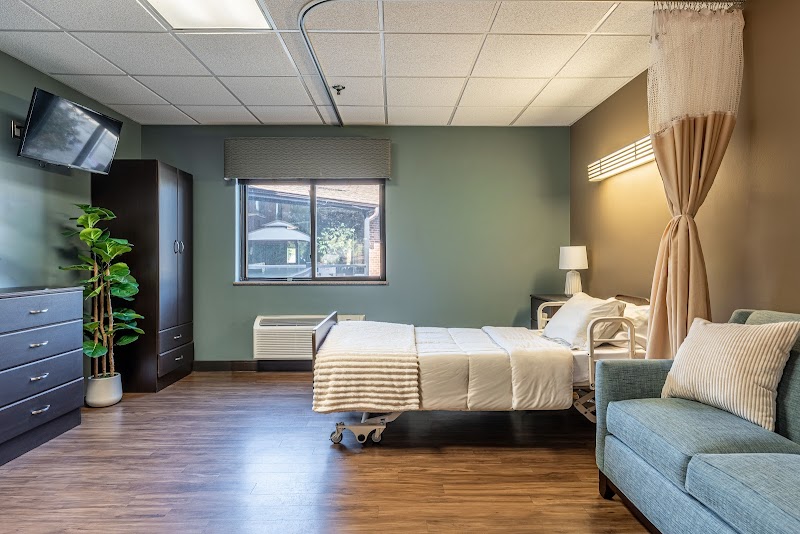
How Does Pavilion On Main Street, The Compare to Other Illinois Nursing Homes?

Compared to the 100 nursing homes in Illinois, PAVILION ON MAIN STREET, THE's overall rating (2 stars) is below the state average of 2.5, staff turnover (26%) is significantly lower than the state average of 46%, and health inspection rating (2 stars) is below the national benchmark.

What Should Families Ask When Visiting Pavilion On Main Street, The?

Based on this facility's data, families visiting should ask: "What changes have been made since the serious inspection findings, and how are you preventing similar issues?" "Can you walk me through typical staffing levels on day, evening, and night shifts?" "Can I visit during a mealtime to observe dining assistance and food quality?" "How do you handle medical emergencies, and what is your hospital transfer rate?" These questions are particularly relevant given the facility's Immediate Jeopardy citations and the below-average staffing rating.

Is Pavilion On Main Street, The Safe?

Based on CMS inspection data, PAVILION ON MAIN STREET, THE has documented safety concerns. Inspectors have issued 1 Immediate Jeopardy citation (the most serious violation level indicating risk of serious injury or death). The facility has a 2-star overall rating and ranks #100 of 100 nursing homes in Illinois. Families considering this facility should ask detailed questions about what corrective actions have been taken since these incidents.

Do Nurses at Pavilion On Main Street, The Stick Around?

Staff at PAVILION ON MAIN STREET, THE tend to stick around. With a turnover rate of 26%, the facility is 20 percentage points below the Illinois average of 46%. Low turnover is a positive sign. It means caregivers have time to learn each resident's needs, medications, and personal preferences. Consistent staff also notice subtle changes in a resident's condition more quickly.

Was Pavilion On Main Street, The Ever Fined?

PAVILION ON MAIN STREET, THE has been fined $192,163 across 2 penalty actions. This is 5.5x the Illinois average of $35,000. Fines at this level are uncommon and typically indicate a pattern of serious deficiencies, repeated violations, or failure to correct problems promptly. CMS reserves penalties of this magnitude for facilities that pose significant, documented risk to resident health or safety. Families should request specific documentation of what issues led to these fines and what systemic changes have been implemented.

Is Pavilion On Main Street, The on Any Federal Watch List?

PAVILION ON MAIN STREET, THE is not on any federal watch list. The most significant is the Special Focus Facility (SFF) program, which identifies the bottom 1% of nursing homes nationally based on persistent, serious quality problems. Not being on this list means the facility has avoided the pattern of deficiencies that triggers enhanced federal oversight. This is a positive indicator, though families should still review the facility's inspection history directly.