SANDWICH LIVING & REHAB CENTER
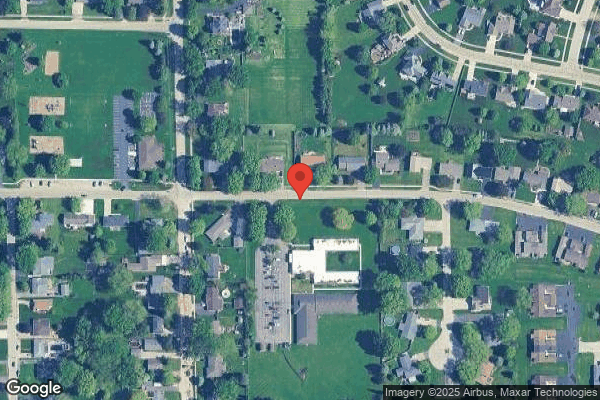
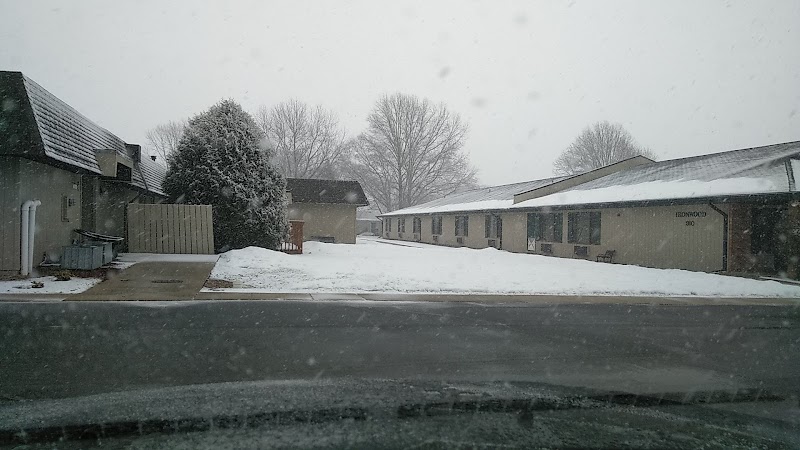
902 EAST ARNOLD STREET, SANDWICH, IL 60548 (815) 786-8409
For profit - Limited Liability company 63 Beds Independent Data: November 2025 3 Immediate Jeopardy citations
Trust Grade
0/100
#626 of 665 in IL
Last Inspection: December 2024

Within standard 12-15 month inspection cycle. Federal law requires annual inspections.

Overview

Sandwich Living & Rehab Center has received a Trust Grade of F, indicating significant concerns about the quality of care provided. They rank #626 out of 665 nursing homes in Illinois, placing them in the bottom half of facilities statewide and at #7 out of 7 in DeKalb County, meaning there are no better local options available. The facility's trend is improving, with a notable reduction in issues from 39 in 2024 to just 2 in 2025; however, the staffing rating is below average at 2 out of 5 stars, with a concerning turnover rate of 79%, much higher than the state average. There have been serious problems, including a critical incident where a resident experienced a choking episode due to being served the wrong diet, and another resident sustained a hip fracture during a transfer that was not managed properly, highlighting serious risks in resident care. While the facility has some strengths, such as an average level of RN coverage, the high fines of $292,024 and the number of deficiencies found are alarming, suggesting ongoing compliance issues that families should seriously consider.

Trust Score
F
0/100
In Illinois
#626/665
Bottom 6%
Safety Record
High Risk
Review needed
Inspections
Getting Better
39 → 2 violations
Staff Stability
⚠ Watch
79% turnover. Very high, 31 points above average. Constant new faces learning your loved one's needs.
Penalties
⚠ Watch
$292,024 in fines. Higher than 89% of Illinois facilities, suggesting repeated compliance issues.
Skilled Nurses
✓ Good
Each resident gets 56 minutes of Registered Nurse (RN) attention daily — more than average for Illinois. RNs are trained to catch health problems early.
Violations
⚠ Watch
78 deficiencies on record. Higher than average. Multiple issues found across inspections.
★☆☆☆☆
1.0
Overall Rating
★★☆☆☆
2.0
Staff Levels
★★☆☆☆
2.0
Care Quality
★☆☆☆☆
1.0
Inspection Score
Stable
2024: 39 issues
2025: 2 issues

The Good

  • Full Sprinkler Coverage · Fire safety systems throughout facility
  • No fines on record

Facility shows strength in fire safety.

The Bad

1-Star Overall Rating

Below Illinois average (2.5)

Significant quality concerns identified by CMS

Staff Turnover: 79%

33pts above Illinois avg (46%)

Frequent staff changes - ask about care continuity

Federal Fines: $292,024

Well above median ($33,413)

Significant penalties indicating serious issues

Staff turnover is very high (79%)

31 points above Illinois average of 48%

The Ugly 78 deficiencies on record

3 life-threatening 10 actual harm
Apr 2025 2 deficiencies
CONCERN (D) 📢 Someone Reported This

A family member, employee, or ombudsman was alarmed enough to file a formal complaint

Potential for Harm - no one hurt, but risky conditions existed

Accident Prevention (Tag F0689)

Could have caused harm · This affected 1 resident

**NOTE- TERMS IN BRACKETS HAVE BEEN EDITED TO PROTECT CONFIDENTIALITY** Based on observation, interview, and record review the facility failed to maintain a safe walking environment for a resident at ...

Read full inspector narrative →
**NOTE- TERMS IN BRACKETS HAVE BEEN EDITED TO PROTECT CONFIDENTIALITY** Based on observation, interview, and record review the facility failed to maintain a safe walking environment for a resident at risk for falls for 1 of 3 residents (R3) reviewed for falls in the sample of 11. The findings include: On 4/16/25 at 12:07 PM, R4 was sitting on her bed. R4 said she usually goes to the dining room for meals, but was feeling a little irritated today. R4 said she usually sits in a table closer to the sliding, glass door. R4 said the floor is messed up in the dining room and she saw a male resident fall about a month ago because of it. R4 stated, The floor is coming up in some places and the leg of her chair gets caught up in it. I've told everyone about it because I don't want anyone to get hurt. R4 said the facility told her that the floor was going to be replaced, but nothing has happened and it's been a month. R4's facility assessment dated [DATE] showed she was cognitively intact. On 4/16/25 at 12:09 PM, the surveyor toured the dining room area. The room has a small half wall at one end and a sliding, glass door at the opposite end. There were 2 visible seams in the laminate flooring that ran the length of this room. Along the visible seams there were random patches of a brown, sticky substance (floor glue combined with floor debris) and tiny nails that were run along both sides of the seams in other areas. Both seam lines had various areas where the laminate flooring was puckering (each side of the seam was lifted from the surface and posed a fall risk hazard). The surveyor touched these areas with her shoe. The puckered areas caught the surveyor's foot and could pose a tripping hazard. The brown substance along the seams was thick and sticky (also posing a potential fall risk hazard).The two seams run the length of the dining room and the dining room tables are placed sporadically around the dining room. On 4/16/25 at 1:26 PM, R3 was lying in bed. R3 said had fallen in the dining room a while ago. R3 said he used his walker to go to the dining room and stopped at his table. R3 said another female resident asked for his help and he left his walker parked to get her a clothing protector. R3 said when he turned around to take the clothing protector to her, his foot got stuck on the floor and he tripped. R3 said the floor was really sticky and it made me trip. R3 said the facility put the floor glue down because the floor comes up along that line (the seam in the laminate flooring). R3 said he fell face first and got a bloody nose. R3 said he went to the hospital, but was lucky not to break anything. R3 said he thought they fixed the floor after he fell. R3 said he shouldn't have parked his walker and tried to walk without it, but the floor was what tripped him up. R3 said his nose and under his right eye was pretty bruised up, but it's better now. R3 said he couldn't remember if any staff members were in the dining room, but he saw V10 (Registered Nurse - RN) right after he fell. R3's Facesheet dated 4/16/25 showed diagnoses to include, but not limited to: dementia, anxiety, diabetes, chronic lymphocytic leukemia (CLL), schizophrenia, reduced mobility, and idiopathic peripheral neuropathy. R3's facility assessment dated [DATE] showed he had moderate cognitive impairment; had not limitations to his bilateral upper and lower extremities;could walk 10-150 feet with supervision; and could walk 50 feet with two turns with supervision. R3's Progress Notes dated 3/20/25 showed, At 7 AM a loud crash was heard and resident observed lying on the floor in the dining room, face down. He stated, I tripped. He had bleeding from his nose, reddened area on his right cheek and forehead . He was able to move all extremities but did complain of some pain in the left arm and shoulder . This note showed R3 was transferred to the hospital by ambulance. R3's Progress Note dated 3/20/25 showed he returned to the facility at 11 AM and did not sustain any fractures. R3's Fall Risk Care Plan dated 11/21/24 showed he was at risk for falls due to psychotropic medications or a new medication that could cause dizziness. (This showed R3 was a fall risk prior to his fall). R3's Fall Care Plan initiated 3/21/25 showed he had an actual fall on 3/20/25. This care plan showed an intervention to include, but not limited to: Maintain a safe environment. On 4/16/25 at 12:57 PM, V4 (Maintenance Director) said there are seams that run across the main dining room floor. V4 said occasionally the resident's walker or wheelchair will get caught up on the seam, so I will nail it or glue it down. The surveyor asked what the brown substance was that was along the seam. V4 said it was floor glue. V4 said the floor does pucker (lift along the seam) off and on. V4 stated, I know [R3 and R4] have complained about it and I've done my best to fix it. V4 said all flooring throughout the building is on the list to be replaced. On 4/16/25 at 1:07 PM, V2 (Director of Nursing - DON) said she wasn't in the building when R3 fell. V2 said R3 was in the dining room, he parked his walker to help another resident, and he just fell. V2 said R3 Face planted. V2 said R3 went to the hospital and came back with no fractures. V2 said R3 did have a bruise to the bridge of his nose for a while. V2 said V10 (RN) was the nurse that day. On 4/16/25 at 1:35 PM, V10 (RN) said she was working on 3/20/25. V10 said she did not see R3 fall. V10 stated, I heard a loud crash and found [R3] laying face-down on the dining room floor. He smacked his face right on the floor. V10 said R3 usually sits at the table near the partial wall (one of the seams runs right along area of this table). V10 said she didn't see what happened, but R3 said he tripped. V10 said she was worried he may have fractured his nose, but luckily he didn't break anything. V10 said R3 had some bleeding from his nose and bruises to his nose and right cheek. V10 said there have been issues with the seams of the dining room floor since it was installed. V10 said she's not sure what that brown substance is along the seams, but assumed it must be glue because it doesn't come up when they clean the floors. V10 said R3 is alert and oriented and can make his needs know. V10 said R3 had a steady gait with his walker and was able to ambulate independently. V10 said she was not aware of R3 falling before this incident. On 4/17/25 at 10:11 AM, V1 (Administrator) said he is aware there is an issue with the dining room floor. The surveyor asked V1 if the brown sticky substance or the areas where the seams puckered (both sides of the seam loose from the floor) would be considered a fall hazard. V1 replied, If the flooring is coming up or there is any sort of an obstruction, then it could be a problem. V1 said his job at the facility is to ensure the residents' safety. The facility's Falls and Fall Prevention Policy dated 11/2024 showed, Policy: 1. To ensure residents admitted are assessed for potential fall risk. 2. To ensure a fall prevention program will include measures which will determine the individual need of each resident by assessing the risk of falls and implementation of appropriate interventions to provide necessary supervision and assistive devices as indicated based on assessment . Procedure: . 9. Malfunctioning equipment will be immediately given to maintenance for repair or removal service .
CONCERN (D) 📢 Someone Reported This

A family member, employee, or ombudsman was alarmed enough to file a formal complaint

Potential for Harm - no one hurt, but risky conditions existed

Safe Environment (Tag F0921)

Could have caused harm · This affected 1 resident

**NOTE- TERMS IN BRACKETS HAVE BEEN EDITED TO PROTECT CONFIDENTIALITY** Based on observation, interview, and record review the facility failed to maintain the dining room floor in a safe, functional c...

Read full inspector narrative →
**NOTE- TERMS IN BRACKETS HAVE BEEN EDITED TO PROTECT CONFIDENTIALITY** Based on observation, interview, and record review the facility failed to maintain the dining room floor in a safe, functional condition for 9 ambulatory residents (R2, R3, R4, R6, R7, R8, R9, R10, R11) reviewed for a safe, functional environment in the sample of 11. The findings include: On 4/18/25, V1 (Administrator) provided a list of residents that were ambulatory to the dining room. This list included R2, R3, R4, R6, R7, R8, R9, R10 and R11. On 4/16/25 at 12:09 PM, the surveyor toured the dining room area. The room has a small half wall at one end and a sliding, glass door at the opposite end. There were 2 visible seams in the laminate flooring that ran the length of this room. Along the visible seams there were random patches of a brown, sticky substance (floor glue combined with floor debris) and tiny nails that were ran along both sides of the seams in other areas. Both seam lines had various areas where the laminate flooring was puckering (each side of the seam was lifted from the surface and posed a fall risk hazard). The surveyor touched these areas with her shoe. The puckered areas caught the surveyor's foot and could pose a tripping hazard. The brown substance along the seams was thick and sticky (also posing a potential fall risk hazard).The two seams run the length of the dining room and the dining room tables are placed sporadically around the dining room. On 4/16/25 at 12:07 PM, R4 said she usually sits in a table closer to the sliding, glass door. R4 said the floor is messed up in the dining room and she saw a male resident fall about a month ago because of it. R4 stated, The floor is coming up in some places and the leg of her chair gets caught up in it. I've told everyone about it because I don't want anyone to get hurt. R4 said the facility told her that the floor was going to be replaced, but nothing has happened and it's been a month. R4's facility assessment dated [DATE] showed she was cognitively intact. On 4/16/25 at 1:26 PM, R3 said he used his walker to go to the dining room and stopped at his table. R3 said another female resident asked for his help and he left his walker parked to get her a clothing protector. R3 said when he turned around to take the clothing protector to her, his foot got stuck on the floor and he tripped. R3 said the floor was really sticky and it made me trip. R3 said the facility put the floor glue down because the floor comes up along that line (the seam in the laminate flooring). R3's facility assessment dated [DATE] showed he had moderate cognitive impairment; had no limitations to his bilateral upper and lower extremities;could walk 10-150 feet with supervision; and could walk 50 feet with two turns with supervision. On 4/16/25 at 12:57 PM, V4 (Maintenance Director) said the main dining room floor was approximately two years old. V4 said the previous ownership told him to apply the laminate on top of the vinyl flooring that was already down. V4 said he advised that it wasn't the best way to install the floor. V4 said there are seams that run across the main dining room. V4 said occasionally the resident's walker or wheelchair will get caught up on the seam, so I will nail it or glue it down. The surveyor asked what the brown substance was that was along the seam. V4 said it was floor glue. V4 said the floor does pucker (lift along the seam) off and on. V4 stated, I know [R3 and R4] have complained about it and I've done my best to fix it. V4 said all flooring throughout the building is on the list to be replaced. On 4/16/25 at 1:55 PM, V6 (Certified Nursing Aide - CNA) said the flooring in the dining room was 1-2 years old. V6 stated, It was done crappy. The seams don't stay together. That brown stuff on the floor is glue. They keep trying to fix it. I wasn't here, but I heard a resident tripped over one of the seams recently. They did try to fix the floor, but that's what they get when they get cheap stuff. I don't always lift my feet up all the way. I shuffle my feet and I get caught up in it sometimes. On 4/17/25 at 10:11 AM, V1 (Administrator) said the floor in the dining room was on the list for replacement. V1 said it is laminate flooring and there are seams in the floor. V1 said he is aware there is an issue with the dining room floor. The surveyor asked V1 if the brown sticky substance or the areas where the seams puckered (both sides of the seam loose from the floor) would be considered a fall hazard. V1 replied, If the flooring is coming up or there is any sort of an obstruction, then it could be a problem. V1 said his job at the facility is to ensure the residents' safety. The facility's Equipment Maintenance and Repair Policy dated 7/24 showed, All equipment utilized in this facility shall be maintained, operated, and repaired as directed .
Dec 2024 9 deficiencies 2 Harm
SERIOUS (G)

Actual Harm - a resident was hurt due to facility failures

Pressure Ulcer Prevention (Tag F0686)

A resident was harmed · This affected 1 resident

**NOTE- TERMS IN BRACKETS HAVE BEEN EDITED TO PROTECT CONFIDENTIALITY** Based on observation, interview, and record review the facility failed to identify a wound prior to becoming a deep tissue injur...

Read full inspector narrative →
**NOTE- TERMS IN BRACKETS HAVE BEEN EDITED TO PROTECT CONFIDENTIALITY** Based on observation, interview, and record review the facility failed to identify a wound prior to becoming a deep tissue injury (DTI), failed to ensure pressure ulcer interventions were in place, and failed to ensure weekly wound assessments were done for 2 of 5 residents (R11, R19) reviewed for pressure ulcers in the sample of 13. These failures resulted in R11 being at an increased risk of infection and delayed wound healing. The findings include: 1. R11's face sheet printed on 12/4/24 showed an admission date of 7/13/24 and diagnoses including but not limited to fracture of right lower leg, urinary tract infection, pneumonia, and peripheral vascular disease. R11's facility assessment dated [DATE] showed no cognitive impairment and staff assistance required for transfers and toileting hygiene. The same assessment showed R11 is always incontinent of urine and bowel. R11's pressure ulcer risk assessment dated [DATE] showed a moderate risk for pressure ulcer development. R11's December 2024 physician orders report showed an order start dated 10/6/24 for: Check lower leg, with CAM (controlled ankle movement) boot on for increased edema or complications. Notify MD if changes/occur, every day and night shift. The report showed a second order start dated 11/10/24 for: Right heel: cleanse, paint right side of heel with betadine, wrap with kerlex, apply heel boot, every day and night shift. On 12/3/24 at 9:22 AM, R11 was lying in bed and complained of pain to her right foot, which was wrapped in a white gauze bandage (kerlix) from the ankle to the toes. Her right heel was lying directly on the bed and the left heel had a blue heel boot on it. A sign was posted above the bed showing heel boots to be on at all times. R11 said she has a sore on her right foot but was not able to explain the cause. A black medical boot (CAM boot) was lying on the floor at the foot of the bed. On 12/3/24 at 11:47 AM, V11 and V12 (Certified Nurse Aides) stated R11 has a sore on her right heel. It was caused by the medical boot she wears when she is out of bed. Her heels need to be floated or a heel protector on them to take any pressure off the areas. At 11:50 AM, V14 (Registered Nurse) entered the room and said R11 had surgery on her right leg due to a fall at home. She wears the medical boot daily and it has caused a sore on her foot. V14 stated she was not sure if the boot rubbing has been addressed with the physician or family yet. V14 was unable to provide any specifics related to the stage or characteristics of the wound. R11's progress note dated 11/10/24 at showed: .Writer observed a circular, non-blanchable purple discolored area measuring 3x3 (centimeters). Skin intact, no drainage or odor observed. No (complaint) pain or discomfort. Area cleansed with wound cleanser, betadine applied along with kerlix dressing. Resident tolerated dressing change. MD faxed and made aware. Return orders pending. Will endorse to oncoming shift to follow up. POA make aware and was happy that she was informed. Treatment in place. Will continue with current care plan. R11's November TAR (Treatment Administration Record) showed an order start dated 7/16/24 for weekly skin checks every Tuesday. The TAR was documented every Tuesday with no skin changes for the entire month, including the three Tuesdays after the 11/10/24 progress note showed a wound. R11's electronic and paper medical records were reviewed by this surveyor. No documentation could be located related to any heel wound assessments after the 11/10/24 progress note. R11's care plan was reviewed by this surveyor. There was no focus area or interventions in place related to the wound. On 12/4/24 at 11:51 AM, V4 (Nurse Consultant) stated there are no wound assessments for R11 after the day it was identified on 11/10/24. V4 said there are no wound rounds or weekly assessments available. Nothing is in the progress notes either. On 12/4/24 at 2:35 PM, R11's right heel was observed during the dressing change with V6 (Registered Nurse/RN). A dark purple, half-dollar size pressure ulcer was still located on her right heel. On 12/5/24 at 8:39 AM, V3 (Director of Nursing) stated wounds should be found before reaching an advanced stage. Residents can get more skin break down and have the risk for infection. V3 said a deep, dark purple area would be an unstageable pressure ulcer. That is an advanced stage wound. Any resident with a pressure ulcer should be followed by the wound physician. A wound assessment should be done immediately by the nurse on duty. A full physician wound assessment should be done within a day or two after that and then on a weekly basis. The weekly assessments are important to be sure that the treatment is working. There is no way of knowing if the wound is getting better or worse if there are no assessments. Interventions need to be in place right away. The care plan shows how to direct the wound care being provided. Interventions explain from shift to shift what is needed for good wound healing. R11's Wound and Skin Record dated 12/5/24 at 9:34 AM (only performed after this surveyor requested the wound to be assessed) showed a right heel deep tissue injury, dry with cracks around it, black color on both sides and purple/redness within the wound. The facility Pressure Ulcer Prevention and Guidelines policy reviewed dated 9/2024 states under the procedure section: 3. The skin check assessment tool will be used with new onset and referred to the treatment nurse for follow-up with the Physicians as indicated. The facility Wound Assessment policy review dated 9/2024 states: It is the policy of this facility to do a systemic ongoing wound assessment on all wounds in order to determine the response to nursing care and treatment modalities. The policy states: 2. A complete wound assessment will be done weekly by a licensed nurse for all wounds, ulcers, and impairment in the skin integrity. 3. The weekly wound assessment documentation will be recorded weekly on the weekly pressure sore log and/or other skin condition log. 2. R19's order summary sheet documents his diagnoses to include multiple sclerosis and pressure ulcer of unspecified buttock, stage 4. The current orders include dressing orders for the left buttock and sacrum, and the right buttock. On 12/3/24 at 10:37 AM, R19 said he has wounds to his buttocks. The nurses change the dressings twice a day. On 12/4/24 at 3:02 PM, V6 (RN) performed the dressing change for R19, and he was observed to have a large and deep Stage 4 pressure injury to his left buttock and sacral area. He had an additional wound to his right buttock. The last 3 months of wound assessments were requested from the facility. The last assessment was dated 11/15/24. The previous assessments were dated 10/25/24, 10/4/24 and 9/27/24. The facility Wound Assessment policy review dated 9/2024 states: It is the policy of this facility to do a systemic ongoing wound assessment on all wounds in order to determine the response to nursing care and treatment modalities. The policy states: 2. A complete wound assessment will be done weekly by a licensed nurse for all wounds, ulcers, and impairment in the skin integrity. 3. The weekly wound assessment documentation will be recorded weekly on the weekly pressure sore log and/or other skin condition log.
SERIOUS (G)

Actual Harm - a resident was hurt due to facility failures

Deficiency F0692 (Tag F0692)

A resident was harmed · This affected 1 resident

**NOTE- TERMS IN BRACKETS HAVE BEEN EDITED TO PROTECT CONFIDENTIALITY** Based on observation, interview, and record review the facility failed to prevent an unplanned, significant weight loss for 1 of...

Read full inspector narrative →
**NOTE- TERMS IN BRACKETS HAVE BEEN EDITED TO PROTECT CONFIDENTIALITY** Based on observation, interview, and record review the facility failed to prevent an unplanned, significant weight loss for 1 of 2 residents (R8) reviewed for nutrition in the sample of 13. This failure resulted in R8 sustaining a 7.98% weight loss over 1 month. The findings include: R8's face sheet printed on 12/4/24 showed diagnoses including but not limited to cerebral infarction, Parkinson's disease, depression, vomiting without nausea, and dysphagia (difficulty swallowing). R8's facility assessment dated [DATE] showed no cognitive impairment and partial to moderate staff assistance for eating. The same assessment showed full staff dependence for transfers. On 12/3/24 at 12:23 PM, R8 was seated at the lunch table with a pureed texture meal in front of her. A magic cup nutritional supplement was next to her plate and R8 was using a sippy-type cup. R8's head was down, and she was not eating. R8 appeared thin and fragile. R8 was missing multiple teeth. Several staff members approached R8 throughout the meal but none offered assistance or cueing. At 12:48 PM, R8 wheeled herself out of the dining room. Her lunch meal was completely untouched. R8's electronic medical record was reviewed and showed on 10/23/24 she weighed 106.5 pounds. On 11/28/24 she weighed 98 pounds. (This is a 7.98% loss in one month). R8's nutrition/dietary note dated 10/18/24 showed resident is under weight for her age and dietary recommendations were given. Those recommendations included pudding 2 times daily, magic cup daily, mighty shake 3 times daily, benecalorie to be mixed with thickened cranberry 2 times daily, and medpass 90 mL (milliliters) mixed with food. The same 10/18/24 nutritional note recommended Remeron (medication) to increase R8's appetite. The note stated resident will continue on weekly weights. R8's November and December 2024 medication administration records and progress notes were reviewed. There was no documentation of any follow up or administration of the dietary recommendations, other than the medpass and pudding. R8's physician order report showed an order start dated 10/24/24 for weekly weights to be done every Wednesday morning. There were no weights done until 11/13/24 (two weeks later). On 12/5/24 at 12:06 PM, V6 (Registered Nurse) stated weights should be done as frequently as ordered. The dietary staff and dietitian reviews them. Any big gains or losses need to be addressed. The dietitian gives recommendations if someone is losing weight. The nurses are responsible for getting the suggestions to the doctor. New orders are put in after he approves the suggestions. It should be done in a couple of days, 1 to 3 max. It is important the recommendations get followed up on quickly for healthy weight gain, wound healing, and good health. V6 stated R8 has definitely lost weight recently. V14 (Registered Nurse) just dug into her chart two days ago and is looking into it. On 12/5/24 at 11:30 AM, V13 (Registered Dietitian) stated she just took over care for R8 three weeks ago. Residents should be seen by a dietician on at least a monthly basis. Weights are obtained from staff and group discussions take place as soon as any concerns are discovered. V13 said the staff should be getting weights recorded sooner. Any refusals to be weighed should be charted. V13 said she defines a significant weight loss based on the general standard of 5% loss over 30 days, 7.5% loss over 90 days, and 10% loss after that. V13 stated R8's weight loss of 7.98% over one month is a significant weight loss. V13 said she would expect staff to be implementing and following up on dietary recommendations within a few days. The physician should have been notified of the recommendations and all the approved recommendations started. V13 said there is the potential for more weight loss, poor skin integrity and overall decline of a resident when the dietary recommendations are not followed. R8's care plan showed a focus area related to weight loss. Interventions included give the resident supplements as ordered. Alert nurse/dietitian if not consuming on a routine basis. Monitor and evaluate any weight loss. Weight monitoring per facility protocol. The facility Unintended Weight Loss policy revision dated 9/2024 states: 1. Resident is weighed monthly after admission and/or weekly, as requested by the physician/dietician .5. Resident's physician will be informed of significant weight loss. 6. Dietician recommendation for weight gain will be referred to the physician.
CONCERN (D)

Potential for Harm - no one hurt, but risky conditions existed

Safe Environment (Tag F0584)

Could have caused harm · This affected 1 resident

Based on observation, interview and record review the facility failed to provide a comfortable home like dining experience for two of three residents (R21 and R7) reviewed for clean, comfortable homel...

Read full inspector narrative →
Based on observation, interview and record review the facility failed to provide a comfortable home like dining experience for two of three residents (R21 and R7) reviewed for clean, comfortable homelike in the sample of 13. The findings include: On 12/4/2024 at 8:20 AM R21 and R7 were observed eating their breakfast in the small dining room near the sliding glass doors leading to the patio. R5 came and opened the patio doors to go outside to fill the bird feeders, leaving the doors open and cold air was blowing into the dining room. R21 was observed pushing himself away from his breakfast and saying,It's too cold to sit here anymore. R21 had over half his breakfast left. R7 was observed glancing over his shoulder several times to look at the open doors. R7 then left the dining room with food still on his plate. Several facility staff were observed walking past the small dining room and the open door and some were heard saying how cold it was. At 8:28 AM, V6 (Registered Nurse/RN) went and got R21 who had wheeled himself around the corner to get away from the cold, and brought him to the medication cart placed in line of the cold draft blowing into the facility. R21 said,It's too cold to sit here and V6 said she just had to give him his medications and then she would move him to another area. On 12/5/24 at 9:25 AM, R7 said it was getting too cold to sit in the dining room with the door open for that long, but he was done eating anyway. R7 said he doesn't know why the door had to be left open for so long. On 12/5/24 at 9:15 AM, R5 said he fills the bird feeders whenever they need to be filled. R5 said he can do it by himself and does it when he wants to. R5 said no staff have ever helped him or asked him to keep the doors closed. The weather on 12/5/24 at 8:30 AM was in the 20's with wind per accu weather. On 12/5/24 at 9:30 AM, V6 said she was so busy with passing medications that she did not notice the residents leaving the dining room. On 12/5/24 at 9:35 AM, V1 (Administrator) said he was not aware R5 was filling the bird feeders outside and he had concerns for his safety doing this. V1 said the staff should have intervened in the situation and closed the door to prevent the cold air from coming in and should have assisted R5 for his safety. The facility policy for resident rights (Residents' Right for People in Long-term Care Facilities) shows you have the right to safety and good care. Your facility must provide services to keep your physical and mental health and sense of satisfaction. Your facility must make reasonable arrangements to meet your needs and choices.
CONCERN (D)

Potential for Harm - no one hurt, but risky conditions existed

Accident Prevention (Tag F0689)

Could have caused harm · This affected 1 resident

**NOTE- TERMS IN BRACKETS HAVE BEEN EDITED TO PROTECT CONFIDENTIALITY** Based on observation, interview, and record review the facility failed to ensure a resident was transferred in a safe manner (R8...

Read full inspector narrative →
**NOTE- TERMS IN BRACKETS HAVE BEEN EDITED TO PROTECT CONFIDENTIALITY** Based on observation, interview, and record review the facility failed to ensure a resident was transferred in a safe manner (R8) and failed to ensure a resident was assessed for safe smoking (R18) for 2 of 4 residents reviewed for safety in the sample of 13. The findings include: 1. R8's face sheet printed on 12/4/24 showed diagnoses including but not limited to cerebral infarction, Parkinson's disease, depression, vomiting without nausea, and dysphagia (difficulty swallowing). R8's facility assessment dated [DATE] showed no cognitive impairment and partial to moderate staff assistance for eating. The same assessment showed full staff dependence for transfers. R8's December 2024 order summary report showed an order start dated on 9/30/24 for: Because of potential for injury please make this patient a Mechanical lift only . On 12/4/24 at 9:03 AM, V11 and V16 (Certified Nurse Aides) transferred R8 from her bed to the wheelchair. The aides sat R8 on the edge of the bed and held her underneath her arms. R8 appeared thin, weak, and fragile. R8 was unsteady and struggled to stand. R8's shoe fell off while she was attempting to pivot to the wheelchair. The aides did not apply a gait belt around R8's waist at any time. On 12/5/24 at 8:51 AM, V3 (Director of Nursing) stated the therapy department determines what method is needed to transfer a resident. Any physician order regarding the type of transfer should absolutely be followed. The MDS (facility assessment) also shows how to transfer a resident. The aides ask the nurse or look in the chart to determine which method to use. It is unsafe for the aides to transfer a resident incorrectly. There is a high risk of injury and falls, V3 stated R8 is a high fall risk and could seriously be injured if the mechanical lift is not used. On 12/5/24 at 8:59 AM, V11 and V12 (CNAs) stated they look at the banner in the electronic medical record for resident transfer types. If a resident needs a mechanical lift it will show there. The aides and this surveyor reviewed R8's banner page in the medical record. The banner showed a two person assist and did not state that a mechanical lift should be used. The aides stated the MDS nurse is the one that looks at the transfer orders and inputs it on the banner page. The aides said her banner needs to be updated if she has an order for a mechanical lift. The aides said they were not aware R8 needed a mechanical lift now. The facility's undated transfer policy states: Before the initiation of a transfer, you must know resident's weight bearing status (if appropriate) .medical precautions or contraindication .be knowledgeable of the amount/type of assistance required and any weight bearing precautions. 2. The smoking/vaping safety screen of 12/6/23 shows R18 was admitted to the facility on [DATE]. He uses smoking tobacco, and requires minimal assist with his ability to smoke. The next assessment was completed on 5/16/24, and no further assessments were documented. On 12/3/24, R18 was lying in bed, alert and oriented. He had an unlit cigar in his hand. He said since it is so cold outside, now he only goes out at night time to have a couple of hits. On 12/4/24 at 12:39 PM, V15 (Social Services) said smokers are screened annually and quarterly for safety. She said (R18) should have had a quarterly assessment to determine if he is safe to go outside to smoke. The facility smoking safety policy documents it is to provide a safe and healthy living environment with respect for the health and well-being needs of each resident, staff member and visitor. 3. Smokers will be evaluated to determine their ability to comply with safety rules and their ability to carry smoking materials. Residents requiring supervision shall receive this monitoring consistent with their assessment and plan of care.
CONCERN (D)

Potential for Harm - no one hurt, but risky conditions existed

Incontinence Care (Tag F0690)

Could have caused harm · This affected 1 resident

**NOTE- TERMS IN BRACKETS HAVE BEEN EDITED TO PROTECT CONFIDENTIALITY** Based on observation, interview and record review the facility failed to ensure an indwelling catheter drainage bag was maintain...

Read full inspector narrative →
**NOTE- TERMS IN BRACKETS HAVE BEEN EDITED TO PROTECT CONFIDENTIALITY** Based on observation, interview and record review the facility failed to ensure an indwelling catheter drainage bag was maintained in a manner to prevent contamination for 1 of 3 residents (R4) reviewed for catheters in the sample of 13. The findings include: R4's admission record shows he was admitted to the facility on [DATE] with multiple diagnoses including multiple sclerosis, flaccid neuropathic bladder, acute kidney failure, history of UTI's (Urinary Tract Infections). The facility's 10/21/24 annual resident assessment for R4 shows he has an indwelling urinary catheter. The 10/31/24 care plan documents he is at risk for UTI's due to indwelling urinary catheter. On 12/03/24 at 10:02 AM, R4 was observed lying in bed. He had an indwelling catheter bag on the side of his bed, and it was resting on the floor. On 12/03/24 at 11:27 AM, V11 and V12 (Certified Nursing Assistants) said catheter drainage bags should not be on the floor, due to infection issues. The drainage bag should be in a dignity bag. V11 and V12 were advised of R4's catheter drainage bag being on the floor. On 12/04/24 at 10:00 AM, R4's catheter drainage bag was observed still on the floor and the drainage tube was not covered, and touching the floor. On 12/4/24 at 10:13 AM, V3 (Director of Nursing) the catheter drainage bag should not be on the floor, and the drainage tube should be covered and closed. The bag needs to be in a bag. When the bag is on the floor, it could cause infections if that is on the floor.
CONCERN (D)

Potential for Harm - no one hurt, but risky conditions existed

Pharmacy Services (Tag F0755)

Could have caused harm · This affected 1 resident

**NOTE- TERMS IN BRACKETS HAVE BEEN EDITED TO PROTECT CONFIDENTIALITY** Based on observation, interview and record review the facility failed to initiate an antibiotic when ordered for 1 of 1 resident...

Read full inspector narrative →
**NOTE- TERMS IN BRACKETS HAVE BEEN EDITED TO PROTECT CONFIDENTIALITY** Based on observation, interview and record review the facility failed to initiate an antibiotic when ordered for 1 of 1 residents (R19) reviewed for pharmacy services in the sample of 13. The findings include: R19's order summary sheet documents he was admitted on [DATE] with multiple diagnoses including multiple sclerosis, and neuromuscular dysfunction of bladder. The orders show he has long term use of a urinary catheter. The after visit summary of the local emergency room shows R19 was seen on 9/20/24 for a fever and abdominal pain. He had blood tests and a urine culture completed. He was given IV (intravenous) antibiotics, and discharged with an order for cefpodoxime 200 mg (milligrams) twice daily for 10 days. The medication was to start on 9/20/24 and end on 9/30/24. The facility order for cefpodoxime was input on 9/21/24 at 1:20 AM. The September MAR (Medication Administration Record) shows the medication was not started until 9/21/24. On 12/05/24 at 10:13 AM, V3 (Director of Nursing) said at that time the facility had a different pharmacy could not say if the medication was available. She said the medication should have been started the same day it was ordered, especially an antibiotic. The doctor should have been notified if there was any issue with obtaining the medication. It is very important to start the antibiotics for UTI's (Urinary Tract Infections). R19 is very susceptible to going septic when he gets sick. The facility's 9/2023 policy for medication administration documents 11. In the event a drug is unavailable, the charge nurse shall be responsible for notifying the pharmacy for delivery. R19's progress notes were reviewed and no pharmacy or physician notification was documented relating to the antibiotic not being available for administration on 9/21/24.
CONCERN (D)

Potential for Harm - no one hurt, but risky conditions existed

Unnecessary Medications (Tag F0759)

Could have caused harm · This affected 1 resident

Based on observation, interview and record review the facility failed to administer medications as ordered. There were 25 opportunities with two errors resulting in a 8% error rate. This applies to on...

Read full inspector narrative →
Based on observation, interview and record review the facility failed to administer medications as ordered. There were 25 opportunities with two errors resulting in a 8% error rate. This applies to one of four residents (R23) observed in the medication pass. The findings include: On 12/4/2024 at 8:47 AM, V6 (Registered Nurse/RN) was observed giving R23 his morning medications during the medication pass observation task. The Physician Orders dated 12/2024 shows an order for pantoprazole 40 mg (milligrams) (medication for heartburn) to be given two times a day at 8:00 AM, and 5:00 PM and polyethylene glycol 17 grams ( medication for constipation) at 8:00 AM. These two medications were not given to or offered to R23 during the medication pass on 12/4/24 by V6. On 12/5/24 at 9:00 AM, V4 (Nurse Consultant) and V3 (Director of Nursing) said a resident's medication should be given as ordered by the physician. The facility face sheet shows R23 was admitted to the facility with alcoholic hepatitis, alcoholic cirrhosis and esophageal varices. The facility policy updated on 9/2023 for medication administration shows the medication administration record will be verified against the Physician orders.
CONCERN (D)

Potential for Harm - no one hurt, but risky conditions existed

Medical Records (Tag F0842)

Could have caused harm · This affected 1 resident

Based on observation, interview and record review the facility failed to use the current electronic health records (EHR) medication administration record (MAR) to administer medications to the residen...

Read full inspector narrative →
Based on observation, interview and record review the facility failed to use the current electronic health records (EHR) medication administration record (MAR) to administer medications to the residents. This applies to 3 of 3 residents (R21, R18 and R23) reviewed for medical records in the sample of 13. The findings include: On 12/3/24 at entrance into the facility at 8:30 AM, V1 (Administrator) said the facility had just gone live with the new EHR at midnight on 12/3/2024. On 12/4/24 between the hours of 8:20 AM to 8:47 AM, V6 (Registered Nurse/RN) was observed passing medications to R21, R18 and R23 and was using the past EHR's MAR. V6 said she had never been trained on how to pass medications and document in the facilities current EHR, so she was using what she knew how to do. V5 (Licensed Practical Nurse), who was in the facility to assist the staff on the use of the new EHR, observed V6 using the old EHR, asked V6 why was she using the old EHR and was told by V6 she did not know how to use the new system. V5 walked away from V6 and allowed her to continue using the old system to complete the AM medication pass. On 12/5/24 at 9:00AM, V4 (Nurse Consultant) and V3 (Director of Nursing) said all staff had been educated on the current EHR on 11/21/24 and the staff were expected to be using the new system for all care and documentation. V3 and V4 said if V6 had questions on how to document medication administration, she should have asked for help rather than using the old system. The old EHR's MAR may not have been up to date with the residents current medication orders. The MAR used for R23 on 12/4/24 at 8:47 AM by V6, did not show the medications pantoprazole (medication for heartburn) and polyethylene glycol (medication used for constipation) and R23 was not given these medications. The facilities current EHR's MAR dated December 2024 showed the medications pantoprazole and polyethylene glycol. The Physician's Order Sheet (POS) for R23 dated December 2024 showed orders for these same two medications should have been given at 8:00 AM medication pass. A medication error occurred for R23. The old EHR's MAR for R21 did not show the following medications that are listed on the new and current EHR's MAR: divalproex and levothyroxine. Both medications are listed as current on R21's POS dated December 2024. The facility policy updated on 9/2023 for medication administration shows the medication administration record (MAR) will be verified against the Physician orders.
CONCERN (D)

Potential for Harm - no one hurt, but risky conditions existed

Infection Control (Tag F0880)

Could have caused harm · This affected 1 resident

**NOTE- TERMS IN BRACKETS HAVE BEEN EDITED TO PROTECT CONFIDENTIALITY** 3. R11's face sheet printed on 12/4/24 showed an admission date of 7/13/24 and diagnoses including but not limited to fracture o...

Read full inspector narrative →
**NOTE- TERMS IN BRACKETS HAVE BEEN EDITED TO PROTECT CONFIDENTIALITY** 3. R11's face sheet printed on 12/4/24 showed an admission date of 7/13/24 and diagnoses including but not limited to fracture of right lower leg, urinary tract infection, pneumonia, and peripheral vascular disease. R11's facility assessment dated [DATE] showed no cognitive impairment and staff assistance required for transfers and toileting hygiene. The same assessment showed R11 is always incontinent of urine and bowel. On 12/3/24 at 11:47 AM, V11 and V12 (CNAs) entered R11's room to provide care. There was no signage posted on the door to indicate any type of isolation concerns and no PPE bin (personal protective equipment) nearby. The CNAs performed pericare wearing only gloves. A white gauze dressing was on R11's right foot. The aides stated she has a wound on her heel from a surgical boot. V11 and V12 transferred R11 from the bed to the wheelchair using a mechanical lift. On 12/3/24 at 12:10 PM, the aides and this surveyor exited R11's room. A PPE bin had been placed next to the door and a sign showing she was on enhanced barrier precautions was posted on the door. The sign showed gowns and gloves are needed while providing direct resident care, including transferring, changing briefs, and any wound care. V12 stated the bin and sign just got put there. V12 said if the signs are not posted, we have no way of knowing when to wear PPE. Based on observation, interview and record review the facility failed to implement EBP (enhanced barrier precautions) for 3 of 6 residents (R4, R11, R19) reviewed for infection control in the sample of 13. The findings include: 1. R19's December 4, 2024 order summary sheet documents him to have a stage 4 pressure injury, and an indwelling urinary catheter. On 12/2/24 at 9:30 AM, R19's door did not have a sign to indicate he was on EBP, and no PPE (personal protective equipment) including gowns, were readily available. On 12/03/24 at 10:36 AM, R19 was observed to have a urinary drainage bag on the frame of his bed. V11 and V12 (Certified Nursing Assistants/CNAs) were observed entering R19's room without donning gowns. V11 put on gloves. V12 did not have gloves on when she transferred the urinary drainage bag from the bed to the wheelchair during the mechanical lift transfer. V11 and V12 both said they did not know of any EBP, and no residents in the facility had any such isolation. R19's 9/17/24 care plans show Implementation of Enhanced Barrier Precaution due to 3 wounds (pressure injuries) and an indwelling catheter. The interventions show the use EBP during high contact care activities such as transferring, proving hygiene urinary catheter care and wound care. The care plan was revised on 10/2/24. 2. R4's admission record shows he was admitted to the facility on [DATE] with multiple diagnoses including multiple sclerosis, flaccid neuropathic bladder, acute kidney failure, history of UTIs (Urinary Tract Infections). The facility's 10/21/24 annual resident assessment for R4 shows he has an indwelling urinary catheter. The 10/31/24 care plan documents he is at risk for UTIs due to indwelling urinary catheter. On 12/03/24 at 10:02 AM, R4 was observed lying in bed. He had an indwelling catheter bag on the side of his bed. R4's door did not have any signs indicating EBP, and no PPE near his room. R4's care plan shows on 5/9/24 Enhanced Barrier Precautions were to be in place due to R4 having an indwelling urinary catheter. On 12/04/24 at 10:13 AM, V3 (Director of Nursing) said she was not aware residents with catheters had to be on EBP, she thought it was only for residents with open wounds. She said that was why R4 was not on EBP. She did not know R19 was not on EBP (due to wounds and a catheter) and both should have PPE available and signs on their doors. She said the staff should be educated on the procedure. The facility's 3/1/23 policy for EBP shows 1. EBP signs must be posted on the door. 3. Gloves and gowns must be worn for the following High-Contact Resident Care Activities: dressing, bathing/showering, transferring, changing linens, providing hygiene, changing briefs or assisting with toileting. It applies to residents with devices such as urinary catheters, and residents with any skin opening requiring dressing.
Sept 2024 5 deficiencies 1 Harm
SERIOUS (G) 📢 Someone Reported This

A family member, employee, or ombudsman was alarmed enough to file a formal complaint

Actual Harm - a resident was hurt due to facility failures

Free from Abuse/Neglect (Tag F0600)

A resident was harmed · This affected 1 resident

**NOTE- TERMS IN BRACKETS HAVE BEEN EDITED TO PROTECT CONFIDENTIALITY** Based on observation, interview, and record review the facility failed to ensure a resident was free of physical abuse for 1 of ...

Read full inspector narrative →
**NOTE- TERMS IN BRACKETS HAVE BEEN EDITED TO PROTECT CONFIDENTIALITY** Based on observation, interview, and record review the facility failed to ensure a resident was free of physical abuse for 1 of 3 residents (R1) reviewed for abuse in the sample of 7. This failure resulted in R1 being punched in the face by R2. The findings include: R1's face sheet showed he was admitted to the facility on [DATE] with diagnoses to include Type 2 Diabetes, repeated falls, essential hypertension, generalized anxiety disorder, chronic obstructive pulmonary disease, psychoactive substance abuse, muscle spasm, hypokalemia, unsteadiness on feet, and abnormalities of gait and mobility. R1's facility assessment dated [DATE] showed he has no cognitive deficits and verbal behavioral symptoms directed toward others. R1's care plan initiated 4/22/24 showed, Resident is known to display/has history of paranoid thoughts/behaviors and or open conflict/criticism with others including false accusations. Specific behavior exhibited: verbal aggression towards staff, false accusations, inappropriate gestures and facial expressions, name calling. Related diagnoses/condition: bipolar disorder Noncompliant with facility policies, makes accusations against others to deflect responsibility for breaking rules . Administer psychotropic medication as ordered by physician . Encourage psychotherapy and/or psychiatric consultation as indicated/tolerated by resident . Help resident understand why behavior is inappropriate/disruptive and the impact it has on personal well being and well being of others. Initiate Behavior Monitoring program to attempt to identify patterns, precursors, and causes of behavior and to attempt to understand the meaning of the behavior. On 9/18/24 at 1:20 PM, R1 was in his room sitting in his wheelchair. R1 had a bruise to the right side of his face along his nose line. R1 said, [R2] punched me in the face and made my nose bleed. R1's care plan initiated 5/2/24 showed, The resident is/has potential to be verbally aggressive related to ineffective coping skills, mental/emotional illness, poor impulse control . Analyze key times, places, circumstances, triggers, and what de-escalates behavior and document . R1's care plan initiated 5/21/24 showed, Resident has risk factors that require monitoring and intervention to reduce potential for self injury. Deafness/profound hearing loss, unsteady gait, weakness . psychiatric disorders becomes easily agitated and animated, use of assistive devices/wheelchair/walker . Risk factors include injury, pain as evidenced by resident being witnessed waving his arms, stomping his feet and throwing himself backwards and sideways in his wheelchair when he is angry R1's care plan initiated 4/22/24 showed, The resident may be prone to adjustment disorder issues. As evidenced by: outburst towards staff, refusing to comply by policies, exit seeking . R1's 9/11/24 Behavior Note entered at 8:59 AM showed, Resident out in parking lot, yelling to another resident and motioning him (R2) to go back in the building. [R2] was angry, attempting to hit [R1] with his walker but he ended up slamming his walker into the housekeeping manager who was attempting to get [R2] back into the building. Staff member stated her right arm is tender to touch. R2's face sheet showed he was admitted to the facility on [DATE] with diagnoses to include dementia without behavioral disturbance, Chronic Obstructive Pulmonary Disease, Hypertension, mood disorder, and psychotic disorder. R2's care plan initiated 2/14/24 showed, Per documentation received to date, resident has prior criminal record including but not limited to, multiple accounts of aggravated assault and battery from 1976-1978 . Continue to monitor resident's behavior. Follow plan of care, medications and behavior interventions as needed to maintain resident and milieu safety. R2's care plan initiated 10/24/23 showed, Behavior Management potential for verbal and physical aggression towards others . Ensure the safety of resident and others . Monitor for environmental factors that may contribute to new behaviors(s). R2's Behavior Note entered 9/11/24 at 9:05 Am showed, Resident went in to the parking lot unattended. The housekeeping manager was attempting to convince him to come back in to the building. Another resident, [R1] was yelling and motioning to [R2] to get back in the building. [R2] became angry and attempted to hit [R1] with his walker but ended up slamming the walker into the housekeeping manager. No injuries occurred. [R2] was eventually convinced to come back in the building. The facility's abuse investigation showed, Incident: Alleged Physical Abuse; Time: 3:43 PM; Date: 9/11/24 . It was reported to the administrator that R2 allegedly struck R1 in the face . After investigation and interviews, it was ascertained that R2 did strike R1. R2 who suffers from dementia, was walking with a CNA in front of the facility. R1 was reported to have been aggressively addressing R2 from across the parking lot. R2 started approaching R1. The CNA that was walking with him attempted to redirect R2 to no avail. The CNA attempted to obstruct the patch of R2 and was struck by R2. R2 then struck R1 and the two were quickly separated . On 9/18/24 at 2:20 PM, V7 CNA (Certified Nursing Assistant) said, On 9/11/24 R2 went out the door. I followed him and we walked to the dumpster and back. [R1] was over by the handicap parking and he was yelling F%*k you and flipping [R2] off. I told him to stop. [R1] has been picking on [R2] for a long time and I don't know why. [R2] was a nice guy and he just couldn't take it anymore [R2] turned around and headed to [R1]. [R2] drew his fist back and hit me accidentally and then punched [R1] in the face. Gave [R1] a bloody nose. I felt sorry for [R2] no one was doing anything to stop it. On 9/19/24 at 11:03 AM, V6 CNA (Certified Nursing Assistant) said R1 antagonizes R2 every day. V6 said R1 would scream at R2 and tell him and say he was going to kick his ass, kill him, or tell him to get back here you motherf*&ker. V6 said R2 never instigated R1, it was always R1 and she feels bad for R2 being transferred to another facility because he was not the problem. V6 said V1 was aware of the behaviors R1 was having toward R2. On 9/18/24 at 10:18 AM, V9 CNA said, [R1] is an instigator. A couple of weeks ago he went up to [R2] who was sleeping in the recliner and kicked him in his shin to wake him up and tell him he couldn't go outside. I reported it to the nurse. The facilities policy and procedure titled Abuse Prevention Program with revision date 11/28/2016 showed, Policy: This facility affirms the right of our residents to be free from abuse, neglect, misappropriation of resident property, and exploitation as defined below . This facility therefore prohibits mistreatment, exploitation, neglect or abuse of its residents, and has attempted to establish a resident sensitive and resident secure environment. The purpose of this policy is to assure that the facility is doing all that is within its control to prevent occurrences of mistreatment, exploitation, neglect, or abuse of our residents . Physical Abuse includes hitting, slapping, pinching, kicking .
CONCERN (D) 📢 Someone Reported This

A family member, employee, or ombudsman was alarmed enough to file a formal complaint

Potential for Harm - no one hurt, but risky conditions existed

Notification of Changes (Tag F0580)

Could have caused harm · This affected 1 resident

**NOTE- TERMS IN BRACKETS HAVE BEEN EDITED TO PROTECT CONFIDENTIALITY** Based on interview and record review the facility failed to notify a resident's Healthcare Power of Attorney (HPOA) regarding me...

Read full inspector narrative →
**NOTE- TERMS IN BRACKETS HAVE BEEN EDITED TO PROTECT CONFIDENTIALITY** Based on interview and record review the facility failed to notify a resident's Healthcare Power of Attorney (HPOA) regarding medication and weight changes. This applies to 1 of 3 resident (R4) reviewed for notification in the sample of 6. The findings include: R4's admission Record (Face Sheet) showed he was admitted to the facility on [DATE] with diagnoses to include but not limited to dementia with behaviors, seizures, and depression. R4's 8/6/24 Annual Minimum Data Set (MDS) showed he had severe cognitive impairment with a Brief Interview for Mental Status (BIMS) score of 7 out of 15. R1's Physician Orders showed he was on Lasix (a diuretic/water pill) 40 milligrams (mg) once a day which was ordered on 9/12/24 and started 9/13/24. R1's orders showed the 40 mg Lasix was discontinued on 9/16/24 and a new order for 80 mg Lasix was started with the first dose given on 9/17/24. R1's weights showed on 6/5/24 he weighed 187 pounds, then on 7/2/24 he weighed 175 pounds (a month-to-month weight loss of 6.4 percent), and finally on 8/5/24 he weighed 195 pounds (a weight gain of 11.4 percent). R1's progress notes showed no documented re-weights on or about 7/2/24 and 8/5/24. R1's progress notes showed no documented HPOA notifications on or about 7/2/24 and 8/5/24. R1's 7/29/24 Nutrition Note showed he had lost 6.4 percent body weight from 6/5/24 to 7/2/24. R1's 8/28/24 Nutrition Note showed he gained 11.4 percent body weight from 7/2/24 to 8/5/24. On 9/18/24 at 11:50, V12 R4's HPOA stated she was not notified of R4's weight loss, weight gain, or the Lasix dosage increase. V12 stated she learned about the weight loss from the hospice nurse weeks after the weight loss had happened. V12 said she should have been notified of the weight loss once it was identified. V12 said, Nurse said he (doctor) ordered 80 mg of Lasix and no one from facility called me to let me know. The nurse said I thought you and your Dad were not talking but I told her you are still supposed to call me if there were any changes. On 9/19/24 at 11:20 AM, V11 Registered Nurse stated she received the order from R4's physician and increased R4's Lasix from 40 mg to 80 mg. V11 stated she did not notify R4's HPOA of the Lasix increase and she should have. On 9/19/24 at 12:30 PM, V2 Director of Nursing (DON) stated V12 should have been notified of R4's weight loss and change in Lasix. V2 said V12 should be notified so she is aware of his health condition, and it allows her to make informed decisions about his health care. The facility's Notification for Change in Resident Condition or Status (Revision December 2017) showed, the facility and/or facility staff shall promptly notify appropriate individuals of changes in the resident's medical/mental condition and/or status .a need to alter the resident's medical treatment significantly .5 percent weight gain or loss in 30 days .
CONCERN (D) 📢 Someone Reported This

A family member, employee, or ombudsman was alarmed enough to file a formal complaint

Potential for Harm - no one hurt, but risky conditions existed

Quality of Care (Tag F0684)

Could have caused harm · This affected 1 resident

**NOTE- TERMS IN BRACKETS HAVE BEEN EDITED TO PROTECT CONFIDENTIALITY** Based on observation, interview, and record review the facility failed to assess and notify the physician of a new wound. This a...

Read full inspector narrative →
**NOTE- TERMS IN BRACKETS HAVE BEEN EDITED TO PROTECT CONFIDENTIALITY** Based on observation, interview, and record review the facility failed to assess and notify the physician of a new wound. This applies to 1 of 3 residents (R4) reviewed for wound care in the sample of 6. The findings include: R4's admission Record (Face Sheet) showed he was admitted to the facility on [DATE] with diagnoses to include but not limited to dementia with behaviors, seizures, and depression. R4's 8/6/24 Annual Minimum Data Set (MDS) showed he had severe cognitive impairment with a Brief Interview for Mental Status (BIMS) score of 7 out of 15. On 9/18/24 at 11:50 AM, V12 R4's Healthcare Power of Attorney (HPOA) stated she visited R4 on Monday, 9/16/24. V12 stated, when she visited R4 on Monday, R4's right leg was wrapped in a gauze dressing. V12 stated she is a nurse, and she removed the gauze dressing. V12 stated under the gauze wrap was an absorbent pad covering a 1.5 round wound to R4's shin. V12 said the wound had a white/yellow slough wound bed and yellow drainage. V12 stated she spoke to V11 Registered Nurse (RN) and V11 said the wound had been there since at least the Friday prior. V12 stated she was not notified of the wound. V12 stated R4's doctor had visited him earlier in the day; however, she did not believe he saw the wound because there were no treatment orders for the wound. V12 stated 9/16/24 was the last time she visited her father. On 9/19/24 at 10:35 AM, R4 had gauze wrap to his right leg from the ankle to below the knee. R4 had a gauze wrap to his left leg that had fallen and collected around his ankle. V3 Registered Nurse (RN) removed the gauze wrap to both legs. Underneath the gauze wrap to his right shin was a petroleum gauze dressing. V3 removed the petroleum dressing which exposed a 1.5-inch round non-draining wound. The wound was open, and the center of the wound had slough (a yellow/white substance comprising dead cells and other body matter) which comprised approximately 50 percent of the wound bed. The wound bed was moist. V3 stated she was the nurse who applied the petroleum dressing on R4's right shin the day prior (9/18/24). V3 said the wound was not open and it was a slit the day prior (despite the wound matching the exact description provided by V12 who last visited R4 on 9/16/24.) On 9/19/24 at 11:20 AM, V11 stated she did work Monday 9/16/24. V11 said the wound had just started developing over the last few days prior to 9/16/24 and it initially presented as a blister. V11 said she did not go in the room with R4's physician on 9/16/24 and she does not know if he saw the wound. V11 said, I don't think there are any treatments in place for his shin, not unless there are new orders since I worked last. V11 said the nurse that identifies the wound should be the one to do the initial assessment, provide an initial treatment, and then notify the physician. On 9/19/24 at 3:30 PM, The first and most recent assessment was requested for R4's right shin wound. The facility provided a skin note from 9/19/24 (3 days after V12 first saw wound). The note showed, .wound on right shin, 3 x 3.5 cm (centimeter) . The note did not describe the wound bed. On 9/19/24 at 12:30 PM, V2 Director of Nursing (DON) stated an assessment is done upon first identifying and then weekly. V2 said an assessment would include measurements and description of the wound bed and drainage. V2 said the purpose of the assessment is to ensure the correct treatments are applied and to track the progress of the wound. V2 said she is also supposed to be notified of new wounds and she was not aware of R4's wound to his shin. V2 said R4's shin wound should have been assessed when it was first identified, even if it was a blister. R4's Care Plan showed, The resident has wounds on the 2nd toe of each foot and on great toe and shin of RLE/foot (Right lower extremity). Possibly r/t (related to) edema, MASD (moisture associated skin damage), or pressure. or potential for pressure ulcer development r/t disease process. The Focus Area was revised on 9/17/24. (Two days before the initial assessment.) R4's Physician Orders on 9/19/24 at 9:50 AM showed no order for petroleum-based dressing or any dressing specific to R4's right shin. (Although one had been applied by V3 on 9/18/24.) The facility's Skin Condition Monitoring policy (Rev January 2018) showed Upon notification of a skin lesion, wound, or other skin abnormality, the Nurse will assess and document the findings in the nurses' notes .Any skin abnormality will have a specific treatment order until area is resolved Documentation of the area must include the following: Characteristic: 1. Size 2. Shape 3. Depth 4. Odor 5. Color 6. Presence of granulation or necrotic tissue .
CONCERN (D) 📢 Someone Reported This

A family member, employee, or ombudsman was alarmed enough to file a formal complaint

Potential for Harm - no one hurt, but risky conditions existed

Pressure Ulcer Prevention (Tag F0686)

Could have caused harm · This affected 1 resident

Based on observation, interview, and record review the facility failed to perform weekly assessments for pressure wounds. This applies to 2 of 3 residents (R5, R6) reviewed for wounds in the sample of...

Read full inspector narrative →
Based on observation, interview, and record review the facility failed to perform weekly assessments for pressure wounds. This applies to 2 of 3 residents (R5, R6) reviewed for wounds in the sample of 6. The findings include: 1. On 9/19/24 at 12:30 PM, V2 Director of Nursing stated the wound care physician assesses wounds every other Friday. V2 said the opposite week wound assessments are completed by the evening shift nurse. R5's 9/6/24 Wound Physician note showed she had a stage III pressure injury to her right shin that has not resolved. On 9/19/24 at 1:00 PM, the facility was unable to locate R5's 9/13/24 wound assessment. On 9/19/24 at 1:00 PM, R5 had an intact dressing to the right shin. On 9/19/24 at 12:30 PM, V2 stated she was not working the week on 9/13/24. V2 stated the facility does not have any electronic charting reminders/treatment interventions to que the nurse to complete the wound assessment. V2 said there are signs at the nurses' station to remind the nurses to complete the assessments. V2 stated the assessments should have been documented in the residents' electronic charting. V2 stated R5's wound should have been assessed on 9/13/24 and she does not know why the assessment was not completed. V2 said the assessments are important to ensure the correct treatments are in place and for the tracking of wound progression. 2. On 9/19/24 at 12:30 PM, V2 Director of Nursing stated the wound care physician assesses wounds every other Friday. V2 said the opposite week wound assessments are completed by the evening shift nurse. R6's most recent available physician wound note showed he had an open pressure injury to his right heel measuring 0.6 centimeter (cm) by 1.5 cm by 0.1 cm deep. On 9/19/24 at 1:00 PM The facility was unable to produce a wound care physician note for 9/6/24 and they were unable to produce a facility assessment from 9/13/24. On 9/19/24 at 12:30 PM, V2 stated she was not working the week on 9/13/24. V2 stated the facility does not have any electronic charting reminders/treatment interventions to que the nurse to complete the wound assessment. V2 said there are signs at the nurses' station to remind the nurses to complete the assessments. V2 stated the assessments should have been documented in the residents' electronic charting. V2 stated R6's wound should have been assessed by the wound physician on 9/6/24 and by the facility on 9/13/24. V2 stated she does not know why the assessments were not completed. V2 said the assessments are important to ensure the correct treatments are in place and for the tracking of wound progression. The facility's Decubitus Care/Pressure Areas policy (Revision January 2018) showed, .Documentation of the pressure area must occur upon identification and at least once each week on the TAR (Treatment Administration Record) or Wound Documentation From .
CONCERN (D) 📢 Someone Reported This

A family member, employee, or ombudsman was alarmed enough to file a formal complaint

Potential for Harm - no one hurt, but risky conditions existed

Accident Prevention (Tag F0689)

Could have caused harm · This affected 1 resident

**NOTE- TERMS IN BRACKETS HAVE BEEN EDITED TO PROTECT CONFIDENTIALITY** Based on observation, interview, and record review the facility failed to prevent residents from smoking in the facility and fai...

Read full inspector narrative →
**NOTE- TERMS IN BRACKETS HAVE BEEN EDITED TO PROTECT CONFIDENTIALITY** Based on observation, interview, and record review the facility failed to prevent residents from smoking in the facility and failed to ensure residents at risk for elopement do not exit the facility for 3 of 3 residents reviewed (R1, R2, R3) reviewed for safety in the sample of 7. The findings include: 1. R1's face sheet showed he was admitted to the facility on [DATE] with diagnoses to include Type 2 Diabetes, repeated falls, essential hypertension, generalized anxiety disorder, chronic obstructive pulmonary disease, psychoactive substance abuse, muscle spasm, hypokalemia, unsteadiness on feet, and abnormalities of gait and mobility. R1's facility assessment dated [DATE] showed he has no cognitive deficits and verbal behavioral symptoms directed toward others. On 9/18/24 at 1:20 PM, R1 was in his room sitting in his wheelchair. R1 showed the surveyor he had a pack of cigarettes and an electronic vaping device tucked in the waist band of his pants. R1's care plan initiated 4/22/24 showed, The resident uses smoking tobacco, vaping device . Resident displays inappropriate smoking behaviors and refuses to follow facility smoking policy as evidenced by having smoking materials on his person in his room and witnessed with lit smoking materials on his person in the facility . Instruct resident about the facility policy on smoking: locations, times, safety concerns Notify charge nurse immediately if it is suspected resident has violated facility smoking policy . The resident's smoking supplies are stored in a locked facility smoke box. R1's 7/8/24 Smoking/Vaping Safety Screen showed, . Demonstrates safety measures for handling cigarette/vaping device . Demonstrates safe storage of materials when not in use. Resident exhibits a clear understanding of the smoking/vaping policy as evidenced by accurately answering questions related to designated smoking/vaping areas, storage and use of smoking materials/vaping device, consequences of non-compliance, and responsibilities of the resident to prevent other residents from obtaining smoking/vaping materials . Resident agrees to abide by the smoking/vaping policy, understands that a change in condition may necessitate additional screening, impact the status of participating in the smoking/vaping procedures and result in discontinuance or modification of smoking/vaping procedures. Resident agrees to smoke/vape only in attendance of staff, approved family member or volunteer The Interdisciplinary Team determines the above named resident may smoke/vape under the following conditions: Resident must sign self out, have staff let him out, and dispose of cigarette butts appropriately if he is to smoke outside of facility smoking times. R1's Health Status Note dated 9/1/24 at 4:32 PM showed, Resident has been argumentative and confrontational with other residents today. This upsets the female residents to the point that they go back into their rooms. He does not heed, in any way, the posted smoking times and continuously goes in and out the front door, causing it to alarm which, in turn, interrupts the nurse and CNA's (Certified Nursing Assistants). On 9/18/24 at 10:18 AM, V9 CNA (Certified Nursing Assistant) said, [V1] told us [R1] is like a child and we have to overlook what he does. Residents are smoking dab pens (marijuana) inside the facility. [R1] is smoking it all the time. We are told they can do what they want but I don't think they are supposed to be smoking marijuana here. On 9/18/24 at 2:20 PM, V7 CNA (Certified Nursing Assistant) said residents are smoking marijuana right outside the front door. V7 said V1 (Administrator) told them the residents are adults and they can do what they want. V7 said, I guess we are just supposed to leave them alone but you can clearly smell it is marijuana. On 9/19/24 at 11:03 AM, V6 CNA (Certified Nursing Assistant) said residents are smoking marijuana everyday either inside or outside the facility. V6 said R1 smokes cigarettes and marijuana vapes both inside and outside the building. V6 said she knows it is marijuana because of the distinct smell. V6 said it is obvious that it is marijuana. V6 said it has been reported to V1 (Administrator) and he tells us it is not weed we are smelling. On 9/18/24 at 11:30 AM, V3 RN (Registered Nurse) said, [R1] and [R7] have marijuana pens. I know they are marijuana pens because they smell like marijuana. I think [R1] is the main one who is smoking it in the building though. My understanding is we can't do much about it other than confiscate it. The administrator said if we can safely confiscate them we should do that. On 9/19/24 at 1:00 PM, V2 DON (Director of Nursing) said, [R1] likes to get marijuana vapes and share them with other residents. All we can do is confiscate them if we see him with them. [R1] has community pass so he will go to the gas station and get them. [R1] is not allowed to smoke or vape in his room but he has no regard for the rules. On 9/19/24 at 10:27 AM, V1 (Administrator) said residents have been found to have marijuana vapes. V1 said he does not allow smoking either cigarettes or vapes within 50 feet of the building. V1 said R1 does not adhere to the 50 foot rule. V1 said the facility does not allow vaping inside the building of either marijuana pens or regular vapes and if they are found to have them they are confiscated and locked in a drawer. If they have a POA (Power of Attorney) we give it to them when they leave. They have all been educated. V1 said everyone understands it is not allowed and obviously no smoking in the building. V1 said what they do on their own time is their business. V1 said if the residents sign themselves out and go to the park and smoke marijuana it is their right as citizens to do that. V1 said he concerns himself with the rules of the facility. V1 said everyone is allowed to keep their smoking materials with them and in their room. V1 said they had gone back and forth on that decision to allow them to keep their smoking materials but they were educated if they are caught to be smoking inside that they could be restricted. V1 said if they are caught vaping in the facility they are educated. V1 said residents are assessed as to whether or not they are smokers but not whether or not they are safe smokers. V1 said if there were an allegation brought to him regarding a resident smoking in their room or possessing marijuana within the facility he would ask the resident about it. V1 said there would have to be significant proof before they would search a resident's room. The facility's policy with revision date of 10/27/22 showed, Safe Smoking and Vaping Policy, Policy: The facility works to provide appropriate care for residents keeping safety and comfort in mind. Residents may have the desire to smoke/vape and accommodations will be provided as the facility deems appropriate. The electronic cigarette is a non-flammable electronic device with similar functions to those of a common cigarette and can be used as a substitute for the cigarette. Those choosing to vape must follow all expectations of the Safe Smoking and Vaping Policy. Procedure: . A. Smoking is allowed in the resident smoking area only . E. No negative behaviors related to smoking . Breaking of these smoking rules results in: A. 1st offense - loss of ability to carry smoking materials for at least 30 days. 2nd Offense - loss of ability to carry smoking materials for at least 30 days; 3rd Offense - loss of ability to carry smoking materials for at least 30 days; After the 3rd offense, must be re-evaluated for the smoking program 5. Discovery of any prohibited drug as described in the Prohibited Drug Policy found in the facility or used within the facility will lead to immediate discharge from the facility. The facility's policy issue date of 10/10/22 showed, Prohibited Drug/Alcohol Policy; Policy: [the facility] has a responsibility for all resident's safety. Drugs and other substances not prescribed by a resident's treating physician can cause dangerous and life threatening conditions. [The facility prohibits the presence or use of illegal or non prescribed drugs in the facility or anywhere on the premises . As used herein the term Prohibited Drugs shall mean any prescription medication not prescribed to the user and/or controlled substances, including without limitation: marijuana . [The facility] recognizes marijuana is classified as a schedule 1 drug under the federal Controlled Substances Act. This means that there is no currently accepted medical use of marijuana under federal law . Violation of this policy may result in involuntary discharge and a report of criminal action to the authorities. 2. R2's face sheet showed he was admitted to the facility on [DATE] with diagnoses to include dementia without behavioral disturbance, Chronic Obstructive Pulmonary Disease, Hypertension, mood disorder, and psychotic disorder. R2's facility assessment dated [DATE] showed he has severe cognitive impairment and has wandering behaviors. R2's 7/5/24 Wandering-Elopement Evaluation showed he is a High Risk to Wander/Exit Seek. R2's care plan initiated 11/30/23 showed, Resident exhibits/has exhibited in past a tendency to seek to leave facility or wander near exits Frequent visual monitoring and redirection from exits . Intervene as needed to ensure residents/others safety . R2's Health Status Note entered 9/16/24 at 11:56 PM showed, This nurse observed resident irritated and very aggressive verbalizing he was getting out of this place to a CNA (Certified Nursing Assistant). Resident seemed to be redirected with a sandwich and began heading back in the direction of his room. Alarm sounded and it was made apparent resident was attempting to elope. Resident began walking towards street. Resident was finally able to be redirected and brought back in to facility . R2's Behavior Note entered on 9/15/24 at 9:24 AM showed, Resident again outside alone, half way down the parking lot. He is argumentative and difficult to redirect back in to the building. R2's Behavior Note entered 9/15/24 at 8:56 AM showed, Continues to leave the facility unattended at least 3x so far this morning. He becomes angry when we try to redirect and goes right back out the door again. Difficult to have someone constantly sitting with him or walking with him outside. R2's Behavior Note entered 9/11/24 at 9:05 Am showed, Resident went in to the parking lot unattended. The housekeeping manager was attempting to convince him to come back in to the building. Another resident, [R1] was yelling and motioning to [R2] to get back in the building. [R2] became angry and attempted to hit [R1] with his walker but ended up slamming the walker into the housekeeping manager. No injuries occurred. [R2] was eventually convinced to come back in the building. R2's Health Status Note entered 9/9/24 at 2:00 PM showed, Resident continues to walk out the front door without assistance greater than 12 times today. He becomes angry and argumentative when attempts to redirect him are made . R2's Health Status Note entered 9/6/24 at 5:52 PM showed, Resident continues to leave the building without assistance, without supervision. We have addressed this with him multiple times but he continues this behavior. At times he can become angry and combative with staff. On 9/18/24 at 11:30 AM, V3 RN (Registered Nurse) said, [R2] had exit seeking behaviors. Over the weekend I ran out and tracked him down in the parking lot over 13 times. It was terrible. You could get him back in and he would turn around and go right back out. It was Monday night when he got down to the stop sign . On 9/18/24 at 10:18 AM, V9 CNA said, [R2] was exit seeking. Yesterday we got in report that he had taken off and was down at the stop sign. We don't have the staff to make sure he does not get out . On 9/18/24 at 2:20 PM, V7 CNA said, [R2] left on third shift the day before he was discharged from here. They found him down by the stop sign. It was an agency nurse I believe that was here. We only have one nurse and one CNA on night shift so if they are taking care of someone who requires 2 staff for assist there isn't anyone else watching. On 9/19/24 at 1:00 PM, V2 DON (Director of Nursing) said, [R2] would mostly try and walk out of the front door He didn't like that he had to be supervised. I wasn't aware of him making it to the stop sign. [R1] had gotten in trouble for letting [R2] out of the building. [R1] would be outside and he would push the button to turn the alarm off when [R2] went out. To prevent elopement we have the door alarm. When it goes off we run to see who it is and redirect them back into the building . The facility's policy and procedure with revision date of 10/06 showed, Elopement Prevention Policy; Policy: It is the policy of [the facility] to provide a safe and secure environment for all residents. To ensure this process, the staff will assess all residents for the potential for elopement. Determination of risk will be assigned for each individual resident and interventions for prevention be established in the plan of care to minimize the risk for elopement. Procedure: . The Interdisciplinary Team will initiate a plan of care for any resident determined high risk for elopement. Facility specific measures as well as resident specific measures will be included in each high risk resident's plan of care to minimize risk factors. Communication of these interventions will be made to direct care staff through exposure to the resident's plan of care . Interventions of personal door alarm devices and monitoring will be initiated as deemed necessary by the IDT and documented in the individual resident's plan of care . Any high risk residents will be promptly and courteously escorted back to the appropriate nursing unit, activity room, dining area or resident room when noted to be near an exit door . 3. R3's face sheet showed he was admitted to the facility 10/12/23 with diagnoses to include Type 2 Diabetes, dementia with agitation, atherosclerotic heart disease, Bipolar Disorder, Hypertension, Schizoaffective Disorder, and Insomnia due to other mental disorder. R3's facility assessment dated [DATE] showed he has moderate cognitive impairment. R3's Behavior Note dated 8/5/24 at 2:07 AM showed, Resident has been anxious this evening but went to bed without difficulty. At approximately 1:00 AM he was found wandering down the hallway, attempting to push on the Southwest door stating, I've got to get to my trailer. I initially felt he was dreaming and he was reoriented to time and place. he seemed to accept that and went back to bed. He was given Ativan 0.5 per his PRN (as needed) orders. At approximately 1:30 AM we heard the door alarm sound and found he had eloped out the southeast door. We ran outside and found him a good way down the sidewalk . He became somewhat angry stating I want out of here, I'm not staying here. We finally got him back in the building and seated him in the dining room. CNA got him a sandwich, chips, and pop. I went to the nursing office to start this report. CNA stepped inside the door of the office to tell me something and a door alarm went off. This time it was the North east door. We ran outside and resident was a good ways down the sidewalk once again. He was not agreeable to coming inside but we finally persuade him to stay just for tonight . On 9/18/24 at 11:30 AM, V3 RN said, [R3] left the facility. It was myself and a CNA. The alarm went off on the Southeast door and was out the door. We ran outside and found him right away a little ways down the sidewalk. He was hard to redirect. Then 20 minutes later he did it again . No one wears wanderguards or anything, we just respond when we hear the door alarm going off.
Aug 2024 2 deficiencies
CONCERN (D) 📢 Someone Reported This

A family member, employee, or ombudsman was alarmed enough to file a formal complaint

Potential for Harm - no one hurt, but risky conditions existed

Free from Abuse/Neglect (Tag F0600)

Could have caused harm · This affected 1 resident

Based on observation, interview, and record review the facility failed to ensure resident's were free from physical abuse for 2 of 4 residents (R1, R2) reviewed for abuse in the sample of 4. The findi...

Read full inspector narrative →
Based on observation, interview, and record review the facility failed to ensure resident's were free from physical abuse for 2 of 4 residents (R1, R2) reviewed for abuse in the sample of 4. The findings include: The facility's Incident Report dated 7/24/24 shows R1 claims that he was on his side of the room and that R2 pulled back the curtain and following a brief argument that R2 struck him in the face. R2 claims that he pulled back the curtain and following a brief argument, R1 struck him twice in the face before he struck R1 once. There were no eyewitnesses. On 8/5/24 at 9:43 AM, R2 was in his room sitting at the bedside eating breakfast. R2 said he used to have a room mate but he got moved. R2 said R1 was watching dirty movies and making noise and he asked him to stop. R2 said it embarrassed him and he could hear what was going on. R2 said R1 and him argued and he opened up R1's privacy curtain. R2 said R1 put up a fist like he was going to hit and he told him don't touch my face. R2 said R1 then hit him on one side of the jaw and went on about how he was a cop in New York. R2 said he told R1 are you happy?, You hit my face, don't hit my face! and then R1 punched him in the other side of the jaw. R2 said he then punched R1 one time in the nose and R1 started screaming. On 8/5/24 at 11:45 AM, R1 was in his room watching TV with the volume loud. R1 had a small yellow/purple resolving bruise on the left side of his nose and under his right eye. R1 said his old room mate punched him in the nose. R1 said he was in his room with the curtain closed having privacy and R2 opened up the curtain and punched him in the nose. R1 said there was no argument and R1 did not punch R2 at all. R1 said he had one drop of blood coming from his nose but no other injuries. R1 said the next day he saw the bruising to his nose and decided to press charges against R2. On 8/5/24 at 10:37 AM, V1 Administrator said R1 and R2 were room mates. V1 said R1 was on his side of the room masturbating to porn and R2 could hear him and asked him to stop. V2 said R2 claims R1 hit him twice in the face and R2 hit R1 once. V1 said the stories matched perfectly up until who hit who. V1 said there were no witnesses and both were separated by staff. V1 said R1 had a bloody nose, but there were no other injuries. V1 said the police were called and both declined going to the hospital. V1 said the next day R1 called the police back and wanted to press charges against R2. V1 said the police gave R2 a citation and he has to go to court. R1's Progress Notes dated 7/24/24 shows resident was in a physical fight with another resident around 3:00 PM today. Resident was noted to have a minor nosebleed. The facility's Abuse Prevention Program Policy dated 11/28/16 shows This facility is committed to protecting our residents from abuse by anyone including; but not limited to, facility staff, other residents, consultants, volunteers, and staff from other agencies providing services to the individual, family members or legal guardians, friends, or any other individuals.
CONCERN (D) 📢 Someone Reported This

A family member, employee, or ombudsman was alarmed enough to file a formal complaint

Potential for Harm - no one hurt, but risky conditions existed

Deficiency F0658 (Tag F0658)

Could have caused harm · This affected 1 resident

Based on observation, interview, and record review the facility failed to ensure a resident's physician orders were followed for 1 of 3 residents (R3) reviewed for physician orders in the sample of 4....

Read full inspector narrative →
Based on observation, interview, and record review the facility failed to ensure a resident's physician orders were followed for 1 of 3 residents (R3) reviewed for physician orders in the sample of 4. The findings include: On 8/5/24 at 11:25 AM, R3 was sitting in his wheelchair in the dining room playing games on his phone. R3 said he has wounds and the wound doctor comes and looks at them. R3's Progress Note dated 7/29/24 shows Per wound care recommendations of 7/19/24, orders received today from PCP for Flagyl 500 mg to be crushed and applied to each wound bed x 4 BID (twice daily) with every dressing change. R3's Wound Evaluation and Management Summary Note dated 7/19/24 shows Prescription choice: Recommend crushed Flagyl tablets to patient's wound bed for all wounds. 500 mg tablet per dressing change. On 8/5/24 at 10:15 AM, V2 Director of Nursing said she didn't know about the order from the wound doctor, V3 Minimum Data Set nurse found the order. V2 said the order just got missed. V2 said physician orders should be carried out the same day as ordered. On 8/5/24 at 11:20 AM, V3 said she found the missed order when the wound doctor spoke to her about it and she ordered it and put a note in the progress notes. The facility's Conformance with Physician Medication Orders dated 10/06 shows All medications, including cathartics, headache remedies, or vitamins, etc., shall be given only upon the written order of a physician. These medications shall be given as prescribed by the physician and at the designated time.
Jul 2024 1 deficiency
CONCERN (D) 📢 Someone Reported This

A family member, employee, or ombudsman was alarmed enough to file a formal complaint

Potential for Harm - no one hurt, but risky conditions existed

Quality of Care (Tag F0684)

Could have caused harm · This affected 1 resident

**NOTE- TERMS IN BRACKETS HAVE BEEN EDITED TO PROTECT CONFIDENTIALITY** Based on interview and record review the facility failed to document a change of condition and death for 1 of 3 residents (R1) r...

Read full inspector narrative →
**NOTE- TERMS IN BRACKETS HAVE BEEN EDITED TO PROTECT CONFIDENTIALITY** Based on interview and record review the facility failed to document a change of condition and death for 1 of 3 residents (R1) reviewed for death in the sample of 6. The findings include: R1's admission record shows he was admitted to the facility on [DATE], and discharged on [DATE]. The [DATE] order summary sheet shows he was admitted to hospice on [DATE]. R1's [DATE] at 11:50 PM nursing progress notes show, R1 was noted to be lying in bed, unresponsive. Receiving morphine and ativan every 2 hours as ordered by hospice. Vital signs and oxygen saturation levels were assessed. He had periods of apnea lasting 10-15 seconds. He was not swallowing and had no urine output. R1's hospice visit note of [DATE] shows the hospice nurse assessed him at 11:30 AM, and completed his vital signs, and he was unresponsive at the time with mottling (blotchy red/purple marbling of skin), and poor skin turgor. He had decreased urine output over the past 24 hours. His respirations were labored or had short periods of hyperventilation. Coarse breath sounds on expiration with periods of apnea (not breathing). He was unable to report pain but appeared to be in no pain according to the nurse assessment. The nurse notes an overall decline in his condition. She noted the facility staff had administered pain medications for comfort. R1's nursing progress notes for [DATE] show no nursing assessments. The notes have no time of death, or when and where his body was released. R1's hospice note of [DATE] documents the date and time of death as [DATE] at 3:18 PM. This information was confirmed by hospice with V7 LPN (Licensed Practical Nurse). On [DATE] at 12:26 PM, V7 said on [DATE], R1 had been in and out of it throughout the day, he had scheduled morphine to keep him comfortable. He was definitely end of life, his mouth was open and his breaths were getting slower and he was mottling from the knees down and into his thighs. She recalls the time of death to be around 3:15 PM. V7 stated she called V3 (R1's guardian) a couple of times throughout the day with updates. She sent a fax to the physician to notify him of R1's death. She said staff was present in the room with R1 when he passed, and they cleaned him up after he died. V7 said the coroner came to get him, but could not recall what time. V7 said she was not aware, and could not recall if any documentation was completed, and said her assessments and notifications should have been documented in the progress notes. She said it was an overwhelming day, and must have forgotten. On [DATE] at 11:00 AM, V2 DON (Director of Nursing) said V7 was an agency nurse but did have access to the electronic record and should have been documenting in the progress notes. She said R1's change of condition should have been noted along with all of the notifications to the family, and hospice. The assessments should have included any vital signs, his respirations, and overall condition. The notes should also include the time of death and where his body was released. The [DATE] facility policy for notification for change in resident condition or status documents 5. The nurse supervisor/charge nurse will record in the resident's medical record information relative to changes in the resident's medical/mental condition or status.
Jul 2024 1 deficiency
CONCERN (D) 📢 Someone Reported This

A family member, employee, or ombudsman was alarmed enough to file a formal complaint

Potential for Harm - no one hurt, but risky conditions existed

Quality of Care (Tag F0684)

Could have caused harm · This affected 1 resident

**NOTE- TERMS IN BRACKETS HAVE BEEN EDITED TO PROTECT CONFIDENTIALITY** Based on observation, interview and record review the facility failed to assess and document a residents change of condition and...

Read full inspector narrative →
**NOTE- TERMS IN BRACKETS HAVE BEEN EDITED TO PROTECT CONFIDENTIALITY** Based on observation, interview and record review the facility failed to assess and document a residents change of condition and failed to obtain daily weights as ordered for 2 of 3 residents (R1, R2) reviewed for nursing care and assessments in the sample of 3. The findings include: 1. R1's admission record shows he was admitted to the facility 3/16/23 with multiple diagnoses including sepsis, cognitive communication deficit, dysphagia, and aphasia. On 7/10/24 at 12:15 PM, R1 was observed sitting up in his wheelchair at the dining room table. He was dressed and well groomed. He did not verbally respond to any questions. Staff were assisting him with his meal. R1's progress notes for 7/4/24 at 6:47 PM show V2 (RN/DON - Registered Nurse/Director of Nursing) received a physician order to send R1 to the ER (emergency room). The note does not include any assessment, vital signs or reason for the transfer. No previous notes or assessments were documented for 7/4/24. On 7/10/24 at 10:00 AM, V3 (R1's guardian) said V2 (RN/DON) called her on 7/4/24 to tell her R1 was being sent out to the ER, but could only tell her it was because his breathing was really bad. She had no vital signs to report to her. V2 said as a nurse herself, she would have expected V2 to give her details of some assessment and vital signs or what his oxygen saturation levels were at the time. On 7/10/24 at 10:38 AM, V2 (RN/DON) said on 7/4/24 she sent R1 out to the hospital due to a change in his condition. His respirations and blood pressure were both elevated. She said his oxygen saturation was 95%, but at one point it was down to 88% and applied oxygen. She could not recall what time this occurred, and did not document it in the record. V2 said R1's lungs sounded terrible. She said during the day she was monitoring R1 and assessing his vital signs and it should have been documented. V2 said it is important to document everything to paint a picture of the resident and their condition. On 7/10/24 at 12:40 PM, V4 (RN) said if a resident is having a change of condition the nurse should get vital signs including oxygen saturation level, a blood sugar to see if they are high or low, lung sounds, and an overall assessment. All of this information should be documented in the progress notes to cover yourself and show what you did, and it paints a picture for the next person so they know what happened. The 12/7/17 policy for notification for change in resident condition or status shows 5. The nurse supervisor/charge nurse will record in the resident's medical record information relative to changes in the resident's medical/mental condition or status. 2. R2's admission record shows he was admitted to the facility on [DATE] with multiple diagnoses including alcoholic cirrhosis of liver with ascites (excess abdominal fluid). The order summary sheet of 7/10/24 shows an order a daily weight related to ascites. R2's July 2024 TAR (Treatment Administration Record) shows on 7/4/24 he was 197 pounds, then 7/5/24 he was up to 204 pounds, and 7/7/24 he was 205 pounds. No weights were documented for 7/8/24 or 7/9/24. R2 had no care plan for his cirrhosis or the monitoring of his weights. R2's progress notes on 7/5/24 at 4:42 PM, state he approached the nurses station to report he was going to the ER. He needed a paracentesis (draining of the abdominal fluid) and does not want to wait until his appointment because he was uncomfortable. On 7/10/24 at 10:38 AM, V2 (RN/DON) said R2 has ascites and has scheduled paracentesis. The ascites is caused from his liver failure and it causes him to retain fluids in his abdomen. For this reason he is a daily weight to monitor for any sudden increase in fluid retention. The daily weight is an order on the TAR and is comes up for the nurse on duty. He has no parameters from the physician, but the nurse should call if there is a sudden increase. On 7/10/24 at 12:15 PM, V4 (RN) said the aides do the daily weights and it is recorded on the TAR. She said R2 has an order for daily weights to monitor for any sudden increase in weight. She said this would indicate a fluid overload and would be hard on his heart. On 7/10/24 at 12:30 PM, V6 CNA (Certified Nursing Assistant) said R2 is scheduled for a daily weight and the aides do the weight and report it back to the nurse to put in the computer. She said she did not weigh him yesterday. V6 said R2 had already left the facility for today and would not be back until this afternoon. On 7/10/24 at 1:00 PM, V1 (Administrator) said the facility did not have a policy for daily weights.
Jul 2024 7 deficiencies 1 IJ
CRITICAL (J) 📢 Someone Reported This

A family member, employee, or ombudsman was alarmed enough to file a formal complaint

Immediate Jeopardy (IJ) - the most serious Medicare violation

Deficiency F0805 (Tag F0805)

Someone could have died · This affected 1 resident

**NOTE- TERMS IN BRACKETS HAVE BEEN EDITED TO PROTECT CONFIDENTIALITY** Based on observation, interview, and record review the facility failed to provide an altered diet for a resident with dysphagia ...

Read full inspector narrative →
**NOTE- TERMS IN BRACKETS HAVE BEEN EDITED TO PROTECT CONFIDENTIALITY** Based on observation, interview, and record review the facility failed to provide an altered diet for a resident with dysphagia for 1 of 3 residents (R6) reviewed for therapeutic diets in the sample of 22. This failure resulted in R6 experiencing a choking episode requiring the Heimlich Maneuver and abdominal thrusts to dislodge. The Immediate Jeopardy began on 4/26/24 when an order was received to downgrade R6's diet from regular consistency to a mechanical soft consistency and R6 continued to be served a regular diet. V18 (Registered Nurse) was notified of the Immediate Jeopardy on 6/28/24 at 11:10 AM. The surveyor confirmed by observation, interview, and record review that the Immediate Jeopardy was removed on 6/28/24 at 3:47 PM, but noncompliance remains at Level Two because additional time is needed to evaluate the implementation and effectiveness of the in-service training. The findings include: R6's face sheet showed he was admitted to the facility on [DATE] with diagnoses to include sepsis, Type 2 Diabetes, Acquired Absence of right leg below knee, hyperlipidemia, arteriosclerotic heart disease of native coronary artery, ischemic cardiomyopathy, cognitive communication deficit, abnormal posture, oropharyngeal phase dysphagia, and vascular dementia. R6's most recent quarterly dietary assessment was completed on 10/2/23 (approx. 8 months prior). R6's care plan initiated 11/6/23 showed, The resident has nutritional problem or potential nutritional problem related to Type 2 Diabetes . Provide, serve diet as ordered . Another care plan initiated for R6 on 11/6/23 showed, The resident has a need for oral/dental health maintenance . Diet as ordered. Consult with dietitian and change if chewing/swallowing problems are noted . R6's facility assessment dated [DATE] showed he has severe cognitive deficits and no swallowing deficits. R6's Physician Order Sheet showed an order dated 4/26/24, Diet Downgrade to Mechanical Soft/TL (thin liquid) per ST (Speech Therapy). R6's Speech Therapy Discharge notes showed he participated in Speech Therapy from 4/15/24 through 5/10/24. The same Speech Therapy discharge note showed recommendation for oral intake to be Mechanical Soft/Chopped Textures . The facility's Diet Type Report dated 5/8/24 showed R6 was a regular diet and it was crossed off and mechanical was written next to it. R6's 6/16/24 Nursing Note entered at 5:50 PM showed, Resident eating in dining room with several residents and a staff member (V10) (Certified Nursing Assistant/CNA). Resident took a bite of bread and meat, an Italian beef sandwich. Resident began to have signs and symptoms of choking. (V10) reports she did the Heimlich, as resident sitting in his chair. Staff member called for additional help, I approached, resident not responding, color poor, we laid him on the floor, [V10] did abdominal thrusts, turned him on his side, still choking, did another set of abdominal thrusts, turned him on his side, object/food expelled resident breathing, alert . R6's Acute Care Hospital Emergency Department documents dated 6/16/24 showed, Todays Visit Reason for Visit: Choking . R6's Physician Order Sheet showed an order dated 6/19/24, Meals: Cut food into bite size pieces, offer drink every 2-3 bites with meals to prevent choking. On 6/25/24 at 1:07 PM, V14 RN (Registered Nurse) said, . It was supper time. Everyone was in the dining room. [R6] sits in the back corner. I was across the hall in the TV room assisting a resident into a chair. I saw the aide, [V11] running. I saw action in the dining room so I went in and saw [V10] and she said [R6] was choking. [R6] could not speak or breathe. He does not stand so we put him on the floor and did abdominal thrusts. A chunk of food came out, it was a bread ball with beef. It looked like he did not chew it . His diet was regular at the time. It is mechanical soft now. He had a regular tray . On 6/25/24 at 1:45 PM, V12 (Dietary Manager) said the nurse is supposed to send diet changes to the kitchen in paper form. V12 said they do not make changes until the order comes from the nurse and that is when the dietary card would be changed. V12 said she does not have a way to track when the dietary card was actually changed because she does not have R6's old cards. On 6/25/24 at 2:34 PM, V11 (CNA) said, [V10] was feeding [R6] and I was feeding another resident. [V10] started doing the Heimlich and I went to get the nurse. Me and [V10] picked him up and put him on the floor. The nurse just stood there while we were doing the Heimlich. [R6] was completely blue before the food came up a little. When the food came up the nurse put her finger in his mouth and pulled it out. He went to the hospital . his diet was regular at that time but they changed it after that to mechanical soft. On 6/26/24 at 9:40 AM, V10 (CNA) said, I was the one that was feeding him. He was eating regular food. He started choking. I went behind his wheelchair and had another aide go get the nurse. My arms wouldn't go around him. We pulled him to the floor. The kitchen asked if we needed 911. I did stomach thrusts . He was not breathing, his lips turned purple His whole face was purple . His diet got changed now to pureed . On 6/27/24 at 12:34 PM, R6 was in the dining room. R6 was served tomato soup, pasta salad, and a grilled ham and cheese sandwich (not mechanically altered) and cut into halves. V23 (CNA) was sitting near R6 while he was eating. R6 took a large bite of his ham and cheese sandwich and began coughing. V23 said to R6, That was a pretty big bite, better slow down. On 6/27/24 at 1:36 PM, V12 (Dietary Manager) said, [R6] was not seen by the dietitian after his choking episode. [R6] was a regular diet but there was a change around the beginning of May. On 7/2/24 at 1:10 PM, V2 (Director of Nursing) said, Diet changes are entered as an order in the computer by the nurse. They print out a copy and give it to the kitchen. If they don't give it to [V12] and they just put it in the kitchen sometimes things disappear. It is important to ensure the correct diet is entered and changed right away to avoid choking. I don't know where the breakdown happened. I don't know if the dietary card did not get changed or they just didn't read it. The surveyor attempted to call V30 (Registered Dietitian) multiple times with no response. The facility's policy and procedure with review date of April 2006 showed, Therapeutic & Mechanically Altered Diets; It is the policy of [the facility] that therapeutic and mechanically altered diets are ordered by the physician and planned by the dietitian. A therapeutic diet is ordered to manage problematic health conditions . A mechanically altered diet is a diet specifically prepared to alter the consistency of food in order to facilitate oral intake . A physician's order is written for all diets including therapeutic and mechanically altered diets . The dietitian approves, signs and dates all menus . The facility prepares and serves all therapeutic and mechanically altered diets as planned . The facility's policy and procedure with revision date of April 2015 showed, Diet Orders; Policy: It is the policy of [the facility] to establish procedures for writing and communicating diet orders . The Food Service Manager, upon receiving the diet order, shall check the order against the medical record, making sure that the written order exists and that it agrees with the diet order. Any discrepancies in the Diet Order Form and diet order in the chart are discussed with the Director of Nurses or the nurse in charge . The Diet Order Form is to be kept on file in the Dietary Department for reference. The facility's policy and procedure with revision date of April 2016 showed, Regional Dietitian . Provide dietitian consultation to the facility to help meet the needs of the residents . 1. Collects, analyzes and summarizes relevant data from the resident and/or medical record, including anthopometic and laboratory information, appetite, diet orders, nutrition history, medications, and medical concerns . Evaluates the diet prescription relative to diagnosis and recommends changes as appropriate . Assist in development of menus . The facility's policy and procedure with revision date of October 2013 showed, Quarterly Assessments; It is the policy of [the facility] that all residents will be evaluated at least quarterly to ensure periodic monitoring of the nutritional status of the resident and prevent deterioration of nutritional status . 1. The Food Service Manager or designee re-evaluates and documents each resident's nutritional problems or needs at least quarterly. The Food Service Manager or designee writes the progress note on the Dietary Notes form or the Quarterly Assessment form . 2. Quarterly notes by the Food Service Manager or designee shall include at least the following: A. Current diet order . E. Appropriateness of diet order . The Immediate Jeopardy that began on 4/26/24 was removed on 6/28/24 when the facility took the following actions to remove the immediacy. 1. On 6/28/24 the following was initiated: A. In house audit of all diet orders to ensure accurate reconciled with dietary cards completed 6/28/24. B. IDT will review Speech Therapy recommendations daily in morning meeting. C. Regional Director in-serviced Dietary Supervisor on quarterly and annual dietary assessments. D. Staff in-serviced on appropriate diets by Regional Director and Administrator on 6/28/24. 2. Compliance will be monitored through the QA process. A. Speech orders will be reviewed daily during morning meeting by the IDT. DON/Designee will ensure all new diet orders are communicated to dietary. B. DON/Designee will in-service on diet orders once a month for the next 3 months.
CONCERN (D) 📢 Someone Reported This

A family member, employee, or ombudsman was alarmed enough to file a formal complaint

Potential for Harm - no one hurt, but risky conditions existed

Deficiency F0602 (Tag F0602)

Could have caused harm · This affected 1 resident

**NOTE- TERMS IN BRACKETS HAVE BEEN EDITED TO PROTECT CONFIDENTIALITY** Based on interview and record review the facility failed to prevent the diversion of Schedule II medication. This applies to 2 o...

Read full inspector narrative →
**NOTE- TERMS IN BRACKETS HAVE BEEN EDITED TO PROTECT CONFIDENTIALITY** Based on interview and record review the facility failed to prevent the diversion of Schedule II medication. This applies to 2 of 6 (R2, R7) residents reviewed for misappropriation of resident medications in the sample of 14. The findings include: 1. R2's June 2024 Medication Administration Record (MAR) showed an order for Hydrocodone/Acetaminophen 5/325 milligrams (mg) (Commonly referred to as Norco. A combination Schedule II narcotic and over-the-counter pain reliever.) The order shows it is to be given three times a day at 7:00 AM, 1:00 PM, and 8:00 PM. The MAR shows the medications for Saturday 6/22/24, Sunday 6/23/24, and Monday 6/24/24 doses were documented as being given. R2's Controlled Substance Proof of Use records (Narcotic Count Sheets or Count Sheets) showed the facility received three cards of Norco 5/325 mg, each containing 30 tablets. The cards were received by the facility on 5/9/24 and are identified by 1 of 3, 2 of 3, and 3 of 3. Card 2 of 3's initial dose was administered on 6/14/24 at 7:00 AM and the final dose was administered on 6/24/24 at 9:30 PM. Card 3 of 3's first dose was given on 6/22/24 at 8:00 AM and the card had 14 tablets remaining on 6/27/24 at 7:00 AM. (Showing card 2 of 3 and 3 of 3 had overlapping dates.) The narcotic count sheets showed from 6/22/24 at 7:00 AM through 6/24/24 at 8:00 PM, 15 tablets of Norco were dispensed when only 9 tablets should have been administered. R2's 5/9/24 2 of 3 Norco Count Sheet showed the remaining 6 tablets of Norco were documented as being administered on: 1) 6/22/24 at 7:00 AM by V2 (Director of Nursing/DON), 2) 6/22/24 at 1:00 PM by V2, 3) 6/22/24 at 9:00 PM by V27 (Licensed Practical Nurse/LPN), 4) 6/23/24 at 7:00 AM by V8 (Registered Nurse/RN), 5) 6/24/24 (an overwritten date that appears to be 6/24/24) at 1:00 PM by V8, and 6) 6/24/24 at 9:30 PM by V28 (RN). R2's 5/9/24 Norco Count Sheet showed the first 9 tablets were documented as being administered on: 1) 6/22/24 at 8:00 AM by V2, 2)6/22/24 at 1:00 PM by V29 (RN) (V29 was in training at this time and she was working with V2), 3) 6/22/24 at 8:00 PM by V2, 4) 6/23/24 at 8:00 AM by V29, 5) 6/23/24 at 1:00 PM by V29, 6) 6/23/24 at 8:00 PM by V19 (Regional Director of Clinical Operations), 7) 6/24/24 at 8:00 AM by V29, 8) 6/24/24 at 12:45 PM by V29, and 9) 6/24/24 at 8:00 PM by V27. R2's June 2024 MAR showed V2 documented as giving the 7:00 AM and 1:00 PM doses on 6/22/24, 6/23/24, and 6/24/24. The 8:00 PM dose on 6/22/24 was documented as being given by V2. The 8:00 PM dose on 6/23/24 was documented as being given by V19. The 8:00 PM dose on 6/24/24 was documented as being given by V27 (not V28 who's alleged signature is documented in the 2 of 3 Count Sheet for this dose.) On 7/1/24 at 9:29 AM, V8 (RN) stated she was originally scheduled to work the 12-hour day shift the weekend of 6/22/24 and 6/23/24. V8 stated she was fired from the facility a few days prior to that weekend due to her refusal to work regarding the count sheets. V8 stated the signatures on R2's 2 of 3 Norco Count Sheet for 6/23/24 at 7:00 AM and 6/24/24 at 1:00 PM are not her signatures. V8 said, Someone very poorly try to copy my name, but it does look like someone tried to copy my signature. I was already fired before that weekend . It looks like the same person signed out all of those medications because the penmanship looks the same for all the dates, times, and signatures. V8 said it appears that a person signed out at least the last six Norco and most likely took them. V8 said, if a nurse signed out the last medication in a card, the policy was to dispose of the card, no witnesses needed to dispose of an empty card, and then file the count sheet. V8 said if a nurse signed out the last 6 narcotic medications in advance, kept them for himself or herself, threw away the empty card, and filed the count sheet; they would most likely not be caught. On 7/1/24 at 11:15 AM, V29 stated she worked the weekend of 6/22/24 with V2 (DON) while she was in training. V29 stated there was an issue with night staff so V2 worked the night shift on 6/22/24 and V19 worked the night shift on 6/23/24. V29 stated if both of R2's Norco cards (2 of 3 and 3 of 3) were in the drawer and in use, the issue with both being in use and the overlapping documentation would have been caught. V29 stated she absolutely did narcotic count at the beginning and end of her shifts. V29 stated because the issue was not found at shift change leads her to believe the 2 of 3 card was not in the drawer on 6/22/24. On 7/1/24 at 1:58 PM, V2 (DON) stated the signatures on R2's 2 of 3 Norco Count sheet for 6/22/24 at 7:00 AM and 1:00 PM were not her signatures. V2 said she is the person in charge of the controlled substance program. V2 stated the medications in the cart belong to the residents and are their property. V2 stated the most likely explanation given the forged signatures, overlapping documentation, and Norco signed out by staff who were not in the building; is the remaining 6 Norco in card 2 of 3 were taken by a nurse. V2 said she was not checking the controlled substance count sheets for overlapping documentation between cards and an issue like this would have gone undetected. On 7/1/24 at 1:58 PM, V19 (Regional Director of Clinical Operations) stated it appeared the last six signatures on R2's 2 of 3 Norco card appeared to be signed by the same person and the dates and times appeared to be similar handwriting as well. V19 stated the only reasonable explanation is the medications were diverted by a nurse. The facility's Abuse Prevention Program policy (Revised 11/28/16) showed residents have the right to be free from misappropriation of their property. The policy showed, Misappropriation of resident property means the deliberated misplacement, exploitation, or wrongful, temporary, or permanent use of a resident's belongings or money without the resident's consent. 2. On 6/29/24 and 6/30/24 R2's Norco sheets from 4/2/24 through June 2024 were requested. On 6/30/24 at 10:15 AM, V1 stated all of R2's controlled substance count sheets the facility has available, have been provided. R2's April and May 2024 Medication Administration Record (MAR) showed an order for Hydrocodone/Acetaminophen 5/325 milligrams (mg) (Commonly referred to as Norco. A combination Schedule II narcotic and over-the-counter pain reliever.) The order shows it is to be given three times a day at 7:00 AM, 1:00 PM, and 8:00 PM. A list of Norco shipments provided by the facility's pharmacy showed the pharmacy shipped 12 Norco for R2 on 4/15/24. R2's count sheet showed these 12 Norco shipped on 4/15/24 the last dose of 12 tablets was administered on 4/19/24 at 8:00 PM The list of Norco shipments showed R2's next shipment was on 4/19/24 and 90 tablets were delivered. Of the 90 tablets of Norco delivered on 4/19/24, the facility was only able to provide one Count Sheet which ran from 5/4/24 12:30 PM through the final dose on 5/14/24 at 8:00 AM. R2's list of Norco shipments showed 60 tablets were shipped on 4/22/24. R2's Norco count sheet showed the card of 60 was started on 5/14/24 at 8:00 AM (this dose also overlapped a documented dose on the previous card.) R2's MAR showed from 4/20/24 at 8:00 AM through 5/14/24 at 8:00 AM (This is the time frame from when the 90 tablets were administered considering the 12 Norco shipped on 4/15/24 were completed on 4/19/24 at 8:00 PM and the start of the 60 Norco on 5/14/24 at 8:00 AM which were delivered on 4/22/24.) showed 73 doses of Norco were administered (The MAR showed the 5/24/24 1:00 PM dose was not documented; however, this dose was included in the count of 73.) (17 doses of Norco are not accounted for) On 7/2/24 at 1:00 PM, V2 (Director of Nursing/DON) stated 90 tablet supply of medication should last 30 days for a person who takes the medication three times a day. V2 said, if R2's Norco was exhausted on 4/19/24 and he started a 90-tablet supply on 4/20/24 the supply should have lasted until approximately 5/19/24 or 5/20/24, depending on the month. V2 said, given the missing count sheets, the only explanation for R2's missing Norco is they were diverted. R2's April 2024 MAR showed R2's next dose, following the 4/19/24 at 8:00 PM, was on 4/20/24 at 7:00 AM. On 7/2/24 at 1:00 PM, V2 Director of Nursing (DON) stated a supply of 90 tablets that is to be given three times a day should last 30 days. 3. R7's December 2023 Medication Administration Record (MAR) showed an order for Hydrocodone/Acetaminophen 10/325 milligrams (mg) (Commonly referred to as Norco. A combination Schedule II narcotic and over-the-counter pain reliever.) The order shows it is to be given four times a day at 6:00 AM, 11:00 AM, 4:00 PM, and 9:00 PM. R7's Controlled Substance Proof of Use records (Narcotic Count Sheets or Count Sheets) showed the facility received four cards of Norco 10/325 mg, each containing 30 tablets (total of 120 tablets). The cards were received by the facility on 12/6/23 and the cards are identified by 1 of 4, 2 of 4, etc . Card 1 of 4's initial dose was administered on 12/7/23 at 4:45 AM and the final dose was documented as being administered on 12/15/23 at 4:00 PM. Card 2 of 4's initial dose as documented as being wasted at 1:115 PM (unknown what time was intended) and the final dose was administered at 4:30 PM on 12/21/23. R7's 1 of 4 Norco Count Sheet showed V8 (Registered Nurse/RN) administered the final six doses in this Norco card. The doses were documented as being given on: 12/14/23 at 6:00 AM, 11:00 AM, and 4:00 PM: then on 6/15/24 at 6:00 AM, 11:00 AM, and 4:00 PM. (The 9:00 PM doses for these days were not signed out on this count sheet. V8 stated the signatures associated with these 6 Norco was her handwriting.) R7's 2 of 4 Norco Count sheet showed the first six doses were administered by: 1) V27 (Licensed Practical Nurse/LPN) on 12/14/23 at 1:115 PM and the medication was wasted by V8 2) V8 on 12/14/23 at 5:00 PM 3) V33 LPN on 12/14/23 at 9:20 PM 4) V33 on 12/15/23 at 5:45 AM 5) V8 on 12/15/23 at 11:00 AM 6) V8 on 12/15/23 at 5:30 PM. (These are duplicate administrations or similar administrations to card 1 of 4.) On 7/1/24 at 1:20 PM, V8 stated regarding R7's Norco count sheet 2 of 4 (received on 12/6/23) Not only are those not my signatures on 12/15 and 12/14, but it's also not how I write my dates and times. I almost always write in military time and the handwriting does not match mine. Also, the signature at the top next to wasted looks like they tried to [NAME] my signature as well and they didn't do a good job of it. It looks like the person who wrote all the times on 12/14 and 12/15 was the same person. (In regard to the signatures on count sheet 1 of 4 on 12/14/23 and 12/15/23) Those are definitely my signatures. See how it's military time and my signatures are very consistent. I did initial one of them but that is my initial. Two of the medications were given on 12/15/23 at 11:00 AM, I do not have memory issues and I would not have dispensed that to her twice and would not have dispensed her medication to another resident. I think a nurse stole the medications from the start of that card (card 2 of 4) and filled in the dates and times. On 7/1/24 at 1:58 PM, V19 (Regional Director of Clinical Operations) stated, regarding R7's 2 of 4 count sheet, the first six signatures appeared to be signed by the same person. V19 said the dates and times also appear to be filled out by the same person. V19 said the most likely explanation is someone filled in, at least the first six doses, dispensed them, and diverted them.
CONCERN (E) 📢 Someone Reported This

A family member, employee, or ombudsman was alarmed enough to file a formal complaint

Potential for Harm - no one hurt, but risky conditions existed

Investigate Abuse (Tag F0610)

Could have caused harm · This affected multiple residents

Based on interview and record review the facility failed to investigate an allegation of drug diversion. This applies to 5 of 6 (R2, R7, R8, R9, R14) residents reviewed for misappropriation of residen...

Read full inspector narrative →
Based on interview and record review the facility failed to investigate an allegation of drug diversion. This applies to 5 of 6 (R2, R7, R8, R9, R14) residents reviewed for misappropriation of resident property in the sample of 14. The findings include: On 6/28/24 at 10:00 AM, V18 stated herself and V8 reported, over speaker phone, a missing narcotic card to V19. V18 said it was reported sometime in February. V18 said she could not recall exactly which resident was reported. V18 said the incident was never investigated and she was told not to report drug diversion allegations if she did not have proof of who was taking the medication. On 6/28/24 at 11:40 AM, V8 (Registered Nurse/RN) stated I went to [V18 (Minimum Data Set nurse)], I think around February, that we had a missing card of narcotics then [V18] and I reported it to [V19 (Regional Director of Clinical Operations)] over the phone. [V19] swept it under the rug and blew us off. [V19] did not want to believe it and then she blamed it on a night agency nurse, and she never looked into it. We had the pink sheet but not the card. V8 stated it was a partial card of Norco tablets that were missing. (A schedule two narcotic pain medication.) V8 stated, due to the amount of time that had passed, she could not recall which resident had the missing norco. On 6/30/24 at 10:15 AM, V1 (Administrator) stated he did not have any allegations of misappropriation of resident property for February or March 2024. On 7/1/24 at 1:58 PM, V19 denied being aware of any allegations of drug diversion. On 7/1/24 at 1:58 PM, V2 (Director of Nursing) stated she was responsible for the controlled substance program. V2 stated the medications belong to the residents. V2 said controlled substances are more likely to be diverted than other medications. V2 said the purpose of investigating allegations of misappropriation is to attempt to identify if the allegation occurred then to determine the guilty party so the theft does not continue. On 7/2/24 at 2:15 PM, V7 (Licensed Practical Nurse) stated she was not present when V8 and V18 reported the missing card of controlled substances; however, V7 stated both V8 and V18 told her they had reported the missing narcotic card to V19. V7 said, I think it was January of February. V7 said, she could not recall which resident was missing the card of controlled substances. V7 said she did recall looking for the card as well as the count sheet and she was not able to locate either. V7 said the incident was not investigated by administration. R2, R7, R8, R9, R14's Controlled Substances Proof of Use sheets (narcotic count sheets or count sheets) showed these residents were on Schedule II narcotics in February 2024. The facility's Abuse Prevention Policy (Revised 11/16/18) It is the policy of this facility to prevent the loss of controlled substances and vigorously investigate incorrect inventory of controlled drugs, medications or pharmaceuticals reported by pharmacists, physicians or licensed nurses . 4. Should the count prove to be incorrect compared to actual inventory at any time, report will be made to the Director of Nursing immediately. 5. An immediate inventory of controlled substances will be taken by the Director of Nursing and Administrator. 6. The Director of Nursing will report the discrepancy to the Pharmaceutical Consultant upon verification that the count is inaccurate. 7. The Director of Nursing will investigate the use and disposition of controlled medication to determine the nature of the discrepancy .
CONCERN (E) 📢 Someone Reported This

A family member, employee, or ombudsman was alarmed enough to file a formal complaint

Potential for Harm - no one hurt, but risky conditions existed

Pharmacy Services (Tag F0755)

Could have caused harm · This affected multiple residents

Based on interview and record review the facility failed to have policies in place to show accurate reconciliation of controlled substances, failed to implement current policies for the accurate recon...

Read full inspector narrative →
Based on interview and record review the facility failed to have policies in place to show accurate reconciliation of controlled substances, failed to implement current policies for the accurate reconciliation of controlled substances, failed to ensure controlled substance records are maintained, and failed to ensure controlled substances are periodically reconciled. This applies to 6 of 6 residents (R2, R7, R8, R9, R12, and R14) reviewed for controlled substances in the sample of 14. The findings include: 1. R12's Controlled Substances Proof of Use sheets (aka Count Sheets or Narcotic Count sheets) showed she had two medication cards for Hydrocodone/Acetaminophen 5/325 milligrams (mg) (Commonly referred to as Norco. A combination Schedule II narcotic and over-the-counter pain reliever.) One card of 30 tablets was delivered on 12/7/23 and had 11 tablets remaining. The second card was delivered on 12/21/23 and had not been used. (30 tablets remained. The card showed V27 (Licensed Practical Nurse/LPN) wasted all 41 tablets of Norco and there was no second nurse who signed as witnessing the Norco being wasted. On 7/2/24 at 1:30 PM, V27 (LPN) stated a second nurse is supposed to witness medications being wasted. V27 said she wasted all 41 tablets of R12's Norco with V7 (LPN) and forgot to have V7 cosign. On 7/1/24 at 1:58 PM, V2 (Director of Nursing) stated narcotic medications are controlled if count sheets due to their high susceptibility to diversion and abuse. V2 said when a nurse wastes a controlled substance, like Norco, the nurse is supposed to waste this medication with another nurse to ensure the medication is wasted and to protect the nursing staff from accusations. On 7/2/24 at 2:15 PM, V7 said she typically signs the controlled substance sheet first, once the medication is verified, then she will dispose of the medication with the other nurse. V7 said she does not recall wasting R12's medication with V27; however, V7 said there were concerns about nursing staff diverting narcotics at the time this medication was wasted and she was especially careful with narcotics at that time. V7 stated V27 was dropping and wasting an excessive number of narcotics and V7 stated she believed V27 was the nurse diverting narcotics. The facility's Controlled Substances policy showed 5. If a resident refuses a dose of a controlled drug, or it is not given for any reason, the medication dose must be destroyed. The dose must be destroyed in the presence of two (2) Licensed Nurses and documented on the disposition sheet as destroyed .9. Discrepancies must be reported immediately to the Director of Nursing who shall investigate as described in the Missing Controlled Substance Policy. When loss, suspected theft or an error in the administration of regulated drug occurs, a report will be filed with the Pharmacist and the Administrator .11. Scheduled drugs may not be returned to the pharmacy upon a resident's discharge/transfer/death. If the return of a resident is expected, scheduled drugs may be kept and counted for a period of up to 7 days. Upon discontinuation of the medication or non-return of the resident within 7 days, the scheduled drug may be destroyed by the Director of Nursing and a Licensed Nurse, two (2) Licensed Nurses with documentation and signature of both on the drug disposition record. 2. R2's Controlled Substances Proof of Use sheets (aka Count Sheets or Narcotic Count sheets) showed he had 11 count sheets for Hydrocodone/Acetaminophen 5/325 milligrams (mg) (Commonly referred to as Norco. A combination Schedule II narcotic and over-the-counter pain reliever.) from 3/29/24 to 6/27/24. The count sheets showed V27 wasted a Norco on 4/5/24 and there was no second nurse witnessing the waste. The count sheets showed two doses of Norco were signed out on 5/14/24 at 8:00 AM; and the count sheets showed at least 6 Norco were diverted from 6/22/24 through 6/24/24, which the facility failed to identify. On 6/29/24 and 6/30/24 R2's Norco sheets from 4/2/24 through June 2024 were requested. On 6/30/24 at 10:15 AM, V1 (Administrator) stated all R2's controlled substance count sheets the facility has available have been provided. The facility's pharmacy provided list of narcotic delivery showed 90 tablets of Norco were shipped on 4/19/24. The facility was not able to produce one count sheet for 30 tablets out of the 90 tablets delivered. On 7/1/24 at 1:58 PM, V2 stated if the nursing staff were following policy and procedures for counting narcotics and counting narcotic cards, the diversion on 6/22/24 through 6/24/24 may have been identified. V2 said nursing staff were supposed to have a witness for wasting exhausted narcotic cards, which nursing staff were not doing. 3. R7's count sheets for Hydrocodone/Acetaminophen 10/325 milligrams (mg) (Commonly referred to as Norco. A combination Schedule II narcotic and over-the-counter pain reliever.) showed R7 received 4 cards of Norco totaling 120 tablets. R7 count sheet 3 of 4 and 4 of 4 showed overlapping/duplicate documentation: 12/29/23 at 11:10 AM and 12/29/23 at 12:00 PM, then 12/29/23 at 3:28 PM. The count sheet showed the order was one tablet of Norco every 6 hours. On 7/1/24 at 1:58 PM, V2 stated she had no policies or procedures in place to verify duplicate documentations from one count sheet to the next. 4. R8's Morphine 15 milligram tablet (narcotic pain medication) Count sheet (received by facility on 8/17/23) showed on 8/27/23 a tablet of morphine dropped in garbage and no nurse cosigned the waste. R8's Morphine count sheet (received on 8/30/23) showed the following medications were dispensed in the following order: 9/6/23 at 8:00 PM then 9/6/23 at 8:00 AM then 9/7/23 at 10:00 (unknown AM or PM) then 9/7/23 at 8:00 AM. R8's Morphine count sheet (received on 1/11/24) showed the tablets were dispensed in the following order: 1/24/24 at 7:04 AM then 1/24/24 at 8:00 PM then 1/25/24 at 7:30 AM then 1/24/24 at 8:00 PM then 1/25/24 at 7:15 AM then 1/25/24 at 8:00 PM. The count sheet shows the order is to be given every 12 hours. The count sheet shows from 1/24/24 at 7:04 AM through 1/25/24 at 8:00 PM six doses of morphine were dispensed when only 4 should have been dispensed. V27 (LPN) signed as having dispensed 5 out of the 6 doses morphine. R8's Morphine count sheet (received on 1/11/24) showed on 2/9/24 at 6:48 AM V27 documented a tablet of morphine was dropped. No second nurse signed as witnessing this waste. R8's Morphine count sheet (received on 3/6/24) showed V27 wasted a morphine tablet on 3/14/24 at 7:15 AM and there was no second nurse cosign. The same count sheet showed the morphine tablets were removed in the following order: 3/17/24 at 8:00 AM then 3/18/24 at 8:00 AM then 3/17/24 at 8:00 PM then 3/18/24 at 8:00 PM. R8's Morphine count sheet (received on 4/29/24 showed V27 wasted a tablet of morphine with no second nurse signing as a witness. R8's count sheets for Oxycodone/Acetaminophen 10/325 milligrams (mg) (Commonly referred to as Percocet or Oxy. A combination Schedule II narcotic and over-the-counter pain reliever.) showed the facility received 60 Percocet on 10/28/23 and another 60 tablets 11/16/23. The count sheets showed R8 could have 1 to 2 tablets every 4 hours as needed for severe pain. V27 (LPN) documented the following withdrawals across the two Percocet count sheets, 11/18/23 at 10:45 AM and 11/18/23 at 4:04 PM on the card received on 10/28/23. V27 then documented on the 11/16/23 Percocet count sheet the following withdrawals: 11/18/23 at 11:45 AM and 11/18/23 at 5:10 PM. V27 dispensed 4 more tablets than allowed by the physician order. R8's Percocet count sheet (received on 2/15/24) showed V27 documented a tablet was dropped and no second nurse signed as having witnessed the waste. R8's Percocet count sheets showed she had two cards of 30, one received on 4/8/24 and the other on 4/25/24. The count sheets showed she could have one tablet every 6 hours as needed for pain. V27 documented on the 4/8/24 sheet that she dispensed a Norco on 4/26/24 at 3:30 PM and 1:10 PM. V27 then documented on the 4/25/24 sheet that she dispensed Percocet on 4/26/24 at 5:30 PM, 4/27/24 at 11:16 AM, and 4/2724 at 4:45 PM. R8's Percocet count sheet showed V27 documented two tablets of Percocet were dropped on 4/27/24 at 11:15 AM and 5/4/24 at 7:15 AM. The 4/27/24 dose was witnessed by an unknown nurse and the 5/4/24 dose was witnessed by V2 (DON). On 6/27/24 at 2:15 PM, V7 (Licensed Practical Nurse) stated R8's dropped Percocet's from 4/27/24 and 5/4/24 were not cosigned as having been witnessed. V7 provided copies of the count sheets, without resident identification, which she copied on or about 6/10/24. V7 provided her copy of R8's Percocet count sheet, (V7's copy had the resident identification removed) showing the 4/27/24 and 5/4/24 dropped Percocet were not cosigned. On 7/1/24 at 8:55 AM V17 (Pharmacist), said she reviewed the resident's controlled substance count sheets on 6/18/24. V17 stated there were numerous controlled substances, across several residents, where medications were dropped or wasted, and no nurse had documented as having witnessed the waste. V17 stated she could not remember which residents had the documented dropped or wasted controlled substances and she did not recall any specific dates. V17 said, when she discussed the issues with the count sheets, the nurse at the time had a high level of discomfort discussing the controlled substances, I could tell she was uncomfortable and she was concerned, which was enough for me to escalate the situation to the administrator that they needed to look into it. R8's Percocet count sheet (received on 5/10/24) showed V27 documented a Percocet as wasted and no nurse signed as having witnessed. On 7/1/24 at 1:58 PM, V2 stated she was not aware of the concerns above and the purpose of nurses witnessing wasted medication is to prevent diversion of controlled substances. V2 stated the Percocet cosign for R8's dropped Percocet was not her signature. V2 said V27 did work on 5/4/24 and stated V27 documented notes for residents the day of 5/4/24. On 7/2/24 at 1:30 PM, V27 stated she drops and wastes so many medications because she works a lot and residents drop pills. V27 had no explanation for the lack of witness signatures for her documented dropped and wasted medications other than she forgot. V27 denied any knowledge of duplicate medications. V27 denied working on 5/4/24. 5. R9's Norco Count Sheet (received on 3/19/24) showed V27 (LPN) wasted a tablet of Norco and no nurse signed as having witnessed. 6. R14's Norco count sheet (received on 3/19/24) showed an order for 1 to 2 tablets every 6 hours. V27 signed out two tablets on 4/11/24 at 10:30 AM and one tablet at 5:10 PM. R14's second Norco count sheet (received on 4/7/24) showed V27 dispensed one table at 7:00 AM, then two tablets 2:30 PM, (one tablet was also wasted by V27 at 2:30 PM), then two tablets at 6:15 PM. (From the first two tablets on 4/11/24 at 10:30 AM until the two tablets at 6:15 PM, V27 dispensed 8 tablets of Norco when only 4 tablets could have been dispensed. This does not include the wasted tablet of Norco.) 7. V27 documented, between R2's Norco count sheets from 4/5/24 through 6/28/24; R7's Norco count sheets from 12/7/23 through 3/10/24; R8's Morphine count sheets from 12/29/23 through 5/4/24; R8's Percocet count sheets from 1/24/24 through 6/26/24; R9's Norco count sheet from 3/1/24 through 6/1/24; and R14's Norco count sheets from 4/11/24 through 4/25/24; showed V27 dropped or wasted 21 individual tablets of controlled substances. The count sheets showed V27 failed to have a nurse witness the wasting of 9 of these tablets of controlled substances, not including the 41 tablets of Norco for R12 which were not signed as having been witnessed.
CONCERN (E) 📢 Someone Reported This

A family member, employee, or ombudsman was alarmed enough to file a formal complaint

Potential for Harm - no one hurt, but risky conditions existed

Safe Environment (Tag F0921)

Could have caused harm · This affected multiple residents

**NOTE- TERMS IN BRACKETS HAVE BEEN EDITED TO PROTECT CONFIDENTIALITY** Based on observation, interview, and record review the facility failed to maintain the building to provide a safe and comfortabl...

Read full inspector narrative →
**NOTE- TERMS IN BRACKETS HAVE BEEN EDITED TO PROTECT CONFIDENTIALITY** Based on observation, interview, and record review the facility failed to maintain the building to provide a safe and comfortable environment. This applies to 12 of 12 residents (R2, R3, R4, R8, R10, R12, R15, R18, R19, R20, R21, R22) reviewed for functional and safe environment. The findings include: The facility's resident roster provided 6/25/24 showed 12 residents residing on the north wing. The residents residing on the north wing include R2, R3, R4, R8, R10, R12, R15, R18, R19, R20, R21, R22. On 6/25/24 at 10:30 AM the ceiling of the South shower room was observed with insulation and debris from the ceiling on the floor and hanging from the ceiling. There was an area measuring approximately 10-12 feet x 3-4 feet directly above the shower and approximately 12 inches from a nearby light fixture. On 6/25/24 at 11:05 AM, a resident room that was not in service (room [ROOM NUMBER]) had an area measuring approximately 4 feet x 3 feet that had fallen down. There was wallpaper peeling off the wall with what appeared to be mildew/mold on it and around the top of the wall where the wall meets the ceiling. On 6/25/24 at 10:30 AM, V3 (Maintenance Director) said there has been an ongoing leak in the South shower room and in another area of the facility for the last 3 years. V3 said he recently submitted another bid from a roofing contractor to have the deficiency in the roof fixed. V3 said the roof that the facility has is made of fabric layers that are drawn together. There has been a leak at one of the seams in the layers that gets particularly bad with heavy rain. V3 said he was told bids had been submitted prior to him beginning work at the facility approximately 3 years ago and said he has submitted multiple bids himself for the same roofing issue over the last 3 years while he has been the maintenance director. V3 said the last bid he submitted was on June 5, 2024 and he has not heard anything back from corporate since he submitted the bid. V3 said he has been asked to repair the ceiling in the shower room multiple times and has done so but it is a band aid for the situation and not a fix. V3 said there is also a resident room on the south hall with a similar issue which has now had to be taken out of service. V3 said he fixed the ceiling in the resident room [ROOM NUMBER] or 8 times before it was taken out of service. The facility's most recent quote for fixing the facility roof received from [the construction company] was dated 6/5/24. On 6/25/24 at 11:03 AM, V15 (CNA) said, The ceiling has been like that forever. [V3] has given them a lot of quotes to fix it. It looked like it was literally about to fall. It looked moldy and squishy. The ceiling was cracked, chipped, had dark colors on it, and it was sagging. On 6/25/24 at 11:10 AM, V4 (Certified Nursing Assistant/CNA) said she has only been a CNA at the facility for about 2 weeks. V4 said when she started at the facility she could see it was going to fall in. V4 said the ceiling in the shower room appeared black, was cracking, and she could see it was going to cave in. V4 said they use that shower room (South shower room) instead of the North shower room because it is bigger. On 6/25/24 at 11:13 AM, V6 (CNA) said, The ceiling collapsed on Saturday. Before the collapse it looked like it had been patched up a lot before. On 7/2/24 at 9:49 AM, V1 (Administrator) said the facility is waiting on the contractor to present a bid for fixing the roof at this time. V1 said the previous bid received was prior to the roof collapse so the contractor is going to come back and look at it again. V1 said the previous quote had been submitted to corporate but they had not heard anything back from corporate regarding that quote. V1 said the Maintenance Director knows more about the situation with the contractor for the roof and the plan for fixing it. On 7/2/24 at 1:10 PM, V2 (Director of Nursing) said they have 2 shower rooms, the north and south. V2 said typically the residents residing on each hall use their respective showers. V2 said some residents who are on the south hall and are more independent will choose to use the South shower because it is bigger. The facility's undated policy and procedure titled Physical Plant and Environmental Policy and Guidelines showed, Policy Statement: It is of the utmost importance to provide a safe, hospitable, clean, and organized facility and grounds to ensure an environment that is conducive to providing the best care, comfort, and home-like surroundings for residents. A well maintained building and environment is also important for creating safe work surroundings across all departmental staffing and their ability to effectively and efficiently provide care and great living environment to all residents and all necessary resources to do so. The building and grounds must be maintained in the best presentable state and must be done so through routine maintenance and upkeep, housekeeping, and ensuring compliance with current federal, state, local, and NFPA codes . Policy Implementation: The facility Administrator must ensure that the overall scope and effective procedures are followed by each departments supervisors and staff or request of approved contractors for creating and maintaining a safe and comfortable environment for the residents, visitors, and staff. Ensure maintenance work orders are completed in a timely manner and ensure items necessary for repairs are ordered to complete repairs .
CONCERN (F) 📢 Someone Reported This

A family member, employee, or ombudsman was alarmed enough to file a formal complaint

Potential for Harm - no one hurt, but risky conditions existed

Menu Adequacy (Tag F0803)

Could have caused harm · This affected most or all residents

Based on observation, interview, and record review the facility failed to ensure menus were reviewed by a dietitian. This applies to all 28 residents residing in the facility. The findings include: On...

Read full inspector narrative →
Based on observation, interview, and record review the facility failed to ensure menus were reviewed by a dietitian. This applies to all 28 residents residing in the facility. The findings include: On 6/25/24 at 1:45 PM, V12 (Dietary Manager) said since the cooler has been down and the County Health Department had been in for an inspection she has been rewriting the facility's dining menus. V12 said she has not been having the Registered Dietitian review the menus to ensure they are appropriate because she has not had time. On 6/25/24 at 1:45 PM, V12 provided a handwritten menu from June 19th through June 30th. The menu included no serving sizes or recipes. The surveyor attempted to call V30 (Registered Dietitian) multiple times with no response. The facility's policy and procedure with revision date of April 2016 showed, Regional Dietitian; Job Summary: Provide dietitian consultation to the facility to help meet the needs of the residents . Responsibilities: . 7. Assist in development of menus . The facility's policy and procedure with revision date of April 2006 showed, Substitutions; It is the policy of [the facility] that substitutions shall be made to the menu only for reasons of food storage, delivery problems, equipment malfunctions, staff shortages . This is done to assure that foods of adequate nutrient value are served. Procedure: . 2. When a menu item must be substituted, these substitutions will be made after reviewing menu taking into account the menu for the days prior to and after the meal requiring substitution . 7. The Dietitian must sign off on all substitutions made verifying that an appropriate substitution has been made .
CONCERN (F) 📢 Someone Reported This

A family member, employee, or ombudsman was alarmed enough to file a formal complaint

Potential for Harm - no one hurt, but risky conditions existed

Food Safety (Tag F0812)

Could have caused harm · This affected most or all residents

**NOTE- TERMS IN BRACKETS HAVE BEEN EDITED TO PROTECT CONFIDENTIALITY** Based on observation, interview, and record review the facility failed to ensure food was stored in a safe and sanitary manner. ...

Read full inspector narrative →
**NOTE- TERMS IN BRACKETS HAVE BEEN EDITED TO PROTECT CONFIDENTIALITY** Based on observation, interview, and record review the facility failed to ensure food was stored in a safe and sanitary manner. This has the potential to affect all residents residing in the facility. The findings include: The facility's census report provided on 6/25/24 showed 28 residents were residing in the facility. The County Health Department documentation from 6/18/24 showed an onsite visit in response to a complaint regarding refrigeration being down. On 6/18/24 at the time of the inspection the walk in cooler was at 55 degrees and the walk in freezer was at 73 degrees. The same documentaiton showed the County Health Departments directive, . Facility is using domestic refrigerators that were brought in, plus 2 domestic units from next door at [the assisted living building]. Food in both walk in units discarded. Lunch & dinner will be ordered out from local restaurants, or purchase food locally per meal, and discard any leftovers. On 6/25/24 at 1:45 PM, V12 (Dietary Manager) said the facilities walk in cooler had been down for 6-7 weeks now. V12 said she has never worked for a company that would sit on something like having their cooler in the kitchen down. V12 said corporate was bringing a check to get the cooler worked on when they started having issues with the freezer. V12 said the freezer was usable because it was holding at the temperature of a cooler so they had to start using everything fast. V12 said over the weekend the freezer was getting warmer and someone came in on Friday and gave them a quote for fixing it. On 6/25/24 at 1:55 PM, V12 (Dietary Manager) conducted a tour of the refrigerators and kitchen with the surveyor. The refrigerator in the employee break room was being used as storage for the kitchen as well as employee's personal food. The walk in cooler in the kitchen was at 65 degrees and had watermelon, tomatoes, and loaves of bread stored in it. In the room in the back of the kitchen there were two additional domestic refrigerators. There was no thermometer located in either of the refrigerators. There was another refrigerator that the facility was using that was in the assisted living building next door. There was no thermometer in that refrigerator. On 6/25/24 at 1:55 PM, V12 said she has been trying to get a set up together since the cooler and the freezer had been down while she was waiting for a fix that included the domestic refrigerators being brought into the kitchen. V12 said she has been short staffed since March and has been doing a lot of the cooking and other kitchen tasks to cover while they are short. V12 said she was not informed that the freezer was failing until Monday, June 17th when the health department came in and watched her throw all the food away from in the freezer. (The June 2024 Freezer temperature log showed on 6/13/24, V12 documented the temperature in the freezer was 40 degrees.) The facility's June 2024 walk in freezer temperature monitoring log showed on 6/13/24 the temperature in the freezer was 47 degrees, 6/14/24 the temperature was 41 degrees on morning shift and 45 degrees on evening shift; on 6/15/24 the temperatuer was 40 degrees; 6/16/24 there was no temperature documented; 6/17/24 the temperature was 60 degrees; 6/18/24 the temperature was 80 degrees. (On 6/18/24 when the County Health Department entered the facility to investigate a complaint regarding the walk in cooler being down, the freezer had been down for 5 days and food was still in the freezer.) The facility's May 2024 walk in cooler temperature log showed the temperature logged on 5/21/24 to be 57 degrees. No further temperatures were logged for the month of May. The facility's June 2024 showed several temperatures logged for other refrigerators that were in use. On 6/7/24 the temperature was logged as 60 degrees and showed broken. On 6/27/24 at 10:13 AM, V20 ([NAME] County Sanitarian) said she was in the facility responding to a complaint on 6/18/24. V20 said the coolers were not working. V20 said when she was at the facility the walk in freezer was at 73 degrees and there was food in it. V20 said she instructed the facility to throw away all the food in the freezer at that time and that all meals would need to be purchased from a local restaurant or all groceries purchased per meal, served, and all leftovers discarded. V20 said the facility had started using Domestic refrigeration units. V20 said these Domestic units are not appropriate for using in a facility because they don't have the same compressor and fan system as a commerical unit and cannot cool food quickly enough. V20 said they informed the facility that the domestic units were only to be used for a short time and is a very temporary fix. The facility's policy and procedure with revision date of April 2012 showed, Hazard Analysis Critical Control Point; It is the policy of [the facility] to use a procedure to prevent the outbreak of any food borne illness. Procedure: . A. Frozen foods will be at 0 degrees or lower B. Refrigerated foods will be at 41 degrees or lower .
Jan 2024 12 deficiencies 1 Harm
SERIOUS (G)

Actual Harm - a resident was hurt due to facility failures

Deficiency F0692 (Tag F0692)

A resident was harmed · This affected 1 resident

**NOTE- TERMS IN BRACKETS HAVE BEEN EDITED TO PROTECT CONFIDENTIALITY** Based on observation, interview, and record review the facility failed to implement interventions for a resident experiencing si...

Read full inspector narrative →
**NOTE- TERMS IN BRACKETS HAVE BEEN EDITED TO PROTECT CONFIDENTIALITY** Based on observation, interview, and record review the facility failed to implement interventions for a resident experiencing significant weight loss for 1 of 4 residents (R8) reviewed for weight loss in the sample of 17. This failure resulted in R8 experiencing a 19.47% weight loss from 11/23/23 to 1/24/24 (2 months and 1day.) The findings include: R8's face sheet showed she was admitted to the facility on [DATE] with diagnoses to include abnormal posture, cerebral infarction, dysphagia, Gastro-Esophageal Reflux Disease, major depressive disorder, Type 2 Diabetes, and weakness. R8's facility assessment dated [DATE] showed she has no cognitive impairment and requires substantial to maximum assistance with eating. R8's weight was recorded in her medical record as follows: 11/23/23 she weighed 113 lbs, on 12/4/23 she weighed 89 lbs, and as of 1/24/24 she weighs 91 lbs (19.47% weight loss over 2 months). R8's January 2024 Physician Order sheet showed nutritional supplements including 2.0 Calorie Supplement, Magic Cup, and Mighty Shake all starting 1/13/24 (over 1 month after the significant weight loss was identified). R8's care plan initiated 7/20/23 showed, Potential risk for altered nutritional status and/or weight loss. Related Diagnosis: dysphagia, Additional Risk Factors: noncompliance . Resident will gain 1# (pound) per month for next 90 days. Assist/feed mealtimes as needed to complete meal. Educate family, visitors and staff not to provide food from outside the facility without checking with charge nurse before giving to resident. Encourage self-feeding. Feed resident to complete as much of meal as possible . R8's care plan initiated 1/5/24 showed, The resident has unplanned/unexpected weight loss related to poor intake . The resident will consume 75-100% two of three meals/day . Alert dietitian if consumption is poor for more than 48 hours . Give the resident supplements as ordered. Alert nurse/dietitian if not consuming on a routine basis. If weight decline persists, contact physician and dietitian as soon as practical . Monitor and evaluate any weight loss. Determine percentage lost and follow facility protocol for weight loss. Monitor and record food intake at each meal. Offer substitutes as requested or indicated. The residents prefers: ___________ (no preferences mentioned) . On 1/24/24 at 12:20 PM, R8 was sitting in the dining room in her wheelchair at the table. A tray of pureed meatloaf was given to R8 and placed out of reach. At 12:25 PM, there was a CNA sitting across the round table from R8 and she was assisting two other residents with their lunch. At 12:38 PM (18 minutes after R8's lunch was placed on the table), V11 CNA (Certified Nursing Assistant) sat down next to R8. V11 placed R8's spoon into the meatloaf and moved it in front of R8. R8 did not attempt to eat the meatloaf. V11 then put the spoon into R8's dessert and moved that in front of R8. R8 did not eat the dessert. At 12:50 PM, R8 left the dining room without eating any of her lunch. Staff did not offer assistance at any time during the meal. There was no Magic Cup or ice cream provided. On 1/24/24 at 2:20 PM, R8 said, They give me pureed food and it is gross. My feeding tube came out before and I don't know how it happened, but I had an infection . Most of my weight loss happened before the feeding tube came out. I do sometimes eat the pureed food, but I hate their meatloaf and I don't like chili. I can't ask for anything else, they won't get it for me. I've asked before. I like Spaghetti-O's and ice cream, but they don't give me that very often. On 1/25/24 at 11:04 AM, V10 CNA (Certified Nursing Assistant) said, [R8's] appetite is not good, and she refuses a lot of her meals. We try to encourage her, but she tends to refuse a lot. She just says she isn't hungry, or she doesn't like the meal. If she does not like the main meal or the substitute, we can offer her a peanut butter and jelly or a deli sandwich. We also have snack bins that have chips, pudding, jello, and crackers. I would say it is very rare that she does request a sandwich. I know she likes pop, chips, mac and cheese, canned ravioli, and spaghetti. She really likes those. I haven't seen her get any supplements. I haven't seen a magic cup or anything. I don't recall ever seeing ice cream on her tray either. On 1/24/24 at 12:45 PM, V14 (Dietary Manager) said R8 always refuses the pureed diet. V14 said family bring in canned Spaghetti-Os and raviolis and she will eat that, applesauce or pudding. She will not eat pureed food, always refuses it. On 1/25/24 at 1:25 PM, V14 (Dietary Manager) said the Registered Dietitian (RD) comes in once a month to review residents. V14 said, The RD comes into the kitchen and looks at everybody. She talks about the menu to see if there is any problems. I am learning how to monitor weight loss, but it's been a little hard because I started in November, and we were down a couple people in the kitchen. Dietary assessments should be done by me but I'm still learning so the floor nurse is doing the assessments while I am being trained. I am trying to talk to the residents about their preferences but haven't had much of a chance to do that due to staffing shortage. I am starting to do one on one interviews with the residents and ask how things are going, allergies, likes and dislikes. If a resident does not like something we are serving, we also have a substitute. If they don't like the substitute, they can get a deli sandwich or a peanut butter and jelly sandwich. We have a weight meeting once a week that I sit in on and they talk about gains and losses, and we work out a game plan. I have a notebook that I have written down some things in from the weight meeting, but I don't have anything that I put in their chart. For R8, I know we are giving her ice cream at every meal if she takes it. We are doing chocolate pudding; she likes tomato soup, so we try and give her tomato soup. Anything she wants we are giving her just because we are trying to get her to gain weight. We have not given her any ravioli or Spaghetti-O's because her husband brings some of that in, but it is in my notes to see if that is something they want to start doing. On 1/25/24 at 2:12 PM, V2 (Regional Clinical Director) said, the nurses are doing the dietary assessments right now until the Dietary Manager is trained. They are assessing weight, diet, their diagnoses, hydration needs, chewing ability, swallowing, any issues like that. R8 can have whatever she wants, and I know one of the nurse's has brought a can of ravioli in at times because she does eat that. If they told her she can't have a substitute, I know who that would have been in the kitchen. The facility's policy and procedure revised 9/2008 showed, Resident Weight Monitoring . If there is an actual significant weight change, the resident, family/guardian, physician and dietitian are notified. The date of notification for the physician and family/guardian is documented on the Report of Monthly Weight form . The food service manager and/or dietitian reviews the resident's nutritional status and makes recommendation for interventions in the nutrition progress note.
CONCERN (D)

Potential for Harm - no one hurt, but risky conditions existed

Abuse Prevention Policies (Tag F0607)

Could have caused harm · This affected 1 resident

**NOTE- TERMS IN BRACKETS HAVE BEEN EDITED TO PROTECT CONFIDENTIALITY** Based on observation, interview and record review, the facility failed to ensure resident background checks were completed for 3...

Read full inspector narrative →
**NOTE- TERMS IN BRACKETS HAVE BEEN EDITED TO PROTECT CONFIDENTIALITY** Based on observation, interview and record review, the facility failed to ensure resident background checks were completed for 3 of 5 residents (R20, R133, R2) reviewed for background checks in the sample of 17. The findings include: On 1/24/24 at entrance, V1 Administrator said there were no identified offenders in the facility. On 1/25/24 at 1:57 PM, V1 Administrator said it's important to do resident background checks on admission to protect residents and staff from abuse. It's our policy. The facility's list of new admissions included R20, R133, and R2. The facility's 11/28/2016 Abuse Prevention Policy showed the purpose of this policy is to assure that the facility is doing all that is within its control to prevent occurrences of mistreatment, exploitation, neglect or abuse of our residents. There was no facility identified offenders on file with the state agency. 1. R20's face sheet showed a [AGE] year-old male admitted to the facility on [DATE]. On 1/24/24, R20 was in his room. He had both legs amputated and said he could transfer himself from the bed to wheelchair and back without any assistance. R20 said he toileted, showered and dressed himself and planned to discharge at the end of this month. R20 was alert and oriented X4. R20's 10/26/23 criminal history check showed a hit. This record showed a 2005 sentence of 2 years imprisonment for unlawful possession of a weapon by a felon, a 2011 sentence of six years for residential burglary, a 2015 sentence of 90 days in jail for domestic battery, a 2017 sentence of two years in prison for domestic battery, as well as other drug charges. R20's record had no assessment of his risk level as an offender housed in a long-term care facility. R20's care plan showed a behavior problem related to verbal aggression and potential for physical aggression related to a history of violence. There was no care plan related to his offender status. There was no evidence the Identified Offender Program was notified of R20's facility admission. 2. R133's face sheet showed a [AGE] year-old male admitted to the facility on [DATE]. R113's 1/25/24 criminal history check showed a hit. This record showed a 2004 sentence of 60 days in jail and 2 years special conditional discharge for criminal trespass to residence and knowingly damaging property and a 2006 sentence to jail for domestic battery. R133's record had no assessment of his risk level as an offender housed in a long-term care facility. R133's care plan had no care plan to address his offender status. R133's record showed required department of corrections, state and national sex offender registry searches were not completed until 1/25/24. There was no evidence the Identified Offender Program was notified of R133's facility admission. 3. R2's face sheet showed a [AGE] year-old female admitted to the facility on [DATE]. R2's record showed required department of corrections, state and national sex offender registry searches were not completed until 1/25/24.
CONCERN (D)

Potential for Harm - no one hurt, but risky conditions existed

Quality of Care (Tag F0684)

Could have caused harm · This affected 1 resident

**NOTE- TERMS IN BRACKETS HAVE BEEN EDITED TO PROTECT CONFIDENTIALITY** Based on observation, interview and record review the facility failed to ensure initial and weekly wound assessments were comple...

Read full inspector narrative →
**NOTE- TERMS IN BRACKETS HAVE BEEN EDITED TO PROTECT CONFIDENTIALITY** Based on observation, interview and record review the facility failed to ensure initial and weekly wound assessments were completed and failed to put interventions in place to address a resident's refusal of care and a resident's scratching behavior for 2 of 3 residents (R18, R17) reviewed for skin condition in the sample of 17. The findings include: 1. R18's face sheet showed a [AGE] year-old male with diagnosis of anemia, difficulty walking, and chronic venous hypertension with ulcer of unspecified lower extremity. On 01/24/24 at 10:17 AM, R18 was in his bed. R18 sat upright. There was a gauze dressing to the right leg saturated with yellow drainage. The left lower leg had an ace wrap covering. R18 said there was a dressing to the left lower leg under the ace wrap. R18 said he does his dressing changes himself. R18 removed the gauze from his right leg with his bare hands, removed a large ABD pad which was saturated in yellow and red tinged drainage, and pulled back a yellow petroleum dressing partially to reveal a large beefy red wound at least 8 centimeters wide. No odor was noted, and the irregular shape silhouette could be seen through the petroleum dressing and comprised much of the right lower leg in length. R18 then replaced all the saturated dressings with the same bare hands. R18 said he doesn't do his dressing changes until dinner time. R18 said he saw his wound doctor yesterday and sees an Infectious Disease (ID) doctor. R18 said he was on an antibiotic due to an infection and pointed to his legs. On 01/25/24 at 9:40 AM, V5 Registered Nurse (RN) said R18 doesn't like anyone touching him. He does his own dressing changes 75-80% of the time. He gets spicy and yells if a nurse tries to change the dressings. We don't have a wound nurse and he usually keeps his dressing supplies in his room. V5 said V4 Licensed Practical Nurse (LPN) does rounds with the wound doctor but is not sure who does rounds for residents that don't see the facility wound doctor such as R18. At 10:58 AM, V7 Assistant Director of Nursing (ADON) said R18 allows staff to change his dressings 0% of the time. He requests supplies and does his own dressing changes. He has put urine on his wounds to heal them. He recently had a skin graft that he picked right off. V7 said wounds should be assessed on admission by the nurse on duty. A wound assessment would include measurements, appearance, drainage, and color. Weekly wound assessments are important to have a baseline to gauge healing or declining wound conditions. V7 said R18 was admitted with the venous wounds to both legs and V4 was supposed to do wound assessments. On 01/25/24 at 11:11 AM, V22 Advanced Practice Nurse (wounds) said she was very familiar with R18 and had been treating him for years. V22 said R18 was found homeless on the streets and extensive workup and testing had been done for his bilateral leg wounds. R18 was seen in her office every 3-4 weeks, and he also sees an ID physician who confirmed a chronic Methicillin Resistant Staphylococcus Aureus (MRSA) infection to R18's leg wounds. V22 said R18 was on antibiotics for the infection, was non-compliant with care at the facility, kicked out of another facility in town and a difficult case. V22 said R18 had skin graft surgery to his leg wounds (December) and 6 days later he removed the skin grafts and left only some staples which she removed in the office. They had a bloody mess. V22 said R18 was always cooperative with her but she believes he is self-sabotaging the wounds. Ideally, they (staff) should be changing and looking at the wounds daily. V22 said she was not aware R18 had put urine on his wounds. R18's initial and weekly wound assessments were requested three times, and none were received. The facility's 1/2018 Skin Condition Monitoring Policy showed it is the policy of the facility to provide proper monitoring, treatment, and documentation of any resident with skin abnormalities. Documentation of the skin abnormality must occur upon identification and at least weekly thereafter until the area is healed. Documentation of the area must include the following: Characteristic-size, shape, depth, odor, color and presence of granulation tissue or necrotic tissue; Treatment and response to treatment. Prevention techniques that are in use for the resident. R18's 8/2/23 quality review note showed R18 was provided his own linen to wash his legs with soap and water, apply calcium alginate with silver to legs. This note showed he was on an antibiotic for infection. The right leg vascular wound measured 11.6 centimeters (cm) X 14.2 cm X 0.3 cm, the left lower leg vascular wound measured 5.2 cm X 6.7 cm X 0.3 cm and there was moderate drainage noted. (This note is the only measurement found in R18's records). R18's 1/17/24 facility assessment showed he was cognitively intact. R18's wound care plan showed to see the weekly measurements for status update and size/depth. The goal showed the wounds wound decrease in size and depth. There were no care plans identifying his wound care treatment non-compliance, the fact that he was performing his own wound care treatments or interventions/education to aid in obtaining compliance. 2. R17's face sheet printed on 1/25/24 showed diagnoses including but not limited to diabetes mellitus, right below the knee amputation, left great toe amputation, and cognitive communication deficit. R17's facility assessment dated [DATE] showed moderate cognitive impairment. The same assessment showed substantial to total staff dependence required for toileting, showering, dressing, and personal hygiene. R17's January physician orders showed an order start dated 12/22/23 to monitor left lower extremity for any changes every shift. On 1/24/24 at 10:20 AM, R17 was seated in the group lounge area wearing red shorts and a plaid short sleeved shirt. R17 had multiple scabs in various stages on his forearms and left leg. A white dressing was observed on the left knee. R17 had long, dirty fingernails that extended past the fingertips. R17 was confused and unable to explain the cause of the scabs or reason for the knee dressing. On 1/25/24 at 8:26 AM, R17 was seated in the dining room wearing a short sleeved top and his fingernails were still long and dirty. At 8:32 AM, V4 (Licensed Practical Nurse) said R17 was not supposed to have a dressing on his knee and there was no order for it. V4 said, Somebody put that on, so I took it off now. He (R17) is a picker and scratches at his arms and legs constantly. It is a behavior thing. We use education and pants to stop him from picking at his skin. His legs were being wrapped in the past, but he has low cognition and does not understand the need. He was removing them himself. V4 said the aides should be checking his nails daily and trim them as needed. Diabetic residents need the nurse to trim fingernails and he is a diabetic. V4 removed the cover from R17's left knee. A quarter size open, oozing wound was observed. V4 was questioned about the multiple scratches and scabs on the forearms and leg. V4 verified they were all caused by R17 scratching and picking at his skin. V4 checked R17's fingernails and said the nails were unacceptable. They should have been trimmed long ago. It is needed to help reduce the risk of him scratching himself. V4 said the physician needs to be notified today of the open area on the knee. On 1/25/24 at 9:05 AM, V9, V10 and V11 (Certified Nurse Aides) transferred R17 from the wheelchair to the bed and began incontinence care. V10 stated R17 has cognitive decline and can't make decisions by himself. He does not understand his needs or reminders. R17 picks and scratches, especially when he is in shorts. He needs long sleeves and pants to cover his skin. Aides should report to the nurse when a diabetic resident needs their nails cut. The CNAs stated R17's nails should have been cut long ago. At 9:29 AM, V7 (LPN) stated she had never seen R17 in pants and did not believe he even owned any. V7 said pants would help remind him not to pick at his skin. It needs to be covered. R17's care plan was reviewed. There were no focus areas or interventions in place to reduce his risk of picking and creating open wounds to his skin. R17's skin evaluation dated 1/25/24 (after observations with surveyor) showed an open area to the left knee measuring 0.5 x 0.7 x 0.1 centimeters. The evaluation showed a second open area to the right forearm measuring 0.4 x 0.3 x 0.1 centimeters. The report stated dressing applied to left knee per MD order. Skin assessment performed. Resident educated on picking of skin and scabs however due to resident's cognition, resident unable to repeat back education. Tubi grip in place to right arm to protect healing open area and deter resident from picking. The facility's Preventative Skin Care policy review dated 3/16/23 states: 15. Keep the resident's fingernails and toenails short and smooth to prevent them from accidentally scratching themselves.
CONCERN (D)

Potential for Harm - no one hurt, but risky conditions existed

Pressure Ulcer Prevention (Tag F0686)

Could have caused harm · This affected 1 resident

**NOTE- TERMS IN BRACKETS HAVE BEEN EDITED TO PROTECT CONFIDENTIALITY** Based on observation, interview, and record review the facility failed to ensure a physician ordered dressing was in place for 1...

Read full inspector narrative →
**NOTE- TERMS IN BRACKETS HAVE BEEN EDITED TO PROTECT CONFIDENTIALITY** Based on observation, interview, and record review the facility failed to ensure a physician ordered dressing was in place for 1 of 4 residents (R133) reviewed for pressure ulcers in the sample of 17. The findings include: R133's face sheet printed on 1/25/24 showed diagnoses including but not limited to multiple sclerosis, neuromuscular bladder, and pressure ulcer of the buttocks. R133's facility assessment dated [DATE] showed moderate cognitive impairment. The same assessment showed total staff assistance required for transfers, bed mobility, dressing and hygiene. The assessment showed R133 uses an indwelling catheter for urine and is always incontinent of bowel. R133's January 2024 physician order summary report showed a treatment order for the left ischium (lower and back side of the hip bone) to cleanse with normal saline, pat dry, skin prep peri-wound. Pack with Dakins gauze and cover with dry dressing every 12 hours and prn (as needed). R133's skin evaluation dated 1/23/24 showed the ischium wound measuring 6.2 x 5.8 x 0.7 centimeters. The evaluation showed R133 was readmitted a week ago with the wound following a hospital stay greater than two weeks. On 1/25/24 at 10:27 AM, V9 and V23 (Certified Nurse Aides) rolled R133 to his side and removed the incontinence brief. R133 had a pen length, open wound to his lower buttock area and red, watery drainage was observed on the inside of the brief. The wound was uncovered and located near the center of the left buttock. V9 stated there should be a dressing on the pressure sore. He is incontinent of bowel and it helps keep bacteria out. It should have been reported missing as soon as the night shift saw that it was gone or soiled. V23 exited the room and alerted V4 (Licensed Practical Nurse) of the situation. On 1/25/24 at 10:47 AM, V4 (LPN) performed wound treatment and placed a dressing to R133's uncovered wound. V4 said there is a high risk of infection if the area is left uncovered. V4 said aides should be reporting any missing, soiled, wet, or loose dressings right away. Wounds can get worse or take longer to heal if they are not treated as ordered. On 1/25/24 at 12:01 PM, V3 (Director of Nurses) stated wound dressings are needed to keep germs out and help cushion the wound against pressure. It is a form of infection control. Missing or soiled dressings should be reported right away so the treatment can be put back in place. R133's care plan showed a focus area related to a wound on the left ischium. Major contributing factors included multiple sclerosis. Interventions showed to administer treatments as ordered. The facility's Decubitus Care/Pressure Areas policy revision dated 1/18 states: It is the policy of this facility to ensure a proper treatment program has been instituted and is being closely monitored to promote the healing of any pressure ulcer.
CONCERN (D)

Potential for Harm - no one hurt, but risky conditions existed

Incontinence Care (Tag F0690)

Could have caused harm · This affected 1 resident

**NOTE- TERMS IN BRACKETS HAVE BEEN EDITED TO PROTECT CONFIDENTIALITY** Based on observation, interview, and record review the facility failed to ensure an indwelling catheter was changed as ordered a...

Read full inspector narrative →
**NOTE- TERMS IN BRACKETS HAVE BEEN EDITED TO PROTECT CONFIDENTIALITY** Based on observation, interview, and record review the facility failed to ensure an indwelling catheter was changed as ordered and failed to keep it off the floor for 1 of 2 residents (R133) reviewed for catheters in the sample of 17. The findings include: R133's face sheet printed on 1/25/24 showed diagnoses including but not limited to multiple sclerosis, neuromuscular bladder, and pressure ulcer of the buttocks. R133's facility assessment dated [DATE] showed moderate cognitive impairment. The same assessment showed total staff assistance required for transfers, bed mobility, dressing and hygiene. The assessment showed R133 uses an indwelling catheter for urine and is always incontinent of bowel. R133's January 2024 physician order summary report showed an order for urinary catheter care to be done every shift and to change the drainage bag monthly. R133's care plan showed a focus area related to catheter care and to change as needed. On 1/25/24 at 8:12 AM, R133 was lying in bed and his indwelling catheter drainage bag was directly on the floor next to the bed. The urine in the bag was a dark, tea color and sediment was visible along the tubing. At 9:44 AM, the bag was still lying on the floor. On 1/25/24 at 10:27 AM, V9 and V23 (Certified Nurse Aides) assisted R133 to his side and began incontinence care. V23 picked the drainage bag up off of the floor and V9 stated it should not be there. It is an infection control issue and can spread germs. Catheter bags need to be kept clean to prevent germs from entering the urinary tract. At 10:47 AM, V4 (LPN) said catheter bags and tubing are to be changed as needed. Contaminated bags and high sediment in the urine are both an indication that the items need to be changed. V4 viewed R133's catheter bag and tubing. V4 stated yes, that is very high sediment and should have been changed before now. On 1/25/24 at 12:05 PM, V3 (Director of Nurses) stated there is the potential for bags to open if left lying on the floor. Infection and germs could enter urinary tract. Catheter bags and the tubing need to be changed monthly and prn. Sediment, bad drainage, or discolored urine are reasons to change them. Pain, infection, and illness can result if they are not addressed. The facility's Catheter Care policy revision dated 2/2018 states: Catheter care is provided daily and as needed to all residents who have an indwelling catheter to reduce the incidence of infection.
CONCERN (D)

Potential for Harm - no one hurt, but risky conditions existed

Respiratory Care (Tag F0695)

Could have caused harm · This affected 1 resident

**NOTE- TERMS IN BRACKETS HAVE BEEN EDITED TO PROTECT CONFIDENTIALITY** Based on observation, interview, and record review the facility failed to ensure oxygen was being administered as ordered for 1 ...

Read full inspector narrative →
**NOTE- TERMS IN BRACKETS HAVE BEEN EDITED TO PROTECT CONFIDENTIALITY** Based on observation, interview, and record review the facility failed to ensure oxygen was being administered as ordered for 1 of 1 resident (R6) reviewed for oxygen services in the sample of 17. The findings include: R6's face sheet showed she was admitted to the facility on [DATE] with diagnoses to include dementia without behavioral disturbance, hypertension, cerebral infarction, anxiety disorder, and hyperlipidemia. R6's January 2024 Physician Order Sheet showed an order started on 1/18/24 showed Oxygen at 2L via nasal cannula every shift. Another order dated 1/18/24 showed, Oxygen- tubing and humidifier, Change every night shift every Sunday . On 1/24/24 at 11:14 AM, R6 was lying in her bed with her oxygen on. R6's oxygen concentrator was set at 4.5 L/min and the humidifier canister was dated 12/18/23 (approximately 6 weeks ago) and had no water in it. On 1/25/24 at 9:42 AM, R6 said she uses her oxygen all the time while she is in bed and thinks she uses 2-3 liters of oxygen. R6 said her oxygen dries her nose out but there is a container of water on it that the nurses fill every so often. On 1/25/24 at 1:30 PM, V4 LPN (Licensed Practical Nurse) went into R6's room with surveyor and verified R6's oxygen was set at 4.5 L per minute and the humidifier bottle was empty and dated 12/18/23. V4 checked R6's order and stated she should be on 2L per minute per her current orders. On 1/25/24 at 2:12 PM, V2 (Regional Director of Clinical Operations) said oxygen should be administered as ordered and she expects the nurses to be monitoring and ensuring the oxygen concentrator is set on the correct amount. V2 said it is important to ensure the oxygen concentrator is set at the correct amount because depending on the resident's diagnoses, administering oxygen at too high of a level could cause C02 (carbon dioxide) retention. The facility's policy revised 8/03 showed, Oxygen Therapy, Policy: Oxygen is administered to promote adequate oxygenation and provide relief of symptoms of respiratory distress. Responsibility: Licensed nursing personnel . Oxygen therapy may be used provided there is a written order by the physician. The order must state liter flow per minute, mask or cannula, time frame . Procedure: 1. Verify physician's order . 8. Adjust delivery rate per the physician's order .
CONCERN (D)

Potential for Harm - no one hurt, but risky conditions existed

Pharmacy Services (Tag F0755)

Could have caused harm · This affected 1 resident

**NOTE- TERMS IN BRACKETS HAVE BEEN EDITED TO PROTECT CONFIDENTIALITY** Based on observation, interview, and record review, the facility failed to ensure a resident's medication was not left at the be...

Read full inspector narrative →
**NOTE- TERMS IN BRACKETS HAVE BEEN EDITED TO PROTECT CONFIDENTIALITY** Based on observation, interview, and record review, the facility failed to ensure a resident's medication was not left at the bedside for 1 of 1 resident (R18) reviewed for medications in the sample of 17. The findings include: R18's face sheet showed a [AGE] year-old male with diagnosis of anemia and chronic venous insufficiency with ulcer of unspecified lower extremity. On 01/24/24 at 10:17 AM, R18 was in bed. There was a clear plastic medication cup on the bedside table. Inside the medication cup were a blue capsule and a white capsule. R18 said, They're for my infection and pointed to his legs. R18 was able to communicate clearly in English. On 01/24/24 at 2:40 PM, V6 Registered Nurse (RN) said she left R18's medications on his bedside table this morning. V6 said he was asleep and said just to leave them there. V6 identified the two medications as antibiotic and a probiotic. At 01/24/24 at 2:43 PM, V3 Director of Nursing (DON) said It is not acceptable to leave a resident's medications at the bedside. It's unsafe to leave them there. The nurse won't know who took it or if it was taken. R18's Medication Administration Record (MAR) showed V6 administered the 8:00 AM dose of antibiotic and probiotic on 1/24/24 at 8:00 AM. R18's Physician Order Sheet (POS) did not have a current order to leave his medications at the bedside. R18's facility assessment showed he was cognitively intact. The facility's 11/18/17 Medication Administration Policy showed medications must be administered within one hour of the designated time or as ordered. Observe the resident consume the medication to insure resident swallows medication. Never leave prepared medications unattended. No medication should be left at bedside unless specifically ordered by the physician . Destroy medications prepared for a resident if not used immediately.
CONCERN (D)

Potential for Harm - no one hurt, but risky conditions existed

Deficiency F0883 (Tag F0883)

Could have caused harm · This affected 1 resident

**NOTE- TERMS IN BRACKETS HAVE BEEN EDITED TO PROTECT CONFIDENTIALITY** Based on interview and record review, the facility failed to ensure information regarding immunization status was in the residen...

Read full inspector narrative →
**NOTE- TERMS IN BRACKETS HAVE BEEN EDITED TO PROTECT CONFIDENTIALITY** Based on interview and record review, the facility failed to ensure information regarding immunization status was in the residents electronic or paper charting for 2 of 5 residents (R17, R23) reviewed for immunizations in the sample of 17. The findings include: On 1/25/24 no information was found by this surveyor in R17's and R23's electronic medical record or paper charting regarding their immunization status. On 1/25/24 at 1:31 PM, V2 (Regional Director of Clinical Operations) said she could not find any records of R17's vaccination status in his paper medical records, or his electronic medical record. V2 said V7 (Resident Care Coordinator) told her that R17 had the influenza vaccine on 9/5/23. V2 said V7 told her that is all she could find. She is still looking. V2 said she did not find any information regarding R23's immunization status in his electronic or paper medical records. This surveyor asked V2 to provide all of the information they had regarding consents obtained and vaccination status for the 5 residents reviewed for immunizations. This surveyor informed V2 that she could send them to her via her government email. At 3:35 PM, V2 said she sent all of the information they found to this surveyor's email. The information sent did not show documentation of R17 having an influenza vaccine, or any other vaccines (e.g. pneumonia vaccines or Covid-19 vaccines). The only information provided regarding R17 was a consent form for the influenza vaccine dated 9/5/23. The consent form was not filled out or signed. No information was provided for R23 regarding his vaccine status. The facility's Influenza Control Measures policy, with a revision date of 11/4/2021, showed Influenza Vaccine: 1. Encourage residents and staff to receive the influenza vaccine annually. 2. Standing orders should be in effect for all residents, unless contraindicated. The facility's Survey Binder had a document titled Pneumococcal Vaccine Timing for Adults. The document showed The vaccine is recommended for adults [AGE] years of age and older, and for Adults 19-[AGE] years of age with certain underlying medical conditions or other risk factors. R17's Transfer/Discharge Report, and R23's admission Record showed both of them are over the age of 65. The facility's Resident Influenza Vaccine Consent form, with a revision date of 3/17/22, showed As a resident of this facility, you are afforded the opportunity to receive an influenza vaccine every year. The facility's Resident Pneumonia Vaccine Consent form, with a revision date of 3/22/22, showed As a resident of this facility, you are afforded the opportunity to receive an influenza vaccine every year and the pneumonia vaccine as recommended. The facility's policy titled immunizations of Residents, with a revision date of 4/21/22, showed (the facility) will offer immunizations and vaccinations that aid in the prevention of infectious diseases unless medically contraindicated or otherwise ordered by the resident's attending physician or the facility's Medial Director. The policy showed it should be explained to the resident, resident's guardian or the resident's Durable Power of Attorney for Health Care at the time of admission, the importance of vaccination. 2. Obtain a written order for the vaccination, unless otherwise ordered by the resident's attending physician, or the resident or authorized representative refuses. 3. Obtain consent to administer the ordered vaccine, unless contraindicated. 4. Verify the date of the last vaccination. Obtain proof of previous Pneumococcal and Influenza vaccination for residents when able. Assess all newly admitted resident's pneumococcal and influenza vaccination status upon admission and record last known immunization on the resident's Immunization Record.
CONCERN (F)

Potential for Harm - no one hurt, but risky conditions existed

Deficiency F0725 (Tag F0725)

Could have caused harm · This affected most or all residents

Based on interview and record review, the facility failed to have licensed nursing coverage 24 hours a day. This failure has the potential to affect all 27 residents in the facility. The findings incl...

Read full inspector narrative →
Based on interview and record review, the facility failed to have licensed nursing coverage 24 hours a day. This failure has the potential to affect all 27 residents in the facility. The findings include: The CMS (Centers for Medicare and Medicaid Services) 671 form titled Long-Term Care Facility Application For Medicare and Medicaid, dated 1/24/24, showed 27 residents resided in the facility. The PBJ (Payroll Based Journal-Staffing Data Report) dated 12/1/23, showed the facility triggered for not having 24- hour Licensed Nursing coverage on 4/16/23, 6/12/23, 6/13/23, 6/14/23, and 6/17/23. On 1/25/24 the facility was asked to provide timecard documentation showing that a licensed nurse was working on 4/16/23, 6/12/23, 6/13/23, 6/14/23, and 6/17/23. The facility was only able to provide documentation of timecard data showing 24-hour licensed nursing coverage for 4/16/23. On 1/25/24 at 10:53 AM, V1 (Administrator) said V18 (Registered Nurse-RN/ MDS/Care Plan Nurse) worked from 12:13 PM - 7:00 PM on 6/12/23. V1 said the rest of the nursing coverage for 6/12/23 was agency staff, so the facility does not have that information available in their time sheet system. V1 said V2 (Regional Director of Clinical Operations) is working on getting the information from the agency. V1 said on 6/13/23, V19 (RN) worked from 7:30 PM to 7:02 AM the next morning (leaving at 7:02 AM on 6/14/23), No other information was provided for 6/13/23. V1 said on 6/14/23, V19 (RN) was the nurse until 7:02 AM, V18 (RN/MDS Nurse) was the nurse on duty from 11:37 AM to 11:14 PM, and V20 (RN) was the nurse from 9:40 PM to 10:49 AM the next morning. The facility did not provide proof that a licensed nurse was working from the time V19 left at 7:02 AM until 11:37 AM when V18 took over. V1 said on 6/17/23, V7 (Licensed Practical Nurse-LPN/Resident Care Coordinator and Scheduler) worked from 6:00 PM to 7:30 AM. On 1/25/24 at 10:57 AM, V7 came into V1's office and said V21 (RN) and another nurse also worked on 6/17/23. V7 said she would have to get the information as to the exact hours they worked. No further information was provided prior to exiting the facility. On 1/25/24 at 11:30 AM, (LPN/Scheduler) said she has been doing the schedules since 11/11/23. V7 said V2 (Regional Director of Clinical Operations) helps do the schedules. V7 said she is told how many staff are needed by V2. On 1/25/24, the facility provided the payroll/timecard document for V18 for 6/12/23. The document showed V18 worked on 6/12/23 from 12:13 PM to 6:57 PM. On 1/25/24, the facility provided the payroll/timecard document for V19 for 6/13/23. The document showed V19 worked from 7:32 PM on 6/13/23 to 7:00 AM on 6/14/23. On 1/25/24, the facility provided the payroll/timecard document for V20 for 6/14/23. The document showed V20 worked on 6/14/23 from 9:40 PM to 10:49 AM on 6/15/23. On 1/25/24 at 3:34 PM, V2 (Director of Nursing) said she did not have any more information or documentation to provide regarding staffing.
CONCERN (F)

Potential for Harm - no one hurt, but risky conditions existed

Deficiency F0727 (Tag F0727)

Could have caused harm · This affected most or all residents

Based on interview and record review, the facility failed to ensure a Registered Nurse (RN) worked at least 8 hours a day. This has the potential to affect all 27 residents in the facility. The findin...

Read full inspector narrative →
Based on interview and record review, the facility failed to ensure a Registered Nurse (RN) worked at least 8 hours a day. This has the potential to affect all 27 residents in the facility. The findings include: The CMS (Centers for Medicare and Medicaid Services) 671 form titled Long-Term Care Facility Application For Medicare and Medicaid, dated 1/24/24, showed 27 residents resided in the facility. On 1/25/24, a review of the facility's January 2024 schedule showed no RN working on Saturday, 1/6/24 and on Sunday 1/14/24. On 1/25/24 at 11:18 AM, V2 (Regional Director of Clinical Operations) said she was in the building on 1/6/24 from 7:00 -5:00 PM. V2 said she did not enter any information into the system regarding her being in the building on 1/6/24. V2 said she will have to see if V6 (RN) worked on 1/14/24. No further documentation was provided prior to exiting the facility. On 1/25/24 at 3:34 PM, V2 said she did not have any further information or documentation to provide regarding staffing.
CONCERN (F)

Potential for Harm - no one hurt, but risky conditions existed

Food Safety (Tag F0812)

Could have caused harm · This affected most or all residents

Based on observation, interview and record review, the facility failed to ensure the bucket used for wiping down the dining room tables had the correct amount of chemical level to achieve sanitation; ...

Read full inspector narrative →
Based on observation, interview and record review, the facility failed to ensure the bucket used for wiping down the dining room tables had the correct amount of chemical level to achieve sanitation; the facility failed to ensure food temperatures remained at 135 degrees Fahrenheit or above, prior to serving; the facility failed to prevent cross-contamination during the lunch meal service; and the facility failed to ensure temperature and sanitation logs were completed. This has the potential to affect all 27 residents in the facility. The findings include: The CMS (Centers for Medicare and Medicaid Services) 671 form titled Long-Term Care Facility Application For Medicare and Medicaid, dated 1/24/24, showed 27 residents resided in the facility. The Diet Type Report, provided by the facility on 1/25/24, showed all 27 residents take food by mouth. 1. On 1/24/24 at 9:16 AM, V16 (Housekeeping) was washing off the tables in the dining room after the breakfast meal. V16 was asked to check the sanitation bucket to ensure the proper chemical level. V16 asked V17 (Dietary Aide) for the test strips. V16 performed the test for the sanitation bucket she was using to clean the tables. The test strip results were a light yellowish color. V16 was asked what color the strip should turn. V16 said she thought it should be green. At 9:19 AM, V17 (Dietary Aide) tested a different bucket and showed this surveyor the results. The strip had turned green from the chemicals. The test strips used were hydrion QT-40 test strip. V17 verified that the strip should be green. V17 said the results should show about 400 ppm (parts per million). On 1/24/24 at 9:23 AM, V14 (Dietary Manager) said they did not get enough sanitizer in the bucket. V14 pointed to the gallon jug containing the chemical used for the sanitation buckets and said it is low; We need to change the jug. At 9:24 AM, V17 said the bucket V16 was using was an old bucket, adding that they have to change the contents of the bucket every 2 hours. V17 said V16 grabbed the bucket before she changed the water in it. On 1/25/24 at 9:52 AM, V14 said it is important to make sure the chemicals in the sanitation buckets have the right amount of chemicals in them to disinfect and sanitize. The facility's January 2024 Sanitizing Solution Log showed 4 days where there was no information entered. The Log showed the sanitizing solution for the Quat chemical used in the sanitizing buckets should be 200 ppm (parts per million). This would show up as green on the test strip. 2. On 1/24/24 at 11:48 AM, V15 (Dietary Cook) obtained the temperatures of the food items in the steam table prior to serving the lunch meal. The temperatures were as follows: Meatloaf 118 degrees Fahrenheit Baked potato, 1 large 140 degrees Fahrenheit Vegetable medley 120 degrees Fahrenheit Pureed meatloaf 85 degrees Fahrenheit Pureed creamed spinach 85 degrees Fahrenheit Chili 120 degrees Fahrenheit V15 verified each food temperature with this surveyor as she was obtaining them. On 1/24/24 at 12:05 PM, V15 washed her hands, put gloves on and started plating food for the residents' lunch meals. On 1/24/24 at 12:34 PM, V14 said the pureed foods should be brought back up to 165 degrees Fahrenheit prior to serving. usually, we put the pureed foods in the microwave and bring it to 165 degrees Fahrenheit prior to serving. V14 said the foods on the steam table should be at least 140 degrees Fahrenheit prior to serving. To prevent food borne illness. On 1/25/24 at 9:52 AM, V14 clarified that the logs that were provided titled food temperature chart, is where the cooks list the temperatures of foods on the steam table prior to serving. V14 verified that some of the days did not have entries in them. V14 said there should be entries at every meal. V14 said it is important to make sure the food is at the proper temperature to prevent food-borne illness. V14 said it is important to fill out the logs to make sure staff are following the procedures and that the equipment is working correctly. The Food Temperature Charts provided by the facility showing weeks 1-3 for January 2024, showed 6 meals where all of the food temperatures were not recorded. The facility's policy and procedure titled Food Temperatures, with a revision date of 4/2017, showed It is the policy of (the facility) to ensure that food is served at a temperature that is proper to prevent the growth of harmful bacteria and other foodborne illnesses .1. The cook is responsible for taking and recording the temperatures for all hot and cold food at each meal .4. Food temps should be taken prior to the meal service and recorded on the Food Temperature Chart. 5. Hot foods must read a minimum of 135 degrees Fahrenheit before residents can be served. The facility's 4/2017 Food Safety document, as well as the recipes provided by V14 (DM) on 1/24/24, for the meatloaf, potatoes, and Normandy Grande Classic vegetables showed the temperatures should be held at 135 degrees Fahrenheit or higher. 3. On 1/24/24 at 12:05 PM, V15 washed her hands, put gloves on and started plating food for the residents' lunch meals. V15 picked up the pieces of meatloaf with both of her gloved hands and placed the meatloaf on a plate. V15 grabbed a potato and removed the foil, then placed it on a plate. V15 used a ladle to place the vegetable medley onto the plate, grabbed a lid to cover the plate, then removed the meal card from the holder to see the next resident's meal card. At 12:06 PM, V15 walked over to the cooler, opened the door and came out with a plate of burgers. V15 grabbed one of the burgers off the plate using her gloved hand, placed the burger on a plate, opened the microwave door, put the plate in, closed the door and touched the control panel on the microwave to enter the time and start the microwave. V15 opened the microwave door when it stopped and grabbed a potato. V15 removed the foil and placed the potato on the plate. V15 picked up the pieces of meatloaf every time using both of her gloved hands, instead of a utensil. V15 touched all of the potatoes after removing the foil and would peel the potato (with her gloved hands) if the plate she was making was for a resident receiving a mechanical soft diet. During the lunch meal service, V15 opened the cooler door 3 additional times using the same gloves that she was picking up the meatloaf and potatoes with. After finishing each plate, V15 would remove that meal card from the holder to view the next meal card. V15 did not change gloves or wash her hands other than the initial handwashing prior to service. On 1/24/24 at 12:27 PM, V14 (Dietary Manager-DM) said she has told staff to change gloves with every task. V14 said it is not acceptable to wear the same gloves throughout the meal, touching the meat and potatoes with the same gloves used to open the cooler door and the microwave. V14 said it is important to change gloves to prevent cross contamination and food-borne illness. On 1/25/24 at 9:52 AM, V14 said V15 should not pick up the meatloaf with gloved hands, touch the door handles to the cooler and the microwave and then pick up meatloaf because there could be germs on the door handles and contaminate the food. The facility's 10/2017 policy and procedure titled Glove Usage showed 3. Disposable gloves should be changed between tasks and no worn continuously .5. Gloves should be changed if ripped or soiled .8. Gloves, tongs, deli paper, spatulas or other serving utensils should be used when handling any foods, ready to eat or otherwise .9. Food contact gloves should not be used for nonfood tasks .
CONCERN (F)

Potential for Harm - no one hurt, but risky conditions existed

Infection Control (Tag F0880)

Could have caused harm · This affected most or all residents

Based on interview and record review, the facility failed to continue testing residents and staff for Covid-19 until there was no positive cases for 14 consecutive days, and failed to notify the local...

Read full inspector narrative →
Based on interview and record review, the facility failed to continue testing residents and staff for Covid-19 until there was no positive cases for 14 consecutive days, and failed to notify the local health department of a Covid-19 breakout. This has the potential to affect all of the 27 residents in the facility. The findings include: On 1/25/24 at 1:07 PM, V2 (Regional Director of Clinical Operations) said V7 (Licensed Practical Nurse/Resident Care Coordinator) was in charge of testing and making sure that all staff and residents were tested. On 1/25/24, a review of the facility's testing documents showed the last positive case of Covid-19 was on 1/2/24. The documents showed the last testing was done on 1/12/24. On 1/25/24 at 2:36 PM, V7 said she was not aware that testing had to continue for 14 days. V7 verified that the last positive resident case was on 1/2/24 and the last day of testing was on 1/12/24. V7 said she was not provided any policies and procedures showing what was expected, adding I was pretty much just thrown into the job. On 1/25/24 at 2:40 PM, V2 (Regional Director of Clinical Operations) said testing should have continued until there were 14 days with no new positive cases. V2 said testing should have been done on 1/16/24. On 1/25/24 at 2:44 PM this surveyor spoke with the V25 (Infection Control Coordinator at the local health department). V25 identified V24 (Registered Nurse-RN) as the person that handles calls from the nursing homes in the county. V25 said V24 was not in the office, but she would ask her to return this surveyor's call on 1/26/24. On 1/26/24 at 9:04 AM, V24 (RN/Public Health Nurse for the local Health Department) said she was not notified by the facility of a Covid-19 outbreak in the facility in December 2023 or January 2024. V24 said the last outbreak the facility reported to the local Health Department was in March of 2023. V24 said the facility is supposed to notify her if there is an outbreak, and put the positive cases into a small report for the local Health Department. V24 said this was not done. V24 said the facility is supposed to continue testing the residents and staff until there are no positive cases for 14 days. The facility's policy and procedure titled Monitoring and Surveillance-HCP (Health Care Personnel), with a revision date of 5/19/23, showed Testing of HCP and Residents in Response to Outbreak. 1. Upon notification of a single new case of facility associated Covid-19 infection in any staff member or resident, all staff and residents should have a series of three viral tests. The first test should be completed, not earlier than 24 hours from time of exposure, if negative, repeat testing 48 hours after initial test and if negative after the second test, repeat testing in another 48 hours. (This will usually be days 1, 3, and 5, with the date of exposure being day ).). If no further cases of Covid-19 are identified, then no further testing is required. 2. If additional HCP and/or residents test positive during the initial outbreak testing, then residents and staff should be retested every 3-7 days until testing identifies no new cases of Covid-19 involving HCP or residents for a period of 14 days since the most recent positive result. The policy also showed Notifications and Reporting .2. Written notification will be provided immediately to LHD (local Health Department) upon the confirmation of Covid-19 infection of a resident or staff member.
Jan 2024 2 deficiencies 2 Harm
SERIOUS (G) 📢 Someone Reported This

A family member, employee, or ombudsman was alarmed enough to file a formal complaint

Actual Harm - a resident was hurt due to facility failures

Pressure Ulcer Prevention (Tag F0686)

A resident was harmed · This affected 1 resident

**NOTE- TERMS IN BRACKETS HAVE BEEN EDITED TO PROTECT CONFIDENTIALITY** Based on observation, interview, and record review the facility failed to implement interventions to prevent the worsening of pr...

Read full inspector narrative →
**NOTE- TERMS IN BRACKETS HAVE BEEN EDITED TO PROTECT CONFIDENTIALITY** Based on observation, interview, and record review the facility failed to implement interventions to prevent the worsening of pressure ulcers, failed to perform weekly assessments and measurements of a pressure wound, and failed to perform scheduled dressing changes for a pressure ulcer for 1 of 3 residents (R1) reviewed for pressure ulcers. These failures resulted in the deterioration and increase in size of R1's pressure ulcer from a stage 3 to unstageable. The findings include: R1's admission assessment showed he was admitted to the facility on [DATE]. R1's face sheet showed he has diagnoses of age-related physical debility, mixed hyperlipidemia, Parkinson's Disease, Type 2 Diabetes Mellitus, Benign Prostatic Hyperplasia, Hypertension, and muscle weakness. R1's 12/20/23 facility assessment to determine risk for skin breakdown showed R1 to be a high risk. This assessment showed the interventions in place for R1 at that time was a pressure relieving device in his chair and a turning and repositioning program. R1's care plan initiated 8/7/23 showed, Resident has wound that appears to be related predominately to pressure. Major contributing factors include Parkinson's immobility, unstageable pressure wound noted to coccyx. Please see treatment records for current measurements . Administer treatments as ordered and monitor for effectiveness. See current orders in eChart Orders/eTAR (electronic Treatment Administration Record) . Assess/record/monitor wound healing at least weekly. Measure length, width, and depth where possible. Assess and document status of wound perimeter, wound bed, and healing progress. Report improvements and declines to the MD (physician) . Monitor/document/report PRN (as needed) changes in current wound and/or skin status: appearance, color, wound healing, s/sx (signs and symptoms) of infections such as redness, swelling, drainage, foul smell, decline in function and reduced mobility, wound size, stage. Report adverse findings to practitioner . On 1/16/24 at 12:18 PM, V11 (R1's Daughter) said she feels that her father is not getting the treatment he needs at the facility for his pressure sore. V11 said R1 was recently sent to the emergency room, and she saw his pressure sore on his coccyx. V11 said R1's pressure sore was completely black and was extremely deteriorated from the last time she had seen his wound. V11 said, I was so appalled by it because he was in the hospital back in December and his wound was looking pretty good. V11 said she was told the wound care doctor comes to the facility every two weeks, but she has never received any updates regarding her father's wound. V11 said in December R1's wound was pink around the edges, had no black on it, and the center was a little mucous looking. R1's 12/20/23 Admission/readmission Nursing Evaluation showed, . Sacrum, Pressure, Stage N/A (Not Applicable) . Resident has some small openings on his sacrum. This assessment showed no measurements or description of R1's wound. R1's November 2023 eTAR (electronic Treatment Administration Record) showed an order started 10/1/23 for Site: Coccyx, cleanse with NSS (normal saline solution), pat dry, apply Medihoney and Calcium Alginate, cover with foam silicone border, every day and PRN (as needed). This eTAR showed R1's dressing change was not documented as completed on 11/2/23, 11/6/23, 11/9/23, 11/10/23, 11/14/23, 11/15/23, 11/16/23, 11/17/23, 11/21/23, 11/22/23, 11/23/23, 11/26/23, 11/29/23, and 11/30/23 (14 of 30 scheduled dressing changes were not completed). R1's December 2023 eTAR (electronic Treatment Administration Record) showed an order for Site: Coccyx, cleanse with NSS (normal saline solution), pat dry, apply Medihoney and Calcium Alginate, cover with foam silicone border, every day and PRN (as needed) started 10/01/2023. This treatment was not documented as completed 12/1/23, 12/7/23, 12/8/23, 12/9/23, 12/10/23, 12/13/23, and 12/14/23. This order was placed on hold on 12/15/23 when R1 went to the acute care hospital for evaluation and treatment. The same eTAR showed a new order started 12/21/23 for Cadexomer Iodine 0.9%, Apply to sacrum topically one time a day for pressure ulcer. (On 1/18/23, V1 [Regional Clinical Director] indicated the order for Cadexomer Iodine originated from R1's acute care hospital stay 'After Visit Summary'. R1's 'After Visit Summary' dated 12/20/23 showed an order for 'Cadexomer Iodine 0.9% Gel, 1 Application topically daily.' This order did not have directions for the location of the application. R1's medical record showed no evidence of a clarification order or notification to R1's wound care doctor regarding the change to his prescribed treatment.) R1's same December 2023 eTAR showed an order for checking R1's skin every Monday, Wednesday, and Friday based on his high risk for skin breakdown starting 12/22/23. These assessments were not documented as completed on 12/22/23, 12/25/23, 12/27/23, 12/29/23, and 12/31/23 (5 of 5 scheduled skin assessments were not completed). R1's weekly wound assessments were reviewed and were noted to be missing for the week of October 23, 2023, November 13, 2023, November 20, 2023, November 27, 2023, December 11, 2023, December 25, 2023, and January 1, 2024. (6 of 12 weekly wound assessments were not completed.) R1's weekly wound assessment provided by the facility dated 12/19/23 showed R1's wound measured 2.5 cm x 2 x 0.1 cm. R1 was not in the facility on 12/19/23. On 1/17/24 at 1:45 PM, V1 (Regional Clinical Consultant) emailed this surveyor stating the measurements from the 12/19/23 wound assessment were taken from the last completed wound assessment on 12/5/23. R1's wound had not been assessed by the facility staff from 12/5/23 through 1/10/24. The facility's wound log dated 1/10/24 showed R1's coccyx wound was unstageable and measured 5.8 cm x 3.5 cm x 0.1 cm. R1's January 2024 eTAR showed an order started 1/3/24 for Cadexomer Iodine 0.9% External Gel to be applied daily to R1's sacrum topically for pressure ulcer. Cleanse with normal saline solution or wound cleanser and apply iodoform and cover with dressing. The facility was unable to determine where this order came from. R1's January 2024 eTAR showed a new order for treatment for R1's pressure wound on his coccyx starting 1/10/24 to Apply to coccyx topically every day shift for wound care for 7 days. Cleanse with normal saline, pat dry. Skin prep peri wound. Apply Dakins 0.25% soaked gauze and cover with foam dressing every day and PRN for 7 days. This order was active from 1/10/24 through 1/12/24. This treatment was not documented as completed 1/10/24. R1's 1/11/24 Health Status Note entered at 8:46 AM showed, Resident unable to swallow morning medications or food. Resident unable to maintain posture in wheelchair, leaning to the left. When attempting to communicate with resident, he was unable to speak, only inaudible mumble . Contacted MD and POA (Power of Attorney). Resident sent to ED (Emergency Department) for evaluation per MD recommendation. R1's 1/11/24 Order Administration Note showed R1's wound care to his coccyx was not performed 1/11/24 due to R1 being at the emergency department. R1's 1/11/24 Health Status Note entered at 5:00 PM showed, Resident returned via ambulance Resident placed in his bed. R1's 1/12/24 Health Status Note entered at 12:22 PM showed, Clarification orders for wet to dry to coccyx received see orders. R1's current physician order showed, 1/12/24 Cleanse wound with NS (normal saline), wet to dry gauze cover with ABD pad and secure with tape q (every) day. Every evening shift for wound care. R1's January 2024 eTAR showed R1's wound care to his wound on his coccyx was not documented as completed 1/14/24. On 1/16/24 at 10:08 AM, R1 was lying in his bed with oxygen in place. R1's eyes were opened but he would not respond. V5 CNA (Certified Nursing Assistant) and V6 CNA were in R1's room to reposition R1. V5 and V6 turned R1 to his left side to show this surveyor R1's pressure wound on his coccyx. There was no dressing on R1's wound. R1's wound had red edges periwound and was 100 % black necrotic tissue within the wound. On 1/16/24 at 10:08 AM, V5 and V6 were interviewed together. V5 said R1's wound does not usually have a dressing on it because it is left open to air. V5 said she knows it is left open to air because she worked yesterday (1/15/24) and there was no dressing on it all day yesterday either. On 1/16/24 at 10:34 AM, V9 LPN (Licensed Practical Nurse) was rounding with V10 (Wound Care Physician). V9 said R1's current treatment is for a wet to dry dressing to his pressure ulcer on his coccyx because that is what the orders were from the hospital when he returned. On 1/16/24 at 10:37 AM, V10 (Wound Care Physician) said he had not seen R1's wound for about 5-6 weeks and it is definitely worse than it was. V10 scored R1's coccyx wound with his scalpel and said, There is very little bleeding which means this necrotic tissue is pretty thick. On 1/16/24 at 2:12 PM, V8 CNA said if they notice a dressing has come off of a resident they usually try and get the nurse to come down and redo the dressing. V8 said she worked the evening shift on 1/14/24 and when she put R1 to bed he did not have a dressing in place. V8 said she removed R1's incontinence brief when she realized the dressing was not in place and she assisted R1 to bed to let his wound air out. V8 said, We CNAs think it is best to leave the dressing off and remove the brief to leave it open to air out. The facility's nursing schedule was reviewed for 1/14/24 and confirmed V8 was working the night she reported the wound was without a dressing and left open to air out through the night. On 1/16/23 at 11:50 AM, V4 LPN (Licensed Practical Nurse) said the facility does not have a dedicated wound care nurse. V4 said the nurses do not do the wound measurements unless the wound has changed significantly. On 1/19/24 at 8:07 AM, V1 (Regional Clinical Director) said nurses are required to do skin checks. V1 said the skin checks are documented on the TAR (Treatment Administration Record). V1 said if the resident has a wound the nurses would document the assessment under a Skin Only assessment in the electronic record. V1 said if a resident is being followed by the wound care physician and they go to an acute care hospital, the wound physician should be notified when the resident returns and if the hospital made any changes to the resident's orders for wound care. V1 said dressing changes should be completed as ordered by the physician for healing. V1 said the dressing changes are ordered for a reason and need to be completed. V1 said dressing changes should be documented in the TAR when completed. On 1/18/24 at 1:54 PM, V10 (Wound Care Doctor) said he does not go to the facility weekly and expects the facility nursing staff to complete wound assessments weekly and update him with changes to the wounds. V10 said the facility has been having a lot of changes to the Administrative and Nursing Staff over the last several months which has caused some difficulties with care being completed. V10 said he was unaware that R1 had gone to the hospital and that the hospital had made changes to R1's wound care orders. V10 said he needs to be notified if the hospital makes changes to his wound care orders so he can ensure a proper treatment is in place. V10 said the order change from the hospital to Cadexomer Iodine would have been changed if he was notified because applying iodine to an open would be cytotoxic. V10 said the Cadexomer Iodine order did not make sense as treatment for R1's wound. V10 said not maintaining consistent wound care orders can negatively affect the wound. In addition, V10 said it would not be appropriate to have the wound open to air because the wound would not be protected and there would be nothing to absorb any drainage. V10 said leaving the wound open to air would impede healing. V10 said it would be critically important for the nurses to assess and update him on the condition of wounds. V10 said if he is not updated in a timely manner it could be detrimental to the patient. The facility's policy and procedure revised 1/18 showed, Skin Condition Monitoring, Policy: It is the policy of this facility to provide monitoring, treatment, and documentation of any resident with skin abnormalities . Procedure: . 3. Any skin abnormality will have a specific treatment order until area is resolved . Documentation of the skin abnormality must occur upon identification and at least weekly thereafter until the area is healed. Documentation must include the following: a. Characteristic 1. Size, 2. Shape, 3. Depth, 4. Odor, 5. Color, 6. Presence of granulation tissue or necrotic tissue. b. Treatment and response to treatment. Observe and measure pressure ulcers at regular intervals The facility's policy and procedure revised 1/18 showed, Decubitus Care/Pressure Areas, Policy: It is the policy of the facility to ensure a proper treatment program has been instituted and is being closely monitored to promote the healing of any pressure ulcer . The pressure area will be assessed and documented on the Treatment Administration Record or the Wound Documentation Record Document size, stage, site, depth, drainage, color, odor, and treatment . Documentation of the pressure area must occur upon identification and at least once each week on the TAR or Wound Documentation Form . Reevaluate the treatment for response at least every two to four weeks. Most pressure areas will respond to treatment in this amount of time. If no improvement is seen in this time frame, contact the physician for a new treatment order . When a pressure ulcer is identified additional interventions must be established and noted on the care plan in an effort to prevent worsening or re-occurring pressure ulcers.
SERIOUS (G) 📢 Someone Reported This

A family member, employee, or ombudsman was alarmed enough to file a formal complaint

Actual Harm - a resident was hurt due to facility failures

Incontinence Care (Tag F0690)

A resident was harmed · This affected 1 resident

**NOTE- TERMS IN BRACKETS HAVE BEEN EDITED TO PROTECT CONFIDENTIALITY** Based on observation, interview, and record review the facility failed to ensure a catheter was maintained per physician orders,...

Read full inspector narrative →
**NOTE- TERMS IN BRACKETS HAVE BEEN EDITED TO PROTECT CONFIDENTIALITY** Based on observation, interview, and record review the facility failed to ensure a catheter was maintained per physician orders, failed to ensure orders were in place for a resident with a catheter, and failed to provide catheter care for 2 of 3 residents (R1 and R4) reviewed for indwelling catheters. This failure resulted in R1 being diagnosed with a urinary tract infection on 1/16/24. The findings include: 1. R1's admission assessment showed he was admitted to the facility on [DATE]. R1's face sheet showed he has diagnoses of age-related physical debility, mixed hyperlipidemia, Parkinson's Disease, Type 2 Diabetes Mellitus, Benign Prostatic Hyperplasia, Hypertension, and muscle weakness. R1's care plan initiated 8/1/23 showed, The resident has a foley catheter: Neurogenic bladder, terminal condition . Catheter care every shift . On 1/16/24 at 12:18 PM, V11 (R1's Daughter) said she feels her father is not getting the care he needs for his catheter. V11 said her dad's catheter is supposed to be changed every two weeks and he became septic from a urinary tract infection in September 2023. V1 said during her dad's last hospital stay the nurse at the hospital was very concerned about the condition of his catheter. R1's January 2024 eMAR (electronic Medication Administration Record) showed a new order 1/16/24 for Cipro (antibiotic) 250 mg . two times a day for UTI (Urinary Tract Infection) for 10 days. R1's January 2024 eTAR (electronic Treatment Administration Record) showed no orders for catheter care, changing the catheter bag, flushing the catheter, or changing the catheter until 1/16/24 (the day the surveyor was in the facility). R1's December 2023 eTAR showed an order to Urinary Catheter- Drainage Bag - Change weekly which started 10/1/23 and was discontinued on 12/19/23 when R1 went to the hospital. This same eTAR showed the urinary drainage bag due to be changed 12/3/23, 12/10/23, and 12/17/23. There was no documentation that the urinary catheter drainage bag was changed at all in the month of December 2023. R1's December 2023 eTAR showed an order for Urinary Catheter Care every shift for catheter use started . This eTAR shows that catheter care was documented as being completed 24 out of the 43 scheduled (19 missed between 12/1/23 and 12/15/23 when R1 went to the acute care hospital for evaluation and treatment.) R1's December 2023 eTAR showed no catheter orders were restarted upon R1's return to the facility on [DATE]. No catheter care was documented from 12/20/23 through 1/16/24 (the day the surveyor was in the facility). On 1/19/24 at 8:07 AM, V1 (Regional Clinical Director) said there should be catheter orders in place for residents who have indwelling catheters. V1 said these are important to make sure that the resident's catheter is being taken care of properly and to monitor for infections. V1 said catheter care, catheter changes, catheter flushes, and catheter drainage bag changes should be documented as completed on the resident's eTAR. 2. R4's face sheet showed he was admitted to the facility on [DATE] with diagnoses to inlcude anxiety disorder, dementia, hypertension, left bundle-branch block, non-st elevation myocardial infarction, abnormalities of gait and mobility, macular degeneration, aphasia, dysphagia, low back pain, protein calorie malnutrition. R1's 11/9/23 Skilled Charting showed he has a catheter in place. On 1/16/24 at 12:48 PM, R4 said he has a catheter and uses a leg bag. R4 said he is not sure why he has a catheter but that he went to the hospital from home and then came to the facility with a catheter. R4 said he tries to take care of his catheter himself. R4 said he was supposed to have an appointment with a physician about the catheter and would like to have it removed. R4 said the facility staff tell him it would be more painful to remove the catheter than to just leave it in. R4 said he does not recall having the catheter changed at all since he has been in the facility. R4 said the facility staff do not clean his catheter. R4 said if he does not shower for a week or so it starts to get really itchy around his penis where the catheter goes in but that if he takes a shower then it stops itching so much. R4 said the longer he goes without a shower the itchier he gets around his catheter. R4's January 2024 Physician Order Sheet showed no orders for a foley catheter, no orders for catheter care, no orders to change the catheter bag, and no orders for flushing or changing the catheter. R4's Physician Order Sheet showed no evidence that R4 had a catheter in place. V1 (Regional Clinical Director) said if a resident has a catheter there should be orders in place to care for the catheter. The facility's policy and procedure revised 3/15/23 showed, Catheter Care, Purpose: Catheter care is provided daily and as needed to all residents who have an indwelling catheter to reduce the incidence of infection.
Dec 2023 4 deficiencies 2 IJ
CRITICAL (J) 📢 Someone Reported This

A family member, employee, or ombudsman was alarmed enough to file a formal complaint

Immediate Jeopardy (IJ) - the most serious Medicare violation

Free from Abuse/Neglect (Tag F0600)

Someone could have died · This affected 1 resident

**NOTE- TERMS IN BRACKETS HAVE BEEN EDITED TO PROTECT CONFIDENTIALITY** Based on interview and record review the facility neglected to ensure a resident (R1) was assessed and provided pain management ...

Read full inspector narrative →
**NOTE- TERMS IN BRACKETS HAVE BEEN EDITED TO PROTECT CONFIDENTIALITY** Based on interview and record review the facility neglected to ensure a resident (R1) was assessed and provided pain management in a timely manner after being dropped from a mechanical lift on 11/21/23 at 5:30 AM which resulted in a right hip fracture. The facility neglected to notify the physician in a timely manner and provide ongoing nursing assessments, pain assessments, and pain management from the time of the incident on 11/21/23 at 5:30 AM through 11/22/23 at 1:25 AM (approximately 20 hours) when R1 was transported to the emergency department for evaluation and treatment of a right hip fracture. These failures resulted R1 being placed on bedrest without necessary care and effective pain management services being provided. R1 required medical evaluation and treatment at the hospital on [DATE] due to a right hip fracture sustained in a fall during a mechanical lift transfer at the facility. This applies to one of three residents (R1) reviewed for neglect in the sample of five. This failure resulted in an Immediate Jeopardy. The Immediate Jeopardy began on 11/21/23 at 5:30 AM when the facility staff dropped R1 in a mechanical lift resulting in a fracture to her right hip and not providing nursing assessments, pain assessments or pain management from the time of her injury until she left the faciity on [DATE] at 1:25 AM when she was transported to the hospital for evaluation and treatment. The facility was notified of the Immediate Jeopardy on 12/7/23 at 11:23 AM. The surveyor confirmed by observation, interview, and record review that the Immediate Jeopardy was removed on 12/8/23; however, noncompliance remains at a Level Two because additional time is needed to evaluate the implementation and effectiveness of the in-service training. The findings include: The A.I.M. (Assessment, Intercommunicate, & Management) Event Record Late Entry for R1 for the incident on 11/21/23 at 5:30 AM showed there were two CNA's present, the mechanical lift tipped, and the resident fell. R1 was being transferred from the shower to bed. New onset of pain; complaints of pain at the time of the event. The Practitioner, resident responsible party and facility management were not notified at the time of the incident. It happened around shift change so the nurse endorsed to the oncoming nurse to follow up. There weren't any other nursing assessments or pain assessments completed for R1 on 11/21/23. The Health Status Notes for R1 on 11/21/23 showed, 2:50 PM - orders received for a portable x-ray. The Health Status Notes for R1 on 11/22/23 showed, 1:15 AM - Called 911 to get R1 transported to the emergency room; 1:25 AM emergency medical technicians x 3 to transport patient to the hospital. The facility's Final Report dated 11/28/23 to Illinois Department of Public Health for R1's Incident on 11/21/23 showed, R1 sustained a ground level witnessed fall. Resident was immediately assessed by the nurse and sent to the hospital for further evaluation. R1 was diagnosed with a greater trochanteric fracture; surgical repair was noted to be not operative at this time per medical doctor. R1 returned to the facility with new interventions and pain management in place. Further consult was obtained; surgical repair was completed on 11/25/23. R1 is currently at the hospital and plans to return to the facility upon discharge. This is our final report. Signed by V1 - Regional Clinical Director. On 12/1/23 at 9:15 AM V2 DON (Director of Nursing) stated she is the current acting DON. V3 LPN (Licensed Practical Nurse) stated she is the Resident Care Coordinator. V2 stated R1 was recently injured during an unsafe mechanical lift transfer. V2 stated they ultimately found out the floor was wet, and the mechanical lift fell over with R1 in the lift. V2 stated they found out about 20 hours later that R1 had a greater trochanter fracture (right hip fracture). V2 stated she found out on 11/21/23 at 2:30 PM by V5 CNA (Certified Nursing Assistant) and V6 CNA that R1 complained of back pain and was not feeling well. V2 stated she asked V5 and V6 if V9 (Licensed Practical Nurse) was told and they stated, yes and that R1 had been hurt during a fall that morning. V9 stated she knew R1 had a fall. V2 stated she texted V16 (Physician) at 2:47 PM and told him R1 had a fall and asked him for x-ray orders. V2 stated she showed V9 the text from the physician for the x-ray orders so she could put them in for R1. V2 stated V9 ordered the x-rays to be done stat. V2 stated she left the facility at 4:30 PM - 5:00 PM for the day thinking the x-ray orders would get done stat. V2 stated she did not hear anything until the next day that an injury occurred for R1. V2 and V3 stated V10 LPN (Licensed Practical Nurse/night nurse) did not do any assessment after the incident; V10 did not document anything. V2 stated V10 was on shift on 11/21/23 until 6:00 AM. V2 stated she expected a head-to-toe assessment to be completed and documented after the incident. V2 stated V10 told her R1 complained of pain, she gave R1 Tylenol, and she reported what happened to V9 LPN (the oncoming day nurse). V2 stated, when she asked V9, they told her that when she talked to R1 she wasn't having any pain. V9 never documented an assessment or pain assessment for R1. V2 and V3 stated nurses are to document assessments and if they are not documented then they are not done. V3 stated if they could have done anything differently, they would have provided pain control for R1; that was her biggest concern for R1. V3 stated the scheduled Tylenol that R1 had was not enough. V2 stated R1 suffered in pain on 11/21/23 and 11/22/23 until R1 received pain medication on the evening of 11/22/23. V2 stated R1 was in pain for 24 hours. V2 and V3 stated V10 came in 4-5 days later and entered a late entry for R1 for the incident that occurred on 11/21/23 at 5:30 AM. On 12/1/23 at 10:29 AM, V9 LPN stated she came in at 6:00 AM and she did not know what time the incident with R1 occurred. V9 stated she got report from V10 LPN and was not told about R1's fall. V9 stated she did rounds at 6:30 AM and noticed R1 was sleeping. V12 CNA from nights was still here and told her that R1 fell. V9 stated she asked what was done and was told V10 LPN helped them get R1 up but did not do anything. V9 stated she reported it to V3 (Resident Care Coordinator), and she believes V3 notified V16 (Physician). V9 stated R1 had pain in both of her hips and in her lower back. V9 stated she doesn't remember if she documented an assessment. V9 stated they kept R1 in bed and told staff not to move her. V9 stated when a resident falls the CNA is to notify the nurse. The nurse does an assessment which includes vital signs, head to toe assessment, and range of motion. They would get the resident up with a mechanical lift. They would notify the doctor and family right away. The DON and Administrator would be notified. Risk management documentation is done, and a note populates from the risk management documentation into the electronic medical record charting so everyone can see it. For pain control R1 received her already scheduled Tylenol; she did not receive anything else for pain. It was only when R1 moved that she complained of pain otherwise she was okay. This was a change for her; she is normally up in her wheelchair for meals and some activities. V9 stated she worked from 6:00 AM to 6:00 PM and then reported off to V17 LPN and told her that R1 had a stat x-ray ordered. V9 stated she told V17 what happened to R1 and that R1 was on bedrest until the x-ray results come back. V9 stated a stat x-ray is to be done within 4-6 hours from being ordered. V9 stated she didn't see R1 writhing in pain, or her leg turned out like normal with a hip fracture, so she just did what the doctor said. On 12/1/23 at 11:48 AM, V1 RN (Registered Nurse/Regional Clinical Director) stated R1's medical record (paper and electronic) had very little documentation in it regarding the incident, so it is impossible to know what happened and piece it together. V1 stated she was not sure exactly how the mechanical lift flipped or what the cause was. V1 stated she found out later that an assessment was not done after R1's incident. V1 stated V3 LPN/Resident Care Coordinator told her that there wasn't any injury, but they were going to send R1 to the hospital for pain. V1 stated V10 LPN should have documented right away and not 4-5 days later because she wouldn't remember what happened later. V1 stated the A.I.M. (Assessment, Intercommunicate, & Management) Event Record should be filled out in the electronic medical record at the time of the incident/accident. V1 stated there should have been ongoing monitoring and documentation that ongoing monitoring of the resident is being done. V1 stated V10 did not notify R1's family and physician and she should have. V1 stated yes when asked if she felt neglect occurred for R1 after the incident on 11/21/23. V1 stated the nurse should have sent R1 to the hospital and didn't. V1 stated a lot more could have been done for R1. The stat x-ray should have been done in 4 hours. If staff couldn't get the x-ray done within 4 hours, then R1 should have been sent to the hospital. V1 stated if she had been the nurse, she would have sent R1 to the hospital after the fall as a standard precaution. R1 should have been sent to the hospital and had her pain treated. Everyone knew there was a fall, that she had pain and her scheduled Tylenol would not be effective for pain management. That shouldn't have happened. On 12/1/23 at 1:03 PM, V10 LPN stated, on 11/21/23 at 5:30 AM V12 CNA came and got her because R1 was on the floor. V10 stated she went to R1's room, the floor was wet and R1 was in the mechanical lift sling on the floor crying and in pain. R1 was asking for her mom. V10 stated V12 told her the mechanical lift tipped over. R1 couldn't tell her where her pain was located; just said that she had pain. V10 stated she gave R1 Tylenol and reported off to V10 LPN to do a follow up with R1 and V10 stated she would. V10 stated she told V9 what had happened. V10 stated she checked on R1 before she left and R1 was in pain. They dropped the ball on this and let R1 sit there for greater than 12 hours in pain and no stat x-ray done. There was no follow up. V10 stated after a fall or change in condition an assessment is done and documented. V10 stated she did not document at the time of the incident and came back in to document it. V10 stated she thought V9 would follow up and do an assessment for R1. V10 stated she did check R1's vital signs, did a body check but did not check range of motion. On 12/1/23 at 2:00 PM, V12 CNA stated that her and V14 transferred R1 from the shower chair to the bed using a mechanical lift on 11/21/23 at 5:30 AM and the lift flipped. V12 stated R1 was not lifted above the shower chair, she pulled the shower chair out but R1's butt got stuck on the shower chair, the lift flipped onto the right side. V12 stated she got V10 LPN and the nurse came in and just looked at R1. She bent over and just looked at R1. The nurse did not palpate or check R1 for injuries. No vitals were done or range of motion. V10 assisted the CNAs to get R1 into bed. V12 stated in her opinion R1 should have been sent out; R1 had new pain. V12 stated she told V10 about the fall and told the oncoming CNA's what happened. V12 stated the day CNAs told her that night when she came back for her next shift that R1 had been in pain all day and they had told V9 about it. R1 sat like that too long. R1 was sent out the next day (11/22/23) on our shift at around 1:00 AM after they got the x-ray results. Every time we rolled R1 she complained of pain. Just laying in bed R1 looked fine, when moving she had pain. On 12/5/23 at 11:00 AM, V13 CNA stated she worked with R1 on day shift after her fall. V13 stated they requested that we keep her in bed. V13 stated she didn't know anything happened until V9 came in and was talking about it, that it wasn't reported and to keep R1 in bed and not move her until she knew more about the pain. At first, we didn't reposition R1 or provide care. As the shift went on, we were trying to figure out a way to move and roll R1 without pain. We couldn't leave R1 like that. Maybe around 12:00 PM - 12:30 PM there was 3 CNA's and a nurse, and we had two people on each side. We tried to provide support to R1's hip with the most pain. R1 was in pain so we tried to do this as quickly as possible. R1 was complaining of pain, scrunching her face and making noises when we were moving her. R1 slept a lot during the day. R1 was more vocal about pain with any movement. On 12/5/23 at 11:43 AM V6 NA(Nursing Assistant) stated she worked on 11/21/23 from 6:00 AM to 2:00 PM and received report from V12 CNA who told her that the mechanical lift flipped and R1 fell. V6 stated V12 said R1 had pain and said she told V10 LPN the night nurse. R1 complained of pain that day but did not say what it was from. R1 stated her leg hurts, and her feet were tingling. R1 stated that on and off throughout the shift. R1 was in bed, and they told us to leave her in bed. V6 stated she asked V9 if there was anything they could do because R1 was in a lot of pain and V9 stated no and that R1 was fine, there was nothing we can do. V6 stated she couldn't just let R1 lay there in pain so around 12:00 PM - 1:00 PM she went to V2 DON and told her R1 was in pain. V2 was aware R1 was dropped in the mechanical lift but she was not aware of the severity of it. V6 stated she told V2 that R1 had pain and V2 had V6 call V9 LPN into the office. V2 told V9 to get an x-ray and give some Tylenol. On 12/5/23 at 2:35 PM, V1 RN (Registered Nurse/Regional Clinical Director) stated the facility does not have a policy for nursing assessments after a fall/incident. V1 stated the nurses should assess after an incident, check range of motion, and a pain assessment should be done. This should be documented right away. V1 stated the nurses can put a health status note or do a follow up using the A.I.M record. V1 stated assessments should be done for 72 hours and should be done at least each shift. V1 stated that was not being done for R1. V1 stated this was just nursing 101 to do this. V1 stated R1 only received her scheduled Tylenol and did not have an order for as needed Tylenol. V1 stated if a nurse gave as needed Tylenol for R1, it's not documented in the electronic medical record. On 12/6/23 at 9:03 AM V16 (Physician) stated, it looks like on 11/21/23 at 2:47 PM I was notified of an incident with R1. I was notified the mechanical lift tipped in the shower and R1 had back and leg pain. I was told x-rays were ordered and I said that was fine. There was not a request for pain medication. With a fall of any kind, they should call right away, relay what happened and if the resident hits their head or not. If a resident is on blood thinners and hits their head, then they are sent to the emergency room 100% of the time. If not, and it depends on what has happened, we may opt for x-rays to be done. What happened was not good. The message I received did not have any urgency to it. After a fall, a nursing assessment should be done, and range of motion should be part of the assessment. The facility usually has a fall follow up protocol they follow. I would expect the facility to notify me if the available pain control they have is not effective. If the x-ray is not done in 4 hours and there is no sign of it being done, and the resident has pain then they should just send the resident to the hospital. When there is a fall, they should make sure the resident is safe, an assessment should be done, and I should be notified of the change in condition. It sounds like that wasn't done. I can't help if they don't notify me. On 12/6/23 at 9:35 AM, V1 RN (Registered Nurse/Regional Clinical Director) stated she found the AIM for Wellness Communication Form (A-Assess, I-Intercommunication, M-Manage) policy that she thinks the facility uses as the policy for assessments after a fall/injury/change in condition. On 12/7/23 at 12:28 PM, V21 (R1's son/power of attorney) stated he still did not know exactly what happened and the facility won't tell him. V21 stated he was told the mechanical lift tipped and R1 fell. The facility told him the floor was slippery and the wheel got caught. V21 stated this is the second time they broke her bones in a transfer. The last time they only had one person lifting her and should have had two people. V21 stated this happened about 1.5 years ago and R1's leg was broken during that transfer at the facility. V21 stated he did not know it happened at 5:30 AM because he wasn't notified about it until 3:30 PM. V21 stated he is upset that R21 did not have any pain medication and was probably in pain until she was seen at the second hospital. V21 stated the orthopedic doctor that did her surgery said it was an extremely painful break. V21 stated he is upset and worried about R1 at the facility. V21 stated R1 has dementia but knows who he is when they face time. V21 stated R1 is terrified she will be dropped. V21 stated he was not given a timeline on when this incident happened. V21 stated he told the facility he was not happy that he was not getting notified when things happen, or when R1 went to the hospital and when she returned. V21 stated, It is incompetence at all levels. I continue to worry that she is in constant pain, and they can't get R1 back to where she was before they dropped her. On 12/7/23 at 1:02 PM, V5 CNA stated she worked day shift on 11/21/23 and was one of the CNA's that took care of R1. V5 stated V6 NA came to her and stated they have a problem and told her R1 had fallen in the mechanical lift, no one reported it, and R1 was complaining of pain and stating, help me. V5 stated she told V9 LPN at 10:00 AM - 11:00 AM that R1 was complaining of pain, and V9 said, I will figure it out and walked away. V5 stated she never saw V9 check on R1. V5 stated V9 kept ignoring her and she got pissed. V5 stated she went to R1 and R1 was not the same; she was not okay. V5 stated at 1:30 PM - 2:00 PM she went to V2 DON and V2 had no clue what had happened or what was going on. V5 stated her and V6 told V2 they had heard R1 had fallen, she was screaming in pain and begging for help. V2 told them to get V9 who came to the office and V2 told her to give R1 pain medication and get a stat x-ray ordered. The Diagnoses Report dated 12/5/23 for R1 showed diagnoses including cerebral infarction, hypertension, hypothyroidism, hyperlipidemia, major depressive disorder, dementia, age related osteoporosis, and obesity. The November 2023 MAR (Medication Administration Record) for R1 showed she had an order for Acetaminophen 325 mg, give two tablets orally three times daily for pain at 8:00 AM, 12:00 PM, and 5:00 PM. R1 has had this order since 8/1/23. R1 received her scheduled doses of the medication on 11/21/23 and 11/22/23; no pain scale with administration was documented on the MAR. The Care Plan dated 7/19/23 for R1 showed, Alteration in comfort/pain related to right foot drop. Administer analgesic as ordered and assess effectiveness. Monitor every shift for breakthrough pain. Evaluate residents' level of pain every shift and as needed. Ask How would you rate your pain right now? Monitor for indicators of pain. Interview for pain symptoms, causes and relief patterns. Use pain scale prior to administering pain medication and to evaluate effectiveness of pain medication. Utilize pain scale to assess intensity of pain (faces or 1-10 scale). Encourage the same type of scale each assessment to compare consistent values. The facility's Abuse Prevention Program (11/28/16) showed, Neglect is the failure of the facility, its employees or service providers to provide goods and services to a resident that are necessary to avoid physical harm, pain, mental anguish, or emotional distress. Resident Protection Investigation Paths: Possible Neglect. Cause: Based on the allegation, determine what goods or services were not provided to the resident. Result: Determine what physical harm, mental anguish, mental illness, emotional distress or deterioration in the resident's physical or mental condition resulted in the failure to provide goods and services. Intent: Determine if the goods or services were not provided because of a pattern of deliberate negligence, carelessness, or indifference. The facility's AIM for Wellness Communication Form (A-Assess, I-Intercommunication, M-Manage) policy (10/23/18) showed, Policy: To communicate effectively between nurses and primary care providers the facility has developed standardized criteria. This form will be used on residents who have had a change in condition or for shift-to-shift communication among nursing staff. Responsibility: Licensed nursing staff. Procedure: 1. Upon receiving a report in change of condition, review the resident's chart (diagnosis, medications, recent progress note from physician and nurses' notes). 2. Obtain an AIM for Wellness Form .and talk with staff and/or family that is available about the current situation with the resident. 3. Refer to Care Paths or Acute Change in Status File Cards if indicated. 4. Complete every section of the AIM for Wellness Form prior to calling the medical doctor. 5. Have the chart available when making the call to the medical doctor. 6. Complete the AIM for Wellness Form and Progress Note. The Progress Note should be used to document the physical assessment, physician and POA (power of attorney) notification, treatment ordered and given, etc. 7. Place the AIM for Wellness Form and Progress Note in the Nurses Notes section of the medical record. 8. Use the AIM for Wellness Form to assist in shift report. The facility's Pain Prevention & Treatment Policy (12/7/17) showed it is the facility policy to assess for, reduce the incidence of and severity of pain in an effort to minimize further health problems, maximize ADL functioning and enhance quality of life. Assessment of pain will be completed with changes in the resident's condition, self-reporting of pain or evidence of behavioral cues indicative of the presence of pain and documented in the nurses notes or on the Pain Management Flow Sheet. This will include, but is not limited to, date, rating, treatment intervention and resident response. The Pain Management Flow Sheet will be initiated for those residents with but not limited to routine pain medication, daily pain, diagnosis that may anticipate pain (i.e., arthritis, wounds, fractures, etc.). The facility's Notification for Change in Resident Condition or Status policy (12/7/17) showed the facility and/or facility staff shall promptly notify appropriate individuals (i.e., Administrator, DON, Physician, Guardian, HCPOA - Healthcare Power of Attorney, etc.) of changes in the resident's medical/mental condition and/or status. 1. The nurse supervisor/charge nurse will notify the resident's attending physician or on-call physician when there has been: a. Any symptom, sign or apparent discomfort is: 1. Sudden onset; 2. A marked change (i.e., more severe) in relation to usual signs or symptoms; 3. Unrelieved by measures already prescribed. b. An accident or incident involving the resident; h. A need to transfer the resident to a hospital/treatment center. 2. The nurse supervisor/charge nurse will notify the DON, physician, and unless otherwise instructed by the resident the resident's next of kin or representative when the resident has any of the afore mentioned situations or: a. The resident is involved in any accident or incident that results in an injury including injuries of unknown source; b. There is a significant change in the resident's physical, mental, or psychological status. 3. Except in medical emergencies, notification will be made within twenty-four (24) hours of a change occurring in the resident's medical/mental condition or status. The Immediate Jeopardy that began on November 21, 2023, was removed on 12/8/23 when the facility took the following actions to remove the immediacy: Facility actions to remove immediacy include: 1. On 12/07/23 the following was initiated: A. All staff in-serviced by the regional nurse on the abuse prevention policy and procedure prior to working their next scheduled shift. B. Nursing staff in-serviced by the regional nurse on change in condition and notification of change. C. Nursing staff in-serviced by the regional nurse Aims for Wellness (assessment and monitoring). D. Nursing staff in-serviced by the regional nurse on pain assessment and pain management. E. R1 resides at Sandwich Rehabilitation and Healthcare pain assessment and pain management in place per MD orders. F. Medical Director was notified of Immediate Jeopardy for F600. 2. All residents have the potential to be affected by the alleged deficient practice, but due to A-E the deficient practice will not recur. 3. Compliance will be monitored through the QA (quality assurance) Process. A. Staff will be in-serviced on abuse by regional nurse/designee once a month for the next 3 months and then reviewed quarterly during QA. B. Admin/Designee to in-service new employees on abuse prevention policy and procedure during orientation, as needed and annually per policy. C. Nursing staff will be in-serviced on change in condition, notification of change, aims for wellness (assessment and monitoring), pain assessment and pain management once a month for 3 months and reviewed during quarterly QA.
CRITICAL (J) 📢 Someone Reported This

A family member, employee, or ombudsman was alarmed enough to file a formal complaint

Immediate Jeopardy (IJ) - the most serious Medicare violation

Accident Prevention (Tag F0689)

Someone could have died · This affected 1 resident

**NOTE- TERMS IN BRACKETS HAVE BEEN EDITED TO PROTECT CONFIDENTIALITY** 1. R4's admission record shows he was admitted to the facility on [DATE] with multiple diagnoses including Parkinson's disease. ...

Read full inspector narrative →
**NOTE- TERMS IN BRACKETS HAVE BEEN EDITED TO PROTECT CONFIDENTIALITY** 1. R4's admission record shows he was admitted to the facility on [DATE] with multiple diagnoses including Parkinson's disease. The special instructions on his electronic record banner shows he is to be transferred with the mechanical lift with the assist of 2-3 persons. On 12/1/23 at 11:15 AM, V6 and V4 CNA's said R4 was going to be transferred from his bed into the wheelchair using the mechanical lift. V4 moved the mechanical lift over the bed and attached the loops of the sling to the hooks of the mechanical lift. V4 did not lock the wheels of the lift as she was raising R4 out of the bed. V6 was holding R4's feet and guiding him over his wheelchair as V4 was behind the mechanical lift. No staff were supporting R4's body as he was in the air moving towards his chair. Once R4 was over his wheelchair, without locking the wheels of the wheelchair or the mechanical lift, V4 lowered R4 down into the wheelchair as V6 guided only his legs. V4 then pulled on the sling behind R4 to move him up in his wheelchair. 2. R5's admission record shows he was admitted to the facility on [DATE] with a primary diagnosis of multiple sclerosis. The 7/24/23 care plan documents R5 is dependent on staff for his ADL's (Activities of Daily Living) and requires the use of a mechanical device for transfers using 2 staff members. On 12/1/23 at 11:20 AM, R5 was lying in his bed, dressed, and a lift sling under his back. V4 moved the mechanical lift over the bed and attached the loops of the sling to the hooks of the mechanical lift. The wheels of the mechanical lift were not locked. R5's wheelchair was placed at the end of the bed, without the wheels locked in place. V4 raised R5 using the lift, and V5 was holding only R5's foot and guiding him towards the wheelchair. Once over the wheelchair, V4 did not lock the wheels of the mechanical lift, or widen the base of the lift, and as R5 was being lowered into the wheelchair, the mechanical lift was moving back towards V4, and the leg of the lift was under the front wheels of the wheelchair. The wheelchair was not stable, and the front wheels of the wheelchair were observed to be sitting on the leg of the lift, about 2 inches off of the floor. V4 was lowering R5 into the chair, and V5 continued to hold onto his foot until he was in the wheelchair. During the transfer no staff were observed behind R5 to guide or support him as he was transferred into the wheelchair. On 12/1/23 at 11:33 AM, V4 said she never locks the wheels of the mechanical lift or the wheelchair for transfers. She said staff should be behind the resident up in the sling to support them as they are moved. This would be a safer way to transfer the resident. On 12/5/23 at 11:17 AM, V13 CNA said the mechanical lift used on R4 and R5 has straight legs, and it is hard to try and figure out how to get under the wheelchair. The legs do not open wide enough to get around the wheelchair as it is supposed to, so the legs have to go under the chair with one leg behind the back wheel and the other leg in front of the larger back wheel. On 12/1/23 at 1:20 PM, V2 said the mechanical lift requires 2 staff, and sometimes 3 staff to safely transfer a resident. The resident should have the appropriate sling size and it should be in good repair. She said one staff member should be operating the lift while the second staff is standing next to the resident and guiding them during the transfer. The legs of the lift should be spread out under the resident to stabilize the weight in the lift. The wheels of the lift should be locked before raising the resident up to ensure the wheels do not slip and the lift does not tip over. V2 said if the resident is moving from the bed into a wheelchair, the wheels of the chair should be locked so it does not move as the resident is being guided down. She said the base of the lift should go around the back and front wheels, and the legs of the wheelchair should not be off of the floor during a transfer. I. Based on interview and record review the facility failed to ensure a resident (R1) was safely transferred with a mechanical lift device. This failure resulted in R1 sustaining a hip fracture on 11/21/23 at 5:30 AM during a mechanical lift transfer after the lift device tipped over with R1 in the sling on the device. R1 required medical evaluation and treatment at the hospital on [DATE] due to a right hip fracture that was sustained when the mechanical lift tipped over. This applies to one of three residents (R1) reviewed for safety in the sample of five. This failure resulted in an Immediate Jeopardy. The Immediate Jeopardy began on 11/21/23 at 5:30 AM when facility staff dropped R1 in a mechanical lift resulting in a fracture to her right hip. The facility was notified of the Immediate Jeopardy on 12/7/23 at 11:23 AM. The surveyor confirmed by observation, interview, and record review that the Immediate Jeopardy was removed on 12/08/23; however, noncompliance remains at a Level Two because additional time is needed to evaluate the implementation and effectiveness of the in-service training. The findings include: The A.I.M. (Assessment, Intercommunicate, & Management) Event Record Late Entry for R1 for the incident on 11/21/23 at 5:30 AM showed there were two CNA's present, the mechanical lift tipped, and the resident fell. R1 was being transferred from the shower to bed. New onset of pain; complaints of pain at the time of the event. Practitioner, resident responsible party and facility management were not notified at the time of the incident. It happened around shift change so the nurse endorsed to the oncoming nurse to follow up. The facility's Final Report dated 11/28/23 to Illinois Department of Public Health for R1's Incident on 11/21/23 showed, R1 sustained a ground level witnessed fall. Resident was immediately assessed by the nurse and sent to the hospital for further evaluation. R1 was diagnosed with a greater trochanteric fracture; surgical repair was noted to be not operative at this time per medical doctor. R1 returned to the facility with new interventions and pain management in place. Further consult was obtained; surgical repair was completed on 11/25/23. R1 is currently at the hospital and plans to return to the facility upon discharge. This is our final report. Signed by V1 - Regional Clinical Director. On 12/1/23 at 9:15 AM V2 DON (Director of Nursing) stated she is the current acting DON. V3 LPN (Licensed Practical Nurse) stated she is the Resident Care Coordinator. V2 stated R1 was recently injured during an unsafe mechanical lift transfer. V2 stated they ultimately found out the floor was wet, and the mechanical lift fell over with R1 in the lift. V2 stated they found out about 20 hours later that R1 had a greater trochanter fracture (right hip fracture). V2 stated she found out on 11/21/23 at 2:30 PM from V5 CNA (Certified Nursing Assistant) and V6 CNA that R1 complained of back pain and was not feeling well. V2 stated she asked V5 and V6 if V9 (Licensed Practical Nurse) was told and they stated, yes and that R1 had been hurt during a fall that morning. V9 stated she knew R1 had a fall. V2 stated she texted V16 (Physician) at 2:47 PM and told him R1 had a fall and asked him for x-ray orders. V2 stated she didn't hear anything until the next day that an injury occurred. V12 CNA and V14 CNA were the CNA's that transferred R1 with the mechanical lift and they said it happened 11/21/23 at 5:30 AM. V10 LPN was the night nurse on duty, and she said that R1 was transferred by one CNA and not two CNA's. V3 stated she opened a risk management documentation and put in what she knew about the situation, and they are supposed to have two people for mechanical lift transfers because it is the facility's policy. V2 and V3 stated V10 LPN (night nurse) and V9 LPN (day nurse) did not document anything about what happened for the incident involving R1 or any assessments. V2 and V3 stated they were upset that they did not find out what happened to R1 right away and then all the different stories they were getting about what happened. V2 and V3 stated 4-5 days after the incident happened V10 LPN documented in R1's chart. V2 and V3 stated they did not take the legs off R1's wheelchair and that was part of the reason the mechanical lift tipped when they were maneuvering the lift around the legs and the floor being wet. V12 and V14 went to get V10 (LPN) after the fall. V12 stated V10 was asleep at the nurse's desk and would not know if 1 CNA did the transfer. V2 and V3 stated the CNAs should have removed the foot pedals and the mechanical lift they used gets stuck under the wheelchair due to the foot pedals. It affects the center of gravity and the mechanical lift tipped. It was an unsafe transfer and unsafe environment. On 12/1/23 at 11:48 AM, V1 RN (Registered Nurse/Regional Clinical Director) stated R1's medical record (paper and electronic) had very little documentation in it regarding the incident, so it is impossible to know what happened and piece it together. V1 stated she was not sure exactly how the mechanical lift flipped or what the cause was. On 12/1/23 at 1:03 PM, V10 LPN stated, on 11/21/23 at 5:30 AM V12 CNA came and got her because R1 was on the floor. V10 stated she went to R1's room, the floor was wet, and R1 was in the mechanical lift sling on the floor crying and in pain. V10 stated V12 told her the mechanical lift tipped over. V10 stated she told V12 that there was supposed to be 2 people for transfers with the mechanical lift. V12 stated to V10 that they always operate the mechanical lift by themselves and not with two people. V10 stated she was asked by V3 LPN/Resident Care Coordinator not to document that there was only 1 CNA for the transfer and to put that there were two CNA's. On 12/1/23 at 1:31 PM, V11 CNA stated she did not work the night when the lift tipped over on R1; V12 and V13 were working. V11 stated she was told by other staff that V12 and V13 were putting R1 to bed and the mechanical lift tipped over. V11 stated they are supposed to use 2 people when they do a transfer with a mechanical lift but there are a lot of girls that will do it by themselves. V11 stated she gets a lot of repercussions from other staff because she won't transfer a resident with a mechanical lift by herself and she gets told you can do it yourself; we do it ourselves. V11 stated there is a mechanical lift with long legs on it and they have had to close the legs on the lift which then shifts it's balance. If they close the legs on the mechanical lift with the resident in it, then it swings, and the weight is not distributed evenly so it is not safe. On 12/1/23 at 2:00 PM, V12 CNA stated that her and V14 transferred R1 from the shower chair to the bed using a mechanical lift on 11/21/23 at 5:30 AM and the lift flipped. V12 stated R1 was not lifted above the shower chair, she pulled the shower chair out but R1's butt got stuck on the shower chair, the lift flipped onto the right side. V12 stated the lift could have gotten caught under the chair and that they were not able to open the base (legs) of the mechanical lift all the way and that makes the lift unstable. V12 stated when you adjust the lift one way, the residents weight goes the opposite way, and the lift goes the other way and can flip. On 12/6/23 at 9:35 AM, V1 RN (Regional Clinical Director) stated she did not have any competencies for the CNA's including competencies for mechanical lifts. V1 stated competencies should be done at hire and annually. On 12/6/23 at 10:41 AM, V14 CNA stated there were two of them for the transfer that night for R1. V14 stated the other girl (V12) called for help transferring R1 from the shower chair to the bed. V14 stated they used the tall white mechanical lift that gets tricky if it gets swinging it goes unbalanced. V14 stated the mechanical lift sling under R1 was wet and that got water on the floor. They were trying to get R1 to bed as soon as possible. V14 stated the mechanical lift began to swing in an unruly manner and it tipped over. V14 stated V12 was operating the lift. V14 stated she was standing there watching to see if the sling was still hooked. V14 stated it happened so fast, the sling started to swing, and the lift was tilting, and it was too hard to pull it back. V14 stated she was looking at the top of the lift and R1's butt could have gotten caught on the chair with the combination of the chair and floor being wet that could have caused the fall. V14 stated during a mechanical lift transfer one person operates the lift while the other person holds onto the sling and guides it. V14 stated if the sling gets caught when the lift is going up it can throw the lift off balance. V14 stated she wasn't doing anything with the sling lift under R1 because she wasn't out of the chair yet. V14 stated she thought maybe using a bigger shower chair for R1, so she wouldn't get stuck in the chair, would help with the transfers. V14 stated she has been doing mechanical lift transfers for 20 years and does not receive training yearly for competency on using a mechanical lift. On 12/7/23 at 12:28 PM, V21 (R1's son/power of attorney) stated he still did not know exactly what happened and the facility won't tell him. V21 stated he was told the mechanical lift tipped and R1 fell. The facility told him the floor was slippery and the wheel got caught. V21 stated this is the second time they broke her bones in a transfer. The last time they only had one person lifting her and should have had two people. V21 stated this happened about 1.5 years ago and R1's leg was broken during that transfer at the facility. V21 stated R1 is terrified she will be dropped. The facility's Safe Resident Handling and Movement policy (no date) showed, the facility wants to ensure that it's residents are cared for safely, while maintaining a safe work environment for employees. This infrastructure includes resident handling and movement equipment, employee training, and a Culture of Safety approach to safety in the work environment. Goals: Reduce injury potential for both resident and caregiver. Assure staff competency in the safe use of transfer and mobility related equipment. Procedures: It is the duty of employees to take reasonable care of their own health and safety, as well as that of their co-workers and their residents during handling activities by following this policy. Use mechanical lift devices and other approved resident handling aids in accordance with instructions and training. Staff will complete and document safe resident handling and movement equipment training initially, annually, and as required to correct improper use/understanding of safe resident handling and movement. Nursing Management: Ensure high-risk resident handling tasks are assessed periodically and staff are completing the tasks safely, using mechanical lifting devices and other approved resident handling aids and appropriate techniques. As of 12/6/23 V12 CNA did not have any competencies/training by the facility for mechanical lifts. V14's last competency on the mechanical lift was dated 7/25/2007. The Diagnoses Report dated 12/5/23 for R1 showed diagnoses including cerebral infarction, hypertension, hypothyroidism, hyperlipidemia, major depressive disorder, dementia, age related osteoporosis, and obesity. The Minimum Data Set, dated [DATE] for R1 showed total dependence for mobility and transfers. The Immediate Jeopardy that began on November 21, 2023, and was removed on 12/08/23 when the facility took the following actions to remove the immediacy: Facility actions to remove immediacy include: 1. On 12/07/23 the following was initiated: A. R1 resides at Sandwich Rehabilitation and Healthcare, pain assessment in place and pain management in place per MD orders. B. All nursing staff in-serviced by regional nurse on safe transfers prior to their next scheduled shift. C. All nursing staff in-serviced by regional team with return demonstration on mechanical lift safe transfers prior to the start of their next shift. D. All nursing staff in-serviced by regional nurse on fall prevention policy and procedure. E. Medical Director notified of Immediate Jeopardy for F689. 2. All residents requiring use of mechanical lift transfers have the potential to be affected by the deficient practice, due to A-D the alleged deficient practice will not recur. 3. Compliance will be monitored through the QA process: A. Staff will be in-serviced on safe transfers and safe mechanical lift use once a month for 3 months and reviewed during quarterly QA. B. DON/Designee will review random transfers 3 times a week for 2 weeks and then once a week for 4 weeks. C. DON/Designee will review competencies of Certified, licensed and registered staff annually and as needed. II. Based on observation, interview and record review the facility failed to ensure safe transfers using mechanical lift devices were provided for two of three residents (R4 & R5) reviewed for safety in the sample of five.
SERIOUS (G) 📢 Someone Reported This

A family member, employee, or ombudsman was alarmed enough to file a formal complaint

Actual Harm - a resident was hurt due to facility failures

Administration (Tag F0835)

A resident was harmed · This affected 1 resident

Based on observation, interview, and record review the facility failed to have a full time Administrator at the facility which contributed to deficient practices in the facility. This failure resulted...

Read full inspector narrative →
Based on observation, interview, and record review the facility failed to have a full time Administrator at the facility which contributed to deficient practices in the facility. This failure resulted in residents not receiving necessary care and services including nursing assessments, pain assessments, and pain documentation. The facility failed to follow their own policies and procedures and failed to ensure staff were trained upon hire and annually on the use of facility equipment. This has the potential to affect all 31 residents in the facility. The findings include: The Facility Data Sheet dated 12/1/23 showed the facility had a census of 31 residents. On 12/1/23 upon entry to the facility they did not have an Administrator and the Corporate Administrator overseeing the building was not onsite. On 12/1/23 at 9:15 AM, V2 DON (Interim Director of Nursing) stated the facility has not had an Administrator for 2-3 weeks. V2 stated V22 (Corporate Administrator) was over the building. V2 stated the DON was moved to another facility 1 week ago. V2 stated she is acting DON but is also the MDS/Care Plan Coordinator. V3 LPN (Licensed Practical Nurse) stated she is the Resident Care Coordinator. V2 stated recently R1 was injured during an unsafe transfer. V2 stated the mechanical lift tipped over during a transfer and R1 fell. V2 stated they found out 20 hours later that R1 had a hip fracture. V2 stated she was never informed of the accident for R1 that occurred on 11/21/23 at 5:30 AM until 11/21/23 at 2:30 PM when it was brought to her attention by some CNA's (Certified Nursing Assistants). V2 and V3 stated V10 LPN (Licensed Practical Nurse/night nurse) did not do any assessment after the incident; V10 did not document anything. V2 stated V10 was on shift on 11/21/23 until 6:00 AM. V2 stated she expected a head-to-toe assessment to be completed and documented after the incident. V2 stated V10 told her R1 complained of pain, she gave R1 Tylenol, and she reported what happened to V9 LPN (the oncoming day nurse). V2 stated when she asked V9 the nurse told her that when she talked to R1 she wasn't having any pain. V9 never documented an assessment or pain assessment for R1. V2 and V3 stated nurses are to document assessments and if they are not documented then they are not done. V3 stated if they could have done anything differently, they would have provided pain control for R1; that was her biggest concern for R1. V3 stated the scheduled Tylenol that R1 had was not enough. V2 stated R1 suffered in pain on 11/21/23 and 11/22/23 until R1 received pain medication on the evening of 11/22/23. V2 stated R1 was in pain for 24 hours. V2 and V3 stated V10 came in 4-5 days later and entered a late entry for R1 for the incident that occurred on 11/21/23 at 5:30 AM. On 12/1/23 at 11:48 AM, V1 (Corporate Regional Nurse) was advised by IDPH (Illinois Department of Public Health) of the seriousness of the concerns. IDPH was onsite at the facility on 12/5/23, 12/7/23 and 12/8/23 and V22 (Corporate Administrator) was not onsite. On 12/7/23 at 11:23 AM, an IJ - Immediate Jeopardy was declared at the facility for deficient practices in the facility. The IJ was declared with V2 (acting DON). V1 (Corporate Regional Nurse) and V22 (Corporate Administrator) were not at the facility. On 12/7/23 at 12:15 PM, V2 said the last Administrator left around 11/18/23 to another facility, and at times will assist with some Administrative duties. She said V1 is not in the facility even weekly, maybe 3-5 times a month. The Corporate Administrator is physically not in the facility but may do some parts of the job. On 12/7/23 at 3:30 PM, V1 was at the facility and stated the facility doesn't have an Administrator and the Corporate Administrator was not onsite. V1 stated she knew the facility was supposed to have a full time Administrator in the building. V1 stated she did not know how often the Corporate Administrator comes to the facility. The facility's Job Description Administrator (no date) showed, job summary - The Administrator is responsible for managing, planning, organizing, staffing, directing, coordinating, reporting, budgeting and physical management of the facility, residents & equipment in a way that the purpose of the facility shall be maintained in accordance with all established practices, policies, laws, and applicable state regulations. The Administrator will manage and conduct business of the facility in a manner that protects the facility license and certification at all times. The major goal of the Administrator is to provide an atmosphere in which residents may achieve their highest physical, mental and social wellbeing. A review of R1's medical records showed she did not receive necessary care and services including nursing assessments, pain assessments and pain documentation from 11/21/23 at 5:30 AM through 11/22/23 at 1:25 AM (approximately 20 hours) when R1 was transported to the emergency department for evaluation and treatment of a right hip fracture. The A.I.M. (Assessment, Intercommunicate, & Management) Event Record Late Entry for R1 for the incident on 11/21/23 at 5:30 AM showed there were two CNA's present, the mechanical lift tipped, and the resident fell. R1 was being transferred from the shower to bed, and had a new onset of pain. The physician, the resident's responsible party and facility management were not notified at the time of the incident. It happened around shift change so the nurse endorsed to the oncoming nurse to follow up. There weren't any other nursing assessments or pain assessments completed for R1 on 11/21/23. On 12/1/23 at 11:48 AM, V1 RN (Registered Nurse/Regional Clinical Director) stated R1's medical record (paper and electronic) had very little documentation in it regarding the incident, so it is impossible to know what happened and piece it together. V1 stated she was not sure exactly how the mechanical lift flipped or what the cause was. V1 stated she found out later that an assessment was not done after R1's incident. V1 stated V10 LPN should have documented right away and not 4-5 days later because she wouldn't remember what happened later. V1 stated the A.I.M. (Assessment, Intercommunicate, & Management) Event Record should be filled out in the electronic medical record at the time of the incident/accident. V1 stated there should have been ongoing monitoring and documentation that ongoing monitoring of the resident is being done. V1 stated V10 did not notify R1's family and physician and she should have. V1 stated yes when asked if she felt neglect occurred for R1 after the incident on 11/21/23. V1 stated the nurse should have sent R1 to the hospital and didn't. V1 stated a lot more could have been done for R1. R1 should have been sent to the hospital and had her pain treated. Everyone knew there was a fall, that she had pain and her scheduled Tylenol would not be effective for pain management. That shouldn't have happened. On 12/6/23 at 9:03 AM V16 (Physician) stated, it looks like on 11/21/23 at 2:47 PM I was notified of an incident with R1. What happened was not good. The message I received did not have any urgency to it. After a fall a nursing assessment should be done and range of motion should be part of the assessment. The facility usually has a fall follow up protocol they follow. I would expect the facility to notify me if the available pain control they have is not effective. If the x-ray is not done in 4 hours and there is no sign of it being done, and the resident has pain then they should just send the resident to the hospital. When there is a fall, they should make sure the resident is safe, an assessment should be done, and I should be notified of the change in condition. It sounds like that wasn't done. I can't help if they don't notify me. The facility failed to follow the following policies: A. The facility's Abuse Prevention Program (11/28/16) showed, Neglect is the failure of the facility, its employees or service providers to provide goods and services to a resident that are necessary to avoid physical harm, pain, mental anguish, or emotional distress. Resident Protection Investigation Paths: Possible Neglect. Cause: Based on the allegation, determine what goods or services were not provided to the resident. Result: Determine what physical harm, mental anguish, mental illness, emotional distress or deterioration in the resident's physical or mental condition resulted in the failure to provide goods and services. Intent: Determine if the goods or services were not provided because of a pattern of deliberate negligence, carelessness, or indifference. B. The facility's AIM for Wellness Communication Form (A-Assess, I-Intercommunication, M-Manage) policy (10/23/18) showed, Policy: To communicate effectively between nurses and primary care providers the facility has developed standardized criteria. This form will be used on residents who have had a change in condition or for shift-to-shift communication among nursing staff. Responsibility: Licensed nursing staff. Procedure: 1. Upon receiving a report in change of condition, review the resident's chart (diagnosis, medications, recent progress note from physician and nurses' notes). 2. Obtain an AIM for Wellness Form .and talk with staff and/or family that is available about the current situation with the resident. 3. Refer to Care Paths or Acute Change in Status File Cards if indicated. 4. Complete every section of the AIM for Wellness Form prior to calling the medical doctor. 5. Have the chart available when making the call to the medical doctor. 6. Complete the AIM for Wellness Form and Progress Note. The Progress Note should be used to document the physical assessment, physician and POA (power of attorney) notification, treatment ordered and given, etc. 7. Place the AIM for Wellness Form and Progress Note in the Nurses Notes section of the medical record. 8. Use the AIM for Wellness Form to assist in shift report. C. The facility's Pain Prevention & Treatment Policy (12/7/17) showed it is the facility policy to assess for, reduce the incidence of and severity of pain in an effort to minimize further health problems, maximize ADL functioning and enhance quality of life. Assessment of pain will be completed with changes in the resident's condition, self-reporting of pain or evidence of behavioral cues indicative of the presence of pain and documented in the nurses notes or on the Pain Management Flow Sheet. This will include, but is not limited to, date, rating, treatment intervention and resident response. The Pain Management Flow Sheet will be initiated for those residents with but not limited to routine pain medication, daily pain, diagnosis that may anticipate pain (i.e., arthritis, wounds, fractures, etc.). D. The facility's Notification for Change in Resident Condition or Status policy (12/7/17) showed The facility and/or facility staff shall promptly notify appropriate individuals (i.e., Administrator, DON, Physician, Guardian, HCPOA - Healthcare Power of Attorney, etc.) of changes in the resident's medical/mental condition and/or status. 1. The nurse supervisor/charge nurse will notify the resident's attending physician or on-call physician when there has been: a. Any symptom, sign or apparent discomfort is: 1. Sudden onset; 2. A marked change (i.e., more severe) in relation to usual signs or symptoms; 3. Unrelieved by measures already prescribed. b. An accident or incident involving the resident; h. A need to transfer the resident to a hospital/treatment center. 2.The nurse supervisor/charge nurse will notify the DON, physician, and unless otherwise instructed by the resident the resident's next of kin or representative when the resident has any of the afore mentioned situations or: a. The resident is involved in any accident or incident that results in an injury including injuries of unknown source; b. There is a significant change in the resident's physical, mental, or psychological status. 3. Except in medical emergencies, notification will be made within twenty-four (24) hours of a change occurring in the resident's medical/mental condition or status. E. The facility's Safe Resident Handling and Movement policy (no date) showed, the facility wants to ensure that it's residents are cared for safely, while maintaining a safe work environment for employees. This infrastructure includes resident handling and movement equipment, employee training, and a Culture of Safety approach to safety in the work environment. Goals: Reduce injury potential for both resident and caregiver. Assure staff competency in the safe use of transfer and mobility related equipment. Procedures: It is the duty of employees to take reasonable care of their own health and safety, as well as that of their co-workers and their residents during handling activities by following this policy. Use mechanical lift devices and other approved resident handling aids in accordance with instructions and training. Staff will complete and document safe resident handling and movement equipment training initially, annually, and as required to correct improper use/understanding of safe resident handling and movement. Nursing Management: Ensure high-risk resident handling tasks are assessed periodically and staff are completing the tasks safely, using mechanical lifting devices and other approved resident handling aids and appropriate techniques. The facility failed to ensure staff were trained on mechanical lifts devices upon hire and at yearly competencies. During the survey from 12/1/23 through 12/8/23 the facility could not state when the last time they had any competencies done with staff and could not find any paperwork in at least the last 5 years. On 12/6/23 at 9:35 AM, V1 RN (Regional Clinical Director) stated she did not have any competencies for the CNA's including competencies for mechanical lifts. V1 stated competencies should be done at hire and annually. On 12/7/23 at 12:15 PM, V2 said she does not have records for competencies and training, she would have to request them from corporate. A copy of the facility assessment was requested, and V2 said she did not know what a facility assessment was. On 12/7/23 at 1:00 PM, V5 CNA said she had been employed for one year in the facility, and during that time she has not had to perform any demonstrations for evaluation. She said there have not been any annual evaluations. On 12/7/23 at 1:02 PM, V20 CNA said she had been working at the facility since July. When she was hired no one reviewed the mechanical lift training with her, and she had no supervisors observe her performing transfers. V20 said for trainings she is given materials to read, usually by whoever the DON is at the time. On 12/7/23 at 1:10 PM, V18 CNA said she started 4 months ago and recalls in-services on fire, falls, and safety. Upon hire she was given material and talked about mechanical lift transfers, but the DON had not observed her perform any transfers. She said there has not been any skills checks since she has been at the facility. On 12/7/23 at 1:13 PM, V8 CNA said she had been working in the facility for 5 years. She said the last training she had regarding the mechanical lift was in school. She has had no annual skills test with observations and return demonstrations.
CONCERN (D) 📢 Someone Reported This

A family member, employee, or ombudsman was alarmed enough to file a formal complaint

Potential for Harm - no one hurt, but risky conditions existed

Quality of Care (Tag F0684)

Could have caused harm · This affected 1 resident

**NOTE- TERMS IN BRACKETS HAVE BEEN EDITED TO PROTECT CONFIDENTIALITY** Based on interview and record review, the facility failed to provide the necessary care and services to ensure a resident was as...

Read full inspector narrative →
**NOTE- TERMS IN BRACKETS HAVE BEEN EDITED TO PROTECT CONFIDENTIALITY** Based on interview and record review, the facility failed to provide the necessary care and services to ensure a resident was assessed after a fall and had ongoing assessments for 72 hours after a fall. The facility failed to assess a resident, provide care and ongoing assessments for a resident with complaints of a cough for a week. This applies to two of three residents (R2 & R3) reviewed for quality of care in the sample of five. The findings include: 1. R3's transfer/discharge report documents she was admitted to the facility on [DATE] with multiple diagnoses including muscle weakness and difficulty walking. Her admission facility assessment and care screening of 10/27/23 shows she has serious mental illness with moderate cognitive impairment. The same assessment shows R3 uses a manual wheelchair for mobility. R3's 11/6/23 care plan documents she is at risk for falls due to history of falls. The interventions list a fall on 11/5/23, witnessed in the dining room, no injury noted. Attention seeking behaviors. The facility's resident fall log for November 2023 shows R3 had an un-witnessed fall on 11/5/23 in the dining room. The 11/5/23 event record documents an alleged intentional change in plane, witnessed without head involvement. The event describes R3 wanting to get up and pushed herself forward out of her chair. She was assisted back to her chair by staff. The report does not include vital signs at the time of the fall. R3's nursing progress notes were reviewed and show no documentation of the fall, or any follow-up assessments. The weight and vitals summary record shows vital signs for 11/1/24 and nothing until 11/24/23. The assessments were reviewed and show no assessments were completed after the fall on 11/5/23 until 11/22/23. On 12/5/23 at 12:35 PM, V15 LPN said when a resident has a fall, vital signs and a head to toe assessment should be documented along with monitoring their level of consciousness. After any fall the resident is monitored for 72 hours and assessments are documented in the progress notes. She said it is important to monitor for 3 days because the resident may have changes in their assessment during that time, such as pain level increase. The vitals should be done every shift and documented. On 12/5/23, V2 said after any fall, the resident should be monitored for 72 hours. Assessments should include a head to toe exam and a current set of vital signs. During those 72 hours, the nurses should be assessing for any changes such as new complaints of pain, any new bruising, or a change in mental status or the residents functional abilities. She said there could also be later developing injuries. V2 said she was told R3's fall was witnessed, and she had thrown herself out of the wheelchair onto the floor in the dining room. She said R3 does have behaviors, but the change in plane was still considered a fall, and the nurses should have completed the 72 hour monitoring. At the very least there should be a progress note every shift or every 4 hours if there were changes. 2. On 12/1/23 at 10:30 AM, R2 said he has had a cough for a week, and no one will check him out. He said he has reported the cough to the nurse, and nothing is done. R2 was observed to have a moist non-productive cough. He said he had to take care of himself, and had cough syrup brought in. A box of cough syrup was observed on the nightstand. The bottled inside was less than half full. R2 said he cannot see to read the box, and he just takes gulps out of the bottle. R2's chart was reviewed and shows his last set of vital signs was completed on 11/24/23. The progress notes were reviewed and show no assessments. The electronic record assessments were reviewed and shows no recent nursing assessments. On 12/1/23 at 1:20 PM, V2 said all residents should have vital signs completed at least every shift. For any resident with a change in their condition, such as a cough, a lung assessment, and vital signs should be obtained, and the physician notified to get orders for treatment.
Oct 2023 6 deficiencies 2 Harm
SERIOUS (G) 📢 Someone Reported This

A family member, employee, or ombudsman was alarmed enough to file a formal complaint

Actual Harm - a resident was hurt due to facility failures

Deficiency F0675 (Tag F0675)

A resident was harmed · This affected 1 resident

**NOTE- TERMS IN BRACKETS HAVE BEEN EDITED TO PROTECT CONFIDENTIALITY** Based on observation, interview, and record review the facility failed to provide a deaf resident with a mode of meaningful comm...

Read full inspector narrative →
**NOTE- TERMS IN BRACKETS HAVE BEEN EDITED TO PROTECT CONFIDENTIALITY** Based on observation, interview, and record review the facility failed to provide a deaf resident with a mode of meaningful communication for 1 of 6 residents (R1) reviewed for quality of life in the sample of 6. This failure resulted in R1 being unable to communicate with his friends in the deaf community, as well as his Care Services Coordinator. R1 was unable to receive counseling services for several months and showed signs of depression and isolation. The findings include: On 10/5/23 at 9:30 AM, R1 was lying in bed, with his head covered. R1's blinds were closed and the room was dark. R1 remained in his dark room until the noon meal. At 12:30 PM, the surveyor, V8 (R1's POA), and V9 (Ombudsman) entered R1's room. R1 was pulling at a thick mattress that was resting against his bed. R1's TV was connected to a small box, with wires extending to the ceiling. The wires extended to the ceiling and across the room, into the wall. R1's electronic device, under the TV, would flash lights. V8 said, It looks like the video calling system is ringing, but he can't answer it. It's V19 (R1's Care Service Coordinator) calling. V8 signed to R1 and asked if he knew how to answer the phone. R1 sighed loudly and signed back to V8, YES. I know how to answer it, but the video is not working. It hasn't been working since 6/25/23. I keep telling them it doesn't work. They don't do anything about it. V8 stated, He has no way to communicate with anyone outside of the building without this video calling system. I've called and asked numerous times. I ask every time I'm here and I get I don't know?, You need a hotspot, or it needs to be hard wired. The problem is no one communicates with us. He (R1) is supposed to have video calls with [V19 - Care Services Coordinator/Counselor] weekly. He can use the video communication device to sign with [V19] or anyone else. It provides a meaningful way for him to communicate. R1 is culturally deaf. He has been deaf all his life and he was ingrained in the deaf community, prior to coming to this facility. He is getting depressed. I can see a decline in his mental functioning, ability to sign, and his mood. He seems depressed to me and I understand why. The only time he gets to use his primary language, American Sign Language (ASL), is when I visit. I try to make it weekly, but he doesn't have any way to communicate in ASL otherwise. This video system would provide that, much needed interaction, for him. It's just sad to see. He had a great connection with [V19], but he hasn't been able to communicate with her in months. She is deaf and a Social Worker, so she understands him in a ways that others can't. I've asked multiple times why the facility doesn't have any interpreter options for him and they don't have an answer for that either. The lack of communication here is beyond frustrating! V3 (Director of Nursing - DON) entered R1's room. R1 pointed at the wires and signed, Why is this still not working? V3 replied, I don't know. I haven't been involved in this issue. The higher ups have been handling it. V8 (R1's POA) stated, This is for his mental health. It should be important. R1 signed that it had not been working since 6/25/23. At 1:01 PM, a Care Plan Meeting was held with R1, V8 (R1's POA), V9 (Ombudsman), V2 (Administrator in training), V3 (DON), and V18 (Social Services Director). V19 was patched in on a conference call with an interpreter. V19 introduced herself and said that she had been in contact with R1 for over 25 years. V19 said she enjoyed her interactions with R1. V19 said R1's ability to use his video communication device is imperative to his mental and physical health care needs. V19 said she had not been able to communicate with R1 for months and had made multiple attempts to reach him. V19 said she provided services to R1 on a weekly basis, until his video communication device stopped working. V19 said she had notified the facility that she could not get in contact with R1 and relayed the importance of being able to communicate with R1. V19 said the video communication device was imperative for R1's mental health and social networking. V8 sat across the room from R1 to interpret R1's sign language and provide interpretation to R1. R1 said he was happy to have a care plan and discuss his concerns. R1 said he'd only had one other care plan. V8 said R1 had been in the facility over a year and this meeting was only his second one. R1 said the communication at the facility was awful. R1 said some of the CNAs do use the whiteboards to communicate simple things with him and a few are trying to learn sign language. R1 said he had not been able to use his video communication device since 6/25/23. R1 said he used to talk with V19 (Care Services Coordinator/Counselor) weekly, but had not been able to communicate with her in months. R1 looked down at the floor and his eyes teared up. R1 said he keeps telling the staff that the video communication is not working, but nothing ever gets done. R1 said the communication sucks at the facility. V8 said she had spoken with V1 (Acting Administrator), V3 (DON), V17 (Previous Activities Director) and V20 (Maintenance Director) and still it doesn't work and R1 can't communicate with the outside world. V8 (R1's POA) explained that the video communication device provided R1 with weekly counseling, care service coordination, and access to his friends in the deaf community. V3 (DON) stated, I wish I knew how much this did for R1 sooner. V8 replied, I've been telling everyone. V8 continued to discuss R1's care and the recent falls. V3 (DON) and V8 (R1's POA) discussed R1's increased weakness. V8 said R1 is basically wheelchair dependent now and the facility is using a mechanical lift to transfer him. V19 replied, Oh my, that's a HUGE change for him. I didn't know that. V3 stated, [V2 (Administrator in training)] and myself were not kept in the loop on this. [V1 - Acting Administrator] and [V20 - Maintenance Director] were involved. Clearly the communication is not working. V3 (DON) said IT (Information Technology) would be notified and someone would need to make the trip from Peoria to figure out what the problem is. R1's Face Sheet dated 10/5/23 showed diagnoses to include, but no limited to: diabetes, epilepsy, heart failure, schizoaffective disorder, chronic respiratory failure, dysphagia, anemia, hypothyroidism, unspecified hearing loss, hypertension, and morbid obesity. R1's facility assessment dated [DATE] showed he had moderate cognitive impairment and was deaf, non-speaking. R1's Progress Notes were reviewed. There was no documentation of the facility's attempts to get the video communication device working, nor was there any mention of V19 calling the facility. R1's Care Plan initiated 7/24/23 showed, Ineffective Individual Coping with new situation. Resident wrote that he is struggling with lack of independence . R1's Communication Care Plan initiated 7/24/23 showed, Impaired Communication - Expressive: Resident is deaf and mute. Currently relies on pen and paper to communicate. Some staff understand some sign language, very limited . Interventions: .Communication devices/techniques: Flash cards, communication board, dry erase board, pad/pencil. Use questions that require yes/no answers or one or two word response. Validate response through repeating answers. R1's Care Plan revised 10/4/23 showed, Potential for altered activity pursuit pattern/social isolation as r/t (related to) impaired communication. Resident specific information, resident is deaf/mute. Uses whiteboard to communicate . R1's Care Plan did not contain any documentation of the video communication device for his communication needs. On 10/5/23 at 2:25 PM, V8 stated, He can't contact anyone. He's getting depressed. He's lonely. He gets mad at me because nothing happens after the meetings. There is poor follow-through and communication here. There are a few CNAs that are trying to learn ASL and make the effort to use the white board. But he isn't having any meaningful, deep conversations. He should be allowed to discuss concerns that he doesn't want his sister (me) to know. He doesn't have that luxury because they rely on me for his communication needs. He went from a deaf community that he was very involved with to this facility and he has no meaningful way to communicate. I'd like him to have an interpreter for care plans and important conversations, so I can just be his sister. The facility has never provided an interpreter for R1. When he goes to the hospital there is an interpreter. They tell me they can't do it. On 10/5/23 at 2:55 PM, V3 (DON) said she wished V8 would have explained the importance of R1's video communication device. V3 said it's important for R1 to have counseling and communicate with the deaf community. On 10/6/23 at 11:03 AM, V16 (corporate MDS) said her interactions with R1 were usually brief. V16 said they would communicate using the white board. V16 said 2-3 weeks ago R1 was complaining about this TV not working. V16 said she referred him to the higher ups. V16 said she asked about his TV and heard different things, like: Report it to Maintenance; He needs to get his own hotspot; or something else. V16 stated, I really don't understand. It hasn't been working for a while. I reported it to V1 [Acting Administrator]. I told [V20 - Maintenance Director]. We spoke about it in morning meetings. V16 said R1 was the first hearing impaired resident she had seen at the facility. V16 said, I questioned the appropriateness of his admission here. Writing on the white board does nothing for R1 socially. On 10/6/23 at 11:47 AM, V15 (CNA) said she was familiar with R1. V15 said she mostly used the white board to determine R1's immediate needs. V15 said she is trying to learn some sign language. V15 said it is difficult to have any deep conversations with a white board. V15 said R1 stays in his room most of the day and sleeps. V15 said he will come out for meals and sometimes he will read the paper in the morning. V15 said R1 came out of his room more, when he first came to the facility. V15 said R1 had a video phone that hooked up to his TV and she saw him using it all the time, but it hadn't been working for several months. On 10/6/23 at 12:33 PM, V20 (Maintenance Director) said R1's video communication device is out of my scope and ability. I forwarded the issue to corporate and haven't heard anything back. V20 said R1's video communication device had not been working for months. V20 said R1's device stopped working when the facility rewired for the EMR (Electronic Medical Record) installation. V20 said, It shouldn't be that way. I looked at it and all the wires appear to be connected correctly. [V17 - Previous Activity Director] was trying to figure it out as well. On 10/6/23 at 12:38 PM, V17 (Previous Activity Director) said he started working at the facility when R1 was admitted in 2022. V17 said R1 was more lively, when he came to the facility. V17 said he was able to get in the car from the wheelchair and his sister was able to take him out for meals or social events. V17 said after R1's therapy ended, he would come out for some movies, but started spending more time in his room. V17 said R1 used his video communication device frequently to communicate with his social network before it stopped working. V17 said no one in the building knew ASL, but V8 (R1's POA) had provided a book and he was trying to learn. V17 stated, I'm sure [R1] felt very isolated, not being able to socialize with anyone. V17 said R1's video issues started when the building was re-wired, toward the end of June 2023. V17 said V8 (R1's POA) spoke with him regularly and reported that the device still wasn't working and no one was communicating with her. V17 said V8 was very frustrated because R1 had no way to contact anyone. V17 said he notified V1 (Acting Administrator) about V8's concerns. V17 stated, They (R1 and V8) never really got a real resolution. He spent more time in his room. He only came out for meals. At first he would pay attention to the time and come out for the meals, then he just quite coming out. The CNAs would have to go get him. V17 said he used the white board to communicate with R1, but it was hard to complete a Mood Assessment. And I understand that not having social interactions would be very isolating. I'd spend more time in my room too. [V8] said her being utilized as [R1's] interpreter all the time was a dis-service to him and it was supposed to be the responsibility of the facility to ensure he could communicate effectively. On 10/6/23 at 12:59 PM, V1 (Acting Administrator) said she was notified of issues with R1's video communication device on 9/5/23. V1 said V8 (R1's POA) was upset because it wasn't working. V1 stated, I told her that nothing stated we needed to supply wifi and that she would need to pay for wifi service. She [V8] became very upset with me, so I sent [V20 - Maintenance Director] in to check on it. He sent me pictures of the setup. He said he checked the wires to see if they were cut or not attached properly and could not find an issue. I called IT. The surveyor informed V1 that R1 reported the service had been down since 6/25/23. V1 said she was not aware and she took action as soon as she was aware. V1 said V8 (R1's POA) told her it was how R1 communicated with a counselor or something. V1 stated, Its a video that allows him to sign and someone to sign back to him. The DON said she had other means of communication, but did not tell me what she was using. V1 said she had made no effort to obtain an ASL interpreter for R1. The 9/18/23 Resident Council Meeting Minutes showed, Staff communication needs to improve. Staff constantly using, I don't know. Should at least attempt to find out for residents. The facility did not have a Communication Policy. The facility provided Restorative Nursing Communication Program. This program included Interventions/Approaches . Encourage socialization with other residents who are able to interpret this resident communication attempts . R1 was not on the Restorative Communication Program.
SERIOUS (G) 📢 Someone Reported This

A family member, employee, or ombudsman was alarmed enough to file a formal complaint

Actual Harm - a resident was hurt due to facility failures

Deficiency F0745 (Tag F0745)

A resident was harmed · This affected 1 resident

**NOTE- TERMS IN BRACKETS HAVE BEEN EDITED TO PROTECT CONFIDENTIALITY** Based on observation, interview, and record review the facility failed to provide medically necessary social services to a deaf ...

Read full inspector narrative →
**NOTE- TERMS IN BRACKETS HAVE BEEN EDITED TO PROTECT CONFIDENTIALITY** Based on observation, interview, and record review the facility failed to provide medically necessary social services to a deaf resident with a history of schizoaffective disorder for 1 of 6 residents (R1) reviewed for medically necessary social services in the sample of 6. This failure resulted in R1 becoming depressed, lonely, and isolated. The findings include: On 10/5/23 at 9:30 AM, R1 was lying in bed, with his head covered. R1's blinds were closed, and the room was dark. R1 remained in his dark room until the noon meal. At 12:30 PM, the surveyor, V8 (R1's POA), and V9 (Ombudsman) entered R1's room. R1 was pulling at a thick mattress that was resting against his bed. R1's TV was connected to a small box, with wires extending to the ceiling. The wires extended to the ceiling and across the room, into the wall. R1's electronic device, under the TV, would flash lights. V8 said, It looks like the video calling system is ringing, but he can't answer it. It's V19 (R1's Care Service Coordinator) calling. V8 signed to R1 and asked if he knew how to answer the phone. R1 sighed loudly and signed back to V8, YES. I know how to answer it, but the video is not working. It hasn't been working since 6/25/23. I keep telling them it doesn't work. They don't do anything about it. V8 stated, He has no way to communicate with anyone outside of the building (without this video calling system). I've called and asked numerous times. I ask every time I'm here and I get I don't know? You need a hotspot, or it needs to be hard wired. The problem is no one communicates with us. He (R1) is supposed to have video calls with [V19 - Care Services Coordinator/Counselor] weekly. He can use the video communication device to sign with [V19] or anyone else. It provides a meaningful way for him to communicate. R1 is culturally deaf. He has been deaf all his life and he was ingrained in the deaf community, prior to coming to this facility. He is getting depressed. I can see a decline in his mental functioning, ability to sign, and his mood. He seems depressed to me, and I understand why. The only time he gets to use his primary language, American Sign Language (ASL), is when I visit. I try to make it weekly, but he doesn't have any way to communicate in ASL otherwise. This video system would provide that, much needed interaction, for him. It's just sad to see. He had a great connection with [V19], but he hasn't been able to communicate with her in months. She is deaf and a Social Worker, so she understands him in a way that others can't. V3 (Director of Nursing - DON) entered R1's room. R1 pointed at the wires and signed, Why is this still not working? V3 replied, I don't know. I haven't been involved in this issue. The higher ups have been handling it. V8 (R1's POA) stated, This is for his mental health. It should be important. R1 signed that it had not been working since 6/25/23. At 1:01 PM, a Care Plan Meeting was held with R1, V8 (R1's POA), V9 (Ombudsman), V2 (Administrator in training), V3 (DON), and V18 (Social Services Director). V19 was patched in on a conference call with an interpreter. V19 introduced herself and said that she had been in contact with R1 for over 25 years. V19 said R1's ability to use his video communication device is imperative to his mental and physical health care needs. V19 said she had not been able to communicate with R1 for months and had made multiple attempts to reach him. V19 said she provided services to R1 on a weekly basis, until his video communication device stopped working. V19 said she had notified the facility that she could not get in contact with R1 and relayed the importance of being able to communicate with R1. V19 said the video communication device was imperative for R1's mental health and social networking. V8 sat across the room from R1 to interpret R1's sign language and provide interpretation to R1. R1 said he was happy to have a care plan and discuss his concerns. R1 said he'd only had one other care plan. V8 said R1 had been in the facility over a year and this meeting was only his second one. R1 said the communication at the facility was awful. R1 said he had not been able to use his video communication device since 6/25/23. R1 said he used to talk with V19 (Care Services Coordinator/Counselor) weekly but had not been able to communicate with her in months. R1 looked down at the floor and his eyes teared up. R1 said he keeps telling the staff that the video communication is not working, but nothing ever gets done. R1 said the communication sucks at the facility. V8 said she had spoken with V1 (Acting Administrator), V3 (DON), V17 (Previous Activities Director) and V20 (Maintenance Director) and still it doesn't work and R1 can't communicate with the outside world. V8 (R1's POA) explained that the video communication device provided R1 with weekly counseling, care service coordination, and access to his friends in the deaf community. V3 (DON) stated, I wish I knew how much this did for R1 sooner. V8 replied, I've been telling everyone. V8 continued to discuss R1's care and the recent falls. V3 (DON) and V8 (R1's POA) discussed R1's increased weakness. V8 said R1 is basically wheelchair dependent now and the facility is using a mechanical lift to transfer him. V19 replied, Oh my, that's a HUGE change for him. I didn't know that. This is why the communication with me is so important. The physical changes also effect his mental wellbeing. At 3:45 PM, R1 was sleeping in his dark room. On 10/6/23 at 9:50 AM and 10:40 AM, R1 was sleeping in his dark room, his head covered with the blankets. R1's Face Sheet dated 10/5/23 showed diagnoses to include, but no limited to: diabetes, epilepsy, heart failure, schizoaffective disorder, chronic respiratory failure, dysphagia, anemia, hypothyroidism, unspecified hearing loss, hypertension, and morbid obesity. R1's facility assessment dated [DATE] showed he had moderate cognitive impairment; was deaf, non-speaking; had diagnoses of Bipolar Disorder and Schizophrenia; and received antipsychotic medications 7 days a week. R1's Care Plan initiated 7/24/23 showed, Ineffective Individual Coping with new situation. Resident wrote that he is struggling with lack of independence . R1's Care Plan revised 10/4/23 showed, Potential for altered activity pursuit pattern/social isolation as r/t (related to) impaired communication. Resident specific information, resident is deaf/mute. Uses whiteboard to communicate . R1's Care Plan initiated 7/24/23 showed, Resident requires use of Psychotropic Medications to manage mood and/or behavior issues. Candidate for Gradual Dose Reduction. Needs monitored for Drug Related Complications . Perform Behavior Management Program and behavior tracking. Monitor behaviors and document on behavior flowsheet . Refer to psychiatrist or neuropsychologist for effective and safe behavior and med management . R1's Care Plan did not contain any documentation of the video communication device for his communication or mental health needs. R1's EMR did not contain any visits with Behavioral Health Services while he was at the facility. On 10/5/23 at 2:25 PM, V8 stated, He can't contact anyone. He's getting depressed. He's lonely. He gets mad at me because nothing happens after the meetings. There is poor follow-through and communication here. There are a few CNAs that are trying to learn ASL and make the effort to use the white board. But he isn't having any meaningful, deep conversations. He should be allowed to discuss concerns that he doesn't want his sister (me) to know. He doesn't have that luxury because they rely on me for his communication needs. He went from a deaf community that he was very involved with to this facility, and he has no meaningful way to communicate. On 10/6/23 at 10:40 AM, V3 (DON) said R1 had not been provided Behavioral Health Services by the facility. V3 said R1 should have been followed by Behavioral Health Services due to his diagnoses of Bipolar Disorder and Schizophrenia. V3 said it is important to properly manage his medications and to ensure that his mental health is not declining. V3 said the facility did not have a policy regarding Behavioral Health Services.
CONCERN (D) 📢 Someone Reported This

A family member, employee, or ombudsman was alarmed enough to file a formal complaint

Potential for Harm - no one hurt, but risky conditions existed

Resident Rights (Tag F0550)

Could have caused harm · This affected 1 resident

**NOTE- TERMS IN BRACKETS HAVE BEEN EDITED TO PROTECT CONFIDENTIALITY** Based on observation, interview, and record review the facility failed to provide feeding assistance in a dignified manner for 1...

Read full inspector narrative →
**NOTE- TERMS IN BRACKETS HAVE BEEN EDITED TO PROTECT CONFIDENTIALITY** Based on observation, interview, and record review the facility failed to provide feeding assistance in a dignified manner for 1 of 6 residents (R6) reviewed for resident rights in the sample of 6. The findings include: On 10/5/23 at 12:09 PM, R6 was sitting in a reclined wheelchair in the dining room. V7 (Certified Nursing Assistant - CNA) was standing over R6 feeding him. R6 had pureed meatloaf, potatoes and peas on a divided plate. A family member, seated at the table, offered V7 a chair. V7 stated, No, I'm fine, and continued standing over R6 as she fed him. V7 continued to stand over R6 at 12:13 PM and 12:20 PM. R6's Face Sheet dated 10/5/23 showed diagnoses to include, but not limited to: diabetes, Parkinson's Disease, weakness, neurocognitive disorder with Lewy Bodies, and diabetic neuropathy. R6's Physician Order Sheet showed R6 had a pureed texture diet for swallowing difficulties. R6's facility assessment dated [DATE] showed R6 had severe cognitive impairment and required limited assistance from staff for eating. On 10/5/23 at 12:39 PM, V3 (Director of Nursing - DON) said the staff should provide feeding assistance to a resident from a seated position. V3 said the staff should sit down and interact with the resident. V3 said V7(CNA) shouldn't have stood over R6. V3 stated, It's a dignity issue and can be intimidating to the resident. A facility policy for Feeding Assistance was requested and not received. V2 (DON) said the facility does not have a policy to address feeding residents. The Illinois Department of Aging, Resident Rights for People in Long-term Care Facilities showed, You have the right to safety and good care. Your facility must provide services to keep your physical and mental health, and sense of satisfaction .
CONCERN (D) 📢 Someone Reported This

A family member, employee, or ombudsman was alarmed enough to file a formal complaint

Potential for Harm - no one hurt, but risky conditions existed

Deficiency F0553 (Tag F0553)

Could have caused harm · This affected 1 resident

**NOTE- TERMS IN BRACKETS HAVE BEEN EDITED TO PROTECT CONFIDENTIALITY** Based on observation, interview, and record review the facility failed to ensure a resident's right to participate and develop a...

Read full inspector narrative →
**NOTE- TERMS IN BRACKETS HAVE BEEN EDITED TO PROTECT CONFIDENTIALITY** Based on observation, interview, and record review the facility failed to ensure a resident's right to participate and develop a resident centered care plan for 1 of 6 residents (R1) reviewed for care plans in the sample of 6. The findings include: On 10/5/23 at 12:47 PM, R1 was in his room, in his wheelchair, pulling a thick mattress leaned against his bed. V8 (R1's POA) positioned herself where she could perform sign language to communicate with R1. R1 signed to V8 and V8 interpreted throughout the interactions with R1. R1 said he has had several issues to address at the Care Plan Meeting. R1 said there is no communication between the staff at R1 about R1's concerns. At 1:01 PM, a Care Plan Meeting was held in the conference room with V2 (Administrator in training), V3 (Director of Nursing - DON), V18 (Social Services Director), V9 (Ombudsman), and V8 (R1's POA). R1 looked at V2 (Administrator in training) and signed, You're new. V2 responded to R1. R1 then looked at V18 (Social Services Director) and said, You too, you're new. V18 replied, No, I've been here since the end of May 2023. R1 signed, That's longer than I thought. I don't see you much. V8 (R1's POA) made a sound in surprise when V18 said she'd been at the facility since the end of May. V8 said we haven't met with you before. R1 signed, This is the first time I've had a care plan in a long time. They (the facility staff) don't communicate with me. I find out when my sister comes. She signs to me, so I understand better. V8 (R1's POA) said the only time the facility had a care plan for R1 was when she had requested them. V8 said there was one previous care plan in May 2023, but she had requested that one as well. V8 said the May care plan was requested because all the sudden R1 couldn't swallow. V3 (DON) stated, I'll own that one. He probably has had only one care plan. He was admitted [DATE]. Care plans should be held on admission, quarterly and with any change in condition. He had had multiple falls and those would be a change of condition. We are attempting to do better. V3 looked at V8 (R1's POA) and said she would be sending out postcards to notify residents and families of care plan meetings in the future. V3 said the purpose of care plans meetings are to discuss and develop a resident's plan of care at the facility. V3 said it's important for the residents mental and physical well-being to be involved in the care plans, if they wish to participate. R1's Face Sheet dated 10/5/23 showed diagnoses to include, but no limited to: diabetes, epilepsy, heart failure, schizoaffective disorder, chronic respiratory failure, dysphagia, anemia, hypothyroidism, unspecified hearing loss, hypertension, and morbid obesity. R1's facility assessment dated [DATE] showed he had moderate cognitive impairment and was deaf, non-speaking. On 10/6/23 at 11:03 AM, V16 (corporate MDS) said she was at the facility three to five days a week, but technically does not work for the facility. V16 said she covered several buildings for the corporation. V16 said she had health issues and experienced the death of a loved one in July. V16 said, I'll be honest with you. I don't remember much of June through August. I have not held official care plan meetings. I have had face to face meetings with [V8 - R1's POA], but not an official Care Plan with R1, V8 and members of the IDT (interdisciplinary team). I know they are supposed to be done at least quarterly. V16 said R1 is alert and oriented and is able to make his needs known. V16 said she mostly communicated with R1 in writing. V16 said the facility had not used an interpreter for R1 and she was unaware of all R1's video calling system provided for him. The facility's Comprehensive Care Planning (CCP) Policy (revised 11/1/17) showed, It is the policy of [the corporation] to comprehensively assess and periodically reassess each resident admitted to the facility. The results of this Resident Assessment shall serve as the basis for determining each resident's strengths, needs, goals, life history, and preferences to develop a person centered comprehensive plan of care for each resident that will describe the services that are to be furnished to attain or maintain the resident's highest practicable physical, mental, and psychosocial well-being . The following procedures will be utilized in the development and maintenance of care plans: . 2. Participants of the Interdisciplinary Team in the development/revision of the CCP should include: the attending physician (or appointee), RN with responsibility for the resident, CNA with responsibility for the resident, member of the food service team, and the resident and/or resident representative as possible/appropriate . 6. The CCP shall strive to be person centered. The facility will seek to support and include the resident/responsible party, as possible, in the care planning process, utilizing the following measures. a. Include resident and/or resident representative in the development of the CCP thru interview for goals of care, cultural influences, preferences, routines, discharge goals, and etc. for inclusion in the plan of care. b. Address in the CCP the appropriate goals of care, preferences, needs and strengths of the resident as identified in interview and the comprehensive resident assessment. c. Inform the resident/representative of upcoming care conferences and accommodate schedule as appropriate. Notify the resident/representative when significant changes are made to and afforded the opportunity to sign after significant changes are made to the CCP. For these purposes, significant change is defines to be; i. a new problem with interventions; ii. more than two new interventions added to treat an existing problem; iii. the depletion of more than two interventions of an existing problem . 7. The Care Plan Conference shall be held as necessary to communicate major revisions to the CCP and minimally with every Comprehensive MDS completed. The facility shall make effort that the conference will: a. Be attended by a representative from each discipline involved in the resident's care, as possible. b. Be attended by the resident, unless the resident is incapable of understanding the proceedings or chooses not to attend. c. Be attended by a representative of the resident's choice, if that person chooses to attend. d. Serve as a means of communication among disciplines and resident/representative. e. Provide a setting in which to discuss the resident's condition, medications, progress, lack of progress, and changes in or continuance of care plans and program plans. f. Care information be communicated to the resident and/or representative of resident's choice, if unable to attend, and document such relay of information in the resident's record. g. Records events by creating attendance record that states date, persons in attendance - via the Care Plan Summary/Participation Records. 8. Communication of the Care Plan contents is paramount to the success of consistent care delivery .
CONCERN (D) 📢 Someone Reported This

A family member, employee, or ombudsman was alarmed enough to file a formal complaint

Potential for Harm - no one hurt, but risky conditions existed

Safe Environment (Tag F0584)

Could have caused harm · This affected 1 resident

**NOTE- TERMS IN BRACKETS HAVE BEEN EDITED TO PROTECT CONFIDENTIALITY** Based on observation, interview, and record review the facility failed to provide a resident with clean sheets for 1 of 6 reside...

Read full inspector narrative →
**NOTE- TERMS IN BRACKETS HAVE BEEN EDITED TO PROTECT CONFIDENTIALITY** Based on observation, interview, and record review the facility failed to provide a resident with clean sheets for 1 of 6 residents (R3) reviewed for clean, comfortable, and homelike in the sample of 6. The findings include: On 10/5/23 at 9:44 AM, R3 was sitting up in her wheelchair with her call light on. R3 stated, I'm feeling kind of depressed today. The noise and some other stuff is getting to me. I try not to complain much because I know they are busy. R3 had a quilt on her bed, covering the lower half of her bed. R3's fitted sheet and flat sheet were a dingy, light brown color. R3 was assisted to the bathroom by V5 and V6 (CNAs - Certified Nursing Assistants). V5 and V6 assisted R3 to her recliner. R3 asked V5, Could you change my sheets today? It's been two weeks since they have been changed. V5 replied, I will try to come back later to change your sheets, and left R3's room. R3 stated, I asked them to change my sheets before. They said they'd come back, and they didn't. I like to change my sheets at least once a week at home. It seemed like I always did it on Friday. I liked clean sheets for the weekend for some reason. I've been getting my showers twice a week. They used to change my sheets on my shower days, but they haven't been doing that lately. R3's Face Sheet dated 10/5/23 showed diagnoses to include, but not limited to: right femur fracture, osteoporosis, Vitamin D deficiency, stroke, generalized muscle weakness, and difficulty walking. R3's facility assessment dated [DATE] showed she had moderate cognitive impairment and required extensive staff assistance for bed mobility, transfers, and personal hygiene. On 10/5/23 at 2:55 PM, V3 (DON - Director of Nursing) said the resident's sheets are supposed to be changed on shower days and whenever they become soiled. V3 said the sheets should not be on a resident's bed for weeks at a time. V3 said the showers are scheduled twice a week and they should be getting clean sheets twice a week. V3 said the facility had plenty of linens available. On 10/6/23 at 1:26 PM, V14 (CNA) said R3's sheets should have been changed twice a week, on her shower days. V14 stated, I wouldn't want to sleep on sheets for two weeks. I like clean sheets. The facility did not have a policy related to routine linen changes. The only policy provided was related to the handling of contaminated linens.
CONCERN (D) 📢 Someone Reported This

A family member, employee, or ombudsman was alarmed enough to file a formal complaint

Potential for Harm - no one hurt, but risky conditions existed

Accident Prevention (Tag F0689)

Could have caused harm · This affected 1 resident

**NOTE- TERMS IN BRACKETS HAVE BEEN EDITED TO PROTECT CONFIDENTIALITY** Based on observation, interview, and record review the facility failed to implement their fall policies and procedures for a res...

Read full inspector narrative →
**NOTE- TERMS IN BRACKETS HAVE BEEN EDITED TO PROTECT CONFIDENTIALITY** Based on observation, interview, and record review the facility failed to implement their fall policies and procedures for a resident with a history of falls and failed to safely transfer a resident with a history of falls for 2 of 6 residents (R1, R3) reviewed for falls in the sample of 6. The findings include: 1. On 10/5/23 at 9:30 AM, R1 was lying in bed, with his head covered. R1's blinds were closed, and the room was dark. R1 remained in his dark room until the noon meal. At 12:30 PM, the surveyor, V8 (R1's POA), and V9 (Ombudsman) entered R1's room. R1 was pulling at a thick mattress that was resting against his bed. R1 signed to V8 that the mattress was for his roommate, but the staff kept putting the mattress in his way. R1 said he often had to move the mattress away from his bed, so he could get in bed. R1 said he fell at least once trying to move the mattress. R1 said he's had a few falls lately because he turns on his call light and it takes a while for someone to come. R1 said he had to go the hospital earlier in the week. At 1:01 PM, a Care Plan Meeting was held with R1, V8 (R1's POA), V9 (Ombudsman), V2 (Administrator in training), V3 (DON), and V18 (Social Services Director). V19 was patched in on a conference call with an interpreter. R1 said he was having trouble getting into his bed because his roommate's mattress was in the way. R1 said they keep putting it (the mattress) in front of my bed. V3 (DON) said the CNAs should not be blocking R1's bed with the mattress, they should be storing it under R1's roommate's bed. V3 said she could see how that would be a potential fall hazard. V8 continued to discuss R1's care and the recent falls. V3 (DON) and V8 (R1's POA) discussed R1's increased weakness. V3 said R1 had 3 falls in October, but she was not aware of any falls in September. V8 said R1 is basically wheelchair dependent now and the facility is using a mechanical lift to transfer him. V19 replied, Oh my, that's a HUGE change for him. I didn't know that. V3 (DON) said after R1's recent fall, a therapy referral was ordered. The surveyor asked V3 if R1 had fallen before. V3 stated, Not that I'm aware of. The surveyor informed V3 (DON) that R1's progress notes showed R1 had fallen on 7/31/23 and 9/26/23. V8 (R1's POA) stated, He falls all the time. He hasn't had therapy in months, and he falls all the time. The surveyor asked if V3 had been aware of falls on 7/31/23 and 9/26/23 would the therapy evaluation have been ordered sooner and V3 replied, Yes. R1 said at his previous facility, he could use the therapy gym to do exercises on his own, but that is not allowed at this facility. R1 said he liked to use the side rail to help him get in and out of the bed. R1 said he used it to steady himself, but it kept breaking off and that's why he kept falling. V3 said R1 would benefit from a transfer rail that is installed from the ceiling to the floor. V3 said the side rails are not made to support R1's body weight during a transfer from bed to the chair or vice versa. V3 said ROM (Range of Motion) Restorative Programs would be helpful for R1. V3 said R1 did not currently have a ROM program. V3 said therapy and ROM Programs help increase strength and balance for residents. R1's Face Sheet dated 10/5/23 showed diagnoses to include, but no limited to: diabetes, epilepsy, heart failure, schizoaffective disorder, chronic respiratory failure, dysphagia, anemia, hypothyroidism, unspecified hearing loss, hypertension, and morbid obesity. R1's facility assessment dated [DATE] showed he had moderate cognitive impairment; was deaf, non-speaking; required extensive staff assistance for bed mobility, and transfers; was totally dependent on staff for toilet use and personal hygiene; was incontinent of bowel and bladder; and not steady, only able to stabilize with staff assistance. R1's progress notes showed falls on 10/1, 10/2, and 10/5/23. These progress notes also demonstrated falls on 9/26/23 and 7/31/23. R1's Alleged Intentional Change of Plan: Event Occurred noted dated 9/26/23 at 3:50 PM showed, resident was sitting in room in wheelchair just prior to the fall. R1 stated he was trying to put himself back to bed. The fall was unwitnessed. R1 had an increased need for assistance with ADLs and weakness over the last 3 days. This note showed the nurse notified the doctor, POA, and DON. (This fall was not on the fall log). R1's Progress Note dated 8/9/23 showed, Fall on 7/31. Transfers with 1 assist. The facility's September 2023 Fall Log did not contain R1's fall on 9/26/23. The facility's October 2023 Fall Log showed R1 experienced unwitnessed falls on 10/1, 10/2, and 10/5/23. The root causes of these falls were identified as, Communication deficit, muscle weakness, and poor safety awareness. On 10/1/23 the intervention was to place a communication board in R1's room. On 10/2/23 the interventions was to refer R1 to therapy and on 10/5/23 the interventions was for staff to transfer R1. R1's Fall Risk Care Plan revised 8/29/23 showed, The resident had an actual fall with no apparent injuries. Root cause may be r/t (related to) need to toilet and/or communication impairment. Unaware of safety needs, poor balance, and weakness. On 10/5/23 at 2:55 PM, V3 (DON) said she performed the fall tracking for the facility since August 2023. The surveyor asked V3 (DON) why August 2023's Fall log was blank and September 2023's Fall log did not contain R1's fall on 9/26/23. V3 replied, I'm digging through the progress notes now after your comment in the Care Plan Meeting. Obviously, the nurse didn't follow the protocol if she didn't report it to me and complete the Risk Watch documentation. V3 said after a fall, the nurse should assess the resident and provide any necessary treatment. The nurse should call the doctor for appropriate orders, then notify the DON and the resident representative. V3 said she was not aware of R1's fall on 9/26/23. V3 said it should have been reported immediately. V3 said the therapy and/or ROM Programs could have been initiated sooner for R1. V3 stated, All falls are reviewed in the morning meetings, unless I'm not aware of them. It makes it difficult to follow the Fall Protocol if I don't know about the fall. On 10/6/23 at 11:47 AM, V15 (CNA) said R1 should be a total lift transfer, but a lot of the times he transfers himself. V15 said R1 had weakness but had good and bad days with transfers. On 10/6/23 at 1:26 PM, V14 (CNA) said R1 has had more falls lately. V14 said he forgets that he's weak and can't do it anymore. The facility's Fall Prevention Policy revised 11/10/18 showed, To provide for resident safety and to minimize injuries related to falls; decrease falls and still honor each resident's wishes/desires for maximum independence and mobility. Responsibility: All staff. Procedure: .5. Immediately after any resident fall, the unit nurse will assess the resident and provide any care or treatment needed for the resident. A fall huddle will be conducted with staff on duty to help identify circumstances of the event and appropriate interventions. 6. The unit nurse will place documentation of the circumstances of the fall in the nurses notes or on an AIM for Wellness form along with any new intervention deemed to be appropriate at the time. The unit nurse will also place a new intervention on the CNA assignment worksheet. 7. Report all falls during the morning Quality Assurance meetings Monday through Friday. All falls will be discussed in the Morning Quality Assurance Meeting and any new interventions will be written on the care plan . Fall Prevention Interventions: 34. Physical Therapy referral for ambulation, transfer training, strengthening . 40. Meet with family to ask for suggestions . 42. Engage in preferred activities. 2. On 10/5/23 at 9:44 AM, R3 was sitting in her wheelchair with her call light on. V5 (CNA) answered R3's call light and said she would assist her to the bathroom next. V6 (CNA) entered the room to assist. V5 and V6 pushed R3's wheelchair inside the bathroom. R3 started to stand from the wheelchair. V5 stated, Wait a minute, let me make sure the wheelchair brake is on. R3 waited. V5 and V6 stood on each side of R3 and hooked an arm under each of R3's arms. A gait belt was not used during this transfer. R3 stood, reached for the grab bar, next to the toilet, and lowered herself to the toilet. R3 was bearing weight on her right leg. R3 was provided privacy to use to the toilet. R3's turned on her call light but was already back in her wheelchair and propelling back toward the sink to wash her hands. V5 (CNA) pushed R3's wheelchair next to her recliner. R3 pushed off the wheelchair arms to stand, reached forward to steady herself on her bed and then turned her bottom toward the recliner. V5 did not use a gait belt with this transfer. V5 stood near R3 but did not provide any assistance. V6 stated, She basically does everything herself. V5 and V6 left R3's room. R3 said had been at the facility a few months, after falling at home and breaking her hip. R3 said she was at the facility for physical therapy. R3's Face Sheet dated 10/5/23 showed diagnoses to include, but not limited to: right femur fracture, osteoporosis, Vitamin D deficiency, stroke, generalized muscle weakness, and difficulty walking. R3's facility assessment dated [DATE] showed she had moderate cognitive impairment; required extensive staff assistance for bed mobility, transfers, and personal hygiene; and was not steady without staff assistance. R3's Skilled Charting dated 10/2/23 showed she was alert and oriented to person, place, time and situation. This document showed R3 had impaired balance, weakness, and decreased sensation. R3's Progress Note dated 9/18/23 showed, R3 saw orthopedic specialist today. R3's weight bearing recommendations are as follows: 25% on right/left for 2 weeks, then 50% on right/left for 2 weeks. If resident doing well, transfer to full weight bearing with a walker in 4 weeks. Return to specialist in 6 weeks (10/30/23). R3's Physician Order Sheet showed TTWB (toe touch weight bearing) on the right leg, dated 8/7/23. There were no new orders for R3's weight bearing status. R3's Risk for Falls Care Plan initiated 8/15/23 showed, . Assist resident with ambulation and transfers, utilizing recommendations. R3's ADL (Activity of Daily Living) Care Plan initiated 8/15/23 showed, ADLs with 1 staff, hands on assist or weight bearing assist related to right femur fracture/surgical repair . Interventions: .Toilet Use: The resident requires moderate weight bearing support from 1-2 staff for toileting. R3's Care Plan initiated 8/15/23 showed, The resident had a right femur fracture related to fall/osteoporosis . Interventions: .Follow MD orders for weight bearing status. See MD orders and/or PT treatment plan . On 10/5/23 at 2:55 PM, V3 (DON) said gait belts should be used with all resident transfers. V3 said the facility had an adequate supply of gait belts for the CNAs to use. V3 said R3 should be transferred according to her current weight bearing recommendations. V3 said R3 was non-weight bearing (NWB), then toe touch weight bearing (TTWB). V3 said she wasn't sure what R3's current weight bearing status was, but that she completes a hot pink sheet to communicate care changes to the CNAs. V3 said the CNAs have to review these sheet and sign that they have reviewed them. V3 said the sheets were kept in the front of the CNA binder because this information can be difficult to find in the EMR. The surveyor accompanied V3 to the nurses' station and checked the CNA binder. There was not a pink sheet for R3's weight bearing status. On 10/6/23 at 10:40 AM, V3 said the facility does not have a gait belt policy. V3 stated, It's CNA 101 to use a gait belt during transfers. V3 said the gait belt is used for safety and to provide the CNA a way to stabilize a resident if they lose their balance and/or to support the resident during ambulation. V3 stated, I wasn't aware of her (R3's) weight bearing status until yesterday. It looks like this (holding up orthopedic After Visit Summary) was given to therapy, but not nursing. The surveyor notified V3 that a change in R1's weight bearing status was documented by a nurse in a 9/18/23 progress note, but R3's orders have not been updated. V3 replied, Oh, I don't know what to say. It looks like they missed it. It looks like she's 50% weight bearing now. The nurse should have entered an order with the correct weight bearing status. V3 said an order would communicate R3's weight bearing status to the other nurses and CNAs. V3 said following the orthopedics recommendations are important for R3's safety and healing of the surgically repaired fracture. On 10/6/23 at 11:47 AM, V14 (CNA) stated, I was just informed today that [R3] is 50% weight bearing on that leg. I got her up when she was TTWB, but I haven't cared for her recently. [R3] should be transferred with a gait belt at all times. Those hot pink sheets are not reliable. The communication here sucks.
Sept 2023 3 deficiencies
CONCERN (D) 📢 Someone Reported This

A family member, employee, or ombudsman was alarmed enough to file a formal complaint

Potential for Harm - no one hurt, but risky conditions existed

Deficiency F0725 (Tag F0725)

Could have caused harm · This affected 1 resident

**NOTE- TERMS IN BRACKETS HAVE BEEN EDITED TO PROTECT CONFIDENTIALITY** Based on observation, interview and record review the facility failed to ensure enough staff were on duty to assist residents fo...

Read full inspector narrative →
**NOTE- TERMS IN BRACKETS HAVE BEEN EDITED TO PROTECT CONFIDENTIALITY** Based on observation, interview and record review the facility failed to ensure enough staff were on duty to assist residents for 1 of 3 residents (R2) reviewed for staffing in the sample of 11. The findings include: R2's admission record shows she was admitted to the facility on [DATE] with multiple diagnoses including chronic pain syndrome. The facility's 7/7/23 quarterly assessment documents R2 is cognitively intact. On 9/13/23 at 9:45 AM, R2 said on 9/8/23 the facility only had one CNA (Certified Nursing Assistant) working. She said to transfer into her wheelchair, a mechanical lift is needed, and it requires 2 staff. R2 said V3, the maintenance man, assisted V11 CNA with the mechanical lift and positioned her in the wheelchair. She said he is not trained to transfer residents and should not be providing care. On 9/14/23 at 8:41 AM, V3 said he had used the mechanical lift under the guidance of the CNA, and he had no formal training to transfer or use the lift. He said on 9/8/23 there was only 1 CNA working and she needed a second person for a mechanical lift transfer, so he assisted her. He said he was trying to help since the nurse was busy and unable to assist the CNA. V3 said R2 was upset her care was taking so long and she was in pain. On 9/14/23 at 10:07 AM, V2 DON (Director of Nursing) said on 9/8/23 the facility had 2 nurses and only 1 CNA working. She said it is not appropriate for the maintenance department to assist the CNA's with mechanical lifts, the aides should be asking the nurse. A review of schedules and timecard punches provided by the facility shows V11 as the only CNA and a timecard for agency staff shows one nurse working 6:00 AM to 9:00 PM. The facility's undated nurse staffing policy states it is the policy of [NAME] Health Care to provide sufficient licensed and unlicensed nursing staff on each shift of the day to attain or maintain the highest practical physical, mental and psychosocial wellbeing of each resident.
CONCERN (D) 📢 Someone Reported This

A family member, employee, or ombudsman was alarmed enough to file a formal complaint

Potential for Harm - no one hurt, but risky conditions existed

Pharmacy Services (Tag F0755)

Could have caused harm · This affected 1 resident

**NOTE- TERMS IN BRACKETS HAVE BEEN EDITED TO PROTECT CONFIDENTIALITY** Based on observation, interview and record review the facility failed to document when a pain medication was given, and failed t...

Read full inspector narrative →
**NOTE- TERMS IN BRACKETS HAVE BEEN EDITED TO PROTECT CONFIDENTIALITY** Based on observation, interview and record review the facility failed to document when a pain medication was given, and failed to ensure a pain medication was given as ordered for 1 of 3 residents (R2) reviewed for medication administration in the sample of 11. The findings include: R1's admission record shows she was admitted to the facility on [DATE] with multiple diagnoses including chronic pain syndrome. The facility's 7/7/23 quarterly assessment documents R2 is cognitively intact and frequently has pain at a moderate level. On 9/13/23 at 9:45 AM, R2 said she gets medications multiple times a day. The Norco (pain medication) is ordered as needed, not scheduled. R2 said she has to request the medication; it is not scheduled. She said V2 DON (Director of Nursing) was working on the floor as the nurse, and she was giving Norco to her without her knowledge. R2 said she was keeping track of when she received the Norco and V2 was giving it more than it was ordered. She said the Norco was one tablet every 8 hours. R2 said she asked V2 about giving the Norco and V2 told her I don't want you to have to ask for it, so I'm just giving it. R2 had napkins with dates and times of her pain and anxiety medications and when they were given. The September 2023 MAR (Medication Administration Record) shows no doses of Norco documented as given on 9/1/23, 9/2/23, 9/6/23, 9/7/23, 9/9/23-9/12/23. R2's controlled substances proof of use form for Norco, 1 tablet every 8 hours as needed for pain shows 21 doses of Norco signed out for the given days. The 9/10/23 doses were signed out by V2 at 8:00 AM, 2:00 PM and 8:00 PM (every 6 hours). On 9/13/23 at 1:20 PM, V8 LPN (Licensed Practical Nurse) said when a pain medication is requested by the resident the nurse has to check the order, how often it is given and the last time it was given on the MAR. After a medication is given, it is documented on the MAR, and the nurse checks on the resident 30 minutes later to see if the medication was effective, and also documents their response. V8 said a pain medication ordered for every 8 hours should not be given every 6 hours, that would be too soon. On 9/14/23 at 10:00 AM, V2 said the initials on the narcotic count sheet for 9/10/23 were her initials and she gave R2 the Norco. V2 said it was a med error on her part, she thought the medication was ordered every 6 hours, and the doses should have been documented on the MAR. The facility 11/18/17 policy for medication administration definition: The complete act of administration entails removing an individual dose from a previously dispensed, properly labeled container, verifying it with the physician's orders, giving the individual dose to the proper resident, and promptly recording the time and dose given.
CONCERN (E) 📢 Someone Reported This

A family member, employee, or ombudsman was alarmed enough to file a formal complaint

Potential for Harm - no one hurt, but risky conditions existed

Notification of Changes (Tag F0580)

Could have caused harm · This affected multiple residents

**NOTE- TERMS IN BRACKETS HAVE BEEN EDITED TO PROTECT CONFIDENTIALITY** Based on observation, interview, and record review the facility failed to ensure a resident was allowed a choice of changing roo...

Read full inspector narrative →
**NOTE- TERMS IN BRACKETS HAVE BEEN EDITED TO PROTECT CONFIDENTIALITY** Based on observation, interview, and record review the facility failed to ensure a resident was allowed a choice of changing rooms in the facility for 4 of 4 residents (R1, R4, R5, R7) reviewed for room changes in the sample of 11. The findings include: R1's admission record shows she was admitted to the facility on [DATE]. The census documents she was placed in room [ROOM NUMBER] upon admission, and on 8/30/23 was moved to room [ROOM NUMBER]. On 9/13/23 at 9:30 AM, R1 said when she was admitted to the facility, she was down the hallway in room [ROOM NUMBER], and she liked her room, and bed. She said I did not want to change rooms, but V2 DON (Director of Nursing) told me I was moving. V2 said the facility was moving all of the men onto one wing and women on the other wing. R1 said she was moved into a room that was hot and noisy and was not given the same bed. R1 said the bed she currently has is uncomfortable and requested to have her previous bed, and V2 just told her No. R1 said the air mattress she has on the bed is from her home. R1 said she was aware she was sharing a bathroom with a male resident. On 9/14/23 at 12:00 PM, V9 (R1's sister-in-law) said V2 informed her R1's wing was going to be an all-male wing, and R1 had to move. She said R1 was moved into room [ROOM NUMBER], had no air conditioning and shares an adjoining bathroom with a male resident. She said V2 locked the bathroom door so it would not open, with staff having no access to a bathroom or sink from R1's room. V9 said she asked V2 for R1 to have her old mattress and air mattress back in her new room and V2 replied to her she can't. V9 said R1's air mattress from home had to be brought in for her. V9 said it seems V2 just has it out for R1. R1's nursing progress note of 8/30/23 document's she was more anxious this afternoon. Per the resident she had a long stressful day due to her room in the building being changed. Will continue to monitor. The facility roster by room shows female residents in rooms 1-17, and male residents in rooms 19-30, with the exception of R1 in room [ROOM NUMBER]. On 9/13/23, at 9:30 AM, R1's room was observed to share a bathroom with room [ROOM NUMBER], and R6 (male resident) in room [ROOM NUMBER] was resting in bed. Both bathroom doors were open, and R6 was visible from R1's room. On 9/14/23 at 10:00 AM, R1's bathroom door was found to be bolted shut and unable to open, with no access to the toilet or sink. On 9/13/23 at 9:30 AM, R4 said she has been in the facility for year in March, and she had to recently move rooms. She was not told why; she was just moved. R4's census report shows she was moved on 7/6/23 to room [ROOM NUMBER], and again on 8/21/23 to room [ROOM NUMBER]. On 9/13/23 at 9:35 AM, R5 said she had to recently change rooms, but does not recall being told why she was moving and had no options. R5's census report shows she was placed in room [ROOM NUMBER] on 2/1/22, and moved on 7/17/23 to room [ROOM NUMBER], and moved 8/24/23 to room [ROOM NUMBER]. On 9/14/23 at 8:41 AM, V3 maintenance said there have been a lot of room moves. He said he did not understand the rationale for having men and women on opposite sides of the building. He said he was told to put a lock on R1's bathroom door since she shares a bathroom with a male resident. It is not appropriate for them to have the same bathroom. V3 said he had done so many room changes, one resident was moved 3-4 times, and he was confused and wandering the hallways wondering what room he belonged. V3 said the resident was R7. R7's census report shows he was in room [ROOM NUMBER], then on 7/11/23 he move to room [ROOM NUMBER], on 8/18/23 he moved to room [ROOM NUMBER], and on 8/21/23 he was moved to room [ROOM NUMBER] and back to room [ROOM NUMBER]. On 9/14/23 at 10:00 AM, V10 CNA was observed reporting to V2 she was unable to get into the bathroom of R1, and V2 told V10 she could get water from the shower room, R1's bathroom door was to remain locked. At 11:20 AM, V10 said she used the laundry room across the hallway for water to provide care for R1. She said R1 used to be in room [ROOM NUMBER], and shared a bathroom with other women, and liked her room. She said when V2 told R1 she had to move, R1's face was red, and she was shaking and upset. She did not want to move. On 9/13/23 at 2:00 PM, V2 said if the facility was getting admissions, residents had to be moved, so she was moving residents to separate men and women down hallways to make it easier to place new admissions. V2 said she was aware of the shared bathroom, and a lock was to be placed on the bathroom door, and the staff can go to the shower room to get water, or they can walk around through R6's bathroom door. The 9/17/18 facility policy for room moves documents it is the policy of [NAME] Health Care to notify a resident, resident's roommate/and resident representative of any room move with as much advance notice as the situation allows. The resident's have the right to know why the move is being made. The facility will take the residents preferences into account when those moves are made.
Jun 2023 6 deficiencies 1 Harm
SERIOUS (G) 📢 Someone Reported This

A family member, employee, or ombudsman was alarmed enough to file a formal complaint

Actual Harm - a resident was hurt due to facility failures

Deficiency F0745 (Tag F0745)

A resident was harmed · This affected 1 resident

**NOTE- TERMS IN BRACKETS HAVE BEEN EDITED TO PROTECT CONFIDENTIALITY** Based on observation, interview and record review the facility failed to coordinate a resident's care to ensure a resident recei...

Read full inspector narrative →
**NOTE- TERMS IN BRACKETS HAVE BEEN EDITED TO PROTECT CONFIDENTIALITY** Based on observation, interview and record review the facility failed to coordinate a resident's care to ensure a resident received therapy, failed to ensure a resident received a wheelchair, and failed to coordinate discharge planning for a resident wishing to transfer to another facility in a timely manner. These failures resulted in R1 feeling depressed and hopeless with his current situation. This applies to one of one resident (R1) reviewed for care and services in the sample of 11. The findings include: The facility face sheet for R1 shows diagnosis of paraplegia and major depressive disorder and was admitted to the facility on [DATE] at the age of 29. The facility assessment dated [DATE] shows R1 to be totally dependent on staff for all activities of daily living. The same assessment describes his mood as little interest in doing things, feeling down, depressed or hopeless, trouble falling asleep, no energy and low appetite nearly every day. The Physician progress note dated 5/27/2023 shows R1 to be a paraplegic from a recent gunshot wound, right shoulder injury related to gunshot wound and a sacral pressure ulcer. The note goes on to show R1 is not at all happy about being in the nursing home, being so far away from home and a very difficult situation for this very young individual and will require close monitoring. On 6/16/2023 at 9:10 AM, R1 was observed laying in his bed in his room. The curtains were drawn, and the room was dark. No wheelchair was observed in the room. R1 said he is not sure why he ended up in a nursing home 4 hours away from his family and wants to leave this facility. R1 said he can't leave against medical advice because he has no one to care for him and no wheelchair to get around in. R1 said he feels like no one in the facility is trying to help him get closer to his family. R1 said he has not received any therapy since being at the nursing home. R1 said he calls 911 for himself frequently hoping he won't have to come back to the facility. R1 said he does not feel like the facility is caring for his pressure ulcer the right way and just wants to get out of this facility and be closer to his family. On 6/16/2023 at 10:30 AM, V13 Therapy Director said R1's therapy has been delayed due to his insurance and waiting on approval to start care. V13 said a referral for a specialized wheelchair has just been sent out. On 6/16/2023 at 10:45 AM, V1 Business office manager said R1 is a charity case and the corporate staff had to review the paperwork to approve therapy and a wheelchair for R1. On 6/27/2023 at 9:16 AM, V1 said she submitted the paperwork to corporate the week after R1 was admitted and she never heard back if it was approved until just recently. On 6/16/2023 at 2:20 PM, V1 said she sent an e-mail to the corporate hospital liaison for R1's request to be moved to another facility. V1 said she sent the request when she was officially notified of R1's request to leave the facility. (The e-mail is dated 6/14/23, 19 days after admission) On 6/20/2023 at 11:40 AM, V3 Activity Director said he has been doing some of the social service work since the facility does not have a social service director. V3 said R1 made it very clear when he came to the facility that it was too far away from his family and wanted to be placed somewhere else. V3 said R1 was promised therapy before he came to the facility and the therapy has been delayed due to him being a charity case and no one following up on the paperwork to make the therapy happen. V3 said many things at the facility are not being followed up on due to the lack of directors. On 6/27/2023 at 9:35 AM, V2 Director of Nursing said the facility has not had any administration staff in the facility for a long time, and things are not being followed up on as they should be. V2 said the IDT (interdisciplinary team) team discusses a residents care in their daily meetings and the resident needs are determined and followed-up on. V2 admits there has been a delay in R1's care due to lack of follow-up by IDT team. The facility mood assessment dated [DATE] shows R1 to have moderate to severe depression. A nursing progress note dated 6/1/2023 shows communication between facility staff and R1's mother regarding the disappointment regarding the lack of therapy being provided to R1. The facility told R1's mother the paperwork had been submitted and the facility was waiting on the approval. A nursing note dated 6/1/2023 shows at 12:05 AM, R1 was asking staff about leaving the facility against medical advice. R1's clinical record shows no referral for any Psychiatric services for his history of depression and ongoing depressed mood. R1's facility care plan for ineffective coping related to new diagnosis of paraplegia shows to provide education on psychiatry and for his sad/depressed mood to encourage psychiatry services. The facility undated job description for the Social Service Director shows: will assist in planning, developing, organizing, implementing and directing social service programs in accordance with current existing federal, state and local standards as well as our established policies and procedures in order to assure that the medically related emotional and social needs of the resident are met and maintained on an individual basis.
CONCERN (D) 📢 Someone Reported This

A family member, employee, or ombudsman was alarmed enough to file a formal complaint

Potential for Harm - no one hurt, but risky conditions existed

Pressure Ulcer Prevention (Tag F0686)

Could have caused harm · This affected 1 resident

**NOTE- TERMS IN BRACKETS HAVE BEEN EDITED TO PROTECT CONFIDENTIALITY** Based on observation, interview and record review the facility failed to provide follow-up care to residents with pressure ulcer...

Read full inspector narrative →
**NOTE- TERMS IN BRACKETS HAVE BEEN EDITED TO PROTECT CONFIDENTIALITY** Based on observation, interview and record review the facility failed to provide follow-up care to residents with pressure ulcers. This applies to two of three residents (R1 and R2) reviewed for pressure ulcers in the sample of 11. The findings include: 1. The facility face sheet for R2 shows diagnosis to include end stage renal disease and hypertension. The facility assessment dated [DATE] shows R2 to be cognitively intact and physically dependent on two staff for her activities of daily living. R2's current care plan shows she has a pressure ulcer. On 6/16/2023 at 12:30 PM, R2 said she has a very sore bottom, and nothing is being done about it here at the facility. R2 said when she was at the hospital recently, the staff there were using a sponge dressing to treat the sores on her bottom. A nursing note dated 6/4/2023 shows R2 was readmitted to the facility after a stay in the hospital. The note shows an area of R2's coccyx had a partial thickness open area under the foam sponge dressing which was removed. No measurements were included, and no further treatment was documented. On 6/16/2023 at 1:20 PM, V5 Wound Nurse said he was not aware that R2 had a sponge dressing to her coccyx when she was readmitted to the facility. A skin check was performed, and no dressings were observed. The skin to R2's bottom was very red and a small pinpoint area of R2's skin was bleeding. V5 applied a moisture barrier to R2's skin. V5 said the staff are to let him know when there are skin concerns for the residents so he can follow-up on them. The treatment administration records dated June 2023 for R2 shows an order for a daily skin check. The skin check was signed off 4 times. An order for a skin barrier to be applied to skin redness was in place but no signature of the need for it. 2. The facility face sheet for R1 shows diagnosis of paraplegia and a sacral pressure ulcer Stage 4. The facility assessment dated [DATE] shows R1 to be totally dependent on staff for all activities of daily living. A after visit summary dated 6/1/2023 for R1 shows R1 was at the local hospital emergency room and the instructions included for R1 to follow-up with a general surgery Nurse Practitioner for wound care and have close follow-up. On 6/16/2023 at 11:30 AM, V5 wound nurse said the wound Physician comes weekly to see the residents with wounds. V5 said R1 has not been seen yet by the Physician because the company did not have the regular Physician available to come to the facility and he did not know how to request another Physician from the wound care company. V5 said R1 will call 911 for himself and request to go to the emergency room. R1 will not always tell us why he wants to go. When R1 is at the hospital, the dressing will be changed there to his sacrum. V5 admits he saw the order from the hospital for R1 to follow-up with a general surgery Nurse Practitioner for close follow-up for wound healing. V5 said he forgot about the order and never did the follow-up for it. On 6/20/2023 at 9:18 AM, wound care was being provided to R1 by the wound care Physician V14. V14 said this was the first time he has seen R1 since the facility had not had a staff member available to him to assist with his wound rounds. The facility policy with a revision date of 3/16/23 for skin condition monitoring shows it is the policy of this facility to provide proper monitoring treatment, and documentation of any resident with skin abnormalities. 3. Any skin abnormality will have a specific treatment order in place until resolved. 4. Documentation of the skin abnormality must occur upon identification
CONCERN (D) 📢 Someone Reported This

A family member, employee, or ombudsman was alarmed enough to file a formal complaint

Potential for Harm - no one hurt, but risky conditions existed

Deficiency F0691 (Tag F0691)

Could have caused harm · This affected 1 resident

**NOTE- TERMS IN BRACKETS HAVE BEEN EDITED TO PROTECT CONFIDENTIALITY** Based on observation, interview and record review the facility failed to have orders in place for the care and treatment of a re...

Read full inspector narrative →
**NOTE- TERMS IN BRACKETS HAVE BEEN EDITED TO PROTECT CONFIDENTIALITY** Based on observation, interview and record review the facility failed to have orders in place for the care and treatment of a resident with nephrostomy tubes. This applies to one of three residents (R2) reviewed for nephrostomy tubes in the sample of 11. The findings include: The facility face sheet for R2 shows diagnosis to include end stage renal disease and hypertension. The facility assessment dated [DATE] shows R2 to be cognitively intact and physically dependent on two staff for her activities of daily living. On 6/16/2023 at 1:20PM, V5 Licensed Practical Nurse (LPN) was observed completing a skin check on R2. R2 was observed to have a nephrostomy tube in place to her left and right flank area. The tubes were held in place with a clear dressing that was observed to be peeling away from R2's skin. There was no date on the dressing covering the nephrostomy tubes. The facility treatment administration record for R2 dated June 2023 shows no treatment orders for care of the nephrostomy tubes. On 6/27/2023 at 9:35 AM, V2 Director of Nursing (DON) said a resident with nephrostomy tubes should have orders in place for the care and treatment of the tubes. The staff should be checking the tube insertion sites for signs and symptoms of infection and making sure the dressings are in place. The June 2023 Physician Orders for R2 do not mention R2 having nephrostomy tubes and no cares ordered for them. The facility care plan for R2 shows an alteration in bladder elimination with indwelling catheter. Then shows nephrostomy tubes bilateral. The interventions include measures regarding those of a resident with a urinary catheter, not nephrostomy tubes. (R2 does not have a urinary catheter). No treatment listed for the care of a resident with nephrostomy tubes. The facility could not provide a facility policy regarding the care of a nephrostomy tube.
CONCERN (D) 📢 Someone Reported This

A family member, employee, or ombudsman was alarmed enough to file a formal complaint

Potential for Harm - no one hurt, but risky conditions existed

Deficiency F0698 (Tag F0698)

Could have caused harm · This affected 1 resident

**NOTE- TERMS IN BRACKETS HAVE BEEN EDITED TO PROTECT CONFIDENTIALITY** Based on observation, interview and record review the facility failed to have orders in place for the care and treatment of a re...

Read full inspector narrative →
**NOTE- TERMS IN BRACKETS HAVE BEEN EDITED TO PROTECT CONFIDENTIALITY** Based on observation, interview and record review the facility failed to have orders in place for the care and treatment of a resident receiving dialysis. This applies to one of one resident (R2) reviewed for dialysis in the sample of 11. The findings include: The facility face sheet for R2 shows diagnosis to include end stage renal disease and hypertension. The facility assessment dated [DATE] shows R2 to be cognitively intact and physically dependent on two staff for her activities of daily living. On 6/16/2023 at 12:00 PM, R2 was observed lying in bed. A dressing was observed to her right chest area. R2 said that was the port she gets her dialysis through three times a week. The June 2023 Treatment administration record for R2 shows no treatment for the dialysis catheter. The June 2023 Physician orders for R3 shows no orders for the care or treatment of the dialysis catheter or for dialysis. On 6/27/2023 at 9:35 AM, V2 Director of Nursing said there should be orders in place to check the dialysis catheter for signs or symptoms of infection. The facility was unable to provide a policy for a resident receiving dialysis.
CONCERN (D) 📢 Someone Reported This

A family member, employee, or ombudsman was alarmed enough to file a formal complaint

Potential for Harm - no one hurt, but risky conditions existed

Pharmacy Services (Tag F0755)

Could have caused harm · This affected 1 resident

**NOTE- TERMS IN BRACKETS HAVE BEEN EDITED TO PROTECT CONFIDENTIALITY** Based on observation, interview and record review the facility failed to safely administer a resident's medication. This applies...

Read full inspector narrative →
**NOTE- TERMS IN BRACKETS HAVE BEEN EDITED TO PROTECT CONFIDENTIALITY** Based on observation, interview and record review the facility failed to safely administer a resident's medication. This applies to one of three residents reviewed for medications in the sample of 11. The findings include: The facility face sheet for R1 shows diagnosis of paraplegia. The facility assessment dated [DATE] shows R1 to be totally dependent on staff for all activities of daily living. The medication administration record for R1 dated June 2023 shows 5 medications were dispensed to R1. On 6/20/2023 at 9:18 AM, a cup of 5 medications were observed on the shelf between the two closets in the room across from R2's bed. On 6/20/2023 at 9:30 AM, V5 Licensed Practical Nurse (LPN) said he was not the nurse that passed medications that day and the nurse that did should have stayed with the resident until he took his medications. V5 said when he went into R1's room to get him set up for seeing the wound doctor, he noticed the medications on his over the bed table. V5 said he moved the medications to the shelf so they would not get spilled. On 6/27/2023 at 9:35 AM, V2 Director of Nursing said she was the nurse that passed the medications that morning. V2 said she left the medications for R1 to take, and he had agreed to take later when he was ready. V2 said medications should not be left with the resident to take later on their own as they may be forgotten or lost. The facility policy with a revision date of 11/18/2017 for Medication Administration shows to observe the resident consume the medication to ensure resident swallows medication. Never leave prepared medications unattended.
CONCERN (F) 📢 Someone Reported This

A family member, employee, or ombudsman was alarmed enough to file a formal complaint

Potential for Harm - no one hurt, but risky conditions existed

Administration (Tag F0835)

Could have caused harm · This affected most or all residents

Based on observation, interview, and record review the facility failed to ensure it was Administered in a manner to promote the highest practicable physical, mental and social wellbeing of the residen...

Read full inspector narrative →
Based on observation, interview, and record review the facility failed to ensure it was Administered in a manner to promote the highest practicable physical, mental and social wellbeing of the residents; failed to have a licensed Administrator employed by the facility and failed to have Administrative Staff oversight of nursing care of residents. This has the potential to affect all 27 residents residing in the facility. The findings include: On 7/28/23 at 9:30 AM, the facility provided a resident roster showing 27 residents residing in the facility. On 7/28/23 at 9:30 AM, during the initial tour there was no Administrator in the facility. There were no corporate staff present during this survey. The Director of Nursing was not present during the survey. The only nurse present in the facility was an agency nurse. On 7/28/23 at 11:50 AM, V6 LPN (Licensed Practical Nurse) said she is an agency nurse, and this is only the second time she has been sent to this facility. V6 said she felt stressed out and overwhelmed because she did not know the residents and was unsure of the facility's policies and procedures. On 7/28/23 at 12:00 PM, V3 (Billing Office Manager) said she was trying to get some documents sent to her from the DON who was not in the facility at the time. V3 said she was having trouble finding the documents but was reaching out to the DON to have her fax some of them to her. V3 said she thinks the facility has been without an Administrator for at least two months now. On 7/28/23 at 1:35 PM, V7 (Social Services Director) said she was unsure of what assessments her department should be completing and when they should be completing them. V7 said she has only been in this position for about 1 month. The only in-servicing I have received is a review of my job description which was done by [V2] (Director of Nursing) and that was done two days ago. On 7/28/23 at 2:21 PM, V2 DON (Director of Nursing) said the facility is currently without an Administrator. V2 said the Administrator would typically be working with the other staff to oversee the plan of correction and functions of the facility. V2 said the Wound Care Nurse is out of the facility on vacation. V2 said [V12] (Minimum Data Set Nurse) is currently out of the facility for a procedure to her knee. V2 said she was not in the facility on this day due to some personal matters she needed to take care of. V2 said the plan of correction for the complaint survey for which the follow up was being conducted for was not available in the facility because she took it out of the facility and home with her so she could work on it at home. V2 confirmed the only nurse present in the facility at the time of the follow up was an agency LPN (Licensed Practical Nurse). The only staff member in the facility at the time of the follow up to assist with documents was V3 (Billing Office Manager). V2 said she can reach out to a Regional Clinical Manager if she needs assistance. A policy was requested for Administration of the facility, and none was provided. The facility provided a job description for the Administrator Position which showed, Job Summary, The Administrator is responsible for managing, planning, organizing, staffing, directing, coordinating, reporting, budgeting and the physical management of the facility, residents and equipment in a way that the purpose of the facility shall be maintained in accordance with all established practices, policies, laws, and applicable State Regulations. The Administrator will manage and conduct the business of the facility in a manner that protects the facility license and certification at all times. The major goal of the Administrator is to provide an atmosphere in which residents may achieve their highest physical, mental, and social wellbeing . Responsibilities, 1. Operate the facility in compliance with all Federal and State rules and regulations; 2. Operate the facility in accordance with established policies and procedures . 5. Supervise department heads; 6. Assure proper facility and department operation through the implementation of the specified Quality Assurance Program .
May 2023 1 deficiency
CONCERN (D) 📢 Someone Reported This

A family member, employee, or ombudsman was alarmed enough to file a formal complaint

Potential for Harm - no one hurt, but risky conditions existed

Safe Environment (Tag F0584)

Could have caused harm · This affected 1 resident

**NOTE- TERMS IN BRACKETS HAVE BEEN EDITED TO PROTECT CONFIDENTIALITY** Based on observation, interview, and record review the facility failed to provide residents with a comfortable and homelike envi...

Read full inspector narrative →
**NOTE- TERMS IN BRACKETS HAVE BEEN EDITED TO PROTECT CONFIDENTIALITY** Based on observation, interview, and record review the facility failed to provide residents with a comfortable and homelike environment. This applies to 2 of 4 residents (R1, R2) reviewed for homelike environment in the sample of 4. The findings include: R1's face sheet shows she was admitted on [DATE] to room [ROOM NUMBER]. R1 was discharged on the same day. R2 currently resides in room [ROOM NUMBER]. On 5/22/2023 at 9:24 AM, during a tour of the facility; R2's closet door did not have a doorknob making it difficult to open the closet door and the bathroom vanity was missing a door. On 5/22/2023 at 12:30 PM, V8 (Maintenance Director) said that following a discharge, housekeeping will clean the room and let maintenance know if anything requires repair. V8 said that housekeeping did not make him aware of any items that required repair prior to R1's admission or R2 moving into room [ROOM NUMBER]. V8 said the facility does not have a maintenance repair policy.
Feb 2023 16 deficiencies
CONCERN (D)

Potential for Harm - no one hurt, but risky conditions existed

Deficiency F0561 (Tag F0561)

Could have caused harm · This affected 1 resident

Based on interview and record review the facility failed to facilitate a resident's choice to smoke for 1 of 1 (R25) residents reviewed for choices in the sample of 13. The findings include: On 2/8/2...

Read full inspector narrative →
Based on interview and record review the facility failed to facilitate a resident's choice to smoke for 1 of 1 (R25) residents reviewed for choices in the sample of 13. The findings include: On 2/8/2023 at 10:49AM, R25 said he did not get his smoke break in the evening around 7:00PM on 2/7/2023 because the night nurse told him they were busy with patient care. R25 said he waited approximately one hour for his smoke break and was never given one. R25 said the Administrator was made aware of the situation by nursing staff on 2/7/2023 and he still did not receive his smoke break. On 2/8/2023 at 11:00AM, V1 Administrator said she was notified by V20 Registered Nurse (RN) at 8:21PM on 2/7/2023 R25 did not receive his smoke break because staff were busy with patient care. V1 said staff could have taken R25 out later to smoke after patient care was completed. R25's Minimum Data Set (MDS) section C, dated 1/1/2023, shows R25 has a BIMs score of 14. R25's Smoking Safety Risk Assessment shows a score of 0 listed for R25. The code on the Smoking Safety Risk Assessment shows 0 = no problem. The facility provided Smoking Schedule lists smoking times at 9:00, 1:00, and 7:00. The facility provided Smoking Policy, not dated, states . Smoking will be permitted by residents and staff in an approved outside location. Residents must always be accompanied by a staff member.
CONCERN (D)

Potential for Harm - no one hurt, but risky conditions existed

Safe Environment (Tag F0584)

Could have caused harm · This affected 1 resident

Based on observation, interview and record review the facility failed to maintain a homelike environment for 1 of 13 residents (R25) reviewed for homelike environment in the sample of 13. The finding...

Read full inspector narrative →
Based on observation, interview and record review the facility failed to maintain a homelike environment for 1 of 13 residents (R25) reviewed for homelike environment in the sample of 13. The findings include: On 2/8/2023 at 10:49AM, R25 expressed concerns regarding his room being in disrepair with the light fixture not working above the dresser, shelves that aren't attached to the bracket in the closet, mold around one of the pipes going into the wall, and rust stains in the toilet. On 2/8/2023 at 10:49AM, observations of R25s room were made. Observations of R25's toilet showed heavy rust-colored stains in the toilet bowl. The light fixture in R25's room above the dresser was not turning on when the switch was flipped. A dark black colored substance was noted around one of the pipes going into R25's wall. The shelves in R25's closet did not appear to be attached to the lower brackets and would move freely or tip if pressure was applied to the shelf. On 2/8/2023 at 1:39PM, V16 Maintenance Director said a resident's room should be clean and maintained in good working order. V16 said damaged or non-working items should be cycled out. R25's Minimum Data Set (MDS) section C, dated 1/1/2023, shows R25 has a BIMs score of 14.
CONCERN (D)

Potential for Harm - no one hurt, but risky conditions existed

Free from Abuse/Neglect (Tag F0600)

Could have caused harm · This affected 1 resident

**NOTE- TERMS IN BRACKETS HAVE BEEN EDITED TO PROTECT CONFIDENTIALITY** Based on interview and record review the facility failed to ensure a resident was not verbally abused by another resident. This ...

Read full inspector narrative →
**NOTE- TERMS IN BRACKETS HAVE BEEN EDITED TO PROTECT CONFIDENTIALITY** Based on interview and record review the facility failed to ensure a resident was not verbally abused by another resident. This applies to 1 of 13 residents (R29) reviewed for abuse in the sample 13. The findings include: On 2/8/2023 at 8:38AM, R20 said he woke up on the morning of 1/22/2023 and heard yelling and screaming. R20 said he pulled back the privacy curtain and saw R29 sitting on the toilet in his bathroom. R20 said he heard R7 yelling at R29 and was calling her a bitch, whore, and slut. R20 said he heard sounds of items being thrown from R7's room. R20 said he shared a conjoining bathroom with R7 at the time of the incident. R20 said he never heard R29 say anything to R7. R20 said R29 got up and left after she was done using the bathroom. R20 said R7 is one of the rudest people he has ever met. R20 said he moved rooms to get away from R7. On 2/7/2023 at 9:45AM, V15 Registered Nurse (RN) said on 1/22/2023 she received a complaint from R20 regarding R7 being verbally abusive to R29. R20 told V15 that R29 had come into his shared bathroom with R7 and R7 was yelling at R29. V15 said R7 has a history of being verbally abusive to staff and has thrown items at staff members before. V15 said R7 has yelled at residents before and has needed to be separated from residents in the past. On 2/7/2023 at 1:30PM, V12 CNA said on 1/22/2023 V12 went to R7's room and saw water bottles all over the floor. R7 has a behaviors of throwing items at staff members. On 2/8/2023 at 10:05AM, V2 Licensed Practical Nurse said abuse should never occur in the facility. On 2/7/2023, V1 Administrator said the allegation of abuse was substantiated. R20's Minimum Data Set (MDS) dated [DATE] shows R20 to have a BIMs of 13. The facility provided Final Report document, dated 1/24/2023, shows staff interviews from V12 shows [R7] stated that there was an old lady in my room yelling and I threw water bottles to get her away. The facility provided Final Report document, dated 1/24/2023, states Conclusion: Result of investigation noted abuse to have occurred. The facility's Abuse Prevention Policy, revised 11/28/2016, states This facility affirms the right of our residents to be free from abuse.
CONCERN (D)

Potential for Harm - no one hurt, but risky conditions existed

Deficiency F0604 (Tag F0604)

Could have caused harm · This affected 1 resident

Based on observation, interview and record review the facility failed to ensure a resident was free from involuntary restraints. This applies to 1 of 1 resident (R5) reviewed for restraints in the sam...

Read full inspector narrative →
Based on observation, interview and record review the facility failed to ensure a resident was free from involuntary restraints. This applies to 1 of 1 resident (R5) reviewed for restraints in the sample of 13. The findings include: On 2/6/23 at 9:35 AM, R5 was sitting in a straight back wheelchair in her room. She was alone in the room. Her bed was in the lowest position and a fall mat was on the floor indicating she may be a resident at risk for falls. Her wheelchair was tipped back and locked. Her feet could not touch the floor and she was calling out and trying to reach out for this surveyor. She was able to swing her legs around to the side of the arm rest of the wheelchair. It appeared she was trying to climb over the side. There was no recliner present in R5's room. On 2/6/23 at 9:37 AM, the surveyor went into the hallway and found V14 (Certified Nursing Assistant/CNA). V14 said that R5's chair was tipped back to prevent her from getting up and falling. She said R5 is a fall risk, able to stand up, and on good days she can also walk. R5 was continuing to try to swing her legs over the chairs arm rest while this surveyor was talking with V14. On 2/7/23 at 1:39 PM, V17 (Licensed Practical Nurse/LPN) said R5's wheelchair should not be tipped back to prevent her from trying to stand because that is a restraint. V17 said a while back R5 had an order for a reclining chair to be used for her to sit in but that chair broke, and she has been in a wheelchair since that time. V17 said R5 is capable of standing up and walking. R5's care plan with a start date of 3/13/20 shows that she has an altered thought process due to a diagnosis of dementia. R5's safety care plan with a start date of 4/13/22 states, Restraint type recliner chair in use PRN {as needed} during times of inability to follow safety guidelines, in between meals. Allow resident to sit in recliner between meals. Reposition at least every 2 hours. Observed for restlessness and ambulate when occurs. Transfer resident to straight back chairs for meals. Place resident in common area near staff for observation and socialization for distraction. A Physical Restraint/Enabler Consent dated 4/15/22 was in R5's chart which shows that a recliner type chair could be used for R5 due to her inability to maintain her safety. There were no additional restraint consents in R5's chart for her wheelchair to be tipped back and locked. That same form does not list a diagnosis for R5 as being the need for the recliner to be used as a restraint. R5's 2/1/23- 2/28/23 Physician's Order sheet does not show any order for R5 to be restrained. The facility policy titled Physical Restraint/Enabler Policy last revised on 7/24/18 states, To allow residents to be free of physical restraints which are not required to treat the residents' medical symptoms or as a therapeutic intervention. Physical restraints shall not be used for the purpose of discipline or convenience ., It is the policy of {this facility} that no physical restraints shall be used with locks .
CONCERN (D)

Potential for Harm - no one hurt, but risky conditions existed

Pharmacy Services (Tag F0755)

Could have caused harm · This affected 1 resident

Based on interview and record review the facility failed to follow up to obtain a resident's medication in a timely manner for 1 of 13 residents (R18) reviewed for pharmacy services in the sample of 1...

Read full inspector narrative →
Based on interview and record review the facility failed to follow up to obtain a resident's medication in a timely manner for 1 of 13 residents (R18) reviewed for pharmacy services in the sample of 13. The findings include: On 2/6/23 at 9:57 AM, R18 said she has chronic pain due to her medical condition and being paralyzed from her arm pits down. R18 said she is being seen by a pain clinic outside of the facility and she has extreme frustrations with the pharmacy that this facility uses. She said a week or so ago the pharmacy would not send out her pain medication because they said insurance was not approving it without another script. R18 thinks she went 5 days without her medication. On 2/7/23 at 1:47 PM, and on 2/8/23 at 11:03 AM, V17 (Licensed Practical Nurse/LPN) was interviewed about R18's pharmacy and medication issues. V17 said that R18 has constant chronic pain and is being seen by a pain clinic outside the facility. V17 said R18 takes numerous scheduled and PRN (as needed) including Morphine, Lyrica and Percocet. V17 said R18 usually always says she has pain and requests her medications. V17 went on to explain that the pharmacy the facility uses to get R18's medication is very frustrating because they will often refuse to send it due to insurance non-coverage or needing new prescriptions even when they have a current prescription. V17 said the nurses at the facility then have to call the pain clinic and wait for someone to call back, then get a new prescription sent to the facility and the facility then has to send it to the pharmacy for them to fill the medication. V17 said the instance where R18 went 5 days without her medication happened on 1/12-1/16/23. V17 said R18's Morphine was not sent to the facility due to requiring a new prescription for insurance even though it showed R18 still had doses left on her current prescription. V17 said she contacted the pain clinic and there was a delay in them responding, and then it was the weekend so that was the reason for the delay of 5 days for R18 to get her medication. V17 said the facility does have a convenience box for medications but it would require a code from the pharmacy to get the medication out. R18's 1/1/23 to 1/31/23 Medication Administration Record (MAR) shows she did not receive her Morphine Sulfate 15 mg twice a day, from 1/12/23 to 1/16/23 due to it being unavailable. R18's nursing progress notes show the first documented conversation with R18's pain clinic about the prescription needed occurred on 1/16/23. A policy for pharmacy services was requested from V1 during the survey and was not able to be provided.
CONCERN (D)

Potential for Harm - no one hurt, but risky conditions existed

Medication Errors (Tag F0758)

Could have caused harm · This affected 1 resident

**NOTE- TERMS IN BRACKETS HAVE BEEN EDITED TO PROTECT CONFIDENTIALITY** Based on interview and record review the facility failed to ensure psychotropic medication had a stop date for 1 of 5 residents ...

Read full inspector narrative →
**NOTE- TERMS IN BRACKETS HAVE BEEN EDITED TO PROTECT CONFIDENTIALITY** Based on interview and record review the facility failed to ensure psychotropic medication had a stop date for 1 of 5 residents (R28) reviewed for unnecessary medications in the sample of 13. The findings include: R28's face sheet shows she was admitted to the facility on [DATE]. R28's 2/1/23 to 2/28/23 Physician's Order Sheet shows she has an order for Lorazepam 1 MG (milligram) tablet every 6 hours as needed (PRN) for anxiety dated 1/3/23. There is no stop date listed for the Lorazepam. R1's PRN Medication Summary shows she received the PRN Lorazepam on 1/7/23, 1/15/23 and 1/28/23. A Consultation Report from the facility contracted pharmacy dated 1/12/23 for R28's medications states, {R28} has a PRN order for an anxiolytic without a stop date: Lorazepam. CMS requires that PRN orders for non-antipsychotic drugs be limited to 14 days unless the prescriber documents the diagnosed specific condition being treated, the rationale for the extended time period, and the duration of the PRN order. Recommendations: Please discontinue PRN Lorazepam. On 2/8/23 at 10:04 AM, V2 (Licensed Practical Nurse) said he was not aware that psychotropic medications had a stop date of 14 days he thought it was 90 days. V2 said no one at the facility has been keeping up with the psychotropic tracking for the residents' medications. The facility provided Psychotropic Medication policy last revised on 6/17/22 states, PRN orders for psychotropics medications excluding {antipsychotropics} time limitation 14 days, Order maybe extended beyond 14 days if the attending physician or prescribing practitioner believes it is appropriate to extend the order. Attending physician or prescribing practitioner should document the rationale for the extended time period in the medical record and indicate a specific duration.
CONCERN (D)

Potential for Harm - no one hurt, but risky conditions existed

Deficiency F0773 (Tag F0773)

Could have caused harm · This affected 1 resident

Based on interview and record review, the facility failed to notify the physician of critical laboratory results for 1 (R32) of 3 residents selected for discharge review in a sample of 13 residents. ...

Read full inspector narrative →
Based on interview and record review, the facility failed to notify the physician of critical laboratory results for 1 (R32) of 3 residents selected for discharge review in a sample of 13 residents. The findings include: R32's November 2022 admission Physician Order Sheet and the physician's admission note, both dated 11/29/22, showed an admission date of 11/28/22 with diagnoses that included community acquired pneumonia, exacerbation of chronic obstructive pulmonary disease secondary to COVID-19, chronic respiratory failure, Stage III supraglottic cancer, oxygen dependence, and recent COVID-19 infection. R32's November 2022 admission Physician Order Sheet also showed an order dated 11/29/22 for a CBC (complete blood count) and CMP (comprehensive metabolic panel) to be completed on Th [Thursday] or Friday. R32's Laboratory Report dated 12/6/22 with final results reported back to the facility at 4:27 PM, showed critical low values for potassium 2.3 mEq/L (milliequivalents per liter) (reference range 3.5 - 5.1 mEq/L), chloride 77 mEq/L (reference range 94 -111 mEq/L), and a critical high value for total carbon dioxide 47 mEq/L (reference range 20 - 33 mEq/L). Further review of the 2-page laboratory report showed a circle drawn around the resident's name and illegible marks in the left margin next to the critical values for the potassium and chloride levels on page one and an illegible mark in the left margin next to the critical value for the carbon dioxide level. No other notations were written on either page of the report to show a nurse reviewed the critical lab values and reported them to the resident's physician. R32's Nurse's [sic] Notes showed a note dated 12/5/22 at 7:00 AM. The next Nurse's Note was dated 12/7/22 at 3:38 AM. No nursing documentation was found in the resident's discharge record for 12/6/22 (the date the critical lab values were available to the facility). During an interview on 2/8/23 at 10:10 AM, V2 Licensed Practical Nurse (LPN)/Acting Director of Nurses said that when laboratory results are received from the lab, the nurse is to immediately call, and fax the results to the physician. V2 said that he always notes and signs his name on the bottom of the lab report to document that he reviewed and faxed the lab to the physician. V2 LPN said that he was not sure if that was how the rest of the nursing staff noted that they reviewed and reported lab results to the physician. When shown the 12/6/22 lab report and the critical lab values with the illegible marks in the left margins, V2 LPN said that they appeared to be initials, but he was unable to say who the initials represented. The nurse staffing schedule for December 2022 provided by V2 LPN showed he worked on 12/6/22 from 6:00 AM to 10:00 PM and V15 RN (Registered Nurse) worked from 10:00 PM on 12/6/22 to 6:00 AM on 12/7/22. During an interview on 2/8/23 at 10:50 AM, V2 LPN said that he worked the 6:00 AM to 10:00 PM shift on 12/6/22 and that as soon as he received the resident's lab report he called V21 Physician's office and left a message about R32's critical lab values. V2 LPN said that he also faxed a copy of the labs to the physician's office. V2 LPN said that V21 Physician usually responds right away, but when he did not hear back, he tried calling the physician's office again later during his shift with no response. V2 LPN said that there should be a fax cover sheet in the closed record for the lab report he sent, but after reviewing the contents of the closed record, he was unable to locate the fax cover sheet or any other documentation to show he notified the physician of the resident's critical lab values. During a telephone interview on 2/8/23 at 12:08 PM, V21 Physician said that he was able to review R32's electronic medical record and there was no documentation of a message left about the resident's critical lab results. V21 Physician stated, I was not notified. If I had been made aware of any critical lab levels, I would have sent the resident to the hospital for IV [intravenous] electrolyte correction. At the very least I would have ordered an electrolyte supplement, but most likely would have sent the resident out to the hospital. When asked about the resident's cause of death, the physician stated the cause of death as, Respiratory failure due to COVID-19 pneumonia. During a telephone interview on 2/8/23 at 12:35 PM, V15 RN said that she worked the 10:00 PM to 6:00 AM shift on 12/6/22 - 12/7/22 and provided care for the resident. When asked if the day shift nurse told her about the resident's critical lab values and that he did not receive a response from the physician, V15 RN stated, No, he did not. V15 RN then said that all critical lab values are to be called to the physician. If after office hours, the nurse is to call the physician's cell phone or answering service to reach either the physician or the on-call physician and report the results to them. Some physicians also want the labs faxed as well, but the nurse should always call to report critical lab values first. The nurse is supposed to note on the lab report that they reviewed the results, and document notifying the physician of the results. When followed up with faxing a copy of the lab report, the fax cover sheet and transmission received notification is to be stapled to the lab report and placed in the lab file for the physician to sign off on. V15 RN said if she had known about the critical lab values and a lack of response from the physician, she would have followed through and notified the physician, or the on-call physician of the critical values. During an interview on 2/8/23 at 12:50 PM with V2 LPN, the facility's administrator, and a second surveyor present, V2 LPN said that he was not able to find any fax cover sheets or other documentation to show he tried to notify the physician of the resident's critical lab values. V2 LPN said that he called the physician's office number, .because we didn't have [V21's] cell phone number posted at that time. V2 LPN said that he reported the issue with the resident's critical labs and no response from V21 Physician to the night shift nurse but had no documentation of that report. Review of the facility's Laboratory Tests policy, last review date 9/27/17, did not address the procedures the nursing staff is uses to document their review of residents' lab reports and for notifying the physician of any abnormal and/or critical values.
CONCERN (E)

Potential for Harm - no one hurt, but risky conditions existed

Deficiency F0883 (Tag F0883)

Could have caused harm · This affected multiple residents

**NOTE- TERMS IN BRACKETS HAVE BEEN EDITED TO PROTECT CONFIDENTIALITY** Based on interview and record review the facility failed to ensure residents were offered and provided with the influenza and pn...

Read full inspector narrative →
**NOTE- TERMS IN BRACKETS HAVE BEEN EDITED TO PROTECT CONFIDENTIALITY** Based on interview and record review the facility failed to ensure residents were offered and provided with the influenza and pneumonia vaccines. This applies to 5 of 5 (R4, R5, R14, R16 and R18) reviewed for immunizations in the sample of 13. The findings include: 1. R4's Face Sheet shows he was admitted to the facility on [DATE]. R4's Influenza and Pneumonia Vaccine Consent dated 8/12/22 shows he verbally consented to the Influenza vaccine on 9/26/22 A Facility Daily Roster dated 8/11/22, with a handwritten date of August 30th and labeled as Flu shot, 2nd Booster shows R4's name with an N next to it. R4's Influenza and Pneumonia Vaccine Consent dated 6/16/21 shows consent was received for the Pneumonia Vaccine. An undated Medication Administration Record (MAR) shows that R4 refused the Pneumonia (PCV-13) Vaccine on the 20th (month/year not shown on this form) R4's Immunization Record shows that he was given the Pneumonia Vaccine on 6/20/21 and an Influenza Vaccine on 10/2/21. 2. R5's Face Sheet shows she was admitted to the facility on [DATE]. R5's Influenza and Pneumonia Vaccine Consent dated 8/12/22 shows that R5's POA consented to the Influenza Vaccine. A Facility Daily Roster dated 8/11/22, with a handwritten date of August 30th and labeled as Flu shot, 2nd Booster shows R5's name with a yes both next to it. R5's Influenza and Pneumonia Vaccine Consent dated 6/16/21 shows consent was received for the Pneumonia Vaccine. An undated Medication Administration Record (MAR) shows that R5 received the Pneumonia (PCV-13) Vaccine on the 20th (month/year not shown on this form). R5's Immunization Record shows that she was given the Pneumonia (Prevnar 13) Vaccine on 6/20/21 and an Influenza Vaccine on 10/2/21. There is no documentation of R5 being offered the Pneumovax 23 Immunization. 3. R16's Face Sheet shows she was admitted to the facility on [DATE]. R16's Influenza and Pneumonia Vaccine Consent dated 8/12/22 shows that R16's POA consented to the Influenza Vaccine. A Facility Daily Roster dated 8/11/22, with a handwritten date of August 30th and labeled as Flu shot, 2nd Booster shows R5's name with a Y, C, F next to it. A computer printed document shows that R16 received her last Influenza Vaccine on 2/15/22 (at another facility?) On 2/8/23 the facility was unable to provide any documentation related to R16's Pneumonia Vaccine status. 4. R18's Face Sheet shows she was admitted to the facility on [DATE]. R18's Influenza and Pneumonia Vaccine Consent dated 8/12/22 shows that R18 consented to the Influenza Vaccine. A Facility Daily Roster dated 8/11/22, with a handwritten date of August 30th and labeled as Flu shot, 2nd Booster shows R18's name with a Y and a circled C next to it. R18's Immunization Record shows that no documentation of the Influenza Vaccine being administered. 5. R14's Face Sheet show she was admitted to the facility on [DATE]. On 2/7/23 at 12:00PM V2 (LPN) stated that R14's chart did not contain any documentation related to her Immunization status for influenza, pneumonia or COVID and the facility was trying to get a hold of her previous facility to see if they had any documentation. No documentation was presented during the survey. On 2/8/23 at 12:05PM V2 stated that he was not sure which pneumonia vaccine was offered to the residents at the facility. V2 also stated that the COVID vaccine Booster was offered when it first came out and the Influenza and Pneumonia vaccines were done at the same time. V2 stated, I'm pretty sure we did it. On 2/8/23 at 12:10 PM V17(LPN) stated, I was told it is all documented in a binder in the DON office. I know we did the flu vaccines- we did it at the same time as we did COVID. The facility policy entitled Immunization of Residents states, Facility will offer immunization and vaccinations that aid in the prevention of infectious diseases unless medically contraindicated or otherwise ordered by the resident's attending physician or the facility's medical director. This policy also states, Verify date of last vaccination. Obtain proof of previous Pneumococcal and Influenza vaccination status upon admission and record last known immunization on the resident's Immunization Record. and Offer the PCV 13 or the PPSV 23 as indicated utilizing the Pneumococcal Algorithm . Offer the pneumococcal vaccination within 30 days of admission. Offer the Influenza immunization annually from October 1- March 31st. and Document immunization on the resident's Medication Administration Record and on the resident's Immunization Record.
CONCERN (E)

Potential for Harm - no one hurt, but risky conditions existed

Deficiency F0887 (Tag F0887)

Could have caused harm · This affected multiple residents

**NOTE- TERMS IN BRACKETS HAVE BEEN EDITED TO PROTECT CONFIDENTIALITY** Based on interview and record review the facility failed to ensure residents were offered and administered the COVID 19 Booster ...

Read full inspector narrative →
**NOTE- TERMS IN BRACKETS HAVE BEEN EDITED TO PROTECT CONFIDENTIALITY** Based on interview and record review the facility failed to ensure residents were offered and administered the COVID 19 Booster Vaccine. This applies to 5 of 5 residents (R4, R5, R14, R16, R18) reviewed for COVID Immunizations in the sample of 13. The findings include: 1. R4's Face Sheet shows he was admitted to the facility on [DATE]. A Facility Daily Roster dated 8/11/22, with a handwritten date of August 30th and labeled as Flu shot, 2nd Booster shows R4's name with an N next to it. R4's Immunization Record shows that he was given the COVID Vaccine on 1/15/21, 2/5/21 and a Booster on 10/28/21. There is no documentation of R4 being offered or receiving the latest COVID Booster (Available 9/1/22). 2. R5's Face Sheet shows she was admitted to the facility on [DATE]. A Facility Daily Roster dated 8/11/22, with a handwritten date of August 30th and labeled as Flu shot, 2nd Booster shows R5's name with a yes both next to it. R5's Immunization Record shows that she was given COVID 19 Vaccine on 1/15/21 and 2/5/21. R5's COVID Consent shows that R5's POA consented for R5 to receive the COVID 19 Booster on 10/26/21. 3. R16's Face Sheet shows she was admitted to the facility on [DATE]. A Facility Daily Roster dated 8/11/22, with a handwritten date of August 30th and labeled as Flu shot, 2nd Booster shows R5's name with a Y, C, F next to it. A computer printed document shows that R16 received her COVID Vaccines on 4/9/21 and 5/14/21. There is no documentation of R5 being offered or administered Booster doses for COVID. 4. R18's Face Sheet shows she was admitted to the facility on [DATE]. R18's COVID Vaccine Consent dated 10/26/22 shows that R18 consented to the COVID Vaccine. A Facility Daily Roster dated 8/11/22, with a handwritten date of August 30th and labeled as Flu shot, 2nd Booster shows R18's name with a Y and a circled C next to it. R18's Immunization Record shows that no documentation of the COVID Vaccine being administered. R18's COVID Vaccine Card shows that received the COVID Vaccine on 10/28/21 and 11/19/21. There is no documentation of R5 being offered or administered and Booster doses for COVID. 5. R14's Face Sheet show she was admitted to the facility on [DATE]. On 2/7/23 at 12:00PM V2 (LPN) stated that R14's chart did not contain any documentation related to her Immunization status for influenza, pneumonia or COVID and the facility was trying to get a hold of her previous facility to see if they had any documentation. No documentation was presented during the survey. On 2/8/23 at 12:05PM V2 stated that the COVID vaccine Booster was offered when it first came out. V2 stated he could not find any documentation in the resident charts after 2021. The facility policy entitled COVID 19 Vaccine Policy and Procedure dated 3/25/22 states, COVID 19 vaccinations will be offered to all residents (or other representative if they cannot make health care decisions) and staff per CDC guidelines unless such immunization is medically contraindicated or the individual has already been immunized. and Facility will follow CDC guidelines for the third vaccine for the immune-compromised residents/staff or the booster for those who are eligible.
CONCERN (F)

Potential for Harm - no one hurt, but risky conditions existed

Employment Screening (Tag F0606)

Could have caused harm · This affected most or all residents

Based on interview and record review the facility failed to check the Healthcare Worker Registry prior to hiring Certified Nursing Assistants (CNAs). The facility also failed to complete a fingerprint...

Read full inspector narrative →
Based on interview and record review the facility failed to check the Healthcare Worker Registry prior to hiring Certified Nursing Assistants (CNAs). The facility also failed to complete a fingerprint background check within 10 days of a CNA being hired. This has the potential to affect all 29 residents in the facility. The findings include: The CMS 672: Resident Census and Conditions Report dated 2/6/23 shows the facility census as 29 residents. On 2/6/23 the facility provided a list of staff hired in the last year. This list shows that V4 (CNA) has a hire date of 12/19/22, V5 (CNA) has a hire date of 12/15/22, V6(CNA) has a hire date of 11/29/22, V7 (CNA) has a hire dated of 8/29/22 and V8 (CNA) has a hire date of 8/10/22. On 2/6/23 V3 (Business Office Manager) provided undated copies of a portion of the Healthcare Worker Registry (blown-up) stapled to the other website checks all dated 2/6/23 for V4, V5, V6, V7 and V8 (CNAs). On 2/6/23 at 1:30 PM V3 stated, I didn't know I was supposed to print them out. I just print out this page for our subsidy. On 2/7/23 V3 provided copies of the Healthcare Worker Registry checks for V4, V5, V6, V7 and V8 that she viewed and printed on 2/6/23. On 2/7/23 V4's Healthcare Worker Registry check showed that V4 had only a name base background check completed on 3/28/06. The Registry form does not show evidence of a Fee App (Fingerprint Background check). On 2/7/23 at 9:15 AM V3 stated, (V4) had let her certificate go and then got recertified about a week before she started here. I sent her for fingerprints like the next day (on 12/29/22) but I can't find the paper for it. She works about 2 days a week. The facility policy entitled Abuse Prevention Program dated 11/28/2016 states, The facility will not knowingly employ or otherwise engage individuals who have had a disciplinary action taken against a professional license by a state licensure body as a result of a finding of abuse, neglect or mistreatment of residents or finding of misappropriation of resident property . Prior to a new employee starting a work schedule this facility will: Check the Illinois Healthcare Worker Registry on all individuals being hired for a position . Under the Healthcare Worker Background Check Act and facility Criminal Background Check Policy, we are required to request a fingerprint based criminal history records check for all non-licensed employees .
CONCERN (F)

Potential for Harm - no one hurt, but risky conditions existed

Deficiency F0727 (Tag F0727)

Could have caused harm · This affected most or all residents

Based on interview and record review the facility failed to designate a registered nurse to serve as the Director of Nursing (DON) on a full-time basis. This has the potential to affect all 29 reside...

Read full inspector narrative →
Based on interview and record review the facility failed to designate a registered nurse to serve as the Director of Nursing (DON) on a full-time basis. This has the potential to affect all 29 residents in the facility. The findings include: The CMS 672: Resident Census and Conditions Report dated 2/6/23 shows the facility census as 29 residents. On 2/6/23 at 9:54 AM V1 (Administrator) stated, We have a very part time DON, V2 (LPN- Licensed Practical Nurse) he is also in the Army. We have not had a full time DON since July 2022. We are trying to hire a DON but right now it is just me. V1 was asked if she was a nurse and she stated that she was not. On 2/6/23 at 11:00 AM V2 stated that he has not been in the facility since mid-December. On 2/8/23 V2 stated that he was the DON back around March 2022, but he got no training and decided he did not want the position. V2 also confirmed that he is not a registered nurse. The facility undated Director of Nursing Job Summary states, To plan, organize, develop and direct the overall operation of our Nursing Service Department in accordance with current federal, state and local standards, guidelines and regulations that govern our facility and as may be directed by the Administrator and the Medical Director or ensure that the highest degree of quality care is maintained at all times. This same document states, Must possess a current, unencumbered, active license to practice as a Registered Nurse in this state.
CONCERN (F)

Potential for Harm - no one hurt, but risky conditions existed

Infection Control (Tag F0880)

Could have caused harm · This affected most or all residents

**NOTE- TERMS IN BRACKETS HAVE BEEN EDITED TO PROTECT CONFIDENTIALITY** Based on interview and record review the facility failed to implement an infection prevention and control program by not trackin...

Read full inspector narrative →
**NOTE- TERMS IN BRACKETS HAVE BEEN EDITED TO PROTECT CONFIDENTIALITY** Based on interview and record review the facility failed to implement an infection prevention and control program by not tracking and trending infections and antibiotics for the residents. The facility also failed to implement their water management plan to monitor for potential water borne pathogens. This has the potential to affect all 29 residents in the facility. The findings include: 1. The CMS 672: Resident Census and Conditions Report dated 2/6/23 shows the facility census as 29 residents. On 2/8/23 at 11:58 AM V2 (LPN) looked through the facility Antibiotic / Infection binder and stated, There is nothing here for September, October, November, December 2022 or January 2023. We usually use the lab and pharmacy reports, and we have these maps that we can color codes things. The facility is small, so we pretty much just know if there is a problem. No one has been keeping track. Review of the Antibiotic/ Infection binder showed no documentation for September, October, November, December 2022 or January 2023. The facility policy entitled Infection Control Surveillance and Monitoring revised on 4/11/22 states, It is the policy of the facility to do routine surveillance and monitoring of the facility to determine if compliance with infection control practices is maintained . This same policy states, Updates the Infection Control Log on a daily basis in order to analyze data and identify trends that would indicate need for additional controls to prevent any further spread of infection . and Surveillance and monitoring records shall be reviewed at least quarterly by the Quality Assurance Committee. The Facility assessment dated [DATE] states, The facility tracks, trends and monitors infections throughout the internal QA process. This is done on a daily, weekly, monthly and quarterly basis. 2. On 2/7/23 at 10:25 AM V10 (Maintenance Director) stated, We do not have a diagram of the facility's water system that I am aware of. I just got a policy about Legionella. At 10:56 AM V10 stated, I turn on all the faucets every day- we have some rooms with no residents, so I want to make sure the faucets run. I flush the water heaters monthly. I was told by Corporate that we don't log all the maintenance stuff anymore- we just do it. I don't have any documentation for any of it. The facility policy entitled Legionella Policy and Procedure dated 1/2023 states, Two main reasons to monitor water temperature and conditions is to prevent the risk of scalding and Legionnaires Disease . Should concerns are identified the following measures may be initiated to minimize and control the risks: Have water systems inspected, maintained and cleaned. (Annually), Ensure water cannot stagnate anywhere in the system, remove redundant pipe work (as needed), Take shower heads apart every 3 months to clean and disinfect, Annual servicing of boiler and thermostatic mixing valves (Annual), Quarterly clean and/or replace faucet aerators .
CONCERN (F)

Potential for Harm - no one hurt, but risky conditions existed

Deficiency F0882 (Tag F0882)

Could have caused harm · This affected most or all residents

Based on interview and record review the facility failed to have an Infection Preventionist in place. This has the potential to affect all 29 residents in the facility. The findings include: The CMS 6...

Read full inspector narrative →
Based on interview and record review the facility failed to have an Infection Preventionist in place. This has the potential to affect all 29 residents in the facility. The findings include: The CMS 672: Resident Census and Conditions Report dated 2/6/23 shows the facility census as 29 residents. On 2/6/23 V1 (Administrator) stated, I just hired an Infection Preventionist she is starting Feb.13. The last time we had one was when our Regional Nurse was here last year. Nursing has been doing infection control stuff. During this survey the facility also received citations for deficient practice related to Infection Control: tracking and trending, water management and immunizations. The facility policy entitled Infection Control Surveillance and Monitoring reviewed on 4/11/22 states, The facility shall employ, at a minimum, a part-time Infection Control Preventionist. .
CONCERN (F)

Potential for Harm - no one hurt, but risky conditions existed

Safe Environment (Tag F0921)

Could have caused harm · This affected most or all residents

Based on observation and interview the facility failed to ensure floors and door frames were maintained in a safe and functional condition. This has the potential to affect all 29 residents who reside...

Read full inspector narrative →
Based on observation and interview the facility failed to ensure floors and door frames were maintained in a safe and functional condition. This has the potential to affect all 29 residents who reside in the facility. The findings include: The CMS-672: Resident Census and Conditions Report dated 2/6/2023 shows a facility census of 29. On 2/6/2023 - 2/8/2023, observations of the main dining room and small dining room were made. The tile flooring in both dining rooms were heavily worn, with cracks and chips in the tiles throughout the dining room. In the main dining room near the exterior window there were portions of multiple flooring tiles missing. On 2/6/2023 - 2/8/2023, observations of the resident's door frames were made during the annual survey. Resident door frames were heavily worn on the lower portion of the frame, with paint missing, depressions or chips in the wood, and scuff marks on areas of the paint that were present. On 2/7/2023 at 10:55AM V16 Maintenance Director said a third-party consulting company came to inspect the building and recommended all the flooring be replaced throughout the facility. V16 also said the third-party consulting company recommended that many of the door frames be replaced as well due to damage and shifting of the frames.
CONCERN (F)

Potential for Harm - no one hurt, but risky conditions existed

Deficiency F0943 (Tag F0943)

Could have caused harm · This affected most or all residents

Based on interview and record review the facility failed to ensure a process was implemented to track that all facility staff received the required education and training. This failure has the potenti...

Read full inspector narrative →
Based on interview and record review the facility failed to ensure a process was implemented to track that all facility staff received the required education and training. This failure has the potential to affect all 29 residents residing in the facility. The findings include: The form CMS 672- Resident Census and Conditions of Residents completed by the facility on 2/6/23 shows there were 29 residents residing in the facility. On 2/7/23 at 1:05 PM, V19 (Registered Nurse/RN) said she has not received training on abuse or dementia, and it would be nice if the staff could get training on those, but they cannot even get training on basic paperwork. V19 said the facility has been without a Director of Nursing/DON for quite some time. On 2/7/23 at 1:20 PM, V17 (Licensed Practical Nurse/LPN) said the only training the CNA's get at the facility is from the nurses. She said there is no formal abuse and dementia training being done at the facility. On 2/8/23 at 8:00 AM, V20 (Registered Nurse/RN) said when she was hired, she was given a packet of papers to sign, but has not had any further inservices or training at this facility on abuse or dementia. On 2/8/23 at 10:32 AM, V2 (Licensed Practical Nurse) said he was not sure what the training requirements are at the facility for the nurses and CNAs, or how often and what training is supposed to be done according to the facility policy and regulations. On 2/8/23 at 10:40 AM, V1 (Administrator) said the facility has mandatory meetings twice a month for the staff. V1 said she has a training binder and does use sign in sheet for the meetings but has no log in sheet per person that would identify what training each individual has had for that year. V1 said she tries to keep track of who attends what meetings. On 2/8/23 at 11:29 AM, V14 (CNA) said she does feel like they have had some training on abuse and dementia but was not able to recall when or what the training included. On 2/8/23 at 1:14 PM, V13 (Lead CNA) said the facility has not had a Director of Nursing in quite a while. She said they used to get training packets from the DON but have not had those in a year or more. She said the facility does have some inservices for the staff but no other outside training or inservices focused solely on dementia care is being done. The facility provided staff training binder was reviewed on 2/8/23 during the survey. Inside the binder were numerous attendance sheets of nursing inservice trainings. There was 1 attendance sheet in the binder titled Intervention Dementia completed by V1 on 12/2/22. Only 7 staff in total from various disciplines, signed that they were in attendance. There was no inservice attendance sheet from 2022 showing any abuse inservices were done. V2, V13, V17, V19, V20, had no signed attendance sheets for abuse or dementia training in the binder. There was a listing of the facility mandatory required trainings in the binder which lists Abuse Prevention policies and procedures and definitions and reporting and Alzheimer's Dementia Management & Resident abuse as being included. Inside the binder there were old tracking sheets per employee from 2021 showing they had been tracking what training and how many hours each staff received but there were none completed for the staff for 2022 inside that binder. 5 employee CNA files (V12, V4, V13, V14 and V8) were reviewed for education and training that also had no tracking of trainings done inside those files.
MINOR (C)

Minor Issue - procedural, no safety impact

Deficiency F0577 (Tag F0577)

Minor procedural issue · This affected most or all residents

Based on observation and interview the facility failed to ensure the survey results binder was available for residents of the facility. This failure has the potential to affect all 29 residents residi...

Read full inspector narrative →
Based on observation and interview the facility failed to ensure the survey results binder was available for residents of the facility. This failure has the potential to affect all 29 residents residing in the facility. The findings include: The form CMS 672- Resident Census and Conditions of Residents completed by the facility on 2/6/23 shows there were 29 residents residing in the facility. On 2/7/23 from 10:00 AM until 10:26 AM, a resident council meeting was held with this surveyor and 3 residents, R2 (Resident Council president) R12 and R24. During the meeting R2, R12 and R24 all said that they were unaware that the survey results were posted for them to be able to review it. In the front entry way of the facility there was a desk with numerous drawers. One of the drawers was labeled survey results binder. On 2/7/23 at 10:28 AM, When this surveyor and V16 (Activities) opened the drawer, the binder was not in there and the drawer was full of old facility forms. V16 said he was unaware of what the facility results binder is or that it is supposed to be out for residents to review. On 2/7/23 at 10:32 AM, V1 (Administrator) looked for a survey results binder but was unable to locate it. V1 said no one had ever told her that it was supposed to be put out and available for residents to review.
Nov 2022 1 deficiency
CONCERN (D) 📢 Someone Reported This

A family member, employee, or ombudsman was alarmed enough to file a formal complaint

Potential for Harm - no one hurt, but risky conditions existed

Pressure Ulcer Prevention (Tag F0686)

Could have caused harm · This affected 1 resident

**NOTE- TERMS IN BRACKETS HAVE BEEN EDITED TO PROTECT CONFIDENTIALITY** Based on observation, interview, and record review the facility failed to implement pressure ulcer interventions for a resident ...

Read full inspector narrative →
**NOTE- TERMS IN BRACKETS HAVE BEEN EDITED TO PROTECT CONFIDENTIALITY** Based on observation, interview, and record review the facility failed to implement pressure ulcer interventions for a resident at high risk for pressure and failed to ensure physician ordered dressings were in place for a resident with pressure ulcers for 2 of 3 residents (R1 and R3) reviewed for pressure in the sample of 6. The findings include: 1. The facility's admission and discharge history report showed R1's was admitted on [DATE] and discharged on 9/17/22 (15 days later). R1's September 2022 physician order sheet showed diagnoses including but not limited to heart disease, stage 3 chronic kidney disease, cerebrovascular accident (stroke), seizures, and aortic aneurysm. R1's cognitive assessment dated [DATE] showed severe impairment. R1's admission assessment dated [DATE] showed multiple skin bruising areas and a dressing in place on her sacrum (area between lower back and buttocks). R1's progress note dated 9/3/22 showed continued dressing in place to sacrum. Both documents were signed by V3 (Registered Nurse). R1's medical record did not show any assessment of the skin under the dressing, or any physician orders related to care for the sacrum area. R1's medical record did not show any treatment orders or dressings changes to be done. R1's baseline care plan dated 9/2/22 showed staff dependent for bed mobility, transfers, bathing, hygiene, and toileting. The baseline care plan showed a high risk for skin breakdown and the need for daily skin checks. On 11/15/22 at 10:25 AM, V2 (LPN-Licensed Practical Nurse) stated R1 did arrive to the facility with a dressing on her sacrum. V2 said she did not know if it was for protection or if the skin was open underneath. V2 said V3 was the nurse who looked at the sacrum area upon admission. V2 said she did the initial Braden Assessment (risk for skin breakdown) on R1 and determined she was at a high risk. (The facility was unable to find the Braden assessment.) V2 said any resident with a high risk for pressure ulcer development should have skin checks done daily by the nurses. V2 said the skin checks should be documented on the TAR (Treatment Administration Record). V2 said pressure reducing interventions should be started immediately and should be reflected on the physician order sheet. V2 said interventions should also be reflected on resident care plans. V2 and the surveyor reviewed R1's TAR, care plan, and physician orders. V2 said she did not know why there was not any documentation of daily skin checks, care plan interventions, or pressure ulcer prevention orders. On 11/15/22 at 11:40 AM, V3 (Registered Nurse) stated he did not remember why R1 had a dressing to her sacrum at admission. V3 said the area under the dressing should have been assessed and documented to reflect what was going on. V3 said he probably did look under the dressing but did not document if there was any open skin. V3 said any resident with a high risk of pressure ulcer development should have daily skin checks and interventions started the day of admission. V3 said interventions are shown on the care plan, TAR, and physician orders. V3 said if nothing is there, then the interventions were not done. On 11/15/22 at 12:05 PM, V4 (Certified Nurse Aide) stated R1 was lethargic and confused. R1 required complete staff assistance with moving in bed and with transfers. R1 was incontinent of bowel and needed complete staff assistance with personal hygiene. On 11/15/22 at 2:48 PM, V2 (LPN) said interventions should be started immediately to prevent skin breakdown. V2 stated interventions include frequent repositioning, specialized mattress and cushions, barrier creams, and increased brief checks. V2 said open skin has an increased risk of infection. Incontinent residents have an even greater risk of infection if bowel or urine get into the open areas. V2 said daily skin checks ensure any skin issues are found early and can be treated before getting to an advanced stage. R1's TAR for September 2022 was completely blank for the entire month. R1's physician orders for September 2022 showed no orders for pressure ulcer prevention. R1's care plan had no focus area addressing her high risk for pressure and no preventive interventions whatsoever. R1's progress notes had no report or assessment clarifying why the dressing was present on the sacrum area at admission. R1's progress note dated 9/17/22 showed R1 was transferred from the facility to the local emergency room hospital due to labored breathing and sweating heavily. Progress notes showed she was transferred to a secondary hospital with diagnoses including but not limited to sepsis (infection). On 11/16/22 at 11:35 AM, V7 (R1's Power of Attorney) stated he was notified by the local emergency room that R1 had a stage 3 pressure ulcer on her sacrum when she arrived there. V7 said the emergency room said it was from the lack of repositioning and not doing pressure reducing interventions. V7 said R1 had blood tests done and was diagnosed with sepsis. V7 said he was told of the pressure ulcer and sepsis infection at the local emergency room. The facility's Pressure Sore Prevention Guidelines policy revision dated 1/18 states: It is the facility's policy to provide adequate interventions for the prevention of pressure ulcers for residents who are identified as HIGH or MODERATE risk for skin breakdown as determined by the Braden Scale. The policy shows interventions to be implemented for any resident assessed at a high skin risk. The interventions are: turn and reposition every two hours, range of motion, special mattress, positioning devices, incontinence care, daily skin checks, quarterly review by dietary manager, nutritional supplement, and care plan entry. The policy states: Any resident scoring a High or Moderate risk for skin breakdown will have scheduled skin checks on the Treatment Record. Skin checks will be completed and documented by the nurse. 2. R3's face sheet printed 11/15/22 showed diagnoses including but not limited to multiple sclerosis and neuromuscular bladder. R3's facility assessment dated [DATE] showed total staff dependence for bed mobility, transfers, dressing, and personal hygiene. The same assessment showed R3 is always incontinent of bowel. R3's Wound Evaluation and Management Summary report dated 11/14/22 showed a stage 4 wound to the right heel measuring 0.8 x 0.2 x 0.1 centimeters. The report showed a stage 3 wound to the left buttocks measuring 1.2 x 1.5 x 0.1 centimeters. The report showed both wounds were debrided one day ago (surgical technique to remove dead tissue and reveal healthy, bleeding tissue). R3's November 2022 physician orders showed treatment orders for the right heel to cleanse with normal saline, apply calcium alginate, cover with ABD pad, and wrap with kerlix daily. R3's November 2022 physician orders showed treatment orders for the left buttocks to cleanse with normal saline, apply calcium alginate, skin prep around wound, and cover with foam silicone dressing 3 times per week. On 11/15/22 at 1:40 PM, V2 (LPN) and V4 (CNA) prepared to change the dressings to R3's pressure ulcers. V2 removed a heel protector from R3's right foot. The heel had an uncovered, dime sized, black scabbed wound. The area was directly against the soiled heel protector. At 1:59 PM, V2 and V4 rolled R3 to his right side to change the dressing. R3 had an uncovered, quarter sized, slough covered wound on his left buttock. The area was directly against the incontinence brief. V2 stated wound care is typically done for R3 on the PM shift and the areas had likely been uncovered since yesterday. V2 said she had not received any reports of missing dressings on R3. V2 said the dressings are important to stop the spread of infection and protect the healing tissues. V4 (CNA) stated R3 is incontinent of bowel and should be checked every two hours. V4 said R3 did have a shower last night and that is probably when the dressings came off. V4 said CNAs should be reporting a wet or missing dressing immediately to the nurse. It could become worse if left uncovered. The facility Skin Condition Monitoring policy revision dated 1/18 states: It is the policy to provide proper monitoring, treatments, and documentation of any resident with skin abnormalities.
Understanding Severity Codes (click to expand)
Life-Threatening (Immediate Jeopardy)
J - Isolated K - Pattern L - Widespread
Actual Harm
G - Isolated H - Pattern I - Widespread
Potential for Harm
D - Isolated E - Pattern F - Widespread
No Harm (Minor)
A - Isolated B - Pattern C - Widespread

Questions to Ask on Your Visit

  • "What changes have you made since the serious inspection findings?"
  • "Why is there high staff turnover? How do you retain staff?"
  • "Can I speak with families of current residents?"
  • "What's your RN coverage like on weekends and overnight?"

Our Honest Assessment

Strengths
  • • Licensed and certified facility. Meets minimum state requirements.
Concerns
  • • Multiple safety concerns identified: 3 life-threatening violation(s), 10 harm violation(s), $292,024 in fines, Payment denial on record. Review inspection reports carefully.
  • • 78 deficiencies on record, including 3 critical (life-threatening) violations. These warrant careful review before choosing this facility.
  • • $292,024 in fines. Extremely high, among the most fined facilities in Illinois. Major compliance failures.
  • • Grade F (0/100). Below average facility with significant concerns.
Bottom line: This facility has 3 Immediate Jeopardy findings. Serious concerns require careful evaluation.

About This Facility

What is Sandwich Living & Rehab Center's CMS Rating?

CMS assigns SANDWICH LIVING & REHAB CENTER an overall rating of 1 out of 5 stars, which is considered much below average nationally. Within Illinois, this rating places the facility higher than 0% of the state's 100 nursing homes. A rating at this level reflects concerns identified through health inspections, staffing assessments, or quality measures that families should carefully consider.

How is Sandwich Living & Rehab Center Staffed?

CMS rates SANDWICH LIVING & REHAB CENTER's staffing level at 2 out of 5 stars, which is below average compared to other nursing homes. Staff turnover is 79%, which is 33 percentage points above the Illinois average of 46%. High turnover can affect care consistency as new staff learn residents' individual needs. RN turnover specifically is 90%, which is notably high. RNs provide skilled clinical oversight, so turnover in this role can affect medical care quality.

What Have Inspectors Found at Sandwich Living & Rehab Center?

State health inspectors documented 78 deficiencies at SANDWICH LIVING & REHAB CENTER during 2022 to 2025. These included: 3 Immediate Jeopardy (the most serious level, indicating potential for serious harm or death), 10 that caused actual resident harm, 64 with potential for harm, and 1 minor or isolated issues. Immediate Jeopardy findings are rare and represent the most serious regulatory concerns. They require immediate corrective action.

Who Owns and Operates Sandwich Living & Rehab Center?

SANDWICH LIVING & REHAB CENTER is owned by a for-profit company. For-profit facilities operate as businesses with obligations to shareholders or private owners. The facility operates independently rather than as part of a larger chain. With 63 certified beds and approximately 24 residents (about 38% occupancy), it is a smaller facility located in SANDWICH, Illinois.

How Does Sandwich Living & Rehab Center Compare to Other Illinois Nursing Homes?

Compared to the 100 nursing homes in Illinois, SANDWICH LIVING & REHAB CENTER's overall rating (1 stars) is below the state average of 2.5, staff turnover (79%) is significantly higher than the state average of 46%, and health inspection rating (1 stars) is much below the national benchmark.

What Should Families Ask When Visiting Sandwich Living & Rehab Center?

Based on this facility's data, families visiting should ask: "What changes have been made since the serious inspection findings, and how are you preventing similar issues?" "How do you ensure continuity of care given staff turnover, and what is your staff retention strategy?" "Can you walk me through typical staffing levels on day, evening, and night shifts?" "Can I visit during a mealtime to observe dining assistance and food quality?" These questions are particularly relevant given the facility's Immediate Jeopardy citations, the facility's high staff turnover rate, and the below-average staffing rating.

Is Sandwich Living & Rehab Center Safe?

Based on CMS inspection data, SANDWICH LIVING & REHAB CENTER has documented safety concerns. Inspectors have issued 3 Immediate Jeopardy citations (the most serious violation level indicating risk of serious injury or death). The facility has a 1-star overall rating and ranks #100 of 100 nursing homes in Illinois. Families considering this facility should ask detailed questions about what corrective actions have been taken since these incidents.

Do Nurses at Sandwich Living & Rehab Center Stick Around?

Staff turnover at SANDWICH LIVING & REHAB CENTER is high. At 79%, the facility is 33 percentage points above the Illinois average of 46%. Registered Nurse turnover is particularly concerning at 90%. RNs handle complex medical decisions and coordinate care — frequent RN changes can directly impact care quality. High turnover means new staff may not know residents' individual needs, medications, or preferences. It can also be disorienting for residents, especially those with dementia who rely on familiar faces. Families should ask: What is causing the turnover? What retention programs are in place? How do you ensure care continuity during staff transitions?

Was Sandwich Living & Rehab Center Ever Fined?

SANDWICH LIVING & REHAB CENTER has been fined $292,024 across 6 penalty actions. This is 8.1x the Illinois average of $35,999. Fines at this level are uncommon and typically indicate a pattern of serious deficiencies, repeated violations, or failure to correct problems promptly. CMS reserves penalties of this magnitude for facilities that pose significant, documented risk to resident health or safety. Families should request specific documentation of what issues led to these fines and what systemic changes have been implemented.

Is Sandwich Living & Rehab Center on Any Federal Watch List?

SANDWICH LIVING & REHAB CENTER is not on any federal watch list. The most significant is the Special Focus Facility (SFF) program, which identifies the bottom 1% of nursing homes nationally based on persistent, serious quality problems. Not being on this list means the facility has avoided the pattern of deficiencies that triggers enhanced federal oversight. This is a positive indicator, though families should still review the facility's inspection history directly.