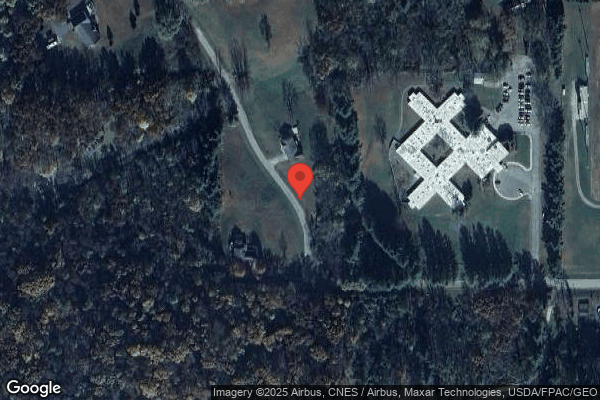
BIG MEADOWS

1000 LONGMOOR, SAVANNA, IL 61074 (815) 273-2238
For profit - Corporation 83 Beds Independent Data: November 2025 2 Immediate Jeopardy citations
Trust Grade
19/100
#337 of 665 in IL
Last Inspection: February 2025

Within standard 12-15 month inspection cycle. Federal law requires annual inspections.

Overview

Big Meadows in Savanna, Illinois, has received a Trust Grade of F, which indicates significant concerns about the quality of care provided there. Ranking #337 out of 665 facilities in Illinois places it in the bottom half, and it is the second out of two options in Carroll County, suggesting very limited choices. The facility is showing an improving trend, with the number of reported issues decreasing from 8 in 2024 to 7 in 2025, but it still has a long way to go. Staffing is a relative strength, with a turnover rate of 20%, well below the state average of 46%, but the overall star rating is just 2 out of 5, indicating below-average performance. There have been concerning incidents, including a critical failure to notify a physician about a resident’s serious condition, leading to hospitalization for respiratory failure, and another critical issue where a resident's respiratory changes were not properly monitored, resulting in hospitalization and death. While the facility has some strengths in staffing stability, these serious incidents raise significant red flags for families considering care for their loved ones.

Trust Score
F
19/100
In Illinois
#337/665
Top 50%
Safety Record
High Risk
Review needed
Inspections
Getting Better
8 → 7 violations
Staff Stability
✓ Good
20% annual turnover. Excellent stability, 28 points below Illinois's 48% average. Staff who stay learn residents' needs.
Penalties
⚠ Watch
$4,500 in fines. Higher than 99% of Illinois facilities. Major compliance failures.
Skilled Nurses
○ Average
Each resident gets 30 minutes of Registered Nurse (RN) attention daily — about average for Illinois. RNs are the most trained staff who monitor for health changes.
Violations
⚠ Watch
21 deficiencies on record. Higher than average. Multiple issues found across inspections.
★★☆☆☆
2.0
Overall Rating
★★★☆☆
3.0
Staff Levels
★☆☆☆☆
1.0
Care Quality
★★★☆☆
3.0
Inspection Score
Stable
2024: 8 issues
2025: 7 issues

The Good

  • Low Staff Turnover (20%) · Staff stability means consistent care
  • Full Sprinkler Coverage · Fire safety systems throughout facility
  • No fines on record
  • Staff turnover is low (20%)

    28 points below Illinois average of 48%

Facility shows strength in staff retention, fire safety.

The Bad

2-Star Overall Rating

Below Illinois average (2.5)

Below average - review inspection findings carefully

Federal Fines: $4,500

Below median ($33,413)

Minor penalties assessed

The Ugly 21 deficiencies on record

2 life-threatening 2 actual harm
Feb 2025 7 deficiencies 1 Harm
SERIOUS (G)

Actual Harm - a resident was hurt due to facility failures

Deficiency F0744 (Tag F0744)

A resident was harmed · This affected 1 resident

Based on observation, interview, and record review the facility failed to implement care planned interventions to reduce a dementia resident's anxiety and aggressive behaviors. This failure resulted i...

Read full inspector narrative →
Based on observation, interview, and record review the facility failed to implement care planned interventions to reduce a dementia resident's anxiety and aggressive behaviors. This failure resulted in R49 fracturing a finger on his left hand after punching a wall. This failure applies to 1 of 9 residents (R49) reviewed for dementia care in the sample of 16. The findings include: A facility incident report dated 2/18/25 showed R49 became agitated during cares and swung out at CNA (certified nursing assistant). While swinging at the CNA, he hit the wall as he was in bed and the bed was pushed up against the wall. X-ray was completed and shows acute fracture of proximal phalanx 3rd finger with mild deformity . R49's admission record dated 8/30/24 showed R49 had diagnoses of anxiety and dementia with behavioral disturbances. R49's behavior note dated 12/20/24 showed R49 started hitting staff, was at the front door hitting the glass after becoming agitated and anxious. R49's behavior note dated 1/7/25 showed, Resident becomes very anxious, sometimes agitated and restless around 6 or 7 pm almost every night . R49's current care plan showed, The resident is/has potential to be physically aggressive due to not understanding need for help with ADLs (activities of daily living) related to dementia . The care plan showed behavioral interventions for R49 as resident's triggers for physical aggression are wanting to be left alone. The resident's behaviors is de-escalated by offering a (brand name soda) or calling son . When the resident becomes agitated: Intervene before agitation escalates; Guide away from source of distress; Engage calmly in conversation; If response is aggressive, staff to walk calmly away, and approach later. The care plan showed R49 was cognitively impaired. On 2/24/25 at 9:30 AM, R49 was seated in a recliner in his room. R49's second, middle, and ring fingers on his left hand were swollen and bruised. When R49's was asked what had happened to his left hand, R49 stated, I don't know. On 2/24/25 at 12:52 PM, V4 (CNA) stated she was the CNA providing cares to R49 on 2/18/25, at the time of the incident. V4 stated, It (the incident) happened sometime in the middle of the night. His CNA had gone on lunch break, so I was watching that assignment while she was gone. I knew (R49) had a history of yelling and hitting but I didn't know at that time that he had been having behaviors all night. His CNA didn't report he had been having behaviors to me before she went on lunch. V4 stated she heard R49's safety alarms going off, so she entered R49's room. She found R49 seated on the side of his bed. R49 was incontinent. V4 stated, I helped him lay down in bed so I could change him. I rolled him on his side (on his bed). He never said anything but that's when he started punching the wall. I probably should have given him a break. I was in the middle of changing him, so I just kept trying to get him changed. He continued to swing with his arm. That's when he hit me too. He punched me while I was trying to get his brief on. V4 stated she was unaware that R49 had injured his left hand at the time. On 2/25/25 at 10:30 AM, V7 (CNA) stated she was R49's assigned CNA on 2/18/25. V7 stated on 2/18/25, R49 had been having verbal and physically aggressive behaviors that evening prior to the incident. V7 stated, He was cussing at me. He threatened my job. He tried to hit me when I changed him Usually, if you let him settle down and re-approach him, he will settle down . V7 stated she did not inform V4 (CNA) that R49 had been having behaviors that night prior to V7 taking a break for lunch. V7 (CNA) stated, I just assumed everyone knew (R49) had been having a bad night. On 2/24/25 at 1:19 PM, V5 (Social Services Director) stated, (R49's) behaviors stem from him wanting to be left alone, his confusion and him being hard of hearing. He has had physical behaviors of kicking and hitting but they are usually because he wants to be left alone . If he is having behaviors, it's best for staff to leave him alone and re-approach later. I have told staff that if he safe and is having behaviors, walk away and re-approach after he calms down. Calling his son or offering him a (brand name soda) also helps to calm him down. On 2/25/25 at 11:07 AM, V6 (Physician of R49) stated R49 was admitted to the facility because of his dementia and his family could not manage him at home. V6 stated, All staff should be aware of the different strategies to de-escalate a resident's dementia related behaviors as per their care plan. The goal is to use non-pharmacological behavioral interventions first . The facility's Behavioral Management policy (undated) showed, It is the goal to provide a Behavioral Management Program that will differentiate the diagnosis of behavioral symptoms so that the underlying cause of the symptom is recognized and treated appropriately . Procedure: Develop a Behavior Management Program, if appropriate, with identification and implementation of interventions . All residents of Behavior Monitoring/Management should have interventions noted on the individual resident's care plan .
CONCERN (D)

Potential for Harm - no one hurt, but risky conditions existed

Deficiency F0625 (Tag F0625)

Could have caused harm · This affected 1 resident

Based on interview and record review the facility failed to ensure a facility bed hold policy was in the resident packet of information for a resident who was transferred to the hospital for 1 of 1 re...

Read full inspector narrative →
Based on interview and record review the facility failed to ensure a facility bed hold policy was in the resident packet of information for a resident who was transferred to the hospital for 1 of 1 resident (R33) reviewed for hospitalizations in the sample of 16. The findings include: The facility' census list for R33, shows on 2/16/25, R33 was transferred out to the hospital. R33's progress noted dated 2/16/25, shows R33 had a change in condition where her oxygen saturations dropped to 86 percent. The nurse practitioner was notified with orders to send to emergency room for evaluation. R33's POA was notified, paperwork was faxed to the hospital. On 2/25/25 at 8:26 AM, V17 (Registered Nurse) stated there is a packet of paper which goes with resident to the hospital, face sheet, POA paperwork, insurance, POLST, meds and diagnoses. We fax the packet to the hospital, and we give the packet to EMS (Emergency Medical Services). V17 was not sure if bed hold went with resident. V1(Administrator) would know. V17 showed this surveyor the packets of information which went with the residents. There was no bed hold policy included in the packets. On 2/25/25 at 11:10 AM, V1 (Administrator) stated the bed hold policy is on a clipboard next to the binders with the resident packets of information. The nurses are to pull one and include. V1 stated she had no evidence to show the bed hold policy was sent with R33 for her emergent transfer to the hospital. V1 stated they used to include in the packet, but the packets were getting too thick, so the bed hold was removed from the resident packets. The facility's Bed Hold Policy and readmission (undated), shows, in case of emergency transfer, notification of the family or legal representative is provided with written notification within 24 hours of transfer, the resident's copy of the notice is sent with other papers accompanying the resident to the hospital.
CONCERN (D)

Potential for Harm - no one hurt, but risky conditions existed

Quality of Care (Tag F0684)

Could have caused harm · This affected 1 resident

Based on observation, interview, and record review the facility to ensure speech therapy recommendations were implemented for a resident with moderate oral/pharyngeal dysphagia. This applies to 1 of 3...

Read full inspector narrative →
Based on observation, interview, and record review the facility to ensure speech therapy recommendations were implemented for a resident with moderate oral/pharyngeal dysphagia. This applies to 1 of 3 residents (R161) reviewed for safety in the sample of 16. The findings include: On 2/23/24 at 12:45 PM, a sign posted on R161's door for droplet/contact precautions. R161 was in her room lying in bed at approximately 30 degrees. R161's noon meal on her bedside table included country fried steak cut up, veggies and mashed potatoes. R161's diet card lists a regular diet. On 2/24/25 at 12:50 PM, R161 was in her room lying in bed at 30 degrees. Her noon meal on her bedside table included a BBQ pork sandwich, corn, and coleslaw. Regular liquids on her bedside table. On 2/24/25 at 12:58 PM, V8 (Licensed Practical Nurse) said R161 has not been doing well, she has influenza and was recently sent out to the hospital and has been declining. She is on a regular diet, has poor appetite and is not aware of R161 having any problems swallowing. On 2/25/25 at 9:54 AM, V1 (Administrator) said speech therapy was here on 2/23/25, she wrote the recommendations and gave it to the director of therapy instead of nursing. The recommendations to downgrade her diet and nectar thick liquids did not get followed through. R161's Physician Order Sheets dated February 2025 shows orders for regular diet. ST evaluation completed .recommend diet downgrade to mechanical soft consistency and nectar thick liquids (order date 2/23/25). R161's Speech Therapy Evaluation and Plan of Treatment report dated 2/23/25 shows new onset of coughing/choking during oral intake (R161) presents with moderate oral/pharyngeal dysphagia .recommendations include mild thick liquids, minced and moist diet and mechanical ground textures. Swallowing strategies including alternate liquid/solid, bolus size modifications and rate modifications, upright during meals, and upright posture for 30 minutes after meals. The facility's undated Management of Dysphagia Policy states, dysphagia, or difficulty swallowing can be caused by various factors and requires appropriate management to prevent complications such as aspiration pneumonia and malnutrition. Dysphagia precautions include dietary guidelines, safe swallowing techniques and staff training.
CONCERN (D)

Potential for Harm - no one hurt, but risky conditions existed

Deficiency F0688 (Tag F0688)

Could have caused harm · This affected 1 resident

**NOTE- TERMS IN BRACKETS HAVE BEEN EDITED TO PROTECT CONFIDENTIALITY** Based on observation, interview, and record review the facility failed to ensure a resident's adaptive equipment was functioning...

Read full inspector narrative →
**NOTE- TERMS IN BRACKETS HAVE BEEN EDITED TO PROTECT CONFIDENTIALITY** Based on observation, interview, and record review the facility failed to ensure a resident's adaptive equipment was functioning for 1 of 9 residents (R10) reviewed for restorative in the sample of 16. The findings include: On 02/23/25 at 11:16 AM, R10 was sitting in his wheelchair near the nurse's station. His left arm was dangling next to his side. The wheelchair arm trough attached to the left wheelchair arm was bent over with the bottom of the trough facing away from the resident. R10 stated he does not use it (arm trough) because it was broken. It had been broken for a few months. He told the staff and they said they would fix it, not sure when that is going to happen. R10 explained he had a stroke which affected his left side. R10 then proceeded to self-propel himself using his right foot down the hallway. R10's Facility assessment dated [DATE] shows diagnoses to include stroke and hemiplegia. R10's has impaired range of motion on his left side and is cognitively intact. R10's current care plan shows R10 has impairment on his left arm and left leg. On 02/25/25 at 10:00 AM, V22 (Restorative) stated R10 uses the arm trough for comfort and positioning. V22 was not aware adaptive device was broken. This surveyor went with V22 to R10's room. R10 was lying in his bed and his wheelchair was in the bathroom. R10 stated his arm keeps falling off it (trough). V22 inspected the arm trough and stated the trough was to the side and was not positioned correctly for the resident to use. She looked at the trough further and stated this trough does not go with this wheelchair. I will talk with maintenance and see if there is an arm trough which fits the chair. At 11:05 AM, V22 stated she found an arm trough in the medical supply catalog and will get with maintenance to find one which will fit R10's wheelchair so they can get it ordered. A facility policy on the use and/or care of adaptive equipment was requested. The administrator stated they did not have one.
CONCERN (D)

Potential for Harm - no one hurt, but risky conditions existed

Infection Control (Tag F0880)

Could have caused harm · This affected 1 resident

2. On 02/23/25 at 9:15 AM, R45 was in his room alert and pleasant. An Enhance Barrier Precaution (EBP) sign was posted inside his room. V11 (Registered Nurse/RN) and V12 (CNA) both said R45 has a urin...

Read full inspector narrative →
2. On 02/23/25 at 9:15 AM, R45 was in his room alert and pleasant. An Enhance Barrier Precaution (EBP) sign was posted inside his room. V11 (Registered Nurse/RN) and V12 (CNA) both said R45 has a urinary catheter and uses a leg bag at daytime. R45 pointed to his leg and said yup, it's here. On 2/24/25 at 10:05 AM, R45 was being assisted for his leg bag. V16 (CNA) was wearing gloves but was not wearing any gown. V16 said when R45 woke up this morning, V16 disconnected R45's indwelling urinary bag then connected R45's leg bag. R45 said she had gloves on. On 2/24/25 at 2:20 PM, V17 (RN) confirmed that R45 was on EBP due to his urinary catheter. Staff should use gown and gloves when providing catheter care. R45's Physician Order Sheet (POS) printed on 2/24/25 documents, Enhanced Barrier Precautions r/t indwelling Foley. May be discontinued if Foley is no longer needed. dx: urinary retention The facility Enhance Barrier Precaution undated documents, It is the policy of this facility to implement enhance barrier precautions for the prevention of transmission of multidrug organism targeted by the CDC. c. Clear signage will be posted on the door or wall outside of the resident's room indicating the type of precaution, required PPE and the high-contact resident care activities that require the use of gown and gloves. 4. High contact resident care activities include: a. wound dressing g Device care use: urinary catheters . Based on observation, interview, and record review the facility failed to ensure staff implemented enhanced barrier precautions to prevent the spread of infection for 2 of 16 residents (R2, R45) reviewed for infection control in the sample of 16. The findings include: 1. On 2/24/25 at 9:22 AM, there was no sign posted on R2's door for enhanced barrier precautions. V24 (Certified Nursing Assistant/CNA) donned gloves and did not wear a gown while providing incontinence care to R2. An open pressure ulcer was observed on R2's coccyx. On 2/24/25 at 2:03 PM, V3 (Assistant Director of Nursing/Infection Control Preventionist) said R2 was on isolation for influenza, and they discontinued her isolation. She said R3 has a wound and should be on enhanced barrier precautions, staff should wear gown and gloves when providing direct care. R2's Physician Order Sheets dated February 2025 does not show orders for enhanced barrier precautions. The P.O.S. shows orders for treatment orders for right coccyx wound.
CONCERN (E)

Potential for Harm - no one hurt, but risky conditions existed

Deficiency F0679 (Tag F0679)

Could have caused harm · This affected multiple residents

**NOTE- TERMS IN BRACKETS HAVE BEEN EDITED TO PROTECT CONFIDENTIALITY** Based on observation, interview, and record review, the facility failed to provide meaningful activities to dementia residents f...

Read full inspector narrative →
**NOTE- TERMS IN BRACKETS HAVE BEEN EDITED TO PROTECT CONFIDENTIALITY** Based on observation, interview, and record review, the facility failed to provide meaningful activities to dementia residents for 4 of 10 residents (R39, R30, R45, R36) reviewed for activities in the sample of 16. The findings include: 1. R39's Physician Order Sheet (POS) dated 2/25 show R39 has diagnosis of dementia. R39's care plan with review date of 1/21/25 documents, R39 prefers individual 1:1 activities, at times may observe/join a group activity. R39 enjoys walking halls, relaxing in his room, common area, reminiscing, watching TV, visiting with family, listening to music, going outdoors, observing dice/card games, bingo, painting arts and crafts. On 2/23/25, At 10AM, 11AM, 11:37 AM and 12 PM, R39 was up and down the hallways wandering back and forth on both E and F wings in the Dementia Unit. Staff were saying hi to R39. R39 would enter other resident's room, then staff would redirect R39 don't go in that room. R39 was not offered to engage in any activity. R39 had lunch around 12:30 PM. Then at 1PM, 1:30 PM, 2PM and 2:30 PM, R39 continued to wander up and down the hallways. V11 (Registered Nurse/RN) and R39's nurse said this is what he (R39) does all day, walk back and forth aimlessly in the hallways. V11 stated Today is Sunday, we do not offer activities on the weekend. On 2/24/25 at 10AM, 11AM and 12PM, R39 again was up and down the hallway walking back and forth in the Dementia Unit. No staff attempted to engage R39 in any activity including group activities. V9 and V16 (both Certified Nursing Assistant/CNAs) said (R39) gets too tired walking around all day so he wakes up late in the morning then wanders again. 2. R30's activity care plan dated 1/21/25 show, R30 has a diagnosis of dementia and diabetes. R30 needs reminder as to when and where an activity is taking place. R30 enjoys listening to music, Bingo, snack, and chat, observing games, relaxing in room/common area, watching TV, reminiscing, going outdoors, family visits, etc. R30's Activity Interview for daily and activity preferences dated 1/16/25 show, it was important for R30 to get fresh air when the weather is good, and it was important to participate in religious activities. On 2/23/25 at 9:20 AM, 10 AM, and 11 AM, R30 was sitting in a recliner in the common area by the dining room in the Dementia Unit. R30 was just looking around. R30 said hi to this surveyor. At 12PM, R30 was now asleep in his recliner in the common area. There were no ongoing activities. This surveyor asked V14 (CNA) who was in the common area if she was doing any activities with the residents this Sunday. V14 said she was assigned as the Dining room CNA assisting with meals. V14 said she was not an activity aide. Both V12 and V13 said they were the CNAs on the Dementia unit, (E and F wings) and they were not running activities this Sunday they were working as CNAs. The February Activity Calendar in the Dementia Unit for Sunday 2/23/25 show 1:1 activity. There were no ongoing 1:1 Activity at that time. 3. R45's POS show R45 has diagnoses that include dementia and COPD. R45 wears on oxygen. R45 was alert and able to verbalize his needs. R45's Activity Interview for daily and activity preferences dated 2/6/25 show, it was important for R45 to listen to music, it was important to keep up with the news, it was important to go out for fresh air when the weather is good. On 2/23/25 (Sunday) at 11:45 AM, R45 was in his room watching TV. R45 said there was nothing to do but watch TV in his room. On 2/25/25 at 9:15 AM, R45 said no one comes around and invite him to activities. I would go or just bring me something to do here in my room. On 2/24/25 at 1:14PM, V15 (Activity Director) said she had no Activity Aide to help her. She was the only Activity staff in the Dementia Unit working Monday to Friday. If she was doing group activities, there were no staff providing 1:1 activities. Activities are important to demented residents, it gives them something to do, it keeps them busy. On 2/24/25 at 2PM, V8 (Dementia Care Director) said she will work with V15 to improve the Activity being offered to the dementia resident in the Dementia Unit. V8 said she will discuss with the management regarding Activity Aides on weekends. On 2/24/25 at 3PM V1 (Administrator) said there was a lot for 1 person in the dementia unit to do Activities, we are working on offering activities 7 days a week. 4. R36's current care plan showed R36 was admitted to the secured dementia unit in the facility on 10/29/22 due to his diagnoses of dementia and confusion. The care plan showed R36 enjoyed going outdoors and listening to music. R36's care plan showed, Encourage participation in the following activities, exercise, active games, socials, special events . Assist resident with set up of independent leisure activities as needed . Provide verbal reminders and encouragement to activity programming .Distract (R36) from wandering by offering pleasant diversions, structured activities, food, conversation, television, book . R36's activity assessment dated [DATE] showed it was important for him to listen to music, be around pets, keep up with news, go outside, and do activities with groups of people. On 2/24/25 at 8:59 AM, R36 stood by the locked exit door of the dementia unit. R36 was knocking on the window of the door, saying he wanted to go to the river. On 2/24/25 at 9:01 AM, R36 continued to knock on the window of the exit door of the dementia unit. On 2/24/25 at 9:08 AM, R36 was observed walking back and forth by the exit door of the dementia unit. R36 would look out the window of the door and then walk away. On 2/24/25 at 10:08 AM, a staff member was painting the fingernails of a female resident on the dementia unit. Four residents were asleep in the television lounge. Two nonverbal female residents were seated at a table, picking up plastic flowers. R36 paced up and down the hallway of the dementia unit. He would stop at times to look out the window of the exit door of the unit. No staff spoke to R36 and/or attempted to engage R36 in an activity. On 2/24/25 at 10:29 AM, R36 continued to pace up and down the hallway of the dementia unit. R36 walked into the dining area and asked V9 (CNA), What's for lunch today? V9 replied, It's not time yet. R36 shrugged his shoulders and stated, I guess I will go watch TV then. V9 did not respond to R36. V9 made no attempt to engage R36 in an activity and/or ask R36 what he would like to do. On 2/24/25 at 10:37 AM, R36 walked back into the dining area of the dementia unit. R36 asked V9, What time is lunch? V9 stated, 12:30. V9 made no attempt to engage R36 in an activity and/or ask R36 what he would like to do. R36 walked out of the dining area. The facility's Activities policy (undated) showed, The facility will provide a comprehensive activity program designed to promote resident well-being and quality of life, which includes a variety of activities that address physical, cognitive, social, emotional, and spiritual needs. Residents will be given the opportunity to choose activities based on their interests and abilities, and staff will actively encourage participation while respecting resident autonomy to decline activities . Staff responsibilities: Trained staff to lead and facilitate activities. Monitoring resident participation and providing assistance as needed .
CONCERN (E)

Potential for Harm - no one hurt, but risky conditions existed

Menu Adequacy (Tag F0803)

Could have caused harm · This affected multiple residents

Based on observation, interview, and record review the facility failed to follow the pureed menu for 8 of 8 residents (R1, R2, R7, R11, R13, R18, R33, and R46) reviewed for pureed menu in the sample o...

Read full inspector narrative →
Based on observation, interview, and record review the facility failed to follow the pureed menu for 8 of 8 residents (R1, R2, R7, R11, R13, R18, R33, and R46) reviewed for pureed menu in the sample of 16. The findings include: A facility provided list printed on 2/24/24 showed R1, R2, R7, R11, R18, R33, and R46 were on a pureed diet. The same list showed R13 was on a liquidized pureed diet. The pureed menu for 2/24/25 showed residents on pureed and liquidized pureed diets were to receive pureed BBQ turkey, pureed creamed corn, pureed cornbread, and pureed cake. On 02/24/25 at 10:02 AM, V20 (Cook) was observed making the pureed meal. V20 pureed the BBQ turkey, creamed corn, and dessert. V20 was not observed making pureed corn bread nor was corn bread added to the BBQ turkey or creamed corn. On 02/24/25 at 11:17 AM, V20 started to plate the pureed meal. There was no container of pureed cornbread on the serving steam table. V20 plated R1, R7, R11, and R13's pureed meals by serving them pureed BBQ turkey, pureed creamed corn, and pureed dessert. R1, R7, R11, and R13 did not received pureed cornbread as indicated by the menu. On 02/24/25 at 01:10 PM, R33 was served a room tray. The tray contained a bowl of pureed BBQ meat, a bowl of pureed creamed corn, a bowl of chocolate dessert and four glasses of assorted beverages that were honey thick. There was no pureed corn bread present. On 02/24/25 at 11:50 AM, V21 (Dietary Manager) said the menu should be followed. On 02/25/25 at 09:39 AM, V21 said pureed corn bread was not served.
Feb 2024 3 deficiencies
CONCERN (D) 📢 Someone Reported This

A family member, employee, or ombudsman was alarmed enough to file a formal complaint

Potential for Harm - no one hurt, but risky conditions existed

Abuse Prevention Policies (Tag F0607)

Could have caused harm · This affected 1 resident

**NOTE- TERMS IN BRACKETS HAVE BEEN EDITED TO PROTECT CONFIDENTIALITY** Based on interview and record review, the facility failed to implement their abuse policy by not reporting and not investigating...

Read full inspector narrative →
**NOTE- TERMS IN BRACKETS HAVE BEEN EDITED TO PROTECT CONFIDENTIALITY** Based on interview and record review, the facility failed to implement their abuse policy by not reporting and not investigating an allegation of abuse for one of seven residents (R1) reviewed for abuse in the sample of seven. The findings include: R1's admission Record shows she was admitted to the facility on [DATE] with diagnoses including: heart failure, arthritis, dermatitis, lymphedema, muscle weakness, lack of coordination, urinary tract infection, and pain. R1's Minimum Data Set, dated [DATE] shows she is cognitively intact. On February 15, 2024 at 8:55 AM, R1 said an incident occurred on January 30, 2024. R1 said V5 (Certified Nursing Assistant/CNA) came into R1's room and asked her what time R1 wanted to get up for the day. R1 told V5 that she wasn't sure. I haven't even had my coffee yet. R1 said that V5 was trying to fit R1 into V5's schedule for the day. R1 said that V5 told her that R1 wouldn't get care if V5 did not do it. V5 told R1 that R1 wouldn't be able to get up from 11:00 AM-12:20 PM, because staff would be in the dining room feeding residents lunch. R1 said she told V3 (Social Service) about the incident. R1 said she felt she was verbally abused by V5. R1 said that V3 had to get V4 (Assistant Director of Nursing/ADON) because V1 (Administrator) nor V2 (Director of Nursing/DON) was available that day. R1 said that V3 and V4 came into R1's room to get her statement. R1 said that V4 had a notebook but did not write any notes down in regards to the incident. R1 said that staff should listen to both sides of the story. R1 said she did not feel any respect from V4. R1 said that V4 knew about the incident prior to R1 telling her about it. R1 said that V4 just went on and on about how good V5 was as a CNA. R1 said, I felt beat up on. On February 15, 2024 at 12:20 PM, V4 (ADON) said when herself and V3 (Social Services) interviewed R1, she did not take notes because she was already aware of the incident. V4 said that R1 was upset with V5 in regards to the timeline that V5 was giving R1 to get out of bed. V4 said she did not know the date that she interviewed R1 as it was not the same day that V5 told V4 about the incident. V4 said if she receives a complaint from a resident then she reports it to V1 (Administrator). V4 said she told V1 about the incident the next day. V4 said she thought that R1 said something about the incident being abusive. V4 said I don't think I would call that abuse. V4 said she believes R1 has not liked V4 ever since the interview took place. V4 said if she received an allegation or a grievance, she would document it so that there is a paper trail. On February 15, 2024 at 1:16 PM, V1 (Administrator) said she was not in the facility on the day that the incident occurred. V1 said at no point did any staff members report to her that R1 felt verbally abused by V5 (CNA). V1 said that if a resident reported that they felt they were being verbally abused, she would expect staff to call V1 and let their superior know. V1 said she expects staff to take notes during an interview. V1 said that R1 did let her know that R1 was upset about V4 not taking notes during the interview. V1 said she does not have any abuse investigations for the last three months. The facility's Abuse Program: Investigation/Reporting/Response policy revised February 2012 shows, Purpose: To ensure on going safety of resident; To ensure that a thorough investigation is completed in the alleged incident; To ensure that proper notification of appropriate regulatory agencies and regional staff occurs. Any complaint of, observation of, or suspicion of resident abuse, mistreatment or neglect is to be thoroughly investigated, documented, and reported in a uniform manner as detailed below. All employees are required to immediately notify the Administrator and the Director of Nurses and staff that is on duty of any complaints of, observation of, or suspicion of resident abuse, mistreatment, or neglect. The administrative or nursing supervisor assumes responsibility for: immediate notification of Director of Nursing and the Administrator. Notification of appropriate department head. The Administrator, or designee, shall take the following actions to assure that the investigation is conducted appropriately. An immediate investigation into the alleged incident-during the shift it occurred, is initiated as follows: Interview resident or other resident witnesses. This interview is to be dated, documented, and signed by the supervisor. Interview the staff member implicated. Have the employee document their knowledge/version of the incident in written narrative that is dated and signed. Interview all staff on that unit.
CONCERN (D) 📢 Someone Reported This

A family member, employee, or ombudsman was alarmed enough to file a formal complaint

Potential for Harm - no one hurt, but risky conditions existed

Report Alleged Abuse (Tag F0609)

Could have caused harm · This affected 1 resident

**NOTE- TERMS IN BRACKETS HAVE BEEN EDITED TO PROTECT CONFIDENTIALITY** Based on interview and record review, the facility failed to report an allegation of abuse to the abuse coordinator for one of s...

Read full inspector narrative →
**NOTE- TERMS IN BRACKETS HAVE BEEN EDITED TO PROTECT CONFIDENTIALITY** Based on interview and record review, the facility failed to report an allegation of abuse to the abuse coordinator for one of seven residents (R1) reviewed for abuse in the sample of seven. The findings include: R1's admission Record shows she was admitted to the facility on [DATE] with diagnoses including: heart failure, arthritis, dermatitis, lymphedema, muscle weakness, lack of coordination, urinary tract infection, and pain. R1's Minimum Data Set, dated [DATE] shows she is cognitively intact. On February 15, 2024 at 8:55 AM, R1 said an incident occurred on January 30, 2024. R1 said V5 (Certified Nursing Assistant/CNA) came into R1's room and asked her what time R1 wanted to get up for the day. R1 told V5 that she wasn't sure. I haven't even had my coffee yet. R1 said that V5 was trying to fit R1 into V5's schedule for the day. R1 said that V5 told her that R1 wouldn't get care if V5 did not do it. V5 told R1 that R1 wouldn't be able to get up from 11:00 AM-12:20 PM, because staff would be in the dining room feeding residents lunch. R1 said she told V3 (Social Service) about the incident. R1 said she felt she was verbally abused by V5. R1 said that V3 had to get V4 (Assistant Director of Nursing/ADON) because V1 (Administrator) nor V2 (Director of Nursing) was available that day. R1 said that V3 and V4 came into R1's room to get her statement. R1 said that V4 had a notebook but did not write any notes down in regards to the incident. R1 said that staff should listen to both sides of the story. R1 said she did not feel any respect from V4. R1 said that V4 knew about the incident prior to R1 telling her about it. R1 said that V4 just went on and on about how good V5 was as a CNA. R1 said, I felt beat up on. On February 15, 2024 at 11:23 AM, V3 (Social Services) said R1 reported to him that she felt rushed by V5 (CNA) and R1 felt like she was emotionally abused. V3 said that R1 wanted to go to the next person of authority to report the incident. V3 said that V1 nor V2 were at the facility so he reported the incident to V4 (ADON). V3 said that V3 and V4 went into R1's room to interview her in regards to the incident. V3 said that V4 did not write anything that R1 was saying down in regards to the incident. V3 said that V5 (CNA) went and talked to V4 in regards to the incident that occurred with R1 prior to the interview that occurred between R1, V3, and V4 so V4 already knew about the incident that occurred. On February 15, 2024 at 12:20 PM, V4 (ADON) said when herself and V3 interviewed R1, she did not take notes because she was already aware of the incident. V4 said that R1 was upset with V5 in regards to the timeline that V5 was giving R1 to get out of bed. V4 said she did not know the date that she interviewed R1 as it was not the same day that V5 told V4 about the incident. V4 said if she receives a complaint from a resident then she reports it to V1 (Administrator). V4 said she told V1 about the incident the next day. V4 said she thought that R1 said something about the incident being abusive. V4 said I don't think I would call that abuse. V4 said she believes R1 has not liked V4 ever since the interview took place. V4 said if she received an allegation or a grievance, she would document it so that there is a paper trail. On February 15, 2024 at 1:16 PM, V1 (Administrator) said she was not in the facility on the day that the incident occurred. V1 said at no point did any staff members report to her that R1 felt verbally abused by V5 (CNA). V1 said that if a resident reported that they felt they were being verbally abused, she would expect staff to call V1 and let their superior know. V1 said she expects staff to take notes during an interview. V1 said that R1 did let her know that R1 was upset about V4 not taking notes during the interview. V1 said she does not have any abuse investigations for the last three months.
CONCERN (D) 📢 Someone Reported This

A family member, employee, or ombudsman was alarmed enough to file a formal complaint

Potential for Harm - no one hurt, but risky conditions existed

Investigate Abuse (Tag F0610)

Could have caused harm · This affected 1 resident

**NOTE- TERMS IN BRACKETS HAVE BEEN EDITED TO PROTECT CONFIDENTIALITY** Based on interview and record review, the facility failed to ensure a thorough investigation was completed in regard to an alleg...

Read full inspector narrative →
**NOTE- TERMS IN BRACKETS HAVE BEEN EDITED TO PROTECT CONFIDENTIALITY** Based on interview and record review, the facility failed to ensure a thorough investigation was completed in regard to an allegation of abuse for one of seven residents (R1) reviewed for abuse in the sample of seven. The findings include: R1's admission Record shows she was admitted to the facility on [DATE] with diagnoses including: heart failure, arthritis, dermatitis, lymphedema, muscle weakness, lack of coordination, urinary tract infection, and pain. R1's Minimum Data Set, dated [DATE] shows she is cognitively intact. On February 15, 2024 at 8:55 AM, R1 said an incident occurred on January 30, 2024. R1 said V5 (Certified Nursing Assistant/CNA) came into R1's room and asked her what time R1 wanted to get up for the day. R1 told V5 that she wasn't sure. I haven't even had my coffee yet. R1 said that V5 was trying to fit R1 into V5's schedule for the day. R1 said that V5 told her that R1 wouldn't get care if V5 did not do it. V5 told R1 that R1 wouldn't be able to get up from 11:00 AM-12:20 PM, because staff would be in the dining room feeding residents lunch. R1 said she told V3 (Social Service) about the incident. R1 said she felt she was verbally abused by V5. R1 said that V3 had to get V4 (Assistant Director of Nursing/ADON) because V1 (Administrator) nor V2 (Director of Nursing/DON) was available that day. R1 said that V3 and V4 came into R1's room to get her statement. R1 said that V4 had a notebook but did not write any notes down in regards to the incident. R1 said that staff should listen to both sides of the story. R1 said she did not feel any respect from V4. R1 said that V4 knew about the incident prior to R1 telling her about it. R1 said that V4 just went on and on about how good V5 was as a CNA. R1 said, I felt beat up on. On February 15, 2024 at 11:23 AM, V3 (Social Services) said R1 reported to him that she felt rushed by V5 CNA and R1 felt like she was emotionally abused. V3 said that R1 wanted to go to the next person of authority to report the incident. V3 said that V1 nor V2 were at the facility so he reported the incident to V4 (ADON). V3 said that V3 and V4 went into R1's room to interview her in regards to the incident. V3 said that V4 did not write anything that R1 was saying down in regards to the incident. V3 said that V5 (CNA) went and talked to V4 in regards to the incident that occurred with R1 prior to the interview that occurred between R1, V3, and V4 so V4 already knew about the incident that occurred. On February 15, 2024 at 12:20 PM, V4 (ADON) said V5 (CNA) came to V4 and told her about the incident that occurred between R1 and V5. V4 said that she believes V5 told V4 about the incident because R1 was upset about the whole thing. V4 said she asked V3 to go with her to interview R1, because R1 can turn stories around. V4 said when herself and V3 interviewed R1, she did not take notes because she was already aware of the incident. V4 said that R1 was upset with V5 in regards to the timeline that V5 was giving R1 to get out of bed. V4 said she did not know the date that she interviewed R1 as it was not the same day that V5 told V4 about the incident. V4 said if she receives a complaint from a resident then she reports it to V1 (Administrator). V4 said she told V1 about the incident the next day. V4 said she thought that R1 said something about the incident being abusive. V4 said I don't think I would call that abuse. V4 said she believes R1 has not liked V4 ever since the interview took place. V4 said if she received an allegation or a grievance, she would document it so that there is a paper trail. On February 15, 2024 at 12:35 PM, V5 (CNA) said there wasn't really an incident that occurred between V5 and R1. V5 said that R1 is very particular. V5 said she doesn't usually work on R1's hall, but she heard from the other CNAs that R1 likes to get up at 11:00 AM. V5 said she went into R1's room at 6:30 AM-7:00 AM to see when R1 wanted to get up for the day. R1 said she did not know what time R1 wanted to get up for the day. V5 said that she was just trying to make sure V5 and R1 were on the same page. V5 said, I told R1 that if she put her call light on at 11:00 AM, I cannot promise that staff will be able to help. V5 said a couple of days after the incident, she was told she was no longer allowed to go into R1's room. V5 said she couldn't remember if she told V2 (DON) or V4 (ADON) about the incident. On February 15, 2024 at 1:16 PM, V1 (Administrator) said she was not in the facility on the day that the incident occurred. V1 said that R1 wants to get up around lunchtime, but it is hard to get her up at that time. V1 said at no point did any staff members report to her that R1 felt verbally abused by V5 (CNA). V1 said that if a resident reported that they felt they were being verbally abused, she would expect staff to call V1 and let their superior know. V1 said she expects staff to take notes during an interview. V1 said that R1 did let her know that R1 was upset about V4 not taking notes during the interview. V1 said she does not have any abuse investigations for the last three months.
Jan 2024 4 deficiencies
CONCERN (D)

Potential for Harm - no one hurt, but risky conditions existed

Accident Prevention (Tag F0689)

Could have caused harm · This affected 1 resident

**NOTE- TERMS IN BRACKETS HAVE BEEN EDITED TO PROTECT CONFIDENTIALITY** 2. R17's admission record shows he was admitted to the facility on [DATE]. The diagnosis information documents he has a nicotine...

Read full inspector narrative →
**NOTE- TERMS IN BRACKETS HAVE BEEN EDITED TO PROTECT CONFIDENTIALITY** 2. R17's admission record shows he was admitted to the facility on [DATE]. The diagnosis information documents he has a nicotine dependence, unspecified dementia, and hemiplegia and hemiparesis following a cerebrovascular disease affecting his left non-dominant side. R17's revised care plan of 10/23/23 shows he is a former cigarette smoker. Due to the facility being a non-smoking facility, he prefers to use a vapor nicotine product. The 10/20/23 quarterly assessment documents R17 has moderate cognitive impairment. A review of assessments shows no smoking/vaping assessment. On 1/17/24 at 1:48 PM, V1 (Administrator) reviewed R17's record and said he does not have any current smoking/vaping assessments. The facility had been on computer assessments since 2020, and one had not been completed. On multiple occasions, R17 declined to speak with this surveyor. On 1/18/24 at 9:24 AM, V10 (Social Service) said we do smoking assessments on admission, and quarterly. For R17 we did not have anything in place to do them regularly. V10 said it is important to have quarterly assessments to make sure there are no changes, and for safety to make sure a resident does not start fires or hurt themselves. A policy for smoking/vaping was requested. An undated smoking policy provided does not state when assessments are required. On 1/18/24 at 10:31 AM, V1 said there is no separate vape policy, only the smoking policy. Based on observation, interview, and record review the facility failed to ensure a resident did not fall off the bed when being turned. The facility failed to assess and care plan a resident for the use of a nicotine vaping device for 2 of 2 residents (R19 & R17) reviewed for safety and supervision in the sample of 17. The findings include: 1. On 1/17/24 at 8:26 AM, R19 was laying on her back in the middle of her bed with the head of her bed elevated. R19's bed was not in a low position. R19 had a large burgundy mark to her forehead with purple discoloration around the area. R19 had purple bruising to the inner corners of her eyes. R19 was awake and making noises. R19 did not respond to her name or questions. The Nurse's Note dated 1/15/24 for R19 showed, Nurse called stat (immediately) to the resident's room, CNA (Certified Nursing Assistant) in with the resident, and resident laying on her right side on the floor next to the bed. The CNA stated that she was getting the resident ready to get up for lunch and rolled the resident towards her and the resident slipped off the bed. CNA stated she attempted to catch her but was only able to slow the fall. Resident neuro WNL (within normal limits), does have a large bump on right forehead. On 1/17/24 at 8:48 AM, V5 (Licensed Practical Nurse) stated she was following up on R19's fall. V5 stated the CNA was rolling R19 and the resident fell out of bed. V5 stated they really need to have two people to turn R19 in bed because she is very heavy. V5 stated that R19 is not able to move on her own. V5 stated that the CNA was probably turning R19 towards the CNA, R19 was too close to the side of the bed and fell out of bed. On 1/17/24 at 1:10 PM, V3 (Director of Nursing) stated she was the nurse on the floor when R19 fell. V3 stated she was called stat (immediately) to the room and the CNA explained she was rolling the resident and the resident had slipped onto the floor. V3 stated she believes R19 was too close to the side of the bed. The Face Sheet dated 1/17/24 for R19 showed medical diagnoses including dementia, major depressive disorder, hypertension, morbid obesity, epistaxis, long term use of aspirin, and vitamin deficiency. The Mobility assessment dated [DATE] for R19 showed she has advanced dementia and is total care for ADL's. All mobility tasks performed by staff. The MDS (Minimum Data Set) dated 7/25/23 for R19 showed severe cognitive impairment; total dependence on two staff for bed mobility. R19 has not had any significant change MDS' triggered since the 7/25/23 assessment. The MDS dated [DATE] showed severe cognitive impairment; dependent for rolling in bed. The Care Plan dated 1/7/24 for R19 showed R19 has deficits in ADL's (activities of daily living) related to decreased mobility, non-ambulatory and assist needed in all late loss ADL's. R19 has a history of being resistive with cares, becoming angry with staff, verbal aggressiveness, and physical aggressiveness. Assist with bed mobility, transfers and toileting needs. The Facility's Fall Prevention Program policy (3/23) showed it is the policy of this facility to identify residents at risk for falls, develop plans of care that address the risk and implement procedures to assist in prevention of falls. The facility will also investigate accidents involving residents sustaining falls to identify possible cause and develop approaches to assist in preventing repeated falls.
CONCERN (D)

Potential for Harm - no one hurt, but risky conditions existed

Deficiency F0761 (Tag F0761)

Could have caused harm · This affected 1 resident

Based on observation, interview, and record review the facility failed to ensure a controlled medication was behind 2 locks in the medication room. This applies to 1 of 1 resident (R35) reviewed for c...

Read full inspector narrative →
Based on observation, interview, and record review the facility failed to ensure a controlled medication was behind 2 locks in the medication room. This applies to 1 of 1 resident (R35) reviewed for controlled medication storage in the sample of 17. The findings include: On 1/18/24 at 12:39 PM, the medication room on the dementia unit had a refrigerator that did not have a lock on it while it held liquid Lorazepam ordered for R35. The refrigerator had holes where the lock use to be, but it was removed. On 1/18/24 at 12:39 PM, V4 (Assistant Director of Nursing) said, all controlled medication should be behind 2 locks. On 1/18/24 at 2:19 PM, V11 (Pharmacist) said, controlled substances should be behind 2 locks. V11 said, all controlled substances have the potential to be abused. The undated Medication Storage policy and procedure shows, Controlled medication must be stored in a manner to limit access and to facilitate reconciliation in accordance with the facility policies. Narcotics must always be stored under a double locking system.
CONCERN (D)

Potential for Harm - no one hurt, but risky conditions existed

Infection Control (Tag F0880)

Could have caused harm · This affected 1 resident

Based on observation, interview, and record review the facility failed to prevent cross contamination of resident contact surfaces by not removing gloves after providing incontinence care before touch...

Read full inspector narrative →
Based on observation, interview, and record review the facility failed to prevent cross contamination of resident contact surfaces by not removing gloves after providing incontinence care before touching clean areas on the resident and resident contact surfaces for 1 of 1 resident (R9) reviewed for infection control in the sample of 17. The findings include: On 1/16/24 at 1:10 PM, V7 (Certified Nursing Assistant/CNA) and V8 (CNA) transferred R9 to bed to provide incontinence care. V7 and V8 had on gloves, removed the sling under R9 and then pulled her pants down. R9 had a wet incontinence brief on. V7 grabbed the no rinse foam cleanser from R9's nightstand, applied it to the washcloth and washed R9's groin and vaginal area. V7 discarded the soiled washcloth and picked up a clean towel from R9's nightstand and dried her groin and vaginal area. V7 did not change her gloves and helped turn R9 over onto her right side. V7 grabbed a clean washcloth from the nightstand, picked up the no rinse foam cleanser from the nightstand and applied it to the washcloth. V7 washed R9's buttocks and discarded the washcloth. V7 picked up the clean towel from the nightstand, dried R9's buttocks, and then discarded the towel. V7 picked up a clean incontinence brief from the nightstand and applied it to R9. V7 removed her gloves. V8 covered the resident with a blanket. V7 and V8 stated R9 had been incontinent. V7 stated she changes her gloves if they get soiled otherwise, she doesn't change them until the end of the incontinence care. V8 stated gloves are to be changed after you clean a person when they are soiled, before cleaning a new area, and before touching anything else for cross contamination. On 1/17/24 at 1:10 PM, V3 (Director of Nursing) stated when staff provide incontinence care they would change their gloves if they were heavily soiled. V3 stated residents are washed and dried folding over/using different parts of the washcloth and towel. V3 stated gloves needed to be changed before staff tough other things so they don't spread germs. The Face Sheet dated 1/17/24 for R9 showed medical diagnoses including dementia, hypertension, osteoarthritis, polyneuropathy, gastroesophageal reflux disease without esophagitis, edema, hyperlipidemia, pain, insomnia, neuralgia, major depressive disorder, anemia, and chronic kidney disease. The MDS (Minimum Data Set) dated 8/10/23 for R9 showed severe cognitive impairment, total dependence on staff for bed mobility, transfers, dressing, eating, toilet use, personal hygiene, and bathing. The Care Plan dated 11/15/23 for R9 showed R9 resides on ICF (intermediate care facility) side of the facility and requires total assist for all ADLS (activities of daily living). Potential for alteration R9 requires assist late loss ADL's & is noted with incontinence of bowel and bladder. Skin very fragile-prone to skin tears. Provide good peri-care/hygiene following any incontinence of bowel and bladder with assist to change incontinent products as necessary. The facility's Standard Precautions policy (3/4/11) showed, when to remove gloves: promptly after use, before touching non-contaminated items and surfaces. The facility's Perineal Care for Incontinent Resident policy (9/6/16) showed, do not touch anything with soiled gloves after procedure (ie. side rails, clean linen, call light, etc.)
CONCERN (D)

Potential for Harm - no one hurt, but risky conditions existed

Deficiency F0883 (Tag F0883)

Could have caused harm · This affected 1 resident

**NOTE- TERMS IN BRACKETS HAVE BEEN EDITED TO PROTECT CONFIDENTIALITY** Based on interview and record review, the facility failed to offer and administer pneumonia vaccinations for 3 (R26, R35, R51) o...

Read full inspector narrative →
**NOTE- TERMS IN BRACKETS HAVE BEEN EDITED TO PROTECT CONFIDENTIALITY** Based on interview and record review, the facility failed to offer and administer pneumonia vaccinations for 3 (R26, R35, R51) of 5 residents reviewed for immunizations in the sample of 17. The findings include: 1. R35's face sheet showed an [AGE] year-old male with diagnosis of Alzheimer's Disease, hypertension, chronic ischemic heart disease, chronic kidney disease, malignant neoplasm of the prostate, peripheral vascular disease, and hypothyroidism. R35's face sheet showed admission to the facility on [DATE]. R35's immunization records showed he received a pneumococcal vaccine (Pneumovax 23) on 11/5/2002 and a pneumococcal conjugate (Prevnar 13) on 10/20/2014. R35's consent to administer pneumonia vaccine form was signed 12/2/20. R35's medical record showed no evidence of additional pneumonia vaccine administration since admission. 2. R51's face sheet showed a [AGE] year-old male with diagnosis of Alzheimer's Disease, chronic atrial fibrillation, hypertensive heart disease with heart failure, peripheral vascular disease, chronic obstructive pulmonary disease, and history of heart attack and transient ischemic attack (TIA). R51's face sheet showed admission to the facility on [DATE]. R51's clinic immunization record showed he received a pneumococcal vaccine (pneumovax 23) on 10/24/2014 and a pneumococcal vaccine (pneumovax 23) on 7/5/2017. R51's facility immunization record showed pneumococcal 23 given on 10/24/2014 and Prevnar 13 given 12/22/2016. R51's consent to administer pneumonia vaccine form was signed 10/27/22. R51's medical record showed no evidence of additional pneumonia vaccine administration since admission. 3. R26's face sheet showed a [AGE] year-old female with diagnosis of Type 2 diabetes, hypertension, chronic obstructive pulmonary disease, schizoaffective disorder, dementia, chronic kidney disease, peripheral vascular disease, atherosclerotic heart disease, chest pain, and asthma. R26's face sheet showed admission to the facility on 7/17/2019. R26's medical record showed no evidence a pneumonia vaccine had been offered since admission. On 1/17/24, V3 (Director of Nursing) said R35, R51, and R26 did not receive any pneumonia vaccines while in the facility. Were they supposed to? On 01/18/24 at 09:33 AM, V3 said she just printed out the new CDC algorithm for pneumonia vaccination. V3 said she will contact the medical director to see if he wants her to proceed with offering the newest pneumonia vaccine (PCV 20) to the eligible residents. The Advisory Committee on Immunization Practices (ACIP) recommended the use of 20-valent pneumonia conjugate vaccine (PCV 20) on 10/21/2021. The 3/15/23 Center for Disease Control and Prevention (CDC) pneumonia (pneumococcal) vaccination recommendations showed to make sure your patients are up to date with pneumococcal vaccination. The vaccine timing for adults showed together, with the patient, vaccine providers may choose to administer PCV20 to adults [AGE] years old who have already received PCV13 (but not PCV15 or PCV20) at any age and PPSV23 at or after the age of [AGE] years old. The CDC recommendations showed to use shared clinical decision-making to decide whether to administer PCV20. If so, the dose of PCV20 should be administered at least 5 years after the last pneumococcal vaccine. The facility's undated Influenza and Pneumonia Vaccinations Policy showed pneumonia vaccines may be given up to once every five years (at any time) once the proper consent (s) have been obtained from patients or their legal representatives.
Jan 2024 1 deficiency
CONCERN (D) 📢 Someone Reported This

A family member, employee, or ombudsman was alarmed enough to file a formal complaint

Potential for Harm - no one hurt, but risky conditions existed

Quality of Care (Tag F0684)

Could have caused harm · This affected 1 resident

**NOTE- TERMS IN BRACKETS HAVE BEEN EDITED TO PROTECT CONFIDENTIALITY** Based on interview and record review the facility failed to provide the necessary care and services by not providing treatment f...

Read full inspector narrative →
**NOTE- TERMS IN BRACKETS HAVE BEEN EDITED TO PROTECT CONFIDENTIALITY** Based on interview and record review the facility failed to provide the necessary care and services by not providing treatment for a resident with loose stools, failing to follow up on stool sample requests, and failing to update the physician for a resident with loose stools. This applies to 1 of 3 residents reviewed for nursing care in the sample of 4. The findings include: R1's admission Record (Face Sheet) showed he was admitted on [DATE] with diagnoses to include dementia, bladder cancer, diabetes, and diarrhea. R1's face sheet showed his onset date for diarrhea was 12/24/23, all other diagnoses listed above were present on admission. R1's 12/11/23 admission Minimum Data Set (MDS) showed severe cognitive impairment with a brief interview for mental status score of 7 out of 15. The MDS showed he required substantial assistance for transfers to the toilet and personal hygiene. R1's Progress Notes showed he was admitted to a local area hospital on [DATE] with diagnoses of Clostridioides difficile (C. diff, a bacterial infection of the gut, which can cause diarrhea) and hypotension (low blood pressure.) On 1/3/23 at 11:39 AM, V5 (Certified Nursing Assistant/CNA) stated signs and symptoms of C. Diff are explosive diarrhea and the stool has a bad/unique smell. V5 said, R1 had loose stools from the start of his admission through his stay at the facility and he had the symptoms of C. diff the whole time he was here. On 1/3/23 at 11:39 AM, V4 (CNA) agreed with V5's statement above and stated R1 had the signs and symptoms of C. diff his entire stay. On 1/3/23 at 3:00 PM, V7 (CNA) stated the signs and symptoms of C. diff are loose stools and foul smelling. V7 stated R1 had the signs and symptoms of C. diff beginning with his admission. V7 stated she had reported loose stools to the nursing staff multiple times, and she was told to document her findings. On 1/3/23 at 3:00 PM, V6 (CNA) stated the signs and symptoms of C. Diff are loose, mucous, stools with a foul odor. V6 stated R1 had consistent loose stools from admission; however, they did not appear to be like C. diff stools until approximately 2 weeks prior to his discharge when the stools became more foul smelling. On 1/3/23 at 9:04 AM, V8 (R1's Power of Attorney/Son) stated he received a call on Friday 12/1/23 from R1's nurse. V8 stated the nurse was concerned about R1's loose stools. V8 stated the nurse informed him the cause of the loose stools may be from previous antibiotic use or it may be due to C.Diff. V8 stated he had never heard of C. Diff at that time. V8 stated the nurse said she would collect the sample on Sunday and send it to the lab on Monday (12/4/23). V8 said he spoke with V3 (Minimum Data Set nurse), in person, on 12/4/23 regarding the stool sample. V8 said V3 checked R1's electronic health record and she didn't see anything about it. V8 said V3 told him she would investigate it. V8 said the week of 12/4/23 he had several phone calls with the facility regarding R1's medications. V8 said, during these phone calls, he would ask about the stool sample, and he was told by staff they didn't know anything about it. V8 said he followed up again on 12/11/23 with V3 and he was told she didn't know what the status of a stool sample was. V8 said, then on 12/18/23 he had a care plan meeting with the facility, V3 was present, and he mentioned the stool sample again. V8 said, he does not recall the facility's response when he mentioned the stool sample at the meeting. V8 stated R1 was not eating because when R1 would eat it would go right through him. V8 stated he never witnessed R1 have diarrhea however, he was told by his daughter and cousin the smell was strong when they visited. On 1/4/23 at 8:14 AM, V8 stated he is 100 percent certain he was called by R1's nurse on Friday 12/1/23. V8 stated he checked his call log, and he received the call at around 4:00 PM. V8 stated he is not certain who the nurse was that called him. On 1/4/23 at 2:01 PM, V3 (MDS nurse) stated R1 did have C. diff and it was diagnosed at the hospital after his discharge. V3 said, V8 did approach her about a stool sample for C. diff. V3 stated V8 had told her he was contacted by a nurse and the nurse was going to do a stool sample. V3 stated, at that time, she was not able to locate a stool sample order for R1. V3 stated, she did not contact any nurses and she did not look into R1's chart for signs and symptoms of C. Diff. V3 stated, in hindsight following her conversation with V8, she should have looked for signs and symptoms of C. diff in R1's medical record; she should have reached out to nursing staff regarding the C. diff sample; and she should have contacted R1's physician regarding the family's concerns of R1's loose stools and requested a stool sample for C. diff. V3 stated R1 did bring up the stool sample again at R1's plan of care meeting on 12/18/23. V3 stated she told V8 there was a new order for scheduled loperamide (diarrhea medication), and she wanted time to see if the medication would alleviate R1's symptoms. R1's Progress Notes showed R1 had a care plan conference on 12/18/23 and V8 was notified of a new order for scheduled Loperamide (antidiarrhea medications) and V8 would like a stool sample sent if loose stools continue. R1's Progress Notes showed V3 notified R1's provider on 12/21/23 at 9:53 AM regarding daily loose stools despite scheduled loperamide. The notes showed R1's provider responded on 12/21/23 at 10:40 PM to obtain stool sample. (Nearly 3 weeks after V8 was initially notified of a need for a C. diff stool sample.) On 1/3/23 at 3:32 PM, V2 (Director of Nursing/DON) stated If a family member approached me about a nurse having called them about a C diff sample and I did not see an order for a sample, I would send a message to the doctor and I would reach out to the nurse and see what had happened about the test. I would find out why she had thought the test needed to be done. I would do that to get the test ordered and get treatment started. R1's Bowel Elimination report (report covers the dates of his entire stay at the facility) showed numerous loose/diarrhea stools during his stay at the facility. The report showed he had two loose/diarrhea stools on 11/30/23. The first was documented at 1:51 PM and was a continent stool. The second was documented at 8:12 PM and was an incontinent stool. Both were documented as medium sized and brown. R1 then had a third loose/diarrhea bowel movement documented on 12/1/23 at 9:18 AM which was incontinent, medium sized, and green. R1's Medication Review Report (Physician Order Sheet, POS) showed an order If resident has 2 or more loose stools, notify MD for further orders . The order date was 11/29/23. R1's Physician Note from 11/30/23 showed .He (R1) told us that he was just not feeling too good. He complained of some nausea and abdominal pain. He had been having some trouble with this in the hospital . The note showed, Plan .I am going to get an obstructive series .we will follow him close . (Obstructive series: abdominal X-rays) The note showed, Abdomen: Soft, hypoactive bowel sounds, diffusely tender with palpation. (quiet/slow bowel sounds and tenderness across the abdomen with touch.) The note showed, Exam: Hospital records, medications, and vitals were reviewed. (The note did not mention R1's provider was notified or aware of loose stools/diarrhea or R1's bowel report/history at the facility had been reviewed.) On 1/3/23 at 3:32 PM, V2 (DON) stated the order to report loose stools is a standing order. V2 stated the provider should be updated when a resident has two loose stools in a day. V2 said the purpose of the order is to keep the resident's provider updated on their bowel habits. On 1/4/24 at 7:45 AM, documentation of R1's provider being notified of loose stools on 11/30/23 was requested; none was provided. R1's Medication Administration Record (MAR) showed an order for Loperamide 2 milligrams to be given every 6 hours as needed for loose stools after each loose stool. R1's MAR showed an order for Loperamide 2 milligrams three times a day (this loperamide order was scheduled, not an as needed order) was started on 12/18/23. R1's MAR showed the as needed Loperamide was given twice, once on 12/13/23 at 1:26 PM and again on 12/16/23 at 7:24 AM. R1's progress notes showed R1 was given loperamide on 12/8/23 at 6:00 PM. (Not documented on the MAR.) R1's Bowel Elimination report showed loose/diarrhea bowel movements on 12/11/23 at 5:59 PM; 12/13/23 at 12:49 AM; 12/13/23 at 7:49 PM; 12/15/23 at 1:41 PM; and 12/16/23 at 1:47 AM. (R1's MAR showed no corresponding loperamide medication administrations.) On 1/3/23 at 3:32 PM, V2 stated Loperamide is given for loose stools/diarrhea. V2 stated loperamide can reduce a person's loose stools. V2 stated, R1's loperamide administration should be documented in the MAR. V2 stated R1 should have been given loperamide on the dates and times he had the loose stools. V2 agreed, had R1 been given loperamide when he had loose stools, the order to schedule loperamide three times a day would have been redundant and may have prompted the provider to order the C. diff sample sooner than it had been ordered. The facility's Notification of Changes policy showed the facility will consult with the resident's physician; and notify, consistent with their authority, their resident's representative(s) when there is .A significant change in the resident's physical, mental or psychosocial status that is a deterioration in health, mental or psychosocial status in either life threatening conditions or clinical complications . The policy showed the physician should be notified of diarrhea when there is persistent loose stools greater than 48 hours while using protocol, chronic loose stools, recurrence of diarrhea after return to usual diet .
Nov 2023 2 deficiencies 2 IJ
CRITICAL (J) 📢 Someone Reported This

A family member, employee, or ombudsman was alarmed enough to file a formal complaint

Immediate Jeopardy (IJ) - the most serious Medicare violation

Notification of Changes (Tag F0580)

Someone could have died · This affected 1 resident

**NOTE- TERMS IN BRACKETS HAVE BEEN EDITED TO PROTECT CONFIDENTIALITY** Based on interview and record review, the facility failed to notify a resident's physician of a change in condition for greater ...

Read full inspector narrative →
**NOTE- TERMS IN BRACKETS HAVE BEEN EDITED TO PROTECT CONFIDENTIALITY** Based on interview and record review, the facility failed to notify a resident's physician of a change in condition for greater than 24 hours. This failure resulted in a decline in R1's condition leading to hospitalization for acute hypoxic respiratory failure, sepsis, and suspected hypoxic brain injury. This applies to 1 (R1) of 3 residents reviewed for change in condition in the sample of 6. The findings include: The Immediate Jeopardy began on 11/4/23 when R1 began experiencing increased incontinence, assistance with transfers, assistance with feeding. V1 (Administrator) was notified of the Immediate Jeopardy on 11/14/23 at 10:15AM. The surveyor confirmed by observation, interview, and record review that the Immediate Jeopardy was removed on 11/14/23, but noncompliance remains at a Level Two because additional time is needed to evaluate the implementation and effectiveness of the in-service training. R1's electronic face sheet printed on 11/8/23 showed R1 had diagnoses including but not limited to type 2 diabetes, hypertension, and white matter disease. R1's facility assessment dated [DATE] showed R1 had moderate cognitive impairment, required set up help with transfers, ambulation, and eating, and did not use oxygen. R1's physician's orders for November 2023 showed no orders for R1 to receive oxygen. R1's nursing progress notes dated 11/4/23 at 12:35PM showed, Resident has been incontinent all night, refuses to get up to bathroom. Resident refusing to sit up so he can eat breakfast. Assisted with 2 to finish getting him up and to his recliner. Medications given. On his light every 5 min or so asking for different things shower, hip hurts, spa bath, etc. Medications taken and resident is in his wheelchair for lunch so he can get out of his room safely. 11/5/23 2:13am Resident lethargic all night, skin pale, grey, Blood pressure 105/ 62, pulse 68, respirations 16, temperature 96.7, pulse oximetry 91% on 2L oxygen via nasal cannula. 11/5/23 1:24PM physician notified of blood glucose of 577. On call physician notified and gave orders to send to emergency room for evaluation. (No physician notification was made regarding R1's condition change from 11/4/23 at 12:35PM until 11/5/23 at 1:24PM). R1's internal facility communication notes dated 11/4/23 showed, Called power of attorney and informed her of his condition today. She said just let her know if things change. She stated that she knows he is depressed and wants to leave here but she knows it is not going to happen. We did start oxygen on him at 2L/minute because we can't get a pulse oximetry on him and looks like he is struggling to breathe .evening medications were crushed and put in pudding, and he did take them. Refused the (nutritional) drink. Would not drink from the straw and did not swallow from a glass. (R1's physician did not acknowledge the communication regarding R1 until 11/5/23 at 6:33PM after R1 had already been sent to the hospital). R1's emergency medical services (EMS) report dated 11/5/23 at 1:33PM showed, Dispatched to (facility) for a male resident who is unresponsive. When arrived, patient was found lying in his bed, unresponsive to both painful and verbal stimuli. Staff stated patient has been declining in condition for about a week and has been unresponsive for the past 2 days .patient is on 3 liters of oxygen via nasal cannula .staff stated they are unable to obtain any blood pressure readings .skin was pale, cool, and clammy. Lung sounds were diminished. Respirations were 10-12/minute and shallow. EMS placed patient onto 6 liters of oxygen, showing 100% oxygenation .pupils were non-reactive. En-route, EMS warmed patient with no changes noted in condition during transport to (local hospital). R1's local hospital emergency room physician note dated 11/5/23 showed, .Male from local nursing home unresponsive, hypotensive, flaccid with poor oxygenation. Patient was noted yesterday to be unresponsive and brought in today from paramedics .on 6 liters of oxygen with oxygen saturation 97%, blood pressure 60/30 .patient placed on Bi pap .impression and plan: pneumonia, acute urinary tract infection, hypovolemic shock .condition: critical. R1's critical care physician's note dated 11/6/23 showed, In the emergency room evaluation he is afebrile. Pulse and respirations are now normal. He is in acute hypoxic respiratory failure-on 6 liters oxygen. On 11/8/23 at 1:44PM, V10 (Certified Nursing Assistant/CNA) stated, I worked with (R1) on Friday night (11/3/23) and I remember he was incontinent which was unusual for him. He was normally pretty independent and just need cues and reminders. He ambulated independently with a walker and took himself to the bathroom. When I came back on Saturday (11/4/23), the report I got was that (R1) was actively dying and was to receive comfort care measures. I remember trying to give him a shake for dinner and he couldn't even drink it out of the straw. In my opinion his change in condition started on Friday because I specifically remember it being the day, he got an x-ray. (R1 did receive an x-ray of his hip on 11/3/23). On 11/8/23 at 2:28PM, V11 (Restorative CNA) stated, Saturday morning (11/4/23) I went into (R1's) room to get him up for the day and he said his hip hurt. I told the nurse, and she gave him Tylenol. I stood him up to get him ready to transfer and he wanted to lay back down so I helped him reposition in bed. I came back around 10am I went back to get him up for lunch and he was unstable with the transfer, so I used a wheelchair to take him to the dining room and he was fed at the assisted table. Usually, he is independent, but something seemed off about him that day. Staff in the dining room told me he refused lunch, so I took him back to his room to lay him down and he was starting to drool and couldn't stand. I asked another CNA to help me transfer him and then I told the nurse (V5 Licensed Practical Nurse/LPN) that I wasn't able to obtain any vitals on him, so she came in and put oxygen on him and checked on him. I don't know what else she did because I left the room after that. On 11/8/23 at 11:29AM, V5 (LPN) stated, I remember on Saturday (11/5/23), we had to put oxygen on (R1) because his breathing looked like he was struggling. I couldn't get an oxygen saturation level on him. I'm sure I assessed his lung sounds but I don't remember what they sounded like. I guess if you can't see them in his chart then I didn't document them. I remember sending a secure message through our internal communication system to the physician but now I don't recall him ever getting back to me. I didn't call any other physician regarding (R1's) status. When we place a resident on oxygen, we should be doing a full respiratory assessment to include lung sounds, ease of breathing, and their response to the oxygen. We also have to notify the physician, which I did, he just didn't get back to me. It's hard to believe that (R1) passed away so quickly. He was completely fine on Friday (11/4/23). We should notify a resident's physician of any condition change noted, so basically it's anything abnormal for them we should be letting the physician know. On 11/8/23 at 2:02PM, V12 (R1's physician) stated, I was notified of (R1's) change in condition on 11/5/23. I was not on call over the weekend so the nurse should have called the on-call number. I never work on the weekends so I'm not sure why they even sent me the message. The nurses are responsible for notifying a resident's physician if the resident is experiencing any change in condition such as increased incontinence, lethargy, oxygen implementation, skin color changes, etc. Had the nurse notified the on-call physician as soon as she noticed respiratory changes, we could have ordered labs, imaging, or even sent him to the local emergency room with this significant of a decline. There's no reason why the nurse couldn't have reached out to another physician when I wasn't responding to her messages. Perhaps there could have been a different outcome for this resident if she had followed the proper protocol. I can't confirm that, but we all know early intervention is the best way to achieve a positive outcome. On 11/8/23 at 2:17PM, V2 (Director of Nursing) stated, I would expect the nurse to call the on-call physician for any skin color changes, respiratory changes, implementation of oxygen, low blood pressure. Any deviation from the resident's baseline should be reported to the physician and all the nurses know that. All the nurses also know that they are to call the on-call physician number for (V12) because he doesn't take calls on the weekends. I can't say for sure that the nurse not calling the physician contributed to his decline in condition but there definitely could have been some interventions implemented sooner had she followed the on-call protocol. The facility's policy titled, Notification of Changes dated 10/19 showed, The facility will inform the resident; consult with the resident's physician; and notify, consistent with their authority, the resident's representative when there is: (B) A significant change in the resident's physical, mental, or psychosocial status that is a deterioration in health, mental, or psychosocial status in either life threatening conditions or clinical complications. (C) A need to alter treatment significantly that is, a need to discontinue an existing form of treatment due to adverse consequences, or to commence a new form of treatment. The Immediate Jeopardy that began on 11/4/23 was removed on 11/14/23 when the facility took the following actions to remove the Immediacy and correct the compliance. Immediate Jeopardy Removal Plan: 1) How will the facility identify other residents having the potential to be affected by the same deficient practice? All residents who experience a significant change of status/decline in condition from their baseline. 2) The measures the facility will take or systems the facility will alter to ensure the problem will be corrected and will not reoccur? Quality Assurance meeting was held on November 9, 2023. The (potential) tags were discussed, and policies were pulled to determine what was not followed or what needed to be changed. (V12 Medical Director) reviewed the Change in Condition policy in which he updated lab values on NA(Sodium), PT/INR (Protime/International Normalized Ratio), Blood glucose >400 or <60 and under vital signs systolic blood pressure <90, resting pulse: >120 <50, pulse oximetry: <90% and pulse >120 to be notified immediately. (V2 Director of Nursing) and/or (V3 Assistant Director of Nursing) will be providing education to all the nursing staff on reporting a decline in resident's condition to nurse's and physician. All nurses will also be educated on the on-call physician protocol and the Hot Rack policy. Education will be completed for the nurses prior to the next shift in person and/or over the phone. Nurses will be educated by 11/15/23. Certified nursing assistants will be educated by 11/16/23. 3) Quality Assurance plans to monitor facility compliance to make sure that corrections are achieved and permanent. (V2) and/or (V3) will monitor the 24-hour reports, the Stop and Watch reports, and high priority notes on electronic medical record system to ensure policies are being followed. Audits will continue for 2x/week for 3 months and ongoing as needed. Will provide any further education as needed and address at Quality Assurance. On 11/14/23 at 4:00PM, a review of the facility's in-service record showed all staff working the remainder of the day on 11/14/23 were in-serviced on change in condition policy, on-call physician protocol, decline in condition reporting, and hot rack charting. As of this time, 55% of the nurses had received the in-service training with the remainder of the staff receiving the education prior to the start of their next shift.
CRITICAL (J) 📢 Someone Reported This

A family member, employee, or ombudsman was alarmed enough to file a formal complaint

Immediate Jeopardy (IJ) - the most serious Medicare violation

Respiratory Care (Tag F0695)

Someone could have died · This affected 1 resident

**NOTE- TERMS IN BRACKETS HAVE BEEN EDITED TO PROTECT CONFIDENTIALITY** Based on interview and record review, the facility failed to identify, assess, and monitor a resident (R1) with significant resp...

Read full inspector narrative →
**NOTE- TERMS IN BRACKETS HAVE BEEN EDITED TO PROTECT CONFIDENTIALITY** Based on interview and record review, the facility failed to identify, assess, and monitor a resident (R1) with significant respiratory changes. This failure resulted in R1 being hospitalized with acute respiratory failure, septic shock related to urinary tract infection and pneumonia, and suspected hypoxic brain injury. R1 expired in the hospital as a result of his illnesses. This failure applies to 1 of 3 residents reviewed for oxygen therapy in the sample of 6. The findings include: The Immediate Jeopardy began on [DATE] when R1 was struggling to breathe and placed on oxygen. V1 (Administrator) was notified of the Immediate Jeopardy on [DATE] at 10:15AM. The surveyor confirmed by observation, interview, and record review that the Immediate Jeopardy was removed on [DATE], but noncompliance remains at a Level Two because additional time is needed to evaluate the implementation and effectiveness of the in-service training. R1's electronic face sheet printed on [DATE] showed R1 had diagnoses including but not limited to type 2 diabetes, hypertension, and white matter disease. R1's facility assessment dated [DATE] showed R1 had moderate cognitive impairment, did not use oxygen, and had no pulmonary conditions. R1's physician's orders for [DATE] showed no orders for R1 to receive oxygen. R1's internal facility communication notes for [DATE] showed, [DATE] 1:50PM We did start oxygen on him at 2 liters per minute because we can't get a pulse oximetry on him, and he looks like he is struggling to breathe. (R1's physician did not respond to the above messages until [DATE] at 6:33PM- over 24 hours after the initial change in respiratory status was noted). R1's electronic medical records showed no assessment of R1's respiratory status to include lung sounds, respiratory effort, signs of dyspnea, or response to oxygen therapy. R1's last obtained pulse oximetry level and respiratory rate occurred on [DATE] at 1:15AM. (Approximately 12 hours prior to R1 being sent to the hospital). R1's neurological flow sheet dated [DATE] at 6:00AM showed, Pulse oximetry-unable to get. R1's nursing progress notes for [DATE] showed, [DATE] at 2:13AM showed, Resident lethargic all night, skin pale, grey, blood pressure 105/62, pulse 68, respirations 16, temperature 96.7 and pulse oximetry 91% on 2 liters of oxygen. R1's emergency medical services (EMS) report dated [DATE] at 1:33PM showed, Dispatched to (facility) for a male resident who is unresponsive. When arrived, patient was found lying in his bed, unresponsive to both painful and verbal stimuli .patient is on 3 liters of oxygen via nasal cannula .staff stated they are unable to obtain any blood pressure readings .skin was pale, cool, and clammy. Lung sounds were diminished. Respirations were 10-12/minute and shallow. EMS placed patient onto 6 liters of oxygen, showing 100% oxygenation .pupils were non-reactive. En-route, EMS warmed patient with no changes noted in condition during transport to (local hospital). R1's local hospital emergency room physician note dated [DATE] showed, .Male from local nursing home unresponsive, hypotensive, flaccid with poor oxygenation. Patient was noted yesterday to be unresponsive and brought in today from paramedics .on 6 liters of oxygen with oxygen saturation 97%, blood pressure 60/30 .patient placed on Bi pap .impression and plan: pneumonia, acute urinary tract infection, hypovolemic shock .condition: critical. R1's critical care physician's note dated [DATE] showed, In the emergency room evaluation he is afebrile. Pulse and respirations are now normal. He is in acute hypoxic respiratory failure-on 6 liters oxygen. R1's internal facility communication notes for [DATE] showed, [DATE] 9:45AM Update from (local hospital); wanted information prior to emergency room visit. Resident is losing his neurological reflexes. 100% being managed with Bi pap (bi-level positive airway pressure). Critical carbon dioxide levels and all labs abnormal XXX[DATE] 2:43PM (R1) has passed away in the hospital. R1's hospital Discharge summary dated [DATE] showed, Patient was admitted with unresponsiveness, diagnosed with septic shock due to urinary tract infection and pneumonia. Patient also has acute hypoxic respiratory failure, acute kidney injury, and hypernatremia .patient was unresponsive for about 48 hours .family opted for comfort measures. Patient expired. On [DATE] at 11:29AM, V5 (Licensed Practical Nurse/LPN) stated, I remember on Saturday ([DATE]), we had to put oxygen on (R1) because his breathing looked like he was struggling. I couldn't get an oxygen saturation level on him. I'm sure I assessed his lung sounds but I don't remember what they sounded like. I guess if you can't see them in his chart then I didn't document them. I remember sending a secure message through our internal communication system to the physician but now I don't recall him ever getting back to me. I didn't call any other physician in regard to (R1's) status. When we place a resident on oxygen, we should be doing a full respiratory assessment to include lung sounds, ease of breathing, and their response to the oxygen. We also have to notify the physician, which I did, he just didn't get back to me. On [DATE] at 2:02PM, V12 (R1's physician) stated, I was notified of (R1's) change in condition on [DATE]. I was not on call over the weekend so the nurse should have called the on-call number. I never work on the weekends so I'm not sure why they even sent me the message. Had the nurse notified the on-call physician as soon as she noticed respiratory changes, we could have ordered labs, imaging, or even sent him to the local emergency room with this significant of a decline. There's no reason why the nurse couldn't have reached out to another physician when I wasn't responding to her messages. Perhaps there could have been a different outcome for this resident if she had followed the proper protocol. I can't confirm that, but we all know early intervention is the best way to achieve a positive outcome. On [DATE] at 2:17PM, V2 (Director of Nursing) stated, I would expect the nurse to call the on-call physician for any skin color changes, respiratory changes, implementation of oxygen, low blood pressure. Any deviation from the resident's baseline should be reported to the physician and all the nurses know that. All the nurses also know that they are to call the on-call physician number for (V12) because he doesn't take calls on the weekends. I can't say for sure that the nurse not calling the physician contributed to his decline in condition but there definitely could have been some interventions implemented sooner had she followed the on-call protocol. On [DATE] at 10:15AM, V2 stated, I would expect the nurse to do a respiratory assessment on any resident newly placed on oxygen or having a change in condition. A pulse oximetry does not give enough detail into a resident's respiratory status or tell you lung sounds. This was an unfortunate situation, and I would expect more from my nurses. On [DATE] at 12:51PM, V5 (LPN) stated, A respiratory assessment should be completed to get a baseline of the resident's respiratory status when they are placed on oxygen so that we can continue reassessing and notify the physician of any changes. Residents that are currently on oxygen get their pulse oximetry reading checked every shift, but we don't do any other respiratory assessment on them if they are stable. If we are unable to get a pulse oximetry reading, we would try to warm the resident's hands, take off nail polish and if I still couldn't get a reading, I would notify the physician. The facility's undated policy titled, Oxygen showed, There must be a physician's order for oxygen use which includes the route and liter flow or specific oxygen concentration, and how long the oxygen is to be administered .1. When the nurse initiates oxygen therapy for a resident, she must: transcribe the physician's order in the resident's chart, document the event in the 24-hour report, place resident on hot rack (every shift) charting . The Immediate Jeopardy that began on [DATE] was removed on [DATE] when the facility took the following actions to remove the Immediacy and correct the compliance. Immediate Jeopardy Removal Plan: 1) How will the facility identify other residents having the potential to be affected by the same deficient practice? All residents who are on oxygen are at risk for the same deficient practice. All residents who are on oxygen have been identified and are on the high risk resident list for monitoring. These residents are monitored every shift with an oxygen saturation reading that is documented on the medication administration record (MAR) and weekly respiratory assessments. 2) The measures the facility will take or systems the facility will alter to ensure the problem will be corrected and will not reoccur? Quality Assurance meeting was held on [DATE]. The (potential) tags were discussed and policies were pulled to determine what was not followed or what needed to be changed. (V12 Medical Director) reviewed the Change in Condition policy in which he added under vital signs systolic BP <90, resting pulse: >120 <50, pulse oximetry: <90% and pulse: >120 to be notified immediately. Also reviewed was the Oxygen policy in which a section was added under Procedure when initiating oxygen to perform and document a full respiratory assessment including oxygen saturation, lung sounds, respiratory rate, depth, and effort. Assessment will continue at least weekly. (V2 Director of Nursing) and (V3 Assistant Director of Nursing) will be providing education to all nurses on oxygen policy and procedure, Hot Rack policy, and Change in Condition policy. Education will be completed for the nurses prior to their next shift in person and/or over the phone. All nurses will be educated by [DATE]. Certified Nursing Assistants will be educated by the [DATE]. 3) Quality Assurance plans to monitor facility compliance to make sure that corrections are achieved and permanent. (V2) and/or (V3) will monitor the 24-hour reports, the Stop and Watch reports, and high priority notes on electronic medical record system to assure policies are being followed. Audits will continue for 2x/week for 3 months and ongoing as needed. Will provide any further education as needed and address at Quality Assurance meetings. On [DATE] at 4:00PM, a review of the facility's in-service record showed all staff working the remainder of the day on [DATE] were in-serviced on change in condition policy, oxygen policy, hot rack charting, procedure for initiating oxygen and respiratory assessments. As of this time, 55% of the nurses had received the in-service training with the remainder of the staff receiving the education prior to the start of their next shift.
Feb 2023 4 deficiencies 1 Harm
SERIOUS (G)

Actual Harm - a resident was hurt due to facility failures

Pressure Ulcer Prevention (Tag F0686)

A resident was harmed · This affected 1 resident

Based on observation, interview, and record review the facility failed to ensure a pressure ulcer was identified prior to becoming a stage 3 and failed to ensure treatment orders were in place upon di...

Read full inspector narrative →
Based on observation, interview, and record review the facility failed to ensure a pressure ulcer was identified prior to becoming a stage 3 and failed to ensure treatment orders were in place upon discovery of the pressure injury. This applies to 1 of 3 residents (R67) reviewed for pressure wounds in the sample of 20. This failure resulted in R67's pressure ulcer declining from a stage 3 to unstageable. The findings include: R67's Face Sheet shows her diagnoses to include type 2 diabetes mellitus, obesity, atrial fibrillation, depression, irritant contact dermatitis, and seborrheic dermatitis. The same document shows R67's admission date was 11/9/22. On 2/16/23 at 10:50 AM, R67 was sitting in her recliner with the leg rest down. A dressing to the right ankle and the left calf was visible. R67 said, she likes to stay in her recliner, and will put a pillow under her calves when the leg rest is up. R67 said they do the dressing at night and doesn't care to have it done during the day. The 12/16/22 Weekly Pressure Injury Record shows a stage 3 Pressure Ulcer to the back of R67's left calf, measuring 2.0 x 1.0 x 0.1cm (centimeters). The same document shows the wound bed is 100% slough (dead tissue). The onset date of the wound is documented as 12/16/22. R67's December/2022 TAR (Treatment Administration Record) does not show any dressing change orders for the stage 3 pressure wound to the left calf. R67's January/2023 TAR does not show any dressing change orders for the stage 3 pressure wound to the left calf until 1/24/23, 38 days after the onset of the stage 3 pressure ulcer discovery. The 1/23/23 Weekly Pressure Injury Record shows the pressure wound to the left calf declined to 4.0 x 4.0 x UTD (Unable to Determine Depth). The wound would now be classified as an unstageable pressure ulcer with the wound bed 100% covered by slough. On 2/28/23 at 11:35 AM, V2 (Director of Nursing/DON) said, she looked and can't find where treatment was being done on R67's stage 3 pressure wound to her left calf between the onset date of 12/16/22 and 1/24/23 when the Physician ordered the dressing change. V2 said, her expectation is that when a wound is discovered the floor Nurse, and the Wound Nurse are notified. V2 said the Physician should be notified so orders can start as soon as possible to start the healing process, otherwise the wound could get worse. V2 said that order should be placed on the TAR so the Floor Nurse knows the dressing change needs to be done, otherwise the treatment won't get done, and the wound could get worse. V2 said she doesn't know why the delay in treatment happened. V2 said, V3 (Wound care Coordinator) is out of the Country. V2 said, the Floor Nurse does the dressing change based on the TAR day to day. On 2/28/23 at 12:22 PM, V2 said, the facility has a Certified Wound Nurse that comes in 1x a month and V3 rounds with her. V2 said the Certified Wound Nurse was due to come in on 12/18/22 but didn't because she was on a leave of absence. V2 said, all wounds should be found before a stage 3 pressure ulcer. On 2/28/23 at 11:52 AM, V7 (Registered Nurse/RN) said, she knows if a dressing change needs to be done by looking at the TAR. V7 said, she wouldn't know otherwise. V7 said, a pressure wound should be found before a stage 3. V3 (Wound care Coordinator) was not available for interview due to being out of the Country. An attempt was made to contact the facility's Medical Director with a message left and a phone number to call, but the call was not returned. R67's shower sheets were requested for 12/14/22-12/18/22, but the facility only could find 12/8/22. R67's 12/5/22 Braden Scale for Predicting Pressure Ulcer Risk shows a score of 17, which means R67 is at a mild risk for pressure ulcers. R67's 12/29/22 Braden Scale for Predicting Pressure Ulcer Risk shows a score of 16, even after the discovery of a stage 3 pressure ulcer on her left calf. R67's Physician Order Sheet shows, on 1/24/23 the dressing change order is to the back of the left calf, cluster wound: cleanse area, apply (wound cleanser) to wound bed, cover with ABD (Abdominal Dressing), (gauze wrapping) and tape QD (every day) until resolved. R67's Progress notes make no mention of a pressure ulcer discovery on 12/16/22. The undated Pressure Ulcer Prevention Program shows the facility will ensure that a resident that enters the facility without a pressure sore does not develop pressure sores .The facility will promote the healing of pressure ulcers that are present .and the facility will prevent the development of additional pressure ulcers. The Wound care Coordinator's responsibility is to confer with the residents attending Physician regarding treatment recommendations made by the Wound Care Nurse; documents and transcribes all new Physician orders received.
CONCERN (D)

Potential for Harm - no one hurt, but risky conditions existed

Deficiency F0578 (Tag F0578)

Could have caused harm · This affected 1 resident

**NOTE- TERMS IN BRACKETS HAVE BEEN EDITED TO PROTECT CONFIDENTIALITY** Based on observation, interview, and record review the facility failed to ensure R4's advanced directives were clear and accurat...

Read full inspector narrative →
**NOTE- TERMS IN BRACKETS HAVE BEEN EDITED TO PROTECT CONFIDENTIALITY** Based on observation, interview, and record review the facility failed to ensure R4's advanced directives were clear and accurate. This applies to 1 of 2 residents (R4) reviewed for advanced directives in the sample of 20. The findings include: R4's [DATE] POLST (Physician Orders for Life Sustaining Treatment) shows to not attempt CPR (Cardiopulmonary Resuscitation) when breathing and heartbeat has stopped but do attempt CPR if breathing is labored or stopped and the heart is still beating. R4's Face Sheet shows his diagnoses to include: Aphagia (difficulty talking), cerebral aneurysm, non-ruptured, and cerebral infarction. The same Face Sheet shows R4 is a DNR (Do Not Resuscitate) resident. There is no documentation of R4's pre-code when he is not breathing and has a heartbeat. On [DATE] at 12:45 PM, R4 could not effectively communicate his advanced directive status. The facility undated code for the dot system shows red=DNR, green=risk for skin breakdown, blue=risk for dehydration, yellow star is a high fall risk, and yellow dot with a letter in the middle is to communicate the consistency of the liquid that resident has ordered, for instance, a yellow dot with a N in it is nectar consistency. These dots are on the name plate outside of the resident's room. There is no dot showing what the staff should do if the resident wants to be resuscitated if they are not breathing but have a pulse. On [DATE] at 1:30 PM, R4's room has a red dot, a green dot, a blue dot, and a yellow star. This indicates if R4 would stop breathing and/or heart stops the facility would not do CPR. [DATE] at 8:20 AM, V8 (Certified Nursing Assistant/CNA) said, she thinks the red dot is for full code (red is DNR), the green dot is for DNR (green dot means that resident is at high risk for skin breakdown). V8 said she can also look at the electronic medical records for the code status. V8 said if she found a resident who is unresponsive, she would get the floor nurse then go by the dot color or look at the electronic medical record to know whether or not to start CPR. On [DATE] at 8:38 AM , V7 (Registered Nurse/RN) said, if she found a resident unresponsive and not breathing, she would check what color dot is on their name plate, or look at the electronic medical records to determine whether or not to start CPR. On [DATE] at 12:32 PM, V4 (Licensed Practical Nurse/LPN) said, I get my POLST information from the electronic medical records header first, also we have a sheet on a clip board with all the full codes on there. (R4 is not on the list). V4 said, it's important that the information is correct, so the facility follows the wishes of the resident. The 9/2020 Policy and Procedure on Managing Code Status, Witnessed & Un-witnessed Death shows, it is the policy of this facility to respect the resident's choice in regard to treatment as set forth per the advanced directives documented by the resident, legal guardian, health-care proxy, or representative. This choice regarding treatment options includes but is not limited to DO NOT RESUSCITATE directives. It is furthermore the policy of this facility to respect this choice whether the respiratory or cardiac arrest is witnessed or un-witnessed. The facility will make every effort to coordinate a plan of care between the resident, the responsible party and the Physician to ensure that the treatment choices are implemented as directed. R4's 2/2023 POS (Physician Order Sheet) shows, R4 is a DNR. R4's Care plan (reviewed [DATE]) For POLST: ADVANCE DIRECTIVE shows R4's is a DNR code status.
CONCERN (D)

Potential for Harm - no one hurt, but risky conditions existed

Accident Prevention (Tag F0689)

Could have caused harm · This affected 1 resident

**NOTE- TERMS IN BRACKETS HAVE BEEN EDITED TO PROTECT CONFIDENTIALITY** 3. R68's Face Sheet showed an original admission date of 11/14/22 with a primary diagnosis of dementia. R68's 1/9/23 Nurse's No...

Read full inspector narrative →
**NOTE- TERMS IN BRACKETS HAVE BEEN EDITED TO PROTECT CONFIDENTIALITY** 3. R68's Face Sheet showed an original admission date of 11/14/22 with a primary diagnosis of dementia. R68's 1/9/23 Nurse's Note from 3:23 PM authored by V9 (Licensed Practical Nurse/LPN) showed, CNA's (Certified Nursing Assistant) heard resident yelling at another resident [R28.] Resident (R68) was in another resident's room (R28's room.) He [R68] was holding onto other resident's w/c (wheelchair.) Other resident [R28] received two skin tears on right arm. CNA was able to redirect residents away from each other .No apparent injuries on resident (R68) . R68's Risk for Harm Care Plan (Initiated 11/23/22) showed, (R68) is at risk for harm d/t him residing on a dementia unit where he wanders around going in/out of other's rooms. There are others that do not want him going into their rooms. The care plan continued, On 1/9/2023 (R68) entered another peer [R28] room. This other peer was found yelling at him. Staff found both in the doorway of the others room. (R68) had ahold of the other peer's wheelchair. After staff separated them, they found the other peer [R28] with 2 skin tears on right arm .Redirect (R68) when res and/or peer are agitated to deescalate the situation prn (as needed.) R68's 2/21/23 Minimum Data Set (MDS) showed he had short and long-term memory problems. The MDS he had moderately impaired cognitive skills for decision making .supervision required. The MDS showed he walked independently without supervision in both his room and on his unit. On 2/21/23 at 11:45 AM, R68 was on the locked memory care unit, and he was wandering about the dining room. R68 would speak with staff and residents; his speech was clear but nonsensical. On 2/28/23 at 9:51 AM, R68 was wandering the halls of the memory care unit. R68 walked into and out of a female resident's room; no staff witnessed or intervened. 4. R28's Face Sheet showed an original admission date of 6/24/19 with a primary diagnosis of dementia. R28 2/22/23 MDS showed he had moderate cognitive impairment with a brief interview for mental status score (BIMS) of 9 out of 15. The MDS showed he used a wheelchair, and he was able to self-propel the wheelchair with supervision. On 2/24/23 at 1:28 PM, R28 was in his room on the locked memory care unit. R28 was self-propelling in his wheelchair. R28 had a closed skin tear to the top of his right forearm and an adjacent wound with a pea sized scab. R28 was unable to recall how he got these wounds. R28's Risk for Harm Care Plan showed (R28) is at risk for harm d/t (due to) him becoming annoyed with others around him. He doesn't like others in his room and will yell at them. (Care Plan Reviewed 12/14/2020) The care plan continued, On 4/16/22 another peer entered (R28's) room (R28) grabbed the peer on the arm to lead them back out. The other peer then grabbed (R28's) arm to stop him from leading him back out. Staff separated both to other areas of unit. No injuries. The care plan showed, On 5/14/22 staff heard (R28) yell get out from his room. Went to find another peer in his room. Both were standing holding each other's arms and were pushing against each other. Staff separated, no injuries. The care plan showed, On 1/9/23 (R28) had an altercation with another peer. The other peer entered (R28's) room. CNA heard (R28) yell at the other peer. Both were in the doorway to (R28's) room. The other peer [R68] had a hold of (R28's) wheelchair. Both were separated. (R28) did end up with 2 skin tears on his right arm. After separation no further incidents. R28's Behavior Care plan (Initiated 4/23/2020) showed, (R28) has a behavior problem of verbal and physical aggression towards others r/t (related to) his dementia and poor impulse control .intervene as necessary to protect the rights and safety of others . On 2/24/23 at 1:00 PM, V9 (LPN) stated she was paged by V11 CNA (former employee) and she was informed that R68 had entered R28's room and R68 was pushing R28's wheelchair. V9 said, during the altercation, R28 sustained to skin tears to his right forearm. V9 stated R68 requires monitoring, and the staff try to keep him in the common area. On 2/24/23 at 1:13 PM, V11 stated she happened to be walking by R28's room and she witnessed R68 in R28's room. V11 said, I told (R68) to go back to his room. (R28) is very protective of his room. There are a few residents that like to wander into other rooms and (R68) is one of them. (R28) was defending his room. V11 said, R28 received the skin tears as a result of R68 pushing R28's wheelchair; however, she did not see exactly how it occurred. V11 said R68 requires close monitoring to keep him from going into other people's rooms. V11 said at the time of the incident on 1/9/23 she was in the dining room assisting other residents and she did not see R68 go into R28's room. On 2/24/23 01:44 PM, V12 (Dementia Care Unit Manager/CNA) stated she was not in the facility during the incident between R28 and R68. V12 stated R68 wanders about the memory care unit. V12 said, (R28 doesn't like anyone in his room. That is a worst-case scenario to have (R68) go into (R28's) room. So, part of the reason we watch them is to keep (R68) out of (R28's) room. If the CNA had seen (R68) she would have stopped him from going into (R28's) room. The Residents' Rights for People in Long-Term Care Facilities showed As a long-term care resident in Illinois you are guaranteed certain rights, protections and privileges according to state and federal laws .your facility must be safe . Based on observation, interview, and record review the facility failed to ensure safe transfers for residents dependent upon staff. The facility also failed to supervise a wandering resident for 4 of 5 residents (R28,R48, R60,R68) reviewed for safety and supervision. The findings include: 1. R60's face sheet showed she was admitted to the facility on [DATE] with diagnoses to include dementia with other behavioral disturbance, gout, cognitive communication deficit, hyperlipidemia, rhabdomyolysis, syncope and collapse, difficulty in walking, repeated falls, edema, osteoarthritis, and anxiety disorder. R60's facility assessment dated [DATE] showed she has severe cognitive impairment and required extensive assistance of 2 staff for transfers and ambulation. R60's care plan initiated 3/21/22 showed, [R60] is at risk for falls related to: History of falls . Interventions: . 3/21/22 Good walking shoes or non-skid slippers when up for safety . Update 12/12/22 Transfers x 2 staff with gait belt . 1/3/23 update: Can now transfer 1-2 assist with gait belt per staff judgement, 2/6/23 update; 1-2 person transfers, Changed 2/14/23 Transfers sit to stand lift x 1-2 assist . R60's facility mobility assessment dated [DATE] showed R60 is not consistent and reliable with her ability to bear weight and indicated she was a 2 person assist for transfers. R60's 1/21/23 nursing note showed a witnessed fall during a one assist transfer. The note showed, . Lowered to the floor in prone (face down) position reported by CNA, assisted to toll on to back and sit up before nurse entered room Assist of 2 staff and gait belt to stand . did note on right waist/flank area to have a bruise of 4 cm x 13 cm purple with slight yellowing at edge . R60's fall report dated 2/6/23 showed another witnessed fall during a one assist transfer. The report showed, Upon entering resident room, resident was sitting on the floor with her feet out in front of her and her back against her bed. There was a CNA sitting behind her holding her to make sure more comfortable. Resident had on regular socks and was being transferred with no gait belt . Immediate Action Taken: . CNA was told resident needs to have gripper socks on and use a gait belt with all transfers . R60's 2/14/23 nursing note showed another witnessed fall during a one assist transfer. The note showed, Lowered to the floor at 1150, CNA (Certified Nursing Assistant) ambulating her with gait belt on when [R60] started to fall forward, was able to pull her back and assist her with sitting on the floor . Assist of 2 to stand . 2. R48's face sheet showed she was admitted to the facility on [DATE] with diagnoses to include hydrocephalus, hypertension, hyperlipidemia, rheumatoid arthritis, history of falling, osteoarthritis, anemia, pain in right hip, dementia with behavioral disturbance, and attention and concentration deficit. R48's facility assessment dated [DATE] showed she has moderate cognitive impairment and requires extensive assist of 2 for bed mobility, transfers, and toileting. R48's care plan initiated 6/21/21 showed, . [R48] is at risk for falls related to a history of falls with major injury, need for assistance in late loss activities of daily living such as bed mobility, transfers, and toileting . Interventions: . 5/19/22 Use gait belt positioned higher due to large torso . R48's 12/16/22 fall report showed, At 9:15 PM, CNA called nurse into the room stat (immediately). Resident was on the floor laying next to her bed. CNA stated that while walking resident to her bed, resident's knee locked up and CNA could not hold her up . Immediate Action Taken: . Education provided to CNA to wear her gait belt at all times. On 2/24/23 at 2:28 PM, V5 (CNA) said, One of [R48's] falls happened on my mistake during bedtime. She had just come from the bathroom and at this time she was using her walker. I was walking with her she said her legs locked. I caught her and lowered her to the floor. My mistake was that I didn't have a gait belt. On 2/28/23 at 10:11 AM, V6 (Registered Nurse/RN) said staff know a resident's transfer status by looking at the card in their closet. V6 said R60 was impatient when she was being transferred and lost her balance. V6 said R60 uses a sit to stand lift now but before that she was 1-2 staff assist with a gait belt and walker. V6 said she was working at the time of two of R60's falls and they were pretty much the same. V6 said she was being assisted by one CNA when she started leaning forward and not moving her feet, so they had to lower her to the floor. On 2/28/23 at 10:17 AM, V1 (Administrator) said the staff know the transfer status by the care plan and a transfer card that is located in the closet area that is updated when the transfer status changes. R60 became a sit to stand lift starting on 2/14/23. R48 has been a tough one because she is all over the place cognitively. Towards evening she gets more confused. We put her on 30-minute checks on 2/14/23 through the night especially. At one time she was walking with staff, but she is only walking with therapy now because she is unpredictable. There were times she would walk with assist of one, but she is so up and down and unpredictable that's why we try and keep with therapy and restorative nursing now. The facility's policy revised 3/17 titled Fall Prevention Program showed, Purpose: To provide specific guidelines regarding fall prevention . It is the policy of this facility to identify residents at risk for falls, develop plans of care that address the risk and implement procedures to assist in prevention of falls. The facility will also investigate accidents involving residents sustaining falls to identify possible cause and develop approaches to assist in preventing repeated falls The facility's policy revised 4/22 titled Gait Belt Use Policy showed, Gait belts are used to help prevent injury of staff or residents during transfers and ambulation .
CONCERN (D)

Potential for Harm - no one hurt, but risky conditions existed

Pharmacy Services (Tag F0755)

Could have caused harm · This affected 1 resident

Based on observation, interview, and record review the facility failed to administer a shingles vaccine and nebulizer treatment to meet the residents' needs. This applies to 2 of 2 (R18, R58) resident...

Read full inspector narrative →
Based on observation, interview, and record review the facility failed to administer a shingles vaccine and nebulizer treatment to meet the residents' needs. This applies to 2 of 2 (R18, R58) residents reviewed for pharmacy services in the sample of 20. The findings include: 1. R58's Face Sheet showed an original admission date of 1/12/22 with diagnoses to include: chronic obstructive pulmonary disorder (COPD), Parkinson's disease, and type 2 diabetes. On 2/23/23 at 8:50 AM, R58 was in her wheelchair and in the hallway outside of her room. V9 (Licensed Practical Nurse/LPN) was providing R58 her morning medications. R58 said she was leaving the facility for a doctor's appointment. V9 provided R58 her morning pills then R58 was taken to her appointment. A nebulizer (Neb, method of providing fine mist medicine via inhalation) was not provided. On 2/23/23 at 10:20 AM, V9 stated I did not give the nebulizer treatment. I marked it as she was gone for an appointment. V9 said R58 will not get her morning nebulizer treatment. On 2/23/23 at 1:17 PM, V13 (Certified Nursing Assistant/CNA) stated R58 was already up and out of bed when I came on my shift; third shift got her up. V13 said she starts her shift at 6:00 AM. V13 said V9 told her that R58 had a doctor appointment. R58's Respiratory Compromises Care Plan (Initiated on 1/25/22) showed, (R58) admits with Dx (Diagnosis): COPD, CHF (Congestive Heart Failure), S.O.B (Shortness of breath,) and dependent on O2 (Supplemental Oxygen) Tires easily. Scheduled Neb Tx's (Treatments) .Administer medication for respiratory conditions as ordered by MD . R58's Physician Order Summary for 2/23/23 showed Budesonide Suspension (steroid) 0.5 milligrams per 2 milliliters inhale orally two times a day for breathing. R58's February Medication Administration Record (MAR) showed her 2/23/23 AM dose of budesonide was documented as not given. On 2/23/23 at 2:02 PM, V2 (Director of Nursing) stated R58's morning nebulizer can be given from 6:00 AM to 10:00 AM. V2 stated there was enough time to give R58's nebulizer prior to her going to her appointment. V2 said the purpose of a nebulizer is to promote clear breathing and to help prevent COPD exacerbations. The facility's Medication Administration policy (Revised 12/2014) showed, the facility will provide pharmaceutical procedures to assure the accurate acquiring, receiving, dispensing, and administering of all medications, to meet the needs of each resident 2. On 2/21/23 at 2:24 PM, V10 (Registered Nurse) was preparing to give R18 a shingles vaccine. The syringe contained 0.5 milliliters of vaccine and a small air bubble. V10 attempted to expel the air bubble with one hand and in the process expelled 5 or more drops of the vaccine. V10 then injected the vaccine into R18's arm. On 2/23/23 at 2:02 PM, V2 (Director of Nursing) stated staff should stop pushing air out of the syringe once the air is no longer in the syringe and just before the vaccine starts to come out. V2 stated this is to ensure the resident receives the full dose of the vaccine. V2 said administering less vaccine may lead to reduced effectiveness of the vaccine. V2 said, if a nurse expelled several drops of vaccine, he/she should not administer the vaccine; call the pharmacy and notify them of what happened; and administer a new dose of the vaccine. The facility's policy Administration of Medication by Injection (Revision 5/2005) showed, .10. Expel air from syringe so solution reaches point of needle .
Understanding Severity Codes (click to expand)
Life-Threatening (Immediate Jeopardy)
J - Isolated K - Pattern L - Widespread
Actual Harm
G - Isolated H - Pattern I - Widespread
Potential for Harm
D - Isolated E - Pattern F - Widespread
No Harm (Minor)
A - Isolated B - Pattern C - Widespread

Questions to Ask on Your Visit

  • "What changes have you made since the serious inspection findings?"
  • "Can I speak with families of current residents?"
  • "What's your RN coverage like on weekends and overnight?"

Our Honest Assessment

Strengths
  • • $4,500 in fines. Lower than most Illinois facilities. Relatively clean record.
  • • 20% annual turnover. Excellent stability, 28 points below Illinois's 48% average. Staff who stay learn residents' needs.
Concerns
  • • Multiple safety concerns identified: 2 life-threatening violation(s), 2 harm violation(s), Payment denial on record. Review inspection reports carefully.
  • • 21 deficiencies on record, including 2 critical (life-threatening) violations. These warrant careful review before choosing this facility.
  • • Grade F (19/100). Below average facility with significant concerns.
Bottom line: Trust Score of 19/100 indicates significant concerns. Thoroughly evaluate alternatives.

About This Facility

What is Big Meadows's CMS Rating?

CMS assigns BIG MEADOWS an overall rating of 2 out of 5 stars, which is considered below average nationally. Within Illinois, this rating places the facility higher than 0% of the state's 100 nursing homes. A rating at this level reflects concerns identified through health inspections, staffing assessments, or quality measures that families should carefully consider.

How is Big Meadows Staffed?

CMS rates BIG MEADOWS's staffing level at 3 out of 5 stars, which is average compared to other nursing homes. Staff turnover is 20%, compared to the Illinois average of 46%. This relatively stable workforce can support continuity of care.

What Have Inspectors Found at Big Meadows?

State health inspectors documented 21 deficiencies at BIG MEADOWS during 2023 to 2025. These included: 2 Immediate Jeopardy (the most serious level, indicating potential for serious harm or death), 2 that caused actual resident harm, and 17 with potential for harm. Immediate Jeopardy findings are rare and represent the most serious regulatory concerns. They require immediate corrective action.

Who Owns and Operates Big Meadows?

BIG MEADOWS is owned by a for-profit company. For-profit facilities operate as businesses with obligations to shareholders or private owners. The facility operates independently rather than as part of a larger chain. With 83 certified beds and approximately 58 residents (about 70% occupancy), it is a smaller facility located in SAVANNA, Illinois.

How Does Big Meadows Compare to Other Illinois Nursing Homes?

Compared to the 100 nursing homes in Illinois, BIG MEADOWS's overall rating (2 stars) is below the state average of 2.5, staff turnover (20%) is significantly lower than the state average of 46%, and health inspection rating (3 stars) is at the national benchmark.

What Should Families Ask When Visiting Big Meadows?

Based on this facility's data, families visiting should ask: "What changes have been made since the serious inspection findings, and how are you preventing similar issues?" "Can I visit during a mealtime to observe dining assistance and food quality?" "How do you handle medical emergencies, and what is your hospital transfer rate?" "Can I speak with family members of current residents about their experience?" These questions are particularly relevant given the facility's Immediate Jeopardy citations.

Is Big Meadows Safe?

Based on CMS inspection data, BIG MEADOWS has documented safety concerns. Inspectors have issued 2 Immediate Jeopardy citations (the most serious violation level indicating risk of serious injury or death). The facility has a 2-star overall rating and ranks #100 of 100 nursing homes in Illinois. Families considering this facility should ask detailed questions about what corrective actions have been taken since these incidents.

Do Nurses at Big Meadows Stick Around?

Staff at BIG MEADOWS tend to stick around. With a turnover rate of 20%, the facility is 25 percentage points below the Illinois average of 46%. Low turnover is a positive sign. It means caregivers have time to learn each resident's needs, medications, and personal preferences. Consistent staff also notice subtle changes in a resident's condition more quickly.

Was Big Meadows Ever Fined?

BIG MEADOWS has been fined $4,500 across 1 penalty action. This is below the Illinois average of $33,124. While any fine indicates a compliance issue, fines under $50,000 are relatively common and typically reflect isolated problems that were subsequently corrected. Families should ask what specific issues led to these fines and confirm they've been resolved.

Is Big Meadows on Any Federal Watch List?

BIG MEADOWS is not on any federal watch list. The most significant is the Special Focus Facility (SFF) program, which identifies the bottom 1% of nursing homes nationally based on persistent, serious quality problems. Not being on this list means the facility has avoided the pattern of deficiencies that triggers enhanced federal oversight. This is a positive indicator, though families should still review the facility's inspection history directly.