CLARK-LINDSEY VILLAGE
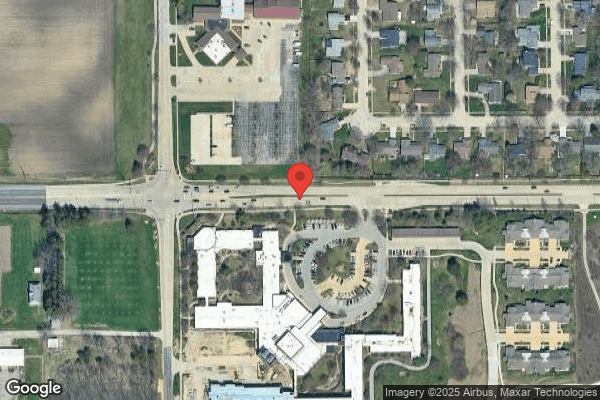

101 WEST WINDSOR ROAD, URBANA, IL 61801 (217) 344-2144
Non profit - Corporation 25 Beds Independent Data: November 2025
Trust Grade
40/100
#347 of 665 in IL
Last Inspection: February 2025

Within standard 12-15 month inspection cycle. Federal law requires annual inspections.

Overview

Clark-Lindsey Village in Urbana, Illinois has a Trust Grade of D, indicating below-average performance with some concerning issues. It ranks #347 out of 665 facilities in Illinois, placing it in the bottom half, but it is the top-rated facility among four in Champaign County. Unfortunately, the facility is worsening, with the number of reported issues increasing significantly from 3 in 2024 to 17 in 2025. Staffing is a noted strength, with a good rating of 4 out of 5 stars and a 0% turnover rate, indicating that staff members are stable and familiar with residents. However, there have been serious incidents, such as a resident developing a surgical infection due to failures in following physician orders, and another resident suffering a head injury from a fall due to improper wheelchair positioning. While the facility has no fines on record, they need to address these critical safety concerns to improve overall care quality.

Trust Score
D
40/100
In Illinois
#347/665
Bottom 48%
Safety Record
Moderate
Needs review
Inspections
Getting Worse
3 → 17 violations
Staff Stability
○ Average
Turnover data not reported for this facility.
Penalties
✓ Good
No fines on record. Clean compliance history, better than most Illinois facilities.
Skilled Nurses
✓ Good
Each resident gets 85 minutes of Registered Nurse (RN) attention daily — more than 97% of Illinois nursing homes. RNs are the most trained staff who catch health problems before they become serious.
Violations
⚠ Watch
24 deficiencies on record. Higher than average. Multiple issues found across inspections.
★★☆☆☆
2.0
Overall Rating
★★★★☆
4.0
Staff Levels
★★★☆☆
3.0
Care Quality
★★☆☆☆
2.0
Inspection Score
Stable
2024: 3 issues
2025: 17 issues

The Good

  • 4-Star Staffing Rating · Above-average nurse staffing levels
  • Full Sprinkler Coverage · Fire safety systems throughout facility
  • No fines on record

Facility shows strength in staffing levels, fire safety.

The Bad

2-Star Overall Rating

Below Illinois average (2.5)

Below average - review inspection findings carefully

The Ugly 24 deficiencies on record

2 actual harm
May 2025 3 deficiencies 1 Harm
SERIOUS (G) 📢 Someone Reported This

A family member, employee, or ombudsman was alarmed enough to file a formal complaint

Actual Harm - a resident was hurt due to facility failures

Quality of Care (Tag F0684)

A resident was harmed · This affected 1 resident

**NOTE- TERMS IN BRACKETS HAVE BEEN EDITED TO PROTECT CONFIDENTIALITY** Based on observation, interview, and record review the facility failed to follow physician admission orders to assess and monito...

Read full inspector narrative →
**NOTE- TERMS IN BRACKETS HAVE BEEN EDITED TO PROTECT CONFIDENTIALITY** Based on observation, interview, and record review the facility failed to follow physician admission orders to assess and monitor a surgical site, failed to provide a physician ordered shampoo to use over a surgical site, failed to initiate Enhanced Barrier Precautions (EBP), and failed to update the care plan. These failures resulted in a surgical infection which required additional appointments, antibiotics, a second hospitalization, and surgery for one (R1) resident out of three residents reviewed for Quality Care/Treatment in a sample list of three residents. Findings include: R1's undated Face Sheet documents R1 admitted to the facility on [DATE] with medical diagnoses as Cerebral Infarction, Nontraumatic Intracerebral Hemorrhage, Hemiplegia and Hemiparesis following Cerebral Infarction affecting Left non-dominant side, Dysphagia, Lack of Coordination, and Difficulty in Walking. R1's Minimum Data Set (MDS) dated [DATE] documents R1 is dependent on staff for toileting, dressing, bed mobility, and maximum assistance for bathing. R1's Hospital Summary and Discharge Record dated 3/24/25 documents R1's medical diagnoses as Left Hemiplegia, Midline shift of brain, Oropharyngeal Dysphagia, PEG (Percutaneous Endoscopic Gastrostomy) status, Status post Craniectomy, Left Homonymous Hemianopsia, Neurologic neglect, and Intercranial bleed. This same record documents physician orders for staff to complete daily skin checks, bathe R1 with a disinfectant/antiseptic soap, R1 is to wear a cranium helmet when out of bed, and R1 should be on Craniectomy precautions. R1's admission assessment dated [DATE] documents R1 as cognitively intact. This same assessment does not document R1's surgical site on her scalp, use of helmet, or isolation precautions to be used for R1's surgical site. R1's Skin Evaluation dated 3/27/25 documents R1 had no skin issues. R1's Nurse Progress Note dated 4/28/25 at 8:03 PM documents R1 returned from V7 (Neurologist) appointment. An infection on R1's Hemicraniectomy wound. R1 was started on an antibiotic for the infection and referred to V29 (Infectious Disease Physician) and to the wound clinic. A dressing was applied to R1's scalp at the follow up appointment which was rewrapped upon return from facility. R1's Neurology Progress Note dated 4/28/25 documents V7 (Neurologist) saw R1 for a post operative visit. V7 found two areas of dry material that once uncovered shows purulent material for R1's two areas on her Cranial surgical site that were not healed. Wound cultures were obtained and sent out for evaluation. R1's infection did not spread and has no fluid collection. R1 will be referred to an Infectious Disease Physician and a wound clinic. R1's Neurology Progress Note dated 5/12/25 documents R1 recently developed two spots of infection on the upper and anterior portion of the Cranial flap that are not improving. V7 (Neurologist) recommends re-exploration of the area of the Craniectomy with scalp excision and debridement. R1's Procedure Note dated 5/15/25 documents R1 underwent a Right re-exploration of Right Frontal/Parietal Craniectomy for scalp excision with debridement. R1 was placed under general anesthesia with an endotracheal tube placed. R1's head was shaved. R1's scalp was dissected, lifted over the infected area and then the piece of scalp was sharply removed for the approximate length of six centimeters (cm) by two cm wide. R1's Physician Order Sheet (POS) dated May 2025 documents a physician order starting: --4/28/25-5/12/25 for Sulfamethoxazole-Trimethoprim (Bactrim) 800-160 milligrams (mg) twice daily for fourteen days for (surgical site) wound infection. This order was discontinued 5/2/25 per (V29) Infectious Disease doctor recommendation. --5/2/25-5/12/25 for Cephalexin (Keflex) 500 mg four times daily for ten days. --5/2/25 with no ending date for Enhanced Barrier Precautions (EBP) per facility guidelines. R1's POS does not include an EBP order prior to 5/2/25. --5/3/25 to cleanse R1's scalp incisional wounds/scabs if there is any drainage with wound cleanser, pat dry, apply absorbent gauze, wrap with gauze, and secure with tape over gauze as needed. --5/6/26 with no end date for R1 to wear a helmet to be worn at all times, including while sleeping, except for personal hygiene. There were no physician orders in R1's POS prior to 5/6/25 for R1 to wear a helmet. R1's Medication Administration Record (MAR) dated March, April and May 2025 do not include physician orders to check R1's skin daily, ensure R1 was wearing her helmet when out of bed or provide antiseptic/disinfectant shampoo to R1's surgical site during showers. R1's Treatment Administration Record (TAR) dated March, April, and May 2025 do not include physician orders to check R1's skin daily, ensure R1 was wearing her helmet when out of bed, or provide antiseptic/disinfectant shampoo to R1's surgical site during showers. On 5/14/25 at 9:40 AM V3 (R1's family member) stated R1 admitted to the facility on [DATE] after having a Cerebral Vascular Accident (CVA) followed by a Right sided Craniectomy in February 2025. V3 stated R1 was admitted to a hospital and then went to an acute Rehabilitation facility prior to admitting to this facility. V3 stated R1 has not been receiving the care that V7 (Neurosurgeon) ordered for R1. V3 stated R1 admitted to the facility with an open wound on her head and was supposed to wear a helmet at all times. V3 stated R1's incision had two separate areas that were not completely healed upon admission to the facility. V3 stated the facility has not monitored R1's incision site since admission and now R1 has an infection that will require surgery to remove the infection. V3 stated the facility is at fault for R1 obtaining an infection and R1 having to stay in the hospital again and losing 'precious' time in therapy. V3 stated R1 will have to start from scratch again if she makes it out of surgery. On 5/14/25 at 11:25 AM V8 (R1's husband) stated R1 was living at home with V8 when she had a CVA. V8 stated R1 had to have almost half of her skull removed due to the pressure from a bleed inside her head. V8 stated they (R1, V8) have had a long road due to her Craniectomy, hospitalizations, therapies, and ongoing struggles with trying to keep up with everything. V8 stated R1 entered this facility with the intention to get therapy and then go back home. V8 stated because the staff didn't look at R1's incision site and didn't clean it or report any changes, R1 got an infection and now must have another surgery on 5/15/25. V8 stated V7 (Neurosurgeon) is going to remove the infection by removing approximately one to two inches wide and four to six inches long of her scalp and then sew the remaining sides back together again. V8 stated R1 was progressing in her therapy and now will have to start all over. V8 stated I just hope she (R1) makes it out of surgery. There is a risk of her not making it through this surgery and I just can't stand the thought of any life without her. (R1) should not have to be going through this at all. This wasn't in the plan. On 5/14/25 at 11:35 AM R1's room did not have any signage designating R1 was on Enhanced Barrier Precautions (EBP), no Personal Protective Equipment (PPE) available and no designated bins in her room for PPE disposal. V9 (LPN) removed R1's helmet to show two dime sized dark scabbed areas with unattached edges and yellow drainage around both areas. V9 did not wear a gown when removing bandage on R1's Scalp surgical site. V9 stated during the observation that the drainage had been present 'for a couple of days'. V9 confirmed there was no dressing covering R1's two open draining areas from her surgical incision. On 5/14/25 at 1:45 PM V14 (LPN) did not wear a gown when obtaining a blood sample from R1. V14 LPN stated she did not know R1 was on any type of precautions. On 5/14/25 at 1:50 PM V11 and V12 (Certified Nursing Assistants/CNAs) transferred R1 from her high back padded wheelchair to her bed and then back from her bed to her wheelchair using a total body mechanical lift. V11 and V12 did not wear gloves or gowns when transferring R1. R1's helmet has several long oval shaped openings in the top which shows R1's scalp. Both V11 and V12 CNAs adjusted R1's helmet from the top end with bare hands during the transfers without wearing Personal Protective Equipment (PPE). On 5/14/25 at various times during first and second shifts R1 did not have a sign posted outside her room indicating R1 was on Enhanced Barrier Precautions (EBP). R1 did not have any supply of Personal Protective Equipment (PPE) outside her door or easily accessible. On 5/15/25 at 9:00 AM V5 (CNA/Shower Aide) stated she has given R1 showers multiple times. V5 stated she does not know of any kind of antiseptic/disinfectant soap to use on R1. V5 stated she has only used the facility soap to wash R1's hair. V5 stated R1's incision site has been red for a long time and that she did not need to report this 'because the nurses already know'. On 5/15/25 at 3:45 PM V28 (Advanced Nurse Practitioner) stated she would expect that the facility follows the physician and discharge summary/orders for R1. V28 stated R1 obtained the infection Methicillin Susceptible Staphylococcus Aureus (MSSA) under the care of the facility and R1's infection was not sourced internally. V28 stated R1's infection was 'an external infection' which could have been caused by the staff not properly caring for R1's surgical incision. V28 stated the staff should have been assessing R1's surgical incision site daily, R1 should have been wearing her helmet when out of bed, and any changes such as redness to the surgical site or a change in R1's neurological status should have been reported to V7 (Neurologist) immediately. V28 stated R1 required surgery to debride the surgical site due to the infection. V28 stated R1 would not have to have a second surgery if the facility followed V7's physician orders upon admission. V28 stated R1 would require a hospital stay in the Intensive Care Unit (ICU) following her second surgery and that this would be a setback for R1 reaching her therapy goals and eventual return to her home. On 5/16/25 at 9:50 AM V1 (Administrator) stated R1 admitted to the facility with physician orders to assess her surgical site on her Superior scalp daily, R1's helmet was to be on when out of bed and antiseptic/disinfectant was to be provided for cleansing R1's surgical site during showers. V1 stated the facility did not put those orders in place and did not clarify any orders with V7 (Neurologist). V1 stated R1 should have been placed on Enhanced Barrier Precautions (EBP) upon admission. V1 stated R1 should have had her surgical site assessed upon admission and monitored at least weekly thereafter. V1 stated R1's helmet should have been on when R1 was out of bed only. V1 stated the facility cannot provide documentation of any of these things being done for R1 because the staff did not follow the discharge summary/instructions. V1 stated if the staff had been assessing R1's wound she might not have had an infection. V1 stated R1's second surgery on 5/15/25 was not a part of her rehabilitation plan. V1 stated R1 had to have this second surgery due to an MSSA infection that 'was most likely caused by us (facility)'. V1 stated V1 and V2 (DON) will be doing a lot of training to help the staff understand a higher level of care and to help educate the staff to let them know that reporting questions and/or changes in a resident's care is very important. On 5/16/25 at 11:00 AM V2 (DON) stated R1 had a massive Cerebral Vascular Accident (CVA) followed by a Craniectomy in February 2025 prior to her admission to the facility. V2 stated R1 admitted to the facility on [DATE] with two areas on her surgical scalp incision that were not completely healed. V2 stated there is no documentation of R1 admitting with a surgical site, no documentation of R1's surgical site being assessed or monitored and no documentation of R1's helmet that she was supposed to be wearing when out of bed. V2 stated the facility should have entered in the physician discharge summary/instructions. V2 stated R1 was supposed to have an initial assessment and then daily skin assessments of her surgical site from her Craniectomy but the facility did not initiate those orders and therefore the staff did not know to check R1's surgical site daily. V2 stated the facility does not have a wound program for skin tears, surgical sites, abrasions, bruises, etc. V2 stated We (facility) have a skin program for pressure ulcers but not for any other type of wound. I am fixing that problem today. We (facility) could have done a much better job at managing (R1's) surgical wound. R1 should have been placed on Enhanced Barrier Precautions (EBP) from her admission, we should have called to clarify her orders when she admitted and not waited until she had been a resident here for over a month. Unfortunately (R1) did obtain her infection to her surgical site under our care from not implementing isolation precautions and not following physician orders for the care of her surgical site. V2 stated the facility provides a standard shampoo and body wash but did not provide R1's antiseptic/disinfectant shampoo for her showers. V2 stated R1's care plan did include 'helmet for protection' but that should have been clarified as to when R1's helmet should have been on and off. V2 stated she understood why the staff were confused about the placement of R1's helmet because the intervention was unclear. V2 stated the combination of the staff not assessing R1's surgical site, not using the correct shampoo that was ordered by V7 (Neurologist) and not following up timely after her admission most likely caused her infection which led to her second surgical procedure. The facility policy titled Skin Impairment Prevention and Wound Management effective December 12, 2024, documents the facility will provide an aggressive skin care program using current standards of clinical practice. The presence of wounds will be indicated on the admission nursing assessment. Wound status will be monitored as ordered by the Physician. A complete wound assessment will be done weekly by a licensed nurse for all wounds, ulcers, and impairments in the skin integrity. Staff will document the wound using the weekly observation assessment.
CONCERN (D) 📢 Someone Reported This

A family member, employee, or ombudsman was alarmed enough to file a formal complaint

Potential for Harm - no one hurt, but risky conditions existed

Grievances (Tag F0585)

Could have caused harm · This affected 1 resident

**NOTE- TERMS IN BRACKETS HAVE BEEN EDITED TO PROTECT CONFIDENTIALITY** Based on interview and record review the facility failed to follow their Grievance policy by not following up on a resident (R1)...

Read full inspector narrative →
**NOTE- TERMS IN BRACKETS HAVE BEEN EDITED TO PROTECT CONFIDENTIALITY** Based on interview and record review the facility failed to follow their Grievance policy by not following up on a resident (R1) complaint timely for one out of three residents reviewed for grievances in a sample list of three residents. Findings include: The facility policy titled Grievance Policy dated 10/19/22 documents each resident has the right to voice grievances to the facility or other agency or entity that hears grievances without discrimination or reprisal and without fear or discrimination or reprisal. Such grievances include those with respect to care and treatment which has been furnished as well as which has not been furnished, the behavior of staff and of other residents, and other concerns regarding their facility stay. The facility will ensure prompt resolution to grievances, keeping the resident and the resident representative informed throughout the investigation and resolution process. The Grievance Officer will be responsible for tracking grievances through their conclusion, lead necessary investigations, communicate with residents through the process to resolution. The Grievance Officer works with facility staff utilizing root cause analysis processes for resolution of the grievance or concern. The Grievance Officer will initiate the appropriate notification and investigation processes per individual circumstance and facility policies. The investigation will consist of at least the following: a review of the completed complaint report, interview with the person reporting the incident, interview with any witnesses to the incident, review of the resident medical record, interviews with staff having contact with the resident during the relevant periods of the alleged incident, interviews with the resident's family members and a root-cause analysis of the circumstances surrounding the incident. R1's undated Face Sheet documents R1 admitted to the facility on [DATE] with medical diagnoses as Cerebral Infarction, Nontraumatic Intracerebral Hemorrhage, Hemiplegia and Hemiparesis following Cerebral Infarction affecting Left non-dominant side, Dysphagia, Lack of Coordination and Difficulty in Walking. R1's Minimum Data Set (MDS) dated [DATE] documents R1 is dependent on staff for toileting, dressing, bed mobility and maximum assistance for bathing. R1's Nurse Progress Note back dated 4/2/25 at 3:24 PM documents V8 (R1's spouse) reported to V9 (Licensed Practical Nurse/LPN) that someone bumped R1's head during her transfer this morning for a shower. This same note was dated as entered on 5/2/25. R1's Electronic Medical Record (EMR) does not include any alleged accident nor any investigation. The facility grievance log dated 5/2/25 documents R1stated she bumped her head during a transfer with a total body mechanical lift. On 5/14/25 at 11:20 AM R1 stated she doesn't remember exactly when her head was bumped on 4/2/25 but knows it was before actually taking a shower. R1 stated the staff pushed her in the shower chair around the corner of the bathroom too fast. R1 stated she felt like a knife was slicing through her head. R1 stated that hurt something awful. R1 stated she didn't know if the skin was broken or not on the top of her scalp where her incision was but it sure hurt like it did. R1 stated she didn't say anything to the staff at that time because she didn't want them to lie about it. R1 stated she told her husband so he could let the nurse (V9) LPN know. On 5/15/25 at 10:25 AM V19 (Director of Residential Services/Grievance Officer) stated R1 told V8 (R1's) husband on 4/2/25 that the staff bumped R1's head during a shower earlier that morning. V19 stated V8 reported this to V9 (LPN), who then reported this to V2 (DON) on 4/2/25. V19 stated V9 and V2 both looked at R1's head to find no injuries on 4/2/25. V19 stated there was nothing else done about this incident until 5/2/25. V19 stated R1's assessment of her head documented in her clinical record was actually entered on 5/2/25, not 4/2/25 as the grievance log documents. V19 stated the facility did not follow their Grievance policy by not immediately investigating this incident. On 5/15/25 at 11:25 AM V8 (R1's) husband stated R1 told him that the staff bumped her head that morning (4/2/25) and he let the nurse (V9) LPN know. V8 stated V9 (LPN) and V2 (Director of Nursing/DON) both looked at R1's head and there was no injury. V8 stated no one ever asked how R1's head was bumped or talked to R1 or the staff to try to prevent that from happening again.
CONCERN (D) 📢 Someone Reported This

A family member, employee, or ombudsman was alarmed enough to file a formal complaint

Potential for Harm - no one hurt, but risky conditions existed

Accident Prevention (Tag F0689)

Could have caused harm · This affected 1 resident

**NOTE- TERMS IN BRACKETS HAVE BEEN EDITED TO PROTECT CONFIDENTIALITY** Based on interview and record review the facility failed to timely investigate an accident and update the resident care plan for...

Read full inspector narrative →
**NOTE- TERMS IN BRACKETS HAVE BEEN EDITED TO PROTECT CONFIDENTIALITY** Based on interview and record review the facility failed to timely investigate an accident and update the resident care plan for one (R1) resident out of three residents reviewed for Accidents in a sample list of three residents. Findings include: R1's undated Face Sheet documents R1 admitted to the facility on [DATE] with medical diagnoses as Cerebral Infarction, Nontraumatic Intracerebral Hemorrhage, Hemiplegia and Hemiparesis following Cerebral Infarction affecting Left non-dominant side, Dysphagia, Lack of Coordination, and Difficulty in Walking. R1's Minimum Data Set (MDS) dated [DATE] documents R1 is dependent on staff for toileting, dressing, bed mobility and maximum assistance for bathing. R1's Nurse Progress Note back dated 4/2/25 at 3:24 PM documents V8 (R1's husband) reported to V9 (Licensed Practical Nurse/LPN) that someone bumped R1's head during her transfer this morning for a shower. This same note was dated as entered on 5/2/25. R1's Electronic Medical Record (EMR) does not include any investigation or updated care plan intervention for R1's reporting of the staff hitting her head during a shower on 4/2/25. On 5/14/25 at 11:20 AM R1 stated she was assisted up into her shower chair the morning of 4/2/25 by two Certified Nursing Assistants/CNAs (V5, V12). R1 stated after she was up, V12 left the room and V5 gave her a shower in the shower in her room. R1 stated she doesn't remember exactly when her head was bumped but knows it was after V12 left and before actually taking a shower. R1 stated the staff pushed her in the shower chair around the corner of the bathroom too fast. R1 stated she felt like a knife was slicing through her head. R1 stated that hurt something awful. R1 stated she didn't know if the skin was broken or not on the top of her scalp where her incision was but it sure hurt like it did. R1 stated no one ever asked her anything about that incident. On 5/14/25 at 11:25 AM V8 (R1's husband) stated V8 reported to V9 (Licensed Practical Nurse/LPN) on 4/2/25 that the staff had bumped R1's head in the shower. V8 stated no one ever asked him anything about the incident. On 5/15/25 at 9:05 AM V5 (CNA) stated R1 is cognitively intact and did not say anything to V5 about getting her head bumped. V5 stated no one ever asked her how it might have happened or who was in the shower assisting V5 with R1 until yesterday (5/14/25). On 5/15/25 at 9:10 AM V17 (CNA) stated R1 was not his client on 4/2/25 and did not help with her shower that morning. V17 stated no one asked V17 if he knew anything about R1's head being bumped on 4/2/25. V17 stated V17 heard about this incident on 5/14/25. On 5/15/25 at 9:15 AM V18 (CNA) stated he did not help transfer R1 to/from the shower on 4/2/25. V18 stated no one asked V18 if he knew anything about R1's head being bumped on 4/2/25. V18 stated V18 heard about this incident on 5/14/25. On 5/15/25 at 3:20 PM V2 (Director of Nurses/DON) stated R1's report of the staff bumping her head while in the shower on 4/2/25 was not investigated until 5/2/25. V2 stated V8 (R1's husband) did report this incident to V9 (LPN) that morning. V2 stated both V9 and V2 did look at R1's head but since there was no injury, there was no investigation as to the validity of R1's complaint. V2 stated the facility should have investigated to see if R1's head was bumped, how it may have been bumped and who all was involved with R1's shower that morning so that the facility could put measures in place to ensure R1's head was not bumped again the same way. The facility policy titled Incident and Accident Reporting dated July 18, 2013, documents an incident report in the resident's Electronic Medical Records (EMR) will be completed by the nurse as soon as possible after the incident/accident occurs. The nurse will start the incident investigation within 24 hours of the event or as soon as possible. After the incident investigation is complete, the Director of Nurses (DON) and other staff members as appropriate will review for further action/interventions that need to occur. Any interventions/actions will be documented on the investigative report. That information is then shared with the appropriate staff members and placed on the care plan.
Feb 2025 14 deficiencies 1 Harm
SERIOUS (G)

Actual Harm - a resident was hurt due to facility failures

Accident Prevention (Tag F0689)

A resident was harmed · This affected 1 resident

Based on observation, interview, and record review the facility failed to ensure proper wheelchair positioning to prevent a fall, failed to provide safe equipment, and failed to use a mechanical lift ...

Read full inspector narrative →
Based on observation, interview, and record review the facility failed to ensure proper wheelchair positioning to prevent a fall, failed to provide safe equipment, and failed to use a mechanical lift for transfers for one (R269) of 16 residents reviewed for accidents on the sample list of 21. These failures resulted in R269 requiring emergency room treatment after falling from a wheelchair and hitting R269's head on the floor. R269 sustained a head injury and a hematoma to the left forehead. These failures also resulted in R269 sustaining skin tears to the left and right forearm. Findings include: On 2/3/25 at 11:12 PM, R269 was sitting in a reclining wheelchair by the nurse's station. R269 had a yellowish - blue bruised raised area above the left eye. This bruising extended down the left side of R269's face to underneath of R269's chin. R269 had skin protective sleeves on the left and right arm. Black and yellowish bruising was seen underneath these sleeves. R269's Incident Report dated 1/29/25 documents that R269 was found on the floor in front of her reclining chair. A hematoma was noticed to the left temporal area and skin tear to the left knee. This incident report documents that R269 was watching television prior to the fall. This report documents R269 was sent to the emergency room for an evaluation. R269's emergency room visit notes dated 1/29/25 documents R269 was seen in the emergency room for a head injury due to a fall at the facility. These notes document R269 sustained a hematoma to the left forehead as a result of the fall. On 2/05/25 at 1:38 PM, V18 (Certified Nursing Assistant/CNA) stated just prior to R269's 1/29/25 fall, R269 was seen sitting comfortably watching television in a slight reclining position in the reclining wheelchair. V18 stated that the reclining wheelchair was not all the way reclined. On 2/04/25 at 1:56 PM, V2 (Director of Nursing) stated V2 investigated the cause of the fall occurring on 1/29/25. V2 stated she interviewed the CNAs (V18 and V45) who were caring for R269 at the time of the fall. V2 stated these interviews concluded that R269's reclining wheelchair was not reclined at the time of the fall. V2 stated it should have been reclined because R269 has poor core strength and R269 has been getting therapy for this. V2 stated she determined that R269 fell forward out of the chair due to poor core strength and the chair not being reclined. On 2/4/25 at 8:47 AM, V11 (Advanced Practice Nurse) was conducting an assessment on R269. V11 stated R269's injuries are consistent with the fall however he cannot see R269 being able to move self out of the reclining wheelchair if the chair was reclined. On 2/04/25 at 12:25 PM, V16 (Physical Therapist) stated that R269 has poor core balance, and that therapy has been working on strengthening. V16 stated that R269's reclining wheelchair should be fully reclined to prevent R269 from falling forward out of the chair. R269's incident report dated 1/27/25 at 11:00 AM documents, R269 was found to have a skin tear measuring 15.3 centimeters to the left arm and a three-centimeter skin tear to the right arm. This incident report documents that the staff have observed R269 putting both arms through the openings underneath the wheelchair armrests. This report documents that the metal bolts underneath the arm rests had rough edges which could have possibly caused the skin tears. On 2/5/25 at 10:15 AM, V45 (CNA) stated that she assisted R269 to the bathroom on 1/27/25 and noticed dry blood on R269 right and left arms. V43 stated that R269 has a daily habit of putting her arms between under the armrests. V43 stated she didn't tell anyone about R269 repeated daily stuffing arms through the wheelchair armrest and the seat of the chair. V43 stated that she always wears short sleeve shirts and tended to slide down in the wheelchair. V43 stated that upon inspection the bolts under the armrest were sharp and consistent with the skin tears. On 2/04/25 01:56 PM, V17 (Assistant Director of Nursing) and V2 (Director of Nursing) stated that R269's wheelchair had sharp bolts underneath the arm rest on both the right and left side of the wheelchair. V2 stated V2 was working when R269 was found to have the skin tears. V2 stated it was determined that the skin tears were caused from the bolts on the wheelchair. On 2/5/25 at 12:58 PM, V9 (Maintenance Director) stated the facility does not have a process for ensuring that wheelchairs are safe prior to use. On 2/04/25 at 12:25 PM, V16 (Physical Therapist) stated that R269 was a sit to stand lift but then had a stroke, R269 returned to the facility on 1/21/25. V16 stated R269 was made a full mechanical lift on 1/30/25. V16 stated R269's transfer status is written on a transfer directive sheet and taped to the back of the bathroom door. R269's Transfer Directive dated 1/30/25 documents R269 is a full mechanical lift for transfers. On 2/04/25 at 10:35 AM, V14 and V15 (Certified Nursing Assistants) transferred R269 with the sit to stand lift. On 2/04/25 at 11:07 AM, V14 and V15 transferred R269 with the sit to stand lift. On 2/04/25 at 1:56 PM, V2 (Director of Nursing) stated V14 and V15 should have transferred R269 with the full mechanical lift.
CONCERN (D)

Potential for Harm - no one hurt, but risky conditions existed

Notification of Changes (Tag F0580)

Could have caused harm · This affected 1 resident

**NOTE- TERMS IN BRACKETS HAVE BEEN EDITED TO PROTECT CONFIDENTIALITY** 2.) On 2/6/25 at 10:50 AM, R15 was transferred in the mechanical lift. R15's weight read 189 on the mechanical lift. V19 and V20...

Read full inspector narrative →
**NOTE- TERMS IN BRACKETS HAVE BEEN EDITED TO PROTECT CONFIDENTIALITY** 2.) On 2/6/25 at 10:50 AM, R15 was transferred in the mechanical lift. R15's weight read 189 on the mechanical lift. V19 and V20 (Certified Nursing Assistants) attempted to put a pair of pants on R15 but they could not pull them up due to them not fitting. R15's weight logs document that R15 weighed 166.6 pounds on 10/13/24 and weighed 187 pounds on 2/1/25 (20.4 pound weight gain). R15's medical record does not document that the physician was notified of R15's weight gain. R15's Nutrition assessment dated [DATE] documents R15's current weight as 182.6 pounds reflecting a weight gain of 9.6% since 10/13/24's weight of 166.6 pounds. This note documents R15 is noted with a weight gain trend since admission in October. This note does not document that the physician was notified of the weight gain. On 2/6/24 at 12:44 PM, V1 (Administrator) confirmed that the physician was not notified of R15's weight gain. Based on observation, interview, and record review the facility failed to immediately notify the Power of Attorney of an injury. The facility also failed to notify the physician of a significant weight gain for two (R269, R15) of 16 residents reviewed for notification of changes on the sample list of 21. Findings include: 1. On 2/3/25 at 11:35 AM, V41 (R269's Power of Attorney) stated when R269 was found with skin tears they did not call to notify her until 5:15 PM, but R269 got injured that morning. R269's incident report dated 1/27/25 documents, R269 was found with skin tears to both arms at 11:00 AM. R269's Health Status Note dated 1/27/25 at 5:12 PM, documents V41 was notified of R269's skin tears at 5:12 PM. On 2/4/25 at 1:56 PM, V2 (Director of Nursing) stated V41 was not notified of R269's skin tears immediately but was notified later in the day.
CONCERN (D)

Potential for Harm - no one hurt, but risky conditions existed

Abuse Prevention Policies (Tag F0607)

Could have caused harm · This affected 1 resident

Based on interview and record review the facility failed to implement their abuse prevention and prohibition policy for one (R269) of 16 residents reviewed for abuse on the sample list of 21. Finding...

Read full inspector narrative →
Based on interview and record review the facility failed to implement their abuse prevention and prohibition policy for one (R269) of 16 residents reviewed for abuse on the sample list of 21. Findings include: The facility's Abuse Prevention and Prohibition policy dated 1/30/23 documents upon receiving an allegation of abuse the facility will immediately notify the state agency and conduct an investigation. This policy also documents that all employees will receive abuse training during orientation. On 2/3/25 at 11:35 AM, V41 (Power of Attorney) stated R269 has been saying, Don't hurt me during cares. V41 stated she reported this to V2 (Director of Nursing) because she is concerned that R269 may be being abused. On 2/5/25 at 9:22 AM, V1 (Administrator) stated she received an allegation of abuse from V2 (Director of Nursing) on 2/1/25 concerning R269's statements of Don't hurt me. V1 stated she did not notify the state agency or investigate this allegation. R269's medical record did not document that the state agency was notified of R269's allegation of abuse or that this allegation was investigated. On 2/5/25 at 1:30 PM, V2 (Director of Nursing) stated she has been working in the facility for a month and has not received abuse training. The facility's abuse training record dated 2/5/25 does not document that V2 received abuse training.
CONCERN (D)

Potential for Harm - no one hurt, but risky conditions existed

Report Alleged Abuse (Tag F0609)

Could have caused harm · This affected 1 resident

Based on interview and record review the facility failed to report an allegation of abuse to the State Agency for one (R269) of 16 residents reviewed for abuse on the sample list of 21. Findings incl...

Read full inspector narrative →
Based on interview and record review the facility failed to report an allegation of abuse to the State Agency for one (R269) of 16 residents reviewed for abuse on the sample list of 21. Findings include: On 2/3/25 at 11:35 AM, V41 (Power of Attorney) stated R269 has been saying, Don't hurt me during cares. V41 stated she reported this to V2 (Director of Nursing) because she is concerned that R269 may be being abused. On 2/5/25 at 9:22 AM, V1 (Administrator) stated she received an allegation of abuse from V2 (Director of Nursing) on 2/1/25 concerning R269's statements of Don't hurt me. V1 stated she did not notify the state agency of this allegation. R269's medical record did not document that the state agency was notified of R269's allegation of abuse reported to V1 on 2/1/25.
CONCERN (D)

Potential for Harm - no one hurt, but risky conditions existed

Investigate Abuse (Tag F0610)

Could have caused harm · This affected 1 resident

Based on interview and record review the facility failed to investigate an allegation of abuse for one (R269) of 16 residents reviewed for abuse on the sample list of 21. Findings include: On 2/3/25...

Read full inspector narrative →
Based on interview and record review the facility failed to investigate an allegation of abuse for one (R269) of 16 residents reviewed for abuse on the sample list of 21. Findings include: On 2/3/25 at 11:35 AM, V41 (Power of Attorney) stated R269 has been saying, Don't hurt me during cares. V41 stated she reported this to V2 (Director of Nursing) because she is concerned that R269 may be being abused. On 2/5/25 at 9:22 AM, V1 (Administrator) stated she received an allegation of abuse from V2 (Director of Nursing) on 2/1/25 concerning R269's statements of Don't hurt me. V1 stated she did not investigate this allegation of abuse. R269's medical record did not document that an investigation was conducted after an allegation of abuse was reported to V1 on 2/1/25.
CONCERN (D)

Potential for Harm - no one hurt, but risky conditions existed

Deficiency F0657 (Tag F0657)

Could have caused harm · This affected 1 resident

Based on observation, interview, and record review the facility failed to revise a care plan for one (R269) of 16 residents reviewed for care plans on the sample list of 21. Findings include: On 2/3...

Read full inspector narrative →
Based on observation, interview, and record review the facility failed to revise a care plan for one (R269) of 16 residents reviewed for care plans on the sample list of 21. Findings include: On 2/3/25 at 2:44 PM, R269's water pitcher contained regular water and was sitting on a bedside table next to R269. R269's physician order dated 1/24/25 documents an order for a pureed texture diet with nectar thickened liquids. R269's Care Plan revised on 1/23/25 documents R269 is receiving a mechanical altered texture diet. This Care Plan does not include revision that R269 is now receiving a pureed diet. On 2/6/24 at 12:20 PM, V7 (Care Plan Coordinator) stated that she did not update R269's care to reflect the change from a mechanically altered diet to a pureed diet when the order was changed. V7 stated that she made the changes to the care plan on 2/6/25.
CONCERN (D)

Potential for Harm - no one hurt, but risky conditions existed

Quality of Care (Tag F0684)

Could have caused harm · This affected 1 resident

Based on interview and record review the facility failed to develop a plan of care which addressed potential adverse reactions to opioid medications, failed to monitor bowel movements, and failed to t...

Read full inspector narrative →
Based on interview and record review the facility failed to develop a plan of care which addressed potential adverse reactions to opioid medications, failed to monitor bowel movements, and failed to treat constipation for one of one resident (R220) reviewed for opioid medications on the sample list of 21. Findings include: The package insert for Hydrocodone-Acetaminophen 5-325 milligrams dated 8/2014 documents under Adverse Reactions that prolonged administration of this medication may produce constipation. R220's Care Plan dated 1/16/25 documents R220 has the potential for acute pain related to a recent hip fracture. This Care Plan and R220's medical record does not address the potential for adverse reactions to opioid medications including constipation. R220's Medication Administration Record for January 2025 and February 2025 documents, R220 received 5-325 milligrams of Hydrocodone-Acetaminophen (opioid medication) twice a day since 1/29/25. R220's Bowel and Bladder tracking record documents that R220 did not have a bowel movement from 1/31/24 to 2/5/25 (6 days). On 2/5/25 at 9:33 AM, V21 (Licensed Practical Nurse) confirmed that R220 is taking Hydrocodone-Acetaminophen 5-325 milligrams twice a day. V21 stated that R220 has not had a bowel movement since 1/30/25 and that R220 has not received any interventions to help R220 have a bowel movement. On 2/5/25 at 9:36 AM, V20 (Certified Nursing Assistant) reported that R220 did not have a bowel movement over the weekend. V20 reported that R220 hasn't had a bowel movement since 1/30/2025. On 2/5/25 at 10:03 AM, V21 stated that R220 has not had any interventions to treat or prevent constipation. V21 stated the facility has a bowel protocol and when a resident doesn't have a bowel movement for 72 hours then they will provide milk of magnesia or Miralax. V21 stated this was not initiated for R220.
CONCERN (D)

Potential for Harm - no one hurt, but risky conditions existed

Incontinence Care (Tag F0690)

Could have caused harm · This affected 1 resident

Based on observation, interview, and record review the facility failed to perform hand hygiene and change gloves during and after incontinence care to prevent the risk for urinary tract infection for ...

Read full inspector narrative →
Based on observation, interview, and record review the facility failed to perform hand hygiene and change gloves during and after incontinence care to prevent the risk for urinary tract infection for one (R15) of five residents reviewed for infection control in the sample list of 21. Findings include: R15's Care plan dated 11/18/25 documents R15 has a history of Urinary Tract Infections. On 2/5/25 at 10:39 AM, R15 was assisted to the toilet by V19 and V20 (Certified Nursing Assistants). V19 and V20 put on gloves and placed the straps for mechanical lift under R15 and secured R15 into the mechanical lift. V19 and V20 then moved the mechanical lift holding R15 into the bathroom. V19 and V20 then removed their gloves, used hand sanitizer, and applied new gloves. V20 then removed R15's pants and R15's urine soiled incontinence brief and tossed it into the trash. V20 then cleansed R15's perineal area. V19 and V20 then lowered the mechanical lift to the toilet and walked out of the bathroom to allow R15 privacy. At this time V20 did not change his gloves or sanitize his hands. Then with these same gloves, V20 went back into the bathroom and put on a clean incontinence brief on R15. On 2/5/25 at 11:05 AM, V20 stated, I should have put on a clean pair of gloves before cleaning (R15) and applying a new incontinence brief. The Facility's hand hygiene policy dated 3/3/15 documents the consistent use by staff of proper hygienic practices and techniques is critical to preventing the spread of infection.
CONCERN (D)

Potential for Harm - no one hurt, but risky conditions existed

Medication Errors (Tag F0758)

Could have caused harm · This affected 1 resident

**NOTE- TERMS IN BRACKETS HAVE BEEN EDITED TO PROTECT CONFIDENTIALITY** Based on interview and record review the facility failed to document behaviors and implemented nonpharmacological interventions ...

Read full inspector narrative →
**NOTE- TERMS IN BRACKETS HAVE BEEN EDITED TO PROTECT CONFIDENTIALITY** Based on interview and record review the facility failed to document behaviors and implemented nonpharmacological interventions prior to increasing antidepressant dosage and failed to attempt a Gradual Dose Reduction (GDR) for one of five residents (R6) reviewed for unnecessary medications in the sample list of 21. Findings include: The facility's Psychotropic Medication policy dated 3/28/18 documents psychotropic medications will be used to treat diagnosed and documented specific conditions and will not be administered unless documented behavioral programming with nonpharmacological interventions was attempted and unsuccessful. GDRs will be attempted annually after the first year unless clinically contraindicated. R6's active diagnoses list includes Dementia, Anxiety, and Insomnia. R6's Minimum Data Set, dated [DATE] documents R6 has moderate cognitive impairment and had no behaviors during the review period. R6's active physician orders documents orders for Remeron (antidepressant) 30 milligrams (mg) give one tablet by mouth daily as of 7/8/24 and Sertraline (antidepressant) 100 mg by mouth daily as of 1/4/23. There is no documentation in R6's medical record that a GDR in Sertraline was attempted within the last year or documented declination by a physician. R6's Nursing Note dated 7/8/2024 at 6:44 PM documents a new order to increase Remeron from 15 mg to 30 mg. There is no documentation in R6's progress notes that R6 had behaviors during June and July 2024 or unsuccessful nonpharmacological interventions that were attempted prior to the increase in Remeron on 7/8/24. R6's Psychotropic Medication Interview dated 7/8/24 documents Remeron 30 mg daily at bedtime, R6's family requested this medication, and R6 had poor appetite and crying. R6's June 2024 and July 2024 Medication Administration Records (MARs) document targeted behaviors, including crying. These MARs do not document R6 had behaviors and nonpharmacological interventions implemented prior to the increase in Remeron. On 2/5/15 between 9:43 AM and 9:55 AM V1 (Administrator) and V8 (Assistant Administrator) were requested to provide documentation for Sertraline GDR attempts or provider declination with clinical rational, behaviors and nonpharmacological interventions implemented prior to the increase in Remeron for R6. On 2/5/25 at 11:48 AM V8 provided R6's psychotropic assessment dated [DATE] and confirmed dose was increased for poor appetite and crying. V8 stated behaviors and nonpharmacological interventions should be documented in the nursing notes. At 12:35 PM V8 confirmed R6's June and July 2024 MARs document no behaviors occurred and V8 had no other documentation to provide for R6's behaviors and nonpharmacological interventions attempted prior to increasing Remeron. V8 confirmed there was no documentation that R6 had a GDR in Sertraline within the last year or declination by a provider.
CONCERN (D)

Potential for Harm - no one hurt, but risky conditions existed

Deficiency F0761 (Tag F0761)

Could have caused harm · This affected 1 resident

Based upon observation, interview, and record review the facility failed to store refrigerated schedule II medications behind double locked compartments, failed to ensure stock medications were not ex...

Read full inspector narrative →
Based upon observation, interview, and record review the facility failed to store refrigerated schedule II medications behind double locked compartments, failed to ensure stock medications were not expired, and failed to ensure medications were properly stored in the medication room or medication cart for three (R3, R5, and R11) of six residents reviewed in a sample of 21. Findings include: Facility policy titled general guidelines for Medication Storage dated 2/8/23 states schedule II medications are to be stored in separate, permanently affixed area and are under a double lock. This policy also documents outdated medications are to be immediately removed from stock, disposed of and reordered from pharmacy if necessary. 1) On 2/4/25 at 10:43 AM, V12 (Licensed Practical Nurse) opened medication storage room with key and opened the unlocked medication refrigerator. The unlocked refrigerator contained two bottles of liquid Lorazepam (schedule II control antianxiety medication) for R3 and R11. There was an open box of bisacodyl (laxative) suppositories labeled 1/2025 in black marker and an unlabeled bag of acetaminophen suppositories with expiration date of 6/2024 on shelf. On 2/4/25 at 10:50 AM, V12 stated the date handwritten on the box is the expiration date and verified the bisacodyl medication had expired four days prior and verified acetaminophen suppositories had expired eight months ago. V12 removed these medications at that time. V12 stated these medications are stock for all residents and was unaware that they were expired. V12 stated she would have to order more from the pharmacy stating this was the current stock. On 2/4/25 at 12:00 PM V2 (Director of Nursing) verified that the expired medications should have been disposed of and the medication fridge should be locked. 2.) On 2/3/25 at 11:45 AM, R5 was lying in the bed. An Albuterol Sulfate 90 microgram inhaler was sitting on a bookcase next to the bed. R5 stated that it is no longer used and is just stored on the bookcase. The facility's medication storage policy dated 2/8/23 documents medications will be kept secure in the medication room or medication cart. The facility resident daily census dated 2/3/25 documents 20 residents in house on certified unit.
CONCERN (D)

Potential for Harm - no one hurt, but risky conditions existed

Deficiency F0805 (Tag F0805)

Could have caused harm · This affected 1 resident

Based on observation, interview, and record review the facility to provide diet and liquids in the correct form for one (R269) of 16 residents reviewed for nutrition on the sample list of 21. Finding...

Read full inspector narrative →
Based on observation, interview, and record review the facility to provide diet and liquids in the correct form for one (R269) of 16 residents reviewed for nutrition on the sample list of 21. Findings include: R269's Hospital Discharge record dated 1/21/25 documents R269 has dysphagia (difficulty swallowing). These records document an order for minced and moist consistency foods, moderately thickened liquids, and no straws. On 2/03/25 at 12:04 PM, V41 (R269's Power of Attorney) stated after R269 had a Stroke the physician changed R269's diet order to a pureed diet with thickened liquids and it is not followed by the facility. V41 stated that this diet order includes not allowing R269 to have a straw. V41 stated that they give R269 regular water with a straw and have given her regular green beans. V2's (Director of Nursing) follow-up email to V41 dated 1/31/25 documents concern that on 1/23/25, R269 was given non-pureed food and regular water with a straw. On 2/3/25 at 2:44 PM, R269's water pitcher contained regular water and was sitting on a bedside table next to R269. At that time, V14 (Certified Nursing Assistant) confirmed the water was not thickened. R269's physician order dated 1/24/25 documents an order for a pureed texture diet with nectar thickened liquids. On 2/4/25 at 8:41 AM, V11 (R269's Advanced Nurse Practitioner) stated he wrote the order for the pureed diet with nectar thick liquids because he was notified that the facility was not following the diet orders from the hospital and that R269 was given whole green beans. On 2/4/25 at 1:56 PM, V2 stated after R269's hospital stay (1/15/25-1/21/25) R269 had a diet change that included a purred diet with thickened liquids. V2 stated R269 was not supposed to use a straw. V2 confirmed that there have been concerns that R269's new diet has not been followed and that R269 was given regular foods and water and was given a straw.
CONCERN (D)

Potential for Harm - no one hurt, but risky conditions existed

Infection Control (Tag F0880)

Could have caused harm · This affected 1 resident

Based on observation, interview, and record review staff failed to prevent potential cross contamination by failing to change gloves and perform hand hygiene for two (R8 and R15) of sixteen residents ...

Read full inspector narrative →
Based on observation, interview, and record review staff failed to prevent potential cross contamination by failing to change gloves and perform hand hygiene for two (R8 and R15) of sixteen residents reviewed for infection control on sample list of 21. Findings include: The facility's hand hygiene policy dated 3/3/15 documents hand hygiene should occur before and after assisting with personal care, coming in contact with intact skin surface, after wiping nose, after handling soiled items, and before and after removing gloves. 1. On 2/5/25 at 10:39 AM, V19 and V20 (Certified Nursing Assistants) provided incontinence care to R15. R15's incontinence brief was saturated with urine. V20 removed this brief and threw it in the trash can. V20 then provided perineal care to R15. After completing the incontinence care, V20 did not remove his gloves or wash his hands. With these same gloves on, V20 touched the mechanical lift and remote, walked out of the bathroom, transferred R15 into bed, touched R15's linens, put a pair of pants on R15, and placed R15's pillows under R15's head. On 2/5/25 at 11:05 AM, V20 stated V20 should have removed his gloves and sanitized his hands after providing incontinence cares to R15. 2. On 2/5/25 at 8:15 AM, V20 (Certified Nursing Assistant) was walking down the hallway. V20 had a clear bag containing soiled briefs in his ungloved right hand while pushing R8 into the spa room. V20 had a glove on the left hand. V20 placed R8 in the spa room's doorway and then walked to a soiled utility room to throw away the bag of soiled briefs. V20 then calibrated the scale and then assisted R8 onto scale. At no time, did V20 perform hand hygiene or apply new gloves. On 2/5/25 from 9:37 AM, V20 walked down the hallway wearing gloves. V20 touched his nose, adjusted his mask and his glasses, and then wiped his gloved hands on his clothing and picked up a tablet. V20 used the tablet and returned the tablet to the docking station. V20 then proceeded to enter R2's room. At no time, did V20 remove the soiled gloves or perform hand hygiene.
CONCERN (F)

Potential for Harm - no one hurt, but risky conditions existed

Food Safety (Tag F0812)

Could have caused harm · This affected most or all residents

Based on observation, interview, and record review the facility failed to ensure that dietary staff wore the appropriate hair restraints to prevent the potential physical contamination of food, food-c...

Read full inspector narrative →
Based on observation, interview, and record review the facility failed to ensure that dietary staff wore the appropriate hair restraints to prevent the potential physical contamination of food, food-contact surfaces, and equipment. This failure has the potential to affect all 20 residents residing in the facility. Findings include: The facility's Dining Services Hair Restraint Policy dated 1/19/24 documents that all staff involved in food preparation, service and handling must wear the appropriate hair restraints at all times. Acceptable hair restraints include hairnets, chef hats, or other secure coverings that fully contain and restrain hair. On 2/4/2025 at 3:04 PM, V22 (Cook) was preparing food and was walking to and from the stove and the food storage areas. V22 was observed wearing a stocking cap, the stocking cap covered the top of V22's head and there was three inches of gray curly hair that loosely hung beneath the stocking cap down V22's neck. On 2/4/2025 at 3:13 PM, V24 (Dining Services Supervisor) was observed in the food preparation areas with no beard net covering V24's gray facial hair that covered the lower half of V24's face. The facility's Long-Term Care Facility Application for Medicare and Medicaid dated 2/3/25 documents there are 20 residents residing in the facility.
CONCERN (F)

Potential for Harm - no one hurt, but risky conditions existed

Room Equipment (Tag F0908)

Could have caused harm · This affected most or all residents

Based on observation, interview, and record the facility failed to ensure a wheelchair was in safe operating conditions for one (R269) of 16 residents reviewed on the sample list of 21. This failure a...

Read full inspector narrative →
Based on observation, interview, and record the facility failed to ensure a wheelchair was in safe operating conditions for one (R269) of 16 residents reviewed on the sample list of 21. This failure also had the potential to affect all 20 residents residing in the facility. Findings include: The facility's Long-term Care Facility Application for Medicare and Medicaid dated 2/3/25 documents there are 20 residents residing in the facility. R269's incident report dated 1/27/25 at 11:00 AM documents, R269 sustained skin tears to the left and right forearms due to metal bolts with rough edges on the underside of the wheelchair arms of R269's wheelchair. On 2/4/25 at 1:56 PM, V17 (Assistant Director of Nursing) and V2 (Director of Nursing) stated that R269's wheelchair had sharp bolts underneath the arm rest on both the right and left side of the wheelchair. V2 stated she is unaware of where the wheelchair is at this time but will find it. On 2/5/25 at 12:58 PM, V9 (Maintenance Director) stated there has not been a work order for the wheelchair that caused R269's skin tears. V9 stated he is unsure where the wheelchair is currently located. On 2/5/25 at 1:30 PM, V2 (Director of Nursing) stated that they think they found the wheelchair today in the physical therapy office and that this wheelchair could have been used for any of the residents in the facility. V2 stated she is not sure if this wheelchair is the wheelchair that caused the skin tears to R269's arms and it could still be in circulation for any of the residents to use.
Jan 2024 3 deficiencies
CONCERN (D)

Potential for Harm - no one hurt, but risky conditions existed

Resident Rights (Tag F0550)

Could have caused harm · This affected 1 resident

Based on interview and record review the facility failed to ensure call lights were answered in a timely manner for three of five residents (R3, R9, R11) reviewed for call lights on the sample list of...

Read full inspector narrative →
Based on interview and record review the facility failed to ensure call lights were answered in a timely manner for three of five residents (R3, R9, R11) reviewed for call lights on the sample list of 16. Findings Include: 1. R3's admission Record dated 1/18/24 documents R3 is diagnosed with Repeated Falls, Anxiety, Muscle Weakness, Unsteadiness on Feet, Difficulty Walking, and Cognitive Impairment. R3's Care Plan dated 12/19/23 documents R3 is dependent on staff for physical needs and is at risk for falls. The Care Plan documents staff should respond promptly to all requests for assistance. On 1/16/24 at 11:00 AM R3 stated she is unsure of how long it takes staff to answer call lights and she just waits till they come. The Call Light Alarm report documents R3 had a call light response time of twenty-seven minutes six seconds on 01/14/2024 at 7:57 PM. 2. R9's admission Record dated 1/18/24 documents R9 is diagnosed with Surgical Amputation of Right Great Toe, Chronic Gout, Difficulty Walking, Unsteadiness on Feet, and Need for Assistance with Personal Care. R9's Care Plan dated 12/19/23 documents R9 has an activity intolerance, requires staff assistance to meet physical needs, and is at risk for falls. The Care Plan documents staff should respond promptly to all requests for assistance. On 1/16/24 at 10:15 AM R9's spouse (V19) stated the new call light system is not very good. R9 stated when he pushes his call light it can take staff a very long time to respond. The Call Light Alarm report documents R9 had a call light response time of six minutes twenty-six seconds on 01/5/2024 at 10:45 AM. 3. R11's admission Record dated 1/18/24 documents R11 is diagnosed with Lower Limb Cellulitis, Difficulty Walking, Malaise, and is on Palliative Care. R11's Care Plan dated 11/27/23 documents R11 has impaired cognition, requires staff assistance to meet physical needs, and is at risk for falls. The Care Plan documents staff should respond promptly to all requests for assistance. On 1/16/24 at 10:00 AM R11 stated when he pushes his call light it takes forever for someone to respond. The Call Light Alarm report documents R11 had a call light response time of ten minutes thirty-two seconds on 01/14/2024 at 4:03 PM. On 1/16/24 at 1:30 PM V2 (Director of Nurses) stated the facility does not have a call light policy but the expectation is that staff will answer call lights within the first five minutes. On 1/18/24 at 3:45 PM V2 confirmed it is important for staff to answer call lights as quickly as possible. This is especially important for those residents who require staff assistance for toileting, activities of daily living, and those who are at risk for falls. V2 confirmed the goal is to provide resident centered care and meet the residents needs and expectations quickly and efficiently.
CONCERN (F)

Potential for Harm - no one hurt, but risky conditions existed

Food Safety (Tag F0812)

Could have caused harm · This affected most or all residents

Based on observation, interview, and record review, the facility failed to prevent the potential for cross-contamination and foodborne illness, by failing to maintain the facility commercial food mixe...

Read full inspector narrative →
Based on observation, interview, and record review, the facility failed to prevent the potential for cross-contamination and foodborne illness, by failing to maintain the facility commercial food mixers in a sanitary manner, free of food-like debris and rust. The facility also failed to wear hair restraints during meal preparation. These failure affects all 12 residents in certified beds. Findings include: 1. On 1/16/24 at 9:20 am, a commercial, four feet tall, stand-up mixer, had a clear plastic garbage can liner covering an 80-quart capacity mixing bowl. The mixing bowl sat directly under an eight-inch circular mixer attachment plate and protruding armature. V6 (Chief Operation Officer/Certified Dietary Manager) and V8 (Cook) both stated the plastic bag covering the mixing bowl indicated the mixer was considered clean and ready for use. The stand -up mixer attachment plate and protruding armature were visibly and completely corroded with rust. The same stand-up mixer had copious amounts of crusted brown and beige food-like build- up adhering to the rusted attachment plate and armature that was positioned above the mixing bowl. 2. During the same kitchen tour, adjacent to the above commercial stand-up mixer was a table- top commercial type mixer. The table-top commercial mixer had an 18-quart capacity bowl positioned under the mixer attachment plate and protruding armature. The mixer attachment plate and protruding armature were corroded with rust. The same table-top mixer had copious amounts of crusted brown and beige food-like build-up that adhered to the rusted attachment plate and protruding armature, positioned above the mixing bowl. The under plate also was rust covered and had food debris build up. V6 stated that it too was considered clean. V6 stated These mixers (stand-up and table -top) obviously need a deep cleaning. V6 then stated We are going to take care of this right away. The rust on the mixers, is unacceptable. That (rust), I will have to consult on, (unidentified person) to find out how best to address this problem. 3. On 1/17/24 at 10:50 am, V5 (Chef) was working on the cook's line preparing food for the lunch meal. V5's hair was thick, braided-like dreadlocks strands that reached the middle of V5's back, and over V5's shoulders. V5 had a cloth head band on that covered V5's forehead. The headband was tied under V5's braid-like dreadlocks at the back of V5's neck, leaving V5's braid-like dreadlocks to dangle free. V5 stated he did not realize that all his hair needed to be covered during meal preparation. V14 (Cook) was also preparing food for lunch. V14 had a thick black beard that extended down four inches from V14's chin. V14 was not wearing a hair restraint covering over V14's beard. On 1/17/24 at 10:55 am V6 (Chief Operations Officer/ Certified Dietary Manager) stated all kitchen staff must have their hair and beards covered with a hair restraint. The facility Dining Services Food Sanitation Policy for Equipment dated 10/01/2023 documents the following: Sanitation policies for kitchen equipment are essential to ensure food safety and maintain a hygienic environment. Here are some general guidelines for sanitation in kitchen equipment: Regular Cleaning: Clean kitchen equipment regularly, following the manufacturer's recommendations. Establish a cleaning schedule for different equipment based on frequency of use. Food Contact Surfaces: Pay special attention to food contact surfaces such as cutting boards, countertops, and utensils. Use appropriate cleaning agents and sanitizers approved for foodservice establishments. Dishwashing: Ensure that dishwashing equipment (dishwashers or manual washing stations) reaches adequate temperatures for effective sanitization. Train staff on proper dishwashing procedures, including pre-rinsing and loading. Storage and Handling: Store kitchen equipment in a clean and dry environment to prevent the growth of bacteria. Properly handle and store utensils and equipment to avoid cross-contamination. Deep Cleaning: Schedule deep cleaning sessions for kitchen equipment on a regular basis. Disassemble equipment when necessary for thorough cleaning. Staff Training: Provide training to kitchen staff on proper sanitation practices, including handwashing and the use of gloves. Ensure that staff members are aware of the importance of maintaining a clean kitchen environment. The Resident Roster dated 01/16/24 documents 12 residents reside in the facility's certified beds.
MINOR (C)

Minor Issue - procedural, no safety impact

Abuse Prevention Policies (Tag F0607)

Minor procedural issue · This affected most or all residents

Based on interview and record review, the facility failed to develop their abuse prevention policy to include the prohibition against the use of technology to facilitate or enable abuse or mental abus...

Read full inspector narrative →
Based on interview and record review, the facility failed to develop their abuse prevention policy to include the prohibition against the use of technology to facilitate or enable abuse or mental abuse. This failure has the potential to affect all 12 residents residing in certified beds in the facility on the sample list of 16. Findings Include: The facility's Bed Change Request Approval letter dated 1/16/24 documents the facility houses 29 resident beds certified under Title 18, Medicare, which are rooms 101, 103 through 118, and 201 through 212. The facility's Resident Roster dated 1/16/24 documents twelve residents currently reside in the facility's certified beds. The facility's Abuse Prevention and Prohibition policy dated 12/22/16 documents this policy is applicable to all departments and nursing units of the facility including the Meadowbrook Skilled Care, which includes the certified beds. This same policy does not include a prohibition regarding the use of technology to facilitate or enable resident abuse or mental abuse. On 1/16/24 at 2:16 PM V1 (Assistant Administrator) stated, That is the most recent up-to-date abuse prevention policy. The State Operations Manual, Appendix PP - Guidance to Surveyors for Long Term Care facilities, revised 2/3/23, documents the definition of abuse (reference F600), It (abuse) includes verbal abuse, sexual abuse, physical abuse, and mental abuse including abuse facilitated or enabled through the use of technology. This same Operations Manual documents the definition of mental abuse, Mental abuse includes abuse that is facilitated or enabled through the use of technology, such as smartphones and other personal electronic devices.
Feb 2023 4 deficiencies
CONCERN (D)

Potential for Harm - no one hurt, but risky conditions existed

Quality of Care (Tag F0684)

Could have caused harm · This affected 1 resident

Based on interview and record review the facility failed to coordinate nursing care between the hospice company and the facility staff for one (R17) of one resident reviewed for hospice care from a sa...

Read full inspector narrative →
Based on interview and record review the facility failed to coordinate nursing care between the hospice company and the facility staff for one (R17) of one resident reviewed for hospice care from a sample list of 24. Findings include: On 2/07/23 at 12:29 PM, V10 (Registered Nurse/RN) said that R17 was being seen by a local hospice company and that the facility staff did not receive any documentation or care plan information from the hospice company regarding R17's care. On 2/7/23 at 12:30 PM, V10 (RN) stated, I'm R17's nurse, but I don't know why R17 is on hospice. On 2/7/23 at 2:05 PM, V2 (Director of Nursing) said that the hospice staff document in a computer system that the facility nursing staff do not have access to and that she did not know why R17 was placed on hospice care. R17's hospice note dated 11/17/21 documents admission to hospice care. None of R17's hospice care notes were found in R17's medical record from 5/18/22 to present. The facility provided hospice contract, dated 8/14/18, documents that upon request of the facility, Hospice shall provide Facility with access to all records of Hospice Services rendered to Resident. Such access shall be provided in accordance with applicable law and Hospice policy. On 2/7/23 at 2:10 PM, V2 said that the lack of shared information is a gap in the program.
CONCERN (D)

Potential for Harm - no one hurt, but risky conditions existed

Pressure Ulcer Prevention (Tag F0686)

Could have caused harm · This affected 1 resident

**NOTE- TERMS IN BRACKETS HAVE BEEN EDITED TO PROTECT CONFIDENTIALITY** Based on observation, interview, and record review the facility failed to complete accurate and consistent assessments and weekl...

Read full inspector narrative →
**NOTE- TERMS IN BRACKETS HAVE BEEN EDITED TO PROTECT CONFIDENTIALITY** Based on observation, interview, and record review the facility failed to complete accurate and consistent assessments and weekly measurements for one of one resident (R4) reviewed for pressure ulcers in the sample list of 24. Findings include: The facility's Wound Photography policy dated 11/15/18 documents, The purpose of this policy is to establish guidelines relating to the capturing of images of a wound to track measurements and wound healing progress. Patients with wounds will have an initial and on-going assessment of their wound using an appropriate wound assessment tool. This assessment should be supported by photography. All grade 2,3, & 4 pressure ulcers should be photographed. Photographs will be taken on initial assessment or as soon as possible if the digital device is not available. The wound should be re-photographed: -If there are any significant changes or concerns regarding the wound -As part of the weekly wound assessment. By using the (computer program) Skin & Wound mobile app (application), it allows images of a wound to track measurements and wound healing progress. Accurate and consistent measurements are critical for determining if a wound is improving or deteriorating and allows for early and appropriate intervention. The facility's Skin Impairment Prevention & Wound Management policy dated 1/15/21 documents, 5. Providing Local Wound Care: It is the policy of this facility to treat the wound according to the guidelines of the National Pressure Ulcer Advisory Panel (NPAUP), resident's MD (Medical Doctor) orders and current standards of clinical practice. c. A complete wound assessment will be done weekly by a licensed nurse for all wounds, ulcers, and impairments in the skin integrity. The comprehensive or complete wound assessment will be documented in the skin and wound module in our electronic medical record during the initial skin assessment and weekly thereafter. The wound assessment will contain the following information. i. Wound classification (wound type) ii. Wound location iii. Pressure ulcer staging or description of the extent of tissue damage iv. Description of the wound bed, drainage, margins/surrounding skin and odor v. Wound measurements vi. Wound related pain vii. Photograph of the wound if indicated. R4's Order Summary Report dated 2/8/22 documents R4 was admitted to the facility on [DATE] with diagnoses including Fracture of Shaft of Right Humerus, Acute Respiratory Failure with Hypoxia, Fracture of Unspecified Part of Neck of Unspecified Femur, Atrial Fibrillation and Diabetes Mellitus. R4's Minimum Data Set (MDS) dated [DATE] documents R4 was admitted to the facility with two unstageable pressure ulcers. R4's Wound Evaluation dated 11/15/22 documents measurements for the Left Heel Unstageable Pressure Ulcer were 4.41 cm (centimeters) x (by) 3.3 cm and the measurements for the Right Heel Unstageable Pressure Ulcer were 4.46 cm x 2.83 cm. There is no description of the wound bed, drainage, margins/surrounding skin or odor. R4's Treatment Administration Record (TAR) dated 11/1/23 through 11/30/23 documents and order for Skin Protective wipes three times a day for heel treatment dated 11/12/22 and discontinued on 11/23/22. This TAR documents an order dated 11/23/22 for Betadine Solution apply to bilateral heels topically three times a day for wound care. This TAR documents an order dated 11/16/22 for weekly wound tracking/monitoring due every day shift, every Tuesday update wound picture. R4's Wound Evaluation pictures start on 11/15/22. There are no pictures/measurements for 11/22/22. R4's Wound Evaluation dated 11/29/22 has incomplete pictures which do not measure the entire wound. Measurements dated 11/29/22 are Left Heel 4.68 cm x 2.52 cm and Right Heel 4.39 cm x 1.93 cm. Measurements dated 12/6/22 are Left Heel 4.87 cm x 4.28 cm and the Right Heel 5.16 cm x 3.14 cm. Wound Measurements dated 12/13/22 are Left Heel 4.83 cm x 3.62 cm and Right Heel 2.47 cm x 1.36 cm but the picture is very blurry. R4's Wound Evaluation pictures dated 12/20/22 for the Left Heel are 4.79 cm x 3.64 cm and for the Right Heel 0.98 cm x 0.55 cm. R4's Left Heel measurements dated 12/27/22 are 3.55 cm x 2.93 cm and the Right Heel increased to 4.35 cm x 2.38 cm. R4's Wound Evaluation dated 1/3/23 for the Left Heel measurements are 4.31 cm x 3.34 cm and there are no measurements for the Right Heel on 1/3/23. R4's Wound Evaluation pictures dated 1/10/23 for the Left Heel measurements are 4.13 cm x 3.35 cm and the Right Heel are 3.82 cm x 1.72 cm. There are no measurements for 1/17/23 for either the Right Heel or the Left Heel. R4's Wound Evaluation picture measurements dated 1/24/23 for the Left Heel are 3.01 cm x 2.1 cm and the Right Heel are 2.64 cm x 1.75 cm. There are also no measurements for 1/31/23 for the Right Heel or the Left Heel. R4's Wound Evaluation pictures dated 2/7/23 for the Left Heel are 3.86 cm x 3.09 cm and the Right Heel are 4.27 cm x 2.24 cm. On 2/7/23 at 1:43 PM, V6 (Licensed Practical Nurse) removed R4's gripper socks and protective sleeves from both feet, cleaned the heels with sterile saline then took pictures of both heels for the Wound Evaluations. The Left Heel wound was larger than the Right Heel wound. The Left Heel wound was approximately 4.5 cm x 3.5 cm and was black and necrotic. The Right Heel wound was approximately 4 cm x 2.5 cm. The skin around both wounds was light pink. V6 did not manually measure the wounds, V6 only took the picture and stated that is what they do, and the picture measures the wound. V6 had to retake the Left Heel picture several times before the picture would be accepted by the computer program. On 2/7/23 at 2:05 PM, V2 (Director of Nursing) confirmed that the only wound measurements are in the computer program under the wounds tab. On 2/8/23 at 8:25 AM, V2 confirmed there were missing measurements for 11/22/22, 1/17/23 and 1/31/23. V2 stated that V2 did not have a reason why they were not completed. V2 stated that the floor nurses are responsible for taking the weekly wound pictures. V2 stated it is scheduled to be done on Tuesdays. V2 stated that they do not have a wound nurse or a wound physician. V2 stated that the providers take care of their own resident's wounds and if they need to be referred, they would refer them to the wound clinic.
CONCERN (E)

Potential for Harm - no one hurt, but risky conditions existed

Deficiency F0578 (Tag F0578)

Could have caused harm · This affected multiple residents

**NOTE- TERMS IN BRACKETS HAVE BEEN EDITED TO PROTECT CONFIDENTIALITY** 4.) R130's face sheet documents R130 was admitted on [DATE]. R130's electronic medical record did not contain documentation of ...

Read full inspector narrative →
**NOTE- TERMS IN BRACKETS HAVE BEEN EDITED TO PROTECT CONFIDENTIALITY** 4.) R130's face sheet documents R130 was admitted on [DATE]. R130's electronic medical record did not contain documentation of an Advance Directive or that R130 was offered to formulate an Advance Directive. On [DATE] at 10:40 AM, V2 (Director of Nursing) stated R130 did not have orders in the computer for an Advance Directive and R130 did not have an Advance Directive form filled out. V2 stated V2 is not sure why R130 did not have one. V2 stated the facility currently does not know what R130's Advance Directive wishes are. V2 stated if a resident is admitted without an Advance Directive, then we would start the process of filling out the paper and then we put in the order. V2 stated this was not completed upon admission for R130. Based on interview and record review the facility failed to obtain Physician Orders for Advance Directives for three residents (R4, R5, R12) and failed to ensure the resident's right to formulate an Advanced Directive for one resident (R130). This failure affects four of eight residents reviewed for Advanced Directives in the sample list of 24. Findings include: The facility's Advanced Directives policy dated [DATE] documents, The purpose of this policy is to establish guidelines for a resident's choice about advance directives and respecting those directives. 1. The facility has defined advanced directives as preferences regarding treatment options and are included in, but not limited to: f. State of Illinois POLST (Practitioner Order for Life-Sustaining Treatment) Form - a document that identifies what medical interventions a resident wants done should they be found to have no pulse and is not breathing or what medical interventions they may want performed if they are found with a pulse and/or breathing. PROCEDURE: 1. Prior to, or upon admission, Social Services will check hospital or hospital computer system or EMR (Electronic Medical Record) for facility for current residents for completed Advanced Directives and insert them into the facility's skilled care record. Wishes will be reviewed and confirmed with resident and/or family members. 2. POLST FORM if no POLST form has been completed, upon admission, Nursing staff will provide to each resident and/or their family a copy of the State of Illinois POLST form and assist with completing as needed. a. When POLST form is completed, nursing staff to call resident's nurse practitioner/MD (Medical Doctor) for a telephone order to confirm resident's wishes and will enter orders into computer program. Form will be given to MD for signature. b. A copy of the POLST will be put in the hard chart. c. Stickers will be placed on the hard chart and on the name plate of the resident's room. i. Red stickers indicate DNR (Do Not Resuscitate. ii. [NAME] stickers indicate full code. 4. All completed Advance Directives will be filed in the resident's EMR (Electronic Medical Record). Forms will be attached in (the EMR) under the documents tab. 1.) R4's Order Summary Report dated [DATE] documents R4 was admitted to the facility on [DATE] with diagnoses including Fracture of Shaft of Right Humerus, Acute Respiratory Failure with Hypoxia, Fracture of Unspecified Part of Neck of Unspecified Femur, Atrial Fibrillation and Diabetes Mellitus. R4's POLST form is signed by V11 (R4's Power of Attorney) on [DATE] and has V12's (Physician) signature but no date that V12 signed the form. This POLST form documents R4 wishes to have no CPR (Cardiopulmonary Resuscitation) initiated. R4's Order Summary Report dated [DATE] does not document an order to confirm R4's wishes that are documented on the POLST form. 2.) R5's Order Summary Report dated [DATE] documents R5 was admitted to the facility on [DATE] with diagnoses including Lobar Pneumonia Unspecified Organism, Type 2 Diabetes Mellitus, Atrial Fibrillation, Morbid Obesity, Chronic Kidney Disease, Stage 3, Nonalcoholic Steatohepatitis and Chronic Obstructive Pulmonary Disease. R5's POLST form dated [DATE] documents R5 wishes to have no CPR (Cardiopulmonary Resuscitation) initiated. R5's Order Summary Report dated [DATE] does not document an order to confirm R5's wishes that are documented on the POLST form. On [DATE] at 10:40 AM, V6 (Licensed Practical Nurse) confirmed R5 does not have a Physician's Order confirming R5's wishes for life sustaining treatment. 3.) R12's Order Summary Report dated [DATE] documents R12 was admitted to the facility on [DATE] with diagnoses including Atrial Fibrillation, Chronic Kidney Disease, Stage 3, Benign Prostatic Hyperplasia, Other Displaced Fracture of Upper End of Right Humerus and Delirium. R12's POLST form dated [DATE] documents R12 wishes to have no CPR initiated. R12's Order Summary Report dated [DATE] does not document an order to confirm R12's wishes that are documented on the POLST form. On [DATE] at 10:43 AM, V2 (Director of Nursing) stated that it is the nurse's responsibility on admission to get the order from the Physician regarding the DNR or the full code status. On [DATE] at 10:56 AM, V2 confirmed that there should be an order if the resident is a DNR.
CONCERN (F)

Potential for Harm - no one hurt, but risky conditions existed

Deficiency F0761 (Tag F0761)

Could have caused harm · This affected most or all residents

**NOTE- TERMS IN BRACKETS HAVE BEEN EDITED TO PROTECT CONFIDENTIALITY** Based on observation, interview, and record review the facility failed to ensure expired stock medications were not stored in th...

Read full inspector narrative →
**NOTE- TERMS IN BRACKETS HAVE BEEN EDITED TO PROTECT CONFIDENTIALITY** Based on observation, interview, and record review the facility failed to ensure expired stock medications were not stored in the medication storage room. This failure has the potential to affect all 31 residents residing in the facility. Findings include: The facility's Medications Storage policy dated [DATE] documents, 11. Outdated, contaminated, or deteriorated medications and those in containers that are cracked, soiled, or without secure closures are immediately removed from stock, disposed of according to procedures for medication destruction, and reordered from the pharmacy, if replacements are needed. On [DATE] at 12:38 PM, the 200-wing medication storage room contained a saline laxative enema with an expiration date of [DATE], two bottles of Guaifenesin 200 milligrams with an expiration date of 9/2022, and 4 bottles of Geri Lanta regular strength with an expiration date of November of 2022. At that time, V5 (Registered Nurse) confirmed that the medications were expired and stated that the over-the-counter medications kept in the medication storage room could be used for anyone in the facility. On [DATE] at 12:54 PM, the 100-wing medication storage room contained 2 bottles of Imodium with an expiration date 12/22 and 2 bottles of 81 milligram of enteric coated aspirin with an expiration date of 12/22. At that time, V10 (Registered Nurse) confirmed the medications were expired and that these medications could be used for any resident in the facility. The facility's Census and Condition report dated [DATE] signed by V4 (Minimum Data Set Coordinator) documents there are 31 residents residing in the facility.
Understanding Severity Codes (click to expand)
Life-Threatening (Immediate Jeopardy)
J - Isolated K - Pattern L - Widespread
Actual Harm
G - Isolated H - Pattern I - Widespread
Potential for Harm
D - Isolated E - Pattern F - Widespread
No Harm (Minor)
A - Isolated B - Pattern C - Widespread

Questions to Ask on Your Visit

  • "Can I speak with families of current residents?"
  • "What's your RN coverage like on weekends and overnight?"

Our Honest Assessment

Strengths
  • • No fines on record. Clean compliance history, better than most Illinois facilities.
Concerns
  • • Multiple safety concerns identified: 2 harm violation(s), Payment denial on record. Review inspection reports carefully.
  • • 24 deficiencies on record, including 2 serious (caused harm) violations. Ask about corrective actions taken.
  • • Grade D (40/100). Below average facility with significant concerns.
Bottom line: Trust Score of 40/100 indicates significant concerns. Thoroughly evaluate alternatives.

About This Facility

What is Clark-Lindsey Village's CMS Rating?

CMS assigns CLARK-LINDSEY VILLAGE an overall rating of 2 out of 5 stars, which is considered below average nationally. Within Illinois, this rating places the facility higher than 0% of the state's 100 nursing homes. A rating at this level reflects concerns identified through health inspections, staffing assessments, or quality measures that families should carefully consider.
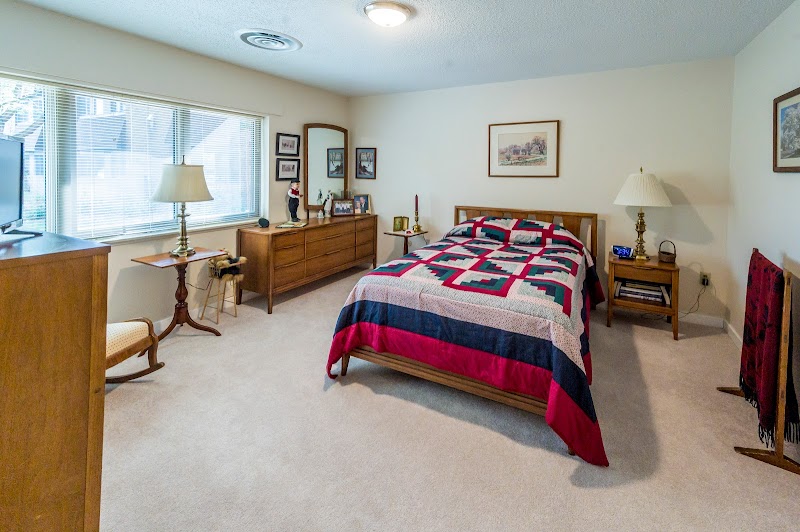
How is Clark-Lindsey Village Staffed?

CMS rates CLARK-LINDSEY VILLAGE's staffing level at 4 out of 5 stars, which is above average compared to other nursing homes.

What Have Inspectors Found at Clark-Lindsey Village?

State health inspectors documented 24 deficiencies at CLARK-LINDSEY VILLAGE during 2023 to 2025. These included: 2 that caused actual resident harm, 21 with potential for harm, and 1 minor or isolated issues. Deficiencies causing actual harm indicate documented cases where residents experienced negative health consequences.
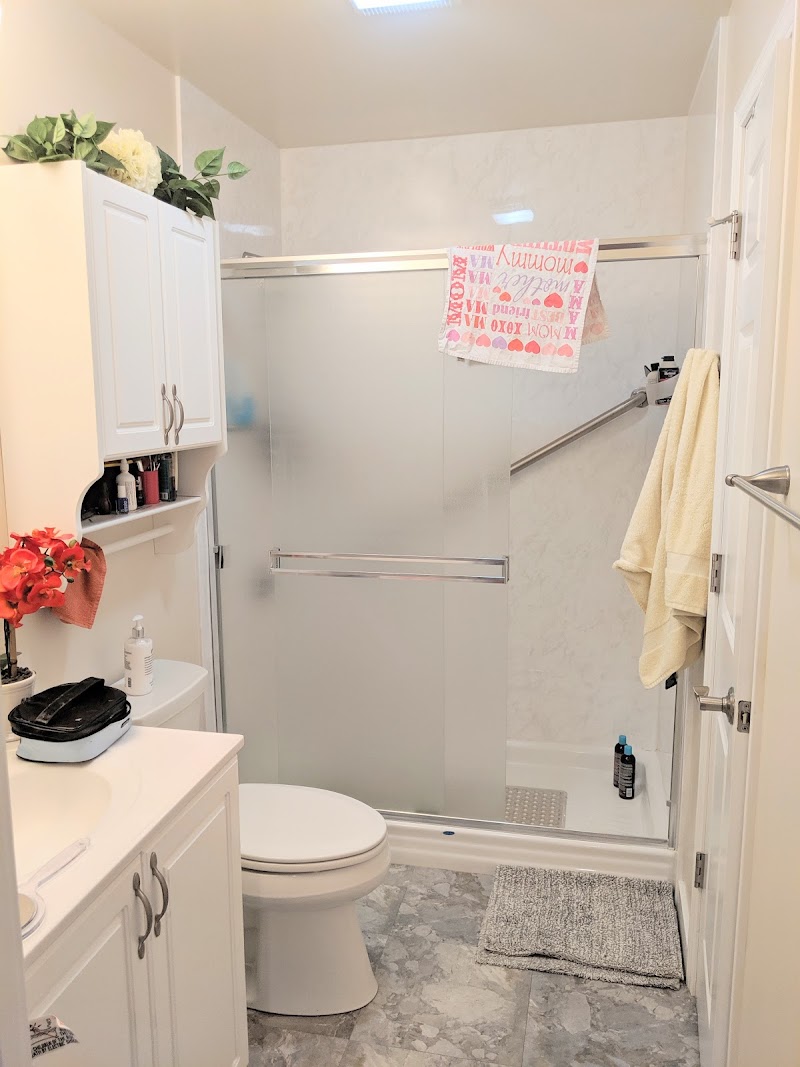
Who Owns and Operates Clark-Lindsey Village?

CLARK-LINDSEY VILLAGE is owned by a non-profit organization. Non-profit facilities reinvest revenue into operations rather than distributing to shareholders. The facility operates independently rather than as part of a larger chain. With 25 certified beds and approximately 23 residents (about 92% occupancy), it is a smaller facility located in URBANA, Illinois.

How Does Clark-Lindsey Village Compare to Other Illinois Nursing Homes?

Compared to the 100 nursing homes in Illinois, CLARK-LINDSEY VILLAGE's overall rating (2 stars) is below the state average of 2.5 and health inspection rating (2 stars) is below the national benchmark.

What Should Families Ask When Visiting Clark-Lindsey Village?

Based on this facility's data, families visiting should ask: "Can I visit during a mealtime to observe dining assistance and food quality?" "How do you handle medical emergencies, and what is your hospital transfer rate?" "Can I speak with family members of current residents about their experience?"

Is Clark-Lindsey Village Safe?

Based on CMS inspection data, CLARK-LINDSEY VILLAGE has a clean safety record: no substantiated abuse findings (meaning no confirmed cases of resident harm), no Immediate Jeopardy citations (the most serious violation level indicating risk of serious injury or death), and is not on the Special Focus Facility watch list (a federal program monitoring the lowest-performing 1% of nursing homes). The facility has a 2-star overall rating and ranks #100 of 100 nursing homes in Illinois. While no facility is perfect, families should still ask about staff-to-resident ratios and recent inspection results during their visit.

Do Nurses at Clark-Lindsey Village Stick Around?

CLARK-LINDSEY VILLAGE has not reported staff turnover data to CMS. Staff turnover matters because consistent caregivers learn residents' individual needs, medications, and preferences. When staff frequently change, this institutional knowledge is lost. Families should ask the facility directly about their staff retention rates and average employee tenure.

Was Clark-Lindsey Village Ever Fined?

CLARK-LINDSEY VILLAGE has no federal fines on record. CMS issues fines when nursing homes fail to meet care standards or don't correct problems found during inspections. The absence of fines suggests the facility has either maintained compliance or corrected any issues before penalties were assessed. This is a positive indicator, though families should still review recent inspection reports for the full picture.

Is Clark-Lindsey Village on Any Federal Watch List?

CLARK-LINDSEY VILLAGE is not on any federal watch list. The most significant is the Special Focus Facility (SFF) program, which identifies the bottom 1% of nursing homes nationally based on persistent, serious quality problems. Not being on this list means the facility has avoided the pattern of deficiencies that triggers enhanced federal oversight. This is a positive indicator, though families should still review the facility's inspection history directly.