WASHINGTON SENIOR LIVING
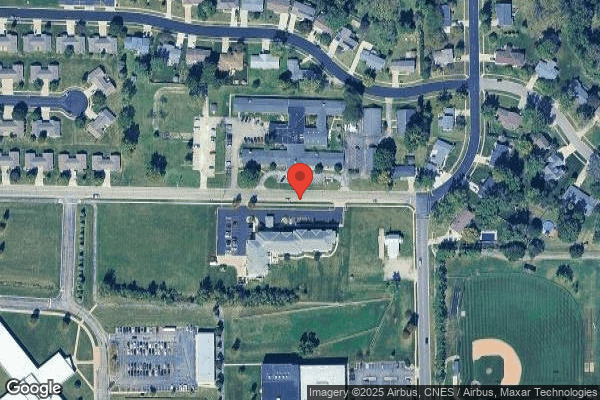
1201 NEWCASTLE, WASHINGTON, IL 61571 (309) 444-3161
For profit - Limited Liability company 122 Beds Independent Data: November 2025 3 Immediate Jeopardy citations
Trust Grade
0/100
#662 of 665 in IL
Last Inspection: December 2024

Within standard 12-15 month inspection cycle. Federal law requires annual inspections.

Overview

Washington Senior Living has received a Trust Grade of F, indicating significant concerns and poor overall quality. It ranks #662 out of 665 facilities in Illinois, placing it in the bottom half, and #8 out of 8 in Tazewell County, meaning there are no better local options. The facility's trend is improving, with the number of issues decreasing from 21 in 2024 to 15 in 2025. However, staffing is a concern, with only 1 out of 5 stars and a high turnover rate of 60%, which is above the state average. The facility has incurred $420,732 in fines, higher than 96% of Illinois facilities, raising red flags about compliance issues. While RN coverage is less than 84% of state facilities, there have been serious incidents, including a resident receiving the wrong medication leading to hospitalization, and another resident suffering significant injuries from an altercation with a known aggressive resident. Additionally, the facility failed to secure exit doors, resulting in residents wandering outside without supervision. Overall, while there are some improvements, the facility has serious weaknesses that families should carefully consider.

Trust Score
F
0/100
In Illinois
#662/665
Bottom 1%
Safety Record
High Risk
Review needed
Inspections
Getting Better
21 → 15 violations
Staff Stability
⚠ Watch
60% turnover. Above average. Higher turnover means staff may not know residents' routines.
Penalties
✓ Good
$420,732 in fines. Lower than most Illinois facilities. Relatively clean record.
Skilled Nurses
⚠ Watch
Each resident gets only 22 minutes of Registered Nurse (RN) attention daily — below average for Illinois. Fewer RN minutes means fewer trained eyes watching for problems.
Violations
⚠ Watch
77 deficiencies on record. Higher than average. Multiple issues found across inspections.
★☆☆☆☆
1.0
Overall Rating
★☆☆☆☆
1.0
Staff Levels
★★★★☆
4.0
Care Quality
★☆☆☆☆
1.0
Inspection Score
Stable
2024: 21 issues
2025: 15 issues

The Good

  • 4-Star Quality Measures · Strong clinical quality outcomes
  • Full Sprinkler Coverage · Fire safety systems throughout facility
  • No fines on record

Facility shows strength in quality measures, fire safety.

The Bad

1-Star Overall Rating

Below Illinois average (2.5)

Significant quality concerns identified by CMS

Staff Turnover: 60%

14pts above Illinois avg (46%)

Frequent staff changes - ask about care continuity

Federal Fines: $420,732

Well above median ($33,413)

Significant penalties indicating serious issues

Staff turnover is elevated (60%)

12 points above Illinois average of 48%

The Ugly 77 deficiencies on record

3 life-threatening 2 actual harm
Aug 2025 1 deficiency
CONCERN (F) 📢 Someone Reported This

A family member, employee, or ombudsman was alarmed enough to file a formal complaint

Potential for Harm - no one hurt, but risky conditions existed

Grievances (Tag F0585)

Could have caused harm · This affected most or all residents

Based on observation, interview, and record review the facility failed to educate residents on what a grievance is, provide grievance forms, and provide a clear and noticeable destination for grievanc...

Read full inspector narrative →
Based on observation, interview, and record review the facility failed to educate residents on what a grievance is, provide grievance forms, and provide a clear and noticeable destination for grievances to be submitted. This failure has the potential to affect all 63 residents who reside in the facility. Findings Include:The Filing Grievances/Complaints policy dated 12/2004 documents Our facility will assist residents, their representatives (sponsors), other interested family members, or resident advocates in filing grievances or complaints when such requests are made. The Ombudsman Program Residents' Rights Booklet (undated) documents Your personal property rights. You have the right to keep and wear your own clothing. Your facility must try to keep your property from being lost or stolen. If your property is missing, the facility must try to find it.The Resident Council meeting minutes dated 7/8/2025 documents, R11, R28, R38, R48, and R64 all confirmed they did not know what a grievance was or how to file a grievance.The facility census sheet dated 8/18/2025 documents 63 residents reside in the facility.On 8/18/2025 at 1:13PM, R8 voiced she has had a brown jacket missing since Christmas and has never gotten it back. R8 voiced she did not know what a grievance was or how to file one.On 8/18/2025 at 1:20PM, R3 stated she has a turquoise dress missing for months and that laundry keeps saying they are looking for it. R3 voiced she did not know what a grievance was.On 8/18/2025 at 1:30 PM, R4 voiced she had pink pants missing and she does not know what a grievance is. R4 stated she has had a lot of clothing items come up missing and that this happens all the time.On 8/18/2025 at 3:05PM, V4 (Laundry Aide) stated residents tell me things are missing all the time V4 stated she will try and go to the laundry room and look for the article of clothing that is missing and if she cannot find it, she will tell V5 (Housekeeping/Laundry Supervisor). V4 does not know about grievances or how to tell residents to file one.On 8/19/2025 at 8:30AM, V5 (Housekeeping/Laundry Supervisor) stated when a resident does voice that they cannot find an article of clothing she will checks the lost and found, check resident closets, and throw the word out there and keep looking V5 stated there is a list in the laundry office of resident missing clothing items for other laundry staff to keep an eye out for but does not advice residents to file a grievance.On 8/19/2025 at 12:05PM, The laundry room had four carts for each hall, room numbers in sections of what rooms each cart had, and clothes had labels of each resident's piece of clothing. The bulletin board hung that above the folding table by the dryer on the wall had no list of missing clothing items. On 8/19/2025 at 12:05 PM, V11 (Laundry Aide) stated when residents complain of missing clothing items, she will search the lost and found cart. If she cannot locate it on the lost and found cart, V11 stated she will then search in the residents closet and if the item is not found V11 will put a note on the bulletin board. V11 stated there is no list of residents with missing items. V11 confirmed R4's pink pants, R8's brown jacket, and R3's dress has been missing.On 8/19/2025 at 12:40PM, V12 (Social Services Director/SSD) stated she was supposed to oversee grievances when she was hired in November 2024. V1 (Administrator) did not train V12, and she was directed to send all grievances to V1. V12 stated she still does not know the process of a grievance and does not have the forms and does not know the process. V12 stated she does know R6 had family bring in four new pairs of black pants and the pants were never found. V12 stated R6 did not know how to file a grievance and R6's pants were never found. V12 stated V1 replaced two pairs of R6's pants but not all four. V12 stated R7 is still missing her sweatshirt that has kittens on it and R7 has voiced for months how she still has not received the sweatshirt. V12 stated R7 voiced this to V1, and nothing has been resolved.On 8/19/2025 at 1PM, V13 (Activities Director) stated residents do occasionally complain that they have missing clothing. V13 stated she will then look in laundry for the missing clothing item if she cannot find it, V13 will report it to V11, and V11 tells V13 to look for the item. V13 stated she did not know about grievances and has never helped a resident fill out a grievance. V13 stated there is no place to place a grievance and there is no process in place.On 8/19/2025 at 3PM, V1 (Administrator) confirmed he has never shown V12 (SSD), or V13 (Activities Director) how to address grievances and V1 directed V12 to send all residents with concerns to him. V1 also confirmed there is not a publicly visible place for residents to get a grievance form or a box grievance form.
Aug 2025 1 deficiency
CONCERN (D) 📢 Someone Reported This

A family member, employee, or ombudsman was alarmed enough to file a formal complaint

Potential for Harm - no one hurt, but risky conditions existed

Notification of Changes (Tag F0580)

Could have caused harm · This affected 1 resident

Based on interview and record review the facility failed to notify the Residents Family/Representative promptly of a change of condition for one of three residents (R1) reviewed for injury of unknown ...

Read full inspector narrative →
Based on interview and record review the facility failed to notify the Residents Family/Representative promptly of a change of condition for one of three residents (R1) reviewed for injury of unknown origin in the sample of three. Findings include: The Notification of Resident Change in Condition Policy (undated) documents Policy: It is the policy of this facility to promptly notify the resident, their legal representative(s) and attending physician of changes in the resident's health condition. Policy Specifications: To establish guidelines for assuring residents, their legal representatives and attending physicians are informed of changes in the resident's condition. Responsibility: Director of Nursing and Licensed Nurses. Standards: 1. A licensed nurse shall promptly inform the resident, consults with the resident's physician and if known, notify the residents legal representative or an interested family member of: a. An accident involving the resident in which there is a potential for an actual injury which could require nursing or medical intervention. b. A significant change in the resident's physical, mental or psychosocial status, i.e. (example) deterioration in health, mental or psychosocial status in either life threatening conditions or clinical complication. c. A need to alter treatment significantly i.e. need to discontinue an existing form of treatment. d. A decision to transfer or discharge the resident from the facility. 2. The licensed nurse is to use professional judgment in determining changes in condition based on assessment and findings or signs and symptoms of change which could lead to deterioration if not treated. 3. Clinical change in condition is determined by resident visualization, medical record review, clinical assessment findings and care plan review. Review of high-risk clinical issues such as skin breakdown, falls, weight loss, dehydration and others are conducted on a daily basis. 4. Following the assessment, observing signs and symptoms, and obtaining vital signs, the attending physician, family/guardian will be promptly notified of significant findings. 12. Resident representative(s) notifications and attempts will be made promptly and documented in the nurse's notes. In the event the licensed nurse is unable to contact the resident's representative, after a reasonable time period, the Director of Nursing will be notified. R1's Nursing Note written by V11/Licensed Practical Nurse dated 7/23/25 at 5:29 AM, documents that staff reported discoloration to R1's Left Lower Extremity from the knee down. R1 was guarding and facial grimacing when the leg was touched or moved. The knee was swollen and warm to the touch. No record of a fall. A message was left with Hospice. The Initial Facility Incident Report sent to the (State agency) dated 7/23/25 at 7:00 AM, documents that R1 has diagnoses which include Alzheimer's Disease with Late Onset, Type 2 Diabetes Mellitus with Diabetic Chronic Kidney Disease, Generalized Anxiety Disorder, Hyperlipidemia, and Delusional Disorder. R1 has confusion regarding time/place/person. Brief Interview of Mental Status 2/15 (severer cognitive impairment). R1 was noted with discoloration and swelling to the Left Lower Extremity. R1 noted guarded and unwilling or unable to extend her leg fully. R1's Family/Resident Representative was notified on 7/23/25 at 11:00 AM. On 8/4/25 at 5:50 PM, V17/R1's Power of Attorney/POA stated that she was upset that she was not notified immediately that R1 had bruising and swelling to R1's leg. I did not here from the facility about (R1's) injury. The first I knew of it was when I was told by hospice. I let (V2/Previous Director of Nursing) know that I was not happy about the lack of communication. On 8/5/25 at 1:55 PM, V15/Hospice Registered Nurse stated that on 7/23/25 at 10:59 AM V15 talked to V2/Previous Director of Nursing about R1's injury and what should be done. V13/Nurse Practitioner had come in to examine R1 and had decided that an x-ray of R1's leg needed done. V13 had said that R1 could be sent to the emergency room for the x-ray, or it could be ordered to be done in house. V13 said that V17/R1's Power of Attorney should make the final decision. That is when V15 found out that V17 was not notified of R1's injury by the facility. V15 called V17 to discuss R1's injury and V17 was upset that she had not been called earlier by the facility. V15 also stated Although (R1) is receiving hospice care (V17) should have been notified by the facility of (R1's) injury. I was told the injury was found around 5:45 AM on 7/23/25. I did not talk to (V17) until around 11:00 AM on 7/23/25. On 8/6/25 at 12:47 PM, V2/Previous Director of Nursing stated (V11/Licensed Practical Nurse/LPN) was the nurse that was working when (R1's) injury was noted on (R1's) leg. (V11) reported the injury to hospice, and (V18/Assistant Director of Nursing) but did not report the injury to (V17/R1's POA). When I ask (V11) why she did not call (V17), (V11) said that she was used to working in another state where hospice would contact the POA. I told (V11) that was not the protocol here. I told her that she should have notified the POA immediately.
Jun 2025 5 deficiencies
CONCERN (D) 📢 Someone Reported This

A family member, employee, or ombudsman was alarmed enough to file a formal complaint

Potential for Harm - no one hurt, but risky conditions existed

Notification of Changes (Tag F0580)

Could have caused harm · This affected 1 resident

Based on interview and record review the Facility failed to notify Resident Physicians and Resident Representatives for an Abuse incident for two of four Residents (R1 and R2) reviewed for notificatio...

Read full inspector narrative →
Based on interview and record review the Facility failed to notify Resident Physicians and Resident Representatives for an Abuse incident for two of four Residents (R1 and R2) reviewed for notification of change in a sample of four. Findings include: The Facility Abuse Prevention Program Policy, dated 10/2022, documents: the Facility must affirm the right of our residents to be free from abuse; prohibits abuse; facility has established a resident sensitive and resident secure environment; assures that the Facility is doing all that is within its control to prevent occurrences of abuse; implement systems to promptly and aggressively investigate all reports and allegations of abuse abuse is defined as physical or mental injury inflicted upon a resident other than by accidental means and is the willful infliction of injury resulting in physical harm, pain or mental anguish, physical abuse includes hitting, slapping, pinching, kicking and controlling behavior through corporal punishment; verbal abuse is a gestured language that willfully includes disparaging and derogatory terms to residents, within their hearing distance regardless of age, ability to comprehend or disability; resident concerns will be documented, reviewed, addressed and responded to using the Facility's concern identification and grievance procedures; residents and families will be informed of the facility's concern identification and grievance procedures. The Facility Administrator Job Description, revised 10/2020, documents: primary purpose of this position is to direct day-to-day functions of the Facility in accordance with current federal, state and local standards, guidelines and regulations; assume responsibility and accountability for all programs in the Facility; ensure each Resident receives care and services to attain/maintain the highest practical physical, mental and psychosocial well being; ensure the planning, development, implementation and monitoring of Facility policies and procedures; and ensure all employees and Residents follow the Facility's policies and procedures; develop and implement Facility compliance program that meets state and federal requirements. The Facility local State Agency Initial Report, dated 6/20/25, documents an altercation that occurred on 6/13/25 between R1 and R2. R2 hit R1 in the knees multiple times. On 6/19/25 at 8:29 am, R1 (alert and oriented/Resident Council President) stated, About a week ago, I was in the dining room and (R2) was trying to get through the tables and chairs and the area was not big enough and there was not enough room for his wheelchair, so I told him it would be easier for him to just go around. Then (R2) started yelling at me and kicked me a several times on my knees. It hurt because I have bad knees. (V1) talked to me and told me that (R2's) medication was going to get changed, but I never heard anything else. (R2) never hit me before, but (R2) always acts out and is loud and gets frustrated with everyone. It is just frustrating listening to him yell at people all the time. No one ever followed up with me or looked at me or my knees. R1's Physician Order Sheet/POS, Care Plan or Nursing Notes (dated 6/13/25 through 6/19/25) do not document the 6/13/25 abuse incident with R2 or notification to R1's Physician or Representative. R2's Physician Order Sheet/POS, Care Plan or Nursing Notes (dated 6/13/25 through 6/19/25) do not document the 6/13/25 abuse incident with R2 or notification to R1's Physician or Representative. On 6/19/25 at 8:03 am, V1 (Administrator/ADM) stated, I have not done an investigation on the 6/13/25 incident between (R1) and (R2), so I cannot provide an investigation report. I only interviewed (R1). I did not investigate this or report this to Public Health (local State Agency). I did not think this was abuse. I cannot provide any documentation that (R1's) or (R2's) Physicians or Representatives were notified. On 6/20/25 at 11:20 am, V2 (Director of Nursing/DON) stated, I did not hear a lot about the incident on 6/13/25 between (R1) and (R2). (V1/Administrator) handles everything and nothing was communicated with me and we did not discuss this incident in morning meeting either. Nursing has not done any follow-up assessments for this incident or notified (R1's) or (R2's) doctors or family. On 6/20/25 at 11:38 am, an interview was conducted with V1 (ADM) and R1 in the Facility Conference Room. R1 stated that on 6/13/25, R1 and R2 were in the Main Dining Room and R2 was trying to get through the tables. There was not enough room between the table and chairs for R2 to get to R2's table. R2 then kicked R1 in the knees multiple times and gave me the finger. All (R2) does is yell and scream. My knees did hurt me for a couple days after that and no one from nursing checked on me or looked me over. On 6/25/25 at 7:54 am, V1 (ADM) verified that on 6/20/25, an initial investigation was reported to the local State Agency for the 6/13/25 incident between R1 and R2. V1 also verified that the Facility had not notified R1's or R2's Physician or Representative.
CONCERN (D) 📢 Someone Reported This

A family member, employee, or ombudsman was alarmed enough to file a formal complaint

Potential for Harm - no one hurt, but risky conditions existed

Free from Abuse/Neglect (Tag F0600)

Could have caused harm · This affected 1 resident

Based on interview and record review the Facility failed to protect one of four Residents (R1) from a Resident Perpetrator (R2) reviewed for abuse in the sample of four. Findings include: The Facility...

Read full inspector narrative →
Based on interview and record review the Facility failed to protect one of four Residents (R1) from a Resident Perpetrator (R2) reviewed for abuse in the sample of four. Findings include: The Facility Abuse Prevention Program Policy, dated 10/2022, documents: the Facility must affirm the right of our residents to be free from abuse; prohibits abuse; facility has established a resident sensitive and resident secure environment; assures that the Facility is doing all that is within its control to prevent occurrences of abuse; the Facility will establish an environment that promotes resident sensitivity and resident security; identify occurrences and patterns of potential mistreatment; immediately protect residents involved in identified reports of possible abuse; implement systems to promptly and aggressively investigate all reports and allegations of abuse and make necessary changes to prevent future occurrences; facility is committed to protecting residents from abuse from anyone including other residents; abuse is defined as physical or mental injury inflicted upon a resident other than by accidental means and is the willful infliction of injury resulting in physical harm, pain or mental anguish, physical abuse includes hitting, slapping, pinching, kicking and controlling behavior through corporal punishment; verbal abuse is a gestured language that willfully includes disparaging and derogatory terms to residents, within their hearing distance regardless of age, ability to comprehend or disability; resident concerns will be documented, reviewed, addressed and responded to using the Facility's concern identification and grievance procedures; residents and families will be informed of the facility's concern identification and grievance procedures; staff will identify residents with increased vulnerability for abuse; through the care planning process, staff will identify any problems, goals or approaches which would reduce the chances of abuse; and staff will continue to monitor the goals and approaches on a regular basis and update as necessary; all investigations will be reviewed and assessed for any corrective action while conducting investigations and assessments for patterns, like cases and changes in protocol will be done immediately and reviewed. R1's current Care Plan documents R1 struggles with not conversing with other residents at dining room table with interventions to monitor, intervene and document. R2's current Care Plan documents diagnoses including Dementia with aggressive behavior, Psychotic disturbance, Mood disturbance, Anxiety, Difficulty Walking, Abnormal Gait and Mobility and Lack of Coordination. R2's Care Plan also documents: R2's risk for psychosocial problems related to delirium, inattention, disorganized thinking, altered level of consciousness and when startled can become physical and aggressive; observed triggers at meals; and behavior symptoms including verbal and physical outbursts, attempting to strike staff. R2's Care Plan documents to redirect, monitor and document R2's behaviors. The Facility local State Agency Initial Report, dated 6/20/25, documents an altercation that occurred on 6/13/25 between R1 and R2. R2 hit R1 in the knees multiple times. On 6/19/25 at 8:29 am, R1 (alert and oriented/Resident Council President) stated, About a week ago, I was in the dining room and (R2) was trying to get through the tables and chairs and the area was not big enough and there was not enough room for his wheelchair, so I told him it would be easier for him to just go around. Then (R2) started yelling at me and kicked me several times on my knees. It hurt because I have bad knees. (V1) talked to me and told me that (R2's) medication was going to get changed, but I never heard anything else. (R2) never hit me before, but (R2) always acts out and is loud and gets frustrated with everyone. It is just frustrating listening to him yell at people all the time. No one ever followed up with me or looked at me or my knees. On 6/19/25 at 12:50 pm, R2 (alert) stated, I do not like when people get in my way, I have to defend myself. On 6/25/25 at 8:30 am, V12 (CNA) stated, (On/13/25) I was in the Assistive Dining Room and heading over to the Main Dining Room and I heard some commotion. I came in and saw (R1) and (R2) arguing. (R1) said that (R2) kicked her and tried hitting her. I guess (R2) was trying to come through the tables by (R1) and there was not enough room for his wheelchair and (R2) gets aggravated easily and was yelling. They were both upset so I separated them. At this time, V12 verified V12 reported R1 and R2's altercation to V1.
CONCERN (D) 📢 Someone Reported This

A family member, employee, or ombudsman was alarmed enough to file a formal complaint

Potential for Harm - no one hurt, but risky conditions existed

Report Alleged Abuse (Tag F0609)

Could have caused harm · This affected 1 resident

Based on interview and record review the facility failed to report an allegation of abuse to the local State Agency for two of four residents (R1and R2) reviewed for Abuse in a sample of four. Findin...

Read full inspector narrative →
Based on interview and record review the facility failed to report an allegation of abuse to the local State Agency for two of four residents (R1and R2) reviewed for Abuse in a sample of four. Findings include: The Facility Abuse Prevention Program Policy, dated 10/2022, documents: the Facility must affirm the right of our residents to be free from abuse; prohibits abuse; facility has established a resident sensitive and resident secure environment; assures that the Facility is doing all that is within its control to prevent occurrences of abuse; the Facility will identify occurrences and patterns of potential mistreatment; immediately protect residents involved in identified reports of possible abuse; implement systems to promptly and aggressively investigate all reports and allegations of abuse and make necessary changes to prevent future occurrences; filing accurate and timely investigation reports; abuse is defined as physical or mental injury inflicted upon a resident other than by accidental means and is the willful infliction of injury resulting in physical harm, pain or mental anguish, physical abuse includes hitting, slapping, pinching, kicking and controlling behavior through corporal punishment; verbal abuse is a gestured language that willfully includes disparaging and derogatory terms to residents, within their hearing distance regardless of age, ability to comprehend or disability; resident concerns will be documented, reviewed, addressed and responded to using the Facility's concern identification and grievance procedures; all investigations will be reviewed and assessed for any corrective action while conducting investigations and assessments for patterns, like cases and changes in protocol will be done immediately and reviewed; employees are required to report any incident, allegation or suspicion of potential abuse to the Administrator or to the compliance hotline or officer; reports will be documented and a record kept of the documentation; upon learning of the abuse report, the administrator or designee shall initiate an incident investigation; the resident's physician and representative shall be notified of any incident or allegation of abuse; all incidents will be documented, whether or not abuse; any incident or allegation involving abuse will result in an investigation; the appointed investigator will, at a minimum attempt to interview the person who reported the incident, anyone likely to have direct knowledge and the Resident and any written statements that have been submitted will be reviewed, along with any pertinent medical records and Residents whom the accused has regularly provided care and employees, will be interviewed; the investigator will report the conclusions of the investigation in writing to the administrator or designee within five working days and the final investigation report shall include (name, age, diagnoses, mental status, original allegation day, time, specific allegation, perpetrator, witnesses and circumstances surround the occurrence, facts determined, police report if applicable, conclusion of investigation and the final written report will be sent to the Department of Public Health within five working days of the reported incident; initial reporting of allegations shall be sent immediately by fax/phone to the Department of Public Health. On 6/19/25 at 8:29 am, R1 (alert and oriented/Resident Council President) stated, About a week ago, I was in the dining room and (R2) was trying to get through the tables and chairs and the area was not big enough and there was not enough room for his wheelchair, so I told him it would be easier for him to just go around. Then (R2) started yelling at me and kicked me a several times on my knees. It hurt because I have bad knees. (V1/Administrator) talked to me and told me that (R2's) medication was going to get changed, but I never heard anything else. (R2) never hit me before, but (R2) always acts out and is loud and gets frustrated with everyone. It is just frustrating listening to him yell at people all the time. No one ever followed up with me or looked at me or my knees. On 6/19/25 at 12:50 pm, R2 (alert) stated, I do not like when people get in my way, I have to defend myself. On 6/25/25 at 8:30 am, V12 (CNA) stated, (On/13/25) I was in the Assistive Dining Room and heading over to the Main Dining Room and I heard some commotion. I came in and saw (R1) and (R2) arguing. (R1) said that (R2) kicked her and tried hitting her. I guess (R2) was trying to come through the tables by (R1) and there was not enough room for his wheelchair and (R2) gets aggravated easily and was yelling. They were both upset so I separated them. At this time, V12 verified V12 reported R1 and R2's altercation to V1. On 6/19/25 at 8:03 am, V1 (Administrator/ADM) stated, I have not done an investigation on the 6/13/25 incident between (R1) and (R2), so I cannot provide an investigation report. I only interviewed (R1). I did not investigate this or report this to Public Health (local State Agency). On 6/25/25 at 7:54 am, V1 (ADM) stated an initial investigation was not reported to the local State Agency for the 6/13/25 incident between R1 and R2 until 6/20/25.
CONCERN (F) 📢 Someone Reported This

A family member, employee, or ombudsman was alarmed enough to file a formal complaint

Potential for Harm - no one hurt, but risky conditions existed

Resident Rights (Tag F0550)

Could have caused harm · This affected most or all residents

Based on interview and record review the facility failed to promote an environment free of inappropriate staff behavior and failed to provide respect and dignity for residents. This failure has the po...

Read full inspector narrative →
Based on interview and record review the facility failed to promote an environment free of inappropriate staff behavior and failed to provide respect and dignity for residents. This failure has the potential to affect all 79 residents residing in the Facility. Findings include: The Facility Resident Census Roster, dated 6/19/25, documents 79 Residents residing in the Facility. The Facility Statement of Resident Rights, undated, documents: the Resident has a right to a dignified existence, self-determination and communication with and access to persons and services inside and outside the Facility; must treat each Resident with respect and dignity and care for each Resident in a manner and in an environment that promotes maintenance or enhancement of his or her quality of life, recognizing each Resident's individuality; protect and promote the rights of the Resident; and has the right to be treated with respect and dignity; have a right to a safe and homelike environment including but not limited to treatment and supports for daily living safely; and a safe comfortable and homelike environment; ensuring the Resident receive care and services safely and that the physical layout of the Facility maximizes Resident independence and does not pose a safety risk. The Facility Administrator Job Description, revised 10/2020, documents: primary purpose of this position is to direct day-to-day functions of the Facility in accordance with current federal, state and local standards, guidelines and regulations; assume responsibility and accountability for all programs in the Facility; ensure each Resident receives care and services to attain/maintain the highest practical physical, mental and psychosocial well-being; ensure human resource management policies and programs are planned, implemented and evaluated in compliance with government laws and regulations; counsel/discipline personnel as requested or necessary in accordance with local, state and federal labor laws and implement facility policies; and terminate employment of personnel when necessary. The Facility Resident Council Meeting Minutes, dated 3/18/25, document issues that Residents hear CNAs (Certified Nursing Assistants) arguing. The Facility Resident Concern Form dated 3/18/25 and 6/10/25, documents concerns with staff approach. The Facility Certified Nursing Assistant Job Description, revised 10/2020, documents: must attend and participate in Facility in-service training programs including Resident Rights, Abuse, Behavioral Management; must be a supportive team member, contribute to and be an example of team work and team concept; possess ability to deal tactfully with personnel, Residents, family members, visitors, government agencies/personnel and the general public; possess ability and willingness to work harmoniously with other personnel; have patience, tact and cheerful disposition and enthusiasm; and must be able to cope with the mental and emotional stress of the position. A typewritten investigation statement, unsigned and undated, documents that on (6/13/25) at 8:12 am, (V5/CNA) walks onto Southwest hallway and approaches (V6/CNA). They start to argue, V6 starts to walk away and points for V5 to return to (V5's) hallway. At this point V5 moves closer to V6 and is in her (V6) face at which point (V6) pushes (V5). The nurse breaks them up and at 8:13 am, (V11/Human Resource Director) and (V1/Administrator) walk down the hall to diffuse the situation and remove the parties from the floor. V5's (Certified Nursing Assistant/CNA) Employee Record, documents a Resignation/Discharge Form, dated 6/17/25, that V5 was hired on 2/25/25 and discharged on 6/13/25. V5's Disciplinary Report, dated 6/16/25, documents V5 had an incident on 6/13/25 of threatening or engaging in violence and was terminated. V5's Employee Record also documents an electronically signed Employee Handbook/Workplace Violence, dated 3/6/25 at 11:39 am, to commit to creating and maintaining a safe workplace and prohibits any physical, verbal or mental abuse or intimidation of co-workers and fighting threats violence or disorderly conduct on the job (including verbal or physical harassment); and behaviors not acceptable are physical, verbal or mental abuse of co-workers. V5's Employee Record also documents Disciplinary Reports, dated 4/17/25 and 5/16/25 for tardiness/attendance (3/10/25, 3/15/25, 3/16/25, 3/20/25, 3/21/25, 3/24/25, 3/30/25, 4/3/25, 4/7/25, 4/8/25, 4/12/25, 4/13/25, 4/20/25, 4/21/25, 4/22/25, 4/26/25, 4/27/25, 5/1/25, 5/2/25, 5/5/25, 5/6/25, 5/7/25, 5/10/25, 5/11/25, 5/15/25 and 5/16/25). V6's (Certified Nursing Assistant/CNA) Employee Record, documents a Resignation/Discharge Form, dated 6/17/25, that V6 was hired on 1/23/25 and discharged on 6/13/25. V6's Disciplinary Report, dated 6/17/25, documents V5 had an incident on 6/13/25 of threatening or engaging in violence and was terminated. The Employee Record also documents an electronically signed Employee Handbook/Workplace Violence, dated 1/22/25 at 7:02 pm, to commit to creating and maintaining a safe workplace and prohibits any physical, verbal or mental abuse or intimidation of co-workers and fighting threats violence or disorderly conduct on the job (including verbal or physical harassment); and behaviors not acceptable are physical, verbal or mental abuse of co-workers. V6's Employee Record also documents Disciplinary Reports, dated 3/21/25 and 3/24/25 for tardiness/attendance (1/27/25, 1/28/25, 1/29/25, 2/1/25, 2/8/25, 2/19/25, 2/22/25, 2/23/25, 2/26/25, 2/27/25, 3/1/25, 3/2/25, 3/3/25, 3/8/25 3/9/25, 3/10/25, 3/16/25, 3/17/25 and 3/21/25), 4/9/25 (out of uniform) and 4/18/25 (for improper Resident Transfer with a mechanical lift). On 6/19/25 at 11:38 am, R1 (Resident Council President/alert and oriented) stated, I hear the residents and other staff complain about the staff fighting with each other. On 6/19/25 at 12:50 pm, R2 (alert and oriented) stated, Some of the staff can be snotty with each other and unprofessional, it is uncomfortable sometimes. On 6/20/25 at 11:20 am, V2 (Director of Nursing/DON) stated, I was not there (on 6/13/25) but I did watch it on the camera. (V5/CNA) and (V6/CNA) got into an argument. (V5) was assigned to the North Hall and (V6) was assigned to the South Hall. I ended up having to keep them on opposite sides of the building because their personalities just clashed. What happened was, (V5) came over from the North Hall to the South Hall, where (V6) was assigned to and (V5) had no reason to be over there. I could see them arguing in the middle of the hallway. I think (V6) just got frustrated because (V5) kept interrogating (V6), and it appeared that (V6) finally pushed (V5) back to get out of her personal space. They had a personality conflict and there had been tension between them, so I ended up scheduling them on opposite sides of the building to keep them away from each other. (V1/Administrator) went and intervened. (V5) and (V6) both ended up getting terminated over it. On 6/19/25 at 8:03 am, V1 (Administrator) stated, I watched back the video tape of the fight that (V5 and V6) got into in the front South Hallway, (V5 and V6) were verbally arguing, then (V6) pushed (V5). I separated both of them and I had to terminate both (V5/CNA) and (V6/CNA) because we do not tolerate that behavior. V1 verified that (V5 and V6) were in the front lobby hallway (South Hallway) where residents reside when the incident occurred.
CONCERN (F) 📢 Someone Reported This

A family member, employee, or ombudsman was alarmed enough to file a formal complaint

Potential for Harm - no one hurt, but risky conditions existed

Investigate Abuse (Tag F0610)

Could have caused harm · This affected most or all residents

Based on interview and record review the facility failed to conduct a thorough abuse investigation for two of four residents (R1 and R2) reviewed for abuse and failed to protect residents from further...

Read full inspector narrative →
Based on interview and record review the facility failed to conduct a thorough abuse investigation for two of four residents (R1 and R2) reviewed for abuse and failed to protect residents from further potential abuse. This failure has the potential to affect all 79 Residents residing in the Facility. Findings include: The Facility Abuse Prevention Program Policy, dated 10/2022, documents: the Facility must affirm the right of our residents to be free from abuse; prohibits abuse; facility has established a resident sensitive and resident secure environment; assures that the Facility is doing all that is within its control to prevent occurrences of abuse; the Facility will establish an environment that promotes resident sensitivity and resident security; identify occurrences and patterns of potential mistreatment; immediately protect residents involved in identified reports of possible abuse; implement systems to promptly and aggressively investigate all reports and allegations of abuse and make necessary changes to prevent future occurrences; filing accurate and timely investigation reports; abuse is defined as physical or mental injury inflicted upon a resident other than by accidental means and is the willful infliction of injury resulting in physical harm, pain or mental anguish, physical abuse includes hitting, slapping, pinching, kicking and controlling behavior through corporal punishment; verbal abuse is a gestured language that willfully includes disparaging and derogatory terms to residents, within their hearing distance regardless of age, ability to comprehend or disability; resident concerns will be documented, reviewed, addressed and responded to using the Facility's concern identification and grievance procedures; staff will identify residents with increased vulnerability for abuse; through the care planning process, staff will identify any problems, goals or approaches which would reduce the chances of abuse; staff will continue to monitor the goals and approaches on a regular basis and update as necessary; all investigations will be reviewed and assessed for any corrective action while conducting investigations and assessments for patterns, like cases and changes in protocol will be done immediately and reviewed; reports will be documented and a record kept of the documentation; upon learning of the abuse report, the administrator or designee shall initiate an incident investigation; the resident's physician and representative shall be notified of any incident or allegation of abuse; residents who allegedly abuse another resident shall be immediately evaluated to determine the most suitable therapy, care approaches and placement, considering his/her safety or safety of other residents; ensure the safety of residents including, but not limited to, the separation of residents; all incidents will be documented, whether or not abuse; any incident or allegation involving abuse will result in an investigation; the appointed investigator will, at a minimum attempt to interview the person who reported the incident, anyone likely to have direct knowledge and the Resident and any written statements that have been submitted will be reviewed, along with any pertinent medical records and Residents whom the accused has regularly provided care and employees, will be interviewed; the investigator will report the conclusions of the investigation in writing to the administrator or designee within five working days and the final investigation report shall include (name, age, diagnoses, mental status, original allegation day, time, specific allegation, perpetrator, witnesses and circumstances surround the occurrence, facts determined, police report if applicable, conclusion of investigation and the final written report will be sent to the Department of Public Health within five working days of the reported incident; initial reporting of allegations shall be sent immediately by fax/phone to the Department of Public Health. The Facility Administrator Job Description, revised 10/2020, documents: primary purpose of this position is to direct day-to-day functions of the Facility in accordance with current federal, state and local standards, guidelines and regulations; assume responsibility and accountability for all programs in the Facility; ensure the planning, development, implementation and monitoring of Facility policies and procedures; ensure all employees and Residents follow the Facility's policies and procedures; and consult with department directors concerning the operation of their departments to assist in eliminating/correcting problem areas and/or improving services; develop and implement Facility compliance program that meets state and federal requirements. The Facility Resident Census Roster, dated 6/19/25, documents 79 Residents residing in the Facility. The Facility local State Agency Initial Report, dated 6/20/25, documents an altercation that occurred on 6/13/25 between R1 and R2. R2 hit R1 in the knees multiple times. On 6/19/25 at 8:29 am, R1 (alert and oriented/Resident Council President) stated, About a week ago, I was in the dining room and (R2) was trying to get through the tables and chairs and the area was not big enough and there was not enough room for his wheelchair, so I told him it would be easier for him to just go around. Then (R2) started yelling at me and kicked me a several times on my knees. It hurt because I have bad knees. (V1) talked to me and told me that (R2's) medication was going to get changed, but I never heard anything else. (R2) never hit me before, but (R2) always acts out and is loud and gets frustrated with everyone. It is just frustrating listening to him yell at people all the time. No one ever followed up with me or looked at me or my knees. On 6/19/25 at 12:50 pm, R2 (alert) stated, I do not like when people get in my way, I have to defend myself. On 6/25/25 at 8:30 am, V12 (CNA) stated, (On/13/25) I was in the Assistive Dining Room and heading over to the Main Dining Room and I heard some commotion. I came in and saw (R1) and (R2) arguing. (R1) said that (R2) kicked her and tried hitting her. I guess (R2) was trying to come through the tables by (R1) and there was not enough room for his wheelchair and (R2) gets aggravated easily and was yelling. They were both upset so I separated them. At this time, V12 verified V12 reported R1 and R2's altercation to V1. On 6/20/25 at 10:14 am, R5 (alert and oriented) stated, My room is real close to (R2's) and (R2) yells all the time, it gets scary and gets loud, I always wonder what could possibly happen one day down the road. On 6/19/25 at 1:20 pm, V4 (Activity Director) stated, (R2) has a lot of behaviors and can be verbally aggressive. Just today he tried to run my foot over. I did not know anything about (R2) kicking (R1) until today. It was never discussed in any of our meetings. On 6/20/25 at 9:59 am, V9 (Licensed Practical Nurse/LPN) stated (R2) does yell a lot and can be a little aggressive at times. On 6/20/25 at 11:20 am, V2 (Director of Nursing/DON) stated, I did not hear a lot about the incident on 6/13/25 between (R1) and (R2). (V1/Administrator) handles everything and nothing was communicated with me and we did not discuss this incident in morning meeting either. On 6/20/25 at 11:38 am, an interview was conducted with V1 (ADM) and R1 in the Facility Conference Room. R1 stated that on 6/13/25, R1 and R2 were in the Main Dining Room and R2 was trying to get through the tables. There was not enough room between the table and chairs for R2 to get to R2's table. R2 then kicked R1 in the knees multiple times and gave me the finger. All (R2) does is yell and scream. My knees did hurt me for a couple days after that and no one from nursing checked on me or looked me over. My knees hurt and I did not get offered any pain medication. On 6/19/25 at 8:03 am, V1 (Administrator/ADM) stated, I have not done an investigation on the 6/13/25 incident between (R1) and (R2), so I cannot provide an investigation report. I only interviewed (R1). I did not investigate this.
May 2025 2 deficiencies
CONCERN (D) 📢 Someone Reported This

A family member, employee, or ombudsman was alarmed enough to file a formal complaint

Potential for Harm - no one hurt, but risky conditions existed

Report Alleged Abuse (Tag F0609)

Could have caused harm · This affected 1 resident

Based on interview and record review the facility failed to immediately report an allegation of misappropriation of funds to the State Agency and the administrator and immediately report an allegation...

Read full inspector narrative →
Based on interview and record review the facility failed to immediately report an allegation of misappropriation of funds to the State Agency and the administrator and immediately report an allegation of sexual abuse to the State Agency one of three residents (R1) reviewed for Abuse in the sample of three. Findings include: The facility's Abuse Prevention Program policy dated 10/2022 documents, Internal Reporting Requirements and Identification of Allegations: Employees are required to report any incident, allegation or suspicion of potential abuse, neglect, exploitation, mistreatment, or misappropriation of resident property they observe, hear about, or suspect to the administrator immediately, to an immediate supervisor who must then immediately report it to the administrator, or to a compliance hotline or compliance officer. External Reporting. 1. Initial Reporting of Allegations: When an allegation of abuse, exploitation, neglect, mistreatment, or misappropriation of resident property has been made, the administrator, or designee shall notify Department of Public Health's regional office immediately by telephone or fax. Public Health shall be informed that an occurrence of potential abuse, neglect, exploitation mistreatment, or misappropriation of resident property has been reported to the administrator and is being investigated. On 5-16-25 at 10:15 AM V7 (CNA/Certified Nursing Assistant) stated, A week or so ago (R1) reported to me and (V17/CNA) that a staff member took (R1's) money to buy (R1) food and did not bring (R1) back the food or the money. I did not report this to the administrator. On 5-16-25 at 10:50 AM V17 (CNA) stated, Last Sunday while I was working second shift, (R1) told me that a staff member took (R1's) money to get (R1) food and never brought back the money or the food. (R1) did not know who took her money and did not describe the staff member. I did not report this to a nurse or the administrator. On 5-16-25 at 11:40 AM V4 (LPN/Licensed Practical Nurse) stated, On 5-15-25 at 11:50 AM I was informed (R1) was making allegations against (V1/Administrator). I went into (R1's) room and (R1) reported to me that (V1), the man who runs the building, came into (R1's) room earlier today, sat down on (R1's) bed, then slid over and started pulling at (R1's) clothes and (adult brief). (R1) stated she started screaming help because (R1) was trying to rape her. I immediately notified (V1) and (V2/Director of Nursing/DON) of (R1's) allegation. On 5-16-25 at 11:50 AM V1 stated, No one has reported (R1) alleging staff have stolen money. Staff should have reported that to me immediately as that is an allegation of misappropriation of funds. I left the allegation (R1) made against me up to (V2) to report to the State Agency as I am suspended currently. On 5-16-25 at 11:55 AM V2 (DON) stated, I have not reported (R1's) allegation of sexual abuse against (V1) to the State Agency yet. I was told I had 24 hours to report the allegation. I will send the report to the State Agency now. R1's Nursing Note dated 5-16-25 at 2:05 AM and signed by V4 (LPN/Licensed Practical Nurse) documents R1 was sent to the emergency department for evaluation due to an allegation. The facility's Abuse Investigations and R1's Electronic Medical Record dated 5-1-25 through 5-16-25 were reviewed and do not include evidence of R1's abuse allegations of misappropriation of funds being reported to the administrator or the State Agency. R1's Facility Incident Report Form dated 5-16-25 and signed by V2 (Director of Nursing) documents the State Agency was not notified of R1's allegation of sexual abuse against V1 until 5-16-25 at 12:37 PM (over 12 hours since the allegation was made).
CONCERN (D) 📢 Someone Reported This

A family member, employee, or ombudsman was alarmed enough to file a formal complaint

Potential for Harm - no one hurt, but risky conditions existed

Investigate Abuse (Tag F0610)

Could have caused harm · This affected 1 resident

Based on interview and record review the facility failed to investigate an allegation of abuse for one of three residents (R1) reviewed for investigation of abuse in the sample of three. Findings incl...

Read full inspector narrative →
Based on interview and record review the facility failed to investigate an allegation of abuse for one of three residents (R1) reviewed for investigation of abuse in the sample of three. Findings include: The facility's Abuse Prevention Program policy dated 10/2022 documents, All incident will be documents, whether or not abuse, neglect, exploitation, mistreatment or misappropriation of resident property occurred, was alleged or suspected. Any incident or allegation involving abuse, neglect, exploitation, mistreatment, or misappropriation of resident property will result in an investigation. On 5-16-25 at 10:50 AM V17 (CNA) stated, Last Sunday while I was working second shift, (R1) told me that a staff member took (R1's) money to get (R1) food and never brought back the money or the food. (R1) did not know who took her money and did not describe the staff member. I did not report this to a nurse or the Administrator (V1). On 5-16-25 at 11:50 AM V1 stated, An investigation has not been done regarding (R1) alleging a staff member stole her money. The facility's Abuse Investigations and R1's Electronic Medical Record dated 5-1-25 through 5-16-25 were reviewed and do not include evidence of R1's abuse allegations of misappropriation of funds being investigated.
May 2025 1 deficiency
CONCERN (D) 📢 Someone Reported This

A family member, employee, or ombudsman was alarmed enough to file a formal complaint

Potential for Harm - no one hurt, but risky conditions existed

Accident Prevention (Tag F0689)

Could have caused harm · This affected 1 resident

Based on observation, interview, and record review the facility failed to ensure mechanical lift transfers were safely completed for one (R2) of three residents reviewed for falls in the sample of nin...

Read full inspector narrative →
Based on observation, interview, and record review the facility failed to ensure mechanical lift transfers were safely completed for one (R2) of three residents reviewed for falls in the sample of nine. Findings include: The facility Safe Lifting and Movement of Residents policy and procedure, dated August 2008, documents Mechanical lifting devices shall be used for any resident needing a two person assist. The facility Using a Portable Lifting Machine policy and procedure, dated August 2008, documents The portable lift should be used by two staff members. The facility fall log documents R2 had a change in center of gravity on 4/12/25 at 11:50 AM. The Fall Investigation for R2, dated 4/12/25 at 11:50 AM documents V14 CNA (Certified Nursing Assistant) was transferring R2 with a mechanical lift and during maneuvering R2 in the mechanical lift sling into R2's high back reclining wheelchair a change in center of gravity occurred causing (mechanical) lift to tip over. V14 CNA yelled for help, V15 LPN (Licensed Practical Nurse) overheard V14 CNA yelling for help and observed R2 and V14 CNA pinned up against the dresser with (R2) in (mechanical lift) sling attached to the (mechanical) lift. V15 LPN moved R2's high back reclining wheelchair and assisted V14 CNA in lowering R2 to the floor. The clinical record for R2 documents the following diagnoses: Multiple Sclerosis, Muscle Wasting and Atrophy, Encephalopathy, and Neuromuscular Dysfunction of bladder. R2 is cognitively intact, has functional impairment to one upper extremity and bilateral lower extremities, uses wheelchair for mobility, and is dependent for transfers. R2 is at risk for falls related to Deconditioning and Multiple Sclerosis, uses mechanical lift for transfers with two-person physical assist. On 4/29/25 at 9:09 AM and 1:43 PM R2 was lying in bed with a mechanical lift sling underneath him. On 4/30/25 at 10:57 AM, R2 was sitting up in a reclining high back wheelchair in his room with mechanical lift sling underneath him. On 4/30/25 at 1:15 PM, V7 CNA and V8 CNA entered R2's room, attached the mechanical lift to R2's mechanical lift sling and transferred R2 from the high back reclining wheelchair to R2's bed. On 4/29/25 at 1:43 PM, R2 stated one of the CNAs raised him up in the lift by themself and they had to put him on the floor. R2 stated, I don't know what happened, just started to fall. Now they use two people all the time. On 4/30/25 at 10:57 AM, V7 and V8 CNAs stated all mechanical lift transfers are to be done with two staff. On 4/29/25 at 11:08 AM, V2 DON (Director of Nursing) stated she did the investigation for R2's fall. R2 was being transferred with the mechanical lift by V14 CNA (Certified Nursing Assistant) and had to be lowered to the floor. V2 DON stated V14 CNA transferred R2 by herself and there should have been two staff. V2 DON stated she just did an in-service and re-educated everyone that mechanical lift transfers are to be done by two staff members always. V2 DON also stated the staffing schedule is now being done differently so that there is always someone available to assist when needed. On 5/26/25 at 12:49 PM, V14 CNA stated after giving R2 a shower she was transferring R2 with the mechanical lift from R2s bed to his high back reclining wheelchair. V14 grasped the mechanical sling to pull R2 back to position him in the wheelchair and the next thing I know the wheelchair and (mechanical lift) tipped. I did it like I always do. V14 CNA stated she yelled for help and V15 LPN came and helped V14 to remove the mechanical lift straps and lower R2 to the floor. When V14 CNA was asked what she could have done to prevent R2s fall V14 stated I could have had another person helping me. The Disciplinary Report for V14 CNA, dated and signed 4/18/25, documents on 4/12/25 V14 CNA performed an improper transfer of a resident (R2). V14 CNA was given a Final Warning on 4/18/25 with the corrective action for V14 CNA to use two people when transferring residents with a mechanical lift.
Mar 2025 2 deficiencies
CONCERN (D) 📢 Someone Reported This

A family member, employee, or ombudsman was alarmed enough to file a formal complaint

Potential for Harm - no one hurt, but risky conditions existed

Report Alleged Abuse (Tag F0609)

Could have caused harm · This affected 1 resident

Based on observation, interview, and record review the facility failed to report a potential allegation of abuse to the State Agency for one (R1) of three residents reviewed for abuse in the sample of...

Read full inspector narrative →
Based on observation, interview, and record review the facility failed to report a potential allegation of abuse to the State Agency for one (R1) of three residents reviewed for abuse in the sample of eight. Findings include: The facility's undated Abuse Prevention Training Program - Protocol documents Abuse means the willful infliction of injury, unreasonable confinement, intimidation, or punishment with resulting physical harm, pain or mental anguish. The objective of the Abuse Prevention Program is to comply with the seven-step approach to abuse and neglect detection and prevention. Employees are required to report any allegation of potential abuse, neglect, exploitation, mistreatment or misappropriation of resident property they observe, hear about, or suspect to the administrator immediately, to an immediate supervisor who must then immediately report it to the administrator. An initial report to the State licensing agency (Named Agency), shall be made immediately after the resident has been assessed and the alleged perpetrator has been removed. This same policy also documents A copy of this initial report shall be maintained. The facility Grievance Form for R1, dated 3/3/25, documents R1 feels some staff rush through care, poor attitude and discussed with DON, identified specific staff as agency, removed from schedule moving forward. There is no other information documented on this form. On 3/4/25 at 4:35 pm, V1 Administrator provided three abuse investigations for the last three months. These investigations do not include an allegation made by R1. V1 Administrator confirmed these are the only three investigations he has had. On 3/5/25 at 9:15 am, V2 DON (Director of Nursing) stated she was notified on the evening of 3/2/25 that R1 made an allegation of abuse by an Agency CNA who ripped his brief off him and left him naked in bed. V2 DON stated she reported immediately to V1 Administrator. On 3/5/25 at 1:50 pm, V1 Administrator stated he was made aware of a customer care concern on 3/2/25 regarding one of the Agency CNA's who allegedly ripped off R1's depend while he was in bed. V1 Administrator stated he did not investigate the allegation as potential abuse but rather treated the allegation as a customer service issue because R1 stated the CNA was rushing him and had a bad attitude. V1 Administrator confirmed he did not notify the State Agency of this incident.
CONCERN (D) 📢 Someone Reported This

A family member, employee, or ombudsman was alarmed enough to file a formal complaint

Potential for Harm - no one hurt, but risky conditions existed

Investigate Abuse (Tag F0610)

Could have caused harm · This affected 1 resident

Based on observation, interview, and record review the facility failed to identify and investigate a potential allegation of abuse for one (R1) of three residents reviewed for abuse in the sample of e...

Read full inspector narrative →
Based on observation, interview, and record review the facility failed to identify and investigate a potential allegation of abuse for one (R1) of three residents reviewed for abuse in the sample of eight. Findings include: The facility's undated Abuse Prevention Training Program - Protocol documents Abuse means the willful infliction of injury, unreasonable confinement, intimidation, or punishment with resulting physical harm, pain or mental anguish. The objective of the Abuse Prevention Program is to comply with the seven-step approach to abuse and neglect detection and prevention. The staff, with the physician's input (as needed), will investigate alleged occurrences of abuse and neglect to clarify what happened and identify possible causes. As soon as possible after an allegation of abuse, neglect, mistreatment, misappropriation of resident property, or exploitation, the administrator or designee will initiate an investigation into the allegation which may include the following elements: Interviewing all persons who may have knowledge of the alleged incident, including, but not limited to: All persons who reported the suspicion, allegation or incident; The alleged victim (if the victim is unable to be interviewed, this shall be documented); The alleged perpetrator (if alleged perpetrator is a resident who cannot be interviewed, this shall be documented); Any witnesses or potential witnesses to the alleged occurrence or incident; any staff having contact with the resident during the period of the alleged incident; Roommates, other residents, family or visitors; A review of the medical record, including care plan; a review of all circumstances surrounding the incident; and Physicians will be notified of any incident and any medical treatment will done as ordered. The investigation shall conclude whether the allegation of abuse, neglect, mistreatment, misappropriation of resident property, or exploitation can likely be sustained. Records of the investigation shall be maintained. The current Care Plan for R1 documents R1 is incontinent of bowel and bladder, has an ADL (activity of daily living) self-care deficiency, and potential impairment to skin integrity and has a stage three pressure ulcer to (R1's) coccyx. This Care Plan documents the following interventions as: Assist R1 with incontinence care; R1 Requires moderate to maximum assist with personal hygiene and dependent for toileting hygiene; and Keep skin clean and dry. The facility Grievance Form for R1, dated 3/3/25, documents Description feels some staff rush through care, poor attitude. Steps of the Investigation: discussed with DON, identified specific staff as agency, removed from schedule moving forward. Summary/findings: See above. There is no documentation as whether Grievance confirmed or Grievance Not confirmed. This form is signed by V1 Administrator on 3/3/25. On 3/4/25 at 4:35 pm, V1 Administrator provided three abuse allegations and confirmed he has only had three over the past three months and nothing new has been reported to him. The three abuse allegations provided did not include an allegation from R1. On 3/5/25 at 12:45 pm, R1 was sitting up in a regular wheelchair, appeared clean and well kempt. Urinal was noted near R1's bed in a plastic bag. R1 stated one night, a few days ago, he put on his call light and asked one of the girl CNAs (Certified Nursing Assistants) to take off his pull up brief and put a tab brief on so that (R1) could use his urinal in bed. R1 stated I guess I made her mad. She ripped it right off of me and just left me there naked. R1 stated this same CNA didn't put another brief on R1 and was rude. R1 stated he did tell one of the other CNA's later that night and yesterday (3/4/25) V1 Administrator asked (R1) some questions about it. R1 stated that no one had talked to him (R1) prior to yesterday. On 3/5/25 at 10:41 am V5 CNA stated she worked second shift on 3/2/25 and R1's Family Member brought to (V5's) attention that the prior night R1 asked to have his pull up removed and a tab depend to be put on so he (R1) could use his urinal. R1 said CNA got upset and ripped the depend off R1 and left R1 naked in bed. V5 CNA stated she reported the incident to V2 DON. On 3/5/25 at 9:15 am, V2 DON stated V5 CNA reported R1 made an allegation of an Agency CNA ripping his brief off while he was in bed and left him lying in bed naked. V2 DON stated she immediately reported it to V1 Administrator and V1 stated he would take care of it. V2 DON stated she was able to determine who the Agency CNA was, removed the CNA from the schedule and DNR'd (do not return) her from the facility. V2 DON stated she does not know if V1 Administrator investigated it or not. On 3/5/25 at 1:50 pm, V1 stated V2 DON/Director of Nursing reported to (V1) on 3/3/25 that R1 complained about one of the Agency CNA's ripping his depend off while he was in bed. V1 Administrator stated he did not investigate the incident as potential abuse but treated the allegation as a customer service issue, filled out a Grievance form and put all the information on the form. V1 Administrator stated R1 verbalized the CNA was rushing him and had a bad attitude. V1 Administrator stated he spoke with V2 DON and the Agency CNA was DNR'd from the facility and has not been back.
Feb 2025 1 deficiency
CONCERN (D) 📢 Someone Reported This

A family member, employee, or ombudsman was alarmed enough to file a formal complaint

Potential for Harm - no one hurt, but risky conditions existed

Investigate Abuse (Tag F0610)

Could have caused harm · This affected 1 resident

Based on interview and record review, the facility failed to investigate thoroughly and protect (by not removing the male CNA/Certified Nurse Aid) pending an investigation for one (R4) of three reside...

Read full inspector narrative →
Based on interview and record review, the facility failed to investigate thoroughly and protect (by not removing the male CNA/Certified Nurse Aid) pending an investigation for one (R4) of three residents reviewed for abuse in a sample of seven. Findings include: Facility Abuse and Neglect Policy, revised August 2008, documents, The staff will investigate alleged occurrences of abuse to clarify what happened and identify possible causes. The facility will remove any alleged perpetrators of abuse from any further contact with residents pending an investigation. If the alleged perpetrator is an employee, the employee will be sent home and advised not to return to work until further notice. That employee shall be immediately suspended without pay, not having any further resident contact, pending the outcome of the investigation. Interview all persons who may have knowledge of the incident. Facility final Reportable Event submitted to the state agency by V1 Administrator, dated 1/16/25, documents, Event occurred on 1/11/25 at 7PM, and (R4) has Alzheimer's disease and demonstrates confusion regarding time/person/place. (Local) police department officer came to the facility and stated that (R4) told her (family) that a male care giver had forced her into the shower and was touched inappropriately over a week ago. Final investigation completed. (R4) gave a description of a blonde male care giver of average height that forced her into the shower a while ago but believed it was in the last week. Facility does not employ any male CNAs. The male nurse that was in facility does not meet the description and stated he did not provide any direct care to (R4). R4's medical record documents R4 is not cognitively intact and requires max assist with showers/bathing. Facility provided nursing and CNA roster, undated, documents V4 CNA is the only male CNA employed at the facility. Facility provided time card for V4 CNA documents V4 CNA worked 1/1/25, 1/8/25, and 1/11/25 from 10PM to 6AM. On 2/20/25 at 12:25PM, V3 CNA stated V4 CNA was a male that is in his 80's, gray hair, short stature, and has worked at the facility for over 30 years. On 2/20/25 at 2:50PM, V1 Administrator stated V1 had no male CNAs and when asked who V4 was, he stated he forgot he worked at the facility. V1 stated V1 did not interview (V4 CNA) and did not suspend him pending R4's abuse investigation. V1 verified (V4) worked after the allegation came in on 1/11/25 and that V4 worked on 1/1/25 and 1/8/25 from 10PM to 6AM.
Feb 2025 1 deficiency
CONCERN (F) 📢 Someone Reported This

A family member, employee, or ombudsman was alarmed enough to file a formal complaint

Potential for Harm - no one hurt, but risky conditions existed

Infection Control (Tag F0880)

Could have caused harm · This affected most or all residents

Based on observation, interview and record review the facility failed to provide daily sanitation of the facility and resident rooms during outbreaks of respiratory and gastrointestinal viruses. This ...

Read full inspector narrative →
Based on observation, interview and record review the facility failed to provide daily sanitation of the facility and resident rooms during outbreaks of respiratory and gastrointestinal viruses. This failure has the potential to affect all 76 residents in the facility. Findings include: Resident Room Roster dated 2/11/25 indicates there were 76 residents in the facility on that date. On 2/11/25 a tracking document presented by V3, ICP (Infection Control Preventionist) indicated between 1/25/25 and 2/3/25 23 residents were identified as having symptoms of nausea/vomiting/diarrhea and two residents (R4 and R8) diagnosed with Norovirus; nine residents identified as having respiratory symptoms including shortness of breath/cough with six residents identified positive for Influenza A and five residents positive for RSV (Respiratory Syncytial Virus). On 2/11/25 at 12:15pm V8, Housekeeping Manager was assisting R6 to change rooms by packing up R6's belongings. V8 stated, I'm the only housekeeper here right now, there are no other housekeepers in the building. One housekeeper would be coming in at 4pm and stay until 9pm. On 2/11/25 at 1:30pm V8 was still in the same room (R6's room), moving another resident into the room. V8 stated she has been Tied up making these room changes and hasn't been able to do any of the room cleaning or general facility cleaning. V8 stated the other dayshift housekeeper called in (non-illness related) and said, If someone calls in, we don't have anyone to replace them. They only allow me two staff per day, so I have one in the am and one in the pm. They each do one side of the building. I could help but not when I'm tied up like today. V8 stated it's difficult for the housekeepers to get an entire side of the building done even when the three of them are there. V8 stated, We should be doing enhanced sanitizing during an outbreak, but we can't even get the regular daily cleaning done. On 2/11/25 R3 and R7 (both reside on Southwest Wing) stated housekeeping does not clean their rooms every day. R7 stated she wipes down her tables and in the bathroom herself With whatever I can find to clean with. R7 stated she shares a bathroom with R3 who sometimes has bathroom problems and worries she might get sick because the bathroom isn't cleaned enough. On 2/13/25 R4 and R8 (roommates who reside on Northwest wing) stated that housekeeping sweeps the floor most days, But that's about it. On 2/11/25 at 3pm V2, DON (Director of Nursing) stated, We have addressed the housekeeping issue for weeks. We talk about the general lack of cleanliness in morning meetings. The Administrator is in charge of hiring for that department and despite informing them 'nothing changes.' Some of the rooms are not clean and no one is doing sanitizing and sanitizing - especially all the high-touch surface areas - is really important because of all the contagious viruses that have been going around. Infection Prevention and Control Manual Environmental Services/Housekeeping/Laundry dated 2020 documents: It is the policy of this facility that the workplace will be maintained in a clean and sanitary condition with a written schedule of cleaning and decontamination based on the area of the facility, type of surface to be cleaned, type of soil present and tasks being performed in the area. Infection-control strategies and engineering controls, when consistently implemented, are effective in preventing opportunistic, environmentally related infections in immuno-compromised populations. Procedure: Horizontal Surfaces: Surfaces such as table tops, window ledges, bedside stands, counters, sinks, tubs, shower floors, toilet seats, floors, and all other surfaces will be cleaned daily using an EPA (Environmental Protection Agency) approved hospital grade disinfectant-detergent solution. These surfaces will also be cleaned as needed when spills or soiling occur. Other surfaces: Doorknobs, handrails, bath rails, sink handles, and surfaces will be cleaned at least once daily and more often as needed especially during an outbreak. Cleaning of walls, curtains, blinds, will be done when dust is visible and placed on a terminal cleaning program. Daily damp dusting will be done to minimize aerosolization of dust particles. High Touch Surfaces: Beds, bedrails, bedside table, call button, call button in bathroom, chair, closet handles, door handles, handrails, ledges, light cords, light switch, soap dispenser and sink, telephone, telephone cord, toilet, television remote, trash can, walls, wheelchairs, window blinds and window sills. Facility Housekeeping Procedure titled Everyday (undated) documents: All areas are required to be cleaned completely. Wipe down all doors and walls that are soiled. Remove all trash in each area to be cleaned. In each area put away all clutter (things that don't belong in that area) Fill all supplies in each area. Sweep and mop all areas. All housekeepers are to empty big gray barrels of trash 9am and end of shift. Clean all windows if needed. Facility Housekeeping Procedure titled Every day When You Clean Rooms (undated) documents: Dust all surfaces. Wipe off bedside table. Empty trash. Clear all clutter from room. Make sure there is nothing under the bed. Fill all supplies. Clean window (if needed) Check doors and walls for soil (wash if needed). Sweep and mop entire floor. Always make sure you wipe off all light switches and door knobs. Facility Housekeeping Procedure titled Every day When Cleaning Restrooms (undated) documents: Dust off tops of paper towel and soap dispensers etc. Clean mirror; clean sink, clean toilet. Wash all doors and walls if needed. Remove all trash and clutter. Sweep and mop entire floor. Make sure all supplies are filled. Always wipe off all light switches and door knobs.
Jan 2025 1 deficiency 1 Harm
SERIOUS (G) 📢 Someone Reported This

A family member, employee, or ombudsman was alarmed enough to file a formal complaint

Actual Harm - a resident was hurt due to facility failures

Free from Abuse/Neglect (Tag F0600)

A resident was harmed · This affected 1 resident

**NOTE- TERMS IN BRACKETS HAVE BEEN EDITED TO PROTECT CONFIDENTIALITY** Based on Observation, Interview and Record Review the facility failed to prevent neglect of a cognitively impaired, high fall ri...

Read full inspector narrative →
**NOTE- TERMS IN BRACKETS HAVE BEEN EDITED TO PROTECT CONFIDENTIALITY** Based on Observation, Interview and Record Review the facility failed to prevent neglect of a cognitively impaired, high fall risk resident for one of three residents (R1) reviewed for neglect in the sample of five. This failure resulted in R1 lying on a cold, hard floor for an undetermined amount of time and was found to be cold with a shivering body appearance and chattering teeth in the early hours of the morning. Findings include: R1's current Care Plan, dated 1/21/25, documents R1 was admitted to the facility on [DATE] with diagnoses of Dementia, Agitation, Orthostatic Hypotension, Delirium, Chronic Obstructive Pulmonary Disorder, Heart Failure, Obstructive Sleep Apnea, Muscle Wasting and Atrophy, Difficulty in Walking, Abnormalities of Gait and Mobility and Lack of Coordination. This same care plan documents R1 is at risk for falls and injuries with an intervention, dated 1/15/25, to Keep bed in low position when resting in bed with mattress on right side of bed when resting in bed. R1's Fall Risk Assessment, dated 1/15/25, documents R1 is at a high risk of falling due to history of falling, diagnoses, chair bound incontinent status, disorientation at all times and recent changes in medications. On 1/22/25 at 1:00 PM, R1 was observed sleeping in his bed with blankets covering him. R1's bed was against the wall and in a low position and a mattress was on the floor to the side of R1's bed. R1's Nursing Progress Notes, dated 1/19/25 at 6:52 PM and completed by V5 (Licensed Practical Nurse, LPN), documents Patient fell on to floor no injury, denies hitting head, combative, assisted back to bed. Did not send out due to being care planned to floor. R1's Nursing Progress Notes, dated 1/20/25 at 2:29 AM and completed by V5, documents Patient on floor, will not stay in bed. Moving all around room and broke roommate's nightstand tabletop drawer. Pulling on room curtain divider, pushing staff hands away, will not stay in bed or on floor mat. R1's Facility Incident Report, dated 1/20/25, documents, Staff member (V4 Restorative Certified Nursing Assistant, CNA), reported to (V1) Administrator that she felt the nurse (V5) on duty neglected R1 during third shift. On 1/22/25 at 1:24 PM, V4 (Restorative CNA) stated, Monday (1/20/25) morning about 4:15 AM, my restorative aide (V10, Restorative CNA) and I were going down the hallway. (V10) said (R1) was on the floor. The nurse (V5, LPN) said he'd been there and that he was care planned to be on the floor. There was no mattress, he was lying on the hard floor. (R1) wasn't sleeping when I entered the room. (R1) was really cold, he was shivering, and his teeth were chattering. It was so sad. He had clothes on but no blankets and the floor was cold. Once (V10 and I) got him in the bed, he thanked us. We got him changed and got blankets on him. The area in his hall has been super cold since Saturday (1/18/25). Not dangerously cold, but below 70 degrees and lying on the floor with no blankets would be very cold. I went to the computer to see if he was care planned for being on the floor and he was not. I felt this was neglectful. This wasn't a case of (V5) not knowing he was on the floor, she knew, and she said he'd been there all night. V5's written statement, dated 1/21/25 and provided by V1 (Administrator), documents upon being interviewed V5 stated, I was made aware by a CNA (unknown) that (R1) had a fall at 6:52 PM. I notified the on-call nurse (unknown) and documented the incident. (R1) was combative but was able to be assisted back to bed. At 8:00 PM, 10:00 PM, between 1:00-2:00 AM and 4:00 AM, I noticed (R1) was on the floor and made sure he was placed back into bed. For the incidents at 8, 10, and between 1-2, I witnessed (R1) having a blanket around him. At some point I noticed that (R1) had rummaged with the roommate's nightstand and there were items on the floor. (R1) was off his mat and towards the other side of the room at this point. I believed that what was demonstrated throughout the night was behaviors but were redirectable. I did not notify the DON (V2, Director of Nursing) or Administrator regarding his behavior. I did not document the actions throughout the night, there was a lot going on that night. When (V4) came around 4:00 AM, she stated (R1) was on the floor. I stated he was care planned to be, that is what I was told. On 1/22/25 at 1:22 PM, V1 confirmed the facility has been working on getting a new part for the furnace/boiler system and it is affecting the heat output in some areas of the building. V1 stated while not in a dangerous temperature below 55 degrees Fahrenheit, the hall in which R1 resides has been cooler around 66 to 68 degrees Fahrenheit since the heat issues began on 1/18/24. On 1/22/25 at 2:58 PM, V2 (Director of Nursing) confirmed that R1 is very new to the facility with an admission date of 1/15/25 and has had a couple falls prior to the night of 1/19/25. V2 confirmed R1's care plan does not include instructions or interventions to allow R1 to lay on the floor after a fall or anytime. V2 stated, (V5) quit employment via text message today. When I spoke with (V5) regarding the incident she did say that (R1) had fallen multiple times that night and I confirmed with her that none of it was charted. She didn't notify the doctor, family or anyone. (V5) didn't chart assessments of the resident, fall details or fill out risk management fall investigations. (R1) was supposed to have a mattress beside his bed and I don't know where it was. V5 told me There was no mattress that night. When someone has a fall the nurse conducts an immediate assessment, assists the resident back to a safe bed or chair and starts neurological checks, if it was unwitnessed. The nurse will complete risk management fall assessments and should notify the doctor and the family. Nothing was done to ensure (R1) was medically ok that night. After experiencing multiple falls that evening, (V5) let (R1) lay on the cold ground and she confirmed all of it. The facility's Abuse Prevention policy, dated 10/2022, documents, This facility affirms the right of our residents to be free from abuse, neglect, exploitation, misappropriation of property, deprivation of goods and services by staff or mistreatment. This facility therefore prohibits abuse, neglect, exploitation, misappropriation of property, and mistreatment of residents. In order to do so, the facility has attempted to establish a resident sensitive and resident secure environment. The purpose of this policy is to assure that the facility is doing all that is within its control to prevent occurrences of abuse, neglect, exploitation, misappropriation of property, deprivation of goods and services by staff and mistreatment of residents. This policy also documents Neglect means the failure to provide goods and services to a resident that are necessary to avoid physical harm, pain or mental anguish. Neglect means a facility's failure to provide, or willful withholding of, adequate medical care, mental health treatment, psychiatric rehabilitation, personal care, or assistance with activities of daily living that is necessary to avoid physical harm, mental anguish, or mental illness of a resident including deprivation of goods and services by staff. The facility's Fall Clinical Protocol policy, dated 5/2024, documents Fall Risk Assessment shall be completed on admission, quarterly, after a fall, and as clinically indicated. In addition, the nurse shall assess and document/report the following: Vital signs, Recent injury, especially fracture or head injury, Musculoskeletal function (observing for change in normal range of motion, weight bearing), Change in cognition or level of consciousness, Neurological status, Pain, Frequency and number of falls since last physician visit, Precipitating factors (details on how fall occurred), All current medications (especially those associated with dizziness or lethargy), All active diagnose. The staff will evaluate, and document falls that occur while the individual is in the facility; for example, when and where they happen, any observations of the events, etcetera. The staff, with the physician ' s guidance, will follow up on any fall with associated injury until the resident is stable and delayed complications such as late fracture or subdural hematoma have been ruled out or resolved. If a resident has an unwitnessed fall or hits their head initiate neurological checks. If a resident has an unwitnessed fall or hits their head and is on anticoagulation medication, then send resident to the ER (emergency room) for an evaluation.
Dec 2024 8 deficiencies
CONCERN (D)

Potential for Harm - no one hurt, but risky conditions existed

Accident Prevention (Tag F0689)

Could have caused harm · This affected 1 resident

Based on observation, interview, and record review the facility failed to complete thorough fall investigations for three (R15, R48, and R49) residents of eight residents reviewed for falls in the sam...

Read full inspector narrative →
Based on observation, interview, and record review the facility failed to complete thorough fall investigations for three (R15, R48, and R49) residents of eight residents reviewed for falls in the sample of 25. Findings include: On 12/18/24 at 8:55 am, V1 Administrator stated V2 DON (Director of Nursing) oversees all the resident falls. The falls are discussed in morning meeting, and they come up with interventions and update the care plans. On 12/19/24 at 9:20 am, V2 DON (Director of Nursing) stated about 85 percent of the Nurses the facility uses are from the local Agency Service, so all I have is what is there. V2 DON stated, Details of the fall is what's missing in the (computer system) and that is all the information V2 has regarding resident falls. V2 DON stated falls are discussed in the morning meetings with the IDT (interdisciplinary team), interventions are decided and placed on the resident's care plan at that time. V2 DON confirmed she does not always know the root cause of the resident fall due to lack of documentation from the Nurses. On 12/19/24 at 11:15 am, V1 Administrator stated the Agency Service Nurses are not good about charting and once they have worked and leave the facility, they no longer have their contact information, and the Nurse doesn't come back here. V1 stated the facility has difficulty contacting the Agency Service and does not always receive a call back when messages are left. 1. The Face Sheet for R15 includes the following diagnoses: Cerebral Infarction, Severe Protein-Calorie Malnutrition, Lumbar Intervertebral Disc Degeneration, Generalized anxiety Disorder, Congenital Spondylolisthesis, Lumbar Radiculopathy, Osteoporosis and Delusional Disorders. The fall investigation for R15, dated 8/17/24 at 12:45 pm, documents R15 had an unwitnessed fall in her room from her chair. This investigation does not include the root cause analysis of R15's fall, progress notes, resident or staff interviews, or interventions to prevent further falls. The fall investigation for R15, dated 8/25/24 at 2:39 am, documents R15 fell out of bed. This investigation does not include the root cause of R15's fall, progress notes, or interventions to prevent further falls. The fall investigation for R15, dated 10/7/24 at 2:29 pm, documents R15 had an unwitnessed fall in her room. This investigation does not include the root cause of R15's fall, progress notes, or interventions to prevent further falls. The fall investigation for R15, dated 10/12/24 at 11:52 pm, does not contain any fall details, progress notes, predisposing factors, interviews, or interventions to prevent further falls. The fall investigation for R15, dated 10/16/24 at 4:34 pm, documents R15 had a fall from her bed. This investigation does not include the root cause of R15's fall, progress notes, potential witness interviews, or interventions to prevent further falls. On 12/17/24 at 3:52 pm, R15 stated she has had previous falls, does not try to get up by herself and needs help to get up. 2. The Face Sheet for R48 includes the following diagnoses: Vascular Dementia with other Behavioral Disturbance, Anxiety Disorder, Weakness, History of Transient Ischemic Attack (TIA) and Cerebral Infarction (Stroke), altered Mental status, Migraine, Cognitive Communication Deficit, and Psychotic Disorder with Hallucinations. The fall investigation for R48, dated 6/24/24 at 1:15 pm, documents R48 was witnessed sliding out of his wheelchair onto floor onto to his right side in the assist dining room. This investigation does not include the root cause of R48's fall, witness statement, progress notes, or interventions to prevent further falls. The fall investigation for R48, dated 7/3/24 at 10:15 am, documents R48 had a witnessed fall, stood up per self and sat on floor. This investigation does not include predisposing fall factors, potential witness or R48's interview, progress note, root cause of R48's fall or fall interventions to prevent further falls. The fall investigation for R48, dated 7/17/24 at 1:00 pm, documents R48 had a witnessed fall, stood up and fell to floor. This investigation does not include predisposing fall factors, witness statements, progress note, root cause of R48's fall or fall interventions to prevent further falls. The fall investigation for R48, dated 8/21/24 at 11:15 am, documents V11 CNA (Certified Nursing Assistant) witnessed R48 attempting to self-transfer and V11 CNA had to lower R48 to the floor. This investigation does not include the root cause of R48 attempting to self-transfer or fall interventions to prevent further falls. The fall investigation for R48, dated 8/22/24 at 1:10 pm, documents R48 had an unwitnessed fall. R48 fell backward out of wheelchair and received a hematoma to back of head. This investigation documents an unnamed CNA (even though documented unwitnessed) stated, Client kicked leg foreword and pushed chair backward falling back and hitting back of head. This investigation does not include the name of the CNA, progress note, or fall interventions to prevent further falls. The fall investigation for R48, dated 9/1/24 at 1:10 pm, documents R48 had an unwitnessed fall. R48 attempted to get up from wheelchair and ambulate. V12 CNA (Certified Nursing Assistant) stated she saw client attempt to get up at nursing station and sat on floor. This investigation does not include the root cause of R48 attempting to self-transfer, does not include required notifications having been made, or progress note. The fall investigation for 48, dated 10/12/24 at 9:42 pm, documents R48 had an unwitnessed fall that was reported by unknown peer. Unknown peer stated R48 tried to stand up from chair and fell. This investigation does not include the root cause of R48 trying to stand up or fall intervention to prevent further falls. The fall investigation for R48, dated 10/24/24 at 1:51 pm, documents R48 had an unwitnessed fall and found on floor in the hallway. This investigation does not include potential witness statements or root cause of R48's fall. The fall investigation for R48, dated 11/28/24 at 10:24 pm, documents R48 had an unwitnessed fall at 8:15 pm in his room. An unknown peer reported R48 on the floor, face down wrapped halfway in sheet. R48 received an abrasion on right knee and left elbow. This investigation does not include potential root cause of R48's fall, progress note or fall interventions to prevent further falls. On 12/17/24 at 3:35 pm, R48 was lying in bed on his back, call light in place. Rolled edge mattress to bed, non-skid strips to the floor. Interview was attempted with R48 and due to cognitive deficits R48 was not interview able. 3. The Face Sheet for R49 includes the following diagnoses: Rhabdomyolysis, Encephalopathy, Moderate Protein-Calorie Malnutrition, Difficulty walking, Lack of Coordination, Weakness, Tracheostomy, Trigeminal Neuralgia, Cellulitis, and Glaucoma. The fall investigation for R49, dated 8/10/24 at 9:00 am, documents R49 had an unwitnessed fall in her room. V12 CNA reported she was assisting R49 with transfer from a commode to wheelchair. V12 CNA's witness statement documents R49 was standing up, pulling her pants up and V12 CNA moved the commode away to empty it and R49 fell backwards on to her bottom. R49's statement documents R49 stated she stood up off the commode and V12 CNA pulled the commode out from behind her to pull her pants up and R49 thought the wheelchair was already behind her, so she sat down but fell to her bottom on the floor. This investigation does not include fall interventions to prevent further falls for R49 and does not include staff education regarding safe transfers. The fall investigation for R49, dated 10/13/24 at 6:13 am, documents R49 had an unwitnessed fall, was calling from down the hall stating she fell. R49 stated she was trying to roll over in bed and slid out resulting in scratch to her neck from the table. This investigation does not include progress note or intervention to prevent further falls. On 12/19/24 at 4:00 pm, R49 stated she has had a few falls since admitting to the facility. R49 stated she did roll out of her bed one morning and told the staff she needed a new mattress because there was a lump in her, and she would slide but the facility never gave her one. R49 stated the facility put nonskid strips on her floor. (Laughing) R49 stated those are not going to stop me from falling out of my bed. The facility's undated Fall policy and procedure documents, In addition, the nurse shall assess and document/report the following: a. Vital signs; b. Recent injury, especially fracture or head injury; c. Musculoskeletal function, observing for change in normal range of motion, weight bearing, etc.; d. Change in cognition or level of consciousness; e. Neurological status; f. Pain; g. Frequency and number of falls since last physician visit; h. Precipitating factors, details on how fall occurred; i. All current medications, especially those associated with dizziness or lethargy; j. all active diagnose. Staff will document risk factors for falling and subsequent falls. The physician will identify medical conditions affecting fall risk and the risk for significant complications of falls. The staff will evaluate, and document falls that occur while the individual is in the facility; for example, where, when and where they happen, any observations of the events, etc. For an individual who has fallen, staff will attempt to define possible causes within 24 hours of the fall. If the cause of a fall is unclear, if the fall is unclear . or if the individual continues to fall despite attempted interventions, a physician will review the situation and help identify contributing causes. The staff and physician will continue to collect and evaluate information until either the cause of the falling is identified, or it is determined that the cause cannot be found or that finding a cause would not change the outcome or the management of falling and fall risk. Based on the preceding assessment, the staff and physician will identify pertinent interventions to try to prevent subsequent falls and to address risks of serious consequences of falling. If underlying causes cannot be readily identified or corrected, staff will try various relevant interventions, based on assessment of the nature or category of falling, until falling reduces or stops or until a reason is identified for its continuation. The staff and physician will monitor and document the individual's response to interventions intended to reduce falling or the consequences of falling. If the individual continues to fall, the staff and physician will re-evaluate the situation and consider other possible reasons for the resident's falling (besides those that have already been identified) and will re-evaluate the continued relevance of current interventions.
CONCERN (F)

Potential for Harm - no one hurt, but risky conditions existed

Food Safety (Tag F0812)

Could have caused harm · This affected most or all residents

Based on observation, interview, and record review, the facility failed to have a routine cleaning schedule for the kitchen, document or have an expiration date for bread, keep the floor and steamer o...

Read full inspector narrative →
Based on observation, interview, and record review, the facility failed to have a routine cleaning schedule for the kitchen, document or have an expiration date for bread, keep the floor and steamer oven clean, store food off the floor, keep sanitization logs for the dishwasher, and keep freezer/cooler/refrigerator temperature logs. These failures have the potential to affect all 73 residents living in the facility. Findings include: On 12/18/24 at 1:09PM, during the tour of the kitchen there was no cleaning schedule posted for staff, and no cleaning check off sheets for the staff; multiple boxes of food stacked on top of one another in the middle of the freezer on the floor; no sanitization logs posted or able to be provided for the dishwasher; no freezer or cooler/refrigerator temperature logs posted on the freezer or cooler/refrigerator and unable to be provided; eight/8 loaves of bread were on the food storage racks with no delivery date, box, or expiration date on the bread; the kitchen steamer/oven had a build-up of a black sticky substance on the bottom; and the kitchen floors had brown streaks and dirt/debris accumulated. On 12/18/24 at 1:09 PM, V6 DM/Dietary Manager stated (when on the tour of the kitchen) the following: that she has been in the DM position since July 2024; does not have a cleaning schedule for the kitchen staff, and no check off sheets for the staff to use when they clean to document what was cleaned and by whom; freezer food was delivered late last night (12/17/24) and she has not put it away yet (at 1:09PM); I am not sure where those are at (dishwasher sanitization logs), probably in a drawer somewhere; I am not sure where the temperature logs for the cooler or freezer are; I did not know they did not have the expiration date on the bread anymore; We clean the stoves and steamers monthly; and I don't have a routine clean check list for my staff, I probably need to do that because there is no set cleaning schedule on what they are to clean when working. Facility Diet Type Report, dated 12/20/24, documents all 73 residents get food out of the dining room except for one (R222) who is NPO/nothing by mouth. The Facility Long term care application for Medicare and Medicaid, dated 12/17/24, documents 73 residents currently reside in the facility. Facility Food Storage (Dry, Refrigerated, and Frozen), dated 2020, documents Food shall be stored on shelves in a clean, dry area free from contaminants. Food shall be stored at appropriate temperatures and using appropriate methods to ensure the highest level of food safety. All food items will be labeled. The label must include the name of the food and the date by which it should be sold, consumed, or discarded. Set refrigerators to the proper temperature and the setting must ensure the temperature of the food is 41 degrees or lower. Conduct random temperature checks of food items. Keep freezer at a temperature that ensures products will remain frozen (0 degrees). Check freezer temperature regularly. Store food six inches off the floor to allow for proper sanitation. The Dining Services Manager will record the necessary cleaning and sanitation tasks for the department. All staff will be trained on the frequency of cleaning. A cleaning schedule will be posted for all cleaning tasks.
CONCERN (F)

Potential for Harm - no one hurt, but risky conditions existed

Infection Control (Tag F0880)

Could have caused harm · This affected most or all residents

Based on interview and record review, the facility failed to have a procedure to reduce the risk of Legionella in the facility's water system. This failure has the potential to affect all 73 residents...

Read full inspector narrative →
Based on interview and record review, the facility failed to have a procedure to reduce the risk of Legionella in the facility's water system. This failure has the potential to affect all 73 residents living in the facility. Findings include: On 12/17/24 at 11:28AM and during the survey through 12/20/24, V3 Maintenance Director was unable to provide any information/documentation on the facility's Legionella procedures, water system, or risk assessment. On 12/17/24 at 11:28 AM, V3 Maintenance Director stated, I do not flush the pipes for Legionella or have a water management plan. What is that? All I do is check temperatures on the hallways weekly for the water temperatures, and I have been here since February 2024. On 12/18/24 at 10:00 AM, V4 IP/Infection Preventionist stated, I don't do anything with Legionella Disease water plan at all, and we have had no residents with Legionella. The Facility Long term care application for Medicare and Medicaid, dated 12/17/24, documents 73 residents currently reside in the facility. Facility Water Management Program, undated, documents It is the policy of this facility to establish procedures to reduce risk of Legionella and other opportunistic pathogens. The Maintenance Director will maintain documentation that describes the facility's water system. A risk assessment of water system components will be conducted. Based on the risk assessment, control measures will be established to address potential hazards. Routine infection control surveillance data will be used to validate the effectiveness of the water program. The facility will conduct an annual review of the water management program. The infection preventionist will maintain documentation of all the activities related to the water management program.
CONCERN (F)

Potential for Harm - no one hurt, but risky conditions existed

Deficiency F0887 (Tag F0887)

Could have caused harm · This affected most or all residents

Based on interview and record review, the facility failed to maintain documentation of COVID-19 staff vaccinations, screening, offering, or education. This failure has the potential to affect all 73 r...

Read full inspector narrative →
Based on interview and record review, the facility failed to maintain documentation of COVID-19 staff vaccinations, screening, offering, or education. This failure has the potential to affect all 73 residents living in the facility. Findings include: Facility COVID-19 Vaccine, effective 1/4/21, documents, The Infection Control Coordinator will maintain surveillance data on COVID-19 vaccine coverage. Surveillance data will be made available to staff as part of educational efforts to improve vaccination rates among employees. On 12/18/24 at 10:00AM and during the survey through 12/20/24, V4 IP/Infection Preventionist was unable to provide any documentation regarding staff COVID-19 vaccinations, screening, offering, or education. On 12/18/24 at 10:00 AM, V4 IP stated, I don't know what staff is fully vaccinated or not for COVID-19. I have not screened, educated, or offered staff the COVID-19 vaccination. The Facility Long term care application for Medicare and Medicaid, dated 12/17/24, documents 73 residents currently reside in the facility.
MINOR (C)

Minor Issue - procedural, no safety impact

Deficiency F0577 (Tag F0577)

Minor procedural issue · This affected most or all residents

Based on observation, interview, and record review the facility failed to ensure the facility's survey results, including previous five years, were readily and easily accessible to residents for revie...

Read full inspector narrative →
Based on observation, interview, and record review the facility failed to ensure the facility's survey results, including previous five years, were readily and easily accessible to residents for review. This failure has the potential to affect all 73 residents residing in the facility. Findings include: The state Long-Term Care Ombudsman Program Residents Rights for People in Long-Term Care Facilities, dated 11/28/18 documents You (residents) have the right to see reports of all inspections by the (State agency) from the last five years and the most recent review of your facility along with any plan that your facility gave to the surveyors saying how your facility plans to correct the problem. The facility's Statement of Resident Rights policy and procedure within the facility's admission Contract, documents The resident has the right to - Examine the results of the most recent survey of the facility conducted by Federal or State surveyors and any plan of correction in effect with respect to the facility. The facility must - Post in a place readily accessible to residents and family members and legal representatives of residents, the results of the most recent survey of the facility. Have reports with respect to any surveys, certifications, and complaint investigations made respecting the facility during the 3 preceding years, and any plan of correction in effect with respect to the facility, available for any individual to review upon request; and Post notice of the availability of such reports in areas of the facility that are prominent and accessible to the public. On 12/18/24 at 10:59 am, during the resident council meeting, R41, R43, R46, R47, and R55 stated they didn't know they could review the facility's survey results, are unaware that the facility is to have easily accessible the State Agency survey results, and do not know the location of the survey results within the facility. On 12/18/24 at 2:45 pm, no facility survey results were found in the facility. On 12/18/24 at 2:50 pm, V1 Administrator approached the receptionist desk and asked V9 Receptionist where the facility's survey binder would be located. V9 Receptionist was unable to confirm where a binder would be located. V1 Administrator looked in multiple drawers in the front lobby area, looked around the resident television area, and confirmed there was no survey binder available in the area for residents to review. The facility's Long-Term Care Facility Application for Medicare and Medicaid CMS (Centers for Medicare and Medicaid Services) 671 Form, dated 12/17/24, documents 73 residents currently reside in the facility.
MINOR (C)

Minor Issue - procedural, no safety impact

Transfer Notice (Tag F0623)

Minor procedural issue · This affected most or all residents

Based on interview and record review, the facility failed to document in the resident's Electronic Medical Record or provide written notification to the resident/resident representative, of the reason...

Read full inspector narrative →
Based on interview and record review, the facility failed to document in the resident's Electronic Medical Record or provide written notification to the resident/resident representative, of the reason for emergent hospital transfer/discharge. This failure has the potential to affect all 73 residents residing at the facility. Findings Include: Facility's Transfer and Discharge Policy (Undated) documents: Policy: To assure resident transfers and discharges will be conducted in accordance with residents' rights, physician's orders, and in such a manner as to maintain continuity of care for the resident. Facility's Notice of a Transfer or Discharge Policy (Undated) documents: Our facility shall provide a resident and/or the resident's representative (sponsor) with appropriate notice of an impending transfer or discharge. Include in written notice to the resident/authorized legal representative the following: i. Reason for transfer/discharge; ii. Effective date of transfer/discharge; iii. Location to which the resident will be transferred/discharged ; 4.d. In the event temporary transfer is made to a physician's office or outpatient clinic, the resident will be informed of their bed hold rights and a transfer form will be completed by a licensed nurse and given to the authorized agency. On 12/18/24 at 2:50pm, V1 Administrator stated that there was no transfer documentation information given to the residents or to the residents' representatives when residents were transferred/discharged out to the hospital. V1 stated, We have had a lot of changes at the facility; and I cannot find paperwork, or written notifications given to responsible parties or to the residents. The facility's Long-Term Care Facility Application for Medicare and Medicaid (Centers for Medicare and Medicaid Services/CMS 671) Form, dated 12/17/24, documents 73 residents reside in the facility.
MINOR (C)

Minor Issue - procedural, no safety impact

Deficiency F0625 (Tag F0625)

Minor procedural issue · This affected most or all residents

Based on interview and record review, the facility failed to provide a copy of the Bed Hold Policy notification to residents/residents' representatives for emergent hospital transfer/discharge. This f...

Read full inspector narrative →
Based on interview and record review, the facility failed to provide a copy of the Bed Hold Policy notification to residents/residents' representatives for emergent hospital transfer/discharge. This failure has the potential to affect all 73 residents residing in the facility. Findings Include: Facility's Bed Hold Policy Notification (Undated) documents: This Bed Hold Policy will be given to you at the time of admission and a copy will be given to you each time you are transferred from the facility. Under normal circumstances, if you leave the facility for a hospitalization, you will be readmitted to the first available bed in a semi-private room. Facility's Transfer and Discharge Policy (Undated) documents: Policy: To assure resident transfers and discharges will be conducted in accordance with residents' rights, physician's orders, and in such a manner as to maintain continuity of care for the resident. Facility's Notice of a Transfer or Discharge Policy (Undated) documents: 4. d. In the event temporary transfer is made to a physician's office or outpatient clinic, the resident will be informed of their bed hold rights and a transfer form will be completed by a licensed nurse and given to the authorized agency. On 12/18/24 at 2:50pm, V1 Administrator stated that no Bed Hold Policy information was given to residents or to the residents' representative when residents were transferred/discharged to the hospital. V1 stated, We have had a lot of changes at the facility; and I cannot find paperwork, or written notifications given to responsible parties or to the residents. The facility's Long-Term Care Facility Application for Medicare and Medicaid (Centers for Medicare and Medicaid Services/CMS 671) Form, dated 12/17/24, documents 73 residents reside in the facility.
MINOR (C)

Minor Issue - procedural, no safety impact

Staffing Information (Tag F0732)

Minor procedural issue · This affected most or all residents

Based on observation, interview, and record review the facility failed to ensure the nurse staffing posting was completed daily, included the total nursing hours worked and failed to retain 18 months ...

Read full inspector narrative →
Based on observation, interview, and record review the facility failed to ensure the nurse staffing posting was completed daily, included the total nursing hours worked and failed to retain 18 months of the posting. This failure has the potential to affect all 73 residents residing in the facility. Findings include: On 12/17/24 at 8:45 am, the facility Nurse Staffing Posting was noted to be at the receptionist desk. This form does not include the total hours for Nursing Staff. On 12/19/24 at 2:30 pm, the Nurse Staffing Posting was noted resting on top of the receptionist desk without the total of Nursing hours calculated. V1 Administrator stated this is the form the facility uses for the Nurse Staffing and HR completes the form daily. V1 confirmed there are no total hours documented on this form for CNA's (Certified Nursing Assistants), LPN's (Licensed Practical Nurses), or RN's (Registered Nurses). On 12/19/24 at 2:45 pm, V1 Administrator provided four months (September through December) of Nursing Staff postings. These postings did not include 11/12/24, 12/7/24, 12/8/24, 12/13/24, 12/14/24, and 12/15/24. All four months do not include the total number of nursing hours worked. On 12/19/24 at 3:37 PM, V1 Administrator stated he was only able to locate four months of the Nurse Staff Posting for the facility and does not have anything further to provide. On 12/20/24 at 1:00 pm, V10 HR (Human Resource) Director stated the Nurse Staffing posting was given to her to do after the former administrator left and she wasn't sure exactly what information needed to be on the form or that the hours had to be totaled. V10 stated the sheets are posted daily and are not updated to reflect the actual number of nursing staff or nursing hours that were worked. The facility's Long-Term Care Facility Application for Medicare and Medicaid CMS (Centers for Medicare and Medicaid Services) 671 Form, dated 12/17/24, documents 73 residents currently reside in the facility.
Sept 2024 6 deficiencies 1 IJ
CRITICAL (J) 📢 Someone Reported This

A family member, employee, or ombudsman was alarmed enough to file a formal complaint

Immediate Jeopardy (IJ) - the most serious Medicare violation

Free from Abuse/Neglect (Tag F0600)

Someone could have died · This affected 1 resident

**NOTE- TERMS IN BRACKETS HAVE BEEN EDITED TO PROTECT CONFIDENTIALITY** Based on observation, interview, and record review, the facility failed to protect a resident (R2) from sexual abuse by another ...

Read full inspector narrative →
**NOTE- TERMS IN BRACKETS HAVE BEEN EDITED TO PROTECT CONFIDENTIALITY** Based on observation, interview, and record review, the facility failed to protect a resident (R2) from sexual abuse by another resident (R1) and failed to ensure a resident (R4) was free from physical abuse by another resident (R3) with a known history of verbal and physical aggression for two of four residents reviewed for abuse in a sample of six. This failure resulted in R3 verbally yelling and physically slamming his door on R4's hand. R4 sustained bleeding lacerations and fractures to three fingers on R4's right hand which required hospitalization evaluation where 12 sutures were placed to R4's fingers; further surgical intervention is pending. These failures have the potential to affect R4 and other dementia residents residing in the facility. This failure resulted in an Immediate Jeopardy. While the immediacy was removed on 9/24/24, the facility remains out of compliance at Severity Level 2 as additional time is needed to evaluate the implementation and effectiveness of the facility's removal plan and quality assurance monitoring. Findings include: 1. The facility's Abuse Prevention Program policy, dated 10/2022, documents, This facility affirms the right of our residents to be free from abuse, neglect, exploitation, misappropriation of property, deprivation of goods and services by staff or mistreatment. This facility therefore prohibits abuse, neglect, exploitation, misappropriation of property, and mistreatment of residents. In order to do so, the facility has attempted to establish a resident sensitive and resident secure environment. The purpose of this policy is to assure that the facility is doing all that is within its control to prevent occurrences of abuse, neglect, exploitation, misappropriation of property, deprivation of goods and services by staff and mistreatment of residents. This policy continues with This facility is committed to protecting our residents from abuse, neglect, exploitation, misappropriation of property and mistreatment by anyone including, but not limited to, facility staff, other residents, consultants, volunteers, staff from other agencies providing services to the individual, family members or legal guardians, friends, or any other individuals. This policy also states Abuse means any physical or mental injury or sexual assault inflicted upon a resident other than by accidental means. Abuse is the willful infliction of injury, unreasonable confinement, intimidation, or punishment with resulting physical hare, pain, or mental anguish to a resident .The term 'willful' in the definition of 'abuse' means the individual must have acted deliberately, not that the individual must have intended to inflict injury or harm. The facility's undated Residents Rights Statement documents, All residents have a right to a dignified existence, self-determination, and communication with and access to persons and services inside and outside the facility. This facility will protect and promote the rights of each resident, including each of the following rights: 38. The resident has the right to be free from verbal, sexual, physical, or mental abuse, corporal punishment, and involuntary seclusion .47. The facility will provide a safe, clean, comfortable and homelike environment, allowing the resident to use his or her personal belongings to the extent possible. R3's current Face sheet documents diagnoses including but not limited to Restlessness and Agitation, Acute Kidney Failure, and Cognitive Communication Deficit R3's Minimum Data Set/MDS assessment, dated 7/15/24, documents R3 as cognitively intact with behaviors including physical symptoms directed toward others (e.g., hitting, kicking, pushing, scratching, grabbing, abusing others sexually), verbal symptoms directed toward others (e.g., threatening others, screaming at others, cursing at others), rejection of cares, and wandering. R3's Documentation Survey Reports for behavior tracking, dated August 2024 and September 2024, document R3 displayed behaviors including yelling/screaming, kicking/hitting, grabbing, pinching/scratching/spitting, wandering, abusive language, threatening behavior, sexually inappropriate and rejection of cares. R3 had one or more of these type of behaviors on one or more shifts on the following dates: 8/4, 8/9, 8/10 - 8/12, 8/14 - 8/16, 8/19 - 8/22, 8/24, 8/25, 8/28 - 8/30, 9/1, 9/3, and 9/8/24. Also documented is (R3's) response to staff interventions including any one or more of these responses: Increased activity/mobility/agitation, Combative (physically and/or verbally), and Unable to redirect/engage. R3's Progress Note, dated 8/1/24 by V11 Licensed Practical Nurse/LPN, documents, Resident became combative upon room entry. R3's Progress Note, dated 8/11/24 by V12 Registered Nurse/RN, documents, Describe behavior: Patient (R3) slammed peer's (R4's) hands into his (R3's) door when she (R4) was standing in his doorway. Patient (R3) was cursing at peer (R4) stating 'get out of my f***ing room or I will hurt you.' Before staff could diffuse situation patient (R3) did slam both (R4's) hands into his door. Environmental, Physiological, Psychosocial factors/triggers: Patient (R3) is easily agitated with aggressive tendencies and stated after slamming peer's (R3's) hands into the door, 'I don't f***ing care if I hurt her (R4) or not, damn b**ch does not need to be in here.' While assessing peer (R4) out in the hall patient (R3) came out of room shouting that he did not cause this harm but rather staff. Patient (R3) was making false accusations against staff stating that they slammed her (R4's) hands into the door. Intervention: Reviewed with patient (R3) that we needed to take care of peer (R4) involved and that they needed to go back into their room which he (R3) slammed the door and told all staff 'We can go f*** ourselves.' Resident response: did not come out of room. Notifications made: Director of Nursing notified. R3's Progress Note, dated 8/22/24 by V3 Director of Nursing/DON, documents, Staff approached this nurse stating resident (R3) punched CNA (Certified Nursing Assistant/V11) in the stomach and the face. (V11) states when (V11) went into resident room to deliver room tray to resident (R3) when he (R3) punched her (V11) in the stomach and then the face. (V11) has notable red mark to her stomach where resident (R3) punched her. Police called and resident (R3) stated to police, 'I have told them I don't want their food.' Police took report. Report number 26-01054. Resident sent to (named hospital) for psych (psychiatric) eval (evaluation). R3's Nurse Practitioner Progress Note, dated 8/23/24, includes but is not limited to: Restlessness and agitation. Patient (R3) frequently having behaviors and agitation. He has made multiple attempts to harm staff and other residents. Staff injury reported today. Patient (R3) to be sent to the hospital for a psych evaluation. Patient (R3) is considered a threat to the safety of others and is not appropriate to reside in this long-term care setting. Patient refuses to see rounding mental health provider. HPI (History of Present Illness) Interval History: Staff report patient (R3) continues to have aggressive and harmful behaviors towards staff and other residents. Today, a staff member was providing patient with a meal tray and patient punched the staff member. He (R3) has had episodes of yelling while using profanity and hitting in the past. He often throws dishes in his room with the attempt to break them and subsequently poses risk to himself and staff members. Patient has previously slammed his door on another resident's fingers while yelling profanity at that resident. He has put other residents' safety at risk and vocalizes no remorse for injuring others. Patient is noncompliant with cares and medication orders despite frequent attempts to educate on the importance of bathing, eating, and taking medications as ordered. R4's current Face sheet documents diagnoses including but not limited to Unspecified Dementia, Unspecified severity, without Behavioral disturbance, Psychotic disturbance, Mood disturbance, and Anxiety; Chronic Kidney disease, stage 3; Displaced Fracture of middle phalanx of right middle, right ring, and right little finger; Presence of Cardiac Pacemaker; Syncope and collapse, and Weakness. R4's MDS assessment, dated 6/27/24, documents R4 is severely cognitively impaired and wanders. R4's current Care plan includes a focus of: (R4) has impaired cognitive function/dementia or impaired thought processes r/t (related to) Dementia with interventions including but not limited to (R4) requires approaches that maximize involvement in daily decision making and activity limit choices, use cueing, task segmentation, written lists, instructions. R4's Progress Note, dated 8/11/24 by V12 Registered Nurse/RN, documents Resident (R4) noted by staff walking into peers (R3's) room. Peer (R3) became immediately agitated and yelled 'get out of my f***ing room.' While staff was attempting to redirect resident (R4) out of peer's (R3's) room, Peer (R3) slammed the door and caught resident's (R4's) hands in the door. Immediate blood noted to right hand. Staff helped patient (R4) into chair and vitals started. Patient (R4) was found to be diaphoretic and very pale. Patient's (R4's) pulse ox (oximetry) was 76% upon assessment and patient (R4) was holding chest. Blood pressure was not palpable. Patient (R4) had head back in wheelchair .911 call placed for emergent transport to (named hospital). R4's Hospital After Visit Summary, dated 8/11/24, documents Reason for Visit: Loss of Consciousness; Diagnoses: Loss of consciousness, Crushing injury of right hand, initial encounter. R4's Progress Note, dated 8/11/24, documents, Resident brought back to facility by daughter (POA/Power of Attorney) around (3:00pm), resident assessed and vitals WNL (within normal limits), x-ray done to right hand done by (named hospital) with no break/fractures, resident has no c/o (complaints of) pain, resident in wheelchair at nurses' station, no concerns at this time. R4's Progress note, dated 8/12/24 by V17 Facility Nurse Practitioner, documents: HPI (History of Present Illness) Interval History: Resident returns to the facility after being assessed by the ER (Emergency Room) after a hand injury. Patient had her hand shut in a door of another resident's room. The ER ruled out any fracture. Patient denies pain at this time but due to dementia is not an accurate historian. Bruising and scabbing noted on her right hand. She is able to move all finger and wrist joints without difficulty. Patient has PRN (as needed) Tylenol available for pain relief. R3 and R4's Progress Notes, dated 9/8/24 and 9/9/24 respectively, by V11 LPN, document, (V11) was at the north nurse's station and had just hung up the phone with doctor about another resident and had started making notes. (V11) heard resident yelling 'get the f*** away from here, get the f*** out now.' (V11) slid (V11's) chair back away from the computer so that she could see where the commotion was taking place, (R4) was standing up in front of (R4's) wheelchair at (R3's) door with her (R4's) hand on the doorframe. (V11) jumped up from (V11's) chair at the north nurse's station and ran towards (R4) while trying to yell to (R3) that (V11) would get (R3), but before (V11) could finish the sentence and intervene, (R3) slammed the door shut while still yelling at (R4) saying 'stupid bitch, get the f*** away from here.' (R4's) hand was caught in the door and a loud crunching sound was heard. (R4) sat back in wheelchair and looked down at her hand which was bleeding and stated, 'that really hurts.' (V11) moved (R4) away from (R3's) room door to the north nurse's station and inspected (R4's) hand. (V11) could see visible open bleeding wounds to (R4's) right hand digits 3, 4 and 5. (V11) wrapped (R4's) hand with a towel to try and stop the bleeding. (V11) went to take a look into (R3's) room and (R3) started yelling for (V11) to 'get the f*** away from here nigger.' (R3) also stated 'I didn't do anything to (R4), she shouldn't have brung (sic) her ass into my room.' (V11) called out for help and started giving orders for an aide to stay with (R3) and for an aide to stay with (R4) while (V11) made necessary phone calls to the proper authorities, management, Dr. (doctor), and POA (Power of Attorney), resident was transported to (named) ED (Emergency Department), (V16 Medical Director), (V3) DON (Director of Nursing) and POA notified of incident. R3's Progress note, dated 9/8/24 by V17 Facility Nurse Practitioner, includes but is not limited to: HPI (History of Present Illness) Interval History: Provider notified of a repeated incidence of patient significantly harming another resident while slamming his room door on another resident's hand and using profanity to call that resident names and for them to get away from the door. This is not the first time he has injured another resident at the facility. He continues to have aggressive and harmful behaviors towards staff and other residents, with noted episodes of striking staff members. He still has episodes of yelling while using profanity and striking out at staff and other residents. He will throw dishes in his room with the attempt to break them and subsequently poses risk to himself and staff members. He once again puts other residents' safety at risk and vocalizes no remorse for the significant hand injury that occurred. Patient is noncompliant with cares and medication orders despite frequent attempts to educate on the importance of bathing, eating, and taking medications as ordered. He is to be sent to the hospital for a psychiatric evaluation due to continued outbursts of anger and physical aggression towards staff and other residents. R4's X-ray report of right hand, dated 9/8/24, documents Impression: 1. Acute posttraumatic fractures of the third-fifth digit middle phalanges. R4's Progress Note, dated 9/9/24 by V17 Facility Nurse Practitioner documents: HPI (History of Present Illness) Interval History: Patient returns to the facility after being evaluated at (named) ER (Emergency Room). Patient (R4) had her right hand slammed shut in the door of another resident's room. Per daughter, patient does have a fracture and is to follow up with ortho (orthopedics) tomorrow to discuss possible surgery. Patient denies any pain at this time but due to dementia, is not reliable with her ROS (Review of Systems). She does have noted stitches on the inside of her fingers. Multiple areas of dark bruising. Patient was started on a prophylactic antibiotic while at the ER to prevent infection. Patient also recently tested positive for COVID-19. She continues to have a clear runny nose, per baseline. No cough noted. On 9/18/24, at 12:04pm, R4 sat in her room then got up and walked over to the door entrance of her room. R4 showed this writer R4's right hand. R4's middle, index and pinky fingers are inflamed and purplish red in color with sutures noted across the first knuckle of all three fingers. R4 denies pain except when closes fist, R4 stated it doesn't feel too good. R4 is unable to recall how it happened and stated, did my family put me here? R4 then ambulated out of her room and wandered down the hall. On 9/19/24, at 9:28am, R4 sat in a wheelchair and self-propelled in the hallway. On 9/19/24, at 12:14pm, R4 stood in the hallway near the door of another resident's room. R4 ambulated a little further to the next resident's room and entered. On 9/20/24, at 9:59am, R4 self-propelled in her wheelchair up and down the hallway. R4 followed then caught up to this writer and stated, Did I go too fast? What's going on out there? while looking towards an exit door. On 9/19/24, at 9:31am, V13 Certified Nursing Assistant/CNA stated the following, (R4) is supposed to be in a wheelchair unless a CNA ambulates with her. She is a wanderer and has dementia. She wanders by self-propelling in her wheelchair. She goes in/out of resident rooms .She holds onto door frames as she peers into resident rooms looking, not always going in .She does it often and goes into a lot of rooms. After those two incidents we re-direct and try to keep her out of the center hallway especially if going towards his room in the center hallway. He usually left his door closed if he was in his room and leave it open when not in it. He was not a nice person .He was his own person, did not have dementia, refused cares and if we brought him water, he would bring it back out, slam it down and say I didn't want that. (R4) stops in doorways frequently every day. On 9/19/24, at 9:41am, V14 CNA stated the following, (R4) is a wanderer and has dementia. I was not working those days she got her hand caught in the door. She wanders in her wheelchair and sometimes leaves it and gets up to walk. I typically only work weekends so last weekend when I was working, I saw her hand with sore fingers. The nurse told me she got it slammed in the door and we were to keep her out of other peoples' rooms. I have seen (R4) go into resident rooms all the time. I kind of keep my eye on her and if she is going into another's room, I take her back to her room. She's got dementia so bad five minutes later she asks, 'where's my room.' When she walked, she braced herself by holding onto the doorframes. She does not get one on one supervision, but that would be a good idea. Can't have her in eyesight all the time. Keeping an eye on where she is all the time is impossible. She is here one minute and next minute she is down the hall. She's fast whether walking or in her wheelchair. On 9/19/24, at 10:29am, V11 LPN stated the following: I remember (R3 and R4's 9/8 incident). I was at nursing station on phone about another resident and hung up to write notes on the computer. I heard yelling so I swung my chair around and saw (R4) standing at (R3's) door but (R4) didn't go in. I could see (R4) peering into (R3's) room from the doorway standing up with (R4's) wheelchair behind (R4). I yelled out 'hey (R3)' but before I could finish the door went boom and I could hear (R4's) fingers crushing. Oh my god. (R4) sat down in her wheelchair and looked at her hand and said, 'wow that really hurts'. I don't think (R4) really understood. As I was going towards (R4) I could see the blood. I wheeled (R4) back towards the nurse's station while trying to call (V3 Director of Nursing/DON). The other nurse didn't know what to do. (R3) was still in his room yelling. He said, 'get away from here you nigger.' I said, 'you just smashed her fingers.' (R3) didn't care. (R3) said '(R4) shouldn't have brought her ass into my room.' (R4) is a wanderer and has dementia. She wanders in her wheelchair. (R4) likes to look around everywhere. We usually let her go about her business if she is in the wheelchair. She'll glide it around and look at things. (R4) just doesn't know what's going on. I thought (R4) would pass out or cry. (R3's) door is usually cracked open. I think (R4) may have gone into (R3's) room. (R4) was holding onto the doorframe when peering into (R3's) room. That is what (R4) would usually do and (R4) would do this when peering into other's rooms. I knew of their previous incident. I was on shift 8/11/24 and worked 2pm - 6:30am. That incident I did not see. I did see her fingers - her index finger and even more sore her thumb had skin torn off. We spoke with (R3) and explained (R4) doesn't know and is harmless so if (R4) comes to (R3's) door let us know and we will get (R4). (R3) is stuck in his ways. (R3) is aggressive and throws things and cusses. (R3) can be sweet when wants something. (R3) said, 'you keep (R4) out of here;' there is no reasoning with (R3). We try to keep an eye on (R4) as much as we can. There is only so much we can do while doing our job. It wasn't even five minutes that she had got away. (R4's) room is northeast and she was down the hallway and if there I know (R4) is okay down there and I show (R4) her room. (R4) had stopped at the nurses' station before I made the call then (R4) was gone .(R4) wanders into rooms often - she is looking for her room .(R3) punched a staff person in the stomach and (R3) has thrown things at staff. On 9/19/24, at 11:36am, V12 Registered Nurse/RN stated the following regarding R3 and R4's incident on 8/11/24: (R4) tends to wander and was in the doorway of (R3) and we heard yelling. Before we got there (R3) went to slam the door and (R4) had her hand in the door .Her hand was bleeding. We sent her out for chest pain, and we wanted her hand checked too. (R4) was on her feet from the minute she woke up and wandered a lot. There was constant redirection back to her hall. She had dementia .We were trying to redirect (R4) but it was difficult as she was going all over the place. I am not aware of anything (increased supervision/monitoring) in place. No increased supervision - I don't know how we would do that. We were already constantly going to get her .(R4) was not in eyesight 100% of the time but (R4) was never in her room. She was always staff asking, 'what do I do now.' It was so odd the way it happened because I was three doors down. (R3) is very vocal and (R4) was at (R3's) doorway. It happened so fast. (R3) is very private. (R3) is a strange character and knows more to what he plays on. (R3) is not nice. He may have arguments at times with residents but no other aggressive incidents that I know of. I stopped working about [DATE]th or so. I did not know it happened again. We didn't do anything different for (R4) or (R3). We asked (V18 Previous Administrator) about it and (V18) said 'this did not result in an injury and (V18) will handle it.' We felt (R3) needed a psychiatric evaluation to see if something was going on. I believe this was (R3's) first time it was an actual behavior harming someone. It is kind of hard to keep someone like (R4) safe. Breaks my heart that it happened again. On 9/19/24, at 12:54pm, V7 Social Service Director/SSD stated there was no increased supervision for (R4) or any care plan updates after the 8/11/24 for (R4's) wandering. V7 said, I wasn't in any discussion about it. I was in on discussion after the 9/9/24 incident and it happened so fast; the police were called. Everything was in place to get her out of that situation by redirecting. We don't usually have people in here that do things like slamming doors on others. V7 denies that any increased supervision or monitoring of (R4) was put into place. Confirmed that since a second similar incident occurred redirecting didn't really work. On 9/19/24, at 1:30pm, V3 Director of Nursing/DON stated the following: On the 8/11 incident I was not there. I received a call from (V12 RN) when it happened. (V12) said (R4) was by (R3's) room in the hallway. (R3) became angry and slammed (R4's) hand in the door. (R4) became diaphoretic and was pale so we sent (R4) out to see if any injury to her hand and there was not. As for (R4), we try to redirect her away and do our best and watching (R3) and staff approaching when (R3) is getting worked up. (R4) is a known wanderer and has dementia. (R4) hovers in a doorway, looks in, then keeps going. V3 confirmed redirecting was already in place for R4 prior to this incident. V3 stated, The 9/8 incident happened at night on 2nd shift. I got called by (V11 LPN). (V11) said (V11) was at the nurse's desk and could see (R3's) room. (V11) heard (R3) screaming and cussing at (R4). (V11) tried to get there but (R3) had slammed (R4's) hands on the door again. When (V11) got there (R4's) hand was visibly injured, cut open and bleeding. It appeared that (R4) had just used (R3s) doorframe to stand. (R4) sat right back down afterwards. We called the cops on (R3). (R4) was sent to a separate hospital for evaluation. (R4) had three fractured fingers and 12 sutures total to all three fingers, ring middle and pinky. (R4) has an ortho (orthopedic) referral for surgery. (R4) had COVID so will need to be rescheduled till clear of COVID. We sent (R3) for a psych (psychiatric) eval (evaluation). (R3) was deemed decisional. We called the hospital about (R3) being aggressive and noncompliant. (R3) has been sent out several times for psych evals and they send him back. I sent (R3) in once. (R3) became aggressive on staff when they went to change him. Cops were called and (R3) hit the cop . (R3) hit (V15 CNA) in the face and stomach when (V15) was taking his room tray in. We called the cops. All three incidents occurred within 30 days. We tried to reason with (R3). (R3) was mean on purpose. We don't have the staff to do one on one supervision. We are not a locked unit; no way to watch her every second. We do our best to keep our eye on her. It was a busy night, and everyone was busy right after dinner hour laying people down and the nurse was on the phone. There was a lot going on. Obviously, I want to protect (R4), but it could have been anybody. He was mean and impulsive all the time. I think (R3) was dangerous in general; not an (R4) thing. (R3) refused psych evals with our psych (psychiatric doctor) and refused meds (medications). On 9/20/24, at 1:36pm, V3 DON stated, (R3) was aggressive any chance he got. (R3) would break dishes, cuss us out or become aggressive. (R3) did this almost on a daily basis. It got to this point where (R3) started calling the cops. (R3) was decisional and knew what he was doing. (R3) was choosing these behaviors like threatening staff and residents so we started calling cops on him .(R3) refused a psychiatric evaluation and refused his medications frequently. The Facility Incident Report Form, regarding a Reportable Event, documents an abuse allegation occurred on 9/8/24 at 7:30pm involving R3 and R4. --- 2. The facility policy, Abuse Prevention Program, dated 10/2022 directs staff, This facility affirms the right of our residents to be free from abuse, neglect, exploitation, misappropriation of property, deprivation of goods and services by staff or mistreatment. Abuse means any physical or mental injury or sexual assault inflicted upon a resident other than by accidental means. This assumes that all instances of abuse of residents, even those in a coma, cause physical harm or pain or mental anguish. Sexual abuse includes, but is not limited to, sexual harassment, sexual coercion or sexual assault. The facility Incident Report Form, Date of Occurrence 8/19/24 at 7:30 P.M. Initial: Staff member (V6/Laundry Aide) reported to the Abuse Prevention Coordinator (V3/Director of Nurses) designee that R1 was allegedly touching R2 inappropriately in the dining room. R1 and R2 immediately separated. R2 assessed, no injuries noted. R1 being seen by psych (psychiatric services) and NP (Nurse Practitioner). Investigation initiated, final to follow. POA (Power of Attorney) of R2 notified. R1 is his own representative. MD (Medical Doctor) notified. Local Authorities notified. R1's facility admission Record documents that R1 was admitted to the facility on [DATE] with the following diagnoses: Senile Degeneration of Brain, Chronic Kidney Disease and Adjustment Disorder. R1's Minimum Data Set Assessment, dated 6/12/2024 documents R1's cognitive status as 12 out of 15 (moderate cognitive impairment). R1's Nursing Progress Note, dated 8/20/2024 documents, Incident was reported to the writer by a staff member. Staff member reports seeing the resident in close proximity to a female resident in the dining room. Staff member saw resident's hand on the thigh of the female resident. R2's facility admission Record documents that R2 was admitted to the facility on [DATE] with the following diagnosis: Alzheimer's Disease. R2's Minimum Data Set Assessment, dated 7/4/20204 documents R2's cognitive status as 3 out of 15 (cognitively impaired). R2's current Care Plan includes the following Focus Area: (R2) has impaired cognitive function/dementia or impaired thought processes related to Alzheimer's, Dementia, Delusional Disorders, Mood Disorder. Also included are the following Interventions: (R2) needs supervision and assistance with all decision making. The facility Incident Report Form dated August 26, 2024, documents, Final: Investigation completed. Interviews with staff and resident completed. Per interview with R1, resident adamantly denies allegations stating he is [AGE] years old and has no sexual desires and would not touch anyone in an inappropriate manner. R1 has resided at the facility for a long time and has not had any behaviors or inappropriate interactions. This would be completely out of character for him. R1 states he might touch a resident on the hand to offer comfort or greeting but would never do anything inappropriate. It must be noted that R1 has impaired vision and is almost blind. It is highly likely that he could have made contact accidentally. R1 is alert and oriented X 2 with a BIMS (Brief Interview for Mental Status) of 12 and a hospice patient. R2 is not interviewable due to advanced dementia. (R2) is alert and oriented X 1 with a BIMS of 3. V1 the staff member who reported this incident states she was cleaning the dining room. R2 was sitting with her back to V1 as she walked further into the dining room, she observed R1 and R2 sitting across from each other knee to knee. V1 reports she observed R1's hand on R2's thigh. It appeared to be near the groin area of R2. R2's hands were positioned beside her in her wheelchair. V1 then told R1 to remove his hands and went and got the nurse who separated R1 and R2. V1 stated R2 was wearing long pants which were fully intact. V1 reports that no other staff or residents observed the incident. Peer reviews done with other women on the unit, none of which mentioned any sexual misconduct during their stays. R2 was assessed and no injury or evidence of sexual interaction was found. IDT (Interdisciplinary Team) met and reviewed plan of care for both R1 and R2 and updated accordingly. R1 UA (urinalysis) is negative, was seen by NP (Nurse Practitioner) who did med (medication) review. R1 refused to have psych (Psychiatric) eval (evaluation). R1 will continue to be monitored for any inappropriate conduct. The investigation determined insufficient evidence to substantiate abuse due to lack of intent, physical or mental distress. On 9/18/2024 at 1:24 P.M., V6/Laundry Aide stated, On (8/19/24) around 7:15 in the evening, I saw (R1) touching (R2) in her crotch. They were sitting side by side in the ADR (Activity Dining Room). They were the only two in the room. I happened to be walking through. Their wheelchairs were side by side. (R1's) left hand was on (R2's) inner right thigh and (R1's) right hand was in (R2's) crouch. It was on the outside of (R2's) gray sweatpants. I was able to see the position of his hands clearly. Her hands were down by her side. (R2) wasn't saying anything. (R1) was talking really low to (R2). I could not make out what (R1) was saying to (R2). (R1) was very angry when he saw me. He yelled at me and said, 'I am very offended of your presence.' (R1) immediately withdrew his hand. I went to the nurse; I don't know what her name is. She is an Agency nurse. She still works here. The nurse came into the ADR and separated them and told (R1) to keep his hands to himself. (R1) was still very angry with me, telling me that I was a dirty person and had a dirty mind. The nurse had me come to the nurse's station and write a statement. V8/CNA (Certified Nursing Assistant) was standing at the nurse's station talking to V3/DON (Director of Nurses) on the phone. He took a picture of my statement with his phone and sent it to (V3). (R1) likes to flirt with all the ladies. (R1) says he is looking for a lover. On 9/19/24 at 9:20 A.M., R1 stated, I have lived here for a few years. (R2) is my friend. I love her. I have touched (R2) many times, on the hand and face. I don't see (R2) much anymore. I miss (R2). On 9/19/24 at 10:00 A.M., [TRUNCATED]
CONCERN (D) 📢 Someone Reported This

A family member, employee, or ombudsman was alarmed enough to file a formal complaint

Potential for Harm - no one hurt, but risky conditions existed

Abuse Prevention Policies (Tag F0607)

Could have caused harm · This affected 1 resident

Based on observation, interview, and record review the facility failed to implement their Abuse Prevention Program to protect residents from repeated physical abuse for one (R4) of four residents revi...

Read full inspector narrative →
Based on observation, interview, and record review the facility failed to implement their Abuse Prevention Program to protect residents from repeated physical abuse for one (R4) of four residents reviewed for abuse in the sample of six. Findings include: The facility's Abuse Prevention Program policy, dated 10/2022, documents, This facility affirms the right of our residents to be free from abuse, neglect, exploitation, misappropriation of property, deprivation of goods and services by staff or mistreatment. This facility therefore prohibits abuse, neglect, exploitation, misappropriation of property, and mistreatment of residents. In order to do so, the facility has attempted to establish a resident sensitive and resident secure environment. The purpose of this policy is to assure that the facility is doing all that is within its control to prevent occurrences of abuse, neglect, exploitation, misappropriation of property, deprivation of goods and services by staff and mistreatment of residents. This policy continues to state VI. Protection of Residents. The facility will take steps to prevent potential abuse while the investigation is underway. Residents who allegedly abused another resident shall be immediately evaluated to determine the most suitable therapy, care approaches, and placement, considering his or her safety, as well as the safety of other residents and employees of the facility. In addition, the facility shall take all steps necessary to ensure the safety of residents including, but not limited to, the separation of the residents. This policy also states VII. Internal Investigation. 1. All incidents will be documented, whether or not abuse, neglect, exploitation, mistreatment or misappropriation of resident property occurred, was alleged or suspected. 2. Any incident or allegation involving abuse, neglect, exploitation, mistreatment or misappropriation of resident property will result in an investigation. The facility's undated Residents Rights Statement documents, All residents have a right to a dignified existence, self-determination, and communication with and access to persons and services inside and outside the facility. This facility will protect and promote the rights of each resident, including each of the following rights: 38. The resident has the right to be free from verbal, sexual, physical, or mental abuse, corporal punishment, and involuntary seclusion. On 9/18/24, at 12:04pm, R4 sat in her room then got up and walked over to the door entrance of her room. R4 showed this writer R4's right hand. R4's middle, index and pinky fingers are inflamed and purplish red in color with sutures noted across the first knuckle of all three fingers. R4 denies pain except when closes fist. R4 stated, it doesn't feel too good. R4 is unable to recall how it happened. R4 then ambulated out of her room and wandered down the hall. R4's Progress Note, dated 8/11/24, by V12 Registered Nurse/RN states, Resident (R4) noted by staff walking into peer's (R3's) room. (R3) became immediately agitated and yelled 'get out of my f***ing room.' While staff was attempting to redirect (R4) out of (R3's) room, (R3) slammed the door and caught (R4's) hands in the door. Immediate blood noted to right hand. R3's Progress Note, dated 8/11/24 by V12 Registered Nurse/RN, documents, Describe Behavior: Patient (R3) slammed peer's (R4's) hands into his (R3's) door when she (R4) was standing in his doorway. Patient (R3) was cursing at peer (R4) stating 'get out of my f***ing room or I will hurt you.' Before staff could diffuse situation patient (R3) did slam both (R4's) hands into his door. Environmental, Physiological, Psychosocial factors/triggers: Patient (R3) is easily agitated with aggressive tendencies and stated after slamming peer's (R3's) hands into the door, 'I don't f***ing care if I hurt her (R4) or not, damn b**ch does not need to be in here.' R3's Progress Note, dated 8/23/24 by V17 Facility Nurse Practitioner, includes but is not limited to: Restlessness and agitation. Patient (R3) frequently having behaviors and agitation. He has made multiple attempts to harm staff and other residents. Staff injury reported today. Patient (R3) to be sent to the hospital for a psych evaluation. Patient (R3) is considered a threat to the safety of others and is not appropriate to reside in this long-term care setting. Patient refuses to see rounding mental health provider. HPI (History of Present Illness) Interval History: Staff report patient (R3) continues to have aggressive and harmful behaviors towards staff and other residents. Today, a staff member was providing patient with a meal tray and patient punched the staff member. He (R3) has had episodes of yelling while using profanity and hitting in the past. He often throws dishes in his room with the attempt to break them and subsequently poses risk to himself and staff members. Patient has previously slammed his door on another resident's fingers while yelling profanity at that resident. He has put other residents' safety at risk and vocalizes no remorse for injuring others. Patient is noncompliant with cares and medication orders despite frequent attempts to educate on the importance of bathing, eating, and taking medications as ordered. R3 and R4's Progress Notes, dated 9/8/24 and 9/9/24 respectively, by V11 LPN, document that on 9/8/24 (V11) was at the north nurse's station and had just hung up the phone with doctor about another resident and had started making notes. (V11) heard resident yelling 'get the f*** away from here, get the f*** out now.' (V11) slid (V11's) chair back away from the computer so that she could see where the commotion was taking place. (R4) was standing up in front of (R4's) wheelchair at (R3's) door with her (R4's) hand on the doorframe. (V11) jumped up from (V11's) chair at the north nurse's station and ran towards (R4) while trying to yell to (R3) that (V11) would get (R3), but before (V11) could finish the sentence and intervene, (R3) slammed the door shut while still yelling at (R4) saying 'stupid bitch, get the f*** away from here.' (R4's) hand was caught in the door and a loud crunching sound was heard. (R4) sat back in wheelchair and looked down at her hand which was bleeding and stated, 'that really hurts.' (V11) moved (R4) away from (R3's) room door to the north nurse's station and inspected (R4's) hand. (V11) could see visible open bleeding wounds to (R4's) right hand digits 3, 4 and 5. (V11) wrapped (R4's) hand with a towel to try and stop the bleeding, (V11) went to look into resident's (R3's) room and (R3) started yelling for (V11) to 'get the f*** away from here nigger.' (R3) also stated 'I didn't do anything to (R4), she shouldn't have brung (sic) her ass into my room.' R4's X-ray report of right hand, dated 9/8/24, documents Impression: 1. Acute posttraumatic fractures of the third-fifth digit middle phalanges. On 9/19/24, at 9:31am, V13 Certified Nursing Assistant/CNA stated the following: R4 wanders by self-propelling in her wheelchair. She goes in/out of resident rooms .She does it often and goes into a lot of rooms. After those two incidents we just continued to re-direct R4 and try to keep her out of the center hallway especially if going towards his room in the center hallway. On 9/19/24, at 9:41am, V14 CNA stated the following, I have seen (R4) go into resident rooms all the time. I kind of keep my eye on (R4) and if she is going into another's room, I take her back to her room .She does not get one on one supervision, but that would be a good idea. Can't have her in eyesight all the time. Keeping an eye on where she is all the time is impossible. She is here one minute and next minute she is down the hall. She's fast whether walking or in her wheelchair. On 9/19/24, at 10:29am, V11 LPN stated the following: (R4) is a wanderer and has dementia. She wanders in her wheelchair. (R4) likes to look around everywhere. We usually let her go about her business if she is in the wheelchair. She'll glide it around and look at things. (R4) just doesn't know what's going on .(R3) said 'you keep (R4) out of here;' there is no reasoning with (R3). We try to keep an eye on (R4) as much as we can. There is only so much we can do while doing our job. It wasn't even five minutes that she had got away .(R4) wanders into rooms often - she is looking for her room. On 9/19/24, at 11:36am, V12 Registered Nurse/RN stated the following: (R4) was on her feet from the minute she woke up and wandered a lot. There was constant redirection back to her hall. She had dementia .We were trying to redirect (R4) but it was difficult as she was going all over the place. I am not aware of anything (increased supervision/monitoring) put into place. No increased supervision - I don't know how we would do that. We were already constantly going to get her .(R4) was not in eyesight 100% of the time but (R4) was never in her room .I did not know it happened again. We didn't do anything different for (R4) or (R3) after the first incident .It is kind of hard to keep someone like (R4) safe. Breaks my heart that it happened again. On 9/19/24, at 12:54pm, V7 Social Service Director/SSD V7 confirmed there was no increased supervision or any Care plan updates to protect R4 while continuing to wander after the 8/11/24 incident. V7 confirmed that given that a second similar incident occurred, redirecting R4 didn't really work. On 9/20/24, at 1:36pm, V3 Director of Nursing/DON stated I think it was a behavior for (R3) because he was frequently aggressive. It was something (R3) did all the time. (R3) was aggressive any chance he got. V3 confirmed V3 did not put any interventions into place for keeping R4 safe from R3 after their first incident on 8/11/24.
CONCERN (D) 📢 Someone Reported This

A family member, employee, or ombudsman was alarmed enough to file a formal complaint

Potential for Harm - no one hurt, but risky conditions existed

Report Alleged Abuse (Tag F0609)

Could have caused harm · This affected 1 resident

Based on interview and record review the facility failed to report an allegation of resident-to-resident verbal and physical abuse for two (R3 and R4) of four residents reviewed for abuse in a sample ...

Read full inspector narrative →
Based on interview and record review the facility failed to report an allegation of resident-to-resident verbal and physical abuse for two (R3 and R4) of four residents reviewed for abuse in a sample of six. Findings include: The facility's Abuse Prevention Program policy, dated 10/2022, documents, This facility affirms the right of our residents to be free from abuse, neglect, exploitation, misappropriation of property, deprivation of goods and services by staff or mistreatment. This facility therefore prohibits abuse, neglect, exploitation, misappropriation of property, and mistreatment of residents. In order to do so, the facility has attempted to establish a resident sensitive and resident secure environment. The purpose of this policy is to assure that the facility is doing all that is within its control to prevent occurrences of abuse, neglect, exploitation, misappropriation of property, deprivation of goods and services by staff and mistreatment of residents. This policy continues with V. Internal Reporting Requirements and Identification of Allegations: Employees are required to report any incident, allegation or suspicion of potential abuse, neglect, exploitation, mistreatment or misappropriation of resident property they observe, hear about, or suspect to the administrator immediately, to an immediate supervisor who must then immediately report it to the administrator or to a compliance hotline or compliance officer. In the absence of the administrator, reporting can be made to an individual who has been designated to act in the administrator's absence .Reports will be documented, and a record kept of the documentation. Supervisors shall immediately inform the administrator or person designated to act in the administrator's absence of all reports of incident, allegations or suspicion of potential abuse, neglect, exploitation, mistreatment or misappropriation of resident property. Upon learning of the report, the administrator or a designee shall initiate an incident investigation. Any allegation of abuse or any incident that results in serious bodily injury will be reported to the (State Agency) immediately, but not more than two hours of the allegation of abuse. Any incident that does not involve abuse and does not result in serious bodily injury shall be reported within 24 hours. R4's Progress Note, dated 8/11/24, by V12 Registered Nurse/RN documents, Resident (R4) noted by staff walking into peer's (R3's) room. (R3) became immediately agitated and yelled 'get out of my f***ing room.' While staff was attempting to redirect (R4) out of (R3's) room, (R3) slammed the door and caught (R4's) hands in the door. Immediate blood noted to right hand. R3's Progress Note, dated 8/23/24 by V17 Facility Nurse Practitioner, includes but is not limited to: Restlessness and agitation. (R3) frequently having behaviors and agitation. He has made multiple attempts to harm staff and other residents. Staff injury reported today .(R3) has previously slammed his door on another resident's fingers while yelling profanity at that resident. He has put other residents' safety at risk and vocalizes no remorse for injuring others. The facility's list of State Agency Reportables did not include any documentation for the incident on 8/11/24 between R3 and R4. On 9/18/24, at 11:35am, V5 Corporate Administrator was unable to produce any State Agency Reportable for the 8/11/24 incident between R3 and R4. V5 confirmed this incident should have been reported as a potential abuse allegation.
CONCERN (D) 📢 Someone Reported This

A family member, employee, or ombudsman was alarmed enough to file a formal complaint

Potential for Harm - no one hurt, but risky conditions existed

Investigate Abuse (Tag F0610)

Could have caused harm · This affected 1 resident

Based on interview and record review the facility failed to investigate a potential allegation of resident-to-resident verbal and physical abuse for two (R3 and R4) of four residents reviewed for abus...

Read full inspector narrative →
Based on interview and record review the facility failed to investigate a potential allegation of resident-to-resident verbal and physical abuse for two (R3 and R4) of four residents reviewed for abuse in a sample of six. Findings include: The facility's Abuse Prevention Program policy, dated 10/2022, documents, This facility affirms the right of our residents to be free from abuse, neglect, exploitation, misappropriation of property, deprivation of goods and services by staff or mistreatment. This facility therefore prohibits abuse, neglect, exploitation, misappropriation of property, and mistreatment of residents. In order to do so, the facility has attempted to establish a resident sensitive and resident secure environment. The purpose of this policy is to assure that the facility is doing all that is within its control to prevent occurrences of abuse, neglect, exploitation, misappropriation of property, deprivation of goods and services by staff and mistreatment of residents. This policy continues with Abuse means any physical or mental injury or sexual assault inflicted upon a resident other than by accidental means. Abuse is the willful infliction of injury, unreasonable confinement, intimidation, or punishment with resulting physical hare, pain, or mental anguish to a resident .The term 'willful' in the definition of 'abuse' means the individual must have acted deliberately, not that the individual must have intended to inflict injury or harm. Physical Abuse is the infliction of injury on a resident that occurs other than by accidental means and that requires medical attention. Physical Abuse includes hitting, slapping, pinching, kicking, and controlling behavior though corporal punishment .Verbal Abuse is the use of oral, written, or gestured language that willfully includes disparaging and derogatory terms to residents or families, or within their hearing distance, regardless of an individuals' age, ability to comprehend, or disability. Examples of verbal abuse include, but are not limited to, threats of harm, saying things to frighten a resident, such as telling a resident that he/she will never be able to see his/her family again. This policy continues with VII. Internal Investigation. 1. All incidents will be documented, whether or not abuse, neglect, exploitation, mistreatment or misappropriation of resident property occurred, was alleged or suspected. 2. Any incident or allegation involving abuse, neglect, exploitation, mistreatment, or misappropriation of resident property will result in an investigation .4. Investigation Procedures: The appointed investigator will, at a minimum, attempt to interview the person who reported the incident, anyone likely to have direct knowledge of the incident and the resident, if interviewable. Any written statements that have been submitted will be reviewed, along with any pertinent medical records or other documents. Residents to whom the accused has regularly provided care, and employees with whom the accused has regularly worked, will be interviewed. R4's Progress Note, dated 8/11/24, by V12 Registered Nurse/RN documents, Resident (R4) noted by staff walking into peer's (R3's) room. (R3) became immediately agitated and yelled 'get out of my f***ing room.' While staff was attempting to redirect (R4) out of (R3's) room, (R3) slammed the door and caught (R4's) hands in the door. Immediate blood noted to right hand. R3's Progress Note, dated 8/23/24 by V17 Facility Nurse Practitioner, includes but is not limited to: Restlessness and agitation. (R3) frequently having behaviors and agitation. He has made multiple attempts to harm staff and other residents. Staff injury reported today .(R3) has previously slammed his door on another resident's fingers while yelling profanity at that resident. He has put other residents' safety at risk and vocalizes no remorse for injuring others. On 9/18/24, at 11:35am, V5 Corporate Administrator was unable to produce any investigation for the 8/11/24 incident between R3 and R4. V5 confirmed this incident should have been investigated as a potential abuse allegation. On 9/19/24, at 11:36am, V12 Registered Nurse/RN stated We didn't do anything different for (R4) or (R3) after the first incident. We asked (V18 Previous Administrator) about it and (V18) said 'this did not result in an injury and (V18) will handle it.' On 9/20/24, at 1:36pm, V3 Director of Nursing/DON stated that regarding the 8/11/24 incident, I reported it to (V18 Previous Administrator) who at the time was the Administrator and obviously (V18) didn't do anything. I did not investigate it. I think it was a behavior for (R3) because he was frequently aggressive. It was something (R3) did all the time. (R3) was aggressive any chance he got. V3 confirmed V3 did not conduct any interviews or do any investigation.
CONCERN (D) 📢 Someone Reported This

A family member, employee, or ombudsman was alarmed enough to file a formal complaint

Potential for Harm - no one hurt, but risky conditions existed

Deficiency F0625 (Tag F0625)

Could have caused harm · This affected 1 resident

Based on interview and record review the facility failed to provide a copy of the bed hold policy for residents transferring to the hospital for one (R3) of three residents reviewed for bed holds in t...

Read full inspector narrative →
Based on interview and record review the facility failed to provide a copy of the bed hold policy for residents transferring to the hospital for one (R3) of three residents reviewed for bed holds in the sample of six. Findings Include: The facility's undated Bed Hold Policy documents, There may be instances when a Facility Resident leaves the Facility for medical or therapeutic reasons. If the Resident pays the Facility to hold the bed open, the Facility guarantees availability of a bed on Resident's return to the Facility. In such cases, Facility may be able to re-admit Resident to the same room and bed, but this is not assured. The facility's Transfer and Discharge Policy, dated March 2014, documents, Policy: To assure resident transfers and discharges will be conducted in accordance with residents' rights, physician's orders, and in such a manner as to maintain continuity of care for the resident. This policy continues with Policy Specifications: 4. Relocation rights including bed hold and readmission rights will be maintained in all transfers. R3's clinical record documents that R3 was transferred out to the hospital on 9/8/24. R3's clinical record does not contain documentation of written notice of the facility bed hold policy. On 9/24/24, at 12:28pm, V3 Director of Nursing/DON stated that the facility bed hold policy was not given to R3.
CONCERN (F) 📢 Someone Reported This

A family member, employee, or ombudsman was alarmed enough to file a formal complaint

Potential for Harm - no one hurt, but risky conditions existed

Deficiency F0947 (Tag F0947)

Could have caused harm · This affected most or all residents

Based on interview and record review the facility failed to ensure the required in-service training was completed for Certified Nursing Assistants/CNA. This failure has the potential to affect all 61 ...

Read full inspector narrative →
Based on interview and record review the facility failed to ensure the required in-service training was completed for Certified Nursing Assistants/CNA. This failure has the potential to affect all 61 residents residing in the facility. Findings include: The Facility Assessment for (named facility), signed and dated 8/8/24, documents, Required in-service training for nurse aides. In-service training must: Be sufficient to ensure the continuing competence of nurse aides but must be no less than 12 hours per year. Include dementia management training and resident abuse prevention training. Address areas of weakness as determined in nurse aides' performance reviews and facility assessment and may address the special needs of residents as determined by the facility staff. For nurse aids providing services to individuals with cognitive impairments, also address the care of the cognitively impaired. The facility's Certified Nursing Assistant job description, revised October 2020, documents, Staff Development Functions: Attend and participate in facility in-service training programs as instructed including resident rights, prevention of abuse and neglect, dementia care, behavioral management and competencies for Certified Nursing Assistants (CNAs). Attend and participate in scheduled training and education classes to maintain current certification as a CNA. On 9/25/24, at 1:02pm, V3 Director of Nursing/DON could not produce proof of CNA trainings and stated that their (electronic) required training program is not up to date with CNAs' completed trainings for the past six months. V3 stated, It is hard to get them to come to in-services even though I mandate them. DON confirmed they have 32 CNAs on their roster and the recent in-services held (on 8/6/24 and 9/11/24) do not include signatures from all 32 CNAs' attendance. The facility's Resident Listing Report, dated 9/18/24, documents 61 residents are currently residing in the facility.
Jun 2024 1 deficiency
CONCERN (F) 📢 Someone Reported This

A family member, employee, or ombudsman was alarmed enough to file a formal complaint

Potential for Harm - no one hurt, but risky conditions existed

Deficiency F0804 (Tag F0804)

Could have caused harm · This affected most or all residents

Based on observation, interview, and record review the facility failed to serve food at a palatable and appetizing temperature. These failures have the potential to affect all 68 residents residing wi...

Read full inspector narrative →
Based on observation, interview, and record review the facility failed to serve food at a palatable and appetizing temperature. These failures have the potential to affect all 68 residents residing within the facility. Findings include: The facility's Resident Roster dated 6-21-24 documents the facility had 68 residents residing within the facility. The facility's Monitoring Food Temperature for Meal Service policy dated 12-18-18 documents, 1. Prior to serving a meal, food temperatures will be taken and documented for all hot and cold foods to ensure proper serving temperatures. Any food item not found at the correct holding/serving temperatures will not be served but will undergo the appropriate corrective action listed below. 2. Temperature for each food time will be recorded on the Food Temperature Log. Foods that required a corrective action (such as reheating) will have the new temperature recorded with a notation of the corrective action intervention. If the serving/holding temperature of a hot food time is not at 135 degrees F (Fahrenheit) or higher when checked prior to meal service, the time will be reheated to at least 165 degrees F for a minimum of 15 seconds. All hot foods will be kept in steam table pans on the steam table for no more than four hours. However, to assure the nutritive value and palatability of foods served, it is recommended to hold hot foods no more than two hours on a steam table. Food temperatures of hot foods on room trays at the point of service are preferred to be at 120 degrees F or greater to promote palatability for the resident. All room trays are sent to the room with meal cards and documentation of the time the meal was delivered and when it should be served by to assure the tray is delivered to the correct resident and to assure that it is not held longer than needed for food palatability and safety. The facility's Food Committee Meeting Minutes and Resident Council Minutes dated 5-30-24 document, Main dining room wait time is long. After wait the food is cold. The facility's daily Dietary Production Food Temperature Logs dated 6-1-24 through 6-21-24 document employees are to test the temperature of all food items at all meals served twice (once when food is cooked and once before serving the food). These same Food Temperature Logs dated 6-1-24 document food temperatures were not taken at all for 29 meals during this timeframe and a second temperature was not taken before serving the food for 44 meals during this timeframe. On 6-21-24 at 12:05 PM V19 (Cook) was serving slices of cheese pizza in the main dining room. The slices of cheese pizza were sitting on a flat baking sheet and were not being kept on the steam table or under a heating element. V19 stated, I was told by (V14/Cook) that the pizza did not have to be put in the steam table pans and could just be served from the pan. I have not had a thermometer out here to get temperatures of the foods prior to serving them. V19 then proceeded to ask V13 (Cook) to get a thermometer. On 6-21-23 at 12:15 PM V13 (Cook) obtained a thermometer. V13 stated he calibrated the thermometer prior to use. V13 inserted the thermometer into a slice of the cheese pizza. V13 left the thermometer in the pizza for 30 seconds. The temperature of the cheese pizza was 108 degrees F. After V13 obtained the temperature of the pizza, V19 continued to serve the pizza to the residents in the dining room without reheating the pizza up to 135 degrees F. On 6-21-24 at 12:25 PM V15 (CNA/Certified Nursing Assistant) was serving room trays. The room trays were located within an unheated cart. The plates had insulated covers and did not have a label indicating documentation of the time the meal was delivered and when it should be served by, as instructed by the facility's policy. V14 (Cook) had a thermometer to obtain the temperature of R9's meal. V14 stated the thermometer was calibrated. V14 inserted the thermometer into the center of R9's cheese pizza slice for 25 seconds. The temperature of R9's pizza was 78 degrees F. V15 then proceeded to serve R9 the pizza without reheating the pizza. On 6-21-24 at 11:40 AM R8 stated, The food is usually cold when I get it. It is not very tasteful. On 6-21-24 at 12:20 PM R3 stated, Look at this pizza. It is hard and cold. I couldn't eat it even if I tried. The food we get here is always cold. On 6-21-24 at 12:30 PM R5 stated, The pizza is cold. The eggs are always cold in the mornings. On 6-21-24 at 12:45 PM R9 stated, I took one bite of the pizza and could not eat it. It was tasteless and too cold. On 6-21-24 at 1:40 PM V14 stated, I have worked here 17 years. I did not reheat (R9's) pizza before (V15) served it to him. On 6-21-24 at 1:55 PM V15 stated, (V14) did not say anything about (R9's) pizza needing to be reheated. I served (R9) the pizza right after (V14) took the temperature. The residents always complain about the food being cold. On 6-21-24 at 2:15 PM V10 (CNA) stated, The hall tray meals are always cold. The carts the meals are passed in are not heated. On 6-21-24 at 2:20 PM V16 (CNA) stated, The scrambled eggs are usually always cold in the mornings. The residents complain about cold food all the time. On 6-21-24 at 2:25 PM V12 (CNA) stated, A lot of times the cooks do not even put the food in the steam table pans to keep the food warm. The cooks serve the food from a pan that is on the top of the table. Most all of the residents complain about the food being cold. On 6-21-24 at 2:30 PM V17 (RN/Registered Nurse) stated, I work second shift and the residents complain quite a bit about the food being cold. On 6-21-24 at 2:55 PM V1 (Administrator) stated the dietary staff are supposed to take temperatures of the foods served at every meal once they are cooked and before serving the foods. V1 stated that according to the meal temperature logs the dietary staff have not been obtaining food temperatures once cooked and before serving at every meal like they should be. V1 stated the pizza should have been reheated to 140 degrees before being served.
Feb 2024 2 deficiencies
CONCERN (D) 📢 Someone Reported This

A family member, employee, or ombudsman was alarmed enough to file a formal complaint

Potential for Harm - no one hurt, but risky conditions existed

Notification of Changes (Tag F0580)

Could have caused harm · This affected 1 resident

**NOTE- TERMS IN BRACKETS HAVE BEEN EDITED TO PROTECT CONFIDENTIALITY** Based on record review and interview, the facility failed to notify a resident's representative of a significant change in condi...

Read full inspector narrative →
**NOTE- TERMS IN BRACKETS HAVE BEEN EDITED TO PROTECT CONFIDENTIALITY** Based on record review and interview, the facility failed to notify a resident's representative of a significant change in condition for 1 of 3 (R1) residents reviewed for Improper Nursing Care. Findings include: The Change in a Resident's Condition or Status policy revised 8/2008 documents Our facility shall promptly notify the resident, his or her representative of change in the resident's medical/mental condition and/or status. 3. Director of Nursing or designee will notify the resident/legal representative when: a. The resident is involved in any accident, incident or unusual occurrences with or without injury. 4. Notification will be made as soon as possible. 5. The Director of Nursing or designee will record in the resident's medical record information relative to change in the resident's medical/mental condition or status. R1 was admitted on [DATE] with the diagnoses of Dementia without Behavioral Disturbance, Psychotic Disturbance, Mood Disturbance and Anxiety; Anxiety Disorder and Cognitive Communication Deficit; Gait Instability; Muscle Weakness; Debility/Decline and was referred to facility for physical and occupational therapy services. On 1/5/24, the hospital's referral information documents (R1) was disoriented to person, place, time and situation, confused, impulsive, had poor safety awareness, poor judgement, although lacked documentation of aggressive behaviors. (R1) was discharged on Seroquel 12.5 milligrams twice daily, an antipsychotic medication, although the referral information stated (R1) had no history of psychiatric illness. On 1/5/24 an email authored by V2 (Director of Nursing) stated the Seroquel would need to be discontinued at admission due to lack of diagnosis to support the need for the medication. On 1/8/24 and 1/10/24, V17 (Advanced Practice Nurse) noted to do a gradual dose reduction of the Seroquel if medical documentation cannot be found to support the need for the medication. On 1/7/24 at 1:22 PM and 3:27 PM, R1's Progress Notes document (R1) was refusing cares, combative and increasingly becoming agitated; on 1/8/24 at 11:14 AM, medication was ordered for increased agitation; on 1/8/24 at 12:39 PM, (R1) became combative with staff; on 1/8/24 at 6:06 PM, during dinner (R1) stood up and began to come at the staff aggressively. (R1) began to swing and hit at the certified nurse aide. (R1) lost (R1's) balance while pulling on the certified nurse aides shirt, landed on (R1's) buttock and (R1) was removed from the dining hall; on 1/8/24 at 9:52 PM, (R1) refused to stay in (R1's) room, was uncooperative and wandering up and down the hall into everyone's room, resisted care and refused to be changed; on 1/10/24 at 1:28 PM, the medication ordered for anxiety was increased and stated Notify provider of effectiveness. Send to emergency room for psychiatric evaluation and treatment if resident becomes physically aggressive and is a harm to self/others.; on 1/13/24 at 7:23 PM (late entry), the Nurse was called to the dining room due to this resident physically hitting and biting another resident. (R1) was transferred to the hospital for psychiatric evaluation and family was notified (R1) was transferred to hospital post transfer. On 1/9/24 at 9:00 PM, the Behavior Evaluation documents R1exhibited anger, aggression, physical restraining of nursing staff, yelling and screaming. R1's medical record lacked documentation that R1's representative was notified of the events which occurred on 1/7/24, 1/8/24, 1/9/24, 1/10/24. On 2/7/24 at 2:40 PM, V4 (R1's family member) stated, Neither of us (V4 or V9 - R1's Power of Attorney/Family Member) talked to anyone from the facility. The only person I ever heard from was (V11 - Licensed Practical Nurse). (V11) told me that (R1) had been transferred to hospital (on 1/13/24) for a psychiatric evaluation. I didn't know all of this (behaviors) was becoming so bad. On 2/08/24 at 11:55 AM, V9 stated, I am (R1's) Healthcare Power of Attorney. We (V4 and V9) were notified that there was an issue when (R1) first arrived (1/06/24) at the facility but was under the impression that things were resolved and that (R1) was getting along okay. I was first aware that (R1) continued to have behaviors when (R1) was discharged to the hospital (1/13/24).
CONCERN (D) 📢 Someone Reported This

A family member, employee, or ombudsman was alarmed enough to file a formal complaint

Potential for Harm - no one hurt, but risky conditions existed

Transfer Requirements (Tag F0622)

Could have caused harm · This affected 1 resident

Based on interview and record review the facility failed to allow a resident readmission to the facility; initiate the required Involuntary Discharge Documents which include evidence the resident was ...

Read full inspector narrative →
Based on interview and record review the facility failed to allow a resident readmission to the facility; initiate the required Involuntary Discharge Documents which include evidence the resident was a danger to the facility upon his return; and failed to assist the resident in finding an alternate, suitable placement. This affected one resident (R1) of three residents (R3, R4) reviewed for Transfer and Discharge. Findings: The Transfer and Discharge Policy dated 3/14 documents, Policy Specifications: 1. The facility shall permit all residents to remain in the facility and not transfer or discharge except in those circumstances outlined in the Residents Rights and in accordance with state-outlined involuntary relocation procedures. The Involuntary Relocation Policy effective 2014 documents 5. Involuntary relocation or discharges, both within the facility or between facilities, will only occur under the following situations, and will be documented in the resident's record: a. Transfer or discharge is necessary for the resident's welfare and needs which cannot be met in the facility. C. The safety of individuals in the facility is endangered. 12. The resident has the right to relocate prior to the expiration of the two-day notice. 2. The facility will provide reasonable assistance to the resident or legal representative to carry out the plan. Advice shall be offered to the resident in order to appropriately prepare and orient the resident to alternative care and outside resources as needed to assure a safe and orderly discharge from the facility. The admission Policy dated 11/2019 documents 3. No applicant will be rejected during any inquiry stage of admission. No admission decisions will be made until a review of the applicant's inquiry information and medical history data has been completed by the Administrator and Director of Nursing. 11. Residents will be admitted 24 hours a day, seven days a week in accordance with facilities ability to provide needed services. On 9/11/23, the Facility Assessment documents, Diseases/Conditions, Physical and Cognitive Disabilities 1.3 Residents with the following common conditions will be considered for admission. Psychiatric Mood Disorders Impaired Cognition, Depression, Anxiety Disorder, and Behaviors need intervention. Decisions regarding caring for residents with a condition not listed. 1.4 Discuss equipment needs. Discuss care needs. Discuss potential risks to all other residents. Based on this information determined if the facility could provide appropriate and safe care for the potential resident and its current residents. Residents support care needs. 2.1 Mental Health Behavior Manage the medical conditions and medication-related issues causing psychiatric symptoms and behaviors, identify and implement interventions to help support individuals with issues such as dealing with anxiety, care of someone with cognitive impairment, care of individual with depression, trauma/post-traumatic stress disorder, other psychiatric diagnosis. The following Hospital notes were received by the Facility on 1/22/24 per the dated document. 1/14/24, V18, Hospital Physician, states, (R1's) overall severity of (his) dementia seems to be between moderate and severe. Short term memory is obviously severely impaired, and his executive functioning and problem solving appears to be seriously impaired. Based on history reported (R1) also has some struggles regulating (his) emotions. (R1) developed an RSV, Respiratory Syncytial Virus infection around 12/2023; (R1's) intermittent agitation and memory has been significantly worse since this illness. Biopsychosocial Formulation: (R1's) symptoms are overall consistent with Alzheimer's subtype, problem list including behavior disturbance. (R1) warrants inpatient level of care for safety and stabilization. History of present Illness: (R1) admitted to the Psychiatry Floor for Alzheimer's dementia with behavioral disturbance. 1/16/24, V23, Hospital Registered Nurse, states, (R1's) progress towards goals improving. (R1) slept approximately 10.5 hours. 1/20/24, V19, Hospital Physician, states, Continue working with (R1) on sleep cycle and improving hours of sleep. Disposition: Anticipate discharge in 1 - 2 days based on assessment. 1/20/21, V21, Hospital License Practical Nurse, states, (R1's) progress towards goals improving. (R1) slept approximately 10 hours. 1/21/24, V20, Hospital Physician, states, (R1) evaluated in common room, conversant and compliant with examination, no signs of agitation or aggression. Alzheimer's dementia managed primarily by psychiatry team, stable on current regimen of Mirtazapine and Donepezil as well as Aripiprazole. 1/21/24, V19, Hospital Physician, states, Continue working with (R1) on sleep cycle and improving hours of sleep. No sundowning last night. No prn medication given. Disposition: Anticipate discharge in 1 - 2 days based on assessment. 1/21/24, V22, Registered Nurse states, (R1's) progress towards goals Improving. (R1) slept 10.25 hours throughout the night. No significant behaviors noted. On 2/08/24 at 2:30 PM, V3, Marketing Director, stated, We received a routine referral from the hospital (R1) was at on 1/05/24. I spoke with the hospital on the phone. The records we received showed (R1) did not have many behaviors. (R1) had lived in an Assisted Living Facility before (R1's) hospital stay. I met (R1, V4 and V9, R1's Family Members) when (R1) came here. (R1) was a Medicare A Admission. We discussed the usual admission paperwork and the family also asked how the facility would handle (R1) if (R1) developed behaviors while here. I told them we would address how/if we could provide (R1) what was needed with the family if should happen. I don't have a clinical background, I'm in marketing. I am not required to keep documentation of what I do or who I talk with. I don't have contact with residents after they are admitted to the facility as isn't part of my responsibilities. I had no contact with R1's family after he left our facility on 1/13/24. I did go to the hospital once to evaluate (R1) but did not see him, I met with nursing staff were caring for (R1). You had to make an appointment to do the evaluation and I never got back to do a second evaluation. I don't remember telling (R1's) family he could not be readmitted to our facility. As I said, I don't keep notes or document what I do or who I talk to, so I don't have anything to show you. That isn't part of my responsibilities. On 2/07/24 at 9:30 AM, V1, Administrator, stated, We did not have an SSD, Social Service Director at the time (R1) was admitted or discharged . I, (V2, Director of Nursing) and (V3, Marketing Director) were handling what the SSD would normally take care of. On 1/13/24, (R1) was involved in an abusive situation with another Resident which required (R1) to be sent to the hospital for evaluation. The family was notified at time. They seemed to be understanding about the situation. (R1) was on Medicare A so a ten-day bed hold was automatically started for (R1). The facility did not hear from the hospital until we received a phone call from (V5, Hospital Case Worker). (V5) requested the Involuntary Discharge papers for (R1). I told (V5) we had not begun an Involuntary Discharge for (R1). The facility was waiting for the hospital to let them know (R1's) condition to determine if the facility would be able to meet (R1's) needs when (R1) returned. At that point, I contacted the family, who told me they were unaware the hospital had thought the facility had initiated an Involuntary Discharge for (R1). We heard nothing from the hospital since the phone call on 1/30/24 until 2/06/24, when another facility requested to have (R1's) POLST, Physician Orders for Life-Sustaining Treatment, sent to them. Until time we had assumed (R1) was still at the hospital. I did not authorize an Involuntary Discharge for (R1). No, we did not assist (R1's) family with placement for (R1). They did not request assistance. On 1/30/24 at 2:53 PM, V5's Clinician Note documents, Phone call with (R1's) daughter (V9) to provide with an update regarding placement. (V9) reports (V9) spoke with the ombudsman (V8) and this was the first time (V9) has heard anything about the facility not wanting to take (R1) back into care. (V9) stated (V9) has not spoken to anyone at the facility regarding alternate placement. (V9) is unsure where their Administrator (V1) had gotten this information. On 2/08/24 at 11:55 AM, V9, R1's Family Member, stated, I am (R1's) Healthcare Power of Attorney. We were notified there was an issue when (R1) first arrived (1/06/24) at the facility but was under the impression things were resolved and (R1) was getting along okay. I was first aware (R1) continued to have behaviors when (R1) was discharged to the hospital (1/13/24). We heard nothing from the facility after his discharge to the Emergency Department. The hospital called on 1/30/24 to let us know (R1) would be discharging soon and asked what our plans were since the facility would not be accepting (R1) back. (V8, Ombudsman), also called, affirming the facility had told (her) they would not be readmitting (R1). I called (V3, Facility Marketing Director), on 1/30/24, who told us they would not be readmitting (R1) due to (R1's) Dementia and (R1's) aggressive behaviors. I am upset with the facility as I felt they let us down, the facility should have been making us aware of (R1's) behaviors while (he) was at the facility before (R1) was sent to the hospital or there was a possibility (R1) would not be returning to their facility. We could have been prepared and found another place for (R1). As it was, we had to scramble so (R1) could leave the hospital. We felt the facility should have let us know before the hospital called to tell us the facility was not going to readmit (R1). The facility did nothing to help us find a placement. It was like once (R1) left their facility (on 1/13/24) they didn't want to do anything else for (R1). (R1) was admitted to facility in the first place because we were told they were equipped to take care of (R1) even with behaviors. The whole experience has been an eye opener - in other words, you are on your own, no one is going to help you find a place for your loved one if they have behavior issues. On 2/7/24 at 2:40 PM V4, R1's Family Member, stated, I was called on 1/13/24 by V11, LPN, Licensed Practical Nurse, who told me (R1) had been involved in an abuse situation and the facility had discharged (R1) to the Emergency Department at the hospital for evaluation. Once (R1) left the facility we heard nothing from them. We did not know (R1) would not be readmitted back (to the facility). The hospital told us (that the facility) would not take (R1) back on 1/30/24. We then called (V3, Marketing Director) on 1/30/24, who told me the facility would not be taking (R1) back. That day was the first time we had been informed. The only thing I heard (from the hospital, not from the facility) of any involvement the facility had with (R1) was the facility was going to do an evaluation on (R1) while he was at the hospital. We (the family) never heard what the outcome of the evaluation was. (R1) ended up staying (at the hospital) for a few more days than (he) should have because we were all trying to figure out a discharge plan. (V9) was able to get (R1) into a facility with memory care close to where (V9) lives just prior to his hospital discharge. On 2/7/24 at 12:57 PM V5 (Hospital Case Manager) stated, Initially another hospital employee, V13 (Hospital Case Manager) had R1's case. (V13) became unavailable and I picked up (R1) a week or two after (R1) was admitted (1/13/24). (R1) was in the Behavioral Health Unit due to combativeness (hitting, biting); medication adjustments; treatment and cares. (V13) reached out to (V3, Facility Marketing Director), on 1/16/24 and (V3) came to the hospital on 1/18/24. While (V3) was at the hospital, another appointment was set up to re-evaluate (R1) for discharge planning. (V3) never returned for appointment. (V13) then sent updated Progress Notes to the facility on 1/19/24 and 1/22/24 to the administration's Facsimile (FAX) machine. These progress notes included, V20, Hospital Physician, stating on both 1/20/24 and 1/21/24, Disposition: Anticipate discharge in one to two days based on assessment. I attempted to contact the facility liaison, (V3), leaving several voice messages. There were no return phone calls. I finally contacted the facility receptionist and asked her to leave (V3) a written message. I asked (V3) to come to the hospital to evaluate (R1) for discharge planning. I asked for a definitive answer for (R1's) return or for notice of Involuntary Discharge paperwork. After waiting a week for a response, (V3) left a voice message, stating the facility was no longer going to take (R1) back, related to (R1's) combativeness. That's so frustrating because we could have been looking for placement. On 1/30/24, V1 (Administrator) and (V3) called me. (V1) stated the facility was not going to give me the Involuntary Discharge paperwork because they were not Involuntarily Discharging (R1). They (V1 and V3) said they were working with the family to try to find placement. (V1) stated (V1) had to be cognizant of how (R1's) return would affect other residents. I later talked with (V9, (R1's Family Member), who stated the family had not received assistance in finding placement for (R1) from the facility. The family had not talked to anyone at the facility until the family had called them on 1/30/24. (V9) is the POA, Power of Health Attorney and the main contact we talked to. (R1) was discharged from the hospital to another facility closer to the area where (V9) lives. On 1/30/24 at 8:49 AM, V5's (Hospital Case Manager) Clinician Note documents, Phone call with Long Term Care Placement Ombudsman (V8) to notify her of facility declining the patient to return to their facility. Explained to V8 the treatment team has been waiting for a week for the facility to come and screen (R1) on the unit for eligibility to return to their facility. The treatment team has attempted several times to contact someone from their staff to ensure this screening occurred. However, several voicemails were left with no return phone call. Finally, yesterday, this clinician received a message from V3 (facility's Marketing Director) stating their facility made the decision to decline (R1's) return. V3 stated their community is not a safe place for (R1) to be living at, at this time and their facility is not equipped to deal with (R1's) behaviors. Therefore, the facility made the final decision without ever screening (R1) on the unit, as initially discussed. V8 discussed this is known as a Hospital Dump and nursing facilities are not supposed to be going about these situations in this manner. Notified V8 this clinician inquired to V3 about the notice for Involuntary Discharge from facility yesterday afternoon. On 2/12/24 at 12:48 PM, V8, Ombudsman, stated in an email, On 1-30-24 I went to the facility and talked with (V1, Administrator) on the possible hospital dump (R1). (V1) stated is not what is going on and they are working with the daughter (POA) and hospital on finding the resident somewhere else to go as the facility cannot handle the behaviors. I explained (V1) needed to take the resident back until placement could be found. (V1) stated he is working with the hospital and daughter to find placement. The Hospital Progress Notes dated 01/14/24 through 02/02/24 documents, (R1) was admitted due to behavioral disturbances associated with dementia, Alzheimer's subtype. Minor changes were made to (R1's) medications which were tolerated well and helpful at diminishing agitation. On 1/14/24 Mirtazapine 7.5 milligrams nightly to promote sleep. Due to continued intermittent agitation during the day despite adequate sleep, Abilify 2 milligram daily to help with agitation ordered on 1/18/24. R1 participated in Group Therapy daily. At the time of discharge, (R1) was not demonstrating signs to suggest (R1) was an acute safety risk to (himself) or others. On 2/2/24 at 9:22 AM, (R1) was discharged from the hospital to another skilled nursing facility.
Jan 2024 4 deficiencies
CONCERN (D)

Potential for Harm - no one hurt, but risky conditions existed

Deficiency F0558 (Tag F0558)

Could have caused harm · This affected 1 resident

**NOTE- TERMS IN BRACKETS HAVE BEEN EDITED TO PROTECT CONFIDENTIALITY** 2. 01/21/24 10:00am R280 was in bed, the call light was hooked to the walker handle, against the wall. At 11:00am, V15, Spouse, ...

Read full inspector narrative →
**NOTE- TERMS IN BRACKETS HAVE BEEN EDITED TO PROTECT CONFIDENTIALITY** 2. 01/21/24 10:00am R280 was in bed, the call light was hooked to the walker handle, against the wall. At 11:00am, V15, Spouse, stated that R280 is to have his call light to ring for assistance. V15 verified R280's call light was not within reach when she entered the room. R280's baseline care plan documents R280 is at risk for falls. R4 is to transfer with a mechanical lift. R280 is non-weight bearing on his left leg. R280 is to ring his call light for assistance for transfers. 3. 01/21/24 11:08 AM R55 was in his reclining wheel chair facing away from his bed. R55's call light was behind him hooked to the bed. R55 stated he wanted to go to bed but cannot reach the call light. There was a blue mat on the floor to prevent R55 from propelling himself to the bed to ring the call light. R55's call light was activated for him to get assistance. On 1/25/24 at 10:13 AM, V14 (Certified Nursing Assistant) stated a resident should always have the call light in reach. On 1/25/24 at 10:49 AM, V2 (Director of Nursing) stated the call light should be always in reach of the resident. Based on observation, interview, and record review the facility failed to ensure a call light was in reach for three residents (R31, R55, and R280) out of 18 residents reviewed for call lights in the sample 27. Finding include: The Call Light System Policy dated 2/2014, documents, It is the policy of this facility to provide a means of communication to meet the needs of each resident. R31's Current Medical Record documents that R31 was admitted to the facility on [DATE] with diagnosis that included Hemiplegia and Hemiparesis following Cerebral Infarction Affecting Left Non-dominant Side, Type 2 Diabetes Mellitus, Anxiety Disorder, and Major Depressive Disorder. R31's Minimum Data Set assessment dated [DATE] documents R31 has a BIMs (Brief Interview of Mental Status) of 13 (cognition intact). On 1/21/24 at 10:10 AM, R31 was sitting in her (reclining wheelchair) in the middle of her room watching television. R31 stated that she was not feeling well and would like to go to bed. R31's call light was clipped to her bed and R31 could not reach it. The call light was turned on for R31.
CONCERN (D)

Potential for Harm - no one hurt, but risky conditions existed

Deficiency F0645 (Tag F0645)

Could have caused harm · This affected 1 resident

Based on record review and interview the facility failed to obtain a level II PASARR (Pre-admission Screening and Resident Review) evaluation for one of one resident (R6) reviewed for no level II PASA...

Read full inspector narrative →
Based on record review and interview the facility failed to obtain a level II PASARR (Pre-admission Screening and Resident Review) evaluation for one of one resident (R6) reviewed for no level II PASARR with the diagnosis of a mental illness in the sample of 27. Findings include: The facility's Pre-admission Documents dated 10-1-2019 documents, Policy: To establish uniform guidelines for all facilities to follow in gathering all required documents prior to admitting residents to the facility. admission will ensure any state and/or federal pre-screening is performed, as required by regulations, prior to admission. Requirements include OBRA (Omnibus Budget Reconciliation Act) Screens, sex offender screening, and a criminal background check. R6's admission Note dated 6-9-23 documents R6 was admitted to the facility from another assisted living facility after being hospitalized for a manic episode. This same note documents R6 has the diagnoses of Paranoid Schizophrenia, Depression, Dementia, and Anxiety. R6's Notice of PASARR Level I Screen Outcome dated 6-9-23 documents R6's Level I Outcome: Refer for Level II (PASARR) onsite. A PASARR Level II evaluation must be conducted. That evaluation will occur as an onsite/face-to-face evaluation. R6's Medical Record does not include documentation of the facility obtaining R6's PASARR Level II Screening. On 01/24/24 at 10:11 AM V1 (Administrator) stated, I am not sure why (R6) did not have a PASARR Level II Screening done. It looks like it was canceled. On 01/25/24 at 12:45 PM V13 (PASARR Agency Administrator) stated, According to our records (the facility) never requested a level II PASARR screen to be done on (R6).
CONCERN (D)

Potential for Harm - no one hurt, but risky conditions existed

Medication Errors (Tag F0758)

Could have caused harm · This affected 1 resident

Based on interview and record review, the facility failed to complete and implement gradual dose reductions (GDR) while continuing psychotropic medication for one (R61) of three residents reviewed for...

Read full inspector narrative →
Based on interview and record review, the facility failed to complete and implement gradual dose reductions (GDR) while continuing psychotropic medication for one (R61) of three residents reviewed for psychotropic medications in a sample of 27. Findings include: The facility's undated Medication Regimen Review/MRR Policy documents, Standards: 3. Documentation of the drug review will be made in the resident's medical record by signature of reviewer and date. 4. Specifics regarding the Drug Regimen Review will be documented on a drug regimen review form which includes potential or actual problems, drug interaction or potential adverse drug reactions or any irregularities found and suggestions for laboratory tests. If there are no recommendations, this will be noted. The facility's Antipsychotic Medication Use Policy, dated August 2008, documents, Policy Interpretation and Implementation: 14. The Physician shall respond appropriately by changing or stopping problematic doses or medications, or clearly documenting (based on assessing the situation) why the benefits of the medication outweigh the risks or suspected or confirmed adverse consequences. R61's current clinical record documents R61 has diagnoses including Paranoid Schizophrenia and Bipolar Disorder. R61's current Physician Order Sheet/POS, includes an order for Olanzapine Tablet 2.5mg (milligrams) (dated 3-2-23); Give one tablet by mouth at bedtime every Mon, Tue, Wed, Thu, Fri, Sat for Paranoid Schizophrenia and Bipolar related to Paranoid Schizophrenia. R61's current Care plan includes: (R61) has a behavior problem related to her diagnosis of paranoid schizophrenia and bipolar disorders with interventions including Consult with pharmacy, MD (Medical Doctor) to consider dosage reduction when clinically appropriate. R61's Progress Notes, dated 6/27/23 and 10/29/23, document Medication Regimen Reviews/MRRs were completed by the pharmacist. Both MRRs stated there were recommendations for R61's physician to follow up on. R61's MRR, dated 10/27/23, documents R61 is due for GDR for the following medication(s) to ensure that he/she is using the lowest possible effective/optimal dose: Olanzapine 2.5mg QHS (every bedtime) 6 days weekly. This same MRR documents the pharmacist's recommendation is for R61's Olanzapine 2.5mg be reduced from six days/week to five days/week. This form does not include any follow-through or response or signature from R61's physician. On 01/24/24, at 1:14pm, V2 Director of Nursing/DON stated V2 does not have any more GDRs for R61 and should have. V2 confirmed there should have been follow-through by R61's physician regarding the recommended dose change in R61's Olanzapine.
CONCERN (E)

Potential for Harm - no one hurt, but risky conditions existed

Deficiency F0809 (Tag F0809)

Could have caused harm · This affected multiple residents

Based on record review and interview the facility failed to offer bedtime snacks to six of 18 residents (R6, R19, R50, R54, R65, R130) reviewed for bedtime snacks in the sample of 27. Findings include...

Read full inspector narrative →
Based on record review and interview the facility failed to offer bedtime snacks to six of 18 residents (R6, R19, R50, R54, R65, R130) reviewed for bedtime snacks in the sample of 27. Findings include: The facility's Fortified Foods, Supplements, and Snacks policy dated 2020 documents, Snacks: Regular food items that are available on the units or can be specified to be served at designated times such as HS (night-time) and generally are not required to be ordered by a physician. The resident's acceptance of the fortified foods, two cal. (calorie) medication pass, and other supplements/snacks is monitored for resident tolerance and acceptance by the dining services manager and registered dietician. Acceptance observational data may be included in a progress notes, care planning summary documentation, or by other members of the interdisciplinary team in designated locations in the medical record such as nursing or therapy notes. 1. R6's Order Summary Report dated 1-24-24 documents R6 has the diagnoses of Dementia and Vitamin Deficiency. R6's Medical Record does not include any documentation of R6 being offered bedtime snacks. 2. R19's Order Summary Report dated 1-24-24 documents R19 diagnoses of Hyperlipemia and a Chronic Ulcer of the Left Calf. R19's Medical Record does not include any documentation of R19 being offered bedtime snacks. 3. R50's Order Summary Report dated 1-24-24 documents R50 has the diagnoses of Type II Diabetes Mellitus and Dysphagia. R50's Medical Record does not include any documentation of R50 being offered bedtime snacks. 4. R54's Order Summary Report dated 1-24-24 documents R54 has the diagnoses of Alzheimer's Disease, Dementia, Hypoglycemia, and Severe Protein-Calorie Malnutrition. R54's Medical Record does not include any documentation of R54 being offered bedtime snacks. 5. R65's Order Summary Report dated 1-24-24 documents R65 has the diagnosis of Dysphagia. R65's Medical Record does not include any documentation of R65 being offered bedtime snacks. 6. R130's Medical Record does not include any documentation of R130 being offered bedtime snacks. On 01/23/24 at 10:40 AM R130 stated, I would like to get a snack every night. I never get offered a snack at bedtime. On 01/24/24 at 09:27 AM during resident council meeting, R19, R50, R54, and R65 stated they do not get offered bedtime snacks and would like to have a bedtime snack. On 01/24/24 at 2:38 PM R6 stated she never gets offered a snack at bedtime and would like to receive a snack every night. On 01/24/24 at 11:38 AM V3 (Dietary Manager) stated, There is no evidence in the resident records that bedtime snacks are being offered. On 01/24/24 at 2:30 PM V5 (LPN/Licensed Practical Nurse) stated, We do not get snacks from the dietary to pass out to the residents at night. The residents do not get offered a bedtime snack.
Dec 2023 2 deficiencies
CONCERN (D) 📢 Someone Reported This

A family member, employee, or ombudsman was alarmed enough to file a formal complaint

Potential for Harm - no one hurt, but risky conditions existed

Deficiency F0761 (Tag F0761)

Could have caused harm · This affected 1 resident

Based on observation, interview and record review, the facility failed to properly store medications for two residents (R13, R14) during a routine medication pass. Findings Include: The Facility's St...

Read full inspector narrative →
Based on observation, interview and record review, the facility failed to properly store medications for two residents (R13, R14) during a routine medication pass. Findings Include: The Facility's Storage of Medications policy dated 10/27/2014 documents, (This Pharmacy) dispenses medications in containers that meet regulatory requirements, including standards set forth by the United States Pharmacopeia (USP). Medications are kept in these containers. Nurses may not transfer medications from one container to another or return partially used medication to the original containers. All medications dispensed by the pharmacy are stored in the container with the pharmacy label. On 12/20/23 at 9:00 AM V6 (Registered Nurse) opened the top of her medication cart and there was a clear medication cup full of medicines. V6 stated, Those are (R13)'s morning medications, I was going to take them down to him in a little bit. V6 stated, I shouldn't have put the pills in the top of my cart unlabeled, but I do know whose they are. R13's Medication Administration Record for 12/20/23 8:00 AM lists R13's medications as: Pioglitazone 30 milligrams (mg), Allopurinol 300 mg, Aspirin 81 mg, Ezetimibe 10 mg, Sitagliptin Phosphate 100 mg, Empagliflozin 10 mg, Metoprolol Succinate 150 mg, Venlafaxine 150 mg, Apixaban 10 mg, Gabapentin 200 mg and Metformin 500 mg. On 12/20/23 at 9:05 AM V5 (Licensed Practical Nurse) opened the top of her medication cart and there was a clear medication cup full of medicines. V5 stated, Those are (R14)'s morning medications. V5 stated R14 sometimes refuses so V5 keeps the pills in the top of the cart to try again. R14's Medication Administration Record for 12/20/23 8:00 AM lists R14's medications as: Aspirin 81 milligrams (mg), Cranberry Vaccinium macrocarpon 1 capsule, Cyanocobalamin 250 micrograms (mcg), Metformin 500 mg, Multiple Vitamin Tablet 1 tablet, Sertraline 75 mg, Olanzapine 2.5 mg, Lactobacillus 1 tablet and alprazolam 0.25 mg.
CONCERN (F) 📢 Someone Reported This

A family member, employee, or ombudsman was alarmed enough to file a formal complaint

Potential for Harm - no one hurt, but risky conditions existed

Food Safety (Tag F0812)

Could have caused harm · This affected most or all residents

Based on observation, interview and record review the facility failed to wear hairnets while in the kitchen around food and clean dishes. This failure could affect all 76 residents who currently resid...

Read full inspector narrative →
Based on observation, interview and record review the facility failed to wear hairnets while in the kitchen around food and clean dishes. This failure could affect all 76 residents who currently reside in the facility. Findings Include: The Facility's Hair Restraints policy dated 2020 documents Hair restraints shall be worn by all Dining Services staff when in food production areas, dishwashing areas, or when serving food. Hair restrains, hats, and/or beard guards shall be used to prevent hair from contacting exposed food, Facial hair is discouraged. Any facial hair that is longer the eyebrow shall require coverage with a beard guard in the production and dishwashing areas. On 12/20/23 at 8:50 AM V10 (Cook) was standing in the kitchen. V10 did not have a hat, head covering or hair restraint of any sort on. V10 stated I try to always remember to put a hair net on. V10 confirmed that he had served breakfast this morning without his hair net on also. On 12/20/23 at 11:00 AM V9 (Dishwasher) was unloading the dishwasher. V9 had a full beard and did not have on a beard guard. V11 (Dietary Manager) was present and stated (V9) should have a beard guard on. The facility's room roster lists 76 residents currently reside in the facility.
Nov 2023 2 deficiencies
CONCERN (D) 📢 Someone Reported This

A family member, employee, or ombudsman was alarmed enough to file a formal complaint

Potential for Harm - no one hurt, but risky conditions existed

Safe Environment (Tag F0584)

Could have caused harm · This affected 1 resident

**NOTE- TERMS IN BRACKETS HAVE BEEN EDITED TO PROTECT CONFIDENTIALITY** Based on observation, interview and record review, the facility failed to ensure resident's bed was free from debris and an eati...

Read full inspector narrative →
**NOTE- TERMS IN BRACKETS HAVE BEEN EDITED TO PROTECT CONFIDENTIALITY** Based on observation, interview and record review, the facility failed to ensure resident's bed was free from debris and an eating container for one (R4) of three residents reviewed for comfortable living environment in a sample of three. Findings include: The facility's Resident Rights for People in Long Term Care Facilities handbook, undated, documents, You have the right to safety and good care. Your facility must provide services to keep your physical and mental health, and sense of satisfaction. R4's Diagnoses include: Cerebral palsy, ventricular tachycardia, cardiogenic shock, chronic obstructive pulmonary disease, diabetes, amputation of left lower leg, respiratory failure, anxiety disorder, weakness, chronic kidney disease, major depressive disorder. R4's 9/13/23 Progress Note documents: Resident admitted to facility on (Hospice). Tremors noted to bilateral hands and needs assist with meals. R4's Minimum Data Set (MDS), dated [DATE], documents: R4 has a BIMS (Brief Interview of Mental Status) score of 14. (MDS indicates that on a scale of 0 - 15, 13 to 15 cognitively intact; 8 to 12 moderate impairment; and 0 to 7 severe impairment.) R4's current Care Plan documents: (R4) is at risk for (Activities of Daily Living Skills/ADL Self-care deficiency related to diagnosis of Chronic obstructive pulmonary disease/COPD, Acute on Chronic Systolic congestive heart failure/CHF, Diabetes Type 2, Cerebral Palsy and Left below knee amputation. He can become anxious and restless at times as well. Interventions: Encourage and assist with repositioning with minimal pressure on bony prominence. Bed Mobility; Maximum assistance with two person assist. Eating, Setup help to supervision. Assist the resident in positioning for breathing comfort. On 11/29/23 at 12:40pm, V14 Certified Nursing Assistant/CNA, stated she found a small salad bowl underneath R4 on 11/19/23 when cleaning him up in bed after breakfast. On 11/29/23 at 12:40pm, V14 CNA stated, There was salad in the bowl, small amount. I was upset that the bowl was under him and I started crying; I am a sympathy [NAME]. (R4) did not know about the bowl; could be no one saw it and the bowl just kept being moved when they repositioned him; I did not see it until we rolled him all the way over. I am not sure if the bowl was under him the entire night but feel it might have been. This is not the first time (R4) has dropped things in his bed, usually would drop silverware or something in bed all the times; this is the first time with a bowl in bed. On 11/28/23 at 12:50pm, R4 stated he does have tremors; that (the staff) told him this was not Parkinson's (Noted upper extremity tremors). R4 stated the staff does assist him with feeding at least once a day. On 11/30/23 at 10:25 am, R4 was reclined in his bed; several pieces of candy were noted in various places on R4's bed and bed linen. On 11/28/23 at 11:35am, V5 Power of Attorney/POA to R4 stated that when she visited R4 on 11/19/23, that V14 Certified Nursing Assistant/CNA showed her the small salad bowl which had been found underneath R4's back; and stated that R4 had slept on this all night. V5 stated that the salad was in the bed with R4; stated that R4 said this bowl hurt him. At this time, V5 stated that V11 Licensed Practical Nurse/LPN/Charge Nurse did talk to her about the salad bowl found in R4's bed and V11 stated, We are shorthanded; doing the best we can but know this is no excuse. V5 stated there had been an ongoing issues about food debris on R4's bed. On 11/29/23 at 10:10am, V11 Licensed Practical Nurse/LPN/Charge Nurse stated that she was the charge nurse on the weekend when V5 visited and when the staff rolled R4 for changing and repositioning they found a small bowl underneath R4 (V5 pointed to the bowl in R4's room). V11 stated that R4 had been repositioned that morning already by (V15 CNA). V11 stated R4 said he did not know how the bowl got underneath him. V11 stated, The residents had salad the night before for dinner. It would have been dinner time, appears that (R4) slept on the bowl all night; he is not able to reposition himself. On 11/28/23 at 1:15pm, V7 Registered Nurse/RN, stated R4 sometimes needed help with feeding; that he shakes; but also, that he prefers to eat on his own and does not like assist. V7 stated, We do offer to feed him; and I feed him and when I see him shake a lot. I have occasionally gotten food from his bed. I have seen forks lying in his sheets and get these when I see them. On 11/29/23 at 11:10am, V13 Registered Nurse/RN, stated she was R4's nurse on 11/19/23. V13 stated R4 eats lots of snacks all the time and has seen snacks on the floor and bed. V13 stated R4 was a little sloppy and that he drops everything all the time. V13 stated that after breakfast on that day, (R4) had spilled something on himself and V13 helped R4 put a new gown on but did not turn him. At this time, V13 RN stated when the staff were getting (R4) cleaned up for the day (11/19/23), turning him, the bowl was found underneath R4 near his waist and buttock on the left side of his body. V13 stated she saw the bowl at this time and there were crumbs all over his bed and the bowl was dirty. V13 stated R4 does not wear depends and had a catheter and may not have had a bowel movement during the previous night. On 11/29/23 at 11:10am, V13 also stated, This was not a breakfast meal. The night shift should have repositioned him and if they did, in my opinion they would have found the bowl if they repositioned him that night. (R4's) POA was upset. I felt so bad and really apologized to her a million times over. V13 stated V13 was upset that R4 was left with sleeping over a bowl. It was from the night before.
CONCERN (D) 📢 Someone Reported This

A family member, employee, or ombudsman was alarmed enough to file a formal complaint

Potential for Harm - no one hurt, but risky conditions existed

Accident Prevention (Tag F0689)

Could have caused harm · This affected 1 resident

**NOTE- TERMS IN BRACKETS HAVE BEEN EDITED TO PROTECT CONFIDENTIALITY** Based on interview and record review, the facility failed to prevent a fall, and failed to provide immediate transfer to emergen...

Read full inspector narrative →
**NOTE- TERMS IN BRACKETS HAVE BEEN EDITED TO PROTECT CONFIDENTIALITY** Based on interview and record review, the facility failed to prevent a fall, and failed to provide immediate transfer to emergent medical care for one (R1) of three residents reviewed for accidents/hospital transfers in a sample of three. This failure resulted in R1 being hospitalized with left hip fracture. Findings include: The facility's Falls - Clinical Protocol Policy, dated 8/2008, documents: 3.a. Risk factors for subsequent falling include lightheadedness or dizziness, multiple medications, musculoskeletal abnormalities, peripheral neuropathy, gait and balance disorders, cognitive impairment, weakness, environmental hazards, confusion, visual impairment, and illnesses affecting the central nervous system and blood pressure. 2.a. Frail elderly individuals are often at greater risk for serious adverse consequences of falls. R1's diagnoses included: Major depressive disorder, diabetes mellitus, Alzheimer's disease atherosclerotic heart disease, pain in left hip, repeated falls, hypoglycemia, metabolic encephalopathy. R1's Minimum Data Set (MDS), dated [DATE], documents: R1 has a BIMS (Brief Interview of Mental Status) score of 3. (MDS indicates that on a scale of 0 - 15, 13 to 15 cognitively intact; 8 to 12 moderate impairment; and 0 to 7 severe impairment.) R1's 10/19/23 Progress Note documents: This Nurse (V24 Licensed Practical Nurse/LPN) was notified of resident not behaving normally at (8:35pm). Upon reaching the resident's room, the resident was throwing her food and other items on the floor saying that they are coming to get her. This nurse checked residents sugar and it sat at 70. Resident was acting confused and out of place. While trying to calm resident down, she stumbled into the hallway and fell by her room. R1's Neurological Flow Sheet, Dated 10/19/23 documents first neural vitals at 9:00pm and last neural vitals at 10:45pm. This same Neurological Flow Sheet documents, Hospital at 10:45pm. R1's 10/20/23 Progress Note documents: Called (local hospital) for condition update on resident. Update received from nurse. Resident is being admitted for left hip fracture. Surgery team reaching out to (V3 Power of Attorney/POA to R1) and surgery possible later today. R1's 10/20/23 Hospital Notes document: Left hip radiograph and left femur radiograph; Acute oblique, comminuted, displaced, and overriding fracture of the subtrochanteric proximal femoral diaphysis. Impression: Left proximal femoral diaphysis fracture. R1's 10/30/23 Hospital Notes document: Patient experienced a ground level at the (facility) resulting in a left hip subtrochanteric fracture requiring open reduction and internal fixation. Post operatively the patient experienced an acute left Middle Cerebral Artery/MCA Cardiovascular Accident/CVA with residual left sided hemiparesis and dysarthria. During hospitalization, patient developed acute anemia with a hemoglobin of less than 5 requiring transfusion. Patient's condition continued to decline. R1's 10/19/23 Emergency Department Notes documents: Patient has baseline dementia, difficulty recalling all of the events. Fall was witnessed by staff, no loss of consciousness. She did not strike her head. Complaining of pain in left hip. Hip Xray was obtained in the setting of hip pain. Imagining finds showing proximal femur fracture. Clinical Impression. 1. Femur fracture, left. R1's current Care Plan documents: (R1) is at risk for falls and injuries related to diagnoses of Alzheimer's Disease, decreased safety awareness, and Incontinency. Intervention: Ambulation: Supervision to limited assistance with one person. On 11/28/23 at 9:15am, V3 Power of Attorney/POA to R1 stated when R1 was hospitalized on [DATE], R1 had a stroke and her left side was paralyzed during her hospital stay. V3 POA stated that prior to R1's surgery, (R1) was in pain for two days at the hospital because (R1) had COVID. The hospital staff did not want to do surgery. V3 POA stated, Hospital staff told me that hospital protocol was to do non-COVID patients first and then the COVID patients as they have to totally strip down the surgery room and that (R1) would be the last one on that Friday night. V3 POA stated, There was some kind of emergency on Friday (10/20/23) at the hospital and (R1) had to wait another night to get surgery on 10/21/23 (Saturday). (R1) did not wake up right away after surgery. On 11/30/23 at 3:00pm, V25 Certified Nursing Assistant/CNA stated she was R1's Caregiver on 10/19/23 when R1 fell. V25 stated prior to R1's fall, V25 CNA advised R1's nurse V24 Licensed Practical Nurse/LPN that R1 was not herself, acting weird; not eating, playing with dinner; and R1 tried to throw silverware at V25 CNA. V25 CNA stated V24 LPN started to do a blood sugar check on R1and needed V25's assist as R1 was resisting with moving around and then kicked V24 LPN in the shoulder during first attempt. V25 stated when V24 LPN went to get supplies for a second attempt to get the blood sugar V25 CNA remained with R1 to monitor. V25 CNA stated R1 sat up on bed, got up and made a run for the door and exited into the hallway and V25 was not able to stop R1. V25 stated R1 got into the middle of the hallway and tripped over her foot or on the floor. V25 CNA stated, I saw her fall, she fell onto her left side and almost hit her head on the opposite side of the hall but did not hit her head. On 11/30/23 at 3:00pm, V25 CNA stated, When [R1] fell, she said uh!. She started crying and I assumed she was pain. She pointed to her left leg saying that it hurt. [V24 LPN] was going to look at it to feel around it but [R1] said not to touch it, because it hurts. We transferred [R1] to bed. [V24 LPN] wanted to send [R1] to the hospital when [R1] was on the floor. I let [V24 LPN] know later that [R1] was still in pain after she was in bed. [R1] was calmer at that time and her blood sugar had improved. [V24 LPN] could then look at [R1's] hip. [V24 LPN] pulled [R1's] pants down and looked at it then went to get (V23 RN Night Nurse Manager) who looked at the hip, felt it and said [R1] needed to go out. I remained with [R1] until (Emergency Medical Transport/EMT) came. [R1] was still in pain when she left. On 11/29/23 at 2:55pm, V23 Registered Nurse/RN/Night/PM Nurse Manager stated she worked on 10/19/23 and stated R1 fell around 8:35pm. V23 RN stated the reason R1 was not sent out right away was R1 was not complaining of pain. V23 RN stated, (R1) was not holding her hand over hip area and she did not give any indication of injury. V23 RN stated R1 was fully clothed when she fell and that later when R1 was in bed, began having a lot of pain. V23 stated, We were trying to get her sent out right away, her left hip looked different. We were more worried about getting her the assist she needed than doing the assessment. On 11/30/23 at 2:35pm, V24 Licensed Practical Nurse/LPN stated she was R1's nurse on 10/19/23 and R1 had not been acting the way she was supposed to be acting. V254 stated R1 had behaviors of screaming and kicking, and crying was a behavior. V24 LPN stated, I had seen this before when (R1's) blood sugar drops, she acted this way; becomes combative. At this time, V24 LPN stated, When R1 fell, I assessed her while she was on the floor and I treated her with the glucagon to stabilize her. V24 stated she did not visually inspect R1's hip prior to the staff transferring R1 to bed. V24 LPN stated, I usually send residents to hospital in situations where blood sugar drops and wanted to send R1 to hospital at this time but did not. On 11/30/23 at 2:35pm, V24 LPN stated, I talked with (V23 RN) when R1 fell. (V23 RN) advised to document the fall and continue with the neural vitals. (V23 RN) said not to send her out as vitals were okay, no complaints of pain, and did not hit her head. No point in sending her out. I felt the patient should have been sent out right when she fell. At this time, V24 LPN stated, After R1 was in bed for a while, staff (V25 CNA) let me know that R1 started complaining about left hip pain. V24 LPN stated when she assessed R1 this time that she did pull R1's pants down and saw that R1 had a bump on her left hip. V24 said, It was not red, just swollen; and we called the (Emergency Medical Transport/EMT). On 11/30/23 at 11:05am, V1 Administrator stated, I was surprised that (R1) had passed away. Family was happy with her care here. (R1) was always pleasant, and easy to talk to.
Aug 2023 3 deficiencies
CONCERN (D) 📢 Someone Reported This

A family member, employee, or ombudsman was alarmed enough to file a formal complaint

Potential for Harm - no one hurt, but risky conditions existed

Deficiency F0554 (Tag F0554)

Could have caused harm · This affected 1 resident

Based on observation, interview and record review the facility failed to ensure medications were not left at a resident's beside without determining the resident's ability to self-administer medicatio...

Read full inspector narrative →
Based on observation, interview and record review the facility failed to ensure medications were not left at a resident's beside without determining the resident's ability to self-administer medications for one of one resident (R8) reviewed for self-administration of medications in a sample of 30. Findings include: A Self-Administration of Medications policy dated 11/3/14 states, For those residents who self-administer medications, the interdisciplinary team verifies the resident's ability to self-administer medications by means of a skill assessment conducted on a (quarterly) basis or when there is a significant change in condition. A Medication Administration Policy dated 2/2014 states, Residents will be positively identified prior to medication administration and shall not be left alone until the medication is consumed or refused. On 8/8/23 at 8:55a.m. V7 (Registered Nurse) was standing at a medication cart in the hallway. V7 stated that nurses are not supposed to leave medications at residents' bedside but, instead, must watch resident's take their medications before leaving the room. V7 proceeded to push the medication cart down to R8's room and began preparing R8's morning medications for administration. V7 placed all R8's morning tablet medications in a small cup then retrieved a bottle of the laxative Polyethylene Glycol Powder from the medication cart and dispensed 17 grams of the powder into a drinking cup. V7 stated the powder would be mixed with R8's juice before administering. V7 proceeded to enter R8's room and watched while R8 took his tablet medications. V7 told R8 that she would leave R8's cup with Polyethylene Glycol powder for him on R8's table. V7 then exited R8's room, without watching R8 mix then take his Polyethylene Glycol, to continue passing medications to other residents on that hallway. On 8/9/23 at 11:00a.m. V1 (Administrator) stated R8's medical record does not include a skill assessment documenting R8 was assessed as having the ability to safely self-administer medications.
CONCERN (D) 📢 Someone Reported This

A family member, employee, or ombudsman was alarmed enough to file a formal complaint

Potential for Harm - no one hurt, but risky conditions existed

Unnecessary Medications (Tag F0759)

Could have caused harm · This affected 1 resident

Based on observation, interview and record review the facility failed to prevent a greater than 5% medication error rate during the medication pass when there were two medication errors out of 25 oppo...

Read full inspector narrative →
Based on observation, interview and record review the facility failed to prevent a greater than 5% medication error rate during the medication pass when there were two medication errors out of 25 opportunities which equals an 8% medication error rate affecting one of three residents (R8) reviewed for medication errors in a sample of 30. Findings include: A Medication Administration Policy dated 2/2014 states, Drugs will be administered in accordance with orders of licensed medical practitioners of the State in which the facility operates. In addition, this policy states, The medication administration record (MAR) will be verified against physician's orders. On 8/8/23 from 8:50am to 9:30a.m V7 (registered Nurse/RN) was administering residents' morning medications (Meds). V7 administered a total of 25 meds during that time. At 8:55am, while preparing to dispense and administer R8's morning meds, V7 scrolled to R8's MAR, which contains physician's orders for medications, to review the meds that were due for R8 at that time. V7 dispensed into a cup the correct dosages of R8's Clopidogrel, Apixaban, Entresto, Eplerenone, Lasix, Ferrous Sulfate, Isosorbide Mononitrate, Empagliflozin, Metoprolol Succinate, Multivitamin, Pantoprazole, Flomax, Lyrica, and Hydrocodone/APAP. However, when V7 pulled out the pill punch card containing R8's Congestive Heart Failure medication Verquvo, the medication card showed the dose in the punch card was 5mg (milligrams) tablets but the dose listed on the MAR was for one 2.5mg tablet. V8 proceeded to begin dispensing this medication but was prompted to check the dosage a second time. Once prompted, V7 stated, Oh, that's right, (V8) takes this dose in the afternoon. V7 replaced the card with the Verquvo 5mg tablets and pulled out the punch card with the 2.5mg tablet dose and dispensed one tablet into the pill cup. V7 then took a bottle of the laxative Polyethylene Glycol powder from the med cart and proceeded to fill the cap partially full of the powdered medication. The fill line stamped into the lid, which also had an arrow pointing to the line, showed that the dose of 17grams was at the top of a white line within the cap. The amount that V7 poured out filled the cap only half way to the marked dosage line. V7 proceeded to pour the powder into a small med cup, looked at the measurements on the side of the med cup, then poured the powder back into the lid. When asked how the Polyethylene Glycol was supposed to be measured, V7 pointed to the threads on the cap which screw the lid on the bottle and stated that was the dosage line. When asked if there was anything on the cap which points to the correct dosage, V7 stated she did not believe there was any other measurement line. When prompted to look at the arrow pointing to the fill line on the cap, V7 stated, Oh, sorry, then proceeded to pour a little more powder into the cap. The amount of powder still did not fill the cap to the correct dose line. When asked if the medication was at the correct dosage line, V7 stated no and said, Sorry. Of the 25 medications given there were two errors while passing R8's meds resulting in an 8% medication error rate. On 8/8/23 at 2:10pm upon review of R8's physician's orders, R8's Verquvo 2.5mg 1 tablet daily in the mornings was ordered as of 7/27/23 and was to end 8/9/23. An additional order was written for R8 to have Verquvo 5mg 1 tablet daily starting on 8/10/23. At 2:10p.m. V18 (RN) had taken over as R8's nurse for the evening shift. V18 opened the med cart to evaluate the medication cards containing R8's two doses of Verquvo. R8's punch card with Verquvo 2.5mg had two doses remaining which is one dose more than there should be as that dose was ending the next day. R8's Verquvo 5mg punch card was missing one dose despite that dose being ordered to start on 8/10/23.
CONCERN (E) 📢 Someone Reported This

A family member, employee, or ombudsman was alarmed enough to file a formal complaint

Potential for Harm - no one hurt, but risky conditions existed

Deficiency F0809 (Tag F0809)

Could have caused harm · This affected multiple residents

Based on observation, interview, and record review the facility failed to ensure room meal trays were delivered on time for 24 of 24 residents (R5, R8-R30) reviewed for timeliness of meals in a sample...

Read full inspector narrative →
Based on observation, interview, and record review the facility failed to ensure room meal trays were delivered on time for 24 of 24 residents (R5, R8-R30) reviewed for timeliness of meals in a sample of 30. Findings include: A Daily Meal Time posting (undated) documents that the facility's breakfast is served at 7:30am, lunch at 12:00pm, and dinner at 5:30pm. On 8/8/23 V22 (R2's Family) stated when R2 was a resident at the facility, R2's room meal trays were not delivered in a timely manner. On 8/8/23 at 12:00p.m. residents were noted in the dining room being served lunch. At the same time, R5, R8-R30 remained in their rooms waiting for room trays to be delivered. At approximately 1:25pm. carts containing room trays were delivered to the resident halls for staff to deliver to residents' rooms. On 8/08/23 at 1:30 pm, V21 (Certified Nurse Aide/CNA) was serving room trays on the front right hallway before proceeding to finish passing room trays on the front left hallway. At 1:33 pm, V21 stated this was not the time that room trays are supposed to be passed to residents in their rooms. V21 stated they didn't even get all the room trays from Dietary until just before 1:30pm and they are usually received by 12:45 pm. V21 concluded that, this is way late to be serving lunch. On 8/8/23 at 1:32pm V4 (CNA) delivered the last lunch room tray for the middle hall. V4 stated the trays are a little late today. At 1:35pm R15 was seated in her room eating R15's lunch from a room tray. R15 stated that her lunch was delivered very late today. R15 stated she wishes the facility would serve her meals sooner because 1:30pm is too late to serve lunch. At 1:37 pm R5 was seated in his room eating lunch from a room tray. R5 verified his meal was just delivered at approximately 1:30pm. On 8/8/23 at 1:40pm V8 (Dietary Manager) stated room trays are delivered after all the residents in the dining room are served. V8 stated lunch room trays are normally by 12:45pm. V8 verified residents' lunch room trays were late today and not delivered until approximately 1:25pm stating that the lunch room trays should have been delivered at 12:45pm. On 8/8/23 at 3:00pm V1 (Administrator) provided a room roster highlighting all residents who received room trays on this date which included R5, R8-R30.
Jul 2023 3 deficiencies
CONCERN (D) 📢 Someone Reported This

A family member, employee, or ombudsman was alarmed enough to file a formal complaint

Potential for Harm - no one hurt, but risky conditions existed

Deficiency F0602 (Tag F0602)

Could have caused harm · This affected 1 resident

Based on observation, interview and record review, the facility failed to prevent misappropriation of resident property for one resident (R2) out of three residents reviewed for misappropriation of re...

Read full inspector narrative →
Based on observation, interview and record review, the facility failed to prevent misappropriation of resident property for one resident (R2) out of three residents reviewed for misappropriation of resident property out of a sample of six. Findings include: The facility's Abuse Prevention Program policy dated 10/2022 documents, The facility affirms the right of our residents to be free from abuse, neglect, exploitation, misappropriation of property, deprivation of goods and services by staff or mistreatment. The facility's Controlled Substances policy dated 11/3/14 documents, D. Accurate accountability of the inventory of all controlled drugs is maintained at all times. 9. Change of shift counts (audits) will be conducted by authorized nursing personnel to reconcile drug availability. Discrepancies between the record and the physical count, will be reported to the Director of Nursing (DON) and the Consultant Pharmacist. A Medication and Treatment Incident Report will be completed by the nurses discovering the discrepancy. R2's physician order sheet dated 1/27/23 documents, Oxycodone HCL (hydrochloride) Tablet 15 milligrams (mg). Give one tablet by mouth two times a day. R2's medication administration record (MAR) dated July 2023 documents R2 did not receive his Oxycodone 15 mg on 7/15, 7/16 and his morning dose on 7/17/23. The pharmacy records for R2 document that on 7/10/2023, the facility requested an order of Oxycodone 15 mg be sent to the facility. On 7/10/2, 20 tablets, a 10-day supply, of Oxycodone was sent to the facility and signed for by V12, Licensed Practical Nurse (LPN). On 7/16/23 at 10:19 PM, facility notified the pharmacy that the delivery from 7/11 was stolen, a police report has been filed, and the DON is requesting more to be delivered. On 7/28/23 at 8:16 AM, V3, Assistant Director of Nursing (ADON) stated, We discovered (R2)'s medication was missing when (V15, Registered Nurse (RN)) tried to give him is scheduled medications Saturday (7/15/23) morning. She immediately called (V2, Director of Nursing (DON)) who came in and looked everywhere for the medication because it had just been filled a few days prior. That's when it was discovered that the narcotic count sheet was also taken out of the binder. We got an order to give him Tylenol until we got it refilled on Monday (7/19/23). On 7/28/23 at 9:07 AM, R2 stated, The nurse told me my Oxycodone was missing and that they would have to give me Tylenol until it came in. It was only a couple of days. On 7/28/23 at 2:10 PM, observation of narcotic count between V12, Licensed Practical Nurse (LPN) and V13, Registered Nurse (RN). V12, LPN, opened a binder and called out the number of narcotic packages in the narcotic lock box and V13, RN, verified the count. V12, LPN, then called out the number of individual narcotic pills per resident and liquid volumes and V13, RN verified the count. V12, LPN stated, We're supposed to count the number of cards and bottles, then do the individual pill and volume count. So, there should be two separate counts. This sheet (Controlled Substance Shift Change Count Sheet) lets us know how many individual packages there are, how many cards and bottles total, and then this one (Controlled Drug Receipt/Record/Disposition Form) is resident specific that tells us the medication and how many individual pills there are or the volume if it's a liquid. Review of the narcotic count book Controlled Substance Shift Change Count Sheet dated July 2023 documents the narcotic count between shift changes was not completed 7/1/23 through 7/14/23. V12, LPN, verified the count was not completed and stated, It's supposed to be completed between each shift like we did today. That was the whole issue of how the medication came up missing. Whoever took it only needed to take the medication card and the resident count sheet. When the nurses did the shift change count, they wouldn't have noticed anything was missing. On 7/28/23 at 2:23 PM, V2, Director of Nursing (DON) stated, That's the issue we had with (R2)'s narcotics come up missing. The nurses weren't completing the package count during shift changes. So, when the Oxycodone was taken, whoever took it only needed to take the medication card and the resident count sheet out of the binder. It wasn't noticed until the medication was due again. When it was reported to me Saturday morning (7/15/23) I tore all the medication carts apart looking for the medication and that's when it was discovered that the count sheet was taken out of the book as well as the card. There was no proof that the card had been in the cart outside of contacting the pharmacy and asking them how many were delivered on 7/10. I know some were delivered on the 10th because I'm the one that authorized a STAT (immediately) refill to be delivered that day. The pharmacy delivered 20 pills and he was taking it twice a day. He got one on Monday and then two a day until Saturday when we noticed it was missing, so he should have had 11 pills left come Saturday. We called the pharmacy and had them refill the prescription which was delivered on Monday (7/19).
CONCERN (D) 📢 Someone Reported This

A family member, employee, or ombudsman was alarmed enough to file a formal complaint

Potential for Harm - no one hurt, but risky conditions existed

Incontinence Care (Tag F0690)

Could have caused harm · This affected 1 resident

Based on interview and record review, the facility failed to perform catheter care and failed to notify the physician of urinary retention for one resident (R1) out of three residents reviewed for uri...

Read full inspector narrative →
Based on interview and record review, the facility failed to perform catheter care and failed to notify the physician of urinary retention for one resident (R1) out of three residents reviewed for urinary tract infections in a sample of six. Findings include: The facility's Catheter Care, Urinary policy dated 9/2005 documents, The purpose of this procedure is to prevent infection of the resident's urinary tract. 1. Observe the resident's urine level for noticeable increases or decreases. If the level stays the same or increases rapidly, report it to your supervisor. 2. Should the resident indicate his or her bladder is full or that he or she needs to void (urinate), report it immediately to your supervisor. 7. Maintain an accurate record of the resident's daily output, per facility policy and procedure. 12. Empty the collection bag at least every eight hours. 13. Observe the resident for signs and symptoms of urinary tract infection and urinary retention. Report findings to the supervisor immediately. Steps in the procedure: 15. Use a clean washcloth with warm water and soap to cleanse and rinse the catheter from insertion site to approximately four inches outward. R1's medical record documents a diagnosis of traumatic brain injury and neuromuscular dysfunction of the bladder. R1's hospital record dated 7/17/23 documents, Reason for admission: Sepsis, Urinary retention, urinary tract infection associated with indwelling urethral catheter. R1's physician order sheet documents, 6/15/23 Foley catheter care every shift every shift. Empty urine bag and measure urine output every shift. R1's treatment administration record (TAR) documents R1 did not have urine output on 7/16/23 10:00 PM to 6:00 AM shift, 7/17/23 6:00 AM to 2:00 PM shift and 7/17/23 2:00 PM to 10:00 PM shift. R1's medical record documents, 7/17/23 at 8:02 PM, resident had no output this day, stomach very distended, and states he is in pain, vital signs 145 pulse, blood pressure 120/84, temperature 98.1, oxygen 93%, could not get in touch with anyone on telehealth sent resident to emergency department. R1's TAR does not documents R1's catheter care was performed on the following days: 7/8, 7/10, 7/12, 7/13, 7/14 day shift and 7/2, 7/4, 7/6, 7/16 night shift. On 7/28/23 at 12:30 PM, V15, Infection Preventionist, verified R1's TAR was not completed for his catheter care on 7/8, 7/10, 7/12 and 7/14 and stated, The main purpose of catheter care is to prevent infections and UTI's (Urinary Tract Infection). On 7/28/23 at 2:50 PM, V15, Infection Preventionist stated, It looks like (R1)'s last urine output was on 7/16 second shift, but the amount is less than his normal. It looks like he averages 600 millimeters per shift, but it was only 300 ml that day. If he didn't have any output on 3rd shift (7/16/23) I can see third shift waiting until day shift for output, but day shift should have addressed it immediately with the doctor when they came in. The doctor should have been notified when they noticed no output instead of waiting until 8:00 PM to send him to the hospital.
CONCERN (F) 📢 Someone Reported This

A family member, employee, or ombudsman was alarmed enough to file a formal complaint

Potential for Harm - no one hurt, but risky conditions existed

Food Safety (Tag F0812)

Could have caused harm · This affected most or all residents

Based on observation, interview and record review, the facility failed label, date and discard outdated food item stored in the refrigerator and failed to clean the stovetop and griddle after meals. T...

Read full inspector narrative →
Based on observation, interview and record review, the facility failed label, date and discard outdated food item stored in the refrigerator and failed to clean the stovetop and griddle after meals. This has the potential to affect all 90 residents residing in the facility. Findings include: The facility's Food Storage Guide dated May 2020 documents, Refrigerator/Freezer Storage Chart: Fresh Uncooked Meat, Fish Poultry. Red meats - ground meat. 1 to 2 days. The facility's Food Storage (Dry, Refrigerated and Frozen) dated 2020 documents, 1. General storage food guidelines to be followed: A. All food items will be labeled. The label must include the name of the food and the date which it should be sold, consumed or discarded. C. Discard food that has passed the expiration date, and discard food that has been prepared in the facility after seven days or storing under proper refrigeration. On 7/28/23 at 7:54 AM, during a walkthrough of the kitchen with V4, Dietary Manager (DM), there was raw meat wrapped in plastic with a date of 7/19 written on the outside and a metal container with covered with aluminum foil with no date or name of contents. V4 stated, That's ground beef in the plastic wrap and I don't know what's in the container. The meat should have been thrown away. V4, took the metal container out of the refrigerator and pulled back the aluminum foil and stated, It looks like vegetable soup. I don't know the last time we served this. Upon further inspection, the kitchen's stove cooktop was noted to have large food particles scattered around the cook top and the griddle next to the stove was noted to have a thick black grease looking substance with what appears to be old food particles mixed in on the back of the griddle cooktop and in the grease trap. V4 verified the old food particles on the stovetop and griddle and stated, It should have been cleaned. I just started and that's one of the things I'm trying to change. All of this should be cleaned in between meals. The stove top was not used for breakfast. The grease on the griddle shouldn't be there. It's old grease. On 7/28/23 at 8:25 AM, V4 stated, I looked it up and the meat should have been thrown away after 2 days of use. We used it on 7/18 to make Goulash. The vegetable soup was served for supper on 7/20. It should be labeled and dated and thrown away after seven days. The Resident Census and Conditions of Residents, dated 7/29/23, documents 90 residents are residing in the facility. On 7/29/30 at 1:05 PM, V3, Assistant Director of Nursing (ADON), verified there are no NPO (Nothing by Mouth) residents residing in the facility and all 90 residents eat the meals served in the facility.
Jul 2023 1 deficiency
CONCERN (D) 📢 Someone Reported This

A family member, employee, or ombudsman was alarmed enough to file a formal complaint

Potential for Harm - no one hurt, but risky conditions existed

Free from Abuse/Neglect (Tag F0600)

Could have caused harm · This affected 1 resident

**NOTE- TERMS IN BRACKETS HAVE BEEN EDITED TO PROTECT CONFIDENTIALITY** Based on interview and record review, the facility failed to prevent resident to resident sexual abuse for one of three resident...

Read full inspector narrative →
**NOTE- TERMS IN BRACKETS HAVE BEEN EDITED TO PROTECT CONFIDENTIALITY** Based on interview and record review, the facility failed to prevent resident to resident sexual abuse for one of three residents (R2) reviewed for sexual abuse in the sample of five. Findings include: The facility's Abuse Prevention Program dated 10/2022, states, This facility affirms the right of our residents to be free from abuse, neglect, exploitation, misappropriation of property, deprivation of good and services by staff or mistreatment. Abuse means any physical or mental injury or sexual assault inflicted upon a resident other than by accidental means. Abuse is any willful infliction of injury, unreasonable confinement, intimidation, or punishment with resulting physical harm, pain, or mental anguish to resident. A Facility Incident Report Form dated 6/20/23 at 8:30 a.m., documents R1 wheeled up next to R2 (both in a wheelchair), who was sitting at R4's (Registered Nurse) medication cart and reached out and touched R2's right breast. This same incident report form states, (R1 and R2) separated immediately. R2 assessed for injuries with none noted. Per R2's statement R1 stated, something to her that she cannot recall, then reached out and 'grabbed by right (breast).' (R2) stated she told (R1) to stop to which he said 'no'. V1's Investigation of the sexual abuse allegation involving R1 and R2 was reviewed and noted that two staff members (V4/Registered Nurse and V5/Certified Nurse Aide) were the only witnesses to R1 touching R2's breast in the dining room. R1's Minimum Data Set (MDS) assessment dated [DATE], documents R1 is cognitively intact with a Brief Interview for Mental Status (BIMS) of 14 out of 15. R1's current computerized Physician Order Sheet, documents R1 has a diagnosis of Dementia with Behavioral Disturbances. R2's MDS assessment dated [DATE], documents R2 has a BIMS of 14 out of 15 with no behaviors towards others. On 7/5/23 at 10:50 a.m., R2 stated, Two or three weeks ago (R1) touched my right breast in the dining room as he was going past me in his wheelchair. It was inappropriate. I didn't appreciate it at all. (V5/Registered Nurse) check me over and I had no injuries whatsoever. I haven't had any other issues with (R1) since that day. On 7/6/23 at 10:00 a.m., V4 (Registered Nurse) stated on 6/20/23 she was in the dining room standing at her medications cart during breakfast (8:30 a.m.) when R2 wheeled up to her to visit. V4 stated R1 wheeled up behind R2 and was wanting to get around R1. R2 stated with no warning, R1 reached out and touched R1's right breast. V4 stated, I was shocked. I think (R1 and R2) are friends and talk a lot in the dining room. (R1's wife) was right behind R1 when this incident occurred. I have never seen (R1) be inappropriate with a resident before. On 7/6/23 at 5:45 p.m., V5 (Certified Nurse Aide) stated she observed R1 reach out and touch R2's right breast on 6/20/23 at 8:30 a.m., in the dining room. V5 stated the residents were immediately separated and V1 was notified. V5 stated she had never seen R1 do anything like that to another resident. On 7/5/23 at 10:50 a.m., V1 (Administrator) stated R1 did touch R2's breast on 6/20/23 at 8:30 a.m. V1 stated the incident was immediately reported to him and he started an investigation. V1 stated the investigation showed there were two witnesses to the R1 touching R2's breast.
Jun 2023 1 deficiency
CONCERN (F) 📢 Someone Reported This

A family member, employee, or ombudsman was alarmed enough to file a formal complaint

Potential for Harm - no one hurt, but risky conditions existed

Food Safety (Tag F0812)

Could have caused harm · This affected most or all residents

Based on observation, record review, and interview, the facility failed to follow its policy and ensure sanitary handling of food items during mealtimes. This failure has the potential to affect all r...

Read full inspector narrative →
Based on observation, record review, and interview, the facility failed to follow its policy and ensure sanitary handling of food items during mealtimes. This failure has the potential to affect all residents who reside in the facility. Findings include: The facility's Dietary Services Policy/Undated, documents: 33. Tray Service to the resident's room shall be provided in accordance with the resident's plan of care. Each tray shall be appropriately covered; and 34. Nursing personnel are responsible for tray delivery to the residents in the dining area and/or resident units. All trays, set up in advance of serving, shall be appropriately covered.' The facility's Room Trays Procedure Policy/Undated, documents: 1. All items leaving the kitchen on a tray (plates, bowls, cups, utensils) will be covered. Also, the facility's Tray Service Policy/Revised 8/2015, documents, 6. Any trays transported outside of the enclosed cart or outside the dining room will have all items covered. The facility's Resident Concern Form/Dated 4/6/23, documents: Residents stating staff are carrying their cups at the top of the cup, and they put their fingers inside the cups, too. On 6/13/23 at 11:40am, V16 Housekeeping, stated on two occasions, he saw V9 Certified Nursing Assistant/CNA pick up two cups of water in one hand and two cups of juice in the other hand; stated V9 had his fingers inside the two cups to carry them. V16 stated, I told (V17 Licensed Practical Nurse/LPN/Care Plan Coordinator) about this and she said okay; would look into it. (V16 stated the juice was either fruit punch or cranberry juice, red in color; V16 stated the incident occurred one week ago but was unsure of the date.) On 6/13/23 at 12:35pm, R7 stated, I saw the male CNA, V9 Certified Nursing Assistant carrying glasses of water in the dining room that were not covered, and he had his hands on top of the glasses and not on the sides. R7 stated V9 did not wear gloves to carry the fluids. On 6/13/23 at 1:25pm, V17 Licensed Practical Nurse/LPN/Care Plan Coordinator stated R7 did tell V17 she saw CNAs/Certified Nursing Assistants carrying cups without covers, with their ungloved hands over the top of the filled cups; and did not carry the cups from the sides. V17 stated, The CNAs were educated on how to carry cups with fluids in them; they were told to hold the containers on the sides and not over the top. On 6/13/23 at 2:40pm, V9 Certified Nursing Assistant/CNA stated, I do not contaminate the drinks for residents at all. I carry one in each hand and the drinks are covered for the room trays. V9 stated he could not recall carrying glasses of fluids from the top. V9 stated he and the CNAs did get education on how to carry glasses with water and juice in them and was instructed to hold the glasses on the sides and not over the top. At this same time, regarding carrying two glasses in each hand with fingers inserted in each glass to carry them, V9 stated, It could be, I did this and was not aware. You get so busy. On 6/13/23 at 1:05pm, V12 Certified Nursing Assistant/CNA took an uncovered plate of food and a glass of fluid from the food cart located at the entry to the Southeast Wing. V12 walked to the other end of the hall to R2's room. On 6/13/23 at 1:05pm, V12 stated, I took the lid off the plate and laid it on the cart. V10 CNA just now collected all the lids and took them away. V12 stated it was okay to carry the food down the hall without the insulation lid or a cover on the plate. V12 stated, This is how they trained us to do this. V12 stated the cups/glasses were covered with plastic on the cart but did take a glass of fluid out from under the plastic for R2. On 6/13/23 at 1:07pm, R2 stated, It's hit or miss with having my food covered when the CNAs bring it. I would prefer to have it covered and it may be a little warmer that way. On 6/14/23 at 12:20pm, V1 Administrator stated the facility's policy for transporting foods down the hall is the food should be covered at all times and to ensure transported promptly to the resident so food is hot. At this same time V1 stated, The food needs to be covered when they transport the food from the cart to the room, and the staff should know this. Fluids can be uncovered for short distances. Hold the cups with the side of the cup and not the top. Staff have been educated at orientation and with intermittent education on how to transport and dispense food to residents. The Resident Census and Conditions of Residents (Centers for Medicare and Medicaid Services/CMS 672) form dated 6/13/23 documents 82 residents reside in the facility.
May 2023 3 deficiencies
CONCERN (D) 📢 Someone Reported This

A family member, employee, or ombudsman was alarmed enough to file a formal complaint

Potential for Harm - no one hurt, but risky conditions existed

ADL Care (Tag F0677)

Could have caused harm · This affected 1 resident

Based on interview and record review, the facility failed to provide weekly showers as scheduled for three residents (R2, R3 and R6) out of four residents reviewed for activities of daily living in a ...

Read full inspector narrative →
Based on interview and record review, the facility failed to provide weekly showers as scheduled for three residents (R2, R3 and R6) out of four residents reviewed for activities of daily living in a sample of six. Findings include: The facility's Shower/Tub policy dated 8/2002 documents The purpose of this procedure are to promote cleanliness, provide comfort to the resident and to observe the condition of the resident's skin. The following information should be recorded on the resident's ADL (Activities of daily living) record and/or in the resident medical record], if indicated: 1. the date and time the shower/tub bath was performed. The facility's shower schedule documents R2, R3 and R6 are to receive two showers per week. R2's current care plan documents, Requires extensive assistance with 1-2-person physical assist with personal hygiene and bathing. R2's medical record documents that R2 did not receive a shower the week of 5/7/23. R3's current care plan documents, Requires extensive assistance with bathing. R3's medical record documents that R3 did not receive a shower from 4/2/23 through 4/18/23 and 5/7/23 through 5/15/23. R6's current care plan documents, (R6) is totally dependent on 2 staff to provide bathing and showering as scheduled. R6's medical record documents that R6 did not receive a shower from 4/28/23 through 5/6/23. On 5/17/23 at 12:01 PM, V4, Certified Nursing Assistant (CNA) stated, There are days that we can't get all the showers completed. On 5/17/23 at 10:45 AM, V3, Assistant Director of Nursing (ADON) stated, The showers are set up two times a week for everyone in the facility. It goes by room and not resident. With the room moves, it's more consistent to do it that way. The only time it would change would be upon resident request. Then we would document the change in the CNA charting as well as in the care plan. On 5/17/23 at 1:15 PM, V3, ADON, verified R2, R3 and R6 's showers were not completed as scheduled.
CONCERN (D) 📢 Someone Reported This

A family member, employee, or ombudsman was alarmed enough to file a formal complaint

Potential for Harm - no one hurt, but risky conditions existed

Pressure Ulcer Prevention (Tag F0686)

Could have caused harm · This affected 1 resident

**NOTE- TERMS IN BRACKETS HAVE BEEN EDITED TO PROTECT CONFIDENTIALITY** Based on interview and record review, the facility failed to complete pressure ulcer treatments as ordered by the physician for ...

Read full inspector narrative →
**NOTE- TERMS IN BRACKETS HAVE BEEN EDITED TO PROTECT CONFIDENTIALITY** Based on interview and record review, the facility failed to complete pressure ulcer treatments as ordered by the physician for one resident (R4) out of three residents reviewed for pressure ulcers in a sample of six. Finding include: The facility's Pressure Ulcer and Wound Prevention/Management Program policy dated 12/5/06 documents It is the policy of this facility to ensure a resident who has been admitted with pressure ulcers or develops pressure ulcers in-house receives necessary treatment and services to promote healing, prevent infection and prevent new sores from developing when possible. The facility's Pressure Ulcer/Skin Breakdown policy dated 8/2008 documents, The physician will authorize pertinent orders related to wound treatments, including pressure redistribution surfaces, wound cleansing and debridement approaches, dressing (occlusive, absorptive, etc ) and application of topical agents. R4's skin and wound document dated 2/16/23 documents, Stage III pressure ulcer to sacrum. Wound doctor measurement 0.7 centimeters (cm) x 05.cm x 0.2 cm R4's skin and wound document dated 2/16/23 documents, Stage III pressure ulcer to sacrum. Wound doctor measurement 1.0 cm x 09.cm x 0.2 cm. R4's skin and wound document dated 2/27/23 documents, Stage III pressure ulcer to sacrum. Wound doctor measurements 1.5 cm x 2.0 cm x 0.5cm R4's skin and wound document dated 2/27/23 documents, Stage III pressure ulcer to sacrum. Wound doctor measurements 1.5 cm x 2.0 cm x 0.2 cm. R4's physician orders sheet (POS) dated 2/18/23 documents, Left and Right Sacrum. Every day shift for wound, cleanse area, pat dry, apply calcium alginate, cover with bordered gauze. Discontinue 2/18/23. R4's POS dated 2/19/23 documents, Right sacrum: cleanse area with wound cleanser, pat dry, apply calcium alginate, cover with bordered gauze. Every day shift for wound cleanse area with wound cleanser, pat dry, apply calcium alginate, cover with bordered gauze. Left sacrum: cleanse area with wound cleanser, pat dry, apply calcium alginate, cover with bordered gauze. Every day shift for wound, cleanse area with wound cleanser, pat dry, apply calcium alginate, cover with bordered gauze. Discontinue 3/15/23. R4's treatment administration record dated February 2023 does not document treatments were completed on 2/18, 2/19, 2/21, 2/24, 2/26 and 2/28 for R4's left and right sacrum pressure ulcer. R4's skin and wound document dated 3/10/23 documents, Pressure ulcer. Sacrum: unstageable. Wound doctor measurements 3.7 cm x 1.5 cm x 0.2 cm. On 5/18/23 at 9:50 AM, V5, Wound Nurse stated, (R4) only has one pressure ulcer on her sacrum. She had two separate left and right pressure ulcers on her sacrum that merged together. That's why there's two separate wound assessments. The reason it's so confusing is because the wound assessment documentation doesn't say which side is which. One assessment is for the right sacrum pressure ulcer and the other assessment is for the left sacrum pressure ulcer, then they started another when it merged, but they used the running documentation for one of the wounds instead of resolving the two separate wounds and starting a new one. The wound assessment dated [DATE] is when the wound merged together. Since they merged together, we just document the one sacrum wound. That's also why we got the new order on 3/15/23 to change the order to just the sacrum and not to the left and right sides. The hole in the TAR means the treatments were not signed off as completed.
CONCERN (D) 📢 Someone Reported This

A family member, employee, or ombudsman was alarmed enough to file a formal complaint

Potential for Harm - no one hurt, but risky conditions existed

Accident Prevention (Tag F0689)

Could have caused harm · This affected 1 resident

Based on interview and record review, the facility failed to use two staff members for a mechanical lift transfer for two residents (R4 and R5) of three residents reviewed for mechanical lift transfer...

Read full inspector narrative →
Based on interview and record review, the facility failed to use two staff members for a mechanical lift transfer for two residents (R4 and R5) of three residents reviewed for mechanical lift transfers in a sample of six. Findings include: The facility's Lifting Machine, Using a Portable policy dated 8/2008 documents, The portable lift should be used by two staff members. R4's current care plan documents, (R4) requires two-person total dependence with a mechanical lift for transfers. R5's current care plan documents, Transfers requires (mechanical lift) and assist of two. On 5/17/23 at 12:01 PM V4, Certified Nursing Assistant (CNA) stated, There are times that I have to transfer residents in the (Mechanical) lift by myself. I know you're supposed to use two people, but there are times when everyone is busy, or we don't have enough staff. I've had to transfer (R4) and (R5) on my own. I work four days a week and I would say three out of the four days I have to transfer someone on my own. On 5/17/23 at 1:18 PM, V3, Assistant Director of Nursing (ADON), stated, The (Mechanical) lifts require two people. It requires two because it's a safety thing. On 5/17/23 at 3:02 PM, V6, CNA, stated, There are times that I've had to transfer a (mechanical lift) resident by myself because there wasn't anyone available to help me. I can't remember who right now, but I know I've had to.
May 2023 1 deficiency
CONCERN (D) 📢 Someone Reported This

A family member, employee, or ombudsman was alarmed enough to file a formal complaint

Potential for Harm - no one hurt, but risky conditions existed

Medical Records (Tag F0842)

Could have caused harm · This affected 1 resident

Based on record review and interview the facility failed to maintain a complete medical record for timely Physician progress note documentation for two residents (R1 and R3) of three residents reviewe...

Read full inspector narrative →
Based on record review and interview the facility failed to maintain a complete medical record for timely Physician progress note documentation for two residents (R1 and R3) of three residents reviewed for medical record accuracy. Findings Include: The Facility's Medical Records Policy dated 8/2006 documents Appropriate medical/clinical records shall be maintained for each resident. All data contained in the resident's chart maintained at the nurses' station reflects the medical history of the resident for the past ninety (90) days. The Undated Physician Services Policy documents The attending physician shall write a progress note at the time of each resident visit. On 5/10/23 R1 and R3's Medical Record did not contain any Physician Progress Notes at all confirmed by V3 (LPN/ADON). On 5/10/23 At 9:30 AM V3 (LPN/ADON) stated I know V9 (Doctor) has been here. Sometimes he sends his notes in later because he does not put them directly in our system. On 5/12/23 V3 (LPN/ADON) Provided requested Physician Progress notes for R1 signed by V9 (Doctor) dated 8/4/22 but electronically signed 5/10/22 by V9, 11/7/22 but electronically signed 5/10/23, 12/3/22 but signed 5/10/23 and 3/13/22 but signed 5/10/23. On 5/12/23 V3 (LPN/ADON) Provided requested Physician Progress notes for R3 signed by V9 (Doctor) dated 3/16/23 but electronically signed on 5/10/23 and 4/27/23 but signed 5/10/23. On 5/12/23 V3 (LPN/ADON) stated V9 (Doctor) should always do his documentation when he is still in the building.
Apr 2023 3 deficiencies 1 IJ (1 affecting multiple)
CRITICAL (K) 📢 Someone Reported This

A family member, employee, or ombudsman was alarmed enough to file a formal complaint

Immediate Jeopardy (IJ) - the most serious Medicare violation

Deficiency F0760 (Tag F0760)

Someone could have died · This affected multiple residents

**NOTE- TERMS IN BRACKETS HAVE BEEN EDITED TO PROTECT CONFIDENTIALITY** Based on record review and interview the facility failed to properly prepare and administer medications to prevent a significant...

Read full inspector narrative →
**NOTE- TERMS IN BRACKETS HAVE BEEN EDITED TO PROTECT CONFIDENTIALITY** Based on record review and interview the facility failed to properly prepare and administer medications to prevent a significant medication error for one resident (R3) and failed to prepare medications properly for three residents (R5, R6, and R8) of four residents reviewed for medication administration in a total sample of four. These failures resulted in R3 receiving the wrong medication and being hospitalized for low blood pressure and cardiac monitoring. These failures resulted in an immediate Jeopardy. While the immediacy was removed on 4/26/23. The facility remains out of compliance at severity level 2 while the Facility continues to educate the nursing staff on proper medication preparation and administration and conduct audits to ensure continued compliance. Findings Include: The Facility's Medication Administration Policy dated February 2014 documents Setting up of doses for more than one (1) scheduled administration is not permitted. The policy documents Residents will be positively identified prior to medication administration and shall not be left alone until the medication is consumed or refused. Policy also documents Medications errors, drug side effects and adverse drug reactions, including overdoses or poisoning, will be immediately reported to the attending physician, Director of Nursing, and pharmacist. The error or clinical symptoms will be documented in the clinical record and on the facility designated form. The Facility's Medication Error Investigation Summary dated 4/20/2023 documents Nurse reported to nurse supervisor of administering wrong medication to (R3). V9 (LPN) statement on 4/19/23: I grabbed the wrong cup of medications and administered the Seroquel and Trazodone to (R3). On 4/25/23 at 12:30 PM V3 (LPN/Acting Director of Nursing) stated that on 4/19/23 around 6:30 PM R3 received all of R4's 4PM and 8PM scheduled medications to include: Atorvastatin Calcium 80 mg (milligrams), Docusate Sodium 200 mg, Quetiapine 625 mg, Trazadone 150 mg, Eliquis 5 mg, Lactobacillus 1 capsule, Sennosides Tablet 8.6 mg, Topamax 100 mg and Gabapentin 300 mg. V3 stated, (V9) had pulled (R4)'s medication up and labeled the cup and gave them to (R3) by mistake. V3 stated, Medications should not be prepared and left in the top of the cart for administration later. R3's Progress Notes dated 4/19/23 at 6:55 PM documents, gave wrong medication, very tired, low bp (blood pressure) 72/44, did vitals called 911 notified md (Medical doctor) and called son but there was no answer sent to (Emergency Room) for evaluation. Resident was responsive and answering questions. R3's emergency room Record dated 4/19/23 at 8:00 PM, Poison Control initial note: Case # 5175395. Goals for labs: Mag 2, Potassium 4, Calcium 9. Combination of meds will cause hypotension (low blood pressure), drowsiness and lethargy. Titrate (Norepinephrine/blood pressure maintenance support) as needed. Repeat EKG (electrocardiogram/cardiac monitoring) in 6 hours. R3's emergency room Record documents admit to hospital due to hypotension due to drugs, accidental medication error. On 4/25/23 at 11:00 AM V14 (Nurse Practitioner) stated, That (medication error on 4/19/23) was definitely a significant medication error, R3 is in the hospital receiving treatment for low blood pressure directly related to the error. R3's Medical Record documented she was hospitalized from [DATE] until 4/26/23 for treatment of low blood pressure. On 4/26/23 at 10:45 AM V15 (Pharmacist) stated that R3 receiving R4's 4:00 PM and 8:00 PM medications on 4/19/23, certainly qualifies as significant. On 4/25/23 at 12:50 V10 (RN) had a medication cup with R5's name on it and a pill inside of it in the top drawer of her medication cart. V10 stated, That is (R5)'s Buspar. There was another empty cup with R7's name on it with Zoloft written on it. V10 stated that was to remind her to administer R7's medications. There was a medication cup with a small amount of crushed up pill noted in it with R6's name on it. V10 stated the crushed-up medication was R6's Eliquis. On 4/25/23 at 1:00 PM V11 (LPN) had a medication cup with R8's name on it and a pill inside of it in the top drawer of her medication cart. V11 stated, That is (R8)'s Gabapentin. The immediate Jeopardy began on 4/9/23 at 5:45 PM when V9 administered the wrong pre-prepared medications to R3. V1 (Administrator) was notified of the Immediate Jeopardy on 4/27/23 at 12:48 PM. The surveyor confirmed through observation, interview, and record review that the facility took the following actions to remove the Immediate Jeopardy: 1. R3's medical record confirms R3 was sent immediately to the emergency room for treatment of low blood pressure and remained in the hospital until 4/26/23. 2. On 4/19/23 the V2 (DON/Director of Nursing) immediately in-serviced the nurse involved in the medication error on proper medication pass procedures. 3. On 4/20/23 V3 (LPN/Acting Director of Nursing) completed all nursing staff training on proper med pass procedures and to never open medications prior to administering to residents. A whole house nursing staff training was repeated on 4/25/23 and 4/26/23 and all nursing staff reviewed proper procedure instructions and signed off. Anyone not signed off will review and signoff on training prior to their next scheduled shift. 4. On 4/25/23 an audit of all med carts to ensure no other medications were opened in advance of administering to residents was completed by V3 and continued 4/26/23. 5. DON or Designee will audit all med carts, 5 days a week, for 4 weeks to make sure no pills are opened in advance of administering to residents. 6. The facility will audit medication carts at least quarterly X 1 year to ensure that corrections are achieved. 7. On 4/25/23 V9 (LPN) confirmed that she had gotten immediate education on how to properly dispense medications. 8. On 4/27/23 V4 (LPN) V9 (LPN), V10 (RN), V11 (LPN), V12 (RN) and V13 (RN) confirmed they had received education and multiple trainings on proper medication preparation and administration procedures since 4/20/23. 9. On 4/27/23 V3 stated that she will be auditing all medication carts daily five times a week for 4 weeks to check for pre-prepared medications. Then the audits will be done at least quarterly for a year. 10. On 4/27/23 Medication Cart Audit completed by V3 (LPN) was reviewed with no concerns. 11. On 4/27/23 Education on Proper Medication Administration dated 4/25/23 and 4/26/23 sign in sheets and course material reviewed with no concerns.
CONCERN (D) 📢 Someone Reported This

A family member, employee, or ombudsman was alarmed enough to file a formal complaint

Potential for Harm - no one hurt, but risky conditions existed

Pressure Ulcer Prevention (Tag F0686)

Could have caused harm · This affected 1 resident

Based on observation, interview and record review the facility failed to treat a wound timely and perform wound treatment dressing change as ordered for two residents (R1 and R3) of three residents re...

Read full inspector narrative →
Based on observation, interview and record review the facility failed to treat a wound timely and perform wound treatment dressing change as ordered for two residents (R1 and R3) of three residents reviewed for wound care. Findings Include: The Facility's Pressure Ulcers/Skin Breakdown-Clinical Practical dated 8/2008 documents The Physician will authorize pertinent orders related to wound treatments, including pressure redistribution surfaces, wound cleansing and debridement approaches, dressings (occlusive, absorptive, etc.) and application of topical agents. R1's Medical Record documents she was admitted to the facility 12/7/21 with Alzheimer's, Anxiety, Hypothyroidism, Insomnia, history of falling, Osteoarthritis, and diaphragmatic hernia. R1's Treatment Administration Record for April 2023 documents a treatment for R1's sacrum cleanse area with wound cleaner, pat dry, place crushed 500 mg Flagyl medication to wound bed, apply Dakin 1/8 or 1/4 strength-soaked sterile gauze, cover with (Gauze) pad every day and evening shift for pressure wound. On 4/21/23 at 10:30 AM R1 did not have any dressing on her sacrum. V8 (CNA) stated, There was no dressing on it when I came in this morning, I told the nurse (V5/RN) and she told me the wound nurse would come do it at some point. So, I got her (R1) up for breakfast without one. On 4/21/23 at 10:35 AM V5 (RN) stated, The wound nurse will be around to do rounds and do everyone's dressings. On 4/21/23 at 11:00 AM V4 (RN/Wound Care Nurse) stated, The floor nurse (V5/RN) should have either called me to come do the dressing or done it herself before (R1) was gotten up for the day. On 4/25/23 V17 (Wound Care Physician) stated, Residents who have open wounds should never be gotten up without a dressing on the wound. 2. R3's Medical Record documents she was admitted on 12/202022 with diagnosis of humerus fracture, hypotension, heart failure, anemia, tremors and osteoarthritis. R3's Skin and Wound Evaluation dated 3/17/23 documents a blister measuring 1 cm (centimeter) x .8 cm. R3's Physician Order Sheet and Treatment Administration Record do not document any treatment being done until 3/31/23 after R3 was seen by V17 (Wound Care Physician). On 3/31/23 V17 ordered Xeroform three times a week for 16 days and cover with gauze. On 4/21/23 V3 (LPN/Acting Director of Nursing) stated, I don't know why there was a delay in treatment. I had to terminate the previous wound care nurse for not fulfilling her duties.
CONCERN (E) 📢 Someone Reported This

A family member, employee, or ombudsman was alarmed enough to file a formal complaint

Potential for Harm - no one hurt, but risky conditions existed

Deficiency F0761 (Tag F0761)

Could have caused harm · This affected multiple residents

Based on observation, interview and record review the facility failed to properly store medications for 13 residents (R8-R20) on 4/25/23 during a medication pass observation. Findings Include: The F...

Read full inspector narrative →
Based on observation, interview and record review the facility failed to properly store medications for 13 residents (R8-R20) on 4/25/23 during a medication pass observation. Findings Include: The Facility's Medication and Treatment Cart Policy dated 1/1/15 documents, It is the policy of this facility to maintain stocked medication and treatment carts for nursing personnel administering medications, treatments, or emergency wound care. The medication/treatment cart shall be locked or stored in a secure location when not in use. On 4/25/23 at 12:26 PM The Medication Cart on the Southwest Wing was unlocked, and no staff members were visible. On 4/25/23 at 12:30 PM V11 (LPN) returned to the hallway and stated, I just ran up front to ask a question for a resident. My cart should have been locked. On 4/25/23 at 1:30 PM V2 (Director of Nursing) provided a list of residents whose medication would be stored in the cart that was unlocked to include R8-R19. V2 stated, The Medication carts should be locked at all times. On 4/25/23 at 12:50 V10 (RN) had a medication cup with R5's name on it and a pill inside of it in the top drawer of her medication cart. V10 stated, That is (R5)'s Buspar. There was another empty cup with R7's name on it with Zoloft written on it. V10 stated that was to remind her to administer R7's medications. There was a medication cup with a small amount of crushed up pill noted in it with R6's name on it. V10 stated the crushed-up medication was R6's Eliquis and I give it to him little by little through the day in juice and/or food. On 4/26/23 at 10:45 AM V15 (Pharmacist) stated no medications should be stored in the top of the medicine cart and given little by little over the course of a shift due to possible loss of the entire dose. On 4/25/23 at 1:00 PM V11 (LPN) had a medication cup with R8's name on it and a pill inside of it in the top drawer of her medication cart. V11 stated, That is (R8)'s Gabapentin. On 4/26/23 at 8:00 AM V12 (RN) left all R20's morning medications on top of her medication cart while she went to look for metoprolol. On 4/26/23 at 8:05 AM V3 (LPN/Acting Director of Nursing) confirmed R20's morning medications were on top of V12's medication cart accessible to anyone who would be walking by. V3 confirmed the medications to be Eliquis 5 mg (Milligrams), Citalopram 40 mg, Levetiracetam 500 mg, Progesterone 100 mg, Potassium Chloride 20 meq (Milliequivalents) and Spironolactone 25 mg. V3 stated Medications cannot be left unattended on the top of the medication cart.
Apr 2023 1 deficiency
CONCERN (D) 📢 Someone Reported This

A family member, employee, or ombudsman was alarmed enough to file a formal complaint

Potential for Harm - no one hurt, but risky conditions existed

Deficiency F0561 (Tag F0561)

Could have caused harm · This affected 1 resident

**NOTE- TERMS IN BRACKETS HAVE BEEN EDITED TO PROTECT CONFIDENTIALITY** Based on interview and record review the facility failed to ensure a residents' rights to allow a resident to have visitors and ...

Read full inspector narrative →
**NOTE- TERMS IN BRACKETS HAVE BEEN EDITED TO PROTECT CONFIDENTIALITY** Based on interview and record review the facility failed to ensure a residents' rights to allow a resident to have visitors and failed to allow a resident to leave with a visitor for one resident (R1) of three residents reviewed for Resident Rights. Findings include: The Facility's Resident Rights Policy revised 4/2007 documents, Residents are entitled to exercise their rights and privileges to the fullest extent possible. Copies of our resident rights are posted throughout the facility, and a copy is provided to each employee upon hire. Each employee has a duty to read and learn the residents' rights. The Facility's Copy of Resident Rights undated documents, Residents rights: (1) A facility must treat each resident with respect and dignity and care for each resident in a manner and in an environment that promotes maintenance or enhancement of his or her quality of life, recognizing each resident's individuality. The facility must protect and promote the rights of the resident. (5) The facility shall not extend the resident representative the right to make decision on behalf of the resident beyond the extent required by the court or delegated by the resident, in accordance with applicable law. Statement of Resident Rights: (2) The resident has the right to make choices about aspects of his or her life in the facility that are significant to the resident, including the right to exercise free choice in selecting activities, schedules and daily routines. (3) The resident has a right to interact with members of the community and participate in community activities inside and outside the facility. (4) The resident has a right to receive visitors of his or her choosing at the time of his or her choosing, subject to the resident's right to deny visitation when applicable, and in a manner that does not impose on the rights of another resident. (i) In the case of a resident representative whose decision-making authority is limited by State law or court appointment, the resident retains the right to make those decisions outside the representative's authority. R1's admission Record documents R1 was admitted to the facility on [DATE] with diagnoses of Chronic Obstructive Pulmonary Disease, Hypertension, Gastro-Esophageal Reflux Disease, Glaucoma and Major Depression. This same record documents Responsible Party as self and POA/Power of Attorney as V5 (R1's daughter). R1 signed his own DNR (Do Not Resuscitate) POLST (Practitioner Order for Life-Sustaining Treatment) Form on 1/11/23. R1's MDS (Minimum Data Set) assessment dated [DATE] documents R1 has a BIMS (Brief Interview of Mental Status) of 08 (cognitively moderately impaired). R1's plan of care initiated on 1/6/23 documents, (R1) has mild impairment in cognition. R1's POS (Physician Order Sheets) documents R1 may go out of facility with medications as needed for treatment or therapeutic leave of absence and may participate in activities/activity sponsored outings. R1's POA papers document, Your agent is the person you trust to make health care decisions for you if you are unable or do not want to make them yourself. This same document signed and dated 6-27-17, is marked as Make decisions for me only when I cannot make them for myself. The physician (s) taking care of me will determine when I lack this ability. On 3/22/23 at 10:00 AM, R1 stated, I'm not doing very well, I feel like a prisoner. I have been here two and a half months and not allowed to go out of the building unless staff are with me. No friends can take me out. I came from Assisted Living and could sign myself out anytime and leave the building. Now they (V8/Marketer) told me I have Dementia and (V5/R1's daughter) makes all my decisions and she will not allow me to leave the building with any friends except her and she doesn't come see me or take me out. (V8) also said (V5) decided what these people say are good for me. I was an alcoholic and I go to AA (Alcoholics Anonymous) meetings. The staff have let me go a few times with 'My Secret Service Man' (V6/Activities Aide), which is a very nice young man but he can't leave my side. I have asked him a few times to take me to (the local department store) and he hasn't been able to. I just want to shop for myself sometimes. I left the other day with a friend (V4) (I used to go to bible study with), without signing out and the facility called the police and they made me come back. I am not staying here if I can't go out with friends, I will get out. On 3/22/23 at 11:25 AM, V2 (DON/Director of Nursing) stated, No one can go out of the building on their own. No one has taken R1 out of the building to sit or walk around, we stopped doing that when the weather got cold. R1 is a very smart man, personally I don't see why (R1) can't go out with visitors. The POA said he can't. On 3/22/23 at 1:00 PM, V1/Administrator stated, (R1's) POA has told staff not to let (R1) go out of the building with anyone besides staff or (V5). (R1) left the building the other day with a friend (V4) and did not sign out. (R1) has sat by the doors and watched staff put the code in to open the door and he figured it out. I have let (V6) take (R1) to his AA meetings but don't think he has been out of the building for anything else. On 3/22/23 at 1:38 PM, V7 (Social Service Director) stated, (R1) varies, his cognition fluctuates but his BIMS was a 14 (cognitively intact) today. (R1) is capable of making his own decisions. I feel like he would be safe as he can physically walk. (R1) knows what's going on. I don't feel like he would leave and not return. On 3/23/23 at 11:00 AM, V4 (R1's friend) stated, I have known (R1) for about five years through bible study. I have picked him up and taken him places before with no problems. (R1) has never drank anything with me around him any of the times I was with him. (R1) called me the other day and asked if I would take him to (a department store) to shop and I went and got him. The police were called and I had to get him and bring him back to the facility and I was told I could not take him out anymore. On 3/23/23 at 11:45 AM, V8 stated, I was here when (R1) was taken out of the facility and the police showed up and told (V4) he had to bring him back. (R1) did not appear to be drinking alcohol and no alcohol was found on him. (V5) did not want (R1) to leave the facility. On 3/23/23 at 4:38 PM, V17 (R4's Physician) stated, (R1) is capable of making his own decisions. POA does not take over until he is deemed incompetent to make his own decisions. I think (R1) would be safe to leave with friends. On 3/23/23 at 1:22 PM, V6 stated, I have taken (R1) to his AA meetings. I have to be with him. (R1) calls me his Secret Service, he is 100% there. (R1) has asked me several times to take him to (the local department store) but I have not been able to take him because it is hard with the bus schedule. There are a lot of appointments.
Mar 2023 4 deficiencies 1 Harm
SERIOUS (G) 📢 Someone Reported This

A family member, employee, or ombudsman was alarmed enough to file a formal complaint

Actual Harm - a resident was hurt due to facility failures

Deficiency F0740 (Tag F0740)

A resident was harmed · This affected 1 resident

**NOTE- TERMS IN BRACKETS HAVE BEEN EDITED TO PROTECT CONFIDENTIALITY** Based on interview and record review the facility failed to provide behavioral health services as indicated in the Facility Asse...

Read full inspector narrative →
**NOTE- TERMS IN BRACKETS HAVE BEEN EDITED TO PROTECT CONFIDENTIALITY** Based on interview and record review the facility failed to provide behavioral health services as indicated in the Facility Assessment as a service offered to meet the needs of residents with mental health concerns for one of three residents (R1) reviewed for Behavioral Health Services in a sample of six. This failure resulted in R1 requiring hospitalization for behaviors and being issued an involuntary discharge order by the facility. Findings include: A Facility assessment dated [DATE] documents the facility can provide care for residents with psychiatric/ mood disorders including residents with impaired cognition, mental disorders, Depression, Anxiety disorders, behavior that needs attention, Alzheimer's disease, and non-Alzheimer's Dementia. This Facility Assessment states it can, Manage the medical conditions and medication-related issues causing psychiatric symptoms and behavior, and can identify and implement interventions to help support individuals with issues such as dealing with Anxiety, care of someone with cognitive impairment, Depression or other psychiatric diagnoses. In addition, the Facility Assessment documents the facility will provide needed support staff to manage these patient types including Behavioral and Mental Health providers and Psychiatric Services. R1's electronic medical record documents R1 has current diagnoses which includes Dementia in other diseases classified elsewhere, unspecified severity, with other behavioral disturbance, Schizophrenia, Cognitive Communication Deficit, Encephalopathy. R1's progress notes document R1 had progressively worsening behaviors from the time of R1's admission on [DATE] until R1's involuntary emergency discharge to the hospital for behavioral issues on 2/26/23. R1's progress notes document that R1's behaviors indicated R1 was actively exit seeking, physically and verbally aggressive with other residents and staff, refused cares and medications. R1's progress notes dated 2/23/23 and signed by V3 (Assistant Director of Nurses/ADON) document that R1, is a safety risk to her peers AEB (As evidenced by) multiple attempts of physical aggression towards peers, wandering aimlessly into peers' rooms becoming agitated with peers when asked to exit and becoming physically aggressive with peers. (R1) is an active elopement risk putting self at potential risk of harm to self when exiting out exit doors. Action: Involuntary Discharge issued to (R1) due to facility is not the proper placement and R1 needs a more suitable psychiatric facility. Response: MD (physician) in agreeance for safety of peers and resident, IVD (Involuntary Discharge) orders processed at this time for alternative placement of (R1). R1's progress notes do not indicate R1 was emergently discharged to the hospital on that date (2/23/23) nor do these progress notes document the specific needs R1 has that can be met at another facility that cannot be met at this facility. R1's progress notes dated 2/26/23 at 1:11a.m. document R1 was alert and oriented and do not include documentation that R1 had any untoward behaviors or posed a danger to herself or others on that date (2/26/23). R1's nursing documentation does not show any other nursing or physician's progress notes entered for 2/26/23. R1's progress notes dated 2/27/23 document R1 was in the hospital. None of R1's progress notes document R1 was offered the services of behavioral health providers or Psychiatric Services as stated in the Facility Assessment. R1's emergency room physician's progress note dated 2/26/23 documents R1 was admitted to the hospital because of acute exacerbation of chronic Schizophrenia. R1's hospital case management records document the facility has refused to take R1 back once R1 is ready for discharge. The hospital records document as of 3/8/23, R1 was still in the hospital with no long term care placement available at that time. R1's behavior tracking dated 12/22, 1/23, and 2/23 documents R1 was being monitored for behaviors including refusal of medications, refusal of treatments, restlessness, and agitation. On 3/7/23 at 10:26 a.m., V5 (Social Services Director) stated she manages residents' behaviors in the facility. V5 stated R1 had the behaviors of exit seeking, physical and verbal aggression toward staff and other residents, refusal of cares and treatments. V5 stated she had developed and asked staff to implement many interventions to prevent or reduce R1's behavior problems. V5 stated she had several meetings with V9 (R1's Power of Attorney/POA) to try to figure out how the facility could help curb R1's behaviors. V5 stated the facility has a behavioral health nurse practitioner who was supposed to evaluate R1 for the first time on 2/2/23 and provide recommendations and treatments for R1's behaviors related to R1's dementia and Schizophrenia. V5 stated she does not know what recommendations the specialist made because she cannot find any progress notes from that evaluation. V5 stated if the behavioral health practitioner had written orders or recommendations, they would have been listed in their progress note from the visit with R1. V5 proceeded to review R1's physician's orders and a file where all the behavioral health specialist keeps their progress notes for residents they have evaluated but could not locate any such notes documenting that R1 had been seen. V5 stated she thought another long-term care facility that offers mental health services would be more appropriate for R1's mental health and behavioral needs. On 3/8/23 at 9:28 a.m. V8 (R1's physician) stated R1 had behavioral problems related to dementia and Schizophrenia. V8 stated the facility sought out behavioral health services by sending R1 to the emergency room to calm R1 down for one to two days. V8 stated he did not personally evaluate R1 or document any progress notes pertaining to the need for R1's involuntary discharge or the facility's inability to meet R1's behavioral needs but, instead, I rely on what the nurses tell me, and I go off what the nurses tell me. On 2/7/23 at 9:50 a.m., 2:50 p.m.; and on 3/8/23 at 10:00 a.m., 1:20 p.m., and 2:15 p.m., V3 stated V3 evaluated R1 prior to admission to ensure the facility could meet R1's needs as a resident in the facility. V3 stated V3 determined R1 was appropriate for admission. V3 stated R1 did have the diagnoses of Dementia with behaviors and Schizophrenia at the time and V3 determined the facility could meet R1's needs. V3 stated that while R1 was a resident, R1 had multiple instances of aggressive behaviors, wandering, attempts to elope, and refusing care. V3 stated R1 was sent to the hospital several times for behavioral issues. V3 stated the facility decided it could not meet R1's needs and decided for the safety of other residents, R1 needed an involuntary discharge. V3 stated the facility tried to refer R1 for admission to other long term care facilities, including ones that specialize in caring for residents with behaviors, but R1 was not accepted. V3 stated the facility decided to issue R1 an involuntary discharge order as of 2/24/23. V3 stated R1 ended up being emergently transferred to the hospital for more behaviors on 2/26/23 before the 30-day involuntary discharge could take place. V3 stated the facility is not going to allow R1 to readmit once her treatment is complete at the hospital. V3 stated the facility does not offer the mental health services that R1 needs. V3 stated R1 needs to be transferred to a facility that can offer enough staff to monitor R1 more frequently and offer more specialized mental health care. V3 verified the facility does offer a Behavioral Health practitioner who comes to the facility once per month. However, R1 was never provided services from that behavioral health specialist. V3 stated V9 (R1's Power of Attorney) had not yet signed a consent form for R1's referral to the behavioral health specialist. V3 stated it may not have mattered that R1 was not evaluated because the behavioral health practitioner won't write phone orders or make recommendations unless she is already in the facility evaluating a resident.
CONCERN (D) 📢 Someone Reported This

A family member, employee, or ombudsman was alarmed enough to file a formal complaint

Potential for Harm - no one hurt, but risky conditions existed

Transfer Requirements (Tag F0622)

Could have caused harm · This affected 1 resident

**NOTE- TERMS IN BRACKETS HAVE BEEN EDITED TO PROTECT CONFIDENTIALITY** Based on interview and record review the facility failed to ensure documentation for resident's hospital transfer was properly c...

Read full inspector narrative →
**NOTE- TERMS IN BRACKETS HAVE BEEN EDITED TO PROTECT CONFIDENTIALITY** Based on interview and record review the facility failed to ensure documentation for resident's hospital transfer was properly completed; failed to provide documentation for needs that could not be met at the facility prior to transfer; failed to provide which services were not available at receiving facility; failed to provide a physician's order for transfer to the hospital on the date of discharge. These failures affected one of three residents (R1) reviewed for transfer/discharges in a sample of six. Findings include: An Admissions to the Facility policy dated as 2001 states, Our facility will admit only those residents who's medical and nursing care needs can be met. A facility Involuntary Transfer and Discharge Policy Key Elements (undated) states a requirement during an emergency resident transfer for the physical safety of resident or other residents, facility employees or visitors at the facility need physician to confirm that the transfer was necessary (Need physician's order). A Facility assessment dated [DATE] documents the facility can provide care for residents with psychiatric/mood disorders including residents with impaired cognition, mental disorders, Depression, Anxiety disorders, behavior that needs attention, Alzheimer's disease, and non-Alzheimer's Dementia. This Facility Assessment states it can, Manage the medical conditions and medications-related issues causing psychiatric symptoms and behavior, and can identify and implement interventions to help support individuals with issues such as dealing with Anxiety, care of someone with cognitive impairment, Depression or other psychiatric diagnoses. In addition, the Facility Assessment documents the facility will provide needed support staff to manage these patient types including Behavioral and Mental Health providers and Psychiatric Services. R1's list of current diagnoses includes Dementia in other diseases classified elsewhere, unspecified severity, with other behavioral disturbance, Schizophrenia, Cognitive Communication Deficit, Encephalopathy. A list of Discharges and transfers for 2/2023 documents that R1 was transferred to the hospital on 2/26/23. R1's electronic progress notes dated 2/23/23 and signed by V3 (Assistant Director of Nurses/ADON) document that R1, is a safety risk to her peers AEB (as evidenced by) multiple attempts of physical aggression towards peers, wandering aimlessly into peers' rooms becoming agitated with peers when asked to exit and becoming physically aggressive with peers. (R1) is an active elopement risk putting self at potential risk of harm to self when exiting out exit doors. Action: Involuntary Discharge issued to (R1) due to facility is not the proper placement and needs a more suitable psychiatric facility. Response: MD (physician) in agreeance for safety of peers and resident - IVD (Involuntary Discharge) orders processed at this time for alternative placement of (R1). R1's progress notes do not indicate R1 was emergently discharged to the hospital on that date (2/23/23) nor do these progress notes document what specific needs R1 has that can be met at another facility that cannot be met at this facility. R1's progress notes dated 2/26/23 at 1:11a.m. document R1 was alert and oriented. Notes do not include any documentation that R1 had untoward behaviors or posed a danger to herself or others on that date. R1's nursing documentation does not show there were any other nursing or physician's progress notes entered for 2/26/23. R1's progress notes dated 2/27/23 document R1 was in the hospital. A Necessity of Transfer Form/Notice of Bed Hold Policy form dated 2/26/23 documents R1 was transferred/discharged to the hospital on that date (2/26/23) with verbal notice and written notice provided to V9 (R1's Power of Attorney/POA). R1's physician's orders (POS) do not include an order to transfer R1 to the hospital on 2/26/23. A Notice of Involuntary Transfer or Discharge and Opportunity for Hearing for Nursing Home Residents signed by V1 (Administrator) documents that on 2/23/23 R1/V9 were served with IVD paperwork indicating R1 would be involuntarily discharged no sooner than 30 days after receipt of this notice. This notice states the reason for the involuntary discharge is the health of individuals in the facility would otherwise be endangered, as documented by a physician in R1's clinical record. On 3/7/23 at 8:50 a.m. V1 stated R1 was involuntarily discharged to the hospital on 2/26/23 for aggressive behaviors towards staff and other residents. V1 stated that R1 and V9 were initially given the IVD paperwork on 2/23/23 or 2/24/23 which gave R1 30 days' notice prior to the facility discharging R1. V1 stated the facility told V9 that if R1 had to go to the hospital during those 30 days, the facility would not accept R1 back. V1 stated that when R1 had aggressive behaviors on 2/26/23, the facility sent R1 to the hospital with the intent of not allowing R1 to readmit to the facility. V1 stated R1 had a diagnosis of Dementia with Behaviors and all staff can manage residents with that diagnosis. On 2/7/23 at 9:20a.m and on 2/8/23 at 8:53a.m. V4 (Marketing Director) stated R1 was admitted to the facility directly from home. V4 stated he reviews residents' records who want to admit to the facility then he gives those records to the clinical team to make the final determination. V4 stated it was V3 who reviewed R1's medical records and determined R1 was appropriate for admission to the facility. V4 stated he kept in touch with the hospital after R1's admission to the hospital on 2/26/23 and he was told by the facility that they would not accept R1 back as a resident. On 2/7/23 at 9:50 a.m., 2:50 p.m. and on 3/8/23 at 10:00a.m., 1:20p.m., and 2: 15p.m, V3 stated V3 evaluated R1 prior to admission to ensure the facility could meet R1's needs as a resident in the facility. V3 stated V3 determined that R1 was appropriate for admission. V3 stated that R1 did have the diagnoses of Dementia with behaviors and Schizophrenia at the time V3 determined the facility could meet R1's needs. V3 stated that while R1 was a resident, R1 had multiple instances of aggressive behaviors, wandering, attempts to elope, and refusing care. V3 stated that R1 was sent to the hospital several times for behavioral issues. V3 stated the facility decided it could not meet R1's needs and decided for the safety of other residents R1 needed an involuntary discharge. V3 stated the facility tried to refer R1 for admission to other long term care facilities but that R1 was not accepted. V3 stated the facility decided to issue R1/V9 an involuntary discharge order as of 2/24/23. V3 verified that V8 (R1's physician) wrote an emergency discharge order for 2/23/23 but that R1 was not actually discharged until 2/26/23 to the hospital. V3 stated that V8's order was to cover the IVD paperwork for when the facility involuntarily discharged R1. V3 stated when R1 had behaviors on 2/26/23, R1 was sent to the hospital without obtaining an additional order for discharge. During these interviews, V3 provided her printed progress note dated 2/23/23 with an undated signature from V8 written on the bottom of the page. V3 stated that the facility does not offer the mental health services that R1 needs. V3 stated that R1 needs to be transferred to a facility that can offer enough staff to monitor R1 more frequently and offer more specialized mental health care. V3 verified the facility does offer a Behavioral Health practitioner who comes to the facility once per month, however, R1 was never provided services from that behavioral health specialist. On 3/8/23 at 9:28a.m., V8 stated R1 had behavioral problems related to dementia and Schizophrenia. V8 stated the facility sought out behavioral health services by sending R1 to the emergency room to calm R1 down for one to two days. V8 stated he not did personally evaluate R1 or document any progress notes pertaining to the need for R1's involuntary discharge or the facility's inability to meet R1's needs but, instead, I rely on what the nurses tell me, and I go off what the nurses tell me. V8 verified the order V8 gave for R1's discharge was regarding R1's involuntary discharge issued a few days prior to R1's hospitalization.
CONCERN (D) 📢 Someone Reported This

A family member, employee, or ombudsman was alarmed enough to file a formal complaint

Potential for Harm - no one hurt, but risky conditions existed

Transfer Notice (Tag F0623)

Could have caused harm · This affected 1 resident

Based on interview and record review the facility failed to provide an emergency notice of involuntary discharge or an updated, properly documented notice of involuntary discharge, and failed to have ...

Read full inspector narrative →
Based on interview and record review the facility failed to provide an emergency notice of involuntary discharge or an updated, properly documented notice of involuntary discharge, and failed to have an involuntary discharge policy which reflects the requirement for 30 days' notice prior to involuntarily discharging a resident. These failures affected one of three residents (R1) reviewed for transfer and discharge in a sample of six. Findings include: A facility Involuntary Transfer and Discharge Policy Key Elements (undated) states requirements for discharges when the facility is unable to meet the resident's needs includes emergency transfers where the physical safety of resident, other residents, facility employees or visitors at the facility are at risk, Do not need a 21-day notice. State forms (Notice of IDT {involuntary discharge/transfer} and Request for Hearing) must be given to the resident at the time of transfer. Also provide a copy to the resident and responsible party. A person initiating the discharge should write 'Emergency' on the Notice of ITD form. In addition, this policy documents for Non-Emergency Transfers: Medical Reason, Requires 21-day notice (,) Need physician to confirm that the transfer was necessary (need physician's order or note) (,) Make the 'tentative transfer date' 21 days from when the notice is provided to the resident and responsible party. A facility admissions/transfers log dated 2/26/23 documents R1 was transferred to the hospital on that date. R1's electronic progress notes dated 2/23/23 and signed by V3 (Assistant Director of Nurses/ADON) documents R1, is a safety risk to her peers AEB (As evidenced by) multiple attempts of physical aggression towards peers, wandering aimlessly into peers' rooms becoming agitated with peers when asked to exit and becoming physically aggressive with peers. (R1) is an active elopement risk putting self at potential risk of harm to self when exiting out exit doors. Action: Involuntary Discharge issued to (R1) due to facility is not the proper placement and needs a more suitable psychiatric facility. Response: MD (physician) in agreeance for safety of Peers and resident IVD (Involuntary Discharge) orders processed at this time for alternative placement of (R1). R1's progress notes do not indicate R1 was emergently discharged to the hospital on that date (2/23/23) nor do these progress notes document what specific needs R1 has that can be met at another facility that cannot be met at this facility. R1's progress notes dated 2/26/23 at 1:11a.m. document R1 was alert and oriented but do not include documentation that R1 had any untoward behaviors or posed a danger to herself or others on that date. R1's nursing documentation does not show there were any other nursing or physician's progress notes entered for 2/26/23. R1's progress notes dated 2/27/23 document R1 was in the hospital as of that date. A Notice of Involuntary Transfer or Discharge and Opportunity for Hearing for Nursing Home Residents signed by V1 (Administrator) documents that on 2/23/23 R1/V9 (R1's Power of Attorney/POA) were served with IVD paperwork indicating R1 would be involuntarily discharged no sooner than 30 days after receipt of this notice. This notice states its reason for the involuntary discharge as the health of individuals in the facility would otherwise be endangered, as documented by a physician in R1's clinical record. This notice has a choice of several boxes for what type of IVD R1 was receiving. The boxes included the choices of Federal Proceeding, State Proceeding, Emergency Transfer or Discharge. Only the Federal Proceeding box is marked. There is no documentation providing the contact information for the Office of the State Long Term Care Ombudsman. At the bottom of the first page of this form is an area to indicate where R1 will be transferred to on the date of transfer or discharge. This area is documented with V9's address instead of another long-term care facility or a facility able to provide the appropriate treatments and services for R1. On 3/8/23 at 9:38a.m. and 12:45a.m. V9 stated the facility had informed V9 several times that R1 needed to be placed in a different long-term care facility because of R1's behaviors. V9 stated that on 2/23/23 while she was at the facility, V1 (Administrator) called V9's cell phone to ask that she come to his office. V9 stated V1 and another staff member told V9 that R1 was going to be involuntarily discharged . V9 stated that she was not informed of her right to appeal this involuntary discharge, nor was she provided with the contact information for the Office of the State Ombudsman. V9 stated the facility told her R1 had 30 days before she was involuntarily discharged . V9 stated that V1 also informed her that if R1 had any further behaviors and had to be sent to the hospital, the facility would not accept R1 back. V9 stated that a few days later, on 2/26/23, V9 received a call from the facility informing her that R1 was sent to the hospital because R1 had a verbal altercation with another resident (R6). V1 stated a few days after R1's hospital admission, V9 received R1's IVD paperwork in the mail. V9 stated the IVD paperwork had not been updated and still did not have the Ombudsman contact information and it indicated R1 would be discharged to V9's home instead of another health care facility. V9 stated this form indicated R1 would be involuntarily discharged not sooner than 30 days from the date it was issued instead of indicating R1 required emergent involuntary transfer or discharge to the hospital. V9 stated she spoke with V17 (Hospital Case Manager) who informed V9 the IVD paperwork was not filled out correctly which made it invalid. On 3/7/23 at 8:50 a.m. V1 stated R1 was issued an IVD as of 2/23/23 or 2/24/23 because of R1's continued aggressive behaviors. V1 stated the paperwork was completed prior to R1's emergent involuntary discharge to the hospital on 2/26/23. V1 stated V1 had informed V9 that R1 was going to be involuntarily discharged in 30 days unless R1 had behaviors requiring R1 to be sent to the hospital sooner than the 30 days. V1 stated he informed V9 that if R1 required hospitalization for her behaviors during those 30 days, the facility would not accept R1 back when the hospital was ready to discharge R1. V1 stated he thought R1's IVD paperwork was completed correctly. On 3/8/23 at 2:15p.m. V3 stated that on 2/26/23 R1 became verbally aggressive with R6. V3 stated R1's medical record does not include documentation about this verbal altercation between R1 and R6. V3 stated, the only charting about the incident is in R6's chart. V3 stated once the facility sent a copy of R1's IVD paperwork to the States Certification and Survey Agency (SA), that Agency sent back an email informing the facility they did not use the correct IVD forms. V3 stated notice of involuntary discharge is given to residents 30 days before the planned discharge unless it is an emergency discharge. On 3/9/23 at 10:42 a.m. V13 (Ombudsman) stated although the facility sent a copy of R1's IVD paperwork to V13's office, as required, the facility did not have R1's IVD paperwork filled in correctly. V13 stated R1's IVD paperwork did not document R1 was being involuntarily transferred/discharged emergently to the hospital and the bottom section of the first page indicated R1's disposition was to V9's home address. V13 stated V13 did not know R1 had been involuntarily transferred/discharged to the hospital until V17 called her office to report that R1's emergent involuntary transfer/discharge forms were not documented appropriately, and that the facility was refusing to accept R1 back when R1 was ready for discharge from the hospital. V13 stated that the facility also failed to provide V9 with an emergency involuntary transfer/discharge form.
CONCERN (D) 📢 Someone Reported This

A family member, employee, or ombudsman was alarmed enough to file a formal complaint

Potential for Harm - no one hurt, but risky conditions existed

Safe Transfer (Tag F0626)

Could have caused harm · This affected 1 resident

**NOTE- TERMS IN BRACKETS HAVE BEEN EDITED TO PROTECT CONFIDENTIALITY** Based on interview and record review the facility failed to allow a resident to return to the facility following an emergency tr...

Read full inspector narrative →
**NOTE- TERMS IN BRACKETS HAVE BEEN EDITED TO PROTECT CONFIDENTIALITY** Based on interview and record review the facility failed to allow a resident to return to the facility following an emergency transfer to the hospital for one of two residents (R1) reviewed for permitting residents to return after hospitalization in a sample of six. Findings include: A Necessity of Transfer Form/ Notice of Bed Hold Policy form dated 2/26/23 documents that R1 was transferred to the hospital on that date (2/26/23). This same form documents R1's Power of Attorney (V9) was notified verbally regarding R1's transfer and a written policy was mailed to V9 on 2/28/23. This policy states, A bed hold is an agreement between the community and you to keep your bed available while you are in the hospital or on therapeutic leave. If you are transferred to the hospital or take a therapeutic leave, you will receive this form and will be asked to notify us of your intent to return or be discharged from the community. R1's list of current diagnoses includes Dementia in other diseases classified elsewhere, unspecified severity, with other behavioral disturbance, Schizophrenia, Cognitive Communication Deficit, Encephalopathy. A facility discharge log documents R1 was discharged to the hospital on 2/26/23. R1's electronic progress notes dated 2/23/23 and signed by V3 (Assistant Director of Nurses/ADON) documents R1, is a safety risk to her peers AEB (As evidenced by) multiple attempts of physical aggression towards peers, wandering aimlessly into peers' rooms becoming agitated with peers when asked to exit and becoming physically aggressive with peers. (R1) is an active elopement risk putting self at potential risk of harm to self when exiting out exit doors. Action: Involuntary Discharge issued to (R1) due to facility is not the proper placement and R1 needs a more suitable psychiatric facility. Response: MD (physician) in agreeance for safety of peers and resident IVD (Involuntary Discharge) orders processed at this time for alternative placement of (R1). R1's progress notes do not indicate R1 was emergently discharged to the hospital on that date (2/23/23). R1's nursing documentation does not show there were any other nursing or physician's progress notes entered for 2/26/23. R1's progress notes dated 2/27/23 document R1 was in the hospital as of that date. A Notice of Involuntary Transfer or Discharge and Opportunity for Hearing for Nursing Home Residents signed by V1 (Administrator) documents that on 2/23/23 R1/V9 were served with IVD paperwork indicating R1 would be involuntarily discharged no sooner than 30 days after receipt of this notice. This notice gives as its reason for the involuntary discharge the health of individuals in the facility would otherwise be endangered, as documented by a physician in R1's clinical record. This notice has a choice of several boxes for what type of IVD R1 was receiving. The boxes included the choices of Federal Proceeding, State Proceeding, Emergency Transfer or Discharge. Only the Federal Proceeding box is marked. At the bottom of the first page is an area to indicate where R1 will be transferred on the date of transfer or discharge. This area is documented with V9's address instead of another long-term care facility or a facility able to provide the appropriate treatments and services for R1. On 3/7/23 at 7:36a.m. V17 (Hospital Case Manager) stated R1 was admitted to the emergency room as an emergency involuntary discharge on [DATE]. V17 stated the facility told V17 right away that they would not accept R1 back as a resident. V17 stated the facility told R1 it has a Zero tolerance for residents with behaviors, and that R1 caused the facility to receive two deficient practice tags from the State Certification and Survey Agency (SA). V17 stated although R1 had some aggression while in the emergency room R1 has been an inpatient and had her medications adjusted, R1 is very calm and cooperative without aggression. V17 stated R1 is ready to be discharged back to the facility but the facility is refusing to allow R1 to return. On 3/8/23 at 9:38 a.m. and 12:45 p.m., V9 stated the facility had informed V9 several times that R1 needed to be placed in a different long-term care facility because of R1's behaviors. V9 stated on 2/23/23 while she was at the facility, V1 (Administrator) called V9's cell phone to ask that she come to his office. V9 stated V1 and another staff member told V9 that R1 was going to be involuntarily discharged . V9 stated the facility told her R1 had 30 days before she was involuntarily discharged . V9 stated V1 also informed V9 that if R1 had any further behaviors and had to be sent to the hospital during that 30-day period, the facility would not accept R1 back. V9 stated a few days later, on 2/26/23, V9 received a call from the facility informing her R1 was sent to the hospital because R1 had a verbal altercation with another resident (R6). V9 stated V17 told V9 the facility was refusing to allow R1 to return to the facility even though R1 was medically cleared to be discharged . On 3/7/23 at 8:50a.m. V1 stated R1 was issued an IVD as of 2/23/23 or 2/24/23 because of R1's continued aggressive behaviors. V1 stated the paperwork was completed prior to R1's emergency involuntary discharge to the hospital on 2/26/23. V1 stated he had informed V9 that R1 was going to be involuntarily discharged in 30 days unless she had behaviors requiring R1 to be sent to the hospital sooner than the 30 days. V1 stated he informed V9 that if R1 required hospitalization for her behaviors during those 30 days, the facility would not accept R1 back when the hospital was ready to discharge R1. V1 stated R1 needs to be transferred to different a different facility that can meet R1's needs. On 3/7/23 at 9:20a.m. V4 (Marketer/Liaison) stated after R1 was admitted to the hospital, he received a call from V17 (Hospital Case Manager) asking if R1 can be readmitted to the facility. V4 stated at first, he told V17 R1 could return, but then called V17 back and apologized for the confusion, but that the facility would be unable to readmit R1 to the facility because of R1's behaviors. V4 stated he was informed by facility management that the corporate office had decided R1 could not return to the facility. On 3/8/23 at 2:15p.m. V3 stated that on 2/26/23 R1 became verbally aggressive with R6. V3 stated R1's medical record does not include documentation about this verbal altercation between R1 and R6. V3 stated the only charting about the incident is in R6's chart. V3 stated once R1 had the verbal altercation with R6, R1 was involuntarily discharged on an emergency basis to the hospital. V3 stated that R1 will not be allowed to readmit to the facility. On 3/9/23 at 10:42a.m. V13 (Ombudsman) stated she did not know R1 had been involuntarily transferred/discharged to the hospital until V17 called her office to report that R1's emergent involuntary transfer/discharge forms were not documented appropriately, and that the facility was refusing to accept R1 back once R1 was ready for discharge from the hospital. V13 stated even though R1 had behaviors, which the facility thought needed treated emergently in the hospital, the facility must allow R1 to return once the hospital has R1's condition stabilized and is ready to discharge R1 back to the facility. V13 stated if the facility refuses to allow R1 to return that is the same as dumping the resident at the hospital instead of providing the care they are licensed to provide such as managing the care of residents with diagnoses like R1's which includes Dementia with behaviors and Schizophrenia.
Jan 2023 3 deficiencies 1 IJ
CRITICAL (J) 📢 Someone Reported This

A family member, employee, or ombudsman was alarmed enough to file a formal complaint

Immediate Jeopardy (IJ) - the most serious Medicare violation

Accident Prevention (Tag F0689)

Someone could have died · This affected 1 resident

**NOTE- TERMS IN BRACKETS HAVE BEEN EDITED TO PROTECT CONFIDENTIALITY** Based on observation, interview and record review the facility failed to ensure exit doors were secure and the door alarm system...

Read full inspector narrative →
**NOTE- TERMS IN BRACKETS HAVE BEEN EDITED TO PROTECT CONFIDENTIALITY** Based on observation, interview and record review the facility failed to ensure exit doors were secure and the door alarm system was in working order, failed to properly assess residents at risk for elopement, failed to develop a care plan and implement interventions for residents at risk for wandering/elopement, failed to follow facility elopement policies, and failed to provide adequate supervision for three of three residents (R4, R8, R9) reviewed for elopement risk in the sample of nine. These failures resulted in cognitively impaired residents (R4, R8, and R9) who require extensive assistance with ADL's (Activities of Daily Living) exiting the facility without staff knowledge and being found on separate dates, wandering aimlessly, and confused, out in the west side of the building's parking lot approximately 50 feet from the exit doors. This parking lot is located next to a road that has high activity of traffic. R4 and R8 were found before dawn, in the dark, and the weather was chilly. R9 was found sitting on the end of a car bumper. These failures resulted in an Immediate Jeopardy. While the immediacy was removed on 1-25-23, the facility remains out of compliance at a severity Level II as the facility continues to audit all exit doors on a daily basis for six weeks and then weekly thereafter to make sure they are secure and that the alarms are present and in working order, audit all residents at risk for wandering on a weekly basis for six weeks and then quarterly thereafter, installs a new door alarm system, provides training to new staff on the elopement policy, and the quality assurance committee monitors the facility's performance to ensure that corrections are achieved. Findings include: The facility's Door Alarm Drill Policy dated 1-1-15 documents, It is the policy of this facility that the door alarm drill will function to assure exit doors are functioning properly and alert staff that a resident has left the building. It will also assure staff respond to door alarms immediately and follow the door alarm and elopement policy. The facility's Wandering Residents policy dated 08/2006 documents, Every effort will be made to prevent wandering episodes while maintaining the least restrictive environment for residents who are at risk for elopement. 1. All residents who are at risk for harm because of wandering (elopement) will be assessed. 2. The resident's care plan will be modified to indicate whether the resident is at risk for elopement episodes. Staff will be informed at shift change of the modification to the resident's care plan. 3. Interventions for elopement episodes will be entered onto the resident's care plan and medical record. 4. Should an elopement episode occur, the contributing factors, as well as the interventions tried, will be documented on the nurses' notes. 5. If a resident repeatedly wanders off the unit, a monitoring schedule will be implemented to ensure resident safety. The resident's care plan will be documented as to the implementation of the monitoring schedule. The facility's Elopement and Search Policy dated 02/2014 documents, Policy: To establish methods for protecting residents who are at risk for elopement and for conducting an organized search for a resident who cannot be located. 1. All nursing personnel are responsible for: a. Knowing the whereabouts of residents for which they are assigned. b. Department supervisors are responsible for conducting resident rounds. c. Staff are responsible for keeping the nurse informed of a resident's whereabouts. 3. Residents are not permitted to leave the building alone unless a physician order is present. 5. Residents who have been identified as cognitively impaired and who have been assessed as an elopement risk will be provided with an elopement prevention device or be placed in an area of the facility that has a door alarm device with audible sound, or on a secured/locked unit. 6. Facility exit door alarms are checked daily for function. All personnel are responsible for promptly reporting/replacing malfunctioning elopement prevention devices. Maintenance is responsible for fixing/replacing any exit doors that do not alarm. 8. When a resident makes repeated/continuous attempted to leave the building, the resident will be visibly observed every fifteen (minutes) until the behavior is resolved. 10. When the resident is found (after elopement) a licensed nurse will: a. Announce Code Pink All Clear over the paging system. b. Perform a clinical assessment of the resident's skin and functional status and determine if the resident requires medical interventions. g. Complete the appropriate observations/forms. h. Initiate/update the care plan to include interventions to prevent reoccurrence. 11. The Administrator/designee is responsible for notifying the State Department of Public Health and any other appropriate local authorities (Adult Protective Services, Ombudsman) of the occurrence when applicable according to state and federal requirements. 13. Appropriate security measures will be implemented to assure the resident is monitored to prevent reoccurrence. 14. All facility staff will be informed of residents at elopement risk. The facility's Doors, Locks, and Alarms Test Operation of Doors Logbook dated 11-1-22 through 1-24-23 documents the doors and alarms are only being checked once weekly instead of daily as required by the facility's Elopement and Search policy. On 1-24-23 from 8:40 AM through 9:15 AM tour was done at the facility. The North-West hallway activity exit door had a Velcro stop sign attached across and had a sign posted on the door stating, If you are caught turning off door alarms without (V1's/Administrator's) approval you will be subject to termination. Residents have been getting out of the facility because alarms have been shut off. The North Nurse's Station had a binder labeled Elopement Book. This Elopement Book contained pictures and identifying information for all residents at risk for elopement within the facility. This book did not contain pictures or identifying information of R4, R8, and R9. 1. On 1-24-23 at 10:15 AM R4 was standing up and walking around his room without assistance of staff. R4's wheelchair was located next to R4's bed. R4 was confused to person, place, and time. On 1-24-23 at 10:05 AM V17 (RN/Registered Nurse) stated, (R4) has always been disorientated and tries to open doors and leave. (R4) needs re-direction. On 11-26-22 sometime before 5:00 AM I had left the facility to go to the gas station. When I came back, I found (R4) walking out in the North-West employee parking lot. (R4) was confused. (R4) was walking without his wheelchair and had gone out of the end North-West activity door. It was chilly out and (R4) did not have a coat or shoes on. (R4) had on a t-shirt, sweatpants, and socks. (R4) was cold. I have no idea how long (R4) was in the parking lot. I brought (R4) back into the facility and notified the on-call supervisor (V19/LPN/Licensed Practical Nurse). I asked (V19) what I should do. (V19) said she would talk to (V3/Assistant Director of Nursing) and let me know. I never heard anything back from (V19) or (V3). I did not document the incident. I am not sure if any interventions were implemented to increase (R4's) supervision. I know (R4) was supervised every 15 minutes for around 24 hours, but no other interventions were implemented after that. No door alarms were alarming at the panel at the nurses' desk. The alarms did not work when (R4) went outside. I do not know how long (R4) was outside. (R4) needs staff assistance when walking. I am not aware of the facility having an elopement book with residents at risk of elopement. R4's current Electronic Diagnoses Listing documents R4 has diagnoses of Non-Traumatic Intracerebral Hemorrhage, Alcohol Abuse with Intoxication, Alcohol Dependence, Cognitive Communication Deficit, and Unsteadiness on Feet. R4's MDS (Minimum Data Set) assessment dated [DATE] and Care Plan dated 10-17-22 documents R4 is severely cognitively intact, has inattention and disorganized thinking, is totally dependent on staff for transfers, and requires extensive assistance of staff for locomotion on and off the unit. This same MDS documents R4 uses a wheelchair for locomotion. R4's Elopement Evaluation dated 1-2-23 documents, Does the resident have a history of elopement or attempted leaving the facility without informing staff? No. Does the resident wander? Yes. Is the wandering behavior a pattern, or goal-directed? No. Does the resident wander aimlessly or non-goal directed? Yes. R4's current Care Plan does not include a plan of care with interventions to address R4's wandering and elopement. R4's Electronic Medical Record dated 11-1-22 through 1-24-23 does not include any documentation, nurse assessment, or investigation regarding R4's elopement on 11-26-22. On 1-24-23 at 10:00 AM V10 (Registered Nurse/RN) stated, (R4) tries to open exit doors frequently. We (facility staff) cannot always hear the alarm going off at the nurses' station when we are at the end of the hallways. The alarms do not alarm at the doors, only at the nurses' station. On 1-24-23 at 12:35 PM V3 (Assistant Director of Nursing) stated, (R4's) record has no documentation about (R4) being found out in the parking lot unattended on (11-26-22) and (R4) has not had care plan developed or implemented regarding (R4's) elopement/wandering. There is no documentation of (R4's) family being notified of the incident. (R4's) incident has not been investigated. On 1-24-23 at 12:40 PM V22 (CNA/Certified Nursing Assistant) stated, (R4) wanders constantly and tries to get to the doors and leave. We try to re-direct him. 2. On 1-23-23 at 4:35 PM V15 (RN/Registered Nurse) stated, I was working on 1-7-23 the Northeast hallway. (R8) was found outside unattended in the employee parking lot by the garbage cans (approximately 50 feet from the exit door) around 5:00 in the morning. (R8) had gone out of the activity room door to the outside. I do not know how long (R8) was outside. The door alarm did not work at the door or at the panel by the nurses' station. (R8) tries to leave the facility all of the time. (R8) goes up to the exit doors and tries to push them open. I called the on-call supervisor (V19/LPN/Licensed Practical Nurse) and informed her that (R8) was found outside, and the door alarm did not work. I was not (R8's) nurse that day. I am not sure who was the nurse. (V14/Activity Assistant) was called in to check the doors. (V14) told me that the door alarm was working. (V18/Maintenance Director) has been told numerous times that the door alarms do not work correctly and do not alarm at the panel like they should. Nothing is ever done about it. I know (R4) has gotten out of that same door unattended before and was found in the parking lot. I do not know if the facility has an elopement book. R8's current Electronic Diagnoses Listing documents R8 has diagnoses of Drug Induced Subacute Dyskinesia, Schizophrenia, Mental Disorder, Difficulty in Walking, Muscle Weakness, Cognitive Communication Deficit, Dementia, Unspecified Severity, with other behavioral disturbance, Restlessness, and Agitation. R8's MDS assessment dated [DATE] and current Care Plan documents R8 is severely cognitively impaired, has disorganized thinking, and requires extensive assistance of staff for transfers and walking, and limited assistance of staff for locomotion. R8's current Care Plan does not include a plan of care with interventions to address R8's wandering and elopement. R8's Electronic Medical Record dated 1-1-23 through 1-24-23 does not include any documentation, nurse assessment, or investigation regarding R8's elopement on 1-7-23. On 1-23-23 at 4:10 PM V13 (Activity Director) stated, (R8) comes to the activity exit door and tries to push it open. I was told that (R8) got out into the parking lot without staff knowing. I am not sure what date that was. On 1-24-23 at 9:00 AM V20 (R8's Family Member) stated, I came in the facility on 1-8-23 and was told by the staff that (R8) had gotten out of the building unattended on Saturday (1-7-23). I am concerned that they facility is not watching (R8) close enough and (R8) will get lost. (R8) is very confused and cannot be outside. I called the Administrator (V1) on Monday (1-9-23) and told him about my concerns with (R8) getting out of the building and not being watched closely. On 1-24-23 at 10:32 AM V1 (Administrator) stated, (V20/R8's Family Member) called me on Monday (1-9-23) and reported that she was upset because (R8) had been found outside unattended and nobody had notified her. I brought (R8's) incident to morning meeting the next day to be investigated by the nurse managers. I am not sure if anyone investigated the incident (R8's elopement). I know the investigation was never reported to IDPH (Illinois Department of Public Health). On 1-24-23 at 11:25 AM V3 (Assistant Director of Nursing) stated, I was not aware that (R8) had gotten out of the facility unattended (1-7-23). No one had reported that to me. (R8's) record has no documentation about the incident and (R8) has not had an elopement risk assessment done or a care plan developed or implemented regarding (R8's) high risk of elopement/wandering. There has been no investigation completed. (R8's) family was not notified of the incident according to (R8's) medical record. The elopement book should contain all residents at risk for elopement and is located at the nurses' stations, and social service office. The elopement book has not been updated for a long time. (R4, R8, R9) information and pictures are not in the elopement book and should be. The Social Service Director (V21) is responsible to keep the elopement book updated. On 1-24-23 at 12:12 PM V19 (LPN) stated, (V15/RN) called me around 4:56 AM on 1-7-23 and reported that the staff had found (R8) outside in the employee parking lot, unattended by staff. (V15) reported to me that the door alarm did not alarm at the panel, so the staff did not know (R8) had sent outside. I told (V15) to notify (R8's) family, the physician, and (V2/Director of Nursing), and to perform an assessment of (R8). I also reported the incident in the morning meeting on Monday (1-9-23). I contacted (V18/Maintenance Director) and let him know the door alarms were not working and needed looked at. On 1-24-23 at 11:05 AM V14 (Activity Director) stated, I was called on 1-7-23 to go in and check the Northwest Activity Exit door alarm to make sure it was working because (R8) had gotten out of that door and staff found her in the parking lot. When I went in the door alarm was working. The day before I was working in activities and took Christmas supplies out to the shed. I turned the toggle on the door off so the alarm would not sound when I opened that door. I guess I am not supposed to use that door. I believe on Monday (1-9-23) V18 (Maintenance Director) zip tied the box so that the toggle switch could no longer be turned off. 3. On 1-24-23 between 9:45 AM and 10:30 AM R9 was wandering aimlessly in her wheelchair up and down the north hallways. On 1-24-23 at 1:10 PM V7 (Wound Nurse) stated, On 1-10-23 around 7:00 AM I was arriving to work and saw dietary staff talking about an old lady sitting on the end of a bumper of a blue car and was not sure who it was. I went to talk to the lady and noticed it was one of our residents (R9) sitting on a bumper of a car. (R9) stated, I am not going back. I want to go home. (R9) did not have her wheelchair with her and was cold. I then went and got a wheelchair and had the CNA's take her back to the floor. On 1-24-23 at 1:20 PM this surveyor and V7 viewed the west side parking lot that (R9) was found in on 1-10-23, (R4) was found in on 11-22-22, and (R8) was found in on 1-7-23. The parking lot exits onto Newcastle Road, [NAME] Illinois. This road has a high level of traffic with a central school and multiple businesses located on this road. V7 confirmed that R9 was found sitting on a bumper of a car approximately 50 feet from the exit doors in this parking lot. R9's Investigation Report dated 1-10-23 and unsigned documents, (R9) states that she was leaving and going home. (V17/RN) states that she took (R9) back to the Northwest desk (earlier that morning) and informed (V23/RN) that (R9) was attempting to go out the door on maintenance hall. (V23) was unaware of situation when questioned but is increasing monitoring at this time. Summary: (R9) was observed sitting on a bumper outside in the parking lot. (R9's) wheelchair was observed sitting in maintenance hallway. Maintenance cage door was unlocked which goes out into back parking lot. R9's current Electronic Diagnoses Listing documents R9 has diagnoses of Altered Mental Status, Chronic Respiratory Failure with Hypoxia, Cognitive Communication Deficit, and Unsteadiness on Feet. R9's MDS assessment dated [DATE] documents R9 requires extensive assistance of staff for transfers, walking, and locomotion off the unit. R9's Care Plan dated 1-20-23 documents R9 is at risk for falls due to confusion, deconditioning, gait/balance problems, incontinence, impaired mobility, and being unaware of safety needs. R9's Care Plan dated 4-14-22 through 1-9-23 did not include a plan of care to address R9's wandering behavior. R9's Elopement Evaluation dated 1-10-23 documents, Does the resident have a history of elopement or attempted leaving the facility without informing staff? No. Is the resident's wandering behavior likely to affect the safety or well-being of self/others? Yes. On 1-23-23 at 4:35 PM V15 (RN/Registered Nurse) stated, (R9) wanders in her wheelchair around all hallways. On 1-24-23 at 10:05 AM V17 (RN) stated, I know a few weeks ago (R9) was found outside in the parking lot. (R9) had went out of the door of the service hallway which is in the middle of the building between the North and South hallways. (R9) has always wandered and states she wants to go home. (R9) gets confused and would not be safe outside unattended by staff. On 1-24-23 at 1:30 PM V3 (Assistant Director of Nursing) stated, (R9) was found in the parking lot on 1-10-23. It was determined that (R9) had exited out of the middle service hallway, out of the maintenance cage (maintenance supply room) exterior door. Someone had left the cage door unlocked and (R9) was able to leave out of the exterior door. That door has no alarm on it, so staff were unaware of (R9) getting out of the facility. (R9) did not have a care plan developed for wandering or elopement risk prior to her exiting the building on 1-10-23. (R9's) Elopement Evaluation dated 1-10-23 is inaccurate and should have been coded as Yes to the question asking if (R9) has a history of elopement or attempted leaving the facility without informing staff. On 1-24-23 at 11:15 AM V18 (Maintenance Director) stated, I got a call from (V15/RN) on 1-7-23 early in the morning that (R8) was outside, and the door alarm did not work. I went in to check the alarm and (V14) said the alarm was working. The North hallway exit doors do not have alarms on the doors. When these doors are opened, they alarm at the nurses' station alarm panel (located in the center of the Northwest and Northeast hallways). There is a toggle switch on the doors that employees can use to turn off the alarms at the nurses' panel. Staff should never turn that toggle switch off. After the incident with (R8) I zip tied the toggle switch compartment shut so employees could no longer turn the alarm off. Employees are not supposed to use the end of the hallway exit doors. There are times the panel alarms for no reason. If it is really cold outside the door alarms malfunction at the panel. I have not called any alarm company in to check these door alarms for malfunctioning. I check the door alarms weekly. When (R9) got outside (1-10-23) and was found in the parking lot my cage (maintenance supply door) was unlocked. Dietary staff were trying to open the hallway door for a delivery and could not get in the hallway door, so they used a key and unlocked the maintenance room door. The dietary staff did not make sure the door was locked after they used it. When that door is left unlocked the residents can get out of the facility through the cage and out of the exterior door. The exterior door off of the maintenance room is not alarmed. On 1-24-23 at 1:38 PM V21 (Social Service Director/SSD) stated, I did not know I was in charge of updating the elopement book with information and pictures of residents at risk for elopement. I have not been updating the book. The Immediate Jeopardy started on November 26, 2022, when the facility failed to provide R4 with adequate supervision and implement elopement interventions which resulted in R4 being found outside of the facility, unattended by staff, and R4 was cold and did not have a coat or shoes on. V1 (Administrator), V3 (Assistant Director of Nursing), and V25 (Director of Operations) were notified of the Immediate Jeopardy on 1-25-23 at 12:05 PM. On 1-26-23 the surveyor confirmed through observation, interview, and record review that the facility took the following actions to remove the Immediate Jeopardy: 1. On 1-24-23 V21 (SSD) completed an updated Elopement Risk Assessment for R4, R8, and R9. 2. On 1-24-23 V28 (MDS Coordinator) developed an elopement care plan with interventions for R4, R8, and R9's. 3. On 1-24-23 (V1/Administrator) sent an initial report to IDPH (Illinois Department of Public Health) to investigate R4, R8, and R9's elopement and an investigation of these elopement was started. 4. On 1-25-23 a whole house review of elopement assessments was done and updated by V28 and V7 (Wound Nurse). 5. On 1-24-23 V18 (Maintenance Director) installed new battery-operated door alarms on the Northwest door, Northeast door, and Maintenance door to ensure staff could hear the door alarming at the location of the doors as well as at the nurses' station. 6. On 1-24-23 V1 ordered a new alarm system to put at the doors with a keypad to silence the alarms was ordered on 1.24.23 and should reach the facility by next week. 7. On 1-24-23 and 1-25-23 V18 in-serviced all staff on the proper function of door alarms. 8. On 1-24-23 on first shift, and 1-25-23 on second and third shift V18 held elopement drills with all staff. 9. On 1-24-23 and 1-25-23 V3 (ADON) re-educated all staff on the facility's alarm policy and the elopement Policy. This education included information that residents do not have to leave the property to be considered an elopement. A second education was provided electronically on 1-24-23 and 1-25-23 via the company website for all staff to log in and complete training. 10. On 1-25-23 V2 re-educated all nurses on proper documentation when a resident gets outside the building and notifying the power of attorney, doctor, and administration when a resident gets outside of the building. 11. V18 Maintenance Director/Designee will audit all exit doors on a daily basis for 6 weeks to make sure they are secure and that the alarms are present and in working order. After 6 weeks, he will do this on a weekly basis. An audit will be turned in to Administrator at the end of each week. 12. V3 ADON/Designee will audit all residents at risk for wandering on a weekly basis for 6 weeks to be sure that their Elopement Assessment and Care Plan are up-to-date with accurate information and interventions in place. After 6 weeks, they will be audited on a quarterly basis. The Quality Assurance Committee will monitor the facility's performance to ensure that corrections are achieved. Completion Date: 1-25-23.
CONCERN (D) 📢 Someone Reported This

A family member, employee, or ombudsman was alarmed enough to file a formal complaint

Potential for Harm - no one hurt, but risky conditions existed

Notification of Changes (Tag F0580)

Could have caused harm · This affected 1 resident

Based on record review and interview the facility failed to notify the power of attorney and physician of resident elopements for two of three residents (R4 and R8) reviewed for elopement in the sampl...

Read full inspector narrative →
Based on record review and interview the facility failed to notify the power of attorney and physician of resident elopements for two of three residents (R4 and R8) reviewed for elopement in the sample of nine. Findings include: The facility's Elopement and Search Policy dated 02/2014 documents, The facility will notify the physician of the resident's return and their condition when the resident is found and notify the authorized legal representative. 1. On 1-24-23 at 10:05 AM V17 (RN/Registered Nurse) stated, On 11-26-22 sometime before 5:00 AM I had left the facility to go to the gas station. When I came back, I found (R4) walking out in the North-West employee parking lot. I have no idea how long (R4) was in the parking lot. I did not document the incident, notify the physician, or notify (R4's) power of attorney. R4's Electronic Medical Record dated 11-1-22 through 1-24-23 does not include any documentation of R4's power of attorney or physician being notified of R4's elopement on 11-26-22. 2. On 1-23-23 at 4:35 PM V15 (RN) stated, I was working on 1-7-23 on the Northeast hallway. (R8) was found outside unattended in the employee parking lot by the garbage cans (approximately 50 feet from the exit door) around 5:00 in the morning. R8's Electronic Medical Record dated 1-1-23 through 1-24-23 does not include any documentation or R8's power of attorney or physician being notified of R8's elopement on 1-7-23. On 1-24-23 at 9:00 AM V20 (R8's Family Member) stated, I was not notified on (R8) getting out of the building unattended on 1-7-23. I am concerned that the facility is not watching (R8) close enough and (R8) will get lost. The facility should have notified me. On 1-25-23 at 10:00 AM V3 (Assistant Director of Nursing) stated R4's power of attorney and physician, and R8's power of attorney and physician were not notified of R4 and R8's elopements.
CONCERN (E) 📢 Someone Reported This

A family member, employee, or ombudsman was alarmed enough to file a formal complaint

Potential for Harm - no one hurt, but risky conditions existed

Deficiency F0602 (Tag F0602)

Could have caused harm · This affected multiple residents

**NOTE- TERMS IN BRACKETS HAVE BEEN EDITED TO PROTECT CONFIDENTIALITY** Based on record review and interview the facility failed to prevent misappropriation of controlled medications (narcotics) for f...

Read full inspector narrative →
**NOTE- TERMS IN BRACKETS HAVE BEEN EDITED TO PROTECT CONFIDENTIALITY** Based on record review and interview the facility failed to prevent misappropriation of controlled medications (narcotics) for five of five residents (R2, R4, R5, R6, R7) reviewed for misappropriation of medications in the sample of nine. Findings include: The facility's Abuse Preventions Program Policy dated 11-22-2017 documents, Residents have the right to be free from abuse, neglect, exploitation, misappropriation of property, or mistreatment. Misappropriation of resident property means the deliberate misplacement, exploitation, or wrongful temporary or permanent use of a resident's belongings or money without the resident's consent. The Facility's Final Incident Report Form dated 1-11-23 and signed by V3 (Assistant Director of Nursing/ADON) documents, Upon investigation narcotic sheet reviewed showing administration at three different times from 12:40 AM to 5:40 AM (1-10-23). (R2) stated (V8) came in with (R2's) pain medication and thyroid medication at 5:30 AM and had not entered room any other time through the night. All narcotic counts and sheets have been reviewed to ensure no other residents were affected. IDT (Interdisciplinary Team) met and reviewed and updated plan of care accordingly. Video surveillance was given to local authorities, and they are conducting a formal investigation. 1. R2's MDS (Minimum Data Set) assessment dated [DATE] documents R2 is cognitively intact. R2's Electronic Physician's Order Sheets (POS's) dated 1-23-23 document, Order date: 12-29-22 Oxycodone/Acetaminophen 7.5/325 mg (milligrams) one tablet by mouth every six hours as needed for pain. R2's Controlled Drug Receipt/Record/Disposition Form dated 12-31-22 through 1-10-23 documents on 1-10-23 V8 (Agency RN/Registered Nurse) distributed one tablet of R2's Oxycodone/Acetaminophen 7.5/325 mg at 12:45 AM and another tablet at an unknown time (unreadable). R2's Medication Administration Record dated 1-1-23 through 1-31-23 does not include any documentation of V8 administering Oxycodone/Acetaminophen 7.5/325 mg to R2 on 1-10-23. On 1-23-23 at 8:40 AM R2 stated, I was asked by staff if I received my pain medication (Oxycodone/Acetaminophen 7.5/325 mg) by (V8) three times the night of 1-10-23. I most certainly did not receive my pain medicine three times. (V8) only gave me my pain medication one time in the morning. 2. R4's Electronic POSs dated 1-23-23 document, Order date: 1-2-23 Hydrocodone Acetaminophen (Norco) 10/325 mg one tablet by mouth every six hours as needed for pain. R4's Controlled Drug Receipt/Record/Disposition Form dated 1-2-23 through 1-10-23 documents on 1-10-23 V8 distributed one tablet Hydrocodone/Acetaminophen 10/325 mg at 4:00 AM on 1-10-23. R4's Medication Administration Record dated 1-1-23 through 1-31-23 does not include any documentation of V8 administering Hydrocodone/Acetaminophen 10/325 mg to R4 on 1-10-23. 3. R5's MDS assessment dated [DATE] documents R5 is cognitively intact. R5's Electronic POSs dated 1-23-23 document, Order date: 12-7-22 Hydrocodone Acetaminophen 5/325 mg one tablet by mouth every six hours as needed for pain. R5's Controlled Drug Receipt/Record/Disposition Form dated 12-27-22 through 1-10-23 documents on 1-9-23 V8 distributed one tablet Hydrocodone/Acetaminophen 5/325 mg at 11:00 PM. R5's Medication Administration Record dated 1-1-23 through 1-31-23 does not include any documentation of V8 administering Hydrocodone/Acetaminophen 5/325 mg to R5 on 1-9-23. 4. R6's Electronic POSs dated 1-23-23 document, Order date: 12-21-22 Hydrocodone Acetaminophen 5/325 mg one tablet by mouth every 12 hours as needed for pain. R6's Controlled Drug Receipt/Record/Disposition Form dated 1-9-23 through 1-10-23 documents on 1-10-23 V8 distributed one tablet Hydrocodone/Acetaminophen 5/325 mg at 12:30 AM. R6's Medication Administration Record dated 1-1-23 through 1-31-23 does not include any documentation of V8 administering Hydrocodone/Acetaminophen 5/325 mg to R6 on 1-10-23. 5. R7's MDS assessment dated [DATE] documents R7 is cognitively intact. R7's Electronic POSs dated 1-23-23 document, Order date: 12-10-22 Hydrocodone Acetaminophen 5/325 mg one tablet by mouth every four hours as needed for pain. R7's Controlled Drug Receipt/Record/Disposition Form dated 1-9-23 through 1-10-23 documents on 1-10-23 V8 distributed one tablet Hydrocodone/Acetaminophen 5/325 mg at 3:00 AM. R7's Medication Administration Record dated 1-1-23 through 1-31-23 does not include any documentation of V8 administering Hydrocodone/Acetaminophen 5/325 mg to R7 on 1-10-23. On 1-23-23 at 4:00 PM V11 (CNA/Certified Nursing Assistant) stated, On 1-10-23 (V8) was falling asleep, not doing her job, and was looking like she was 'high' on drugs. I was not putting up with that. I called the police on (1-10-23) to report my suspicion. On 1-23-23 at 10:00 AM V3 (ADON) stated, On 1-10-23 around 6:00 AM I got a phone call in the morning from (V17/RN/Registered Nurse) that the cops were in the building and got called because the nurse (V8/Agency RN) looked like she was 'high' on drugs. The police were talking to (V8) and made (V8) leave the premises. We (facility staff) started auditing narcotic medication sheets. (R2's) controlled substance sheet documented (V8) has given (R2) Oxycodone/Acetaminophen three times that night (1-10-23). I interviewed (R2) and she stated she did not get that medication three times. (R2) stated she had only received that medication in the morning on 1-10-23. We also noticed that (V8) had documented she had given (R4, R5, R6, and R7) a Norco that same night (1-9-23 through 1-10-23). I also asked (R5 and R7) if they had received a Norco from (V8) that night and they both said they did not. I then viewed our camera footage from 1-10-23 and the footage revealed that (V8) did not go into (R2, R4, R5, R6, or R7's) rooms to distribute their pain medications as documented on their controlled substance sheets. Based on camera footage and resident interviews it was determined that (V8) had stolen (R2, R4, R5. R6, and R7's) medications. All these medications were narcotics. I have not been able to contact (V8) since the incident. I called the agency that (V8) works for and reported the theft to them and told the agency that (V8) is no longer allowed in the facility.
Nov 2022 14 deficiencies
CONCERN (D)

Potential for Harm - no one hurt, but risky conditions existed

Transfer Notice (Tag F0623)

Could have caused harm · This affected 1 resident

**NOTE- TERMS IN BRACKETS HAVE BEEN EDITED TO PROTECT CONFIDENTIALITY** Based on interview and record review, the facility failed to ensure residents/residents' representatives were informed of reside...

Read full inspector narrative →
**NOTE- TERMS IN BRACKETS HAVE BEEN EDITED TO PROTECT CONFIDENTIALITY** Based on interview and record review, the facility failed to ensure residents/residents' representatives were informed of resident transfers and reason for transfer in writing for three of three (R17, R51, and R42) residents reviewed for hospitalization in a sample of 33. Findings include: The facility's Transfer and Discharge Policy, dated 3/2014, documents Policy: To assure resident transfers and discharges will be conducted in accordance with residents' rights, physician's orders, and in such a manner as to maintain continuity of care for the resident .Policy Specifications: 2. When the facility transfers or discharges a resident under any circumstances, the resident/authorized legal representative must be notified verbally and in writing at least thirty (30) days prior to the intended discharge unless the resident waives the notification period or in an emergency situation (including situations where the safety of other residents may be compromised.) The facility must also: b. Include in written notice to the resident/authorized legal representative the following: i. reason for transfer/discharge; ii. effective date of transfer/discharge; iii. location to which the resident will be transferred/discharged .c. Document the provision of such notice in the resident's clinical record. On 11-9-22, at 1:10pm, V1 Administrator stated they verbally inform residents/resident's family, but do not give the reason for discharge/transfer or put any of it in writing. 1. R17's Progress note, dated 9-6-22, documents R17 was transferred to the hospital. R17's clinical record does not include any documentation of written notification of R17's transfer being given to R17/R17's representative. 2. R51's Progress note, dated 11-5-22, documents R51 was transferred to the hospital. R51's clinical record does not include any documentation of written notification of R51's transfer being given to R51/R51's representative. 3. The facility Census List, documents R42 was discharged from the facility on 10/17/22 and was re-admitted to the facility on [DATE]. On 11/9/22 at 1:13 PM R42 stated he was not given any paperwork that documented anything about why he was going to the hospital on [DATE]. R42's medical record does not include documentation that R42 was given written notification of reason for transfer on 10/17/22.
CONCERN (D)

Potential for Harm - no one hurt, but risky conditions existed

Deficiency F0625 (Tag F0625)

Could have caused harm · This affected 1 resident

**NOTE- TERMS IN BRACKETS HAVE BEEN EDITED TO PROTECT CONFIDENTIALITY** Based on interview and record review, the facility failed to ensure that residents/residents' representatives received written b...

Read full inspector narrative →
**NOTE- TERMS IN BRACKETS HAVE BEEN EDITED TO PROTECT CONFIDENTIALITY** Based on interview and record review, the facility failed to ensure that residents/residents' representatives received written bed hold notices prior to resident transfers for three of three (R17, R51, and R42) residents reviewed for hospitalization in a sample of 33. Findings include: The facility's Bed Hold Policy Notification, undated, documents This Bed Hold Policy will be given to you at the time of admission and a copy will be given to you each time you are transferred from the facility. On 11-09-22, at 12:06pm, V1 Administrator stated the facility staff does not have any form or anything in writing that is given to the resident/resident's Power of Attorney/POA. V1 stated We just tell them (resident and family) we will hold their bed for 10 days. 1. R17's clinical record documents R17 was transferred to the hospital on 9-6-22. R17's clinical record does not include any documentation of a written bed hold notification being given to R17/R17's representative. 2. R51's clinical record documents R51 transferred to the hospital on 9-6-22. R51's clinical record does not include any documentation of a written bed hold notification being given to R51/R51's representative. 3. The Census List for R42, documents R42 was discharged from the facility on 10/7/22 and was re-admitted to the facility on [DATE]. On 11/9/22 at 1:13 pm, R42 stated the facility did not give him any information prior to discharge to the hospital about holding his bed while he was gone. R42's electronic medical record does not contain any documentation of the bed hold policy having been given to R42 at the time of transfer on 10/17/22.
CONCERN (D)

Potential for Harm - no one hurt, but risky conditions existed

Deficiency F0657 (Tag F0657)

Could have caused harm · This affected 1 resident

Based on observation, interview and record review, the facility failed to revise a plan of care for three of 18 residents (R8, R22, R84) reviewed for care planning in the sample of 33. Findings includ...

Read full inspector narrative →
Based on observation, interview and record review, the facility failed to revise a plan of care for three of 18 residents (R8, R22, R84) reviewed for care planning in the sample of 33. Findings include: The facility's Care Plan policy, revised August 2007, states, Our facility develops a comprehensive care plan for each resident that includes measurable objectives and timetables to meet the resident's medical, nursing, and psychological needs. 2. The comprehensive care plan has been designed to: a. Incorporate identified problem areas; b. Incorporate risk factors associated with identified problems; c. Build on resident's strengths; d. Reflect treatment goals and objectives in measurable outcomes; e. Identify the professional services that are responsible for each element of care; f. Prevent declines in the resident's functional status and/or functional levels; and g. Enhance the optimal functioning of the resident by focusing on a rehabilitative program. 3. The resident's comprehensive care plan is developed within seven (7) days of the completion of the resident assessment or within twenty-one (21) days after the resident's admission, whichever occurs first. 6. Care plans are revised as changes in the resident's condition dictate. Reviews are made at least quarterly. 1. R22's Nursing Note on 10/30/22 at 2:07 PM documents R22 had an unwitnessed fall in R22's room resulting in a skin tear to R22's right forearm. R22's 10/30/22 Incident Report documents R22 had a fall while ambulating to the bathroom without assistance. This same report states, Intervention added to plan of care: education on asking for assistance when feeling weak. As of 11/10/22, R22's Care Plan was not updated to include R22's fall or fall prevention interventions for R22's fall on 10/30/22. On 11/10/22 at 9:05 AM, V18 (Restorative Nurse) verified R22's Care Plan was not updated after R22's fall on 10/30/22 and it should have been. 2. On 11/10/22 at 8:34 am, R8 was lying in bed with an oxygen mask on with oxygen infusing at 4.5 liters. V16 LPN (Licensed Practical Nurse) and V2 DON (Director of Nursing) performed wound care to R8's coccyx wound. The Skin and Wound Evaluation for R8, dated 11/2/22, documents R8 with Unstageable (due to necrosis) coccyx full thickness; 1/2 x 0.8 x 0.2 cm, moderate serosanguinous exudate, 100% sloughing, wound progress: improved. The Order Summary Report for R8, dated 11/9/22 documents a physician order Silvadene Cream, apply to coccyx topically at bedtime for unstageable wound. Cleanse wound with wound cleanser, apply Silvadene cream, cover with bordered gauze. Off - load wound; Reposition per facility protocol. The current Care Plan for R8 documents R26 Has unstageable pressure ulcer to her coccyx and right buttock. Resolved 10/5/22. On 10/10/22 at 8:45 am, V16 LPN (Licensed Practical Nurse) confirmed R8 still has a wound on her sacrum/coccyx area and should be on her care plan. V2 DON stated R8 uses oxygen when she needs it and confirmed it should be on R8's Care Plan. 3. On 11/6/22 at 8:30 am and 12:02 pm, R84 was sitting in a wheelchair in the main dining room feeding himself a mechanical soft diet with nectar thick liquids. The Dietary Roster and Order Summary Report for R84, dated 11/10/22, documents a physician order for a Regular diet, Mechanical Soft texture with nectar thick liquids and (Supplemental feeding with fiber) oral liquid, Give 325 ml (milliliters) via peg (feeding) -tube four times a day for nutrition. Flush (feeding) tube with 100 ml of water for irrigation every shift additional to 50 ml before and after bolus (feeding). On 11/9/22 at 9:42 am, R84 stated I don't let them give me much in the tube because I am eating now. I am usually too full for them to do that. On 11/9/22 at 11:15 am, V18 RN stated R84 will refuse the tube feedings at times because he is eating now and doesn't always want the feeding. The current Care Plan for R84 documents, (R85) requires tube feeding r/t (related to) dysphagia and (R85) has a swallowing problem r/t complaint of difficulty or pain with swallowing. R84's Care Plan does not include R84's current diet status or that R84 refuses tube feedings at times. On 11/9/22 at 2:10 pm, V24 Therapy Manager stated she is a speech therapy and has been working with R84 for swallowing and previously upgraded R84's diet to a mechanical soft diet with nectar thick liquids and regular thin water between meals and confirmed this should be on R84's Care Plan.
CONCERN (D)

Potential for Harm - no one hurt, but risky conditions existed

Deficiency F0676 (Tag F0676)

Could have caused harm · This affected 1 resident

Based on observation, interview, and record review the facility failed to provide needed assistance with toileting for one (R84) of two residents reviewed for activities of daily living in the sample ...

Read full inspector narrative →
Based on observation, interview, and record review the facility failed to provide needed assistance with toileting for one (R84) of two residents reviewed for activities of daily living in the sample of 33. Findings include: The facility's undated Certified Nursing Assistant Job Description documents Duties, Responsibilities and Essential Functions. Under Nursing Care, Assist resident with activities of daily living (ADL) as assigned and whenever needed including but not limited to hair care, shaving, nail care, dressing, undressing, etc. (as assigned or as necessary). Assist residents with bowel and bladder functions in a timely manner (i.e., take to bathroom, assist with bedpan, urinal, or portable commode. The admission MDS (minimum data set) Assessment for R84, dated 10/9/22 documents R84 with the following diagnoses: Stroke, Hemiplegia or Hemiparesis and Cerebral Palsy. R84's BIMS (Brief Interview for Mental Status) as 15 out of 15, indicating R84 is cognitively intact. This same MDS documents R84 requires extensive assist of one staff for toileting and personal hygiene and has a functional limitation with impairment upper and lower extremities on one side of his body. The admission abilities and goals for toileting for R84 is documented as R84 being dependent for toileting transfer and for toileting. This same MDS documents that R84 is occasionally incontinent of bladder and bowel. The current Care Plan for R84, documents R84 is at risk for ADL self-care deficiency related limited ROM (range of motion), musculoskeletal impairment and has Hemiplegia/Hemiparesis related to brain injury, has Cerebral Palsy, and has a personal hygiene ADL Self Care Performance Deficit related to activity intolerance and limited ROM secondary to stroke. On 11/6/22 at 9:08 am, R84 was sitting up in a wheel chair with his right arm bent at the elbow with a splint to his right hand and wrist. R84 stated he had a stroke and his right side doesn't work anymore, he can't get his pants down by himself and can't hold the urinal and put his penis in it at the same time. R84 stated some of the third shift CNA's keep telling him he can do it himself and he ends up spilling urine on his bed. On 11/07/22 at 5:35 am, V22 RN (Registered Nurse) stated she works third shift and R84 has not complained to her about anyone not helping him with his urinal. V22 stated R84 is alert and oriented and needs some assistant with using his urinal but we do try to encourage him to do as much for himself as possible. On 11/7/22 at 5:42 am, V23 CNA stated she works third shift and usually works with R84 who is alert, oriented and able to make his needs known. V23 stated R84 does need help at times with placing his penis inside the urinal and when he is done he puts the urinal on his overbed table and we empty it for him.
CONCERN (D)

Potential for Harm - no one hurt, but risky conditions existed

Pressure Ulcer Prevention (Tag F0686)

Could have caused harm · This affected 1 resident

Based on observation, interview, and record review, the facility failed to identify, document, notify and obtain a physician's order for a facility acquired pressure ulcer for one (R4) of three reside...

Read full inspector narrative →
Based on observation, interview, and record review, the facility failed to identify, document, notify and obtain a physician's order for a facility acquired pressure ulcer for one (R4) of three residents reviewed for pressure ulcers in a sample of 33. Findings include: The facility's Measurement, Assessments of Pressure Ulcers, Wounds and Other Skin Problems policy, undated, documents Policy Statement: 1. At first observation of any skin condition, the charge nurse or treatment nurse is responsible to measure and describe skin condition in the clinical record . Policy Interpretation and Implementation: 1. Identify the type of ulcer present such as pressure, arterial, diabetic, venous, and etc. Note: The clinical record should clearly support the clinical basis for the determination of the etiology of the ulcer(s) (i.e. diagnosis, signs, and/or symptoms characteristics to that type of ulcer, lab or diagnostic tests, etc.). Identify the Stage or extent of tissue destruction involved. Record both the 'Deepest tissue damage' and the 'MDS Stage' on appropriate form in the appropriate box. The deepest tissue damage should describe the deepest level of tissue damage ever present since the onset of the wound .Pressure Ulcers .Stage II ulcer: Partial thickness loss of dermis presenting as a shallow open ulcer with a red pink wound bed, without slough. May also present as an intact or open/ruptured serum-filled blister. Further description; Presents as a shiny or dry shallow ulcer without slough or bruising . The facility's Pressure Ulcer Treatment Guidelines policy, updated 12-5-06, documents Instructions For Use Of Flowchart and Treatment Guidelines: 1. This flowchart/guideline is to be used on Pressure Ulcers Only. 2. The treatment guideline flowchart is meant as a tool to assist treatment/staff nurses for choosing an appropriate treatment based on the wound evaluation. 3. The doctor must always still be consulted when ordering a treatment. On 11-6-22, at 12:03pm R4 stated R4 has a blister on R4's toe since last week. R4 stated, It's a little sore. I told the nurse about it. Isn't there something they could do for it? R4 denied any treatment being done to R4's toe. On 11-9-22, at 9:26am, V16 Licensed Practical Nurse/LPN/Wound Nurse removed R4's left sock and shoe. R4 had a pea-sized red serum-filled blister noted to the top pad of R4's left great toe just above the toe nail. At this time, V16 stated V16 was unaware of this wound and stated V16 will get an order for a treatment. On 11-09-22, at 9:57am, V16 applied a bandaid to left great to for protection since (R4) needs to leave for dialysis then put V16's sock and shoe back on. As of 11-09-22, at 2:00pm, R4's Physician Order Sheet/POS did not include any treatment orders and R4's clinical record did not include any documentation of R4's toe wound. On 11-10-22, at 1:35pm, V2 Director of Nursing/DON stated that when a resident has a new wound the nurse should cleanse it, put on a dry dressing, notify the doctor, and get a treatment for it. On 11-10-22, at 2:35pm, V16 LPN/Wound Nurse stated that V16 notified the doctor today, not yesterday since it wasn't urgent. V16 stated It is a shearing, not pressure. I think it is from rubbing in (R4's) shoes because (R4) said her shoes are too tight.
CONCERN (D)

Potential for Harm - no one hurt, but risky conditions existed

Drug Regimen Review (Tag F0756)

Could have caused harm · This affected 1 resident

Based on interview and record review, the facility failed to follow the facility's policy for response to pharmacy recommendation reports for medication regimen reviews for one of five residents (R22)...

Read full inspector narrative →
Based on interview and record review, the facility failed to follow the facility's policy for response to pharmacy recommendation reports for medication regimen reviews for one of five residents (R22) reviewed for unnecessary medications in the sample of 33. Findings include: The facility's Medication Regimen Review Policy, undated, states, Policy: It is the policy of this facility that the Consulting Pharmacist shall review monthly each resident's medication regimen and provide the following written recommendations for the physician or nursing monitoring and interventions. Standards: 10. The written report of the Drug Regimen Review shall be discussed and given to the Director of Nursing, or designee, and Administrator. 11. The Director of Nursing shall review the pharmacy report, within 48 hours of receipt, for significant problems and initiate a plan of action when necessary. 12. The Director of Nursing, or designee, shall forward the report to the appropriate unit licensed nurse for follow-up and/or correction. 13. The charge nurse is responsible for completion, follow-up, and returning the report and written documentation with seven days to the Director of Nursing. 14. Pharmacist will review the previous month's report each month prior to conducting the monthly drug regimen review. Recommendations not addressed shall be noted on the current month's report. In the event corrective action is not initiated in a timely manner the pharmacist is responsible for notifying the Administrator. R22's current Physician Order Summary Report documents the following medication orders: Divalproex Sodium Capsule Delayed Release/DR Sprinkle 125 mg (milligrams). Give one capsule by mouth two times a day related to Bipolar Disorder; Mirtazapine Tablet 15 mg. Give one tablet by mouth at bedtime for Depression; Paroxetine HCL (Hydrochloride) oral tablet 30 mg. Give one tablet by mouth one time a day related to Major Depressive Disorder, recurrent, unspecified; Risperidone Tablet 0.5 mg. Give 0.5/half tablet by mouth at bedtime for psychosis not due to a substance or known physiological condition; Xanax Tablet 0.25 mg. Give one tablet by mouth two times a day for anxiety. R22's current Care Plan documents R22's psychotropic medication use and documents an intervention of Consult with pharmacy, MD (Medical Doctor) to consider reduction when clinically appropriate. R22's Pharmacy Consult Reports for August 2022, September 2022, and October 2022 document irregularities. R22's Medication Regimen Review/MRR for 8/1/22-8/25/22 documents a Gradual Dose Reduction recommendation for R22's Paroxetine 40 mg q (every) AM (morning); Divalproex DR 125 mg BID (two times a day); Mirtazapine 15 mg q HS (hours of sleep); Risperidone 0.25 mg q HS; or Xanax 0.25 mg BID. R22's 8/25/22 MRR documents V32 (R22's Physician) agrees to reducing R22's Paroxetine from the 40 mg to 30 mg every morning. This request is not signed off as accepted by V32 until two months later, 10/27/22. R22's Medication Regimen Review/MRR for 9/1/22-9/27/22 documents the following pharmacy recommendation: Risperidone (current entered indication is for unspecified psychosis not due to a substance or known physiological condition which is not a FDA/Food and Drug Administration labeled indication). Could possibly be indicated for Bipolar Disorder. Please clarify indication for use. As of 11/9/22, R22's medical record did not document a physician or Director of Nursing response to the 9/27/22 pharmacy recommendation. R22's Medication Regimen Review/MRR, dated 10/25/22, documents a Gradual Dose Reduction/GDR recommendation for R22's Paroxetine 40 mg q (every) AM (morning); Divalproex DR 125 mg BID (two times a day); Mirtazapine 15 mg q HS (hours of sleep); Risperidone 0.25 mg q HS; or Xanax 0.25 mg BID. R22's 10/25/22 MRR documents V32 (R22's Physician) agrees to a GDR and documents an order to stop Risperidone. This request is not signed off as accepted until 11/10/22. On 11/10/22 at 1:30 PM, V2 (Director of Nursing) stated that the monthly MRR reports are given to V3 (Assistant Director of Nursing) for review and V3 forwards them to the physicians as needed. At this time, V2 verified R22's MRR were overdue in being responded to. V2 stated, (V3) handles these. I am not sure why they are late. During the survey, V3 was out of the country and unavailable for interview.
CONCERN (E)

Potential for Harm - no one hurt, but risky conditions existed

Comprehensive Care Plan (Tag F0656)

Could have caused harm · This affected multiple residents

Based on observation, interview and record review, the facility failed to develop a plan of care for six of 18 residents (R8, R26, R76, R82, R84, R238) reviewed for care planning in the sample of 33. ...

Read full inspector narrative →
Based on observation, interview and record review, the facility failed to develop a plan of care for six of 18 residents (R8, R26, R76, R82, R84, R238) reviewed for care planning in the sample of 33. Findings include: The facility's Care Plan policy, revised August 2007, states, Our facility develops a comprehensive care plan for each resident that includes measurable objectives and timetables to meet the resident's medical, nursing, and psychological needs. 2. The comprehensive care plan has been designed to: a. Incorporate identified problem areas; b. Incorporate risk factors associated with identified problems; c. Build on resident's strengths; d. Reflect treatment goals and objectives in measurable outcomes; e. Identify the professional services that are responsible for each element of care; f. Prevent declines in the resident's functional status and/or functional levels; and g. Enhance the optimal functioning of the resident by focusing on a rehabilitative program. 3. The resident's comprehensive care plan is developed within seven (7) days of the completion of the resident assessment or within twenty-one (21) days after the resident's admission, whichever occurs first. 6. Care plans are revised as changes in the resident's condition dictate. Reviews are made at least quarterly. 1. The facility's Wandering Residents policy, revised August 2006, states, 2. The resident's care plan will be modified to indicate whether the resident is at risk for elopement episodes. Staff will be informed at shift change of the modifications to the resident's care plan. 3. Interventions for elopement episodes will be entered onto the resident's care plan and medical record. R238's Elopement Evaluation dated 11/1/22 documents R238 is at risk for elopement and wandering and has a history of attempted elopement while at home. R238's current Physician Order Sheet documents an order for an electronic monitoring device to R238's right ankle. R238's Brief Interview for Mental Status documents R238 with severe cognitive impairment. On 11/6/22 at 7:47 AM, R238 was wandering in the hallways pushing R238's seated walker with confused speech noted. As of 11/9/22 at 9:00 AM, R238's care plan did not document R238's elopement risk or electronic monitoring device on R238's care plan. On 11/9/22 at 1:27 PM, V13 (Social Service Director) verified that R238's care plan did not contain documentation of R238's elopement risk or electronic monitoring device and it should. V13 stated, We realized it wasn't on there, so I added it. It should have been on there. 2. R76's current Physician Order Sheet documents R76 was admitted to hospice on 10/20/22 for a diagnosis of Chronic Diastolic Heart Failure. As of 11/6/22, R76's Care Plan did not document R76's hospice status. On 11/9/22 at 1:27 PM, V13 (Social Service Director) verified that R76's care plan did not contain documentation of R76's hospice status prior to 11/7/22 and that it should have. 3. On 11/6/22 at 6:29 am, R8 was lying in bed with an oxygen concentrator in her room. On 11/9/22 at 3:00 pm, R8 was lying in bed with oxygen infusing via nasal cannula at 2 liters per minute. The local Hospice Physician Orders for R8, dated 10/14/22, documents O2 (oxygen) at 2-4L/NC (2 to 4 liters per nasal cannula) as needed for comfort. Educate and reinforce O2. The current Care Plan for R8 does not include resident Hospice Services or oxygen use as of 11/6/22. On 11/10/22 at 2:00 pm, V5 MDS (Minimum Data Set)/CPC (Care Plan Coordinator) confirmed R8's Care Plan does not address R8's oxygen use and that she did not add R8's Hospice status until 11/7/22. 4. On 11/6/22 at 6:40 am, 11/7/22 at 5:46 am and 11/10/22 R26 had oxygen infusing at 3L (liters) via nasal cannula. The Order Summary Report for R26, dated 11/10/22, documents a physician order Supplemental O2 (oxygen) at 2-4L PNC (per nasal cannula) or mask as needed. R26's current Care Plan does not include a oxygen plan of care for R26. On 11/10/22 at 2:02 pm, V5 MDS/CPC confirmed R26's supplemental oxygen use was not on R26's current Care Plan. 5. On 11/6/22 at 9:08 am, R84 was sitting in his wheelchair with a splint to his right hand and wrist. At this same time R84 stated he needs help with using his urinal because he only has use of his left arm and hand due to his stroke and has difficulty placing the urinal and then putting his penis in the urinal. The current Care Plan for R84 does not include R84's toileting needs and requiring assistance. On 11/7/22 at 5:35 am and 5:42 am, V22 RN (Registered Nurse) and V23 CNA (Certified Nursing Assistant) stated R84 does need assistance with using his urinal and placing his penis inside the urinal. On 11/9/22 at 11:15 am, V18 Restorative RN stated R84 requires quite a bit of help with most of everything, including urinal use and stated I don't see this on his care plan. I will get it updated. 6. R82's current Physician Order Statement/POS documents Hospice to evaluate and treat for failure to thrive (10-17-22) and Admit to Hospice (10-25-22). R82's Care plan, dated 11-6-22, does not include any focus, intervention, or goals for Hospice care. On 11-10-22, at 11:10am, V5 Care Plan Coordinator stated that R82 was admitted to Hospice on 10-25-22 so it should have been added (to the care plan) the same day.
CONCERN (E)

Potential for Harm - no one hurt, but risky conditions existed

Respiratory Care (Tag F0695)

Could have caused harm · This affected multiple residents

Based on observation, interview and record review, the facility failed to ensure oxygen concentrators included humidification, failed to ensure oxygen tubing was changed and dated per physician order ...

Read full inspector narrative →
Based on observation, interview and record review, the facility failed to ensure oxygen concentrators included humidification, failed to ensure oxygen tubing was changed and dated per physician order and failed to ensure nasal cannula was in place for four residents (R8, R10, R82, R26) of four residents reviewed for oxygen use in a sample of 33. The facility's Oxygen Administration policy revised 3/2004 documents Equipment and Supplies: The following equipment and supplies will be necessary when performing this procedure. 3. Humidifier bottle. Steps in the Procedure: 9. Check the mask, tank, humidifying jar, etc., to be sure they are in good working order and are securely fastened. Be sure there is water in the humidifying jar and that the water level is high enough that the water bubbles as oxygen flows through. 11. Periodically re-check water level in humidifying jar. 18. Make sure the humidifier jar is labeled properly. 1. R10's physician order sheet (POS) dated 10/24/22 documents Administer oxygen at three to four liters per minute via nasal cannula continuous inhalation. R10's POS dated 7/3/22 documents, Oxygen tubing and humidifier bottle to be changed every seven days while on Oxygen. On 11/06/22 at 7:49 AM, R10 sitting in room with oxygen tubing in place via nasal cannula and connected to an oxygen concentrator set at 3.5 liters of oxygen per minute. The oxygen tubing and humidifier bottle is not dated and the humidifier bottle does not contain water. On 11/07/22 6:57 AM, V2, Director of Nursing (DON) stated, The oxygen tubing and humidifier bottle get changed every Sunday and are supposed to be dated. The humidifier bottle is supposed to have water in it. 2. On 11/6/22 at 6:29 am R8 was lying in bed, an oxygen concentrator was in her room and was turned on with oxygen rate flowing at 2 liters through the nasal cannula that was lying on the floor at the foot of R8's bed. The oxygen tubing was connected to an undated empty humidifier bottle. On 11/9/22 at 3:00 pm, R8 was lying in bed with oxygen infusing at 2 liters per nasal cannula; with the undated oxygen tubing connected to an undated empty humidifier bottle. On 11/10/22 at 8:34 am, R8 was lying in bed with an oxygen mask on with oxygen infusing from a concentrator at 4.5 liters. The undated oxygen tubing was connected to an undated empty humidifier bottle. The local Hospice physician orders for R8, documents an oxygen order on 10/14/22 as O2 (oxygen) at 2-4L (liters)/NC (per nasal cannula) as needed for comfort. Educate and reinforce O2. On 11/10/22 at 8:36 am, V2 DON (Director of Nursing) confirmed R8's oxygen tubing and humidifier bottle were undated and the humidifier bottle was empty and shouldn't be. 3. On 11/6/22 at 6:40 am, R26 was lying in bed with oxygen infusing via nasal cannula at 3L. R26's undated oxygen tubing was connected to an empty humidifier bottle that was dated 10/26/22. On 11/7/22 at 5:46 am, R26 had oxygen infusing at 3L via an undated nasal cannula with same empty humidifier bottle dated 10/26/22. The Order Summary Report for R26, dated 11/10/22 documents a physician order Supplemental O2 (oxygen) at 2-4L PNC (per nasal cannula) or mask as needed. On 11/10/22 at 8:21 am, R26 was lying in bed with oxygen nasal cannula tubing in place to nares and oxygen concentrator was turned off and not infusing. On this same date at 8:23 am V2 DON reached over and turned on oxygen concentrator. When asked why R26's oxygen tubing was placed and concentrator not turned on, V2 DON stated R85's oxygen is only as needed. 4. On 11-6-22, at 10:21am, R82 was in bed with oxygen flowing per nasal cannula. R82's oxygen tubing is attached directly to the port of the concentrator without any humidification bottle. On 11-6-22, at 10:47am, V25 Registered Nurse/RN confirmed R82's oxygen concentrator does not include humidification. V25 stated that the concentrator should have one. V25 stated, I don't know why. This is my first day here. I'm agency. R82's current Physician Order Sheet/POS documents orders for oxygen and oxygen humidifier bottle to be changed every seven days while on oxygen.
CONCERN (E)

Potential for Harm - no one hurt, but risky conditions existed

Infection Control (Tag F0880)

Could have caused harm · This affected multiple residents

Based on observation, interview and record review, the facility failed to post transmission-based precautions (TBP) signage for four residents (R17, R25, R88, R338) and failed maintain TBP for one res...

Read full inspector narrative →
Based on observation, interview and record review, the facility failed to post transmission-based precautions (TBP) signage for four residents (R17, R25, R88, R338) and failed maintain TBP for one resident (R25) out of 4 residents reviewed for transmission-based precautions in a sample of 33. Findings include: The facility's Isolation - Initiating Transmission-Based Precautions revised 9/2021 documents 6. When Transmission-Based Precautions are implemented, the Infection Preventionist (or designee) shall: a. Ensure that protective equipment (i.e., gloves, gowns, masks, etc.) is maintained near the resident's room so that everyone entering the room can access what they need. b. Post the appropriate notice on the room entrance door, so that all personnel will be aware of precautions. The facility's Isolation - Categories of Transmission-Based Precautions revised 2/2020 documents Droplet Precautions: C. (1) in addition to Standard Precautions, wear a mask and eye protection before room entry. (2) if splashing of respiratory secretions is expected, gown and gloves may also be worn. E. clear signage will be posted on the door or wall outside of the resident room indicating the type of precaution and required PPE (personal protective equipment). The facility's Isolation Report documents (R17) is on contact/droplet isolation for new admission quarantined for 10 days if not fully vaccinated from 11/7/22 through 11/17/22. (R25) is on contact/droplet isolation for hospitalization longer than 24 hours and not fully vaccinated from 10/31/22 through 11/10/22. (R88) is on contact/droplet precautions for new admission quarantine for 10 days if not fully vaccinated from 11/4/22 through 11/14/22. (R338) is on contact/droplet isolation for new admission quarantine for 10 days if not fully vaccinated from 10/31/22 through 11/10/22. On 11/6/22 at 6:59 AM, observation of R25's room entrance. R25's room has a PPE bin hanging on the front of the door. There are no signs posted on the door indicating that R25 is on transmission-based precautions (TBP) or the required PPE to enter the room. On 11/6/22 at 7:01 AM, V2, Director of Nursing (DON) stated, Anyone on isolation is supposed to have a sign posted on the door indicating that they're on transmission-based precautions and what level of transmission-based precaution they are on. Like (R25) is on droplet precautions for COVID precautions, so he should have a sign on his door indicating droplet precautions and the level of PPE required. On 11/6/22 at 7:04 AM, observation of R88's room entrance. R88's room has a PPE bin hanging on the front of the door. There are no signs posted on the door indicating that R88 is on TBP, or the required PPE needed to enter the room. On 11/6/22 at 7:05 AM, observation of R338's room entrance. R338's room has a PPE bin hanging on the front of the door. There are no signs posted on the door indicating that R338 is on TBP, or the required PPE needed to enter the room. On 11/09/ 22, at 11:40 AM, R17 is in bed in R17's room. Currently, V14, Certified Nursing Assistant (CNA) and V15, CNA, were outside R17's room donning PPE from the bin hanging on R17's door. No signage is noted for R17 being in isolation. On 11/9/22, at 11:45 AM, V15, CNA stated, I don't know why (R17) is in isolation and confirmed there is no signage posted. At this same time, V14, CNA, stated I think (R17) is on isolation because she came back from the hospital, and I think maybe because she has something in her urine? On 11/9/22 at 12:10 PM V16, Licensed Practical Nurse (LPN) stated (R17) is in isolation for not being fully vaccinated. She came back from the hospital yesterday V17, LPN, also confirmed there is no isolation signage for R17's room and stated, There should be a sign posted. 2. On 11/9/22 at 8:27 AM, V17, CNA, observed entering R25's room wearing a surgical mask and coming into contact with the resident and resident objects. V17, CNA, did not don any other PPE prior to entering the room. R25's door has a sign posted that document anyone entering must don gown and gloves before entering. On 11/7/22 at 8:30 AM, Upon exiting the room, V17, CNA, verified he should have donned a gown, gloves, and eye protection and stated, I didn't put anything on because the PPE bin only has gloves in it. I would have put everything on if the proper PPE was here. On 11/9/22 at 9:00 AM, V4, Infection Preventionist (IP) stated, (V17, CNA) should not have entered (R25)'s room without the proper PPE. (R25) is on droplet precautions for COVID-19 precautions because he just came back from the hospital. The required PPE is the mask, gown, gloves and eye protection. If the PPE bins are empty, he should have asked where the equipment was at and filled the bin. All the staff have been educated on where to find the PPE stock and they all have access to it.
CONCERN (F)

Potential for Harm - no one hurt, but risky conditions existed

Deficiency F0727 (Tag F0727)

Could have caused harm · This affected most or all residents

Based on observation, interview, and record review, the facility failed to ensure a Director of Nursing was full-time and not also working as a charge nurse. This failure has the potential to affect a...

Read full inspector narrative →
Based on observation, interview, and record review, the facility failed to ensure a Director of Nursing was full-time and not also working as a charge nurse. This failure has the potential to affect all 86 residents residing in the facility. Findings include: On 11-7-22, at 11:30am, V2 Director of Nursing/DON was wearing a name tag labeled 2nd Shift Nurse Manager. The facility's phone list, updated 11-1-22, documents V2's title as Director of Nursing. On 11-10-22, at 9:35am, V2 stated the following: V2 has been acting as the interim DON since summer 2022. V2 also works second shift Monday through Friday from 2-10pm as second shift nurse manager. V2 typically takes a case load of residents on a hall but is not supposed to. Otherwise, V2 helps as needed. V2 assists V3 Assistant Director of Nursing/ADON/Licensed Practical Nurse/LPN who works on stuff during the day shift. V3 and V30 Certified Nurse Assistant/CNA/Scheduler take care of staffing levels. V3 has been off for 10 days and due back tomorrow. Prior to V3 being on vacation V2 was working as 2nd shift manager. On 11-10-22, at 10:20am, V1 Administrator confirmed the facility census of 86 and that V2 works as 2nd shift nurse manager as well as interim DON. The facility's Resident Census and Conditions of Residents, form dated 11-7-22, documents 86 residents are residing in the facility.
CONCERN (F)

Potential for Harm - no one hurt, but risky conditions existed

Deficiency F0801 (Tag F0801)

Could have caused harm · This affected most or all residents

Based on observation, interview and record review, the facility failed to keep dietary worker certifications up to date. This failure has the potential to affect all 86 residents who consume food in t...

Read full inspector narrative →
Based on observation, interview and record review, the facility failed to keep dietary worker certifications up to date. This failure has the potential to affect all 86 residents who consume food in the facility. Findings include: The facility's Dietary Aide job description, undated, Purpose: Provide accurate and timely food service to meet residents' needs in compliance with Federal, State, Local and company requirements. The local state agency website https://dph.illinois.gov/topics-services/food-safety/food-handler-training.html states, Food employee or food handler means an individual working with unpackaged food, food equipment or utensils, or food-contact surfaces. This same website states, Food Handler Training: Food Handler Training is still required for ALL paid employees who meets the definition of a food handler in both restaurants and non-restaurants within 30 days of hire, unless that food handler has a valid Certified Food Protection Manager (CFPM) certification. The ANSI (American National Standards Institute) food handler training certificates are good for three years and those taking other types of training's that work in restaurants and other non-restaurant facilities, such as nursing homes, licensed day care homes and facilities, hospitals, schools and long-term care facilities, are good for three years. On 11/9/22 at 2:48 PM, V6 (Dietary Manager) stated the facility uses the local state agency guidelines as their facility policy for food handlers certifications. On 11/6/22 at 11:18 AM, V9 (Cook) was in the kitchen handling food and food items in preparation for the lunch meal. The Dietary Department Employee List documents the following start dates for dietary personnel: V7 (Dietary Aide) 6/27/22; V8 (Dietary Aide) 10/15/21; V9 (Cook) 7/28/21; V10 (Dietary Aide) 12/11/07; V11 (Dietary Aide) 8/24/22; and V12 (Dietary Aide) 8/26/22. On 11/6/22 at 6:36 AM, V6 (Dietary Manager) stated that only three dietary staff members are current with their food handlers certifications. V6 stated, When I started here, no one had their certifications. Someone is coming in December to help get everyone certified. At this time, V6 verified everyone should have current food handlers certifications. The Resident Census and Condition of Residents signed and dated by V5 (Care Plan Coordinator) on 11/7/22 documents 86 residents reside in the facility.
CONCERN (F)

Potential for Harm - no one hurt, but risky conditions existed

Social Worker (Tag F0850)

Could have caused harm · This affected most or all residents

Based on record review and interview, the facility failed to employ a qualified Social Service Director. This has the potential to affect all 86 residents residing in the facility. Findings include: T...

Read full inspector narrative →
Based on record review and interview, the facility failed to employ a qualified Social Service Director. This has the potential to affect all 86 residents residing in the facility. Findings include: The Facility Assessment, dated 9/16/22, documents the facility is licensed to care for 122 residents and documents that the facility provides services to patients having a variety of mental health illnesses as well as medical needs. The facility's Social Services Supervisor Job Description, undated, states, Job Summary: Provide support, advise and counsel to Resident's and their families on social matters. Listen to residents and families' concerns and assist appropriate community staff to implement appropriate actions. Qualifications: Bachelor's Degree in social work, Psychology, Human Services, required; Master's degree preferred. The facility's Phone List, provided by V1 (Administrator) and dated 11/1/22, documents V13 as Social Services. On 11/10/22 at 11:29 AM, V13 stated that V13 has been in the role of the Social Service Director since the end of August 2022. V13 stated the previous Social Service Director was terminated prior to V13 taking on the role and that V13 has no previous experience as a Social Service Director. V13 stated that V13 does not hold a bachelor's degree in any area and V13 is not currently enrolled in school. V13 stated, I am just learning as I go. I don't counsel the residents; I would just refer them out if needed. The Resident Census and Condition of Residents signed and dated by V5 (Care Plan Coordinator) on 11/7/22 documents 86 residents currently reside in the facility.
CONCERN (F)

Potential for Harm - no one hurt, but risky conditions existed

Deficiency F0947 (Tag F0947)

Could have caused harm · This affected most or all residents

Based on interview, and record review, the facility failed to ensure required in-service training was provided for Certified Nursing Assistants/CNAs. This failure has the potential to affect all 86 re...

Read full inspector narrative →
Based on interview, and record review, the facility failed to ensure required in-service training was provided for Certified Nursing Assistants/CNAs. This failure has the potential to affect all 86 residents residing in the facility. Findings include: The facility's Certified Nursing Assistant Job Description, undated, documents Purpose of Your Job Position: The primary purpose of your position is to assist the Charge Nurse in the provision of nursing care to residents as assigned and under the direction of the Director of Nursing. All services provided shall be in accordance with established nursing standards, policies, and procedures and practices of this facility and the requirements of this state .Duties, Responsibilities, Essential Functions and Administrative Functions include Attend all scheduled training programs including initial orientation as well as annual and required training programs .Working Conditions: Attends and participates in continuing educational programs. On 11-10-22, at 11:24 am, V21 Certified Nursing Assistant/CNA stated V21 has worked here since July and has not received any of the training since working here. On 11-10-22, at 11:26 am, V17 CNA stated V17 has been working here for 1 ½ months. V17 denied receiving any in-services here, but states V17's CNA license is up to date. The facility's binders of in-services, trainings, and meetings does not include the 12 hour required in-services for Certified Nursing Assistants/CNAs. On 11-10-22, at 12:01pm, V1 Administrator confirmed that they are unable to find any tracking of the CNA's 12-hour in-services. V1 cannot verify that they are being done. The facility's Resident Census and Conditions of Residents form dated 11-7-22, documents 86 residents are residing in the facility.
MINOR (C)

Minor Issue - procedural, no safety impact

Staffing Information (Tag F0732)

Minor procedural issue · This affected most or all residents

Based on observation, interview and record review the facility failed to ensure Daily Staffing sheets are maintained for a period of 18 months. This has the potential to affect all 86 residents in the...

Read full inspector narrative →
Based on observation, interview and record review the facility failed to ensure Daily Staffing sheets are maintained for a period of 18 months. This has the potential to affect all 86 residents in the facility. Findings include: On 11-7-22, at 7:30am, the Daily Staffing sheet was posted at the front window of the receptionist's desk. On 11-10-22, at 11:51am, V31 Central Supply stated the following: V31 used to do the scheduling and manage the daily staffing sheets until recently. V31 can only find four recent months of the daily staffing sheets. I guess no one knew to keep them while I was off on medical leave several times this year. The facility's Resident Census and Conditions of Residents form, dated 11-7-22, documents 86 residents are residing in the facility.
Understanding Severity Codes (click to expand)
Life-Threatening (Immediate Jeopardy)
J - Isolated K - Pattern L - Widespread
Actual Harm
G - Isolated H - Pattern I - Widespread
Potential for Harm
D - Isolated E - Pattern F - Widespread
No Harm (Minor)
A - Isolated B - Pattern C - Widespread

Questions to Ask on Your Visit

  • "What changes have you made since the serious inspection findings?"
  • "What safeguards are in place to prevent abuse and neglect?"
  • "Why is there high staff turnover? How do you retain staff?"
  • "Can I speak with families of current residents?"
  • "What's your RN coverage like on weekends and overnight?"

Our Honest Assessment

Strengths
  • • Licensed and certified facility. Meets minimum state requirements.
Concerns
  • • Multiple safety concerns identified: Federal abuse finding, 3 life-threatening violation(s), 2 harm violation(s), $420,732 in fines, Payment denial on record. Review inspection reports carefully.
  • • 77 deficiencies on record, including 3 critical (life-threatening) violations. These warrant careful review before choosing this facility.
  • • $420,732 in fines. Extremely high, among the most fined facilities in Illinois. Major compliance failures.
  • • Grade F (0/100). Below average facility with significant concerns.
Bottom line: This facility has a substantiated abuse finding. Extreme caution advised. Explore alternatives.

About This Facility

What is Washington Senior Living's CMS Rating?

CMS assigns WASHINGTON SENIOR LIVING an overall rating of 1 out of 5 stars, which is considered much below average nationally. Within Illinois, this rating places the facility higher than 0% of the state's 100 nursing homes. A rating at this level reflects concerns identified through health inspections, staffing assessments, or quality measures that families should carefully consider.
How is Washington Senior Living Staffed?

CMS rates WASHINGTON SENIOR LIVING's staffing level at 1 out of 5 stars, which is much below average compared to other nursing homes. Staff turnover is 60%, which is 14 percentage points above the Illinois average of 46%. High turnover can affect care consistency as new staff learn residents' individual needs.

What Have Inspectors Found at Washington Senior Living?

State health inspectors documented 77 deficiencies at WASHINGTON SENIOR LIVING during 2022 to 2025. These included: 3 Immediate Jeopardy (the most serious level, indicating potential for serious harm or death), 2 that caused actual resident harm, 67 with potential for harm, and 5 minor or isolated issues. Immediate Jeopardy findings are rare and represent the most serious regulatory concerns. They require immediate corrective action.
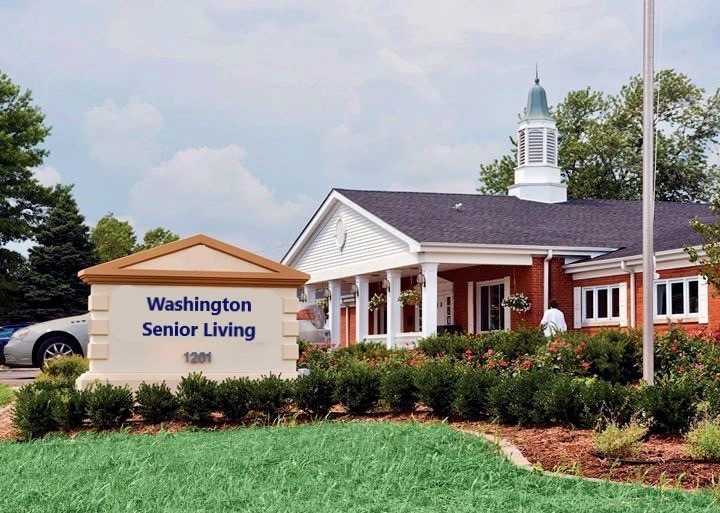
Who Owns and Operates Washington Senior Living?

WASHINGTON SENIOR LIVING is owned by a for-profit company. For-profit facilities operate as businesses with obligations to shareholders or private owners. The facility operates independently rather than as part of a larger chain. With 122 certified beds and approximately 71 residents (about 58% occupancy), it is a mid-sized facility located in WASHINGTON, Illinois.
How Does Washington Senior Living Compare to Other Illinois Nursing Homes?

Compared to the 100 nursing homes in Illinois, WASHINGTON SENIOR LIVING's overall rating (1 stars) is below the state average of 2.5, staff turnover (60%) is significantly higher than the state average of 46%, and health inspection rating (1 stars) is much below the national benchmark.

What Should Families Ask When Visiting Washington Senior Living?

Based on this facility's data, families visiting should ask: "What changes have been made since the serious inspection findings, and how are you preventing similar issues?" "What safeguards and monitoring systems are in place to protect residents from abuse or neglect?" "How do you ensure continuity of care given staff turnover, and what is your staff retention strategy?" "Can you walk me through typical staffing levels on day, evening, and night shifts?" These questions are particularly relevant given the facility's Immediate Jeopardy citations, the substantiated abuse finding on record, the facility's high staff turnover rate, and the below-average staffing rating.

Is Washington Senior Living Safe?

Based on CMS inspection data, WASHINGTON SENIOR LIVING has documented safety concerns. The facility has 1 substantiated abuse finding (meaning confirmed case of resident harm by staff or other residents). Inspectors have issued 3 Immediate Jeopardy citations (the most serious violation level indicating risk of serious injury or death). The facility has a 1-star overall rating and ranks #100 of 100 nursing homes in Illinois. Families considering this facility should ask detailed questions about what corrective actions have been taken since these incidents.

Do Nurses at Washington Senior Living Stick Around?

Staff turnover at WASHINGTON SENIOR LIVING is high. At 60%, the facility is 14 percentage points above the Illinois average of 46%. High turnover means new staff may not know residents' individual needs, medications, or preferences. It can also be disorienting for residents, especially those with dementia who rely on familiar faces. Families should ask: What is causing the turnover? What retention programs are in place? How do you ensure care continuity during staff transitions?

Was Washington Senior Living Ever Fined?

WASHINGTON SENIOR LIVING has been fined $420,732 across 3 penalty actions. This is 11.3x the Illinois average of $37,286. Fines at this level are uncommon and typically indicate a pattern of serious deficiencies, repeated violations, or failure to correct problems promptly. CMS reserves penalties of this magnitude for facilities that pose significant, documented risk to resident health or safety. Families should request specific documentation of what issues led to these fines and what systemic changes have been implemented.

Is Washington Senior Living on Any Federal Watch List?

WASHINGTON SENIOR LIVING is not on any federal watch list. The most significant is the Special Focus Facility (SFF) program, which identifies the bottom 1% of nursing homes nationally based on persistent, serious quality problems. Not being on this list means the facility has avoided the pattern of deficiencies that triggers enhanced federal oversight. This is a positive indicator, though families should still review the facility's inspection history directly.