APERION CARE WEST CHICAGO
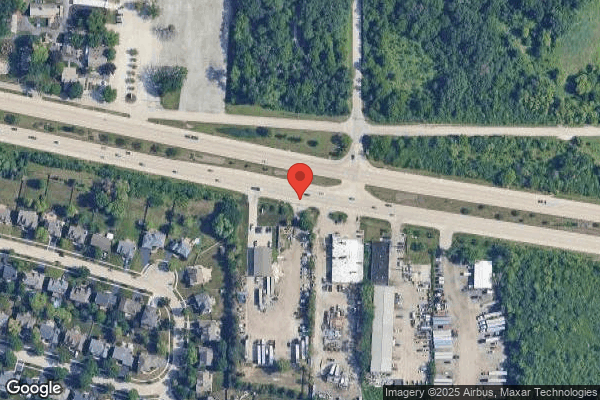
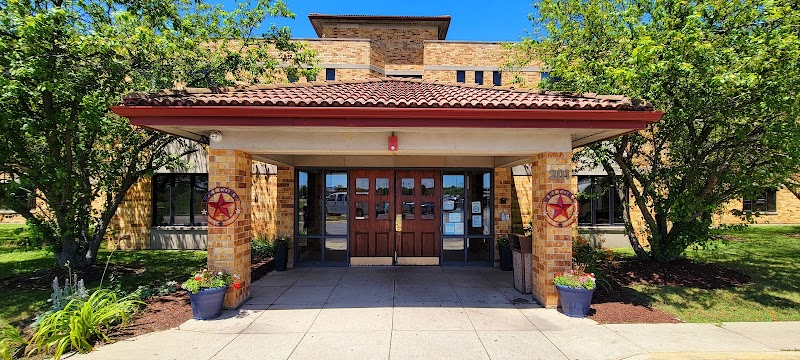
201 WEST NORTH AVENUE, WEST CHICAGO, IL 60185 (630) 876-8100
For profit - Corporation 213 Beds APERION CARE Data: November 2025 3 Immediate Jeopardy citations
Trust Grade
0/100
#324 of 665 in IL
Last Inspection: December 2024

Within standard 12-15 month inspection cycle. Federal law requires annual inspections.

Overview

Aperion Care West Chicago has received a Trust Grade of F, indicating significant concerns and a poor reputation. It ranks #324 out of 665 nursing homes in Illinois, placing it in the top half but still reflecting substantial issues. The facility's trend is improving, as it reduced reported problems from 29 in 2024 to 4 in 2025. Staffing is relatively stable, with a turnover rate of 21%, which is better than the state average, and it has more RN coverage than 86% of Illinois facilities, providing good oversight. However, the nursing home has incurred $260,348 in fines, which is concerning, and recent inspector findings revealed critical incidents, including a resident choking due to a lack of supervision during meals, another resident being found deceased after leaving the facility unsupervised, and a failure to assess a resident’s capacity for sexual consent, highlighting serious safety and care issues that families should consider.

Trust Score
F
0/100
In Illinois
#324/665
Top 48%
Safety Record
High Risk
Review needed
Inspections
Getting Better
29 → 4 violations
Staff Stability
✓ Good
21% annual turnover. Excellent stability, 27 points below Illinois's 48% average. Staff who stay learn residents' needs.
Penalties
○ Average
$260,348 in fines. Higher than 56% of Illinois facilities. Some compliance issues.
Skilled Nurses
⚠ Watch
Each resident gets only 28 minutes of Registered Nurse (RN) attention daily — below average for Illinois. Fewer RN minutes means fewer trained eyes watching for problems.
Violations
⚠ Watch
53 deficiencies on record. Higher than average. Multiple issues found across inspections.
★★☆☆☆
2.0
Overall Rating
★★☆☆☆
2.0
Staff Levels
★★★☆☆
3.0
Care Quality
★★☆☆☆
2.0
Inspection Score
Stable
2024: 29 issues
2025: 4 issues

The Good

  • Low Staff Turnover (21%) · Staff stability means consistent care
  • Full Sprinkler Coverage · Fire safety systems throughout facility
  • No fines on record
  • Staff turnover is low (21%)

    27 points below Illinois average of 48%

Facility shows strength in staff retention, fire safety.

The Bad

2-Star Overall Rating

Below Illinois average (2.5)

Below average - review inspection findings carefully

Federal Fines: $260,348

Well above median ($33,413)

Significant penalties indicating serious issues

Chain: APERION CARE

Part of a multi-facility chain

Ask about local staffing decisions and management

The Ugly 53 deficiencies on record

3 life-threatening 2 actual harm
Aug 2025 1 deficiency
CONCERN (D) 📢 Someone Reported This

A family member, employee, or ombudsman was alarmed enough to file a formal complaint

Potential for Harm - no one hurt, but risky conditions existed

Safe Environment (Tag F0584)

Could have caused harm · This affected 1 resident

**NOTE- TERMS IN BRACKETS HAVE BEEN EDITED TO PROTECT CONFIDENTIALITY** Based on observation, interview, and record review, the facility failed to provide a comfortable, homelike environment for resid...

Read full inspector narrative →
**NOTE- TERMS IN BRACKETS HAVE BEEN EDITED TO PROTECT CONFIDENTIALITY** Based on observation, interview, and record review, the facility failed to provide a comfortable, homelike environment for residents. This applies to 2 of 3 residents (R1 and R2) reviewed for inadequate cooling in the sample of 3. The findings include:Findings Include: R1's EMR (Electronic Medical Record) showed R1 was admitted to the facility on [DATE], with multiple diagnoses including major depressive disorder, hypertension, type 2 diabetes mellitus, peripheral vascular disease, and asthma. R1's MDS (Minimum Data Set), dated August 8, 2025, showed R1 was cognitively intact. R2's EMR showed R2 was admitted to the facility on [DATE], with multiple diagnoses including type 2 diabetes mellitus, hypertension, and major depressive disorder. R2's MDS, dated [DATE], showed R2 was cognitively intact. On August 18, 2025, at 11:24 AM, R1 and R2 were in their room. V3 (Maintenance Director) obtained temperatures of R1 and R2's room. V3's thermometer showed the room temperature was 77.5 degrees Fahrenheit, the humidity was 69% (percent), and the heat index was 84.4 degrees Fahrenheit. On August 18, 2025, at 11:34 AM, R1 was lying on his bed in his room. R1 said the room felt warm to him. R1 said he moved into this room on Friday August 15, 2025. R1 said since he moved into the room with R2, the air conditioning in the room did not work. R1 said he told someone on Friday, but the air conditioner had not been fixed. R1 said on Sunday morning, R1 went to the dining room around 4:00 AM because his room was so hot and he was angry, frustrated, and felt sick. R1 said they still have not fixed the air conditioner.On August 18, 2025, at 11:39 AM, R2 was standing in his room. R2 said the room felt warm to him. R2 said the air conditioning in their room had not been working for a long time. R2 said the air coming out of the air conditioner was not cold and R2 said his windows were closed. The air coming from the air conditioner in R1 and R2's room felt warm. On August 18, 2025, at 12:45 PM, V3 obtained temperatures from R1 and R2's room again. The thermometer showed the heat index in the room was 84.8 degrees Fahrenheit. V3 said the temperature in R1 and R2's room was too hot. On August 18, 2025, at 3:46 PM, V3 said maintenance attempted to fix R1 and R2's room air conditioner on Friday, but the repair only lasted a short while, and the air conditioner was not fully functional. V3 said the manager on duty over the weekend took temperatures in the facility hallways. V3 said the manager did not take temperatures in R1 and R2's room. On August 18, 2025, at 3:58 PM, V2 (DON/Director of Nursing) said R1 and R2's room is too warm since the heat index temperature is 84 degrees Fahrenheit. V2 said facility staff should have been following the facility's extreme weather policy. V2 said since the temperature outside was hot this weekend, facility staff should have checked temperatures in R1 and R2's room since their air conditioner was not fully functional. The National Weather Service (http://forecast.weather.gov) showed the heat index for the facility location on August 16, 2025, was 101 degrees Fahrenheit, and the heat index on August 17, 2025, was 91 degrees Fahrenheit. V3 provided the facility's air temperatures for one month. Temperatures were obtained in one location on each floor on July 18, July 21, August 4, August 8, August 11, and August 15, 2025.The facility does not have documentation to show temperatures were monitored in R1 and R2's room every two hours. The facility's policy titled Code White- Extreme Weather and Temperatures dated June 24, 2025, showed Purpose: To provide staff specific guidance and instruction on how to initiate an emergency code and steps to be taken to ensure the safety of residents and staff in the event of extreme weather/temperature related conditions. The facility will follow federal requirement to maintain facility temperatures between 71 to 81 degrees Fahrenheit. Heat and Humidity. Monitoring of Facility Temperatures During Extreme Hot Weather and/or Cooling Outage: It is recommended that the temperature and relative humidity levels be measured at least every two hours between 8:00 AM and 10:00 PM in all areas occupied by residents during periods of extreme heat. Temperatures in resident areas should be at 71 to 81 degrees Fahrenheit and relative humidity at 30-60%. The heat index should not exceed 80 degrees Fahrenheit. Note: The heat index, also known as apparent temperature, is determined by combining the actual air temperature and relative humidity to reflect how hot the conditions feel to the human body. It essentially represents the 'feels like' temperature. This is because high humidity reduces the body's ability to cool itself through sweat evaporation, making the air feel hotter than the actual temperature.
Jul 2025 1 deficiency
CONCERN (D) 📢 Someone Reported This

A family member, employee, or ombudsman was alarmed enough to file a formal complaint

Potential for Harm - no one hurt, but risky conditions existed

Deficiency F0563 (Tag F0563)

Could have caused harm · This affected 1 resident

**NOTE- TERMS IN BRACKETS HAVE BEEN EDITED TO PROTECT CONFIDENTIALITY** Based on observation, interview and record review, the facility failed to provide visitation rights to 2 residents, both sisters...

Read full inspector narrative →
**NOTE- TERMS IN BRACKETS HAVE BEEN EDITED TO PROTECT CONFIDENTIALITY** Based on observation, interview and record review, the facility failed to provide visitation rights to 2 residents, both sisters, who reside at the facility.This applies to 2 of 6 residents (R1 and R2) reviewed for right to receive visitors in the sample of 6.The findings include: The EMR (Electronic Medical Record) showed R1 was admitted to the facility on [DATE]. R1's diagnoses included but not limited to generalized anxiety, recurrent depressive disorder, schizophrenia, and suicidal ideation. The EMR also showed R1 has a twin sister (R2), who also resides in the facility. R1 resides on the third floor, a secured unit, and R2 resides on the first floor.R1's MDS (Minimum Data Set), dated January 7, 2025, shows R1 is cognitively intact. The assessment also showed R1 had not exhibited behavior issues.R1's current care plan, dated February 23, 2018, showed R1 was at risk for depression. R1's care plan shows multiple interventions, including, encourage participation in activities of choice and interest, and encourage socialization. R1's care plan also shows she is at risk for suicidal ideation. The care plan did not show any interventions regarding visitation rights between the twin sisters (R1 and R2).The EMR showed R2 was admitted to the facility on [DATE]. R2's diagnoses included but not limited to bipolar disorder and schizophrenia.R2's MDS, dated [DATE], shows no cognitive impairment, no mood or behavior issues.R2's current care plan, dated April 17, 2025, documents, I maintain a close bond with my twin sister (R1), who also resides at the facility. My sister has a h/o (history of) waking me and I have grown accustomed to relying on her to do so. The care plan also showed R2's social life includes My leisure interests include reading, listening to music, pet interaction, people interaction, going outside, and religious related activities., invite/encourage family or friends to participate in programs with resident. Further review of the care plan did not address visitation with R1.On July 10, 2025, at 11:50 A.M., R1 was in her room. R1 was ambulatory, pacing around, and was fidgety. R1 informed surveyors she was upset the facility does not allow her to visit R2. R1 verbalized, I am a blood relative; she is my twin sister. How come I cannot see and visit her, and yet they allowed boyfriend and girlfriend visit together here on the third floor? I kept mentioning this to (V12/Nurse) and (V11/Social Services Director). This has been ongoing for a while. I told (V12), and (V12) said talk to (V11), and (V11) just ignores me. I need help. R1 demanded to have a group meeting with surveyors and V11 and V12 right then and there. During the group meeting, R1 was adamant and informed both V11 and V12, why don't you allow me to visit my twin sister. V12 had no response. V11 said, You can visit (R2). V11 said, (R2) was asleep. However, V11 still accompanied R1 to first floor to visit R2.On July 10, 2025, at 3:15 P.M., R1 and R2 were in the first-floor dining room. They expressed they were happy visiting each other. They were caressing each other's arms and kept hugging. They shared a sandwich. They were very appreciative with the good outcome from the group meeting.Review of the facility's policy regarding visitation rights, dated November 20,2017, states: To honor the resident's right to receive visitors of his or her choosing at the time of his or her choosing, subject to the facility and/or resident's right to deny visitation when applicable, and in a manner that does not impose on the rights of another resident. Visitation should be person-centered, consider the residents' physical, mental and psychosocial well-being, and support their quality of life. In accordance with resident's rights, this facility provides 24-hour access to:.Immediate family or other relatives.
Apr 2025 1 deficiency
CONCERN (D) 📢 Someone Reported This

A family member, employee, or ombudsman was alarmed enough to file a formal complaint

Potential for Harm - no one hurt, but risky conditions existed

Report Alleged Abuse (Tag F0609)

Could have caused harm · This affected 1 resident

**NOTE- TERMS IN BRACKETS HAVE BEEN EDITED TO PROTECT CONFIDENTIALITY** Based on interview and record review, the facility failed to notify the facility Abuse Coordinator and the State Agency of an al...

Read full inspector narrative →
**NOTE- TERMS IN BRACKETS HAVE BEEN EDITED TO PROTECT CONFIDENTIALITY** Based on interview and record review, the facility failed to notify the facility Abuse Coordinator and the State Agency of an allegation of physical abuse. This applies to 2 of 4 residents (R2 and R3) reviewed for physical abuse in a sample of 4. The findings include: R3 is a [AGE] year-old-female admitted on [DATE], having cognition intact as per the MDS (Minimum Data Set), dated 4/7/25. On 4/22/25 at 12:30 PM, R3 stated, (R4) hit me on my head and face. But I don't remember the day exactly. It happened in my room, and nobody saw it. R2 is a [AGE] year-old female admitted on [DATE], with cognition intact, as per the MDS, dated [DATE]. On 4/22/25 at 11:40 AM, R2 stated, One of the residents (R4) hit me on my head four times last week. I had a headache after that for two days. The incident happened in front of the nurse's station and (V7, Certified Nursing Assistant/CNA) and (V8, CNA) witnessed the incident. I reported the incident directly to (V9, Psychiatric Rehabilitation Services Coordinator/PRSC) and (V10, PRSC). On 4/33/25 at 11:00 AM, V7 (Certified nursing assistant/CNA) stated, (R2) told me that (R4) hit her three times to her head. I am pretty sure I reported it to the nurse. I thought the nurse would inform the Abuse Coordinator (V1). On 4/22/25 at 12:20 PM, V8 (CNA) stated, I remember (R4) hit me on that day (4/16/25). (R2) told me that (R4) hit her, but I didn't see (R4) hit (R2). (R3) also told me that (R4) hit her. I didn't report it to the Abuse Coordinator. On 4/22/25 at 12:32 PM, V9 stated, I personally didn't see the incident that (R4) hits (R2) on her head. I know (R4) had a really bad day and was going off. I told the incident to my boss (V11, Psychiatric Rehabilitation Service Director/PRSD). Also, (R3's) daughter was here and told me that (R4) hit her mother. I told the Administrator about (R3's) daughter's concern. It happened on Wednesday (4/16/25), and it was my late day and I start at 11:00 AM on Wednesday. On 4/23/25 at 3:00 PM, V11 stated, The physical abuse allegation between (R2) and (R4) was not reported to me. As per the chain of command, (V9) was supposed to report the allegation to me or the Abuse Coordinator. We will provide in-service to staff to report the abuse allegation to the Abuse Coordinator. On 4/22/25 at 12:35 PM, V10 (PRSC) stated, I heard about the incident between (R3) and (R4) last Wednesday (4/16/25). I heard (R4) had behavior issues, and she hurt other residents. When (R3's) daughter reported that (R4) hit her mom, they moved (R4) to another room. I didn't report it to the Abuse Coordinator as I didn't see the incident. On 4/22/25 at 2:00 PM, V2 (Assistant Administrator) stated, Our staff are supposed to report any abuse allegation to our Administrator, who is our Abuse Coordinator. If our Administrator is unavailable, they can report the abuse allegations to me. The abuse allegations should have been reported to us for investigation. We are going to discipline (V8) for not reporting abuse allegations, and we will initiate an abuse investigation. On 4/23/25 at 11:30 AM, V1 stated, The abuse allegations from (R4) to (R2) and (R3) were not reported to me. I talked to my staff including (V8) to report any kind of abuse allegation to myself immediately. We started an in-service to educate staff to report abuse allegations immediately to the Abuse Coordinator. A review of the facility provided Abuse Prevention and Reporting Guidelines, revised on 10/24/22, documents: Employees are required to report any incident, allegation, or suspicion of potential abuse, neglect, exploitation, mistreatment, or misappropriation of resident property they observe, hear about, or suspect to the administrator immediately, or to an immediate supervisor who must then immediately report it to the administrator.
Jan 2025 1 deficiency 1 IJ
CRITICAL (J) 📢 Someone Reported This

A family member, employee, or ombudsman was alarmed enough to file a formal complaint

Immediate Jeopardy (IJ) - the most serious Medicare violation

Accident Prevention (Tag F0689)

Someone could have died · This affected 1 resident

**NOTE- TERMS IN BRACKETS HAVE BEEN EDITED TO PROTECT CONFIDENTIALITY** Based on interview and record review, the facility failed to ensure a resident was supervised to prevent the resident from leavi...

Read full inspector narrative →
**NOTE- TERMS IN BRACKETS HAVE BEEN EDITED TO PROTECT CONFIDENTIALITY** Based on interview and record review, the facility failed to ensure a resident was supervised to prevent the resident from leaving the grounds of the facility, and failed to ensure nursing staff were aware R1 was out of the building resulting in a 6 hour delay in identifying R1 was missing. This failure resulted in R1 leaving the facility grounds at 5:57 PM on [DATE], and being found deceased about 600 feet from the facility's main entrance at 7:50AM on [DATE]. The Immediate Jeopardy began on [DATE] when R1 signed out of the facility, left unsupervised, and failed to return at the expected time. The receptionist failed to notify the nurse R1 had not returned to the facility by the 8:00 PM curfew and nursing staff was therefore unaware R1 was not in the facility until after 11:00 PM, when police were finally notified. V1 (Administrator) was notified of the Immediate Jeopardy on [DATE] at 2:30 PM. The surveyor confirmed by interview and record review that the Immediate Jeopardy was removed, and the deficient practice corrected, on [DATE], prior to the start of the survey on [DATE] and was therefore Past Noncompliance. This past non-compliance occurred from [DATE]-[DATE]. The findings include: R1's care plan, dated [DATE], states, Community Access/ Supervised - The resident required the support, care and services of a long term care facility and has been determined by community assess assessment to be able to access the community with supervision. On [DATE] I was assessed as appropriate for Level 2. I was assessed as appropriate for level 3. Interventions include: I am on supervised access to the community. R1's Elopement Risk and Community Survival Skills Assessment, dated [DATE], shows: The resident appears to be capable of outside independent pass privileges at this time. A care plan for outside pass privileges including risk factors for non-compliance for adhering to pass policies and parameters as indicated. This area is marked with a No. R1's Physician's Order Sheet, dated [DATE], shows R1 has diagnoses including schizophrenia, delusional disorders, paranoid personality disorder, Attention Deficit Hyperactivity Disorder, and cannabis and nicotine dependence. R1's Psychiatric Note, dated [DATE], states, + (positive for) baseline paranoia, No (SI) Suicidal Ideation, HI (Homicidal Ideation), AH (Auditory Hallucinations), VH (Visual Hallucinations), no other delusions were elicited. R1's EMR (Electronic Medical Record) shows a form titled, Level 2 Pass Privileges Acknowledgement, dated [DATE], that states, I understand that I have earned a level 2 pass privilege, which allows me to sign out of the facility two times per day for 1 hour maximum, between the hours of 9 AM and 6 PM Monday- Friday and between the hours of 10 AM and 7 PM on Saturday and Sunday with a fellow level 2 or 3 peer. I agree to remain with level 2 or 3 peer while out of the facility. The facility Resident sign in and out log, dated [DATE], shows R1 signed out with a destination of Bench at 12:15 PM, with a time expected of 1:15 PM, and an actual time in of 12:29 PM. R1 then signed out with a destination of Bench at 2:38 PM, with a time expected of 3:38 PM, and an actual time in of 2:47 PM. Finally, R1 signed out at with a destination of Bench at 5:57 PM, with a time expected of 6:57 PM. R1 did not return to the facility following this sign out. The Facility Reported Incident, dated [DATE], states, On [DATE], resident was out on pass and was reported deceased . Resident went out on pass on [DATE] and was observed to not return to the facility. On [DATE] at 1:57 PM, V8 (Receptionist) said he has worked at the facility for about two months. There are red and blue cards at the front desk. Residents with a red pass can leave the facility three times a day, an hour at a time. (R1) was a red pass; he was allowed to leave for one hour, if they don't return, I should notify the nurse. On [DATE], (R1) left at 5:57 PM, he went outside to smoke and came back to give me his lighter, and told me he was going outside for a little longer. I left at 8:00 PM, at end of my shift, there was a random rush of things that I was busy with. Normally, I check the sign in sheet, and I forgot to notify the nurse (R1) did not return from his pass. On [DATE] at 2:09 PM, V11, Registered Nurse (RN), said she was R1's nurse from 3:00 to 11:00 PM. She saw R1 last around 4:30 PM to 5:00 PM in the big dining room. Around 8:00 PM, she asked V9, Certified Nursing Assistant (CNA), if R1 ate dinner, she said she did not know. During her evening med pass, she asked R3 (R1's roommate) if he had seen R1. R3 said to check another resident's room. She continued passing her medications because residents were insisting on getting their medications. About 10:30 PM, she was searching for R1, but did not call a code pink (missing resident). During shift change, she reported to V9 (CNA) R1 was missing, and she started searching for him. V11 said she was not aware R1 left to go out on pass at 5:57 PM. V8 did not report to her R1 did not return to the facility. R1 had a red pass; he was able to go out unsupervised for two hours at a time, up to three times a day. She reported off to V12, Licensed Practical Nurse (LPN), that R1 was missing, and they could not locate him. On [DATE] at 4:36 PM, V12 (Licensed Practical Nurse/LPN) said she came in at 11:00 PM. V12 said, (V11) was at the medication cart and endorsed to me (R1) did not receive his medications because he was not in his room and the staff searched for him, but could not locate him. She (V11) called (R1's) family and they had not seen (R1). She called and the police and reported (R1) as a missing person. (R1) had a red pass and could go out on pass unsupervised for two hours. Nursing is not notified when a resident signs out on pass. The receptionist should notify nursing if a resident does not return. On [DATE] at 11:40 AM, R2 said she and R1 were friends. They were both smokers, and he was an angel. R1 has a red pass, which is now a green pass. Red passes could leave the facility up to three times a day two hours at a time without supervision. We would go out on walks together and would talk about life. That day on [DATE], we were outside at 4:15 PM for a smoke break, he mentioned he had this lucid dream about being on another planet seeing other beings and said the dream ended, he was at peace. After the smoke break it was dinner time, R2 saw R1 grab his tray, and after dinner, at 6:00 PM, she went outside to smoke in the front of the building. She saw R1 outside with his coat on and blanket on, and then saw him walk back inside of the building and walk back out. She didn't think anything of it, and went back inside the building. At 8:00 PM, the last smoke break outside, she went outside and R1 did not show up. R1 had never missed a smoke break. She continued her evening and got ready for bed. Sometime about 11:30 PM, she heard the door open and the staff said they were doing a room check. (V12-LPN) asked me if (R1) was in my room and told me (R1) was missing. R2 said she got dressed and went to look for R1. She told the staff he was outside about 6:00 PM, and did show up the 8:00 PM smoke break. R2 said V11 (RN) was in a panic because (R1) had not taken his medications and she started drilling me about his whereabouts. She told the staff to check the sign out sheet; we found the clipboard and (R1) was signed out at 5:57 PM and the sign in time was blank. The male receptionist who was at the desk was new, he knew (R1) did not return. Then I checked the red cards, when a resident leaves the front desk gives them a red pass they have to return when they come back. She checked the entire stack and did not find his red pass. R1 does not have a phone. R2 said she told the staff to call the police, this was unusual for R1, and it was cold outside. She called a mutual friend of theirs, who was a resident at the facility about 1:00 AM, and told him R1 was missing, and asked if he heard from him. R1 had not returned his emails the last couple of days. R2 said she spoke to the police when they arrived about his whereabouts. The next day about 8:30 AM, she was outside and saw several police cars race to the back of the building. After some time, she saw V6 get out of the police car and he was wreck. She knew R1 was found. R2 said the nurse did not know he was missing, the receptionist did not tell the nurse he did not come back, and no one knew how the sign out system worked. She was telling the staff how it works when someone signs out. Now they changed it all. On [DATE] at 12:46 PM, V7 (Behavioral Aide) said she worked a double shift on [DATE] from 6:30 AM to 10:00 PM. She saw R1 last about 4:15 PM, out on the patio during the smoke break. When she left at 10:00 PM, no one knew R1 was missing, there was no code pink called, the nurse did not ask her about or report to her that he was missing. R1 was friendly, liked to walk a lot, and had no behaviors. Residents are allowed to leave the facility for two hours. The receptionist gives them a red pass when they leave, and turn it when they return. The receptionist should notify the nurse if a resident does not return. On [DATE] at 10:50 AM, V9 (CNA) stated, I did my head count at the beginning of my shift just before 4:00 PM, and I saw him then. He eats in the unsupervised dining room and I was in the supervised dining room, so I did not see him at dinner time. It was the end of my shift and I heard the nurses (PM and Night shift) talking that the PM nurse (V11) was not able to give him his medications because she hadn't found him. I had already clocked out, but (V11) said she was going to go upstairs and look for him, and me and the other PM shift nurse left. I didn't know he was missing until the next day. An undated typewritten interview with V6 (Behavioral Aide) states, I came to work a little before 8:00 AM. Nursing staff told me (R1) was missing. I knew that (R1) usually walk in the direction of the golf club, so I went to look there and found him on the wooden path neatly covered with a blanket over him. I immediately called 911 and the dispatcher told me to perform CPR (Cardiopulmonary Resuscitation) if I can. I removed the bag and started CPR. The police came shortly after and took over. (V6 was called 6 times by Surveyors between [DATE] and [DATE]. V6 did not return any of the phone calls and was not able to be interviewed.) On [DATE] at 9:58 AM, V2, Director of Nursing (DON), said she was in the evening on [DATE] doing in-services with the staff. V11 (RN) notified her she could not find R1, she instructed staff to drive around the building and search the facility. She instructed V12 (LPN), the night shift nurse, to call the family and the police. The police were called around 11:15 PM. The police arrived before midnight and we verified with the video he left about 6:00 PM. She received a call the next day around 8:30 AM; R1 was found behind the facility in a wooded area, deceased . She believes R1 had a green community pass. On [DATE] at 9:27 AM, V1 (Administrator) said he was notified on [DATE] R1 was missing when he did not return back from his community pass. (R1) left the facility at 5:57 PM; (R1) had a green pass and could leave the facility unsupervised for two hours. About 11:00 PM, the police were notified and could not locate (R1) when they conducted their search. On [DATE], around 7:00 AM, (V6, Behavioral Aide) found (R1) behind the facility in the wooded area with a bag over his head and blanket over his body, deceased . (V6) called the police immediately. On [DATE] at 2:30 PM, V15 (Police Officer) stated, The (first) call came in somewhere after 12:00 AM. I responded with another officer, I was training. You will have to get the FOIA (Freedom of Information Act) form for any information because I don't want to give you wrong details about anything, but it is all in my report. We had several resources out there, dogs, [NAME], we were searching local businesses in case he went in somewhere to get warm. We didn't find him. That is all in my report. That may take a few days to get because everything has to be completed before they will release any of it. On [DATE] at 11:20 AM, V13 (Detective) stated, Behind the Assisted Living (building next to facility) to the northeast of the facility there is a wooded area. There is a driving area and a walking path back there. He was found 40-50 feet inside that wooded area. The body had already been removed by the time I got there. Another officer took the initial report that the medication pass was at 9:00 PM, and (R1) wasn't there for the medications at 9:00 PM. They called the police at 1:00 AM, per the police report. According to one of the staff, when a resident has a Level 3 he has the most amount of freedom, and they are required to be back by 6:45 PM. On [DATE] at 2:40 PM V14 (Psych Nurse Practitioner) stated, I had no concerns at all about him. He was very stable. Alert and oriented, very sweet, and involved with many of his peers. I don't think he was ready to live out in the community on his own, but he could go out. I don't know all the facility policies, but I would want to make sure all the residents were supervised because they do have a mental illness diagnosis. R1's Death Certificate was requested on [DATE] and again on [DATE], but it was not available at the time of survey exit. The undated facility policy (at the time of this incident) titled Behavior Management Level Program states, Level 2 Expectations (Pass with staff only) This pass level will be for a minimum of 30 days prior to being considered for Level 3 Level 2 Privileges- Eligible to participate in 2 additional smoke breaks with supervision in the front of the building. In small level 2 groups. May participate in Level 2 gatherings with activity department. The facility policy titled Therapeutic Leave of Absence dated [DATE] states, .2. Psychiatric Facilities Only: Resident will apply for pass privileges. This will be reviewed by the IDT and the physician and will be signed by all participants. 3. Each resident leaving the premises should be signed out on leave of absence. 4. Establish an agreed upon time frame for return to the facility with the resident and/or the accompanying party. 7. Resident should be signed back in upon return to the facility from leave of absence 8. If a resident does not return to the facility within 2-4 hours of the agreed upon time without communication from the resident or family representative, the following will be initiated: Family, Physician and Police will be notified. The Immediate Jeopardy that began on [DATE] was removed, and the deficient practice was corrected on [DATE], prior to the survey starting on [DATE]. The facility had taken the following action to correct the noncompliance: 1. R1 is no longer a resident at the facility. Completed [DATE] 2. All Community survival risk assessments were reviewed for accuracy, updated accordingly and all Care plans were reviewed to validate they match. Assessments were reviewed by IDT team composed of Administrator, DON, and Social Service designee. Completed [DATE] 3. All staff have been re-educated on the facilities therapeutic leave of absence policy. Any staff on leave or unavailable staff were educated via phone and again before next scheduled shift. Administrator, Assistant Administrator, DON, and Assistant Director of Nursing/ADON conducted the training. Policy details that all residents leaving the premises should be signed out, establish an agreed upon time frame for return to the facility, sign back in upon return to the facility, and what to do if a resident does not return at the agreed upon time. All new hires and agency staff (if utilized in the future) will be educated on this policy prior to working their first shift. Completed [DATE] 4. Facility receptionists were educated by their supervisor on the pass return protocol; Protocol states Only residents with green pass can leave the facility unsupervised, all residents leaving must sign out and establish an agreed upon time for return. Residents must sign back in upon return from pass. If resident fails to return at the agreed upon time, the 1st floor nurses station will be notified before their next scheduled shift. Competed [DATE] 5. No resident goes out on independent pass without having a current Community survival/elopement risk assessment completed and CP updated. Completed [DATE] 6. The pass privilege list was reviewed by the facility IDT composed of Administrator, DON, and Social Service designee, and compared to the response report of current elopement risk/community survival assessments. Completed [DATE] 7. All residents identified as having exit seeking behaviors were reviewed by a Social Service designee and care plans were updated as appropriate. Completed [DATE] 8. All residents with a history of suicidal ideation/suicidal attempts have their independent pass privilege assessment signed by a physician/provider. Completed [DATE] 9. Updated Medical director on event and details. Medical director notified of incident on [DATE] by the facility DON and reviewed the facility's immediate action plan. He agreed with the immediate action plan. Completed [DATE] 10. Administrator and/or designee will audit 5 residents' 2X per week for 6 months to ensure resident's community skills assessment and care plan are accurate. Completed [DATE] 11. Director of Nursing and/or designee will audit the resident sign in/out log daily for 3 months then 2X per week for 3 months to ensure that all residents are accounted for. Completed [DATE] 12. Community pass policy reviewed with IDT and medical director Completed [DATE] 13. QAPI review with Medical Director to review incident and plan of action. IDT conducts assigned regular rounds during shift to ensure visual monitoring and staff supervision. Action plan will be reviewed monthly at QAPI meeting. Completed [DATE].
Dec 2024 8 deficiencies
CONCERN (D)

Potential for Harm - no one hurt, but risky conditions existed

Resident Rights (Tag F0550)

Could have caused harm · This affected 1 resident

**NOTE- TERMS IN BRACKETS HAVE BEEN EDITED TO PROTECT CONFIDENTIALITY** Based on observation, interview, and record review, the facility failed to ensure a resident's dignity was maintained while in t...

Read full inspector narrative →
**NOTE- TERMS IN BRACKETS HAVE BEEN EDITED TO PROTECT CONFIDENTIALITY** Based on observation, interview, and record review, the facility failed to ensure a resident's dignity was maintained while in the dining room during meal service. This applies to 1 of 2 (R70) residents reviewed for dignity in the sample of 35. R70's EMR (Electronic Medical Record) showed R70 was [AGE] years old and had been admitted to the facility on [DATE]. R70 was admitted with multiple diagnoses including schizoaffective disorder, bipolar disorder, other abnormalities of gait and mobility, generalized anxiety disorder, abnormal posture, and chronic peripheral venous insufficiency. R70's MDS (Minimum Data Set). dated October 21, 2024, showed R70 was cognitively intact, and required assistance with ADL's (Activities of Daily Living) including substantial assistance with bathing and supervision/touching assistance with dressing. R70's care plan. dated April 24, 2024, showed R70 needed supervision/touching assistance with both upper and lower body dressing. R70's care plan did not address any concern regarding R70 wearing clothing. On December 3, 2024, at 12:50 PM, R70 was observed seated at a dining room table, wearing a gown, that was not closed and exposed her from the bottom of her left armpit to mid thigh. R70's skin and undergarments were exposed and were visible from the door of the dining room. There were 6 tables of residents also in the dining room, both male and female, and 3 staff members present. Earlier that day, R70 was observed ambulating in the hallway wearing only a gown, with bare feet walking to the linen closet accompanied by staff. On December 4, 2024, 4:12 PM, V14 (Registered Nurse/RN) answered R70's call light. R70 was observed wearing a gown. V14 stated R70 only wears clothing when she comes out of her room. V14 showed R70's closet had clothing available. V14 stated R70 was very particular about not showing/exposing herself and wears clothing when coming out of her room. The facility's policy titled Dignity, dated April 23, 2018, showed, Staff shall carry out activities in a manner which assists the resident to maintain and enhance his/her self-esteem and self-worth .Maintaining a resident's dignity should include but is not limited to the following: .Encouraging and assisting residents to dress in their own clothes, rather than hospital-type gown, and appropriate footwear for the time of day and individual preferences.
CONCERN (D)

Potential for Harm - no one hurt, but risky conditions existed

Deficiency F0561 (Tag F0561)

Could have caused harm · This affected 1 resident

Based on observation, interview, and record review, the facility failed to honor R196's decision to observe a vegan diet. This applies to 1 of 1 residents (R196) reviewed for self determination in the...

Read full inspector narrative →
Based on observation, interview, and record review, the facility failed to honor R196's decision to observe a vegan diet. This applies to 1 of 1 residents (R196) reviewed for self determination in the sample 35. The findings include: MDS (Minimum Data Set), dated September 5, 2024, shows R196's cognition was intact. POS (Physician Order Sheet), printed December 4, 2024, shows R196's diagnoses included major depressive disorder, suicidal ideation, and personal history of suicidal behavior. The POS shows R196's diet order, ordered November 28, 2023, shows General diet, Regular texture, Regular consistency. The POS shows, Allergies: Dairy Products. On December 4, 2024 at 10:10 PM with V1 (Administrator) present, R196 stated she was upset she was made to drink milk because she had no other protein sources in the diet served to her by the facility. R196 stated she chose to be vegan over 20 years prior, and was vegan when she was admitted to the facility a year ago. R196 stated in March of 2024, she spoke with V6 (Corporate Dietitian) via teleconference with V1 (Administrator) present in V1's office. R196 stated they discussed vegan protein options to be served to R196 because R196 was not receiving enough protein at meals. R196 stated she was told by V1 and V6 they would provide veggie burgers, but R196 never received them. R196 stated she was told the facility bought beans in large bulk packages and could not purchase smaller amounts only for one resident. V1 stated V1 did not remember that conversation. R196 stated the night prior, two nurses entered her room and insisted she could take a (lactose free) pill so that she could consume dairy products. R196 stated she felt unheard, powerless, and like the staff were patronizing her. R196 stated she told the nurses she was not only lactose intolerant, but that she had a cow's milk allergy, and the rash on the back of her neck was the result of consuming cow's milk in addition to her nasal congestion. R196 stated she felt like she was forced to drink the cow's milk because she was not receiving any adequate protein sources in her diet. R196 told V1 she had reactions to cows milk as a child and was told by her doctor to eliminate it because it was causing rashes, congestion, and other symptoms. On December 2, 2024 at 11:30 AM, R196 had a (lactose free) milk sitting on the dresser in room, and stated she has to drink the (lactose free) milk at the facility because otherwise she would not have any other sources of protein. R196 stated she also needed to eat cheese at the facility for a protein source because the facility does not provide an alternate source of protein at meals. R196 demonstrated a rash on back of neck and stated it was caused by consuming milk products to which she is allergic, and the result was a rash like the rash on the neck. R196 stated she was also lactose intolerant, so the facility gave her lactose free milk. On December 2, 2024 at 12:33 PM, R196 received her lunch tray which consisted of plain noodles, 1 serving approximately 1/2 cup of green beans, bowl of lettuce with tomato, and a 1 piece frosted cake. R196 stated, This is typical. No protein. I used to be dairy free, but I can't be here because I wouldn't get any proteins. I drink (lactose free milk), but I break out into a rash behind my neck because I am allergic to milk. R196 pulled back the hair on her neck to show a rash of approximately two inches in diameter. R196 stated she does not want to eat animal products for moral/ethical reasons due to her love for animals. R196 stated stated she has high cholesterol and when she eats a plant-based diet, her high cholesterol resolves. R196 stated when she stops eating dairy her rashes also resolve. Stated she has talked to V6 (Corporate Dietitian) and V7 (Dietary Manager) and filled out her menus based on what was available on the regular menu and the substitution menu. R196 stated she was told the doctor had to order a vegetarian diet and the food service was unable to serve beans in one portion for a resident because the packages are too big to be opened for one person. R196's lunch tray ticket showed she was provided a Regular diet with allergies to Lactose. The tray ticket showed notes which included Double Veg, Side Salad, Vegetarian and apple juice and large salad of the day with French dressing was written on the tray ticket. Attached to the tray ticket was a list of substitutions which included, Deli meat and Cheese, Tuna Salad, Egg Salad, Grilled Cheese, Peanut Butter and Jelly, Vegetable of the Day, Large Salad of the Day, Small Salad of the Day, Cottage Cheese with Fruit, and Bread. The substitution ticket included a hand written note of Potato salad on side, Apple Juice and the Large Salad of the Day was chosen. On December 3, 2024 at 12:05 PM, R196 brought her lunch tray back to her room, which had iceberg lettuce covering a lunch plate, with 4 slivers of tomato and 5 slivers of peeled cucumber on the iceberg lettuce. The lunch tray had French dressing, apple juice, approximately one cup of cooked spinach, and two cookies on the tray. R196's lunch tray ticket, dated December 3, 2024, showed R196 requested a large salad with French dressing, potato salad, and apple juice for lunch. The tray ticket shows R196 allergies included Lactose. R196 stated it was typical to receive a lunch with no protein items, not receive the food items she requested (such as the potato salad), and receive items she did not request such as the cooked spinach. R196 had a shelf stable carton of lactose free milk on her dresser and stated she received that carton at breakfast on December 3, 2024. R196 stated she was told by the facility that they only purchase beans in bulk and were unable to open a bulk package for only one resident who requested beans. R196 stated at one time, she was offered vegetarian burgers, which she agreed to receive, but never received them for meals. Review of R196's clinical record, dated November 28, 2023 to December 2, 2024, showed no documentation or a conversation between R196, V1, and V6 in March 2024. Review of R196's clinical record, including dietitian / food service notes, showed no documentation regarding R196's request for vegan food items or alternative protein sources, R196's food preferences, R196's allergy to milk products, or discussion of how to provide alternative sources of nutrients due to the elimination of all dairy and animal products. Review of the facility planned menu spreadsheets showed no vegan diet was planned and served at the facility. Review of Vegetarian (Lactose-Free) menu, provided by V7 on December 3, 2024 during the survey in attempts to begin providing R196 a planned vegan menu, shows R196 was planned to receive eggs at breakfast as well as egg salad and vegetable omelets on the weekly menus in spite of requesting vegan meals. On December 4, 2024 at 11:20 AM, V1 was made aware there were eggs on R196's newly-written vegan menu. V1 stated V6 told V1 vegetarians can have eggs on a vegetarian diet. V1 stated he understood R196 expressed she was clear that she did not want to consume any animal products. On December 3, 2024 at 12:54 PM, V6 (Corporate Dietitian) stated R196 was receiving a regular diet/texture. V6 stated she spoke with R196 when R196 was admitted , and then stated she may have touched based with R196 briefly. V6 stated she was confident the Food Service Manager prior to V7 would have talked to R196. V6 stated resident food preferences should be adhered to within reason at the facility and some requests were not reasonable. V6 reviewed R196's clinical record and stated R196 did not have any dietary restrictions, but had a dairy intolerance. V6 then stated R196's intolerance was listed as a dairy allergy in the clinical record, so R196 should not be receiving any dairy products at all, but that she was receiving lactose free milk as an add on to her meal tickets. V6 then stated R196 did not have an official diet order for a vegan diet, and it was only a resident preference. V6 stated R196's tray ticket did show she was to receive double portions of the planned menu vegetables. V6 stated the tray ticket showed she was vegetarian. V6 stated she and R196 never spoke about having a vegetarian diet and, if they had, V6 would make sure she was meeting her protein goals. V6 stated if R196 did not consume dairy, V6 would look at other sources of protein to make sure she was meeting her protein goals. V6 was not sure if the facility offered a pre-planned vegetarian diet. V6 stated she would work with the company that planed the facility menus and the entrees they had to offer to add beans and create a vegan menu for R196. On December 3, 2024 at 1:11 PM, V7 (Food Service Director) stated she had not spoken to R196 in a long time. V7 stated when she did speak with R196, R196 asked for chick peas, but V7 told her the facility did not carry chick peas. On December 3, 2024 at 3:16 PM, V8 (Licensed Practical Nurse) stated she was aware R196 was vegetarian and R196 and V8 discussed the fact that they were both vegetarian. V8 stated R196 had a good appetite and ate all of her meals. On December 4, 2024 at 2:17 PM, V1 (Administrator) stated if a resident wished to adhere to a vegan diet, the facility should accomodate the resident request by providing the resident with a vegan diet. R196's Care plan, initiated November 29, 2023, shows, I have a nutritional problem or potential nutritional problem related to depression. R196's interventions include Provide, serve diet as ordered. Monitor intake and record every meal. The care plan fails to address R196's desire to adhere to a vegan diet at the facility. Review of V7 (Consultant Dietitian) initial admission nutrition assessment, dated November 29, 2023, shows no mention of R196 adhering to a vegan diet at the facility, and no changes to R196's diet were recommended. Review of subsequent nutrition notes in R196's clinical record, dated June 3, 2024 (significant weight loss note), July 2, 2024 (significant weight loss note), August 8, 2024, September 10, 2024 (Significant weight loss note), and November 12, 2024 showed no mention of R196's desire to adhere to a vegan diet or any attempts to discuss R196's diet preferences. Facility procedure Menu Planning and Requirements, dated 2022, shows 2. Menus are planned in advance and are varied for the same day of consecutive weeks. Cycle menus are to be planned for a minimum of one week or based upon specific state regulations 3. Planned menus take into consideration cultural backgrounds and food habits of residents 6. Deviations from the planned menu allow for individual nutrition based on nutritional or medical needs and/or resident requests. These deviations are indicated on a meal card or other communication tool for the serving staff 8. Regular and therapeutic menus are planned by a nutrition professional in accordance to the community's approved diet manual. The planned menus are reviewed and approved by a registered dietitian Facility Food Preferences procedure, dated 2020, shows, Dining Services Department will gather information upon admission to the facility regarding resident food preferences. Procedure: 1. Following admission to the community, and periodically as necessary, the Dining Services Manager, Registered Dietitian, or other designee will interview the resident to determine foods preferred and inform resident about meal services at the community. A form such as a Food Preferences Form may be used to document this information. Information should be appropriately logged in the meal card or preference tally and filled in the Dining Services department and/or the medical record according to facility practice 3.Residents are visited in a timely fashion after admission The goal is to complete the initial interview by the Dining Services Manager or Registered Dietitian within 72 hours of admission . 5. Resident food preferences are kept on file in the Dining Services Department as a part of the meal card system and used to ensure each resident's needs and desires are met .
CONCERN (D)

Potential for Harm - no one hurt, but risky conditions existed

Deficiency F0694 (Tag F0694)

Could have caused harm · This affected 1 resident

**NOTE- TERMS IN BRACKETS HAVE BEEN EDITED TO PROTECT CONFIDENTIALITY** Based on observation, interview and record review, the facility failed to implement their policy regarding care and management o...

Read full inspector narrative →
**NOTE- TERMS IN BRACKETS HAVE BEEN EDITED TO PROTECT CONFIDENTIALITY** Based on observation, interview and record review, the facility failed to implement their policy regarding care and management of implanted central venous catheter to prevent infection. This applies to 1 of 1 (R26) reviewed for central venous catheter in the sample of 35. The findings include: The EMR (Electronic Medical Record) shows that R26, a [AGE] year-old with diagnoses that includes type 2 diabetes mellitus, foot ulcer, osteomyelitis, PVD (peripheral vascular disease), PD (Parkinson's Disease), and Schizophrenia. The MDS (Minimum Data Set) dated November 26,2024 showed that R26's cognition was intact with BIMS (Brief Interview for Mental Status) score of 15/15. The assessment also showed that R26 was identified with no behavior. The POS (Physician Order Sheet) shows a physician order dated December 2,2024 for R26 to have antibiotic medication of Vancomycin HCl Intravenous Solution 2000 MG/400ML (Vancomycin HCl) to be administered intravenously via the implanted central venous catheter. The Vancomycin 2 grams was for R26's sepsis of the foot ulcer. The care plan dated December 2,2024 showed that R26 was placed on Enhance Barrier Precautions during IV (intravenous) medications. On December 2, 2024, at 10:00 A.M., R26 was sitting in his wheelchair in his room. V3 (Infection Control Nurse) was also observed checking R26's central venous catheter. R26's central venous catheter was implanted to his right upper chest. V3 was noted making to fit an end cap to the entry/exit port of lumen central catheter. V3 said that the end cap was missing making the central venous catheter expose and no closed barrier to prevent entry of contaminants. V3 failed to apply the end cap and said she will look for an end cap that will fit and cover the exposed entry port of the lumen catheter. R26 said it must have been removed while I was asleep. V3 left R26's exposed entry port lumen catheter without applying a sterile barrier such as sterile gauze and prevent opportunity of entry for contaminants while V3 was locating an end cap that will fit the lumen catheter. On December 2,2024 at 10:30 A.M., V4 (Registered Nurse, assigned to R26) said that there was no end cap of R26's central venous catheter lumen catheter when V4 came in for her shift at around 7:00 A.M. V4 said she did not apply a sterile gauze to cover the exposed opening of the lumen central catheter. On December 4,2024 at 11:20 AM, together V2 (Director of Nursing), R26's central venous catheter was checked. V2 said that facility finally found an end cap to cover the entry/exit lumen catheter and entry of contaminants. The facility's policy for maintaining central venous catheter dated February 2009 showed: Guidance regarding specific intervals administration sets and tubing will be changed in order to prevent infections associated with IV therapy equipment. 5. Change devices that are added to tubing such as extension sets, filters stopcocks, end caps, or any devices when tubing is changed. II. 2. A sterile end cap must be placed on the end of the intermittent tubing in between administrations.
CONCERN (D)

Potential for Harm - no one hurt, but risky conditions existed

Deficiency F0698 (Tag F0698)

Could have caused harm · This affected 1 resident

**NOTE- TERMS IN BRACKETS HAVE BEEN EDITED TO PROTECT CONFIDENTIALITY** Based on interview and record review, the facility failed to ensure a resident assessment was documented upon return to the faci...

Read full inspector narrative →
**NOTE- TERMS IN BRACKETS HAVE BEEN EDITED TO PROTECT CONFIDENTIALITY** Based on interview and record review, the facility failed to ensure a resident assessment was documented upon return to the facility after dialysis. This applies to 1 of 1 (R109) residents reviewed for dialysis services in the sample of 35. R109's EMR (Electronic Medical Record) showed R109 was [AGE] years old and admitted to the facility on [DATE]. R109 had multiple diagnoses including end stage renal disease with dependence on hemodialysis, chronic obstructive pulmonary disease, unspecified asthma, schizophrenia, unspecified, history of falling, and essential hypertension. R109's care plan, dated November 5, 2024, showed R109 receives hemodialysis at the local dialysis center on Monday, Wednesday, and Friday. R109's care plan for dialysis was initiated on November 26, 2019, upon his admission to the facility. Review of R109's progress notes from November 1, 2024, through December 4, 2024, showed there was no documentation of a resident assessment upon return from dialysis. On December 4, 2024, at 1:30 PM,V2 (Director of Nursing/DON) stated documentation of assessment upon return from dialysis the nurse should assess the resident including vital signs and the condition of the fistula site and document the assessment on the MAR (Medication Administration Record). R109 has been receiving hemodialysis since his admission to the facility on November 26, 2019. Review of R109's October 2024 and November 2024 MAR showed there was no documentation of an assessment until November 26, 2024, when it was added to the record to document the assessment after dialysis. V2 stated that is all the documentation there is for R109's after dialysis assessment. The monitoring order for bruit and thrill of the fistula, each shift, was also not added to the record until November 26, 2024. On December 4, 2024, at 12:50 PM, V4 (Registered Nurse/RN) stated R109 has a fistula in his right forearm for dialysis access, and staff should not be taking a blood pressure from the right arm. V4 stated, If I ask the CNA (Certified Nursing Assistant) to take (R109's) blood pressure I would verbally tell the CNA not to take the blood pressure on the right arm, but I don't know what the other nurses do. V4 stated R109 should have a sign in his room so all staff know not to take the blood pressure from R109's right arm. V4 stated she was not sure where to document the after dialysis assessment upon R109's return from dialysis. The facility's policy titled Dialysis Monitoring and Observation, dated February 13, 2018, showed Monitoring .2. Document the presence or absence of the bruit and thrill on the MAR or TAR each shift .Documentation: 1. Obtain V/S (B/P and pulse at a minimum) following dialysis treatment. B/P to be done on the unaffected arm. 2. Assessment of the fistula site for presence or absence of bruit and thrill each shift. 3. Assessment of the dialysis catheter site for any signs of drainage and condition of the dressing to the site every shift. 4. Document and notify the physician of any signs or symptoms of complications observed during the assessment such as bleeding, swelling, infection, redness, and warmth.
CONCERN (D)

Potential for Harm - no one hurt, but risky conditions existed

Pharmacy Services (Tag F0755)

Could have caused harm · This affected 1 resident

**NOTE- TERMS IN BRACKETS HAVE BEEN EDITED TO PROTECT CONFIDENTIALITY** Based on interview and record review, the facility failed to ensure medications were obtained from the pharmacy in a timely mann...

Read full inspector narrative →
**NOTE- TERMS IN BRACKETS HAVE BEEN EDITED TO PROTECT CONFIDENTIALITY** Based on interview and record review, the facility failed to ensure medications were obtained from the pharmacy in a timely manner to prevent residents from missing medication doses as ordered by the physician. This applies to 1 of 1 resident (R412) reviewed for pharmacy services in the sample of 35. The findings include: The EMR (Electronic Medical Record) showed R412 was admitted to the facility on [DATE], with multiple diagnoses including major depressive disorder, polycystic ovarian syndrome, Lyme disease, insomnia, and anxiety disorder. On December 2, 2024, at 10:18 AM, R412 said she was admitted to the facility on [DATE]. R412 continued to say she had not received her pregabalin since she was admitted to the facility. On December 3, 2024, at 12:25 PM, V9 (LPN/Licensed Practical Nurse) said the facility did not have R412's pregabalin, and V9 did not administer R412's pregabalin morning dose. V9 said medications are usually delivered within 24 hours of a resident being admitted , but R412's pregabalin was never delivered. V9 continued to say she would follow up with the facility's pharmacy right now. On December 3, 2024, at 12:44 PM, V9 said she contacted the facility's pharmacy and was told a prescription needed to be submitted by the physician for R412's pregabalin to be delivered. V9 said she would contact the physician. On December 5, 2024, at 11:25 AM, V17 (Pharmacy Technician) said R412's pregabalin was first delivered on December 4, 2024, at 4:30 AM. V17 said there were no other deliveries of R412's pregabalin. R412's November 2024 MAR (Medication Administration Record) showed R412 was to start receiving pregabalin on November 28, 2024, at 9:00 AM. Multiple nursing progress notes in the EMR, dated November 28, 29, and 30, 2024, and December 1, 2, and 3, 2024, showed R412's pregabalin was not available and not administered on those days. On December 4, 2024, at 11:47 AM, V2 (DON/Director of Nursing) said the facility should receive resident medications within 24 hours of the resident being admitted to the facility. V2 continued to say R412's pregabalin delivery should have been addressed as soon as the nurses saw the medication was unavailable. V2 said the nurses should have contacted pharmacy prior to December 3, 2024, to inquire about R412's pregabalin. The facility's policy titled Receiving Controlled Substances, dated August 2020, showed, Policy: Medications classified by the Drug Enforcement Administration as controlled substances and medications classified as controlled substances by state law are subject to special ordering, receipt, and recordkeeping requirements by the facility in accordance with federal and state laws and regulations. Procedures: 1. The Director of Nursing, in collaboration with the consultant pharmacist, maintains the facility's compliance with federal and state laws and regulations in the handling of controlled substances. Only authorized, licensed nursing and pharmacy personnel have access to controlled substances. 2. Controlled substances prescribed for a specific resident are delivered to the facility only if a valid prescription has been received by the pharmacy prior to dispensing .
CONCERN (D)

Potential for Harm - no one hurt, but risky conditions existed

Menu Adequacy (Tag F0803)

Could have caused harm · This affected 1 resident

Based on observation, interview, and record review, the facility failed to prepare and follow a vegan and dairy free diet for a resident who adhered to a vegan diet and who was allergic to dairy. This...

Read full inspector narrative →
Based on observation, interview, and record review, the facility failed to prepare and follow a vegan and dairy free diet for a resident who adhered to a vegan diet and who was allergic to dairy. This applied 1 of 1 (R196) reviewed for vegan diet menus in the sample of 35. The findings include: POS (Physician Order Sheet), printed December 4, 2024, shows R196's diagnoses included major depressive disorder, suicidal ideations, and personal history of suicidal behavior. The POS shows R196's diet order, ordered 11/28/23, shows General diet, Regular texture, Regular consistency. The POS shows, Allergies: Dairy Products. On December 4, 2024 at 10:10 PM with V1 (Administrator) present, R196 stated she was upset she was made to drink milk because she had no other protein sources in the diet served to her by the facility. R196 stated she chose to be vegan over 20 years prior, and was vegan when she was admitted to the facility a year ago. R196 stated in March of 2024, she spoke with V6 (Corporate Dietitian) via teleconference with V1 (Administrator) present in V1's office. R196 stated they discussed vegan protein options to be served to R196 because R196 was not receiving enough protein at meals. R196 stated she was told by V1 and V6 they would provide veggie burgers, but R196 never received them. R196 stated the night prior, two nurses entered her room and insisted she could take a lactaid pill so that she could consume dairy products. R196 stated she told the nurses she was not only lactose intolerant, but that she had a cow's milk allergy, and the rash on the back of her neck was the result of consuming cow's milk in addition to her nasal congestion. R196 stated she felt like she was forced to drink the cow's milk because she was not receiving any adequate protein sources in her diet. R196 told V1 she had reactions to cows milk as a child and was told by her doctor to eliminate it because it was causing rashes, congestion, and other symptoms. On December 2, 2024 at 11:30 AM, R196 had a (lactose free) milk sitting on the dresser in room and stated she has to drink the (lactose free) milk at the facility because otherwise she would not have any other sources of protein. R196 stated she also needed to eat cheese at the facility for a protein source because the facility does not provide an alternate source of protein at meals. On December 2, 2024 at 12:33 PM, R196 received her lunch tray which consisted of plain noodles, 1 serving approximately 1/2 cup of green beans, bowl of lettuce with tomato, and a 1 piece frosted cake. R196 stated, This is typical. No protein. I used to be dairy free, but I can't be here because I wouldn't get any proteins. I drink (lactose free milk), but I break out into a rash behind my neck because I am allergic to milk. R196 stated she does not want to eat animal products for moral/ethical reasons due to her love for animals. R196 stated stated she has high cholesterol and when she eats a plant-based diet, her high cholesterol resolves. R196 stated when she stops eating dairy her rashes also resolve. Stated she has talked to V6 (Corporate Dietitian) and V7 (Dietary Manager), and filled out her menus based on what was available on the regular menu and the substitution menu. R196 stated she was told the doctor had to order a vegetarian diet and the food service was unable to serve beans in one portion for a resident because the packages are too big to be opened for one person. R196's lunch tray ticket showed she was provided a Regular diet with allergies to Lactose. The tray ticket showed notes which included Double Veg, Side Salad, Vegetarian and apple juice and large salad of the day with French dressing was written on the tray ticket. Attached to the tray ticket was a list of substitutions which included, Deli meat and Cheese, Tuna Salad, Egg Salad, Grilled Cheese, Peanut Butter and Jelly, Vegetable of the Day, Large Salad of the Day, Small Salad of the Day, Cottage Cheese with Fruit, and Bread. The substitution ticket included a hand written note of Potato salad on side, Apple Juice and the Large Salad of the Day was chosen. On December 3, 2024 at 12:05 PM, R196 brought her lunch tray back to her room which had iceberg lettuce covering a lunch plate with 4 slivers of tomato and 5 slivers of peeled cucumber on the iceberg lettuce. The lunch tray had French dressing, apple juice, approximately one cup of cooked spinach, and two cookies on the tray. R196's lunch tray ticket, dated December 3, 2024, showed R196 requested a large salad with French dressing, potato salad, and apple juice for lunch. The tray ticket shows R196 allergies included Lactose. R196 stated it was typical to receive a lunch with no protein items, not receive the food items she requested (such as the potato salad), and receive items she did not request such as the cooked spinach. R196 had a shelf stable carton of lactose free milk on her dresser and stated she received that carton at breakfast on December 3, 2024. R196 stated she was told by the facility that they only purchase beans in bulk and were unable to open a bulk package for only one resident who requested beans. R196 stated at one time she was offered vegetarian burgers which she agreed to receive but never received them for meals. Review of R196's clinical record, dated November 23, 20233 to December 2, 2024, showed no documentation or a conversation between R196, V1, and V6 in March 2024. Review of R196's clinical record, including dietitian / food service notes, showed no documentation regarding R196's food preferences, R196's request for vegan food items or alternative protein sources, R196's allergy to milk products or discussion of how to provide alternative sources of nutrients due to the elimination of all dairy and animal products. On December 3, 2024 at 12:54 PM, V6 (Corporate Dietitian) stated R196 was receiving a regular diet/texture. V6 stated she spoke with R196 when R196 was admitted , and then stated she may have touched based with R196 briefly. V6 stated she was confident the Food Service Manager prior to V7 would have talked to R196. V6 stated resident food preferences should be adhered to within reason at the facility and some requests were not reasonable. V6 reviewed R196's clinical record and stated R196 did not have any dietary restrictions but had a dairy intolerance. V6 then stated R196's intolerance was listed as a dairy allergy in the clinical record, so R196 should not be receiving any dairy products at all, but that she was receiving lactose free milk as an add on to her meal tickets. V6 then stated R196 did not have an official diet order for a vegan diet, and it was only a resident preference. V6 stated R196's tray ticket did show she was to receive double portions of the planned menu vegetables. V6 stated the tray ticket showed R196 was vegetarian. V6 stated she and R196 never spoke about having a vegetarian diet and, if they had, V6 would make sure she was meeting her protein goals. V6 stated if R196 did not consume dairy, V6 would look at other sources of protein to make sure she was meeting her protein goals. V6 was not sure if the facility offered a pre-planned vegetarian diet. V6 stated she would work with the company that planed the facility menus and the entrees they had to offer to add beans and create a vegan menu for R196. On December 3, 2024 at 1:11 PM, V7 (Food Service Director) stated she had not spoken to R196 in a long time. V7 stated when she did speak with R196, R196 asked for chick peas, but V7 told her the facility did not carry chick peas. On December 4, 2024 at 2:17 PM, V1 (Administrator) stated if a resident wished to adhere to a vegan diet, the facility should accommodate the resident request by providing the resident with a vegan diet. Review of the facility planned menu spreadsheets showed no vegan diet was planned and served at the facility. Review of V7 (Consultant Dietitian) initial admission nutrition assessment, dated November 29, 2023, shows no discussion of which planned menu the facility would follow to meet her diet considerations. Review of subsequent nutrition notes in R196's clinical record, dated June 3, 2024 (significant weight loss note), July 2, 2024 (significant weight loss note), August 8, 2024, September 10, 2024 (Significant weight loss note), and November 12, 2024 showed assessment of R196's vegan diet adherence or diary allergy, and no discussion of which planned menu the facility would follow to meet her diet considerations. R196's Care plan, initiated November 29, 2023, shows, I have a nutritional problem or potential nutritional problem related to depression. R196's interventions include Provide, serve diet as ordered. Monitor intake and record every meal. The care plan fails to show a planned menu that will be followed to ensure R196 was able to adhere to her vegan diet and avoid her dairy allergen. Facility procedure Menu Planning and Requirements, dated 2022, shows Menus are planned to provide nourishing, palatable, attractive meals that meet the nutritional needs of residents served (based on age, size, gender, physical activity, and state of health), in accordance with the Dietary Reference intakes/Recommended Dietary Allowances as issued by the Food and Nutrition Board of the National Research Council, of the National Academy of Sciences, unless otherwise contraindicated by medical conditions and needs 2. Menus are planned in advance and are varied for the same day of consecutive weeks. Cycle menus are to be planned for a minimum of one week or based upon specific state regulations 3. Planned menus take into consideration cultural backgrounds and food habits of residents 6. Deviations from the planned menu allow for individual nutrition based on nutritional or medical needs and/or resident requests. These deviations are indicated on a meal card or other communication tool for the serving staff 8. Regular and therapeutic menus are planned by a nutrition professional in accordance to the community's approved diet manual. The planned menus are reviewed and approved by a registered dietitian (D). Facility document Vegetarian Diet, dated 2022, shows, The Vegetarian Diet is for individuals that desire to avoid animal products. This may be based on personal, religious or cultural beliefs With the proper selection of foods, the Vegetarian Diet may meet the current Dietary Reference Intakes/Recommendation Dietary Allowances/Adequate Intakes, Food and Nutrition Board, Institute of Medicine, National Academy of Science, 2011 for individuals ages 31 years and older. Based on the type of vegetarian diet consumed, supplementations with vitamins, especially Vitamin D and Vitamin 12, and minerals, especially iron, zinc, and calcium, may need to be added 2. An individual assessment and diet history is vital to assure that nutrient needs can be met with the Vegetarian diet 4 It is important that enough carbohydrate be consumed for energy, so that protein can be used for maintenance and repair, versus energy needs. This is especially important for individuals following the Vegan or Total Vegetarian Diet. 5. Plant proteins alone can provide adequate amino acids when a variety of plant proteins are eaten throughout the day and there is enough carbohydrate for energy 6. Encourage good sources of iron. Iron in plants is not readily absorbed as that in meats. To increase iron absorption, include foods rich in Vitamin C in the same meal with iron containing foods. 7. Vegans with limited exposure to sunlight may need Vitamin D supplements. 8. Encourage good sources of zinc: tofu, nuts, seeds, beans, whole grain cereals and eggs
CONCERN (D)

Potential for Harm - no one hurt, but risky conditions existed

Deficiency F0806 (Tag F0806)

Could have caused harm · This affected 1 resident

**NOTE- TERMS IN BRACKETS HAVE BEEN EDITED TO PROTECT CONFIDENTIALITY** Based on observation, interview, and record review, the facility failed to eliminate a known dairy allergen from a resident's di...

Read full inspector narrative →
**NOTE- TERMS IN BRACKETS HAVE BEEN EDITED TO PROTECT CONFIDENTIALITY** Based on observation, interview, and record review, the facility failed to eliminate a known dairy allergen from a resident's diet at the facility. This applies to 1 of 2 residents (R196) reviewed for food allergies in the sample of 35. The findings include: POS (Physician Order Sheet), printed December 4, 2024, shows R196's diagnoses included major depressive disorder, suicidal ideations, and personal history of suicidal behavior. The POS shows R196's diet order, ordered November 11, 2023, shows General diet, Regular texture, Regular consistency. The POS shows, Allergies: Dairy Products. R196's Care plan documents, I am allergic to dairy (Date initiated March 7, 2024). Ensure allergy is noted on MAR (Medication Administration Record), TAR (Treatment Administration Record), tray care and [NAME]. Notify nurse of allergic reaction symptoms, such as shortness of breath, rash, itching, swelling and redness. On December 2, 2024 at 11:30 AM, R196 had (lactose free) milk sitting on the dresser in room, and stated she has to drink the (lactose free) milk at the facility, because otherwise she would not have any other sources of protein. R196 stated she also needed to eat cheese at the facility for a protein source, because the facility does not provide an alternate source of protein at meals. R196 demonstrated a rash on back of neck and stated it was caused by consuming milk products to which she is allergic, and the result was a rash, like the rash on the neck. R196 stated she was also lactose intolerant, so the facility gave her lactose free milk. On December 4, 2024 at 10:10 PM with V1 (Administrator) present, R196 stated she was upset she was made to drink milk because she had no other protein sources in the diet served to her by the facility. R196 stated she felt like she was forced to drink the cow's milk because she was not receiving any adequate protein sources in her vegan diet because she was not provided high quality vegan protein sources. R196 stated in March of 2024, she spoke with V6 (Corporate Dietitian) via teleconference with V1 (Administrator) present in V1's office. R196 stated they discussed vegan protein options to be served to R196 because R196 was not receiving enough protein at meals, but R196 never received the options discussed. V1 stated V1 did not remember that conversation. R196 stated the night prior, two nurses entered her room and insisted she could take a (lactose free) pill so that she could consume dairy products. R196 stated she felt unheard, powerless, and like the staff were patronizing her. R196 stated she told the nurses she was not only lactose intolerant, but that she had a cow's milk allergy, and the rash on the back of her neck was the result of consuming cow's milk, in addition to her nasal congestion. R196 told V1 she had reactions to cows milk as a child and was told by her doctor to eliminate it because it was causing rashes, congestion, and other symptoms. On December 2, 2024 at 12:33 PM, R196 received her lunch tray which consisted of plain noodles, 1 serving approximately 1/2 cup of green beans, bowl of lettuce with tomato, and a 1 piece frosted cake. R196 stated, This is typical. No protein. I used to be dairy free, but I can't be here because I wouldn't get any proteins. I drink (lactose free milk), but I break out into a rash behind my neck because I am allergic to milk. R196 pulled back the hair on her neck to show a rash of approximately two inches in diameter. R196 stated when she stops eating dairy her rashes resolve. R196 stated she does not want to eat animal products for moral/ethical reasons due to her love for animals. R196 stated stated she has high cholesterol, and when she eats a plant-based diet, her high cholesterol resolves. Stated she has talked to V6 (Corporate Dietitian) and V7 (Dietary Manager) and filled out her menus based on what was available on the regular menu and the substitution menu. R196's lunch tray ticket showed she was provided a Regular diet with allergies to Lactose. On December 3, 2024 at 12:05 PM, R196 had a shelf stable carton of lactose free milk on her dresser and stated she received that carton at breakfast on December 3, 2024. R196 brought her lunch tray back to her room which had iceberg lettuce covering a lunch plate with 4 slivers of tomato and 5 slivers of peeled cucumber on the iceberg lettuce. R196's lunch tray ticket, dated December 3, 2024, showed R196 allergies included Lactose. R196 stated it was typical to receive a lunch with no protein items. Review of R196's clinical record, dated November 28, 2023 to December 2, 2024, showed no documentation or a conversation between R196, V1, and V6 in March 2024. Review of R196's clinical record, including dietitian / food service notes, showed no documentation regarding R196's dairy allergy. Review of the facility planned menu spreadsheets showed no vegan diets were pre-planned at the facility. The menus showed milk was served at breakfast and dinner at every milk on the General/Regular diets in addition to foods prepared with dairy products. On December 3, 2024 at 12:54 PM, V6 (Corporate Dietitian) stated R196 was receiving a regular diet/texture. V6 stated she spoke with R196 when R196 was admitted , and then stated she may have touched based with R196 briefly. V6 stated she was confident the Food Service Manager prior to V7 would have talked to R196. V6 stated resident food preferences should be adhered to within reason at the facility, and some requests were not reasonable. V6 reviewed R196's clinical record and stated R196 did not have any dietary restrictions, but had a dairy intolerance. V6 then stated R196's intolerance was listed as a dairy allergy in the clinical record, so R196 should not be receiving any dairy products at all, but that she was receiving lactose free milk as an add on to her meal tickets. V6 then stated R196 did not have an official diet order for a vegan diet and it was only a resident preference. V6 stated R196's tray ticket did show she was to receive double portions of the planned menu vegetables. V6 stated the tray ticket showed R196 was vegetarian. V6 stated she and R196 never spoke about having a vegetarian diet and, if they had, V6 would make sure she was meeting her protein goals. V6 stated if R196 did not consume dairy, V6 would look at other sources of protein to make sure she was meeting her protein goals. V6 was not sure if the facility offered a pre-planned vegetarian spread sheet. On December 3, 2024 at 1:11 PM, V7 (Food Service Director) stated she had not spoken to R196 in a long time. V7 stated when she did speak with R196, R196 asked for chick peas, but V7 told her the facility did not carry chick peas. Review of V7 (Consultant Dietitian) initial admission nutrition assessment, dated November 29, 2023, shows no discussion of accommodating R196's dairy allergy. Review of subsequent nutrition notes in R196's clinical record, dated June 3, 2024 (significant weight loss note), July 2, 2024 (significant weight loss note), August 8, 2024, September 10, 2024 (Significant weight loss note), and November 12, 2024 showed assessment of R196's vegan diet adherence or diary allergy, and no discussion of accommodating R196's dairy allergy. Facility document Allergy Diets, dated 2022, shows, Nutrition Adequacy: With proper selection of foods, the Diet for Allergy or Food Intolerance meets the current Dietary Reference Intakes/Recommended Dietary Allowances/Adequate Intakes, Food and Nutrition Board, Institute of Medicine, National Academy of Science, 2011 for individuals ages 31 years and older. Based on the individual's food allergy or specific food intolerance, the diet may need to be individualized and possibly supplemented with vitamins and or minerals . 1. The Diet for Allergy of Food Intolerance is planned using the menu components as outlined in Section 1 Guidelines for Meal Planning. 2. A thorough diet history and assessment, the individualized meal planning is important as persons may vary greatly in the severity and symptoms resulting from a food intolerance or allergy A food intolerance may allow some intake of the offending food. Complete avoidance of the specific offending food is the only way to avoid a reaction for a food allergy
CONCERN (E)

Potential for Harm - no one hurt, but risky conditions existed

Drug Regimen Review (Tag F0756)

Could have caused harm · This affected multiple residents

**NOTE- TERMS IN BRACKETS HAVE BEEN EDITED TO PROTECT CONFIDENTIALITY** 2.R122's EMR (Electronic Medical Record) showed R122 was admitted to the facility on [DATE], with multiple diagnoses including, ...

Read full inspector narrative →
**NOTE- TERMS IN BRACKETS HAVE BEEN EDITED TO PROTECT CONFIDENTIALITY** 2.R122's EMR (Electronic Medical Record) showed R122 was admitted to the facility on [DATE], with multiple diagnoses including, toxic encephalopathy, type 2 diabetes, bipolar disorder, unspecified dementia, long term use of insulin, neuromuscular dysfunction of the bladder and hyperlipidemia, unspecified. Review of R122's medication regimen review notes showed the review did not occur monthly. R122 medication regimen review did not occur in the months of February 2024 and April 2024. In addition, R122 had a notation on the pharmacy recommendations for the regimen review dated September 17, 2024, that irregularities were noted, see recommendation. The completion of this recommendation was unable to be validated. After multiple requests on December 3, and 4, 2024, to V15 (Psychotropic Nurse), V2 (DON) and V1 (Administrator), the facility failed to provide documentation of pharmacy recommendation or the follow up. 3. R64's EMR showed R64 was admitted to the facility on [DATE], with multiple diagnoses including type 2 diabetes, unspecified mood disorder, other asthma, essential hypertension, chronic pulmonary edema, cellulitis of the left lower limb, venous insufficiency, chronic, peripheral, anxiety disorder, overactive bladder, and morbid obesity(severe) with alveolar hypoventilation. R64's records show R64 did not have a medication regimen review monthly. R64's record showed R64 was not reviewed during the months of February 2024, and April 2024. 4. R70's EMR showed R70 was [AGE] years old and had been admitted to the facility on [DATE]. R70 was admitted with multiple diagnoses including schizoaffective disorder, bipolar disorder, other abnormalities of gait and mobility, generalized anxiety disorder, abnormal posture, and chronic peripheral venous insufficiency. R70's records show R70 did not have a medication regimen review completed monthly. R70's record showed R70 was not reviewed during the months of February 2024 and April 2024. On December 4, 2024, at 3:00 PM, V2 (DON) stated the consulting pharmacist completes the medication regimen review monthly and emails the recommendations and reviews to V2, and V1. V2 stated the recommendations are to be followed up and the records retained. The facility policy titled Consultant Pharmacist Services Provider Requirements, dated August 2020, showed Policy .The facility ensures regular and reliable consultant pharmacist services are provided to residents 6. Specific activities that the consultant pharmacist performs may include, but are not limited to: a. Reviewing the medication regimen (medication regimen review) of each resident at least monthly, or more frequently under certain conditions .incorporating federally mandated standards of care in addition to other applicable professional standards as outlined in the procedure for medication regimen review, and documenting the review and findings in the resident's medical record or in a readily retrievable format if utilizing electronic documentation 7a .The facility has a process to ensure that the findings are acted upon. Based of interview and record review, the facility failed to ensure the the pharmacy was completing monthly MRR (Medication Regimen Review) for residents residing in the facility. The facility failed to provide documentation that showed residents identified as having irregularities on their monthly MRR were addressed by the physician. This applies to 4 of 5 residents (R54, R64, R70, R122) reviewed for monthly MRR (Medication Regimen Review) in the sample of 35. The findings include: 1. R54's EMR (Electronic Medical Record) showed R54 was admitted to the facility on [DATE], with diagnoses that included chronic obstructive pulmonary disorder, dysphasia, unspecified mental disorder due to a physiological condition, altered mental status, schizoaffective disorder, schizophrenia, anxiety, and major depressive disorder. R54's MDS (Minimum Data Set), dated October 16, 2024, showed R54 had severe cognitive impairment. R54's Psych notes and Pharmacy notes were reviewed. R54's MRR (Medication Regimen Review) for February 2024 was completed between February 1, 2024 and February 22, 2024. There was a recommendation that showed R54 was taking Carvedilol 12.5 mg (for altered mental status, unspecified). The recommendation showed altered mental status was not an FDA (Food and Drug Administration) indication for this medication. V2 (Director of Nursing/DON) provided documentation that showed the appropriate indication for this medication was changed to secondary hypertension on October 14, 2024. R54 was missing his monthly MRR for April 2024. On December 3, 2024, at 11:38 AM, a list of residents identified for unnecessary medications was provided to V15 (Psychotropic Nurse) requesting the monthly MRRs and any irregularities and/or recommendations from January 2024 to present. On December 3, 2024, at 3:49 PM, V15 provided routine visit psychiatry progress notes and said what MRRs he gave us are all they for for each of the residents requested. On December 3, 2024, at 3:59 PM, V1 (Administrator) said they had changed to a new pharmacy in either August or October. V1 said the previous provider used to send emails with the MRRs. V1 said he will provide this information to the team in the morning ( December 4, 2024). On December 4, 2024, at 10:16 AM, V2 (DON/Director of Nursing) and V15 (Psychotropic Nurse) were asked again for MRRs and any irregularities/ recommendations that were made. Request was made for the emails V1 said he had received from the previous pharmacy provider. V2 and V15 said what they have provided what MRR and irregularity/recommendation records they have for the residents requested. R54's MRR (Medication Regimen Review) for February 2024 was completed between February 1, 2024 and February 22, 2024. There was a recommendation that showed R54 was taking Carvedilol 12.5 mg (for altered mental status, unspecified). The recommendation showed altered mental status was not an FDA (Food and Drug Administration) indication for this medication. V2 (DON) provided documentation that showed the appropriate indication for this medication was changed on October 14, 2024. R54 was missing his monthly MRR for April 2024.
Jul 2024 4 deficiencies 1 IJ
CRITICAL (J) 📢 Someone Reported This

A family member, employee, or ombudsman was alarmed enough to file a formal complaint

Immediate Jeopardy (IJ) - the most serious Medicare violation

Free from Abuse/Neglect (Tag F0600)

Someone could have died · This affected 1 resident

**NOTE- TERMS IN BRACKETS HAVE BEEN EDITED TO PROTECT CONFIDENTIALITY** Based on interview and record review, the facility failed to reassess and update R1's capacity for sexual consent after a signif...

Read full inspector narrative →
**NOTE- TERMS IN BRACKETS HAVE BEEN EDITED TO PROTECT CONFIDENTIALITY** Based on interview and record review, the facility failed to reassess and update R1's capacity for sexual consent after a significant decline in her cognition, failed to timely report an incident of sexual abuse as per facility guidance This failure resulted in the sexually inappropriate behavior between R1 and R2 in a public area. R1 is not able to consent to sexual activity due to her severe impairment in cognition and diagnosis of Dementia, and a reasonable person would not want to perform sexual acts without consent. This applies to 1 of 4 residents (R1) reviewed for sexual assault in the sample of 5. The Immediate Jeopardy began on June 25, 2024, when the facility failed to update the Capacity for Sexual Consent form when R1 was assessed to be severely impaired in cognition, and therefore unable to consent to sexual activity. V1, Administrator, and V2, Director of Nursing, were notified of the Immediate Jeopardy on July 15, 2024 at 10:37 AM. The surveyor confirmed by interview and record review that the Immediate Jeopardy was removed on July 15 2024 at 2:30 PM, but remains at a Level Two because additional time is needed to evaluate the implementation and effectiveness of the measures taken. The findings include: Facility census report, dated July 9, 2024, showed R1, R2, R5-R9 resided on the secure behavioral unit. R1's EMR (Electronic Medical Records) showed R1 was a [AGE] year-old female admitted to the facility on [DATE], with diagnoses including unspecified dementia, unspecified severity, without behavioral disturbance, psychotic disturbance, Schizoaffective disorder, depressive type, need for assistance with personal care, mood disturbance, and anxiety, mixed obsessional thoughts and acts, and difficulty in walking, not elsewhere classified, other lack of coordination. Social Service Assessment for Capacity for Sexual Consent, dated April 23, 2024, included R1 has capacity to consent to sexual relationship as she is able to describe what consent looks like, and states is able to spend time with anyone she would like. R1's quarterly MDS (Minimum Data Set), dated June 25, 2024, showed R1 was severely impaired in cognition. Social Service Assessment for Capacity for Sexual Consent, dated July 10, 2024, included R1 is unable to consent due to diagnosis of Dementia and BIMS (Brief Interview of Mental Status) score of 5/15, indicating severely impaired cognition. Nursing progress notes, dated July 9, 2024 at 6:45 PM, included R1's behavior noted at that shift was socially inappropriate, with R1 being sexually inappropriate with co-peer R2 in the dining room. On July 11,2024 at 10:07 AM, R1 stated she got in trouble as a man pretended to be a cop and took her to the back of the room and wanted her to have oral sex on him, and he wanted to feel her in her private parts. R1 stated R2 had his pants down and so did she, and he wanted to have sex with her in the middle of the dining room. R1 stated she was wearing a [NAME] shirt, blue jeans, and a [NAME] pink bra. R1 stated R2 kept touching her private parts as she performed oral sex on him. R1 stated, Two staff came in and said that I am in trouble. They were going to put me in jail as I did something obscene. I committed adultery. This man was married to some other black girl, and I cheated on his wife, and he got me involved in it. I consented to it, so unfortunately, it's my fault and I should go to jail. R1 continued to ramble about unrelated topics about a Rabbi and about diet cola and about the furniture in her room. R2's EMR included R2 is a [AGE] year-old male, admitted to the facility on [DATE], with diagnoses of Bipolar disorder, current episode depressed, severe, with psychotic features, attention-deficit hyperactivity disorder, unspecified type. R2's quarterly MDS, dated [DATE], showed R2 was moderately impaired in cognition. Nurses progress notes, dated July 10, 2024, included R2 was seen by in house Psychiatric NP (Nurse Practitioner) related to sexually inappropriate behaviors and increased psychotic behaviors, and received new order for psychiatric hospitalization for psychiatric evaluation and treatment and R2 was discharged to affiliated hospital on the same day. Social Worker Biopsychosocial assessment dated [DATE] included that R2 has pressured speech flight of ideas loose associations, mood disturbance, interpersonal relationship issues and sporadic bouts of depression and mania. Residents (R5-R9) in the same unit were also interviewed on the above incident. On July 11, 2024 at 11:00 AM, R5 stated she was in the dining room and saw R1 and R2 in the corner Doing something they should not be doing in front of people. He (R2) had his zipper undone and he put it (his penis) in her (R1's) mouth and she was laughing. I was sitting right next to what happened. It was after dinner and two other residents were in the dining room. I notified the staff and told them about it. R5 identified one of the two witnesses as R6 and R7. R5 added no other staff including from Administration has talked to her about this incident after she reported it. On July 11, 2024 at 12:52 PM, R6 stated he saw, A black man and an old lady wearing glasses doing something embarrassing in the dining room. I did not tell anybody about it. On July 11, 2024 at 10:32 AM, R7 stated prior (about half hour) to the above incident, R7 saw R2 leaning towards R1 inappropriately and talking to R1. R7 she went up to V7 (Behavioral aide) and told him she thought it wasn't appropriate for R2 to talk to an elderly woman, because she knew about R2's history. R7 stated V7 just left and V6 (Behavioral Aide) was in the dining room. R7 stated R5 told her at a later time she saw R2 pull out his penis and R1 performed oral sex on him, and there were no behavioral aides in the dining room as they had left. R7 stated later that night, V7 told her R1 has had a wild sexual history and she was into it and it was consensual. R7 stated she told V7 that she disagrees because R1 has Dementia and she cannot consent. R7 added R2 was behaving in a bizarre manner for three days in a row in the dining room prior to the incident of R1 and R2. On July 11, 2024 at 12:44 AM, R8 stated she heard R5 talk to V7 about R2 talking inappropriately to R1 in the dining room right after dinner. On July 11, 2024 at 10:44 AM, R9 stated, [R2] had an incident with me a month ago and requested to use my bathroom and he went in there and later bragged to his friend that he was thinking of f***king me as he was jacking off. R9 stated she told the administration about it. R9 continued (R2) was living on the second floor before and doesn't understand why the facility moved him up to the 3rd floor. On July 11, 2024 at 3:20 PM, V4 (Registered Nurse) stated on July 9, 2024, R5 came up to the nurses station at around 6:45 PM after dinner and told the staff present R1 and R2 were being sexually inappropriate in the in the dining room. V4 stated she told the behavioral aides to check on them, and they separated them. V4 stated she assessed R1. V4 stated, I asked [R1] if she was consenting and she said 'yes'. I was concerned about the age gap as [R1] is around 70 and [R2] is 29 (years old). I felt that it is inappropriate to mingle with someone at a younger age. [R2] is hyper and has a behavior of grandiosity. On July 11, 2024 at 1:29 PM, V6 (Behavioral Aide) stated on July 9, 2024 after dinner time, he was at the nurses station, and R5 came and told the staff R1 is doing a hand job on R2 in the dining room. V6 stated =he saw that R2's pants were unbuttoned, and R1's hands on R2 and he separated them. V6 stated he and V4 talked to them and made it clear that what they did was not appropriate as it was a public space. V6 stated both R1 and R2 stated it was consensual. V6 added, I still think it was not okay. I don't think both of them are in the right mind. [R1] is one of our new patients. She could be mentally persuaded. On July 12, 2024 at 1:53 PM, V7 (Behavioral aide) stated he did see R2 taking to R1, who was seated at the next table in the dining room. V7 stated he believes R7 said something about the behavior being inappropriate, but he could not recall the conversation exactly. On July 11, 2024 at 11:32 AM, V1 (Administrator) stated after the above incident, both R1 and R2 were assessed by V8 (Psychiatric Nurse Practitioner) on July 10, 2024, and R2 was sent out to the hospital for Psychiatric evaluation as he was off in his behavior. V1 stated R1 was initially assessed after admission to have ability to consent to sexual relationships. V1 stated V8 was questioning R1's capacity to consent as R1 has Dementia and it's progressing. V1 stated V8 suggested to get her off the 3rd floor and to a memory care setting. V1 stated V3 (Social Service Director) re-did the assessment for Capacity for Sexual Consent and assessed R1 does not have the capacity to consent. On July 11, 2024 at 1:46 PM, on July 12, at 12:27 PM, and on July 16, at 12:33 PM, V3, Social Service Director, stated the facility's assessment tool to determine a Capacity for Sexual Consent is done initially when a resident shows interest in having sexual activity with another resident. V3 stated R1 was liking a resident sometime in April and on April 23, 2024 an assessment for Capacity for Sexual Consent was done that showed R1 had the capacity to say no to uninvited sexual contact. V3 stated R1's BIMS (Brief Interview for Mental Status) on admission was 11/15, which showed she was moderately impaired in cognition and able to give consent, as she knew that resident by name and room number. V3 also added, Having a high BIMS score does not necessarily mean they have good judgement. V3 stated on June 25, 2024, during R1's cognitive reassessment, R1 was found to have severe cognitive impairment, and therefore R1 would not be able to provide consent to sexual activity. V3 added when a resident is not able to give consent ,then they are identified at risk for sexual abuse On July 12, 2024 at 3:01 PM, V8 (Psychiatric Advanced Practice Nurse-ANP) stated R1 has Dementia, Schizophrenia, and Neurocognitive disorder, and was admitted to the 3rd floor (secure Behavioral unit). V8 stated she saw the facility video of the incident between R1 and R2, and it was evident R1 did not know what she was doing. V8 stated during consultation, R1 showed moderate to severe cognitive capacity as she was not able to recall the incident with R2, and did not seem to be upset or bothered as a reasonable person would. V8 stated R1 being able to give consent is questionable as she is unable to know and understand and can easily be taken advantage of. V8 stated R2 is a younger man who is hypersexual and thinks he is a Casanova. V8 stated R2 has the capacity to make decisions, but was in a manic psychotic state, with erratic behavior with up and down cycles and was going in and out of resident's rooms. Facility policy and procedure titled 'Abuse Prevention and Reporting' (effective date November 28, 2016) included as follows: This facility has the right of our residents to be free from abuse, neglect, exploitation, misappropriation of property, deprivation of goods and services by staff or mistreatment. This facility therefore prohibits abuse, neglect, exploitation, misappropriation of property, and mistreatment of residents. Sexual Abuse includes, but not limited to, sexual harassment, sexual coercion, or sexual assault (42 CFR 483.12 Interpretive Guidelines) including non-consensual or non-competent to consent sexual activity . Generally, sexual contact is nonconsensual if the resident either: Appears to want the contact to occur, but lacks the cognitive ability to consent, OR does not want the contact to occur. Facility Policy titled 'Sexuality-Capacity to Consent Determination' (effective date January 7, 2019) Purpose: To establish criteria for determining the capacity to consent when resident to resident sexual activities occur. Capacity and Consent: Residents have the right to engage in consensual sexual activity. However, anytime the facility has reason to suspect that a resident may not have the capacity to consent to sexual activity, the facility shall ensure the resident is evaluated for capacity to consent. Residents without the capacity to consent to sexual activity may not engage in sexual activity . Capacity may be defined as an individual's physical or mental ability relative to a specific task, e.g., executing a will, consenting to medical treatment, or sexual consent Capacity to consent to sexual activity are not required to be completed on all resident, but rather on an as needed basis when circumstances arise that warrant the assessment. Any resident previously assessed will be re-assessed with a change in level of cognition. The facility submitted an acceptable plan to remove the immediacy on July 15, 2024, and took the following actions to remove the immediacy. - R1 has an updated capacity to consent for sex assessment completed on July 10, 2024. - R2 has been sent out to the hospital for a psychiatric evaluation. - An emergency Quality Assurance meeting has been conducted with facility medical director and IDT (Interdisciplinary Team) to review the incident and action plan. - Residents that have been identified being at risk from sexual exploitation have had their care plans updated to reflect interventions to prevent abuse. - All residents have been reassessed for capacity for sexual consent. - Residents that have been identified for being at risk from sexual exploitation were interviewed if they have been taken advantaged of or manipulated to perform sexual acts. None of them responded yes. -Residents who are identified as at risk to potentially be the perpetrator for sexual abuse or exploitation will be reassessed and placed closer to the nurse's station for increased monitoring, and have their care plans updated to reflect. - The capacity to consent policy has been revised and updated. - Social Service staff received an Inservice on updating the capacity for consent assessment whenever a significant change in a resident's cognition is noted. - Facility wide Inservice, initiated on July 11, 2024, and ongoing. Information included: How to recognize sexual abuse and the facility's abuse protocol to prevent it from happening to other residents. The Abuse prevention reporting policy, specifically the definition of abuse, sexual abuse, sexual assault and internal reporting requirements and identification of allegation and protection of residents. All staff were re-educated prior to their next scheduled shift including staff that are on leave and are on vacation. Staff acknowledged information via signature or via phone call. Administrator and Assistant administrator are conducting the training. Administrator/Managers will continue to monitor all staff for compliance by a competency questionnaire. - Facility administrator and/or designee will interview 5 staff members 2 times weekly for 2 months, then weekly for 2 months, then bi-weekly for 2 months to ensure staff is aware of the facility policy related to sexual abuse. (Audit Tool included). - Facility Administrator and/or designee will interview 5 residents 2 times weekly for 2 months, then weekly for 2 months, then bi-weekly for 2 months to ensure they are free from abuse.(Audit Tool included). The immediate jeopardy began on June 25, 2024 and removed on July 15 2024, after onsite verification of implementation of abatement plan to remove the immediacy.
CONCERN (D) 📢 Someone Reported This

A family member, employee, or ombudsman was alarmed enough to file a formal complaint

Potential for Harm - no one hurt, but risky conditions existed

Report Alleged Abuse (Tag F0609)

Could have caused harm · This affected 1 resident

**NOTE- TERMS IN BRACKETS HAVE BEEN EDITED TO PROTECT CONFIDENTIALITY** Based on interview and record review, the facility failed to timely report an incident of sexual abuse as per facility guidance ...

Read full inspector narrative →
**NOTE- TERMS IN BRACKETS HAVE BEEN EDITED TO PROTECT CONFIDENTIALITY** Based on interview and record review, the facility failed to timely report an incident of sexual abuse as per facility guidance shown in their policy and procedure for sexual abuse. This applies to 1 of 6 residents (R1) reviewed for sexual abuse in the sample of 10. The findings include: Facility Initial Reported Incident, dated July 11, 2024 at 10:49 AM, included as follows: Staff reported an interaction between R1 and R2 in the 3rd floor dining room on July 9, 2024 at approximately 7:00 PM. Staff intervened and separated both residents .Both residents stated that the interaction was consensual. Facility will conduct a thorough investigation . R1's EMR (Electronic Medical Records) included nursing progress notes, dated July 9, 2024 at 6:45 PM, included R1's behavior noted at that shift was socially inappropriate with R1 being sexually inappropriate with co-peer R2 in the dining room. On July 11, 2024 at 11:00 AM, R5 stated she was in the dining room and saw R1 and R2 in the corner, Doing something they should not be doing in front of people. He (R2) had his zipper undone and he put it (his penis) in her (R1's) mouth and she was laughing. I was sitting right next to what happened. It was after dinner and two other residents were in the dining room. I notified the staff and told them about it. R5 identified one of the two witnesses as R6. R5 added no other staff, including from Administration, has talked to her about this incident after she reported it. On July 11, 2024 at 12:52 PM, R6 stated he saw A black man and an old lady wearing glasses doing something embarrassing in the dining room. I did not tell anybody about it. On July 11, 2024 at 3:20 PM, V4 (Registered Nurse) stated on July 9, 2024, R5 came up to the nurses station at around 6:45 PM after dinner, and told the staff present that R1 and R2 were being sexually inappropriate in the in the dining room. V4 stated she told the behavioral aides to check on them, and they separated them. V4 stated she assessed R1. V4 stated she asked asked R1 if she was consenting and she said 'yes'. V4 stated she reported it to V1 (Administrator), and he asked her if R1 was able to consent, and she told him that she wasn't sure. V4 stated she was concerned about the age gap of R1 and R2, as R1 is around 70 and R2 is 29 (years old). V4 stated she felt it was inappropriate to mingle with someone at a younger age. On July 11, 2024 at 1:29 PM, V6 (Behavioral Aide) stated on July 9, 2024 after dinner time, he was at the nurses station and R5 came and told the staff R1 is doing a hand job on R2 in the dining room. V6 stated he saw R2's pants were unbuttoned, and R1's hands on R2, and he separated them. V6 stated he and V4 talked to them and made it clear what they did was not appropriate, as it was a public space. V6 stated both R1 and R2 stated it was consensual. V6 added, I still think it was not okay. I don't think both of them are in the right mind. [R1] is one of our new patients. She could be mentally persuaded. On July 11, 2024 at 1:46 PM and on July 12, at 12:27 PM, V3 (Social Service Director) stated the facility's assessment tool to determine a Capacity for Sexual Consent is done initially when a resident shows interest in having sexual activity with another resident. V3 stated R1 was liking a resident sometime in April, and on April 23, 2024 an assessment for Capacity for Sexual Consent was done that showed R1 had the capacity to say no to uninvited sexual contact. V3 stated R1's BIMS (Brief Interview for Mental Status) on admission was 11/15, which showed she was moderately impaired in cognition and able to give consent, as she knew that resident by name and room number. V3 also added having a high BIMS score does not necessarily mean they have good judgement. V3 stated on June 25, 2024, during R1's cognitive reassessment, R1's was found to have severe cognitive impairment, and therefore R1 would not be able to provide consent to sexual activity. On July 11, 2024 at 11:32 AM, V1 stated V4 (Registered Nurse) notified him on 7/9/24 at 6:59 PM, that there was a witnessed promiscuous act between R1 and R2 in the dining room, and that R1 and R2 were separated. V1 stated he asked V4 if any goods had been transferred for coercion and if it was consensual, and V4 was not sure. V1 stated V4 told him R1 was laughing and there was no distress. V1 stated he reviewed the Social Service Assessment [dated April 23, 2023] in EMR, and it showed R1 had the capacity to consent. V1 stated if the incident is consensual, then it is not reported to IDPH (Illinois Department of Public Health). V1 stated since the act was in a public setting, he sensed something was off, and a behavioral note was done, and R1 and R2 were placed on safety checks. V1 stated the facility consulted a Psychiatrist, and Social Service was to check for any emotional distress or foul play. V1 stated both R1 and R2 were assessed on July 10, 2024 by a Psychiatrist, and R2 was sent out to the hospital for Psychiatric evaluation, as he was off in his behavior. V1 stated R1 was initially assessed after admission to have ability to consent to sexual relationships. V1 stated the Psychiatrist was questioning R1's capacity to consent, as R1 has Dementia and it's progressing. V1 stated the Psychiatrist suggested to get her off the 3rd floor and to a memory care setting. V1 stated =V3 re-did the assessment for Capacity for Sexual Consent (on July 10, 2024), and assessed R1 does not have the capacity to consent. V1 stated he called his consultant this morning, and was advised to submit an initial report to IDPH, which was done on July 11, 2024 at 10:00 AM. On July 12, 2024 at 12:00 PM, V1 gave additional information that he notified the police on July 11, 2024 and he and the police interviewed R1 prior to her discharge to another facility. V1 stated an investigation was not done prior to this on the above incident, as he was under the impression R1 had had a consensual relationship with R2 based on the Social Service assessment dated [DATE]. Facility policy and procedure titled 'Abuse Prevention and Reporting' (effective date November 28, 2016) included as follows: This facility has the right of our residents to be free from abuse, neglect, exploitation, misappropriation of property, deprivation of goods and services by staff or mistreatment. This facility therefore prohibits abuse, neglect, exploitation, misappropriation of property, and mistreatment of residents The purpose of this policy is to assure that the facility is doing all that is within its control to prevent occurrences of abuse, neglect, exploitation, misappropriation of property, deprivation of goods and services by staff and mistreatment of residents. This will be done by: -Filing accurate and timely investigative reports. External Reporting: When an allegation of abuse, exploitation, neglect, mistreatment or misappropriation of resident property has occurred, the resident's representative and the Department of Public Health's regional office shall be informed by telephone or fax. Public Health shall be informed that an occurrence of potential abuse, neglect, exploitation, mistreatment or misappropriation of resident property has been reported and is being investigated. Informing Local Law Enforcement: The facility shall also contact local law enforcement authorities (i.e., telephoning 911 where available) in the following situations: -Sexual abuse of a resident by staff member, another resident, or visitor . If there is reasonable suspicion that a crime has been committed that is not listed above and does not involve serious bodily injury, then a report to local law enforcement and department of Public Health as soon as possible but within 24 hours of when the suspicion was formed.
CONCERN (D) 📢 Someone Reported This

A family member, employee, or ombudsman was alarmed enough to file a formal complaint

Potential for Harm - no one hurt, but risky conditions existed

Investigate Abuse (Tag F0610)

Could have caused harm · This affected 1 resident

Based on interview and record review, the facility failed to promptly conduct a thorough investigation of an incident of sexual abuse. This applies to 1 of 6 residents (R1) reviewed for sexual abuse ...

Read full inspector narrative →
Based on interview and record review, the facility failed to promptly conduct a thorough investigation of an incident of sexual abuse. This applies to 1 of 6 residents (R1) reviewed for sexual abuse in the sample of 10. The findings include: Facility census, dated July 9, 2024, showed R1-R6 reside on the secure behavioral unit of the facility. Facility provided information R3 and R4 are unable to provide sexual consent. Facility Initial Reported Incident, dated July 11, 2024 at 10:49 AM, included as follows: Staff reported an interaction between R1 and R2 in the 3rd floor dining room on July 9, 2024 at approximately 7:00 PM. Staff intervened and separated both residents .Both residents stated that the interaction was consensual. Facility will conduct a thorough investigation . R1's EMR (Electronic Medical Records) included nursing progress notes, dated July 9, 2024 at 6:45 PM, included R1's behavior noted at that shift was socially inappropriate, with R1 being sexually inappropriate with co-peer R2 in the dining room. On July 11, 2024 at 11:00 AM, R5 stated she was in the dining room and saw R1 and R2 in the corner Doing something they should not be doing in front of people. He (R2) had his zipper undone and he put it (his penis) in her (R1's) mouth and she was laughing. I was sitting right next to what happened. It was after dinner and two other residents were in the dining room. I notified the staff and told them about it. R5 identified one of the two witnesses as R6. R5 added no other staff including from Administration has talked to her about this incident after she reported it. On July 11, 2024 at 12:52 PM, R6 stated he saw A black man and an old lady wearing glasses doing something embarrassing in the dining room. I did not tell anybody about it. On July 11, 2024 at 3:20 PM, V4 (Registered Nurse) stated on July 9, 2024, R5 came up to the nurses station at around 6:45 PM after dinner, and told the staff present that R1 and R2 were being sexually inappropriate in the in the dining room. V4 stated she told the behavioral aides to check on them, and they separated them. V4 stated she assessed R1. V4 stated she asked asked R1 if she was consenting and she said 'yes'. V4 stated she reported it to V1 (Administrator), and he asked her if R1 was able to consent, and she told him she wasn't sure. V4 stated she was concerned about the age gap of R1 and R2, as R1 is around 70 and R2 is 29 (years old). V4 stated she felt that it was inappropriate to mingle with someone at a younger age. On July 11, 2024 at 1:29 PM, V6 (Behavioral Aide) stated on July 9, 2024 after dinner time, he was at the nurses station and R5 came and told the staff R1 is doing a hand job on R2 in the dining room. V6 stated he saw R2's pants were unbuttoned, and R1's hands on R2 and he separated them. V6 stated he and V4 talked to them and made it clear that what they did was not appropriate, as it was a public space. V6 stated both R1 and R2 stated it was consensual. V6 added, I still think it was not okay. I don't think both of them are in the right mind. [R1] is one of our new patients. She could be mentally persuaded. On July 11, 2024 at 1:46 PM and on July 16, at 12:33 PM, V3 (Social Service Director) stated the facility's assessment tool to determine a Capacity for Sexual Consent is done initially when a resident shows interest in having sexual activity with another resident. V3 stated R1 was liking a resident sometime in April and on April 23, 2024 an assessment for Capacity for Sexual Consent was done that showed R1 had the capacity to say no to uninvited sexual contact. V3 stated R1's BIMS (Brief Interview for Mental Status) on admission was 11/15, which showed she was moderately impaired in cognition and able to give consent, as she knew that resident by name and room number. V3 also added having a high BIMS score does not necessarily mean they have good judgement. V3 stated on June 25, 2024, during R1's cognitive reassessment, R1's was found to have severe cognitive impairment, and therefore R1 would not be able to provide consent to sexual activity. V3 added when a resident is not able to give consent, then they are identified at risk for sexual abuse On July 11, 2024 at 11:32 AM, V1, Administrator, stated V4 notified him on 7/9/24 at 6:59 PM, that there was a witnessed promiscuous act between R1 and R2 in the dining room, and R1 and R2 were separated. V1 stated he asked V4 if any goods had been transferred for coercion and if it was consensual, and V4 was not sure. V1 stated V4 told him R1 was laughing and there was no distress. V1 stated he reviewed the Social Service Assessment [dated April 23, 2023] in EMR and it showed R1 had the capacity to consent. V1 stated if the incident is consensual, then it is not reported to IDPH (Illinois Department of Public Health). V1 stated since the act was in a public setting, he sensed something was off, and a behavioral note was done, and R1 and R2 were placed on safety checks. V1 stated the facility consulted a Psychiatrist, and Social Service was to check for any emotional distress or foul play. V1 stated both R1 and R2 were assessed on July 10, 2024 by a Psychiatrist, and R2 was sent out to the hospital for Psychiatric evaluation, as he was off in his behavior. V1 stated R1 was initially assessed after admission to have ability to consent to sexual relationships. V1 stated the Psychiatrist was questioning R1's capacity to consent, as R1 has Dementia and it's progressing. V1 stated the Psychiatrist suggested to get her off the 3rd floor and to a memory care setting. V1 stated V3 re-did the assessment for Capacity for Sexual Consent (on July 10, 2024) and assessed R1 does not have the capacity to consent. V1 stated he called his consultant this morning, and was advised to submit an initial report to IDPH, which was done on July 11, 2024 at 10:00 AM. On July 12, 2024 at 12:00 PM, V1 gave additional information that he notified the police on July 11, 2024 and he and the police interviewed R1 prior to her discharge to another facility. V1 stated an investigation was not done prior to this on the above incident, as he was under the impression R1 had had a consensual relationship with R2 based on the Social Service Assessment, dated April 23, 2024. Facility policy and procedure titled 'Abuse Prevention and Reporting' (effective date November 28, 2016) included as follows: This facility has the right of our residents to be free from abuse, neglect, exploitation, misappropriation of property, deprivation of goods and services by staff or mistreatment. This facility therefore prohibits abuse, neglect, exploitation, misappropriation of property, and mistreatment of residents The purpose of this policy is to assure that the facility is doing all that is within its control to prevent occurrences of abuse, neglect, exploitation, misappropriation of property, deprivation of goods and services by staff and mistreatment of residents. This will be done by: -Implementing systems to promptly and aggressively investigate all reports and allegations of abuse, neglect, exploitation, misappropriation of property, and mistreatment and making necessary changes to prevent future occurrences. Internal Investigation: Any incident or allegation involving abuse, neglect, exploitation, mistreatment or misappropriation of resident property will result in an investigation. Investigation Procedures: The appointed investigator will, at a minimum, attempt to interview the person who reported the incident, anyone likely to have direct knowledge of the incident and the resident, if interviewable. Any written statements that have been submitted will be reviewed, along with any pertinent medical records or other documents. Residents to whom the accused has regularly provided care, the employees with whom the accused has regularly worked, will be interviewed to determine whether any one has witnessed any prior abuse, neglect, exploitation, mistreatment or misappropriation of resident property by the accused individual.
CONCERN (D) 📢 Someone Reported This

A family member, employee, or ombudsman was alarmed enough to file a formal complaint

Potential for Harm - no one hurt, but risky conditions existed

Deficiency F0657 (Tag F0657)

Could have caused harm · This affected 1 resident

**NOTE- TERMS IN BRACKETS HAVE BEEN EDITED TO PROTECT CONFIDENTIALITY** Based on observation, interview, and record review, the facility failed to update and revise a care plan after a resident's chan...

Read full inspector narrative →
**NOTE- TERMS IN BRACKETS HAVE BEEN EDITED TO PROTECT CONFIDENTIALITY** Based on observation, interview, and record review, the facility failed to update and revise a care plan after a resident's change in cognitive status and inability to consent to sexual activity. This applies to 1 of 6 residents (R1) reviewed for sexual abuse in the sample of 10. The findings include: R1's EMR (Electronic Medical Records) showed R1 was a [AGE] year-old female admitted to the facility on [DATE], with diagnoses including unspecified dementia, unspecified severity, without behavioral disturbance, psychotic disturbance, Schizoaffective disorder, depressive type, need for assistance with personal care, mood disturbance, and anxiety, mixed obsessional thoughts and acts, and difficulty in walking, not elsewhere classified, other lack of coordination. R1's quarterly MDS (Minimum Data Set), dated June 25, 2024, showed R1 was severely impaired in cognition. R1's care plan, initiated April 23, 2024, included R1 is able to exercise the right to engage in a sexual/intimate relationship and has received counseling, as appropriate, regarding sexual practice and behavior, boundaries, respect for roommates, healthy relationships, and only engaging in this type of relationship with a consenting party. Interventions for this focus area included to provide individual counseling regarding safe sexual practices including education regarding transmission of sexually transmitted diseases, contraceptives, privacy issues, respect for one's roommates and respect for one's partner. R1's care plan, revised July 10, 2024, included R1 is unable to exercise the right to engage in a sexual/intimate relationship, due to diagnosis of dementia and severe impaired cognitive function. No interventions were specified in the care plan for this focus area. On July 11, 2024 at 12:19 PM, V5 (PRSC/Psychiatric Rehabilitation Social Service Coordinator) stated she started in May, 2024, and she did the (quarterly) assessment for R1 on June 25, 2024, and scored R1's BIMS (Brief Interview for Mental Status) score for cognitive status as 5/15, which shows R1 has severe cognitive impairment. V5 stated R1's initial Capacity for Sexual Consent was done by the previous Social Service coordinator, who is no longer at the facility. V5 stated the Capacity for Sexual Consent is updated when there is a change in cognitive status for the residents, or when the residents enter into a new relationship. On July 11, 2024 at 1:46 PM and on July 16, at 12:33 PM, V3 (Social Service Director) stated the facility's assessment tool to determine a Capacity for Sexual Consent is done initially when a resident shows interest in having sexual activity with another resident. V3 stated R1 was liking a resident sometime in April and on April 23, 2024 an assessment for Capacity for Sexual Consent was done that showed R1 had the capacity to say no to uninvited sexual contact. V3 stated R1's BIMS on admission was 11/15, which showed that she was moderately impaired in cognition and able to give consent, as she knew that resident by name and room number. V3 stated on June 25, 2024, during R1's cognitive reassessment, R1's was found to have severe cognitive impairment, and therefore R1 would not be able to provide consent to sexual activity. V3 added when a resident is not able to give consent, then they are identified at risk for sexual abuse, and the care plan should be updated. V3 stated the EMR will prompt the care plan interventions on the focused area of whether they are or not able to give sexual consent which are resident specific. Facility policy titled Baseline Care Plan (Effective November 28, 2012) included as follows: Purpose: To develop a baseline care plan within 48 hours of admission to direct the care team while a comprehensive care plan is developed that incorporates the resident's goals, preferences, and services, that are to be furnished to attain or maintain the resident's highest practicable physical, mental, and psychosocial well-being.
Jun 2024 2 deficiencies
CONCERN (E) 📢 Someone Reported This

A family member, employee, or ombudsman was alarmed enough to file a formal complaint

Potential for Harm - no one hurt, but risky conditions existed

Free from Abuse/Neglect (Tag F0600)

Could have caused harm · This affected multiple residents

**NOTE- TERMS IN BRACKETS HAVE BEEN EDITED TO PROTECT CONFIDENTIALITY** Based on interview and record review, the facility failed to ensure residents' rights to be free from acts of physical abuse by ...

Read full inspector narrative →
**NOTE- TERMS IN BRACKETS HAVE BEEN EDITED TO PROTECT CONFIDENTIALITY** Based on interview and record review, the facility failed to ensure residents' rights to be free from acts of physical abuse by their peers. This included 10 of 10 residents (R1, R2, R3, R4, R5, R6, R7, R8, R9, R10) reviewed for abuse. The findings included: On June 18, 2024 at 9:10 AM, V1 (Administrator) was asked to provide a list of physical altercations. V1 provided a list of Abuse Reportables. The list provided did not include the incident with R1 and R2. V1 was asked to provide any information he had on an incident that occurred on April 23, 2024. V1 said he has a list in his office of incidents he did not report because he said the direction he was given was if the incident did not cause emotional distress or physical injury, the incident did not need to be reported to IDPH (Illinois Department of Public Health). V1 later stated this directive came from corporate. At 1:42 PM, record review showed 10 residents had been involved in physical altercations with a peer and incidents were not reported to the state. 1. R1's EMR (Electronic Medical Record) showed R1 was admitted to the facility on [DATE], with diagnoses that included major depressive disorder, anxiety, paranoid schizophrenia, and altered mental status. R1's MDS (Minimum Data Set), dated June 5, 2024, showed R1 was alert and oriented. R1's care plan showed R1 had potential to be verbally aggressive towards peers related to mental/emotional illness as evidenced by a verbal altercation with a peer on April 23, 2024. Facility provided a form titled, Report to IDPH (Illinois Department of Public Health) Regional Office, dated April 26, 2024. It identified the incident between R1 and R2 and showed on April 23, 2024, (R1) and (R2) had a dispute in the elevator. (R2) had asked (R1) to press the button in the elevator and (R1) refused. (R2) called (R1) some names and (R1) got upset. (R2) 'reflexively experiencing an acute onset of agitation' pushed (R1) to the floor On June 17, 2024, at 11:53 AM, R1 said he was on the elevator going downstairs to get some snacks when this guy he didn't know (R2) got on the elevator and asked him to push a button. R1 said he told R2 no, he was going downstairs. The next thing R1 remembered was falling towards R2, and R2 pushing him to the floor. On June 17, 2024, at 11:56 AM, V5 (RN/Registered Nurse) said she was working when the incident with R1 and R2 occurred. V5 said she did not witness the incident, but was told by another staff member what happened. V5 was unable to name the staff member that reported incident to her. V5 said R1 and R2 were in the elevator. R1 was going downstairs to the basement to get some snacks and R2 wanted to go upstairs. R2 had asked R1 to push the button for second floor and R1 said no. R2 called R1 some names, R1 punched R2 and when R2 put up his fists, R1 leaned back and fell onto the floor. R2 admitted to calling R1 names, but said R1 punched him. 2. R2's EMR (Electronic Medical Record) showed R2 was admitted to the facility on [DATE], with diagnoses that included anxiety, and schizoaffective disorder bipolar type. R2's MDS (Minimum Data Set), dated May 14, 2024, showed R2 was cognitively intact. R2's care plan showed R2 has the potential to be physically aggressive as evidenced by altercation with peer on April 23, 2024. On June 17, 2024, at 12:07 PM, R2 stated he got on the elevator on the first floor and R1 was standing in front of the buttons. R2 said he asked R1 to push the button for second floor as he moved to the back of the elevator. R2 said R1 ignored him at first and R2 said he called R1 an asshole. R1 turned and punched him on the left side of his head. R2 said he put his arms up to block R1, and R2 said when he put his arms up, R1 leaned back quickly probably thinking he was going to get hit and he lost his balance and fell backwards onto the floor. 3. R3's EMR (Electronic Medical Record) showed R3 was admitted to the facility on [DATE], with diagnoses that included bipolar disorder, schizophrenia, major depressive disorder, developmental disorder, unspecified psychosis not due to a substance or known physiological condition, and unspecified disorder of psychological development. R3's MDS (Minimum Data Set), dated May 20, 2024, showed R3 had moderately impaired decision-making skills and required cues/supervision. R3's care plan showed R3 has the potential to be physically aggressive related to poor impulse control as evidenced by physical aggression towards a peer on May 5, 2024, and May 19, 2024. Facility form titled, Report to IDPH Regional Office, dated April 25, 2024, identified an incident between R3 and R4 on April 22, 2024. (R3) reported to the nurse that her roommate (R4) bit her heel while she laying in bed unprovoked slight redness noted on (R3's) heel. 4. R4's EMR (Electronic Medical Record) showed R4 was admitted to the facility on [DATE], with diagnoses that included schizoaffective disorder depressive type, major depressive disorder, and dementia. R4's MDS (Minimum Data Set), dated May 2, 2024, showed R4 was cognitively intact. R4's care plan showed R4 has the potential to be physically aggressive related to dementia, depression, and poor impulsive control as evidenced by biting a peer's foot on April 22, 2024. 5. R5's EMR (Electronic Medical Record) showed R5 was admitted to the facility on [DATE], with diagnoses that included unspecified psychosis not due to a substance or known physiological condition, schizophrenia, schizoaffective disorder, delusional disorder, anxiety, and auditory hallucinations. R5's MDS (Minimum Data Set), dated May 8, 2024, showed R5 was cognitively intact. R5's care plan showed R5 had the potential to be physically aggressive as evidenced by multiple physical aggressive episodes at previous placements with both staff and peers. R5's progress note showed on May 19, 2024, at 7:20 PM, R3 and R5 were observed in a physical altercation. R3 said R5 was talking crap about her saying she was going to take her man. Ice given to R3 for her cheek. R5 said R3 has been talking about her for days and she had had enough and that is why they were fighting. R5 had a scratch to her left knee. Facility provided form titled, Report to IDPH Regional Office, dated May 21, 2024, showed on May 19, 2024, R3 and R5 were waiting to go outside to smoke. R3 started talking about R5 to other residents, causing R5 to experience an acute onset of agitation, and R5 hit R3. 6. R6's EMR (Electronic Medical Record) showed R6 was admitted to the facility on [DATE], with diagnoses that included schizophrenia, unspecified psychosis not due to a substance or known physiological condition, sleep disorder, anxiety, and depression. R6's MDS (Minimum Data Set), dated April 24, 2024, showed R6 had moderately impaired cognition. R6's care plan showed R6 uses psychotropic medications relate to behavior management. Progress note for R3 was reviewed and showed an incident with R6. The progress note showed, (R3) came to the nurses' station yelling that peer (R6) punched her in the face. (R3) stated she was trying to push away (R6) because she did not want him inside her room; (R3) claimed (R6) punched her in the face because she was trying to push him and then (R6) scratched (R3) on the face. 7. R7's EMR (Electronic Medical Record) showed R7 was admitted to the facility on [DATE], with diagnoses that included schizoaffective disorder, bipolar type. R7's MDS (Minimum Data Set), dated April 3, 2024, showed R7 was cognitively intact. R7's care plan showed R7 was at risk for abuse/neglect related to R7 reported a physical altercation at previous facility. R7's progress note, dated April 27, 2024, showed (R7) was seen attempting to attack (R8) in a resident-to-resident altercation. (R7) was aggressive and had increased psychosis yelling 'fight me.' (R7) then became agitated and physical with writer and staff member, spitting in staff faces while yelling 'fight me' and 'send me to jail.' Nurse entered (R7's) room and found the wall punched in with fist prints and dots of blood explaining why residents knuckles looked battered. Facility provided form titled, Report to IDPH Regional Office, dated April 29, 2024, showed R7 was seen running down the hallway towards R8's room. Shortly after, both residents came out of the room. (R7) appeared in a state of psychosis and was threatening (R8). 8. R8's EMR (Electronic Medical Record) showed R8 was admitted to the facility on [DATE], with diagnoses that included other schizoaffective disorders. R8's MDS (Minimum Data Set), dated June 12, 2024, showed R8 had moderately impaired decision making and required cues and supervision. R8's care plan showed R8 had potential to display poor boundaries with staff and residents by demonstrating inappropriate interactions through physical touch related to my mental health diagnosis. R8's progress note, dated April 27, 2024, showed R8 was in a resident-to-resident altercation where R8 was the defender. R8 was seen attempting to guard himself from peer R7, who was being aggressive to him R8 was ok only having their fingernail cut in which nurse placed band aid but may or may not had been from the altercation. 9. R9's EMR (Electronic Medical Record) showed R9 was admitted to the facility on [DATE], with diagnoses that included unspecified dementia, schizoaffective disorder bipolar type, major depressive disorder, severe intellectual disabilities, and adult failure to thrive. R9's MDS (Minimum Data Set), dated April 24, 2024, showed R9 had severely impaired cognitive skills for daily decision making. R9's care plan showed R9 presents with mood/behavioral distress related to mental illness. R9 has poor frustration tolerance and limited ability to express himself in an appropriate manner. R9 can become aggressive when agitated. 10. R10's EMR (Electronic Medical Record) showed R10 was admitted to the facility February 14, 2019, with diagnoses that included residual schizophrenia, major depressive disorder, and anxiety disorder. R10's MDS (Minimum Data Set), dated April 10, 2024, showed R10 was cognitively intact. R10's care plan showed R10 has history of the following: wandering ., verbally aggressive ., physical aggressive per medical record , as evidenced by R10 pushed a resident to the floor attempting to take my pop on April 29, 2024. Facility provided form titled, Report to IDPH Regional Office dated May 1, 2024, showed R9 attempted to take R10's soda. R10 experienced an acute onset of agitation and pushed R9. Facility provided their policy titled, Abuse Prevention and Reporting- Illinois, with a revision date of October 24, 2022, showed . The term willful in the definition of abuse means the individual must have acted deliberately An example of a deliberate (willful) action would be a cognitively impaired resident who strikes out at a resident within his or her reach as opposed to a resident with a neurological disease who has involuntary movements (e.g., muscle spasms, twitching, jerking, writhing movements) and his/her body movements impact a resident who is nearby . Physical abuse includes hitting, slapping, pinching, kicking, and controlling behavior through corporal punishment. (42 CFR 483.12 Interpretive Guidelines).
CONCERN (E) 📢 Someone Reported This

A family member, employee, or ombudsman was alarmed enough to file a formal complaint

Potential for Harm - no one hurt, but risky conditions existed

Report Alleged Abuse (Tag F0609)

Could have caused harm · This affected multiple residents

**NOTE- TERMS IN BRACKETS HAVE BEEN EDITED TO PROTECT CONFIDENTIALITY** Based on interview and record review the facility failed to report allegations of abuse to the IDPH (Illinois Department of Publ...

Read full inspector narrative →
**NOTE- TERMS IN BRACKETS HAVE BEEN EDITED TO PROTECT CONFIDENTIALITY** Based on interview and record review the facility failed to report allegations of abuse to the IDPH (Illinois Department of Public Health) Regional Office within two hours of the notification of the allegation of abuse. This applies to 10 of 10 residents (R1, R2, R3, R4, R5, R6, R7, R8, R9, R10) reviewed for allegations of abuse. The findings included: On June 17, 2024 at 10:25 AM, V1 (Administrator) said he was given the directive that if an allegation of abuse did not cause emotional distress or physical injury, then the allegation did not need to be reported to IDPH. V1 said this directive came from the facility's corporation. On June 17, 2024 at 3:00 PM, V4 (PRSD/(Psychiatric Rehabilitation Service Director), said, When we have a physical altercation between two residents, we follow the chain of command and we first notify (V1, Administrator), and if he is not available, then the DON (Director of Nursing), if can't reach her, then the staff contact PRSD. We also involve corporate. After an incident happens, we fill out the form that gets sent to IDPH. We then notify the authorities, meaning the local Police Department. They will either come to the facility to talk to the residents or they talk to us on the phone and start a report. We are then given the report number. We look for witnesses to the incident and will take their statement to help try and figure out what happened. Sometimes there are no witnesses. The nurses will assess the resident and call the primary physician, psychiatrist, resident's family/POA(Power of Attorney)/guardian to make them aware of the situation and if the resident was sent out for further evaluation and/or treatment. If the resident does not get sent out then we place them on 72 hour safety checks, which means a staff member has to locate the resident and physically lay eyes on them making sure the resident is safe. If the incident was more severe and we need to send the resident out, we will put them on 15 minute safety checks until the EMS (Emergency Medical Services) arrive to take them to the hospital. After a resident is placed on safety checks, the Social Service Department will follow up and write a progress note once or twice a day. We like to try and check in with the resident in the morning and again in the afternoon. We can extend the safety check if we need to based on behaviors. After an incident, the PRSD/PRSC (Psychiatric Rehabilation Service Coordinator) can add interventions to a resident's care plan based on what would be appropriate. Every morning at 10:00 AM, there is a meeting with the Administrator, DON, ADON (Associate Director of Nursing), PRSD, MDS (Minimum Data Set) Coordinator, Dietary manager, Activities Director, and Restorative. If any resident had had behavior concerns, we will discuss them and brainstorm on what could be done to help that resident. Social services meets every Tuesday and will again discuss resident behaviors and add interventions to care plan and we will also discuss mediation if there are ongoing issues between residents. 1. R3's EMR (Electronic Medical Record) showed R3 was admitted to the facility on [DATE] with diagnoses that included bipolar disorder, schizophrenia, major depressive disorder, developmental disorder, unspecified psychosis not due to a substance or known physiological condition, and unspecified disorder of psychological development. R3's MDS (Minimum Data Set) dated May 20, 2024, showed R3 had moderately impaired decision making skills and required cues/supervision. R3's care plan showed R3 has the potential to be physically aggressive related to poor impulse control as evidenced by physical aggression towards a peer on May 5, 2024, and 5/19/2024. R6's EMR (Electronic Medical Record) showed R6 was admitted to the facility on [DATE] with diagnoses that included schizophrenia, unspecified psychosis not due to a substance or known physiological condition, sleep disorder, anxiety, and depression. R6's MDS (Minimum Data Set) dated April 24, 2024, showed R6 had moderately impaired cognition. R6's care plan showed R6 uses psychotropic medications related to behavior management. On June 17, 2024 at 4:30 PM, V1 said he could not find a Report to IDPH Regional Office form for the incident involving R3 and R6 on May 5, 2024. V1 provided a list of resident to resident incidents that were not reported to the IDPH (Illinois Department of Public Health) Regional Office. On May 5, 2024 at 3:50 PM, , R3's progress note showed R3 came to the nurses' station yelling claiming that peer (R6) punched her in the face; R3 said she was trying to push R6 to keep him from coming into her room when R6 punched her in the face and that was when she scratched R6's face. No report of this incident was submitted to IDPH Regional Office. 2. R1's EMR (Electronic Medical Record) showed R1 was admitted to the facility on [DATE], with diagnoses that included major depressive disorder, anxiety, paranoid schizophrenia, and altered mental status. R1's MDS (Minimum Data Set), dated June 5, 2024, showed R1 was alert and oriented. R1's care plan showed R1 had potential to be verbally aggressive towards peers related to mental/emotional illness as evidenced by a verbal altercation with a peer on April 23, 2024. R2's EMR (Electronic Medical Record) showed R2 was admitted to the facility on [DATE] with diagnoses that included anxiety, and schizoaffective disorder bipolar type. R2's MDS (Minimum Data Set), dated May 14, 2024, showed R2 was cognitively intact. R2's care plan showed R2 has the potential to be physically aggressive as evidenced by altercation with peer on April 23, 2024. V1 (Administrator) provided a form titled Report to IDPH Regional Office, dated April 26, 2024. It identified an incident between R1 and R2 that occurred on April 23, 2024, which was three days prior to the initial/final investigation provided to this surveyor. The form showed on April 23, 2024, (R1) and (R2) had a dispute in the elevator. (R2) had asked (R1) to press the button in the elevator and (R1) refused. (R2) called (R1) some names and (R1) got upset. (R2) reflexively experiencing an acute onset of agitation pushed (R1) to the floor. V1 did not send this allegation of abuse to IDPH Regional Office. 3. R4's EMR (Electronic Medical Record) showed R4 was admitted to the facility on [DATE] with diagnoses that included schizoaffective disorder depressive type, major depressive disorder, and dementia. R4's MDS (Minimum Data Set), dated May 2, 2024, showed R4 was cognitively intact. R4's care plan showed R4 has the potential to be physically aggressive related to dementia, depression, and poor impulsive control as evidenced by biting a peers foot on April 22, 2024. V1 (Administrator) provided form titled, Report to IDPH Regional Office, dated April 25, 2024. It identified an incident between R3 and R4 that occurred on April 22, 2024, which was three days prior to the initial/final investigation provided to this surveyor. The form showed on April 22, 2024, (R3) reported to the nurse that her roommate (R4) bit her heel when she was laying in her bed. The nurse assessed the area and there was some redness to the area. V1 did not submit this allegation of abuse to the IDPH Regional Office. 4. R5's EMR (Electronic Medical Record) showed R5 was admitted to the facility on [DATE] with diagnoses that included unspecified psychosis not due to a substance or known physiological condition, schizophrenia, schizoaffective disorder, delusional disorder, anxiety, and auditory hallucinations. R5's MDS (Minimum Data Set), dated May 8, 2024, showed R5 was cognitively intact. R5's care plan showed R5 had the potential to be physically aggressive as evidenced by multiple physical aggressive episodes at previous placements with both staff and peers. V1 (Administrator) provided form titled, Report to IDPH Regional Office, dated May 21, 2024. The form identified an incident between R3 and R5 that occurred on May 19, 2024, which was two days prior to the initial/final investigation provided to this surveyor. The form showed on May 19, 2024, R3 and R5 were waiting to go outside to smoke. R3 started talking about R5 to other residents, causing R5 to experience an acute onset of agitation and R5 hit R3. V1 did not submit this allegation of abuse to the IDPH Regional Office. 5. R7's EMR (Electronic Medical Record) showed R7 was admitted to the facility on [DATE] with diagnoses that included schizoaffective disorder, bipolar type. R7's MDS (Minimum Data Set), dated April 3, 2024, showed R7 was cognitively intact. R7's care plan showed R7 was at risk for abuse/neglect related to R7 reported a physical altercation at previous facility. R8's EMR (Electronic Medical Record) showed R8 was admitted to the facility on [DATE] with diagnoses that included other schizoaffective disorders. R8's MDS (Minimum Data Set), dated June 12, 2024, showed R8 had moderately impaired decision making and required cues and supervision. R8's care plan showed R8 had potential to display poor boundaries with staff and residents by demonstrating inappropriate interactions through physical touch related to my mental health diagnosis. V1 (Administrator) provided form titled, Report to IDPH Regional Office, dated April 29, 2024. The form identified an incident between R7 and R8 that occurred on April 27, 2024, which was two days prior to the initial/final investigation provided to this surveyor. The form showed on April 27, 2024, showed R7 was seen running down the hallway towards R8's room. Shortly after, both residents came out of the room. (R7) appeared in a state of psychosis and was threatening (R8). V1 did not submit this allegation of abuse to the IDPH Regional Office. R7's progress note dated April 27, 2024, showed (R7) was seen attempting to attack (R8) in a resident to resident altercation. (R7) was aggressive and had increased psychosis yelling 'fight me.' (R7) then became agitated and physical with writer and staff member, spitting in staff faces while yelling 'fight me' and 'send me to jail'. Nurse entered (R7's) room and found the wall punched in with fist prints and dots of blood explaining why residents knuckles looked battered. R8's progress note dated April 27, 2024 showed R8 was in a resident-to-resident altercation where R8 was the defender. R8 was seen attempting to guard himself from peer R7 who was being aggressive to him R8 was ok only having their fingernail cut in which nurse placed band aid but may or may not had been from the altercation. 6. V1 (Administrator) provided form titled, Report to IDPH Regional Office dated May 1, 2024. The form identified an incident between R9 and R10 that occurred on April 29, 2024, which was two days prior to the initial/final investigation provided to this surveyor. The form showed on April 29, 2024, showed R9 attempted to take R10's soda. R10 pushed R9 to the floor. V1 did not submit this allegation of abuse to the IDPH Regional Office. Facility provided their policy titled, Abuse Prevention and Reporting- Illinois, with a revision date of October 24, 2022, showed, Any allegation of abuse or any incident that results in serious bodily injury will be reported to the Department of Public Health immediately, but not more than two hours after the allegation of abuse.
Feb 2024 4 deficiencies 1 IJ (1 affecting multiple)
CRITICAL (K) 📢 Someone Reported This

A family member, employee, or ombudsman was alarmed enough to file a formal complaint

Immediate Jeopardy (IJ) - the most serious Medicare violation

Accident Prevention (Tag F0689)

Someone could have died · This affected multiple residents

**NOTE- TERMS IN BRACKETS HAVE BEEN EDITED TO PROTECT CONFIDENTIALITY** Based on observation, interview, and record review, the facility failed to ensure a resident who required supervision and safe s...

Read full inspector narrative →
**NOTE- TERMS IN BRACKETS HAVE BEEN EDITED TO PROTECT CONFIDENTIALITY** Based on observation, interview, and record review, the facility failed to ensure a resident who required supervision and safe swallowing strategies while eating was provided supervision while eating. This failure resulted in R1 eating alone in her room and experiencing a choking incident requiring the Heimlich maneuver and CPR (Cardio-Pulmonary Resuscitation). R1was transported via emergency response and expired. The facility also failed to have a system in place to identify residents who require supervision with eating and ensure Speech Therapy recommendations are implemented. This applies to 48 of 48 residents (R1, R3, R4, R5, R6, R7, R8, R11-R51) reviewed for supervision while eating in the sample of 51. The Immediate Jeopardy began on January 18, 2024 when V12 (BA-Behavioral Aide) served a meal tray to R1 in her room, and left R1 unattended with the meal tray. R1 was later found unresponsive in her room by facility staff. R1 was transported to the local hospital and expired at the hospital on January 18, 2024 at 2:14 PM. V1 (Administrator) and V2 (DON-Director of Nursing) were notified of the Immediate Jeopardy on February 1, 2024 at 1:45 PM. The facility presented an abatement plan to remove the immediacy on February 1, 2024. The survey team reviewed the abatement plan and was unable to accept the plan to remove the immediacy. The abatement plan was returned to the facility for revisions. The facility presented a revised abatement plan on February 2, 2024 at 12:04 PM. The survey team reviewed the abatement plan and was unable to accept the plan to remove the immediacy. The abatement plan was returned to the facility for revisions. The facility presented a revised abatement plan on February 2, 2024 at 1:08 PM, and the survey team accepted the abatement plan on February 2, 2024 at 1:18 PM. The surveyor confirmed by observation, interview, and record review, the Immediate Jeopardy was removed on February 2, 2024 at 1:18 PM, but noncompliance remains at Level Two because additional time is needed to evaluate the implementation and effectiveness of the in-service training. The findings include: 1. The EMR (Electronic Medical Record) shows R1 was a [AGE] year-old resident, admitted to the facility on [DATE]. The EMR continues to show R1 expired on January 18, 2024. R1 had multiple diagnoses including, pneumonia, UTI (Urinary Tract Infection), schizophrenia, abnormal gait and mobility, lack of coordination, abnormal posture, need for assistance with personal care, cognitive communication deficit, mild intellectual disabilities, generalized anxiety disorder, history of breast and intestinal cancer, and chronic kidney disease. R1's MDS (Minimum Data Set), dated November 10, 2023, shows R1 was rarely/never understood and had severe cognitive impairment. R1 required substantial/maximal assistance with toilet hygiene, showering, dressing, and personal hygiene, and supervision/touch assistance with bed mobility, transfers between surfaces, eating, and oral hygiene. R1 was frequently incontinent of bowel and bladder. Speech Therapy recommendations for R1, dated November 1, 2023, show: Swallow strategies/positions: Continue meals in dining room; cue as needed for safe PO (Oral) intake. Slower pace of PO intake, upright and alert, smaller bites and single bites, smaller sips, and alternate solids and liquids. The facility did not have documentation to show care plan interventions for safe swallowing strategies were put in place following the November 1, 2023 speech therapy recommendations. On January 18, 2024 at 1:20 PM, V3 (RN) documented, CNA went into [R1's] room. Resident noted to have obstructed airway. Code blue initiated. Heimlich maneuver performed. Resident became unconscious, cyanotic. O2 (Oxygen) 49 percent RA (Room Air), no pulse. 911 called, and CPR initiated. Compressions provided and oxygenation. Resident placed on non-rebreather mask. [R1] suctioned. O2 at 63 percent on 3 LPM (Liters Per Minute). HR (Heart Rate) 67 BPM (Beats Per Minute). Paramedics arrived on unit and took over. Resident left the unit on a stretcher with paramedics. On January 18, 2024, effective 2:25 PM, V3 (RN) documented: Notified [V16] (Physician) and [V19] (R1's POA-Power of Attorney) of resident's transfer to [local hospital]. Writer called [Local Hospital] to follow up on resident's health status. ER (Emergency Room) receptionist notified writer that resident was deceased on arrival to the hospital. Writer spoke with ER nurse and stated that the resident was deceased on arrival to the hospital. EMS (Emergency Medical Services) documentation, dated January 18, 2024, shows EMS personnel had their first contact with R1 on January 18, 2024 at 1:35 PM. The EMS report shows: Upon medics arrival, [R1] found supine on the floor in the care of (fire department), in cardiac arrest. (Fire department) crew had started CPR upon their arrival. (Fire department) crew reports patient was found to be pulseless and in asystole. Facility staff reports finding [R1] unresponsive with food in their mouth prior 20 minutes prior to EMS arrival and had started CPR. (Fire department) made numerous attempts to open patient's airway and clear but were unsuccessful due to the presence of food in the airway. Crew was attempting to ventilate with BVM (Bag Valve Mask) Pulse and rhythm check showed patient to have no pulse and was asystole on the monitor, CPR continued with (mechanical chest compression device) . A second attempt was made to clear patient airway and was unsuccessful, airway could not be visualized due to food obstruction, numerous large pieces of food were removed from mouth with forceps and suction. Attempts at ventilation with BVM continued. Another pulse check was performed showing patient to still be pulseless and asystole . CPR continued. Patient moved to cot and loaded on to the ambulance where care and assessment continued. Surgical cricothyrotomy (incision through the skin and cricothyroid membrane to establish airway) was performed and was successful, tube secured with tape and gauze. The EMS report continues to show No ROSC (Return of Spontaneous Circulation) at any time. Hospital records dated January 18, 2024 show R1 expired at the local hospital on January 18, 2024 at 2:14 PM. The State of Illinois Certificate of Death Worksheet (Death Certificate), dated February 6, 2024, shows R1 expired on January 18, 2024 at 2:14 PM at the local hospital. An autopsy was performed, and the autopsy findings were used to complete the cause of R1's death. The death certificate shows R1's cause of death was asphyxia due to aspiration of a food bolus. The death certificate continues to show the asphyxia due to aspiration of a food bolus occurred at the facility on January 18, 2023 at 1:25 PM. The death certificate is certified and signed by V20 (Physician/Medical Examiner/Coroner). R1's diet card was provided by V1 (Administrator) on January 31, 2024. The diet card showed supervision. R1's diet card did not show the safe swallowing strategies recommended by speech therapy. On January 31, 2024 at 1:13 PM, V5 (Speech Therapist) said, I started working at the facility a couple of months ago. [R1] was evaluated by the previous speech pathologist in November 2023. I evaluated [R1] at the end of November and at the beginning of December I started caring for her related to her cognition. She was impulsive with eating. She needed supervision because she was impulsive. She also liked to stand up and try to walk while she was eating. Supervision means that someone is around in case something happens. [R1] should not have eaten alone in her room with the door closed because she was at risk for choking. Her speech therapy notes from early November showed she needed to eat in the dining room and needed cuing to ensure safe oral intake. She needed to be reminded to eat at a slower pace, to take small bites and alternate solid foods with liquids. On February 1, 2024 at 9:11 AM, V12 (BA-Behavioral Aide) said, I have worked as a Behavioral Aide at the facility for one and a half years. I help pass meal trays to residents. Behavioral Aides are not aware of any resident concerns like who needs help being fed or anything like that. All Behavioral Aides do is pass meal trays to residents; we do not help feed them. On January 18, I delivered the lunch tray to [R1]. I went in and set the tray down on her bed around 12:30 PM, and went out and passed other meal trays to residents. From 1:00 PM to 1:30 PM, I was outside supervising other residents for their smoking break. I did not go back to check on [R1]. I never saw writing on [R1's] meal ticket that showed she needed supervision because I was never trained to look for that on the ticket. I just know the people who needed supervision with eating were sitting in the dining room, and [R1] was sitting on the chair in her room, so I gave her the lunch tray. I was outside on the smoking patio and a resident said they were calling a code blue inside. I came in and I went up to [R1's] floor and I saw it was her. After that happened, [V1] (Administrator) told me [R1] was supposed to be supervised. I explained to him I did not see the word supervision on the ticket because no one told me I had to read the tickets. On January 31, 2024 at 9:55 AM, V9 (CNA-Certified Nursing Assistant) said, After lunch on January 18, 2024, I was collecting the meal trays. I was done picking up all of the trays and went to [R1's] room. The door to her room was mostly closed, and only open about four inches. I could not see into her room from the hallway. I found [R1] unresponsive, lying across her bed, with her feet still on the floor. I called for help right away. We did the Heimlich maneuver. No food came out. I could see pieces of food in her mouth. The lunch served that day was chicken on a bun. [R1] was able to feed herself, but she had to be supervised because she ate too fast and needed reminders to slow down. We had Covid in the building and we were locked down, so some residents had to eat in their room. We passed the trays, and people who needed supervision were fed by us, or we watched them in their room. We do not have a list or binder anywhere to show which residents need supervision with eating. After the interview with V9, V9 was able to demonstrate how he found R1's door closed to within four inches of the door jamb, and how he was unable to see R1 sitting in her room from the nurse's station or from the hallway. On January 31, 2024 at 10:04 AM, V4 (CNA) said, I was feeding a resident in the TV room. [V9] (CNA) approached me and said, Who gave the lunch tray to [R1]? Come on, let's go see her. We ran to [R1's] room and saw her lying across the bed. My initial reaction was to call the nurse and call a code blue. There was food in her mouth. When we found her she was pale and did not have a pulse but was warm. She was supposed to eat with someone watching her. [R1] needed to be supervised because she ate too fast. I have been working here since April 2023, and she has needed to be supervised while eating since I started working here. I never saw it in writing anywhere, I just knew that. I don't think we have a list or a posting anywhere that shows which residents need to be supervised. On February 1, 2024 at 9:49 AM, V14 (RN-Registered Nurse) said, The nurse assigned to [R1] was on her lunch break. I was organizing the medication cart because lunch was pretty much over. [V4] (CNA) came to me and said I should follow her to [R1's] room. [R1] was unresponsive and lying across her bed. I saw food coming from her mouth. [R1] was on a regular diet, but she needed supervision while she ate. She got anxious and did not sit still when she ate. She was supposed to be supervised. No one ever told me there were speech therapy recommendations for her. I tried to do a finger sweep because I could see visible food in her mouth. We called a code blue, and I started CPR. I tried the Heimlich maneuver, and she was not responding to me. We put a pulse oximeter on her while we were doing the compressions, but we did not get a reading. 2. On January 31, 2024, multiple observations were made throughout the facility. No postings or lists of residents requiring supervision while eating or one-to-one assistance could be located. V3 (RN), V8 (RN), V9 (CNA), V4 (CNA), and V17 (Cook) said the facility does not have a list of residents who require supervision while eating. On January 31, 2024 at 12:47 PM, V1 (Administrator) said, The meal tickets show the word supervision if the resident needs supervision while eating. After the choking incident with [R1], we changed meal tickets to red paper to flag the residents who need supervision while eating. At the time of the interview, V1 did not have a list to show which residents required supervision while eating. On January 31, 2024 at 2:16 PM, V1 (Administrator) provided a list of residents who require supervision while eating and one-to-one feeding assistance. The list showed one resident (R3) required one-to-one supervision while eating. The list continued to show R3, R4, R5, R6, R7, R8, and R11-R39 required supervision while eating. On January 31, 2024 at 2:25 PM, V17 (Cook) showed a stack of meal tickets to be used for the dinner meal on January 31, 2024. V17 said the facility has not had a Food Service Director for about eight months. V17 said she is running the kitchen, but does not have access to the computer and all meal tickets are updated by V1 (Administrator). Every meal ticket was reviewed with V17 (Cook) present and compared to the list of residents who require supervision while eating provided by V1 (Administrator) several minutes earlier. A discrepancy was found between the meal tickets and the list provided by V1. Twelve additional residents (R40-R51) had meal tickets showing supervision was required while eating, but did not show on the list provided by V1. On January 31, 2024 at 2:46 PM, V1 (Administrator) said he is responsible for updating all meal tickets for residents to show if they need supervision while eating or other speech therapy recommendations. V1 said to his knowledge, only R3 required one-to-one supervision with eating. V1 said he was not aware Speech Therapy recommended R7 and R8 should have one-to-one supervision while eating. V1 could not say why the facility's list of residents of residents requiring supervision while eating did not include R40-R51. 3. The EMR shows R7 was admitted to the facility on [DATE]. R7 has multiple diagnoses including schizoaffective disorder, anxiety disorder, asthma, dyskinesia, dysphagia, tremor, lack of coordination, and difficulty walking. R7's MDS, dated [DATE], shows R7 has moderate cognitive impairment, requires partial/moderate assistance with eating and oral hygiene, substantial/maximal assistance with showering and personal hygiene, and is dependent on facility staff for toilet use, lower body dressing, bed mobility, and transfers between surfaces. R7 has an indwelling urinary catheter and is frequently incontinent. R7's Speech Therapy Recommended PO Intake Form, dated January 10, 2024, and signed by V5 (Speech Therapist) shows R7 should receive mechanical soft diet, thin liquids, and eat in the general dining room with 1:1/supervision for all oral intake. The form continues to show the following Swallowing Compensatory Strategies: Slow rate, small bites/sips, alternate solids and liquids, upright position, upright 30 minutes after intake, double swallow. Intermittent 1:1 assist as needed. R7's care plan, initiated on January 31, 2024, shows: I am risk for swallowing issue r/t (Related To) swallowing difficulty. Care plan interventions initiated on January 31, 2024 show: Make sure resident is sitting in upright position when eating. Monitor for coughing, shortness of breath, choking, labored respiration. Observe closely during activities involving consumption of food/drink for any s/s (Signs/Symptoms) of choking, if noted, report to nurse immediately. On January 31, 2024 at 5:23 PM, R7 was lying in bed in his room eating his dinner. R7 was eating a bowl of fruit while lying in his bed. No staff were present. R7's plate had a scant amount of uneaten food particles and appeared empty. R7 said he had eaten his dinner while lying in his bed with no staff present. At 5:28 PM, V10 (CNA) entered R7's room. V10 said the CNA assigned to R7 was in another room, feeding a resident. V10 said she was not assigned to care for R7, and was not aware R7 required one-to-one supervision when eating. V10 was unable to say what swallowing strategies were necessary for R7 to eat safely. R7's meal ticket, dated January 31, 2024, showed R7 required supervision. R7's meal ticket did not show the speech therapy swallow strategies. On January 31, 2024 at 1:13 PM, V5 (Speech Therapist) said, I want [R7] to eat in the dining room. He should never be lying in bed while eating. He needs one-to-one supervision at all times when he is eating, because he is at risk of choking. I also wrote on the Speech Therapy form to provide intermittent one-to-one assistance as needed. Assistance and supervision are two different things. The one-to-one intermittent assistance means if [R7] gets tired while eating or needs reminders to double swallow, or eat slow, or alternate solids with liquids while he is being supervised the entire time he is eating, then staff can intervene. We want him supervised at all times while eating and to be safe, but we don't want the resident to feel like he is not allowed to feed himself. 4. The EMR shows R8 was admitted to the facility on [DATE]. R8 has multiple diagnoses including encephalopathy, lack of coordination, abnormal gait, dysphagia, dementia, major depressive disorder, bipolar disorder, schizoaffective disorder, COPD, obsessive compulsive disorder, anxiety disorder, and epilepsy. R8's MDS, dated [DATE], shows R8 is rarely/never understood, has moderately impaired cognition, requires partial/moderate assistance with eating and oral hygiene, and substantial/maximal assistance with all other ADLs (Activities of Daily Living). R8's MDS continues to show R8 holds food in his mouth or cheeks. R8 is always incontinent of urine and frequently incontinent of stool. R8's Speech Therapy Recommended PO (oral) Intake Form, dated January 20, 2024, shows R8 should receive mechanical soft diet, thin liquids, and eat in the general dining room with 1:1 assist. The form continues to show the following Swallowing Compensatory Strategies: Slow rate, small bites/sips, alternate solids and liquids, upright position, upright 30 minutes after intake, check for pocketing. The speech therapy notes also show R8 is edentulous (lacking teeth) and has moderate oral inefficiency with regular textures and is a choking/aspiration risk. R8's care plan, initiated on January 26, 2024, shows: I am pocketing with regular texture foods during meals r/t dysphagia. Interventions dated January 26, 2024 include: Monitor for any signs of choking and swallowing issues. On general diet, mechanical soft texture, thin consistency. Staff need to redirect him to eat small bites and give drink in between. On January 31, 2024 at 5:19 PM, R8 was sitting in his bed feeding himself his dinner. V11 (CNA) was standing at the foot of R8's bed watching him eat. R8 was not alternating solids and liquids. V11 was not reminding R8 to take small bites or alternate solids and liquids. V11 did not check to ensure R8 was not pocketing food. V11 (CNA) said she was not aware of Speech Therapy swallowing strategies. R8's meal ticket did not show the Speech Therapy swallowing strategies. On February 1, 2024 at 2:34 PM, V5 (Speech Therapist) said, At the time [R8] was eating dinner in his room on January 31, 2024, he should have had one-to-one assistance, and speech interventions should have been place for him, including checking for food pocketing. The Immediate Jeopardy that began on January 18, 2024 was removed on February 2, 2024 at 1:18 PM when the facility took the following actions to remove the immediacy: The facility has implemented a system to identify residents who require supervision and ensure speech recommendations are being implemented. Speech Therapy, in conjunction with the Director of Rehab, has created a list of residents who require assistance and/or supervision with eating, individualized resident specific interventions along with their recommendations, including if resident needs a one-to-one, having a CNA or Nurse present during mealtimes, slow rate, small bites, sips, alternating solids and liquids, upright position, and check for food pocketing. That list has been shared with the Dietary Department, Restorative Department, clinical management team: DON (Director of Nursing), ADON (Assistant Director of Nursing), Psychotropic Nurse, Infection Control Nurse, administration, and a copy has been placed at each nurse's station and the Dietary Manager's office. Any updates will be discussed in the facility's morning meeting. CNAs and nurses have been in-serviced on where the list is located, and specific resident interventions required. Any new speech therapy recommendations will be communicated by hand delivering the new form to the charge nurse. The Director of Rehab will also send the new form via email to the DON, ADON, Restorative Nurse, Dietary Manager, and Administrator to update. All updates will be discussed in the facility morning meeting. The list of residents requiring supervision and the degree of supervision will be updated as needed and audited by the Director of Nursing and/or designee daily for three weeks, then three times a week for five weeks, then weekly for three months. If any errors are noticed there will be immediate corrective action along with in-service on what went wrong. All findings will be discussed during the facility QA (Quality Assurance) meetings. All residents who need supervision will be placed in the TV room on each floor to ensure adequate supervision during meals. Social Service will be made aware of residents who refuse to eat in the dining room, and will educate residents on the benefits of eating in a group setting. In the event residents who require supervision refuse to eat in the dining room, those trays will be separated and will only be served in the presence of a CNA or nurse. The facility will utilize restorative staff as well as nursing staff from other floors as needed. In the event of a Covid outbreak, the facility will designate a specific dining room for Covid positive residents requiring supervision. All residents who have been identified that they require supervision have their meal tickets being printed on red paper and have therapy recommendations printed on their ticket to be aware of specific instructions regarding compensatory swallowing strategies including slow rate, small bites, sips, alternating solids and liquids, upright position, and checking for food pocketing. All staff who deliver meal trays to residents have received an in-service on separating all trays with red tickets and those trays will only be served by nurses and CNAs. The in-service will be verified by their respective supervisor. Staff who are on leave or vacation will receive an in-service prior to their return date. All new hires will receive the in-service prior to working on the unit. In the event that the facility utilizes agency staff, the agency staff will be educated prior to working on the unit. The Restorative Nurse and MDS Nurse have updated the CNA's tasks in POC (Point of Care) so the CNAs can have access to see the recommendations in the EMR. The therapy recommendations have also been added to the notification ribbon on residents' EMR charts for those residents whom therapy has specific recommendations reflecting those recommendations. Therapy interventions will also be notated on the resident's individual care plan and updated when there is a change. Nursing staff received an in-service on the emergency response of the facility's obstructed airway policy. An emergency response drill has been completed on all shifts. Staff present on the day of the drill attended the drill. Residents who witnessed the choking incident have been offered counseling. The facility will complete emergency response drills every week for two months, then quarterly on all three shifts. The facility is actively looking to hire a Dietary Manager with several candidates already interviewed. In the interim, V21 (AIT-Administrator in Training) will assist with overseeing the Dietary Department. The Administrator and/or designee will audit the dining room daily for three weeks, then three times a week for five weeks, then once weekly for three months at random mealtimes to ensure nurse presence and appropriate residents are seated in dining observation area. The Director of Nursing and or designee will conduct audits daily for three weeks, then three times a week for five weeks, then weekly for three months to ensure all direct care staff can identify which residents are at risk for choking. The Administrator and or designee will conduct audits three times per week for six months to ensure that therapy's list of residents requiring supervision and their recommendations match the list by the nurse's station and the dietary tickets. In the event the Administrator is not working V21 (AIT) will be the backup up designee. An emergency QA meeting has been conducted with facility Medical Director and IDT (Inter-Disciplinary Team) to discuss survey concerns and findings. An additional QA meeting will be conducted once all evidence has been presented to the Department of Public Health.
SERIOUS (G) 📢 Someone Reported This

A family member, employee, or ombudsman was alarmed enough to file a formal complaint

Actual Harm - a resident was hurt due to facility failures

Free from Abuse/Neglect (Tag F0600)

A resident was harmed · This affected 1 resident

**NOTE- TERMS IN BRACKETS HAVE BEEN EDITED TO PROTECT CONFIDENTIALITY** Based on observation, interview, and record review, the facility failed to protect the resident's right to be free from neglect ...

Read full inspector narrative →
**NOTE- TERMS IN BRACKETS HAVE BEEN EDITED TO PROTECT CONFIDENTIALITY** Based on observation, interview, and record review, the facility failed to protect the resident's right to be free from neglect when the facility failed to provide services to support safe eating environment for R1 who was identified to need direct supervision and safe swallowing strategies to prevent choking and aspiration. The facility neglected to develop and implement a care plan with interventions for R1 to include the recommended eating plan and the facility neglected to train direct care staff on the services R1 needed to prevent aspiration. The facility also neglected to have a system in place to identify other residents with eating and swallowing precautions and train direct care staff on monitoring and supervising these residents and following speech therapy recommendations. As a result, R1 was served a meal tray in her room without supervision by an untrained staff member, aspirated and later expired. This applies to 1 of 48 residents (R1) reviewed for supervision while eating in the sample of 51. The facility's initial report to the State Agency, dated January 19, 2024, shows R1 experienced choking and an obstructed airway episode at the facility on January 18, 2024 at 1:20 PM. Staff initiated the Heimlich maneuver immediately, 911 was called for assistance, and R1 was sent to the local hospital and expired. The EMR (Electronic Medical Record) shows R1 was a [AGE] year-old resident, admitted to the facility on [DATE]. The EMR continues to show R1 expired on January 18, 2024. R1 had multiple diagnoses including, pneumonia, UTI (Urinary Tract Infection), schizophrenia, abnormal gait and mobility, lack of coordination, abnormal posture, need for assistance with personal care, cognitive communication deficit, mild intellectual disabilities, generalized anxiety disorder, history of breast and intestinal cancer, and chronic kidney disease. R1's MDS (Minimum Data Set), dated November 10, 2023, shows R1 was rarely/never understood and had severe cognitive impairment. R1 required substantial/maximal assistance with toilet hygiene, showering, dressing, and personal hygiene, and supervision/touch assistance with bed mobility, transfers between surfaces, eating, and oral hygiene. Speech therapy recommendations for R1, dated November 1, 2023, show: Swallow strategies/positions: Continue meals in dining room; cue as needed for safe PO (Oral) intake. Slower pace of PO intake, upright and alert, smaller bites and single bites, smaller sips, and alternate solids and liquids. The facility did not have documentation to show care plan interventions for safe swallowing strategies were put in place following the November 1, 2023 speech therapy recommendations. On January 18, 2024 at 1:20 PM, V3 (RN-Registered Nurse) documented, CNA (CNA-Certified Nursing Assistant) went into [R1's] room. Resident noted to have obstructed airway. Code blue initiated. Heimlich maneuver performed. Resident became unconscious, cyanotic. O2 (Oxygen) 49 percent RA (Room Air), no pulse. 911 called, and CPR initiated. Compressions provided and oxygenation. Resident placed on non-rebreather mask. [R1] suctioned. O2 at 63 percent on 3 LPM (Liters Per Minute). HR (Heart Rate) 67 BPM (Beats Per Minute). Paramedics arrived on unit and took over. Resident left the unit on a stretcher with paramedics. On January 18, 2024 at 2:25 PM, V3 (RN) documented: Notified [V16] (Physician) and [V19] (R1's POA-Power of Attorney) of resident's transfer to [local hospital]. Writer called [Local Hospital] to follow up on resident's health status. ER (Emergency Room) receptionist notified writer that resident was deceased on arrival to the hospital. Writer spoke with ER nurse and stated that the resident was deceased on arrival to the hospital. EMS (Emergency Medical Services) documentation, dated January 18, 2024, shows EMS personnel had their first contact with R1 on January 18, 2024 at 1:35 PM. The EMS report shows: Upon medics arrival, [R1] found supine on the floor in the care of (fire department), in cardiac arrest. (Fire department) crew had started CPR upon their arrival. (Fire deepartment) crew reports patient was found to be pulseless and in asystole. Facility staff reports finding [R1] unresponsive with food in their mouth prior 20 minutes prior to EMS arrival and had started CPR. Hospital records, dated January 18, 2024, show R1 expired at the local hospital on January 18, 2024 at 2:14 PM. The State of Illinois Certificate of Death Worksheet (Death Certificate), dated February 6, 2024, shows R1 expired on January 18, 2024 at 2:14 PM at the local hospital. An autopsy was performed, and the autopsy findings were used to complete the cause of R1's death. The death certificate shows R1's cause of death was asphyxia due to aspiration of a food bolus. The death certificate continues to show the asphyxia due to aspiration of a food bolus occurred at the facility on January 18, 2024 at 1:25 PM. The death certificate is certified and signed by V20 (Physician/Medical Examiner/Coroner). R1's diet card was provided by V1 (Administrator) on January 31, 2024. The diet card showed supervision. R1's diet card did not show the safe swallowing strategies recommended by speech therapy. On January 31, 2024 at 1:13 PM, V5 (Speech Therapist) said, I started working at the facility a couple of months ago. [R1] was evaluated by the previous speech pathologist in November 2023. I evaluated [R1] at the end of November, and at the beginning of December I started caring for her related to her cognition. She was impulsive with eating. She needed supervision because she was impulsive. She also liked to stand up and try to walk while she was eating. Supervision means that someone is around in case something happens. [R1] should not have eaten alone in her room with the door closed because she was at risk for choking. Her speech therapy notes from early November showed she needed to eat in the dining room and needed cuing to ensure safe oral intake. She needed to be reminded to eat at a slower pace, to take small bites, and alternate solid foods with liquids. On February 1, 2024 at 9:11 AM, V12 (BA-Behavioral Aide) said, I have worked as a Behavioral Aide at the facility for one and a half years. I help pass meal trays to residents. Behavioral aides are not aware of any resident concerns like who needs help being fed or anything like that. All Behavioral Aides do is pass meal trays to residents; we do not help feed them. On January 18, I delivered the lunch tray to [R1]. I went in and set the tray down on her bed around 12:30 PM, and went out and passed other meal trays to residents. From 1:00 PM to 1:30 PM, I was outside supervising other residents for their smoking break. I did not go back to check on [R1]. I never saw writing on [R1's] meal ticket that showed she needed supervision because I was never trained to look for that on the ticket. I just know the people who needed supervision with eating were sitting in the dining room, and [R1] was sitting on the chair in her room, so I gave her the lunch tray. After that happened, [V1] (Administrator) told me [R1] was supposed to be supervised. I explained to him I did not see the word supervision on the ticket because no one told me I had to read the tickets. On January 31, 2024, at 9:55 AM, V9 (CNA) said, After lunch on January 18, 2024 I was collecting the meal trays. I was done picking up all of the trays and went to [R1's] room. The door to her room was mostly closed, and only open about four inches. I could not see into her room from the hallway. I found [R1] unresponsive, lying across her bed, with her feet still on the floor. I called for help right away. We did the Heimlich maneuver. No food came out. I could see pieces of food in her mouth. The lunch served that day was chicken on a bun. [R1] was able to feed herself, but she had to be supervised because she ate too fast and needed reminders to slow down. We do not have a list or binder anywhere to show which residents need supervision with eating. After the interview with V9, V9 was able to demonstrate how he found R1's door closed to within four inches of the door jamb, and how he was unable to see R1 sitting in her room from the nurse's station or from the hallway. On January 31, 2024 at 10:04 AM, V4 (CNA) said, I was feeding a resident in the TV room. [V9] (CNA) approached me and said, Who gave the lunch tray to [R1]? Come on, let's go see her. We ran to [R1's] room and saw her lying across the bed. My initial reaction was to call the nurse and call a code blue. There was food in her mouth. When we found her she was pale and did not have a pulse, but was warm. She was supposed to eat with someone watching her. [R1] needed to be supervised because she ate too fast. I have been working here since April 2023, and she has needed to be supervised while eating since I started working here. I never saw it in writing anywhere, I just knew that. I don't think we have a list or a posting anywhere that shows which residents need to be supervised. On February 1, 2024 at 9:49 AM, V14 (RN) said, The nurse assigned to [R1] was on her lunch break. I was organizing the medication cart because lunch was pretty much over. [V4] (CNA) came to me and said I should follow her to [R1's] room. [R1] was unresponsive and lying across her bed. I saw food coming from her mouth. [R1] was on a regular diet, but she needed supervision while she ate. She got anxious and did not sit still when she ate. She was supposed to be supervised. No one ever told me there were Speech Therapy recommendations for her. On January 31, 2024, multiple observations were made throughout the facility. No postings or lists of residents requiring supervision while eating or one-to-one feeding assistance could be located. V3 (RN), V8 (RN), V9 (CNA), V4 (CNA), and V17 (Cook) said the facility does not have a list of residents who require supervision while eating. On January 31, 2024 at 12:47 PM, V1 (Administrator) said, The meal tickets show the word supervision if the resident needs supervision while eating. After the choking incident with [R1] we changed meal tickets to red paper to flag for residents who need supervision while eating. At the time of the interview, V1 did not have a list to show which residents required supervision while eating. On January 31, 2024 at 2:16 PM, V1 (Administrator) provided a list of residents who require supervision while eating and one-to-one supervision while eating. The list showed one resident (R3) required one-to-one supervision while eating. The list continued to show R3, R4, R5, R6, R7, R8, and R11-R39 required supervision while eating. On January 31, 2024 at 2:25 PM, V17 (Cook) showed a stack of meal tickets to be used for the dinner meal on January 31, 2024. V17 said the facility has not had a Food Service Director for about eight months. V17 said she is running the kitchen, but does not have access to the computer and all meal tickets are updated by V1 (Administrator). Every meal ticket was reviewed with V17 (Cook) present and compared to the list of residents who require supervision while eating provided by V1 (Administrator) several minutes earlier. A discrepancy was found between the meal tickets and the list provided by V1. Twelve additional residents (R40-R51) had meal tickets showing supervision was required while eating, but did not show on the list provided by V1. R7's Speech Therapy Recommended PO (Oral) Intake Form, dated January 10, 2024, and signed by V5 (Speech Therapist) shows R7 should receive mechanical soft diet, thin liquids, and eat in the general dining room with 1:1/supervision for all oral intake. The form continues to show the following Swallowing Compensatory Strategies: Slow rate, small bites/sips, alternate solids and liquids, upright position, upright 30 minutes after intake, double swallow. Intermittent 1:1 assist as needed. R8's Speech Therapy Recommended PO Intake Form, dated January 20, 2024, shows R8 should receive mechanical soft diet, thin liquids, and eat in the general dining room with 1:1 assist. The form continues to show the following Swallowing Compensatory Strategies: Slow rate, small bites/sips, alternate solids and liquids, upright position, upright 30 minutes after intake, check for pocketing. The speech therapy notes also show R8 is edentulous (lacking teeth) and has moderate oral inefficiency with regular textures and is a choking/aspiration risk. On January 31, 2024 at 2:46 PM, V1 (Administrator) said he is responsible for updating all meal tickets for residents to show if they need supervision while eating or other Speech Therapy recommendations. V1 said to his knowledge, only R3 required one-to-one supervision with eating. V1 said he was not aware Speech Therapy recommended R7 and R8 should have one-to-one supervision while eating. V1 could not say why the facility's list of residents of residents requiring supervision while eating did not include R40-R51. The facility's policy entitled, Abuse Prevention and Reporting - Illinois, effective November 28, 2016, and revised on October 24, 2022 shows: This facility affirms the right of our residents to be free from abuse, neglect, exploitation, misappropriation of property, deprivation of goods and services by staff or mistreatment. This facility therefore prohibits abuse, neglect, exploitation, misappropriation of property, and mistreatment of residents. In order to do so, the facility has attempted to establish a resident sensitive and resident secure environment. The purpose of this policy is to assure that the facility is doing all that is within its control to prevent occurrences of abuse, neglect, exploitation, misappropriation of property, deprivation of goods and services by staff and mistreatment of residents. Definitions: Neglect means the failure to provide goods and services to a resident that are necessary to avoid physical harm, pain or mental anguish (42 CFR 483.5). Neglect means a facility's failure to provide, or willful withholding of, adequate medical care, mental health treatment, psychiatric rehabilitation, personal care, or assistance with activities of daily living that is necessary to avoid physical harm, mental anguish, or mental illness of a resident (201 ILCS 45/1-117) including deprivation of goods and services by staff. Neglect may be the result of a pattern of failures or the result of one or more failures involving one resident and one staff member.
CONCERN (D) 📢 Someone Reported This

A family member, employee, or ombudsman was alarmed enough to file a formal complaint

Potential for Harm - no one hurt, but risky conditions existed

Pressure Ulcer Prevention (Tag F0686)

Could have caused harm · This affected 1 resident

**NOTE- TERMS IN BRACKETS HAVE BEEN EDITED TO PROTECT CONFIDENTIALITY** Based on interview and record review, the facility failed to ensure a resident with a healed pressure ulcer on the coccyx area r...

Read full inspector narrative →
**NOTE- TERMS IN BRACKETS HAVE BEEN EDITED TO PROTECT CONFIDENTIALITY** Based on interview and record review, the facility failed to ensure a resident with a healed pressure ulcer on the coccyx area received care to prevent the development of another pressure ulcer. This applies to 1 of 3 residents (R2) reviewed for pressure ulcers in the sample of 51. The findings include: The EMR (Electronic Medical Record) shows R2 was admitted to the facility on [DATE]. The EMR continues to show R2 was transferred to the local hospital on December 20, 2023 due to abnormal lab values and did not return to the facility. R2 had multiple diagnoses including Type 2 diabetes, dementia, COPD (Chronic Obstructive Pulmonary Disease), hypertension, depression, bilateral above the knee amputations, anemia, and high cholesterol. R2's MDS (Minimum Data Set), dated December 4, 2023, shows R2 had severe cognitive impairment, required supervision with eating oral hygiene, substantial/maximal assistance with dressing and personal hygiene, and was dependent on facility staff for toilet hygiene, showering, bed mobility, and transfers between surfaces. R2 was frequently incontinent of bowel and bladder. The MDS continues to show R2 was at risk of developing pressure ulcers, had a pressure ulcer device for his bed, and did not have a pressure-relieving device for his chair. R2 had a care plan in place, initiated April 3, 2023, for an actual pressure ulcer of the sacrum. The care plan was resolved on June 2, 2023. R2's care plan, initiated March 1, 2023, shows R2 had a potential for impairment to skin integrity related to aging/disease process as well as bilateral AKA (Above the Knee Amputations). The interventions, initiated March 1, 2023 included assess/record changes in skin status, encourage good nutrition and hydration to promote healthier skin, provide diet as ordered, and report pertinent changes in skin status to the physician. R2's care plan, initiated on March 2, 2023, shows R2 had bilateral above knee amputations. Interventions initiated March 2, 2023 included change position frequently. Alternate periods of rest with activity out of bed in order to prevent respiratory complications, prevent dependent edema, flexion deformity, and skin pressure areas. On December 16, 2023 at 12:18 AM, V22 (CNA-Certified Nursing Assistant) documented R2 did not have any skin conditions present. On December 16, 2023 at 10:31 AM, V28 (CNA) documented R2 had skin discoloration. V28 did not document if the discoloration was new. V28 did not document the nurse was notified. On December 16, 2023 at 4:31 PM, V28 (CNA) documented R2 had skin discoloration. V28 did not document if the discoloration was new. V28 did not document the nurse was notified. On December 17, 2023 at 7:27 PM, V28 (CNA) documented R2 had skin discoloration. V28 did not document if the discoloration was new. V28 did not document the nurse was notified. On February 6, 2024 at 10:08 AM, V28 (CNA) said, On December 16 and 17, 2023 when I documented there was discoloration on [R2's] skin, it was on his butt. The skin was discolored, it was darker. I don't remember how big it was. I think I did speak to the nurse. [R2] is wet a lot. I had to change him a lot. We are supposed to report skin changes to the nurse right away. The facility does not have documentation to show the nurse was notified of R2's skin change on December 16 or 17, 2023, or that the nurse assessed R2's buttocks/sacral area for skin discoloration. On December 17, 2023 at 11:41 PM, V22 (CNA) documented R2 had skin discoloration. V22 did not document if the discoloration was new. V22 did not document the nurse was notified. On February 6, 2024 at 10:13 AM, V22 said, I documented that [R2] had redness and an open area. I remember it being December 17 2023. The discoloration was a reddened area. I let the nurse know. The reddened area was on his bottom. I don't recall the size. The wound was red, and it was open, and I let the nurse know and I charted it. If we see discoloration, we are supposed to notify the nurse right away. On December 19, I documented there was no open skin because the wound was covered by a dressing, and we are not allowed to remove the dressing to look at it. [R2] was a heavy wetter, and heavy soiling. He could not roll in bed either. We did most of the work. The facility does not have documentation to show the nurse was notified of R2's skin change on December 17, 2023, or that the nurse assessed R2's buttocks/sacral area for skin discoloration. On December 19, 2023 at 10:51 AM, V23 (CNA) documented R2 had an open area. V23 documented the nurse was notified. On February 5, 2024 at 11:54 AM, V23 (CNA) said, I usually work on a different unit. We were short-staffed that day, so I picked up [R2's] room. I started at 7:00 AM. I started doing my rounds at 7:00 or 7:15 AM. I went in to check and change [R2], and when I turned him and removed his brief, I saw the wound. I was shocked when I saw how big it was, plus two smaller ones. I had him two weeks before, and there was nothing there. He was a heavy wetter. I remember he was really wet that morning. On December 19, 2023 at 1:41 PM, V24 (RN-Registered Nurse) documented, CNA reported to staff that they noted pressure wound on the sacral area during [brief] change. Upon skin assessment writer noted resident has unstageable pressure on the sacrum 14 x 14 and on the right and left ischial tuberosity with area of 3.5 x 3.5 on the right ischial tuberosity and 6 x 5 . Calcium alginate and foam dressing was applied on the sacrum area, alginate and hydrocolloid dressing on the left and right ischial tuberosity. Order for the wound dressing to be done daily during morning shift. Wound dressing was completed with no issue. Resident was repositioned and changed. DON (Director of Nursing) has been notified. [V25] (Wound NP-Nurse Practitioner) notified and ordered CMP (Comprehensive Metabolic Panel) and CBC (Complete Blood Count), transferrin and nutrition consult. Will continue to f/u (follow up) and endorse to oncoming nurse. On December 19, 2023 at 1:00 PM, V25 (Wound NP) documented, R2 had a history of pressure wounds, bilateral AKA, and thin, fragile skin. V25's initial assessment shows: Wound #2 status is open. The wound is currently classified as an Unstageable/Unclassified wound with etiology of pressure ulcer and is located on the sacrum. The wound measures 14 cm. (Centimeters) long by 14 cm. wide. There is a small amount of serosanguineous drainage noted. The wound margin is well defined and not attached to the wound base. There is no granulation within the wound bed. There is a large (67-100%) amount of necrotic tissue within the wound bed including eschar and adherent slough. The periwound skin appearance exhibited: scarring, maceration, ecchymosis. The periwound skin appearance did not exhibit erythema. Periwound temperature was noted as no abnormality. V25's December 19, 2023 documentation continues to show: Initial assessment: Wound #3 status is open. The wound is currently classified as an Unstageable/Unclassified wound with etiology of pressure ulcer and is located on the right ischial tuberosity. The wound measures 3.5 cm. long by 3.5 cm. wide. There is no presence of drainage noted. The wound margin is distinct with the outline attached to the wound base. There is no granulation within the wound bed. There is a large (67-100%) amount of necrotic tissue within the wound bed including eschar and adherent slough. The periwound skin appearance exhibited: scarring, maceration. The periwound skin appearance did not exhibit ecchymosis, erythema. Periwound temperature was noted as no abnormality. V25's December 19, 2023 documentation continues to show: Initial assessment: Wound #4 status open. The wound is currently classified as an Unstageable/Unclassified wound with etiology of pressure ulcer and is located on the left ischial tuberosity. The wound measures 6 cm. long by 5 cm. wide. There is a small amount of serosanguineous drainage noted. The wound margin is well defined and not attached to the wound base. There is no granulation within the wound bed. There is a large (67-100%) amount of necrotic tissue within the wound bed including eschar and adherent slough. The periwound skin appearance exhibited scarring, maceration, ecchymosis. The periwound skin appearance did not exhibit erythema. V25's December 19, 2023 documentation continues to show treatment orders and blood work to be completed by the facility. On February 6, 2024 at 10:38 AM, V25 (Wound NP) said, I saw [R2] on December 19, 2023. I have taken care of him before. I treated him in June 2023 for a sacral pressure ulcer and incontinence and we were able to heal that. When I saw him on December 19, 2023 he had a sacral pressure ulcer measuring 14 cm. by 14 cm, and bilateral ischial pressure ulcers. The right measured 3.5 cm. by 3.5 cm., and the left measured 6 cm. by 5 cm. All were unstageable. We drew labs on him right away. The scar tissue he had from the previous pressure ulcer made the area more fragile. On December 20, 2023 at 2:14 PM, V24 (RN) documented, Lab results came back in. Sodium levels came back critical at 159. [V26] (NP) was notified and ordered to send resident to [local hospital] for E&T (Evaluation and Treatment) due to critical lab results . On December 21, 2023 at 7:26 AM, V27 (RN) documented, [R2] admitted with Dx. (Diagnosis) Stage 3 sacral wound. R2's hospital records dated December 20, 2023 show R2 was admitted to the hospital with sepsis, a sacral pressure ulcer, elevated sodium level, acute kidney injury on chronic kidney disease. R2's hospital records continue to show Reason for admission: Sacral decubitus ulcer, Stage III. [R2] does have sacral decubitus ulcer with dressing with purulent drainage. On February 6, 2024 at 1:54 PM, V2 said CNAs should report skin changes to the nurse right away and the nurse should do a skin assessment. The facility's policy entitled, Skin Condition Assessment and Monitoring - Pressure and Non-Pressure effective November 18, 2012, and revised June 8, 2018 shows: Purpose: To establish guidelines for assessing, monitoring, and documenting the presence of skin breakdown, pressure injuries and other non-pressure skin conditions and assuring interventions are implemented. Guidelines: Pressure and other ulcers (diabetic, arterial, venous) will be assessed and measured at lease weekly by licensed nurse and documented in the resident's clinical record. Non-pressure skin conditions (bruises/contusions, abrasions, lacerations, rashes, skin tears, surgical wounds, etc.) will be assessed for healing progress and signs of complications or infection weekly. A wound assessment will be initiated and documented in the resident chart when pressure and/or other non-pressure skin conditions are identified by licensed nurse.
CONCERN (F) 📢 Someone Reported This

A family member, employee, or ombudsman was alarmed enough to file a formal complaint

Potential for Harm - no one hurt, but risky conditions existed

Deficiency F0725 (Tag F0725)

Could have caused harm · This affected most or all residents

**NOTE- TERMS IN BRACKETS HAVE BEEN EDITED TO PROTECT CONFIDENTIALITY** Based on interview and record review, the facility failed to provide sufficient staff to care for residents. This has the potent...

Read full inspector narrative →
**NOTE- TERMS IN BRACKETS HAVE BEEN EDITED TO PROTECT CONFIDENTIALITY** Based on interview and record review, the facility failed to provide sufficient staff to care for residents. This has the potential to affect all 206 residents residing in the facility. The findings include: The Facility Data Sheet, dated January 31, 2024, shows the facility census as 206 residents. On January 31, 2024 at 4:15 PM, V2 (DON-Director of Nursing) said the facility does not have a staffing coordinator, and she does the staff scheduling with V7 (ADON-Assistant Director of Nursing). V2 (DON) continued to say nurses and CNAs (Certified Nursing Assistants) work day shift from 7:00 AM to 3:00 PM, evening shift from 3:00 PM to 11:00 PM, and night shift from 11:00 PM to 7:00 AM. V2 said [NAME] (Behavioral Aides) help out on the resident units but cannot provide hands-on care to residents such as incontinence care or feeding. [NAME] are able to help answer resident call lights, pass meal trays, and take residents for smoking breaks. V2 continued to say staffing for the facility's census during January 2024 should have been as follows: 7:00 AM to 3:00 PM (Day Shift) 6 to 7 nurses 7 to 8 CNAs 3:00 PM to 11:00 PM (Evening Shift) 6 to 7 nurses 7 to 8 CNAs 11:00 PM to 7:00 AM (Night Shift) 5 nurses 4 to 5 CNAs The facility provided the actual worked staffing schedules for the period January 1, 2024 through January 31, 2024. Resident staffing numbers were provided by V1 (Administrator) on February 8, 2024. The staffing schedules were reviewed with V2 (DON) on January 31, 2024 at 4:15 PM. V2 said the staffing schedules provided by the facility accurately show the actual worked staff for each unit, each day. The following concerns were identified with V2 (DON) present and acknowledged as accurate by V2: January 11, 2024 11:00 PM to 7:00 AM - 2 CNAs for 199 residents January 12, 2024 11:00 PM to 7:00 AM - 2 CNAs for 200 residents January 13, 2024 11:00 PM to 7:00 AM - 2 CNAs for 200 residents January 20, 2024 11:00 PM to 7:00 AM - 3 CNAs for 202 residents January 25, 2024 11:00 PM to 7:00 AM - 3 CNAs for 203 residents January 27, 2024 11:00 PM to 7:00 AM - 3 CNAs for 206 residents On February 5, 2024 at 11:54 AM, V23 (CNA) said, The floor I work on has the residents with the heaviest care. A lot of the residents are incontinent. I work day shift. If the facility does not have enough staff working on the night shift, we come into work and a lot of the residents are soaking wet because they haven't been changed (incontinence care) all night. On February 6, 2024 at 10:08 AM, V28 (CNA) said, I work day shift and the residents on my unit need a lot of help. If the night shift is short, a lot of residents are soaked through their [incontinence brief] and sheets when we start our shift, and everything needs to be changed. The Facility Assessment, printed January 23, 2024, shows the ADC (Average Daily Census) as 206 residents, and the number of licensed resident beds as 213. The Facility Assessment shows: Staffing plan - based on the facility's resident population and their needs for care and support, the facility has established the following staffing plan to ensure there are sufficient staff members to meet the needs of the residents at any given time: Licensed Nurses - RN/LPN (Registered Nurse/Licensed Practical Nurse) - Day Shift 6, Evening Shift 6, Night Shift 4. CNA/Restorative Aid - Day Shift 6, Evening Shift 6, Night Shift 5.
Jan 2024 11 deficiencies 1 Harm
SERIOUS (G)

Actual Harm - a resident was hurt due to facility failures

Free from Abuse/Neglect (Tag F0600)

A resident was harmed · This affected 1 resident

Based on observation, interview, and record review, the facility failed to ensure residents were free from physical abuse. This failure resulted in R108 receiving sutures after R304 hit him in the fac...

Read full inspector narrative →
Based on observation, interview, and record review, the facility failed to ensure residents were free from physical abuse. This failure resulted in R108 receiving sutures after R304 hit him in the face two times. This applies to 2 of 35 residents (R108 & R304) reviewed for abuse in the sample of 35. The findings include: 1. R304's care plan, date initiated 8/24/23, shows, Focus: I am/have the potential to be physically aggressive. AEB (as evidenced by) I Punched a fellow resident in the face on December 23, 2023 r/t (related to) dx of other schizophrenia, generalized anxiety disorder, and schizoaffective disorder, bipolar type. Interventions: .12/23/2023- res punched another resident after going into res room to hug them and fellow res punched them. Res punched res back cutting them on the face . R108's nursing progress note, dated 12/23/23, shows, Call light activated and aide went to room to check on the light. Resident was at the doorway bleeding from a 2-3 inch laceration on his left eyebrow and ½ inch on middle of forehead . Resident stated that co-peer (R304) hit him twice. R304's nursing progress note, dated 12/23/23, shows, Resident was noted to be watching as staff was rendering first aide to co-peer (R108). Co-peer (R108) stated that resident had hit him twice. Resident stated co-peer (R108) hit him first . R108's local hospital after visit summary, dated 12/23/23, shows, Reason for visit: Close Head Injury; Diagnosis: Cut on face. Instructions: Please return to the emergency department or to primary care doctor in 7-10 days to have your sutures removed . R108's nursing progress notes, dated 12/24/23, shows, Per ER (emergency room) nurse report, resident has a CT (computed tomography) scan- result is neg (negative). DX (diagnosis) cut on face . Noted 8 stitches to L (left) eyebrow and to forehead . The facility's incident log, dated 1/2/24, shows, On 12/23/2023, (R304) was calmly pacing the halls. He went into (R108's) room and got close to him (R108) did not like that, so he hit him, causing (R304) to experience an acute onset of agitation and poor impulse control and reflexively hit (R108) . On 1/8/24 at 10:30 AM, R108 had two sutures to the left side of his forehead. He stated, I got attacked by a black guy. He tried to kiss me. There was blood everywhere. He punched me. I hope he's in jail. At 11:23 AM, R108 was sitting at the nursing station. He had more sutures to his left eyebrow. V7, Registered Nurse (RN), stated, he was hit by another resident. On 1/10/24 at 10:13 AM, V8, Licensed Practical Nurse (LPN), stated he was working the night R304 hit R108 in the face. He was at the nursing station, and the call light for R108's room went off. He walked down there and saw R108 bleeding from the left eyebrow. He stated the laceration was pretty deep and he knew he needed stitches. (R108) said (R304) came in and hit him twice in the face. (R108) went to the hospital and came back with stitches to his left eyebrow and forehead. 2. R304's care plan, date initiated 8/24/23 shows, Focus: I am/have the potential to be physically aggressive.r/t (related to) dx of other schizophrenia, generalized anxiety disorder, and schizoaffective disorder, bipolar type. Interventions: .When the resident becomes agitated: Intervene before agitation escalates; Guide away from source of distress; Engage calmly in conversation; If response is aggressive staff to walk calmly away, and approach later . R304's nursing progress notes, dated 9/19/23shows, 3:30 PM Resident trying to leave the unit for smoke break, behavior aide trying to redirect resident by grabbing and applying inappropriate CPI (crisis prevention intervention) . The facility's Resident Abuse Investigation Form, dated 9/26/23, shows, (V4) Behavioral Aide (BA) mistakenly called the north hall to come down to smoke when she meant the west hall. (R304) who resided on the north hall went to the gate to go down for his smoke break. (V4) told him that is was not yet his turn, but he said they called my hall and walked past her. (V4) started to firmly guide (R304) back onto the unit and argument broke out between them . On 1/9/24 at 2:32 PM, V5, BA, stated she had problems with V4, BA, before this incident happened. She didn't like the way V4, BA, talked to the residents. She would snap at them and had a very rude tone. She was never calm and always yelling at them. On the day of the incident, V4, BA, and V5, BA, were working 3rd floor and getting ready to take the residents out for a cigarette. (V4, BA) accidentally called (R304's) hall. He heard it and started coming up to the gate. (V4, BA) was on the other side of the gate and told (R304) that it was not his turn and he had to wait. He said, 'I heard you call my hall.' She continued to tell him that it wasn't his turn and he had to go back. She was nasty about it. Her tone was rude. (R304) ended up going through the gate. He was asking her nicely to please let him go smoke. Then they got into each others faces. She pushed and shoved him towards the elevator door. (R304) took off his headphones and said, 'don't touch me! Don't put your hands on me!' (V4, BA) kept saying, 'why didn't you listen?' V5, BA, ended up getting between them and separating them. I was holding (V4, BA) back. We usually do that with the residents. She was causing more damage to this whole fight. If anything she was going to hurt him. On 1/9/24 at 3:11 PM, V4, BA, stated all she did was hold him back. I was defending myself. I had to grab him and hold him back. She admitted she got emotional in the moment and should have controlled her emotions. She stated the facility was accusing her of abuse and fired her. She stated R304 was attacking her and she was under a lot of stress, and didn't know what to do in that moment. On 1/9/24 at 12:11 PM, V1, Administrator, stated, (V4, BA) was terminated after the incident with (R304). She called the wrong hall by accident and (R304) came. She told (R304) it was the wrong hall and he couldn't go smoke. She grabbed him. Unprofessional really. V4's, BA, Human Resources notice of corrective action, dated 9/19/24 shows, Rule or Policy involved: inappropriate interaction with a resident. The form shows, this was a final warning resulting in discharge. The facility's abuse prevention policy (no date) shows, .The abuse, neglect, or other mistreatment of residents in the facility, physically, mentally, or emotionally, is unlawful and is prohibited . Definitions of Abuse and Neglect: Abuse and neglect exist in many forms and to varying degrees. A. Abuse: Abuse is the willful infliction of injury, unreasonable confinement, intimidation, or punishment with resulting physical harm, pain or mental anguish . iii. Physical abuse includes hitting, slapping, pinching, and kicking.
CONCERN (D)

Potential for Harm - no one hurt, but risky conditions existed

ADL Care (Tag F0677)

Could have caused harm · This affected 1 resident

Based on observation, interview, and record review, the facility failed to ensure a resident who requires extensive assist was provided ADL (activities of daily) care. This applies to 1 of 35 resident...

Read full inspector narrative →
Based on observation, interview, and record review, the facility failed to ensure a resident who requires extensive assist was provided ADL (activities of daily) care. This applies to 1 of 35 residents (R74) reviewed for ADL's in the sample of 35. The findings include: R74's care plan, date initiated 4/19/23, shows, Focus: I have an ADL (activities daily of living) self-care performance deficit r/t (related to) epilepsy, dementia, major depression, intellectual disabilities, chronic ischemic heart disease, scoliosis. Interventions: Dressing: Extensive assistance, one person assist. R74's care plan, date initiated 4/27/23, shows, Focus: I require extensive x 1 assistance with grooming r/t dementia intellectual disabilities. On 1/8/24 at 10:35 AM, R74 was wandering around the unit. He was wearing blue pants, a blue shirt, and white socks. He did not have any shoes on. The sole of his socks were black from walking around the unit. His shirt had a brown dry crusted substance on the back by his buttock. At 12:45 PM, there was something wet on the floor in R74's room. R74 had stepped in it and was continuing to walk around the unit. His socks were wet and he was leaving foot prints around the unit. On 1/9/24 at 10:47 AM, R74 was wandering around the unit. He was wearing the same blue pants and blue shirt. He had a gray shirt on over the blue shirt. He was still wearing the same white socks. They remained black on the sole of the feet. There was also a new yellow tinge to the socks. On 1/10/24 at 9:28 AM, R74 was wandering around the unit. He was still wearing the same blue pants, blue shirt, and a gray shirt over the blue shirt. On 1/10/24 at 9:32 AM, V6, Certified Nursing Assistant (CNA,) stated, (R74) is compliant when asked to change his clothes. (R74) will not change his clothes without someone telling him he needs to. He just keeps putting clothes on top of clothes. The facility's Activities of Daily Living (ADLS) policy, effective date 11/11/12, shows, Dressing: Selecting, obtaining, putting on, fastening (buttons, snaps, Zippers, Velcro, laces), and taking off all items of clothing, and putting on and removing braces and artificial limbs, socks and shoes, accessories (belts, jewelry, scarf tying, and knotting a tie).
CONCERN (D)

Potential for Harm - no one hurt, but risky conditions existed

Quality of Care (Tag F0684)

Could have caused harm · This affected 1 resident

**NOTE- TERMS IN BRACKETS HAVE BEEN EDITED TO PROTECT CONFIDENTIALITY** 2. R108's nursing progress notes, dated 12/23/23, shows, Call light activated and aide went to room to check on the light. Resid...

Read full inspector narrative →
**NOTE- TERMS IN BRACKETS HAVE BEEN EDITED TO PROTECT CONFIDENTIALITY** 2. R108's nursing progress notes, dated 12/23/23, shows, Call light activated and aide went to room to check on the light. Resident was at the doorway bleeding from a 2-3 inch laceration on his left eyebrow and ½ inch on middle of forehead . Resident stated that co-peer (R304) hit him twice. R108's local hospital after visit summary, dated 12/23/23 shows, Reason for visit: Close Head Injury; Diagnosis: Cut on face. Instructions: Please return to the emergency department or to primary care doctor in 7-10 days to have your sutures removed . R108's nursing progress notes, dated 12/24/23 show, Per ER (emergency room) nurse report . DX (diagnosis) cut on face . Noted 8 stitches to L (left) eyebrows and to forehead . On 1/8/24 at 10:30 AM, R108 had two sutures to the left side of his forehead. He stated, I got attacked by a black guy . At 11:23 AM, R108 was sitting at the nursing station. He had more sutures to his left eyebrow. On 1/9/24 at 10:39 AM, V30, Registered Nurse (RN), stated she didn't know why the sutures weren't removed. R108's December 2023 and January 2024 treatment administration records (TAR) did not show orders to remove R108's stitches 7-10 days after ER visit. Based on observation, interview, and record review, the facility failed to ensure a resident's blood glucose value was monitored for a resident with a diagnosis of diabetes, and failed to ensure a resident's sutures were removed who sustained a laceration to his eyebrow/forehead. This applies to 2 of 35 residents (R53 and R108) reviewed for quality of care in the sample of 35. The findings include: 1. R53's face sheet shows she is a [AGE] year old female with diagnosis including type 2 diabetes, bipolar, glaucoma, and generalized anxiety. R53's Medication Administration Record (M.A.R) for December 2023 and January 2024 shows an order, dated 12/21/23, to check blood sugar before meals for the next 30 days related to type 2 diabetes. The M.A.R shows no documentation of R53's blood sugar for 18 out of 19 days. R53's M.A.R. shows orders for Trulicity (antidiabetic) injection 0.75 mg(milligrams)/05 ml (milliter ). R53's Physician Progress note, dated 12/21/23, documents, (R53's) Power Of Attorney (POA) contacted my office. She is concerned about (R53's) blood sugar level. After discussion with her POA, blood sugar levels will be tested three times daily before meals. On 1/8/24 at 9:39 AM, R53 was in her room. She said, They stopped checking my blood sugar. They say I don't have an order to check my blood sugar. My blood sugar used to be checked three times a day. On 1/8/24 at 12:28 PM, R53 was in the dining room during the noon meal. She said, I feel funny and they won't take my blood sugar because I started eating. On 1/8/24 at 12:30 PM, V15 (Registered Nurse) said, We don't have an order to take (R53's) blood sugar. V15 confirmed R53 asked to have her blood sugar checked, but she did not check her blood sugar because R53 already was eating. R53 approached the nurses station and said to V15, I asked you to check my blood sugar before the noon meal and you would not check it. The facility's Glucose Testing-Glucometer Policy, revised 1/2018, states, To provide an immediate glucose value for treatment of hypoglycemia and hyperglycemia .review physician's order .record results in the EMAR.
CONCERN (D)

Potential for Harm - no one hurt, but risky conditions existed

Deficiency F0685 (Tag F0685)

Could have caused harm · This affected 1 resident

Based on observation, interview, and record review, the facility failed to ensure a resident had hearing aids that were in working order to maintain a resident's hearing for 1 of 35 residents (R127) r...

Read full inspector narrative →
Based on observation, interview, and record review, the facility failed to ensure a resident had hearing aids that were in working order to maintain a resident's hearing for 1 of 35 residents (R127) reviewed for hearing and vision services in the sample of 35. The findings include: R127's resident assessment, dated 10/17/23, showed R127 was hearing impaired and required hearing aids. A physician progress note for R127, dated 9/12/22, showed, Audiologist referral due to HOH (hard of hearing) . A Transportation Request Form, dated 10/12/22, showed R127 was sent out for an appointment with an audiologist. On 1/8/24 at 9:05 AM, this surveyor attempted to interview R127 in her room. R127 wore eyeglasses, but no hearing aids were noted in R127's ears. After this surveyor repeated the same question three different times to R127, R127 stated, I can't hear well. I need hearing aids that work. They got me some 1-2 years ago but they didn't help me at all so I stopped wearing them. I couldn't hear any better with them in. I don't even know where they are anymore. R127 stated she had reported to her Social Worker that her hearing aids weren't working, but no one has followed up with her in regards to getting new hearing aids. On 1/9/24 at 8:56 AM, V1, Administrator, stated, I know (R127) saw the audiologist in 2022. She was fitted with hearing aids then. Social Services is responsible for immediately following up on if the aids work and making sure the resident uses them .I am not sure if anyone followed up with (R127) after she got her hearing aids. On 1/9/24 at 9:11 AM, V9, Social Services, stated she was aware R127 had gotten hearing aids. V9 stated, I am not sure where her hearing aids are. I talk loudly so she can hear me. She doesn't wear her hearing aids because she says they don't work. I told (V11 Nurse Practitioner (NP) for R127's insurance company) that (R127's) hearing aids weren't working a long time ago. I did not follow up on (R127's) issue with her hearing aids. On 1/9/24 at 9:36 AM, V11, NP, stated R127 is hard of hearing and can read lips. V11, NP, stated, I know she got hearing aids over a year ago. She wore them for awhile and then stopped wearing them. I am not sure why she stopped wearing them. I asked nursing to monitor if (R127) was wearing her hearing aids and document when she wore them. No one told me she wasn't wearing them because they weren't working for her. I would have checked them out myself. I would have checked the batteries to make sure they weren't dead. If they weren't helping her hearing, I would have referred her back to the audiologist. V11 stated she did not know where R127's hearing aids were. On 1/9/24-1/10/24, V1 Administrator was asked multiple times for a copy of the report from R127's audiologist appointment on 10/12/22. V1 Administrator was unable to locate a report from that visit. The facility's Care of Hearing Aid policy (undated) showed, Purpose: To maintain clean earpiece, reduce potential for bacterial growth in the external ear canal and promote optimal functioning of hearing aid .Contact Social Service if hearing aid fails to function properly .Place hearing aid in appropriate container when not in use, and store in safe place .Document in resident's clinical record, response to use of hearing aid adjustment, an complaints of discomfort .
CONCERN (D)

Potential for Harm - no one hurt, but risky conditions existed

Accident Prevention (Tag F0689)

Could have caused harm · This affected 1 resident

**NOTE- TERMS IN BRACKETS HAVE BEEN EDITED TO PROTECT CONFIDENTIALITY** Based on observation, interview, and record review, the facility failed to supervise a resident in the shower (R16), and the fac...

Read full inspector narrative →
**NOTE- TERMS IN BRACKETS HAVE BEEN EDITED TO PROTECT CONFIDENTIALITY** Based on observation, interview, and record review, the facility failed to supervise a resident in the shower (R16), and the facility failed to ensure a resident was transferred in a safe manner (R126). These failures apply to 2 of 35 (R16, R126) residents reviewed for safety and supervision in the sample of 35. The findings include: 1. R16's Fall Risk Assessment, dated 8/24/23, showed R16 was at high risk for falls due to her history of falls, a balance problem with walking, instability when making turns, and use of psychotropic medications. R16's Fall-Initial Occurrence Note, dated 12/10/23, showed, Resident had an un-witnessed fall. At 5:35 AM, Resident asked to go take her shower when I suddenly heard screaming inside (the shower) that she fell so I came and found her on the floor lying on her back .Resident stated that when she is about to go inside the shower she fell on her back . The note showed R16 sustained no injuries from the fall. R16's current care plan showed R16 required assistance with walking related to her history of falls, poor impulse control, and tendency to shuffle her feet when walking. The care plan showed R16 required staff supervision when in the shower. On 1/10/24 at 10:05 AM, V29, Registered Nurse, stated R16 was alone in the shower when she fell on [DATE]. No staff were present. R16 stated, I heard her screaming. I found her in the shower on her back. On 1/9/24 at 8:35 AM, V10, Certified Nursing Assistant (CNA), stated R16 can be unsteady on her feet, which requires her to be supervised in the shower. On 1/10/24 at 10:05 AM, V3, Assistant Director of Nursing (ADON), stated, (R16) needs to be supervised in the shower because of her history of falls. She needs reminders to walk slowly and pick up her feet when she walks. She tends to shuffle her feet. 2. R126's care plan, dated 8/23/23, showed R126 required extensive assistance of one staff for toileting due to his diagnoses of previous falls and cerebral palsy. On 1/8/24 at 9:37 AM, V12, CNA, transferred R126 from his wheelchair to the toilet, by holding onto the waistband of R126's pants. No gait belt was used. At 9:42 AM, V12 transferred R126 off the toilet to his wheelchair, by holding onto the waistband of R126's pants. No gait belt was used. On 1/10/24 at 10:05 AM, V3, Assistant Director of Nursing/ADON, stated, (R126) has cerebral palsy. He needs staff assistance for all transfers. Staff should use a gait belt when transferring him. He has a history of falls. The facility's Manual Gait Belt and Mechanical Lift policy, dated 1/19/18, showed, Use of gait belt for all physical assist transfers is mandatory.
CONCERN (D)

Potential for Harm - no one hurt, but risky conditions existed

Deficiency F0697 (Tag F0697)

Could have caused harm · This affected 1 resident

**NOTE- TERMS IN BRACKETS HAVE BEEN EDITED TO PROTECT CONFIDENTIALITY** Based on observation, interview, and record review, the facility failed to ensure a resident's pain was managed who has a histor...

Read full inspector narrative →
**NOTE- TERMS IN BRACKETS HAVE BEEN EDITED TO PROTECT CONFIDENTIALITY** Based on observation, interview, and record review, the facility failed to ensure a resident's pain was managed who has a history of chronic pain. This applies to 1 of 35 residents (R196) reviewed for pain management in the sample of 35. The findings include: R196's face sheet shows she is a [AGE] year old female with diagnoses including anxiety, Raynaud's syndrome, polyneuropathy, muscle spasm, scoliosis, and schizoaffective disorder. R196's Minimum Data Set assessment, dated 12/19/23, shows she has pain frequently, pain frequently limits her day to day activities, and is receiving scheduled and as needed pain medication. R196's Physician Order Sheets (POS) dated through January 2024, shows orders on 10/3/23 for pain clinic consult for chronic back pain, and a second order on 11/22/23 for pain consult for chronic back pain per patient request for scoliosis, polyneuropathy, and osteoarthritis. The POS shows orders for Acetaminophen with Codeine 300-30 mg (milligrams) every four hours as needed for scoliosis, and Pregabalin 100 mg three times a day for chronic pain syndrome. On 1/8/24 at 9:07 AM, R196 was in her room. She said she's been waiting to get into the pain clinic for about 10 weeks. R196 said she has chronic pain in her hips and back, and is taking pain medication, but not getting enough relief. R196 said V17 (Scheduler) makes the appointments and told her there was something wrong with the referral, and has not heard back from her since. On 1/9/24 at 9:06 AM, V17 said she makes appointments for residents. She said R196 had a referral for the pain clinic. She called the pain clinic and said they said they needed a referral with additional patient information. She received the referral with the additional information and called the pain clinic. The pain clinic said someone would call me to set up the appointment. She does not recall when she reached out to the pain clinic she said it was sometime during the holidays, and has not followed up with the pain clinic regarding R196's appointment. V17 confirmed R196's appointment was not scheduled. On 1/10/24 at 9:11 AM, V16 (Registered Nurse-RN) said, (R196) complains of pain to her back and hip due to her scoliosis. She is receiving pain medication as needed and gets some relief but after two hours asks for more pain medication. She usually rates her pain a 7 out of 10; we have to go by what the resident reports their pain. The facility's Pain Management Program Policy, revised 2018, states, To establish a program which can effectively manage pain in order to remove adverse physiologic and physiological effects of unrelieved pain and to develop an optimal pain management plan to enhance healing and promote physiological and psychological wellness.
CONCERN (D)

Potential for Harm - no one hurt, but risky conditions existed

Pharmacy Services (Tag F0755)

Could have caused harm · This affected 1 resident

Based on interview and record review, the facility failed to order a medication after a resident was hospitalized for 1 of 35 residents (R138) reviewed for pharmacy services in the sample of 35. The f...

Read full inspector narrative →
Based on interview and record review, the facility failed to order a medication after a resident was hospitalized for 1 of 35 residents (R138) reviewed for pharmacy services in the sample of 35. The findings include: A facility assessment done on 12/15/23 showed R138 was cognitively intact. R138's admission Record showed R138 was diagnosed with COVID-19 on 1/5/24. R138's Order Summary Report showed Paxlovid (medication to treat COVID-19) was ordered to be given twice a day for 5 days starting on 1/6/24 and ending on 1/11/24. R138's Progress Notes indicated on 1/6/24, R138 was hospitalized and returned to the facility on 1/7/24. R138's hospital discharge paperwork, dated 1/7/24, showed Paxlovid was to be continued at the nursing home. R138's Order Summary Report showed Paxlovid was not ordered when R138 returned from the hospital. On 1/9/24 at 11:27 AM, V3 (Assistant Director of Nursing) said R138's Paxlovid was not ordered on R138's return from the hospital because R138 had refused the medication. On 1/9/24 at 12:01 PM, R138 said he never refused Paxlovid. R138 said, Why would I do that? I want to get better. On 1/10/24 at 10:04 AM, V3 said if a resident refused a medication it should be documented in the progress notes or medication administration record (MAR). R138's progress notes from 1/5/24 to 1/8/24 and MAR did not indicate R138 refused Paxlovid. On 1/9/24 at 2:50 PM, V28 (Licensed Practical Nurse) said she was the nurse that readmitted R138 from the hospital on 1/7/24, and R138 did not refuse Paxlovid. V28 said it was, hectic when R138 returned to the facility. Originally R138 was going to a room on the second floor. However, R138 ended up going to a room on the first floor. V28 said another nurse at the facility took report from the hospital and passed along the information to her. V28 did not know the name of the nurse that took report from the hospital. V28 said she did not enter the Paxlovid order from the hospital discharge orders, because in report she was told the Paxlovid (5 day course) had been completed at the hospital (R138 returned to the facility on 1/7/24 and the 5 day course of Paxlovid was to end on 1/11/24). On 1/9/24 at 10:50 AM, V3 said nurses were to enter the hospital discharge orders into the facility's electronic charting system and should clarify medications with the doctor if needed.
CONCERN (D)

Potential for Harm - no one hurt, but risky conditions existed

Unnecessary Medications (Tag F0759)

Could have caused harm · This affected 1 resident

Based on observation, interview, and record review, the facility failed to administer medications at ordered times and in ordered dosage. There were 26 opportunities with 6 errors resulting in a 23.08...

Read full inspector narrative →
Based on observation, interview, and record review, the facility failed to administer medications at ordered times and in ordered dosage. There were 26 opportunities with 6 errors resulting in a 23.08% error rate. This applies to 2 of 3 residents (R73 & R185) observed in the medication pass. The findings include: 1. On 1/8/24 at 11:15 AM, V7, Registered Nurse (RN), was giving R73 medications. V7 gave R73 2 gabapentin (pain) capsules, 1 Ativan (anti-anxiety) tablet and 12 units of NovoLog insulin. R73 has a Novolog insulin pen. V7, RN, did not prime the needle prior to giving the 12 units. (The resident only received 10 units). R73's January Medication Administration Record (MAR) shows, Novolog flexpen, subcutaneous solution pen injector 100 unit/ml (milliters) (insulin aspart), inject per sliding scale . The same MAR shows, Gabapentin capsule, 300 mg (milligram), give 2 capsules by mouth three times per day . The medication is scheduled for 9:00 AM, 1:00 PM and 5:00 PM. V7 gave the medication 45 minutes early. 2. On 1/8/24 at 11:20 AM, V7 was giving R185 his medications. V7 gave him 2 vitamin D tablets, 1 quetiapine (anti-psychotic) and 1 Risperdal (anti-psychotic). He was scheduled to receive 1 levothyroxine, but refused to take it. R185's January MAR shows the vitamin D was scheduled at 10:00 AM, levothyroxine was scheduled at 7:30 AM, quetiapine and Risperdal were scheduled for 9:00 AM. The facility's medication administration general guidelines (no date) shows, Policy: Medications are administered as prescribed in accordance with good nursing principles and practices and only by persons legally authorized to do so Preparation: 6. Five rights- Right resident, right drug, right dose, right route and right time, are applied for each medication being administered.
CONCERN (D)

Potential for Harm - no one hurt, but risky conditions existed

Deficiency F0760 (Tag F0760)

Could have caused harm · This affected 1 resident

Based on observation, interview, and record review, the facility failed to ensure a resident received the prescribed dose of insulin. This applies to 1 of 3 residents (R73) reviewed for medication adm...

Read full inspector narrative →
Based on observation, interview, and record review, the facility failed to ensure a resident received the prescribed dose of insulin. This applies to 1 of 3 residents (R73) reviewed for medication administration in the sample of 35. The findings include: On 1/8/24 at 11:15 AM, V7, Registered Nurse (RN), gave R73 her medications. R73's blood sugar was 295. V7 had an insulin pen. V7 was to gave R73 12 units of insulin. She applied the needle to the insulin pen and then turned the dial to 12 units. She did not prime the needle prior to turning the dial to 12 units. (The resident only received 10 units). R73's Medications Administration Record (MAR) shows, Novolog flexpen, subcutaneous solution pen injector 100 unit/ml (milliters) (insulin aspart), inject per sliding scale: if 150-200 = 6 units, 201-250 = 9 units, 251-300 = 12 units, 301-350 = 15 units, 351-400 = 18 units, 401+ call MD, subcutaneously before meals . The facility provided a insulin aspart, recombinant medication guidelines on 1/10/24. The guidelines show, To use the Flexpen or Flex Touch Pen: Prime the pen by removing the air from the needle and cartridge. Select 2 units when turning the dose knob. Hold the pen with the needle pointing up, then gently tap the cartridge holder to collect the air bubbles at the top. Press the push-button until it stops. You should see a 0 in the dose window. You should see insulin at the needle tip. If you do not see insulin, repeat the priming steps but not more than 6 times. If there is still no insulin, do not use the pen. Turn the dose selector (to the desired amount of insulin to give), be careful not to press the push button .
CONCERN (E)

Potential for Harm - no one hurt, but risky conditions existed

Food Safety (Tag F0812)

Could have caused harm · This affected multiple residents

Based on observation, interview, and record review, the facility failed to submerge a food processor container for 60 seconds to ensure sanitation. This applies to 6 of 6 (R99, R36, R81, R120, R51, R1...

Read full inspector narrative →
Based on observation, interview, and record review, the facility failed to submerge a food processor container for 60 seconds to ensure sanitation. This applies to 6 of 6 (R99, R36, R81, R120, R51, R192) residents reviewed for puree diets in the sample of 35. The findings include: Facility provided Diet Type Report, dated 1/8/24, shows R99, R36, R81, R120, R51, and R192 receive a puree diet. On 1/8/24 at 10:16 AM, V22 (Cook) started to puree food for lunch. V22 started with barbecue pork. At 10:18 AM, V22 brought the food processor container to the three compartment sink and washed and rinsed the container. After rinsing the container, V22 put the food processor container under a stream of running water with pre-diluted sanitizer and removed it within ten seconds. V22 did not fully submerge the container for a minimum of 60 seconds. Facility provided Safety Data Sheet for the sanitizer used in the kitchen shows the sanitizer uses quaternary ammonium compounds (quat) to sanitize. Facility Dishwashing Instructions form, no date, states, . 4. Soak in sanitizer. Collect and soak all rinsed dishes in your chosen sanitizer in sink #3. Follow the instructions under the label of your sanitizer regarding the correct concentration and contact time.* Typically, the sanitizer is quat sanitizer, which requires 60 seconds of submerge time to sanitize correctly.
CONCERN (E)

Potential for Harm - no one hurt, but risky conditions existed

Infection Control (Tag F0880)

Could have caused harm · This affected multiple residents

Based on observation, interview, and record review, the facility failed to ensure COVID 19 positive residents remained isolated in their rooms, and failed to ensure doors were kept closed on COVID 19 ...

Read full inspector narrative →
Based on observation, interview, and record review, the facility failed to ensure COVID 19 positive residents remained isolated in their rooms, and failed to ensure doors were kept closed on COVID 19 positive residents for 5 of 35 residents (R175, R1, R151, 154, and R60) reviewed for infection control in the sample of 35. The findings include: 1. R175's Rapid (COVID) Testing Results form, dated 1/4/24, showed R175 tested positive for COVID-19. The form showed R175 had symptoms of COVID including a cough. R175's (physician) Order Summary Report, dated 1/4/24, showed, Strict Isolation-Droplet and Contact for COVID-19. On 1/8/24 at 9:03 AM, R175 was seated on a chair in one of the hallways on the second floor. R175 wore no face mask. V13, Behavioral Aide, walked down the hall, past R175. V13 said nothing to R175. When this surveyor asked V13 about R175's COVID status, V13 stated, (R175) is COVID positive. V13 then continued down the hallway. V13 made no attempt to direct R175 back into his room. On 1/8/24 at 9:32 AM, R175 remained seated in the hallway of the second floor with no mask on. On 1/8/24 at 9:37 AM, V14, Registered Nurse (RN), stated, All COVID positive residents are to be in their room with the door shut to prevent the spread of COVID. If they have to come out in the hallway for any reason, they need to wear a mask. We have multiple COVID positive residents on this floor (second floor) along with COVID negative residents. 2. R1's Rapid (COVID) Testing Results form, dated 1/1/24, shows R1 is positive for COVID 19, and is on strict isolation- contact and droplet. R1's symptoms were congestion and runny nose. On 1/8/24 from 9:20 AM, 9:45 AM, 10:10 AM, and 10:30 AM, R1 was up and about on second floor going to all the halls without a mask. V20 (Psych Rehab) approached R1 to go back to her room, but R1 was not listening and continued to walk all over second floor. V19 (Registered Nurse-RN) said this was all the time, and R1 was hard to redirect. V19 (RN) said the facility was an outbreak for COVID 19. V1 (Administrator) was on second floor and said R1 needed 1:1 to ensure R1 stays isolated in her room. On 1/9/24 from 8:25 AM to 9:00 AM, R1 was again up and about walking all over second floor. No staff was redirecting R1. This surveyor notified V14 (RN), and R1 was then redirected to her room. V14 said there was no staff available to provide 1:1 to R1. 3. R151's Rapid (COVID) Testing Results form, dated 1/1/24, shows R151 is positive for COVID 19 and is on strict isolation- contact and droplet. R151's symptoms were cough, sore throat, congestion and runny nose. On 1/8/24 at 9:20 AM, R151, who was COVID 19 positive, was walking in the hallways on the second floor with no mask on. At 10:00 AM, R151 was doing exercises outside of his room with R154 (COVID 19 negative resident), and both R151 and R154 had no mask on. V18 (Activity Aide) was providing the exercises, not paying attention to R151 and R154 being by each other. V14 (RN) told R151 to stay in his room, then closed R151's door. V14 said COVID 19 residents should not be with COVID 19 negative residents. Residents on 2nd floor should wear mask when outside the room due to the COVID 19 outbreak 4. R60's Rapid (COVID) Testing Results form, dated 1/1/24, shows R60 is positive for COVID 19 and is on strict isolation- contact and droplet. On 1/8/24 at 9:25 AM, R60's room door was open. R60's room was directly across R154 (negative resident). V14 said all COVID 19 positive residents rooms should be closed to prevent further spread of COVID 19. On 1/10/24 at 10:00 AM, V3 (Infection Control Nurse-ADON) said all COVID 19 positive residents should remain isolated in their rooms with their door closed to prevent other residents to be infected with COVID 19. The Centers for Disease Control (CDC) guidelines, dated May 2023, shows, CDC Patient Placement-Place a patient with suspected or confirmed SARS-CoV-2 infection in a single-person room. The door should be kept closed.
Aug 2023 1 deficiency
CONCERN (D) 📢 Someone Reported This

A family member, employee, or ombudsman was alarmed enough to file a formal complaint

Potential for Harm - no one hurt, but risky conditions existed

Free from Abuse/Neglect (Tag F0600)

Could have caused harm · This affected 1 resident

Based on interview and record review, the facility failed to keep a resident free from abuse from another resident. This applies to 1 resident out 4 (R2) reviewed for resident to resident abuse. Findi...

Read full inspector narrative →
Based on interview and record review, the facility failed to keep a resident free from abuse from another resident. This applies to 1 resident out 4 (R2) reviewed for resident to resident abuse. Findings include: The facility Resident Abuse Investigation Report, dated 7/30/2023, documented a disagreement between R1 and R2 on 7/30/2023 in the third floor lounge. According to the report, [R1] and [R2] were sitting at a table in the third floor lounge on 7/30/23. They got into an argument regarding [R2] talking in his sleep. A verbal altercation broke out and [R2] stated [R1] lost himself and hit him. [R1] denied hitting [R2]. Peer resident who was in the room notified nursing staff that residents were arguing. Nursing staff immediately separated both residents and ensured safety. R2 was interviewed on 8/8/2023 at 12:34PM, and stated he was beat up by R1, and the local police were called. According to R2, he was sitting at a table in the third floor lounge on 7/30/2023 when R2 and R1 got into an argument and R1 started to hit him. R2 stated that nursing staff intervened and stopped the fight. On 8/9/2023 at 9:53 AM, V10 (Certified Nursing Assistant/CNA) was interviewed about the incident. V10 said R12 came out of the dining room and said R1 and R2 were arguing with each other. V10 said R2 told her R1 beat him with a cup. V10 said R1 said he hit him because R2 called R1 a name. V10 said they were separated and R2 was brought to the nurse's station. V10 said R2 had a bruise on his arm. On 8/8/2023 at 12:09 PM, V6 (RN/Registered Nurse) said R1 was sent to the hospital on 8/5/2023 and had not returned. V6 said R1 was sent out because of verbal and physical aggression towards other residents. V6 said R1 was also refusing to take his medications. V6 said on 7/30/2023, R1 was sent to the hospital for his behaviors, but was sent back to the facility the same day. V6 said there was commotion in the dining room and R1 and R2 were observed arguing with each other at the table. V6 said R1 and R2 were separated, and a skin check was done. V6 said R2 said R1 took his cup and beat him up. V6 said a bruise was noted on R2's right arm. On 8/9/2023 at 2:40 PM, V2 (Administrator in Training) said he reviewed the video recording on 7/30/2023, and remembered seeing R1 hitting R2, and the staff rushing in and separating R1 and R2. V2 said the nurses did an assessment and there was minor bruising on R2. V2 said the tapes from 7/30/2023 were erased and unavailable for review.
Jul 2023 1 deficiency
CONCERN (D) 📢 Someone Reported This

A family member, employee, or ombudsman was alarmed enough to file a formal complaint

Potential for Harm - no one hurt, but risky conditions existed

Free from Abuse/Neglect (Tag F0600)

Could have caused harm · This affected 1 resident

**NOTE- TERMS IN BRACKETS HAVE BEEN EDITED TO PROTECT CONFIDENTIALITY** Based on observation, interviews, and record review, the facility failed to prevent the physical abuse of a resident by a staff ...

Read full inspector narrative →
**NOTE- TERMS IN BRACKETS HAVE BEEN EDITED TO PROTECT CONFIDENTIALITY** Based on observation, interviews, and record review, the facility failed to prevent the physical abuse of a resident by a staff member. This applies to one (R6) of three residents reviewed for abuse on the sample of 11. The findings are: R6 is [AGE] years old and has resided in the facility since 12/23/21. R6 has a diagnosis of Major Depression with severe psychosis and anxiety disorder. R6 was transferred from the 3rd floor locked unit to the less restrictive 2nd floor in April of 2023. On 7/13/23 at 2:00pm, R6 stated that on Saturday morning (7/8/23) at about 6:00am, she was awakened when the housekeeper (V12) sat on her bed. R6 stated it was dark in her room and she was startled. R6 stated V12 said he had brought food and coffee for her. R6 stated she told V12 he should leave and she didn't want the food or coffee. R6 stated V12 insisted she accept the coffee and food. R6 stated she then got out of the bed and went to the door but V12 blocked her and grabbed her wrist hard. R6 stated she made several attempts to open the door but V12 pulled on her arm and pushed the door shut. R6 stated she was finally able to twist her arm from V12 grip and leave the room going directly to the Nurses. R6 stated that she had had incidents with other residents in the past and the male residents on the locked 3rd floor unit were difficult but she was used to that; R6 stated it was particularly upsetting a staff member did this as she had always felt safe with staff members. As R6 described these feelings she appeared upset and was crying briefly. On 7/13/23 at 2:25pm, V9 (Registered Nurse) stated on the morning of the incident, she was at the Nurses Station and R6 came to the station and stated that V12 had sat on her bed and insisted she accept food and coffee and when she refused, he grabbed her and kept her from leaving her room. V9 stated R6 was upset. V9 stated V12 also was there and he held up his hand and stated, I don't know. V9 stated V12 speaks little English. V6 stated she called the abuse coordinator, Director of Nurses, the Doctor, and the local Police. V9 stated she did ask V12 to remain in the facility to speak with the police but he left the facility. On 7/13/23 at 4:09pm, V13 (Licensed Practical Nurse) stated she was at the Nurses station when R6 came out of her room. V13 stated that R6 was upset. V13 stated R6 told of the incident in the room and V13 escorted R6 back to her room where R6 asked V13 to remain. V13 stated R6 was upset but did calm down. V13 stated there was hot coffee in R6's room, from a local fast food. The Progress notes in the facility record for R6 show frequent mentions of R6's habit of declining any interaction, including receiving medications, in the morning hours. On 7/13/23 at 2:33pm, V14 (Psychiatric Rehabilitation Services Councilor - PRSC) stated she was Manager on Duty on 7/8/23 and spent time with R6 that day. V14 stated she went to her room a few times and found she was sleeping. V14 repeated the incident as related by R6. This re-telling was consistent with the previous descriptions of the incident. V14 stated R6 asked that only female housekeepers clean her room from now on. V14 stated R6 said she does sometimes feel unsafe in the facility. On 7/13/23 at 3:08pm, V10 (Housekeeping Manager) stated he spoke with V12 by phone as he had left the facility and that his English was poor; he was not clear about why he left the facility rather than staying to speak to the police. V10 speaks Spanish. V10 stated he saw video that showed V12 went into R6's room with his sanitation cart and there was a bag from the local fast food on the cart. V10 remembered R6 and V12 came out of the room about 3 minutes later. The facility provided the Resident Abuse Investigation Form showing the final report of the facility Abuse Investigation. This report quotes R6 saying 'I don't really want to talk about it. I already told the Nurse what happened. I am trying to move forward. I am not hurt. He was trying to have coffee with me and he grabbed my arm. I only want to have female housekeepers from now on.'
May 2023 4 deficiencies
CONCERN (D) 📢 Someone Reported This

A family member, employee, or ombudsman was alarmed enough to file a formal complaint

Potential for Harm - no one hurt, but risky conditions existed

Abuse Prevention Policies (Tag F0607)

Could have caused harm · This affected 1 resident

**NOTE- TERMS IN BRACKETS HAVE BEEN EDITED TO PROTECT CONFIDENTIALITY** Based on interview and record review, the facility failed to implement their abuse policy and procedure by not completing an abu...

Read full inspector narrative →
**NOTE- TERMS IN BRACKETS HAVE BEEN EDITED TO PROTECT CONFIDENTIALITY** Based on interview and record review, the facility failed to implement their abuse policy and procedure by not completing an abuse incident report and investigation involving a physical altercation between two residents R1 and R4. This applies to 2 of 5 residents (R1, R4) reviewed for abuse in a sample of 12. The findings include: R1's face sheet documents an admission date of 4/6/23. R1 was not at the facility and was unable to be interviewed by surveyor. R1's progress note documents a discharge date of 5/9/23. R1's face sheet documents the following diagnoses: Disorganized Schizophrenia, unspecified psychosis not due to a substance or known physiological condition, and problem related to unspecified psychosocial circumstances. R1's MDS (Minimum Data Set), dated 4/13/23, documents a BIM's (Brief Interview for Mental Status) score of 15, which means he was cognitively intact. R1's nursing progress note, dated 5/9/23 at 12:35 PM, documents the following: NOD (Nurse On Duty) heard loud noise coming from (R1's) room. NOD immediately went to the room. NOD observed staff member trying to stop (R1) for being physically aggressive to his roommate (R4). Staff member verbalized to NOD, both residents arguing, cursing each other, then (R4) tapped (R1) on his stomach, immediately (R1) punched (R4) on his head really hard. NOD immediately assessed both, no visible injury noted at this time. APN (Advanced Practice Nurse/Nurse Practitioner) aware. Order to send him out. NOD called 911. Picked up at 10:30 AM. SW (Social Worker) aware. NOD called (R1's) mom and spoke to her regarding this matter. R1's social services note, dated 5/9/23 at 11:15 AM, documents the following: (R1) was in a physical altercation with his roommate (R4). No injuries were noted. (R1) was separated from (R4) and a room change was conducted to assure safety. (R1) was hit in the stomach by (R4) and (R1) retaliated with punching (R4) in the head. Staff nurse separated the residents. Psych was notified and petition for psych evaluation was requested. (R1) was picked up and escorted by EMT (Emergency Medical Technician) and sent to hospital. R4's face sheet documents an admission date of 11/26/19. R4's face sheet documents the following diagnoses: anxiety disorder and Schizophrenia. R4's MDS, dated [DATE], documents a BIM's score of 15, which means he is cognitively intact. R4's nursing progress note, dated 5/9/23 at 1:47 PM, documents the following: NOD (Nurse on Duty) heard a loud noise coming from (R4's) room. NOD immediately went to the room. NOD observed staff member trying to stop (R1) and (R4) for being physically aggressive toward each other staff member verbalized to NOD. Both residents arguing, cursing each other. Then (R4) tapped (R1) on his stomach. Immediately, (R4) punched (R1) on the head really hard. NOD immediately assessed both. No visible injury noted at this time. Notified nurse practitioner. Order to separate roommate. Social worker aware. Nurse on duty notified (R4's) daughter regarding this matter. R4's social services progress note, dated 5/9/23 at 11:23 AM, documents the following: (R4) was in a physical altercation with his roommate (R1). No injuries were present. (R4) was separated from (R1) and a room change was conducted to assure safety. (R4) hit fellow roommate (R1) in the stomach and (R1) retaliated with punching (R4) in the head. Staff nurse separated the residents. Psych was notified and PRN was ordered for resident. On 5/17/23 at 12:11 PM, V8 (PRSD/Psychiatric Rehabilitation Services Coordinator) stated, (R1) and his roommate (R4) had an altercation. V15 (CNA/Certified Nursing Assistant) was pushing (R4) in his wheelchair out of the room, but then (R1) was trying to get in. There were words going back and forth. As (R4) was going out, he hit (R1) in the abdomen. Then, (R1) punched (R4) in the side of head. I never witnessed it. We did room changes. There were no injuries. (R1) was sent to the hospital. On 5/17/23 at 1:48 PM, surveyor asked V1 (Administrator) to submit the incident report between R1 and R4. V1 stated he did not complete an incident report, and he did not report it to IDPH (Illinois Department of Public Health). V1 stated, My corporate consultant told me that we didn't have to report it to IDPH anymore. If there is a physical altercation between residents and staff, we only have to report it if there is physical injury or emotional distress. In this case, the nurse said there were no injuries and mental anguish. Both residents were okay. On 5/17/23 at 3:24 PM, telephone interview was conducted with V14 (LPN/Licensed Practical Nurse). V14 stated she was doing medication pass on 5/9/23, when she heard a loud noise in R1 and R4's room. R4 was in his wheelchair and V15 (CNA/Certified Nursing Assistant) was taking R4 out of the room. V14 stated, (R1) was becoming physically and verbally aggressive with (R4). I didn't see (R4) get hit by (R1). There were no visible injuries. I didn't do an incident report. I just documented in risk management. I'm not sure if it was reported to IDPH. On 5/17/23 at 3:27 PM, telephone interview was conducted with V15 (CNA). V15 stated he had just finished giving R4 a shower. V15 stated, (R4) was in a sour and frustrated mood. After dressing him, I began to push (R4) out of the room. (R4) uses a wheelchair. (R1) came walking in and excused himself. (R1) walked in and brushed against (R4's) body. (R1) squeezed through instead of waiting. (R4) called (R1) a Faggot. (R1) screamed at (R4) and told him Don't call me that! I started backing out of the room with (R4). But (R4) slapped (R1's) belly with the back of his hand. Then (R1) punched (R4) on the forehead with a closed fist. (R4) said, Ouch! (R4) was upset, but then he was able to calm down. On 5/18/23 at 9:41 AM, surveyor asked R4 what happened between him and R1. R4 stated, I couldn't get out of my room. (R1) stood in my way. I tapped his belly. I may have called him a Faggot. (R1) hit me in my head as hard as he could. I was in a lot of pain (10/10). It made me upset. They (staff) separated us. I feel safe now because he isn't here anymore. Facility's abuse policy titled Abuse Prevention and Reporting-Illinois (10/24/22) documents the following: This facility therefore prohibits abuse, neglect, exploitation, misappropriation of property, and mistreatment of residents. This will be done by filing accurate and timely investigative reports. Abuse means any physical or mental injury or sexual assault inflicted upon a resident other than by accidental means. Abuse is the willful infliction of injury, unreasonable confinement, intimidation, or punishment with resulting physical harm, pain, or mental anguish to a resident. Physical abuse is the infliction of injury on a resident that occurs other than by accidental means and that requires medical attention. Physical abuse includes hitting, slapping, pinching, kicking, and controlling behavior through corporal punishment. Resident to resident altercations that include any willful action that results in physical injury, mental anguish or pain must be reported in accordance with regulations. Any allegation of abuse or any incident that results in serious bodily injury will be reported to the Department of Public Health immediately, but not more than two hours after the allegation of abuse. Any incident that does not involve abuse and does not result in serious bodily injury shall be reported within 24 hours. The administrator or person designated to act as administrator in the administrator's absence will review the report. The administrator or designee is then responsible for forwarding a final written report of the results of the investigation and of any corrective action taken to the Department of Public Health within five working days of the reported incident.
CONCERN (D) 📢 Someone Reported This

A family member, employee, or ombudsman was alarmed enough to file a formal complaint

Potential for Harm - no one hurt, but risky conditions existed

Report Alleged Abuse (Tag F0609)

Could have caused harm · This affected 1 resident

**NOTE- TERMS IN BRACKETS HAVE BEEN EDITED TO PROTECT CONFIDENTIALITY** Based on interview and record review, the facility failed to report an allegation of abuse to IDPH (Illinois Department of Publi...

Read full inspector narrative →
**NOTE- TERMS IN BRACKETS HAVE BEEN EDITED TO PROTECT CONFIDENTIALITY** Based on interview and record review, the facility failed to report an allegation of abuse to IDPH (Illinois Department of Public Health). This applies to 2 of 5 residents (R1, R4) reviewed for abuse in a sample of 12. The findings include: R1's face sheet documents an admission date of 4/6/23. R1 was not at the facility and was unable to be interviewed by surveyor. R1's progress note documents a discharge date of 5/9/23. R1's face sheet documents the following diagnoses: Disorganized Schizophrenia, unspecified psychosis not due to a substance or known physiological condition, and problem related to unspecified psychosocial circumstances. R1's MDS (Minimum Data Set), dated 4/13/23, documents a BIM's (Brief Interview for Mental Status) score of 15, which means he was cognitively intact. R1's nursing progress note, dated 5/9/23 at 12:35 PM, documents the following: NOD (Nurse On Duty) heard loud noise coming from (R1's) room. NOD immediately went to the room. NOD observed staff member trying to stop (R1) for being physically aggressive to his roommate (R4). Staff member verbalized to NOD, both residents arguing, cursing each other, then (R4) tapped (R1) on his stomach, immediately (R1) punched (R4) on his head really hard. NOD immediately assessed both, no visible injury noted at this time. APN (Advanced Practice Nurse/Nurse Practitioner) aware. Order to send him out. NOD called 911. Picked up at 10:30 AM. SW (Social Worker) aware. NOD called (R1's) mom and spoke to her regarding this matter. R1's social services note, dated 5/9/23 at 11:15 AM, documents the following: (R1) was in a physical altercation with his roommate (R4). No injuries were noted. (R1) was separated from (R4) and a room change was conducted to assure safety. (R1) was hit in the stomach by (R4) and (R1) retaliated with punching (R4) in the head. Staff nurse separated the residents. Psych was notified and petition for psych evaluation was requested. (R1) was picked up and escorted by EMT (Emergency Medical Technician) and sent to hospital. R4's face sheet documents an admission date of 11/26/19. R4's face sheet documents the following diagnoses: anxiety disorder and Schizophrenia. R4's MDS, dated [DATE], documents a BIM's score of 15, which means he is cognitively intact. R4's nursing progress note, dated 5/9/23 at 1:47 PM, documents the following: NOD (Nurse on Duty) heard a loud noise coming from (R4's) room. NOD immediately went to the room. NOD observed staff member trying to stop (R1) and (R4) for being physically aggressive toward each other staff member verbalized to NOD. Both residents arguing, cursing each other. Then (R4) tapped (R1) on his stomach. Immediately, (R4) punched (R1) on the head really hard. NOD immediately assessed both. No visible injury noted at this time. Notified nurse practitioner. Order to separate roommate. Social worker aware. Nurse on duty notified (R4's) daughter regarding this matter. R4's social services progress note, dated 5/9/23 at 11:23 AM, documents the following: (R4) was in a physical altercation with his roommate (R1). No injuries were present. (R4) was separated from (R1) and a room change was conducted to assure safety. (R4) hit fellow roommate (R1) in the stomach and (R1) retaliated with punching (R4) in the head. Staff nurse separated the residents. Psych was notified and PRN was ordered for resident. On 5/17/23 at 12:11 PM, V8 (PRSD/Psychiatric Rehabilitation Services Coordinator) stated, (R1) and his roommate (R4) had an altercation. V15 (CNA/Certified Nursing Assistant) was pushing (R4) in his wheelchair out of the room, but then (R1) was trying to get in. There were words going back and forth. As (R4) was going out, he hit (R1) in the abdomen. Then, (R1) punched (R4) in the side of head. I never witnessed it. We did room changes. There were no injuries. (R1) was sent to the hospital. On 5/17/23 at 1:48 PM, surveyor asked V1 (Administrator) to submit the incident report between R1 and R4. V1 stated he did not complete an incident report and he did not report it to IDPH (Illinois Department of Public Health). V1 stated, My corporate consultant told me that we didn't have to report it to IDPH anymore. If there is a physical altercation between residents and staff, we only have to report it if there is physical injury or emotional distress. In this case, the nurse said there were no injuries and mental anguish. Both residents were okay. On 5/17/23 at 3:24 PM, telephone interview was conducted with V14 (LPN/Licensed Practical Nurse). V14 stated that she was doing medication pass on 5/9/23, when she heard a loud noise in R1 and R4's room. R4 was in his wheelchair and V15 (CNA/Certified Nursing Assistant) was taking R4 out of the room. V14 stated, (R1) was becoming physically and verbally aggressive with (R4). I didn't see (R4) get hit by (R1). There were no visible injuries. I didn't do an incident report. I just documented in risk management. I'm not sure if it was reported to IDPH. On 5/17/23 at 3:27 PM, telephone interview was conducted with V15 (CNA). V15 stated he had just finished giving R4 a shower. V15 stated, (R4) was in a sour and frustrated mood. After dressing him, I began to push (R4) out of the room. (R4) uses a wheelchair. (R1) came walking in and excused himself. (R1) walked in and brushed against (R4's) body. (R1) squeezed through instead of waiting. (R4) called (R1) a Faggot. (R1) screamed at (R4) and told him Don't call me that! I started backing out of the room with (R4). But (R4) slapped (R1's) belly with the back of his hand. Then (R1) punched (R4) on the forehead with a closed fist. (R4) said, Ouch! (R4) was upset, but then he was able to calm down. On 5/18/23 at 9:41 AM, surveyor asked R4 what happened between him and R1. R4 stated, I couldn't get out of my room. (R1) stood in my way. I tapped his belly. I may have called him a Faggot. (R1) hit me in my head as hard as he could. I was in a lot of pain (10/10). It made me upset. They (staff) separated us. I feel safe now because he isn't here anymore. Facility's abuse policy titled Abuse Prevention and Reporting-Illinois (10/24/22) documents the following: This facility therefore prohibits abuse, neglect, exploitation, misappropriation of property, and mistreatment of residents. This will be done by filing accurate and timely investigative reports. Abuse means any physical or mental injury or sexual assault inflicted upon a resident other than by accidental means. Abuse is the willful infliction of injury, unreasonable confinement, intimidation, or punishment with resulting physical harm, pain, or mental anguish to a resident. Physical abuse is the infliction of injury on a resident that occurs other than by accidental means and that requires medical attention. Physical abuse includes hitting, slapping, pinching, kicking, and controlling behavior through corporal punishment. Resident to resident altercations that include any willful action that results in physical injury, mental anguish or pain must be reported in accordance with regulations. Any allegation of abuse or any incident that results in serious bodily injury will be reported to the Department of Public Health immediately, but not more than two hours after the allegation of abuse. Any incident that does not involve abuse and does not result in serious bodily injury shall be reported within 24 hours. The administrator or person designated to act as administrator in the administrator's absence will review the report. The administrator or designee is then responsible for forwarding a final written report of the results of the investigation and of any corrective action taken to the Department of Public Health within five working days of the reported incident.
CONCERN (D) 📢 Someone Reported This

A family member, employee, or ombudsman was alarmed enough to file a formal complaint

Potential for Harm - no one hurt, but risky conditions existed

Investigate Abuse (Tag F0610)

Could have caused harm · This affected 1 resident

**NOTE- TERMS IN BRACKETS HAVE BEEN EDITED TO PROTECT CONFIDENTIALITY** Based on interview and record review, the facility failed to show evidence that a physical altercation abuse incident was invest...

Read full inspector narrative →
**NOTE- TERMS IN BRACKETS HAVE BEEN EDITED TO PROTECT CONFIDENTIALITY** Based on interview and record review, the facility failed to show evidence that a physical altercation abuse incident was investigated and reported to State Survey Agency (Illinois Department of Public Health). This applies to 2 of 5 residents (R1, R4) reviewed for abuse in a sample of 12. The findings include: R1's face sheet documents an admission date of 4/6/23. R1 was not at the facility and was unable to be interviewed by surveyor. R1's progress note documents a discharge date of 5/9/23. R1's face sheet documents the following diagnoses: Disorganized Schizophrenia, unspecified psychosis not due to a substance or known physiological condition, and problem related to unspecified psychosocial circumstances. R1's MDS (Minimum Data Set), dated 4/13/23, documents a BIM's (Brief Interview for Mental Status) score of 15, which means he was cognitively intact. R1's nursing progress note, dated 5/9/23 at 12:35 PM, documents the following: NOD (Nurse On Duty) heard loud noise coming from (R1's) room. NOD immediately went to the room. NOD observed staff member trying to stop (R1) for being physically aggressive to his roommate (R4). Staff member verbalized to NOD, both residents arguing, cursing each other, then (R4) tapped (R1) on his stomach, immediately (R1) punched (R4) on his head really hard. NOD immediately assessed both, no visible injury noted at this time. APN (Advanced Practice Nurse/Nurse Practitioner) aware. Order to send him out. NOD called 911. Picked up at 10:30 AM. SW (Social Worker) aware. NOD called (R1's) mom and spoke to her regarding this matter. R1's social services note, dated 5/9/23 at 11:15 AM, documents the following: (R1) was in a physical altercation with his roommate (R4). No injuries were noted. (R1) was separated from (R4) and a room change was conducted to assure safety. (R1) was hit in the stomach by (R4) and (R1) retaliated with punching (R4) in the head. Staff nurse separated the residents. Psych was notified and petition for psych evaluation was requested. (R1) was picked up and escorted by EMT (Emergency Medical Technician) and sent to hospital. R4's face sheet documents an admission date of 11/26/19. R4's face sheet documents the following diagnoses: anxiety disorder and Schizophrenia. R4's MDS, dated [DATE], documents a BIM's score of 15, which means he is cognitively intact. R4's nursing progress note, dated 5/9/23 at 1:47 PM, documents the following: NOD (Nurse on Duty) heard a loud noise coming from (R4's) room. NOD immediately went to the room. NOD observed staff member trying to stop (R1) and (R4) for being physically aggressive toward each other staff member verbalized to NOD. Both residents arguing, cursing each other. Then (R4) tapped (R1) on his stomach. Immediately, (R4) punched (R1) on the head really hard. NOD immediately assessed both. No visible injury noted at this time. Notified nurse practitioner. Order to separate roommate. Social worker aware. Nurse on duty notified (R4's) daughter regarding this matter. R4's social services progress note, dated 5/9/23 at 11:23 AM, documents the following: (R4) was in a physical altercation with his roommate (R1). No injuries were present. (R4) was separated from (R1) and a room change was conducted to assure safety. (R4) hit fellow roommate (R1) in the stomach and (R1) retaliated with punching (R4) in the head. Staff nurse separated the residents. Psych was notified and PRN was ordered for resident. On 5/17/23 at 12:11 PM, V8 (PRSD/Psychiatric Rehabilitation Services Coordinator) stated, (R1) and his roommate (R4) had an altercation. V15 (CNA/Certified Nursing Assistant) was pushing (R4) in his wheelchair out of the room, but then (R1) was trying to get in. There were words going back and forth. As (R4) was going out, he hit (R1) in the abdomen. Then, (R1) punched (R4) in the side of head. I never witnessed it. We did room changes. There were no injuries. (R1) was sent to the hospital. On 5/17/23 at 1:48 PM, surveyor asked V1 (Administrator) to submit the incident report between R1 and R4. V1 stated he did not complete an incident report, and he did not report it to IDPH (Illinois Department of Public Health). V1 stated, My corporate consultant told me that we didn't have to report it to IDPH anymore. If there is a physical altercation between residents and staff, we only have to report it if there is physical injury or emotional distress. In this case, the nurse said there were no injuries and mental anguish. Both residents were okay. On 5/17/23 at 3:24 PM, telephone interview was conducted with V14 (LPN/Licensed Practical Nurse). V14 stated she was doing medication pass on 5/9/23, when she heard a loud noise in R1 and R4's room. R4 was in his wheelchair and V15 (CNA/Certified Nursing Assistant) was taking R4 out of the room. V14 stated, (R1) was becoming physically and verbally aggressive with (R4). I didn't see (R4) get hit by (R1). There were no visible injuries. I didn't do an incident report. I just documented in risk management. I'm not sure if it was reported to IDPH. On 5/17/23 at 3:27 PM, telephone interview was conducted with V15 (CNA). V15 stated he had just finished giving R4 a shower. V15 stated, (R4) was in a sour and frustrated mood. After dressing him, I began to push (R4) out of the room. (R4) uses a wheelchair. (R1) came walking in and excused himself. (R1) walked in and brushed against (R4's) body. (R1) squeezed through instead of waiting. (R4) called (R1) a Faggot. (R1) screamed at (R4) and told him Don't call me that! I started backing out of the room with (R4). But (R4) slapped (R1's) belly with the back of his hand. Then (R1) punched (R4) on the forehead with a closed fist. (R4) said, Ouch! (R4) was upset, but then he was able to calm down. On 5/18/23 at 9:41 AM, surveyor asked R4 what happened between him and R1. R4 stated, I couldn't get out of my room. (R1) stood in my way. I tapped his belly. I may have called him a Faggot. (R1) hit me in my head as hard as he could. I was in a lot of pain (10/10). It made me upset. They (staff) separated us. I feel safe now because he isn't here anymore. Facility's abuse policy titled Abuse Prevention and Reporting-Illinois (10/24/22) documents the following: This facility therefore prohibits abuse, neglect, exploitation, misappropriation of property, and mistreatment of residents. This will be done by filing accurate and timely investigative reports. Abuse means any physical or mental injury or sexual assault inflicted upon a resident other than by accidental means. Abuse is the willful infliction of injury, unreasonable confinement, intimidation, or punishment with resulting physical harm, pain, or mental anguish to a resident. Physical abuse is the infliction of injury on a resident that occurs other than by accidental means and that requires medical attention. Physical abuse includes hitting, slapping, pinching, kicking, and controlling behavior through corporal punishment. Resident to resident altercations that include any willful action that results in physical injury, mental anguish or pain must be reported in accordance with regulations. Any allegation of abuse or any incident that results in serious bodily injury will be reported to the Department of Public Health immediately, but not more than two hours after the allegation of abuse. Any incident that does not involve abuse and does not result in serious bodily injury shall be reported within 24 hours. The administrator or person designated to act as administrator in the administrator's absence will review the report. The administrator or designee is then responsible for forwarding a final written report of the results of the investigation and of any corrective action taken to the Department of Public Health within five working days of the reported incident.
CONCERN (D) 📢 Someone Reported This

A family member, employee, or ombudsman was alarmed enough to file a formal complaint

Potential for Harm - no one hurt, but risky conditions existed

Transfer Requirements (Tag F0622)

Could have caused harm · This affected 1 resident

**NOTE- TERMS IN BRACKETS HAVE BEEN EDITED TO PROTECT CONFIDENTIALITY** Based on observation, interview, and record review, the facility failed to assess a discharged resident's current behavioral sta...

Read full inspector narrative →
**NOTE- TERMS IN BRACKETS HAVE BEEN EDITED TO PROTECT CONFIDENTIALITY** Based on observation, interview, and record review, the facility failed to assess a discharged resident's current behavioral status and re-admit a resident back after involuntarily discharging him to the hospital. This applies to 1 of 1 resident (R1) reviewed for involuntary discharge in a sample of 12. The findings include: R1's face sheet documents an admission date of 4/6/23. R1 was not at the facility and was unable to be interviewed by surveyor. R1's progress note documents a discharge date of 5/9/23 R1's face sheet documents the following diagnoses: Disorganized Schizophrenia, unspecified psychosis not due to a substance or known physiological condition, and problem related to unspecified psychosocial circumstances. R1's MDS (Minimum Data Set), dated 4/13/23, documents a BIM's (Brief Interview for Mental Status) score of 15, which means he was cognitively intact. R1's nursing progress note, dated 5/9/23 at 12:35 PM, documents the following: NOD (Nurse On Duty) heard loud noise coming from (R1's) room. NOD immediately went to the room. NOD observed staff member trying to stop (R1) for being physically aggressive to his roommate (R4). Staff member verbalized to NOD, both residents arguing, cursing each other, then (R4) tapped (R1) on his stomach, immediately (R1) punched (R4) on his head really hard. NOD immediately assessed both, no visible injury noted at this time. APN (Advanced Practice Nurse/Nurse Practitioner) aware. Order to send him out. NOD called 911. Picked up at 10:30 AM. SW (Social Worker) aware. NOD called (R1's) mom and spoke to her regarding this matter. R1's social services note, dated 5/9/23 at 11:15 AM, documents the following: (R1) was in a physical altercation with his roommate (R4). No injuries were noted. (R1) was separated from (R4) and a room change was conducted to assure safety. (R1) was hit in the stomach by (R4) and (R1) retaliated with punching (R4) in the head. Staff nurse separated the residents. Psych was notified and petition for psych evaluation was requested. (R1) was picked up and escorted by EMT (Emergency Medical Technician) and sent to hospital. Review of R1's medical record on 5/18/23 does not include documentation by a physician the reason why the transfer/discharge is necessary, and why the facility is not going to accept the (R1) back. R1's Petition for Involuntary/Judicial admission (dated 5/9/23) documents the following: (R1) is asserted to be a person subject to involuntary in patient admission to a facility and for whom this petition is being initiated by reason of emergency inpatient admission by certificate; (405 ILCS 5/3-600). The respondent is currently detained in a mental health facility or hospital: name of facility where detained: (Facility). I assert (R1) is a person with mental illness who because of his or illness is reasonably expected, unless treated on an inpatient basis, to engage in conduct placing such person or another in physical harm or in reasonable expectation of being physically harmed, a person with mental illness who refuses treatment or is not adhering adequately to prescribed treatment; because of the nature of his or her illness is unable to understand his or her need for treatment; and if not treated on an inpatient basis, is reasonably expected based on his or her behavioral history, to suffer mental or emotional deterioration and is reasonably expected, after such deterioration, to meet the criteria of either paragraph one or paragraph two above. (R1) is in need of immediate hospitalization for the prevention of such harm. The petition documents specifically the following: (R1) exhibiting increasingly more psychotic and physical aggressive behaviors. (R1) becoming extremingly combative and aggressive towards fellow residents. (R1) becoming combative with staff when offered redirection and counseling. (R1) presenting as unstable and a danger to himself and others at this time. Psych recommending hospitalization. The petition form was signed off by V14 (LPN/Licensed Practical Nurse), who was R1's nurse at the time of the incident. R1's Notice of Involuntary Transfer or Discharge and Opportunity for Hearing for Nursing Home Residents form (dated 5/9/23) documents R1 was transferred/discharged in an emergency to the hospital. The reason for the proposed transfer or discharge is the safety of the individuals in this facility is endangered. Along with this form, was an appeal rights form signed by V8 (PRSD/Psychiatric Rehabilitation Services Director) and V17 (Facility's Attorney). R1's Involuntary Transfer or Discharge Request for Hearing form shows it was signed by V16 (R1's mother) and dated 5/17/23, which is within the 10 day period where R1 and/or his family can appeal after receiving the notice. The legal form titled Appointment of Representative for Purposes of Involuntary Discharge hearing and Entry of Appearance documents: I (R1) hearby appoint (V11-Ombudsman) as my representative for the purposes of the above captioned Involuntary Discharge Hearing. It was signed by V16 (R1's mother) on 5/17/23. On 5/17/23 at 11:23 AM, V10 (LPN/Licensed Practical Nurse/3rd floor nurse manager) stated on 5/9/23 he was not in the building when (R1) and his roommate (R4) had a physical altercation. V10 just walked into the facility and he heard that the incident happened early in the morning. V10 stated that he notified the nurse practitioner and obtained an order to send out R1 to the hospital as an involuntary discharge. V10 stated he filled out the involuntary discharge form and V8 (PRSD-Psychiatric Rehabilitation Services Director) signed the form. On 5/17/23 at 12:11 PM, V8 (PRSD) stated, On 5/9/23, (R1) and his roommate (R4) had an altercation. (R4) was trying to get out of his room in his wheelchair assisted by V15 (CNA/Certified Nursing Assistant). (R1) was in the doorway trying to get in the room. (R1) would not wait. As (R4) was getting out, he hit (R1) in the abdomen. Then (R1) punched (R4) in the side of the head. On 5/17/23 at 3:24 PM, telephone interview was conducted with V14 (LPN/Licensed Practical Nurse). V14 stated that she was doing medication pass on 5/9/23, when she heard a loud noise in R1 and R4's room. R4 was in his wheelchair and V15 (CNA/Certified Nursing Assistant) was taking out R4 out of the room. V14 stated, (R1) was becoming physically and verbally aggressive with (R4). I didn't see (R4) get hit by (R1). There were no visible injuries. On 5/17/23 at 3:27 PM, telephone interview was conducted with V15 (CNA/Certified Nursing Assistant). V15 stated that he had just finished giving R4 a shower. V15 stated, (R4) was in a sour and frustrated mood. After dressing him, I began to push (R4) out of the room. (R4) uses a wheelchair. (R1) came walking in and excused himself. (R1) walked in and brushed against (R4's) body. (R1) squeezed through instead of waiting. (R4) called (R1) a Faggot. (R1) screamed at (R4) and told him Don't call me that! I started backing out of the room with (R4). But (R4) slapped (R1's) belly with the back of his hand. Then (R1) punched (R4) on the forehead with a closed fist. On 5/18/23 at 9:41 AM, surveyor asked R4 what happened between him and R1. R4 stated, I couldn't get out of my room. (R1) stood in my way. I tapped his belly. I may have called him a Faggot. (R1) hit me in my head as hard as he could. I was in a lot of pain (10/10). It made me upset. They (staff) separated us. On 5/17/23 at 1:48 PM, V1 (Administrator) stated, (V16-R1's mother) called me two days ago on 5/15/23. She was upset, vague, and kind of frustrated why we gave (R1) an involuntary discharge on [DATE]. (V16) is the mother, but she is not the POA (Power of Attorney) or guardian. She refused to sign the paperwork. (V16) told me she wanted to appeal and I told her she has the right to appeal. I got an email from (V11-Ombudsman) with the appeals form. (V16) signed for (R1) as the POA, even though we don't have any paperwork saying she is the POA. (V11) reached out to me and she said she wanted to help (R1) with the appeal process. However, she couldn't reach (R1). (V11) reached (V16) and initiated the appeal. (V11) then sent the appeal form to our attorney (V17). (R1) was supposed to come back today. I never said that not to take back (R1). Myself, (V17-Facility Attorney), and (V18-Compliance Officer) have decided to hold off on (R1) coming back today. (V17) said to give him a couple of hours and he wanted to review the regulations. On 5/18/23, surveyor came back the next day. At 9:28 AM, surveyor asked V1 if R1 returned back to the facility. V1 stated that the facility has decided not to take back R1 and that he is still in the hospital. V1 stated, Usually we have to take the resident back during the appeal process unless the reason for the involuntary discharge was because we suspect the resident will be harmful to others. (R1) has a lot of behaviors and has already had two altercations with residents. It's not safe for him to be here. He's a threat to others. (V17) my lawyer and (V18) said not to take back (R1) because they don't think it's safe. To take (R1) back is a liability. We relayed the information to (V11) and she said she's going to court next week to appeal it. On 5/18/23 at 11:15 AM, V1 (Administrator) stated, Our social workers don't follow up when residents are involuntarily discharged to the hospital. We let our liaisons deal with it. (V12) is the liaison for the hospital that (R1) went to. I'm not sure if she went and assessed (R1). I talked to (V13-Assistant Discharge Planner at Hospital) yesterday. That was the first time I talked to (V13) since (R1) left on (5/9/23). He said (R1) was doing fine in the hospital. But the hospital is always going to say the resident is stabilized and fine in order to discharge them back to us. Who's saying (R1's) behavior won't happen again here. That's why we decided not to take (R1) back. On 5/18/23 at 11:20 AM, V8 (PRSD) and V9 (PRSC/Psychiatric Rehabilitation Services Coordinator) stated they have not followed up on the status of R1 at the hospital. V8 and V9 stated that they normally do not follow up with residents when they are involuntarily discharged from the facility to the hospital. They were unable to provide surveyor R1's current status of his behaviors. R1's medical record does not show any documentation that they followed up with R1 and social workers or staff from the hospital. On 5/18/23 at 11:27 AM, V10 (LPN/3rd Floor Manager) stated, My nurses should have followed up with the hospital regarding (R1's) status. That is the process we follow. I don't have any paperwork or any documentation in (R1's) chart talking about his prognosis or his current status. On 5/18/23 at 11:30 AM, telephone interview was conducted with V11 (Ombudsman). V11 stated, (R1's) family decided to appeal the involuntary discharge and wants (R1) to come back to the facility. I talked to (V13-Assistant Discharge Planner at Hospital) yesterday. He said the hospital has determined that (R1) is stable and no longer a threat. He has been ready for discharge since last Friday. I have been communicating with (V16-(R1's mother)). The facility did not take (R1) back. The hospital had no choice but to discharge him to a homeless shelter. I talked to (V18-Corporate Compliance Office of the facility). She said the facility and all their sister facilities/nursing homes will not take (R1) back because of his behaviors. Initially, (V16) wanted (R1) transferred to a sister facility closer to where she lives. But then later she changed her mind and wanted (R1) to be sent back to the same facility he was already at. Later today, we have a pre-hearing conference with the administrative law judge regarding the appeal. On 5/18/23 at 12:04 PM, telephone interview was conducted with V12 (Corporate Liaison for Hospital). V12 stated, I have not seen (R1) at all. My job is not to go to the hospital and assess residents when they are involuntary discharged . Instead, I just follow up and check in with a social worker at the hospital. I was told by the facility, that they served (R1) papers for immediate discharge. I talked to (V13-Assistant Discharge Planner at the hospital) on the phone. I don't recall getting any status updates from him regarding (R1). I'm the transmitter of the information. I'm the middle person. I don't go and assess residents. On 5/18/23 at 1:45 PM, telephone interview was conducted with V13 (Hospital Assistant Discharge Planner). V13 stated, (R1) was ready to be discharged yesterday. (R1) was medically stable. He was compliant with his medications. He had no acting out behaviors. Instead, the report that I got was that he was sleeping a lot. The facility wouldn't take (R1) back and so we had to discharge him to a homeless shelter. On 5/18/23, V1 (Administrator) submitted an email by V17 (Facility Attorney) to V11 (Ombudsman) which documents the following: Hi (V11), I'm the facility's attorney and am in receipt of the hearing request submitted by (R1) regarding his Involuntary Discharge. I have copied (V18-Compliance Officer) and (V1-Administrator). We have some concerns regarding (R1) returning to the facility while the appeal is pending and these are rooted in the safety of other residents at the facility. After reviewing the regulations again in light of the proposed mandated return to the facility, I felt it necessary to reach out and urge you to reconsider We are very concerned that should he be allowed to return to the facility while the appeal is pending, there is a very real risk of injuries to others, despite implementing every possible precaution. It is our view that the regulations support him not being allowed to return to the facility unless a hearing with IDPH (Illinois Department of Public Health) is completed and they were to find the discharge without merit. I hope you understand and reconsider his forced return to the facility while his appeal is pending. I fully appreciate his rights to a hearing and by no means am I attempting to infringe those rights but I also must be aware and take steps necessary to protect the other residents in the facility. Based on the regulations, the correct remedy is for IDPH to offer relocation assistance during the pendency of the hearing. Facility's policy titled Notice of Transfer and Discharge (10/24/22) documents the following: The facility will not transfer or discharge the resident while the appeal is pending, or when a resident exercises his or her right to appeal a transfer or discharge notice from the facility unless the failure to discharge or transfer wound endanger the health or safety of the resident or other individuals to the facility. The danger that failure to transfer or discharge would pose will be documented in the clinical record. Emergency Transfer to Acute Care: Residents who are sent emergently to an acute care setting such as a hospital, must be permitted to return to the facility. In a situation where the facility initiates discharge while the resident is in the hospital following emergency transfer, the facility must have evidence that the resident's status at the time the resident seeks to return to the facility (not at the time the resident was transferred for acute care) meets one of the criteria for reasons (A) through (D) in the section above. The facility must document the danger that the failure to transfer or discharge would pose. Documentation in the resident's medical record must include: The reason for the transfer. The specific resident needs(s) that cannot be met, facility attempts to meet the resident needs, and the service available at the receiving facility to meet the needs(s). The documentation must be made by a physician when transfer or discharge is necessary for reason (C) or (D) of the above section.
Feb 2023 1 deficiency
CONCERN (D) 📢 Someone Reported This

A family member, employee, or ombudsman was alarmed enough to file a formal complaint

Potential for Harm - no one hurt, but risky conditions existed

Deficiency F0740 (Tag F0740)

Could have caused harm · This affected 1 resident

**NOTE- TERMS IN BRACKETS HAVE BEEN EDITED TO PROTECT CONFIDENTIALITY** Based on interview and record review, the facility failed to monitor behaviors and notify the psychiatrist of R1's refusal of ps...

Read full inspector narrative →
**NOTE- TERMS IN BRACKETS HAVE BEEN EDITED TO PROTECT CONFIDENTIALITY** Based on interview and record review, the facility failed to monitor behaviors and notify the psychiatrist of R1's refusal of psychotropic medications, and failed to revised the treatment plan with interventions for medication refusal and behaviors. This failure resulted in R2 exhibiting aggressive behavior that resulted in R1 becoming physically and verbally aggressive and requiring emergency psychiatric hospitalization. This applied to 1 of 3 (R2) residents reviewed for psychiatric medications and behavior. The findings include: R2's Electronic Health Record (EHR) showed R2 was a [AGE] year old male that was re-admitted to the facility on [DATE] and has diagnoses including schizophrenia, schizoaffective disorder, bipolar disorder, psychosis, polyosteoarthritis, and hypertension. R2 was hospitalized on [DATE] for physical and verbal aggression. The EHR showed R2 had hospitalizations for behavior from September 15-23, 2022; November 14-28, 2022; and January 20-31, 2023. R2's Multiple Data Set (MDS), dated [DATE], showed R2 is cognitively intact. The MDS showed R2 had delusions and worsening behavior during the look-back period. R2's Care Plan, dated December 3, 2022 showed: (R2) has a history of attempting to harm staff members with silverware .related to: psychosis, auditory hallucinations, paranoia, poor coping skills, poor impulse control. Intervene as necessary to protect the rights and safety of others. Approach/speak in a calm manner. Divert attention. Remove from situation and take to alternate location as needed. (R2) has the potential to be physically aggressive - making verbal threats to physically harm staff and attempting to harm (R2's) social services caseworker and other members of the staff on July 24, 2019 and was taken to the hospital via 911 due to aggression, related to, poor coping skills, psychosis, paranoia. Administer medications as ordered. Monitor/document for side effects and effectiveness. When (R2) becomes agitated: Intervene before agitation escalates; guide away from source of distress; engage calmly in conversation; if response is aggressive, staff to walk calmly away, and approach later. (R2) has the potential to refuse care such as medication and labs. (R2 )refused medications due to believing that the medication is tampered with. (R2) refused psychotropic medication prior to hospitalization in June 2022. (R2) refused medication in July 2022 since being readmitted to facility. (R2) has on/off med refusals and subsequent increase in signs/symptoms of psychosis, related to diagnosis of severe mental illness, psychosis, and paranoia. Administer medications as ordered. Provide education on the importance of remaining compliant with medication. Encourage regular compliance with medications. Offer rewards for compliance should (R2) refuse. Refer to psychiatrist regarding medication non-compliance. Anticipate and meet (R2's) needs. Reapproach (R2) at a later time, with different staff, if (R2) is refusing. July 2022- psychiatrist notified of medication refusals. (R2) placed on safety checks July 27, 2022. (R2) has schizophrenia, bipolar, anxiety and use medications related to behavior management. Administer medications as ordered by physician. Monitor for side effects and effectiveness every shift. Monitor/document/report as needed (PRN) any adverse reactions of medications: .depression, suicidal ideations, social isolation, behavior symptoms not usual to the person. (R2) has a diagnosis and history of severe mental illness (schizophrenia and bipolar disorder) - delusions-unrealistic, hallucinations-visual and auditory. History of delusions that (R2) has children, (R2's) dad is waiting outside in parking lot, (R2's) medications are poisoned, etc., when these thoughts are not reality. (R2) presents as hard to redirect when (R2) engages in these delusional and bizarre thinking patterns related to schizophrenia, poor insight. Determine therapeutic involvement that might be of interest to (R2) with involvement of the resident. Encourage (R2) to follow mental health treatment plans. Explain facility rules, expectations and resident rights. (R2) has a psychosocial well-being problem (distractibility and/or inability to concentrate, inability to problem solve, ineffective coping, social isolation) related to schizophrenia and bipolar disorder. Provide opportunities for (R2) and family to participate in care. Staff will work with (R2) to identify precipitating factor(s)/stressors. When conflict arises, remove (R2) to a calm safe environment and allow to vent/share feelings. R2's care plan did not show any updates for hospitalizations, behavior, or medication refusals after July 2022. A Resident Abuse Investigation Form, dated September 15, 2022, showed R2 was investigated for a physical altercation with R2's roommate. The investigation showed while at the hospital, R2 had disorganized, confused thinking and tangential speech and delusional thought, and R2 indicated, he does not take his medication because it makes him sterile and impotent. R2's progress note, dated September 15, 2022, written by V17 (Psychiatric Nurse), showed R2 was hospitalized for a physical altercation with peer, medication non-compliance, and aggression towards staff. R2's progress note, dated November 14, 2022, written by V26 (Registered Nurse - RN), showed R2 was escorted to the hospital by police for increased agitation/irritability, medication non-compliance and aggression. R2's progress note, dated December 31, 2022, written by V27 (RN), showed R2 argued with roommate, made accusations, and followed the roommate out of the room and was about to get physical, but was separated by staff. The note did not show V24 (Psychiatrist) or V25 (Psych NP) was notified, or safety checks were put in place. R2's progress note, dated January 9, 2023, written by V26, showed R2 continued to refuse all medications and experienced delusions The note did not show V24 or V25 was notified, or R2 was put on safety checks. R2's progress note, dated January 18, 2023, written by V6 (RN) showed R2 became verbally and physically aggressive and pushed a behavioral aide. The note showed V24 was made aware of R2's behavior and ordered to monitor R2 and place on safety checks, due to aggressive behavior. R2's progress note did not indicate how long the safety checks were ordered for, and safety checks were not documented. R2's progress note, dated January 19, 2023, written by V29 (Nurse Practioner) showed R2 refused to be assessed or talk, and yelled for V29 to get out of R2's room. The note showed the floor nurse will make V24 aware of R2's behavior. R2's progress notes do not show V24 was notified of the behavior. A Resident Abuse Investigation Form, dated January 20, 2023, showed R2 was investigated for a physical altercation between R2 and V16 (Behavior Aide). The investigation showed R2 was verbally and physically aggressive to V16, and R2 had to be secured until police arrived and took R2 to the hospital, where he was admitted . R2's November 2022 to January 2023 Medication Administration Record (MAR) showed behavior monitoring in relation to anti-depressant and anti-psychotic medication three times daily at 12:00 AM, 8:00 AM and 4:00 PM. The December 2022 and January 2023 MAR did not show any behavior monitoring. R2's November 2022 MAR showed an order, with the start date of September 23, 2022 and discontinue date of November 15, 2022, for olanzapine tablet 15 milligrams (mg), give one tablet by mouth at bedtime (8:00 PM) related to schizophrenia, and showed the medication was refused on November 2, 3, 6, 7, 9, 10, and 13. The MAR showed an order, with the start date September 24, 2022 and discontinue date of November 15, 2022, for topiramate tablet 25 mg, give one tablet by mouth two times a day (8:00 AM and 8:00 PM) related to bipolar disorder, and showed the medication was refused at 8:00 AM on November 10, 11 and 12, and was refused at 8:00 PM on November 2, 3, 6, 7, 9, 10, 13 and 14. R2's progress notes reviewed for November 2022 did not show V24 (Psychiatrist) or V25 (Psych NP) was notified for each medication refusal and/or the attending physician and V1 (Administrator), if necessary. R2's December 2022 MAR showed an order, with the start date of November 29, 2022 and discontinue date of January 20, 2023, for paroxetine hydrochloride (HCL) tablet 30 mg, give one tablet by mouth one time a day (8:00 AM) for anti-depressant, and showed the medication was coded not given/sleeping on December 3, 8, 13, and 17, and was refused on December 14 and 30. The MAR showed an order, with the start date of November 19, 2022 and discontinue date of January 20, 2023, for risperidone tablet 3 mg, give one tablet by mouth one time a day (8:00 AM) for anti-psychotic, and showed the medication was coded not given/sleeping on December 3, 8, 13 and 17, and was refused on December 14 and 30. R2's progress notes reviewed for December 2022 did not show V24 or V25 was notified for each medication refusal and/or the attending physician and V1, if necessary. R2's January 2022 MAR showed an order, with the start date of November 19, 2022 and discontinue date of January 20, 2023, for paroxetine HCL tablet 30 mg, give one tablet by mouth one time a day (8:00 AM), for anti-depressant, and showed the medication was refused on January 2, 6, 7, 9, 13, 15, 17 and 18. The MAR showed an order, with the start date of November 19, 2022 and discontinue date of January 20, 2023, for risperidone tablet 3 mg, give one tablet by mouth one time a day (8:00 AM) for anti-psychotic, and showed the medication was refused on January 2, 15, 17 and 18. R2's progress notes reviewed for January 2023 did not show V24 or V25 was notified for each medication refusal and/or the attending physician and V1, if necessary. R2's Electronic Health Record (EHR) showed the quarterly Behavior/Mood Charting was due on January 7, 2023, and was 23 days overdue at the time. The EHR showed the September 15, 2022 Behavior/Mood Charting was incomplete. R2's EHR reviewed for January 2023 tasks showed: Behavior - rejection of care (including refusing medications) showed nothing documented; Behavior - agitation (including verbal/vocal symptoms like screaming) showed nothing documented; and there was not Behavior - safety checks added for the January 18, 2023 incident, when V25 (Psych NP) ordered safety checks. During interviews on January 30 and 31 2023, V5 (Registered Nurse - RN) stated she is R2's regular day nurse. V5 stated R2 was usually calm and not a screamer, but had delusional thoughts. V5 stated on January 20, 2023, R2 had an episode where he was verbally and physically aggressive with V16 (Behavior Aide), and she had to call the police and V24 (Psychiatrist), and R2 was sent to the hospital. V5 stated R2 refused medication at times. V5 stated she documented the medication was refused on the Medication Administration Record (MAR) but did not contact V24 or V25 (Psychiatric Nurse Practitioner/NP) for each psychotropic med refusal. V5 stated she notified V24 or V25 of the refusals when they would round monthly at the facility. During a phone interview on January 31, 2023, V6 (RN) stated she is R2's regular evening nurse. V6 stated R2 usually stayed in his room and would yell at you to get out when you entered. V6 stated R2 had been sent out before for being aggressive and not taking medications. V6 stated R2 had at times been aggressive towards staff. V6 stated R2 did refuse medications and she would usually notify V24 or V25 if R2 refused medication two or three times in a row. V6 stated she noticed increased behaviors when R2 missed medications, so they monitored R2 and endorsed to the next nurse to continue monitoring. V6 stated when R2 pushed the behavior aide on January 18, she put R2 on safety checks, as ordered. V6 stated safety checks are noted in progress notes and in tasks. On January 31, 2023, V19 (RN) stated she has cared for R2. V19 stated she is scared of R2, as he is big and has been physically aggressive with staff before. V19 stated R2 would get trigged when she tried to give medication and R2 would kinda lean in in an intimidating way and swear at her. V19 stated she did not force trying to give him the medicaiton. V19 stated she would notify V24 or V25 if a resident refused psychotropic medications three consecutive days, but the medication is noted as refused in the MAR. V19 stated R2 was monitored, and safety checks are documented in the progress notes and in tasks. On January 23, 2023, V16 (Behavior Aide) stated,prior to the January 20th incident when R2 physically attacked V16, R2's normal behavior was very, very violent and hostile. V16 stated he did not report it to the nurse or document any of R2's behaviors because he considered it his normal behavior, and there was not a change in behavior to report. V16 stated he figured the facility was already aware of his behaviors. V16 stated the times he took R2's tray to his room, R2 jumped up yelling, what the F are you doing here. V16 stated he was able to get R2 to back down, but R2 still continued swearing and saying stuff. On January 31, 2023, V21 (Psychiatric Nurse) stated R2 refused medication for a day or two, and then would start up again. V21 stated R2 was stable when he took his medication, but there were a lot of instances where he would refuse and have to be sent out. V21 stated the nurse should notify V24 or V25 every time a resident refuses a psychotropic medication. V21 stated he did an audit report every Monday that showed who refused psychotropic medications. V21 stated if a resident refused more than three days, he notified V24 or V25, and let them know refusals for upcoming visits. On January 30, 2023, V15 (Social Services Caseworker) stated he was R2's social worker and if R2 did not take medications, even for a day, you would see R2 lash out through cursing. V15 stated they would check in with him more often. R2's social services progress notes reviewed for November 2022 to January 2023 did not show any behavior monitoring notes except for the Social Service Supportive Documentation Note, dated December 27, 2022. On January 30, 2023, V17 (Director of Nursing - DON) was asked how resident behaviors are monitored. V17 stated nurses chart behaviors under progress notes or a behavior assessment can be completed. V7 stated behavioral aides and CNAs can report changes in behaviors to the social worker, or nurse and the CNAs. V17 stated the nurse has to notify V24 or V25 each time a resident refuses a psychotropic medication, and document on the MAR the medication was refused, and in the progress notes the doctor was contacted. On January 26, 2023, V1 (Administrator) stated R2 has cycles of aggression, which are usually verbal and refusal of care. V1 stated in the past, R2 will refuse medications, become agressive with staff, and would have to be sent out to the hospital. During a phone interview on January 31, 2023, V25 (Psychiatric NP) stated the nurse should notify her or V24 (Psychiatrist) each time a psychotropic medication is refused, as a patient can have behaviors. V25 was asked the what effects may be seen if the following medications were not taken as ordered: paroxetine (anti-depressant) - there could be a relapse of depression or anxiety; risperidone (anti-psychotic) - the resident could have hallucinations and delusions. When asked if not taking these medications as ordered could increase aggressive behaviors, V25 replied, yes. V25 agreed if a resident refuses medications, they should be monitored more often. V25 stated R2 had a lot of paranoia and delusions and there were some instances of verbal and physical aggression and irritability. When asked if not taking paroxetine and risperidone as ordered could increase R2's behaviors that she described, V25 replied, it can. When asked if she was contacted for each medication refusal, V25 stated she was not, but they may have notified V24 (Psychiatrist). V25 stated the nurse should put in their progress notes that they notified her or V24. When asked if she was aware of the January 20, 2023 abuse incident with R2 and V16 (Behavior Aide), V25 stated, not that specific incident. After explaining the incident to V25, she was asked if R2 not taking his medications as ordered could have contributed to R2's delusions and aggressive behavior, and V25 stated, it can contribute. When asked why it is important to notify her or V24 of psychotropic medication refusal and behaviors, V25 stated, We can adjust medications if needed and recommend safety checks, and if the resident cannot be redirected and is a harm to themselves or others, we can send out the resident to a psychiatric hospital. During a phone interview on February 1, 2023, V24 (Psychiatrist) stated the nurse should contact him or V25 any time a dose of a psychotropic medication is refused. V25 agreed paroxetine (anti-depressant), risperidone (anti-psychotic), olanzapine (anti-psychotic), and topiramate (mood stabilizer), as a new medication, needs to be taken regularly, over a period of time, for the benefits to be seen. V25 agreed missing a single dose of these medications, when newly prescribed, can affect behaviors and with missing multiple doses, can definitely increase aggressive behaviors. V25 stated these type of oral medications can take four to six weeks to start seeing the benefits. Some of the safety measures V25 indicated that should put in place if a resident is refusing medication are to call him and document they are refusing. When asked if the facility should monitor behaviors daily and why, V25 stated, Yes, to try to put the patient in a good place and because other residents would like security and to not be hurt or taken advantage of - it is very important for residents with mental health concerns. V25 stated he was made aware of R2's hospitalizations for behavior. When asked if R2 not taking his medications as ordered contributed to the January 20, 2023 incident, V25 stated, definitely. V25 stated, Being institutionalized and especially if non-compliant with medications, is like a ticking time bomb for some residents. The facility policy titled Medication and Treatment Refusal (not dated) showed: A) Policy: Incidents related to a resident's refusal of medication and/or treatment must be recorded in resident's medical record. B) Procedure: 1) Should a resident refuse his or her medication and/or treatment, documentation must be recorded concerning the situation e) Documentation each time the resident refuses his or her medication and/or treatment? f) The date and time that the physician was notified as well as the physician's response: If resident continually refuses medication and/or treatment, i.e. two (2) or more consecutive times for three (3) days, Administrator and the attending physician notified. g) All pertinent observations? and h) The signature and title of the person recording the data ***NOTE: .psychotropic, .must be reported to physician each time refused. The facility policy titled Behavioral Health Services (previously Behavior Management Program) (Effective date: November 28, 2012, Revised: October 24, 2022) showed, Purpose: To establish a system for identifying behaviors and implementing appropriate interventions consistent with the individualized plan of care and to ensure that each resident receives appropriate treatment and services to attain the highest practicable mental and psychosocial well-being Monitoring of Behaviors and Effectiveness of Interventions: The following are examples of measures that may be taken to monitor behaviors and the effectiveness of interventions. These measures may include, but are not limited to: Review of behaviors and interventions; Implementing 72- hour monitoring following a new or worsening behavior or behavior crisis .
Dec 2022 12 deficiencies
CONCERN (D)

Potential for Harm - no one hurt, but risky conditions existed

Deficiency F0563 (Tag F0563)

Could have caused harm · This affected 1 resident

Based on observation, interview, and record review, the facility failed to allow a resident to have a supervised family visit. This applies to 1 of 35 residents (R199) reviewed for visitation in the s...

Read full inspector narrative →
Based on observation, interview, and record review, the facility failed to allow a resident to have a supervised family visit. This applies to 1 of 35 residents (R199) reviewed for visitation in the sample of 35. Findings include: On December 19, 2022 at 11:50 AM, R199 stated to V21, PRSC (Psychiatric Rehabilitation Services Coordinator), she had a visitor on the first floor, and asked if she could go downstairs to see them. V21, PRSC, stated no she could not go downstairs to see her visitor. V21 told R199 she did not have any documentation prior to the visit, so she could not see them. R199 told her her visitor did call the night before and asked if he could come visit, and the Receptionist told him he could come. V21, PRSC, stated she didn't have any documentation, so R199 could not see her visitor. On December 19, 2022 at 11:55 AM, V21, PRSC, stated, (R199's) visitors have to give the facility a 24 hour notice before they can come and visit because her visits have to be supervised by staff. There was staff that could supervise, but she didn't have documentation of the visitation. (R199) was not allowed to have the visit even if the visitor said he called the night before. The facility's resident rights policy, dated 8/23/17, shows, Purpose: To promote the exercise of rights for each resident, including any who face barriers (such as communication problems, hearing problems and cognition limits) in the exercise of these rights. A resident, even though determined to be incompetent, should be able to assert these rights based on his or her degree of capability. Guidelines: .These rights include the resident's right to: .visit and be visited by others from outside the facility .
CONCERN (D)

Potential for Harm - no one hurt, but risky conditions existed

Deficiency F0583 (Tag F0583)

Could have caused harm · This affected 1 resident

Based on observation, interview, and record review, the facility failed to protect R51's privacy when in her room for one of thirty-five residents (R51) reviewed for privacy in the sample of thirty-fi...

Read full inspector narrative →
Based on observation, interview, and record review, the facility failed to protect R51's privacy when in her room for one of thirty-five residents (R51) reviewed for privacy in the sample of thirty-five. Findings include: On 12/19/22 at 12:57 PM, R51 was in her room. R51 could be seen while in her room through an observation window from the hallway in front of the third-floor nurse's station. The nurse's station is located where the three hallways, dining room, and elevator hall (Unit Entrance and Exit) intersect. On 12/20/22 at 1:23 PM, V21, Psychosocial Behavioral Coordinator, said, There should be a curtain over the observation window in (R51's) room. (R51) was moved to a single room due to her behaviors. (R51) is not on continuous observation. The Facility's Resident Rights policy, reviewed 01/04/2022, shows notice of resident rights will be provided upon admission to the facility. These rights include the resident's right to privacy.
CONCERN (D)

Potential for Harm - no one hurt, but risky conditions existed

ADL Care (Tag F0677)

Could have caused harm · This affected 1 resident

Based on observation, interview, and record review, the facility failed to ensure a resident requiring staff assistance for ADLs (activities for daily living) received incontinence care for 1 of 35 re...

Read full inspector narrative →
Based on observation, interview, and record review, the facility failed to ensure a resident requiring staff assistance for ADLs (activities for daily living) received incontinence care for 1 of 35 residents (R14) reviewed for ADLs in the sample of 35. Findings include: R14's resident assessment, dated 12/12/22, showed R14 requires the assistance of one staff for toileting. R14's current care plan showed R14 sustained a right ankle fracture on 12/9/22, as a result of a fall. The care plan showed, No weight bearing on the right leg until further orders. The care plan also showed R14 required staff assistance for toileting and transfers. On 12/19/22 at 12:35 PM, R14 was in bed, with a cast noted to his right lower leg. R14's hands were covered with dried stool. Dried stool was noted to R14's bedding and pants. On the floor, next to R14's bed, was a soiled cloth incontinence brief which contained a large lump of stool. R14 stated, I need help. I can't get up. On 12/20/22 at 8:40 AM, R14 was in bed with an incontinence brief on. A strong odor of urine was noted in R14's room. R14 stated, I'm wet. A urinal full of urine was noted on the floor next to R14's bed. On 12/20/22 at 10:52 AM, V9, Certified Nursing Assistant (CNA), stated R14 needed staff assistance for dressing, toileting, and getting out of bed. The facility's Incontinence Care policy, dated 1/19/22, showed, Purpose: To prevent excoriation and skin breakdown, discomfort and maintain dignity .residents will be checked periodically in accordance with assessed incontinent episodes or approximately every two hours and provided perineal and genital care after each episode .
CONCERN (D)

Potential for Harm - no one hurt, but risky conditions existed

Quality of Care (Tag F0684)

Could have caused harm · This affected 1 resident

Based on observation, interview, and record review, the facility failed to ensure residents with non pressure wounds received their ordered treatments for 2 of 35 residents (R119 and R168) reviewed fo...

Read full inspector narrative →
Based on observation, interview, and record review, the facility failed to ensure residents with non pressure wounds received their ordered treatments for 2 of 35 residents (R119 and R168) reviewed for non pressure wounds in the sample of 35. Findings include: 1. Facility assessment done on 9/30/22 showed R119 was cognitively intact. On 12/19/22 at 2:20 PM, R119 said a toe on her left foot had a sore. R119 said staff never applied the ordered treatment ointment to her toe. R119's Order Summary Report showed an order for bacitracin ointment to be applied to R119's left fourth toe daily. The order was dated for 11/3/22, and was active. R119's Podiatrist Note, dated 11/03/22, showed R119 had a non-pressure wound to her left fourth toe. The same note showed the wound was 3 centimeters (cm) x 3 (cm) x 1 (cm) and bacitracin was ordered to be applied daily. On 12/20/22 at 10:47 AM, V10 (Registered Nurse) said the documentation that proves the ointment was applied could be found on R119's medication administration record (MAR). R1's MAR and treatment administration record for November and December did not show documentation the bacitracin ointment was applied. 2. R168's podiatry Wound Care Note, dated 12/8/22, showed R168 was diagnosed with cellulitis to his right great toe, related to an ingrown toenail, on 10/28/22. R168's 12/2022 physician order record showed a physician order (dated 11/4/22) of, Paint right big toe with Betadine (antiseptic) and cover daily with band-aid. The record also showed R168 was placed on contact/droplet isolation for COVID-19 starting on 12/14/22. On 12/19/22 at 1:10 PM, R168 was seated on his bed. R168 took his shoe and sock off of his right foot. A dirty band-aid hung loosely off of R168's right great toe. R168's right great toe was slightly reddened and swollen. A small amount of black dried debris was noted around the toenail of R168's toe. R168 stated, The last time someone looked at my toe was last Wednesday (12/14/22) before I went on isolation for COVID. No one has changed the band-aid or cleaned it since then. R168's 12/2022 Treatment Administration Record (TAR) showed V6, Registered Nurse (RN), documented he bandaged and treated R168's right toe wound on December 14, 15, 17, and 18, 2022. On 12/19/22 at 1:45 PM, R168's 12/2022 TAR was reviewed with V6, RN. V6, RN, stated, I did take care of (R168) last week and this weekend. He had an infection to his right great toe. I haven't checked his toe since last week. He has been on isolation. I know I charted that I had checked it and had done the treatment, but I didn't. I was just so confident that the toe was looking okay. The facility's Dressing Change policy, dated 1/19/22, showed, 1. Prior to beginning treatment: a. Check physician order and resident allergies .14. Clean area/wound with solution specified in treatment order .16. Apply prescribed ointment and/or dressing per doctor order .
CONCERN (D)

Potential for Harm - no one hurt, but risky conditions existed

Accident Prevention (Tag F0689)

Could have caused harm · This affected 1 resident

Based on observation, interview, and record review, the facility failed to supervise R122, who was assessed to need one on one supervision during meals, due to a history and a risk of choking when eat...

Read full inspector narrative →
Based on observation, interview, and record review, the facility failed to supervise R122, who was assessed to need one on one supervision during meals, due to a history and a risk of choking when eating, for one of thirty-five residents reviewed for safety and supervision in the sample of thirty-five. Findings include: R122's Care Plan, dated 12/19/2022, shows, I require assistance with meal consumption related to a history of choking, coughing while eating. Provide cues and reminders regarding safe eating habits (10/05/22). Monitor for coughing, shortness of breath, choking, labored respirations. On 12/19/22 at 12:33 PM, R122 was sitting on the side of his bed, alone in his room eating breakfast. On 12/19/22 at 12:33 PM, R122 said, I am not to eat alone; I have a choking problem. I am supposed to be supervised during mealtimes; staff never sit with me when I eat. I choked a couple of weeks ago in the dining room. I was on a mechanical diet, I was changed to a regular diet and choked. Look on the dining room wall, it has a sheet that instructs the staff on my mealtime safety needs. On 12/19/22 at 12:47 PM, R122 dining instruction on the third floor dining room wall, dated 12/02/2022 by V24-Speech Pathologist, shows, (R122) has been recommended 1:1 Assistance and Supervision during All meals and by mouth intake due to high risk of choking. This means there must be a staff member SITTING NEXT TO him AT ALL TIMES while he eats to make sure he takes small bites, chews well, and does not talk while eating. -Please also cut his food into very small bites. -Do not serve his meal unless a staff member is available to sit with him. -DO NOT leave him unattended. *PLEASE make sure he is not served food that he is UNABLE to tolerate 12/02/2022. R122's Incident Note, dated 10/05/2022 at 3:43 PM, shows, Registered Nurse entered the dining room to help and noted a social worker was performing the Heimlich Maneuver due to (R122) not being able to clear his airway on his own. Root cause of the incident: Resident was eating too fast. Intervention and care plan updated: Speech evaluation. Provide resident cues to eat slowly.
CONCERN (D)

Potential for Harm - no one hurt, but risky conditions existed

Deficiency F0740 (Tag F0740)

Could have caused harm · This affected 1 resident

**NOTE- TERMS IN BRACKETS HAVE BEEN EDITED TO PROTECT CONFIDENTIALITY** Based on observation, interview, and record review, the facility failed to ensure a resident with a diagnosis of substance use d...

Read full inspector narrative →
**NOTE- TERMS IN BRACKETS HAVE BEEN EDITED TO PROTECT CONFIDENTIALITY** Based on observation, interview, and record review, the facility failed to ensure a resident with a diagnosis of substance use disorder received necessary behavioral health services to attain the highest practicable well-being. This applies to 1 of 35 residents (R199) reviewed for behavioral health care in the sample of 35. Findings include: R199's electronic medical record (EMR) shows she is a [AGE] year old female, with diagnoses to include: bipolar disorder, nicotine dependence, psychoactive substance abuse, anxiety disorder, and major depressive disorders. R199's EMR shows she was admitted to the facility following an inpatient psychiatric hospital stay. She was admitted to the facility on [DATE]. R199's Minimum Data Set, dated [DATE], shows, she is cognitively intact. R199's inpatient hospital psychiatric evaluation, dated 7/22/22, shows, Identifying Data: This is a [AGE] year old Caucasian female, admitted voluntarily, disheveled and unkempt, independent and ambulatory, A&O X3 (alert and oriented X 3), brought in for aggression and belligerence, depression, polysubstance abuse, and medication non-compliance. Chief Complaint: I am a drug addict, I get angry. HPI (History of present illness): This is a [AGE] year old Caucasian female, admitted voluntarily, presenting with aggressive and belligerent behavior- per ED (emergency department) report she was brought in from home by the police for progressively increasing aggressions, mother reported that the patient has stopped taking her psychotropic medications, did not follow up with outpatient provider, and since then has started acting aggressively, bizarrely and erratically, has been aggressive with everyone for no apparent reason, kicked her grandfather, assaulted her sister's child, therefore, was brought to the ED for psych evaluation and medication stabilization; during my evaluation she was completely oblivious to the events that precipitated her admittance to the hospital; it is reported that the patient has been indulging in polysubstance abuse (UDS (urine drug screen) is positive for cocaine, cannabis and benzos); impaired clarity of thought, poor impulse control, poor frustration tolerance, disrupted train of thought, emotional lability, and medication non-compliance. R199's social service note, dated 8/1/22 shows she has a history of substance abuse with treatment, and going to AA (alcoholics anonymous). R199's notice of violation of smoking policy, dated 11/14/22, shows, First violation: August 10, 2022; Second violation: November 9, 2022; Third violation: November 14, 2022. R199's notice of violation of smoke policy, dated 11/14/22, shows, Fourth violation: November 22, 2022. R199's progress notes, dated 8/29/22, shows, Around 6:30 AM, CNA (certified nursing assistant) reported to this writer that resident's room smelled like weed. This writer went to check and it did smell like weed . R199's progress note, dated 8/29/22, shows, Met with resident to discuss contraband being smelled in room. Resident denied knowing anything about it, however admitted to prior use. R199's progress notes, dated 9/6/22, shows, Resident was found w/ contraband. Writer went to speak to resident regarding this and upon speaking to resident, she turned over all contraband items . R199's progress notes, dated 9/8/22, shows, Per staff resident was suspected to have items of contraband kept on her person. Writer went with female nurse to complete body search, to which resident complied with no hesitation. Upon search vape liquid was found. R199's social service notes, dated 9/3/22, shows, Group Goals: 1. Control aggressive or disruptive behaviors due to angry feelings 2. Learn effective ways to manage stress, feelings and solve problems that contribute to difficult emotions such as anger 3. Learn how stress and poor coping effects overall mental and physical health 4. Identify how stress and poor coping effects relationships and social interactions Individual Goals: 1. Stay focused on ways to control my anger 2. Learn to cope more appropriately in angry situation 3. Employ conflict resolution techniques Participation: Resident attended 5:8 group sessions with fair participation Skill Acquisition: acquiring skills with staff assistance. Plan: Resident will be encouraged to attend group session regularly. R199's social service notes, dated 10/20/22, shows, Group Goals: 1. Control aggressive or disruptive behaviors due to angry feelings 2. Learn effective ways to manage stress, feelings and solve problems that contribute to difficult emotions such as anger 3. Learn how stress and poor coping effects overall mental and physical health 4. Identify how stress and poor coping effects relationships and social interactions Individual Goals: 1. Stay focused on ways to control my anger 2. Learn to cope more appropriately in angry situation 3. Employ conflict resolution techniques Participation: Resident attended 5:9 group sessions with fair participation Skill Acquisition: acquiring skills with staff assistance. Plan: Resident will be encouraged to attend group session regularly. R199's social service notes, dated 11/3/22, shows, Group Goals: 1. Control aggressive or disruptive behaviors due to angry feelings 2. Learn effective ways to manage stress, feelings and solve problems that contribute to difficult emotions such as anger 3. Learn how stress and poor coping effects overall mental and physical health 4. Identify how stress and poor coping effects relationships and social interactions Individual Goals: 1. Stay focused on ways to control my anger 2. Learn to cope more appropriately in angry situation 3. Employ conflict resolution techniques Participation: Resident attended 2:9 group sessions with fair participation Skill Acquisition: acquiring skills with staff assistance. Plan: Resident will be encouraged to attend group session regularly. R199's EMR does not show the groups she was attending addressed her substance use disorder or her bringing in/found with contraband. R199's progress notes, dated 11/23/22, shows, PRSC (Psychiatric Rehabilitation Services Coordinator) and Administrator spoke with resident to inform her that in 30 days she would be presented with a 30 day discharge notice (4th violation and found with contraband). R199's care plan, date initiated 12/16/22 (4 months after admission/behaviors with contraband), shows, Focus: Substance abuse/ineffective coping: R199, has a diagnosis of substance abuse and is connected to psychosocial programming to address addictions, ineffective coping mechanisms, and to learn health strategies to better cope with stress and anxiety. I am committed to doing my part by attending psychosocial programming throughout the week, learning about the negative effects that substance has on my health and well being, abstaining from using substance, effectively employing strategies learned to engage in healthy activities, and not return to using substance. R199's care plans show she was found with contraband numerous times, but no interventions were put in place to help her cope with her substance use. Interventions put into place were removing her supervised visits with family, and no pass for 30 days. On 12/20/22 at 1:28 PM, V21, PRSC, stated, (R199) came to the facility after a psych hospital stay. Biggest issue with her is substance abuse. She does have some mental illness. She has a history of substance abuse and bringing in contraband. She has had several detonations because of contraband. We are giving her a 30 day involuntary discharge notice Friday because she keeps bringing in contraband. She was wants to live independently. We just started doing individualized group sessions because of COVID otherwise they have groups 2x/week. They work on symptom management, coping, stress management, and anger management. On 12/21/22 at 11:13 AM, R199 was in her room lying in bed. She stated she does attend groups at the facility, but they focus more on emotional support. They do not talk about substance use. She has been caught with marijuana in the facility. She would like to get out of the facility and go to an independent housing. She is currently on a waiting list. She will have to attend meetings about recovery while she is there, otherwise they will not let her live there. The facility's behavior health program (no date) shows, Treatment: Mental health programming is incorporated in the overall delivery of interdisciplinary care. Assessment begins with the pre-admission screening and referral information, then proceeds through taking a detailed history, various assessments and results in formulating an individualized and meaningful plan of care. 2. Suggested educational training/classroom and/ group room amenities and/or type of groups: .f. substance abuse .
CONCERN (D)

Potential for Harm - no one hurt, but risky conditions existed

Pharmacy Services (Tag F0755)

Could have caused harm · This affected 1 resident

Based on interview and record review, the facility failed to accurately enter a medication order for 1 of 5 residents (R119) reviewed for pharmacy services in the sample of 35. Findings include: R11...

Read full inspector narrative →
Based on interview and record review, the facility failed to accurately enter a medication order for 1 of 5 residents (R119) reviewed for pharmacy services in the sample of 35. Findings include: R119's Order Summary Report showed an active order for levaquin (antibiotic), started on 12/14/22. There was no end date associated with the order. The Order Summary Report showed the levaquin was to be given indefinitely. R119's Progress Note, dated 12/13/22, showed R119 had complaints of nausea, body malaise, loss of appetite, and a cough with yellow phlegm. A nurse practitioner was contacted regarding R119's symptoms and levaquin was ordered for 10 days. On 12/21/22 at 10:00 AM, V10 (Registered Nurse) said on 12/13/22, she contacted a nurse practitioner by phone, and the nurse practitioner ordered levaquin for 10 days. V10 said she entered the order for the levaquin into R119's electronic medical record. On 12/20/22 at 12:15 PM, V2 (Director of Nursing) said no residents at the facility were on long term antibiotics. V2 said there was a transcribing/order entry error when the nurse entered the order for the levaquin. V2 said the nurse that entered the order forgot to enter the stop date. The facility's Physician Orders- Entering and Processing policy, with a revision date of 1/31/18, showed, When receiving physician's orders by telephone .medications orders should include .time .frequency .
CONCERN (D)

Potential for Harm - no one hurt, but risky conditions existed

Unnecessary Medications (Tag F0759)

Could have caused harm · This affected 1 resident

Based on observation, interview, and record review, the facility failed to ensure medications were administered correctly by having 2 errors within 30 opportunities resulting in a 6.67% error rate for...

Read full inspector narrative →
Based on observation, interview, and record review, the facility failed to ensure medications were administered correctly by having 2 errors within 30 opportunities resulting in a 6.67% error rate for 1 of 4 residents (R255) observed during medication administration. Findings include: R255's Physician Orders Sheets, printed on 12/21/22, showed R255's orders which include: 1) Enulose Solution 10 Grams GM per 15 milliliters (ml), give 30 ml by mouth three times a day for elevated ammonia levels. 2) Fluticasone Propionate Suspension 50 Micrograms (MCG) per spray. 1 spray in each nostril one time a day for nasal congestion/allergies. On 12/19/22 at 10:19 AM, V15, Registered Nurse, performed R255's morning medication pass prior to R255 leaving for dialysis. During the medication pass, V15 administered 25 ml instead of 30 ml of Enulose solution, and did not administer the Fluticasone Spray. On 12/21/22 at 10:30 AM, V2 stated medications should be given as ordered, which included dosage and medications. If a med (medication) is not given the nurse should document on why a medication was held or not given. The facility's Medication Pass Policy, revised 1/4/2020, showed, Medication will be administered in accordance with a physian's order
CONCERN (D)

Potential for Harm - no one hurt, but risky conditions existed

Dental Services (Tag F0791)

Could have caused harm · This affected 1 resident

Based on observation, interview, and record review, the facility failed to ensure a resident with a broken tooth was treated by a dentist for 1 of 35 residents (R115) reviewed for dental services in t...

Read full inspector narrative →
Based on observation, interview, and record review, the facility failed to ensure a resident with a broken tooth was treated by a dentist for 1 of 35 residents (R115) reviewed for dental services in the sample of 35. Findings include: R115's Physician Progress Note, dated 10/25/22, showed, No new medical issues of concerns to report today other than upper left tooth pain wants dental consult for . A physician order for R115, dated 10/25/22, showed, Dental consult for upper left tooth pain per patient request. R115's Physician Progress Note, dated 12/3/22, showed, Complain of chip tooth to left upper mouth. Pending dental consult in place . A physician order for R115, dated 12/4/22, showed, Dental consult. On 12/19/22 at 9:26 AM, R115 was seated in bed. R115 stated, I have had a broken tooth for a couple of months. I was told I need to see a dentist but I haven't seen one. I saw a dental hygienist, here in the facility, last month. She told me I need to go see a dentist outside of the facility for my broken tooth. When R115 then opened her mouth, the second to last tooth to her left upper jaw, was broken in half. On 12/19/22 at 12:04 PM, V2, Director of Nursing (DON), stated, If the physician writes an order for a dental consult, the nurse is responsible for telling (V3, Scheduler) to get the appointment scheduled. On 12/19/22 at 2:15 PM, V3, Schedule,r stated, As of right now, I have not received an order to schedule (R115) for a dentist appointment. The nurse would let me know if a resident needed to see the dentist . On 12/20/22 at 9:54 AM, V1, Administrator, stated, (R115) was seen by the dental hygienist in November (2022), but we haven't gotten a report from that visit. (R115) has not been seen by a dentist yet this year. The facility's Dental Services and Loss or Damage of Dentures policy, dated 1/19/22, showed, The facility will, if necessary or requested by the resident, assist with scheduling appointments for dental services, arranging for transportation to and from dental services location and promptly refer residents with lost or damaged dentures for dental services .
CONCERN (D)

Potential for Harm - no one hurt, but risky conditions existed

Menu Adequacy (Tag F0803)

Could have caused harm · This affected 1 resident

Based on observation, interview, and record review, the facility failed to ensure residents received their ordered diets. This applies to 2 of 35 residents (R34 and R143) reviewed for diets/menus in t...

Read full inspector narrative →
Based on observation, interview, and record review, the facility failed to ensure residents received their ordered diets. This applies to 2 of 35 residents (R34 and R143) reviewed for diets/menus in the sample of 35. Findings include: On 12/19/22 at 12:15 PM, R143 stated he doesn't get a lunch tray because it still goes to the second floor. On 12/20/22 at 8:46 AM, staff were passing out breakfast trays to the residents. Most of the residents were served their breakfast trays. R143 was standing outside of his room waiting for his breakfast tray. He stated he doesn't get a tray because his tray is on the second floor. V17, Behavioral Health Aide, brought a breakfast tray to R143 at that time. V17 stated he gave him a freebie tray because they didn't have a tray for him; it was still on second floor. He gave R143 another residents tray. He gave him R34's tray. The diet slip showed a regular diet, with double portions. On 12/20/22 at 9:18 AM, R34 stated he doesn't get his tray for meals. They give him a blank one, probably (R143's). He also stated he used to get seconds but doesn't anymore (double portions). On 12/20/22 at the AM meal, R143 received R34's tray, and R34 received R143's tray. R34 resides on the second floor, and R143 resides on the third floor at the time of the survey. R34's electronic medical record shows he was moved from third floor to second floor on 9/23/22. R143's electronic medical record shows, he was moved from second floor to third floor on 11/30/22. On 12/20/22, R34's meal ticket showed he was still residing on the third floor, not on the second floor. The same meal ticket showed his diet to be a regular diet with double portions. His meal ticket also shows his preferences for meals. Breakfast: oatmeal, egg sub when eggs are served, double portions. Lunch: Yogurt, double portions. Dinner: Yogurt, double portions. On 12/20/22, R143's meal ticket showed he was still residing on the second floor, and not on the third floor. The same meal ticket showed his diet to be a regular diet. Allergies: Zucchini. His meal ticket also shows his preferences for meals. Breakfast: cold cereal only. Dinner: double portions. On 12/20/22 at 9:33 AM, V20 stated they separate the meal tickets by floor, and then send the trays up in carts to each floor. R34's meal ticket showed he was on the third floor, and R143's meal ticket showed he was on the second floor. She was not aware that they had moved rooms.
CONCERN (E)

Potential for Harm - no one hurt, but risky conditions existed

Safe Environment (Tag F0584)

Could have caused harm · This affected multiple residents

**NOTE- TERMS IN BRACKETS HAVE BEEN EDITED TO PROTECT CONFIDENTIALITY** Based on observation, interview, and record review, the facility failed to maintain a clean and homelike environment for 4 of 35...

Read full inspector narrative →
**NOTE- TERMS IN BRACKETS HAVE BEEN EDITED TO PROTECT CONFIDENTIALITY** Based on observation, interview, and record review, the facility failed to maintain a clean and homelike environment for 4 of 35 residents (R62, R187, R199, R171) reviewed for home-like enviorment in the sample of 35. The findings include: 1. On 12/19/2022 at 9:32AM, R62 was observed to have a tube feeding connected and infusing. R62's tube feeding pump was secured to an IV pole. The IV pole R62's feeding pump was secured to had a tan tube feeding colored substance dried in multiple layers on the wheelbase of the pole. On 12/19/2022 at 11:49 AM, V19, Housekeeping Supervisor, said the resident rooms should be cleaned daily. V19 said the facility is the residents home, and the rooms should be clean. On 12/19/2022 at 11:40AM, V2, Director of Nursing (DON), said the resident's rooms should be kept clean. The facility's Housekeeping Guidelines policy, revised 8/4/20, states . Housekeeping personnel shall adhere to daily cleaning assignments developed so to maintain the facility in a clean and orderly environment. 2. On 12/19/22 at 10:33 AM, R187's dresser was missing the second drawer. He stated, It was like that when I arrived here. R187's Minimum Data Set, dated [DATE], shows he is cognitively intact. 3. On 12/19/22 at 10:36 AM, R171's dresser was missing the front part of the drawer on the first drawer of the dresser. On 12/20/22 at 8:45 AM, R187's and R171's dressers were still broken. R199's bedside table was missing the front of the third drawer. It was just lying freely against the bedside table. The maintenance log on the third floor at the nurses station does not show a request for any broken dressers or bedside tables. On 12/21/22 at 8:23 AM, V16, Psychiatric Rehabilitation Services Coordinator (PRSC), stated, The broken dressers can be fixed and should be fixed. On 12/21/22 at 10:25 AM, V19, Maintenance Director, stated he was not aware of the broken dressers/bedside table. The facility's maintenance policy, last revised 1/11/18, shows, Purpose: To conduct regular environmental tours/safety audits to identify areas of concern within the facility.
CONCERN (F)

Potential for Harm - no one hurt, but risky conditions existed

Infection Control (Tag F0880)

Could have caused harm · This affected most or all residents

2. R195's Order Summary Report, dated 12/20/2022, shows an order for Strict Isolation/Droplet and Contact every shift for COVID positive for 10 days. R195's isolation order for droplet/contact had a s...

Read full inspector narrative →
2. R195's Order Summary Report, dated 12/20/2022, shows an order for Strict Isolation/Droplet and Contact every shift for COVID positive for 10 days. R195's isolation order for droplet/contact had a start date of 12/15/2022 and an end date of 12/15/2022. On 12/19/2022 at 10:17AM, R195 was observed standing outside of his room in the hallway near his room with no mask on, while other residents were walking up and down the hallway passing by R195 on the second floor. V23, Activities, approached R195 and began speaking with him outside of his room. V23 stood approximately two feet away from R195 during their conversation. V23 was wearing a surgical mask, and did not have a gown or gloves on while speaking with R195. On 12/20/2022 at 1:29PM, V2, Director of Nursing (DON), said if a resident is COVID positive they should stay in their room. V2 said when staff are interacting with COVID positive residents, they should be in full PPE, which includes N95 mask, gown, gloves, and a face shield. The facility provided a Second Floor Roster floorplan which had COVID positive residents highlighted and R195 was highlighted on that floorplan. The facility's Infection Control - Interim COVID-19 policy, revised on 10/31/22, stated . surgical mask use only when NOT caring for residents with COVID-19 infections or during care of a resident on Droplet Precautions . private rooms are preferred when available. the door should be kept closed. Based on observation, interview, and record review, the facility failed to ensure staff doffed PPE (personal protective equipment) prior to exiting COVID positive resident rooms; failed to ensure COVID positive residents were separated from COVID negative residents; failed to ensure staff donned proper PPE when providing cares to residents with COVID-19; and failed to ensure COVID negative residents wore well-fitted masks in common areas of a facility in the midst of a COVID outbreak. This failures have the potential to effect all residents in the facility. Findings include: The Resident Census and Conditions of Residents form (CMS-672), dated 12/19/22, showed a facility census of 198. 1. A First Floor Roster Map, dated 12/19/22, showed 12 COVID positive residents resided on the first floor of the facility. The map listed R73, R108, and R114 as 3 of the 12 COVID positive residents on the floor. The map also showed COVID negative residents resided on the first floor of the facility. R108's laboratory report, dated 12/12/22, showed R108 was positive for COVID-19. On 12/19/22 at 10:00 AM, R108 stood in the doorway of his room, sweeping the floor with a broom he had taken off the housekeeping cart that was parked in the hallway outside of R108's room. The door to R108's room was wide open, with red droplet/contact isolations signs taped to the door. R108 wore a loosely fitted surgical mask. As R108 was sweeping the floor of his room, V8, Housekeeper, wearing full PPE including a N95 mask, gown, gloves, and face shield, cleaned R108's bathroom. As V8 exited R108's wearing her PPE, R108 handed the broom to V8. V8 placed the broom back on her cart, and then doffed her PPE in the hallway outside of R108's room. R73's laboratory report, dated 12/14/22, showed R73 was positive for COVID-19. On 12/9/22 at 9:30 AM, V7, Housekeeping, mopped the floor of R73's room, wearing PPE, as the door to R73's room was wide open. Red droplet/contact isolations hung on R73's door. V7 exited R73's room, walked to her housekeeping cart, and doffed her PPE in the hallway. R73's door was left wide open. On 12/19/22 at 9:40 AM, R73 stood in the doorway of his room, talking to staff as they walked by his room. R73 wore a surgical mask. On 12/19/22 at 9:37 AM, R148 (COVID negative) was seated in her room, with the door to her room open. R148's room was directly across the hall from R73's room (COVID positive). The door to R73's room was open. R148 stated, I am upset. My daughter won't come to visit because of the COVID outbreak here. Staff are not shutting the doors of COVID positive residents. (R73's) room is right across from me and his door is never shut. On 12/19/22 at 11:05 AM, R106 (COVID negative resident) walked down the hallway of the first floor, by the nurses station, with a surgical mask pulled down below his chin. Three facility staff sat at the nurse's station. At no time did any of the staff ask R106 to don a mask. On 12/20/22 at 8:20 AM, R102 (COVID negative resident) walked down the hallway of the first floor wearing no mask. V5, Registered Nurse (RN), said hello to R102 as she walked down the hall. At no time did V5, RN, ask R102 to don a mask. V5, RN, wore a N95 mask that covered her mouth only. V5's nose was exposed. On 12/20/22 at 8:30 AM, V5, RN, knocked on R114's door (COVID positive resident) to administer medications. V5, RN, wore her N95 mask down below her nose. R114 came to the doorway of his room, wearing no mask. V5, RN, administered medications to R114. V5, RN, stood less than 4 feet away from R114. On 12/20/22 at 11:00 AM, V2, Director of Nursing, stated, We are currently in the midst of a COVID outbreak that started on 11/30/22. We have COVID positive residents on all three floors of the facility. Staff must doff PPE before exiting COVID positive rooms. COVID positive residents should remain in their room with the doors to their rooms shut to prevent the spread of COVID since it's airborne. Staff must wear a N95 mask over their nose and mouth when in the building. COVID negative residents should wear a mask over their nose and mouth when not in their room. 3. The facility's third floor roster by room shows the following residents positive for COVID-19: R171, R153, R170, R104, R159, R157, R26, R166, R39, R129, R8, R98, & R57. On 12/19/22 at 9:13 AM, V5, Registered Nurse (RN), was wearing a surgical mask under her N95 mask. On 12/19/22 at 9:30 AM, V17 and V18, both Behavioral Health Aides, were taking the COVID-19 positive residents (R57, R39, R8) downstairs to smoke. V17 was wearing a cloth mask. V18 was wearing a KN95. On 12/19/22at 10:38 AM, V15, RN, was passing medications to R104 (COVID-19 positive). Instead of putting PPE (personal protective equipment) on and going into R104's room, V15 had R104 come to the door way and take her medications. R104 did not have a mask on while standing in the hallway to take her medications. On 12/19/22at 12:00 PM, V16, Psychiatric Rehabilitation Service Coordinator (PRSC), was sitting in a chair in the hallway while R104 was standing in her doorway talking to him. V16 was wearing a KN95. On 12/19/22 at 12:02 PM, V12, Housekeeper, cleaned R26's and R166's room (both residents COVID-19 positive). She was wearing a KN95. On 12/19/22 at 12:10 PM, V12, Housekeeper, cleaned R104's room (COVID-19 positive). She was wearing the same KN95. On 12/19/22 at 12:30 PM, V16, PRSC, was sitting outside R54's room while R54 (COVID-19 positive) was standing in the doorway/hallway. He was wearing the same KN95. On 12/20/22 at 1:28 PM, V2, Director of Nursing, stated, Staff should be wearing N95 masks, eyewear, gowns, and gloves for all COVID-19 positive residents. Cloth masks are not allowed to be worn. Surgical masks and KN95 can not be worn with COVID-19 positive residents. If staff need to provide care or talk to residents with COVID-19 they should wear the proper PPE in their room and not in the hallway. The facility's infection control - interim COVID-19 policy, last revision 10/31/22, shows, PPE use in red and yellow zone: HCP (healthcare personnel) who enter the room of a resident with suspected or confirmed SARS-CoV-2 (COVID-19) infection should adhere to standard precautions and use a NIOSH-approved particulate respirator with N95 filters or higher, gown, gloves, and eye protection (i.e., goggles or a face shield that covers that front and sides of the face).
Dec 2022 1 deficiency
CONCERN (E) 📢 Someone Reported This

A family member, employee, or ombudsman was alarmed enough to file a formal complaint

Potential for Harm - no one hurt, but risky conditions existed

Infection Control (Tag F0880)

Could have caused harm · This affected multiple residents

Based on observation, interview, and record review, the facility failed to follow infection control procedures related to PPE (personal protective equipment) usage for staff, and failed to provide sup...

Read full inspector narrative →
Based on observation, interview, and record review, the facility failed to follow infection control procedures related to PPE (personal protective equipment) usage for staff, and failed to provide supervision of residents who are Covid positive. This applies to 6 of 6 residents (R1, R9, R10, R11, R12, R13) observed for infection control in the sample of 15. The findings include: Facility undated Roster showed there were 16 residents that were quarantined on the 3rd floor related to being Covid Positive. Facility Line list also verified this information. R3-R8 were identified on this list as being Covid Positive. On 12/16/22 at 10:52 AM, R1 stated residents that are Covid positive are seen walking around in the hallway without any masks. R1 stated he has also seen staff not wearing proper PPE when interacting with Covid positive residents. R1 stated he is also concerned the doors of the Covid positive residents are wide open. R1 stated he feels all these concerns are dangerous, and he has brought them up to V13 (Case Worker) several days ago. Grievance Tracking Logs filed on 12/9/22 showed R1 had filed a he was concerned about the Covid outbreak, and he saw Covid positive residents leaving their rooms. The same concern resolution included for staff to redirect them back into their rooms. On 12/16/22 at 11:07 AM, R4 was seen standing outside the entrance door of his room, with face mask, and then took off his mask and started coughing. R4's room doorway had a red colored signage that showed R4 was Covid positive. R11, who was not Covid positive, was seen wearing a surgical mask, and then taking it off while walking by R4 as he was coughing. R9, who also was not Covid positive, was shortly also seen walking past R4 without wearing a mask. On 12/16/22 at 11:27 AM, R3 was noted coming out of his room that had a red colored signage for Covid positive, and went down the hallway carrying his soiled laundry, and put it in a hamper past the nursing station where R10 was standing. R10 was not Covid positive, and was wearing a surgical mask that had slipped down her nose. R8, who was identified as being Covid Positive, was aseen walking down the same hallway without wearing any mask. R3 then walked to the nursing station, where R1 was seated in wheelchair with surgical mask, and asked V9 (Certified Nursing Assistant) for a new mask. V9 gave R3 a new surgical mask, and told him to stay in his room and continued with his tasks. Other staff V6 (Registered Nurse), V7 (Licensed Practical Nurse), V13 (Social Worker) were also present at the nursing station, and seemed engrossed in their work. R3 then walked back to his room and and walked by V8 (Housekeeper) who was seen coming out of R5's room, which had a signage for Covid positive. V8 was wearing a surgical mask and face shield and had discarded gown on exit from R5's room, and then went into R3's room. On 12/16/22 at 12:00 PM, R5 was seen coming out of his room that had a signage for Covid Positive, and then walked past V8 and went into R12 and R13's room, who were both Covid free. R5 was not wearing any mask. R5 was then seen exiting R12's and R13's room, and going back into his room. R12 stated R5 came in to get some soda. On 12/16/22 at 12:45 PM, R6 was seen coming out of a room with Covid positive signage, and walked out into the hallway with marked behaviors and agitation. V12 (Behavioral Aide), who was wearing N95 mask and eye goggles tucked into the neckline of his sweatshirt, was seen directing R6 back into her room. A few minutes later, R6 wandered out of her room along with her roommate R7 at her heels, and both of them stood at the nurses station without any masks, close to where V7 (Registered Nurse) was seated at the computer engrossed with her work. R1 and R10 were noted to be in the vicinity in close proximity to R6 and R7. V6 was then notified about R6 and R7 standing at the nurses station. On 12/16/22 at 1:06 PM, R3 was seen again coming out of his room with a surgical mask, and go down the hallway past the nurses station where multiple Covid free residents were standing, and then go into the shower room. V10 (Licensed Practical Nurse), who was at the nurses station, greeted R3, and then went back to entering information in his computer. When V10 was asked why a Covid positive resident is freely roaming the hallway, V10 remarked I'm sorry, but we don't have enough staff to redirect all these residents. On 12/16/22 at 12:43 PM, V1 (Administrator) stated, We require staff to wear N95 mask if they are going into Covid Positive rooms an it's a problem if it wasn't done. The staff have been inserviced to do so multiple times. On 12/16/22 at 1:41 PM, V2 (Director of Nursing) stated the staff entering the Covid Positive room should wear full PPE which includes: N95 mask, eye shield, gown and gloves. V2 stated the residents who are Covid Positive should be in their rooms, quarantined in isolation, and staff should redirect residents back to their rooms as needed. V2 added since this is a closed behavioral unit, it was not possible to relocate the residents that are Covid positive. Facility Infection Control Interim Covid -19 policy (most recent revision 10/31/22) included as follows: PPE use in Red and Yellow Zone: HCP (Health Care Professionals) with suspected or confirmed SARS-CoV-2 infection should adhere to Standard Precautions, and use NIOSH-approved particulate respirator with N95 filters or higher, gown, gloves, and eye protection, (i.e. goggles or face shield that covers the front and sides of the face). Residents that are confirmed positive may cohort together if private rooms are not available. The door should be kept closed (if safe to do so).
Understanding Severity Codes (click to expand)
Life-Threatening (Immediate Jeopardy)
J - Isolated K - Pattern L - Widespread
Actual Harm
G - Isolated H - Pattern I - Widespread
Potential for Harm
D - Isolated E - Pattern F - Widespread
No Harm (Minor)
A - Isolated B - Pattern C - Widespread

Questions to Ask on Your Visit

  • "What changes have you made since the serious inspection findings?"
  • "Can I speak with families of current residents?"
  • "What's your RN coverage like on weekends and overnight?"

Our Honest Assessment

Strengths
  • • 21% annual turnover. Excellent stability, 27 points below Illinois's 48% average. Staff who stay learn residents' needs.
Concerns
  • • Multiple safety concerns identified: 3 life-threatening violation(s), 2 harm violation(s), $260,348 in fines, Payment denial on record. Review inspection reports carefully.
  • • 53 deficiencies on record, including 3 critical (life-threatening) violations. These warrant careful review before choosing this facility.
  • • $260,348 in fines. Extremely high, among the most fined facilities in Illinois. Major compliance failures.
  • • Grade F (0/100). Below average facility with significant concerns.
Bottom line: This facility has 3 Immediate Jeopardy findings. Serious concerns require careful evaluation.

About This Facility

What is Aperion Care West Chicago's CMS Rating?

CMS assigns APERION CARE WEST CHICAGO an overall rating of 2 out of 5 stars, which is considered below average nationally. Within Illinois, this rating places the facility higher than 0% of the state's 100 nursing homes. A rating at this level reflects concerns identified through health inspections, staffing assessments, or quality measures that families should carefully consider.
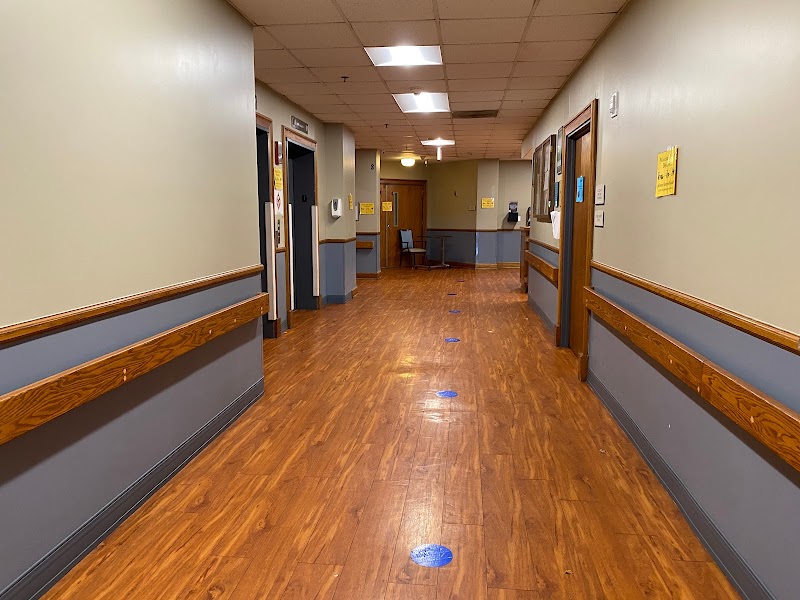
How is Aperion Care West Chicago Staffed?

CMS rates APERION CARE WEST CHICAGO's staffing level at 2 out of 5 stars, which is below average compared to other nursing homes. Staff turnover is 21%, compared to the Illinois average of 46%. This relatively stable workforce can support continuity of care.

What Have Inspectors Found at Aperion Care West Chicago?

State health inspectors documented 53 deficiencies at APERION CARE WEST CHICAGO during 2022 to 2025. These included: 3 Immediate Jeopardy (the most serious level, indicating potential for serious harm or death), 2 that caused actual resident harm, and 48 with potential for harm. Immediate Jeopardy findings are rare and represent the most serious regulatory concerns. They require immediate corrective action.
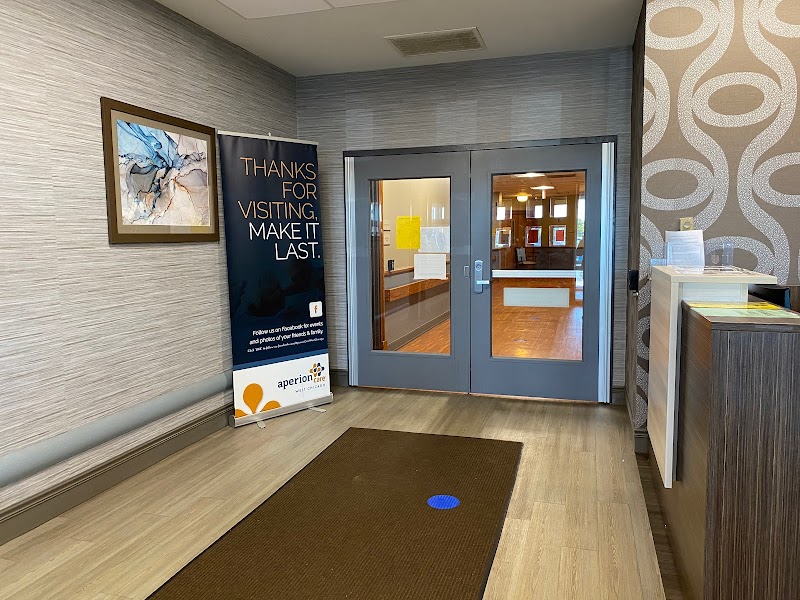
Who Owns and Operates Aperion Care West Chicago?

APERION CARE WEST CHICAGO is owned by a for-profit company. For-profit facilities operate as businesses with obligations to shareholders or private owners. The facility is operated by APERION CARE, a chain that manages multiple nursing homes. With 213 certified beds and approximately 209 residents (about 98% occupancy), it is a large facility located in WEST CHICAGO, Illinois.
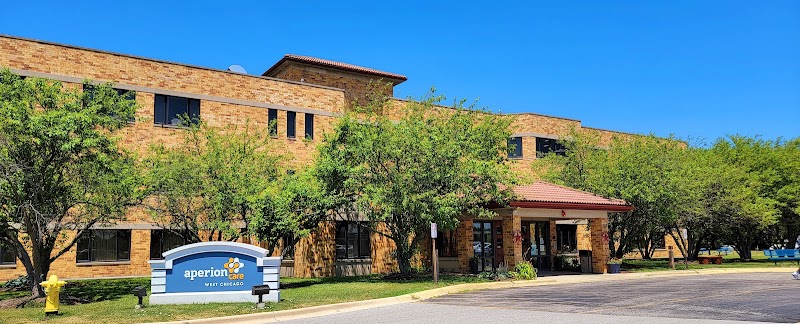
How Does Aperion Care West Chicago Compare to Other Illinois Nursing Homes?

Compared to the 100 nursing homes in Illinois, APERION CARE WEST CHICAGO's overall rating (2 stars) is below the state average of 2.5, staff turnover (21%) is significantly lower than the state average of 46%, and health inspection rating (2 stars) is below the national benchmark.

What Should Families Ask When Visiting Aperion Care West Chicago?

Based on this facility's data, families visiting should ask: "What changes have been made since the serious inspection findings, and how are you preventing similar issues?" "Can you walk me through typical staffing levels on day, evening, and night shifts?" "Can I visit during a mealtime to observe dining assistance and food quality?" "How do you handle medical emergencies, and what is your hospital transfer rate?" These questions are particularly relevant given the facility's Immediate Jeopardy citations and the below-average staffing rating.

Is Aperion Care West Chicago Safe?

Based on CMS inspection data, APERION CARE WEST CHICAGO has documented safety concerns. Inspectors have issued 3 Immediate Jeopardy citations (the most serious violation level indicating risk of serious injury or death). The facility has a 2-star overall rating and ranks #100 of 100 nursing homes in Illinois. Families considering this facility should ask detailed questions about what corrective actions have been taken since these incidents.

Do Nurses at Aperion Care West Chicago Stick Around?

Staff at APERION CARE WEST CHICAGO tend to stick around. With a turnover rate of 21%, the facility is 24 percentage points below the Illinois average of 46%. Low turnover is a positive sign. It means caregivers have time to learn each resident's needs, medications, and personal preferences. Consistent staff also notice subtle changes in a resident's condition more quickly. Registered Nurse turnover is also low at 9%, meaning experienced RNs are available to handle complex medical needs.

Was Aperion Care West Chicago Ever Fined?

APERION CARE WEST CHICAGO has been fined $260,348 across 4 penalty actions. This is 7.3x the Illinois average of $35,682. Fines at this level are uncommon and typically indicate a pattern of serious deficiencies, repeated violations, or failure to correct problems promptly. CMS reserves penalties of this magnitude for facilities that pose significant, documented risk to resident health or safety. Families should request specific documentation of what issues led to these fines and what systemic changes have been implemented.

Is Aperion Care West Chicago on Any Federal Watch List?

APERION CARE WEST CHICAGO is not on any federal watch list. The most significant is the Special Focus Facility (SFF) program, which identifies the bottom 1% of nursing homes nationally based on persistent, serious quality problems. Not being on this list means the facility has avoided the pattern of deficiencies that triggers enhanced federal oversight. This is a positive indicator, though families should still review the facility's inspection history directly.