WEST CHICAGO TERRACE
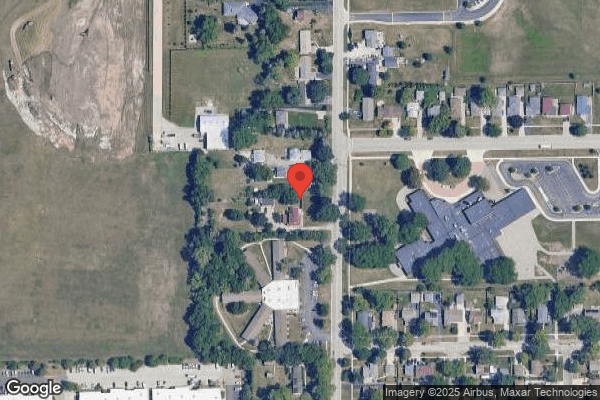
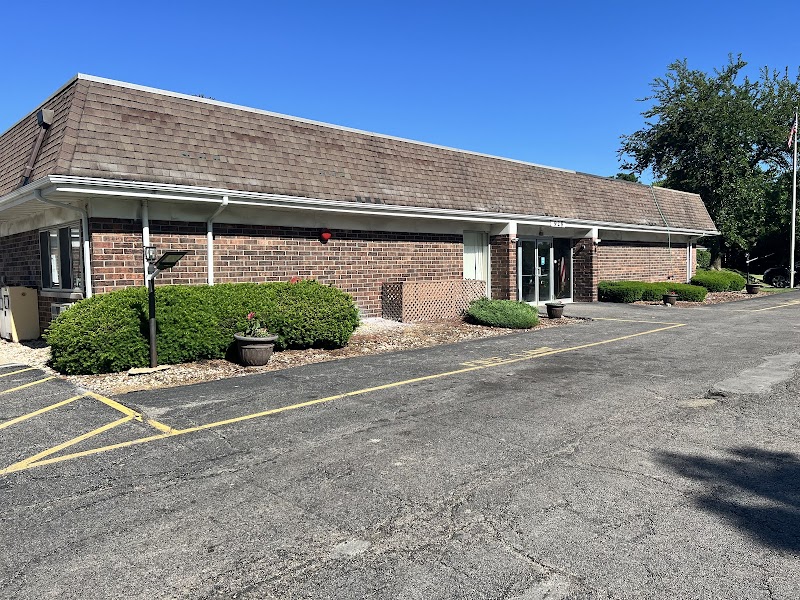
928 JOLIET ROAD, WEST CHICAGO, IL 60185 (630) 231-9292
For profit - Corporation 120 Beds Independent Data: November 2025 1 Immediate Jeopardy citation
Trust Grade
13/100
#417 of 665 in IL
Last Inspection: May 2025

Inspected within the last 6 months. Data reflects current conditions.

Overview

West Chicago Terrace has received a Trust Grade of F, indicating significant concerns about the quality of care provided, placing it in the bottom tier of nursing homes. It ranks #417 out of 665 facilities in Illinois and #30 out of 38 in Du Page County, reflecting its position among the lower half of options available. While the facility is improving in some areas, evidenced by a reduction in issues from 22 in 2024 to 9 in 2025, it still faces serious challenges, including a critical incident where a female resident became pregnant due to a lack of policies addressing intimacy rights. Staffing is somewhat of a strength, with a 3/5 star rating and a low turnover rate of 22%, which is significantly better than the state average. However, the facility has incurred $143,375 in fines, which is somewhat concerning and indicates potential compliance issues, and it has also struggled with food safety and water management practices that could affect all residents.

Trust Score
F
13/100
In Illinois
#417/665
Bottom 38%
Safety Record
High Risk
Review needed
Inspections
Getting Better
22 → 9 violations
Staff Stability
✓ Good
22% annual turnover. Excellent stability, 26 points below Illinois's 48% average. Staff who stay learn residents' needs.
Penalties
⚠ Watch
$143,375 in fines. Higher than 99% of Illinois facilities. Major compliance failures.
Skilled Nurses
✓ Good
Each resident gets 45 minutes of Registered Nurse (RN) attention daily — more than average for Illinois. RNs are trained to catch health problems early.
Violations
⚠ Watch
44 deficiencies on record. Higher than average. Multiple issues found across inspections.
★★☆☆☆
2.0
Overall Rating
★★★☆☆
3.0
Staff Levels
★★★★☆
4.0
Care Quality
★★☆☆☆
2.0
Inspection Score
Stable
2024: 22 issues
2025: 9 issues

The Good

  • 4-Star Quality Measures · Strong clinical quality outcomes
  • Low Staff Turnover (22%) · Staff stability means consistent care
  • Full Sprinkler Coverage · Fire safety systems throughout facility
  • No fines on record
  • Staff turnover is low (22%)

    26 points below Illinois average of 48%

Facility shows strength in quality measures, staff retention, fire safety.

The Bad

2-Star Overall Rating

Below Illinois average (2.5)

Below average - review inspection findings carefully

Federal Fines: $143,375

Well above median ($33,413)

Significant penalties indicating serious issues

The Ugly 44 deficiencies on record

1 life-threatening
Jun 2025 1 deficiency
CONCERN (E) 📢 Someone Reported This

A family member, employee, or ombudsman was alarmed enough to file a formal complaint

Potential for Harm - no one hurt, but risky conditions existed

Safe Environment (Tag F0921)

Could have caused harm · This affected multiple residents

**NOTE- TERMS IN BRACKETS HAVE BEEN EDITED TO PROTECT CONFIDENTIALITY** Based on observation, interview and record review, the facility failed to provide cool and comfortable room environments. This a...

Read full inspector narrative →
**NOTE- TERMS IN BRACKETS HAVE BEEN EDITED TO PROTECT CONFIDENTIALITY** Based on observation, interview and record review, the facility failed to provide cool and comfortable room environments. This applies to 5 of 5 residents (R1, R2, R3, R5 and R17) reviewed for comfortable room environments in a sample of 17. The findings include: 1. Face sheet, printed 6/27/25, shows R1 resided on the A hall of the facility. MDS (Minimum Data Set), dated 5/5/25, shows R1 was cognitively intact. On 6/23/25 at 11:45 AM, R1 stated at that moment her room temperature was acceptable but for the prior two weeks the temperature of their room was very hot, uncomfortable and unbearable. R1 stated her room was so hot she threatened to call IDPH (Illinois Department of Public Health) if the air conditioning was not repaired. R1 stated facility administration offered to move her to a different room but R1 stated she felt like all of the rooms were too hot in the facility because the air conditioner was not working correctly. At 1:50 PM, R1 stated the facility needed to fix their air conditioner that had not worked properly for days instead of asking her to move rooms. On 6/23/25 at 11:00 AM, V1 (Administrator) stated the air conditioners were breaking recently and the facility had repair services out to repair the air conditioners. At 1:04, V1 stated air conditioners at the facility were broken on 6/17/25, 6/21/25, 6/22/25, and 6/23/25 including the air conditioner that supplied cool air for R1's room. On 6/23/25 at 11:32 AM, V3 (Maintenance) stated the maintenance department was trying to keep the air conditioners running. V3 stated there were two air conditioners for each of the five resident wings. V3 stated he replaced a fan on one of the E hall units, recently replaced freon in one of the C hall units, and one A hall unit was functioning intermittently since approximately one week prior. V3 stated the A hall unit would work for a few hours and then another part would break and require repair. V3 stated he was checking temperatures of rooms and one of the rooms reached 80 degrees F during his monitoring. On 6/23/25 at 1:18 PM, V4 (Regional Maintenance) stated several of the facility air conditioning units required repair and were not working for periods of time. V4 stated one of the A hall air conditioners was not working from 6/17/25-6/19/25 because they were trying to locate freon to repair the unit. V4 stated one of the E hall units broke overnight the night prior and the residents were opening windows which was causing the temperature to rise further. Grievance, dated 6/17/25, shows R1 complained her room was too warm. The grievance shows the facility offered a different room with air conditioning and R1 declined. Progress notes, date 6/17/25, shows R1 was offered an air conditioning room for sleeping while her air conditioning was being repaired bur R1 declined. 2. Face sheet, printed 6/27/25, shows R2 resided on the E hall of the facility. MDS, dated [DATE], shows R2 was cognitively intact. On 6/23/25 at 12:20 PM, R2 stated, It's hot at times. R2 stated his room temperature improved since the day prior when the room temperature was almost unbearable because it was so hot outside, and the temperature of his room became very hot. At 2:00 PM, R2 stated it was warmer than usual in his room and uncomfortable. R2's room temperature measured 78 degrees F (Fahrenheit) and the humidity measured 60%. 3. Face sheet, printed 6/27/25, shows R3 resided on the E hall of the facility. MDS, dated [DATE], shows R3's cognition was moderately compromised. On 6/23/25 at 12:18 PM, R3 stated his room becomes warm. R3's room temperature measured 80 degrees F and 61% humidity. At 2:00 PM, R3's room temperature measured 79 degrees F and the humidity measured 61%. 4. MDS, dated [DATE], shows R5 was cognitively intact. On 6/23/25 at 11:40 AM, R5 stated her room was warm on and off on 6/25/25 and at that time did not feel hot. R5 stated on 6/24/25 her room was very hot. R5's room temperature measured 76 degrees F and the humidity was 54%. 5. MDS, dated [DATE], shows R17 was cognitively intact. On 6/23/25 at 12:00 PM, R17 had his window open and V3 (Maintenance) asked R17 to close his window because the outside temperature was very hot. R17 replied that his room was very hot, and he needed his window open to provide air circulation. On 6/23/25 at 11:30 AM, the resident room temperatures were measured and showed the following: - Hall C temperatures measured between 77-78 degrees F and the humidity ranged between 60-62% - Hall E temperatures measured between 78-79 degrees F and the humidity ranged between 59-61%. On 6/23/25 at 2:00 PM, the resident room temperatures were measured and showed the following. - Hall E temperatures measured between 78-79 degrees F and the humidity ranged between 59-62%. - Hall C temperatures measured between 77-78 degrees F and the humidity ranged between 60-62%. During the measurements, V3 stated all of the facility air conditioning units were functioning. On 6/24/25 at 4:00 PM the resident room temperatures were measured and showed the following: - Hall C: 4 rooms measured 78 degrees, 1 room measured 79 degrees F, and 3 rooms measured 80 degrees F - Hall E: 2 rooms measured 79 degrees F, 4 rooms measured 80 degrees F, 3 rooms measured 81 degrees F, and 2 rooms measured 82 degrees F. On 6/25/25 at 4:00 PM, the resident room temperatures were measured and showed the following: - Hall E: 2 rooms measured 78 degrees F, 2 rooms measured 79 degrees F, and 3 rooms measured 80 degrees F. The hall rooms' humidity measured between 63-64%. On 6/25/25 at 11:24 AM, V5 (Regional Maintenance Supervisor) stated an air conditioning unit on the E hall froze the day prior and the staff defrosted the unit, got the unit running again, and the unit froze up again. On 6/25/25 at 5:45 PM, V1 stated she was aware of the elevated resident room temperatures and stated the E hall unit needed an additional repair. On 6/26/25 at 8:00 AM, V1 stated the E hall air conditioning unit was broken and maintenance was at the facility evaluating the units. On 6/26/25 at 9:04 AM, V7 (Regional Maintenance) stated they were repairing the E hall air conditioning unit. V7 stated he was not aware of the elevated temperatures in the resident rooms on 6/25/25 at 4:00 PM but would investigate. Facility Emergency Operations Plan, effective 6/2025, shows, 2. Maintenance will check all AC units to assure they are operating properly.
Jun 2025 1 deficiency
CONCERN (D) 📢 Someone Reported This

A family member, employee, or ombudsman was alarmed enough to file a formal complaint

Potential for Harm - no one hurt, but risky conditions existed

Deficiency F0583 (Tag F0583)

Could have caused harm · This affected 1 resident

Based on interview and record review, the facility failed to protect a resident's privacy. This applies to 1 of 4 residents (R4) reviewed for privacy in a sample of 4. The findings include: On June 10...

Read full inspector narrative →
Based on interview and record review, the facility failed to protect a resident's privacy. This applies to 1 of 4 residents (R4) reviewed for privacy in a sample of 4. The findings include: On June 10, 2025 at 10:04 AM, R4 said her privacy rights were broken by her social worker. R4 said V3 (PRSC/ Psychiatric Rehabilitation Services Coordinator) released information that should only be discussed between case managers. R4 said V3 released her information to R1. R4 said V3 told R1 about her housing situation and the program she was a part of. R4 said this occurred about a week ago and she reported it to the administrator. R4 said R1's information was not spread, but hers was. On June 10, 2025 at 12:42 PM, V3 said R1 had come to him asking for a direct discharge, and he explained to her it was not always possible for residents to be discharged in the timeframe R1 expected. V3 said he told R1 even if she did everything right and got all the paperwork together, like R4, they still may not be able to get the housing accomplished. On June 10, 2025 at 2:54 PM, V2 (DON/Director of Nursing) said R4's rights were violated by one of her staff. V2 said she was told the staff member (V3) was talking to R1 and explained about discharge planning and housing, and even if everything was done correctly by R1, it could still take a long time to find housing. V2 said V3 then used R4 as an example and explained R4 had filled all her social security information and was still unable to find housing right away. V2 said V3 should not have included a specific resident's name, but used a generalized example. On June 10, 2025 at 2:34 PM, V4 (PRSD/Director) said she knew there was a resident's name brought up by staff when speaking to another resident. V4 said to her understanding, the staff told her no private information was disclosed. V4 said she would not recommend using another resident's name specifically as an example. On June 10, 2025 at 2:21 PM, V1 (Administrator) said R1 told R4 the staff had shared medical information about her to R1. V1 said she spoke with R4 and explained to her that V3 had been speaking with R1 about housing and explained there were steps prior to being discharged into housing, and V3 gave the example of R4, and how she had been working on those steps. On June 10, 2025 at 1:04 PM, V5 (PRSC) said he would not bring another resident's name into a conversation he was having with a resident mainly because the other residents do not want to be talked about. V5 said in certain situations, it could be a violation of their privacy. V5 said if he needed to give an example, he would use general terms like those people in the group instead of specific names. On June 10, 2025 at 2 PM, V6 (RN/Registered Nurse) said she would not give specific names, information, to a resident regarding another resident when trying to explain an example. R4's face sheet showed she was admitted to the facility with diagnose including schizophrenia. R4's MDS (Minimum Data Set) dated April 29, 2025 showed she was cognitively intact. R4's progress notes were reviewed and showed on June 3, 2025 at 4:06 PM, It was reported that residents [R4] name was mentioned by staff during a conversation with another resident, regarding discharge planning. [R4] stated she does not want her name mentioned again in conversation to another resident. The facility's Resident Rights policy dated March 2021 showed the resident has the right to privacy. The facility's Privacy Policy dated April 2020 showed That the facility is required by law to maintain the privacy of PHI (Protected Health Information) and to provide residents with notice of its legal duties and privacy policies.
May 2025 7 deficiencies
CONCERN (D)

Potential for Harm - no one hurt, but risky conditions existed

Quality of Care (Tag F0684)

Could have caused harm · This affected 1 resident

Based on interview and record review, the facility failed to follow physician's order for ID (Infectious Disease) consultation. This applies to 1 of 1 resident (R59) reviewed for physician orders in t...

Read full inspector narrative →
Based on interview and record review, the facility failed to follow physician's order for ID (Infectious Disease) consultation. This applies to 1 of 1 resident (R59) reviewed for physician orders in the sample of 18. The findings include: R59 had multiple diagnoses including unspecified valve endocarditis, and infection and inflammatory reaction due to cardiac valve prosthesis, based on the face sheet. R59's quarterly MDS (minimum data set) dated March 22, 2025, showed that the resident was cognitively intact. On May 19, 2025, at 10:35 AM, R59 stated that she is on antibiotic therapy due to endocarditis. R59's order report showed an active verbal (over the phone) order since June 13, 2024, for, Doxycycline Hyclate oral tablet 100 mg, give 1 tablet by mouth one time a day for Endocarditis /heart valve. Give daily until seen by ID. R59's EMR (Electronic Medical Record) including physician orders and progress notes from June 13, 2024, through May 20, 2025, showed no evidence that the resident was seen by the ID to evaluate the need for continued use of the Doxycycline Hyclate (antibiotic) medication. R59's active care plan initiated on March 29, 2024, showed that the resident is on antibiotic therapy related to history of endocarditis and heart valve disorder. The same care plan showed several interventions including, Administer medication as ordered. On May 20, 2025, at 11:30 AM, V10 (MDS/Minimum Data Set Coordinator) was asked about R59's order for daily administration Doxycycline Hyclate medication until seen by ID. V10 stated that she was not aware that R59 had seen an ID practitioner. On May 21, 2025, at 10:00 AM, V10 stated that she had reviewed R59's EMR and confirmed that the facility did not follow up the physician's order for the resident to be evaluated by the ID for continued use of the Doxycycline Hyclate medication. V10 presented R59's progress notes dated May 20, 2025, at 3:04 PM which showed that the facility had spoken to the resident's physician and instructed the facility to continue the administration of the Doxycycline medication until seen by the ID practitioner due to history of endocarditis. On May 21, 2025, at 10:29 AM, V3 (Assistant Director of Nursing/Infection Preventionist) stated that she was made aware that the ID consultation was not scheduled for R59 since the antibiotic order was made on June 13, 2024, until asked by the surveyor on May 20, 2025. V3 acknowledged that the facility failed to follow the physician's order for R59 to be evaluated by the ID practitioner for the continued use of the Doxycycline medication for endocarditis. The facility's guideline regarding physician orders dated March 2021 showed in-part under the procedure for verbal orders, e) Follow through with orders as required.
CONCERN (D)

Potential for Harm - no one hurt, but risky conditions existed

Deficiency F0757 (Tag F0757)

Could have caused harm · This affected 1 resident

**NOTE- TERMS IN BRACKETS HAVE BEEN EDITED TO PROTECT CONFIDENTIALITY** Based on interview and record review, the facility failed to ensure a resident did not receive an unnecessary medication. This a...

Read full inspector narrative →
**NOTE- TERMS IN BRACKETS HAVE BEEN EDITED TO PROTECT CONFIDENTIALITY** Based on interview and record review, the facility failed to ensure a resident did not receive an unnecessary medication. This applies to 1 of 2 residents (R5) reviewed for antibiotic use in the sample of 18. The findings include: The EMR (Electronic Medical Record) showed R5 was admitted to the facility on [DATE], with multiple diagnoses including chronic kidney disease, hypertensive heart disease without health failure, and type 2 diabetes mellitus. On May 20, 2025, at 1:08 PM, V3 (Infection Preventionist Nurse) said R5 received antibiotics for a facility acquired UTI (Urinary Tract Infection) in March 2025. V3 said R5 complained of swelling in her hands, feet, and face and requested a diuretic medication. V3 said laboratory tests were done, and an antibiotic was ordered. V3 said R5's laboratory results for R5's urine culture showed R5 did not have an infection and should not have received antibiotics. A progress note dated March 18, 2025, at 3:15 PM, by V8 (LPN/Licensed Practical Nurse) showed Resident complained of edema to bilateral hands/bilateral feet and face. Observed with some edema to noted areas. Resident requesting diuretic. Notified [V9 (Nurse Practitioner)]. Response pending. A progress note dated March 18, 2025, at 5:57 PM, by V8 showed, Per [V9] get stat order for CBC (Complete Blood Count), CMP (Comprehensive Metabolic Panel), and UA (Urinalysis) C/S (Culture and Sensitivity). Resident given specimen cup for urine specimen with instructions and notified to return to nursing station once one . A progress note dated March 19, 2025, at 5:52 PM, by V8 showed Initial results of UA/CS sent to [V9]. Waiting for response. A progress note dated March 19, 2025, at 7:09 PM, V8 showed Per [V9] start resident on [nitrofurantoin] 100 mg (milligrams) times five days. Order carried out/noted. R5's March 2025 Medication Administration Record showed from March 19 to March 26, 2025, R5 received Nitrofurantoin monohydrate macro (antibiotic medication) 100 mg for urinalysis results infection. R5's Laboratory Results Report dated March 21, 2025, showed Culture, Urine: Mixed gram-positive organisms. Mixed urogenital flora is present. These findings are usually not indicative of an infection. On May 21, 2025, at 2:13 PM, V9 said based on R5's symptoms of hand, feet, and facial swelling and R5's urine culture results, R5 should not have been given an antibiotic.
CONCERN (D)

Potential for Harm - no one hurt, but risky conditions existed

Deficiency F0805 (Tag F0805)

Could have caused harm · This affected 1 resident

Based on observation, interview and record review, the facility failed to provide ground baked chicken to residents on mechanical soft diet. This applies to 2 of 3 residents (R1 and R79) reviewed mech...

Read full inspector narrative →
Based on observation, interview and record review, the facility failed to provide ground baked chicken to residents on mechanical soft diet. This applies to 2 of 3 residents (R1 and R79) reviewed mechanical soft diets in the sample of 18. The findings include: On May 19, 2025, at 12:03 PM, during tray line service, V6 (Cook) stated that she prepared mechanical soft diet by manually chopping the baked chicken and then added gravy to the same. V6 showed a container of chopped chicken cut up in varying pieces steeped in gravy. R1 and R79 whose diet tickets showed mechanical soft diet, were served the chopped chicken in gravy. Daily menu spreadsheet for week 4 Monday showed to serve ground deboned chicken with gravy. Recipe for ground deboned chicken with gravy showed to debone chicken and grind meat to correct consistency. On May 22, 2025 at 11:44 AM, V11 (Dietitian) stated that the facility should follow the recipe guidance for mechanically altered diets. Facility policy titled Therapeutic Diets (effective May 2020) Guideline: Therapeutic diets are prescribed by Attending Physician or extender to support the resident's treatment and plan of care and in accordance with his or goals and preferences. Process: 4. If a mechanically altered diet is ordered, the provider will specify the texture modification. Facility diet order listing included that R1 and R79 were on mechanical soft diets.
CONCERN (E)

Potential for Harm - no one hurt, but risky conditions existed

Deficiency F0806 (Tag F0806)

Could have caused harm · This affected multiple residents

Based on observation, interview and record review, the facility failed to provide a substitute meal option with similar nutritional content as the main entrée for the lunch meal. This applies t...

Read full inspector narrative →
Based on observation, interview and record review, the facility failed to provide a substitute meal option with similar nutritional content as the main entrée for the lunch meal. This applies to 6 of 6 residents (R2, R10, R23, R34, R52, and R68) reviewed for dining in the sample of 18. The findings include: On May 19, 2025, at 9:32 AM, V6 (Cook) stated that she prepared baked chicken for the main menu entrée and is going to prepare turkey sandwiches for the substitute menu. Facility Daily spreadsheet for spring summer menus for week 4 Monday included Baked chicken (1 portion=3 oz/ounce protein). On May 19, 2025, at 12:03 PM, at the lunch meal, residents who ordered the substitute meal received a turkey sandwich made with slices of deli turkey, chopped lettuce and tomato in between two slices of bread and R2, R10, R23, R34, R52, R68 were served the same. When asked, how many slices of deli turkey she used, V6 (Cook) stated that she added about 3 1/2 slices of turkey per sandwich. V6 showed a recipe for Deli Sandwich (serving size 4 oz/ounce =3 oz protein) she used to prepare the turkey sandwich. The same recipe included to place 3 oz (weighed) lunch meat and 2 slices of cheese on bread slice. V6 stated that she did not add cheese slices nor weigh the turkey slices. On request, V4 (Dietary Manager) weighed the slices of turkey that were added to a sandwich on a weighing scale, and it weighed 2.7 oz. On May 22, 2025, at 11:43 AM, V11 (Dietitian) stated that the substitute menu item should have equivalent protein serving portions as the main meal entree and the facility should follow the recipe specifications for the same.
CONCERN (F)

Potential for Harm - no one hurt, but risky conditions existed

Food Safety (Tag F0812)

Could have caused harm · This affected most or all residents

Based on observation, interview and record review, the facility failed to ensure that the dishes are sanitized during dish washing procedure and failed to ensure that dented cans were separated from t...

Read full inspector narrative →
Based on observation, interview and record review, the facility failed to ensure that the dishes are sanitized during dish washing procedure and failed to ensure that dented cans were separated from the in-use cans. This applies to all 88 residents that received foods prepared in the facility kitchen. The findings include: Facility's CMS Application Form for Medicare/Medicaid dated May 19, 2025, showed that the facility census was 88 residents. Facility provided information that there are no residents on NPO (nothing by mouth) status. On May 19, 2025, at 9:24 AM, the initial tour of the facility's kitchen was conducted in presence of V4 (Dietary Manager). The dry storage area had 3 cans (6 pounds, 6 ounce each) of Salsa Para Enchiladas that were dented at the seams. These cans were placed on shelving with other canned goods and had a handwritten delivery date of February 14, 2025, on them. V4 stated that the dietary staff must have missed the dents on top of the corners. At the dish machine, V5 (Dietary Aide) was seen washing the dishes at the dirty side of the machine and placing them on racks, which in turn were run through the dish machine. V6 (Cook) was at the clean side of the dish machine putting away the cleaned dishes. V4 stated that the dish machine uses Chlorine as a chemical sanitizer for the final rinse. V4 was requested to test the chlorine using a test strip, and he was hesitant to do so stating that he does not see the sanitizer coming through via the dispenser tubing. However, after waiting a couple minutes, when V4 dipped the test strip in the sanitizer well at the dish machine, the chlorine test strip remained white. V4 stated that he will call 'Maintenance' to check on it and left the area. When asked, V5 and V6 both stated that neither of them tested the dish machine prior to start of the dish washing procedure after breakfast. V6 pointed to a log where results are entered when tested. The Dish Machine (Low Temperature) log verified this information as the columns to test and enter the Wash temperature and the Final Rinse for chlorine in p.p.m (parts per million) prior to washing dishes from the breakfast meal were not filled on May 19, 2025. The dish machine also had qualification requirements posted on surface of the machine that included 50 p.p.m for available chlorine. On May 19, 2025, at 11:51 AM, V4 stated that V7 (Maintenance Director) came and fixed the piping that dispensed the chlorine sanitizer as it had gotten clogged. V4 added that the facility is planning to redo the piping. On May 19, 2025, at 11:57 AM, V7 stated that the dish machine sanitizer had a bad hose. Dish machine (Model AH, B and C) Operation Manual included the following: The AH, B and C Operational Cycle have a total cycle of 90 seconds steps listed below detail the individual functions that are executed during each operational cycle. 6. Cam switches 6 and 7 control the sanitizer and rinse pumps respectively. They turn ON at the beginning of the rinse cycle and run for a few seconds to provide sufficient sanitizer and rinse aid for a few seconds to provide sufficient and rinse aid for rinse cycle. These cams can be adjusted as necessary for proper chemical dosage. Dish machine Installation and Operational Manual included the following: Follow the directions precisely that are on the litmus paper vial and test the water on the surface of the bottom of the glasses. Concentration should be 50 p.p.m minimum to 100 p.p.m maximum. If concentration is incorrect contact your chemical supplier . Chlorine Test Paper strip color chart guidance showed that 50-100 p.p.m had color range of varying shades of purple.
CONCERN (F)

Potential for Harm - no one hurt, but risky conditions existed

Infection Control (Tag F0880)

Could have caused harm · This affected most or all residents

**NOTE- TERMS IN BRACKETS HAVE BEEN EDITED TO PROTECT CONFIDENTIALITY** Based on observation, interview, and record review, the facility failed to follow their water management program for Legionella....

Read full inspector narrative →
**NOTE- TERMS IN BRACKETS HAVE BEEN EDITED TO PROTECT CONFIDENTIALITY** Based on observation, interview, and record review, the facility failed to follow their water management program for Legionella. This applies to all 88 residents residing in the facility. The findings include: The facility's Long-Term Care Facility Application for Medicare and Medicaid dated May 19, 2025, showed the facility's census was 88 residents. On May 20, 2025, at 3:39 PM, V7 (Maintenance Director) said for the facility's water management plan, he flushes the water in empty resident rooms. V7 said he uses an electronic maintenance work order system and documents his water management task in the electronic system. V7 continued to say when he documents the Daily Building Water Management Plan in the electronic system, it means he flushed the water in the empty resident rooms and the soiled utility room. V7 said the facility has an ice machine that he cleans every six months. V7 said he cleaned it when he started at the facility in December 2024 because it was obvious it had not been cleaned in a long time. V7 said the facility's water management plan was already developed when he started working in the facility in December 2024, and V7 did not assist in developing the plan. On May 20, 2025, at 4:05 PM, V1 (Administrator) said the facility's water management plan for Legionella does not include a control measure of flushing water. V1 said the plan does not identify building water systems which need control measures or include a level of risk hazard for those areas. V1 said the plan does not include a diagram to show how water is distributed throughout the facility. V1 continued to say the only diagram in the plan is of how water flows out of the building. V1 said the facility had a resident test positive for Legionella pneumonia July 2024, and the facility had the water tested for Legionella and the results were negative for Legionella. On May 21, 2025, at 11:17 AM, V12 (Housekeeping Director) said there is an eyewash station located in the laundry room which V7 installed a few months ago. V12 said the eyewash station is used if a staff member gets detergent in their eyes. V12 said no staff member has had to use the eyewash station. V12 said V7 will come in the laundry room and make sure the eyewash station works. The facility's laundry room eyewash station was located in the back of the laundry room and was a freestanding eyewash station next to a sink. On May 21, 2025, at 11:24 AM, V7 said he installed the eyewash station a couple months ago in the laundry room and has another eyewash station to install in the kitchen. V7 said he goes to the laundry room most days to check the eyewash station is functional. V7 said he turns the eyewash station on and makes sure the covers come off the spigots and then immediately turns it off. On May 21, 2025, at 1:33 PM, V1 said the facility's water management plan for Legionella should include the required documentation. The facility's undated Water Management Program showed 1. Purpose: A Water Management Program is designed to actively identify and manage hazardous conditions that support growth and spread of Legionella. The Water Management Program: Identifies building water systems for which Legionella control measures are needed; Assesses how much risk the hazardous conditions in those water systems pose; Applies control measures to reduce the hazardous conditions, whenever possible, to prevent Legionella growth and spread; Makes sure the program is running as designed and is effective. 2. Background: Legionella is found naturally in [NAME] environments, like lakes and streams, but generally the low amounts in [NAME] do not lead to disease. Legionella can become a health problem in building water systems. To pose a health risk, Legionella first has to grow (increase in numbers). Then it has to be aerosolized so people can breathe in small, contaminated water droplets. Examples of where Legionella can grow: Hot and Cold Storage Tanks; Water Heaters; Faucets; Showerheads and hoses; Pipes, valves and fittings; Infrequently used equipment such as eyewash stations; Medical Equipment such as CPAP (Continuous Positive Airway Pressure, BIPAP (Bilevel Positive Airway Pressure) machines . 4. Water Management System: Here is a description of the water system; included is: Water Enters; Cold water is distributed; Cold water is heated; Hot water is distributed; Hot, cold and tempered water is discarded. See diagram in Figure A (attach appropriate drawing). 5. Control Measures: Temperatures at a variety of points; If levels below normal; corrective action taken. 6. What to do when Controls Not Met (examples): Daily flushing of sinks and showers; Emptying of the ice machine and cleaning per manufacturer's instructions; Testing of the water . The facility's Water Management Program does not include identification of building water systems for which Legionella control measures are needed and assessment of how much risk the hazardous conditions in those systems pose. The program does not show a diagram of the facility's water system.
CONCERN (F)

Potential for Harm - no one hurt, but risky conditions existed

Antibiotic Stewardship (Tag F0881)

Could have caused harm · This affected most or all residents

Based on interview and record review, the facility failed to follow their policy for antibiotic stewardship and have a standardized tool to identify infections in residents. This applies to all 88 res...

Read full inspector narrative →
Based on interview and record review, the facility failed to follow their policy for antibiotic stewardship and have a standardized tool to identify infections in residents. This applies to all 88 residents residing in the facility. The findings include: The facility's Long-Term Care Facility Application for Medicare and Medicaid dated May 19, 2025, showed the facility's census was 88 residents. On May 20, 2025, at 1:08 PM, V3 (Infection Preventionist Nurse) said when a resident is started on an antibiotic, V3 will log the information into the EMR (Electronic Medical Record) Infection Control Module. V3 said this information includes the date of symptom onset, the signs and symptoms, if isolation is required, diagnostic results, and which anti-infective was prescribed. V3 said she does not use McGeer's criteria to determine if a resident has an infection. V3 said facility nurses will conduct antibiotic monitoring for residents receiving antibiotics, which includes the type of infection, vital signs, and if symptoms are improving. V3 said the facility nurses do not use McGeer's criteria. On May 21, 2025, at 12:55 PM, V2 (Director of Nursing) said the purpose of McGeer's criteria is to identify if a resident has a possible infection. V2 said from her understanding, the facility does not use McGeer's criteria due to a copyright issue and the facility uses the EMR infection module. On May 21, 2025, at 1:08 PM, V13 (Regional Nurse Consultant) said the purpose of a standardized tool like McGeer's criteria or Loeb's criteria is to determine if a resident has an infection or not by looking at specific symptoms and diagnostic tests. On May 21, 2025, at 1:15 PM, V2 said the EMR does not show a standardized tool to determine if a resident has an infection or not. V2 said the EMR infection control module does not show if a resident has met criteria for an infection to receive antibiotics. Review of the facility's infection tracking from November 2024 to present does not show a standardized tool was utilized when a resident was started on an antibiotic. The facility's policy titled Antimicrobial/Antibiotic Stewardship Program dated April 2020, showed Guideline: The facility antimicrobial stewardship program includes the following elements; a) Antimicrobial/antibiotic policy and procedure; b) Physician or extender involvement thru an interdisciplinary committee and meets quarterly; c) Pharmacy reports regarding antibiotic therapy; d) There is an identified person who has accountability and training in antimicrobial stewardship; 3) Working with Pharmacy, develop an antibiotic review and feedback process to optimize and monitor the use of antibiotics. Procedure: 1. The Infection Preventionist will collect the infection information use the McGeer Criteria or the [EMR] Infection Control Module .
Nov 2024 5 deficiencies 1 IJ (1 affecting multiple)
CRITICAL (K) 📢 Someone Reported This

A family member, employee, or ombudsman was alarmed enough to file a formal complaint

Immediate Jeopardy (IJ) - the most serious Medicare violation

Quality of Care (Tag F0684)

Someone could have died · This affected multiple residents

**NOTE- TERMS IN BRACKETS HAVE BEEN EDITED TO PROTECT CONFIDENTIALITY** Based on interview and record review, the facility failed to have a system or any policies in place to identify services needed ...

Read full inspector narrative →
**NOTE- TERMS IN BRACKETS HAVE BEEN EDITED TO PROTECT CONFIDENTIALITY** Based on interview and record review, the facility failed to have a system or any policies in place to identify services needed to meet the intimacy rights of mentally ill female residents of child-bearing age. This failure resulted in one female resident (R1) becoming pregnant by another resident and experiencing psycho-social harm when she was hospitalized and per the hospital Psychiatrist, is now in a catastrophic situation. This failure resulted in an Immediate Jeopardy. The Immediate Jeopardy began on 6/21/2024 when R1 told staff that she had an interest in R2 (a male peer) and refused condoms and other forms of birth control. This applies to 1 of 10 residents (R1) reviewed for intimacy rights and has the potential to affect 6 other female residents (R12-R17) of child-bearing age living in the facility. V1 (Administrator) and V2 (Director of Nursing) were notified of the Immediate Jeopardy on 11/07/2024 at 8:58 AM and the IJ template was provided. V1 provided an Immediacy Removal Plan at 3:15 PM on 11/07/2024, which was rejected and returned to V1 at 4:10 PM. The facility's second Immediacy Removal Plan was provided by V1 at 8:20 AM on 11/08/2024, which was rejected and returned to V1 at 9:20 AM. The facility's third Immediacy Removal Plan was provided by V1 at 12:15 PM on 11/08/2024 and it was accepted at 12:25 PM. The Surveyor confirmed the immediacy was removed on 11/12/2024 at 2:40 PM, however the facility remains out of compliance at a Severity Level II due to the need to evaluate the implementation of new policies and procedures and Quality Assurance monitoring. The findings include: On 11/06/2024 at 1:30 PM, V29 (R1's Hospital Psychiatrist) said R1 was inpatient at the hospital after experiencing a mental health crisis associated with her pregnancy. V29 said R1 was uniquely trapped due to her current situation. V29 said R1 was unable to care for a child because she herself requires 24-hour custodial care for her own mental health. V29 said the facility failed to adequately assess R1's ability to engage in safe sex practices which resulted in R1 becoming pregnant while residing at the facility, and now having no access to an adequate facility that can meet her mental and medical health needs. V29 said all of R1's pregnancy alternatives will result in a poor outcome to her mental health, adding that all of these events have placed her in a catastrophic situation. V29 stated she may have a natural miscarriage, or a judge may grant guardianship and/or she may have an abortion, or if she has the child and it is removed because of her capacity. V29 stated R1 won't understand, which would be catastrophic. V29 stated R1 thinks she is rich and has a rich man- she does not understand her current position. V29 stated a lot of [R1's] thoughts are 'child-like thinking' or 'magical.' V29 stated he feels the facility did not adequately provide contraceptives for her and now has basically kicked her out. V29 stated they give condoms to residents in hopes they use them right- mental patients- where the normal adult has difficulty even using them right. V29 stated it's an environment problem and in his opinion, the facility has failed her ethically. R1's Face Sheet showed R1 was a facility resident since 4/23/2020. Her Face Sheet showed R1's diagnoses included schizophrenia, anxiety disorder, epilepsy, and asthma. R1's 10/17/2024 Gynecology Consultation Summary Report confirmed R1's pregnancy by ultrasound with an Estimated gestational age: 6w3d (or becoming pregnant 9/2/2024), with an Estimated date of delivery: 6/9/2025. On 10/25/2024 at 12:37 PM, V7 (Licensed Practical Nurse/LPN) said on 10/18/2024 she was instructed not to administer R1's antipsychotic medications because R1 was confirmed to be pregnant on 10/17/2024. V7 said she was not aware R1 had been sexually active at the facility. On 10/23/2024 at 8:45 AM, V20 (R1's Brother) stated he was unsure if R1 and R2 (R1's boyfriend and presumed father) understood the consequences of unsafe sex. V20 stated R1 and R2 wanted to leave together on 10/17/2024 with no plan but to get an apartment. V20 stated neither R1 or R2 have no funds except for a little Social Security, but they have no way of getting funds and R1 has no skills to leave and find housing. R1's 9/23/2024 Level of Functioning assessment showed she needs significant assistance in the listed areas of- forming and maintaining friendships; pursuing appropriate leisure and recreational activities; taking care of own possessions and living space; money knowledge and money management skills; and recognizing and avoiding common dangers. On 10/25/2024 at 3:30 PM, V18 (R1's Brother) said R1 was currently at the hospital after the facility had her petitioned out for an involuntary psychiatric admission on [DATE]. V18 said R1 had experienced an emotional crisis after R2 reportedly told R1 he did not want to be involved with her pregnancy. R1's 10/18/2024 Petition for Involuntary admission (timed at 9:30 AM) showed R1 presents with exacerbated psychosis, extreme agitation, aggression, and mania. The resident is pregnant and not taking psychotropic medication. On 10/25/2024 at 12:00 PM, V2 DON (Director of Nursing) said she responded to a code green (resident elopement) for R1 when R1 exited the building and then was subsequently petitioned out to the hospital. V2 said the facility could no longer care for R1 since she became pregnant by another resident while residing at the facility. V2 said the facility did not have policies and processes to monitor menstruation cycles, perform pregnancy testing, distributing contraceptives, completing intimacy assessments and consents, and pregnancy. V2 said she did not know much about the intimacy assessments because psychosocial staff were responsible for completing them. On 10/25/2024 at 11:17 AM, V3 PRSD (Psychiatric Rehab Social Director) said on 10/17/2024 when R1 found out she was pregnant, she expressed wanting to leave with R2. V3 then said on 10/18/2024 she was informed R1 was angry and screaming trying to leave the facility. V3 said after the incident she was asked to assist with R1's emergency transfer petition for acute psychiatric services because R1 was extremely agitated and a danger to herself and others. V3 said psychosocial staff completes intimacy assessments quarterly and annually but they did not maintain a list of residents engaging in intimate relationships. V3 said the questions on the assessments are asked of residents and if they apply, they are checked off. V3 said psychosocial staff also provide residents with condoms, but they did not maintain a tracking list of which residents asked for or received them, the amount provided, when they were given, or with whom the residents planned on having sexual relations. On 10/24/2024 at 4:33 PM, V6 PRSC (Psychosocial Rehab Services Coordinator) said R1 had been a long-term care resident at the facility for four years. V6 said she was familiar with R1's psychosocial needs and R1 required inpatient mental health care services. V6 said R1 had delusions about being pregnant in the past and has required multiple psychiatric hospitalizations. V6 said R1 was obsessed with wanting to get pregnant. V6 said R1 had been refusing contraceptives and was knowingly continuing to engage in unprotected sex with R2 and R3 at the facility. V6 said R1 came to her on 10/17/2024 with her ultrasound result and told her she was pregnant. V6 said she completes intimacy assessments to counsel residents on consensual sex and on the use of contraceptives and the assessment was a guide to help them educate residents about intimacy. V6 said she then initiates an intimacy care plan and updates it based on the assessments. R1's 6/21/2024 Social Services (SS) progress note from 11:35 AM showed Resident will exercise consensual, respectful, and appropriate intimate sexual relations. Resident has been counseled on the importance of using condoms and birth control to prevent pregnancy and any STDs [sexually transmitted diseases]. Writer to provide resident with condoms. Resident is refusing condoms and any form of birth control. Resident stated that she 'is allergic to latex.' Writer educated resident that intimate/sexual partners must be able to provide consent. Consent must be mutual. Writer will monitor. (R1's Electronic Medical Record does not list latex as one of her allergies.) R1's nursing progress note approximately 30 minutes later showed R1 .stated she was [NAME] Rican, and no one can understand her because she speaks another language and that she had an interest in peer [R2]. Writer notified [Psychiatrist] of resident statements. [No new orders.] (R1's 9/24/2024 Minimum Data Set showed R1's race is Black or African American.) R1's 6/26/2024 Intimate Relationship assessment (from five days later) does not show R1's refusal of the use of contraceptives and the consequences if she becomes pregnant, such as medication changes and discharge from the facility, and R1's intimacy care plan was not updated. R1's 9/23/2024 Intimate Relationship assessment does not acknowledge R1 wanting to get pregnant and her engagement in unprotected sex. The assessment does not identify education provided for any consequences for R1 if she became pregnant as a result of not using contraception and R1's intimacy care plan was not updated. The Self-sufficient in section of R1's Level of Functioning assessment (also from 6/26/2024, prior to R1's pregnancy) included boxes to check for 1. nutritional awareness, eating habits, health maintenance; 2. knowing the importance of medication management; 3. forming and maintaining friendships; 4. pursuing appropriate leisure and recreational activities; 5. washing, folding, and doing laundry; 6. taking care of own possessions and living space; 7. money knowledge and money management skills; 8. recognizing and avoiding common dangers. None of the numbered boxes were checked and instead, the 9 box was checked that showed None of the above, needs significant assistance in these areas. R1's Intimacy care plan (initiated 6/21/2024) showed [R1] is alert/aware and coherent about whom [she] chooses to exercise her right to engage with in an intimate/sexual relationship. An undated entry under the problem focus also showed Resident counseled: female contraception/nursing notified. Resident to start three-month Depo-Provera shot. The intimacy care plan goal showed [R1] will exercise safe, respectful and consensual intimate relations through the next review date. All interventions in the intimacy care plan were from 6/21/2024, and they included Discuss birth control options and consider pregnancy testing periodically for females of child-bearing age, Educate [R1] on safe sex practices includes types of condoms/contraception methods and importance of monogamy, Help [R1] maintain and preserve her dignity, integrity, and confidentiality by discussing these matters in a room that affords privacy, Provide [R1] with condoms, and Remind [R1] that intimate/sexual partners must be able to provide consent. Consent must be mutual. On 10/23/2024 at 10:15 AM, V15 (LPN) said she was taking care of R2. V15 said she was not aware of how long R1 and R2 were in a relationship. V15 said the facility does not track which residents are in intimate relationships. V15 said she believed psychosocial staff determines if residents can consent to sexual relationships and obtain resident intimacy contracts. V15 said she was unsure where intimacy assessments, consents, and contracts were in the residents' EMR (Electronic Medical Record). V1 (Administrator) and V5 (Regional Behavioral Director) confirmed the facility does not have intimacy contracts. On 10/23/2024 at 11:00 AM, V14 (Registered Nurse/RN) said residents are allowed to make their own sexual decisions. V14 said he cared for R1 and was not aware of her intimate relationship with R2. V14 said the facility provided condoms to residents but there is not a tracking list. V14 said he assesses residents' neurological function to determine if they know what sex means and educates on options. V14 said he was unsure how to determine if residents can practice safe sex. R1's 7/6/2024 SS progress note from 4:17 PM showed .Writer asked if this is where she wanted to live or if she didn't live [here] where she would live. Resident stated 'here.' Resident commented quietly, 'I have a boyfriend.' That was a surprise to writer. Writer asked who? Resident stated, 'you don't know.' Writer stated, 'I don't.' Resident's boyfriend is [R2] and has been. Writer counseled resident on the importance of having safe, consensual, and appropriate intimate relations using a condom and female contraception (if resident chooses). Writer counseled to go to nursing if resident wants female contraception otherwise condoms will be provided. Writer counseled to always be respectful of roommates. Writer counseled if either changes their mind and does not want to engage to communicate that clearly. Resident receptive to counsel. Writer will monitor. R1's 7/6/2024 SS progress note from a few minutes later showed Resident stated to writer that [R2] wants to 'bang' all the time. Writer tried to give resident condoms. Resident was embarrassed and told me to give the condoms to [R2]. Writer will do so and re-educate [R2] on consensual relations. Writer will monitor. A second SS note from 7/6/2024 showed Resident [R2] denies having a relationship with resident. Resident may be delusional or other resident may not be telling the truth as is the case at times. Writer will monitor. On 10/24/2024 at 9:05 AM, V11 (LPN) said condoms are provided to residents when they ask for them and there was no tracking list. V11 said she did not know how frequently residents were assessed for sexual consent but believes it is done during admission. V11 said she believes psychosocial does an assessment but does not know the name of the assessment and where it can be found. R1's 7/17/2024 nursing progress note showed It was reported by social services that resident has been having ongoing unprotected sexual intercourse with peer despite education/information related to negative potential consequences and refusal of protection such as condoms/abstinence. Resident agreed that she would be willing to start some sort of birth control and see gynecology. Notified [Nurse Practitioner] and referral left with scheduler to set up resident appointment with gynecology. No issues/concerns. The note does not address the risks if R1 becomes pregnant while residing at the facility. R1's 8/2/2024 nursing progress note showed Resident returned from OB/Gyn appointment in stable condition. Progress note blank. [No new orders] at this time. On 10/14/2024 at 9:45 AM, V8 (RN) said condoms are provided by nurses to residents when residents ask. V8 said he checks for sexual consent by talking to the residents and assessing for verbal cues such as alertness and orientation. V8 said he documents consents in the residents' EMRs. V8 then said he believed psychosocial staff also completes consent forms. V8 said he was not aware of the form's name and where it could be found. V8 said the facility did not have a tracking system for residents in intimate relationships. R1's 8/31/2024 SS progress note showed It was reported [R1] was threatening to harm another resident. This writer spoke with [R1]. [R1] stated another resident is bothering her 'boyfriend.' Staff counseled [R1]. [R1] accepted counseling. Staff re-directed [R1] to allow staff to address the matter . On 10/30/2024 at 11:38 AM, V10 (Certified Nurse Assistant/CNA) said residents were allowed to engage in intimate relationships at the facility. V10 said she reports to nursing and psychosocial if she suspects residents are having intimate relationships. V10 said if residents ask for condoms, she tells the nurses. V10 said she was responsible for monthly tracking of menstruation cycles in a yearly log. V10 said she was currently monitoring R5, R8, R12, R13, R14, R15, R16 and R17's menstrual cycles. V10 said she was never instructed to report or submit the data findings. V10 said she did not report R1's missed periods for August, September, and October 2024. On 11/06/2024 at 4:20 PM, V2 (DON) confirmed that out of those female residents being monitored, only R12, R13, R14, R15, R16, and R17 were able bear children and were not on contraceptives or had no known history of other forms of contraception use. V2 confirmed the menstruation monitoring logs were kept by V10 and not collected for review by other staff. On 10/24/2024, R1's Menstrual Tracking log for 2024 showed R1's last tracked menstruation was on 7/17/2024. The log included instructions to Notify MD or NP of any episodes of two (2) consecutive months without a menstrual cycle. On 10/23/2024 at 2:22 PM, V1 (Administrator) said R1 had always wanted to have a baby. V1 said the facility was aware of R1's intimate activity while residing at the facility. V1 continued to say the facility was also aware that R1 was engaging in unprotected sex and refusing contraceptives. V1 said R1 had an ultrasound on 10/17/2024 which confirmed she was pregnant. V1 said the facility completed R1's petition for involuntary psychiatric admission on [DATE] because they were concerned for her safety after she became extremely upset about her pregnancy situation and said the facility was unable to care for pregnant residents. V1 said the facility did not have policies on caring for residents engaging in intimate relationships, intimacy consent, or caring for residents who become pregnant. V1 said the facility did not have a process to monitor residents in intimate relationships. V1 said the facility provided residents with condoms and if needed, the physician could be contacted for female oral or injection contraceptives. V1 said the facility did not have a policy regarding contraceptives. On 10/24/2024 at 12:31 PM, V5 (Regional Behavioral Director) said the facility did not have policies on intimacy, sexual consent, or pregnancy. V5 said psychosocial staff completed an intimacy assessment on admission and quarterly and residents' intimacy care plans should be updated based on the outcome of the assessment. V5 said the facility's IDT (Interdisciplinary Team) determines if episodic assessments are needed to give residents additional sex education and expectations of intimate relationships. V5 was unable to explain what those expectations were. V5 said that there had not really been a need to complete 'episodic' intimacy assessments at the facility. V5 said the intimacy assessments have questions followed by prompt (explorative) statements for the interviewer to determine if they apply to the resident. V5 continued to say that the assessment was to help check the residents' decisional capacity and judgment and not all the question prompt statements needed to be selected for determining consent. V5 stated the assessment does not give directions and there is no score for the outcome of the assessment and the assessment does not identify who the resident's partner may be or the partner's consensual capacity. V5 said staff were expected to check the assessments when they know residents are engaging in sexual activity. V5 said the facility did not have a process to track intimate relationships or the distribution of condoms. V5 was unsure how the facility would be able to assist residents who become pregnant at the facility. On 10/28/2024 at 3:25 PM, V21 (R1's Facility Psychiatrist) said he had been treating R1 for mental health services at the facility since 2020. V21 stated it is not black and white when it comes to competency, adding a resident can be competent to accept meds but not live independently. V21 said he was not specialized in caring for pregnant residents receiving antipsychotic medications as they require specialized facilities to ensure antipsychotic medications are administered safely since they can be very dangerous to a fetus during pregnancy. V21 said he was not notified R1 was actively trying to get pregnant at the facility. V21 said if V21 had been notified sooner he would have worked with the facility and R1's family to identify other interventions to implement in R1's plan of care. V21 stated R1 still requires 24-hour custodial care and now she knows she can do this- she needs to be monitored closely to make sure she takes meds to not repeat this. V21 said R1 was suffering and would continue to do so because she was now in unfavorable situation as she is unable to care for a baby. On 10/23/2024 at 3:45 PM, V4 (Medical Director) said he was the facility's Medical Director and R1's medical physician. V4 said R1 was sexually preoccupied. V4 stated he was unsure if there was a policy, and the psychiatric physician checks the resident's decisional capacity. V4 stated he did not know how they facility knew who was sexually active and the facility should have a process and policies when residents are sexually active. V4 said he expected the facility to have processes and policies to know how to care for sexually active residents, residents who want to get pregnant, and residents who become pregnant while residing at the facility. R1's comprehensive care plan reviewed on 10/23/2024 showed R1 chooses to exercise her right to engage within an intimate/sexual relationship initiated on 6/21/2024. R1's care plan did not have updated interventions to address R1 wanting to have a baby and engaging in unprotected sex. R1's care plan was not updated on 6/21/2024, 7/6/2024, or 7/17/2024 with interventions to address R1's verbalizations regarding desires to become pregnant and subsequent discharge, engagement in unprotected sex, or discharge planning. R1's Discharge Potential assessment dated [DATE] showed R1 had poor discharge potential and was expected to remain at the facility. The assessment said R1 was not able to be discharged to a less structured level of care because R1 has had problems complying with his/her psychiatric treatment regimen (including taking medications as ordered, following up with mental/psychiatric counseling, and case management recommendations) .has had physical and mental problems increase the resident's vulnerability and hydration/food/clothing and or may become a victim or perpetrator of abuse or neglect to avoid self-neglect lacks a support system that can provide housing, financial support, direction, guidance, physical care, and supervision. R1's Discharge Potential assessment does not address R1's goal of wanting to get pregnant and her risk of discharge if she becomes pregnant while residing at the facility. R1's Goals assessments dated 9/23/2024, showed R1's discharge goal was to age in place. The facility's policy titled admission Criteria dated 4/2020, said Residents will be admitted to this facility as long as their nursing and medical needs can be met adequately by the facility. The facility does not have the capability for caring for residents who are pregnant . The policy does not address how the facility will care for long-term care residents who become pregnant while residing at the facility, and when to initiate discharge planning in such a case. The facility's policy titled Resident Rights dated 4/2020 said be informed about his or her rights and responsibilities .be informed of, and participate in, his or her care planning and treatment . The facility's March 2021 Care Plan Development policy showed A person-centered care plan that includes measurable objectives and timeframes to meet the resident's medical, nursing, mental and psychosocial needs, that are identified in the evaluation process, is developed and implemented for each resident .3. Discharge plans- Each resident's care plans will be prepared by an interdisciplinary team .8. Evaluations of the resident are ongoing and care plans are reviewed and revised by the interdisciplinary team after each evaluation .9. The Care Planning/Interdisciplinary Team is responsible for the reviews and updating of care plans; When there has been a significant change in condition, When the desired outcome is not met . 11. The services provided or arranged by the facility, as outlined by the comprehensive care plan will meet professional standards of quality and be provided by qualified persons in accordance with each resident's written plan of care . The 8/02/2024 Facility Assessment showed the facility provided a wide variety of services designed to maximize physical and emotional wellness, promote independence and healing, and preserve personal dignity .To comply with treatment plan that is focused on individual care planning . The Immediate Jeopardy that began on 6/21/2024 was removed on 11/12/2024 when the facility took the following actions: 1.The facility has taken the following actions concerning the Immediate Jeopardy: a) Policies have been developed for the following: Contraception Policy, Menstrual Cycle Monitoring Policy, Intimate Relationship Assessment and Education Form Policy, effective 11-7-2024. b) Nursing and PRSD/PRSC staff have been training re: Contraception Policy, Menstrual cycle Monitoring Policy, Intimate Relationship Assessment and Education Form Policy and responsibilities regarding all policies. Effective 11-8-2024 completion date 11-12-2024. c) Residents of childbearing age and who engage in sex are offered contraceptives by PRSC/PRSD staff. If resident chooses medicine-based contraceptive, they will be referred to nursing who will contact MD for orders. d) New admissions will have admission assessment completed and placed on menstrual cycle tracking as indicated. e) New admissions will have Intimacy assessment and Education Form completed upon admission assessment and will have contraceptives offered. If resident chooses medicine based contraception, MD will be contacted per nursing. 2. Measure the facility will take to ensure the problem will be corrected and not recur. a) The facility has developed new policies on Contraception use, Intimate Relationship assessment and education form, and Menstrual Cycle Monitoring. Policies effective 11-7-2024. Policies reviewed with Medical Director 11-8-2024. b) The facility will ensure that Nursing Staff and psych social staff are educated on responsibilities regarding the following policies: Contraception policy, Menstrual Cycle Monitoring Policy, and Intimate Relationship Assessment and Education Form Policy. Employees that are on vacation will be educated prior to returning to the facility. Education effective 11-8-2024, completion date 11-12-2024. c) The facility will audit residents medical record to identify female residents of childbearing age, these residents will have menstrual cycle tracking by nursing staff and will be offered contraception and education regarding contraception. If resident chooses medicine-based contraception, MD will be contacted for orders per nursing. Facility audit initiated by the PRSD on 11- 7-24, completed 11-8-2024. d) The facility PRSD and the PRSCs educated on intimacy assessment and education form policy, including review of intimacy assessment and education form, review of need to educate residents regarding contraception and safe sex practices, review of educating residents regarding risks of pregnancy which include an understanding that they will not be able to continue to reside in facility. Education provided by Regional Director of Behavioral Health beginning on 11-7-2024, completion date 11-12-2024. 3. The PRSD or designees will monitor continued compliance via the following Quality Improvement programs: a. A QA tool developed to monitor menstrual tracking. Beginning 11-7-24, Daily, for the next 30 days, during facility rounds, the DON or designee will ensure that menstrual tracking is completed, then 3 times per week for 30 days, and finally 1 time per week for 30 days. New admissions will be added to the QA tool. See attached. b. A QA tool developed to review status of contraceptive use for biological female residents of childbearing age. Beginning 11-7-24, weekly for next 30 days DON or designee will review orders to ensure that biological female residents of childbearing age have orders for medicine-based contraceptives or have documented refusal of medicine-based contraceptives, then monthly for 60 days. New admissions will be added to the QA tool. See attached. c. A QA tool has been developed to review status of intimate relationship assessments and education form. Beginning 11-7-2024, weekly for next 30 days PRSD or designee will review completed intimate relationship assessments and education form for completion and intimacy care plan, then 3 times per week for 30 days, and then 1 time per week for 30 days. New admissions will be added to the QA tool. See attached. d. The results of the monitoring completed under this plan are submitted to the QA/QAPI Committee for review and follow-up and reviewed with Medical Director. Next QAPI meeting scheduled for November 27, 2024.
CONCERN (D) 📢 Someone Reported This

A family member, employee, or ombudsman was alarmed enough to file a formal complaint

Potential for Harm - no one hurt, but risky conditions existed

Free from Abuse/Neglect (Tag F0600)

Could have caused harm · This affected 1 resident

**NOTE- TERMS IN BRACKETS HAVE BEEN EDITED TO PROTECT CONFIDENTIALITY** Based on observation, interview, and record review, the facility failed to protect the resident's right to be free from physical...

Read full inspector narrative →
**NOTE- TERMS IN BRACKETS HAVE BEEN EDITED TO PROTECT CONFIDENTIALITY** Based on observation, interview, and record review, the facility failed to protect the resident's right to be free from physical abuse. This applies to 1 of 3 residents (R9) reviewed for resident-to-resident physical abuse. The findings include: On 10/29/2024 at 11:15 AM, R9 said last week she told R7 to stop being rude to other residents in the dining room. R9 said R7 became upset and started to yell at her. R9 said when she was standing in line for her medications, R7 walked by her and shoved her against a bookcase. R9 said she sustained an injury to her left arm. R9 showed the surveyor her left arm, R9 had a linear abrasion to her forearm which appeared to be healing. R9 said R7 then walked by her again and punched her cold cut in her left eye. R9 said the staff then separated R7 from her. R9 said V15 (Licensed Practical Nurse/LPN) placed ice on her left eye and thankfully she did not get a bruise. R9 said she was scared. R9 said R7 then continued to be aggressive towards the staff and she had to be taken to the hospital. The EMR (Electronic Medical Record) shows R9 was admitted to the facility on [DATE]. R9 has multiple diagnoses including, bipolar disorder, anxiety disorder, and diabetes. R9's MDS (Minimum Data Set) dated September 30, 2024, shows R9 is cognitively intact and able to perform all ADLs (Activities of Daily Living) independently. R9's care plan, initiated June 20, 2024, shows R9 is at risk for abuse/neglect based on her comprehensive mental health. The EMR shows R7 was admitted to the facility on [DATE], and was involuntarily discharged from the facility on October 22, 2024. R7 had multiple diagnoses including major depressive disorder, generalized anxiety, asthma, suicidal ideation, bipolar disorder, and psychotic disorder. R7's MDS dated [DATE], shows R7 was cognitively intact and was independent with all ADLs. R7's MDS continues to show R7 had verbal behaviors directed towards others for one to three days during the MDS observation period, and other behaviors directed towards others daily. On October 22, 2024, at 6:08 PM, V15 (LPN) documented, [R7] and [R9] started fighting. [R7] hit [R9] to face. On October 22, 2024, at 5:07 PM, V27 (PRSC-Psychiatric Rehab Social Counselor) documented, Staff observed [R7] punch another resident (R9) in the face. Staff immediately intervened. On October 29, 2024, at 2:26 PM, V27 said, I saw [R7] punch [R9] in the face. On October 29, 2024, at 1:28 PM, V15 (LPN) said, I was [R9's] nurse the day of the incident. I told the resident to take her medications. She was taking her meds and [R7] came up from behind her and water went everywhere. I saw [R7] punch [R9] in the face. We called a Code Orange because there was a combative situation, and all the CNAs (Certified Nursing Assistants) came. It takes a lot of people to stop [R7]. [V26] (Activity Aide) was also punched by [R7]. [R9's] arm was injured during the situation. On October 29, 2024, at 2:00 PM, V3 (PRSD- Psychiatric Rehab Social Director) said she was present in the facility on the day of the situation between R7 and R9. V3 said R7 was screaming at R9. R7 walked towards R9 and punched R9 in the face. V3 said, I saw [R7] punch [R9] in the face. On October 30, 2024, at 9:07 AM, V26 (Activity Aide) said, I saw an altercation between two residents. [R7] was trying to attack [R9]. We tried to de-escalate the situation, and [R7] kept trying to move forward and she ended up punching me in the face. I had a bruise on my lip and a headache following the incident. The facility's policy entitled, Abuse, effective 3/2022 shows: Policy: This facility affirms the right of our consumers to be free from verbal, physical, sexual, mental abuse, neglect, exploitation, misappropriation of property, involuntary seclusion, or mistreatment. This facility therefore prohibits abuse, neglect, exploitation, misappropriation of property, and mistreatment of consumers. Definitions: Physical Abuse is the infliction of injury on a consumer that occurs other than by accidental means and that requires medical attention. Physical abuse includes hitting, slapping, pinching, kicking, and controlling behavior through corporal punishment.
CONCERN (D) 📢 Someone Reported This

A family member, employee, or ombudsman was alarmed enough to file a formal complaint

Potential for Harm - no one hurt, but risky conditions existed

Transfer Requirements (Tag F0622)

Could have caused harm · This affected 1 resident

**NOTE- TERMS IN BRACKETS HAVE BEEN EDITED TO PROTECT CONFIDENTIALITY** Based on interview and record review, the facility failed to have physician documentation to show the specific resident needs th...

Read full inspector narrative →
**NOTE- TERMS IN BRACKETS HAVE BEEN EDITED TO PROTECT CONFIDENTIALITY** Based on interview and record review, the facility failed to have physician documentation to show the specific resident needs the facility could not meet for residents who were involuntarily discharged , and the efforts the facility made to meet those needs for a resident. The facility also failed to re-evaluate if a resident was able to be readmitted at the time of discharge from the hospital. This applies to 2 of 5 residents (R1 and R7) reviewed for discharges. The findings include: 1. The EMR (Electronic Medical Record) shows R7 was admitted to the facility on [DATE], and was involuntarily discharged from the facility on October 22, 2024. R7 had multiple diagnoses including major depressive disorder, generalized anxiety, asthma, suicidal ideation, bipolar disorder, and psychotic disorder. R7's MDS (Minimum Data Set) dated September 13, 2024, shows R7 was cognitively intact and was independent with all ADLs (Activities of Daily Living). R7 was always continent of bowel and bladder. R7's MDS continues to show R7 had verbal behaviors directed towards others for one to three days during the MDS observation period, and other behaviors directed towards others daily. The EMR shows V3 (PRSD-Psychiatric Rehab Social Director) provided a Notice of Involuntary Transfer or Discharge and Opportunity for Hearing for Nursing Home Residents form to R7, dated October 22, 2024. The form shows, The safety of individuals in this facility is endangered and R7 was being transferred or discharged to a local behavioral hospital. The form also shows, As discussed with [V7] on October 22, 2024, and as documented in your clinical record pursuant to Section 3-408 of the state law, the reason for this proposed transfer or discharge is: the physical safety of other residents, the facility's staff or visitors. On October 29, 2024, at 2:26 PM, V27 (Psychosocial Rehab Services Coordinator) said, she saw R7 punch R9 in the face. On October 22, 2024, at 6:08 PM, V15 (LPN-Licensed Practical Nurse) documented an altercation between R7 and R9. Facility documentation shows R7 was sent to the local hospital with emergency personnel and the involuntary discharge paperwork. As of October 30, 2024, at 1:04 PM, the facility did not have documentation by V4 (Physician), V21 (Psychiatrist), or V28 (NP-Nurse Practitioner) to show the specific needs the facility could not meet, the facility efforts to meet those needs, and the specific services the receiving facility will provide to meet the needs of the resident which cannot be met by the current facility. 2. R1's EMR showed an admission date of 4/23/2020 with diagnoses of schizophrenia, epilepsy, anxiety, myopia, astigmatism, and hyperlipidemia. R1's MDS dated [DATE], shows R1 had behaviors not directed towards others daily. R1's MDS dated [DATE] showed she was permanently discharged from the facility and not anticipated to return. On 10/23/2024 at 2:22 PM, V1 (Administrator) said R1 had been a long-term resident at the facility for four years receiving inpatient mental health services. V1 said on 10/18/2024, R1 was upset regarding her pregnancy. V1 said the facility staff allowed R1 to leave the facility unsupervised and said the facility felt [R1] left the facility AMA (Against Medical Advice). V1 said R1 was found by her family and the local police soon after. V1 said the police informed her R1 was still the facility's resident and needed emergency psychiatric services for her safety. V1 said the facility completed R1's petition because they were concerned. V1 said the facility permanently discharged R1 on 10/18/2024 and had made no attempts to follow up with the hospital on R1's condition for readmission because they still felt R1 had left AMA from the facility, despite the facility indicating R1 was a resident at their facility when completing her petition. On 10/25/2024 at 12:00 PM, V2 (Director of Nursing/DON) said she was present on 10/18/2024 when R1 was upset and was allowed to leave the facility unsupervised. V2 said R1 was not informed or given an AMA form and an IVD notice on 10/18/2024 when she left the facility. V2 said the facility did complete a petition for R1 because they were concerned about her safety. On 10/25/2024 at 3:30 PM. V18 (R1's brother) said the facility had R1 petitioned to the hospital on [DATE] due to an episode of a mental crisis. V18 said R1 remained inpatient at the hospital's psychiatric unit receiving mental health services and was being counseled on her pregnancy treatment options. On 10/29/2024 at 2:00 PM, V3 (PRSD/Psychiatric Rehab Social Director) said on 10/18/2024 she was informed R1 left the facility upset and AMA. V3 said R1's family found R1 shortly after she left the facility. V3 said then V1 (Administrator) instructed her to complete R1's petition for involuntary transfer from the facility to the hospital on [DATE]. V3 said the facility was concerned for R1's safety after she had an emotional crisis. V3 said R1 was not given an AMA form and an IVD (Involuntary Discharge) notice on 10/18/2024. V3 said V25 (Hospital Social Worker) called her informing her R1 was ready for readmission on [DATE]. V3 said she informed V25 that R1 could not be readmitted because she was permanently discharged from the facility on 10/18/2024 after they petitioned her to the hospital. R1's Petition for Involuntary/Judicial admission dated 10/18/2024, showed R1 was asserted to be required to be involuntarily discharged from the facility to an emergency inpatient admission to another acute facility by the facility due to acute mental illness symptoms. The petition said R1 The Respondent is currently detained in a mental health facility or hospital; name of facility where detained: [NAME] Chicago Terrace. The petition said R1 presents with exacerbated psychosis, extreme agitation, aggression, and mania. The resident is pregnant and not taking psychotropic medication. The petition was completed and signed by V3 (PRSD/Psychiatric Rehab Social Director). R1's Progress Note dated 10/18/2024 said The resident [R1] left the facility AMA and was seen walking approximately a mile from the facility by her sister. Police were called, and a petition was made to transport [R1] to the hospital . The progress note does not indicate if R1 was educated or given forms on leaving AMA or the IVD process. As of 10/30/2024 at 3:00 PM, R1's EMR did not include an AMA form or IVD (Involuntary Discharge) notice for 10/18/2024. The EMR does not show any documentation follow-up regarding R1's status at the hospital on [DATE] or after. The facility's policy titled Against Medical Advice (AMA) dated 3/2021, said Guideline: To provide communication to the resident that their request for discharge is against medical advice .Procedure .3. Documentation should be entered in the residents record and should include education provided to the resident and/or family. The facility's policy titled Involuntary Transfer/discharge date d 3/2021, said It is the policy of the facility to transfer out or discharge from the facility residents/patients in accordance with state and federal laws and guidelines. Standard: According to federal regulations, the facility must permit each resident/patient to remain in the facility, and not involuntarily transfer or discharge the resident/patient from the facility unless: The discharge or transfer is necessary for the resident's welfare and the facility cannot meet the resident's needs.The resident's clinical or behavioral status (or condition) endangers the safety of individuals in the facility. Procedure: 1. If facility has determined it cannot meet the resident's need, the following information must be documented in the resident record by the physician: a. The specific needs the facility could not meet, b. The facility efforts to meet those needs, and c. The specific services the receiving facility will provide to meet the needs of the resident which cannot be met by the current facility .13. If there are concerns regarding a resident return from the hospital, the facility cannot evaluate the resident based on his or her concern when originally transferred to the hospital. If after evaluation at the end of the hospital stay the facility medical record must show the facility made efforts to: a. Ascertain an accurate status of the resident's condition through communication with hospital staff and/or visits by nursing home staff to the hospital. b. Find out what treatments, medications and services the hospital provided to improve the resident's needs and may consider initiating a discharge .
CONCERN (D) 📢 Someone Reported This

A family member, employee, or ombudsman was alarmed enough to file a formal complaint

Potential for Harm - no one hurt, but risky conditions existed

Transfer Notice (Tag F0623)

Could have caused harm · This affected 1 resident

**NOTE- TERMS IN BRACKETS HAVE BEEN EDITED TO PROTECT CONFIDENTIALITY** Based on interview and record review, the facility failed to inform and provide a resident with a notification of involuntary di...

Read full inspector narrative →
**NOTE- TERMS IN BRACKETS HAVE BEEN EDITED TO PROTECT CONFIDENTIALITY** Based on interview and record review, the facility failed to inform and provide a resident with a notification of involuntary discharge. This applies to 1 of 5 residents (R1) reviewed for discharges. The findings include: R1's EMR (Electronic Medical Record) showed an admission date of 4/23/2020 with diagnoses of schizophrenia, epilepsy, anxiety, myopia, astigmatism, and hyperlipidemia. R1's MDS (Minimum Data Set) dated 9/25/2024, shows R1 had behaviors not directed towards others daily. R1's MDS dated [DATE] showed she was permanently discharged from the facility and not anticipated to return. On 10/29/2024 at 2:00 PM, V3 (PRSD/Psychiatric Rehab Social Director) said R1 was confirmed to be pregnant on 10/17/2024. V3 said on 10/18/2024 she was informed R1 left the facility upset AMA (Against Medical Advice). V3 said R1's family found R1 shortly after she left the facility. V3 said then V1 (Administrator) instructed her to complete R1's petition for involuntary transfer from the facility to the hospital on [DATE]. V3 said the facility was concerned for R1's safety after she had an emotional crisis. V3 said R1 was not given an AMA form and an IVD (Involuntary Discharge) notice on 10/18/2024 before she was transferred. On 10/25/2024 at 12:00 PM, V2 (Director of Nursing/DON) said she was present on 10/18/2024 when R1 was upset and was allowed to leave the facility unsupervised. V2 said R1 was not informed or given an AMA form and an IVD notice on 10/18/2024 when she left the facility. V2 said the facility did complete a petition for R1 because they were concerned about her safety. On 10/23/2024 at 2:22 PM, V1 (Administrator) said R1 had been a long-term resident at the facility for four years receiving inpatient mental health services. V1 said on 10/18/2024 R1 was upset regarding her pregnancy. V1 said the facility staff allowed R1 to leave the facility unsupervised. V1 said the facility felt R1 left the facility AMA. V1 said R1 was found by her family and the local police soon after. V1 said the police informed her R1 was still the facility's resident and needed emergency psychiatric services. V1 said the facility completed R1's petition because they were concerned. V1 verified the facility permanently discharged R1 on 10/18/2024 and confirmed that R1 was not notified or given an IVD notice. V1 said the facility had been aware R1 was engaging in unprotected sex and had always said she wanted a baby and R1 was confirmed pregnant on 10/17/2024 while residing at the facility. V1 said the facility was unable to care for pregnant residents. R1's Petition for Involuntary/Judicial admission dated 10/18/2024, showed R1 required an involuntary petition for admission and discharge from the facility to an emergency inpatient admission to another acute facility due to acute mental illness symptoms. The petition said R1 The Respondent is currently detained in a mental health facility or hospital; name of facility where detained: [NAME] Chicago Terrace. The petition said R1 presents with exacerbated psychosis, extreme agitation, aggression, and mania. The resident is pregnant and not taking psychotropic medication. The petition was completed and signed by V3 (PRSD/Psychiatric Rehab Social Director). R1's Progress Note dated 10/18/2024 said The resident [R1] left the facility AMA and was seen walking approximately a mile from the facility by her sister a petition was made to transport [R1] to the hospital . The progress note does not indicate that R1 was educated or given forms on leaving AMA or the IVD process. As of 10/30/2024 at 3:00 PM, R1's EMR did not show an AMA (Against Medical Advice) form and IVD (Involuntary Discharge) notice for 10/18/2024. The facility's policy titled Against Medical Advice (AMA) dated 3/2021, said Guideline: To provide communication to the resident that their request for discharge is against medical advice .Procedure .3. Documentation should be entered in the residents record and should include education provided to the resident and/or family. The facility's policy titled Involuntary Transfer/discharge date d 3/2021, said Guideline: It is the policy of the facility to transfer out or discharge from the facility residents/patients in accordance with state and federal laws and guidelines .7. Notice of Involuntary Transfer or Discharge and Opportunity of Hearing must be provided at least 30 days prior to discharge, except that it can be provided as soon as practicable before discharge .8. Copies must be provided to the resident, resident's representative, ombudsman and DPH .
CONCERN (D) 📢 Someone Reported This

A family member, employee, or ombudsman was alarmed enough to file a formal complaint

Potential for Harm - no one hurt, but risky conditions existed

Accident Prevention (Tag F0689)

Could have caused harm · This affected 1 resident

**NOTE- TERMS IN BRACKETS HAVE BEEN EDITED TO PROTECT CONFIDENTIALITY** Based on interview and record review, the facility failed to supervise a pregnant schizophrenic resident (R1) with a history of ...

Read full inspector narrative →
**NOTE- TERMS IN BRACKETS HAVE BEEN EDITED TO PROTECT CONFIDENTIALITY** Based on interview and record review, the facility failed to supervise a pregnant schizophrenic resident (R1) with a history of and known risk for elopement. This applies to 1 of 4 residents (R1) reviewed for safety. The findings include: R1's Face Sheet showed R1 had been residing at the facility since 4/23/2020 for mental health care with diagnoses of schizophrenia, anxiety disorder, epilepsy, and asthma. R1's 9/25/2024 MDS (Minimum Data Set) showed R1 experienced behaviors, including delusions. R1's 10/17/2024 Planned Parenthood progress note showed R1's pregnancy was confirmed by ultrasound with a gestational age of six weeks and three days. On 10/25/2024 at 12:37 PM, V7 (Licensed Practical Nurse/LPN) said she was R1's nurse on 10/18/2024. V7 said she was instructed not to administer R1's antipsychotic medications because R1 was confirmed to be pregnant on 10/17/2024. V7 said she observed R1 calm in the dining room that morning then she heard the announcement for code green (resident elopement). V7 said she went to the reception area and R1 was yelling and stating she wanted to leave. V7 said V1 (Administrator), V2 (DON/Director of Nursing), and other staff were with her, and then R1 was allowed to leave the facility. V7 said the facility usually has residents sign an AMA form (Against Medical Advice). V7 said the facility also calls emergency personnel when residents are a danger to themselves or someone else. V7 said she was unsure if R1 signed an AMA form because V1 (Administrator) and V2 (Director of Nursing) were addressing the situation. On 10/25/2024 at 2:30 PM, V13 (Receptionist) said on the morning of 10/18/2024, she called a code green because R1 was screaming and was attempting to leave the facility. V13 stated some staff walked out with R1 towards the parking lot. V13 said then the staff came back inside and let R1 leave by herself. On 10/25/2024 at 12:00 PM, V2 (DON) said the code green was called when R1 was leaving through the facility's front door. V2 said she responded to the code and R1 was angry and said she wanted to leave. V2 said R1 then left the facility. R1's progress notes showed other ongoing behaviors and history of elopement attempts: R1's 4/9/2024 nursing progress note showed .observed [R1] talking to DON in her office expressing not feeling safe, suicidal without a plan, and homicidal without a plan, and then this resident eloped from the facility via front door. The staff attempted to re-direct, but resident would not stop. Then 911 was called and resident has been sent out to [local hospital] via 911 with petition. R1's 4/9/2024 Social Services progress note from the same event showed Resident expressed not feeling safe. Resident expressed /feeling [suicidal/homicidal ideation] with no plan. Resident feeling like she is going crazy, crazy stating 'I want to K-ll myself.' Resident ran from the facility into the community with extreme agitation and anxiousness. ADMIN/DON notified. [Psychiatric Physician] ordered petition for hospitalization. R1's Progress Note dated 5/01/2024 said Resident pacing throughout the facility. Exhibits exit seeking behaviors. Resident has [history] of elopement .ADMIN/DON made aware. [Psychiatric Physician] ordered petition for hospitalization . R1's 6/6/2024 progress note showed Resident anxiously pacing throughout the facility daily affecting care and environment .Resident becomes verbally inappropriate if she feels that she does not have the undivided attention of who she is talking to and begins to act out. Resident made an unauthorized exit. Resident's family has made it known that resident has an intellectual disability . R1's 6/21/2024 progress note from 11:43 AM showed .Resident made a delusional statement that she is Guatemalan. Resident showed writer her phone showing that she is [NAME] Rican .Resident is paranoid . (R1's 9/24/2024 MDS showed R1 is not of Hispanic, Latino, or Spanish descent and lists her race as Black/African American.) R1's 6/21/2024 progress note from 12:20 PM showed Resident came to writer stating she was confused about her medications and like an updated list which writer provided stated that she was [NAME] Rican, and nobody can understand her because she speaks another language and that she had an interest in peer [R2] . R1's 7/3/2024 note showed Resident approached nursing station indicating she was feeling stressed out due to trauma from my past and couldn't focus or do anything right now . R1's 7/6/2024 progress note showed Resident expressed that some of these residents are hard to live with. Writer asked if this is where she wanted to live or if she didn't live here where would she live. Resident stated, Here. Resident commented quietly I have a boyfriend [R2] . R1's 7/14/2024 progress note showed Resident pacing back and forth in front lobby with backpack. Resident agitated/frustrated when nurse encouraged resident to come to the nursing station . R1's 7/31/2024 progress note showed Resident very agitated during med pass. Resident expressing paranoia and desire to leave facility .able to be redirected to take her meds . On 10/23/2024 at 2:22 PM, V1 (Administrator) said R1 was at the facility for care of her psychiatric illness. V1 said on 10/18/2024 R1 was angry and bolted out the front door because R2 told R1 he did not want to be in a relationship and did not want to support her with her pregnancy. V1 said she then called R1's family to inform them R1 had left the facility AMA. V1 said R1's family drove around and found her. V1 said R1's family informed the facility R1 was enraged and uncontrollable. V1 said then the police called her to inform the facility of R1's situation and requested the facility complete a petition for an emergency petition for involuntary admission. V1 said R1 had history of eloping from the facility. V1 said R1 had always wanted a baby and the facility was unable to care for pregnant women. On 10/25/2024 at 3:30 PM, V18 (R1's brother) said R1 was currently at the hospital. She was petitioned out on 10/18/2024 due to an episode of a mental crisis. V18 said he met with V1 (Administrator), V2 (DON), and V3 (Psychiatric Rehab Social Director/PRSD) on 10/18/2024 after the facility informed R1's family that R1 had been allowed to the leave the facility unsupervised. V18 said facility staff told him R1 left AMA (Against Medical Advice) that morning. V18 said R1 was found by another family member and emergency personnel approximately half a mile away from the facility. V18 said R1 was in a crisis reaction related R2's (R1's boyfriend) reaction to her confirmed pregnancy the day before. V18 said he was concerned about the facility's lack of response and letting R1 leave the facility without supervision. V18 said the local police suggested he have the facility petition R1 out. V18 said he told V1 and V3 obtained a petition for involuntary transfer to have R1 sent to an acute hospital for emergency psychiatric services. V18 said he asked V1, V2, and V3 why R1 had been allowed to leave the facility AMA this time when multiple times prior when R1 had tried to leave the facility unauthorized, the facility contacted the police themselves and had R1 petitioned to the hospital for acute psychiatric services. V18 stated when he asked them why their response that day was different, the facility was unable to give him a clear explanation. On 10/25/2024 at 11:17 AM, V3 PRSD (Psychiatric Rehab Services Director) said on 10/17/2024, V3 had contacted R1 and R2's family. V3 said R1's sister came to facility and R1 agreed to stay at the facility. V3 said R1's family had requested a meeting with the facility on 10/18/2024 to discuss R1's pregnancy. V3 said she was not present when the code green was called when R1 left the facility angry. V3 said when residents are aggressive, the facility calls emergency personnel to assist. V3 said after the incident, she was asked to assist with R1's petition. V3 said she was really worried when she found out R1 left the facility. On 10/24/2024 at 4:15 PM, V1 verified that it was R1's family that called the police and not the facility. R1's 10/17/2024 progress note (written by V3) showed The resident [R1] had a confirmed pregnancy evaluation, and she was counseled about the result. The resident's sister and brother were notified. [R1] stated she wanted to walk out of the facility, and staff counseled her to stay and talk with her sister. [R1's] sister came to the facility, spoke with the resident, and told her to stay until tomorrow. Sister stated she will come tomorrow and requested to meet with the Administrator. Staff will observe. A timeline of events was provided by V1 on 10/24/2024. The timeline showed 6. 10-17-2024- PRSD spoke with [R1's] family with [R1] present to inform of pregnancy per phone call. Resident's family indicated that they would be at facility in the AM to meet with resident and Administrator to discuss next steps. On 10/24/2024 at 4:15 PM, V1 stated the phone meeting was amicable and there was no yelling or screaming and they talked about moving out together, but nothing was set in concrete. V1 stated the meeting lasted around 15 minutes. V1's timeline continued 8. 10-18-2024- Resident left building due to being upset with boyfriend who informed her that he decided he did not want to be a father. On October 24, 2024, at 4:15 PM, V1 stated R1 left the building between 9 AM and 9:05 AM. R1's 10/18/2024 Petition for Involuntary admission was timed at 9:30 AM (25-30 minutes later) and showed R1 presents with exacerbated psychosis, extreme agitation, aggression, and mania. The resident is pregnant and not taking psychotropic medication. R1's elopement care plan (initiated 5/4/2024) showed [R1] has a history of unauthorized departure from the facility. On 04/09/2024 Resident ran out of the facility into the community with extreme agitation and anxiousness. On 5/01/2024 resident exhibiting exiting seeking behavior. Interventions include Encourage [R1] to verbalize to psych-social her needs i.e , needing a pass to go with family, take a walk, transfer, etc., and monitor for any sign or symptoms or preparation for unauthorized departure . A 5/9/2024 intervention showed Provide safety-checks as appropriate. R1's care plan showed a focus from 3/8/2024 as [R1] is making paranoid delusional statements and having auditory hallucinations. Eight dates are listed where R1 experienced these delusions, including one from 9/25/2024 where Resident made a delusional statement about paying off a home/caring for a child. The care plan goal is to accept redirection with interventions to assess ability to maintain reality orientation. On 10/24/2024, V1 stated Our stance is that [R1] left AMA on 10/18/2024 because [R2] would not support her related to her pregnancy. R1's most recent Goals assessment from 9/23/2024 showed R1's discharge goal was to age in place. R1's 9/23/2024 Level of Functioning assessment showed she was not self-sufficient in recognizing and avoiding common dangers. R1's Progress Note dated 10/18/2024 said The resident [R1] left the facility AMA and was seen walking approximately a mile from the facility by her sister. Police were called, and a petition was made to transport [R1] to the hospital . The progress note does not indicate if R1 was educated on leaving AMA and R1's electronic medical record does not show an AMA (Against Medical Advice) form was completed 10/18/2024. R1's 9/23/2024 Risk of Self-Harm assessment showed R1 was at risk for self-harm because of her suicidal or self-harm ideations of Pessimism, anticipation of the worst. R1's 9/23/2024 Community Survival assessment showed R1 was not considered for independent privilege pass. The facility's 03/2021 Elopement policy showed 'Elopement' means the unplanned, unauthorized leaving of the facility by a resident who is unable to understand the risks of leaving the facility
Aug 2024 1 deficiency
CONCERN (D) 📢 Someone Reported This

A family member, employee, or ombudsman was alarmed enough to file a formal complaint

Potential for Harm - no one hurt, but risky conditions existed

Deficiency F0567 (Tag F0567)

Could have caused harm · This affected 1 resident

**NOTE- TERMS IN BRACKETS HAVE BEEN EDITED TO PROTECT CONFIDENTIALITY** Based on interview and record review, the facility failed to relinquish representative payee status back to a resident who reque...

Read full inspector narrative →
**NOTE- TERMS IN BRACKETS HAVE BEEN EDITED TO PROTECT CONFIDENTIALITY** Based on interview and record review, the facility failed to relinquish representative payee status back to a resident who requested to begin managing her own funds. This applies to 1 of 3 residents (R1) reviewed for resident rights in a sample of 3. The findings include: Face sheet, dated 8/19/24, shows R1 was admitted to the facility on [DATE] and R1's diagnoses included schizoaffective disorder bipolar type and unspecified psychosis. MDS (Minimum Data Set), dated 7/19/24, shows R1 was assessed as cognitively intact. On 8/19/24 at 12:48 PM, R1 stated she was waiting for the facility to provide a letter to Social Security stating that R1 was able to manage her own finances. R1 stated when she was admitted to the facility, she signed a document to allow her Social Security payments to be paid to the facility directly. R1 stated she wished to begin looking for an apartment and wished to have her payments come to her so that she could seek an apartment and be discharged from the facility. R1 stated the Social Security office told her they required a letter from the facility stating she could manage her funds before she could start receiving her funds again. R1 stated she requested that the facility give her a letter stating she could manage her own finances to provide to Social Security, but the facility had failed to give her the letter. On 8/19/24 at 11:55 AM, V3 (Psych Social / Social Services) stated on admission R1 made the decision to allow the facility to become representative payee and directly receive her Social Security funds. V3 stated on 7/18/24 with V3 present, R1 asked V4 (Psychiatrist) to sign a letter stating R1 was able to manage her own finances so she could personally receive her Social Security checks instead of the checks being sent to the facility. V3 stated V4 told V3 and R1 if V3 wrote a letter stating R1 was able to manage her finances and receive her Social Security checks directly, V4 stated he would sign the letter. V3 stated she wanted to make sure R1 had a plan in place to discharge from the facility before she wrote the letter and provided it to R1 and not prior. V3 stated she had not written the letter. On 8/19/24 at 1:35 PM, V1 (Administrator) stated V3 (Psych Social) informed her on 8/19/24 R1 wanted to again begin receiving her Social Security payments directly. V1 stated on admission R1 was capable of signing a document giving the facility the right to be R1's representative payee and directly receive R1's Social Security checks. On 8/20/24 at 10:10 AM, V5 (Medical Records / Scheduling) stated she had no concerns regarding R1's cognition when she signed her Approved Representative Form authorizing the facility to receive her Social Security payments directly. On 8/20/24 at 12:10 PM, V1 stated R1 was seen by V4 (Psychiatrist) who determined R1 was able to manage her own finances and R1 was provided paperwork stating she could receive her own Social Security funds. Progress note, dated 8/20/24, shows V4 assessed R1 competent to manage her own finances. State of Illinois Approved Representative Form, signed by R1 on 4/12/24, shows R1 authorized the facility to act on her behalf to apply/receive benefits and request/receive health information. The form shows, Right to Cancel: You may stop this person or organization from acting as your Approved Representative at any time. If you decide you no longer want this person or organization to act on your behalf, complete Section A . and complete, sign, and date Section D This change will take effect after we receive the signed request from you. Facility document Resident Rights, effective 4/20/20, shows Federal and state laws guarantee certain basic rights to all residents of this facility. The rights include the resident's right to: .manage his or her personal funds, or have the facility manage his or her funds (if he or she wishes) Facility document Discharge Instructions, effective 3/2021, shows Throughout the stay, the Social Service Representative will continue to obtain information, obtain resident preferences and communicate with the Interdisciplinary Team on the discharge plan and timeline.
Jul 2024 11 deficiencies
CONCERN (D)

Potential for Harm - no one hurt, but risky conditions existed

Deficiency F0578 (Tag F0578)

Could have caused harm · This affected 1 resident

**NOTE- TERMS IN BRACKETS HAVE BEEN EDITED TO PROTECT CONFIDENTIALITY** Based on interview and record review the facility failed to enter a physician's order that reflects the resident chosen code sta...

Read full inspector narrative →
**NOTE- TERMS IN BRACKETS HAVE BEEN EDITED TO PROTECT CONFIDENTIALITY** Based on interview and record review the facility failed to enter a physician's order that reflects the resident chosen code status of DNR (Do Not Resuscitate). This applies to 1 of 10 residents (R10) reviewed for advanced directives in a sample size of 21. Findings include: R10 admitted to the facility on [DATE]. R10 has diagnoses that includes schizophrenia, asthma, bipolar disorder, major depressive disorder, osteoarthritis, fibromyalgia, and osteoporosis. R10's EMR (Electronic Medical Record) was reviewed. R10 did not have a physician's order for code status. Review of the facility binder contained R10's paper copy of her POLST (Physicians Order for Life Sustaining Treatment). On [DATE] at 4:29 PM, V1 (Administrator), stated she did not see a physician order for R10's code status in the EMR. V1 stated the nurse is responsible for obtaining and entering the physician code status. Psych-social is responsible for scanning the resident's POLST into the EMR if one is available and the DON (Director of Nursing) is responsible for updating the resident's profile. V1 stated without the physician's order the resident is considered a full code. On [DATE] at 5:29 PM, V15 LPN (Licensed Practical Nurse) stated in an emergency she would look for the code status in the EMR. On [DATE] at 5:30 PM, V16 RN (Registered Nurse) stated she would look for the code status on the resident's profile. The facility policy Advanced Directives dated 3/2021 states all residents / patients shall be presumed as having consented to CPR (Cardiopulmonary Resuscitation) unless there is documentation in the medical record that the resident / patient has specified that the DNR order be written. Physicians' orders to support the advanced directives should be obtained by nursing personnel as appropriate.
CONCERN (D)

Potential for Harm - no one hurt, but risky conditions existed

Quality of Care (Tag F0684)

Could have caused harm · This affected 1 resident

**NOTE- TERMS IN BRACKETS HAVE BEEN EDITED TO PROTECT CONFIDENTIALITY** Based on interview and record review, the facility failed to make an appointment for a resident experiencing urinary urgency sym...

Read full inspector narrative →
**NOTE- TERMS IN BRACKETS HAVE BEEN EDITED TO PROTECT CONFIDENTIALITY** Based on interview and record review, the facility failed to make an appointment for a resident experiencing urinary urgency symptoms. This applies to 1 of 1 resident (R83) reviewed for quality of care in a sample of 21. The findings include: On July 9, 2024, at 2:11 PM, R83 said he had an enlarged prostate and had been waiting for three months to get an appointment to see someone. On July 11, 2024, at 12:53 PM, V4 (Medical Records/Scheduler) said depending on the availability of the doctor and insurance, appointments were usually made within the month. V4 said she had sent a referral for R83 on April 1, 2024, and an appointment was made on April 9, 2024, for June 20, 2024. V4 said she received a call from the doctor on May 23, 2024, saying they did not accept his insurance. V4 said she called another urologist's office on May 23, 2024, requesting for R83 to be seen there and did not have any documentation to show an appointment was made for R83. V4 said the insurance had already approved for him to see the second urologist office and all she needed to do was call and make an appointment. V4 said R83 had several other appointments, so the urology appointment fell through the cracks. On July 11, 2024, at 1:21 PM, R83 said he constantly went to the bathroom, and it always felt like an emergency. R83 said he really wanted to get his urinary symptoms taken care of because his symptoms were getting worse. R83 said he had already been tested and ruled out for bladder and urinary tract infections. On July 11, 2024, at 2:15 PM, V2 (DON/Director of Nursing) said when the nurse gets the order for a referral, the information goes to V4 in medical records. V2 said V4 finds a doctor or specialist that takes the resident's insurance. V2 said once the insurance approved, it should be a quick turnover to make the appointment for the resident. R83 was admitted to the facility on [DATE], with diagnoses including alcohol dependence, major depressive disorder, generalized anxiety disorder, suicidal ideation, hypertensive heart disease, and neoplasm of the skin. R83's MDS (Minimum Data Set) dated July 5, 2024, showed R83 was cognitively intact. R83's POS (Physician Order Sheet) shows an order dated March 28, 2024, which showed, Refer to see urologist due to prostate. R83's progress notes documented the following: On April 1, 2024, at 12:24 PM, Write sent urology referral to [Urology Office]. On April 2, 2024, at 2:42 PM, Writer received message that this [doctor]'s office is no longer accepting new patients. Writer will look for another urology office and send referral. On April 9, 2024, at 7:56 AM, Urology appointment 6/20/24 [at] 11:15 am. On May 23, 2024, at 3:24 PM, [Name] called from [Urology Office], received a referral yesterday and wanting to know more about why referred. Informed them that the referral was for urinary frequency and elevated [Prostate Specific Antigen] numbers. [Name] will call again on Tuesday 5/28/24 and set up the appointment with scheduler. The facility's Outpatient Appointments policy dated 3/2021 showed Ensure that all scheduled and unscheduled outside appointments have been confirmed and arrangements have been made to ensure the resident goes to the appointment.
CONCERN (D)

Potential for Harm - no one hurt, but risky conditions existed

Deficiency F0687 (Tag F0687)

Could have caused harm · This affected 1 resident

Based on observation and interview the facility failed to provide foot care for one resident R51 in a sample of 21 residents. Finding include: On 7/09/24 at 12:51 PM, A staff member was observed telli...

Read full inspector narrative →
Based on observation and interview the facility failed to provide foot care for one resident R51 in a sample of 21 residents. Finding include: On 7/09/24 at 12:51 PM, A staff member was observed telling R51 she could not go out to smoke without shoes. R51 removed their sock to show the staff her right foot. R51's toenails were very long and jagged. There was a black spot on R51's right toe. On 7/09/24 at 3:28 PM, R51 removed her socks to show surveyor her long claw like toenails on both of her feet. The bottoms of R51's feet were filthy and black. R51 stated she is wearing socks because she has a bunion and sore on her foot. R51 stated the foot doctor told her he was too busy to see her. On 7/11/24 at 3:49 PM, V17 CNA (Certified Nursing Assistant) stated she is not allowed to cut the toenails of residents they are seen by a foot doctor. On 7/11/24 at 6:33 PM, V4 Scheduler, stated she did not have documentation of when the podiatrist saw R51. The facility did not provide a policy on Activities of Daily living or foot care.
CONCERN (D)

Potential for Harm - no one hurt, but risky conditions existed

Deficiency F0711 (Tag F0711)

Could have caused harm · This affected 1 resident

**NOTE- TERMS IN BRACKETS HAVE BEEN EDITED TO PROTECT CONFIDENTIALITY** Based on interview and record review the facility failed to provide physician visits to 1 resident (R6) in a sample of 21 reside...

Read full inspector narrative →
**NOTE- TERMS IN BRACKETS HAVE BEEN EDITED TO PROTECT CONFIDENTIALITY** Based on interview and record review the facility failed to provide physician visits to 1 resident (R6) in a sample of 21 residents. Findings include: R6 admitted to the facility on [DATE] and has diagnoses that includes major depressive disorder, cataracts, arthritis, diabetes, chronic kidney disease, history of malignant neoplasm, hyperthyroidism, hypertensive heart disease, anxiety, anemia, and hyperlipidemia. R6's MDS (Minimum Data Set) dated 4/23/24 shows she is cognitively intact with a BIMS (Brief Interview for Mental Status) score of 15. On 7/09/24 at 11:31 AM, R6 stated she has not seen her primary care physician V20 in over four months and has only seen him that one time. R6 stated she has only been seen by the nurse practitioner and medical students. R6 stated she should be seen by her primary care physician. On 7/11/24 at 4:29 PM, V1 Administrator stated V20 Physician does not come to the facility to round on the residents he sends his Nurse Practitioner. V1 Administrator stated V20 Physician should be rounding in person himself to see residents monthly. V1 Administrator stated she could not find any documentation of V20 Physician rounding on R6. No physician note by V20 was found during review of R6's electronic medical record. V20 Physician was identified as the facilities Medical Director during the survey. The facility policy. Physician Visit Schedule date 3/2021 states, according to federal regulations, residents should be seen by a physician or extender at least once every 30 calendar days, for the first 90 calendar days after admission; and at least once every 60-calendar days thereafter. A visit is considered timely if it occurs not later than 10 days after the date the visit was required. The facility, however, encourages the physician to as often as required. At the option of the physician, required visits, after the initial visit, may alternate between personal visits by the physician and visits by a physician assistant, nurse practitioner or clinical nurse specialist. The Director of Nursing or Designee should contact the physician to make them aware of the needed visit, and the physician's response should be documented in the medical record. The Medical Director should be notified of the need to make a visit, for the attending physician, if he/she is unable to visit.
CONCERN (D)

Potential for Harm - no one hurt, but risky conditions existed

Deficiency F0740 (Tag F0740)

Could have caused harm · This affected 1 resident

**NOTE- TERMS IN BRACKETS HAVE BEEN EDITED TO PROTECT CONFIDENTIALITY** Based on interview and record review, the facility failed to provide Alcoholics Anonymous meetings for a resident with alcohol d...

Read full inspector narrative →
**NOTE- TERMS IN BRACKETS HAVE BEEN EDITED TO PROTECT CONFIDENTIALITY** Based on interview and record review, the facility failed to provide Alcoholics Anonymous meetings for a resident with alcohol dependence and failed to provide scheduled one on one meetings with a resident's therapist as ordered. This applies to 2 of 2 residents (R83 and R52) reviewed for behavioral health services in a sample of 21. The findings include: 1. On July 10, 2024, at 10:39 AM, R83 said the facility does not offer any AA (Alcoholics Anonymous) class at the facility. R83 said there were people who wanted to go to AA, but the facility would not start it. R83 said there were no groups addressing residents who had substance abuse. R83 said when he was deciding which facility to come to, he was told the facility had substance abuse classes. R83 said psych social had purchased the AA books but no group had been started. On July 11, 2024, at 1:14 PM, R83 said he had told the Director of Psychiatric Services a few months ago. At 1:21 PM, R83 said the groups offered in the facility did not have anything to do with substance abuse. R83 said his therapist said he should be in an AA group to receive additional support. R83 said his alcoholism was very difficult for him and he had no one to talk about it with. R83 said they had never offered to take him to outpatient AA meetings either. On July 11, 2024, at 3:15 PM, V11 (PRSC/Psych Rehabilitation Services Coordinator) said he was the PRSC for R83. V11 said he has had a few residents who have requested wanting to go to AA. V11 said he started in October 2023, and they had not had AA since then. V11 said R83 had a history of alcohol abuse, and he believed AA would be beneficial for R83. At 3:40 PM, V11 brought a list of groups the facility was supposed to hold which included substance abuse. At 3:45 PM, V11 brought the Surveyor to the bulletin board where the groups were posted, which showed Symptom management, which met on Mondays and Fridays, Conflict Management, which met on Mondays and Fridays, Money management, which met every other day, Safe Community Participation, which met on Mondays and Wednesdays, and Self-Care Group, which met on Mondays and Fridays. On July 11, 2024, at 12:28 PM, V3 (PRSC) said one of the residents ordered AA books but there was not enough staff to hold AA meetings. V3 said if they could, they should have an AA group. V3 said she could not remember the last time there was a substance abuse group and at 12:44 PM, V3 attempted to find the sign in sheets showing a substance abuse group was held this year and was unable to find any documentation to support when the last substance abuse group was held. On July 11, 2024, at 2:15 PM, V2 (DON/Director of Nursing) said if a resident needed AA, the staff should take them to an AA group. V2 said if the resident was not taken outpatient, they should hold a group here. R83 was admitted to the facility on [DATE], with diagnoses including alcohol dependence, major depressive disorder, generalized anxiety disorder, suicidal ideation, hypertensive heart disease, and neoplasm of the skin. R83's MDS (Minimum Data Set) dated July 5, 2024, showed R83 was cognitively intact. R83's care plan dated January 19, 2024, did not show any care plans or interventions for R83's alcohol dependence. R83's Psychosocial History assessment dated [DATE], showed R83 had residential instability or homelessness due to alcohol and depression. 2. R52 admitted to the facility on [DATE]. R52 has diagnoses that includes schizoaffective disorder, obsessive compulsive disorder, auditory hallucinations, visual hallucinations, bipolar disorder, delusional disorder, hypertensive heart disease, major depressive disorder and post-traumatic stress disorder. R52's MDS (Minimum Data Set) dated 5/28/24 shows she is cognitively intact with a BIMS (Brief Interview for Mental Status) score of 15. On 7/10/24 at 10:43 AM, R52 stated she is scheduled to have weekly video one on one visits with V21 Therapist. R52 stated her weekly visits have been canceled too often to be of benefit. On 7/11/24 at 12:26 PM, V11 PRSC (Psych Rehabilitation Services Coordinator) stated he sets up the video session for R52 and V21 Therapist. V11 PRSC stated V21 therapist has made cancellations. V11 PRSC stated V21 had not done sessions on the phone or in person. V11 PRSC stated the last documented session between R52 and V21 therapist was on 6/18/24. V11 PRSC stated when the therapy sessions are missed R52's assigned PRSC should make up the one-on-one session. V11 PRSC stated he did not see any documentation of a one-on-one session with R52 since 6/18/24. On 7/11/24 at 2:01 PM, V3 PRSC assigned to R52 stated the one-on-one sessions are important for R52 as she has been through a lot and prefers not to participate in group therapy sessions. V3 PRSC stated she did not know when the last time V21 Therapist had a one-on-one session with R52. On 7/11/24 at 4:29 PM, V1 Administrator stated V21 Therapist is contracted with the facility. V1 Administrator stated if the therapist cancels the one-on-one appointment her assigned PRSC (V3) should be doing the session and documenting. V1 Administrator reviewed the EMR (Electronic Medical Record) and stated the last one on one session for R52 was on 6/18/24. V1 Administrator stated the meetings need to occur unless the resident refuses.
CONCERN (E)

Potential for Harm - no one hurt, but risky conditions existed

Safe Environment (Tag F0584)

Could have caused harm · This affected multiple residents

Based on observations, interviews and record reviews the facility failed to provide a safe comfortable and homelike environment for 3 residents (R8, R31, and R76) in a sample of 21. Findings include:...

Read full inspector narrative →
Based on observations, interviews and record reviews the facility failed to provide a safe comfortable and homelike environment for 3 residents (R8, R31, and R76) in a sample of 21. Findings include: 1. On 07/09/24 at 11:32 AM R31 and R76's shared room was very warm and had 2 fans in the room. R31 said that in the afternoon the sun shines in the room and the room gets hotter. R76 said that air conditioning is not working on their side of the wing and that they must have fans in their room because it happens every day. R76 said that in the afternoon the room gets really bad and muggy. 2. On 07/09/24 at 02:50 PM, R8 said that it has been warm in her room for the last month or so. On 07/09/24 01:05 PM V9 (Housekeeping Director) was observed taking room temperatures. R8, R31 and R76's bedroom temperatures were 82 F. On 07/09/24 01:59 PM V9 said that the room temperatures should be between 70 - 81 degrees, and that the facility does not have a maintenance director and has not had one since the spring. V9 says that she reports the temperatures in the morning meeting and if the temperatures are over 74°, she texts the facility administrator. V1 said that on 7/09/24 the circuit breaker had overheated causing the air conditioning to shut off. On 07/09/24 at 02:57 PM R8 and surveyor went into R8's bedroom and a blanket was observed on the floor next to the wall that was to the adjoining bathroom. R8 said that V9 placed the blanket there to collect water that leaks from behind the wall in the bathroom. R8 said V9 told her to leave the blanket. Inside R8's bathroom the tile was missing on the wall in the bathtub around the faucet. The plaster was exposed and broken and missing also. The bathtub faucet was observed with leaking water. The wall around the soap tray was observed soft when pushed upon. R8 said that the blanket has been on the floor for a few months, and it makes her sad and angry and because of this she must shower in another resident's room. R8 said it is an inconvenience that she does not like because she must take all her personal items down to the room every day to shower. The facility's recorded temperatures for the day of 7/9/24 showed that R8, R31, and R76's bedrooms were 82 F. On 07/11/24 at 11:19 AM V5 (Sister Facility's Maintenance Director) said that the room temperatures should be under 75F, and if the breaker overheats it will trip and turn the AC off. V5 said that he was from another building and only comes to this facility when he is needed. At 11:24 AM V5 and surveyor went into R8's room and a blanket was observed on the floor next to bathroom, the water was running from the bathtub faucet, and there was missing tile and missing plaster board around the bathtub faucet. V5 pushed on the wall and said that the wall was weak, then pushed on the wall by the soap tray and said that the wall needed to be replaced and caulked, and that was why the water was leaking into the bedroom. V5 said that the entire wall by the faucet was weak and missing tile and needs to be replaced. V5 said that he had never been called to fix R8's bathroom. V5 then looked on his phone and looked at the facility's open work orders and found an open order to repair R8' bathroom. V5 said, while looking at the open order, work orders for tub and tile missing and caulking needed. Doesn't even say anything about leak from bathroom to bedroom area. V5 said that his regional supervisor tells him when to come to the facility to do work and he was not told about needing to do work in R8's room. On 07/11/24 at 01:45 PM a record review of the facility's open work order showed, 5/15/24 room R8's, Comments: missing shower tile caulking the sink need caulking a new sink also have little bugs in the shower room. Notes: Assigned on May 15/24 to V5 by V5 replaced missing tile on side of tub and caulk around tub On 07/11/2024 at 02:52 PM, V1 (Administrator) said that the temperatures in the rooms should be between 71-80 F because it can cause the residents health problems and they could overheat, and the temperature should be within that range for the residents' comfort and safety. V1 said that she was not aware that the open work order for R8's bathroom had not been done since 5/14/24. V1 said that it should be repaired because it could be a safety hazard to the residents, and it could affect their mental health as well. .
CONCERN (E)

Potential for Harm - no one hurt, but risky conditions existed

Deficiency F0657 (Tag F0657)

Could have caused harm · This affected multiple residents

**NOTE- TERMS IN BRACKETS HAVE BEEN EDITED TO PROTECT CONFIDENTIALITY** Based on observation, interview, and record review the facility failed to invite residents to their quarterly care plan meetings...

Read full inspector narrative →
**NOTE- TERMS IN BRACKETS HAVE BEEN EDITED TO PROTECT CONFIDENTIALITY** Based on observation, interview, and record review the facility failed to invite residents to their quarterly care plan meetings and have an active care plan for a medical diagnosis. This applies to 6 of 6 residents (R8, R25, R64, R65, R76, and R83) reviewed for care plans in the sample of 21. The findings include: 1. On 07/09/24 at 11:48 AM R25 said he had not had a care plan meeting in a long time. R25 said he had not attended any this year. R25 said he would like to have a care plan meeting. R25 said they used to have regular care plan meetings, but not anymore. On 07/11/24 at 1:50 PM R25 said he was not invited and did not attend any of the care plan meetings that were scheduled in January and April of this year. R25 said attending the meetings makes him feel like he is contributing to his care. On 07/11/24 at 2:00 PM V8 (Psych Rehabilitation Services Assistant) said I am responsible for inviting the residents to the care plan meetings. There is no documentation showing that R25 was invited to the care plan meetings or refused to come. It is important to invite residents to the care plan meetings because it talks about their goals, plan of care, and progress here at the facility. It is important and recommend residents attend the care plan meetings. We have care plan invites that the residents usually sign letting them know what day and what time. I do not have an invite with R25's signature letting him know the date and time of his care plan meetings for this year. R25 is [AGE] years old. R25 was admitted to the facility on [DATE], with multiple diagnoses which included schizoaffective disorder, unspecified psychosis, major depressive disorder, and hypertensive heart disease. R25's quarterly MDS (MDS/Minimum Data Set) dated 04/21/24 showed R25 was cognitively intact. R25 had two quarterly MDS assessments (01/24/24 and 04/24/24) completed this year. R25's care plans were updated on 01/24/24 and 04/24/24 per the EMR (EMR/Electronic Medical Record). R25's EMR did not show any record of R25 being invited to any care plan meetings, or refusals to attend the meetings. The facility's Care Conference Policy effective date 03/2021 showed 1. Guideline: care conference's will be held upon admission, quarterly, change in condition and discharge. Procedure: 4. Determination of Care Plan Schedule: B. Notification of Quarterly Care Plan/Conference Meetings: 2. Social Services will alert the resident of their care plan meeting and invite any other appropriate attendees such as hospice. 7. Charting/Documentation: 1. Social service or designee will document the care plan was completed, what was discussed and who attended. 6. On July 11, 2024, at 3:15 PM, V11 (Psych Rehabilitation Services Coordinator) said if a resident had a diagnosis of alcohol dependence, they should have a care plan outlining their care area and interventions. V11 said R83 did come to the facility with the history of alcohol abuse. V11 said he did not see an alcohol abuse or dependence care plan in R83's care plan. V11 said the care plan should have been put in on admission. On July 11, 2024, at 2:15 PM, V2 (DON/Director of Nursing) said residents who have a diagnosis of alcohol dependence should have a care plan for it. R83 was admitted to the facility on [DATE], with diagnoses including alcohol dependence, major depressive disorder, generalized anxiety disorder, suicidal ideation, hypertensive heart disease, and neoplasm of the skin. R83's MDS (Minimum Data Set) dated July 5, 2024, showed R83 was cognitively intact. R83's care plan dated January 19, 2024, did not show any care plans or interventions for R83's alcohol dependence. R83's Psychosocial History assessment dated [DATE], showed R83 had residential instability or homelessness due to alcohol and depression. 2. On 07/09/24 at 11:44 AM, R76, who is alert and oriented, said that she had not been to a care plan meeting. 3. On 07/09/24 at 11:47 AM, R64, who is alert and oriented, said she has been at the facility since August of 2022, and she has only attended one care plan meeting. 4. On 07/09/24 at 01:01 PM, R65, who is alert and oriented, said she has never been to a care plan meeting. 5. On 07/09/24 at 02:50 PM, R8, who is alert and oriented, said that she has been a resident at the facility since 2023 and she has not attended any care plan meetings. On 7/11/24 a record review was done for R8, R64, R65, and R76 and no documentation could be found for any invitations to care plan meetings or any documentation that R8, R64, R65, and R76 even attended a care plan. On 7/11/24 at 12:14 PM V11 PRSC (Psych Rehab Social Coordinator) said that the facility had no documentation of R8, R64, R65, and R76 being invited to their care plans or that they had attended a care plan. On 07/11/24 at 02:35 PM V2 DON (Director of Nursing) said that the residents should be invited to their care plans so they can voice concerns and be involved with their care and because it is their right to attend.
CONCERN (E)

Potential for Harm - no one hurt, but risky conditions existed

Deficiency F0761 (Tag F0761)

Could have caused harm · This affected multiple residents

**NOTE- TERMS IN BRACKETS HAVE BEEN EDITED TO PROTECT CONFIDENTIALITY** Based on observation, interview and record review the facility failed to waste compromised medications and label a medication wi...

Read full inspector narrative →
**NOTE- TERMS IN BRACKETS HAVE BEEN EDITED TO PROTECT CONFIDENTIALITY** Based on observation, interview and record review the facility failed to waste compromised medications and label a medication with the opened on and use by date. This applies to medications for 4 residents (R6, R29, R36 and R74) in the facility of 85 residents. Findings include: 1. On [DATE] at 2:34 PM medication cart A was reviewed with V14 RN (Registered Nurse). Basaglar insulin Kwik Pen dispensed for R6 on [DATE] did not have an open on date or use by date written on the label that read expires 28 days after opening. V14 RN stated he did not know when it expired because there is no open or use by date filled out on the label. V14 stated using the insulin after the 28 days could have adverse effects. V14 RN stated using expired insulin could cause the resident to go into shock. 2. V14 identified a green pill in a medicine cup as haloperidol. V14 RN stated it was for R74 who was attending an outside skills program. V14 stated she left before 1pm and he didn't I didn't know R74 was gone when he pulled the pill. V14 RN stated he should have discarded it to be safe. V14 RN stated it could perhaps be given to another resident by mistake. 3. A medication card dispensed for R36 with tramadol 50mg count 21 had 3 blisters with pills taped and 4 blisters with pills open and not taped. V14 RN stated it should not be taped. it should be wasted with 2 nurses since it's a controlled substance and compromised. On [DATE] at 3:00 PM, medication cart 'C was reviewed with V15 LPN (Licensed Practical Nurse). 4. A medication card dispensed for R29 lorazepam 0.5mg 24 count had one blister with a pill open. V15 stated the compromised medication should be wasted. The medication can be contaminated and cannot be verified when found open. V15 LPN stated the nurses don't pull the medication card out to look at the back when they do the change of shift count. On [DATE] at 4:29 PM, V1 Administrator stated, insulin pens expire 28 days because the medication goes bad and becomes less effective in lowering the resident's blood sugar. The blister pack on medication cards should be discarded if opened and compromised. V1 Administrator stated the medication can become contaminated, it could fall out without the nurse knowing and a resident could pick it up and ingest it without the nurse knowing putting the resident at risk of an allergic reaction or negative reaction to current medications being taken. Controlled substances can possibly be diverted and should be wasted by two nurses when the package inadvertently opened. The facility policy Medications Controlled dated 3/2021 states do not replace in container and destroy drug in accordance with policies of facility for destruction. The facility policy Medication Storage dated 3/2021 states medications are routinely checked for expiration dates.
CONCERN (F)

Potential for Harm - no one hurt, but risky conditions existed

Infection Control (Tag F0880)

Could have caused harm · This affected most or all residents

Based on observations, interviews and record reviews the facility failed to use appropriate infection control practices for 3 COVID-19 positive residents (R15, R54, and R60), failed to have a system i...

Read full inspector narrative →
Based on observations, interviews and record reviews the facility failed to use appropriate infection control practices for 3 COVID-19 positive residents (R15, R54, and R60), failed to have a system in place to monitor the measures in place to prevent the growth of Legionella and other opportunistic waterborne pathogens in the building water systems, and failed to store soiled linen properly. These failures have the potential to affect all residents at the facility. At the time of this survey, the facility's CMS 671 form (Long-Term Care Facility Application for Medicare and Medicaid) showed a census of 85 residents. 1. On 07/09/24 at 11:44 AM outside of R15's room there was a Stop Droplet plus precautions sign on R15's door and there were PPE (personal protective equipment) in the drawers outside her door. There was no eye protection inside the drawers as the sign showed needing. Outside of the room was an open carboard box with disposed PPE inside, yellow gowns and masks. On 07/9/24 at 01:17 PM V9 (Housekeeping and Laundry Director) was observed going into R15's room and she did not put on any eye protection. 2. On 07/09/24 at 01:38 PM, V9 was observed outside of R60's room. There was a sign on R60's door showing, STOP Droplet precautions, and the sign showed that you are to put on PPE before entering, gloves, gowns, masks and eye protection but there were no PPE supplies outside of his room. V9 went down the hall to R54's room to get PPE supplies. V9 put on a N95 mask, gloves, a gown, & booties, but did not put on any eye protection. After V9 came out of R60's room she removed her PPE and placed it in the box in the hall. Then V9 walked down the hall to R54's room and used bleach wipes to clean her hands. Then V9 put on a N95 mask, booties, gloves, and gown and entered R54's room. As she was entering the room, she brought the open box for disposing PPE into R54's room. After leaving R54's room, V9 did not remove her N95 mask and walked down the hallway and then realized she was still wearing the mask she turned around and went back to R54's room opened the door and disposed of the mask in the box in his room. V9 then left the room and did not clean her hands. On 07/10/24 at 10:40 AM V10 Assistant Director of Nursing/Infection Preventionist (ADON/IP) said that he setup the rooms for isolation with the PPE for COVID and he put the boxes in the hallway outside of the rooms. V10 said that the containers for disposing of contaminated PPE should be in the room and it should be closed but the facility did not have any closed containers. V10 said that the staff should also have eye protection on before entering the rooms for protection. V10 said that this should all be done if a resident is on droplet precautions. V10 said that staff should be removing their contaminated PPE and disposing of it before leaving the residents rooms because if they do not there can be transmission of infections or bacteria. V10 said that if staff doesn't wear eye protection, the droplets can spread through the air and go through the staff's eyes. V10 said this is all for infection preventions. On 07/10/24 at 11:43 AM V9 was observed in the laundry room doing laundry. Along the wall was 1 bin with no lid on it with dirty linen in it, and one 50 gallon container with dirty linen from the leaking ice machine in it. V9 said that the containers should have lids on them. On 07/11/24 03:16 PM V10 said that the dirty laundry should have lids to break the chain of transmission. On 7/11/24 at 10:40 AM V10 was asked how the facility monitors the measures they have put in place to prevent the growth of Legionella and other opportunistic waterborne pathogens in the building's water systems, and V10 said We have a water management plan. We don't test the water at all. On 07/11/24 at 03:14 PM V1 (Administrator) was asked how the facility monitors the measures they have put in place to prevent the growth of Legionella and other opportunistic waterborne pathogens in the building's water systems, and V1 said that the facility has a water management plan, but they do not test the water. V1 said she did not know that the facility needs to check the water for waterborne pathogens. The facility's STOP Droplet signs posted outside of R15, R54 and R60's doors showed that the PPE (personal protective equipment) needed to enter the room were: N95 masks, eye protection (face shield or goggles), gloves, and gowns). The facility's Water Management Program (no date) showed, the purpose of the water management program is designed to actively identify and manage hazardous conditions that support the growth and spread of Legionella. The water management program identifies building water system for which Legionella control measures are needed. Applies control measures to reduce the hazardous conditions whenever possible to prevent Legionella growth and spread, make sure the program is running as designed and is effective. Review the program yearly and revise when the following occurs, data review shows control measures are persistently outside of control limits, . and changes in regulation. What to do when control are not met, testing of water. verification of program, reporting of testing to QAPI meeting. The facility's Infection Control Hand Hygiene policy dated 4/2020 showed hand hygiene is to be performed before and after entering an isolation setting.
CONCERN (F)

Potential for Harm - no one hurt, but risky conditions existed

Deficiency F0887 (Tag F0887)

Could have caused harm · This affected most or all residents

Based on observations interviews and record reviews the facility failed to provide education regarding the benefits and risks and potential side effects associated with the COVID-19 vaccine. This has ...

Read full inspector narrative →
Based on observations interviews and record reviews the facility failed to provide education regarding the benefits and risks and potential side effects associated with the COVID-19 vaccine. This has the potential to affect all residents at the facility. At the time of this survey, the facility's CMS 671 form (Long-Term Care Facility Application for Medicare and Medicaid) showed a census of 85 residents. Findings include: On 07/11/24 at 03:50 PM, V7 (Activities Aide) said that she was offered the COVID-19 vaccination about 2 months ago but was not provided any education. On 07/11/24 at 04:16 PM, V8 PRSA (Psych Rehab Social Assistant) said that the facility did offer the COVID-19 vaccine about 2 months ago, but they did not offer any education on it. On 07/10/24 at 10:40 AM, V10 (Assistant Director of Nursing/Infection control Nurse) said that he did not offer any education about the COVID-19 vaccine and the benefits and risks, and potential effects associated with COVID-19. V10 said that he did not have any documentation showing that he offered staff any information or education about COVID vaccinations and that he was unaware that it was required. On 07/11/24 03:18 PM V2 DON (Director of Nursing) said that the facility needs to educate the staff on the current COVID-19 vaccination because some staff might not know and by educating the staff it may change their mind. V2 said that the facility did not have any documentation showing that they have educated the staff about COVID-19 vaccinations.
MINOR (C)

Minor Issue - procedural, no safety impact

Staffing Information (Tag F0732)

Minor procedural issue · This affected most or all residents

Based on observation and interviews, the facility failed to post the daily staffing. This affects all 85 residents in the facility. The findings include: On 07/09/24 at 9:38 AM there was no posting o...

Read full inspector narrative →
Based on observation and interviews, the facility failed to post the daily staffing. This affects all 85 residents in the facility. The findings include: On 07/09/24 at 9:38 AM there was no posting of the facility's Daily Staffing at the reception desk for the current date. The posting was dated for 07/08/24. On 07/11/24 at 12:30 PM V1 (Administrator) said, I do not know why the daily census sheet for 07/09/24 was not done by 9:30 AM. It is expected that the sheet is completed and put out every morning before we come in for work. On 07/11/24 at 2:43 PM V12 (Receptionist) said she was the morning receptionist in the facility on 07/09/24. V12 said I am responsible for making sure the correct daily staffing sheet is posted every day. I am not sure why I did not have it posted for 07/09/24 at 9:38 AM. I know that it is very important to have it posted every day. I normally post it around 7:00-8:00 AM every day. The facility's Posting Direct Care Daily Staffing Numbers Policy effective date 04/2020 showed: Guideline: To provide a process to post the daily staffing numbers. Process: 1. Within two (2) hours of the beginning of each shift, the number of Licensed Nurses (RN, LPN) and the number of unlicensed nursing personnel (CNA's) directly responsible for resident care will be posted in at the front desk.
May 2024 1 deficiency
CONCERN (D) 📢 Someone Reported This

A family member, employee, or ombudsman was alarmed enough to file a formal complaint

Potential for Harm - no one hurt, but risky conditions existed

Quality of Care (Tag F0684)

Could have caused harm · This affected 1 resident

Based on interview and record review the facility failed to follow its policy to administer scheduled medications as ordered. This applies to 1 of 3 residents (R1) reviewed for medication administrati...

Read full inspector narrative →
Based on interview and record review the facility failed to follow its policy to administer scheduled medications as ordered. This applies to 1 of 3 residents (R1) reviewed for medication administration services and quality of care. The finding includes: R1's EMR (Electronic Medical Record) showed an admission date of 12/15/2020 with multiple diagnoses including schizoaffective disorder bipolar type, multiple sclerosis, morbid obesity, hypertensive heart disease, cystic kidney disease, anxiety, major depression, chronic pain, benign neoplasm of connective tissue of trunk, nonrheumatic mitral stenosis, migraine, fatigue, obstructive sleep apnea, and dorsalis. R1's MDS (Minimum Data Set) dated 4/18/2024 showed she was cognitively intact. On 5/23/2024 at 10:33 AM, R1 said V6 (Licensed Practical Nurse/LPN) was her nurse on 5/20/2024 from 7 PM to 7 AM and R1 did not receive her scheduled 9 PM medications. R1 said V6 came to her room twice to ask her to come out of her room to receive her medications. R1 said she tried but was having nerve pain and was unable to get out of bed. V6 said then around 11:30 PM V7 (Certified Nurse Assistant/CNA) went to her room to ask her to go to the nurses' station for her medications. R1 said she told V7 she was in pain and could not get up. R1 said she did not refuse her scheduled medications and V6 did not return to her room for the remainder of the shift. On 5/23/2024 at 11:53 AM, V6 (LPN) said on 5/20/2024 she started her 9 PM medication administration task around 8:30 PM. V6 said around 9 PM she stationed her medication cart near R1's room and prepared R1's scheduled medications. V6 said she then went to R1's room to ask her to come out to get her medications and R1 responded she would be getting up. V6 said R1 did not come and around 10 PM she again went to R1's room to ask her to come out for her medications and R1's response was the same. V6 said R1 again did not come and around 11:30 PM she instructed V7 (CNA) to ask R1 to come to the nurses' station for her 9 PM scheduled medications. V6 said V7 informed her R1 could not get up because she was in pain, and V6 said she was unsure why R1 did not inform her prior. V6 was unable to say why she did not return to R1 or why she did not bring R1's medications to her. V6 said she documented R1's 9 PM scheduled medications as refused in the MAR (Medication Administration Record). On 5/23/2024 at 3:44 PM, V7 (CNA) said on 5/20/2024 around 11:30 PM V6 (LPN) instructed her to ask R1 to come to the nurses' station for her medications. V7 said R1 told her she could not get up because her leg was hurting, and she then notified V6. On 5/23/2024 at 4:30 PM, V2 (Assistant Director of Nursing/ADON) said nurses are expected to administer scheduled medications as ordered, they have one hour before and after their scheduled time. V2 said V6 (LPN) should have returned to R1 to assess the situation and brought her scheduled medications to her. V2 said V6's documentation was incorrect because R1 did not refuse her medications. R1's MAR for May 2024 showed R1's scheduled 9 PM nortriptyline 20 mg (milligrams) for anxiety, trazodone 25 mg for depression, bafiertam 190 mg for multiple sclerosis, and gabapentin 100mg for pain medications were not administered on 5/20/2024 and documented as drug refused. The facility's Medication Administration policy with an effective date of 3/2021 showed Guidelines: To ensure that the administration of medications is performed in a safe manner to prevent medications errors. Standard: Medications are administered according to state and federal law .4. Medication preparation/Administration a. Five Rights: .Right Time - 60 minutes before or after the scheduled time unless otherwise specified .6. Medications are not prepared ahead of time .9. If resident is not available, return to resident before or at end of med pass .V. Other recommendations .f.) At completion of med pass, review all EMARs to assure all medications have been administered and documented.
May 2024 1 deficiency
CONCERN (E) 📢 Someone Reported This

A family member, employee, or ombudsman was alarmed enough to file a formal complaint

Potential for Harm - no one hurt, but risky conditions existed

Safe Environment (Tag F0584)

Could have caused harm · This affected multiple residents

**NOTE- TERMS IN BRACKETS HAVE BEEN EDITED TO PROTECT CONFIDENTIALITY** Based on observation, interview, and record review, the facility failed to ensure maintenance and housekeeping services were pro...

Read full inspector narrative →
**NOTE- TERMS IN BRACKETS HAVE BEEN EDITED TO PROTECT CONFIDENTIALITY** Based on observation, interview, and record review, the facility failed to ensure maintenance and housekeeping services were provided to ensure repair of broken furniture and light fixtures, repair of floor tiles in the resident dining area and cleaning of the walls in hallways and resident rooms. This applies to all 90 residents in the facility. Findings include: The facility data sheet dated May 9, 2024, documents 90 residents in the facility. During the Environmental Tour with V6(Housekeeping Manager) on 05/09/2024 at 1:38 PM, the following was observed: 1. R2's room walls were noted to be scrapped and dirty, and a red-stained mark was present on the wall. R2's nightstand was broken. R2's face sheet showed R2 was admitted to the facility on [DATE] with diagnoses including depression, heart disease, and epilepsy. Minimum Data Set, dated [DATE] showed R2 was moderately cognitively intact. At 11:38 PM, R2 was in bed and interviewed. R2 showed his scrapped wall and the red stain and said a resident who was in his room used to spit on the wall, and someone scraped without painting, but no one cleaned the wall. R2 showed his broken nightstand and said it's been like that since he came in, and all it needs is a small tool and some nails. R2 said if they give me them, he can fix it himself and didn't know why the facility takes too long to fix simple things. R2 further showed the writer the broken floor area and said anyone could fall easily. R2 said he hardly sees the maintenance guy there and doesn't know the process to get things done here. 2. R3's overhead light fixture was broken, and the bulb was dirty. R3's face sheet showed R3 was admitted to the facility on [DATE] with diagnoses including schizophrenia, depression, anxiety disorder, obsessive-compulsive disorder, and psychotic and substance abuse disorder. Minimum Data Set, dated [DATE] showed R3 was cognitively intact. At 11:45AM, R3 said his light fixture was broken, and he told V5(Maintenance Manager) three weeks ago that it had not been fixed yet. R3 said it's difficult to get the work done timely and it's an ongoing issue. 3. In the main dining room used by all residents, the walkway tiles were broken, and the floor was uneven. During an interview with the V6(Housekeeping Manager) on 05/09/2024 at 1:35 PM, she stated that she rounds the facility daily, inspects the rooms and bathrooms, and reports any concerns to V1(Administer) or any management team member, including V5(Maintenance Manager) to follow-up. V6 said she also addresses the concerns, maintains a log, and checks concerns off as they are completed. V6 said she was unaware of the broken nightstand and light fixture. V6 said maintenance should take care of the painting concerns. V6 said she thinks the broken floor has been there for at least a month and doesn't know why it's not fixed. She said she is keeping yellow signage to prevent anyone from falling. On 05/09/2024 at 1:33 PM, V5((Maintenance Manager) said the facility doesn't have maintenance staff, and he is covering and is done for the day. V5 said he reviews the work orders the facility staff or managers placed and completes it when possible. On 05/10/2024 at 2:00 PM, V1(Administrator) said the facility makes all efforts to keep the facility clean and safe. V1 said the facility maintains a log as they receive concerns from residents and residents are aware that they can't place the order. V1 said the facility is in the process of hiring maintenance staff. V1 said the broken tiles on the floor had been there for a while and acknowledged the tripping hazard. On 05/09/2024 at 12:38 PM, V4(Licensed Practical Nurse) said she is not here every day and is not aware of any concerns. V4 said she believes the flooring issue has been there for a while and that it could be a safety concern. A review of the work order log revealed that the facility has ongoing painting and plumbing issues. A review of the facility policy with a revised date of April 2020, titled maintenance guidelines, in part documents maintaining the building in good repair and free from hazards, maintaining comfortable lighting levels, and assuring that exit lights are in good working order, establishing priorities in providing repair service, providing routinely scheduled maintenance service to all areas, others may become necessary or appropriate.
Feb 2024 2 deficiencies
CONCERN (D) 📢 Someone Reported This

A family member, employee, or ombudsman was alarmed enough to file a formal complaint

Potential for Harm - no one hurt, but risky conditions existed

Free from Abuse/Neglect (Tag F0600)

Could have caused harm · This affected 1 resident

**NOTE- TERMS IN BRACKETS HAVE BEEN EDITED TO PROTECT CONFIDENTIALITY** Based on interview and record review, the facility failed to protect a resident's right to be free from physical abuse from anot...

Read full inspector narrative →
**NOTE- TERMS IN BRACKETS HAVE BEEN EDITED TO PROTECT CONFIDENTIALITY** Based on interview and record review, the facility failed to protect a resident's right to be free from physical abuse from another resident. This applies to 1 of 3 residents (R1) reviewed for physical abuse in a sample of 3. The findings include: The facility's Final Report- Resident to Resident Altercation report (from incident date 2/12/2024) showed At 4:33 PM, [R1] approached her roommate [R2] who was sitting at the dining room table and got verbally aggressive with her due to [R2] reporting her to psych-social about her walking nude in their room. [R1] then grabbed ahold of [R2's] hair and would not let go . On 2/21/24 at 2:32 PM, V6 RN (Registered Nurse) stated she was in the nurse's station and heard and saw R1 was making delusional comments and walking to the dining area. R1 was next to R2 and started saying you want to see me naked? And literally grabbed R1's hair. V6 stated it happened so quick and V6 rushed to R2 to break them apart. V6 stated she tried to grab R1 and R2 backed off and wanted to hit V6, but R1 didn't hit anyone. V6 stated a couple of strands of hair were pulled out of R2's head. V6 stated there was no blood or other injuries to either resident. V6 stated R2 was crying and had slight pain and Tylenol was given. V6 stated V5 (RN) was with V6 when they were separating R1 and R2. On 2/12/24 at 5:32 PM, V5's (RN) nursing note showed writer heard [R1] getting loud and angry about [R2]. Writer brought resident to psych social's office to express feelings. After coming out of psych social's office, [R1] headed to dining area. [R1] saw [R2] sitting at a table and started to walk towards [R2]. [R1] got a hold of R2's hair and pulled [R2's] hair not wanting to let go. [R1] also attempted to swing a fist at [R2] but missed. [R1] states that [R2] told counselor on her that she was walking naked in her room . R1's Face Sheet showed she is [AGE] years old and was admitted to the facility on [DATE] with diagnoses of schizoaffective disorder, schizophrenia, borderline personality disorder, violent behavior, and nicotine dependence. R1's 12/16/23 MDS (Minimum Data Set) showed she is cognitively intact. R1's Weight/Vitals History showed she is 5' 4 and 240.5 pounds. R2's Face Sheet showed she is [AGE] years old and her Weights/Vitals history showed she is 4' 11 and weighs 121 pounds. On 2/21/24 at 10:51 AM, R2 stated that R1 pulled out her hair. R2 stated she and R1 were roommates and on 2/12/24, R1 was walking around the room completely naked and R2 told on her. R2 stated she complained to Social Services that she felt uncomfortable with R1's behavior. R2 stated later when she was sitting in the dining area and talking to her peers, R1 came and grabbed her hair and pulled. R2 stated R1 couldn't hit her before they both got separated by staff. On 2/21/24 at 9:15 AM, R1 stated that she pulled R2's hair out and was trying to crack [R2's] neck. The facility's Final Resident-to-Resident Altercation Report showed Conclusion: Based on the investigation conducted, statement received from residents and staff, video review and review of the medical record, it is concluded that [R1] was upset and was verbally aggressive with [R2] and pulled her hair because [R1] felt that [R2] told on her . The facility's Abuse policy (effective 3/2022) showed This facility affirms the right of our consumers to be free from verbal, physical .abuse . The policy defined abuse as any physical or mental injury .inflicted upon a consumer other than by accidental means . Abuse is the willful infliction of injury .intimidation, or punishment with resulting physical harm, pain, or mental anguish to a consumer . The definition continued with The term 'willful' in the definition of 'abuse' means the individual must have acted deliberately, not that the individual must have intended to inflict injury or harm .
CONCERN (D) 📢 Someone Reported This

A family member, employee, or ombudsman was alarmed enough to file a formal complaint

Potential for Harm - no one hurt, but risky conditions existed

Pharmacy Services (Tag F0755)

Could have caused harm · This affected 1 resident

**NOTE- TERMS IN BRACKETS HAVE BEEN EDITED TO PROTECT CONFIDENTIALITY** Based on observation, interview, and record review, the facility failed to provide pharmaceutical services when it failed to adm...

Read full inspector narrative →
**NOTE- TERMS IN BRACKETS HAVE BEEN EDITED TO PROTECT CONFIDENTIALITY** Based on observation, interview, and record review, the facility failed to provide pharmaceutical services when it failed to administer a resident's monthly injection for 23 days after it was dispensed after a one-day delay in delivery. This applies to 1 of 4 residents (R4) reviewed for medications in a sample of 4. The findings include: R4's Face Sheet showed he is a [AGE] year-old resident who was admitted to the facility on [DATE]. The Face Sheet showed his diagnoses include schizoaffective disorder, bipolar type, auditory hallucinations, bipolar disorder, current episode manic severe with psychotic features, and psychosis not due to a substance or unknown physiological condition. R4's 12/18/23 Minimum Data Set showed his cognition is intact. On 2/23/24 at 8:47AM, R4 stated, I've been getting Invega (paliperidone palmitate extended-release [ER] injection) every 28 days for a whole year. The night nurse usually gives it to me at 6:00AM. R4 stated he did not receive the injection this month. R4's Active Orders as of 2/23/24 showed to inject 156 milligrams (mg) of paliperidone palmitate ER on ce every 28 days related to schizoaffective disorder, bipolar type. R4's January 2024 Medication Administration Sheet (MAR) showed the injection was scheduled to be given on 1/30/24 and instead of a checkmark, the MAR showed 9. The legend on the MAR showed 9 refers to Other/See Progress Notes. The corresponding progress note from 1/30/2024 at 6:40 AM showed Due for paliperidone palmitate ER [injection], pharmacy will deliver today will administer as soon as delivered, endorsed. On 2/23/24 at 9:25 AM, V12 (facility's Pharmacy Technician) stated that R4's paliperidone palmitate ER was delivered to the facility on 1/31/24 at 12:32 AM and it was signed for by V7 RN (Registered Nurse). On 2/23/24 at 8:55 AM, V8 LPN (Licensed Practical Nurse) looked at R4's Medication Administration Sheet (MAR) and stated R4 did not get the medication injection on 1/30/24. V8 opened the medication room and brought the medication out and stated, this medication is still sitting here (24 days past the due date). On 2/23/14 at 10:55 AM, V9 (R4's Psychiatrist) stated the worst outcome of not getting the medication is the recurrence of psychosis. V9 stated the staff could resume the medicine as soon as it is available. V9 stated the facility only notified him today of the omitted medication. R4's injection was administered on 2/23/24 (during the survey). On 2/23/24 at 12:04PM, V8 (LPN) stated if a medication is not available or not given, nurses make sure there is an active order and call the pharmacy to check the status. V8 stated nurses inform the doctor and the DON (Director of Nursing) and let them know the medication is not available and it was not given to the resident. On 2/23/14 at 10:55AM V2 (DON) stated if a medicine is not available and the nurses notice that the medication is not given, they need to look for the medication. If it is not at the facility, they are to call the pharmacy and medication should be given when it comes in. V2 stated nurses are supposed to notify the Doctor and the DON. V2 stated there is a system in the computer to show if the medicine is not given. The facility's Medication Administration policy (effective 3/2021) showed GUIDELINE: To ensure that the administration of medications is performed in a safe manner to prevent medication errors. Under V. c), the policy showed f) At completion of med pass, review all EMARs to assure all medications have been administered and documented . The facility's Physician Orders- Verbal and Fax policy (effective 3/2021) showed The Physician .is consulted .[with] any other situation that requires an alteration to prescribed treatments, medications . Under 1. e) of Procedure, the policy showed Follow through with the orders as required. If the orders are unable to be followed, the provider should be made aware and then additional orders received. This includes medications . In addition to the two above policies, the facility provided an Emergency Pharmacy Service and Emergency Kits policy (revised 7/18/18) and an Emergency Dispensing System for First Dose and Emergency Medications- CAPSA First Dose Machine policy (revised 1/22/2018). None of the four policies provided included any procedures on how to ensure a monthly medication would not be omitted if it was unavailable on the one day it is due to be administered.
Jan 2024 1 deficiency
CONCERN (E) 📢 Someone Reported This

A family member, employee, or ombudsman was alarmed enough to file a formal complaint

Potential for Harm - no one hurt, but risky conditions existed

Safe Environment (Tag F0921)

Could have caused harm · This affected multiple residents

. Based on observation, interviews and record reviews, the facility failed to provide a safe and sanitary environment for residents. This applies to 41 residents (R1-R3, R9-R34, R35-R46) reviewed for ...

Read full inspector narrative →
. Based on observation, interviews and record reviews, the facility failed to provide a safe and sanitary environment for residents. This applies to 41 residents (R1-R3, R9-R34, R35-R46) reviewed for a sanitary environment. Findings include: 1. On 1/9/24 at 11:12 AM, mold was seen on the wood where tiles are missing and around the bathtub caulking of the bathroom shared by residents R1, R44, R45, and R46. Eight to ten tiles are missing near the faucets on the wall and internal fixtures are exposed. 2. On 1/9/24 at 10:15 AM, mold was seen above the tiles and around the bathtub caulking of the bathroom shared by residents R3, R42, and R43. Three tiles are missing, and more than three tiles are loose on the wall. 3. On 1/9/24 at 10:05 AM, mold was seen around the bathtub of the bathroom shared by residents R35, R36, R37 and R38. Part of the drywall is damaged, and a hard plastic sheet is stuck on the wall with duct tape. V4 (Director of Housekeeping) stated that there is hole in the wall that is covered by the plastic sheet. The sink in the bathroom drained very slowly. 4. On 1/9/24 at 9:40 AM, mold was seen around the bathtub caulking of the bathroom shared by residents R9, R10, and R11. 5. On 1/9/24 at 9:42 AM, mold was seen around the bathtub caulking of the bathroom shared by residents R12, R13, R14 and R15. 6. On 1/9/24 at 9:45 AM, mold was seen around the bathtub caulking of the bathroom shared by residents R2, R39, R16 and R17. 7. On 1/9/24 at 9:46 AM, mold was seen above the tiles and around the bathtub caulking of the bathroom shared by residents R18, R19, R20 and R21. 8. On 1/9/24 at 9:48 AM, mold was seen above the tiles and around the bathtub caulking of the bathroom shared by residents R22, R23, R24 and R25. 9. On 1/9/24 at 9:50 AM, mold was seen around the bathtub caulking of the bathroom shared by residents R26, R27, R28 and R29. 10. On 1/9/24 at 10:00 AM, mold was seen around the bathtub caulking of the bathroom shared by residents R30, R31, and R32. 11. On 1/9/24 at 10:03 AM, mold was seen above the tiles and around the bathtub caulking of the bathroom shared by residents R33, and R34. 12. On 1/9/24 at 10:10 AM, mold was seen above the tiles and around the bathtub caulking of the bathroom shared by residents R40, and R41. On 1/9/24 at 1:30 PM, V4 (Director of Housekeeping) stated, she did not report any of the mold to V10 (Director of Maintenance) as she is supposed to. V4 stated they did not see any of it till this morning. V4 stated, she does rounds every other day, but missed all these. On 1/9/24 at 12:45 PM, V10 (Director of Maintenance) stated, he is not aware of any mold anywhere in the facility. On 1/9/24 at 3:50 PM, V1 (Administrator) stated, she is not aware of any mold or missing tiles anywhere in the facility. Guidelines for maintenance service showed, The Maintenance Department is responsible for maintaining the buildings, grounds and equipment in a safe and operable manner at all times .
Nov 2023 1 deficiency
CONCERN (D) 📢 Someone Reported This

A family member, employee, or ombudsman was alarmed enough to file a formal complaint

Potential for Harm - no one hurt, but risky conditions existed

Abuse Prevention Policies (Tag F0607)

Could have caused harm · This affected 1 resident

**NOTE- TERMS IN BRACKETS HAVE BEEN EDITED TO PROTECT CONFIDENTIALITY** Based on interview and record review the facility failed to implement the abuse policy by not doing a resident criminal backgrou...

Read full inspector narrative →
**NOTE- TERMS IN BRACKETS HAVE BEEN EDITED TO PROTECT CONFIDENTIALITY** Based on interview and record review the facility failed to implement the abuse policy by not doing a resident criminal background check within 24 hours of admission for 1 of 3 residents (R1) reviewed for abuse in the sample of 3. The findings include: The facility's Abuse policy dated 3/2022 showed, This facility will: request a Criminal History Background Check within 24 hours after admission of a new consumer . R1's Transfer/Discharge Report showed R1 was admitted to the facility on [DATE]. R1's criminal background check was dated 10/13/23 (53 days after being admitted to the facility). The report showed R1 had a criminal history. On 11/20/23 at 12:10 PM, V1 (Administrator) said background checks are to be done within 24 hours of a resident being admitted . V1 said after the request is made the results are typically e-mailed to the facility within 24 hours. V1 said there was no documentation indicating R1's background check was done within 24 hours of admission. V1 said in October they realized they did not have the results of R1's criminal background check and a background check was requested at that time.
Aug 2023 2 deficiencies
CONCERN (D) 📢 Someone Reported This

A family member, employee, or ombudsman was alarmed enough to file a formal complaint

Potential for Harm - no one hurt, but risky conditions existed

Investigate Abuse (Tag F0610)

Could have caused harm · This affected 1 resident

**NOTE- TERMS IN BRACKETS HAVE BEEN EDITED TO PROTECT CONFIDENTIALITY** Based on interview and record review the facility failed to follow the facility policy for investigation procedures for allegat...

Read full inspector narrative →
**NOTE- TERMS IN BRACKETS HAVE BEEN EDITED TO PROTECT CONFIDENTIALITY** Based on interview and record review the facility failed to follow the facility policy for investigation procedures for allegations of resident-to-resident abuse. This applies to 4 of 6 residents (R1, R3, R5 and R6) reviewed for abuse in the sample of 10. The findings include: 1. The facility's undated Final Report of Abuse Investigation showed on July 21, 2023, at approximately 9:00 PM, R2 became physically and verbally aggressive towards R1. The report continued to show the allegation of abuse was substantiated. On August 15, 2023, at 10:30 AM, security video footage was reviewed with V8 (Human Resources). V8 said the video showed on July 21, 2023, at 8:57 PM, R2 and R7 went into R1's room. V8 said the video at 10:08 PM, showed V6 and V7 went to R1's room and tried to intervene, but R2 said it was a private conversation and R2 did not want staff present. V8 said R2 stayed in R1's room and V6 and V7 left R1's room. V8 said the video at 10:16 PM, showed R2 and R7 leave R1's room and R7 had to physically stop R2 from returning to R1's room. On August 15, 2023, at 12:39 PM, V6 (Certified Nursing Assistant/CNA) stated on July 21, 2023, V6 heard R2 yelling in R1's room around 10:30 PM. V6 said she went and asked V7 (Activity Aide) to come to R1's room with her. V6 said when V7 and V6 entered R1's room, R2 was in front of R1's bed with the curtain pulled. V6 further stated R2 opened the curtain and said R2 and R1 were just having a private discussion. V6 stated she asked R1 if he was okay and R1 said he was fine but. V6 stated I could tell by the look on his face he wasn't okay. V6 stated she did not intervene and left the room with V7. V6 stated she did not report R2 yelling at R1 to V3 (R1's nurse). V6 stated she was not interviewed by either V1 (Administrator) or V2 (Director of Nursing/DON) about the incident on July 21, 2023, between R1 and R2. On August 15, 2023, at 12:18 PM, V7 (Activity Aide) said on July 21, 2023, he heard yelling and screaming coming from R1's room. V7 said he went with V6 to R1's and V7 heard R2 and R7 yelling at R1. V7 said he was nervous and scared for R1, but R1 did not ask for help so V6 and V7 left R1's room. V7 stated he was not interviewed by V1 or V2 about the incident on July 21, 2023, between R1 and R2. On August 15, 2023, at 3:49 PM, V1 (Administrator) said V1 and V2 (DON) conduct abuse investigations together. V1 said V1 and V2 did not interview V6 or V7 about the incident on July 21, 2023, with R1 and R2. The EMR (Electronic Medical Record) showed R1 was admitted to the facility on [DATE]. The EMR showed R1 has multiple diagnoses including schizoaffective disorder, abnormalities of gait, muscle weakness, major depressive disorder, anxiety disorder, right bundle branch block and hyperlipidemia. R1's MDS (Minimum Data Set) dated July 11, 2023, showed R1 was cognitively intact and required limited assistance with dressing and personal hygiene and was independent with all other Activities of Daily Living. The EMR showed R2 admitted to the facility on [DATE], and discharged on July 27, 2023, and had multiple diagnoses including Bipolar Disorder, Major depressive disorder with psychotic, post-traumatic stress disorder and anxiety disorder, non-rheumatic heart disease, and asthma. R2's MDS dated [DATE], showed R2 was cognitively intact, and was independent with Activities of Daily Living. 2. The facility's undated Final Report of Abuse Investigation showed R4 reported to facility staff that on July 24, 2023, he put his hands around R4's neck. The report continued to show the allegation of abuse was substantiated. On August 15, 2023, at 1:39 PM, V5 (Certified Nursing Assistant/CNA) stated that on July 27, 2023, at 7:00 AM, V5 was assisting R4 to get out of bed. V5 stated R4 told her that on Monday R4 stated he had put his hands around R3's neck while they were outside on the patio. V5 said R4 further stated two residents, R9 and R8, separated R4 and R3. V5 stated she reported the incident to V4 (CNA Supervisor) after getting R4 dressed. On August 15, 2023, at 10:30 AM, V9 (Certified Nursing Assistant/CNA) said security video footage showed R4 and R3 were on the patio together on July 24, 2023, at 6:57 PM. On August 15, 2023, at 10:30 AM, V1 (Administrator) stated she just watched the events on the video to make the incident report. On August 15, 2023, at 3:15 PM, V2 (DON) said she did not interview V5 about R4's allegations. V2 continued to say she did not interview R8 or R9 about the incident on July 24, 2023. The EMR showed R3 was admitted to the facility on [DATE], and R3's diagnoses included bipolar disorder with psychotic features, Bell's Palsy, intervertebral disc degeneration, lumbar region, and unspecified tremor. R3's MDS dated [DATE], showed R3 was cognitively intact. The EMR showed R4 was admitted to the facility on [DATE], and discharged on July 29, 2023. The EMR showed R4 had multiple diagnoses included: multiple sclerosis, major depressive disorder, morbid obesity, muscle weakness, hypertensive heart disease, and general anxiety disorder. R4's MDS dated [DATE], showed R4 cognitively intact. 3. The facility's undated Final Report of Resident-to-Resident Altercation showed on July 18, 2023, at 12:55 AM, R5 made a derogatory statement and pushed R6. The report continued to show R6 then pushed R5. The report showed based on the investigation and facts obtained, the event did happen between the residents. On August 14, 2023, at 2:03 PM, R6 said he was watching television and R5 started verbally assaulting R6. R6 said he tried to get up and walk away, but R5 pushed him so R6 pushed R5 back. On August 15, 2023, at 10:30 AM, security footage was reviewed with V8. V8 said the footage showed R6 pushed R5 and R5 fell onto the ground. V8 said on the security footage R6 can be heard saying R5 laid hands on R6 first. V8 said the footage shows staff members responding to the altercation. V8 said she did not know who the staff members on the video were. On August 15, 2023, at 3:49 PM, V1 (Administrator) said she only interviewed one nurse who was working on July 18, 2023. V1 said she did not interview any other staff working. The EMR showed R5 was admitted to the facility on [DATE], and was discharged [DATE]. The EMR showed R5's diagnoses included: bipolar disorder, alcohol dependence, hypertensive heart disease, other seizures, chronic obstructive pulmonary disease, major depressive disorder, and diabetes mellitus. R5's MDS dated [DATE], showed R5 was cognitively intact and R5 was independent with Activities of Daily Living. The EMR showed R6 was admitted to the facility February 28, 2023, and was hospitalized on [DATE], and returned July 21, 2023. R6's medical diagnoses included schizoaffective disorder, depressive type, and vitamin D deficiency. R6's MDS dated [DATE], showed R6 was cognitively intact and required limited assistance with dressing and personal hygiene and independent with all Activities of Daily Living. The facility's Guideline: Abuse, dated March 2022, showed .4. Investigation procedures: The appointed investigator will at a minimum, attempt to interview the person who reported the incident, anyone likely to have knowledge of the incident, anyone likely to have direct knowledge of the incident and the consumer, if interviewable. Any written statements that have been submitted will be reviewed, along with any pertinent medical records or other documents .
CONCERN (E) 📢 Someone Reported This

A family member, employee, or ombudsman was alarmed enough to file a formal complaint

Potential for Harm - no one hurt, but risky conditions existed

Free from Abuse/Neglect (Tag F0600)

Could have caused harm · This affected multiple residents

**NOTE- TERMS IN BRACKETS HAVE BEEN EDITED TO PROTECT CONFIDENTIALITY** Based on interview and record review the facility failed to protect resident to resident altercations that resulted in physical...

Read full inspector narrative →
**NOTE- TERMS IN BRACKETS HAVE BEEN EDITED TO PROTECT CONFIDENTIALITY** Based on interview and record review the facility failed to protect resident to resident altercations that resulted in physical abuse. This applies to 4 of 6 residents (R1, R3, R5 and R6) reviewed for abuse in the sample of 10. The findings include: 1.The facility's undated Final Report of Abuse Investigation showed on July 21, 2023, at approximately 9:00 PM, R2 became physically and verbally aggressive towards R1. The report continued to show the allegation of abuse was substantiated. The EMR (Electronic Medical Record) showed R1 was admitted to the facility on [DATE]. R1's EMR showed R1 has multiple diagnoses included schizoaffective disorder, abnormalities of gait, muscle weakness, major depressive disorder, anxiety disorder, right bundle branch block and hyperlipidemia. R1's MDS (Minimum Data Set) dated July 11, 2023, showed R1 was cognitively intact and required limited assistance with dressing and personal hygiene but was independent with all other Activities of Daily Living. R1's abuse care plan-initiated November 4, 2021, showed [R1] is at risk for abuse/neglect based on comprehensive assessment as evidenced by a diagnosis of major depressive disorder.7/26/23 .[R1] was involved in an altercation with a female resident who was allege to have physically abused him. The care plan continued to show multiple interventions dated June 26, 2023, including, encourage verbalizations of issues or concerns, and report any incidents of abuse to administrator. The EMR showed R2 was admitted to the facility on [DATE], and discharged on July 27, 2023, and R2 had multiple diagnoses including bipolar disorder, major depressive disorder with psychotic, post-traumatic stress disorder and anxiety disorder, non-rheumatic heart disease, and asthma. R2's MDS dated [DATE], showed R2 was cognitively intact, and was independent with Activities of Daily Living. R2's behavior care plan-initiated March 3, 2023, showed [R2] has a history of aggressive behavior and has exhibited verbally/physically abusive behavior related/manifested by .being challenged by mental illness, ineffective coping mechanisms, physically abusive behavior when agitated, poor verbal skills and inability to express self in a more appropriate language, use of profanity, demeaning statements, verbal threats and yelling at others, verbally abusive behavior when agitated. 7/19/2023, resident was aggressive using profane words, demeaning statements, verbal threats, and verbally abusive on staff. On 7/21/23 verbal/Phys/threatening and violent aggressive behavior. 7/23/2023 .Resident was physically aggressive toward a co-peer, hitting and attempted to choke him in his room. The care plan continued to show multiple interventions dated March 2, 2023, including Intervene by speaking in a calm and professional soft tone of voice. On August 14, 2023 at 11:50 AM, R1 stated on the night of July 21, 2023, R2 and R7 came to his room around 9:00 PM. R1 stated R2 was yelling at him, and R2 began punching R1 about 20 times on his arm and tried to choke him. R1 said he is nervous R2 might come back to the facility, and R1 would leave if R2 came back. On August 15, 2023, at 12:39 PM V6 (Certified Nursing Assistant/CNA) stated on July 21, 2023, V6 heard R2 yelling in R1's room around 10:30 PM. V6 said she went and asked V7 (Activity Aide) to come to R1's room with her. V6 said when V7 and V6 entered R1's room, R2 was in front of R1's bed with the curtain pulled. V6 further stated R2 opened the curtain and said R2 and R1 were having a private discussion. V6 stated she asked R1 if he was okay and R1 said he was fine. On August 14, 2023, at 3:10 PM, V3 (Nurse) stated she was passing medication in R1's hallway on July 21, 2023, at 9:20 PM and noticed R7 in the doorway of R1's room and R2 standing at the foot of R1's bed. V3 said she asked R2 and R1 if everything was alright and R2 replied, Yes and R1 mumbled things were okay. V3 stated R1 took his medication. V3 stated the next time she saw R1 was around 2:00 AM on July 22, 2023, when R1 and R10 approached the nurse's station and R1 reported to V3 that earlier in the evening R2 had been yelling at him and beating on him. V3 (Nurse) stated she called V2 (Director of Nursing/DON) and the local police department. V3 stated the local police officer came to the facility, and V3 accompanied the police officer to interview R2. V3 said after the interview, the police officer told R2 to stay in her room. V3 said the police officer and V3 went to interview R7. V3 (Nurse) stated when she and the police officer returned to the main dining room, R1 and R2 were sitting together in the dining room. V3 further stated R1 said R2 was trying to convince him not to tell anyone what had happened earlier. On August 15, 2023, at 10:30 AM, V2 (DON) stated on July 22, 2023, around 2:00 AM, V2 was informed by V3 of the incident with R1 and R2. V2 stated V3 told her R1 alleged R2 had been yelling and hitting R1. V2 stated she instructed V3 to call the local police and make a report. V2 further stated that she interviewed R7 on July 24, 2023, and R7 provided a statement that validated R2 had hit R1 and had been yelling at R1 on July 21, 2023, around 9:00 PM. V2 stated R1 was granted an order of protection from R2 on August 14, 2023. On August 15, 2023, at 10:30 AM, security video footage was reviewed with V8 (Human Resources). V8 said the video showed on July 21, 2023, at 8:57 PM, R2 and R7 went into R1's room. V8 said the video at 10:08 PM, showed V6 and V7 went to R1's room and tried to intervene, but R2 said it was a private conversation and R2 did not want staff present. V8 said R2 stayed in R1's room and V6 and V7 left R1's room. V8 said the video at 10:16 PM, showed R2 and R7 leave R1's room and R7 had to physically stop R2 from returning to R1's room. A written statement by R7 dated July 24, 2023, showed R7 and R2 were in R1's room on July 21, 2023, and R2 was punching and choking R1. The statement continued to show R7 removed R2 from R1's room and had to stop R2 from returning to R1's room. 2. The facility's undated Final Report of Abuse Investigation showed R4 reported to facility staff that on July 24, 2023, he put his hands around R3's neck. The report continued to show the allegation of abuse was substantiated. The EMR showed R3 was admitted to the facility on [DATE]. The EMR continued to show R3's diagnoses included bipolar disorder with psychotic features, Bell's Palsy, intervertebral disc degeneration, lumbar region, and unspecified tremor. R3's MDS dated [DATE], showed R3 was cognitively intact and required limited assistance with dressing and personal hygiene and is independent with all other Activities of Daily Living. R3's abuse care plan-initiated October 27, 2022, showed, [R3] at risk for abuse and neglect based on comprehensive assessment as evidenced by .resident has a diagnosis of mental illness, with a goal that includes [R3] will be treated with respect, dignity and free from mistreatment while residing in the facility, target date October 26, 2023. The EMR showed R4 was admitted to the facility on [DATE], and discharged on July 29, 2023. The EMR continued to show R4 had multiple diagnoses included: multiple sclerosis, major depressive disorder, morbid obesity, muscle weakness, hypertensive heart disease, and general anxiety disorder. R4's MDS dated [DATE], showed R4 was cognitively intact. On August 14, 2023, at 1:55 PM, R3 said R4 had gotten mad at R3 and attacked her. R3 said R4 tried to choke her. On August 15, 2023, at 1:24 PM, V5 stated that on July 27, 2023, around 7:00 AM, R4 stated R3 had upset him while they were out on the patio on Monday night, and R4 put his hands around R3's neck and tried to choke R3. V5 stated R4 said two other residents, R8 and R9 had separated R4 and R3. V5 stated she reported R4's allegation to V4 (CNA Supervisor) after completing his care. On August 15, 2023, at 10:30 AM, V9 (CNA) said security video footage showed R4 and R3 were on the patio together on July 24, 2023, at 6:57 PM. On August 15, 2023, at 10:30 AM, V2 stated R4 had admitted what he had done to R3. V2 stated she interviewed R3 and R3 stated she was afraid of R4 but had not reported to staff. V2 stated she made a police report regarding the incident on July 27, 2023, at 9:10 AM, and a police officer came to the facility to make a report. V2 said R3 told the police officer she wanted to press charges against R4. The facility provided documentation to show R3 was granted an order of protection against R4 on August 14, 2023. 3. The facility's undated Final Report of Resident-to-Resident Altercation showed on July 18, 2023, at 12:55 AM, R5 made a derogatory statement and pushed R6. The report continued to show R6 then pushed R5. The report showed based on the investigation and facts obtained, the event did happen between the residents. The EMR showed R5 was admitted to the facility on [DATE], and was discharged [DATE]. The EMR showed R5's diagnoses included: bipolar disorder, alcohol dependence, hypertensive heart disease, other seizures, chronic obstructive pulmonary disease, major depressive disorder, and diabetes mellitus. R5's MDS dated [DATE], showed R5 was cognitively intact and R5 was independent with Activities of Daily Living. R5's behavior care plan initiated on May 21, 2023, showed [R5] has a history of aggressive, inappropriate attention seeking behavior but has demonstrated stability during the admission seeking process and is therefore considered appropriate for severe mental illness and substance abuse disorder. Resident made a threat to facility. On 7/18/23 altercation with resident. The care plan continued to show multiple interventions dated May 21, 2023, including, intervene when any inappropriate behavior is observed. Communicate assertively that the resident must exercise control over impulses and behavior. The EMR showed R6 was admitted to the facility February 28, 2023, and was hospitalized on [DATE], and returned to the facility on July 21, 2023. The EMR showed R6's medical diagnoses included schizoaffective disorder, depressive type, and vitamin D deficiency. R6's MDS dated [DATE], showed R6 was cognitively intact and required limited assistance with dressing and personal hygiene and independent with all Activities of Daily Living. R6's behavior care plan initiated on May 3, 2023, showed, [R6] has history of aggressive behavior and has exhibited verbally/physically abusive behavior related/manifested by being challenged by mental illness, ineffective coping mechanisms, poor verbal skills, and inability to express self-more appropriate language, use of profanity, use of demeaning statements, verbal threats, yelling at others, verbally abusive when agitated. The care plan continued to show multiple interventions dated May 15, 2023, including, intervene by speaking in a calm and professional soft tone of voice. On August 14, 2023, at 2:03 PM, R6 said he was watching television and R5 started verbally assaulting R6. R6 said he tried to get up and walk away, but R5 pushed him so R6 pushed R5 back. On August 15, 2023, at 10:30 AM, V2 stated on July 18, 2023, R5 had returned from outside pass and was intoxicated. V2 further stated both R5 and R6 were in the television lounge, which is next to the main dining room, when R5 pushed R6 and R6 pushed R5 back. On August 15, 2023, at 10:30 AM, security footage was reviewed with V8 (Human Resource). V8 said the footage showed R6 pushed R5 and R5 fell onto the ground. V8 said on the security footage R6 can be heard saying R5 laid hands on R6 first. The facility's Abuse Guideline, dated March 2022, showed, Policy: This facility affirms the right of our consumers to be free from verbal, physical, sexual, mental abuse, neglect, exploitation, misappropriation of property, involuntary seclusion, or mistreatment. This facility therefore prohibits abuse, neglect, exploitation, misappropriation of property and mistreatment of consumers. In order to do so, the facility has attempted to establish a consumer sensitive and consumer secure environment. The purpose of this policy is to assure that the facility is doing all that is within its control to prevent occurrences of abuse, neglect, exploitation, misappropriation of property and mistreatment of consumers . III. Orientation of employees: During orientation of new employees, the facility will cover at least the following topics: .How to assess, prevent, and manage aggressive, violent, and/or catastrophic reactions of consumers in a way that protects both consumers and staff . On an annual basis, staff will receive a review of the above topics .
Jun 2023 4 deficiencies
CONCERN (D)

Potential for Harm - no one hurt, but risky conditions existed

Safe Environment (Tag F0584)

Could have caused harm · This affected 1 resident

Based on observation, interview, and record review the facility failed to ensure a homelike environment by having gray duct tape securing the linoleum flooring on the B wing for 3 residents (R23, R63,...

Read full inspector narrative →
Based on observation, interview, and record review the facility failed to ensure a homelike environment by having gray duct tape securing the linoleum flooring on the B wing for 3 residents (R23, R63, R69) in a sample of 19 residents and 1 unsampled resident (R12) reviewed for homelike environment. The findings include: On 6/28/23 at 8:47 AM, there was gray dirty duct tape on several areas of the floor on the B wing and in the doorway of some of the rooms to secure the linoleum tiles, which were peeling loose at the edges from the floor. The dirty tape was peeling up from the tiles as well. The entry doorway to R12's room had gray dirty duct tape securing the tiles that were peeling up from the floor. There were also duct tape securing the tile coming up from the floor in front of room R12's closet area. The gray tape looks like an open boxed shape using 3 strips of tape to secure the tiles to the floor in front of the closet area. There were missing pieces of linoleum tile in the center of the hallway walk area, and the edges of the tiles were peeling up from the floor. The linoleum tiles noted halfway down the hall of B wing was peeling up off the floor. Alongside the wall on the right-hand side and in the middle of the tile located in the center of the hallway were secured with duct tape and peeling. On 6/26/23 at 9:56 AM, R63 said the floor does bother me with it being broken up like that. On 6/26/23 at 10:01 AM, R69 said the floor bother me being broken up and missing tiles. On 6/27/23 at 10:22 AM, R23 said she reported the missing floor tiles in the in the maintenance log. They check off as being done; when it is not done it looks trashy because there is tape on the floors on the B wing. On 6/27/23 at 2:25 PM, V6 (Maintenance Director) said there are some things that could be taken better care of than what they have been. V6 said that he informed the corporate office, and they are aware of the B wing area. V6 said the B wing is the only place that has missing tiles, and the duct tape securing them that is coming up. V6 said, The people who live here are not happy with the look of the B wing. Some of the people will tell me they put something in the logbook at the front desk. I don't look I just put it in my phone. V6 said, If it is not checked off in the book that means I did not do it. The facility's maintenance log shows several line items dated 3/11/23. One line item with no initials or completion date noted shows, (R12's room) needs more tape on the floor. It is coming up. The line item dated 3/18/23 shows, (R12's room) - Fix floor. The tape is coming up. No initials or completion date was entered on the line. The facility's maintenance policy dated 4/2020 shows, Maintenance service shall be provided to all areas of the building, grounds, and equipment .2. Maintaining the building in compliance with current federal, state and local laws, regulations, and guidelines.
CONCERN (D)

Potential for Harm - no one hurt, but risky conditions existed

Quality of Care (Tag F0684)

Could have caused harm · This affected 1 resident

**NOTE- TERMS IN BRACKETS HAVE BEEN EDITED TO PROTECT CONFIDENTIALITY** Based on observation, interview, and record review, the facility failed to ensure treatment orders were carried out for 1 of 19 ...

Read full inspector narrative →
**NOTE- TERMS IN BRACKETS HAVE BEEN EDITED TO PROTECT CONFIDENTIALITY** Based on observation, interview, and record review, the facility failed to ensure treatment orders were carried out for 1 of 19 residents (R82) reviewed for quality of care in the sample of 19. The findings include: On 6/26/23 at 9:42 AM, R82 was sitting in a chair at the table in the dining room. R82 said her legs have been swollen for days and days and they are not doing anything about it. R82 said she told the nurse, and she is just waiting for the stockings. R82 said her legs feel tight. R82 raised her pant leg and her right lower leg was swollen, and her ankle sock was pushing into her flesh leaving a line of indentation. R82 was not wearing any compression socks. On 6/27/23 at 9:52 AM, R82 was not wearing compression stockings. R82's Physicians Orders printed 6/27/23 show an order written on 6/19/23 with a start date of 6/20/23 for compression stockings to be put on in the morning and taken off at bedtime. R82's Minimum Data Set, dated [DATE] shows she is cognitively intact. R82's Progress Notes from 6/19/23 at 11:06 PM show she was seen by the nurse practitioner who ordered TED (Thrombo-Embolic Deterrent) hose. TED hose are specially designed knee-high, thigh-high or waist-high stockings that help prevent blood clots and swelling in the legs. R82's Progress Notes show the following on 6/26/23 at 9:31 AM: Compression stockings on in am off at bedtime every 12 hours for Edema to BLE (bilateral lower extremities) and remove per schedule NOT available. R82's Progress Notes show the following on 6/27/23 at 8:37 AM: Compression stockings on in am off at bedtime every 12 hours for Edema to BLE (bilateral lower extremities) and remove per schedule. Waiting for deliver (sic). On 6/27/23 at 9:57 AM, V7 (Registered Nurse), said it is the responsibility of the nursing staff to apply R82's TED hose. V7 said R82 does have significant edema. On 6/27/23 at 10:06 AM, V8 (Medical Records/Scheduler) said she is responsible for ordering medical supplies like compression stockings. V8 said she just ordered R82's TED hose yesterday (6/26/23). The facility's Physician Orders Policy dated 3/2021 shows physician/extender orders are required to be followed.
CONCERN (F)

Potential for Harm - no one hurt, but risky conditions existed

Deficiency F0761 (Tag F0761)

Could have caused harm · This affected most or all residents

Based on observation, interview, and record review the facility failed to ensure a multi-dose vial of tuberculin solution was labeled with an open date. This failure has the potential to affect all 93...

Read full inspector narrative →
Based on observation, interview, and record review the facility failed to ensure a multi-dose vial of tuberculin solution was labeled with an open date. This failure has the potential to affect all 93 residents residing in the facility. The findings include: The facility's Resident Census and Conditions dated 6/26/23 shows the facility census was 93. On 6/26/23 at 10:49 AM, there was an open multi-dose vial of tuberculin solution (used in testing residents for tuberculosis) that was not dated with an open date in the facility's medication refrigerator. V5 (Registered Nurse) said the vial is supposed to be dated when it is opened. The facility Medication Administration Policy effective 3/2021 shows, To ensure that the administration of medication is performed in a safe manner to prevent medication errors. Multi-dose solutions/vials labeled with date opened.
CONCERN (F)

Potential for Harm - no one hurt, but risky conditions existed

Infection Control (Tag F0880)

Could have caused harm · This affected most or all residents

Based on observation, interview, and record review the facility failed to have an assessment of the water system to identify where waterborne pathogens could grow and spread. This failure applies to a...

Read full inspector narrative →
Based on observation, interview, and record review the facility failed to have an assessment of the water system to identify where waterborne pathogens could grow and spread. This failure applies to all 93 residents in the facility reviewed for infection control. The facility also failed to ensure staff changed gloves and performed hand hygiene and failed to ensure a resident washed their hands after toileting to prevent cross contamination for 1 of 19 residents (R2) reviewed for infection control in a sample of 19. The findings include: 1. The federal form 672 completed by the facility on 6/26/23 showed the facility census was 93. On 6/27/23 at 1:50 PM, a water system assessment was requested from V6 (Maintenance Director). The facility was unable to provide a water system assessment. On 06/27/23 at 1:57 PM, V6 said he checked with corporate, and a water system assessment had not been done. The facility's Water Management Program policy (undated) showed, The Water Management Program is designed to actively identify and manage hazardous conditions that support growth and spread of Legionella. The Water Management Program: Identifies building water systems for which Legionella control measures are needed. Assesses how much risk the hazardous conditions in those water systems pose. 2. On 6/26/23 at 10:08 AM, V3 (Certified Nursing Assistant/CNA) took R2 to the bathroom. R2 removed his pants and his soiled incontinence brief and placed the brief into the garbage. V3 cleansed R2's buttocks and front peri area. V3 then pulled up R2's clean incontinence brief and clean pants. V3 did not wash her hands or change her gloves. R2 then walked out of the bathroom into his bedroom to finish his drink. V3 did not ensure R2 washed his hands. R2's MDS (Minimum Data Set) dated 4/23/23 shows resident is frequently incontinent of urine. On 6/27/23 at 2:38 PM, V4 (CNA) said gloves should be changed and hand hygiene should be performed after touching soiled incontinence briefs to prevent infection. V4 said that residents should wash their hands after using the bathroom. The facility's Hand Hygiene Policy effective 4/2020 shows, All personnel are responsible for hand hygiene. The American Hospital Association and the Center for Disease Control recommend: After moving from a contaminated body site to a clean body site during patient care.
Mar 2023 1 deficiency
CONCERN (D) 📢 Someone Reported This

A family member, employee, or ombudsman was alarmed enough to file a formal complaint

Potential for Harm - no one hurt, but risky conditions existed

Transfer Notice (Tag F0623)

Could have caused harm · This affected 1 resident

**NOTE- TERMS IN BRACKETS HAVE BEEN EDITED TO PROTECT CONFIDENTIALITY** Based on the interview and record review, the facility failed to provide a 30-day Notice of Discharge for (R1) 1 of 3 residents ...

Read full inspector narrative →
**NOTE- TERMS IN BRACKETS HAVE BEEN EDITED TO PROTECT CONFIDENTIALITY** Based on the interview and record review, the facility failed to provide a 30-day Notice of Discharge for (R1) 1 of 3 residents (R1, R8, and R9) reviewed for discharge rights in a sample of 9. Findings include: The facility's Involuntary Transfer/Discharge Guideline, with a revision date of March 2021, indicates, The facility must give thirty (30) days written notice of involuntary transfer or discharge, utilizing the state designated form. On 03/24/2023 at 2:00 PM, V1 (Administrator) said R1's physician spoke with R1, spoke with their attorney, and provided an emergency transfer to a skilled facility. They transferred R1 to professional care on an emergency basis because R1 was dependent in most of his care. When asked if R1 was given a 30-day notice of the decision to transfer the resident to another facility, V1 (Administrator) stated No because it was an emergency. Interview on 03/27/2023 at 8:30 AM with V8 (County Ombudsman) said the facility discharged R1 in October 2022 to a skilled facility without 30 days' notice, and R1 told V8 that he wanted to come back to the facility. V8 said upon the Illinois Department of Public Health (IDPH) survey in December, the facility took R1 back to the facility on [DATE]. V8 said again on 03/13/2023, the facility did an emergency transfer to R1 to another facility, and she (V8) barely received notification and there needed to be more time to visit the facility to assess the situation and speak to R1. V8 said she spoke with R1 on 03/14/2023 at the other facility, and R1 said he was unhappy about the transfer and wanted to return to the facility. V8 said per prehearing, the judge ordered R1 to be readmitted to the facility, and R1 will return on 03/28/2023. On 03/28/2023, R1 was readmitted to the facility, and at 12:45, R1 was sitting in his wheelchair in the dining room and having lunch. R1 said he is glad that he is back at the facility. R1 said he could move around in his wheelchair for a short distance, does oral hygiene, combing, and changing his shirt by himself, and needs assistance standing up and transferring. R1 said he is continent of bowel but cannot hold urine for too long. R1 said he knew he might have to go to the skilled facility and did not realize the facility would do an emergency transfer with one day of Notice of Discharge. R1's Electronic Health Record (EHR) showed that R1 is a [AGE] year-old male initially admitted to the facility on [DATE] and discharged to a skilled nursing facility on 10/26/2022. R1 was readmitted to the facility on [DATE] to meet IDPH recommendation and discharged to a skilled nursing facility on 03/13/2023 without providing a 30-day notice. R1 was readmitted to the facility on [DATE] per prehearing judgment. R1's diagnoses include major depressive disorder, benign prostatic hyperplasia with lower urinary tract symptoms, multiple sclerosis, morbid obesity, anxiety disorder, suicidal ideations, hypertension, obstructive sleep apnea, right foot drop, bipolar disorder, personal history of pulmonary embolism, and personal history of non-suicidal self-harm. R1's Minimum Data Set (MDS) (Discharge Return Not Anticipated) dated 03/13/2023, 2022 indicated R1 is cognitively intact. R1's updated Care Plan dated 01/26/2023 and resolved dated 02/25/2023 indicated R1 expressed a desire to be discharged into the community or lower level of care, such as supportive living or group home setting. It is not feasible for the resident to be discharged to a lower care/skilled nursing care level. The interventions were to assess for discharge potential at admission, quarterly, annually, and as needed/as requested, discuss discharge goals with the resident as needed, and staff to assist in locating a potential place to be discharged to (lower level of care/housing) as needed to reenter the community. The care plan also indicated R1 requires assistance for bed mobility, bathing, and Staff to provide supportive care and assistance to mobility. On 03/28/2023 at 3:00 PM, V2 (Director of Nursing/DON) said R1 has a progressive disease, urinary incontinence, is totally dependent in most of his care, and has a strong possibility of needing a mechanical lift. V2 said this is not a skilled facility, and R1 needs to be in a skilled care facility. When asked why she says R1 is totally dependent when he is not per observation and interview with R1, V2 said the facility would assess again. V1 said she was not involved with R1's paperwork and that the writer needed to talk to Social Services. On 03/28 /2023 at 2:00 PM, V7 (Psychiatric Rehab Services Counselor/ Psych/Social PRSC) said the facility did not do a 30-day notice because they were discussing with him where R1 needed to go eventually since R1 required more assistance for his care. When asked if psych/social had to give notice of transfer and discharges to R1 and the ombudsman's office, how far ahead of the discharge or transfer, and what information is provided, V7 said she doesn't understand why the facility must wait for 30 days when a receiving facility is ready and said doesn't remember sending notification to the ombudsman.
Feb 2023 1 deficiency
CONCERN (D) 📢 Someone Reported This

A family member, employee, or ombudsman was alarmed enough to file a formal complaint

Potential for Harm - no one hurt, but risky conditions existed

Free from Abuse/Neglect (Tag F0600)

Could have caused harm · This affected 1 resident

**NOTE- TERMS IN BRACKETS HAVE BEEN EDITED TO PROTECT CONFIDENTIALITY** Based on interview and record review, the facility failed to ensure a resident was free from physical abuse by another resident...

Read full inspector narrative →
**NOTE- TERMS IN BRACKETS HAVE BEEN EDITED TO PROTECT CONFIDENTIALITY** Based on interview and record review, the facility failed to ensure a resident was free from physical abuse by another resident. This applies to 1 of 3 residents (R3) reviewed for abuse in the sample of 5. The findings include: R3's EMR (Electronic Medical Record) showed R3 was admitted to the facility on [DATE], with diagnoses that included bipolar disorder, hypertensive heart disease, alcohol abuse with intoxication, major depression, mental disorder not otherwise specified, anxiety, and Crohn's disease. R3's MDS (Minimum Data Set) dated November 9, 2022, showed R3 was cognitively intact. On January 30, 2023 at 1:19 PM, R3 stated R4 follows her everywhere she goes. R3 further stated there has been few times where R4 was found in her room handling her stuff. R3 also stated earlier this month R4 was walking past her room, and she told R4 not to come by her room, that is when R4 slapped her on her left cheek, and her cheek was swollen and red. R3 stated she called 911 and made a police report. On January 30, 2023 at 1:24 PM, R4 was pacing up and down the hallway and was heard talking to herself in Spanish and refused to be interviewed. On January 31, 2023 at 8:25 AM, R4 was in the dining room, standing and watching others. When the surveyor approached R4, she walked away. On January 31, 2023 at 1:36 PM, R4 was in bed and had the blanket over her head and she was talking to herself. R4's EMR showed R4 was admitted to the facility on [DATE] with diagnoses that included Schizophrenia, restlessness and agitation, panic disorder, other sexual dysfunction not due to a substance or known physiological condition, unspecified psychosis not due to substance or known physiological condition, and insomnia. R4's MDS (Minimum Data Set) dated November 22, 2022, showed R4 was cognitively intact. R4's care plan showed R4 has history of aggressive, inappropriate, attention seeking behaviors. R4 has been both physically and verbally abusive to staff and residents. R4 exhibits sexually inappropriate behaviors related to mental illness. R4 has touched herself inappropriately in front of staff and peers. R4 has history of making false accusations. R4 has shown behaviors that are socially inappropriate: pacing, undressing in public, disrespecting other's space and other behaviors targeted at others. R4's progress note dated January 9, 2023 at 12:30 PM, showed R4 became verbally and physically aggressive against another resident. R4 was very agitated. R4's progress note dated January 11, 2023, showed R4 has to appear in person at the local Police Department on February 15, 2023 at 1:00 PM. R4 also has to appear in court as she was charged with battery for slapping R3 in the face. On February 3, 2023 at 4:13 PM, V13 Licensed Practical Nurse/LPN) stated she was the nurse working when R4 slapped R3. R4 spends a lot of time walking up and down the hallway all day long. V13 also stated she did not see what happened but was informed by V3 (PRSC/Psychiatric Rehabilitation Service Coordinator) that R4 slapped R3. On February 3, 2023 at 4:44 PM, V3 (PRSC) stated on January 9, 2023, a staff member came and told her R4 had slapped R3. V3 stated she could not remember who came to her but V3 left her office and found R4 with staff who were calming R4 down. R4 was very angry because R3 told her she could not walk up and down the hallway. R3's and R4's rooms were on the same hallway. V3 stated R4 walks up and down her hallway all day long, and it really upset R4 when R3 told her to stay away. The facility's final report of abuse investigation showed on January 9, 2023 at 11:30 AM, R3 reported she asked R4 to stop going into her room and touching R3's computer, that was when R4 slapped R3. R4 admitted to this and stated she slapped R3 because R3 told her to stop walking in the hallway. Facility provided policy Abuse effective March 2021 showed, This facility affirms the rights of our residents to be free from verbal, physical, sexual, mental abuse This facility therefore prohibits abuse, neglect and mistreatment of residents .Abuse means any physical or mental injury, sexual assault inflicted upon a resident other than by accidental means Physical abuse includes hitting, slapping, .
Dec 2022 1 deficiency
CONCERN (D) 📢 Someone Reported This

A family member, employee, or ombudsman was alarmed enough to file a formal complaint

Potential for Harm - no one hurt, but risky conditions existed

Report Alleged Abuse (Tag F0609)

Could have caused harm · This affected 1 resident

**NOTE- TERMS IN BRACKETS HAVE BEEN EDITED TO PROTECT CONFIDENTIALITY** Based on interview and record review, the facility failed to ensure staff immediately reported an alleged allegation of abuse. ...

Read full inspector narrative →
**NOTE- TERMS IN BRACKETS HAVE BEEN EDITED TO PROTECT CONFIDENTIALITY** Based on interview and record review, the facility failed to ensure staff immediately reported an alleged allegation of abuse. This applies to 1 of 4 residents (R1) reviewed for abuse in the sample of 4. The findings include: R1's facility assessment dated [DATE] show R1 has no cognitive impairment. On 12/16/22 at 9:21 AM, V1 (Administrator) said R1 was not at the facility at this time. V1 said R1 was sent to the hospital due to behaviors. R1's progress notes dated 12/11/22 by V8 (Agency Registered Nurse/Agency RN) timed at 1840 (6:40 PM) show [R1 packed] all her belongings from the room stating she was going to leave the facility . I have been abused by staff and residents . I'm not feeling safe and will go to women shelter. R1's progress notes dated 12/11/22 by V8 (Agency RN) timed at 1730 (5:30 PM) show Police called the nursing station, stating that R1 said staff and other resident were talking about her and they hit her several times. Resident said she was not safe and wanted to go home . Resident continue to repeat the complaints. On 12/16/22 at 10 AM, V1 said she was not aware of the abuse allegation of R1. V1 said V8 is an Agency RN and V8 did not report the allegation. V1 said anything that was alleged abuse should be reported to her even though it is believed to be paranoia or delusion, it should be reported to her immediately. V1 said she will be initiating the abuse investigation today and will be reporting this to the state agency. On 12/16/22 at 11 AM, V6 (License Practical Nurse/LPN) said she was R1's regular nurse. V6 said anytime R1 or any resident alleges an abuse, that should be reported immediately to V1, the Administrator, and the Abuse Coordinator so the allegation will be investigated. R1's care plan with date initiated of 6/19/21 show, [ R1] is at risk for abuse/neglect, based on comprehensive assessment as evidenced by having history of physical abuse and threatening physical aggression towards others. R1's care plan goal: R1 will remain safe and will be free of abuse and neglect. R1's care plan intervention include: Report any incident of abuse to the Administrator. The facility policy entitled Abuse dated 3/2021 shows, Employees are required to report any incident, allegation or suspicious of potential abuse, neglect, exploitations, mistreatment or misappropriation of resident property they observe, hear about or suspect to the administrator immediately, to an immediate supervisor who must then immediately report it to the administrator or to the compliance hotline or compliance officer. In the absence of the administrator, reporting can be made to an individual who has been designated to act in the administrator's absence.
Dec 2022 3 deficiencies
CONCERN (D) 📢 Someone Reported This

A family member, employee, or ombudsman was alarmed enough to file a formal complaint

Potential for Harm - no one hurt, but risky conditions existed

Transfer Requirements (Tag F0622)

Could have caused harm · This affected 1 resident

**NOTE- TERMS IN BRACKETS HAVE BEEN EDITED TO PROTECT CONFIDENTIALITY** Based on interview and record review, the facility failed to follow their policy and long-term care regulation when the facility...

Read full inspector narrative →
**NOTE- TERMS IN BRACKETS HAVE BEEN EDITED TO PROTECT CONFIDENTIALITY** Based on interview and record review, the facility failed to follow their policy and long-term care regulation when the facility initiated a transfer of a resident to a skilled nursing facility without adequately documenting in the medical record the needs of the resident that the facility could no longer meet, the attempts facility did to try to meet those needs, and the service available at the receiving facility to meet the need(s). This applies to 1 of 3 residents (R1) reviewed for transfer and discharge rights. The findings include: R1's Electronic Health Record (EHR) showed R1 is a [AGE] year old male that was admitted to the facility on [DATE], discharged to a skilled nursing facility on October 26, 2022, and has diagnoses including major depressive disorder, benign prostatic hyperplasia with lower urinary tract symptoms, acute cystitis without hematuria, urinary tract infection, multiple sclerosis, anxiety disorder, suicidal ideations, hypertension, obstructive sleep apnea, right foot drop, bipolar disorder, personal history of pulmonary embolism, and personal history of non-suicidal self-harm. R1's Physician Order Sheet (POS) showed an order on March 22, 2022: Admit to facility; Admit to Skilled Care; and Admit to facility and skilled level of care. On December 15, 2022, V1 (Administrator) stated, she did not know what was meant by the orders. R1's Minimum Data Set (MDS) (Discharge Return Not Anticipated) dated October 26, 2022, showed R1 is cognitively intact. The MDS showed R1 required limited assistance with bed mobility and transfers and extensive one person assistance with toileting. The MDS showed R1 is frequently incontinent of bladder and always continent of bowel. The Multiple Data Set (MDS) (Admission) dated March 28, 2022, showed R1 had no change from admission to date of discharge, as on admission, R1 required extensive one-person assistance with toileting and was frequently incontinent of bladder and always continent of bowel. During interview on December 14th and 15th 2022, V23 (MDS Supervisor) stated, bowel was not changed to incontinent because it requires three or more episodes in the seven-day look-back period and review of R1's EHR did not show that at the time the MDS was completed. V23 stated, a Significant Change MDS was not required for R1. R1's Level of Function assessment, dated March 22, 2022, showed R1 was independent with toileting, bathing and personal hygiene. R1's EHR showed no further Level of Function assessments completed prior to discharge. R1's Care Plan dated September 17, 2022, showed: -On June 13, 2022, R1 expressed a desire to be discharged into the community or lower level of care, however, discharge was not feasible due to a diagnosis posing impaired decision-makings skills, including community functioning deficits. The resident needed more structure in regards to compliance with treatment. -On June 24, 2022, R1 expressed a desire to be discharged into the community or lower level of care, such as supportive living or group home setting. R1 asked the facility to send a referral to a local supportive living facility and await decision. -On October 7, 2022, R1 asked facility to send a referral to local supportive living facility and await decision. -The Care Plan showed to assess for discharge potential at admission, quarterly, annually and as needed/as requested. Discuss discharge goals with resident as needed. Assist in locating potential place to be discharged to (either a lower level of care/housing) as needed. Staff to praise all efforts. Staff to refer and encourage participation in community re-entry group to assist in acquiring skills needed to re-enter the community. -The Care Plan showed R1 requires assistance from staff in the area of bathing related to impaired cognition, limited physical mobility, and multiple sclerosis. Encourage R1 to do activity programs that encourage activity, physical mobility, such as exercise group, walking activities keeping in mind safety precautions. Provide R1 supportive care, allow rest periods, assistance with mobility as needed. Provide R1 with the required supplies to complete the task. R1's Bowel and Bladder log reviewed for August-October 2022 showed multiple days and shifts not logged but did show occasional episodes of urinary and bowel incontinence. The log is set up for an entry to be made on the day shift, evening shift, and night shift, every day. Out of the 46 entries for August, there were seven episodes of incontinence for bowel and 19 for urine; out of the 50 entries for September there were seven episodes of incontinence for bowel and 10 for urine; and out of 44 entries for October, there were 19 episodes of incontinence for bowel and 18 episodes for urine. The log showed an increase in episodes of bowel incontinence in October but there is no documentation in the R1's EHR to show that the change in bowel pattern was addressed. On December 13, 2022, V5 (Licensed Practical Nurse/LPN) stated that R1 had increasing issues with incontinence. V5 stated that there was an incident where he peed on the floor and he was pooping in bed. V5 stated, we have other residents who are incontinent. On December 13, 2022, V7 (Lead Certified Nursing Assistant/CNA) stated that R1 was incontinent upon admission. V7 stated that R1 did not want daily showers; peed on himself a lot; would come the dining area wet and sometimes pee on himself to where it would leak to the floor; and at times poop and pee in the shower and bed. V7 stated, R1 started to need more care and residents complained he smelled. V7 stated, R1 could go to the toilet on his own but would say he could not make it there. V7 stated, she reported the issues to nursing, V1 (Administrator), V3 (Director of Nursing/DON) and V22 (Psych/Social PRSC). On December 14, 2022, V9 (Restorative Aide) stated, R1 was incontinent to begin with but could toilet himself. V9 stated that, after a while, R1 could not stand well. V9 stated, R1 needed help with showering and would come to the dining room soiled and they would have to help change R1, and R1's roommates had issues with him smelling. V9 stated, R1 had episodes of incontinence of bowel and bladder in the shower. V9 stated, interventions were CNAs offered to help hold the urinal and assist R1 to the bathroom so he could sit there, to avoid accidents. V9 stated, psych/social was aware of the issues, and they discussed R1 in care plan meetings, and thinks that is why they transferred R1. V7 stated, V3 (DON) is the restorative nurse and would be the one to update the care plan as needed. During an interview on December 14, 2022, V3 stated that incontinence issues are normally put on the care plan and is probably updated by V21 (MDS Supervisor). On December 14, 2022, V21 stated, incontinence concerns are Activities of Daily Living (ADLs) and are updated on the care plan by restorative. R1's progress notes were reviewed from admission on [DATE], to present and showed only one episode of R1 urinating and defecating in the bed. During interview on December 14th and 15th 2022, V23 stated, there are other residents at the facility who also requires extensive assistance with incontinence of bowel and/or bladder. The POS showed an order dated August 30, 2022, to refer to Urology due to foul urine odor and urinary incontinence. R1's progress notes showed the referral was made and an appointment was set to see V15 (R1's Urologist) on September 7, 2022. R1's urology reports were reviewed and showed the first appointment on September 7, 2022, with V15 and R1 was scheduled for a cystoscopy (a procedure that uses a tube to examine the bladder and the urethra). R1's urology reports showed cystoscopies were performed on September 14th and 21st. The urology report dated September 15, 2022, written by V15, showed R1 was given a diagnosis of acute cystitis (an infection or inflammation of the urinary bladder, resulting in urge to urinate) without hematuria (blood in the urine) and ordered an antibiotic. A progress note dated September 15, 2022, written by V27 (Licensed Practical Nurse/ LPN) showed R1 returned from a Urology appointment with a diagnosis of acute cystitis without hematuria (blood in the urine) and an order for the antibiotic Bactrim 400-800 mg tablet by mouth twice daily for 14 days. The POS showed an order dated September 22, 2022 for Gemtesa tablet 75 mg, give one tablet by mouth one time a day for overactive bladder (urine frequency), with a five week sample given. The urology report dated September 21, 2022, written by V15, showed R1 was given a diagnosis of renal cyst, enlarged prostate with urinary obstruction and urine frequency and given an order for Gemtesa (used to treat overactive bladder) and to return in five weeks, on October 26, 2022. R1 was discharged on October 26. R1's progress notes did not show the follow-up appointment was scheduled. R1's urology reports reviewed showed no discussion or need of a urinary catheter. Attempt to contact V15 (R1's Urologist) for interview was unsuccessful. During phone interviews on December 12th and 15th, 2022, V24 (DuPage County Ombudsman) stated, she first spoke with R1 on November 7, 2022 and R1 was not happy at the skilled nursing facility and wanted to transfer back. V24 stated, she spoke with V25 (Director of Nursing/DON, Skilled Nursing Facility), who indicated R1 would qualify to return to the facility because it is immediate care and he was currently in an immediate care level bed, and they would make the referral. V24 stated, she spoke with V1 (Administrator) and V3 (DON) on November 27, 2022 and they said that R1 cannot come back because he is borderline needing a catheter for urinary incontinence and they are not a skilled nursing facility and R1 needed too much care and was not appropriate for the facility. V24 stated, V1 indicated R1 would have to go through the admission process again and the skilled nursing facility would have to send a new referral to central admissions. V24 stated, she spoke with V18 (Admissions Director - Skilled Nursing Facility) December 13, 2022 and central admissions denied the referral. A quarterly/annual progress note dated June 22, 2022, written by V26 (Social Services PRSC) showed R1 planned to discharge to a supportive living facility or group home setting, used a wheelchair for mobility, and was able to self-propel and staff reported he was able to do Activities of Daily Living (ADL) care but does need reminder for showers and changing clothes. R1's progress notes showed no further quarterly/annual progress notes by psych/social. R1's Electronic Health Record (EHR) showed a Discharge Potential Assessment, Review and Plan was completed on March 22, 2022; June 13, 2022; and June 22, 2022, which showed R1 desired to transfer to supportive living and none of them addressed a desire to or the potential transfer to a skilled nursing facility. R1's EHR showed no further Discharge Potential Assessment, Review and Plan completed. A progress note written on October 19, 2022, by V22 (Psych/Social PRSC) showed, she informed R1, upon counseling, that he would be transferring to a skilled nursing facility due to the need for a different level of care, per V1 (Administrator) and V3 (Director of Nursing - DON). The progress note showed R1 said he did not want to go and that he felt comfortable where he is at, he has friends here, has always been a gentleman and has not caused any trouble. The progress note showed V3 was asked by V1 and V3, to further counsel R1 that if he could make changes, that would convince them that he is not in need of a different level of care, within a about a week's time, a transfer would not be necessary to which R1 agreed. On December 14, 2022, V22 stated, stated R1 expressed the desire to go to a supportive living home. V22 stated, referrals were made and R1 was a good candidate at first, but as time went on, nursing said his condition changed, with R1 having increased issues with bowel and bladder, and they did not feel supportive living would be appropriate and to hold off on referrals while R1 was sent to doctor appointments. V22 stated, she had conversations with R1 that supportive living would not be appropriate, and he was aware the facility he would transfer to was skilled nursing. V22 stated, psych/social updates should be on the care plan but could not recall updating it. V22 verified there was no Discharge Potential Assessment, Review and Plan completed for the transfer to skilled nursing but was asked to double check R1's EHR for discussion of transferring to skilled nursing and provide a copy. As of December 15, 2022, V22 could not provide anything except for R1's Post Discharge Plan of Care, dated and given to R1 on October 26, 2022, which showed R1 would discharge to the skilled nursing facility and was counseled on the need to continue with treatment plan and taking medication(s) as prescribed and acknowledged understanding. On December 13th and 14th, 2022, V3 (DON) was asked if the facility had any residents no longer appropriate for the facility and V3 stated, R1 had some severe urinary issues and there was a strong possibility that he would need an indwelling catheter, so they worked with a facility that could accept R1 and he was agreeable. V3 stated, an involuntary discharge was not required. V3 stated, R1 did not have a catheter upon discharge but was seeing a Urologist. V3 stated, when there are concerns that a resident is no longer appropriate for the facility, they will discuss in the Inter Departmental Team (IDT) meeting and the doctor is made aware. V3 stated, the IDT is not formal and there is no documentation of the meeting date, time, and discussion. V3 stated that the IDT is usually attended by herself, V1 (Administrator), psych/social, dietary, activities, restorative and/or Certified Nursing Assistant (CNA), and anyone else needed. R1's progress notes were reviewed for March 22, 2022 to day of discharge on [DATE] and did not show any documentation of IDT meetings. When asked what specific needs could not be met by the facility, V3 stated, urinary issues and toward the end his bowel issues. V3 stated, R1 was just, defecating in bed and not caring that he did. V3 stated, they have had other residents that are incontinent, though none at the time. V3 stated, the incontinent of bowel was not the issue, it was the urinary. When asked what asked what attempts were made to meet the need(s) of R1, V3 stated, R1 was seeing a Urologist, given a urinal, and staff assist to get up at night. V3 was asked to clarify what was meant in a progress note dated October 19, 2022, written by V22 (Psych/Social PRSC) when it showed, V1 (Administrator) and V3 asked the writer to counsel R1 further, that if he can make changes that would convince them that he is not in need of a different level of care, within a about a week's time, a transfer would not be necessary. V3 did not specify what changes would need to be made and replied, R1 was defecating in bed and showing signs of needing skilled care at that point, CNAs would ask him to use the call light and he would not, and along with urinary issues, was seeing a Urologist. V3 stated, the facility needs to notify the doctor of discharge but does not need a doctor's order for discharge. When asked if R1 could return to the facility, V3 stated, R1 would go through admission process again and send in a new referral. I did speak with him and when he left that day, he was fine. There was nothing negative at all. He was understandable that it was a skilled nursing facility and not supportive/assisted living. He is a/alert and oriented, makes own decisions. During interview on December 15, 2022, V1 (Administrator) stated, the facility provides a 30-day notice if the discharge or transfer is involuntary, but if voluntary, they do not. V1 stated, the doctor gives a verbal order for transfer or discharge and the nurse enters the order. When asked why R1 was discharged from the facility, V1 stated, R1 was admitted to the facility from a more skilled level of care and expressed it was his desire to eventually go to supportive living. V1 stated, on admission, R1's referral showed he was independent with bowel and bladder and standing to use the toilet and transfer on own. V3 stated, the facility gave R1 a urinal to use, he lost that ability over time and declined. V1 stated, knowing that R1 wanted to go to a more independent setting, going to a skilled setting could help him regain strength and get him closer to reaching his goal of independence. V3 stated, while at the facility, R1 was on a restorative program but was not independent with hygiene and showering and was referred to therapy but was not willing to participate. V1 stated, this facility does not manage indwelling catheters. V3 stated, the facility has a handful of residents that are somewhat incontinent, and they are on restorative programs. V1 stated, there are several management meetings, care plan meetings, quarterly meetings, and a daily morning meeting, where level of care changes are discussed. V3 stated, R1 was having increased episode of incontinence and by October was not using urinal and toilet unless prompted to do so and was incontinent of bowel as well. When asked if the transfer was considered facility or resident initiated, V1 stated, the transfer to skilled nursing was brought up when we counseled him, based on his desire to get to a more independent setting. V1 stated, the facility was the place we recommended because there are people there that he would know, like his former roommate. V1 stated, the conversation about this needs and services has been ongoing since day one, based on his desire for a more independent setting. V1 stated that moving to skilled nursing was discussed with R1, and he signed a release of information so a referral to the skilled nursing facility could be made, or they could not have even released R1's information. V1 stated, they started discharge planning with R1 from admission and going to a skilled nursing facility was discussed. V1 stated, R1 did as for time to think about it, they allowed it, and he eventually decided it was best to get those therapy services so he could go to independent living. V1 was asked to provide a copy of the release of information and referral. As of December 15, 2022, the release of information was not provided and R1's EHR showed no discussion of skilled nursing until a progress note dated October 19, 2022, when V22 (Psych/Social PRSC) noted she informed R1 that he would be transferring to a skilled nursing facility, due to the need for a different level of care, per V1 (Administrator) and V3 (DON), and did not indicate it was for R1 to reach the goal of supportive living. V1 provided the referral to the skilled nursing facility, dated October 20, 2022. When asked what specific need(s) could not be met by the facility, V1 stated, getting R1's independence level to reach his supportive living goal. V1 stated, R1 agreed he was sliding backwards. When asked what attempts were made to meet R1's need(s), V1 stated, R1 was referred to a Urologist, but that did not work and the overall concern was regression. V1 stated, R1 was moving farther away from assisted living goal, in a short amount of time. When asked if R1 decided not to go to skilled nursing, could they have managed his incontinence, V1 stated, it would be hard - we don't have that level of staff - we would have to try more direct care. V1 stated, they would not give him and involuntary discharge, we would have worked with him and counseled him on what we saw the needs being. A progress note written by V16 (Facility Doctor), on September 19, 2022, showed R1 denied any medical concerns and there were no concerns noted for bowel or bladder issues; there was no discussion of refusal of care or the need for higher level of care; and there was no discussion of or order for discharge. R1's progress notes showed no further encounters with V16, prior to being discharged on October 26, 2022. R1's progress notes and Physician Order Sheet (POS) showed no order for discharge by V16. During a phone interview on December 13, 2022, V16 (Facility Doctor) stated, he does not remember off the top of his head if there was any discussion of R1 needing an indwelling or condom (Texas) catheter. V16 stated, the facility could not manage residents with and indwelling catheter but could a condom catheter. V16 stated, he did attend an IDT (Inter Departmental Team) meeting for R1, does not remember the details of the meeting, but does remember he was not appropriate for the facility. When asked if he was aware of R1's discharge, V16 stated, they must have called him, but does not remember off hand, as he gets so many calls. When asked if the facility should notify him if a resident is being discharged , V16 stated, Absolutely. When asked if he has to put in an order for residents to discharge, V16 stated, he approves the discharge, and the nurse enters the order. V16 stated, he cannot remember the specifics of putting in a discharge order or R1. R1's EHR did not show documentation by R1's physician, explaining the specific resident need(s) that could not be met, the facility attempts to meet R1's needs, and the services available at the receiving facility to meet the need(s). The facility policy titled Discharge Policy (March 2021) showed: Guideline: Upon admission and throughout the resident admission, the Social Service Representative, with the involvement of the interdisciplinary team, will review the discharge needs of each resident, and develop a discharge plan, and communicate and finalize discharge instructions. Procedure: 1. As part of the admission process, the Social Service Representative will obtain information regarding discharge goals. 2. Throughout the stay, the Social Service Representative will continue to obtain information, obtain resident preferences and communicate with the Interdisciplinary Team on the discharge plan and timeline. 3. The Social Service Representative will document the information in the medical record. 4. All members of the Interdisciplinary Team will provide discharge information as needed to the resident and/or responsible party. Documentation in the medical record will include the information provided. 5. At the time of discharge the Nurse will review the instructions with the resident and/or responsible party as well as review the medications. 6. Upon discharge, the form will be signed, a copy given to the resident and a copy placed in the medical record.
CONCERN (D) 📢 Someone Reported This

A family member, employee, or ombudsman was alarmed enough to file a formal complaint

Potential for Harm - no one hurt, but risky conditions existed

Transfer Notice (Tag F0623)

Could have caused harm · This affected 1 resident

**NOTE- TERMS IN BRACKETS HAVE BEEN EDITED TO PROTECT CONFIDENTIALITY** Based on interview and record review, the facility transferred a resident to a skilled nursing facility and failed to notify the...

Read full inspector narrative →
**NOTE- TERMS IN BRACKETS HAVE BEEN EDITED TO PROTECT CONFIDENTIALITY** Based on interview and record review, the facility transferred a resident to a skilled nursing facility and failed to notify the resident and the ombudsman in writing, 30 days prior to the transfer, with the reasons for the transfer and appeal and advocacy information. This applies to 1 of 3 residents (R1) reviewed for transfer and discharge rights. The findings include: R1's Electronic Health Record (EHR) showed R1 is a [AGE] year old male that was admitted to the facility on [DATE], discharged to a skilled nursing facility on October 26, 2022, and has diagnoses including major depressive disorder, benign prostatic hyperplasia with lower urinary tract symptoms, acute cystitis without hematuria, urinary tract infection, multiple sclerosis, anxiety disorder, suicidal ideations, hypertension, obstructive sleep apnea, right foot drop, bipolar disorder, personal history of pulmonary embolism, and personal history of non-suicidal self-harm. R1's Minimum Data Set (MDS) (Discharge Return Not Anticipated) dated October 26, 2022, showed R1 is cognitively intact. The MDS showed R1 required limited assistance with bed mobility and transfers and extensive one-person assistance with toileting. The MDS showed R1 is frequently incontinent of bladder and always continent of bowel. The Multiple Data Set (MDS) (Admission) dated March 28, 2022, showed R1 had no change from admission to date of discharge, as on admission, R1 required extensive one-person assistance with toileting and was frequently incontinent of bladder and always continent of bowel. R1's Care Plan dated September 17, 2022, showed R1 expressed a desire to be discharged into the community or lower level of care, such as supportive living or group home setting. The Care Plan showed: On June 13, 2022, R1 expressed a desire to be discharged into the community or lower level of care, however, discharge is not feasible due to a diagnosis posing impaired decision makings skills, including community functioning deficits. The resident needs more structure in regards to compliance with treatment. On June 24, 2022, R1 expressed a desire to be discharged into the community or lower level of care, such as supportive living or group home setting. R1 asked facility to send a referral to local supportive living facility and will await decision. On October 7, 2022, R1 asked facility to send a referral to local supportive living facility and await decision. The Care Plan showed to assess for discharge potential at admission, quarterly, annually and as needed/as requested. Discuss discharge goals with resident as needed. Assist in locating potential place to be discharged to (either a lower level of care or housing) as needed. Staff to praise all efforts. Staff to refer and encourage participation in community re-entry group to assist in acquiring skills needed to re-enter the community. The Care Plan showed R1 requires assistance from staff in the area of bathing related to impaired cognition, limited physical mobility, and multiple sclerosis. Encourage R1 to do activity programs that encourage activity, physical mobility, such as exercise group, walking activities keeping in mind safety precautions. Provide R1 supportive care, allow rest periods, assistance with mobility as needed. Provide R1 with the required supplies to complete the task. During a phone interview on December 12, 2022, V24 (County Ombudsman) stated, R1 or I was not given any type of written notice or appeal information. V24 stated, V1 (Administrator) said the facility did not do a 30-day notice because they were discussing with him about where R1 needed to go eventually, to help R1 achieve his goal to go to a supportive living facility, and he voluntarily left. On December 15, 2022, when asked if notice of transfer and discharges had to be given to R1 and ombudsman's office, how far ahead of the discharge or transfer, and what information is provided, V3 (Director of Nursing - DON) did not respond regarding resident notification but stated that it was not to the ombudsman. On December 15, 2022, when asked if psych/social had to give notice of transfer and discharges to R1 and ombudsman's office, how far ahead of the discharge or transfer, and what information is provided, V22 (Psych/Social PRSC) stated, did not respond regarding resident notification but stated, not to the ombudsman. On December 15, 2022, when asked if R1 as the resident given a 30-day notice of the decision to transfer the resident to another facility, V1 (Administrator) stated, no, because it was voluntary.
CONCERN (D) 📢 Someone Reported This

A family member, employee, or ombudsman was alarmed enough to file a formal complaint

Potential for Harm - no one hurt, but risky conditions existed

Safe Transfer (Tag F0626)

Could have caused harm · This affected 1 resident

**NOTE- TERMS IN BRACKETS HAVE BEEN EDITED TO PROTECT CONFIDENTIALITY** Based on interview and record review, the facility and did not meet the requirements for a facility-initiated transfer and did n...

Read full inspector narrative →
**NOTE- TERMS IN BRACKETS HAVE BEEN EDITED TO PROTECT CONFIDENTIALITY** Based on interview and record review, the facility and did not meet the requirements for a facility-initiated transfer and did not allow a resident to remain in the facility. After the resident was transferred, the facility did not allow the resident to return to the facility and required the resident to submit a new referral go through the admission process again, which was denied. This applies to 1 of 3 residents (R1) reviewed for transfer and discharge rights. The findings include: R1's Electronic Health Record (EHR) showed R1 is a [AGE] year old male that was admitted to the facility on [DATE], discharged to a skilled nursing facility on October 26, 2022, and has diagnoses including major depressive disorder, benign prostatic hyperplasia with lower urinary tract symptoms, acute cystitis without hematuria, urinary tract infection, multiple sclerosis, anxiety disorder, suicidal ideations, hypertension, obstructive sleep apnea, right foot drop, bipolar disorder, personal history of pulmonary embolism, and personal history of non-suicidal self-harm. R1's Minimum Data Set (MDS) (Discharge Return Not Anticipated) dated October 26, 2022 showed R1 is cognitively intact. The MDS showed R1 required limited assistance with bed mobility and transfers and extensive one person assistance with toileting. The MDS showed R1 is frequently incontinent of bladder and always continent of bowel. The Multiple Data Set (MDS) (Admission) dated March 28, 2022, showed R1 had no change from admission to date of discharge, as on admission, R1 required extensive one-person assistance with toileting and was frequently incontinent of bladder and always continent of bowel. R1's Care Plan dated September 17, 2022, showed R1 expressed a desire to be discharged into the community or lower level of care, such as supportive living or group home setting. The Care Plan showed: that on June 13, 2022, R1 expressed a desire to be discharged into the community or lower level of care, however, discharge is not feasible due to a diagnosis posing impaired decision-making skills, including community functioning deficits. The resident needs more structure in regards to compliance with treatment. On June 24, 2022, R1 expressed a desire to be discharged into the community or lower level of care, such as supportive living or group home setting. R1 asked facility to send a referral to local supportive living facility and will await decision and on October 7, 2022, R1 asked facility to send a referral to local supportive living facility and await decision. The Care Plan showed to assess for discharge potential at admission, quarterly, annually and as needed/as requested. Discuss discharge goals with resident as needed. Assist in locating potential place to be discharged to (either a lower level of care or housing) as needed. Staff to praise all efforts. Staff to refer and encourage participation in community re-entry group to assist in acquiring skills needed to re-enter the community. The Care Plan showed R1 requires assistance from staff in the area of bathing related to impaired cognition, limited physical mobility, and multiple sclerosis. Encourage R1 to do activity programs that encourage activity, physical mobility, such as exercise group, walking activities keeping in mind safety precautions. Provide R1 supportive care, allow rest periods, assistance with mobility as needed. Provide R1 with the required supplies to complete the task. Per phone interviews on December 12th and 15th, 2022, V24 (County Ombudsman) stated, she started speaking with R1 on November 7, 2022, and R1 was not happy at the skilled nursing facility and wanted to transfer back. V24 stated, she spoke with V25 (Director of Nursing - DON, Skilled Facility), who indicated R1 would qualify to return to the facility because it is immediate care and he was currently in an immediate care level bed, and they would make the referral. V24 stated, she spoke with V1 (Administrator) and V3 (Director of Nursing - DON) on November 27, 2022, and they said that R1 cannot come back because he is borderline needing a catheter for urinary incontinence and they are not a skilled nursing facility and R1 needed too much care and is not appropriate for the facility. V24 stated, V1 indicated R1 would have to go through the admission process again and the skilled nursing facility would have to send a new referral to central admissions. V24 stated, followed up on the referral on December 13, 2022, and V18 (Admissions Director - Skilled Facility) stated, central admissions denied the referral. V24 stated, R1 was not given a 30-day notice of the transfer, with appeal information. A progress note dated November 15, 2022, written by V19 (Social Services - Skilled Facility), showed R1 expressed the desire to return to the facility, so V18 (Admissions Director -Skilled Facility) reached out to the facility and they said they could not take R1 back due to the fact that R1 has a renal cyst and is more appropriate for the skilled nursing facility. On December 14, 2022, V22 (Psych/Social PRSC) stated, R1's goal was to go to a supportive living facility and when she counseled R1 that the facility planned to transfer R1 to skilled nursing, R1 did not like that, saying he loves it here, his friends are here and to give him another chance. V22 stated, the facility transfers a lot of residents, sometimes for a short period of time for services, and then they come back. On December 13, 2022, V3 (DON) stated, they had to send R1 to skilled care because he was having a lot of urinary issues, with the strong possibility of needing an indwelling catheter or condom (Texas) catheter. V3 stated, for R1 to return to the facility, the skilled nursing facility would have to send a referral packet and go through the admission process again. On December 15, 2022, V1 (Administrator) stated, R1 did not discuss with her wanting to come back to the facility. V1 stated, R1 spoke with the Ombudsman and the skilled nursing facility sent a referral to central admissions on December 9, 2022. V1 stated, she did not know if there was a decision on the referral and would have to check with central admissions. V1 stated, they may have approved R1 to go to one of their nine facilities.
Understanding Severity Codes (click to expand)
Life-Threatening (Immediate Jeopardy)
J - Isolated K - Pattern L - Widespread
Actual Harm
G - Isolated H - Pattern I - Widespread
Potential for Harm
D - Isolated E - Pattern F - Widespread
No Harm (Minor)
A - Isolated B - Pattern C - Widespread

Questions to Ask on Your Visit

  • "What changes have you made since the serious inspection findings?"
  • "What safeguards are in place to prevent abuse and neglect?"
  • "Can I speak with families of current residents?"
  • "What's your RN coverage like on weekends and overnight?"

Our Honest Assessment

Strengths
  • • 22% annual turnover. Excellent stability, 26 points below Illinois's 48% average. Staff who stay learn residents' needs.
Concerns
  • • Multiple safety concerns identified: Federal abuse finding, 1 life-threatening violation(s), $143,375 in fines. Review inspection reports carefully.
  • • 44 deficiencies on record, including 1 critical (life-threatening) violation. These warrant careful review before choosing this facility.
  • • $143,375 in fines. Extremely high, among the most fined facilities in Illinois. Major compliance failures.
  • • Grade F (13/100). Below average facility with significant concerns.
Bottom line: This facility has a substantiated abuse finding. Extreme caution advised. Explore alternatives.

About This Facility

What is West Chicago Terrace's CMS Rating?

CMS assigns WEST CHICAGO TERRACE an overall rating of 2 out of 5 stars, which is considered below average nationally. Within Illinois, this rating places the facility higher than 0% of the state's 100 nursing homes. A rating at this level reflects concerns identified through health inspections, staffing assessments, or quality measures that families should carefully consider.
How is West Chicago Terrace Staffed?

CMS rates WEST CHICAGO TERRACE's staffing level at 3 out of 5 stars, which is average compared to other nursing homes. Staff turnover is 22%, compared to the Illinois average of 46%. This relatively stable workforce can support continuity of care.

What Have Inspectors Found at West Chicago Terrace?

State health inspectors documented 44 deficiencies at WEST CHICAGO TERRACE during 2022 to 2025. These included: 1 Immediate Jeopardy (the most serious level, indicating potential for serious harm or death), 42 with potential for harm, and 1 minor or isolated issues. Immediate Jeopardy findings are rare and represent the most serious regulatory concerns. They require immediate corrective action.
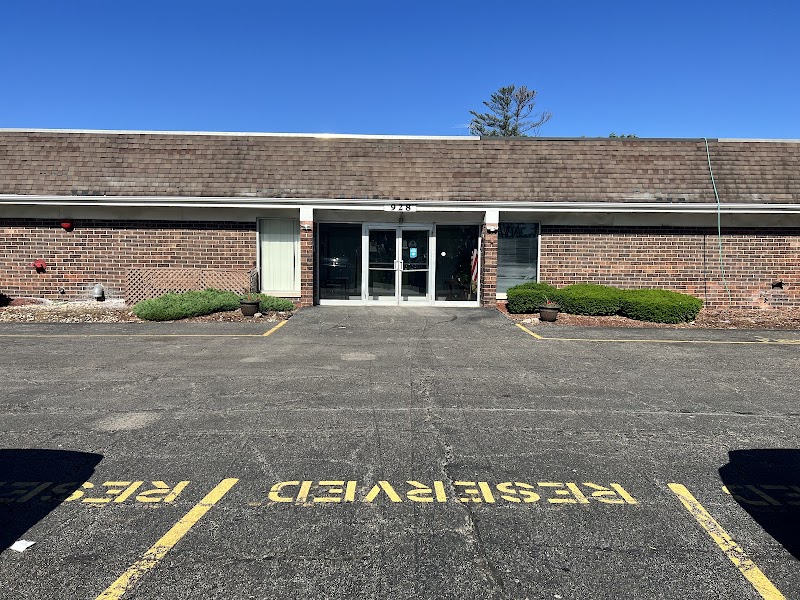
Who Owns and Operates West Chicago Terrace?

WEST CHICAGO TERRACE is owned by a for-profit company. For-profit facilities operate as businesses with obligations to shareholders or private owners. The facility operates independently rather than as part of a larger chain. With 120 certified beds and approximately 87 residents (about 72% occupancy), it is a mid-sized facility located in WEST CHICAGO, Illinois.
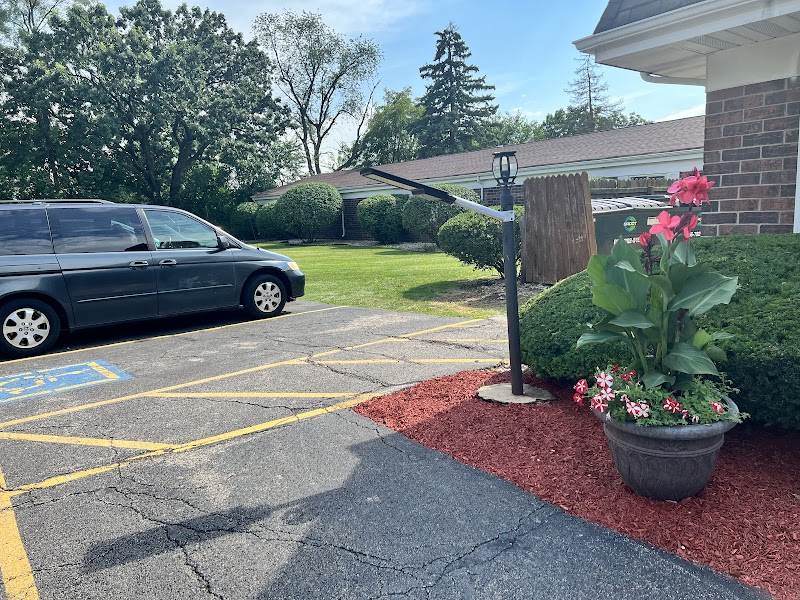
How Does West Chicago Terrace Compare to Other Illinois Nursing Homes?

Compared to the 100 nursing homes in Illinois, WEST CHICAGO TERRACE's overall rating (2 stars) is below the state average of 2.5, staff turnover (22%) is significantly lower than the state average of 46%, and health inspection rating (2 stars) is below the national benchmark.

What Should Families Ask When Visiting West Chicago Terrace?

Based on this facility's data, families visiting should ask: "What changes have been made since the serious inspection findings, and how are you preventing similar issues?" "What safeguards and monitoring systems are in place to protect residents from abuse or neglect?" "Can I visit during a mealtime to observe dining assistance and food quality?" "How do you handle medical emergencies, and what is your hospital transfer rate?" These questions are particularly relevant given the facility's Immediate Jeopardy citations and the substantiated abuse finding on record.

Is West Chicago Terrace Safe?

Based on CMS inspection data, WEST CHICAGO TERRACE has documented safety concerns. The facility has 1 substantiated abuse finding (meaning confirmed case of resident harm by staff or other residents). Inspectors have issued 1 Immediate Jeopardy citation (the most serious violation level indicating risk of serious injury or death). The facility has a 2-star overall rating and ranks #100 of 100 nursing homes in Illinois. Families considering this facility should ask detailed questions about what corrective actions have been taken since these incidents.

Do Nurses at West Chicago Terrace Stick Around?

Staff at WEST CHICAGO TERRACE tend to stick around. With a turnover rate of 22%, the facility is 23 percentage points below the Illinois average of 46%. Low turnover is a positive sign. It means caregivers have time to learn each resident's needs, medications, and personal preferences. Consistent staff also notice subtle changes in a resident's condition more quickly.

Was West Chicago Terrace Ever Fined?

WEST CHICAGO TERRACE has been fined $143,375 across 1 penalty action. This is 4.2x the Illinois average of $34,513. Fines at this level are uncommon and typically indicate a pattern of serious deficiencies, repeated violations, or failure to correct problems promptly. CMS reserves penalties of this magnitude for facilities that pose significant, documented risk to resident health or safety. Families should request specific documentation of what issues led to these fines and what systemic changes have been implemented.

Is West Chicago Terrace on Any Federal Watch List?

WEST CHICAGO TERRACE is not on any federal watch list. The most significant is the Special Focus Facility (SFF) program, which identifies the bottom 1% of nursing homes nationally based on persistent, serious quality problems. Not being on this list means the facility has avoided the pattern of deficiencies that triggers enhanced federal oversight. This is a positive indicator, though families should still review the facility's inspection history directly.