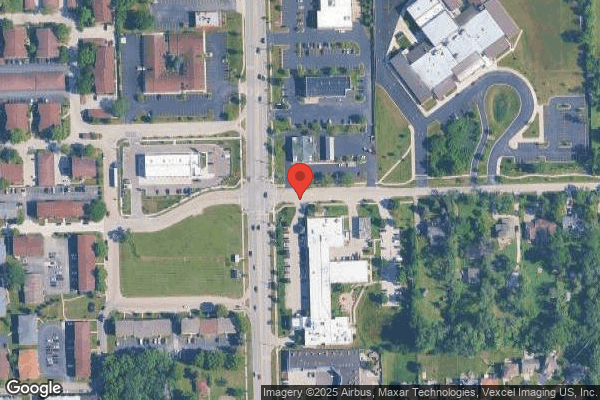

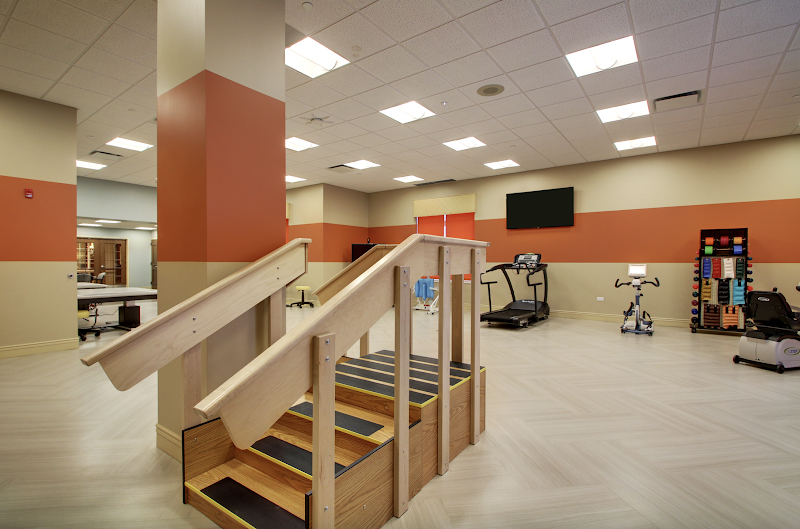
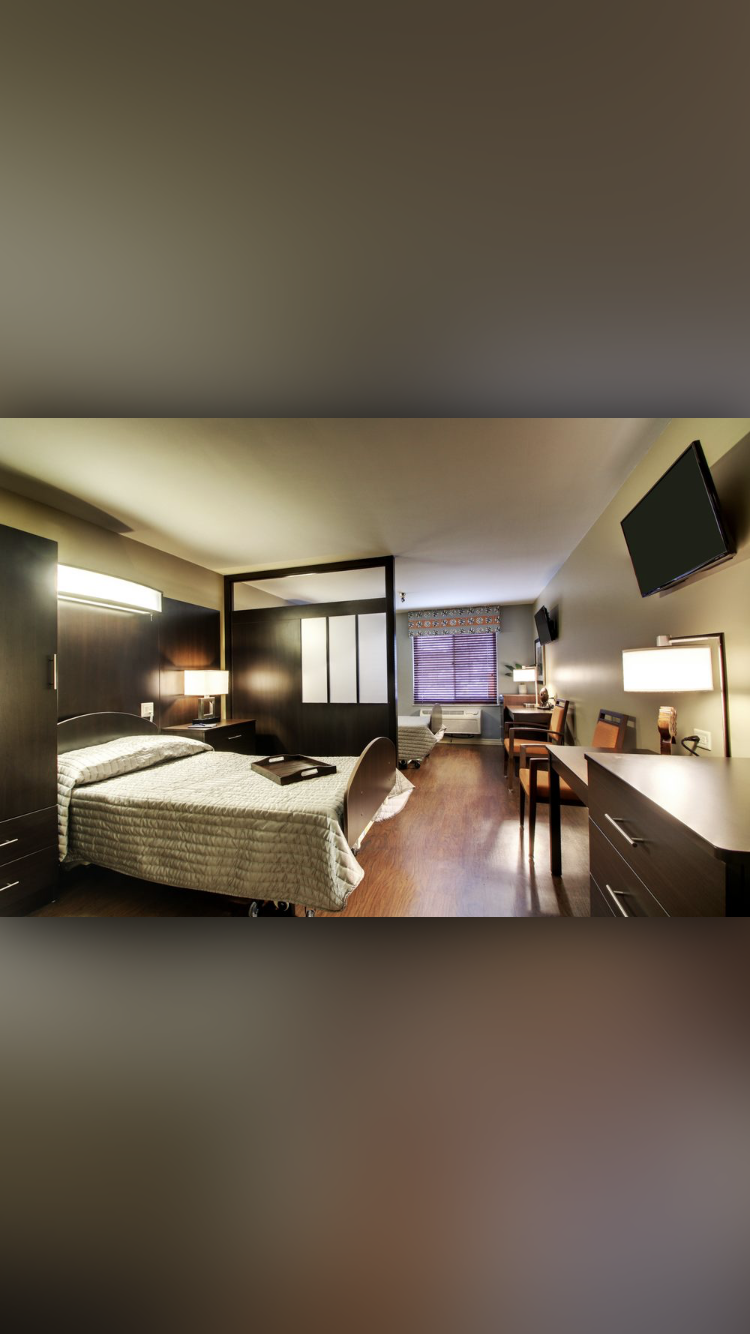
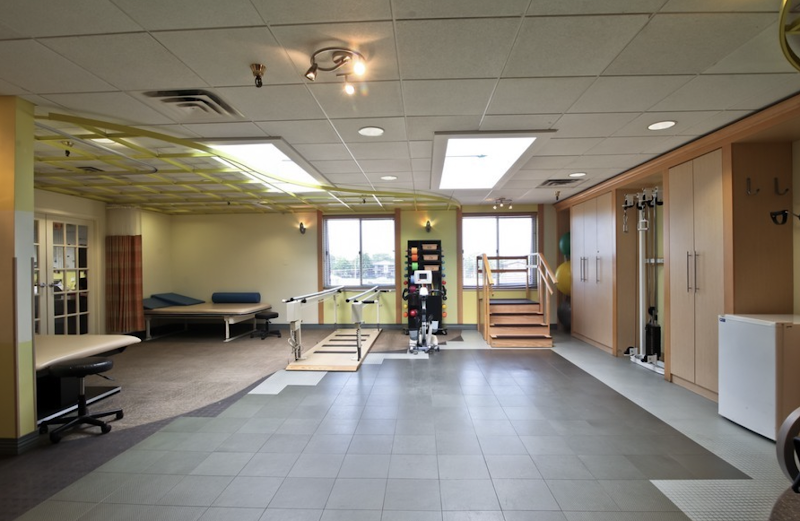
BRIA OF WESTMONT

6501 SOUTH CASS, WESTMONT, IL 60559 (630) 960-2026
For profit - Individual 215 Beds BRIA HEALTH SERVICES Data: November 2025
Trust Grade
0/100
#475 of 665 in IL
Last Inspection: September 2024

Within standard 12-15 month inspection cycle. Federal law requires annual inspections.

Overview

BRIA of Westmont has received a Trust Grade of F, indicating significant concerns about the quality of care provided, which is the lowest rating possible. The facility ranks #475 out of 665 nursing homes in Illinois, placing it in the bottom half, and #31 out of 38 in Du Page County, suggesting limited local options that are better. While the trend is improving, with issues decreasing from 27 in 2024 to 7 in 2025, the facility still faces major challenges, including a concerning staffing turnover rate of 61%, significantly higher than the state average. Families should be aware of serious incidents, such as a resident sustaining a laceration due to improper assistance during care and delays in notifying a physician about a resident's declining condition, which resulted in increased pain and treatment delays. Although the facility has average RN coverage, the overall performance in health inspections and staffing remains poor, indicating that families may want to consider other options for their loved ones.

Trust Score
F
0/100
In Illinois
#475/665
Bottom 29%
Safety Record
High Risk
Review needed
Inspections
Getting Better
27 → 7 violations
Staff Stability
⚠ Watch
61% turnover. Above average. Higher turnover means staff may not know residents' routines.
Penalties
✓ Good
$151,077 in fines. Lower than most Illinois facilities. Relatively clean record.
Skilled Nurses
○ Average
Each resident gets 38 minutes of Registered Nurse (RN) attention daily — about average for Illinois. RNs are the most trained staff who monitor for health changes.
Violations
⚠ Watch
67 deficiencies on record. Higher than average. Multiple issues found across inspections.
★☆☆☆☆
1.0
Overall Rating
★☆☆☆☆
1.0
Staff Levels
★★☆☆☆
2.0
Care Quality
★☆☆☆☆
1.0
Inspection Score
Stable
2024: 27 issues
2025: 7 issues

The Good

  • Full Sprinkler Coverage · Fire safety systems throughout facility
  • No fines on record

Facility shows strength in fire safety.

The Bad

1-Star Overall Rating

Below Illinois average (2.5)

Significant quality concerns identified by CMS

Staff Turnover: 61%

15pts above Illinois avg (46%)

Frequent staff changes - ask about care continuity

Federal Fines: $151,077

Well above median ($33,413)

Significant penalties indicating serious issues

Chain: BRIA HEALTH SERVICES

Part of a multi-facility chain

Ask about local staffing decisions and management

Staff turnover is elevated (61%)

13 points above Illinois average of 48%

The Ugly 67 deficiencies on record

8 actual harm
Sept 2025 1 deficiency
CONCERN (D) 📢 Someone Reported This

A family member, employee, or ombudsman was alarmed enough to file a formal complaint

Potential for Harm - no one hurt, but risky conditions existed

Pharmacy Services (Tag F0755)

Could have caused harm · This affected 1 resident

**NOTE- TERMS IN BRACKETS HAVE BEEN EDITED TO PROTECT CONFIDENTIALITY** Based on interview and record review, the facility failed to ensure medications for newly admitted residents were available for ...

Read full inspector narrative →
**NOTE- TERMS IN BRACKETS HAVE BEEN EDITED TO PROTECT CONFIDENTIALITY** Based on interview and record review, the facility failed to ensure medications for newly admitted residents were available for timely administration. This applies to 1 of 3 residents (R1) reviewed for pharmacy services.The findings include:R1's Face Sheet showed he was admitted to the facility on [DATE]. R1's admission nursing progress note was timed at 12:30 PM. On 9/10/2025 at 11:00 AM, V2 DON (Director of Nursing) stated there are two pharmacy deliveries daily, one in the afternoon around 3:00-5:00 PM, and one in the morning between 3:00-6:00 AM.R1's September 2025 Active Physician Orders as of 9/10/2025 showed orders for Carvedilol twice daily for hypertensive heart disease with heart failure, and Entresto twice daily for hypertensive heart disease with heart failure. R1's September Medication Administration Record (MAR) showed both medications were scheduled for administration at 9:00 AM and 5:00 PM.On 9/10/2025 at 11:58 AM, V5 (Pharmacy Technician) stated most of R1's medications were delivered at 4:30 AM on 9/5/2025. V5 stated the only medication that was not delivered was R1's Entresto. R1's September 2025 MAR showed 9 for his 5:00 PM dose of carvedilol on 9/4/2025. The corresponding eMAR Medication Administration progress note from 9/4/2025 at 10:31 PM showed carvedilol. unavailable. The same MAR showed 9 for R1's 5:00 PM of Entresto on September 5, 2025. No corresponding eMAR Medication Administration note was written.On 9/10/2025 at 1:17 PM, V2 (DON) stated if the medication is not available in the stat-safe (emergency prescription medication storage), it can be ordered STAT from the pharmacy. V2 stated staff should check the stat-safe and if they can't get it, they should contact her or the pharmacy. V2 stated if a medication is given late, staff should contact the MD.R1's September 2025 MAR showed R1's 9/4/2025 Entresto dose scheduled for 5:00 PM was administered and the Administration Details report showed it was signed off as administered at 10:20 PM. The facility's 12/2024 Medication Orders policy showed Procedures. D. The prescriber is contacted by nursing for direction when delivery of a medication will be delayed, or the medication is not or will not be available. The policy continues F. 3). Emergency/STAT Medication Order (Medication NOT Contained in Emergency Medication Supply) a. Emergency/STAT order is placed with the provider pharmacy and the medication is scheduled to be given as soon as received or within two hours, whichever is sooner.
Aug 2025 1 deficiency
CONCERN (D) 📢 Someone Reported This

A family member, employee, or ombudsman was alarmed enough to file a formal complaint

Potential for Harm - no one hurt, but risky conditions existed

ADL Care (Tag F0677)

Could have caused harm · This affected 1 resident

Based on observations, interviews, and record reviews, the facility failed to provide ADL (Activities of Daily Living) care to meet the needs of the residents. This applies to 3 of 3 residents (R1 - R...

Read full inspector narrative →
Based on observations, interviews, and record reviews, the facility failed to provide ADL (Activities of Daily Living) care to meet the needs of the residents. This applies to 3 of 3 residents (R1 - R3) reviewed for ADLs care in a sample of 3.The findings include: 1. On 08/26/25 at 12:12 pm, R1, who is alert and oriented, said that she has had to wait for 2 to 4 hours for staff to provide incontinence care for her. R1's call light was on at the time of the interview and R1said that she was waiting to go to bed and to have her brief changed. V3 CNA (Certified Nurse's Assistant) came in the room and put R1 in bed and provided incontinence care for R1. R1 said the last time her brief was checked and changed was at 9:30 AM. V3 acknowledged that that was correct. R1's perineal area, her inner thighs, and her buttocks were red when the brief was removed. R1's 8/13/25 Care Plan showed that R1 has a focus on skilled services needed with interventions including ADL care to be provided each shift. R1's care plan also showed that R1 has a focus on R1 being incontinent of both bowel and bladder and she requires assistance with toileting hygiene. 2. On 08/26/25 at 12:33 PM, R2, who is alert and oriented, said that he waits up to 2 hours for the staff to provide incontinence care for him and it makes him sad that he smells stool and urine on himself. R2 said that staff do not believe that the residents are human and that also makes him sad. R2 said that he had been waiting for over an hour for staff to come back and change his brief and put him in his bed. R2 has MS (multiple sclerosis) and is incontinent of bowel and bladder and unable to transfer himself out of his wheelchair. V2 DON (Director of Nursing) and V5 (Director of Rehab) came in and transferred R2 into the bed and provided incontinence care for him. R2's brief was saturated with urine, and he had had a bowel movement as well. R2's 8/22/25 Interim Care Plan showed that R2 has a potential for alteration in skin integrity with interventions including peri care after incontinent episodes. 3. On 08/26/25 at 1:25 PM, R3, who is alert and oriented, said that everyday she has to wait up to an hour for incontinence care. R3 said that everyday she comes in from outside and asks to be changed and the staff tells her she has to wait until after the lunch trays are passed. R3 said that other residents complain to her in the Resident Council meetings that the staff are not providing care timely for them as well. R3 was in the bathroom on the toilet when the State Surveyor came into the room. R3 was yelling I'm done! there were no staff in the room at the time. R3 said that she was put on the toilet about 5 minutes earlier. R3 said that she had been crying because she was left in the soiled brief for so long before V4 changed her and put her on the toilet, and she was afraid that she was going to soil her clothes. V2 (DON) was present at this time and cleaned R3 buttocks and perineal area while she was on the toilet and pulled up her new brief and assisted her off of the toilet and into her wheelchair. R3 said that she had urinated at 11 am and she had told V4 (CNA) that she had urinated then. R1 said that V4 did not change her brief so she went outside for a while. R3 said that she returned to her room at 12:30 pm and told V4 again that she needed to be changed. R3 said that V4 told her that she was passing trays, and she would have to wait until she was done. R3 said that V4 returned at 1:20 pm, 5 minutes before the State Surveyor came in, and changed her brief and put her on the toilet and left her there. R3 said that this happens everyday, and it makes her mad. R3's 7/2/25 Care Plan showed a focus on ADL deficits related to generalized weakness and immobility secondary to MS, and paraplegia. The interventions included staff meet R3's needs throughout the day, toileting every two hours and as needed. R3's care plan showed a focus for bowel and bladder with a goal to keep clean and dry and odor free. On 08/26/25 at 1:55 PM, V4 CNA (Certified Nurse's Assistant) said that she was informed by R3 that she needed to be changed at 12:30pm and she told her she would have to wait until she finished passing the trays. V4 said that R3 asks everyday to be changed at that time and R3 has had her lunch tray and has been outside so it is now time for the other residents to be provided care. V4 said that the trays have to be served timely. V4 said that she did not return to R3 to provide incontinence care for her until around 1:10 pm - 1:20 pm and said that that was not timely for incontinence care and that not providing incontinence care could cause skin breakdowns. V4 said that she was the only staff to provide care for R3, but she could have asked the nurse to assist or another staff, but she didn't. V4 said that when she did return to provide incontinence care between 40 to 50 minutes later, she asked another staff to assist. V4 said that she did not ask that staff earlier to assist because that staff was feeding residents. On 08/26/25 at 5:38 PM, V1 (Administrator) said that incontinence care should be provided every two hours and as needed. V1 said that if a resident informs the staff that they need incontinence care it should be provided then. V1 said that 40 to 50 minutes to wait for staff to provide incontinence care is not appropriate. V1 said that a 40-to-50-minute delay in providing incontinence care could cause skin breakdowns, infections and it is a dignity issue for the residents. On 08/26/25 at 4:42 PM, V2 DON (Director of Nursing) said that residents should be provided incontinence care as soon as they inform the staff that they need it. V2 said that 40 to 50 minutes is not acceptable to have to wait for incontinence care because it increases the risk of skin breakdowns and increases the risk for infections. V2 said that the residents call her and tell her that they have been waiting over for the staff to provide incontinence care for them. V2 said that it is unacceptable for R3 to be incontinent of urine and have not been changed from 11am until 1:20 pm. V2 said that her expectations are that if staff are passing lunch trays and someone asks for assistance the staff is to ask the nurse to pass the trays or assist the resident. V2 said that if the nurse is busy the staff are to call her to assist. V2 said she is aware that R1 had to wait 40 to 45 minutes to be provided incontinence care and that was unacceptable. The 6/30/25 Resident Council meeting notes showed under Nursing/CNA, residents would like staff to be quicker in responding to their needs. At times CNA's will say I'm not your CNA. The facility's ADL (Activities of Daily Living) policy (6/2025) showed that it is a program performing and assisting the residents with elimination to prevent disability and maintaining maximal functioning. The policy shows under Elimination, assistance is to be given as required. The policy did not show when staff should provide ADL assistance for the residents.The facility's Incontinence Care policy (10/2024) showed that incontinence care is provided to keep the resident as dry, comfortable, and odor free as possible. It also helps in preventing skin breakdown. The policy did not show when staff should provide incontinence care for the residents.The facility's Toileting Residents policy (6/2025) showed that staff should be providing residents with assistance with toileting safely and on a routine basis in a timely manner.
May 2025 1 deficiency
CONCERN (D) 📢 Someone Reported This

A family member, employee, or ombudsman was alarmed enough to file a formal complaint

Potential for Harm - no one hurt, but risky conditions existed

Accident Prevention (Tag F0689)

Could have caused harm · This affected 1 resident

Based on observation, interview, and record review the facility failed to implement fall prevention interventions for a high-fall risk resident. This applies to 1 out of 3 (R1) residents reviewed for ...

Read full inspector narrative →
Based on observation, interview, and record review the facility failed to implement fall prevention interventions for a high-fall risk resident. This applies to 1 out of 3 (R1) residents reviewed for falls. The findings include: On 5/24/2025 at 9:40 AM, R1 was in bed sleeping. R1 was confused and non-interviewable. R1 did not have floor mats in place. Then at 10 AM, V16 (Certified Nurse Assistant/CNA) and V17 (CNA) provided R1 with her morning care and transferred her into her wheelchair. R1's wheelchair had a regular black cushion with no non-slip device in place. V17 said R1 was confused and a high-fall risk. V17 said R1 had recently slid from her wheelchair. V17 said residents had posted Caregiver communication sheets to inform staff how to care for them. V17 said R1's posted Caregiver communication sheet included fall interventions. R1's Caregiver communication sheet dated 5/09/2025 said R1 should have fall prevention devices including floor mats, dycem (non-slip device), and specialized positioning wheelchair cushion. On 5/28/2025 at 10:40 AM, V10 (Activity Aide) said he was responsible for supervising residents in the main dining room. V10 said R1 required constant redirection because she would frequently fidget and lean forward unsafely in her wheelchair. V10 said he was present when R1 slid off her wheelchair on 5/04/2025 and 5/19/2025 in the dining room. V10 said he attempted to redirect R1 but was unable to reach her quickly enough to prevent her from falling. On 5/28/2025 at 12:30 PM, V4 (Restorative Nurse) said R1 continuously displayed poor safety awareness and was a high-fall risk. V4 said R1's recent fall incidents from 5/04/2025 and 5/19/2025 were investigated to identify their root causes. V4 said R1's identified root causes for her falls were related to her poor positioning when in her wheelchair. V4 said the facility reviewed and implemented new interventions to R1's fall prevention care plan on 5/09/2025. V4 continued to say resident-specific fall interventions were posted in the residents' Caregiver communication sheets to ensure staff were aware to implement them. On 5/28/2025 at 12:00 PM, V2 (Director of Nursing) said she expected staff to implement and follow resident fall prevention interventions as indicated in their fall care plan to minimize their risk for additional falls. R1's fall care plan last revised on 5/09/2025 said R1 was a high fall risk because of her limited mobility, general weakness, dementia with behaviors, and history of falls. R1's fall care plan had multiple active interventions including providing floor mats initiated on 7/27/2022, a dycem (non-skid) device on the wheelchair initiated on 3/08/2025, and placing a specialized fall prevention wheelchair cushion to promote proper alignment and positioning when in wheelchair initiated on 5/09/2025. R1's Fall Incident report dated 5/04/2025 said Resident was noted by activity staff scooting herself forward in her w/c causing her to slide forward out of the w/c onto the floor. The report said R1 did not sustain an injury from the fall incident. The report said the identified root cause of R1's fall was related to her poor positioning when sitting in her wheelchair. The report said R1's new fall prevention intervention was a specialized fall prevention wheelchair cushion. R1's Fall Incident report dated 5/19/2025 said Staff reported resident fell forward out of her wheelchair. The report said R1 hit the left side of her head but did not sustain a major injury. The report said the identified root cause of R1's fall was related to her unsafely leaning forward in her wheelchair. The report said R1's new fall prevention interventions included for staff to continue with R1's prior interventions. The facility's policy titled Fall Prevention and Management dated 08/2024 said This facility is committed to maximizing each resident's physical, mental, and psychosocial well-being. While preventing all falls is not possible, the facility will identify and evaluate those residents at risk for falls, plan for preventive strategies, and facilitate as safe an environment as possible. All resident falls shall be reviewed, and the resident's existing plan of care shall be evaluated and modified as needed .Care plan to be updated with a new intervention based on root cause analysis after each fall occurrence.
Mar 2025 3 deficiencies
CONCERN (D) 📢 Someone Reported This

A family member, employee, or ombudsman was alarmed enough to file a formal complaint

Potential for Harm - no one hurt, but risky conditions existed

ADL Care (Tag F0677)

Could have caused harm · This affected 1 resident

**NOTE- TERMS IN BRACKETS HAVE BEEN EDITED TO PROTECT CONFIDENTIALITY** Based on observation, interview, and record review, the facility failed to ensure timely and thorough incontinence care was prov...

Read full inspector narrative →
**NOTE- TERMS IN BRACKETS HAVE BEEN EDITED TO PROTECT CONFIDENTIALITY** Based on observation, interview, and record review, the facility failed to ensure timely and thorough incontinence care was provided to 1 of 3 residents (R3) reviewed for incontinence care in the sample of 11. The finding include: R3's admission Record, provided by the facility on 3/19/25, showed R3 had diagnoses including, but not limited to, protein-calorie malnutrition, morbid obesity, dermatitis, vitamin B12 deficiency, anemia, hypertension, adjustment disorder, and abnormal uterine and vaginal bleeding. R3's facility assessment dated [DATE], showed R3 was cognitively intact with no behaviors, always incontinent of bowel and bladder, and dependent on staff for toileting hygiene. R3's care plan, with a revision date of 11/21/2024, showed R3 is at risk of alteration in skin integrity related to protein-calorie malnutrition, morbid obesity, anemia, history of falls, and incontinence. One of the interventions listed was Provide skin care after each incontinent episode.R3's care plan initiated on 6/7/2022 showed she is incontinent of bowel and bladder. R3's care plan initiated on 6/7/2022 showed she requires extensive assist of one staff member for toileting. R3's 9/25/2023 Wound note showed she had a stage IV pressure injury at that time. On 3/18/25 at 10:00 AM, R3 was lying in bed. R3 was alert and oriented. R3 said she has to wait a very long time for staff to answer her call light and provide incontinence care. R3 said sometimes it is several hours. R3 said she was incontinent of urine, and wet at that time. R3 said she is waiting to finish her bowel movement before she turns on her call light. At 10:12 AM, R3 put her call light on. At 10:13 AM, V15 (Licensed Practical Nurse-LPN) knocked on the door and entered R3's room. R3 informed V15 that she was soiled and needed to be changed. V15 said she would get the aide right now. V15 left the room. At 10:35 AM, R3 said See, they do not come in and clean me up right away when I turn my light on. I deserve to be treated with dignity, and sitting in a soiled brief is not dignified. R3 said They do not clean me up all the way so I usually ask for a washcloth and clean up better to make sure I am clean. At 10:38 AM, V16 (Certified Nursing Assistant-CNA) knocked on the door, opened it, saw surveyor and said oh, I will come back when you are done. This surveyor told V16 that she could come in now. V16 said okay then closed the door without entering R3's room. At 10:40 AM, V16 entered R3's room with garbage bags, went into the bathroom and then back out of R3's room. At 10:42 AM, V16 came back into R3's room, went into the bathroom and put a gown and gloves on. At 10:43 AM, V16 approached R3 to start providing care (31 minutes after R3 first put her call light on). V16 cleaned R3's buttocks/backside, then placed a brief under R3. R3 rolled onto her back and V16 wiped R3's right groin two times, then wiped R3's pubic area and then about halfway down the middle vaginal area. V16 pulled the front of the brief over R3 and went to reach for the taped section to secure the brief. R3 said wait and asked for a washcloth. R3 used the washcloth to wipe her lower vaginal area. When R3 brought the washcloth up, there was visible stool on the washcloth. V16 gave R3 a second washcloth. R3 again wiped the lower vaginal area and there was more stool on the washcloth. R3 folded the cloth and wiped a third time, with no stool noted on the washcloth. R3 told V16 she could secure the brief at that time. On 3/19/25 at 11:10 AM, V3 (Director of Nursing-DON) said call lights should be answered within 5-10 minutes. V3 said if the CNA is busy with another resident, the nurse should be able to assist with incontinence care. If a resident has a history of pressure injuries or skin breakdown, it is important to keep them clean and dry. It is important to ensure the resident is cleaned well and the skin is dried when providing incontinence care. V3 said the CNA should have made sure she cleaned all the stool from V3 during care, to prevent infection and skin breakdown. The facility's policy and procedure titled Call Light Response, with a revision date of 9/2024, showed 6. Answer the patient or resident's call as soon as possible . The facility's policy and procedure titled Incontinence Care, with a revision date of 9/2023, showed Incontinence care is provided to keep residents as dry, comfortable and odor-free as possible. It also helps in preventing skin breakdown.
CONCERN (D) 📢 Someone Reported This

A family member, employee, or ombudsman was alarmed enough to file a formal complaint

Potential for Harm - no one hurt, but risky conditions existed

Deficiency F0745 (Tag F0745)

Could have caused harm · This affected 1 resident

Based on interview and record review the facility failed to coordinate with an outside agency in a timely manner to complete guardianship paperwork for a resident with severe mental illness for 3 of 3...

Read full inspector narrative →
Based on interview and record review the facility failed to coordinate with an outside agency in a timely manner to complete guardianship paperwork for a resident with severe mental illness for 3 of 3 residents (R1) reviewed for medically related social services in the sample of 11. The findings include: On 3/14/25 at 2:59 PM, V14 (Case Manager for APS (Adult Protective Services)) said R1 was admitted to the facility in November 2024. V14 said she made a referral for state guardianship on 12/6/24. V14 said R1 was homeless, prior to admission to the facility. V14 said she had been in contact with V7 (Business Office Manager - BOM) about the status of R1's state guardianship because the facility was not receiving payment for R1. V14 said she received a call from the facility wanting us to approve medication changes and I told them I was not her guardian and could not do that. The office of state guardianship emailed me in the beginning of January and said they needed an updated physician's report. I visited [R1] at the facility on 1/8/25 and informed [V5 - Social Services] that I needed an updated physician's report. [V5] said he would get me one. On 1/9/25 I sent [V7-BOM] an email just to make sure that she was aware that I needed an updated physician's report because I did not get one. On 1/17/25 I got an email from V7 [BOM] about an involuntary discharge - asking me if that goes to me. I said no, but you have not answered my requests for an updated physician's report. I notified [V11 - Ombudsman] about these issues, she gave me [V1's - Administrator] phone number. I spoke with [V1] and she said [V7 - BOM and V5 - Social Services] did not keep her informed about what was going on. [V1 - Administrator] assured me that [R1] was not being discharged . This was on 1/17/25 . on 1/29/25 I sent another email to [V1 - Administrator] asking her where the Physician's Report was for [R1]. I did not hear back from her. On 2/11/25 I called and spoke with [V1 - Administrator] and asked where the report was. [V1] said she would get it to me. On 2/14/25 they sent the report, but it was not fully completed. I sent V1 an email the same day that the form was not completed. I did not get a reply. On 2/24/25 I emailed [V1] again informing her that the form was not completed. There was no reply. On 2/26/25 I went to the facility and saw [R1]. I informed the staff I needed to speak with [V1 - Administrator]. I was told she was not available. On 3/10/25 I called [V1 - Administrator] and said I emailed her on 2/14 and 2/24 and was letting her know that I still needed the Physician's Report. [V1 - Administrator] said she did not see the emails. As we were talking she said, Oh, I see them. She said she would send the completed updated physician's report. On 3/11/25 I finally got the completed Physician's Report. I sent the report to the state guardianship office. The surveyor asked V14 how this would affect R1. V14 replied, [R1] is not able to make her own decisions such as if she wants to be a DNR, consent for medication changes, or whether or not she wants to be sent out to a hospital or not. R1's Facesheet dated 3/18/25 showed delusional disorders, mild protein-calorie malnutrition, pneumonia, major depressive disorder, dementia with psychotic disturbance, unspecified psychosis, insomnia, cardiomyopathy, atrial fibrillation, chronic heart failure, noncompliance with medical regimen, and repeated falls. This form showed R1 was admitted to the facility 11/6/24. R1's Progress Notes were reviewed for her entire stay. R1's Nurses Note dated 12/13/24 at 12:05 PM by V8 (RN - Registered Nurse) showed, Spoke with patient's case manager (V14) regarding patient's new psychotropic medication. Case manager told writer that she is unable to consent or deny any medication. She further added that she (had) informed the social service coordinator that she initiated the process of applying for state guardianship for the patient. The state guardian can then give consents or deny any changes in the patient plan of care. MD (doctor) was informed and psych NP (Nurse Practitioner) as well . There were no notes addressing the coordination of services or communication related to R1's need for the updated Physician's Report. R1's Care Plan created 11/7/24 showed, [R1] exhibits the symptom of resisting care which is related to medication non-compliance . [R1] exhibits the symptom of resisting care which is related to medication non-compliance . R1's Advanced Directives Care Plan revised 12/3/24 showed, [R1's] POLST (Physician Order for Life Sustaining Treatment) is pending - in process of obtaining guardian . R1's Care Plan revised 12/3/24 showed, [R1] has a diagnosis of dementia/delusional disorders and may display mood/behaviors related to diagnoses such as: agitation/aggression; isolative behaviors/may prefer to stay in room and not socialize; refusal of care; wandering, pacing . The Social Security Payee Application was faxed to the social service office 1/8/25. This application included a form (Medical Source Opinion of Patient's Capability to Manage Benefits) completed by R1's physician. This form was dated 12/31/24 and showed the resident had dementia and had demonstrated episodes of confusion. Question 7 on this form asked: Can the patient successfully manage or direct the management of funds to meet basic needs. R1's physician answered, Unsure: Patient found living in her care and confused. I am unable to directly observe her paying bills. Question 8 on this form asked: Do you expect the patient to be able to manage or direct the management of his or her benefits in the future? R1's physician answered No: The patient has been at this facility for a few months and has not shown any improvements. (This application was submitted on R1's behalf to make the facility R1's payee. The fax transmittal showed the forms were faxed to the Social Security Office on 1/8/25. On 3/18/25 at 12:41 PM, V7 (BOM) said R1 had an active APS (Adult Protection Services) case prior to admission to the facility. V7 said the facility did apply to be the Representative Payee for R1's Social Services benefits, the application was approved, and the facility had just received the first check from Social Security for R1. V7 said R1 had not paid her bills at the facility since admission in November 2024 and was not providing the facility with any of the requested information. V7 said R1 reported she had houses and family, but wouldn't provide any specific information. V7 said she had assisted the facility in petitioning for state guardianship before, but was not involved in R1's state guardianship application. V7 said Social Services would have been handling this. On 3/18/25 at 1:24 PM, V6 (Social Services) said she was not R1's assigned Social Services Representative. V6 said if the APS case manager visits a resident or they request information regarding the resident, then there should be a Social Services Note entered into the EMR (Electronic Medical Record). V6 said it is important to document the information in the resident's EMR for continuity of care and communication with other staff members. On 3/19/25 at 9:41 AM, V1 (Administrator) said Social Services documents scheduled assessments in the forms and should document other interactions in the progress notes. V1 said anything out of the ordinary (such as APS requests for resident documents) should be documented in the Social Services Notes as a way to communicate with the care team and ensure continuity of care. V1 said the information is required to be in the resident's Medical Record. V1 said she was not aware that APS requested an updated Physician Assessment until she was contacted by V11 (Ombudsman) on 1/17/25. V1 said she wasn't aware that V14 (APS Case Manager) has requested the updated Physician Assessment from other staff members. V1 said that was not communicated with her. V1 said the Physician Assessment form was given to the DON (Director of Nursing) to have the doctor fill it out. V1 said there were three unsuccessful attempts to complete the document. V1 said she did receive a call fro V14 (APS Case Manager) on 2/13/25 and the Physician Assessment was emailed on 2/14/25. V1 stated, I assumed it was taken care of. The emails [V14 - APS Case Manager] sent went to my spam folder. I thought everything was taken care of until I received the call from [V14] on 3/11/25. I checked my spam folder and found the emails. I had the form completed and sent it the next day. V1 said R1 was admitted to the facility, from the hospital, after being found living in her care. V1 said R1 had times were she was pleasant and cooperative, but had required involuntary petitions to inpatient behavioral health due to aggressive behaviors and refusals to take medications. V1 said R1 had poor safety awareness and it was important to pursue state guardianship. V1 said it shouldn't have taken 2-3 months for R1's updated Physician Assessment to be completed and submitted to APS. V1 said she wasn't aware the process started 12/13/24 and then it was a cluster trying to get the form properly completed. The facility's Social Work Department Policy dated 11/30/22 showed, It is the philosophy of this facility to provided competent, timely and qualified social work/behavioral health services to each resident and/or family member demonstrating the need for medically-related social work. The facility emphasizes optimum mental health service delivery through dissemination of information, in-house clinical interventions, treatment referrals to community agencies and professionals and psychotherapy services from a credentialed clinician, as indicated .
CONCERN (F) 📢 Someone Reported This

A family member, employee, or ombudsman was alarmed enough to file a formal complaint

Potential for Harm - no one hurt, but risky conditions existed

Social Worker (Tag F0850)

Could have caused harm · This affected most or all residents

Based on observation, interview, and record review the facility failed to ensure they employeed a qualified social worker on a full time basis. This has the potential to affect all residents residing ...

Read full inspector narrative →
Based on observation, interview, and record review the facility failed to ensure they employeed a qualified social worker on a full time basis. This has the potential to affect all residents residing in the facility. The findings include: The Facility Data Sheet dated 3/18/24 showed the facility census was 175. On 3/18/25 at 1:24 PM, V6 (Social Services) said she just found out V5 (Social Services) was terminated. V6 stated, I'm the only Social Services now. [V2 - Assistant Administator] had been helping me out, but she has a lot of other responsibilities. I was hired to cover a specific unit. When I started in August there were three of us. Myself, [V5 and V10]. There isn't a Social Services Director. There hasn't been since V25 (previous Social Services Director) left and V5 has been gone since October 2024. I am not a Licensed Social Worker. I have an Associates Degree in Healthcare Management and Human Resources and years of experience in long-term care. On 3/18/25 at 2:14 PM, V2 (Assistant Administrator) said she was helping Social Services with MDS (Minimum Data Set) assessments and covering new admissions on a unit. V2 said she had not done Social Services before and was just pitching in. On 3/18/25 at 2:30 PM, the surveyor requested credentials for V2, V5 and V6 (Social Services). These documents were not received. On 3/19/25 at 9:41 AM, V1 (Administrator) provided credentials for V12 and V13 (LCSW - Licensed Clinical Social Worker). V1 said V12 and V13 were Social Services Consultants and are not in the building on a full-time basis. V1 said V12 works remotely and visits the facility quarterly. V1 stated, Yesterday I made arrangements for someone to come out three times a week because [V5 - Social Services] was terminated. V1 said V5 and V6 are not LCSWs. V1 said V25's (previous SSD) last day was 5/31/24. V1 said the SSD position had been posted online for months, but the facility was having difficulty finding a qualified candidate. V1 said the facility's average daily census is around 170. V1 said she was aware of the qualifications required for a Social Services worker in a building over 120 beds. V1 said the facility was not meeting that requirement. V1 said the day to day role of Social Services was to round with residents, interact with families, and intervene as needed. V1 said Social Services are responsible for the Care Plan Meetings, perform the quaterly MDS assessments, discharge planning, and making referrals for psychotherapy. V1 said Social Services is the go to for residents if anything is needed. The Facility Assessment Tool dated 8/2024 showed the average daily census was 167 residents. This assessment showed, Services and Care We Offer Based on our Residents' Needs: .Mental health and behavior: Manage the medical conditions and medication-related issues causing psychiatric symptoms and behavior, identify and implement interventions to help support individuals with issues such as dealing with anxiety, care of someone with cognitive impairment, care of individuals with depression, trauma/PTSD, other psychiatric diagnoses, intellectual or development disabilities . Provide person centered/directed care: Psycho/social/spiritual support .Provide family/representative support . Facility Resources Needed to Provide Competent Support and Care for our Resident Population Every Day and During Emergencies: .Administration (i.e.Social Services . Staffing Plan: .In addition to nursing staff, other staff needed for behavioral healthcare and services . 3 Social Services . The facility's Social Work Department Policy dated 11/30/22 showed, It is the philosophy of this facility to provided competent, timely and qualified social work/behavioral health services to each resident and/or family member demonstrating the need for medically-related social work. The facility emphasizes optimum mental health service delivery through dissemination of information, in-house clinical interventions, treatment referrals to community agencies and professionals and psychotherapy services from a credentialed clinician, as indicated .
Jan 2025 1 deficiency
CONCERN (D) 📢 Someone Reported This

A family member, employee, or ombudsman was alarmed enough to file a formal complaint

Potential for Harm - no one hurt, but risky conditions existed

ADL Care (Tag F0677)

Could have caused harm · This affected 1 resident

**NOTE- TERMS IN BRACKETS HAVE BEEN EDITED TO PROTECT CONFIDENTIALITY** Based on observation, interview, and record review, the facility failed to provide timely incontinent care to dependent resident...

Read full inspector narrative →
**NOTE- TERMS IN BRACKETS HAVE BEEN EDITED TO PROTECT CONFIDENTIALITY** Based on observation, interview, and record review, the facility failed to provide timely incontinent care to dependent residents. This applies to 2 of 5 residents (R2 and R5) reviewed for activities of daily (ADL) care in a sample of 5. The Findings Include: 1. R2 is 69-years-old with cognition intact as per the Minimum Data Set (MDS) dated [DATE]. MDS also documents that R2 is substantial/maximal assistance on toileting hygiene. On 1/15/24 at 9:30 AM, R2 stated, Last Saturday on 1/11/25, I was sitting on my urine and feces for hours since 8:15 AM. Nobody didn't answer my call light or changed me for hours until 10:45 AM. I have my phone to note the time. R2 continued, Last night, I wasn't changed until 4: 00 AM. I put the call light at 10:30 PM. The night Certified Nursing Assistant (CNA) shows up around 11:00 PM and turned the call light off saying that she will come back after making rounds with all of her residents. Meantime, I fell asleep. I was sitting on my dirty brief until 4:00 AM. A review of R2's ADL care plan documents intervention, including keeping clean and dry after each incontinent episode. A review of R2's bowel and bladder care plan documents interventions, including providing incontinent care as needed. 2. R5 is 73-years-old with severe cognitive impairment as per the MDS dated [DATE]. The MDS also documents that R2 is dependent on toileting hygiene. On 1/15/25 at 10:00 AM, R5 was observed in her bed with a urine-soaked soiled incontinent brief with blackish discoloration. On 1/15/25 at 10:00 AM, V16 (Registered Nurse/RN) stated that R5 is non-verbal and unable to talk. On 1/15/25 at 10:00 AM, V15 (R5's CNA) stated that she started at 7:00 AM and was passing breakfast trays so that she didn't get a chance to check on R5 yet. Reviewing R5's ADL care plan documents toileting care: dependent 2 assists and a review of R5's bowel and bladder care plan documents interventions, including providing incontinent care as needed. On 1/15/24 at 2:55 PM, V2 (Director of Nursing/DON) stated, Incontinent care should be provided as needed. If the residents ask for incontinence care, then staff should address it immediately. The facility presented incontinent care incontinent care guidelines reviewed on 8/2024 documents: Incontinent care is provided to keep residents as dry, comfortable, and odor-free as possible. It also helps prevent skin breakdown.
Dec 2024 1 deficiency
CONCERN (D) 📢 Someone Reported This

A family member, employee, or ombudsman was alarmed enough to file a formal complaint

Potential for Harm - no one hurt, but risky conditions existed

Deficiency F0760 (Tag F0760)

Could have caused harm · This affected 1 resident

**NOTE- TERMS IN BRACKETS HAVE BEEN EDITED TO PROTECT CONFIDENTIALITY** Based on interview and record review, the facility failed to follow physician orders to administer diabetic, antihypertensive an...

Read full inspector narrative →
**NOTE- TERMS IN BRACKETS HAVE BEEN EDITED TO PROTECT CONFIDENTIALITY** Based on interview and record review, the facility failed to follow physician orders to administer diabetic, antihypertensive and heart medications to a resident (R16) with diagnoses of type 2 diabetes mellitus, CAD (coronary artery disease) and hypertension. This applies to 1 of 4 residents (R16) reviewed for significant medications in the sample of 16. The findings include: The EMR (Electronic Medical Record) shows R16 is a [AGE] year-old with diagnoses that includes CHF (congestive heart failure), stage 4 chronic kidney disease, ESRD (end stage renal disease) and dependent on dialysis, diabetes mellitus type 2, diabetic neuropathy, metabolic encephalopathy, asthma, anemia, CAD (Coronary Artery Disease), HL (hyperlipidemia), HTN (hypertension) lumbar spinal stenosis, glaucoma, PAD (peripheral arterial disease), poor vision, cerebral infarction, malnutrition, urinary retention, chronic wound right foot, and ischemic tissue right great toe with osteomyelitis. The MDS (Minimum Data Set) dated November 25,2024 showed that R16 is cognitively intact with a BIMS (Brief Interview for Mental Status) score of 15/15. On November 25, 2024 at 9:45 A.M., R16 was lying in bed. R16 said that sometimes his medications were not given as ordered. Review of R16's EMAR (Electronic Medication Administration Record) showed that there were some medications that were not administered as ordered in October 2024. Some of the medications were not given as ordered were Insulin Glargine on October 10 and 18 of 2024; Nebivolol 20 mg (Milligram) on October 10, 11 and 16 of 2024; Nifedipine 90 mg on October 25, 2024; Hydralazine 50 mg on October 10, 2024. On November 29, 2024 at 11:45 A.M., V2 (Director of Nursing) said that the medications mentioned above were not administered to R16 as ordered. V2 said that the EMAR for those medications were not signed by the nurses that were assigned and supposed to have administer the medications to R16 on those mentioned dates. V2 also added that based on facility's practice and medication policy for medication administration, the EMAR must be signed by nurses when medications were given. On November 29, 2024 at 12:15 P.M., V6 (Nurse Practitioner) said that the medications that were not administered to R16 were significant medications that could potentially cause a significant effect to R16's medical condition. V6 said the insulin is for R16's diabetes, Hydralazine for hypertension, and Nebivolol to regulate R16's heart rate due to CAD. The facility's policy for medication administration dated June of 2015 showed as follows: GENERAL: All medications are administered safely and appropriately to aid residents to overcome illness, relieve and prevent symptoms and help in diagnosis. LEVEL OF RESPONSIBILITY: RN, LPN GUIDELINE: 18. Document as each medication is prepared on the MAR. 22. If medication is not given as ordered, document the reason on the MAR and notify the Health Care Provider if required. 23. Vital signs are taken as required prior to medications and documented.
Oct 2024 2 deficiencies
CONCERN (D) 📢 Someone Reported This

A family member, employee, or ombudsman was alarmed enough to file a formal complaint

Potential for Harm - no one hurt, but risky conditions existed

Quality of Care (Tag F0684)

Could have caused harm · This affected 1 resident

Based on interview and record review, the facility failed to obtain vital signs as ordered by a physician for 1 of 3 residents (R3) reviewed for quality of care in the sample of 8. The findings includ...

Read full inspector narrative →
Based on interview and record review, the facility failed to obtain vital signs as ordered by a physician for 1 of 3 residents (R3) reviewed for quality of care in the sample of 8. The findings include: R3's electronic face sheet printed on 10/20/24 showed R3 has diagnoses including but not limited to multiple sclerosis, COVID-19, peripheral vascular disease, and paraplegia. R3's physician's orders dated 11/10/22 showed, Vital signs q (every) shift, every 12 hours. R3's care plan dated 10/18/24 showed, COVID-19 positive: (R3) has infection related to failure to avoid pathogen secondary to exposure to COVID-19 .Monitor vital signs as ordered. Monitor the patient's temperature; the infection usually begins with a high temperature; monitor the respiratory rate of the patient as shortness of breath is another common symptom. R3's medication administration record for October 2024 showed R3's vital signs were not taken on 10/4/24, 10/8/24, and 10/12/24 at 9:00PM as ordered. R3's physician's orders dated 10/14/24 showed, Vital signs every 4 hours for 10 days. R3's medication administration record for October 2024 showed R3's vital signs were not taken on 10/15/24 and 10/18/24 at 5:00PM and 9:00PM as ordered. On 10/20/24 at 1:15PM, V5 (Licensed Practical Nurse) stated, Vital signs should be obtained as ordered by the resident's physician. NA on the medication administration record means the vital signs were not taken. On 10/20/24 at 1:26PM, V3 (Director of Nursing) stated, Vital signs are obtained as ordered by the physician, or on a monthly basis. (R3's) vital signs currently are ordered to be done every 4 hours as she has an active COVID-19 infection. There is no reason or excuse why these wouldn't be done as they are ordered that way by (R3's) physician. The facility's policy titled, Physician's Orders revised on 8/2024 showed, 1. Physician orders are followed as written .
CONCERN (D) 📢 Someone Reported This

A family member, employee, or ombudsman was alarmed enough to file a formal complaint

Potential for Harm - no one hurt, but risky conditions existed

Infection Control (Tag F0880)

Could have caused harm · This affected 1 resident

**NOTE- TERMS IN BRACKETS HAVE BEEN EDITED TO PROTECT CONFIDENTIALITY** Based on observation, interview, and record review, the facility failed to implement transmission-based precautions for a reside...

Read full inspector narrative →
**NOTE- TERMS IN BRACKETS HAVE BEEN EDITED TO PROTECT CONFIDENTIALITY** Based on observation, interview, and record review, the facility failed to implement transmission-based precautions for a resident (R2) who was COVID-19 positive. This applies to 1 of 3 residents reviewed for COVID-19 in the sample of 8. The findings include: R2's electronic face sheet printed on 10/20/24 showed R2 has diagnoses including but not limited to anxiety disorder, hemiplegia and hemiparesis affecting left non-dominant side, major depressive disorder, and type 2 diabetes. R2's facility assessment dated [DATE] showed R2 has no cognitive impairment. R2's care plan dated 10/15/24 showed, COVID-19 positive: infection related to failure to avoid pathogen secondary to exposure to COVID-19 .maintain contact and droplet isolation including N95 mask and eye protection . R2's physician's orders dated 10/15/24 showed, Contact/droplet isolation related to COVID for 10 days. R2's progress notes dated 10/15/24 showed, Resident tested positive for COVID-19 via rapid nasal swab. Positive finding for COVID-19 noted. Droplet and contact isolation in place. Personal protective equipment (PPE) placed outside of room . On 10/20/24 at 11:18AM, Surveyor entered R2's room that had no signs posted showing R2 was on contact/droplet isolation. R2's door had no PPE outside of it or hanging on the door. There were no isolation bins located inside R2's room. R2 stated, I wouldn't get too close, I have COVID apparently. They told me I tested positive for it on the 15th so I'm in isolation until the 25th. On 10/20/24 at 11:27AM, V5 (Licensed Practical Nurse-LPN) stated, I don't have anyone on my hall or assignment today that is COVID positive, at least that's what they told me in my nursing report this morning. If someone is COVID positive, I would need to know that so I can wear the correct PPE in their room to prevent the spread of infection. On 10/20/24 at 11:36AM, V6 (Infection Preventionist) stated, (R2) is COVID positive and should be on contact/droplet isolation. She just moved rooms, but she should still be on it. On 10/20/24 at 11:41AM, V7 (Certified Nursing Assistant) stated, (R2) is on my assignment today. She doesn't have any isolation signs on her door so I'm assuming she doesn't have COVID. (At this time, V4-Assistant Director of Nursing) hung a contact/droplet isolation sign and put gloves, gowns, and face shields outside R2's door). V7 stated, See, this is the problem. I have already been in R2's room today and I didn't even know she had COVID so now I feel exposed. On 10/20/24 at 11:46AM, V8 (LPN) stated, (R2) went out to the hospital on Friday and when she came back later that night, we did a room change because she is COVID positive. I'm going to be honest; I couldn't find any isolation signs or the PPE containers. I notified management and looked in all the areas the supplies normally are, and I still couldn't find them. On 10/20/24 at 11:57AM, V4 stated, We have isolation signs and PPE in the medication room and in another storage room on the unit. There is no reason why (R2) shouldn't have all the signs and equipment outside of her room. It is the only way staff will know what PPE to wear inside her room and prevent the spread of infection. The facility's policy titled, COVID-19 Transmission-Based Precautions reviewed on 9/2024 showed, Transmission based precautions are a second tier of basic infection control and are to be used in addition to standard precautions for residents who may be infected or colonized with certain infectious agents, for which additional precautions are needed to prevent infection transmission .5. Duration of Transmission-based precautions for residents with COVID-19: a. Mild-to-moderate illness: i. A minimum of 10 days since symptoms first appeared or first diagnostic test .
Oct 2024 2 deficiencies
CONCERN (D) 📢 Someone Reported This

A family member, employee, or ombudsman was alarmed enough to file a formal complaint

Potential for Harm - no one hurt, but risky conditions existed

Quality of Care (Tag F0684)

Could have caused harm · This affected 1 resident

**NOTE- TERMS IN BRACKETS HAVE BEEN EDITED TO PROTECT CONFIDENTIALITY** Based on interview and record review, the facility failed to administer wound care treatments as ordered by the physician. This ...

Read full inspector narrative →
**NOTE- TERMS IN BRACKETS HAVE BEEN EDITED TO PROTECT CONFIDENTIALITY** Based on interview and record review, the facility failed to administer wound care treatments as ordered by the physician. This applies to 2 of 3 residents (R1, R4) reviewed for improper nursing care in the sample of 4. The findings include: 1. On October 2, 2024 at 10:01 AM, R1 was sitting in a wheelchair. R1's gown was pulled down away from her neck, and a dressing over her left chest area could be seen. The dressing appeared clean and dry. R1 was not able to answer questions due to her cognitive status. The EMR (Electronic Medical Record) shows R1 was admitted to the facility on [DATE]. R1 has multiple diagnoses including, chronic kidney disease, left breast open wound, diverticulosis, dysphagia, peripheral vascular disease, anemia, and dementia. R1's MDS (Minimum Data Set) dated September 20, 2024 shows R1 has severe cognitive impairment, requires supervision with eating, substantial/maximal assistance with oral and personal hygiene, and is dependent on facility staff for all other ADLs (Activities of Daily Living). R1 is frequently incontinent of bowel and bladder. R1's wound evaluation dated September 27, 2024 at 6:44 AM shows R1 has a cancer lesion on her left chest. The evaluation shows R1's cancer lesion measurements as 10.34 cm. (centimeters) long by 5.38 cm. wide by 0.1 cm. deep. The documentation was signed by V8 (WCN-Wound Care Nurse). The EMR shows the following order for R1 dated May 13, 2024 to September 29, 2024: Xeroform oil emulsion 2 (2 inch) by 2 external pad. Apply to left breast wound topically every day shift, every other day to promote wound healing after cleansing with NSS (Normal Saline Solution), then cover with bordered foam dressing. The EMR shows R1's left breast treatments were changed to daily treatments on September 30, 2024. The facility does not have documentation to show R1's left breast treatments were administered as ordered. R1's August 2024 TAR (Treatment Administration Record), printed on October 2, 2024 at 12:01 PM shows R1 did not receive the wound treatment to her breast as ordered on August 1, 3, 7, 9, 15, 21, 29, 2024. R1's September 2024 TAR, printed on October 2, 2024 at 10:35 AM shows R1 did not receive the wound treatment to her left breast as ordered on September 2, 4, and 10, 2024. 2. The EMR shows R4 was admitted to the facility on [DATE] and discharged to the local hospital on October 2, 2024 due to refusing nursing and wound care treatment. R4 was not present in the facility at the time of this investigation. R4 had multiple diagnoses including, chronic osteomyelitis of the left ankle and foot, non-pressure chronic ulcer of the left foot, diabetes with foot ulcer, difficulty walking, weakness, insomnia, atrial fibrillation, chronic kidney disease, major depressive disorder with psychotic symptoms, heart failure, heart disease, and peripheral vascular disease. R4's MDS dated [DATE] shows R4 had moderate cognitive impairment, required partial/moderate assistance with showering and lower body dressing, and supervision for all other ADLs. R4 was always continent of bowel and bladder. On September 27, 2024 at 8:05 AM, V11 (Physician/Podiatrist) documented, R4 had a diabetic foot ulcer of the left second toe with cellulitis, and likely osteomyelitis, a diabetic ulcer of the left third metatarsal, and a diabetic ulcer of the left heel. V11 continued to document the diabetic ulcer of the left heel measured 3 cm. long by 2 cm. wide, by 0.3 cm. deep. Plan: At this stage the second toe WILL NOT HEAL without surgical intervention. Discussed with patient in detail in regard to refusing treatment, sepsis and severe sepsis, death. He needs definitive management of the left lower extremity.Again, recommended to send the patient out to [local hospital]. Discussed with [V8] (WCN) in detail today. The facility does not have documentation to show R4 received wound care treatments as ordered by the physician. The EMR shows the following order dated September 18, 2024 to October 2, 2024: Left second toe cleanse with normal saline, Xeroform to site and cover with dry dressing every day shift to promote healing. R4's September 2024 TAR, printed on October 2, 2024 at 10:43 AM shows R4 refused the treatment to his left second toe on September 19, 20, 23, 24, and 29, 2024. The TAR continues to show the wound treatment was not administered on September 26, 28, and 30, 2024. The EMR shows the following order dated September 24, 2024 to October 2, 2024: Left heel cleanse with normal saline, apply medihoney to wound. R4's September 2024 TAR, printed on October 2, 2024 at 10:43 AM shows R4 refused the treatment to his left heel on September 24, and 29, 2024. The TAR continues to show the wound treatment to R4's left heel was not administered on September 25, 26, 28, and 30, 2024. The EMR shows the following order dated September 26, 2024 to October 2, 2024: Left plantar foot, cleanse with normal saline, apply medihoney to wound bed, cover with ABD dressing and composite wrap. R4's September 2024 TAR, printed on October 2, 2024 at 10:43 AM shows R4 refused the treatment to his left plantar foot on September 29, 2024. The TAR continues to show the wound treatment to R4's left plantar foot was not administered on September 26, 28, and 30, 2024. On October 2, 2024 at 10:28 AM, V3 (WCN) said, I am here Monday through Friday to do wound care, and [V8] (WCN) is here Tuesdays, Fridays, and every other weekend. There is no wound care nurse in the facility every other weekend. If we are not here in the facility, the wound treatments become the responsibility of the floor nurses. Treatment administration records for R1 and R4 were reviewed with V3 (WCN) on October 2, 2024 at 10:28 AM. V3 confirmed R1 and R4's TARs had multiple days without documentation to show their wound treatments were administered as ordered. V3 also said If it isn't documented, it isn't done. The facility's undated Skin and wound Management Guidelines shows, Additional Oversight and Management: Nursing Management and/or Wound Care Nurse: 1. Review TARs weekly for completeness.
CONCERN (D) 📢 Someone Reported This

A family member, employee, or ombudsman was alarmed enough to file a formal complaint

Potential for Harm - no one hurt, but risky conditions existed

Pressure Ulcer Prevention (Tag F0686)

Could have caused harm · This affected 1 resident

**NOTE- TERMS IN BRACKETS HAVE BEEN EDITED TO PROTECT CONFIDENTIALITY** Based on interview and record review, the facility failed to administer pressure ulcer treatments as ordered by the physician. T...

Read full inspector narrative →
**NOTE- TERMS IN BRACKETS HAVE BEEN EDITED TO PROTECT CONFIDENTIALITY** Based on interview and record review, the facility failed to administer pressure ulcer treatments as ordered by the physician. This applies to 1 of 3 residents (R2) reviewed for improper nursing care in the sample of 4. The findings include: On October 2, 2024 at 9:54 AM, R2 was lying in bed in her room. V7 (CNA-Certified Nursing Assistant) removed R2's incontinence brief. R2's brief was clean and dry. No stool was present. A clean and dry dressing was over R2's sacrum. R2 was not able to answer questions due to her cognitive status. The EMR (Electronic Medical Record) shows R2 was admitted on [DATE] with multiple diagnoses including sacral pressure ulcer, dysphagia, dementia, abnormal weight loss, anorexia, and anxiety disorder. R2's MDS (Minimum Data Set) dated July 23, 2024 shows R2 has severe cognitive impairment and is dependent on facility staff for all ADLs (Activities of Daily Living). R2 is frequently incontinent of bowel and bladder. R2's care plan created on February 6, 2018 shows R2 has alteration in skin integrity as evidenced by sacral pressure wound. R2's care plan has multiple interventions initiated on July 23, 2024, including: Treatment as ordered to sacrum. R2's wound evaluation dated September 26, 2024 at 4:52 PM shows R2 has an unstageable pressure ulcer of the sacrum. The evaluation shows R2's sacral pressure ulcer measurements as 12.77 cm. (centimeters) long by 6.6 cm. wide by 0.3 cm. deep. The documentation was signed by V3 (WCN-Wound Care Nurse). The facility does not have documentation to show R2's sacral pressure ulcer treatments were administered as ordered. The EMR shows the following order for R2 dated August 7, 2024 to September 10, 2024: (Leptospermum (Manuka) Honey) Calcium Alginate 2, apply to sacrum wound topically every day shift to promote wound healing after cleansing with NSS (Normal Saline Solution) then cover with hydrocolloid dressing. R2's August TAR (Treatment Administration Record), printed on October 2, 2024 at 12:24 PM shows R2 did not receive the wound treatment to her sacrum as ordered on August 7, 8, 9, 11, 12, 14, 15, 19, 20, 21, 22, 23, 24, 25, 26, 28, and 29, 2024. R2's September 2024 TAR, printed on October 2, 2024 at 10:52 AM shows R2 did not receive the wound treatment to her sacrum as ordered on September 2, 4, 5, 8, 9, and 10, 2024. The EMR shows the following order for R2 dated September 10 to 17, 2024: Sacrum wound cleanse and apply moist gauze with 1/4 strength Dakin's solution, then cover with bordered foam dressing every day shift to promote wound healing. R2's September 2024 TAR, printed on October 2, 2024 at 10:52 AM shows R2 did not receive the wound treatment to her sacrum as ordered on September 11, 13, and 16, 2024. The EMR shows the following order for R2 dated September 25, 2024: ( Leptospermum (Manuka) Honey) wound burn dressing external paste apply to sacrum wound topically every day shift to promote wound healing after cleansing with NSS then cover with calcium alginate and bordered foam dressing. R2's September 2024 TAR, printed on October 2, 2024 at 10:52 AM shows R2 did not receive the medihoney wound burn dressing paste wound treatment to her sacrum as ordered on September 25, 26, and 30, 2024. The EMR shows the following order for R2 dated September 18, 2024 to September 24, 2024: Metronidazole gel (antibiotic) 0.75 percent, apply to sacrum wound topically every day shift to promote wound healing. R2's September 2024 TAR, printed on October 2, 2024 at 10:52 AM shows R2 did not receive the Metronidazole gel treatment to her sacrum as ordered on September 18, 19, 20, 21, 22, 23, and 24, 2024. On October 2, 2024 at 10:28 AM, V3 (WCN) said, I am here Monday through Friday to do wound care, and [V8] (WCN) is here Tuesdays, Fridays, and every other weekend. There is no wound care nurse in the facility every other weekend. If we are not here in the facility, the wound treatments become the responsibility of the floor nurses. Treatment administration records for R2 were reviewed with V3 (WCN) on October 2, 2024 at 10:28 AM. V3 confirmed R2's TARs had multiple days without documentation to show the wound treatments were administered as ordered. V3 said If it isn't documented, it isn't done. On October 2, 2024 at 1:18 PM, V6 (Wound Care NP-Nurse Practitioner) said, I do wound care at the facility every week. [R2's] sacrum is like a [NAME] totter and goes back and forth. This week her wound is improving. It is my expectation that they provide wound care as ordered.
Sept 2024 10 deficiencies
CONCERN (D)

Potential for Harm - no one hurt, but risky conditions existed

Deficiency F0578 (Tag F0578)

Could have caused harm · This affected 1 resident

**NOTE- TERMS IN BRACKETS HAVE BEEN EDITED TO PROTECT CONFIDENTIALITY** Based on interview and record review, the facility failed to ensure physician orders for life sustaining treatment reflected the...

Read full inspector narrative →
**NOTE- TERMS IN BRACKETS HAVE BEEN EDITED TO PROTECT CONFIDENTIALITY** Based on interview and record review, the facility failed to ensure physician orders for life sustaining treatment reflected the resident's POLST (Physician Ordered Life Sustaining Treatment) form. This applies to 2 of 2 residents (R8 and R95) reviewed for advanced directives in the sample of 33. The findings include: 1. The EMR (Electronic Medical Record) showed R8 was admitted to the facility on [DATE], with multiple diagnoses including stroke, immunodeficiency, chronic obstructive pulmonary disease, chronic diastolic heart failure, chronic kidney disease, and epilepsy. R8's POLST form dated August 1, 2017, showed R8 selected DNR (Do Not Resuscitate) and the POLST was signed by a provider on August 1, 2017. R8's EMR showed an order dated July 18, 2024, for Full Code. On September 25, 2024, at 9:38 AM, V21 (Social Services) said he is not sure who is in charge of advanced directives since the SSD (Social Services Director) left a few months ago. V21 continued to say checking advanced directives is a group effort. V21 confirmed R8 had an order for full code but had a valid POLST form in her EMR. On September 25, 2024, at 3:52 PM, V2 (DON/Director of Nursing) said R8 should have had an order in the EMR for DNR since her completed POLST form showed DNR. V2 continued to say R8 should not have had an order for Full Code. 2. The EMR showed R95 was admitted to the facility on [DATE], with multiple diagnoses including dementia, schizophrenia, psychosis, and thrombocytopenia. R95's POLST Form showed R95's resident representative selected DNR on August 22, 2023, and the POLST was signed by the provider on October 4, 2024. As of September 25, 2024, at 10:00 AM, R95's EMR showed an order dated February 7, 2023, for Full Code. The EMR did not show an order for DNR. On September 25, 2024, at 3:52 PM, V2 said when R95's POLST was signed by the provider, an order should have been entered in R95's EMR for DNR. The facility's policy titled Advanced Directives and DNR reviewed January 2024, showed General: When a resident is admitted to the facility, a discussion of advanced directives will take place between the resident and family, if the resident is unable to make decisions. This enables the staff to readily and clearly ascertain how to treat the resident in advance of an emergency. Level of Responsibility: Physician, Nursing Staff, Social Services . Guidelines: 1. It is the policy of this facility to follow an individual's physician order made in accordance with state law regarding advance directives limiting life-sustaining treatment. 2. A DNR order is valid with a POLST or IDPH (Illinois Department of Public Health) Uniform DNR form completed and/or a physician order is completed. 3. A Full Code/DNR order will be noted in the resident's medical record a. Orders for DNR will only be entered if signed paper copy is available and scanned. b. Orders will be entered using the DNR template in [EMR]. c. POLST for special instructions will be noted under the 'Special Instructions' in the resident's [EMR] profile .
CONCERN (D)

Potential for Harm - no one hurt, but risky conditions existed

PASARR Coordination (Tag F0644)

Could have caused harm · This affected 1 resident

**NOTE- TERMS IN BRACKETS HAVE BEEN EDITED TO PROTECT CONFIDENTIALITY** Based on interview and record review, the facility failed to refer a resident with a new diagnosis of a mental disorder to the a...

Read full inspector narrative →
**NOTE- TERMS IN BRACKETS HAVE BEEN EDITED TO PROTECT CONFIDENTIALITY** Based on interview and record review, the facility failed to refer a resident with a new diagnosis of a mental disorder to the appropriate state-designated authority for level II PASARR (Preadmission Screening and Resident Review). This applies to 1 of 8 residents (R95) reviewed for PASARR in the sample of 33. The findings include: The EMR showed R95 was admitted to the facility on [DATE]. R95's MDS (Minimum Data Set) dated January 19, 2022, showed R95 did not have any psychiatric or mood disorders. R95's MDS dated [DATE], showed R95 had diagnoses of anxiety disorder, depression, psychotic disorder, and schizophrenia. R95's OBRA-I (Omnibus Budget Reconciliation Act) Initial Screen dated January 13, 2022, showed R95 did not have a mental illness at the time of the screening. On September 24, 2024, at 3:05 PM, V15 (admission Director) said if a resident has a change in condition, like suicidal ideation requiring hospitalization, the resident should be rescreened. On September 25, 2024, at 2:25 PM, V2 said R95 should have been rescreened when she received a new diagnosis of schizophrenia while hospitalized in June 2022. The facility's PASARR Preadmission Screening Resource dated August 2024, showed a resident experiencing a significant change is required to have a Level I PASARR screen and a Level II PASARR screen is required upon receipt of Level II referral and/or validation of a qualifying change.
CONCERN (D)

Potential for Harm - no one hurt, but risky conditions existed

Deficiency F0657 (Tag F0657)

Could have caused harm · This affected 1 resident

**NOTE- TERMS IN BRACKETS HAVE BEEN EDITED TO PROTECT CONFIDENTIALITY** Based on interview and record review the facility failed to document and hold interdisciplinary care plan conferences, at requir...

Read full inspector narrative →
**NOTE- TERMS IN BRACKETS HAVE BEEN EDITED TO PROTECT CONFIDENTIALITY** Based on interview and record review the facility failed to document and hold interdisciplinary care plan conferences, at required intervals, in accordance with facility policy. This applies to 3 of 6 residents (R52, R87, and R116) reviewed for care plan conferences in the sample of 33. The findings include: 1. R116's EMR (Electronic Medical Record) showed R116 was admitted to the facility on [DATE], with multiple diagnoses including seizure disorder, presence of neurostimulator, bipolar disorder and anxiety disorder. R116's MDS (Minimum Data Set) dated July 25, 2024, showed R116 was cognitively intact, and required only supervision with all ADLs (Activities of Daily Living). On September 23, 2024, at 10:56 AM, R116 stated she had been in the facility for 3 months and hadn't gotten any therapy and was waiting to be discharged back home with her brother, where she lived prior to her hospitalization and subsequent admission to the facility. On September 25, 2024, at 1:30 PM, V19 (Social Services) and V20 (Assistant Administrator) stated they were not aware of R116 stating she wanted to be discharged to home. V19 and V20 also stated R116 had not had a care plan meeting documented in the progress notes. V20 stated the process for arranging interdisciplinary care plan meetings was a schedule was made, given to the receptionist, who sends out invitations to the resident and their representative. The facility was unable to produce an invitation to R116's scheduled care plan meetings. Review of R116's care plan showed all goals had a target date of July 25, 2024, with no update or revision as of September 26, 2024. 2. R52's EMR showed R52 was admitted to the facility on [DATE], with multiple diagnoses including hemiplegia and hemiparesis following cerebral infarction, type 2 diabetes, essential hypertension, and adhesive capsulitis of right shoulder. R52's MDS dated [DATE], showed R52 was cognitively intact. The facility provided a care plan invitation letter for R52 dated March 13, 2024. V19 stated there was no additional care plan invitation since that one as of September 25, 2024, a greater than 90-day interval between care plan meetings. Review of R52's care plan showed all had goal target date of September 20, 2024, with no update or revision as of September 26, 2024. 3. R87's EMR showed R87 had been admitted to the facility on [DATE], with multiple diagnoses including end stage renal disease with dependence on renal dialysis, diabetes, acquired absence of right and left below the knee, peripheral vascular disease, and anemia of chronic disease. The facility provided care plan invitations for R87, one dated March 28, 2024, and one dated August 21, 2024. V19 acknowledged there were 5 months between the care plan conferences greater than the 90-day required interval. Review of R87's care plan showed all goals had a target date of August 22, 2024, as of September 26, 2024, and had not been revised or updated. The facility's Care Plan Conference policy dated September 2017, showed General: An Interdisciplinary care plan conference, which includes the resident and their significant other, is necessary to coordinate resident needs and establish goals. By inviting the resident and/or significant other to the care plan conference, it ensures their right to participate in planning care and treatment Policy: 3. The initial care plan meeting is held approximately 14 days after admission and approximately 90 days thereafter .7. If the resident/family attend the care conference their input will be recorded by the Care Plan Coordinator in the medical record.
CONCERN (D)

Potential for Harm - no one hurt, but risky conditions existed

Deficiency F0688 (Tag F0688)

Could have caused harm · This affected 1 resident

**NOTE- TERMS IN BRACKETS HAVE BEEN EDITED TO PROTECT CONFIDENTIALITY** Based on observation, interview, and record review, the facility failed to follow the treatment recommendations for a resident w...

Read full inspector narrative →
**NOTE- TERMS IN BRACKETS HAVE BEEN EDITED TO PROTECT CONFIDENTIALITY** Based on observation, interview, and record review, the facility failed to follow the treatment recommendations for a resident who was assessed to require the use of a hand splint to prevent further decrease of ROM (Range of Motion) and contractures in that extremity. This applies to 1 of 1 residents (R74) reviewed for splints in the sample of 33. The findings included: R74's EMR (Electronic Medical Record) showed R74 was admitted to the facility on [DATE], with diagnoses that included hemiplegia and hemiparesis following non-traumatic intracerebral hemmorhage affecting the right dominant side and chronic respiratoy failure. R74's MDS (Minimum Data Set) dated September 5, 2024 showed R74 was cognitively impaired. R74 was dependent on staff for all ADLs (Activities of Daily Living) care. R74's care plan showed R74 required the use of a splint relate to right hemiplegia/hemiparesis, chronic respiratory failure, alcoholic cirrhosis, epilepsy, anemia, and hypertension. Interventions included .Staff assistance with right hand splint on (AM) and off (PM). R74's POS (Physician Order Set) with order date of November 14, 2022 and start date of October 25, 2023 showed Apply right hand splint to upper right extremity, splint on (AM) off (PM). R74's OT (Occupational Therapy) Evaluation and Plan of Treatment report dated October 27, 2022 to October 28, 2022 showed Patient and caregiver goals: provide positioning splint on right hand for contracture prevention. On September 23, 2024, at 10:32 AM, R74 was sitting in bed . R74's right had was contracted and R74 was not able to move his right arm or hand spontaneously. R74 was not wearing a splint on his right hand. On September 24, at 8:50 AM, R74 was not wearing his hand splint. On September 24, 2024 at 12:36 PM, R74 was sitting up in bed for lunch, R74 did not have a splint on his right wrist, when asked if he was supposed to wear a splint he nodded his head yes. When asked if he knew where his splint was, he shook his head. no. V3 (CNA/Certified Nurse Assistant) said she knew nothing about a splint for R74's right hand. V3 looked for it in R74's room and was not able to find his splint. On September 24, 2025 at 12:39 PM, V4 (Assistant Restorative Director) said my restorative CNAs go around in the morning and apply all the splints to the residents that are supposed to be wearing them, but they have been on vacation for the last week. V4 said he would put it on, but he hasn't been able to find R74's splint. V4 said it is here somewhere, but he doesn't know where. V4 went to a basket and she they keep the splints in the restorative gym unless the resident requests to keep it in his or her room. Facility policy titled, Splints, with a revision date of August 2024 showed, Adaptive devices will be used as ordered by the physician to prevent deformities or further contractures.
CONCERN (D)

Potential for Harm - no one hurt, but risky conditions existed

Deficiency F0697 (Tag F0697)

Could have caused harm · This affected 1 resident

**NOTE- TERMS IN BRACKETS HAVE BEEN EDITED TO PROTECT CONFIDENTIALITY** 2. R82's EMR (Electronic Medical Record) showed R82 was admitted to the facility on [DATE], with multiple diagnoses including ch...

Read full inspector narrative →
**NOTE- TERMS IN BRACKETS HAVE BEEN EDITED TO PROTECT CONFIDENTIALITY** 2. R82's EMR (Electronic Medical Record) showed R82 was admitted to the facility on [DATE], with multiple diagnoses including chronic obstructive pulmonary disease, type 2 diabetes, unspecified asthma, essential hypertension, and history of falling. R82's MDS dated [DATE], showed R82 was cognitively intact, and required supervision or touch assistance with ADL's including eating, toileting, bathing, dressing, bed mobility, transfer, and walking 150 feet. On September 23, 2024, at 11:15 AM R82 was alert, lying in bed, and stated he had pain in his knees. Also stated the nurse was aware and he was waiting for the pain medication to work. R82 had facial grimacing and was grabbing at his right knee while he was speaking about his pain. On September 24, 2024, at 10:46 AM, R82 states his pain is at 8/10, and he is waiting for the medication to work. R82 is wearing a soft brace to his right knee, with a compression wrap under the brace. R82 said he has had knee pain for a long time and has used the brace himself for a while. R82 stated the pain is especially bad in rainy weather. On September 25, 2024, at 2:28 PM, V18 (LPN) stated R82 had knee pain in the past. V18 stated R82 has acetaminophen 325 mg (milligram) 2 tabs every 6 hours as needed for pain ordered. V18 stated the last time R82 received the acetaminophen for pain was February 12, 2024. R82's care plan for pain revised on May 17, 2023, does not identify R82's knees as a source of pain. R82's care plan showed staff is to monitor for nonverbal indicators of pain, assess pain characteristics: duration, location, quality, administer pain medications and treatments as ordered. The Facility's policy titled Pain Management dated October 2023, showed General: To facilitate and provide guidance on pain observations and management. To facilitate resident independence, promote resident comfort and preserve resident dignity. This will be accomplished through an effective pain management program, providing our residents the means to receive necessary comfort, exercise greater independence enhance dignity and life involvement .POLICY 1. Pain is assessed using the Comprehensive Pain Assessment Form .When existing pain worsens. Based on observation, interview and record review the facility failed to assess and administer pain medication to the residents as ordered by the physician, to manage pain. This applies to 2 of 5 residents (R20 and R82) reviewed for pain management in the sample of 33. The findings include: 1. R20 had multiple diagnoses including paraplegia, severe morbid obesity and chronic pain syndrome and right hip pain, based on the face sheet. R20's quarterly MDS (minimum data set) dated July 23, 2024 showed that the resident was cognitively intact and required maximum to total assistance from the staff with most of her ADLs (activities of daily living). On September 23, 2024 at 12:10 PM, R20 was in bed, alert, oriented and verbally responsive. R20 stated that on September 20, 2024 during the second shift (3:00 PM - 11:00 PM), an agency nurse (does not know the name) refused to give her the oxycodone pain medication for her back and right leg pain. R20 stated that she asked for the oxycodone pain medication around 9:00 PM and the agency nurse told her that she cannot give the said medication because she already had it. According to R20, she did not receive her oxycodone medication because she had spent most of her time on the first floor and only went to the second floor (unit where she resides) to ask for the pain medication. R20 stated that she only received her oxycodone pain medication on September 21, 2024 at 3:45 AM. R20's pain assessment dated [DATE] showed that the resident had frequent pain characterize by stabbing sharp pain on the lower back and leg. R20's active care plan initiated on October 7, 2021 showed that the resident has a potential for alteration in comfort related to paraplegia and chronic pain syndrome. The same care plan showed multiple interventions including administration of pain medications and treatments as ordered. The facility's medication error report dated September 20, 2024 (11:35 PM) showed that R20 reported that she did not receive her pain medication at 9:00 PM when she asked the nurse for it. The same report showed under resident description, I asked for my pain medications and the nurse stated I already had it, but I didn't because I was downstairs. R20's order summary report showed an order dated March 6, 2024 for, Oxycodone HCl (hydrochloride) 5 mg (milligram), one tablet by mouth every four hours as needed for chronic pain. The same order report showed an order dated November 22, 2023 for, Tylenol Extra Strength 500 mg, one tablet by mouth every six hours as needed for pain. R20's MAR (medication administration record) showed that the resident did not receive any as needed pain medications either Tylenol Extra Strength or Oxycodone HCl on September 20, 2024. The same MAR showed that R20 received Oxycodone HCl 5 mg on September 21, 2024 at 3:00 AM for pain level of 6 which was effective. R20's controlled drug/record/disposition form for Oxycodone 5 mg, one capsule by mouth every four hours as needed for pain, showed that the resident received this pain medication on September 20, 2024 at 6:00 AM and at 1:00 PM and then on September 21, 2024 at 3:00 AM. On September 25, 2024 at 12:25 PM, V2 (Director of Nursing) stated that on September 21, 2024 at around 3:21 AM, she received a text message from R20's POA (Power of Attorney) indicating that she had concerns with regards to the resident's pain medication. V2 stated that she immediately called R20's POA and she was informed that the resident did not receive her oxycodone pain medication from the agency nurse who worked on September 20, 2024 during the afternoon shift (3:00 PM - 11:30 PM). R20's POA was concern that the agency nurse took the medication. V2 stated that she also called R20, and the resident told her (V2) that she asked for the pain medication oxycodone from the agency nurse on September 20, 2024 at 9:00 PM, but she did not receive it. R20 also stated that she wanted to know what the agency nurse did with her oxycodone medication. According to V2, the facility immediately did the investigation and found out that there was no missing oxycodone medication. The oxycodone pain medication was not taken out or punched out from the blister pack and that there was no documentation that R20 received the oxycodone pain medication at 9:00 PM on September 20, 2024. According to V2, R20 received oxycodone one tablet on September 21, 2024 at 3:00 AM, after the resident complained of pain to V16 (LPN/Licensed Practical Nurse). V2 stated that she attempted to call the agency nurse that allegedly did not give, R20 her oxycodone pain medication but without success and currently the same agency nurse was placed on do not return status to the facility. On September 25, 2024 at 1:24 PM , V16 (LPN) stated he started his shift on September 20, 2024 at 11:00 PM. According to V16 on September 21, 2024 about five to ten minutes before 3:00 AM, R20 complained to him that she had asked for the oxycodone pain medication from the previous shift nurse (3:00 PM - 11:00 PM) but she did not receive it. R20 then complained to him (V16) of generalized pain with a pain level of six. V16 stated that he gave R20 one tablet of Oxycodone HCl on September 21, 2024 at around 3:00 AM. V16 added that he reported to V2 (Director of Nursing) about R20's allegation that she asked for pain medication during the previous shift and did not receive the pain medication. On September 25, 2024 at 2:54 PM, V2 stated that when a resident complain of pain , the resident should be assessed and ordered pain medication should be administered to ensure that the resident's pain is managed. and to promote resident's comfort.
CONCERN (D)

Potential for Harm - no one hurt, but risky conditions existed

Medical Records (Tag F0842)

Could have caused harm · This affected 1 resident

**NOTE- TERMS IN BRACKETS HAVE BEEN EDITED TO PROTECT CONFIDENTIALITY** Based on interview and record review, the facility failed to document any information pertaining to a resident's death, in the m...

Read full inspector narrative →
**NOTE- TERMS IN BRACKETS HAVE BEEN EDITED TO PROTECT CONFIDENTIALITY** Based on interview and record review, the facility failed to document any information pertaining to a resident's death, in the medical record, in accordance with facility policy. This applies to 1 of 33 residents (R150) reviewed for documentation in the sample of 33. The findings include: R150's EMR (Electronic Medical Record) showed R150 admitted to the facility on [DATE], and died in the facility on [DATE]. 2024. R150 was [AGE] years old and had multiple diagnoses including unspecified dementia, chronic diastolic and systolic congestive heart failure, lymphedema, morbid obesity, and pressure ulcer of the right heel. R150's EMR showed the last entry dated [DATE], 07:01 AM, showed follow up dropper for medication found by prior AM nurse [NAME]. Please follow up with hospice regarding gurgling. There was no further clinical assessment, notifications to family, hospice or the physician, no time of death, and no disposition of the body or final discharge note in the medical record. On [DATE], at 12:01 PM, V2 (DON/Director of Nursing) stated it is the expectation, when a resident is transitioning while on hospice, that staff document a resident's assessment, what staff did to intervene, notification of family, hospice and physician, postmortem care, and disposition of the resident's body. The Facility's policy titled Death of a Resident dated [DATE], showed General: appropriate documentation shall be made in the clinical record concerning the death of a resident .and Policy: All information pertaining to the resident's death must be recorded in the nurses' notes.
CONCERN (E)

Potential for Harm - no one hurt, but risky conditions existed

ADL Care (Tag F0677)

Could have caused harm · This affected multiple residents

**NOTE- TERMS IN BRACKETS HAVE BEEN EDITED TO PROTECT CONFIDENTIALITY** Based on observation, interview and record review, the facility failed to assist residents identified as needing assistance with...

Read full inspector narrative →
**NOTE- TERMS IN BRACKETS HAVE BEEN EDITED TO PROTECT CONFIDENTIALITY** Based on observation, interview and record review, the facility failed to assist residents identified as needing assistance with personal hygiene. This applies to 5 of 7 residents (R27, R39, R109, R115, and R453) reviewed for ADL (activities of daily living) in the sample of 33. The findings include: 1. R109 had multiple diagnoses including hemiplegia and hemiparesis following cerebral infarction affecting right dominant side and visuospatial deficit and spatial neglect following cerebral infarction, based on the face sheet. R109's quarterly MDS (minimum data set) dated September 18, 2024 showed that the resident was moderately impaired with cognition and required maximum assistance from the staff with personal hygiene. On September 23, 2024 at 10:48 AM, R109 was in bed, alert and verbally responsive. R109 had accumulation of long, unkempt facial hair. R109 stated that he wanted the staff to shave him because he cannot do it himself. On September 24, 2024 at 9:14 AM, R109 was in bed, alert and verbally responsive. R109 had accumulation of long, unkempt facial hair. In the presence of V12 (LPN/Licensed Practical Nurse), R109 stated that he wanted the staff to shave him. V12 stated that R109's facial hair were long and the resident needs the assistance of the staff to shave. R109's active care plan initiated on March 30, 2022 showed that the resident requires assistance with daily care needs. The same care plan showed multiple interventions including, Assist resident with ADLs. 2. R115 had multiple diagnoses including chronic obstructive pulmonary disease and dementia without behavioral disturbance, based on the face sheet. R115's quarterly MDS dated [DATE] showed that the resident was cognitively intact and required assistance from the staff with personal hygiene. On September 23, 2024 at 10:45 AM, R115 was in bed, alert and verbally responsive. R115 had accumulation of long, unkempt facial hair. R115 stated that he wanted the staff to shave him because he was not able to do it on his own. On September 24, 2024 at 9:12 AM, R115 was in bed, alert and verbally responsive. R115 had accumulation of long, unkempt facial hair. In the presence of V12 (LPN), R115 requested for the staff to shave him. According to V12, R115's facial hair was long and needs the assistance of the staff to shave. R115's active care plan initiated on April 26, 2024 showed that the resident has a self-care deficit. R115's active care plan initiated on April 26, 2024 showed that the resident requires assistance with daily care related to weakness and cognitive impairment. The same care plan showed multiple interventions including, Assist resident with ADLs. 3. R453 has multiple diagnoses including chronic osteomyelitis of the left ankle and foot, type 2 diabetes mellitus and weakness, based on the face sheet. R453's admission MDS dated [DATE] showed that the resident was moderately impaired with cognition and required assistance from the staff with personal hygiene. On September 23, 2024 at 10:28 AM, R453 was sitting in a regular chair outside of his room. R453 was alert and verbally responsive. R453 had accumulation of long, unkempt facial hair. R453 stated that he had asked the staff to shave him several times and no one had assisted him. On September 24, 2024 at 8:56 AM, R453 was sitting in a regular chair outside his room. R453 was alert and verbally responsive. R453 had accumulation of long, unkempt facial hair. According to R453 he needs the assistance of the staff for shaving. R453 stated that he had asked the staff several times to shave him, but no one had assisted him. V12 (LPN) was present during this observation and interview. According to V12, R453 facial hair is long and needs shaving. V12 stated that R453 cannot shave himself and the resident needs the assistance of the staff. R453's active care plan initiated on September 18, 2024 showed that the resident has self-care deficit in grooming. R453's active care plan initiated on September 16, 2024 showed that the resident requires assistance with daily care needs. The same care plan showed multiple interventions including, Assist resident with ADLs. 4. R39 had multiple diagnoses including cervical region spondylosis without myelopathy or radiculopathy and mild dementia with mood disturbance, based on the face sheet. R39's quarterly MDS dated [DATE] showed that the resident was moderately impaired with cognition and required assistance from the staff with personal hygiene. On September 23, 2024 at 11:00 AM, R39 was being wheeled by V13 (Certified Nursing Assistant) to the room. R39 was alert and verbally responsive. R39 stated that he just had his shower. R39 had accumulation of long, unkempt facial hair. R39 stated that he wanted the staff to shave him because his beard is long. On September 24, 2024 at 9:16 AM, R39 was in bed, alert and verbally responsive. R39 had accumulation of long, unkempt facial hair. V12 (LPN) was present when R39 stated that he wanted the staff to shave him. According to V12, R39's facial hair is long, and the resident needs the assistance of the staff to shave. R39's active care plan initiated on November 2, 2021 showed that the resident requires assistance with daily care needs related to weakness and impaired mobility. The same care plan showed multiple interventions including, Assist resident with ADLs. 5. R27 had multiple diagnoses including hemiplegia and hemiparesis following cerebral infarction affecting right dominant side and dementia without behavioral disturbance, based on the face sheet. R27's annual MDS dated [DATE] showed that the resident was severely impaired with cognitive skills for daily decision making. The same MDS showed that R27 had functional limitation in range of motion on one side of his upper extremity and required total assistance from the staff with personal hygiene. On September 23, 2024 at 12:35 PM, R27 was sitting in his reclining wheelchair inside the second floor dining room. R27 was alert, verbally responsive but confused. R27 had accumulation of long, unkempt facial hair. R27 stated that he wanted to be shaven. R27's active care plan initiated on January 17, 2022 showed that the resident requires assistance with daily care needs related to weakness and impaired mobility due to hemiplegia/hemiparesis, dementia and contractures. The same care plan showed multiple interventions including, Assist resident with ADLs. On September 25, 2024 at 12:24 PM, V2 (Director of Nursing) stated that it is part of the facility's nursing care and services to assist all residents needing assistance with ADLs including shaving of long unkempt facial hair. V2 added that all residents needing assistance with ADLs should be assisted by the staff to ensure and maintain the residents good hygiene and grooming. The facility's policy and procedure regarding activities of daily living last reviewed by the facility on January 2024 showed that all nursing personnel are responsible to provide ADLs to the residents. Under the guideline of the same policy showed in-part, 2. A program of assistance and instructions in ADL skills is care planned and implemented. Under the procedure it showed in-part, A. Hygiene a. Resident self-image is maintained.
CONCERN (E)

Potential for Harm - no one hurt, but risky conditions existed

Menu Adequacy (Tag F0803)

Could have caused harm · This affected multiple residents

Based on observation, interview and record review, the facility failed to provide mechanical soft and pureed cubed beef steak portions as shown on menu spreadsheet for the lunch meal. This applies to ...

Read full inspector narrative →
Based on observation, interview and record review, the facility failed to provide mechanical soft and pureed cubed beef steak portions as shown on menu spreadsheet for the lunch meal. This applies to 7 of 7 residents (R1, R24, R27, R36, R50, R81, R88) observed for dining in the sample of 33. On September 23, 2024 at 9:43 AM, V7 (Cook) stated that the meal prepared for the lunch meal that day was cubed steak (Salisbury steak), carrots and mashed potatoes. V7 stated that this meal was supposed to be served on Saturday but got switched as the residents chose to have the meal of the month on Saturday instead. Diet order spreadsheet for the above meal showed to serve #6 scoop of ground cubed steak with onion and gravy for mechanical soft diet and #6 scoop of the pureed steak with broth for the pureed diet. On September 23, 2024 at 11:44 AM, during tray line service, V9 (Dietary Aide) and V8 (Cook) were platting the food on the tray line. The mechanical soft cubed steak had a green colored scoop which was identified as #12 scoop and R1, R24 and R36 received 1 scoop of the same. The pureed meat had a gray colored scoop which was identified as #8 scoop and R50 and R88 received one scoop of the same. R27 and R81 who both had a diet order of double portions pureed received two scoops of the #8 scoop. Facility scoop size portion control chart showed that #6 =5+1/3 oz (ounces), #8=4 oz, #12=2+2/3 oz On September 23, 2024 at 12:06 PM, when V6 (Food Service Manager) was asked why the servers did not use the #6 scoop as shown in the spreadsheet for both mechanical soft and pureed diet consistencies, he stated They are only required to have 4 ounces of protein and not 5 ounces. On September 24, 2024 at 11:33 AM, V5 (Registered Dietitian) stated that the facility should use the scoop sizes as shown on the menu spreadsheet in order to meet the requirements for protein for the day. Facility diet order report showed that R1, R24 and R36 were on mechanical soft diet consistency. The same report showed that R50 and R88 were on pureed diets single portions and R27 and R81 were also on pureed diets with double portions.
CONCERN (E)

Potential for Harm - no one hurt, but risky conditions existed

Deficiency F0805 (Tag F0805)

Could have caused harm · This affected multiple residents

**NOTE- TERMS IN BRACKETS HAVE BEEN EDITED TO PROTECT CONFIDENTIALITY** Based on observation, interview and record review, the facility failed to serve pureed consistency vegetables to the residents o...

Read full inspector narrative →
**NOTE- TERMS IN BRACKETS HAVE BEEN EDITED TO PROTECT CONFIDENTIALITY** Based on observation, interview and record review, the facility failed to serve pureed consistency vegetables to the residents on pureed diets. This applies to 8 of 8 residents (R2, R27, R33, R37, R50, R57, R81, R88) reviewed for pureed diets in the sample of 33. Facility Week at a Glance Menu for September 24, 2024 showed Capri Mix Vegetables as the vegetable option for the lunch meal. On September 24, 2024 at 10:31 AM, the pureed meal prep by V10 (Assistant Food Service Manager) was observed in the facility kitchen. V10 stated that he is making about 12 servings as some of the residents on pureed diets have orders for double portions. V10 measured out twelve 4 oz (ounce) scoops of cooked zucchini into a [NAME] and processed the same. V10 continued to blend the mixture for several minutes, stopping in between to open the lid and stir the product with a spatula. V10 added 1 tablespoon of thickener into the mixture and continued to blend the contents for a few more minutes. V10 then opened the blender lid and poured the contents into a pan stating that it was ready for service. The blended product was noted to have green rinds of the zucchini floating in the contents. When taste tested, the rinds of the zucchini remained hard on the palate and needed to be chewed. V10 also taste tested the same and stated that the pureed consistency should be like pudding or applesauce and acknowledged that the pureed product was not as such. V11(Dietary District Manager) who was in the vicinity also taste tested the final pureed product and agreed that the rinds were intact and not blended smooth. On September 24, 2024 at 11:33 AM, V5 (Registered Dietitian) stated that the pureed consistency should be smooth with no lumps. V5 added that the facility should have pureed the Capri mix vegetables as shown on the menu. Recipe for Capri Mix Vegetables included to place the prepared vegetables in a food processor and to blend until smooth. Facility diet order sheet showed that R2, R27, R33, R37, R50, R57, R81 and R88 were on pureed consistency diets.
CONCERN (E)

Potential for Harm - no one hurt, but risky conditions existed

Deficiency F0883 (Tag F0883)

Could have caused harm · This affected multiple residents

**NOTE- TERMS IN BRACKETS HAVE BEEN EDITED TO PROTECT CONFIDENTIALITY** Based on interview and record review, the facility failed to follow their policy to offer the pneumococcal vaccine. This applies...

Read full inspector narrative →
**NOTE- TERMS IN BRACKETS HAVE BEEN EDITED TO PROTECT CONFIDENTIALITY** Based on interview and record review, the facility failed to follow their policy to offer the pneumococcal vaccine. This applies to 5 of 5 residents (R56, R71, R7, R34, and R68) in the sample of 33. The findings include: 1. The EMR (Electronic Medical Record) showed R56 was a [AGE] year-old resident admitted to the facility on [DATE], with multiple diagnoses including type 2 diabetes, heart failure, hypertensive heart disease, and peripheral vascular disease. R56's Immunization Report provided by the facility on September 24, 2024, at 5:14 PM, did not show R56 had previous pneumococcal immunizations or refused the pneumococcal vaccine. On September 25, 2024, at 2:17 PM, V2 (DON/Director of Nursing) said she had provided all R56's immunization records. The facility does not have documentation to show R56 was offered or refused the pneumococcal vaccine. On September 25, 2024, 1:20 PM, V2 said R56 should have been offered the pneumococcal vaccine upon admission to the facility. V2 continued to say the facility follows the CDC's (Centers for Disease Control and Prevention) guidelines for pneumococcal vaccine timing 2. The EMR showed R71 was a [AGE] year-old resident admitted to the facility on [DATE], with multiple diagnoses including cerebral infarction, hypertension, atherosclerotic heart disease, and aortocoronary bypass graft. R71's Immunization Report provided by the facility on September 24, 2024, at 5:14 PM, did not show R71 had previous pneumococcal immunizations or refused the pneumococcal vaccine. On September 25, 2024, at 2:17 PM, V2 said she provided all R71's immunization records. The facility does not have documentation to show R71 was offered or refused the pneumococcal vaccine. On September 25, 2024, at 1:20 PM, V2 said R71 should have been offered the pneumococcal vaccine upon admission to the facility. 3. The EMR showed R7 was an [AGE] year-old resident admitted to the facility on [DATE], with multiple diagnoses including peripheral vascular disease, venous insufficiency, and trigeminal neuralgia. R7's Immunization Report provided by the facility on September 24, 2024, at 5:14 PM, showed R7 refused the PCV13 (13-valent pneumococcal conjugate vaccine). On September 25, 2024, at 2:17 PM, V2 said she provided all R7's immunization records, including all consents and refusals. The facility does not have documentation to show R7 refused the pneumococcal vaccine. The facility also does not have documentation to show R7 was offered the pneumococcal vaccine annually. On September 25, 2024, at 1:20 PM, V2 said R7 should have been offered the pneumococcal vaccine according to the facility's policy. 4. The EMR showed R34 was a [AGE] year-old resident admitted to the facility on [DATE], with multiple diagnoses including chronic obstructive pulmonary disease, type 2 diabetes, end stage renal disease, dependence on renal dialysis, pulmonary hypertension, mitral valve insufficiency, and nicotine dependence (cigarette smoker). R34's Immunization Report provided by the facility on September 24, 2024, at 5:14 PM, showed R34 received the PCV13 vaccine on May 21, 2019. On September 25, 2024, at 2:17 PM, V2 said she provided all R34's immunization records, including all consents and refusals. The facility does not have documentation to show R34 was offered or refused an additional pneumococcal vaccine. On September 25, 2024, at 1:20 PM, V2 said R34 should have been offered a second pneumococcal vaccine. 5. The EMR showed R68 was an [AGE] year-old resident admitted to the facility on [DATE], with multiple diagnoses including pulmonary fibrosis, type 2 diabetes, atherosclerotic heart disease, cerebral ischemia, and vascular dementia. R68's Immunization Report provided by the facility on September 24, 2024, at 5:14 PM, showed R68 received the PCV13 vaccine on October 19, 2019. On September 25, 2024, at 2:17 PM, V2 said she provided all R68's immunization records, including all consents and refusals. The facility does not have documentation to show R68 was offered or refused an additional pneumococcal vaccine. On September 25, 2024, at 1:20 PM, V2 said R68 should have received an additional pneumococcal vaccine. The facility's policy titled Pneumococcal Vaccinations reviewed January 2024, showed, General: TO provide information on the process for giving the pneumococcal vaccinations. Responsible Party: admission Department, Nursing. Guideline: 1. All current residents or the resident's responsible party will be screen annually and offered the PPSV23 (23-valent pneumococcal polysaccharide vaccine) and/or PCV13. The consent serves as the education tool for the vaccine. If the resident has previously received wither PPSV23 and/or PCV13 the date and location will be entered into the Immunization Tab of the EHR (Electronic Health Record). 2. If the resident or resident or responsible party signs the consent, an order will be obtained. If the vaccine is contraindicated or the resident or responsible party refuses the specific reason for refusal of either or both vaccines will be documented in the Immunization Tab of the EHR . 5. When a new resident is admitted , they will be asked if they have received pneumococcal vaccinations(s) which will include PPSV23 and/or PCV13 and the above procedure occurs. If the new admission has previously received either PPSV23 and/or PCV13 the date and location will be entered into the Immunization Tab of the EHR. See Administration Table below: Pneumococcal Vaccine Status: None/Unknown; First Give PCV13 (65 or older); Then give PPSV23 (12 months after PCV13) . The CDC's Pneumococcal Vaccine Timing for Adults dated April 1, 2022, showed, Pneumococcal vaccine timing for adults who previously received PCV13 but who have not received all recommend doses of PPSV23 . Adults 65 years or older without an immunocompromising condition, cerebrospinal fluid leak, or cochlear implant: CDC recommends one dose of PPSV23 at age [AGE] years or older. Administer a single dose of PPSV23 at least one year after PCV13 was received. Their pneumococcal vaccinations are complete .
Aug 2024 1 deficiency
CONCERN (D) 📢 Someone Reported This

A family member, employee, or ombudsman was alarmed enough to file a formal complaint

Potential for Harm - no one hurt, but risky conditions existed

Quality of Care (Tag F0684)

Could have caused harm · This affected 1 resident

**NOTE- TERMS IN BRACKETS HAVE BEEN EDITED TO PROTECT CONFIDENTIALITY** Based on observation, interview, and record review the facility failed to ensure staff were trained on how to care for a residen...

Read full inspector narrative →
**NOTE- TERMS IN BRACKETS HAVE BEEN EDITED TO PROTECT CONFIDENTIALITY** Based on observation, interview, and record review the facility failed to ensure staff were trained on how to care for a resident with a LVAD (Left-Ventricular Assist Device) prior to admission, failed to obtain orders upon admission for a resident's LVAD, and failed to implement the LVAD orders once they were received for 1 of 1 resident (R4) reviewed for quality of care in the sample of 10. The findings include: On 8/28/24 at 10:51 AM, R4 was laying in bed. R4 had an LVAD device in place. R4's Face Sheet shows that she admitted to the facility on [DATE] with the diagnoses of: cerebral infarction, diabetes mellitus, malnutrition, dysphagia, stage 4 pressure ulcer, weakness, anemia, anxiety, hypertensive heart, chronic kidney disease, atherosclerotic heart disease, ischemic cardiomyopathy, atrial fibrillation, heart failure, presence of heart assist device, thrombosis of atrium and ventricular tachycardia. R4's Physician's Order Sheet printed on 8/28/24 shows orders dated 7/14/24 (5 days after admission) for: Check vitals on LVAD reading each shift. Calculate MAP (Mean Arterial Pressure) every BP (Blood Pressure) check. Report MAP < (less than) 60 or > (greater than) 90 for two consecutive readings (MAP GOAL 60-90 mmHg). Contact VAD coordinator for temperature > 100 F (Fahrenheit), weight gain > or = to 2 lbs (pounds) in 1 day/5 lbs in 1 week MAP number has to be between 60-90 every shift .LVAD dressing changes: M (Monday), W (Wednesday), F (Friday) or as needed. Every day shift for infection prevention Monitor LVAD machine if power is on and battery life every shift . R4's Medication Administration Record for July and August shows that R4's MAP was above 90 mmHg 28 times between 7/15/24 and 8/27/24. R4's Nursing Notes from 7/15/24 to 8/27/24 show that the VAD coordinator was notified 4 times of R4's MAP readings above 90 mmHg. R4's July and August Treatment Administration Record (TAR) shows that between 7/15/24 and 8/27/24, R4's LVAD dressing was signed out as changed 6 times and was not signed out as changed 12 times. There was no documentation of R4's LVAD dressing changes in the nursing notes from 7/15/24-8/27/24. R4's Weights and Vitals Summary printed on 8/28/24 shows that she had a weight performed on 7/9/24 and 8/15/24. No other weights were documented. The VAD In-service presentation shows that a patients MAP goal should be 60-90 mmHg, weights should be monitored daily and dressing changes should be done daily-every 72 hours. On 8/28/24 at 10:50 AM, V22 (Licensed Practical Nurse) said that R4's blood pressure is checked every shift and the MAP is calculated. R4 said that if the MAP is below 60 or above 90, the VAD clinic should be notified. V22 said that it should be documented in the resident's nursing notes if the clinic was contacted. V22 said that he had never taken care of a resident with a LVAD in the past and had not had any training regarding care of a resident with a LVAD until the training the facility provided after R4 admitted . The facility provided schedules shows that V22 was R4's nurse on 7/10/24-7/13/24. The facility provided Education Record shows that V22 received LVAD training on 7/15/24. On 8/28/24 at 11:55 AM, V23 (VAD Clinic Registered Nurse) said that a nursing facility should make sure that all nurses taking care of a resident with a LVAD are fully trained before the resident is admitted to the facility. V23 said that standard of care for a resident with a LVAD include: ensuring the batteries are always charged and the resident's machine is plugged into the wall at night time, sterile dressing changes every Monday, Wednesday and Friday, checking vitals per facility policy and notifying the VAD clinic of any abnormalities including a MAP below 60 or above 90, checking the settings and reporting any abnormalities to the team and notifying the VAD team if there is any alarms. V23 said that daily weights should also be done and any fluctuations should be reported to the VAD clinic. On 8/28/24 at 2:17 PM, V24 (Licensed Practical Nurse) said that she admitted R4 on 7/9/24. V24 said that R4 did not arrive with orders regarding her LVAD. V24 said that she did not do any care with R4's LVAD on the day of admission. V24 said that she notified V4 (Assistant Director of Nursing) that she came with no orders for the LVAD and she said that she would take care of it. V24 said that she is not sure if the batteries got plugged in or not. V24 said that when she spoke to the nurse from the previous facility, she told her that R4 had a LVAD and the batteries should be good until in the AM and she did not have to do anything special. V24 said that she has never had training on how to care for a resident with a LVAD and had never taken care of a resident with one in the past. On 8/28/24 at 2:31 PM, V4 (Assistant Director of Nursing) said that she found out that R4 had a LVAD on the day of her admission. V4 said that they had a resident years ago with a LVAD but none recently prior to R4. V4 said that V3 (Director of Nursing) was notified of her admission and was getting orders for the LVAD. V4 said that herself or V3 would do R4's dressing changes to the LVAD every Monday, Wednesday and Friday. V4 said that once the dressing is done, it should be documented on the TAR or in the nursing notes. V4 said that the facility had their first staff training regarding the LVAD on 7/15/24 (6 days after R4 admitted ). V4 said that the last training they had prior to that was when the last resident admitted to the facility years ago. V24 said that vitals should be done every shift and the MAP should be calculated. If the MAP is under 60 or over 90, they should immediately notify the VAD clinic and document that they notified them. V4 said that weights should be done at least weekly, if not daily. V4 said that they are currently checking with the VAD clinic on when they should be done. On 8/28/24 at 2:48 PM, V3 (Director of Nursing) said that they do not have a policy on LVADs but they follow the protocol that they were educated on from the VAD clinic. V3 said that she was aware of R4's admission on [DATE] (admitted [DATE]). V3 said that R4 came from an acute care facility with no orders for her LVAD. V3 said that she did not know that R4 had a LVAD prior to admission. V3 said that all nurses should be trained on how to care for a resident with a LVAD prior to taking care of them. V3 said that all MAPs under 60 or over 90 should be reported to the VAD clinic and charted in the record. V3 said that when the order reads consecutive blood pressures, it means that the nurse should verify what the blood pressure is by doing a second blood pressure immediately and if the MAP is still outside of the parameters, they should call the clinic. R4's Care Plan initiated on 7/11/24 shows, [R4 is at risk for complications related to LVAD use and requires close monitoring LVAD checks as ordered, monitor heart rate, rhythm, and batter check/change per protocol .Monitor or any s/s (signs/symptoms) of infection at drive line insertion. Sterile driveline dressing change as ordered Monitor vital signs during routine care and notify MD (Physician) of any significant abnormalities .
Aug 2024 1 deficiency
CONCERN (D) 📢 Someone Reported This

A family member, employee, or ombudsman was alarmed enough to file a formal complaint

Potential for Harm - no one hurt, but risky conditions existed

Safe Environment (Tag F0921)

Could have caused harm · This affected 1 resident

**NOTE- TERMS IN BRACKETS HAVE BEEN EDITED TO PROTECT CONFIDENTIALITY** Based on observation, interview, and record review the facility failed to ensure a sink was secured safely to the wall for 1 of ...

Read full inspector narrative →
**NOTE- TERMS IN BRACKETS HAVE BEEN EDITED TO PROTECT CONFIDENTIALITY** Based on observation, interview, and record review the facility failed to ensure a sink was secured safely to the wall for 1 of 3 residents (R2) reviewed for furnishings in the sample of 11. The findings include: R2's face sheet showed she was admitted to the facility on [DATE] with diagnoses to include paroxysmal atrial fibrillation, multifocal motor neuropathy, osteoarthritis, chronic pain, essential tremor, and hypertension. R2's facility assessment dated [DATE] showed she has no cognitive impairment. R12's face sheet showed she was admitted to the facility on [DATE]. R12's facility assessment dated [DATE] showed she has no cognitive impairment. R13's face sheet showed she was admitted to the facility on [DATE]. R13's facility assessment dated [DATE] showed she has moderate cognitive impairment. On 8/11/24 at 10:25 AM, R2 said the sink in her bathroom fell on her. R2 said she was unable to reach the emergency cord so it took awhile for staff to come in and assist her. R2 said the sink had broken into several pieces and when staff arrived in the bathroom they assisted her back up to her wheelchair. On 8/11/24 at 10:57 AM, V4 LPN (Licensed Practical Nurse) said she was working the day the sink fell off the bathroom wall onto R2's knees. V4 showed the surveyor a photo she had taken on 5/18/24 at 10:03 AM of the fallen sink to send to the Administrative staff. V4's photo showed a porcelin sink in pieces on the bathroom floor. The facility's incident report dated 5/18/24 showed, . Resident stated, 'I was about to stand up to brush my teeth when the sink just fell off the wall and hit my knees . On 8/11/24 at 1:55 PM, R12 said she remembered the sink falling in her old room. R12 said, It was loose and I reported it on Tuesday of that week. I went to the nurses station and told them. The next day they hadn't come in to fix it so I went back and reported it again. Any time you would even go to turn on the water it would pull away just from using the faucet. According to [R2] it fell when she turned the water on . I heard a loud thud . On 8/11/24 at 2:-00 PM, R13 said, All the grout was gone around the sink, it was loose . It had been loose for quite a while. On 8/12/24 at 9:01 AM, V10 Maintenance Director said, Someone from housekeeping came and got me and said the sink had fallen off the wall The sink was attached to the drywall and tiles, I went to the [local hardware store] and got plywood. I put plywood in the wall and attached the new sink to that . no one told me about the sink being loose. We are supposed to have a maintenance book at the nurses stations that they can write in to let me know what needs fixed. They end up mainly telling me verbally. If a resident had reported the sink was loose to a staff member they should have told me about it or put it in the book . If I would have been told it was loose I would have fixed it right then and there. The facility's policy and procedure with review date of 9/20/23 showed, Preventative Maintenance Plan . General: To provide the staff with guidance on preventative maintenance within the facility. Proof of inspections will be record in the electronic system or on paper trackers provided . Preventative Maintenance Plan A. Daily Inspections; B. Weekly Inspections; C. Bi-Weekly Inspections .
Jul 2024 1 deficiency
CONCERN (E) 📢 Someone Reported This

A family member, employee, or ombudsman was alarmed enough to file a formal complaint

Potential for Harm - no one hurt, but risky conditions existed

Accident Prevention (Tag F0689)

Could have caused harm · This affected multiple residents

Based on interview and record review the facility failed to maintain a universal updated list of residents identified as high risk for elopement and failed to train its staff on its elopement policy. ...

Read full inspector narrative →
Based on interview and record review the facility failed to maintain a universal updated list of residents identified as high risk for elopement and failed to train its staff on its elopement policy. The facility also failed to update resident elopement care plans based on their elopement assessments. This applies to 20 out of 21 residents (R5, R6, R7, R8, R9, R10, R11, R12, R13, R14, R15, R16, R17, R18, R19, R20, R21, R22, R23, and R24) reviewed for safety and supervision. The findings include: On 6/22/2024 at 12:30 PM, V2 (Director of Nursing/DON) said the facility had nine residents identified as wanderers. V2 said social workers were responsible for assessing residents at risk for elopement who were displaying purposeful exit-seeking behaviors. Then at 1:30 PM, V2 said the facility had three residents (R5, R6, and R9) identified as high risk for elopement. Then on 6/25/2024 at 3:00 PM, V2 said she reviewed the residents at high risk for elopement and now there were three residents (R5, R7, and R8) at risk. On 6/25/2024 at 3:38 PM, V22 (Receptionist) said she looked at the list of residents identified as high risk for elopement located in the reception area to identify residents she should monitor for elopement. The updated list at the reception desk showed three residents (R5, R7, and R8) identified as high risk for elopement. On 6/25/2024 at 3:40 PM, V23 (Licensed Practical Nurse/LPN) was working on one of the wings on the first floor. V23 said she identifies residents at high risk for elopement based on the list provided by the facility. V23's high elopement risk resident list dated 9/15/2023 located on the unit showed ten residents (R5, R7, R8, R10, R11, R12, R13, R14, R21, and R23) at risk. From that list, R14's Elopement Evaluation dated 6/27/2024 and R12's Elopement Evaluation dated 6/26/2024 (both evaluations completed during the survey) showed they were not at risk for elopement, yet both had an active care plan for elopement. Also, two residents on the list had already been discharged from the facility; R21 was discharged on 1/14/2024, and R23 on 4/03/2024. On 6/25/2024 at 3:45 PM, V24 (LPN) was working on the rehab wing on the first floor. V24 said she identifies residents at high risk for elopement based on the list provided by the facility. V24's high elopement risk resident list dated 5/28/2024 located on the unit showed nine residents (R5, R6, R7, R8, R10, R11, R12, R13, and R14) at risk. Then on 6/27/2024 at 11:52 AM the rehab wing had an undated list of residents at risk for elopement posted. The list showed five residents (R5, R6, R7, R8, and R9) at risk. Then at 11:55 AM V24 (LPN) said she had another list of residents at risk for elopement, the updated list showed eleven residents (R7, R10, R12, R15, R16, R17, R18, R19, R20, R21, and R22) at risk. From that list, R22 was discharged from the facility on 3/27/2023. On 6/26/2024 at 10:15 AM, V26 (LPN) was working on one of the wings on the second floor. V26 said she identifies residents at high risk for elopement based on the list provided by the facility. V26's high elopement risk residents list dated 5/28/2024 located on the unit's nurses' station, showed nine residents identified (R5, R6, R7, R8, R10, R11, R12, R13, and R14) at risk. On 6/26/2024 at 3:40 PM, V29 (Physical Therapist Assistant) said the rehab gym had a list of residents identified as high risk for elopement to help them identify those at risk. V29's undated high elopement risk resident list showed eleven residents (R10, R12, R13, R15, R16, R17, R18, R19, R20, R21, and R24) at risk. From that list, R19's Elopement Evaluation dated 3/22/2024 showed she was not at risk for elopement but had an active care plan for elopement. Also, from that list, two residents were discharged from the facility, R21 on 1/14/2024 and R24 on 8/24/2022. On 6/26/204 at 10:30 AM, V27 (Certified Nurse Assistant/CNA) said she had been working at the facility for a year. V27 said she was not sure what was the facility's elopement code nor which residents were at risk for elopement. On 6/26/2024 at 2:40 PM, V16 (Housekeeper) said he had been working at the facility for three years. V16 said he did not know much about elopement nor if the facility had residents who were at risk for elopement. On 6/26/2024 at 3:45 PM, V30 (CNA) said she was new at the facility and did not receive in-servicing about elopement. On 6/28/2024 at 10:45 AM, V1 (Administrator), said social services was responsible for reviewing residents identified as high risk for elopement, ensuring they had an elopement care plan, and maintaining an updated resident list. V1 said only residents identified at risk for elopement should have an elopement care plan. V1 said all the facility's centralized areas such as the reception, therapy gym, and nursing stations should have an updated list of residents identified as high risk for elopement to help staff identify those at risk and redirect them when observed exit seeking. V1 continued to say all facility staff should be aware of the facility's elopement policy and the residents identified as high risk for elopement to prevent them from eloping and to keep them safe. V1 said all staff should receive in-servicing on elopement at hire, annually, and as needed. The facility's policy titled Elopement with a review date of 09/2023 showed Definition/General: Elopement is defined as a situation where a resident who cannot recognize normal dangers and hazards outside the facility leaves the facility without staff knowledge .Procedure: .2. Any resident identified at risk to elope will be reviewed quarterly. 3. Once the resident is determined not to be an elopement risk (on admission or a subsequent assessment), then no further elopement observations are necessary .Guidelines: 1. Any resident identified as an elopement risk may have pictures available, to be kept at the Reception Desk and the other facility-designated area. 2. Any resident identified at risk to elope may have the Elopement Risk identified and included in the Interim Plan of Care. A comprehensive elopement prevention plan of care will be developed .The plan will be reviewed quarterly or more often if necessary. 3. There will be a Master List of all residents at risk to elope. The Administrator, DON, Nursing Supervisor, Department Heads, therapy Department, each Nursing Station, Reception and Beauty Shop, will keep the list. The Social Services or designee will update the lists as additional residents are determined to be at risk to elope .8. The Activity and Nursing staff together provide a variety of programs and items designed to help redirect residents into safe channels .15. All staff will be trained at the time of hire and yearly thereafter on all aspects of the Elopement policy.
Jun 2024 1 deficiency
CONCERN (D) 📢 Someone Reported This

A family member, employee, or ombudsman was alarmed enough to file a formal complaint

Potential for Harm - no one hurt, but risky conditions existed

Respiratory Care (Tag F0695)

Could have caused harm · This affected 1 resident

**NOTE- TERMS IN BRACKETS HAVE BEEN EDITED TO PROTECT CONFIDENTIALITY** Based on observation, interview, and record review the facility failed to ensure a resident had a physician's order for suctioni...

Read full inspector narrative →
**NOTE- TERMS IN BRACKETS HAVE BEEN EDITED TO PROTECT CONFIDENTIALITY** Based on observation, interview, and record review the facility failed to ensure a resident had a physician's order for suctioning, was assessed prior to and after suctioning, and was suctioned in a manner that maintained the comfort of the resident for one of three residents (R1) reviewed for hospice services in the sample of three. The findings include: On 06/17/2024 R1 was not in the facility. R1's Medical Record on 06/17/2024 shows, R1 was re-admitted to the facility on [DATE]. R1 was provided a physician's order for hospice and comfort care 05/29/2024. R1 was discharged [DATE]. On 06/17/2024 at 1235PM, V7 R1's Family said, on 06/08/2024 my brother and I was visiting with R1. R1 was wearing oxygen. There was a suction device in the room with a hard plastic tube. V5 RN-Registered Nurse decided to change the long hard plastic tube for a thin plastic tube. V5 RN then suctioned down to the back of R1's throat causing him to gag. The hospice staff said he should only be suctioned just around the mouth. The hospice nurse was informed about V5's actions. The hospice nurse said, hospice care would not allow that type of suctioning on their patient. On 06172024 at 1:00PM, V4 Respirator Therapist said, the hard suction tube is for the mouth. The soft tube is for tracheal or nasal/pharyngeal suctioning. You would not want to suction too deep into the mouth with either because it could cause the patient to gag. When you suction through the mouth it causes a gag reflex, through the trachea it stimulates a cough reflex. You cannot suction secretions in the back of the throat when suctioning the outside of the mouth. If I wanted to suction a resident to get secretion out of the back of the throat, I would go through the nose. Suctioning orders are found in the patients chart under, Orders. On 06/17/2024 at 1:30PM, V5 RN-Registered Nurses said, for oral suctioning, we have a suction kit to put in his mouth. I used the same suction catheter that I would use for a resident with a tracheostomy. I suctioned R1 over the tongue and to the back of the throat. I did not go through the nose to suction the back of R1's throat. R1 gaged when I suctioned him. I used the same procedure hospice uses to suction. On 06/17/2024 at 2:28PM, V6 Administrator Hospice said, R1 does not have a Physician's Order for suctioning. R1 was comfort care; suctioning is not part of R1's plan of care. If secretions are deep in the mouth, hospice will not suction. If hospice did suction, we would only remove loose material that can been seen in the mouth behind the lips or the outside of the mouth. Hospice would not suction deep enough to make a resident gag. R1's Care Plan on 06/17/2024 shows, R1 was not care planned for any type of suctioning. R1's Physician Orders dated 05/18/2024 through 06/09/2024 shows, R1 did not have a Physician's Order for suctioning. R1's Medical Record dated 05/29/2024 through 06/09/2024 shows, V5 RN did not document an assessment for R1 prior to suctioning or after suctioning was completed. The facility's undated, Suctioning policy shows, #1, Verify Physician Order for suctioning. Assessment: respirations (shallow, increased, labored, etc.) and use of accessory muscles. Couth, type of secretions (color, consistency, amount, odor). Cyanosis, diaphoresis. Oxygen status prior to suctioning. Nasal/Pharyngeal Suctioning: gently advance the catheter to the posterior oral/nasal pharynx. Stimulate cough reflex if the resident is unable to cough well independently. Note the color, odor, amount, and consistency of secretions. Reassess respirations and breath sounds. Documentation: Assessment of respiratory status, date and time of procedure, secretions: color, odor, amount, and consistency of secretions. Resident's response and any adverse signs or symptoms.
May 2024 2 deficiencies 1 Harm
SERIOUS (G) 📢 Someone Reported This

A family member, employee, or ombudsman was alarmed enough to file a formal complaint

Actual Harm - a resident was hurt due to facility failures

Accident Prevention (Tag F0689)

A resident was harmed · This affected 1 resident

**NOTE- TERMS IN BRACKETS HAVE BEEN EDITED TO PROTECT CONFIDENTIALITY** Based on observation, interview, and record review the facility failed to use a two person assist to safely turn a resident requ...

Read full inspector narrative →
**NOTE- TERMS IN BRACKETS HAVE BEEN EDITED TO PROTECT CONFIDENTIALITY** Based on observation, interview, and record review the facility failed to use a two person assist to safely turn a resident requiring a two a person assist during cares. This applies to one (R2) of three residents reviewed for safety/supervision in the sample of seven. This failure resulted in R2 [NAME] off the bed and sustainting a laceration to the forehead requiring sutures. The findings include: On 5/22/2024 at 10:29AM, R2 was observed laying in bed in her room. R2 had approximately ½ to ¾ inch scar in the hairline of her left eyebrow. R2 appeared to have limited range of motion to all four extremities. On 5/22/2024 at 11:21AM, V8 Certified Nursing Assistant (CNA) said on Sunday 4/28/2024 he was providing incontinence care for [R2] between 9:00PM and 10:00PM. V8 said he was providing care to [R2] alone without the assistance of other staff. V8 said he turned [R2] to her right side and because she was on an air mattress she began to slide out of bed. V8 said he was unable to stop [R2] from sliding out of bed and she fell out of bed and onto the floor. V8 said [R2] was sent to the hospital for treatment. V8 said [R2] is a 2 person assist with transfers and incontinence care. V8 said they use two people for safety reasons. V8 said residents can slide on the air mattresses. V8 said [R2] returned from the hospital later that night with sutures above her eye. On 5/22/2024 at 11:52AM, V10 Nurse Practitioner (NP) said [R2] was sent out to hospital following the fall. V10 said [R2] had sutures placed due to the fall and the laceration she sustained. On 5/22/2024 at 11:40AM, V2 Director of Nursing (DON) said [R2] is a two person assist with transfers and turning. V2 said they use two people for safety reasons, due to [R2's] limited mobility. V2 said [R2] is on an air mattress and they can be slippery. V2 said two people should be used if the resident is a 2 person assist. V2 said [R2] was sent to the hospital following the fall. V10's Progress Note dated 4/30/2024 notes physical exam other left side forehead 9 sutures - left cheek abrasion. R2's Progress Notes dated 4/28/2024 state the resident fell out of bed during a brief change and landed on the floor. R2 was sent to the hospital with emergency medical services. R2's Progress Notes dated 4/29/2024 state the resident hospital diagnosis was fall with laceration to the left forehead. Resident returned to the facility at 2:08AM on 4/29/2024 with sutures in place to the left forehead area. R2's Care Plan dated 4/23/2024 lists Bed Mobility as a focus with interventions including Dependent 2 person assist initiated on 4/24/2017. R2's Care Plan dated 4/23/2024 lists ADL (activities of daily living) toileting every two-hour dependent 2 assist.
CONCERN (D) 📢 Someone Reported This

A family member, employee, or ombudsman was alarmed enough to file a formal complaint

Potential for Harm - no one hurt, but risky conditions existed

Deficiency F0698 (Tag F0698)

Could have caused harm · This affected 1 resident

Based on interview and record review the facility failed to ensure a resident was sent to dialysis on time. This applies to one (R1) of three residents reviewed for dialysis in the sample of seven. T...

Read full inspector narrative →
Based on interview and record review the facility failed to ensure a resident was sent to dialysis on time. This applies to one (R1) of three residents reviewed for dialysis in the sample of seven. The findings include: On 5/22/2024 at 9:39AM, R1 said facility staff transport him to dialysis. R1 said his treatments are early and gets up around 3:30AM to get ready for his dialysis treatments. R1 said he has been so late to dialysis that his treatments have been cut short sometimes. R1 said it's happened in the last couple of weeks. On 5/22/2024 at 12:11PM, V6 Dialysis Nurse said [R1's] start time is 5:15AM, but sometimes he comes later, and his treatments are cut short. V6 said she has not known [R1] to cut his treatments short or refuse treatment. V6 said [R1] does his time whatever is ordered. V6 said [R1's] treatment time is 4 hours and 15 minutes. V6 said [R1] was late on 5/13/2024. V6 said [R1] only received 3.55 hours of treatment that day. V6 said since [R1] transferred to his current floor transport has been an issue. V6 said it is important for a resident to receive their full treatment time. V6 said the treatment time is specific to each resident to remove the right amount of toxins and fluid. V6 said the resident needs to in the dialysis treatment room prior to the treatment start time because they must be assessed, accessed, and have vitals taken. On 5/22/2024 at 9:36AM, V5 Dialysis Tech said the facility staff are responsible for bringing the patients to dialysis. V5 said dialysis staff don't have control over when a resident gets down to dialysis, they must wait for them. V5 said [R1] has had a couple treatments cut short because of being late. V5 said dialysis has a schedule to keep and sometimes residents get cut short because they arrived so late to dialysis. V5 said in the last two weeks [R1] has had a couple treatments cut short by 20-30 minutes or so. On 5/22/2024 at 1:35PM, V13 Certified Nursing Assistant (CNA) said she was working the night of 5/12/2024 into the morning of 5/13/2024 and got [R1] up for dialysis that day. V13 said [R1] normally goes to dialysis at 4:45AM-4:50AM because he has an early treatment time. V13 said I couldn't get him to dialysis on time because I had to wait for staff to help me transfer him with the mechanical lift. V13 said we were short staffed that night and it took a while to find someone to help me transfer him, so he was late to dialysis. On 5/22/2024 at 9:02AM, V3 CNA said [R1] goes to dialysis early in the morning. V3 said night shift gets him up before the day shift comes in because he goes so early. V3 said dialysis gives us a schedule for resident's treatment times. R1's Hemodialysis Treatment Information dated 5/13/2024 has a listed prescription time of 4.25 hours (4 hours 15 minutes) and shows a listed total treatment time of 3.55 hours. R1's treatment was started on 5:43AM on 5/13/2024. The facility provided dialysis schedule for Monday 5/13/2024 shows a start time for [R1] of 5:15AM. R1's Care Plan dated 4/26/2024 states [R1] has renal insufficiency related to ESRD and is receiving hemodialysis.
Apr 2024 2 deficiencies 1 Harm
SERIOUS (G) 📢 Someone Reported This

A family member, employee, or ombudsman was alarmed enough to file a formal complaint

Actual Harm - a resident was hurt due to facility failures

Quality of Care (Tag F0684)

A resident was harmed · This affected 1 resident

Based on interview and record review, the facility failed to notify the physician of a change in the resident's condition in a timely manner. This failure resulted in a delay in treatment for R1, who ...

Read full inspector narrative →
Based on interview and record review, the facility failed to notify the physician of a change in the resident's condition in a timely manner. This failure resulted in a delay in treatment for R1, who experienced a decrease in activities of daily living and increased pain after sustaining a right hip fracture following a fall 4 days earlier. This applies to one of three residents (R1) reviewed for accidents in a sample of eight. The findings include: On April 24, 2024 at 09:47 AM, V9 (Insurance Agent) said R1 was in the facility and had a fall on February 22, 2024. V9 said R1 was sent to the ER (Emergency Room) and was found to have a right wrist fracture. V9 said on February 27, 2024 she had right hip pain and it was unclear whether she fell again. V9 said an X-ray was done, which showed a right hip fracture. On April 23, 2024 at 01:36 PM, V3 (PT/Physical Therapist) said she evaluated R1 after her fall. V3 said R1 fell on February 22, 2024, returned to the facility the same night, and she evaluated her on February 23, 2024. V3 said during her evaluation, R1 had a cast on her right arm and was non-weight bearing to the right arm. V3 said prior to the fall, R1 was independent with ambulation with or without an assistive device. V3 said after the fall, R1 was not able to get up. V3 said R1 can be confused, but when it comes to pain, she knows. V3 said when she tried to move R1's right leg, R1 started to exclaim ow! and was tapping her right hip. V3 said when she asked her where her pain was, R1 pointed to her right hip. V3 said she tried to get R1 to sit on the edge of the bed, but she was unable to do so because of her pain. V3 said R1 was in pain even during passive range of motion exercises. V3 said she spoke to the floor nurse about R1 and communicated the resident was not able to sit at the edge and even a little movement caused R1 to complain of pain. V3 said she discontinued treatment for R1 because she was unable to conduct the therapy and wanted to wait until diagnostics were completed for the resident. On April 23, 2024 at 2 PM, V4 (PTA/Physical Therapy Aide) said she worked with R1 on February 25, 2024 and February 26, 2024. V4 said on February 25, 2024, prior to starting treatment with R1, R1 was complaining of pain in the right leg and so she spoke with the nurse to ask if there were any restrictions for R1. V4 said she mainly did active range of motion exercises for the left leg because the right leg was painful, and when she tried to do passive range of motion exercises for the right leg, R1 complained of pain and was unable to tolerate it. V4 said on February 26, 2024, she spoke with the nurse and the NP (Nurse Practitioner) about R1's pain prior to the treatment. V4 said during her session with R1, R1 wanted to use the toilet so V4 attempted to sit R1 on the edge of the bed but was unable to do so because of R1's pain, grimacing, and guarding. On April 23, 2024 at 02:12 PM, V5 (LPN/Licensed Practical Nurse) said she worked on February 23, 2024 from 7 AM to 3 PM. V5 said on February 23, 2024, the PT had told her during therapy, R1 was complaining of pain in her hip. V5 said she assessed R1 to notify her physician of the hip pain but had to leave a message. V5 said she endorsed to the next shift nurse that she was waiting for a call back, and to follow up. V5 said she wrote a note in the EMR (Electronic Medical Record) and told the supervisor. On April 24, 2024 at 11:58 AM, V7 (RN/Registered Nurse) said the nurse did not ask her to call the doctor. V7 said sometimes the nurses chart something, but do not let the oncoming shift know. V7 said she would have called the doctor immediately, and if she was unable to reach the doctor, she would have told her supervisor and tried to reach the NP. On April 23, 2024 at 04:40 PM, V6 (RN) said she was the nurse on duty when R1 fell. V6 said she noticed R1's wrist was crackling, so she was sent out to the ER and returned with a fracture of the right wrist. V6 said when R1 returned, R1 was kind of bed bound. V6 said R1 would be crying if someone touched her, and when the CNA's (Certified Nurse Assistants) were trying to change her, she would scream. V6 said none of the nurse's had passed along to her that they were waiting for a call from the doctor. On April 25, 2024 at 01:09 PM, V8 (NP) said she was not made aware of R1's hip pain prior to February 26, 2024. V8 said the floor nurses never discussed with her about R1 being in pain, but it was her expectation the staff notify her of a change in condition. V8 said if she knew R1 was complaining of hip pain, she would have ordered an X-ray right away, which is what she did on February 26, 2024 when the staff notified her. The EMR (Electronic Medical Record) shows diagnoses including type 2 Diabetes Mellitus, difficulty in walking, weakness, repeated falls, dysphagia, fracture of right wrist and hand. Intertrochanteric fracture of right femur, psychosis, dementia, Alzheimer's disease, chronic kidney disease, hypertension, and osteoarthritis. R1's MDS (Minimum Data Set) dated March 28, 2024 showed R1 had severe cognitive impairment. R1 required supervision for eating, partial assistance for oral hygiene, upper body dressing, and substantial assistance for toileting hygiene, shower/bathing, lower body dressing, putting on/taking off footwear, and personal hygiene. R1's progress notes documents the following: On February 22, 2024 at 06:17 PM, V6 wrote, Resident was witnessed by staff stumbling over and fell on her right side in the hallway. Staff immediately notified writer. Writer assessed resident and V/S (Vital Signs) were stable. During assessment writer noticed a lump above resident's right eye. No other bruising was noted. Resident complained of pain and discomfort on the right side of the face, right shoulder, right arm, and right leg. Writer immediately applied ice pack to right eye to decrease swelling. Staff helped assist resident to bed via [mechanical] lift. Residents' family, DON (Director of Nursing), and NP were notified. Resident is immediately being sent out to [Hospital] via ambulance with all paperwork. On February 22, 2024 at 10:42 AM, V6 wrote, Resident returned from [Hospital] with all paperwork. V/S were stable. Resident returned with a closed fracture of the right wrist. Resident will need assistance with ADLs (Activities of Daily Living). Resident returned with a new medication order of hydrocodone. Resident is currently in bed resting. will continue to monitor. On February 23, 2024 at 12:44 PM, V5 wrote, Writer received a script for residents signed by NP hydrocodone-acetaminophen (5-325), faxed to pharmacy, resident in stable conditions. resting in bed all needs attended to, no signs of distress or discomfort, PRN (As Needed) given r/t (Related To) pain in right hand d/t (Due To) fracture that occur d/t recent fall on 2/22/24. Resident kept comfortable. call light in reach care on going. On February 23, 2024 at 03:31 PM, V5 wrote, Writer informed that while resident was in PT/OT [Physical Therapy/Occupational Therapy] she verbalized complaints of pain in her right hip. R/T fall that occurred 2/22/2024. Writer called PCP (Primary Care Physician) [Doctor] to see if possible x-ray of resident right hip. Writer called message left to return call, Writer awaiting call back at this time Endorsed to next shift to follow up, resident did have a fall yesterday and was evaluated by doctors at hospital and returned this morning. Writer did call for PCP doctor to order hip x-ray endorse to 2nd shift nurses to follow up. V8's Progress Note written on February 26, 2024 showed, During therapy [Complaint Of] right hip and knee pain, X-rays ordered. On February 27, 2024, V8's Progress Note, Patient was seen today for right hip pain, [X-Ray] reviewed and shows right hip impacted intertrochanteric fracture. Discussed with DON likely occurred during previous fall. V3's Summary of Skill, written on February 23, 2024, showed Therapist initiated moving R LE (Right Lower Extremity) however patient c/o pain, refusing to move the leg. Patient unable to tolerate [PROM/Passive Range of Motion] and {AROM/Active Range of Motion] on RLE and pointed on [Right] anterior hip as location of pain, unable to roll and perform bed mobility. Nurse notified. V4's Summary of Skill, written on February 25, 2024 showed, [Patient] report of pain on [Right] knee during [Range of Motion], nothing on [Right] hip for today's session, initially only able to tolerate 5 reps during PROM on RLE however with repetition [Patient] was able to tolerate 10 [Times]. Nursing is aware regarding [Patient] report of pain. [Patient] was seen at bedside. On February 26, 2024, V4 wrote, Coordinated with NP and nursing regarding [Patient] report of pain and if therapy can continue, per NP and nursing [Patient] can continue with therapy. Attempted to work on sitting on [Edge of Bed] as [Patient] reporting of wanting to use the toilet during this attempt [Patient] started screaming despite not being able to move [Bilateral Lower Extremity], [Patient] reporting of R knee pain. The facility's Physician Notification policy reviewed in September 2023 showed In a non-emergent, but acute medical situation the physician will be paged and if there is no return call in 30 minutes, the physician will be notified again. If there is no return call in 30 additional minutes (30 minutes total), the Medical Director will be notified.
CONCERN (D) 📢 Someone Reported This

A family member, employee, or ombudsman was alarmed enough to file a formal complaint

Potential for Harm - no one hurt, but risky conditions existed

Grievances (Tag F0585)

Could have caused harm · This affected 1 resident

Based on interview and record review, the facility failed to file a grievance and follow up on the grievance for a resident who notified staff of a concern. This applies to one of three residents (R3)...

Read full inspector narrative →
Based on interview and record review, the facility failed to file a grievance and follow up on the grievance for a resident who notified staff of a concern. This applies to one of three residents (R3) reviewed for improper nursing care in a sample of eight. The findings include: On April 23, 2024 at 03:17 PM, R3 said V12 (CNA/Certified Nurse Assistant) took him to the washroom, and when he came back, his phone screen was shattered. R3 said he asked V12 what happened to his phone while he was in the bathroom, and R3 said V12 said she did not know. R3 showed the surveyor his old phone with the shattered screen. R3 said he purchased a new phone because there was no follow up from the facility. R3 said he spoke to V10 (Social Services) and she said she would speak to the staff, and a week had passed. R3 said he also called V1 (Administrator) and left a voicemail and had not heard back from anyone regarding his broken phone. On April 24, 2024 at 10:15 AM, V10 said R3 told her when he came out of the bathroom, his phone was shattered. V10 said R3 showed her his phone and the phone was shattered. V10 said R3 spoke to her between two to three weeks ago. V10 said V11 (CNA) came and told her about R3's shattered phone and V10 said she went and spoke with R3 right away. V10 said she went looking for V12 but got distracted and does not believe she went back to looking. V10 said she did not fill out a grievance form and did not notify V1. V10 said she should have spoken to V1 about the shattered phone. On April 24, 2024 at 10:30 AM, V11 (CNA) said R3 told her about the phone, and she notified V10. V11 said the incident happened at least two weeks ago. V11 said V10 spoke to R3 the day she told her. On April 25, 2025 at 02:24 PM, V1 (Administrator) said she found out about R3's grievance on April 24, 2024 (during the survey). V1 said once she found out about the phone, she spoke to V11 and tried to find out who V12 was, and had interviewed two other CNAs with similar names, as the facility did not have any CNAs with the name provided by R3. V1 said she would have reimbursed R3 the money if she had known about the incident. V1 said their phone system was not able to receive voicemail and she had notified all the residents, so she would not have received R3's voicemail. The EMR (Electronic Medical Record) shows R3's diagnoses including hemiplegia and hemiparesis, dysphagia, type 2 diabetes mellitus, anxiety disorder, benign prostatic hyperplasia, and hypertension. R3's MDS (Minimum Data Set) dated February 22, 2024 showed R3 was cognitively intact. R3 required supervision for eating, oral hygiene, moderate assistance for personal hygiene, maximal assistance for upper body dressing, and was dependent on staff for shower/bathing, lower body dressing, and putting on/taking off footwear. The facility's Grievances/Concerns policy, reviewed in September 2023, showed Notification that Grievances/Concerns may be filed anonymously; A response in writing may be requested' and the grievance must be answered within 72 hours is required .If possible, upon receiving the grievance or concern, attempt to resolve the grievance or direct the resident or family member to the appropriate department head or the Administrator .The staff member will submit the concern form to the appropriate department head/designee for resolution. The department head will summarize on the bottom of the concern form the resolution and forward the completed form to the Administrator/Grievance Officer. The Administrator will be the designate Grievance Officer and will review the completed form and action taken and do any follow-up necessary.
Apr 2024 1 deficiency 1 Harm
SERIOUS (G) 📢 Someone Reported This

A family member, employee, or ombudsman was alarmed enough to file a formal complaint

Actual Harm - a resident was hurt due to facility failures

Pharmacy Services (Tag F0755)

A resident was harmed · This affected 1 resident

**NOTE- TERMS IN BRACKETS HAVE BEEN EDITED TO PROTECT CONFIDENTIALITY** Based on interview and record review the facility failed to correctly transcribe and reconcile a resident's hospital discharge m...

Read full inspector narrative →
**NOTE- TERMS IN BRACKETS HAVE BEEN EDITED TO PROTECT CONFIDENTIALITY** Based on interview and record review the facility failed to correctly transcribe and reconcile a resident's hospital discharge medication orders upon readmission to the facility for one resident (R1) of three residents reviewed for medications orders received upon admission/readmission to the facility in a sample of three. This failure resulted in R1 being prescribed and administered the wrong medication regimen, including an opioid, antibiotic and anticoagulant medications resulting in R1 having a change in condition that required transfer to the local hospital emergency room with subsequent hospital admission. The findings include: R1's EMR (Electronic Medical Record) showed R1 was [AGE] years old and admitted to the facility on [DATE], initially, and transferred to the hospital for psychiatric symptoms on March 21, 2024. R1 was readmitted to the facility on [DATE]. R1 had multiple diagnoses including spinal stenosis, Alzheimer's disease, protein calorie malnutrition, bipolar disorder, history of suicide ideation and suicide behavior. R1's MDS (Minimum Data Set) dated April 7, 2024, showed R1 with severe cognitive impairment, and required staff assistance with ADLs including dependent on staff for toilet hygiene, lower body dressing, required substantial assistance with transfer, upper body dressing and bathing and supervision/set up assistance with eating and bed mobility. On April 17, 2024, at 12:18 PM, V4 (Physician) stated R1's readmission medication orders were verified by an on-call Physician, however when V4 was approached on April 3, 2024, by the facility nurse to sign a prescription for Buprenorphine, an opioid medication for R1, V4 stated he refused to sign the prescription and instructed the nurse to contact the Psychiatrist at the hospital R1 was readmitted from. V4 stated R1 was not receiving that medication prior to hospitalization and V4 did not think the opioid medication was needed for R1. V4 stated he did not know the name of the facility nurse he had spoken to. On April 17, 2024, at 5:07 PM, V8, (RN (Registered Nurse)) stated she had processed R1's admission orders on April 1, 2024, and was working on April 3, 2024. V8 stated she prepared the prescription for Buprenorphine (opioid medication) for R1 and asked V3 (Nurse Practitioner) to sign the prescription for the opioid medication on April 3, 2024. V8 stated she had previously taken care of R1 prior to her hospitalization and readmission but did not realize that the discharge orders from the hospital had a different patient's name on the page and processed the orders for R1. On April 17, 2024, at 12:18 PM, V3 (Nurse Practitioner) stated she was presented a prescription form to sign on April 3, 2024, that had been prepared by a facility nurse. V3 stated she signed the prescription as a continuation of a medication that was initiated in the hospital and stated she was not starting the medication for R1. V3 stated at the time the prescription for Buprenorphine (opioid medication) was presented to her for signature, V3 was unaware of V4's objection to signing the prescription and was not aware that V4 had instructed the facility nurses to contact the Psychiatrist regarding the medication. V3 also stated she had not seen the discharge medication list for R1 from the hospital. On April 18, 2024, at 10:15 AM, V9 (Pharmacist, Director of Clinical Services for the Pharmacy) stated the only FDA (Federal Drug Administration) approved use for the opioid medication that R1 had been prescribed was for the treatment of opioid dependence. Davis's Drug Guide for Nurses, 14th edition show side effects including confusion, hallucination, and sedation for Buprenorphine HCL. R1's EMR did not contain a medical diagnosis of opioid dependence. On April 17, 2024, at 5:07 PM, V8 (RN) stated she observed a change in mental status, increased lethargy, of R1 on April 5, 2024, and reported the change to V3. V8 stated in response V3 ordered laboratory tests be done. V8 stated when she worked on April 7, 2024, R1 was observed to be more lethargic, would not open her eyes or take any food or fluids and contacted V4 who ordered R1 be sent to the hospital emergency room for evaluation. R1's medical records showed the medication orders for R1 on March 21, 2024, at the time of discharge to the hospital, compared to R1's medication orders implemented on April 1, 2024, were completely different medications. R1's MAR (Medication Administration Record) for April 2024 showed that R1 received the following medications while at the facility that had not been ordered for R1 prior to April 1, 2024. 1). Buprenorphine HCL (opioid) 2 mg was given once on April 4, April 5; and twice on April 6, 2024. 2). Apixaban tablet (anticoagulant) 5 mg was given two times a day on April 2, April 3, April 5, April 6, 2024 and once a day on April 1 and April 4, 2024. 3). Cephalexin (antibiotic) 500 mg was given 4 times per day on April 2, April 3, April 4, April 5, April 6, 2024; and 3 times on April 1, 2024. 4). Albuterol Sulfate HFA 108 mcg/ACT (inhaler) was given 4 times a day on April 2, April 3, April 5, April 6; 3 times a day on April 4 and twice a day on April 7. 5). Cardizem LA tablet extended release (Antihypertensive medication) 180 mg was given once on April 2, April 3, April 4, April 5, and April 6, 2024. 6). Metoprolol tartate (Antihypertensive medication) 25 mg was given two times a day on April 2, April 3, April 5, and April 6, 2024; once time a day on April 1 and April 4, 2024. 7). Venlafaxine HCL ER (antidepressant) 150 mg was given twice a day on April 2, April 3, April 5, April 6, 2024 and once a day on April 4, 2024. 8). Levothyroxine sodium (medication to treat hypothyroidism) 150 MCG was given once a day on April 2, April 3, April 4, April 5, and April 6, 2024. V2 (DON (Director of Nursing)) stated on April 17, 2024, at 10:46 AM, that she became aware of the medication error on April 7, 2024, when the hospital requested R1's medication orders be clarified. V2 stated it was on April 7, 2024, when V2 reviewed R1's discharge documents from the hospital that V2 recognized the documents had R1's name on them, but the discharge order summary had a different patient's name on them, and that patient did not reside in the facility. On April 7, 2024, at 11:30 AM, R1's ED (Emergency Department) note written by V12 (Physician Emergency Department) documented that R1 had received completely different medications than that were originally ordered upon discharge to the nursing facility. V12 documented since both hospitals were part of the same health system, V12 was able to access the records for R1 from the previous hospital. V12 documented R1 received anticoagulant medication that was not previously ordered, an antibiotic and opioid medication at a higher dose than would be expected for an [AGE] year-old. V12 documented R1's assessment at the time of transfer to the ED, showed R1 was lethargic, noncommunicative, and pupils were constricted but reactive. V12 documented that R1's urine test showed ketones +80 and V12 opined that the test results were indicative of R1 being too sedated to eat or drink while in the nursing facility. V12 documented that R1's progressive change in condition appeared pretty severe and was secondary to R1 receiving an aggressive overall med change. V12 admitted R1 to the hospital for further observation. R1's hospital record showed R1 remained in the hospital from [DATE], through April 15, 2024, when R1 discharged to a different nursing facility. The facility's policy titled Admission/Re-Admission dated reviewed April 2024, showed .g. All medications should be reconciled with the resident/resident representative and verified with the primary physician or nurse practitioner .h. Physician order sheet should reflect any standing orders specific to the resident as well as medications and treatments that are ordered throughout the stay.
Jan 2024 3 deficiencies 2 Harm
SERIOUS (G) 📢 Someone Reported This

A family member, employee, or ombudsman was alarmed enough to file a formal complaint

Actual Harm - a resident was hurt due to facility failures

Free from Abuse/Neglect (Tag F0600)

A resident was harmed · This affected 1 resident

**NOTE- TERMS IN BRACKETS HAVE BEEN EDITED TO PROTECT CONFIDENTIALITY** Based on observation, interview and record review the facility failed to ensure residents were free from physical abuse. This ap...

Read full inspector narrative →
**NOTE- TERMS IN BRACKETS HAVE BEEN EDITED TO PROTECT CONFIDENTIALITY** Based on observation, interview and record review the facility failed to ensure residents were free from physical abuse. This applies to 4 of 4 residents (R3, R4, R14 and R15) reviewed for abuse in the sample of 17. This failure resulted in R3 being hospitalized with multiple facial fractures. The findings include: 1. On 1/10/24, R3 was sitting in his room. R3 had bilateral periorbital bruising and both of his eyes were red. On 1/10/24 at 10:45 AM, R3 said that he got punched multiple times by R4 and he now has an orbital fracture and nasal fracture. R3 said that his eyes were swollen shut for quite some time as well. R3 said that he now has daily headaches. R3 said that he went into R4's room to deliver him some things that he had purchased for him and R4 got upset with him. R3 said that at first they were both standing in the room yelling at each other and then R4 started punching him in the face. R3 said that he then started punching R4. R3 said that he eventually tripped over the edge of the bed and fell to the floor and R4 got on top of him and was punching him in the face multiple times. R3 said that he was sent to the hospital after the incident. R3 said that R16 was in the room and witnessed the incident. On 1/10/24 at 10:51 AM, R16 said that he was in the room when R3 and R4 had an altercation. R16 said that they first started arguing about money or something. R16 said then they started pushing each other and then they started punching each other. R16 said that R3 fell on the ground and R4 was on top of him and they were punching each other. On 1/10/24 at 1:39 PM, V3 (Nurse Practitioner) said that she saw R3 when he returned from the hospital. R3 received multiple facial fractures from the incident that happened. R3's Minimum Data Set assessment dated [DATE] shows that his cognition is intact. R3's Nursing Notes dated 1/1/24 at 3:45 PM shows, Writer walked into room [R4's previous room] and noted [R4] on top of a this resident that is from [R3's room number], this resident is face down on the floor and they have been fighting and resident is in a hold .noted this resident face swollen, and noted bleeding . R3's Hospital Notes dated 1/2/24 shows, Patient got punched in the face multiple times. Ended up sustaining left orbit fracture and bilateral nasal fractures. Patient's eyes quite swollen and difficult for him to see out of these. R3's After Visit Summary from the local hospital shows that R3 was admitted to the hospital on [DATE] with multiple facial fractures and discharged on 1/4/24. R4's Minimum Data Set assessment dated [DATE] shows that his cognition is intact. R4's Nursing Notes dated 1/1/24 at 9:21 PM shows, Resident arrested by police. R3's Final Facility Reported Incident dated 1/8/24 shows, Interview of alleged victim: [R3] went to the store and upon return, brought items to the room .[R4] allegedly hit him in the face. R3 hit him back and fell to floor. [R4] got on top of him and hit him in face a few more times Interview of alleged perpetrator: .[R3] hit him in the face which started the fight. [R3] fell to ground and he got on top of him and hit him Police arrive and removed him from the facility . The facility's Abuse Policy and Prevention Program dated 10/2022 shows, Abuse means any physical or mental injury or sexual assault inflicted upon a resident other than by accidental means. 2. On 1/10/24 at 10:30 AM, R15 was sitting in his room. R15 said that the other day, his mother, his roommate (R17) and himself were in his room getting ready to go for a walk when R14 came into their room. R15 said that R17 asked him to leave and he did not. R15 said that then his mother told R14 that it was not his room and he needed to leave. R15 said that at that time, R14 'lunged at his mom and said, Who's going to make me?. R15 said that at that time he told R14 that he needed to leave since he was threatening his mother. R15 said that R14 then took a piece of a hard plastic cup that looked like a knife and cut him on the back of his head/neck area and punched him in the face/throat area. R15 said that at that time, he punched R14 and R14 fell down and he punched R14 him multiple times. R15 showed this surveyor a piece of paper that was a court document showing that R14 has a court hearing set for 1/29/24 for the charges of battery. On 1/10/24 at 10:30 AM, R17 said that R14 had walked into the room and he had told him to leave because it was not his room. R17 said that then R15's mother told him that he needed to leave and R14 started saying stuff to her so R15 started yelling at him. R17 said that he took R15's mother out of the room when R14 and R15 started hitting each other. R15's Minimum Data Set assessment dated [DATE] shows that his cognition is intact. R15's Nursing Notes dated 1/1/24 at 9:00 PM shows, Writer performing rounds at this time and observed resident in a physical altercation with another peer. Writer observed resident [R15] seated in wheelchair with right fist clenched striking resident [R14] while resident [R14] striking resident [R15] with clenched fists Resident [R15] states, he just walked into my room, I asked him to leave and he wouldn't. Then he started threatening me and my mom, then he tried to cut me with a sharp piece of plastic so I defended myself and I had to make sure my mom was ok. Police assistance requested .Staff observed sharpened plastic from drinking cup on resident [R14] persons. Item confiscated and given to PD (Police Department). Writer performed body gram, noted thin laceration to right side of back of head noted 10 cm (centimeters) in length, minimal bleeding observed. Swelling to left side of mandible, measured 6 cm R14's Minimum Data Set assessment dated [DATE] shows that his cognition is impaired. R14's Behavior Care Plan created on 1/8/24 shows, [R14] is observed by staff to be easily agitated due to confusion and cognitive deficits, becoming physically aggressive towards other staff and residents, along with being difficult to redirect. R14's Nursing Notes do not document anything about the incident on 1/1/24. The facility's Abuse Policy and Prevention Program dated 10/2022 shows, Abuse means any physical or mental injury or sexual assault inflicted upon a resident other than by accidental means.
SERIOUS (G) 📢 Someone Reported This

A family member, employee, or ombudsman was alarmed enough to file a formal complaint

Actual Harm - a resident was hurt due to facility failures

Accident Prevention (Tag F0689)

A resident was harmed · This affected 1 resident

**NOTE- TERMS IN BRACKETS HAVE BEEN EDITED TO PROTECT CONFIDENTIALITY** Based on observation, interview, and record review the facility failed to ensure safety interventions were in place for a reside...

Read full inspector narrative →
**NOTE- TERMS IN BRACKETS HAVE BEEN EDITED TO PROTECT CONFIDENTIALITY** Based on observation, interview, and record review the facility failed to ensure safety interventions were in place for a resident with a history of seizures for 1of 3 residents (R5) reviewed for safety in the sample of 17. This failure resulted in R5 having seizure like activity and falling from his wheelchair sustaining frontal skull fractures and a laceration. The findings include: On 1/8/24 at 12:00 PM, R5 was sitting up in a high back wheelchair in the dining room. R5 had a laceration on the right towards the middle his forehead, starting in R5's hairline and going down his forehead approximately one inch. R5's laceration was crusted with dried blood. R5 was alert but not able to answer any questions. V18 (R5's wife) said R5 fell out of his wheelchair on Friday morning (1/5/24) and had just returned from the hospital last night (1/7/24). V18 said the nurse said R5 had a big yawn and leaned over. V18 said the paramedics told her R5 had a seizure. V18 said R5 hit his head on the floor and has stitches in his forehead and sinus cavity fractures. V18 said the nurse could not tell her if R5 had the leg rests on in the wheelchair. V18 said R5 has had seizures before and staff is supposed to keep an eye on him and have his leg rests on the wheelchair for support. R5's Facility Reported Incident Report dated 1/8/24 shows R5 on 1/5/24 nurse noted resident had a fall; 911 notified; resident sent to hospital for evaluation and treatment; upon return 1/7/24, record review show resident sustained a depressed communicated fracture of the right frontal sinus. On 1/10/24 at 10:12 AM, V16 Licensed Practical Nurse (LPN) said she was working when R5 fell but was not the nurse assigned to R5. V16 said V23 LPN told her R5 fell and she went down the hall to see him. V16 said R5 was on the floor right outside his room. V16 said V23 told her R5 was sitting in the chair, yawned, jerked and then fell out of the chair. V16 said R5 had bleeding from his head and V23 said he hit the floor hard with his head. V16 said V23 called 911. V16 said she was not aware that R5 had epilepsy until she looked up R5's history. V16 said R5 was twitching on the floor and shaking uncontrollably. On 1/10/24 at 12:11 PM, V19 and V20 Certified Nursing Assistant (CNA) said they were working on other halls and heard the nurse call for help. V19 said she saw R5 on the floor and he was not alert or talking, and was bleeding but she was not sure where it was coming from. V20 said when she approached R5 on the floor he was twitching and was bleeding from the nose and the head. V20 said R5 was on the floor in the hall in front of the door to his room. V20 said R5's wheelchair did not have leg rests on. On 1/10/24 at 12:23 PM, V21 CNA said she was taking care of R5 that shift. V21 said R5 was trying to get out of bed, so her and another CNA transferred R5 to his wheelchair. V21 said R5 has a high back wheelchair and is supposed to have leg rests on but they were not in his room so she didn't put them on. V21 said she was pushing R5 out of his room and had just gotten out the door and into the hall when she stopped for a moment. V21 said R5 started to yawn and then leaned forward and fell. V21 said she tried to catch R5 but it happened so fast. V21 said she was directly behind R5's wheelchair and couldn't stop him. V21 said R5 hit the floor really hard and then started having a seizure. V21 said she was not aware of R5 having a history of seizures or any seizure precautions. V21 said R5 can't propel himself in the wheelchair and is supposed to have leg rests for stability. On 1/10/24 at 10:35 AM, V3 Nurse Practitioner (NP) said R5 fell out of his wheelchair face first and hit his face. V3 said R5 has a laceration on forehead with sutures and had facial fractures from his fall. V3 said R5 has had a couple seizures since admission. On 1/10/24 at 2:52 PM, V23 LPN said she was the nurse on duty for R5 when he fell. V23 said she was at the nurses station and saw V21 push R5 out of the room and then stop. V23 said R5 yawned loudly and then leaned forward like he was resting his head on his knees and then fell out the wheelchair. V23 said R5 hit his head hard on the floor. V23 said she went to R5 and he had blood on the right side of his forehead. V23 said R5 wasn't talking, was breathing, and then had some seizure like twitching behavior for less than a minute. V23 said she called 911. V23 said R5 was in a high back wheelchair with no leg rests prior to leaning forward. V23 said she didn't know R5 has history of seizures or what seizure precautions he was supposed to have. On 1/10/24 at 1:35 PM, V3 NP said R5 should have seizure precautions in place to keep him safe and prevent injury. V3 said it should be part of his Care Plan. V3 said leg rests on the wheelchair are for positioning and support and also a fall prevention to keep the legs from getting caught under [NAME] the wheelchair causing injury or causing the resident to fall forward. On 1/11/24 at 9:15 AM, V24 Restorative CNA said R5 can't his move legs on command due to cognition and can't propel himself in wheelchair. V24 said R5 has leg rests so that the doesn't put his feet down when you are pushing him and get his legs underneath making him fall forward. V24 said R5 should have leg rests on when in the wheelchair. On 1/11/24 at 9:30 AM, V25 Physical Therapy Director said leg rests on wheelchairs are for positioning and support. V25 said if a resident is unable to propel themselves the wheelchair should have leg rests on. V25 said R5 should be in a high back wheelchair with leg rests for positioning and support. R5's Hospital Encounter Notes dated 1/5/24 shows patient lives in a nursing home and was sitting in the chair, per Emergency Medical Service (EMS) fell forward and hit his head on the ground per EMS that was due to seizures. EMS noticed patient was post ictal on arrival. EMS brought patient to the emergency room (ER) and patient had another seizure in the ER. Also there is a laceration on the right forehead absorbable stitches were placed. CT head showed depressed commuted fracture involving the anterior wall of the right frontal sinus with fluid, hemorrhage and air extending into the right frontal sinus and right anterior ethmoidal air cells. Patient baseline is mostly bed bound and wheelchair bound at nursing home and the last seizure was about 2 or 3 moths ago per wife. R5's Nurse Practitioner Progress Note dated 1/8/24 shows R5 was hospitalized after he fell forward out of his wheelchair and his his head. R5 experienced a seizure in the ambulance as well as one in the emergency room. Sustained a laceration to his right forehead that required stitches in the emergency room. CT of the head showed a depressed commuted fracture of the anterior wall of the right frontal sinus with fluid. Depakote increased to 1000 mg twice daily. Monitor. Seizure precautions per protocol. R5's Face sheet shows R5 was admitted on [DATE] with diagnoses of unspecified psychosis, epileptic seizures related to external cause, dementia, depression and anxiety. On 1/10/24 at 11:21 AM, V2 Director of Nursing said R5 has a history of seizures but was not sure what seizure precautions R5 was supposed to have and if R5 had them in place. On 1/10/24 at 11:30 AM, V1 Administrator said the facility should have some sort of seizure precaution protocol or procedure to put in place for residents with seizures. R5's Fall Risk Evaluation dated 10/25/23 shows R5 is at high risk for falls related to: decreased mobility, predisposing conditions of hypertension, cerebral vascular accident, hypotension, and seizures, mentation-confused, impaired memory or judgement, and history of falls. R5's Minimum Data Set, dated [DATE] shows R5 has severely impaired cognition, uses a wheelchair, and is dependent on staff for mobility in wheelchair. R5's Care Plan shows R5 is at high risk for falls related to weakness, limited mobility, and cognitive impairment secondary to dementia, psychosis, and anxiety. This same Care Plan does not address R5's seizures or contain seizure precautions. R5's Physician Orders shows R5 is on divalporex twice daily for epileptic seizures but does not contain any orders for seizure precautions. R5's Nurse Practitioner Progress Note dated 10/31/23 shows called to patient's room as it was reported that he was experiencing a seizure. Staff witnessed that he became glassy eyed and then his extremities began shaking. May have lasted 1 minute. Witnessed seizure just occurred and now patient is post ictal but stable. Post seizure monitoring. Seizure precautions per protocol. R5's Progress Note dated 11/21/23 shows resident was in wheelchair complained of I cannot see anymore, Observed resident sitting in wheelchair eyes rolling to back of head and not responding to stimuli for 30 seconds. Resident then flinched and became responsive. The facility's Seizure Precaution Policy dated 10/2023 shows to put appropriate precautions in place for a resident who has a history of seizures. The care plan coordinator will be notified of the resident's seizure diagnosis and an appropriate care plan put into place. The facility's Fall Prevention and Management Policy dated 9/2023 shows while preventing falls is not possible, the facility will identify and evaluate those residents at risk for falls, plan for preventative strategies, and facilitate as safe an environment as possible.
CONCERN (D) 📢 Someone Reported This

A family member, employee, or ombudsman was alarmed enough to file a formal complaint

Potential for Harm - no one hurt, but risky conditions existed

Safe Environment (Tag F0584)

Could have caused harm · This affected 1 resident

Based on observation, interview, and record review the facility failed to ensure resident's bedding was clean for 2 of 17 residents (R1, R7) reviewed for clean comfortable and homelike environment in ...

Read full inspector narrative →
Based on observation, interview, and record review the facility failed to ensure resident's bedding was clean for 2 of 17 residents (R1, R7) reviewed for clean comfortable and homelike environment in the sample of 17. The findings include: On 1/8/24 at 10:15 AM, R7 was sitting at the edge of is bed, in the middle of the bed. There was a dried coffee spot on the bed sheet on either side of R7. R7 said the stains were coffee and they had been there awhile. R7 said it had been 4-5 days since his sheets have been changed. R7 said he asked for his sheets to be changed over the weekend but they still were not changed. R7 said his only complaint about the place is the sheets not being changed, who likes to sleep in clean sheets. On 1/8/24 at 11:08 AM, R1 was in bed, curled up on his left side sleeping. R1's sheet near, the foot of the bed, had a twist top lancet piece and half of an alcohol packet laying on the sheet. There was also a red round stain and another orange round stain on the bed sheets along with scattered food crumbs. On 1/10/24 at 11:21 AM, V2 Director of Nursing said resident sheets should be changed whenever they are soiled and whenever a resident asks for the sheets to be changed. V2 said nurses shouldn't leave their supplies for checking blood sugars on the residents bed. The facility's Daily Patient Room Cleaning Policy dated 9/5/17 shows Every room to be cleaned is that resident's home- treat it as such.
Dec 2023 2 deficiencies
CONCERN (D) 📢 Someone Reported This

A family member, employee, or ombudsman was alarmed enough to file a formal complaint

Potential for Harm - no one hurt, but risky conditions existed

ADL Care (Tag F0677)

Could have caused harm · This affected 1 resident

**NOTE- TERMS IN BRACKETS HAVE BEEN EDITED TO PROTECT CONFIDENTIALITY** Based on observation, interview, and record review the facility failed to promptly respond to residents' call lights when reside...

Read full inspector narrative →
**NOTE- TERMS IN BRACKETS HAVE BEEN EDITED TO PROTECT CONFIDENTIALITY** Based on observation, interview, and record review the facility failed to promptly respond to residents' call lights when residents require assistance. This applies to 2 of 3 residents (R3, R4) reviewed for timely call light response in the sample of 9. The findings include: The facility's call light monitor mounted to the wall over the nurse's station shows the amount of time call lights are illuminated before a staff member responds to the call light and turns the call light off. Multiple observations were made of call lights being illuminated by residents and the facility staff response time. The time shown on the call light monitor coincided with the amount of time it took the facility staff to respond and turn off the residents' call light. On December 18, 2023 at 9:50 AM, call lights were illuminated over the doors of R3 and R4. The call light response monitor mounted to the wall above the nurse's station showed R3's call light had been illuminated 45 minutes and R4's call light had been illuminated 25 minutes. Four minutes passed and the call light monitor showed R3's call light had been illuminated 49 minutes. 1. On December 18, 2023 at 9:52 AM, R3 was sitting in a wheelchair in his room. R3's uneaten breakfast tray was on top of R3's dresser, approximately 3 to 4 feet in front of R3, and out of R3's reach. R3 said he put his call light on around 9:05 AM. I asked them to put that breakfast tray on the dresser earlier, so the staff could take care of me. I put my call light on over 30 minutes ago. I want to eat breakfast, but my tray is across the room where I cannot reach it. I pressed the call light to get help and have someone bring me my breakfast tray. Who wants to wait this long? They do not have enough help here. The EMR (Electronic Medical Record) shows R3 was admitted to the facility in March 2016. R3 has multiple diagnoses including hemiplegia and hemiparesis following cerebral infarction affecting his right dominant side, Type 2 diabetes, dysphagia, anxiety disorder, obesity, and major depressive disorder. R3's MDS (Minimum Data Set) dated November 22, 2023 shows R3 is cognitively intact, has upper and lower extremity impairment on one side of his body, is dependent on facility staff for showering/bathing, toilet hygiene, lower body dressing, bed mobility, and transfers between surfaces. R3 requires partial assistance with personal hygiene and is able to eat with supervision. R3 is always continent of urine, and frequently incontinent of stool. 2. On December 18, 2023 at 9:50 AM, R4 was lying flat in her bed. R4's breakfast tray was on her bedside table, out of R4's reach. R4's call light was illuminated over her door. R4 said she had been waiting for close to 30 minutes for someone to come and help her sit up so she could eat her breakfast. R4 said her breakfast tray was brought to her room almost an hour earlier, but because her bed was broken, and the head of the bed could not be raised up to a sitting position, she was unable to eat her breakfast unless staff repositioned her. The EMR shows R4 was admitted to the facility on [DATE] with multiple diagnoses including dementia, anxiety, muscle wasting and atrophy, depression, and hypertension. R4's MDS dated [DATE] shows R4 is cognitively intact, requires supervision with eating, requires partial/moderate assistance with oral and personal hygiene, and shower transfers, requires substantial/maximal assistance with toilet hygiene, and is dependent on facility staff for shower hygiene, lower body dressing, bed mobility, and transferring to the toilet. R4 is frequently incontinent of bowel and bladder. The facility's policy entitled Call Light Response revised 9/2022 shows, General: To provide the staff with guidance on responding to residents' request and needs.6. Answer the patient or resident's call as soon as possible.11. After meeting the patient/resident's needs, turn off the call light.
CONCERN (E) 📢 Someone Reported This

A family member, employee, or ombudsman was alarmed enough to file a formal complaint

Potential for Harm - no one hurt, but risky conditions existed

Deficiency F0809 (Tag F0809)

Could have caused harm · This affected multiple residents

**NOTE- TERMS IN BRACKETS HAVE BEEN EDITED TO PROTECT CONFIDENTIALITY** Based on observation, interview, and record review, the facility failed to serve residents breakfast at their preferred time. Th...

Read full inspector narrative →
**NOTE- TERMS IN BRACKETS HAVE BEEN EDITED TO PROTECT CONFIDENTIALITY** Based on observation, interview, and record review, the facility failed to serve residents breakfast at their preferred time. This applies to 6 of 7 residents (R1, R2, R5, R6, R7, R8) reviewed for late meal service in the sample of 9. The findings include: The facility's undated Dining Schedule, posted on the wall outside of the first-floor dining room shows the following dining times for residents: First Floor: Breakfast 7:45-8:30 AM Lunch 12:00-12:45 PM Dinner 5:45-6:30 PM Second Floor: Breakfast 7:30-8:15 AM Lunch 11:45-12:30 PM Dinner 5:30-6:15 PM On December 14, 2023 at 8:42 AM, V9 (LPN-Licensed Practical Nurse) was standing outside of R1's room and said breakfast trays had not been delivered to residents wishing to eat in their rooms. V9 continued to say 30 of the 40 residents residing on the same unit as R1, R2, R5, R6, R7, and R8 prefer to eat in their rooms and do not eat in the dining room. On December 14, 2023 at 8:55 AM, V8 (CNA-Certified Nursing Assistant) said the kitchen had not delivered breakfast trays for the residents who eat meals in their rooms. On December 14, 2023 at 8:58 AM, V6 (Dietary Aide) was assembling breakfast trays for service to the unit that houses R1, R2, R5, R6, R7, and R8. On December 14, 2023 at 9:02 AM, V3 (Dietary Manager) said, We serve residents who eat in the dining room first. If people don't show up in the dining room, then we make their meal trays and send the trays out to the floor. V3 denied there was an emergency situation in the kitchen preventing breakfast from being served during the posted time. At 9:05 AM, breakfast trays were sent from the kitchen out to the resident hallways for delivery to the residents. 1. On December 14, 2023 at 8:42 AM, R1 was lying in bed. R1 said she had not eaten breakfast and she felt hungry. On December 14, 2023 at 9:17 AM, V10 (CNA) started to feed R1 breakfast. The EMR (Electronic Medical Record) shows R1 was admitted to the facility on [DATE]. R1 has multiple diagnoses including, cerebral infarction, aphasia, dysphagia, adult failure to thrive, aphasia, hemiplegia and hemiparesis following intracerebral hemorrhage, cognitive communication deficit, and glaucoma. R1's MDS (Minimum Data Set) dated October 17, 2023 shows R1 has severe cognitive impairment and is totally dependent on facility staff for all ADLs (Activities of Daily Living). R1 is always incontinent of bowel and bladder. 2. On December 14, 2023 at 8:50 AM, R2 was sitting up in her room eating a candy cane. R2 said, I feel like my blood sugar is low and I am starving, and breakfast has not come yet, so I have to eat some candy. I am hungry. We are the last ones to get our meal trays served to us. Last night we received dinner at 6:15 PM. They do not distribute snacks to us at night. If we want a snack, we have to go to the nurse's desk and ask for one. Luckily my roommate (R6) wasn't hungry last night and gave me her sandwich. I do not like to eat in the dining room. The room has all large windows, and it is very cold in there, so I prefer to eat in my room, but I would like to eat earlier and at a normal time. The EMR shows R2 was admitted to the facility in January 2011. R2 has multiple diagnoses including, Type 2 diabetes, convulsions, low back pain, schizophrenia, long-term use of insulin, major depressive disorder, glaucoma, and hypertension. R2's MDS dated [DATE] shows R2 is cognitively intact, requires supervision or touching assistance with all ADLs, and is occasionally incontinent of bowel and bladder. The EMR shows R2's blood sugar reading was 80 mg/dL (Milligrams/Deciliter) on December 14, 2023 at 8:30 AM. On December 14, 2023 at 10:47 AM, V4 (LPN) said, I checked [R2's] blood sugar at 9:15 AM and the reading was 80, which is low for her. I had to hold her insulin because her blood sugar reading was low. 3. On December 14, 2023 at 8:44 AM, R5 said she had not received her breakfast tray and she was hungry and would prefer to eat earlier. 4. On December 14, 2023 at 8:49 AM, R6 said she had not received her breakfast tray, she was hungry, and would prefer to eat earlier. 5. On December 14, 2023 at 9:15 AM, R7 said he had just received his breakfast tray and would prefer to eat earlier. R7 had not started eating his breakfast. 6. On December 14, 2023 at 9:16 AM, R8 said, Breakfast is always served late. Last night we were served dinner at 6:30 PM. That is a long time to wait between dinner and breakfast. I would like to eat breakfast earlier. If you eat in the dining room, you can eat earlier, but I don't want to eat in there. I feel hungry because I have waited so long to eat breakfast and dinner was a long time ago. 7. On December 14, 2023 at 9:17 AM, R9 said, I eat in the dining room. There are only ten of us who eat in the dining room. If I eat in the dining room, I get to eat sooner, and if I wait for them to bring the food to the room, it is cold. The facility's policy entitled; Frequency of Meals revised 10/2022 shows: Policy Statement: At least three daily meals will be provided at regular times comparable to normal mealtimes in the community. The time between a substantial evening meal and breakfast the following day will not exceed 14 hours, except when a nourishing snack is served at bedtime Procedures: 1. The Dining Service Director coordinates with the residents, administrator and/or Director of Nursing Services to establish the meal and snack times that are comparable with the normal times in the community. 2. A schedule of meal service times will be provided to the nursing staff and available in resident/patient care areas. 3. The Dining Services Director will ensure that each meal is served within the designated time frame unless there is an emergency situation or a resident request .
Dec 2023 1 deficiency
CONCERN (D) 📢 Someone Reported This

A family member, employee, or ombudsman was alarmed enough to file a formal complaint

Potential for Harm - no one hurt, but risky conditions existed

Pressure Ulcer Prevention (Tag F0686)

Could have caused harm · This affected 1 resident

**NOTE- TERMS IN BRACKETS HAVE BEEN EDITED TO PROTECT CONFIDENTIALITY** Based on observation, interview and record review the facility failed to promptly address and provide treatment for a pressure w...

Read full inspector narrative →
**NOTE- TERMS IN BRACKETS HAVE BEEN EDITED TO PROTECT CONFIDENTIALITY** Based on observation, interview and record review the facility failed to promptly address and provide treatment for a pressure wound that re-opened. This applies to 1 of 3 (R2) residents reviewed for pressure wounds from a total sample of 6. Findings include the following: R2 is an [AGE] year-old male admitted on [DATE] with diagnosis of Hypertension, Gout, and Pain. R2 was noted to test positive for COVID 19 on 11-24-2023. R2 is also noted to have mild cognitive impairment as per the Minimum Data Set (MDS) dated [DATE]. R2 was admitted to the facility with a pressure injury and record review on skin and wound evaluation dated 8/20/23 documented a stage 3 pressure ulcer (2.7 x 1.38 x 0.1 cm). The record also documents that R2's wound was noted as healed on 10/17/2023 per the skin and wound evaluation. On 12/5/23 at 9:15 AM, R2 was observed in his Covid isolation room with V4 (Certified Nursing Assistant/CNA). R2 was observed with a mildly wet incontinent brief and an open sacral wound. Barrier cream was noted on the wound with no dressing in place. On 12/5/23 at 12:20 PM, V6 (Wound Care Nurse) stated, R2's wound was healed on 10/7/23, and nobody reported to me that his sacral wound reopened. They just notified me today, and I contacted the wound nurse practitioner who will see R2 tomorrow. Whoever noticed his sacral skin breakdown should have notified the wound care team to start wound treatment and care. Record review on POS indicates that no wound treatment order was in place until 12/5/23 at 10:00 AM other than applying a moisture barrier to the sacrum. A record review on skin and wound evaluation dated 12/5/23 documented a stage 3 pressure ulcer (10.82 x 7.36 x 0.1 cm). On 12/7/23 at 3:05 PM, V7 (Wound Nurse Practitioner) stated, I saw R2 for the first time on 10/4/23, and the wound was closed then. I saw him today, and the wound reopened with a stage 3 wound now. It would have been beneficial if staff who noticed skin re-reopen/breakdown notified the provider as early as possible to start treatment and care to prevent deterioration into stage 3 wounds. On 12/6/23 at 11:45 AM, V2 stated that all staff, including nurses and CNAs, are responsible for reporting the skin breakdown to residents. The facility presented an incontinent care policy revised on 03/2023 document: 12. Notify the nurse if areas of red skin or breakdown so that the Health Care Provider may be notified for further orders. The facility presented a change in resident condition policy revised on 11/2023 document: 1. Nursing will notify the resident's physician or nurse practitioner when b. There is a significant change in the resident's physical, mental or emotional status. e. It is deemed necessary or appropriate in the best interest of the resident.
Nov 2023 2 deficiencies
CONCERN (D) 📢 Someone Reported This

A family member, employee, or ombudsman was alarmed enough to file a formal complaint

Potential for Harm - no one hurt, but risky conditions existed

ADL Care (Tag F0677)

Could have caused harm · This affected 1 resident

**NOTE- TERMS IN BRACKETS HAVE BEEN EDITED TO PROTECT CONFIDENTIALITY** Based on observation, interview, and record review, the facility failed to provide personal hygiene to dependent residents in a ...

Read full inspector narrative →
**NOTE- TERMS IN BRACKETS HAVE BEEN EDITED TO PROTECT CONFIDENTIALITY** Based on observation, interview, and record review, the facility failed to provide personal hygiene to dependent residents in a timely manner. This applies to 2 of the 3 residents (R10, R11) reviewed for personal care from the total sample of 20. The findings include: 1. On 11/28/23 at 6:15 AM, V18 (Certified Nursing Assistant) rendered incontinence care to R10. There was a strong urine odor coming from R10's bed. V18 was observed wiping/cleaning the damp mattress of R10 before he placed a clean linen sheet underneath R10. V18 stated that the mattress was wet with urine. The bedding that was removed from R10's bed were observed to be wet with urine with brown ring stain at the edges of the wetness. R10's Quarterly MDS (Minimum Data Set) assessment dated [DATE] shows that R10 is cognitively impaired and requires extensive assistance for toileting and hygiene. 2. On 11/28/23 at 6:25 AM, V18 rendered incontinence care to R11 who was lying in bed. there was a pervasive urine odor coming from R11. The flat sheet that covered R11 was wet with urine with brown ring stains on edges. R11's incontinence brief was heavily saturated which overflowed to her gown, flat sheet, and mattress. V18 stated that he's trying to do his best to attend to all residents but there was only 3 of them CNA who were assigned in their shift. He was assigned 30 something residents and a lot of them requires extensive assistance. R11's MDS dated [DATE] shows that R11 is cognitively impaired and requires total assistance for toileting and hygiene. On 11/28/23 at 6:51 AM, V2 (Director of Nursing/DON) stated that residents are to be check and change for incontinence every 2 hours and as needed to prevent pressure ulcer/skin breakdown and to promote comfort.
CONCERN (D) 📢 Someone Reported This

A family member, employee, or ombudsman was alarmed enough to file a formal complaint

Potential for Harm - no one hurt, but risky conditions existed

Pressure Ulcer Prevention (Tag F0686)

Could have caused harm · This affected 1 resident

**NOTE- TERMS IN BRACKETS HAVE BEEN EDITED TO PROTECT CONFIDENTIALITY** Based on observation, interview, and record review, the facility failed to ensure that a resident with sacral pressure injury wa...

Read full inspector narrative →
**NOTE- TERMS IN BRACKETS HAVE BEEN EDITED TO PROTECT CONFIDENTIALITY** Based on observation, interview, and record review, the facility failed to ensure that a resident with sacral pressure injury was kept clean and dry of urine to promote wound healing. This applies to 1 of 3 residents (R10) reviewed for pressure ulcer in the sample of 20. The findings include: Face sheet shows that R10 is 79 years-old who has multiple medical diagnoses which include stage 4 pressure ulcer in the sacrum, type 2 diabetes mellitus, and Alzheimer's disease. On 11/28/23 at 6:15 AM, V18 (Certified Nursing Assistant) rendered incontinence care to R10. There was a strong urine odor coming from R10's bed. V18 was observed wiping/cleaning the damp mattress of R10 before he placed a clean linen sheet underneath R10. V18 stated that the mattress was wet with urine. The beddings that were removed from R10's bed were all wet and saturated with urine with brown ring stain formation at the edges of the wetness. On 11/28/23 at 9:10 AM, V21 (Wound Care Nurse) and V22 (Wound Care Nurse Practitioner/NP) rendered wound care to R10. V22 (NP) stated that R10 has a stage 3 pressure injury. V22 also said that urine was one of the factors of a skin breakdown. On 11/28/23 at 3:22 PM, V21 (Wound Care Nurse) stated that R10 had a stage 4 pressure ulcer in the sacrum on 1/27/23. The wound healed on 9/8/2023, and it re-opened on 10/18/2023 as a stage 4, though it could be described as a stage 3. The pressure ulcer can't be downgraded. In addition, V20 also said their wound management include following physician order for treatment including making sure that skin is kept dry and clean. V20 also added that R10 is also under hospice care. On 11/28/23 at 6:51 AM, V2 (Director of Nursing/DON) stated that residents are to be check and change for incontinence every 2 hours and as needed to prevent pressure ulcer/skin breakdown and to promote comfort. R10's skin and wound evaluation showed that her pressure ulcer was healed on 9/8/23 and R10 will be continued on skin protectant. However, R10's skin and wound assessment dated [DATE] showed a re-opening of the wound which was a stage 4 pressure ulcer in the sacrum.
Nov 2023 1 deficiency 1 Harm
SERIOUS (G) 📢 Someone Reported This

A family member, employee, or ombudsman was alarmed enough to file a formal complaint

Actual Harm - a resident was hurt due to facility failures

Accident Prevention (Tag F0689)

A resident was harmed · This affected 1 resident

**NOTE- TERMS IN BRACKETS HAVE BEEN EDITED TO PROTECT CONFIDENTIALITY** Based on observation, interview and record review, the facility failed to provide care with two people assist during incontinent...

Read full inspector narrative →
**NOTE- TERMS IN BRACKETS HAVE BEEN EDITED TO PROTECT CONFIDENTIALITY** Based on observation, interview and record review, the facility failed to provide care with two people assist during incontinent care and bed mobility. This failure resulted in R1 falling from the bed and sustaining a laceration on the top left part of her head requiring a staple and left femoral neck fracture. This applies to 1 of 9 residents (R1) reviewed for falls and accidents. Findings include: On 11/7/2023 at 10:09 AM, V2 (DON-Director of Nursing) said on 10/14/2023 around 1:30 AM, R1 fell from bed while V3 (CNA-Certified Nurse Assistant) and V4 (CNA) were providing incontinence care. He said while R1 was turned towards V4, R1 started coughing and shifted her weight on her air mattress causing her to fall off the bed. V4 was unable to break the fall. On 11/7/2023 at 11:03 AM, V3 (CNA) said on 10/14/2023 around 1:30 AM, she was providing incontinence care to R1. V3 said she was by herself and had no help. V3 said she provided care to R1 routinely by herself only. V3 said she was aware that R1's ISP (Individualized Service Care Plan) stated R1 was dependent on two people assist with bed mobility. V3 said on that day, while assisting R1 with incontinent care, V3 turned R1 away from her and V3 reached out for R1's incontinence brief at the foot part of the bed. R1 began to cough and suddenly. R1 went over the bed and fell on the floor. V3 said she went to get the nurse. The nurse called the paramedics immediately and R1 was sent to the hospital. V3 said she was traumatized by the incident and since that happened, she does not change R1 by herself. V3 said V4 was not there to help her when R1 fell. R1's admission Records shows R1 was initially admitted to Facility on 6/9/2023. R1 was discharged to hospital on [DATE] and was re-admitted on [DATE]. Diagnoses include displaced fracture of base of neck, aphasia, laceration on part of head. R1's MDS (Minimum Data Sheet) dated 9/25/2023 documented R1's cognition was severely impaired. R1 was totally dependent on 2-person physical assist with bed mobility, transfers, dressing, and toilet use. On 11/7/2023 at 11:30 AM, R1 was observed hunched over on her right side in a fetal position due to contracture to both upper and lower extremities. On 11/7/2023 at 11:30 AM, V6 (LPN-Licensed Practical Nurse) said if there were two staff assisting R1 with bed mobility and incontinence care, R1 would not have fallen even if she started coughing. She said the air mattress might be slippery but if there is someone supporting R1 on both sides of the bed, she would not have fallen. On 11/7/2023 between 11:41 AM and 11:45 AM, V7 (CNA) and V8 (CNA) said if there are two staff assisting R1 with bed mobility and incontinence care, R1 would not have fallen even if she was coughing because both staff would support R1's upper and lower extremities. On 11/8/2023 at 10:00 AM, V13 (R1's Physician) said R1's left femoral neck fracture was because of fall she sustained from rolling out of her bed on 10/14/2023. V13 said he was informed that R1 fell while R1 was being changed by staff. He said if there were 2 or 3 staff assisting her during changing, the fall might not have happened, and she would not have a fracture. He said R1's fractured femoral neck's prognosis is not good because she is completely contracted and bed bound. The chances of healing will be poor and slow. R1's hospital records dated 10/14/2023 at 2:42 AM documented that due to fall, R1 had a laceration on top of her bed and was repaired with a single staple in the Emergency Department. R1's CT (Computed Tomography) scan of abdomen and pelvis done on 10/16/2023 showed a mildly displaced left femoral neck fracture that was new compared to CT done on 6/6/2023. Facility's Fall Prevention and Management Policy reviewed on 09/2023 stated the following: . General: The facility is committed to maximizing each resident's physical, mental, and psychosocial well-being. While preventing falls is not possible, the facility will identify and evaluate those residents at risk for falls, plan for preventive strategies, and facilitate as safe an environment as possible.
Nov 2023 2 deficiencies
CONCERN (D) 📢 Someone Reported This

A family member, employee, or ombudsman was alarmed enough to file a formal complaint

Potential for Harm - no one hurt, but risky conditions existed

Deficiency F0658 (Tag F0658)

Could have caused harm · This affected 1 resident

Based on interview and record review the facility failed to administer a resident's medications as ordered by the physician. This applies to 1 of 3 (R2) residents reviewed for medications in the sampl...

Read full inspector narrative →
Based on interview and record review the facility failed to administer a resident's medications as ordered by the physician. This applies to 1 of 3 (R2) residents reviewed for medications in the sample of 7. The findings include: On 11/1/2023 at 11:06AM, V2 Assistant Director of Nursing (ADON) said that medications should be administered as ordered by the physician and order parameters should be followed. V2 said the check mark symbol on the Mediation Administration Record (MAR) means the medication was administered. On 11/1/2023 at 10:30AM, V12 Registered Nurse (RN) said [R2] has an order for Midodrine and it should be held if his blood pressure is above 130. R2's MAR dated 9/1/2023 to 9/30/2023 shows an order Midodrine HCL Oral Tablet 5mg Give 1 tablet by mouth with meals for hypotension Hold if SBP >130 with an order date of 9/24/2023. On 9/30/2023 R2's MAR shows an 8:30AM dose of Midodrine was administered with a documented blood pressure of 139/88. R2's MAR dated 10/1/2023 to 10/31/2023 shows an order for Midodrine HCL Oral Tablet 5mg Give 1 tablet by mouth with meals for hypotension Hold if SBP >130 with an order date of 9/24/2023. On 10/15/2023 R2's MAR shows an 8:30AM and 12:30PM dose of Midodrine shows administered with a documented blood pressure of 132/73 for both administration times. On 10/21/2023 R2's MAR shows an 8:30AM dose of Midodrine was administered with a documented blood pressure of 146/62. On 10/22/2023 R2's MAR shows an 12:30PM and 5:30PM dose of Midodrine was administered with a documented blood pressure of 150/70 for both administration times. On 10/24/2023 R2's MAR shows a 12:30PM dose of Midodrine was administered with a documented blood pressure of 139/64. On 10/27/2023 R2's MAR shows an 5:30PM dose of Midodrine was administered with a documented blood pressure of 131/66. On 10/28/2023 R2's MAR shows an 8:30AM dose of Midodrine was administered with a documented blood pressure of 155/65. The facility's Medication Administration policy dated 2017, states . Read each order entirely. Vital signs are taken as required prior to medications and documented the on MAR. Medications are held as specified by the Health Care Provider.
CONCERN (D) 📢 Someone Reported This

A family member, employee, or ombudsman was alarmed enough to file a formal complaint

Potential for Harm - no one hurt, but risky conditions existed

ADL Care (Tag F0677)

Could have caused harm · This affected 1 resident

Based on observation, interview and record review the facility failed to provide timely incontinence care. This applies to 1 of 3 (R2) residents reviewed for incontinence care in the sample of 7. The...

Read full inspector narrative →
Based on observation, interview and record review the facility failed to provide timely incontinence care. This applies to 1 of 3 (R2) residents reviewed for incontinence care in the sample of 7. The findings include: On 11/1/2023 at 10:05AM, V11 Certified Nursing Assistant (CNA) said he had not changed [R2] since starting his shift at 7:30AM. On 11/1/2023 at 10:08AM, V11 provided incontinence care for [R2] and changed R2's soiled brief. R2's brief appeared swollen and full in the front prior to it being removed. When R2's soiled brief was removed by V11, approximately 75% of the brief was soiled with urine with a darker yellow color to it. R2's brief sagged when V11 turned to throw away R2's soiled brief. On 11/1/2023 at 11:06AM, V2 Assistant Director of Nursing (ADON) said residents who are incontinent should be changed every two hours or as needed. On 11/1/2023 at 10:30AM, V12 Registered Nurse (RN) said [R2] is incontinent sometimes and can not take care of himself independently. V12 said [R2] needs assistance when getting cleaned up. R2's Minimum Data Set (MDS) section H dated 10/18/2023 lists [R2] as frequently incontinent of bowel and bladder. The facility provided a Concern Form dated 10/26/2023 that shows a concern from [R2's] family regarding incontinence care. The concern form states Family stopped Admin starting they had a concern with the resident being soiled that morning. The facility's Incontinence Care policy dated 2023, states . incontinence care is provided to keep residents as dry, comfortable and odor free as possible.
Oct 2023 8 deficiencies
CONCERN (D) 📢 Someone Reported This

A family member, employee, or ombudsman was alarmed enough to file a formal complaint

Potential for Harm - no one hurt, but risky conditions existed

Incontinence Care (Tag F0690)

Could have caused harm · This affected 1 resident

**NOTE- TERMS IN BRACKETS HAVE BEEN EDITED TO PROTECT CONFIDENTIALITY** 2. On 10/24/2023 at 11:16 AM and 10/25/2023 at 9:51 AM, R480's urinary catheter bag was observed to be touching the floor. On 10...

Read full inspector narrative →
**NOTE- TERMS IN BRACKETS HAVE BEEN EDITED TO PROTECT CONFIDENTIALITY** 2. On 10/24/2023 at 11:16 AM and 10/25/2023 at 9:51 AM, R480's urinary catheter bag was observed to be touching the floor. On 10/26/2023 at 9:43 AM, V12 (CNA-Certified Nurse Assistant) was observed holding R480's urinary catheter bag above the urinary bladder for two minutes until surveyor intervened. R480's admission Records shows she was admitted to facility on 6/9/2023. Diagnoses includes pressure ulcer of sacral region, stage IV, chronic respiratory failure, chronic obstructive pulmonary disease, diabetes mellitus II, hypertension, and epilepsy. R480's Care Plan dated 10/27/2023 stated R480 requires use of an indwelling urinary catheter and is at risk for infection. One of the interventions was to keep drainage bag lower than level of bladder. Based on observation, interview, and record review, the facility to properly position indwelling catheter bag and follow current standards of infection control. This applies to 2 of 2 residents (R109 and R480) reviewed for indwelling catheter in a sample of 36. The findings include: 1. R109's face sheet (10/25/23) showed that R109 had the following diagnoses of hemiplegia and hemiparesis following cerebral infarction affecting left non-dominant side, difficulty, benign prostatic hyperplasia with lower urinary tract symptoms, epilepsy, and dementia. R109's Minimum Data Set (MDS) dated [DATE], showed that R109's cognition is moderately impaired and needs extensive assistance with one person physical assist with toilet use. On 10/25/23 at 9:59 AM, R109 was sitting up by side of the bed eating breakfast. R109 was sitting on his indwelling catheter bag, and back flow of reddish urine was observed in the catheter tube. On 10/25/23 at 10:05 AM, V25 (LPN/Licensed Practical Nurse) said R109 had reddish urine because R109 had cystoscopy done yesterday. V25 said the indwelling catheter bag should be hung by bottom of the bed frame for gravity, to avoid it getting kinked and to prevent infection. On 10/26/23 at 8:49 AM, V7 (ADON/Assistant Director of Nursing) said, indwelling catheter bags should be placed in a privacy bag, and placed on the resident's bed frame and not on the floor; it should be below the bladder line so that urine can flow, to prevent infections/UTI (Urinary Tract Infection). V7 said the facility does not have a specific policy on placement/position of indwelling catheter bag.
CONCERN (D) 📢 Someone Reported This

A family member, employee, or ombudsman was alarmed enough to file a formal complaint

Potential for Harm - no one hurt, but risky conditions existed

Tube Feeding (Tag F0693)

Could have caused harm · This affected 1 resident

Based on observation, interview and record, the facility to verify gastrostomy tube (G-tube) placement prior to administering medications through the G-tube. This applies to 1 of 1 resident (R148) rev...

Read full inspector narrative →
Based on observation, interview and record, the facility to verify gastrostomy tube (G-tube) placement prior to administering medications through the G-tube. This applies to 1 of 1 resident (R148) reviewed for medication administration via G-tube in the sample of 36. The findings include: R148's face sheet (10/25/23) showed that R148 had the following diagnoses of aphasia, dysphagia, and encounter for attention to gastrostomy. On 10/25/23 at 1:06 PM, V16 (LPN/Licensed Practical Nurse) went in R148's room to administer medications via the G-tube. V16 informed R148 of the medication administration. V16 flushed R148's G-tube with 30 ml (milliliters) of water, then administered medications. V16 flushed with 15 ml of water between each medication and after medication administration. V16 failed to check placement of the g-tube by aspirating gastric contents, prior to administering medications. On 10/25/22 at 1:30 PM, V16 said he was supposed to check for g-tube placement by checking for residual prior to administering medication. On 10/26/23 at 8:54 AM, V7 (ADON/Assistant Director of Nursing) said the nurse should check for placement, prior to administering medication. The facility' Tube Feeding policy (review date 9/2023) states to check tube placement.
CONCERN (E) 📢 Someone Reported This

A family member, employee, or ombudsman was alarmed enough to file a formal complaint

Potential for Harm - no one hurt, but risky conditions existed

Deficiency F0558 (Tag F0558)

Could have caused harm · This affected multiple residents

**NOTE- TERMS IN BRACKETS HAVE BEEN EDITED TO PROTECT CONFIDENTIALITY** Based on observation, interview, and record review, the facility failed to have call light accessible to dependent residents, fa...

Read full inspector narrative →
**NOTE- TERMS IN BRACKETS HAVE BEEN EDITED TO PROTECT CONFIDENTIALITY** Based on observation, interview, and record review, the facility failed to have call light accessible to dependent residents, failed to provide means that allows residents to turn overhead bed light on and off independently, and failed to provide easy accessibility to the bathroom for a wheelchair bound resident. This applies to 4 of 4 residents (R78, R109, R124 and R131) reviewed for accommodation of needs in a sample of 36. The findings include: 1. R109's face sheet (10/25/23) showed that R109 had the following diagnoses of hemiplegia and hemiparesis following cerebral infarction affecting left non-dominant side, difficulty walking, epilepsy, and dementia. R109's Minimum Data Set (MDS) dated [DATE], showed that R109's cognition is moderately impaired and needs extensive assistance with one person physical assist with toilet use. R109's care plan (initiated 6/26/23) showed that R109 is at risk for falls related to generalized weakness and decreased mobility with the intervention for resident to use call light when assistance is needed. On 10/25/23 at 9:59 AM, R109 was sitting up by side of the bed eating breakfast. R109 said he needed some assistance from the nurse but could not find his call light. Surveyor informed V22 (CNA/Certified Nurse Aide) of R109's concern. V22 found R109's call light on the floor by the head of the bed and attached the call light to R109's bed. On 10/26/23 at 8:49 AM, V7 (ADON, Assistant Direction of Nursing) said call lights should be close to residents, within their reach for safety concerns. The facility's Call Light Response policy (revision date 9/2022) states to ensure call light is always within resident's reach. 2. On 10/24/2023, R78 was in a wheelchair, and her overhead light pull cord was approximately two inches long and out of reach of R78. R78 said it was going on for a while, and without standing up, she could not pull the light on, and she maneuvers and manages to stand up, holding her wheelchair, and it's difficult for her. R78 further said she likes to use the bathroom by herself; however, the issue is having a transition metal bar between the bathroom door, which makes it difficult for her to move her big wheelchair through the bathroom door and close the door. Also, R78 said due to her wheelchair size, it's challenging to reach the sidebar, and she has to hold the bathroom sink to stand up and maneuver. On 10/25/2023 at 10:35 AM, the overhead light pull cord remained short, and R78 demonstrated her difficulty using the bathroom in front of the writer, V1(Director of Nursing), and V7(Assistant Director of Nursing) R78's clinical record showed R78 is a [AGE] year-old with diagnoses including severe obesity weighing about 203 pounds, type 2 diabetes, epilepsy, major depression, and anxiety disorder. The quarterly Minimum Data Set (MDS) assessment and care plan dated 09/20/2023 showed R1 was cognitively intact and required supervision and one staff assist for activities. 3. On 10/24/2023, R124 was in bed, and her overhead light pull cord approximately two inches long and out of reach of R124. R124 said she cannot reach the pull cord when she needs some light on, she asked for help from R78(Roommate), who uses a wheelchair and tries to help her. On 10/25/2023 at 10:40 AM, the overhead light pull cord remained short. R124's clinical record showed that R124 is an [AGE] year-old with diagnoses including severe obesity, weighing about 243 pounds, cardiac diseases, chronic kidney disease, and osteoarthritis. The quarterly Minimum Data Set (MDS) assessment and care plan dated 10/11/2023/2023 showed R124 was cognitively intact and required one staff assist for activities. 4. On 10/24/2023, R131 was in bed, and her overhead light pull approximately two inches long and out of reach of R131. R131 said she cannot reach the pull when she needs some light on, she stands up to put the light on. On 10/25/2023 at 10:46 AM, the overhead light pull remained short. R131's clinical record showed that R131 is a [AGE] year-old with diagnoses including artificial hip joints, malnutrition, and dementia. The quarterly Minimum Data Set (MDS) assessment and care plan dated 10/26/2023/2023 showed R124 was cognitively moderately intact and required set up to one staff assist for activities. On 10/25/2023 at 10:56 AM, V1(Director of Nursing), V7(Assistant Director of Nursing), and V7(Restorative Aide) said they were not aware of the residents not having access to the overhead light. V2 and V7 said newly constructed/renovaed bathroom has transmission metal bar and was not aware of R78's problem maneuvering her wheelchair. V2 and V7 said all residents should have easy access to lighting and bathrooms. V2 and V7 said the facility has no specific policy for these concerns. On 10/27/2023 at 10:38 AM, V29 (Director of Maintenance) said he had only been working a month at the facility and it is expected that he and his assistant do weekly, monthly, and as-needed rounds with all residents' rooms.
CONCERN (E) 📢 Someone Reported This

A family member, employee, or ombudsman was alarmed enough to file a formal complaint

Potential for Harm - no one hurt, but risky conditions existed

ADL Care (Tag F0677)

Could have caused harm · This affected multiple residents

**NOTE- TERMS IN BRACKETS HAVE BEEN EDITED TO PROTECT CONFIDENTIALITY** 3. On 10/24/2023 at 11:52 AM, R11 was in her room wearing a hospital gown with her back exposed. R11 said she has been waiting f...

Read full inspector narrative →
**NOTE- TERMS IN BRACKETS HAVE BEEN EDITED TO PROTECT CONFIDENTIALITY** 3. On 10/24/2023 at 11:52 AM, R11 was in her room wearing a hospital gown with her back exposed. R11 said she has been waiting for staff to help her get dressed. R11 said she had her outfit ready. R11 stated a staff came to provide incontinence care around 8:00 AM but did not bother to assist her with dressing. R11 said she went to the dining room for breakfast wearing a gown because she had no choice. She said she felt uncomfortable, and it bothered her that she was still wearing a hospital gown. R11's admission Records showed she was admitted to facility on 7/28/2020. Diagnoses includes hemiplegia, hemiparesis, atherosclerotic heart disease, osteoporosis, chronic obstructive pulmonary disease, and diabetes mellitus II. R11's MDS (Minimum Data Sheet) showed R11 has moderately impaired cognition and needs extensive assistance with one-person physical assist with dressing. R11's care plan dated 8/21/2023 showed R11 requires assistance from staff with dressing. 4. On 10/24/2023 at 12:10 PM, R66 was observed with full facial hair measuring 0.5 cm (centimeters). R66 was noted to have long, jagged, and dirty fingernails. Fingernails on both hands measured 1 cm past his fingertips. R66 said he wanted a shave, but no staff would shave him. He said most of the time he had to go to the beauty shop to have his beard shaved. R66 also had a nail cutter on top of his bed side table in front of him. He said he was waiting to ask staff to cut his fingernails. He said the last time he was shaved, and his nails were cut was three weeks ago. On 10/25/2023 at 12:20 PM, R66's fingernails were still noted to be long, jagged, and dirty. R66's admission Records showed he was admitted on [DATE]. Diagnoses includes hemiplegia, hemiparesis, hyperlipidemia, hypertension, and adhesive capsulitis of right shoulder. MDS dated [DATE] showed R66's cognition is intact. R66's MDS showed he needs extensive assistance with one-person physical assist for personal hygiene. R66's ADLs (Activities of Daily Living) Care Plan dated 9/21/2023 showed intervention to assist resident with ADLs. On 10/26/2023 at 9:18 AM, V7 (ADON-Assistant Director of Nursing) said shaving and nail cutting schedule is set-up with resident's shower days and as needed. She said she expects staff do to shaving and nail care as scheduled. V7 said residents should be assisted with dressing every morning when residents up from bed. Facility has no Policy addressing when dressing and shaving should be provided to residents. Based on observation, interview, and record review, the facility failed to shave, provide nail care, and assist with dressing. This applies to 4 of 36 residents (R11, R12, R59, R66) reviewed for ADL's (Activities of Daily Living) in a sample of 36. The Findings include: 1. On 10/24/23 at 11:15 AM, during initial tour, R12 was sitting in his wheelchair in his room. R12's nails had grown approximately half an inch past his fingertips in both hands. There was a black substance underneath the nail. Surveyor asked R12 if he ever told staff that he wants them cut. R12 stated, The CNA's (Certified Nursing Assistants) ignore me when I ask them to cut my nails. I need them cut. It's way too long man. It's ridiculous. R12's face sheet documents the followings diagnoses: age-related osteoporosis without current pathological fracture and unspecified dementia, unspecified severity, without behavioral disturbance, psychotic disturbance, mood disturbance, and anxiety. R12's MDS (Minimum Data Set) dated 9/11/23 documents a BIMS (Brief Interview for Mental Status) score of 11, which means he has moderate cognitive impairment. For personal hygiene R12 needs limited assistance with one person physical assist. R12's care plan documents that R12 requires assistance with daily care needs related to weakness and limited mobility. Staff will anticipate and meet R12's needs on a daily basis through next review to make sure he is clean, dry, and groomed. Assist resident with ADL's. 2. On 10/24/23 at 11:29 AM, R59's fingernails were long (1/2 inch) and dirty with a black substance underneath in both hands. R59 stated, I've been asking the CNA's for a long time, but they won't do it. They ignore me. I really need them cut. I don't like long nails. R59's face sheet documents the following diagnoses: difficulty in walking, weakness, gout, bipolar disorder, major depressive disorder, anxiety disorder, suicidal ideations, pain, morbid obesity due to excess calories, and other nail disorders. R59's MDS dated [DATE] document s a BIMS score of 15, which means cognitive intactness. For personal hygiene, R59 needs extensive assistance with one person physical assist. R59's care plan documents that R59 requires assistance with daily care needs related to weakness and limited mobility. Staff will anticipate and meet R59's needs on a daily basis through next review to make sure he is clean, dry, and groomed. Assist resident with ADL's. On 10/25/23 at 1:40 PM, V2 (DON-Director of Nursing) stated, It is the responsibility of the CNA's to cut the resident's fingernails. The podiatrist cuts the resident's toenails. On 10/26/23 at 10:39 AM, V6 (CNA) stated, It is the job of the CNA's to cut the resident's fingernails. Sometimes, I hesitate because some residents are diabetic. And I'm afraid to the cut the nails, so I tell the nurse. There are some residents that want it cut and some that refuse. But the ones that want it cut, the CNA's are supposed to cut them. Facility's policy titled Nail Care (1/2023) documents: Guideline: 3. Remove dirt from underneath fingernails. 4. Trim nails with a nail clipper, cutting straight across. Round edges with an emery board. 5. If desired, apply lotion to hands and fingers. 6. Nail care is offered and performed on the resident's shower day and as needed. 7. Notify the nurse if the resident refuses nail care and when nail care is unable to be performed due to resident's condition.
CONCERN (E) 📢 Someone Reported This

A family member, employee, or ombudsman was alarmed enough to file a formal complaint

Potential for Harm - no one hurt, but risky conditions existed

Accident Prevention (Tag F0689)

Could have caused harm · This affected multiple residents

**NOTE- TERMS IN BRACKETS HAVE BEEN EDITED TO PROTECT CONFIDENTIALITY** Based on observation, interview, and record review, the facility failed to safely store an oxygen cylinder and secure resident's...

Read full inspector narrative →
**NOTE- TERMS IN BRACKETS HAVE BEEN EDITED TO PROTECT CONFIDENTIALITY** Based on observation, interview, and record review, the facility failed to safely store an oxygen cylinder and secure resident's smoking materials. This applies to 7 of 7 residents reviewed for safety (R11, R13, R37, R44, R83, R91 and R106) in a sample size of 36. The findings include: 1. On 10/24/23 at 04:24 PM, in a shared divided closet belonging to R13, R44 and R91, a cylindrical oxygen tank was not secured in a holder was observed in the section belonging to R44. R13, R44 and R91 reside in the room where the unsecured oxygen cylinder was observed. R11, R37 and R83 are in the room directly next to the room where the unsecured oxygen cylinder was observed. On 10/26/23 at 09:49 AM, V8 Respiratory Therapist stated the tank is under pressure and should be secured. On 10/26/23 at 10:12 AM, V9 Licensed Practical Nurse stated the tank should be in a holder because if it falls it is a hazard and may explode. On 10/26/23 at 02:23 PM, V7 (ADON--Assistant Director of Nursing) stated R91 is the only person in the room using oxygen. V7 stated portable oxygen should be in a holder because if it falls over, it can create a fall hazard or a possible explosion. Review of the facility policy Oxygen Storage dated 12/2018 states store oxygen in designated storage area. Oxygen cylinders must be protected from mechanical shock, falling objects, etc. Protect cylinders from tampering by unauthorized individuals. Small cylinders should be attached to a cylinder stand or to a therapy apparatus. 2. R106's face sheet (10/25/23) showed that R106 had the following diagnoses of functional quadriplegia, bipolar disorder, and epilepsy. R106's Minimum Data Set (MDS) dated [DATE], showed that R106's cognition is intact. R106's care plan (revised on 8/19/23) showed that R106 is identified as a smoker and is actively enrolled in the smoking program, with the intervention that staff will keep cigarettes and lighter and provide to resident at smoking times. On 10/24/23 at 10:41 AM, during initial tour rounds, R106 was observed sitting in his motorized wheelchair. There was a pack of cigarettes and lighter on a table in his room. R106 said they were his, and he always keeps the cigarettes and lighter with him. On 10/25/23 at 8:18 AM, R106 was observed in the hallway. R106 had a cigarette lighter with him. On 10/25/23 at 2:55 PM, R106 had a lighter on a table in his room. On 10/26/23 at 8:35 AM, V23 (Social Service Coordinator) said residents have designated smoking times every two hours for thirty minutes, that starts at 7:30 AM and ends at 7:30 PM. V23 said social service staff hands out cigarettes and lighters to residents prior to every smoke break, and residents are to return them after smoking; residents are not to have cigarettes and lighters in their rooms. V23 said residents are assessed for smoking safety and they are supervised during the smoke breaks. On 10/26/23 at 9:14 AM, V7 (ADON/Assistant Director of Nursing) said residents have designated smoking areas and are not to have cigarettes and lighters in their rooms. R106's Safe Smoking Risk Assessment (8/11/23) showed that R106 had moderate concerns with safety and R106 cannot hold cigarette and lighter independently. The facility's Smoking Program Guidelines (updated 8/14/23) showed all smoking materials are to be held in Smoking Materials Container located in social services office, and all unused smoking materials will be returned to the smoking materials lock box at the end of smoking session.
CONCERN (E) 📢 Someone Reported This

A family member, employee, or ombudsman was alarmed enough to file a formal complaint

Potential for Harm - no one hurt, but risky conditions existed

Deficiency F0761 (Tag F0761)

Could have caused harm · This affected multiple residents

**NOTE- TERMS IN BRACKETS HAVE BEEN EDITED TO PROTECT CONFIDENTIALITY** Based on observation, interview, and record review, the facility failed to remove over the counter medication from resident's ro...

Read full inspector narrative →
**NOTE- TERMS IN BRACKETS HAVE BEEN EDITED TO PROTECT CONFIDENTIALITY** Based on observation, interview, and record review, the facility failed to remove over the counter medication from resident's rooms, properly secure resident's medication and failed to obtain order for residents that have medication stored in resident's room. This applies to 7 out of 7 residents (R46, R64, R66, R82, R126, R127 and R479) reviewed for medication in a sample of 36. The findings include: 1. On 10/25/2023 at 9:34 AM, Potassium Chloride half tablet was noted in a medicine cup on top of R64's bed side table. R64 said the nurse left it there so she can take it when she wanted to. On 10/25/2023 at 10:37 AM, V24 (RN-Registered Nurse) said she left medication to get water and prepare R64's roommate's medication. V24 (RN) said she needs to wait and make sure the resident takes all medication before she leaves. On 10/26/2023 at 9:18 AM, V7 (ADON) said nurses are expected to stay and make sure resident takes all their medications. V7 (ADON) said leaving medication by the bedside is a safety concern so the nurse must make sure resident is taking medication. V7 (ADON) said another resident might take medication if left unattended. R64's admission Records show that she was admitted to the facility on [DATE]. Diagnoses includes dementia, psychosis, congestive heart failure, hypertension, and atrial fibrillation. R64's cognition is moderately impaired. 2. On 10/24/23 at 11:37 AM, R479 was in her room lying down. A tube of Hydrocortisone cream and Lumigan eye drops were noted on her bed side table. R479 said she brought the medications from home. She said the eye drops was for Glaucoma and the cream was for psoriasis under her breast. On 10/25/2023 at 8:28 AM, same Lumigan eye drops and Hydrocortisone cream was noted on bedside table. On 10/25/2023 at 8:41 AM, V16 (LPN-Licensed Practical Nurse) said R479 had an order for Hydrocortisone cream but had no order for Lumigan eye drops. V16 (LPN) said he did not know that R479 had those medications on the bedside. V16 said R479 had no order to keep medication on the bedside or to self-administer medication. R479's admission Record shows she was admitted on [DATE]. Diagnoses does not show that R479 has glaucoma. R479's POS (Physician Order Sheet) does not show order for Lumigan eye drops. POS does not show order for medication to stay at bedside or that resident may self-administer medication. 3. Separate observations on 10/24/2023 at 12:10 PM, 10/25/2023 at 10:04 AM and 10/26/2023 at 9:43 AM showed R66 had a bottle of Dr. Christopher's Complete Tissue and Bone Syrup. He said he takes a teaspoon if his arthritis is bad, and the medication helps with the pain. R66's admission Records show that R66 was admitted on [DATE]. Diagnoses includes adhesive capsulitis of right shoulder. R66's cognition is intact. R66's POS does not show any order for Dr. Christopher's Complete Tissue and Bone Syrup, order for medication to be kept at bedside and order to self-administer medication. On 10/26/2023 at 9:18 AM, V7 (ADON-Assistant Director of Nursing) said nurses should take medications coming from home and keep it under lock. V7 said nurse must call the doctor or nurse practitioner to verify orders for the medication that came from home. V7 said the residents are not allowed to keep medication at bedside. Facility's Policy on Storage of Medications dated 4/2017 and revised on 9/2017 stated the following: .1. Medication and biologicals must be stored safely, securely, and properly, following manufacturer's recommendations or those of the supplier. The medication supply should only be accessible to licensed nursing personnel, pharmacy personnel, or staff members lawfully authorized to administer medications. 4. On 10/24/23 at 10:20 AM, during initial tour rounds at the facility, R126 was sitting up by side of the bed watching TV. R126 had a bottle of Delysm (Dextromethorphan) cough suppressant by the bedside table. R126 said he uses it for his cough. On 10/25/23 at 11:39 AM, R126 still had the Delysm cough suppressant on his bed side table. Surveyor informed V16 (LPN/Licensed Practical Nurse) of R126's cough suppressant. V16 said R126 does not have an order to have the cough medication at the bedside. R126's current POS (Physician Order Sheet) was reviewed; R126 did not have an order for Delsym or to have medication stored at the bedside. 5. On 10/24/23 at 10:52 AN, R127 was sitting up in bed watching TV; R127 had a bottle of Deep Sea (Saline) moisturizing nasal spray in her bedside table. R127 said she issues with nose bleeds due to dry air, and the nurses left the nasal spray for her to use. On 10/25/23 at 11:31 AM during medication pass, the Deep Sea nasal spray was still on R127's bedside table. V16 said they leave the nasal spray on R127's bedside table but R127 does not have an order for it to be left at the bedside, will inform the physician and get an order. R127's current POS was reviewed; R127 has an order for Ocean Nasal Spray solution 1 spray both nostrils two times a day for nasal dryness (order date 10/9/23). Order was updated on 10/25/23, Ocean Nasal Spray solution (saline) 1 spray both nostrils two times a day for nasal dryness unsupervised self-administration patient may keep at bedside. 6. On 10/24/23 at 11:40 AM, R46 was in bed watching TV; R46 had a bottle of Artificial tears (lubricating eye drops) on a table in her room. R46 said she uses it for her eyes. On 10/25/23 at 9:39 AM, the Artificial Tears eye drops were still on R46's table in her room. R46's current POS (Physician Order Sheet) was reviewed; R46 did not have an order for Artificial Tears or to have medication stored at the bedside. 7. On 10/24/23 at 12:16 PM, R82 was resting in bed. R82 had a tube of Mometasone 0.1% cream on her bedside table. R82 said it was for her eczema. On 10/25/23 at 9:50 AM, the Mometasone cream was still on R82's bedside table. R82's current POS (Physician Order Sheet) was reviewed; R82 had an order for Mometasone Furoate external cream 0.1%, apply to legs, face, hands topically once a day for dry skin. R82 did not have an order for the medication to be left at the bedside. On 10/26/23 at 8:49 AM, V7 (ADON/Assistant Director of Nursing) said residents are not to have medications at the bedside unless a doctor's order is in place, because there are safety concern risks.
CONCERN (E)

Potential for Harm - no one hurt, but risky conditions existed

Infection Control (Tag F0880)

Could have caused harm · This affected multiple residents

**NOTE- TERMS IN BRACKETS HAVE BEEN EDITED TO PROTECT CONFIDENTIALITY** Based on observation, interview, and record review, the facility failed to follow current standards of Infection Control during ...

Read full inspector narrative →
**NOTE- TERMS IN BRACKETS HAVE BEEN EDITED TO PROTECT CONFIDENTIALITY** Based on observation, interview, and record review, the facility failed to follow current standards of Infection Control during incontinence care and pressure wound dressing change. This applies to 5 of 5 residents (R35, R63, R108, R143, R480) reviewed for incontinence care and pressure wound dressing change in the sample of 36. The findings include: 1. On 10/25/2023 at 1:34 PM, R480 was lying on her bed. V5 (Wound Care Coordinator) and V31 (CNA-Certified Nurse Assistant) were preparing to do pressure wound dressing change on R480. V5 and V31 applied gowns, gloves, and face mask. V5 observed that R480 needed incontinence care. V5 unfastened R480's incontinent briefs, removed wound dressing on her sacrum and took off incontinent briefs soiled with feces. Wearing the same soiled gloves, V5 opened R480's nightstand drawer and took out a packet of wipes. With the same soiled glove, V5 cleaned R480's buttocks. V5 ran out of wipes and with the same soiled gloves, opened the nightstand drawer to get another pack of wipes. After cleaning R480's buttocks, V5 cleansed R480's catheter using same soiled gloves. V5 took soiled gloves off and without doing hand hygiene, applied new gloves. V5 cleansed R480's wound with normal saline. Without changing gloves, V5 applied collagen to the wound and skin prep on the surrounding tissue. Without changing gloves, V5 got the bordered foam dressing and covered the wound. V5 took her gloves off and without doing hand hygiene, applied new gloves. V5 and V31 repositioned R480. V5 gathered garbage. V5 and V31 took off gloves and gown and both staff washed their hands. On 10/26/2023 at 9:18 AM, V7 (ADON-Assistant Director of Nursing) said hand hygiene should be done before and after applying gloves. She said gloves should be changed when changing from dirty area to clean area. She said she expects staff to do this to prevent infection. R480's admission Records shows she was admitted to facility on 6/9/2023. Diagnoses includes pressure ulcer of sacral region, stage IV, chronic respiratory failure, chronic obstructive pulmonary disease, diabetes mellitus II, hypertension, and epilepsy. R480's MDS (Minimum Data Sheet) dated 9/25/2023 showed R480 has severely impaired cognition. R480 is totally dependent with two persons physical assist for toilet use and total dependence with one-person physical assist for personal hygiene. Facility's Hand Hygiene Policy dated 6/2015 and reviewed 1/2023 stated the following: . General Proper hand hygiene is necessary for the prevention and the transmission of infectious disease.Guideline:1. Hand hygiene is done before and after resident contact, before and after any procedure, after using a Kleenex or the rest room, before eating and handling food, when hands a re obviously soiled and regardless of glove use. 3. On 10/24/23 at 12:32 PM, R143 was sitting in his wheelchair in his room attempting to put on pants. R143 pulled his call light and V21 (CNA/Certified Nurse Aide) came in to R143's room to assist R143. While attempting to assist R143, V21 noticed that R143 needed incontinence care. V21 put on gloves, removed wash clothes from R143's dresser, then moved R143 closer to his bed and walker. V21 went to R143's bathroom to wet the washcloths, came back and placed the wet washcloths on R143's bed. While attempting to assist R143, V20 (CNA) came in to R143's room to assist V21. V20 applied gloves. V20 and V21 were on both sides of R143, assisted R143 with standing up from wheelchair and encouraged him to hold his walker. V21 removed R143's soiled brief, wiped in backwards and around the perineal area, and put the used washcloth on bed, and then applied clean briefs on R143. After completing incontinence care, both V20 and V21 put on R143's pants and put him back in his wheelchair. V20 removed dirty wash clothes and dirty linen from R143's bed. V20 and V21 then removed their gloves and washed their hands. V20 and V21 failed to perform hand hygiene prior to wearing gloves. V21 failed to change gloves and perform hand hygiene after taking out wash clothes from R143's dresser, moving R143 closer to bed and prior to starting incontinence care. On 10/26/23 at 9:00 AM, V7 (ADON) said staff are to wash hands prior to putting on gloves, and staff should have put the wash clothes in a basin and changed gloves prior to touching the resident. 4. On 10/25/23 at 11:57 AM, V5 (Wound Care Coordinator) was observed completing wound care dressing changes on R35; V5 was assisted by V26 (CNA). V5 gathered supplies, used hand sanitizer and put on two pairs of gloves and gown; R35 was on Enhanced Barrier Precautions. V5 informed R35 of the wound dressing change and placed the supplies on R35's bed. V26 was already in R35's room, had on gloves and a gown and positioned R35 to his left side. R35's wound was on his right trochanter (hip area). V5 removed R35's old dressing, there was no drainage to the wound, just slight redness around the wound. V5 cleansed the wound with Dakin's external solution 0.25%. V5 removed one pair of gloves, applied treatment (Medi honey and Hydrocortisone cream) covered the wound with calcium alginate and foam dressing. After the dressing change, V5 gathered the supplies and garbage and assisted V26 with repositioning R35 in bed. V5 and V26 then removed gloves, gown and washed their hands. 5. On 10/26/2023 around 11:00 AM, V5(RN-Wound Care), with the help of staff, provided wound care treatment to R63's stage 2 ulcer in the sacral area. V5 had the mask on already, put on a gown, washed hands, and put on groves. V5 entered the room and opened R63's brief and old dressing. V5 placed the dirty dressing on the right hand side of the bed, cleansed the wound with normal saline without hand washing, placed the dirty gauze on the bed, applied med honey, and put the medicine cup used for med honey on the bed again. V5 secured R63's brief, removed dirty supplies from the bed to the garbage bag, and washed hands. No hand washing hygiene practices were followed during the procedure. R63's clinical record showed R63 is an [AGE] year-old with diagnoses including facility-acquired pressure ulcer stage 2, malnutrition, dementia, dysphagia (Swallowing issues), and anxiety disorder. Minimum Data Set (MDS) assessment dated [DATE] showed R1 was cognitively severely impaired, and the care plan dated 0810/2023 showed R63 requires two staff assist for activities of daily living. On 10/262023 at 11:25 AM, V5 said she didn't realize while providing care and said she should have washed her hands after removing old dressing and cleaning and should not have kept dirty supplies on the bed. 2. On 10/25/23 at 11:43 AM, surveyor went with V5 (Wound Nurse/Registered Nurse) to R108's room. V5 removed R108's dressing on her left ischial tuberosity. V5 did not remove her gloves and did not perform hand hygiene. Instead, V5 proceeded to cleanse R108's wound with normal saline two times using a gauze with the same dirty gloves. V5 did not remove her gloves and did not perform hand hygiene. Then, V5 applied Medi honey on a tongue depressor and applied it on the wound. She inserted a gauze pad into the wound. Then she used skin prep around the wound. Next, she covered the wound with a foam border gauze. V5 removed her gloves and gown. She did not perform any hand hygiene. V5 put on new gloves and fastened R108's brief. V5 then removed her gloves and only performed hand hygiene at the very end. R108's face sheet documents the following diagnoses: morbid (severe) obesity due to excess calories and pressure ulcer of sacral region, stage 4. R108's POS (Physician Order Sheet) documents: Enhanced Barrier Precautions for open wound sacral. Medi honey wound and burn dressing external paste wound dressings-Apply to left ischial wound topically every day shift for promote wound healing. Cleanse with normal saline, apply medi honey and calcium alginate to open site, then cover with bordered foam dressing. Apply skin prep to surrounding skin every dressing change. R108's care plan shows she has an alteration in skin integrity left ischial pressure wound present on admission. R108 will remain free of further skin complications. Facility's policy titled Clean Dressing Change Procedure (9/2023) documents: C. Procedure-9. Remove soiled dressing and place in the plastic trash bag. 10. Removed soiled gloves and place in a plastic trash bag. 11. Perform hand hygiene. 12. [NAME] clean gloves. 13. Clean or irrigate the area/wound with appropriate cleanser as ordered (Normal Saline, wound cleanser, etc.); pat the periwound and wound areas dry with dry gauze. 15. Apply prescribed treatment and/or dressing per physician treatment orders and secure dressing in place as directed. 16. Remove gloves and discard in plastic trash bag. 17. Seal plastic bag and discard appropriately. 18. Perform hand hygiene. On 10/26/23 at 1:50 PM, V7 (ADON/Assistant Director of Nursing) stated, When doing a pressure dressing change the nurse has to wash her hands. Then remove the resident's dressing. Then he or she has to take their gloves off and wash their hands or sanitize them. Then, they have to put on new gloves. Then irrigate the wound with normal saline. Apply the dressing and wash hands. No, it's not okay for the nurse to double glove. The nurse is supposed to remove the gloves and wash her hands.
CONCERN (F) 📢 Someone Reported This

A family member, employee, or ombudsman was alarmed enough to file a formal complaint

Potential for Harm - no one hurt, but risky conditions existed

Food Safety (Tag F0812)

Could have caused harm · This affected most or all residents

**NOTE- TERMS IN BRACKETS HAVE BEEN EDITED TO PROTECT CONFIDENTIALITY** Based on observation, interview and record review the facility failed to store food items and maintain the kitchen in a manner t...

Read full inspector narrative →
**NOTE- TERMS IN BRACKETS HAVE BEEN EDITED TO PROTECT CONFIDENTIALITY** Based on observation, interview and record review the facility failed to store food items and maintain the kitchen in a manner that prevents food borne illness. This applies to 171 residents that are served food from the kitchen. The findings include: On 10/24/23 at 10:02 AM, the kitchen hand sink was dirty. The garbage can lid that is foot operated was broken. The trash lid could not be placed back to fully cover the can without blocking its use. The microwave was greasy on the outside and was dirty on the inside with dried spatters of food and particles on the inside. The table the microwave sat on had dried splatters of a red substance on it. On 10/24/23 at 10:07 AM, during the kitchen tour with V11 (Assistant Kitchen Manager) unlabeled items were observed in the stand up cooler #1. The contents of the clear plastic cups were identified by V11. Items in cooler did not have a label identifying the contents, prepared date or use by date. Eight cups of thickened milk, 5 cups of thickened water, 3 cups of thickened orange juice, 6 cups of thickened cranberry juice and 8 cups of thickened apple juice, personal food container with spaghetti, a small gray bowl with 4 pealed boiled eggs, a lemon quartered with the top cut off that was dried out. Eighteen 4-ounce cartons of vanilla supplement shakes dated 5/23. The milk cooler had a spoiled smell, and a black substance was observed along the entire length of the back inner seal. Stand up cooler #2 was observed with food items outdated in facility reusable containers. The following observations were made: 1 apple sauce dated 10/22/23, chicken salad dated 10/22/23, shredded white cheese in plastic wrap with illegible date, unlabeled large bag of shredded white cheese wrapped in plastic wrap, unlabeled large bag of shredded yellow cheese dated 10/19, shredded American cheese dated 10/20, sliced American cheese date 10/19, pitcher of orange colored liquid labeled use by 10/17/23, pitcher of red liquid labeled use by 10/22, pitcher of red liquid no label or date, pitcher of clear yellow liquid no label or date, pitcher of tomato juice no label or date. The walk-in cooler was observed with garbanzo beans dated 10/22/23 and kidney beans dated 10/15/23, opened 5-pound container of cottage cheese dated 10/12. On 10/24/23 at 10:36 AM, V10 (Kitchen Manager) took over kitchen tour. The walk-in freezer was observed. Mozzarella cheese sticks 2.5-pound bag half used and unsealed with out an open or use by date, an open 16 ounce can of soda pop. The dry storage room was inspected. The following observations were made: an open 4 pound bag of peanuts wrapped in plastic film dated 3/20/23, an open 4 pound box of chunky chat masala use by date 9/20/23, 4 pound bag of yellow split peas wrapped in plastic dated 4/5/23, [NAME] beans 4 pound bag wrapped in plastic use by 9/20/23, chicken gravy 1 pound package not sealed and undated, [NAME] beans 4 pound bag not sealed dated 2/10/23, chili powder 1 pound package with the product falling out of bag dated 2/23/23, large bulk bin of sugar undated, large bulk bin of flour undated, large bulk bin of bread crumbs undated, large bulk bin of thickener undated. Items stored on kitchen shelving had an open red wine vinegar one gallon manufacture date 5/21/21, open soy sauce one gallon dated 5/22/23, open lime juice one gallon brown in color manufacture date 4/21/23 date on cap 10/21 should be refrigerated after opening. On 10/24/23 at 10:07 AM, V11 (Assistant Kitchen Manager) stated items not in original packaging should be labeled with the contents, opened on date, and use by date. On 10/26/23 at 09:26 AM, V13 (District Manager) stated food items are dated when they come in, when they are opened and the use by date. Bulk sugar, flour and breadcrumbs expire thirty days after opening. Everything should be labeled when it is open to prevent outdated food from being served. V13 stated there is not a cleaning schedule for the freezer or coolers. On 10/27/23 at 12:14 PM, V1 (Administrator) provided surveyor a document titled (Facility) Diet Tally Active Clients which showed that the census was 175 residents with 4 residents that are NPO (nothing by mouth). The facility policy Labeling and Dating Procedures dated 5/11/17 states all items need an open date/ prepare date and a use by date. This is compliant with state and federal regulations. The following are the guidelines / use by dates we will use to make sure all food coming out of our kitchen is safe for consumption . The facility policy Food Storage: Cold foods dated 4/2018 states all foods will be stored wrapped or in covered containers, labeled and dated and arranged in a manner to prevent cross contamination. The facility policy Food Storage: Dry Goods (revised 9/2017 states all packaged and canned food items will be kept clean dry and properly sealed. Storage area will be neat, arranged for easy identification and date marked as appropriate. The facility policy Environment dated 9/2017 states the Dining Services Director will ensure that the kitchen is maintained in a clean and sanitary manner. All food contact surfaces will be cleaned and sanitized after each use. The Dining Services Director will ensure that a routine cleaning schedule is in place for all cooking equipment, food storage areas and surfaces. All trash will be contained in a covered leak-proof container that prevents cross contamination.
Oct 2023 1 deficiency
CONCERN (E) 📢 Someone Reported This

A family member, employee, or ombudsman was alarmed enough to file a formal complaint

Potential for Harm - no one hurt, but risky conditions existed

Safe Environment (Tag F0921)

Could have caused harm · This affected multiple residents

**NOTE- TERMS IN BRACKETS HAVE BEEN EDITED TO PROTECT CONFIDENTIALITY** Based on observation and interviews, the facility failed to provide a safe and comfortable water temperature with the resident b...

Read full inspector narrative →
**NOTE- TERMS IN BRACKETS HAVE BEEN EDITED TO PROTECT CONFIDENTIALITY** Based on observation and interviews, the facility failed to provide a safe and comfortable water temperature with the resident bathroom sinks. This applies to all 24 residents on the first floor C-wing. The findings include: R1 is an [AGE] year-old female with moderate cognitive impairment as per the Minimum Data Set (MDS) dated [DATE]. On 10/10/23 at 9:40 AM, R1 (C-wing) stated that the sink water was cold. R2 is a [AGE] year-old female newly admitted on [DATE]. On 10/10/23 at 11:05 AM, R2 stated that the bathroom sink water is coldish and it takes a long time to get warm water. R3 is a [AGE] year-old female with cognition intact as per MDS dated [DATE]. On 10/10/23 at 11:10 AM, R3 stated, Oh yes, the sink water has been cold ever since I was admitted here. On 10/10/23 at 9:05 AM, V3 (Maintenance Direcror) checked the C-wing resident room (R3 and R22) bathroom sink temperature (temp), which was 70F even after three minutes. On 10/10/23 at 9:20 AM, V3 checked the water temperature in the C-wing resident room (R11 and R12) bathroom sink, which was 70F. On 10/10/23 at 9:30 AM, V3 checked the water temperature in the C-wing resident room (R21) bathroom sink, which was 80F. On 10/10/23 at 9:38 AM, V3 checked the water temperature in the C-wing resident room (R16) bathroom sink, which was 78F. On 10/10/23 at 9:40 AM, V6 (C-wing Certified Nursing Assistant / CNA) stated, It takes a long time for the bathroom sink to get hot water. I get hot water for residents from the therapy room, which is much faster than getting it from the bathroom sink. On 10/10/23 at 8:50 AM, V3(Maintenance Director) stated, I do have a problem with hot water. I told the administrator to order a hot water recirculating pump so that the hot water would be immediately available at the sink. The first floor strive unit (C-wing) is the one having the issue of cold water. The hot water circulating pump serving that unit is out and needs to be replaced. On 10/10/23 at 9:40 AM, V3 stated, We don't have any specific policy on water temp. We follow state guidelines on water temp, and it should be 105-111F. Record review on facility-provided resident roaster by unit indicates 24 residents (R1-R24) with the first-floor C-Wing.
Sept 2023 2 deficiencies
CONCERN (D) 📢 Someone Reported This

A family member, employee, or ombudsman was alarmed enough to file a formal complaint

Potential for Harm - no one hurt, but risky conditions existed

ADL Care (Tag F0677)

Could have caused harm · This affected 1 resident

**NOTE- TERMS IN BRACKETS HAVE BEEN EDITED TO PROTECT CONFIDENTIALITY** Based on observation, interview, and record review, the facility failed to provide personal care to residents requiring assistan...

Read full inspector narrative →
**NOTE- TERMS IN BRACKETS HAVE BEEN EDITED TO PROTECT CONFIDENTIALITY** Based on observation, interview, and record review, the facility failed to provide personal care to residents requiring assistance with ADL (Activities of Daily Living) needs. This applies to 3 of 5 residents (R9, R10, and R11) reviewed for activities of daily living (ADL) from a sample of 12. The Findings include: 1. R9 is an [AGE] year-old female with mild cognitive impairment as per the Minimum Data Set (MDS) dated [DATE]. The MDS also documents one-person extensive assistance with toilet use. On 9/23/23 at 10:25 AM, R9 was on her bed and stated, They didn't change me yet. I am taking a water pill, and I am soaked in urine. One time, they took 90 minutes to change me. Sometimes, I hate to ask them. On 9/23/23 at 10:28 AM, V5 (Certified Nursing Assistant/CNA) opened the incontinent brief, which was noted wet. V5 stated, I checked R9 before, and she wasn't wet then. On 9/24/23 at 10:40 AM, the second-floor hallway (in front of R9's room) had a strong urine odor. On 9/24/23 at 10:42 AM, V11 (CNA) stated that she works from 6:30 AM to 2:30 PM, and she didn't get a chance to check with R9. At 10:44 AM, V11 opened the incontinent brief, which was noted to be heavily soaked. Record review on R2's bowel and bladder care plan document: Provide incontinent care as needed. 2 R10 is an [AGE] year-old female with cognition intact as per MDS dated [DATE]. The MDS also documents one-person extensive assistance with toilet use. On 9/24/23 at 10:55 AM, the second-floor hallway (in front of room E3 with R10 and R11) had a strong urine odor. On 9/24/23 at 10:55 AM, R10 stated, I am not changed today, and I am soaked in urine. On 9/24/23 at 10:58 AM, V10 (CNA) stated that she was not the assigned CNA for R10. Upon the surveyor's request, V10 checked on R10, and the incontinent brief was soaked in urine with blackish discoloration. Record review on R10's bowel and bladder care plan document: Provide incontinent care as needed. 3. R11 is a [AGE] year-old female with severe cognitive impairment as per MDS dated [DATE]. The MDS also documents one-person extensive assistance with toilet use. On 9/24/23 at 11:00 AM, V10 checked on R11, and the incontinent brief was soaked in urine with blackish discoloration. Record review on R10's bowel and bladder care plan document: Provide incontinent care as needed. On 9/24/23 at 11:05 AM, V2 (Director of Nursing) stated, Residents should be offered incontinent care every two hours and as needed. I must sit with management to discuss incontinent care issues. The facility presented incontinent care guidelines revised on 3/2023 document: Incontinent care is provided to keep residents as dry, comfortable, and odor-free as possible. It also helps in preventing skin breakdown.
CONCERN (F) 📢 Someone Reported This

A family member, employee, or ombudsman was alarmed enough to file a formal complaint

Potential for Harm - no one hurt, but risky conditions existed

Deficiency F0804 (Tag F0804)

Could have caused harm · This affected most or all residents

**NOTE- TERMS IN BRACKETS HAVE BEEN EDITED TO PROTECT CONFIDENTIALITY** Based on observation, interview, and record review, the facility failed to serve food to residents at a palatable temperature. ...

Read full inspector narrative →
**NOTE- TERMS IN BRACKETS HAVE BEEN EDITED TO PROTECT CONFIDENTIALITY** Based on observation, interview, and record review, the facility failed to serve food to residents at a palatable temperature. This has the potential to affect all 173 residents consuming Food from the kitchen. The Findings include: On 9/24/23 at 10:20 AM, V8 (Assistant Dietary Manager) stated, We have 173 residents eating from the Kitchen. 1. R4 is a [AGE] year-old female with cognition intact as per MDS dated [DATE]. On 9/23/23 at 10:48 AM, R4 stated in her bed, The Food is not good, it is not tasty. It is terrible. Today's egg and oatmeal for Breakfast were ice cold. It's not true that Breakfast is always late. Sometimes it is late. 2. R5 is an [AGE] year-old female with moderately impaired cognition as per MDS 7/14/23. On 9/23/23 at 10:50 AM, R5 stated, Food is not good here. It is often cold and not tasty. Today's Breakfast was cold. The meat is always tough. 3. R6 is a [AGE] year-old female with cognition intact as per MDS dated [DATE]. On 9/23/23 at 10:15 AM, R6 stated, Breakfast was early today, but it was cold. Eggs were like ice, and oatmeal/rice cream was cold. Every single day, every single meal is ice cold. 4. R7 is a [AGE] year-old female with cognition intact as per MDS dated [DATE]. On 9/23/23 at 1:00 PM, observed R7 denied lunch tray. R7 stated, They serve too much ground beef. It's cold, and I don't want to eat. A lot of time, I don't eat their food. 5. R8 is a [AGE] year-old male with cognition intact as per MDS dated [DATE]. On 9/23/23 at 10:30 AM, R8 stated, Food is not good. Everything is ice cold. 6. R9 is an [AGE] year-old female with mild cognitive impairment per MDS dated [DATE]. On 9/23/23 at 10:25 AM, R9 stated, Food is not warm enough to taste. Eggs are ice cold. I would rather order Salad for lunch. On 9/23/23 at 12:48 PM, observed V8 checking the food temp on the test tray (as per the surveyor's request) with the last cart arrived on unit B and observed 120 F with beef cubed steak, 123 F with mashed potatoes, and 119 F with buttered carrots. On 9/23/23 at 12:58 PM, V8 stated that the serving temp should be no less than 155 F. The delay in the serving tray is causing the loss of temperature. The facility presented the food preparation policy revised 9/2017 document: 13. All foods will be held at appropriate temperatures greater than 135 F (or as state regulation requires) for hot holding and less than 41 F for cold food holding.
Jul 2023 1 deficiency 1 Harm
SERIOUS (G) 📢 Someone Reported This

A family member, employee, or ombudsman was alarmed enough to file a formal complaint

Actual Harm - a resident was hurt due to facility failures

Accident Prevention (Tag F0689)

A resident was harmed · This affected 1 resident

**NOTE- TERMS IN BRACKETS HAVE BEEN EDITED TO PROTECT CONFIDENTIALITY** Based on interview and record review, the facility failed to ensure one resident (R1) was free from a fall with serious injury o...

Read full inspector narrative →
**NOTE- TERMS IN BRACKETS HAVE BEEN EDITED TO PROTECT CONFIDENTIALITY** Based on interview and record review, the facility failed to ensure one resident (R1) was free from a fall with serious injury out of 6 residents reviewed for falls. This failure resulted in R1 sustaining a pelvic fracture. This applies to 1 of 6 Residents (R1) reviews for falls Findings include: R1's admission Record documents that R1 is a [AGE] year-old with diagnoses including but not limited to osteoarthritis and pain in left ankle and joints of the left foot. R1's original admission date is listed as July 24th 2017. R1's MDS (Minimum Data Set) section C for Cognitive Patterns dated May 4th 2023 documents that R1's cognition is severely impaired; Section G for Functional Status documents that for the ADL (Activities of Daily Living) tasks of bed mobility and transfers, R1 requires two-person physical assist; and Section GG for Functional Abilities and Goals documents that for the ability to roll left and right, R1 was coded as 01. Dependent-Helper does ALL of the effort. Resident does none of the effort to complete the activity. Or, the assistance of two or more helpers is required to complete the activity. On July 24th 2023 at 4:34 PM, the surveyor attempted to contact R1 at the hospital, however, R1's nurse stated that R1 was not alert enough to answer questions at that time. On July 25th 2023 at 11:07 AM, V18 (R1's Family Member) stated that when he asked R1 what happened, R1 told him that the CNA (Certified Nursing Assistant) was changing her (R1) and she (R1) fell down. V18 added, She was in tremendous pain and was screaming when the x-ray technician arrived to the facility and was placing the x-ray plate underneath R1. On July 24th 2023 at 2:33 PM, V4 (Agency CNA) stated that she (V4) was providing incontinence care by herself to R1 at the time of R1's fall out of the bed. V4 explained that after positioning R1 on her (R1) left side, she (V4) quickly ran into the bathroom inside of R1's room to get more supplies, leaving R1 unattended for no more than 10 seconds. V4 acknowledged that she (V4) witnessed R1 fall out of the bed as she (V4) stepped out of the bathroom. V4 stated that R1 landed onto her right side on the floor. On July 27th 2023 at 3:06 PM, inquired what position the bed was in. V4 stated, It wasn't that high. I'm 5'3 so it was at my waist length. On July 24th 2023 at 3:06 PM, V5 (RN/Registered Nurse), who was the nurse on duty at the time, stated that when she (V5) asked R1 what happened, R1 pointed at the CNA and told her (V5) to ask the CNA. V5 affirmed that V4 told her that while providing incontinence care, V4 went into the bathroom for more supplies. V4 stated that when she (V4) arrived to the room, R1 was lying on her back and had a spilled cup of water next to her (R1). V5 stated that R1 complained of pain to the right hip. On July 24th 2023 at 4:57 PM V3 (ADON/Assistant Director of Nursing) stated that she (V3) conducted the fall with serious injury investigation and submitted the Initial Report to the state agency on July 21st 2023 . V3 affirmed that based on V4's interview, V4 stepped away very quickly while providing incontinence care to R1. V3 added that she (V3) educated V4 on not leaving a resident unattended during incontinence care. V3 stated that she (V3) also told V4 to ensure that a resident is lying on his or her back in the center of the bed, if she (V4) ever needs to step away to get something or to use the call button for assistance if she's unable to step away. On July 24th 2023 at 3:52 PM, the surveyor inquired if a resident should be left unattended while being provided with incontinence care. V7 (Nurse Practitioner) replied, No, not until they're done. V7 added, Depending on how much they move, they could roll off the bed. They could break something. On July 26th 2023 at 10:21 AM, V18 (R1's Family Member) denied that R1 told him (V18) that she (R1) was reaching for water at the time of the fall. V18 stated, That kind of explanation does not make any sense. V18 stated that the only time R1 can reach for something is when it is placed directly in front of her (R1). V18 added, She (R1) cannot turn and pick it up. The surveyor inquired if R1 was capable of holding onto a side rail. V18 stated that R1's bed has never had side rails. V18 stated that if R1's bed had a side rail, there's a possibility she (R1) would have held onto it and not just the corner of the bed sheet. On July 26th 2023 at 12:28 PM, V19 (Restorative Director) acknowledged, Since, I've been here, I don't believe she's (R1) had rails. V19 stated that she (V19) has been at the facility since October 2022. R1's 8/8/22 Restorative: Side Rail Review documents, in part, The resident will not use side rails at this time. On July 26th 2023 at 1:09 PM, V21 (MDS Coordinator) explained that if a resident is coded as Dependent, then that resident would be considered a total assist and is unable to provide any assistance with that particular ADL. V21 stated, They're not able to maintain a side-lie, for example. V21 clarified that the resident would not be able to stay in a turned position on their own. V21 gave an example stating that the facility pretty much does not use side rails so if a resident does not have anything to hold onto and keeps falling back from a turned position then that resident would require a two-person assist, one to hold onto the resident and the other to provide the incontinence care. R1's 7/20/23 Right hip and pelvis x-rays done at the facility document, in part, Impression: Right hip pinning with fractures to the right superior and inferior pubic rami. R1's 7/20/23 ED (Emergency Department) Provider note authored by V20 (ED Physician) documents, in part, that R1 was diagnosed with a closed nondisplaced fracture of the right acetabulum and a closed fracture of the right pubis. R1's care plan initiated on 3/9/19 documents, in part, Fall: (R1) is at high risk for falls r/t (related to) weakness and limited mobility secondary to type 2 DM (Diabetes Mellitus), asthma, anxiety, osteoarthritis, hypertension and anemia. Interventions include but are not limited to Anticipate and meet the resident's care and safety needs. The 10/2021 Fall Prevention and Management facility policy documents, in part, This facility is committed to maximizing each resident's physical, mental and psychosocial well-being. While preventing all falls is not possible, the facility will identify and evaluate those residents at risk for falls, plan for preventive strategies, and facilitate as safe an environment as possible.
Jun 2023 2 deficiencies
CONCERN (D) 📢 Someone Reported This

A family member, employee, or ombudsman was alarmed enough to file a formal complaint

Potential for Harm - no one hurt, but risky conditions existed

Pressure Ulcer Prevention (Tag F0686)

Could have caused harm · This affected 1 resident

**NOTE- TERMS IN BRACKETS HAVE BEEN EDITED TO PROTECT CONFIDENTIALITY** Based on observation, interview, and record review the facility failed to provide wound dressing change as ordered by physician ...

Read full inspector narrative →
**NOTE- TERMS IN BRACKETS HAVE BEEN EDITED TO PROTECT CONFIDENTIALITY** Based on observation, interview, and record review the facility failed to provide wound dressing change as ordered by physician and have sacral wound covered always. This applies to 1 of 3 residents (R2) reviewed for pressure ulcer treatment and care in a sample of 7 residents. R2 is a [AGE] year-old female with dementia with severely impaired cognition per Minimum Data Set (MDS) dated [DATE]. On 6/9/23 at 9:55 AM, R2 was observed with a bowel movement and a stage 4 pressure wound (2 x 2.2 x 1.3 cm) with a dirty wound dressing (4x4) out of place exposing the wound. On 6/9/23 at 10:00 AM, V8 (Certified Nursing Assistant - CNA) provided incontinent care to R2 and removed the old dirty wound dressing. V8 closed the incontinent brief leaving the wound open without having a dressing on it. On 6/9/23 at 11:00 AM, R2 was observed again with a bowel movement with no dressing over the stage 4 wound. On 6/9/23 at 11:10 AM, V8 and V9 (Wound Care Nurse) provided incontinent care, and V9 packed R2's stage 4 wound with calcium alginate and covered it with a foam dressing without cleansing/irrigating it. On 6/9/23 at 11:20 AM, V9 stated, The order is to cleanse/irrigate the sacral stage-4 wound with saline, pat dried it, pack the wound with calcium alginate and a border form dressing to cover over calcium alginate packing. I have my saline flush and gauze with me, but I forgot to irrigate her wound. On 6/9/23 at 11:22 AM, V9 added, When the dressing comes off, the floor nurses are supposed to apply the dressing when the wound care nurse is unavailable. The wound should be covered with dressing always. The facility presented guidelines on Dressing Application document: Dress wound as directed in the physician orders a. If ordered cleanse wound area.
CONCERN (E) 📢 Someone Reported This

A family member, employee, or ombudsman was alarmed enough to file a formal complaint

Potential for Harm - no one hurt, but risky conditions existed

ADL Care (Tag F0677)

Could have caused harm · This affected multiple residents

**NOTE- TERMS IN BRACKETS HAVE BEEN EDITED TO PROTECT CONFIDENTIALITY** Based on observation, interview, and record review, the facility failed to follow its policy to provide incontinent care to depe...

Read full inspector narrative →
**NOTE- TERMS IN BRACKETS HAVE BEEN EDITED TO PROTECT CONFIDENTIALITY** Based on observation, interview, and record review, the facility failed to follow its policy to provide incontinent care to dependent residents. This applies to 4 of 4 residents (R2, R5, R6, and R7) reviewed for activities of daily living (ADL) in a sample of 7. Findings include: 1. R2 is a [AGE] year-old female with dementia with severely impaired cognition per Minimum Data Set (MDS) dated [DATE]. MDS data indicates that R2 depends on extensive two-person assistance for toilet use. On 6/9/23 at 9:55 AM, R2 was observed on her bed with an odor of feces. On 6/9/23 at 10:00 AM, observed V8 (Certified Nursing Assistant - CNA) checked on R2, and R2 was observed with a bowel movement and a stage 4 pressure wound (2 x 2.2 x 1.3 cm) with a dirty wound dressing (4x4) out of place exposing the wound. On 6/9/23 at 10:00 AM, V8 stated, I changed her during the beginning of the shift at around 7 AM. I didn't check on her after that.' On 6/9/23 at 11:00 AM, R2 was observed again with a bowel movement with no dressing over the stage 4 wound. 2. R5 is an [AGE] year-old female with cognition intact as per MDS dated [DATE]. MDS data indicates that R2 requires extensive one-person assistance for toilet use. On 6/9/23 at 9:50 AM, observed R5 sitting in her wheelchair in her room without having an incontinent brief and with a strong urine odor. At 9:51 AM, V11 (R5'S CNA) was observed removing the linen from the mattress and cleaing R5's mattress with wipes. On 6/9/23 at 9:53 AM, V11 stated, R1 was soaked in urine. Her linen and mattress were also wet. I just removed her soaked brief and cleansed her mattress. I didn't change her before as she was sleeping. On 6/9/23 at 11:05 AM, R5 stated, I think I put the call light button. Sometimes I wait 90 minutes to get changed. Sometimes, they don't clean me before breakfast. Then I need to sit in my dirty brief until after breakfast. 3. R6 is a [AGE] year-old female with cognition intact as per MDS dated [DATE]. The MDS data indicates that R6 depends on extensive one-person assistance for toilet use. On 6/9/30 at 10:30 AM, R6 stated, They didn't change me yet. I am getting frequent urinary tract infections (UTIs). I got changed at 6: 00 AM by the night shift staff. The day shift didn't change me yet. They know I am getting frequent UTI, and they didn't check on me or change me since 6:00 AM. On 6/9/23 at 10:40 AM, observed V7 and V12 (CNAs) changing R6's incontinent brief soaked with urine. 4. R7 is a [AGE] year-old female with mild cognitive impairment per MDS dated [DATE]. MDS data indicates that R7 requires extensive two-person assistance for toilet use. On 6/9/23 at 10:10 AM, R7 stated in her bed, They didn't change me yet. Sometimes call light takes 3-4 hours to get answered. The last time they changed me was at 6:00 AM. Later on 6/9/23 at 10:20 AM, V8 was observed providing personal care to R7. R7's incontinent brief was soaked in urines and smeared with a black stool. On 6/9/23 at 12:10 PM, V2 (Director of Nursing - DON) stated, Staff are supposed to provide incontinent care every 2 hours and as needed. I will tell my Staff to check R6 more frequently as she has a history of UTI. The facility presented incontinence and perineal care policy revised on 3/2023 document: Incontinent care is provided to keep residents as dry, comfortable, and odor free as possible. It also helps in preventing skin breakdown.
Jun 2023 1 deficiency
CONCERN (E) 📢 Someone Reported This

A family member, employee, or ombudsman was alarmed enough to file a formal complaint

Potential for Harm - no one hurt, but risky conditions existed

ADL Care (Tag F0677)

Could have caused harm · This affected multiple residents

**NOTE- TERMS IN BRACKETS HAVE BEEN EDITED TO PROTECT CONFIDENTIALITY** Based on observation, interview, and record review the facility failed to provide assistance to residents identified as needing ...

Read full inspector narrative →
**NOTE- TERMS IN BRACKETS HAVE BEEN EDITED TO PROTECT CONFIDENTIALITY** Based on observation, interview, and record review the facility failed to provide assistance to residents identified as needing assistance with ADLs (Activities of Daily Living). This applies to 4 residents (R1, R3, R5, and R6) reviewed for ADL care in the sample of 12. The finding include: 1. R1's EMR (Electronic Medical Record) showed R1 was admitted to the facility on [DATE] with diagnoses that included aphasia, other sequelae of cerebral infarction, unspecified entropion of right upper eye lid, anxiety, general paresis, disorder of multiple cranial nerves, depression, encounter for attention tracheostomy, and encounter for gastrostomy. R1's Quarterly MDS (Minimum Data Set) dated March 1, 2023, showed R1 was cognitively intact. R1 was dependent on staff for all ADLs (Activities of Daily Living). R1's care plan dated December 1, 2022 showed R1 required assistance with daily care needs related to weakness and limited mobility. Staff will anticipate R1's care needs on a daily basis. Staff are to assist R1 with ADLs (Activities of Daily Living), reposition every two hours, keep clean and dry after each incontinent episode On May 31, 2023 at 12:25 PM, V9 (R1's Family Member) said she comes every morning to come see [R1] and twice last week when she went into R1's room, she found him wet from his chest to his knees. V9 said she stays all day so when he needs to be changed, she will go and ask a CNA (Certified Nurse Assistant) to help her clean him up. V9 said that is about the only way you can get someone to come in without having to wait a long time. On May 31, 2023 at 9:01 AM, R1 was in his room. R1 was asked if he was changed recently? R1 shook his head no. R1 was then asked if he was wet? R1 nodded yes. When asked if staff changed him at night? R1 shook his head no. On May 31, 2023 at 9:17 AM, V16 (CNA) said she had not been in to see R1 yet today. V16 was going to get a resident from dialysis and would get help and go into R1's room when she returned. On May 31, 2023 at 9:54 AM, V16 and V15 (CNA Supervisor) came into R1's room to provide incontinence care. V15 pulled back the covers and R1's brief was bulging and saturated. After V15 provided incontinence care to R1's perineal area, R1 was turned onto his left side. R1 had dried stool on his buttocks and it took V16 several wipes to clean R1's buttocks. 2. R3's EMR (Electronic Medical Record) showed R3 was admitted to the facility on [DATE] with diagnoses that included end stage renal disease, antiphospholipid syndrome, unspecified sequelae of nontraumatic subarachnoid hemorrhage, and paresthesia of skin. R3's MDS (Minimum Data Set) dated April 28, 2023 showed R3's cognition was intact. R3 required one staff extensive assistance for transfers, dressing, and toilet use. R3 required one staff limited assistance for bed mobility and personal hygiene. R3's care plan showed R3 requires assistance with ADLs related to decreased strength transfers, and ambulation. Staff are to assist R3 with ADLs. Incontinent of bowel and bladder, has a indwelling catheter and need assistance with incontinence care. R3 has alteration in skin integrity as evidenced by left trochanter pressure wound. On May 30, 2023 at 3:11 PM, R3 was self-propelling herself on the first floor. Her hair was greasy and her clothes were baggy and wrinkled. R3 said her showers are scheduled for Tuesday and Thursday. R3 said no one ever offers to give her a shower consistently even though the showers are scheduled. R3 said since she is not given her scheduled showers, she tries to clean herself up in her bathroom. R3's POC (Point of Care) charting showed over the last 30 days R3 had a shower on May 11, May 24, and May 27. 3. R5's EMR (Electronic Medical Record) showed R5 was admitted to the facility on [DATE] with diagnoses that included pulmonary embolism without acute cor pulmonale, hypertension, stage 4 sacral pressure ulcer, and morbid obesity. R5's MDS (Minimum Data Set) dated March 3, 2023 showed R5 was cognitively intact and required extensive two staff assistance for transfers, and required one staff extensive assistance for bed mobility, dressing, toilet use, and personal hygiene. R5's care plan dated June 7, 2022 showed R5 requires help with ADLs related to weakness and limited mobility. Staff are to assist resident with ADLs, keep clean and dry after Incontinent episode, turn and reposition. On June 1, 2023 at 8:41 AM, R5 was in bed per her choice. R5 said she has been left in a wet and/ or soiled incontinence brief for hours after she puts her call light on. 4. R6's EMR (Electronic Medical Record) showed R6 was admitted on [DATE] with diagnoses that included Cognitive Communication Deficit, Difficulty in Walking not elsewhere classified, Unspecified Atrial Fibrillation, Acute and Chronic Respiratory Failure Unspecified, Unspecified Protein-Calorie Malnutrition, Hypertensive Heart Disease with Heart Failure, Other Osteoporosis with current pathological fracture unspecified site, Acute Diastolic Congestive Heart Failure, Repeated Falls, and Wedge Compression Fracture of Unspecified Lumbar Vertebra Sequela. R6's MDS (Minimum Data Set) dated May 15, 2023 showed R6 has moderately impaired cognition, and is dependent upon 2 staff for dressing and bed mobility. R6 requires extensive assist with transfers, ambulation, locomotion, toileting, with physical assist of one staff. R6's care plan showed R6 requires staff assistance for ADLs. On June 1, 2023 at 11:03 AM, R6 said she was still waiting to be toileted. R6 said she puts the call light on and it stays on for hours, no one ever answers it. R6 stated V24 (Family Member) normally calls the front desk and lets them know that she [R6] needs to use the washroom. On June 1, 2023 at 3:39 PM, V24 said that she has been on the phone with [R6] for over two hours after [R6] triggered her call light trying to get someone to come help her go to the bathroom. When they don't come, [R6] would have an accident. V24 also stated the other day she came in to visit R6 and R6 told her she needed to use the bathroom and she had been waiting a long time for someone to come. V24 said she noticed a puddle under R6's chair. The nurse came in right after V24 had arrived. The nurse left and said she would get someone to come help R6. When the CNA came, R6 said she had wet herself because she had to wait so long and the puddle under her chair was urine. V24 said she cleaned it up and then asked the CNA to have a housekeeper come in and mop the floor in that area. V24 said she has had to call the front desk to have someone go check on [R6]. V24 further stated she comes every evening to stay with her mother [R6] and she [R6] will go days and days without getting a shower. V24 said last night she mentioned to the CNA who was working that R6 has not had a shower in over a week. V24 also stated R6 has told her [V24] that she has asked the staff for a shower and they would say they are busy and cannot help her. V24 further said when she comes in she usually will help clean up R6.
May 2023 1 deficiency 1 Harm
SERIOUS (G) 📢 Someone Reported This

A family member, employee, or ombudsman was alarmed enough to file a formal complaint

Actual Harm - a resident was hurt due to facility failures

Accident Prevention (Tag F0689)

A resident was harmed · This affected 1 resident

**NOTE- TERMS IN BRACKETS HAVE BEEN EDITED TO PROTECT CONFIDENTIALITY** Based on observation, interview, and record review, the facility failed to properly transfer a resident and failed to follow res...

Read full inspector narrative →
**NOTE- TERMS IN BRACKETS HAVE BEEN EDITED TO PROTECT CONFIDENTIALITY** Based on observation, interview, and record review, the facility failed to properly transfer a resident and failed to follow residents care plan. This failure resulted in the resident falling and obtaining a scalp hematoma, periorbital swelling, facial bruising, and pain and sent to hospital for treatment. This applies to 1 of 3 residents (R1) reviewed for falls in the sample of 3. The findings include: On 5/11/23 at 10:02 AM, telephone interview was conducted with V4 (R1's POA/Power of Attorney). V4 stated the following: On Friday 5/5/23, an unknown female CNA (Certified Nursing Assistant) used a gait belt and tried to transfer (R1) from the bed to the wheelchair. R1 fell onto the floor. Her forehead had a raised area that was like ½ inch. She had some dark bruising and her left eye was swollen. There was some bruising up her left arm. There is a sign in her room that specifically says she is a mechanical lift. The CNA did not use the lift and transferred her by herself. There is always supposed to be two people. (R1) has weak legs. I heard that the CNA did not lock the wheelchair. (R1) was sent to the hospital. (R1) has pretty severe dementia. I tried asking (R1) what happened, but she doesn't remember the incident at all. On 5/12/23 at 9:42 AM, V4 met surveyor in the facility. V4 showed surveyor pictures from her cell phone of R1's face before and after her fall incident on 5/5/23. V4 also emailed surveyor the pictures. The pictures showed that R1 had a swollen left eye and there was purplish bruising on her left periorbital area, cheek, and forehead. There were all 3 small bruises (circular in size) to her left arm. V4 stated when she went to the ER (Emergency Room) on 5/5/23, R1 had already been discharged back to the facility. The ER nurse at the hospital told her that that paramedics were told by the facility staff that R1 had a fall because the CNA (Certified Nursing Assistant) used a gait belt to transfer R1 from the bed to the wheelchair that was not locked. The CNA did not use a mechanical lift to transfer R1. On 5/12/23 at 10:32 AM, V3 (LPN/Licensed Practical Nurse/Unit Manager of 2nd Floor) stated the following: I was working on Friday 5/5/23, the day of the incident. I think it was around 10 AM. I heard someone say We need help. I believe it was V5 (Agency LPN/Licensed Practical Nurse) who said that. When I went to her room, I found (R1) lying on her back on the floor positioned diagonally to the bed and in between the dresser and bed. The CNA supervisor, V5, and V6 (CNA) were all next to (R1). (R1) had a hematoma above the left eye. There was no blood. There were little marks or bruises on her arm. I assessed (R1) and we also called V7 (Nurse Practitioner) to come assess her. I interviewed (V6) on what happened. (V6) transferred (R1) from the bed to the wheelchair by putting a gait belt on (R1), standing her up, then pivoting her by herself. (V6) and (R1) lost their balance and fell to the floor. I asked her why she transferred (R1) like that. She stated that she does it all the time with physical therapy like that in (R1's) room. (V6) got mixed up. She thought it was ok. I told her that therapy can do that, but as a CNA she can't do that. (V5) called 911 and I sent (V6) home immediately. She was suspended pending investigation. Every resident should have an ISP (Individualized Service Plan) hanging on their wall beside their bed. It has a confidentiality sheet over it. The ISP will tell staff what the transfer status is for the resident. (R1) also has a magnet that says H, which means Hoyer Lift. It's on the light fixture over the bed. We checked (R1)'s wheelchair and did an inspection of all the wheelchairs in the building. On 5/12/23 at 11:09 AM, surveyor went with V3 to the second floor. V4 was pushing R1's wheelchair in the hallway. Surveyor and V3 asked V4 if she would bring R1 back to her room so surveyor can evaluate and ask R1 some questions pertaining to the incident. R1 was brought back to her room. R1 was sitting in her wheelchair and her sling to the mechanical lift was under her. R1 had bruises to her left side of the forehead, periorbital area, and cheeks. The bruises were fading and the left side of her face had a yellowish tone to it. R1 was asked if she remembered anything about the fall. R1 stated, I don't remember the fall. I bumped my head three times. I don't know how it happened. They haven't been using the machine on me. It hasn't healed yet. Surveyor asked R1 if she had any pain and if she could rate it. R1 paused for several seconds and stated, It hurts on the left side of the face. It hurts a lot. I guess it would be a pain of 5 out of 10. Surveyor asked R1 if the pain is always there or when she touches it. R1 stated, I don't know. Surveyor asked R1 if she told anyone that she has pain. R1 stated she doesn't know. On R1's wall above the head of bed was her ISP (Individualized Service Plan) and there was a small laminated sign that says H. As per V3, the H stands for Hoyer Lift and is put up by the restorative nurse. V4 stated this is the first time she's seen that sign. R1's ISP documents the following: Transferring: 1. Explain procedure. 2. Lock wheelchair brakes. 3. Apply Hoyer sling. 4. Provide encouragement during transfer if becomes fearful. Attempt transferring daily. Transferring Hoyer Lift 2 Asssist. On 5/12/23 at 11:51 AM, telephone interview was conducted with V6 (CNA/Certified Nursing Assistant). V6 stated the following: I've been working as a CNA for 26 years. I'm assigned to (R1) five days a week. I know her very well. On 5/5/23, physical therapy came to the unit and told me that they need (R1) ready for her therapy session. So, I put a gait belt around her. Then, I did an extensive stand and pivot with (R1) by myself from the bed to the wheelchair. I tried to sit her in the chair, but the wheelchair moved. I locked the wheelchair and checked it twice. When I was turning (R1), her bottom thigh hit the wheelchair and then it started rolling away. I was like what's this? I tried to grab the wheelchair with my right leg, but then it was too late. We both fell and I was pinned under her. I never had a fall like this. We have been getting her up without a mechanical lift for quite a few days. We were just doing a stand and pivot technique. I got confused. I thought her transfer status got updated and we were not using the Hoyer lift anymore. On (R1's) head, there was knot and bruise on her upper frontal lobe. Surveyor asked V6 how she would find out the transfer status of a resident. V6 stated it would be either in the computer or on the wall in the resident's room. V6 stated she remembered R1 having the letter H above the head of her bed. V6 stated she was asked by V3 why she transferred R1 without a mechanical lift and another staff member. V6 stated because therapy was doing a stand to pivot on R1 and she just got confused. V6 said she was sent home until management finished their investigation. On 5/12/23 at 12:00 PM, V7 (Nurse Practitioner) stated the following: On 5/5/23, I was called into (R1's) room when she feel. I found her laying on her back on the floor. She had a lump on her forehead. There was a hematoma 3 x 4 inches on her left forehead. I did a trauma exam on her. She was complaining of neck pain, so we did not move her from the floor. We just waited for the ambulance and then she was sent to the hospital. This fall could have been have prevented if the CNA looked at the transfer status of the resident and used a mechanical lift. On 5/12/23 at 12:30 PM, V1 (Administrator) stated the following: I was working on 5/5/23. I think it was (V3) who brought it to my attention that (R1) had a fall. I immediately went up to (R1's) room and did an investigation. (V6) did a stand and pivot transfer of (R1) which resulted in (R1) falling. There was bruising and hematoma to her face and forehead. According to (V6), she and the physical therapist would do a stand and pivot transfer with (R1). (V6) got confused. She was not supposed to transfer (R1) using a gait belt. Instead, she was to look at the ISP, find out her transfer status, and then transfer (R1) with a Hoyer lift, which requires the assistance of two staff members. We did re-education with (V6) and sent her home. I had maintenance bring the wheelchair down to my office. We both inspected it. V2 (Assistant Administrator) and V3 (2nd Floor Unit Manager) checked it as well. There was nothing wrong with it. When we locked it, we couldn't move it. All the wheelchairs in the facility were inspected. There were no issues noted. On 5/12/23 at 1:12 PM, telephone interview was conducted with V5 (Agency LPN/Licensed Practical Nurse). V5 stated the following: On 5/5/23, I was (R1's) nurse. I never personally saw (R1) fall. I was called to the room by (V6). (V6) said she transferred (R1) by herself without using the Hoyer-lift. (R1) had a large contusion to the side of her face. (V7) was in the building, so we asked her to assess (R1). I called 911 and did the paper work. On 5/12/23 at 1:39 PM, V8 (CNA) stated, (R1) had complained of pain in her eye area today. Her face looks swollen and it's still sore. I told the nurse and I think he gave her some pain medication. On 5/12/23 at 2:09 PM, V9 (Agency LPN) stated, I'm (R1's) nurse today. (V8) told me she was complaining of pain, so I gave her Tylenol. R1's EMAR (Electronic Medication Administration Record) shows that R1 got Tylenol for pain (2/10) on 5/12/23 at 1:00 PM. R1's incident report dated 5/5/23 progress note dated 5/5/23 documents the following: This nurse was called to (R1's) room by (V6-CNA/Certified Nursing Assistant) who informed this nurse that she'd fallen with (R1) while transferring her from the bed to chair. (R1) was noted to be in a left side lying position at a 90 degree angle to her bed. (R1) stated, I don't know what happened by my head hurts. This nurse assessed (R1) noting a large contusion on the left side of (R1's) face with no other obvious injuries noted. Sent (R1) to the hospital for an evaluation. Notified nurse practitioner. Left a message for (R1's) POA (Power of Attorney) to call this nurse at the facility. Incident report also documents: (V6) was transferring (R1) to wheelchair when wheelchair shifted back and both (V6) and (R1) fell to the floor. Intervention: Inspected wheelchair for proper working function and re-educated (V6) on proper/safe transferring guidelines. Care plan in place. V7 (Nurse Practitioner)'s note dated 5/5/23 documents: Called to patient's room after she experienced a fall and sustained a head injury. Upon entering room, patient is laying on her back in the floor. Has a pillow under her head. She is awake and can answer questions. Denies any LOC (Loss Of Consciousness). Remembers falling but can't provide details. Has pain in left forehead, but no extremity/back pain. Initially did also complain of neck pain. Has 3 x 4 inches hematoma left forehead/above left eye. Skin: Hematoma left forehead as above. Small echymotic area just medial to left anticutibal area. Assessment and Plan: 1. Fall: Patient experienced a fall and sustained a head injury. Large hematoma above left eye on forehead. No LOC. Neuros at baseline. 911 called due to head injury. Initially, patient complains of neck pain, so made comfortable on floor. No transfer until paramedics present with equipment. Sat with patient until paramedics arrived. Ambulance left with patient at 10:15 AM. Primary care physician notified. Staff notified family. Patient taken to hospital ER (Emergency Room) for further evaluation. EMS (Emergency Medical Services) report dated 5/5/23 documents the following: Called to above location for a fall. On arrival, found (R1) laying on the floor of her room with staff around her. Facility staff state they were assisting her from her bed to a wheelchair. Chair was not locked in place and rolled away as (R1) sat down. (R1) has a moderate hematoma to left forehead. Staff denies any loss of consciousness. (R1) denies any other injuries and has no other obvious sings of trauma. (R1) denies neck pain. (R1) lifted from floor and onto cot in a position of comfort. (R1) secured and moved to ambulance. (R1) transported to hospital and left in care of registered nurse. Hospital records dated 5/5/23 documents the following: ED (Emergency Department) Attending Note-[AGE] year old female with dementia was able to tell me she is here for a fall but could not give me any details. EMS (Emergency Medical Services) informed the nurse that patient was being transferred from the bed to the wheelchair and the wheelchair was not locked and the patient ended up falling on the ground in front of staff but did not lose consciousness. She does not have any complaints rights now. She has hematoma to her left forehead. No anticoagulation reported. Physical Exam: HENT (Head, Eyes/Ears, Nose, and Throat)-Comments: Left forehead and brow hematoma with superficial abrasions. Radiology Results CT (Computerized Tomography) Head Without Contrast Impression: 4. Large left frontal scalp hematoma and left periorbital soft tissue swelling. Left front scalp hematoma measures up to 1.3 CM (Centimeters) in thickness. Final diagnoses: Injury of head, initial encounter. Traumatic hematoma of forehead, initial encounter. R1's face sheet documents an admission date of 3/6/23. R1's face sheet documents the following diagnoses: paranoid personality disorder, visual hallucinations, auditory hallucinations, dementia in other diseases classified elsewhere, mild, with other behavioral disturbance, psychotic disorder with delusions due to known physiological condition, and weakness. R1's MDS (Minimum Data Set) dated 3/13/23 documents a BIMS (Brief Interview for Mental Status) score of 6, which is means she is severely cognitively impaired. R1's transfer score is a 4/3, which means she is total dependence with a two person physical assist. R1's fall risk assessment dated [DATE] during initial admission documents a score of 13, which means she is a high fall risk. R1's fall risk assessment dated [DATE] (after the fall) documents a score of 23, which means she is an extremely high fall risk. Both assessments show that R1 has unsteady gait and/or use of ambulatory device (cane, walker, wheelchair). R1's care plans document the following: Focus: (R1) is at risk for falls related to generalized weakness and decreased functional mobility secondary to CAD (Coronary Artery Disease), Dementia, HLD (Hypersensitivity Lung Disease), Hypertension, Psychosis, Chronic Kidney Disease, and Paranoid Personality Disorder. Goal: (R1) will remain free from falls through next review date. Interventions: 5/5/23-Inspect wheelchairs for proper working order and re-educate CNA's (Certified Nursing Assistant) on proper/safe transferring process. Focus: Hoyer Lift: (R1) has a self care deficit in transferring related to generalized weakness and decreased functional mobility. Goal: (R1) will be able to transfer safely with Hoyer and 2 staff assist daily through next review. Interventions: 1. Explain procedure. 2. Lock wheelchair brakes. 3. Apply Hoyer sling. 4. Provide encouragement during transfer if becomes fearful. 5. Attempt transferring daily. Facility's policy titled Transfer Status (9/2022) documents: 1. Upon admission to the facility, the restorative nurse will screen the patient/resident to determine transfer status. If the restorative nurse is unavailable, the admitting nurse will use the referral information to determine transfer status prior to discharge from the hospital or from previous location. 2. The transfer status will be entered into the EHR (Electronic Health Record) via the admission Clinical Observation. Facility's policy titled Fall Prevention and Management (7/2022) documents: While preventing all falls is not possible, the facility will identify and evaluate those residents at risk for falls, plan for preventative strategies, and facilitate as safe an environment as possible. 2. Residents at risk for falls will have fall risk identified on the interim plan of care and the ISP (Individualized Service Plan) with interventions implemented to minimize fall risk. Facility's policy titled Mechanical Lift-Hoyer (10/2022) documents: 6. One caregiver is to focus on the resident's head and body positioning while the other is operating the lift.
Apr 2023 2 deficiencies
CONCERN (D) 📢 Someone Reported This

A family member, employee, or ombudsman was alarmed enough to file a formal complaint

Potential for Harm - no one hurt, but risky conditions existed

Resident Rights (Tag F0550)

Could have caused harm · This affected 1 resident

**NOTE- TERMS IN BRACKETS HAVE BEEN EDITED TO PROTECT CONFIDENTIALITY** Based on interview and record review the facility failed to offer showers as a preference. This applies to 1 of 5 residents (R1)...

Read full inspector narrative →
**NOTE- TERMS IN BRACKETS HAVE BEEN EDITED TO PROTECT CONFIDENTIALITY** Based on interview and record review the facility failed to offer showers as a preference. This applies to 1 of 5 residents (R1) reviewed for bathing in a sample of 16. Findings include: R1's admission Record dated 4/20/2023 documents R1 admitted to the facility on [DATE] with diagnoses to include stage 4 pressure injuries to the sacral region. On 4/18/2023 at 10:30 AM R1 stated she prefers showers but only receives bed baths. R1 further stated she had only one shower since admission. On 4/19/2023 at 11:15 AM V8 (Nursing Assistant) stated R1 has not been offered showers, only bed baths. On 4/19/2023 at 2:10 PM V1 (Administrator) stated R1 should be able to shower if she wants to and the facility has the equipment to shower any resident who resides at the facility. The facility policy, Resident Rights, Accommodation of Needs and Preferences, dated 9/2022, documents the facility will accommodate resident needs and preferences to maintain and/or achieve independent functioning, well-being and dignity to the extent possible in accordance with the resident's own needs and preferences. R1's Brief Interview of Mental Status dated 3/3/2023 documents R1 as cognitively intact.
CONCERN (D) 📢 Someone Reported This

A family member, employee, or ombudsman was alarmed enough to file a formal complaint

Potential for Harm - no one hurt, but risky conditions existed

Quality of Care (Tag F0684)

Could have caused harm · This affected 1 resident

Based on observation, interview and record review the facility failed to ensure routine physician wound evaluations. This applies to 1 of 3 residents (R1) reviewed for pressure injuries in a sample o...

Read full inspector narrative →
Based on observation, interview and record review the facility failed to ensure routine physician wound evaluations. This applies to 1 of 3 residents (R1) reviewed for pressure injuries in a sample of 16. Findings include: R1's Skin and Wound Evaluation Reports dated 4/14/2023 document R1 with a stage 3 pressure injury to her right ishial tuberosity and a stage 4 to her left ishial tuberosity. On 4/18/2023 at 1:45 PM R1 stated approximately 2-3 weeks ago she could hear V3 (Wound Nurse) and V9 (Wound Physician) talking outside of her room, but she was not seen by V9 on that day. R1 stated she is not sure why but she was skipped receiving her routine wound care physician evaluation and reported this has occurred on other occasions in the past 2 months. On 4/19/2023 at 10:25 AM R1's dressings to her left and right ishial tuberosity pressure injuries were changed by V3. Both of these pressure injuries were clean, free of signs of infection and show healing tissue surrounding both wounds. R1's Wound Physician Progress Notes dated 3/2/2023 and 4/6/2023 document R1 as not available during rounds. On 4/19/2023 at 10:50 AM V3 stated V9 comes to the facility weekly to complete evaluations of residents with wounds at the facility. V3 stated R1 was not seen on a couple of occasions because she was in the wheelchair and wasn't ready for V9's visit. V3 confirmed R1 requires assistance to get into bed in preparation for V9's evaluation of her pressure injuries and it is the responsibility of the facility to have her ready. On 4/20/2023 at 10:12 AM V9 stated R1's pressure injuries are healing well, stating, I am excited about how good they look. V9 confirmed R1 has missed appointments and V9 was unable to perform a wound assessment at the facility because she was not ready for her evaluation and had to move on. V9 confirmed R1 should be ready for V9's visit when she comes for her evaluations. R1's Minimum Data Set, dated dated 3/3/2023 documents R1 as cognitively intact and requiring the extensive assistance of 2 staff members for transfers.
Dec 2022 6 deficiencies
CONCERN (D)

Potential for Harm - no one hurt, but risky conditions existed

Resident Rights (Tag F0550)

Could have caused harm · This affected 1 resident

On 12/13/22 at 11:31, R85's indwelling catheter drainage bag was not in a privacy bag and could be seen from the hallway. R85 nodded his head when surveyor inquired if it bothers him that his indwelli...

Read full inspector narrative →
On 12/13/22 at 11:31, R85's indwelling catheter drainage bag was not in a privacy bag and could be seen from the hallway. R85 nodded his head when surveyor inquired if it bothers him that his indwelling catheter drainage bag is not covered. On 12/14/22 at 10:28 AM, R85's indwelling catheter was not in a privacy bag again. Indwelling catheter was again positioned on the left side of his bed which makes it visible from the hallway. On 12/14/22 at 10:29 AM, V16 (RN-Registered Nurse) stated she is aware that the indwelling catheter should be in a privacy bag for dignity. On 12/15/2022 at 11:28 AM, V2 (DON/Director of Nursing) said urinary catheter bags should be placed in privacy bags. Based on observation, interview, and record review, the facility failed to provide privacy to a resident during tracheotomy care and failed to keep residents' urinary catheter drainage bag in a privacy bag. This applies to 2 of 3 residents (R85, R146) reviewed for privacy in a sample of 40. The findings include: On 12/15/22 at 9:00 AM, V26 (Respiratory Therapist) entered R146's room to provide tracheostomy care. V26 started by informing R146 of the care and did not close R146's room door and R146 could be seen from the hallway. While V26 was providing tracheostomy care to R146, V27 (Housekeeper) was in and out of R146's room to empty the garbage and clean the floors; V26 did not inform V27 of the resident care. When V27 was done cleaning room, V27 did not close R146's door. On 12/15/22 at 11:34 AM, V2 DON (Director of Nursing) said that tracheostomy care is part of patient care and V26 should have closed the door during care. V2 said V26 should have informed V27 about the patient care and redirected V27 from entering R146's room so as to provide privacy during the care. The facility's policy titled Privacy (September 2017) under General, All residents have the right to privacy in their own rooms, showers, or other specially designated space.
CONCERN (D)

Potential for Harm - no one hurt, but risky conditions existed

Incontinence Care (Tag F0690)

Could have caused harm · This affected 1 resident

**NOTE- TERMS IN BRACKETS HAVE BEEN EDITED TO PROTECT CONFIDENTIALITY** Based on observation, interview, and record review, the facility failed to keep residents' urinary catheter drainage bags off th...

Read full inspector narrative →
**NOTE- TERMS IN BRACKETS HAVE BEEN EDITED TO PROTECT CONFIDENTIALITY** Based on observation, interview, and record review, the facility failed to keep residents' urinary catheter drainage bags off the floor and below the level of the bladder. This applies to 2 of 2 resident (R53, R251) reviewed for urinary catheter care in a sample of 40. The findings include: 1. R53's face sheet showed R53 was admitted to the facility on [DATE] and her diagnoses include hypertension, peripheral vascular disease, Type 2 Diabetes Mellitus, chronic kidney disease, retention of urine, and urogenital implants. R53's MDS (Minimum Data Set) dated 11/21/2022, showed R53 was cognitively intact and was totally dependent on staff for transferring, dressing, toileting, and personal hygiene. On 12/14/2022 at 10:03 AM, R53 was in bed with her urinary catheter drainage bag placed on her bed. V29 (CNA/Certified Nurse Assistant) and V30 (CNA) left the room to gather additional supplies and left R53's urinary catheter drainage bag on R53's bed from 10:03 AM until 10:11 AM. At 10:17 AM during R53's assisted transfer from bed, V30 lifted the urinary catheter bag above the height of the bladder, during which backflow of urine occurred. Also during the transfer, V30 placed the urinary catheter drainage bag on the floor. After R53 was assisted to the wheelchair, V29 put the urinary catheter bag in the privacy bag on the wheelchair without cleaning the bag. R53's care plan dated 11/21/2022, showed an intervention that the drainage bag should be kept lower than the level of the bladder. On 12/14/2022 at 10:33 AM, V29 said the urinary catheter bag shouldn't be held above the resident or placed on the ground because this could cause an infection. On 12/15/2022 at 8:17 AM, V2 (DON/Director of Nursing) said the urinary catheter bag should be placed below the bladder because it can increase the risk of infection and retention if the bag is not placed below the bladder and it was not acceptable to place the drainage bag on the floor. 2. On 12/14/22 at 11:50 AM, R251 was observed on his bed with an indwelling catheter drainage bag resting on the floor. At 11:55 AM, V7 (Licensed Practical Nurse - LPN) stated that the indwelling catheter bag should be off the floor.
CONCERN (E)

Potential for Harm - no one hurt, but risky conditions existed

Deficiency F0554 (Tag F0554)

Could have caused harm · This affected multiple residents

**NOTE- TERMS IN BRACKETS HAVE BEEN EDITED TO PROTECT CONFIDENTIALITY** Based on observation, interview, and record review, the facility failed to ensure that residents were assessed for self-administ...

Read full inspector narrative →
**NOTE- TERMS IN BRACKETS HAVE BEEN EDITED TO PROTECT CONFIDENTIALITY** Based on observation, interview, and record review, the facility failed to ensure that residents were assessed for self-administration of medication and Physician Orders were in place to keep medications at the bedside. This applies to 7 residents (R301, R309, R46, R91, F52, R72, and R134) reviewed for medication self-administration. 1. On 12/13/22 at 11:15 AM, during the initial tour on the 1st floor, R301 had a bottle of Fluticasone Propionate nasal spray on her bedside table. R301 said that she uses it in the morning. On 12/14/22 at 9:42 AM, the Fluticasone nasal spray was still on R301's bedside table. R301's current electronic POS (Physician Order Sheet) was reviewed; the POS documents that R301 had an order for Fluticasone Propionate Suspension 50mcg one spray in both nostrils one time daily for allergy. R301 did not have an order to have any medications at the bedside. On 12/14/2022 at 10:00 AM, V2 DON (Director of Nursing) stated all medications should be in the medication cart. On 12/15/22 at 10:17 AM, V2 said the facility does not have any residents on self-administration program or for medications to be left at the bedside. V2 said during medication pass, the nurse should observe residents take their medications, and should not leave medications at bedside. The facility's policy titled Self Administration of Medications and Treatments (December 2021) under Guideline, 1. Self administration of medications and treatments is determined by an order after determining that the resident is able to self administer . 2. On 12/13/22 at 12:24 PM, R309 was in his wheelchair by bedside in his room eating his lunch. On R309's bedside tray the was a cup of medication with two round pills. R309 said the medication was Aspirin and the nurse brought it with his lunch. On 12/13/22 at 12:37 PM, V4 LPN (Licensed Practical Nurse) said she gave R309 two Tylenol. V4 said she was not supposed to leave the medications, she should have watched R309 take the medications. R309's current electronic POS was reviewed. The POS documents that R309 had an order for Acetaminophen tablet, give 650 grams by mouth every 6 hours as needed for elevated temperature. R309 did not have an order to have any medications at the bedside. The facility's policy's titled Medication Administration (March 2022), states on Guidelines, 21. Remain with resident to ensure that the resident swallows the medication . 3. On 12/13/22 at 10:24 AM, a tube of Icy Hot Analgesic cream was noted on R46's nightstand. R46 stated she applied the cream to her lower extremities every night for fifteen minutes. R46's MDS (Minimum Data Set) dated 10/03/2022 shows that R46 has moderately impaired cognitive functioning. On 12/14/22 at 10:04 AM, Icy Hot Analgesic cream was again noted on R46's nightstand. R46's EHR (Electronic Health Record) shows that R46 did not have a doctor's order for Icy Hot Analgesic or any order for self-administration of medication. The facility's policy titled Medication Storage in the Facility (November 2021), states under General, Medications and biologicals are safely, securely, and properly following the manufacture or supplier recommendations. The medication supply is accessible only to licensed nursing personnel, pharmacy personnel, or staff members lawfully authorized to administer medications . 4. On 12/13/2022 at 10:28 AM, R91 had Artificial Tears on her bedside table. R91 said she already took eye drops by herself an hour ago and takes it when she needs it. R91's MDS shows that R91 has moderately impaired cognitive functioning. R91's EHR shows that R91 had no doctor's order for self-administration of medication and no order for eye drops to stay at bedside. On 12/13/22 at 10:41 AM, a medicine cup with medications were observed on R91's bedside table. On 12/13/22 at 10:43 AM, interview with V9 (LPN- Licensed Practical Nurse) stated he brought medications fifteen minutes ago but had to step out to attend to another resident. V9 said he usually do not leave medication in resident's room unattended, and it is wrong practice. V9 stated medication that was in the cup are Tums, Allegra, and Tylenol 650 mg. V9 stated R91 wants her eye drops by bedside but was unsure if there is an order. 5. On 12/13/2022 at 11:50 AM, R53 had a bottle of Raw Enzymes Women's 50 and [NAME] supplement and a box of Loperamide HCl 2 mg on her bedside table. On 12/15/2022 at 8:38 AM, both medications were still noted on R53's bedside table. R53's POS (Physician Order Sheet) was reviewed and R53 did not have an order for the medications found at bedside and an order to keep medications at bedside. 6. On 12/13/2022 at 10:46 AM, R72 had a tube of Diclofenac gel 1% topical cream and Dextromethorphan cough suppressant on the bedside table. R72's POS (Physician Order Sheet) was reviewed and R72 did not have an order for the medications found at bedside or an order to keep the medications at bedside. 7. On 12/13/22 at 11:02 AM R134 had Nystatin powder on the bedside table and R134 stated she uses the medication on her legs. R134 also had Biofreeze gel on her nightstand and said she applies it on her knees. R134's EHR shows that she has no order for self-administration of medication and no order for Nystatin powder and Biofreeze to stay at bedside.
CONCERN (E)

Potential for Harm - no one hurt, but risky conditions existed

ADL Care (Tag F0677)

Could have caused harm · This affected multiple residents

**NOTE- TERMS IN BRACKETS HAVE BEEN EDITED TO PROTECT CONFIDENTIALITY** 5. On 12/13/2022 at 11:11 AM, R81 was observed to have long nails. R81 said I want them to cut my nails. On 12/15/2022 at 8:38 A...

Read full inspector narrative →
**NOTE- TERMS IN BRACKETS HAVE BEEN EDITED TO PROTECT CONFIDENTIALITY** 5. On 12/13/2022 at 11:11 AM, R81 was observed to have long nails. R81 said I want them to cut my nails. On 12/15/2022 at 8:38 AM, R81's nails were still long and R81 said she wanted her nails to be cut. R81's MDS dated [DATE], showed R81 had severe cognitive impairment and required extensive assistance with personal hygiene. R81's care plan dated 10/12/2022, showed that R81 requires assistance with her ADLs. 6. On 12/13/2022 at 11:02 AM, R31 was observed to have long and dirty fingernails. R31 said she wanted someone to clean and cut her fingernails and no one had offered to cut her nails. On 12/15/2022 at 10:30 AM, R31's nails remained long and dirty, and she said she wanted someone to cut her nails. R31's MDS dated [DATE], showed R31 had moderate cognitive impairment and required extensive assistance with personal hygiene. R31's care plan dated 11/1/2022, showed R31 required assistance with her ADLs. 7. On 12/13/2022 at 10:15 AM, R45 was observed to have long and dirty fingernails. R45 said they last cleaned his nails months ago and he wanted them cut. On 12/15/2022 at 08:46 AM, R45's nails were still long and dirty. R45's face sheet showed a diagnosis of blindness in the right and left eye. R45's MDS dated [DATE] showed he had severe cognitive impairment and needed extensive assistance with personal hygiene. R45's 9/292022 care plan showed R45 required assistance with his ADLs. Based on observation, interview and record review, the facility failed to assist residents with ADLs (Activities of Daily Living) who require extensive assistance with hygeine and grooming. This applies to 7 of 7 residents (R31, R41, R45, R55, R81, R126 and R127) reviewed for activities of daily living in the sample of 40. The findings include: 1. On 12/13/22 at 11:33 AM, R126 observed with long facial hair and long, dirty fingernails. R126 stated he has not been shaved for a week and stated his fingernails needs to be cut. The MDS (Minimum Data Set) dated 11/08/2022 showed R126 requires extensive assist of one with personal hygiene. R126's Care Plan dated 11/10/2022 shows R126 requires assist with daily care needs. 2. On 12/13/2022 at 11:34 AM, R41 had long facial hair and long and dirty fingernails. R41 stated he needed a shave and his fingernails had not been cut for three weeks. The MDS dated [DATE] showed R41 required extensive assist of one with personal hygiene. R41's Care Plan dated 10/31/2022 shows R41 required assist with daily care needs. On 12/13/22 at 11:40 AM, V10 (CNA-Certified Nursing Assistant- Supervisor) stated staff trims fingernails and shave residents on shower day and as needed. V10 acknowledged R126 and R41 needed to be shaved. The facility's January 2022 Policy on Activities of Daily Living date shows Resident self-image is maintained .and assistance is provided when required. 3. On 12/13/22 at 12:23 PM, R55 was observed to have foul odor, long nails with a black substance, and greasy/uncombed hair. R55 stated that it has been close to three weeks that he has not had a shower. R55 stated the restorative aides used to cut his nails but because of staffing issues, they are pulled to the floor. R55 stated that he wants his nails cut. R55's face sheet documents the following diagnoses: hemiplegia and hemiparesis following cerebral infarction affecting right dominant side and adhesive capsulitis of right shoulder. R55's MDS (Minimum Data Set) dated 10/25/22 indicates that R55 is cognitively intact and needs extensive assistance of one person physical assist for personal hygiene. R55's care plan on ADLs documents that he requires assistance with daily care needs related to weakness and impaired mobility secondary to type 2 diabetes mellitus, hemiplegia/hemiparesis, and adhesive capsulitis of right shoulder and staff is assist R55 with ADLs. 4. On 12/14/22 at 9:35 AM, R127's fingernails were observed to be very long and R127 stated that she would like them cut. R127 stated she told the CNAs a couple of times but they said they were busy. R127 stated, most of the CNAs are all agency and they don't care about the residents. R127's MDS dated [DATE] indicates that R127 is cognitively intact and that she needs extensive assistance with one person physical assistance for personal hygiene. R127's care plan on ADLs includes that R127 requires assistance with daily care needs related to weakness and limited mobility and that staff is to assist her with ADL's. On 12/14/22 at 1:28 PM, V2 (Director of Nursing) stated it is the responsibility of the CNAs to cut fingernails of the residents. V2 stated all the Restorative Aides can do it because they are CNAs as well.
CONCERN (E)

Potential for Harm - no one hurt, but risky conditions existed

Deficiency F0761 (Tag F0761)

Could have caused harm · This affected multiple residents

1. On 12/14/22 at 11:25 AM V6's (LPN -Licensed Practical Nurse) medication cart was reviewed with V6. V6 stated medications are labeled with the open date and are good for thirty days after opening. H...

Read full inspector narrative →
1. On 12/14/22 at 11:25 AM V6's (LPN -Licensed Practical Nurse) medication cart was reviewed with V6. V6 stated medications are labeled with the open date and are good for thirty days after opening. Humalog Kwik pen noted in medication cart section for R98 without a resident name (when asked who the insulin pen was for, V6 stated it was for R98), and V6 confirmed she used the insulin pen for R98. V6 asked why the pen was not labeled and V6 stated it came from the C (Convenience) box and would not have a label. V6 asked if she could confirm the insulin pen was only used for R98 during times she was not in the facility since his name was not on the pen and she could not. 2. On 12/14/22 at 11:25 AM with V6, Humalog Kwik pen and Levemir insulin pens labeled for R6 noted open without an opened-on date. 3. On 12/14/22 at 11:25 AM with V6, Lantus insulin pen noted in section of cart for R3 noted without resident name and without opened on date. 4. On 12/14/22 at 12:04 PM, V7's (RN-Registered Nurse) medication cart was reviewed with V7 who stated medications are good for thirty days after opening. Artificial Tears were noted in section of cart for R37 without an opened-on date. Albuterol Sulfate 8.5gm inhaler labeled for R37 noted without an opened-on date. 5. On 12/14/22 at 12:04 PM with V7, a Humalog (insulin) vial for R143 was noted without an opened-on date. 6. On 12/14/22 at 3:30 PM, V32's LPN (Licensed Practical Nurse) medication cart was reviewed with V32 and an opened bottle of Artificial Tears was noted without a resident's name and without an opened-on date. V32 stated resident's medications should be labeled with their name and opened on date. V32 was not able to identify the resident the artificial tears belonged to. Based on observation and interview, the facility failed to ensure medications in multi-dose form were labeled with resident names and were dated when they were opened. This applies to 6 residents (R3, R6, R37, R98, R143, and unknown resident) reviewed for medication storage. The findings include:
CONCERN (F)

Potential for Harm - no one hurt, but risky conditions existed

Food Safety (Tag F0812)

Could have caused harm · This affected most or all residents

Based on observation, interview, and record review, the facility failed to follow proper sanitation, complete required food temperature sheets, label and date food items, and remove expired items. Thi...

Read full inspector narrative →
Based on observation, interview, and record review, the facility failed to follow proper sanitation, complete required food temperature sheets, label and date food items, and remove expired items. This applies to all residents receiving oral nutrition and foods prepared in the facility kitchen. Findings include: Facility Resident Census and Condition of Residents (Form CMS--Centers for Medicare and Medicaid Services--672), dated 12/13/22, documents the total census was 163 residents. V2 (DON-Director of Nursing) stated there were 6 residents with gastrostomy tube feeding. On 12/13/22 at 10:02 AM, surveyor entered the kitchen with V22 (Dietary Manager) and washed his hands in the handwashing sink. There was no lid for the garbage can next to the sink. V22 stated that all garbage cans should be covered and he would get another one. The following observations were made: In the kitchen shelf, there was a bin of bread crumbs not labeled or dated. In the dry storage room, the following observations were noted: 12 cans of black beans 6lb (pounds)--no delivery date 11 cans of unsweetened applesauce (6lb) not dated. 10 cans of sliced apples (6lb, 8oz (ounces))--not dated. 13 cans of sweet bell pepper diced green (14.5oz) not dated. 5 cans of tomato ketchup (7lbs 2oz) not dated. 5 cans garbanzo beans (6lb, 14oz) not dated. 13 cans cream of chicken soup (3lbs, 2oz) not dated. 1 can of tomato soup (3lb, 2oz) not dated. 6 cans of fruit mix (6lbs, 2oz) note dated. 7 cans of coconut milk (13.6 fluid oz) not dated. The cans were also not brought forward. There was one dented can of apple sauce that was in the shelf. V22 said dented cans should not belong with the rest of the cans and should be placed in the corner bottom shelf because dented cans are sent back to the supplier. V22 stated that his staff should be following FIFO (First In First Out) and that all cans should have a delivery date. V22 stated that his staff did not have time to date the items. V22 also stated the items delivered earlier should be brought forward to the front of the shelf and the last items delivered should be in the back. There were several loaves of bread not dated and did not have an expiration date. V22 stated he was unsure when the bread came in. V22 and surveyor looked all over the packaging on the bread and there was no best by date or expiration date. There was an opened package of chocolate chip/oatmeal cookies not in a box, but wrapped in plastic wrap and did not have an open date. There was an opened bag of cereal that did not have an open date. In the fridge located in the kitchen, the following observations were made: There were several trays of foam cups of juices not labeled or dated. One container of prepared tuna salad dated 12/13/22, but not labeled. Two opened blocks of mozzarella and cheddar cheese wrapped in plastic wrap not labeled or dated. One container of prepared pasta salad dated 12/6/22, but not labeled. One container of prepared chicken salad not dated. One unknown/unlabeled sandwich wrapped in plastic wrap which was labeled that it was good from 12/7 to 12/10. Three turkey sandwiches wrapped in plastic wrap--prepared on 12/3 and good till 12/9 Two ham sandwiches wrapped in plastic wrap--prepared 12/3 and good till 12/9. One container of opened salad dressing with no open date On 12/13/22 at 10:15 AM, V22 stated all food items should be labeled and dated. If it's expired, they should be removed and tossed in the garbage can. On 12/13/22 at 10:20 AM, surveyor asked V22 and V23 (cook) where the food temperature log book was. V22 and V23 were unable to find the food temperature log book. When asked if food temperatures were taken in the morning, V3 stated, I was running late. I didn't have time to take food temperatures for breakfast. I don't take food temperatures all the time. V23 submitted one food temperature log form dated 11/7/22, in which the staff took temperatures for breakfast and lunch. The staff did not take temperatures for food items that day. Throughout the duration of the survey, V22 was unable to provide a food temperature log book. On 12/13/22 at 10:28 AM, the garbage can in the kitchen was not being used at the moment and did not have a lid. On 12/13/22 at 10:30 am, the following observations were made in the kitchen shelf under the countertop: One container of loose cinnamon powder sugar not dated or labeled. One plastic container of loose cinnamon powder sugar not dated. One plastic container of loose croutons not labeled or dated. One plastic container of baking powder not labeled or dated. One plastic container of loose cinnamon powder sugar not dated. One plastic container of loose grits not labeled or dated. V22 stated the above items should be labeled and dated with an open date and expiration date. On 12/14/22 at 11:18 am, the handwashing sink located in the dishwasher room did not have a garbage can with a lid. On 12/14/22 at 11:28 am, V23 started plating the food items for lunch. V23 was touching various items and using dirty gloved hands to put pieces of bread on the plate in the resident lunch trays. V22 said V2 is not supposed to do that and confirmed that tongs are supposed to be used. On 12/14/22 at 11:45 am, V22 admitted that staff hasn't been taking food temperatures consistently and he couldn't find the food temperature log sheets since the last annual survey. Facility's undated policy Storage of Dry Foods and Supplies included food stored outside its original package will be stored in a clean, covered container, and labeled with the common name of the food. Dented cans will be stored separately from the non-dented cans and clearly marked for return or disposal. Food items will be used from inventory as first in, first out. Facility's undated policy Labeling and Dating included commercially processed PHF (Potentially Hazardous Foods) that is to be held for longer than 24 hours in the refrigerator will be marked to indicate which date or day the food must be consumed or discarded. The day or date marked by the food service establishment may not exceed the manufacturer's use by date. Facility's undated policy Garbage disposal included use of garbage cans that are leak proof, non-absorbent, and have tight fitting lids. Keep lids on the garbage cans when not in use. Facility's undated policy Food Temperature indicates a food temperature log will be kept for each meal and each food item. The dining services manager or designee is responsible for documenting the food temperatures. Facility's undated policy First In, First Out included Upon receipt the dining services worker will mark food containers with the current date. Older stock will be rotated to the front of the storage area to make room for the newer stock. The dining services worker will place the newly received product behind the older stock on the shelf or storage area. Facility's undated policy Cold Food Storage indicates to cover, label, and date with the time all food items removed from their original containers, this includes leftovers.
Nov 2022 1 deficiency
CONCERN (D) 📢 Someone Reported This

A family member, employee, or ombudsman was alarmed enough to file a formal complaint

Potential for Harm - no one hurt, but risky conditions existed

Accident Prevention (Tag F0689)

Could have caused harm · This affected 1 resident

Based on interview and record review the facility failed to ensure that a cognitively impaired resident with mobility issues was supervised during an outside doctor's appointment. This applies to 1 o...

Read full inspector narrative →
Based on interview and record review the facility failed to ensure that a cognitively impaired resident with mobility issues was supervised during an outside doctor's appointment. This applies to 1 of 3 residents (R6) reviewed for outside facility appointments. The findings include: On November 15, 2022 at 12:21 PM, V20 (family) stated that on November 11, 2022, R6 was transported by the transportation company to an eye appointment without a staff escort. V20 stated that R6 is cognitively impaired, unable to talk, walk or move on her own. V20 stated that she was concerned for R6's safety and that the family had requested the facility to make sure that R6 would be accompanied by staff at any outside appointments. R6 has multiple diagnoses which included hemiplegia and hemiparesis following nontraumatic intracerebral hemorrhage affecting left non-dominant side, aphasia, cognitive communication deficit and failure to thrive, based on the face sheet. R6's quarterly MDS (Minimum data set) dated October 21, 2022 showed that the resident is severely impaired with cognition. The same MDS showed that R6 required extensive assistance from the staff during bed mobility, transfer, locomotion, eating, toilet use, personal hygiene, and bathing. On November 14, 2022 at 12:50 PM, R6 was in bed with head of bed elevated. R6 was awake, confused and mostly stares at the ceiling when talked to. R6 was being fed by V28 (CNA/Certified Nursing Assistant). R6's order summary report showed an order dated November 11, 2022 for, Appointment for consultation at eye clinic on November 11, 2022 at 2PM. The same order showed, Transportation and escort needed. R6's appointment/transportation form showed that the resident had an eye appointment on November 11, 2022 at 2:00 PM with transportation pick up time at 1:30 PM. R6's progress notes dated November 11, 2022 (4:00 PM) created by V2 (Assistant Director of Nursing) showed, This writer was notified by assistant administrator that transportation picked up resident for eye appointment and left without escort. Transportation driver did not wait for escort to accompany resident. This writer drove to the Eye Clinic to accompany resident at eye appointment. No concerns noted by physician during consult and a [follow up] appointment will be scheduled. Review of the concern form dated November 11, 2022 regarding R6 showed, [V18/POA/Power of Attorney] called stating no one went with mom to [appointment]. She was informed that staff were aware - transport left without, and staff member drove to location. On November 15, 2022 at 2:14 PM, V2 (Assistant Director of Nursing) stated that on November 11, 2022 between 1:30 PM and 2:00 PM, she was informed by V1 (Administrator) that R6 was picked up by the transportation company to take the resident for an eye appointment, but the transportation company left without taking the assigned facility escort. V2 stated that V1 requested her (V2) to drive to where R6's eye appointment was. According to V2 she left the facility immediately and arrived at the eye clinic between 3:00 PM and 3:30 PM because of the traffic. V2 was told by the eye doctor's nurse that R6 was picked up by the transportation company and was headed back to the facility. V2 stated that the eye doctor's nurse informed her that all paper works were sent with R6. V2 stated that because R6 is severely impaired with cognition and with mobility issues, the resident should be with an escort during outside appointment for safety. On November 15, 2022 at 2:37 PM, V17 (Assistant Administrator) stated that on November 11, 2022 she received a call from V18 (POA) complaining that R6 went to the eye appointment without an escort. According to V17, V18 had earlier requested her to make sure that a facility staff go with R6 for any outside appointments, which was why she made sure to schedule a staff to escort R6 to the November 11, 2022 eye appointment. During the same interview V17 stated that she informed V18 that the staff who was supposed to go with R6 for the eye appointment was left by the transportation company. On November 15, 2022 at 3:08 PM, V19 (CNA {Certified Nursing Assistant}/Restorative Aide) stated that he was the assigned escort for R6 on November 11, 2022 for the eye appointment, scheduled at 2:00 PM. V19 stated that he was aware that the transportation pick up time was at 1:30 PM, but because he was busy on the unit assisting with lunch and taking care of other residents, he went to the lobby on November 11, 2022 at around 1:50 PM and was informed by the receptionist that R6 had already left for the eye appointment. According to V19, as he was returning to the unit from the lobby, when he saw V1 (Administrator) and was asked why are you here and not with [R6]? It was during that time that he informed V1 that the transportation had left with R6 without him.
Understanding Severity Codes (click to expand)
Life-Threatening (Immediate Jeopardy)
J - Isolated K - Pattern L - Widespread
Actual Harm
G - Isolated H - Pattern I - Widespread
Potential for Harm
D - Isolated E - Pattern F - Widespread
No Harm (Minor)
A - Isolated B - Pattern C - Widespread

Questions to Ask on Your Visit

  • "Why is there high staff turnover? How do you retain staff?"
  • "Can I speak with families of current residents?"
  • "What's your RN coverage like on weekends and overnight?"

Our Honest Assessment

Strengths
  • • Licensed and certified facility. Meets minimum state requirements.
Concerns
  • • Multiple safety concerns identified: 8 harm violation(s), $151,077 in fines, Payment denial on record. Review inspection reports carefully.
  • • 67 deficiencies on record, including 8 serious (caused harm) violations. Ask about corrective actions taken.
  • • $151,077 in fines. Extremely high, among the most fined facilities in Illinois. Major compliance failures.
  • • Grade F (0/100). Below average facility with significant concerns.
Bottom line: Trust Score of 0/100 indicates significant concerns. Thoroughly evaluate alternatives.

About This Facility

What is Bria Of Westmont's CMS Rating?

CMS assigns BRIA OF WESTMONT an overall rating of 1 out of 5 stars, which is considered much below average nationally. Within Illinois, this rating places the facility higher than 0% of the state's 100 nursing homes. A rating at this level reflects concerns identified through health inspections, staffing assessments, or quality measures that families should carefully consider.

How is Bria Of Westmont Staffed?

CMS rates BRIA OF WESTMONT's staffing level at 1 out of 5 stars, which is much below average compared to other nursing homes. Staff turnover is 61%, which is 15 percentage points above the Illinois average of 46%. High turnover can affect care consistency as new staff learn residents' individual needs.

What Have Inspectors Found at Bria Of Westmont?

State health inspectors documented 67 deficiencies at BRIA OF WESTMONT during 2022 to 2025. These included: 8 that caused actual resident harm and 59 with potential for harm. Deficiencies causing actual harm indicate documented cases where residents experienced negative health consequences.

Who Owns and Operates Bria Of Westmont?

BRIA OF WESTMONT is owned by a for-profit company. For-profit facilities operate as businesses with obligations to shareholders or private owners. The facility is operated by BRIA HEALTH SERVICES, a chain that manages multiple nursing homes. With 215 certified beds and approximately 173 residents (about 80% occupancy), it is a large facility located in WESTMONT, Illinois.

How Does Bria Of Westmont Compare to Other Illinois Nursing Homes?

Compared to the 100 nursing homes in Illinois, BRIA OF WESTMONT's overall rating (1 stars) is below the state average of 2.5, staff turnover (61%) is significantly higher than the state average of 46%, and health inspection rating (1 stars) is much below the national benchmark.

What Should Families Ask When Visiting Bria Of Westmont?

Based on this facility's data, families visiting should ask: "How do you ensure continuity of care given staff turnover, and what is your staff retention strategy?" "Can you walk me through typical staffing levels on day, evening, and night shifts?" "Can I visit during a mealtime to observe dining assistance and food quality?" "How do you handle medical emergencies, and what is your hospital transfer rate?" These questions are particularly relevant given the facility's high staff turnover rate and the below-average staffing rating.

Is Bria Of Westmont Safe?

Based on CMS inspection data, BRIA OF WESTMONT has a clean safety record: no substantiated abuse findings (meaning no confirmed cases of resident harm), no Immediate Jeopardy citations (the most serious violation level indicating risk of serious injury or death), and is not on the Special Focus Facility watch list (a federal program monitoring the lowest-performing 1% of nursing homes). The facility has a 1-star overall rating and ranks #100 of 100 nursing homes in Illinois. While no facility is perfect, families should still ask about staff-to-resident ratios and recent inspection results during their visit.

Do Nurses at Bria Of Westmont Stick Around?

Staff turnover at BRIA OF WESTMONT is high. At 61%, the facility is 15 percentage points above the Illinois average of 46%. High turnover means new staff may not know residents' individual needs, medications, or preferences. It can also be disorienting for residents, especially those with dementia who rely on familiar faces. Families should ask: What is causing the turnover? What retention programs are in place? How do you ensure care continuity during staff transitions?

Was Bria Of Westmont Ever Fined?

BRIA OF WESTMONT has been fined $151,077 across 6 penalty actions. This is 4.4x the Illinois average of $34,590. Fines at this level are uncommon and typically indicate a pattern of serious deficiencies, repeated violations, or failure to correct problems promptly. CMS reserves penalties of this magnitude for facilities that pose significant, documented risk to resident health or safety. Families should request specific documentation of what issues led to these fines and what systemic changes have been implemented.

Is Bria Of Westmont on Any Federal Watch List?

BRIA OF WESTMONT is not on any federal watch list. The most significant is the Special Focus Facility (SFF) program, which identifies the bottom 1% of nursing homes nationally based on persistent, serious quality problems. Not being on this list means the facility has avoided the pattern of deficiencies that triggers enhanced federal oversight. This is a positive indicator, though families should still review the facility's inspection history directly.