WYNSCAPE HEALTH & REHAB


2180 MANCHESTER ROAD, WHEATON, IL 60187 (630) 665-4330
For profit - Limited Liability company 209 Beds LIFE CARE SERVICES Data: November 2025
Trust Grade
85/100
#92 of 665 in IL
Last Inspection: June 2024

Within standard 12-15 month inspection cycle. Federal law requires annual inspections.

Overview

Wynscape Health & Rehab in Wheaton, Illinois, has a Trust Grade of B+, meaning it is recommended and above average compared to other facilities. It ranks #92 out of 665 nursing homes in Illinois, placing it in the top half, and #7 out of 38 in Du Page County, indicating only a few local options are better. The facility is improving, with issues decreasing from five in 2023 to just one in 2024. Staffing is rated as good, with a score of 4 out of 5, but a turnover rate of 56% is concerning as it is higher than the state average. There have been no fines recorded, which is a positive sign. However, there are some weaknesses to consider. Recent inspections revealed that the facility failed to discard expired food items, which could affect the health of residents consuming food from the kitchen. Additionally, there were safety concerns regarding the storage of cleaning supplies and the accessibility of call lights for residents needing assistance. These findings highlight areas that need attention, but the overall quality ratings suggest that the facility is committed to improving care for its residents.

Trust Score
B+
85/100
In Illinois
#92/665
Top 13%
Safety Record
Low Risk
No red flags
Inspections
Getting Better
5 → 1 violations
Staff Stability
⚠ Watch
56% turnover. Above average. Higher turnover means staff may not know residents' routines.
Penalties
✓ Good
No fines on record. Clean compliance history, better than most Illinois facilities.
Skilled Nurses
✓ Good
Each resident gets 86 minutes of Registered Nurse (RN) attention daily — more than 97% of Illinois nursing homes. RNs are the most trained staff who catch health problems before they become serious.
Violations
○ Average
7 deficiencies on record. Average for a facility this size. Mostly minor or procedural issues.
★★★★★
5.0
Overall Rating
★★★★☆
4.0
Staff Levels
★★★★☆
4.0
Care Quality
★★★★★
5.0
Inspection Score
Stable
2023: 5 issues
2024: 1 issues

The Good

  • 4-Star Staffing Rating · Above-average nurse staffing levels
  • 4-Star Quality Measures · Strong clinical quality outcomes
  • Full Sprinkler Coverage · Fire safety systems throughout facility
  • No fines on record

Facility shows strength in staffing levels, quality measures, fire safety.

The Bad

Staff Turnover: 56%

10pts above Illinois avg (46%)

Frequent staff changes - ask about care continuity

Chain: LIFE CARE SERVICES

Part of a multi-facility chain

Ask about local staffing decisions and management

Staff turnover is elevated (56%)

8 points above Illinois average of 48%

The Ugly 7 deficiencies on record

Jun 2024 1 deficiency
CONCERN (F)

Potential for Harm - no one hurt, but risky conditions existed

Food Safety (Tag F0812)

Could have caused harm · This affected most or all residents

Based on observation, interview, and record review, the facility failed to discard expired food items and failed to store food items in the freezer safely by having ice built up on food packages, the ...

Read full inspector narrative →
Based on observation, interview, and record review, the facility failed to discard expired food items and failed to store food items in the freezer safely by having ice built up on food packages, the ceiling, and the floor. This affects all 47 residents consuming food from the kitchen. The findings Include: On 06/06/24, at 9:25 AM, V3 (Dietary Manager) stated that 47 out of 48 residents consume food from dietary services. On 6/4/24 at 9:20 AM, during an initial kitchen tour, the kitchen dry storage contained five-pounds of grits which expired on 7/9/23. On 6/4/24 at 9:30 AM, the freezer had ice formed on food-containing boxes, including a box of Canadian bacon and a 9-pound box of pita pockets and the boxes were soiled. Ice was built up on the freezer ceiling and floor. At 9:35 AM, a full-sized aluminum tray with a sherbet dessert that expired on 5/22/24 was present. On 6/4/23 at 9:35 AM, V4 (Assistant Cook) stated, The aluminum tray has sherbet dessert and is expired. It shouldn't be there. 06/05/24 9:35 AM V3 stated, Everyone is responsible for checking for expired labels. Ice shouldn't be built on food packets to prevent cross-contamination. We have somebody coming out today to address the condensation. We don't have any specific policy regarding condensation with freezers. On 6/6/24 at 12:05 PM, V3 added that the dietary staff should have threw out the expired food items. The facility presented the Dietary Department policy on Sanitation and Food Safety document: Food products are used by their expiration date. Food products not used by the expiration date are discarded.
Jul 2023 5 deficiencies
CONCERN (D)

Potential for Harm - no one hurt, but risky conditions existed

Deficiency F0558 (Tag F0558)

Could have caused harm · This affected 1 resident

Based on observation, interview and record review, the facility failed to have call lights accessible and in good working condition to dependent residents. This applies to 2 of 2 residents (R8 and R22...

Read full inspector narrative →
Based on observation, interview and record review, the facility failed to have call lights accessible and in good working condition to dependent residents. This applies to 2 of 2 residents (R8 and R22) reviewed for accommodation of needs in a sample of 22. The findings include: 1. On 7/25/23 at 10:26 AM during initial tour rounds, R8 was in bed, bed was in low position and had 2 floor mattresses on the floor next to his bed. Surveyor asked R8 where his call light was, R8 pointed to his nightstand and said over there; the floor mattress was between R8's bed and the nightstand. The call light was not within R8's reach. Surveyor asked how R8 notifies staff if he need assistance, R8 stated he calls out for help, or he knocks on the wall; R8 proceeded to knock on the wall. At 11:25 AM, R8's call light still on the nightstand, not within R8's reach. R8's face sheet (7/26/23), showed R8 had following diagnoses hemiplegia and hemiparesis following cerebral infarction affecting right dominant side, muscle wasting and atrophy, lack of coordination, dementia and need for assistance with personal care. R8's current Minimum Data Set (MDS) shows R8's cognition is moderately impaired; needs extensive assistance with two or more-person physical assist with transfers and toilet use, and extensive assistance with one-person physical assist with personal hygiene. R8's care plan (revised 1/1/8/23) shows R8 is high risk for falls, has poor safety awareness, cognitive deficit, and is impulsive; intervention is for staff to place call system within R8's reach. 2. On 7/25/23 at 11:01 AM, R22 was observed in bed in her room; R22 said she was hungry and wanted some black coffee. Surveyor asked R22 where the call light was, R22 picked up her bed control and adjusted the bed; R22 was unable to locate the call light. Surveyor left R22's room to locate facility staff. At 11:13 AM, V5 (CNA- Certified Nurse Aide) came to R22's room said R22 does not use her call light and staff checks on her regularly. On 7/25/23 at 12:04 PM, R22 was observed eating lunch in bed in her room, call light was next to her. Surveyor asked if R22 was able to use the call light. R22 pushed the call light button and the light did not flash. At 12:13 PM, V6 CNA came in R22's room: V6 said R22 can use the call light. Surveyor informed V6 that the call light was not working, V6 said if the call light was working, it should flash when pushed; V6 pushed the call light and it did not flash, the call light was not working. R22's face sheet (7/26/23) showed R22 had the following diagnoses fracture of left femur, pain in left hip, dementia, need for assistance with personal care, fall, and lack of coordination. R22's current MDS showed that R22's cognition is severely impaired; is total dependence with two or more physical assist with transfers, total dependence with one person physical assist with toilet use and personal hygiene. R22's current care plan shows that R22 has high risk for fall due to poor balance and limited mobility. R22 is alert and oriented and can use call light and to have call light system within reach. On 7/27/23 at 10:56 AM, V2 DON said call lights should be working and should be within reach for residents to use, if they need help. The facility's Call light Response policy (reviewed 3/30/23) states to have call light within reach.
CONCERN (D)

Potential for Harm - no one hurt, but risky conditions existed

Quality of Care (Tag F0684)

Could have caused harm · This affected 1 resident

Based on observation, interview, and record review, the facility failed to follow accurate procedure to obtain blood glucose measurements and did not administer insulin using correct technique to ensu...

Read full inspector narrative →
Based on observation, interview, and record review, the facility failed to follow accurate procedure to obtain blood glucose measurements and did not administer insulin using correct technique to ensure administration into subcutaneous tissue. This applies to 3 of 3 residents (R9, R18, R306) reviewed for quality of care in the sample of 24. The findings include: 1. On 07/26/2023 at 11:20 AM, V2 (DON/Director of Nursing) took the blood glucose measurement for R9. V2 put the test strip into the blood glucose monitor, wiped R9's finger with an alcohol pad, wiped the first drop of blood away with the same alcohol pad, and measured the blood glucose levels with the second drop of blood. At 11:33 AM, V2 administered insulin using an insulin pen to R9. R9 was sitting in her wheelchair with a sweatshirt and t-shirt on. V2 stood in front of R9, lowered her left sweatshirt sleeve and lifted her t-shirt sleeve, exposing the deltoid muscle, which is a thick, triangular shoulder muscle, causing the skin to stretch flat. V2 wiped the deltoid muscle with an alcohol pad and did not pinch R9's subcutaneous fat prior to administering insulin through the insulin pen. V2 administered one unit of insulin. On 07/27/2023 at 8:26 AM, V10 (LPN/Licensed Practical Nurse) entered R9's room to check R9's blood glucose level. R9 was eating her breakfast tray when V10 explained he was going to take her blood glucose level. R9 said I beat ya to it, I already ate. V10 continued to take R9's blood glucose level. R9's face sheet showed R9 was admitted to the facility with diagnoses including Alzheimer's disease, heart failure, cognitive communication disorder, and type 2 diabetes mellitus. R9's current MDS (Minimum Data Set) showed R9 had moderate cognitive impairment and required extensive assistance for bed mobility, eating and personal hygiene, and was totally dependent on staff for transfers, dressing, and toileting. 2. On 07/26/2023 at 12 PM, V2 took the blood glucose measurement for R18. V2 entered R18's room and R18 was sitting in his chair eating his lunch. V2 asked to take R18's blood glucose measurement. V2 opened the alcohol swab and wiped R18's finger, pierced the finger with the lancet, and wiped the first drop of blood away using the same alcohol swab. V2 used the second drop of blood to obtain the blood glucose level. At 12:06 PM, V2 returned to R18's room to administer insulin using the insulin pen. V2 lifted R18's t-shirt to expose the stomach and wiped the left middle quadrant of R18's stomach with an alcohol pad, held his skin flat, and administered two units of insulin using the pen. R18's face sheet showed R18 was admitted to the facility with diagnoses including heart failure, type 2 diabetes mellitus, and hyperlipidemia. R18's current MDS shows R18 had moderate cognitive impairment and required limited assistance for eating, and extensive assistance for bed mobility, transfers, dressing, toileting, and personal hygiene. 3. On 07/26/2023 at 11:45 AM, V2 administered insulin through an insulin pen for R306. V2 cleaned the right middle quadrant on R306's stomach, did not pinch to get the subcutaneous fat, and administered 19 units of insulin. R306's face sheet shows R306 was admitted to the facility with diagnoses including hyperlipidemia, type 2 diabetes mellitus with diabetic nephropathy, and heart failure. R306's MDS was not due to be completed. On 07/27/2023 at 11:50 AM, V2 said the facility's policy shows using alcohol can alter the results of the blood glucose measurement. V2 also said the blood glucose level should be checked prior to the resident eating as it can alter the blood glucose level and could result in a higher reading. V2 said a higher result would mean more insulin would be given, which could cause the blood glucose levels to become too low, potentially leading to a coma. V2 said the nurse and the CNA (Certified Nurse Assistant) should have communicated that the blood glucose measurement needed to be completed and to hold the meal tray. V2 said she did not communicate to the CNA that she needed to check the blood glucose level. The facility's Obtaining a Fingerstick Glucose Level policy reviewed on 05/02/2022 shows If alcohol is used to clean the fingertip, allow it to dry completely because the alcohol may alter the reading. Obtain a blood sample by using a sterile lancet. Discard the first drop of blood if alcohol is used to clean the fingertip because alcohol may alter the results. The facility's Insulin Administration policy dated 02/09/2020 shows Lightly grasp a fold of skin and insert the needle into the skin at a 90-degree angle.
CONCERN (D)

Potential for Harm - no one hurt, but risky conditions existed

Unnecessary Medications (Tag F0759)

Could have caused harm · This affected 1 resident

Based on observation, interview, and record review, the facility failed to administer medications as ordered (at ordered times or in ordered dosage). There were 35 opportunities with 2 errors resultin...

Read full inspector narrative →
Based on observation, interview, and record review, the facility failed to administer medications as ordered (at ordered times or in ordered dosage). There were 35 opportunities with 2 errors resulting in a 5.71% error rate. This applies to 2 of 6 residents (R9, R18) observed in the medication pass. The findings include: 1. On 07/26/2023 at 11:33 AM, V2 (DON/Director of Nursing) prepared R9's insulin pen for administration. V2 explained to R9 she was about to receive insulin and stood in front of R9. R9 was sitting in her wheelchair wearing a t-shirt with a sweatshirt over it. V2 lifted R9's t-shirt sleeve and lowered R9's sweatshirt sleeve to expose an area of skin to administer the insulin. The exposed area of skin was the deltoid muscle, which is the thick, triangular muscle of the shoulder. V2 used her left-hand fingers to hold the articles of clothing apart to prevent the clothes from touching the area after wiping it clean with an alcohol swab. V2 did not pinch for subcutaneous fat to ensure proper administration. V2 then injected the insulin pen into the area of exposed skin and administered R9's insulin. R9's face sheet showed R9 was admitted to the facility with diagnoses including Alzheimer's disease, heart failure, cognitive communication disorder, and type 2 diabetes mellitus. R9's current MDS (Minimum Data Set) showed R9 had moderate cognitive impairment and required extensive assistance for bed mobility, eating and personal hygiene, and was totally dependent on staff for transfers, dressing, and toileting. 2. On 07/27/2023 at 11:33 AM, V10 (LPN/Licensed Practical Nurse) prepared R18's insulin pen for administration. V10 cleaned the top of the insulin pen with an alcohol pad and attached the needle to the top. V10 did not prime the insulin pen. V10 turned the insulin pen to two units. V10 went to R18's room and administered the insulin. R18's face sheet showed R18 was admitted to the facility with diagnoses including heart failure, type 2 diabetes mellitus, and hyperlipidemia. R18's current MDS shows R18 had moderate cognitive impairment and required limited assistance for eating, and extensive assistance for bed mobility, transfers, dressing, toileting, and personal hygiene. On 07/27/2023 at 11:46 AM, V10 said he did not prime the insulin pen prior to administering it. V10 said the insulin pen should be primed first and then administer the dose of insulin. On 07/27/2023 at 11:50 AM, V2 said the subcutaneous injections should be administer in the fat. V2 also said insulin pens should be primed with two units of insulin prior to administering the insulin to the resident. The facility's Insulin Administration policy dated 02/09/2020 shows Insulin may be injected into the subcutaneous tissue of the upper arm. Lightly grasp a fold of skin and insert the needle into the skin at a 90-degree angle. For very thin residents, insert at a 45-degree angle to avoid intramuscular injection.
CONCERN (D)

Potential for Harm - no one hurt, but risky conditions existed

Deficiency F0761 (Tag F0761)

Could have caused harm · This affected 1 resident

**NOTE- TERMS IN BRACKETS HAVE BEEN EDITED TO PROTECT CONFIDENTIALITY** Based on observation, interview and record review, the facility failed to label and secure resident's medication in a locked com...

Read full inspector narrative →
**NOTE- TERMS IN BRACKETS HAVE BEEN EDITED TO PROTECT CONFIDENTIALITY** Based on observation, interview and record review, the facility failed to label and secure resident's medication in a locked compartment. This applies to 1 out of 7 residents (R31) reviewed for medication labeling and storage in a sample of 24. The findings include: R31's admission Record shows R31 was admitted on [DATE]. Diagnoses includes gout, muscle spasm and pain in left knee. On 07/25/23 at 10:50 AM, 07/26/23 at 09:11 AM and 07/27/23 at 09:23 AM, R31 had five topical painkillers (Aleve, Salonpas, Arthritis Pain, Calmoseptine, and Joint Flex) in a pink bin on the floor on the right side of R31's recliner. All topical painkillers were not labeled. On 07/26/23 at 09:11 AM, R31 said he had just applied Joint Flex Cream on his knees and shoulders. R31 said he used the Aleve Cream and Joint Flex Cream for pain in his knees, Salonpas Cream for pain in his toes, and Arthritis Pain Cream and Calmoseptine Cream for pain in his legs. R31 said he brought the topical painkillers from home when he was admitted on [DATE]. On 07/27/23 at 09:38 AM, V2 (DON-Director of Nursing) said all medications are kept in the medication cart or the medication room. V2 (DON) said all medications should be labeled. V2 (DON) said there is no resident in the facility with an order to keep medication by the bedside. V2 (DON) said there was no resident in the Facility with an order for Self-Administration of medication. V2 (DON) said the facility does not allow medication from home. She said if medication from home is found, staff takes it from the resident. On 7/26/2023 at 1:30 PM, R31's POS (Physician Order Sheet) showed there is no order for Aleve Cream, Salonpas Cream, Joint Flex Cream and Calmoseptine Cream. R31's POS did not have an order for medication to be kept at bedside or to self-administer medication. Facility's Policy on Labeling of Drugs and Biologicals dated April 2019 stated the following: . All medications maintained in the facility are properly labeled in accordance with current state and federal guidelines and regulations.6. Labels for over-the-counter drugs include all necessary information, such as: a. the original label indicating the name, strength, and quantity of the medication; b. the expiration date when applicable; and c. directions for use and appropriate accessory/cautionary statements. Facility's Policy on Storage of Medications dated April 2019 stated: The facility stores all drugs and biologicals in a safe, secure, and orderly manner.
CONCERN (E)

Potential for Harm - no one hurt, but risky conditions existed

Accident Prevention (Tag F0689)

Could have caused harm · This affected multiple residents

Based on observation, interview and record review the facility failed to properly store cleaning supplies and implement fall intervention to ensure residents safety. This applies to 5 of 24 residents ...

Read full inspector narrative →
Based on observation, interview and record review the facility failed to properly store cleaning supplies and implement fall intervention to ensure residents safety. This applies to 5 of 24 residents (R2, R206, R44, R52, and R22) reviewed for safety. On 7/25/23 at 10:35 AM, in R2 and R206's shared bathroom there was a clear plastic bag tied to a water shut off valve. The unlabeled bag was filled with clear yellow liquid and a toilet brush. On 7/25/23 at 10:50 AM, R44's bathroom had a clear plastic bag tied to a water shut off valve. The unlabeled bag was filled with clear yellow liquid and a toilet brush. On 7/25/23 at 11:02 AM, R52's bathroom had a clear plastic bag tied to a water shut off valve. The unlabeled bag was filled with clear yellow liquid and a toilet brush. On 7/25/23 at 11:11 AM, V7 EVS (Environmental Services) was stopped while cleaning a resident's room and asked what the clear yellow liquid was in the bags tied under residents' sinks. V7 stated the brush was for cleaning the toilet, but she did not know what the yellow liquid was and would have to ask her boss. On 7/25/23 at 11:18 AM, V8 (Housekeeping Supervisor), stated the clear yellow fluid in the bags stored in resident's bathrooms is a disinfectant. Toilet brushes are stored with the disinfectant in all of the residents bathrooms. They keep it stored in residents' bathrooms so the CNAs (Certified Nursing Assistants) can clean the toilets if residents make a mess using the toilet. V8 provided the Safety Data Sheet for Peroxide Multi Surface Cleaner stored in the residents' bathrooms. On 7/27/23 at 9:44 AM, V9 (Director of Facilities Services) stated he does HazCom (Hazard Communication) training with all the staff including, housekeeping, clinical and maintenance. The training he does is a general umbrella, and each manager is responsible for providing specific training to their staff as it relates to their department. The training includes proper labeling of products. V9 said everything except water needs to be labeled. V9 said he reviews how to treat spills, product dilution and how to store and label products. V9 said storing cleaning products in a plastic bag is not a safe storage container and all products should be labeled. On 7/27/23 at 1:38 PM, V1 (Administrator) stated she was not aware that toilet brushes were being stored in cleaning solution in residents' rooms. V1 stated there is a possibility for residents to inadvertently ingest the product. On 7/28/23 at 8:45 AM, V12 (Health Information Specialist) stated the peroxide multi-surface cleaner should be stored in a suitable labeled container. V12 said the product even diluted is an irritant to skin and eyes and it should be washed off immediately. V12 said the product should not be accessible to individuals that are not cognitively aware. V12 said someone would need to know if they came in contact with the product wash the area and monitor for symptoms and the product should be stored in a suitable labeled container. V12 said a plastic bag is not a suitable container for the product. The Hazardous Communication Standard dated February 2023 states labels must provide the identity of the chemical and appropriate hazard warning. Labels require: Pictogram (symbols) - to convey specific information about the hazards of a chemical. Signal Words - to indicate the level of severity of hazard and alert the reader to potential hazard on the label Danger and Warning are signal words. Hazard Statement - a statement assigned to a hazard class and category that describes the nature f the hazard of a chemical, including the degree of hazard. Precautionary Statement - Phrase that describes recommended measures to be taken to minimize or prevent adverse effects resulting from exposure, improper storage, or handling. Supplier Information - name address and phone number. Staff should educate themselves about the chemicals. Before working with any chemical read the SDS (Safety Data Sheet). Check for leaking containers. Remove only the amount of chemical that will be used. Return the sealed container to the proper storage location. Never leave containers open. Never use a container that is not labeled. The facility policy Cleaning Supply Storage dated 2/3/2023 states all carts must have a lockable compartment for containers of cleaning and disinfectant solutions. While in use never leave them unattended or out of sight. The products Safety Data Sheet dated 06/27/2019 states product can cause serious eye irritation. Avoid contact with skin and eyes. In case of eye and skin contact rinse with plenty of water. If swallowed rinse mouth and get medical attention if symptoms occur. If inhaled get medical attention if symptoms occur. Wash hands thoroughly after handling. In case of mechanical malfunction or if in contact with unknow dilution of product wear full personal protective equipment. Keep out of children. Store in suitable labeled containers. Good general ventilation should be sufficient to control worker exposure to airborne contaminants 5. On 7/25/23 at 11:01 AM, R22 was observed in bed in her room. R22's bed was positioned against the wall. R22's bed was in high position, not low in low bed position and had two floor mattresses across the room, stacked against the wall by the door. Surveyor asked R22 where the call light was, R22 picked up her bed control and adjusted the bed; R22 was unable to locate the call light. R22's face sheet (7/26/23) showed R22 had the following diagnoses fracture of left femur, pain in left hip, dementia, need for assistance with personal care, fall, and lack of coordination. R22's current MDS showed that R22's cognition is severely impaired; is total dependence with two or more physical assist with transfers, total dependence with one person physical assist with toilet use and personal hygiene. R22's current care plan shows that R22 has high risk for fall due to poor balance and limited mobility. R22's care plan shows that R22 had eased off the bed and off floor mattress. R22 is alert and oriented and is able to use call light; has interventions to have call light system within reach, keep bed in low position, and bed remote control to be at the foot of the bed. On 7/27/23 at 1:45 PM, V3 (ADON-Assistant Director of Nursing) said after R22's last fall incident, interventions put in place was to have her bed in low position, floor mattress on floor next to bed, bed control to be at the foot of the bed and call light to be within reach; these were placed to prevent fall related injuries.
Jun 2022 1 deficiency
CONCERN (D)

Potential for Harm - no one hurt, but risky conditions existed

Deficiency F0697 (Tag F0697)

Could have caused harm · This affected 1 resident

Based on observation, interview, and record review, the facility failed to assess and manage pain for residents during pressure ulcer dressing change for 2 of 3 residents (R13 and R299) reviewed for p...

Read full inspector narrative →
Based on observation, interview, and record review, the facility failed to assess and manage pain for residents during pressure ulcer dressing change for 2 of 3 residents (R13 and R299) reviewed for pain in sample of 14. The findings include: 1. On 6/15/22 at 9:52 AM, V3 (Wound Nurse) informed R13 of her pressure ulcer dressing change to her coccyx. V4 CNA (Certified Nurse Aide) assisted V3 with R13's dressing change by repositioning her to her right side. V3 gathered supplies, performed hand hygiene and donned gloves and proceeded remove old dressing. While V3 was doing R13's pressure ulcer dressing change, R13 was groaning, moaning, had facial grimacing and said I can't do it several times. V3 continued with R13's dressing change while V4 told R13, you're ok and V3 said to R13, you're almost done. V3 finished R13's dressing change, gathered her supplies and garbage, and washed her hands. V4 repositioned R13 in bed. V3 did not assess R13's pain and did not offer pain medication before and during the dressing change. 2. On 6/15/22 at 10:29 AM, V3 informed R299 of his pressure ulcer dressing change to his coccyx. V3 gathered supplies and performed hand hygiene and donned gloves. R299 was already on his left side. Prior to V3 starting the treatment, R299 told V3 it's painful when you touch the sore. While V3 was applying the treatment to R299's coccyx area, R299 said ouch twice and had facial grimacing. V3 said to R299, the wound doctor will check it later, and finished applying the treatment. V3 gathered supplies and garbage, and washed her hands. V3 did not assess R299's pain and did not offer pain medications before or during the pressure wound treatment. On 6/15/22 at 10:43 AM, V3 said she asks residents if they are in pain after the pressure ulcer dressing change. V3 said she should have asked the residents' nurse if they administered pain medication prior to dressing change, and if the resident complains of pain during dressing change, she should have stopped and informed the nurse to give pain medications. On 6/15/22 at 11:04 AM V2 DON (Director of Nursing) said the wound nurse should ask the resident about pain before doing the dressing change. V2 said if the resident complains of pain during dressing change, the nurse should stop, assess the resident for pain and give pain medication. The Electronic Medication Administration Record (EMAR) documents that R13 was given Morphine Concentrate 100mg/5ml oral solution on 6/15/22 at 5:53 AM and 1:48 PM. The EMAR documents that R299 was given Acetaminophen 500mg on 6/15/22 at 10:53 AM. The facility's policy titled Pain Management (undated) documents under Program Objectives 5. Pain will be based in the resident's verbal and non-verbal expression of pain.
Understanding Severity Codes (click to expand)
Life-Threatening (Immediate Jeopardy)
J - Isolated K - Pattern L - Widespread
Actual Harm
G - Isolated H - Pattern I - Widespread
Potential for Harm
D - Isolated E - Pattern F - Widespread
No Harm (Minor)
A - Isolated B - Pattern C - Widespread

Questions to Ask on Your Visit

  • "Why is there high staff turnover? How do you retain staff?"
  • "Can I speak with families of current residents?"
  • "What's your RN coverage like on weekends and overnight?"

Our Honest Assessment

Strengths
  • • Grade B+ (85/100). Above average facility, better than most options in Illinois.
  • • No major safety red flags. No abuse findings, life-threatening violations, or SFF status.
  • • No fines on record. Clean compliance history, better than most Illinois facilities.
Concerns
  • • 56% turnover. Above average. Higher turnover means staff may not know residents' routines.
Bottom line: Generally positive indicators. Standard due diligence and a personal visit recommended.

About This Facility

What is Wynscape Health & Rehab's CMS Rating?

CMS assigns WYNSCAPE HEALTH & REHAB an overall rating of 5 out of 5 stars, which is considered much above average nationally. Within Illinois, this rating places the facility higher than 99% of the state's 100 nursing homes. This rating reflects solid performance across the metrics CMS uses to evaluate nursing home quality.

How is Wynscape Health & Rehab Staffed?

CMS rates WYNSCAPE HEALTH & REHAB's staffing level at 4 out of 5 stars, which is above average compared to other nursing homes. Staff turnover is 56%, which is 10 percentage points above the Illinois average of 46%. High turnover can affect care consistency as new staff learn residents' individual needs.

What Have Inspectors Found at Wynscape Health & Rehab?

State health inspectors documented 7 deficiencies at WYNSCAPE HEALTH & REHAB during 2022 to 2024. These included: 7 with potential for harm.

Who Owns and Operates Wynscape Health & Rehab?

WYNSCAPE HEALTH & REHAB is owned by a for-profit company. For-profit facilities operate as businesses with obligations to shareholders or private owners. The facility is operated by LIFE CARE SERVICES, a chain that manages multiple nursing homes. With 209 certified beds and approximately 48 residents (about 23% occupancy), it is a large facility located in WHEATON, Illinois.
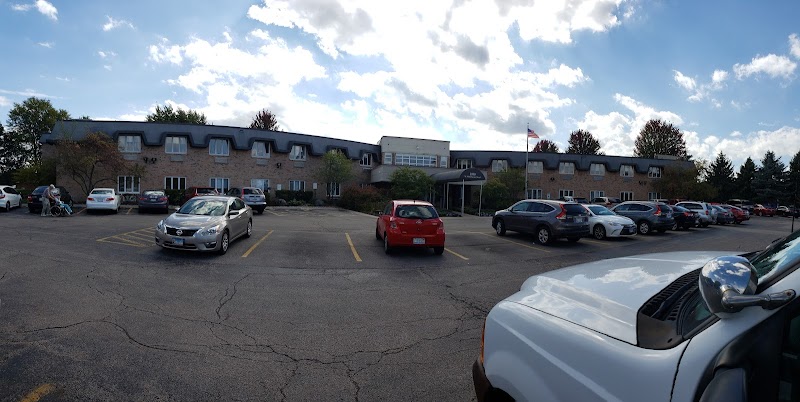
How Does Wynscape Health & Rehab Compare to Other Illinois Nursing Homes?

Compared to the 100 nursing homes in Illinois, WYNSCAPE HEALTH & REHAB's overall rating (5 stars) is above the state average of 2.5, staff turnover (56%) is significantly higher than the state average of 46%, and health inspection rating (5 stars) is much above the national benchmark.

What Should Families Ask When Visiting Wynscape Health & Rehab?

Based on this facility's data, families visiting should ask: "How do you ensure continuity of care given staff turnover, and what is your staff retention strategy?" "Can I visit during a mealtime to observe dining assistance and food quality?" "How do you handle medical emergencies, and what is your hospital transfer rate?" "Can I speak with family members of current residents about their experience?" These questions are particularly relevant given the facility's high staff turnover rate.

Is Wynscape Health & Rehab Safe?

Based on CMS inspection data, WYNSCAPE HEALTH & REHAB has a clean safety record: no substantiated abuse findings (meaning no confirmed cases of resident harm), no Immediate Jeopardy citations (the most serious violation level indicating risk of serious injury or death), and is not on the Special Focus Facility watch list (a federal program monitoring the lowest-performing 1% of nursing homes). The facility has a 5-star overall rating and ranks #1 of 100 nursing homes in Illinois. While no facility is perfect, families should still ask about staff-to-resident ratios and recent inspection results during their visit.

Do Nurses at Wynscape Health & Rehab Stick Around?

Staff turnover at WYNSCAPE HEALTH & REHAB is high. At 56%, the facility is 10 percentage points above the Illinois average of 46%. High turnover means new staff may not know residents' individual needs, medications, or preferences. It can also be disorienting for residents, especially those with dementia who rely on familiar faces. Families should ask: What is causing the turnover? What retention programs are in place? How do you ensure care continuity during staff transitions?

Was Wynscape Health & Rehab Ever Fined?

WYNSCAPE HEALTH & REHAB has no federal fines on record. CMS issues fines when nursing homes fail to meet care standards or don't correct problems found during inspections. The absence of fines suggests the facility has either maintained compliance or corrected any issues before penalties were assessed. This is a positive indicator, though families should still review recent inspection reports for the full picture.

Is Wynscape Health & Rehab on Any Federal Watch List?

WYNSCAPE HEALTH & REHAB is not on any federal watch list. The most significant is the Special Focus Facility (SFF) program, which identifies the bottom 1% of nursing homes nationally based on persistent, serious quality problems. Not being on this list means the facility has avoided the pattern of deficiencies that triggers enhanced federal oversight. This is a positive indicator, though families should still review the facility's inspection history directly.