ALBANY HEALTH CARE & REHABILITATION CENTER
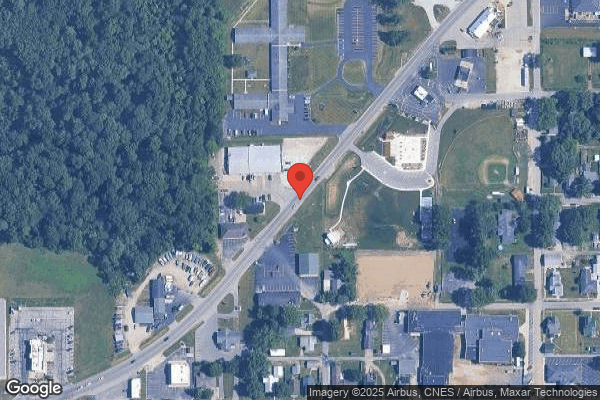
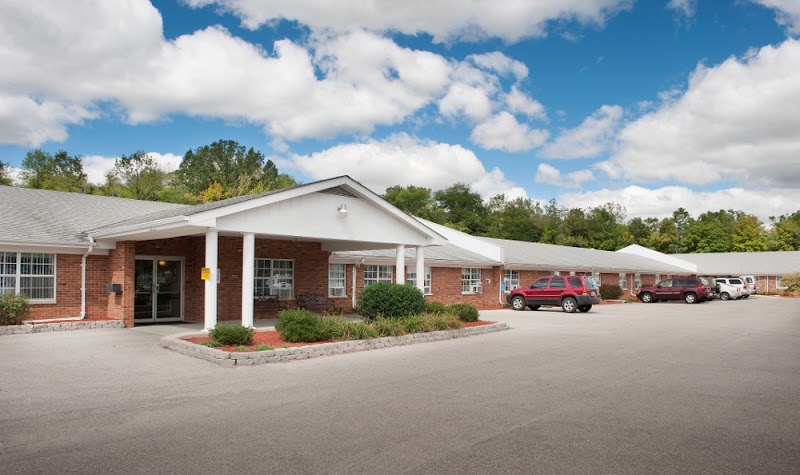
910 W WALNUT ST, ALBANY, IN 47320 (765) 789-4423
For profit - Corporation 102 Beds TLC MANAGEMENT Data: November 2025
Trust Grade
50/100
#319 of 505 in IN
Last Inspection: January 2025

Within standard 12-15 month inspection cycle. Federal law requires annual inspections.

Overview

Albany Health Care & Rehabilitation Center has a Trust Grade of C, which means it is average and sits in the middle of the pack among nursing homes. In Indiana, it ranks #319 out of 505 facilities, placing it in the bottom half, and #7 out of 13 in Delaware County, indicating that only six local options are better. Unfortunately, the facility is worsening, with issues increasing from 4 in 2024 to 10 in 2025. Staffing is average, rated at 3 out of 5 stars, with a turnover rate of 42%, which is slightly better than the state average of 47%. While the facility has not incurred any fines, there are some serious concerns; for example, a medication error led to one resident being hospitalized for acute hypoxia and low blood pressure. Additionally, there have been issues with mail delivery and reports of staff-to-resident abuse, which could affect the well-being of residents. Overall, while there are strengths like no fines and a decent staffing turnover, the increasing issues and specific incidents are concerning.

Trust Score
C
50/100
In Indiana
#319/505
Bottom 37%
Safety Record
Moderate
Needs review
Inspections
Getting Worse
4 → 10 violations
Staff Stability
○ Average
42% turnover. Near Indiana's 48% average. Typical for the industry.
Penalties
✓ Good
No fines on record. Clean compliance history, better than most Indiana facilities.
Skilled Nurses
✓ Good
Each resident gets 45 minutes of Registered Nurse (RN) attention daily — more than average for Indiana. RNs are trained to catch health problems early.
Violations
⚠ Watch
19 deficiencies on record. Higher than average. Multiple issues found across inspections.
★★☆☆☆
2.0
Overall Rating
★★★☆☆
3.0
Staff Levels
★★★☆☆
3.0
Care Quality
★★☆☆☆
2.0
Inspection Score
Stable
2024: 4 issues
2025: 10 issues

The Good

  • Full Sprinkler Coverage · Fire safety systems throughout facility
  • No fines on record
  • Staff turnover below average (42%)

    6 points below Indiana average of 48%

Facility shows strength in fire safety.

The Bad

2-Star Overall Rating

Below Indiana average (3.1)

Below average - review inspection findings carefully

Staff Turnover: 42%

Near Indiana avg (46%)

Typical for the industry

Chain: TLC MANAGEMENT

Part of a multi-facility chain

Ask about local staffing decisions and management

The Ugly 19 deficiencies on record

1 actual harm
Jul 2025 2 deficiencies
CONCERN (D) 📢 Someone Reported This

A family member, employee, or ombudsman was alarmed enough to file a formal complaint

Potential for Harm - no one hurt, but risky conditions existed

Report Alleged Abuse (Tag F0609)

Could have caused harm · This affected 1 resident

Based on record review and interview, the facility failed to identify and immediately report alleged abuse to the administrator for 1 of 3 residents reviewed for resident abuse. (Resident B) This defi...

Read full inspector narrative →
Based on record review and interview, the facility failed to identify and immediately report alleged abuse to the administrator for 1 of 3 residents reviewed for resident abuse. (Resident B) This deficient practice had the potential to affect 19 out of 77 residents in the facility who resided on the 300 Unit. The deficient practice was corrected on 6/27/25, prior to the start of survey, and was therefore past noncompliance. Findings include: Review of a facility reported incident, dated 6/22/25 at 2:35 p.m., indicated Resident B's daughter had reported Resident B had bruising to her bilateral hands as a result of a staff member holding onto her arms last night. It was noted Resident B had bruises on her left hand and wrist and to her right wrist. CNA 3 was suspended pending an investigation. During a review of the facility abuse investigation, on 7/1/25 at 11:04 a.m., 13 resident interviews were held with no identified concerns and six non-interviewable residents had skin assessments completed. Statements from Resident B, the perpetrator, and four additional staff members were included. No additional abuse concerns were identified by other residents or staff during the investigation. A skin assessment was completed on 6/23/25 at 3:20 PM on Resident B. The skin assessment indicated Resident B had bruising to her bilateral hands and right wrist. Staff statements indicated Resident B had reported alleged abuse by CNA 3 to several staff members, who all failed to immediately report the alleged abuse to the Administrator. A facility-wide investigation was carried out and abuse inservicing was completed. The education included Resident Care Expectations and Abuse and Protecting your Profession. Four inservicing signature sheets, dated 6/22/25, contained 74 staff signatures. An employee roster indicated 45 staff members were called and were given the inservicing information via phone. The Ombudsman was notified regarding an abuse allegation, the investigation findings, and outcome via email on 6/24/25 at 3:52 p.m. Resident B's daughter was provided with Ombudsman information on 6/24/25 at 4:45 p.m. The local police department was notified on 6/25/25 at 10:14 a.m. CNA 3 was terminated on 6/25/25. Adult Protective Services (APS) was notified via email 6/27/25 at 11:21 a.m. During an interview on 7/1/25 at 1:56 p.m., the DON indicated on 6/22/25 at approximately 2:30 p.m., RN 8 notified her Resident B told the resident's daughter that she received bruises to her hands and both wrists due to a staff member on night shift having grabbed her hands and held her down. The DON was not notified by any other staff members regarding the alleged abuse prior to the notification she received from RN 8. The DON immediately notified the Administrator of the abuse allegation and began the investigation. CNA 3 was suspended pending the investigation. The investigation did not identify any further instances of abuse or any adverse effects by staff members' actions. During the investigation interviews LPN 4, CNA 6, CNA 7, were educated regarding abuse and any suspicion, reported or observed abuse was to be reported immediately to the administrator. During a phone interview on 7/1/25 at 4:14 p.m., CNA 3 indicated on 6/22/25, sometime after midnight and in the early morning hours, Resident B had accused CNA 3 of being abusive and she was going to report it to her daughter. CNA 3 reported Resident B's statement to LPN 4 the night it occurred. She did not report the allegation to anyone else. During a phone interview on 7/1/25 at 4:45 p.m., LPN 4 indicated on 6/22/25 at approximately 3:00 a.m., Resident B told him that CNA 3 had bruised her all up. CNA 3 continued to work her shift after the allegation was made. Her shift ended at 6:00 a.m. LPN 4 did not report the alleged abuse to anyone until the DON called him the next day and questioned him about abuse concerns. The DON provided him with education regarding abuse and timely reporting. During a phone interview on 7/2/25 at 9:48 a.m., CNA 6 indicated that on the night of 6/22/25 she had heard CNA 3 tell LPN 4 that she had to get stern with Resident B because CNA 3 had to tell Resident B six times that she needed to go to bed and stop waking up other residents. On 6/22/25, between 2:30 and 3:30 a.m., Resident B held up her hands and showed CNA 6 the bruising on them. Resident B commented she could not wait to tell her daughter that she did this to me. CNA 6 had thought the daughter had caused the bruising. CNA 6 did not report the bruising or Resident B's allegation that someone had caused the bruising to her. The DON provided her with education regarding abuse and timely reporting via phone. During a phone interview on 7/2/25 at 10:32 a.m., RN 8 indicated on 6/22/25 Resident B's daughter informed her that the resident had accused a staff member of holding her down last night and caused bruising to her wrist and hands. RN 8 immediately notified the DON. During a phone interview on 7/2/25 at 10:46 a.m., CNA 7 indicated during the 6/22/25 shift report, CNA 3 did not report any allegations of abuse or bruising to him. On 6/22/25, at approximately 6:45 a.m., he observed bruising on Resident B's wrists and hand. Resident B accused a staff member of grabbing her by the hands during the night shift. CNA 7 failed to report the allegation of abuse at that time. On 6/22/25, between 10:00 and 10:30 a.m., Resident B continued to mention the allegation. CNA 7 reported the allegation to RN 9 who was assisting as a CNA that day. CNA 7 did not report the allegation or bruising to management until he was called into the DON's office later that day. The DON provided him with education regarding abuse and timely reporting. On 7/2/25 at 11:51 a.m., the Administrator indicated the DON notified her on 6/22/25 at 2:25 p.m. of an Abuse allegation. She arrived at the facility one and a half hours later. She was not notified of the alleged abuse by anyone else prior to the DON's call. She should have been notified immediately when it happened on night shift. An auditing tool, titled Systemic Actions to Prevent Reoccurrence, provided by the Corporate Nurse Consultant on 7/2/25 at 12:14 p.m., indicated the following: Staff Education and Retraining: All direct care staff have received re-education .Employee Monitoring and Engagement: The Director of Nursing or designee will interview 5 employees weekly for four weeks, then monthly for five months, to assess their understanding of behavioral management, reporting requirements, and comfort and escalating concerns to leadership .QAPI: The team will review trends monthly .and modify interventions as needed. A current policy, last revised on 9/17, titled Incident Investigating and Reporting, provided by the DON on 7/2/25 at 8:49 a.m., indicated the following: Policy: It is the policy of this facility to ensure that reportable incidents are investigated, recorded, and reported in accordance with the state and federal laws . Facility Reporting and Investigation Instructions: 1. The facility will ensure that all allegations of mistreatment, neglect or abuse, including injuries of unknown source, are reported immediately to the Administrator of the facility and to other officials in accordance with state law through established procedures (including to the State survey and certification agency) Cross reference F600. This citation relates to Complaint IN00462025. 3.1-28(c)
CONCERN (E) 📢 Someone Reported This

A family member, employee, or ombudsman was alarmed enough to file a formal complaint

Potential for Harm - no one hurt, but risky conditions existed

Free from Abuse/Neglect (Tag F0600)

Could have caused harm · This affected multiple residents

Based on record review and interview, the facility failed to ensure a cognitively impaired resident was free from staff-to-resident abuse as a result of physical retaliation to a combative resident fo...

Read full inspector narrative →
Based on record review and interview, the facility failed to ensure a cognitively impaired resident was free from staff-to-resident abuse as a result of physical retaliation to a combative resident for 1 of 3 residents reviewed for abuse. (Resident B) This deficient practice had the potential to affect 19 of 77 residents in the facility who resided on the 300 Unit. The deficient practice was corrected on 6/27/25, prior to the start of survey, and was therefore past noncompliance. Finding includes: Review of a facility reported incident, dated 6/22/25 at 4:27 p.m., indicated the following: Description added On 6/22/25 the facility was notified Resident B reported to her daughter that she had bruising to bilateral hands due to a staff member holding onto her arms last night. CNA 3 was the staff member involved. Type of Injury included dark purple bruises to bilateral wrists and the left hand. The resident denied pain to the areas. Immediate Action Taken included notifications to the physician, family, DON, and the Administrator. The staff member involved was suspended pending an investigation. Follow up indicated the investigation was completed. Residents and staff interviews were conducted with no new concerns identified. The employee was terminated due to her failure to meet the facility's expectations and standards when handling the situation. The family, physician, Adult Protective Services (APS), Ombudsman, and local law enforcement were notified of the findings. All staff were re-educated on abuse prevention and the mandatory reporting protocol. Nursing staff were re-educated on de-escalation and safe handling of combative behaviors. Resident B's clinical record was reviewed on 7/1/25 at 11:52 a.m. Diagnoses included the need for assistance with personal care, dementia, reduced mobility, and insomnia. A 6/13/25, quarterly, Minimum Data Set (MDS) assessment indicated Resident B had moderate cognitive impairment. She had trouble falling or staying asleep, or she slept too much. Behaviors included verbal behavioral symptoms directed at others, other behavioral symptoms not directed towards others, and rejection of care. The resident used a walker and wheelchair for mobility. The resident required substantial/maximal staff assistance for all self-care tasks and mobility tasks, other than she needed supervision when walking ten feet and partial/moderate assistance with wheeling wheelchair 50 feet with two turns. The resident was frequently incontinent of bowel and bladder. There were no identified skin issues. She received a scheduled pain medication regimen, and her pain occasionally affected her sleep and day-to-day activities. Resident B's current care plans included the following: A 12/6/24 problem of behavioral symptoms presented as: combative with care, refusing care, yelling and cursing at staff, repetitively yelling out and name calling of staff. Interventions included the following: Social Services staff will intervene as necessary (12/6/24), You will encourage activities of interest (12/6/24), You will leave me alone and reapproach as necessary (12/6/24), Gently remind resident that her behavior/comments are inappropriate (12/8/24), You will assist me, as needed, with calling family when I am upset (4/26/25), I will be followed on the Behavioral Management Program (5/19/25) A 1/6/25 problem of difficulty sleeping related to insomnia. Interventions included the following: staff is to offer non-pharmacological interventions such as back rub, warm drinks, soft music or tones, re-positioning, decreased stimuli, and a comfortable environment. A 6/22/25 problem of distrusting her caregivers by displaying emotional distress, fearfulness, and anxiety, related to being handled roughly during care on 6/22/25. Interventions included the following: Staff is to approach resident from the front, avoid sudden movements or waking her up abruptly, describe steps to be taken before providing her personal care, if the resident is choosing not to have personal care, reapproach at a later time, and social services to follow up with her daily until she is seen by the mental health counselor. A 6/24/25 problem of a bruise to her left hand related to trauma. Interventions included the following: the resident will have two staff members in her room and staff members will take a break if the resident is experiencing behaviors. A 6/24/25 problem of a bruise to her left wrist related to trauma. Interventions included the following: the resident will have two staff members in her room and staff members will take a break if the resident is experiencing behaviors. A 6/24/25 problem of a bruise to her right wrist related to trauma. Interventions included the following: the resident will have two staff members in her room and staff members will take a break if the resident is experiencing behaviors. A skin assessment, dated 6/20/25 at 9:55 a.m., indicated the resident did not have any skin concerns. A skin assessment, dated 6/23/25 at 3:20 p.m. indicated the resident had a dark purple bruise on the left wrist and measured 3 centimeters (cm) by 3.5 cm. The area was closed and dry. A dark purple bruise was on the right wrist and measured 2.5 cm by 2.5 cm. The area was closed and dry. A dark purple bruise was on the left hand and measured 3 cm by 3 cm. The area was closed and dry. No other skin concerns were identified. The clinical record lacked documentation of maladaptive behavior expressions for Resident B from 6/21/25 through 7/2/25. The last behavior expression documented in the clinical record was on 6/12/25. A Nurse's note, dated 6/22/25 at 2:30 p.m., indicated the provider was notified of an allegation and bruising. A Social Services note, dated 6/23/25 at 9:00 a.m., indicated the resident denied any distress and reported she felt safe. She was unable to recall the incident. A Nurse's note, dated 6/24/25 at 1:59 p.m., indicated the resident and daughter were spoken to. Bruising was assessed on Resident B's bilateral wrists and left hand on 6/22 and again on 6/24/25. The bruises were not tender to touch and the resident denied any pain related to the bruises. A Social Services note, dated 6/24/25 at 3:23 p.m., indicated during a follow up with the Resident B, she indicated she had a good day. When the resident was asked about the bruises on her arms, she was able to recall the incident. The resident explained that when she saw other people going out, she wanted to go too. The fat girl grabbed her arms right there and said she could not go. The resident denied any fear or anxiety related to the incident. The resident was informed CNA 3 would no longer provide her care. A review of the facility investigation file, provided by the DON on 7/1/25 at 11:04 a.m., contained the following information: A hand written statement from RN 8, dated 6/22/25 at 2:00 p.m., indicated the resident's family member asked RN 8 if there were any incident reports from last night. The resident told the family member the CNA held her down and she had bruises to both wrists. The resident had purple bruising to bilateral wrists and to the left hand. The resident stated, a short fat CNA with dark hair came in during the middle of the night, started to do something and grabbed both arms. The resident was unable to give an exact time. She shook her head and repeated middle of night. The resident was unable to provide any further details. RN 8 notified the DON at 2:17 p.m. A typed statement from the Administrator, dated 6/22/25 at 2:29 p.m., indicated the Administrator was informed of an allegation between a CNA and a resident. Staff explained a resident's family member reported bruising on a resident's wrists. When the resident was asked by the family member what happened, the resident explained that a short fat staff grabbed her wrists. An investigation was immediately initiated. The Administrator attempted to reach CNA 3, the perpetrator, and left a voicemail. On 6/22/25 at 3:03 p.m., the resident representative was notified and made aware an investigation was underway. The Administrator called the family member who reported the concern. She explained Resident B pointed out bruises on her arms during the visit and told the family member, the Nurse Aide grabbed my arms and there is bruising. Another attempt to reach CNA 3 was made from a different number, and left another voicemail. On 6/22/25 at 4:20 p.m., the Administrator and DON was able to reach CNA 3 via telephone for a statement. CNA 3 was notified an investigation was underway and she was suspended pending the investigation. When asked to explain what happened on 6/22/25, CNA 3 explained the resident was upset and up all night. The resident started swinging when CNA 3 tried to care for her. CNA 3 used a shirt to wrap the resident's hands to keep her from hitting. When asked to explain, CNA 3 would not elaborate. CNA 3 denied grabbing the resident's wrists or holding the resident down. She was informed the facility would notify her of the investigation outcome. A STAFF TO RESIDENT ABUSE form indicated Resident B was assessed for injury on 6/22/25 at 2:45 p.m. Dark purple bruises were present to the back of the left hand and on bilateral wrists. Typed statements obtained by the DON, on 6/22/25 from 3:30 p.m. - 4:00 p.m., indicated the following: LPN 4 stated that CNA 3 got Resident B up, into her wheelchair, and brought her to the North television lounge next to LPN 4. Resident B told LPN 4, She's not nice! She's a b****! She bruised me all over! I am covered in bruises! LPN 4 had assisted the resident with her blanket and did not notice any discoloration on her hands and wrists at that time. He was educated that Resident B's comments should have been reported immediately to the Administrator as suspicious in nature for initiation of an investigation. He verbalized understanding. CNA 6 stated she noticed bruising to the resident's hands when she was providing care at approximately 2:00 a.m. on 6/22/25. Regarding the bruises, Resident B stated, She did it to me! The resident told CNA 6 she could not wait to tell her daughter what had been done to her. CNA 6 also heard a conversation between CNA 3 and LPN 4 during which CNA 3 told LPN 4 she had to be stern with Resident B and told her to stop her yelling. CNA 6 was educated that the information should have been reported immediately as an allegation of abuse. CNA 6 verbalized understanding. CNA 7 stated he started his shift after CNA 3. On his first interaction with Resident B, he noticed the resident had bruises. The resident told him, This fat a** girl grabbed me. The resident demonstrated to CNA 7 how the perpetrator treated her by taking two hands and holding onto CNA 7's hands/wrists. CNA 7 was educated that this should have been immediately reported as an allegation of abuse. CNA 7 verbalized understanding. Resident B was interviewed with her family member present. When asked about the bruising on her hands and wrists, the resident stated That girl grabbed my hands and held them last night. The resident was unable to identify the specific time but indicated it was the short fat girl with long dark hair. The resident denied any pain from the bruising and her range of motion was per usual. The chart revealed the resident was on aspirin daily. Four Abuse in-service attendance logs, dated 6/22/25, contained 74 signatures. The education included information about identifying types of abuse to include questionable actions or statements, stress and burnout related to abuse, and protection of the residents from staff involved in an abuse allegation. On 6/23/25, thirteen alert and oriented residents were interviewed with no identified concerns of abuse. On 6/23/25, six non-interviewable residents received full skin assessments, with no other suspicious skin impairments found other than the bruising to Resident B's wrists and hand. Review of an email, dated 6/24/25 at 3:52 p.m., indicated the facility notified the Ombudsman of an abuse allegation, the investigation findings, and the outcome. On 6/24/25 at 4:45 p.m., the facility provided the resident's representative with the Ombudsman contact information. A Handling difficult behaviors in-service attendance log, dated 6/25/25, contained 10 signatures. A Corrective Action Form, dated 6/25/25, indicated CNA 3 was terminated from employment due to violations of facility policies regarding appropriate resident care, abuse prevention, and the management of challenging behaviors. The local police department was notified on 6/25/25 at 10:14 a.m. The police report indicated Resident B reported a CNA, with a description of the CNA, pushed her back into her wheelchair, held her by her wrists, and told her she was not to get up. The report indicated light bruising remained to the resident's left wrist. The resident did not want to file charges. On 6/27/25 at 11:21 a.m., the facility notified the Adult Protective Services (APS) of the abuse investigation. During an interview on 7/1/25 at 1:56 p.m., the DON indicated on 6/22/25 at approximately 2:30 p.m., RN 8 notified her Resident B told the resident's daughter that she received bruises to her hand and both wrists due to a staff member on night shift having grabbed her hands and held her down. The resident had given a physical description of CNA 3. This was reported to RN 8 by the resident's daughter when she inquired about the bruises. The DON immediately notified the Administrator of the abuse allegation and began the investigation. The resident was in the dining room with her daughter when the DON approached the resident and noticed the bruises on her wrists and hand. Upon asking the resident what happened regarding the bruises, her allegations remained unchanged. As the DON obtained statements from RN 8, Resident B, LPN 4, CNA 6, and CNA 7, the allegations of abuse remained consistent. The physical description of the perpetrator matched CNA 3 who was assigned to provide the resident's care when the alleged event occurred during night shift sometime before 6:00 a.m. on 6/22/25. When the DON and the Administrator reached CNA 3 via telephone for a statement, CNA 3 reported the resident had been combative during care that night. The resident was swinging at CNA 3. In response, CNA 3 wrapped a shirt around the resident's hands. The DON educated CNA 3 you can't do that when residents display behaviors. CNA 3 was suspended pending the investigation. The investigation did not identify any further instances of abuse or any adverse effects by staff members' actions. During the investigation interviews, LPN 4, CNA 6, CNA 7, were educated regarding observed abuse, reported abuse, and/or any suspicion of abuse and the importance of an immediate investigation for the resident safety. They were educated on their role of identifying and reporting while administrations role of investigating the allegations and determining if it was abuse. The facility determined that CNA 3 had been abusive to the resident because she admitted to wrapping the resident's hands in a shirt when the resident was combative and the resident had bruises following the event. The resident was known to be verbally and physically aggressive with staff at times. This made the resident at higher risk for being abused. During a phone interview on 7/1/25 at 4:14 p.m., CNA 3 indicated on 6/22/25, sometime after midnight and in the early morning hours, Resident B was screaming all night and wanted her family. CNA 3 was in the resident's room without any other staff. She sat in her room for a minute but that did not calm the resident. CNA 3 assisted the resident into the wheelchair and the resident became combative and started swinging at CNA 3. Before she took the resident to the lounge, CNA 3 pulled the residents shirt around her arms in a manner to restrict the residents arms from hitting. The resident accused CNA 3 of being abusive to her and she was going to report it to her daughter. CNA 3 did not see any bruising on the resident and she did not know why the resident had bruises that morning after the interaction between CNA 3 and Resident B. CNA 3 should have gone to get someone else to provide Resident B's care rather than restricting the resident's arms. CNA 3 reported Resident B's statement of abuse to LPN 4 the night it occurred on 6/22/25. During a phone interview on 7/1/25 at 4:45 p.m., LPN 4 indicated on 6/22/25 Resident B had been awake throughout the night shift and LPN 4 and other staff had been in and out of the resident's room. The resident kept saying she wanted to get up. At approximately 2:00 a.m., after his break he noticed CNA 3 was sitting in a wheelchair outside of Resident B's room. He thought it was weird, but CNA 3 told him she thought it might help the resident relax if she was out of the room. LPN 4 instructed CNA 3 to get the resident up, since she had requested to get up and bring her down to the lounge. At approximately 3:00 a.m., when CNA 3 brought the resident to the lounge, Resident B told LPN 4 that CNA 3 had bruised her all up. LPN 4 did not complete a head to toe assessment nor report the alleged abuse to anyone until the DON called him during the day after his shift and questioned him about any abuse concerns on the night shift. The resident had been pleasant during interactions with LPN 4. Resident B was known to be challenging at times due to her behaviors. He had not documented any behaviors on 6/22/25, because her behaviors were not as bad as they had been on other days. CNA 3 continued to work her shift after the allegation was made. CNA 3's shift ended at 6:00 a.m. The DON provided LPN 4 with education regarding abuse,timely reporting, and protecting the residents by sending involved staff home. During a phone interview on 7/2/25 at 9:48 a.m., CNA 6 indicated she came in early at 6:00 p.m. on 6/21/25 and worked until 10:00 p.m. on the 300 Unit, where she provided care for Resident B. She had not seen any skin impairments to the residents skin when she was assigned to the resident during those four hours. At 10:00 p.m., CNA 3 came in and was assigned to the 300 Unit. CNA 6 began the CNA float position at that time and covered the different units for their breaks. Some time between approximately 2:30 a.m. and 3:30 a.m., she relieved CNA 3 for a break. When CNA 3 gave report to CNA 6, CNA 3 reported that Resident B was up in the lounge watching television. CNA 3 did not mention in report the resident was combative with her. Resident B started yelling out after CNA 6 was floating on her unit so CNA 6 asked the resident what she was wanted to do. The resident requested to go back to bed, so she took her to her room and assisted her into her bed. The resident was cooperative with care when CNA 6 assisted her. Resident B held up her hands and showed CNA 6 the bruising. Resident B commented she could not wait to tell her daughter that she did this to me. CNA 6 thought the daughter had caused the bruising. CNA 6 had gone down to the 300 Unit at another time on the night of 6/22/25 and she heard CNA 3 tell LPN 4 that she had to get stern with Resident B because Resident B had to be told six times that she needed to go to bed and stop waking up other residents. CNA 6 did not report the bruising or Resident B's allegation that someone had caused the bruising to her. The DON provided CNA 6 with education regarding abuse and timely reporting via phone. During a phone interview on 7/2/25 at 10:32 a.m., RN 8 indicated on 6/22/25 Resident B's daughter approached RN 8 and asked if there were any incidents reported last night. The resident's daughter noticed bruising on the resident's wrists and hand. Resident B had informed her daughter the aide that held her down last night caused the bruising. RN 8 then asked Resident B what happened. The resident explained that sometime in the night last night the short, fat, CNA, with long dark hair held her down. As a result, her wrists and her hand was bruised. During a phone interview on 7/2/25 at 10:46 a.m., CNA 7 indicated during the 6/22/25 morning shift report, CNA 3 did not report any allegations of abuse or bruising to him that occurred on night shift. On 6/22/25, at approximately 6:45 a.m., he observed bruising on Resident B's wrists and hand. Resident B accused a staff member of grabbing her by the hands during the night shift. CNA 7 failed to report the allegation of abuse at that time. On 6/22/25, between 10:00 and 10:30 a.m., Resident B mention the allegation of abuse to CNA 7 again. CNA 7 indicated it was unusual for Resident B to remember vivid details. The DON provided him with education regarding abuse and protecting the resident. RN 8 provided education to CNA 7 regarding behavior responses. On 7/2/25 at 11:51 a.m., the Administrator indicated the DON notified her on 6/22/25 at 2:25 p.m. of an abuse allegation by CNA 3 to Resident B. Restraining of the resident's arms was considered abusive. The facility should have protected Resident B from abuse. The facility in-serviced on behavior techniques. They have in-servicing scheduled for the second Thursday of every month to include re-education on abuse and reporting with examples to review. An auditing tool, titled Systemic Actions to Prevent Reoccurrence, provided by the Corporate Nurse Consultant on 7/2/25 at 12:14 p.m., indicated the following: Staff Education and Retraining: All direct care staff have received re-education on trauma-informed care, de-escalation techniques, safe physical care methods . Resident Monitoring - Interviewable Residents: The Social Service Director (or designee) will interview four alert and oriented residents weekly for four weeks, then monthly for five months, to assess perceptions of care, concerns about rough handling, or unreported injuries. Interviews will be documented and reviewed during QAPI. Resident monitoring - Non-Interviewable Residents: The nursing team will conduct weekly head-to-toe skin assessments on all non-interviewable residents for 6 months to monitor for unexplained bruising or injury. Any findings will immediately be reviewed by the DON and HFA for investigation and follow-up. Employee Monitoring and Engagement: The Director of Nursing or designee will interview 5 employees weekly for four weeks, then monthly for five months, to assess their understanding of behavioral management . and comfort and escalating concerns to leadership. Behavioral Care Oversight: The IDT (Interdisciplinary Team) will review the care plans for residents with the history of combative behaviors to ensure: Appropriate interventions and de-escalation strategies are included. Staff assignments consider training and experience .QAPI: An ad hoc QAPI project will be initiated to monitor patterns of injuries . and training efficiency. The team will review trends monthly, evaluate the effectiveness of interviews and skin assessments, and modify interventions as needed. A Staff Interview and Education Validation Tool, Resident Interview Audit Tool, and Compliance with Reporting Allegations of Abuse/Neglect/Exploitation Validation Checklist were tools used for ongoing monitoring. A current facility policy, revised 10/17/22, titled Freedom from Abuse, Neglect, Exploitation and Misappropriation of Property, provided by the DON on 7/1/25 at 10:30 a.m., indicated the following: Policy Statement . The resident has the right to be free from abuse . This includes but is not limited to freedom from corporal punishment, involuntary seclusion, and any physical or chemical restraint not required to treat the resident's medical symptoms. Policy Interpretation and Implementation . Each resident has the right to be free from abuse, neglect, and corporal punishment or any type by anyone . ABUSE: .The facility must provide a safe resident environment and protect residents from abuse . Staff to Resident Abuse of Any Type .When a nursing home accepts a resident for admission, the facility assumes the responsibility of ensuring the safety and well-being of the resident . It is the facility's responsibility to ensure that all staff are trained and are knowledgeable in how to react and respond appropriately to resident behavior . All staff are expected to be in control of their own behavior, are to behave professionally, and should appropriately understand how to work with the nursing home population . Retaliation by staff is abuse, regardless of whether harm was intended, and must be cited The deficient practice was corrected by 6/27/25 after the facility implemented a systemic plan that included a thorough investigation, facility in-service regarding abuse/reporting/protecting, responses to staff burnout, and an in-service regarding handling challenging behaviors. This citation relates to Complaint IN00462025. 3.1-27(a)
Jan 2025 8 deficiencies
CONCERN (D)

Potential for Harm - no one hurt, but risky conditions existed

PASARR Coordination (Tag F0644)

Could have caused harm · This affected 1 resident

**NOTE- TERMS IN BRACKETS HAVE BEEN EDITED TO PROTECT CONFIDENTIALITY** Based on interview and record review, the facility failed to ensure a Preadmission Screening and Resident Review (PASRR) was sub...

Read full inspector narrative →
**NOTE- TERMS IN BRACKETS HAVE BEEN EDITED TO PROTECT CONFIDENTIALITY** Based on interview and record review, the facility failed to ensure a Preadmission Screening and Resident Review (PASRR) was submitted for a resident with a new mental health diagnosis and psychotropic medication for 1 of 1 residents reviewed for PASRR. (Resident 59) Findings include: Resident 59's clinical record was reviewed on 1/9/25 at 3:55 p.m. The most current PASRR was completed on 6/20/23. The application submitted indicated that the resident had no known or suspected mental health diagnoses. No mental health medications were listed. Resident 59's diagnoses included psychotic disorder with delusions due to know physiological condition (9/18/23), unspecified mood (affective) disorder (8/28/23), generalized anxiety disorder (6/29/23), other recurrent depressive disorders (6/29/23), and dementia in other diseases classified elsewhere, mild, with agitation (6/29/23). Physician's orders included escitalopram oxalate (antidepressant) 10 milligrams (mg) daily at bedtime (7/24/24), olanzapine (antipsychotic) 5 mg daily in the morning (4/16/24), and olanzapine 7.5 mg daily in the evening (10/15/24). A current care plan for behavioral symptoms included being easily agitated with others, choosing not to have care provided, verbal aggression, refusing medications, repetitive movements of rubbing arms and legs, yelling at staff, rocking, picking at face and arms, delusions, hallucinations, paranoia, name calling, cursing at staff, refusing care, refusing to change clothes, refusing staff assistance to brush hair and perform oral hygiene, repetitive movement of coming in and out of the dining-room, cursing under breath, appearing anxious for unknown reasons, grabbing and shoving peers, cursing and threatening peers, and wanting more food due to forgetting she just ate was initiated on 7/22/23 and revised on 1/3/24. Interventions included the following: administer medications as ordered (9/21/23), provide mental health services as indicated (8/6/23), and remove known triggers (7/22/23). A Nurse's Note, dated 10/9/23 at 3:58 p.m., indicated a new order was received from the psychiatric nurse practitioner (NP) for the resident to be sent to a neuropsychiatric hospital. The resident was transferred via facility van to the neuropsychiatric hospital. A Physician Narrative Progress Note, dated 10/9/23 at 11:14 p.m., indicated the resident was assessed for continued mood swings and behaviors which included agitation, aggression, wandering, anxiety, and confusional states. The resident had been seen by the NP on 10/9/23. The resident was initially calm but showed some signs of paranoia as she walked into the dining room and started looking around. The facility was providing one-on-one care which the resident did not like and said someone kept following her around. The resident was on one-on-one care with staff due to increased physical and verbal aggression as well as increased mood swings. The resident had been found standing over another resident with a pillow over that's resident's face. The resident had multiple incidences of physical aggression over the past several weeks. Her behaviors worsened over the last several weeks. As the resident sat in the dining room, the noise level increased. The resident yelled a profane statement. The NP's plan indicated it was concerning to adjust any medications as it was believed the resident should be sent out to a psychiatric hospital where she could get more one-on-one aggressive treatment, and her medications could be adjusted. A Physician Narrative Progress Note, dated 10/30/23 at 11:28 p.m., indicated the resident was assessed by the psychiatric NP. Her recent hospital stay was reviewed. The resident had been transferred to a neuropsychiatric hospital due to worsening behaviors, agitation, and severe aggression. While at the hospital, the resident's risperidone (antipsychotic) was increased then discontinued. She started on olanzapine 5 mg twice a day which was increased to 10 mg twice a day on 10/23/24. The resident reported that she thought her mood was okay. She said she kept her necklace hidden, which was a string of pearls because she believed people would steal them. She exhibited paranoia and restlessness while wandering. The staff had reported that the resident was very on edge since return from the neuropsychiatric hospital. During an interview, on 1/14/25 at 4:30 p.m., the Social Services Designee (SSD), who was responsible for PASRR submissions, indicated the PASRR completed on 6/20/23 was the only PASRR completed she had for the resident. The resident should have had a new PASRR submitted when the resident received the mental illness diagnoses. According to the Indiana PASRR Level I & Level of Care Screening Procedures for Long Term Care Services Provider Manual, retrieved from maximusclinicalservices.com on 1/14/24, last revised 4/20/20, .If a NF [nursing facility] resident's behavioral or mental status significantly changes, the NF must submit a new Level I to report the change through the PASRR process. This applies to people who have a known Level II condition and to people with a previous negative Level I . Examples of a mental status change event include: A new mental health diagnosis that is not listed on previous [NAME] or Level II. A new psychotropic medication for mental illness A current facility policy, dated 11/1/23, titled Specialized Rehabilitative Services, provided by the SSD on 1/14/25 at 5:03 p.m., indicated the following: .The facility shall provide or obtain services from an outside resource for specialized rehabilitation services .as well as ensure that residents with Mental Disorder (MD), Intellectual Disability (ID) or related conditions receive services as determined by their Preadmission Screening and Resident Review (PASARR)
CONCERN (D)

Potential for Harm - no one hurt, but risky conditions existed

Comprehensive Care Plan (Tag F0656)

Could have caused harm · This affected 1 resident

Based on record review and interview, the facility failed to develop and implement a comprehensive care plan with individualized interventions to maintain the resident's highest practicable mental, ph...

Read full inspector narrative →
Based on record review and interview, the facility failed to develop and implement a comprehensive care plan with individualized interventions to maintain the resident's highest practicable mental, physical, and psychosocial outcome for 1 of 1 resident reviewed for a limited range of motion. (Resident 73) Finding includes: During an interview on 1/7/25 at 12:10 p.m., Resident 73 was laying in bed in his room with his door closed. He indicated he was paralyzed from his chest down. He had received therapy when he admitted a few months ago, but therapy ended. He was waiting for insurance to get more therapy. He had not received any restorative care or passive range of motion on his lower extremities to ensure he did not have a decline while he waited on insurance. He had spoken to two different therapy staff members quite some time ago and requested restorative care, but had not received any. He was concerned about losing the progress he had made in therapy. Resident 73's clinical record was reviewed on 1/9/25 at 5:08 p.m. Diagnoses included paralytic syndrome, constipation, complete paraplegia, other reduced mobility, generalized muscle weakness, and need for assistance with personal care. The resident's clinical record lacked a care plan related to being at risk for a decrease in range of motion and/or development of contractures related to the resident's diagnosis of paraplegia. During an interview on 1/13/25 at 5:14 p.m., the MDS Coordinator indicated a care plan for restorative care should have been developed and implemented, but it had not been and was not in the resident's clinical record. A current facility policy, revised 9/18/24, titled Comprehensive Care Plan, provided by the DON on 1/14/25 at 12:05 p.m., indicated the following: .It is the policy of this facility to develop and implement a comprehensive person-centered care plan for each resident, consistent with resident rights , that includes measurable objectives and timeframes to meet a resident's medical, nursing, and mental and psychosocial needs that are identified in the resident's comprehensive assessment Cross Reference F688. 3.1-35 (a) 3.1-35(b)(1)
CONCERN (D)

Potential for Harm - no one hurt, but risky conditions existed

Deficiency F0657 (Tag F0657)

Could have caused harm · This affected 1 resident

Based on interview and record review, the facility failed to ensure the resident's representative was invited to participate in the ongoing care planning process for 1 of 1 residents reviewed for care...

Read full inspector narrative →
Based on interview and record review, the facility failed to ensure the resident's representative was invited to participate in the ongoing care planning process for 1 of 1 residents reviewed for care planning. (Resident 34) Findings include: During an interview, on 1/8/25 at 11:19 a.m., Resident 34's representative indicated she had been invited one time to a care plan meeting. She had not been invited since that first meeting. She did not know when the meetings were held. Resident 34's clinical record was reviewed on 1/9/25 at 11:54 a.m. Diagnoses included anxiety disorder, delusional disorder, Alzheimer's disease, and unspecified dementia, moderate, with agitation. An annual Minimum Data Set (MDS) assessment, dated 10/29/24, indicated the resident was severely cognitively impaired. An interview about preferences with the resident indicated having her family or a close friend involved in discussions about her care was very important to her. A current care plan indicated Resident 34 did not plan to return to the community and wished to be asked about returning to the community on comprehensive assessments only (initiated 2/11/22 and revised 9/20/23). Interventions included the following: Encourage the resident's family to be involved in the resident's plan of care (initiated 2/11/22). A progress note, dated 4/26/23 at 2:00 p.m., indicated a phone call was placed to the resident's representative to set up a care plan conference. The resident's representative was not reached, and a message could not be left as the voice mail had not been set up. The clinical record lacked more recent documentation of attempts to invite the resident's representative to participate in the resident's care plan conferences. During an interview, on 1/10/25 at 3:32 p.m., the Social Services Designee (SSD) indicated she invited the short term stay residents' representatives by phone. She invited the long-term stay residents' representatives by mail. During an interview, on 1/14/25 at 10:51 a.m., the SSD indicated if the invitation to the care plan conference was not in the progress notes, then she did not have documentation that the resident's representative had been invited. The resident's representative visited the resident two to three times a week, and the resident's care was often discussed. She had invited the resident representative verbally to care plan conferences, but she did not have documentation of those discussions. A facility policy, revised 2/2019, titled Care Plan Meeting and Invitations, provided by the DON on 1/14/25 at 3:29 p.m., indicated the following: .SSD/Designee will send a standard letter to the Resident Representative or place a call to schedule the care plan meeting .The SSD/Designee will document that the letter was sent or the phone call was made and the response received from the resident or the resident representative 3.1-35(d)(2)(B)
CONCERN (D)

Potential for Harm - no one hurt, but risky conditions existed

Deficiency F0688 (Tag F0688)

Could have caused harm · This affected 1 resident

**NOTE- TERMS IN BRACKETS HAVE BEEN EDITED TO PROTECT CONFIDENTIALITY** Based on interview and record review, the facility failed to provide appropriate restorative care services as recommended by the...

Read full inspector narrative →
**NOTE- TERMS IN BRACKETS HAVE BEEN EDITED TO PROTECT CONFIDENTIALITY** Based on interview and record review, the facility failed to provide appropriate restorative care services as recommended by therapy for a resident with limited range of motion for 1 of 1 resident reviewed for restorative care. (Resident 73) Finding includes: During an interview on 1/7/25 at 12:10 p.m., Resident 73 was laying in bed. He indicated he was paralyzed from his chest down. He had received therapy when he admitted a few months ago, but therapy ended. He was waiting for insurance to get more therapy. He had not received any restorative care or passive range of motion on his lower extremities to ensure he did not have a decline while he waited on insurance. He had spoken to two different therapy staff members quite some time ago and requested restorative care, but had not received any. He was concerned about losing the progress he had made in therapy. The resident's clinical record was reviewed on 1/9/25 at 5:08 p.m. The resident admitted to the facility on [DATE]. Diagnoses included, paralytic syndrome, constipation, complete paraplegia, other reduced mobility, generalized muscle weakness, and need for assistance with personal care. A physician's medication order, dated 9/26/24, included baclofen 10 mg tablet- give 20 mg by mouth three times a day for muscle spasms, and was discontinued on 10/21/24. Current physician's medication orders included the following: gabapentin (neuropathy pain reliever) 600 milligrams (mg) oral capsule by mouth three times a day for ascending paralysis, dated 9/13/24; baclofen (muscle relaxer) 20 mg tablet by mouth every six hours for spasms, dated 10/21/24; Senna-Plus (stool softener) 8.6-50 mg oral tablet by mouth twice daily for constipation, dated 9/13/24; Dulcolax (laxative) rectal suppository 10 mg rectally at bedtime every three days for constipation, dated 10/7/24 Review of the Medication Administration Record from October 2024 through January 2025 indicated the resident's baclofen was increased to four times daily after therapy ended due to increased spasms. An additional medication was added to treat constipation. A current order, dated 9/12/24, indicated the resident's rehabilitation potential was fair. The clinical record lacked current orders for speech therapy, occupational therapy, physical therapy, or restorative care services. A quarterly Minimum Data Set (MDS) assessment, dated 12/21/24, indicated Resident 73 was cognitively intact. Rejection of care behaviors were not exhibited during the assessment period. The resident had a functional limitation in range of motion in the lower extremities with impairment on both sides. He was dependent on staff for assistance with toileting, bathing, lower body dressing, footwear, rolling left and right, and transfers. He required substantial staff assistance for personal hygiene. Walking was not attempted. A manual wheelchair was used for mobility. No days of Therapy Services or Restorative Nursing was received during the assessment period. The resident's clinical record lacked a care plan for restorative care or services to maintain or improve range of motion. A Physical Therapy Discharge summary, dated [DATE], indicated Resident 73 was discharged from physical therapy as he had reached maximum potential with skilled services. Discharge recommendations included the Restorative Nursing Program for passive range of motion and was set up with Restorative Aide 10, who was trained to perform these services. A Therapy Discharge Recommendation form, dated 10/4/24, indicated Resident 73's restorative nursing recommendations included passive range of motion. This included one set of 20 repetitions of slow motion secondary to spasticity. A Physiatry progress note, dated 10/8/24 at 3:44 p.m., indicated the resident's current functional status as of 10/8/24 was minimal staff assistance for bed mobility tasks, minimal to moderate assistance from staff was needed for both transfers and toileting using a slide board, minimal assistance from staff was needed for upper body dressing, and maximal assistance was needed for lower body dressing. A Nurse's Note, dated 10/21/24 at 1:27 p.m., indicated the nurse received a new order to increase the baclofen for muscle spasms. A Nurse's Note, dated 11/11/24 at 2:22 p.m., indicated the resident complained of an increase in spasms that were painful. The resident's spouse was aware of the clinical situation because the resident was not wanting to get up to get weighed. The clinical record lacked indication of restorative services being provided to the resident. During an interview on 1/13/25 at 11:52 a.m., Restorative Aide 15 indicated she and Restorative Aide 10 were assigned to all the residents who were required to receive Restorative Nursing Services. They typically worked with each resident in 15 minute increments each day. Depending on the order, they may be worked with twice daily. This was documented in the clinical record under restorative each time it was completed. These were the Restorative Aides' primary duties each day. Restorative Aide 15 indicated she had never been assigned to provide Resident 73 restorative care. During an interview on 1/13/25 at 5:05 p.m., the Physical Therapist indicated she was familiar with Resident 73. The resident had spoken with her when he was discharged from physical therapy regarding a desire to get restorative care/passive range of motion for his lower extremities. She had completed the Therapy Discharge Recommendation form and gave it to the Rehabilitation Director at that time. The form was dated 10/4/24. During an interview on 1/13/25 at 5:09 p.m., the Rehabilitation Director indicated a copy of the resident's Therapy Discharge Recommendation form was given to the previous MDS Coordinator (who was no longer employed at the facility) on the date she received it from the therapy staff. The MDS Coordinator was responsible for the assignment of the residents to a Restorative Aide for initiation of the recommendations. A new MDS Coordinator had started since that time. During an interview on 1/13/25 at 5:14 p.m., the MDS Coordinator indicated Resident 73 was not on her list of residents assigned to receive restorative care. She indicated the resident's chart lacked any tabs for restorative care where the care should have been documented. She had not been provided a copy of the resident's Therapy Discharge Recommendation form, as this occurred prior to her employment. During an interview on 1/13/25 at 5:22 p.m., the DON indicated the resident had not received restorative care. Therapy recommendations should have been initiated by the previous MDS Coordinator, but was not done. During an interview on 1/14/25 at 12:00 p.m., Restorative Aide 10 indicated she had never provided Resident 73 restorative care because he was not assigned by the MDS Coordinator. The resident was at risk for a decrease in range of motion and contractures due to his paraplegia. A current facility policy, revised 3/2022, titled RESTORATIVE/ADL NURSING, provided by the DON on 1/13/25 at 5:29 p.m., indicated the following: .It is the policy of this facility to ensure that a resident without limited range of motion does not experience a reduction in range of motion unless the resident's clinical condition demonstrates it is unavoidable; A resident with limited range of motion receives appropriate treatment and services to prevent further decline; and A resident with limited mobility receives appropriate services, equipment, and assistance to maintain or improve mobility with the maximum practicable independence unless a decline is unavoidable 3.1-42(a)(2)
CONCERN (D)

Potential for Harm - no one hurt, but risky conditions existed

Accident Prevention (Tag F0689)

Could have caused harm · This affected 1 resident

**NOTE- TERMS IN BRACKETS HAVE BEEN EDITED TO PROTECT CONFIDENTIALITY** Based on observation, interview, and record review, the facility failed to provide supervision for a cognitively impaired reside...

Read full inspector narrative →
**NOTE- TERMS IN BRACKETS HAVE BEEN EDITED TO PROTECT CONFIDENTIALITY** Based on observation, interview, and record review, the facility failed to provide supervision for a cognitively impaired resident with a history of falls to prevent repeated falls for 1 of 2 residents reviewed for accidents. (Resident 129) Findings include: During an observation, on 1/7/25 at 1:19 p.m., Resident 129 was lying in a bed in the low position with a tall mat beside his bed. The resident was awake and watching television. During an observation, on 1/8/24 at 11:53 a.m., Resident 129 was assisted in his wheelchair to his room. He declined to get into bed. He had a brace on his right wrist. During an observation, on 1/9/24 at 2:48 p.m., Resident 129 was lying in bed, turned onto his left side. A tall mat was beside his bed. During an observation, on 1/10/24 at 3:50 p.m., Resident 129 was lying in bed holding and looking at his remote control. The tall mat was beside his bed. He was had his oxygen on per nasal cannula. During an observation, on 1/13/24 at 3:07 p.m., Resident 129 self-propelled his wheelchair out of the dining/activity area. He wore nonskid socks and an oxygen cannula. He held a package of candy bars, a package of chips, and a can of soda he had won at BINGO. Resident 129's clinical record was reviewed on 1/9/25 at 8:53 a.m. Diagnoses included repeated falls, syncope (fainting) and collapse, hypoxemia (low concentration of oxygen in blood), muscle weakness (generalized), difficulty in walking, other lack of coordination, history of falling, unspecified mood (affective) disorder, and altered mental status. Current physician orders included the following: divalproex 125 milligrams (mg) twice a day for mood stabilization (12/23/24), hydrocodone-acetaminophen 10-325 mg every six hours as needed for pain (12/12/24), check function and placement of silent pressure alarm to bed and chair/wheelchair every shift for safety (12/17/24), and keep splint clean and dry until follow up with orthopedic physician and check skin each shift to monitor for break down for radial fracture (12/23/24). An admission Minimum Data Set (MDS) assessment, dated 12/14/24, indicated Resident 129 was severely cognitively impaired. He had hallucinations and rejected care one to three days of the assessment period. He had limitations of his functional range of motion to his upper and lower extremities on both sides. He required substantial to maximal assistance with toileting, bathing, dressing, putting on and taking off footwear, rolling left and right in bed, moving from sitting to lying, moving from lying to sitting, moving from sitting to standing, transferring from chair to bed and bed to chair, and transferring to the toilet. He was short of breath with exertion and when lying flat. He had fallen the month prior to admission. He had fallen two or more times with no injuries and one time with injury since he was admitted . A bed alarm was used daily. A current care plan for falls indicated the resident was at risk for falls related to history of falls, syncope, and decrease in safety awareness (initiated 12/17/24 and revised on 1/8/24). Interventions included the following: A silent pressure chair/bed alarm was to be used to alert staff that the resident needed staff assistance with transfers (initiated 12/17/24 and revised 1/8/25); The resident was to wear proper footwear or non-slip footwear when he is up (initiated 12/17/24); The resident will have a non-slip mat in his wheelchair to decrease the resident from sliding out of his wheelchair (initiated 12/17/24); The resident will sleep/rest in a floor bed that is low to the floor with a mat on the floor to assist in decreasing the risk of the resident injuring himself when he rolls out of bed (initiated 12/17/24); The resident will be toileted at 7:00 p.m. as he allows (initiated 12/18/24); and The resident will be reminded to change position slowly (initiated 12/22/24). An admission evaluation, dated 12/12/24 at 7:34 p.m., indicated the resident had fallen in the last month and two to six months prior to admission. He had a fracture related to a fall in the six months prior to admission. A fall risk assessment, dated 12/12/24 at 7:37 p.m., indicated the resident had intermittent confusion. He had three or more falls in the past three months. He was chair bound and/or required assistance with elimination. He received three to four medications which increased the risk of falling. He had three or more predisposing conditions which increased the risk of falling. He was a high fall risk. A Hospital Emergency Department Progress Note, dated 12/22/24 at 6:58 a.m., indicated the resident presented to the emergency department by ambulance. The resident reported he was sitting in a chair and was asleep. He was unsure what had happened. The staff reported he fell forward out of his chair and hit his head. He sustained a large laceration to his forehead. His right forearm had tenderness with flexion and extension of the wrist. On the right side of the forehead just below the hairline was an approximately 2.5 centimeter (cm) irregular laceration that was y-shaped with an additional linear portion extending from the center gaping, bleeding controlled. The laceration was repaired with five sutures. The x-ray showed a distal radius (bone in the forearm) fracture and possible scaphoid (small bone in the wrist) fracture. The orthopedic physician was consulted about the x-ray findings and a follow-up was advised. A splint was applied to the right upper extremity. The resident was discharged back to the facility. An x-ray of the right wrist, dated 12/22/24 at 8:48 a.m., indicated an avulsion (a break in a small piece of bone in the wrist that's attached to a ligament or tendon) fracture arising from the volar (palm side) aspect of the wrist and a lucency (darker area on the X-ray) through the scaphoid which may represent a nondisplaced fracture. The resident's fall events and immediate interventions were as follows: A Nurses Note and Fall Investigation Worksheet, dated 12/13/24 for the fall at 5:40 a.m., indicated the resident was found lying on his right side on the floor next to his bed with his head near the foot of the bed. The resident's feet were bare. The call light was not sounding. The resident complained of some soreness to back and leg. No obvious injuries were noted. The immediate intervention was the placement of a bed alarm. A Nurses Note and Fall Investigation Worksheet, dated 12/13/24 for the fall at 8:00 p.m., indicated the resident was found on both knees on the floor in his room. The resident had appeared to attempt to self-transfer from wheelchair. He wore gripper socks. His call light was sounding. An alarm was being used at the time of the fall and was working properly. No new injuries were noted. The immediate intervention was the placement of a chair alarm pad underneath the resident. The resident was assisted into the wheelchair, and the call light was clipped to his shirt. He was reminded to use the call light if he wished to move. A Nurses Note and Fall Investigation Worksheet, dated 12/14/24 at 7:00 a.m., indicated the resident was found sitting on the floor at the side of the bed with his back resting against the bed and his legs extended in front of him. The resident indicated he was sitting on the bed at the time of the fall. The bed was in low position. The resident had one gripper sock on and one was off on the floor beside him. The bed alarm was in place and sounded. The call light was not sounding. No new injuries were noted. The immediate intervention was the placement of the bed in a low position with a mat at the side of the bed. The resident was also assisted back to bed, and his gripper socks were reapplied. A Nurses Note and Fall Investigation Worksheet, dated 12/14/24 at 9:00 p.m., indicated the resident was sitting in a wheelchair at the nurses station. The resident leaned forward and grabbed at the floor. He fell out of the chair onto his side. The wheelchair brakes were locked. The resident had gripper socks on both feet. The chair alarm was in place and sounded after the fall. A skin tear to the resident's right hand was measured at 1.8 cm by 0.2 cm. The immediate intervention was the placement of the nonslip mat in the wheelchair under the cushion. The skin tear was cleansed and dressed. A Nurses Note and Fall Investigation Worksheet, dated 12/18/24 for the fall at 7:30 p.m., indicated the resident attempted to stand up and fell onto his left side in front of the nurses station. An alarm was in place and working. The immediate intervention was the toileting of the resident and assisting him to bed. A Nurses Note and Fall Investigation Worksheet, dated 12/22/24 at 5:50 a.m., indicated the nurse was standing at the medication cart when the resident fell forward without warning and hit his head on the floor. Pressure was applied to his wound, and his neck was stabilized. He transferred to the hospital. He had a one-inch laceration on his forehead. The resident wore gripper socks. The chair alarm was in place and working properly. A Nurses Note, dated 12/22/24 at 3:15 p.m., indicated the resident returned from the hospital with a laceration to his forehead, an abrasion of his right arm, a distal radius fracture, and lumbar radiculopathy (condition where a nerve in the spine is damaged or irritated). Sutures were intact to his forehead and open to air. A Fall IDT (interdisciplinary team) Note, dated 12/24/24 at 1:16 p.m., indicated Resident 129 was seated in a wheelchair at the nurses station when staff witnessed the resident falling forward from the wheelchair. Staff was unable to intervene. The immediate intervention for the fall on 12/22/24 at 5:50 a.m., was to remind the resident to change positions slowly. During an interview, on 1/14/25 at 11:52 a.m., QMA 13 indicated the interventions to prevent falls for the resident were his chair alarm, a bed alarm, a mat beside his bed, and he was taken to the bathroom every two hours even though he had a catheter. The resident was generally up and about in the sight of staff. During an interview, on 1/14/25 at 12:28 p.m., LPN 19 indicated interventions to prevent falls for the resident included his bedside mat. She indicated she needed to access his care plan. Then, she indicated bed and chair pads that alarmed at the nurses station were used. He also did not stand well and required nonskid footwear. He had a nonslip mat in his wheelchair. He was to be toileted at 7:00 p.m. The staff also monitored him. She indicated whenever she went up and down the hall she looked in every room. During an interview, on 1/14/25 at 12:41 p.m., CNA 20 indicated interventions to prevent falls for the resident included a tall mat beside his bed, a bed alarm, a chair alarm in his wheelchair, gripper socks or shoes on, and his call light should be in reach. She could look at the [NAME] (list of care strategies in the clinical record) if she needed more information. During an interview, on 1/14/25 at 3:08 p.m., the DON indicated they tried to do all kinds of things to prevent the resident from falling like bringing him to the nurses station. Since one of his resident representatives had returned to town and visited frequently, he had been doing much better. During an interview, on 1/14/25 at 4:17 p.m., the DON indicated the pressure alarms should not be used in place of supervision for the residents. She did not have documentation of increased supervision or additional interventions that would show increased supervision for the resident. A current facility policy, revised 10/8/24, titled Accidents and Supervision, provided by the DON on 1/13/25 at 4:28 p.m., indicated the following: Policy: The resident environment will remain free of accident hazards as is possible. Each resident will receive adequate supervision and assistive devices to prevent accidents. This includes: 1. Identifying hazards(s) and risk(s). 2. Evaluating and analyzing hazard(s) and risk(s). 3. Implementing interventions to reduce hazard(s) and risk(s). 4. Monitoring for effectiveness and modifying interventions when necessary 3.1-45(a)(2)
CONCERN (D)

Potential for Harm - no one hurt, but risky conditions existed

Deficiency F0710 (Tag F0710)

Could have caused harm · This affected 1 resident

Based on interview and record review, facility failed to ensure the physician was notified of a resident's significant weight loss for 1 of 3 residents reviewed for nutrition. (Resident 72) Findings i...

Read full inspector narrative →
Based on interview and record review, facility failed to ensure the physician was notified of a resident's significant weight loss for 1 of 3 residents reviewed for nutrition. (Resident 72) Findings include: Resident 72's clinical record was reviewed on 1/10/25 at 8:56 a.m. Diagnoses included Alzheimer's disease, dysphagia, oropharyngeal phase (swallowing difficulty that occurs in the mouth and throat), and other recurrent depressive disorders. Current physician's orders included regular diet, mechanical soft texture with ground meat and thin consistency liquids (7/31/24), super cereal (fortified food supplement) at breakfast (8/13/24), and magic cup (vitamin and mineral rich food supplement) at lunch (9/3/24). A Minimum Data Set (MDS) assessment on 12/14/24 indicated the resident was severely cognitively impaired. The staff assessment of her mood indicated the resident had poor appetite or overeating for two to six days of the assessment period. She required partial to moderate assistance with eating. The resident's weights were as follows: 7/30/24 - 107.4 pounds 11/25/24 - 99.2 pounds 12/16/24 - 101.6 pounds 12/23/24 - 101.3 pounds 12/30/24 - 92.5 pounds 1/6/25 - 95.7 pounds 1/13/25 - 96.3 pounds The resident experienced an 8.69% weight loss in one week from 12/23/24 to 12/30/24. She experienced a 6.75% weight loss in one month from 11/25/24 to 12/30/24. From 7/30/24 to 1/13/25, nearly a six-month span, she experienced a 10.24% weight loss. The clinical record lacked notification of the physician or the resident representative of the resident's significant weight loss. During an interview, on 1/14/25 at 11:20 a.m., LPN 17, the charge nurse on the resident's unit, indicated when a resident had a significant weight loss or gain, the physician and family were notified. Notifications were documented in the progress notes. The staff, typically, reweighed a resident when a significant change in weight occurs to ensure the weight was correct. The aides reported to the nurses when they obtained the residents' weights. She thought the resident might have been followed by the nutritional at risk (NAR) team. The aides had not told LPN 17 of the resident's weight loss, and she indicated they most likely told the NAR team. She had been unaware of the resident's weight loss. During an interview, on 1/14/25 at 11:29 a.m., RN 18 who was the unit manager and part of the NAR team, indicated the resident was not currently on the NAR list. She did not know the resident had experienced significant weight loss. She indicated the dietician should have notified the NAR team when the weight was put into the electronic medical record as the software triggered an alert with a significant weight loss or gain. She found where the weight loss had triggered the alert. She was unable to find where the physician had been notified. During an interview, on 1/14/25 at 12:00 p.m., the DON indicated the physician should have been notified of the resident's significant weight loss. A current facility policy, revised on 2/2022, titled PHYSICIAN/CLINICAN/FAMILY/RESPONSIBLE PARTY NOTIFICATION FOR CHANGE IN CONDITION, provided by the DON on 1/14/25 at 12:08 p.m., indicated the following: .The facility must immediately inform the resident; consult with the resident's physician/clinician; and notify, consistent with his or her authority, the resident representative when there is .a significant change in the resident's physical, mental, or psychosocial status 3.1-22(b)(1)
CONCERN (F)

Potential for Harm - no one hurt, but risky conditions existed

Deficiency F0576 (Tag F0576)

Could have caused harm · This affected most or all residents

Based on interview and record review, the facility failed to ensure mail was distributed to residents on Saturdays. This deficiency had the potential to affect 79 of 79 residents who resided in the fa...

Read full inspector narrative →
Based on interview and record review, the facility failed to ensure mail was distributed to residents on Saturdays. This deficiency had the potential to affect 79 of 79 residents who resided in the facility. Finding includes: During a Resident Council group interview, on 1/10/25 beginning at 1:38 p.m., Resident 3 indicated the facility did not deliver mail to the residents on Saturdays. There was no one at the facility to deliver mail because the administrative offices were closed on the weekends. Residents 45, 67, 30, 53, and 62 indicated they did not receive mail on Saturdays. During an interview, on 1/10/25 at 4:00 p.m., QMA 4 indicated he was uncertain if mail was delivered to the facility residents on Saturdays. During an interview, on 1/10/25 at 4:06 p.m., CNA 6 indicated she did not think the residents received mail on Saturdays. If the facility did receive mail, it went to the business office. During an interview, on 1/10/25 at 4:07 p.m., the Dementia Care Director indicated the residents did not get mail on Saturdays because the business office was closed. During an interview, on 1/14/25 at 10:34 a.m., the Activity Director indicated the activity assistants had not been passing mail to the residents on Saturday until this past Saturday, 1/11/24. They had thought the business office was required to gather the mail from the mailbox since the business office sorted the mail. During an interview, on 1/14/24 10:41 a.m., the Administrator indicated when they had hired new activities assistants, the information had not been passed to them to get the mail and deliver it to the residents on Saturdays. A current facility policy, revised 5/2017 and titled Mail Distribution, provided by the Administrator on 1/14/25 at 11:24 a.m., indicated the following: .Distribute all mail promptly to the addressed resident unopened .Deliver the mail to the residents within 24 hours of delivery by the postal service 3.1-3(s)(1)
MINOR (C)

Minor Issue - procedural, no safety impact

Deficiency F0577 (Tag F0577)

Minor procedural issue · This affected most or all residents

Based on observation, interview, and record review, the facility failed to ensure the most recent Indiana Department of Health (IDOH) survey reports were readily available for review. This deficiency ...

Read full inspector narrative →
Based on observation, interview, and record review, the facility failed to ensure the most recent Indiana Department of Health (IDOH) survey reports were readily available for review. This deficiency had the potential to affect 79 of 79 residents who resided in the facility. Finding includes: During a Resident Council group interview, on 1/10/25 beginning at 1:38 p.m., Residents 3, 30, 45, 53, 62, and 67 indicated they did not know where the State Department of Health survey reports were located. During an observation, on 1/10/25 at 3:35 p.m., the State Department of Health survey report was located in a binder placed in a wall pocket on the wall beside the Human Resources office. The most recent survey in the binder was from the Annual Recertification and State Licensure Survey completed on 1/22/24. The report lacked the plan of correction. Review of the facility's IDOH survey history indicated Complaint Investigation Surveys were completed on 5/3/24, 9/13/24, and 10/18/24. During an interview, on 1/14/25 at 10:39 a.m., the Human Resources Director indicated she believed the Administrator was responsible for maintaining the State Department of Health survey report binder that was located in the wall pocket near her office door. During an interview, on 1/14/25 at 10:43 a.m., the Administrator indicated he was responsible for updating and maintaining the survey results binder. He remembered printing out survey reports for this past year, but was uncertain what had happened to the papers as they were not in the binder. A current facility policy, dated 11/1/23, titled Availability of Survey Results, provided by the DON on 1/14/25 at 12:21 p.m., indicated the following: .A readable copy of our company's most recent federal and/or state survey report and plan of correction for any identified deficiencies is maintained in a 3-ring loose-leaf binder titled Results of the Most Recent Survey .The facility will maintain reports of any surveys, certifications, and complaint investigations made respecting the facility during the 3 preceding years, and any plan of correction in effect with respect to the facility 3.1-3(b)(1)
Jan 2024 4 deficiencies
CONCERN (D)

Potential for Harm - no one hurt, but risky conditions existed

Transfer Notice (Tag F0623)

Could have caused harm · This affected 1 resident

Based on record review and interview, the facility failed to notify the Long-Term Care Ombudsman of transfers out of the facility for 2 of 3 residents reviewed for hospitalizations (Residents 37 and 6...

Read full inspector narrative →
Based on record review and interview, the facility failed to notify the Long-Term Care Ombudsman of transfers out of the facility for 2 of 3 residents reviewed for hospitalizations (Residents 37 and 66). Findings include: 1. Resident 37's clinical record was reviewed on 1/18/24 at 9:44 a.m. A nurses note, dated 12/25/23 at 9:56 a.m., indicated the resident was sent to the hospital for altered level of consciousness. A nurses note, dated 12/26/23 at 2:50 p.m., indicated the resident had been admitted to the hospital with altered mental status and lethargy. A nurses note, dated 12/28/23 at 1:05 p.m., indicated the resident returned from the hospital. The facility ombudsman notification binder, provided by the Social Services Designee (SSD) on 1/22/24 at 11:28 a.m., lacked ombudsman notification for the resident's transfer to the hospital. 2. Resident 66's clinical record was reviewed on 1/18/24 at 3:24 p.m. A nurses note, dated 12/15/23 at 1:10 p.m., indicated the resident was sent to the hospital for altered level of consciousness, hallucinations, and to prevent self-harm. A nurses note, dated 12/16/23 at 4:45 p.m., indicated the resident was admitted to the hospital for altered mental status. A nurses note, dated 12/19/23 at 5:05 p.m., indicated the resident returned from the hospital. The facility ombudsman notification binder, provided by the Social Services Designee (SSD) on 1/22/24 at 11:28 a.m., lacked ombudsman notification for the resident's transfer to the hospital. During an interview, on 1/22/24 at 3:42 p.m., the SSD indicated the ombudsman had not been notified of Resident 37's and Resident 66's transfers to the hospital. The residents had been placed on hospital leave. The electronic medical record report she utilized to notify the ombudsman did not include the residents on hospital leave. A facility policy, provided by the Nurse Consultant on 1/22/24 at 4:22 p.m., titled Admission, Transfer, Discharge Policy and dated 10/31/22, indicated .Emergency Transfer to Acute Care .A copy of the notification given/sent to the resident and/or resident representative should also be sent to the ombudsman as required, and the facility must maintain evidence that the notice was sent. 3.1-12(a)(6)(A)(iv)
CONCERN (D)

Potential for Harm - no one hurt, but risky conditions existed

Accident Prevention (Tag F0689)

Could have caused harm · This affected 1 resident

**NOTE- TERMS IN BRACKETS HAVE BEEN EDITED TO PROTECT CONFIDENTIALITY** Based on observation, interview, and record review, the facility failed to implement care plan interventions to prevent falls fo...

Read full inspector narrative →
**NOTE- TERMS IN BRACKETS HAVE BEEN EDITED TO PROTECT CONFIDENTIALITY** Based on observation, interview, and record review, the facility failed to implement care plan interventions to prevent falls for 1 of 5 residents reviewed for falls (Resident 22). Finding includes: During an observation, on 1/16/23 at 11:46 a.m., Resident 22 ambulated with a rolling walker in the hallway. She was bent over at the waist and pushed the walker in front of her. Another resident had her hand on Resident 22's hip area and encouraged Resident 22 to walk to the dining area. During an observation, on 1/18/24 at 10:28 a.m., the resident ambulated in her room using the footboard of the bed to steady herself. During an observation, on 1/22/24 at 9:40 a.m., the resident ambulated with the rolling walker in the hall wearing purple foam clogs. Resident 22's clinical record was reviewed on 1/18/24 at 3:23 p.m. Diagnoses included dystonia, vascular dementia, anxiety, heart failure, unspecified, low back pain, muscle weakness (generalized), abnormalities of gait and mobility, pain in right knee, delusional disorders, and major depressive disorder, recurrent, severe with psychotic symptoms. Current physician orders included divalproex sodium 125 mg (for mood stabilization) every evening, donepezil 10 mg (for dementia) at bedtime, clonazepam (for dystonia - movement disorder that causes muscles to contract involuntarily) 2 mg two times a day, quetiapine 25 mg (antipsychotic for delusional disorder) two times a day, and hydrocodone-acetaminophen 10-325 mg (opioid for pain) every six hours. An 11/20/23 annual Minimum Data Set (MDS) assessment indicated the resident was severely cognitively impaired. She required substantial/maximal assistance with bed-to-chair/chair-to-bed transfers, toilet transfers, and tub/shower transfers. She was frequently incontinent of bladder and bowel. A current care plan for falls related to confusion and weakness (7/3/23) included the following interventions: I will be provided non-slip socks instead of foam clogs until my family can provide proper fitting shoes (1/5/24) and silent alarms when in bed and/or chair (11/16/23). Quarterly fall risk assessments completed on 10/4/23 and 1/4/24 indicated the resident was a high fall risk. A nurses note, on 10/28/23 at 12:45 a.m., indicated the resident had a witnessed fall. She was in the lounge when she backed out of the corner with her walker. Her walker got caught on the corner of the end table. She fell back into the door and hit her head. A small bump was noted to the back of her head. She stated her bottom hurt. A fall interdisciplinary team (IDT) note, on 10/31/23 at 10:45 a.m., indicated the 10/28/23 fall was reviewed. The initial intervention was to redirect or assist the resident when wandering in the late-night hours. The IDT agreed the lounge door was to be closed during sleep hours to provide safety to residents who may be wandering in late hours. A nurses note, on 11/10/23 at 3:10 p.m., indicated the resident was found on the floor in another resident's room. The resident attempted to lie down in the bed by the window. The bed moved. The resident fell to the floor. The resident was found sitting on her buttocks with her legs and feet out in front of her. Bruising was noted to her left upper arm. An immediate intervention was to ensure all the beds were locked. A fall IDT note, on 11/13/23 at 12:58 p.m., indicated the fall on 11/10/23 was reviewed. Staff was to ensure all the beds on the special unit were locked while stationary. A nurses note, on 11/16/23 at 5:31 a.m., indicated the resident sat on the floor in the hall with her shoes on. She leaned on the wall with her walker in front of her. No injuries were identified. An immediate intervention was to have a bed alarm placed until the resident was evaluated by the IDT. A fall IDT note, on 11/16/23 at 3:41 p.m., indicated the fall on 11/16/23 was reviewed. The resident was unable to state what had happened during her fall. She had labs drawn and a urinalysis with a culture and sensitivity completed. A nurses note on 12/8/23 at 11:09 p.m., indicated the resident ambulated with her rolling walker down the hall and fell backwards onto her buttocks. No injuries were identified. An immediate intervention was to offer the resident a snack at 10:00 a.m. A fall IDT note, on 12/11/23 at 10:13 p.m., indicated the fall on 12/8/23 was reviewed. The resident stated she wanted some crackers after her fall. The resident's falls on 11/10/23 and 11/15/23 were reviewed for a pattern. An intervention for the resident to receive a snack at 10:00 a.m. was added. A nurses note, on 1/5/24 at 2:40 p.m., indicated the resident was found in her room next to her bed with her walker in reach. The resident stated she was going to the dining room. A nurses note, on 1/5/24 at 5:33 p.m., indicated the immediate intervention for the fall was to provide the resident with non-slip socks instead of her foam clogs until the family could provide proper fitting shoes. A fall IDT note, on 1/8/24 at 2:11 p.m., indicated the fall on 1/5/23 was reviewed. The resident received a skin tear to her right elbow. An intervention for the staff to offer the resident a snack when she appeared restless was added. The resident's Bedside [NAME] Report, provided by the Nurse Consultant on 1/19/24 at 3:19 p.m., indicated the resident was to be provided with non-slip sock instead of foam clogs until the family could provide proper fitting shoes. Silent alarms to be used when in bed and/or chair. During an interview, on 1/22/24 at 10:49 a.m., CNA 9 indicated she did not usually work on the secured unit. She utilized the [NAME] to tell her what interventions were required for falls and behaviors. During an interview, on 1/22/24 at 10:58 a.m., CNA 10 indicated the resident usually wore her foam clogs and walked well in them. The resident did not walk well in nonslip socks. Silent alarms were not used for the resident. During an interview, on 1/22/24 at 11:04 a.m., the Dementia Care Director indicated the use of the nonskid socks was up to the family whether they wanted the resident to wear them or not. The resident did not have silent alarms utilized for her bed or chair. Interventions for falls were listed in the [NAME]. During an interview, on 1/22/24 at 11:48 p.m., LPN 4 indicated she believed the resident was permitted to wear foam clogs until the family found a new pair of better fitting shoes. Silent alarms for the bed and chair were not used for the resident. During an interview, on 1/22/24 at 12:00 p.m., the DON indicated she was uncertain about the intervention for non-slip sock instead of foam clogs for the resident. According to the care plan, the resident should have been wearing nonskid socks and should have silent alarms. The ADON managed the resident falls and may have more information. During an interview, on 1/22/24 at 12:23 p.m., the ADON indicated the interventions added to the care plan were probably added by a nurse as an immediate intervention after a fall. She was unaware of the resident's intervention to have a silent alarm or to wear non-slip socks instead of foam clogs. A facility policy, dated 11/1/23, provided by the DON at 1/22/24 at 12:19 p.m., titled Fall Prevention Program, indicated .Each resident's risk factors and environmental hazards will be evaluated when developing the resident's comprehensive plan of care. a. Interventions will be monitored for effectiveness. b. The plan of care will be revised as needed 3.1-45(a)(2)
CONCERN (D)

Potential for Harm - no one hurt, but risky conditions existed

Deficiency F0728 (Tag F0728)

Could have caused harm · This affected 1 resident

Based on interview, and record review, the facility failed to remove CNA students from CNA duties when they failed to become certified within four months of their hire date (CNA Student 5 and 6). Find...

Read full inspector narrative →
Based on interview, and record review, the facility failed to remove CNA students from CNA duties when they failed to become certified within four months of their hire date (CNA Student 5 and 6). Finding includes: Review of employee records on 1/19/23 at 2:49 p.m. indicated CNA Student 5 and CNA Student 6 were hired on 8/9/23. Review of the nursing employee schedules from 12/10/23 through 1/15/23, provided by the Nurse Consultant on 1/19/23 at 4:10 p.m., indicated the following: CNA 5 had worked on 12/11/23, 12/13/23, 12/14/23, 12/15/23, 12/18/23, 12/19/23, 12/20/23, 12/22/23, 12/24/23, 12/27/23, 12/28/23, 1/3/24, 1/5/24, 1/7/24, 1/8/24, 1/10/24, 1/11/24, 1/12/24, 1/14/24, and 1/15/24. CNA 6 worked on 12/11/23, 12/12/23, 12/26/23, 12/30/23, 12/31/23, 1/1/24, 1/3/24, 1/5/24, 1/8/24, 1/13/24, and 1/14/23. During an interview on 1/22/24 at 12:00 p.m., the DON indicated CNA 5 had not yet passed her test. She was uncertain of the status of CNA 6. She was unaware the students had been hired more than 4 months ago. During an interview on 1/22/24 at 12:03 p.m., the Administrator indicated he was uncertain about the status of CNA 5 and CNA 6. He needed to contact the corporate person who managed the CNA students. During an interview on 1/22/24 at 12:20 p.m., the Administrator indicated CNA 5 and CNA 6 were both past the 120 days from their hire dates. He planned to immediately terminate, then rehire the students. A facility policy, revised 2/19/20, provided by the Nurse Consultant on 1/22/24 at 4:22 p.m., titled Certified Nursing Assistant (CNA), indicated .Must possess specific educational and experience requirements such as .Certified by the State as a C.N.A. in good standing. (CNAs transferring from another state or graduating CNA students not yet certified, may work for 120 days while awaiting their certification.) 3.1-14(b)
CONCERN (D)

Potential for Harm - no one hurt, but risky conditions existed

Pharmacy Services (Tag F0755)

Could have caused harm · This affected 1 resident

Based upon observation, record review, and interview, the facility failed to ensure accurate records were kept of the administration of controlled medications for 6 of 14 residents reviewed (Residents...

Read full inspector narrative →
Based upon observation, record review, and interview, the facility failed to ensure accurate records were kept of the administration of controlled medications for 6 of 14 residents reviewed (Residents 22, 47, 56, 58, 66, and 67). Findings include: During an observation of the secured unit medication cart, accompanied by LPN 4, on 1/22/24 at 9:46 a.m., the narcotic reconciliation log was reviewed. A reconciliation of controlled medications was performed at this time by LPN 4, with the following concerns observed: Resident 56 had 23 tablets of hydrocodone (a narcotic pain medication) 5-325 tablets. The medication log indicated 24 tablets. Resident 56 had 28 tablets of alprazolam 0.25 mg (anxiolytic). The medication log indicated 29 tablets. Resident 58 had 18 tablets of hydrocodone-acetaminophen 5-325 mg tablets. The medication log indicated 19 tablets. Resident 67 had 27 tablets of pregabalin (anticonvulsant) 100 mg tablets. The medication log indicated 28 tablets. Resident 47 had 26 tablets of diphenoxylate (used to treat diarrhea). The medication log indicated 27 tablets. Resident 66 had 24 tablets of lacosamide (anticonvulsant) 100 mg. The medication log indicated 25 tablets. Resident 22 had 11 tablets of hydrocodone-acetaminophen 10-325 mg. The medication log indicated 12 tablets. Resident 22 had 14 tablets of clonazepam (benzodiazepine) 1 mg. The medication log indicated 16 tablets. During an interview with LPN 4, on 1/22/24 at 9:50 a.m., she indicated she did not sign out the medications prior to administering them. Her practice was to document on the controlled medication logs at the end of the day. During an interview with the Director of Nursing, on 1/22/24 at 9:59 a.m., she indicated the controlled medications should have been logged off after each administration. Review of a current facility policy titled Preparing Controlled Substances for Administration, dated 5/17, and provided by the DON on 1/22/24 at 10:28 a.m., indicated the following: .General Guidelines: 1) Schedule I, II, III, and IV medications must be counted at the beginning and the end of each shift. 2) The count is normally conducted with one 'off-going' staff member and one 'on-coming' staff member .3) These medications must be signed out for each administration with the amount remaining accurately documented .15) Obtain the controlled substance sign out log. 16) Compare the amount in the container with the amount listed on the sign-out log. If incorrect, notify the charge nurse, unit manager, or director of nursing. If correct, proceed .19) Record the amount of medication removed on the sign-out log 3.1-25(e)(2)(3)
Aug 2023 1 deficiency 1 Harm
SERIOUS (G) 📢 Someone Reported This

A family member, employee, or ombudsman was alarmed enough to file a formal complaint

Actual Harm - a resident was hurt due to facility failures

Deficiency F0760 (Tag F0760)

A resident was harmed · This affected 1 resident

**NOTE- TERMS IN BRACKETS HAVE BEEN EDITED TO PROTECT CONFIDENTIALITY** Based on interview and record review, the facility failed to prevent a significant medication error when QMA1 administered the w...

Read full inspector narrative →
**NOTE- TERMS IN BRACKETS HAVE BEEN EDITED TO PROTECT CONFIDENTIALITY** Based on interview and record review, the facility failed to prevent a significant medication error when QMA1 administered the wrong medications to Resident B and Resident C. This deficient practice resulted in Resident B being sent to the hospital where she was diagnosed with accidental drug ingestion and received treatment for lack of adequate oxygen to the body tissues (acute hypoxia), low blood pressure (hypotension), and slow heart rate (bradycardia). Findings include: Review of a 8/14/23 facility-reported incident to the Indiana Department of Health indicated Residents B and C had been administered each other's medications on 8/12/23. Resident B required transfer to the hospital for treatment. The clinical record for Resident B was reviewed on 8/16/2023 at 10:00 a.m. Diagnoses included, hypertension, presence of cardiac pacemaker, cognitive communication deficit, chronic obstructive pulmonary disease, and dementia. The resident was allergic to morphine. The resident's photograph had not been added to the electronic health record. Review of admission Minimum Data Set (MDS) assessment, dated 8/15/2023, indicated the resident had severe cognitive impairment. Resident B had current physician's orders for sertraline HCL(antidepressant) oral concentrated 20 mg/ml. Give one (1) ml by mouth in the morning for depression/anxiety. These medications, intended for Resident B, were administered to Resident C. The clinical record for Resident C was reviewed on 8/16/2023 at 10:47 a.m. Diagnoses included atrial fibrillation, congestive heart failure, hypertension, chronic kidney disease stage 4, and bradycardia. The resident's photograph had not been added to the electronic health record. Review of admission Minimum Data Set (MDS) assessment, dated 8/15/2023, indicated the resident had severe cognitive impairment. Review of the resident's physician orders indicated Resident C had the following current morning medication orders: a. Furosemide (loop diuretic) oral tablet 20 mg. Give 1 tablet by mouth on time a day for diuretic. b. Isosorbide Monoitrate (nitrate) ER tablet extended release 24 hour 30 mg. Give 1 tablet by mouth one time a day for chest pain. c. Lisinopril (anti-hypertensive) oral table 5 mg. Give 1 tablet by mouth one time a day for hypertension. d. Risperdal (anti-anxiety) oral tablet 0.25 mg. Give 1 tablet by mouth one time a day for anxiety. e. Spironolactone (potassium sparring diuretic) oral tablet 25 mg. Give 1 tablet by mouth one time a day for diuretic for congestive heart failure. f. Doxycycline Hyclate (antibiotic) oral tablet 100 mg. Give 1 tablet by mouth two times a day for pneumonia for 10 days. g. Metoprolol Tartrate (anti-hypertensive) oral tablet 25 mg. Give 0.5 tablet by mouth two times a day for hypertension. h. Morphine Sulfate ER (opioid analgesic) oral tablet extended release 15 mg. Give 1 tablet by mouth every 12 hours for pain j. Hydroxyzine Pamoate (antihistamine) oral capsule 25 mg. Give 1 capsule by mouth every 8 hours for anxiety and itching. These medications, intended for Resident C, were administered to Resident B. Review of a Change in Condition note, dated 8/12/2023 at 2:00 p.m., indicated Resident B was sitting up in a chair. The resident was found non-responsive with respirations at six breaths per minute. The resident's oxygen saturation was 92%, and dropped to 84%. Oxygen was applied and titrated to 4 liters, and brought the oxygen saturation to 90%. Narcan was administered and the resident's respirations increased to 10 breaths per minute. The resident became more responsive, but was confused and lethargic. The resident was sent to the hospital for evaluation and treatment. During an interview on 8/16/2023 at 10:06 a.m., the Director of Nursing indicated during the morning medication pass on 8/12/2023, QMA1 entered Resident B and Resident C's room. The two residents were admitted on the same day and were placed in the same room. The residents were new admits and QMA1 was not familiar with them. The QMA asked Resident B if they were [name] and the resident responded yes. QMA1 prepared the medication and administered it to the resident. Then QMA1 repeated the steps for Resident C. QMA1 returned to the room shortly after administering the medications and a family member was present and called Resident B by the correct name. QMA1 asked the family member to clarify who Resident B and Resident C were. The family member identified the residents correctly. QMA1 realized she had administered the wrong medications to the wrong resident and informed the nurse. Due to having an allergy to morphine, and having been administered morphine, Resident B was assessed and monitored closely. The physician and families were notified. At around 2:00 p.m., Resident B became difficult to arouse. The NP was called and an order for Narcan (opioid antagonist)) was received. The Narcan was administered and the resident was sent to the hospital for evaluation and treatment. During an interview on 8/16/2023 at 10:33 a.m., QMA1 indicated on 8/12/2023, during the morning medication pass, she entered the room of Resident B and Resident C. QMA1 indicated that was the first time she had seen the two new residents. The QMA asked Resident B if she was (says name) and the resident answered yes. The QMA administered the medications. The QMA returned to the room later to get a blood pressure for Resident B and a family member was present. The QMA heard the family member call Resident B's correct name and immediately realized she had administered the wrong medications to Resident B and Resident C. The medication error was reported to the nurse. Review of the Medication Skill Competency: Oral Medication Pass Procedure, dated 3/2015 and last revised 4/20, was provided by the DON on 8/16/2023 at 11:13 a.m. This procedure was to re-educate nursing staff and indicated the following: .Procedure Steps .Demonstrates appropriate identification of residents by name, birthdate, photo on chart. Proper use of 5 rights of medication administration demonstrated This Federal tag relates to complaint IN00415086. 3.1-48(c)(2)
Mar 2023 3 deficiencies
CONCERN (D) 📢 Someone Reported This

A family member, employee, or ombudsman was alarmed enough to file a formal complaint

Potential for Harm - no one hurt, but risky conditions existed

Notification of Changes (Tag F0580)

Could have caused harm · This affected 1 resident

Based on interview and record review the facility failed to notify both the physician and responsible party when a severely cognitively impaired resident (Resident B) verbalized intent for self harm f...

Read full inspector narrative →
Based on interview and record review the facility failed to notify both the physician and responsible party when a severely cognitively impaired resident (Resident B) verbalized intent for self harm for 1 of 3 residents reviewed for notification. Findings include: The clinical record for Resident B was reviewed on 3/6/2023 at 10:47 a.m. Diagnoses included anxiety disorder, severe dementia, and depressive disorder. The most recent, quarterly, Minimum Data Set (MDS) assessment, dated 1/17/2023, indicated the resident was severely cognitively impaired. During an interview, on 3/5/2023 at 11:51 a.m., the Business Office Manager (BOM) indicated on 3/2/2023, she heard a conversation between the resident and the Director of Nursing (DON). Resident B stated she was going to slit her wrist. The DON entered the office and said Resident B had made such statements all of the time. During an interview, on 3/5/2023 at 12:22 p.m., Resident B's family member indicated they had never been notified of any behaviors related to statements of self harm. During an interview, on 3/6/2023 at 11:18 a.m., the MDS Coordinator indicated on 3/2/2023, he had heard Resident B in the hallway saying something about cutting herself. The DON entered the adjoining office, and said she was tired of hearing the resident say that. The incident was brought up in the morning meeting the following day, and the DON indicated the resident had made such comments in the past. During an interview, on 3/6/2023 at 12:35 p.m., the DON indicated the resident had made self harm comments in the past, but was unsure of when they started. The comments should have been reported to the physician and family, and documented in the clinical record. Review of the clinical record indicated a lack of documented physician or family notification of the resident's self-harm statements. A current policy, dated 2/22, titled Physician/Clinician/Family/Responsible Party Notification for Change in Condition, provided by the DON on 3/6/2023 at 1:00 p.m., indicated the following: .Purpose: To ensue that medical/psychological care problems are communicated to the attending physician/clinician and family/resident representative in a timely, efficient, and effective manner .Policy: 1. The facility must immediately inform the resident; consult with the resident's physician/clinician, and notify, consistent with his or her authority, the resident representative(s) when there is: . A significant change in the resident's physical, mental, or psychosocial status (that is , a deterioration in health, mental, or psychosocial status in either life-threatening conditions or clinical complications) This Federal tag relates to complaint IN00403125. 3.1-5(a)(2)
CONCERN (D) 📢 Someone Reported This

A family member, employee, or ombudsman was alarmed enough to file a formal complaint

Potential for Harm - no one hurt, but risky conditions existed

Abuse Prevention Policies (Tag F0607)

Could have caused harm · This affected 1 resident

Based on record review and interview, the facility failed to ensure staff reported allegations of abuse to the Administrator in a timely manner for 1 out of 2 residents reviewed for abuse (Resident C)...

Read full inspector narrative →
Based on record review and interview, the facility failed to ensure staff reported allegations of abuse to the Administrator in a timely manner for 1 out of 2 residents reviewed for abuse (Resident C). Findings include: The clinical record for Resident C was reviewed on 3/6/2023 at 11:17 a.m. Diagnoses included Raynaud's Syndrome, dementia, type 2 diabetes, depression, chronic obstructive pulmonary disease, and hypertension. The most recent, quarterly, Minimum Data Set (MDS) assessment, dated 2/24/2023, indicated the resident was severely cognitively impaired. During an interview, on 3/5/2023 at 10:33 a.m., RN 2 indicated a CNA (Certified Nursing Aide) had reported to her a nurse's mal-treatment of residents (Resident C). RN 2 did not remember the name of the CNA. RN 2 did not report the concern to anyone, because she did not know if the CNA just did not like that nurse, or if there was a real concern. She was unable to remember when the allegation was reported to her. During an interview, on 3/6/2023 at 10:512 a.m., the DON indicated it was the expectation of the facility that RN 2 should have reported the allegation of abuse to the Administrator, or herself, immediately. During an interview, on 3/6/3032 at 11:49 a.m., the DON indicated through a facility investigation, they were able to identify the nurse accused of the allegation of mistreatment of Resident C. During an interview, on 3/6/2023 at 12:12 p.m., CNA 9 indicated she had observed RN 10 mistreat Resident C. CNA 9 had reported the concern to RN 2. A current facility policy, dated 10/17/2022, titled Freedom from Abuse, Neglect, Exploitation and Misappropriation of Property was provided by the DON on 3/6/2023 at 10:18 a.m. The policy indicated the following: . Staff trained to immediately reporting all alleged violations to the Administrator . Staff to Resident Abuse - All allegations/occurrences of all types of staff-to-resident abuse must be reported to the administrator and to other officials, including the State Survey Agency and adult protective services, where state law provides for jurisdiction in nursing homes This Federal tag relates to complaint IN00403125. 3.1-28(c)
CONCERN (D) 📢 Someone Reported This

A family member, employee, or ombudsman was alarmed enough to file a formal complaint

Potential for Harm - no one hurt, but risky conditions existed

Comprehensive Care Plan (Tag F0656)

Could have caused harm · This affected 1 resident

Based on record review and interview, the facility failed to develop and implement a behavioral care plan for a severely cognitively impaired resident with verbalization of self-harm intent. (Resident...

Read full inspector narrative →
Based on record review and interview, the facility failed to develop and implement a behavioral care plan for a severely cognitively impaired resident with verbalization of self-harm intent. (Resident B) Findings include: The clinical record for Resident B was reviewed on 3/6/2023 at 10:47 a.m. Diagnoses include, anxiety disorder, severe dementia, and depressive disorder. The most recent, quarterly, Minimum Data Set (MDS) assessment, dated 1/17/2023, indicated the resident was severely cognitively impaired. Review of the clinical record indicated a lack of any documentation related to verbalizations of intent for self harm, and lacked a care plan or interventions for monitoring said behaviors. During an interview, on 3/6/2023 at 11:18 a.m., the MDS Coordinator indicated Resident B's behaviors had been discussed in a morning meeting on 3/3/2023. During the meeting, the DON had indicated the resident had made these types of statements in the past. He did not know who was documenting behaviors, or developing the care plans. During an interview, on 3/6/2023 at 12:35 p.m., the DON indicated she did not realize nothing had been documented in the clinical record, until 3/5/2023. She had thought Social Services had documented something in the chart. The behaviors should have been documented in the chart, and the family should have been notified of her behaviors and statements. During an interview, on 3/6/2023 at 1:09 p.m., the Administrator and the DON indicated the Social Service Director (SSD) had left facility employment on 2/22/2023. The facility had hired a new SSD and was waiting for the start date. The SSD usually developed the care plans. A current policy, dated 12/22, titled Nursing - Documentation Procedures and Guidelines was provided by the DON on 3/6/2023 at 1:12 p.m. The policy indicated the following: .Purpose: 1. To reflect the quality of care provided to each resident. 2. To document the resident's progress towards care plan goals, interventions and responses to treatment. 3. To serve as the basis for monitoring activities, education programs, risk management, and other management statistics .Documentation: 1. Each health care professional shall be responsible for making their own prompt, factual, concise entries that are complete, appropriate, and readable .3. Entries will be made whenever there is a change in the resident's condition. The entry will include interventions and appropriate notifications made in a timely manner This Federal tag relates to complaint IN00403125. 3.1-35(b)(1)
Dec 2022 1 deficiency
CONCERN (D)

Potential for Harm - no one hurt, but risky conditions existed

Medication Errors (Tag F0758)

Could have caused harm · This affected 1 resident

Based on observation, interview, and record review, the facility failed to ensure a resident was not administered a PRN (as needed) antipsychotic medication without indication for use or non-pharmacol...

Read full inspector narrative →
Based on observation, interview, and record review, the facility failed to ensure a resident was not administered a PRN (as needed) antipsychotic medication without indication for use or non-pharmacological interventions for 1 of 5 residents reviewed for unnecessary medications (Resident 25). Findings include: On 12/12/22 at 3:44 p.m., Resident 25 was sitting in a high-back reclining wheelchair in the activity area. She was continually moving about in her chair, with a staff member sitting beside her. On 12/13/22 at 9:34 a.m., the resident was sitting in a high-back reclining wheelchair in the hall yelling repeatedly for two minutes I gotta go to the toilet. Staff indicated they would assist her in a minute. Resident 25's clinical record was reviewed on 12/14/22 at 10:58 a.m. Her diagnoses included, but were not limited to, Alzheimer's disease with late onset, cognitive communication deficit, delusional disorders, unspecified psychosis, depression, psychotic disorder with delusions, and dementia. Her current physician orders included the following: olanzapine (antipsychotic) 2.5 milligrams (mg) twice daily ordered 6/23/22, morphine sulfate (opioid pain medication) solution 5 mg every two hours as needed for pain or shortness of breath ordered 8/18/22, hydrocodone-acetaminophen (opioid pain medication) 5-325 mg four times a day ordered 9/28/22, and acetaminophen 650 mg as needed every four hours as needed for pain ordered 6/23/22. An 8/25/22, significant change, Minimum Data Set (MDS) assessment indicated she was severely cognitively impaired. She had verbal behavioral symptoms directed toward others and other behavioral symptoms not directed at others one to three days of the assessment period. A current care plan, initiated 9/27/21, indicated the resident had behavioral symptoms such as delusions, resistant to care, hitting others, tearful, and calling others names. The interventions included allow me to express my feelings (revision 11/2/21), approach me from the front and make sure you have my attention, I will report and you will observe for changes in my behaviors and determine if any alterations in care plan is needed, and medications as needed. An intervention dated 2/2/22 indicated when I am upset, comb and fix my hair. An eInteract SBAR Summary dated 8/31/22 at 2:57 p.m., indicated the resident experienced a change in condition related to behavioral symptoms and pain. The document indicated the resident sat in the dining room and had increased behavior and aggression. The resident indicated her back hurt. New orders were received from the primary care provider for Haldol (an antipsychotic medication) 5 mg/ml, give 0.5 ml intramuscularly (per injection) one time only and to increase her hydrocodone-acetaminophen 5-325 mg from twice daily to four times daily. A Behavior Assessment, dated 8/31/22 at 3:00 p.m., indicated the resident exhibited a behavioral symptom of throwing objects with severe intensity. The frequency of the behavior was one time. The interventions included the following: approached in a calm manner, identified self, established eye contact, took for a walk, called resident by name, explained what they were going to do, used simple sentences, allowed decision making, don't argue or confront, validated resident's feeling, involved in an activity, toileted, offered a snack, offered a back rub, talk with resident and medication. The behavior improved with each intervention. The resident had picked up a drink from the table and threw it at the dining room door. The Nurse Practitioner (NP) was notified. A new order for Haldol 2.5 mg intramuscularly one time for increased agitation/behavior was received and the medication administered. During an interview, on 12/19/22 at 9:04 a.m., LPN 5 indicated the behavior assessment was documented after the Haldol was given. The other interventions were effective after the Haldol was given. They had been unable to redirect the resident by walking with her, repositioning her in the recliner, or with distraction. The resident had grabbed things from the table and threw them, she grabbed the staff, and hit them during one on ones. They could not calm her down. She indicated the resident was on routine pain medication and additional pain medication had not been given prior to the Haldol injection. During an interview, on 12/19/22 at 11:26 a.m., the Dementia Care Director indicated the resident had become very agitated, so the hospice NP had been notified and gave a one-time order for Haldol. She did not see any delusions or hallucinations listed in the clinical record. A current facility policy, titled Administrative - Psychoactive Medication/GDR/Unnecessary Medications, revised on 10/2022, and provided by the Dementia Care Director on 12/19/22 at 12:06 p.m., indicated the following: .Unnecessary drugs - Every resident's drug regimen is to be free from unnecessary drugs. An unnecessary drug is any drug when used: . without adequate indications for its use: Medication is prescribed for a diagnosed condition and not being used for convenience or discipline. Medication is clinically indicated to manage a resident's symptoms or condition where other causes have been ruled out Review of the Haldol black box warning, accessed on 12/20/22 at 1:20 p.m. at the accessdata.fda.gov website, indicated: .HALDOL ® brand of haloperidol injection . WARNING Increased Mortality in Elderly Patients with Dementia-Related Psychosis: Elderly patients with dementia-related psychosis treated with antipsychotic drugs are at an increased risk of death . HALDOL Injection is not approved for the treatment of patients with dementia-related psychosis 3.1-48(a)(4)
Understanding Severity Codes (click to expand)
Life-Threatening (Immediate Jeopardy)
J - Isolated K - Pattern L - Widespread
Actual Harm
G - Isolated H - Pattern I - Widespread
Potential for Harm
D - Isolated E - Pattern F - Widespread
No Harm (Minor)
A - Isolated B - Pattern C - Widespread

Questions to Ask on Your Visit

  • "Can I speak with families of current residents?"
  • "What's your RN coverage like on weekends and overnight?"

Our Honest Assessment

Strengths
  • • No fines on record. Clean compliance history, better than most Indiana facilities.
  • • 42% turnover. Below Indiana's 48% average. Good staff retention means consistent care.
Concerns
  • • 19 deficiencies on record, including 1 serious (caused harm) violation. Ask about corrective actions taken.
  • • Grade C (50/100). Below average facility with significant concerns.
Bottom line: Mixed indicators with Trust Score of 50/100. Visit in person and ask pointed questions.

About This Facility

What is Albany Health Care & Rehabilitation Center's CMS Rating?

CMS assigns ALBANY HEALTH CARE & REHABILITATION CENTER an overall rating of 2 out of 5 stars, which is considered below average nationally. Within Indiana, this rating places the facility higher than 0% of the state's 100 nursing homes. A rating at this level reflects concerns identified through health inspections, staffing assessments, or quality measures that families should carefully consider.
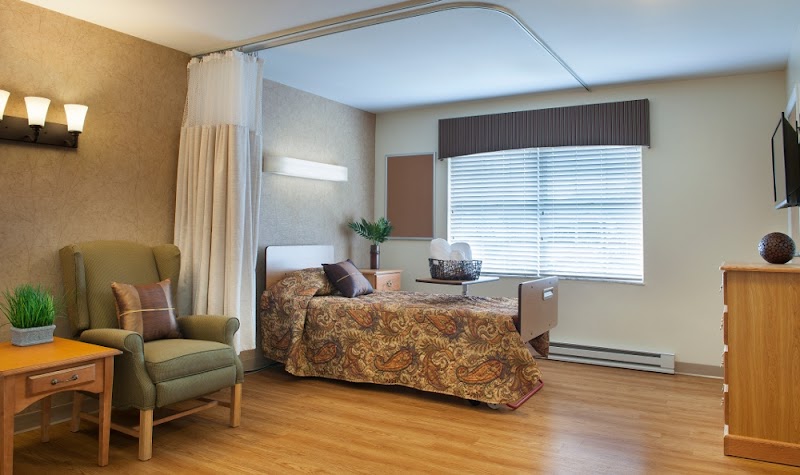
How is Albany Health Care & Rehabilitation Center Staffed?

CMS rates ALBANY HEALTH CARE & REHABILITATION CENTER's staffing level at 3 out of 5 stars, which is average compared to other nursing homes. Staff turnover is 42%, compared to the Indiana average of 46%. This relatively stable workforce can support continuity of care.

What Have Inspectors Found at Albany Health Care & Rehabilitation Center?

State health inspectors documented 19 deficiencies at ALBANY HEALTH CARE & REHABILITATION CENTER during 2022 to 2025. These included: 1 that caused actual resident harm, 17 with potential for harm, and 1 minor or isolated issues. Deficiencies causing actual harm indicate documented cases where residents experienced negative health consequences.
Who Owns and Operates Albany Health Care & Rehabilitation Center?

ALBANY HEALTH CARE & REHABILITATION CENTER is owned by a for-profit company. For-profit facilities operate as businesses with obligations to shareholders or private owners. The facility is operated by TLC MANAGEMENT, a chain that manages multiple nursing homes. With 102 certified beds and approximately 77 residents (about 75% occupancy), it is a mid-sized facility located in ALBANY, Indiana.
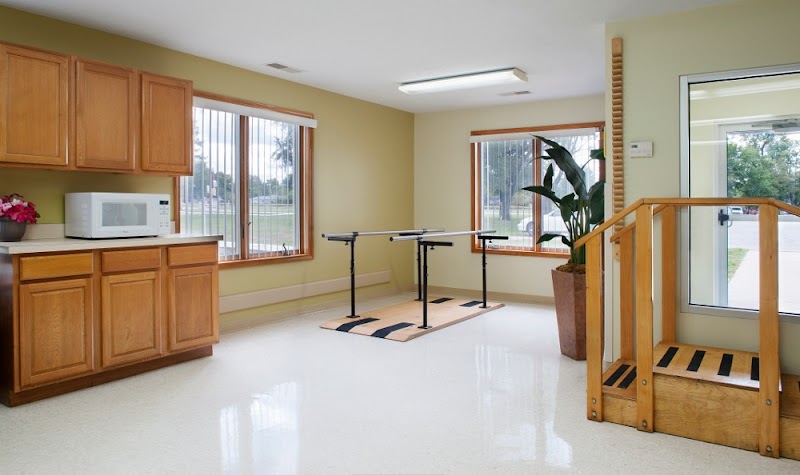
How Does Albany Health Care & Rehabilitation Center Compare to Other Indiana Nursing Homes?

Compared to the 100 nursing homes in Indiana, ALBANY HEALTH CARE & REHABILITATION CENTER's overall rating (2 stars) is below the state average of 3.1, staff turnover (42%) is near the state average of 46%, and health inspection rating (2 stars) is below the national benchmark.

What Should Families Ask When Visiting Albany Health Care & Rehabilitation Center?

Based on this facility's data, families visiting should ask: "Can I visit during a mealtime to observe dining assistance and food quality?" "How do you handle medical emergencies, and what is your hospital transfer rate?" "Can I speak with family members of current residents about their experience?"

Is Albany Health Care & Rehabilitation Center Safe?

Based on CMS inspection data, ALBANY HEALTH CARE & REHABILITATION CENTER has a clean safety record: no substantiated abuse findings (meaning no confirmed cases of resident harm), no Immediate Jeopardy citations (the most serious violation level indicating risk of serious injury or death), and is not on the Special Focus Facility watch list (a federal program monitoring the lowest-performing 1% of nursing homes). The facility has a 2-star overall rating and ranks #100 of 100 nursing homes in Indiana. While no facility is perfect, families should still ask about staff-to-resident ratios and recent inspection results during their visit.

Do Nurses at Albany Health Care & Rehabilitation Center Stick Around?

ALBANY HEALTH CARE & REHABILITATION CENTER has a staff turnover rate of 42%, which is about average for Indiana nursing homes (state average: 46%). Moderate turnover is common in nursing homes, but families should still ask about staff tenure and how the facility maintains care continuity when employees leave.

Was Albany Health Care & Rehabilitation Center Ever Fined?

ALBANY HEALTH CARE & REHABILITATION CENTER has no federal fines on record. CMS issues fines when nursing homes fail to meet care standards or don't correct problems found during inspections. The absence of fines suggests the facility has either maintained compliance or corrected any issues before penalties were assessed. This is a positive indicator, though families should still review recent inspection reports for the full picture.

Is Albany Health Care & Rehabilitation Center on Any Federal Watch List?

ALBANY HEALTH CARE & REHABILITATION CENTER is not on any federal watch list. The most significant is the Special Focus Facility (SFF) program, which identifies the bottom 1% of nursing homes nationally based on persistent, serious quality problems. Not being on this list means the facility has avoided the pattern of deficiencies that triggers enhanced federal oversight. This is a positive indicator, though families should still review the facility's inspection history directly.