MILLER'S AT OAK POINTE
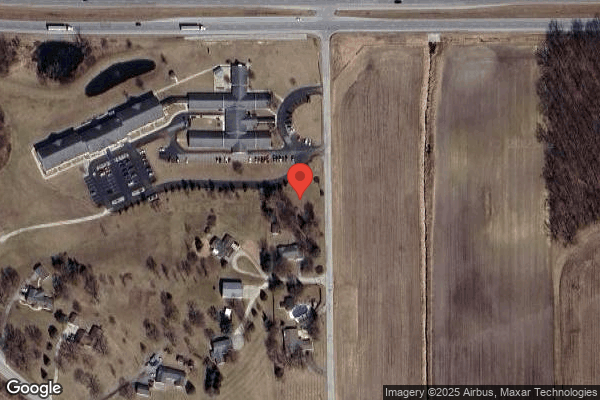
411 N WOLF RD, COLUMBIA CITY, IN 46725 (260) 248-8141
For profit - Corporation 82 Beds MILLER'S MERRY MANOR Data: November 2025
Trust Grade
80/100
#164 of 505 in IN
Last Inspection: November 2024

Within standard 12-15 month inspection cycle. Federal law requires annual inspections.

Overview

Miller's at Oak Pointe in Columbia City, Indiana has a Trust Grade of B+, indicating it is above average and recommended for families considering care options. It ranks #164 out of 505 facilities in Indiana, placing it in the top half, and #1 out of 2 in Whitley County, meaning it is the best option locally. The facility is improving, having reduced issues from 2 in 2024 to 1 in 2025. Staffing is a strength with a 4 out of 5 star rating and a turnover rate of 44%, which is below the state average of 47%, suggesting a stable workforce. While there have been no fines, there are some cleanliness concerns, including improperly labeled food and unclean equipment in the kitchen, as well as medications not being securely managed for some residents. It’s important to consider both the strengths and weaknesses when evaluating this nursing home for your loved one.

Trust Score
B+
80/100
In Indiana
#164/505
Top 32%
Safety Record
Low Risk
No red flags
Inspections
Getting Better
2 → 1 violations
Staff Stability
○ Average
44% turnover. Near Indiana's 48% average. Typical for the industry.
Penalties
✓ Good
No fines on record. Clean compliance history, better than most Indiana facilities.
Skilled Nurses
✓ Good
Each resident gets 43 minutes of Registered Nurse (RN) attention daily — more than average for Indiana. RNs are trained to catch health problems early.
Violations
✓ Good
Only 5 deficiencies on record. Cleaner than most facilities. Minor issues only.
★★★★☆
4.0
Overall Rating
★★★★☆
4.0
Staff Levels
★★★★☆
4.0
Care Quality
★★★★☆
4.0
Inspection Score
Stable
2024: 2 issues
2025: 1 issues

The Good

  • 4-Star Staffing Rating · Above-average nurse staffing levels
  • 4-Star Quality Measures · Strong clinical quality outcomes
  • Full Sprinkler Coverage · Fire safety systems throughout facility
  • No fines on record
  • Staff turnover below average (44%)

    4 points below Indiana average of 48%

Facility shows strength in staffing levels, quality measures, fire safety.

The Bad

Staff Turnover: 44%

Near Indiana avg (46%)

Typical for the industry

Chain: MILLER'S MERRY MANOR

Part of a multi-facility chain

Ask about local staffing decisions and management

The Ugly 5 deficiencies on record

Jul 2025 1 deficiency
CONCERN (D) 📢 Someone Reported This

A family member, employee, or ombudsman was alarmed enough to file a formal complaint

Potential for Harm - no one hurt, but risky conditions existed

Deficiency F0604 (Tag F0604)

Could have caused harm · This affected 1 resident

Based on interview, record review and observation, the facility failed to ensure a physical restraint position changing alarm device was ordered and monitored for 1 of 1 resident reviewed (Resident B)...

Read full inspector narrative →
Based on interview, record review and observation, the facility failed to ensure a physical restraint position changing alarm device was ordered and monitored for 1 of 1 resident reviewed (Resident B).Findings include:During an observation on 7/16/25 at 10:35 AM, Resident B was observed in her bed asleep with a position changing alarm under her body and in her wheelchair.During an interview on 7/16/25 at 10:42 AM, Certified Nurse Aide (CNA) 2 indicated Resident B's alarm was active and used as a fall prevention. CNA 2 indicated when Resident B attempted to get up the alarm would sound to alert staff for assistance.During an interview on 7/16/25 at 10:54 AM, the Director of Nursing (DON) indicated a position changing alarm was placed on Resident B's bed and wheelchair for fall prevention after Resident B had an unwitnessed fall on 6/26/25.During an interview on 7/16/25 at 1:38 PM, Unit Manager (UM) 3 indicated Resident B was at risk for falls. UM 3 indicated after Resident B's fall on 6/26/25 a position changing alarm was placed on resident's chair and bed to prevent falls. UM 3 indicated an order should be placed in the resident's chart and in the care plan.During an interview on 7/16/25 at 2:24 PM, the DON and Administrator indicated they were unaware an order was needed for a position changing device. The DON indicated on 6/26/25 a position changing device was placed on Resident B's bed and chair to prevent falls. The DON indicated the resident was sneaky in getting up on her own. The DON also indicated the device should be monitored.During an interview on 7/16/25 at 2:24 PM, Nurse Practitioner (NP) 4 indicated she was aware of the position changing device prior to implementation. NP 4 indicated she was unaware of documentation, or an order was needed for a position changing device.An interview was attempted with Resident B on 7/16/25 at 10:35 AM, 1:29 PM and 3:12 PM. Resident B was asleep during each attempt.Resident B's record was reviewed on 7/16/25 at 11 AM. Diagnoses included traumatic subarachnoid hemorrhage without loss of consciousness, secondary malignant neoplasm of bone and vascular dementia.A re-admission Minimum Data Set (MDS) assessment, dated 7/6/25, indicated Resident B had a Brief Interview of Mental Status (BIMS) of 10/15 (moderately impaired).A care plan, last revised 7/9/2025, indicated Resident B was at risk for falls. Interventions included monitoring changes in gait/positioning.A fall report, dated 6/26/25, indicated Resident B was at risk for falls. Interventions included to place bed and chair position changing alarm and monitor for functionality.Resident B's orders dated 6/26/25 - 7/16/25, did not include an order for a position changing alarm device nor an order for monitoring the device.Nursing notes dated 6/26/25 - 7/16/25, did not include any documentation of the position changing alarm device discussion or an order with the physician or nurse practitioner. The nursing notes did not include any documentation regarding monitoring of the device.A nursing note, dated 7/11/25, indicated Resident B was observed turning off the position changing alarm multiple times.A policy, dated 1/14/2008, titled Alarm Use and Maintenance, was provided by the Administrator on 7/16/25 at 2:24 PM. The policy indicated alarms are used in prevention of residents transferring self-unassisted. The policy indicated an order was needed. The policy also indicated that the device was monitored for effectiveness and functionality.3.1-26 (b)This finding relates to Complaint 1586111.
Nov 2024 2 deficiencies
CONCERN (E)

Potential for Harm - no one hurt, but risky conditions existed

Deficiency F0761 (Tag F0761)

Could have caused harm · This affected multiple residents

**NOTE- TERMS IN BRACKETS HAVE BEEN EDITED TO PROTECT CONFIDENTIALITY** Based on observation, interview, and record review the facility failed to ensure medications and treatment supplies were secured...

Read full inspector narrative →
**NOTE- TERMS IN BRACKETS HAVE BEEN EDITED TO PROTECT CONFIDENTIALITY** Based on observation, interview, and record review the facility failed to ensure medications and treatment supplies were secured, insulin was dated upon opening and discarded upon expiration for 4 of 11 reviewed (Resident 15, Resident 27, Resident 45, and Resident 1). Findings include: 1) During an observation on [DATE] at 9:20 AM, Resident 15 was seated in a recliner in her room with a cup containing 11 round pills of various colors in her hand, and an additional cup with a large oblong pill was observed on her bedside table within her reach. No staff member was in the room or in the hall in the line of vision of Resident 15. Resident 15 indicated she took some of her pills and was going to let the rest of them sit for a little while before she took them. She indicated nurses would normally leave her pills with her to take when she was ready. During an interview, on [DATE] at 9:29 AM, Licensed Practical Nurse (LPN) 6 indicated she left the pills with Resident 15 and intended to come back to make sure she had taken them. Resident 15's record was reviewed on [DATE] at 10:36 AM. Diagnoses included dissociative and conversion disorder, diabetes mellitus type 2, and dementia, unspecified severity with anxiety. Resident 15's current quarterly, Minimum Data Set (MDS), dated [DATE] indicated their Basic Interview for Mental Status (BIMS) score was 14 (cognitively intact). Resident 15's current care plan titled behavior . indicated the resident had a problem of excessive nervousness, worrying about things she could not control, with a goal date of [DATE]. Interventions included administering medications as ordered. Resident 15's current care plan titled hyperthyroidism . indicated the resident had a problem of a risk for complications, with a goal date of [DATE]. Interventions included administering medications as ordered. During an interview, on [DATE] at 2:04 PM, The Director of Nursing (DON) indicated nurses should watch residents swallow their medications and should not leave pills at the bedside. A current policy, titled Medication Administration Procedure, dated [DATE], provided by the Administrator on [DATE] at 1:55 PM, indicated staff should remain with the resident until each medication is swallowed. Staff should never leave medication with the resident. 2) During an observation, on [DATE] at 9:18 AM, a labeled bottle of rubbing alcohol, about 2/3 full of clear liquid, was observed at Resident 27's bedside table, visible from the hallway. During an interview, on [DATE] at 9:30 AM, LPN 6 indicated she was not aware the bottle of rubbing alcohol was at her bedside before this encounter. She indicated there was not a current physician's order regarding Resident 27's use of the alochol. She indicated the Nurse Practitioner should evaluate the appropriateness of the use of rubbing alcohol and provide an order with guidelines for use. She indicated the label indicated the liquid was rubbing alcohol and the amount on the label was 32 ounces. She indicated about 1/3 of the bottle was empty. During an interview, on [DATE] at 9:29 AM, Resident 15 indicated her family brought the bottle of rubbing alcohol and she used it to cleanse her chin. She indicated she always kept the bottle on her table. Resident 27's record was reviewed on [DATE] at 10:49 AM. Diagnoses included cerebral infarction, chronic kidney disease stage 3, and dysphagia, oral phase. Resident 27's current quarterly Minimum Data Set (MDS) dated [DATE] indicated their Basic Interview for Mental Status (BIMS) score was 15 (cognitively intact). No physician orders for the use of rubbing alcohol for Resident 27 were available for review. In an interview, on [DATE] at 2:04 PM, the DON indicated the bottle of rubbing alcohol should not have been at the bedside due to risk of accidental consumption. A current policy dated [DATE], titled Storage of Medications provided by DON on [DATE] at 9:54 AM indicated potentially harmful substances should be clearly identified and stored in a locked area separately from medications. 3) During an observation, on [DATE] at 10:51 AM, LPN 5 removed a bottle of lispro insulin from the 100-hall medication cart labeled for Resident 45. The bottle's seal was removed and the top of the rubber stopper had pinprick sized puncture marks. No open date was indicated on the bottle. During an interview, on [DATE] at 10:52 AM, LPN 5 indicated staff should discard the insulin by the expiration date printed on the bottle, or 28 days after opening. She indicated the open date could not be determined because no date was written on the bottle. Resident 45's record was reviewed on [DATE] at 9:20 AM. Diagnoses included type 2 diabetes mellitus with hyperglycemia, hyperlipidemia, and acute on chronic congestive heart failure. Resident 45's current quarterly MDS indicated his BIMS score was 13 (cognitively intact). The MDS indicated Resident 45 used insulin 7 days a week. Current physician orders dated [DATE] indicated Resident 45 should receive Insulin Lispro solution as per a sliding scale. A review of Resident 45's medication administration record, dated [DATE], indicated Resident 45 was administered Lispro insulin each day from [DATE] through [DATE]. During an interview, on [DATE] at 9:54 AM, the DON indicated insulin bottles should be labeled with an open date and discarded 28 days after opening. A current, undated policy, titled Refrigerated Preparations-Injectables and Liquids, provided by the DON on [DATE] at 9:54 AM, indicated insulin vials should be marked with an open date on the label. 4) During an observation on [DATE] at 8:58 AM, a bottle of Lantus insulin labeled for Resident 1 was labeled with an open date of [DATE]. During an interview on [DATE] at 8:59 AM, Registered Nurse (RN) 7 indicated insulin can be used for 28 days after opening. He indicated the insulin should have been discarded the previous day. He indicated the expired insulin had been administered to Resident 1 earlier that morning. Resident 1's record was reviewed on [DATE] at 2:21 PM. Diagnoses included diabetes mellitus without complications, hyperlipidemia and hypertension. A current admission MDS dated [DATE] indicated Resident 1's BIMS score was 9 (cognitively impaired). The MDS indicated Resident 1 used insulin 7 days a week. Current physician's orders dated [DATE] indicated Resident 1 should receive 13 units of Lantus Insulin twice daily for diabetes mellitus. Resident 1's medication administration record, dated [DATE], indicated Resident 1 was administered 13 units of Lantus insulin on [DATE]. During an interview, on [DATE] at 9:54 AM, the DON indicated insulin bottles should be labeled with an open date and discarded 28 days after opening. A current policy, undated, titled Refrigerated Preparations-Injectables and Liquids, provided by the DON on [DATE] at 9:54 AM, indicated Lantus insulin vials should be marked with an open date on the label and discarded 28 days after opening. 3.1-25(j)(o)
CONCERN (F)

Potential for Harm - no one hurt, but risky conditions existed

Food Safety (Tag F0812)

Could have caused harm · This affected most or all residents

Based on observation, interview, and record review, the facility failed to ensure left overs were labeled, equipment was cleaned, gloving, and hand hygiene was observed during tray pass. 52 of 52 resi...

Read full inspector narrative →
Based on observation, interview, and record review, the facility failed to ensure left overs were labeled, equipment was cleaned, gloving, and hand hygiene was observed during tray pass. 52 of 52 residents ate food prepared in the kitchen and were served ice from the ice machine. Findings include: 1. During a tour of the kitchen, on 11/12/24 at 09:23 AM, Dietary Manager (DM) 3 indicated the left over chicken patties should be kept 3-7 days. The date on the bag was unreadable. In an interview, on 11/12/24 at 09:23 AM, DM 3 indicated the date on the patties in the gallon zip lock was unreadable. She indicated staff should ensure dates are readable on leftover items. A policy, titled Food Protection and Storage, dated 10/06/2015 indicated X. Food not in original containers are clearly labeled for contents, dated, and stored in food related containers with tight fitting lids. 2. During a tour of the clean utility, on 11/12/24 at 10:39 AM , a black residue was observed on the inside white shield of the ice machine. During an interview, on 11/12/24 at 10:39 AM , Licensed Practical Nurse (LPN) 1 indicated she was not sure what the black residue was on the inside white shield of the ice machine, but she would ask maintenance. During an interview, on 11/12/24 at 10:47 AM, Maintenance 2 indicated the ice machine was cleaned in December and June, according to policy. During an observation, on 11/12/24 at 10:47 AM, Maintenance 2 rubbed off the black residue from the white shield inside the ice machine. Maintenance 2 indicated the ice machine served all residents currently residing in the facility. A policy, titled Ice Machine Monthly Maintenance, provided by Maintenance 2 on 11/12/24 at 10:52 AM, indicated to complete maintenance on the machine monthly. 3. During an observation, on 11/12/24 at 10:59 AM, Dietary Aide (DA) 4 was observed, during pureed meat preparation, to don a glove on his right hand. No hand hygiene had been performed prior to donning the glove. Dietary Aide 4 then touched a bread sack with the gloved hand, put his gloved hand on the menu, handled the beef stock canister, and opened the oven. Without changing the glove, DA 4 completed the pureed meat preparation utilizing the food processor, then placed the pureed meat on the steam table. DA 4 had not changed the glove nor performed hand hygiene. DA 4 then prepared to plate foods for the lunch meal. He did not perform hand hygiene, nor change the glove. DA 4 touched a cart with the gloved hand, then touched serving tongs, then touched the utensil drawer. DA 4 obtained measuring spoons, but had not performed hand hygiene or changed his glove. DA 4 handled measuring spoons with his gloved hand, touched his ungloved left hand, handled a coffee cup with his gloved hand, and stirred the meat puree with a spoon. Dietary Aide 4 removed his glove. With his bare right hand, DA 4 obtained some leftover puree in the food processor by touching the inside of the processor with his ungloved right index finger, then licked his finger. Dietary Aide 4 did not wash his hands prior to regloving for food plating. In an interview, on 11/12/24 at 11:25 AM, DM 3 indicated she knew there were problems with gloving and hand hygiene she would need to correct. A policy, titled Handwashing, dated 10/6/2015 indicated Hand hygiene should be performed G. during food preparation as often as necessary .to prevent cross contamination while changing tasks A policy, titled Glove policy, dated 9/9/2015 indicated when using gloves, they should be used for one task then changed. 3.1-21(i)(1) 3.1-21(i)(3)
Jan 2023 2 deficiencies
CONCERN (D)

Potential for Harm - no one hurt, but risky conditions existed

Respiratory Care (Tag F0695)

Could have caused harm · This affected 1 resident

**NOTE- TERMS IN BRACKETS HAVE BEEN EDITED TO PROTECT CONFIDENTIALITY** Based on observation, record review and interview, the facility failed to ensure care plans were developed and implemented for 2...

Read full inspector narrative →
**NOTE- TERMS IN BRACKETS HAVE BEEN EDITED TO PROTECT CONFIDENTIALITY** Based on observation, record review and interview, the facility failed to ensure care plans were developed and implemented for 2 of 5 residents reviewed for respiratory care. (Resident 6 and Resident 16). Finding include: 1) During an observation on 1/11/23 at 10:39 AM, Resident 6 was observed in her room sitting in her recliner with oxygen administered by a nasal cannula (NC) (tubing used to deliver oxygen through the nostrils). The oxygen had humidity to her oxygen concentrator (a machine used to produce oxygen) at the bedside. The oxygen concentrator gauge indicated the oxygen was being delivered at 2 liters per minute (LPM). On 01/13/23 at 10:40 AM, Resident 6's record was reviewed. Diagnoses included chronic respiratory failure with hypoxia, pulmonary fibrosis, acute on chronic diastolic, congestive heart failure, hypothyroidism, essential hypertension, paroxysmal atrial fibrillation, generalized edema and a history of Covid19. Resident 6's quarterly Minimum Data Set (MDS), dated [DATE], indicated the resident's Brief Interview for Mental Status (BIMS) score was 15, she was alert, oriented and interviewable. The MDS assessment indicated she had shortness of breath/trouble breathing with exertion such as walking, bathing, transferring and while laying flat. The MDS indicated she was on a diuretic 7 days a week and started using oxygen while a resident of the facility. A physician order, dated 12/29/21, indicated oxygen was ordered for Resident 6 to be administered at 2 LPM via NC continuously every shift; may remove the oxygen for showers and beauty/barber shop as needed. Other physician orders related to the oxygen maintenance included: take oxygen saturations every shift, place no smoking magnets on inside and outside of door, check oxygen flow rate, tank level, tube patency, portable/concentrator function, humidifier level every 4 hour every shift and clean concentrator filter weekly every night shift every Sunday. A physician order, dated 1/2/22, indicated to change oxygen tubing, humidifier and clean concentrator filter weekly every night shift every Sunday. A review of Resident 6's Treatment Administration Record (TAR), dated 12/1/22 to 1/12/23, indicated all physician orders related to oxygen administration and maintenance were completed as ordered. Resident 6's comprehensive care plan, last revised 12/29/22, was reviewed. A care plan guiding care and related to oxygen administration and maintenance was not located. 2) During an observation on 1/11/23 at 11:30 AM, Resident 16 was observed in his bed with oxygen administered by a NC. There was humidity added his oxygen concentrator at the bedside. The oxygen concentrator gauge indicated the oxygen was being delivered at 3 LPM. On 01/13/23 at 4:58 PM, Resident 16's record was reviewed. Diagnoses included chronic obstructive pulmonary disease, acute respiratory infection with hypoxia, acute on chronic systolic congestive and diastolic congestive heart failure, simple chronic bronchitis, essential hypertension, sleep apnea, edema, and a history of Covid 19. Resident 16's quarterly MDS, dated [DATE], indicated the resident's Brief Interview for Mental Status (BIMS) score was 13, he was alert, oriented and interviewable. The MDS assessment indicated he had shortness of breath while laying flat. The MDS indicated he was on a diuretic 7 days a week and started using oxygen while a resident of the facility. A physician order, dated 8/2/22, indicated oxygen was ordered for Resident 16 to be administered at 3 LPM via NC continuously every shift; may remove the oxygen for showers and beauty/barber shop as needed. Other physician orders related to the oxygen maintenance included: take oxygen saturations every shift, place no smoking magnets on inside and outside of door and change the oxygen tubing, humidifier, and clean concentrator filter weekly every night shift every Sunday. A review of Resident 16's TAR, dated 12/1/22 to 1/12/23, indicated all physician orders related to oxygen administration and maintenance were completed as ordered. Resident 16's comprehensive care plan, last revised 9/5/22, was reviewed. A care plan guiding care and related to oxygen administration and maintenance was not located. In an interview on 1/17/23 at 9:15 AM, the Director of Nursing (DON) indicated there were no care plans for oxygen administration and there should have been. On 1/17/22 at 12:34 PM, a current policy titled Care Plan Development & Review, dated 1/24/20, provided by the DON, indicated a comprehension care for each resident should include measurable objectives and timetables to meet the resident's medical, nursing, mental and psychosocial needs that are identified in the comprehensive assessment process. Care plan development included addressing needs, identifying the professional services that are responsible for each element of care, and showing evidence the treatment or service provided were to attain or maintain the resident's highest practicable physical, mental and psychosocial well-being. Care plans should be revised daily and pro re nata (PRN) as changes in the resident's condition dictates and included changes in Physician orders, therapy changes, , behavior changes, etc. 3.1-47(a)(4)
CONCERN (F)

Potential for Harm - no one hurt, but risky conditions existed

Food Safety (Tag F0812)

Could have caused harm · This affected most or all residents

Based on observation, interview, and record review the facility failed to ensure cleanliness of the kitchen, sanitary storage of cookware, sanitary storage of outside food and other opened food items....

Read full inspector narrative →
Based on observation, interview, and record review the facility failed to ensure cleanliness of the kitchen, sanitary storage of cookware, sanitary storage of outside food and other opened food items. 39 residents resided in the facility. During a tour of the kitchen with the Dietary Manager (DM) on 1/11/23 at 9:46 am, an open gallon of milk approximately ¼ full was observed. The open gallon of milk was not labeled with an open date. Another open gallon of milk approximately ¾ full was observed with an open date of 1/11/23. The DM indicated all items should be labeled with an open date. The DM indicated all residents residing in the facility ate food prepared in the kitchen. An unopened dented soup can dated 12/7/22 was observed on a shelf. The DM indicated the can must have been damaged by kitchen staff. The DM indicated dented cans should be removed and returned for credit. She indicated she would remove the can. Moisture was observed between 5 stacked steam table pans. The CDM indicated the moisture was probably from putting the pans away this morning. She indicated the pan should have been placed on a cart to air dry. She indicated the pans had probably been put away wet by new staff. She removed the pans and indicated she would allow them to air dry. The CDM agreed the pans should probably be washed again. The floor was observed to be covered with a dull film. The CDM indicated the film was probably grease. The CDM indicated the floor was mopped every day and as needed. She indicated the floor was deep cleaned every month. She indicated the cleaning log for this week was not completed yet. A white substance was observed on the floor underneath the sinks and the dishwasher. The CDM indicated she was unaware of what the substance is. She indicated she had not notified maintenance of the white substance. The DM indicated the cleaning log was not completed for this week due to the DM manager having the previous day off (Tuesday). During an interview on 1/11/23 at 10:44 am the Administrator indicated she was unaware of the white substance on the floor under the dishwasher and sinks. She indicated cleaning schedules were not available. She indicated the kitchen had previously been short staffed for a long period of time. She indicated new staff had been hired and were being trained. A Consultant Dietician report dated 10/21/22 provided by the Administrator on 1/13/23 at 8:40 am indicated the DM had worked 92 hours in 1 week. The Consultant Dietician indicated the kitchen floor was not clean. She indicated some refrigerated food items were not labeled with an end date. A Consultant Dietician report dated 11/16/22 provided by the Administrator on 1/13/23 at 8:40 am indicated the kitchen staff worked numerous double shifts. She indicated some refrigerated food items were not labeled with an end date. A Consultant Dietician report dated 1/3/23 provided by the Administrator on 1/13/23 at 8:40 am indicated some refrigerated food items were not labeled with an end date. The Consultant Dietician indicated dishes and utensils were not cleaned and stored properly. She indicated the kitchen floor had a white build up. She indicated there was no cleaning log posted. A current policy titled Food Protection and Storage provided by RN 9 on 1/12/23 at 11:02 am indicated kitchen walls and floors were to be clean. The policy indicated vendor recommendations were to be followed for dented cans. The policy indicated all opened food items must be labeled with the open date. 3.1-21(i)(1) and (3)
Understanding Severity Codes (click to expand)
Life-Threatening (Immediate Jeopardy)
J - Isolated K - Pattern L - Widespread
Actual Harm
G - Isolated H - Pattern I - Widespread
Potential for Harm
D - Isolated E - Pattern F - Widespread
No Harm (Minor)
A - Isolated B - Pattern C - Widespread

Questions to Ask on Your Visit

  • "Can I speak with families of current residents?"
  • "What's your RN coverage like on weekends and overnight?"

Our Honest Assessment

Strengths
  • • Grade B+ (80/100). Above average facility, better than most options in Indiana.
  • • No major safety red flags. No abuse findings, life-threatening violations, or SFF status.
  • • No fines on record. Clean compliance history, better than most Indiana facilities.
  • • Only 5 deficiencies on record. Cleaner than most facilities. Minor issues only.
Concerns
  • • No significant concerns identified. This facility shows no red flags across CMS ratings, staff turnover, or federal penalties.
Bottom line: Generally positive indicators. Standard due diligence and a personal visit recommended.

About This Facility

What is Miller'S At Oak Pointe's CMS Rating?

CMS assigns MILLER'S AT OAK POINTE an overall rating of 4 out of 5 stars, which is considered above average nationally. Within Indiana, this rating places the facility higher than 99% of the state's 100 nursing homes. This rating reflects solid performance across the metrics CMS uses to evaluate nursing home quality.

How is Miller'S At Oak Pointe Staffed?

CMS rates MILLER'S AT OAK POINTE's staffing level at 4 out of 5 stars, which is above average compared to other nursing homes. Staff turnover is 44%, compared to the Indiana average of 46%. This relatively stable workforce can support continuity of care.

What Have Inspectors Found at Miller'S At Oak Pointe?

State health inspectors documented 5 deficiencies at MILLER'S AT OAK POINTE during 2023 to 2025. These included: 5 with potential for harm.

Who Owns and Operates Miller'S At Oak Pointe?

MILLER'S AT OAK POINTE is owned by a for-profit company. For-profit facilities operate as businesses with obligations to shareholders or private owners. The facility is operated by MILLER'S MERRY MANOR, a chain that manages multiple nursing homes. With 82 certified beds and approximately 53 residents (about 65% occupancy), it is a smaller facility located in COLUMBIA CITY, Indiana.

How Does Miller'S At Oak Pointe Compare to Other Indiana Nursing Homes?

Compared to the 100 nursing homes in Indiana, MILLER'S AT OAK POINTE's overall rating (4 stars) is above the state average of 3.1, staff turnover (44%) is near the state average of 46%, and health inspection rating (4 stars) is above the national benchmark.

What Should Families Ask When Visiting Miller'S At Oak Pointe?

Based on this facility's data, families visiting should ask: "Can I visit during a mealtime to observe dining assistance and food quality?" "How do you handle medical emergencies, and what is your hospital transfer rate?" "Can I speak with family members of current residents about their experience?"

Is Miller'S At Oak Pointe Safe?

Based on CMS inspection data, MILLER'S AT OAK POINTE has a clean safety record: no substantiated abuse findings (meaning no confirmed cases of resident harm), no Immediate Jeopardy citations (the most serious violation level indicating risk of serious injury or death), and is not on the Special Focus Facility watch list (a federal program monitoring the lowest-performing 1% of nursing homes). The facility has a 4-star overall rating and ranks #1 of 100 nursing homes in Indiana. While no facility is perfect, families should still ask about staff-to-resident ratios and recent inspection results during their visit.

Do Nurses at Miller'S At Oak Pointe Stick Around?

MILLER'S AT OAK POINTE has a staff turnover rate of 44%, which is about average for Indiana nursing homes (state average: 46%). Moderate turnover is common in nursing homes, but families should still ask about staff tenure and how the facility maintains care continuity when employees leave.

Was Miller'S At Oak Pointe Ever Fined?

MILLER'S AT OAK POINTE has no federal fines on record. CMS issues fines when nursing homes fail to meet care standards or don't correct problems found during inspections. The absence of fines suggests the facility has either maintained compliance or corrected any issues before penalties were assessed. This is a positive indicator, though families should still review recent inspection reports for the full picture.

Is Miller'S At Oak Pointe on Any Federal Watch List?

MILLER'S AT OAK POINTE is not on any federal watch list. The most significant is the Special Focus Facility (SFF) program, which identifies the bottom 1% of nursing homes nationally based on persistent, serious quality problems. Not being on this list means the facility has avoided the pattern of deficiencies that triggers enhanced federal oversight. This is a positive indicator, though families should still review the facility's inspection history directly.