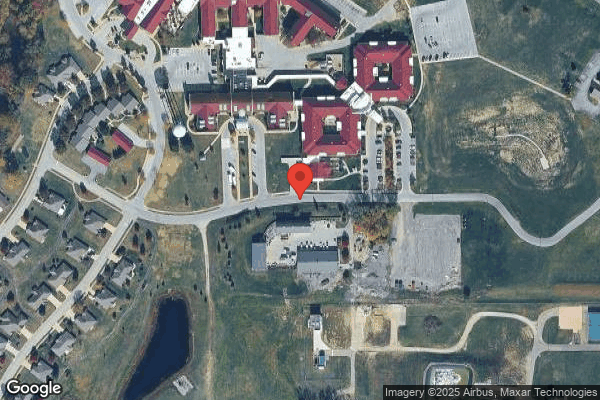
COMPASS PARK

800 FREEMASON PARKWAY, FRANKLIN, IN 46131 (317) 736-6141
Non profit - Other 167 Beds Independent Data: November 2025
Trust Grade
80/100
#134 of 505 in IN
Last Inspection: September 2024

Within standard 12-15 month inspection cycle. Federal law requires annual inspections.

Overview

Compass Park in Franklin, Indiana, has a Trust Grade of B+, which means it is recommended and above average in quality. It ranks #134 out of 505 facilities in the state, placing it in the top half, but is #7 of 10 in Johnson County, indicating there are better local options. The facility's performance is worsening, with an increase in issues from 3 in 2023 to 4 in 2024. Staffing is a strength, earning 4 out of 5 stars with a turnover rate of 40%, which is below the Indiana average of 47%. There have been no fines recorded, which is a positive sign. However, inspector findings revealed that food sanitation practices are lacking, as staff were observed with unkempt hair while preparing meals, leading to potential hygiene risks. Additionally, the facility failed to provide written notifications for transfers and bed holds for several residents, which could affect family communication and care continuity. Overall, while Compass Park has some strengths, families should be aware of these concerns when considering care for their loved ones.

Trust Score
B+
80/100
In Indiana
#134/505
Top 26%
Safety Record
Low Risk
No red flags
Inspections
Getting Worse
3 → 4 violations
Staff Stability
○ Average
40% turnover. Near Indiana's 48% average. Typical for the industry.
Penalties
✓ Good
No fines on record. Clean compliance history, better than most Indiana facilities.
Skilled Nurses
✓ Good
Each resident gets 45 minutes of Registered Nurse (RN) attention daily — more than average for Indiana. RNs are trained to catch health problems early.
Violations
○ Average
10 deficiencies on record. Average for a facility this size. Mostly minor or procedural issues.
★★★★☆
4.0
Overall Rating
★★★★☆
4.0
Staff Levels
★★☆☆☆
2.0
Care Quality
★★★★☆
4.0
Inspection Score
Stable
2023: 3 issues
2024: 4 issues

The Good

  • 4-Star Staffing Rating · Above-average nurse staffing levels
  • Full Sprinkler Coverage · Fire safety systems throughout facility
  • No fines on record
  • Staff turnover below average (40%)

    8 points below Indiana average of 48%

Facility shows strength in staffing levels, fire safety.

The Bad

Staff Turnover: 40%

Near Indiana avg (46%)

Typical for the industry

The Ugly 10 deficiencies on record

Sept 2024 4 deficiencies
CONCERN (D)

Potential for Harm - no one hurt, but risky conditions existed

Transfer Notice (Tag F0623)

Could have caused harm · This affected 1 resident

Based on interview and record review, the facility failed to ensure that written notification was provided to the resident, the resident's representative, and to the Office of the State Long-Term Care...

Read full inspector narrative →
Based on interview and record review, the facility failed to ensure that written notification was provided to the resident, the resident's representative, and to the Office of the State Long-Term Care Ombudsman for 3 of 5 residents reviewed for written transfer and discharge notification. (Resident 140, Resident 1, Resident 123) Findings include: 1. On 9/18/24 at 2:12 p.m., Resident 140's clinical record was reviewed. The diagnoses included, but were not limited to, COPD (Chronic Obstructive Pulmonary Disease), chronic respiratory failure, and orthostatic hypotension (form of low blood pressure that happens when standing after sitting or lying down). Resident 140's face sheet had identified a family member as the emergency contact person. A progress note, dated 7/4/24 at 2:19 p.m., indicated Resident 140 was transferred to the hospital emergency department. The transfer was a facility-initiated transfer. The clinical record lacked documentation that the written notification of the Notice of Transfer or Discharge document was provided to Resident 140, the emergency contact, and the Office of the State Long-Term Care Ombudsman for the hospital transfer on 7/4/24. 2. On 9/19/24 at 10:00 a.m., Resident 1's clinical record was reviewed. The diagnoses included, but were not limited to, diabetes, acute and chronic respiratory failure, and heart failure. Resident 1's face sheet had identified a family member as the guardian and emergency contact person. A progress note, dated 4/25/24 at 10:10 a.m., indicated Resident 1's emergency contact transported Resident 1 from the facility to the hospital emergency department. The transfer was a facility-initiated transfer. A progress note, dated 3/13/24 at 2:59 p.m., indicated Resident 1 was scheduled to be transferred to the hospital on 3/14/24 and was to be admitted to the hospital. The transfer was a facility-initiated transfer. A progress note, dated 3/6/24 at 2:44 p.m., indicated Resident 1 was transferred to the hospital emergency department on 3/6/24. The transfer was a facility-initiated transfer. The clinical record lacked documentation that the written notification of the Notice of Transfer or Discharge documents were provided to Resident 1, the emergency contact, and the Office of the State Long-Term Care Ombudsman for the hospital transfers on 4/25/24, 3/14/24, and 3/6/24. 3. On 9/19/24 at 8:32 a.m., Resident 123's clinical record was reviewed. The diagnoses included, but were not limited to, cirrhosis of the liver, anxiety, schizoid personality disorder, and dementia. Resident 123's face sheet had identified an emergency contact person. A progress note, dated 8/11/24 at 9:24 p.m., indicated Resident 123 was transferred to the hospital emergency department. The transfer was a facility-initiated transfer. The clinical record lacked documentation that the written notification of the Notice of Transfer or Discharge document was provided to Resident 123, the emergency contact, and the Office of the State Long-Term Care Ombudsman for the hospital transfer on 8/11/24. During an interview on 9/19/24 at 1:54 p.m., Social Services 4 indicated the facility had not provided written notification of the Notice of Transfer or Discharge documents to the residents, their corresponding emergency contact persons, and to the Office of the State Long-Term Care Ombudsman. On 9/19/24 at 10:21 a.m., the Social Services 4 provided a copy of the Compass Park Medical or Therapeutic Leave Policy, dated 6/6/2007, and indicated it was the current policy in use by the facility. A review of the policy indicated, .it is the policy of this campus .residents [leaving for] .the facility for .medical reasons .in accordance with Federal and State guidelines . 3.1-12(a)(6)(A)(i) 3.1-12(a)(6)(A)(iii)
CONCERN (D)

Potential for Harm - no one hurt, but risky conditions existed

Deficiency F0625 (Tag F0625)

Could have caused harm · This affected 1 resident

Based on interview and record review, the facility failed to ensure a written bed hold notification was provided to the resident and to the resident's representative for 3 of 5 residents reviewed for ...

Read full inspector narrative →
Based on interview and record review, the facility failed to ensure a written bed hold notification was provided to the resident and to the resident's representative for 3 of 5 residents reviewed for bed hold notifications. (Resident 1, Resident 123, and Resident 140) Findings include: 1. On 9/16/24 at 10:55 a.m., Resident 1's clinical record was reviewed. The diagnoses included, but were not limited to, diabetes, acute and chronic respiratory failure, and heart failure. Resident 1 had identified a family member as the resident's guardian and emergency contact person. The Quarterly Minimum Data Set (MDS) assessment, dated 7/24/24, indicated Resident 1 was moderately cognitively impaired. A review of Resident 1's progress notes indicated that Resident 1 had facility-initiated transfers out to the hospital emergency department on 4/25/24, 3/13/24, and 3/6/24. The clinical record lacked documentation that indicated the written bed hold notification was given or sent to Resident 1 and to resident's guardian and emergency contact person for these transfers. 2. On 9/19/24 at 8:32 a.m., Resident 123's clinical record was reviewed. The diagnoses included, but were not limited to, cirrhosis of the liver, anxiety, schizoid personality disorder, and dementia. Resident 123 had identified an emergency contact person. The Quarterly MDS assessment, dated 7/2/24, indicated Resident 123 was moderately cognitively impaired. A review of Resident 123's progress notes indicated Resident 123 had a facility-initiated transfer out to the hospital emergency department on 8/11/24. The clinical record lacked documentation that indicated the written bed hold notification was given or sent to Resident 123 and to resident's guardian and emergency contact person for this transfer. 3. On 9/18/24 at 2:12 p.m., Resident 140's clinical record was reviewed. The diagnoses included, but were not limited to, COPD (chronic obstructive pulmonary disease), chronic respiratory failure, and orthostatic hypotension (a type of low blood pressure which occurs when standing up after sitting or lying down). Resident 140 had identified a family member as the resident's emergency contact person. The admission MDS assessment, dated 6/17/24, indicated Resident 140 was cognitively intact. A review of Resident 140's progress notes indicated Resident 140 had a facility-initiated transfer out to the hospital emergency department on 7/4/24. The clinical record lacked documentation that indicated the written bed hold notification was given or sent to Resident 140 and to resident's guardian and emergency contact person for this transfer. During an interview on 9/19/24 at 1:50 p.m., Social Service 4 indicated that the facility had not provided any written documentation of bed hold notifications for Resident 1, Resident 123, or Resident 140 to the residents or to the residents' representatives. During an interview on 9/19/24 at 2:25 p.m., the Director of Nursing Services (DNS), indicated that the facility lacked a specific bed hold policy and provided a policy titled Medical or Therapeutic Leave Policy, dated 6/15/23, and indicated it was the policy currently in use and most closely related to a bed hold notification policy. The policy indicated that for medical or therapeutic leaves for residents, the facility acted in accordance with Federal and State guidelines. 3.1-12(a)(25) 3.1-12(a)(26)
CONCERN (D)

Potential for Harm - no one hurt, but risky conditions existed

Deficiency F0655 (Tag F0655)

Could have caused harm · This affected 1 resident

Based on interview and record review, the facility failed to ensure a baseline care plan was developed for 1 of 5 residents reviewed for new admissions. The baseline care plan lacked a information on ...

Read full inspector narrative →
Based on interview and record review, the facility failed to ensure a baseline care plan was developed for 1 of 5 residents reviewed for new admissions. The baseline care plan lacked a information on Enhanced Barrier Precautions. (Resident 82) Finding includes: On 9/19/24 at 1:25 p.m., Resident 82's clinical record was reviewed. The admission Assessment, dated 7/25/24, indicated Resident 82 had a feeding tube and a suprapubic catheter. The Interim Care Plan (baseline care plan), dated 7/25/24, indicated Resident 82 had a feeding tube and a suprapubic catheter. The Interim Care Plan lacked information regarding Enhanced Barrier Precautions. On 9/19/24 at 2:30 p.m., the DON indicated Resident 82's Baseline Care Plan should have indicated that Resident 82 required Enhanced Barrier Precautions. 3.1-30(a)
CONCERN (D)

Potential for Harm - no one hurt, but risky conditions existed

Infection Control (Tag F0880)

Could have caused harm · This affected 1 resident

Based on observation, record review, and interview, the facility failed to ensure the infection control practices were implemented for 1 of 8 residents observed with Enhanced Barrier Precautions (EPB)...

Read full inspector narrative →
Based on observation, record review, and interview, the facility failed to ensure the infection control practices were implemented for 1 of 8 residents observed with Enhanced Barrier Precautions (EPB). Personal Protective Equipment (PPE) was not used to administer medications via a feeding tube for a resident on EPB. (Resident 82) Finding Includes: During an observation on 9/18/24 at 8:47 a.m., LPN 2 prepared medications to be administered via a feeding tube. LPN 2 took the medications into Resident 82's room, closed the door for privacy, washed her hands, and applied gloves. LPN 2 had begun to administer the medications. LPN 2 was queried if Resident 82 was on EBP. LPN 2 stopped and walked over to supplies of PPE and put on a gown. During an observation on 9/16/24 at 9:50 a.m., an Enhanced Barrier Precaution Sign was posted on the outside of Resident 82's room. During an interview on 9/18/24 at 1:04 p.m., the Director of Nursing (DON) indicated that all staff should wear gloves and gown with direct care for resident's on EPB. On 9/18/24 at 11:04 a.m., the DON provided a copy of policy titled, Infection Control Policy, Enhanced Barrier Precautions, revised 3/2024 and indicated it was the current policy in use by the facility. A review of the polity indicated: Enhanced Barrier Precautions refer to the use of gown and gloves for use during high-contact resident care activities for residents known to be colonized or infected with multi drug resistant organisms as well as those at increased risk of MDRO acquisition (residents with wounds or indwelling medical devices). 3.1-18(b)(1)
Nov 2023 3 deficiencies
CONCERN (D)

Potential for Harm - no one hurt, but risky conditions existed

Accident Prevention (Tag F0689)

Could have caused harm · This affected 1 resident

Based on observation and interview, the facility failed to ensure potentially hazardous materials were kept secure behind locked doors to prevent resident's access to the materials for 1 of 5 observat...

Read full inspector narrative →
Based on observation and interview, the facility failed to ensure potentially hazardous materials were kept secure behind locked doors to prevent resident's access to the materials for 1 of 5 observations. (Electrical Closet) Finding includes: On 11/2/23 at 1:00 p.m., the following was observed on the second floor of the facility: A room labeled Electrical Closet, located near the dining area and the Scottish Rite resident hallways for rooms 2104 through 2142, was ajar. The door handle was in the locked position but the door itself was not closed or latched completely and could be pushed open easily. Inside were multiple electrical panels with warning labels reading Shock and Arc Flash Hazard. No staff were visible in the immediate area. During an interview on 11/2/23 at 1:05 p.m., the Director of Nursing (DON) indicated that the Electrical Closet room door should be kept locked and latched completely. During an interview on 11/2/23 at 2:26 p.m., the DON indicated that the Scottish Rite unit had 8 of 40 residents who were cognitively impaired and independently mobile who could have had access to the opened Electrical Closet room. On 11/3/23 at 12:55 p.m., the DON provided a copy of a policy, dated 12/2/21, titled, Electrical Safety, and indicated it was the policy currently in use by the facility. A review of the policy indicated, .Breaker cabinets shall be locked at all times that are accessible to general staff or residents/patients. Secure rooms where equipment is located when unattended. 3.1-45(a)(1)
CONCERN (E)

Potential for Harm - no one hurt, but risky conditions existed

Food Safety (Tag F0812)

Could have caused harm · This affected multiple residents

Based on observation, interview, and record review, the facility failed to ensure food was served in a sanitary manner for 2 of 3 kitchen observations. Staff hair was not covered while in the kitchen....

Read full inspector narrative →
Based on observation, interview, and record review, the facility failed to ensure food was served in a sanitary manner for 2 of 3 kitchen observations. Staff hair was not covered while in the kitchen. (Kitchen Staff 2, Kitchen Staff 3, Kitchen Staff 4, [NAME] 5, Kitchen Staff 6) Findings include: 1. During the initial kitchen observation on 11/1/23 from 11:00 a.m. to 11:30 a.m., the following was observed: - Kitchen Staff 2 was observed walking throughout the kitchen area and preparing the noon meal trays near the steam table where the noon meal was being held. Kitchen Staff 2 was observed to have multiple loose hairs, approximately 10 inches in length, in front of both ears. The loose hairs were observed to not be covered. - Kitchen Staff 3 was observed walking throughout the kitchen area and preparing the noon meal trays near the steam table where the noon meal was being held. Kitchen Staff 3 was observed to have multiple loose hairs, approximately 6 inches in length, in front of both ears. The loose hairs were observed to not be covered. - Kitchen Staff 4 was observed walking throughout the kitchen area near the steam table where the noon meal was being held. Kitchen Staff 4 was observed to have multiple loose hairs, approximately 10 inches in length, in front of both ears. The loose hairs were observed to not be covered. - [NAME] 5 was observed at the steam table plating the noon meal. [NAME] 5 was observed to have multiple loose hairs, approximately 2 inches in length, at the neckline and in front of both ears. The loose hairs were observed to not be covered. 2. During a follow up kitchen observation 11/1/23 from 12:40 p.m. to 1:00 p.m., the following was observed: - Kitchen Staff 3 was observed walking throughout the kitchen area and preparing the noon meal trays near the steam table where the noon meal was being held. Kitchen Staff 3 was observed to have multiple loose hairs, approximately 6 inches in length, in front of both ears. The loose hairs were observed to not be covered. - [NAME] 5 was observed at the steam table plating the noon meal. [NAME] 5 was observed to have multiple loose hairs, approximately 2 inches in length, at the neckline and in front of both ears. The loose hairs were observed to not be covered. - Kitchen Staff 6 was observed restocking clean plates at the steam table. Kitchen Staff 6 was observed to have multiple loose hairs, approximately 3 inches in length, across the forehead area. The loose hairs were observed to not be covered. During an interview on 11/1/23 at 11:45 a.m., the Director of Dining Services indicated staff hair was to be covered while in the kitchen. On 11/2/23 at 8:30 a.m., the Dietary Manager provided a copy of the Orientation and Education - Uniform Dress Code policy, dated June 2018, and indicated it was the current policy in use by the facility. A review of the policy indicated, .personal cleanliness and neat appearance are essential for food service worker .wear the approved hair restraint when on duty .cover all hair . On 11/8/23 at 2:00 p.m., a review of the Retail Food Establishment Sanitation Requirements Title 410 IAC 7-24, effective November 13, 2004, indicated, .food employees shall wear hair restraints such as .hair coverings or nets .that are designed and worn to .effectively keep their hair from contacting .exposed food . 3.1-21(i)(2) 3.1-21(i)(3)
MINOR (C)

Minor Issue - procedural, no safety impact

Staffing Information (Tag F0732)

Minor procedural issue · This affected most or all residents

Based on observation, interview, and record review, the facility failed to ensure the daily posted nurse staffing reflected the actual hours worked by staff and failed to ensure the post was easily ac...

Read full inspector narrative →
Based on observation, interview, and record review, the facility failed to ensure the daily posted nurse staffing reflected the actual hours worked by staff and failed to ensure the post was easily accessible for staff and guests for 3 of 5 days during the survey period. Findings include: During an observation on 11/2/23 at 10:30 a.m., the posted daily staffing document was observed to lack the actual hours worked by staff. The document was observed to be posted behind the receptionist desk hanging on the wall approximately 6 feet from the visitor side of the receptionist desk and was difficult to read due to the small size print. On 11/3/23 at 9:30 a.m., the posted daily staffing document was observed to lack the actual hours worked by staff. The document was observed to be posted behind the receptionist desk hanging on the wall approximately 6 feet from the visitor side of the receptionist desk and was difficult to read due to the small size print. On 11/4/23 at 8:33 a.m., the posted daily staffing document was observed to lack the actual hours worked by staff. The document was observed to be posted behind the receptionist desk hanging on the wall approximately 6 feet from the visitor side of the receptionist desk and was difficult to read due to the small size print. On 11/2/23 at 11:33 a.m., the Director of Nursing, provided the posted daily staffing for October 2023. A review of the posted daily staffing documents, dated October 1 through October 31, 2023, indicated no actual staffing hours were documented on the postings. During an interview on 11/3/23 at 1:30 p.m., the DON (Director of Nursing) indicated she was unsure if the facility policy indicated if the actual hours worked should have been posted on the daily staffing postings. On 11/3/23 at 9:57 a.m., the DON provided a facility policy titled, Facility Required Postings and indicated it was the current policy being used by the facility. A review of the policy indicated The facility will post required postings in an area that is accessible to all staff and residents
Nov 2022 3 deficiencies
CONCERN (D)

Potential for Harm - no one hurt, but risky conditions existed

Notification of Changes (Tag F0580)

Could have caused harm · This affected 1 resident

**NOTE- TERMS IN BRACKETS HAVE BEEN EDITED TO PROTECT CONFIDENTIALITY** Based on observation, interview, and record review, the facility failed to ensure the physician was notified when a physician's ...

Read full inspector narrative →
**NOTE- TERMS IN BRACKETS HAVE BEEN EDITED TO PROTECT CONFIDENTIALITY** Based on observation, interview, and record review, the facility failed to ensure the physician was notified when a physician's order was unable to be implemented for 1 of 2 residents reviewed for positioning devices. (Resident 246) Findings include: On 11/15/22 at 12:13 p.m., Resident 246 was observed resting in his recliner. Resident 246's left arm was resting across his chest and no brace or edema glove were visible on the left arm. On 11/16/22 at 10:38 a.m., Resident 246 was observed resting in his recliner. Resident 246's left arm was resting across his chest and no brace or edema glove were visible on the left arm. On 11/17/22 at 10:30 a.m., Resident 246 was observed resting in his recliner. Resident 246's left arm was resting across his chest and no brace or edema glove were visible on the left arm. On 11/17/22 at 2:10 p.m., Resident 246 was observed resting in his recliner. Resident 246's left arm was resting across his chest and no brace or edema glove were visible on the left arm. On 11/17/22 at 3:30 p.m., Resident 246 was observed resting in bed. Resident 246's left arm was resting across his chest and no brace or edema glove were visible on the left arm. Resident 246's clinical record was reviewed on 11/18/22 at 1:56 p.m. The diagnoses included, but were not limited to, nontraumatic intracerebral hemorrhage in brain stem (stroke) and hemiplegia (muscle weakness or partial paralysis on one side of the body that can affect the arms, legs, and facial muscles) affecting left nondominant side (left side). Physician order's, effective date from 11/10/22 to 11/17/22, indicated left elbow extension brace [positioning device] on in am [morning] and encourage to wear 8 hours daily, edema glove to left hand. Remove after 8 hours of wear. Check skin underneath every day and evening. A Progress Note, dated 11/10/22 at 5:38 p.m., indicated Resident 246 was cognitively intact and had a stroke that affected his left side. Resident 246's Treatment Administration Record (TAR) document indicated left elbow extension brace on in am and encourage to wear 8 hours daily, edema glove to left hand. Remove after 8 hours of wear. Check skin underneath every day and evening. Resident 246's care plan, initiated on 11/11/22 and current through 2/9/23, indicated focus: [Resident] has an alteration in neurological status related to CVA [stroke] .goal: will be free from s/sx [signs and symptoms] of complications of CVA .contractures . The CNA (Certified Nursing Assistant) task sheet (specific care instructions for Resident 246) indicated brace to left elbow. During an interview on 11/17/22 at 4:14 p.m., the Director of Nursing Services (DNS) indicated the facility should have verified with the physician whether Resident 246 required the left elbow brace and edema glove as indicated by the physician's admitting orders. During an interview on 11/18/22 at 2:10 p.m., Resident 246 indicated he had not worn the left elbow brace or edema glove since his admission into this facility nor were the items in the facility. During an interview on 11/18/22 at 2:20 p.m., CNA (Certified Nursing Assistant) 2 indicated she had taken care of Resident 246 most of the time since his admission and she had never seen the elbow brace or edema glove in his room nor on his person. During an interview on 11/18/22 at 2:21 p.m., RN 3 (Registered Nurse) indicated as of today [11/18/22] Resident 246's physician order was changed and now Resident 246 was to no longer wear the left elbow brace or edema glove. During an interview on 11/18/22 at 4:11 p.m., the DNS indicated Resident 246 was admitted with a physician's order to wear a left elbow brace and edema glove on a daily basis. Resident 246's left elbow brace and edema glove were not sent from the previous facility and so they were not available. The facility should have notified the physician regarding the use of the left elbow brace and edema glove and obtained the clarification for their use. During an interview on 11/21/22 at 10:20 a.m., LPN (Licensed Practical Nurse) 4 indicated at admission, Resident 246 had an order for the left elbow brace and edema glove to be worn for 8 hours daily. Resident 246 was not able to wear either item as they were not available in the facility. On 11/21/22 at 10:30 a.m., the DNS provided a copy of the Resident Inventory Sheet, dated 11/10/22, and indicated it was the current inventory sheet for Resident 246. A review of the inventory sheet, signed by Resident 246's family member, included clothing, wheelchair, glasses, toiletries, and electronics. The inventory sheet did not include the left elbow brace or edema glove. On 11/21/22 at 10:30 a.m., the DNS provided a copy of the [NAME] at Compass Park - Nursing Policy Notification of Changes, dated October 2019, policy and indicated it was the current policy in use by the facility. A review of the policy indicated, .The purpose of this policy, is to ensure the facility promptly informs the resident, consults the resident's physician .when there is a change requiring notification .circumstances that require a need to alter treatment .new treatment .discontinuation of current treatment . On 11/21/22 at 10:30 a.m., the DNS provided a copy of the [NAME] at Compass Park - Nursing Policy Physician Orders policy, dated October 2019, and indicated it was the current policy in use by the facility. A review of the policy indicated, when necessary, the nursing staff should seek clarification when an order is unclear or unable to be carried out as directed by the physician .the order should be clarified . 3.1-5(a)(3)
CONCERN (D)

Potential for Harm - no one hurt, but risky conditions existed

Deficiency F0698 (Tag F0698)

Could have caused harm · This affected 1 resident

Based on interview and record review, the facility failed to complete pre and post dialysis assessments as ordered for 1 of 1 resident reviewed for dialysis. (Resident 54) Finding includes: On 11/15/2...

Read full inspector narrative →
Based on interview and record review, the facility failed to complete pre and post dialysis assessments as ordered for 1 of 1 resident reviewed for dialysis. (Resident 54) Finding includes: On 11/15/22 at 1:05 P.M., Resident 54's clinical record was reviewed. The Quarterly MDS (Minimum Data Set) assessment, dated 9/16/22, indicated Resident 54 was cognitively intact. Resident 54's diagnoses included, but were not limited to, chronic kidney disease stage 5 and dependence on renal dialysis. Resident 54 received dialysis treatment three days a week (Monday, Wednesday, and Friday). The Physician's Orders included, but were not limited to: 1. Complete pre dialysis assessment under assessment tab one time a day every Monday, Wednesday, and Friday, initiated on 4/1/22. 2. Complete post dialysis assessment under assessment tab one time a day every Monday, Wednesday, and Friday, initiated on 4/1/22. On 11/18/22 at 9:05 A.M., Resident 54's pre and post dialysis assessments were reviewed from 9/1/22 through 11/16/22. A review of the documentation indicated the following: - On 9/2/22 (Friday) the clinical record lacked a post dialysis assessment. - On 9/5/22 (Monday) the clinical record lacked a pre dialysis assessment. - On 9/7/22 (Wednesday) the clinical record lacked a post dialysis assessment. - On 9/14/22 (Wednesday) the clinical record lacked both a pre dialysis and a post dialysis assessment. - On 9/16/22 (Friday) the clinical record lacked a post dialysis assessment. - On 9/28/22 (Wednesday) the clinical record lacked a post dialysis assessment. - On 9/30/22 (Friday) the clinical record lacked a post dialysis assessment. - On 10/3/22 (Monday) the clinical record lacked a post dialysis assessment. - On 10/5/22 (Wednesday) the clinical record lacked a post dialysis assessment. - On 10/10/22 (Monday) the clinical record lacked both a pre dialysis and a post dialysis assessment. - On 10/12/22 (Wednesday) the clinical record lacked a post dialysis assessment. - On 10/14/22 (Friday) the clinical record lacked a post dialysis assessment. - On 10/17/22 (Monday) the clinical record lacked a post dialysis assessment. - On 10/19/22 (Wednesday) the clinical record lacked a post dialysis assessment. - On 10/24/22 (Monday) the clinical record lacked a post dialysis assessment. - On 10/26/22 (Wednesday) the clinical record lacked both a pre dialysis and a post dialysis assessment. - On 10/28/22 (Friday) the clinical record lacked both a pre dialysis and a post dialysis assessment. - On 10/31/22 (Monday) the clinical record lacked a post dialysis assessment. - On 11/4/22 (Friday) the clinical record lacked a post dialysis assessment. - On 11/7/22 (Monday) the clinical record lacked a post dialysis assessment. - On 11/9/22 (Wednesday) the clinical record lacked a post dialysis assessment. - On 11/11/22 (Friday) the clinical record lacked a post dialysis assessment. - On 11/16/22 (Wednesday) the clinical record lacked both a pre dialysis and a post dialysis assessment. During an interview on 11/18/22 at 11:35 A.M., the DON (Director of Nursing) indicated that some pre and post dialysis assessments were missing from Resident 54's clinical record. The assessments should have been completed and recorded in the clinical record. On 11/18/22 at 11:35 A.M., the DON provided a copy of the Nursing Dialysis policy, dated October 2019, and indicated it was the current policy in use by the facility. A review of the policy indicated the provision of professional standards of practice for residents receiving dialysis treatment included, 1. Ongoing assessment of the resident's condition and monitoring for complications before and after dialysis treatments. 3.1-37(a)
CONCERN (D)

Potential for Harm - no one hurt, but risky conditions existed

Medical Records (Tag F0842)

Could have caused harm · This affected 1 resident

Based on observation, interview, and record review, the facility failed to ensure the clinical record was accurate for 1 of 2 residents reviewed for positioning devices. An arm brace and edema glove w...

Read full inspector narrative →
Based on observation, interview, and record review, the facility failed to ensure the clinical record was accurate for 1 of 2 residents reviewed for positioning devices. An arm brace and edema glove were documented as applied and were unavailable. (Resident 246) Findings include: On 11/15/22 at 12:13 p.m., Resident 246 was observed resting in his recliner. Resident 246's left arm was resting across his chest and no brace or edema glove were visible on the left arm. On 11/16/22 at 10:38 a.m., Resident 246 was observed resting in his recliner. Resident 246's left arm was resting across his chest and no brace or edema glove were visible on the left arm. On 11/17/22 at 10:30 a.m., Resident 246 was observed resting in his recliner. Resident 246's left arm was resting across his chest and no brace or edema glove were visible on the left arm. On 11/17/22 at 2:10 p.m., Resident 246 was observed resting in his recliner. Resident 246's left arm was resting across his chest and no brace or edema glove were visible on the left arm. On 11/17/22 at 3:30 p.m., Resident 246 was observed resting in bed. Resident 246's left arm was resting across his chest and no brace or edema glove were visible on the left arm. Resident 246's clinical record was reviewed on 11/17/22 at 1:56 p.m. The diagnoses included, but were not limited to, nontraumatic intracerebral hemorrhage in brain stem (stroke) and hemiplegia (muscle weakness or partial paralysis on one side of the body that can affect the arms, legs, and facial muscles) affecting left nondominant side (left side). Progress notes, dated 11/10/22 at 5:38 p.m., indicated Resident 246 was cognitively intact and had a stroke that affected his left side. A Physician order and the associated Treatment Administration Record (TAR) document indicated left elbow extension brace on in am and encourage to wear 8 hours daily, edema glove to left hand. Remove after 8 hours of wear. Check skin underneath every day and evening. Start date 11/11/22 and hold date from 11/17/22 to 12/1/22. The document indicated nursing staff initialed the record indicating the brace and glove were applied and removed and skin checks were performed as directed by the physician's order for the following dates and times: 11/11/22 - day shift and evening shift 11/12/22 - day shift and evening shift 11/14/22 - day shift and evening shift 11/15/22 - day shift and evening shift 11/16/22 - day shift and evening shift 11/17/22 - day shift A Physician order and the associated Treatment Administration Record (TAR) document indicated, Fully disengage brace to left arm before applying or removing, do not slide on/off every shift. Start date 11/10/22 and hold date from 11/17/22 to 12/1/22. The document indicated nursing staff initialed the record indicating the brace was disengaged as ordered by the physician for the following dates and times: 11/10/22 - night shift 11/11/22 - day shift, evening shift, and night shift 11/12/22 - day shift, evening shift, and night shift 11/13/22 - day shift and night shift 11/14/22 - day shift, evening shift, and night shift 11/15/22 - day shift, evening shift, and night shift 11/16/22 - day shift, evening shift, and night shift 11/17/22 - day shift On 11/21/22 at 10:30 a.m., the DNS provided a copy of the Resident Inventory Sheet, dated 11/10/22, and indicated it was the current inventory sheet for Resident 246. A review of the inventory sheet, signed by Resident 246's family member on 11/10/22, included clothing, wheelchair, glasses, toiletries, and electronics. The inventory sheet did not include the left elbow brace or edema glove. During an interview on 11/18/22 at 2:10 p.m., Resident 246 indicated he has not worn the left elbow brace or edema glove since his admission into this facility nor were the items in the facility. During an interview on 11/18/22 at 2:20 p.m., CNA (Certified Nursing Assistant) 2 indicated she had taken care of Resident 246 most of the time since his admission and she had never seen the elbow brace or edema glove in his room nor on his person. During an interview on 11/18/22 at 4:11 p.m., DNS indicated Resident 246 was admitted with a physician's order to wear a left elbow brace and edema glove on a daily basis. Resident 246's left elbow brace and edema glove were not sent from the previous facility and so they were not available. The DNS was unsure why the TAR documents indicated the brace and edema glove were signed off indicating they were applied and subsequently removed. The items were not in the building and could not have been applied to the resident. During an interview on 11/21/22 at 10:20 a.m., LPN (Licensed Practical Nurse) 4 indicated at admission, Resident 246 had an order for the left elbow brace and edema glove to be worn for 8 hours daily. Resident 246 was not able to wear either item as they were not available in the facility. During an interview on 11/21/22 at 10:25 a.m., the DNS indicated the facility did not have a specific nursing documentation policy. The DNS indicated a guiding principle of good nursing documentation was to be accurate. On 11/21/22 at 4:15 p.m., a review of the American Nurses Association - Principles for Nursing Documentation: Guidance for Registered Nurses, dated 2010, indicated, .Nursing Documentation Principles: Principle 1. Documentation Characteristics .accurate .complete .Principle 5. Documentation Entries .accurate, valid and complete . 3.1-50(a)(2)
Understanding Severity Codes (click to expand)
Life-Threatening (Immediate Jeopardy)
J - Isolated K - Pattern L - Widespread
Actual Harm
G - Isolated H - Pattern I - Widespread
Potential for Harm
D - Isolated E - Pattern F - Widespread
No Harm (Minor)
A - Isolated B - Pattern C - Widespread

Questions to Ask on Your Visit

  • "Can I speak with families of current residents?"
  • "What's your RN coverage like on weekends and overnight?"

Our Honest Assessment

Strengths
  • • Grade B+ (80/100). Above average facility, better than most options in Indiana.
  • • No major safety red flags. No abuse findings, life-threatening violations, or SFF status.
  • • No fines on record. Clean compliance history, better than most Indiana facilities.
  • • 40% turnover. Below Indiana's 48% average. Good staff retention means consistent care.
Concerns
  • • No significant concerns identified. This facility shows no red flags across CMS ratings, staff turnover, or federal penalties.
Bottom line: Generally positive indicators. Standard due diligence and a personal visit recommended.

About This Facility

What is Compass Park's CMS Rating?

CMS assigns COMPASS PARK an overall rating of 4 out of 5 stars, which is considered above average nationally. Within Indiana, this rating places the facility higher than 99% of the state's 100 nursing homes. This rating reflects solid performance across the metrics CMS uses to evaluate nursing home quality.

How is Compass Park Staffed?

CMS rates COMPASS PARK's staffing level at 4 out of 5 stars, which is above average compared to other nursing homes. Staff turnover is 40%, compared to the Indiana average of 46%. This relatively stable workforce can support continuity of care.

What Have Inspectors Found at Compass Park?

State health inspectors documented 10 deficiencies at COMPASS PARK during 2022 to 2024. These included: 9 with potential for harm and 1 minor or isolated issues.

Who Owns and Operates Compass Park?

COMPASS PARK is owned by a non-profit organization. Non-profit facilities reinvest revenue into operations rather than distributing to shareholders. The facility operates independently rather than as part of a larger chain. With 167 certified beds and approximately 139 residents (about 83% occupancy), it is a mid-sized facility located in FRANKLIN, Indiana.

How Does Compass Park Compare to Other Indiana Nursing Homes?

Compared to the 100 nursing homes in Indiana, COMPASS PARK's overall rating (4 stars) is above the state average of 3.1, staff turnover (40%) is near the state average of 46%, and health inspection rating (4 stars) is above the national benchmark.

What Should Families Ask When Visiting Compass Park?

Based on this facility's data, families visiting should ask: "Can I visit during a mealtime to observe dining assistance and food quality?" "How do you handle medical emergencies, and what is your hospital transfer rate?" "Can I speak with family members of current residents about their experience?"

Is Compass Park Safe?

Based on CMS inspection data, COMPASS PARK has a clean safety record: no substantiated abuse findings (meaning no confirmed cases of resident harm), no Immediate Jeopardy citations (the most serious violation level indicating risk of serious injury or death), and is not on the Special Focus Facility watch list (a federal program monitoring the lowest-performing 1% of nursing homes). The facility has a 4-star overall rating and ranks #1 of 100 nursing homes in Indiana. While no facility is perfect, families should still ask about staff-to-resident ratios and recent inspection results during their visit.

Do Nurses at Compass Park Stick Around?

COMPASS PARK has a staff turnover rate of 40%, which is about average for Indiana nursing homes (state average: 46%). Moderate turnover is common in nursing homes, but families should still ask about staff tenure and how the facility maintains care continuity when employees leave.

Was Compass Park Ever Fined?

COMPASS PARK has no federal fines on record. CMS issues fines when nursing homes fail to meet care standards or don't correct problems found during inspections. The absence of fines suggests the facility has either maintained compliance or corrected any issues before penalties were assessed. This is a positive indicator, though families should still review recent inspection reports for the full picture.

Is Compass Park on Any Federal Watch List?

COMPASS PARK is not on any federal watch list. The most significant is the Special Focus Facility (SFF) program, which identifies the bottom 1% of nursing homes nationally based on persistent, serious quality problems. Not being on this list means the facility has avoided the pattern of deficiencies that triggers enhanced federal oversight. This is a positive indicator, though families should still review the facility's inspection history directly.