APERION CARE HANOVER
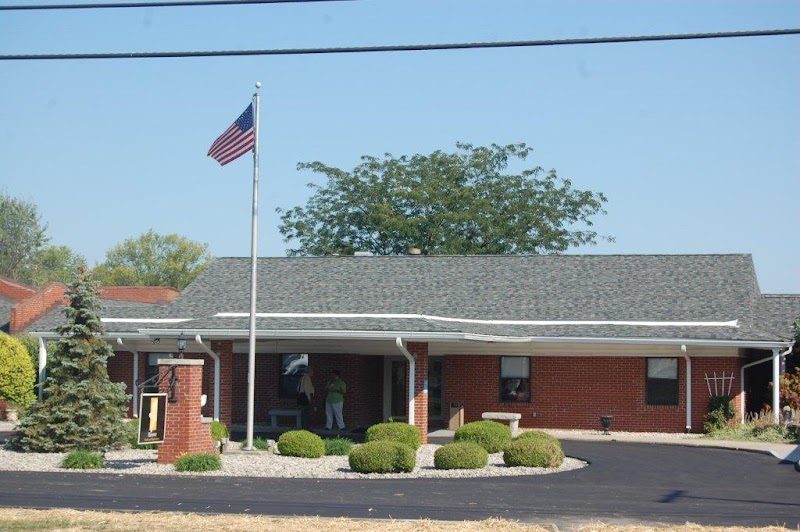
410 W LAGRANGE RD, HANOVER, IN 47243 (812) 866-2625
For profit - Corporation 125 Beds APERION CARE Data: November 2025 1 Immediate Jeopardy citation
Trust Grade
13/100
#415 of 505 in IN
Last Inspection: March 2025

Within standard 12-15 month inspection cycle. Federal law requires annual inspections.

Overview

Aperion Care Hanover received a Trust Grade of F, indicating poor performance with significant concerns about the quality of care provided. It ranks #415 out of 505 facilities in Indiana, placing it in the bottom half of nursing homes in the state, and #4 out of 5 in Jefferson County, meaning there is only one local facility that is rated better. Although the facility is trending toward improvement, reducing issues from 21 in 2024 to 12 in 2025, there are still alarming deficiencies present. Staffing is rated poorly with a 1/5 star rating, and a turnover rate of 54% aligns closely with the state average, suggesting instability among staff. There have been concerning incidents, including a critical failure to prevent resident-to-resident sexual abuse and serious lapses in care that led to hospitalization for dehydration and weight loss. Overall, while there are some signs of improvement, families should be cautious due to the significant issues reported.

Trust Score
F
13/100
In Indiana
#415/505
Bottom 18%
Safety Record
High Risk
Review needed
Inspections
Getting Better
21 → 12 violations
Staff Stability
⚠ Watch
54% turnover. Above average. Higher turnover means staff may not know residents' routines.
Penalties
✓ Good
$53,874 in fines. Lower than most Indiana facilities. Relatively clean record.
Skilled Nurses
⚠ Watch
Each resident gets only 27 minutes of Registered Nurse (RN) attention daily — below average for Indiana. Fewer RN minutes means fewer trained eyes watching for problems.
Violations
⚠ Watch
66 deficiencies on record. Higher than average. Multiple issues found across inspections.
★☆☆☆☆
1.0
Overall Rating
★☆☆☆☆
1.0
Staff Levels
★★☆☆☆
2.0
Care Quality
★☆☆☆☆
1.0
Inspection Score
Stable
2024: 21 issues
2025: 12 issues

The Good

  • Full Sprinkler Coverage · Fire safety systems throughout facility
  • No fines on record

Facility shows strength in fire safety.

The Bad

1-Star Overall Rating

Below Indiana average (3.1)

Significant quality concerns identified by CMS

Staff Turnover: 54%

Near Indiana avg (46%)

Higher turnover may affect care consistency

Federal Fines: $53,874

Above median ($33,413)

Moderate penalties - review what triggered them

Chain: APERION CARE

Part of a multi-facility chain

Ask about local staffing decisions and management

The Ugly 66 deficiencies on record

1 life-threatening 1 actual harm
Jun 2025 1 deficiency
CONCERN (D) 📢 Someone Reported This

A family member, employee, or ombudsman was alarmed enough to file a formal complaint

Potential for Harm - no one hurt, but risky conditions existed

Resident Rights (Tag F0550)

Could have caused harm · This affected 1 resident

Based on observation, interview, and record review, the facility failed to ensure a resident was treated with respect and dignity for 1 of 4 residents reviewed. (Resident B) Findings include: During a...

Read full inspector narrative →
Based on observation, interview, and record review, the facility failed to ensure a resident was treated with respect and dignity for 1 of 4 residents reviewed. (Resident B) Findings include: During an interview, on 06/27/25 at 11:59 P.M., Resident D indicated that Certified Nursing Assistant (CNA) 2 yelled, Shut up at Resident B multiple times while trying to give the resident a shower a few weeks ago. Resident D explained that her room was next to the shower room, so she could hear her yelling so loud that it was echoing down the hallway. The clinical record for Resident D was reviewed on 06/27/25 11:51 A.M. A Quarterly Minimum Data Set (MDS) assessment, dated 05/26/25, indicated the resident was cognitively intact. The resident's diagnoses included, but were not limited to, depression and anxiety. During an interview and observation, on 06/27/25 at 08:27 A.M., Resident B indicated that staff were always nice to her, and nobody had ever verbally abused her at the facility. She had no concerns with care. The resident appeared well groomed and happy. The clinical record for Resident B was reviewed on 06/27/25 10:07 A.M. A Quarterly MDS assessment, dated 06/04/25, indicated the resident was mildly cognitively impaired. The resident's diagnosis included, but was not limited to, non-Alzheimer's dementia. She was dependent on one physical staff member for her activities of daily living related to showers. During an interview, on 06/27/25 at 12:22 P.M., Licensed Practical Nurse (LPN) 3 indicated that CNA 2 was getting loud with Resident B and kept telling the resident to be quiet. LPN 3 told her she needed to calm down or that she would have to leave and CNA 2 calmed down. During an interview, on 06/27/25 at 11:28 A.M., the DON indicated that she had received a report the morning following the incident that CNA 2 yelled at Resident B telling her that she did not need to go to the bathroom. The yelling continued down the hallway to the shower room. Upon investigation CNA 2 was terminated. A facility document titled Notification of Employee Termination, was provided by the Director of Nursing on 06/27/25 at 12:47 P.M. It indicated CNA 2 was terminated. The current facility policy titled Dignity, with a revision date of 04/23/18, was provided by the Director of Nursing on 06/27/25 at 12:40 P.M.,. The policy indicated, .The facility shall promote care for residents in a manner and in an environment that maintains or enhances each resident's dignity and respect .Staff shall carry out activities in a manner which assists the resident to maintain and enhance his/her self-esteem and self-worth . The deficient practice was corrected, on 06/25/25, after the facility assessed residents for abuse and dignity concerns, re-educated staff on resident rights abuse and dignity, and had a system in place to monitor for resident rights. 3.1-3(t)
Mar 2025 10 deficiencies
CONCERN (D)

Potential for Harm - no one hurt, but risky conditions existed

Quality of Care (Tag F0684)

Could have caused harm · This affected 1 resident

Based on record review and interview, the facility failed to administer prescribed medications related to insulin administration for 1 of 19 residents reviewed for Quality of Care. (Resident 12) Find...

Read full inspector narrative →
Based on record review and interview, the facility failed to administer prescribed medications related to insulin administration for 1 of 19 residents reviewed for Quality of Care. (Resident 12) Findings include: The clinical record for Resident 12 was reviewed on 03/27/25 at 10:45 A.M. A Quarterly Minimum Data Set (MDS) assessment, dated 02/07/25, indicated the resident was moderately cognitively impaired. The resident's diagnoses included, but were not limited to, diabetes, hypertension, dementia, and paranoid schizophrenia. The January 2025 Electronic Medication Administration Record/Electronic Treatment Administration Record (EMAR/ETAR) was provided by the Director of Nursing (DON) on 03/27/25 at 11:37 A.M. The physician's order, with a start date of 11/13/24 and a discontinued date of 01/14/25, indicated the resident was to receive Humalog (insulin) 12 units, to be administered after meals. The January 2025 Electronic Medication Administration Record/Electronic Treatment Administration Record (EMAR/ETAR) for Resident 12 indicated the resident's Humalog was scheduled for 9:00 A.M., 1:00 P.M., and 7:00 P.M. The record lacked documentation (was left blank) the resident received the prescribed insulin on the following dates and times: January 3, at 7:00 P.M., January 4, at 7:00 P.M., and January 5, at 7:00 P.M. The resident's Blood Glucose Fingerstick Monitoring record was reviewed and indication the following: on January 3, at 7:00 P.M., the resident blood sugar value was 390; on January 4, at 7:00 P.M., the resident's blood sugar value was 143; and on January 5, at 7:00 P.M., the resident's blood sugar value was 280. The Progress Notes for January 2025 were provided by the DON on 03/27/25 at 11:37 A.M. The record lacked documentation as to why the medication was not given. The current Diabetes Care Plan, with an initiated date of 08/27/24, indicated the staff were to administer the resident's diabetes medication as ordered by the doctor. During an interview, on 03/26/25 at 1:33 P.M., RN 6 indicated if a resident refused a medication or procedure, staff were to mark it as refused on the EMAR/ETAR and they also documented in the Progress Notes. The EMAR ETAR should not have blanks on it. The current, undated, facility policy titled, Medication Administration General Guidelines, was provided by the MDS Coordinator on 03/27/25 at 1:15 P.M. The policy indicated, .Medications are administered as prescribed in accordance with good nursing principles and practices and only by persons legally authorized to do so .If a dose of regularly scheduled medications is withheld, refused, not available, or given at a time other than the scheduled time .An explanatory note is entered .If 3 consecutive doses of a vital medication are withheld, refused, or not available the physician is notified. Nursing documents the notification and physician response . 3.1-37(a)
CONCERN (D)

Potential for Harm - no one hurt, but risky conditions existed

Deficiency F0692 (Tag F0692)

Could have caused harm · This affected 1 resident

Based on record review and interview, the facility failed to monitor meal consumption's and have supplements available for 1 of 3 residents reviewed for nutrition. (Resident 43) Findings include: 1a. ...

Read full inspector narrative →
Based on record review and interview, the facility failed to monitor meal consumption's and have supplements available for 1 of 3 residents reviewed for nutrition. (Resident 43) Findings include: 1a. The clinical record for Resident 43 was reviewed on 03/25/25 at 11:46 A.M. A Quarterly Minimum Data Set (MDS) assessment, dated 01/20/25, indicated the resident was cognitively intact. The resident's diagnoses included, but were not limited to, Huntington's disease, anemia, seizure disorder, anxiety, depression, and abnormal weight loss. The Meal Consumption Record for the resident lacked documented meals for the following dates and times: - On 01/02/25 at dinner, - On 01/07/25 at dinner, - On 01/11/25 at dinner, - On 01/16/25 at dinner, - On 01/23/25 at dinner, - On 01/28/25 at dinner, - On 02/01/25 at dinner, - On 02/05/25 at dinner, - On 02/09/25 at dinner, - On 02/11/25 at dinner, - On 02/13/25 at dinner, - On 02/17/25 at dinner, - On 02/20/25 at dinner, - On 02/27/25 at dinner, - On 03/03/25 at dinner, - On 03/09/25 at dinner, - On 03/11/25 at dinner, - On 03/18/25 at dinner, and - On 03/22/25 at dinner. During an interview, on 03/27/25 at 1:24 P.M., Certified Nurse Aide (CNA) 8 indicated the resident's meal consumptions were to be documented on the electronic computer system after each meal. If the resident refused the meal there was a place in the computer system for them to document that. The current facility policy titled, Caregiver Documentation with a revision date of 01/15/18, was provided by the Clinical Corporate Nurse Consultant on 03/27/25 at 2:29 P.M. The policy indicated, .To establish a system for providing and documenting appropriate care provided to the resident at the CNA/caregiver level .The CNA/Caregivers will document resident's care in electronic medical record according to their assignment and tasks completed as assigned .in accordance with the CNA's/caregiver's training and resident's plan of care .The CNA will complete all required documentation for each resident under their care assignment before clocking out at the end of the shift . 1b. A current open-ended physician's order, with a start date of 04/28/22, indicated the resident was to receive a mighty shake (supplement) with meals. The March 2025 Electronic Medication Administration Record (EMAR) indicated the resident had not received the mighty shake on the following dates and times: - On 03/02/25 at 12:00 P.M. and 5:00 P.M., - On 03/06/25 at 12:00 P.M. and 5:00 P.M., - On 03/10/25 at 12:00 P.M. and 5:00 P.M., and - On 03/11/25 at 7:00 A.M., 12:00 P.M., and 5:00 P.M. The Progress Notes were reviewed and indicated the mighty shakes were unavailable for the dates and times with the resident had not received it. During an interview, on 03/26/25 at 1:47 P.M., Licensed Practical Nurse (Licensed Practical Nurse) 7 indicated if they were out of mighty shakes, she would give the resident an alternate supplement and document it. The facility had never been out of mighty shakes that she was aware of. The current, undated, facility policy titled, Medication Administration General Guidelines, was provided by the MDS Coordinator on 03/27/25 at 1:15 P.M. The policy indicated, .Medications are administered as prescribed in accordance with good nursing principles and practices and only by persons legally authorized to do so . 3.1-46(a)(1)
CONCERN (D)

Potential for Harm - no one hurt, but risky conditions existed

Pharmacy Services (Tag F0755)

Could have caused harm · This affected 1 resident

Based on record review and interview, the facility failed to ensure a medication was available for 1 of 19 residents reviewed for pharmacy services. (Resident 56) Findings include: The clinical record...

Read full inspector narrative →
Based on record review and interview, the facility failed to ensure a medication was available for 1 of 19 residents reviewed for pharmacy services. (Resident 56) Findings include: The clinical record for Resident 56 was reviewed on 03/27/25 at 1:44 P.M. A Quarterly Minimum Data Set (MDS) assessment, dated 12/10/24, indicated the resident was cognitively intact. The resident's diagnoses included, but were not limited to, Huntington's disease, chorea (neurological disorder that causes involuntary muscle movements), hypertension, and depression. A physician's order, dated 09/13/24 through 09/25/24, indicated the resident was to receive Austedo (a medication for chorea) 18 milligrams (mg), twice a day. The September 2024 Electronic Medication Administration Record (EMAR) indicated the resident had not received the medication on the following dates and times: - On 09/20/24 at bedtime, - On 09/21/24 at bedtime, - On 09/22/24 at bedtime, and - On 09/23/24 at bedtime. A physician's order, dated 10/19/24 through 11/13/24, indicated the resident was to receive Austedo XR (extended release) 18 mg, once a day for Huntington's disease. The October and November 2024 EMAR indicated the resident had not received the medication from 10/20/24 through 11/2/24. The Progress Notes indicated the following: - On 09/20/24 the medication was not available from the pharmacy to administer, - On 09/21/24 they were waiting on the medication to arrive from the pharmacy, - On 09/22/24 the medication was not available from the pharmacy to administer, - On 09/23/24 the medication was pending arrival from the pharmacy, - On 10/20/24 the medication was not available, - On 10/23/24 the medication was not available, - On 10/24/24 the medication was not available, - On 10/25/24 the medication was not available, - On 10/26/24 the medication was not available, - On 10/27/24 the medication was not available, - On 10/28/24 the medication was not available, - On 10/29/24 the medication was not available, - On 10/30/24 the medication was not available, and the Nurse Practitioner was notified, - On 10/31/24 the medication was not available, - On 11/01/24 the medication was not available, and - On 11/02/24 the medication was not available. The resident's clinical record lacked documentation that the physician or pharmacy was notified or contacted related to the medication being unavailable. During an interview, on 03/27/25 at 10:25 A.M., Licensed Practical Nurse (LPN) 7 indicated if a resident didn't have a medication available to give in the medication cart, she would check the facilities emergency drug kit to see if she could get it from there. If it was not available in the kit, she would contact the pharmacy to see about getting it sent from the back-up pharmacy. If the medication was still unavailable to get, she would contact the physician. She would document in a progress note that the physician and pharmacy was notified. The current, undated, facility policy titled, Medication Administration General Guidelines, was provided by the MDS Coordinator on 03/27/25 at 1:15 P.M. The policy indicated, .Medications are administered as prescribed in accordance with good nursing principles and practices and only by persons legally authorized to do so .If a dose of regularly scheduled medications is withheld, refused, not available, or given at a time other than the scheduled time .An explanatory note is entered .If 3 consecutive doses of a vital medication are withheld, refused, or not available the physician is notified. Nursing documents the notification and physician response . 3.1-25(a)
CONCERN (D)

Potential for Harm - no one hurt, but risky conditions existed

Drug Regimen Review (Tag F0756)

Could have caused harm · This affected 1 resident

3. The clinical record for Resident 4 was reviewed on 03/26/25 at 3:08 P.M. An Annual MDS assessment, dated 03/06/25, indicated the resident was moderately cognitively impaired. The resident's diagnos...

Read full inspector narrative →
3. The clinical record for Resident 4 was reviewed on 03/26/25 at 3:08 P.M. An Annual MDS assessment, dated 03/06/25, indicated the resident was moderately cognitively impaired. The resident's diagnoses included, but were not limited to, Parkinson's disease, hypertension, diabetes, dementia, anxiety, and psychotic disorder. The pharmacist reviewed the resident's medications monthly and made the following recommendations: - A Consultant Pharmacist Recommendation to Prescriber, dated 12/20/24, indicated the resident currently received Mirtazapine (antianxiety) 15 mg every night, Sertraline (antidepressant) 50 mg every night, and Trazadone (antidepressant) 50 mg every night. A trial dose reduction was recommended. There was no indication the physician or prescriber responded to the pharmacist's recommendation. During an interview, on 03/27/25 at 10:25 A.M., the DON indicated she did not see anything in the resident's clinical record that addressed the pharmacy recommendation. The current facility policy, titled Psychotropic Medication-Gradual Dose Reduction, revised on 02/01/18, was provided by the DON on 03/26/25 at 2:47 P.M. The policy indicated, .The pharmacist will report any irregularities to the Director of Nursing. The Director of Nursing will notify or direct licensed staff to notify attending physician as necessary . 3.1-25(i) Based on interview and record review, the facility failed to address pharmacy recommendations for 3 of 5 residents reviewed for medication irregularities. (Residents 37, 32, and 4) Findings include: 1. The clinical record for Resident 37 was reviewed on 03/26/25 at 2:25 P.M. A Quarterly Minimum Data Set (MDS) assessment, dated 01/29/25, indicated the resident was cognitively intact. The resident's diagnoses included, but were not limited to, stroke, diabetes, irritable bowel syndrome, anxiety, and depression. The pharmacist reviewed the resident's medications monthly and made the following recommendations: - A Consultant Pharmacist Recommendation to Prescriber, dated 12/20/24, indicated the resident's current physician's orders included an order for Loperamide (an anti-diarrheal medication) liquid solution, 1 mg (milligrams) per 7.5 (milliliter) mL. The resident was to receive 30 mL (4 mg) every twelve hours as needed and the resident had a current order for Loperamide oral capsules, 2 mg every 4 hours as needed. It was recommended that the prescriber review the continued use of the duplicate orders. - A Consultant Pharmacy Recommendation to Nursing, dated 12/20/24, indicated the resident had a current physician's order for Topamax (an anticonvulsant medication that was also used to treat migraine headaches and bipolar disorder) for depression. Depression was not an appropriate diagnosis for the use of the medication. It was recommended that the order be updated with an appropriate supportive diagnosis and to contact the prescriber for clarification. - A Consultant Pharmacist Recommendation to Prescriber, dated 01/20/25, indicated the resident received Duloxetine (an antidepressant) 30 mg daily since 07/19/24. It was recommended to consider a trial dose reduction of the medication. If a gradual dose reduction was contraindicated, the provider was to document the clinical rationale. The resident's clinical record lacked any indication the physician responded to the pharmacist's recommendations. During an interview, on 03/26/25 at 2:07 P.M., the Director of Nursing (DON) indicated the pharmacist reviewed the residents' medications monthly. She received the recommendations via email and ensured follow through. There was usually a response from the provider within a week, if not sooner. There should be documentation to indicate whether the physician agreed or didn't agree with the recommendation and the rationale. 2. The clinical record for Resident 32 was reviewed on 03/25/25 at 9:22 A.M. A Quarterly MDS assessment, dated 02/05/25, indicated the resident was moderately cognitively impaired. The resident's diagnoses included, but were not limited to, anemia, Alzheimer's disease, cerebral palsy, dementia, seizure disorder, depression, and bipolar. A Pharmacy Recommendation, dated 12/20/24, indicated to add a 14 day stop date to the residents Lorazepam (an anxiety medication) that was given as needed. The current physician's order, with a start date of 10/22/24, indicated the resident was to be given Lorazepam 1 mg every 4 hours as needed for anxiety. The clinical record lacked indication the physician was made aware of the recommendation. During an interview, on 03/26/25 at 2:35 P.M., the DON indicated the pharmacy review from 12/20/24 was not reviewed or acknowledged.
CONCERN (D)

Potential for Harm - no one hurt, but risky conditions existed

Infection Control (Tag F0880)

Could have caused harm · This affected 1 resident

Based on observation, interview, and record review, the facility failed to follow infection control guidelines related to enhanced barrier precautions for 3 of 3 wound care observations. (Residents 75...

Read full inspector narrative →
Based on observation, interview, and record review, the facility failed to follow infection control guidelines related to enhanced barrier precautions for 3 of 3 wound care observations. (Residents 75, 4, and 31) Findings include: 1. The clinical record for Resident 75 was reviewed on 03/24/25 at 11:34 A.M. An admission Minimum Data Set (MDS) assessment, dated 01/27/25, indicated the resident was cognitively intact. The resident's diagnoses included, but were not limited to, Parkinson's disease, metastasized bone cancer, hypertension, dementia, and chronic obstructive pulmonary disease. An open-ended physician's order, with a start date of 03/18/25, indicated the resident was in enhanced barrier precautions (for a chronic wound. During an observation, on 03/26/25 at 11:22 A.M., the resident's door had a sign on it that indicated to STOP that they were in enhanced barrier precautions. Everyone must wear gloves and a gown when providing wound care. Licensed Practical Nurse (LPN) 2 entered the resident's room and provided wound treatment care without donning a gown. 2. The clinical record for Resident 4 was reviewed on 03/26/25 at 3:08 P.M. An Annual MDS assessment, dated 03/06/25, indicated the resident was moderately cognitively impaired. The resident's diagnoses included, but were not limited to, Parkinson's disease, hypertension, diabetes, dementia, anxiety, and psychotic disorder. An open-ended physician's order, with a start date of 12/27/24, indicated the resident was in enhanced barrier precautions for a chronic wound. During an observation, on 03/26/25 at 11:46 A.M., the resident's door had a sign on it that indicated to STOP that they were in enhanced barrier precautions. Everyone must wear gloves and a gown when providing wound care. LPN 2 entered the resident's room and provided wound treatment care without donning a gown. During an interview, on 03/26/25 at 3:17 P.M., LPN 3 indicated gloves and a gown should be worn during a wound dressing change if the resident was on enhanced barrier precautions. 3. The clinical record for Resident 31 was reviewed on 03/25/25 at 9:46 A.M. A Quarterly MDS assessment, dated 12/26/24, indicated the resident was moderately cognitively impaired. The resident's diagnoses included, but were not limited to, dementia, diabetes, non-Alzheimer dementia, anxiety, depression, and psychotic disorder. An open-ended physician's order, with a start date of 01/29/25, indicated the resident was in enhanced barrier precautions (to reduce the risk of transmitting multidrug-resistant organisms [MDRO] and targeted MDRO when contact precautions do not apply for residents identified at higher risk) for a chronic wound. During an observation, on 03/26/25 at 3:17 P.M., the resident's door had a sign on it that indicated to STOP that they were in enhanced barrier precautions. Everyone must wear gloves and a gown when providing wound care. RN 6 entered the resident's room and provided wound treatment care without donning a gown. The current facility policy titled, Enhanced Barrier Precautions with a revision date of 05/07/24, was provided by the Corporate Clinical Nurse Support on 03/27/25 at 2:07 P.M. The policy indicated, .To reduce the risk of transmitting multidrug-resistant organisms [MDRO] and targeted MDRO when contact precautions do not apply for residents identified at higher risk .EBP are used in conjunction with standard precautions and expand to use of PPE [Personal Protective Equipment] to donning of gown and gloves during high-contact resident care activities that provide opportunities for transfer of MDROs to staff hands and clothing .Wounds generally include chronic wounds . 3.1-18(b)
CONCERN (E)

Potential for Harm - no one hurt, but risky conditions existed

Deficiency F0577 (Tag F0577)

Could have caused harm · This affected multiple residents

Based on observation and interview, the facility failed to have the State survey results available to view for 2 of 6 days during the survey. Findings include: During an observation, on 03/25/25 at 3...

Read full inspector narrative →
Based on observation and interview, the facility failed to have the State survey results available to view for 2 of 6 days during the survey. Findings include: During an observation, on 03/25/25 at 3:24 P.M., a laminated piece of paper on a corkboard outside the Administrator's office indicated the survey results were in a white binder in the living room. The living room and front entrance were observed, and no white binder or survey results were visible. During an observation, on 03/26/25 at 11:21 A.M., the living room and front entrance lacked visible survey results. During an observation, on 03/26/25 at 1:49 P.M., the living room and front entrance lacked visible survey results. During an interview, on 03/26/25 at 1:52 P.M., the Minimum Data Set (MDS) Coordinator indicated the State survey results were sitting in a pile in the Administrator's office and were not accessible for visitors to view without having to ask for them. They should be available for them to view without asking the staff. During an interview, on 03/27/25 at 10:02 A.M., the Administrator indicated the facility did not have a policy for State survey results being accessible to view, they would just follow the regulation. 3.1-3(b)(1)
CONCERN (E) 📢 Someone Reported This

A family member, employee, or ombudsman was alarmed enough to file a formal complaint

Potential for Harm - no one hurt, but risky conditions existed

Safe Environment (Tag F0584)

Could have caused harm · This affected multiple residents

**NOTE- TERMS IN BRACKETS HAVE BEEN EDITED TO PROTECT CONFIDENTIALITY** Based on observation, interview, and record review, the facility failed to provide a clean and safe environment related to a dir...

Read full inspector narrative →
**NOTE- TERMS IN BRACKETS HAVE BEEN EDITED TO PROTECT CONFIDENTIALITY** Based on observation, interview, and record review, the facility failed to provide a clean and safe environment related to a dirty shower room and safe walkways for 2 of 4 facility areas reviewed. (Wing 2 and the outside courtyard) Findings include: 1. During an observation of Wing 2, on 03/21/25 through 03/25/25, the following concerns were observed on the following dates and times: - On 03/21/25 at 10:25 A.M., the Shower Room had sticky floors; a strong urine odor; the toilet base had a one inch by eight-inch band of black debris around toilet base; and a one-foot-long, a two-foot-long, and a three-foot-long stripe of black/brown residue around the tile areas in the shower stall. - On 03/21/25 at 10:33 A.M., the bathroom shared by Resident rooms [ROOM NUMBERS], had a baseball size shallow pit in the bathroom floor where tiles were missing. A resident in room [ROOM NUMBER] was observed to be independent with toileting and unsteady on his feet. - On 03/24/25 at 10:26 A.M., the Shower Room had sticky floors; the toilet base had one inch by eight-inch band of black debris around toilet base; and a one-foot-long, a two-foot-long, and a three-foot-long stripe of black/brown residue around the tile areas in the shower stall. - On 03/24/25 at 3:17 P.M., the bathroom shared by Resident rooms [ROOM NUMBERS], had a strong urine odor. - On 03/25/25 at 10:23 A.M., the bathroom shared by Resident rooms [ROOM NUMBERS], had a baseball size shallow pit in the bathroom floor where tiles were missing. - On 03/25/25 at 10:25 A.M., Resident room [ROOM NUMBER]'s bathroom door had brown stains and chunks of brown debris on the doorknob to the bathroom. During an interview, on 03/27/25 at 10:25 A.M., Licensed Practical Nurse (LPN) 7 indicated there was a resident who resided in room [ROOM NUMBER] who was able to use the bathroom without staffs' assistance. During an anonymous interview, from 03/20/25 through 03/27/25, a staff member indicated a group of volunteers had complained, while on Wing 2, the floors were filthy with food particles; spilled fluid;, and a swarm of gnats. A volunteer even started cleaning the floor because the spills were so bad. The nursing staff would not clean anything up, they left it for Housekeeping. Wing 2 was always a mess. During an interview, on 03/27/25 at 10:12 A.M., the Housekeeping Supervisor indicated they had cleaning check-off lists for each unit. Staff were to check off items after they were completed. They also had a separate check off list for deep cleaning. On a deep clean they pulled everything out of the residents' room, cleaned the walls, the privacy curtain, the bedding, pulled out the beds, cleaned the bed frame, window blinds, the trim, and the bathrooms. Rooms were deep cleaned every couple of weeks and as needed. Some were done more often. She kept the deep clean check off lists. She kept the daily check-off lists for about two weeks. Blank checklists were provided by the Housekeeping Supervisor. She indicated she did not have any completed checklists for any of the units since she had just thrown them away. None of the checklists included cleaning the walls of the shower rooms. During an interview, on 03/27/25 at 2:48 P.M., when asked for the building inspections for the interior and exterior of the building, the Maintenance Director indicated he walked through the building everyday but did not document his observations. 2. During an observation, on 03/27/25 at 11:11 A.M., Resident B was outside in the courtyard in his wheelchair with a group of residents that were awaiting to smoke. While propelling himself, he fell forward, with the wheelchair still attached to his back because he used a seat belt for positioning and landed face down with his forehead touching the sidewalk. Another resident turned the resident to his side as no staff were within five feet of this resident. During an interview, on 03/27/25 at 1:26 P.M., CNA 8 indicated they had put in a work order for the concrete chipping. No one was with the resident when he fell. They had put the work order in about two weeks ago because they noticed it was getting worse, and all the rain had not helped. The resident had a scrape on his forehead and a little bump on the back of his head from today's fall. The Progress Notes for Resident B were provided by the DON on 03/27/25 at 3:14 P.M. A note, dated 03/27/25 at 11:00 A.M., indicated the resident had an unwitnessed fall in the courtyard smoking area. The resident's wheelchair tipped over as he was propelling it on the concrete. The resident's statement indicated, I was coming to smoke and the chair tipped over because of the concrete. The resident received a scrape to the forehead and a small bump on the top of his head. The MAINTENANCE REQUEST forms were provided by the Administrator on 03/27/25 at 1:50 P.M. A request, from CNA 9, dated 03/12/25, indicating the sidewalk had a big chunk out of it, and could you please look at it and see if something could be done. The current undated Housekeeping Service Policy was provided by the Corporate Clinical Nurse Consultant on 03/27/25 at 1:45 P.M. The policy indicated, .Purpose .To ensure that the facility, equipment, furnishings [sic] and resident rooms are maintained in a sanitary manner; to provide a comfortable environment, and to prevent the development and transmission of infection .maintain a clean, odor free, .orderly environment .which meet .the .residents right for a safe, clean, comfortable homelike environment . The current undated Preventative Maintenance and Inspections policy was provided by the DON on 03/27/25 at 2:40 P.M. The policy indicated, .Inspection checklists are developed for at least .The building .Exterior inspection will be conducted and documented weekly .Interior inspection will be conducted and documented weekly .Condition of flooring .Cement cracks .Each resident room will be inspected and documented monthly . The current Falls policy, with a reviewed date of 01/01/15, was provided by the DON on 03/27/25 at 2:40 P.M. The policy indicated, .Licensed nurse should conduct assessment immediately, including events leading up to the fall to determine when possible and causative factors . This citation relates to Complaints IN00455300 and IN00455916. 3.1-19(a)(4) 3.1-19(f)(5)
CONCERN (E)

Potential for Harm - no one hurt, but risky conditions existed

Deficiency F0761 (Tag F0761)

Could have caused harm · This affected multiple residents

Based on observation and interview, the facility failed to store medications appropriately for 1 of 2 medication storage rooms (Wing 2 Medication Storage Room) and 3 of 4 medication carts observed (Wi...

Read full inspector narrative →
Based on observation and interview, the facility failed to store medications appropriately for 1 of 2 medication storage rooms (Wing 2 Medication Storage Room) and 3 of 4 medication carts observed (Wing 2 Medication Cart and Wing 3 Medication Carts). Findings include: During an observation, on 03/21/25 at 10:16 A.M., the Wing 2 Medication Storage Room had three unopened bags of g-tube feeding formula that were not in a box that were sitting on the bare floor and six unopened boxes sitting on the bare floor. The Director of Nursing (DON) indicated the boxes were supplies. During an observation, on 03/21/25 at 10:19 A.M., a Wing 2 Medication Cart contained a loose round tan pill inside a drawer. Licensed Practical Nurse (LPN) 7 removed the pill and disposed of it at that time. During an observation and interview, on 03/21/25 at 10:43 A.M., a Wing 3 Medication Cart contained the following loose pills inside the drawers: - a white round pill, LPN 10 indicated it was a Tylenol, - an oval pill, LPN 10 indicated was a coenzyme, - a small white pill, LPN 10 indicated was risperidone, and - a small yellow/tan colored pill, LPN indicated was baclofen. LPN 10 removed all the loose pills from the cart and placed them in a medication cup. During an observation and interview, on 03/21/25 at 10:48 A.M., a Wing 3 Medication Cart contained a loose white round pill, lots of small papers, and what appeared to powdered pill substances in all the corners of the drawers, LPN 3 indicated the loose pill was a trazodone, the nurses were responsible for cleaning out the medication carts, that cart was pretty dirty. She would clean it out that day. The current, undated, facility policy titled, Medication Storage was provided by the Administrator on 03/27/25 at 10:02 A.M. The policy indicated, .Medications and biologicals are stored safely, securely, and properly, following the manufacturer's recommendations or those of the supplier .Medication storage areas are kept clean, well-lit, and free of clutter and extreme temperatures and humidity . 3.1-25(o)
CONCERN (E)

Potential for Harm - no one hurt, but risky conditions existed

Food Safety (Tag F0812)

Could have caused harm · This affected multiple residents

Based on observation and interview, the facility failed to follow appropriate guidelines related to the use of hairnets in the kitchen for 3 of 3 kitchen observations. (Dietary Manager, Cooks 4 and 5,...

Read full inspector narrative →
Based on observation and interview, the facility failed to follow appropriate guidelines related to the use of hairnets in the kitchen for 3 of 3 kitchen observations. (Dietary Manager, Cooks 4 and 5, and the Corporate Dietary Consultant) Findings include: 1. During a tour of the kitchen, on 03/20/25 at 11:01 A.M., the Dietary Manager (DM) had three inches of hair outside of her hairnet on each side and the back of her head while she was in the food preparation area. During an observation, on 03/26/25 at 11:54 A.M., the DM had three inches of hair exposed outside the hairnet while in the food preparation area. During a kitchen observation, on 03/27/25 at 11:42 A.M., [NAME] 4 had six inches of hair exposed outside her hairnet on the right side of her face, [NAME] 5 had two inches of hair exposed outside the hairnet around her face, the DM had three inches of hair exposed outside the hairnet on both sides of face and on the back of her neck, and the Corporate Dietary Consultant had three inches of bangs and two inches of hair exposed outside the hairnet on both sides of her face while in the food preparation area. During an interview, on 03/27/25 at 11:56 A.M., the DM indicated hairnets should cover all the hair. If hair cannot be contained with one hair net, two hairnets should be used. The current Hair Restraints policy, dated 2020, was provided by the Director of Nursing on 03/27/25 at 3:15 P.M. The policy indicated, .Staff shall wear hair restraints in all food production, dishwashing, and serving areas. 3.1-21(i)(3)
CONCERN (F) 📢 Someone Reported This

A family member, employee, or ombudsman was alarmed enough to file a formal complaint

Potential for Harm - no one hurt, but risky conditions existed

Deficiency F0925 (Tag F0925)

Could have caused harm · This affected most or all residents

**NOTE- TERMS IN BRACKETS HAVE BEEN EDITED TO PROTECT CONFIDENTIALITY** Based on observation, record review, and interview, the facility failed to ensure an effective pest control was in place for res...

Read full inspector narrative →
**NOTE- TERMS IN BRACKETS HAVE BEEN EDITED TO PROTECT CONFIDENTIALITY** Based on observation, record review, and interview, the facility failed to ensure an effective pest control was in place for residents' bathrooms and bedrooms related to gnats or drain flies. This deficient practice had the potential to affect 70 of 70 residents that resided in the facility. Findings include: During an observation of Wing 2, on 03/21/25 through 03/25/25, the following concerns were observed on the following dates and times: - On 03/21/25 at 10:25 A.M., the Wing 2 Shower Room had sticky floors; a strong urine odor; the toilet base had one inch by eight-inch band of black debris around toilet base; and a one-foot-long, a two-foot-long, and a three-foot-long stripe of black/brown residue around the tile areas in the shower stall. - On 03/21/25 at 10:33 A.M., the bathroom shared by Resident rooms [ROOM NUMBERS], had a swarm of gnats flying about the room and multiple gnats on the walls. - On 03/21/25 at 10:39 A.M., the bathroom shared by Resident rooms [ROOM NUMBERS], had several gnats flying about the room. Resident D indicated they have had a problem with gnats for a while. - On 03/24/25 at 10:24 A.M., the Resident room [ROOM NUMBER], had a few gnats flying about in the residents' bedroom. - On 03/24/25 at 3:17 P.M., the bathroom shared by Resident rooms [ROOM NUMBERS], had several gnats flying about the residents' bedroom area. Resident E indicated they have had a problem with gnats in their room and bathroom for a while. - On 03/24/25 at 10:24 A.M., in the Resident room [ROOM NUMBER], had a few gnats flying about in the residents' bedroom. - On 03/24/25 at 3:17 P.M., the bathroom shared by Resident rooms [ROOM NUMBERS] had several gnats flying about the residents' bedroom. Resident E indicated they have had a problem with gnats in their room and bathroom for a while. - On 03/25/25 at 10:14 A.M., the bathroom shared by Resident rooms [ROOM NUMBERS] had several gnats flying about the room and on the walls. - On 03/25/25 at 10:23 A.M., the bathroom shared by Resident rooms [ROOM NUMBERS] had several gnats flying about the room and on the walls. - On 03/25/25 at 10:30 A.M., on the walls in the hallways of Wing 2 there were several gnats observed on the walls. During an interview, on 03/27/25 at 10:11 A.M., the Maintenance Director indicated the facility had a Pest Control provider who came into the facility every two weeks. The pest control provider did not normally go into the residents' bedrooms or bathrooms. During an interview, on 03/27/25 at 10:12 A.M., the Housekeeping Supervisor indicated they had cleaning check-off lists for each unit. Staff were to check off items after they were completed. They also had a separate check off list for deep cleaning. On a deep clean they pulled everything out of the residents' room, cleaned the walls, the privacy curtain, the bedding, pulled out the beds, cleaned the bed frame, window blinds, the trim, and the bathrooms. Rooms were deep cleaned every couple of weeks and as needed. Some were done more often. She kept the deep clean check off lists. She kept the daily check-off lists for about 2 weeks. Blank checklists were provided by the Housekeeping Supervisor. She indicated she had just thrown them away and did not have any completed checklists for any of the units. None of the checklists included cleaning the walls of the shower rooms. The Pest Control visit records for the last 3 months were provided by the Maintenance Director on 03/27/25 at 11:50 A.M. Only one record, dated 03/18/25, included a service documented as One Shot. During an interview on 03/27/25 at 2:48 P.M., when asked for the building inspections for the interior and exterior of the building, the Maintenance Director indicated he walked through the building everyday but did not document his observations. During an interview on 03/27/25 at 2:50 P.M., the facility's pest control company indicated One Shot was their internal code for just a one-time service. They had used a product in the drains that would make it less hospitable for gnats and drain flies. They came out twice a month for routine services. They applied a general application for pests in the common areas and in the kitchen for preemptive maintenance and did not treat the residents' bathrooms or bedrooms. For the product they had put in the drains, they really did not have a time frame as to when the situation may alleviate itself because of other factors. 2. During an observation on 03/27/25 at 11:11 A.M., Resident B was outside in the courtyard in his wheelchair with a group of residents that were awaiting to smoke. While propelling himself, he fell forward, with the wheelchair still attached to his back because he used a seat belt for positioning and landed face down with his forehead touching the sidewalk. Another resident turned the resident to his side as no staff were within five feet of this resident. During an interview on 03/27/25 at 1:26 P.M., CNA 8 indicated they had put in a work order for the concrete chipping. No one was with the resident when he fell. They had put the work order in about two weeks ago because they noticed it was getting worse, and all the rain had not helped. The resident had a scrape on his forehead and a little bump on the back of his head from today's fall. The Progress Notes for Resident B were provided by the DON on 03/27/25 at 3:14 P.M. A note, dated 03/27/25 at 11:00 A.M., indicated the resident had an unwitnessed fall in the courtyard smoking area. The resident's wheelchair tipped over as he was propelling it on the concrete. The resident's statement indicated, I was coming to smoke and the chair tipped over because of the concrete. The resident received a scrape to the forehead and a small bump on the top of his head. The MAINTENANCE REQUEST forms were provided by the Administrator on 03/27/25 at 1:50 P.M., and included, but was not limited to, the following: - A request, from CNA 9, dated 03/12/25, indicating the sidewalk had a big chunk out of it, and could you please look at it and see if something could be done. The current undated Housekeeping Service Policy was provided by the Corporate Clinical Nurse Consultant on 03/27/25 at 1:45 P.M. The policy indicated, .Purpose .To ensure that the facility, equipment, furnishings [sic] and resident rooms are maintained in a sanitary manner; to provide a comfortable environment, and to prevent the development and transmission of infection .maintain a clean, odor free, .orderly environment .which meet .the .residents right for a safe, clean, comfortable homelike environment . The current undated Preventative Maintenance and Inspections policy was provided by the DON on 03/27/25 at 2:40 P.M. The policy indicated, .Inspection checklists are developed for at least .The building .Exterior inspection will be conducted and documented weekly .Interior inspection will be conducted and documented weekly .Condition of flooring .Cement cracks .Each resident room will be inspected and documented monthly . The current Falls policy, with a reviewed date of 01/01/15, was provided by the DON on 03/27/25 at 2:40 P.M. The policy indicated, .Licensed nurse should conduct assessment immediately, including events leading up to the fall to determine when possible and causative factors . This citation relates to Complaints IN00455300 and IN00455916. 3.1-19(f)(4)
Jan 2025 1 deficiency
CONCERN (D) 📢 Someone Reported This

A family member, employee, or ombudsman was alarmed enough to file a formal complaint

Potential for Harm - no one hurt, but risky conditions existed

Deficiency F0657 (Tag F0657)

Could have caused harm · This affected 1 resident

Based on interview and record review, the facility failed to ensure care planned interventions were updated related to a resident's behaviors for 1 of 3 residents reviewed for care plan revision. (Res...

Read full inspector narrative →
Based on interview and record review, the facility failed to ensure care planned interventions were updated related to a resident's behaviors for 1 of 3 residents reviewed for care plan revision. (Resident C) Findings include: The clinical record for Resident C was reviewed on 01/13/25 at 10:56 A.M. A Quarterly Minimum Data Set (MDS) assessment, dated 12/21/24, indicated the resident was cognitively intact. The resident's diagnoses included, but were not limited to, anxiety, depression, and Huntington's disease. A Behavior Note, dated 12/01/24 at 8:45 A.M., indicated Resident C was involved in a physical altercation with another resident. Resident C hit another resident in the dining room. A Behavior Note, dated 12/11/24 at 9:17 A.M., indicated Resident C walked to the dining room for breakfast and began calling staff curse words. Once the resident saw what he was served for breakfast he became irate and banged his fist on the table threatening to hurt Registered Nurse (RN) 2. The staff attempted to offer alternatives, but Resident C continued to yell profanities at staff and entered into the nurse's station area. The Director of Nursing (DON) intervened, and the resident was reseated for breakfast, but then took the meal tray and threw it off the table. A Social Service Supportive Documentation Note, dated 12/19/24 at 3:15 P.M., indicated Resident C had a change in behavior that was worse than prior assessments, and he had been more verbally aggressive as well as had an increase in physical aggression. A Behavior Note, dated 12/20/24 at 10:25 A.M., indicated Resident C cussed at RN 2 and had thrown a full cup of coffee at her. A Behavior Note, dated 01/07/25 at 9:52 A.M., indicated Resident C had thrown his cigarette at Licensed Practical Nurse (LPN) 3. A Behavior Note, dated 01/07/25 at 6:07 P.M., indicated Resident C had thrown a can of soda at a Certified Nursing Aide. The resident's complete care plan was provided by the Administrator on 01/13/25 at 1:30 P.M. A care plan titled, I am/have the potential to be physically aggressive r/t poor impulse control, indicated an intervention was initiated and last updated on 11/01/24. A care plan titled, I am/had potential to be verbally and physically aggressive r/t poor impulse control with juvenile Huntington's disease, indicated it was initiated on 11/01/24 and was last revised on 11/18/24. During an interview, on 01/13/25 at 2:13 P.M., the Social Service Director indicated that Resident C did have two care plans for the potential to be verbally or physically aggressive, but they had not been updated since November of 2024. During an interview, on 01/13/25 at 3:08 P.M., the MDS coordinator indicated that she had made a mistake and updated the wrong care plan after the resident to resident altercation on 12/01/24. The current facility policy, titled Comprehensive Care Plan, with a revision date of 11/17/17, was provided by the MDS coordinator on 01/13/25 at 3:25 P.M. The policy indicated, .develop a comprehensive care plan that directs the care team and incorporates the resident's goals, preferences, and services that are to be furnished to attain or maintain the resident's highest practicable physical, mental, and psychosocial well-being . This citation relates to Complaint IN00448227. 3.1-35(d)
Sept 2024 1 deficiency
CONCERN (D) 📢 Someone Reported This

A family member, employee, or ombudsman was alarmed enough to file a formal complaint

Potential for Harm - no one hurt, but risky conditions existed

Deficiency F0742 (Tag F0742)

Could have caused harm · This affected 1 resident

Based on record review and interview, the facility failed to ensure a resident who displayed psychosocial adjustment difficulties and a history of trauma received appropriate treatment to attain the h...

Read full inspector narrative →
Based on record review and interview, the facility failed to ensure a resident who displayed psychosocial adjustment difficulties and a history of trauma received appropriate treatment to attain the highest practicable mental well-being for 1 of 3 residents reviewed for psychosocial services.(Resident C) Findings include: The clinical record for Resident C was reviewed on 09/04/24 at 11:50 A.M. A Quarterly MDS (Minimum Data Set) assessment, dated 08/15/24, indicated the resident was cognitively intact. The diagnoses included, but were not limited to, renal insufficiency, diabetes, anxiety, and depression. The resident received dialysis. A progress note, dated 06/28/24 at 6:03 A.M., indicated Resident C was slamming his bedroom door out of anger. When it was explained that his roommate was trying to sleep, he stated A da*n train won't wake him up. A progress note, dated 06/28/24 at 12:13 P.M., indicated Social Services would make referrals to mental health services for Resident C. A progress note, dated 06/29/24 at 7:33 P.M., indicated Resident C was in his doorway when another resident attempted to enter. After a verbal disagreement Resident C was grabbed by the hair. Staff intervened and separated the residents and placed the residents on one-on-one (one staff to one resident) observation. A progress note, dated 06/30/24 at 12:16 P.M., indicated Social Services spoke with Resident C regarding the incident that occurred. The resident reported that he was attacked and did not fight back but did try to keep the other resident from pulling his dialysis port out. A psychosocial assessment, dated 07/01/24 at 09:26 A.M., indicated Resident C had a history of recreational drug use. The resident attempted suicide two years prior. A progress note, dated 08/01/24 at 2:00 A.M., indicated a CNA (Certified Nurse Aide) reported that Resident C told her he was going to choke his roommate. Upon staff questioning Resident C, he stated his roommate had nightmares every night and made a bunch of noise that kept him up. When told he could not make threats towards others, Resident C stated, Well put me in my own room then and continued to voice frustration. Staff monitored the residents by leaving the residents' door open. A progress note, dated 08/23/24 at 6:33 P.M., indicated Resident C was upset with nursing staff because he couldn't have his medications yet. When it was explained that he would receive the medications at 7:00 P.M. Resident C stated, you are both fu**ing wh*res and slammed his door. When nursing staff went to explain that his medications were not due until 7:00 P.M. the resident stated, whatever. During an interview on 09/04/24 at 3:07 P.M., LPN (Licensed Practical Nurse) 4 indicated Resident C had a few outbursts and would refuse dialysis at times. A few weeks prior during morning meeting when the door was closed staff could hear him screaming in the hallway. He stated the ride service they used to transport him to and from dialysis had left him, and he then refused to go to dialysis if he had to ride with them. He was very explosive. She had never seen anyone behave that way over having to use a ride service. During an interview on 09/04/24 at 3:04 P.M., QMA (Qualified Medication Aide) 5 indicated when Resident C wanted his pain medications, he would circle the desk. During an interview on 09/04/24 at 2:52 P.M. , the Administrator indicated she was aware of Resident C expressing frustration. Resident C cussed when he would get angry. She was not sure why he didn't see psych (psychiatric) services. During an interview on 09/04/24 at 12:34 P.M., the DON (Director of Nursing) indicated Resident C had some behaviors with ups and downs. He was explosive, but nothing directed at other residents just staff. During an interview on 09/04/24 at 3:29 P.M., the Social Services Director indicated Resident C would be grumpy sometimes. He told nursing staff that he would strangle another resident once but then said he was expressing frustration and that he wasn't going to actually hurt anybody. The behavior would be an indication that he would need psychiatric services, but Resident C had never received those services. A care plan, dated 06/25/24 , titled Trauma informed care included, but was not limited to, an intervention, with a start date of 06/25/24, for the resident to receive psychiatry/psychology services as needed. The current facility policy titled, Behavioral Health Services (previously Behavior Management Program), dated 11/28/12, was provided by the Administrator on 09/04/24 at 3:55 P.M The policy indicated, .to ensure that each resident receives appropriate treatment and services to attain the highest practicable mental and psychosocial well-being . This Citation relates to Complaint IN00442016 3.1-43(a)(1)
Aug 2024 1 deficiency
CONCERN (D) 📢 Someone Reported This

A family member, employee, or ombudsman was alarmed enough to file a formal complaint

Potential for Harm - no one hurt, but risky conditions existed

Investigate Abuse (Tag F0610)

Could have caused harm · This affected 1 resident

Based on interview and record review, the facility failed to thoroughly investigate 1 of 1 abuse allegations reviewed. (Resident B) Findings include: The clinical record for Resident B was reviewed on...

Read full inspector narrative →
Based on interview and record review, the facility failed to thoroughly investigate 1 of 1 abuse allegations reviewed. (Resident B) Findings include: The clinical record for Resident B was reviewed on 08/19/24 at 12:35 P.M. An admission MDS (Minimum Data Set) assessment, dated 06/21/24, indicated the resident was cognitively intact. The resident's diagnoses included, but were not limited to, diabetes, hypertension, depression, and bipolar disorder. During an interview on 08/19/24 at 3:43 P.M., Resident B indicated a couple of weeks ago, he had been upset with the kitchen and CNA (Certified Nurse Aide) 3 had cursed at him during dinner time. During an interview on 08/20/24 at 11:17 A.M., LPN (Licensed Practical Nurse) 2 indicated on the evening of 07/31/24, she was in the hall outside of Resident B's room when CNA 3 exited the room. The resident's door was open, and CNA 3 said F--- You to the resident as she was leaving his room. She told CNA 3 to clock out and go home because she couldn't talk to a resident like that. LPN 2 phoned the Administrator and advised her of the situation. CNA 3 was back to work the next evening caring for the same residents. During an interview on 08/20/24 at 11:33 A.M., CNA 4 indicated she was working on the same hall as CNA 3 on 07/31/24 and heard her curse at Resident B. She and CNA 3 were both working together the next evening. During an interview on 08/20/24 at 12:20 P.M., the Administrator indicated she was still in the facility when she was advised of the situation between Resident B and CNA 3 on 07/31/24. She had interviewed Resident B and he denied CNA 3 yelling or cursing at him. The Administrator indicated she educated CNA 3 on customer service and did not do any further investigation. On 8/20/24, the resident's clinical recorded lacked documentation related to the allegation of CNA 3 cruising at Resident B. At 12:22 P.M., the Administrator documented her interview with Resident B, related to the allegation of CNA 3 cursing at Resident B on a notepad, tore out the page, signed the bottom of the page, and provided the information. The as worked daily schedule for 07/31/24 and 08/01/24 indicated LPN 2, CNA 3, and CNA 4 worked on Wing 3. The timecards for CNA 3 were provided by the Human Resource Manager on 08/20/24 at 11:10 A.M., and indicated the following: - On 07/31/24, CNA 3 clocked in at 5:37 P.M. and clocked out at 6:37 P.M., - On 08/01/24, CNA 3 clocked in at 3:56 P.M. and clocked out at 3:57 A.M. During an interview on 08/20/24 at 12:10 P.M., the MDS Coordinator indicated during an abuse allegation investigation, all residents on the affected hall are interviewed or assessed and the employee in question was usually suspended for three days. The current facility policy, titled Abuse Prevention and Reporting - Indiana, with a revision date of 10/28/22, was provided by the Administrator on 08/20/24 at 2:15 P.M. The policy indicated, .This facility therefore prohibits abuse, neglect, exploitation, misappropriation of property, and mistreatment of residents .This will be done by: .Implementing systems to promptly and aggressively investigate all reports and allegations of abuse, neglect, exploitation, misappropriation of property, and mistreatment, and making the necessary changes to prevent further occurrences . This citation relates to Complaint IN00440161. 3.1-28(d)
Jul 2024 1 deficiency
CONCERN (D) 📢 Someone Reported This

A family member, employee, or ombudsman was alarmed enough to file a formal complaint

Potential for Harm - no one hurt, but risky conditions existed

Deficiency F0557 (Tag F0557)

Could have caused harm · This affected 1 resident

**NOTE- TERMS IN BRACKETS HAVE BEEN EDITED TO PROTECT CONFIDENTIALITY** Based on interview, record review, and observation, the facility failed to ensure a resident's rights were honored related to th...

Read full inspector narrative →
**NOTE- TERMS IN BRACKETS HAVE BEEN EDITED TO PROTECT CONFIDENTIALITY** Based on interview, record review, and observation, the facility failed to ensure a resident's rights were honored related to their personal possessions for 1 of 3 residents reviewed for resident rights. (Resident E) Findings include: On 07/12/24 at 2:11 P.M., a Complainant indicated the facility had COVID-19 in the building. Resident E was moved to a different room so that her room could be used for a COVID-19 resident. Resident E was not able to take all of her belongings to the new room and she was upset. During an interview on 07/18/24 at 12:17 P.M., the DON (Director of Nursing) indicated the facility had to temporarily move some residents to different rooms due to COVID-19. Resident E had been in a room without a roommate. They moved her down the hall to a room with another female resident and moved a male resident (Resident J) that had been exposed to COVID-19 (his roommate tested positive) into her room. They moved several of Resident E's belongings into the new room but left non-essential items in her previous room. If the resident needed anything from her old room, a staff member could get it for her. Resident J was bedbound, and he wouldn't be able to go through Resident E's personal items. It was a temporary move, they told Resident E it would be for about a week. After a few days, Resident E became upset about the room change. The resident had been non-compliant with care in the past, but her behaviors escalated with the room change. The resident was ultimately sent out to an inpatient psychiatric facility. Resident E's clinical record was reviewed on 07/18/24 at 1:30 P.M. A Significant change MDS (Minimum Data Set) assessment, dated 04/17/24, indicated the resident was cognitively intact. The resident's diagnoses included, but were not limited to, Chronic Obstructive Pulmonary Disease, hypertension, diabetes, arthritis, and depression. Resident E's previous room was observed with CNA (Certified Nurse Aide) 2 on 07/18/24 at 2:26 P.M. Resident E's belongings left in the room included, but were not limited, to the following items: - various wall hangings including a hand drawn canvas of a dog, - a closet full of clothes on hangers with several pairs of shoes on the floor, - a large cabinet with glass doors. Various snacks, including an opened loaf of bread, and [NAME]-knacks/collectibles were stored inside and on top of the cabinet, - a pile of items on the floor in front of the cabinet that included pillows, blankets, clothing, and an empty box, and, - a mother's memorial board on the floor near the cabinet, with a pair of glasses laying on top of it. During an interview on 07/18/24 at 2:30 P.M., CNA 2 indicated she was familiar with Resident E. Initially, the resident was supposed to move into the room right next door to her old room and she was agreeable to that. Something changed and she ended up going down the hallway to a different room. The current facility policy titled Resident Rights, with a revision date of 03/08/2017, was provided by the Assistant Director of Nursing on 07/18/24 at 3:28 P.M. The policy indicated, .resident rights .included the resident's right to .retain and use personal possessions to the maximum extent that space and safety permit . This citation relates to Complaint IN00438629. 3.1-9(a)
Apr 2024 4 deficiencies
CONCERN (D) 📢 Someone Reported This

A family member, employee, or ombudsman was alarmed enough to file a formal complaint

Potential for Harm - no one hurt, but risky conditions existed

Report Alleged Abuse (Tag F0609)

Could have caused harm · This affected 1 resident

Based on record review and interview, the facility failed to ensure all investigations and outcomes of the investigations were reported to the Indiana Department of Health (IDOH), within 5 working day...

Read full inspector narrative →
Based on record review and interview, the facility failed to ensure all investigations and outcomes of the investigations were reported to the Indiana Department of Health (IDOH), within 5 working days of the incident, for 9 of 9 reported incidents. (Residents B, C, D, E, F, G, H, J, K, L, M, and N) Findings include: 1. On 02/15/24 at 2:23 P.M., a possible drug diversion that involved Residents F and Resident G was reported to IDOH. The 5 day follow-up outcome of the investigation was not reported until 04/24/24. 2. On 03/08/24 at 1:01 P.M., a resident to resident incident between Resident H and Resident J was reported to IDOH. The 5 day follow-up outcome of the investigation was not reported until 04/24/24. 3. On 03/14/24 at 1:01 P.M., a resident to resident incident between Resident B and Resident C was reported to IDOH. The 5 day follow-up outcome of the investigation was not reported until 04/24/24. 4. On 03/22/24 at 10:01 P.M., a resident fall with injury that involved Resident J was reported to IDOH on 03/26/24. The 5 day follow-up outcome of the investigation was not reported until 04/24/24. 5. On 03/27/24 at 12:30 A.M., a resident to visitor incident that involved Resident N was reported to IDOH. The 5 day follow-up outcome of the investigation was not reported until 04/24/24. 6. On 03/31/24 at 4:05 P.M., a resident to resident incident between Resident D and Resident E was reported to IDOH. The 5 day follow-up outcome of the investigation was not reported until 04/24/24. 7. On 04/05/24 at 10:15 A.M., a resident to resident incident between Resident B and Resident K was reported to IDOH. The 5 day follow-up outcome of the investigation was not reported until 04/24/24. 8. On 04/06/24 at 8:01 A.M., a resident to resident incident between Resident H and Resident M was reported to IDOH. The 5 day follow-up outcome of the investigation was not reported until 04/24/24. 9. On 04/07/24 at 3:15 P.M., a resident fall with injury that involved Resident L was reported to IDOH. The 5 day follow-up outcome of the investigation was not reported until 04/24/24. During an interview on 04/25/24 at 1:51 P.M., the Administrator indicated she was behind on getting the 5-day follow-ups completed and would follow the State and Federal regulation. The current, undated, facility policy titled, VERBAL/MENTAL ABUSE ALLEGATION STAFF TO RESIDENT QUALITY ASSURANCE CHECKLIST, was provided by the Administrator on 04/25/24 at 6:01 P.M. The policy indicated .INVESTIGATION/PREVENTATIVE MEASURES .Final report to .ISDH [Indiana State Department of Health] . 3.1-28(e)
CONCERN (D) 📢 Someone Reported This

A family member, employee, or ombudsman was alarmed enough to file a formal complaint

Potential for Harm - no one hurt, but risky conditions existed

Deficiency F0740 (Tag F0740)

Could have caused harm · This affected 1 resident

**NOTE- TERMS IN BRACKETS HAVE BEEN EDITED TO PROTECT CONFIDENTIALITY** Based on observation, interview, and record review, the facility failed to administer medications and monitor and residents with...

Read full inspector narrative →
**NOTE- TERMS IN BRACKETS HAVE BEEN EDITED TO PROTECT CONFIDENTIALITY** Based on observation, interview, and record review, the facility failed to administer medications and monitor and residents with behavioral health concerns for 2 of 4 residents reviewed for behavioral health. (Residents B and D) Findings include: 1a. During an observation and interview on 04/24/24 at 9:59 A.M., Resident B was sitting in his recliner in his room. The resident indicated he felt safe and liked his new room. In March there was an incident where he had accidentally bumped into another resident's wheelchair and that resident was rude to him. The clinical record for Resident B was reviewed on 04/24/24 at 10:45 A.M. A Quarterly MDS (Minimum Data Set) assessment, dated 02/20/24, indicated the resident was cognitively intact. The diagnoses included, but were not limited to, Huntington's Disease, anxiety, depression, and psychotic disorder. A physician's order, dated 03/13/24 through 03/14/24, indicated the resident was to receive Haldol (an antipsychotic medication) 2 mg (milligrams) in the morning for psychosis related to Huntington's Disease. A physician's order, dated 03/13/24 through 04/18/24, indicated the resident was to receive Haldol 5 mg, at bedtime for psychosis related to Huntington's Disease. The March 2024 EMAR/ETAR (Electronic Medication Administration Record/Electronic Treatment Administration Record) lacked documentation the resident had received the Haldol medication on the following dates and times: - 03/13/24 at bedtime, - 03/14/24 in the morning and at bedtime. The resident had been administered a STAT dose of Haldol 2 mg on 03/15/24 at 2:48 P.M. A Facility Reported Incident, dated 03/14/24 at 1:01 P.M., indicated Resident B had bumped into Resident C's wheelchair with his walker due to the hallway being crowded. Resident C yelled I'll beat the brakes off you, towards Resident B. The residents were separated immoderately. The psychologist was present in the building a met with the residents. Resident C expressed remorse for his reaction and committed to it not happening again and due to the prior history with Resident B he agreed to not engage verbally with the resident and to report any concerns related to Resident B to the nurse. Resident B also agreed to refrain from communicating with Resident C and to report to the nurse if there were future issues regarding Resident C or other residents. After the incident, each resident calmed down and there were no further negative interactions. Neither Resident B or Resident C were placed on increased monitoring and Resident B had moved rooms. A Social Service Progress Note, dated 03/14/24 at 3:44 P.M., indicated the Social Service Director (SSD) spoke with the resident regarding moving rooms. The resident agreed to the room move. A Social Service Progress Note, dated 03/15/24 at 3:25 P.M., indicated the SSD spoke with the resident regarding his well-being. The resident remained hyper-fixated on another resident. The resident expressed frustration regarding the other resident and his frustration regarding the SSD and the Administrator. The SSD and Administrator consulted with Psychiatric Nurse Practitioner (NP) regarding the recent behaviors of the resident. The Psychiatric NP reviewed the resident's medications and increased the resident's anti-psychotic medication. A Social Service Progress Note, 03/18/24 at 12:57 P.M., indicated the SSD spoke with the resident. The resident continued to express frustration with the SSD and Administrator. The SSD asked how he was doing with his room change and resident responded he had a lawyer and was going to sue the facility. During an interview on 04/24/24 at 12:00 P.M., LPN (Licensed Practical Nurse) 4 indicated in March Resident C was sitting at the nurse's station and she wasn't sure what happened. There were words that were exchanged, and they immediately separated the residents and alerted the SSD and Administrator. They were both placed one on one observations (one staff to one resident) until management staff were present. There was no physical altercation, and no other threats were made after that. She was unsure if the residents were placed on 15-minute monitoring. During an interview on 04/24/24 at 12:10 P.M., LPN 5 indicated in March Resident C was sitting in the hallway and Resident B walked by, bumped his wheelchair, and started cussing at the resident. LPN 4 took Resident C to his room, and she stayed with Resident B until the SSD came. Resident B had instigated the incident. She was unsure what happened after that. All resident medications were to be documented in the EMAR/ETAR. 1b. A Social Service Progress Note, dated 04/11/24 at 11:34 A.M., indicated Resident B was in the dining room hitting a wall. The Psychologist went to speak with the resident to discuss why he was upset. The Psychologist reported to the SSD that the resident was having homicidal ideation's regarding another resident and members of the staff. The resident was upset to the point he pounded on the table multiple times while talking to the psychologist. A Social Service Progress Note, dated 04/11/24 at 11:24 A.M., indicated Resident B would be admitted to a Neuropsychiatry Hospital. A Nursing Progress Note, dated 04/19/24 at 1:50 P.M., indicated the resident returned to the facility from the Neuropsychiatry Hospital. There were no Social Service Follow-Up visits to Resident B after his return from Neuropsychiatry Hospital until he was seen by the Psychiatric NP on 04/24/24 and the Psychologist on 04/25/24. During an interview on 04/24/24 at 2:00 P.M., the SSD indicated in March Resident B was going down the hallway and bumped into Resident C's wheelchair. There were some words that were exchanged but the residents were able to be calmed down. Resident B had moved rooms, but she couldn't remember if the residents were placed on any monitoring. Resident B did go out to the psychiatric hospital and when he returned, he was placed on 15-minute check monitoring. Since his return he had not had any behaviors. She didn't believe anyone had talked to the resident from a Social Service standpoint since he returned to the facility. She was a trigger for him, but she believed the DON (Director of Nursing) could talk with him. 2. During an observation on 04/24/24 at 2:21 P.M., Resident D was lying in her bed on the skilled unit. She was upset about not being able to live in her residential apartment due to an incident that happened between her and another resident that resulted in her having to go out to a behavioral psychiatric hospital. The clinical record for Resident D was reviewed on 04/24/24 at 11:22 A.M. The resident admitted to the skilled nursing facility on [DATE]. The diagnoses included, but were not limited to, dementia, anxiety, and depression. The clinical record lacked any Social Service Visits since the resident returned from the Neuropsychiatry hospital on [DATE]. During an interview on 04/24/24 at 2:00 P.M., the SSD indicated Resident D had a physical altercation with Resident E while they lived on the facilities Assisted Living Side. Resident D had went out to a Neuropsychiatry Hospital and returned on 4/11/24. On 4/11/24, upon return the resident was moved to the skilled unit. The resident has had no behaviors since her return to the facility and remained on 15-minute check monitoring. She was able to review behaviors every morning through progress notes. A Progress Note, dated 04/22/24 at 9:39 A.M., indicated Resident D went to the nurse's station and said .If this female resident says anything to me today, I'm going to beat the sh*t out of her, I'm not putting up with it . During an interview on 04/25/24 at 12:03 P.M., the SSD indicated Resident D was taken off her 15-minute checks the prior evening due to the IDT (Interdisplinary Team) agreeing to her being taken off them, but she was not a part of that discussion. When the Psychologist visited today wanted the resident placed back on 15-minute monitoring due to the resident's depression. There was an incident on 04/22/24 when Resident E had made snarky comments to Resident D. Resident E was then moved to Wing 1. During an interview on 04/25/24 at 1:21 P.M., the Psychologist indicated she had visited with the resident on 04/18/24 and 04/25/24. She had recommended to restart the 15-minute monitoring due to the resident impulsivity and recent hospitalization. The resident knows what to say to keep herself out of the hospital. During an interview on 04/25/24 at 1:51 P.M., the Administrator indicated the Resident D required more supervision due to her conflicts with other residents. Because Resident E was moved to a different unit, they felt the 15-minute monitoring could be removed, but the psychologist wanted to start it back the next day. During an interview on 04/25/24 at 5:54 P.M., the Administrator indicated residents should have a psychosocial evaluation when they return to the facility after a neuropsychiatry hospital stay. The current, undated, facility policy titled, Reducing Risk for Medication Errors: Following the 5 Rights of Medication Administration was provided by the Administrator on 04/25/24 at 5:05 P.M. The policy indicated, .ALWAYS DOCUMENT ON THE EMAR AFTER ADMINISTERING THE MEDICATION . The current facility policy titled, Behavioral Health Services with a revision date of 10-24-22, was provided by the Administrator on 04/25/24 at 4:58 P.M. The policy indicated, .To establish a system for identifying behaviors and implementing appropriate interventions consistent with the individualized plan of care and to ensure that each resident receives appropriate treatment and services to attain the highest practicable mental and psychosocial well-being . This citation relates to Complaint IN00430588. 3.1-37(a)
CONCERN (E) 📢 Someone Reported This

A family member, employee, or ombudsman was alarmed enough to file a formal complaint

Potential for Harm - no one hurt, but risky conditions existed

Food Safety (Tag F0812)

Could have caused harm · This affected multiple residents

Based on observation, interview, and record review, the facility failed to provide a clean and sanitary kitchen for 2 of 2 kitchen observation. This deficient practice had the potential to affect 63 o...

Read full inspector narrative →
Based on observation, interview, and record review, the facility failed to provide a clean and sanitary kitchen for 2 of 2 kitchen observation. This deficient practice had the potential to affect 63 of 65 residents that resided in the facility. Findings include: During an observation on 04/25/24 at 9:03 A.M., the following was observed: - The service hallway doors that lead to the kitchen were open. The dishwasher room door from the hallway was open and no staff were present. The dish room lead to the main kitchen with the door open between the rooms and no staff were present. The main kitchen door was open to the hallway and 42 feet from the kitchen door an exterior door was open. - The dry storage room had a cardboard box of cheerios on the floor. The bottom of the baseboard and the floor were black with food debris. - A trash can between a milk cooler and the ice machine was overflowing with trash and the lid was lying on the floor. - Behind the stove was an open and empty jelly container and numerous dried cooked green beans and other food debris. - The serving room contained steam tables. One steam table had a spoon and 2 packages of flour tortillas sitting in it. Under the steam tables were various food crumbs and insulation. The kitchen cleaning schedules were provided by Dietary Aide 2 on 04/25/24 at 9:28 A.M. The scheduled lacked the following cleaning: P.M. [NAME] Cleaning Schedule #4: - No documented cleaning on 04/12/24, 04/15/24, 04/20/24, and 04/21/24. - No weekly deep clean of the floor and underneath and behind tables on 04/02/24, 04/08/24, 04/15/24, and 04/22/24. A.M. [NAME] Cleaning Schedule #1: - No documented cleaning or weekly deep cleaning from 04/08/24 through 04/24/24. A.M. Aide Cleaning Schedule #2: - No documented cleaning or weekly deep cleaning from 04/08/24 through 04/24/24. During an interview on 04/25/24 at 9:22 A.M., [NAME] 3 and Dietary Aide 2 indicated there were daily cleaning schedules to be checked off, but they had been unable to check them because they were short help. They always made sure their cleaning was completed but didn't always document it. They were unsure where the current weeks cleaning schedules were located. During an interview on 04/25/24 at 1:51 P.M., the Administrator indicated she thought the cleaning schedules were ready to go when the Dietary Manager left for vacation on Friday, 04/20/24. The cleaning schedules should be completed. During an observation on 04/25/24 at 2:34 P.M., the following was observed: - The cardboard box of cheerios was removed from the floor. - The trash can between a milk cooler and the ice machine was emptied and the lid was on top. During an interview on 04/25/24 at 5:54 P.M., the Administrator indicated she was unable to find a kitchen policy and had contacted corporate support. A policy was not provided upon exit. 3.1-21(i)(3)
CONCERN (F) 📢 Someone Reported This

A family member, employee, or ombudsman was alarmed enough to file a formal complaint

Potential for Harm - no one hurt, but risky conditions existed

Deficiency F0925 (Tag F0925)

Could have caused harm · This affected most or all residents

Based on observation, interview, and record review, the facility failed to ensure an effective pest control program was maintained and the facility was free of rodents. This deficient practice had the...

Read full inspector narrative →
Based on observation, interview, and record review, the facility failed to ensure an effective pest control program was maintained and the facility was free of rodents. This deficient practice had the potential to affect 65 of 65 residents that resided in the facility. Findings include: During an observation and interview on 04/24/24 at 2:14 P.M., while in the Social Service Director's (SSD) office a gray colored mouse ran from the doorway along the baseboard of the wall, towards the back corner of the office, behind a filing cabinet. The SSD apologized and indicated there was a mouse that had ran across the room and that the pest control company had been there to set up a trap in her office, but she didn't feel like it was doing any good. During an observation on 04/25/24 at 9:03 A.M., the following was observed: - The service hallway doors that lead to the kitchen were open. The dishwasher room door from the hallway was open and was 44 feet from the social service office and no staff were present. The dish room lead to the main kitchen with the door open between the rooms and no staff were present. The main kitchen door was open to the hallway and 42 feet from the kitchen door an exterior door was open. The opened kitchen door was 86 feet from the social service office, - The dry storage room had wire racks around the walls. A wire rack shelf contained a cardboard box, that had six pie crusts that were wrapped in sealed plastic. On the top of the pie crust there was a half-dollar size hole going into the pie where mouse droppings were visible. A second shelf contained a clear, plastic tote that was half full of individual, 0.25 oz packages of croutons. A few crouton packages at the bottom of the container had eaten through holes in them. There was visible food and mouse droppings throughout the bottom of the container. There was a cardboard box of cheerios on the floor. The bottom of the baseboard and the floor were black with food debris and there were visible mouse baits in the room. - A trash can between a milk cooler and the ice machine was overflowing with trash and the lid was lying on the floor,. - Behind the stove was an open and empty jelly container and numerous dried cooked green beans and other food debris. - The serving room contained steam table were various food crumbs and insulation were under the table lying on the floor. There was a shelf on the wall that had 16 open black storage bins, one storage bin had soft jelly packets and visible mouse droppings. During an interview on 04/25/24 at 9:22 A.M., [NAME] 3 indicated she was unsure if the facility had any pest issues. During an interview on 04/25/24 at 9:24 A.M., Dietary Aide 2 indicated she had not seen the pest control company for about a month. They had been having issues and the prior pest control company wasn't fixing the problem. During an interview on 04/25/24 at 9:39 A.M., the Administrator came into the kitchen and indicated the pest control company came to the facility monthly. They had a call out to them today about the mouse being seen in the SSD office. They had issues recently in the kitchen with cockroaches under a sink, but it had been taken care of. She was unaware of any mouse concerns in the kitchen. The pest control logs were requested at that time. At 1:51 P.M., the Administrator indicated from time to time pest concerns do come up and they were able to call the pest control company and have them come. They were here a few weeks ago for the mouse in the SSD office and concerns in the kitchen. The Dietary Manager was able to call the pest control company on her own without notify the Administrator. She had also placed a call to the pest control company to get the records from their visits. During an interview on 04/25/24 at 3:25 P.M., Dietary Aide 2 indicated the Maintenance Director had put sticky traps out and had caught several mice. It seemed like it was getting better but had been bad for about a month and a half. They had salads with croutons earlier in the week. They had not had to throw a lot of foods out. The pest control logs were never provided during the survey. The current facility policy titled, Pest Control, with a revision date of 9-1-22 and was provided by the Administrator on 04/25/24 at 4:58 P.M. The policy indicated, .A pest control service shall be under contract with the facility .The pest control program will be conducted on a regular and as needed basis .Employees are instructed to promptly report all observations of pests to their department heads .Outside openings shall be protected against the entrance of insects by tight-fitting, self-closing doors, closed windows, screening, controlled air currents or other means .All building openings shall be tight-fitting and free of breaks .The facility shall be kept in such condition and cleaning procedures used to prevent the harborage or feeding of insects or rodents . 3.1-19(f)(4)
Jan 2024 14 deficiencies
CONCERN (D)

Potential for Harm - no one hurt, but risky conditions existed

Deficiency F0554 (Tag F0554)

Could have caused harm · This affected 1 resident

Based on observation, interview, and record review, the facility failed to ensure a resident that self-administered medications was appropriately assessed for self-administration for 1 of 6 residents ...

Read full inspector narrative →
Based on observation, interview, and record review, the facility failed to ensure a resident that self-administered medications was appropriately assessed for self-administration for 1 of 6 residents reviewed for medications. (Resident 44) Findings include: Resident 44 was observed in her bed, in her room, on 01/02/24 at 12:34 P.M. There were three unidentified medications lying on the floor near the resident's over the bed table. The resident indicated the pills spilled from the medication cup and fell on the floor when she was taking them that morning. QMA (Qualified Medication Aide) 10 entered the resident's room on 01/02/24 at 12:41 P.M. She observed the medications on the floor and identified two of the pills as gabapentin (a medication used for nerve pain). She was unsure of what the third pill was. During an interview on 01/02/24 at 12:42 P.M., QMA 10 indicated when she administered medications, she would watch to ensure residents took all their pills, she wouldn't leave the room until she was sure. LPN (Licensed Practical Nurse) 7 administered the resident's medications that morning. During an interview on 01/02/24 at 12:46 P.M., LPN 7 indicated she prepared the resident's medications, assessed the resident's vital signs, and left the medications in the cup for the resident to take on her own. She came back a little while later to make sure the resident took her medications. She didn't know about the medications on the floor. During an interview on 01/04/24 at 10:35 A.M., the Administrator indicated there were no residents in the facility that self-administered medications. The resident's clinical record was reviewed on 01/08/24 at 10:58 A.M. An admission MDS (Minimum Data Set) assessment, dated 11/07/23, indicated the resident was cognitively intact. The diagnoses included, but were not limited to, stroke, hemiplegia of the left upper and lower extremity, and diabetes. The resident's clinical record lacked a medication self-administration assessment and a physician's order to self-administer medications. The current facility policy, titled MEDICATIONS, SELF-ADMINISTRATION, with a most recent revision date of 09/17, was provided by the Regional Director of Operations on 01/09/24 at 3:24 P.M. The policy indicated, .Should the resident indicate a desire to self-administer medication(s), the interdisciplinary team shall evaluate the resident for the cognitive, physical, and visual ability to accomplish this task .If the evaluation reveals the resident is capable of participation in self-administration, a physician order reflecting the same shall be obtained to specify which medications may be self-administered by the resident . 3.1-11(a)
CONCERN (D)

Potential for Harm - no one hurt, but risky conditions existed

Investigate Abuse (Tag F0610)

Could have caused harm · This affected 1 resident

Based on observation, interview, and record review, the facility failed to thoroughly investigate and have the appropriate monitoring in place for an alleged resident to resident abuse for 1 of 25 res...

Read full inspector narrative →
Based on observation, interview, and record review, the facility failed to thoroughly investigate and have the appropriate monitoring in place for an alleged resident to resident abuse for 1 of 25 residents reviewed. (Resident 29) Findings include: During an interview on 01/09/24 at 9:28 A.M., the Administrator indicated the previous afternoon, on 01/08/24, Resident 29 was being propelled back to her room on Wing 2 from a Resident Council meeting. She advised an activity aide that Resident 53, who was in front of her and lived on Wing 2, had raped her the night before, on 01/07/24. Resident 29 was taken to her room and placed on 1:1 (one staff to one resident) observation. She interviewed Resident 29 where she had said the men in the walls were out to hurt her, Resident 53 and 55, had raped her the night before when she was sleeping. There had been ongoing concerns with Resident 29 and they had contacted the psych NP (Nurse Practitioner). Resident 29 was sent to a neuropsych unit. She had interviewed other residents and staff and had no concerns. She did not place Residents 53 or 55 on any increased supervision. During an interview on 01/09/24 at 10:07 A.M., the Administrator indicated Resident 53's room was across from the nurses station and Resident 55 wasn't able to do anything independently and had bed alarms. There was not always a nurse at the nurses station. She could only assure the residents were in their room based off staff interviews. The residents were not placed on any additional documented supervision. During an observation and interview on 01/09/24 at 10:17 A.M., Resident 53 and 55 were in their rooms on Wing 2. Resident 53 indicated he had never had any physical contact with a female resident and he had never seen any other residents have physical contact with each other. Resident 55 was unable to be interviewed. During an interview on 01/09/24 at 10:23 A.M., RN 13 indicated Resident 53 was not on any increased monitoring and had not been. He didn't come out of his room much. His room was in the line of sight of the nurses station, but there was not always someone at the nurses station to keep his room in view. She assisted the resident back to bed after the resident council meeting and spent about 30 minutes in his room. Resident 55 wasn't on any increased monitoring. He had a mattress on the floor that sounded when he got out of bed. The clinical record for Resident 29 was reviewed on 01/05/24 at 10:14 A.M. A Significant Change MDS (Minimum Data Set) assessment, dated 09/29/23, indicated the resident was moderately cognitively impaired. The diagnoses included, but were not limited to, Huntingtons Disease, thyroid disorder, dementia, depression, anxiety, and psychotic disorder. The resident required extensive assistance of two staff members for bed mobility, transfers, dressing, toileting, and personal hygiene. The clinical record for Resident 53 was reviewed on 01/09/24 at 10:06 A.M. A Quarterly MDS assessment, dated 12/23/23, indicated the resident required partial to moderate assistance with activities of daily living. The clinical record for Resident 55 was reviewed on 01/09/24 at 10:06 A.M. A Quarterly MDS assessment indicated the resident was dependent on staff for personal hygiene and eating. He required moderate staff assistance for lying to sitting position and standing. He required maximum staff assistance with dressing. During an observation on 01/04/24 at 2:56 P.M., Resident 53 was propelling himself in his wheelchair to the nurse's station. The clinical record for Resident 53 and 55 lacked any increased monitoring after Resident 29 reported the alleged abuse. The current facility policy titled, Abuse and Neglect, with a revised date of 08/01/23, was provided by the Administrator on 01/02/24 at 12:20 P.M. The policy indicated, .Each resident has the right to be free from abuse, neglect, and misappropriation of resident property. All allegations will be reported according to State and Federal Law and investigated .The facility will implement action to prevent further potential abuse while the investigation is in progress .
CONCERN (D)

Potential for Harm - no one hurt, but risky conditions existed

Deficiency F0657 (Tag F0657)

Could have caused harm · This affected 1 resident

Based on interview and record review, the facility failed to update a resident's plan of care related to preferences for 1 of 17 residents reviewed for care plans. (Resident 36) Findings include: Duri...

Read full inspector narrative →
Based on interview and record review, the facility failed to update a resident's plan of care related to preferences for 1 of 17 residents reviewed for care plans. (Resident 36) Findings include: During an interview on 01/03/24 at 10:27 A.M., Resident 36 indicated he was a bit of a germaphobe, especially when it came to the bathroom that he shared with the other residents in the facility. The housekeeping staff routinely cleaned the bathroom, but he liked to clean it as well. He had bleach wipes and a floor mop with a cleaning solution that he purchased with his own money that he kept in his room. Some time ago, management came through and told him he couldn't have those items in his room, and they took them. The resident's clinical record was reviewed on 01/04/24 at 3:27 P.M. A Quarterly MDS (Minimum Data Set) assessment, dated 10/19/23, indicated the resident was cognitively intact. The diagnoses included, but were not limited to, diabetes, anxiety, depression, and cirrhosis of the liver. During an interview on 01/08/24 at 2:18 P.M., the Social Services Director indicated she was familiar with the resident. He had cleaning products that he couldn't keep in his room, things to clean the bathroom. There was someone that was using the resident's shared bathroom that would leave it messy. She talked to the nursing department about keeping his cleaning products at the nurses' station. That would be something that should be part of the resident's care plan. During an interview on 01/08/24 at 2:29 P.M., LPN (Licensed Practical Nurse) 9 indicated she knew the resident had an issue with the bathroom. He had cleaning products that they took from him and locked up in the medication room. She was told if the resident asked for the cleaning products, they could give him some, but he was not allowed to keep them in his room. She knew this because management told her, she was not sure if this was updated on the resident's care plan. The resident's complete and current care plan was provided by the MDS Coordinator on 01/08/24 at 3:23 P.M. The care plan lacked any mention of the resident's desire to clean his bathroom or the procedure for the resident to obtain his cleaning supplies. During an interview on 01/09/24 at 11:06 A.M., the DON (Director of Nursing) indicated the resident's care plan should reflect his desire to use his own cleaning supplies if he asked for them. The current facility policy, titled CARE PLAN DEVELOPMENT AND REVIEW, dated 10/2014, was provided by the Administrator on 01/08/24 at 11:09 A.M. The policy indicated, .ensure an interdisciplinary approach to plan for and meet the resident's needs .address needs, strengths, and preferences . 3.1-37(a)
CONCERN (D)

Potential for Harm - no one hurt, but risky conditions existed

Quality of Care (Tag F0684)

Could have caused harm · This affected 1 resident

Based on record review and interview, the facility failed to properly assess a resident after a fall for 1 of 6 residents reviewed for Quality of Care. (Resident 25) Findings include: The clinical rec...

Read full inspector narrative →
Based on record review and interview, the facility failed to properly assess a resident after a fall for 1 of 6 residents reviewed for Quality of Care. (Resident 25) Findings include: The clinical record for Resident 25 was reviewed on 01/04/24 at 3:01 P.M. An Annual MDS (Minimum Data Set) assessment, dated 12/07/23, indicated the resident was cognitively intact. The diagnoses included, but were not limited to, non-Alzheimer's dementia, anxiety, and depression. A Progress Note, dated 10/16/23 at 2:45 A.M., indicated a CNA (Certified Nurse Aide) called to inform the nurse that she had just picked Resident 25 up off the floor and put her back to bed. When the nurse arrived in Wing 1 and to the resident's room the resident was in bed resting quietly. The resident's vital signs were obtained, and she complained of back pain when getting up which was not a new complaint, and her back was not hurting at that time. The resident denied hitting her head and neurological checks were initiated. The DON (Director of Nursing), MD, and family were notified. During an interview on 01/08/24 at 10:22 A.M., RN 3 indicated when a resident had a fall, he would assess the resident where they were at for injuries and find out what happened. He would then assist them up if there were no injuries that required them to be sent out to the hospital. During an interview on 01/09/24 at 2:20 P.M., CNA 11 indicated if a resident had a fall, she would turn on the resident's call light. If no one answered the call light, she would ensure the resident was safe and go to a phone to call for help. She would never assist the resident up without notifying the nurse first. The current facility policy titled, Accident and Incident Reporting, dated 10/2014, was provided by the Regional Director of Operations on 01/10/24 at 2:17 P.M. The policy indicated, .To document all accidents and incidents occurring to residents, employees and visitors .Resident: Complete assessment . 3.1-37(a)
CONCERN (D)

Potential for Harm - no one hurt, but risky conditions existed

Incontinence Care (Tag F0690)

Could have caused harm · This affected 1 resident

**NOTE- TERMS IN BRACKETS HAVE BEEN EDITED TO PROTECT CONFIDENTIALITY** Based on interview and record review, the facility failed to ensure a resident with a urinary tract infection received antibioti...

Read full inspector narrative →
**NOTE- TERMS IN BRACKETS HAVE BEEN EDITED TO PROTECT CONFIDENTIALITY** Based on interview and record review, the facility failed to ensure a resident with a urinary tract infection received antibiotic treatment in a timely manner for 1 of 3 residents reviewed for Urinary Tract Infections. (Resident 6) Findings include: The clinical record for Resident 6 was reviewed on 01/09/24 at 10:36 A.M. An admission MDS (Minimum Data Set) assessment, dated 08/02/23, indicated the resident was cognitively intact. The diagnoses included, but were not limited to, diabetes, renal insufficiency, and obstructive uropathy. The resident had a urinary tract infection within the last 30 days. During an interview on 01/08/24 at 2:34 P.M., LPN (Licensed Practical Nurse)12 indicated the resident had frequent UTIs (Urinary Tract Infections). They had multiple UTIs in October. The resident went out to the urologist to have their indwelling urinary catheter changed out monthly and as needed. If a resident's urinalysis indicated an infection, a C&S (Culture and Sensitivity) would be obtained to check for the appropriate antibiotic to treat the infection. It usually took 3 days to get the results of a C&S. The lab would fax the results to the facility, but nursing staff could use the computer to look up the results too. Once C&S results were available, they would notify the MD, via text or by fax. The MD would usually give an order for an antibiotic that same day. If the medication was available in the EDK (Emergency Drug Kit), nursing staff could pull it and administer it when they got the MD order. If the antibiotic wasn't available in house, the pharmacy would usually have it on the next delivery. The pharmacy made deliveries twice a day. The resident's October 2023 EMAR (Electronic Medication Administration Record) indicated a physician's order, with a start date of 10/17/23, for staff to obtain a follow up urinalysis with a C&S if indicated three days after the resident's antibiotic, Macrobid was finished. The urinalysis was obtained on 10/17/23 as ordered. The urinalysis report indicated the sample was tested on [DATE] and the C&S results that indicated the antibiotics the bacteria was susceptible to Macrobid. The results were reported to the facility on [DATE]. A progress note, dated 10/24/23 at 1:49 P.M., indicated the MD was in the facility and looked over the results from the resident's urinalysis. The resident still had a UTI. The MD gave an order to start an antibiotic. A physician's order, with a start date of 10/25/23, indicated the resident received Macrobid (an antibiotic) 100 mg (milligrams) twice a day for UTI until 10/31/23. A progress note, dated 10/27/23 at 4:32 A.M., indicated the resident was admitted to the hospital for urosepsis following a UTI and scrotal pain. The resident's record lacked documentation that the MD was notified of the urinalysis results prior to 10/24/23, when the facility had received the results three days prior. During an interview on 01/09/24 at 10:59 A.M., the DON (Director of Nursing) indicated it shouldn't have taken as long as it did for the resident to start an antibiotic. The resident should have been started on the antibiotic as soon as possible. The current facility policy, titled Antibiotic Stewardship - Orders for Antibiotics, with a revision date of December 2016, was provided by the DON on 01/10/24 at 11:18 A.M. The policy indicated, .When a culture and sensitivity (C&S) is ordered, it will be completed, and .Lab results and the current clinical situation will be communicated to the prescriber as soon as available to determine if antibiotic therapy should be started, continued, modified, or discontinued . 3.1-41(a)(2)
CONCERN (D)

Potential for Harm - no one hurt, but risky conditions existed

Staffing Information (Tag F0732)

Could have caused harm · This affected 1 resident

Based on observation and interview, the facility failed to post nurse staffing daily for 3 of 7 days observed. (1/2, 1/8, and 1/9/24) Findings include: During an observation on 01/02/24 at 10:40 A.M....

Read full inspector narrative →
Based on observation and interview, the facility failed to post nurse staffing daily for 3 of 7 days observed. (1/2, 1/8, and 1/9/24) Findings include: During an observation on 01/02/24 at 10:40 A.M., the nurse staffing was posted on a table by the front door and dated for 12/29/23. During an observation on 01/08/24 at 10:48 A.M., the nurse staffing was posted on a table by the front door and dated for 01/05/24. During an observation on 01/08/24 at 4:02 P.M., the nurse staffing was posted on a table by the front door and dated for 01/05/24. During an observation on 01/09/24 at 9:40 A.M., the nurse staffing was posted on a table by the front door and dated for 01/05/24. During an interview on 01/10/24 at 11:41 A.M., the Business Office Manager indicated she receives a copy of the daily nursing schedule each morning and updates the staff posting. She works Monday through Friday. Currently no one updates the staff posting on the weekends or when she is off work. The current facility policy titled, Posting Direct Care Daily Staffing Numbers, with a revision date of July 2016, was provided by the Consultant on 01/10/24 at 11:52 A.M. The policy indicated, .Our facility will post, on a daily basis for each shift, the number of nursing personnel responsible for providing direct care to residents .
CONCERN (D)

Potential for Harm - no one hurt, but risky conditions existed

Pharmacy Services (Tag F0755)

Could have caused harm · This affected 1 resident

Based on record review and interview, the facility failed to accurately reconcile a resident's medications upon readmission to the facility and to verify a diagnosis was appropriate for the administra...

Read full inspector narrative →
Based on record review and interview, the facility failed to accurately reconcile a resident's medications upon readmission to the facility and to verify a diagnosis was appropriate for the administration of an antibiotic for 2 of 6 residents reviewed for pharmacy services. (Residents 6 and 32) Findings include: 1. The clinical record for Resident 6 was reviewed on 01/09/24 at 10:36 A.M. An admission MDS (Minimum Data Set) assessment, dated 08/02/23, indicated the resident was cognitively intact. The diagnoses included, but were not limited to, atrial fibrillation, coronary artery disease, diabetes, renal insufficiency, obstructive uropathy, anxiety, depression, bipolar disorder, and PTSD (Post Traumatic Stress Disorder). A progress note, dated 10/26/23 at 5:25 P.M., indicated the resident was complaining of severe testicular pain and was sent to the local hospital for evaluation. A progress note, dated 10/27/23 at 4:32 A.M., indicated the resident was admitted to the hospital for urosepsis following a UTI (Urinary Tract Infection) and scrotal pain. The resident's physician's orders at the time of discharge from the facility included, but were not limited to the following: - A physician's order, with a start date of 07/26/23 and a discontinued date of 10/27/23 for Apixaban (an anticoagulant), 5 mg (milligrams) twice a day for atrial fibrillation. The EMAR (Electronic Medication Administration Record) indicated the medication was administered twice a day at 7:00 A.M. and 7:00 P.M. as it was ordered until 10/27/23. - A physician's order, with a start date of 07/26/23 and a discontinued date of 10/27/23 for Risperidone (an antipsychotic medication) 1 mg twice a day for bipolar disorder. The EMAR indicated the medication was administered twice a day at 7:00 A.M. and 7:00 P.M. as it was ordered until 10/27/23. A progress note, dated 10/27/23 at 8:30 P.M., indicated the resident returned from the local hospital and was assisted back to their room. New physician's orders were put into the computer and the DON/ADON (Director of Nursing/Assistant Director of Nursing) would be notified of their return. The discharge packet from the resident's hospitalization on 10/26/23 to 10/27/23 was reviewed. There was no indication the Apixaban medication order was decreased from twice daily to once a day. There was no indication the Risperidone medication dosage was increased from 1 mg to 1.5 mg twice daily. The resident's October, November, and December 2023 EMAR indicated the following: - The resident received Apixaban, 5 mg once a day for blood thinner. The EMAR indicated the medication was administered once daily at 7:00 A.M., from 10/28/23 through 12/04/23., and - The resident received Risperidone 1.5 mg twice a day for bipolar disorder. The EMAR indicated the medication was administered twice a day at 7:00 A.M. and 7:00 P.M. until 12/04/23. During an interview on 01/08/24 at 2:09 P.M., RN 3 indicated when a resident returned from the hospital, nursing staff were to review the hospital discharge packet and verify the physician's orders. They would check for new orders, changes to existing orders, and discontinued orders. They would give the hospital paperwork to the facility medical records person. RN 3 was not sure if the packet was reviewed further. During an interview on 01/09/24 at 10:59 A.M., the DON indicated nursing staff were to call the MD and verify orders/request clarification of orders if needed. The discharge packet would be placed in a binder and would be double checked by the ADON or DON. The resident's hospital discharge orders should have been double checked. The facility should have resumed the previous medication orders for the Apixaban and the Risperidone. The resident suffered no ill effects from the medication errors. The current facility policy, titled MEDICATION RECONCILLIATION, with a revision date of 10/15, was provided by the DON on 01/09/24 at 1:49 P.M. The policy indicated, .The admitting nurse must reconcile (compare) the medications from the resident's history with those medications ordered for treating current conditions upon admission .Discrepancies .must be noted using the Medication Reconciliation Worksheet and communicated to the physician/prescriber when clarifying admission orders . 2. The clinical record for Resident 32 was reviewed on 01/03/24 at 2:35 P.M. A Quarterly MDS assessment, dated 11/10/23, indicated the resident was severely cognitively impaired. The diagnoses included, but were not limited to, pneumonia and wound infection. The resident was taking an antibiotic. The October 2023 EMAR was provided by the Administrator on 01/08/24 at 3:07 P.M., and indicated the resident had received the following antibiotics: - Azithromycin 500 mg one time a day related to Huntington's disease, with a start date of 11/04/23 and a discontinued date of 11/06/23. - Azithromycin 500 mg one time a day related to Huntington's disease, with a start date of 11/07/23 and a discontinued date of 11/10/23. During an interview on 01/08/24 at 2:35 P.M., LPN (Licensed Practical Nurse) 6 indicated when new antibiotics were prescribed, she reviewed the orders, then she and the NP (Nurse Practitioner) determined if the the diagnosis for the order was appropriate. They determined which antibiotic to use based on the residents' individual laboratory results. Huntington's Disease was not an appropriate diagnosis for an antibiotic. During an interview on 01/09/24 at 9:37 A.M., LPN 9 indicated the staff asked the MD when receiving the order for the diagnosis. If she questioned the diagnosis, she would call the MD to verify. The current Physician Recapitulation Order Review policy, dated 10/2014, was provided by the Administrator on 01/08/24 at 3:14 PM. The policy indicated, .Physician orders are reviewed monthly to validate that orders are clear, complete and accurate .Carefully note diagnoses . 3.1-25(e)(3) 3.1-37(a) 3.1-48(a)(1)
CONCERN (D)

Potential for Harm - no one hurt, but risky conditions existed

Drug Regimen Review (Tag F0756)

Could have caused harm · This affected 1 resident

**NOTE- TERMS IN BRACKETS HAVE BEEN EDITED TO PROTECT CONFIDENTIALITY** Based on interview and record review, the facility failed to follow pharmacy recommendations for 1 of 5 residents reviewed for m...

Read full inspector narrative →
**NOTE- TERMS IN BRACKETS HAVE BEEN EDITED TO PROTECT CONFIDENTIALITY** Based on interview and record review, the facility failed to follow pharmacy recommendations for 1 of 5 residents reviewed for medication irregularities. (Resident 6) Findings include: The clinical record for Resident 6 was reviewed on 01/09/24 at 10:36 A.M. An admission MDS (Minimum Data Set) assessment, dated 08/02/23, indicated the resident was cognitively intact. The diagnoses included, but were not limited to, atrial fibrillation, coronary artery disease, diabetes, renal insufficiency, obstructive uropathy, anxiety, depression, and bipolar disorder. Findings include: 1. The clinical record for Resident 6 was reviewed on 01/09/24 at 10:36 A.M. An admission MDS (Minimum Data Set) assessment, dated 08/02/23, indicated the resident was cognitively intact. The diagnoses included, but were not limited to, atrial fibrillation, coronary artery disease, peripheral vascular disease, diabetes, renal insufficiency, and obstructive uropathy. The resident was hospitalized on [DATE] and returned to the facility on [DATE]. A Consultant Pharmacy Recommendation to Nursing, dated 11/03/23, recommended nursing staff look at a couple of possible medication errors. The recommendation indicated, in reviewing the hospital discharge orders from 10/27/23, it looked like the resident should have come back with Apixaban (an anticoagulant medication) 5 mg (milligrams) twice a day and Risperdal (an antipsychotic medication) 1 mg twice a day. However, for whatever reason, Apixaban 5 mg once daily and Risperdal 1.5 mg twice daily was on the EMAR (Electronic Medication Administration Record) at that time.Please evaluate and go back to the previous orders . The resident's October, November, and December 2023 EMAR indicated the following: A physician's order, with a start date of A physician's order, with a start date of 10/28/23 and a discontinued date of 12/04/23 for Apixaban, 5 mg once a day for blood thinner. The EMAR indicated the medication was administered once daily at 7:00 A.M., from 10/28/23 through 12/04/23. A physician's order, with a start date of 10/28/23 and a discontinued date of 12/04/23 for Risperidone (Risperdal) 1.5 mg twice a day for bipolar disorder. The EMAR indicated the medication was administered twice a day at 7:00 A.M. and 7:00 P.M. until 12/04/23. The resident's clinical record lacked any indication the pharmacy recommendation was addressed until 12/04/23 when the medications were changed back to the prior dosage and administration frequency. During an interview on 01/09/24 at 10:59 A.M., the DON (Director of Nursing) indicated pharmacy recommendations should be addressed within a few days, or immediately depending on the recommendation. Sometimes it took a long time for a response from the MD for the recommendation. This recommendation should have been addressed immediately. The current facility policy, titled Documentation and Communication of Consultant Pharmacist Recommendations, with an effective date of 08/2020, was provided by the Regional Consultant on 01/10/24 at 11:36 A.M. The policy indicated, .Comments and recommendations concerning medication therapy are communicated in a timely fashion .The timing of these recommendations should enable a response prior to the next medication regimen review .In the event of a problem requiring the immediate attention of the prescriber, the responsible prescriber or physician's designee is contacted by the consultant pharmacist or the facility, and the prescriber's response is documented on the consultant pharmacist review record or elsewhere in the resident's medical record . 3.1-25(i)
CONCERN (D)

Potential for Harm - no one hurt, but risky conditions existed

Deficiency F0761 (Tag F0761)

Could have caused harm · This affected 1 resident

**NOTE- TERMS IN BRACKETS HAVE BEEN EDITED TO PROTECT CONFIDENTIALITY** Based on observation and interview, the facility failed to appropriately store medications for 1 of 2 medication rooms (Unit 1 m...

Read full inspector narrative →
**NOTE- TERMS IN BRACKETS HAVE BEEN EDITED TO PROTECT CONFIDENTIALITY** Based on observation and interview, the facility failed to appropriately store medications for 1 of 2 medication rooms (Unit 1 medication room) and 2 of 4 medication carts reviewed. (Wing 1 Medication Cart and Wing 2 Medication Cart) Findings include: 1. The medication room on Wing 1 was observed on 01/05/24 at 11:25 A.M., with QMA (Qualified Medication Aide) 2. The refrigerator contained a vial of Tuberculin serum that was half full and had no open date on the vial or box containing the vial. The QMA indicated staff were to date items when they were opened. During an interview on 01/08/24 at 9:44 A.M., on Wing 1, RN 3 indicated he had been working on the unit since October of 2023, he usually worked day shift, and he had not used the TB serum. He had not completed any new admissions since he had been on the unit but there had been one admission on [DATE], Resident 58. The Tuberculin serum package insert was provided by the Regional Director of Operations on 01/09/24 at 3:42 P.M. The insert indicated, .Vials in use more than 30 days should be discarded due to possible oxidation and degradation which may affect potency . 2. The Wing 1 Medication Cart was observed on 01/05/24 at 11:32 A.M., with QMA 2 and contained the following: - A Humalog insulin pen for Resident 22, 1/4 full with no open date and a delivery date of 10/06/23, - one medium size round brown tablet, - one medium size round white table, - one medium size oval white tablet, - one, 3/4 piece of a medium round green tablet, and - two, 1/4 pieces of white tablets in the bottom of the drawers of medications. The QMA indicated Resident 22 received Humalog insulin usually every day. Staff were to date items when they were opened. 3. The Blue Medication Cart on Wing 2 was observed on 01/05/24 at 11:49 A.M., with LPN (Licensed Practical Nurse) 4 and contained the following: - 5 cards of medications, for Resident 70, tetrabenazine 12.5 milligrams, four full cards of 30 tablets and one card with 16 tablets. LPN 4 indicated the resident was no longer on the unit and if a resident was discharged , they would destroy the medications, send them back to the pharmacy, or send them home with the resident. During an interview on 01/05/24 at 12:00 P.M., LPN 5 indicated the resident had passed away in October. Medications were usually put in the medication room and LPN 6 would address them. The pharmacy would not take the tetrabenazine back, it had to be destroyed. The current Storage of Medications policy, with a revised date of April 2007, was provided by the Regional Director of Operations on 01/09/24 at 3:24 P.M. The policy indicated, .The facility shall store all drugs and biological in a safe, secure, and orderly manner .The facility shall not use discontinued, outdated, or deteriorated drugs or biologicals . 3.1-25(k)(6) 3.1-25(o)
CONCERN (D)

Potential for Harm - no one hurt, but risky conditions existed

Deficiency F0887 (Tag F0887)

Could have caused harm · This affected 1 resident

**NOTE- TERMS IN BRACKETS HAVE BEEN EDITED TO PROTECT CONFIDENTIALITY** Based on record review and interview, the facility failed to provide a COVID-19 immunization in a timely manner for 1 of 6 resid...

Read full inspector narrative →
**NOTE- TERMS IN BRACKETS HAVE BEEN EDITED TO PROTECT CONFIDENTIALITY** Based on record review and interview, the facility failed to provide a COVID-19 immunization in a timely manner for 1 of 6 residents reviewed for immunizations. (Resident 64) Findings include: The clinical record for Resident 64 was reviewed on 01/10/24 at 10:16 A.M. The resident was admitted on [DATE]. A Quarterly MDS (Minimum Data Set) assessment, dated 10/24/23, indicated the resident was moderately cognitively impaired. The diagnoses included, but were not limited to, Huntington's disease, anxiety, and depression. The CONSENT TO COVID-19 VACCINE record, signed by the resident's representative on 06/19/23, indicated the resident had received a copy of the most current COVID-19 Emergency Use Authorization. The resident's representative understood the benefits and risks associated with the vaccine and consented to receive the vaccination as determined by current CDC guidelines. The clinical record lacked documentation the resident had received a COVID-19 vaccine since admission on [DATE]. The Progress Notes, from 06/14/23 to present, lacked documentation the resident had been offered a COVID-19 vaccine. During an interview on 01/09/24 at 3:10 P.M., the Director of Nursing (DON) indicated if a resident requests a vaccine, an order would be obtained from the physician and the pharmacy would be notified. When the vaccine was the delivered from the pharmacy the vaccine would be given and the resident monitored for side effects for 72 hours. Vaccines are documented in the electronic health record. There was no documentation indicating Resident 64 had received a COVID-19 vaccine. A CDC (Centers for Disease Control) press release, dated 09/12/23, indicated, . Updated COVID-19 vaccines from Pfizer-BioNTech and Moderna will be available later this week. Vaccination remains the best protection against COVID-19-related hospitalization and death. Vaccination also reduces your chance of suffering the effects of Long COVID, which can develop during or following acute infection and last for an extended duration. If you have not received a COVID-19 vaccine in the past 2 months, get an updated COVID-19 vaccine to protect yourself this fall and winter . The current facility policy, titled CHOSEN HEALTHCARE COVID-19 VACCINE POLICIES AND PROCEDURES was provided by the Administrator on 01/02/24 at 12:35 P.M. The policy indicated .The COVID-19 vaccine will be ordered from either our LTC (Long Term Care) pharmacy or local or state health agency or arrangements will be made with a vaccine provider to administer the vaccine to staff or residents . 3.1-18(b)(1)
CONCERN (E)

Potential for Harm - no one hurt, but risky conditions existed

Transfer Requirements (Tag F0622)

Could have caused harm · This affected multiple residents

4. The clinical record for Resident B was reviewed on 01/04/24 at 9:58 A.M. An admission MDS assessment, dated 07/26/23, indicated the resident was moderately cognitively impaired. The diagnoses inclu...

Read full inspector narrative →
4. The clinical record for Resident B was reviewed on 01/04/24 at 9:58 A.M. An admission MDS assessment, dated 07/26/23, indicated the resident was moderately cognitively impaired. The diagnoses included, but were not limited to, hypertension and non-Alzheimer's dementia. The census report for the resident indicated the resident discharged from the facility on 09/29/23. A Progress Note, dated 09/29/23 at 6:39 P.M., indicated the resident was discharged to another facility. The clinical record lacked a discharge assessment. During an interview on 01/08/24 at 3:23 P.M., the MDS Coordinator indicated the resident had admitted to the facility. While she was there the family had a lot of dynamics. The day the resident discharged the POA (Power of Attorney) had called and said he was discharging the resident. When a resident discharges from the facility to another facility they would need to call and give report, document in a progress note, and complete a discharge packet. The nurse completing the packet would need to make a copy of the packet, so the facility kept one and the resident took one with them. The resident should have had a discharge packet completed but it could not be found. The current facility policy titled Discharge of Resident was provided by the MDS Coordinator on 01/09/24 at 1:30 P.M. The policy indicated, .To provide a safe discharge from the facility and ensure continuity of care .When a discharge is anticipated, a resident must have a Discharge Summary that includes: A recapitulation of the resident's stay .A final summary of the resident's status to include components of the comprehensive assessment, at the time of the discharge, that is available for release to authorized persons and agencies with the consent of the resident or legal representative .A post-discharge plan of care that is developed with the participation of the resident and family/legal representative, which will assist the resident to adjust to his/her new/previous living environment. The post-discharge plan must be presented both orally and in writing and in a language that the resident and family understand .A post-discharge plan identifies specific resident needs after discharge such as personal care, necessary dressings/treatments, and necessary therapy, and describes resident/caregiver education needs with provision of instruction where applicable, to prepare the resident for discharge .Complete state specific Discharge/Transfer/Appeal form and provide a copy to resident/legal representative .Make a final entry in the clinical record, including time of discharge, by whom accompanied, type of transportation and all other pertinent information . 3.1-36(a)(1) 3.1-36(a)(2) 3.1-36(a)(3) 3.1-36(b) Based on record review and interview, the facility failed to provide appropriate transfer/discharge paperwork and assessments for 4 of 4 residents reviewed for transfer/discharge. (Residents 52, E, 69, and B) Findings include: 1. The clinical record for Resident 52 was reviewed on 01/04/24 at 10:08 A.M. A Quarterly MDS (Minimum Data Set) assessment, dated 11/02/2023, indicated the resident was cognitively intact. The diagnoses included, but were not limited to, Huntington's disease, anxiety, depression, and psychotic disorder. The census report for the resident indicated the resident discharged from the facility on 12/21/23. A Progress Note, dated 12/21/23 at 6:39 P.M., indicated the resident was discharged to another facility. The clinical record lacked a discharge assessment. 2. The clinical record for Resident E was reviewed on 01/05/24 at 10:53 A.M. An Annual MDS assessment, dated 10/21/23, indicated the resident was moderately cognitively impaired. The diagnoses included, but were not limited to, Huntington's disease, hypertension, and depression. The census report for the resident indicated the resident discharged from the facility on 11/15/23. A Progress Note, dated 11/15/23 at 5:15 A.M., indicated the resident was discharged to a local hospital. The clinical record lacked a discharge assessment. 3. The clinical record for Resident 69 was reviewed on 01/05/24 at 11:04 A.M. An admission MDS assessment, dated 11/10/23, indicated the resident was cognitively intact. The diagnoses included, but were not limited to, heart disease, hypertension, anxiety, and pneumonia. The census report for the resident indicated the resident discharged from the facility on 11/16/23. The clinical record lacked a discharge assessment. The clinical record lacked a progress note indicating where the resident was going when she left the facility. During an interview on 01/09/24 at 11:14 A.M., the medical records staff indicated the clinical record lacked a copy of the transfer/discharge packet for residents 52, E, and 69. A transfer/discharge packet should have been completed for each resident.
CONCERN (E) 📢 Someone Reported This

A family member, employee, or ombudsman was alarmed enough to file a formal complaint

Potential for Harm - no one hurt, but risky conditions existed

Pressure Ulcer Prevention (Tag F0686)

Could have caused harm · This affected multiple residents

Based on observation, interview, and record review, the facility failed to completed weekly assessments and complete weekly measurements related to pressure ulcers for 4 of 4 residents reviewed for pr...

Read full inspector narrative →
Based on observation, interview, and record review, the facility failed to completed weekly assessments and complete weekly measurements related to pressure ulcers for 4 of 4 residents reviewed for pressure ulcers. (Residents B, C, D, and E) Findings included: 1. The clinical record for Resident B was reviewed on 01/04/24 at 9:58 A.M. An admission MDS (Minimum Data Set) assessment, dated 07/26/23, indicated the resident was moderately cognitively impaired. The diagnoses included, but were not limited to, hypertension and non-Alzheimer's dementia. A Head-to-Toe Skin Check, dated 08/11/23, indicated the resident had an open area to the thoracic (mid back) area that measured 0.1 cm (centimeters) x (by) 0.3 cm. A Progress Note, dated 08/12/23 at 4:48 P.M., indicated the resident's POA (Power of Attorney) was notified of an area opening back up on the boney prominence in the thoracic area of the back with new orders. The clinical record lacked any other pressure ulcer measurements, assessments, and no other wound assessments were provided from the initial identification through the resident's discharged date of 09/27/23. During an interview on 01/08/24 at 3:23 P.M., the MDS Coordinator indicated the resident should have had completed weekly wound assessments and she was unable to find any. 2. During on observation on 01/08/24 at 2:56 P.M., Resident C was sitting in her wheelchair in her room. RN 3 let the resident know that he was going to change the dressing on her foot. RN 6 washed his hands and donned gloves. The resident's sock was removed and the dressing on the ball of the right foot was dated 01/03/24. RN 3 indicated the dressing should have been changed sooner than 6 days. The dressing was removed. There was a small amount of drainage. The wound to the ball of the residents right foot was dry and flaky, with some discoloration. The wound was dime sized with no odor. The wound was cleansed and the appropriate dressing was applied and dated. The clinical record for Resident C was reviewed on 01/04/24 at 3:41 P.M. A Quarterly MDS assessment, dated 12/28/23, indicated the resident was cognitively intact. The diagnoses included, but were not limited to, hypertension, Alzheimer's disease, and depression. The resident had an unhealed Stage 3 (Full-thickness skin loss in which subcutaneous fat may be visible in the ulcer and epibole [rolled wound edges] are often present). A PT (Physical Therapy) Wound Assessment, dated 10/15/23, indicated the resident's right foot had dried exudate observed on the sock. The resident had a closed right plantar (bottom) foot wound. The wound bed and periwound (surrounding area) were macerated (the softening and breaking down of skin resulting from prolonged exposure to moisture). The callous was removed and a dressing was applied. A Weekly Skin Condition Report for the resident right heel, was provided by LPN (Licensed Practical Nurse) 6 on 01/10/24 at 1:34 P.M. A Weekly Pressure Ulcer Record for the right ball of the foot indicated, on 08/11/23, the resident's had a Stage 2 (Partial-thickness skin loss with exposed dermis, presenting as a shallow open ulcer). The wound measured 0.3 cm x 0.5 cm x < (less than) 0.1 cm. There was a scant amount of drainage. A Weekly Pressure Ulcer Record for the right ball of the foot indicated, on 08/18/23, the resident's Stage 2 wound measured 0.3 cm x 0.5 cm x < 0.1 cm. There was a scant amount of drainage The clinical record lacked a weekly skin assessment with documented wound measurements or assessments from 08/18/23 through 10/06/23. A Weekly Pressure Ulcer Record for the right ball of the foot indicated, on 10/06/23, the resident's Stage 2 wound measured 0.3 cm x 0.5 cm x <0.2 cm. There was a small amount of drainage, A Weekly Pressure Ulcer Record for the right ball of the foot indicated, on 11/03/23, the resident's Stage 2 wound measured 0.8 cm 0.8 cm x <0.2 cm. There was a small amount of drainage, and A Weekly Pressure Ulcer Record for the right ball of the foot indicated, on 11/10/23, the resident's Stage 2 wound measured 0.3 cm 0.5 cm x <0.2 cm. There was a small amount of drainage. A Weekly Pressure Ulcer Record for the right ball of the foot indicated, on 12/06/23, the resident's Stage 3 wound measured 0.4 cm x 0.6 x 0.2 cm. A Weekly Pressure Ulcer Record for the right ball of the foot indicated, on 12/13/23, the resident's wound was scabbed. The clinical record lacked any other pressure ulcer measurements or assessments and no other wound measurements or assessments were provided. The August through December 2023 and January 2024 EMAR/ETARS (Electronic Medication Administration Record/ Electronic Treatment Administration Record) lacked documentation the resident's right foot treatments were completed for the following dates and times: - 08/14/23, dayshift, - 08/23/23, dayshift, - 08/25/23, dayshift, - 08/28/23, dayshift, - 09/04/23, dayshift, - 09/11/23, dayshift, - 09/13/23, dayshift, - 09/29/23, dayshift, - 10/11/23, dayshift, - 10/13/23, dayshift, - 10/27/23, dayshift, - 11/01/23, dayshift, - 11/10/23, dayshift, - 11/24/23, dayshift, - 12/08/23, dayshift, - 12/22/23, dayshift, and - 01/05/24, dayshift. 3. During an observation on 01/08/24 at 2:37 P.M., Resident D was in her room sitting in her recliner. Her right foot was resting over her left leg. RN 3 washed his hands and donned gloves. He removed the resident's sock. There was no dressing to the resident's right heel. The wound to her right heel measured 1.5 cm x .5 cm. There was a black area to the heel that the RN indicated was a scab. The wound was cleansed and the appropriate dressing was applied. The clinical record for Resident D was reviewed on 01/09/24 at 10:36 A.M. A Quarterly MDS assessment, dated 12/20/23, indicated the resident was severely cognitively impaired. The diagnoses included, but were not limited to, anemia, heart failure, hypertension, non-Alzheimer's dementia, anxiety, depression, and psychotic disorder. A Weekly Pressure Ulcer Record, dated 07/27/23, indicated the resident had a Stage 1 pressure ulcer to an undocumneted heel that measured 7 cm. The wound bed was red and purple. A Weekly Skin Condition Report for the residents right heel, was provided by LPN (Licensed Practical Nurse) 6 on 01/10/24 at 1:34 P.M. The assessments included the following: - 07/28/23, Stage 2. The wound measured 7.0 cm x 7.0 cm with no drainage, - 08/04/23, Stage 2. The wound measured 7.0 cm x 7.0 cm with no drainage, - 08/11/23, Stage 2. The wound measured 7.0 cm x 7.0 cm with no drainage, - 08/18/23, Stage 2. The wound measured 7.0 cm x 7.0 cm with no drainage, - 08/25/23, Stage 2. The wound measured 7.0 cm x 6.9 cm with no drainage, - 09/08/23, Stage 2. The wound measured 7.0 cm x 6.5 cm with no drainage, - 09/29/23, Stage 2. The wound measured 6.5 cm x 6.3 cm with a scant amount of drainage, - 10/06/23, Stage 2. The wound measured 5.2 cm x 5.0 cm x <0.2 cm with a scant amount of drainage, - 10/13/23, Stage 2. The wound measured 5.2 cm x 5.0 cm x <0.2 cm with a scant amount of drainage, - 10/20/23, Stage 2. The wound measured 5.2 cm x 5.0 cm x <0.2 cm with a scant amount of drainage, - 10/27/23, Stage 2. The wound measured 5.2 cm x 5.0 cm x <0.2 cm with a scant amount of drainage, - 11/03/23, Stage 2. The wound measured 0.5 cm x 1.3 cm x 0.2 cm with a moderate amount of drainage, - 11/10/23, Stage 2. The wound measured 0.5 cm x 1.3 cm x 0.2 cm with a moderate amount of drainage. A Non-Pressure Skin Report, dated 09/05/23, indicated the resident had cracked skin on her right heel that measured 1.5 cm x 0.25 cm. A Weekly Pressure Ulcer Record, dated 12/06/23, indicated the resident had a Stage 3 pressure ulcer to the right heel that measured 0.1 cm x 0.3 cm. A Weekly Pressure Ulcer Record, dated 12/13/23, indicated the resident had a Stage 3 pressure ulcer to the right heel that measured 0.1 cm x 0.3 cm. A Weekly Pressure Ulcer Record, dated 12/20/23, indicated the residents right heel wound was healed. A Weekly Pressure Ulcer Record, dated 01/04/24, indicated the resident had a Stage 2 pressure ulcer to the right heel that measured 0.5 cm x 0.4 cm x 0.2 cm. There was a moderate amount of drainage. The clinical record lacked any other pressure ulcer measurements or assessments and no other wound measurements or assessments were provided. The January 2024 EMAR/ETAR lacked documentation the wound treatment for the right heel was completed on the following dates: - 01/05/24, - 01/06/24, and - 01/07/24. During and interview on 01/10/24 at 10:57 A.M., LPN 6 indicated she had been keeping track of wounds prior to 11/10/23. She would assess the wounds weekly and provide measurements and staging of the wounds. The Physical Therapist was wound care certified and would track some of the wounds. If PT assessed the wounds she would send her the measurements and she would input them. She was not sure what the process was since 11/10/23. During an interview on 01/08/24 at 10:22 A.M. RN 3 indicated all medications and treatments were to be documented as completed in the EMAR/ETAR or in a progress note. There should never be a blank in the EMAR/ETAR. If the medication or treatment was not completed it should be documented in a progress note as to why it was not completed. All the residents' skin was assessed weekly when they got a shower and documented on paper. The residents' pressure wound assessments were documented in a progress note and included the measurements. 4. The clinical record for Resident E was reviewed on 01/08/24 at 10:46 A.M. An Annual MDS assessment, dated 10/21/23, indicated the resident was moderately cognitively impaired. The diagnoses included, but were not limited to, Huntington's disease, hypertension, depression, and pressure ulcers to the right foot. A Physical Therapy Wound Assessment, dated 10/12/23, indicated the resident's right foot had 3 pressure wounds on the areas of the right Achilles (heel area), dorsal (top) foot, and medial (inside) ankle. All wound beds were covered with pale pink good tissue. A Weekly Skin Condition Report for the resident's right heel, was provided by LPN 6 on 01/10/24 at 1:34 P.M. The assessments included the following: - Dated 09/29/23, the resident's Stage 2 wound measured 3.0 cm x 2.5 cm x 0.2 cm, - Dated 10/20/23, the resident's Stage 2 wound measured 1.8 cm x 2.2 cm x <0.2 cm. There was a small amount of drainage. A second wound measured 2.2 cm x 1.3 cm x <0.2 cm. There was a small amount of drainage. The documentation lacked explanation as to which wound was measured and why there was two measurments listed. - Dated 10/23/23, the resident's Stage 2 wound measured 3.3 cm x 2.8 cm x <0.2 cm. There was a small amount of drainage. - Dated 10/27/23, the resident's Stage 2 wound measures 1.8 cm x 2.1 cm x <0.2 cm. There was a small amount of drainage, and a second measurement was listed as a Stage 2 wound measured 1.7 cm x 2.0 cm x <0.2 cm. There was a small amount of drainage. There was no explanation as to which wound was measured and why there was two measurements listed. - Dated 11/10/23, the resident's right distal lateral foot, Stage 2, wound measured 1.8 cm x 2.0 cm x 0.3 cm. There was a moderate amount of drainage. - Dated 11/10/23, the resident's right planter heel, Stage 2, wound measured 2.1 cm x 1.0 cm x 0.3 cm, there was a moderate amount of drainage. - Dated 11/10/23, the resident's medial ankle, Stage 2, wound measured 1.5 cm x 1.0 cm x 0.2 cm. There was a moderate amount of drainage. - Dated 11/10/23, the resident's right achilles, Stage 2, wound measured 2.9 cm x 3.0 cm x 0.2 cm. There was a moderate amount of drainage. A Physical Therapy Wound Assessment, dated 11/23/23, indicated the resident received PT wound care from 10/12/23 to 10/22/23. The clinical record indicated the resident was out of the facility from 11/15/23 to 11/23/23. The clinical record lacked weekly wound skin assessments or measurements. The current facility policy titled, Pressure Ulcers dated 10/2014, was provided by the Regional Director of Operations on 01/09/24 at 1:42 P.M. The policy indicated, .To assure that residents with pressure ulcers will receive necessary care and treatment to promote healing, prevent new ulcers from developing and prevent infection .Ongoing measurements shall be obtained by a designated, qualified person . The current facility policy titled, Skin Management Program, with a revised dated of 10/2013, was provided by the Regional Director of Operations on 01/09/24 at 1:42 P.M. The policy indicated, .ASSESSMENT/DOCUMENTATION/MONITORING: .See Weekly Skin Assessment (to be used for weekly skin assessments for all residents and housed in the [Skin Binder]. Should a skin condition be identified, the licensed nurse will begin the completion of the appropriate initial assessment/ongoing monitoring form which is then placed in the Skin Binder in lieu of the weekly skin assessment) .A resident with a newly identified skin condition will have the appropriate assessment ongoing monitoring form initiated on the basis of the [type] of skin condition .See Initial Assessment/Ongoing Monitoring for Pressure Ulcer (to be housed in the [Skin Binder] and remain in place until the ulcer has remain healed for at least two weeks , at which time it is moved to the [Assessments] section of the medical record) .A weekly facility skin condition summary must be submitted to assigned corporate personnel in an effort to ensure ongoing tracking of facility prevalence/incidence in regard to skin condition . This citation relates to Complaint IN00425296. 3.1-40(a)(2)
CONCERN (E)

Potential for Harm - no one hurt, but risky conditions existed

Antibiotic Stewardship (Tag F0881)

Could have caused harm · This affected multiple residents

Based on record review and interview the facility failed to track antibiotic use for 3 of 6 residents reviewed for antibiotic stewardship. (Residents D, 6, 32, and 16) Findings include: 1. The clinica...

Read full inspector narrative →
Based on record review and interview the facility failed to track antibiotic use for 3 of 6 residents reviewed for antibiotic stewardship. (Residents D, 6, 32, and 16) Findings include: 1. The clinical record for Resident D was reviewed on 01/09/24 at 10:36 A.M. A Quarterly MDS (Minimum Data Set), dated 12/20/23, indicated the resident was severely cognitively impaired. The diagnoses included, but were not limited to, dementia, anemia, heart failure, hypertension, non-Alzheimer's dementia, anxiety, depression, and psychotic disorder. The November 2023 EMAR/ETAR (Electronic Medication Administration Record/Electronic Treatment Administration Record) indicated the resident had received Clindamycin (an antibiotic) 600 mg (milligrams), twice a day from 11/02/23 through 11/08/23. The Antibiotic Stewardship tracking and trending records for November 2023 were provided by the Administrator on 01/08/24 at 3:07 P.M. The records lacked documentation of the prescribed antibiotic of Clindamycin for the resident. 2. The clinical record for Resident 6 was reviewed on 01/09/24 at 10:36 A.M. An admission MDS assessment, dated 08/02/23, indicated the resident was cognitively intact. The diagnoses included, but were not limited to, diabetes, renal insufficiency, and obstructive uropathy. The resident had a urinary tract infection within the last 30 days. The October 2023 EMAR/ETAR indicated the resident received the following medications: - Macrobid (an antibiotic) 100 mg, twice a day from 10/25/23 through 10/26/23, and - Augmentin (an antibiotic) 875 mg, twice a day from 10/28/23 through 11/01/23. The Antibiotic Stewardship tracking and trending records for October 2023 were provided by the Administrator on 01/08/24 at 3:07 P.M. The records lacked documentation of the above mentioned prescribed antibiotics for the resident. 3. The clinical record for Resident 32 was reviewed on 01/03/24 at 2:35 P.M. A Quarterly MDS assessment, dated 11/10/23, indicated the resident was severely cognitively impaired. The diagnoses included, but were not limited to, pneumonia and wound infection. The resident was taking an antibiotic and an indication was noted. The October 2023 EMAR was provided by the Administrator on 01/08/24 at 3:07 P.M., and indicated the resident had received the following antibiotics: - Azithromycin 500 mg one time a day related to Huntington's disease with a start date of 11/04/23 and a discontinued date of 11/06/23, - Azithromycin 500 mg one time a day related to Huntington's disease with a start date of 11/07/23 and a discontinued date of 11/10/23, and - Cefdinir 300 mg two times a day related to pneumonitis with a start date of 11/03/2023 and a discontinued date of 11/06/23. The Antibiotic Stewardship tracking and trending records for November 2023 were provided by the Administrator on 01/08/24 at 3:07 P.M. The records lacked documentation of the prescribed antibiotics of Azithromycin and Cefdinir for the resident. 4. The clinical record for Resident 16 was reviewed on 01/09/24 at 1:38 .P.M. A Significant Change MDS assessment, dated 10/11/23, indicated the resident was severely cognitively impaired. The diagnoses included, but were not limited to, Huntington's Disease, anemia, and UTI (Urinary Tract Infection) in the last 30 days. The October 2023 EMAR was provided by the MDS Coordinator on 01/09/24 at 2:31 P.M., and indicated the resident had received the following antibiotics: - Macrobid 100 mg at bedtime for preventative for bacterial UTI infection with a start date of 09/30/23 and a discontinued date of 12/10/23. The November 2023 EMAR was provided by the MDS Coordinator on 01/09/24 at 2:31 P.M., and indicated the resident had received the following antibiotics: - Macrobid 100 mg at bedtime for preventative for bacterial UTI infection with a start date of 09/30/23 and a discontinued date of 12/10/23, and - Bactrim 800-160 mg two times a day for a wound infection for 13 administrations with a start date of 11/21/23. The Antibiotic Stewardship tracking and trending records for October and November 2023 were provided by the Administrator on 01/08/24 at 3:07 P.M. The records lacked documentation of the prescribed antibiotics of Macrobid and Bactrim for the resident. During an interview on 01/04/24 at 10:42 A.M., the DON (Director of Nursing) indicated the Infection Control tracking and trending records were current. During an interview on 01/08/24 at 2:35 P.M., LPN (Licensed Practical Nurse) 6 indicated for Antibiotic Stewardship the Administrative staff went through the new physician orders during the morning meeting. She added them to the tracking and trending if there were new antibiotics prescribed. If a resident returned from the hospital already on an antibiotic, she added them to the tracking and trending records. During an interview on 01/09/24 at 2:15 P.M., the MDS Coordinator indicated all antibiotics administered in the facility should be listed on the Antibiotic Stewardship tracking and trending even if they were given as a preventative measure. The current ESTABLISHMENT OF AN ANTIBIOTIC STEWARDSHIP PROGRAM was provided by the DON on 01/09/24 at 1:45 P.M. The policy indicated, .The facility will create and implement surveillance tools for tracking infections and antibiotic use trends in the facility . The current Surveillance for Infections policy, with a revised date of July 2016, was provided by the Regional Director of Operations on 01/05/24 at 11:25 A.M. The policy indicated, .The Infection Preventionist or designated infection control personnel is responsible for gathering and interpreting surveillance data .
CONCERN (F)

Potential for Harm - no one hurt, but risky conditions existed

Food Safety (Tag F0812)

Could have caused harm · This affected most or all residents

Based on observation, interview, and record review, the facility failed to store food safely, monitor the dishwasher, and provide a clean kitchen environment for 3 of 3 kitchen observations. This defi...

Read full inspector narrative →
Based on observation, interview, and record review, the facility failed to store food safely, monitor the dishwasher, and provide a clean kitchen environment for 3 of 3 kitchen observations. This deficient practice had the potential to effect 67 of 67 residents that resided in the facility. Findings include: During an initial tour of the kitchen on 01/04/24 at 10:48 A.M., the following areas of concern were observed: The walk-in refrigerator contained the following: - an undated, five pound bag of shredded cheddar cheese, 1/3 full. The bag was open to air. - an undated, gallon sized bag of sliced Swiss cheese. The bag was open to air, several slices of cheese were dry around the edges, and - a box that contained a 20 pound plastic bag of ground beef on the third shelf up from the bottom of the rack. The box was dry and the seal on the plastic bag was intact, without leakage. The box was stored directly over a shelf that contained sealed packages of pre-cooked ham and deli turkey. During an interview on 01/04/24 at 10:50 A.M., the Kitchen Manager indicated the ground beef was thawing. The meat should have been placed on the lowest shelf in a shallow pan. It should never be stored above any other food. The Kitchen Manager moved the ground beef to the lowest shelf. The cheese should have been sealed properly and labeled with an opened on and use by date. The refrigerator in the serving room had a shelf inside the refrigerator door with an area approximately 5 inches in diameter of a sticky brown/green substance where the following items were stored: - an undated, gallon sized bag of bologna, - an undated package of sliced deli turkey. The meat in the package was pink with areas of brown around the edges, and - an undated package of Swiss cheese slices. The package was open to air, the cheese slices were dry around the edges. The dishwasher cleaning cycle was observed on 1/04/24 at 10:21 A.M., with the Kitchen Manager. The Kitchen Manager placed some items on a rack and started the dishwasher. The cover of the temperature gauge was very cloudy and difficult to read. The gauge did not seem to move to indicate the appropriate temperature was achieved during the cleaning process. The Kitchen Manager attempted to perform a test to check for sanitizer concentration during the cleaning process but did not use the correct test strips. She indicated she did not normally run the dishwasher and did not normally perform the chem (chemical) test or document the dishwasher temperature when she ran the dishwasher. CNA (Certified Nurse Aide) 14 was in the dish room and indicated she sometimes helped with the dishes. CNA 14 indicated she had not used a chem test strip to test sanitization. A Dishmachine Log was hanging on a clipboard on the wall near the dishwasher. The log was from June 2023, and had multiple blanks for the dishwasher temperatures and chem tests that were to be monitored three times a day. The Kitchen Manager did not know if additional logs were filled out with any regularity. On 01/04/24 at 11:00 A.M., the Administrator indicated the facility would be using disposable dishware until they could get someone out to address the issues with the dishwasher. On 01/04/24 at 2:00 P.M., the dishwasher service technician replaced the temperature gauge on the dishwasher and supplied the appropriate test strips to check chemical sanitization. The dishwasher temperature and level of sanitizer was tested and was appropriate. The Administrator indicated the facility could provide no additional logs of temperature monitoring or chem strip testing. On 01/10/24 at 11:45 A.M., the steam table/serving area of the kitchen was observed with the Kitchen Manager. The following was observed: - a round fan in the ceiling directly above the steam table was covered in a visible layer of gray dust, - a rectangular vent in the ceiling above the serving table had visible gray dust on the actual vent and a spray of gray dust on the ceiling around each corner of the vent, and - two square vents in the ceiling above the serving area and in the main kitchen were covered in a visible layer of gray dust. During an interview on 01/10/24 at 11:45 A.M., the Kitchen Manager indicated she was not sure who was supposed to clean the vents and fans in the kitchen. Everyone in the kitchen just knew what was supposed to be cleaned. There were no documented cleaning schedules or cleaning logs. The current facility policy, titled Storage of Foods under Sanitary Conditions, dated 06/2018, was provided by the Administrator on 01/08/24 at 12:02 P.M. The policy indicated, .All food items stored in the refrigerator must be labeled and dated if NOT scheduled to be served at the next meal .All food items should be placed in containers with tight-fitting lids . The current facility policy, titled Recording Temperature of Dish Machine, dated 06/2018, was provided by the Administrator on 01/08/24 at 12:02 P.M. The policy indicated, .At least daily, record gauge temperatures for the wash and rinse cycles . The current facility policy, titled Testing Sanitizer Concentration in Low Temperature Dish Machines, dated 06/2018, was provided by the Administrator on 01/08/24 at 12:02 P.M. The policy indicated, .At least daily, test sanitizer concentration by using the designated testing strip provided by the chemical vendor or ordered with supplies .Write testing strip results on the form kept in the Dietary Department . The current facility policy, titled Cleaning Schedule, dated 06/2018, was provided by the Regional Director of Operations on 01/10/24 at 1:26 P.M. The policy indicated, .Daily cleaning duties should be listed on the individual job procedure or master cleaning schedule .A new cleaning schedule is posted weekly or monthly with cleaning assignments for each employee .it is initialed and dated by the employee who completed the job . 3.1-21(i)(2) 3.1-21(i)(3)
Nov 2023 2 deficiencies
CONCERN (D) 📢 Someone Reported This

A family member, employee, or ombudsman was alarmed enough to file a formal complaint

Potential for Harm - no one hurt, but risky conditions existed

Deficiency F0557 (Tag F0557)

Could have caused harm · This affected 1 resident

Based on record review, observation, and interview, the facility failed to accurately inventory residents' personal property for 2 of 15 residents reviewed for personal property. (Residents F and G) F...

Read full inspector narrative →
Based on record review, observation, and interview, the facility failed to accurately inventory residents' personal property for 2 of 15 residents reviewed for personal property. (Residents F and G) Findings include: 1. Resident F's clinical record was reviewed on 11/17/23 at 1:08 P.M. A Quarterly MDS (Minimum Data Set) assessment, dated 08/03/23, indicated the resident was moderately cognitively impaired. The diagnoses included, but were not limited to, stroke, non-Alzheimer's dementia, diabetes, anxiety, depression, and psychotic disorder. The assessment indicated an admission date of 03/11/21 and admission/reentry into the facility date of 01/04/22. The resident was observed on 11/15/23 at 2:19 P.M. The resident was in bed in her room. A large black purse was tucked under the resident's right arm. The resident indicated that was her purse; she had the purse for a long time. The resident was observed on 11/20/23 at 10:04 A.M. The resident was in bed asleep. A large black purse was laying on the bed in the upper left corner near the resident's head. During an interview on 11/20/23 at 10:06 A.M., QMA (Qualified Medication Aide) 8 indicated she had worked at this facility since 2017 and was familiar with Resident F. The resident usually had her black purse with her. An inventory of personal items was taken upon a resident's admission to the facility. Any time personal items were brought into the facility or taken out of the facility, the inventory list should be updated. Resident F's inventory of personal items was reviewed with QMA 8 and LPN (Licensed Practical Nurse) 7 on 11/20/23 at 10:10 A.M. Resident F's inventory listed her admission date as 02/26/15. Various items of clothing and other items, including a television and a cell phone were listed as being brought to the facility on either 02/27/15 or 03/02/15. There were no purses or handbags listed on the inventory. The items added after admission section of the inventory was blank. LPN 7 indicated the resident had a couple of purses and they should be listed on the inventory sheet. 2. During an interview on 11/15/23 at 12:01 P.M., Resident G indicated he arrived at the facility about six weeks ago. He brought three small boxes of personal belongings with him. The facility did not take inventory of his personal items. The resident's clinical record was reviewed on 11/17/23 at 1:26 P.M. An admission MDS assessment, dated 10/11/23, indicated the resident was cognitively intact. The diagnoses included, but were not limited to stroke, hypertension, diabetes, anxiety, and depression. The resident's admission date was 10/02/23. The resident's paper chart at the nurses' station was reviewed and lacked record of an inventory of the resident's items. During an interview on 11/15/23 at 2:25 P.M., QMA 8 indicated the residents' inventory sheets were completed upon admission and were usually kept in the resident's chart under the miscellaneous tab. The resident was fairly new, so his inventory list might still be in medical records department. During an interview on 11/16/23 at 11:05 A.M., the Medical Records staff indicated she looked for the inventory sheet and she could not find an inventory sheet for Resident G. She told the staff to create an inventory sheet for the resident. A current, undated Resident admission Agreement was provided by the Administrator on 11/17/23 at 11:48 A.M. The Agreement indicated the following, .The Resident shall complete an inventory form listing the times that the Resident brings to the Facility at the time of admission. Additions and deletions to the inventory shall be brought to the attention of the Facility's administration so that records are kept current . The current facility policy, titled Personal Inventory Record, dated 10/2014, was provided by the Corporate Support Staff on 11/20/23 at 11:51 A.M. The policy indicated, .The facility must inventory, upon admission and at the time of discharge, the resident's personal belongings including money and valuables declared by the resident at the time of admission and throughout the stay of the resident . 3.1-9(g)
CONCERN (D) 📢 Someone Reported This

A family member, employee, or ombudsman was alarmed enough to file a formal complaint

Potential for Harm - no one hurt, but risky conditions existed

Deficiency F0740 (Tag F0740)

Could have caused harm · This affected 1 resident

2. The clinical record for Resident C was reviewed on 11/16/23 at 10:30 A.M. A Quarterly MDS assessment, dated 10/05/23, indicated the resident was severely cognitively impaired. The diagnoses include...

Read full inspector narrative →
2. The clinical record for Resident C was reviewed on 11/16/23 at 10:30 A.M. A Quarterly MDS assessment, dated 10/05/23, indicated the resident was severely cognitively impaired. The diagnoses included, but were not limited to, Huntington's disease, orthostatic hypotension, non-Alzheimer's dementia, anxiety, and depression. A Progress Note, dated 11/04/23 at 12:05 P.M., indicated there was peer (resident) to peer contact reported. Resident C was reported to have struck Resident B while they were walking in the Wing 2 hallway leading to the nurse's station. Resident B had yelled out that Resident C had hit him. Resident C admitted to the nurse that he had struck or had contact with Resident B. Both residents were immediately separated by staff. After the assessment Resident B was found to have no injuries. Resident C was placed on 1:1 (one staff to one resident) monitoring. Resident B was already on 15 minute monitoring. All appropriate parties were notified. The 15 Minute Monitoring for Resident C were provided by the Administrator of 11/16/23 at 3:43 P.M. The form indicated, .Resident's whereabouts are to be visually observed and recorded every 15 minutes. Re-direct the resident as/if needed. 15 minute checks will continue until the IDT [Interdisplinary Team] has determined otherwise . The record lacked documentation the resident was monitored every 15 minutes on the following dates and times: - On 11/04/23 from 10:45 P.M.,(the last documented observation) to 11/05/23 at 6:00 A.M., (the next observation documented) - No record was available for 11/07/23, - On 11/13/23 from 6:00 P.M. to 11/14/23 at 6:00 A.M. - On 11/14/23 from 6:00 P.M. to 11/15/23 at 6:00 A.M. 3. The clinical record for Resident B was reviewed on 11/16/23 at 10:30 A.M. A Quarterly MDS assessment, dated 09/25/23, indicated the resident was cognitively intact. The diagnoses included, but were not limited to, COVID-19, Huntington's disease, anxiety, and depression. A Progress Note, dated 11/04/23 at 12:05 P.M., indicated there was peer (resident) to peer contact reported. Resident C was reported to have struck Resident B while they were walking in the Wing 2 hallway leading to the nurse's station. Resident B had yelled out that Resident C had hit him. Resident C admitted to the nurse that he had struck or had contact with Resident B. Both residents were immediately separated by staff. After the assessment Resident B was found to have no injuries. Resident C was placed on 1:1 monitoring. Resident B was already on 15 minute monitoring. All appropriate parties were notified. The 15 Minute Monitoring records for Resident B lacked documentation the resident was monitored every 15 minutes on the following dates and times: - On 11/04/23 from 10:45 P.M. to 11/05/23 at 6:00 A.M. - No record was available for 11/07/23, - On 11/13/23 from 6:00 P.M. to 11/14/23 at 6:00 A.M. - On 11/14/23 from 6:00 P.M. to 11/15/23 at 6:00 A.M. During an interview on 11/16/23 at 11:54 A.M., LPN (Licensed Practical Nurse) 2 indicated if a resident was on 15 minute monitoring, they would document the resident's whereabouts on the form and leave the form in a binder for the DON (Director of Nursing) to collect when it was completed. The IDT team would determine when a resident was removed from the monitoring. The monitoring was completed on a paper form and not in the electronic health record. During an interview on 11/17/23 at 9:36 A.M., the Administrator indicated Resident B and C were to be on 15 minute monitoring until the IDT determined the residents no longer needed to be monitored. The LPN that was working on 11/16/23 just assumed the 15 minute monitoring had stopped because there wasn't a paper to fill out. She was educated that she needed to speak up if there were no more forms. 3.1-37(a) Based on record review and interview, the facility failed to provide behavior health services for a resident's psychological needs (Resident J), and to complete ongoing monitoring for residents with behaviors (Residents C and B) for 3 of 15 residents reviewed for behavior health. Findings include: 1. The clinical record for Resident J was reviewed on 11/15/23 at 2:30 P.M. An Annual MDS (Minimum Data Set) assessment, dated 10/21/2023, indicated the resident was moderately cognitively impaired. The diagnoses included, but were not limited to, Huntington's disease, hypertension, and depression. A progress note, dated 10/20/2023 at 2:45 P.M., indicated the SSD (Social Service Director) asked the resident questions from Section D (Mood) of the MDS assessment, including the PHQ-9 (a questionnaire used for screening, diagnosing, monitoring, and measuring the severity of depression). The resident reported he had little interest or pleasure in doing things, had been having a difficult time falling asleep, had been feeling tired every day, and had been having thoughts that he would be better off dead or of hurting himself in some way. The SSD indicated she would make referrals to ancillary service providers and to mental health services. The clinical record lacked documentation that the SSD notified psychiatric services of the resident's statements, or that the resident was monitored for indications of depression or self-harm until 11/01/23, when a routine psychiatric NP (Nurse Practitioner) visit was made. During an interview on 11/16/23 at 1:54 P.M., the psychologist indicated she saw Resident J every five weeks, but the Psych NP saw him more frequently. Additionally, there were on call services available 24 hours a day through her company. During an interview on 11/16/23 at 2:18 P.M., the SSD indicated if a resident had told her they were having thoughts of self harm or thinking they would be better off dead, she would reach out to psychiatric services. She did not reach out to psychiatric services on 10/20/23 when she completed the MDS interview with Resident J. During an interview on 11/17/23 at 2:12 P.M., the psychiatric NP indicated she took her own calls during the day and there was always someone available 24 hours a day.
Sept 2023 9 deficiencies 1 IJ
CRITICAL (J) 📢 Someone Reported This

A family member, employee, or ombudsman was alarmed enough to file a formal complaint

Immediate Jeopardy (IJ) - the most serious Medicare violation

Free from Abuse/Neglect (Tag F0600)

Someone could have died · This affected 1 resident

Based on interview and record review, the facility failed to ensure resident to resident abuse did not occur related to sexual abuse resulting in a severely cognitive resident and a cognitive resident...

Read full inspector narrative →
Based on interview and record review, the facility failed to ensure resident to resident abuse did not occur related to sexual abuse resulting in a severely cognitive resident and a cognitive resident found in an unsupervised sexual situation for 2 of 5 residents reviewed for abuse. (Resident C and Resident D) The immediate jeopardy began on 8/24/23, when the facility failed to prevent resident to resident sexual abuse when a cognitively alert male resident was found with a severely cognitively impaired female resident in an inappropriate sexual position. The DON, ADON, MDSC, and the consultant were notified of the immediate jeopardy on 9/22/23 at 2:55 p.m. The Immediate Jeopardy was removed on 9/27/23, but noncompliance remained at the lower scope and severity of isolated, no actual harm with potential for more than minimal harm that is not immediate jeopardy. Findings include: 1. The clinical record for Resident C was reviewed on 9/21/23 at 12:57 p.m. A Quarterly MDS (Minimum Data Set) assessment, dated 7/3/23, indicated the resident was severely cognitively impaired and required supervision for locomotion (walking from one location to another). Her diagnoses included, but were not limited to: Huntington's disease, chorea (neurological disorder), psychosis, bipolar disorder, schizophrenia, violent behavior, and dementia. A review of the EMAR (Electronic Medical Record) on 9/22/23 at 2:19 p.m., lacked a consent from the POA (Power of Attorney) for the resident to have any sexual activities. The Care Plan, dated 2/5/22, indicated the resident had the potential for resident-to-resident abuse related to Huntington's disease, impulsiveness, psychosis, bipolar disorder, schizophrenia, dementia, and wandering into other residents' room. The interventions were to follow up with the social service director or designee or psychiatric services. Staff were to investigate the actual or suspected resident to resident abuse per the facility policy. They were to monitor residents involved in an actual or suspected resident to resident abuse per the facility policy. Staff were to notify the administrator, director of nursing, the physician, the POA, or Guardian immediately upon actual or suspected resident-to-resident abuse and they were to separate the residents involved in resident-to-resident abuse as soon as resident-to-resident abuse was reported or witnessed. A Behavior Note, dated 7/20/23, indicated Resident C had a behavior of going into the hallway naked. The reason for the behavior was marked unknown. A Progress Note, dated 8/24/23 at 5:50 p.m., indicated a CNA (Certified Nurse Aide) reported that a resident went into the central bathroom to use the toilet. After the resident had her pants pulled down, a male resident entered the bathroom and pulled the curtain behind him and pulled down his pants and turned to face the female resident. The CNAs went into the bathroom to clean up the area and wash their hands when they noticed two sets of feet behind the curtain. The female's skin was checked immediately; and no issues were noted. The residents were separated, and SSD (Social Service Director) was called to speak to the male resident. The physician was notified of the incident. The staff called the resident's POA and left a voicemail to return a call. A Progress Note, dated 9/7/23 at 3:48 p.m., indicated the resident was pulling her hair out and scratching her face excessively. She recently had visitors and the behaviors began following the recent visit. During an observation on 9/27/23 at 4:09 p.m., Resident C was standing by the common bathroom door. There were no staff visible from where the resident was standing. At 4:11 p.m., the nurse walked from behind the medication cart and was on the phone. She would have been able to see the resident if she looked to her right. 2. The clinical record for Resident D was reviewed on 9/21/23 at 11:21 a.m. A Quarterly MDS (minimum data set) assessment, dated 8/29/23, indicated the resident was cognitively intact and required supervision for locomotion. His diagnoses included but were not limited to, Huntington's, mood affective disorder, anxiety, and attention deficit hyperactivity disorder. The Behavior Management Record for Resident D from June, July, August, and September indicated the following: - On July 5, 6, 20, 27, 29, August 3, 5, 6, 9, and 11, 2023, the resident was using vulgar/explicit language around or towards another resident. - On August 3, 2023, the resident knowingly entered the bathroom shower room with a half-naked female resident. - On August 11, 2023, the resident indicated he was in a relationship with a certain staff member. - On August 15 and 16, 2023, the resident knowingly went into the bathroom with a female resident exposed. - On August 26, 2023, the resident was following residents. - On August 27, 2023, the resident was sleeping in another resident's bed. The Behavior Note, dated 8/11/23 at 7:27 p.m., indicated Resident D was making fun of other residents and indicated he was dating another female. The Behavior Note, dated 8/12/23 at 11:30 a.m., indicated the writer was on the unit taking an item to another resident. On their way to the door to go back to Wing 1, Resident D stopped her and stated, Hey .wait! I have a girlfriend. He then proceeded to say, it was a staff member from activities. She loves me, and she kissed me. The writer explained to resident that this was serious and inappropriate. He then said, Oh hey! I was just kidding. Can't you take a joke? She is not my girlfriend, and she did not kiss me. I was just kidding. Nurse on call notified of resident's statement. The Behavior Note, dated 8/12/23 at 1:00 p.m., indicated after lunch service this writer spoke with Resident D regarding the incident earlier in the shift when he told another staff member that he had been kissed by another staff member even though he insisted that he was only joking when I said that. This writer explained that it was inappropriate to make untrue statements about staff members. That false accusations and statements made against other residents or staff are not just joking around. The comments are inappropriate and will not be tolerated. His privileges to attend activities with only one staff member present will not occur to protect staff from false accusations. He verbalized understanding. He apologized for making up untrue statements about other residents and staff members. This conversation with the resident was witnessed by two other staff members. The SSD Note, dated 8/14/23 at 1:30 p.m., indicated the SSD spoke with the resident regarding the behaviors he had been exhibiting. SSD spoke with resident regarding the seriousness of false accusations and reminded him that unless something was true, he should not say it even in a joking manner. A Progress Note, dated 8/24/23 at 6:04 p.m., indicated the resident followed a female resident into the central bathroom and pulled the curtain behind himself and the female resident. He pulled his pants down and turned to face the female resident. The two CNAs (Certified Nurse Aide) went into the bathroom to clean and wash their hands when they noticed two sets of feet behind the curtain. When they opened the curtain both residents had their pants pulled down. The staff immediately separated the male and female resident and did a skin check. There were no issues observed. The MD and POA were notified. The resident was put on 15-minute checks until further notice. A Progress Note, dated 8/24/23 at 4:18 p.m., indicated the SSD spoke with the resident regarding inappropriate sexual behavior towards another resident. The resident stated that he knew what he had done was wrong. The SSD told the resident that he was not to be in the bathroom with any other resident at any time. The resident stated he understood. A Progress Note, dated 9/12/23 at 4:27 p.m., indicated the resident continued on 15-minute checks The resident stated numerous times that he watched porn all the time. A Progress Note, dated 9/13/23 at 10:52 a.m., indicated the resident was seen by staff being sexually inappropriate toward another staff member. The Care Plan, dated 6/5/23, indicated the resident had exhibited sexually inappropriate behaviors of inappropriate comments to staff, about staff, and other residents. The interventions were for staff to encourage the resident to express his feelings. Staff were to explain to the resident that behavior was not appropriate. They were to let the resident know what kind of behavior was expected and what will be tolerated. The staff were to notify the MD as needed. Staff were to talk to the resident about the feelings and rights of others and about who are exposed to his acting out. The Care plan, dated 6/7/23, indicated the resident exhibited sexually inappropriate behavior. The interventions indicated staff were to administer the resident's medications as ordered. Staff were to document all behaviors and reassure the resident it was okay to talk of feelings or thoughts. He was educated that inappropriate behaviors were not acceptable. The staff were to report any sexual inappropriate behavior immediately per facility policy. Review of the resident's EMAR on 9/22/23 at 2:19 p.m., indicated the resident lacked a care plan or updated care plan related to the resident's sexual encounter on 8/24/23. During an interview on 9/21/23 at 10:10 a.m., the ADON (Assistant Director of Nursing) indicated there was a reportable on Resident D and Resident C. Two CNAs went into the central bathroom to wash their hands. The CNAs walked into the bathroom/shower room and turned to their right, to the sink. There was a mirror above the sink and the mirror showed a reflection of the toilet stall across from the sink. The bathroom stall had a curtain pulled and the CNAs saw a set of feet and a pair of pants on the floor under the curtain. They noticed a second pair of feet and the CNA opened the curtain. Resident D had his pants down with no brief or underwear on. He was standing with his feet slightly apart and facing Resident C. The staff members separated the residents and reported the incident. The ADON assessed both residents and Resident D was interviewed. When he was asked what he intended to do, he said he did not know, because he got caught. Resident C did not talk much in context, and she did not interview Resident C, but she did not seem distressed. Resident D resided on the end of the hallway where it was all men. During an interview on 9/21/23 10:22 a.m., CNA 2 indicated when she and CNA 3 went into the central bathroom to wash their hands, they turned around and the curtain was pulled in front of the toilet stall. She noticed Resident C's pants down and asked if she needed help. The resident did not speak, but she then noticed a second pair of feet. Resident C was standing with her back to the curtain and Resident D was standing in front of the toilet. Resident C's pants were down, and she still had a brief in place. Resident D's pants and underwear were down, and he was sexually fully aroused. When Resident D was asked what he was doing, he said he did not know because he got caught. The residents were immediately separated, and the incident was reported to the nurse. During an interview on 9/25/23 at 9:33 a.m., CNA 3 indicated when she and CNA 2 went into the central bathroom to wash their hands, CNA 2 noticed Resident C's feet behind the curtain, she did not usually pull the curtain when she went into the bathroom stall, but the curtain was pulled. CNA 2 asked her if she needed help and stuck her head in the curtain and there stood Resident D. He had his pants to his ankles, hands on his hip, leaned back, and had a fully aroused p**is. Resident C had her pants to her ankles, but still had her brief on. We immediately separated them and reported it. Over half of the Wing 2 residents required feeding assistance, and if they have someone with behaviors, then they would have to stop feeding to deal with the behaviors. There needs to be activities on the unit. They do not usually have any real activities over there. During an interview on 9/25/23 at 10:19 a.m., The Regional Consultant indicated the facility did not have a working camera system in the building. The cameras were not hooked up to anything. The prior owner took the system boxes when the new company bought the building prior to this incident. During an interview on 9/25/23 at 10:23 a.m., CNA 2 indicated she was not sure of the actual time they found Resident D and Resident C in the bathroom. She was not sure of the last time they were seen on Wing 2 before they found them together in the bathroom. LPN (Licensed Practical Nurse) 4 was working on Wing 2 and had a meeting. The ADON was covering on the wing for the LPN and had left the floor when we found the two residents together (Resident D and Resident C). She had immediately tried to notify administration, and the BOM (Business Office Manager) called wanting to find out what was needed, and we told her we had a situation. After a couple of minutes, the ADON returned, and we notified her. During an interview 9/25/23 at 10:32 a.m., LPN 4 indicated she had a meeting with the Corporate Staff 5 to talk about the unit. Staff on the Huntington's unit were just stretched, too, thin. She had been reporting to corporate for months about the need for more help. The incident with Resident D and Resident C had to occur around 4:00 p.m. She did not recall seeing either resident out in the hallway, but it would have not been unusual to not see them. When the two CNAs would take the residents out to smoke. two staff for safety reasons, that would normally leave one staff on the unit to monitor all the residents during the smoke break. The only activities normally on the unit were papers dropped off for the residents to color or cross word puzzles. During an interview on 9/24/23 at 8:15 a.m., CNA 6 indicated she was the only CNA working on Wing 2 with the nurse since 8:00 a.m. This was her first time working on the unit. She indicated there was no way she could care, monitor, and feed all the residents with just her and the one nurse. During an interview on 9/24/23 at 8:20 a.m., RN 7 indicated yesterday from 4:00 p.m. till 5:00 p.m., she was the only staff member working on Wing 2. Resident D was walking out into the hallway multiple times, and she could not get him to stay in his room. During a confidential interview between 9/21/23 and 9/25/23, a staff member indicated there were multiple residents who required assistance with eating. Working with 4 staff for 28 resident was very rough. The weekends were the worst. When staff were feeding a resident and had to stop to monitor another resident or assist another resident, the resident they were assisting to eat would get very upset. During a confidential group interview between 9/21/23 and 9/25/23, three staff members indicated there was not enough staff to meet the residents' needs on Wing 2. There were multiple residents that required feeding assistance and had behaviors. The Huntington's unit (Wing 2), did not have consistent activities or appropriate activities for the age range of residents. When a resident was on 15-minute checks, they tried to keep them in a common area, but this did not work. The weekend shifts are the worst. If there were more staff and better activities it would be possible to mitigate some of the aggressive behaviors. Cross Reference F740. On 9/21/23 at 9:55 a.m., the Regional Consultant provided a current copy of the policy titled Abuse and Neglect, and a revision date of 8/1/23. It included, but was not limited to, Policy .Each resident has the right to be free from abuse . The current facility policy titled Behavior Management with a revised date of December 2015, was provided by the Administrator on 09/27/23. The policy indicated, .All Licensed Nurses, CMT/QMAs, and C.N.A.s are responsible for documentation on the Behavior Monitoring Form and identifying interventions initiated to redirect behaviors . The Immediate Jeopardy that began on 8/24/23, was removed on 9/27/23, when the facility conducted the following: All residents' cognitive ability to consent to sexual activity was reviewed. The residents' care plan will be updated to reflect the determination. All facility staff were in-serviced on the Facility abuse policy with a focus on the residents' mental capacity related to sexual interactions and abuse prevention with Huntington/behaviors, Huntington disease education and understanding, and sexual abuse. The Social Service Director was in-serviced on reviewing behavior logs daily at morning meetings. The Immediate Jeopardy was removed on 9/27/23, but noncompliance remained at the lower scope and severity of isolated, no actual harm with potential for more than minimal harm that is not immediate jeopardy because the Administrator or Designee will audit to ensure the appropriate care plans and or action was taken for ability to consent to sexual activity and will do walking round on the unit daily, varying shifts, to observe and verify adequate supervision being provided. This Federal tag relates to Complaint IN00417850 3.1-27(a)(1)
CONCERN (D) 📢 Someone Reported This

A family member, employee, or ombudsman was alarmed enough to file a formal complaint

Potential for Harm - no one hurt, but risky conditions existed

Deficiency F0740 (Tag F0740)

Could have caused harm · This affected 1 resident

**NOTE- TERMS IN BRACKETS HAVE BEEN EDITED TO PROTECT CONFIDENTIALITY** Based on record review and interview, the facility failed to ensure interventions were effective and appropriate interventions w...

Read full inspector narrative →
**NOTE- TERMS IN BRACKETS HAVE BEEN EDITED TO PROTECT CONFIDENTIALITY** Based on record review and interview, the facility failed to ensure interventions were effective and appropriate interventions were implemented to prevent recurrent resident aggressive/attention seeking behaviors for 1 of 4 residents reviewed for behaviors. (Resident D) Findings include: 1.a. The clinical record for Resident D was reviewed on 9/21/23 at 11:21 a.m. A Quarterly MDS (minimum data set) assessment, dated 8/29/23, indicated the resident was cognitively intact and he was independent with locomotion requiring only supervision oversight. His diagnoses included but were not limited to, Huntington's, mood affective disorder, anxiety, depression, and attention deficit hyperactivity disorder. The Care Plan, dated 6/5/23, indicated the resident was at risk of psychosocial well-being issues related to being less than [AGE] years of age. The interventions were for the activities department to encourage participation and offer resident activities of interest. The Care Plan, dated 6/5/23, indicated the resident had exhibited sexually inappropriate behaviors of inappropriate comments to staff, about staff, and other residents. The interventions were for staff to encourage the resident to express his feelings. Staff were to explain to the resident that behavior was not appropriate. They were to let the resident know what kind of behavior was expected and what will be tolerated. The staff were to notify the MD as needed. Staff were to talk to the resident about the feelings and rights of others and about who are exposed to his acting out. The Care plan, dated 6/7/23, indicated the resident exhibited sexually inappropriate behavior. The interventions indicated staff were to administer the resident's medications as ordered. Staff were to document all behaviors and reassure the resident it was okay to talk of feelings or thoughts. He was educated that inappropriate behaviors were not acceptable. The staff were to report any sexual inappropriate behavior immediately per facility policy. The resident's clinical record was reviewed on 9/22/23 at 2:19 p.m. The record lacked an additional care plan or care plan revision related to the resident's sexual encounter on 8/24/23. Review of Resident D's Behavior Management Record indicated the resident had behaviors of using vulgar/explicit language around or towards residents, going into the bathroom with a female resident exposed, verbally abusive towards residents, and inappropriate with staff on the following dates: 7/5, 7/6, 7/17, 7/20, 7/27, 7/28, 7/29, 7/30, 8/2, 8/5, 8/6, 8/9, 8/11, and 9/10/23. The interventions for the resident's behavior on 7/5/23, were for staff to explain procedure, divide larger groups into smaller groups, provide 1 to 1 to allow resident to speak with you about what may be causing the behavior; and remove from stimulant/situation. The interventions were documented as not effective. The interventions for the resident's behavior on 7/6/23, were for staff to reorient the resident to person, time, and place when receptive; provide one staff to one resident (1 to 1) to allow resident to speak with you about what may be causing the behavior; and offer reassurance and validate feelings. The interventions were documented as not effective. The interventions for the resident's behavior on 7/17/23, were for staff to provide one staff to one resident (1 to 1) to allow resident to speak with you about what may be causing the behavior; offer reassurance and validate feelings, explain procedures to the resident, and increase visibility. The interventions were documented as not effective. The interventions for the resident's behavior on 7/20/23, were for staff to provide one staff to one resident (1 to 1) to allow resident to speak with you about what may be causing the behavior; offer reassurance, validate feelings, and explain procedures to resident. The interventions were documented as not effective. The interventions for the resident's behavior on 7/27/23, were for staff to reorient the resident to person, time, and place when receptive; provide one staff to one resident (1 to 1) to allow resident to speak with you about what may be causing the behavior; offer reassurance and validate feelings, explain procedures, and offer snack. The interventions were documented as not effective. The interventions for the resident's behavior on 7/28/23, were for staff to reorient the resident to person, time, and place when receptive; provide one staff to one resident (1 to 1) to allow resident to speak with you about what may be causing the behavior; offer reassurance, validate feelings, and explain procedures to resident. The interventions were documented as not effective. The interventions for the resident's behavior on 7/29/23, were for staff to reorient the resident to person, time, and place when receptive; provide one staff to one resident (1 to 1) to allow resident to speak with you about what may be causing the behavior; offer reassurance and validate feelings, explain procedures to resident, and offer snack. The interventions were documented as not effective. The interventions for the resident's behaviors on 7/30/23 and 8/2/23, were for staff to reorient the resident to person, time, and place when receptive; provide one staff to one resident (1 to 1) to allow resident to speak with you about what may be causing the behavior; offer reassurance and validate feelings, explain procedures to resident, divide larger groups into small groups, and offer snack. The interventions were documented as not effective. The interventions for the resident's behavior on 8/5/23, were for staff to reorient the resident to person, time, and place when receptive; provide 1 to 1 to allow resident to speak with you about what may be causing the behavior; offer reassurance and validate feelings, explain procedure, divide larger groups into smaller groups, offer rest period, change position, and pain medication. The interventions were documented as not effective. The interventions for the resident's behavior on 8/6/23, were for staff to encourage activity participation, provide 1 to 1 to allow resident to speak with you about what may be causing the behavior; offer reassurance and validate feelings, explain procedures to resident, and change position. The interventions were documented as not effective. The interventions for the resident's behavior on 8/9/23, were for staff to encourage activity participation, provide 1 to 1 to allow resident to speak with you about what may be causing the behavior; offer reassurance and validate feelings, explain procedures to resident, change position, and increase visibility. The interventions were documented as not effective. The interventions for the resident's behavior on 8/11/23, were for staff to encourage activity participation, provide 1 to 1 to allow resident to speak with you about what may be causing the behavior; offer reassurance and validate feelings, and explain procedures to resident. The interventions were documented as not effective. The interventions for the resident's behavior on 9/10/23, were for staff to explain procedure to resident, change position, and approach later if resisting care. The interventions lacked documentation if they were effective or not effective. The SSD Note, dated 8/14/23 at 1:30 p.m., indicated the SSD spoke with the resident regarding the behaviors he had been exhibiting. SSD spoke with resident regarding the seriousness of false accusations and reminded him that unless something was true, he should not say it even in a joking manner. A Progress Note, dated 8/24/23 at 4:18 p.m., indicated the SSD spoke with the resident regarding inappropriate sexual behavior towards another resident. The resident stated that he knew what he had done was wrong. The SSD told the resident that he was not to be in the bathroom with any other resident at any time. The resident stated he understood. A Progress Note, dated 8/24/23 at 6:04 p.m., indicated the resident followed a female resident into the central bathroom and pulled the curtain behind himself and the female resident. He pulled his pants down and turned to face the female resident. The two CNAs (Certified Nurse Aide) went into the bathroom to clean and wash their hands when they noticed two sets of feet behind the curtain. When they opened the curtain both residents had their pants pulled down. The staff immediately separated the male and female resident and did a skin check. There were no issues observed. The MD and POA were notified. The resident was put on 15-minute checks until further notice. A Progress Note, dated 9/12/23 at 4:27 p.m., indicated the resident continued on 15-minute checks. A Progress Note, dated 9/13/23 at 10:52 a.m., indicated the resident was seen by staff being sexually inappropriate toward another staff member. b. Review of Resident D's Behavior Management Record indicated the resident had behaviors of teasing other residents on the following dates: 6/18, 6/21, 6/22, 6/26, 6/27, 6/30, 7/2, 7/3, 7/5, 7/6, 7/7, 7/10, 7/14, 7/15, 7/17, 8/3, 7/28, 7/29, 7/30, 8/2, 8/3, 8/5, 8/9, 8/11, 8/15, 8/16, 8/26, 8/31, 9/9, 9/10, 9/11, 9/12, and 9/14/23. The interventions for the resident's behaviors were for staff to reorient the resident to person, time, and place when receptive; provide one staff to one resident (1 to 1) to allow resident to speak with you about what may be causing the behavior; and offer reassurance and validate feelings. The interventions for the resident's behaviors were documented as not effective 15 out of 16 times. c. Review of Resident D's Behavior Management Record indicated the resident had behaviors of attention seeking on the following dates: 6/18, 6/22, 6/26, 7/3, 7/5, 7/7, 7/12, 7/17, 8/2, 8/3, 8/5, 8/6, 8/9, 8/11, and 8/16/23. The interventions for the resident's behaviors on 6/18, 6/21, and 6/26/23, were for staff to reorient the resident to person, time, and place when receptive; provide 1 to 1 to allow resident to speak with you about what may be causing the behavior; and offer reassurance and validate feelings. The interventions were documented as not effective. The interventions for the resident's behaviors on 7/3/23 and 7/5/23 were for staff to reorient the resident to person, time, and place when receptive; provide 1 to 1 to allow resident to speak with you about what may be causing the behavior; offer reassurance and validate feelings, explain procedures to resident, and offer snack were. The interventions were documented as not effective. The interventions for the resident's behavior on 7/7/23, were for staff to encourage activity participation, provide 1 to 1 to allow resident to speak with you about what may be causing the behavior; and offer reassurance and validate feelings, and explain procedures. The interventions were documented as not effective. The interventions for the resident's behavior on 7/12/23, was for the resident to change position, provide 1 to 1 to allow resident to speak with you about what may be causing the behavior; and offer reassurance and validate feelings. The interventions were documented as not effective. The interventions for the resident's behavior 7/17/23, were for staff to provide 1 to 1 to allow resident to speak with you about what may be causing the behavior; offer reassurance and validate feelings, explain procedures, and increase visibility. The interventions were documented as not effective. The interventions for the resident's behavior on 8/2/23, were for staff to reorient the resident to person, time, and place when receptive; provide 1 to 1 to allow resident to speak with you about what may be causing the behavior; offer reassurance and validate feelings and explain procedure. The interventions were documented as not effective. The interventions for the resident's behavior on 8/3/23, were for staff to reorient the resident to person, time, and place when receptive; provide 1 to 1 to allow resident to speak with you about what may be causing the behavior; offer reassurance and validate feelings, explain procedure, encourage activity participations, remove stimulant/situation, divide larger groups into smaller groups, and offer snack. The interventions were documented as not effective. The interventions for the resident's behavior on 8/5/23, were for staff to reorient the resident to person, time, and place when receptive; provide 1 to 1 to allow resident to speak with you about what may be causing the behavior; offer reassurance and validate feelings, explain procedure, divide larger groups into smaller groups, offer rest period, change position, and pain medication. The interventions were documented as not effective. The interventions for the resident's behavior on 8/6/23, were for staff to encourage activity participation, provide 1 to 1 to allow resident to speak with you about what may be causing the behavior; offer reassurance and validate feelings, explain procedures to resident, and change position. The interventions were documented as not effective. The interventions for the resident's behavior on 8/9/23, were for staff to encourage activity participation, provide 1 to 1 to allow resident to speak with you about what may be causing the behavior; offer reassurance and validate feelings, explain procedures to resident, change position, and increase visibility. The interventions were documented as not effective. The interventions for the resident's behavior on 8/11/23, were for staff to encourage activity participation, provide 1 to 1 to allow resident to speak with you about what may be causing the behavior; offer reassurance and validate feelings, and explain procedures to resident. The interventions were documented as not effective. The interventions for the resident's behavior on 8/16/23, were for staff to encourage activity participation, provide 1 to 1 to allow resident to speak with you about what may be causing the behavior; offer reassurance and validate feelings, explain procedure, divide larger groups into smaller groups, offer rest period, change position, and pain medication. The interventions were documented as not effective. The Resident D's Behavior Management Record, dated 9/25/23, indicated the resident's reason for his behavior was that he was bored and attention seeking. During an interview on 9/23/23 at 9:34 a.m., the Activity Director indicated today she was working as a CNA. The unit was short on staff, and she had to work the floor. They have been short staffed frequently and there was no possible way for her to provide activities to the whole facility. There was no current separated program for mental capacity or age range. During an interview 9/25/23 at 10:32 a.m., LPN 4 indicated the only activities normally on the unit were papers dropped off for the residents to color or independent cross word puzzles. During a confidential interview between 9/21/23 and 9/25/23, a staff member indicated when staff were feeding a resident and had to stop to monitor another resident or assist another resident, the resident they were assisting to eat would get very upset. During a confidential group interview between 9/21/23 and 9/25/23, three staff members indicated there was multiple residents with aggressive behaviors. The Huntington's unit (Wing 2) did not have consistent activities or appropriate activities for the age range of residents. When a resident was on 15-minute checks they tried to keep them in a common area, but this did not work. If there were more staff and better activities, then it could possibly mitigate some of the aggressive behaviors. The current facility policy titled Behavior Management with a revised date of December 15, 2015, was provided on 9/25/23. was provided by the Administrator on 09/27/23. The policy indicated, .Residents in long term care facilities may exhibit puzzling and troublesome behaviors. The behaviors may become difficult to handle for staff and may involve other residents .The staff should assess the behaviors and document in a quantitative manner, to assist in determining whether the behaviors can be addressed in the facility or whether outside assistance may be needed .Behavior has meaning .It is important to do everything reasonable to assure that the residents' lives have quality and as little stress as possible . This Federal tag relates to Complaint IN00417850 3.1-37(a)
CONCERN (E) 📢 Someone Reported This

A family member, employee, or ombudsman was alarmed enough to file a formal complaint

Potential for Harm - no one hurt, but risky conditions existed

Deficiency F0564 (Tag F0564)

Could have caused harm · This affected multiple residents

Based on interview and record review, the facility failed to accommodate a resident receiving familial visitors late at night for 16 of 71 residents reviewed for visitation. (Dementia Unit/Wing 1) Fin...

Read full inspector narrative →
Based on interview and record review, the facility failed to accommodate a resident receiving familial visitors late at night for 16 of 71 residents reviewed for visitation. (Dementia Unit/Wing 1) Findings include: During a confidential interview on 9/21/23 at 9:23 a.m., a resident's family member indicated they received a call from the facility a few days ago. The facility indicated they could not visit their family member on the unit since there was a Covid outbreak. The Health Status Note, dated 8/19/2023 at 8:10 p.m., indicated Resident H's visitors at this time were asked to leave by nightshift QMA (Qualified Medication Aide) on duty. The Health Status Note, dated 8/19/2023 at 8:15 p.m., indicated Resident H's visitors were asked again to leave the facility per new guidelines regarding visiting hours. During an observation on 9/25/23 at 10:10 a.m., there was an 8 inch by 11 inch paper sign on the exit door to the Dementia unit. The paper was taped on the inside facing outside. The sign indicated visiting hours were restricted to 8:00 a.m. to 8:00 p.m. During an interview with LPN (Licensed Practical Nurse) 12 on 9/25/23 at 10:11 a.m., she indicated visiting hours are restricted due to Covid and one resident's family member. During an observation on 9/27.23 at 12:35 p.m., there was a sign posted on the outside entrance door to the Dementia unit on Wing 1. The sign indicated the visiting hours were restricted to 8:00 a.m. to 8:00 p.m. The current facility policy titled Visitation with a revised date of December 2013, was provided by the Administrator on 09/27/23. The policy indicated, .The facility provides 24-hour access to all individuals visiting with the consent of the resident .Denying access to visitors who are inebriated or disruptive This Federal tag relates to Complaint IN00415026. 3.1-8(b)(7)
CONCERN (E) 📢 Someone Reported This

A family member, employee, or ombudsman was alarmed enough to file a formal complaint

Potential for Harm - no one hurt, but risky conditions existed

Deficiency F0679 (Tag F0679)

Could have caused harm · This affected multiple residents

Based on observation, interview, and record review, the facility failed to develop and implement individualized activities programming to meet individual resident needs for 2 of 3 specialized resident...

Read full inspector narrative →
Based on observation, interview, and record review, the facility failed to develop and implement individualized activities programming to meet individual resident needs for 2 of 3 specialized resident units reviewed for activities. This deficient practice had the potential to affect 42 of 71 resident that reside in the facility. (Huntington's unit and the Dementia unit) Findings include: Review of the September activity schedule indicated there was one monthly schedule for the whole facility. The activities planned for 9/23/23 (Saturday) were as followed: Daily Chronicle at 9:30 a.m., Question Ball at 10:00 a.m., Exercise at 11:00 a.m., and Musical Social at 1:00 p.m. During an interview on 9/23/23 at 9:34 a.m., the Activity Director indicated today she was working as a CNA. The unit was short on staff, and she had to work the floor. They have been short staffed frequently and there was no possible way for her to provide activities to the whole facility. The facility had recently hired a staff member to do activities with the residents, but she had not started yet. The activities on the monthly schedule were for the whole facility. There was no current separated program for mental capacity or age range. She was hopeful with another activity staff they could offer more specialized activities for the residents with Dementia unit (Wing 1) and/or Huntington's unit (Wing 2). During an observation and interview on 9/23/23 at 10:15 a.m., there was no activities observed on Wing 1 or Wing 2. During an observation and interview on 9/23/23 at 10:26 a.m., two volunteers arrived at the facility. They indicated they were there from a local collage. Volunteer 20 indicated she was a physical therapist and Volunteer 21 was a physical therapist student. They indicated they try to come twice a month. There were five residents participating in the exercise program. The five residents appeared to enjoy the activity and most of them were smiling with the volunteers. Resident Q was sitting up and talking with the Volunteers when they asked her to sit back in her chair. During an observation and interview on 9/24/23 at 10:30 a.m., there were no activities observed on Wing 2. During an interview on 9/24/23 at 10:16 a.m., RN 7 indicated except for two or three residents that go to church there were normally no activities on the weekends. If there was an activity it would be on Wing 3, and the residents that could attend had to go off the unit to Wing 3. There was not enough staff to take the residents that needed supervision if they wanted to go. There were papers for the residents to color or do word searches for independent activities. During an interview 9/25/23 at 10:32 a.m., LPN 4 indicated the only activities normally on the Huntington's unit was papers dropped off for the residents to color or do cross word puzzles. During a confidential group interview between 9/21/23 and 9/25/23, three staff members indicated there was not enough staff to meet the residents' needs on Wing 2. There were multiple residents that required feeding assistance and had behaviors. The Huntington's unit (Wing 2), did not have consistent activities or appropriate activities for the age range of residents. When a resident was on 15-minute checks, they tried to keep them in a common area, but this did not work. The weekend shifts are the worst. If there were more staff and better activities is would be possible to mitigate some of the aggressive behaviors. Cross Reference F689. Cross Reference F725. The current facility policy titled Quality of Life - Resident Self Determination and Participation with a revised date of December 2016, was provided by the Administrator on 09/27/23. The policy indicated, .Each resident is allowed to choose activities, schedules and health care that are consistent with his or her interests, values, assessments, and plans of care, including: .Activities, hobbies and interests . This Federal tag relates to complaint IN00416781. 3.1-33(a)
CONCERN (E) 📢 Someone Reported This

A family member, employee, or ombudsman was alarmed enough to file a formal complaint

Potential for Harm - no one hurt, but risky conditions existed

Accident Prevention (Tag F0689)

Could have caused harm · This affected multiple residents

**NOTE- TERMS IN BRACKETS HAVE BEEN EDITED TO PROTECT CONFIDENTIALITY** Based on record review and interview, the facility failed to have adequate supervision to prevent frequent resident falls and ne...

Read full inspector narrative →
**NOTE- TERMS IN BRACKETS HAVE BEEN EDITED TO PROTECT CONFIDENTIALITY** Based on record review and interview, the facility failed to have adequate supervision to prevent frequent resident falls and negative behaviors, ensure a metal unit exit door was repaired timely and secured, chemicals and hazardous supplies were secured for 1 of 3 resident units reviewed for accidents. This deficient practice had the potential to affect 26 of 71 residents who reside in the facility. (Wing 2/Huntington's Unit) Finding includes: 1. During an observation on 9/21/23 at 1:58 p.m., the exit door from the Huntington's unit/Wing 2 to Wing 3 was hanging with the door frame cracked on the top and bottom, hinges broken, and rubber shins were under the door. There was a piece of paper on the door that indicated to not use the door. During an interview on 9/21/23 at 10:28 a.m., the ADON (Assistant Director of Nursing) indicated staff cannot exit through the secured door leading to the Wing 3 unit. On 9/9/23, Resident Q did a full body ram into the door and busted the frame, and the door was just hanging by the top spring. The resident went through the broken door and out the hallway. The staff intervened and the police were called. He had also, broken the glass door next to the courtyard located by the SSD (Social Service Director's) office. Review on Resident Q's Behavior Management Record, indicated the resident had behaviors of hitting the glass door and unit door on the following dates: 9/1, 9/2, 9/3, 9/9, 9/11, 9/12, 9/15, 9/16, 9/17, and 9/18/23. 2.a. During a continuous observation on 9/23/23 from 9:36 a.m. through 9:42 a.m., the housekeeping cart was sitting in the hallway of Wing 1. The cart was left unattended and contained cleaning check chemicals in two spray bottles and cleaning wipes. There was no staff around. CNA 10 walked by the cart and went out of the locked door. A few minutes later she returned to the unit and continued to walk by the cart without acknowledgment of the cart. There were multiple residents waling in the hallway. During an interview on 9/23/23 at 9:52 a.m., Housekeeper 11 indicated he works every Saturday and Sunday. The cleaning cart was supposed to stay on the unit since several of the resident had Covid. He did not know that he was supposed to secure the cleaning cart when it was unattended. He was not sure where he was supposed to secure the cart. He had left the area to go to the laundry room to get linens. He went across the courtyard to the other side of the facility and left the cart on the unit unattended, with the supplies on the top of the cart, in the hallway. b. During an observation on 9/23/23 at 9:43 a.m., of the central bathroom/shower room the following items were sitting on an open three tier cart. The items included a large jug containing two inches of a liquid cleaning chemical. On the label of the chemical there was a warning statement. The label indicated the jug contained a multi peroxide disinfectant. The warning label in bold letters indicated harmful danger keep out of reach of children. There was a disposable razor lying on the top of a three-tier cart. At 9:45 a.m., Resident FF walked into and out of the central bathroom. At 9:46 a.m., the Activity Manager walked into the bathroom to the clean utility closet and out, she gathered a towel for the BOM (Business Office Manager) and walked out of the bathroom. 3.a. During a confidential group interview between 9/21/23 and 9/25/23, three staff members indicated there was not enough staff to meet the residents' needs on Wing 2. There were multiple residents that required feeding assistance, frequent falls, and aggressive behaviors. The Huntington's unit (Wing 2) did not have consistent activities or appropriate activities for the age range of residents. When a resident was on 15-minute checks they tried to keep them in a common area, but this did not work. The weekend shifts were the worst. If there were more staff and better activities, then it could possibly mitigate some of the aggressive behaviors. Review of the Wing 2 residents' recent falls indicated the following: - On 6/27/23 at 5:12 p.m., Resident Z fell onto his bottom when he was obtaining supplies from the business office. - On 7/4/23 at 12:15 a.m., Resident P fell on the floor in front of his wheelchair and closet. - On 7/6/23 at 5:38 a.m., Resident AA fell while trying to get from the wheelchair to his bed. He fell face down onto the bed. - On 7/6/23 at 6:30 a.m., Resident Z was found lying on the floor in a puddle of soda and minimal blood. The resident had a one-inch laceration to his left eyebrow. - On 7/10/23 at 11:20 a.m., Resident P slid out of his wheelchair onto the floor. - On 7/11/23 at 8:35 a.m., Resident P slid out of his wheelchair onto the floor. - On 7/24/23 at 2:33 a.m., Resident X was standing at nurses' desk had almost fallen multiple times. The CNA attempted to get the resident to sit in a chair and the resident started punching her in the face and back of head. - On 7/27/23 at 12:35 p.m., Resident AA was found lying on the floor on his back with a laceration to the left eyebrow. Moderate amount of bloody drainage noted from the laceration on his face. - On 8/1/23 at 4:35 p.m., Resident Z went outside to attend supervised smoking. When he got out onto the patio, he had severed movements that doubled him over in the wheelchair and the resident flipped the wheelchair over. - On 8/6/23 at 5:54 a.m., Resident P fell in bathroom while transferring self. The resident had a 1.5 cm laceration. - On 8/11/23 at 11:30 a.m., Resident N had an altercation of aggression with Resident P (the resident stomped on the other resident's hand). - On 8/29/23 at 7:40 a.m., Resident N had a fall, the resident was awaiting breakfast when he slid out of the chair onto the floor, and he hit his left eyebrow on the floor causing a laceration and hematoma. - On 8/31/23 at 9:15 p.m., Resident Z fell while he was outside smoking and flipped his wheelchair. He hit his head on the concrete. He had a 5 cm abrasion to the mid forehead with 2 shallow lacerations on either end of the abrasion. - On 9/1/23 at 2:30 a.m., Resident AA was found with dried blood on his mid forehead. A laceration of 2.5 cm was found to the center of his forehead. The resident indicated he fell on his dresser. - On 9/10/23 at 1:15 p.m., Resident Z fell and was found lying on his back with the wheelchair next to the resident's roommate's bed. - On 9/16/23 at 12:07 a.m., Resident AA was transferring self from bed to wheelchair and the wheelchair rolled out from under him and he fell on his bottom. - On 9/18/23 at 10:20 a.m., Resident Z was found lying face down on the floor with a pool of blood under his face. The resident had a laceration to the bridged of his nose. - On 9/24/23 at 4:00 a.m., Resident AA was found lying on his alarm mat with his face down next to his bed. There was blood on his face with a laceration on his forehead. The resident was unable to give a description of the occurrence. - On 9/24/23 at 4:33 a.m., Resident BB was found lying face down on the floor next to her wheelchair. When the resident was turned over there was blood on her face and bruising on her right knee. b. An observation on 9/24/23 at 8:13 p.m., of the outside courtyard was very dark with no lighting in the smoking area. There were 5 residents (B, M, HH, JJ, FF) sitting waiting on staff to smoke. No staff were present in the courtyard. During an interview on 9/24/23 at 8:19 p.m., CNA 10 indicated she was the only aide working the night shift. The residents were outside waiting on someone to bring them their smoking supplies. 4. An observation on 9/24/23 at 8:37 a.m., of the Wing 2 meal service indicated Resident M and Resident V were served at 8:37 a.m. Then the staff member walked down to the end of the hallway and went into Resident W's room. There were no staff monitoring the dining room with two residents still eating (Resident S and Resident U). At 8:49 a.m., both staff were on the end of the hall by room [ROOM NUMBER]. There were no staff supervising in the dining area and Resident S was still eating. During an interview on 9/24/23 at 8:52 a.m., RN 7 indicated Resident S was a choking hazard, however there was nothing she could do since all the residents needed to be feed. During an observation and Interview on 9/24/23 at 9:29 a.m., the [NAME] tempted one of the last 5 resident trays to be served. The eggs tempted 87 degrees Fahrenheit, and the resident's juice tempted 51 degrees Fahrenheit. He indicated the trays cannot be served at that time and they are short staffed. During an interview on 9/25/23 at 10:08 a.m., RN 7 indicated sometimes the resident do not receive their breakfast till 10:00 a.m., lunch by 1:00 p.m., and then dinner arrived at 4:00 p.m. and there have been times they were still providing feeding assistance after 6:00 p.m. With 14 residents that required feeding assistance and multiple other residents who must be monitored for choking hazards there are not enough staff to feed the residents before the food was cold. When you must pass medication and feed residents even with two aides you cannot safely monitor all the residents. The current facility policy titled Hazardous Area in the Facility with a revised date of March 2010, was provided by the Administrator on 09/27/2. The policy indicated, .The facility's Safety Committee shall recommends measures to ensure that residents cannot access hazardous areas in the facility . The current facility policy titled Accident and Incident Reporting with a revised date of October 2014, was provided by the Administrator on 09/27/2. The policy indicated, .An Accident/Incident Report form is to be completed for all incidents involving residents . The current facility policy titled Food Temperatures on Service Line with a revised date of June 2018, was provided by the Administrator on 09/27/23. The policy indicated, .Foods will be served at proper temperature to ensure food safety .If temperatures are not at acceptable levels and cannot be corrected in time for meal service, make an appropriate menu substitution. Follow [Reheating Temperature] . This Federal tag relates to Complaints IN00417850 and IN00416781. 3.1-45(a)
CONCERN (E) 📢 Someone Reported This

A family member, employee, or ombudsman was alarmed enough to file a formal complaint

Potential for Harm - no one hurt, but risky conditions existed

Deficiency F0725 (Tag F0725)

Could have caused harm · This affected multiple residents

**NOTE- TERMS IN BRACKETS HAVE BEEN EDITED TO PROTECT CONFIDENTIALITY** Based on observation, interview, and record review, the facility failed to ensure staffing levels were adequate related to abuse...

Read full inspector narrative →
**NOTE- TERMS IN BRACKETS HAVE BEEN EDITED TO PROTECT CONFIDENTIALITY** Based on observation, interview, and record review, the facility failed to ensure staffing levels were adequate related to abuse prevention, falls, dining assistance, meal timing, and call lights for 42 of 71 residents reviewed for staffing. (Wing 1 and Wing 2) Findings include: 1. During an interview on 9/21/23 at 10:10 a.m., the ADON (Assistant Director of Nursing) indicated there was a reportable on 8/24/23 related to Resident D and Resident C. Two CNAs (Certified Nurse Aide) went into the central bathroom to wash their hands. The CNAs walked into the bathroom/shower room, and they turned to their right to face the sink. There was a mirror above the sink and the mirror showed a reflection of the bathroom stall across from the sink. The bathroom stall had a curtain pulled and the CNAs saw a set of feet and a pair of pants on the floor under the curtain. They noticed a second pair of feet and opened the curtain. Resident D had his pants down with no brief or underwear on. He was standing with his feet slightly apart and facing Resident C. The staff members separated the residents and reported the incident. The ADON assessed both residents and Resident D was interviewed. When he was asked what he intended to do, he said he did not know, because he got caught. Resident C did not talk much in context, and she did not interview Resident C, but she did not seem distressed. Resident D resided on the end of the hallway where it was all men. During an interview on 9/25/23 at 10:23 a.m., CNA 2 indicated she was not sure of the actual time they found Resident D and Resident C in the bathroom. She was not sure of the last time they were seen on the unit before they found them together in the bathroom. LPN (licensed Practical Nurse) 4 was working on the unit (Wing 2) and had a meeting. The ADON was covering on the unit for the LPN and had left the floor when we found the two residents together (Resident D and Resident C). She had immediately tried to notify administration, and the BOM (Business Office Manager) called wanting to find out what was needed, and we told her we had a situation. After a couple of minutes, the ADON returned, and we notified her. Cross reference F600 2. During an interview on 9/23/23 at 9:34 a.m., the Activity Director indicated today she was working as a CNA. The unit was short on staff, and she had to work the floor. They have been short staffed frequently and there was no possible way for her to provide activities to the whole facility. There was no current separated program for mental capacity or age range. She was hopeful with another activity staff they could offer more specialized activities for the residents' with Dementia unit (Wing 1) and/or Huntington's unit (Wing 2). During an interview on 9/24/23 at 8:15 a.m., CNA 6 indicated she had been the only CNA working on Wing 2 with the nurse since 8:00 a.m. This was her first time working on the unit. There was no way she could care, monitor, and feed all the residents with just her and the one nurse. During an interview on 9/24/23 at 8:20 a.m., RN 7 indicated yesterday from 4:00 p.m. till 5:00 p.m., she was the only staff member working. Resident D was tested for Covid and was positive. He was walking out into the hallway without a mask multiple times, and she could not get him to stay in his room. Review of Resident D's Behavior Management Record indicated the resident had behaviors of teasing other residents on the following dates: 6/18, 6/21, 6/22, 6/26, 6/27, 6/30, 7/2, 7/3, 7/5, 7/7, 7/10, 7/14, 7/15, 7/17, 8/3, 7/28, 7/29, 7/30, 8/2, 8/3, 8/5, 8/9, 8/11, 8/15, 8/16, 8/26, 8/31, 9/9, 9/10, 9/11, 9/12, and 9/14/23. Review of Resident D's Behavior Management Record indicated the resident had behaviors of attention seeking on the following dates: 6/18, 6/22, 6/26, 7/3, 7/5, 7/7, 7/12, 7/17, 8/2, 8/3, 8/5, 8/6, 8/9, 8/11, and 8/16/23. The Resident D's Behavior Management Record, dated 9/25/23, indicated the resident's reason for his behavior was that he was bored and attention seeking. During an interview 9/25/23 at 10:32 a.m., LPN 4 indicated she had a meeting with the Corporate Staff 5 to talk about the unit. Staff on the Huntington's unit were just stretched too thin. She had been reporting to corporate for months about the need for more help. The incident with Resident D and Resident C had to occur around 4:00 p.m. She did not recall seeing either resident out in the hallway, but it would have not been unusual to not see them. When the two CNAs would take the residents out to smoke for safety reasons, that would normally leave one staff on the unit to monitor all the residents during the smoke break. The only activities normally on the unit were papers dropped off for the residents to color or cross word puzzles. During a confidential interview between 9/21/23 and 9/25/23, a staff member indicated there were multiple residents who required assistance with eating. Working with 4 staff for 26 resident was very rough. The weekends are the worst. When staff were feeding a resident and had to stop to monitor another resident or assist another resident, the resident they were assisting to eat would get very upset. During a confidential group interview between 9/21/23 and 9/25/23, three staff members indicated there was not enough staff to meet the residents' needs on Wing 2. There were multiple residents that required feeding assistance, frequent falls, and aggressive behaviors. The Huntington's unit (Wing 2) did not have consistent activities or appropriate activities for the age range of residents. When a resident was on 15-minute checks they tried to keep them in a common area, but this did not work. The weekend shifts were the worst. If there were more staff and better activities, then it could possibly mitigate some of the aggressive behaviors. During a confidential interview from 9/21/23 through 9/26/23, Staff 10 indicated she normally works with two CNAs. Recently she was left to work with one aide for part of the shift. The office staff came into the facility to work, normally the office staff did not come in to help. There were normally no activities on the weekends unless the residents were able to leave the unit. Several of the residents would require direct staff supervision if they left the unit. There were not enough staff to supervise the residents to go to activities. A continuous observation on 9/23/23 from 9:36 a.m. through 9:42 a.m., the housekeeping cart was sitting in the hallway of Wing 2. The cart was left unattended and contained cleaning check chemicals in two spray bottles and cleaning disinfectant wipes. CNA 10 walked by the cart and went out of the locked door. A few minutes later she returned to the unit and continued to walk by the cart without acknowledgment of the cart. There were multiple residents who walked by the cart to go out to the courtyard area. An observation on 9/23/23 at 9:43 a.m., of the central bathroom/shower room the following items were sitting on an open three tier cart. The items included a large jug containing two inches of a liquid cleaning chemical. On the label of the chemical there was a warning statement. The label indicated the jug contained a multi peroxide disinfectant. The warning label in bold letters indicated harmful danger keep out of reach of children. There was a disposable razor lying on the cart CNA 10 walked into the bathroom at 9:44 a.m., she gathered a towel for the BOM (Business Office Manager) and walked out of the bathroom. During an observation and interview on 9/23/23 at 9:44 a.m., the Activity Manager walk to the BOM and handed her a dry towel. The BOM walked over to Resident N and wiped the oral drainage off his mouth. She then used the towel to wipe his drool off the floor with the same towel. The BOM indicated she did not have a CNA certificate, but she tried to help where she could. She was working on the unit today and just cleaned up the floor from a resident who was drooling on the floor. During an interview on 9/23/23 at 9:46 a.m., CNA 10 indicated the razor and cleaning chemical should not have been left out and unsecured. Several of the residents walked in and out of the bathroom without supervision. During an interview on 9/23/23 at 9:52 a.m., The Housekeeping 11 indicated he worked every Saturday and Sunday. The cleaning cart was supposed to stay on the unit since several of the residents had Covid. He did not know that he was supposed to secure the cleaning cart when it was unattended. He was not sure where he was supposed to secure the cart. He had left the area to go to the laundry room to get linens, since the staff ran out of linens. He went across the courtyard to the other side of the facility and left the cart on the unit unattended in the hallway. During an interview on 9/23/23 at 10:01 a.m., Resident M indicated the staff just let the residents walk out of isolation and down the hallway. The resident (Resident D) who just walked down the hallway was Covid positive. The resident was not wearing a mask and now everyone will be sick. The staff are not around to stop the residents from just walking around without a mask. During an interview on 9/24/23 at 8:15 a.m., CNA 6 indicated she was from an agency and the only aide working on Wing 2 since 8:00 a.m. This was her first time, and she did not know the residents. There was no way she could care, monitor, and feed all the residents with just her and the one nurse. An observation on 9/24/23 at 8:32 a.m., of the Wing 2 there was a food tray from the evening meal, the night before (9/23/23), sitting on a bedside table in the hallway. The tray was for Resident R. The resident was in isolation and required supervision for dining. He was high risk for chocking. The food on the plate was untouched and still covered. The juice cup and chocolate milk cup had sipper lids and were full. On the top of the juice and milk were dead flies. There were three flies flying over the tray. During an interview on 9/24/23 at 8:34 a.m. CNA 6 indicated she did not know if the resident had received his evening meal or why the tray was still sitting there. An observation on 9/24/23 at 8:35 a.m., of the Wing 2 dining room the breakfast trays arrived at 8:35 a.m. Table one had three females sitting at the table. The first resident (Resident S) was served at 8:36 a.m. The second resident (Resident T) was served at 8:58 a.m. and the third resident (Resident U) was served at 9:08 a.m. There were 5 flies flying around while the residents were being served. An observation on 9/24/23 at 8:37 a.m., of the Wing 2 meal service indicated Resident M and Resident V were served at 8:37 a.m. Then the staff member walked down to the end of the hallway and went into Resident W's room. There were no staff monitoring the dining room with two residents still eating (Resident S and Resident U). At 8:49 a.m., both staff were on the end of the hall by room [ROOM NUMBER]. There were no staff supervising in the dining area and Resident S was still eating. During an interview on 9/24/23 at 8:52 a.m., RN 7 indicated Resident S was a choking hazard, however there was nothing she could do since all the residents needed to be feed. An observation on 9/24/23 at 8:55 a.m., indicated Resident P rolled his wheelchair over to Resident N. The resident (Resident N) was sitting on the floor with his legs crossed and his head on the floor. Resident P was leaning out of the right side of his wheelchair over the top of Resident N. No staff were present in the dining area. At 8:56 a.m. two staff members walked into the hallway and moved Resident P back from hanging over Resident N. An observation on 9/24/23 at 8:57 a.m., of the Wing 2 dining room, CNA 13 from Wing 1 was on the unit (Wing 2) to help staff with feeding the residents. This left Wing 1 with one nurse and no CNAs to help with resident care. An observation on 9/24/23 at 9:14 a.m., of the Wing 2 room [ROOM NUMBER]'s call light was on. At 9:35 a.m. two staff members were walking by the room when the resident walked out of the room. The staff told the resident to go back into his room and did not address the resident's call light. AT 9:48 a.m. the CNA walked into room [ROOM NUMBER] and addressed the resident's concerns. During an interview on 9/25/23 at 10:08 a.m., RN 7 indicated sometimes the residents do not receive their breakfast till 10:00 a.m., lunch by 1:00 p.m., and then dinner arrived at 4:00 p.m. and there have been times they were still providing feeding assistance after 6:00 p.m. With 14 residents that required feeding assistance and multiple other residents who must be monitored for choking hazards there are not enough staff to feed the residents before the food was cold. The residents are bored, young and nothing to do so they fight. Resident N who sits on the floor in the common area and tries to trip you as you walk by, Resident P had increased violet behaviors, and Resident Q rammed the metal locked door, busted it off the hinges, and cracked the frame. When you must pass medication and feed residents even with two aides you cannot safely monitor all the residents. There have been frequent resident falls on the unit. Review of the Wing 2 residents' recent falls indicated the following: - On 6/27/23 at 5:12 p.m., Resident Z fell onto his bottom when he was obtaining supplies from the business office. - On 7/4/23 at 12:15 a.m., Resident P fell on the floor in front of his wheelchair and closet. - On 7/6/23 at 5:38 a.m., Resident AA fell while trying to get from the wheelchair to his bed. He fell face down onto the bed. - On 7/6/23 at 6:30 a.m., Resident Z was found lying on the floor in a puddle of soda and minimal blood. The resident had a one-inch laceration to his left eyebrow. - On 7/10/23 at 11:20 a.m., Resident P slid out of his wheelchair onto the floor. - On 7/11/23 at 8:35 a.m., Resident P slid out of his wheelchair onto the floor. - On 7/24/23 at 2:33 a.m., Resident X was standing at nurses' desk had almost fallen multiple times. The CNA attempted to get the resident to sit in a chair and the resident started punching her in the face and back of head. - On 7/27/23 at 12:35 p.m., Resident AA was found lying on the floor on his back with a laceration to the left eyebrow. Moderate amount of bloody drainage noted from the laceration on his face. - On 8/1/23 at 4:35 p.m., Resident Z went outside to attend supervised smoking. When he got out onto the patio, he had severed movements that doubled him over in the wheelchair and the resident flipped the wheelchair over. - On 8/6/23 at 5:54 a.m., Resident P fell in bathroom while transferring self. The resident had a 1.5 cm laceration. - On 8/11/23 at 11:30 a.m., Resident N had an altercation of aggression with Resident P (the resident stomped on the other resident's hand). - On 8/29/23 at 7:40 a.m., Resident N had a fall, the resident was awaiting breakfast when he slid out of the chair onto the floor, and he hit his left eyebrow on the floor causing a laceration and hematoma. - On 8/31/23 at 9:15 p.m., Resident Z fell while he was outside smoking and flipped his wheelchair. He hit his head on the concrete. He had a 5 cm abrasion to the mid forehead with 2 shallow lacerations on either end of the abrasion. - On 9/1/23 at 2:30 a.m., Resident AA was found with dried blood on his mid forehead. A laceration of 2.5 cm was found to the center of his forehead. The resident indicated he fell on his dresser. - On 9/10/23 at 1:15 p.m., Resident Z fell and was found lying on his back with the wheelchair next to the resident's roommate's bed. - On 9/16/23 at 12:07 a.m., Resident AA was transferring self from bed to wheelchair and the wheelchair rolled out from under him and he fell on his bottom. - On 9/18/23 at 10:20 a.m., Resident Z was found lying face down on the floor with a pool of blood under his face. The resident had a laceration to the bridged of his nose. - On 9/24/23 at 4:00 a.m., Resident AA was found lying on his alarm mat with his face down next to his bed. There was blood on his face with a laceration on his forehead. The resident was unable to give a description of the occurrence. - On 9/24/23 at 4:33 a.m., Resident BB was found lying face down on the floor next to her wheelchair. When the resident was turned over there was blood on her face and bruising on her right knee. Cross Reference F689. Cross Reference F804 Cross Reference F921 3. An observation and interview on 9/23/23 at 10:09 a.m., Resident G walked out of her room on Wing 1 (Dementia unit) and into the dinning/living room area. The resident had a sign on her door indicating she was on isolation. The resident was Covid positive. There were no staff present in the area or within sight on the hallway. The nurse was down at the end of the hallway sitting at the nurses' station and not visible from the hallway. The nursing staff indicated she was the only staff member on Wing 1 at that time. During an interview on 9/25/23 at 10:10 a.m., LPN 12 indicated she was currently the only staff member on Wing 1. She had one aide working with her, but she was floating between Wing 1 and Wing 2. An observation on 9/25/23 at 10:11 a.m., of the Wing 2, Resident K was observed in Resident L's room. Resident L had a sign on her door indicated she was Covid positive and in isolation. Resident K was not Covid positive. There currently were 10 of 16 residents in isolation for being Covid positive on the Dementia Unit. Cross Reference F880 4. Review of the facility assessment on 9/23/23 at 12:36 p.m., indicated the daily average facility census was a total of 66 residents. The profile indicated for activities of daily living related to dining the facility had the following: 11 residents were independent with eating, 41 required the assistance of 1 to 2 staff members to eat, and 14 residents were total dependent on staff for feeding. The For providing care including, but not limited to, assessing, evaluation, planning and implementing resident care plans and responding to the resident needs, the facility indicated the staffing range needed for the building was 1 RN, 2 LPNs, 2 QMAs (Qualified Medications Aide) and 12 to 14 nurse aides per day. The staffing plan was for 1 RN, 3 LPNs or 1 LPN with 2 QMAs and 12 nurse aides. The current facility census indicated 16 residents were listed on Wing 1, 26 residents were listed on Wing 2, and 29 residents were listed on Wing 3. Review of the as worked schedule from August through September 2023 indicated the following: On 8/6/23 (Sunday) night shift, Wing 2 had one nurse and one CNA work from 6:00 p.m. to 6:00 a.m. On 8/9/23 (Wednesday) night shift, Wing 2 had one nurse and one CNA work from 6:00 p.m. to 6:00 a.m. On 8/24/23 (Thursday) night shift, Wing 2 had one nurse, one CNA, and one CNA in training work from 6:00 p.m. to 6:00 a.m. On 8/28/23 (Monday) night shift, Wing 2 had one nurse and one CNA work from 6:00 p.m. to 6:00 a.m. On 8/29/23 (Tuesday) night shift, Wing 2 had one nurse and one CNA work from 6:00 p.m. to 6:00 a.m. On 9/16/23 (Saturday) night shift, Wing 2 had one nurse and one aide from 6:00 p.m. to 6:00 a.m. On 9/19/23 (Tuesday) night shift, Wing 2 had one nurse and one aide from 6:00 p.m. to 6:00 a.m. On 9/20/23 (Wednesday) night shift Wing 1 had one CNA and no nurse from 6:00 p.m. to 6:00 a.m. and on Wing 2 there was one nurse, one CNA from 6:00 p.m. to 6:00 a.m. and one CNA from 6:00 p.m. to 2:00 a.m. On 9/23/23 (Saturday) night shift, Wing 2 had one nurse from 6:00 p.m. to 6:00 a.m., one aide from 6:00 p.m. to 2:00 a.m., and one aide from 2:00 a.m. to 6:00 a.m. On 9/23/23 (Sunday) night shift, Wing 2 had one nurse from 6:00 p.m. to 6:00 a.m. and one aide from 6:00 p.m. to 2:00 a.m. During an observation on 9/26/23, at 11:17 a.m., There was one nurse and one aide working on the Dementia unit (Wing1). The current facility policy titled Staffing with a revised date of April 2007, was provided by the Administrator on 09/27/23. The policy indicated, .facility maintains adequate staffing on each shift to ensure that our resident's needs and services are met. Licensed registered nursing and licensed nursing staff are available to provide and monitor the delivery of resident care services This Federal tag relates to Complaints IN00417850, IN00416781, IN00415518, and IN00415026. 3.1-17(a)
CONCERN (E) 📢 Someone Reported This

A family member, employee, or ombudsman was alarmed enough to file a formal complaint

Potential for Harm - no one hurt, but risky conditions existed

Deficiency F0804 (Tag F0804)

Could have caused harm · This affected multiple residents

Based on interview and record review, the facility failed to ensure the appropriate temperature and palatability of food served for 1 of 3 resident wings/units served for dietary services. (Wing 2) Th...

Read full inspector narrative →
Based on interview and record review, the facility failed to ensure the appropriate temperature and palatability of food served for 1 of 3 resident wings/units served for dietary services. (Wing 2) This deficient practice had the potential to affect 14 of 26 residents that resided on the Huntington's unit. Findings include: Review of the current facility meal service schedule indicated the following: - Breakfast was to be served to Wing 2 at 8:15 a.m., Wing 3 at 8:20 a.m. and Wing 1 at 8:25 a.m. - Lunch was to be served to Wing 2 at 12:15 p.m., Wing 3 at 12:20 p.m., and Wing 1 at 12:25 p.m. - Dinner was to be served to Wing 2 at 5:15 p.m., Wing 3 at 5:20 p.m., and Wing 1 at 5:25 p.m. During an interview on 9/24/23 at 8:03 a.m., RN 7 indicated with only two to three staff to feed all 14 residents that required total assistance and the other residents who must be monitored the food was almost always cold when they served the residents that required assistance were feed. During an interview on 9/24/23 at 8:15 a.m., CNA 6 indicated she was from an agency and the only aide working on Wing 2 since 8:00 a.m. This was her first time, and she did not know the residents. There was no way she could care, monitor, and feed all the residents with just her and the one nurse. An observation on 9/24/23 at 8:32 a.m., of the Wing 2 there was a food tray from the evening meal, the night before (9/23/23), sitting on a bedside table in the hallway. The tray was for Resident R. The resident was in isolation and required supervision for dining. He was high risk for chocking. The food on the plate was untouched and still covered. The juice cup and chocolate milk cup had sipper lids and were full. On the top of the juice and milk were dead flies. There were three flies flying over the tray. During an interview on 9/24/23 at 8:34 a.m. CNA 6 indicated she did not know if the resident had received his evening meal or why the tray was still sitting there. An observation on 9/24/23 at 8:35 a.m., of the Wing 2 dining room the breakfast trays arrived at 8:35 a.m. Table one had three females sitting at the table. The first resident (Resident S) was served at 8:36 a.m. The second resident (Resident T) was served at 8:58 a.m. and the third resident (Resident U) was served at 9:08 a.m. There were 5 flies flying around while the residents were being served. During an observation and Interview on 9/24/23 at 9:29 a.m., the [NAME] tempted one of the last 5 resident trays to be served. The eggs tempted 87 degrees Fahrenheit, and the resident's juice tempted 51 degrees Fahrenheit. He indicated the trays cannot be served at that time and they are short staffed. During an interview on 9/25/23 at 10:08 a.m., RN 7 indicated sometimes the resident do not receive their breakfast till 10:00 a.m., lunch by 1:00 p.m., and then dinner arrived at 4:00 p.m. and there have been times they were still providing feeding assistance after 6:00 p.m. With 14 residents that required feeding assistance and multiple other residents who must be monitored for choking hazards there are not enough staff to feed the residents before the food was cold. When you must pass medication and feed residents even with two aides you cannot safely monitor all the residents. The current facility policy titled Food Temperatures on Service Line with a revised date of June 2018, was provided by the Administrator on 09/27/23. The policy indicated, .Foods will be served at proper temperature to ensure food safety .If temperatures are not at acceptable levels and cannot be corrected in time for meal service, make an appropriate menu substitution. Follow [Reheating Temperature] . The current facility policy titled Food and Nutrition Services with a revised date of October 2017, was provided by the Administrator on 09/27/23. The policy indicated, .Each resident is provided with a nourishing, palatable, well-balanced diet that meets his or her daily nutritional and special dietary needs .The food and nutrition staff will be available and adequately staffed to assist residents with eating as needed The current facility policy titled Meal Hours with a revised date of June 2018, was provided by the Administrator on 09/27/23. The policy indicated, .Dietary Manager is responsible for seeing that meal hour deadlines are met . This Federal tag relates to Complaint IN00416781. 3.1-21(a)(2)
CONCERN (E) 📢 Someone Reported This

A family member, employee, or ombudsman was alarmed enough to file a formal complaint

Potential for Harm - no one hurt, but risky conditions existed

Infection Control (Tag F0880)

Could have caused harm · This affected multiple residents

**NOTE- TERMS IN BRACKETS HAVE BEEN EDITED TO PROTECT CONFIDENTIALITY** Based on interview, record review, and observation, the facility failed to follow appropriate infection control guidelines relat...

Read full inspector narrative →
**NOTE- TERMS IN BRACKETS HAVE BEEN EDITED TO PROTECT CONFIDENTIALITY** Based on interview, record review, and observation, the facility failed to follow appropriate infection control guidelines related to droplet isolation/Covid for 10 of 35 residents reviewed for Infection Control. (Resident D, Resident G, Resident H, Resident C, Resident J, Resident K, Resident B, Resident DD, Resident EE, and Resident CC) Findings include: An observation on the smoking area on 9/21/23 at 2:30 p.m., there was two smoking buckets with tubing in the courtyard. The tubing with mouth pieces was lying on the ground. No covering or cleaning of the mouth pieces was completed, prior to the resident's use. Staff were observed to pick up the mouthpiece of the tubing off the ground and hand it to the residents. During an observation on 9/23/23 at 9:11 a.m., Resident D walked out into the hallway. He was carrying his breakfast tray. The resident was not wearing a mask. He carried his tray past the nurses' station and placed it in the food cart. RN 7 walked up to the resident and informed the resident he needed to stay in his room. The resident room was near the end of the hallway past the nurses' station. The resident walked past multiple residents from one end of the hallway past the nurses' station prior to being approached by any staff members. The resident's door had a sign to indicate the resident was on isolation. He was Covid positive and placed on isolation on 9/18/23. During an observation and interview on 9/23/23 at 9:44 a.m., the Activity Manager walked up to the BOM (Business Office Manager) and handed her a dry towel. The BOM walked over to Resident J and wiped the oral drainage off her mouth. She then used the towel to wipe the large wet spot off the floor with the same towel. The BOM indicated she did not have a CNA certificate, but she tried to help where she could. She was working on the unit today and just cleaned up the floor from a resident who had a large amount of oral drainage hanging from her mouth and on the floor. No cleaner was used on the floor. During an interview on 9/23/23 at 10:01 a.m., Resident M indicated the staff just let the residents walk out of isolation and down the hallway. The resident (Resident D) who just walked down the hallway was Covid positive. The resident was not wearing a mask and now everyone will be sick. The staff are not around to stop the residents from just walking around without a mask. An observation on 9/23/23 at 10:07 a.m., of the Wing 2, Resident G walked out of her room and into the dinning/living room area. The resident had a sign on her door indicating the resident was on isolation. The resident was Covid positive. There were no staff present in the area or visible on the hallways. During an interview on 9/23/23 at 10:09 a.m., Resident H indicated the staff just let the residents walk out of isolation and down the hallway. The resident (Resident G) who just walked down the hallway was Covid positive. The resident was not wearing a mask and now everyone will be sick. Resident H had a mask on below his nose. The resident indicated he had been sleeping on the floor in the hallway by the courtyard, ever since his roommate tested positive so he did not get sick. During an interview on 9/24/23 at 8:20 a.m., RN 7 indicated yesterday from 4:00 p.m. till 5:00 p.m., she was the only staff member working. Resident D was tested for Covid and was positive. He was walking out into the hallway without a mask multiple times, and she could not get him to stay in his room. An observation on 9/24/23 at 8:32 a.m., of the Wing 2 there was a food tray from the evening meal, the night before (9/23/23), sitting on a bedside table in the hallway. The tray was for Resident R. The resident was in isolation and required supervision for dining. He was high risk for chocking. The food on the plate was untouched and still covered. The juice cup and chocolate milk cup had sipper lids and were full. On the top of the juice and milk were dead flies. There were three flies flying over the tray. An observation on 9/24/23 at 7:53 p.m., of Wing 1 the QMA (Qualified Medication Aide) 13 was standing at the nurses' station by the common area. Resident CC was sitting in the common area with Resident DD and Resident EE. Resident CC tested positive for Covid on 9/21/23. The two other residents (Resident EE and Resident DD) were not Covid positive. The QMA had no face mask on and was within a few feet of all three residents. During an observation on 9/24/23 from 7:57 p.m. to 8:03 p.m., Resident D walked back in forth from his room to the nurses' station three times. No staff approached him or tried to redirect him to stay in his room. The resident was Covid positive. During an interview and observation on 9/25/23 at 10:08 a.m., Housekeeper 11 was observed walking out of Resident C's room. RN 7 indicated to the housekeeper he was using the wrong wipes to clean an isolation room. The housekeeper indicated he was the only housekeep for the whole weekend and did not know to that he had to use a specific wipe for the isolation rooms. During an observation and interview on 9/25/23 at 10:10 a.m., LPN 12 indicated she was currently the only staff member on Wing 1. She had one aide working with her, but she was floating between Wing 1 and Wing 2. Resident K was observed in Resident G's room. Resident G had a sign on her door. The sign indicated the resident was Covid positive and in isolation. There was a total of 16 residents positive on the Dementia unit. During an observation on 9/25/23 at 4:17 p.m., Resident D walked out of another resident's room and into the hallway. At 4:27 p.m. Resident D walked back into another resident's room. At 4:29 p.m., Resident D was in the hallway and the QMA told Resident D to go back to his room. The resident indicated he was bored. At 4:37 p.m., Resident D was in the hallway walking back and forth down the hall to the nurses' station. At 4:52 p.m., Resident D was walking back and forth in the hallway. At 5:00 p.m., Resident D was walking in the hallway by the nurses' station. During an observation on 9/25/23 at 4:33 p.m. Resident FF walked into the courtyard. The resident walked over to the ground drain and pulled the front of his pants down and relived himself in the drain. During an observation on 9/25/23 at 5:15 p.m., the smoking mouthpiece and tubing was lying directly on the ground. During an observation on 9/26/23 at 2:24 p.m., Resident C was sitting in the main dining room with no mask. The staff working on the unit do not react to the resident. At 2:31 p.m., CNA 13 walked over to [NAME] and wiped her arm with a towel. The CNA did not have a mask on. During an observation on 9/27/23 at 11:40 a.m., The smoking mouthpieces, and tubing was lying directly on the ground. At 11:41 a.m., Resident B went out to smoke with two staff members, one staff member picked up the smoking mouthpiece and handed it to the resident to smoke. The mouthpiece was no cleaned prior to the resident's use. Review of the LTC (Long Term Care) Respiratory Surveillance Line List, on 9/23/23, indicated the following number of residents tested positive for Covid: one resident tested positive for Covid on 9/11/23, two residents tested positive for Covid on 9/14/23, two residents tested positive for Covid on 9/15/23, one resident tested positive for Covid on 9/17/23, two residents tested positive for Covid on 9/18/23, one resident tested positive on 9/20/23, 5 residents tested positive for Covid on 9/21/23, and two residents tested positive on 9/21/23 in the facility. Cross reference F725. The current facility policy titled Staffing with a revised date of October 2017, was provided by the Administrator on 09/14/23 at 3:00 P.M. The policy indicated, .Licensed nurses and certified nursing assistants are available 24 hours a day to provide direct resident care services . The current facility policy titled Emergency Procedure - Pandemic COVID 19 with a revised date of July 2016, was provided by the Administrator on 09/27/23. The policy indicated, .Adherence to infection prevention and control policies and procedure is critical. Post signs for cough etiquette. Adherence to droplet precautions during the care of a resident with symptoms or a confirmed case of pandemic COVID-19 is a must . The current facility policy titled Infection Control provided by the ADON on 9/23/23 at 12:36 p.m. The policy indicated, .Transmission of infections in health care facilities can be prevented and controlled through the application of basic infection control precautions which can be grouped into standard precautions, with must be applies to all patients at all times, regardless of diagnosis or infectious status, and additional (transmission-based) precautions which are specific to modes of transmission (airborne, droplet and contract) . This Federal tag relates to Complaint IN00415026. 3.1-18(b)(1)
CONCERN (E) 📢 Someone Reported This

A family member, employee, or ombudsman was alarmed enough to file a formal complaint

Potential for Harm - no one hurt, but risky conditions existed

Safe Environment (Tag F0921)

Could have caused harm · This affected multiple residents

**NOTE- TERMS IN BRACKETS HAVE BEEN EDITED TO PROTECT CONFIDENTIALITY** Based on observation and interview, the facility failed to maintain a sanitary and safe environment related to wet floors, missi...

Read full inspector narrative →
**NOTE- TERMS IN BRACKETS HAVE BEEN EDITED TO PROTECT CONFIDENTIALITY** Based on observation and interview, the facility failed to maintain a sanitary and safe environment related to wet floors, missing privacy curtains, gouged wall with exposed wires, broken security door, flies around food, and damaged bed side tables on 1 of 3 units observed. (Wing 2) Findings include: During an observation on 9/21/23 at 1:58 p.m.2:21 p.m., the metal exit door from the Huntington's unit to Wing 3 had the door frame cracked with rubber shins under the door. The door hinges were broken. During an observation and interview on 9/23/23 at 9:03 a.m., the clean utility door was not shut and locked. At 9:05 a.m., the CNA indicate the door was supposed to be shut and locked and the door was now locked. During an interview on 9/24/23 at 8:32 a.m., CNA 6 indicated she was from an agency and the only aide since 8:00 a.m. The food tray sitting on a bed side table in the hallway was from last night. The food tray had food and two drink cups with dead flies in the liquid. Beside the food tray was an area 5 feet long and 2 feet wide of a clear liquid on the floor. There were flies flying around the tray. Beside the liquid was an empty cup and 2 straws lying on the floor. During an observation and interview on 9/24/23 at 10:28 a.m., the ADON (Assistant Director of Nursing) indicated staff cannot exit through the secured door leading to the dining in the main hall. Resident Q did a full body ram into the door and busted the frame and door was hanging. The ADON indicated this had occurred on 9/9/23. During an observation and interview of the residents secured courtyard on 9/24/23 at 10:35 a.m., there was a push [NAME] and two-gallon jug full of gas. The ADON indicated she would contact the maintenance staff to secure the [NAME] and gas. During an observation on 9/25/23 at 8:35 a.m., of the Wing 2 dining room the breakfast trays arrived at 8:35 a.m. Table one had three females sitting at the table. The first resident (Resident S) was served at 8:36 a.m. The second resident (Resident T) was served at 8:58 a.m. and the third resident (Resident U) was served at 9:08 a.m. There were 5 flies flying around while the residents were being served. During an observation on 9/26/23 at 11:18 a.m., on the hallway by the nurses' station and the hallway entrance to the courtyard was a yellow caution sign. The sign had fallen flat on the ground and stuck out two feet. The housekeeper and CNA walked past the sign and stepped over the sign to keep walking without picking the sign up. At 11:19 a.m., a second CNA stepped over the sign then turned around and picked the sign up. During an observation on 9/26/23 at 2:27 p.m., the glass sliding door to the courtyard was wide open. There were two flies flying around the door. During an observation on 9/26/23 at 2:29 p.m., Resident Q was observed to be banging on the metal door he had broken prior. During an observation of Residents FF room, on 9/27/23 at 11:34 a.m., the resident's room had just been moped by Housekeeper 15. At 11:35 a.m., the resident walked across the room and sat down in his bed. The floor was very wet and shiny. There was visible water standing on the floor. A nursing staff member was asked if the flooring was supposed to be extremely wet. The staff indicated the housekeeper was not wringing out his mop appropriately. At 11:37 a.m., the Housekeeper was instructed by the nursing staff member to wring out his mop and re-mop the resident's room se he did not fall. The floor would not dry appropriately with being so wet. Review of a resident's fall IDT Note, dated 7/4/23, indicated the resident slipped on wet floor and fell. The resident claimed housekeeping left the floor too wet. It was determined that the resident spilled a drink on floor then slipped in it. During an environment observation on 9/27/23 at 4:11 p.m., Resident room [ROOM NUMBER] had a hole above the resident's bed. The hole was approximately 4 inches wide with exposed wires. There used to be a light socket attached to the wall. In the hole the wires were close to the service and had plastic screw caps attached. Rooms 22, 21, 20, 15, 16, and 18 all had broken/missing curtain hooks and/or missing privacy curtains. During an observation on 9/27/23 at 4:12 p.m., there was a bed side table sitting outside room [ROOM NUMBER]. The table had infection control personal infection protection sitting on the top of the table. The table edges were missing the trim. The left side front corner had a big piece of the [NAME] missing. The corner had exposed sharp, pressed board fragments sticking out. During an observation on 9/27/23 at 1:15 p.m., the lock to the soiled utility room was broken. The door did not lock. A staff member indicated it had been broken for a while. The current facility policy titled Emergency Procedure - Pandemic COVID 19 with a revised date of July 2016, was provided by the Administrator on 09/27/23. The policy indicated, .Adherence to infection prevention and control policies and procedure is critical. Post signs for cough etiquette. Adherence to droplet precautions during the care of a resident with symptoms or a confirmed case of pandemic COVID-19 is a must . The current facility policy titled Infection Control provided by the ADON on 9/23/23 at 12:36 p.m. The policy indicated, .Transmission of infections in health care facilities can be prevented and controlled through the application of basic infection control precautions which can be grouped into standard precautions, with must be applies to all patients at all times, regardless of diagnosis or infectious status, and additional (transmission-based) precautions which are specific to modes of transmission (airborne, droplet and contract) . The current facility policy titled Smoking Policy - Residents with a revised date of July 2017, was provided by the Administrator on 09/27/23. The policy indicated, .The facility shall establish and maintain safe resident smoking practices . This Federal tag relates to Complaint IN00417850 3.1-19(a)(4)
Mar 2023 1 deficiency
CONCERN (D) 📢 Someone Reported This

A family member, employee, or ombudsman was alarmed enough to file a formal complaint

Potential for Harm - no one hurt, but risky conditions existed

ADL Care (Tag F0677)

Could have caused harm · This affected 1 resident

Based on interview and record review, the facility failed to ensure a resident who required extensive assistance for Activities of Daily Living (ADL) received appropriate services related to incontine...

Read full inspector narrative →
Based on interview and record review, the facility failed to ensure a resident who required extensive assistance for Activities of Daily Living (ADL) received appropriate services related to incontinence care for 1 of 3 residents reviewed for ADL's. (Resident B) Findings include: During an interview on 3/22/23 at 3:58 p.m., Resident B indicated a night shift staff member, CNA 2, threw a brief at him and told him to change himself. He had to wait until the day shift staff member came in and cleaned him up. A Quarterly MDS assessment, dated 1/7/23, indicated Resident B was cognitively intact. He had adequate hearing and vision and required the extensive assistance of one staff member for ADLs (activities of daily living). The resident's diagnosis included, but was not limited to, Huntington's disease. The resident was always incontinent of bladder. A Care Plan, dated 10/13/22, indicated Resident B was incontinent of bowel and bladder. The interventions included, but was not limited to, the staff will assist with incontinent care. During an interview on 3/22/23 at 1:19 p.m., the Social Service Director (SSD) indicated Resident C stated a CNA threw a brief at Resident B. The SSD indicated the Regional Director for the company re-interviewed them and they told her the same thing, that a CNA threw a brief at Resident B and told him to do it himself. It was a night shift aide. Resident B and C were cognitively intact. During an interview on 3/22/23 at 1:29 p.m., the Assistant Director of Nursing (ADON) indicated there was an incident involving a CNA that was terminated. During an interview on 3/22/23 at 1:49 p.m., the Minimum Data Set (MDS) Coordinator indicated, Resident B stated, he did not want to make waves, but he put on his call light because he needed changed, CNA 2 walked into his room, took a brief out of the closet, threw it at him, told him to change himself, turned off the call light, and left the room. After that he put the light on again, she walked in, turned off the light, and left again. The CNA was a staff employee. There was an Agency Nurse working that night, and he indicated he was not comfortable with talking with her, so when the staff changed shifts, he put on his light and the day shift changed him. Resident C reported it to the Rehab Director and another CNA, and they both reported it to administrative staff. During an interview on 3/22/23 at 3:55 p.m., Resident C indicated there was a situation where CNA 2 threw a brief at his roommate, Resident B, and told him to change himself. He waited to tell the day shift staff and they immediately went in to take care of Resident B. An Incident Report, dated 3/3/23, indicated Resident C reported to a CNA (Certified Nurse Aide) that Resident B was upset because a CNA came in the room last night, threw a brief at him, and told him to change himself. An Incident Report and Investigation, dated 3/3/23, indicated Resident B stated that CNA 2 came in the room and answered his call light. He told her that he was soiled and needed assistance with getting changed. CNA 2 took a brief out of the closet and threw it at him and told him he could change himself. Resident C stated, CNA 2 answered the call light, got a brief out of the closet, threw it at Resident B and stated, he could change himself. The resident's roommate was not assisted with being changed. A Progress Note, dated 3/3/23 at 4:06 p.m., indicated Resident C reported that Resident B, his roommate, turned his call light on to be changed because he was soiled. A CNA staff member answered the call light, told the resident he could change himself, and threw a brief at him. The writer spoke with Resident B, he stated he turned his call light on to be changed because he was soiled. A CNA staff member answered the call light and told him he could change himself and threw a brief at him. The incident happened the previous evening and he felt uncomfortable saying anything to the night shift staff. This Federal tag F677 relates to Complaint IN00403163. 3.1-38(a)(3)
Feb 2023 16 deficiencies
CONCERN (D)

Potential for Harm - no one hurt, but risky conditions existed

Deficiency F0557 (Tag F0557)

Could have caused harm · This affected 1 resident

Based on observation, interview, and record review, the facility failed to treat residents with dignity related for 2 of 22 residents reviewed. (Residents 61 and 4) Findings include: 1. During a cont...

Read full inspector narrative →
Based on observation, interview, and record review, the facility failed to treat residents with dignity related for 2 of 22 residents reviewed. (Residents 61 and 4) Findings include: 1. During a continuous observation on 02/20/23 from 12:56 P.M. to 1:17 P.M., Resident 61 was sitting on the floor in the dining room, his pants were down to his thighs, and he was wearing a disposable brief. He was sitting near a table that QMA (Qualified Medication Aide) 5 was sitting at while she and CNA (Certified Nurse Assistant) 6 assisted other residents with their meals. Resident 61 had intermittent coughing episodes and was hitting the backside of QMA 5 with his hand. QMA 5 indicated multiple times to Resident 61 Please stop hitting me, you already had your lunch. At 1:03 P.M., the resident was still on the floor with his pants down to his thighs with his disposable brief showing. Several staff members walked through the unit, looked at the resident and kept walking. At 1:07 P.M., the ADON (Assistant Director of Nursing) also walked through the unit and asked, Is that Resident 61 coughing?, and kept going off the unit, never stopping. At 1:11 P.M., the Scheduler walked onto the unit and asked the resident if he needed something. She donned gloves and assisted the resident with pulling up his pants. The MDS (Minimum Data Set) Coordinator assisted the Scheduler with assisting the resident off the floor into a wheelchair. The scheduler stayed with the resident and asked questions to figure out what he wanted. At 1:17 P.M., the resident indicated he wanted more food. The resident was assisted to the table and offered more to eat. During an observation on 02/21/23 at 3:16 P.M., Resident 61 was sitting on the floor in the common area. His pants were down and showing the majority of his disposable brief. He was trying to pull himself up on one of the half doors into the nurse's station. There were staff at the nurse's station, including staff that had walked past the resident without assisting him with his pants. At 3:18 P.M., the MDS Coordinator walked past the resident and fixed his pants. During an observation on 02/22/23 at 12:43 P.M., Resident 61 crawled from his room to the common area towards the dining room. Several staff walked by the resident without any acknowledgment. QMA 7 asked the resident if he wanted to get up to a table to eat his lunch. The resident indicated yes. The QMA asked the resident a second time if he wanted to get up to the table to eat his lunch. The resident did not respond. QMA 7 retrieved the resident's lunch tray from the cart and a folding chair from behind the nurse's station. She sat in front of the resident in the folding chair while he sat on the floor and assisted him with his meal. During an observation on 02/23/23 at 9:07 A.M., the resident's room door was closed. After knocking, CNA 9 indicated it was okay to enter the room. CNA 9 was sitting on a mattress assisting his roommate, Resident 49, with his meal. Resident 61 was sitting on the floor behind the door, watching the CNA assist his roommate with eating. His pants were down around his thighs. His disposable brief was very wet and there was urine all over the floor where the resident was scooting around. A hospice staff came in and assisted the resident to the shower. During an interview on 02/23/23 at 9:14 A.M., LPN (Licensed Practical Nurse) 3 indicated the resident's breakfast tray was in the fridge because he was sleeping. If the staff were assisting the residents roommate with eating and the resident was sitting there awake and watching, he should have been offered his meal. During an interview on 02/23/23 at 10:50 A.M., QMA 7 indicated if the resident was not motivated to get up, he won't. If the residents' pants were pulled down in the common area the staff should offer to pull the residents pants up as he will allow. If the resident was trying to get a staff member's attention, they should stop what they are doing and see what he needs. The resident has some nonverbal commands. The resident was hungry most of the time. He received double portions at meals. During an interview on 02/27/23 at 10:26 A.M., LPN 3 indicated when staff were assisting a resident with their meal they should sit at the resident's level and not above them. Sometimes there weren't enough chairs for the staff to sit down with the resident, so they must stand. The clinical record for Resident 61 was reviewed on 02/23/23 at 9:23 A.M. A Quarterly MDS assessment, dated 02/02/23, indicated the resident was severely cognitively impaired. The diagnoses included, but were not limited to, Huntington's disease, non-Alzheimer dementia, anxiety, and psychotic disorder. The resident was incontinent of bowel and bladder. 2. During an interview on 02/22/23 at 9:15 A.M., the AIT (Administrator in Training) indicated an incident had occurred the previous night. CNA 11 had reported that QMA 12 had called Resident 4 a heifer. During an interview on 02/22/23 at 11:18 A.M., Resident 4 indicated QMA 12 had called her a brat the previous night. She felt safe in the building and had no other concerns. During an interview on 02/23/23 at 9:58 A.M., CNA 11 indicated the on the night of the incident Resident 4 had her call light on and QMA 12 was walking out of the resident's room when she asked her to answer the light. Before she could get the door closed, QMA 12 had called the resident a heifer. Resident 4 overheard her and yelled I'm not a da** heifer, the QMA said you are a heifer. She then closed the door to diffuse the situation. She then reported it to the nurse that morning as she didn't have any phone numbers of anyone to call. During an interview on 02/23/23 at 10:05 A.M., QMA 12 indicated she had been in Resident 4's room checking her blood sugar. The resident was on the bedside commode and wanted the CNA to assist her, she didn't want help from the QMA. She never called the resident any names. She was polite and nice as possible to the resident. During an interview on 02/27/23 at 9:30 A.M., the AIT indicated she had spoken with Resident 4 and the resident told her that QMA 12 had called her a brat. It made her feel kind of sad. The AIT spoke with QMA 12, and she said she did call Resident 4 a brat, but it was in a joking manner. The QMA was inserviced on abuse and proper speaking with residents. The clinical record for Resident 4 was reviewed on 02/22/23 at 10:10 A.M. An Annual MDS assessment, dated 01/29/23, indicated the resident was cognitively impaired. The diagnoses included, but were not limited to, anemia, hypertension, renal insufficiency, diabetes, non-Alzheimer's dementia, anxiety, and depression. The current facility policy titled, Quality of Life-Dignity with a revised date of 2009, was provided by the MDS Coordinator on 02/24/23 at 10:48 A.M. The policy indicated, .Each resident shall be cared for in a manner that promotes and enhances quality of life, dignity, respect and individuality .Residents are treated with dignity and respect at all times . 3.1-3(t)
CONCERN (D)

Potential for Harm - no one hurt, but risky conditions existed

Notification of Changes (Tag F0580)

Could have caused harm · This affected 1 resident

Based on observation, interview, and record review, the facility failed to notify the MD of blood glucose levels that were out of range for 1 of 22 residents reviewed. (Resident 35) Findings include: ...

Read full inspector narrative →
Based on observation, interview, and record review, the facility failed to notify the MD of blood glucose levels that were out of range for 1 of 22 residents reviewed. (Resident 35) Findings include: During an observation on 02/22/23 at 9:05 A.M., Resident 35 was awake in his room. He was getting ready to leave for dialysis. The clinical record for Resident 35 was reviewed on 02/22/23 at 11:03 A.M. A Quarterly MDS (Minimum Data Set) assessment, dated 02/12/23, indicated the resident was cognitively intact. The diagnoses included, but were not limited to, hypertension, renal insufficiency, diabetes, and dependence on renal dialysis. A physician's order, dated 12/15/22 through 02/09/23, indicated the staff were to administer Insulin Lispro per sliding scale. They were to notify the MD if the blood glucose was greater than 400. An open-ended physician's order, with a start date of 02/09/23, indicated the staff were to administer Insulin Lispro per sliding scale. They were to notify the MD if the blood glucose was greater than 400. The January and February 2023 EMAR/ETAR (Electronic Medication Administration Record/Electronic Treatment Administration Record) indicated the resident blood glucose was greater than 400 the following dates: - 01/03/23, at 8:00 A.M., the blood glucose was 500, - 01/04/23, at 8:00 A.M., the blood glucose was 567, - 01/05/23, at 8:00 A.M., the blood glucose was 456, - 01/09/23, at 8:00 A.M., the blood glucose was 546, - 01/10/23, at 8:00 A.M., the blood glucose was 548, at 12:00 P.M., the blood glucose was 488, at 5:00 P.M., the blood glucose was 428, - 01/12/23, at 8:00 A.M., the blood glucose was 500, - 01/15/23, at 8:00 A.M., the blood glucose was 409, - 01/16/23, at 8:00 A.M., the blood glucose was 430, - 01/17/23, at 8:00 A.M., the blood glucose was 429, - 01/18/23, at 8:00 A.M., the blood glucose was 468, - 01/19/23, at 5:00 P.M., the blood glucose was 508, - 01/20/23, at 8:00 A.M., the blood glucose was 406, at 12:00 P.M., the blood glucose was 406, - 01/24/23, at 8:00 A.M., the blood glucose was 504, - 01/26/23, at 8:00 A.M., the blood glucose was 428. - 01/29/23, at 8:00 A.M., the blood glucose was 446, - 02/07/23, at 8:00 A.M., the blood glucose was 407, - 02/09/23, at 12:00 P.M., the blood glucose was 424, - 02/11/23, at 12:00 P.M., the blood glucose was 417, - 02/13/23, at 8:00 A.M., the blood glucose was 500, - 02/16/23, at 8:00 A.M., the blood glucose was 477, - 02/17/23, at 8:00 A.M., the blood glucose was 500, - 02/18/23, at 8:00 A.M., the blood glucose was 500 and at 12:00 P.M., the blood glucose was 477, - 02/19/23, at 8:00 A.M., the blood glucose was 500, and at 12:00 P.M., the blood glucose was 441, and - 02/21/23, at 12:00 P.M., the blood glucose was 478, and at 5:00 P.M., the blood glucose was 478. The clinical record lacked documentation that the MD had been notified of the blood glucose levels greater than 400. The resident had not been sent to the hospital related to the blood glucose levels. During an interview on 02/22/23 at 11:25 A.M., LPN (Licensed Practical Nurse) 2 indicated the resident required dialysis. He was a brittle diabetic and refused care often. The resident had a fistula in the left upper arm. The staff should check it each shift for bruit and thrill and document in the EMAR/ETAR. The staff should follow the physician's orders. The current facility policy titled, Physician Orders, dated 10/2014, was provided by the AIT (Administrator in Training) on 02/27/23 at 1:36 P.M. The policy indicated, .Physician's orders are administered upon the clear, complete and signed order of an individual lawfully authorized to prescribe . The current facility policy titled, Notification of Change, dated 10/2014, was provided by the AIT on 02/27/23 at 1:36 P.M. The policy indicated, .To keep resident, legal representative (or interested family member), and physician (when applicable) aware of changes which directly affect the care and welfare of the resident .Facility personnel shall immediately inform resident, consult with resident's physician; and, if known, notify the resident's legal representative or an interested family member when there is: .a need to alter treatment significantly (i.e., a need to discontinue an existing form of treatment due to adverse consequences, or to commence a new form of treatment) . 3.1-5(a)(2)
CONCERN (D) 📢 Someone Reported This

A family member, employee, or ombudsman was alarmed enough to file a formal complaint

Potential for Harm - no one hurt, but risky conditions existed

Safe Environment (Tag F0584)

Could have caused harm · This affected 1 resident

**NOTE- TERMS IN BRACKETS HAVE BEEN EDITED TO PROTECT CONFIDENTIALITY** Based on observation, interview, and record review, the facility failed to maintain a homelike setting for 1 of 24 resident room...

Read full inspector narrative →
**NOTE- TERMS IN BRACKETS HAVE BEEN EDITED TO PROTECT CONFIDENTIALITY** Based on observation, interview, and record review, the facility failed to maintain a homelike setting for 1 of 24 resident rooms reviewed. (room [ROOM NUMBER]) Findings include: During an observation and interview on 02/20/23 at 12:30 P.M., Resident 57 was lying in his bed in room [ROOM NUMBER]. The wall next to his bed had an area approximately 3' (feet) x 8 (inches) that had black and brown speckled stains and four large white areas of chipped paint that were about the size of a silver dollar. The wall was painted gray. The resident indicated the wall had been that way since he had moved into the room. During an observation and interview on 02/24/23 at 12:07 P.M., the wall remained as before. The resident indicated maintenance personnel had never come in to touch up or fix the wall. During an interview on 02/24/23 at 12:09 P.M., LPN (Licensed Practical Nurse) 3 indicated the resident had been in his current room for several months. When a resident moved out of a room, generally, maintenance would come in and touch up the paint and housekeeping came in and did a deep clean of the room. The resident's bed had always been against the wall. The previous resident had his bed coming out from the wall. The staff completed a work order in TELS that went to maintenance and to corporate when there was an environment concern. The clinical record for Resident 57 was reviewed on 02/21/23 at 9:57 A.M. An Annual MDS (Minimum Data Set) assessment, dated 12/10/22, indicated the resident was cognitively intact. The diagnoses included, but were not limited to, Huntington's disease and seizure disorder. The resident had lived in his current room since 11/02/22. During an interview on 02/24/23 at 12:34 P.M., the AIT (Administrator In Training) indicated she had asked the Maintenance Supervisor to inform her of room conditions that needed addressed. They had a corporate maintenance person. During an interview on 02/27/23 at 10:06 A.M., the AIT indicated housekeeping generally deep cleaned rooms before a new resident moved in. Everything should have been cleaned, the walls, blinds, and window sills. During an interview on 02/27/23 at 10:18 A.M., Housekeeper 8, a recent new hire, indicated he was trained to deep clean rooms after a resident left, that included cleaning the walls, all the pictures, windows, bed frame, pulling the bed away from the wall, and checking the wall behind the bed for food spills. They referred to maintenance for damaged walls. The current undated Preventative Maintenance / Environmental Services policy was provided by the AIT on 02/27/23 at 5:28 P.M. The policy indicated, .The facility shall maintain buildings .in a clean condition, in good repair . This Federal tag relates to Complaint IN00401922. 3.1-19(a)(4) 3.1-19(f)(5)
CONCERN (D)

Potential for Harm - no one hurt, but risky conditions existed

Assessment Accuracy (Tag F0641)

Could have caused harm · This affected 1 resident

Based on interview and record review, the facility failed to accurately complete MDS (Minimum Data Set) assessments related to falls for 2 of 19 residents reviewed. (Residents 60 and 67) Findings incl...

Read full inspector narrative →
Based on interview and record review, the facility failed to accurately complete MDS (Minimum Data Set) assessments related to falls for 2 of 19 residents reviewed. (Residents 60 and 67) Findings include: 1. During an observation and interview on 02/20/23 at 11:59 A.M., Resident 60 indicated she had fallen recently and was supposed to ask for help when getting into bed. The resident was awake, alert, and sitting in her wheelchair. The Progress Notes for December 2022, were provided by the MDS Coordinator on 02/27/23 at 4:30 P.M., and included, but were not limited to, the following: - a note, dated 12/25/22 at 3:15 P.M., indicated the resident had fallen, neurological assessments had been initiated, the resident's pupils were unequal, and the right pupil had a sluggish reaction. The family was notified of the fall with injury and the facility had a new physician's order to send the resident to the emergency room. The ACCIDENT & INCIDENT REPORT AND INVESTIGATION record, dated 12/25/22, was provided by the ADON (Assistant Director of Nursing) on 02/23/23 at 3:25 P.M. The record indicated the resident had attempted to transfer herself from her wheelchair to her bed without assistance and was found face down on the floor. The resident acquired four bruises, three skin tears, and three abrasions. The clinical record was reviewed on 02/23/23 at 10:31 A.M. A Quarterly MDS assessment, dated 12/29/22, indicated the resident was moderately cognitively impaired. The diagnoses included, but were not limited to, Huntington's disease, depression, and hypertension. The record indicated the resident had not had any falls since admission/entry or reentry or prior assessment. During an interview on 02/23/23 at 1:52 P.M., the ADON indicated the resident had only the one fall on 12/25/22. 2. During an observation and interview on 02/20/23 at 2:21 P.M., Resident 67 indicated he had fallen recently and hit his head. He was sent to the hospital about a week ago. He was wearing a helmet and had a chair alarm on his wheelchair. The clinical record was reviewed on 02/23/23 at 11:45 A.M. A Quarterly MDS assessment, dated 01/07/23, indicated the resident was cognitively intact. The diagnoses included, but were not limited to, Huntington's disease. The resident had not had any falls since the previous MDS assessment, the admission assessment, that was completed on 10/07/22. The Progress Notes were provided by the ADON on 02/23/23 at 3:25 P.M., and included, but were not limited to: - a note, dated 11/19/2022 at 6:41 P.M., indicated the resident's roommate came to the nurses station and reported that the resident was bleeding. Upon entering the room, he had dried blood on his forehead. The resident reported that he had fallen from his bed hitting his head on the floor. He said he had lost his balance. He had a very small laceration to his forehead. - a note, dated 11/18/2022 at 7:12 A.M., indicated a CNA (Certified Nurse Aide) had heard a muffled sound and the resident walked out of his room with visible blood on his face. The resident had a small abrasion with scant blood to his left forehead. The resident's family and MD were notified of the fall and abrasion. During an interview on 02/24/23 at 12:43 .P.M., the MDS Coordinator indicated residents' falls should be documented on the MDS assessments. A corporate staff member had been assisting with completing the MDS assessments. During an interview on 02/27/23 at 10:36 A.M., the MDS Coordinator indicated the Corporate Regional had been assisting with completing the MDS assessments. The did not have a specific facility policy for completing the MDS assessments. They followed the RAI manual. 3.1-31(d)
CONCERN (D)

Potential for Harm - no one hurt, but risky conditions existed

Comprehensive Care Plan (Tag F0656)

Could have caused harm · This affected 1 resident

2. The clinical record for Resident 35 was reviewed on 02/22/23 at 11:03 A.M. A Quarterly MDS assessment, dated 02/12/23, indicated the resident was cognitively intact. The diagnoses included, but wer...

Read full inspector narrative →
2. The clinical record for Resident 35 was reviewed on 02/22/23 at 11:03 A.M. A Quarterly MDS assessment, dated 02/12/23, indicated the resident was cognitively intact. The diagnoses included, but were not limited to, hypertension, renal insufficiency, diabetes, and dependence on renal dialysis. During an observation and interview on 02/22/23 at 9:05 A.M., Resident 35 was awake in his room. He was getting ready to leave for dialysis. An open-ended physician's order, with a start date of 12/20/22, indicated the resident was to go to dialysis every Tuesday. The complete Care Plan for Resident 35 was provided by the MDS Coordinator on 02/24/23 at 10:34 A.M. The complete Care Plan lacked a dialysis care plan. During an interview on 02/27/23 at 4:54 P.M., the MDS Coordinator indicated residents should have a care plan for hospice, dialysis, and psychotropic medications. Based on observation, interview, and record review, the facility failed to develop care plans for residents that received hospice services, dialysis treatments, and psychotropic medications for 3 of 20 residents reviewed for care plans. (Residents 48, 35, and 11) Findings include: 1. During an interview on 02/21/23 1:07 P.M., Resident 48's family member indicated the resident had received hospice services for the last few months. The resident's clinical record was reviewed on 02/24/23 at 1:25 P.M. A Significant Change MDS (Minimum Data Set) assessment, dated 01/04/23, indicated the resident was severely cognitively impaired. The diagnoses included, but were not limited to, Huntington's disease, anxiety, and depression. The resident received hospice services. The current physician's orders included an open-ended order, with a start date of 12/28/22, for the resident to be evaluated and treated by a local Hospice service. The resident's complete Care Plan was provided by the MDS Coordinator on 02/27/23 at 5:13 P.M. The complete Care Plan lacked a plan of care for hospice services. 3. The clinical record for Resident 11 was reviewed on 02/27/23 at 10:36 A.M. A Quarterly MDS assessment, dated 01/04/23, indicated the resident was severely cognitively impaired. The diagnoses included, but were not limited to, Chronic Obstructive Pulmonary Disease, hypertension, dementia, diabetes, depression, and psychotic disorder. The resident received an antipsychotic and an antidepressant medication for seven of seven days of the assessment review period. The EMAR/ETAR for February 2023 was provided by the MDS Coordinator on 02/27/23 at 4:30 P.M., and indicated the resident received the following medications: - Sertraline (an antidepressant) 150 mg (milligrams) one time a day, with a start date of 01/21/23, - Risperdal tablet ( an antipsychotic) 1 mg two times a day, with a start date of 12/27/22, - Risperdone microspheres ER (extended release) (an antipsychotic) 25 mg every 14 days, with a start date of 02/02/23. The complete Care Plan was provided by the MDS Coordinator on 02/27/23 at 4:30 P.M. The Care Plan lacked documentation that the resident received psychotropic medications. The CARE PLAN DEVELOPMENT AND REVIEW policy, with a revision date of 9/17, was provided by Human Resource on 02/27/23 at 5:04 P.M. The policy indicated, .This facility shall then develop and implement a comprehensive person-centered care plan for each resident, consistent with the resident rights, that includes measurable objectives and timeframes to meet a resident's medical, nursing, and mental and psychosocial needs are identified in the comprehensive assessment . 3.1-35(a)
CONCERN (D)

Potential for Harm - no one hurt, but risky conditions existed

Pressure Ulcer Prevention (Tag F0686)

Could have caused harm · This affected 1 resident

Based on observation, interview, and record review, the facility failed to monitor and administer treatments for a pressure ulcer for 1 of 3 residents reviewed for pressure ulcers. (Resident 25) Findi...

Read full inspector narrative →
Based on observation, interview, and record review, the facility failed to monitor and administer treatments for a pressure ulcer for 1 of 3 residents reviewed for pressure ulcers. (Resident 25) Findings include: The clinical record for Resident 25 was reviewed on 02/22/23 at 11:22 A.M. A Quarterly MDS (Minimum Data Set) assessment, dated 01/31/23, indicated the resident was cognitively intact. The diagnoses included, but were not limited to, hypertension, dementia, seizure disorder, and infection in her right foot. The resident required supervision and set up for most ADLs (Activities of Daily Living). The resident had one Stage 3 (full thickness skin loss) pressure ulcer. During an observation on 02/22/23 at 11:39 A.M., PT (Physical Therapist) 6 donned gloves, removed the old dressing from the resident's right foot, changed gloves, cleansed the wound with wound cleanser, applied a gauze pad soaked with acetic acid to the wound, covered with a dry gauze pad, wrapped the foot with gauze, and secured it with tape. The wound measured 0.7 cm (centimeters) x (by) 0.5 cm x 0.4 cm deep. A PT Note, dated 12/26/22, indicated the wound measured 0.1 cm x 0.1 cm x 0.1 cm with a scant amount of drainage and no signs of infection. Discharge recommendations were for the nursing department to continue wet to dry dressings with acetic acid, cover with gauze or conforming bandage every Monday, Wednesday, and Friday. A Non-pressure skin condition report, dated 01/17/23, indicated the resident had a callus on the ball of her right foot that was previously healed. The area measured 0.5 cm x 0.5 cm x 0.7 cm. A note was added that PT completed wound care and the area was wrapped with gauze until PT returned. The clinical record lacked documentation of dressing changes or weekly monitoring completed from 12/27/22 to 01/17/23. During an interview on 02/22/23 at 11:39 A.M., PT 6 indicated the wound was closed when she left for vacation in December and when she returned in January it was opened with drainage and an odor. During an interview on 02/24/23 at 10:37 A.M., the Assistant Director of Nursing indicated nursing was to assume skin checks and dressing changes in PT 6's absence. On 01/24/23 a wound culture was obtained and indicated the resident had MRSA (Methicillin-resistant Staphyloccus) infection requiring an antibiotic. The current facility policy titled PRESSURE ULCER dated 10/2014, was provided by the Minimum Data Set Coordinator on 02/27/23 at 2:28 P.M. The policy indicated .To assure residents with pressure ulcers will receive necessary care and treatment to promote healing, prevent new ulcers from developing and prevent infection . 3.1-40(a)(2)
CONCERN (D)

Potential for Harm - no one hurt, but risky conditions existed

Incontinence Care (Tag F0690)

Could have caused harm · This affected 1 resident

Based on observation, interview, and record review, the facility failed to obtain a urinalysis in a timely manner for 1 of 1 residents reviewed for UTI. (Resident 6) Findings include: During an observ...

Read full inspector narrative →
Based on observation, interview, and record review, the facility failed to obtain a urinalysis in a timely manner for 1 of 1 residents reviewed for UTI. (Resident 6) Findings include: During an observation on 02/22/23 at 11:15 A.M., Resident 6 was sitting in her wheelchair in the hallway. She was working with therapy. The clinical record for Resident 6 was reviewed on 02/24/23 at 2:12 P.M. An admission MDS (Minimum Data Set) assessment, dated 01/06/23, indicated the resident was moderately cognitively impaired. The diagnoses included, but were not limited to, acute and chronic respiratory failure, anemia, hypertension, pneumonia, UTI (Urinary Tract Infection), diabetes, and anxiety. A Progress Note, dated 02/02/23 at 8:51 P.M., indicated the resident had increased confusion that day. A new order was received for a UA (Urinalysis) and C/S (Culture and Sensitivity) if indicated. The residents POA (Power of Attorney) was called and informed. The order was submitted to the laboratory. A Progress Note, dated 02/03/23 at 4:09 A.M., indicated the staff were unable to obtain a urine sample for the laboratory due to the resident sleeping and being non-cooperative. A second attempt was unsuccessful. The resident still needed a urine sample to send to the laboratory. A Progress Note, dated 02/10/23 at 2:13 P.M., indicated the resident was seen by the Nurse Practitioner and a new order was received to start Augmentin (an antibiotic) 875 mg (milligrams) and Cipro (an antibiotic) 500 mg by mouth, twice a day, for 10 days for a UTI. A UA with culture result, indicated the specimen was collected on 02/06/23 and reported 02/09/23. During an interview on 02/27/23 at 2:01 P.M., LPN (Licensed Practical Nurse) 2 indicated when she received an order to obtain a UA, she would input the order in the laboratory system. She would attempt to get a clean catch urine unless it was specified different. The urine would be put in the Wing 1 refrigerator and the laboratory would pick it up from there. The UA should be obtained in a timely manner and no later than 24 hours. If she wasn't able to obtain it within 24 hours then she would contact the MD and document a progress note. The current facility policy titled, Laboratory Orders, Timely Draw, with a revision date of 10/2014, was provided by Human Resources on 02/27/23 at 5:04 P.M. The policy indicated, .Laboratory testing shall be conducted in a timely manner per physician's orders . 3.1-41(a)(2)
CONCERN (D)

Potential for Harm - no one hurt, but risky conditions existed

Deficiency F0692 (Tag F0692)

Could have caused harm · This affected 1 resident

Based on observation, interview, and record review, the facility failed to adequately monitor a resident with a significant weight loss for 1 of 3 residents reviewed for nutrition. (Resident 21) Findi...

Read full inspector narrative →
Based on observation, interview, and record review, the facility failed to adequately monitor a resident with a significant weight loss for 1 of 3 residents reviewed for nutrition. (Resident 21) Findings include: On 02/21/23 at 2:00 P.M., Resident 21 was observed in her room. The resident indicated she had lost some weight but was tired and did not want to talk anymore at that time. On 02/22/23 at 12:43 P.M., Resident 21 was observed eating lunch in the dining room. The resident was eating without assistance and had lidded cups for her drinks. During an interview on 02/23/23 at 11:14 A.M. LPN (Licensed Practical Nurse) 3 indicated the resident had lost weight. The staff provided snacks and she received nutritional supplements. They encouraged the resident to wake up and eat, and they offered substitute meals if the resident didn't like what they were serving. The Registered Dietician followed her, and she was in the NAR (Nutritionally At Risk) program. The resident's clinical record was reviewed on 02/27/23 at 1:40 P.M. A Quarterly MDS (Minimum Data Set) assessment, dated 02/06/23, indicated the resident was moderately cognitively intact. The resident exhibited no behaviors, including refusal of care during the assessment review period. The diagnoses included, but were not limited to, Huntington's disease, hyperlipidemia, dementia, psychotic disorder, and dysphagia. The resident weighed 148 lbs. The resident had lost 5% (percent) or more of her body weight in the last month or 10% or more of her body weight in the last 6 months and was not on a physician prescribed weight-loss regimen. The weights recorded for the last several months in the resident's clinical record were as follows: 05/24/2022 174.0 lbs. 06/3/2022 174.0 lbs. 07/13/2022 173.0 lbs. 08/29/2022 163.0 lbs. 11/7/2022 151.0 lbs. 01/9/2023 148.0 lbs. 02/6/2023 146.0 lbs. On 08/29/2022, the resident weighed 163 lbs. On 02/06/2023, the resident weighed 146 lbs. which was a 10.43 % weight Loss. A document titled INDIVIDUAL SWAT RECORD was provided by the MDS Coordinator on 02/27/23 at 5:18 P.M. The document listed the resident's name. The section titled Weight/Nutritional Monitoring indicated an intervention of adding benecalorie (a nutritional supplement) to the resident's red flavored drink three times a day with meals. During an interview on 02/27/23 at 4:54 P.M., the MDS Coordinator indicated a resident with weight loss should be on the NAR program. They should be weighed weekly for 4 weeks and then reassessed. They have had changes with management, and missing documentation related to their NAR program. This resident had been on the NAR program for some time. The resident sometimes refused to be weighed, but not always, and any refusals should be documented. There have been times weights had not been obtained on the resident's unit for the whole month. There was no indication in the resident's clinical record she refused to be weighed. The facility could not provide documentation of the resident being on the NAR program prior to the 02/20/23 documentation. The current facility policy, titled Interdisciplinary Team Process, dated 10/2010, was provided by the AIT (Administrator in Training) on 02/27/23 at 5:27 P.M. The policy indicated, .Residents who are nutritionally at risk are reviewed through the interdisciplinary nutrition at risk (NAR) meeting .Residents will be reviewed bi-weekly .The resident will remain in the NAR program until the condition as stabilized .The IDT should review the clinical record .weight logs . 3.1-46(a)(1)
CONCERN (D)

Potential for Harm - no one hurt, but risky conditions existed

Respiratory Care (Tag F0695)

Could have caused harm · This affected 1 resident

Based on observation, interview, and record review, the facility failed to appropriately manage a resident's respiratory needs related to maintaining oxygen equipment for 1 of 1 resident reviewed for ...

Read full inspector narrative →
Based on observation, interview, and record review, the facility failed to appropriately manage a resident's respiratory needs related to maintaining oxygen equipment for 1 of 1 resident reviewed for respiratory care. (Resident 27) Findings include: On 02/20/23 at 11:58 A.M., Resident 27 was observed in his room in bed. The resident indicated he received oxygen therapy all the time. The resident's nasal cannula was in place and attached to an oxygen concentrator next to his bed. A piece of tape wrapped around the tubing was dated 01/30. The refillable water container attached to the oxygen concentrator was nearly empty and was not labeled. On 02/21/23 at 3:27 P.M., the resident was observed with CNA (Certified Nurse Aide) 4. The resident was in bed. The resident's nasal cannula was in place and attached to the oxygen concentrator next to his bed. The tubing was dated 01/30, and the water container remained nearly empty. The resident indicated staff would refill the water container if he asked them to. CNA 4 indicated the nurses were responsible for changing oxygen tubing and refilling the water containers. On 02/22/23 at 10:48 A.M., the resident's oxygen tubing attached to the concentrator was still dated 01/30 and the water container was empty. The resident's clinical record was reviewed on 02/22/23 at 12:31 P.M. A Quarterly MDS (Minimum Data Set) assessment, dated 02/03/23, indicated the resident was moderately cognitively impaired. The diagnoses included, but were not limited to, COPD (Chronic Obstructive Pulmonary Disease), pneumonia, and diabetes. The resident was receiving hospice services. The resident's current physician's orders included, but were not limited to the following: - An open-ended order, with a start date of 09/29/2022, indicated staff were to change the oxygen humidifier every Sunday on dayshift and as needed, and - An open-ended order, with a start date of 10/2/2022, indicated staff were to change the oxygen tubing every Sunday on evening shift. The February 2023 ETAR (Electronic Treatment Administration Record) documentation indicated the resident's oxygen tubing and humidifier were marked as changed on 02/05, 02/12, and 02/19. The oxygen tubing observed connected to the resident's oxygen concentrator was dated as changed on 01/30. During an interview on 02/27/23 at 2:13 P.M., LPN (Licensed Practical Nurse) 2 indicated oxygen tubing should be changed once a week, night shift usually changed out the tubing. The current facility policy, titled OXYGEN THERAPY, and dated 10/2014, was provided by the MDS Coordinator on 02/27/23 at 2:37 P.M. The policy indicated, .All oxygen delivery devices shall be replaced weekly and PRN [as needed] .humidifier bottles shall be replaced weekly and PRN . 3.1-47(a)(6)
CONCERN (D)

Potential for Harm - no one hurt, but risky conditions existed

Deficiency F0698 (Tag F0698)

Could have caused harm · This affected 1 resident

Based on observation, interview, and record review, the facility failed to monitor a dialysis access site for 1 of 1 resident reviewed for dialysis. (Resident 35) Findings include: During an observati...

Read full inspector narrative →
Based on observation, interview, and record review, the facility failed to monitor a dialysis access site for 1 of 1 resident reviewed for dialysis. (Resident 35) Findings include: During an observation and interview on 02/22/23 at 9:05 A.M., Resident 35 was awake in his room. He was getting ready to leave for dialysis. He indicated he had a fistula in his left arm. The clinical record for Resident 35 was reviewed on 02/22/23 at 11:03 A.M. A Quarterly MDS (Minimum Data Set) assessment, dated 02/12/23, indicated the resident was cognitively intact. The diagnoses included, but were not limited to, hypertension, renal insufficiency, diabetes, and dependence on renal dialysis. An open-ended physician's order, with a start date of 12/15/22, indicated the resident was not to received laboratory or blood pressure in the left arm related to his fistula. During an interview on 02/22/23 at 11:25 A.M., LPN (Licensed Practical Nurse) 2 indicated the resident required dialysis. He was a brittle diabetic and refused care often. The resident had a fistula in the left upper arm. The staff should check it each shift for bruit and thrill and document in the EMAR/ETAR (Electronic Medication Administration Record/Electronic Treatment Administration Record). She always monitored it on her shift. The staff should follow the physician orders. During an interview on 02/24/23 at 9:48 A.M., LPN 13 indicated the resident had orders to be weighed before and after dialysis, which he often refused. They would fill out a dialysis communication form each day of dialysis and the forms went into a binder. The resident had a fistula in his right upper arm. The nurse should access the site before and after dialysis and every shift. It should be monitored for bleeding, bruising, bruit, and thrill. Staff should document in the EMAR/ETAR that the site was monitored. The EMAR/ETAR was observed with no physician orders to monitor the site. The clinical record lacked orders for a dialysis access site and orders to monitor the access site in the facility. The current facility policy titled, Dialysis, Renal with a revised date of 11/14/2015, was provided by the AIT (Administrator in Training) on 02/24/23 at 12:06 P.M. The policy indicated, .To inform staff, families, and residents of procedure in dealing with a resident that requires Renal Dialysis .Residents with an AV fistula will have the site checked every shift for bruit and thrill-notify the primary care physician immediately of negative findings . The current facility policy titled, Dialysis Coordination/Facility Services, with a revised date of 9/17, was provided by the AIT on 02/24/23 at 12:06 P.M. The policy indicated, .To ensure effective communication between the facility and dialysis center providing service to the resident .Review physician's orders for the resident receiving dialysis to confirm: -Type of access site and location, -Orders for care or access sire, if any specified .Licensed nursing personnel will monitor the resident with a shunt/access or central line utilized for dialysis every shift. Notation shall be made on the medication administration record to denote bruit (heard) and thrill (palpated) each shift .The following should be addressed on the Treatment Administration Record every shift of the resident on dialysis who has a shunt in place: -Bruit (heard), -Thrill (palpated), -Site observed for bleeding, edema, warmth, redness . 3.1-37(a)
CONCERN (D)

Potential for Harm - no one hurt, but risky conditions existed

Deficiency F0757 (Tag F0757)

Could have caused harm · This affected 1 resident

Based on observation, interview, and record review, the facility failed to follow physician's orders related to medication administration parameters for cardiac medications and monitor for adverse sid...

Read full inspector narrative →
Based on observation, interview, and record review, the facility failed to follow physician's orders related to medication administration parameters for cardiac medications and monitor for adverse side effects of an anticoagulant medication for 1 of 5 residents reviewed for unnecessary medications. (Resident 16) Findings include: Resident 16 was observed in his room on 02/20/23 at 12:43 P.M. The resident was sitting on his bed drinking a soda. The resident's clinical record was reviewed on 02/27/23 at 10:28 A.M. An Annual MDS (Minimum Data Set) assessment, dated 02/03/23, indicated the resident was cognitively intact. The diagnoses included, but were not limited to, COPD (Chronic Obstructive Pulmonary Disease), atrial fibrillation, heart failure, hypertension, orthostatic hypotension, and schizophrenia. The resident's current physician's orders included the following: An open-ended order, with a start date of 09/13/22, for Cardizem CD Capsule Extended Release, 180 mg (milligram) capsule. The medication was to be administered daily at 7:00 A.M., related to cardiac arrhythmia. The nurse was to hold the medication if the sbp (systolic blood pressure) was less than 110. The medication was administered when the sbp was less than 110 on the following dates: - 01/22/23, the blood pressure was 104/62, - 02/06/23, the blood pressure was 98/66, - 02/18/23, the blood pressure was 90/32, - 02/21/23, the blood pressure was 105/58, and - 02/27/23, the blood pressure was 106/64. An open-ended order, with a start date of 11/29/22, for Midodrine HCL, 5 mg tablet. The medication was to be administered two times daily, at 11:00 A.M. and 5:00 P.M., related to hypotension. The nurse was to hold the medication if the sbp was greater than 130. The medication was administered when the sbp was greater than 130 on the following dates and times: - 01/05/23, the blood pressures were 144/76 at 11:00 A.M., and 140/78 at 5:00 P.M., - 01/10/23, the blood pressure was 157/72 at 11:00 A.M., - 01/12/23, the blood pressure was 132/78 at 5:00 P.M., - 01/26/23, the blood pressure was 146/74 at 5:00 P.M., - 01/27/23, the blood pressure was 132/68 at 5:00 P.M., - 01/29/23, the blood pressure was 136/79 at 11:00 A.M., - 02/04/23, the blood pressures were 140/70 at 11:00 A.M., and 140/70 at 5:00 P.M., - 02/25/23, the blood pressures were 144/82 at 11:00 A.M., and 134/76 at 5:00 P.M., and - 02/26/23, the blood pressures were 140/70 at 11:00 A.M., and 134/68 at 5:00 P.M. An open-ended order, with a start date of 12/15/22, for Eliquis (an anticoagulant medication) 5 mg two times a day related to cardiac arrhythmia. During an interview on 02/27/23 at 2:13 P.M., LPN 2 indicated a resident taking an anticoagulant should be monitored for side effects of the medication, including bleeding and bruising. Nurses document monitoring side effects of medications every shift on the EMAR/ETAR. The resident's January and February 2023 EMAR/ETAR (Electronic Medication Administration Record/Electronic Treatment Administration Record) was provided by the MDS Coordinator on 02/27/23 at 3:27 P.M. The EMAR/ETARs indicated the anticoagulant medication was administered twice a day as ordered. There was no indication the resident was monitored for side effects of the anticoagulant medication. The resident's Care Plans were reviewed on 02/27/23 at 2:23 P.M. A nursing intervention from a current care plan related to anticoagulant use indicated staff were to monitor for signs and symptoms of anticoagulant complications. The current facility policy titled, Physician Orders, dated 10/2014, was provided by the AIT (Administrator in Training) on 02/27/23 at 1:36 P.M. The policy indicated, .Physician's orders are administered upon the clear, complete and signed order of an individual lawfully authorized to prescribe . 3.1-48(a)(6)
CONCERN (D)

Potential for Harm - no one hurt, but risky conditions existed

Laboratory Services (Tag F0770)

Could have caused harm · This affected 1 resident

**NOTE- TERMS IN BRACKETS HAVE BEEN EDITED TO PROTECT CONFIDENTIALITY** Based on observation, interview, and record review, the facility failed to schedule an appointment for a biopsy for (Resident 10...

Read full inspector narrative →
**NOTE- TERMS IN BRACKETS HAVE BEEN EDITED TO PROTECT CONFIDENTIALITY** Based on observation, interview, and record review, the facility failed to schedule an appointment for a biopsy for (Resident 10) and failed to follow physician orders for laboratory services for (Resident 57) for 2 of 22 residents reviewed for laboratory services. Findings include: 1. During an observation and interview on 02/20/23 at 12:20 P.M., Resident 10 was sitting on the side of his bed, he indicated he had a lesion on his liver, and he hadn't been able to get anyone to schedule him an appointment for a biopsy, and he had been sick. A Hospital Progress Note, dated 12/20/22, indicated the resident had a liver mass that was not a hematoma, and would likely need a biopsy once discharged . A Nurse Practitioner Note, dated 12/26/22, indicated the resident was noted to have a new liver mass show up on his scan. He was to follow up outpatient for a biopsy. A Nurse Practitioner Note, dated 12/27/22, indicated the resident was noted to have a new liver mass show up on his scan. He was to follow up outpatient for a biopsy. The resident was to have CBC (Complete Blood Count) and CMP (Complete Metabolic Panel) labs drawn in one week. A Nurse Practitioner Note, dated 12/30/22, indicated the resident was noted to have a new liver mass show up on his scan. He was to follow up outpatient for a biopsy. The resident was to have CBC and CMP labs drawn on Tuesday (01/03/23). A Hospital Health Summary, admission date 12/31/22 and discharge date [DATE], indicated the resident was brought to the emergency department from the extended care facility due to nausea and vomiting with abdominal pain. The symptoms began the morning prior. The resident was admitted recently for similar symptoms. He was found to have a hepatic lesion at that time and was recommended to have and outpatient follow-up. He had another CT scan that evening that showed a worsening hepatic lesion. The Assessment and Plan indicated the liver mass needed further evaluation on an outpatient basis and was a high priority. A Nurse Practitioner Note, dated 01/03/23, indicated the resident was recently found to have a hepatic lesion that was recommended outpatient follow-up. He had another CT scan with the most recent hospital admission which showed a worsening hepatic lesion. The resident was to follow up with gastrointestinal outpatient services. A Nurse Practitioner Note, dated 01/6/23, indicated the resident was recently found to have a hepatic lesion that was recommended outpatient follow-up. He had another CT scan with the most recent hospital admission which showed a worsening hepatic lesion. The resident was to follow up with gastrointestinal outpatient services. A Nurse Practitioner Note, dated 01/10/23, indicated the resident was recently found to have a hepatic lesion that was recommended outpatient follow-up. He had another CT scan with the most recent hospital admission which showed a worsening hepatic lesion. The resident was to follow up with gastrointestinal outpatient services. The clinical record lacked any indication that the resident was scheduled an appointment to follow-up related to the hepatic lesion. During an interview on 02/27/23 at 10:22 A.M., the ADON (Assistant Director of Nursing) indicated she scheduled resident appointments. She had been working with the Medical Director with getting the resident an appointment for a liver biopsy. The local specialist didn't perform them anymore, so they were having to look into going out of town. She had never documented the conversations but had text messages and would have to look through her shred box for faxes. The ADON provided printouts of undated text messages on 2/27/23 at 11:17 A.M. The messages indicated the following: - a handwritten message, date of 01/17/23, Did the nurse look into who Resident 10 can be sent to for a liver biopsy? - a handwritten message, date of 01/18/23, Did the nurse look into where Resident 10 can be sent for a liver biopsy? - a handwritten message, date of 02/02/23, Can the nurse call regarding Resident 10's liver biopsy? - a handwritten message, date of 02/15/23, a response message indicated the nurse was out that day and she would remind her in the morning. She thought they were going to have to refer him somewhere else because their radiologist didn't provide that service anymore. During an interview on 02/27/23 at 4:15 P.M., the ADON indicated she could not provide any further information or documentation regarding scheduling the resident for a liver biopsy. She had made several phone calls and text messages and should have documented every time she called. 2. The clinical record for Resident 57 was reviewed on 02/21/23 at 9:57 A.M An Annual MDS assessment, dated 12/10/22, indicated the resident was cognitively intact. The diagnoses included, but were not limited to, Huntington's disease and seizure disorder. The current physician's orders were provided by the MDS Coordinator on 02/27/23 at 4:30 P.M., and included, but were not limited to, the following laboratory tests to be completed: - Lab (laboratory): CBC with differential, CMP, lipid panel, TSH (Thyroid Stimulating Hormone), and Vitamin D level, every six months related to Huntington's Disease, with an active date of 06/01/22. The resident's most recent lab reports, dated 06/21/22, for the CMP, Lipid profile, CBC with differential, TSH, and Vitamin D levels, were provided by the ADON on 02/24/23 at 1:53 P.M. The clinical record lacked documentation for the prescribed labs that should have been completed six months after the labs drawn in June of 2022. During an interview on 02/24/23 at 12:56 P.M., LPN (Licensed Practical Nurse) 3 indicated she could not find labs for December 2022. During an interview on 02/27/23 at 3:43 P.M., the AIT (Administrator in Training) indicated she could not find recent labs for Resident 57. The labs should have been done in December per the physician's orders. The current LABORATORY ORDERS, TIMELY DRAWS policy, dated 10/2014, was provided by HR (Human Resources) on 02/27/23 at 5:04 P.M. The policy indicated, .Laboratory testing shall be conducted in a timely manner per physician's orders .This facility shall ensure that physicians' orders requesting laboratory services to be rendered are followed as specified in the order . 3.1-25(b)
CONCERN (D)

Potential for Harm - no one hurt, but risky conditions existed

Menu Adequacy (Tag F0803)

Could have caused harm · This affected 1 resident

Based on observation, interview, and record review, the facility failed to provide palatable meals and provide menus for 3 of 24 residents reviewed for food. (Residents 6, 51, and 10) Findings includ...

Read full inspector narrative →
Based on observation, interview, and record review, the facility failed to provide palatable meals and provide menus for 3 of 24 residents reviewed for food. (Residents 6, 51, and 10) Findings include: 1. During an observation on 02/20/23 at 12:40 P.M. The Menu Board outside the main dining room was left blank. During and observation and interview on 02/20/23 at 12:43 P.M., Resident 6 indicated the food didn't taste good and they didn't get menus. They didn't know what they were getting on their tray until it came. She was also unaware of what the alternate food choices were. Sometimes the alternate food would be worse than the original. She would always get Cheerios for breakfast and never any oatmeal, which she preferred. During an observation on 02/21/23 at 12:36 P.M., a test tray was provided. The tray contained pureed Salisbury steak, mechanical soft Salisbury steak, mashed potatoes with brown gravy, peas, and pureed peas. The food was not appealing and lacked flavor. During an interview on 02/21/23 at 1:30 P.M., the Dietary Manager was made aware that Resident 6 wanted oatmeal for breakfast. She indicated that the resident did get oatmeal every day. During an observation and interview on 02/22/23 at 9:01 A.M., Resident 6 was sitting on the side of her bed eating her breakfast. The resident had a half-eaten omelet and an empty bowl on her tray. She indicated she had gotten oatmeal that morning and it was great. During an observation and interview on 02/23/23 at 9:01 A.M., Resident 6 was sitting on the side of her bed. The resident was eating her breakfast of pancakes, sausage, and a bowl of Cheerios. She indicated she just wanted oatmeal every day. During an observation on 02/24/23 at 12:58 P.M., a test tray was provided on a plastic plate and the following was observed: - au gratin potatoes that were starchy, and pasty with a temperature of 158, - mashed potatoes that were cool, starchy, and pasty with a temperature of 116 - puree chicken that was thick with a temperature of 134, - mechanical soft chicken that was cool and pasty with a temperature of 115, - regular chicken that was warm and flavorful with a temperature of 126, and - spinach that was warm and flavorful with a temperature of 128. The Dietary Manager indicated that she liked the food to be over 135 degrees. All the residents on Wing 2 were served on the same plastic plates. The food was always served on a cold plate because she couldn't put them in the warmer. During an interview on 02/24/23 at 1:19 P.M., the Dietary Manager indicated the menus were usually posted outside the main dining room. For Wing 1 and Wing 2 the nurses would have to call to the kitchen to and see what was being served. If the resident didn't like what they were having they could get an alternate meal. The residents didn't get individual menus and didn't know what the meal was unless the nurse called down and asked. She liked to taste the food while she was cooking it. She always knew what the residents preferred. She didn't always right them down she just knew what they were. She would let her staff know while they were serving. If she wasn't there, her staff wouldn't know what the residents' preferences were because she didn't have them written down. The staff should follow the residents' meal tickets. The clinical record for Resident 6 was reviewed on 02/24/23 at 2:12 P.M. An admission MDS (Minimum Data Set) assessment, dated 01/06/23, indicated the resident was moderately cognitively impaired. The diagnoses included, but were not limited to, acute and chronic respiratory failure, anemia, hypertension, pneumonia, diabetes, and anxiety. 2. During an interview and observation on 02/20/23 at 12:51 P.M., Resident 51 indicated her cookie was hard and her potato soup was salty. The resident was unable to break the cookie into two pieces due to it being hard. She indicated they didn't get menus. They didn't know what was being served until it came to their room. During an observation and interview on 02/22/23 at 9:01 A.M., Resident 51 was sitting on the side of her bed. Her breakfast was untouched. On her tray was and omelet that was approximately 1 inch wide and the length of an ink pen, and a bowl of dry cereal. During an observation and interview on 02/23/23 at 9:01 A.M., Resident 51 was sitting on the side of her bed. Her breakfast tray was on her over the bed table. Her scrambled eggs were untouched. She indicated she was only supposed to get egg whites for breakfast because she didn't like scrambled eggs. Her meal ticket indicated the resident was to have egg whites for breakfast. The clinical record for Resident 51 was reviewed on 02/24/23 at 2:30 P.M. An admission MDS assessment, dated 02/10/23, indicated the resident was moderately cognitively impaired. The diagnoses included, but were not limited to, heart failure, hypertension, and anxiety. 3. During an interview on 02/20/23 at 12:16 P.M., Resident 10 indicated the food was lousy. During an interview on 02/21/23 at 3:11 P.M., Resident 10 indicated he had waffles, ham, and oatmeal for breakfast. The oatmeal was a small portion and was gone in four bites. He never knew what he was getting until it came on his tray. During an observation and interview on 02/22/23 at 9:03 A.M., Resident 10 was sitting on the side of his bed. His breakfast plate was empty. He indicated he had gotten a very small omelet and a bowl of cereal. There was no meat or toast that morning. His meal ticket indicated the resident was supposed to get a slice of toast and sausage with breakfast. During an interview on 02/22/23 at 11:35 A.M., LPN (Licensed Practical Nurse) 2 indicated Resident 10 was alert and oriented. The resident didn't get menus anymore. They had gotten them for a while and was not sure why they didn't have them anymore. She would try to let the residents know what the meal was before it came to the unit, so she could get them an alternate. If the residents' got their tray and they didn't like what was on it, they would have to wait until everyone else was served before the kitchen would make them something else. The clinical record for Resident 10 was reviewed on 02/24/23 at 2:42 P.M. A Quarterly MDS assessment, dated 01/27/23, indicated the resident was cognitively intact. The diagnoses included, but were not limited to, anemia, hypertension, diabetes, seizure disorder, anxiety, and depression. The current facility policy titled, Menus and Food Preparation dated 06/2018, was provided by the AIT (Administrator in Training) on 02/27/23 at 6:04 P.M. The policy indicated, .Food will be prepared in a way to conserve nutritive value, flavor, and appearance .Food and drink will be served that is palatable, attractive and at a safe appetizing temperature .Menus will be posted in the facility . 3.1-21(a)(1) 3.1-21(a)(2) 3.1-37(a)
CONCERN (E)

Potential for Harm - no one hurt, but risky conditions existed

Medication Errors (Tag F0758)

Could have caused harm · This affected multiple residents

Based on observation, interview, and record review, the facility failed to adequately monitor residents for adverse side effects of psychotropic medications for 4 of 5 residents reviewed for unnecessa...

Read full inspector narrative →
Based on observation, interview, and record review, the facility failed to adequately monitor residents for adverse side effects of psychotropic medications for 4 of 5 residents reviewed for unnecessary medications. (Residents 16, 11, 15, and 36) Findings include: 1. Resident 16 was observed in his room on 02/20/23 at 12:43 P.M. The resident indicated he heard voices at times. He took Haldol (an antipsychotic medication) for the voices, and regularly saw a therapist. The resident's clinical record was reviewed on 02/27/23 at 10:28 A.M. An Annual MDS (Minimum Data Set) assessment, dated 02/03/23, indicated the resident was cognitively intact. There were no behaviors observed during the assessment review period. The diagnoses included, but were not limited to, schizophrenia and depression. The resident's January and February 2023 EMAR/ETAR (Electronic Medication Administration Record/Electronic Treatment Administration Record) was provided by the MDS Coordinator on 02/27/23 at 3:27 P.M. The EMAR/ETARs indicated the following medications were administered as ordered by the physician on the following dates: - Haldol Decanoate Solution (Haloperidol), inject 75 mg (milligrams) intramuscularly every two weeks related to schizoaffective disorder. The order started on 12/12/2022 and was discontinued on 01/12/23. The resident received the medication on 01/09/23. - Haldol Decanoate Solution (Haloperidol), inject 100 mg intramuscularly every two weeks related to schizoaffective disorder. The current, open-ended order started on 01/23/23. The resident received the medication on 01/23/23, 02/06/23, and 02/20/23. During an interview on 02/27/23 at 2:13 P.M., LPN (Licensed Practical Nurse) 2 indicated a resident taking Haldol should be monitored for side effects of the medication, including sedation. Nurses document monitoring side effects of antipsychotic medications every shift on the EMAR/ETAR. The EMAR/ETAR lacked documentation the resident was monitored for adverse side effects of the antipsychotic medication. The NAMI (National Alliance on Mental Illness) electronic document titled Haloperidol (Haldol), updated January 2023, was reviewed on 02/27/23 at 4:00 P.M. The document indicated .common side effects .rapid heartbeat, constipation, blurry vision, dry mouth, drop in blood pressure upon standing, extrapyramidal symptoms .feeling drowsy, dizzy, or restless .some people may develop muscle related side effects while taking haloperidol .the technical terms for these are extrapyramidal symptoms (EPS) and tardive dyskinesia (TD) . symptoms of EPS include restlessness, tremor, and stiffness .TD symptoms include slow or jerky movements that one cannot control, often starting in the mouth with tongue rolling or chewing movements . 4. The clinical record for Resident 36 was reviewed on 02/24/23 at 1:21 P.M. An Annual MDS assessment, dated 02/12/23, indicated the resident was severely cognitively impaired. The diagnoses included, but were not limited to, anxiety, bipolar disorder, and psychotic disorder. The resident received an antipsychotic and an antianxiety medication for seven of seven days of the assessment review period, and an antidepressant for six of seven days of the assessment review period. The EMAR/ETAR for February 2023 was provided by the MDS Coordinator on 02/27/23 at 10:59 A.M., and indicated the resident received the following medications: - Remeron (an antidepressant) 7.5 mg at bedtime, with a start date of 02/07/23. - Trazodone (an antidepressant) 125 mg at bedtime, with a start date of 02/09/23, (the dosage was reduced on 02/09/23, the resident had received the medication since 10/26/22. - Diazepam (an antianxiety) 5 ml (milliliters) two times a day, with a start date of 11/11/22. - Ziprasidone (an atypical antipsychotic) 40 mg two times a day, with a start date of 07/06/22. The record lacked orders to monitor for possible ASE to the above listed medications. The Care Plan for the use of psychoactive medications was provided by the MDS Coordinator on 02/27/23 at 4:30 P.M., interventions included, but were not limited to, Assess for side effects and complications. During an interview on 02/27/23 at 10:09 A.M., QMA (Qualified Medication Assistant) 7 indicated in regard to medication's side effects, they monitored them on the ETAR. ASE were on the ETARS for psychotropic medications including antianxiety, antidepressant, and antipsychotic medications. During an interview on 02/27/23 at 10:30 A.M., the MDS Coordinator indicated for ASE the residents usually had orders in the EMAR/ETAR. They should have the possible side effect examples listed to monitor. The resident should have had orders to monitor the ASE to the antidepressant, antianxiety, and antipsychotic medications. The current Psychotropic Management policy, with a revised date of March 2015, was provided by the MDS Coordinator on 02/27/23 at 10:59 A.M. The policy indicated, .Qualified staff will monitor for potential undesirable side effects that are associated with the use of psychoactive drugs .each resident's drug regimen must be free from unnecessary drugs. An unnecessary drug is any drug when used .Without adequate monitoring . 3.1-48(a)(3) 2. The clinical record for Resident 11 was reviewed on 02/27/23 at 10:36 A.M. A Quarterly MDS assessment, dated 01/04/23, indicated the resident was severely cognitively impaired. The diagnoses included, but were not limited to, Chronic Obstructive Pulmonary Disease, hypertension, dementia, diabetes, depression, and psychotic disorder. The resident received an antipsychotic and an antidepressant medication for seven of seven days of the assessment review period. The EMAR/ETAR for February 2023 was provided by the MDS Coordinator on 02/27/23 at 4:30 P.M., and indicated the resident received the following medications: - Sertraline (an antidepressant) 150 mg (milligrams) one time a day, with a start date of 01/21/23. - Risperdal tablet ( an antipsychotic) 1 mg two times a day, with a start date of 12/27/22. - Risperdone microspheres ER (extended release) (an antipsychotic) 25 mg every 14 days, with a start date of 02/02/23. The record lacked orders to monitor for possible ASE (Adverse Side Effects) to the antipsychotic medications listed above. 3. The clinical record for Resident 15 was reviewed on 02/22/23 at 12:55 P.M. A Quarterly MDS assessment, dated 01/25/23, indicated the resident was cognitively intact. The diagnoses included, but were not limited to, Chronic Obstructive Pulmonary Disease, hypertension, dementia, and anxiety. The resident received an antianxiety and an antidepressant medication for seven of seven days of the assessment review period. The EMAR/ETAR for February 2023 was provided by the MDS Coordinator on 02/27/23 at 4:30 P.M., and indicated the resident received the following medications: - Sertraline (an antidepressant) 150 mg every morning, with a start date of 12/18/22. - Trazodone (an antidepressant) 50 mg at bedtime, with a start date of 12/18/22, (the dosage was reduced on 02/10/23 to 25 mg at bedtime). - Clonazepam (an antianxiety) 1 mg at bedtime, with a start date of 12/18/22. The Care Plan for the use of psychoactive medications was provided by the MDS Coordinator on 02/27/23 at 4:30 P.M., interventions included, but were not limited to, Observe for side effects . The current facility policy titled, ANTIPSYCHOTIC DRUG USE POLICY, with a revision date of 5/09, was provided by Human Resources on 02/27/23 at 5:04 P.M. The policy indicated, .Ongoing monitoring will occur to assess risk/benefit relationship of anti-psychotic drug therapy including the appropriateness of drug selection and dose and to monitor adverse consequences related to anti-psychotic medication use .
CONCERN (E)

Potential for Harm - no one hurt, but risky conditions existed

Deficiency F0761 (Tag F0761)

Could have caused harm · This affected multiple residents

5. During a random observation on 02/21/23 at 3:20 P.M., two medication carts on Wing 3 were at the nurses' station. The nurse was not present and both carts were unlocked. On 02/21/23 at 3:21 P.M., a...

Read full inspector narrative →
5. During a random observation on 02/21/23 at 3:20 P.M., two medication carts on Wing 3 were at the nurses' station. The nurse was not present and both carts were unlocked. On 02/21/23 at 3:21 P.M., an Activities Aide and a CNA (Certified Nurse Aide) walked past the unlocked carts. On 02/21/23 at 3:26 P.M., an office staff member and two CNAs walked by the unlocked carts. On 02/21/23 at 3:28 P.M., the DON came back and and locked the carts. During an interview on 02/27/23 at 2:13 P.M., LPN 2 indicated medication carts were supposed to be locked at all times. If the nurse stepped away from the cart, it should be locked. The current facility policy, titled Storage of Medications, with a revision date of 08/2020, was provided by the MDS Coordinator on 02/27/23 at 2:13 P.M. The policy indicated, .Medications and biologicals are stored safely, securely, and properly, following manufacturer's recommendations or those of the supplier .medication supply is accessible only to licensed nursing personnel, pharmacy personnel, or staff members lawfully authorized to administer medications .outdated .medications .are immediately removed from inventory .Drugs dispensed in the manufacturer's original container will be labeled with the manufacturer's expiration date .When the original seal of a manufacturer's container or vial is initially broken, the container or vial will be dated .The nurse shall place a date opened sticker on the medication and record the date opened and a new date of expiration .If a vial or container is found without a stated date opened, the date opened will automatically default to the date dispensed and the expiration date will be calculated accordingly .The nurse will check the expiration date of each medication before administering it .No expired medication will be administered to a resident .All expired medications will be removed from the active supply and destroyed in accordance with facility policy . 3.1-25(j) 3.1-25(m) 3.1-25(o) Based on observation, interview, and record review, the facility failed to store medications appropriately related to insulin pens for 2 of 4 medication carts reviewed (Green Cart and Red Cart), failed to return medications to the pharmacy in a timely manner for 1 of 2 medication rooms reviewed (Wing 2 medication room), and failed to lock medication carts for 2 of 8 observations (Unit 3 medication cart and Wing 3 Medication carts). Findings include: 1. The [NAME] Medication Cart on Wing 3 was observed on 02/23/23 at 9:15 A.M., with LPN (Licensed Practical Nurse) 2 and contained the following: - a Lispro insulin pen, with an opened date of 01/21/23, for Resident 6 that was 2/3 full. The nurse indicated the resident did not receive the insulin every day. - a Basaglar insulin pen, with no open date and delivered on 01/23/23, for Resident 6 that was 1/4 full. The nurse indicated the resident received the insulin every day. - a Lispro insulin vial, with no open date and delivered on 12/14/22, for Resident 35 that was 1/4 full. The nurse indicated the resident received the insulin every day. - a Lispro insulin vial, with an opened date of 12/06/22, for Resident 35 that was 1/2 full. The nurse indicated the resident received the insulin every day. 2. The Red Medication Cart on Wing 3 was observed on 02/23/23 at 9:33 A.M., with LPN 2 and contained the following: - a Lispro insulin vial, with no open dated and delivered on 12/20/22, for Resident 68 that was 3/4 full. The plastic medication bottle the vial was stored in was dated 12/28/22. The nurse indicated the resident was on a sliding scale and received the insulin on most days. LPN 2 indicated insulin pens and vials were good for 28 days after opening or brought out of the refrigerator. The staff were supposed to label insulin when retrieved from the refrigerator. The residents had not been sent out for high blood glucose levels. The package insert for Lispro insulin was provided by the ADON on 02/27/23 at 5:11 P.M., and indicated, .Storage and Handling .Do not use after the expiration date .In-use Insulin .vials and .pens .must be used within 28 days of be discarded, even if they still contain Insulin . The package insert for Basaglar insulin was provided by the ADON on 02/27/23 at 5:11 P.M., and indicated, .Storage and Handling .In-use .pens .must be used within 28 days of be discarded, even if they still contain Basaglar . 3. The medication room on Wing 2 was observed on 02/27/23 at 2:37 P.M., with the MDS (Minimum Data Set) Coordinator. A box was sitting on the floor and contained the following medications for Resident 250: - Tetrabenezine 25 mg (milligrams) tablets, one card of 3, and one card of 29, - Haldol 2 mg, one card of 12 tablets, one card of 30 tablets, - Omeprazole 20 mg, one card of 5 capsules, one card of 30 tablets, - Singular 10 mg, one card of 25 tablets, - Senna 8.6 mg tablets, one card of 24 tablets, one card of 30 tablets, - Zoloft 100 mg, one card of 17 tablets, one card of 30 tablets, - Trazodone 50 mg, one card of 18 tablets, - Tylenol 325 mg, one card of 7 tablets, - Immodium 2 mg, one card of 9 capsules, and one card of 30 capsules. The MDS Coordinator indicated Resident 250 had passed away on 11/29/22. Her medications should have been returned to the pharmacy within two weeks of her passing. Medications appropriate for return should be returned to the pharmacy on a weekly basis. The night shift staff were to perform that duty when the pharmacy delivered medications at night. The current MEDICATION RETURN/DESTRUCTION GUIDANCE policy, dated 10/2014, was provided by the MDS Coordinator on 02/27/23 at 3:29 P.M. The policy indicated, .All discontinued medications .should be returned to the pharmacy . 4. Medication administration was observed on 02/24/23 at 8:17 A.M., with the DON, on Unit 3. The DON, while standing at the medication cart that was parked next to the nurse's station desk, drew up insulin for Resident 10, left the medication cart unlocked, and walked into the resident's room out of sight of the medication cart. Several residents were in the area around the medication cart located at the nurse's station.
CONCERN (E)

Potential for Harm - no one hurt, but risky conditions existed

Antibiotic Stewardship (Tag F0881)

Could have caused harm · This affected multiple residents

Based on interview and record review, the facility failed to implement their protocol for antibiotic use for 2 of 2 months reviewed for antibiotic stewardship. This deficient practice affected 29 of 7...

Read full inspector narrative →
Based on interview and record review, the facility failed to implement their protocol for antibiotic use for 2 of 2 months reviewed for antibiotic stewardship. This deficient practice affected 29 of 71 residents residing in the facility. Findings include: The January 2023 infection control log indicated 18 residents were documented with infections within the facility. Documentation indicated the surveillance log of resident infections and antibiotic use was not utilized for any of the residents. The February 2023 infection control log indicated 11 residents were documented with infections within the facility, as of 02/17/23. Documentation indicated the surveillance log of resident infections and antibiotic use was not utilized for any of the residents. During an interview on 02/27/23 at 2:21 P.M., the ADON (Assistant Director of Nursing) indicated she was newly responsible for the Antibiotic Stewardship Program. Part of their program included, but was not limited to, using the surveillance log to track patterns of infection, determining if an infection met McGeer's criteria, bacteria culture results, etc. She hadn't had time to fill out the monthly surveillance logs for antibiotic usage. The current facility policy, titled Antibiotic Stewardship, with a revision date of 12/2016, was provided on 02/20/23 at entrance conference. The policy indicated, .The purpose of our .program is to monitor the use of antibiotics in our residents . 3.1-18(b)
Jan 2023 1 deficiency
CONCERN (D) 📢 Someone Reported This

A family member, employee, or ombudsman was alarmed enough to file a formal complaint

Potential for Harm - no one hurt, but risky conditions existed

Pharmacy Services (Tag F0755)

Could have caused harm · This affected 1 resident

Based on record review and interview, the facility failed to ensure the disposal of controlled medications were appropriately signed off by two staff members for 2 of 3 residents' reviewed for pharmac...

Read full inspector narrative →
Based on record review and interview, the facility failed to ensure the disposal of controlled medications were appropriately signed off by two staff members for 2 of 3 residents' reviewed for pharmacy services. (Residents G and H) Findings include: During an interview on 1/19/23 at 1:30 p.m., Qualified Medication Aide (QMA) 2 indicated if a pill was dropped on the floor or the resident refused the medication, then two staff, generally a nurse and QMA or two nurses had to sign off the pill was being wasted. She provided three pages from the narcotic book where there had been a pill wasted and she indicated the two signatures were documented. During an interview on 1/19/23 at 1:34 p.m., the Interim Director of Nursing/Registered Nurse (DON/RN) indicated if a resident refused a medication or a narcotic was dropped on the floor, she would have to have another nurse witness the disposal of the medication. During a record review on 1/19/23 at 1:50 p.m., the DON provided Resident G's narcotic sheet. The sheet indicated the resident received Hydrocodone (narcotic) 7.5-325 mg (milligram) three times a day. On 1/18/23 at 1:00 p.m., the resident refused the medication. The nurse indicated she had crushed the pill, but she had not acquired a second witness to the disposal. During a record review and interview on 1/19/23 at 1:50 p.m., the DON provided Resident H's controlled substance sheet. The sheet indicated the resident received Diazepam (benzodiazepine) 2 mg daily. On 11/21/22 one pill was wasted by Licensed Practical Nurse (LPN) 3. The sheet lacked a second signature for the wasting of a controlled substance. During an interview on 1/19/23 at 2:31 p.m., the Administrator indicated the policy was to have two nurses to witness the disposal of any narcotic or controlled medication. At 2:55 p.m., the Administrator indicated the disposal of narcotics was not new and the nurses should have known it required two signatures to dispose of medication. The current facility policy titled Controlled Substance Disposal, was provided by the Administrator on 1/19/23 at 2:00 p.m. The policy indicated, .Medications included in .classification as controlled substances are subject to special handling, storage, disposal, and record keeping .Procedures 2. When a dose of a controlled medication is removed from the container for administration but refused .or not given for any reason .It is destroyed in the presence of two licensed nursing personnel, and the disposal is documented on the accountability record on the line representing that dose . This Federal Tag relates to Complaint IN00399584. 3.1-25(s)(8)
Nov 2022 4 deficiencies 1 Harm
SERIOUS (G) 📢 Someone Reported This

A family member, employee, or ombudsman was alarmed enough to file a formal complaint

Actual Harm - a resident was hurt due to facility failures

Quality of Care (Tag F0684)

A resident was harmed · This affected 1 resident

**NOTE- TERMS IN BRACKETS HAVE BEEN EDITED TO PROTECT CONFIDENTIALITY** Based on interview and record review, the facility failed to identify, monitor, and provide needed care and services to prevent ...

Read full inspector narrative →
**NOTE- TERMS IN BRACKETS HAVE BEEN EDITED TO PROTECT CONFIDENTIALITY** Based on interview and record review, the facility failed to identify, monitor, and provide needed care and services to prevent dehydration, weight loss, and physician notification resulting in hospitalization for 1 of 9 residents reviewed for Quality of Care. (Resident B). Findings include: The clinical record for Resident B was reviewed on 11/28/22 at 3:18 p.m. The resident's diagnoses included, but were not limited to, dementia with behavior, edema, and hypertension. A Physician's Order, dated 10/18/21, indicated the resident was prescribed Lasix 40 mg (milligrams) twice daily. The admission MDS (Minimum Data Set) assessment, dated 10/25/21, indicated the resident was severely cognitively impaired. She required one staff member's supervision for mobility and transfer, and a one staff member's extensive assistance for ADLs (Activities of Daily Living). She was occasionally incontinent of bladder and always continent of bowel. The Discharge MDS assessment, dated 1/20/22, indicated the resident required extensive assistance of one staff member for mobility, transfer, and ADLs. She was always incontinent of bladder and bowel. A Physician's Order, dated 12/15/22, indicated the resident was prescribed Remeron 7.5 mg at bedtime for weight loss/appetite stimulation. A Physician's Order, dated 12/21/22, indicated Resident B was to have 800 ml (milliliter) to 1000 ml of fluids every day and evening shift for hydration monitoring. Staff were to observe the resident for signs or symptoms of decreased fluid intake, and to notify the physician and Registered Dietitian (RD) if deceased fluid intake was observed. The resident was to have a total of 1600 ml to 2000 ml per day. On 11/29/22 12:12 p.m. MDS Nurse provided the December Fluids Report for Resident B. The report indicated the resident received a total of fluid intake on the following days: On 12/23/21, the resident received 600 ml of fluids. On 12/26/21, the resident received 480 ml of fluids. On 12/27/21, the resident received 1080 ml of fluids. On 12/28/21, the resident received 480 ml of fluids. On 12/29/21, the resident received 740 ml of fluids. On 12/30/21, the resident received 960 ml of fluids. On 12/31/21, the resident received 900 ml of fluids. The MARs (Medication Administration Records), dated December 2021, indicated the resident received Lasix 40 mg twice a day every day from 12/1/21 through 12/31/21. The January Fluids Report for Resident B indicated the resident received a total of fluid intake on the following days: On 1/4/22, the resident received 720 ml of fluids. On 1/8/22, the resident received 720 ml of fluids. On 1/10/22, the resident received 720 ml of fluids. On 1/11/22, the resident received 480 ml of fluids. On 1/12/22, the resident received 960 ml of fluids. On 1/13/22, the resident received 840 ml of fluids. On 1/14/22, the resident received 480 ml of flluids. On 1/16/22 and 1/15/22, the resident received 840 ml of fluids. On 1/18/22 and 1/17/22, the resident received 480 ml of fluids. On 1/19/22, the resident received 180 ml of fluids. On 1/20/22, the resident received 0.0 ml of fluids. The MARs, dated January 2022, indicated the resident received Lasix 40 mg twice a day every day from 1/1/22 through 1/19/22 and one dose on 1/20/22. On 11/30/22 at 1:50 p.m. the DON provided a Weights and Vitals Summary for Resident B. The resident's weight was as followed: On 11/8/21, the resident weighed 154 pounds. On 12/20/21, the resident weighed 143 pounds. On 12/29/21, the resident weighed 138 pounds. On 1/11/22, the resident weighed 131 pounds. A Progress Note, dated 12/2/21 at 10:09 a.m., indicated the resident's UA (urinalysis) and CXR (x-ray) results were received. The UA showed no growth in 48 hours. The CXR showed no acute cardiopulmonary disease seen. The physician was notified of results. A Care Plan, dated 12/3/21, indicated the resident had an alteration in neurological status related to dementia. The interventions included, but were not limited to: Give medications as ordered. Monitor/document for side effects and effectiveness. Monitor intake to assure an adequate fluid intake to prevent dehydration. Monitor/document/report to physician as needed signs/symptoms, or any changes in level of consciousness. A Care Plan, dated 12/3/21, indicated the resident had an ADL Self Care Performance Deficit related to confusion and dementia. The interventions included, but were not limited to; monitor/document/report to physician as needed any changes or declines in function. A Care Plan, dated 12/14/21, indicated the resident was anticipated to have weight loss related to dementia, edema, refusing meals, snacks, and fluids. The intervention included, but were not limited to, house supplement with meals, Remeron 7.5 mg at bedtime. Staff were to monitor and record food intake at each meal. A Care Plan, dated 12/14/21, indicated the resident has nutritional problem or potential nutritional problem related to Dementia. The interventions included, but were not limited to: Provide and serve diet as ordered. Provide and serve supplements as ordered. Staff were to monitor the resident's intake and record every meal. The Registered Dietitian (RD) was to evaluate and make diet change recommendations as needed. A Progress Note, dated 12/15/21 at 8:34 p.m., indicated the resident had not been eating her meals and she looked lethargic. The resident's vital signs were as followed: Blood Pressure (BP) 107/64, Pulse (P) 80, Temperature 97.8, Respirations 15, and Oxygen Saturation 95% (percent). She took her five o'clock medications but would not take her seven o'clock medications. When the nurse said her name, she had opened her eyes and nodded her head. When she was asked if she was okay. She closed her eyes and went back to sleep. Staff will continue to monitor. A Progress Note, dated 12/26/21 at 3:21 p.m., indicated the physician was notified the resident was lethargic, and not eating or taking fluids well. The physician ordered for lab work and urinalysis received and noted. On 11/29/22 at 3:04 p.m., a Lab Report for Resident B was provided by the DON. The report, dated 12/26/21, indicated the resident's blood sugar level (Glucose) was high at 196; BUN (blood urea nitrogen) was high at 33 (an elevated BUN can be due to dehydration, urinary tract obstruction, or congestive heart failure); and Creatinine was high at 1.39. The resident did not have a history of high blood sugar levels. A Progress Note, dated 12/29/21 at 9:21 a.m., indicated the resident's weight was down 5.0 pounds in one week. Resident refusing meals and snacks. Resident refused 21 Meals in 28 Days. A Progress Note, dated 1/20/22 at 11:19 a.m. indicate, The resident's sill refused some meals but not as bad as it had been. Will continue weekly weights and to follow weekly. A Progress Note, dated 1/20/22 at 1:27 p.m., indicated the nurse was called to the unit to assist with Resident B. The resident was noted to be in bed with a 102.4 fever, her heart rate was thready with a pulse between 114-118, her respirations were 43 and fast pace, her blood pressure was 84/43, her oxygen saturation was 67 % on room air. Oxygen was applied, and her saturation remained low at 72 % on 2 liter. The physician was called, and new orders were received to send to the emergency room. An emergency room Report, dated 1/20/22, indicated the resident was admitted with urosepsis and severe dehydration. A hospital Death Summary, dated 1/25/22, indicated the resident was admitted on [DATE] secondary to urinary tract infection, septic shock requiring pressor support, acute renal failure, acute respiratory failure, and pneumonia. The patient worsened on 1/21/21. Became unresponsive on 1/22/22. The patient passed on 1/25/22. During an interview on 11/29/22 at 10:51 a.m., LPN (Licensed Practical Nurse) 2 indicated if a resident was declining, she would call the POA, talk with the DON, and the physician. She would attempt to get the resident to eat and drink; she would provide oral care. To monitor for dehydration, she would look for signs and symptoms such as: dry mouth, tenting skin, dry lips and eyes, and dark urine. During an interview on 11/30/22 at 12:58 p.m., LPN 6 indicated if a resident refused to drink fluids she would offer an alternative liquid, monitor vitals, assess by look for signs and symptoms of dehydration. If they continued to refuse fluids, she would continue to monitor, and she would contact the physician. During an interview on 11/30/22 at 1:07 p.m., LPN 7 indicated if a resident was refusing to drink, she would encourage them to drink, and then notify the Administrator, DON, and physician. During an interview on 11/30/22 at 1:50 p.m., the DON indicated she could not locate any other vitals for Resident B of her blood pressure or pulse from 11/30/21 to 1/20/22 (except for the progress note, dated 12/15/21). At 2:55 p.m., the DON indicated Resident B's hydration report was her total intake to include all fluids from meals, medication pass, and through out the day. During an interview on 11/30/22 at 3:01 p.m., the Registered Dietitian indicated if a resident did not have an order for fluid restriction, did not have an order for fluid intake, and was not care planned for fluids the general rule would be to take the resident's weight divide by 2.2 and then multiply by 30 ml and that would tell you the amount of fluids they should consume per day. The current facility policy titled Weight/Hydration Management and dated November 2014, was provided by the Interim Administrator on 11/30/22 at 1:04 p.m. The Policy indicated, .Resident's nutritional status will be monitored on a regular basis .Nutritional status, including weight, is influenced by calories, protein, and fluid .Clarification .Parameters of nutritional status: Refers to factors (e.g., weight, food/fluid intake, and pertinent laboratory values) that reflect the resident's nutritional status .Sufficient fluid: the amount of fluid needed to prevent dehydration . A general guideline for determining baseline daily fluids needs is to multiply the resident's body in kg (kilograms) times 30 ml (2.2 lbs = 1 kg) . The current facility policy titled Notification of Change and dated 10/2014, was provided by the DON on 11/30/22 at 4:55 p.m. The Policy indicated, .Purpose: to keep .physician aware of changes which directly affect the care and welfare of the resident .Policy: Facility personnel shall immediately .consult with resident's physician; . a significant change in the resident's physical .status, (i.e., a deterioration in health .life threatening condition) . This Federal tag relates to Complaints IN00391313. 3.1-37
CONCERN (E) 📢 Someone Reported This

A family member, employee, or ombudsman was alarmed enough to file a formal complaint

Potential for Harm - no one hurt, but risky conditions existed

Deficiency F0692 (Tag F0692)

Could have caused harm · This affected multiple residents

Based on interview and record review, the facility failed to maintain acceptable parameters of nutritional fluid status for 3 of 4 residents reviewed for hydration. (Residents C, D, and E) Findings i...

Read full inspector narrative →
Based on interview and record review, the facility failed to maintain acceptable parameters of nutritional fluid status for 3 of 4 residents reviewed for hydration. (Residents C, D, and E) Findings include: 1. The clinical record for Resident C was reviewed on 11/28/22 at 3:08 p.m. The resident's diagnoses included, but were not limited to, covid-19, Huntington's, a history of traumatic brain injury, and dementia with behavior. A Quarterly MDS (Minimum Data Set) assessment, dated 9/23/22, indicated the residents cognition was intact. He required the extensive assistance of two staff members for mobility, and extensive assistance of one staff member for transfer and ADLs (Activities of Daily Living). A Hydration Report for Resident C was provided on 11/29/22 at 12:12 p.m. by the MDS Nurse. The Report indicated the following total fluid intake per day: On 11/18/22, the resident's total fluid intake was 480 ml (milliliters). On 11/17/22, the resident's total fluid intake was 600 ml. On 11/10/22 and 11/9/22, the resident's total fluid intake was 680 ml. On 11/7/22, the resident's total fluid intake was 600 ml. On 11/6/22 and 11/5/22, the resident's total fluid intake was 200 ml. On 11/4/22 Resident C's weight was 134 pounds. (Daily fluid requirement based on weight 134 / 2.2 x 30 = 1827.27 ml) A Care Plan, dated 10/12/20, indicated the resident had functional bladder incontinence and interventions included, but were not limited to, monitor fluid intake for natural diuretics. A Care Plan, dated 10/12/20, indicated the resident had a diagnoses of paranoid Schizophrenia, psychosis, psychological and behavioral factors affecting moods, dementia, Huntington's disease and interventions included, but were not limited to, encourage fluids as diet will allow. A Care Plan, dated 10/12/20, indicated the resident had an alteration in neurological status and the interventions included, but were not limited to, monitor intake to assure an adequate fluid intake to prevent dehydration. 2. The clinical record for Resident D was reviewed on 11/28/22 at 3:08 p.m. The resident's diagnoses included, but were not limited to, Huntington's, chorea, antisocial personality disorder, anxiety, psychosis, dementia with behavior, dysphagia, weakness, difficulty walking, sleep disorders, pseudobulbar affect A Significant Change MDS assessment, dated 11/2/22, indicated the resident's cognition was severely impaired. He required extensive assistance of two staff members for mobility, transfer, and ADLs. A Hydration Report for Resident D was provided on 11/29/22 at 12:12 p.m. by the MDS Nurse. The Report indicated the following total fluid intake per day: On 11/26/22, the resident's total fluid intake was 0 (zero). On 11/25/22, the resident's total fluid intake was 480 ml. On 11/24/22, the resident's total fluid intake was 680 ml. On 11/4/22 Resident D's weight was 144 pounds. (Daily fluid requirement based on weight 144 / 2.2 x 30 = 1963.63) A Care Plan, dated 11/14/22, indicated the resident had impairment to skin and the interventions included, but were not limited to, encourage good nutrition and hydration in order to promote healthier skin. 3. The clinical record for Resident E was reviewed on 11/28/22 at 2:47 p.m. The resident's diagnoses included, but were not limited to, Huntington's, drug abuse, depression, constipation, and anxiety. A Quarterly MDS assessment, dated 1/25/22, indicated the resident was cognitively intact. He required staffs' supervision for mobility, transfer, and ADLs. A Hydration Report for Resident E was provided on 11/29/22 at 12:12 p.m. by the MDS Nurse. The Report indicated the following total fluid intake per day: On 11/27/22, the resident's total fluid intake was 960 ml. On 11/23/22, the resident's total fluid intake was 480 ml. On 11/15/22, the resident's total fluid intake was 440 ml. On 11/18/22 Resident E's weight was 243 pounds. (Daily fluid requirement based on weight 243 / 2.2 x 30 = 3313.63 ml) A Care Plan, dated 5/20/20, indicated the resident was at risk of constipation. The interventions included, but were not limited to, Provide fluids according to schedule, with med passes, with meals, and PRN. During an anonymous interview from 11/28/22 to 11/30/22, Staff 8 indicated she sometimes passed water and sometimes she did not. She just notice they brought out a hydration cart at 10:00 a.m. This was the first time she had seen the hydration cart at that time. During an anonymous interview from 11/28/22 to 11/30/22, Staff 9 indicated the hydration cart just started. Prior to today she had not seen the hydration cart used. During an interview on 11/30/22 at 3:01 p.m., the Registered Dietitian indicated if a resident did not have an order for fluid restriction, the general rule would be to take the resident's weight divide by 2.2 and then multiply by 30 ml. The weight divided by 2.2 and multiplied by 30 ml would tell you the amount of fluids a resident should consume per day. The current facility policy titled Weight/Hydration Management and dated November 2014, was provided by the Interim Administrator on 11/30/22 at 1:04 p.m. The Policy indicated, .Resident's nutritional status will be monitored on a regular basis .Nutritional status, including weight, is influenced by calories, protein, and fluid .Clarification .Parameters of nutritional status: Refers to factors (e.g., weight, food/fluid intake, and pertinent laboratory values) that reflect the resident's nutritional status .Sufficient fluid: the amount of fluid needed to prevent dehydration .A general guideline for determining baseline daily fluids needs is to multiply the resident's body in kg (kilograms) times 30 ml (milliliters) (2.2 lbs = 1 kg) . This Federal tag relates to Complaints IN00391313. 3.1-46(2)(b)
CONCERN (F) 📢 Someone Reported This

A family member, employee, or ombudsman was alarmed enough to file a formal complaint

Potential for Harm - no one hurt, but risky conditions existed

Deficiency F0838 (Tag F0838)

Could have caused harm · This affected most or all residents

**NOTE- TERMS IN BRACKETS HAVE BEEN EDITED TO PROTECT CONFIDENTIALITY** Based on interview and record review, the facility failed to complete the facility assessment to determine staffing levels and c...

Read full inspector narrative →
**NOTE- TERMS IN BRACKETS HAVE BEEN EDITED TO PROTECT CONFIDENTIALITY** Based on interview and record review, the facility failed to complete the facility assessment to determine staffing levels and competencies required to provide the necessary care and services to meet each resident's needs. This had the potential to affect 79 of 79 residents. Findings include: During a record review on 11/28/22 at 12:55 p.m., the Facility assessment dated [DATE] was not complete. There was no nursing staff information included. During an interview on 11/28/22 at 1:00 p.m., the Administrator indicated she was not in building on 5/1/22 and did not know why the nursing staff portion was blank. The Nursing Department Staffing sheet was provided by the Business Office Manager on 11/28/22 at 1:02 p.m. The sheet indicated there were six nurses and 13 CNAs scheduled for the day. During an interview and record review on 11/28/22 at 1:11 p.m., the MDS (Minimum Data Set) Nurse indicated she did not have a facility assessment for 2021 or 2020. She had a facility assessment from 1/3/19, which was provided and reviewed at that time. The assessment indicated there should be 13 nurses and 23 CNAs (Certified Nursing Assistants). The current facility policy titled Facility Assessment and dated 1/3/19, was provided by the MDS nurse on 11/28/22 at 1:11 p.m. The Policy indicated, .Intent: To determine resources necessary to care for the residents competently during both day-to-day operations and in emergencies . This Federal tag relates to Complaints IN00394773.
CONCERN (F) 📢 Someone Reported This

A family member, employee, or ombudsman was alarmed enough to file a formal complaint

Potential for Harm - no one hurt, but risky conditions existed

Safe Environment (Tag F0921)

Could have caused harm · This affected most or all residents

Based on observation and interview, the facility failed to provide a safe, functional, and sanitary environment due to standing water from the washing machines when draining. This had the potential to...

Read full inspector narrative →
Based on observation and interview, the facility failed to provide a safe, functional, and sanitary environment due to standing water from the washing machines when draining. This had the potential to affect 79 of 79 residents. Findings include: During an observation of the laundry room on 11/28/22 at 12:36 p.m., both washing machines were in the draining process. The first machine started to drain a minute before the second machine started to drain. The water filled the drain box to the top. There was standing water between the two machines from prior cycles. The water had dark substances and particles. There was no screen in the drain hole and a large area of approximately 10 foot by 10 foot that had no tiles on the floor in front of the two washing machines. An interview on 11/28/22 at 12:36 p.m., with the Housekeeping Supervisor, she indicated if both washing machines drained at the same time, the drain could not keep up, and it overflows onto the floor. The maintenance man had placed a piece of plexiglass between the drain box and the wall to stop the water from going under the wall into the maintenance room next door. The current facility policy titled Preventative Maintenance/Environmental Services and not dated, was provided by the Interim Administrator on 11/30/22 at 1:04 p.m. The Policy indicated, .a. Environmental Services department .developed a quality control program that provides a safe, functional, sanitary, and comfortable environment for residents, staff, and the public in accordance with regulations .f. The facility shall maintain buildings, grounds, and equipment in a clean condition, in good repair, and free of hazards that may adversely affect the health and welfare of the residents .(3) all plumbing shall function properly . This Federal tag relates to Complaints IN00394773. 3.1-19(bb)
Understanding Severity Codes (click to expand)
Life-Threatening (Immediate Jeopardy)
J - Isolated K - Pattern L - Widespread
Actual Harm
G - Isolated H - Pattern I - Widespread
Potential for Harm
D - Isolated E - Pattern F - Widespread
No Harm (Minor)
A - Isolated B - Pattern C - Widespread

Questions to Ask on Your Visit

  • "What changes have you made since the serious inspection findings?"
  • "Can I speak with families of current residents?"
  • "What's your RN coverage like on weekends and overnight?"

Our Honest Assessment

Strengths
  • • Licensed and certified facility. Meets minimum state requirements.
Concerns
  • • Multiple safety concerns identified: 1 life-threatening violation(s), 1 harm violation(s), $53,874 in fines, Payment denial on record. Review inspection reports carefully.
  • • 66 deficiencies on record, including 1 critical (life-threatening) violation. These warrant careful review before choosing this facility.
  • • $53,874 in fines. Extremely high, among the most fined facilities in Indiana. Major compliance failures.
  • • Grade F (13/100). Below average facility with significant concerns.
Bottom line: Trust Score of 13/100 indicates significant concerns. Thoroughly evaluate alternatives.

About This Facility

What is Aperion Care Hanover's CMS Rating?

CMS assigns APERION CARE HANOVER an overall rating of 1 out of 5 stars, which is considered much below average nationally. Within Indiana, this rating places the facility higher than 0% of the state's 100 nursing homes. A rating at this level reflects concerns identified through health inspections, staffing assessments, or quality measures that families should carefully consider.
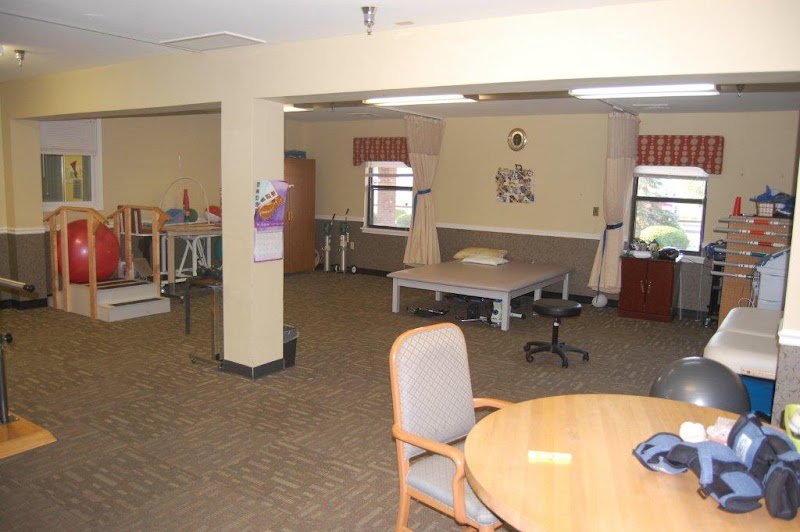
How is Aperion Care Hanover Staffed?

CMS rates APERION CARE HANOVER's staffing level at 1 out of 5 stars, which is much below average compared to other nursing homes. Staff turnover is 54%, compared to the Indiana average of 46%.

What Have Inspectors Found at Aperion Care Hanover?

State health inspectors documented 66 deficiencies at APERION CARE HANOVER during 2022 to 2025. These included: 1 Immediate Jeopardy (the most serious level, indicating potential for serious harm or death), 1 that caused actual resident harm, and 64 with potential for harm. Immediate Jeopardy findings are rare and represent the most serious regulatory concerns. They require immediate corrective action.
Who Owns and Operates Aperion Care Hanover?

APERION CARE HANOVER is owned by a for-profit company. For-profit facilities operate as businesses with obligations to shareholders or private owners. The facility is operated by APERION CARE, a chain that manages multiple nursing homes. With 125 certified beds and approximately 70 residents (about 56% occupancy), it is a mid-sized facility located in HANOVER, Indiana.
How Does Aperion Care Hanover Compare to Other Indiana Nursing Homes?

Compared to the 100 nursing homes in Indiana, APERION CARE HANOVER's overall rating (1 stars) is below the state average of 3.1, staff turnover (54%) is near the state average of 46%, and health inspection rating (1 stars) is much below the national benchmark.

What Should Families Ask When Visiting Aperion Care Hanover?

Based on this facility's data, families visiting should ask: "What changes have been made since the serious inspection findings, and how are you preventing similar issues?" "Can you walk me through typical staffing levels on day, evening, and night shifts?" "Can I visit during a mealtime to observe dining assistance and food quality?" "How do you handle medical emergencies, and what is your hospital transfer rate?" These questions are particularly relevant given the facility's Immediate Jeopardy citations and the below-average staffing rating.

Is Aperion Care Hanover Safe?

Based on CMS inspection data, APERION CARE HANOVER has documented safety concerns. Inspectors have issued 1 Immediate Jeopardy citation (the most serious violation level indicating risk of serious injury or death). The facility has a 1-star overall rating and ranks #100 of 100 nursing homes in Indiana. Families considering this facility should ask detailed questions about what corrective actions have been taken since these incidents.

Do Nurses at Aperion Care Hanover Stick Around?

APERION CARE HANOVER has a staff turnover rate of 54%, which is 8 percentage points above the Indiana average of 46%. Moderate turnover is common in nursing homes, but families should still ask about staff tenure and how the facility maintains care continuity when employees leave.

Was Aperion Care Hanover Ever Fined?

APERION CARE HANOVER has been fined $53,874 across 1 penalty action. This is above the Indiana average of $33,618. Fines in this range indicate compliance issues significant enough for CMS to impose meaningful financial consequences. Common causes include delayed correction of deficiencies, repeat violations, or care failures affecting resident safety. Families should ask facility leadership what changes have been made since these penalties.

Is Aperion Care Hanover on Any Federal Watch List?

APERION CARE HANOVER is not on any federal watch list. The most significant is the Special Focus Facility (SFF) program, which identifies the bottom 1% of nursing homes nationally based on persistent, serious quality problems. Not being on this list means the facility has avoided the pattern of deficiencies that triggers enhanced federal oversight. This is a positive indicator, though families should still review the facility's inspection history directly.