THORNTON TERRACE HEALTH CAMPUS
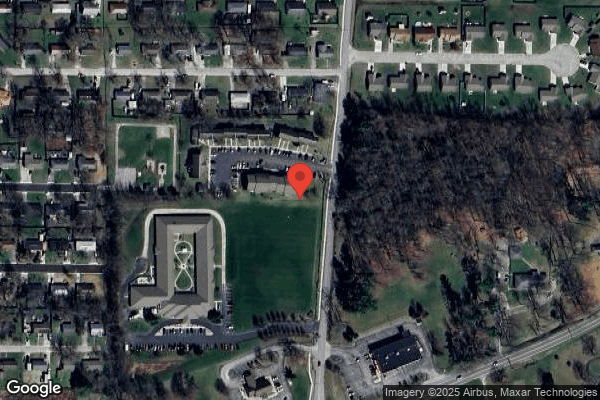
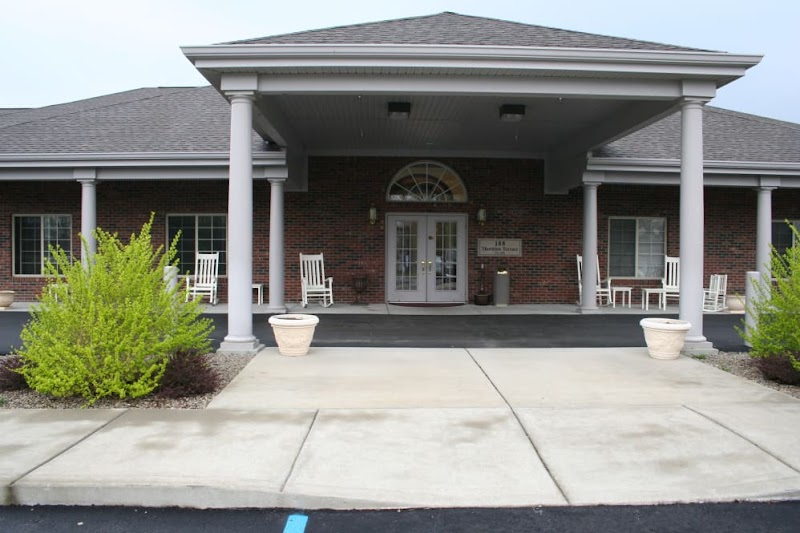
188 THORNTON RD, HANOVER, IN 47243 (812) 866-8396
For profit - Corporation 55 Beds TRILOGY HEALTH SERVICES Data: November 2025
Trust Grade
85/100
#101 of 505 in IN
Last Inspection: August 2024

Within standard 12-15 month inspection cycle. Federal law requires annual inspections.

Overview

Thornton Terrace Health Campus in Hanover, Indiana, has received a Trust Grade of B+, indicating it is above average and recommended for families seeking care. It ranks #101 out of 505 facilities in Indiana, placing it in the top half, and is #2 out of 5 in Jefferson County, meaning there is only one better option nearby. The facility's trend is stable, with 4 issues noted in both 2023 and 2024, which suggests consistency in their operations. Staffing is rated average with a turnover rate of 34%, lower than the state average of 47%, which indicates that many staff members stay long enough to build relationships with residents. While the facility has not incurred any fines, which is a positive sign, there have been some concerns. For instance, they failed to ensure that medications were properly labeled and stored, and there was an incident where a resident did not receive medications as ordered. Additionally, a resident with serious health issues had a care plan that did not adequately address the need for regular skin assessments related to a pressure ulcer. Overall, Thornton Terrace has strengths in its trust score and staffing stability, but these concerns should be carefully considered by families.

Trust Score
B+
85/100
In Indiana
#101/505
Top 20%
Safety Record
Moderate
Needs review
Inspections
Holding Steady
4 → 4 violations
Staff Stability
○ Average
34% turnover. Near Indiana's 48% average. Typical for the industry.
Penalties
✓ Good
No fines on record. Clean compliance history, better than most Indiana facilities.
Skilled Nurses
✓ Good
Each resident gets 57 minutes of Registered Nurse (RN) attention daily — more than average for Indiana. RNs are trained to catch health problems early.
Violations
⚠ Watch
12 deficiencies on record. Higher than average. Multiple issues found across inspections.
★★★★★
5.0
Overall Rating
★★★☆☆
3.0
Staff Levels
★★★★★
5.0
Care Quality
★★★★☆
4.0
Inspection Score
Stable
2023: 4 issues
2024: 4 issues

The Good

  • 5-Star Quality Measures · Strong clinical quality outcomes
  • Full Sprinkler Coverage · Fire safety systems throughout facility
  • No fines on record
  • Staff turnover below average (34%)

    14 points below Indiana average of 48%

Facility shows strength in quality measures, fire safety.

The Bad

Staff Turnover: 34%

12pts below Indiana avg (46%)

Typical for the industry

Chain: TRILOGY HEALTH SERVICES

Part of a multi-facility chain

Ask about local staffing decisions and management

The Ugly 12 deficiencies on record

1 actual harm
Aug 2024 2 deficiencies
CONCERN (D)

Potential for Harm - no one hurt, but risky conditions existed

Pharmacy Services (Tag F0755)

Could have caused harm · This affected 1 resident

Based on record review and interview, the facility failed to ensure a resident received medications as ordered for 1 of 5 residents reviewed for pharmacy services. (Resident 34) Findings include: The ...

Read full inspector narrative →
Based on record review and interview, the facility failed to ensure a resident received medications as ordered for 1 of 5 residents reviewed for pharmacy services. (Resident 34) Findings include: The record for Resident 34 was reviewed on 8/16/24 at 9:32 a.m. The resident's diagnoses included, but were not limited to, anxiety disorder and depression. The care plan, dated 7/4/24, indicated the resident had a diagnosis of anxiety and demonstrated anxiousness, restlessness, agitation, and aggressive behaviors. The interventions included, but were not limited to, encourage the resident to voice the cause for his anxiety and problem solve ways to resolve stressors, identify and avoid triggers whenever possible, provide consistency and routine, monitor for increased signs and symptoms and resolve the concerns when possible. The Quarterly MDS (Minimum Data Set) assessment, dated 6/24/24, indicated the resident was moderately cognitively intact. The resident had physical behavioral symptoms directed toward others. The nurse's notes, dated 6/5/24 at 12:02 a.m., indicated the CNA (Certified Nursing Aide) was changing the resident. The resident punched the CNA in her face, pulled her hair out of her head, and choked her. The resident had punched another CNA in her face the night before. The resident did not have a PRN (as needed) medication to give. The nurse's note, dated 6/5/24 at 10:36 a.m., indicated the physician was made aware of the resident's increased behavior and combativeness. A new order was received for Ativan 1 mg every 8 hours PRN. The NP (Nurse Practitioner) note, dated 6/13/24 at 9:32 a.m., indicated the resident had advanced dementia and had increased combativeness during personal care. On 6/5/24, the physician wrote an order for Ativan 1 mg every 8 hours PRN for agitation. The prescription was never sent to pharmacy. The staff requested a prescription today. The resident was taking Depakote 250 mg oral at bedtime. During an interview on 8/19/24 at 10:00 a.m., LPN (Licensed Practical Nurse) 4 indicated when the nursing staff took a physician's order they would put the order in the computer system. When the physician ordered a medication like Ativan, the physician was responsible to send the prescription to the pharmacy via the computer. If the order was not filled within a couple of hours, staff should do a follow up and call the pharmacy or the physician to see if the prescription was sent. He would not wait any longer than 2 hours. The current Guidelines for Medications Orders policy included, but was not limited to, . b. Telephone or verbal orders shall be recorded in Matrix when received by the nurse receiving the order. 3.1-25(b)(1)(c)
CONCERN (D)

Potential for Harm - no one hurt, but risky conditions existed

Deficiency F0761 (Tag F0761)

Could have caused harm · This affected 1 resident

Based on observation and interview, the facility failed to ensure influenza vaccinations were monitored for expiration dates and disposal of the expired medication for 1 of 4 observations of medicatio...

Read full inspector narrative →
Based on observation and interview, the facility failed to ensure influenza vaccinations were monitored for expiration dates and disposal of the expired medication for 1 of 4 observations of medication storage. (Medication Room refrigerator) Findings include: During an observation on 8/16/24 at 1:01 p.m., of the 200 Hall medication storage room with RN 5, four boxes of Fluzone influenza vaccination, plus an open box with one vial of Fluzone influenza vaccination had an expiration date of June 2024. She indicated the influenza vaccinations were dated June 2024, and she would check to make sure the boxes and vial were expired. There were 10 vials of the influenza vaccine in each box for a total of 41 vials. During an interview on 8/16/24 at 2:10 p.m., the ED (Executive Director) indicated the influenza vaccinations were expired. She indicated they had not been administered since the influenza season ended. During an interview on 8/20/24 at 8:43 a.m., LPN (Licensed Practical Nurse) 4 indicated if an influenza vaccination was expired, it would go to the DON (Director of Nursing) for disposal. The influenza vaccination period would begin in September or October. During an interview on 8/20/24 at 9:47 a.m., LPN 3 indicated the ADON (Assistant Director of Nursing) would monitor the vaccinations for expiration dates. Influenza vaccinations began in September or October each year. During an interview on 8/20/24 at 9:57 a.m., the DON indicated the vaccination's expiration dates were monitored by herself, the ADON, and the evening shift supervisor. It was just an oversight that they missed the vaccinations were expired. The Medication Storage In The Facility policy, revised January 2018, included, but was not limited to, . G. All expired medications will be removed from the active supply and destroyed in the facility, regardless of amount remaining. The medication will be destroyed in the usual manner . 3.1-25(o)
Jan 2024 2 deficiencies
CONCERN (D) 📢 Someone Reported This

A family member, employee, or ombudsman was alarmed enough to file a formal complaint

Potential for Harm - no one hurt, but risky conditions existed

Resident Rights (Tag F0550)

Could have caused harm · This affected 1 resident

Based on record review and interview, the facility failed to ensure resident rights related to dignity for 1 of 3 residents reviewed for resident rights. (Resident B) Findings include: The record for...

Read full inspector narrative →
Based on record review and interview, the facility failed to ensure resident rights related to dignity for 1 of 3 residents reviewed for resident rights. (Resident B) Findings include: The record for resident B was reviewed on 1/10/23 at 11 33 AM. The diagnoses included, but were not limited to, incomplete lesion at C5 level of cervical spinal cord, quadriplegia C5 through 37 incomplete, attention deficit hyperactivity disorder, major depressive disorder, anxiety, paraplegia, reduce mobility, lack of coordination, muscle weakness, and difficulty in walking. The quarterly MDS (Minimum Data Set) assessment, Dated 12/27/23, indicated the resident was cognitively intact. The care plan initiated on 12/26/23 and last revised on 1/3/24 indicated the resident had a history of verbal behaviors directed towards staff such as threatening their jobs, accusing them of abuse, retaliatory behaviors, inappropriate attachment to staff, and recording conversations. The interventions included but were not limited to avoiding power struggles with resident conveying attitude of acceptance to resident, do not engage resident in sensitive topics, maintain a common environment, and approach to the resident in sensitive topics, maintain calm approach, provide care with two assistants, set expectations and limits for resident when a patient becomes verbally abusive stop, assure resident safety and reapproach at a later time. The State reportable incident, dated 12/21/23 at 12:01 p.m., indicated the resident reported a staff member called him a baby bird. The resident provided a recording of himself asking for a pop tart to be torn up into pieces. The CNA (Certified Nurse Aide) asked the resident if he needed her to baby bird it. The typed statement of the ED (Executive Director) indicated, on 12/21/23 at noon, Resident B wanted to talk to her regarding an allegation of that night shift had hurt his feelings. He had a recording which the ED listened to. The resident was upset. The ED's note, dated 12/22/23, indicated the resident had psychosocial monitoring in place. He was visibly upset. The ED offered support which was declined. The resident declined to have anyone called or have counseling services. During an interview, on 1/10/24 at 12:09 p.m., CNA 5 indicated she recalled the incident vaguely. She remembered she was opening a pop tart for him and she was joking around and asked him if he wanted her to baby bird it to him. She described what she meant by stating, It's just when you chew up someone's food and you feed it to them like a mommy bird. But I would never do that, absolutely. I would never do that. She confirmed she did state to the resident Do you need me to baby bird it? During an interview on 1/11/24 at 11:02 a.m., the ED indicated the resident had asked to speak with her and told her the incident had hurt his feelings. He initially told her CNA 5 told him she would chew his food up and spit it back into his mouth. She listened to the video immediately. The video showed Resident C had asked CNA 5 to tear up his poptart for him. CNA 5 responded, asking if the resident wanted her to baby bird it for him. The CNA was educated on professional language and approach. The facility's most current Resident Rights policy, included, but was not limited to, . Resident Rights . The resident has a right to a dignified existence . (e) Respect and dignity. The resident has a right to be treated with respect and dignity . This citation relates to Complaint IN0424598. 3.1-3(a)
CONCERN (D) 📢 Someone Reported This

A family member, employee, or ombudsman was alarmed enough to file a formal complaint

Potential for Harm - no one hurt, but risky conditions existed

Deficiency F0744 (Tag F0744)

Could have caused harm · This affected 1 resident

Based on observation, record review, and interview, the facility failed to ensure appropriate interventions and response for dementia related behaviors for 1 of 3 residents reviewed for dementia care....

Read full inspector narrative →
Based on observation, record review, and interview, the facility failed to ensure appropriate interventions and response for dementia related behaviors for 1 of 3 residents reviewed for dementia care. (Resident C) Findings include: During an observation on 1/10/24 at 10:35 a.m., Resident C was in his bed. He was pleasantly confused and very hard of hearing. When asked his name he indicated a name which was not his. He was not able to be interviewed. He appeared pleasantly confused and in no distress. He had no visible bruising at this time. The record for Resident C was reviewed on 1/10/24 at 11:16 a.m. The diagnoses included, but were not limited to, unspecified psychosis, hallucinations, altered mental status, visual disturbance, unsteadiness on feet, and muscle weakness. The Quarterly MDS (Minimum Data Set) assessment, dated 11/24/23, indicated the resident was rarely or never understood and was not assessed for cognitive status. The nurses note, dated 9/26/23 at 12:49 a.m., indicated the resident was being verbally and physically aggressive that night. He refused his medications and began swinging and cussing at the nurse. The CNA (Certified Nurse Aide) was trying to check and change him that morning and the resident began swinging, pinching, cursing and yelling. The record lacked documentation of any interventions or their effectiveness for this incident. The nurse's note, dated 10/10/23 at 12:17 a.m., indicated the CNA was trying to change the resident and he became angry. He swung and hit her in the side. The resident calmed back down when left alone. The physician's note, dated 10/12/23 at 8:15 a.m., indicated the resident was seen for a follow-up to his conditions which included, but were not limited to, dementia. The resident was on medication for anxiety. He had no behavioral concerns and was eating and sleeping well. He was tolerating all medications. All chronic problems were stable. The nurse's note, dated 10/21/23 at 4:00 a.m., indicated while staff were changing the resident he began swinging and punched a CNA in the face three times. The Social Services note, dated 10/23/23 at 4:17 p.m., indicated the resident had an episode of being combative with care at 4:00 a.m., when attempting to change the resident. He had significantly impaired hearing and cognition. His care plan was updated to recommend staff approach him slowly and calmly when performing care as to do their best to not startle or agitate the resident who may be confused about what care was being performed and why. The care plan, initiated 10/23/23, indicated the resident demonstrated combative and resistive behaviors with staff during hands on care related to dementia. Goal was for the resident to not result in injury to self or others. The interventions included, but were not limited to, approach the resident in a calm and unhurried manner to deliver care and provide services, explain care process prior to delivery of care as needed, observe for signs of over stimulation, and encourage to move to less stimulating environments as needed. The care plan indicated the resident's showers were on Thursday and Sunday on third shift with a the the assistance of two staff members for transfers. The nurse's note, dated 11/1/23 at 5:48 a.m., indicated the resident became very agitated with staff when routine bed checks were completed that morning. He began swinging and stating I don't want to stand up. Staff reassured him he did not have to stand up, she just needed him to roll to the side. The resident rolled over and called the staff member a b***h and would not let go of the rail to roll back. When staff convinced the resident to roll back so they could finish changing his brief, he began to swing at staff. They were eventually able to complete the change and the resident calmed down. Staff were able to avoid being struck by the resident. The physician's note, dated 11/7/23 at 8:28 a.m., indicated the patient was seen for conditions including, but was not limited to, dementia. The resident was still on buspar 10 mg (milligrams) twice daily for anxiety. He had no new or acute complaints. He had no behavioral concerns and his chronic problems were otherwise stable. The physician's note, dated 12/12/23 at 8:28 a.m., indicated the resident was seen for a follow-up for health conditions which included, but were not limited to dementia. The resident's dementia was slowly declining, he was clinically comfortable, continue treatment. He had anxiety and Parkinson features which were controlled. The nurse's note dated 12/16/23 at 5:25 a.m.,,. indicated the resident had not slept for the past two nights. He had been yelling in the room and trying to get out of bed. He was brought to the living room to be more closely monitored. His roommate was angry about being woken up. The skin tear event, dated 12/17/23, indicated the resident had a skin tear to the left upper interior arm measuring 2 cm (centimeters) in L (length) by 2.5 cm in W (width), which was shallow, had a small amount of blood, irregular edges, and no pain. The activity during the occurrence was bathing and transferring. The area was cleansed with soap and water and first aid was given. The bruise event, dated 12/17/23, indicated the resident four areas of bruising. Bruise number 1 to his left upper arm was red, blue. Bruise number 2 to his forearm was red, blue. Bruise number 3 to his right forearm was red-blue and measured 1.5 cm in length by 4 cm in width. Bruise number 4 to his right outer upper arm was 2.5 cm in L by 2 cm in W and was red, blue. The bruises were obtained during bathing and transfer. The IDT note, dated 12/18/23 at 9:17 a.m., indicated the resident had a new skin tear and bruise noted. The skin areas occurred while care was being provided. Treatments and monitoring were in place. There was no further documentation with regards to how the resident obtained the bruising and skin tear during his bathing and transfer. The handwritten statement of LPN 4 dated 12/17/23 at 11:15 AM indicated at approximately 11:10 a.m., LPN (Licensed Practical Nurse) 4 was contacted by CNA 7 and it was reported that resident C was presenting with new bruising and a skin tear. Assessment of the resident was conducted, and the left arm showed new bruising and skin tears. The resident had no memory of how it happened. During report it was mentioned that the resident hit staff during showering. The typed statement of CNA 7, dated 12/17/23 at 7:19 PM, indicated on 12/17/23 during report, CNA 5 and CNA 6 stated Resident C was being combative so they two-person body lifted him out of the shower chair into bed. At 8:15 a.m., herself and another staff member went in to check on the resident and set him up for breakfast. He was dry so they sat the head of the bed up so he could eat. Family arrived at 10:00 a.m. and he had a few people in there, so they waited until family left to go back and check on him again. At 11:00 a.m. herself and another staff member went in to change him because he was wet and rolled him over and saw blood on the Chuck and draw sheet. As they were looking at the arm to see where the bleeding was coming from, they noticed he had several new bruises on both his left and right arms and open skin on both arms around the elbows. The other staff member stayed with the resident while CNA 7 went to grab LPN 4 to come take a look. He examined the resident and immediately went to call the ED and DON. The typed statement of CNA 5, dated 12/16/23, indicated the aid went into the room to check on the resident and see if the other aid needed help after the resident had his shower. The other aide stated the resident had struck her in the face multiple times during the shower and she couldn't get him hooked back up to the full body lift lift due to him being combative. They body lifted him back into bed and proceeded to try and check and change the resident she was at his hips trying to hold him over while the other aide was at the top holding him over while trying to wipe the resident clean of his bowel movement. The resident kept forcefully pushing back against the wall. CNA 5 told the other aide to just put a brief on him and come back later when the resident had calmed down. They didn't put a top on him at the time, they covered him up and made sure he was warm and safe. They gave him his call light, put up the side rail, and then put the bed at the lowest position. The resident was re-approached later by the other aid and care was provided. The typed statement of CNA 6, dated 12/17/23, indicated on 12/16/23 CNA 6 entered the resident's room to give the resident a shower. She turned on the light and spoke loud enough so the resident would understand and let him know that it was his shower day. She offered him his shower and he seemed understanding and willing to participate although he was a little agitated from being woken up. She rolled the resident over and placed the full body lift pad underneath him with the help of another aide. The resident seemed to be getting more agitated from being rolled, but generally liked showers. She thought once he saw the shower and maybe understood what was going on more that he would deescalate. As the other aide and she were trying to help the resident into the shower chair using the full body lift the resident was flailing his arms around and trying to hit and bite both of them. The other aide asked if she would be OK to give him his shower by him herself and she said yes that he should calm down once he was in the shower as he usually did. This time however the resident did not deescalate and was still very agitated as she was trying to shower him. The resident was still flailing around his arms and trying to hit and bite. The resident hit her in the face and arms as she was trying to bathe him. Her goal at this point was to get the resident clean and out of the shower as quickly as possible while also keeping himself and herself safe. Once she got him out of the shower, he was still very agitated and combative, so she called in another aide to assist her in putting him to bed. The resident was too escalated to safely use the full body lift, so the other aide and she had to underarm him into the bed. As they were trying to reposition and change the resident, he was still very escalated and was using his arms to push up against the wall as they were putting his brief on him. The other aide suggested that they leave his shirt off for now due to how he was being combative. They made sure he was clean safe and comfortable as best as they could at the time and then checked on him later and were able to provide care for him as he had deescalated. During an interview on 1/10/23 at 12:33 p.m., LPN 4 indicated he was familiar with Resident C and recalled opening new skin events on him. He was not the first person to identify the skin impairments. Two of his CNAs (Certified Nurse Aides) had brought it to his attention. They told him that they wanted me to make sure he saw them because it was new events of bruising and skin tears on his bilateral elbows. They did not tell him how they obtained them. They didn't move him and there was nothing that would have caused them. He'd had a shower the shift prior. CNA 5 and CNA 6 had been talking about giving him a shower. CNA 6 indicated he'd hit her and become combative in the shower which was not out of the ordinary for the resident. His typical response would be to switch it to a bed bath and make it as comfortable as possible and if still agitated then he would separate and give the resident to calm down. There was no sense in agitating the resident. During an interview on 1/10/24 at 12:46 p.m., CNA 7 indicated she and another staff member had gone in to care for Resident C and had pulled back the sheet and were getting ready to change him. They saw blood on his bed pad and saw a skin tear under his elbow. They looked even further and there was new bruising on his arms and skin tears under both elbows. They finished changing him and had LPN 4 come in to look at him. She told the nurse she wasn't sure what had gone on, but it didn't look too hot. He had little circle red dots on his back all over the top part of his back, and he had bruising on his hands. When they looked at him, they didn't know how he got that many bruises. He had them all over his arms and hands. It was very concerning to them. It was concerning because there was a ton of bruising and the skin tear looked like a nail had dug under it, his skin was fragile any ways. She was told that he was given a shower on third shift the night before, they did not say anything, they said he was fine. It was later in the day they said he was being combative and that he was yelling out no he didn't want to get it, but they continued and put him in the shower. They said he was punching CNA 6 in the face. The other aide involved was CNA 5. CNA 9 had told her this. She said she had been in the room when Resident C was punching CNA 6 in the face. She had been in there when they were transferring him and putting him in the shower, and he was refusing. During a confidential interview, between 1/10/24 and 1/11/24, Staff E indicated she had seen blood on Resident C's draw sheet and clear fluid. They got to looking and he had a skin tear on both elbows, and they observed bruising. They immediately told LPN 4. He also had what looked like purple petechia on his back. She was very concerned. They were told he was being combative, and the aides proceeded to shower him anyway. The shower sheet had indicated CNA 6 had given the resident his shower. CNA 9 had told her and CNA 7 the resident had been combative, and she held his hands down. CNA 5 and 6 had put him in the shower chair with the full body lift but because he was being so combative and was hitting CNA 6 in the face, they transferred him back without a lift. During an interview on 1/10/24 at 1:57 p.m., CNA 9 indicated the night of the incident the resident was due for a shower. He was normally a bed bath. CNA 6 was in there and she was trying to put the full body lift pad underneath of him. He was trying to hit her, and she was grabbing his arms for him to not hit her. The call button went off and she went in there and helped her. CNA 6 was kind of rough. She did think she should have re-approached and came back later. That was what they did when a resident was resistive to care, they came back later. She helped her put him in the shower chair and then once she got him in the shower, she left the room. She did not assist in holding down his hands. CNA 6 was holding his arms down a little so she could turn him. She did try to encourage her to stop the care. She told CNA 6 since he was combative and not wanting to do anything maybe they should come back later, but third shift was very persistent about getting showers done. CNA 6 didn't really say anything and continued with care. CNA 5 was in there after the shower and the call light went off again. They were trying to get the pad out from underneath him. He was being aggressive with them. They two-armed him from the chair to the bed. They didn't put a shirt on him, they just covered him up. was in there with her after the shower and the call light went off again, they were trying to get the pad out from underneath him, he was being aggressive with them. She didn't think CNA 6 meant anything by it, but she should have stopped what she was doing and came back later. During an interview on 1/10/24 at 2:05 p.m., the DON indicated she had been contacted by the ED, who said LPN 4 had contacted her with a concern about some areas on Resident C's skin. He did have some bruises, but nothing appeared to be malicious. He had little dots on his back from the shower chair, he was bruising very easily. CNA 6 had been the one in the room and she said she had gotten him up for the shower just fine but once he got in the chair, he got combative and resistive. CNA 6 indicated he would do that but then once he was in the shower, he would calm down, so she proceeded. However, while he was in the shower, he did strike her. She finished the shower and had CNA 5 come back in and help put him back to bed. They felt he was being too combative to get back in the full body lift and his orders were for a two person assist so they did stand him up. She would have recommended an alternate caregiver and if that didn't help give him space and time to calm down and re-approach. He had dementia and had resistive behaviors to care and things like that, but he was more resistive in the nights and evenings. One of the very first interventions were to switch him to a day shift shower. With dementia approach was very important. During an interview on 1/11/23 at 11:33 a.m., the ED indicated they had not done specific interventions when the resident had combative behaviors in September, or on 10/22/23. They were more worried about his refusal from a weight loss perspective and that's what they had focused on. They had failed to implement specific interventions to address his behaviors. The facility's most current education, titled Solving Difficult situations the Best Friends Way, included, but was not limited to, . Step 1: Be a Detective Stop, Look, and Listen for Triggers . Stop . Ask the person what's wrong . Sit with him or her for a bit . Show concern or affection . Remember to walk a mile in his or her shoes - be empathetic . The facility's most current Communication and Dementia policy, included, but was not limited to, . Communication is at the heart of our relationships with our loved ones . 8. Do not argue, confront, or correct. If conflict arises, treat it with a warm, tender attitude, and give gentle cues to your lobed one if they're making a mistake . 9. Do not give orders or make demands. Your loved one may take this as a sign of aggression and respond negatively . The facility's most current Comprehensive Care Plan Guideline policy, included, but was not limited to, . Should new identified areas of concern arise during the resident's stay, they should be addressed on the care plan .6. Comprehensive care plans need to remain accurate and current. a. New interventions will be added and updated during or directly following the CCM [Care coordination meeting] . This citation relates to Complaint IN00424277. 3-1.37(a)
Jul 2023 3 deficiencies
CONCERN (D)

Potential for Harm - no one hurt, but risky conditions existed

Notification of Changes (Tag F0580)

Could have caused harm · This affected 1 resident

Based on record review and interview, the facility failed to ensure the physician was notified of residents change in condition for 2 of 16 residents reviewed for physician notification. (Residents 32...

Read full inspector narrative →
Based on record review and interview, the facility failed to ensure the physician was notified of residents change in condition for 2 of 16 residents reviewed for physician notification. (Residents 32 and 35) Findings include: 1. The record for Resident 32 was reviewed on 6/27/23 at 9:26 a.m. The diagnoses included, but were not limited to, essential hypertension and hyperlipidemia. The Quarterly MDS (Minimum Data Set) assessment, dated 5/28/23, indicated the resident was cognitively intact. The care plan, initiated on 2/23/23 and last revised on 6/5/23, indicated the resident had a potential for cardiovascular distress related to a diagnosis of hypertension. The interventions included, but were not limited to, provide medications as ordered, observe for and report side effects as needed, observe for signs/ symptoms of cardiovascular distress and report as needed, and obtain vital signs as ordered and needed. The nurse's note, dated 5/2/23 at 5:00 p.m., indicated the resident was sitting up in the dining room and stated, Can you check my blood pressure, I feel dizzy. His blood pressure at the time was 77/47 mmHg (millimeters of mercury) and his pulse was 80 bpm (beats per minute). At 5:12 p.m., he continued sitting up in the dining room, his blood pressure was 99/59 mmHg and his pulse was 76 mmHg. At 5:14 p.m., the resident was assisted back to his room by a nursing assistant, and he was sitting in his recliner. The clinical record lacked documentation of any notification to the physician of the resident having an episode of low blood pressure with dizziness on 5/2/23. The nurse's note, dated 5/4/23 at 11:21 a.m., indicated new orders for the resident's blood pressure parameters were received from the NP (Nurse Practitioner). The physician's orders, dated 5/4/23, indicated parameters were added to the resident's atenolol 50 mg (milligrams) once daily and his lisinopril 5 mg once daily to hold the medications for a systolic blood pressure (the top number of a blood pressure/heart at work) of less than 100, or a pulse of less than 60. The parameters did not indicate any diastolic (bottom number/heart at rest) parameters. The nurse's note, dated 5/11/23 at 8:06 p.m., indicated the resident complained of blurry vision after his evening meal. Staff checked his blood pressure at 5:20 p.m. and it was 83/44 mmHg. They offered him a full glass of water and he drank it. They advised him to stay seated until they rechecked his blood pressure. His blood pressure was rechecked at 5:45 p.m. and was 95/58 mmHg. The resident was assisted to his room and sat in his recliner. He was offered another large glass of water, and was up walking in his room at the time. The clinical record lacked documentation of any notification to the physician of the resident having an episode of low blood pressure with blurry vision on 5/11/23. The nurse's note, dated 6/17/23 at 7:17 p.m., indicated the resident reported feeling queasy after his evening meal. His blood pressure was checked an was 69/41 mmHg at 5:05 p.m. One glass of water was offered, which the resident drank. Staff monitored the resident. At 5:30 p.m., the resident was assisted back to his room. His blood pressure was rechecked and was 89/53 mmHg. The resident stated he felt a little bit better and was offered another large glass of water, which he consumed. His recheck at 7:15 p.m. was 101/61mmHg. The resident indicated he felt fine, and was just sleepy. Staff would continue to monitor. The clinical record lacked documentation of any notification to the physician of the resident having an episode of low blood pressure with complaints of feeling queasy on 6/17/23. The nurse's note, dated 6/19/23 at 1:43 p.m., indicated the physician was notified of the resident's hypotensive event. There were no new orders at the time. During an interview on 6/30/23 at 11:14 a.m., LPN (Licensed Practical Nurse) 9 indicated she would notify the physician of any blood pressures below 100 for systolic or 60 for diastolic. If the resident had symptoms like dizziness or feeling lightheaded she would notify the physician. She would notify the physician as soon as the resident presented with symptoms after she assessed the resident. During an interview on 6/30/23 at 1:40 p.m., LPN 8 indicated in the evening time, usually around supper was when the resident would say he was not feeling very good, and staff would check his blood pressure and it would be low. The physician should be notified anytime it was that low. She would notify any time the resident's blood pressure was below the parameters to where staff needed to hold the medication. He did not have parameters to notify for diastolic pressure, but she would notify the physician of a diastolic pressure of less than 50. She would notify any time the resident had a change in the symptoms, such as feeling queasy or dizzy with low blood pressures. The physician should have been contacted on the resident's blood pressure on 5/2/23 and 5/11/23, but she could not locate any documentation of notification to the physician on either of the incidents. They had not done any laboratory testing. The notes sounded like they were giving fluids because they thought he could be dehydrated. Low blood pressure could occur if a resident was dehydrated. There was an order to check his blood pressure in the evenings. Staff were supposed to notify the physician of any out of range results. During an interview on 7/3/23 at 9:56 a.m., the DON (Director of Nursing) indicated she would have expected the physician to be notified on 6/17/23 when the resident had the low blood pressure and queasiness. She would expect the doctor to be notified of anything below 90 and symptomatic, depending on their parameters. The review of all documentation from clinical record provided by the facility, on 7/3/23 at 10:50 a.m., lacked documentation of any parameters for diastolic pressure, any parameters for physician notification, any notification to the physician of the resident's blood pressures and change of conditions on 5/2/23 (until the following day), on 5/11/23, and on 6/17/23 (until two days later by LPN 8 on 6/19/23). During an interview on 7/3/23 at 11:24 a.m., Resident 32's physician indicated he expected to be notified of any clinical change or any blood pressure associated with symptoms or a change. If the concern was somewhat pressing staff were free to text and they texted him all the time. He would expect to be notified pretty promptly. He could not locate any documentation of being notified. During an interview on 7/3/23 at 11:35 a.m., the Executive Director (ED) indicated nurses were to make the documentation of physician notification. 2. The clinical record for Resident 8 was reviewed on 6/27/23 at 12:45 p.m. The diagnoses included, but were not limited to, type 2 Diabetes Mellitus with hypoglycemia without coma, hypocalcemia and hypokalemia. The care plan, initiated on 9/2/20 and last revised on 6/1/23, indicated the resident was at risk for hypoglycemia and hyperglycemia related to Diabetes Mellitus. The interventions included, but were not limited to, laboratory testing per physician's order and observe the resident for symptoms of hypoglycemia such as sweating, cold, clammy skin, numbness of the fingers, toes, mouth, rapid heartbeat, tremors, and dizziness. The nurse's note, dated 4/18/23 at 2:54 p.m., indicated the CNA (Certified Nurse Aide) called the nurse to the resident's room. The resident was convulsing. Her skin was red, cool, and clammy. The resident was alert and attempting to communicate with staff. Her blood sugar was 60 mg/dl (milligrams per deciliter). The resident stopped convulsing and was able to drink orange juice. After a few moments the resident able to communicate with this nurse and told her she felt awful. Her blood sugar was obtained again and was 66 mm/dl. The resident was taken to the common area and given snack and fluids. Her blood sugar was obtained again at 99 mg/dl. The physician was notified and gave new orders to discontinue the resident basaglar insulin and to check her hgb (hemoglobin) A1C. The nurse's note, dated 5/9/23 at 3:16 p.m., indicated the resident was presenting with seizure like activity. Her face was flushed, and she was very diaphoretic. Her blood sugar was 76 mg/dl. The incident lasted about 2 to 3 minutes. The record lacked documentation of the physician being notified at the time of the occurrence on 5/9/23. During an interview on 6/30/23 at 11:05 a.m., LPN 9 indicated on 5/9/23 the resident had jerking movements, she wasn't responding, she was twitching and jerking. Her whole body was twitching and jerking. It lasted 2 to 3 minutes from the time she was notified. She checked her sugar and they laid her down because she was in her wheelchair at the time. By the time they got her laid down the jerking had subsided. They always make the doctor aware of anything that was different. She would have typed it up in the system and she would have called the office or made him aware when he came in to the facility, but this was an incident and she would have made a call to the physician. If he gave orders she would have charted it. She could not recall any conversation with the physician. The physician notification should be located in the progress notes. The notification on the event was for the initial event on 4/18/23. During an interview on 6/30/23 at 1:33 p.m., LPN 8 indicated on 4/18/23 the resident had been convulsing, like with a seizure, but she was still alert. They were able to get her to come back around and get some juice and snack into her, and then when they notified the doctor they did change her insulin. If she had another incident of convulsions, she would notify the doctor. She reviewed the record and indicated she did not see any notification to the physician of the incident on 5/9/23. It would be in the progress notes. It was something the physician should have been notified of. During an interview on 7/3/23 at 9:50 a.m., the DON indicated the resident had some low blood sugars with seizure like activity. They were working on getting staff to put the documentation of physician notification in the nurse's notes. The physician should have been notified at the time of the occurrence. If the resident was having seizure like activity, she would expect the physician to be notified as soon as the resident was stabilized. The review of all documentation from the clinical record provided by the facility, on 7/3/23 at 10:47 a.m., lacked documentation of any notification to the physician of the resident having seizure-like activity with low blood sugar levels on 5/9/23. The Provider Notification Guidelines policy and procedure, last reviewed 12/31/22, provided on 6/29/23 at 2:10 p.m. by the Clinical Nurse, included but was not limited to, . Procedures 1. Resident assessments for change in condition . should be completed in a timely manner . 2. The provider should be notified of critical lab results or an immediate need by phone as soon as the results are known with a response received before the call is completed when possible. If the provider must be paged a call back is expected within 15 minutes to one hour depending on severity of the concern. If unable to reach the primary provider, the campus Medical Director will be notified . 6. During non-office hour times the nurse should notify the physician/provider by phone or abnormal lab results or the need for physician/provider intervention . 11. Attempts to notify the physician/provider and their response should be documented in the resident electronic health record . 3.1-5(a)(2) 3.1-5(a)(3)
CONCERN (D)

Potential for Harm - no one hurt, but risky conditions existed

Incontinence Care (Tag F0690)

Could have caused harm · This affected 1 resident

Based on observation, record review, and interview, the facility failed to ensure residents received the appropriate perineal care related to infection control guide lines to prevent urinary tract inf...

Read full inspector narrative →
Based on observation, record review, and interview, the facility failed to ensure residents received the appropriate perineal care related to infection control guide lines to prevent urinary tract infections for 3 of 6 residents reviewed for bowel and bladder. (Residents 3, 18, and 29) Findings include: 1. During an observation of incontinence and catheter care for Resident 3 on 6/29/23 at 9:45 a.m., CNAs (Certified Nurse Aides) 5 and 6 had the washcloths and towels set up on the bedside table. They performed hand hygiene and applied gloves. The labial area and catheter tubing were cleaned by CNA 5 and the resident was rolled onto her left side. The catheter bag was lifted above the level of the bladder and held there as CNA 5 was able to take it and place it on the left side of the bed. CNA 6 performed hand hygiene and applied gloves. CNA 6 used a folded washcloth, using a four-corner method with no rinse soap applied to each corner. CNA 6 cleaned the left buttock with 13 swipes of the same area of the washcloth corner. She folded the corner over and with 31 swipes of the same area of the washcloth, she cleaned the right buttock. She folded down the corner of the washcloth and cleaned the rectal area. The last corner was used to clean the rectal area, using a front to back swipe. A clean washcloth was obtained and with 14 swipes of the same area of the washcloth, she cleaned the left buttock. She folded the corner down and with 14 swipes of the same area of the washcloth, she cleaned the right buttock. She folded the washcloth and with 10 swipes of the same area of the washcloth, she cleaned the anal area. She folded the washcloth and with 8 swipes of the same area of the washcloth she cleaned the anal area again. The resident was dried and rolled onto her back. The catheter bag was lifted above the bladder and was held above the resident until CNA 6 could place it back onto the right side of the bed. Urine was observed backflowing toward the urethra. During an interview on 6/29/23 at 10:55 a.m., CNA 6 indicated she used the four-corner method to perform incontinence care. She would clean from front to back and would not use the same area of the washcloth to clean an area. The record for Resident 3 was reviewed on 6/29/23 at 1:50 p.m. The diagnoses included, but were not limited to, acute kidney failure, type 2 Diabetes Mellitus with diabetic chronic kidney disease, and neurogenic bladder. The Annual MDS (Minimum Data Set) assessment, dated 4/6/23, indicated the resident was cognitively intact. She required extensive assistance of 2 staff for toileting. The care plan, dated 8/23/19 and last revised on 4/7/23, indicated the resident used a Foley catheter for the diagnoses of urinary retention, neurogenic bladder, and obstruction. The interventions, dated 8/23/19, included, but were not limited to, observe for any signs of complication such as UTI (urinary tract infection), urethral trauma, strictures, bladder calculi or silent hydronephrosis and to notify the doctor, observe the tubing and avoid any obstructions, provide assist with catheter care, and change the Foley catheter per physician orders. The nurse's note, dated 1/18/23 at 8:53 a.m., indicated new orders for Doxycycline 100 mg for 7 days for a UTI. 2. During an observation on 6/29/23 at 12:47 p.m., CNAs 1 and 2 performed incontinence care for Resident 18. They performed hand hygiene and applied gloves and used wipes to clean the resident. The labial area was cleaned per policy. The resident was rolled onto her right side and CNA 2 obtained a wipe and using a circular motion she cleaned the right buttock toward the vaginal area with two passes with the same area of the wipe. She obtained another wipe and using a circular motion she cleaned toward the vaginal area with two more passes of the same area of the wipe. She dried the resident with a dry washcloth in the same manner. During an interview on 6/29/23 at 1:03 p.m., CNA 2 indicated when performing incontinence care she would clean the resident with wipes, folding between swipes or use it once, front to back. The record for Resident 18 was reviewed on 6/29/23 at 2:15 p.m. The diagnoses included, but were not limited to, dementia, immobility syndrome (paraplegic), muscle weakness (generalized), and unsteadiness on feet. The Quarterly MDS assessment, dated 4/2/23, indicated the resident was moderately cognitively impaired. She required extensive assistance of two staff for toileting. The physician's order, dated 8/25/22, indicated may dip urine with signs or symptoms of a UTI, then may send for culture and sensitivity if positive for leukocytes. The care plan, dated 9/13/22, indicated the resident experiences episodes of incontinence related to impaired cognition, impaired mobility, medications, and IBS (irritable bowel syndrome). The interventions, dated 9/13/22, included, but were not limited to, observe for signs and symptoms of a UTI and notify the physician as needed, provide incontinence care as needed 3. During an observation on 6/30/23 at 9:56 a.m., Resident 29 received incontinence care by CNAs 3 and 4. They performed hand hygiene and applied gloves. CNA 3 lowered the bed with her gloved hands, then performed incontinence care of the labial area, front to back. CNA 4 swiped 3 times the left and right creases in a back to front direction. No drying was observed. The resident was rolled onto her left side. CNA 3 obtained a wipe and swiped 2 times from back to front to the vaginal area from the left buttock. She obtained a new wipe and again swiped back to front from the left buttock. She obtained another wipe and swiped the anal area 5 times with the same area of the wipe from back to front. She obtained a wipe and swiped the coccyx area two times with the same area of the wipe. No drying was observed. Cream was applied to the coccyx and the brief was fastened. During an interview on 6/30/23 at 10:05 a.m., CNA 3 indicated she should wipe the creases and between, using different wipes or a different side to the wipe. She was unsure if the area should be dried, but indicated they would be given time to air dry. They would pat dry the area if they used a washcloth during care. She would swipe from front to back during care. The record for Resident 29 was reviewed on 6/30/23. The diagnoses included, but were not limited to, dementia with behavioral disturbance, falls, contractures of the left hand and forearm, contractures of the right hand and forearm, difficulty in walking, and hospice care. The physician's order, dated 4/15/21, indicated may dip urine for signs or symptoms of a UTI, then may send the urine for a culture and sensitivity if positive for leukocytes. The admission MDS assessment, dated 4/22/21, indicated the resident was severely cognitively impaired. The resident required extensive assistance of 2 staff with toileting. The care plan, dated 4/29/21 and last revised on 4/25/23, indicated the resident experienced episodes of incontinence related to dementia, medication, and weakness. The interventions, dated 4/29/21, included, but were not limited to, observe for signs and symptoms of a UTI, and provide incontinence care as needed. The physician's order, dated 2/6/23, indicated to administer Macrobid 100 mg twice daily for 7 days for a UTI. The urinalysis, dated 2/15/23, indicated the urine was dark yellow and turbid. There was a trace of leukocytes and two plus bacteria. The nurse's note, dated 2/16/23 at 11:14 a.m., indicated the urine culture was pending. The physician was aware of the final UA results. A new order for Bactrim DS 800/160 mg twice a day for 5 days unless the culture results indicated this ABT would not be effective. The nurse's note, dated 2/17/23 at 8:43 a.m., indicated the ABT was administered per order with no ASE. The final urine culture was received and indicated <10,000 CFU/ML mixed flora isolated. The physician was notified with orders to continue the current ABT treatment. The nurse's note, dated 2/22/23 at 9:49 a.m., indicated the ABT was complete. Urine was to be obtained and sent to lab for follow up on 2/24/23. During an interview on 6/30/23 at 12:37 p.m., the DON (Director of Nursing) indicated her expectations were for staff to provide incontinence care using a front to back method. They could use either a wipe or a washcloth with the four-corner method. They could obtain a wipe for each swipe, instead of folding. During an interview on 7/3/23 at 9:48 a.m., the DON indicated staff shouldn't hold the catheter bag above the bladder. Instead they should set it on the bed to prevent urine backflow. The Perineal Care for Incontinence policy, last revised on 11/9/17, was provided by the Clinical Nurse on 6/30/23 at 12:43 p.m. The policy included, but was not limited to, . 7. Pay particular attention to infection prevention and control techniques when performing pericare, to prevent introduction of contamination that may lead to a urinary tract infection . The Urinary Catheter Care policy, last revised on 5/11/16, was provided by the Clinical Nurse on 6/30/23 at 12:43 p.m. The policy included, but was not limited to, . 4. The urinary drainage bag should be held or positioned lower than the bladder to prevent the urine in the tubing and drainage bag from flowing back into the urinary bladder . 20 . g. Remove gloves and discard into the designated container. Wash and dry your hands thoroughly . l . Use one area of the wipe or washcloth for each downward, cleansing stroke. Change the position of the wipe or washcloth with each downward stroke. Next, change the wipe or washcloth to drag on the resident's skin or bed linen . 3.1-41(a)(2)
CONCERN (E)

Potential for Harm - no one hurt, but risky conditions existed

Deficiency F0761 (Tag F0761)

Could have caused harm · This affected multiple residents

Based on observation, record review, and interview, the facility failed to ensure medications were appropriately labeled and discarded within appropriate time frames in 3 of 3 medication carts observe...

Read full inspector narrative →
Based on observation, record review, and interview, the facility failed to ensure medications were appropriately labeled and discarded within appropriate time frames in 3 of 3 medication carts observed for medication storage. (200 Front Hall cart, 200 Back Hall cart, and the Memory Care unit cart) Findings include: 1. During an observation on 6/30/23 at 8:49 a.m. ,of the 200 Hall Medication Cart with LPN (Licensed Practical Nurse) 9, the following concerns were observed: a. Resident 197's albuterol pro-air HFA (hydrofluoroalkane inhaler) was stored lying down in its side in the box. The side label of the medication indicated to store with the mouthpiece down. The clinical record for Resident 197 was reviewed on 6/30/23 at 1:00 p.m. The diagnoses included, but were not limited to COPD (chronic obstructive pulmonary disease) with acute exacerbation, acute respiratory failure with hypercapnia, and acute bronchitis. The physician's order, dated 6/9/23, indicated the resident received albuterol sulfate HFA aerosol inhaler 90 mcg/act (micrograms per actuation) 2 inhalations every 6 hours as needed. b. Resident 198's albuterol HFA inhaler was lying in its side in the top drawer of the medication cart. The clinical record for Resident 198 was reviewed on 6/30/23 at 1:05 p.m. The diagnoses included, but were not limited to, obstructive sleep apnea, dependence on supplemental oxygen, and congestive heart failure. The physician's order, dated 6/21/23, indicated the resident received albuterol sulfate HFA aerosol inhaler 90 mcg/act (micrograms per actuation) 2 inhalations every 6 hours as needed. During an interview on 6/30/23 at 8:51 a.m., LPN 9 indicated she was not aware of the inhaler needing to be stored mouthpiece down. 2. During an observation on 6/30/23 at 9:08 a.m., of the 200 Hall Front Medication Cart with QMA (Qualified Medication Aide) 10, the following concerns were observed: There was a opened foil package of Xiidra eye drop vials, containing 2 vials of the medication in the top drawer of the medication cart. There was no pharmacy labeling or resident information on the packet and it was not with the original container. QMA 10 indicated the eye drops belonged to Resident 31. It had a label she thought, but she could not locate it. There was an opened vial of lidocaine injection 1% solution in the top drawer of the cart belonging to Resident 31. The rubber stopper of the medication had several puncture marks in it. The vial indicated to discard the medication after being opened for 28 days. QMA 10 indicated the medication was supposed to be taken out when the order was completed, and it was completed on 6/26/23. The physician's order, dated 3/28/23, indicated the resident received Xiidra 5% 1 drop to each eye twice daily for glaucoma. The physician's order, dated 6/16/23 and ending on 6/26/23, indicated the resident received ertapenem 1 gram solution to be reconstituted with 1% lidocaine and injected intramuscularly once daily. 3. During an observation on 6/30/23 at 9:33 a.m., of the Memory Care Unit medication cart with LPN 8, Resident 8's Levemir flex pen was located in the top drawer of the medication cart. The medication cap indicated it was opened on 5/21/23 and was to be discarded on 6/18/23. During an interview on 6/30/23 at 9:35 a.m., LPN 8 indicated she did not have another insulin pen in the cart. The resident's last dose was on 6/29/23. The clinical record for Resident 8 was reviewed on 6/30/23 at 1:15 p.m. The diagnosis included, but was not limited to, diabetes mellitus type 2. The physician's order, dated 5/11/23, indicated the resident received Levemir flex pen 100 unit/mL (units per milliliter) 5 units once daily. During an interview on 7/3/23 at 10:09 a.m., the DON (Director of Nursing) indicated staff were usually pretty good about putting the inhalers upright. The nurse had them in plastic cups to keep them sitting upright and she didn't know what happened. She thought the nurse opened the new insulin pen, got sidetracked or distracted, and put the cap from the old insulin on the new insulin. They usually would mark the eye drops with the date opened, and normally they still had them with their bag with the labeling. Normally the foil package would be marked with the date opened and they would be kept in the box with the labeling on them. The Medication Ordering and Receiving from Pharmacy policy, last revised 11/18, provided on 6/30/23 at 11:13 a.m. by the Clinical Nurse, included, but was not limited to, . Procedures A. Labels are permanently affixed to the outside of the prescription container . If a label does not fit directly onto the product, e.g., eye drops, the label may be affixed to an outside container or carton, but the resident's name, at least, must be maintained directly on the actual product container . B. Each prescription medication label includes: 1) Resident's name. 2. Specific directions for use, including route of administration. 3) Medication Name . 4. Strength of medication . 5) Prescriber's name. 6.) Date dispensed. 7) Quantity of medication. 8) Beyond use (or expiration) date of medication. 9) Name, address, and telephone number of dispensing pharmacy . 11) Prescription number. 12. Accessory labels indicating storage requirements and special procedures . The Medication Storage in the Facility policy, last revised 11/18, provided on 6/30/23 at 11:13 a.m. by the Clinical Nurse, included, but was not limited to, . Medications and biologicals are stored safely, securely, and properly, following manufacturer's recommendations or those of the supplier . Procedures . C. All medications dispensed by the pharmacy are stored in the container with the pharmacy label . H. Outdated, contaminated, or deteriorated medications . are immediately removed from inventory, disposed of according to procedures for medication disposal . 3.1-25(k)(1) 3.1-25(k)(2) 3.1-25(k)(3) 3.1-25(k)(4) 3.1-25(k)(5) 3.1-25(k)(6) 3.1-25(k)(7) 3.1-25(o)
May 2023 1 deficiency
CONCERN (D) 📢 Someone Reported This

A family member, employee, or ombudsman was alarmed enough to file a formal complaint

Potential for Harm - no one hurt, but risky conditions existed

Pharmacy Services (Tag F0755)

Could have caused harm · This affected 1 resident

**NOTE- TERMS IN BRACKETS HAVE BEEN EDITED TO PROTECT CONFIDENTIALITY** Based on interview and record review, the facility failed to ensure a resident's (Resident B) physician's order to hold medicati...

Read full inspector narrative →
**NOTE- TERMS IN BRACKETS HAVE BEEN EDITED TO PROTECT CONFIDENTIALITY** Based on interview and record review, the facility failed to ensure a resident's (Resident B) physician's order to hold medication were transcribed and held correctly for 1 of 3 residents reviewed for pharmaceutical services. Findings include: The incident report, dated 4/29/23 at 3:41 p.m., indicated Resident B was sent to the emergency department for abnormal labs. The resident returned from the emergency department with orders to hold spironolactone, metformin and meloxicam. The admitting nurse, LPN (Licensed Practical Nurse) 2 did not enter the medications to be held. A readmission audit was completed per policy and the error was found and corrected. The record for Resident B was reviewed on 5/15/23 at 3:11 p.m. The diagnoses included, but were not limited to, hypertensive heart disease and atrial fibrillation. The admission orders, dated 4/26/23, indicated the resident was to receive the following medications: - Spironolactone (diuretic) 25 mg (milligrams) in the morning between 6:00 a.m. and 10:00 a.m. - Metformin (anti-diabetic medication) 500 mg twice a day, in the morning between 6:00 a.m. and 10:00 a.m., and in the evening between 6:00 p.m. and 10:00 p.m. - Meloxicam (anti-inflammatory) 7.5 mg in the morning between 6:00 a.m. and 10:00 a.m. The progress note, dated 4/27/23 at 11:21 a.m., indicated a comprehensive metabolic panel was obtained per admission orders. The lab report, dated 4/28/23., indicated the resident had an elevated potassium level of 5.5 (normal range, 3.5 to 5.1) and a BUN (blood urea nitrogen) level of 51 (normal range, 6 to 21). The progress note, dated 4/28/23 at 1:45 p.m., indicated the physician was notified with a new order to send the resident to the emergency room for evaluation for the elevated potassium and BUN levels. The hospital Discharge summary, dated [DATE] at 10:42 a.m., indicated to hold the resident's meloxicam, metformin and spironolactone. The clinical record lacked documentation of an order to hold the meloxicam, metformin and spironolactone. During an interview on 5/15/23 at 3:40 p.m., the Executive Director indicated, upon admission, the resident had admission orders for labs to be drawn. The resident had a high potassium level and was sent to the emergency department. The resident returned from the hospital with orders to hold the metformin, meloxicam and spironolactone. The orders were missed by LPN (Licensed Practical Nurse) 2 and the transcription error was found during the chart audit. On 5/15/23 at 5:43 p.m., the Executive Director provided a current copy of the document titled Medication Orders dated 11/18. It included, but was not limited to, The nurse on duty at the time the order is received enters it on the physician order sheet, telephone order sheet, or electronic medical record if not written there by the prescriber, and notes the order The deficient practice was corrected by 5/4/23, prior to the start of the survey, and was therefore past noncompliance. The facility identified, educated staff, monitored the pharmaceutical services, and audited the physician orders. This Federal tag relates to Complaint IN00407890 3.1-25(b)
Jun 2022 4 deficiencies 1 Harm
SERIOUS (G)

Actual Harm - a resident was hurt due to facility failures

Pressure Ulcer Prevention (Tag F0686)

A resident was harmed · This affected 1 resident

2. The clinical record for Resident 20 was reviewed on 6/16/22 at 11:46 a.m. The diagnoses included, but were not limited to, iron deficiency anemia, hypertensive heart disease with heart failure, uns...

Read full inspector narrative →
2. The clinical record for Resident 20 was reviewed on 6/16/22 at 11:46 a.m. The diagnoses included, but were not limited to, iron deficiency anemia, hypertensive heart disease with heart failure, unspecified diastolic (congestive) heart failure, epilepsy, localized swelling, mass and lump, lower limbs bilateral edema and anemia. The admission MDS assessment, dated 5/3/22, indicated the resident was moderately cognitively impaired. The resident required extensive one to two staff assistance with all of her activities of daily living. The care plan, dated 6/9/22, indicated the resident had a pressure ulcer to the coccyx. The interventions indicated for staff to observe for and report signs of pain related to pressure ulcer, pressure reducing mattress and chair, and weekly skin assessments. The physician's order, with a start date of 4/25/22, indicated staff were to cleanse the wound to the coccyx with wound cleanser and allow to dry. Skin prep to the periwound and apply a hydrocolloid dressing every 5 days. The nurse's note, dated 6/9/22 at 8:21 a.m.,indicated the resident had a new wound area to coccyx. The wound care notes, dated 6/8/22, indicated the resident's coccyx was first identified on 6/8/22. The wound was not present on admission. The measurements indicated the wound length was 0.9 cm, width 0.3 cm, and the depth was 0.1 cm. Light serous drainage at a stage 3. The tissue type was granulation tissue with well defined edges. The skin surrounding the wound was pink in color. The clinical record lacked documentation indicating signs and symptoms of skin breakdown were identified before the pressure wound was first observed at a stage 3. The progress note, dated 6/15/22, indicated the Clinical Nurse assessed the resident's wound. She was admitted for long term care with a dressing to the coccyx for preventive with a history of previous shin breakdown. The resident had confusion at times. She requires moderate to maximum assistance with verbal ques. She was incontinent of her bladder and bowels. She was underweight with a BMI (body mass index) of 17.76 and had a history significant weight loss. The resident had an unstageable pressure ulcer to the right heel. The Treatment Administration History record, dated 5/25/22 to 6/15/22, indicated the resident had a weekly skin assessment on 6/6/22. The documentation indicated the resident had an old wound related to the resident's right heel. On 6/8/22 the clinical record documentation indicated the resident had a stage 3 pressure wound to the coccyx. During an interview on 6/15/22 at 2:00 p.m., the Wound Care Nurse indicated the resident's pressure wound was identified as a stage 3 when first observed. The resident had decreased mobility, and nutrition. There should have been some signs and symptoms indicating something was going on before the wound was found at a stage 3. She doesn't know how fast the wound opened up. Staff should assess the skin for blanchable, nutrition, low air mattress and chair cushion, float heels and turn and reposition. During an interview on 6/15/22 at 2:25 p.m., the DON indicated the wound care nurse staged the resident's wound at a stage 3 when the wound was found. She did not believe it was a stage 3 when found, but she had to accept what was documented. She failed to review the documentation and that was her fault. The resident went out to the doctor for 4 hours and if the wound was there she felt that made the coccyx wound worse. She did have a DTI (deep tissue injury) on her right heel that was not open. It would fluctuate some. The color had returned to normal and decreased in size. The resident did not like to float her heels for too long. The resident had anemia and that contributed to her health. The air mattress was not on the resident's bed before 5/17/22. The air mattress was put on the bed 5/20/22. The weekly skin assessments are only documented one time per week with any skin issues. If a pressure wound was observed before or after the weekly assessment date an event would be filled out. The weekly skin would indicate the wound as old on the next time the weekly assess was done. During an interview on 6/17/22 at 1:00 p.m., the Memory Care Coordinator indicated interventions included to float heels, pressure reducing cushion in their wheelchair, low air mattress, turn and reposition, padding bony areas and skin prep for the fragile tissue. A pressure wound should be found before it's a stage 3. The resident's skin should be observed for signs and symptoms like blanching of the skin, edema, redness, and any open areas. The weekly skin assessment came up on the electronic orders one time per week, but the resident's skin should be assessed during toileting, bathing, repositioning and peri care. There would be no reason a pressure wound would be first observed at a stage 3. 3.1-40(a) Based on observation, record review, and interview, the facility failed to ensure interventions and assessments were implemented to prevent the development or worsening of new pressure ulcers for 2 of 5 residents reviewed for pressure ulcers, which resulted in the development of two stage III pressure ulcers. (Residents 18 and 20) Findings include: 1. The clinical record for Resident 18 was reviewed on 6/16/22 at 10:15 a.m. The diagnoses included arthrodesis status, incomplete lesion at C (cervical) 5 level of cervical spinal cord, displaced fracture of fifth cervical vertebra, quadriplegia, diseases of the spinal cord, reduced mobility, and muscle weakness. The Quarterly MDS (Minimum Data Set) assessment, dated 4/22/22, indicated the resident was cognitively intact. The resident was dependent on staff for ADL (Activities of Daily Living) care. The care plan, dated 3/5/21 and last revised on 5/5/22, indicated the resident had the potential for alterations in skin integrity related to immobility and incontinence. The interventions, dated 3/5/21, indicated to administer treatment as ordered, float heels as needed, observe skin during routine care giving for acute changes, pressure reducing cushion to chair, pressure reducing mattress and provide a weekly skin assessment by a licensed nurse. The care plan, dated 3/17/21 and last revised on 5/5/22, indicated the resident was at risk for skin breakdown related to multiple braces, immobility, current skin breakdown. The interventions, dated 3/17/21, indicated to avoid shearing of the skin during positioning, turning, and transferring, conduct weekly skin assessment, encourage and assist to turn and reposition for comfort, float heels as needed and pressure reducing cushion to chair and bed. The care plan, dated 4/20/22 and last revised on 5/5/22, indicated the resident had a pressure ulcer to the right side of the torso. The interventions, dated 4/20/22, indicated to assess and record the condition of the skin surrounding the pressure ulcer, pressure reducing cushion to the chair and bed, weekly skin assessment, measurement, and observation of the pressure ulcer and record. The physician's orders indicated staff were to conduct weekly skin assessments on Mondays 7:00 a.m. to 3:00 p.m., starting 6/19/21. The IDT note, dated 3/7/22 at 9:46 a.m., indicated the resident had a recent surgery to the left arm. The incision cannot be visualized, and no treatment was to be done. The cast was adjustable and monitored for circulation, pain, and edema. The physician's order, dated 3/31/22, indicated the resident was to wear hinged brace during day and extension brace at night. Check for circulation. Three times a day 6:00 a.m. to 2:00 p.m., 2:00 p.m. to 10:00 p.m., 10:00 p.m. to 6:00 a.m. The wound management note, dated 4/20/22 at 10:00 a.m., indicated the stage 3 pressure ulcer to the right upper quadrant of the abdomen was first observed. The wound measured 2 cm long by 1.5 cm wide by 0.2 cm deep. There was moderate serosanguineous exudate. 90% (percent) granulation tissue was present with light, yellow scattered slough throughout with moderate drainage with a macerated periwound. The IDT note, dated 4/20/22 at 12:40 p.m., indicated an assessment was completed and no further new skin issues were noted. The resident denied pain or discomfort to the area or elsewhere. Positionally; the resident was noted to have his torso leaning slightly to the right, most likely related to having his left arm elevated some since surgical intervention. Therapies had been contacted related to modification to the wheelchair for comfort and positioning. The nurse's note, dated 4/21/22 at 12:32 p.m., indicated the resident was followed for a new wound. The interventions and preventative were in place. A specialty chair provider was contacted for modification of his chair. The wound management note, dated 4/27/22 at 3:22 a.m., indicated the stage 3 pressure ulcer to the right upper quadrant of the abdomen measured 2 cm long by 1.5 cm wide by 0.2 cm deep. The wound had moderate serosanguineous exudate with 100% granulation and was improving. The wound management note, dated 5/4/22 at 11:42 a.m., indicated the stage 3 pressure ulcer to the right upper quadrant of the abdomen measured 1.6 cm long by 2 cm wide. The wound had moderate serosanguineous exudate and was improving. The nurse's wound note, dated 5/26/22 at 11:10 a.m., indicated the resident was followed for a wound to the side of the abdomen. The wound was resolving well. It now measured 0.5 cm long by 0.5 cm wide with no depth. The wound management note, dated 6/1/22 at 3:28 p.m., indicated the stage 3 pressure ulcer to the right upper quadrant of the abdomen measured 0.4 cm long by 0.4 cm wide. The wound had scabbed. During an interview on 6/15/22 at 10:30 a.m., the DON (Director of Nursing) indicated the only pressure ulcer the resident had was after having surgery and he was positioned in his chair on the right side. The chair caused pressure against the right rib area and since then it was being treated and was healing well. The nurse's note, dated 1/28/22 at 5:57 a.m., indicated the resident had a fluid filled blister to the right heel 4 cm (centimeters) long by 5 cm wide. Sure prep was applied at this time, will encourage resident to float his heels. Will notify the wound nurse. The nurse's note, dated 1/28/22 at 1:36 p.m., indicated the resident had a large fluid filled blister to plantar foot immediately distal to left heel. Area measures 5 cm long by 4 cm wide. Resident frequently with muscle spasms of lower extremities causing friction to the bottom of his feet and causing feet to lose proper position of foot pedals. The IDT (Interdisciplinary Team) note, dated 1/31/22 at 5:26 a.m., indicated the root cause to be muscle spasms in tennis shoes and dislodging feet from proper positioning. The resident was provided with soft heeled shoes until healed. The treatment was in place. The resident was to alert staff when he had continuing muscle spasms. The nurse's note, dated 2/17/22 at 12:10 p.m., indicated the resident was followed for a wound to the heel caused by friction. The wound presented as a stage 2 with a closed surface. The clinical record lacked documentation of the assessments and identification of skin breakdown prior to the development of the stage 3 pressure ulcer. During an interview on 6/17/22 at 11:48 a.m., the Wound Care Nurse indicated the resident had cushions to the seat of his wheelchair. He had muscle spasms since his injury. The resident could indicate what he needed. The resident developed the stage 3 wound from his wheelchair. She didn't know why it was found at a stage 3. It may have just come on suddenly. The resident ate only once daily. His protein and fluid intake were not what they should be. The blister to the heel was from muscle spasms. They tried to keep an eye on his positioning. Nothing could help prevent this. The foot pedals had no cushions. Therapy could look at him and his wheelchair.
CONCERN (D)

Potential for Harm - no one hurt, but risky conditions existed

Notification of Changes (Tag F0580)

Could have caused harm · This affected 1 resident

Based on record review and interview, the facility failed to ensure physician notification for abnormal blood pressure values for 1 of 18 residents reviewed for physician notification. (Resident 38) F...

Read full inspector narrative →
Based on record review and interview, the facility failed to ensure physician notification for abnormal blood pressure values for 1 of 18 residents reviewed for physician notification. (Resident 38) Findings include: The clinical record for Resident 38 was reviewed on 6/16/22 at 9:18 a.m. The diagnoses included, but were not limited to, Parkinson's disease, dementia, anxiety disorder, and hypertension. The care plan, dated 12/13/21, indicated the resident had a potential for cardiovascular distress related to a diagnosis of hypertension. The interventions included, but were not limited to, observe for signs and symptoms of cardiovascular distress and report as needed and obtain vital signs as ordered and needed, The physician's order, dated 11/8/21, indicated the resident received amlodipine 2.5 mg (milligrams) twice daily for hypertension and metoprolol tartrate 25 mg one half tablet twice daily for hypertension. The clinical record lacked documentation of any parameters to notify the physician for abnormal blood pressure values. The review of the vitals report, indicated the following out of acceptable range blood pressure values as indicated in the clinical record by being flagged in red on the following dates: - On 12/26/21 at 2:57 p.m., the resident's blood pressure value was documented as 203 (systolic)/99 (diastolic) mmHg (millimeters of mercury). There was no documented notification to the physician. - On 12/29/21 at 3:18 p.m., the resident's blood pressure value was documented as 175/107 mmHg. There was no documented notification to the physician. - On 1/02/22 at 2:58 p.m., the resident's blood pressure value was documented as 225/115 mmHg. There was no documented notification to the physician. - On 2/7/22 at 3:13 p.m., the resident's blood pressure value was documented as 176/126 mmHg. There was no documented notification to the physician. - On 2/13/22 at 3:01 p.m., the resident's blood pressure value was documented as 192/70 mmHg. There was no documented notification to the physician. - On 2/16/22 at 2:39 p.m., the resident's blood pressure value was documented as 183/102 mmHg. There was no documented notification to the physician. The nurse's note, dated 2/16/22 at 2:39 p.m., indicated the resident was very anxious and tearful with an observed increase in her blood pressure and heart rate. Staff reported she got anxious and tearful every day around this time. There was no documentation of notification to the physician. - On 3/3/22 at 2:54 p.m., the resident's blood pressure value was documented as 190/103 mmHg. There was no documented notification to the physician. The nurse's note, dated 3/3/22 at 10:46 p.m., indicated the resident's blood pressure read 190/103 mmHg and the resident was in a state of crying, agitation, and shaking. There was no documentation of notification to the physician. - On 3/7/22 at 2:34 p.m., the resident's blood pressure value was documented as 179/101 mmHg. There was no documented notification to the physician. - On 3/18/22 at 7:56 a.m., the resident's blood pressure value was documented as 192/80 mmHg. There was no documented notification to the physician. The nurse's note, dated 3/21/22 at 5:12 p.m., indicated the resident had some seizure activity, and was shaking. Her pulse was 113 and her blood pressure was 231/98 mmHg. The physician was notified, however at this time there was no documentation of any new orders. - On 4/7/22 at 2:46 p.m., the resident's blood pressure value was documented as 168/104 mmHg. There was no documented notification to the physician. - On 4/11/22 at 5:36 p.m., the resident's blood pressure value was documented as 178/103 mmHg. There was no documented notification to the physician. - On 5/2/22 at 5:26 p.m., the resident's blood pressure value was documented as 69/46 mmHg. There was no documented notification to the physician. - On 5/4/22 at 5:30 p.m., the resident's blood pressure value was documented as 66/42 mmHg. There was no documented notification to the physician. - On 5/19/22 at 6:52 p.m., the resident's blood pressure value was documented as 193/97 mmHg. There was no documented notification to the physician. - On 6/5/22 at 3:00 p.m., the resident's blood pressure value was documented as 197/85 mmHg. There was no documented notification to the physician. During an interview on 6/16/22 at 9:50 a.m., the DON (Director of Nursing) indicated each resident had parameters set and it should be inside their vitals. If the value was highlighted in red it was out of range for the physician. Documentation of physician notification for out of range values should be under the nurse's notes. The resident's blood pressures ran low, but there shouldn't be any exceptions. She would expect for the physician to be notified of any out of range blood pressure values. During an interview on 6/20/22 at 9:14 a.m., the Memory Care Coordinator indicated the resident's blood pressure depended on her activity. If she was up running around and moving around it would be up a little bit, and at times it dropped low. They would contact the physician for any blood pressures below 120/60. She was not sure if the physician had been notified of any high blood pressure values, but she would notify the physician of any systolic values over 180 to 190 and any diastolic over 100. The Physician- Provider Notification Guidelines Policy, last reviewed 12/1/21, provided on 6/17/22 at 11:13 a.m., included, but was not limited to, . To ensure the resident's physician or practitioner . is aware of all diagnostic testing results or change in condition in a timely manner to evaluate condition for need of provision of appropriate interventions for care . 2. The provider should be notified of critical lab results or an immediate need by phone as soon as the results are known with a response received before the call is completed when possible. If the provider must be paged a call back is expected within 15 minutes to one hour depending on severity of the concern. If unable to reach the primary provider, the campus Medical Director will be notified . 3.1-5(a)(2)
CONCERN (D)

Potential for Harm - no one hurt, but risky conditions existed

Respiratory Care (Tag F0695)

Could have caused harm · This affected 1 resident

Based on observation, record review, and interview, the facility failed to ensure oxygen concentrator filters were applied and maintained for 2 of 6 residents reviewed for respiratory care. (Residents...

Read full inspector narrative →
Based on observation, record review, and interview, the facility failed to ensure oxygen concentrator filters were applied and maintained for 2 of 6 residents reviewed for respiratory care. (Residents 24, and 27) Findings include: 1. During an observation of Resident 24's oxygen concentrator on 6/14/22 at 11:08 a.m., a filter could not be located. There was a moderate amount of a white dust gathered on the grill of the concentrator and a light was visible inside of the oxygen tank. During an observation of Resident 24's oxygen concentrator on 6/15/22 at 2:07 p.m., a filter could not be located. There was a moderate amount of a white dust gathered on the grill of the concentrator and a light was visible inside of the oxygen tank. During an observation of Resident 24's oxygen concentrator on 6/16/22 at 2:29 p.m., a filter could not be located. There was a moderate amount of a white dust gathered on the grill of the concentrator and a light was visible inside of the oxygen tank. During an observation of Resident 24's oxygen concentrator on 6/17/22 at 8:20 a.m., a filter could not be located. There was a moderate amount of a white dust gathered on the grill of the concentrator and a light was visible inside of the oxygen tank. The DON (Director of Nursing) was present and observed the resident's oxygen concentrator without a filter. The clinical record for Resident 24 was reviewed on 6/14/22 at 2:08 p.m. The diagnoses included, but were not limited to, disorders of the lung and chronic lung disease. The Quarterly MDS (Minimum Data Set) assessment, dated 4/27/22, indicated the resident was cognitively intact. The care plan, dated 10/27/22 and last revised on 5/16/22, indicated the resident had the potential for complications, functional, and cognitive status decline related to respiratory disease. The interventions, dated 10/27/21, indicated staff were to administer oxygen per orders. The physician's orders indicated the following: - Change oxygen tubing monthly with special instructions: Date once a day on the 1st of the month 6:00 a.m. to 2:00 p.m., starting 1/19/22. - Clean the external concentrator filter every two weeks, once a day on Sundays every 2 weeks 11:00 p.m. to 6:00 a.m., starting 1/19/22. - Oxygen at 2 liters per nasal cannula three times a day 6:00 a.m. to 2:00 p.m., 2:00 p.m. to 10:00 p.m., 10:00 p.m. to 6:00 a.m., starting 1/25/22. 2. During an observation of Resident 27's oxygen concentrator on 6/14/22 at 9:37 a.m., a filter could not be located. There was a slight amount of a white dust had gathered on the grill of the concentrator and a light was visible inside of the oxygen tank. During an observation of Resident 27's oxygen concentrator on 6/15/22 at 2:07 p.m., a filter could not be located. There was a slight amount of a white dust had gathered on the grill of the concentrator and a light was visible inside of the oxygen tank. During an observation of Resident 27's oxygen concentrator on 6/16/22 at 2:25 p.m., a filter could not be located. There was a slight amount of a white dust had gathered on the grill of the concentrator and a light was visible inside of the oxygen tank. During an observation of Resident 27's oxygen concentrator on 6/17/22 at 8:25 a.m., a slight build-up of a white dust was on the grill of the oxygen concentrator. The DON was present and observed the resident's oxygen concentrator without a filter. The clinical record for Resident 27 was reviewed on 6/16/22 at 2:24 p.m. The diagnoses included, but were not limited to, hypertensive heart disease with heart failure, disorders of the lungs, chronic lung disease, and the presence of a cardiac pacemaker. The Quarterly MDS assessment, dated 6/9/22, indicated the resident was cognitively intact. The care plan, dated 2/24/22 and last revised on 5/30/22, indicated a potential for shortness of breath while lying flat related to chronic lung disease. The interventions dated 2/24/22 indicated to administer the oxygen per physician's order and as needed. The care plan dated 2/24/22 and last revised on 5/30/22 indicated the resident had the potential for complications, functional and cognitive status decline related to respiratory disease. The interventions, dated 2/24/22, indicated staff were to administer the oxygen per physician orders. The nurse's note, dated 5/21/22 at 8:16 p.m., indicated during a routine medication administration, the resident had a deep cough for a couple of days. Upon assessment the resident indicated her voice was very soft and froggy sounding. The resident's cough was moist and the resident was unable to clear any mucus. The oxygen saturation was at 84% on room air. The oxygen was administered at 2 liters per minute by nasal cannula and the oxygen saturation was brought up to 95%. The physician was notified, and a STAT (immediate) chest x-ray was ordered. The IDT (Interdisciplinary Team) note, dated 5/22/22 at 10:34 p.m., indicated the resident had developed a cough. A chest x-ray was completed and indicated a new diagnosis of pneumonia. The resident's condition had declined over the past several months. Antibiotics and treatments were in place. During an interview on 6/17/22 at 8:25 a.m., the DON indicated the filters should have been in place in the openings of the oxygen concentrators. The oxygen company came to the facility weekly, and they checked the oxygen tanks and cleaned the filters. During a follow up interview on 6/17/22 at 10:53 a.m. the DON indicated there was no oxygen policy. The facility counted on the manufacturer to clean the filter or make sure it was done. There was just a breakdown. 3.1-47(a)(6)
CONCERN (D)

Potential for Harm - no one hurt, but risky conditions existed

Medication Errors (Tag F0758)

Could have caused harm · This affected 1 resident

Based on record review and interview, the facility failed to conduct GDRs (Gradual Dose Reductions) of psychotropic medications as required for 1 of 5 residents reviewed for unnecessary psychotropic m...

Read full inspector narrative →
Based on record review and interview, the facility failed to conduct GDRs (Gradual Dose Reductions) of psychotropic medications as required for 1 of 5 residents reviewed for unnecessary psychotropic medications. (Resident 19) Findings include: The clinical record for Resident 19 was reviewed on 6/15/22 at 1:10 p.m. The diagnoses included, but were not limited to, Alzheimer's disease, dementia with behavioral disturbance, major depressive disorder, and cognitive communication deficit. The care plan, last revised 5/5/22, indicated the resident was at risk for adverse consequences related to receiving antipsychotic medication for major depressive disorder. The interventions included, but were not limited to; attempt GDR in two separate quarters with at least one month between the attempts during the first year the resident received an antipsychotic medication, then yearly, unless clinically contraindicated; attempt to give the lowest dose possible; GDR at least twice a year unless clinically contraindicated; pharmacy consultant review as needed; and review for continued need at least quarterly. The physician's orders, dated 4/15/21 and discontinued on 12/1/21, indicated the resident received the following medications for dementia with mood disorder: risperidone 1 mg (milligrams) and 0.5 mg once daily and sertraline 50 mg once daily. The pharmacy recommendation, dated 11/30/21, indicated the resident was due for a gradual dose reduction evaluation of her risperidone 1 mg twice daily and 0.5 mg in the afternoon, and sertraline 50 mg daily. The evaluation indicated the recommendation was accepted. The physician's orders, dated 12/1/21, indicated the resident was started on risperidone 0.5 mg three times daily for dementia with mood disorder and sertraline 25 mg daily for depression. The Social Services Note, dated 12/1/21 at 2:23 p.m., indicated the resident had a recent GDR of her sertraline and risperidone with no adverse reactions thus far. The clinical record lacked documentation of any further efforts to GDR. During an interview on 6/17/22 at 1:49 p.m., the Campus Support Clinical indicated the resident had two medications GDR'd in December but no others since her admission. The SSD (Social Services Director) had started in August and they realized it was an issue. During an interview, on 6/20/22 at 12:12 p.m., the SSD indicated he started in July 2021. The resident was on his list to be reviewed in July of this year for her second review. She had admitted in April of 2021. He could only start reviewing every six months since he started. Unfortunately it had overlapped where she admitted before he started. The Psychotropic Medication Usage and Gradual Dose Reductions Policy, last revised 10/9/17, provided on 6/17/22 by the Campus Support Clinical, included, but was not limited to, . Purpose . to ensure every effort is made for residents receiving psychoactive medications to obtain the maximum benefit with minimal unwanted side effects through appropriate use, evaluation, and monitoring by the interdisciplinary team . 3. Efforts to reduce dosage or discontinue psychotropic medications will be ongoing as appropriate . 4. A gradual dose reduction (GDR) will be attempted for two separate quarters (with at least one month between attempts) per physician's recommendation. Gradual dose reduction must be attempted annually thereafter, unless medically contraindicated . 3.1-48(a)(2)
Understanding Severity Codes (click to expand)
Life-Threatening (Immediate Jeopardy)
J - Isolated K - Pattern L - Widespread
Actual Harm
G - Isolated H - Pattern I - Widespread
Potential for Harm
D - Isolated E - Pattern F - Widespread
No Harm (Minor)
A - Isolated B - Pattern C - Widespread

Questions to Ask on Your Visit

  • "Can I speak with families of current residents?"
  • "What's your RN coverage like on weekends and overnight?"

Our Honest Assessment

Strengths
  • • Grade B+ (85/100). Above average facility, better than most options in Indiana.
  • • No fines on record. Clean compliance history, better than most Indiana facilities.
  • • 34% turnover. Below Indiana's 48% average. Good staff retention means consistent care.
Concerns
  • • 12 deficiencies on record, including 1 serious (caused harm) violation. Ask about corrective actions taken.
Bottom line: Generally positive indicators. Standard due diligence and a personal visit recommended.

About This Facility

What is Thornton Terrace Health Campus's CMS Rating?

CMS assigns THORNTON TERRACE HEALTH CAMPUS an overall rating of 5 out of 5 stars, which is considered much above average nationally. Within Indiana, this rating places the facility higher than 99% of the state's 100 nursing homes. This rating reflects solid performance across the metrics CMS uses to evaluate nursing home quality.
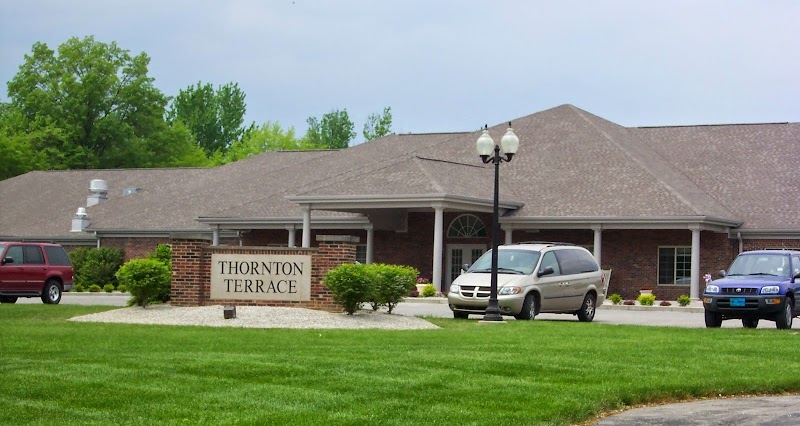
How is Thornton Terrace Health Campus Staffed?

CMS rates THORNTON TERRACE HEALTH CAMPUS's staffing level at 3 out of 5 stars, which is average compared to other nursing homes. Staff turnover is 34%, compared to the Indiana average of 46%. This relatively stable workforce can support continuity of care.

What Have Inspectors Found at Thornton Terrace Health Campus?

State health inspectors documented 12 deficiencies at THORNTON TERRACE HEALTH CAMPUS during 2022 to 2024. These included: 1 that caused actual resident harm and 11 with potential for harm. Deficiencies causing actual harm indicate documented cases where residents experienced negative health consequences.

Who Owns and Operates Thornton Terrace Health Campus?

THORNTON TERRACE HEALTH CAMPUS is owned by a for-profit company. For-profit facilities operate as businesses with obligations to shareholders or private owners. The facility is operated by TRILOGY HEALTH SERVICES, a chain that manages multiple nursing homes. With 55 certified beds and approximately 50 residents (about 91% occupancy), it is a smaller facility located in HANOVER, Indiana.
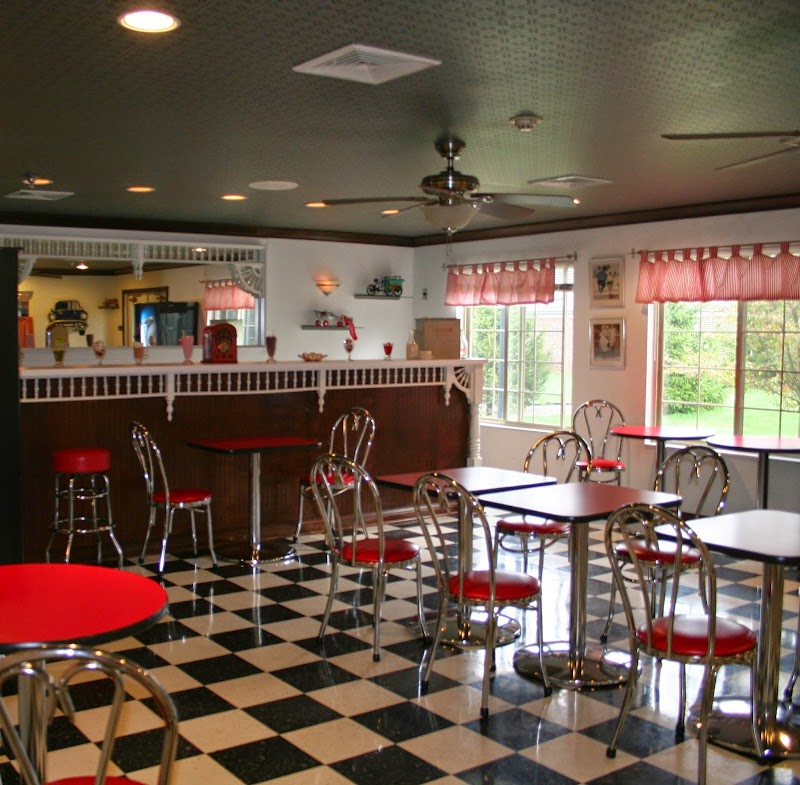
How Does Thornton Terrace Health Campus Compare to Other Indiana Nursing Homes?

Compared to the 100 nursing homes in Indiana, THORNTON TERRACE HEALTH CAMPUS's overall rating (5 stars) is above the state average of 3.1, staff turnover (34%) is significantly lower than the state average of 46%, and health inspection rating (4 stars) is above the national benchmark.

What Should Families Ask When Visiting Thornton Terrace Health Campus?

Based on this facility's data, families visiting should ask: "Can I visit during a mealtime to observe dining assistance and food quality?" "How do you handle medical emergencies, and what is your hospital transfer rate?" "Can I speak with family members of current residents about their experience?"

Is Thornton Terrace Health Campus Safe?

Based on CMS inspection data, THORNTON TERRACE HEALTH CAMPUS has a clean safety record: no substantiated abuse findings (meaning no confirmed cases of resident harm), no Immediate Jeopardy citations (the most serious violation level indicating risk of serious injury or death), and is not on the Special Focus Facility watch list (a federal program monitoring the lowest-performing 1% of nursing homes). The facility has a 5-star overall rating and ranks #1 of 100 nursing homes in Indiana. While no facility is perfect, families should still ask about staff-to-resident ratios and recent inspection results during their visit.

Do Nurses at Thornton Terrace Health Campus Stick Around?

THORNTON TERRACE HEALTH CAMPUS has a staff turnover rate of 34%, which is about average for Indiana nursing homes (state average: 46%). Moderate turnover is common in nursing homes, but families should still ask about staff tenure and how the facility maintains care continuity when employees leave.

Was Thornton Terrace Health Campus Ever Fined?

THORNTON TERRACE HEALTH CAMPUS has no federal fines on record. CMS issues fines when nursing homes fail to meet care standards or don't correct problems found during inspections. The absence of fines suggests the facility has either maintained compliance or corrected any issues before penalties were assessed. This is a positive indicator, though families should still review recent inspection reports for the full picture.

Is Thornton Terrace Health Campus on Any Federal Watch List?

THORNTON TERRACE HEALTH CAMPUS is not on any federal watch list. The most significant is the Special Focus Facility (SFF) program, which identifies the bottom 1% of nursing homes nationally based on persistent, serious quality problems. Not being on this list means the facility has avoided the pattern of deficiencies that triggers enhanced federal oversight. This is a positive indicator, though families should still review the facility's inspection history directly.