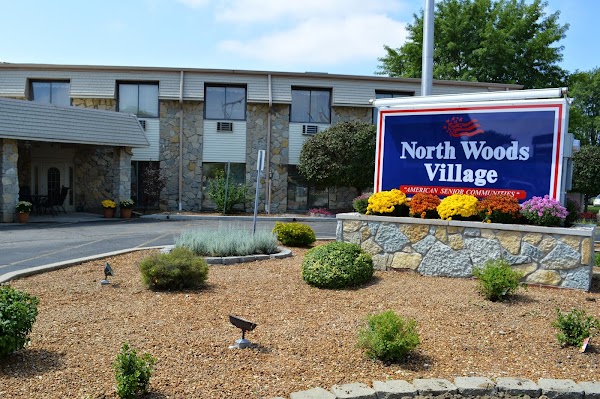
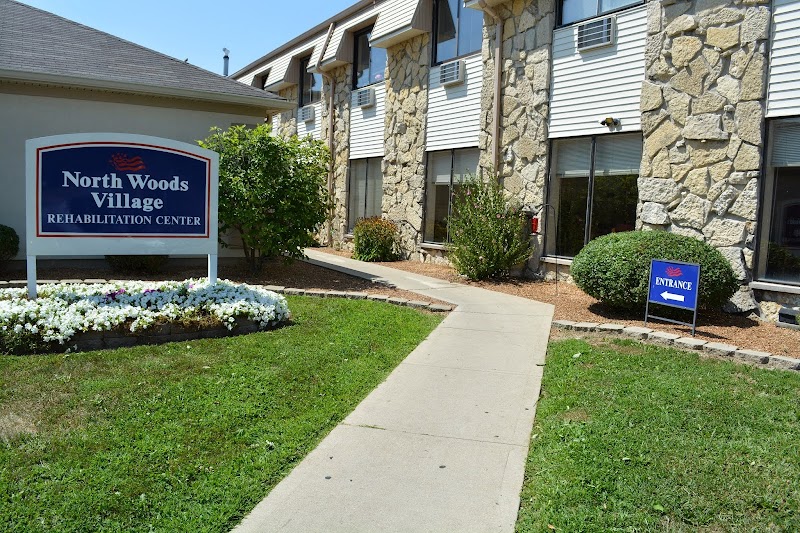
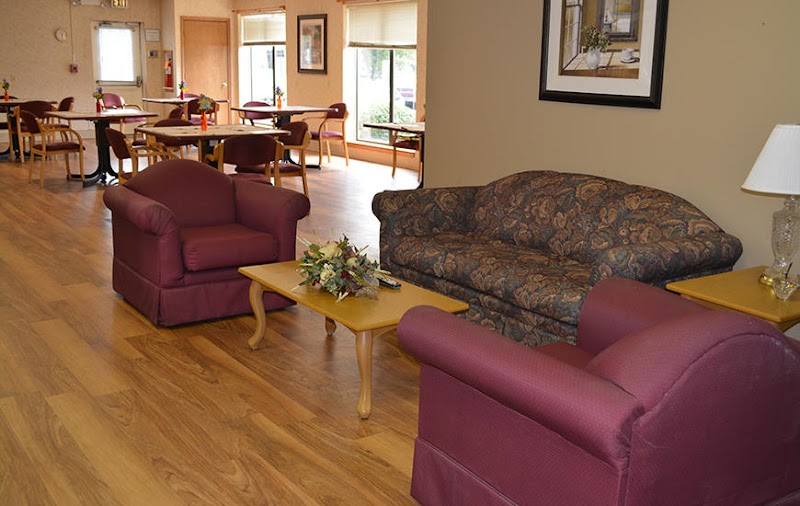
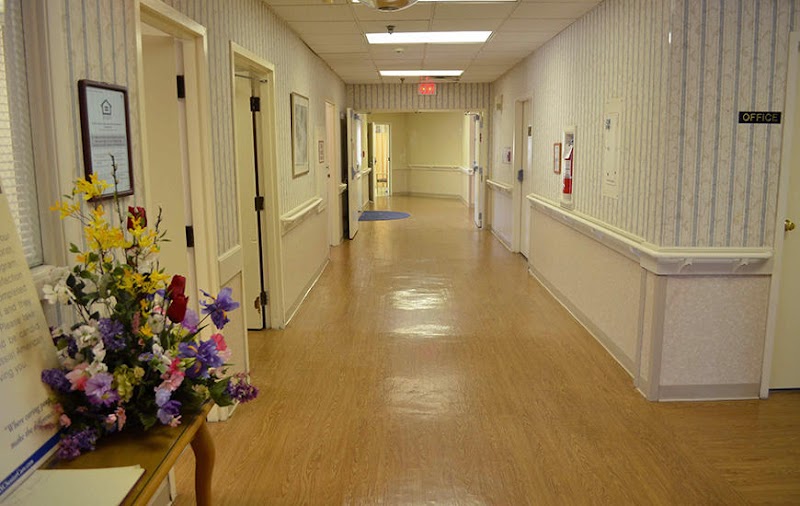

NORTH WOODS VILLAGE

2233 W JEFFERSON ST, KOKOMO, IN 46901 (765) 457-9175
Government - County 164 Beds AMERICAN SENIOR COMMUNITIES Data: November 2025 1 Immediate Jeopardy citation
Trust Grade
56/100
#273 of 505 in IN
Last Inspection: March 2025

Within standard 12-15 month inspection cycle. Federal law requires annual inspections.

Overview

North Woods Village in Kokomo, Indiana has a Trust Grade of C, which means it is average and in the middle of the pack compared to other facilities. It ranks #273 out of 505 in Indiana, placing it in the bottom half, but it is #3 out of 7 in Howard County, indicating only two local options are better. The facility is improving, with issues decreasing from 7 in 2024 to 3 in 2025. However, it has a staffing rating of 1 out of 5 stars, which is poor, even though the turnover rate of 35% is better than the state average of 47%. The facility has concerning fines of $24,291, which are higher than 86% of Indiana facilities, and it has less RN coverage than 81% of state facilities. While the facility has excellent quality measures, there are serious concerns regarding safety. A critical incident involved a resident sustaining 14 severe first-degree burns due to staff-to-resident physical abuse. Additionally, there were issues with medication management, such as not holding a blood pressure medication when needed, and a resident not receiving the correct oxygen flow rate due to a portable tank being set incorrectly. Overall, while there are some strengths, families should weigh these significant safety concerns when considering this nursing home.

Trust Score
C
56/100
In Indiana
#273/505
Bottom 46%
Safety Record
High Risk
Review needed
Inspections
Getting Better
7 → 3 violations
Staff Stability
○ Average
35% turnover. Near Indiana's 48% average. Typical for the industry.
Penalties
✓ Good
$24,291 in fines. Lower than most Indiana facilities. Relatively clean record.
Skilled Nurses
⚠ Watch
Each resident gets only 25 minutes of Registered Nurse (RN) attention daily — below average for Indiana. Fewer RN minutes means fewer trained eyes watching for problems.
Violations
⚠ Watch
11 deficiencies on record. Higher than average. Multiple issues found across inspections.
★★★☆☆
3.0
Overall Rating
★☆☆☆☆
1.0
Staff Levels
★★★★★
5.0
Care Quality
★★★☆☆
3.0
Inspection Score
Stable
2024: 7 issues
2025: 3 issues

The Good

  • 5-Star Quality Measures · Strong clinical quality outcomes
  • Full Sprinkler Coverage · Fire safety systems throughout facility
  • No fines on record
  • Staff turnover below average (35%)

    13 points below Indiana average of 48%

Facility shows strength in quality measures, fire safety.

The Bad

3-Star Overall Rating

Near Indiana average (3.1)

Meets federal standards, typical of most facilities

Staff Turnover: 35%

11pts below Indiana avg (46%)

Typical for the industry

Federal Fines: $24,291

Below median ($33,413)

Minor penalties assessed

Chain: AMERICAN SENIOR COMMUNITIES

Part of a multi-facility chain

Ask about local staffing decisions and management

The Ugly 11 deficiencies on record

1 life-threatening
Mar 2025 3 deficiencies
CONCERN (D)

Potential for Harm - no one hurt, but risky conditions existed

Quality of Care (Tag F0684)

Could have caused harm · This affected 1 resident

Based on interview and record review, the facility failed to ensure a medication for blood pressure was held according to the physician's ordered parameters for 1 of 1 resident reviewed for quality of...

Read full inspector narrative →
Based on interview and record review, the facility failed to ensure a medication for blood pressure was held according to the physician's ordered parameters for 1 of 1 resident reviewed for quality of care. (Resident 100) Findings include: The clinical record for Resident 100 was reviewed on 3/4/25 at 10:41 a.m. The diagnoses included, but were not limited to, paraplegia, neuromuscular dysfunction of the bladder, familial dysautonomia, and chronic systolic congestive heart failure. An Emergency Department After Visit Summary, dated 1/11/25, indicated the resident was seen for a headache and his blood pressure was higher than the normal range during the visit. A physician's order, dated 1/13/25, indicated to give midodrine (a medication used to increase blood pressure) 10 milligrams (mg) three times per day with special instructions to hold the medication if the systolic blood pressure was greater than 120. The Medication Administration Record (MAR), dated January 1 through 31, 2025, indicated a midodrine dose was not held: a. On 1/14/25 at 1:00 p.m., with a systolic blood pressure of 128 and 8:00 p.m., with a systolic blood pressure of 126. b. On 1/16/25 at 1:00 p.m., with a systolic blood pressure of 122. c. On 1/18/25 at 8:00 p.m., with a systolic blood pressure of 136. d. On 1/21/25 at 8:00 p.m., with a systolic blood pressure of 126. e. On 1/31/25 at 1:00 a.m., with a systolic blood pressure of 126. The MAR, dated February 1 through 28, 2025, indicated a midodrine dose was not held: a. On 2/4/25 at 1:00 a.m., with a systolic blood pressure of 126. b. On 2/6/25 at 8:00 p.m., with a systolic blood pressure of 125. c. On 2/8/25 at 1:00 a.m., with a systolic blood pressure of 128 and 1:00 p.m., with a systolic blood pressure of 122. d. On 2/10/25 at 1:00 p.m., with a systolic blood pressure of 127. e. On 2/12/25 at 8:00 p.m., with a systolic blood pressure of 125. f. On 2/14/25 at 8:00 p.m., with a systolic blood pressure of 129. g. On 2/16/25 at 1:00 a.m., with a systolic blood pressure of 122. h. On 2/18/25 at 1:00 a.m., with a systolic blood pressure of 122. i. On 2/19/25 at 1:00 a.m., with a systolic blood pressure of 126 and 1:00 p.m., with a systolic blood pressure of 122. j. On 2/20/25 at 1:00 p.m., with a systolic blood pressure of 132. k. On 2/21/25 at 8:00 p.m., with a systolic blood pressure of 139. l. On 2/22/25 at 1:00 a.m., with a systolic blood pressure of 126 and 1:00 p.m., with a systolic blood pressure of 132. m. On 2/24/25 at 8:00 p.m., with a systolic blood pressure of 124. n. On 2/25/25 at 8:00 p.m., with a systolic blood pressure of 129. o. On 2/26/25 at 8:00 p.m., with a systolic blood pressure of 127. p. On 2/27/25 at 1:00 p.m., with a systolic blood pressure of 126. The MAR, dated March 1 through 6, 2025, indicated a midodrine dose was not held: a. On 3/1/25 at 8:00 p.m., with a systolic blood pressure of 128. b. On 3/3/25 at 1:00 p.m., with a systolic blood pressure of 122 and 8:00 p.m., with a systolic blood pressure of 125. c. On 3/4/25 at 8:00 p.m., with a systolic blood pressure of 127. During an interview, on 3/6/25 at 10:05 a.m., LPN 8 indicated the vital signs, and the medication orders should be reviewed before giving medication. If the systolic blood pressure was above the hold parameter, then the medicine should not be given and charted it was not given. The staff initials would then be in parenthesis on the MAR and there would be a note to indicate why the medication was not given. A current facility policy, titled General Dose Preparation and Medication Administration, dated 11/15/24 and received from the Executive Director on 3/5/25 at 8:40 a.m., indicated . Prior to administration of medication .if necessary, obtain vital signs 3.1 -37(a)
CONCERN (D)

Potential for Harm - no one hurt, but risky conditions existed

Respiratory Care (Tag F0695)

Could have caused harm · This affected 1 resident

Based on observation, interview, and record review, the facility failed to ensure a portable oxygen tank was turned on to administer the correct flow rate for 1 of 1 resident reviewed for respiratory ...

Read full inspector narrative →
Based on observation, interview, and record review, the facility failed to ensure a portable oxygen tank was turned on to administer the correct flow rate for 1 of 1 resident reviewed for respiratory care. (Resident 4) Findings include: During an observation, on 3/2/25 at 10:25 a.m., Resident 4 was in the hallway in her wheelchair at the nurse's medication cart with QMA 2 receiving her medications. The resident had a nasal cannula in her nose with a portable oxygen tank hanging on the back of her wheelchair. The flow rate on the portable tank was set at zero (0) liters/minute. QMA 2 administered medications to Resident 4 and signed the medication administration record (MAR). QMA 2 did not look at the portable oxygen tank to verify the amount of oxygen the resident was receiving. During an observation, on 3/2/25 at 12:15 p.m., the resident wheeled herself past 2 nurses and a certified nursing assistant (CNA) and greeted them as she entered the dining room for lunch. The nasal cannula was in her nose, and the portable oxygen tank on the back of her wheelchair was still set at zero (0) liters/minute. The clinical record for Resident 4 was reviewed on 3/4/25 at 9:59 a.m. The diagnoses included, but were not limited to, chronic obstructive pulmonary disease, chronic respiratory failure with hypoxia, and asthma. A physician's order, dated 10/15/24, indicated to give continuous oxygen at 4 liters per nasal cannula. A Nurse Practitioner (NP) progress note, dated 2/27/25 at 9:51 a.m., indicated to continue administering supplemental oxygen for the resident's respiratory diagnosis. During an interview, on 3/2/25 at 12:26 p.m., LPN 6 indicated Resident 4 needed 4 liters of oxygen per the physician's order, but the portable oxygen tank was turned off. During an interview, on 3/5/25 at 10:46 a.m., LPN 7 indicated the resident did not transfer herself. A CNA would transfer the resident into her wheelchair and the nurse would turn the portable oxygen tank on to the correct liter flow based on the order. During an interview, on 3/6/25 at 10:09 a.m., LPN 8 indicated the nurse was supposed to make sure the portable oxygen tank was set on the correct liter flow. If the resident had gotten herself up, then the nurse would check the oxygen flow rate as they gave the resident her medications. A current facility policy, titled Oxygen Therapy, dated 4/23 and received from the Executive Director on 3/5/25 at 8:40 a.m., indicated .The nurse will coordinate the oxygen therapy services as ordered by the resident's physician 3.1-47(a)(6)
CONCERN (D)

Potential for Harm - no one hurt, but risky conditions existed

Infection Control (Tag F0880)

Could have caused harm · This affected 1 resident

Based on observation, interview and record review, the facility failed to ensure staff wore gloves when touching a resident's medication for 1 of 9 residents observed for medication administration. (R...

Read full inspector narrative →
Based on observation, interview and record review, the facility failed to ensure staff wore gloves when touching a resident's medication for 1 of 9 residents observed for medication administration. (Resident 3) Findings include: During an observation, on 3/2/25 at 10:12 a.m., QMA 2 removed the resident's medication from the medication cart. She placed the card of multivitamin 7.5 milligrams (mg) iron with 400 micrograms (mcg) of folic acid in her right hand. QMA 2 used her right hand and popped the pill from the card into her left bare hand. She took the pill with her fingers and placed the pill into the medication cup. During an interview, on 3/2/25 at 10:14 a.m., QMA 2 indicated she should have used gloves and not touched the pill with her bare hands. The clinical record for Resident 3 was reviewed on 3/2/25 at 10:12 a.m. The diagnoses included, but were not limited to, diabetes mellitus, atrial fibrillation, and anxiety disorder. A physician's order indicated to give a multivitamin 7.5 milligrams (mg) iron and 400 micrograms (mcg) folic acid tablet daily. A current facility policy, titled General Dose Preparation and Medication Administration, dated as revised 1/3/25 and received from the Director of Nursing on 3/2/25 at 12:07 p.m., indicated .Appropriate hand hygiene should be performed before and after direct resident contact. Medications should not come in contact with any surface except for the medication cup 3.1-18(b)
Mar 2024 6 deficiencies
CONCERN (D)

Potential for Harm - no one hurt, but risky conditions existed

Notification of Changes (Tag F0580)

Could have caused harm · This affected 1 resident

Based on interview and record review, the facility failed to notify the resident's representative of a psychotic disturbance and the start of an antipsychotic medication for 1 of 5 residents reviewed ...

Read full inspector narrative →
Based on interview and record review, the facility failed to notify the resident's representative of a psychotic disturbance and the start of an antipsychotic medication for 1 of 5 residents reviewed for unnecessary medications (Resident 89). Finding includes: The clinical record for Resident 89 was reviewed on 3/13/24 at 4:44 p.m. The diagnoses included, but were not limited to, nondisplaced fracture of the right femur, major depressive disorder, generalized anxiety disorder, cognitive communication deficit and dementia with psychotic disturbance. A physician's order, dated 1/4/24, indicated to give Risperdal (an antipsychotic medication) 0.25 milligram (mg) at bedtime for dementia with psychotic disturbance. A physician's order, dated 1/25/24, indicated to give Risperdal 0.5 mg at bedtime for dementia with a psychotic disturbance. A physician's order, dated 2/7/24, indicated to give Risperdal 1 mg twice a day. A Pharmacy Consultation Report, dated 1/14/24, indicated the resident received Risperdal 0.25 mg at bedtime for dementia with psychotic disturbance. Antipsychotics had a boxed warning for an increased risk of mortality in older adults with psychosis related to dementia. The recommendation was to consider discontinuing the Risperdal. The prescriber response, dated 1/25/24, indicated the recommendation was declined due to the resident had delusions. A Psychiatric Nurse Practitioner (NP) note, dated 1/4/24 and recorded as a late entry on 1/5/24 at 7:57 a.m., indicated the resident was seen by staff request for a medication review due to increased falls. The resident continued to agree to feelings of sadness and reported she cries frequently. The resident continued to display delusional thinking and symptoms of depression. She had been getting up at night because she was afraid. The resident's delusional thinking continued to be distressing and was difficult to redirect. Risperdal 0.25 mg at bedtime would be started for dementia with psychotic disturbance. The progress notes did not include notification to the resident's representative for the start of the antipsychotic medication. During an interview, on 3/15/24 at 12:45 p.m., the Director of Nursing Services (DNS), indicated there was no documentation of the resident's representative being notified of the start of the antipsychotic medication and no documentation to indicate the representative had been informed of the risks of the antipsychotic medications versus the benefits. A current policy titled, Resident Change of Condition Policy, revised on 11/2018 and received from the DNS on 3/15/24 at 3:41 p.m., indicated, .It is the policy of this facility that all changes in resident condition will be communicated to the physician and family/responsible party and appropriate, timely, and effective intervention takes place .Non-Urgent Medical Change .The nurse in charge is responsible for notification of physician and family/responsible party .Documentation will include time and family/physician response 3.1-5(a)(3)
CONCERN (D)

Potential for Harm - no one hurt, but risky conditions existed

Deficiency F0642 (Tag F0642)

Could have caused harm · This affected 1 resident

Based on interview and record review, the facility failed to correctly code an annual Minimum Data Set (MDS) assessment for 1 of 3 residents reviewed for Preadmission Screening and Record Review (PASA...

Read full inspector narrative →
Based on interview and record review, the facility failed to correctly code an annual Minimum Data Set (MDS) assessment for 1 of 3 residents reviewed for Preadmission Screening and Record Review (PASARR) (Resident 9). Finding include: The clinical record for Resident 9 was reviewed on 3/13/24 at 9:20 a.m. The diagnoses included, but were not limited to, unspecified dementia with mood disturbance, insomnia, bipolar disorder, major depressive disorder, and psychotic disorder with delusions. A notice of PASARR level 2 outcome, with a notice date of 12/23/22, indicated the resident had a long-term approval without specialized services based on the diagnoses of bipolar disorder NOS (not otherwise specified), unspecified depressive disorder, dementia NOS, unspecified insomnia disorder, and for treatment history, current symptoms, and service needs. An annual MDS assessment, dated 1/10/23, indicated the resident was not currently considered by the state level 2 PASARR process to have a serious mental illness and/or intellectual disability or related condition. During an interview, on 3/14/24 at 11:01 a.m., the SSD (Social Services Director) indicated the MDS assessment was marked in error and should have been marked as a yes on the assessment. During an interview, on 3/15/24 at 3:40 p.m., the DNS (Director of Nursing Services) indicated the facility used the RAI (resident assessment instrument) manual for the facility policy for MDS assessments. A CMS (Centers for Medicare and Medicaid Services) document titled, Long-Term Care Facility Resident Assessment Instrument 3.0 User's Manual Version 1.18.11 October 2023, indicated, .It is important to note here that information obtained should cover the same observation period as specified by the MDS items on the assessment, and should be validated for accuracy (what the resident's actual status was during that observation period) by the IDT completing the assessment. As such, nursing homes are responsible for ensuring that all participants in the assessment process have the requisite knowledge to complete an accurate assessment 3.1-31(d)
CONCERN (D)

Potential for Harm - no one hurt, but risky conditions existed

Respiratory Care (Tag F0695)

Could have caused harm · This affected 1 resident

Based on observation, interview, and record review, the facility failed to ensure a resident's oxygen was on the correct liter flow per the physician's orders for 1 of 1 residents reviewed for respira...

Read full inspector narrative →
Based on observation, interview, and record review, the facility failed to ensure a resident's oxygen was on the correct liter flow per the physician's orders for 1 of 1 residents reviewed for respiratory care (Resident 60). Findings include: During an observation, on 3/13/24 at 11:03 a.m., Resident 60's oxygen was at 1 liter flow. The clinical record was reviewed on 3/13/24 at 11:17 a.m. The diagnoses included, but were not limited to COPD, chronic respiratory failure with hypoxia, and influenza due to novel influenza A virus. A physician's order, with a start date of 2/21/24 and an end date of 3/13/24, indicated the resident was to wear oxygen at 2 liters per nasal canula continuously. A physician's order, started on 3/13/24 at 9:17 a.m., indicated the resident was to wear 2 liters of oxygen per nasal canula at bedtime. During an observation and interview, on 3/13/24 at 2:20 p.m., the DNS (director of nursing services) saw and indicated the resident's oxygen was on 1 liter. During an interview, on 3/13/24 at 2:21 p.m., the DNS indicated the resident had a continuous oxygen order at 2 liters to be worn at bedtime. The order was changed last night. A history of oxygen saturation results indicated the following: a. 3/10/24 at 10:06 p.m.- oxygen was on at 3 liters. b. 3/11/24 at 9:25 a.m.- oxygen was not used. c. 3/11/24 at 2:19 p.m.- oxygen was not used. d. 3/12/24 at 6:17 a.m.- oxygen was not on. During an interview, on 3/14/24 at 2:39 p.m., Resident 60 indicated she did not touch her oxygen concentrator. Resident 60's record lacked documentation she had ever adjusted her oxygen concentrator before. A policy, titled, Oxygen Concentrator, not dated and received from the DON on 3/15/24 at 3:40 p.m., indicated .1) Verify and understand the physician's orders. 2) know the flow rate and duration of use . 3.1-47(a)(6)
CONCERN (D)

Potential for Harm - no one hurt, but risky conditions existed

Deficiency F0744 (Tag F0744)

Could have caused harm · This affected 1 resident

Based on observation, interview, and record review, the facility failed to ensure staff were documenting resident behaviors, implementing and documenting nonpharmacological interventions for behaviors...

Read full inspector narrative →
Based on observation, interview, and record review, the facility failed to ensure staff were documenting resident behaviors, implementing and documenting nonpharmacological interventions for behaviors, and failed to ensure potential side effects of an antipsychotic medication were documented and assessed for a resident with dementia for 1 of 5 residents reviewed for dementia care (Resident 75). Findings include: During an observation, on 3/12/24 at 10:31 a.m., the resident was sitting up in her wheelchair in the activity room. The resident was continuously rocking herself back and forth in the wheelchair. The resident was very fidgety and pulling at a blanket while continuously moving her hands. During an observation, on 3/12/24 at 10:57 a.m., the resident was still in the dining area and was fidgeting with a napkin on the table and the blanket on her lap and making constant movements with her body. During an observation, on 3/13/24 at 1:58 p.m., the resident was sitting up in her wheelchair in the common area at a table by herself. The resident was constantly touching a piece of paper and a plastic cup and rolling them back and forth across the tablecloth. During an observation, on 3/13/24 at 2:22 p.m., the resident was sitting up in her wheelchair in the dining area and was constantly rocking back and forth in her wheelchair. The clinical record for Resident 75 was reviewed on 3/13/24 at 4:19 p.m. The diagnoses included, but were not limited to, unspecified dementia, Alzheimer's disease, severe recurrent major depressive disorder with psychotic symptoms, anxiety disorder, delusional disorder, a cognitive communication deficit, and unspecified psychosis not due to a substance or known physiological condition. A care plan, dated 2/24/23, indicated the resident was at risk for adverse side effects related to the use of psychotropic medications and the resident was on an antipsychotic medication. The goal was for the resident to have no adverse side effects. The approaches included, but were not limited to, AIMS assessment two times a year, observe for tremors and for abnormal involuntary movements. A care plan, dated 4/27/23, indicated the resident had a history of becoming verbally and physically combative with care. The approaches included, but were not limited to, redirect the resident to sit on the recliner by the television for a quieter space, offer the resident a snack and drink, provide personal space, staff to offer care at a later time and/or with a different staff member. A physician's order, dated 9/1/23, indicated to give Risperdal (an antipsychotic medication) 0.5 milligram (mg) daily for anxiety disorder due to a known physiological condition. An annual Minimum Data Set (MDS) assessment, dated 11/1/23, indicated the resident's Brief Interview for Mental Status (BIMS) was a 3 which indicated severe cognitive impairment. A quarterly MDS assessment, dated 12/28/23, indicated the resident's BIMS was 2 which indicated severe cognitive impairment. A pharmacy Consultation Report, dated 1/14/24, indicated the resident had experienced more than one fall in the last 30 days and received the following psychotropic medications which could increase the risk of falls. The psychotropic medications included buspirone (an antianxiety medication), Cymbalta (an antidepressant) and Risperdal 1 mg at bedtime. The recommendation indicated to consider decreasing the Risperdal to 0.5 mg at bedtime. The Psychiatric Nurse Practitioner (NP) response, dated 2/7/24, indicated to accept the recommendations. A monthly behavioral report, dated 2/2/24, indicated the resident did not display any new or worsening behaviors. A physician's order, dated 2/7/24, indicated Risperdal 0.5 mg at bedtime for depression. The nursing progress notes, dated 2/8/24 through 2/20/24, indicated there were no changes in the resident's mood or behaviors, the resident was sleeping at night and there were no adverse drug reactions related to the decrease in the dose of Risperdal except for 2/15/24 at 5:10 a.m. A nursing progress note, dated 2/15/24 at 5;10 a.m., indicated there were no adverse effects noted from the decrease in Risperdal. The resident had slept well all night with no behaviors. During the last bed check, the resident scratched the Certified Nursing Assistant's (CNA) arm with care. The CNA stopped and then continued the care without problems. A nursing progress note, dated 2/21/24 at 9:08 p.m., indicated the resident had episodes of crying this evening and talking to unseen stimuli. The resident was getting upset because the unseen stimuli was not responding. The progress note did not include non-pharmacological interventions utilized for the behaviors. There were no more progress notes documented in the EHR and no documented behaviors between 2/21/24 at 9:08 p.m. and 2/22/24 at 8:31 a.m. An NP progress note, dated 2/22/24 at 8:31 a.m. and recorded as a late entry on 2/23/24 at 8:31 a.m., indicated the resident had a failed gradual dose reduction (GDR) for Risperdal. The resident was seen for follow up after a GDR of Risperdal. The resident was taking the medication for management of symptoms of a delusional disorder. The staff had reported the resident had been yelling out and had an increase of distressing hallucinations since the decrease of the Risperdal. The resident had been observed crying and talking to an unseen stimuli. The resident had an increase in aggression with care. The resident was asleep upon entering her room and did not engage in the NP visit when she awakened. The staff reported there were no changes in the resident's appetite or sleep since the last visit. The symptoms of aggression, agitation, delusions and hallucinations had increased since the GDR of the Risperdal. The Risperdal 1 mg at bedtime would be resumed due to the failed GDR. A physician's order, dated 2/22/24, indicated to give Risperdal 1 mg at bedtime for a delusional disorder. An Abnormal Involuntary Movement Scale (AIMS) assessment, dated 2/23/24 at 10:06 a.m., completed by the Dementia Unit Manager (UM), indicated a full examination was conducted and scored. The total score was a zero. The resident had no facial or oral movements, had no movements of the extremities and had no rocking, twisting, squirming or pelvic gyrations. During an interview, on 3/14/24 at 2:35 p.m., the Director of Nursing Services (DNS) indicated the staff would talk about the residents behaviors during the behavior meetings although they did not document all the behaviors reviewed during the meeting in the electronic health record (EHR). During an interview, on 3/14/24 at 3:13 p.m., Licensed Practical Nurse (LPN) 2 indicated she was working the evening of 2/21/24 on the dementia unit. The resident was crying and was upset because of the unseen stimuli was not responding to her. LPN 2 had the resident sit at the nurses desk with her, had her listen to music and had a snack. The resident accepted the snack. The resident would be crying and upset, then would be fine and would ask why he was not responding to her. LPN 2 indicated usually she would document the interventions in the EHR although she was busy and did not document them. During an interview, on 3/14/24 at 3:23 p.m., the Social Services Director (SSD) indicated she talked to the LPN 3 who had worked the night shift from 10:00 p.m. on 2/21/24 through 10:00 a.m. on 2/22/24 and LPN 3 indicated the resident did go to bed and did not have any further problems for the shift. During an interview, on 3/14/24 at 3:39 p.m., the Psychiatric NP indicated when she saw the resident on 2/22/24, the resident was asleep. The resident did not want to talk to the NP when she woke up. The staff told the NP the resident was more aggressive and had been yelling out. The NP saw one nursing progress note with the information the resident was tearful, had hallucinations and was distressed. The staff had verbally told the NP the resident was having more behaviors. The failed GDR was based on what the staff had told the NP. The NP went by what the staff had told her even though there was only one documented behavior in the EHR. During an observation, on 3/14/24 at 4:24 p.m., with the dementia unit manager (UM), the resident was in her room while the UM was completing an AIMS assessment. The resident was constantly moving in her wheelchair while the UM was attempting to complete the evaluation. The resident stood up in her chair and tried to ambulate on her own. The UM indicated she could not complete the AIMS assessment since the resident was too fidgety. The resident was not able to follow the directions of the UM. The UM indicated while completing an AIMS assessment she would ask the resident if she experienced abnormal movements and would ask to see the resident's tongue. The UM was not aware of the instructions on the AIMS assessment on how to complete the assessment or the modifications for a resident who could not cooperate with the assessment. She indicated she was trained to do the assessment by other staff including the previous UM. During an interview, on 3/14/24 at 4:52 p.m., the DNS indicated the staff should have documented the resident's behaviors from the previous week in the EHR to show if it was new or worsening behaviors. The EHR only had one note of behaviors documented on 2/21/24. The instructions for the AIMS were on the AIMS assessment form. The staff were not given training on how to complete an AIMS assessment. Resident 75 was not capable of having a full AIMS assessment. The staff should not have marked the full AIMS assessment was completed. There was a difference in a full AIMS assessment and the options to include the resident was uncooperative or non ambulatory. The DNS was not aware if the resident's constant movements were related to side effects of the psychotropic medication. The current Nursing Drug Handbook, indicated the adverse reactions of Risperdal included, but were not limited to, extrapyramidal movement dysfunction symptoms including akathisia (a combination of feelings of restlessness/agitation and a compelling need to move including uncontrollable rocking, pacing and shifting weight). The nursing considerations included, but were not limited to, watch for evidence of extrapyramidal effects. A current policy, titled, Behavior Management, revised on 8/22 and received from the DNS on 3/15/24 at 9:48 a.m., indicated, .It is the policy of American Senior Communities to provide behavior interventions for residents with problematic or distressing behaviors. Interventions provided are both individualized and non pharmacological and part of a supportive physical and psychosocial environment that is directed toward preventing, relieving and/or accommodating a resident's behavioral expressions .When a behavioral expression occurs, the staff communicates to the nurse what behavior occurred. The nurse records the behavior in Matrix[the electronic health record] .If the behavioral expression is new, worsening, or high risk, the nurse will record the behavior using the New/Worsening Behavior Event. New or worsening behaviors are reviewed by the IDT [interdisciplinary team] for assessment and preventative actions. New/Worsening Behaviors include .Behaviors that are new for the resident .Behaviors that are directed at another resident .Behaviors that are increasing in either frequency or severity .Behaviors that have potential for risk to others including sexual advances, intrusive wandering, exit seeking and chronic combativeness with care .The IDT review is a discussion with the team as to the behavioral expression, an evaluation of interventions, presentation of new interventions if applicable and an assessment of underlying causes of the behavior .The root cause and preventative interventions will be included in the resident's plan of care .If the behavioral expression is not new, worsening or high risk .the nurse will record the behavior in the progress notes using the Behavior Communication Note. The IDT will review progress notes the next business day to determine if immediate follow up action is required for the Behavior Communication. If the behavior requires an interdisciplinary response as described above, the IDT will complete the IDT Behavior Review. If not, the plan of care will be reviewed and updated if needed to include a description of the behavior and effective interventions A current policy, titled, Psychotropic Management, revised on 7/22 and received from the DNS on 3/15/24 at 12:30 p.m., indicated, .It is the policy of American Senior Communities to ensure that a resident's psychotropic medication regimen helps promote the resident's highest practicable mental, physical and psychosocial well-being with person centered intervention and assessment .Potential adverse side effects to psychotropic medications will be observed each shift by a licensed nurse. An AIMS assessment will be completed for residents who are taking antipsychotic medication as a tool to monitor for adverse side effects. The assessment should be completed within 72 hours of new order to initiate an antipsychotic, within 72 hours of an increase in antipsychotic medication and then every six months The instructions for the AIMS assessment included, but were not limited to, before or after completing the Examination Procedure, observe the resident unobtrusively at rest. The chair used in the examination should be a hard, firm one without arms, ask the resident if he/she notices any movements in the mouth, face, hands or feet. If yes, ask the resident to describe and to what extent the movements bother the resident or interferes with their activities. As the resident to sit with their hands hanging unsupported. Have the resident sit in the chair with their hands on their knees with their legs slightly apart and their feet flat on the floor. Ask the resident to open their mouth and observe their tongue at rest. Ask the resident to protrude their tongue and observe for abnormal mouth movements. Ask the resident to tap their thumb with each finger as rapidly as possible for 10-15 seconds with the right hand and then with the left hand while observing for facial and leg movements. Flex and extend the resident's left and right arms and note any rigidity. Have the resident walk a few paces, turn and walk back to the chair. 3.1-37(a)
CONCERN (D)

Potential for Harm - no one hurt, but risky conditions existed

Deficiency F0761 (Tag F0761)

Could have caused harm · This affected 1 resident

Based on observation, interview, and record review, the facility failed to ensure medication carts were free of loose pills and opened medications were dated for 1 of 3 medication carts reviewed for m...

Read full inspector narrative →
Based on observation, interview, and record review, the facility failed to ensure medication carts were free of loose pills and opened medications were dated for 1 of 3 medication carts reviewed for medication storage (The Walnut Unit and a combined medication cart for the [NAME] and Magnolia Units). Findings include: During a medication storage observation with the Qualified Medical Assistant (QMA) 4 on 3/14/24 at 11:10 a.m., the Walnut unit cart was observed to have the following: a. The second left large drawer had 17 loose pills on the bottom. b. The third left large drawer had 33 loose pills and 13 half tablets on the bottom of the drawer c. The third right drawer had a bottle of opened Milk of Magnisium (MOM) for Resident 89 opened and not dated. The record for Resident 89 was reviewed on 03/14/23 at 11:40 a.m. A physician order, dated 12/28/23, indicated to give MOM 400 Milligram(mg)/5 Milliliter(ml) daily when needed. During an interview, on 3/14/23 at 11:23 a.m., QMA 4 indicated the pills should not be in the bottom of the cart. The pills should be destroyed in a jug in the medication room. During an interview, on 3/14/24 at 11:48 a.m., the Dementia Facilitator 5 indicated the loose pills probably should not be in the bottom of the drawers. During a medication cart observation with QMA 7 on 3/14/24 at 10:38 a.m., the [NAME] and Magnolia unit cart was observed to have the following: a. The first large drawer had 12 loose pills on the bottom of the drawer. b. The second large drawer had 11 loose pills on the bottom of the drawer. During an interview, on 3/14/24 at 10:30 a.m., QMA 7 indicated there were a lot of pills and the pills should not be on the bottom of the cart. The pills should be taken out and destroyed. During an interview, on 3/15/24 at 12:16 p.m., Unit Manager(UM) 9 indicated she did not know who was assigned to clean the medication carts. The nurses on any shift could clean the cart. During an interview, on 3/15/24 at 12:19 p.m., Licensed Practical Nurse (LPN) 6 indicated the nurse on night shift usually cleaned out the carts. There was a cleaning list in a binder on the Walnut unit and had a cleaning schedule. During an interview, on 3/15/24 at 2:09 p.m., UM 9 indicated they do have a cleaning list and the nurse on night shift was responsible to clean the carts. A current policy, titled, LTC [long term care] Facility's Pharmacy Services and Procedure Manual, revised on 8/07/2023 and received from the Director of Nursing (DON) on 3/14/24 at 4:47 p.m., indicated, .Facility should ensure that medications and biological's are stored in an orderly manner in cabinets, drawers, carts, refrigerators/freezers of sufficient size to prevent crowding .Facility staff may record the calculated expiration date based on date opened on the primary medication container .Facility personnel should inspect nursing station storage areas for proper storage compliance on a regularly scheduled basis 3.1-25(j) 3.1-25(0)
CONCERN (D)

Potential for Harm - no one hurt, but risky conditions existed

Infection Control (Tag F0880)

Could have caused harm · This affected 1 resident

**NOTE- TERMS IN BRACKETS HAVE BEEN EDITED TO PROTECT CONFIDENTIALITY** Based on observation, interview, and record review, the facility failed to store clean clothing or resident personal care items ...

Read full inspector narrative →
**NOTE- TERMS IN BRACKETS HAVE BEEN EDITED TO PROTECT CONFIDENTIALITY** Based on observation, interview, and record review, the facility failed to store clean clothing or resident personal care items in a clean environment for 4 of 117 residents (Residents 2, 14, 52, and 76). Findings include: 1. During an observation on 03/11/24 at 01:15 p.m., clean clothes were hanging from one end of the shower curtain rod to the other over the bathtub in the bathroom of Residents 2 and 52. Blankets and a large black trash bag of items were in the bathtub. The toilet had armrests attached, no lid, and was positioned immediately beside the bathtub. Multiple items of clean hanging clothes were touching the armrest of the toilet. At least half of the hanging items were within the contamination splash zone of the flushing toilet of less than 3 feet. During an observation on 03/12/24 at 09:37 a.m., clean clothes continued to hang from one end of the shower curtain rod to the other over the bathtub, were touching the armrest of the toilet, and were within the splash zone of the flushing toilet. During an observation on 03/13/24 at 10:40 a.m., clean clothes continued to hang from one end of the shower curtain rod to the other over the bathtub, were touching the armrest of the toilet, and were within the splash zone of the flushing toilet. During an interview on 03/12/24 at 10:39 a.m., Resident 2 indicated she used the bathroom in the room. During an interview on 03/13/24 at 11:30 a.m., the Assistant Director of Nursing Services (ADNS) indicated she thought the hanging clothes were Resident 52's from the room move and she did not know why clean clothes were hanging in the bathroom on the shower curtain rod instead of in the closet. During an interview on 03/13/24 at 11:53 a.m., the Executive Director (ED) indicated clean clothing was not to be stored in bathrooms or bathtubs and she would have all clothing removed from the bathroom and placed in linen closets for Residents 2 and 52. During an interview on 03/13/24 at 2:06 p.m., the ED indicated the clothes were removed from the bathroom of Residents 2 and 52. The ED indicated the bag of clothes in the tub were from the previous resident who had discharged and should have been put in overflow and not left in the room. During an interview on 03/12/24 at 03:12 p.m., the Infection Preventionist (RN 10) indicated clean laundry and linens were covered while transported from laundry to the units and then stored in closets. The clinical record for Resident 52 was reviewed on 03/15/24 at 09:52 a.m. The diagnoses included, but were not limited to, cellulitis (skin infection), chronic ulcer of the skin, chronic pain, edema, rheumatoid arthritis, type 2 diabetes mellitus without complications, hypertensive heart disease with heart failure, chronic systolic (congestive) heart failure, contracture of muscle, stage 4 pressure ulcer of left buttock, and chronic obstructive pulmonary disease. The electronic medical record indicated Resident 52 was transferred to room [ROOM NUMBER]A on 12/22/2023 at 03:38 p.m. A Progress Note, dated 02/13/2024 at 07:22 a.m., stated, Patient has a wound on their bottom, with redness initially observed on the left side of their hip and pelvis. The redness has now spread to the right side of their pelvis and peri area. Patient started taking Keflex 500 milligrams over the weekend and began the medication today. Patient has a history of rheumatoid arthritis, congestive heart failure, COPD, and diabetes.and they have swelling in their right leg and foot. There is slight redness and warmth in their left foot, which is the side with the majority of the wound on their coccyx and buttocks. An IDT Weekly Wound Review Note, dated 02/15/2024 at 02:42 p.m., indicated an overall decline in the resident's condition with worsening of Resident 52's pressure ulcer and signs and symptoms of infection. Redness, swelling, and warmth were noted in the Resident's torso and thigh. A care plan, initiated on 02/19/24, stated Resident 52 had impaired skin integrity: pressure ulcer noted to left posterior thigh. A MDS (Minimum Date Set) assessment, dated 02/28/24, indicated Resident 52 was fully dependent on staff for toileting and was always incontinent of bowel and bladder. The clinical record for Resident 2 was reviewed on 03/15/24 at 03:15 p.m. The diagnoses included, but were not limited to, cerebral infarction (stroke), hemiplegia (paralysis of body parts on one side of the body) and hemiparesis (muscle weakness or partial paralysis of parts of the body on one side) following cerebral infarction affecting left non-dominant side, weakness, legal blindness, and type 2 diabetes mellitus without complications. An annual MDS (Minimum Data Set) assessment, dated 01/15/24, for Resident 2 indicated resident was continent of bowel and bladder and required partial to moderate assistance for toilet transfers. The electronic medical record contained the toileting record for Resident 2. It listed multiple urine outputs and bowel movements for Resident 2 on the survey dates of 03/11/24, 03/12/24, and 03/13/2024 when the clean clothing was observed hanging in the bathroom and touching the toilet arm. 2. During an observation on 03/11/24 at 02:02 p.m., the bathroom for Resident 14 and Resident 76 had a strong odor of urine and bowel movement. The sink handles were dirty and rusty. The bathtub had plywood over it and was being used for storage of the residents' clean personal care supplies. During an interview on 03/13/24 at 11:53 a.m., the ED indicated she was not sure why the plywood was over the tub in bathroom for Residents 14 and 76. The ED indicated she did not know why the bathtub was being used for clean storage. During an interview on 03/13/24 at 2:06 p.m., the ED indicated the plywood was removed from the bathtub and clean items were no longer stored in the bathtub. A current policy, titled, Laundry/Linen revised on 12/2021 and received from the DON on 03/15/24 at 02:30 p.m., indicated The laundry and nursing staff shall handle, store, .linen appropriately to prevent the spread of infection in resident-care areas.Clean linen must be protected from soiling or contamination. Splash Zone Information Sheet (April 20, 2023) was retrieved on 03/18/24 at 09:10 a.m. from the Health Quality Innovation Network at https://hqin.org/wp-content/uploads/2023/04/Splash-Zone-Infosheet.pdf. The Centers for Medicare & Medicaid Services (CMS) uses 3 feet as their guide for determining the splash zone because Studies have shown that splashing can occur up to 3 feet from the sink, (toilet) or drain.Evidence indicates sinks and other drains, such as toilets or hoppers, in healthcare facilities can become contaminated with multidrug-resistant organisms (MDROs). These microorganisms can stick to the pipes to form biofilms, which allow the organisms to persist in drains for long periods of time. In addition, microorganisms can multiply in moist conditions and are often difficult to impossible to fully remove. How are Patients/Residents Exposed? Splashes may occur when flowing water hits the drain or when a toilet or hopper is flushed. Splashes can lead to dissemination of MDRO-containing droplets, which in turn may contaminate the environment, equipment, and skin or clothing of healthcare personnel and patients/resident.Avoid storing supplies within 3 feet of splashing water. 3.1-18(b)(1)
Jan 2024 1 deficiency 1 IJ
CRITICAL (J) 📢 Someone Reported This

A family member, employee, or ombudsman was alarmed enough to file a formal complaint

Immediate Jeopardy (IJ) - the most serious Medicare violation

Free from Abuse/Neglect (Tag F0600)

Someone could have died · This affected 1 resident

Based on observation, interview and record review, the facility failed to ensure Resident B was free from staff-to-resident physical abuse for 1 of 3 residents reviewed for abuse. This deficient pract...

Read full inspector narrative →
Based on observation, interview and record review, the facility failed to ensure Resident B was free from staff-to-resident physical abuse for 1 of 3 residents reviewed for abuse. This deficient practice resulted in Resident B sustaining 14 severe first-degree burns (a first-degree burn affects the outer layer of skin. Burn sites were red, painful, and dry without blisters) on an ear, a lip, the neck, the upper back, the breasts, the abdomen, the bilateral thighs, the bilateral buttocks, and the perineal area. Finding includes: The immediate jeopardy began on January 6, 2024, when it was identified the resident had 14 burns that were caused from a hair dryer. Resident B sustained burns in 14 different locations across her body, which included, but were not limited to her breasts, pubic area, bottom, back of the neck, ear, and mouth area. The Executive Director (ED), Regional [NAME] President of Operations, Regional Director of Clinical Services, and Director of Nursing Services (DNS) were notified of the immediate jeopardy on 1/9/24 at 2:54 p.m. The immediate jeopardy was removed on 1/10/24, but noncompliance remained at the lower scope and severity level of isolated, no actual harm with potential for more than minimal harm that is not immediate jeopardy. An incident report to the Indiana Department of Health, dated 1/6/24, indicated the resident was found with 11 raised circular areas upon skin inspection. During investigation of the skin issues, from 1/6/23, the Nurse Practitioner (NP) determined the marks were burns. During an interview, on 1/9/24 at 8:45 a.m., the DNS and the ED were in attendance. The ED indicated she received a call from the DNS, on 1/6/24, indicating Resident B had 11 circular areas found on her body. A reportable was sent into Indiana Department of Health. They began their investigation. On 1/7/24, the DNS received a call from a staff member who indicated the circular areas on Resident B looked like they were made by a hair dryer. At that time, a white hair dryer was observed in the ED's office with a large circle and a smaller inner circle with eight lines connecting the large and smaller circles together. The DNS indicated the resident had been burned by the hair dryer on multiple areas of her body. The DNS showed a picture of one of the burned areas on the resident and it was observed to have a large circle with a smaller inner circle with eight lines connecting the large and smaller circles together just as the white hair dryer. The ED indicated once the resident's daughter was with the resident, the resident indicated she was hurt with a hair dryer, by a middle-aged white female who was a little heavy with blonde hair. A housekeeper, a nurse who matched the description, and the CNA who gave the resident her shower, on 1/6/24, were all suspended on 1/8/24. During an observation, on 1/9/24 at 9:54 a.m., the resident was sitting in her wheelchair. She was placed in bed by two CNAs. She had burn wounds to her chin, right ear, lower left jaw, right cheek, right and left breasts, lower left abdomen, right and left inner thigh areas, pubic area, right buttock and three on the back of her neck. Several of the burns were circular in nature with lines intersecting throughout the circle and were red in color. The resident was observed to have a flat affect and was grabbing for staff member's hands during the observation. When she was placed back into her wheelchair she had tears in her eyes, with a frown, was very soft spoken, and complained of a headache. The record for Resident B was reviewed on 1/9/24 at 2:20 p.m. Diagnoses included, but were not limited to, aphasia (a language disorder caused by damage in a specific area of brain which controls language expression and comprehension), anxiety disorder, cognitive communication deficit, unspecified dementia, and psychotic disorder with delusions due to known physiological condition. A care plan, dated as last reviewed 11/7/23, indicated the resident exhibited a cognitive impairment as evidenced by a Brief Interview for Mental Status (BIMS) score of less than 13. Interventions included, but were not limited to, provide simple instructions, give resident choices throughout the day regarding decisions, provide resident with prompts and cues and encourage participation in daily activities particularly regarding orientation, socialization, and stimulation. A care plan, dated as last reviewed 11/7/23, indicated the resident may become combative with care and try to hit staff. Interventions included, but were not limited to, reapproach later, and try a different caregiver. A care plan, dated as last reviewed 11/7/23, indicated the resident had episodes of eating her feces, and taking it out of brief and throwing it. Interventions included, but were not limited to, offer gum or hard candy, keep physician and family informed, mental health services in place, offer snack and drink, offer re-directional activities, and assess for toileting, pain, hunger. A care plan, dated as last reviewed 11/7/23, indicated the resident's cognition varied throughout the day. The resident was slow to respond at times in conversation. Interventions included, but were not limited to, encourage social interaction, provide simple instructions, and repeat as needed, give the resident choices throughout the day regarding decisions as able, and encourage participation in daily activities particularly regarding orientation, socialization, and stimulation. A care plan, dated as last reviewed 11/7/23, indicated the resident required assistance with toileting incontinence care due to impaired mobility, impaired vision, medications, impaired cognition, and the resident was incontinent. Interventions included, but were not limited to, check at least every 2 hours for incontinence, assist with elimination, assist with toileting and incontinent care as needed, document any abnormal findings, and notify the physician, and assess and document skin condition weekly and as needed. A care plan, dated as last reviewed 11/7/23, indicated the resident required assistance with Activities of Daily Living (ADLs) including bed mobility, transfers, eating, and toileting related to impaired mobility, incontinence, impaired cognition, impaired vision, medications, impaired communication. Resident prefers to not shower at times. Resident has dementia and expressive language disorder. Interventions included, but were not limited to, prefers to get up before breakfast, shower 2 times a week in the p.m., and go to bed after 10 p.m., or when tired, assist with toileting and/or incontinent care as needed: incontinent, assist with bathing as needed per resident preference, and offer showers two times per week, partial bath in between. A Quarterly Minimum Data Set (MDS) assessment, dated 11/7/23, indicated the resident had a score of 11 which indicated she was moderately cognitively impaired. She exhibited no behaviors and required substantial/maximal assistance with showering/bathing. A nursing progress note, dated 1/6/2024 at 11:06 a.m., recorded as a late entry on 1/7/24 at 7:07 a.m., indicated a red facial rash was noted. There was no signs or symptoms of infection, drainage, pain, or itching. A new order for Hydrocortisone cream every shift to the area was ordered. The progress note was written by LPN 1. A nursing progress note, dated 1/6/24 at 10:34 p.m., indicated at approximately 8:45 p.m., the CNA came to the writer with concerns regarding rash type areas covering the resident's body. Upon assessment, the resident was found to have 13 circular raised rash areas to the following: right cheek, right nipple, left inner breast, right buttock, right inner thigh, left inner thigh, across the pubis, and the left posterior neck/shoulder, left lower lip, and right back of the neck. Some areas have blistering noted along the edges. Measurements were obtained. The resident denied knowing what/how the areas happened, pain or itching to the areas. The DNS and physician were notified. The progress note was written by RN 2. A social services progress note, dated 1/8/24 at 12:15 p.m., recorded as a late entry on 1/8/24 at 1:25 p.m., indicated Social Services (SS) met with the resident on this date. The resident presented with a flat affect per her usual demeanor. She did not display any signs or symptoms of psychosocial distress. No crying or tearfulness. A social services progress note, dated 1/8/24 at 3:15 p.m., recorded as a late entry on 1/8/24 at 4:01 p.m., indicated the mental health Nurse Practitioner (NP) was in the facility and completed a trauma screen, recommendations to follow. An Interdisciplinary Team (IDT) initial wound review note, dated 1/8/24 at 7:41 p.m., indicated the describe of the new wound/skin injury was a burn to the right cheek, the lower lip into the left cheek, right ear, left breast, right nipple, right buttock, right posterior neck, left posterior neck, left upper shoulder below the left posterior neck, right inner thigh time two (2), left inner thigh, and pubis. The root-cause determination was a burn. A nursing progress note, dated 1/9/24 at 3:32 a.m., indicated treatment was done to the areas as ordered and tolerated well. The areas to the lower lip and cheek were peeling and the resident was licking her chin. No tearfulness, or signs and symptoms of fear or anxiety was noted this shift. A nursing progress note, dated 1/9/24 at 4:08 a.m., indicated the resident was turned and repositioned. The resident started crying when turned and facial grimacing was noted. Pain meds to be given as ordered. A psychiatry note, dated 1/8/24, indicated the reason for the visit was a trauma assessment. It was reported the resident was found to have approximately 13 circular raised rash areas to the following: right cheek, right nipple, left inner breast, right buttock, right inner thigh, left inner thigh, across the pubis, and the left posterior neck and shoulder. Some areas have blistering noted along the edges. The resident denied knowing what/how the areas happened at the time of discovery. The resident displayed a flat affect per her usual demeanor. She was soft spoken and reached out for the writer's hand as if to seek comfort multiple times during the visit. When asked about the area to her skin, she first reported she did not know what happened. After further discussion and efforts to make the patient feel at ease, she reported the areas have been there since Saturday and someone hurt her with the hair dryer. She reported she was unsure who hurt her and indicated she never saw her before, and she had brown hair. She did report she was getting a shower at the time of the incident but could not recall specific details of what happened leading up to the incident. She had shared similar accounts of the event with minor variation. The variation was likely attributable both to mild cognitive impairment present and the impact of the trauma upon capacities for recalling specific/component aspects of event that transpired. The resident indicated she was not afraid of anyone; she was just a little bit sad. Sometimes it hurts. She was tired of all the questions and had a headache. The assessment and plan indicated it was recommended to avoid the use of a hair dryer in the future and to monitor for psychosocial distress related to bathing/showering and the use of the shower room and limit exposure to shower room if distress occurs. A nurse practitioners note, dated 1/8/24, indicated the resident had multiple wounds located on her mouth, right cheek, right ear, three spots on the top of her shoulders, right nipple, left breast, inside both thighs, across her pubis and a couple on her abdomen. The wounds were red, raised, and scabbed, all appearing to be the same stage. The resident had a flat affect, which was normal for her. She did appear tearful at the beginning of the encounter. The wounds were consistent with burns. A wound management detail report completed by the facility, dated 1/8/24, indicated the resident had the following wounds: 1. A burn to the right ear which measured 3 centimeters by 1 centimeter. 2. A burn to the back of the neck which measured 3.5 centimeters by 4 centimeters. 3. A burn to the left upper back which measured 1 centimeter by 3 centimeters. 4. A burn to the back of the neck which measured 4 centimeters by 4 centimeters. 5. A burn to the left thigh which measured 2.5 centimeters by 2 centimeters. 6. A burn to the right buttocks which measured 3.5 centimeters by 3.5 centimeter. 7. A burn to the right cheek which measured 4 centimeters by 3 centimeters. 8. A burn to the right breast which measured 4 centimeters by 4.5 centimeters. 9. A burn to the perineal area which measured 8 centimeters by 6 centimeters. 10. A burn to the right thigh which measured 2 centimeters by 2 centimeters. 11. A burn to the right thigh which measured 4 centimeters by 3.5 centimeter. 12. A burn to the left lower quadrant of the abdomen which measured 1.5 centimeters by 4 centimeters. 13. A burn to the left breast which measured 3 centimeters by 4 centimeters. 14. A burn to the lower lip which measured 4 centimeters by 10 centimeters. In a witness statement, dated 1/8/24, LPN 1 indicated she saw CNA 3 take Resident B for a shower Saturday morning. She saw a new area on the resident's chin which looked chapped. In a witness statement, dated 1/8/24, CNA 4 indicated on Friday night into Saturday morning there were no marks on the resident's skin. On Saturday, CNA 5 found the marks on the resident. In a witness statement, dated 1/8/24, CNA 3 indicated she gave Resident B a shower on Saturday morning. Her chin and lips looked like cracked skin. She provided her care after lunch (after 1), and she did not see any areas on her skin. The resident was in bed from 9 a.m., until 11:30 and then the resident was up for lunch and laid back down after lunch. In a witness statement, dated 1/8/24, CNA 5 indicated she cared for Resident B for the evening shift on Saturday. The resident was in bed from 2 p.m., until around 8:45 p.m., when she provided her care and found the markings on her skin. In a witness statement, dated 1/8/24, CNA 6 indicated she saw Resident B on Saturday after breakfast and her chin and ear were red. In a witness statement, dated 1/8/24, the Executive Director (ED) indicated Resident B indicated the injuries occurred in the shower room. When asked if someone did this to her, she indicated the girl got a little carried away. She indicated it was someone who worked here, and she was wearing scrubs. During a phone interview, on 1/9/24 at 3:46 p.m., LPN 1 indicated CNA 3 was the CNA who gave Resident B her shower Saturday morning. CNA 3 notified her the resident had a rash on her face after she got her out of the shower before breakfast. During a phone interview, on 1/10/24 at 8:56 a.m., the resident's medical physician indicated the burn wounds were all the same age, so they all happened at the same time. The burns were severe first-degree burns with a concern for a secondary Staph infection from the resident licking her chin. During an interview, on 1/10/24 at 10:20 a.m., CNA 3 indicated she gave Resident B a shower around 7:00 a.m., on Saturday 1/6/24. After her shower, she took the resident to breakfast. When she brought the resident back to her unit after breakfast, she noticed a rash on her chin. She did not notice any marks on the resident during her shower or throughout the rest of her shift besides her chin. During an interview, on 1/10/24 at 11:05 a.m., CNA 5 indicated she worked the evening shift, on Saturday 1/6/24. Her shift started at 2:00 p.m. When she started her shift, CNA 3 reported to her, she had just provided Resident B with peri-care. CNA 5 did not check or change the resident until around 8:45 p.m. The resident did not get up for dinner and received her meal in bed. Around 8:45 p.m., she went to get the resident ready for bed and provide peri-care. When she removed her gown, she saw red, circular marks on her breasts. She discovered more marks on her thighs and peri-area and immediately went and found a nurse. During a phone interview, on 1/10/24 at 10:30 a.m., CNA 7 indicated Resident B had dried feces on her at the start of the shift, Saturday 1/6/24, and she needed a shower. CNA 3 was the CNA responsible for caring for Resident B. She offered to help CNA 3 give Resident B a shower, but CNA 3 indicated she did not need help. So, CNA 7 went to help with breakfast. There were no marks noted on Resident B prior to her getting into the shower. CNA 7 went into Resident B's room, at approximately 8:30 a.m., when CNA 3 was buttoning up Resident B's clothes. CNA 7 observed a red mark on her chin and abdomen, but she thought the red mark was from where the feces were scrubbed off or the water may have been too warm. A current policy, titled Resident Rights: Know Your Rights under Federal Nursing Home Regulations, dated March 15, 2017 and provided by the DNS on 1/9/24 at 9:45 a.m., indicated Resident Rights: You have the right to a dignified existence, self-determination and communication with and access to the persons and services inside and outside the facility .Respect and Dignity: You have a right to be treated with respect and dignity, including: The right to be free from abuse A current policy, titled Abuse Prohibition, Reporting and Investigation, dated June 2023 and provided by the DNS on 1/9/24 at 9:45 a.m., indicated Purpose of Policy: Provide guidelines to prohibit and prevent abuse .of residents . Policy: It is the policy of America Senior Communities to provide each resident with an environment that is free from abuse .This includes but is not limited to .physical abuse .Definitions/Examples of Abuse: Willful, used in the definition of abuse, means the individual must have acted deliberately, not that the individual intended to inflict injury to harm. Abuse-Willful infliction of injury, unreasonable .intimidation, or punishment with resulting physical harm, pain, or mental anguish .Instances of abuse of all residents, irrespective of any mental or physical condition, cause of physical harm, pain, or mental anguish. Abuse includes .physical .Physical Abuse-A willful act against a resident by another resident, staff member or other individual(s). Examples may include but not be limited to hitting, slapping, punching, and choking .Identification: Abuse includes: 1. Staff to resident abuse of any type .Types of abuse .4. Physical abuse The National Library of Medicine website, dated 8/8/2023, indicated .First Degree Burns .Outcomes The prognosis for the majority of people with a first-degree burn is excellent. However, children and the elderly may require admission depending on the degree and location of the burn. Besides pain, hypothermia is a potential complication The Immediate Jeopardy that began on 1/6/24 was removed on 1/10/24, when the facility completed the following: Psychiatric services completed an assessment on the resident and screened Resident B for trauma. The resident was placed on 1:1 for comfort. All residents were interviewed for abuse and any residents who were not able to be interviewed had skin assessments completed. In-servicing on abuse and behavior management was completed to all staff members. The ED met with the Resident Council President to discuss reporting concerns of abuse immediately and the ED will attend the next resident council meeting with permission. All hair dryers were removed from the shower rooms. Nursing Management will make rounds daily to observe for any new resident behaviors or new skin areas. Home office consultants will review incidents and accidents upon routine visits reported to the Executive Director and Director of Nursing Services. Quality Assurance tools will be used weekly for four weeks, then monthly for five months and then quarterly thereafter. This Federal tag relates to Complaint IN00425631. 3.1-27(a)(1)
Dec 2022 1 deficiency
CONCERN (D)

Potential for Harm - no one hurt, but risky conditions existed

Deficiency F0692 (Tag F0692)

Could have caused harm · This affected 1 resident

Based on observation, interview and record review, the facility failed to complete weekly weights as recommended by the Registered Dietician (RD) and to complete a weight for a resident with a known n...

Read full inspector narrative →
Based on observation, interview and record review, the facility failed to complete weekly weights as recommended by the Registered Dietician (RD) and to complete a weight for a resident with a known nutritional concern for 3 of 5 residents reviewed for nutrition. (Residents 14, 34 and 36) Findings include: 1. During an observation, on 12/12/22 at 4:25 p.m., Resident 14's sides of his face were sunk in. During an observation, on 12/14/22 at 3:15 p.m., the resident was lying in bed, his eyes were closed, and the sides of his face were sunk in. The record for Resident 14 was reviewed on 12/19/22 at 4:43 p.m. Diagnoses included, but were not limited to, dementia with mood disturbance, cognitive communication deficit, cerebral infarction, and dysphagia (difficulty swallowing). A care plan, dated 1/29/21, indicated the resident was at risk for altered nutrition related to the diagnosis of dementia. The goal was to remain within a normal BMI (body mass index) and weight gain was desired. The approaches included, but were not limited to, monitor weight as indicated. A nutrition note, dated 11/18/22 at 4:33 p.m., indicated the resident's weight was 132 pounds. The BMI was 17 which was underweight. The resident was to be added to the nutrition at risk (NAR) and have his weight monitored for 4 weeks. The following weights were recorded: 1. On 10/8/22, the weight was 138 pounds. 2. On 11/10/22, the weight was 132 pounds which was a 4.35% weight loss in one month. There was not a weight recorded for the month of December. During an interview, on 12/20/22 at 12:13 p.m., the Director of Nursing (DON) indicated the NAR did not get initiated and there was not a reason it was not completed. The resident did not get the weekly weights for 4 weeks. 2. The record for Resident 34 was reviewed on 12/19/22 at 5:02 p.m. Diagnoses included, but were not limited to, moderate protein-calorie malnutrition, dysphagia, and dementia. A care plan, dated 10/28/22, indicated the resident was at risk for an altered nutritional status due to the diagnoses of moderate protein-calorie malnutrition, dementia, dysphagia, and advanced age. The goal was for the resident to be free of significant weight changes and to have a gradual weight gain to reach her usual body weight of 130-136 pounds. The interventions included, but were not limited to, monitor intakes and weight changes. An admission nutrition note, dated 10/31/22 at 3:36 p.m., indicated the resident's weight was 125 pounds. The goal was to be free of chewing or swallowing difficulties and to maintain the weight. The following weights were recorded: 1. On 10/26/22, the weight was 125 pounds. 2. On 11/9/22, the weight was 124 pounds. There was no weight recorded for the month of December. When a weight for the month of December was requested, on 12/19/22 at 4:30 p.m., the following weights were provided: 1. On 12/19/22 at 6:43 p.m., the weight was 106 pounds which was a 14.53% significant weight loss in 39 days. 2. On 12/20/22 at 9:17 a.m., the weight was 103 pounds which was a 16.94% significant weight loss in 40 days. An IDT (interdisciplinary note), dated 12/20/22 at 8:59 a.m., indicated the resident's current weight was 106 pounds which was a 14.5% weight loss in 40 days. The root cause of the weight change was an overall decline in the resident's condition resulting in decreased food and fluid intake. The current nutritional goal was to have no significant weight changes, no chewing or swallowing difficulties, and to have a gradual weight gain to reach the usual body weight. During an interview, on 12/20/22 at 11:31 a.m., the DON indicated the person who did the weights did not get the resident's weights entered into the electronic health record. It would not be typical for a resident to go over a month without having a weight obtained. During an interview, on 12/20/22 at 12:22 p.m., the DON indicated the weights did not get completed for the resident until 12/19/22 when the surveyor had asked about the weight. She did not have a reason the weight was not completed prior to 12/19/22 or documented until 12/19/22. 3. The record for Resident 46 was reviewed on 12/19/22 at 5:13 p.m. Diagnoses included, but were not limited to, dementia with behavioral disturbance, dysphagia, pneumonitis due to inhalation of food and vomit, type 2 diabetes, and lymphedema. A care plan, dated 7/7/22, indicated the resident was at risk for an altered nutritional status due to the diagnoses of diabetes, heart failure, and hypertension. The goal was for the resident to be free of significant weight changes. The approaches included, but were not limited to, monitor intakes and weight changes. A nutrition note, dated 11/18/22 at 5:04 p.m., indicated the resident's weight was 223 pounds. The resident had a trending weight loss. The resident would continue on NAR and weights would be monitored weekly for 4 weeks. The following weights were documented: 1. On 9/7/22, the weight was 237 pounds. 2. On 10/3/22, the weight was 223 pounds which was a 5.91% significant weight loss in less than one month. 3. On 12/19/22, the weight was 215 pounds which was a 9.28% weight loss since 9/7/22 and a 3.59% weight loss since 10/3/22. There were no weekly weights documented after the RD nutrition note dated 11/18/22. During an interview, on 12/20/22 at 4:37 p.m., the DON indicated the weekly weights for 4 weeks as recommended by the RD were missed and were not documented. A current policy, titled IDT Weight Review, dated as revised on 4/2018 and received from the DON on 12/20/22 at 4:37 p.m., indicated .It is the policy of American Senior Communities to identify residents who are at nutritional risk or have had a significant weight change and be reviewed by the IDT to initiate appropriate interventions .Residents recommended for IDT Weight Review .New admissions and readmissions with nutritional concerns .Residents with continuous, gradual weight loss that has not triggered as significant .Resident with significant weight loss/gain .Residents with change of condition which has significantly affected appetite/intake or increases their risk for weight loss .IDT Documentation of Residents with Weight Loss or Nutritional Concerns to include .New interventions implemented .Intervention[s] will be communicated with direct care staff .Weight Review should be completed weekly A current policy, titled Resident Weight Monitoring, dated as revised on 1/2016 and received from the DON on 12/20/22 at 4:15 p.m., indicated .It is the policy of this facility to have resident weights reviewed routinely by the Registered Dietician and the Nursing Department. An interdisciplinary team will review any resident who has weight or nutritional concerns .The interdisciplinary team will place the following residents on weekly weights .New admission or readmission for a minimum of 4 weeks Residents who may be at risk for weight loss but have not experienced a significant weight loss .Residents who experienced a significant weight loss or gain of 5% in 30 days, 7.5% in 90 days or 10% in 180 days .The IDT will discuss any resident with significant weight gain to determine the need for weekly weights 3.1-46(a)(1)
Understanding Severity Codes (click to expand)
Life-Threatening (Immediate Jeopardy)
J - Isolated K - Pattern L - Widespread
Actual Harm
G - Isolated H - Pattern I - Widespread
Potential for Harm
D - Isolated E - Pattern F - Widespread
No Harm (Minor)
A - Isolated B - Pattern C - Widespread

Questions to Ask on Your Visit

  • "What changes have you made since the serious inspection findings?"
  • "Can I speak with families of current residents?"
  • "What's your RN coverage like on weekends and overnight?"

Our Honest Assessment

Strengths
  • • 35% turnover. Below Indiana's 48% average. Good staff retention means consistent care.
Concerns
  • • Multiple safety concerns identified: 1 life-threatening violation(s). Review inspection reports carefully.
  • • 11 deficiencies on record, including 1 critical (life-threatening) violation. These warrant careful review before choosing this facility.
  • • $24,291 in fines. Higher than 94% of Indiana facilities, suggesting repeated compliance issues.
  • • Grade C (56/100). Below average facility with significant concerns.
Bottom line: Mixed indicators with Trust Score of 56/100. Visit in person and ask pointed questions.

About This Facility

What is North Woods Village's CMS Rating?

CMS assigns NORTH WOODS VILLAGE an overall rating of 3 out of 5 stars, which is considered average nationally. Within Indiana, this rating places the facility higher than 0% of the state's 100 nursing homes. This mid-range rating indicates the facility meets federal standards but may have areas for improvement.

How is North Woods Village Staffed?

CMS rates NORTH WOODS VILLAGE's staffing level at 1 out of 5 stars, which is much below average compared to other nursing homes. Staff turnover is 35%, compared to the Indiana average of 46%. This relatively stable workforce can support continuity of care. RN turnover specifically is 59%, which is notably high. RNs provide skilled clinical oversight, so turnover in this role can affect medical care quality.

What Have Inspectors Found at North Woods Village?

State health inspectors documented 11 deficiencies at NORTH WOODS VILLAGE during 2022 to 2025. These included: 1 Immediate Jeopardy (the most serious level, indicating potential for serious harm or death) and 10 with potential for harm. Immediate Jeopardy findings are rare and represent the most serious regulatory concerns. They require immediate corrective action.

Who Owns and Operates North Woods Village?

NORTH WOODS VILLAGE is owned by a government entity. Government-operated facilities are typically run by state, county, or municipal agencies. The facility is operated by AMERICAN SENIOR COMMUNITIES, a chain that manages multiple nursing homes. With 164 certified beds and approximately 103 residents (about 63% occupancy), it is a mid-sized facility located in KOKOMO, Indiana.

How Does North Woods Village Compare to Other Indiana Nursing Homes?

Compared to the 100 nursing homes in Indiana, NORTH WOODS VILLAGE's overall rating (3 stars) is below the state average of 3.1, staff turnover (35%) is significantly lower than the state average of 46%, and health inspection rating (3 stars) is at the national benchmark.

What Should Families Ask When Visiting North Woods Village?

Based on this facility's data, families visiting should ask: "What changes have been made since the serious inspection findings, and how are you preventing similar issues?" "Can you walk me through typical staffing levels on day, evening, and night shifts?" "Can I visit during a mealtime to observe dining assistance and food quality?" "How do you handle medical emergencies, and what is your hospital transfer rate?" These questions are particularly relevant given the facility's Immediate Jeopardy citations and the below-average staffing rating.

Is North Woods Village Safe?

Based on CMS inspection data, NORTH WOODS VILLAGE has documented safety concerns. Inspectors have issued 1 Immediate Jeopardy citation (the most serious violation level indicating risk of serious injury or death). The facility has a 3-star overall rating and ranks #100 of 100 nursing homes in Indiana. Families considering this facility should ask detailed questions about what corrective actions have been taken since these incidents.

Do Nurses at North Woods Village Stick Around?

NORTH WOODS VILLAGE has a staff turnover rate of 35%, which is about average for Indiana nursing homes (state average: 46%). Moderate turnover is common in nursing homes, but families should still ask about staff tenure and how the facility maintains care continuity when employees leave.

Was North Woods Village Ever Fined?

NORTH WOODS VILLAGE has been fined $24,291 across 1 penalty action. This is below the Indiana average of $33,322. While any fine indicates a compliance issue, fines under $50,000 are relatively common and typically reflect isolated problems that were subsequently corrected. Families should ask what specific issues led to these fines and confirm they've been resolved.

Is North Woods Village on Any Federal Watch List?

NORTH WOODS VILLAGE is not on any federal watch list. The most significant is the Special Focus Facility (SFF) program, which identifies the bottom 1% of nursing homes nationally based on persistent, serious quality problems. Not being on this list means the facility has avoided the pattern of deficiencies that triggers enhanced federal oversight. This is a positive indicator, though families should still review the facility's inspection history directly.