SAINT ANTHONY REHAB AND NURSING CENTER
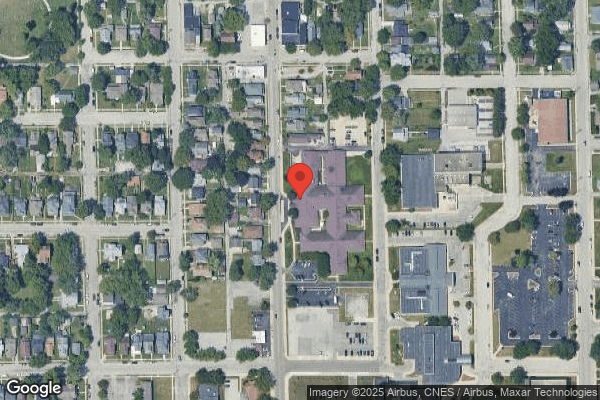
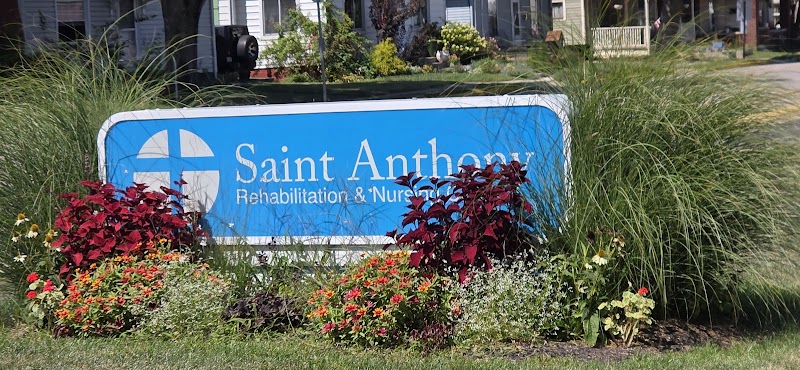
1205 N 14TH ST, LAFAYETTE, IN 47904 (765) 423-4861
For profit - Corporation 120 Beds MAJOR HOSPITAL Data: November 2025
Trust Grade
80/100
#184 of 505 in IN
Last Inspection: August 2024

Within standard 12-15 month inspection cycle. Federal law requires annual inspections.

Overview

Saint Anthony Rehab and Nursing Center has a Trust Grade of B+, indicating it is above average and recommended for families considering their options. It ranks #184 out of 505 facilities in Indiana, placing it in the top half, and #4 out of 11 in Tippecanoe County, meaning only three local facilities are rated higher. The facility's performance is stable with no significant improvements or declines noted since it is a new establishment. Staffing is a positive aspect, rated 4 out of 5 stars, with a turnover rate of 42% that is below the state average, suggesting many staff members remain long-term to provide consistent care. Although there have been no fines, there are some concerns, such as incidents where a resident was filmed and posted online without consent, and another resident exited the facility unnoticed and was found three blocks away. While these issues have been addressed, they highlight the need for improved supervision and respect for resident privacy.

Trust Score
B+
80/100
In Indiana
#184/505
Top 36%
Safety Record
Low Risk
No red flags
Inspections
Too New
0 → 7 violations
Staff Stability
○ Average
42% turnover. Near Indiana's 48% average. Typical for the industry.
Penalties
✓ Good
No fines on record. Clean compliance history, better than most Indiana facilities.
Skilled Nurses
✓ Good
Each resident gets 52 minutes of Registered Nurse (RN) attention daily — more than average for Indiana. RNs are trained to catch health problems early.
Violations
○ Average
7 deficiencies on record. Average for a facility this size. Mostly minor or procedural issues.
★★★★☆
4.0
Overall Rating
★★★★☆
4.0
Staff Levels
★★★★☆
4.0
Care Quality
★★★★☆
4.0
Inspection Score
Stable
: 0 issues
2024: 7 issues

The Good

  • 4-Star Staffing Rating · Above-average nurse staffing levels
  • 4-Star Quality Measures · Strong clinical quality outcomes
  • Full Sprinkler Coverage · Fire safety systems throughout facility
  • No fines on record
  • Staff turnover below average (42%)

    6 points below Indiana average of 48%

Facility shows strength in staffing levels, quality measures, fire safety.

The Bad

Staff Turnover: 42%

Near Indiana avg (46%)

Typical for the industry

Chain: MAJOR HOSPITAL

Part of a multi-facility chain

Ask about local staffing decisions and management

The Ugly 7 deficiencies on record

Sept 2024 2 deficiencies
CONCERN (D) 📢 Someone Reported This

A family member, employee, or ombudsman was alarmed enough to file a formal complaint

Potential for Harm - no one hurt, but risky conditions existed

Resident Rights (Tag F0550)

Could have caused harm · This affected 1 resident

Based on observation, interview and record review, the facility failed to ensure a staff member did not photograph or video tape a resident and post the video online on social media for 1 of 1 residen...

Read full inspector narrative →
Based on observation, interview and record review, the facility failed to ensure a staff member did not photograph or video tape a resident and post the video online on social media for 1 of 1 resident reviewed for respect and dignity. (Resident F) The deficient practice was corrected on 9/6/24, prior to the start of the survey, and therefore was past noncompliance. Finding includes: A document, titled Indiana State Department of Health Survey Report System, indicated Resident F was videotaped and photographed in the facility while she was sleeping by Staff Member 10. The video was posted online. On 9/24/24 at 2:29 p.m., an online video was reviewed with the Executive Director (ED). The video showed Resident F in her wheelchair at the facility asleep. A comment wake up Grandma was heard, and then a can of Red Bull drink appeared on the screen. The video was posted online on social media. The clinical record for Resident F was reviewed on 9/25/24 at 12:30 p.m. The diagnoses included, but were not limited to, unspecified dementia, difficulty walking, anemia, and depression. The resident had a Brief Interview for Mental Status (BIMS) score of 3 out of 15 which indicated she had a severe cognitive deficit. A care plan indicated the resident had confusion and a memory deficit. She was forgetful and needed reminders. She needed assistance with activities of daily living, and she had an impaired thought process. She preferred to be called grandma. A nursing note, dated 8/17/24, indicated the resident was assessed and no injury was noted. Resident F's guardian was notified of the incident and had no concerns at this time. The resident was reassessed by the DON and the resident was found to be happy and content with no signs of distress. A nursing note, dated 8/22/24, indicated Staff Member 10 threatened Staff Member 11 and accused her of posting the video online. Staff Member 11 told the DON she did not see the video and she did not post the video. She indicated she was aware of the policy and procedure which indicated no photos of residents were to be taken in the facility. A nursing note, dated 9/5/24, indicated on 8/16/24 at 1:05 p.m., the Director of Nursing (DON) received a text message which she opened and saw a picture of Resident F on snapchat/social media. The correspondence did not reveal the texter's identity. A video was then sent to the DON with the resident on the video and a story line attached. The video had Staff Member 10 as the account holder. Staff member 10 denied posting the video. Staff Member 10 did admit the photo and video were on her camera roll. The guardian for the resident was advised of the investigation and the staff member's termination. During an interview, on 9/24/24 at 3:10 p.m., the DON indicated she was made aware of the video by an anonymous caller. Staff Member 10 was identified. The staff member denied posting the video. Staff Member 10 admitted the phone was her phone with the video on it. Staff Member 10 was fired from employment at the facility and the nursing board was notified. Staff Member 10 failed to follow facility policies and procedures. During an interview, on 9/24/24 at 12:57 p.m., Resident F indicated she did not know if anyone had taken her photo or had posted a video of her online. The resident was confused. During an interview, on 9/24/24 at 12:52 p.m., Staff Member 7 indicated she was aware Resident F's photo was posted online. She had been in-serviced on abuse and knew residents were not to be photographed by staff. During an interview, on 9/24/24 at 12:56 p.m., Staff Member 8 indicated she was aware Resident F's photo was posted online. She had been in-serviced on abuse and knew residents were not to be photographed by staff even if the resident said it was okay. During an interview, on 9/24/24 at 12:59 p.m., Staff Member 9 indicated he was aware Resident F's photo was posted online. He had been in-serviced on abuse and knew residents were not to be photographed by staff. Staff would be terminated if they posted photos of residents online. A current policy, titled Imaging of Residents, Videotaping, Photographing and Other, dated as revised 4/2021 and provided by ED on 9/25/24 at 3:10 p. m., indicated .Resident photographs are considered health care records and will be retained and released in accordance with current applicable regulations and statutes governing the release of protected health information The deficient practice was corrected by 9/6/2024, after the facility implemented a systemic plan which included the following: Staff Member 10 was terminated and all staff members were in-serviced/educated on Abuse and Imaging of Residents, Videotaping, Photographing and other policies and procedures. This citation relates to Complaint IN00441445. 3.1-3(a)
CONCERN (D) 📢 Someone Reported This

A family member, employee, or ombudsman was alarmed enough to file a formal complaint

Potential for Harm - no one hurt, but risky conditions existed

Accident Prevention (Tag F0689)

Could have caused harm · This affected 1 resident

Based on observation, interview and record review, the facility failed to ensure a resident received adequate supervision when the resident exited the facility, without staff knowledge, and was found ...

Read full inspector narrative →
Based on observation, interview and record review, the facility failed to ensure a resident received adequate supervision when the resident exited the facility, without staff knowledge, and was found down the street 3 blocks away for 1 of 3 residents reviewed for accidents. (Resident B) The deficient practice was corrected on 9/20/24, prior to the start of the survey, and therefore was past noncompliance. Finding includes: An Indiana Department of Health Intake Information Form, dated 9/2/24, indicated a resident had eloped out of the facility, on 9/2/24 at 8:07 a.m., and was returned to the facility by the staff at 8:40 a.m. The clinical record for Resident B was reviewed on 9/24/24 at 1:04 p.m. The diagnoses included, but were not limited to, congestive heart failure, vascular dementia, anxiety disorder, and peripheral vascular disease. The resident had a Brief Interview for Mental Status (BIMS) score of 3 out of 15 which indicated she had a severe cognitive deficit. A facility investigative report indicated the resident left the facility at 8:07 a.m., and she was last seen by the staff at 8:00 a.m. She traveled south with her walker as her mobile assist on 14th street (facility was located on 14th street) crossed 3 blocks and was seen by Staff Member 2 on her way to work at 8:23 a.m. Staff Member 2 notified the facility staff of the resident elopement. The resident was returned to the facility at 8:40 a.m. The resident had traveled 0.2 miles. The resident had been missing from the facility for 20 minutes. A nursing note indicated the resident was assessed with no injuries. The family and physician were notified. The resident indicated she wanted to go for a walk. She did not notify staff, nor did she sign the resident Leave of Absence (LOA) log book. A wandering tool assessment for elopement, dated 7/6/24, indicated the resident was not a risk for wandering behaviors or exit seeking. During an interview, on 9/24/24 at 1:03 p.m., Resident B indicated she was not aware she had eloped from the facility, she indicated she had gone for a walk and the staff helped her come back to the facility. She was not aware she had to tell anyone she was leaving the facility. She was not aware she had to sign in and out to leave the facility. The resident was observed to be independent with mobility. During an interview, on 9/24/24 at 2:00 p.m., the Executive Director (ED) indicated there was an alarm on the doors of the facility which was alarmed at night at 6:00 p.m., and was turned off at 8:00 a.m. There was a secondary alarm at the nursing station which remained on until the receptionist on duty turned it off when she arrived. On 9/2/24, the receptionist arrived at 9:00 a.m. The secondary alarm sounded at 8:07 a.m., when the resident left the facility. Staff Member 3 turned off the secondary alarm and did not look to see if a resident was missing. Staff Member 3 was terminated for not following policy and procedure. Staff member 3 should have looked for who left the facility and searched for all residents to see if the residents were all in the facility. During an interview, on 9/24/24 at 3:59 p.m., Staff Member 2 indicated she saw Resident B walking down 14th street to the corner of Salem Street at 8:23 a.m. She traveled to the facility and notified staff of the resident's location. She then returned to find the resident at 8:27 a.m. She found the resident between Salem and Union Streets walking towards Union Street. She stayed with the resident until the nursing staff arrived to transport the resident to the facility During an interview, on 9/24/24 at 4:13 p.m., Staff Member 4 indicated she received a call at 8:25 a.m. regarding the resident's elopement. She saw the resident back in the facility at 8:40 a.m. During an interview, on 9/24/24 at 4:20 p.m., the Director of Nursing (DON) indicated the resident was observed leaving the building per video surveillance at 8:07 a.m., then the resident was seen by Staff Member 2 while she was on her way to work at 8:23 a.m. Staff Member 2 notified staff at the facility and returned to find the resident at 8:27 a.m. Staff Member 2 stayed with the resident until nursing staff arrived to transport the resident to the facility. The resident arrived back at the facility at 8:40 a.m. The resident was gone from the facility from 8:07 a.m. until 8:27 a.m. 20 minutes. During an interview, on 9/24/24 at 1:12 p.m., the DON indicated Resident B was not an elopement risk. The nursing staff should have investigated the alarm sounding when the resident left the faciity on 9/2/24. During an interview, on 9/24/24 at 12:52 p.m., Staff Member 7 indicated she was aware of Resident B's elopement. She had been in-serviced on the alarm system and to look for residents if the alarm sounded. During an interview, on 9/24/24 at 12:56 p.m., Staff Member 8 indicated she was aware of Resident B's elopement. She had been in-serviced on the alarm system and to look for residents if the alarm sounded. During an interview, on 9/24/24 at 12:59 p.m., Staff Member 9 indicated he was aware of Resident B's elopement. He had been in-serviced on the alarm system and to look for residents if the alarm sounded. He was the staff member conducting the weekly checks on the door alarms A current policy, titled Family Resident Orientation Guide, dated as revised 10/2023 and provided by ED on 9/25/24 at 3:15 p. m., indicated .If a resident leaves the building, it is a requirement to sign out and sign in at the nurse's station and notify the resident's nurse before leaving and upon return. This will allow the staff to know the whereabouts of the resident The deficient practice was corrected by 9/20/24, after the facility implemented a systemic plan which included the following: Staff Member 3 was terminated, all staff members were in serviced and educated on the alarm system, the alarm system had an ongoing audit for the exit door and the receptionist's schedule had been changed to coordinate with the automatic alarm door system. This citation relates to Complaint IN00442388. 3.1-45(a)
Aug 2024 5 deficiencies
CONCERN (D)

Potential for Harm - no one hurt, but risky conditions existed

Deficiency F0558 (Tag F0558)

Could have caused harm · This affected 1 resident

Based on observation, interview and record review, the facility failed to ensure a resident was seated at a table with the height adjusted to accommodate the resident's needs for 1 of 1 resident revie...

Read full inspector narrative →
Based on observation, interview and record review, the facility failed to ensure a resident was seated at a table with the height adjusted to accommodate the resident's needs for 1 of 1 resident reviewed for accommodation of needs. (Resident 3) Finding includes: During an observation, on 8/13/24 at 12:10 p.m., Resident 3 was sitting at the end of a long table with other residents who required assistance to eat. She was resting her head on the table during the meal. During an observation, on 8/15/24 at 11:56 a.m., Resident 3 was sitting in the dining room at a long table with other residents who were being assisted with meals. The table was at the level of the resident's chin. She was feeding herself. Her head was leaning to the left and forward. She had a clothing protector on, and a CNA was sitting next to the resident. During an observation, on 8/16/24 at 11:44 a.m., the resident was sitting at the long dining room table with other residents who required assistance with meals. Her chin was at the level of the table. She was leaning forward and looking down. She was not interacting with others. The clinical record for Resident 3 was reviewed on 8/15/24 at 10:28 a.m. The diagnoses included, but were not limited to, mild cognitive impairment of uncertain or unknown etiology, bipolar disorder, mild depression, and adjustment disorder with anxiety. A physician's order, dated 7/16/24, indicated occupational therapy (OT) was to evaluate and treat as indicated. OT was to treat the resident for 25 visits in 8 weeks addressing activities of daily living (ADL) retraining, therapeutic activity, therapeutic exercises, and resident/caregiver education. An OT progress note, dated 8/1/24 to 8/13/24, indicated the resident was being seen for active range of motion (AROM) for neck, shoulder, elbow and hand joints to encourage upright sitting, and retraining safety awareness education. On 8/13/24, a note indicated the therapist consulted with the dining room staff and daughter to try a lower dining table. The resident was able to reach food at the time and would continue to monitor. During an interview, on 8/16/24 at 11:53 a.m., RN 6 indicated there was one adjustable table and pointed to the table in the middle, near the half wall, where a patient and another staff member were sitting. During an interview, on 8/16/24 at 12:05 p.m., the Director of Nursing (DON) indicated the resident had been sitting at a lower table before, but the resident was moved due to therapy wanting the resident to improve her posture. A review of the resident's therapy notes did not indicate to seat the resident at a dining table which came to the level of her chin. A current facility policy, titled Resident Rights and Responsibilities, dated as last reviewed 5/2022 and received from DON on 8/19/24 at 10:01 a.m., indicated .You have the right to be treated with respect and dignity, including the right to .reside and receive services in the facility with reasonable accommodations of your needs and preferences 3.1-3(v)(1)
CONCERN (D) 📢 Someone Reported This

A family member, employee, or ombudsman was alarmed enough to file a formal complaint

Potential for Harm - no one hurt, but risky conditions existed

Comprehensive Care Plan (Tag F0656)

Could have caused harm · This affected 1 resident

Based on observation, interview and record review, the facility failed to ensure a resident's functional limitation in range of motion was included in the comprehensive care plan for 1 of 2 residents ...

Read full inspector narrative →
Based on observation, interview and record review, the facility failed to ensure a resident's functional limitation in range of motion was included in the comprehensive care plan for 1 of 2 residents reviewed for mobility. (Resident 53) Finding includes: During an observation, on 8/13/24 at 2:01 p.m., Resident 53 had contractures of the fingers on both hands. The clinical record for Resident 53 was reviewed on 8/15/24 at 12:15 p.m. The diagnoses included, but were not limited to, myoclonus (sudden, involuntary muscle jerks, shakes or spasm), polyosteoarthritis (arthritis affecting five or more joints at once), and right shoulder pain. An occupational therapy (OT) service note, dated 4/17/24, indicated both resident's hands had minimum to moderate arthritis deformities but were functional with maximum difficulty. A Minimum Data Set (MDS) assessment, dated 4/23/24, indicated the resident had a functional limitation in range of motion of her upper extremities which could include, the shoulders, elbows, wrists and hands. A care plan, initiated 4/16/24, indicated the resident had polyosteoarthritis. The care plan did not include the parts of the body affected by arthritis. During an interview, on 8/19/24 at 3:08 p.m., the Assistant Director of Nursing (ADON) indicated the occupational therapist note showed the resident had arthritic changes in her hands. A current policy, titled Care plan, Comprehensive, dated as last reviewed on 7/2021 and received from the Administrator on 8/20/24 at 11:47 a.m., indicated .The comprehensive care plan is based on a thorough assessment that includes, but is not limited to, the MDS .Each resident's comprehensive care plan is designed to describe .Identified problem areas .Assessments of residents are ongoing and care plans are revised as information about the resident and the resident's condition change .The Care Planning/Interdisciplinary Team is responsible for the review and updating of care plans .After each assessment, including both the comprehensive and quarterly review assessments . 3.1-35(a)
CONCERN (D)

Potential for Harm - no one hurt, but risky conditions existed

Quality of Care (Tag F0684)

Could have caused harm · This affected 1 resident

A current policy, titled Physician Notification, Change in Condition, dated as last reviewed on 8/2021 and received from the DON on 8/15/24 at 4:00 p.m., indicated .To ensure that significant changes ...

Read full inspector narrative →
A current policy, titled Physician Notification, Change in Condition, dated as last reviewed on 8/2021 and received from the DON on 8/15/24 at 4:00 p.m., indicated .To ensure that significant changes in resident status are based on the assessments which are to be documented in the medical record and medical care problems are communicated to the attending physician in a timely, thorough manner .When contacting physicians, the nurse should attempt to have the following information available .change in vital signs outside physician ordered parameters, general guidelines or normal parameters for the resident .Blood sugar >300 or <60 . Laboratory values .Any of the following abnormal reports unless otherwise directed by physician .Any of the following abnormal reports unless otherwise directed by physician .Glucose >300 or <60 in a diabetic on oral hypoglycemic medication, insulin or <60 for any resident (diabetic or non-diabetic) A current policy, titled Skin Condition Assessment, dated as last reviewed on 10/2022 and received from the DON on 8/19/24 at 3:15 p.m., indicated .Each resident will be observed for skin concerns daily during care and on the assigned bath day by nursing staff. Any concerns will be reported to the charge nurse who will assess the area and document accordingly .Skin observations that should be reported include .bruises . A separate skin report will be completed for each identified skin problem area .Previous measurements will be reviewed . 3.1-37(a) 2. The clinical record for Resident 12 was reviewed on 8/15/24 at 9:56 a.m. The diagnoses included, but were not limited to, diabetes mellitus, respiratory failure, chronic pulmonary edema, cognitive communication deficit, major depressive disorder, anxiety disorder, end stage renal disease, and hypertension. A physician's order, dated 8/3/24, indicated to obtain an Accu check (test used to estimate blood sugar levels) before meals and at bedtime. Call the physician if the blood sugar level was less than 60 or greater than 490. A Medication Administration Record (MAR), dated August 2024, indicated the following: a. On 8/3/24 at 8:00 p.m., the blood glucose level was 56. b. On 8/5/24 at 6:00 a.m., the blood glucose level was 51. c. On 8/5/24 at 4:00 p.m., the blood glucose level was 53. d. On 8/5/24 at 8:00 p.m., the blood glucose level was 51. e. On 8/7/24 at 4:00 p.m., the blood glucose level was 52. f. On 8/9/24 at 6:00 a.m., the blood glucose level was 56. g. On 8/11/24 at 6:00 a.m., the blood glucose level was 49. A care plan, dated 6/17/24 and last revised 8/12/24, indicated the resident had diabetes mellitus (DM). The interventions included, but were not limited to, monitor blood sugars and to notify the physician of results as ordered. There was no documentation, from 8/1/24 to 8/17/24, to indicate the physician was notified of the blood glucose levels less than 60. During an interview, on 8/15/24 at 2:37, the DON indicated it was her expectation the staff would follow the physician's order. When the blood glucose fell within the call range, the physician should be notified. The nurses should follow the physician's order. 3. The clinical record for Resident 15 was reviewed on 8/15/24 at 9:52 a.m. The diagnoses included, but were not limited to, diabetes mellitus, dementia, anxiety disorder, and cognitive communication deficit. A care plan, dated as revised 7/3/24, indicated the resident had diabetes mellitus (DM). The interventions included, but were not limited to, monitor blood sugars and to notify the physician of results as ordered and to monitor for hyperglycemia (high blood glucose level). A physician's order, dated 8/13/24, indicated to get an Accu-check before meals and at bedtime. Notify the physician for a blood sugar less than 60 or greater than 400. A Medication Administration Record (MAR), dated August 2024, indicated the following: a. On 8/7/24 at 6:00 p.m., the blood glucose level was 452. b. On 8/14/24 at 6:00 p.m., the blood glucose level was 454. There was no documentation, from 8/1/24 to 8/17/24, to indicate the physician was notified of the blood glucose levels out of range. During an interview, on 8/15/24 at 4:11 p.m., the DON indicated there was no documentation the physician was notified of the high blood glucose levels. Based on observation, interview and record review, the facility failed to ensure a resident's bruising was documented as being assessed and monitored and to ensure out of range glucometer readings were reported to the physician as ordered for 3 of 3 residents reviewed for quality of care. (Resident 124, 15 and 12) Findings include: 1. During an observation, on 8/13/24 at 1:43 p.m., Resident 124 had purple bruising on the left side of her face on her cheek. The bruising was the size of two 50 cent pieces put together. The clinical record for Resident 124 was reviewed on 8/13/24 at 1:43 p.m. The diagnoses included, but were not limited to, vascular dementia with other behavioral disturbance, severe major depressive disorder with psychotic symptoms, generalized anxiety disorder, and chronic obstructive pulmonary disease. A care plan, dated 7/18/24, indicated the resident had a potential for impaired skin integrity due to her poor physical condition, limited mobility, dementia, and incontinence. The goal included the resident would be free of injury. The interventions included, but were not limited to, provide skin hygiene every shift and report skin concerns to the nurse and physician. A progress note, dated 7/21/24 at 7:10 p.m., indicated the nurse was notified the resident was observed on the floor. The resident was sitting on the floor next to the bed. The resident stated she had rolled over. The resident had a hematoma and bruising to the left forehead and no other injuries were noted. The progress note did not include bruising to the left side of the resident's cheek. A progress note, dated 7/24/24, indicated the resident was noted to be sitting upright in front of the closet door to her room with her knees drawn up and her arms wrapped around them. The resident had bloody drainage from the left side of her head above the ear. There was a small laceration 1.2 centimeters long, 0.1 centimeters in depth, and 0.2 centimeters in width. A physician's order, dated 7/24/24, indicated to monitor a left forehead hematoma each shift for signs of infection. An interdisciplinary team (IDT) progress note, dated 7/25/24, indicated the resident was reviewed in the safety committee. The resident declined an interview to gather more information about the fall. The fall appeared to have happened while the resident was attempting to get in the closet. The IDT note did not include any information about the bruising on the resident's face. A Fall QS (every shift) documentation, dated 7/28/24, indicated the resident's hematoma was starting to resolve and bruising was noted down the side of the resident's face from the hematoma. The documentation did not include where the hematoma was located or the size of the bruising. A skin assessment, dated 7/31/24, indicated the resident's forehead hematoma had resolved. The resident had bruising on the left side of her cheek. The skin assessment did not include any measurements of the bruising or how much of the cheek was bruised. An occupational therapy daily note, dated 8/1/24, indicated the resident had a bruised left forehead and face. The therapy note did not include the size of the bruising or measurements of the area. A skin assessment, dated 8/16/24, indicated the resident had a left cheek bruise 3.3 centimeters in length and 4 centimeters in width. The area was dark purple in the center and the surrounding area had reddish hues on the edges. The skin assessment did not include how the bruising to the left side of the cheek occurred or the date the bruising was first located. During an interview, on 8/19/24 at 3:10 p.m., the Assistant Director of Nursing (ADON) indicated the resident had a fall on 7/21/24 and had bruising to the left forehead. The resident fell on 7/23/24 and had an abrasion to her ear. The resident was also on Xarelto (a blood thinner) and prednisone (for inflammation) during the time of the falls. Her healing was delayed due to the medications. The documentation did not show the bruising was being followed.
CONCERN (D)

Potential for Harm - no one hurt, but risky conditions existed

Tube Feeding (Tag F0693)

Could have caused harm · This affected 1 resident

Based on observation, interview and record review, the facility failed to ensure a staff member followed the policy and procedure when verifying the gastrostomy tube (g-tube) placement prior to medica...

Read full inspector narrative →
Based on observation, interview and record review, the facility failed to ensure a staff member followed the policy and procedure when verifying the gastrostomy tube (g-tube) placement prior to medication administration for 1 of 1 resident reviewed for a gastrostomy tube. (Resident 9) Finding includes: During a medication administration observation, on 8/16/24 at 1:50 p.m., Registered Nurse (RN) 4 placed 60 milliliters (ml) of water into a piston and attached it to the resident's g-tube. RN 4 then pushed the 60 ml of water into the tube and pulled back on the syringe. She then indicated there was no tube feeding (residual). During an interview, on 8/19/24 at 12:45 p.m., RN 4 indicated she pushed the water into the g-tube first and then pulled back on the syringe. This was how she checked for the residual and did not know what the facility policy indicated. A current policy, titled Enteral Tube Medication Administration, not dated and received from the Director of Nursing on 8/16/24 at 2:21 p.m., indicated .With gloves on, check for proper tube placement by checking stomach contents (residual). Never check placement with water. Check gastric content for residual feeding. Return residual volumes to the stomach. Report any residual above 100ml 3.1-44(a)(1)
CONCERN (E)

Potential for Harm - no one hurt, but risky conditions existed

Deficiency F0919 (Tag F0919)

Could have caused harm · This affected multiple residents

**NOTE- TERMS IN BRACKETS HAVE BEEN EDITED TO PROTECT CONFIDENTIALITY** During an observation, on 8/16/24 at 11:18 a.m., Registered Nurse (RN) 2 indicated the call system was new and the old call ligh...

Read full inspector narrative →
**NOTE- TERMS IN BRACKETS HAVE BEEN EDITED TO PROTECT CONFIDENTIALITY** During an observation, on 8/16/24 at 11:18 a.m., Registered Nurse (RN) 2 indicated the call system was new and the old call lights in the hallway no longer worked. If a resident activated a call light, the staff would get notification on their phone. The phone would make a noise or vibrate. The call light was tested in room [ROOM NUMBER]. RN 2 pressed the resident's call light button. RN 2 then turned up the volume on her phone and the phone made a ding sound. During an observation, on 8/16/24 at 11:26 a.m., RN 3 indicated she used her own phone for the call lights. The phone was in her pocket and was turned off. RN 3 turned on her phone and turned up the volume. During an interview, on 8/15/24 at 2:40 p.m., the Director of Nursing (DON) indicated the facility installed a new call light system. The residents could not see or hear the call lights and thought the lights did not work. The facility provided the residents with bells to ring. During an interview, on 8/16/24 at 11:18 a.m., RN 2 indicated the nurses, Certified Nursing Assistants (CNA), and the management team carried phones. The only way they were notified of a call lights were by their own phones or the staff could get a facility phone at the front desk. RN 2 indicated the staff could also check on an iPad (electronic device) on each hall. RN 2 opened the iPad screen and did not know the password to access the call light system. During an interview, on 8/16/24 at 11:28 a.m., RN 4 indicated the CNAs answered the call lights and she did other things. During an interview, on 8/16/24 at 11:36 a.m., the DON indicated anyone could answer a call light. She did not know what staff took the phones from the desk. A current policy, titled Call Lights, dated as revised 6/2024 and received from the Director of Nursing on 8/19/24 at 9:59 a.m., indicated .All personnel, unless otherwise directed by the Administrator or designee, must always be vigilant and aware of call lights. The notify app will be downloaded to the device being utilized for alerts. This would include personal phones, facility phones, and iPads. The call light button or pad will be accessible to the resident while in their bed or other sleeping accommodations, and/or while sitting in a chair in the resident's room .Answer all call lights promptly, regardless of the resident assignment .At the beginning of the shift, staff will log in to the Notifync app on their device. Scroll to username. Enter 6-digit PIN. Set your zone located under profile or wheel symbol in right lower corner. Go to alerts or lightning symbol in left lower corner. When the resident activates the call light within their living area, the device being used will receive an alert and the room number will appear on the device. It will appear as a red alert. Note what area the alert is coming from i.e. bed A, bed B, bathroom then Hit the green take button on the device .In the event of system or power failure: Each resident will be provided with a bell to ring manually. For those residents unable to utilize a bell, frequent and periodic rounds will be conducted 3.1-19(u) Based on observation, interview and record review, the facility failed to ensure all areas of the wireless call system were functioning properly for 5 of 5 halls reviewed for the call system. (Hall A, B, C, D and E) Finding includes: During a resident council meeting, on 8/15/24 at 2:03 p.m., Resident 56 indicated the call light notifications would go to the staff phones. The residents could not tell if the call request had been received since there was no light which turned on. Sometimes during the night, it would take a long time for her roommate's call light to get answered. Resident 56 would then call the nurses desk and the staff would respond to the request for help.
Understanding Severity Codes (click to expand)
Life-Threatening (Immediate Jeopardy)
J - Isolated K - Pattern L - Widespread
Actual Harm
G - Isolated H - Pattern I - Widespread
Potential for Harm
D - Isolated E - Pattern F - Widespread
No Harm (Minor)
A - Isolated B - Pattern C - Widespread

Questions to Ask on Your Visit

  • "Can I speak with families of current residents?"
  • "What's your RN coverage like on weekends and overnight?"

Our Honest Assessment

Strengths
  • • Grade B+ (80/100). Above average facility, better than most options in Indiana.
  • • No major safety red flags. No abuse findings, life-threatening violations, or SFF status.
  • • No fines on record. Clean compliance history, better than most Indiana facilities.
  • • 42% turnover. Below Indiana's 48% average. Good staff retention means consistent care.
Concerns
  • • No significant concerns identified. This facility shows no red flags across CMS ratings, staff turnover, or federal penalties.
Bottom line: Generally positive indicators. Standard due diligence and a personal visit recommended.

About This Facility

What is Saint Anthony Rehab And Nursing Center's CMS Rating?

CMS assigns SAINT ANTHONY REHAB AND NURSING CENTER an overall rating of 4 out of 5 stars, which is considered above average nationally. Within Indiana, this rating places the facility higher than 99% of the state's 100 nursing homes. This rating reflects solid performance across the metrics CMS uses to evaluate nursing home quality.
How is Saint Anthony Rehab And Nursing Center Staffed?

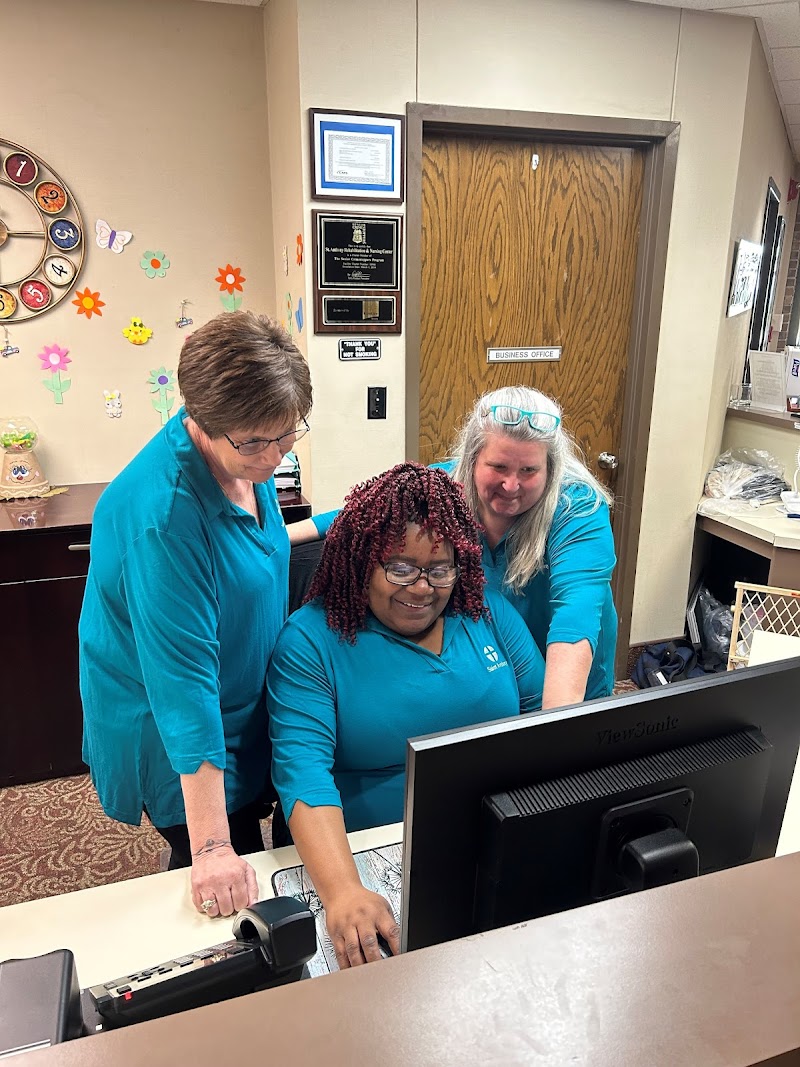
CMS rates SAINT ANTHONY REHAB AND NURSING CENTER's staffing level at 4 out of 5 stars, which is above average compared to other nursing homes. Staff turnover is 42%, compared to the Indiana average of 46%. This relatively stable workforce can support continuity of care.

What Have Inspectors Found at Saint Anthony Rehab And Nursing Center?

State health inspectors documented 7 deficiencies at SAINT ANTHONY REHAB AND NURSING CENTER during 2024. These included: 7 with potential for harm.
Who Owns and Operates Saint Anthony Rehab And Nursing Center?

SAINT ANTHONY REHAB AND NURSING CENTER is owned by a for-profit company. For-profit facilities operate as businesses with obligations to shareholders or private owners. The facility is operated by MAJOR HOSPITAL, a chain that manages multiple nursing homes. With 120 certified beds and approximately 74 residents (about 62% occupancy), it is a mid-sized facility located in LAFAYETTE, Indiana.
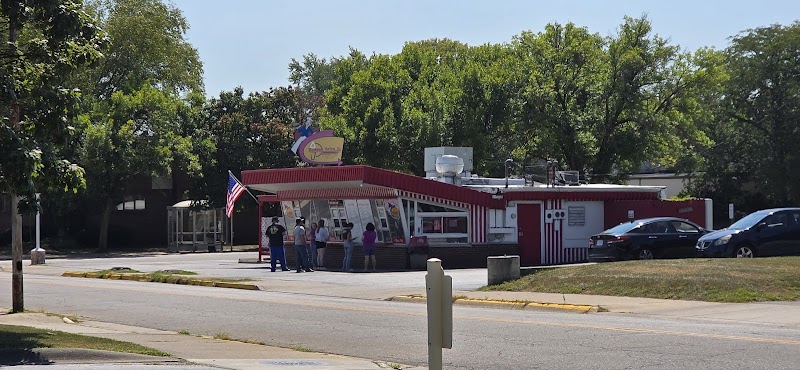
How Does Saint Anthony Rehab And Nursing Center Compare to Other Indiana Nursing Homes?

Compared to the 100 nursing homes in Indiana, SAINT ANTHONY REHAB AND NURSING CENTER's overall rating (4 stars) is above the state average of 3.1, staff turnover (42%) is near the state average of 46%, and health inspection rating (4 stars) is above the national benchmark.

What Should Families Ask When Visiting Saint Anthony Rehab And Nursing Center?

Based on this facility's data, families visiting should ask: "Can I visit during a mealtime to observe dining assistance and food quality?" "How do you handle medical emergencies, and what is your hospital transfer rate?" "Can I speak with family members of current residents about their experience?"

Is Saint Anthony Rehab And Nursing Center Safe?

Based on CMS inspection data, SAINT ANTHONY REHAB AND NURSING CENTER has a clean safety record: no substantiated abuse findings (meaning no confirmed cases of resident harm), no Immediate Jeopardy citations (the most serious violation level indicating risk of serious injury or death), and is not on the Special Focus Facility watch list (a federal program monitoring the lowest-performing 1% of nursing homes). The facility has a 4-star overall rating and ranks #1 of 100 nursing homes in Indiana. While no facility is perfect, families should still ask about staff-to-resident ratios and recent inspection results during their visit.

Do Nurses at Saint Anthony Rehab And Nursing Center Stick Around?

SAINT ANTHONY REHAB AND NURSING CENTER has a staff turnover rate of 42%, which is about average for Indiana nursing homes (state average: 46%). Moderate turnover is common in nursing homes, but families should still ask about staff tenure and how the facility maintains care continuity when employees leave.

Was Saint Anthony Rehab And Nursing Center Ever Fined?

SAINT ANTHONY REHAB AND NURSING CENTER has no federal fines on record. CMS issues fines when nursing homes fail to meet care standards or don't correct problems found during inspections. The absence of fines suggests the facility has either maintained compliance or corrected any issues before penalties were assessed. This is a positive indicator, though families should still review recent inspection reports for the full picture.

Is Saint Anthony Rehab And Nursing Center on Any Federal Watch List?

SAINT ANTHONY REHAB AND NURSING CENTER is not on any federal watch list. The most significant is the Special Focus Facility (SFF) program, which identifies the bottom 1% of nursing homes nationally based on persistent, serious quality problems. Not being on this list means the facility has avoided the pattern of deficiencies that triggers enhanced federal oversight. This is a positive indicator, though families should still review the facility's inspection history directly.