HICKORY CREEK AT MADISON
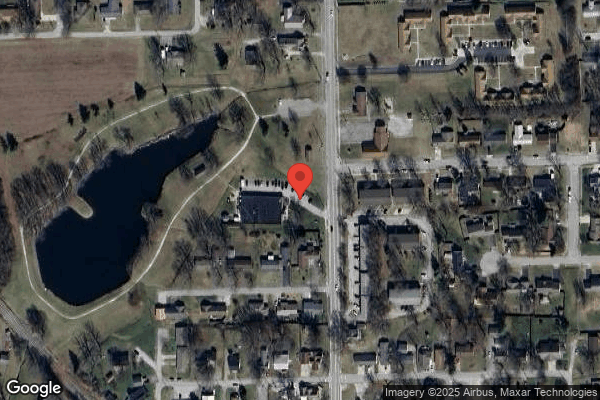

1945 CRAGMONT ST, MADISON, IN 47250 (812) 273-4696
For profit - Corporation 36 Beds AMERICAN SENIOR COMMUNITIES Data: November 2025
Trust Grade
90/100
#54 of 505 in IN
Last Inspection: October 2024

Within standard 12-15 month inspection cycle. Federal law requires annual inspections.

Overview

Hickory Creek at Madison has received an excellent Trust Grade of A, indicating a high level of quality and care. With a state rank of #54 out of 505 facilities in Indiana, they are in the top half, and they are the best option among the five facilities in Jefferson County. The facility's performance has been stable, with the same number of issues reported in both 2023 and 2024. However, staffing is a concern, rated poorly at 1 out of 5 stars, with a turnover rate of 48%, which is on par with the state average. While there have been no fines reported, there are some areas for improvement, including insufficient RN coverage in several months and issues with maintaining oxygen concentrator filters for some residents, which could impact their health.

Trust Score
A
90/100
In Indiana
#54/505
Top 10%
Safety Record
Low Risk
No red flags
Inspections
Holding Steady
2 → 2 violations
Staff Stability
⚠ Watch
48% turnover. Above average. Higher turnover means staff may not know residents' routines.
Penalties
✓ Good
No fines on record. Clean compliance history, better than most Indiana facilities.
Skilled Nurses
○ Average
Each resident gets 34 minutes of Registered Nurse (RN) attention daily — about average for Indiana. RNs are the most trained staff who monitor for health changes.
Violations
✓ Good
Only 4 deficiencies on record. Cleaner than most facilities. Minor issues only.
★★★★★
5.0
Overall Rating
★☆☆☆☆
1.0
Staff Levels
★★★★★
5.0
Care Quality
★★★★★
5.0
Inspection Score
Stable
2023: 2 issues
2024: 2 issues

The Good

  • 5-Star Quality Measures · Strong clinical quality outcomes
  • Full Sprinkler Coverage · Fire safety systems throughout facility
  • No fines on record

Facility shows strength in quality measures, fire safety.

The Bad

Staff Turnover: 48%

Near Indiana avg (46%)

Higher turnover may affect care consistency

Chain: AMERICAN SENIOR COMMUNITIES

Part of a multi-facility chain

Ask about local staffing decisions and management

The Ugly 4 deficiencies on record

Oct 2024 1 deficiency
CONCERN (D)

Potential for Harm - no one hurt, but risky conditions existed

Respiratory Care (Tag F0695)

Could have caused harm · This affected 1 resident

Based on observation, record review, and interview, the facility failed to ensure oxygen concentrator filters were maintained for 3 of 5 residents reviewed for respiratory care. (Residents 16, 29, and...

Read full inspector narrative →
Based on observation, record review, and interview, the facility failed to ensure oxygen concentrator filters were maintained for 3 of 5 residents reviewed for respiratory care. (Residents 16, 29, and 21) Findings include: 1. a. During an observation on 10/21/24 at 11:15 a.m., Resident 16's bilateral oxygen concentrator filters were completely (100 percent) covered with a white powdery substance. The humidifier bottle was sitting on the floor. During an observation on 10/22/24 at 10:00 a.m., Resident 16's bilateral oxygen concentrator filters were completely covered with a white powdery substance. During an observation with the Director of Nursing (DON) on 10/23/24 at 11:05 a.m., Resident 16's bilateral oxygen concentrator filters were completely covered with a white powdery substance. The DON removed and shook the filters from the concentrator and the white substance was observed in the air. There were small hairs in the corners of the filters. The humidity bottle was sitting on the floor. The DON indicated the strap was broken and she obtained a clean oxygen concentrator tank, humidifier bottle and tubing for the resident. The record for Resident 16 was reviewed on 10/22/24 at 1:00 p.m. The resident's diagnoses included, but were not limited to, acute and chronic respiratory failure with hypoxia or hypercapnia, chronic obstructive pulmonary disease (COPD), hypertensive heart disease with heart failure, severe morbid obesity with alveolar hypoventilation, obstructive sleep apnea, and seasonal allergic rhinitis. The physician's order, dated 11/12/22, indicated the nurse was to administer the resident's oxygen at 3 liters (L) per minute by nasal cannula (NC) continuously for COPD. The physician's order, dated 11/14/22, indicated the nurse was to change the resident's oxygen tubing and humidity bottle, and clean the concentrator and filter once a day on Sundays. The care plan, dated 7/26/23 and last revised 10/3/24, indicated the resident had a diagnosis of respiratory failure with hypoxia and required supplemental oxygen by NC. The interventions, dated 7/26/23, included, but were not limited to, administer oxygen as ordered by NC and observe for decreased or worsening symptoms of decreased oxygenation. The nurse's note, dated 12/23/23 at 6:29 a.m., indicated the resident complained of a sore throat and a dry cough. The resident's lung sounds (LS) were diminished with an oxygen saturation of 93% (percent) on 3 L per NC. The resident tested Covid positive. The nurse's note, dated 12/26/23 at 3:37 p.m., indicated the resident's respirations were non labored, and her lung sounds were diminished in all lobes. The resident's O2 saturations were at 93% on 3 L per nasal cannula and her voice was hoarse. The Quarterly Minimum Data Set (MDS) assessment, dated 10/2/24, indicated the resident was moderately cognitively impaired. She required continuous oxygen therapy. During an interview on 10/23/24 at 11:13 a.m., the DON indicated the filters should not have been so coated with dust on the Monday after the company cleaned them on the prior Friday. During a follow up interview, the DON indicated she had talked with the Medical Equipment company, and they told her the filters were like furnace filters and they would be cleaned or replaced as needed. During an interview on 10/23/24 at 11:15 a.m., the resident indicated that on Friday, the guy came into her room to look at the oxygen concentrator, but didn't clean or replace the filters. 2. During an observation on 10/21/24 at 10:59 a.m., Resident 29's bilateral oxygen concentrator filters were completely covered with a light white powdery substance. During an observation on 10/22/24 at 10:09 a.m., Resident 29's bilateral oxygen concentrator filters were completely covered with a light white powdery substance. During an observation with Licensed Practical Nurse (LPN) 4 on 10/23/24 at 10:54 a.m., Resident 29's bilateral oxygen concentrator filters were completely covered with a light white powdery substance. The record for Resident 29 was reviewed on 10/23/24 at 12:30 p.m. The resident's diagnoses included, but were not limited to, dementia with behavioral disturbance, chronic obstructive pulmonary disease, obstructive sleep apnea, body mass index (BMI) of 19.9 or less, and severe dementia with anxiety. The care plan, dated 3/22/24, indicated Resident 29 had the potential for impaired gas exchange related to, COPD with shortness of breath (SOB) while lying flat, and dependence on supplemental oxygen. The interventions, dated 3/22/24, included, but was not limited to, the nurse was to administer oxygen as ordered. The physician's order, dated 3/22/24, indicated staff were to change the resident's oxygen tubing and humidity bottle, and clean the concentrator and filter once a day on Sundays. The Quarterly MDS assessment, dated 8/1/24, indicated the resident was severely cognitively impaired. She required oxygen therapy. The nurse's note, dated 9/15/24 at 10:35 a.m., indicated the resident was still not responding normally and she wasn't alert. Her vitals were blood pressure of 58/48 millimeters of mercury (mmHG), pulse of 100 beats per minute, respirations of 28 breaths per minute, temperature of 97.6 degrees Fahrenheit, Staff were unable to obtain an O2 saturation at this time. The resident remained on 2 liters of O2 (oxygen) per NC, emergency medication services (EMS) was called, and report was called to the local hospital. The hospital indicated the resident was admitted with diagnoses of a urinary tract infection (UTI) and pneumonia. The physician's order, dated 9/26/24, indicated the resident's nurse was to administer 2 liters of oxygen by nasal cannula for saturations below 90% every shift as needed. During an interview on 10/23/24 at 10:59 a.m., LPN 4 indicated she would have to check how often the oxygen concentrator filters were cleaned. A Medical Supply company cleaned the oxygen concentrator filters. If they weren't cleaned, the oxygen wouldn't be pumped. During an interview on 10/23/24 at 11:00 a.m., the DON indicated the Medical Supply company cleaned the oxygen concentrator filters every Friday. The nursing staff could also clean the filters if needed. She placed the Medical Supply company invoice in the shredder, but could contact them for a copy. She later provided a copy of the invoice, but the document only indicated concentrator. She felt that the filters shouldn't be coated with dust on the Monday after the company cleaned them on the prior Friday. 3. During an observation on 10/22/24 at 10:11 a.m., Resident 21's bilateral oxygen concentrator filter had dotted, scattered white chunks on the left oxygen filter. The privacy curtain was covering the right filter. During an observation on 10/23/24 at 11:03 a.m., Resident 21's bilateral oxygen concentrator filter had dotted, scattered white chunks on the left oxygen filter. The record for Resident 21 was reviewed on 10/23/24 at 11:44 a.m. The resident's diagnoses included, but were not limited to, chronic obstructive pulmonary disease with acute exacerbation, acute and chronic respiratory failure with hypoxia, acute on chronic diastolic congestive heart failure, atherosclerotic heart disease of native coronary artery without angina pectoris, anxiety disorder, dementia, mild, with agitation, mild dementia with agitation, insomnia, and a personal history of nicotine dependence. The physician's order, dated 6/11/24, indicated for staff to maintain the resident's oxygen at 2 liters per nasal cannula twice daily. The physician's order, dated 6/12/24, indicated staff were to change the resident's oxygen tubing and humidity and clean the concentrator and filter on Sundays. The care plan, dated 6/18/24, indicated the resident was at risk for ineffective tissue perfusion. The interventions, dated 6/18/24, included, but was not limited to, administer oxygen as ordered. The Significant Change in Condition MDS assessment, dated 8/30/24, indicated the resident was moderately cognitively impaired. The resident required continuous oxygen therapy. The nurse's note, dated 9/13/24 at 2:21 a.m., indicated the resident remained in Covid isolation. The lung sounds had mild wheezes with an O2 saturation of 95% on 2 liters of oxygen. The nurse's note, dated 10/2/24 at 9:36 p.m., indicated during the cardiac and respiratory assessment, the resident's breath sounds were unclear or absent. The resident required and used oxygen at 2 liters per minute per NC. Her LS were diminished in all lobes. The nurse's note, dated 10/6/24 at 10:53 a.m., indicated during the cardiac and respiratory assessment, the resident's breath sounds were diminished. She required and used oxygen at 2 L per minute per NC. Her LS were diminished, also. The nurse's note, dated 10/9/24 at 9:28 p.m., indicated during the cardiac and respiratory assessment, the resident breath sounds were unclear or absent. She required and used oxygen at 2 L per minute per NC. Her LS remained diminished in all lobes. During an interview on 10/23/24 at 11:00 a.m., the DON indicated the staff should try to make sure the privacy curtain was kept off of the oxygen concentrator filters. The Oxygen Therapy policy, dated April 2023, included, but was not limited to, . 6. Residents on oxygen shall be instructed of safety measures concerning storage and administration of oxygen . e. Contamination of oxygen equipment with oil, grease or other combustible is to be avoided. 3.1-47(a)(6)
Mar 2024 1 deficiency
CONCERN (D) 📢 Someone Reported This

A family member, employee, or ombudsman was alarmed enough to file a formal complaint

Potential for Harm - no one hurt, but risky conditions existed

Quality of Care (Tag F0684)

Could have caused harm · This affected 1 resident

Based on interview and record review, the facility failed to document a resident's skin assessment for the skin under the mepilexes dressing or the implementation of a treatment order for a skin tear,...

Read full inspector narrative →
Based on interview and record review, the facility failed to document a resident's skin assessment for the skin under the mepilexes dressing or the implementation of a treatment order for a skin tear, upon re-admission for 1 of 3 residents reviewed for quality of care. (Resident B) Findings include: The clinical record for Resident B was reviewed on 3/15/24 at 10:34 a.m. The diagnoses included, but were not limited to, multiple myeloma, diabetes and anorexia. The care plan, dated 10/19/23, indicated the resident was at risk for skin breakdown and staff were to assess the resident's skin condition weekly, as needed and; staff were to provid treatments as ordered. The admission note, dated 2/9/24 at 4:29 p.m., indicated the resident re-admitted with a 1 cm (centimeter) abrasion to the left shin and an open area just below the coccyx. The wound note, dated 2/13/24 at 10:07 a.m., indicated upon re-admission, the resident's left arm was covered with multiple mepilexes (bandages). Upon removal, a new skin tear was noted from the adhesive of the mepilex. The area measured 0.8 cm in length, 0.5 cm in width with a depth of 0.1 cm. The treatment recommendation was to clean the area with wound cleanser, apply Bacitracin ointment to the base of the wound and to secure with non-adherent pad and rolled gauze every other day. The clinical record lacked documentation of an assessment of the skin under the mepilexes or the implementation of a treatment order for the skin tear on 2/13/24. The hospital records lacked documentation of any orders to not remove the mepilexes. During an interview on 3/15/24 at 3:16 p.m., the Director of Nursing indicated the resident returned from the hospital with the mepilexes to her left arm. She believed the mepilexes were in place for protection due to fragile skin. Their protocol would be to remove the mepilex to see what was under them unless there was an order for them not to remove. When the mepilex were removed, the resident acquired a skin tear due to the adhesive of the bandage. There should have been an order implemented for the skin tear on 2/13/24 and there was not. On 3/15/24 at 3:15 p.m., the Executive Director provided a current copy of the document titled Skin Management Program dated 5/2022. It included, but was not limited to, Policy .It is the policy .to ensure each resident receives care, consistent with professional standards of practice This Citation relates to Complaint IN00429833 3.1-37
Sept 2023 2 deficiencies
CONCERN (D)

Potential for Harm - no one hurt, but risky conditions existed

Deficiency F0744 (Tag F0744)

Could have caused harm · This affected 1 resident

Based on record review and interview, the facility failed to ensure adequate supervision and the implementing of care planned interventions for a resident with dementia related to aggressive behaviors...

Read full inspector narrative →
Based on record review and interview, the facility failed to ensure adequate supervision and the implementing of care planned interventions for a resident with dementia related to aggressive behaviors, and resident to resident abuse for 1 of 4 residents reviewed for dementia care. (Resident 11) Findings include: The record for Resident 11 was reviewed on 9/12/23 at 2:04 p.m. The diagnoses included but were not limited to, dementia, with other behavioral disturbance and anxiety disorder. The Annual MDS (Minimal Data Set) assessment, dated 6/22/23, indicated the resident was severely cognitively impaired. The MDS indicated the resident did not exhibit any behaviors. The care plan, dated 6/26/23 and revised on 8/1/23, indicated the resident had been observed to exhibit verbal and physically aggressive behaviors towards others. She was argumentative, yelling at residents that get near her room, and making degrading or condescending comments. The interventions included, but were not limited to, adjust her medication as appropriate, laboratory as ordered, monitor for signs and symptoms of anger or agitation, refer the resident to psychiatric services monthly and as needed, refer to the physician as needed, and administer medications as ordered. If the resident was in a common area, ask or assist the resident in leaving the area, assist the resident to a quiet area to calm down, attempt to resolve or redirect the behavior, cue of inappropriate behavior, attempt to identify the cause for behavior, and approach the resident in a calm manner. The nurse's note, dated 6/16/23 at 6:55 p.m., indicated the resident became upset when her roommate's visitor told her the roommates stuffed animals didn't belong to her. She became verbally aggressive, and the visitor reported the resident pulled on her arm. The nurse's note, dated 6/20/23 at 6:37 p.m., indicated Resident 11 was observed to pick her meal tray up off the table and raised it to hit another resident who had wandered into her room. The nurse's note, dated 6/24/23 at 3:29 a.m.,indicated the resident was acting territorial towards other resident in the hallway who were sitting near her room. The resident stated that she felt the resident was going to steal her stuff. The nurse's note, dated 6/28/23 at 9:07 a.m., indicated the resident was agitated that morning. She was verbally aggressive toward staff and had been rolling up and down the hall looking into other resident's rooms. The behavior communication note, dated 8/1/23 at 4:52 p.m., indicated Resident 11 was observed to become agitated and started yelling at another resident during lunch and again after lunch was over. When staff cued the resident of her inappropriate behavior, the resident replied, Get the f**k out of here. The nurse's note, dated 8/5/23 at 3:40 p.m., indicated the resident went into another resident's room and took a doll off of the dresser. She put the doll in her lap and tried to cover it up. The resident in the room told her the doll was not hers it was her daughter's doll and asked the resident to put it back as she was backing out of the room. After asking a third time the resident finally put the doll back on the dresser and left the room. The nurse's note, dated 8/23/23 at 4:37 p.m., indicated the therapist was in the hallway by the nursing station, when Resident 11 started pushing another resident away from her room and doorway. The resident began cursing at the resident, pushing her legs and grabbing at her shoulders attempting to move her. The nurse's note, date 9/7/23 5:32 a.m., indicated Resident 11 was in the hallway talking to the staff when she began yelling at another resident. She indicated that she wasn't going to marry him, and he needed to find his own kids. The other resident was not even talking to her. Resident 11 was redirected to her room. She came back out a few minutes later and threw an ensure bottle, hitting the other resident in the left arm. The nurse's note, dated 9/7/23 at 10:05 a.m., indicated the resident was sitting in the small dining room with a butter knife in her lap before the meal was served and given utensils. The CNA (Certified Nursing Aide) asked her for the knife, she stated no, I need it for my protection. The resident initially declined to give the knife to staff. After much coaxing, she handed the knife to the staff and stated, You go live with him then. During an interview, on 9/14/23 at 9:20 a.m., the DON (Director of Nursing) indicated she did not know the cause of the resident's increased behaviors. Her behaviors had changed since her admission last year. The resident's dementia was getting worse. The resident enjoyed activities like bingo and winning the costume jewelry that was given as a prize. She liked to sit and listen to music; talk about her pictures and her year book. She could be redirected at times. They could offer her snacks and treats. Her family was very involved. They were selective on her roommate because the resident was very territorial about her things. The IDT team (Interdisciplinary Team) would meet after the resident had a behavior to discuss what to do next. She indicated the team probably should have reevaluated the current interventions for effectiveness and added new interventions to the care plan. They needed to assess where they need to go from here and keep other residents safe. During an interview on 9/14/23 at 11:00 a.m., RN 3 indicated the resident became upset and had increased behaviors when Resident 22 was around. She was not sure why but there was something about the resident that upset her. She did throw a bottle of Ensure at him and it hit him in the arm. She could be redirected at times. They would keep the residents separated as much as possible. Her health status had declined, and her dementia had gotten worse. Her behaviors had been escalating. The resident was now seeking out residents and would start yelling and cussing at them. She had hit a couple of residents. They did not park any other residents by her doorway because she would get upset. She could be redirected for a short period of time. Her behavior was directed at Resident 22 most of the time. The Behavior Management policy and procedure, dated 7/1/22, last revised 8/22, provided on 9/13/23 at 10:41 a.m., indicated but was not limited to, 4. IF the behavioral expression is new, worsening, or high risk, the nurse will record the behavior using the New/Worsening Behavior Event. New or worsening behaviors are reviewed by the IDT (Interdisciplinary Team) for assessment and preventive actions . 3.1-37(a)
CONCERN (E)

Potential for Harm - no one hurt, but risky conditions existed

Deficiency F0727 (Tag F0727)

Could have caused harm · This affected multiple residents

Based on record review and interview, the facility failed to schedule 8-hour consecutive RN coverage for 6 of 6 months reviewed. (April, May, June, July, August and September 2023). This had the poten...

Read full inspector narrative →
Based on record review and interview, the facility failed to schedule 8-hour consecutive RN coverage for 6 of 6 months reviewed. (April, May, June, July, August and September 2023). This had the potential to affect all 31 residents currently residing in the facility. Findings include: Review of the April to September 2023 Licensed Nursing schedule indicated the following days were short of 8 hours consecutive RN coverage: April: Saturday 4/1 = only 2 hour RN coverage scheduled Sunday 4/2 = only 2 hour RN coverage scheduled Saturday 4/8 - only 5 hour RN coverage scheduled Sunday 4/9 = only 4 hour RN coverage scheduled Saturday 4/22 = only 5 hour RN coverage scheduled Sunday 4/23/= only 2 hour RN coverage scheduled May: Saturday 5/6 = only 2 hour RN coverage scheduled Sunday 5/7 = only 2 hour RN coverage scheduled Saturday 5/13 = only 2 hour RN coverage scheduled Sunday 5/14 = only 7 hours RN coverage scheduled Saturday 5/20 = only 5 hours RN coverage scheduled Sunday 5/28 = only 5.25 hours RN coverage scheduled June: Sunday 6/18 = only 2 hour RN coverage scheduled July: Saturday 7/8 = only 5 hours RN coverage scheduled Saturday 7/22 = only 5 hours RN coverage scheduled August: Saturday 8/5 = only 5 hours RN coverage scheduled Saturday 8/19 = only 5 hours RN coverage scheduled Saturday 8/26 = only 7 hours RN coverage scheduled Sunday 8/27 = only 6 hours RN coverage scheduled September: Saturday 9/2 = only 5 hours RN coverage scheduled Saturday 9/9 = only 7 hours RN coverage scheduled During an interview on 9/13/23 at 3:20 p.m., the Executive Director indicated there were no nursing waivers. During an interview on 9/14/23 at 11:00 a.m., the Director of Nursing (DON) indicated Corporate had told them that the RN working the 7 p.m. to 7 a.m. shift counted as a full 8 hours coverage even though it was only 5 hours from 7 p.m. to midnight. During an interview on 9/15/23 at 9:15 a.m., the DON indicated that when looking at the schedule and thinking they had full 8 hours consecutive RN coverage, she realized they had an hour or two gap in RN coverage as the RN left at 7 a.m. and no other one came in right after she left. She indicated that this meant she would have had to come in for an hour every weekend as she was usually the one who had to come in if they were short an RN for coverage. 3.1-17(b)(3)
Understanding Severity Codes (click to expand)
Life-Threatening (Immediate Jeopardy)
J - Isolated K - Pattern L - Widespread
Actual Harm
G - Isolated H - Pattern I - Widespread
Potential for Harm
D - Isolated E - Pattern F - Widespread
No Harm (Minor)
A - Isolated B - Pattern C - Widespread

Questions to Ask on Your Visit

  • "Can I speak with families of current residents?"
  • "What's your RN coverage like on weekends and overnight?"

Our Honest Assessment

Strengths
  • • Grade A (90/100). Above average facility, better than most options in Indiana.
  • • No major safety red flags. No abuse findings, life-threatening violations, or SFF status.
  • • No fines on record. Clean compliance history, better than most Indiana facilities.
  • • Only 4 deficiencies on record. Cleaner than most facilities. Minor issues only.
Concerns
  • • No significant concerns identified. This facility shows no red flags across CMS ratings, staff turnover, or federal penalties.
Bottom line: Generally positive indicators. Standard due diligence and a personal visit recommended.

About This Facility

What is Hickory Creek At Madison's CMS Rating?

CMS assigns HICKORY CREEK AT MADISON an overall rating of 5 out of 5 stars, which is considered much above average nationally. Within Indiana, this rating places the facility higher than 99% of the state's 100 nursing homes. This rating reflects solid performance across the metrics CMS uses to evaluate nursing home quality.

How is Hickory Creek At Madison Staffed?

CMS rates HICKORY CREEK AT MADISON's staffing level at 1 out of 5 stars, which is much below average compared to other nursing homes. Staff turnover is 48%, compared to the Indiana average of 46%. RN turnover specifically is 57%, which is notably high. RNs provide skilled clinical oversight, so turnover in this role can affect medical care quality.

What Have Inspectors Found at Hickory Creek At Madison?

State health inspectors documented 4 deficiencies at HICKORY CREEK AT MADISON during 2023 to 2024. These included: 4 with potential for harm.

Who Owns and Operates Hickory Creek At Madison?

HICKORY CREEK AT MADISON is owned by a for-profit company. For-profit facilities operate as businesses with obligations to shareholders or private owners. The facility is operated by AMERICAN SENIOR COMMUNITIES, a chain that manages multiple nursing homes. With 36 certified beds and approximately 34 residents (about 94% occupancy), it is a smaller facility located in MADISON, Indiana.

How Does Hickory Creek At Madison Compare to Other Indiana Nursing Homes?

Compared to the 100 nursing homes in Indiana, HICKORY CREEK AT MADISON's overall rating (5 stars) is above the state average of 3.1, staff turnover (48%) is near the state average of 46%, and health inspection rating (5 stars) is much above the national benchmark.

What Should Families Ask When Visiting Hickory Creek At Madison?

Based on this facility's data, families visiting should ask: "Can you walk me through typical staffing levels on day, evening, and night shifts?" "Can I visit during a mealtime to observe dining assistance and food quality?" "How do you handle medical emergencies, and what is your hospital transfer rate?" "Can I speak with family members of current residents about their experience?" These questions are particularly relevant given the below-average staffing rating.

Is Hickory Creek At Madison Safe?

Based on CMS inspection data, HICKORY CREEK AT MADISON has a clean safety record: no substantiated abuse findings (meaning no confirmed cases of resident harm), no Immediate Jeopardy citations (the most serious violation level indicating risk of serious injury or death), and is not on the Special Focus Facility watch list (a federal program monitoring the lowest-performing 1% of nursing homes). The facility has a 5-star overall rating and ranks #1 of 100 nursing homes in Indiana. While no facility is perfect, families should still ask about staff-to-resident ratios and recent inspection results during their visit.

Do Nurses at Hickory Creek At Madison Stick Around?

HICKORY CREEK AT MADISON has a staff turnover rate of 48%, which is about average for Indiana nursing homes (state average: 46%). Moderate turnover is common in nursing homes, but families should still ask about staff tenure and how the facility maintains care continuity when employees leave.

Was Hickory Creek At Madison Ever Fined?

HICKORY CREEK AT MADISON has no federal fines on record. CMS issues fines when nursing homes fail to meet care standards or don't correct problems found during inspections. The absence of fines suggests the facility has either maintained compliance or corrected any issues before penalties were assessed. This is a positive indicator, though families should still review recent inspection reports for the full picture.

Is Hickory Creek At Madison on Any Federal Watch List?

HICKORY CREEK AT MADISON is not on any federal watch list. The most significant is the Special Focus Facility (SFF) program, which identifies the bottom 1% of nursing homes nationally based on persistent, serious quality problems. Not being on this list means the facility has avoided the pattern of deficiencies that triggers enhanced federal oversight. This is a positive indicator, though families should still review the facility's inspection history directly.