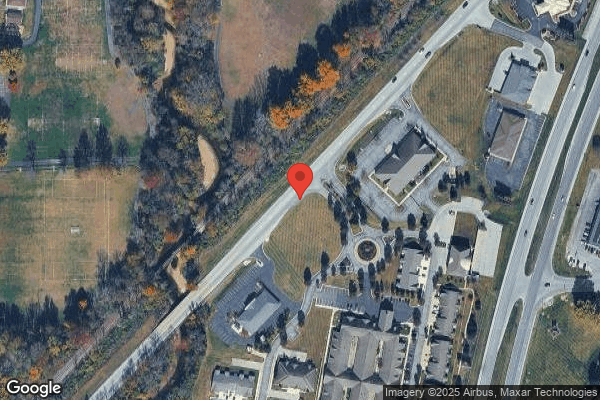
MEADOW LAKES

200 MEADOW LAKE DR, MOORESVILLE, IN 46158 (317) 834-1791
For profit - Corporation 137 Beds AMERICAN SENIOR COMMUNITIES Data: November 2025
Trust Grade
85/100
#70 of 505 in IN
Last Inspection: March 2025

Within standard 12-15 month inspection cycle. Federal law requires annual inspections.

Overview

Meadow Lakes in Mooresville, Indiana, has a Trust Grade of B+, which means it is recommended and above average compared to other facilities. It ranks #70 out of 505 in the state, placing it in the top half of Indiana nursing homes, and #2 out of 6 in Morgan County, indicating it is one of the better local options. The facility is improving, with issues decreasing from 5 in 2024 to 4 in 2025. Staffing is a concern, as it received a 2 out of 5 stars rating, with a 41% turnover rate, which is better than the state average but still indicates some instability. Notably, there were incidents where residents with dementia were not adequately monitored, leading to a serious fall and a fracture, as well as missing documentation for transfers to the hospital, which could affect communication with families. Overall, while there are strengths like good quality measures and no fines, families should be aware of the staffing issues and specific incidents that reflect areas needing improvement.

Trust Score
B+
85/100
In Indiana
#70/505
Top 13%
Safety Record
Moderate
Needs review
Inspections
Getting Better
5 → 4 violations
Staff Stability
○ Average
41% turnover. Near Indiana's 48% average. Typical for the industry.
Penalties
✓ Good
No fines on record. Clean compliance history, better than most Indiana facilities.
Skilled Nurses
⚠ Watch
Each resident gets only 29 minutes of Registered Nurse (RN) attention daily — below average for Indiana. Fewer RN minutes means fewer trained eyes watching for problems.
Violations
○ Average
9 deficiencies on record. Average for a facility this size. Mostly minor or procedural issues.
★★★★★
5.0
Overall Rating
★★☆☆☆
2.0
Staff Levels
★★★★★
5.0
Care Quality
★★★★☆
4.0
Inspection Score
Stable
2024: 5 issues
2025: 4 issues

The Good

  • 5-Star Quality Measures · Strong clinical quality outcomes
  • Full Sprinkler Coverage · Fire safety systems throughout facility
  • No fines on record
  • Staff turnover below average (41%)

    7 points below Indiana average of 48%

Facility shows strength in quality measures, fire safety.

The Bad

Staff Turnover: 41%

Near Indiana avg (46%)

Typical for the industry

Chain: AMERICAN SENIOR COMMUNITIES

Part of a multi-facility chain

Ask about local staffing decisions and management

The Ugly 9 deficiencies on record

1 actual harm
Mar 2025 4 deficiencies
CONCERN (D)

Potential for Harm - no one hurt, but risky conditions existed

Deficiency F0554 (Tag F0554)

Could have caused harm · This affected 1 resident

Based on observation, interview, and record review, the facility failed to ensure a self-medication administration assessment was completed for 1 of 1 random observations of medications left at the be...

Read full inspector narrative →
Based on observation, interview, and record review, the facility failed to ensure a self-medication administration assessment was completed for 1 of 1 random observations of medications left at the bedside. (Resident 71) Findings include: On 3/11/25 at 10:30 a.m., a medication cup with 1 large white tablet was observed on the bedside table of Resident 71. Resident 71 indicated it was her stomach medication and the nurses always left it for her to take after she had finished her meal. Resident 71's clinical record was reviewed on 3/11/25 at 11:30 a.m. The diagnosis included, but was not limited to, gastroesophageal reflux disease. The clinical record lacked documentation of a self-medication administration assessment. Current physician orders, dated 3/1/25 through 3/17/25, indicated Resident 71's medications included, but were not limited to, simethicone (for gas) tablet 125 milligrams 4 times a day. During an interview on 3/17/25 at 10:25 a.m., the Director of Nursing Services (DNS) indicated there had not been a self-medication administration assessment completed for Resident 71, however, the medication was just a gas pill and the resident would get sick if she took it before her meal so they let her keep it with her until after she ate. On 3/18/25 at 10:43 a.m., the DNS provided the facility's policy, Medication Administration-Medication Pass Procedure with a revised date of 7/2023, and indicated it was the policy currently being used by the facility. A review of the policy indicated, . 11. Observed taking medications-not left at bedside . 3.1-11(a)
CONCERN (D)

Potential for Harm - no one hurt, but risky conditions existed

Assessment Accuracy (Tag F0641)

Could have caused harm · This affected 1 resident

Based on interview and record review, the facility failed to ensure the accuracy of the Minimum Data Set assessment for a resident determined to have a Level II PASARR and a serious mental illness for...

Read full inspector narrative →
Based on interview and record review, the facility failed to ensure the accuracy of the Minimum Data Set assessment for a resident determined to have a Level II PASARR and a serious mental illness for 1 of 1 resident reviewed for Resident Assessment. (Resident 62) Findings include: Resident 62's clinical record was reviewed on 3/18/25 at 11:00 a.m. The diagnoses included, but were not limited to, anxiety, psychotic disorder with delusions and anorexia nervosa. A Level II PASARR (Preadmission Screening and Resident Review) was completed in January 2023, and indicated the resident had a serious mental illness. The Significant Change Minimum Data Set (MDS) assessment, dated 2/23/25, indicated No to Resident 62 having a Level II PASARR and no to the resident having a serious mental illness. During an interview on 3/18/25 at 10:35 a.m., the Social Services Assistant indicated the Significant Change MDS assessment, dated 2/23/25, for Resident 62 should have been coded Yes to having a Level II PASARR and Yes to the resident having a serious mental illness. On 3/18/25 at 1:20 p.m., the facility provided a copy of the RAI Version 3.0 Manual, page 5, dated October 2023, and indicated it was the policy currently being used by the facility. A review of the RAI manual did not indicate coding of the Level II PASARR. 3.1-31(d)
CONCERN (D)

Potential for Harm - no one hurt, but risky conditions existed

Deficiency F0657 (Tag F0657)

Could have caused harm · This affected 1 resident

Based on observation and interview, the facility failed to ensure staff revised the comprehensive care plan for a resident with significant weight loss for 1 of 4 residents reviewed for nutrition. (Re...

Read full inspector narrative →
Based on observation and interview, the facility failed to ensure staff revised the comprehensive care plan for a resident with significant weight loss for 1 of 4 residents reviewed for nutrition. (Resident 47) Findings include: On 3/11/25 from 9:20 a.m. to 9:45 a.m.,. Resident 47 was observed in bed with breakfast on her tray and no food eaten. No staff were present with the resident. On 3/14/25 from 9:25 a.m. to 9:50 a.m., Resident 47 was observed in bed with breakfast on her tray and no food eaten. No staff were present with the resident. On 3/11/25 at 10:10 a.m. Resident 47's clinical record was reviewed. The diagnoses included, but were not limited to, hemiplegia, adult failure to thrive, and unspecified protein-calorie malnutrition. The Quarterly MDS (Minimum Data Set) assessment, dated 3/10/25, indicated the resident had a five percent or more weight loss in the last month or weight loss of ten percent or more in the last 6 months. The Functional Assessment, dated 3/10/25, indicated the resident required supervision or touching assistance for eating. The Follow Up Nutrition Review, dated 3/11/25, indicated the resident had a five percent or more weight loss in the last month or weight loss of ten percent or more in the last six months, was not on a physician prescribed weight loss program, and the care plan had been reviewed and updated. A Nutrition Care Plan, reviewed on 3/11/25, indicated no nutritional care plan interventions since 8/1/23. - On 9/4/24, the resident weighed 154 lbs (pounds) - On 10/3/24, the resident weighed 146 lbs, which was a 5.19 percent weight loss in one month. - On 10/9/24, the resident weighed 152 lbs - On 11/4/24, the resident weighed 144 lbs, which was a 5.26 percent weight loss in one month. - On 3/3/25, the resident weighed 123 lbs, which was a 20.13 percent weight loss in six months. On 3/14/25 at 2:25 p.m., the DON provided the Resident Weight Monitoring policy with a revised date of, 9/2024, and indicated this was the current weight monitoring policy used by the facility. A review of the policy indicated, .any significant unexplained weight loss is considered a change in condition and must be addressed by the Interdisciplinary Team . During an interview on 3/17/25 at 10:30 a.m., the DON indicated the resident had significant weight loss and new interventions had not been updated on the nutrition care plan. 3.1-35(d)(2)(B)
CONCERN (D)

Potential for Harm - no one hurt, but risky conditions existed

ADL Care (Tag F0677)

Could have caused harm · This affected 1 resident

Based on observation, interview, and record review, the facility failed to provide ADL's (Activities of Daily Living) for a dependent resident for 1 of 1 residents reviewed for ADL's. A resident was n...

Read full inspector narrative →
Based on observation, interview, and record review, the facility failed to provide ADL's (Activities of Daily Living) for a dependent resident for 1 of 1 residents reviewed for ADL's. A resident was not shaved. (Resident 48) Findings include: On 3/11/25 at 10:19 a.m., Resident 48 was observed in her room with approximately half inch long whiskers on her chin. On 3/13/25 at 2:50 p.m., Resident 48 was observed in her room with approximately half inch long whiskers on her chin. At that time, Resident 48 wept and indicated having chin whiskers made her sad. She indicated staff used to shave her whiskers and she wished they did this more often, as it made her feel bad to have them on her chin. During an interview on 3/14/25 at 11:40 a.m., RN 1 indicated the resident needed her chin whiskers shaved. On 3/11/25 at 10:10 a.m., Resident 47's clinical record was reviewed. The diagnoses included, but were not limited to, hemiplegia, adult failure to thrive, and unspecified protein-calorie malnutrition. The Functional Assessment, dated 3/10/25, indicated the resident required substantial or maximal assistance to maintain personal hygiene, including shaving. A current Activity of Daily Living care plan, with a start date of 7/28/23 indicated the resident was to receive assistance with grooming and hygiene. 3.1-38(a)(3)(D)
Dec 2024 1 deficiency
CONCERN (D) 📢 Someone Reported This

A family member, employee, or ombudsman was alarmed enough to file a formal complaint

Potential for Harm - no one hurt, but risky conditions existed

Accident Prevention (Tag F0689)

Could have caused harm · This affected 1 resident

Based on interview and record review, the facility failed to ensure a resident received adequate assistance to prevent a fall for 1 of 3 residents reviewed for accidents. (CNA in Training 1, Resident ...

Read full inspector narrative →
Based on interview and record review, the facility failed to ensure a resident received adequate assistance to prevent a fall for 1 of 3 residents reviewed for accidents. (CNA in Training 1, Resident C) Finding includes: During an interview on 12/11/24 at 11:30 a.m., Resident E indicated on 11/28/24 at approximately 10:30 a.m., she observed a new CNA in Training (CNA in Training 1) attempting to transfer her roommate, Resident C, from her wheelchair to her bed. Resident E told CNA in Training 1 Resident C required 2 staff to transfer her. CNA in Training 1 told her she could transfer Resident C by herself. CNA in Training 1 attempted to move Resident C from Resident C's wheelchair but was unable to support her, and they both slid to the floor. CNA in Training 1 left the room and brought other staff to the room to help lift Resident C to her bed. She had not seen CNA in Training 1 since the incident. On 12/11/24 at 11:55 a.m., Resident E's clinical record was reviewed. The admission Minimum Data Set (MDS) assessment, dated 10/13/24, indicated the Resident E had no cognitive impairment. During an interview on 12/12/24 at 9:45 a.m., Resident C indicated on 11/28/24 at approximately 10:30 a.m., CNA in Training 1 attempted to transfer her from her wheelchair to her bed with no other staff helping. CNA in Training 1 could not support Resident C and they both slid to the floor. Resident C indicated she was supposed be assisted by two staff members due to having little to no use of her left side extremities. Resident C indicated she was not injured during the incident. She had not seen CNA in training 1 since the incident. On 12/12/24 at 10:05 a.m., Resident C's clinical record was reviewed. The diagnoses included, but were not limited to, cerebral infarction and hemiparesis. The Quarterly MDS assessment, dated 11/18/24, indicated Resident C had no cognitive impairment, had impaired upper and lower extremities on one side, and required extensive assistance of two people for support and transfers from one surface to another. A Fall Event Record, dated 11/28/24 at 10:38 a.m., indicated prior to the fall the resident was in her wheelchair, and following the fall the resident was on the floor by the bed. A Fall Care Plan intervention, with a start date of 11/5/21, indicated the resident required two staff for transfers. During an interview on 12/12/24 at 10:45 a.m., LPN 1 indicated on 11/28/24 at approximately 10:30 a.m., CNA in Training 1 reported to LPN 1 that Resident C had been lowered to the floor after CNA in Training 1 attempted to transfer her from her wheelchair to her bed. Resident C was only to be transferred with assistance of two staff due to impairment to her left extremities as well as a contracture of the left arm. This citation relates to Complaint IN00448649. 3.1-45(a)(2)
Jun 2024 2 deficiencies
CONCERN (D)

Potential for Harm - no one hurt, but risky conditions existed

Infection Control (Tag F0880)

Could have caused harm · This affected 1 resident

Based on observation, interview, and record review, the facility failed to ensure a urinary drainage bag was positioned off the floor to prevent infections for 1 of 2 residents reviewed for urinary ca...

Read full inspector narrative →
Based on observation, interview, and record review, the facility failed to ensure a urinary drainage bag was positioned off the floor to prevent infections for 1 of 2 residents reviewed for urinary catheters. (Resident 81) Findings include: On 5/29/24 at 10:43 a.m., Resident 81 was observed asleep in bed. A urinary drainage bag was observed to be touching the floor. On 5/30/24 at 9:59 a.m., Resident 81 was observed asleep in bed. A urinary drainage bag was observed to be touching the floor. On 5/31/24 at 10:45 a.m., Resident 81 was observed asleep in bed. A urinary drainage bag was observed to be touching the floor. On 6/3/24 at 9:43 a.m., Resident 81 was observed asleep in bed. A urinary drainage bag was observed to be touching the floor. On 6/3/24 at 11:02 a.m., Resident 81 was observed asleep in bed. A urinary drainage bag was observed to be touching the floor. Resident 81's clinical record was reviewed on 6/3/24 at 11:15 a.m. The diagnosis included, but was not limited to, obstructive and reflux uropathy due to neurogenic bladder. Physician orders, dated 5/5/24 through 6/5/24, for Resident 81 indicated . Cath [catheter] orders: Foley catheter Size: 14, Fr [french] 14 ml [millimeters] bulb . A care plan, initiated on 10/23/23, and current through target date 7/4/25, for Resident 81 indicated, . Problem: Resident requires an indwelling urinary catheter . Goal: Resident will have catheter care managed appropriately as evidenced by not exhibiting signs of urinary tract infection . Do not allow tubing or any part of the drainage system to touch the floor . During an interview on 6/4/24 at 11:06 a.m., Certified Nursing Assistant (CNA) 1 indicated the urinary drainage bag should be positioned off the floor. On 6/5/24 at 1:20 p.m., the Director of Nursing Services provided the facility's policy,Indwelling Urinary Catheter Care, Emptying Drainage Bag and Catheter Removal with a review date of 12/2012, and indicated it was the policy currently being used by the facility. A review of the policy did not indicate to keep drainage bag off the floor. 3.1-18(b)(1)
CONCERN (E)

Potential for Harm - no one hurt, but risky conditions existed

Transfer Notice (Tag F0623)

Could have caused harm · This affected multiple residents

2. On 5/29/24 at 11:50 a.m., Resident 90's clinical record was reviewed. The diagnoses included, but were not limited to, sepsis and vascular dementia. Resident 90's progress notes indicated the resid...

Read full inspector narrative →
2. On 5/29/24 at 11:50 a.m., Resident 90's clinical record was reviewed. The diagnoses included, but were not limited to, sepsis and vascular dementia. Resident 90's progress notes indicated the resident was sent to the hospital on 5/5/24. The clinical record lacked documentation of written notification of the Notice of Transfer and Discharge forms having been provided to the resident representative. 3. On 5/29/24 at 2:57 p.m., Resident 93's clinical record was reviewed. The diagnoses included, but were not limited to, congestive heart failure and unspecified dementia. Resident 93's progress notes indicated the resident was sent to the hospital on 4/12/24. The clinical record lacked documentation of written notification of the Notice of Transfer and Discharge forms having been provided to the resident and the resident representative. 4. On 6/4/24 at 11:15 a.m., Resident 74's clinical record was reviewed. The diagnoses included, but were not limited to, Alzheimer's disease and depression. The resident was transferred to the hospital on 3/4/24, 3/28/24, and 3/31/24. The clinical record lacked documentation to indicate the resident and the resident's representative were provided the written notification of the Notice of Transfer and Discharge forms. During an interview on 6/5/24 at 10:42 p.m., the Director of Nursing Services (DNS) indicated there had been no documentation of the Notice of Transfer or Discharge forms having been provided to the resident and the resident representative in writing. She indicated the facility contacted the representative by phone but did not send anything in writing. On 6/5/24 at 1:20 p.m., DNS provided the facility policy, Discharge/Transfer, dated 11/2015, and indicated this was the policy currently being used by the facility. A review of the policy indicated, Procedure: 1. A copy of the discharge or transfer in writing must be included in the resident's clinical record . and sent to the resident and responsible party, a family member of the resident . 3.1-12(a)(6)(A)(i) 3.1-12(a)(6)(A)(iii) Based on interview and record review, the facility failed to ensure the written notification required for a transfer and discharge was provided to the resident and the resident representative for 4 of 10 residents reviewed for hospitalization. (Resident 20, Resident 90, Resident 93, Resident 74) Findings include: 1. On 6/4/24 at 11:30 a.m., Resident 20's clinical record was reviewed. The diagnoses included, but were not limited to, nontraumatic intracerebral hemorrhage and dementia. Resident 20's progress notes indicated the resident was sent to the hospital on 3/13/24. The clinical record lacked documentation of written notification of the Notice of Transfer and Discharge forms having been provided to the resident representative.
Jan 2024 2 deficiencies 1 Harm
SERIOUS (G) 📢 Someone Reported This

A family member, employee, or ombudsman was alarmed enough to file a formal complaint

Actual Harm - a resident was hurt due to facility failures

Deficiency F0744 (Tag F0744)

A resident was harmed · This affected 1 resident

Based on observation, interview, and record review, the facility failed to ensure services were provided to residents with dementia to prevent resident-to-resident altercations for 2 of 3 residents re...

Read full inspector narrative →
Based on observation, interview, and record review, the facility failed to ensure services were provided to residents with dementia to prevent resident-to-resident altercations for 2 of 3 residents reviewed for dementia. (Resident C, Resident D) This deficient practice resulted in Resident D experiencing a fall and sustaining an acute fracture of the right upper arm bone with moderate displacement and rotation. Finding includes: During an interview on 1/9/24 at 10:30 a.m., the Director of Nursing (DON) and Executive Director indicated a physical altercation occurred on 1/5/24 between Resident D and Resident C on a secured unit. The DON indicated a stop sign was positioned across the threshold to the bedroom of Resident C and usually was effective to prevent Resident D from entering the room. The DON indicated Resident D, the victim, entered the bedroom of Resident C by traveling underneath the stop sign. The DON indicated Resident C was pulling on the right upper arm of Resident D to get Resident D out of her room when a physical therapist walked by and told Resident C not to pull on the arm of Resident D. The DON indicated Resident C let go of Resident D and Resident D fell to the floor. The DON indicated Resident D was sent to the hospital and a right arm fracture was identified; however, surgery was not performed because Resident D was receiving hospice services. During an interview on 1/10/24 at 9:50 a.m., a family friend of Resident D indicated she was aware of the altercation between the two women. The resident was observed sleeping, at that time, and had her right arm folded up against her chest with no splint in place. The friend indicated it was unlike the resident to be so lethargic. She indicated the resident's daughters were flying in today to see their mother because she believed the fracture would cause a more rapid decline in her health and death would be soon. During an interview on 1/10/24 at 11:57 a.m., PT 1 indicated he was walking up towards the nurses station when he heard someone yelling, Don't! Stop it! He looked around and happened to be right outside of Resident C's room and saw her actively pulling Resident D onto the floor. She was pulling at her by her waist area which caused Resident D to fall between the bed and the front of the wheelchair. Resident C continued to yell at the patient while she was on the floor. He further indicated that he did know through communication with staff that Resident C had a tendency to wander and he knew to approach Resident C carefully because she can be foul-tempered. 1 On 1/9/24 at 11:30 a.m., Resident C's clinical record was reviewed. The diagnoses included, but were not limited to, Alzheimer's disease, dementia with agitation, dementia with psychotic disturbance, dementia with mood disturbance, unspecified dementia with psychotic disturbance, psychotic disorder with delusions, mood disorder, pseudobulbar affect, unspecified dementia with behavioral disturbance, and cognitive communication deficit. The Annual Minimum Data Set (MDS) assessment, dated 8/25/23, indicated the resident was severely cognitively impaired and had Alzheimer's disease and psychotic disorder. The assessment indicated there were no physical behaviors during the assessment period. The most current care plan for agitation, dated 9/25/23, indicated Resident C exhibited aggressive behaviors when other residents entered her bedroom without permission and included the following interventions: -staff will do rounds on the unit to ensure all of the residents are in the correct rooms and beds to assist residents not becoming agitated when peers enter into the wrong room, -staff to check resident's room often to ensure peers are not wandering into her room, -a stop sign is to be placed on the resident doorway to prevent others from entering into her room, -the resident was moved to a room closer to the nursing station to increase supervision, and -the resident preferred her door to be closed at all times and this would deter peers from entering her room. The Quarterly MDS assessment, dated 11/18/23, indicated the resident was severely cognitively impaired, utilized a wheelchair for locomotion, and had Alzheimer's disease, dementia, and psychotic disorder. The assessment indicated there were no physical behaviors during the assessment period. Resident C's progress notes, dated from 6/30/23 through 1/3/24, indicated Resident C was the perpetrator in three resident-to-resident altercations. A nursing progress note, dated 1/3/24 at 9:37 a.m., indicated the stop sign did not effectively prevent an unknown resident from entering the room of Resident C without permission, a resident-to-resident verbal altercation occurred, and Resident C attempted to make physical contact with the arm of the unknown resident. The progress note did not include documentation to show new, effective interventions were implemented to prevent further resident-to-resident altercations. A nursing progress note, dated 1/5/24 at 3:59 p.m., indicated the stop sign did not effectively prevent Resident D from entering the room of Resident C without permission, Resident C perpetrated a resident-to-resident physical altercation with Resident D that resulted in Resident D falling to the floor and sustaining a right upper arm fracture with dislocation and rotation. The progress note did not include documentation to show new, effective interventions were implemented to prevent further resident-to-resident altercations. The progress notes and plans of care, dated between 1/5/24 and 1/7/24 at 4:27 p.m., did not include documentation to show new, effective interventions were implemented to prevent further resident-to-resident altercations. 2. On 1/9/24 at 11:25 a.m., Resident D was observed sleeping in her bed with her right arm folded up and over her chest. On 1/9/23 at 11:32 a.m., Resident D's clinical record was reviewed. The diagnoses included, but were not limited to, Alzheimer's disease, displaced fracture of upper end of right humerus (bone in the upper arm), severe unspecified dementia, low back pain, unspecified pain, and cognitive communication deficit. A Significant Changed MDS assessment, dated 9/20/23, indicated severe cognitive impairment to make decisions regarding tasks of daily life, had wandering behaviors 1-3 days during the assessment period that significantly intruded on the privacy of others, and the resident had 1 fall with no injuries since the prior assessment. A Quarterly MDS assessment, dated 12/13/23, indicated Resident D experienced severe cognitive impairment to make decisions regarding tasks of daily life, utilized a wheelchair for locomotion, and had 1 fall since the prior assessment with no injury. A Facility Observation Detail List Report, dated 1/6/24 at 4:37 p.m., indicated the resident was transferred to the emergency room due to having a fracture of the head of the humerus. A Radiology Report, dated 1/6/24, indicated there was an acute fracture involving the neck of the right humerus with moderate displacement of greater than 1 cm (centimeter), with humeral head rotation. The boney structures appear osteopenia. On 1/10/24 at 2:45 p.m., the DON provided the facility policy, Fall Management, revised 8/2022, and indicated it was the policy currently being used. A review of the policy included, but was not limited to, it is the policy that residents residing within the facility receive adequate supervision. On 1/10/24 at 2:45 p.m., the DON provided the facility policy, Resident Rights, updated on 3/15/17, and indicated it was the policy currently being used. A review of the policy indicated, . Safe Environment . You have the right to a safe . environment . including but not limited to receiving treatment for daily living safely . This citation relates to Complaint IN00425646. 3.1-37(a)
CONCERN (D) 📢 Someone Reported This

A family member, employee, or ombudsman was alarmed enough to file a formal complaint

Potential for Harm - no one hurt, but risky conditions existed

Deficiency F0658 (Tag F0658)

Could have caused harm · This affected 1 resident

Based on interview and record review, the facility failed to provide services in accordance with professional standards for 1 of 3 residents reviewed. Staff administered another resident's medication ...

Read full inspector narrative →
Based on interview and record review, the facility failed to provide services in accordance with professional standards for 1 of 3 residents reviewed. Staff administered another resident's medication without a physician's order. (Resident E) Findings include: During an interview on 1/9/24 at 11:28 A.M., the Director of Nursing (DON) indicated on 1/8/24 around 3:00 A.M., Registered Nurse 1 (RN 1) accidentally administered an oral dose of morphine concentrate to Resident E, who was not prescribed the medication. RN 1 was placed on suspension pending the results of the investigation. On 1/9/24 at 11:30 A.M., Resident E's clinical record was reviewed. The diagnoses included, but were not limited to, senile degeneration of brain and Alzheimer's disease with late onset. The resident began hospice care on 1/4/24 for senile degeneration of the brain. The January 2024, Medication Administration Record (MAR) did not indicate the resident was administered morphine. During an interview on 1/9/24 at 3:06 P.M., the DON indicated a physician's order for a one-time administration of a 10 milligram (mg) dosage of morphine concentrate solution was obtained after it was discovered RN 1 had administered the medication to Resident E. The resident was not prescribed morphine prior to the accidental administration of the medication. During an interview on 1/10/24 at 12:35 P.M., RN 1 indicated Resident E was on hospice care. She was getting out of bed a lot and complained of pain. RN 1 indicated most residents on hospice care were ordered both Ativan and morphine, so she gave the resident Ativan, and around 3:00 A.M. gave her morphine without checking to verify if the resident was prescribed morphine. The morphine was in the medication drawer but it did not have Resident E's name on it. It was an accident and she should have checked to see if the resident had an order for the morphine. She normally charted when a medication was administered in the MAR on the computer. However, she had become busy and forgot to chart the medication administration. Around 11:00 A.M., the DON called her to tell her Resident E did not have an order for the morphine and should not have received it. She did not intend to give a medication that was not prescribed but was concerned with the resident's comfort and did not check to see if the resident was prescribed morphine. On 1/10/24 at 2:45 P.M., the DON provided the facility's Medication Administration Medication Pass Procedure, with the original date of 2/2010 and a revised date of 7/2023 and indicated this was the procedure currently utilized by the facility. A review of the procedure indicated, .Nursing Skills Competency .verify order with label .Perform the 5 rights of medication: Right Resident, Right Medication, Right Dose, Right Route, Right Time .Medication administration will be recorded on the MAR [Medication Administration Record]/EMAR [Electronic Medication Administration Record] or TAR [Treatment Administration Record] .Administration and inventory of controlled substances were documented according to facility policy . On 1/10/24 at 2:46 P.M., the DON provided RN 1's training and in-service transcript. A review of the transcript indicated RN 1 successfully completed the Oral Medication Administration course on 11/3/23 at 10:24 P.M. and successfully completed the facility in-service on charting on 11/21/23. This citation relates to Complaint IN00425771. 3.1-35(g)(1)
Understanding Severity Codes (click to expand)
Life-Threatening (Immediate Jeopardy)
J - Isolated K - Pattern L - Widespread
Actual Harm
G - Isolated H - Pattern I - Widespread
Potential for Harm
D - Isolated E - Pattern F - Widespread
No Harm (Minor)
A - Isolated B - Pattern C - Widespread

Questions to Ask on Your Visit

  • "Can I speak with families of current residents?"
  • "What's your RN coverage like on weekends and overnight?"

Our Honest Assessment

Strengths
  • • Grade B+ (85/100). Above average facility, better than most options in Indiana.
  • • No fines on record. Clean compliance history, better than most Indiana facilities.
  • • 41% turnover. Below Indiana's 48% average. Good staff retention means consistent care.
Concerns
  • • 9 deficiencies on record, including 1 serious (caused harm) violation. Ask about corrective actions taken.
Bottom line: Generally positive indicators. Standard due diligence and a personal visit recommended.

About This Facility

What is Meadow Lakes's CMS Rating?

CMS assigns MEADOW LAKES an overall rating of 5 out of 5 stars, which is considered much above average nationally. Within Indiana, this rating places the facility higher than 99% of the state's 100 nursing homes. This rating reflects solid performance across the metrics CMS uses to evaluate nursing home quality.

How is Meadow Lakes Staffed?

CMS rates MEADOW LAKES's staffing level at 2 out of 5 stars, which is below average compared to other nursing homes. Staff turnover is 41%, compared to the Indiana average of 46%. This relatively stable workforce can support continuity of care.

What Have Inspectors Found at Meadow Lakes?

State health inspectors documented 9 deficiencies at MEADOW LAKES during 2024 to 2025. These included: 1 that caused actual resident harm and 8 with potential for harm. Deficiencies causing actual harm indicate documented cases where residents experienced negative health consequences.

Who Owns and Operates Meadow Lakes?

MEADOW LAKES is owned by a for-profit company. For-profit facilities operate as businesses with obligations to shareholders or private owners. The facility is operated by AMERICAN SENIOR COMMUNITIES, a chain that manages multiple nursing homes. With 137 certified beds and approximately 122 residents (about 89% occupancy), it is a mid-sized facility located in MOORESVILLE, Indiana.

How Does Meadow Lakes Compare to Other Indiana Nursing Homes?

Compared to the 100 nursing homes in Indiana, MEADOW LAKES's overall rating (5 stars) is above the state average of 3.1, staff turnover (41%) is near the state average of 46%, and health inspection rating (4 stars) is above the national benchmark.

What Should Families Ask When Visiting Meadow Lakes?

Based on this facility's data, families visiting should ask: "Can you walk me through typical staffing levels on day, evening, and night shifts?" "Can I visit during a mealtime to observe dining assistance and food quality?" "How do you handle medical emergencies, and what is your hospital transfer rate?" "Can I speak with family members of current residents about their experience?" These questions are particularly relevant given the below-average staffing rating.

Is Meadow Lakes Safe?

Based on CMS inspection data, MEADOW LAKES has a clean safety record: no substantiated abuse findings (meaning no confirmed cases of resident harm), no Immediate Jeopardy citations (the most serious violation level indicating risk of serious injury or death), and is not on the Special Focus Facility watch list (a federal program monitoring the lowest-performing 1% of nursing homes). The facility has a 5-star overall rating and ranks #1 of 100 nursing homes in Indiana. While no facility is perfect, families should still ask about staff-to-resident ratios and recent inspection results during their visit.

Do Nurses at Meadow Lakes Stick Around?

MEADOW LAKES has a staff turnover rate of 41%, which is about average for Indiana nursing homes (state average: 46%). Moderate turnover is common in nursing homes, but families should still ask about staff tenure and how the facility maintains care continuity when employees leave.

Was Meadow Lakes Ever Fined?

MEADOW LAKES has no federal fines on record. CMS issues fines when nursing homes fail to meet care standards or don't correct problems found during inspections. The absence of fines suggests the facility has either maintained compliance or corrected any issues before penalties were assessed. This is a positive indicator, though families should still review recent inspection reports for the full picture.

Is Meadow Lakes on Any Federal Watch List?

MEADOW LAKES is not on any federal watch list. The most significant is the Special Focus Facility (SFF) program, which identifies the bottom 1% of nursing homes nationally based on persistent, serious quality problems. Not being on this list means the facility has avoided the pattern of deficiencies that triggers enhanced federal oversight. This is a positive indicator, though families should still review the facility's inspection history directly.