BROWN COUNTY HEALTH AND LIVING COMMUNITY
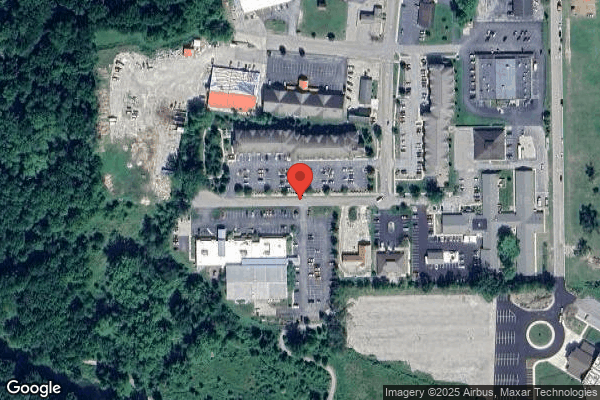
55 E WILLOW ST, NASHVILLE, IN 47448 (812) 988-6666
Government - County 117 Beds CARDON & ASSOCIATES Data: November 2025 1 Immediate Jeopardy citation
Trust Grade
68/100
#17 of 505 in IN
Last Inspection: August 2024

Within standard 12-15 month inspection cycle. Federal law requires annual inspections.

Overview

Brown County Health and Living Community in Nashville, Indiana, has a Trust Grade of C+, which indicates it is slightly above average and decent in quality. It ranks #17 out of 505 facilities in Indiana, placing it in the top half, and it is the only option in Brown County. The facility is improving, as it went from three issues in 2023 to none in 2024. However, staffing is a notable concern with a low rating of 1 out of 5 stars and a turnover rate of 59%, which is higher than the state average. While there have been no fines recorded, there have been serious incidents, including a resident suffering a fractured shoulder due to improper transfer assistance and another resident sustaining injuries during a resident-to-resident altercation. Overall, while there are strengths in the facility's ranking and improvement trends, the staffing concerns and past incidents raise important considerations for families.

Trust Score
C+
68/100
In Indiana
#17/505
Top 3%
Safety Record
High Risk
Review needed
Inspections
Getting Better
3 → 0 violations
Staff Stability
⚠ Watch
59% turnover. Above average. Higher turnover means staff may not know residents' routines.
Penalties
✓ Good
No fines on record. Clean compliance history, better than most Indiana facilities.
Skilled Nurses
⚠ Watch
Each resident gets only 17 minutes of Registered Nurse (RN) attention daily — below average for Indiana. Fewer RN minutes means fewer trained eyes watching for problems.
Violations
○ Average
7 deficiencies on record. Average for a facility this size. Mostly minor or procedural issues.
★★★★★
5.0
Overall Rating
★☆☆☆☆
1.0
Staff Levels
★★★★★
5.0
Care Quality
★★★★★
5.0
Inspection Score
Stable
2023: 3 issues
2024: 0 issues

The Good

  • 5-Star Quality Measures · Strong clinical quality outcomes
  • Full Sprinkler Coverage · Fire safety systems throughout facility
  • No fines on record

Facility shows strength in quality measures, fire safety.

The Bad

Staff Turnover: 59%

13pts above Indiana avg (46%)

Frequent staff changes - ask about care continuity

Chain: CARDON & ASSOCIATES

Part of a multi-facility chain

Ask about local staffing decisions and management

Staff turnover is elevated (59%)

11 points above Indiana average of 48%

The Ugly 7 deficiencies on record

1 life-threatening 1 actual harm
Sept 2023 2 deficiencies
CONCERN (D)

Potential for Harm - no one hurt, but risky conditions existed

Deficiency F0657 (Tag F0657)

Could have caused harm · This affected 1 resident

Based on interview and record review, the facility failed to revise a care plan for a resident who fell and sustained an injury for 1 of 1 residents reviewed for accidents. (Resident 8) Findings inclu...

Read full inspector narrative →
Based on interview and record review, the facility failed to revise a care plan for a resident who fell and sustained an injury for 1 of 1 residents reviewed for accidents. (Resident 8) Findings include: During an interview on 8/30/23 at 10:30 A.M., Resident 8 indicated she had fallen in June while she was reaching for a snack. She was sent to the hospital where it was determined that she had broken her left hip. She did not recall meeting with staff regarding new interventions to her fall care plan. On 8/30/23 at 10:45 A.M., Resident 8's clinical record was reviewed. The diagnoses included, but were not limited to, fracture of unspecified part of neck of left femur, cerebral infarction, and type 2 diabetes. A progress note, dated 6/20/23 at 4:22 P.M., indicated, Resident fell in room trying to get donuts. Resident has laceration above left eyebrow and complaints of left hip pain. Did not move resident from floor. Left leg appeared shortened. Notified [name of physician] and sent resident to [name of hospital] for eval [evaluation] and treatment. A hospital history and physical document, dated 6/20/23, indicated the resident had fallen in her room and sustained a fracture of the neck of the left femur. A fall care plan with start date of 10/10/22, indicated the resident was at risk for falls. An intervention for fall risk with a start date of 6/21/23 indicated, Resident sent to ER [emergency room) for follow up. The fall care plan included no further fall interventions after the resident's fall on 6/20/23. During an interview on 9/1/23 at 11:50 P.M., the Administrator indicated the fall care plan interventions had not been revised following the resident's fall. On 9/1/23 at 12:20 P.M., the Director of Nursing provided the Fall Prevention Policy and Procedures, dated 5/6/16, and indicated this was the current policy used by the facility. A review of the policy indicated, .it is the responsibility of the interdisciplinary team to document falls prevention, when a fall occurs, and interventions to avoid future falls . and .a member/designee of the interdisciplinary team will assist the team and update the care plan . 3.1-35(d)(2)(B)
MINOR (C)

Minor Issue - procedural, no safety impact

Staffing Information (Tag F0732)

Minor procedural issue · This affected most or all residents

Based on observation, interview, and record review, the facility failed to ensure the daily posted nurse staffing sheet had the name of the facility and the actual hours worked by staff for 5 of 5 day...

Read full inspector narrative →
Based on observation, interview, and record review, the facility failed to ensure the daily posted nurse staffing sheet had the name of the facility and the actual hours worked by staff for 5 of 5 days of daily posted nurse staffing reviewed. Finding includes: During an observation on 8/29/23 at 11:39 a.m., the daily posted nursing staff sheet lacked the name of the facility or the actual hours worked by staff. On 9/1/23 at 2:46 p.m., the Administrator provided the daily posted nursing staff sheet dated 8/28/23 through 9/1/23. The daily posted nursing staff sheet lacked documentation of the name of the facility or the actual hours worked by staff. During an interview on 9/5/23 at 9:58 a.m., the Corporate Nurse Consultant and Director of Nursing indicated the daily posted nursing lacked the name of the facility and the actual hours worked.
Aug 2023 1 deficiency
CONCERN (D) 📢 Someone Reported This

A family member, employee, or ombudsman was alarmed enough to file a formal complaint

Potential for Harm - no one hurt, but risky conditions existed

Deficiency F0602 (Tag F0602)

Could have caused harm · This affected 1 resident

Based on interview and record review, the facility failed to protect the residents right to be free from misappropriation of property for 1 of 1 residents reviewed. A resident's narcotic pain medicati...

Read full inspector narrative →
Based on interview and record review, the facility failed to protect the residents right to be free from misappropriation of property for 1 of 1 residents reviewed. A resident's narcotic pain medication and count sheet were unaccounted for. (Resident C, RN 1) Findings include: During an interview on 8/1/23 at 9:50 a.m., the Director of Nursing (DON) and Administrator (ADM) indicated the on 7/23/23, LPN 1 discovered a bottle of Resident C's liquid Dilaudid (a narcotic medication used for pain control) was missing from the medication cart along with the narcotic count sheet. Their investigation discovered RN 1 was working around that time who was administering a significant amount of as needed medication (PRN) and her statements were incriminating. RN 1 was put on suspension during the investigation and later resigned. The Dilaudid was delivered via a shipping partner from a hospice pharmacy while the resident was sent out to inpatient care. Once the resident returned to the facility, the Dilaudid was placed into the medication cart lock box. On 7/31/23 at 11:30 a.m., Resident C's clinical record was reviewed. The diagnoses included, but were not limited to, multiple sclerosis, dementia, chronic pharyngitis (pain or irritation in the throat that can occur with or without swallowing), low back pain, pain in the thoracic spine, chronic pain syndrome, and disease of the gallbladder. A progress note, dated 7/3/23, indicated the resident was having increased pain and had an overall decline in condition. The hospice company ordered lorazepam (an antianxiety medication) 0.5 milligrams twice a day and every 4 hours PRN. The resident's clonazepam (an antianxiety medication) was discontinued during this visit. Further evaluation by the hospice staff indicated he needed to be sent to inpatient hospice care. During an interview on 8/1/23 at 11:30 a.m., the Unit Manager indicated that the LPN 2 was the one who identified the missing bottle of Dilaudid because she normally worked that hall and wondered if the Dilaudid was discontinued because she could not locate the medication nor count sheet. During an interview on 8/1/23 at 12:00 p.m., the ADM and DON indicated the resident's hospice nurse ordered the medication, however, she did not have access to put orders into their electronic medical record. She would have had to tell the floor staff in regard to the medication order. During an interview on 8/1/23 at 12:30 p.m., LPN 2 indicated she received the Dilaudid package from the shipping partner. The medication was in a dark bottle with the resident's name on it. She further indicated she worked on 7/23/23 when the medication was discovered missing. She reached out to staff to see if the medication was discontinued in an attempt to locate the medication. The medication was never found. During an interview on 8/1/23 at 2:51 p.m., the hospice nurse indicated she ordered the liquid Dilaudid for the resident because he did not have optimal pain control. As the day went on, he had a change in condition and he was sent to the inpatient hospice center for pain control. She indicated she filled out an medication order sheet which was given to the floor nurse, but she could not remember who she gave the sheet to. She did not have access to enter medication orders electronically into the resident's chart. During an interview on 8/1/23 at 3:00 p.m., the ADM and DON indicated the facility would no longer allow hospice companies to order medication from a different pharmacy than the facility utilized. The medication nor count sheet were never located. On 8/1/23 at 3:10 p.m., the ADM provided the policy RESIDENT RIGHTS, revised on 1/16/20, and indicated it was the policy currently being used by the facility. A review of the policy indicated, . These rights include the resident's right to: . 3. Freedom from . misappropriation of property . The deficient practice was corrected on 7/25/23 after the facility implemented a systemic plan that included the following actions: in-service related to procedures for narcotic medication counts and ongoing monitoring. 3.1-28(a)
Dec 2022 1 deficiency 1 Harm
SERIOUS (G) 📢 Someone Reported This

A family member, employee, or ombudsman was alarmed enough to file a formal complaint

Actual Harm - a resident was hurt due to facility failures

Deficiency F0740 (Tag F0740)

A resident was harmed · This affected 1 resident

**NOTE- TERMS IN BRACKETS HAVE BEEN EDITED TO PROTECT CONFIDENTIALITY** Based on interview and record review, the facility failed to provide supervision to prevent resident to resident behaviors for 1...

Read full inspector narrative →
**NOTE- TERMS IN BRACKETS HAVE BEEN EDITED TO PROTECT CONFIDENTIALITY** Based on interview and record review, the facility failed to provide supervision to prevent resident to resident behaviors for 1 of 3 residents reviewed. This resulted in a resident sustaining a fracture following a resident to resident altercation. (Resident B, Resident C) Findings include: On 12/21/22 at 11:00 a.m., Resident B's clinical record was reviewed. The diagnoses included, but were not limited to, bipolar disorder, Alzheimer's disease, and restlessness and agitation. The Quarterly MDS (Minimum Data Set) assessment, dated 11/22/22, indicated the resident was not cognitively intact. The resident's care plan indicated, PROBLEM: Problem Start Date: 10/13/22 .edited 12/20/22 . Resident displays behavior of wandering/pacing, ongoing agitation .GOAL: Long Term Goal Target date: 2/22/23 .edited 12/09/22 .Resident will not cause or sustain injuries while wandering qd [every day] thru next review . The resident's care plan indicated, PROBLEM: Problem Start Date: 10/11/22 .edited 12/14/22 .Resident displays behavior of physical aggression, difficult to redirect .GOAL: Long Term Goal Target Date: 2/22/23 .edited 12/9/22 .Resident will not display physically abusive/aggressive behavior towards staff/visitors/residents qd [every day] thru the next review . A nursing progress note, dated 10/4/22 at 7:37 p.m. indicated, Resident approached a male resident in the dining area, began caressing his face and rubbing his shoulders . A nursing progress note, dated 10/6/22 at 11:44 a.m. indicated, .Resident was in the dining room with other residents .resident then walked over to another resident and poured her chocolate milk on the other residents head. Resident then went over to the other drinks that were poured for the other residents and threw them all on the floor. Resident then began to leave dining room .went in and out of other residents rooms and poured their waters on their bedding. Resident attempted to pull another resident out of her recliner. Resident then walked into another residents room and started yelling at her .Resident then left residents room and went into a male residents room and laid in his bed (male resident was in recliner at this time) . A nursing progress note, dated 10/9/22 at 7:34 p.m. indicated, Resident became agitated while in the dining room, grabbed wet floor sign and .tried to swing the sign in the direction of oncoming resident, staff intervened to keep [Resident B] from hitting resident with wet floor sign .Resident grabbed nurses hand tightly refusing to let go . A nursing progress note, dated 10/12/22 at 9:15 a.m. indicated, Resident wandering the unit. Resident seems to be agitated and pacing the unit. Resident went into another residents room and through [threw] breakfast tray onto the floor .Resident continues to get agitated. Unable to redirect with staff . A nursing progress note, dated 10/12/22 at 4:03 p.m. indicated, Resident noted to be wandering in and out of residents rooms. Agitation seems to be increasing .nothing has distracted her from wandering in other residents rooms. PRN [as needed] Haldol 2mg [milligrams] tab was administered at this time . A nursing progress note, dated 10/13/22 at 9:15 a.m. indicated, Resident has been noted to be pacing the unit this am [morning]. Banging on exit door from unit. Resident beginning to wander in and out of residents rooms .could not direct resident to a meaningful activity. PRN [as needed] Haldol 2mg [milligrams] PO [by mouth] administered at this time . A nursing progress note, dated 10/13/22 at 4:55 p.m. indicated, Resident noted to be pacing halls/other residents rooms. Unable to redirect. PRN [as needed] Haldol PO [by mouth] administered . A nursing progress note, dated 11/19/22 at 12:35 p.m. indicated, Resident attempted to enter a female resident's room, when the female resident told her to leave her room, resident smacked female resident in the face with the back of her hand. Resident escorted out of room and one on one supervision initiated . A nursing progress note, dated 11/19/22 at 11:44 p.m. indicated, Resident has been one on one all this shift tonight due to altercation today with other residents. She does not listen and wants to go wherever she wants to go. All you can do is follow her and make sure she is not harming any of the residents. A nursing progress note, dated 11/26/22 at 1:39 p.m. indicated, Displaying some aggressive behaviors in the common area this afternoon, throwing items. Not easily redirected. Very easily annoyed . A nursing progress note, dated 11/29/22 at 4:45 p.m. indicated, CNA [Certified Nurse Aide] witnessed resident having an altercation with another resident . A Social Services progress note, dated 11/30/22 at 9:24 a.m. indicated, Resident involved in altercation with another resident. Order obtained to refer to inpatient psych [psychiatric]for EVAL/TX [evaluation and treatment] . A nursing progress note, dated 11/30/22 at 4:25 p.m. indicated, [Name of] transportation here at this time to transport resident to facility, paperwork sent with resident . A nursing note, dated 12/12/22 at 6:52 p.m. indicated, Resident returned to facility this date. Shortly after return, resident began wandering in and out of residents' rooms. Unable to direct. Other residents becoming very agitated r/t [related to] resident's behavior. Resident was placed on 15-minute checks immediately upon returning to facility r/t [related to] previous incident. Resident unable to sit calmly. Wandering the unit .grabbing at papers and ripping them up, tearing down Christmas decorations on the walls and tree. Resident has been placed on 1:1 r/t [related to] residents uncertain behavior outbursts. On 12/20/22 at 11:45 a.m., Resident C's clinical record was reviewed. The diagnoses included, but were not limited to, dementia, weakness, and cognitive communication deficit. The Quarterly MDS assessment, dated 11/3/22, indicated the resident was not cognitively intact. A nursing progress note, dated 11/29/22 at 4:45 p.m. indicated, QMA [Qualified Medication Aide] notified nurse of fall, nurse assessed resident c/o [complaint of] left sided pain and left wrist pain . A nursing progress note, dated 11/30/22 at 10:15 a.m. indicated, IDT [Interdisciplinary Team] fall review: Resident sustained fall on 11/29/22 while up ad lib [up and about as the resident desires] .was involved in an altercation with other resident on facility dementia unit. At this time, resident is at hospital for treatment . A History and Physical Final Report from the hospital, dated 11/29/22 at 11:41 p.m. indicated, .presents from said living facility after witnessed fall 2011-29-22 [11/29/22] and was brought to the emergency department and has sustained a left aceta [NAME] [sic] fracture [a break in the socket portion of the ball and socket hip joint], left inferior pubic ramus fracture [a break in a bone of the lower left pubis bone in the pelvic region], right superior pubic ramus fracture [a break in a bone of the upper right pubis bone in the pelvic region], and small retropubic hematoma [bruising in the space behind the pubic area] . During an interview on 12/20/22 at 12:10 p.m., Qualified Medication Aide 1 indicated Resident B was unpredictable in her behaviors and frequently required one to one staff supervision. The resident could be pleasant one moment and then become aggressive with no provocation. During an interview on 12/20/22 at 12:30 p.m., the Corporate Nurse Consultant and acting Director of Nursing indicated Resident B was unpredictable in her behaviors and could be verbally aggressive without provocation. Following the altercation between Resident B and Resident C on 11/29/22, the resident was sent to an in-patient psychiatric care facility for evaluation and treatment The resident returned and was currently on 1:1 supervision for safety due to her erratic behaviors. The resident became agitated at being redirected to wear a mask as was required due to high county transmission rate. Following incidents of aggression, the resident was placed on 1:1 supervision for several days until the resident appeared stable and not aggressive. At that point, the resident was placed on 15 minute checks. During an interview Certified Nurse Aide 1 indicated on 11/29/22 around 4:45 p.m., she observed Resident B and Resident C in the hallway next to the dining area on the closed dementia unit. They were waving their arms at each other. Resident B then pushed Resident C to the floor, where Resident C grabbed her left hip and complaining of pain. Resident B had disruptive and aggressive behaviors prior to that incident, and after those behaviors she was placed on 1:1 supervision until her agitation decreased. After 1:1 supervision periods Resident B would be pleasant and not aggressive. Resident B was difficult to redirect and would have unpredictable aggressive behaviors. This Federal tag relates to Complaint IN00395819. 3.1-37(a)
Jul 2022 3 deficiencies 1 IJ
CRITICAL (J)

Immediate Jeopardy (IJ) - the most serious Medicare violation

Accident Prevention (Tag F0689)

Someone could have died · This affected 1 resident

**NOTE- TERMS IN BRACKETS HAVE BEEN EDITED TO PROTECT CONFIDENTIALITY** Based on observation, interview, and record review, the facility failed to ensure residents were transferred per plan of care wi...

Read full inspector narrative →
**NOTE- TERMS IN BRACKETS HAVE BEEN EDITED TO PROTECT CONFIDENTIALITY** Based on observation, interview, and record review, the facility failed to ensure residents were transferred per plan of care with the right amount of assistance for 2 of 6 residents reviewed for accidents. One resident sustained a fractured right shoulder (Resident 98) and another resident sustained injury to an existing wound requiring invasive wound vacuum therapy. (Resident 26) The Immediate Jeopardy began on 6/7/22 when the facility failed to ensure a resident was safely transferred by qualified staff which resulted in the resident experiencing immediate pain and was sent to the hospital where it was discovered the resident sustained right shoulder fracture (Resident 98). On 7/17/22 a resident sustained a fall which resulted in profuse bleeding from an existing wound. The resident then required wound vacuum treatment to heal the opened wound. The Administrator and Director of Nursing were notified of the Immediate Jeopardy on 7/22/22 at 2:00 p.m. The Immediate Jeopardy was removed on 7/23/22 at 4:40 p.m., but noncompliance remained at the lower scope and severity level of isolated, no actual harm but potential for more than minimal harm that is not Immediate Jeopardy. Findings include: 1. During an interview on 7/19/22 at 11:30 A.M., Resident 98 indicated in the early evening of 6/7/22, Certified Nursing Aide (CNA) 1 and CNA 2 were attempting to reposition her in the bed but could not locate the handled pull sheet that was used to reposition her. They attempted to pull her up in bed by getting behind her as she layed in bed, putting their arms under her shoulders, and pulling her up toward the head of the bed. There was a pop in her right shoulder and immediate pain. She was sent to the hospital where she was told she had a fracture in her shoulder area. Her movement was restricted and she had pain in her shoulder and right arm and had to go back to the doctor at some point to see if a sling was all she needed for her fracture. During an interview on 7/21/22 at 11:15 A.M., CNA 1 indicated on the evening of 6/7/22 she and CNA 2 were attempting to reposition the resident higher in the bed. The resident was usually moved in bed by a pull sheet with handles due to her larger size and osteoporosis, but they were unable to access the handles on the pull sheet. They pulled the resident up in the bed by reaching under her arms and pulling her. There was a popping sound from her right shoulder and they reported the incident to the nurse. During an interview on 7/22/22 at 10:15 A.M., Licensed Practical Nurse 1 indicated on 6/7/22 CNA 1 and CNA 2 reported to her they were attempting to reposition Resident 98 in her bed and were not able to access the slip sheet handles, so they pulled her by the arms and there was a pop in the resident's right shoulder. The resident required a slip sheet with handles for bed mobility due to her larger size and osteoporosis. On 7/20/22 at 11:10 A.M., Resident 98's clinical record was reviewed. The diagnoses included, but were not limited to, morbid severe obesity, anxiety disorder, and osteoporosis (a medical condition in which the bones become fragile and brittle) with current pathological fracture, unspecified site. The Annual MDS (Minimum Data Set) assessment, dated 3/25/22, indicated the resident was cognitively intact and required extensive assistance of 2 people for bed mobility. A nursing progress note, dated 6/7/22 at 5:14 P.M., indicated, Aides were repositioning resident when her right shoulder popped really loudly and resident was not able to move extremity .pain rated as an eight. DON [Director of Nursing] and NP [Nurse Practitioner] on call notified. Resident sent to [hospital name] for eval [evaluation] and treatment . A Nurse Practitioner's progress note, dated 6/16/22 at 9:59 P.M., indicated, .the patient reported that facility staff were trying to move her up in the bed by picking her up by the shoulders when she heard a loud pop and felt immediate pain in the right shoulder .active medical problems .fracture of humerus: upper end of left humerus, subsequent encounter for fracture with routine healing .past medical history .fracture of upper end of left humerus, subsequent encounter for fracture with routine healing . A radiology record, dated 6/7/22 at 5:29 P.M., indicated, .severely comminuted (a fracture that produces multiple bone splinters) displaced fracture of the right humeral neck in the right humeral head . An Inpatient Discharge summary, dated [DATE] at 11:51 A.M., indicated, .severe comminuted displaced fracture of the right proximal humerus .non-operative treatment recommended at this time with pain control and sling .follow-up . On 7/22/22 at 11:00 A.M., the care plans were reviewed. A care plan, with a start date of 4/19/21 and edit date of 7/21/22 indicated, .requires assistance for bed mobility .assist resident in proper transfer, bed mobility . 2. On 7/18/22 at 3:00 P.M., Resident 26's clinical record was reviewed. The diagnoses included, but were not limited to: lymphedema (tissue swelling caused by an accumulation of protein-rich fluid that's usually drained through the body's lymphatic system), postmastectomy lymphedema syndrome (a problem that may occur after cancer surgery when lymph nodes are removed), dyspnea (fainting), difficulty in walking, weakness, edema (swelling), pain, anxiety disorder, postviral fatigue syndrome (a disease characterized by profound fatigue, sleep abnormalities, pain, and other symptoms that are made worse by exertion.), and paroxysmal atrial fibrillation (a condition when a rapid, erratic heart rate begins suddenly and then stops on its own). A Quarterly MDS assessment, dated 5/2/22, indicated the resident had moderately impaired cognition and required the extensive assistance of 2 staff members with transfers. A fall event, dated 7/18/22 at 1:57 A.M., indicated the resident sustained a fall while being transferred from her wheelchair. The CNA (Certified Nurse Aide) informed the nurse the resident slipped off of the bed during transfer. The nurse observed the resident sitting on the floor beside her bed. The resident complained of pain to her right arm. Bleeding was observed from an existing wound on her right breast during the assessment. The RN and CNA assisted the resident back into bed and the nurse changed the dressing. The Progress Notes indicated the following: -On 7/18/22 at 2:03 A.M., CNA informed the nurse the resident had slipped off of the bed during transfer. Nurse observed resident sitting on the floor beside her bed. Resident was able to move legs and left arm without discomfort, but did state that her right arm was sore. Bleeding was observed from an existing wound on the right breast during an assessment. The nurse and CNA assisted patient onto the bed. The nurse changed the dressing. -On 7/18/22 at 6:47 A.M., RN 1 monitored the residents vitals and weight. -On 7/18/22 at 6:49 A.M., RN 1 gave medication and no adverse side effects were noted. -On 7/18/22 at 12:35 P.M., RN 2 indicated the resident did not have any pain or discomfort. -On 7/18/22 at 2:09 P.M., the DON (Director of Nursing) indicated the resident fell to the floor while being transferred from wheelchair to the bed by a CNA. The resident landed with only the top half of her body on the bed during initial transfer and the CNA attempted to better position the resident in the bed causing resident to fall to the floor. IDT (interdisciplinary team) recommended to educate staff to use slide board during transfers. -On 7/18/22 at 2:09 P.M., the DON indicated a scab to the right upper chest wound dislodged during the fall and the area continued to bleed. A pressure dressing in place was saturated four times. A new order was received to send the resident to the emergency room for evaluation and treatment. During an interview on 7/20/22 at 11:00 A.M., Resident 26 indicated she sustained a fall, on 7/17/22, which resulted in an injury to an existing upper chest wound. During an observation, at that time, the resident pulled down the neck of her blouse to reveal a pressure dressing in place to her right auxiliary (armpit) region. She had lymphedema to her right arm and was observed with a compression wrap on her right arm. She indicated the wound profusely bled and the facility sent her to the emergency department for treatment. The wound opening had immediately caused her a significant amount of pain and bleeding. She requested RN 1 to put a pillow underneath her armpit before she was pulled up off of the floor, however, the staff did not put anything to prevent her wound from further injury. On 7/22/22 at 10:50 A.M., Resident 26's clinical record was reviewed. The progress notes included, but were not limited to: -On 7/18/22 at 3:05 P.M., the resident was sent out of the facility by ambulance and transported to the hospital. -On 7/18/22 at 11:48 P.M., the resident arrived back to the facility. -On 7/22/22 at 12:38 P.M., the wound doctor assessed the resident and ordered a wound VAC(Vacuum-assisted closure of a wound is a type of therapy. The vacuum pump pulls fluid and infection from the wound. This helps pull the edges of the wound together. It also helps the wound heal by promoting the growth of new tissue.) for the right chest wound. -On 7/22/22 at 12:55 P.M., the resident continued to be upset about the fall incident and was worse when her emergency contact was in the facility. A hospital health and physical, dated 7/18/22 at 4:15 P.M., indicated the resident presented to the emergency department with an open right armpit wound secondary to injury that occurred last night. The patient fell from her bed onto the floor after having her right arm pulled with significant force. Nursing home nurses attempted to pack the wound and control the bleeding temporarily, though she had continued bleeding profusely throughout the day. The patient had a chronic right auxiliary wound that required a wound VAC which was removed 4 weeks ago. The scab was busted open in the fall and had been bleeding profusely. The wound was repacked at the hospital before the resident discharged back to the facility. The resident's current July, 2022, physician's orders indicated on 7/18/22, the resident was ordered a sliding board with the assistance of 2 staff members with transferring. On 7/19/22, the resident was ordered an amoxicillin and azithromycin (antibiotic medications) for her upper chest wound. On 7/25/22, the resident was ordered a wound VAC to her right chest. An ADL (activities of daily living) care plan, dated 1/24/22 and current through 10/20/22, included an intervention for the resident to be transferred with a gaitbelt and a sliding board with the assistance of 2 staff members. This intervention was not implemented until after Resident 26's fall on 7/17/22. Weekly wound assessment dated [DATE] at 12:23 P.M., indicated the resident's right chest wound size measured 0.6 centimeters in length, by 0.4 centimeters in width, by 0.1 centimeters in depth. The wound's health status was improving. Weekly wound assessment dated [DATE] at 8:50 P.M., indicated the resident's right chest wound size measured 2.7 centimeters in length, by 2 centimeters in width, by 2.4 centimeters in depth. The wound's health status was declining. During an interview on 7/21/22 at 4:03 P.M., CNA 3 indicated she did not get a report sheet, nor report, when she got to the facility; only her assignment for her evening shift. She had an hour left in her shift when the resident asked for help getting out of her wheelchair and into her bed for the night. The CNA asked the resident how she transferred and the resident told her that she could stand and pivot. The resident instructed the aide to count to 3, pulled up on her pants, and slid her from her wheelchair to her bed. The CNA attempted to self transfer the resident and when she counted to 3, the resident did not fully stand, so her bottom came back down into the wheelchair. Together they attempted to get her transferred a second time, and this was when the resident ended up with half of her bottom in the bed and half on the wheelchair seat. The resident began to slide down, so she assisted her to the floor. The CNA went to get RN 1 for help, and upon entry, the RN indicated they could not use the full body dependent mechanical lift since it did not go all the way to the floor. RN 1 indicated they needed to manually lift the resident up off of the floor by pulling underneath the resident's shoulders. At that time, the resident requested the RN place a pillow under her arm due to her wound. No pillow was provided. CNA 3 immediately saw blood on the resident's shirt and it was obvious it was coming from a bandage which she was not aware of the resident having a wound. The aide obtained a clean gown, cleaned her up, and made sure the resident was not hurting. During an interview on 7/22/22 at 10:30 A.M., RN 1 indicated she was working the night when the resident had the fall. CNA 3 came and told her the resident had fallen. When she came into the room, the resident was sitting on her bottom and facing the foot of the bed. RN 1 did not know the full body dependent mechanical lift went all the way down to the ground, so she told the aide to put her foot in front of the resident's feet for traction, lift up under her arms, and push up on her bottom. The RN stood on the resident's right side and the CNA was on the left. Since the bed was in low position, they just slid her over to her bed. The resident initially complained of pain in her right arm while on floor, but did not complain of pain until later in the shift until it was discovered she was bleeding. The nurse repacked the wound, and then a few hours later, the wound was still bleeding. During an interview on 7/22/22 at 10:45 A.M., the resident indicated the wound doctor had assessed her wound and she would need a wound VAC. She indicated she was frustrated she needed to have the wound VAC and the treatment would set her progress back a couple of months. During an interview on 7/22/22 at 10:54 A.M., the resident's wound doctor indicated the resident required a wound VAC due to the fall incident. During an interview on 7/22/22 at 1:37 P.M., the Director of Nursing indicated the wound doctor ordered a wound VAC for the resident which should arrive on Monday, 7/25/22. The facility would utilize wet-to-dry dressing changes until the wound VAC arrived. She indicated therapy ordered the slide board. The facility did not have a policy in regard to resident transfers. During an interview on 7/25/22 at 12:26 P.M., Resident 26 was observed with wound VAC in place on her right chest. The resident indicated she was very depressed with the wound VAC. She demonstrated she could not raise her right arm above her shoulders and the presence of the wound VAC set her progress back at least two months, which was very frustrating to her. The Immediate Jeopardy, that began on 6/7/22, was removed on 7/23/22 when the facility educated and trained staff on the proper assistance levels for resident transfers, ensured policies and procedures were followed, and ensured monitoring was in place, but the noncompliance remained at the lower scope and severity of no actual harm with potential for more than minimal harm that is not Immediate Jeopardy because a systemic plan of correction had not been developed and implemented to prevent recurrence. 3.1-45(a)(2)
CONCERN (D)

Potential for Harm - no one hurt, but risky conditions existed

Incontinence Care (Tag F0690)

Could have caused harm · This affected 1 resident

Based on observation, interview, and record review, the facility failed to ensure a urinary drainage bag attached to a Foley catheter F/C (flexible tube which passed through the urethra and into the b...

Read full inspector narrative →
Based on observation, interview, and record review, the facility failed to ensure a urinary drainage bag attached to a Foley catheter F/C (flexible tube which passed through the urethra and into the bladder to drain urine) was positioned off the floor for 1 of 1 resident reviewed during a random observation. (Resident 64) Finding includes: On 7/19/2022 at 3:40 p.m., Resident 64 was observed to be awake in bed. A urinary drainage bag attached to a F/C was observed having touched the floor. On 7/20/2022 at 11:21 a.m., Resident 64 was observed to be up in a wheelchair rolling around on the unit. A urinary drainage bag attached to a F/C was observed having dragged the floor. On 7/20/2022 at 3:28 p.m., Resident 64 was observed to be in bed asleep. A urinary drainage bag attached to a F/C was observed having touched the floor. Resident 64's clinical record was reviewed on 7/22/2022 at 11:00 a.m. The diagnoses included, but were not limited to neuromuscular dysfunction of the bladder and urinary tract infection. Physician orders, dated 6/22/2022 through 7/22/2022, for Resident 64 indicated . May have Foley catheter #20 fr [french]/30 ml [milliliter] secondary to diagnosis of neurogenic bladder . A care plan, initiated on 6/29/2022, and current through 9/30/2022, for Resident 64 indicated: . PROBLEM: Resident has an indwelling urinary catheter . GOAL: Resident will not have complications from indwelling catheter through next review . APPROACH: Do not allow tubing or any part of the drainage system to touch the floor . A review of a urine culture collected on 7/18/2022 and 7/20/2022, indicated Resident 64 had a urinary tract infection. During an interview on 7/21/2022 at 11:59 a.m., Unit Manager 1 indicated the urinary drainage bag should be positioned off the floor. On 7/23/2022 at 2:35 p.m., the Clinical Specialist provided the facility's policy,Catheterizing the Urinary Bladder with an Indwelling Catheter Skills Validations, undated, and indicated it was the policy currently being used by the facility. A review of the policy indicated, . 18. Position the drainage bag below the level of the bladder at the side of the bed. No tubing must touch the floor . 3.1-41(a)(2)
CONCERN (D)

Potential for Harm - no one hurt, but risky conditions existed

Medical Records (Tag F0842)

Could have caused harm · This affected 1 resident

Based on interview and record review, the facility failed to ensure a resident's clinical record was complete with a completed against medical advice form for 1 of 1 resident reviewed for discharge. (...

Read full inspector narrative →
Based on interview and record review, the facility failed to ensure a resident's clinical record was complete with a completed against medical advice form for 1 of 1 resident reviewed for discharge. (Resident B) Finding include: On 7/20/22 at 2:46 p.m., Resident B's closed clinical record was reviewed. The diagnoses included, but were not limited to, diabetes mellitus, dementia, and hypertension. The Quarterly Minimum Data Set (MDS) assessment, dated 6/22/22, indicated Resident B had severe cognitive impairment and no active discharge plan. Resident B's progress notes, dated 7/3/22 at 2:15 p.m., indicated he left against medical advice with son. Resident B's medication were not sent with him. The clinical record lacked any documentation of against medical advice form or any discharge instructions given to Resident B or his son. During an interview on 7/21/22 at 11:08 a.m., the Administrator indicated on 7/3/22 at 2:11 p.m., Resident B left with his family against medical advice. Resident B's son indicated he told the Qualified Medication Aide (QMA) 1 he was discharging Resident B home. QMA 1 did not inform any nurse on duty Resident B was discharging with son. Resident B's against medical advice form was mailed to Resident B's son. During an interview on 7/22/22 at 12:10 p.m., Registered Nurse 2 indicated she was working 6:00 a.m. through 6:00 p.m. on 7/3/22. QMA 1 would report to her, and she did not report Resident B was discharging home with his son against medical advice. On 7/23/22 at 1:46 p.m., the Clinical Specialist indicated they did not have a policy for residents discharging the facility against medical advice. This Federal tag relates to Complaint IN00384902. 3.1-50(a)(1)
Understanding Severity Codes (click to expand)
Life-Threatening (Immediate Jeopardy)
J - Isolated K - Pattern L - Widespread
Actual Harm
G - Isolated H - Pattern I - Widespread
Potential for Harm
D - Isolated E - Pattern F - Widespread
No Harm (Minor)
A - Isolated B - Pattern C - Widespread

Questions to Ask on Your Visit

  • "What changes have you made since the serious inspection findings?"
  • "Why is there high staff turnover? How do you retain staff?"
  • "Can I speak with families of current residents?"
  • "What's your RN coverage like on weekends and overnight?"

Our Honest Assessment

Strengths
  • • No fines on record. Clean compliance history, better than most Indiana facilities.
Concerns
  • • Multiple safety concerns identified: 1 life-threatening violation(s), 1 harm violation(s). Review inspection reports carefully.
  • • 7 deficiencies on record, including 1 critical (life-threatening) violation. These warrant careful review before choosing this facility.
  • • 59% turnover. Above average. Higher turnover means staff may not know residents' routines.
Bottom line: Mixed indicators with Trust Score of 68/100. Visit in person and ask pointed questions.

About This Facility

What is Brown County Health And Living Community's CMS Rating?

CMS assigns BROWN COUNTY HEALTH AND LIVING COMMUNITY an overall rating of 5 out of 5 stars, which is considered much above average nationally. Within Indiana, this rating places the facility higher than 99% of the state's 100 nursing homes. This rating reflects solid performance across the metrics CMS uses to evaluate nursing home quality.

How is Brown County Health And Living Community Staffed?

CMS rates BROWN COUNTY HEALTH AND LIVING COMMUNITY's staffing level at 1 out of 5 stars, which is much below average compared to other nursing homes. Staff turnover is 59%, which is 13 percentage points above the Indiana average of 46%. High turnover can affect care consistency as new staff learn residents' individual needs. RN turnover specifically is 60%, which is notably high. RNs provide skilled clinical oversight, so turnover in this role can affect medical care quality.

What Have Inspectors Found at Brown County Health And Living Community?

State health inspectors documented 7 deficiencies at BROWN COUNTY HEALTH AND LIVING COMMUNITY during 2022 to 2023. These included: 1 Immediate Jeopardy (the most serious level, indicating potential for serious harm or death), 1 that caused actual resident harm, 4 with potential for harm, and 1 minor or isolated issues. Immediate Jeopardy findings are rare and represent the most serious regulatory concerns. They require immediate corrective action.

Who Owns and Operates Brown County Health And Living Community?

BROWN COUNTY HEALTH AND LIVING COMMUNITY is owned by a government entity. Government-operated facilities are typically run by state, county, or municipal agencies. The facility is operated by CARDON & ASSOCIATES, a chain that manages multiple nursing homes. With 117 certified beds and approximately 105 residents (about 90% occupancy), it is a mid-sized facility located in NASHVILLE, Indiana.

How Does Brown County Health And Living Community Compare to Other Indiana Nursing Homes?

Compared to the 100 nursing homes in Indiana, BROWN COUNTY HEALTH AND LIVING COMMUNITY's overall rating (5 stars) is above the state average of 3.1, staff turnover (59%) is significantly higher than the state average of 46%, and health inspection rating (5 stars) is much above the national benchmark.

What Should Families Ask When Visiting Brown County Health And Living Community?

Based on this facility's data, families visiting should ask: "What changes have been made since the serious inspection findings, and how are you preventing similar issues?" "How do you ensure continuity of care given staff turnover, and what is your staff retention strategy?" "Can you walk me through typical staffing levels on day, evening, and night shifts?" "Can I visit during a mealtime to observe dining assistance and food quality?" These questions are particularly relevant given the facility's Immediate Jeopardy citations, the facility's high staff turnover rate, and the below-average staffing rating.

Is Brown County Health And Living Community Safe?

Based on CMS inspection data, BROWN COUNTY HEALTH AND LIVING COMMUNITY has documented safety concerns. Inspectors have issued 1 Immediate Jeopardy citation (the most serious violation level indicating risk of serious injury or death). The facility has a 5-star overall rating and ranks #1 of 100 nursing homes in Indiana. Families considering this facility should ask detailed questions about what corrective actions have been taken since these incidents.

Do Nurses at Brown County Health And Living Community Stick Around?

Staff turnover at BROWN COUNTY HEALTH AND LIVING COMMUNITY is high. At 59%, the facility is 13 percentage points above the Indiana average of 46%. Registered Nurse turnover is particularly concerning at 60%. RNs handle complex medical decisions and coordinate care — frequent RN changes can directly impact care quality. High turnover means new staff may not know residents' individual needs, medications, or preferences. It can also be disorienting for residents, especially those with dementia who rely on familiar faces. Families should ask: What is causing the turnover? What retention programs are in place? How do you ensure care continuity during staff transitions?

Was Brown County Health And Living Community Ever Fined?

BROWN COUNTY HEALTH AND LIVING COMMUNITY has no federal fines on record. CMS issues fines when nursing homes fail to meet care standards or don't correct problems found during inspections. The absence of fines suggests the facility has either maintained compliance or corrected any issues before penalties were assessed. This is a positive indicator, though families should still review recent inspection reports for the full picture.

Is Brown County Health And Living Community on Any Federal Watch List?

BROWN COUNTY HEALTH AND LIVING COMMUNITY is not on any federal watch list. The most significant is the Special Focus Facility (SFF) program, which identifies the bottom 1% of nursing homes nationally based on persistent, serious quality problems. Not being on this list means the facility has avoided the pattern of deficiencies that triggers enhanced federal oversight. This is a positive indicator, though families should still review the facility's inspection history directly.