PEABODY RETIREMENT COMMUNITY

400 W SEVENTH ST, NORTH MANCHESTER, IN 46962 (260) 982-8616
Non profit - Corporation 192 Beds Independent Data: November 2025 1 Immediate Jeopardy citation
Trust Grade
18/100
#279 of 505 in IN
Last Inspection: April 2025

Within standard 12-15 month inspection cycle. Federal law requires annual inspections.

Overview

Peabody Retirement Community in North Manchester, Indiana has received a Trust Grade of F, indicating poor performance with significant concerns. It ranks #279 out of 505 nursing homes in the state, placing it in the bottom half, and #6 out of 8 in Wabash County, meaning only two facilities in the area are worse. The facility is showing signs of improvement, as the number of reported issues decreased from 13 in 2024 to 7 in 2025. However, staffing is a weakness, rated at 2 out of 5 stars with a turnover rate of 51%, which is around the state average. There have been concerning incidents, including a resident who eloped overnight and was unaccounted for, as well as another who ingested a sharpener blade due to lack of supervision, leading to hospitalization. Additionally, the facility is facing fines totaling $33,518, which is higher than 87% of Indiana facilities, and it has less RN coverage than 94% of its peers.

Trust Score
F
18/100
In Indiana
#279/505
Bottom 45%
Safety Record
High Risk
Review needed
Inspections
Getting Better
13 → 7 violations
Staff Stability
⚠ Watch
51% turnover. Above average. Higher turnover means staff may not know residents' routines.
Penalties
○ Average
$33,518 in fines. Higher than 65% of Indiana facilities. Some compliance issues.
Skilled Nurses
⚠ Watch
Each resident gets only 23 minutes of Registered Nurse (RN) attention daily — below average for Indiana. Fewer RN minutes means fewer trained eyes watching for problems.
Violations
⚠ Watch
33 deficiencies on record. Higher than average. Multiple issues found across inspections.
★★★☆☆
3.0
Overall Rating
★★☆☆☆
2.0
Staff Levels
★★★★★
5.0
Care Quality
★★☆☆☆
2.0
Inspection Score
Stable
2024: 13 issues
2025: 7 issues

The Good

  • 5-Star Quality Measures · Strong clinical quality outcomes
  • Full Sprinkler Coverage · Fire safety systems throughout facility
  • No fines on record

Facility shows strength in quality measures, fire safety.

The Bad

3-Star Overall Rating

Near Indiana average (3.1)

Meets federal standards, typical of most facilities

Staff Turnover: 51%

Near Indiana avg (46%)

Higher turnover may affect care consistency

Federal Fines: $33,518

Above median ($33,413)

Moderate penalties - review what triggered them

The Ugly 33 deficiencies on record

1 life-threatening 2 actual harm
Apr 2025 7 deficiencies
CONCERN (D)

Potential for Harm - no one hurt, but risky conditions existed

Resident Rights (Tag F0550)

Could have caused harm · This affected 1 resident

Based on observation, record review, and interview, the facility failed to promote resident dignity by failing to provide prompt care for bowel incontinence for 1 of 1 resident reviewed for dignity. (...

Read full inspector narrative →
Based on observation, record review, and interview, the facility failed to promote resident dignity by failing to provide prompt care for bowel incontinence for 1 of 1 resident reviewed for dignity. (Resident 71) Finding includes: Confidential interviews were conducted during the course of the survey. During the confidential interview, the interviewee indicated Resident 71 had been assisted into a wheelchair and out of his room that day. The resident indicated he had been having a bowel movement as he left the room. He was not permitted to return to his room because his room was being sprayed for pests. The room had been sprayed about an hour ago. The resident had been in the common area since he had left his room. The staff members were aware the resident was soiled, but did not know what to do and did not know how to help him get changed as they were not permitted to return to the resident's room due to the exterminator's spray. During an interview on 4/7/25 at 2:36 p.m., Resident 71 indicated his room had been treated today for pests, and he had to stay out of his room. He was very incontinent. He had an incontinent episode as soon as he left his room. He was sitting in feces, and no one knew what to do to help him since his room was unavailable. On 4/7/25 at 2:41 p.m., Resident 71 sat in a wheelchair in the common area of the unit with a mechanical lift net under him. He indicated he still needed to be assisted with incontinence care. During the interview, QMA 11 in the hall near the common area, and CNA 12 was documenting on a kiosk a short distance away from the resident. During an interview on 4/7/25 at 2:43 p.m., QMA 11 indicated Resident 71's room was being cleaned, and an exterminator had sprayed in his room. She was uncertain where she should take the resident to be given incontinence care as there were no empty rooms on the unit. She was going to find the supervisor and ask what she should do. During an interview on 4/7/25 at 2:44 p.m., CNA 12 indicated she thought Resident 71's room had been sprayed about an hour ago. She did not know what she was supposed to do since there was not anywhere to take the resident for incontinence care or toileting. During an interview on 4/7/25 at 2:58 p.m., Unit Manager 4 indicated the resident had recently had Clostridioides difficile (an infection of bowel causing severe diarrhea) and had an issue with pests in his room. He could now go back to his room because it had been over two hours since his room had been sprayed. The staff should have taken the resident to an empty room or notified her (Unit Manager 4) so she could have directed them where the resident could go for toileting needs. During an observation on 4/7/25 at 3:00 p.m., CNA 12 indicated to Resident 71 that she needed to make his bed first, then she would assist him with changing his pants. The resident remained in the common area, seated in a wheelchair. On 4/7/25 at 3:04 p.m., CNA 12 assisted the resident to his room. During an observation on 4/7/25 at 3:12 p.m., QMA 11 and CNA 12 lowered the resident into his bed using the mechanical lift. The resident had feces on and between his buttocks, extending from his scrotum up to a bandage on his sacral/coccyx area. During an interview on 4/7/25 at 4:13 p.m., the DON indicated she would expect incontinence care to be provided immediately for a resident known to have been incontinent. When the resident's room was sprayed, the plan had been for the resident to be taken to an empty room or taken to a private room in the therapy room. Resident 71's clinical record was reviewed on 4/8/25 at 9:56 a.m. Diagnoses included depression, bipolar disorder, paraplegia, and enterocolitis (inflammation of both the small and large intestines) due to Clostridium difficile (also known as Clostridioides difficile) not specified as recurrent. Current physician's orders included bupropion (antidepressant) extended release 200 milligrams (mg) daily, fluoxetine (antidepressant) 20 mg daily, trazodone (antidepressant) 75 mg daily, and quetiapine fumarate (antidepressant) 50 mg daily. An admission Minimum Data Set (MDS) assessment, dated 2/27/25, indicated the resident was cognitively intact. The resident felt down/depressed/hopeless for two to six days of the 14-day assessment period. He was dependent on staff for toileting, bathing, dressing of his lower body, chair to bed/bed to chair transfers, and tub/shower transfers. He required substantial/maximal assistance with rolling from left to right in bed and moving from sitting to lying position. The resident was always incontinent of bowel. During an interview on 4/8/25 at 3:45 p.m., RN 16 indicated a resident who was incontinent of bowel or bladder should be provided incontinence care right away. During an interview on 4/8/25 at 4:53 p.m., Unit Manager 4 indicated a resident should not be left sitting in a soiled incontinence brief. A current facility policy, revised 2/2021, titled Dignity, provided by the DON on 4/8/25 at 8:56 a.m., indicated the following: .Demeaning practices and standards of care that compromise dignity are prohibited. Staff are expected to promote dignity and assist resident; for example: . promptly responding to a resident's request for toileting assistance 3.1-3(t)
CONCERN (D)

Potential for Harm - no one hurt, but risky conditions existed

Deficiency F0554 (Tag F0554)

Could have caused harm · This affected 1 resident

Based on observation, interview, and record review, the facility failed to ensure residents who self-administered medications were assessed for safety for 2 of 2 residents reviewed for medication self...

Read full inspector narrative →
Based on observation, interview, and record review, the facility failed to ensure residents who self-administered medications were assessed for safety for 2 of 2 residents reviewed for medication self-administration. (Residents 31 and 14) Findings include: 1. During an interview on 4/2/25 at 3:09 p.m., a medication cup sat on Resident 31's bedside table. She indicated the cup contained applesauce and her medications. A large, red-colored pill and white colored pills were observed in the cup. The resident indicated the pills had to dissolve in the applesauce before she could swallow them. Staff left the medications with her because the pills took a long time to dissolve. Resident 31's clinical record was reviewed on 4/8/25 at 4:19 p.m. Diagnoses included atrial fibrillation, major depressive disorder, anxiety disorder, heart failure, and acute kidney failure. Current physician's orders included levothyroxine sodium 75 micrograms (mcg) (thyroid medication), one tablet in the evening, gabapentin 100 mg (seizure or nerve pain medication), two capsules twice a day, mechanical soft diet, no salt added, thin consistency, no bacon, sausage, hot dogs, or ham, and an 1800 milliliter (mL) fluid restriction. The clinical record lacked a physician's order for self-administration of medications. A Medication Self-Administration Safety Screen, dated 2/27/25 at 6:35 p.m., indicated Resident 31 was able to correctly read the label and/or identify each medication, required assistance to identify what condition each medication treated, the time/frequency medications were to be administered, and to open the medication packages or containers. The Interdisciplinary Team (IDT) review summary indicated medications were to be administered by nursing staff. The resident was not safe to self-administer medications. A quarterly Minimum Data Set (MDS) assessment, dated 2/28/25, indicated the resident was moderately cognitively impaired, had no difficulty swallowing, and received a mechanically altered diet. The clinical record lacked a care plan for medication self-administration. During an interview on 4/8/24 at 3:41 p.m., QMA 25 indicated Resident 31 preferred her medications to sit in applesauce until dissolved. The resident did not want the medications crushed before adding to the applesauce. Some days, the resident would refuse to take the medications until they dissolved. QMA 25's practice was to return the medication cup containing the applesauce and floated medications to the medication cart, where she would put the cup in the drawer under the resident's name. After the medications were dissolved, she would take them back to Resident 31. She never left medications in the room with the resident. During an interview on 4/8/25 at 3:48 p.m., RN 26 indicated the resident would sometimes try to take the medications without dissolving them in applesauce. The medications should not be left with the resident. RN 26 would occasionally dissolve the medications in applesauce before taking them to Resident 31. The resident's Self-Administration Assessment Safety Screen indicated staff needed to be present for medication administration. 2. During an observation on 4/3/25 at 9:52 a.m., QMA 27 indicated another staff member reported medication on the floor in Resident 14's room. QMA 27 went to the resident's room, picked up a medication cup from the bedside table, picked up pills from the floor, and put the pills in the medication cup. Resident 14 requested the pills but the QMA told her the pills had been on the floor and she could not have them. The QMA removed the pills and cup from the room. During an interview, immediately following the observation, QMA 27 indicated medications should not be left in resident rooms. She was unsure if the resident dropped the pills. The resident received 11 pills in the morning. The medication cup contained two white pills. Resident 14's clinical record was reviewed on 4/9/25 at 9:46 a.m. Diagnoses included heart failure, anemia, overactive bladder, and osteoarthritis. Current physician's orders included aspirin 81 mg delayed release, give one tablet by mouth daily for heart health, cetirizine 10 mg, give one tablet daily for allergies, furosemide 40 mg, give one tablet daily for pulmonary edema, gabapentin 100 mg, give one capsule by mouth one time a day for neuropathy, glucosamine-chondroitin 750-600 mg, give one tablet by mouth daily, linaclotide 72 mcg, give in the morning for constipation, potassium 20 milliequivalents (mEq), give in the morning for hypokalemia (low potassium), primidone 50 mg, give three tablets daily for benign familial tremor, vitamin D3 1000 units, give two capsules daily for osteoporosis, guaifenesin 600 mg, give every morning and at bedtime for ongoing productive cough for ten days, and hydrocodone-acetaminophen 5-325, give one tablet three times a day for chronic pain. A quarterly MDS assessment, dated 2/18/25, indicated the resident was moderately cognitively impaired, had no difficulty swallowing, and received a regular diet. A current care plan, initiated on 11/14/24, indicated the resident was at risk for pain related to a pressure area on her buttocks, polymyalgia rheumatica (an inflammatory condition), osteoarthritis, and chronic pain. Interventions included administration of analgesia according to physician's order, evaluate the effectiveness of pain interventions, identify, record, and treat the resident's conditions which might increase pain or discomfort. A current care plan, initiated 2/23/25, indicated the resident was on pain medication. Interventions included administration of analgesic medications as ordered by physician, monitor/document side effects and effectiveness every shift. The clinical record lacked a care plan for medication self-administration. The clinical record lacked a Medication Self-Administration Safety Screen. A current facility policy, titled Administering Medications, provided by the Director of Nursing (DON) on 4/8/25 at 4:26 p.m., indicated the following: Medications are administered in a safe and timely manner, and as prescribed. The Policy Interpretation and Implementation indicated the following: 1. Only persons licensed or permitted by this state to prepare, administer and document the administration of medications may do so .7. Medications are administered within one (1) hour of their prescribed time, unless otherwise specified .27. Residents may self-administer their own medications only if the attending physician, in conjunction with the interdisciplinary care planning team, has determined that they have the decision-making capacity to do so safely 3.1-11(a)
CONCERN (D)

Potential for Harm - no one hurt, but risky conditions existed

Quality of Care (Tag F0684)

Could have caused harm · This affected 1 resident

Based on interview and record review, the facility failed to monitor bowel movements and initiate the facility's bowel protocol for a resident with constipation for 1 of 1 resident reviewed for consti...

Read full inspector narrative →
Based on interview and record review, the facility failed to monitor bowel movements and initiate the facility's bowel protocol for a resident with constipation for 1 of 1 resident reviewed for constipation. (Resident 40) Finding includes: During an interview on 4/7/25 at 1:57 p.m., Resident 40 indicated her bowels moved that day, but it was very hard. It had been about three days since her bowels last moved. She hoped the constipation was getting better. Resident 40's clinical record was reviewed on 4/7/25 at 4:34 p.m. Diagnoses included Parkinson's disease, constipation, generalized anxiety disorder, unspecified dementia, iron deficiency anemia, and difficulty walking. A current physician's order included bisacodyl rectal suppository 10 mg insert one suppository rectally as needed for constipation daily, An admission Minimum Data Set (MDS) assessment, dated 12/16/24, indicated the resident was moderately cognitively impaired, used a manual wheelchair, required set-up assistance for eating, toileting, and oral hygiene. She could walk 10 feet with supervision. The resident was always continent of bowel. A current care plan, initiated on 12/10/24, indicated the resident was at risk for bladder and bowel incontinence related to dementia and pain. Interventions included encourage fluids during the day to promote a prompted voiding response, monitor and document intake and output according to facility policy, and establish voiding patterns. A current care plan, initiated on 12/10/24, indicated the resident had an activities of daily living (ADL) self-care performance deficit related to her diagnoses of Parkinson's disease, a history of falls, degenerative disc disease, arthritis, scoliosis, and dementia. The intervention was to toilet the resident as needed. A current care plan, dated 12/10/24, indicated the resident had a diagnosis of constipation. Interventions included follow the facility bowel protocol for bowel management, monitor/document/report, as needed, signs and symptoms of complications related to constipation, a change in mental status, new onset confusion, sleepiness, inability to maintain posture, agitation, bradycardia (slow heart rate), abdominal distension, vomiting, small loose stools, fecal smearing, bowel sounds, diaphoresis (sweating), abdominal tenderness, guarding, rigidity, or fecal compaction. During an interview with CNA 19 on 4/8/25 at 12:14 p.m., she indicated Resident 40 required limited assistance for toileting and assistance with personal hygiene after a bowel movement. The resident had experienced constipation for some time. CNA 19 thought the resident's constipation had improved. The resident's medication helped with the constipation. Any problems with constipation or diarrhea were to be charted in the resident's electronic health record and reported to the nurse. She reported Resident 40's constipation concerns to RN 16 approximately three weeks ago. During an interview with RN 16 on 4/8/25 at 12:23 p.m., she indicated the staff told her about Resident 40's constipation but could not recall when. Nurses were able look up the residents' bowel patterns in the electronic health record. Staff could also report concerns directly to the nurses. If a resident had no bowel movements for three days, nursing could request an order for prune juice, magnesium hydroxide (laxative), polyethylene glycol 3350 (laxative), or senna (laxative/stool softener). All nurses should monitor for bowel concerns during their shift. They should run a bowel report, then follow the bowel protocol. Resident 40 had a diagnosis of dementia and might not remember to tell staff she was constipated. RN 16 could not locate documentation to indicate the resident received anything for constipation between 3/10/25 and 4/8/25. If the constipation was not documented in the clinical record, staff would not know whether the bowel protocol was utilized for the resident since 3/10/25. The last time the bowel protocol was utilized for Resident 40 was December 2024. The resident should have received bowel protocol interventions between 3/10/25 and 4/8/25, especially since the resident had no bowel movements for more than three days. A bowel elimination record, dated 3/10/25 through 4/7/25 and provided by RN 16 on 4/8/25 at 12:46 p.m., indicated the resident did not have any bowel movements between 3/16/25 through 3/18/25, and 3/24/25 through 3/31/25. During an interview with Unit Manager 3 on 4/8/25 at 3:36 p.m., she indicated CNA staff should chart bowel movements every shift, whether the resident had a bowel movement or not. The nurses, every shift, should have monitored when a resident did not have a bowel movement in a 72-hour period or more. When the 72 hours (or more) had passed, the bowel protocol should have been followed, sooner if the constipation had been reported to nursing. Failure to follow the bowel protocol increased the risk for impaction or bowel perforation. A current facility policy, dated 12/2009, titled Monitoring of Bowel Movements, provided by the DON on 4/8/25 at 2:49 p.m., indicated the following: It is the policy of (the facility) to monitor bowel function of all residents routinely and as needed for signs of constipation .2. All BM's will be documented in the kiosk or on paper in the resident medical record every shift. 3. A Bowel Movement (BM) report will be run nightly on the 6:00 p.m. to 6:00 a.m. shift from the kiosk that will reflect the previous 72 hours bowel activity. 4. The BM report will be audited for each resident to identify any resident who has had either no BM or a small BM within the previous 72 hours for further intervention. 5. Any resident identified as having no BM or only one small BM within the previous 72 hours will have a complete assessment including but not limited to palpation of abdomen, auscultation of bowel sounds, and any signs or symptoms of discomfort noted and documented. After assessment completed the resident will be offered prune juice or PRN (as needed) medication as ordered 3.1-37(a)(2)(C)
CONCERN (D)

Potential for Harm - no one hurt, but risky conditions existed

Pressure Ulcer Prevention (Tag F0686)

Could have caused harm · This affected 1 resident

B1. During an observation on 4/3/25 at 12:02 p.m., Resident 153 was seated in a wheelchair in his room. The outline of a dressing was observed on the resident's right heel under his sock. The resident...

Read full inspector narrative →
B1. During an observation on 4/3/25 at 12:02 p.m., Resident 153 was seated in a wheelchair in his room. The outline of a dressing was observed on the resident's right heel under his sock. The resident indicated he had a hole in his right heel with a dressing over it. There was no pressure relief intervention observed under the resident's feet. A green pressure relief boot was observed on the floor near the foot of the bed. Resident 153's clinical record was reviewed on 4/4/25 at 10:52 a.m. Diagnoses included a fracture of an unspecified part of the neck of the right femur, subsequent encounter for closed fracture with routine healing. A current physician's order, dated 3/25/25, indicated to cleanse the right heel every day shift for wound care with mild soap and water, pat dry, apply calcium alginate (wound dressing) to the wound bed, and cover with a foam dressing. A provider notification was required for adverse changes. A quarterly Minimum Data Set (MDS) assessment, dated 2/11/25, indicated the resident was cognitively intact. He required partial assistance from staff for lower body dressing and transfers. He required substantial assistance to don and doff footwear. The resident was at risk for pressure ulcers. He had one unstageable pressure ulcer, present on admission, with the wound bed covered by slough or eschar. Skin interventions included a pressure-reducing device for his bed and pressure ulcer care. A current care plan, initiated 11/1/24, indicated the resident was at risk for skin impairment related to a recent fall with a right hip fracture with surgical repair and a right heel wound. Interventions included pressure-relieving boots placed on the resident's feet as he allowed (11/6/25) and medications provided as ordered (11/1/24). A current care plan, initiated 11/5/24, indicated the resident had an unstageable pressure injury to his right heel upon admission. Interventions included wound measurement weekly (11/5/24) and administer the wound treatment as ordered (11/5/24). An admission nurse's note, dated 10/31/24 at 2:23 p.m., indicated the resident had a wound to his right heel measuring 5.0 centimeters (cm) by 5.5 cm. No depth or type of wound was included. A weekly wound assessment, dated 11/5/24, indicated the resident had an unstageable pressure ulcer to the right heel, present on admission. The wound measured 3.5 cm in length by 6 cm in width. The depth was unknown. During a wound observation on 4/4/25 from 1:56 p.m. to 2:14 p.m., RN 23 entered the resident's room and donned a gown and gloves. RN 23 did not perform hand hygiene. She placed the wound care supplies directly against the overbed table without a barrier or cleaning it. The resident had a soft open-toed shoe on his right foot that was removed by RN 23 with both gloved hands as she touched the sole of the shoe. With the same gloves, she removed the dressing to the resident's right heel, dated 4/2/25, which contained a small amount of yellow with blood tinged drainage on the dressing. The wound was open around the edges with a large, scabbed area to the center of the wound. RN 23 doffed the gloves, performed hand hygiene, and donned clean gloves. She opened a package from the overbed table, then turned on the faucet and placed soap and water on the gauze. She then used it to cleanse the wound and discarded the gauze. She doffed her gloves, performed hand hygiene, and donned clean gloves. She picked up another gauze package from the overbed table with her gloved hands, opened it, and used it to pat the wound dry. She measured the right heel wound at 2.5 cm length by 3.7 cm width. x 0.1 cm depth on the medial side of the right heel. RN 23 confirmed the date on the previous dressing was two days ago and indicated the depth of the wound could not be determined due to the scab. She applied the calcium alginate and foam dressing retrieved from the overbed table. During an interview on 4/4/25 at 2:16 p.m., RN 23 indicated she had not used a barrier on the overbed table or cleaned it prior to placing wound supplies directly against it. She had not performed hand hygiene after she removed the resident's shoe and prior to the beginning of the wound care observation. These practices were a potential opportunity for contamination of the resident's pressure injury site. During an interview on 4/8/25 at 3:20 p.m., Clinical Nurse Specialist 17 indicated it was not appropriate infection control practice when wound supplies were placed on a surface that had not been cleaned or had a clean barrier. The supplies should not have been opened from a dirty surface and used for wound care. This was a risk for wound contamination. A current facility policy, dated 2001, titled Dressings, Dry/Clean, provided by the DON on 4/7/25 at 9:25 a.m., indicated the following: Purpose . The purpose of this procedure is to provide guidelines for the application of dry, clean dressings . Equipment and Supplies . The following equipment and supplies will be necessary when performing this procedure. 1. Clean dressing(s) . 5. Personal protective equipment (e.g., gowns, gloves, mask, etc., as needed). Steps in the Procedure . 1. Clean the beside stand. Establish a clean field. 2. Place the clean equipment on the clean field. Arrange the supplies so they can be easily reached .4. Position resident and adjust clothing to provide access to affected area. 5. Wash and dry your hands thoroughly. 6. Put on clean gloves. Loosen tape and remove soiled dressing . 11. Using clean technique, open other products (i.e., prescribed dressing; dry, clean gauze). 12. Wash and dry your hands thoroughly. Put on clean gloves . 15. Cleanse the wound with ordered cleanser 3.1-40(a)(2) A. Based on observation, record review, and interview, the facility failed to implement interventions to promote the healing of a pressure injury for 1 of 4 residents reviewed for pressure injuries. (Resident 71) B. Based on observation, record review, and interview, the facility failed to utilize infection prevention and control strategies to promote the healing of a pressure injury for 1 of 4 residents reviewed for pressure injuries. (Resident 153) Findings include: A.1. Confidential interviews were conducted during the course of the survey. During the confidential interview, the interviewee indicated Resident 71 had been assisted into a wheelchair and out of his room that day. The resident indicated he had been having a bowel movement as he left the room. He was not permitted to return to his room because his room was being sprayed for pests. The room had been sprayed about an hour ago. The resident had been in the common area since he had left his room. The staff members were aware the resident was soiled, but did not know what to do and did not know how to help him get changed as they were not permitted to return to the resident's room due to the exterminator's spray. During an interview on 4/7/25 at 2:36 p.m., Resident 71 indicated his room had been treated today for pests, and he had to stay out of his room. He was very incontinent. He had an incontinent episode as soon as he left his room. He was sitting in feces, and no one knew what to do to help him since his room was unavailable. On 4/7/25 at 2:41 p.m., Resident 71 sat in a wheelchair in the common area of the unit with a mechanical lift net under him. He indicated he still needed to be assisted with incontinence care. During the interview, QMA 11 in the hall near the common area, and CNA 12 was documenting on a kiosk a short distance away from the resident. During an interview on 4/7/25 at 2:43 p.m., QMA 11 indicated Resident 71's room was being cleaned, and an exterminator had sprayed in his room. She was uncertain where she should take the resident to be given incontinence care as there were no empty rooms on the unit. She was going to find the supervisor and ask what she should do. During an interview on 4/7/25 at 2:44 p.m., CNA 12 indicated she thought Resident 71's room had been sprayed about an hour ago. She did not know what she was supposed to do since there was not anywhere to take the resident for incontinence care or toileting. During an interview on 4/7/25 at 2:58 p.m., Unit Manager 4 indicated the resident had recently had Clostridioides difficile (an infection of bowel causing severe diarrhea) and had an issue with pests in his room. He could now go back to his room because it had been over two hours since his room had been sprayed. The staff should have taken the resident to an empty room or notified her (Unit Manager 4) so she could have directed them where the resident could go for toileting needs. During an observation on 4/7/25 at 3:00 p.m., CNA 12 indicated to Resident 71 that she needed to make his bed first, then she would assist him with changing his pants. The resident remained in the common area, seated in a wheelchair. On 4/7/25 at 3:04 p.m., CNA 12 assisted the resident to his room. During an observation on 4/7/25 at 3:12 p.m., QMA 11 and CNA 12 lowered the resident into his bed using the mechanical lift. The resident had feces on and between his buttocks, extending from his scrotum up to a bandage on his sacral/coccyx area. The resident's inner buttocks were reddened. During an observation on 4/7/25 at 3:54 p.m., LPN 13 removed the soiled dressing from the resident's sacral/coccyx area. LPN 13 cleaned the feces from the pressure injury and the surrounding area. The skin surrounding the pressure injury was reddened. The pressure injury was slightly smaller than the size of a dime. The depth was approximately the diameter of a triple A battery. LPN 13 packed the wound with the Dakin's moistened gauze and applied a bandage to the pressure injury. During an interview on 4/7/25 at 4:13 p.m., the DON indicated she expected incontinence care to be provided immediately for a resident known to have been incontinent. When the resident's room was sprayed, the plan had been for the resident to be taken to an empty room or taken to a private room in the therapy department. He was only supposed to be out of the room for two hours. Resident 71's clinical record was reviewed on 4/8/25 at 9:56 a.m. Diagnoses included paraplegia, and enterocolitis (inflammation of both the small and large intestines) due to Clostridium difficile (also known as Clostridioides difficile) not specified as recurrent. A current physician's order included cleanse the sacrum with mild soap and water, pat dry, skin prep peri wound, apply ¼ strength Dakin's solution (wound treatment) to dampened gauze cotton roll, and cover with abdominal gauze bandage and paper tape daily for wound care and as needed. An admission Minimum Data Set (MDS) assessment, dated 2/27/25, indicated the resident was cognitively intact. He was dependent on staff for toileting, bathing, dressing of his lower body, chair to bed/bed to chair transfers, and tub/shower transfers. He required substantial/maximal assistance with rolling from left to right in bed and moving from sitting to lying position. The resident was always incontinent of bowel. He was at risk for pressure ulcers. He had one unstageable (full-thickness skin and tissue loss in which the extent of tissue damage within the ulcer cannot be confirmed because the wound bed is obscured by slough or eschar) pressure ulcer, present on admission, with the wound bed covered by slough (non-viable yellow, tan, gray, green or brown tissue) or eschar (dead or devitalized tissue that is hard or soft in texture). Skin interventions included a pressure reducing device for his chair and bed. A care plan problem indicated the resident was at risk for skin impairment related to paraplegic, new suprapubic catheter, multiple wounds, C-diff in isolation, anticoagulant and aspirin regimen was initiated and revised on 2/19/25. An intervention was to provide incontinence care after each incontinent episode. A weekly wound assessment, dated 4/2/25 at 2:26 p.m., indicated the resident had a stage 3 (full-thickness skin loss where subcutaneous fat is visible, but bone, tendon, or muscle is not exposed) pressure injury measuring 1.5 centimeters (cm) long by 1.5 cm wide by 1 cm deep and had 0.5 cm of undermining (the tissue under the wound edges becomes eroded or separated, creating a pocket or a shelf beneath the skin at the wound's edge). The pressure injury had a small amount of serosanguineous (mixture of clear, watery fluid and blood) drainage. The overall impression of the visible tissue was that the pressure injury was unchanged since the prior week. A weekly wound assessment, dated 4/8/25 at 10:30 a.m., indicated the resident had a stage 3 pressure injury measuring 1.5 centimeters (cm) long by 1.5 cm wide by 1 cm deep and had 0.5 cm of undermining around entire wound edge. A new tunnel (channel underneath the skin surface) measuring 1.5 cm was at the top of the pressure injury. The pressure injury had a moderate amount of purulent drainage. The overall impression of the visible tissue was that the pressure injury was worsened since the prior week. During an interview on 4/8/25 at 4:13 p.m., RN 16 indicated a resident who was incontinent of bowel or bladder should be provided incontinence care right away. Sitting in feces could increase the risk of infection to a pressure injury. During an interview on 4/8/25 at 4:53 p.m., Unit Manager 4 indicated a resident should not be left sitting in a soiled incontinence brief and could have an increased risk of infection for a resident with a pressure injury. A current facility policy, revised 4/2020 and titled Prevention of Pressure Injuries, provided by the DON on 4/8/25 at 2:49 p.m., indicated the following: .Skin Care .Clean promptly after episodes of incontinence
CONCERN (D)

Potential for Harm - no one hurt, but risky conditions existed

Deficiency F0865 (Tag F0865)

Could have caused harm · This affected 1 resident

Based on record review and interview, the facility failed to develop and implement approaches to maintain a Quality Assurance and Performance Improvement (QAPI) program to prevent repeat deficiencies....

Read full inspector narrative →
Based on record review and interview, the facility failed to develop and implement approaches to maintain a Quality Assurance and Performance Improvement (QAPI) program to prevent repeat deficiencies. Finding includes: 1. Review of the Summary Statement of Deficiencies, for the facility's last annual Recertification and State Licensure Survey completed on 5/1/24, indicated the facility failed to provide monitoring of a pressure injury and failed to develop and implement interventions to promote the healing of pressure injuries. The plan of correction indicated, .the DON or designee, will audit four (4) resident's dressing changes one (1) time a week for four (4) weeks then one (1) time a month for five (5) months for potential infection related to contamination for example, glove use and hand hygiene - Before handling clean or soiled dressings, gauze pads, - After handling used dressings, contaminated equipment, - After contact with objects in the immediate vicinity of the resident. Results of these audits will be forwarded to QAPI. Any negative findings will add an additional month of auditing until 100% compliance is achieved Repeat concerns regarding failure to develop and implement interventions to promote the healing of pressure injuries were cited during the April 7, 2025, survey as follows: Based on observation, record review, and interview, the facility failed to implement interventions to promote the healing of a pressure injury for 1 of 4 residents reviewed for pressure injuries. (Resident 71) 2. Review of the Summary Statement of Deficiencies, for the facility's last annual Recertification and State Licensure Survey completed on 5/1/24, indicated the facility failed to utilize infection prevention and control strategies to prevent contamination of wounds during wound care. The plan of correction indicated, .The Director of Nursing (DON) or designee, will audit all residents with pressure wounds for interventions, assessments, quality of dressing changes and healing one (1) time a week for four (4) weeks then one (1) time a month for five (5) months. Results of these audits will be forwarded to QAPI. Any negative findings will add an additional month of auditing until 100% compliance is achieved Repeated concerns regarding failure to utilize infection prevention and control strategies to prevent contamination of wounds during wound care were cited April 7, 2025, survey as follows: Based on observation, record review, and interview, the facility failed to utilize infection prevention and control strategies to promote the healing of a pressure injury for 1 of 4 residents reviewed for pressure injuries. (Resident 153) During an interview, on 4/9/25 at 12:17 p.m., the Administrator and DON indicated the QAPI meetings happened no less than quarterly, and sometimes on a monthly basis. The QAPI meeting covered previously identified areas of concern and specific set areas based on the facilities calendar. The previously cited concerns would be reviewed through the timeframe listed on the Plan of Correction (POC). The DON indicated she had started a Performance Improvement Plan (PIP) related to pressure ulcers after the previous survey, but was unable to locate the appropriate supportive documentation. An undated, current facility policy, titled, Quality Assurance and Performance Improvement (QAPI) Plan, provided by the Administrator shortly after entrance conference on 4/2/25, indicated the following: .The purpose of QAPI in our organization is to take a proactive approach to continually improving the way we care for and interact with our residents, team members, and other care partners so that we may realize our mission and to be the premier provider of Residential, Skilled Long Term, and Short-Term Rehabilitation services in the area .The QAPI plan will guide the facility's efforts in assuring care and services are maintained at acceptable levels of performance and continually improved. The QAPI plan will ensure care and services delivered meet accepted standards of quality, identify problems and opportunities for improvement, and ensure progress toward correction or improvement is achieved and sustained . Cross reference F686. 3.1-52(b)(2)
CONCERN (E)

Potential for Harm - no one hurt, but risky conditions existed

Food Safety (Tag F0812)

Could have caused harm · This affected multiple residents

Based on observation and interview, the facility failed to prepare and distribute food in a safe and sanitary manner. This deficient practice has the potential to affect 46 of 46 residents who receive...

Read full inspector narrative →
Based on observation and interview, the facility failed to prepare and distribute food in a safe and sanitary manner. This deficient practice has the potential to affect 46 of 46 residents who receive meals from the Transitional Care Unit and Tulip Place kitchenette. Finding includes: During a meal service observation on 4/4/25 at 11:30 a.m., Dietary [NAME] 8 donned gloves and utilized utensils to scoop food items onto plates, warmed up a cooked hamburger on the griddle, picked up the mustard container with his gloved hands, and applied mustard to the hamburger. While wearing the same gloves, Dietary [NAME] 8 removed an egg roll from inside a warmer and placed it onto a resident's plate. He prepared four more resident's plates dipping up the stir fry and rice with utensils and placing the egg rolls on the plates with his gloved hands. He doffed his gloves, washed his hands with soap and water, and donned new gloves. Dietary [NAME] 8 used his gloved hand to place a plate on the serving board. He used the same gloved hand to remove an egg roll from inside the warmer and placed it on a plate. Using the same gloves, he walked to the freezer, opened the freezer door, reached inside, and retrieved frozen chicken tenders with his gloved hands. He walked back to the fryer and placed the frozen chicken tenders he was holding in his gloved hands into the fryer. During a meal service observation on 4/4/25 at 11:47 a.m., Dietary [NAME] 8 was wearing gloves. He opened the steam oven top and placed a piece of cheese onto a cooking hamburger patty. Wearing the same gloves, he retrieved a plate, placed an egg roll onto the plate, and then opened the plastic wrapping of a package of buns. He removed one bun from the package. On the bottom portion of the bun, he placed a piece of lettuce picked up the ketchup container adding ketchup to the sandwich. He checked the temperature of the items in the fryer nearby with a thermometer. Using the same gloves, he lifted the fryer basket and dumped out the chicken tenders onto a plate. He opened the warming oven and retrieved gravy. He placed a bun on top of the hamburger sandwich. He removed his gloves and washed his hands with soap and water. He removed his gloves and washed his hands with soap and water. He went to the freezer and removed a box of egg rolls, which he placed on a table. He donned new gloves and opened the microwave. Wearing the same gloves, he took the temperature of the soup, placed the bowl back into the microwave and reset the time. He cleaned the thermometer, used a spatula and flipped the egg on the griddle. He opened a loaf of bread, removed two slices with his soiled gloves, then picked up the mayonnaise container and added mayonnaise. Dietary [NAME] 8 removed the soup from the microwave with his gloved hands. He placed the egg onto the bread with a spatula and with his gloved hands picked up slice of tomato and the top piece of bread to complete the sandwich. He retrieved two egg rolls with the same gloved hands from the box on the table and placed them into two different fryer baskets. He removed his gloves and washed his hands with soap and water. He donned a new pair of gloves. The Dietary Manager arrived and handed Dietary [NAME] 8 tongs to use when serving the egg rolls. During an observation on 4/4/25 at 12:13 p.m., Dietary [NAME] 8 utilized the tongs to serve the egg rolls. Using gloves, he removed a peanut butter and jelly sandwich from a refrigerator and placed it on a plate. He opened a package of hot dog buns and removed a bun with the same gloved hands. He then picked up the mustard container, added the mustard to the bun, and utilized the tongs to place the hot dog onto the bun. He removed a hamburger bun from the bag using the same gloves. Next, he retrieved a cheese sandwich from the refrigerator with his gloved hands and placed it on the griddle. He opened another can of soup with his gloved hands and placed it into the microwave. Dietary [NAME] 8 removed a hamburger bun from the package with his gloved hands and placed on a plate. During an interview on 4/4/25 at 12:45 p.m., Dietary [NAME] 8 indicated he would change his gloves if he touched something that was not food safe. He was permitted to touch all the ready-to-eat items with his gloves. If the handles in the kitchen were clean, he touched them with his gloves too. During an interview on 4/4/25 at 12:47 p.m., the Dietary Manager indicated the staff were not supposed to touch food items with gloved hands unless the gloves were clean. The staff needed to change their gloves to touch other items. She instructed her staff to utilize tongs when serving meals and not wear gloves. A current facility policy, revised 7/2014, titled Preventing Foodborne Illness - Food Handling, provided by the DON on 4/7/25 at 3:45 p.m., indicated the following: .Food will be stored, prepared, handled and served so that the risk of foodborne illness is minimized 3.1-21(i)(3)
CONCERN (E)

Potential for Harm - no one hurt, but risky conditions existed

Infection Control (Tag F0880)

Could have caused harm · This affected multiple residents

**NOTE- TERMS IN BRACKETS HAVE BEEN EDITED TO PROTECT CONFIDENTIALITY** A6. During an observation on 4/2/25 at 4:52 p.m., CNA 15 approached Resident 153's room, where a droplet isolation sign was in p...

Read full inspector narrative →
**NOTE- TERMS IN BRACKETS HAVE BEEN EDITED TO PROTECT CONFIDENTIALITY** A6. During an observation on 4/2/25 at 4:52 p.m., CNA 15 approached Resident 153's room, where a droplet isolation sign was in place at the door. The droplet isolation sign indicated everyone was required to perform hand hygiene before entering and when leaving the room. A face shield or goggles was required. The face protection was required to be removed prior to exiting the room. She donned a gown and gloves, and entered the resident's room. CNA 15 already had a surgical mask in place when she approached the resident's room. The mask was not changed when she entered the room and delivered a cup of water to the resident. She wore regular eyeglasses. Eye protection was not worn during the observation. CNA 15 doffed her gown and gloves and exited the room at 4:54 p.m., without removing her surgical mask. She continued to deliver water to random residents' rooms on the Cedar Ridge Unit. Resident 153's clinical record was reviewed on 4/4/25 at 10:52 a.m. Diagnoses included influenza due to identified novel Influenza A virus with other respiratory manifestations. A physician's order, from 3/27/25 to 4/3/25, indicated the resident was required to remain on droplet precautions isolation due to a diagnosis of Influenza A. An isolation precaution care plan, initiated 3/27/25 and discontinued on 4/4/25, indicated the resident required droplet isolation for seven days related to a diagnosis of Influenza A. Interventions included droplet precautions as ordered (3/28/25). During an interview on 4/4/25 at 1:17 p.m., CNA 25 indicated staff were required to don a gown, gloves, surgical mask, and a face shield prior to the entrance of residents' rooms on droplet precautions. During an interview on 4/7/25 at 1:41 p.m., CNA 15 indicated staff were required to don a gown, gloves, face mask, and a face shield prior to the entrance of residents' rooms on droplet precautions. She had not donned a face shield during the observation on 4/2/25 when she delivered ice water to Resident 153. Face shields were readily available and the droplet signs indicated goggles or a face shield was required. During an interview on 4/7/25 at 2:36 p.m., the Infection Preventionist (IP) indicated the staff were required to wear a surgical face mask and a face shield or goggles for residents requiring droplet precautions. If the staff were at risk for high contact with the resident, their surroundings, or bodily fluids, they were expected to wear a gown and gloves. During an interview on 4/8/25 at 11:23 a.m., the IP (Infection Preventionist) indicated the facility followed the Center for Disease Control (CDC) guidelines for droplet precautions. A current facility policy, dated 2001 and titled Isolation - Categories of Transmission-Based Precautions, provided by the DON on 4/7/25 at 9:25 a.m., indicated the following: .Policy Statement . Transmission-based precautions are initiated when a resident develops signs and symptoms of a transmissible infection; arrives for admission with symptoms of an infection; or has a laboratory confirmed infection; and is at risk of transmitting the infection to other residents . Policy Interpretation and Implementation . 5. When a resident is placed on transmission-based precautions, appropriate notification is placed on the room entrance door and on the front of the chart so that personnel and visitors are aware of the need for and the type of precaution. a. The signage informs the staff of the type of CDC precautions(s), instructions for use of PPE . Droplet Precautions . 4. Gloves, gown and goggles are worn if there is risk of spraying respiratory secretions A4. During an observation, on 4/4/25 at 9:42 a.m., signage on Resident 147's room indicated the following: DROPLET PRECAUTIONS EVERYONE MUST: Clean their hands, including before entering and when leaving the room. Make sure their eyes, nose and mouth are fully covered before room entry . The signage had a picture of a person wearing a face shield and a person wearing goggles with an or between the pictures. CNA 6 donned a gown, gloves, and placed an N95 mask over her surgical mask. She entered the room and spoke with the resident. She removed her personal protective equipment (PPE) prior to exiting the room. She sanitized her hands and applied a clean surgical mask. During an interview, on 4/4/25 at 9:45 a.m., CNA 6 indicated she was supposed to fully apply PPE to enter the resident's room. The facility training had indicated she did not need a face shield for Resident 147 nor Resident 29. Resident 147's clinical record was reviewed on 4/4/25 at 10:39 a.m. Diagnoses included chronic obstructive pulmonary disease and bronchitis. A current physician's order, dated 3/31/25, indicated the resident was to remain in droplet precautions isolation due to a diagnosis of bronchitis until the symptoms resolved or resident was fever free for 48 hours without intervention. A quarterly Minimum Data Set (MDS) assessment, dated 1/8/25, indicated the resident was severely cognitively impaired. He required substantial/maximal assistance with oral hygiene, toileting, showering/bathing, upper/lower body dressing, personal hygiene, moving from sitting to lying, moving from lying to sitting, and transfers. He was dependent on the staff for putting on/taking off footwear. A5. During an observation, on 4/4/25 at 9:48 a.m., a droplet precautions sign was on Resident 29's door. QMA 7 sanitized her hands, donned a gown, gloves, and placed an N95 mask over her surgical mask. She removed her eyeglasses and entered the resident's room. She delivered medications to the resident. She removed her PPE and exited the room, leaving her surgical mask on. She put on her glasses. During an interview on 4/4/25 at 9:51 a.m., QMA 7 indicated she was not required to wear the N95 mask, but she did so because she wanted to have extra protection against the respiratory infections. The facility did not require face shields/ eye protection for the droplet rooms, which included Resident 29 and Resident 147. During an interview on 4/4/25 at 9:57 a.m., QMA 7 indicated she should have worn a face shield into the residents' rooms with droplet precautions. Resident 29's clinical record was reviewed on 4/7/25 at 10:59 a.m. Diagnoses included unspecified asthma, chronic obstructive pulmonary disease, dependence on supplemental oxygen, pneumonia, acute respiratory failure with hypoxia, and shortness of breath. Physician's orders included prednisone 40 milligrams (mg) daily for increased cough for five days (3/31/25), amoxicillin 500 mg (antibiotic) two times a day for pneumonia (4/1/25), and azithromycin (antibiotic) 500 mg for one day (started 3/31/25 and discontinued 3/31/25), azithromycin 250 mg daily for four days (4/1/25), oxygen at two to three liters per minute via nasal cannula (3/31/25), and the resident was to remain on droplet precautions until symptom resolution or was fever free without intervention (started 3/31/25, discontinued 4/4/25). An admission MDS, dated [DATE], indicated the resident was cognitively intact. She required partial/moderate assistance with toileting hygiene, showering/bathing, upper body dressing, and ambulating 10 feet. She required substantial/maximal assistance with lower body dressing, putting on/taking off footwear, rolling in bed, moving from sitting to lying, moving from lying to sitting, moving from sitting to standing, bed to chair/chair to bed transfers, and toilet transfers. During an interview on 4/8/25 at 5:07 p.m., the Infection Preventionist indicated eye protection was required to enter rooms with droplet precautions. The staff were expected to read and follow the isolation signage on the doors. A. Based on observation, interview and record review, the facility failed to utilize infection prevention and control practices for residents in droplet precautions for 6 of 9 residents reviewed for infection control. (Residents 369, 15, 109, 147, 29, and 153). This deficiency had the potential to affect 38 of 38 residents with orders for droplet precautions. B. Based on observation and interview, the facility failed to ensure infection prevention and control practices were followed during dining services for 3 of 8 residents observed in the Evergreen Park Unit dining room. (Residents 75, 76, and 94) Findings include: A1. On 4/3/25 at 10:23 a.m., Resident 109's room had a Droplet Precautions sign posted by the door. CNA 20 exited Resident 109's room, leaving the door open. No hand hygiene was performed upon exiting the room. CNA 20 walked to another area of the unit and retrieved a mechanical lift. CNA 20 re-entered Resident 109's room and closed the door. Upon exiting the room, CNA 20 carried a bag of trash to the appropriate trash receptacle. Resident 109 was seated in a wheelchair beside the bed. CNA 20 washed their hands with soap and water. The CNA returned to the resident's room, retrieved the mechanical lift, and walked to another area of the unit. CNA 20 was not wearing eye covering during any part of the observation. Resident 109's clinical record was reviewed on 4/9/25 at 1:36 p.m. Diagnoses included unspecified dementia, coronary artery disease, and type 2 diabetes mellitus. A current physician's order, dated 3/25/29, indicated droplet precautions, every shift, related to viral syndrome such as coughing and wheezing. A 2/28/25, Quarterly Minimum Data Set (MDS) assessment indicated the resident was rarely or never understood. Resident 109 was dependent on staff for bed mobility and transfers. A2. During an observation, on 4/3/25 at 2:37 p.m., Resident 15's room had a Droplet Precautions sign posted by the door, noticeable before entry. QMA 11 answered the call light for Resident 15, leaving the door open. QMA 11 entered the resident's room, stood at the resident's bedside and spoke with them for several minutes. QMA 11 exited Resident 15's room. No hand hygiene was performed. QMA 11 was not wearing eye covering during the observation. Resident 15's clinical record was reviewed on 4/9/25 at 1:37 p.m. Diagnoses included hemiplegia and hemiparesis following cerebral infarction affecting right dominant side, type 2 diabetes mellitus, and morbid obesity. A current physician's order, dated 3/25/29, indicated droplet precautions, every shift, related to Influenza A diagnosis. A 1/22/25, Quarterly MDS assessment indicated the resident was cognitively intact. Resident 15 required substantial assistance from staff for bed mobility and transfers. An isolation precaution care plan, initiated 3/31/25, indicated Resident 15 required droplet isolation for seven (7) days related to a diagnosis of Influenza A. Interventions included all good and services brought to resident's room, droplet precautions as ordered, and resident to remain in private room to prevent spread. A3. During an observation, on 4/7/25 at 1:04 p.m., Resident 369's room had a Droplet Precautions sign posted by the door. CNA 21 answered the call light for Resident 369. CNA 21 entered the resident's room and closed the door. CNA 21 was not wearing eye covering during the observation. No hand hygiene was performed upon exiting the room. Resident 369's room had a Droplet Precautions sign posted by the door. During an interview, at the time of the observation, CNA 21 indicated since the Personal Protective Equipment (PPE) was not visible at the resident's doorway, she went into the room anyway. If the PPE isn't easily noticeable, she would talk to the nurse manager to get help finding it. CNA 21 indicated she should have done this before she entered the resident's room. During an observation, on 4/7/25 at 1:22 p.m., Resident 369's room had a Droplet Precautions sign posted by the door. Dietary Aide 22 entered Resident 369's room. Dietary Aide 22 stood at the resident's bedside and spoke with them for several minutes. No hand hygiene was completed upon exiting the room. Dietary aide 22 was not wearing eye covering during the observation. During an interview, at the time of the observation, Dietary Aide 22 indicated the Droplet Isolation sign at the doorway meant staff needed to wear gowns and gloves to prevent the spread of infections when they were working closely with the resident. Since she had talked with the resident, she had not needed to wear any PPE while in the resident's room. Resident 369's clinical record was reviewed on 4/7/25 at 12:55 p.m. Diagnoses included type 2 diabetes mellitus, morbid obesity, and unspecified cirrhosis of the liver. A current physician's order, dated 3/31/25, indicated droplet isolation related to cough, shortness of breath, and respiratory flu symptoms until 4/8/25. A care plan, initiated on 3/30/25, indicated Resident 369 required droplet isolation related to signs and symptoms of Influenza A for 7 days. Interventions included to encourage good oral intake, give medications as ordered for fever and pain, and monitor, document, and report signs of dehydration. A 3/13/25, admission MDS indicated the resident was moderately cognitively impaired. Resident 369 required substantial assistance from staff for bed mobility. He was dependent on staff for transfers. B1. During a continuous observation on 4/2/25 from 11:35 a.m. to 12:20 p.m., CNA 10 was assisting Resident 75 with his meal. The CNA rested her elbows on the dining room table and used her left index finger to rub her nose. She picked up the resident's fork and assisted him with his meal. She palmed over the top of Resident 75's drinking cup with her right hand and assisted the resident with a drink. She turned to her left and used the same hand to palm the top of Resident 94's bowl. She obtained a spoonful of food, brought it up to her lips, and blew on the food. She indicated that the food was hot and placed the spoonful of food into Resident 94's mouth. The CNA palmed the top of Resident 94's cup and gave the resident a drink. She wiped Resident 94's mouth with a napkin. She turned back to Resident 75 and offered the resident a bite of food. She indicated to Resident 75 the food was not hot because she had blown on it. Resident 75 took a bite of the food. She picked up Resident 94's unused fork, reached across the table, and used the fork to move the remaining food around on Resident 76's plate. She sat the fork down back in front of Resident 94. She stood up and left the table. She approached the kitchenette in the dining room and requested dietary staff to get Resident 76 more onion rings. She retrieved a clean cup, walked over to the refrigerator, and used her hands to open the refrigerator door. She balanced the cup on the refrigerator door and put her finger inside the rim of the cup. She poured milk into the cup. She picked up the previously used fork in front of Resident 94 and used it to offer Resident 75 his dessert. She assisted Resident 75 with his meal. She palmed the top of Resident 75's cup and assisted the resident with a drink. CNA 10 did not perform hand hygiene throughout the observation. During an interview on 4/8/25 at 12:20 p.m., CNA 24 indicated plates, bowls, and cups were handled from the bottom and the tops of bowls and cups were not touched. Hand hygiene was to be done frequently when in the dining room. Hand hygiene was to be performed after personal clothing, face, and hair was touched. Food was never touched bare handed. Utensils were not shared among residents. During an interview on 4/9/25 at 11:09 a.m., the Infection Preventionist indicated staff had been encouraged to carry their own hand sanitizer when they assisted in the dining room. Hand hygiene was to be performed often during individual dining assistance and between multiple residents. Hand hygiene was to be performed when personal clothing, face, or hair were touched. Utensils, cups, or plates were not to be shared among residents. Food was to be cooled naturally, and a replacement plate item obtained if it was too hot and not cooled down timely. Food was not to be touched with bare hands and was not to have been blown on to cool it off. Tableware was to be handled from the underside and the top rim or lip area of cups, and bowls were not to be touched. A current facility policy, revised on March 2022 and provided by the DON on 4/9/25 at 10:00 a.m., titled Assistance with Meals, indicated the following: .All Residents: 3. All employees who provide resident assistance with meals will be trained and shall demonstrate competency in the prevention of foodborne illness, including personal hygiene practices and safe food handling 3.1-18(a) 3.1-18(b)(2) 3.1-18(l)
Nov 2024 1 deficiency
CONCERN (D) 📢 Someone Reported This

A family member, employee, or ombudsman was alarmed enough to file a formal complaint

Potential for Harm - no one hurt, but risky conditions existed

Free from Abuse/Neglect (Tag F0600)

Could have caused harm · This affected 1 resident

**NOTE- TERMS IN BRACKETS HAVE BEEN EDITED TO PROTECT CONFIDENTIALITY** Based on record review and interview, the facility failed to prevent staff-to-resident verbal abuse of a dependent resident (Res...

Read full inspector narrative →
**NOTE- TERMS IN BRACKETS HAVE BEEN EDITED TO PROTECT CONFIDENTIALITY** Based on record review and interview, the facility failed to prevent staff-to-resident verbal abuse of a dependent resident (Resident D) and neglect of a resident (Resident E) from a staff member, CNA 1, for 2 of 3 residents reviewed for abuse. The deficient practice was corrected on [DATE], prior to the date of the survey, and was therefore past noncompliance. Findings include: 1. The clinical record for Resident D was reviewed on [DATE] at 10:57 a.m. Diagnoses included dysphagia, cerebral infarction, and glaucoma. The most recent significant change Minimum Data Set (MDS) assessment, dated [DATE], was reviewed on [DATE] at 10:57 a.m. The MDS indicated Resident D had severe cognitive impairment and was dependent on staff for all activities of daily living. In a written statement, dated [DATE], CNA 2 indicated while getting Resident D ready for bed, Resident C indicated CNA 2 had told Resident D to Shut up, You don't need to talk right now. CNA 1 also told the resident that she would give her permission to talk. During an interview on [DATE] at 12:57 p.m., Resident C indicated on the morning of [DATE], CNA 1 had been verbally abusive to Resident C when she came to provide morning care. Resident D indicated CNA 1 told Resident C to shut up; you don't need to talk right now, and I will give you permission to talk. Resident D did not report the incident to the facility until [DATE]. The resident reported the incident to CNA 2. Neither CNA 1 nor CNA 2 were available for interview during the survey. 2. The clinical record for Resident E was reviewed on [DATE] at 11:10 a.m. Diagnoses included intertrochanteric fracture of the right femur, chronic obstructive pulmonary disease, and atrial fibrillation. The most recent quarterly MDS assessment, dated [DATE], was reviewed on [DATE] at 11:10 a.m. The MDS indicated Resident E was cognitively intact. The resident was impaired in the lower extremity on one side and required moderate assistance for showering and dressing. Review of a written statement, dated [DATE], indicated CNA 2 indicated while providing care to the resident, Resident E asked for a shower. The resident indicated CNA 1 had told the resident they were too tired to provide a shower. CNA 2 provided the resident with a shower. During an interview on [DATE] at 1:48 p.m., the DON provided the facility investigation regarding the incident. The facility reported CNA 1 to their agency and the appropriate state agency. The DON indicated CNA 1 was no longer allowed to work in the facility. During an interview on [DATE] at 4:46 p.m., the DON indicated resident rights were revived during Resident Council meetings. The DON provided a copy of the resident rights reviewed that indicated the following: Freedom from Restraint and Abuse You have the right to: Be free from verbal, physical, sexual, and mental abuse; corporal punishment; neglect; and involuntary seclusion. This deficient practice was corrected by [DATE] after the facility implemented a systemic plan that included the following actions: assessment of all residents for psychosocial harm, corrective action for the CNA involved in abuse allegation, in-servicing re-education to staff related to resident abuse and neglect, and audits of residents for neglect concerns were completed. This citation relates to Complaint IN00444013. 3.1-27(b)
Jun 2024 2 deficiencies 1 IJ
CRITICAL (J) 📢 Someone Reported This

A family member, employee, or ombudsman was alarmed enough to file a formal complaint

Immediate Jeopardy (IJ) - the most serious Medicare violation

Accident Prevention (Tag F0689)

Someone could have died · This affected 1 resident

Based on observation, interview, and record review, the facility failed to ensure a resident who was cognitively impaired and assessed as an elopement risk, was observed overnight and provided with ca...

Read full inspector narrative →
Based on observation, interview, and record review, the facility failed to ensure a resident who was cognitively impaired and assessed as an elopement risk, was observed overnight and provided with care checks. This deficient practice resulted in the resident eloping from the facility and being unaccounted for overnight for 1 of 3 residents reviewed for elopements. (Resident B) The Immediate Jeopardy began on 5/23/24 when the facility failed to ensure a resident who was cognitively impaired and assessed as an elopement risk, was observed overnight and provided with care checks. The resident eloped from the facility on 5/23/24 at 10:34 p.m. and being unaccounted for overnight until 5/24/24 at 7:09 a.m. when he was found in a local park approximately one-half mile from the facility. The resident complained of being cold and had been incontinent of bowel when he was located by a staff member. The Administrator was notified of the Immediate Jeopardy at 4:59 p.m. on 6/5/24. The Immediate Jeopardy was removed, and the deficient practice corrected on 5/24/24, prior to the start of the survey and was therefore Past Noncompliance. Findings include: Resident B's clinical record was reviewed on 6/5/24 at 10:19 a.m. Diagnoses included metabolic encephalopathy, repeated falls, unspecified dementia unspecified severity without behavioral disturbance, psychotic disturbance, mood disturbance and anxiety, delirium due to known physiological condition, post-traumatic stress disorder, difficulty in walking, weakness, other lack of coordination, and need for assistance at home and no other household member able to render care. Physician's orders included relocate him to a secured unit now (5/24/24), admit to a secured unit (6/4/24), Prozac (treat depression) 10 mg (milligram) daily, apixaban (treat atrial fibrillation) 5 mg twice daily, and metoprolol succinate (treat high blood pressure) 50 mg daily. An admission Minimum Data Set (MDS) assessment, dated 5/23/24, indicated he was moderately cognitively impaired. He required extensive assistance from one staff member for bed mobility and toileting. He required limited assistance from one staff member for transfers. He was frequently incontinent of bowel and bladder. An elopement risk assessment, dated 5/17/24, indicated he was at risk for elopement and an elopement care plan was initiated. The care plan indicated he was at risk for elopement related to impaired cognition/safety awareness. His goal was he would remain safe through the next review. His interventions included distracting him from wandering by offering pleasant diversions, structured activities, food, conversation, television, books, etc., offer resident the restroom, and redirect him to areas appropriate for him. An elopement risk assessment, dated 5/19/24, indicated he was at risk for elopement and an elopement care plan was initiated. The care plan indicated he was at risk for elopement related to impaired cognition/safety awareness. His goal was he would remain safe through the next review. His interventions included distracting him from wandering by offering pleasant diversions, structured activities, food, conversation, television, books, etc., offering him the restroom, and redirect him to areas appropriate for him. He had a current care plan for elopement risk/wanderer related to disoriented to place, history of attempts to leave facility unattended (5/24/24). His goal was to not leave the facility unattended through the review (5/24/24). His interventions included distracting him from wandering by offering pleasant diversions, structured activities, food, conversation, television, books he preferred (5/24/24), identify a pattern of wandering: Is wandering purposeful, aimless, or escapist? Is he looking for something? Does it indicate the need for more exercise? Intervene as appropriate (5/24/24), monitor for fatigue and weight loss (5/24/24), he resided on secure unit due to wandering and confusion (5/24/24). He had a current care plan for having a behavior problem related to his desire to return to his home. He tended to exit seek and linger by the exit doors to his current neighborhood. He may speak about returning to his home where his wife was waiting on him. (His wife had passed.) (5/31/24). His interventions included administering medications as ordered. Monitor/document for side effects and effectiveness (5/31/24), anticipate and meet his needs (5/31/24), caregivers to provided opportunity for positive interaction, and attention. Stop and talk with him as passing by (5/31/24), if reasonable, discuss his behavior, explain/reinforce why the behavior was inappropriate and/or unacceptable to him (5/31/24), intervene as necessary to protect the rights and safety of others, approach/speak to him in a calm manner, divert attention and remove him from the situation and take him to an alternate location as needed (5/31/24), offer one on one activity, conversation of interest, snack and/or beverage (5/31/24), praise him for any indication of his progress/improvement in his behavior (5/31/24), provide a program of activities that is of interest and accommodates his status (5/31/24). Review of nurses' notes indicated the following: A late entry nurse note, dated 5/24/24 at 6:10 a.m. and created on 5/24/24 at 8:10 p.m., indicated CNA 7 reported that Resident B was not in his room during a.m. rounds. Staff immediately initiated unit sweep and were unable to locate him. The phone tree was initiated per facility protocol. The sweep was widened to facility and grounds. The 911 dispatch was called, and the local police department was notified. Staff located him at 7:05 a.m. in a cabin shelter at a local park, approximately one-half mile from the facility. Resident B came willingly with staff back to the facility. Once he was back on the unit, a head-to-toe assessment was performed. There were no injuries noted. He did not report emotional distress and apologized for worrying everyone. He reported he had left to find two churches. He was relocated to a secured unit. An observation of the video footage, on 6/5/24 at 3:19 p.m., with the DON and the Administrator present indicated the following: On 5/23/24 at 10:29 p.m., Resident B was seen exiting his room without his walker. He was wearing a pullover sweatshirt, pants and tennis shoes. He ambulated from his room to the double doors of the Rehab Unit. He pushed the door open on the right and exited the unit at 10:30 p.m. At 10:31 p.m., he ambulated down the hall from the Rehab Unit through the rotunda towards the Assisted Living area. He was out of the camera view at 10:33 p.m. At 10:34 p.m., he ambulated to the Assisted Living door (door 8) and exited the facility. On 5/24/24 at 6:09 a.m., CNA 7 was observed entering Resident B's room, then the CNA exited the room and walked towards the nurses station. On 5/24/24 at 7:09 a.m., Resident B was in the foyer at the rotunda accompanied by Floor Technician 34 and Maintenance Employee 25. Resident B was assisted into a wheelchair and was escorted to the Rehab Unit. During an interview at the time of the video observation, the DON indicated she had watched the video, and during the time of Resident B being out of the facility CNA 6, who was responsible for him, did not enter his room the entire night and his door remained partially open. The CNA did enter the room next to Resident B's room. It was the facility's expectation that staff completed walking rounds at shift change. Review of the website www.wunderground.com for historical weather, indicated on 5/23/24 at 10:54 p.m. the temperature was 70 degrees Fahrenheit. On 5/24/24 at 12:54 a.m., it was 67 degrees Fahrenheit. On 5/24/24 at 6:54 a.m., it was 58 degrees Fahrenheit. During an interview with LPN 16 and with Nurse Manager 52 present, on 6/5/24 at 11:21 a.m., LPN 16 indicated she arrived to work at 6:00 a.m. on 5/24/24. CNA 7 completed resident rounds at 6:10 a.m. and Resident B was not in his room. She started the phone chain per facility protocol. They looked through the Rehab Unit and the whole building was looking for him. The grounds employees and the nursing aides were outside looking for him. The resident was found by Maintenance Employee 34 and Floor Technician 24 at a local park in a little log cabin just after 7:00 a.m. Resident B was driven back to the facility and escorted in a wheelchair back to the unit and kept apologizing to her for leaving. The resident didn't seem to have any emotional distress and he said he was trying to find two churches. The son indicated to her that he had worked in a grocery store between two churches. Nurse Manager 52 indicated Resident B left through the double doors of the unit, passed the main entrance (door 9), straight to the Assisted Living door (door 8) and left the building at 10:30 p.m. on 5/23/24. An Agency Nurse was on duty that night and CNA 6 was assigned to him. CNA 6 had not checked on the resident during the night and her reasoning was that he was independent, and he didn't want her in his room. LPN 16 indicated Resident B was supposed to ambulate with a walker but didn't have the walker with him. She last saw him around 9:30 p.m. on 5/23/24, he was ambulating in the hallway, and she reminded him to use his walker and he told her that he was stretching his legs. She had left the facility around 11:30 p.m., on 5/23/24. During an interview with CNA 7, on 6/5/24 at 1:22 p.m., she indicated she gave CNA 6 report at 6:00 p.m. on 5/23/24 and told her that Resident B had some confusion towards the end of her shift. She had asked him to go to supper and he declined and told her that he had not eaten breakfast or lunch, which he had, because she took him to the dining room. On 5/24/24 at 6:00 a.m., she came to work, and she normally did walking rounds with the other aide during shift change, but they didn't that day. CNA 6 told her Resident B didn't like her. The resident shut the door in her face and wouldn't let her do his care. CNA 7 went to Resident B's room and noticed he was gone, so she checked a couple of other resident's rooms, whose doors were open, thinking he went in the wrong room. Then she went to the nurses station and reported him missing to the nurse. They checked every single room, the closets, and under the beds. Some staff went outside and checked around the building. She stayed in the Rehab Unit and when he returned, he was cold to touch, and he had been incontinent of bowel. He was wearing a pair of black dry-fit pants and a sweatshirt with a t-shirt underneath it. He also had shoes and socks on. She didn't know he was at risk for elopement. During an interview with Agency Nurse 15, on 6/5/24 at 1:53 p.m., she indicated it was her first time working at the facility and did not know any of the residents. It was not reported to her that he was an elopement risk. He toileted himself, so she didn't have to check on him every two hours to make sure he was clean. She thought she saw him before midnight on 5/23/24. During an interview with Maintenance Employee 25, on 6/5/24 at 2:03 p.m., he indicated he was told there was a missing resident on the day Resident B was found to be missing. He drove the facility's complex first, the nearby cemetery and then the nearby recreation area. He drove through the local park and as he was driving back out onto the street he looked right, then left. Something white caught his eye in the children's cabin at the park. He and Floor Technician 34 had walked up to the cabin at the same time. The floor technician called the facility to tell them that Resident B was located. Maintenance Employee 25 went to the cabin and put his head in the door and asked Resident B his name and if he was alright. He was shivering and indicated he was cold. Resident B took his hand and assisted him into his truck, turned the heat on for him, and drove him back to the facility. Resident B indicated to him he was visiting the church and something about his son. Resident B was dressed in a sweatshirt, pants, and tennis shoes. They brought him back to the facility and escorted him in a wheelchair to the Rehab Unit. During an interview with CNA 6, on 6/5/24 at 2:47 p.m., she indicated she couldn't remember what time she had seen Resident B in his room on 5/23/24. She had only passed ice water to the residents who asked for it. She didn't believe she checked on him that night because he was usually okay. He had shut the door on her and she didn't see him the rest of the night. He toileted himself and she assumed he was continent. She had completed walking rounds with CNA 7 on the evening of 5/23/24 or the morning of 5/24/24 and she didn't remember CNA 7 saying Resident B was confused at the end of CNA 7's shift on 5/23/24. Normally she would check on the residents and open the door. She didn't know why she didn't check on him. She thought she had a lot in on her mind that day. She still felt terrible about it. On 6/6/24 at 8:58 a.m., CNA 6's employee file was reviewed and indicated the following: A form titled, Resident Services Coordinator Department Specific Orientation, dated 4/19/24 and initialed by CNA 6, indicated the following: .26. Before leaving for the day do walking rounds and give detailed report on all residents to your replacement . A form titled, Position Description, dated and signed by CNA 6 on 3/29/24, indicated the following: .Principal duties .2. Monitor residents throughout the day without interfering with their privacy . During an interview with the Administrator, on 6/7/24 at 1:41 p.m., she indicated it was a standard of care to check on the residents every two hours or more frequently if needed, it depended on the resident. A current facility policy, titled Safety and Supervision of Residents, provided by the DON, on 6/6/24 at 9:40 a.m., indicated the following: .Our facility strives to make the environment as free from accidents hazards as possible. Resident safety and supervision and assistance to prevent accidents are facility-wide priorities A current facility policy, titled Wandering and Elopements, provided by the DON, on 6/6/24 at 9:42 a.m., indicated the following: .1. If identified as at risk for wandering, elopement, or other safety issues, the resident's care plan will include strategies and interventions to maintain the resident's safety. The Past Noncompliance Immediate Jeopardy began on 5/23/24. Immediate Jeopardy was removed and corrected by 5/24/24 after the facility inserviced all staff on two-hour care checks, on systemic change of identifying residents who were an elopement, the elopement and abuse/neglect policies. Colored background name plates for residents who are at risk for elopement, ribbons on electronic health records noted for those residents who are an elopement risk and documentation for safety checks for residents who were at risk for elopement and resided on an unsecured unit were implemented. Audits were to be conducted to ensure elopement assessments were completed with new admissions and appropriate interventions were in place weekly for six months. This citation relates to Complaint IN00435415. 3.1-45(a)(2)
CONCERN (D) 📢 Someone Reported This

A family member, employee, or ombudsman was alarmed enough to file a formal complaint

Potential for Harm - no one hurt, but risky conditions existed

Report Alleged Abuse (Tag F0609)

Could have caused harm · This affected 1 resident

**NOTE- TERMS IN BRACKETS HAVE BEEN EDITED TO PROTECT CONFIDENTIALITY** Based on interviews and record review, the facility failed to report accurate information regarding an elopement for 1 of 1 faci...

Read full inspector narrative →
**NOTE- TERMS IN BRACKETS HAVE BEEN EDITED TO PROTECT CONFIDENTIALITY** Based on interviews and record review, the facility failed to report accurate information regarding an elopement for 1 of 1 facility reported incidents reviewed for elopement (Resident B). Findings include: A Facility Reported Incident indicated the following: The actual or identified date and time of the incident was 5/23/24 at 9:30 p.m. Resident B was admitted to the facility on [DATE] for rehab services. Upon admission he was identified as moderately cognitively impaired, and he was an elopement risk. A discussion with the family regarding his risk for elopement resulted in the family declining a need for his placement on a secured unit. On 5/24/24 at 6:10 a.m., CNA 7 went into Resident B's room to check on him, discovered he was not in his room, and she alerted LPN 16. Resident B was located outside of the facility and returned without incident. The clinician and the family were notified and in agreement to relocate Resident B to a room within a secured unit. There was no physical, mental or emotional injury observed. The follow up report added on 5/28/24, indicated he continued to adjust well to his new unit. His family remained supportive to his plan of care. There was no latent physical injury or emotional distress observed. A late entry nurse note, dated 5/24/24 at 6:10 a.m. and created on 5/24/24 at 8:10 p.m., indicated CNA 7 reported that Resident B was not in his room during a.m. rounds. Staff immediately initiated unit sweep and were unable to locate him. The phone tree was initiated per facility protocol. The sweep was widened to facility and grounds. The 911 dispatch was called, and the local police department was notified. Staff located him at 7:05 a.m. in a cabin shelter at a local park, approximately one-half mile from the facility. Resident B came willingly with staff back to the facility. Once he was back on the unit, a head-to-toe assessment was performed. There were no injuries noted. He did not report emotional distress and apologized for worrying everyone. He reported he had left to find two churches. He was relocated to a secured unit. An observation of the video footage, on 6/5/24 at 3:19 p.m., with the DON and the Administrator present indicated the following: On 5/23/24 at 10:29 p.m., Resident B was seen exiting his room without his walker. He was wearing a pullover sweatshirt, pants and tennis shoes. He ambulated from his room to the double doors of the Rehab Unit. He pushed the door open on the right and exited the unit at 10:30 p.m. At 10:31 p.m., he ambulated down the hall from the Rehab Unit through the rotunda towards the Assisted Living area. He was out of the camera view at 10:33 p.m. At 10:34 p.m., he ambulated to the Assisted Living door (door 8) and exited the facility. On 5/24/24 at 6:09 a.m., CNA 7 was observed entering Resident B's room, then the CNA exited the room and walked towards the nurses station. On 5/24/24 at 7:09 a.m., Resident B was in the foyer at the rotunda accompanied by Floor Technician 34 and Maintenance Employee 25. Resident B was assisted into a wheelchair and was escorted to the Rehab Unit. During an interview with Resident B's family member, on 6/5/24 at 12:35 p.m., it was indicated Resident B had not had problems leaving his home unattended. The facility had not asked the family about admitting Resident B to a secured unit and they had not declined for him to be admitted to a secured unit prior to him being admited to the rehab unit, but they knew eventually he would be going to a memory care unit somewhere. During an interview with the DON and with the Administrator present, on 6/7/24 at 1:58 p.m., the DON indicated she didn't normally complete the Facility Reported Incidents, when she reported the elopement, she didn't have all the information yet and she knew it just needed it reported to the state agency. The Administrator indicated the facility reported incident wasn't intentionally meant to be misleading. A policy was requested during the interview for reporting and the Administrator indicated they normally followed the guidance for reporting. This citation relates to Complaint IN00435415. 3.1-28(c)
May 2024 7 deficiencies
CONCERN (D)

Potential for Harm - no one hurt, but risky conditions existed

Quality of Care (Tag F0684)

Could have caused harm · This affected 1 resident

2. During an observation, on 4/24/24 at 12:20 p.m., Resident 82 was lying in bed without pants. His bilateral lower legs had a dark discoloration from his ankles to mid-calf. During an observation an...

Read full inspector narrative →
2. During an observation, on 4/24/24 at 12:20 p.m., Resident 82 was lying in bed without pants. His bilateral lower legs had a dark discoloration from his ankles to mid-calf. During an observation and interview, on 4/25/24 at 9:30 a.m., Resident 82 was lying in bed without pants, His bilateral lower legs had a purplish discoloration from his ankles to mid calf. Resident 82 indicated he was concerned about his legs since he had poor circulation and the daily wraps for this legs were not being completed by the staff. During an observation, on 4/25/24 at 11:24 a.m., Resident 82 was seated in a wheelchair, playing cards with another resident. Resident 82's bilateral lower legs had a purplish discoloration from his ankles to mid calf. His legs were not wrapped. During an observation and interview, on 4/26/24 at 10:05 a.m., Resident 82 was lying in bed. His bilateral lower legs had a purplish discoloration from his ankles to mid calf and were not wrapped. Resident 82 indicated he spoke with the night nurse about his leg wraps and was advised the order was for the day shift to complete. During an observation and interview, on 4/29/24 at 9:51 a.m., Resident 82 was lying in bed. His bilateral lower legs had a purplish discoloration from his ankles to mid calf. His legs were not wrapped. He indicated his legs hurt and when his legs were wrapped, the compression from the wraps helped. He was able to get his legs wrapped on Sunday, but not on Saturday. He was supposed to have therapy today, but planned to ask if the time could be adjusted since his legs hurt this morning. During an observation and interview, on 4/29/24 at 2:38 p.m., Resident 82 was lying in bed with an elastic bandage wrapped around his bilateral lower legs from his ankle to his calf. Resident 82 indicated the mild compression was helpful in pain relief. During an observation and interview, on 4/30/24 at 9:55 a.m., Resident 82 was lying in bed. His bilateral lower legs had a purplish discoloration from his ankles to mid calf. His legs were not wrapped. Resident 82 indicated he his legs hurt today and he was waiting on the staff to come apply his leg wraps. During an observation on 4/30/24 at 10:58 a.m., Resident 82 was lying in bed without pants on. His bilateral lower legs had a purplish discoloration from his ankles to mid calf and were not wrapped. Resident 82's clinical record was reviewed on 4/26/24 at 1:49 p.m. Diagnoses included morbid (severe) obesity due to excess calories, diabetes mellitus, type 2, unspecified gout, and chronic peripheral venous insufficiency. Current physicians orders, dated 7/4/23, indicated to apply Ace Wraps (elastic bandages) to both legs after washing and applying petroleum jelly to treat every morning for edema, and remove the wraps in the evening. A current care plan, initiated 10/16/20, indicated Resident 82 was at risk for impaired skin integrity related to venous insufficiency, diabetes mellitus, obesity, and history of pressure areas. The interventions included: Evaluate skin for areas of blanching or redness (10/16/20), evaluate skin for redness or excoriation (10/16/20), provide skin care per facility guidelines and PRN as needed (10/16/20). A review of the electronic treatment administration record, for the dates of 4/24/24 through 4/30/24, indicated Resident 82's legs were wrapped as ordered on the following days: 4/24/24, 4/25/24, 4/27/24, 4/28/24, and 4/29/24. The record lacked documentation for 4/26/24. During an interview, on 4/30/24 at 2:11 p.m., LPN 12 indicated the resident liked to do things on his own time frame. He would sometimes refuse care and refusals were documented in the electronic medical record. During an interview, on 4/30/24 at 2:19 p.m., QMA 10 indicated Resident 82 had good days and bad days and required some encouragement to allow staff to complete care. If the resident refused medications, the QMA would notify the registered nurse and document the refusal in the electronic medical record. During an interview, on 4/30/24 at 2:44 p.m., Unit Manager 11 indicated Resident 82 refused treatments based on his mood or who the staff member was providing the care. Refusals should be documented in the electronic medical record and treatments should be completed prior to checking the tasks off in the treatment record. A current facility policy, revised 12/31/23, titled Physician Orders, provided by the DON, on 4/30/24 at 9:56 a.m., indicated the following: . Implementation of Orders. The facility is responsible for the carrying out of physician orders as written. The order may be carried out by the staff member who is legally permitted to carry out such order . 3.1-37(a) Based on observation, interview, and record review, the facility failed to follow physician orders regarding blood glucose monitoring, insulin administration, and elastic wraps (for swelling) for 2 of 26 residents reviewed for following physician orders. (Residents 90 and 82) Findings include: 1. Resident 90's clinical record was reviewed on 4/26/24 at 3:34 p.m. Diagnoses included type 2 diabetes mellitus and hypothyroidism. A current physician order, dated 3/28/24, indicated metformin (diabetes medication) 1000 milligrams (mg), give 1 tablet by mouth twice a day. A physician order, dated 6/18/23, included check blood sugar two times daily. The order was discontinued on 4/22/24. A physician order, dated 7/1/23, included Novolog Flexpen (insulin for diabetes) 100 units/milliliters, inject subcutaneously every morning and at bedtime per sliding scale: if blood glucose is 150 - 200 = 2 units, 201 - 250 = 4 units, 251-300 = 6 units, 301-350 = 8 units, 351 - 400 = 10 units. The order was discontinued on 4/22/24. A quarterly Minimum Data Set (MDS) assessment, dated 3/1/24, indicated the resident was cognitively intact and received insulin seven out of seven days during the assessment period. A Nurse's Note, dated 3/1/24 at 2:33 p.m., indicated new orders were received to monitor and chart if the resident's blood glucose was less than 100 mg/dL at night and to chart if the night insulin was held. A current care plan, dated 3/8/24, indicated the resident had diabetes mellitus. Interventions included to administer diabetes medication as ordered by the physician (3/8/24), and obtain fasting blood sugar as ordered by the physician (3/8/24). Review of the Medication Administration Record (MAR) for March and April 2024 indicated the following information: The resident's blood sugar was not obtained as ordered on 3/10/24 in the evening. On 3/15/24, the resident's blood sugar in the evening was 211 mg/dL. Novolog was not administered according to the physician-ordered sliding scale. The resident's blood sugar was not obtained as ordered in the evenings on 4/7/24 and 4/15/24. The clinical record lacked documentation indicating the resident refused the blood glucose monitoring, medication, or was out of the facility. Review of the Leave of Absence Logs from 1/1/24 to 4/30/24 indicated the resident was not on leave of absence during the above mentioned dates and times. During an interview on 4/30/24 at 10:13 a.m., QMA 18 indicated blood glucose testing was completed by QMAs, charted in the clinical record, and reported to the nurse on duty for administration of the insulin. Physician orders must be completed as ordered. During an interview on 4/30/24 at 11:51 a.m., LPN 3 reviewed the resident's Medication Administration record and indicated the resident's clinical record lacked blood glucose monitoring according to the physician orders on the above mentioned dates in March and April. It should have been documented in the resident's clinical record on the MAR or nurse's notes if the resident refused or was out of the building. On 3/15/24, the resident's evening blood sugar was 211 mg/dL, and the resident should have received 4 units of Novolog, but did not. If the blood sugars were obtained or insulin was administered, it could not be verified since it was not charted. During an interview on 5/1/24 at 8:58 a.m., the DON indicated the resident's physician orders for blood glucose monitoring and sliding scale insulin should have been followed. During an interview on 5/1/24 at 9:55 a.m., the DON indicated staff would not have a way to know how much sliding scale insulin to administer when blood glucose testing was not obtained.
CONCERN (D)

Potential for Harm - no one hurt, but risky conditions existed

Pressure Ulcer Prevention (Tag F0686)

Could have caused harm · This affected 1 resident

**NOTE- TERMS IN BRACKETS HAVE BEEN EDITED TO PROTECT CONFIDENTIALITY** 2. During an observation, on 4/25/24 at 11:06 a.m., Resident 120 was seated in his recliner with his legs elevated. He had a dre...

Read full inspector narrative →
**NOTE- TERMS IN BRACKETS HAVE BEEN EDITED TO PROTECT CONFIDENTIALITY** 2. During an observation, on 4/25/24 at 11:06 a.m., Resident 120 was seated in his recliner with his legs elevated. He had a dressing to his left heel and wore non-slip socks. During an observation, on 4/26/24 at 9:56 a.m., Resident 120 was fully dressed. He was seated in his recliner with non slip socks to bilateral feet. During an observation, on 4/29/24 at 10:08 a.m., Resident 120 was seated in his recliner with non slip socks on his bilateral feet. A pair of pressure relief boots were on the top of the dresser. Two handwritten signs were taped to the dresser doors in his room and indicated the following: Wear pressure relief boots to bed. Left boot at all times. During a catheter care observation, on 4/29/24 at 2:27 p.m., QMA 23 and CNA 24 indicated Resident 120 did not have his offloading boot on his left foot. His left foot dressing was dated 4/28/24. During an observation, on 4/30/24 at 12:08 p.m., Resident 120 was seated in the dining room. He wore non-slip socks to his bilateral feet. He was not wearing an offloading boot to his left foot. Resident 120's clinical record was reviewed on 4/26/24 at 9:28 a.m. Diagnosis included adult failure to thrive, unspecified protein-calorie malnutrition, and pressure ulcer of unspecified heel. A current physician's order, dated 4/2/24, indicated to cleanse the left heel with normal saline and gauze, pat dry, apply skin prep to periwound, use Medihoney (a wound gel to promote healing) and foam dressing daily and as needed, every night for wound care. A current physician's order, dated 1/30/24, indicated off loading boot to left foot at all times, except for showers and morning or night care. A review of the April 2024 treatment administration record, on 4/30/24 at 2:29 p.m., indicated the treatment as completed and the off loading boot was in place daily. No refusals were documented. A care plan, initiated on 3/3/23, indicated the resident had an unstageable to his left inner heel present on 3/3/23. Resident 120 had protein calorie malnutrition, history of wounds, slow healing, adult failure to thrive, required assistance with bed mobility, and had cardiovascular issues. Interventions included administer treatment as order, heel boots while in bed, and offloading boot to left foot. A wound note, dated 3/26/24, indicated the left heel was originally categorized at deep tissue injury and had a history of stage 3 pressure ulcer. The wound measurements were a width of 0.3 cm by length of 0.3 cm and was scabbed over. A wound note, dated 4/2/24, indicated the left heel was originally categorized at deep tissue injury and had a history of stage 3 pressure ulcer. The wound measurements were a width 0.3 cm by length of 0.3 cm and depth of 0.2 cm. A wound note, dated 4/23/24, indicated the left heel wound was originally categorized at deep tissue injury and Resident 120 had a history of stage 3 pressure ulcer (Full-thickness skin loss). Measurements were width of 0.3 centimeters (cm) by length of 0.3 cm and depth of 0.1 cm. The wound was currently unchanged. The previous wound notes on 4/16/24 and 4/9/24 indicated the same information. A progress note, dated 4/26/27 at 3:27 a.m., indicated the resident refused to wear the left heel boot. A provider note, dated 4/16/24 at 10:50 a.m., indicated the resident had multiple underlying medical co-morbidities and need for assistance with activities of daily living. He had history of a left heel pressure sore for several months. Wound care continued to follow for the left heel pressure ulcer. During a wound observation and interview, on 4/29/24 at 4:07 p.m., Unit Manager 11 indicated Resident 120's wound used to cover the entire heel. The resident did not like to wear the left heel boot and would kick it off. The activity staff had documented this in the electronic medical record. The Unit Manager could not provide documentation to confirm the resident kicked off or removed the left heel boot. During an interview, on 4/30/24 at 2:44 p.m., Unit Manager 11 indicated the check off done by the activities and certified nursing aide (CNA) staff did not have an area to document when the resident would kick off the boot after it was applied. The staff had to amend the charting or add additional documentation later. A current facility policy, revised 4/18, titled Pressure Ulcers/Skin Breakdown- Clinical Protocol, provided by the DON on 4/30/24 at 4:22 p.m., indicated the following: .Treatment/Management. 1. The physician will order pertinent treatments, including pressure reduction surfaces or devices 3.1-40(a)(2) Based on observation, record review, and interview, the facility failed to provide monitoring of a pressure injury (Resident 5) and failed to develop and implement interventions to promote the healing of pressure injuries (Residents 5 and 120). for 2 of 3 residents reviewed for pressure injuries. Findings include: 1. During an observation, on 4/26/24 at 10:00 a.m., Resident 5 sat in her wheelchair in her room and wore non-skid shoes on both feet. During an observation, on 4/26/24 at 2:19 p.m., the resident sat in her wheelchair in the activity area and wore non-skid shoes on both feet. Resident 5's clinical record was reviewed on 4/25/24 at 4:24 p.m. Diagnoses included type 2 diabetes mellitus without complications, hypertensive heart disease with heart failure, chronic diastolic (congestive) heart failure, chronic kidney disease stage 3, pressure of left heel unstageable, and need for assistance with personal care. Current physician's orders included, but were not limited to the following: inspect feet daily for open areas, sores, pressure areas, blisters, edema or redness every night shift (initiated 4/21/23) and treatment: left heel: cleanse with normal saline (NS) and gauze, pat dry, paint with povidone iodine. Notify NP of any adverse reactions every day shift for wound care. No shoe to left foot. (initiated 1/31/24). A hospital wound assessment for 9/20/23 at 10:56 a.m. indicated the resident had a type 3 skin tear (entire wound bed exposed) to the left posterior heel with total flap loss. The wound bed was moist with slough (dead cells generally yellow/white) present. The wound measurements were 1.8 cm (centimeters) long by 1 cm wide and was dressed with a bordered foam dressing. A hospital wound assessment for 9/21/23 at 3:23 p.m. indicated the resident had a type 3 skin tear to the left posterior heel with total flap loss. The wound bed was moist with slough present and was dressed with a bordered foam dressing. A facility Nurses Note, dated 9/21/23 at 10:59 p.m., indicated the resident arrived from the hospital at 7:20 p.m. An Admission/Readmission/Quarterly Nursing Evaluation, dated 9/21/23 at 11:36 p.m., indicated Resident 5 returned from the hospital. An unstageable left heel pressure area was listed under the pressure injury assessment section and lacked measurements. The Notable changes to skin integrity documented in complete sentences section included pressure area to left heel and lacked measurements for the area. A significant change Minimum Data Set (MDS) assessment, completed on 9/28/23, indicated Resident 5 was severely cognitively impaired, was dependent on staff for lower body dressing and putting on/taking off footwear, and required substantial/maximal assistance to roll left and right in bed. She was at risk for developing a pressure injury and did not have a pressure injury. The clinical record lacked wound descriptions, wound measurements, and treatment orders for the wound identified upon readmission to the facility on 9/21/23, from 9/22/23 through 10/18/23. A current care plan indicated Resident 5 had a pressure wound (unstageable) to the left heel (initiated on 10/9/23 and revised on 1/23/24). The interventions included measure area weekly (10/9/23), administer treatment as ordered (10/9/23), and monitor for change in condition and infection until healed. Notify MD/NP as needed (10/9/23). A Nurses Note, dated 10/19/23 at 9:31 a.m., indicated the staff had reported to the nurse the resident had an area to the left heel. The area was purple/red in color, tender to touch, and not open. The measurements were documented as 2.5 x 2 x 5 x < [less than] 0.2 cm (centimeters). A Nurses Note, dated 10/19/23 at 5:28 p.m., indicated the area to the left heel was a deep tissue injury (DTI) (purple or maroon area of discolored intact skin due to damage of underlying soft tissue) and measured 2.5 cm by 2.5 cm by less than 0.2 cm. The area was tender to touch and had no drainage. The resident's family member indicated the area to the heel was present in the hospital in September. A Nurses Note, dated 10/23/23 at 1:11 a.m., indicated the resident had a pressure injury. The area was reddish-brown in color and soft to touch with firm edges. A Provider Note, dated 10/23/23 at 11:37 p.m., by the Wound NP, indicated the resident had an unstageable left heel pressure injury that measured 2.0 cm by 3.0 cm, with a necrotic (dark, dead tissue), firmly adherent wound bed. A Provider Note, dated 11/14/23 at 12:52 p.m., by the Wound NP for date of service on 11/6/23, indicated the pressure injury to the left heel was a stage 3 (full thickness loss of skin) pressure injury. The measurements were 1.5 cm long by 1.7 cm wide by 0.1 cm deep. Orders were written to apply calcium alginate and silicone bordered foam every 3 days and as needed, use an offloading boot except to transfer, and no left shoe to be worn. A Provider Note, dated 12/19/23 at 11:52 a.m., by the Wound NP, indicated the left heel pressure injury was a stage 3 and measured 0.7 cm long by 0.5 cm wide by 0.1 cm. The wound bed was 100 percent slough with no drainage. A Provider Note, dated 1/9/24 at 11:51 a.m., by the Wound NP, indicated the left heel pressure injury was unstageable and measured 1.5 cm long by 2.0 cm wide by 0.1 cm deep and was 100 percent scabbed. A Wound Assessment, dated 2/13/24 at 3:45 p.m., indicated the left heel pressure injury measured 1.0 cm long by 1.5 cm wide with no depth. A quarterly MDS assessment, completed on 2/26/24, indicated Resident 5 was severely cognitively impaired, was dependent on staff for lower body dressing, putting on/taking off footwear, and rolling from right to left in bed. She was at risk for developing a pressure injury and had an unstageable wound due to coverage of slough and/or eschar pressure injury that was present upon admission or reentry. A Wound Assessment, dated 4/9/24 at 9:39 a.m., indicated the left heel pressure injury measured 1 cm long by 1.5 cm wide. The wound bed was 100 percent callus. The area under the callus was soft. A Nurses Note, dated 4/9/24 at 2:45 p.m., indicated the resident's left heel callus was mechanically debrided without pain or injury. A Wound Assessment, dated 4/23/24 at 10:29 a.m., indicated the resident's left heel pressure injury measured 0.3 cm long by 0.5 cm wide with no depth. The wound bed was 100 percent callus. During a wound treatment observation, on 4/26/24 at 3:34 p.m., LPN 12 cleansed the resident's left heel with normal saline. The pressure area was a pea-sized, brownish-white callus area on the posterior left heel. Povidone iodine was applied to the left heel and permitted to dry. After the feet were washed, rinsed, and dried socks and shoes were applied. During an observation, on 4/29/24 at 9:48 a.m., the resident sat in a wheelchair in the common area near the activity area and wore non-skid shoes on both feet. During an observation, on 4/30/24 at 10:06 a.m., the resident sat in a wheelchair in the common area and wore non-skid shoes on both feet. During an interview, on 4/30/24 at 10:26 a.m., CNA 9 indicated Resident 5 wore offloading boots while in bed and shoes during the day. The CNA utilized the [NAME] on the computer to know what interventions were needed for the residents. During an interview, on 4/30/24 at 11:22 a.m., QMA 10 indicated the area to Resident 5's heel started hurting and had opened, but the QMA was uncertain when it occurred. The resident wore her pressure relieving boots in bed and her shoes when up. A [NAME] report for Resident 5, provided by Unit Manager 11 on 4/30/24 at 11:26 a.m., indicated Resident 5's care interventions included a pressure reducing mattress. The [NAME] lacked directions for no shoe to the left foot. During an interview, on 4/30/24 at 11:27 a.m., Unit Manager 11 indicated pressure wounds were measured one time a week by the wound team. During an interview, on 5/1/24 at 10:28 a.m., the DON indicated Resident 5 came to the facility after her hospital stay with a pressure injury. The hospital had indicated the resident had a stage 3 skin tear on her left heel and was identified by the hospital on 9/15/24. The hospital said it was healed. She did not believe it was a healed skin tear. She had contacted the Wound NP and discussed the area to the resident's left heel with her. The Wound NP had told her to monitor it. During an interview, on 5/1/24 at 10:34 a.m., the DON indicated the resident did not have any ordered treatments from the hospital upon admission to the facility. The facility believed it started in the hospital. If it was a pressure injury in the hospital, then it was not going to heal, so it was captured on the admission assessment. It was red, but it was closed. It looked like a healed wound. On 10/19/23, the area started to develop dark tissue around it. The damage was already there and began to surface. It took a couple of years for the tissue to be completely healed with a deep tissue injury. The weekly skin assessments would not have documented anything about the area to the left heel because they only addressed new things or changes. During an interview, on 5/1/24 at 11:06 a.m., the Wound NP indicated she had spoken to the facility about the resident's left heel area upon return from the hospital. The NP did not believe the area was a skin tear, but was a pressure related injury. The NP had told the facility they needed to watch it closely, as it may have looked healed, but was highly likely to open. In October of 2023, another wound nurse began looking at it every week. The Wound NP was uncertain about the no left shoe order, as another wound nurse on the team was currently providing care for the resident. During an interview, on 5/1/24 at 11:27 a.m., the DON indicated Resident 5's skin concern could have been a healed skin tear and was red tissue, which could have been either. The area had discoloration. They were monitoring red tissue. The DON was unaware that the current treatment order indicated no left shoe. The nurse should have been monitoring for this when the order was signed off. During an interview, on 5/1/24 at 2:44 p.m., RN 14 indicated she had completed the admission assessment on 9/21/24 for the resident's return to the facility. The nurse was unable to recall details about the resident's skin condition. Whatever she documented is what she saw. If the area was not open, she would not have not gotten measurements. An article titled, Evolution of Deep Tissue Pressure Injury, dated 1/8/21, retrieved on 5/2/24 from the National Pressure Injury Advisory Panel (NPIAP) website at https://npiap.com/news/546664/Evolution-of-Deep-Tissue-Pressure-Injury.htm, indicated the following: .The process leading to deep tissue injury precedes the visible signs of purple or maroon skin by about 48 hours. Then about 24 hours later, the epidermis lifts and reveals a dark wound bed. This phase of deep tissue injury evolution is often confused with skin tears. Within another week, the wound bed is often necrotic .
CONCERN (D)

Potential for Harm - no one hurt, but risky conditions existed

Deficiency F0744 (Tag F0744)

Could have caused harm · This affected 1 resident

**NOTE- TERMS IN BRACKETS HAVE BEEN EDITED TO PROTECT CONFIDENTIALITY** Based on observation, interview, and record review, the facility failed to develop and implement a system of individualized beha...

Read full inspector narrative →
**NOTE- TERMS IN BRACKETS HAVE BEEN EDITED TO PROTECT CONFIDENTIALITY** Based on observation, interview, and record review, the facility failed to develop and implement a system of individualized behavior monitoring and management that provided information for assessment to develop individualized interventions to prevent recurrence of behavior expressions for 1 of 4 residents reviewed for dementia services (Resident 85). Findings include: During an observation on 4/24/24 at 12:27 p.m., Resident 85 was seated in a wheelchair in the lounge area. He was calm. During an observation on 4/25/24 from 9:51 a.m. to 10:00 a.m., the resident was seated a chair in the lounge attending a remembering activity. He was calm. During an observation on 4/30/24 at 11:04 a.m., the resident was seated in a wheelchair in the lounge. His eyes were closed and his chin was to his chest. During an observation on 4/30/24 at 2:50 p.m., the resident was seated in a wheelchair in the lounge. His eyes were closed and his chin was to his chest. Resident 85's clinical record was reviewed on 4/30/24 at 9:55 a.m. Current diagnoses included unspecified dementia without behavioral disturbances, Parkinson's disease, delusional disorder, and major depressive disorder recurrent. The resident had a current (originated 2/16/23) physician's order to reside on a locked dementia care unit. The resident also had a current (originated 2/1/21) order for Nuplazid 34 mg- take 1 tablet daily (an atypical anti-psychotic medication used to treat Parkinson's disease with related delusions or hallucinations.) A 2/27/24 late entry Providers Note indicated the behavioral management committee had meet to discuss a gradual dose reduction of Nuplazid. The resident was deemed not to be a candidate for dose reduction because the staff reported the resident continues to have episodes of delusions and hallucination. Review of Resident 85's progress notes indicated no documented Behavioral Notes since 1/11/24, when he resisted personal care. There were no documented Social Services Notes since 12/8/2020. There were no documented Psychosocial Notes since 1/21/22. The progress notes for 4/29/24 through 2/1/24 lacked notes regarding displayed behaviors, the location of the event, what activity or action proceeded the behavioral event, and which staff were present when the behavioral event occurred. A 3/18/24, quarterly, Minimum Data Set (MDS) assessment indicated the resident was moderately cognitively impaired, and had displayed no delusions or hallucinations during the assessment period. Resident 85 had a current care plan problem/need, which originated 9/8/20 and was revised 11/7/22, regarding the use of an antipsychotic medication in relationship to delusions and hallucinations related to Parkinson's disease. An approach to this problem was monitoring/record occurrence of target behaviors symptoms (pacing, wandering, disrobing, inappropriate response to verbal communication, violence/aggression towards staff/others, etc.) and document per facility protocol. The resident had a current care plan problem/need, which originated 12/15/20, regarding making inappropriate comments towards staff. An approach to this problem/need was to monitor behavior episodes and attempt to determine underlying causes. Consider location, time of day, persons involved, and situations. Document behaviors and potential causes. The Behavior Monitoring and Intervention Report for February 2024, prior to the decision to consider Nuplazid based on behaviors, indicated the following: A 2/2/24 at 11:19 p.m. entry contained check marks in the columns of grabbing others, hitting others, pushing others, physically aggressive towards others, accusing of others, express frustration/anger at others, threatening others, agitated, anxious/restless, delusions, hallucinations, insomnia/not sleeping, and refused care. Additional checkmarks indicated he was redirected, removed from situation, and provided a calm environment, reapproach, and one to one support with worsened behaviors. The clinical record lacked documentation regarding where the event occurred, what event proceeded or precipitated the behavior, what staff were present, if any other residents were present, what aggression was displayed, who he grabbed, hit and or pushed, environmental considerations (such as temperature, noise, or lighting), a narrative description of what behavioral symptom the resident displayed, what resident specific interventions were attempted, what type of care was refused, and/or how long the behavior was exhibited. A 2/3/24 at 11:13 p.m. entry contained check marks in the columns pushing others, physically aggressive towards others, expressed frustration/anger at others, agitated, anxious/restless, delusions, hallucinations, and refusing care. Additional checkmarks indicated he was redirected, removed from situation, and provided a calm environment with unchanged behaviors. The clinical record lacked documentation regarding where the event occurred, what event proceeded or precipitated the behavior, what staff were present, if any other residents were present, what aggression was displayed, who he pushed, environmental considerations (such as temperature, noise, or lighting), a narrative description of what behavioral symptom the resident displayed, what resident specific interventions were attempted, what type of care was refused, and/or how long the behavior was exhibited. A 2/8/24 at 11:41 p.m. entry contained a check mark in the column for [undefined] delusions. Additional checkmarks indicated he provided a calm environment, offered meaningful activities, and reapproached with unchanged behaviors. The clinical record lacked documentation where the event occurred, what event proceeded or precipitated the behavior, what staff were present, if any other residents were present, environmental considerations (such as temperature, noise, or lighting), a narrative description of what behavioral symptom the resident displayed, what resident specific interventions were attempted, and/or how long the behavior was exhibited. A 2/19/24 at 2:02 p.m. entry contained check marks in the columns for agitated and [undefined] delusions. Additional checkmarks indicated he was redirected and removed from the situation with improved behaviors. The clinical record lacked documentation of where the event occurred, what event proceeded or precipitated the behavior, what staff were present, if any other residents were present, environmental considerations (such as temperature, noise, or lighting), a narrative description of what behavioral symptom the resident displayed, what resident specific interventions were attempted, and/or how long the behavior was exhibited. A 2/22/24 at 12:01 a.m. entry contained check marks in the columns of [undefined] delusions, hallucinations, and insomnia. Additional checkmarks indicated he was provided a calm environment, offered meaningful activities, was reapproached, and toileted without any changes in behavior. The clinical record lacked documentation where the event occurred, what event proceeded or precipitated the behavior, what staff were present, if any other residents were present, environmental considerations (such as temperature, noise, or lighting), a narrative description of what behavioral symptom the resident displayed, what resident specific interventions were attempted, and/or how long the behavior was exhibited. A 2/26/24 at 11:24 p.m. entry contained check marks in the columns for agitated, anxious/restless, [undefined] delusions, elopement/exit seeking, [undefined] hallucinations, insomnia/not sleeping, and refusing care. Additional checkmarks indicated he was provided redirected, removed from the situation, and provided a calm environment all without a change in behaviors. The clinical record lacked documentation of where the event occurred, what event proceeded or precipitated the behavior, what staff were present, if any other residents were present, environmental considerations (such as temperature, noise, or lighting), a narrative description of what behavioral symptom the resident displayed, what resident specific interventions were attempted, what care was refused, and/or how long the behavior was exhibited. During a 4/30/24 at 2:32 p.m. interview, the DON indicated The Behavior Monitoring and Intervention Report which contained checkmarks without additional narrative information was where behaviors were to be documented. The facility documented behaviors by exception only and if they were they resident's norm, they didn't require additional documentation. Only behaviors which were a danger to the resident and/or others needed greater detail. There was no other documentation to provide regarding the behaviors Resident 85 displayed in February prior to the behavior management team's determination to continue the antipsychotic medication, due to delusions and hallucinations. During an interview on 4/30/24 at 2:52 p.m., QMA 4 indicated they were familiar with Resident 85, who had displayed behaviors when having vivid dreams. When this happened, he reached for objects that were not present. Staff should always approach Resident 85 carefully if he was sleeping. The resident had not been displaying hallucinations or delusions. During an interview on 4/30/24 at 2:54 p.m., Activity Assistant 5 indicated they were familiar with Resident 85. The Activity Assistant had never witnessed the resident have delusions or hallucination. If she did, she would inform the nurse. During an interview on 4/30/24 at 2 :56 p.m., CNA 6 indicated they were familiar with Resident 85. The only behavior the resident displayed was reaching for objects that weren't there. Resident's usual behaviors were displayed in the clinical record. If a resident displayed a behavior that was new for that resident, staff filled out a form. If a behavior was dangerous, the nurse should be informed. During an interview on 4/30/24 at 2:58 p.m., LPN 7 indicated they were familiar with Resident 85. The resident some times reached for items that were not there. Resident 85 did not seem distressed by these objects. CNAs informed the nurse if a resident displayed a behavior that was concerning. Review of a current, November 2016, facility policy titled, Behavior Management, Prevention and Documentation, provided by the Administrator on 4/30/24 at 3:10 p.m., indicated the following: .It is the policy of [NAME] Retirement Community to identify mood and behavior symptoms that negatively affect residents, staff, or visitors. Mood and Behavior symptoms will be investigated to provide, or make referral to, appropriate interventions that prevent, contain, or manage such behaviors 3.1-37(a)
CONCERN (D)

Potential for Harm - no one hurt, but risky conditions existed

Deficiency F0761 (Tag F0761)

Could have caused harm · This affected 1 resident

Based on observation and interview, the facility failed to ensure medications were labeled with resident identifiers and directions for 2 of 5 medication carts reviewed. (Rehabilitation Cart 1 and Reh...

Read full inspector narrative →
Based on observation and interview, the facility failed to ensure medications were labeled with resident identifiers and directions for 2 of 5 medication carts reviewed. (Rehabilitation Cart 1 and Rehabilitation Cart 2) Findings include: 1. During an observation on 4/29/24 at 9:30 a.m., accompanied by QMA 20, the Rehabilitation Unit Medication Cart 2 contained an opened and unlabeled bottle of morphine sulfate oral solution (to treat pain) 100 milligram (mg)/5 Milliliters (ml), in the narcotic drawer. The bottle lacked identifiers and directions. During an interview, at the time of observation, QMA 20 indicated the opened bottle of morphine sulfate oral solution lacked a label or resident identification. She was uncertain why it was not labeled. All medications required labels regardless of where the medications came from. Medication labels were required to include the following: resident identifiers, drug name, drug dose, route of administration, and directions for use. She had not administered the medication, but was aware to whom the medication belonged to since she received the information in report. During an interview on 4/29/24 at 10:07 a.m., QMA 20 indicated she should have noticed the morphine bottle was not labeled when she did her controlled medication count at the beginning of her shift. 2. During an observation on 4/29/24 at 9:49 a.m., accompanied by QMA 20, the Rehabilitation Unit Medication Cart 1 contained the following opened and unlabeled medication bottles, without resident identifiers or directions for use: One orange bottle with a white lid contained the word aspirin hand written on the lid, One bottle of Bayer pain reliever/caffeine 500 mg caplets, One bottle of COQ 10 (supplement) 200 mg softgels, One bottle of Turmeric Curcumin (supplement) capsules, One bottle of acetaminophen 250 mg capsules, One bottle of Tylenol arthritis pain extended release 650 mg capsules, One bottle of headache relief acetaminophen 250 mg capsules, One bottle of stool softener plus stimulant laxative 50 mg/8.6 mg capsules, One bottle of simethicone (gas relief) 125 mg bottle, and One bottle of apple cider vinegar (supplement) 450 mg capsules. During an interview, at the time of observation, QMA 20 indicated all of the bottles lacked resident identifiers and directions for use. The bottles should have been labeled immediately upon receipt. During an interview on 4/29/24 at 9:50 a.m., LPN 3 indicated she could not be certain to whom the medication bottles belonged to, since they were unlabeled in the medication carts. During an interview on 4/29/24 at 10:07 a.m., LPN 16 indicated all medications should have been labeled with resident identifiers, medication dosage, directions for use, and should have been labeled upon receipt before they were placed in the medication carts. Rehabilitation Medication Cart 1 contained medications for 10 residents. Rehabilitation Medication Cart 2 contained medications for 9 residents. A current facility policy, revised April 2019, titled Labeling of Medication Containers, provided by the DON on 4/30/24 at 11:14 a.m., indicated the following: . All medications maintained in the facility are properly labeled in accordance with current state and federal guidelines and regulations 3.1-25(j) 3.1-25(k)
CONCERN (D)

Potential for Harm - no one hurt, but risky conditions existed

Infection Control (Tag F0880)

Could have caused harm · This affected 1 resident

Based on observation, interview, and record review, the facility failed to utilize infection prevention and control strategies to prevent contamination of wounds during wound care for 2 of 3 residents...

Read full inspector narrative →
Based on observation, interview, and record review, the facility failed to utilize infection prevention and control strategies to prevent contamination of wounds during wound care for 2 of 3 residents reviewed for skin conditions. (Residents 154 and 467) Findings include: 1. Resident 154's clinical record was reviewed on 4/26/24 at 10:57 a.m. Diagnosis included necrotic pancreatitis, generalized muscle weakness, and need for assistance with personal care. A current physician order, dated 4/9/24, indicated to cleanse the resident's abdominal wound from gastrostomy tube removal with normal saline and gauze, pat dry, and apply skin preparation every night. A current physician order, dated 4/23/24, indicated to provide a treatment to the abdominal wounds daily, as needed every night shift, and as needed for soilage and dislodgement. Cleanse the abdominal wounds with normal saline and gauze, pat dry, apply skin prep to periwound, and apply foam. A current physician order, dated 4/24/24, included Keflex (antibiotic) 500 mg capsule, give one capsule by mouth two times a day for seven days related to a wound infection. Review of the resident's admission Minimum Data Set assessment, dated 2/28/24, indicated the resident had moderate cognitive impairment and required substantial/maximal assistance from staff for bathing, personal hygiene, and rolling left and right. The resident had frequent urinary and bowel incontinence. Skin conditions included surgical wounds. Skin interventions included a pressure reducing device for the resident's bed and surgical wound care. The resident received antibiotic treatment for 7 out of 7 days during the assessment. A care plan, dated 2/22/24, indicated the resident was at risk for infection related to a surgical incision to the left side of abdomen from a tube placement present on admission and later removed. Interventions included the following: monitor site for signs and symptoms of infection such as redness, warmth, or drainage (2/22/24) and provide treatment per physician orders (2/22/24). A wound assessment, dated 4/23/24, indicated the left abdominal surgical incision was 0.3 centimeters (cm) length, 0.2 centimeters width, worsening, dehiscence x 2, purulent drainage noted, and suspected chronic infection. A wound assessment, dated 4/23/24, indicated the right abdominal surgical incision was 0.5 cm length, 0.3 cm width, worsening, dehiscence x 2, purulent drainage noted, and suspected chronic infection. During a wound care observation on 4/29/24 at 2:31 p.m., LPN 3 brought an overbed table (overbed table 2) to the resident's room from the nursing office with a bag of wound supplies, a marker, and a canister of disinfectant wipes. She used alcohol based hand rub (ABHR) upon entering the residents room, moved the resident's uncleaned overbed table (overbed table 3) away from the resident bedside and placed the black marker and disinfectant canister over onto the resident's uncleaned overbed table 3, without a barrier. Gloves were donned prior to disinfecting overbed table 2 when it was brought into the room for use during the wound care. Gloves were doffed, hand hygiene performed, gloves were donned, and wound supplies were placed unopened on overbed table 2. LPN 3 used both gloved hands to move overbed table 3 further out of the way. Without doffing her gloves or using hand hygiene, the foam dressing on the right side of the abdomen and a foam dressing on the left side of the abdomen were both removed and had a small amount of serousanguineous drainage noted the length of each open wound on the dressings. LPN 3 doffed the gloves, performed hand hygiene, donned clean gloves, opened a 4x4 gauze, saturated the gauze with wound wash, and cleansed the right abdominal surgical incision with her right gloved hand, opened another 4x4 gauze, saturated the gauze with wound wash, and cleansed the left abdominal surgical incision with her right gloved hand. Gloves were then doffed, hand hygiene performed, gloves donned, gauze pads opened, and both left and right abdominal incisions were patted dry with separate clean gauze pads. Without changing gloves or performing hand hygiene, the marker was pickup up from the surface of (uncleaned) overbed table 3 with the right gloved hand, the lid removed with the left hand, and dates written on both of the foam dressings. Without changing gloves and hand hygiene, the nurse picked up and opened the skin preparation for the wound treatment and used her right gloved hand to apply skin preparation to the right abdominal incision. Without changing gloves or performing hand hygiene, she opened another skin preparation and used her right gloved hand to apply skin preparation to the left abdominal incision. The dated foam dressings were then applied to each of the abdominal incisions with her gloved hands. Gloves were doffed, hand hygiene was performed, and disinfectant wipes were moved to overbed table 2 with the black marker and bag of wound supplies. During an interview on 4/30/24 at 11:37 a.m., LPN 3 indicated during the resident's wound care observation on 4/29/24, the contaminated marker should not have been handled with gloved hands, then continue wound care with skin preparation without changing gloves and performing hand hygiene. This caused a risk for potential infection related to contamination. 2. Resident 467's clinical record was reviewed on 4/26/24 at 10:06 a.m. Diagnoses included, unspecified fracture of thoracic 11 and thoracic 12 vertebra, subsequent encounter for fracture with routine healing, fusion of spine thoracic region, fusion of spine lumbar region, and obstructive and reflux uropathy. A current physician order dated, 4/17/24, indicated to provide back treatment every day shift. Cleanse the back with soap and water, pat dry, apply povidone iodine, and leave open to air. Review of the resident's admission Minimum Data Set assessment, dated 4/17/24, indicated the resident was cognitively intact and required substantial/maximal assistance from staff for toileting, bathing, dressing, and rolling left and right. An indwelling catheter was required and the resident had surgical wounds. A current care plan, dated 4/15/24, indicated the resident was at risk for skin impairment related to a ground level fall resulting in a lumbar 1 vertebra and thoracic 11 compression fracture. The resident admitted with multiple surgical incisions. Interventions included medications as ordered. During a wound observation on 4/29/24 at 2:09 p.m., LPN 16 and LPN 3 performed hand hygiene upon entering Resident 467's room. LPN 16 and LPN 3 each donned gloves. After the overbed table was disinfected by LPN 16, her gloves were doffed and hand hygiene was completed. LPN 16 then donned clean gloves and set up wound supplies on the table. LPN 3 walked to the left side of the resident's bed to assist the resident onto his left side. With gloved hands, LPN 16 picked up the bed controller with her left gloved hand and used her right gloved hand to lower the head of the resident's bed to aide the resident in turning. Without changing gloves or performing hand hygiene, LPN 16 picked up the 4x4 gauze package and opened it with her right gloved hand. Without changing gloves or using hand hygiene, she saturated the gauze and used her right gloved hand to cleanse the 4 incisions on the right side of the spine. She used her right hand to pick up another saturated gauze and cleansed the incisions on the left side of the spine. A new gauze was not used for each incision. LPN 16's gloves were doffed after cleansing the incisions and hand hygiene was performed prior to donning clean gloves. Another package of 4x4 gauze was opened and the incisions were dried. LPN 16's gloves were doffed and hand hygiene performed prior to donning clean gloves. She opened the iodine sticks and applied iodine to the 8 incisions, and allowed it to dry before LPN 3 assisted the resident back onto his back. During an interview on 4/30/24 at 11:37 a.m., LPN 3 indicated she assisted LPN 16 during the resident's wound care treatment on 4/29/24. LPN 16 should not have used her gloved hands to touch the bed controller and continue with wound care cleansing prior to changing her gloves and performing hand hygiene. The was a risk for potential infection from contamination. During an interview on 4/30/24 at 5:02 p.m., the DON indicated hand hygiene was required prior to continuation with wound care when a contaminated surface was touched during a wound care treatment. A current facility policy, revised August 2019, titled Handwashing/Hand Hygiene, provided by the DON on 4/30/24 at 4:18 p.m., indicated the following: Policy Statement .This facility considers hand hygiene the primary means to prevent the spread of infections . Policy Interpretation and Implementation .2. All personnel shall follow the handwashing/hand hygiene procedures to help prevent the spread of infections to other personnel, residents, and visitors . 7. Use an alcohol-based hand rub containing at least 62 % alcohol; or, alternatively, soap (antimicrobial or non-antimicrobial) and water for the following situations: .g. Before handling clean or soiled dressings, gauze pads, etc . k. After handling used dressings, contaminated equipment, etc . l. After contact with objects .in the immediate vicinity of the resident 3.1-18(a) 3.1-18(b)(2) 3.1-18(l)
MINOR (C)

Minor Issue - procedural, no safety impact

Staffing Information (Tag F0732)

Minor procedural issue · This affected most or all residents

**NOTE- TERMS IN BRACKETS HAVE BEEN EDITED TO PROTECT CONFIDENTIALITY** Based on observation, interview, and record review, the facility failed to make nursing staffing data readily available in a pro...

Read full inspector narrative →
**NOTE- TERMS IN BRACKETS HAVE BEEN EDITED TO PROTECT CONFIDENTIALITY** Based on observation, interview, and record review, the facility failed to make nursing staffing data readily available in a prominent, easily accessible location for residents and visitors. Findings include: On 4/25/24, at 2:15 p.m., a binder labeled Nursing Daily Schedules was located at the reception desk on a raised ledge. The binder contained schedules for 4/25/24, but lacked hours worked and specific nursing roles, such as RN and LPN. At the same time, Receptionist 19 indicated she did not know where to find the nurse staffing posting. During an observation of the Evergreen Park unit, on 4/25/24 at 2:18 p.m., no staffing information was posted. During an observation of the [NAME] Way unit, on 4/25/24 at 2:21 p.m., no staffing information was posted. During an observation of the Magnolia Lane unit, on 4/25/24 at 2:26 p.m., no staffing information was posted. During an observation on 4/29/24 at 9:15 a.m., no staffing information was posted. During an observation of the Health Care [NAME] unit, on 4/25/24 at 2:33 p.m., no staffing information was posted. During an observation on 4/29/24 at 9:02 a.m., no staffing information was posted. On 4/26/24 at 11:40 a.m., a daily nursing schedule binder, at the reception desk, contained a schedule dated 4/26/24 but lacked specific hours and nursing roles, such as RN and LPN. During an observation on 4/29/24, at 8:25 a.m., no staffing information was posted in the entryway, the reception area, or the hallways. On the same day, at 8:40 a.m., a binder labeled Nursing Daily Schedules, was on the ledge at the reception desk. The binder contained a schedule for 4/29/24 but did not include a breakdown of nursing roles and hours. On 4/29/24 at 8:45 a.m., no staffing or hours were posted on the Tulip Place unit. On 4/29/24 at 8:49 a.m., no staffing or hours were posted on the TCU unit. During an interview, on 4/29/24 at 4:35 p.m., the DON indicated she was unable to provide the nurse staffing information. She thought the information was in a binder at the reception desk, but would need to check with another staff member. During an interview, on 4/29/24 at 4:42 p.m., the Administrator indicated she thought the staffing breakdown was posted at the reception desk. She looked around the desk and could not locate the posting. On 4/29/24 at 4:44 p.m., the DON located the posting in an area behind the reception desk. She indicated it should have been readily available and posted for the public. The posting was sitting parallel to a wall, on a counter approximately eight feet behind the reception desk. To read it, someone would have to go to the area behind the reception desk. The information could not be seen because the print side was not facing forward, and the font was not readable from the reception desk. On 4/30/24, at 9:50 a.m. the DON provided a current, undated, policy titled Daily Nursing Staffing Data Posting. The document included the following information: .Policy: It is the policy of [NAME] Retirement Community that we provide adequate staffing to meet our resident needs and maintain compliance with the Indiana State Department of Health guidelines for posting the daily nurse staffing data. Procedure: 1. The facility will ensure that the daily nurse staffing data is posted: a) In a visible area for view of the public, visitors, residents, staff, and all others. b) Will contain the number of hours worked on each shift by the type of staff, i.e., RN, LPN, QMA, and CNA
MINOR (C)

Minor Issue - procedural, no safety impact

Deficiency F0839 (Tag F0839)

Minor procedural issue · This affected most or all residents

Based on observation, interview, and record review, the facility failed to ensure an LPN employed to work in the facility in the nursing department had a valid Indiana nursing license or an active out...

Read full inspector narrative →
Based on observation, interview, and record review, the facility failed to ensure an LPN employed to work in the facility in the nursing department had a valid Indiana nursing license or an active out of state license valid through an interstate compact agreement (LPN 3). This deficient practice had the potential to impact 164 of 164 residents who resided in the facility. Finding include: Employee records, completed by the facility, were reviewed on 4/29/24. LPN 3 was listed on the form as an LPN Supervisor. The form indicated the nurse had been employed by the facility since 2/27/23. A facility-provided binder containing nursing licenses verification for facility employees, indicated LPN 3 held a Texas Board of Nursing, License Type-LPN, Compact Status-Single State. The Texas Board of Nursing verification form, which listed single state had a run and print date of January 2024 (3 months prior to the review). During an interview on 4/29/24 at 1:30 p.m., the Human Resources Director indicated she would review the compact status of LPN 3 and provide additional information. The facility's nursing schedule for 4/24/24 through 5/1/24, provided following the entrance conference on 4/24/29, indicated LPN 3 was scheduled to work as a nurse supervisor, during an 8:30 a.m. to 5:00 p.m. shift, on 4/24/24, 4/25/24, 4/26/24, 4/29/24, 4/30/24, and 5/1/24. LPN 3 was observed on 4/29/24 at 2:31 p.m., providing wound care to a resident. During an interview on 4/29/24 at 4:26 p.m., the Administrator indicated LPN 3 had a Texas multi-state compact license when she applied for her position. Texas expected an individual to apply for a license by endorsement within 60 days after relocation. Therefore, Texas did change her license for Texas only. LPN 3 did not receive notice of this action. As of 4/29/24, LPN 3 had applied for Indiana license by endorsement. The nurse started employment at the facility in 2023 and had been working as a nurse unit manager since March of 2023. LPN 3 completed a wound treatment today, 4/19/24. The facility did not offer an explanation as to why clarification of the compact status had not been obtained following the January 4, 2024 printed verification, which indicated the employee had a Texas single-state license. A current, undated, facility policy titled Credentialing of Nursing Services Personnel, provided by the DON on 4/30/24 at 4:38 p.m., indicated the following: .8. A copy of the annual license renewal/certification (as applicable) must be resented to the Director if Human Resources: a. By October 31st in Odd years for RN's b. By October 31st in Even years for LPN's .employees are required to notify the Director of Human resources with any change to the status of licensure 3.1-13(b)
Apr 2024 2 deficiencies 1 Harm
SERIOUS (G) 📢 Someone Reported This

A family member, employee, or ombudsman was alarmed enough to file a formal complaint

Actual Harm - a resident was hurt due to facility failures

Deficiency F0744 (Tag F0744)

A resident was harmed · This affected 1 resident

Based on observation, interview, and record review, the facility failed to ensure services for effective supervision were provided to ensure a pencil sharpener was not left unattended and within the r...

Read full inspector narrative →
Based on observation, interview, and record review, the facility failed to ensure services for effective supervision were provided to ensure a pencil sharpener was not left unattended and within the reach of a cognitively impaired resident with dementia for 1 of 3 residents reviewed for dementia care. This deficient practice resulted in Resident B ingesting the sharpener blade and required hospitalization for surgical removal. Findings include: On 4/16/24 at 11:10 a.m., Resident B was observed in A wheelchair at a table in the common area, with a staff member sitting next to her. On 4/18/24 at 12:07 p.m., Resident B was observed in a wheelchair with her head down and her eyes closed, in the dining room. A staff member was assisting another resident at the same table. Resident B's clinical record was reviewed on 4/16/24 at 10:47 a.m. Diagnoses included, but were not limited to, Alzheimer's disease with early onset, dementia in other disease classified elsewhere, moderate, with agitation, psychotic disorder with delusions due to known physiological condition, and unspecified mood (affective) disorder. A 3/14/24, significant change Minimum Data Set (MDS) assessment, indicated the resident was rarely/never understood. There were no behaviors exhibited. Extensive assistance of two staff members was required for bed mobility, transfers, and toilet use. Extensive assistance of one staff member was required for eating. The current physician's orders included, but were not limited to, divalproex sodium (mood stabilizer) 250 mg twice daily, citalopram hydrobromide (treat depression) 20 mg daily, and olanzapine (treat mental disorders) 2.5 mg daily. A nurses note, dated 4/3/24 at 10:13 a.m., indicated Resident B was coloring in the common area during activities programming when a CNA noticed the resident was chewing on something. The CNA called for the nurse to assist. The resident had placed a small pencil sharpener in her mouth and was chewing on it. Using the finger sweep method, the nurse was able to effectively remove the majority of the plastic fragments from the resident's mouth, along with a small screw that held the sharpener blade in place. A moist oral swab was used to remove smaller fragments. The resident was not asked to swish and spit due to her baseline chronic confusion. The sharpener blade was unaccounted for after the oral cavity had been cleared of foreign objects. Staff searched the resident's clothing, pockets, wheelchair, and the floor within her vicinity. The blade was not found. The Nurse Practitioner (NP) was called, and new orders were given for a STAT (immediately) chest x-ray and a Kidneys, Ureter and Bladder (KUB) x-ray. The resident drank a cup of apple juice without difficulty and denied pain when swallowing or gastrointestinal upset. She had no signs of bleeding from her mouth. The NP assessed her and advised staff to continue to monitor pending x-rays. Her vital signs were obtained. A call was placed for the estimated time of arrival for the mobile x-ray, and they indicated it would be several hours before they could arrive at the facility. The unit manager and the Administrator decided she should be seen in the ER to prevent unnecessary complications. Emergency Medical Services were called and she left the facility at 12:15 p.m. A 4/3/24 physician's order indicated may send to the emergency room (ER) for evaluation and treatment for the ingestion of a foreign object. A hospital X-ray report, completed on 4/3/24 at 1:57 p.m., indicated there was an area of metallic density that measured 2.3 centimeters projected into the left upper quadrant of the stomach and a concern for a foreign body was identified. The radiology report for the findings from an upper GI endoscopy (exam completed with a tube with a camera on it, inserted into the mouth and throat, then through the stomach and upper intestine) performed on 4/3/24 at 5:03 p.m., indicated a new diagnosis of esophagitis (irritation of the esophagus) with no bleeding was received. The entire examined stomach and small intestine was normal. Removal of the blade from the pencil sharpener was accomplished with a retrieval net, from the lower portion of stomach. A nurses note, dated 4/3/24 at 11:00 p.m., indicated the resident returned from the hospital. The resident had general anesthesia for the procedure to remove the razor blade from the pencil sharpener. The hospital nurse reported the resident had small cuts in her upper airway and the back of her throat, and her esophagus was okay with no cuts found. She was suctioned with minimum bleeding. The resident could resume her ordered diet as tolerated. No new orders were received. The resident was to be monitored for bleeding. The resident was alert to self, with word salad (unorganized speech) when talking. An assessment did not display signs of pain or discomfort. A plan of care for of unintentional self-injury, related to eating small non-edible objects, with a created date of 4/17/24, indicated the plan was initiated on 4/4/24 with interventions for staff to monitor Resident B while in the area to ensure that small non-edible objects were not placed within her reach, she would be offered items of appropriate size and comparable recreational value, and staff would frequently inspect area where she was and remove any small nonedible objects from her reach. During an interview with the DON, on 4/16/24 at 1:43 p.m., she indicated the facility had on 4/3/24, determined the item in Resident B's mouth looked like a pencil sharpener. The NP was notified, and the facility called for x-ray. The resident was sent out to be evaluated at the ER and providers were able to see a piece of metal. Hospital staff retrieved what appeared to be a blade. When the NP assessed her, there was no injury. The resident returned from the hospital with no new orders and no limitations and did not recall the incident. The facility decided to sweep the area and make the environment as safe as possible. No one at the facility had seen the pencil sharpener prior to the incident, and the facility didn't feel like it was the facility's pencil sharpener. The facility sent out a notice to families on what not to bring in to ensure it didn't happen again. The facility was completing ongoing audits and did a sweep on all the units. There was one other sharpener found on another unit the same day. There was video footage, but the DON did not feel like much could be viewed. During an interview with CNA 8, on 4/16/24 at 1:52 p.m., she indicated Resident B was sitting at a table in the common area with Agency CNA 11 when CNA 8 had left to take her break. Upon return to the unit, CNA 8 noticed Resident B was crunching on a green plastic object in her mouth and went to get the nurse, who was in the nurses station charting on the computer. The nurse put on gloves and got little green pieces of plastic and the screw from the resident's mouth. The CNA realized it was a pencil sharpener, but she and the nurse couldn't locate the blade. They took the resident to her room, took her clothes off, checked the wheelchair, and then sent her to the ER because the only thing missing was the blade. Activities staff normally sat out the box with colored pencils for the resident. The CNA had seen the pencil sharpener before, and it must had been buried in the box with the colored pencils. The resident must have pulled it out and put it in her mouth. The pencil sharpener was not normally in the colored pencil box. Agency CNA 11 was not sitting with the resident when she returned to the unit from break. Resident B was a fall risk and they tried to keep her busy and within sight. During an interview with CNA 4, on 4/17/24 at 9:48 a.m., she indicated she was not working the day Resident B swallowed the pencil sharpener blade, but she had purchased some pencil sharpeners a long time ago and they were stored in a toolbox in the nurse's station. She had not seen any left out. She threw the pencil sharpeners away that were in the nurse's station after Resident B had ingested one. Sometimes they sat with Resident B or watched her from a distance. Usually if she had pencils, the activities aide or someone was with her. The CNA had never seen Resident B put anything in her mouth like that. During an interview with LPN 21, on 4/17/24 at 10:00 a.m., she indicated she was in the nurse's station charting, when CNA 8 came to her and told her Resident B was chewing on something. The nurse put gloves on and did a finger sweep. CNA 8 recognized what she was chewing on, and it was a hippo-shaped pencil sharpener. There was a similar hippo-shaped pencil sharpener located in the medication cart. The nurse and CNA pulled out a bigger piece of the head of the hippo, some smaller pieces, and the screw, but could not locate blade of the pencil sharpener. The nurse used a mouth swab to clean out the resident's mouth. There was no bleeding. Resident B denied throat pain. The nurse called the NP, who gave the okay to offer drinks, and ordered an x-ray and a KUB. The nurse and CNA had the resident drink apple juice. The NP assessed the resident and she was sent to the hospital. The hospital retrieved the blade and she came back to the facility around 11:00 p.m. that night. Resident B was not known to put things in her mouth. Activities staff had an electric pencil sharpener for the colored pencils. Resident B normally sat and colored with activities, but she was in the common area this day by herself, and the box of colored pencils was next to her. During the interview, LPN 21 retrieved a hippo-shaped pencil sharpener from the top drawer of the medication cart. The body of the pencil sharpener had an open back with a metal blade and a screw holding the blade to the plastic. LPN 21 indicated the pencil sharpener Resident B chewed up was just like this one, except for the color. During the interview, LPN 21 reviewed her handwritten statement completed on 4/3/24. The statement indicated what happened during the incident, and the last line of the statement read Did not see this item before, written in a different handwriting, and a lighter shade of ink. LPN 21 indicated she did not write that statement. Observation of video footage, with the DON present on 4/17/24 at 2:04 p.m., indicated CNA 8 propelled Resident B to a table in the common area on 4/3/24 at 8:38 a.m. CNA 8 placed paper and a clear shoe box on the table in front of Resident B and walked away, leaving her alone at the table. At 9:17 a.m., an unidentified staff member approached Resident B, adjusted an unidentified item within the resident's reach on the table, and walked away. At 9:18 a.m., CNA 8 was near the table where Resident B was seated, picking up an unidentified item from the floor. Agency CNA 11 sat down across the table from Resident B, then got up and walked away at 9:20 a.m., leaving Resident B alone at the table. At 9:39 a.m., Resident B used her right hand to pick up an item (not able to fully visualize item due to the quality of the camera footage) off the table and place it in her mouth. At 10:04 a.m., CNA 8 walked by the common area, paused, and walked up to Resident B. She walked away, retrieved gloves, and spoke to the nurse at the nurse's station. CNA 8 looked through the pencil box, then began looking through the resident's clothing and beside her in the wheelchair. The nurse and CNA stood the resident up and checked the wheelchair and sat her back down. The nurse began using a flashlight looking into Resident B's mouth. At 10:11 a.m., the nurse was on the phone and CNA 8 looked through the pencil box again and walked out of sight of the camera. During an interview with Activity Assistant 15, on 4/18/24 at 12:17 p.m., she indicated she didn't put anything in front of Resident B if she couldn't watch her. Years back, the facility may have had manual sharpeners on the unit. The Activity Assistant had been taught not to leave anything sharp out. The facility had an electric sharpener to sharpen colored pencils. The Activity Assistant had no idea Resident B had put something in her mouth that day. The Activity Assistant was involved in an activity at the fireplace across from the common area where Resident B was sitting at the table. The activity group had anywhere from 12 to 15 residents that day, and the Activity Assistant was totally tuned in to the group. A current facility policy, revised 12/2007, titled Safety and Supervision of Residents, provided by the Administrator on 4/18/24 at 2:55 p.m., indicated the following: .Our facility strives to make the environment as free from accident hazards as possible. Resident safety and supervision and assistance to prevent accidents are facility-wide priorities .Systems Approach to safety .2. Resident supervision is a core component .The type and frequency of resident supervision is determined by the individual resident's assessed needs and identified hazards in the environment This citation relates to Complaint IN00431817. 3.1-37(a)
CONCERN (D) 📢 Someone Reported This

A family member, employee, or ombudsman was alarmed enough to file a formal complaint

Potential for Harm - no one hurt, but risky conditions existed

Accident Prevention (Tag F0689)

Could have caused harm · This affected 1 resident

**NOTE- TERMS IN BRACKETS HAVE BEEN EDITED TO PROTECT CONFIDENTIALITY** Based on observation, interview, and record review, the facility failed to identify effective, individualized interventions to p...

Read full inspector narrative →
**NOTE- TERMS IN BRACKETS HAVE BEEN EDITED TO PROTECT CONFIDENTIALITY** Based on observation, interview, and record review, the facility failed to identify effective, individualized interventions to prevent the elopement of a cognitively impaired resident with known elopement risk from a secured unit's bedroom window for 1 of 3 residents reviewed for elopement risk. (Resident C) The deficient practice was corrected on 3/26/24, prior to the start of the survey, and was therefore past noncompliance. Findings include: On 4/16/24 at 10:43 a.m., Resident C was observed sitting on a facility chair, participating in a group activity near the fireplace on the [NAME] Way Unit. On 4/18/24 at 12:12 p.m., the resident was observed leaving the secured unit with family. Resident C's clinical record was reviewed on 4/16/24 at 12:36 p.m. Diagnoses included, but were not limited to, cerebral infarction, metabolic encephalopathy, weakness, other muscle spasm, depression, memory deficit following unspecified cerebrovascular disease, hemiplegia and hemiparesis following cerebral infarction, affecting right dominant side, unspecified dementia, unspecified severity, without behavioral disturbance, psychotic disturbance, mood disturbance and anxiety. Physician's orders included, but were not limited to, nortriptyline (treat depression) 25 mg daily and ziprasidone (antipsychotic) 20 mg twice daily. A 2/21/24, quarterly, MDS assessment indicated he was moderately cognitively impaired. Limited assistance of one staff member was required for bed mobility and transfers. The resident had verbal behavioral symptoms directed towards others (e.g., threatening others, screaming at others, and cursing at others), one to three days during the assessment period. A quarterly elopement risk assessment, dated 8/10/23, indicated the resident was not at risk for an elopement. A nurses note, dated 8/18/23 at 9:30 p.m., and created on 8/19/23 at 10:28 a.m., indicated nursing staff reported Resident C had been exit-seeking multiple times this day and had gone off the unit and was found down near [NAME] Retirement Community (PRC) exit. The staff was able to turn the resident around and have him head back to his room. The resident got outside again this evening and was found on the PRC sidewalk, near the [NAME] high school. Upon interviewing the resident, he said he was trying to hitch hike home to Fort [NAME]. The resident missed home and wanted to go home. It was explained to the resident the dangers of hitchhiking and he indicated people did it all the time, he had done it before, and he was fine. The DON, the Administrator, and Social Services were notified of the situation. It was decided the resident should be moved to a secured unit immediately for his safety due to exit seeking behavior. Upon returning to the unit, staff reported the resident again attempted to leave and walk off the unit, but staff turned him around back to his room. His family reported an attempt to elope from a previous facility. Resident C wore an ankle monitor and was able to figure out how to remove it so he could leave. The resident had a history of elopement at home and walked outside and attempted to go places by himself. The resident had a history of being impulsive and short-tempered, as well as episodes of confusion where he was unable to remember where he was or his children's names. A provider note, dated 8/21/23 at 7:48 a.m., indicated the resident was being examined after a move to the memory unit and was very forgetful and a poor historian. A nurses note, dated 8/22/23 at 10:37 a.m., indicated the IDT team met to review Resident C's behaviors from 8/15/23 through 8/21/23. The resident had an unauthorized departure from facility, and was relocated to a secure unit for safety. He had poor safety awareness and may appear to have full cognitive ability, despite being moderately cognitively impaired. His care plans were updated. A current care plan problem, dated 8/22/23, indicated elopement risk/wanderer, and the resident may want/look for fresh air (8/22/23). Interventions included distract from wandering by offering pleasant diversions, structured activities, food, conversation, television, and books (8/22/23), offer resident to go outside for fresh air (8/22/23), and to provide structured activities: toileting, walking inside and outside, reorientation strategies including signs, pictures, and memory boxes (8/22/23). A nurses note, dated 2/12/24 at 3:31 p.m., indicated it was discussed with family about the resident's current placement on a secured neighborhood. It was shared while on a recent vacation trip to Florida with Resident C, he had been impulsive and slipped out of the house they were staying at when he was left alone for only a couple of minutes, along with several other incidents happening while on vacation. Family confirmed the need for a secure neighborhood. An elopement risk assessment, dated 2/20/24 at 5:33 a.m., indicated the resident was not at risk for elopement. A nurses note, dated 3/25/24 at 2:15 p.m., indicated Resident C had told a CNA he wanted to talk with someone. The CNA told the resident the nurse would come speak with him, but the nurse was with another resident at that time. When the nurse started towards Resident C's room, the resident was observed outside the common area windows, walking without an assistive device on the sidewalk outside of the building. A CNA was alerted and the nurse and CNA both went outside to escort the resident back into the building. Resident C was with another staff member outside the door when the CNA and nurse reached him. The resident said he was going inside the facility to speak with someone at the desk. The resident was assisted towards the unit after his walker was obtained. The nurse manager was notified. Staff observed the resident's window was all the way open with the screen removed, and placed perpendicular in the window to keep it open. No injuries were noted, and his vital signs were within normal limits. A nurses note, dated 3/25/24 at 2:40 p.m. and created on 3/26/24 at 1:23 p.m., indicated Resident C had removed the screen from his window and climbed outside. The resident stated that he was tired of fellow residents coming into his room and the only way to get something done was to do something radical. The resident verbalized he was not leaving the facility. He wanted to go up to the front office to talk with somebody about the residents coming in his room and he wanted a lock on his door. It was explained to the resident that having locks on resident's room doors was not allowed due to safety concerns. The resident indicated he understood, but thought there had to be a way to do it, to have a lock that a pin could be stuck in the handle to unlock it. He was asked what led up to removing the screen and climbing out the window and the resident indicated he came up with the plan the day before (3/24/24). The resident made sure the drop wasn't far from the window to the ground. He put one foot and leg out and then the other and scooted out on his butt. He did not fall; he stood up and walked. He went straight to door 9 (the main entrance to the skilled nursing side of the facility) but someone saw him and brought him back to the unit. If he wanted to leave, he would have gone left or straight to the road and looked for a phone to call someone or for someone to give him a ride or maybe his wife would had come to pick him up. He emphasized that he wanted to talk to someone in the front office about people (residents) coming in his room and when people come in his room it was always his fault, and he must be a jerk. He was also focused on returning to work as a dent repair specialist for automobiles that had [NAME] damage. He wanted to have tools brought into his room and a vehicle hood to practice on. He indicated they had already told him no because the tools could be used as weapons. He emphasized that if he had a lock on his door, he could have his tools and equipment at [NAME] with him. He recalled the event details with ease and did not have to stop the conversation to think of details. An elopement risk assessment, dated 3/25/24, indicated the resident was at a risk for elopement. A late entry nurses note, dated 3/27/24 at 1:25 p.m. and created on 4/3/24 at 1:26 p.m., indicated the IDT team met to review his behaviors from 3/21/24 through 3/27/24. The resident had fixed delusions of being held against his will for no reason. Family and staff attempted to explain in clear basic terms why he required a secure neighborhood. The resident's behavior escalated to removing a window screen and lifting the window in his room. He remained angry and determined to leave the neighborhood, and was argumentative and manipulative. Abusive language was used toward staff, family, and fellow residents. The resident was physically aggressive towards fellow residents and staff. A decision was made by the IDT team on 3/26/24 to send him to the ER for a clinical evaluation due to the refusal of medications and the refusal to eat and a statement he made of until something big happens and I get out of here. He was evaluated at the ER and cleared medically/clinically. The ER physician wrote an order for him to be evaluated by psychiatry and it was determined he needed a further mental health evaluation and stabilization. He was transported to a local behavioral hospital. His care plans were updated and current. A 3/26/24 physician's order indicated to send the resident to the ER for evaluation and treatment of clinical and mental health. He had a current care plan problem, dated 3/26/24, of being at risk for elopement related to impaired cognition/safety awareness. His interventions included distract him from wandering by offering pleasant diversions, structured activities, food, conversation, television, books, etc. (3/26/24), redirect him to areas appropriate for him (3/26/24), and he was to reside in secure unit (3/26/24). During an interview with the DON, on 4/16/24 at 2:06 p.m., she indicated Resident C started out saying someone stole his phone, and as he didn't have one, and the facility called the family to make sure. The resident wanted to talk to someone, and the CNA told the nurse. The CNA went back to the door to the resident's room to see if the nurse was in talking with him. As the nurse was going to the resident's room to talk to him, she saw him out the window walking with staff. The resident had jimmied his window and propped the screen in the window. The resident indicated he was trying to find someone to put a lock on his door and he had been planning the elopement for a while. His lactic acid could had been off to cause the confusion, but he refused to have labs drawn. The resident was progressively getting more agitated, and was transported to a local psychiatric hospital. Resident C was severely cognitively impaired at that time. There was five-minute lapse from the last time the CNA saw him in his room to the time he was seen outside. It was 67 degrees cloudy and breezy, the resident wore tennis shoes, long sleeve shirt, and long pants. The window was repaired. During an interview with CNA 4, on 4/17/24 at 9:48 a.m., she indicated on the day Resident C eloped, the resident very much wanted out and wanted to leave. He was kind of defiant and expressed he wanted to leave and didn't want to be at the facility. That was the resident's typical behavior, but it was more pronounced that day. The CNA felt, to a degree, the resident knew what he was doing. The resident was in his room and she had checked on him. The resident wanted to talk to someone and use the phone. The CNA told the resident the nurse would talk with him. The nurse got called to go do something else. As the nurse was walking towards the resident's room, she saw him outside through the common area windows. The nurse went to see if the resident was in his room. The CNA and the nurse went out the utility room door at the front of the building near the sidewalk where the resident was walking. By the time they got outside, the Housekeeping Supervisor was with him. Staff asked him what he was doing, and he indicated he wanted to talk to someone higher up about leaving. During an interview with LPN 21, on 4/17/24 at 10:00 a.m., she indicated she didn't remember the resident exit-seeking the day he eloped, but he was agitated, and said he was missing a phone, but he didn't have one. The LPN was on her way to talk to the resident when she saw him outside the common area window, walking alone. The resident had on a jacket, a shirt, and shoes that were not tied. The resident didn't have his walker. The nurse was in disbelief that the resident was outside. The nurse went to the resident's room and saw he wasn't in there. The nurse went to another resident's room window to see if she could see Resident C outside. The resident was walking off the sidewalk onto the asphalt and someone was tying his shoes. The resident was talking with the Housekeeping Supervisor when LPN 21 reached them. The resident had eloped from the facility before and that was when he was moved to the secured unit. He did not aimlessly wander and was higher functioning. The resident knew what he was doing, but had no impulse control or safety awareness, and had short-term memory loss. During an interview with Resident C, on 4/17/24 at 10:21 a.m., he indicated he wondered how to get out of the facility. The resident wanted to go home,as this was his work season. The resident knew he was not normal, as he indicated his speech and his right arm had been affected. He walked around to the front of the facility, and they caught him at the front door. He wasn't running away, he just wanted to talk to someone about leaving and going back to work. During the interview, he pointed to the window in his room, and indicated he just lifted the window up like you would a window at home, climbed out of it, and walked around the facility to the front of the building. During an interview with the Housekeeping Supervisor, on 4/17/24 at 10:50 a.m., she indicated while walking down the hall near Resident C's secured unit, Resident C was observed by himself, without his walker, on the asphalt parking lot. When the Housekeeping Supervisor went out to Resident C, the resident indicated he needed to make a phone call to reach out to someone. The Housekeeping Supervisor had not witnessed the resident exit seeking or wanting to leave before. While assisting the resident back into the building, the aide and the nurse came out the soiled utility room exit door and walked with them. During an observation of video footage with the DON present, on 4/17/24 at 1:50 p.m., CNA 4 was observed walking towards Resident C's room on 3/25/24 at 2:18 p.m. She walked past the nurse's station, towards the common area. At 2:24 p.m., CNA 4 looked out the windows at the common area facing the front parking lot of the facility at door 9. At 2:25 p.m., LPN 21 and CNA 4 were observed walking towards the hallway to exit through the utility room door. (The camera footage did not show outside the windows in the parking lot, just inside the [NAME] Way Unit.) The rotunda camera footage showed, at 2:25 p.m., the Housekeeping Supervisor looking out the windows towards the parking lot down the hallway of the DON's office. At 2:26 p.m., the Housekeeping Supervisor exited through the front door and re-entered the building with Resident C, CNA 4, and LPN 21. During an observation of the outside of Resident C's bedroom window (on the 9th Street side of the building) to the front of the building, accompanied by the DON, on 4/18/24 at 11:45 a.m., The DON measured the distance with a digital measuring wheel. The distance from the resident's bedroom window through the river rock stone at the foot of his window, through the grass and to the sidewalk, measured approximately 12 feet. The total distance from the resident's bedroom window, around the outside perimeter of the [NAME] Way unit, to the front of the building via the sidewalk, where the nurse and the CNA noticed him through the common area windows, measured 260 feet. An additional 90 feet was measured to the asphalt parking lot where the Housekeeping Supervisor observed him. It was an additional 103 feet from the asphalt parking lot where the Housekeeping Supervisor observed him to the front door of the facility. It was a total of 453 feet from his bedroom window around the outside perimeter of the [NAME] Way Unit to the front door (door 9) of the facility. An undated current facility policy, titled Nursing/Social Services policies and procedures. Subject: Elopement risk assessment, provided by the DON on 4/17/24 at 4:25 p.m. indicated the following: .Policy: It is the policy of [NAME] Retirement Community to have a system in place to ensure that a resident at risk for elopement is provided with a safe environment .If a resident is determined to be an elopement risk, the Interdisciplinary Team will review and make final determination of elopement risk and review safest and least-restrictive setting. The Interdisciplinary Team will also review and document appropriate findings and interventions in the resident care plan The deficient practice was corrected by 3/26/24 after the facility implemented a systemic plan that included the following actions: assessment of all residents for elopement risks, audited and updated elopement assessments as indicated, developed a stand-alone elopement assessment for residents with incidents, in-servicing education to all staff related to the staff response after a missing resident was identified, and ongoing monitoring by the Quality Assurance and Performance Improvement (QAPI). This citation relates to Complaint IN00431274. 3.1-45(a)
Jan 2024 1 deficiency
CONCERN (D) 📢 Someone Reported This

A family member, employee, or ombudsman was alarmed enough to file a formal complaint

Potential for Harm - no one hurt, but risky conditions existed

Deficiency F0602 (Tag F0602)

Could have caused harm · This affected 1 resident

Based on interview and record review, the facility failed to ensure a resident's narcotic medication was free from diversion for 1 of 1 resident reviewed for misappropriation of medication (Resident B...

Read full inspector narrative →
Based on interview and record review, the facility failed to ensure a resident's narcotic medication was free from diversion for 1 of 1 resident reviewed for misappropriation of medication (Resident B). The deficient practice was corrected on 10/10/23, prior to the start of the survey, and was therefore past noncompliance. Findings include: Resident B's clinical record was reviewed on 1/17/24 at 10:00 a.m. Diagnoses included unspecified sequelae of cerebral infarction, difficulty in walking, weakness, other lack of coordination, need for assistance with personal care, acquired absence of left leg below knee, carcinoma in situ of bladder, and chronic pain syndrome. His medications included oxycodone-acetaminophen (narcotic pain medication) 7.5-325 mg (milligram) three times daily and oxycodone-acetaminophen 7.5-325 mg every six hours as needed (PRN) for chronic pain. He had a care plan for receiving pain medication related to cancer (9/19/23). His October 2023 Medication Administration Record (MAR) indicated LPN 6 gave Resident B an oxycodone-acetaminophen 7.5-325 mg at 6:00 a.m. and 12:00 p.m. on 10/7/23. No PRN medication was documented as given on 10/7/23. His clinical record lacked a controlled drug receipt/record/disposition form verifying the count when the 6:00 a.m. dose given on 10/7/23. His clinical record lacked a controlled drug receipt/record/disposition form for oxycodone-acetaminophen 7.5-325 mg numbered one of two with a quantity of 15 out of 45 pills. His controlled drug receipt/record/disposition form for oxycodone-acetaminophen 7.5-325 mg numbered two of two, with a quantity of 30 out of 45 pills, indicated LPN 6 signed off the first dose given from this medication card, on 10/7/23 at 12:00 p.m., with 29 pills remaining and again at 4:30 p.m., with 28 pills remaining. QMA 17 signed off one pill on 10/7/23 at 7:37 p.m. with 27 pills remaining. His Controlled Medication Shift Change Log indicated the following: a. On 10/6/23 at 6:00 p.m., QMA 17 (on-coming shift) verified there were 13 count sheets/narcotic medication cards. b. On 10/7/23 at 6:00 a.m., QMA 17 (off-going shift) and LPN 6 (on-coming shift) verified there was one less count sheet/narcotic medication card for a total of 12, due to one of the resident's card's being exhausted and the reasoning was noted on the back of the form. c. On 10/7/23 at 6:00 p.m., QMA 17 (on-coming shift) and LPN 6 (off-going shift) verified there was one less count sheet/narcotic medication card. The formed lacked the reasoning for one less count sheet/narcotic medication card. The facility investigation binder, provided by the DON was reviewed on 1/17/24 at 2:05 p.m. and included the following: 1. A summary of the investigation. 2. A typed statement by RN 3 which indicated at approximately 10:30 p.m. on 10/7/23, she was notified by QMA 17 that she thought there was a missing narcotic medication record sheet. They searched the nurses station trash and shred box. They located an old medication record sheet for oxycodone-acetaminophen with documentation it was finished 10/5/23 for 30 tabs and a cut label of a partial order of oxycodone-acetaminophen delivered on 9/27/23 for 15 tabs. Both were discovered in the document shred box. They searched the medication carts, and all controlled substances were accounted for. They reviewed the total count sheets and there was one less sheet/card, and the count was correct, but nothing was noted on the back of the form. There were no medications or other medication record sheets found. The on-call nurse was notified of the potential missing medication record. 3. A handwritten statement by QMA 17, dated 10/7/23, indicated one of the residents asked for a PRN Norco (narcotic pain medication). When she pulled it from the medication cart, she noticed two doses were given around 6:00 a.m. and 10:00 a.m. that morning, which was not normal for that resident. She asked the resident if she had taken them that morning and she stated no. This prompted the QMA to check the rest of the narcotics. She checked the controlled medication shift change log and noticed a discrepancy with LPN 6's documentation, with whom she had counted with that morning, had one less count sheet/medication card on the form. She looked on the back of the form and the information was not written down. She then looked in the nurse's station and could not find the sheet or the empty card label. She then notified the nurse in on the other unit that she needed help to figure out the situation. They looked into it together and noticed there was definitely a card and a form missing. 4. A facility corrective action plan indicated the following: a. A facility wide controlled substance and correlating reconciliation sheet audit was performed with no missing controlled substances or reconciliation sheets noted (10/9/23). Residents pain assessments were completed without unexpected or negative findings (10/10/23). LPN 6's electronic controlled substance medication administration record validated for all shifts worked (10/10/23). Electronic medical records were reviewed for Health Center [NAME] to ensure that reconciliation sheets were properly uploaded (10/10/23). b. A meeting was conducted with the agency who employed LPN 6 regarding policies and procedures for contracted employees (10/10/23). Notification was given to the agency that LPN 6 was not to return to the facility (10/10/23). Education was provided to all licensed staff regarding controlled substances and abuse/neglect including agency licensed staff (10/10/23). c. A quality assurance tool was developed and implemented to monitor the compliance of controlled substances to ensure proper reconciliation. The audit would be completed by the DON, or designee, weekly for four weeks then monthly for five months. The results would be reported to the facilities quality assurance program for review. Any negative findings would add an additional month of auditing until 100% compliance was achieved. During an interview with the DON, on 1/17/24 at 2:50 p.m., she indicated a resident requested pain medication from QMA 17. QMA 17 checked, and the resident had taken two doses earlier in the day on 10/7/23, which was not normal for that resident. When QMA 17 asked that resident if she received pain medication earlier in the day the resident denied getting pain medication. QMA 17 investigated it more and noticed the count sheet indicated one less count sheet/medication card but with no explanation on the back of the form. QMA noticed Resident B's narcotic medication punch card was missing. She reported it to the nurse. They found the label from the top of the missing narcotic medication punch card, labeled one of two that contained 15 of 45 pills, in the shred box along with a previous completed controlled drug receipt/record/disposition form. The controlled drug receipt/record/disposition form for the 15 of 45 pills was missing. From 10/5/23 at 6:00 p.m. to 10/7/23 at 7:00 a.m., six doses were documented on the MAR and nine doses should had been left in the punch card that was missing. As they compared the count sheets, the MAR and the shift change log, LPN 6 was the last one to give a pill from the punch card that contained the 15 of 45 pills and she was the first to give a pill from the two of two card that contained 30 of 45 pills. She was unable to get ahold of LPN 6 during the investigation. It was concluded LPN 6 was in custody of the medication at the time the card went missing. Also, there had been previous facilities who had reported her for drug diversion. During an interview with QMA 17, on 1/19/24 at 4:41 p.m., she indicated she worked on 10/6/23 from 6:00 p.m. to 6:00 a.m. and LPN 6 came in after her on 10/7/23 from 6:00 a.m. to 6:00 p.m. QMA 17 came back to work on 10/7/23 at 6:00 p.m. When she looked at the signoff sheet for Resident B's pain medication, the times didn't add up and LPN 6's writing was sloppy. She had just worked the 12 hours prior and the number of pills that were gone did not add up. Resident B could not had taken that many pills in a 12-hour period. She called a nurse over and they started to investigate it. They normally did count with the oncoming and off going nurses, and they used the count sheets and cards to make sure they matched. A lot of the nurses were not writing in why a sheet/card was added, they skipped this step. She did not. LPN 6 seemed flighty that day and was in a rush to get out of there, but it was the first time she had met her, so she thought maybe she was just ready to get off work. A current facility policy, revised 4/2019, titled Controlled Substances, provided by the Administrator on 1/22/23 at 9:41 a.m., indicated the following: .12. At the End of Each Shift: a. Controlled medications are counted at the end of each shift. The nurse coming on duty and the nurse going off duty determine the count together. b. Any discrepancies in the controlled substance count are documented and reported to the Director of Nursing Services immediately. c. The Director of Nursing Services investigates all discrepancies in controlled medication reconciliation to determine the cause and identify any responsible parties, and reports the findings to the Administrator. d. The Director of Nursing Services consults with the provider pharmacy and the Administrator to determine whether further action is indicated This deficient practice was corrected by 10/10/23 after the facility implemented a systemic plan that included the following actions: a facility wide controlled substance and correlating reconciliation sheet audit was performed, residents pain assessments, a review of controlled substance medication administration record administered by LPN 6, electronic medical records reviewed for Health Center [NAME] to ensure that reconciliation sheets properly uploaded, a meeting with the staffing agency regarding policies and procedures for contracted employees, education provided to all licensed staff regarding controlled substances and abuse/neglect including agency licensed staff and ongoing monitoring by Quality Assurance and Performance Improvement (QAPI). This citation relates to Complaint IN00419428. 3.1-28(a)
Aug 2023 1 deficiency
CONCERN (F) 📢 Someone Reported This

A family member, employee, or ombudsman was alarmed enough to file a formal complaint

Potential for Harm - no one hurt, but risky conditions existed

Deficiency F0919 (Tag F0919)

Could have caused harm · This affected most or all residents

**NOTE- TERMS IN BRACKETS HAVE BEEN EDITED TO PROTECT CONFIDENTIALITY** Based on observation and interview, the facility failed to ensure the call light system was operational. This deficiency had the...

Read full inspector narrative →
**NOTE- TERMS IN BRACKETS HAVE BEEN EDITED TO PROTECT CONFIDENTIALITY** Based on observation and interview, the facility failed to ensure the call light system was operational. This deficiency had the potential to effect 161 of 161 residents living in the facility. Findings include: During an interview on 8/23/2023 at 10:17 a.m., the Administrator indicated between 8/10/2023 and 8/15/2023, the call light system had been worked on. After the call system technician left, it was discovered the call lights were not transferring to the pagers (used to alert staff). The facility started doing 15 minute rounding on the residents. The call system technician was called and an attempt to trouble shoot over the phone was made. The Administrator indicated she checked the call lights and found the system functioned sporadically. The next day, the call system technician returned to the facility at 9:00 a.m., and discovered the resident's call pendants were not working. The 15 minute rounding continued. The call system technician reprogrammed the equipment. The facility was rounded on at 9:30 a.m. and the call system was working. During an interview on 8/23/2023 at 10:21 a.m., the Maintenance Supervisor indicated the call light system was working. On 8/15/2023 and 8/16/2023, the call system technician told the facility the transmitter was not working. It had been replaced, but was found to be defective out of the box. The signal was too weak to be picked up. There was a report that indicated if a unit (pendant) needed new batteries and the report is viewed at least weekly. During a facility tour on 8/23/2023 at 2:06 p.m., CNA 1 and CNA 2 activated pendants for 3 residents. The activation should have triggered a notification on the pagers the CNAs were supposed to be carrying. After 10 minutes, one resident notification displayed on the pager, and the other two never displayed on the pagers. During a facility tour on 8/23/2023 at 2:21 p.m., the Administrator and the Director of Facility Services indicated the call light system had been worked on recently and was believed to be functional. The Administrator, Maintenance Director, and Director of Facility Services conducted call light checks for several resident rooms, bathrooms, and pendants. The bathroom and room call lights activations were displayed on the pagers. The pendent signals were not consistently displayed on the pagers. The Administrator indicated if the pagers or call lights were note functioning properly, staff should have informed them. During an interview on 8/23/2023 at 2:44 p.m., CNA 4 indicated she was not carrying a pager because she was told they were not working. The CNA indicated she had been on the unit since 6:00 a.m. and was told to watch the monitor to see what call lights had been activated because the pagers were not working. During an interview on 8/23/2023 at 2:57 p.m., the Administrator indicated staff had not reported the call lights were not consistently operational. Confidential interviews were completed during the survey. During a confidential interview, an employee indicated the call light system had been working intermittently for several days. It is a hit or miss. During a confidential interview, an employee indicated it was hard to know when residents had their call lights on because they had to go to the nurses station to look at the monitor. The monitor had been turned so it could be viewed from the common area. No alternate means of alerting staff were observed during the survey. Review of a current facility policy, dated January 2004, titled Emergency Call System-Guardian indicated the following: .Policy: It is the policy of [NAME] Retirement Community to provide an effective emergency call system to assure appropriate response to residents in licensed areas (Health Care & Memory Enhancement Center). Procedure: 2. Each resident will be assessed to determine their physical and cognitive ability to be offered a portable alarm button - i.e. pendant that can be worn on their person giving them access to the call system in any location inside or outside of their room. 3. The pendant will be programmed with the resident's name and room number. 4. When a resident activates the pull cord or pendant, the wireless signal will be sent to the pagers carried by staff (Resident Services Coordinators and the Clinical Staff Nurse) in the resident's neighborhood indicating which resident and their location. This Federal tag relates to complaint IN00415238. 3.1-19(u)
Apr 2023 1 deficiency 1 Harm
SERIOUS (G) 📢 Someone Reported This

A family member, employee, or ombudsman was alarmed enough to file a formal complaint

Actual Harm - a resident was hurt due to facility failures

Deficiency F0744 (Tag F0744)

A resident was harmed · This affected 1 resident

**NOTE- TERMS IN BRACKETS HAVE BEEN EDITED TO PROTECT CONFIDENTIALITY** Based on observation, interview and record review, the facility failed to provide appropriate interventions related to dementia ...

Read full inspector narrative →
**NOTE- TERMS IN BRACKETS HAVE BEEN EDITED TO PROTECT CONFIDENTIALITY** Based on observation, interview and record review, the facility failed to provide appropriate interventions related to dementia behavioral care for 1 of 3 residents reviewed for behaviors (Resident B). This deficient practice resulted in an altercation with staff, the police were called, and the resident was placed in handcuffs. Using the reasonable person concept, it is likely that this would lead to humiliation, chronic or recurrent fear, and anxiety. Findings include: On 4/25/23 at 10:00 a.m., Resident B was sitting quietly in a facility chair in the common area with other residents during an activity. He had dark purple discoloration to his bilateral upper extremities, from his hands and the length of his forearms. Resident B's clinical record was reviewed on 4/25/23 at 9:45 a.m. Diagnoses included mild cognitive impairment of uncertain or unknown etiology, chronic migraine without aura, not intractable, without status migrainosus, Alzheimer's disease, adult failure to thrive, and restlessness and agitation. His current orders included ibuprofen (pain reliever) 400 mg twice daily (10/5/22), divalproex sodium (anticonvulsant) 250 mg daily (2/13/23), lorazepam (treat anxiety) 1 mg (milligram) every eight hours as needed (only for agitation episodes) (4/23/23), psychiatric provider to evaluate and treat (4/25/23), and apply skin repair lotion to discoloration bilateral arms and hands every shift until resolved, and monitor discolorations to left forearm, right forearm, and right and left posterior hands - report to physician any complications (4/26/23). A quarterly MDS (Minimum Data Set) assessment, dated 3/23/23, indicated he was severely cognitively impaired. He had other behavioral symptoms not directed towards others one to three days during the assessment period. He wandered one to three days during the assessment period. He needed supervision for bed mobility, transfers, walking in his room and corridor and locomotion on and off the unit. A Trauma Informed Care Screening PTSD (Post-Traumatic Stress Disorder) test, dated 9/15/22, indicated he did not have any known previous trauma. He had a current behavior care plan for removing the headboard from his bed, and he became agitated with staff when they attempted to re-attach it. He threw his clothes around the room, and was agitated about needing to help his brother. He banged the door into the wall and put a hole in the wall. He hoarded items in his room including silverware, bottles of hand sanitizer, and he may become resistive or become agitated when staff cleaned his room. He banged his head against the wall, he had no bruising or marks, and he was able to be redirected (11/8/22). His interventions were anticipate and meet his needs (11/8/22), caregivers to provide opportunity for positive interaction, attention, stop and talk with him as you were passing by (11/8/22), explain all procedures to him before starting, and allow him time to adjust to changes (11/8/22). If reasonable, discuss his behavior, explain/reinforce why his behavior was inappropriate and/or unacceptable (11/8/22). His POA was agreeable to staff removing hoarded items from his room as needed (2/13/23). He preferred not to have a headboard on his bed (11/8/22). Validate his feelings of anger/frustration (12/12/22), and one on one conversation to redirect him (12/12/22). A behavior note, dated 4/23/23 at 5:36 a.m., indicated he was in and out of a female resident's room after supper. He was difficult to re-direct with several attempts made by staff. He was re-directed to his room multiple times, and each time he would state the room was not his. He sat in the common area for a few hours and finally returned to his room without incident. No further issues were noted. A behavior note, dated 4/23/23 at 3:31 p.m., indicated he was pleasant with staff upon rising. He was friendly and joking per his normal. He went to the dining room for lunch. It was reported to the nurse he refused to leave the dining room. She approached him in an attempt to assist him from the dining room. He continuously repeated to himself while he held his head in his hands and scratched his head repeatedly. She offered to take him to his room and administer headache medication if needed. He stated he didn't need any headache medicine. The nurse again was notified he would not leave the dining room. He was the only resident who remained in the dining room at that time. The dementia unit dining room doors were to always remain locked once meals were completed. He continued to refuse to leave the dining room. He doubled his fist and threatened to hit the nurse. The other staff went to the opposite side of him as he began to lift the dining room chair to hurt the nurse. The nurse and the CNA placed their arms under his arms to assist him to stand and he fought the entire time. He attempted to bite the nurse and the other staff member. As they walked with him, he fought and pulled away. At this point, he threw the nurse onto the table as he continually pushed against her. She was able to get to a standing point and again he threw his body weight against her onto the dining room table. He shoved her into the wall multiple times, pinched her, and attempted to bite her. She told the aide to bring her the phone and call 911. The aide handed the phone to the nurse and indicated she didn't know how to call the police. The nurse made the call and attempted to speak with dispatch as she tried to avoid being bitten and pinched. The resident realized the nurse was speaking with 911 so he acted like he was fainting. Staff ensured his safety and kept him upright. He again became combative and very aggressive with the nurse and the CNA. A nurse from another unit arrived to provide assistance, if needed. The police arrived and staff assisted with holding him so police could handcuff him. Another officer arrived on scene and Resident B kicked the officer in the groin. The nurse left to print paperwork for the officers. When the nurse returned, Resident B was in a wheelchair. The nurse remained with the officers at the rotunda until EMS arrived. He was placed on gurney and taken to a local hospital. The incident was reported to the unit manager, administrator, and social service. A nurses note, dated 4/23/23 at 9:00 p.m., indicated the resident returned to the facility. He was in a good mood and joked around with a male EMT while he was assisted to his room. A new order was received for lorazepam one tablet every eight hours for anxiety (agitation episodes only). After the EMTs left the unit, he came to the common area and attempted to go into a female resident's room. He was re-directed away from the resident's door and asked him if he was tired. He stated that he supposed he was. He was assisted back to his room and he asked about his children. He was told his children had not been at the facility, but he would be notified if they were seen. He yelled they were at the facility and he was being lied to. He was reassured the nurse had been at the facility since 6:00 p.m. and may had missed them. He apologized and stated he appreciated the service that was given to him, and he didn't want to be nasty, but he would if he needed to be. A female resident walked up the nurse and he rudely asked her what she was looking at and to get away from him because the situation was none of her concern. The female resident walked away with no further altercation. A 4/24/23, weekly vital signs/skin observation tool indicated his vitals were taken and no skin issues were noted. A psychosocial note, dated 4/24/23 at 4:25 p.m., indicated he wandered the unit and was conversational with staff and visitors. He appeared to have no lasting effect and did not remember incident from the previous day. A social service note, dated 4/25/23 at 11:17 a.m., indicated the daughter shared that she believed her father had some PTSD. A trauma informed screening would be conducted. A risk management note, dated 4/25/23 at 12:19 p.m., indicated the interdisciplinary team met to review his behaviors during the reference period of 4/18/23 to 4/24/2. He became extremely physical and verbally aggressive with staff and agitated. Interventions included calling police and going to the emergency room. He returned with a new order of lorazepam. His care plan was appropriate. He would continue to be followed and assisted as needed. A 4/26/23, revised care plan, initiated on 4/25/23, indicated he had latent discolorations to his right forearm, left forearm, and post right and left hands related to altercation with staff and police/handcuffs. His interventions included administer skin repair as directed (4/25/23), assess for pain (4/25/23), follow skin at risk care plan (4/25/23) and notify physician of worsening condition (4/25/23). His behavior care plan was revised, on 4/25/23, and indicated he may not want to leave an area when requested, give him plenty of time. His intervention was to allow him to exit areas in his own time and provide a safe environment (4/25/23). A nurses note, dated 4/26/23 at 12:18 a.m., indicated he was pleasant with staff and other residents. After supper, he visited in the common area with other residents, and he smiled and laughed. He joked with the nurse when medications were administered. He denied pain or discomfort. He had latent discolorations noted to his bilateral forearms related to his recent altercation with staff and police/handcuffs. He had dark purple discoloration to his right forearm that measured 20 cm (centimeters) x 9 cm with no swelling and his skin was intact, it joined up to his right posterior hand with discoloration that measured 10 cm x 8 cm. He had purple discoloration to his left forearm that measured 13 cm x 8 cm with no swelling and his skin was intact. His left post hand had purple discoloration and measured 12 cm x 7 cm with no swelling observed and his skin was intact. He was able to move his bilateral arms without difficulty. The security video footage for the [NAME] Way dining room, from 4/23/23, was reviewed on 4/24/23 at 3:15 p.m. The video was without sound and time. The approximate time was observed from a clock visible in the kitchen area in the video footage. The video footage indicated the following: At 12:12 p.m., Resident B ambulated into the dining room and sat in a chair at a table, his back was towards the camera. At 12:48 p.m., there was a female resident sitting at another table in the dining room. CNA 6 talked with Resident B and touched him on the arm. He rubbed his face with open hands and rubbed the back of his head. CNA 6 sat down across from him at the table and talked to him and the dietary aide that was cleaning up the dining room. At 12:50 p.m., he continued to rub his head. CNA 6 got up and went to his left side then stood away from him to his left. The female resident was still at the other table. At 12:54 p.m., CNA 6 walked to the [NAME] doors. LPN 26 entered the dining room and talked with the female resident at the other table. She then walked to Resident B's left side and placed her hand on his back and appeared to be talking with him. She stopped talking to him and stood at his left side with her hand on the back of his chair and slightly leaned over his left shoulder as she talked to him, then pushed his chair back from the table. He continued to rub his head. The female resident continued to sit at the other table. At 12:57 p.m., LPN 26 continued to stand to his left side slightly behind him as she talked with CNA 6 who was standing in front of him. The female resident continued to sit at the other table. At 12:58 p.m., LPN 26 placed her hands in front of him as if to indicate for him to take her hands, then she placed her hands on his knees as she spoke to him. LPN 26 spoke to CNA 6 and CNA 6 moved the dietary cleaning cart out of the walkway. She walked towards Resident B to his right side, between him and the table where he sat, and LPN 26 was on his left. At 1:00 p.m., Resident B slightly pushed his chair back and stood up. He walked forward, away from the exit door from the [NAME] Way unit, and was faced towards the camera. LPN 26 moved in front of him and when he moved, she moved and placed her arms out to her side to block him from walking the opposite direction from the exit doorway. CNA 6 walked up to the right side of him. At 1:01 p.m., the female resident left the dining room. At 1:02 p.m., LPN 26 took the resident's right arm, and he turned around with his back towards the camera. CNA 6 was on the left side of him, and LPN 26 was in front of him. They were struggling with him and their arms were interlocked with his arms as they struggled to hang onto him. CNA 17 entered the dining room and appeared to talk to him while CNA 6 and LPN 26 struggled with him. He moved his body from side to side with his legs spread apart. CNA 17 left the dining room. As he moved side to side, he pushed LPN 26 to where her buttocks landed on top of the table he had been sitting at. CNA 17 brought LPN 26 the phone. CNA 17 bent down and appeared to speak to him as they struggled with him and continued to have their arms in his. He broke free from CNA 6's arm and LPN 26 remained sitting on the table. He started to walk forward, and CNA 6 held onto him with both her hands and stood to the left behind him. LPN 26 was blocked by the [NAME] door from the camera view. CNA 6 held his left arm while CNA 17 was at eye level with him and appeared to be going through his pockets. As CNA 17 left the dining room, the resident turned to where CNA 6 was on his left, and LPN 26 was on his right up against the wall, holding onto him. He appeared to be kicking at them. A dietary aide in the area had her hands out in front of her and moved them in a downward motion, as if to indicate to calm down. At 1:10 p.m., police officers entered the dining room, held the resident's legs, and handcuffed his hands in front of his body. They sat him in a dining room chair with his back towards the camera. The policeman to his right placed his left hand on Resident B's right shoulder and the other policeman stood in front of him. They stood him up and walked him out of the dining room, then brought him back into the dining room. CNA 6 brought a wheelchair in the dining room and they placed him in the wheelchair and pushed him out of the dining room at 1:15 p.m. During an interview with the DON, on 4/25/23 at 10:22 a.m., she indicated there was a physical altercation with Resident B, a CNA and a nurse. The police tried to restrain him. He continued to kick at them, and they took him to the hospital. He was returned to the facility. The dietary staff was cleaning the dining room, and the resident was putting his hands on his head as if he may of had an actual headache. He had no real behaviors before or after the incident. He had been easily redirected the morning of the incident. They tried to handle the situation gingerly, but he was physically hitting the staff and had the nurse pinned up to the table. He had silverware in his pocket. He had her arm in his and she couldn't break free. EMTs were called, but the police arrived first. No one grabbed him until the police came. The CNA was able to get the silverware from him. The police put him in an arm move to sit him down into the chair and held that position as they handcuffed him. The Unit Manger had indicated she was on call that day, and was told the basically the same thing. He was fine in the morning and was easily redirectable. They were cleaning in the dining room and asked if he was ready to go and he lost it on them and became physically aggressive. They called 911 and EMTs took him to the hospital, where an evaluation was done. They sent him back because he was not aggressive while he was at the hospital. During an interview with Social Service 12, on 4/25/23 at 10:45 a.m., she indicated Resident B was a veteran with behaviors. He had banged his head on the wall; it was care planned. He had taken a sliding bathroom door, bent it, and removed it from the tract. He was not normally aggressive towards anyone, nor threatened anyone. He did not receive psychiatric services. The VA (Veterans Affairs) would not pay for services in the facility and the facility's provider was not in their network. The VA offered psychiatric services, but they didn't want to take him there because he was an elopement risk, and his family felt they would not be able to get him back into the facility. She thought he may have gone to a VA appointment last week. On 4/24/23, he walked around and talked to people like a normal dementia resident. During an interview, on 4/25/23 at 11:13 a.m., LPN 26 indicated Resident B's morning was great on 4/23/23. He was talkative with staff and left the dining room per his usual. Lunch was served later than usual, between 12:45 p.m. and 1:00 p.m. The facility policy was the dining room doors were to be locked, as the unit next door was under construction. The doors must be locked on their side to keep the residents safe. She approached him and he was rubbing his head. He suffered from migraines, and she offered him migraine medication, per his migraine protocol. He became more and more agitated and verbally threatening. He said if you don't leave me alone, I'm going to hurt you. When he stood up, he was going to pick up the chair and she put her foot on the chair. He was going to leave the dining room and he was going to walk past her to go to the other side. She walked side to side to keep him from going the other direction. She was on his left side and the aide on his right. Then she was pushed up against the table, and he pressed up against her. Her arm was locked in his arm as they walked and turned, and she was up against the wall and he kept pushing and pushing. Her back hurt as a result. He had escalated so much with no redirection or calming. He stomped at her feet as she was up against the wall. He tried to bite her while she was on the phone with the 911 dispatch. The police arrived and approached him, and he started to fight. The officer had his hand on Resident B's shoulder and reached around to hand cuff him. Normally Resident B needed prompts to come to the dining room for meals and he would bring himself out to the dining room. This was a new behavior, she had never seen him act like this before. She felt for everyone's safety, it was necessary to remove him from the dining room. She didn't know if reapproaching him would have made a difference. She felt he was familiar with her, and would approach her to call his family. During an interview with CNA 17, on 4/25/23 at 2:32 p.m., she indicated the resident was fine at lunch. After lunch, he was always the last one out. He sometimes got irritated when asked to leave the dining room. She was walking another resident from the dining room when she heard someone screaming for her. She walked into the dining room, and she asked Resident B what was wrong and if she could fix it. She had never seen him that mad, but she would be mad too if someone was holding both of her arms. They were trained not to hold anyone down, as it would put him into a fight or flight mode. They were taught that in dementia training. LPN 26 had one of his arms and CNA 6 had his other. She was not sure what got them to this point. He collected silverware, and if you tried to get the silverware from him, he got upset. She would normally let him take the silverware back to his room and then go back to his room and collect it later. She wished she was in the dining room before all this happened. Normally, you could coax him to leave or leave him and reapproach him later, and she would watch him through the window. He didn't usually get mad. He would sit in the dining room for a minute, and then she would wave him on. When he showed any sign of irritation, she would leave him and come back later. He kept screaming he had a migraine during the incident, and she felt they made things worse by holding his arms. He was not normally aggressive. It was totally different with a military man, you don't know about his past and what he had been through. He was trying to get away from staff. The police took him and handcuffed him. The officer grabbed his shoulder and the resident started to cry. The police officer told him don't cry now. It was really hard to watch. During an interview with CNA 6, on 4/25/23 at 2:46 p.m., she indicated the resident had been in a good mood until after lunch, when he lingered to come out of the dining room. LPN 26 came in and thought she could talk to him and walk him to his room. He was absolutely not having it, and he screamed and doubled up his fist. He tried to pick up the chair with his left hand and she put her leg on it. He just went off, and pushed her into the table. He was hitting, pinching, and kicking. LPN 26 called the police. They took silverware from his pockets and went to sit him in the chair. Police used a pressure point on his shoulder because he kicked the policeman in the groin. He was normally kind of aggressive, but not to the point of hitting. She didn't push him, if she tried to get him out of a room, he would yell at her. A staff member had said Resident B was going to use the silverware on someone, but didn't report it. They couldn't have left him in the dining room, the dietary people couldn't of handled him. When he was first approached, he indicated he was not ready, and she sat down across the table from him for a while and talked to him. Then the nurse came in. He was already mad and got up from the chair and doubled his fist. He was fine until she asked him to leave the dining room. He had complained of a headache before it started. LPN 26 asked him if he needed medicine, and he said he didn't need anything. He complained of headaches all of the time. When he was asked to leave the dining room, he was probably going to collect more silverware. He tried to pocket silverware on his way out of the dining room. When the police handcuffed him, she took the silverware from his pockets. Other residents collected silverware, too. One resident collected silverware on her way out of the dining room and put the silverware in her room. The other resident put the silverware in her purse. CNA 6 was very upset about the incident. She knew he would probably blow one day. She heard he may have planned to use the silverware as a weapon. During an observation of the dining room between the [NAME] Way unit and the Evergreen Park Unit, on 4/26/23 at 8:58 a.m., the following was observed: a dining area on the side of the [NAME] Way unit, a dining area on the Evergreen Park side, and another dining area in the middle of them. The dining rooms were open, but separated by half walls with windows. There was a walkway between the kitchen area and the dining rooms allowing free access from one dining room to the next dining room. The double doors to enter Evergreen Park were locked,with a handle with a turn style lock on the right-side door. During an interview with Agency QMA, on 4/26/23 at 9:08 a.m., she indicated she had not seen Resident B have behaviors. Sometimes, he didn't want to come out of his room, because he was tired or he had a headache. She had not seen him be aggressive. When he had a headache, he would put his head down. Both noise and talking bothered him. He had chronic migraines. He was usually one of the last residents to come out of the dining room, and he liked to steal the silverware. He just took them back to his room, and if you tried to take them from him, he would get upset. They just went in and took it from his room later. A lot of residents would take silverware from the dining room. If he didn't want to leave the dining room and was eating, they stood there or would come back if he was just sitting in there. If he tried to go to the other side, they stayed in there with him. If you pushed his chair back or touched him, it would just make him mad. She walked beside him but didn't touch him, he was not a touchy person. There was a note in the dining room to indicate the doors were not to be opened until they were ready to serve meals so the residents didn't go in there. During an interview with QMA 29, on 4/26/23 at 9:52 a.m., she indicated Resident B was normally in a happy mood, and not aggressive with her. He refused to shower for her. He liked to sleep most of the day. He was good if he stayed in his routine. Once he got upset then he would get really upset. He became upset if disrupted from what he wanted to do. He needed more encouragement to redirect him. She did not touch him or pull on his arm, as it would upset him. He normally was the last one to leave the dining room, and most of the time he would go out on his own. If he was just sitting there, she encouraged him with an activity to come out of the dining room. During an interview with Dietary Aide 15, 4/26/23 at 10:11 a.m., she indicated she was not working the day of the incident and she was shocked that it happened. Resident B was nice. He was usually one of the last residents to leave the dining room, and they would let him sit. He would eventually leave. She had not seen him be aggressive. During an interview with Housekeeper 4, on 4/26/23 at 10:15 a.m., she indicated Resident B was nice talk to. She talked to him about how he used to fly airplanes and the weather. They made small talk. He was a nice gentleman. She had not seen him be aggressive. Review of a document tilted Communication and Alzheimer's, Communication in the middle stage, (2023) was retrieved on 4/26/23 from the Alzheimer's Association website (www.alz.org/help-support/caregiving/daily-care/communications). The document indicated the following: .The tips for successful communication included engage the person in one-on-one conversation in a quiet space that has minimal distractions, speak slowly and clearly, maintain eye contact. It shows you care about what he or she is saying, give the person plenty of time to respond so he or she can think about what to say . be patient and offer reassurance. It may encourage the person to explain his or her thoughts . avoid arguing. If the person says something you don't agree with, let it be A current, undated, facility policy tilted Dementia - Clinical Protocol, provided by the DON, on 4/26/23 at 2:55 p.m., indicated the following: .Assessment and Recognition .4. The IDT will review the past and current physical, functional, and psychosocial status of each individual with dementia to formulate an accurate overall picture of the individual's condition, related complications and functional impairments. a. Using several sources, including the resident (if appropriate), family and information form prior records, the following information will be collected and documented in the resident's record: 1. Life experiences .5. Mood and behavior patterns, including how the resident typically expresses physical, emotional and psychosocial needs including distress The deficient practice was corrected by April 24, 2023, prior to the start of the survey, and was therefore past noncompliance. The facility had completed assessments, audits, and education related to the facility's dementia care protocol. This Federal tag relates to complaint IN00407085. 3.1-37(a)
Mar 2023 11 deficiencies
CONCERN (D)

Potential for Harm - no one hurt, but risky conditions existed

Resident Rights (Tag F0550)

Could have caused harm · This affected 1 resident

Based on observation, record review, and interview, the facility staff failed to serve residents in a dignified manner during observation of 1 of 4 dining rooms observed for dining services. (Resident...

Read full inspector narrative →
Based on observation, record review, and interview, the facility staff failed to serve residents in a dignified manner during observation of 1 of 4 dining rooms observed for dining services. (Resident 3) Findings include: During an observation of the Healthcare 2nd floor dining room, on 3/23/23 at 11:11 a.m., residents were observed seated at tables, each having been served beverages and a dessert cup. Staff members began to take orders from residents. Resident 3 was observed seated alone, at a table for two. A table next to her had eight residents seated. At 11:16 a.m., three residents from the table of eight were served special orders of a hamburger and onion rings. At 11:28 a.m., the remaining residents at the table of eight had been served. At 11:39 a.m., Resident 3 became visibly upset and left the dining room, indicating to CNA 11 that she would not stay there, sitting alone without food, any longer. During an interview with Resident 3 in her room at 3/23/23 at 12:17 p.m., she was observed crying. She felt the staff and residents would snub her. She was always seated at a table alone, and was one of the last to be served. She had not felt welcomed in the dining rooms. She rarely received what she ordered. During the interview, a staff member delivered the resident's lunch tray. The resident's meal ticket indicated a peanut butter and jelly sandwich, onion rings, fruit crisp, water, and coffee. Her order was accurate, except the plate had french fries instead of onion rings. No beverages were on the tray. She indicated she was not hungry and asked the staff to take the tray away. She would be eating in her room going forward; she would not return to the dining room. Further observations on 3/24/23, 3/27/23, and 3/28/23 were made in which she had refused to go to the dining room for meals. During an interview on 3/27/23 at 10:17 a.m., SSD 20 indicated Resident 3 had voiced no concerns to her. She recalled the resident had awhile ago entered the dining room and all of the seats were full. The resident had indicated she felt everyone was staring at her, so she turned around and left the dining room. SSD 20 indicated the resident used food as a means of controlling her environment. She not aware of the resident becoming upset during dining service on 3/23/23. During an interview on 3/27/23 at 10:42 a.m., the ADON indicated Resident 3 was a fragile person and she had been unaware the resident had been upset during dining service. Resident 3's clinical record was reviewed on 3/22/23 at 2:40 p.m. Diagnoses included heart failure, diabetes mellitus type II, depression, and dementia. A significant change Minimum Data Set (MDS) assessment, dated 2/2/23, indicated the resident was cognitively intact, required supervision/set-up for meals, felt bad about herself and thought of being better off dead for several days during the assessment period. A health care plan, revised 1/4/23, indicated the resident may refuse to eat related to dining times and frustration. Intervention included resident's triggers for refusing to eat were delays in food arrival, provide hot food and on time meals, and empower the resident by allowing choices in meal time, menu selection, dining location. A current facility policy, revised February 2021, titled, Dignity, left on the conference table on 3/24/23 at 9:00 a.m., included the following: .Policy Statement: Each resident shall be cared for in a manner that promotes and enhances his or her sense of well-being, level of satisfaction with life, and feelings of self-worth and self-esteem 3.1-3(a)
CONCERN (D)

Potential for Harm - no one hurt, but risky conditions existed

Deficiency F0561 (Tag F0561)

Could have caused harm · This affected 1 resident

Based on interview and record review, the facility failed to honor the preference for a resident's preferred time to wake in the mornings for 1 of 1 residents reviewed for choices. (Resident 36) Findi...

Read full inspector narrative →
Based on interview and record review, the facility failed to honor the preference for a resident's preferred time to wake in the mornings for 1 of 1 residents reviewed for choices. (Resident 36) Findings include: During an interview on 3/21/23 at 2:21 p.m., Resident 36 indicated he was not being assisted in mornings to prepare for the day. He woke up around 4:00 a.m. and preferred to get out of bed. The staff on night shift would often ignore his request to get cleaned up and dressed. Resident 36's clinical record was review on 3/24/23 at 12:08 p.m. Diagnoses included anemia, rectal cancer, major depression, and history of stroke. An annual Minimum Data Set (MDS) assessment, dated 2/24/23, indicated the resident was cognitively intact, had no verbal or physical behaviors, no rejection of care, and required extensive assistance of staff for bed mobility, transfer, dressing and hygiene. A health care plan, initiated 2/23/22, indicated a daily preference to choose his own bedtime and wake up naturally. The goal was the resident's daily preferences would be honored by staff. Interventions included to provide necessary resources to ensure daily preferences were able to be met. During an interview on 3/27/23 at 10:02 a.m., CNA 22 indicated Resident 36 liked to get up around 4:00 a.m. The resident had been involved in disagreements with some of the night shift CNAs and would not receive assistance to get up. When the resident had not been assisted, the day shift would assist him first thing at between 6:10 a.m. and 6:15 a.m. This occurred approximately two times a week, depending on who had worked the previous shift. During an interview on 3/27/23 at 10:39 a.m., the ADON indicated she was unaware of the issue with the resident's wake time. He had complained to her about one month ago about not getting assistance at 4:00 a.m., and she had addressed it at that time. She was unaware the situation was still occurring. A current facility policy, revised August 2009, titled Resident Rights, provided by LPN 10 on 3/28/23 at 11:11 a.m., indicated the following: .Policy and Interpretation and Implementation 1. Federal and state laws guarantee certain basic rights to all resident of this facility 2. Residents are entitled to exercise their rights and privileges to the fullest extent possible. 3. Our facility will make every effort to assist each resident in exercising his/her rights to assure that the resident is always treated with respect, kindness, and dignity 3.1-3(u)(1) 3.1-3(v)(1)
CONCERN (D)

Potential for Harm - no one hurt, but risky conditions existed

Notification of Changes (Tag F0580)

Could have caused harm · This affected 1 resident

**NOTE- TERMS IN BRACKETS HAVE BEEN EDITED TO PROTECT CONFIDENTIALITY** A. Based on observation, interview, and record review, the facility failed to timely notify the physician and family of a signif...

Read full inspector narrative →
**NOTE- TERMS IN BRACKETS HAVE BEEN EDITED TO PROTECT CONFIDENTIALITY** A. Based on observation, interview, and record review, the facility failed to timely notify the physician and family of a significant change in condition for 1 of 5 resident's reviewed for respiratory care. (Resident 58) B. Based on record review and interview, the facility failed to ensure the physician was notified of dietary recommendations for a resident with weight loss for 1 of 9 residents reviewed for nutrition. (Resident 28) Finding includes: During an observation on 3/21/23 at 3:40 p.m., Resident 58 was in bed on her back, with her eye closed and her mouth open. Her lips and tongue were cracked and very dry. Upon a knock and entry to the resident's room, the resident opened her eyes. Her mouth was very dry, and after multiple attempts to form words with a dry mouth, she spoke her name. She was confused and asked the date over and over again. Oral care supplies were not observed at the resident's bedside. Resident 58's clinical record was reviewed on 3/22/23 at 3:24 p.m. Diagnoses included pneumonia, unspecified organism and need for assistance with personal care. Current orders included occupational therapy five times per week for four weeks (3/2/23), physical therapy five times per week for four weeks (3/2/23), and assess pain level every shift. The clinical record lacked indication of comfort care, palliative care, or hospice services. An order for acetaminophen (pain) 500 milligrams (mg), one tablet by mouth every morning and at bedtime was started on 3/1/23, and discontinued on 3/9/23. An order for acetaminophen (pain) 325 mg, 2 tablets by mouth every 4 hours as needed, was started on 3/9/23. An admission Minimum Data Set (MDS), dated [DATE], indicated the resident was cognitively intact with no change in the resident's mental status from baseline. She required supervision with set up help only for eating. She required extensive assistance for bed mobility, dressing, toileting, and personal hygiene. She used a wheelchair for mobility. She did not have a condition or chronic disease that may result in a life expectancy of less than six months. A care plan for pneumonia was dated 3/1/23. Interventions included the following: encourage good fluid intake as well as good nutrition and adequate rest; monitor and document for changes in mental status, stupor, and signs or symptoms of congestive heart failure; monitor, document, and report to the provider for tachypnea, hypoxia, confusion, or disorientation; and monitor vital signs per order and protocol. A care plan, dated 3/1/23, indicated the resident was at risk for pain related to colitis and pneumonia. Interventions included the following: anticipate the resident's need for pain relief and respond immediately to any complaint of pain; monitor, record, and report to the nurse any signs or symptoms of non-verbal pain such as changes in breathing, grunting, moans, yelling out, silence; monitor, record, and report to the nurse any loss of appetite, refusal to eat and weight loss; observe and report changes in usual routine, decrease in functional abilities, and withdrawal or resistance to care; provide the resident and family with information about pain and options available for pain management; discuss and record preferences. A care plan, dated 3/6/23, indicated the resident elected a do not resuscitate code status. Interventions included the following: notify the physician and power of attorney of changes in the resident's condition and involve family in discussion. A care plan, dated 3/6/23, indicated the resident had preferences. Interventions included, have her family involved in discussions about her care. A care plan, dated 3/7/23, indicated the resident was at risk for dehydration or potential fluid deficit related to pneumonia. Interventions included the following: monitor and document intake and output as per facility policy; monitor, document, and report any signs or symptoms of dehydration such as decreased or no urine output, cracked lips, furrowed tongue, new onset of confusion, fatigue and weakness, and dry or sunken eyes. A care plan, dated 3/6/23, indicated the resident had an activity of living self-care performance deficit related to colitis and pneumonia. Interventions included, discuss with the resident and family any concerns related to decline in function. A Provider Note, dated 3/1/23, indicated a care plan meeting would be arranged to discuss hospice or comfort care. The resident was alert and oriented to person, place, and time. A care plan note, dated 3/2/23, indicated the resident, family, and interdisciplinary team met for a care plan meeting. The resident was agreeable to therapy evaluations. It was explained to family and the resident about the resident's improvement with cognition and alertness. She seemed to be moving towards her prior self. Family was glad the resident was doing better and willing to cooperate with therapy. A Provider Note, dated 3/8/23, indicated if the resident continued to decline, she would be appropriate for a referral to palliative care/hospice. A Provider Note, dated 3/12/23, indicated the resident was awake and alert. If the resident continued to decline, she would be appropriate for a referral to palliative care/hospice. A Social Service Note, dated 3/20/23, indicated the family was made aware of the resident's planned move from the rehabilitation unit later in the week and transition to a long term stay. A review of the resident's fluid intakes indicated a significant decrease to 60 milliliters (ml) of fluid intake on 3/20/23 for the 24 hour period, and no fluid intake on 3/21/23. The clinical record lacked documentation of family and provider notification of further decline. During an observation on 3/22/23 at 4:23 p.m., the resident was position in her bed on her left side with her eyes closed, and breathed with her mouth open. Her eyes remained closed when her door was knocked on and when her name was spoken twice at the bedside. No visitors were present. During an observation on 3/23/23 at 11:27 a.m., the resident was asleep in her bed, with her mouth open and it was observed to be very dry. She did not open her eyes or respond when the door was knocked on and when her name was spoken at bedside. Her respirations were 35 breaths per minute and audible. Oxygen was not in use during the observation. No visitors were present. During an interview, at the time of observation, on 3/23/23 at 11:42 a.m., CNA 6 exited the resident's room and indicated the resident had not taken anything by mouth, had rapid respirations, and was unresponsive during care. This was not normal for the resident. During an interview on 3/23/23/ at 12:18 p.m., CNA 6 indicated she had also provided care for the resident on 3/22/23. The resident had not been herself on 3/22/23, as she did not eat or drink and had to have her mouth swabbed, which was unusual for her. On 3/22/23, the resident remained in bed all day and moaned during repositioning. The nurses had been aware the resident was not herself on 3/22/23. She had provided care approximately a week and a half prior to 3/22/23, and the resident had significantly declined since then. At that time, the resident got up in her chair with assistance and ate and drank on her own, after her meal was set up. During an interview on 3/23/22 at 2:27 p.m., LPN 5 indicated the resident did not have a palliative care or comfort care order. She indicated she also provided the resident's care on 3/18/23. The resident got out of bed on 3/18/23, though it was unusual that she was only up for a few minutes on that date. She indicated the resident now had a significant decline and was actively passing. She did not have any orders for comfort measures. During an interview on 3/23/23 at 2:57 p.m., Social Service Designee (SSD) 3 indicated the resident's family lived out of state and she had not discussed palliative care or hospice options with the family to date because they wanted her to do therapy so she could return to assisted living. When she last spoke with them, they was aware of the plan for the resident to move to Tulip Place Unit for skilled care later this week. During an interview on 3/23/23 at 3:06 p.m., LPN 5 indicated she also cared for the resident on 3/22/23 and the resident was not herself. They would typically offer comfort measure to the family when the resident was unable to make their own decisions. She was not aware of any offer to the family for comfort care or palliative care. The resident was not coherent to accept or decline medications. During an interview on 3/23/23 at 3:16 p.m., LPN 5 indicated she had not notified the medical provider prior to 3/23/23, of the resident's further decline in condition. At the time of the interview, the resident was observed on her back in bed with shallow gurgling respirations at 34 breaths per minute and periods of apnea. A Nurse's Note, dated 3/23/23 at 6:00 p.m., indicated the resident had expired. During an interview on 3/27/23 at 4:41 p.m., the DON indicated a sudden change in the resident's fluid and food intake, not adequate to sustain life, was a significant change and warranted immediate physician notification in resident who lacked orders for palliative or hospice care. Physician and family notifications should have been documented with a significant change in condition. Further documentation was not provided prior to the survey exit on 3/28/23. A policy, last revised 4/16/09, titled PHYSICIAN NOTIFICATION OF CHANGE IN RESIDENT'S MEDICAL CONDITION, provided by the DON on 3/24/23 at 4:07 p.m., indicated the following: POLICY: It is the policy of [NAME] Retirement Community to notify a resident's physician of changes in the resident's medical condition that impact the resident's health status. PROCEDURE: Upon notice of a resident's change of condition, a licensed nurse will complete an assessment of the resident . The licensed nurse will document the findings in the nurse's notes of the resident's chart . 4. If .the resident either worsens or is experiencing discomfort, the physician is to be notified at that time. 5. The licensed nurse will document in the nurses notes the use and effectiveness of PRN [as needed] medications, nursing measures, and when and how a physician was notified B. Resident 28's clinical record was reviewed on 3/24/23 at 12:48 p.m. Diagnoses included right hip fracture, type 2 diabetes mellitus, and malignant neoplasm of the rectum. Physician's orders included to obtain weekly weight on Friday - reweigh if 5% difference than previous weight (3/17/23), protein supplement give 30 ml (milliliters) every morning and at bedtime (1/31/23), and CCHO (controlled carbohydrate) diet, regular texture, thin consistency 50-gram fat restriction (1/10/23). A current care plan problem indicated a potential for alteration of nutrition and weight status changes related to diabetes mellitus and recent admission to facility (1/18/23). Interventions included: obtain and evaluate weights upon admission, as ordered/per policy, and/or at minimum monthly, notify physician, dietitian, and family of any significant changes (1/18/2023), and review per weight/skin meeting (1/18/2023). The resident's Weight Summary report indicated the following weights: 1/12/23 - 202 pounds 2/12/23 - 198 pounds 3/2/23 - 153 pounds 3/2/23 - 152.6 pounds A 2/20/23 Nutrition At Risk Assessment completed by the dietician indicated a weekly weight was needed. A 2/28/23 Nutrition At Risk Assessment completed by the dietician indicated a weekly weight was needed. A 3/9/23 Nutrition At Risk Assessment completed by the dietician indicated a weekly weight was needed. A 3/14/23 Nutrition At Risk Assessment completed by the dietician indicated a weekly weight was needed. The Medication Administration Record (MAR) for March lacked weekly weights on 3/17/23 and 3/24/23. A Nutrition/Dietary Note, dated 2/20/23 at 8:01 p.m., indicated a recommendation to obtain a weekly weight order, record amount of supplement consumed, and start a wound care nutrition supplement. A Nurses Note, dated 3/2/23 at 1:44 p.m., indicated the resident was weighed three times to ensure correct weight. The previous weights had not subtracted the wheelchair weight. The resident's clinical record lacked physician/NP notification documentation of the recommendations of the dietician. During an interview on 3/27/23 at 9:44 a.m., LPN 19 indicated she did not know where weights might be recorded other than the resident's electronic medical record. During an interview on 3/27/23 at 9:46 a.m., Unit Manager LPN 10 indicated the weights were usually put in the electronic medical record by the nurses. The CNAs obtained the weights and reported them to the nurse. The weights could have been documented on paper and not yet been placed in the electronic medical record. The dietician was included in a Nutrition At Risk (NAR) meeting. During the meeting, the dietician recommendations were discussed and the nurse on the floor or the clinical manager put in the orders. The clinical manager was responsible to follow up on those recommendations. During an interview on 3/27/23 at 10:06 a.m., QMA 7 indicated she had looked at the electronic medical record to see the weights that were needed. She entered weights in the MAR because she was a QMA. The nurse gave the CNAs the list of residents who needed weights for the day. The CNAs wrote the weights down on paper and gave them to the nurse. She did not believe the CNAs would be able to see on the electronic record what weights were required. During an interview on 3/27/23 at 10:21 a.m., CNA 18 indicated the nurse told him the resident weights needed for each day. He obtained those weights and gave them to the nurse. He did not know where additional weights may be documented if not in the resident's electronic medical record. During an interview on 3/27/23 at 11: 46 a.m., LPN 21 indicated the nurse informed the CNAs on what weights were to be obtained each day. She was uncertain who followed up on dietician recommendations. She believed management was responsible for follow up unless the dietician came to the nurse specifically with a recommendation to relay to the physician or nurse practitioner (NP). During an interview on 3/27/23 at 3:07 p.m., Unit Manager 10 indicated another staff member had attended the NAR meeting for Resident 28. She was uncertain on the recommendation for the wound care supplement, as this recommendation was prior to her starting her position as the unit manager. The resident should have been started on weekly weights. During an interview on 3/27/23 at 3:32 p.m., the DON indicated the resident's weekly weights may have been documented in a weight book. The weights should have been placed in the electronic medical record as the dietician or physician would not have had access to the weights elsewhere. During an interview on 3/28/23 at 10:10 a.m., Unit Manager 10 indicated she was unable to locate in the resident's clinical record where the NP had been notified about initiating the wound care supplement or weekly weights from the 2/20/23 recommendations. The NP had been notified recently and declined to initiate the supplement, as the resident frequently declined his other high protein supplement. The resident's most recent weights had been located and placed in the electronic medical record. A review of the weight summary, performed during the interview, indicated the resident's weight on 3/17/23 was 183.9 pounds and on 3/27/23 was 183.0 pounds. The Unit Manager LPN 10 indicated the weight on 3/2/23 of 153 pounds was incorrect. The scales had needed to be recalibrated and were now working correctly. A current policy, dated 12/2011, provided by Unit Manager LPN 10 on 3/28/23 at 10:10 a.m., titled Nutritional Assessment, indicated .nutritional assessment will be a systematic, multidisciplinary process that includes gathering and interpreting data and using that data to help define meaningful interventions for the resident at risk for or with impaired nutrition 3.1-5(a)(2) 3.1-22(b)(1)
CONCERN (D)

Potential for Harm - no one hurt, but risky conditions existed

Quality of Care (Tag F0684)

Could have caused harm · This affected 1 resident

Based on record review and interview, the facility failed to ensure communication between the hospice company and the facility staff for 2 of 3 residents reviewed for end of life services (Resident 36...

Read full inspector narrative →
Based on record review and interview, the facility failed to ensure communication between the hospice company and the facility staff for 2 of 3 residents reviewed for end of life services (Resident 36 and 42). Findings include: 1. The clinical record for Resident 36 was reviewed on 3/24/23 at 12:08 p.m. Diagnoses included anemia, rectal cancer, and history of stroke. A current physicians order, dated 1/17/23, indicated the resident was to be evaluated and treated for palliative care. A health care plan, dated 3/10/23, indicated the resident had elected palliative care services related to his diagnosis of cancer. The provider was to visit once a month. Interventions included, to coordinate with hospice agency to ensure resident's psychosocial needs were addressed to obtain the maximum quality of life possible. During an interview, on 3/24/23 at 3:16 p.m., the SSD (Social Service Designee) 16 indicated there was not a hospice service binder for Resident 36. During an interview, on 3/27/23 at 2:45 p.m., the DON indicated there should had been a binder with communication with the provider regarding the resident's care for end of life services. A plan of care for the end of life services and coordination between provider and the facility should had been included in the resident's binder. 2. The clinical record for Resident 42 was reviewed on 3/24/23 at 9:23 a.m. Diagnoses included dementia, cerebral atherosclerosis, malnutrition, and heart disease. A current physician's order, dated 1/6/23, indicated to admit to hospice for services with a diagnosis of cerebral atherosclerosis resulting in a life expectancy of less than six months. A health care plan, initiated on 1/4/23, indicated the resident and/or power of attorney had elected a hospice provider for services related to cerebral atherosclerosis. Interventions included, coordination with the hospice agency to ensure resident's psychosocial needs were addressed to obtain the maximum quality of life possible. On 3/24/23 at 3:08 p.m., the hospice binder was reviewed and lacked a plan of care or provider documentation regarding visits with the resident. The binder contained three sign in sheets of provider staff who visited the resident. During an interview, on 3/27/23 at 2:47 p.m., the DON indicated the binder should contain the plan of care and documentation of provider staff visits. She was unsure why the documentation had not been provided and placed in the binder. A current facility policy, revised July 2017 and titled, Hospice Program, provided by the DON, on 3/27/23 at 3:02 p.m., indicated the following: Policy Interpretation and Implementation .10. In general, it is the responsibility of the facility to meet the resident's personal care and nursing needs in coordination with the hospice representative .d. Communicating with the hospice provider (and documenting such communication) to ensure that the needs of the resident are addressed and met 24 hours per day .13. Coordinated care plans for residents receiving hospice services will include the most recent hospice plan of care as well as the care and services provided by outside facility (including the responsible provider and discipline assigned to specific tasks) in order to maintain the resident's highest practicable physical, mental and psychosocial well-being. 3.1-37(a)
CONCERN (D)

Potential for Harm - no one hurt, but risky conditions existed

Pressure Ulcer Prevention (Tag F0686)

Could have caused harm · This affected 1 resident

Based on observation, interview, and record review, the facility failed to complete routine assessments of stage IV pressure ulcer to determine worsening and failed to ensure wound care was provided i...

Read full inspector narrative →
Based on observation, interview, and record review, the facility failed to complete routine assessments of stage IV pressure ulcer to determine worsening and failed to ensure wound care was provided in a sanitary manner for 1 of 3 residents reviewed for pressure ulcers. (Resident 98) Finding includes: During an interview, at the time of observation on 3/21/23 at 3:13 p.m., Resident 98 indicated he had admitted to the facility with a pressure ulcer on his buttocks. He was in bed and positioned on his back during the observation. Resident 98's clinical record was reviewed on 3/22/23 at 3:31 p.m. Diagnoses included, unspecified paraplegia, acquired absence of right leg above the knee, acquired absence of left leg above the knee, malnutrition, and neuromuscular dysfunction of the bladder. A wound vacuum order, dated 1/27/23, included to cleanse wound with normal saline and pat dry. Apply skin barrier preparation to the surrounding area. May use hydrocolloid ring as needed around the wound. Place one piece of black foam within the wound bed. Place the device and secure with the dressing drape. Connect to low continuous suction at 125 mmHg (millimeters of mercury) every day shift on Monday, Wednesday, and Friday for the sacrum wound. A wound clinic order indicated the next appointment was scheduled for 3/28/23 at 2:30 p.m. Review of weekly skin assessments indicated the last skin assessment was completed on 3/8/23. The stage four (full thickness tissue loss with exposed bone, tendon, or muscle) pressure ulcer was worsening, and measured 5 cm (centimeters) long x 3.4 cm wide x 2 cm depth. An admission Minimum Data Set (MDS) assessment, dated 12/27/22, indicated the resident was cognitively intact. Rejection of care behavior was not exhibited. The resident required limited assistance for bed mobility, extensive assistance for dressing and toileting, and supervision for transfers. A wheelchair was required for mobility. The resident had an indwelling urinary catheter and an ostomy for bowels. He was at risk for pressure ulcers and had a stage IV pressure ulcer present on admission. Skin interventions included a pressure reducing device for the bed, pressure ulcer care, and application of medications to areas other than the feet. A current care plan, dated 1/3/23, indicated the resident was at risk for skin impairment related to paraplegia, right above the knee amputation, and left above the knee amputation. Interventions included, encourage/assist the resident to reposition every 2-3 hours and as needed and perform weekly skin assessments and as needed. A care plan, dated 12/23/22, indicated the resident admitted with a stage IV pressure ulcer to the sacrum related to immobility. Interventions indicated to administer the treatment as ordered, measure the wound area weekly, monitor for any change in condition, monitor for any signs or symptoms of infection until healed, and notify the provider as needed. During an interview on 3/24/23 at 11:54 a.m., RN 4 indicated the resident's sacrum wound dressing change was done on Monday, Wednesday, and Friday each week. During a wound care observation on 3/24/23 at 12:06 p.m., RN 4 used gloved hands and removed the existing wound vacuum drape. He doffed his gloves but did not perform hand hygiene prior to donning his clean gloves. After the wound was cleansed and dried, RN 4 measured the wound at 6.5 cm long x 3.1 cm wide x 4 cm depth. He indicated the sacral pressure ulcer was a stage IV pressure ulcer with some tunneling. RN 4's bandage scissors were under the the clean barrier and against the over-bed table. The scissors were not cleaned. RN 4 used the bandage scissors to cut the foam. He applied the foam to the stage IV wound base. After the foam was cut, the bandage scissors were placed against the disposable bed pad on the bed that was partially under the resident. The bed pad had a small yellow stain on it, near the scissors. He opened the drape and placed it securely across the foam and surrounded the stage IV pressure ulcer. He picked up the bandage scissors off of the soiled bed pad and used them to cut the hole in the drape directly above the sponge in the wound bed. Hand hygiene was not performed and the scissors were not cleaned after he touched the bed pad. The bandage scissors were not cleaned prior to placing the scissors in his pocket before he exited the resident's room. During an interview on 3/24/23 at 12:18 p.m., RN 4 indicated he had placed the bandage scissors into his pocket prior to exiting the resident's room and planned to clean them when he got to the nurse's station. He should have used hand hygiene after he removed the old dressing and before donning new gloves. The bandage scissors should not have been placed on contaminated surfaces before they were used to cut the materials for the new dressing. This was a risk for contamination. The weekly wound assessments were assigned to the ADON. The regular dressing changes completed on Monday, Wednesday, and Friday were not required to have wound measurements. He referenced the weekly wound assessments to determine if the wound had a change in condition. During an interview on 3/24/23 at 12:31 p.m., RN 4 indicated the resident's last weekly skin assessment in the clinical record was dated 3/8/23. They should have been completed each week. The measurements of the stage IV sacral wound had significantly increased in size compared to the last assessment. He did not know of any other area in the clinical record to find the weekly wound assessments. RN 4 was unable to provide measurements from the last wound clinic progress note on 3/14/23. During an interview on 3/27/23 at 4:51 p.m., the DON indicated wound assessments with measurements should have been documented in the clinical record weekly. She thought the ADON had it documented elsewhere. During an interview on 3/27/23 at 5:01 p.m., the ADON indicated she was behind on her wound documentation. She had not scanned the paper notes into the clinical record but had shredded them. The nurses who completed the regular dressing changes did not have a reference for the wound measurement. Without the wound assessments, one may not be able to identify a decline in the wound. Further documentation was not provided prior to survey exit on 3/28/23. A current facility policy, revised October 2010, titled Wound Care, provided by the DON on 3/28/23 at 11:48 a.m., indicated the following: .Purpose . The purpose of this procedure is to provide guidelines for the care of wounds to promote healing . Steps in the Procedure 1. Use disposable cloth (paper towel is adequate) to establish clean field on resident's overbed table. Place all items to be used during procedure on the clean field. Arrange the supplies so they can be easily reached. 2. Wash and dry your hands thoroughly. 3. Position resident. Place disposable cloth next to resident (under wound) to serve as a barrier to protect the bed linen and other body sites. 4. Put on exam glove. Loosen tape and remove dressing. 5. Pull glove over dressing and discard into appropriate receptacle. Wash and dry your hand thoroughly. 6. Put on gloves . 14. Be certain all clean items are on clean field . 21. Wipe reusable supplies with alcohol as indicated . Return reusable supplies to resident's drawer in treatment cart . Documentation . The following information should be recorded in the resident's medical record: 1. The type of wound care given. 2. The date and time the wound care was given. 3. The position in which the resident was placed. 4. The name and title of the individual performing the wound care. 5. Any change in the resident's condition. 6. All assessment data (i.e., wound bed color, size, drainage, etc.) obtained when inspecting the wound . Reporting .2. Report other information in accordance with facility policy and professional standards of practice 3.1-40(a)(2)
CONCERN (D)

Potential for Harm - no one hurt, but risky conditions existed

Accident Prevention (Tag F0689)

Could have caused harm · This affected 1 resident

**NOTE- TERMS IN BRACKETS HAVE BEEN EDITED TO PROTECT CONFIDENTIALITY** Based on observation, interview and record review, the facility failed to implement fall interventions to prevent further falls ...

Read full inspector narrative →
**NOTE- TERMS IN BRACKETS HAVE BEEN EDITED TO PROTECT CONFIDENTIALITY** Based on observation, interview and record review, the facility failed to implement fall interventions to prevent further falls for 1 of 5 residents reviewed for accidents. (Resident 17) Finding includes: Resident 17's clinical record was reviewed on 3/22/23 at 3:40 p.m. Diagnosis included weakness, difficulty walking, not elsewhere classified, other lack of coordination, need for assistance with personal care, pain and repeated falls. Current medications included the following: aspirin 81 milligrams (mg) once daily and morphine sulfate (pain medication) 30 mg extended release 1 tab in the morning and 1 tab at bedtime. An admission Minimum Data Set (MDS) assessment dated [DATE] indicated the resident was cognitively intact. Behaviors were not exhibited. The resident required limited assistance for transfers, locomotion on the unit, walking in room, toileting , and personal hygiene. She required supervision x 1 assistance for bed mobility. She required a walker for mobility. She was frequently incontinent of urine and always incontinent of bowel. She had no falls since the last admission or prior assessment. A current care plan, dated 2/3/23, indicated the resident had an activity of daily living self-care performance deficit related to altered mental status. Interventions included, staff to assist as needed with bed mobility toileting and transfers, staff to assist as needed with dressing and grooming, monitor, document, and report any changes as needed, any potential for improvement, reasons for self- care deficit, and expected course of decline in function. A current care plan, revised on 3/20/23, indicated the resident was at risk for falls related to altered mental status and recent falls. Interventions included the following: be sure the call light is in reach and the resident was encouraged to use it for assistance. The resident needs prompt response to all requests for assistance (2/3/23), ensure the resident is wearing proper non slip footwear when ambulating or mobilizing in the wheelchair (2/3/23), non slip strips in front of recliner and beside bed (3/15/23), non slip strips in front of toilet (3/2/23), sign on walker for reminder to call for assist (3/21/23). Review of the Fall Risk Assessment, dated 3/15/23, indicated the resident was at high risk for falls. A fall incident progress note, dated 3/14/23 at 3:00 p.m., indicated the resident was found on the floor in her room after she attempted to walk to her recliner in normal socks. This resulted in a bruise to her right elbow which measured 17 centimeters (cm) long x 8 cm wide. An Interdisciplinary Team (IDT) Note, dated 3/15/23 at 11:15 a.m., indicated the following new interventions: non-skid strips were placed in front of the resident's recliner and in front of the resident's bed, non-skid socks placed on the resident, and medication was reassessed for dosing, and laboratory and radiology was ordered with an x-ray to the resident's right elbow. A fall incident progress note, dated 3/18/23 at 1:45 p.m., indicated the resident was found on the floor in her room beside the bed. No injuries were noted. An Interdisciplinary Team (IDT) Note, dated 3/20/23 at 7:58 a.m., indicated the following new interventions: obtained lab work as ordered to determine any physiological root cause, and a repeated intervention of non-skid strips to be placed in front of the resident's bed. During an interview at the time of observation on 3/21/23 at 2:41 p.m., the resident sat on the side of her bed with her rollator walker in front of her. A sign was noted on the walker to call for assistance. The resident had bruising on her right and left forearms near her elbows. She indicated she had fallen and bruised her forearms, though she was uncertain of the exact date. During an observation on 3/22/23 at 4:17 p.m. the resident's room lacked any non-skid strips on the floor in front of the recliner, nor in front of the bed. The resident was seated in her recliner during the observation. During an observation on 3/23/23 at 10:56 a.m., the resident rested in bed with her eyes closed. There were no non-skid strips beside the bed, nor in front of the recliner. During an observation on 3/24/23 at 3:28 p.m., the resident was in bed with her blanket over her. Her wheelchair was within reach at the beside with the right wheel locked and the left wheel unlocked. She had her eyes partially open. There were no non-skid strips on the floor at bedside, nor in front of the resident's recliner. During an observation on 3/27/23 at 10:56 a.m., the resident sat on the side of the bed with her feet on the floor watching television. There were no non-skid strips on the floor beside the resident's bed, nor in front of the recliner. During an interview at the time of observation on 3/27/23 at 11:42 a.m., LPN 23 indicated the only non-skids strips in the resident's room were located in the bathroom, in front of the toilet. During an interview on 3/27/23 at 4:24 p.m., the DON indicated staff were required to initiate and implement an immediate fall intervention when a resident fell, to prevent further falls. An Interdisciplinary Team met to determine if any additional interventions needed put into place. During an interview on 3/27/23 at 4:34 p.m., LPN 10 indicated she thought the non-skid strips on the resident's floor in front of the bed and recliner were removed during mopping. She indicated this should have been identified during rounding and corrected immediately. A current policy, revised March 2011, titled FALL PREVENTION and MANAGEMENT PROGRAM, provided by the DON on 3/24/23 at 4:07 p.m., indicated the following: .POLICY: It is the policy of [NAME] Retirement Community to ensure a safe environment while promoting the highest level of independence and quality of life . PURPOSE: A Fall Prevention Program is used to provide a safe environment for all residents of the Health Care Facility. This program is designed to identify residents at risk of falls; define interventions for the prevention of falls; implement Quality Assurance measures to monitor progress; and provide ongoing staff education . Assessment and Care Planning: The initial Care Plan will be followed (altered as necessary) . At the time a CAA for falls will be completed if triggered and appropriate interventions will be implemented in the Care Plan . Quality Assurance . 3. A Risk Team will review falls weekly to prevent reoccurrence and/or prevent injury . 3.1-45(a)
CONCERN (D)

Potential for Harm - no one hurt, but risky conditions existed

Respiratory Care (Tag F0695)

Could have caused harm · This affected 1 resident

**NOTE- TERMS IN BRACKETS HAVE BEEN EDITED TO PROTECT CONFIDENTIALITY** Based on observation, interview, and record review, the facility failed to ensure respiratory equipment was stored in a sanitary...

Read full inspector narrative →
**NOTE- TERMS IN BRACKETS HAVE BEEN EDITED TO PROTECT CONFIDENTIALITY** Based on observation, interview, and record review, the facility failed to ensure respiratory equipment was stored in a sanitary manner for 1 of 5 residents reviewed for respiratory care. (Resident 111) Finding includes: During an observation on 3/21/23 at 11:48 a.m., the resident's nebulizer mask and tubing was stored without a cover, directly against the end table in the resident's room beside the recliner. A barrier was not on the end table. The nebulizer mask and tubing lacked a date. Resident 111's clinical record was reviewed on 3/22/23 at 3:02 p.m. Diagnoses included chronic obstructive pulmonary disease (COPD) and unspecified dementia, severe, with psychotic disturbance. Medications included albuterol sulfate nebulization solution (respiratory medication) 2.5 milligram (mg)/3 milliliter (ml) 0.083% inhaled once daily via nebulizer. A quarterly Minimum Data Set (MDS) assessment, dated 12/21/22, indicated the resident had severe cognitive impairment. A current care plan, dated 6/28/22, indicated the resident had impaired cognitive function due to dementia. Interventions included the following: administer medications as ordered and monitor/document for side effects and effectiveness. A current COPD care plan, revised on 8/1/22, indicated the resident was at risk for shortness of breath. Interventions included the following: give aerosol or brochodialators (respiratory medication) as ordered, monitor and document any side effects and effectiveness, and monitor for any signs or symptoms of respiratory infection. During an observation on 3/23/23 at 9:56 a.m., the resident's nebulizer mask and tubing was against the end table in the resident's room, without a bag or barrier. The mask and tubing lacked a date. During an observation on 3/24/23 at 11:08 a.m., the resident's nebulizer mask and tubing was against the end table in the resident's room, without a bag or barrier. During an observation at the time of interview on 3/24/23 at 11:31 a.m., CNA 9 indicated the nebulizer mask and tubing had been left on the resident's end table without a barrier and should have been stored in a bag. Nebulizer treatments were administered by the nurse. All staff were aware it had to be placed in a bag to avoid cross contamination. This was a risk for infection. During an interview on 3/24/23 at 11:40 a.m., LPN 8 indicated it was not appropriate to store a nebulizer mask and tubing without a barrier on the resident's end table. She had administered the resident's nebulizer treatment on 3/24/23 after breakfast. She failed to place the nebulizer mask and tubing in a bag when the treatment ended. This was a risk for contamination. During an interview on 3/27/23 at 4:37 p.m., the DON indicated a date was required on the tubing for respiratory equipment. A nebulizer mask required a barrier or bag to prevent contact with surfaces during storage for infection prevention. A current policy, dated 2/1/01, titled NEBULIZED MIST INHALATION TREATMENT, provided by the DON on 3/24/23 at 4:07 p.m., indicated the following: PURPOSE: To deliver microscopic moisture droplets into the lower respiratory tract, to sooth irritated mucous membranes, and to aid in removal of thick secretions from the lower respiratory tract . PROCEDURE: 1. Wash hands . 9. Remain with the resident sufficiently long enough to ensure technique and use of all medication. If resident cannot hold nebulizer or removes mask, stay with the resident to assist in treatment . 10. At the completion of the treatment, assess lung sounds and respirations and record, assist the resident with mouth care, and make comfortable. 11. Disassemble the nebulizer . Rinse nebulizer and mouthpiece with water. Allow to air dry on paper towel or clean [NAME] towel. Cover while air-drying with paper or [NAME] towel at bedside. When nebulizer is dry, place in plastic bag by nebulizer compressor. 12. Wash hands 3.1-47(a)(6)
CONCERN (D)

Potential for Harm - no one hurt, but risky conditions existed

Deficiency F0761 (Tag F0761)

Could have caused harm · This affected 1 resident

**NOTE- TERMS IN BRACKETS HAVE BEEN EDITED TO PROTECT CONFIDENTIALITY** Based on observation, interview, and record review, the facility failed to ensure insulin pens were labeled with the dates opene...

Read full inspector narrative →
**NOTE- TERMS IN BRACKETS HAVE BEEN EDITED TO PROTECT CONFIDENTIALITY** Based on observation, interview, and record review, the facility failed to ensure insulin pens were labeled with the dates opened and the dates of expiration for 2 of 4 medication carts reviewed for medication storage and labeling (medication carts 1 and 2 on [NAME] Heights). Findings include: During an observation of medication cart 2, accompanied by QMA 13, on [DATE] at 11:34 a.m., the following was observed: a. A Humalog (short-acting insulin) KwikPen had been opened, the date it was dispensed to the facility was not indicated, nor the date it was opened or the date it would expire. b. A Lantus (long-acting insulin) SoloStar Pen had been opened, the date the it was dispensed to the facility was not indicated, nor the date it was opened or the date it would expire. During an observation of medication cart 1, accompanied by QMA 13, on [DATE] at 11:36 a.m., the following was observed: a. A Lantus SoloStar Pen had been opened and it did not indicate the date it was opened or the date it would expire. b. Two Lispro (short-acting insulin) KwikPens had been opened and it did not indicate the date it was opened or the date it would expire. c. A Basaglar (long-acting insulin) KwikPen had been opened, it did not indicate the date it was opened or the date it would expire. During an interview, on [DATE] at 11:30 a.m., RN 12 indicated she could not find the dates that indicated when the Humalog KwikPen or the Lantus SoloStar Pen, observed in medication cart 2, had arrived from the pharmacy, each of insulin pens would be considered expired 28 days after they were opened. Review of a current facility policy, titled Labeling of Medication Containers, with a revised date of [DATE] and provided by the DON, on [DATE] at 12:36 p.m., indicated .1. Medication labels must be legible at all times .2. Labels for individual containers shall include all necessary information, such as .f. The date that the medication was dispensed .h. The expiration date when applicable 3.1-25(j) 3.1-25(k)(6)
CONCERN (D)

Potential for Harm - no one hurt, but risky conditions existed

Food Safety (Tag F0812)

Could have caused harm · This affected 1 resident

Based on observation, interview and record review, the facility failed to ensure foods were handled in a sanitary manner during 1 of 5 dining room observations for meal services. Findings include: Dur...

Read full inspector narrative →
Based on observation, interview and record review, the facility failed to ensure foods were handled in a sanitary manner during 1 of 5 dining room observations for meal services. Findings include: During an observation, on 3/23/23 at 10:55 a.m., [NAME] 15 prepared two plates of chef salads for residents and the following was observed: a. He opened a bag of shredded cheese, reached his bare hand into the bag, pulled out a handful of shredded cheese, and added it to the two plates of Chef salads. b. He retrieved a boiled egg from a dish with his bare hands, he placed the egg on the cutting counter, sliced the egg, scooped up the cut egg and added it to the two Chef salads. c. He retrieved a tomato with his bare hands, he placed the tomato on the cutting counter, cut up the tomato, scooped up the cut tomato and added it to the two Chef salads. During an interview, on 3/27/23 at 11:46 a.m., [NAME] 15 indicated his bare hands should not have come into direct contact with the food and the food service gloves needed to be worn when handling food. Review of a current facility policy, titled Food Preparation and Service, with a revised date of July 2014 and provided by the DON, on 3/27/23 at 2:42 p.m., indicated the following: .Food service employees shall prepare and serve food in a manner that complies with safe food handling practices .Food Preparation Area .5. Food preparation staff will adhere to proper hygiene and sanitary practices to prevent the spread of food-borne illness .Food Service/Distribution .6. Bare hand contact with food is prohibited. Gloves must be worn when handling food directly 3.1-21(i)(3)
CONCERN (D)

Potential for Harm - no one hurt, but risky conditions existed

Infection Control (Tag F0880)

Could have caused harm · This affected 1 resident

Based on observation, record review, and interview, the facility failed to handle a catheter drainage bag in a sanitary manner to prevent infection for 1 of 1 residents reviewed for catheters (Residen...

Read full inspector narrative →
Based on observation, record review, and interview, the facility failed to handle a catheter drainage bag in a sanitary manner to prevent infection for 1 of 1 residents reviewed for catheters (Resident 69). Findings include: During an observation, on 3/21/23 at 2:59 p.m., Resident 69 was observed seated in his recliner. His catheter drainage bag was hooked to a pouch on the right side of his recliner and was resting on the floor. On 3/23/23 at 10:18 a.m., he was observed seated in his recliner with his catheter drainage bag attached to small trashcan to the right of his recliner. His catheter drainage bag was resting on the floor. During an observation with CNA 11, on 3/28/23 at 10:11 a.m., he was observed seated in his recliner. His catheter drainage bag was hooked on the side of a small trashcan and rested on the floor. CNA 11 indicated the catheter drainage bag should not have rested on the floor. Resident 69's clinical record was reviewed, on 3/24/23 at 11:03 a.m. Diagnoses included, obstructive uropathy, cerebral palsy, and urinary retention. A current care plan, revised on 1/24/23, indicated the resident had an indwelling catheter with a diagnosis of urinary retention, neurogenic bladder, obstructive uropathy, and history of urinary tract infections and sepsis. A quarterly Minimum Data Set (MDS) assessment, dated 1/9/23, indicated the resident was cognitively intact. He was totally dependent on staff for transfers. He had an indwelling catheter. He was administered an antibiotic for seven of the seven days during the assessment period. He had septicemia and urinary tract infections in past 30 days. During an interview, on 3/28/23 at 11:37 a.m., the DON indicated a catheter bag should be positioned off of the floor at all times. A current facility policy, revised October 2010, titled, Catheter Care, Urinary, provided by the DON, on 3/28/23 at 11:48 a.m., indicated the following: Purpose. The purpose of this procedure is to prevent catheter-associated urinary tract infections .Infection Control .2. b. Be sure the catheter tubing and drainage bag are kept off the floor 3.1-41(a)(2)
CONCERN (E)

Potential for Harm - no one hurt, but risky conditions existed

Deficiency F0574 (Tag F0574)

Could have caused harm · This affected multiple residents

**NOTE- TERMS IN BRACKETS HAVE BEEN EDITED TO PROTECT CONFIDENTIALITY** Based on observation, interview, and record review, the facility failed to provide Long Term Care Ombudsman contact information ...

Read full inspector narrative →
**NOTE- TERMS IN BRACKETS HAVE BEEN EDITED TO PROTECT CONFIDENTIALITY** Based on observation, interview, and record review, the facility failed to provide Long Term Care Ombudsman contact information to the Resident Council upon request for 6 of 7 Resident Council attendees. Findings include: During an interview on 3/23/23 at 2:46 p.m., the Resident Council meeting attendees indicated they did not know what the ombudsman was, or who it was. Six of seven of the Resident Council attendees had requested the number of the ombudsman, but it had not been provided. A review of the 1/17/23 Resident Council minutes on 3/23/23 at 12:30 p.m., provided by the DON, indicated the Resident Council had requested updated ombudsman documents. A review of the 1/17/23 Resident Council follow up record, on 3/27/23 at 2:01 p.m., provided by the DON, indicated the new number for the ombudsman was given to the residents who had wanted it. During an interview on 3/27/23 at 2:22 p.m., the Activity Director indicated she had typed out a paper with the local ombudsman's contact number and had given it to the residents at the Resident Council meeting who had wanted it. A copy of the paper provided to the residents who requested the local ombudsman contact information, provided by the Activity Director on 3/28/23 at 9:51 a.m., lacked the local ombudsman's name. The phone number provided was not the correct information for the local ombudsman. During an observation on 3/28/23 at 10:06 a.m., the local Ombudsman's name and contact number listed on a telephone and address directory, in the [NAME] Heights and Tulip Place entrance areas, were incorrect. During an interview at the time of the observation, Social Service Designee 3 confirmed the Ombudsman's name was incorrect. She was uncertain who was responsible for updating the directory. A current policy, dated 8/2009, provided by LPN 10 on 3/28/23 at 11:11 a.m., titled Resident Rights, indicated the following: .Federal and state laws guarantee certain basic rights to all residents of this facility. These rights include the resident's right to: .Voice grievances and have the facility respond to those grievances 3.1-4(j)(3)(C)
Understanding Severity Codes (click to expand)
Life-Threatening (Immediate Jeopardy)
J - Isolated K - Pattern L - Widespread
Actual Harm
G - Isolated H - Pattern I - Widespread
Potential for Harm
D - Isolated E - Pattern F - Widespread
No Harm (Minor)
A - Isolated B - Pattern C - Widespread

Questions to Ask on Your Visit

  • "What changes have you made since the serious inspection findings?"
  • "What safeguards are in place to prevent abuse and neglect?"
  • "Can I speak with families of current residents?"
  • "What's your RN coverage like on weekends and overnight?"

Our Honest Assessment

Strengths
  • • Licensed and certified facility. Meets minimum state requirements.
Concerns
  • • Multiple safety concerns identified: Federal abuse finding, 1 life-threatening violation(s), 2 harm violation(s), $33,518 in fines. Review inspection reports carefully.
  • • 33 deficiencies on record, including 1 critical (life-threatening) violation. These warrant careful review before choosing this facility.
  • • $33,518 in fines. Higher than 94% of Indiana facilities, suggesting repeated compliance issues.
  • • Grade F (18/100). Below average facility with significant concerns.
Bottom line: This facility has a substantiated abuse finding. Extreme caution advised. Explore alternatives.

About This Facility

What is Peabody Retirement Community's CMS Rating?

CMS assigns PEABODY RETIREMENT COMMUNITY an overall rating of 3 out of 5 stars, which is considered average nationally. Within Indiana, this rating places the facility higher than 0% of the state's 100 nursing homes. This mid-range rating indicates the facility meets federal standards but may have areas for improvement.
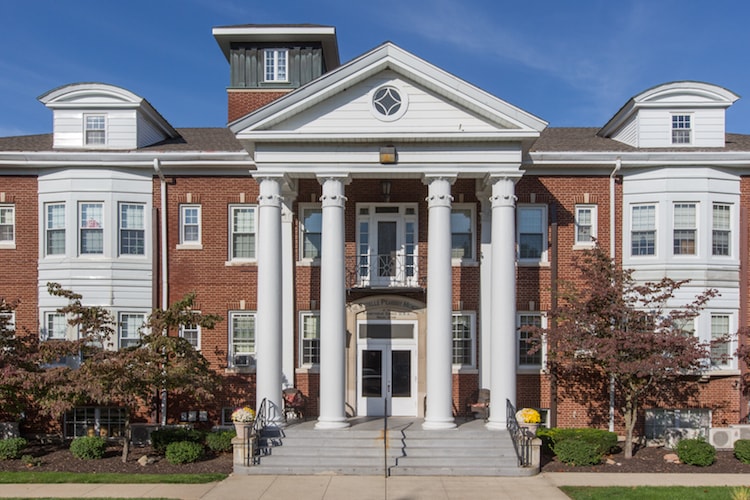
How is Peabody Retirement Community Staffed?

CMS rates PEABODY RETIREMENT COMMUNITY's staffing level at 2 out of 5 stars, which is below average compared to other nursing homes. Staff turnover is 51%, compared to the Indiana average of 46%.

What Have Inspectors Found at Peabody Retirement Community?

State health inspectors documented 33 deficiencies at PEABODY RETIREMENT COMMUNITY during 2023 to 2025. These included: 1 Immediate Jeopardy (the most serious level, indicating potential for serious harm or death), 2 that caused actual resident harm, 28 with potential for harm, and 2 minor or isolated issues. Immediate Jeopardy findings are rare and represent the most serious regulatory concerns. They require immediate corrective action.

Who Owns and Operates Peabody Retirement Community?

PEABODY RETIREMENT COMMUNITY is owned by a non-profit organization. Non-profit facilities reinvest revenue into operations rather than distributing to shareholders. The facility operates independently rather than as part of a larger chain. With 192 certified beds and approximately 176 residents (about 92% occupancy), it is a mid-sized facility located in NORTH MANCHESTER, Indiana.
How Does Peabody Retirement Community Compare to Other Indiana Nursing Homes?

Compared to the 100 nursing homes in Indiana, PEABODY RETIREMENT COMMUNITY's overall rating (3 stars) is below the state average of 3.1, staff turnover (51%) is near the state average of 46%, and health inspection rating (2 stars) is below the national benchmark.

What Should Families Ask When Visiting Peabody Retirement Community?

Based on this facility's data, families visiting should ask: "What changes have been made since the serious inspection findings, and how are you preventing similar issues?" "What safeguards and monitoring systems are in place to protect residents from abuse or neglect?" "Can you walk me through typical staffing levels on day, evening, and night shifts?" "Can I visit during a mealtime to observe dining assistance and food quality?" These questions are particularly relevant given the facility's Immediate Jeopardy citations, the substantiated abuse finding on record, and the below-average staffing rating.

Is Peabody Retirement Community Safe?

Based on CMS inspection data, PEABODY RETIREMENT COMMUNITY has documented safety concerns. The facility has 1 substantiated abuse finding (meaning confirmed case of resident harm by staff or other residents). Inspectors have issued 1 Immediate Jeopardy citation (the most serious violation level indicating risk of serious injury or death). The facility has a 3-star overall rating and ranks #100 of 100 nursing homes in Indiana. Families considering this facility should ask detailed questions about what corrective actions have been taken since these incidents.

Do Nurses at Peabody Retirement Community Stick Around?

PEABODY RETIREMENT COMMUNITY has a staff turnover rate of 51%, which is about average for Indiana nursing homes (state average: 46%). Moderate turnover is common in nursing homes, but families should still ask about staff tenure and how the facility maintains care continuity when employees leave.

Was Peabody Retirement Community Ever Fined?

PEABODY RETIREMENT COMMUNITY has been fined $33,518 across 4 penalty actions. The Indiana average is $33,414. While any fine indicates a compliance issue, fines under $50,000 are relatively common and typically reflect isolated problems that were subsequently corrected. Families should ask what specific issues led to these fines and confirm they've been resolved.

Is Peabody Retirement Community on Any Federal Watch List?

PEABODY RETIREMENT COMMUNITY is not on any federal watch list. The most significant is the Special Focus Facility (SFF) program, which identifies the bottom 1% of nursing homes nationally based on persistent, serious quality problems. Not being on this list means the facility has avoided the pattern of deficiencies that triggers enhanced federal oversight. This is a positive indicator, though families should still review the facility's inspection history directly.