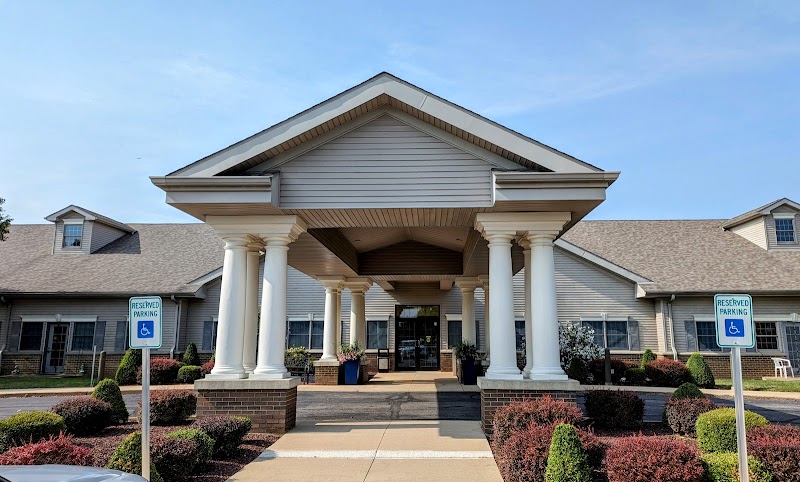
BLAIR RIDGE HEALTH CAMPUS

269 MEADOWVIEW DR, PERU, IN 46970 (765) 472-8049
For profit - Corporation 55 Beds TRILOGY HEALTH SERVICES Data: November 2025
Trust Grade
73/100
#124 of 505 in IN
Last Inspection: July 2024

Within standard 12-15 month inspection cycle. Federal law requires annual inspections.

Overview

Blair Ridge Health Campus has a Trust Grade of B, indicating it is a good choice for families looking for care. It ranks #124 out of 505 facilities in Indiana, placing it in the top half, and is the best option among the four facilities in Miami County. The facility is improving, having reduced its issues from nine in 2022 to six in 2024. Staffing is a strength here with a 4 out of 5 rating and a turnover rate of 30%, significantly lower than the state average. Notably, there have been no fines, which is a positive sign. However, there are some weaknesses to consider. An incident was reported where a resident developed a pressure ulcer due to insufficient assessment upon admission. Another concern involved food safety practices in the kitchen, where yogurt was found at unsafe temperatures. Additionally, there was a lack of a care plan for a resident's oxygen needs, which could have serious implications. Overall, while there are notable strengths in staffing and safety, families should be aware of the need for improvement in specific areas of care and facility management.

Trust Score
B
73/100
In Indiana
#124/505
Top 24%
Safety Record
Moderate
Needs review
Inspections
Getting Better
9 → 6 violations
Staff Stability
✓ Good
30% annual turnover. Excellent stability, 18 points below Indiana's 48% average. Staff who stay learn residents' needs.
Penalties
✓ Good
No fines on record. Clean compliance history, better than most Indiana facilities.
Skilled Nurses
✓ Good
Each resident gets 47 minutes of Registered Nurse (RN) attention daily — more than average for Indiana. RNs are trained to catch health problems early.
Violations
⚠ Watch
15 deficiencies on record. Higher than average. Multiple issues found across inspections.
★★★★☆
4.0
Overall Rating
★★★★☆
4.0
Staff Levels
★★★★★
5.0
Care Quality
★★★☆☆
3.0
Inspection Score
Stable
2022: 9 issues
2024: 6 issues

The Good

  • 4-Star Staffing Rating · Above-average nurse staffing levels
  • 5-Star Quality Measures · Strong clinical quality outcomes
  • Low Staff Turnover (30%) · Staff stability means consistent care
  • Full Sprinkler Coverage · Fire safety systems throughout facility
  • No fines on record
  • Staff turnover is low (30%)

    18 points below Indiana average of 48%

Facility shows strength in staffing levels, quality measures, staff retention, fire safety.

The Bad

Chain: TRILOGY HEALTH SERVICES

Part of a multi-facility chain

Ask about local staffing decisions and management

The Ugly 15 deficiencies on record

1 actual harm
Jul 2024 6 deficiencies
CONCERN (D)

Potential for Harm - no one hurt, but risky conditions existed

Transfer Notice (Tag F0623)

Could have caused harm · This affected 1 resident

Based on interview, record review, and interview, the facility failed to provide a transfer and discharge form for 1 of 3 residents reviewed for hospitalizations. (Resident 36) Finding includes: Durin...

Read full inspector narrative →
Based on interview, record review, and interview, the facility failed to provide a transfer and discharge form for 1 of 3 residents reviewed for hospitalizations. (Resident 36) Finding includes: During an interview, on 7/12/2024 at 9:33 A.M., Resident 36 indicated he had not been hospitalized since his admission to the facility, but had been at the facility 3 times. A record review was completed on 7/15/2024 at 10:59 A.M. Diagnoses included, but were not limited to: infection of the spinal internal fixation device, osteomyelitis, and MSSA (Methicillin Sensitive Staphylococcus Aureus). An admission Minimum Data Set (MDS) assessment, dated 6/5/2024, indicated Resident 36 was cognitively intact. The medical record indicated Resident 36 was discharged to the emergency room on 6/19/2024 and returned to the facility on 6/20/2024. A Nurse's Note, dated 6/19/2024 at 12:49 P.M., indicated an order was obtained from Resident 36's surgeon to send to the emergency room due to his spinal surgical site dehiscence (reopening of a surgical wound) with purulent (pus) drainage. On 6/20/2024 at 2:34 A.M., a Nurse's Note indicated Resident 36 returned to the facility. During an interview, on 7/17/2024 at 10:10 A.M., LPN 6 indicated a transfer and discharge form should be given if a resident was transferred from the facility to another facility. She indicated the transfer and discharge form would have been scanned into the electronic health record. A policy was provided, on 7/17/2024 at 2:34 P.M., by the Assessment Support, titled, Guidelines for Transfer and Discharge, indicated, .According to federal regulations, the facility must permit each resident to remain in the facility, and not transfer or discharge the resident from the facility. 1. The transfer or discharge is necessary for the resident's welfare and the resident's needs cannot be met in the facility During an interview, on 7/17/2024 at 3:45 P.M., the Executive Director indicated the facility did not issue a transfer and discharge form on 6/19/2024. 3.1-12(a)(6)(A)
CONCERN (D)

Potential for Harm - no one hurt, but risky conditions existed

PASARR Coordination (Tag F0644)

Could have caused harm · This affected 1 resident

Based on record review and interview, the facility failed to ensure 1 of 2 residents received a PASRR(Preadmission Screening and Resident Review) assessment in a timely manner. (Resident 40) Finding i...

Read full inspector narrative →
Based on record review and interview, the facility failed to ensure 1 of 2 residents received a PASRR(Preadmission Screening and Resident Review) assessment in a timely manner. (Resident 40) Finding includes: The record for Resident 40 was reviewed was on 7/11/2024 at 3:40 P.M. Diagnoses included, but were not limited to: dementia, psychotic disorder with hallucinations, mood disturbance and anxiety. A PASARR Level 1 assessment had been completed for Resident 40, on 4/3/2024, with no Level II assessment required. Resident 40 received a new qualifying diagnosis of psychotic disorder and medication change on 4/27/2024. During an interview, on 7/16/2024 at 11:39 A.M., the Social Service director indicated she could not locate an updated PASARR assessment and there should have been one updated for Resident 40 with the new diagnoses/medication. On 7/16/2024 at 4:07 P.M., the Director of Nursing indicated she did not have a policy for PASARR assessments.
CONCERN (D)

Potential for Harm - no one hurt, but risky conditions existed

ADL Care (Tag F0677)

Could have caused harm · This affected 1 resident

Based on observation, interview, and record review, the facility failed to provide grooming services for 2 of 3 residents reviewed for activities of daily living. (Residents 27 and 29) Findings includ...

Read full inspector narrative →
Based on observation, interview, and record review, the facility failed to provide grooming services for 2 of 3 residents reviewed for activities of daily living. (Residents 27 and 29) Findings includes: 1. During an observation for Resident 27, on 7/11/2024 at 11:41 A.M., she had long white whiskers on her chin, upper lip, and cheeks. On 7/12/2024 at 10:40 A.M., during an observation and interview, Resident 27 continued to have the whiskers, and she indicated she had an electric razor her daughter had brought to the facility for management of her whiskers. She indicated she would like them removed. A record review for Resident 27 was completed on 7/15/2024 at 9:31 A.M. Diagnoses included, but were not limited to, dementia, visual hallucinations, and diabetes mellitus type 2. An Annual Minimum Data Set (MDS) assessment, dated 6/4/2024, indicated Resident 27 required substantial/maximal assistance for grooming, and had moderate cognitive impairment. A current Care Plan indicated Resident 27 had impairment in functional status. The care plan interventions did not address grooming assistance. During an observation, on 7/15/2024 at 9:48 A.M., Resident 27' continued with the whiskers observed previously. On 7/16/2024 at 10:02 A.M., Resident 27's whiskers continued to the upper lip, chin, and cheeks. During an interview on 7/17/2024 at 10:14 A.M., LPN 6 indicated facial hair was to be shaved whenever a resident needed to be shaved, not just on shower days. 2. During an observation, on 7/11/2024 at 10:23 A.M., Resident 29 was observed in his geri chair seated in the common area. He was unshaven with whiskers on his face, chin and had long fingernails. During an observation, on 7/12/2024 at 10:47 A.M., Resident 29 was unshaven with whiskers on his face, chin and had long fingernails. During an observation, on 7/15/2024 at 9:01 A.M., Resident 29 was observed seated at the dining table. He was unshaven, with whiskers on his face, chin and had long fingernails. A record review for Resident 29 was completed on, 7/16/2024 at 8:53 A.M. Diagnoses included, but were not limited to dementia, chronic kidney disease, weakness, chronic obstruction pulmonary disease, dysphagia and ataxic gait. A Quarterly Minimum Data Set (MDS) assessment, dated 4/26/2024, indicated Resident 29 had severe cognition impairment and was dependent on staff for showering, bathing and requires maximal assist with personal hygiene. A current Care Plan, dated 4/29/2024, indicated Resident 29 had an ADL (activities of daily living) self-care performance deficit and required substantial/max assist with personal hygiene. During an interview on 7/16/2024 at 9:47 A.M., LPN 2 (Licensed Practical Nurse) indicated the resident should have been shaved and his nails should have been trimmed. During an interview on 7/17/2024 at 2:18 P.M., the Regional Support Nurse indicated the facility does not have a policy for ADL care. The staff was to follow their resident procedure guide. 3.1-38(a)(3)
CONCERN (D)

Potential for Harm - no one hurt, but risky conditions existed

Deficiency F0694 (Tag F0694)

Could have caused harm · This affected 1 resident

Based on observation, interview, and record review, the facility failed to follow physician orders related to PICC (peripherally inserted central catheter) line dressing changes for 1 of 1 resident re...

Read full inspector narrative →
Based on observation, interview, and record review, the facility failed to follow physician orders related to PICC (peripherally inserted central catheter) line dressing changes for 1 of 1 resident reviewed for antibiotic therapy (Resident 36) Finding includes: During an observation on 7/12/2024 at 9:19 A.M., Resident 36 was observed to have a PICC line inserted to the basilic vein of the right arm. The dressing was dated 7/2/2024, and had paper tape adhered to the upper lateral portion of the dressing, and the dressing was not adhered distal to the lateral portion of the dressing adhered with paper tape. Resident 36 indicated the date, of 7/2/2024, observed on the dressing was the date the dressing had been changed. A record review for Resident 36 was completed on 7/15/2024 at 10:59 A.M. Diagnoses included, but were not limited to, infection of the spinal internal fixation device, osteomyelitis, and MSSA (Methicillin Sensitive Staphylococcus Aureus). An admission Minimum Data Set (MDS) assessment, dated 6/5/2024, indicated Resident 36 was cognitively intact. A Care Plan, dated 6/3/2024 and revised 7/9/2024, indicated resident 36 required intravenous medication related to bacteremia. The interventions included intravenous site care as ordered. A PICC Insertion Record, dated 7/2/2024 at 1:40 P.M., indicated the PICC line was inserted to the right basilic vein because the left sided midline did not draw blood when frequent blood draws were necessary A Physician's Order, dated 6/5/2024, indicated to change the PICC/Midline/CVAD (central venous access device) dressing every 5 days, and as needed. A Physician's Order, dated 6/28/2024, indicated Resident 36 was to receive Cefazolin (antibiotic) 2 grams per 100 milliliters every 8 hours through 7/27/2024. The Medication Administration Record (MAR), dated July 2024, indicated the PICC line dressing was to be changed on 7/5/2024. The nurse did not change the dressing but documented the following: .Dressing with new PICC changed 7/3/2024 The MAR indicated a dressing change was completed on 7/10/2024 and a PRN (as needed) dressing change was completed on 7/13/2024. A Nurse's Progress Note, dated 7/13/2024 at 9:58 P.M., indicated a single lumen PICC dressing to the right upper extremity was beginning to come off and was changed using a prepackaged dressing kit. During an interview, on 7/17/2024 at 10:12 A.M., LPN 6 indicated Resident 36's PICC line dressing was to be changed every 5 days. She was not able to find documentation the PICC line dressing was being changed per the Physician's Order. There was also no explanation given as to why the MAR for July 2024 indicated the PICC dressing had been changed on 7/10/2024 when the dressing observed on 7/12/2024 was dated 7/2/2024. A policy was provided on 7/17/2024 at 1:51 P.M. by the Director of Nursing who indicated the policy was the current facility policy. The policy titled, Catheter Insertion and Care, indicated, .Midline catheter dressings will be changed at specified intervals, or when needed, to prevent catheter-related infections associated with contaminated, loosened or soiled catheter-site dressings .General Guidelines 1. Change midline catheter dressing 24 hours after catheter insertion, every 5-7 days, or if it is wet, dirty, not intact, or compromised in any way 3.1-47(a)(2)
CONCERN (D)

Potential for Harm - no one hurt, but risky conditions existed

Infection Control (Tag F0880)

Could have caused harm · This affected 1 resident

Based on observation, interview and record review, the facility failed to ensure proper infection control practices were implemented related to lack of handwashing after glove removal during a blood g...

Read full inspector narrative →
Based on observation, interview and record review, the facility failed to ensure proper infection control practices were implemented related to lack of handwashing after glove removal during a blood glucose procedure and fanning an area that had been cleansed with alcohol pad during 1 of 3 medication administration observations. (RN 3) Finding includes: During a medication observation, on 7/16/2024 at 8:40 A.M., RN 3 obtained the supplies to perform a blood glucose level and administer insulin to a resident. RN 3 placed the glucometer device and supplies on the resident's bed, washed his hands and applied gloves. RN3 wiped the resident's finger with an alcohol pad and with an opened hand, fanned the area that had been cleansed. After RN 3 obtained the blood sample, he removed his gloves and without washing his hands, administered insulin to the resident. During an interview, on 7/16/2024 at 8:45 A.M., RN 3 indicated he should have washed his hands, placed the device on barrier and not fanned the area. On 7/16/2024 at 11:10 A.M., the Director of Nursing provided the policy titled, Glucometer, dated 9/17/2018, and indicated the policy was the one currently used by the facility. The policy indicated .2. Appropriate infection control techniques shall be followed during testing procedures On 7/16/2024 at 11:01 A.M., the Director of Nursing provided the policy titled, Guideline for Handwashing/Hygiene, with a review date of 12/31/2023, and indicated the policy was the one currently used by the facility. The policy indicated .3. Health Care Workers (HCW) shall use hand hygiene and times such as: .d. After removing gloves, worn per Standard Precautions for direct contact with excretions or secretions, mucous membranes, specimens, resident equipment, grossly soiled linen, etc On 7/17/2024 at 1:51 P.M., the Director of Nursing provided the policy titled,Injectable Medication Administration, and indicated the policy was the one currently used by the facility. The policy indicated .To administer medication via subcutaneous, intradermal and intramuscular routes in a safe, accurate, and effective manner. Equipment Required: .F. Barrier (e.g.,disposable tray or plastic cup), if supplies or medication will be set down in a resident's room 3.1-18(b)
CONCERN (F)

Potential for Harm - no one hurt, but risky conditions existed

Food Safety (Tag F0812)

Could have caused harm · This affected most or all residents

Based on observation, interview, and record review, the facility failed to ensure food was stored, prepared and served under safe and sanitary conditions related to appropriate cold food temperatures,...

Read full inspector narrative →
Based on observation, interview, and record review, the facility failed to ensure food was stored, prepared and served under safe and sanitary conditions related to appropriate cold food temperatures, disposal of outdated foods, labeling and dating of food items in the refrigerator and freezer, storage of dishware and appliance cleanliness for 1 of 1 kitchens. This had the potential to affect 51of 52 residents who consumed food from the kitchen. Findings include: During an initial observation of the kitchen with Culinary Assistant 5, on 7/11/2024 from 9:40 A.M. through 10:00 A.M., the following was observed: a. Individualized yogurt cups were sitting on the counter beside the refrigerator without being iced. At 10:00 A.M., the yogurt cups were no longer on the counter. Culinary Assistant 5 indicated she had placed them back in the refrigerator. The temperature of the yogurt cups was requested, and the yogurt cup tested was 60.8 Fahrenheit. While Culinary Assistant 5 was checking the temperature of the yogurt cups, she asked, What's it supposed to temp? b. The reach in freezer had an opened, undated box of Taquitos (original box) and French fries in a plastic bag with no date or label. c. The reach in refrigerator had chocolate pudding with a use by date of 7/9/2024, green beans with a use by date of 7/10/2024, mashed potatoes with a use by date of 7/10/2024, a small bag of lettuce with a use by date of 7/10/2024, and a large bag of wilted looking lettuce with no label or use by date. d. The kitchen stovetop was observed to have grease and food debris down the side, the reach in refrigerator had food debris down the side and front, the stove/oven had spillage on the side and food debris on the front, and the convection oven had food spillage and grease stains down the front. e. The storage area for dishware was observed to have large salad bowls, side plates, side bowls, and ramekins stored upright and not inverted. 2. During an observation of the kitchen, on 7/12/2024 at 1:31 P.M., the side bowls and ramekins were observed upright and not inverted. 3. During an observation on 7/16/2024 at 10:55 A.M. with the Culinary Director, the same debris and soilage was observed on the reach in refrigerator, stove/oven, and convection oven. During an observation on 7/17/2024 at 10:59 A.M. with the Culinary Director, multiple side dishes and clear bowls, large salad bowls, and a cupcake pan were not stored inverted. The same appliance debris/soilage was observed. During an interview on 7/17/2024 at 11:32 A.M., the Culinary Director indicated dishware should be stored upside down on open shelves, all food opened should be labeled and dated, food should be disposed of by the use by date by the end of the day, and cold foods should be stored on ice or refrigerated when serving. She indicated the appliances had a once-a-week rotation for cleaning. A current policy was provided on 7/17/2024 at 1:30 P.M. by the Director of Nursing. The policy titled, Storage Procedures, indicated, .Food and supplies shall be properly stored to keep foods safe and preserve flavor, nutritive value, and appearance .Refrigerated Storage 7. Prepared perishable items as salads, puddings, milk, etc., are stored in a refrigerator and covered, labeled, and dated until used .Freezer Storage 3. All foods in the freezer are wrapped in moisture proof wrapping or placed in suitable containers, to prevent freezer burn. Items are labeled and dated A current policy was provided, on 7/17/2024 at 1:30 P.M., by the Director of Nursing. The policy titled, Food Production Guidelines, indicated, .Safe and sanitary handling of food will be employed during food production .6. Leftovers must be dated, labeled, covered, and immediately refrigerated or frozen for later use, Leftovers must be used within 72 hours A current policy was provided on 7/17/2024 at 1:30 P.M. by the Director of Nursing. The policy titled, Dish Machine, indicated, .Store ware in a clean dry area upside down to avoid direct contact with debris 3.1-21(h)(3)
Mar 2022 9 deficiencies 1 Harm
SERIOUS (G)

Actual Harm - a resident was hurt due to facility failures

Pressure Ulcer Prevention (Tag F0686)

A resident was harmed · This affected 1 resident

**NOTE- TERMS IN BRACKETS HAVE BEEN EDITED TO PROTECT CONFIDENTIALITY** Based on record review, observation and interview, the facility failed to ensure proper admission assessment and orders were obt...

Read full inspector narrative →
**NOTE- TERMS IN BRACKETS HAVE BEEN EDITED TO PROTECT CONFIDENTIALITY** Based on record review, observation and interview, the facility failed to ensure proper admission assessment and orders were obtained for 1 of 4 residents to prevent the development of pressure ulcers. (Resident 30) Finding includes: During an initial interview with Resident 30 on 3/15/22 2:44 P.M., Resident 30 indicated she had been admitted to the facility with pressure ulcers and developed a pressure ulcer to her right shin due to wearing a AFO (ankle foot orthosis) brace. During an interview on 3/18/22 at 11:25 A.M., with Resident 30, she indicated she came to the facility with the AFO brace. Resident 30 indicated the brace kept her ankle in place and had worn the AFO brace for around 2 years. Resident 30 indicated she removed the AFO brace on her own at night and the CNAs would place a knee sock and the AFO brace to her left lower leg every morning. Resident 30 indicated she requested the area to her right lower extremity be assessed by the nurse due to pain. A record review of Resident 30 was completed on 3/17/22 at 3:13 P.M. Diagnosis included, but were not limited to: diabetes mellitus type 2, chronic obstructive pulmonary disease, and chronic kidney disease stage 4. Resident 30 admitted to the facility on [DATE]. An admission MDS (Minimum Data Set) Assessment, dated 2/17/2022, indicated the Resident 30 had a BIMS (Brief Interview Mental Status) score indicating no cognitive impairment and required extensive assistance with one staff member for bed mobility and toileting, and extensive assistance with two staff members for transfers. An admission Assessment completed on 2/11/2022 at 3:18 P.M., indicated no skin impairment, and did not identify an AFO brace under musculoskeletal assistive devices of the assessment. A Weekly Skin Assessment on 2/16/2022 and 2/23/2022 on the 2:00 P.M.-10:00 P.M. shift, indicated old skin impairment related to the right groin region. A Nurses' Note on 2/25/2022 at 1:13 P.M., indicated Resident 30 had an abrasion to the left lower extremity (Resident 30 has a left lower limb amputation at the hip) just above the ankle and appears to be from brace rubbing on leg. A treatment was ordered and the AFO brace was not to be applied to the right lower extremity. On 2/27/2022 at 4:06 P.M., a late entry Nurses' Note was written for 02/25/2022 at 4:04 P.M. The Nurses' Note indicated, .res (Resident 30) has a pressure wound on RLE (right lower extremity) that appears to be from brace rubbing against skin. Wound measures 7cm [centimeter] x 6cm x 0.1cm. Stage III, 100% granulation tissue to wound bed. Notified MD of wound On 3/15/2022 at 11:59 A.M., a Nurses' Note indicated, .Writer Spoke with res POA (Power of Attorney) with update on res (resident) pressure injury to right shin. Writer explained that it was caused from the brace that she wears. POA voiced understanding, she stated that res was wearing the brace r/t (related to) working on transferring. Res (Resident) is not transferring at this time, she asked if the brace was even necessary at this time. Writer explained that she was not wearing at this time r/t pressure injury On 3/15/2022 at 7:52 P.M., a Nurses' Note indicated, .continues to have a pressure wound on RLE that appears to be from brace rubbing against skin. Wound measures 6.1 cm x 3.5cm x 0.1 Stage III, 50 granulation tissue to wound bed Physician's Orders indicated the following orders: 1. On 2/25/2022, Leave splint off of right lower extremity 2. On 2/27/2022, (RIGHT LOWER LEG): cleanse wound with wound cleanser, apply skin prep to skin surrounding wound, apply Anasept gel to wound bed, and cover with foam dressing change 5 days. 3. On 2/27/2022, Prostat (Protein Supplement) 30 ml twice daily 4. On 3/14/2022, Cleanse wound to RLE with wound cleanser, pat dry, apply skin prep to surrounding skin, cover with island dressing/border gauze, change daily, use adhesive remover to remove dressing 5. On 3/15/2022, low air loss mattress A Care Plan on 2/27/2022, indicated a problem of a pressure ulcer to the right lower extremity. During an interview on 3/18/22 at 2:55 P.M., the DON reviewed the Electronic Health Record and indicated an order was not obtained for the AFO brace at admission, and skin integrity assessments should have been completed by a nurse every shift for the use of the AFO brace. On 3/18/2022 at 3:08 P.M., a policy was requested for skin care with removable devices. A policy was not provided. Policies entitled, Pressure/Statis/Diabetic Wound Condition Guidelines, Guidelines of General Wound and Skin Care, and Guidelines for Weekly Skin Observation were provided. These policies did not address the prevention of pressure ulcers. 3.1-40(a)(1)
CONCERN (D)

Potential for Harm - no one hurt, but risky conditions existed

Deficiency F0657 (Tag F0657)

Could have caused harm · This affected 1 resident

2. A clinical record review was completed, on 3/16/2022 at 11:02 A.M., and indicated Resident 15's diagnoses included, but were not limited to: Alzheimer's disease, pneumonitis due to inhalation of fo...

Read full inspector narrative →
2. A clinical record review was completed, on 3/16/2022 at 11:02 A.M., and indicated Resident 15's diagnoses included, but were not limited to: Alzheimer's disease, pneumonitis due to inhalation of food and vomit, dementia without behavioral disturbance, dysphagia, hypertensive chronic kidney disease with stage 1 through stage 4 chronic kidney disease, or unspecified chronic kidney disease, and anemia. A Care Plan dated 3/11/2021, indicated resident is at risk for decline in ROM (range of motion) related to poor cognition and weakness with an intervention apply L (left) hand splint. The order for the hand splint was discontinued on 12/6/2021. On 3/17/2022 at 9:19 A.M., the Director of Nursing indicated that the care plan should have been revised when the hand splint was discontinued. On 3/18/2022 at 10:51 A.M., RN/MDS (Registered Nurse/Minimum Data Support) provided a policy titled Comprehensive Care Plan Guideline, dated 5/22/2018, and indicated the policy was the one currently used by the facility. The policy indicated . 5. If the resident is readmitted to the campus, the previous care plan will be reviewed and updated to meet the resident's current needs. a. If a previous care plan is no longer needed, it will be resolved from the active care plans. b. Resident's 24-hour CRCA (Certified Resident Care Assistant) assignment sheet or Care Tracker profile will be updated upon readmission. 6. Comprehensive care plans need to remain accurate and currant. a, New interventions will be added and updated during or directly following CCM (care conference meeting). b. Newly recognized problems will have a care plan developed and added after CCM meeting 3.1-35(d)(2)(B) Based on record review, observation and interview, the facility failed to update/revise care plans for discontinued medications, and a hand splint for 2 of 21 residents whose care plans were reviewed. (Resident 6 and 15) Findings include: 1. A clinical record review was completed on 3/17/2022 at 11:20 A.M. Resident 6's diagnoses included, but were not limited to: dementia, delusional disorder, depression, Alzheimer's disease, and hallucinations. A current care plan, dated 4/14/2014, indicated Resident 6 was at risk for developing adverse effects from the use of anti-convulsant medications. A current care plan, dated 10/7/2016, indicated Resident 6 was at risk for adverse consequences related to received hypnotic medication. A current care plan, dated 7/1/2019, indicated Resident 6 received anti seizure medication to treat irritability, anger and chronic pain. Resident 6's current medication orders, dated 3/2022, lacked the physician orders for an anti-convulsant, hypnotic, or seizure medications. A physician's order, dated 1/9/2022, indicated the anti-convulsant medication had been discontinued. During an interview, on 3/21/2022 at 9:37 A.M., Social Service staff indicated the care plans were not revised and should have been.
CONCERN (D)

Potential for Harm - no one hurt, but risky conditions existed

Quality of Care (Tag F0684)

Could have caused harm · This affected 1 resident

Based on record review, observation and interview, the facility failed to follow physician orders for a preventative boot which resulted in a skin issue for 1 of 21 residents whose physician orders we...

Read full inspector narrative →
Based on record review, observation and interview, the facility failed to follow physician orders for a preventative boot which resulted in a skin issue for 1 of 21 residents whose physician orders were reviewed. (Resident 31) Finding includes: A clinical record review was completed on 3/16/2022 at 11:37 A.M. Resident 31's diagnoses included, but were not limited to: protein malnutrition, diabetes, hearing loss, and osteoarthritis. An admission MDS (Minimum Data Set) assessment, dated 8/29/2021, indicated Resident 31 had a stage III and stage IV pressure area to her coccyx and left heel. A Quarterly MDS (Minimum Data Set) assessment, dated 2/19/2022 indicated Resident 31 required extensive assist of 2 staff for bed mobility, transfers dressing and toilet use and only had a stage III pressure area. Physician orders, dated 3/2022, indicated Resident 31 was to wear a heel protector on the left heel at all times when in bed or in the wheelchair. The heel protector was ordered 8/26/2021. A current care plan, dated 9/7/2021, indicated the resident was at risk for skin breakdown related to impaired mobility and pressure ulcers. Interventions included, but were not limited to: lifting device as needed for bed mobility, pressure reduction mattress, and cushion, keep clean and dry, minimize exposure to moisture, keep linens dry and clean, float heels as needed, encourage and assist to turn and reposition and weekly skin assessment. During an observation, on 3/16/2022 at 2:35 P.M., Resident 31 was observed sitting in her wheelchair with no heel protector on her left foot. During an observation, on 3/17/2022 at 9:26 A.M., Resident 31 was lying in bed with no heel protector on her left foot. During an observation, on 3/15/2022 at 10:10 A.M., Resident 31's left foot had a dark area to the outer aspect of the heel. During an interview, on 3/17/2022 at 10:10 A.M., C.N.A (Certified Nursing assistant) 12 indicated the resident did not wear a boot or protector to her feet. During an observation, on 3/17/2022 at 11:15 A.M., Resident 31 was observed in her wheelchair with no heel protector to the left foot. During an observation, on 3/17/2022 1:21 P.M., Resident 31 was observed in her wheelchair with no heel protector to the left foot. During an observation, on 3/17/2022 at 2:07 P.M., Resident 31 was observed in her wheelchair with no heel protector to the left foot. Weekly skin assessments completed on, 3/7/2022 and 3/14/2022, indicated a (2) old impairment, with no other information documented. During an observation, on 3/18/2022 at 2:07 P.M., LPN (Licensed Practical Nurse) 2 indicated the area to the residents' left foot looked like a deep tissue injury, and indicated the resident had an area there before and it was healed. LPN 2 indicated the order for the foot protector was not listed on the treatment sheet and could not be signed off as completed if the order was not there. During an observation, on 3/21/2022 at 8:55 A.M., Resident 31 was in bed with a piece of lambs wool under the left heel. The Corporate Nurse and the Director of Nursing indicated the area to Resident 31's foot was a bruised area and the Nurse Practitioner had seen the resident today and indicated it was a bruise. The Corporate Nurse indicated there had been a pressure area there before but it was healed. The left heel was red but not boggy and had white flaky peeling skin to the area. A policy on following physician orders was requested on 3/21/2022 but one was not provided. 3.1-37
CONCERN (D)

Potential for Harm - no one hurt, but risky conditions existed

Respiratory Care (Tag F0695)

Could have caused harm · This affected 1 resident

Based on record review, observation and interview, the facility failed to provide oxygen therapy equipment per Physician Orders for 2 of 3 residents reviewed for respiratory care. (Resident 30 & 43) F...

Read full inspector narrative →
Based on record review, observation and interview, the facility failed to provide oxygen therapy equipment per Physician Orders for 2 of 3 residents reviewed for respiratory care. (Resident 30 & 43) Findings include: 1. During an initial observation with Resident 30 on 3/15/22 2:52 P.M., Resident 30 was receiving oxygen therapy via nasal cannula from an oxygen concentrator. A plastic respiratory storage bag was observed hanging from the oxygen concentrator with no date written on the bag. Resident 30 had a portable oxygen tank attached to the rear of her wheelchair. The nasal cannula attached to the concentrator and the portable oxygen tank did not have a date indicating when the oxygen tubing had been changed. On 3/18/2022 at 11:55 A.M., during an observation, the nasal cannula for the oxygen concentrator and portable oxygen tank did not have a date indicating when the tubing had been changed. A record review of Resident 30 was completed on 3/17/22 at 3:13 P.M. Diagnosis included, but were not limited to: COPD (chronic obstructive pulmonary disease), congestive heart failure and diabetes mellitus type 2. An admission MDS (Minimum Data Set) Assessment, dated 2/17/2022, indicated the Resident 30 had a BIMS (Brief Interview Mental Status) score indicated no cognitive impairment and received oxygen therapy. Physician Orders on 2/14/2022 indicated oxygen at two liters per nasal cannula continuous and change oxygen tubing monthly on the first of the month. A Care Plan, dated 6/12/2018, indicated .Potential for SOB (shortness of breath) while lying flat r/t COPD Interventions of the care plan indicated, .Administer oxygen per MD order and as needed 2. During an initial observation with Resident 43 on 3/15/22 10:13 A.M., Resident 43 had a portable oxygen tank attached to the rear of his wheelchair. Resident 43 was receiving oxygen therapy via nasal cannula from the portable oxygen tank. An oxygen concentrator was at bedside. A plastic respiratory storage bag was observed hanging from the oxygen concentrator with a date of 2/7/2022. The nasal cannula attached to the concentrator and the portable oxygen tank did not have a date indicating when the oxygen tubing had been changed. A record review of Resident 43 was completed on 3/16/2022 at 2:36 P.M. Diagnosis included, but were not limited to: atrial fibrillation, chronic kidney disease stage 3 and benign prostatic hyperplasia. A Quarterly MDS (Minimum Data Set) Assessment, dated 3/4/2022, indicated the Resident 43 had a BIMS (Brief Interview Mental Status) score indicated severe cognitive impairment and received oxygen therapy. Physician Orders on 3/7/2022 indicated oxygen at two liters per nasal cannula continuous and on 1/4/2022, change oxygen tubing monthly on the first of the month. A Care Plan, dated 12/1/2022, indicated .Potential for SOB (shortness of breath) while lying flat atrial fibrillation and dyspnea Interventions of the care plan indicated, .Meds per MD order During an interview, on 3/18/22 at 1:57 P.M., RN (Registered Nurse) 4 indicated the oxygen tubing gets changed monthly, oxygen tubing should be dated, and the plastic respiratory storage bag should be changed with the oxygen tubing monthly or as needed. On 3/18/2022 at 3:47 P.M. a policy entitled, Guidelines for the Administration of Oxygen was provided by the Regional Nurse. The policy indicated, .14. Date the tubing for the date it was initiated. a. Tubing should be changed monthly and PRN 3.1-47(6)
CONCERN (D)

Potential for Harm - no one hurt, but risky conditions existed

Deficiency F0744 (Tag F0744)

Could have caused harm · This affected 1 resident

Based on record review and interview, the facility failed to ensure a resident received person centered dementia care for 1 of 1 residents reviewed for dementia care. (Resident 6) Finding includes: A ...

Read full inspector narrative →
Based on record review and interview, the facility failed to ensure a resident received person centered dementia care for 1 of 1 residents reviewed for dementia care. (Resident 6) Finding includes: A clinical record review was completed on 3/17/2022 at 11:20 A.M. Resident 6's diagnoses included, but were not limited to: dementia, delusional disorder, depression, Alzheimer's disease, chronic pain and hallucinations. An Annual MDS (Minimum Data Set) assessment, dated 12/7/2021, indicated Resident 6 had no hallucinations or delusions and had no behaviors during the assessment period. Had no speech and was rarely/never understood or understood others. A current care plan, dated 10/21/2015, indicated Resident 6 had a diagnosis of depression related to dementia and loss of physical and cognitive abilities. Interventions included, but were not limited to: encourage to express her feelings, provide active listening and supportive feedback. Encourage to participate in activities of enjoyment. A current care plan, dated 10/21/2015, indicated Resident 6 had a history of distressing delusional thoughts and feelings related to dementia diagnosis and had a history of hallucinations and seeing others in her room. Interventions included, but were not limited to: Administer medications per physician orders and attempt to divert attention to pleasant topics or activities of enjoyment. A current care plan, dated 9/27/2016, indicated Resident 6 had physically abusive behavioral expressions at times, had a history of kicking other residents and have Alzheimer's disease. Interventions, included but were not limited to: avoid over stimulation (noise, crowding other physically aggressive residents), convey an attitude of acceptance towards the resident, follow familiar routines, maintain a calm environment and approach to her and praise the resident when behavior is appropriate. During an interview, on 3/21/2022 at 9:37 A.M., Social Service staff indicated Resident 6 had a decline and indicated the care plan did not have individualized person centered interventions for her dementia and the behaviors. On 3/21/2022 at 1:15 P.M., the Corporate Nurse provided the policy titled, Comprehensive Care Plan Guideline, dated 5/22/18, and indicated the policy was the one currently used by the facility. The policy indicated .b. Care plan interventions should be reflective of risk area(s) or disease processes that impact the individual resident. c. Should new identified areas of concern arise during the residents stay, they should be addressed on the care plan. d. Interventions should be reflective of the individual's needs and risk influence as well as the resident strengths. 3 revised to reflect changes in the residents condition as they occur. 6. Comprehensive care plans need to remain accurate and current. a. New interventions will be added ad updated or directly following CCM [care conference meeting] meeting. b. Newly recognized problems will have a care plan developed and added after CCM meeting 3.1-35(a)
CONCERN (D)

Potential for Harm - no one hurt, but risky conditions existed

Medication Errors (Tag F0758)

Could have caused harm · This affected 1 resident

Based on interview and record review, the facility failed to ensure that as needed (PRN) antianxiety medications are only scheduled for 14 days and /or provide documentation the practitioner reevaluat...

Read full inspector narrative →
Based on interview and record review, the facility failed to ensure that as needed (PRN) antianxiety medications are only scheduled for 14 days and /or provide documentation the practitioner reevaluates the resident for appropriateness for 1 of 1 resident reviewed for unnecessary medication. (Resident 18) Finding includes: A clinical record review was completed, on 3/16/22 at 3:03 P.M., and indicated the Resident 18's diagnoses included, but were not limited to: dementia with behavioral disturbance, major depressive disorder, hallucinations, hypertension, and delirium due to known physiological condition. An Annual MDS (Minimum Data Set) assessment, dated 1/24/2022, indicated Resident 18's BIMS (Brief Interview for Mental Status) score of 3, severely impaired cognition. An order was received on 3/3/2022 for ativan 0.5 mg, twice a day as needed (PRN) without an end date, special instructions: anxiety. The Medication Administration Record indicated the medication was administered on the evening of 3/15/2022 and 3/16/2022. During an interview on 3/18/2022 at 9:04 A.M., the Regional Nurse indicated that PRN ativan should only be scheduled for 14 days and he received the medication on the evening of the 15th day. Documentation was requested for reevaluation of the resident for extension of the medication, and none was provided. On 3/18/2022 at 9:59 A.M., the Director of Nursing provided a policy titled, Psychotropic Medication Usage and Gradual Dose Reduction, dated 10/9/2017, and indicated the policy was the one currently used by the facility. The policy indicated .9. PRN order for psychotropic drugs are limited to 14 days. Except as provided if the attending physician or prescriber believes that it is appropriate for the PRN order to be extended beyond the 14 days, he or she should document their rationale in the resident's medical record and indicate the duration for the PRN order. 10. PRN orders for anti-psychotic drugs are limited to 14 days and cannot be renewed unless the attending physician or prescribing practitioner evaluates the resident for appropriateness of that medication 3.1-48(a)(2)(4)
CONCERN (D)

Potential for Harm - no one hurt, but risky conditions existed

Food Safety (Tag F0812)

Could have caused harm · This affected 1 resident

Based on observation and interview, the facility failed to store and date dry storage goods for 1 of 1 storage rooms reviewed for food storage. Finding includes: During a tour of the dry storage facil...

Read full inspector narrative →
Based on observation and interview, the facility failed to store and date dry storage goods for 1 of 1 storage rooms reviewed for food storage. Finding includes: During a tour of the dry storage facilities on 3/15/2022 at 9:38 A.M., the surveyor observed a package of fettuccine noodles open to air and not secured. No open date was indicated on the open bag of fettucine noodles. A large bag of panko breadcrumbs was loosely rolled and not closed securely. No open date was indicated on the open bag of panko breadcrumbs. During an interview on 3/15/2022 at 9:45 A.M., the Director of Food Services indicated the fettuccine noodles should be sealed securely, the panko breadcrumbs should be stored in a closed food bin and both items should have a date of when opened written on the packages. On 3/21/2022 at 3:07 P.M., the Administrator provided the policy entitled, Storage. The policy indicated, .6. Open packages are labeled, dated, and stored in closed containers .7. Dry bulk foods are stored in plastic containers with tight covers or bins which are easily sanitized A form entitled, Daily Check List was provided. The check list indicated, .check labeling and dating .make sure all containers and bags are closed 3.1-21(2)
CONCERN (E)

Potential for Harm - no one hurt, but risky conditions existed

Comprehensive Care Plan (Tag F0656)

Could have caused harm · This affected multiple residents

3. A clinical record review was completed on 3/17/2022 at 11:19 A.M. Resident 244's diagnoses included, but were not limited to: diastolic (congestive) heart failure, pleural effusion, acute respirato...

Read full inspector narrative →
3. A clinical record review was completed on 3/17/2022 at 11:19 A.M. Resident 244's diagnoses included, but were not limited to: diastolic (congestive) heart failure, pleural effusion, acute respiratory failure with hypoxia. Resident 244's current physician orders, dated 3/11/2022, indicated oxygen at 2 liters per nasal canula continuous; change oxygen tubing monthly; clean external concentrator filter every two weeks; head of bed elevated to alleviate/reduce shortness of breath while lying flat; monitor oxygen saturation every shift; assess for signs and symptoms of shortness of breath while lying flat and albuterol sulfate inhaler every 6 hours as needed. The clinical record lacked a care plan for the use of the oxygen and respiratory needs. During an interview, on 3/17/22 at 11:45 A.M., the Director of Nursing (DON) indicated the resident's needs are communicated with Matrix computer program. Matrix has a header for specific care needs. She indicated that residents on oxygen should have a care plan reflecting interventions for oxygenation. On 3/18/2022 at 10:51 A.M., RN 14 provided the policy titled, Comprehensive Care Plan Guideline, dated 5/22/2018, and indicated the policy was the one currently used by the facility. The policy indicated .Acute problems that arise with the resident are expected to be resolved within a short time frame will be addressed on the event form specific to that problem. Address problems that become ongoing or chronic with a new comprehensive care plan. Comprehensive care plans need to remain accurate and current. New interventions will be added and updated during or directly following CCM meeting. Newly recognized problems will have a care plan developed and added after CCM (care conference meeting) meeting 3.1-35(a) Based on record review, observation and interview, the facility failed to develop a plan of care to meet the residents' needs for 3 of 21 residents reviewed for care plans. (Resident 7, 44 & 244) Findings include: 1. During an initial interview with Resident 7 on 3/16/22 8:54 A.M., Resident 7 indicated she had been hospitalized a few weeks ago for urinary tract infection, she was currently on an antibiotic for a urinary tract infection and develops urinary tract infections frequently. A record review of Resident 7 was completed on 3/16/22 at 11:23 A.M. Diagnosis included, but were not limited to: chronic kidney disease, diabetes mellitus type 2, and anemia. An Annual MDS (Minimum Data Set) Assessment, dated 1/7/2022, indicated Resident 7 had a BIMS (Brief Interview Mental Status) score indicating no cognitive impairment and was frequently incontinent of bladder. She required supervision with set-up assistance from a staff member for toileting. A Nurses' Note on 1/16/2022 at 8:10 P.M., indicated Resident 7 was sent to the emergency room for slurred speech and a feeling of a thick tongue. On 1/17/2022 at 1:59 A. M., a Nurses' Note indicated Resident 7 returned to the facility with a diagnosis of UTI (urinary tract infection)/dehydration. A new order for Rocephin (antibiotic) intravenously for four days was received upon returning from the Emergency Room. On 1/18/2022 at 1:10 P.M., a Nurses' Note indicated Resident 7 was slurring her words with right sided facial droop. Resident 7 was sent to the Emergency Room. On 1/18/2022 at 7:21 P.M., Resident 7 returned to the facility. The emergency room nurses indicated the diagnosis remained the same as previous visit. A urinalysis obtained on 3/5/2022, indicated positivity for a urinary tract infection. The culture and sensitivity indicated Escherichia coli as the bacteria and resistance to many antibiotics. Physician's Orders indicated Resident 7 began receiving AZO Cranberry and Probiotic tablet 250-30-50 mg-mg-million one tablet by mouth twice daily for frequent UTI's on 7/07/2021. Resident 7 was prescribed ceftriaxone (Rocephin) one gram intravenously once a day from 1/18/2022 to 1/21/2022. Resident 7 was also prescribed fosomycin tromethamine packet three grams by mouth every three days for MDRO (multi-drug resistant organism) UTI from 3/1/2022 through 3/16/2022. A Care Plan could not be located for the urinary tract infection or intravenous antibiotic use. During an interview on 3/18/2022 at 2:04 P.M., RN (Registered Nurse) 4 indicated floor staff do not participate in the development of care plans for new orders or conditions. RN 4 indicated a box can be checked with the order that updates the care plan. During an interview on 3/21/22 at 10:50 A.M., the Regional Nurse indicated a care plan or event (an assessment for an ongoing problem that serves as a care plan) should have been developed for the urinary tract infection.2. A clinical record review was completed on 3/18/2022 at 8:31 A.M., and indicated resident 44's, diagnoses included, but not limited to: type 2 diabetes mellitus, systemic lupus erythematosus, heart failure, anxiety disorder, dysphagia, dementia without behavioral disturbance, and Bullous pemphigoid. On 12/22/2021 a new order was received for Hospice to eval and treat, and she was accepted. During an interview on 3/18/2022 at 10:15 A.M., the MDS nurse indicated she should have had a care plan for Hospice.
CONCERN (E)

Potential for Harm - no one hurt, but risky conditions existed

Deficiency F0761 (Tag F0761)

Could have caused harm · This affected multiple residents

**NOTE- TERMS IN BRACKETS HAVE BEEN EDITED TO PROTECT CONFIDENTIALITY** Based on observation, interview and record review, the facility failed to ensure a treatment supply cart and medication cart wer...

Read full inspector narrative →
**NOTE- TERMS IN BRACKETS HAVE BEEN EDITED TO PROTECT CONFIDENTIALITY** Based on observation, interview and record review, the facility failed to ensure a treatment supply cart and medication cart were locked when unattended, failed to ensure medication storage areas were free from loose medications, failed to ensure medications were dated and labeled in 3 of 4 medication storage areas. (400 hall treatment cart, 100 hall medication cart, Legacy Medication medication cart, 100 hall medication cart) Findings include: 1. During a random observation, on 3/17/2022 at 7:35 A.M., the 400 hall treatment cart was not locked with the top drawer opened with no licensed nursing staff within sight of the treatment cart. At 7:39 A.M., the Administrator walked towards the 400 hall, she stopped and locked the treatment cart. During an interview, on 3/17/2022 at 7:40 A.M., the Administrator indicated the treatment cart should have been locked. 2. During a medication administration observation, on 3/17/2022 at 8:30 A.M., LPN ( Licensed Practical Nurse) 2 removed the following medications from the 100 hall medication cart for Resident 244: Hydrocodone 7.5/325 mg (narcotic), Amlodipine 10 mg (anti hypertensive), Gabapentin 300 mg (nerve pain medication), Metoprolol 50 mg (anti hypertensive) and placed the tablets in a medicine cup on the top of the unlocked medication cart. LPN 2 walked down the hall to resident 244's room, went in the room and then returned to the medication cart, leaving the med cup with medication on the cart. During an interview, on 3/17/2022 at 8:34 A.M., LPN 2 indicated she should not have walked away from the cart and the cart should have been locked. 3. During a medication storage observation, on 3/18/2022 at 11:02 A.M., of Legacy Lane medication cart, the following was observed: a box of Fisherman's Friend cough drops with no resident identifiers; 8 loose pills in the drawers; an opened/undated bottle of Miralax; an opened/undated bottle of Almacone (antacid); an opened/undated bottle of Milk of Magnesium and an opened vial of Tubersol (tuberculosis solution) in a box with a sticker that indicated to use by 28 days after opening. The vial had a date of 11/19. During an interview, on 3/18/2022 at 11:19 A.M., QMA (Qualified Medication Aide) 7 indicated the medications should have a label and date on them, there should not be loose pills in the medication cart and the vial of Tubersol was outdated. 4. During a medication storage area observation, on 3/18/2022 at 11:23 A.M., on the 100 hall medication cart, the following was observed: 1 bottle of lutein vitamins, blueberry, tart cherry, milk [NAME], [NAME] berry, and wild cherry bark opened, undated with no resident identifiers on the bottles. Five (5) bottles of Miralax (laxative) opened and undated, and 3 loose pills in the drawers. During an interview, on 3/18/2022 at 11:30 A.M., RN (Registered Nurse) 6 indicated all of the bottles should have had labels and dates on them and there should be no loose pills in the drawers. On 3/21/2022 at 1:15 P.M., the Corporate Nurse provided the policy titled, Medication Administration, dated 2018, and indicated the policy was the one currently used by the facility. The policy indicated . 5. Prior to administration of any medication, the medication and dosage schedule on the resident's medication administration record (MAR) are compared with the medication label.15. During administration of medications, the medication cart is kept closed and locked when out of sight of the facility medication administration personnel. No medications are kept on top of the cart On 3/21/2022 at 1:15 P.M., the Corporate Nurse provided the policy titled, Medication Labels, dated 11/2018, and indicated the policy was the one currently used by the facility. The policy indicated . A.If a label dose not fit directly on the product, e.g., eye drops, the label may be affixed to an outside container or carton, but the resident's name, at least must be maintained directly on the actual product container. F. Resident-specific non prescription medications (not floor stock) that are not labeled by the pharmacy are kept in the manufacture's original container and identified with the resident's name 3.1-25(j)(m)
Understanding Severity Codes (click to expand)
Life-Threatening (Immediate Jeopardy)
J - Isolated K - Pattern L - Widespread
Actual Harm
G - Isolated H - Pattern I - Widespread
Potential for Harm
D - Isolated E - Pattern F - Widespread
No Harm (Minor)
A - Isolated B - Pattern C - Widespread

Questions to Ask on Your Visit

  • "Can I speak with families of current residents?"
  • "What's your RN coverage like on weekends and overnight?"

Our Honest Assessment

Strengths
  • • No fines on record. Clean compliance history, better than most Indiana facilities.
  • • 30% annual turnover. Excellent stability, 18 points below Indiana's 48% average. Staff who stay learn residents' needs.
Concerns
  • • 15 deficiencies on record, including 1 serious (caused harm) violation. Ask about corrective actions taken.
Bottom line: Mixed indicators with Trust Score of 73/100. Visit in person and ask pointed questions.

About This Facility

What is Blair Ridge Health Campus's CMS Rating?

CMS assigns BLAIR RIDGE HEALTH CAMPUS an overall rating of 4 out of 5 stars, which is considered above average nationally. Within Indiana, this rating places the facility higher than 99% of the state's 100 nursing homes. This rating reflects solid performance across the metrics CMS uses to evaluate nursing home quality.

How is Blair Ridge Health Campus Staffed?

CMS rates BLAIR RIDGE HEALTH CAMPUS's staffing level at 4 out of 5 stars, which is above average compared to other nursing homes. Staff turnover is 30%, compared to the Indiana average of 46%. This relatively stable workforce can support continuity of care.

What Have Inspectors Found at Blair Ridge Health Campus?

State health inspectors documented 15 deficiencies at BLAIR RIDGE HEALTH CAMPUS during 2022 to 2024. These included: 1 that caused actual resident harm and 14 with potential for harm. Deficiencies causing actual harm indicate documented cases where residents experienced negative health consequences.

Who Owns and Operates Blair Ridge Health Campus?

BLAIR RIDGE HEALTH CAMPUS is owned by a for-profit company. For-profit facilities operate as businesses with obligations to shareholders or private owners. The facility is operated by TRILOGY HEALTH SERVICES, a chain that manages multiple nursing homes. With 55 certified beds and approximately 49 residents (about 89% occupancy), it is a smaller facility located in PERU, Indiana.

How Does Blair Ridge Health Campus Compare to Other Indiana Nursing Homes?

Compared to the 100 nursing homes in Indiana, BLAIR RIDGE HEALTH CAMPUS's overall rating (4 stars) is above the state average of 3.1, staff turnover (30%) is significantly lower than the state average of 46%, and health inspection rating (3 stars) is at the national benchmark.

What Should Families Ask When Visiting Blair Ridge Health Campus?

Based on this facility's data, families visiting should ask: "Can I visit during a mealtime to observe dining assistance and food quality?" "How do you handle medical emergencies, and what is your hospital transfer rate?" "Can I speak with family members of current residents about their experience?"

Is Blair Ridge Health Campus Safe?

Based on CMS inspection data, BLAIR RIDGE HEALTH CAMPUS has a clean safety record: no substantiated abuse findings (meaning no confirmed cases of resident harm), no Immediate Jeopardy citations (the most serious violation level indicating risk of serious injury or death), and is not on the Special Focus Facility watch list (a federal program monitoring the lowest-performing 1% of nursing homes). The facility has a 4-star overall rating and ranks #1 of 100 nursing homes in Indiana. While no facility is perfect, families should still ask about staff-to-resident ratios and recent inspection results during their visit.

Do Nurses at Blair Ridge Health Campus Stick Around?

Staff at BLAIR RIDGE HEALTH CAMPUS tend to stick around. With a turnover rate of 30%, the facility is 16 percentage points below the Indiana average of 46%. Low turnover is a positive sign. It means caregivers have time to learn each resident's needs, medications, and personal preferences. Consistent staff also notice subtle changes in a resident's condition more quickly. Registered Nurse turnover is also low at 14%, meaning experienced RNs are available to handle complex medical needs.

Was Blair Ridge Health Campus Ever Fined?

BLAIR RIDGE HEALTH CAMPUS has no federal fines on record. CMS issues fines when nursing homes fail to meet care standards or don't correct problems found during inspections. The absence of fines suggests the facility has either maintained compliance or corrected any issues before penalties were assessed. This is a positive indicator, though families should still review recent inspection reports for the full picture.

Is Blair Ridge Health Campus on Any Federal Watch List?

BLAIR RIDGE HEALTH CAMPUS is not on any federal watch list. The most significant is the Special Focus Facility (SFF) program, which identifies the bottom 1% of nursing homes nationally based on persistent, serious quality problems. Not being on this list means the facility has avoided the pattern of deficiencies that triggers enhanced federal oversight. This is a positive indicator, though families should still review the facility's inspection history directly.