WEST BEND NURSING AND REHABILITATION
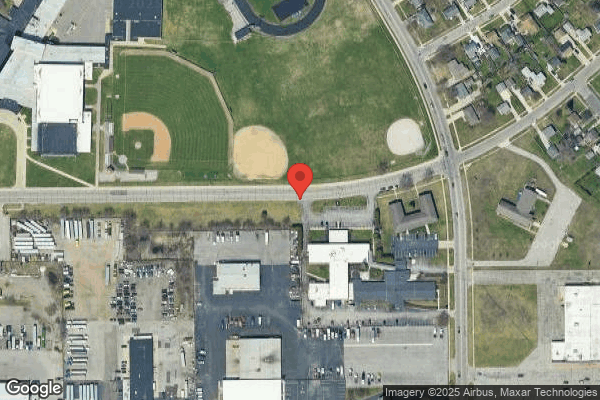
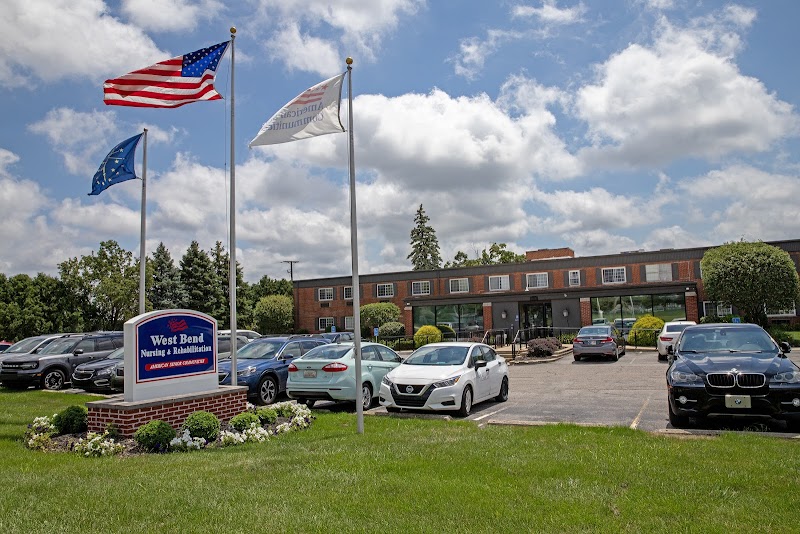
4600 W WASHINGTON AVE, SOUTH BEND, IN 46619 (574) 282-1294
For profit - Corporation 157 Beds AMERICAN SENIOR COMMUNITIES Data: November 2025
Trust Grade
55/100
#314 of 505 in IN
Last Inspection: December 2024

Within standard 12-15 month inspection cycle. Federal law requires annual inspections.

Overview

West Bend Nursing and Rehabilitation has a Trust Grade of C, which means it is average and falls in the middle of the pack among nursing homes. In Indiana, it ranks #314 out of 505 facilities, placing it in the bottom half, and #13 out of 18 in St. Joseph County, indicating that only a few local options are better. The facility's trend is improving, having reduced its issues from 9 in 2024 to 3 in 2025. Staffing is a concern with a rating of 2 out of 5 stars and a turnover rate of 60%, which is higher than the state average, suggesting that staff frequently leave. However, there were no fines reported, which is a positive sign. Despite some strengths, there are notable weaknesses. Inspector findings revealed serious sanitation issues, including dirty kitchen equipment and food being served at unsafe temperatures, which could affect the health of residents. Additionally, there was a failure to properly prepare meals for residents on puree diets, indicating a lack of adherence to nutritional guidelines. While the facility has strengths in its overall quality measures, families should carefully consider these issues when researching care options.

Trust Score
C
55/100
In Indiana
#314/505
Bottom 38%
Safety Record
Low Risk
No red flags
Inspections
Getting Better
9 → 3 violations
Staff Stability
⚠ Watch
60% turnover. Above average. Higher turnover means staff may not know residents' routines.
Penalties
✓ Good
No fines on record. Clean compliance history, better than most Indiana facilities.
Skilled Nurses
✓ Good
Each resident gets 44 minutes of Registered Nurse (RN) attention daily — more than average for Indiana. RNs are trained to catch health problems early.
Violations
⚠ Watch
31 deficiencies on record. Higher than average. Multiple issues found across inspections.
★★★☆☆
3.0
Overall Rating
★★☆☆☆
2.0
Staff Levels
★★★★★
5.0
Care Quality
★★☆☆☆
2.0
Inspection Score
Stable
2024: 9 issues
2025: 3 issues

The Good

  • 5-Star Quality Measures · Strong clinical quality outcomes
  • Full Sprinkler Coverage · Fire safety systems throughout facility
  • No fines on record

Facility shows strength in quality measures, fire safety.

The Bad

3-Star Overall Rating

Near Indiana average (3.1)

Meets federal standards, typical of most facilities

Staff Turnover: 60%

14pts above Indiana avg (46%)

Frequent staff changes - ask about care continuity

Chain: AMERICAN SENIOR COMMUNITIES

Part of a multi-facility chain

Ask about local staffing decisions and management

Staff turnover is elevated (60%)

12 points above Indiana average of 48%

The Ugly 31 deficiencies on record

Jun 2025 3 deficiencies
CONCERN (D) 📢 Someone Reported This

A family member, employee, or ombudsman was alarmed enough to file a formal complaint

Potential for Harm - no one hurt, but risky conditions existed

Notification of Changes (Tag F0580)

Could have caused harm · This affected 1 resident

Based on interview and record review, the facility failed to ensure a resident's responsible party was notified timely of new medication and the risks and benefits of the medication, prior to administ...

Read full inspector narrative →
Based on interview and record review, the facility failed to ensure a resident's responsible party was notified timely of new medication and the risks and benefits of the medication, prior to administration of the medication, for 1 of 3 residents reviewed for notification, (Resident B). Finding includes: On 6/18/25 at 9:43 A.M., a telephone interview with the Social Service Director (SSD) at a local dialysis center indicated Resident B received dialysis at the dialysis center on Mondays, Wednesdays and Fridays and had received dialysis for several months. The SSD indicated the facility had notified the dialysis center, on 3/14/25, that Resident B had been prescribed Ativan (a central nervous system depressants which slows down the nervous system and is used to treat anxiety) before his dialysis appointments. The dialysis SSD indicated Resident B had been coming to dialysis treatments, lethargic and out of it over the past few weeks and, on 5/28/25, she had notified the Director of Nursing and requested a discontinuation of the Ativan medication. The dialysis SSD indicated there was a note in the resident's communication book that indicated the resident had been figgity at an appointment, on 2/14/25, and there was no further documentation of negative behaviors during dialysis treatments. During an interview on 6/18/25 at 10:20 A.M., the facility Memory Care Director indicated, on 3/13/25, she was directed by the Director of Nursing to call the facility's Psychiatric Nurse Practitioner to request an order for medication to calm the resident while he received dialysis. The Memory Care Director indicated she had called and made the request to the Psychiatric Nurse Practitioner, who then prescribed Ativan 0.5 mg to be taken by mouth every Monday, Wednesday and Friday before leaving the facility for dialysis. The Memory Care Director indicated, on 3/13/25, during a telephone Care Plan meeting with the resident's responsible party, the resident's medications were reviewed but the addition of Ativan was not discussed. The Memory Care Director indicated she had not notified Resident B's responsible party that the resident was receiving Ativan at the time of the initial administration on 3/10/25. During an interview with the Assistant Director of Nursing, on 6/18/24 at 10:30 A.M., she indicated she had not notified Resident B's responsible party that Ativan had been prescribed for anxiety prior to dialysis treatments. The Assistant Director of Nursing indicated, on 3/13/25, during a telephone Care Plan meeting, she had listed the resident's medications, and that Ativan must have been mentioned, but it had not been discussed with the responsible party. , During an interview, on 6/18/25 at 11:00 A.M., with the Director of Nursing, she indicated the only documentation of notification to the resident's responsible party regarding the order to start Ativan was in the resident care plan note, on 3/13/25. The Director of Nursing indicated she had not notified Resident B's responsible party that Ativan had been prescribed. Resident B's clinical record was reviewed on 6/19/25 at 10:00 A.M. Diagnoses included but were not limited Alzheimer's disease, vascular dementia, chronic kidney disease, and adjustment disorder with anxiety. A physician's order dated from 3/11/25 to 5/28/25, indicated Ativan tablet 0.5 mg was to be administered by mouth once a day on Monday, Wednesday, and Friday before dialysis for the diagnosis of adjustment disorder with anxiety. Review of the Medication Administration Record (MAR), indicated Resident B had received Ativan 0.5 mg every Monday, Wednesday, and Friday from 3/10/25 to 5/28/25. Review of Resident B's Care Plan Summary, dated 3/13/25 at 1:19 P.M., indicated medications were reviewed with Resident B's responsible party and she was aware of the risks associated with the medications and had no concerns. On 6/18/25 at 10:01 A.M., the Administrator provided a policy titled, Resident Change of Condition, dated 11/2018, and indicated it was the current facility policy. The policy indicated, It is the policy of this facility that all changes in resident condition will be communicated to the .responsible party .The nurse in charge is responsible for notification of .responsible party prior to end of assigned shift when a significant change in the resident's condition is noted .Documentation will include time and [responsible party] response . This citation relates to Complaint IN00460484. 3.1-5(a)(3)
CONCERN (D) 📢 Someone Reported This

A family member, employee, or ombudsman was alarmed enough to file a formal complaint

Potential for Harm - no one hurt, but risky conditions existed

Deficiency F0605 (Tag F0605)

Could have caused harm · This affected 1 resident

Based on observation, interview, and record review, the facility failed to ensure a resident was free from chemical restraint related to medication administered for the purpose of calming the resident...

Read full inspector narrative →
Based on observation, interview, and record review, the facility failed to ensure a resident was free from chemical restraint related to medication administered for the purpose of calming the resident prior to off-site dialysis treatments, for 1 of 3 residents reviewed for chemical restraints, (Resident B). Finding includes: During an observation, on 6/17/25 at 10:18 A.M., Resident B was in the common area of the Memory Care unit seated upright, alert and watching the activities of the other residents in the area. The resident was well-groomed and nicely dressed. The resident showed no signs of any negative behaviors. During an observation, on 6/18/27 at 9:48 A.M., Resident B was in the common area of the Memory Care unit, seated in a chair along with other residents in the area. Resident B was clean, well dressed, appeared alert and showed no signs of negative behaviors. During an interview, on 6/18/25 at 9:43 A.M., with the Social Service Director (SSD) from a local dialysis center, she indicated Resident B received dialysis at the dialysis center on Mondays, Wednesdays, and Fridays, and had been receiving dialysis treatments for several months. The SSD indicated the facility had notified the dialysis center, on 3/14/25, that Resident B had been prescribed Ativan (a central nervous system depressants, which slows down the nervous system and is used to treat anxiety), before his dialysis appointments. The dialysis SSD indicated Resident B had been coming to dialysis, lethargic and out of it over the past few weeks and, on 5/28/25, she had notified the Director of Nursing and requesedt a discontinuation of the Ativan. The dialysis SSD indicated there was only one note in the resident's communication book that indicated the resident had been figgity at an appointment ,on 2/14/25, and there was no further documentation of negative behaviors during his dialysis treatments. During an interview, on 6/18/25 at 10:20 A.M., the Memory Care Director indicated, on 3/10/25, she was directed by the Director of Nursing to call the facility's Psychiatric Nurse Practitioner to request an order for medication to calm the resident while he received dialysis treatments. The Memory Care Director indicated she had called and made the request to the Psychiatric Nurse Practition,, who then prescribed Ativan 0.5 mg to be taken by mouth every Monday, Wednesday, and Friday before leaving the facility for dialysis treatments. The Memory Care Director indicated Resident B was very pleasant and easily redirected, though he could get agitated if he was seated for long periods of time. She indicated the facility always sent a Certified Nursing Assistant (CNA) to sit with the resident during dialysis treatments. The Memory Care Director indicated it was reported to her, on 2/14/25, that Resident B had been figgity at his appointment and had pulled at his infusion port. The Director of Memory Care indicated there had been no other reports of figgiting or behaviors that she had been aware of for Resident B. The Director of Memory Care indicated no assessments had been completed by the facility or the Psychiatric Nurse Practitioner to determine the resident's medical need for the Ativan medication and there were no assessments completed following the administration of the medication. The Memory Care Director indicated she had observed no behaviors in the resident that would warrant the need for Ativan. During an interview with the Assitant Director of Nursing, on 6/18/24 at 10:30 A.M., she indicated the facility did not start psychotropic medications, such as Ativan, unless they had documented, unwanted behaviors or anxieties demonstated by the resident for at least three days. Unwanted behaviors were then reported to the Psychiatric Nurse Practitioner who determined the necessary treatment. The Assistant Director of Nursing indicated there was no supportive documentation regarding Resident B, and the Psychiatric Nurse Practitioner had not assessed the resident before prescribing Ativan. During a telephone interview on 6/18/25 at 10:40 A.M. on the Assistant Director of Nursing's telephone, the Psychiatric Nurse Practitioner indicated on 3/10/25, she had initiated a new order for Ativan 0.5 mg to be administered to Resident B, before dialysis on every Monday, Wednesday, and Friday, due to a report from the Director of Nursing that the dialysis center had requested Resident B have something to address his restlessness and anxiety during dialysis. The Psychiatric Nurse Practitioner indicated the medication was discontinued, on 5/28/25, at the request of the dialysis center because the resident was lethargic. During an interview with the Director of Nursing, on 6/18/25 at 11:00 A.M., she indicated in March the dialysis center had reached out to her to report agitation in the resident, and felt he may have needed something to help him to relax. The Psychiatric Nurse Practitioner had ordered Ativan 0.5 mg to be administered by mouth before dialysis appointments. The Director of Nursing indicated no further concerns had been communicated to the facility, until 5/28/25, when the dialysis center indicated Resident B was too groggy to complete his treatments. She indicated the Ativan had been discontinued, at that time, at the request of the dialysis center. The Director of Nursing indicated there had been no behavioral assessments completed by the nursing staff or the Psychiatric Nurse Practitioner prior to the initiation of the medication and there were no follow-up assessments to address the resident's response to the Ativan or to monitor for any adverse side effects. Resident B's clinical record was reviewed on 6/19/25 at 10:00 A.M. Diagnoses included but were not limited Alzheimer's disease, vascular dementia, chronic kidney disease, and adjustment disorder with anxiety. Review of the resident's dialysis communication book from 2/1/25 to 6/16/25, indicated on 2/14/25 the resident was figgity and pulling at his dialysis port. No other entries concerning negative behaviors had been communicated. A note from the dialysis center, dated 5/29/25, was provided by the dialysis center on 6/18/25 at 10:07 A.M. The note indicated the dialysis center had notified Resident B's responsible party that the CNAs sitting with the resident to dialysis were frequently leaving him unattended and that the resident had arrivedto dialysis lethargic due to Ativan. The note indicated the responsible party was not aware of the Ativan use and that he had been active and moving during her visits at the facility. She had reported she felt the Ativan was an appropriate substitution for a sitter. A physician's order dated from 3/11/25 to 5/28/25, indicated Ativan tablet 0.5 mg was to be administered by mouth once a day on Monday, Wednesday, and Friday before dialysis for the diagnosis of adjustment disorder with anxiety. Review of the Medication Administration Record (MAR), indicated Resident B had received Ativan 0.5 mg every Monday, Wednesday, and Friday from 3/10/25 to 5/28/25. On 6/17/25 at 1:42 P.M., the Administrator provided a policy titled, Psychotropic Management, dated 9/24, and indicated it was the current facility policy. The policy indicated, .It is the policy .to ensure that a resident's psychotropic medication regimen helps promote the resident highest practicable mental, physical, and psychosocial well-being .A psychotropic drug is any drug that affects the brain activities associated with mental process and behavior. These drugs include .Anti-anxiety [drugs] .Prior to initiating a psychotropic medication, and assessment by the .prescriber will be made of the resident including other potential causes of the behavior; as will as non pharmacological interventions that have been attempted. Symptoms and therapeutic goals must be clearly documented prior to initiating or increasing a psychotropic medication .diagnoses alone do not necessarily warrant the use [of] these medications . This citation relates to Complaint IN00460484. 3.1-3(w) 3.1-26(k)(l)(o)
CONCERN (D) 📢 Someone Reported This

A family member, employee, or ombudsman was alarmed enough to file a formal complaint

Potential for Harm - no one hurt, but risky conditions existed

Comprehensive Care Plan (Tag F0656)

Could have caused harm · This affected 1 resident

Based on interview and record review, the facility failed to ensure a comprehensive plan of care was created timely related to anit-anxiety medication use for 1 of 3 residents reviewed for care plans,...

Read full inspector narrative →
Based on interview and record review, the facility failed to ensure a comprehensive plan of care was created timely related to anit-anxiety medication use for 1 of 3 residents reviewed for care plans, (Resident B). Finding includes: During an interview on 6/18/25 at 10:20 A.M., the Memory Care Director indicated on 3/10/25, she was directed by the Director of Nursing to call the facility's Psychiatric Nurse Practitioner to request an order for medication to calm the resident while he received dialysis. The Memory Care Director indicated she had called and made the request to the Psychiatric Nurse Practitioner, who then prescribed Ativan 0.5 mg to be taken by mouth every Monday, Wednesday, and Friday before leaving the facility for dialysis. Resident B's clinical record was reviewed on 6/19/25 at 10:00 A.M. Diagnoses included but were not limited, Alzheimer's disease, vascular dementia, chronic kidney disease and adjustment disorder with anxiety. A physician's order, dated from 3/11/25 to 5/28/25, indicated Ativan tablet 0.5 mg to be administered by mouth once a day on Monday, Wednesday, and Friday before dialysis for the diagnosis of adjustment disorder with anxiety. Review of the Medication Administration Record (MAR), indicated Resident B had received Ativan 0.5 mg every Monday, Wednesday, and Friday from 3/10/25 to 5/28/25. The care plans for Resident B's included, but where not limited to, Psychotropic Drug Use, Resident is at risk for adverse side effects related to use of psychotropic medication-Anxiety, intitiated on 5/16/25. During an interview with the Assitance Director of Nursing, on 6/18/24 at 10:30 A.M., she indicated a care plan should have been initiated for Ativan use immediately after it was ordered but was not done. During an interview, on 6/18/25 at 11:00 A.M., with the Director of Nursing, she indicated a care plan should have been initiated for Ativan use, when the Ativan was prescribed, but was not done. On 6/17/25 at 1:42 P.M., the Administrator provided a policy titled Psychotropic Management, dated 9/24, and indicated it was the current facility policy. The policy indicated, .It is the policy .to ensure that a resident's psychotropic medication regimen helps promote the resident highest practicable mental, physical, and psychosocial well-being .Symptoms and therapeutic goals must be clearly documented prior to initiating or increasing a psychotropic medication . According to an article published by the National Library of Medicine, dated 4/10/23, regarding Care Planning and the Nursing Process, .Planning .is where goals and outcomes are formulated that directly impact patient care based on EDP [Evidenced Based Practice] guidelines. These patient-specific goals and the attainment of such assist in ensuring a positive outcome. Nursing care plans are essential in this phase of goal setting. Care plans provide a course of direction for personalized care tailored to an individual's unique needs . Care plans enhance communication, documentation, reimbursement, and continuity of care across the healthcare continuum. This citation relates to Complaint IN00460484. 3.1-35(a)
Dec 2024 9 deficiencies
CONCERN (D)

Potential for Harm - no one hurt, but risky conditions existed

Transfer Notice (Tag F0623)

Could have caused harm · This affected 1 resident

2. During an interview on 11/3/2024 at 10:31 A.M., Resident 16 indicated she had been to the hospital in the last four months. A Nursing Progress note, dated 9/19/2024 at 6:30 P.M., indicated Resident...

Read full inspector narrative →
2. During an interview on 11/3/2024 at 10:31 A.M., Resident 16 indicated she had been to the hospital in the last four months. A Nursing Progress note, dated 9/19/2024 at 6:30 P.M., indicated Resident 16 was sent to the Emergency Department (ER) due to lower back pain and vomiting. A Nursing Progress note, dated 9/19/2024 at 7:49 P.M., indicated the Director of Nursing, Resident 16's family and the Primary Care Physician had been notified of the resident's transfer to the ER. A Nursing Progress note, dated 9/20/2024 at 6:25 A.M., indicated Resident 16 was admitted to the hospital. A Nursing Progress note, dated 10/4/2024 at 7:48 P.M., indicated Resident 16's family was concerned about the resident's health and requested the resident be sent to the hospital for evaluation. A Nursing Progress note, dated 10/4/2024 at 8:00 P.M., indicated after assessing the resident, the nurse called Emergency Services and the resident had been transported to the hospital. The record lacked the documentation that a transfer/discharge assessment and forms had been completed in conjunction with Resident 16's transfer to the hospital on 9/20/2024 and 10/4/2024. During an interview on 12/5/2024 at 2:16 P.M., the Administrator (ED) indicated the record lacked copies of transfer paperwork, which included the notice of transfer and bed hold policy paperwork. On 12/5/2024 a policy was requested regarding documentation of a transfer/discharge assessment and one was not provided prior to the survey exit. 3.1-12(a)(6)(A) Based on interview and record review, the facility failed to provide a copy of the Notice of Transfer/Discharge form when residents were transferred and admitted to an acute care facility for 2 of 2 residents reviewed for hospitalization. (Residents 4 and 16) Findings include: 1. A record review was completed on 10/3/2024 at 2:10 P.M. for Resident 4. Diagnoses included, but were not limited to chronic obstructive pulmonary disease, respiratory failure and heart failure. A Significant Change Minimum Data Set (MDS) assessment, dated 10/23/2024, indicated Resident 4's cognition was intact. On 10/5/2024 at 6:15 P.M., Nursing Progress notes indicated Resident 4 was found unresponsive. After an assessment and notification to the physician, Resident 4 was sent to the emergency room. Her husband was notified by phone of the transfer but the record lacked documentation that the Notification of Transfer/Discharge form was provided to the resident or her husband. During an interview on 12/05/24 at 2:16 P.M., the ED indicated there was no documentation of the transfer paperwork, including the Transfer/Discharge form for Resident 4.
CONCERN (D)

Potential for Harm - no one hurt, but risky conditions existed

Deficiency F0625 (Tag F0625)

Could have caused harm · This affected 1 resident

2. During an interview on 11/3/2024 at 10:31 A.M., Resident 16 indicated she had been to the hospital in the last four months and did not recall receiving a bed hold policy. A Nursing Progress note, d...

Read full inspector narrative →
2. During an interview on 11/3/2024 at 10:31 A.M., Resident 16 indicated she had been to the hospital in the last four months and did not recall receiving a bed hold policy. A Nursing Progress note, dated 9/19/2024 at 6:30 P.M., indicated Resident 16 was sent to the Emergency Department (ER) due to lower back pain and vomiting. A Nursing Progress note, dated 9/19/2024 at 7:49 P.M., indicated the Director of Nursing, Resident 16's family and Primary Care Physician were notified the resident was being transferred to the ER. A Nursing Progress note, dated 9/20/2024 at 6:25 A.M., indicated Resident 16 was admitted to the hospital. A Nursing Progress note, dated 10/4/2024 at 7:48 P.M., indicated Resident 16's family was concerned about the resident's health and requested the resident be sent to the hospital for evaluation. A Nursing Progress note, dated 10/4/2024 at 8:00 P.M., indicated after assessing the resident, the nurse called Emergency Services and the resident was transported to the hospital. The record lacked the documentation that a bed hold policy was provided to the resident in conjunction with Resident 16's transfer to the hospital on 9/20/2024 and 10/4/2024. During an interview on 12/5/2024 at 2:16 P.M., the Administrator (ED) indicated the record lacked copies of transfer paperwork, which included the notice of transfer and bed hold policy paperwork. On 12/5/2024 at 2:30 P.M., the ED provided the policy titled, Bed Hold Policy, dated 11/2017 and indicated it was the policy currently being used by the facility. The policy indicated Purpose of Policy: Provide guidance to facility staff for holding a bed for a resident transfer. 2. The residents will be provided the bed hold policy at the time of the hospital transfer or therapeutic leave. 4. The facility staff will document the notification to the resident and resident representative of the bed hold policy on the Emergency Resident Transfer Form 3.1-12(25)(A)(B) Based on interview and record review, the facility failed to provide a copy of the Bed Hold Policy to residents when admitted to the hospital for 2 of 2 residents reviewed for hospitalization. (Residents 4 and 16) Findings include: 1. A record review was completed on 10/3/2024 at 2:10 P.M. for Resident 4. Diagnoses included, but were not limited to chronic obstructive pulmonary disease, respiratory failure and heart failure. A Significant Change Minimum Data Set (MDS) assessment, dated 10/23/2024, indicated Resident 4's cognition was intact. On 10/5/2024 at 6:15 P.M., Nursing Progress Notes indicated Resident 4 was found unresponsive. After an assessment and notification to the physician, Resident 4 was sent to the emergency room. Her husband was notified by phone of the transfer but the record lacked documentation that the Bed Hold Policy was provided to the resident or her husband. During an interview on 12/05/24 at 2:16 P.M., the ED indicated there was no documentation of the transfer paperwork, including the Transfer/Discharge form for Resident 4.
CONCERN (D)

Potential for Harm - no one hurt, but risky conditions existed

Deficiency F0657 (Tag F0657)

Could have caused harm · This affected 1 resident

Based on interview and record review, the facility failed to have Care Plan meetings with residents and/or their representatives timely for 2 of 3 residents whose Care Plan meetings were reviewed. (Re...

Read full inspector narrative →
Based on interview and record review, the facility failed to have Care Plan meetings with residents and/or their representatives timely for 2 of 3 residents whose Care Plan meetings were reviewed. (Residents 47 & 38) Findings include: 1. During an interview on 12/03/2024 at 2:13 P.M., Resident 47 indicated he had not been to a Care Plan meeting with the staff. Resident 47's record review was completed on 12/4/2024 at 1:23 P.M. Resident 46 had a Minimum Data Set (MDS) assessment completed on the following dates: -11/19/2024 Quarterly MDS assessment -8/21/2024 Significant Change MDS assessment -5/31/2024 Quarterly MDS assessment -5/14/2024 Quarterly MDS assessment -3/19/2024 Annual MDS assessment -1/2/2024 Quarterly MDS assessment There was no documentation a Care Plan meeting with Resident 47 had been conducted following any of the MDS assessments, except after the 2/18/2024 Annual MDS assessment. During an interview on 12/5/2024 at 2:34 P.M., the Social Services Director indicated she had met with Resident 47 regularly, but had not had a Care Plan meeting with him following his MDS assessments. During an interview on 12/6/2024 at 8:45 A.M., the Executive Director indicated Resident 47 had not received Care Plan meetings regularly after his MDS assessments. 2. During an interview on 12/4/2024 at 10:45 A.M., Resident 38 indicated she had not met with staff about her care plan in a long time. A record review was completed on 10/5/2024 at 2:30 P.M. for Resident 38. Diagnoses included, but were not limited to, hypertension, general anxiety disorder and depression. An Annual Minimum Data Set (MDS) assessment, dated 11/6/2024, indicated Resident 38's cognition was intact. Resident 38's record lacked the documentation a Care Plan meeting had been conducted on a quarterly basis with Resident 38 and/or her representative from 6/6/2024 through 12/5/2024. During an interview on 12/05/24 at 2:45 P.M., the Social Service Director (SSD) indicated that she had not held any formal care plan meetings with Resident 38 and should have had them after quarterly assessments were completed on 8/14/2024 and on 11/6/2024. On 12/5/2024 at 3:00 P.M. a current policy, dated 8/2023, and titled, IDT Comprehensive Care Plan Policy was provided by the SSD. The policy indicated, .During the meeting all IDT members promptly meet with resident and/or representative at the bedside, or resident's desired location, at the time mutually agreed upon by SS, IDT, resident and/or representative 3.1-(d)(2)(B)
CONCERN (D)

Potential for Harm - no one hurt, but risky conditions existed

Deficiency F0658 (Tag F0658)

Could have caused harm · This affected 1 resident

Based on observation, interview and record review, the facility failed to 1 of 1 staff (LPN 2) met professional standards regarding signing off dressing changes for 1 of 3 residents reviewed for wound...

Read full inspector narrative →
Based on observation, interview and record review, the facility failed to 1 of 1 staff (LPN 2) met professional standards regarding signing off dressing changes for 1 of 3 residents reviewed for wounds. (Resident 42) Finding includes: During an observation and interview on 12/3/2024 at 9:41 A.M., Resident 42 indicated that she was supposed to get her dressing changed daily, and it had not been completed for two days. She had asked the evening shift to do it, but no one had completed her dressing change. The dressing covering the resident's left above the knee amputation revision wound was dated 11/30/2024. When Resident 42 pulled back the dressing, there was a large amount of reddish- brown thick drainage, an opening in the center of wound and erythema around the whole surgical site. During an observation and interview on 12/3/2024 at 10:12 A.M., LPN 2 indicated the dressing to the left leg was ordered to be changed daily, but the current dressing was dated 11/30, 4 days prior. LPN 2 indicated Resident 42 had went out of the building with a friend on 12/1/2024 and 12/2/2024 and had requested the dressing change to be completed later in the day, when she returned from her outings. A record review was completed for Resident 42 on 12/4/2024 at 2:00 P.M. Diagnoses included, but were not limited to: chronic hematogenous osteomyelitis, left femur-distal, infection following a procedure, chronic obstructive pulmonary disease, chronic diastolic heart failure, acquired absence of left leg above the knee and acquired absence of right leg above the knee, peripheral vascular disease, and atherosclerosis of native arteries of extremities with intermittent claudication, bilateral legs. A Physician Order, dated 11/27/2024 indicated the following: - left surgical above the knee wound to cleanse with wound wash, dry, apply skin prep then xeroform to wound bed and cover with an abdominal dressing and wrap with kerlix dressing. A Current Care Plan, dated 10/30/2024, indicated impaired skin integrity related to a surgical wound, with the following intervention of treatment as ordered. A Treatment Administration Record, for December, dated 12/1/2024 - 12/4/2024, indicated the dressing was documented as changed on 12/1/2024 and 12/2/2024. During an interview on 12/4/2024 at 3:18 P.M., LPN 2 indicated she had not changed Resident 42's dressing and the dressing changes should not have been signed off as completed on the TAR for 12/1/2024 and 12/2/2024. On 12/4/2024 at 3:40 P.M., a policy was requested but one was not provided. 3.1-50(a)(2)
CONCERN (D)

Potential for Harm - no one hurt, but risky conditions existed

Quality of Care (Tag F0684)

Could have caused harm · This affected 1 resident

Based on observation, interview, and record review, facility failed to ensure a resident received a treatment per the physician order for 1 of 3 resident's reviewed for skin condition. (Resident 42) F...

Read full inspector narrative →
Based on observation, interview, and record review, facility failed to ensure a resident received a treatment per the physician order for 1 of 3 resident's reviewed for skin condition. (Resident 42) Finding includes: During an observation and interview, on 12/3/2024 at 9:41 A.M., Resident 42 indiated she was supposed to have gotten her dressing changed daily, but it had not been done for the past two days. She indicated she had requested the evening shift staff to complete it, but no one had came to change the dressing. The dressing on her left above the knee amputation site was dated 11/30/2024. The dressing was loose and a large amount of reddish-brown thick drainage was noted when the resident pulled back the edge of the dressing, the center of the wound had an opened area and the tissue around the wound and incision was red. A record review was completed for Resident 42 on 12/4/2024 at 2:00 P.M. Diagnoses included, but were not limited to: chronic hematogenous osteomyelitis, left femur-distal, infection following a procedure, chronic obstructive pulmonary disease, chronic diastolic heart failure, acquired absence of left leg above the knee and acquired absence of right leg above the knee, peripheral vascular disease, and atherosclerosis of native arteries of extremities with intermittent claudication, bilateral legs. A Current Care Plan, dated 10/30/2024, indicated impaired skin integrity related to a surgical wound, with the following intervention of treatment as ordered. A Physician Order, dated 11/27/2024 indicated the following: -left surgical above the knee wound to cleanse with wound wash, dry, apply skin prep then xeroform to wound bed and cover with an abdominal dressing and wrap with kerlix dressing. During an observation and interview on 12/3/2024 at 10:12 A.M., LPN 2 indicated the dressing to the left leg was ordered daily but the current dressing was dated 11/30., four day prior LPN 2 indiated Resident 42 went out with a friend during the day, on 12/1/2024 and 12/2/2024, and requested the dressing changes be completed when she had returned from her outings. During an interview on 12/4/2024 at 3:18 P.M., LPN 2 indicated she had not passed on in report to the evening shift that Resident 42 needed her dressing change completed when she returned from her leave of absence on 12/1/2024 and 12/2/2024. The dressing was not changed, even though the TAR (Treatment Record) had been inaccurately signed as completed on 12/1/2024 and 12/2/2024. A Nursing Progress note, dated 12/1/2024 at 1:15 P.M., indicated Resident 42 had requested her dressing to remain in place as she was going out of the building with a friend On 12/5/2024 at 8:53 A.M., the DON indicated that they did not have a policy on following physician orders was just the standard of practice. 3.1-37(a)
CONCERN (D)

Potential for Harm - no one hurt, but risky conditions existed

Deficiency F0757 (Tag F0757)

Could have caused harm · This affected 1 resident

Based on interview and record review, the facility failed to ensure residents were free from antibiotic medication used for an excessive duration for 1 of 6 residents reviewed for unnecessary medicati...

Read full inspector narrative →
Based on interview and record review, the facility failed to ensure residents were free from antibiotic medication used for an excessive duration for 1 of 6 residents reviewed for unnecessary medications. (Resident 41) Finding includes: A record review was completed on 12/5/2024 at 10:00 A.M. for Resident 41. Diagnoses included but were not limited to: acute osteomyelitis of left ankle and foot and stage 2 pressure ulcer on left heel. An admission Minimum Data Set (MDS) assessment, dated 10/7/2024, indicated Resident 41's cognition was intact and he received antibiotic medication. Current Physician Orders included, but were not limited to, cephalexin (an antibiotic) ordered on 11/28/2024, 500 milligrams by mouth every 8 hours for a urinary tract infection. The antibotic was to have been completed and discontinued on 12/4/2024. A lab report, dated 11/30/2024, indicated a urine specimen showed no bacterial growth as the final result. The facility did not notify the Nurse Practioner, on 11/30/2024 of the need to discontinue the antibiotic treatment. An Event note, dated 12/5/2024, indicated the antibiotic was discontinued by the Nurse Practitioner due to no growth in the resident's urine, 5 days after the lab result was received. During an interview on 12/6/2024 at 1:14 P.M., the Infection Preventionist indicated it was normal to stop antibiotics due to the lab results from 11/30/2024. On 12/3/2024 at 1:00 P.M. a current policy, dated January 2023 and titled, Antibiotic Stewardship Program was provided by the Executive Director. The policy indicated, .The facility shall establish key elements for antibiotic prescribing and a system to monitor and manage antibiotic use 3.1-48(a)(2)
CONCERN (D)

Potential for Harm - no one hurt, but risky conditions existed

Deficiency F0807 (Tag F0807)

Could have caused harm · This affected 1 resident

Based on observation, interview and record review, the facility failed to ensure a resident received fresh ice water per his preference for 1 of 3 residents reviewed for hydration. (Resident 21) Findi...

Read full inspector narrative →
Based on observation, interview and record review, the facility failed to ensure a resident received fresh ice water per his preference for 1 of 3 residents reviewed for hydration. (Resident 21) Finding includes: During an observation and interview, on 12/4/2024 at 12:05 P.M., Resident 21 indicated he had did not have fresh ice water delivered daily to his room. He indicated he desired to have fresh ice water in his room. He indicated the last date he had water delivered was on 11/13 and 11/29. During an observation and interview, on 12/4/2025 at 1:16 P.M., Resident 21 indicated staff did not pass water and he had to go to the nurse's station and to ask for it in order to have a drink of water. During an observation on 12/5/2025 at 9:42 A.M., there was no cup of water in Resident 21's room. A record review was completed on 12/4/2024 at 2:11 P.M., for Resident 21. Diagnoses included, but were not limited to: hemiplegia and hemiparesis following nontraumatic intracerebral hemmorrhage affecting left dominant side, type 2 diabetes mellitus with hyperglycemia, hemiplegia and hemiparesis following nontraumatic subarachnoid hemorrhage affecting right non-dominant side and anxiety disorder. A Quarterly Minimum Data Set (MDS) assessment, dated 9/26/2024, indicated resident required set up assistance for eating and had upper and lower body range of motion impairment to one side of his body. A Quarterly Hydration Review assessment, dated 11/11/2024, indicated Resident 21 required assistance with food and fluids. A current Care Plan, dated 6/26/2024, indicated Resident 21 required assistance or monitoring of nutrition, hydration and elimination. The plan did not address the resident's desire to have fresh ice water in his room. During an interview on 12/5/2024 at 9:43 A.M., CNA 11 indicated she only provided water to residents' that wanted it and she did not just leave water in resident's rooms for them. She indicated that Resident 21 could do things for himself. On 12/9/2024 at 10:00 A.M., the Administrator provided a policy titled, Hydration Management, revised on 11/2017, and indicated the policy was the one currently used by the facility. The policy indicated .It is the policy of American Senior Communities to ensure that each resident is offered sufficient fluid intake to maintain proper hydration. 4. Hydration plans will be reviewed at a minimum of quarterly to determine if plan is still needed or requires revision. 9. Fresh water or other preferred beverages will be passed to all residents, unless medically contraindicated, on each shift . 3.1-46(b)
CONCERN (D)

Potential for Harm - no one hurt, but risky conditions existed

Infection Control (Tag F0880)

Could have caused harm · This affected 1 resident

Based on observation, interview, and record review, the facility failed to ensure acceptable infection control standards were maintained during a surgical dressing change for 1 of 1 resident observed ...

Read full inspector narrative →
Based on observation, interview, and record review, the facility failed to ensure acceptable infection control standards were maintained during a surgical dressing change for 1 of 1 resident observed for a dressing change. (Resident 42) Finding includes: During an observation of a dressing change, on 12/3/2024 at 10:12 A.M., LPN 2 removed the soiled dressing from Resident 42's wound. LPN 2 then removed her gloves, pulled another pair of gloves out of her uniform pocket, donned them and proceeded to clean the resident's wound. Prior to starting the dressing change, LPN 2 had laid the supplies for the dressing change on the residents bed without placing a barrier between the resident's bed and the clean dressing supplies. A record review was completed for Resident 42 on 12/4/2024 at 2:00 P.M. Diagnoses included, but were not limited to: chronic hematogenous osteomyelitis, left femur-distal, infection following a procedure, chronic obstructive pulmonary disease, chronic diastolic heart failure, acquired absence of left leg above the knee and acquired absence of right leg above the knee, peripheral vascular disease, and atherosclerosis of native arteries of extremities with intermittent claudication, bilateral legs. During an interview on 12/3/2024 at 10:28 A.M., LPN 2 indicated she should have washed her hands after she had removed the soiled dressing and she should have cleaned off the bedside table and placed a barrier down for the dressing supplies. On 12/3/2024 at 2:48 P.M., the DON provided a policy titled, Dressing Change Clean Technique (Incision or Wound), revised 10/2024, and indicated the policy was the one currently used by the facility. The policy indicated .8. Set up clean field with dressing change supplies and other necessary equipment. 10. Removed old dressing from the resident and put directly in trash receptacle. 11. Remove gloves and discard. 12. Perform hand hygiene . 3.1-18(a)
CONCERN (F)

Potential for Harm - no one hurt, but risky conditions existed

Food Safety (Tag F0812)

Could have caused harm · This affected most or all residents

Based on observation, interview and record review, the facility failed to store and serve food in a sanitary manner in the pantries, dining rooms, kitchen and kitchenettes. This had the potential to a...

Read full inspector narrative →
Based on observation, interview and record review, the facility failed to store and serve food in a sanitary manner in the pantries, dining rooms, kitchen and kitchenettes. This had the potential to affect 57 of 57 residents who consumed food from the kitchen, pantries, dining rooms and kitchenettes. Findings include: 1. During the initial kitchen tour with the Culinary and Nutrition Manager (CNM) on 12/3/2024 at 9:45 A.M., 12/4/2024 at 8:30 A.M., 12/5/2024 at 11:20 A.M. and 12/6/2024 at 8:40 A.M. the following was observed: - the 6 burner gas range had a thick buildup of a black substance on all burner grates and below the grates. -there was a build up of grease on the stainless backsplash surrounding the gas range. -there was a build up of grease on the wall next to the gas burners. -A ceiling vent had a black substance that looked like mold above the stainless steel prep table behind the ovens. -The handwashing sink was dirty with a red colored dried substance on the wall by the soap dispenser. -Two ovens had a build up of a black substance on the inside, and both ovens had a buildup of grease and food debris on the outside. -The floor was dirty in the cooking area, dishwashing room and the dry storage room. During an interview on 12/6/2024 at 8:45 A.M., the CDM indicated the cooking equipment, walls, floors, and ceiling vents were dirty and needed to be cleaned. He indicated the staff utilized a check list to clean the kitchen. 2. During an observation of meal service in the 2nd Floor Dining Room on 12/3/2024 at 11:58 A.M., the following was observed: - The black four burner range had food debris on all four burners. - The inside of the oven had a build up of grease and food debris. During an interview on 12/3/2024 at 12:00 P.M., Qualified Medication Aide 10 indicated the top of the range and inside of the oven were dirty and should be cleaned. She indicated it was the kitchen's job to clean the range and oven. During an interview with the Housekeeping Supervisor (HS) on 12/06/24 at 9:44 A.M.,she indicated it was the kitchen's responsibility to clean out the oven in the 2nd floor Dinning Room. 3. During an observation of meal service in the Main Dining Room on 12/3/2024 at 12:10 P.M., the following was observed: -A Puddle of water was under the ice machine. -The ice machine had a buildup of lime on the inside. -The wall behind the ice machine was dirty and had a brown substance splattered down the wall. -4 out of 14 chairs had a buildup food debris on the arms of the chairs. During an interview on 12/6/2024 at 8:45 A.M., the CDM indicated the ice machine needed to be delimed and it was the kitchen's responsibility to delime the inside of the ice machine. During an interview with the Housekeeping Supervisor (HS) on 12/06/2024 at 9:44 A.M., the HS indicated it was Housekeeping's responsibility to clean the dining room table, chairs and floors. During an interview with the Maintenance Director (MD) on 12/9/2024 at 9:05 A.M., the MD indicated the ice machine had been leaking. 4. During an observation of the Cottage's kitchenette on 12/5/2024 at 1:44 P.M., the following was observed: -A Clear container with 24 packs of single serve hot chocolate with no expiration dates. -A Clear container with packaged condiments that had no use by date. The container had 14 packets of tartar sauce, 12 packets of mild hot sauce, 2 packets of syrup and 2 packets of barbeque sauce. One packet of mild hot sauce was leaking an orange substance onto the other single serve condiment packages. During an interview on 12/5/2024 at 1:45 P.M., LPN 6 indicated he was not able to identify when the hot chocolate or individual packets of condiments should be discarded. He indicated one of the hot sauce packets was leaking and all the packets should be thrown away. LPN 6 indicated it was the nursing staff's responsibility to throw away undated or expired food in the unit pantries and kitchenettes. 5. During an observation of the 100 Hall Unit Pantry on 12/5/2024 at 10:50 A.M., the following was observed: -A cake, dated 11/19/2024, with no resident identifying information. -A package of sliced turkey with no opened on or use by date. -5 single serve yogurt containers with an expiration date of 11/30/2024. -Two Zip Lock bags containing M & M candies with no resident identifying information and no opened on or use by date. -A half a stick of butter with no resident identifying information and no opened on or use by date. -There wasa large amount of a black substance that looked like mold on the bottom of the refrigerator. During an interview on 12/5/2024 at 10:53 A.M., LPN 7 indicated the cake and yogurt were expired and should be thrown away. She indicated the sliced turkey, M & M candies and the half a stick of butter should have contained resident identifying information, the date the food was opened and the date the food should be discarded. She indicated the mold on the bottom of the refrigerator should not be there and the mold should be cleaned. She believed the nursing staff was responsible for cleaning out the pantry refrigerators. 6. During an observation of the kitchenette in the Activities Room on 12/5/2024 at 1:45 P.M., the following was observed: -A one Gallon Ziploc bag of pizza sauce, dated 6/19/2024. -A one Gallon Ziploc bag of pizza sauce, dated 8/2/2024. -A Large block of butter with no opened on or use by dates. -A large Ziploc bag of shredded cheese, dated 10/20/2024. -The electric range had 4 burners and all 4 burners and their pans below the burners were dirty. -Inside of the oven had burnt on food debris. During an interview on 12/5/2024 at 1:48 P.M., Activates Assistant (AA) 8 indicated the left overs should be thrown away 7 days after opening, but if there was no opened on date, the food should be thrown away immediately. AA 8 indicated it was Housekeeping's responsibility to clean the range, oven and refrigerator. During an interview on 12/8/2024 at 10:00 A.M., the CDM indicated it was the kitchen's responsibility to clean all of the ranges, ovens and refrigerators in the building, including on the units and in the kitchenettes. On 12/5/2024 at 9:22 A.M., the Executive Director indicated the facility did not have a policy for maintaining the kitchen and the kitchen equipment, but the facility followed the Food and Drug Administration's (FDA) Food Code as a guide. During an interview on 12/5/2024 at 10:30 A.M., the Corporate Nurse indicated the facility used the FDA Code as a guide for maintaining the kitchen, dining rooms, unit pantries and kitchenettes. On 12/6/2024 at 9:15 A.M., the [NAME] President of Operations supplied a cleaning schedule for the kitchen and identified the cleaning schedule as the one currently used by the facility. The cleaning schedule indicated, .Ranges cleaned daily, Ovens cleaned on Saturday, ceiling vents cleaned monthly, sweep and mop floors daily . 3.1-21(3)
Dec 2023 4 deficiencies
CONCERN (D)

Potential for Harm - no one hurt, but risky conditions existed

Deficiency F0578 (Tag F0578)

Could have caused harm · This affected 1 resident

Based on record review and interview, the facility failed to ensure that a Physician Order indicated a Do Not Resuscitate (DNR) as indicated upon admission by the resident and legal representative for...

Read full inspector narrative →
Based on record review and interview, the facility failed to ensure that a Physician Order indicated a Do Not Resuscitate (DNR) as indicated upon admission by the resident and legal representative for 1 of 2 residents reviewed for Advance Directives (Resident 43). Finding includes: A record review was completed, on 12/07/2023 at 8:43 A.M., and indicated diagnoses included, but were not limited to: Alzheimer's disease, dysphagia, anxiety, and depression. A current Physician's Order, dated 3/28/2023, indicated Resident 43 had a Full Code status ordered. A signed POST (Physician's Orders for Scope of Treatment) form dated 9/7/2023 indicated Resident 43 had a Do Not Resuscitate status. A care plan, dated 9/29/2023, indicated Resident 43's legal representative had formulated a Do Not Resuscitate with POST orders. Resident and legal representative preferences regarding advanced directives would be honored. Assess for change in condition as indicated and ensure that the POST form would be completed fully and integrated in Physician's Orders and ensure that POST form is sent to the hospital with resident if hospitalized . During an interview, on 12/07/2023 at 10:11 A.M., LPN (Licensed Practical Nurse) 6 indicated that there was a discrepancy between the Physician's Order for Resident 43's code status and the POST form. LPN 6 indicated she was unsure why there was a discrepancy and indicated Resident 43 had been admitted as a Full Code status and the orders should have been updated when the POST form was changed. LPN 6 indicated that the orders and the POST form should have been the same. On 12/8/2023 at 9:00 A.M., the Director of Nursing provided a policy titled Advanced Directives-POST, DNR, Health Care Rep dated 1/2016 and indicated this was the current policy used by the facility. The policy indicated .If a resident has a valid Advanced Directive, the facility's care will reflect the resident's wishes as expressed in the Directive, in accordance with state law .(2) Information about any Advanced Directives already in place will be gathered as part of the admission process. Executed Advanced Directives will be documented in the medical record. Advanced Directives which reflect medical care and treatment will be documented as a physician's order .Implementing/Maintaining a POST form .(3) If the individual decides to revoke or change the POST form, the resident's attending physician should be notified and appropriate changes to the physician's orders should be obtained as soon as possible to ensure that the resident's wishes are accurately reflected in the plan of care 3.1-4(5)
CONCERN (D)

Potential for Harm - no one hurt, but risky conditions existed

Comprehensive Care Plan (Tag F0656)

Could have caused harm · This affected 1 resident

Based on record review and interview, the facility failed to create a person-centered care plan for 2 of 25 residents whose care plans were reviewed (Residents 1 and 55). Findings include: 1. A recor...

Read full inspector narrative →
Based on record review and interview, the facility failed to create a person-centered care plan for 2 of 25 residents whose care plans were reviewed (Residents 1 and 55). Findings include: 1. A record review was completed on 12/7/2023 at 11:39 A.M. Resident 1's diagnoses included, but were not limited to: anxiety disorder, Non-Alzheimer's dementia, pseudobulbar affect, adjustment disorder with mixed anxiety and depressed. Resident 1's current physician orders included, but were not limited to: Lexapro 20 mg (milligram) tablet oral once a day for depression, and Valium 2 mg tablet 3 times a day for anxiety disorder. A current care plan, dated 2/24/2017, and revised, on 8/22/2018, indicated Resident 1 was displaying signs and symptoms of depression, such as trouble sleeping, feeling tired and having little energy, crying, and tearfulness. Resident 1 indicated she felt bad about herself and had trouble concentrating. Interventions included, but were not limited to: Offer encouragement and support to the the way Resident 1 feels, encourage activities of interest, encourage family support, and involvement. During an interview, on 12/7/2023 at 3:45 P.M., the Director of Nursing indicated Resident 1's care plan was not person centered, but should have been. 2. A record review was completed on 12/6/2023 at 3:42 P.M. Resident 55's diagnoses included, but were not limited to anxiety, depression, dementia and traumatic brain dysfunction. A Quarterly MDS (Minimum Data Set) assessment, dated 9/26/2023, indicated Resident 55 had no mood or behavior issues. Resident 55's current medication list included, but were not limited to: Lexapro (Antidepressant) and Lorazepam (Benzodiazepines). A current care plan, dated 6/13/2023, indicated the resident was at risk for signs and symptoms of anxiety. Worried facial expressions, repetitive movements, insomnia, reports of anxiety. Resident may become verbally aggressive with other residents. Has a diagnosis of Generalized Anxiety disorder. The interventions included: Encourage activities of interest. Encourage family support and involvement. Encourage resident to verbalize fears and anxiety, offer validation and reassurance. Maintain calm environment, move to quiet area. Medications per MD order, and Psych (psychiatric) services as appropriate- resident declined. A current care plan, dated 6/13/2023, and last reviewed on 10/2/2023, indicated the resident was at risk for signs/symptoms of depression. Sad facial expression, withdrawal, decreased appetite, tearfulness, insomnia, verbalization of depression, etc. PHQ-9 (Patient Health Questionnaire) states feeling tired and feeling fidgety/restless. The interventions included: Encourage activities of interest. Encourage family support ad involvement. Allow the resident to express feelings and frustrations offer validation and support. During an interview, on 12/8/2023 at 12:00 P.M., the Director of Nursing indicated the care plans were not person centered with interventions and should have been. On 12:10 P.M., the Director of Nursing provided the policy titled, IDT Comprehensive Care Plan Policy. The policy indicated .It is the policy of this facility that each resident will have an interdisciplinary comprehensive person--centered care plan developed and implemented based on Resident Assessment Instrument (RAI) process. The care plan must include measurable goals and resident specific interventions based on resident needs and preferences 3.1-35(a)
CONCERN (D)

Potential for Harm - no one hurt, but risky conditions existed

Respiratory Care (Tag F0695)

Could have caused harm · This affected 1 resident

Based on observation, record review and interview, the facility failed to ensure oxygen was provided as ordered, change oxygen equipment and ensure oxygen equipment was dated for 1 of 1 resident revie...

Read full inspector narrative →
Based on observation, record review and interview, the facility failed to ensure oxygen was provided as ordered, change oxygen equipment and ensure oxygen equipment was dated for 1 of 1 resident reviewed for oxygen use (Resident 52). Finding includes: During an observation, on 12/04/2023 at 11:45 A.M., Resident 52 had undated oxygen tubing and an undated humidification bottle in her room and the oxygen storage bag was dated 11/10/2023. During an observation, on 12/05/2023 at 9:11 A.M., Resident 52 had undated oxygen tubing and an undated humidification bottle in her room and the oxygen storage bag was dated 11/10/2023. During an observation, on 12/6/2023 at 5:55 A.M., no date was found on the oxygen tubing and the humidification bottle was undated and the oxygen tubing bag was dated 11/10/2023. During an observation, on 12/06/223 at 11:18 A.M., no date was on the oxygen tubing or humidification bottle and oxygen storage bag dated 11/10/2023 with staff observed in resident's room. During an interview, on 12/06/2023 at 3:06 P.M., LPN 5 indicated that Resident 52's oxygen tubing and humidification bottle should have been changed and dated on Sunday night per the Physician Order. LPN 5 looked at the oxygen tubing, humidification bottle, and oxygen storage bag and indicated that the oxygen tubing and humidification bottle should have been dated, and the bag should have been changed at the same time. LPN 5 indicated that the oxygen bag was dated 11/10/2023 and should have been changed out. A record review was completed, on 12/07/2023 at 11:10 A.M., and indicated Resident 52's diagnoses included, but were not limited to: chronic respiratory failure with hypoxia, dementia, cor pulmonale, pulmonary hypertension due to lung diseases and hypoxia. A Physician's Order, dated 5/12/23, indicated to change oxygen tubing and humidification bottle, and clean concentrator and filter once a week on Sunday. A Physician's Order, dated 7/19/2023, indicated Resident 52 had continuous oxygen at two liters per nasal cannula. On 12/8/2023 at 9:00 P.M., the Director of Nursing provided an undated policy titled Oxygen Therapy and Devices and indicated that this was the current policy used by the facility.Oxygen devices .(1) nasal cannula .(e) Change out weekly and as needed .(f) place in bag when not in use On 12/8/2023 at 9:00 A.M., the Director of Nursing provided an undated policy titled Oxygen Concentrator and indicated that this was the current policy used by the facility.daily maintenance (1) Check the water level in the humidity bottle and change the bottle as needed every seven days 3.1-47 (a)(6)
CONCERN (D)

Potential for Harm - no one hurt, but risky conditions existed

Deficiency F0761 (Tag F0761)

Could have caused harm · This affected 1 resident

Based on observation, interview, and record review, the facility failed to properly store refrigerated medications in 1 of 3 medication refrigerators that were observed for drug storage (Cottage Unit)...

Read full inspector narrative →
Based on observation, interview, and record review, the facility failed to properly store refrigerated medications in 1 of 3 medication refrigerators that were observed for drug storage (Cottage Unit). Finding includes: An observation of the medication refrigerator on the Cottage Unit was completed on 12/7/2023 at 8:18 A.M. The medication refrigerator's freezer had a heavy built-up of ice that was melting and causing water to accumulate in a red bin containing resident's medications. During an interview, completed on 12/7/2023 at 8:23 A.M., the Director of Nursing indicated there was water dripping onto resident's medications in the refrigerator, and there should not be. On 12/7/2023 at 10:30 A.M., the Director of Nursing provided a policy, with a revision date of 7/21/2022, and titled, Storage and Expiration Dating of Medications and Biologicals,. The Director Nursing indicated it was the policy currently being used by the facility. The policy indicated, .This Policy sets forth the procedures relating to the storage and expiration dates of medications, biologicals, syringes and needles .11. Facility should monitor refrigerated storage for evidence of moisture and condensation (humidity) and may consult with the pharmacy regarding medication integrity 3.1-25(m)
Feb 2023 2 deficiencies
CONCERN (D) 📢 Someone Reported This

A family member, employee, or ombudsman was alarmed enough to file a formal complaint

Potential for Harm - no one hurt, but risky conditions existed

Free from Abuse/Neglect (Tag F0600)

Could have caused harm · This affected 1 resident

**NOTE- TERMS IN BRACKETS HAVE BEEN EDITED TO PROTECT CONFIDENTIALITY** Based on interview and record review, the facility failed to protect a residents' right to be free from sexual abuse by a reside...

Read full inspector narrative →
**NOTE- TERMS IN BRACKETS HAVE BEEN EDITED TO PROTECT CONFIDENTIALITY** Based on interview and record review, the facility failed to protect a residents' right to be free from sexual abuse by a resident for 1 of 3 residents reviewed for abuse, (Resident C). Findings include: On 2/09/23 at 11:31 A.M., the Executive Director (ED) provided a facility reported incident, Incident Number 686, dated 2/01/23. The report indicated on 2/01/23 around 7:00 P.M., staff were rounding in the Memory Care Area and found Resident D in bed with Resident C attempting to put his had down Resident C's brief. Staff immediately redirected Resident D and assisted him out of the bed and escorted him back to his room. A Head-to-Toe assessment was completed on Resident C, finding Resident C's brief remained in tact and fastened. Resident C did not show any signs or symptoms of psychosocial distress. On 2/09/23 at 11:47 A.M., the clinical record for Resident C was reviewed. Resident C was admitted on [DATE] with diagnoses that included but were not limited to Alzheimer's disease. The most recent comprehensive Minimum Data Set (MDS) was a quarterly assessment dated [DATE], and indicated Resident C was severely cognitively impaired, required extensive assistance for bed mobility, transfers, dressing, eating, toileting, and personal hygiene. Resident C was totally dependent on staff for locomotion on and off the unit, and for bathing. The resident utilized a wheelchair for mobility. The MDS listed diagnoses that included but were not limited to, Alzheimer's disease, dementia, anxiety, and depression. On 2/09/23 at 2:00 P.M., the clinical record for Resident D was reviewed. Resident D was most recently admitted to the facility on [DATE] with diagnoses that included but were not limited to dementia with behavioral disturbances. The most recent comprehensive MDS was a quarterly assessment, dated 1/26/23, and indicated Resident D was severely cognitively impaired, exhibited intermittent signs of inattention, disorganized thinking, and altered levels of consciousness indicated by lethargy, difficult to arouse, and startling easily. The resident did not exhibit any behaviors to impact others during the 7 day assessment period. Resident D required limited assistance of 1 person to walk in the room and in the corridor and did not require a mobility device. The MDS listed diagnoses that included but were not limited to stroke and dementia. On 2/10/23 at 10:30 A.M., during an interview conducted with the ED she indicated it was inappropriate for Resident D to be in Resident C's bed. She indicated the facility policy directed the action to be a form of abuse, so reported the incident to the State Agency within 2 hours of the occurrence. A policy, titled Abuse Prohibition, Reporting, and Investigating, dated 1/23 was provided by the Executive Director on 2/09/23 at 2:50 P.M., and indicated it was the current policy. The policy indicated, .It is the policy .to provide each resident with an environment that is free from abuse .This includes but is not limited to .sexual abuse .Definitions/Examples of Abuse .Sexual Abuse-Nonconsensual sexual contact of any type with a resident. Examples may include but not limited to .touching . This Federal tag related to complaint IN00401263. 3.1-27(a)(1)
CONCERN (D) 📢 Someone Reported This

A family member, employee, or ombudsman was alarmed enough to file a formal complaint

Potential for Harm - no one hurt, but risky conditions existed

Comprehensive Care Plan (Tag F0656)

Could have caused harm · This affected 1 resident

**NOTE- TERMS IN BRACKETS HAVE BEEN EDITED TO PROTECT CONFIDENTIALITY** Based on observation, interview, and record review, the facility failed to implemented a Care Plan for a resident who required f...

Read full inspector narrative →
**NOTE- TERMS IN BRACKETS HAVE BEEN EDITED TO PROTECT CONFIDENTIALITY** Based on observation, interview, and record review, the facility failed to implemented a Care Plan for a resident who required feeding assistance, for 1 of 3 residents reviewed for feeding assistance, (Resident B). Finding includes: On 2/10/23 at 12:13 P.M., during an observation of Resident B, the resident was in his bed with the head of the bed elevated and sitting up in preparation of the lunch meal, and with a Hospice nurse at the bedside. During an interview with the Hospice Nurse at that time, she indicated the resident required feeding assistance for all meals and that the resident spilled much of his food if he was not assisted. On 2/10/23 at 12:15 P.M., during an observation and interview, Resident B was set-up and awaiting the lunch tray. During an interview with the Executive Director at that time, she indicated Resident B required feeding assistance from the staff. On 2/10/23 at 12:30 P.M., during an observation of Resident B, the resident was being fed by Qualified Medication Aide (QMA) 3. During an interview with QMA 3, he indicated resident would sometimes feed himself, but was supposed to be fed by staff. On 2/13/23 at 10: 41 A.M.,during an interview with Social Service Director, she indicated on 1/27/23 there was a family Care Plan meeting with Resident B's family member and it was determined at that time that staff need to feed the resident and that resident Care Plans should be followed. On 2/13/23 at 2:20 P.M., the clinical record for Resident B was reviewed. Resident B was most recently admitted to the facility on [DATE] with diagnoses that included but were not limited to hemiplegia (paralysis to one side of the body) following a stroke, dysphasia (difficulty in swallowing), and contracture of the left hand. A Minimum Data Set (MDS) dated [DATE], for a quarterly assessment indicated Resident B was moderately cognitively impaired, exhibited no behaviors, required extensive assistance of 2 people for bed mobility, transfers, toileting, extensive assistance of 1 for dressing, personal hygiene, total dependence for locomotion on and off the unit, and bathing. The resident required supervision for eating. Resident B was receiving hospice services. Resident B's current care plans included but were not limited to, the resident's experience of weight loss in the past, dated 5/12/22. The Care Plan indicated staff were to monitor food intake at meals. A Care Plan for nutritional status was initiated on 10/02/19 and updated on 12/02/22, instructing staff to assist with eating as needed and to monitor food intakes. A CarePlan Summary dated 12/02/22, indicated in Culinary Instructions, .discussed that when nurse does round she sees resident getting assistance with meals. Did speak with floor staff in regards to assisting res, [Resident B], not sitting tray in room without having staff ready to assist with meal . A CarePlan Summary dated 1/27/23, indicated in Culinary Instructions, .States staff should be feeding him [Resident B] .Nursing to offer to feed Review of Resident B's point of care documentation for meal assistance from 1/01/23 to 2/12/23 indicate the resident did not receive feeding assistance on the follow dates and times: 1/01/23 lunch: Independent 1/02/23 lunch: Independent 1/03/23 breakfast and lunch, no documentation 1/06/23 lunch: Independent 1/07/23 lunch: No documentation 1/09/23 breakfast: Independent 1/10/23 breakfast: Independent 1/18/23 breakfast: Independent 1/22/23 breakfast: Independent 1/22/23 lunch: No Documentation 1/24/23 lunch: No Documentation 1/25/23 breakfast and lunch, no documentation 1/27/23 lunch: Independent 1/28/23 breakfast: Supervision 1/29/23 breakfast: Supervision 1/30/23 supper: No documentation 1/31/23 breakfast: Supervision 2/01/23 breakfast: Supervision. Lunch and supper, no documentation 2/04/23 supper: No Documentation 2/05/23 breakfast: Independent 2/06/23 breakfast: Supervision. Lunch, no documentation 2/07/23 breakfast, lunch, supper: no documentation. 2/08/23 breakfast, lunch: no documentation. Supper, supervision 2/09/23 breakfast, supper: no documentation 2/11/23 breakfast supper: no documentation 2/12/23 breakfast: no documentation Review of Resident B's Vitals Report for meal intake amounts from 1/01/23 to 2/12/23 indicated no meal intake documentation on the follow dates and times: 1/01/23 breakfast 1/02/23 lunch 1/03/23 breakfast and lunch 1/04/23 breakfast and lunch 1/05/23 breakfast and lunch 1/06/23 lunch 1/07/23 breakfast and lunch 1/08/23 dinner 1/10/23 lunch 1/12/23 lunch 1/18/23 lunch 1/19/23 breakfast and lunch 1/20/23 lunch 1/24/23 lunch 1/26/23 lunch 1/28/23 lunch 1/29/23 dinner 1/30/23 breakfast and lunch 1/31/23 breakfast 2/01/23 breakfast and lunch 2/02/23 dinner 2/03/22 breakfast 2/05/23 lunch 2/06/23 breakfast 2/07/23 breakfast and dinner 2/08/23 breakfast and lunch 2/09/23 lunch 2/10/23 breakfast and lunch 2/11/23 lunch A policy titled, IDT [Inter Disciplinary Team] Comprehensive Cafe Plan Policy, dated 10/19 and indicated as the current policy was provided by the Executive Director on 2/13/23 at 9:15 A.M. The policy indicated, .The care plan will include measurable goals and resident specific interventions based on resident needs and preferences to promote the resident's highest level of functioning . This Federal tag relates to complaint IN00400525. 3.1-35(g)(2)
Oct 2022 13 deficiencies
CONCERN (D)

Potential for Harm - no one hurt, but risky conditions existed

Resident Rights (Tag F0550)

Could have caused harm · This affected 1 resident

**NOTE- TERMS IN BRACKETS HAVE BEEN EDITED TO PROTECT CONFIDENTIALITY** Based on observation, record review and interviews, the facility failed to ensure 1 resident in a sample of 24 received feeding ...

Read full inspector narrative →
**NOTE- TERMS IN BRACKETS HAVE BEEN EDITED TO PROTECT CONFIDENTIALITY** Based on observation, record review and interviews, the facility failed to ensure 1 resident in a sample of 24 received feeding assistance and/or supervision to maintain their dignity during meals. (Resident 38) Findings include: During an observation of the noon meal service, conducted on 10/21/2022 at 12:10 P.M. a nursing staff member delivered a meal tray to Resident 38, who was seated in the dining room at a table in the corner. The tray cover was removed but the food was not set up for the resident and his silverware remained wrapped in his napkin. The staff member exited the dining room to continue passing meal trays to resident rooms. Resident 38 was observed to start feeding himself pureed food with his fingers. There were no staff members in the dining room to assist and/or cue the resident to utilize silverware. The resident was noted to drip food onto the front of his shirt and chin. At 12:16 P.M., the Administrator was noted to sit down beside Resident 38 and fed him the rest of his lunch. The resident was not noted to resist the assistance. During an observation of the noon meal, conducted on 10/24/2022 at 12:32 P.M., Resident 38 was observed seated in his wheelchair in his room. A bath towel had been wrapped around his chest area and his food tray was noted to be on his overbed table in front of him. There were no staff noted in his room and the resident was observed to dip his fingers into a white pureed food item and then lick his fingers. At 12:36 P.M., Resident 38 appeared to have fallen asleep and was noted drooling saliva and the white food item out of his mouth. At 12:44 P.M., CNA 46 walked by Resident 38's room and noticed he was sleeping. She entered his room, woke him up, asked if he needed help and then left the resident's room. The resident was then observed to once again, dip his fingers into his pureed food. At 12:51 P.M., Employee 25 was noted to be seated beside Resident 38 in his room. The staff member was holding a spoon of pureed food in her right hand but was noted to be looking at her phone, which she held in her left hand. Although Employee 25 was holding a spoon of food, Resident 38 was continuing to dip his fingers into his pureed dessert. CNA 16, who was feeding Resident 38's roommate, indicated Resident 38 did not always like to be fed, liked to try to feed himself but really needed help to eat. She indicated when she was assisting Resident 38 to eat, she often used plastic spoons and filled them for the resident and then he was able to take the spoonful of food and feed himself. Resident 38 was asked if he like the pureed vegetable that Employee 25 had placed on the spoon and he shook his head No.' When Employee 25 asked if he wanted the pureed peaches, Resident 38 shook his head yes and accepted a spoonful of the food. Resident 38 was admitted to the facility on [DATE] with diagnoses including, but not limited to: hemiplegia and hemiparesis following cerebral vascular accident of the dominant right side, chronic obstructive pulmonary disease, aphasia, diabetes mellitus, dementia with behavioral disturbance, anemia, hyperlipdemia, muscle weakness, dysphagia, contracture right wrist/hand, cognitive communication deficit, contracture right elbow and right ankle, chronic bronchitis, lack of coordination, gastritis and personal history of nicotine dependency. Review of the most recent Quarterly MDS Assessment, completed on 9/12/2022 indicated the resident required extensive staff assistance of two staff for bed mobility and transfer needs. In addition, the resident required extensive staff assistance of one staff for wheelchair locomotion, dressing, toileting and personal hygiene needs. The resident required limited staff assistance for eating needs. The current diet order for Resident 38 was for a pureed diet with nectar thick liquids. The resident was to receive his food in bowls for easier self feeding. The current care plan for Resident 38's eating needs included a care plan which addressed the resident's risk for aspiration related to dysphagia. In addition, there was a plan which indicated the resident preferred teat his meals with his hands and declined staff assistance. The plan included interventions to continue to offer and encourage resident to utilize silverware for all meals and/or provide food able to be held in his hands if able, Finally there was a plan to address the resident's need for assistance with Activities of daily living, including eating. The plan had an intervention to provide assistance with eating as needed. During an interview with the Unit Manager/Infection Preventionist, conducted on 10/25/2022 at 11:15 A.M. she indicated staff should absolutely not be using their cell phones while feeding residents. During an interview with the Registered Dietician, conducted on 10/25/2022 at 11:39 A.M. she indicated Resident 38 did like to eat with his fingers, did require some assistance and was to receive a pureed diet. Review of the facility policy and procedure, titled, Meal Service and Distribution provided by the Administrator on 10/24/2022 at 3:50 P.M. included the following procedures: .1. Residents will be assisted in the dining room as needed. Positioning and assistance at mealtime must be appropriate for residents' needs .3. Residents' meals are distributed promptly with supervision provided as needed .7. Staff will be available in the dining rooms during meal service to assist residents with eating and to handle any emergency that might arise 3.1-3(a)
CONCERN (D)

Potential for Harm - no one hurt, but risky conditions existed

Deficiency F0565 (Tag F0565)

Could have caused harm · This affected 1 resident

Based on observation, interview, and record review, the facility failed to ensure a Resident Council concern was addressed and acted on promptly regarding hot foods that were served cold or for cold f...

Read full inspector narrative →
Based on observation, interview, and record review, the facility failed to ensure a Resident Council concern was addressed and acted on promptly regarding hot foods that were served cold or for cold foods that were served warm, for 4 of 4 Resident Council Meeting minutes reviewed. Findings include: Resident Council Meeting Minutes were received from the Activities Director on 10/19/22 at 11:15 A.M., and reviewed at that time. Resident Council Meeting Minutes dated 6/23/22 at 1:50 P.M., regarding Nutrition Services, indicated residents a concern with meals being served cold and had to ask to have their meals warmed in the microwave. There was no follow-up to the concern in the meeting follow-up notes, and the food temperature concern was not addressed. Nutrition Services did not address the concern. Resident Council Meeting Minutes dated 7/27/22 at 2:30 P.M., regarding Nutrition Services, indicated the temperature of the food was not appropriate. The minutes did not clarify the in what way the food temperatures were not appropriate. The follow-up note dated 7/27/22, indicated, Residents aware Floor staff can warm up in microwave to their liking. Nutrition Services did not address the concern. Resident Council Meeting Minutes dated 9/14/22 at 1:40 P.M., regarding Nutrition Services, indicated the temperature of the food was not appropriate. The food was cold. The follow-up dated 9/14/22 indicated, IP [Infection Preventionist], to inservice Floor staff on warming res [resident] trays when needed . Nutrition Services did not address the concern. On 10/19/22 at 1:15 P.M., during a Resident Council meeting observation, the Resident Council President indicated sometimes the meals trays were served at inappropriate temperatures. Residents in attendance indicated the hot food is not served hot and the cold food is not served cold, and that Nutrition Services had not ever addressed the concern. There were no follow-up notes provided regarding the 10/19/22 Resident Council meeting. On 10/19/22 at 2:00 P.M., an interview with the Activities Director indicated she did not know that Dietary Services where supposed to address the concern of foods being served at inappropriate and apprizing temperatures. On 10/20/22 at 12:52 P.M., The policy titled, Resident Council, dated 1/11 and most recently revised on 2/20, was provided by the Administrator who indicated it was the currant policy. The policy indicated, .The council will be used to communicate concerns, give suggestions for future programming and events, and otherwise participate in and guide facility life .Concerns or suggestions from the meeting will be addressed by the appropriate department .The facility responses to concerns/suggestions will be reviewed by the Resident Council President and the resident council on their next meeting . 3.1-3(g)(l)
CONCERN (D)

Potential for Harm - no one hurt, but risky conditions existed

Comprehensive Assessments (Tag F0636)

Could have caused harm · This affected 1 resident

Based on observation, record review and interviews, the facility failed to complete a thorough bladder incontinence assessment for 1 of 1 residents reviewed for incontinence. (Resident 16) Finding inc...

Read full inspector narrative →
Based on observation, record review and interviews, the facility failed to complete a thorough bladder incontinence assessment for 1 of 1 residents reviewed for incontinence. (Resident 16) Finding includes: During the initial tour of the facility, conducted on 10/17/2022 between 10:00 A.M. - 11:40 A.M., Resident 16 was not observed in his room or on the unit. During an interview with the Director of Marketing and Admission, conducted on 10/17/2022 at 11:40 A.M., he indicated Resident 16 was at dialysis. During an interview with alert and oriented, Resident 16, conducted on 10/21/2022 at 2:30 P.M., he indicated he could use the bedside commode when it was placed for him by himself but needed physical assistance to use the toilet in the bathroom. Resident 16 was admitted with diagnoses, including but not limited to: End stage renal disease with dependency on renal dialysis, acquired absence of the left leg below the knee, peripheral vascular disease, hypertension, phantom limb syndrome with pain, , hyperlipidemia, , partial traumatic amputation of finger, osteomyelitis, acquired absence of right leg below knee, clostidium difficile (history of), open wound right lower leg, mild cognitive impairment, dysphagia, anemia, muscle weakness and fatigue. The most recent annual Minimum Data Set (MDS) assessment, completed on 8/8/2022 indicated Resident 16 was occasionally incontinent of his bladder and required supervision for toilet use. The current care plan for Resident 16 regarding toileting needs indicated the resident required assistance for toileting care plan for toileting needs. The care plan indicated the resident was to be offered assistance to toilet upon rising, before/after meals, prior to bed and as needed throughout the night. Review of the IDT Bladder Continence Review, dated 8/10/2022 indicated one form with two questions answered. The first question was: Is the resident mentally and physically aware of the need to void and able to use a toilet, commode, urinal or bedpan and Yes was marked. The second question was: Resident is able to resist or inhibit the sensation of urgency, postpone or delay voiding and urinate according to a timetable rather than to the urge to void? and No was marked. The form then listed types of toileting programs to select for the resident, however, N/A was marked. During an interview with CNA 22, conducted on 10/25/2022 at 2:11 P.M., she indicated Resident 16 toileted himself. During an interview with the MDS coordinator, conducted on 10/25/2022 at 2:15 P.M. she indicated Resident 16's bladder incontinence assessment did not consider any 3 day individual voiding pattern. She indicated she had not yet implemented tracking forms for bladder and bowel incontinence to assist with completing a thorough bladder incontinence assessment. Review of the facility policy and procedure, titled Bowel and Bladder Program provided by the Administrator on 10/24/2022 at 3:50 P.M., included the following: Each resident will be assessed at admission regarding continence status and whenever there is a change in urinary tract function. The following areas will be considered during the assessment process: prior history of bladder/bowel function, Medications that may effect continence, patterns of fluid intake, Use of urinary tract stimulants, functional and cognitive abilities, Type and frequency of physical assistance needed, Pertinent diagnoses that could effect function, Potential complications related to incontinence, Test or studies (post-void residuals, urine cultures) and Environmental factors restriction access to the toilet. A new 3-day Voiding/Elimination Pattern will only be completed if there is a change in level of continence including when a catheter is removed After completion of the 3-Day voiding/elimination pattern, the MDS Coordinator or designee will complete the IDT Bladder Continence review and determine if the resident is a candidate for one of the following: Prompted voiding, Scheduled voiding, Formal bladder re-training program or check and change 3.1-33(a)
CONCERN (D)

Potential for Harm - no one hurt, but risky conditions existed

Assessment Accuracy (Tag F0641)

Could have caused harm · This affected 1 resident

**NOTE- TERMS IN BRACKETS HAVE BEEN EDITED TO PROTECT CONFIDENTIALITY** Based on observation, record review and interviews, the facility failed to ensure documentation was accurate regarding the weari...

Read full inspector narrative →
**NOTE- TERMS IN BRACKETS HAVE BEEN EDITED TO PROTECT CONFIDENTIALITY** Based on observation, record review and interviews, the facility failed to ensure documentation was accurate regarding the wearing of a contracture prevention device for 1 of 3 residents reviewed for limited range of motion and positioning needs. (Resident 44) Finding includes: During the initial observation of the facility, conducted on 10/17/2022 between 10:00 A.M. - 11:40 A.M., Resident 44 was observed seated in a reclining geri chair in her room. Her right harm was noted to be contracted into a tight fist and there was no contracture prevention device noted. The morning care for Resident 44 was observed per staff request on 10/18/2022 at 10:05 A.M. The resident was not offered any positioning device for her contracture. CNAs 18 and 19 were queried as to any splint device and they indicated they did not think the resident utilized any device. They attempted to prop her right arm up with a pillow but the resident refused the pillow. Resident 44 was observed on 10/18/22 at 11:49 AM , seated in her geri chair in her room. Her right hand was completely fisted and there was no contracture prevention device on her right hand or arm. Resident 44 was observed on 10/21/22 at 12:13 P.M ., seated in her reclining geri chair in her room with her lunch tray in front of her. There was no splint device noted to her right contracted hand. Resident 44 was observed, on 10/24/22 at 12:03 P.M., seated in her reclining chair in he room watching television. Her right contracted hand did not have any splint device or contracture prevention device in place. Resident 44 was admitted to the facility with diagnosis, including but not limited to: hemiplegia and hemiparesis following Cerebral vascular accident affecting right side, chronic bronchitis, anemia, hypertension, aphasia, diabetes, hyperlipidemia, morbid obesity, calculus of the kidney, Crohn's disease, depressive episodes, adjustment disorder with mixed anxiety and depressed mood, pseudobulbar affect, anxiety disorder, history of sepsis, contracture of right [NAME] rleg and left knee, dysphagia, contract right knee, contracture right hand and muscle weakness. The most recent Minimum Data Set assessment, completed on 9/10/2022 for an annual assessment indicated the resident had limited range of motion affected one side for her upper extremities. The current health care plans for Resident 44 included the following plan: .Resident to have cone splint to right hand to reduce the risk of further contracture and increase ROM. Splint to be donned by OT for starting wear schedule of 2 hours until patient tolerates increased hours. The plan had interventions for the resident to wear the splint from 7:00 A.M. - 11:00 A.M. daily The resident also had a care plan indicating she refused care, including the use of the hand splint. During an interview with CNA 16, conducted on 10/18/2022 at 11:30 A.M., she indicated Resident 44 would refused to have anyone touch her right contracted hand and would not allow staff to apply the hand splint. During an interview with CNA 20, conducted on 10/25/22 at 2:19 P.M., she indicated Resident 44 absolutely refused to have the splint placed in her hand. Review of Treatment Administration Record for Resident 44, provided by the Medical Records Nurse on 10/25/2022 at 2:33 P.M. indicated the resident was to have a rolled dry sheet placed in her right hand. The resident was documented as having worn the sheet in place in the mornings on 10/17/2022 and 10/19/2022 - 10/24/2022. The resident was only documented to have refused the contracture prevention device on 10/18/2022 and 10/25/2022. During an interview with LPN 9, on 10/25/2022 at 2:33 P.M. she indicated the nurses should be documenting refused if the resident had refused the device and not documented the device as being applied. The policy and procedure regarding completing treatments was requested on 10/25/2022 at 3:40 P.M. During an interview with the Director of Nursing Services on 10/25/2022 at 3:50 P.M. she indicated the facility did not really have a policy specific to treatments, except for dressing changes.
CONCERN (D)

Potential for Harm - no one hurt, but risky conditions existed

Deficiency F0657 (Tag F0657)

Could have caused harm · This affected 1 resident

**NOTE- TERMS IN BRACKETS HAVE BEEN EDITED TO PROTECT CONFIDENTIALITY** Based on interview and record review the facility failed to provide a quarterly care conference for 1 out of 2 reviewed for care...

Read full inspector narrative →
**NOTE- TERMS IN BRACKETS HAVE BEEN EDITED TO PROTECT CONFIDENTIALITY** Based on interview and record review the facility failed to provide a quarterly care conference for 1 out of 2 reviewed for care planning. (Resident 2) Finding includes: A clinical record review was completed on 10/20/2022 at 2:32 P.M., for Resident 2, diagnosis include but not limited to: hypertensive heart and chronic kidney disease with heart failure, type 2 diabetes mellitus with diabetic neuropathy, dementia with behavioral disturbance, and cerebral infarction without residual deficits. During an interview on 10/17/2022 at 10:41 A.M., Resident 2 indicated that she has not had a care plan conference meeting. She was admitted on [DATE] and had her first care conference on 5/13/2022 with her Real Service guardian. During an interview on 10/20/2022 at 3:16 P.M., the Memory Care Support Specialist indicated that she should have had her next care conference on 8/17/2022 and schedules all Real Services conferences on the same day which was 8/9/2022, she was missed. On 10/25/2022 at 9:34 A.M., the Administrator provided a policy titled , IDT Comprehensive Care Plan Policy, revised on 10/2019, and indicated the policy was the one currently used by the facility. The policy indicated .Resident, resident's representative or others as designated by resident will be invited to care plan review 3.1-35(2)(B)
CONCERN (D)

Potential for Harm - no one hurt, but risky conditions existed

Quality of Care (Tag F0684)

Could have caused harm · This affected 1 resident

**NOTE- TERMS IN BRACKETS HAVE BEEN EDITED TO PROTECT CONFIDENTIALITY** 2. On 10/21/22 at 11:42 A.M. Resident 20's clinical records were reviewed. Resident 20's Face Sheet indicated the resident was ...

Read full inspector narrative →
**NOTE- TERMS IN BRACKETS HAVE BEEN EDITED TO PROTECT CONFIDENTIALITY** 2. On 10/21/22 at 11:42 A.M. Resident 20's clinical records were reviewed. Resident 20's Face Sheet indicated the resident was originally admitted to the facility on [DATE]. The most recent Minimum Data Set (MDS) was a Quarterly assessment dated [DATE] and indicated Resident 20 was most recently admitted to the facility on [DATE] with diagnoses that included, but were not limited to: Parkinson's disease, stroke, schizophrenia, and dementia. The resident had a Brief Interview for Mental Status of 11, indicating moderate cognitive impairment, and was under hospice care. Resident 20's Physician Orders indicated the resident began hospice care 2/2020, and revised orders for hospice care on 5/2/2022. Review of the resident's signed hospice agreement dated 2/19/20, indicated hospice services began 2/2020, Resident 20's Care Plans included, .Resident requires hospice . dated 02/20/2020. The Care Plan indicated the resident required, Hospice Aide visits: 2 times per Week .Hospice Licensed Nurse Visits: 2 times per week . Review of the resident's Hospice Plan of Care updates, from the hospice service, indicated the most recent hospice update in the resident's medical record was on 8/2/2021. On 10/21/22 at 1:49 P.M., an interview with the Infection Preventionist-Registered Nurse (I.P.RN), indicated she was the Unit Manager for the 2nd floor. The I.P.RN indicated the facility and the hospice service no longer utilized a communication book to document updates concerning the resident. The I.P. RN indicated the hospice facility was supposed to send progress notes to the facility's medical records where they would be uploaded to the resident's medical records, and that the facility had not seen an update from hospice since 2021. On 10/21/22 at 2:18 P.M., an interview with the Director of Nursing indicated the hospice facility was supposed to have faxed over Resident 20's assessment, but the file was too large to send electronically. The Director of Nursing indicated the hospice facility was to train the staff at the facility on how to access the hospice electronic records, but has not done so to this date. On 10/21/22 at 2:21, the Director of Nursing provided the current policy titled, Hospice Policy, dated 1/16 and most recently updated on 8/19. The policy indicated, It is the policy of this facility that when a resident elects the hospice benefit that the contracted hospice company and facility will coordinated to establish both a person centered plan of care reflecting the physical, spiritually, mental and psychosocial needs of the resident as well as a pattern of communication between the hospice company, healthcare professional, facility staff and resident/representative . 3.1-37(a) Based on observation, record review and interview, the facility failed to ensure edema was assessed and interventions implemented for 1 of 1 residents reviewed for edema. (Resident 44) In addition, the facility failed to ensure communication and coordination for Hospice services was completed for 1 of 1 residents reviewed for Hospice service. (Resident 20) Findings include: 1. During the initial observation of the facility, conducted on 10/17/2022 between 9:30 A.M. - 9:50 A.M., Resident 44 was observed seated in a geri chair. Her feet were bare and the tops of both feet and the left lower leg and ankle were noted to be edematous Resident 44 was admitted to the facility on [DATE] with diagnosis, including but not limited to: hemiplegia and hemiparesis following cerebral vascular accident affecting right side, chronic bronchitis, anemia, hypertension, aphasia, Type 2 diabetes, hyperlipidemia, morbid obesity, calculus of the kidney, Crohn's disease, depressive episodes, adjustment disorder with mixed anxiety and depressed mood, pseudobulbar affect, anxiety disorder, history of sepsis, contracture of right [NAME] rleg and left knee, dysphagia, contract right knee, contracture right hand, muscle weakness. The medication regimen for Resident 44 did not include any specific medications to address excess fluid and/or edema. The most recent assessment for skin, completed on 10/19/2022 indicated the resident did not have any edema and/or tenting to skin. The assessment indicated lotion was to be applied to feet. The previous assessment for skin, completed on 10/12/2022 also indicated the resident did not have any edema or tenting of the skin. The medication regimen for Resident 44 did not include any specific medications to address excess fluid and/or edema. LPN 9 was requested to observed and assess Resident 44 for edema on 10/25/2022 at 12:00 P.M. LPN 9 indicated, during an interview that Resident 44 had some visible edema especially around her ankles with more edema noted on the left ankle area. She touched the resident's feet and ankles and indicated the edema was non pitting. A progress note, dated 10/25/2022 at 12:04 P.M., composed by LPN 9 indicated the following: Resident assessed for edema in right and left feet, and ankles. None pitting edema noted. Resident states it hurts when pressing on her feet. Resident is already on routine pain meds, received her Norco approximately around 10 am. NP (nurse practioner) notified to assess when she arrives to facility. A policy regarding assessing for edema was requested on 10/25/2022 at 12:15 P.M. and was not received.
CONCERN (D)

Potential for Harm - no one hurt, but risky conditions existed

Respiratory Care (Tag F0695)

Could have caused harm · This affected 1 resident

Based on observation, interview and record review, the facility failed to ensure that oxygen tubing and storage bags were dated, tubing placed in a storage bag when not in use, room identifier on the ...

Read full inspector narrative →
Based on observation, interview and record review, the facility failed to ensure that oxygen tubing and storage bags were dated, tubing placed in a storage bag when not in use, room identifier on the door, and an incomplete oxygen order without a flow rate and parameters. And not administering oxygen when a resident oxygen saturation drops in the 80's, with the lack of documentation and physician notification of a change in condition, for 1 of 2 residents reviewed for respiratory. (Resident 49) Finding includes: A clinical record review was completed on 10/19/2022 at 12:35 P.M., for resident 49, diagnoses included but not limited to: vascular dementia without behavioral disturbance, psychotic disturbance, mood disturbance, acute respiratory failure with hypoxia, shortness of breath, anxiety disorder, and hypertensive heart disease with heart failure. During an observation on 10/17/2022 at 10:00 A.M., the concentrator was turned on with tubing laying across the middle of her bed undated and a bag hanging unlabeled on the machine and no signage was on the door indicating oxygen is in use. During an interview on 10/17/2022 at 2:12 P.M., Resident 49 indicated she wears the oxygen when she is in her room and does not when she leaves the room, she gets short of breath. During an observation on 10/18/2022 at 8:37 A.M., no oxygen signage was on the door, oxygen tubing was undated an hanging over the concentrator and not stored in a labeled storage bag. During an observation on 10/20/2022 at 8:00 A.M., no oxygen signage was on the door, oxygen tubing was undated and hanging over the concentrator and not stored in a labeled storage bag. A Physician Order, dated 9/15/2022, indicated Oxygen at lpm per nasal cannula as needed; PRN 1, PRN 2, PRN 3. A Physician Order, dated 9/15/2022, indicated oxygen sats every shift. On 9/21/2022 at 4:58 P.M., under the vital sign tab signs oxygen saturation indicated she was 83%. The Treatment Administration Record (TAR) indicated on 9/21/2022, 2 P.M. - 10 P.M., an oxygen saturation of 83 %. The TAR dated 9/21/2022, for PRN (as needed) oxygen lpm per nasal cannula was not signed indicating oxygen was administered that shift. During an interview, on 10/20/2022 at 1:25 P.M., the Director of Nursing indicated there should be a magnet on the door if she has a concentrator in the room, tubing and bag dated and stored in bag when not in use, and the order was incomplete there should be a flow rate and parameters for oxygen saturation. If a resident oxygen saturation decreases to the 80's there would be documentation in progress notes, SBAR (Situation, Background, Assessment and Recommendation report) done, a note in vital signs, TAR (Treatment record) signed that oxygen was initiated and physician notified of change in condition. She could not find any documentation or notification to physician and indicated there should have been. On 10/20/2022 at 1:56 P.M., the Director of Nursing provided a policy titled, Oxygen Therapy and Devices, undated, and indicated the policy was the one currently used by the facility. The policy indicated .Oxygen Safety 1) No smoking signs need to be affixed to the FRONT and BACK of doors (OSHA regulations). Oxygen Devices 1) Nasal cannula e. change out weekly and PRN f. Place in a labeled bag when not in use On 10/20/2022 at 1:56 P.M., the Director of Nursing provided a policy titled, MatrixCare Physician Orders Policy, revised 8/2019, and indicated the policy was the one currently used by the facility. The policy indicated .a. Nurse managers and/or designated nurses will review the physician order report (re-caps) for accuracy, order omissions, and obtain any necessary order clarifications On 10/20/2022 at 1:56 P.M., the Director of Nursing provided a policy titled, Resident Change of Condition Policy, revised 11/2018, and indicated the policy was the one currently used by the facility. The policy indicated .It is the policy of this facility that all changes in resident conditions will be communicated to the physician and family responsible party, and that appropriate, timely, and effective intervention takes place. a. All symptoms and unusual signs will be documented in the medical record and communicated to the attending physician promptly 3.1-47(a)(6)
CONCERN (D)

Potential for Harm - no one hurt, but risky conditions existed

Pharmacy Services (Tag F0755)

Could have caused harm · This affected 1 resident

Based on observation, record review and interview, the facility failed to ensure their system to account for and monitor controlled drugs was implemented appropriately for 1 of 2 medication carts revi...

Read full inspector narrative →
Based on observation, record review and interview, the facility failed to ensure their system to account for and monitor controlled drugs was implemented appropriately for 1 of 2 medication carts reviewed. (Resident 15 ) Finding includes: During an observation of the narcotic drawer from the secured dementia unit, conducted on 10/25/2022 at 10:05 A.M., there was an unopened bottle of Morphine Sulfate for Resident 15. Review of the medication narcotic count reconciliation forms for the secured dementia unit medication cart indicated there was no form in the book, counted per shift change by incoming and outgoing nursing staff. A handwritten, undated white piece of copy paper was located beside the narcotic medication drawer's locked box. The form had Resident 15's name and the name of the medication and prescribed PRN (as needed) dose written on the form but was otherwise blank. RN 14 indicated Resident 15 was a Hospice patient and perhaps that was why she did not have a narcotic reconciliation form in the book for the nursing staff to count each shift. He indicated he did not know why there was a paper beside the drawer with the resident's name and medication handwritten on the form. He indicated there should have been a form located in the narcotic book and the medication amount should have been acknowledged at the beginning and/or end of each shift. Review of the policy and procedure titled, Storage and Expiration of Medications, Bilogicals, Syringes and Needles, provided by the Administrator on 10/25/2022 at 3:44 P.M. included the following: .12. Controlled Substances Storage: .12.2 After receiving controlled substances and adding to inventory, Facility should ensure that Schedule II - V controlled substances are immediately placed into a secured storage area There was no specific instructions in the policy and procedure provided to describe the inventory form and use. 3.1-25(n) 3.1-25(e)(3)
CONCERN (D)

Potential for Harm - no one hurt, but risky conditions existed

Deficiency F0757 (Tag F0757)

Could have caused harm · This affected 1 resident

**NOTE- TERMS IN BRACKETS HAVE BEEN EDITED TO PROTECT CONFIDENTIALITY** Based on interview and record review the facility failed to ensure an abnormal involuntary movement scale (AIMS) was completed t...

Read full inspector narrative →
**NOTE- TERMS IN BRACKETS HAVE BEEN EDITED TO PROTECT CONFIDENTIALITY** Based on interview and record review the facility failed to ensure an abnormal involuntary movement scale (AIMS) was completed timely for a new admission on a psychotropic medication for 1 of 5 residents reviewed for unnecessary medication. (Resident 37) Finding includes: A clinical record review was conducted on 10/19/2022 at 2:29 P.M., for Resident 37, diagnoses included but not limited to: Parkinson's disease, dysphasia following cerebral infarction, dementia with behavioral disturbance, cerebral infarction, and gastro-esophageal reflux disease without esophagitis. The record indicated the resident was admitted on [DATE]. A Physician Order, dated 6/24/2022, indicated quetiapine tablet (antipycotic); 25 mg; amt: 25 mg; gastric tube at bedtime. An AIMS was completed on 7/18/2022. During an interview on 10/24/2022 at 8:39 A.M., Director of Nursing indicated an AIMS was not done and should have been done within 72 hours. On 10/24/2022 at 3:30 P.M., the Director of Nursing provided a policy titled, Psychotropic Management, revised 10/22, and indicated the policy was the one currently used by the facility. The policy indicated . 8. Potential adverse side effects to psychotropic medications will be observed each shift by a licensed nurse. An AIMS assessment will be completed for residents who are taking antipsychotic medications as a tool to monitor for adverse side effects. The assessment should be completed within 72 hours of a new order to initiate an antipsychotic, within 72 hours of an increase in antipsychotic medication and then every six months while taking antipsychotic medication 3.1-48(a)(3)
CONCERN (D)

Potential for Harm - no one hurt, but risky conditions existed

Deficiency F0761 (Tag F0761)

Could have caused harm · This affected 1 resident

**NOTE- TERMS IN BRACKETS HAVE BEEN EDITED TO PROTECT CONFIDENTIALITY** Based on observation, record review and interview, the facility failed to ensure medications were labeled, dated when opened and...

Read full inspector narrative →
**NOTE- TERMS IN BRACKETS HAVE BEEN EDITED TO PROTECT CONFIDENTIALITY** Based on observation, record review and interview, the facility failed to ensure medications were labeled, dated when opened and/or disposed of when expired on 1 of 3 medication carts. This deficient practice potentially affected 3 residents. (Residents 12, 15 and 48) Finding includes: During an observation of the medication cart on the secured, dementia unit, conducted on [DATE] at 10:05 A.M., with RN 14, the following was noted: There was a small, partially full vial of injectable Haldoperilol (antipsychotic) without any label or date opened on it. During an interview with RN 14 he indicated he did not know who the vial was for but it had probably been utilized for someone who was having behaviors and used only once. RN 14 did not know why it was still in the medication cart drawer. There were two, opened bottled of Lataprost eye drops labeled for Resident 12. The first bottle had no date to indicate when it had been opened and the second bottle had an opened date of [DATE] on it. RN 14 was unsure how long eye drops remained good after they had been opened. There was an Albuterol Sulfate inhaler that had been opened for Resident 15 but there was no date to indicate when it had been opened. There was a Basaglar insulin pen for Resident 48 with an open date of [DATE]. During an interview with RN 14, during the medication cart observation, he indicated insulin could be used for 28 days after it had been opened. The pen would have expired on [DATE], five days prior. Review of the current facility pharmacy policy titled, Storage and expiration of Medications, Biological's, Syringes and Needles provided by the Administrator on [DATE] at 11:50 A.M. included the following: .5. Once any medication or biological package is opened, Facility should follow manufacturer/supplier guidelines with respect to expiration dates for opened medications. Facility staff should record the date opened on the medication container when the medication has a shortened expiration date once opened Review of the current facility pharmacy policy, titled Medication Storage Guidance, provided by the Administrator on [DATE] at 3:44 P.M. indicated the following: .Xalatan Opthalmic Solution (Latanoprost) .date when opened and discard after 6 weeks .Basaglar pen .room temperature .opened 28 days 3.1-25(k)(1)(2)(3)(4)(5)(6)(7) 3.1-25(o)
CONCERN (E)

Potential for Harm - no one hurt, but risky conditions existed

Deficiency F0804 (Tag F0804)

Could have caused harm · This affected multiple residents

Based on observation, interview, and record review, the facility failed to ensure meals were consistently served at appetizing and safe temperatures for 53 of 55 residents who participated in meal ser...

Read full inspector narrative →
Based on observation, interview, and record review, the facility failed to ensure meals were consistently served at appetizing and safe temperatures for 53 of 55 residents who participated in meal service at the facility, particularly when the facility was aware of food temperature concerns through documented Resident Council Meeting Minutes. Findings include: Resident Council Meeting Minutes were received from the Activities Director on 10/19/22 at 11:15 A.M., the following concerns were noted: Resident Council Meeting Minutes dated 6/23/22 at 1:50 P.M., regarding Nutrition Services, indicated residents a concern with meals being served cold and had to ask to have their meals warmed in the microwave. There was no follow-up to the concern in the meeting follow-up notes, and the food temperature concern was not addressed. Nutrition Services did not address the concern. Resident Council Meeting Minutes dated 7/27/22 at 2:30 P.M., regarding Nutrition Services, indicated the temperature of the food was not appropriate. The minutes did not clarify the in what way the food temperatures were not appropriate. The follow-up note dated 7/27/22, indicated, Residents aware Floor staff can warm up in microwave to their liking. Nutrition Services did not address the concern. Resident Council Meeting Minutes dated 9/14/22 at 1:40 P.M., regarding Nutrition Services, indicated the temperature of the food was not appropriate. The food was cold. The follow-up dated 9/14/22 indicated, IP [Infection Preventionist], to inservice Floor staff on warming res [resident] trays when needed . Nutrition Services did not address the concern. On 10/19/22 at 1:15 P.M., during a Resident Council meeting observation, the Resident Council President indicated sometimes the meals trays were served at inappropriate temperatures. Residents in attendance indicated the hot food is not served hot and the cold food is not served cold, and that Nutrition Services had not ever addressed the concern. There were no follow-up notes provided regarding the 10/19/22 Resident Council meeting. On 10/24/22 at 12:32 P.M., during a meal service tray distribution observation, temperature of mechanical meat was served at 119 degrees Fahrenheit (F), green beans were served at 110 degrees, and mashed potatoes were served at 125 degrees. On 10/19/22 at 2:00 P.M., an interview with the Activities Director indicated she did not know that Dietary Services where supposed to address the concern of foods being served at inappropriate and appetizing temperatures. On 10/24/22 at 12:34 P.M., an interview with the Dietary Manager indicated meats should be served at 145 degrees or greater, green beans and mashed potatoes should be served at 135 degrees or greater. 1.3-21(a)(2)
CONCERN (E)

Potential for Harm - no one hurt, but risky conditions existed

Deficiency F0805 (Tag F0805)

Could have caused harm · This affected multiple residents

Based on observation, interview and record review, the facility failed to ensure the recipe was followed for puree diet for 4 of 4 residents who receive a puree diet. Finding includes: During an obser...

Read full inspector narrative →
Based on observation, interview and record review, the facility failed to ensure the recipe was followed for puree diet for 4 of 4 residents who receive a puree diet. Finding includes: During an observation, on 10/24/2022 at 10:45 A.M., the Culinary Manager made 5 portions of country fried steak placing the meat in the food processor, ground the meat then added 1 and 3/4 cup of hot water and no food thickener. She then scraped it indicated it was thick enough and placed in pan, covered and place in steamer. During an interview, on 10/24/2022 at 10:55 A.M., the Culinary Manager indicated she did not follow the recipe she did not add the thickener cause she did not think it needed it and she added the wrong amount of water. On 10/24/2022 at 3:30 P.M., the Administrator provided a recipe titled, Pureed Country Fried Steak recipe and indicated it was the one used by the facility dated 9/21/2022. The recipe indicated, for 5 serving 5 fritters, 3/4 cup 3 tablespoon of hot water, 1 tablespoon 3/4/ teaspoon of food thickener. WASH HANDS 1. Place prepared Country Fried steak in food processor. 2. Add water or broth and process until smooth in texture. 3. Add thickener and process briefly until mixed. Scrape down sides with spatula and reprocess. 4. Pour into steam table pan coated with cooking spray. 5. Cover tightly and heat in conventional oven at 350? F. until temperature reaches 165? F, HELD FOR A MINIMUM OF 15 SECONDS On 10/24/2022 at 3:42 P.M., the Administrator indicated that they did not have a policy on puree diets. 1.3-21(a)(3)
CONCERN (E)

Potential for Harm - no one hurt, but risky conditions existed

Food Safety (Tag F0812)

Could have caused harm · This affected multiple residents

Based on observation, interview and record review, the facility failed to ensure food was stored and prepared in a sanitary manner for 1 of 1 kitchens. In addition, the facility failed to ensure food ...

Read full inspector narrative →
Based on observation, interview and record review, the facility failed to ensure food was stored and prepared in a sanitary manner for 1 of 1 kitchens. In addition, the facility failed to ensure food was stored in a sanitary manner in 1 of 2 nutrition pantries. This deficient practice potentially affected 53 of 55 residents who consumed food. Findings include: 1. During observation on 10/24/2022 at 9:40 A.M., food crumbs were noted on the counter the dishes are drying after being washed. The Culinary Manager lifted up the silverware rack and visible crumbs of food noted. Also noted dirt and debris on the floor behind the counter and on the bottom shelf of the drying counter. During an interview on 10/24/2022 at 9:41 A.M., the Culinary Manager indicated there were food crumbs under the clean dishes and should have been cleaned before running the dishwasher. The dishwasher backs up with water and crumbs when you run the machine and it runs down under the clean dishes. She indicated behind the counter on the floor there is visible dirt and the bottom shelf holding the drying dishes is dirty and they should be cleaned. 2. During an observation, on 10/24/2022 at 9:58 A.M., the wash machine was running dishes and the digital reading of the temperature during the wash cycle was at 148 degrees. The Culinary Manager put the machine on pause and the temperature rose to 155 then when she started the machine it went back down to 148. During an interview, on 10/24/2022 at 10:06 A.M., the Culinary Manager indicated the machine is not working correctly the temperature should be between 155-160 degrees during the wash cycle and it was below 150 degrees. 3. During an observation on 10/24/2022 at 3:04 P.M., of the second floor nourishment refrigerator located in the dining room with the Culinary Manager, their was a container of resident food dated 10/17/2022 containing a pork chop with a foul odor, a package of cheese that was not wrapped and dried out with a date of 10/15/2022, and a styrofoam cup with broccoli salad undated. During an interview on 10/24/2022 at 3:06 P.M., the Culinary Manager indicated the food should have been labeled with an expiration date, the pork should have been disposed of, cheese should have been wrapped, and the broccoli labeled. On 10/24/2022 at 10:27 A.M., the Administrator provided a policy titled, Cleaning Dishes and Dish Machine, dated 10/17, and indicated the policy was the one currently used by the facility. The policy indicated . 1. Check thee machine for cleanliness and clean it after each meal or more often as needed. Fill tanks with clean water. Clear detergent trays and spray nozzles of food and foreign objects. Use an acid cleaner on the machine once a week or as needed to remove mineral deposits caused by hard water. Note: Check the dish machine gauges throughout the cycle to assure proper temperatures. Hot Water Machine Type: Single tank, Type of Temperature: dual temperatures , Wash Temperature of Machine: 160 degrees F, Sanitation Temperatures of the Machine: 180 degrees F On 10/24/2022 at 10:40 A.M., the Administrator indicated that their machine is a single tank/dual temperature machine. On 10/26/2022 at 12:00 P.M., the Culinary Manager provided a policy titled, Cleaning and Sanitizing, revised 10/17, and indicated the policy was the one currently used by the facility. The policy indicated . !. Work areas and floors will be kept clean and orderly. Each person will be responsible for cleaning what he or she uses On 10/24/2022 at 3:12 P.M., the Culinary Manager provided a policy titled,Food Brought in by Family and Visitors, and indicated the policy was the one currently used by the facility. The policy indicated .4) If food must be stored, it will be labeled with the resident's name, the date the item was brought in, and the date it should be consumed or discarded. These items may be stored in facility pantries, refrigerators or freezers, or resident's personal refrigerators, if applicable. Staff will monitor for food in need of disposal 3.1-21
Understanding Severity Codes (click to expand)
Life-Threatening (Immediate Jeopardy)
J - Isolated K - Pattern L - Widespread
Actual Harm
G - Isolated H - Pattern I - Widespread
Potential for Harm
D - Isolated E - Pattern F - Widespread
No Harm (Minor)
A - Isolated B - Pattern C - Widespread

Questions to Ask on Your Visit

  • "Why is there high staff turnover? How do you retain staff?"
  • "Can I speak with families of current residents?"
  • "What's your RN coverage like on weekends and overnight?"

Our Honest Assessment

Strengths
  • • No major safety red flags. No abuse findings, life-threatening violations, or SFF status.
  • • No fines on record. Clean compliance history, better than most Indiana facilities.
Concerns
  • • 31 deficiencies on record. Higher than average. Multiple issues found across inspections.
  • • Grade C (55/100). Below average facility with significant concerns.
  • • 60% turnover. Above average. Higher turnover means staff may not know residents' routines.
Bottom line: Mixed indicators with Trust Score of 55/100. Visit in person and ask pointed questions.

About This Facility

What is West Bend Nursing And Rehabilitation's CMS Rating?

CMS assigns WEST BEND NURSING AND REHABILITATION an overall rating of 3 out of 5 stars, which is considered average nationally. Within Indiana, this rating places the facility higher than 0% of the state's 100 nursing homes. This mid-range rating indicates the facility meets federal standards but may have areas for improvement.

How is West Bend Nursing And Rehabilitation Staffed?

CMS rates WEST BEND NURSING AND REHABILITATION's staffing level at 2 out of 5 stars, which is below average compared to other nursing homes. Staff turnover is 60%, which is 14 percentage points above the Indiana average of 46%. High turnover can affect care consistency as new staff learn residents' individual needs. RN turnover specifically is 67%, which is notably high. RNs provide skilled clinical oversight, so turnover in this role can affect medical care quality.

What Have Inspectors Found at West Bend Nursing And Rehabilitation?

State health inspectors documented 31 deficiencies at WEST BEND NURSING AND REHABILITATION during 2022 to 2025. These included: 31 with potential for harm.

Who Owns and Operates West Bend Nursing And Rehabilitation?

WEST BEND NURSING AND REHABILITATION is owned by a for-profit company. For-profit facilities operate as businesses with obligations to shareholders or private owners. The facility is operated by AMERICAN SENIOR COMMUNITIES, a chain that manages multiple nursing homes. With 157 certified beds and approximately 61 residents (about 39% occupancy), it is a mid-sized facility located in SOUTH BEND, Indiana.

How Does West Bend Nursing And Rehabilitation Compare to Other Indiana Nursing Homes?

Compared to the 100 nursing homes in Indiana, WEST BEND NURSING AND REHABILITATION's overall rating (3 stars) is below the state average of 3.1, staff turnover (60%) is significantly higher than the state average of 46%, and health inspection rating (2 stars) is below the national benchmark.

What Should Families Ask When Visiting West Bend Nursing And Rehabilitation?

Based on this facility's data, families visiting should ask: "How do you ensure continuity of care given staff turnover, and what is your staff retention strategy?" "Can you walk me through typical staffing levels on day, evening, and night shifts?" "Can I visit during a mealtime to observe dining assistance and food quality?" "How do you handle medical emergencies, and what is your hospital transfer rate?" These questions are particularly relevant given the facility's high staff turnover rate and the below-average staffing rating.

Is West Bend Nursing And Rehabilitation Safe?

Based on CMS inspection data, WEST BEND NURSING AND REHABILITATION has a clean safety record: no substantiated abuse findings (meaning no confirmed cases of resident harm), no Immediate Jeopardy citations (the most serious violation level indicating risk of serious injury or death), and is not on the Special Focus Facility watch list (a federal program monitoring the lowest-performing 1% of nursing homes). The facility has a 3-star overall rating and ranks #100 of 100 nursing homes in Indiana. While no facility is perfect, families should still ask about staff-to-resident ratios and recent inspection results during their visit.

Do Nurses at West Bend Nursing And Rehabilitation Stick Around?

Staff turnover at WEST BEND NURSING AND REHABILITATION is high. At 60%, the facility is 14 percentage points above the Indiana average of 46%. Registered Nurse turnover is particularly concerning at 67%. RNs handle complex medical decisions and coordinate care — frequent RN changes can directly impact care quality. High turnover means new staff may not know residents' individual needs, medications, or preferences. It can also be disorienting for residents, especially those with dementia who rely on familiar faces. Families should ask: What is causing the turnover? What retention programs are in place? How do you ensure care continuity during staff transitions?

Was West Bend Nursing And Rehabilitation Ever Fined?

WEST BEND NURSING AND REHABILITATION has no federal fines on record. CMS issues fines when nursing homes fail to meet care standards or don't correct problems found during inspections. The absence of fines suggests the facility has either maintained compliance or corrected any issues before penalties were assessed. This is a positive indicator, though families should still review recent inspection reports for the full picture.

Is West Bend Nursing And Rehabilitation on Any Federal Watch List?

WEST BEND NURSING AND REHABILITATION is not on any federal watch list. The most significant is the Special Focus Facility (SFF) program, which identifies the bottom 1% of nursing homes nationally based on persistent, serious quality problems. Not being on this list means the facility has avoided the pattern of deficiencies that triggers enhanced federal oversight. This is a positive indicator, though families should still review the facility's inspection history directly.