VERNON HEALTH & REHABILITATION
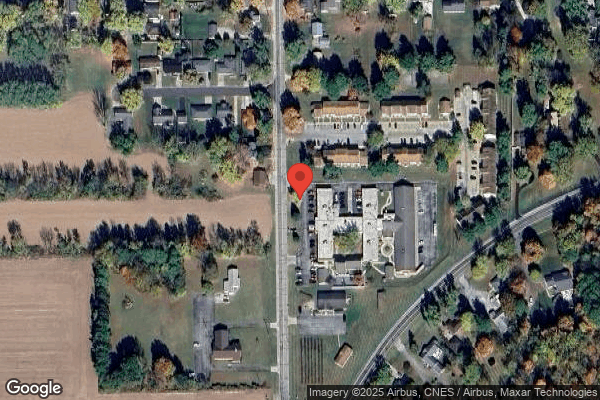
1955 S VERNON ST, WABASH, IN 46992 (260) 563-8438
Non profit - Church related 71 Beds Independent Data: November 2025
Trust Grade
45/100
#394 of 505 in IN
Last Inspection: October 2024

Within standard 12-15 month inspection cycle. Federal law requires annual inspections.

Overview

Vernon Health & Rehabilitation has received a Trust Grade of D, indicating below average performance with some concerns about care quality. Ranked #394 out of 505 facilities in Indiana, this places them in the bottom half, and they are #7 out of 8 in Wabash County, meaning only one local option is better. The facility is currently improving, with issues decreasing from 15 in 2024 to just 3 in 2025; however, they still have a concerning staff turnover rate of 57%, higher than the state average. While there are no fines on record, which is a positive sign, specific incidents include failing to provide adequate supervision to prevent resident-to-resident abuse and not offering individualized activities for residents with developmental disabilities. Overall, while there are strengths in RN coverage, being better than 80% of Indiana facilities, families should weigh these benefits against the facility's weaknesses and history of concerns.

Trust Score
D
45/100
In Indiana
#394/505
Bottom 22%
Safety Record
Low Risk
No red flags
Inspections
Getting Better
15 → 3 violations
Staff Stability
⚠ Watch
57% turnover. Above average. Higher turnover means staff may not know residents' routines.
Penalties
✓ Good
No fines on record. Clean compliance history, better than most Indiana facilities.
Skilled Nurses
✓ Good
Each resident gets 55 minutes of Registered Nurse (RN) attention daily — more than average for Indiana. RNs are trained to catch health problems early.
Violations
⚠ Watch
25 deficiencies on record. Higher than average. Multiple issues found across inspections.
★★☆☆☆
2.0
Overall Rating
★★★☆☆
3.0
Staff Levels
★★★☆☆
3.0
Care Quality
★★☆☆☆
2.0
Inspection Score
Stable
2024: 15 issues
2025: 3 issues

The Good

  • Full Sprinkler Coverage · Fire safety systems throughout facility
  • No fines on record

Facility shows strength in fire safety.

The Bad

2-Star Overall Rating

Below Indiana average (3.1)

Below average - review inspection findings carefully

Staff Turnover: 57%

11pts above Indiana avg (46%)

Frequent staff changes - ask about care continuity

Staff turnover is elevated (57%)

9 points above Indiana average of 48%

The Ugly 25 deficiencies on record

Aug 2025 1 deficiency
CONCERN (D) 📢 Someone Reported This

A family member, employee, or ombudsman was alarmed enough to file a formal complaint

Potential for Harm - no one hurt, but risky conditions existed

Quality of Care (Tag F0684)

Could have caused harm · This affected 1 resident

Based on interview and record review, the facility failed to administer medications according to physician order for 1 of 3 residents reviewed for medication administration. (Resident B) Findings incl...

Read full inspector narrative →
Based on interview and record review, the facility failed to administer medications according to physician order for 1 of 3 residents reviewed for medication administration. (Resident B) Findings include:Resident B's closed clinical record was reviewed on 8/25/25 at 10:44 a.m. Diagnoses included spastic quadriplegic cerebral palsy, dysphagia, and scoliosis. Current orders during the resident's stay included diazepam 2.5 milligram (mg) four times a day. A June 2025 Medication Administration Record (MAR) indicated he received four doses of diazepam on 6/7/25.A June 2025 narcotic count sheet indicated the medication was not removed for his 6/7/25 morning and noon doses. During an interview, on 8/25/25 at 4:25 p.m., the ADON indicated it showed the medication was documented as administered on the MAR but was not signed out on the controlled medication log. Staff should double check the medication, dispense the medication from the medication card, mark that the medication was prepped on the MAR, give the medication, and then mark that the medication administered on the MAR. During an interview, on 8/25/25 at 4:33 p.m., the Administrator indicated that the diazepam was signed off as administered on the MAR but was not signed out on the narcotic count sheet. Looking at both sheets, it appeared the medication was not administered to Resident B.A current facility policy, titled Medication Administration, provided by the Administrator on 8/25/25 at 4:14 p.m., indicated the following: Policy: Medications are administered by licensed nurses, or other staff who are legally authorized to do so in this state, as ordered by the physician and in accordance with professional standards of practice, in a manner to prevent contamination or infection. 20. Sign MAR after administered. 21. If medication is a controlled substance, sign narcotic sheet.This citation relates to Intake 1753947.3.1-37(a)
May 2025 2 deficiencies
CONCERN (D) 📢 Someone Reported This

A family member, employee, or ombudsman was alarmed enough to file a formal complaint

Potential for Harm - no one hurt, but risky conditions existed

Deficiency F0628 (Tag F0628)

Could have caused harm · This affected 1 resident

Based on record review and interview, the facility failed to ensure the resident's representative was notified in writing of the transfer/discharge appeal rights for 1 of 3 hospitalizations. (Resident...

Read full inspector narrative →
Based on record review and interview, the facility failed to ensure the resident's representative was notified in writing of the transfer/discharge appeal rights for 1 of 3 hospitalizations. (Resident D) Findings include: Resident D's clinical record was reviewed on 5/12/25 at 3:24 p.m. Diagnoses included cerebral palsy, fracture of left lower leg, adult failure to thrive, Cauda Equina syndrome, severe intellectual disabilities, osteoarthritis, congenital deformities of feet, and diabetes. Review of a progress note, dated 3/18/25 at 10:24 a.m., indicated the resident yelled out upon being rolled onto his left side during care. The resident's left hip had non-pitting edema, was warm to the touch, and slight green discoloration was noted. An order was received for a left hip x-ray. The resident's representative was notified. A progress note, dated 3/19/25 at 12:45 a.m., indicated x-ray results showed resident had a left hip fracture. The resident's representative was notified. A progress note, dated 3/19/25 at 2:04 a.m., indicated an order was received to send the resident to the ER for treatment and possible surgery. The clinical record lacked indication that the resident's representative was notified of the transfer/discharge appeal rights in writing for the resident's transfer to the hospital. A progress note, dated 5/4/25 at 7:30 a.m., indicated the resident had bruising and swelling was noted to his left hand, wrist and shoulder. An x-ray order was received. A message was left for the resident's representative to return the call for a status update. On 5/4/25 at 2:52 p.m., indicated the Nurse Practitioner (NP) was notified of the resident's x-ray results. An order was received to send the resident to the hospital for evaluation and treatment. The resident's representative was notified. The clinical record lacked indication that the resident's representative was notified of the transfer/discharge appeal rights in writing for the resident's transfer to the hospital. A progress note, dated 5/6/25 at 12:00 p.m., indicated Resident D was experiencing shortness of breath with the use of his accessory muscles noted. Breathing treatments were ineffective. An order was received to send the resident to the emergency room (ER) for evaluation. A call was placed for emergency transportation. A progress note, dated 5/6/25 at 12:20 p.m., indicated the Emergency Medical Technicians (EMTs) arrived to transport the resident to the ER for evaluation. The clinical record lacked indication that the resident's representative was notified of the transfer/discharge appeal rights in writing for the resident's transfer to the hospital. During an interview, on 5/13/25 at 2:37 p.m., the Social Services Director indicated the nurses were responsible for the transfer form for hospital discharges. During an interview, on 5/13/25 at 2:59 p.m., LPN 6 and LPN 8 each indicated they discussed the facility bed hold policy during resident transfers or discharges with the resident's representative. They did not discuss appeal rights information with the residents or their representatives. During an interview, on 5/14/25 at 9:08 a.m., the DON indicated she did not inform the resident or their representative of their appeal rights during transfers or discharges. She only discussed the bed hold policy. During an interview, on 5/14/25 at 10:05 a.m., the Regional Nurse Consultant indicated she was unable to locate any information where Resident D's representative was notified of their appeal rights. A current facility policy, dated 11/15, titled Discharge, provided by the Regional Nurse Consultant on 5/14/25 at 10:35 a.m., indicated the following: .Hospital Transfer: 5. Prepare a transfer form, send with the resident. 7. Document in the nursing notes the condition of the patient, disposition of residents belongings and medications, notification to all parties of the discharge This citation relates to Complaint IN00458788. 3.1-12(a)(6)(A)(i) 3.1-12(a)(6)(A)(ii) 3.1-12(a)(6)(A)(iii)
CONCERN (D) 📢 Someone Reported This

A family member, employee, or ombudsman was alarmed enough to file a formal complaint

Potential for Harm - no one hurt, but risky conditions existed

Quality of Care (Tag F0684)

Could have caused harm · This affected 1 resident

Based on interview and record review, the facility failed to follow physician orders regarding continuation of care for residents transported to day programs with medications for 2 of 3 residents revi...

Read full inspector narrative →
Based on interview and record review, the facility failed to follow physician orders regarding continuation of care for residents transported to day programs with medications for 2 of 3 residents reviewed for day services (Resident B and C). Findings include: During an interview, on 5/12/25 at 9:14 a.m., LPN 6 indicated the Social Services Director informed her of Resident B and Resident C's school schedules. LPN 6 was unsure if the school had received their medications, but sent Resident C to school anyway without checking on 5/6/25. The school immediately called the facility to have Resident C picked up, as he was not approved to attend at that time. During an interview, on 5/12/25 at 10:36 a.m., the DON indicated all documents were sent to the school before the residents could attend. She ordered the school their own medication supply, but it wasn't delivered at this time. Staff sent Resident C to school one day before his care plan was approved or medications were delivered. During an interview, on 5/12/25 at 11:05 a.m., the Administrator indicated Resident B was sent to school and the school called requesting the resident be picked up. The facility did not realize Resident B was not approved to start school at that time. During an interview, on 5/12/25 at 11:10 a.m., CNA 4 indicated Resident B was sent to school on 5/7/25. The school called shortly after and needed him picked up. She transported him from the school back to the facility. During an interview, on 5/12/25 at 11:44 a.m., the Social Services Director indicated Resident C was sent to school without the school having his medication on hand. To her knowledge, Resident B was never sent to school. Once the school received their medication, both residents could attend school. Review of electronic mail (e-mail) correspondence dated 5/5/25 at 2:26 p.m. and provided by the Administrator on 5/12/25 at 1:13 p.m., indicated the school nurse informed the facility both residents could not attend until the school received their rescue medications and their care plans have been approved. 1. Resident B's clinical record was reviewed on 5/12/25 at 11:30 a.m. Diagnoses included epilepsy (seizures), convulsions (violent, involuntary muscle movement and spasm), lack of coordination, and contracture of right ankle. Current orders included attending day services outside the facility with medications, Trileptal (anti-seizure) nine milliliters (mL) twice a day, diazepam (anti-convulsant) 10 milligram (mg) as needed for seizure activity, and Topamax (anti-convulsant) 75 mg twice a day. A current care plan, initiated 4/24/25, indicated the resident was at risk for seizure and injury related to epilepsy. Interventions included medications as ordered. A progress note, dated 5/1/25 at 12:39 p.m., indicated Social Services was in the process of enrolling Resident B into school. 2. Resident C's clinical record was reviewed on 5/13/25 at 10:57 a.m. Diagnoses included autism, epilepsy, and anxiety. Current orders included attending day services outside the facility with medications, clobazam (anti-seizure) 20 mg daily, Valtoco (anti-seizure) 10 mg nasal liquid as needed for seizure, Rufinamide (anti-seizure) 600 mg twice a day, and Felbamate (anti-seizure) 400 mg three times a day. A 4/22/25, quarterly, Minimum Data Set (MDS) assessment, indicated Resident C had an active diagnosis of epilepsy. A current care plan, initiated 3/18/25, indicated the resident was at risk for seizures and injury related to epilepsy. Interventions included medications as ordered. On 5/14/25 at 9:11 a.m., RN 7 indicated she sent Resident B to school. There was miscommunication between herself and the DON on which resident was approved to attend school. The school immediately called to have Resident B picked up as the school did not have his care plan approved or his medications. On 5/14/25 at 10:05 a.m., the Regional Nurse Consultant indicated the facility did not have a policy regarding residents attending school outside the facility. A current facility policy, dated 6/202, titled Physician Orders, provided by the Regional Nurse Consultant, on 5/14/25 at 10:35 a.m., indicated the following: .It is the policy of this facility to provide resident centered care that meets psychosocial, physical, and emotional needs and concerns of the resident This citation relates to Complaint IN00459066. 3.1-37(a)
Oct 2024 8 deficiencies
CONCERN (D)

Potential for Harm - no one hurt, but risky conditions existed

Resident Rights (Tag F0550)

Could have caused harm · This affected 1 resident

Based on observation, record review, and interview, the facility failed to ensure privacy was provided during incontinence care for 2 of 3 residents reviewed for dignity (Resident 38 and Resident 39)....

Read full inspector narrative →
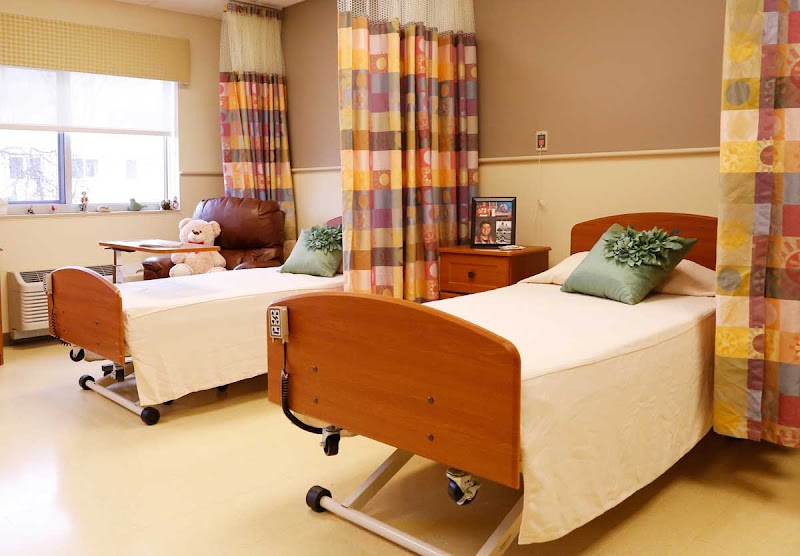
Based on observation, record review, and interview, the facility failed to ensure privacy was provided during incontinence care for 2 of 3 residents reviewed for dignity (Resident 38 and Resident 39). Findings include. 1. During a random observation, on 10/17/24 at 1:29 p.m., Resident 39 was visible from the room door window as a new brief was applied by CNA 6. The resident's privacy curtain had not been pulled. During an interview, on 10/17/24 at 1:46 p.m., Certified Nurse Assistent (CNA) 6 indicated she would typically pull the curtain around the resident for privacy during care. She was in a hurry and had not done so for Resident 39. Resident 39's clinical record was reviewed on 10/21/24 at 4:48 p.m. Diagnoses included need for personal assistance with care. A quarterly Minimum Data Set (MDS) assessment, completed on 9/18/24, indicated Resident 39 was dependent on the staff for upper and lower body dressing, toileting hygiene, personal hygiene, and for rolling left to right. 2. During a random observation, on 10/17/24 at 1:36 p.m., CNA 6 assisted Resident 38 in his wheelchair to his room. She pulled the privacy curtain of the first bed beside the door to nearly the edge of the first bed. Resident 38's foot of the bed including his feet were fully visible from the door window. His privacy curtain was not pulled around him. He was visible to the occupant of the first bed and the occupant of the bed against the wall throughout his incontinence care. During an interview, on 10/17/24 at 1:46 p.m., CNA 6 indicated she had pulled the curtain near the door so Resident 38 could not be seen from the door. She had not pulled the privacy curtain around him to provide him with privacy from the other residents in the room. Resident 38's clinical record was reviewed on 10/21/24 at 4:41 p.m. Diagnoses included need for assistance with personal care. A quarterly MDS assessment, completed on 9/16/24, indicated Resident 38 was dependent on the staff for upper and lower body dressing, toileting hygiene, personal hygiene, and for rolling left to right. During an interview, on 10/21/24 at 2:47 p.m., CNA 7 indicated the privacy curtain should be pulled around a resident when care was provided for said resident. During an interview, on 10/21/24 at 2:55 p.m., CNA 8 indicated she would pull the privacy curtain around the resident when performing resident care. During an interview, on 10/21/24 at 3:38 p.m., the Director of Nursing (DON) indicated privacy should be provided when resident care was done. During an interview, on 10/21/24 at 4:19 p.m., the DON indicated the facility did not have a policy on providing privacy during resident care. 3.1-3(t)
CONCERN (D)

Potential for Harm - no one hurt, but risky conditions existed

Quality of Care (Tag F0684)

Could have caused harm · This affected 1 resident

Based on interview and record review, the facility failed to ensure interventions were implemented as ordered for a resident experiencing an acute medical decline for 1 of 2 residents reviewed for hos...

Read full inspector narrative →
Based on interview and record review, the facility failed to ensure interventions were implemented as ordered for a resident experiencing an acute medical decline for 1 of 2 residents reviewed for hospitalizations (Resident 18) Findings include: Resident 18's clinical record was reviewed on 10/17/24 at 3:44 p.m. Diagnoses included spastic quadriplegic cerebral palsy, severe intellectual disabilities, idiopathic epilepsy and epileptic syndromes, hyperglycemia (elevated blood sugar), and chronic kidney disease. A care plan, revised on 10/15/24 at 4:01 p.m., indicated the resident was unable to independently change positions, feed self, toilet self, or transfer self. He was dependent on staff for all needs to be met with routine, anticipatory care. A revision of his care plan, dated 9/17/24 at 12:47, included the addition of enhanced barrier precautions (EBP) because he had an indwelling device (suprapubic catheter) which placed him at higher risk for infection. Lab results, dated 10/10/24, indicated the resident's blood glucose level was 456 mg/dL (milligrams per deciliter). (Normal blood glucose levels run between 70 mg/dL and 100 mg/dL.) On 10/10/24, at 1:50 p.m., a nurse practitioner's note indicated an order for 10 units of Novolog insulin (a rapid acting insulin), 10 units daily of Lantus insulin ( a long-acting insulin), and a hemoglobin A1C (HbgA1c) to be performed one week later (measures average glucose levels for the previous 3 months). The NP indicated the resident's low sodium level was likely related to elevated blood sugars. The plan was to follow glucose levels closely and get repeat labs in a week. A review of lab results in the clinical record between 10/10/24 and 10/20/24 indicated no HbgA1c had been performed. A progress note, dated 10/11/24 at 1:53 a.m., indicated nursing checked Resident 18's blood glucose due to issues from earlier in the day. (The issues were not specified). The NP was notified of a blood glucose of 330 mg/dL. The NP advised the nurse to recheck blood glucose at 4:00 a.m. There was no documentation in the resident's clinical record to indicate the blood glucose level was obtained at 4:00 a.m. on 10/11/24, as ordered. Vital signs on 10/11/24, at 10:30 a.m., indicated the resident's blood glucose was now 502 mg/dL. A progress note, dated 10/20/24, at 1:29 p.m., indicated the resident's blood glucose was 373 mg/dL. His respiratory rate was 32 (per minute) and heart rate was 122 beats per minute (bpm). His oxygen saturation was 87% on room air. He required 4 liters of oxygen via nasal cannula to maintain an oxygen saturation of 91%. The NP ordered a stat CBC (complete blood count), with differential, a stat BMP (basic metabolic panel), a stat magnesium level, a stat chest x-ray, a stat UA (urinalysis), an additional 15 units of Novolog, and 2 grams IM (intramuscular injection) of Rocephin (antibiotic). The note indicated the Rocephin was pulled from the emergency drug kit at that time. A progress note, dated 10/20/2024 at 1:47 p.m., indicated the resident's oxygen saturation was 86%. A breathing treatment was administered at that time. His heart rate was 121 bpm, respiratory rate was 28 bpm and shallow, and breath sounds were clear but diminished on the left side. Slight rhonchi (gurgling or bubbling sounds) were heard on the right side. After the breathing treatment, his heart rate was 125 bpm, respirations were 32 bpm and shallow, breath sounds were unchanged. He was placed on 4 liters of oxygen via nasal cannula, resulting in an oxygen saturation of 91%, heart rate of 125 bpm, and respirations had increased to 40 bpm, still shallow. Nursing was to continue to monitor. On 10/20/24, at 2:23 p.m., a progress note indicated the resident's supplemental oxygen had to be increased to 5 liters because his oxygen saturation levels had decreased to 90%. His respiratory rate continued at 40 bpm. The resident would continue to be monitored. On 10/20/24 at 2:25 p.m., a progress note indicated the nurse called the resident's representative to give an update on the resident's status. The representative requested the resident be sent out to a local hospital to be evaluated. The note indicated, as of the time of departure, the Rocephin had not been administered. On 10/20/24, at 11:41 p.m., a progress note indicated the nursing facility received a call from the local hospital. The resident had to be intubated (a breathing tube was inserted into the resident's airway) and was transferred to a larger, regional hospital. During an interview with LPN 5 on 10/21/24 at 3:47 p.m., she indicated the regional hospital had called with an update. The resident was intubated and was septic (a life threatening condition involving the body's response to an infection). During an interview with the NP on 10/21/24 at 2:26 p.m., she indicated when she talked to nursing on 10/20/24 at 1:21 p.m., she asked the LPN 5 to get the resident's vital signs, which indicated Resident 18 was meeting sepsis criteria. Prior to this, she had only had his glucose levels reported to her. She ordered 2 grams of Rocephin to be administered immediately. At 2:32 p.m., the nurse called to tell the NP the Rocephin had not been given because the nurse could not find a 1-inch needle with which to administer the antibiotic. The NP told LPN 5 at that time how critical it was for antibiotics to be administered at the first signs of sepsis. The risk of sepsis increased 10% every hour without antibiotics. During an interview with the Director of Nursing (DON), on 10/21/24 at 3:54 p.m., she indicated she had received a report from the regional hospital. The resident was septic and had a urinary tract infection (UTI). The resident had a history of declining rapidly when sick. During an interview with LPN 5, on 10/21/24 at 4:54 p.m., she indicated she called the NP at 7:00 a.m. on 10/20/24 to tell her the resident's blood glucose was high. At 9:30 a.m., she called the NP with blood glucose levels. At 1:30 p.m., she contacted the NP and received orders for insulin, stat labs, chest x-ray, and 2 grams of Rocephin. She could not find a 1-inch needle to administer the Rocephin. When she told the NP that she had not given the Rocephin, the NP was fine with it. LPN 5 had been busy with other needs, residents, and tasks on the unit. The resident did not appear to be in distress. LPN 5 had been monitoring and reporting the resident's vitals regularly since first contacting the NP at 7:00 a.m. on 10/20/24. The resident had a history of declining rapidly when sick. Resident 18's hospital progress notes, dated 10/20/24 indicated the resident was seen by intensivist services for septic shock. The resident was transferred from his facility to the emergency department with complaints of decreased level of consciousness and hyperglycemia (high blood glucose). In the emergency department, he was found to have signs of sepsis including tachycardia (elevated heart rate), hypotension (low blood pressure), and elevated lactic acid levels. Due to his decreased mentation, he was eventually intubated for airway protection and hypoxia (low oxygen levels). A current facility policy, provided by the DON on 10/22/24 at 10:27 a.m., titled Change In A Resident's Condition or Status, indicated the following: .6) The nurse will record in the resident's medical record information relative to changes in the resident's medical/mental condition or status. 3.1-37(a)
CONCERN (D)

Potential for Harm - no one hurt, but risky conditions existed

Deficiency F0726 (Tag F0726)

Could have caused harm · This affected 1 resident

Based on observation, interview, and record review, the facility failed to ensure staff were qualified to perform GJ-tube care for 1 of 1 residents reviewed for feeding tubes. (Resident 42) Findings i...

Read full inspector narrative →
Based on observation, interview, and record review, the facility failed to ensure staff were qualified to perform GJ-tube care for 1 of 1 residents reviewed for feeding tubes. (Resident 42) Findings include: A clinical record review for Resident 42 was performed on 10/16/24 at 11:06 a.m. Diagnoses included anoxic brain damage, gastrostomy malfunction, lack of expected normal physiological development in childhood, artificial openings of the gastrointestinal tract, and a disorder of the autonomic nervous system which caused sympathetic storming (a condition which can occur with patients with severe brain injuries). Physician orders, dated 7/22/24, indicated the resident was to receive Pedia-Sure Enteral Formula through his gastrojejunostomy (GJ-tube). (A GJ-tube is a means of delivering food to someone who cannot eat by mouth.) The order specified 620 mils (milliliters)of Pedia-Sure combined with 340 mils of Pedialyte. The pump was to run at 42 ml/hour for 23 hours per day. The bag of formula was to be changed every 24 hours. A care plan, revised on 9/12/24 at 1:36 p.m., indicated the resident was at risk for gastrointestinal complications related to gastrostomy, jejunostomy, and enteral feeding. On 10/16/24, at 2:09 p.m., QMA 12 was observed providing GJ-tube care for Resident 42. QMA 12 transferred the resident from his play pen to his crib. During the observation, QMA 12 indicated she had already prepared his bag of formula and would be switching the old bag out with the new bag. She detached the tubing connected to GJ-tube and checked the placement of the tube by flushing it with 10 mils of normal tap water. The tube was not flushing properly and took some time to begin to flow. The QMA indicated she was not concerned with the slow draining of the syringe. Once the tube was flushing properly, she attached the tubing connected to the new bag of formula and discarded the old bag and tubing. She indicated, at that time, it was her practice to date the new bag of formula before hanging it or attaching it to the resident. A review of Resident 42's MAR (medication administration record) was performed on 10/17/24 at 9:36 a.m. The following dates indicate the days in October 2024 when QMA 12 hung and attached a new bag of formula for Resident 42: 10/10/24, 10/16/24, and 10/17/24. These dates were documented under the order for the enteral feeding bag to be changed every 24 hours. During an interview with LPN 5 on 10/17/24 at 10:57 p.m., she indicated QMAs were allowed to spike the enteral feeding bags and program the pump for Resident 42. During an interview with the DON on 10/18/24 at 4:03 p.m., she indicated QMAs could clean around the GJ-tube site, but could not hang a new bag of formula, nor attach the new tubing to the GJ-tube site. A current facility document, titled QMA Orientation, provided by the Administrator on 10/18/24 at 12:15 p.m., indicated QMAs were not oriented to hang enteral feeds or change the tubing accompanying a new bag.
CONCERN (D)

Potential for Harm - no one hurt, but risky conditions existed

Pharmacy Services (Tag F0755)

Could have caused harm · This affected 1 resident

**NOTE- TERMS IN BRACKETS HAVE BEEN EDITED TO PROTECT CONFIDENTIALITY** Based on record review and interview, the facility failed to ensure shift to shift narcotic count and reconciliation was complet...

Read full inspector narrative →
**NOTE- TERMS IN BRACKETS HAVE BEEN EDITED TO PROTECT CONFIDENTIALITY** Based on record review and interview, the facility failed to ensure shift to shift narcotic count and reconciliation was completed for 2 of 5 carts reviewed for medication reconciliation. (Kalor Hall and [NAME] Hall) Findings include: 1. During a medication storage observation of the Kalor Hall medication cart, on 10/21/24 at 1:21 p.m., accompanied by LPN 4, the Narcotic Sheet Log/ Tracking Form was reviewed and the following dates lacked shift to shift count and reconciliation signatures of controlled medications: October 2024- lacked a narcotic card, liquid, and/or bottle count: 10/8 on day shift and night shift 10/9 on day shift and night shift 10/10 on day shift 10/11 on day shift October 2024- lacked a shift-to-shift narcotic reconciliation signatures: 10/12 on day shift and night shift 10/15 on day shift 10/18 on day shift During an interview, at the time of the observation, LPN 4 indicated the narcotic count was completed by the oncoming nurse and offgoing nurse during shift change. 2. During a medication storage observation of the [NAME] Hall medication cart, on 10/21/24 at 1:21 p.m., accompanied by LPN 4, the Narcotic Sheet Log/ Tracking Form was reviewed and the following dates lacked shift to shift count and reconciliation signatures of controlled medications: October 2024- lacked a narcotic card, liquid, and/or bottle count: 10/11 on day shift and night shift 10/14 on night shift October 2024- lacked a shift-to-shift narcotic reconciliation signatures: 10/16 on night shift During an interview, at the time of the observation, LPN 4 indicated the narcotic count was completed by the oncoming nurse and offgoing nurse during shift change. During an interview, on 10/18/24 03:37 p.m., the DON indicated staff was to complete the narcotic sheet log after every shift. A current facility policy, titled Controlled Medication Storage, provided by the DON on 10/18/24 at 3:37 p.m., indicated the following: . At change of custody, a physical inventory of all controlled medications is conducted by 2 licensed/ certified personnel and is documented 3.1- 25(b)(3)
CONCERN (D)

Potential for Harm - no one hurt, but risky conditions existed

Deficiency F0757 (Tag F0757)

Could have caused harm · This affected 1 resident

Based on observation, interview, and record review, the facility failed to ensure monitoring of vital signs parameters as ordered for 1 of 1 residents randomly reviewed for parameters during medicatio...

Read full inspector narrative →
Based on observation, interview, and record review, the facility failed to ensure monitoring of vital signs parameters as ordered for 1 of 1 residents randomly reviewed for parameters during medication administration. (Resident 27) Findings include: Resident 27's clinical record was reviewed on 10/21/24 at 8:35 a.m. Diagnoses included autistic disorder, essential hypertension (high blood pressure), hypothyroidism due to medicaments and other exogenous substances, and iron deficiency anemia. Current orders included atenolol (antihypertensive) 25 milligram (mg) tablet once daily with parameters of holding the medication if systolic blood pressure (top number) was less than 110 millimeters of mercury (mmHg) and/or heart rate was less than 55. A Medication Administration Report (MAR) for October 2024 indicated the resident received atenolol without obtaining blood pressure or pulse as follows: on 10/1, 10/2, 10/3, 10/4, 10/5, 10/6, 10/7, 10/8, 10/9, 10/10, 10/11, 10/12, 10/13, 10/14, 10/15, 10/16. 10/17, 10/18, 10/19, 10/20, and 10/21. During a medication administration observation, on 10/21/24 at 8:17 a.m., LPN 4 was observed administering atenolol 25 mg without obtaining Resident 27's vital signs before administration. During an interview, on 10/21/24 at 8:34 a.m., LPN 4 indicated she did not check resident's blood pressure or heart rate before administering his atenolol. During an interview, on 10/21/24 at 9:22 a.m., the DON indicated vital signs were not completed before the administration of atenolol. Staff should be following the physician's order. During an interview, on 10/21/24 at 10:03 a.m., the MDS Coordinator indicated the need to check the medication parameters before administering the medication per physician orders. Review of a current facility policy, titled Medication Administration, provided by the DON on 10/21/24 at 9:28 a.m., indicated the following: .Medications are administered in accordance with written orders of the physician/prescriber 3.1-48(a)(2)
CONCERN (D)

Potential for Harm - no one hurt, but risky conditions existed

Unnecessary Medications (Tag F0759)

Could have caused harm · This affected 1 resident

Based on observation, interview, and record review, the facility failed to ensure a medication error rate of less than 5% related to medications not being administered according to orders for 2 of 36 ...

Read full inspector narrative →
Based on observation, interview, and record review, the facility failed to ensure a medication error rate of less than 5% related to medications not being administered according to orders for 2 of 36 opportunities of medication administration, resulting in a medication error rate of 5.56%. Findings include: During a medication administration observation, on 10/21/24 at 8:17 a.m., Licensed Practical Nurse (LPN) 4 was observed preparing mediations for Resident 27. The following was observed: LPN 4 prepared atenolol (high blood pressure) 25 milligram (mg) daily with parameters of holding the medication if systolic blood pressure was less than 110 millimeters of mercury (mmHg) and/or heart rate less than 55. Blood pressure and pulse were not obtained before administering the medication. LPN 4 prepared levothyroxine (hypothyroidism) 88 micrograms (mcg) daily. The medication was administered with eleven other medications, including but not limited to, famotidine (antacid) 20 mg twice daily, and ferrous sulfate (iron supplement) 325 mg daily. During an interview, on 10/21/24 at 8:34 a.m., LPN 4 indicated she did not check the resident's blood pressure or heart rate before administering the atenolol. During an interview, on 10/21/24 at 9:49 a.m., LPN 5 indicated the need to check the physician's orders before administering medications. It would show under the physician's order if there were any medication parameters. Levothyroxine should be administered separately. During an interview, on 10/21/24 at 9:56 a.m., the Director of Nursing (DON) indicated the facility did not have an order to administer levothyroxine with other medications. During an interview, on 10/21/24 at 10:03 a.m., the MDS Coordinator indicated any medication parameters were in the physician's order. If the levothyroxine medication did not specify directions, one would go off the preference of the resident. During an interview, on 10/21/24 at 10:24 a.m., the DON indicated medication administration times were reviewed as part of the pharmacy medication reconciliation review. Resident 27's medications were reviewed in August, September, and October 2024 without any recommendations. Review of a current facility policy, titled Medication Administration, provided by the DON on 10/21/24 at 9:28 a.m., indicated the following: .Medications are administered in accordance with written orders of the physician/prescriber The National Institute of Medicine, Medline Plus document titled Levothyroxine, dated 2/15/2019, was retrieved on 10/21/24 from https://medlineplus.gov/druginfo/meds/a682461.html. The guidance included: .if you take ferrous sulfate (iron supplement), take it at least 4 hours before or 4 hours after you take levothyroxine 3.1-48(c)(1)
CONCERN (E)

Potential for Harm - no one hurt, but risky conditions existed

Free from Abuse/Neglect (Tag F0600)

Could have caused harm · This affected multiple residents

Based on observation, record review, and interview, the facility failed to provide adequate supervision and intervention to prevent physical resident-to-resident abuse for 4 of 4 residents reviewed fo...

Read full inspector narrative →
Based on observation, record review, and interview, the facility failed to provide adequate supervision and intervention to prevent physical resident-to-resident abuse for 4 of 4 residents reviewed for resident-to-resident abuse (Resident 19, Resident 21, Resident 43, and Resident 44). Findings include: 1. During an observation, on 10/15/24 at 9:15 a.m., Resident 43 stood up from her wheelchair, grabbed the nurses' desk to steady herself, her foot caught behind the wheelchair pedal, and she continued to lean forward to attempt to ambulate toward facility visitors. CNA 10 attempted to assist the resident to sit down in the wheelchair. Resident 43 declined and continued to ambulate toward the visitors with the assistance of CNA 10. Resident 43 reached out and attempted to grab a visitor's drink. CNA 10 redirected the resident by offering her a soda if she would sit down in the wheelchair. The resident agreed. During an observation, on 10/16/24 at 9:03 a.m., Resident 43 sat in her wheelchair beside the nurses' station near the administrator's office and facility's front entrance doors. During an observation, on 10/16/24 at 1:35 p.m., the resident sat in her wheelchair at the doorway of the administrator's office and facility's front entrance doors. During an observation, on 10/18/24 at 8:50 a.m., the resident sat in her wheelchair beside the nurses' station near the administrator's office. During an observation, on 10/18/24 at 12:11 p.m., the resident sat in her wheelchair beside the nurses' station. During an observation, on 10/18/24 at 1:00 p.m., the resident reached out and grabbed at Activity Aide 13 during lunch. Activity Aide 13 indicated she would sit with Resident 43 during the meal. Resident 43's clinical record was reviewed on 10/17/24 at 3:59 p.m. Diagnoses included spastic quadriplegic cerebral palsy, post-traumatic stress disorder, depression, adjustment disorder with mixed anxiety and depressed mood, hallucinations, generalized anxiety disorder, and suspected adult sexual abuse. The current physician's orders included venlafaxine extended release (antidepressant) 37.5 milligrams (mg) daily, alprazolam (antianxiety) 0.5 mg every 8 hours, and ziprasidone (antipsychotic) 40 mg twice a day. A quarterly Minimum Data Set (MDS) assessment, completed on 4/26/24, indicated the resident was unable to complete the interview to determine cognitive status. The resident had long and short-term memory impairment, and her cognitive decision making skills were severely impaired. She had hallucinations. She exhibited physical symptoms directed at others 1 to 3 days of the assessment period. She exhibited other behavioral symptoms not directed toward others daily. A quarterly Minimum Data Set (MDS) assessment, completed on 7/24/24, indicated the resident was unable to complete the interview to determine cognitive status. The resident had long and short-term memory impairment, and her cognitive decision making skills were severely impaired. She had hallucinations. She exhibited other behavior symptoms not directed toward others 4 to 6 days of the assessment period but not daily. A care plan for verbal aggression indicated the resident would sometimes use curse words (initiated 5/8/24 and last revised/reviewed 10/15/24). Interventions included encourage resident to use positive language, redirect conversation, and redirect to different activity such as a movie. Interventions were initiated 5/8/24 and last revised/reviewed 10/15/24. A care plan for a target behavior for putting up her middle finger to others was initiated on 5/8/24 and last revised/reviewed on 10/15/24. Interventions included encourage resident to not be inappropriate, engage in conversation, and redirect to an activity such as a movie or jukebox. Interventions were initiated 5/8/24 and last revised/reviewed 10/15/24. A care plan for a target behavior of self-injurious behavior (SIB), initiated on 9/11/23 and last revised/reviewed on 9/3/24, indicated the resident sometimes hit herself. Interventions included offer a snack or drink, offer a movie, and redirect to a baby doll or musical device. Interventions were initiated 9/11/23 and last revised/reviewed 9/3/24. A care plan for food seeking, initiated on 9/9/23 and last revised/reviewed on 9/3/24, indicated the resident would sometimes try to take food from others. Interventions included direct attention to a sensory device like her dolls or telephone, offer snacks frequently, and offer to sing with her. Interventions were initiated on 9/9/23 and last revised/reviewed on 9/3/24. A care plan for the behavior of inappropriate sexual comments was initiated on 5/25/23 and last revised/reviewed on 9/3/24. Interventions included change conversation, educate on appropriateness, and offer snack. Interventions were initiated on 5/25/23 and last revised/reviewed on 9/3/24. A care plan for post traumatic stress disorder was initiated on 5/8/24 and last revised/reviewed on 9/3/24. Interventions included ensure immediate safety and that of others, gently redirect or reorient as needed, and observe for stressors in the environment and provide a quiet, non-stimulating environment. Interventions were initiated on 5/8/23 and last revised/reviewed on 9/3/24. A care plan for a target behavior of aggression as evidenced by hitting, biting, and scratching was initiated on 5/5/23 and last revised/reviewed on 10/11/24. Interventions included 15-minute checks for 72 hours (initiated 10/11/24), redirect resident away from nurses' station when appropriate or needed (initiated 1/5/24), educate resident she could hurt someone (initiated 9/15/23), offer snack, coffee, or soda (initiated 5/8/23), give cool down period (initiated 5/5/23), and play music (initiated 5/5/23). Interventions were last /revised/reviewed on 10/11/24. A progress note, dated 1/5/24 at 3:41 p.m., indicated Resident 43 made contact with another resident. A resident-to-resident investigation for 1/5/24, provided by the Administrator on 10/18/24 at 1:12 p.m., indicated Resident 43 made contact with Resident 21 in the face with an open hand as she approached Resident 21. Both residents were in their wheelchairs. The contact resulted in a small scratch on Resident 21's face. A progress note, dated 2/6/24 at 4:08 p.m., indicated the resident made contact with another resident with a slight pat to the face. A resident-to-resident investigation for 2/6/24, provided by the Administrator on 10/18/24 at 1:12 p.m., indicated Resident 43 made slight contact with Resident 19's nose with an open hand. The investigation determined the actions of Resident 43 were not intended to harm Resident 19. The staff indicated Resident 43's behavior of lightly tapping the nose was common when expressing feeling of friendship. A progress note, dated 2/9/24 at 9:50 a.m., indicated the resident shook her finger aggressively towards another resident. She was removed from the situation by the staff. A progress note, dated 2/14/24 at 6:55 p.m., indicated the resident had a verbal altercation with another resident. She was moved to a safe area. A progress note, dated 3/6/24 at 4:53 p.m., indicated the resident made contact with another resident. A resident-to-resident investigation for 3/6/24, provided by the Administrator on 10/18/24 at 1:12 p.m., indicated Resident 21 was witnessed to have a small mark on her forehead and a small scratch on her nose. Resident 43 was witnessed to be sitting beside Resident 21. Staff witnessed no contact between the residents. A progress note, dated 3/27/24 at 7:01 a.m., indicated Resident 43 approached the provider and requested a hug while the provider was in a male resident's room. The staff reminded the resident it was not appropriate to enter the male resident's room, and the provider would exit when finished. The resident expressed verbal frustration and cursed at the provider. A progress note, dated 4/12/24 at 9:05 a.m., indicated an aggressive outburst was reported to the provider. The resident threw a carton of feeding at another resident for pointing at her. A progress note, dated 4/16/24 at 4:09 p.m., indicated contact was made by another resident with Resident 43. The other resident put Resident 43 in a headlock and was biting her. A resident-to-resident investigation for 4/16/24, provided by the Administrator on 10/18/24 at 1:12 p.m., indicated Resident 43 approached Resident 21. Resident 21 grabbed Resident 43's hair and made contact with Resident 43. A progress note, dated 5/2/24 at 4:42 p.m., indicated contact was made by another resident. Resident 43 had a small red mark on her left cheek. A resident-to-resident investigation for 5/2/24, provided by the Administrator on 10/18/24 at 1:12 p.m., indicated Resident 43 sat at the nurses' station in her wheelchair when Resident 21 grabbed Resident 43's hair and attempted to bite Resident 43's left check. Small red area noted to Resident 43's left cheek. Resident 21 was moved to a different hall to prevent future incidents between the two residents. A progress note, dated 5/3/24 at 6:47 p.m., indicated Resident 43 was cursing at another resident in the hallway. She flipped her middle finger up at the other resident. Resident 43 was assisted to her room. A progress note, dated 5/6/24 at 5:53 p.m., indicated Resident 43 took another resident's soda off his tray. She flipped her middle finger up at the other residents in the dining room without provocation. A progress note, dated 5/8/24 at 6:45 p.m., indicated Resident 43 went over to another resident's table, took the resident's plate, held it up to her mouth, and licked the plate. When staff attempted to intervene Resident 43 cursed, yelled, and flipped her middle finger up at the staff. A progress note, dated 7/16/24 at 6:09 p.m., indicated Resident 43 threw her shoe at another resident. She smacked herself then blamed the other resident for hitting her. A progress note, dated 8/25/24 at 10:47 a.m., indicated Resident 43 put herself on the floor from her wheelchair multiple times. She was difficult to redirect. She shook her fist and flipped her middle finger up numerous times at other residents. A progress note, dated 8/25/24 at 10:02 p.m., indicated Resident 43 made contact with another resident. A resident-to-resident investigation for 8/25/24, provided by the Administrator on 10/18/24 at 1:12 p.m., indicated the CNA heard a commotion in the hallway between Resident 19 and Resident 43. Resident 19 had scratches on her upper extremities. Resident 43 was placed on 15-minute checks and was moved to another hall. A resident-to-resident investigation for 10/11/24, provided by the Administrator on 10/18/24 at 1:12 p.m., indicated Resident 43 was at the front entrance doors when Resident 44 crouched down in front of her face and asked where she was going. Resident 43 made contact with Resident 44's nose with an open hand. Resident 44 made contact with Resident 43's face with an open hand. Resident 44 had a small open area to the bridge of his nose from his glasses. During an interview, on 10/21/24 at 12:43 p.m., the Social Services Director (SSD) indicated Resident 43 was redirected often with coffee and food. When Resident 43 would go to the unit in the back hall she had to be closely monitored because Resident 19 and Resident 21 do not get along with her (Resident 43). During an interview, on 10/21/24 at 2:55 p.m., Certified Nurse Assistant (CNA) 8 indicated she was uncertain what the specific interventions were for Resident 43 as she had been recently hired. She said she would look them up on the care plan to see Resident 43's behaviors and triggers. During an interview, on 10/21/24 at 3:07 p.m., LPN 14 indicated Resident 43 was mostly verbal. She would make eye contact with the resident and tell her what she was doing was not appropriate. If the resident was really upset, she would remove her from the situation and talk to the resident on the resident's level. During an interview, on 10/21/24 at 4:19 p.m., the DON indicated Resident 43 had been doing much better since she had moved to the front hall. The incident on 10/11/24 was the first one that had occurred since the move. 2. During an observation, on 10/21/24 at 3:37 p.m., Resident 21 wheeled herself out of the Director of Nursing (DON)'s office. She was smiling as she moved her arms spastically. Resident 21's clinical record was reviewed on 10/21/24 at 9:04 a.m. Diagnoses included spastic quadriplegic cerebral palsy, profound intellectual disabilities, and mixed receptive-expressive language disorder. A quarterly MDS assessment, completed 8/21/24, indicated the resident was rarely or never understood and rarely or never understood others. Her cognitive decision-making skills were severely impaired. She exhibited physical behavioral symptoms directed at other 1 to 3 days during the assessment period and other behavioral symptoms not directed at others 4 to 6 days, but less than daily during the assessment period. A care plan for behavioral symptoms indicated the resident could only propel her wheelchair by using her left hand on the wheels of her chair. The resident leaned side to side, was very spastic and would inadvertently bump into others with her head/mouth. The resident would move her wheelchair in front of people walking in the halls and block doors. The resident had a behavior of unsafe wheelchair mobility. The care plan was initiated 5/31/16 and last revised/reviewed on 9/12/24. Interventions included educate the resident their behavior was unsafe, redirect to an activity, and report any behaviors to the nurse. All interventions were initiated on 6/3/16 and last revised/reviewed on 9/12/24. A care plan for aggression indicated the resident would bite or reach out and grab/hit others or bite them. The care plan was initiated on 6/3/16 and last revised/reviewed on 10/3/24. Interventions included encourage therapeutic rest following any outside activity as needed (initiated 9/6/18), educate it was not nice to hit others (initiated 4/21/17), and promptly respond to her to decrease her behavior of grabbing/hitting/biting when she wanted attention (initiated 6/3/16). All interventions were last revised/reviewed on 10/3/24. A progress note, dated 1/5/24 at 3:47 p.m., indicated the resident had contact with another resident. A red scratch on her left cheek from the contact was 4 cm (centimeters) long by 0.1 cm wide. A progress note, dated 3/6/24 at 8:38 p.m., indicated the resident was in an altercation with another resident earlier in the day resulting in pink marks to the resident's right check and above the right eye. A progress note, dated 4/16/24 at 3:59 p.m., indicated the resident made contact to another resident. There was no documentation regarding injury. A progress note, dated 5/2/24 at 4:29 p.m., indicated the resident made contact with another resident. There was no documentation regarding injury. 3. During an observation, on 10/17/24 at 6:03 p.m., Resident 19 smiled at staff and wheeled herself down the hallway to the dining room and back to her room. Resident 19's clinical record was reviewed on 10/21/24 at 11:01 a.m. Diagnoses included severe intellectual disabilities, impulse disorder, and oppositional defiant disorder. An annual MDS assessment, completed on 9/9/24, indicated the resident rarely or never understood others and was rarely or never understood by others. Her cognitive skills for decision making were severely impaired. A progress note, dated 2/6/24 at 4:14 p.m., indicated contact was made by another resident. The resident was smiling and no injuries were identified. A progress note, dated 8/25/24 at 10:11 p.m., indicated the resident made contact with another resident. Multiple surface level scratches were noted to face, chest and left thigh. 4. During an observation, on 10/15/24 at 11:27 a.m., Resident 44 ambulated down the hallway with his cane smiling at other residents and staff members. During an observation, on 10/17/24 at 4:28 p.m., Resident 44 sat outside the facility's front entrance, smiled, and indicated he was enjoying the weather. Resident 44's clinical record was reviewed on 10/21/24 at 10:22 a.m. Diagnoses included anxiety disorder, major depressive disorder, and visual hallucinations. A quarterly MDS assessment, completed 8/26/24, indicated the resident was cognitively intact. He exhibited no behaviors. A resident-to-resident investigation for 10/11/24, provided by the Administrator on 10/18/24 at 1:12 p.m., indicated Resident 43 was at the front entrance doors when Resident 44 crouched down in front of her face and asked where she was going. Resident 43 made contact with Resident 44's nose with an open hand. Resident 44 made contact with Resident 43's face with an open hand. Resident 44 had a small open area to the bridge of his nose from his glasses. During an interview, on 10/18/24 at 4:32 p.m., the Administrator indicated she had been in her office right in the immediate vicinity of Resident 43's and Resident 44's resident-to-resident interaction. The interaction had happened very quickly without warning. During an interview, on 10/21/24 at 4:19 p.m., the DON indicated she believed Resident 44 bent down and was in Resident 44's face causing her to react out of fight or flight mode when she hit him. She believed he also reacted instinctively when he hit her back. A facility policy, dated 3/5/24, provided by the Administrator on 10/15/24 at 11:32 a.m., titled Abuse and Neglect Policy, indicated .All residents will be protected from harm 3.1-27(a)
CONCERN (E)

Potential for Harm - no one hurt, but risky conditions existed

Deficiency F0847 (Tag F0847)

Could have caused harm · This affected multiple residents

Based on record review and interview, the facility failed to provide an arbitration agreement that granted the resident or their representative the right to rescind the agreement within 30 days of sig...

Read full inspector narrative →
Based on record review and interview, the facility failed to provide an arbitration agreement that granted the resident or their representative the right to rescind the agreement within 30 days of signing it for 3 of 3 current residents reviewed who were admitted after 2/1/24 (Resident 26, Resident 44, and Resident 97). Findings include: During an interview conducted in conjunction with the entrance conference on 10/15/24 at 9:37 a.m., the Administrator indicated the facility offered arbitration agreements in the admission agreement packet. The sample admission agreement packet, provided as indicated above, was reviewed on 10/21/24 at 2:39 p.m. The admission/arbitration agreement packet lacked mention of the resident's or resident's representative's right to rescind the arbitration agreement within 30 days of signing the agreement. 1. Resident 44's 2/25/24, admission Agreement document indicated section 8.7 addressed an agreement not to elect a trial by jury of any fact trialable by a jury. The resident initialed agree. The form lacked mention of the resident's or resident's representative's right to rescind the agreement within 30 days of signing the agreement. 2. Resident 97's 10/14/24, admission Agreement document indicated section 8.7 addressed an agreement not to elect a trial by jury of any fact trialable by a jury. The resident's representative initialed agree. The form lacked mention of the resident's or resident's representative's right to rescind the agreement within 30 days of signing the agreement. 3. Resident 26's 8/15/24, admission Agreement document indicated section 8.7 addressed an agreement not to elect a trial by jury of any fact trialable by a jury. The resident's representative initialed agree. The form lacked mention of the resident's or resident's representative's right to rescind the agreement within 30 days of signing the agreement. During an interview, on 10/21/24 at 2:50 p.m., the Administrator indicated the Social Services Director (SSD) went over the arbitration agreement during the admission process and explained the resident/resident's representative could change their minds about arbitration within 30 days of signing the agreement. During an interview, on 10/21/24 at 2:57 p.m., the SSD indicated she explained during the admission process what arbitration was and the resident/resident's representative could change their minds about arbitration within 30 days if they changed their mind. She did not know where the admission/arbitration agreement indicated the resident could rescind the arbitration agreement. During an interview, on 10/21/24 at 3:32 p.m., the Administrator indicated the admission agreement containing the arbitration agreement lacked mention of the ability for the resident/resident's representative to rescind the arbitration agreement within 30 days of signing the agreement. During an interview, on 10/21/24 at 3:50 p.m., the Administrator indicated the facility did not have a policy on arbitration.
Sept 2024 2 deficiencies
CONCERN (D) 📢 Someone Reported This

A family member, employee, or ombudsman was alarmed enough to file a formal complaint

Potential for Harm - no one hurt, but risky conditions existed

Deficiency F0726 (Tag F0726)

Could have caused harm · This affected 1 resident

Based on interview and record review, the facility failed to ensure residents received medications per physician orders for 5 of 6 residents reviewed for medication administration. (Residents E, F, H,...

Read full inspector narrative →
Based on interview and record review, the facility failed to ensure residents received medications per physician orders for 5 of 6 residents reviewed for medication administration. (Residents E, F, H, J, and K) Findings include: 1. The clinical record for Resident E was reviewed on 9/10/24 at 11:50 a.m. Diagnoses included spastic quadriplegic cerebral palsy, profound intellectual disabilities, dysphagia, anemia, idiopathic epilepsy and epileptic syndromes with status epilepticus, neuromuscular dysfunction of bladder, aphasia, rheumatoid arthritis with rheumatoid factor of multiple sites, respiratory disorder, pain, and gastro-esophageal reflux disease. The clinical record indicated the following orders: baclofen (muscle relaxant) 10 mg three times daily (dated 6/3/24) and ferrous sulfate (iron supplement) 325 mg three times daily (dated 6/3/24). A care plan, dated 8/8/24, indicated Resident E was at risk for excessive tiredness, shortness of breath, and cold intolerance due to anemia. An intervention dated 8/8/24, indicated Supplement as ordered. A care plan, dated 2/3/17, indicated the resident had an order for baclofen for spasticity related to their Cerebral Palsy diagnosis. An intervention, dated 2/3/17, indicated to give mediations as ordered. A progress note, dated 9/7/24 at 3:58 a.m., indicated the resident's noon medications were found in the top drawer of the medication cart. Review of the August 2024 Medication Administration Record (MAR) indicated the medication was documented as given. 2. The clinical record for Resident F was reviewed on 9/10/24 at 12:46 p.m. Diagnoses included spastic quadriplegic cerebral palsy, severe intellectual disabilities, idiopathic epilepsy and epileptic syndromes, dysphagia, iodine-deficiency related thyroid disorders and allied conditions, chronic kidney disease, aphasia, Autistic disorder, and hypomagnesemia. The clinical record indicated the following orders: magnesium oxide (magnesium supplement)500 mg three times daily (dated 7/22/24), midodrine (anti-hypotensive)10 mg three times daily per gastric tube (dated 2/4/24), and valporate (anti-convulsant) 250 mg/5 milliliters (ml) give 10 ml three times daily per gastric tube (dated 10/24/23). A care plan, dated 5/7/24, indicated the resident had diagnosis of hypomagnesemia, and was at risk for muscle spasms, nausea, vomiting, fatigue, and seizures. An intervention, dated 5/7/24, indicated supplements as ordered. A care plan, dated 5/28/21, indicated Resident F was at risk for complications associated with hypernatremia, recent acute kidney failure and metabolic encephalopathy. An intervention, dated 6/7/21, indicated for medication or treatment as ordered. A care plan, dated 5/28/21, indicated the resident had altered respiratory status as evidenced by recent bilateral pulmonary embolis, acute respiratory failure, and aspiration pneumonia. An intervention, dated 6/7/21, indicated to medicate as ordered. A care plan, dated 11/1/15, indicated the resident had epilepsy. An intervention, dated 6/21/18, indicated to give medications as ordered for seizures and notify physician. A progress note, dated 9/7/24 at 3:55 a.m., indicated the noon medications were found in the top drawer of the medication cart. Review of the August 2024 MAR indicated the medication was documented as given. 3. The clinical record for Resident H was reviewed on 9/10/24 at 1:06 p.m. Diagnoses included tuberous sclerosis, profound intellectual disabilities, contracture, generalized idiopathic epilepsy and epileptic syndromes with status epilepticus, gastro-esophageal reflux disease, dysphagia, hypothyroidism, aphasia, benign neoplasm of kidney, hypomagnesemia, hypo-osmolality and hyponatremia, pain, and dyspnea. The clinical record indicated the following orders: carbamazepine (anticonvulsant) 300 mg three times daily (dated 7/20/20) and magnesium (magnesium supplement) oxide 400 mg three times daily (dated 3/26/24). A care plan, dated 3/26/24, indicated Resident H had a diagnosis of hypomagnesemia and was at risk for muscle spasm, muscle cramps, fatigue and weakness. An intervention, dated 3/26/24, indicated to medicate as ordered. A care plan, dated 1/8/13, indicated the resident had a diagnosis of epilepsy with the potential for adverse effects related to acute episodes. An intervention, dated 6/20/13, indicated to administer medications as ordered and assess for signs and symptoms of toxicity. A progress note, dated 9/7/24 at 4:01 a.m., indicated the noon medications were found in the top drawer of the medication cart. Review of the August 2024 MAR indicated the medication was documented as given. 4. The clinical record for Resident J was reviewed on 9/10/24 at 1:10 p.m Diagnoses included spastic quadriplegic cerebral palsy, profound intellectual disabilities, dysphagia, gastro-esophageal reflux disease, gastrostomy status, adult failure to thrive, idiopathic epilepsy and epileptic syndromes with status epilepticus, aphasia, contracture, right knee and autistic disorder. The clinical record indicated the following orders: baclofen 10 mg three times daily (dated 5/26/22) and valporic acid 250 mg/5 ml give 5 ml three times daily per gastric tube (dated 5/26/22). A care plan, dated 4/20/22, indicated Resident J had seizure and was at risk for complications and injury related to seizure disorder. An intervention, dated 4/25/24, indicated to medicate as ordered. A care plan, dated 11/9/18, indicated the resident had the potential for discomfort related to the diagnosis of spastic quadriplegic cerebral palsy. An intervention, dated 11/9/18, indicated to give medications as ordered. A care plan, dated 3/14/16, indicated the resident had spastic quadriplegic cerebral palsy and contractures of arms and legs. The resident took baclofen to reduce spasticity. An intervention, dated 3/15/16, indicated to administer medications as ordered. A progress note, dated 9/7/24 at 3:46 a.m., indicated the noon medications were found in the top drawer of the medication cart. Review of the August 2024 MAR indicated the medication was documented as given. 5. The clinical record for Resident K was reviewed on 9/10/24 at 1:15 p.m. Diagnoses included spastic quadriplegic cerebral palsy, severe intellectual disabilities, impulse disorder, epilepsy, unspecified without status epilepticus, dysphagia, aphasia, pain, and respiratory disorder. The clinical record indicated the following order: baclofen 10 mg per gastric tube 3 times daily (dated 7/20/20). A care plan, dated 11/29/12, indicated the resident had epilepsy and the potential for adverse effects related to acute episodes, and medication usage. An intervention, dated 11/12/15, indicated to administer medications as ordered by physician for seizure activity and assess for symptoms of toxicity. A progress note, dated 9/7/24 at 3:49 a.m., indicated the noon medications were found in the top drawer of the medication cart. Review of the August 2024 MAR indicated the medication was documented as given. During an interview on 9/9/24 at 3:09 p.m. the DON indicated, on 9/6/24 between 11:00 a.m. and 1:00 p.m., Residents E, F, H, J, and K were not administered medications. The DON indicated the nurse on duty was an agency nurse. The medications were found by the night shift nurse in the top drawer of the medication cart. During an interview on 9/10/24 at 1:22 p.m., the Administrator and the DON indicated, according to the Medication Administration policy, refusal of a medication would also be applied to not being administered. Any missed or refused medication should be documented as such in the electronic MAR. A current policy, dated 6/17/21, titled Medication Administration was provided by the Administrator on 9/10/24 at 12:00 p.m. The policy indicated the following: Procedure: 12. If resident refuses medication, document refusal and based on plan of care notify physician. This citation relates to Complaint IN00441262. 3.1-13(m)(1)
CONCERN (D) 📢 Someone Reported This

A family member, employee, or ombudsman was alarmed enough to file a formal complaint

Potential for Harm - no one hurt, but risky conditions existed

Pharmacy Services (Tag F0755)

Could have caused harm · This affected 1 resident

Based on interview and record review, the facility failed ensure a resident's medication was available for administration for 1 of 6 residents reviewed for medication availability. (Resident G) Findi...

Read full inspector narrative →
Based on interview and record review, the facility failed ensure a resident's medication was available for administration for 1 of 6 residents reviewed for medication availability. (Resident G) Findings include: During an interview on 9/9/24 at 3:09 p.m., the DON indicated the facility had experienced two incidents of medication errors within the past 30 days. The DON provided a list of 6 residents who had medication errors within the past 30 days. Resident G (whose name was on the list) had not been administered a dose of diazepam 15 mg on 9/7/24 between 5:30 a.m. and 9:30 a.m. The facility had failed to secure a refill prescription, and the pharmacy could not refill the medication without a prescription from the provider. The DON indicated staff had attempted to call the Nurse Practitioner (NP) to get a renewed prescription for the medication with no response. The staff then called the alternate NP, with no response. After staff were unable to reach the NP, they called the DON. The DON instructed them to call the NP again and if no response inform her (DON). The staff were able to reach the NP and the prescription for the medication was sent to pharmacy. The clinical record for Resident G was reviewed on 9/10/24 at 12:12 p.m. Diagnoses included spastic quadriplegic cerebral palsy, cardiomegaly, apraxia, heart failure, dysphagia, gastrostomy status, asthma, severe intellectual disabilities, Cauda Equina Syndrome, aphasia, abnormal posture, gastro-esophageal reflux disease, and anxiety disorder. A current, 5/5/22 physician order indicated diazepam (anti-anxiety) 15 mg was to be administered per gastric tube twice daily (once in am and once in pm). A care plan, dated 3/20/20, indicated the resident had anxiety as evidenced by shortness of breath. The resident had a diagnosis of dysphasia and would sometimes not be able to swallow, causing anxiety. The resident received an antianxiety medication. An intervention, dated 6/8/21, indicated Medication as ordered. A care plan, dated 2/28/12, indicated the resident had cerebral palsy with the upper and lower extremity impairments and spasticity. The medication regimen included an anti-anxiety medication. An intervention, dated 7/1/16, indicated to give medications as ordered. During an interview on 9/10/24 at 1:22 p.m., the DON indicated it was the responsibility of all nurses to reorder medications as needed. All nurses were to be mindful of when medications needed to be reordered from pharmacy and alert management if there were an issue. A current policy, dated 6/17/21, titled Medication Administration was provided by the Administrator on 9/10/24 at 12:00 p.m. The policy indicated the following: Purpose: Medications are administered as prescribed in accordance with manufacture's specifications, good nursing principles and practices and only by persons legally authorized to d so. Procedure: 2. Medications are administered in accordance with written orders of the physician/prescriber. This citation relates to Complaint IN00441262. 3.1-25(g)(3)
Jul 2024 2 deficiencies
CONCERN (D) 📢 Someone Reported This

A family member, employee, or ombudsman was alarmed enough to file a formal complaint

Potential for Harm - no one hurt, but risky conditions existed

Pharmacy Services (Tag F0755)

Could have caused harm · This affected 1 resident

**NOTE- TERMS IN BRACKETS HAVE BEEN EDITED TO PROTECT CONFIDENTIALITY** Based on observation, interview and record review, the facility failed ensure a resident's controlled substances were accounted ...

Read full inspector narrative →
**NOTE- TERMS IN BRACKETS HAVE BEEN EDITED TO PROTECT CONFIDENTIALITY** Based on observation, interview and record review, the facility failed ensure a resident's controlled substances were accounted for and were being reconciled during shift change for 1 of 3 residents reviewed for medication storage and availability. (Resident B) Findings include: Resident B's clinical record was reviewed on 7/17/24 at 1:41 p.m. Diagnoses include anoxic brain damage, cognitive communication deficit, history of disorder of muscle, unspecified-hypertonia, other muscle spasm, other seizures, and familial dysautonomia ([NAME]-Day). His medication orders included lorazepam (treat anxiety) 0.4 ml (milliliter) as needed with neurostorming episodes (4/12/24) and diazepam (treat muscle spasms) 1 ml as needed 30 minutes after Tylenol (pain reliever), if not effective (7/12/24). A quarterly Minimum Data Set (MDS) assessment, dated 6/5/24, indicated he was rarely/never understood. A pharmacy packing slip, with RN 6's signature and dated 3/21/24, indicated 60 mls of diazepam was delivered to the facility for Resident B. During a controlled substance reconciliation on the Kalor hall medication cart with LPN 21, on 7/17/24 at 12:03 p.m., a narcotic sheet log/tracking form for oncoming and off going nurses for the month of July was reviewed. The log/tracking form indicated the date and time, total number of controlled substance cards, liquid and bottles, and how many count sheets were added or removed. Of the 35 shift changes, 19 cards had a total documented. There were no counts of liquids or bottles documented for the 35 shift changes. LPN 21 indicated the shift change form was made up by the previous DON and they had never completed the total liquid or the total bottles on the sheet when counting, but probably should. A narcotic count form indicated there were 60 mls of diazepam confirmed with RN 6's signature, dated 3/21/24. Handwritten on the form indicated the bottle was sent to an appointment on 4/23/24 and on 7/12/24 there were 45 mls remaining in the bottle. A narcotic count form indicated there were 28.4 mls of lorazepam. Handwritten on the form indicated there should be 28.4 mls and on 7/12/24 there were 22 mls remaining in the bottle. There were three of four times 0.4 mls were signed out but the remaining amount of mls left in the bottle were not recorded on the form. An ambulatory visit summary note from the neurologist, dated 3/21/24, indicated for neurostorming, they recommended to first assess for any noxious stimuli, administer Tylenol 140 mg and wait 30 minutes, and if not resolved, give diazepam 1 mg (which would be sent to pharmacy). A nurses note, dated 3/21/24 at 5:01 p.m., indicated Resident B had a new order to increase his Keppra (treat seizures) and a new order for diazepam and gabapentin (treat neuropathy) to be clarified during business hours. A nurses note, dated 3/26/24 at 7:20 p.m., new order for Keppra dose to be increased to 150 mg (1.5 mls) and diazepam 1 mg (milligram) for neurostorming, if Tylenol not effective after 30 minutes. A nurses note, dated 4/23/24 at 6:12 a.m., indicated Resident B was out for an appointment, accompanied by RN 6. A review of the facility investigation, on 7/17/24 at 10:55 a.m., contained a handwritten statement by RN 6, dated 7/12/24 at 12:00 p.m., that indicated RN 6 and LPN 7 completed the narcotic count. The narcotic count for the pills in punch cards were correct, however, Resident B's liquid diazepam count was incorrect. RN 6 told LPN 7 to put the bottle aside and that she would talk to the nurse on call when she returned that evening for her shift, then RN 6 left the facility. RN 6 indicated the last time she counted the diazepam with any other nurse was unknown. During an interview with the Administrator, on 7/17/24 at 2:37 p.m., she indicated when RN 6 and LPN 7 completed a narcotic count, the diazepam had a discrepancy. LPN 7 wanted to figure it out and felt RN 6 was being rude. RN 6 was upset and left. RN 6 told her that she she couldn't tell her the last time she counted the narcotic liquids. RN 6 had accepted the delivery of the diazepam and put it in the narcotic box, but did not put the order in the electronic health record. The bottle of diazepam should have been unsealed, and shouldn't have been given, because there was not an order for it. The facility wasn't sure when the diazepam actually disappeared, whether it was that night or over an undetermined amount of time. During an interview with LPN 7, on 7/17/24 at 2:50 p.m., she indicated she attempted to get report and count the narcotics with RN 6. There was supposed to be 60 mls of Resident B's diazepam, but there were only 45 mls in the bottle. She asked RN 6 if she gave it and just forgot to sign it out. She asked RN 6 to contact her supervisor, because she didn't want to be responsible for the narcotic count not being correct. RN 6 indicated to her that she wasn't going to address or deal with it at that time and left the keys in the keyhole of the cart. LPN 7 reported RN 6's behavior and the incorrect count of the diazepam to LPN 14, who contacted the on-call nurse. There was a bottle of lorazepam in the refrigerator and LPN 7 counted that with LPN 14. The lorazepam amount was also incorrect. LPN 14 again called the on-call nurse. The amount given was not subtracted on the narcotic count sheet for the lorazepam. There was supposed to be 28 mls and there were only 22 mls in the bottle. During an interview with the Administrator, on 7/17/24 at 3:09 p.m., she indicated the facility was still looking into the missing amount of lorazepam for Resident B. During an interview with the MDS Coordinator, on 7/17/24 at 3:12 p.m., she indicated at shift change the nurses should be filling out the total liquid and the total bottles to keep track of the controlled substances. A current facility policy, titled Controlled Medication Storage, provided by the Administrator, on 7/17/24 at 3:09 p.m., indicated the following: .Purpose: Medications included in the Drug Enforcement Administration (DEA) classification as controlled substances are subject to special handling, storage, disposal and record keeping in the facility in accordance with federal, state, and other applicable laws and regulations .4. At the change of custody, a physical inventory of all controlled medications is conducted by 2 licensed/certified personnel and is documented This citation relates to Complaint IN00438619. 3.1-25(e)(2) 3.1-25(e)(3)
CONCERN (D) 📢 Someone Reported This

A family member, employee, or ombudsman was alarmed enough to file a formal complaint

Potential for Harm - no one hurt, but risky conditions existed

Deficiency F0790 (Tag F0790)

Could have caused harm · This affected 1 resident

Based on observation, interview, and record review, the facility failed to ensure residents were receiving dental services for 3 of 3 residents reviewed for mouth care. (Residents C, Resident E and Re...

Read full inspector narrative →
Based on observation, interview, and record review, the facility failed to ensure residents were receiving dental services for 3 of 3 residents reviewed for mouth care. (Residents C, Resident E and Resident F) Findings include: 1. Resident C's clinical record was reviewed on 7/17/24 at 4:15 p.m. Diagnoses include spastic quadriplegic cerebral palsy, profound intellectual disabilities, dysphagia, oropharyngeal phase, aphasia, and posteruptive color changes of dental hard tissues. His orders included he may be seen by podiatrist, dentist, optometrist, psychiatrist, psychologist and an audiologist as needed (PRN). A significant change Minimum Data Set (MDS) assessment, dated 7/3/24, indicated he was severely cognitively impaired. He was dependent on staff for oral hygiene. He had obvious or likely cavity or broken teeth. His dental care plan indicated he was at risk for chewing complications related to posteruptive color changes of dental hard tissues, encounter for dental examination and cleaning without abnormal findings (2/2/22). His interventions included assist with oral care as needed (2/2/22) and dental referral as needed (2/2/22). His last dental note from, dated 5/6/22, indicated adult prophylaxis was performed, which included his teeth were hand scaled and polished. A toothette swab was used. A fluoride varnish was applied. His next visit would include mouth swab and prophylaxis. There was no indication in the clinical record that Resident C had seen a dentist since 5/6/22. 2. Resident E's clinical record was reviewed on 7/18/24 at 12:22 p.m. Diagnoses included spastic quadriplegic cerebral palsy, profound intellectual disabilities, dysphagia, oropharyngeal phase, aphasia, and posteruptive color changes of dental hard tissues. Her orders included she may be seen by podiatrist, dentist, optometrist, psychiatrist, psychologist, and an audiologist as needed. A quarterly MDS assessment, dated 4/30/24, indicated BIMS 99. She was dependent on staff for oral hygiene. Her dental care plan indicated she needed assistance to complete dental care and she had a diagnosis of posteruptive color changes of dental hard tissues (2/1/17). Her interventions included assist as needed to brush teeth and gums (2/17/17) and assist to attend dental appointments (2/17/17). Her last dental note, dated 3/23/22, indicated she had plaque calculus stains and inflammation recession bleeding gingivitis. She needed sedation for Full Mouth Debridement (FMD) please. The next dental visit would include FMD. There was no indication in the clinical record that Resident E had seen a dentist since 3/23/22. 3. Resident F's clinical record was reviewed on 7/18/24 at 2:10 p.m. Diagnoses included spastic quadriplegic cerebral palsy, profound intellectual disabilities, dysphagia, oropharyngeal phase, aphasia, and posteruptive color changes of dental hard tissues. His orders include he may be seen by podiatrist, dentist, optometrist, psychiatrist, psychologist, and an audiologist PRN. A quarterly MDS assessment, dated 6/5/24, indicated he was rarely/never understood. He was dependent on staff for oral hygiene. His dental care plan indicated he needed assistance to complete dental care. He had a diagnosis of post eruptive color changes of dental tissue (2/1/17). His interventions included assist as needed to complete dental care every shift (2/17/17) and assist to attend dental appointments (2/17/17). His last dental note, dated 5/6/22, indicated adult prophylaxis was performed which included a Cavitron (an ultraxonic scaling system used to clean teeth) used to scale, polished and toothette swab. His next visit would include mouth swab and to schedule annual periodic oral evaluation with the dentist. There was no indication in the clinical record that Resident F had seen a dentist since 5/6/22. During an interview with the Social Service Director (SSD) on 7/18/24 at 10:50 a.m., she indicated the new dental services for the facility, which took over the beginning of 2023, was responsible for reaching out to the residents and resident representatives to get them enrolled for dental services. It was brought to her attention by a family member that dental services had not been offered, so the SSD completed an audit and found half of the residents were not enrolled. She contacted the new dental services, and was currently assisting with the enrollment process. The previous dental services had taken care of everything. She trusted the new dental was taking care of everything and she had not completed audits to make sure the residents were receiving dental services. A current facility policy, titled Dental Services (including dentures), provided by the Administrator on 7/18/24 at 11:58 a.m., indicated the following: .Purpose: Ensure a resident obtains needed dental services .1. The facility will assist residents in obtaining routine and emergency dental care This citation relates to Complaints IN00437378 and IN00437511. 3.1-24(a)
May 2024 1 deficiency
CONCERN (D) 📢 Someone Reported This

A family member, employee, or ombudsman was alarmed enough to file a formal complaint

Potential for Harm - no one hurt, but risky conditions existed

Notification of Changes (Tag F0580)

Could have caused harm · This affected 1 resident

**NOTE- TERMS IN BRACKETS HAVE BEEN EDITED TO PROTECT CONFIDENTIALITY** Based on observation, record review and interview, the facility failed to ensure changes in a resident's condition was reported ...

Read full inspector narrative →
**NOTE- TERMS IN BRACKETS HAVE BEEN EDITED TO PROTECT CONFIDENTIALITY** Based on observation, record review and interview, the facility failed to ensure changes in a resident's condition was reported immediately to the charge nurse for 1 of 3 residents reviewed for accidents. (Resident B) Findings include: Resident B's clinical record was reviewed on 5/1/24 at 10:15 a.m. Diagnoses included, but were not limited to, anoxic brain damage, cognitive communication deficit, and tracheostomy status. The current physician's orders included, but were not limited to, baclofen (muscle relaxer) 12.5 mg (milligram) three times daily, clobazam (treat seizures) 5 mg twice daily, gabapentin (treat nerve pain) 1 ml (milliliter) twice daily, and levetiracetam (treat seizures) 1.5 ml twice daily. A quarterly Minimum Data Set (MDS), dated [DATE], indicated Resident B was rarely, never understood. Resident B had an impairment to his bilateral upper and lower extremities, and was dependent on staff for showering, toilet hygiene, personal hygiene, upper and lower body dressing, putting on and taking off footwear. The resident was dependent on staff to transfer from chair/bed-to-chair transfer, tub/shower transfer, and rolling left and right, and did not use a wheelchair/scooter. A nurses note, dated 4/29/24 at 4:44 p.m., indicated Resident B was crying out. The resident's left leg appeared shorter than normal and pointed more towards the left. Range of motion was unable to be assessed due to his condition. The nurse practitioner was updated, and the resident was sent to the emergency room for an evaluation and treatment. A nurses note, dated 4/29/24 at 9:11 p.m., indicated Resident B was being transferred to the emergency department to a children's hospital due to a dislocated left hip and a left femur fracture. The hospital x-ray report, dated 4/30/24 indicated Resident B had an unchanged alignment of the mildly angulated and impacted distal left femoral metaphyseal fracture, osteopenia, and a dysplastic and dislocated left hip. A handwritten statement by Activity Assistant 5, dated 4/30/24 and included in the facility investigation documents, indicated the Activity Assistant (who was also a CNA) provided Resident B a shower between 9:00 a.m. and 9:30 a.m. on 4/29/24. Resident B's left foot was observed to be more midline than it usually was, looked different in the knee, and was more bent than usual. The Activity Assistant dressed Resident B, placed him in his car seat, and placed the car seat in the bed. At 11:00 a.m., the Activity Assistant returned to the room to re-position the resident, and Resident B cried out when his left leg was moved to place a blanket between his legs. Activity Assistant 5 asked LPN 21 to check on Resident B. The LPN told the Activity Assistant that Resident B acted like that when his medication was due to be given. Activity Assistant 5 also voiced her concerns to another CNA, who agreed there was something wrong and knew which leg was bothering the resident. During an interview with Activity Assistant 5, on 5/1/24 at 12:48 p.m., she indicated on 4/29/24, between 9:00 a.m. and 9:30 a.m., she carried Resident B into the shower, laid him on the shower bed, and took his shirt and diaper off. Resident B cried when the Activity Assistant moved his leg and started the shower, but then was fine. The resident's left leg looked funny, and it didn't look like it usually did. The resident's legs were normally straight, his heels were normally pointed inward, and his feet were pointed outward. The resident was showered and dressed, and assisted into a car seat, which was placed inside the crib. The resident fell asleep. At 11:00 a.m., an agency aide was taking over care of Resident B. Activity Assistant 5 took Resident B out of the car seat and placed him in bed. When a thin blanket was placed between his legs, Resident B cried out. His left leg was bent at the knee and his legs were normally straight. The resident's left leg was warm to touch. The Activity Assistant called for the nurse, and LPN 21 indicated Resident B got this way before it was time for his medications, but would keep a close eye on him. Activity Assistant 5 didn't report his left leg looking abnormal at 9:00 a.m., because the resident didn't cry when she carried him to the shower or during the shower. The Activity Assistant indicated she should have reported the resident's leg appearing abnormal to the nurse at 9:00 a.m., but she didn't work with him often. She knew something was definitely wrong when Resident B cried out when the blanket was placed in between his legs. During an interview with LPN 21, on 5/1/24 at 1:11 p.m., she indicated nothing was brought to her attention in the morning when Activity Assistant 5 gave Resident B a shower. LPN 21 was in the dining room assisting residents with eating lunch and she saw Activity Assistant 5 in Resident B's room rocking him, which was a normal activity. Resident B was not crying. Activity Assistant 5 came and got LPN 21 during that time or right after lunch, around 1:00 p.m. Activity Assistant 5 indicated to her that Resident B's legs felt warm. At that time, the resident was due for his medication, and he got warm and flushed when his medications were due. About 15 to 20 minutes after Resident B received his medications, the warmth and the skin flushing subsided. Resident B was normally passively fussy. LPN 21 looked at Resident B's legs and they didn't look anything out of the ordinary. She gave the resident his medication and then asked LPN 45 to look at the resident for a second pair of eyes. LPN 45 startled Resident B, who cried for a second and then went back to sleep. A few hours later, LPN 21 was going to administer Resident B's tube feeding, when an agency CNA was standing in Resident B's room holding him. When the agency aide went to lay the resident in bed, he screamed bloody murder. LPN 21 had never heard him cry that intensely. LPN 33 assessed Resident B, called the nurse practitioner, and sent the resident to the emergency room. It would be the facility's expectation that staff report any change in the condition of a resident immediately to the nurse. During an interview with the DON, on 5/1/24 at 2:14 p.m., she indicated she was informed that Resident B's left leg was slightly shorter than normal and turned outward. The nurse practitioner was contacted, and they were to send him to the emergency room. When Activity Assistant 5 mentioned Resident B's leg, it was close to the time of the resident's next medication administration. Resident B's skin got flushed, and he was fussy, almost like he was neuro-storming, when his medication was due. Once the medications were given, Resident B calmed down. The aide was rocking him and once she laid him down, he cried differently than normal. LPN 45 also assessed Resident B. According to the medication administration record, his morning medications were charted late at 11:26 a.m. and lunch time medications were charted late at 1:14 p.m. Lunch medications can be given from 11:00 a.m. to 1:00 p.m. She felt LPN 21 was using her nursing judgement; there was an hour difference in the CNA reporting Resident B's leg to the nurse, but she should have reported it at 9:00 a.m. A current facility policy, titled Notification of Changes Policy, dated 8/14/19 and provided by the DON on 5/1/24 at 2:07 p.m., indicated the following: .Notification occurs when .A significant change in the resident's physical, mental or psychosocial status (i.e., deterioration in health, mental or psychosocial status in either life-threatening conditions or clinical complications) This citation relates to Complaint IN00433587. 3.1-5(a)(2)
Apr 2024 1 deficiency
CONCERN (D) 📢 Someone Reported This

A family member, employee, or ombudsman was alarmed enough to file a formal complaint

Potential for Harm - no one hurt, but risky conditions existed

Deficiency F0604 (Tag F0604)

Could have caused harm · This affected 1 resident

Based on observation, record review, and interview, the facility failed to ensure a resident was free from a physical restraint for 1 of 3 residents reviewed for abuse. (Resident B) Findings include: ...

Read full inspector narrative →
Based on observation, record review, and interview, the facility failed to ensure a resident was free from a physical restraint for 1 of 3 residents reviewed for abuse. (Resident B) Findings include: On 4/23/24 at 4:03 a.m., Resident B was observed laying on a bed in his room. On 4/23/24 at 4:26 a.m., Resident B was observed scooting down the hallway on his buttocks. QMA 4 assisted Resident B off of the floor and sat Resident B in a chair in the dining room. QMA 4 walked down to Resident B's room, retrieved a helmet, and placed it on Resident B's head. On 4/23/24 at 4:57 a.m., Resident B was ambulating independently in the hallway with a soft helmet on. He wandered into an all-male resident room. On 4/23/24 at 11:23 a.m., Resident B was lying on a bare mattress in his room. On 4/24/24 at 7:15 a.m., Resident B was scooting on his buttocks in the hallway. On 4/24/24 at 7:42 a.m., Resident B was laying in a female resident's bed while she occupied it, in a room across from the nurse's station. On 4/24/24 at 8:12 a.m., Resident B was ambulating independently near the nurse's station, naked from the waist down. On 4/24/24 at 12:39 p.m., Resident was being guided by his hand, by LPN 34, out of the dining room. Resident B's clinical record was reviewed on 4/23/24 at 7:20 a.m. Diagnoses included, but were not limited to, pervasive developmental disorder, profound intellectual disabilities, dysphagia, oropharyngeal phase, other lack of coordination, need for assistance with personal care, muscle weakness, diplegia of upper limbs, and insomnia. The current physician's orders included, but were not limited to, benazepril (treat high blood pressure) 2.5 mg daily, lacosamide (treat seizures) 100 mg twice daily, metoprolol tartrate (treat high blood pressure) 25 mg twice daily, Novolog (short acting insulin) FlexPen per sliding scale, primidone (treat seizures) 250 mg daily, and 30 minute checks from 7:00 p.m. to 7:00 a.m., pressure reducing cushion to wheelchair, he may wear a protective helmet and he had a targeted behavior of crawling out of bed. At end of each shift mark the frequency (how often behavior occurred), the intensity (how resident responded to redirection) and the intervention (ensure his safety, ensure his was positioned correctly in bed, or assess him for injury). A quarterly Minimum Data Set (MDS) assessment, dated 4/10/24, indicated Resident B was rarely/never understood. Resident B had an impairment to his bilateral upper and lower extremities. Resident B used a wheelchair. Resident B had other behavioral symptoms not directed toward others (e.g., physical symptoms such as hitting or scratching self, pacing, rummaging, public sexual acts, disrobing in public, throwing or smearing food or bodily wastes, or verbal/vocal symptoms like screaming, disruptive sounds) that occurred daily. A care plan, dated 7/14/23, indicated Resident B was at risk of falls related to weakness, gait and balance deficits, use of medications which may cause dizziness, change in normal routine, and environment. Resident B's interventions included, but were not limited to, 30-minute checks while he was in bed at night (3/1/24). A behavior care plan, dated 9/11/23, indicated Resident B enter other resident's rooms. Resident B's interventions included, but were not limited to, offer to assist him to lay down (9/11/23), redirect him back to his own room (9/11/23), and redirect to him to the common area (9/11/23). A behavior care plan, dated 4/22/24, indicated Resident B got into other resident's beds and/or chair. Resident B interventions included, but were not limited to, offer him an activity of choice (4/22/24), offer him his chair (4/22/24), and redirect him to his room (4/22/24). Review of nurses notes indicated the following: On 3/1/24 at 3:15 a.m., Resident B was in bed with blood on his clothing, face, and head. There was blood on the floor in the middle of his bedroom. He was assessed and given a shower to be cleaned off. His blood sugar was 46 mg/dL. A bolus of orange juice was given. He was sent to the emergency room for evaluation and treatment. On 3/01/24 at 6:19 a.m., Resident B returned from the emergency room with four staples to the middle of his forehead. On 3/12/24 at 9:34 a.m., Resident B was assessed during a shower and had new discoloration to his left shoulder measuring 20.1 cm length (centimeters) x 8.5 cm width. The discoloration went from the back of the shoulder to the front of the shoulder. A knot was present in the middle of collar bone area. He was able to move his arm up and put his hand behind his head. He had some discomfort when his shoulder area was palpated. The nurse practitioner was notified and a new order for an x-ray was obtained. On 3/12/24 at 1:10 p.m., the results from the mobile x-ray indicated there was no evidence of a fracture or dislocation. On 3/17/24 at 5:04 a.m., Resident B had been up and down all night, restless and wandering in halls. He was redirected several times but kept getting up. On 3/18/24 at 2:06 a.m., Resident B slept in short spans and then was back up, scooting in hallway. Redirection (snack and drinks) was not helpful. Day shift reported that he didn't sleep on that shift either. On 3/19/24 at 4:43 a.m., Resident B was awake most of the shift. Staff assisted the resident back into his bed and he got right back up and scooted down the hallway. Staff gave him snacks and fluids, his brief was dry. He had no signs or symptoms of pain or discomfort displayed. He repeatedly went into other resident's room. Staff continuously re-directed him but was ineffective in getting him to remain in his own room and his own bed. A nurse practitioner note, dated 3/20/24 at 7:29 a.m., indicated Resident B had not been sleeping well per night shift nursing staff. The plan was to increase his melatonin to 4 mg for insomnia and to monitor him closely due to recent falls. On 3/21/24 at 4:57 a.m., Resident B slept about an hour and a half after melatonin was given the awoke and wandered the halls. He was redirected many times and was ineffective. On 3/22/24 at 12:21 a.m., Resident B slept approximately one hour after receiving melatonin and then was back up scooting down the hallway, attempting to go into other resident's room per his usual. A nurse practitioner note, dated 3/22/24 at 7:02 a.m., indicated Resident B was only sleeping about one hour after starting melatonin. There was a concern about increasing the dose, given his small stature and recent falls. On 3/23/24 at 4:50 a.m., Resident B did not sleep at all this shift. He had been scooting up and down the halls all night per his usual. Staff redirected him back to his room several times and he would get right back up. He received fluids, snack, and his brief was changed as needed. On 3/24/24 at 4:35 a.m., Resident B had been awake the entire shift, scooting and walking through the hallway. He was assisted to bed and made sure all needs were met. He was directly noted back in hallway, attempting to enter other's rooms and scooting around. On 3/25/24 at 4:41 a.m., Resident B slept approximately two hours. He slept in his bed and in the dining room in a chair. On 3/28/24 at 2:36 a.m., Resident B received 2 mg of melatonin for insomnia. The dose had not had any notable effect on him. He was up out of bed and wandering the halls at night. He was redirected back to bed and was ineffective. He also wandered into other rooms. He scooted on the floor and sat in the dining room chairs. He rested but rarely slept. He had a history of falls. He wore a protective helmet. On 3/29/24 at 3:04 a.m., the melatonin continued to be ineffective for Resident B and he had been awake the entire shift, scooted up and down the hallway, going into other residents' room and crawling into occupied beds. Staff continued to redirect him back into his room and into his bed and he repeatedly got right back up and scooted down the hall into other resident's room. He had received fluids, snacks, brief had been changed as needed. On 4/2/24 at 11:22 a.m., the melatonin was discontinued for Resident B by the nurse practitioner. On 4/3/24 at 4:21 a.m., Resident B had been awake all night. He scooted in the halls and walked at times and entered other rooms/empty beds. On 4/9/24 at 5:05 p.m., Resident B sat in the dining room/chair. He had no signs of discomfort. He had a padded helmet on. He had a fall per verbal report. No injuries were noted. On 4/9/24 at 11:39 p.m., Resident B scooted in the hall several times. He was redirected back to his room and tucked into bed. He stayed awhile then got back up. He left his helmet on for short periods of time then took it off. He was given snacks and drinks taken. There were no signs of discomfort or injury due to the fall. A MDS ARD (Assessment Reference Date) note, dated 4/11/24 at 11:48 a.m., indicated he was currently on behavior plans for crawling out of bed and entering other's rooms. According to staff documentation and interview, he had 83 behaviors in the seven-day reference period. He was non-verbal and could not display that he could read small or large print. His eyes did follow objects when presented to him. He did not appear to recall his birthday or where he currently lived. He could not provide self-care or manage his own medications. He communicated by using body language and facial expressions. On 4/16/24 at 6:31 a.m., a CNA found Resident B in another resident's wheelchair, with both a chest harness and a seat belt secured. The Administrator, Nurse Practitioner and on-call nurse were notified. He did not appear to have any psychosocial discomfort at that time. He was up and walking around per his normal. On 4/16/24 at 7:30 a.m., Resident B was assessed for pain with no discomforts noted. His range of motion was within normal limits. There were no new discolorations or abrasions. On 4/16/24 at 10:40 a.m., Resident B was observed for psychosocial well-being. He walked around and acted per his normal behavior. He had not shown any signs or symptoms of discomfort. On 4/17/24 at 12:34 a.m., Resident B was up and ambulated/wandered in the halls. He acted per his normal. He was redirected to bed several times, stayed for short spans, then was back up. He was given additional drinks/snack given. No symptoms of discomfort and no latent injuries were observed. On 4/17/24 at 3:33 p.m., Resident B was observed for psychosocial well-being. He walked around the hallway and he acted per his normal behavior. He did not show any signs or symptoms of discomfort. A nurse practitioner note, dated 4/18/24 at 2:00 p.m., indicated Resident B was seen for an acute visit for the incident that occurred on 4/16/24. Staff reported a CNA found him seat belted with chest harness on, in another resident's wheelchair. They denied any psychosocial discomfort from the incident. Resident B was observed walking around in the hallway. He was non-verbal and unable to answer any questions purposefully. He did not appear to be in any psychosocial distress during assessment as he was walking in hallway and acted per his baseline. Staff denied any changes to his sleep pattern. He was not showing any signs of discomfort. Staff would continue to monitor his mood and behavior. The facility investigation was reviewed on 4/23/24 at 8:16 a.m. A typed timeline indicated the following: On 4/15/24 at 5:00 p.m., CNA 17 came on to the unit. Resident B was in bed until 8:00 p.m. or 9:00 p.m. At approximately 9:00 p.m., CNA 17 saw Resident B in a wheelchair, with a seat belt buckled. He did not have a chest harness on. CNA 17 asked about the chair. RN 6 said there was a physician's order that if Resident B wouldn't stay in bed, he needed to be in his chair. CNA 17 took him out of the wheelchair to change his brief and put him in bed. At 10:00 p.m., CNA 17 saw Resident B in the hallway without his helmet on. She got his helmet and put it on him then guided him back to bed. At 10:30 p.m., CNA 17 observed RN 6 with Resident B in a wheelchair, with a seat belt buckled. He did not have a chest harness on. RN 6 propelled the resident to his room. Between 11:00 p.m. to 1:00 a.m. QMA 4 saw Resident B at the nurses station in a wheelchair that was not his. He did not check to see if he had a seat belt on. CNA 8 saw Resident B in a regular wheelchair sitting at the nurses station. Shortly afterwards, Resident B got out of the chair and scooted across the floor. At 2:00 a.m., CNA 12 saw Resident B sitting at the nurses station in his wheelchair with no seat belt. At 3:00 a.m., RN 6 propelled Resident B in a wheelchair again, down the hallway. The seat belt was buckled. At 4:00 a.m., Resident B was in a wheelchair in his room, with the seat belt buckled. CNA 17 went to change his brief, but he was dry. Resident B remained in the wheelchair. At 4:20 a.m., RN 6 checked Resident B's blood sugar while the resident was seated in a wheelchair at the nurses station, without a seat belt buckled. At 4:30 a.m., CNA 12 saw Resident B on the floor scooting down the hall towards the dining room. At 6:30 a.m., CNA 25 found Resident B in the wheelchair with a seat belt and a chest harness on. A statement by CNA 17, dated 4/16/24 at 4:45 p.m., indicated she came onto the unit at 5:00 p.m., after getting report. Resident B was in his bed. After completing his care, the resident stayed in bed until 8:00 p.m. or 9:00 p.m. When the resident left his room, he scooted/walked around the hallway and the facility. At some point after that, the CNA saw him in the hallway in a wheelchair with a lap belt buckled. He did not have a chest strap on at that time. CNA 17 asked RN 6 about the chair. RN 6 said the resident had an order for a wheelchair when he wouldn't stay in bed. CNA 17 got the resident from the wheelchair and changed his brief. When the CNA was done, the resident stayed in his bed. The CNA saw Resident B approximately 30 minutes to an hour later, out in the hallway without his helmet. She put his helmet back on him and went on to other residents. A bit later in the hallway, CNA 17 saw RN 6 with Resident B, who was strapped into a wheelchair. RN 6 said the resident was making a regurgitating sound, and the nurse couldn't stand the sound anymore. Soon after, CNA 17 saw Resident B in a wheelchair in the hallway with a lap belt secured, but no chest harness. At approximately 3:00 a.m., RN 6 walked down the hallway pushing Resident B in a wheelchair with the lap belt buckled. CNA 17 went to Resident B's room to check his brief. The resident was in a wheelchair with the lap belt buckled. The resident's brief was dry, so she did not take him out of the wheelchair. That was the last time she saw him on that shift. An undated statement by QMA 4, indicated Resident B was seen, between the hours of 11:00 p.m. and 1:00 a.m., in a wheelchair near the nurses station. QMA 4 did not see if Resident B was buckled into the chair. QMA 4 was able to tell that it was an adapted wheelchair. QMA 4 was at the nurses station working on medication cart and did not look more than a passing glance. An undated statement by RN 6 indicated LPN 34 called her at 6:43 a.m., and told her about Resident B being found in an adaptive wheelchair with a lap belt and harness on. RN 6 last saw Resident B in a wheelchair at the nurses station for a blood sugar check at 4:20 p.m. The resident was not strapped into the wheelchair. An addition to the statement, on 4/19/24, indicated RN 6 had never seen Resident B in a chest harness. At 4:20 a.m., RN 6 checked Resident B's blood sugar while the resident sat in a regular wheelchair, near the medication cart. The resident was in the hallway scooting sometime after 4:20 a.m. RN 6 did not see him at all after that time and it was normal for him to be everywhere. RN 6 was not sure who would put the resident in the wheelchair. The bottom quarter of the paper with RN 6's statement on it was torn off. During an interview with QMA 4, on 4/23/24 at 4:16 a.m., he indicated he saw Resident B between the hours of 11:00 p.m. and 1:00 a.m., on 4/16/24, seated in a wheelchair that was not his. The QMA did not realize Resident B was buckled in, and did not think Resident B had a wheelchair of his own. Resident B was mobile and they had issues with him going into other resident's rooms. During an interview with CNA 12, on 4/23/24 at 4:59 a.m., she indicated, on 4/16/24 at 4:30 a.m., she did not see Resident B strapped into a wheelchair. She thought it was frustrating, removing Resident B from other resident's rooms all of the time. Resident B had been found in a female resident's bed, where he had a bowel movement in the bed. Most of the time, they found him in other resident's bathrooms, sitting on the toilet. During an interview with CNA 25, on 4/23/24 at 6:02 a.m., she indicated around 6:30 a.m. on 4/16/24, she was going to get Resident B ready for the day. He was in front of his TV, seated in another resident's adaptive wheelchair with a chest harness (one strap that went across his chest) and a lap belt on. He was awake and not trying to get up. She took him out of the wheelchair and told LPN 34. She had not gotten report from CNA 17. Resident B scooted around the facility on his bottom, roamed into other resident's room, and was in everybody else's bed but his own. She didn't think he was aware of what he was doing. During an interview with LPN 34, on 4/23/24 at 6:19 a.m., she indicated CNA 25 reported to her that Resident B was in another resident's adaptive wheelchair with a chest harness and seat belt on. The pommel (a device/cushion between the user's legs, as they were seated in a wheelchair to prevent the user from sliding forward in the seat) was up. LPN 34 called the Administrator and reported it. She completed a head-to-toe assessment on Resident B and assessed his vital signs. On 4/23/24 at 6:30 a.m., CNA 25 indicated which wheelchair Resident B had been found in on 4/16/24. The adaptive wheelchair was observed to have a footbox for the resident's feet, a pommel device for between the legs, a cushioned seat, a lap belt with a metal buckle with a push button release (similar to a car seatbelt), a padded chest strap with a plastic buckle, and a padded head rest. During an interview with the Administrator, on 4/23/24 at 11:08 a.m., she indicated CNA 25 found Resident B in an adaptive wheelchair when she went in to do his care. The DON collected all the witness statements as well as other staff, through in-person and telephone interviews. She could not identify who put him in the wheelchair with the chest harness and seat belt. Resident B was mobile and took off his own helmet. Resident B was eating, drinking, and had shown no mood or behavior changes. The Administrator suspended the nurse because she was the one in charge of the residents. No one admitted to putting Resident B into the wheelchair. The Administrator knew the resident could get himself up into the adaptive wheelchair and buckle the lap belt. Resident B got himself on the toilets and she had seen him perched like a bird on the dining room chairs. During an interview with the Administrator, on 4/23/24 at 12:00 p.m., she indicated the torn off part of RN 6's statement was just notes that did not pertain to the statement. During an interview with LPN 29, on 4/24/24 at 8:08 a.m., she indicated Resident B absolutely would not be able to get up in an adaptive wheelchair by himself and buckle himself in the wheelchair. He usually sat in the brown chairs in the dining room. During an interview with CNA 21, on 4/24/24 at 8:10 a.m., she indicated Resident B would not be able to get up in an adaptive wheelchair or be able to buckle a seatbelt and especially around his chest. During an interview with CNA 28, on 4/24/24 at 8:26 a.m., she indicated Resident B would not be able to get into an adaptive wheelchair by himself, nor buckle or unbuckle a seatbelt. During an interview with the Director of the Therapy Department with Physical Therapist 2 present, on 4/24/24 at 8:35 a.m., the Director indicated Physical Therapist 2 completed an evaluation on Resident B per the request of the Administrator and Corporate Management. Both the Director and Physical Therapist 2, indicated Resident B could not buckle or unbuckle a seatbelt on command. The Director felt that Resident B may have been able to climb into the adaptive wheelchair by himself because she had seen him climb into beds that were at waist height. Physical Therapist 2 felt that if Resident B tried to climb into the adaptive wheelchair, it would tip if he stepped on the footbox. During an interview with the ADON, on 4/24/24 at 9:21 a.m., she indicated Resident B would not be able to get into the adaptive wheelchair by himself due to the footbox and the pommel. He might be able to get in a wheelchair that was open with no foot pedals and the brakes were locked. He would not be able to buckle or unbuckle a seatbelt and definitely not a chest harness. She did not see him sitting in the dining room chairs by himself, he was normally led by staff to sit in the dining room chairs. During an interview with CNA 22, on 4/24/24 at 9:37 a.m., she indicated Resident B would not be able to get into an adaptive chair by himself and there was no way he would be able to buckle a seatbelt or harness. She had not seen him get into a dining room chair by himself unless he was led by staff. During an interview with RN 6, on 4/24/24 at 10:13 a.m., she indicated Resident B went into other resident's rooms. There was not a physician's order to be in a wheelchair if he couldn't stay in his bed or room. The last she saw Resident B, on 4/16/24, was when she took his blood sugar at 4:20 a.m. at the nurses station and he was in his own wheelchair. She had not pushed him down the hall in an adaptive chair. He was his own wheelchair and it did not have a seatbelt on it. She did not consider it being abusive if a resident was in someone else's wheelchair with a seatbelt on. If a resident couldn't undo a seatbelt, she would consider it a restraint. A current facility policy, dated 2/11/22 and titled, Restraint and Device Use Policy, provided by the DON on 4/23/24 at 11:40 a.m., indicated the following: .Purpose: The purpose of this policy is for each resident to attain and maintain his/her highest practicable well-being in an environment that: Prohibits the use of physical restraints for discipline or convenience; Prohibits the use of physical restraints to unnecessarily inhibit a resident's freedom of movement or activity This citation relates to Complaint IN00432997. 3.1-3(w)
Jan 2024 1 deficiency
CONCERN (D) 📢 Someone Reported This

A family member, employee, or ombudsman was alarmed enough to file a formal complaint

Potential for Harm - no one hurt, but risky conditions existed

Deficiency F0760 (Tag F0760)

Could have caused harm · This affected 1 resident

**NOTE- TERMS IN BRACKETS HAVE BEEN EDITED TO PROTECT CONFIDENTIALITY** Based on record review and interview, the facility failed to ensure a resident with a brain injury was free from a significant m...

Read full inspector narrative →
**NOTE- TERMS IN BRACKETS HAVE BEEN EDITED TO PROTECT CONFIDENTIALITY** Based on record review and interview, the facility failed to ensure a resident with a brain injury was free from a significant medication error related to repeated missed doses of a muscle relaxer for 1 of 3 residents reviewed for medication availability. (Resident B) Findings include: Resident B's clinical record was reviewed on 1/11/24 at 8:32 a.m. Diagnoses included traumatic subarachnoid hemorrhage with loss of consciousness greater than 24 hours without return to pre-existing conscious level with patient surviving, subsequent encounter, diffuse traumatic brain injury with loss of consciousness of unspecified duration, subsequent encounter, spastic hemiplegic cerebral palsy, and other disorders of autonomic nervous system. His medications included dantrolene (treat muscle spasms) 50 milligrams (mg) three times daily (a.m., lunch and evening), amantadine (treat palsy like symptoms) 15 ml (milliliters) twice daily, Keppra (treat seizures) 5 ml twice daily, propranolol (treat blood pressure) 10 mg three times daily, and diazepam (antianxiety) 10 mg as needed (PRN) for seizure lasting five minutes, repeat every five minutes if seizure persists not to exceed six doses in a 24 hour period. An admission Minimum Data Set (MDS), dated [DATE], indicated he was rarely or never understood. His Medication Administration Record (MAR) indicated he did not receive an evening dose of dantrolene on 12/20/23. His Medication Administration Record (MAR) indicated he did not receive an a.m. dose of dantrolene on 12/21/23. A nurses note, dated 12/21/23 at 9:50 am, indicated it was requested from the pharmacy for his medications to be brought immediately to the facility. The pharmacy indicated when a resident was admitted after hours the facility needed to contact the after-hours tech to receive medications in a timely manner. His Medication Administration Record (MAR) indicated he did not receive a lunch dose of dantrolene on 12/21/23. A nurses note, dated 12/21/23 at 1:10 p.m., indicated the pharmacy was contacted due to dantrolene not covered by insurance. The pharmacy would send the medication and an alternative was not needed. Pharmacy was still working on sending his medication to the facility. A Nurse Practitioner (NP) note, dated 12/27/23 at 9:44 a.m., indicated the prior authorization for dantrolene was completed on a medication website. His Medication Administration Record (MAR) indicated he did not receive an a.m. dose of dantrolene on 12/29/23. A nurses note, dated 12/29/23 at 8:35 a.m., indicated the pharmacy was notified regarding the need of dantrolene and they informed the facility it needed a prior authorization. The NP was notified. His Medication Administration Record (MAR) indicated he did not receive a lunch or an evening dose of dantrolene on 12/29/23. His Medication Administration Record (MAR) indicated he did not receive an a.m. lunch or an evening dose of dantrolene on 12/30/23. His Medication Administration Record (MAR) indicated he did not receive an a.m., lunch, or an evening dose of dantrolene on 12/31/23. His Medication Administration Record (MAR) indicated he did not receive an a.m. dose of dantrolene on 1/1/24. A nurses note, dated 1/1/24 at 10:06 a.m., indicated the pharmacy was contacted regarding the dantrolene medication. The facility was covering a two-day supply until the prior authorization was addressed. The pharmacy was to send a two-day supply to the facility. His Medication Administration Record (MAR) indicated he did not receive a lunch dose of dantrolene on 1/1/24. A nurses note, dated 1/1/24 at 2:01 p.m., indicated Resident B displayed facial grimacing, he was moaning loudly and thrashed himself in bed. He had noticeable muscle spasms to his bilateral upper and lower extremities. Staff had made several attempts throughout the shift to provide comfort to him while awaiting his medication to be delivered to facility. NP 2 was notified regarding his condition and to check on status of the prior authorization for dantrolene and she was updated regarding the facility covering a two-day supply which was to be delivered to facility stat. NP 2 indicated the prior authorization had been filled out and returned to pharmacy and she would contact the pharmacy herself to inquire as to why medication had not been delivered. A one-time order was received for baclofen (muscle relaxer) 10 mg to be administered via g-tube (gastric tube). A nurses note, dated 1/1/24 at 2:20 p.m., indicated a one time dose of baclofen was given to the resident. A nurses note, dated 1/2/24 at 2:52 p.m., he had slight tremors off and on, but otherwise, in good spirits. He was resting in his wheelchair with his eyes closed and displayed no signs or symptoms of discomfort. The pharmacy was called to follow up on the medication refill, billing had gone through, and the medication was expected to arrive in the evening of 1/3/24. A nurses note, dated 1/2/24 at 3:43 p.m., indicated pharmacy indicated dantrolene was to be delivered this evening from an alternative pharmacy. A nurses note, dated 1/3/24 at 1:19 p.m., indicated he was alert to himself, he had slight facial grimacing and twitching of his upper extremity. A nurses note, dated 1/4/24 at 2:40 a.m., indicated he was neuro storming (a hyperactive response of the nervous system). His fan was turned on bedside his bed, his TV volume was turned down, and his lights were turned off. A nurses note, dated 1/4/24 at 8:59 a.m., indicated an as needed (PRN) diazepam was given to him, due to neuro storming. He had increased respirations, sweating, rigidity in arms and legs, and pointing toes downward. A nurses note, dated 1/4/24 at 10:02 a.m., the diazepam was effective. He was calmer and resting quietly. A nurses note, dated 1/4/24 at 10:49 a.m., indicated he started neuro storming again. A PRN diazepam was given. A NP note, dated 1/4/24 at 11:36 a.m., NP 2 indicated nursing reported he had been having increased seizure activity through the morning. He subsequently received two PRN diazepam with improvement in symptoms. However, he started to spasm once again and appeared uncomfortable. Upon physical exam, he was lying in bed, appeared chronically ill, pale, and uncomfortable. He was alert. He had jerky movements of hands and feet continuously during exam and subtle horizontal nystagmus (repetitive, uncontrolled eye movements). A nurses note, dated 1/4/24 at 2:31 p.m., indicated he continued with intermittent posturing (rigid body movements from brain injury). A nurses note, dated 1/4/24 at 4:03 p.m., indicated he was sent to a local hospital for neuro storming and posturing. A hospital assessment and plan, dated 1/5/24, indicated he was admitted for possible status epilepticus, it was unclear of the etiology, although a differential diagnosis included seizures as well as autonomic storming secondary to dantrolene withdrawal and potential contributory of hydrocephalus. A nurses note, dated 1/6/24 at 4:43 p.m., indicated he remained intubated (tube placed for mechanical breathing) at the hospital with continuous EEG (Electroencephalography) monitoring and minimal seizure activity had been seen since arrival to the hospital. The plan was to monitor brain activity for now to determine a plan moving forward. A nurses note, dated 1/7/24 at 9:52 p.m., indicated he remained intubated in the hospital, his EEG was negative, and the CT (Computerized Tomography) of his head showed ventriculomegaly (build-up of cerebrospinal fluid). A spinal tap was done with negative findings for infection. Neuro storms continued. During an interview with the Administrator, on 1/11/24 at 10:47 a.m., she indicated when Resident B was first admitted to the facility, his mom provided an insurance card. The facility paid for 24 capsules of 25 mg of dantrolene and 9 doses of 50 mg of dantrolene on 12/21/23. Then on 1/1/24 mom provided a different insurance card and that's how they got the medications from an outside source on 1/1/24 and 1/2/24. During an interview with NP 15, on 1/11/24 at 4:51 p.m., indicated she was on call for NP 2. She completed the prior authorization for the dantrolene. She saw Resident B on 12/21/23 and on 12/27/23. On 12/27/23, she had a notice for the prior authorization needed to be completed, it was in the NP/physician folder at the facility, she was not aware the prior authorization needed completed prior to 12/27/23. The nurse on duty indicated to her that he was not out of the dantrolene yet. She did not receive any calls from the facility after 12/27/23 and she was not aware of any partial or missed doses. If she would have been aware, she would have prescribed baclofen for him. During an interview with RN 13, on 1/12/24 at 10:01 a.m., she indicated when she came to work on Monday, 1/1/24, he had not had the dantrolene over the weekend. She called the nurse on call and the pharmacy. The pharmacy indicated to her they were awaiting the prior authorization for the dantrolene. The NP indicated she had signed the prior authorization and sent it in. The facility paid for a two-day supply and delivered the medication. After Monday, he was very jerky, more than his normal, he arched his back a few times, and he was more fidgety, making fast movements, which she didn't notice prior. It wasn't seizure activity she had seen before. She reached out to the NP to see if they could get any other medication for him until his dantrolene arrived. The NP gave a one-time dose of baclofen. During an interview with DON, on 1/12/24 at 10:33 a.m., she indicated the pharmacy normally faxed prior authorizations to the providers. The facility got a prior authorization notice, not the actual prior authorization for medications. Initially, they had the dantrolene medication and ran out. The nurses contacted the NP and the pharmacy. The pharmacy did not have the medication on hand and had to retrieve the medication from an outsourced pharmacy. The nurses were diligent about contacting the NP and the pharmacy. He was doing well without any issues. He neuro-stormed once and they gave him baclofen. The day he was sent to the hospital he received two doses of diazepam. He had a neuro-storming episode before coming to the facility and was sent to the hospital. He did not receive dantrolene on 12/29/23, 12/30/23 and 12/31/23. The documentation on the medication administration record for the evening of 12/30/23 and 12/31/23 was a mistake, he did not receive the dantrolene. Those medications were not given, they tried to go into the system to correct it, but the system would not allow them to amend it. During an interview with the DON, on 1/12/24 at 12:34 p.m., she indicated when medications were unavailable, they would check the emergency drug kit (EDK), and contact the NP and the pharmacy. A current facility policy, titled Notification of Changes Policy, provided by the Administrator, on 1/12/24 at 11:51 a.m., indicated the following: .Notification occurs when .A need to alter treatment significantly (need to discontinue or change an existing form of treatment due to adverse consequences, or to commence a new form of treatment) This citation relates to Complaint IN00425880. 3.1-48(c)(2)
Sept 2023 4 deficiencies
CONCERN (D)

Potential for Harm - no one hurt, but risky conditions existed

Deficiency F0761 (Tag F0761)

Could have caused harm · This affected 1 resident

**NOTE- TERMS IN BRACKETS HAVE BEEN EDITED TO PROTECT CONFIDENTIALITY** Based on observation, interview, and record review, the facility failed to securely store medications during a random observatio...

Read full inspector narrative →
**NOTE- TERMS IN BRACKETS HAVE BEEN EDITED TO PROTECT CONFIDENTIALITY** Based on observation, interview, and record review, the facility failed to securely store medications during a random observation of 1 of 2 medication carts utilized for the east end of the 300 Hall. Finding includes: During a random observation, on 9/14/23 at 9:40 a.m., a medication cart outside of room [ROOM NUMBER] was unlocked and unattended. The drawers were easily opened and contained various liquid and tablet medications which included amlodipine (lowers blood pressure), baclofen (muscle relaxant), carbamazepine (for seizures), and potassium chloride liquid. No licensed staff members were in view of the medication cart. During an interview, on 9/14/23 at 9:46 a.m., LPN 5 locked the medication cart and indicated the medication cart should have been locked. During an interview, on 9/14/23 at 3:07 p.m., LPN 6 indicated the above-mentioned medication cart stored the medications for the four residents from room [ROOM NUMBER]. During an interview, on 9/15/23 at 10:44 a.m., the DON indicated the medication carts should be locked when setting in the hall unattended. During an interview, on 9/15/23 at 12:02 p.m., the Corporate Clinical Support Nurse indicated she was unable to locate a policy specifically on medication storage. A current, undated procedure tool, provided by the Corporate Clinical Support Nurse on 9/15/23 at 4:08 p.m., titled Medication Administration, indicated security of cart was a condition that was to be met.A 'Not Met' response may indicate potential problems . 3.1-25(m)
CONCERN (D)

Potential for Harm - no one hurt, but risky conditions existed

Dental Services (Tag F0791)

Could have caused harm · This affected 1 resident

Based on observation, interview, and record review, the facility failed to provide recommended dental services to 1 of 2 residents reviewed for nutrition (Resident 43). Finding includes: During an in...

Read full inspector narrative →
Based on observation, interview, and record review, the facility failed to provide recommended dental services to 1 of 2 residents reviewed for nutrition (Resident 43). Finding includes: During an interview, on 9/11/23 at 2:52 p.m., Resident 43 indicated she received ground up food and did not care for it. She had been told that the problem was taken care of, and she should be getting the regular diet. She had given up trying to find out when she could get regular food. Resident 43's record was reviewed on 9/13/23 at 9:09 a.m. Her current physician's orders included mechanical soft diet with thin liquids (12/17/21). The 12/14/22 annual Minimum Data Set (MDS) assessment indicated the resident had no natural teeth. The 8/22/23 quarterly MDS assessment indicated the resident was moderately cognitively impaired. She required supervision of one staff member for eating. No swallowing issues were identified. A Notification of Discharge from therapy, dated 12/1/22, indicated the resident's last day of speech therapy was 12/8/23. The reason for the discharge was the resident had plateaued and needed dentures. It was recommended for the resident to receive dentures. During an observation, on 9/13/23 at 12:45 p.m., the resident had ground-up chicken with gravy, wax beans, and French fries on her lunch plate. At the time of the observation, the resident pointed at the ground up chicken, scowled, and indicated it was all ground up and she did not like it. During an interview on 9/15/23 at 12:24 p.m., the Social Services Designee (SSD) indicated when the dentures had been recommended, the facility was in the middle of changing dental providers. She had contacted the current dental provider on 2/21/23 to add the resident to the next dental visit for evaluation of dentures. The provider indicated enrollment was needed from the resident's representative. On 3/2/23 the dental provider notified the SSD and indicated they had been unable to get in contact with the resident's representative. They would try again. They asked the facility to have the resident's representative to call them to speak to someone about enrollment with the dental provider. On 4/12/23, the SSD sent an email to the resident representative asking if he had taken care of the enrollment so that the resident could be seen by the dentist. She had spoken to the resident's representative sometime in May of 2023 to follow up about the resident needing enrolled with the dental provider for the resident to get her dentures. She was unable to locate documentation of the conversation in May 2023, further contact, or conversations with the resident representative about the need for consent/enrollment for dental services. During an interview, on 9/15/23 at 4:17 p.m., the DON indicated the staff should continue to reach out to the resident's representative until the issue with the consent and enrollment was resolved for dental services. A current policy, dated 3/24/20, and provided by the Corporate Clinical Support Nurse on 9/15/23 at 4:35 p.m., titled Dental Services (including dentures), indicated Purpose: Ensure a resident obtains needed dental services and not charge inappropriately for these services .1. The facility will assist residents in obtaining routine and emergency dental care 3.1-24(a)(1)
CONCERN (E) 📢 Someone Reported This

A family member, employee, or ombudsman was alarmed enough to file a formal complaint

Potential for Harm - no one hurt, but risky conditions existed

Deficiency F0679 (Tag F0679)

Could have caused harm · This affected multiple residents

Based on observation, interview, and record review, the facility failed to develop and implement individualized activities programming to meet individual resident needs for 6 of 7 residents with devel...

Read full inspector narrative →
Based on observation, interview, and record review, the facility failed to develop and implement individualized activities programming to meet individual resident needs for 6 of 7 residents with developmental disabilities reviewed for activities (Residents D, F, H, I, J, and C). Findings include: 1. Resident D's clinical record was reviewed 9/12/23 at 3:12 p.m. Current diagnoses included profound intellectual disabilities, personal history of traumatic brain injury, spastic quadriplegic cerebral palsy, cognitive communication deficit, and mixed receptive-expressive language disorder. The resident had a current physician's order which originated 8/25/16 and was continued as current in September 2023 for may participate in activities and recreations program. The resident did not have an order for bed rest or isolation. An 9/10/2014, OBRA Pre admission Screening indicated the resident could not make his wants and needs known and he depended on others to anticipate his needs. He had the social skills of a 6 (six) month old. He had the communication skills of an 8 (eight) month-old. The resident had a current care plan/problem/need which originated 9/26/2024 and was last reviewed 6/15/23 regarding activities, which indicated he enjoyed group activities such as movies, music, crafts, massages, manicures, Wii-games, and ball toss. When in his room, he enjoyed bells, holding stuffed animals, and watching cartoons. Approaches to this need included the following: Provide him with hand over hand assistance during group activities, When in room offer him bells, stuff animals and or turn his television so he can watch cartoons and Invite and take to group activities such as movies, music, crafts, massage, manicures, Wii games, and or ball toss games. The resident had a current, care plan/problem/need which originated 4/12/16 and was last reviewed 6/15/23 regarding communications, which indicated he was unable to communicate his wants and needs. Resident does have a communication device however, does not use it appropriately to communicate wants/needs. The resident had a current, care plan/problem/need which originated 4/12/16 and was last reviewed 6/15/23 regarding cognitive loss. Approaches to this need included, staff will help him go to activities to stimulate cognition. The resident had a current, care plan/problem/need which originated 9/26/16 and was last reviewed 6/15/23 regarding receiving offsite adult services. A current, 8/11/23, quarterly, Minimum Date Set (MDS) indicated the resident was severely cognitively impaired, was non-speaking, was highly visually impaired, required staff assistance for all activities of daily living including dressing, displayed no maladaptive behaviors during the assessment period, was rarely or never understood, rarely or never understood others, and was totally dependent on staff for locomotion both on and off the unit. The clinical record lacked any documentation of the resident refusing any activities during the period from August 1 to September 14, 2023. On the following dates and times, the resident was observed as follows: On 09/11/23 at 2:13 p.m., the resident was in his room in bed. He was awake and smiled when spoken to. On 9/12/23 at 9:56 a.m., the resident was in bed awake and vocalizing to the staff member who was cleaning the room. He had an electronic device mounted on a pole, out of his reach. The device was placed where he could see the screen. On 9/12/23 at 11:08 a.m., the resident remained in bed, with the electronic device mounted on a pole. On 9/12/23 at 3:43 p.m., he was in his wheelchair in the lounge. He was facing a TV which had the volume turned down very low and could not be heard. The TV in the back of the lounge was on a different channel. It's volume was very loud and over shadowed any sound from the TV the resident was facing. On 9/13/23 at 9:35 a.m., he was up in his wheelchair in his room. He did not have any form of manipulative devices. On 9/13/23 at 10:18 a.m., the resident was in the activity area. He was attending an event where a staff member made a sign for an upcoming event. The staff member spoke to the residents as she made the sign. The residents were not asked questions directed to them by name. The residents did not touch the materials used to make the sign. The residents watched the activity staff do their work making a sign. On 9/14/23 at 11:02 a.m., the resident was taken from the common lounge. The staff member indicated they needed to plug in his electronic device. On 9/14/23 at 11:16 a.m., the resident was seated in his wheelchair in his room with his electronic device plugged in. During the observations from 9/11/23 to 9/14/23, the resident was not offered hand over hand assistance during group activities, nor when in room was he offered bells or stuff animals. During an interview on 9/15/23 at 11:18 a.m., LPN 3 indicated Resident D used a wheelchair and was totally dependent on staff assistance for mobility and locomotion. During an interview on 9/15/23 at 11:25 a.m., CNA. 4 indicated Resident D used a wheelchair and required staff assistance to move about. 2. Resident F's clinical record was reviewed 9/12/23 at 2:45 p.m. Current diagnoses included profound intellectual disabilities, spastic quadriplegic cerebral palsy, anoxic brain damage, and legal blindness. The resident had a current physician's order which originated 8/27/16 and was continued as current in September 2023 for may participate in activities and recreations program. The resident did not have an order for bed rest or isolation. He received his nutrition via feeding tube. A 3/11/15, OBRA Pre-admission Screening Level II indicated he was profoundly intellectually disabled, he was not mobile, he was not able to grip objects, and his expressive and receptive language skills were very delayed. The resident had a current, care plan/problem/need which originated 3/17/15 and was last reviewed 8/7/23 regarding activities, which indicated he was profoundly intellectually disabled, non-verbal, and legally blind. Per staff observation he enjoyed group activities such as arts and crafts, Wii sports, music, reading, sensory, special events and outings as weather permits. He enjoyed independent activities such as kids bop, gospel music, and cartoons. Approaches to this need included the following: Assisting him in turning on kids bop and gospel music, Offer him sensory activities such as squish balls, pat mats, and sensory bags/ bottles, Invite and take him to group activities such as arts and crafts, Wii-sports, music, reading, sensory, special events, and outings. The resident had a current care plan/problem/need which originated 3/24/15 and was last reviewed 8/7/23 regarding visual function which indicated the resident was legally blind. An approach to this problem was to provide him with sensory stimulation activities. The resident had a current care plan/problem/need which originated 6/20/16 and was last reviewed 8/7/23 regarding cognition concerns due to profoundly intellectually disabled. An approach to this need was to assist him to attend in-house activities. The resident had a current care plan/problem/need which originated 6/20/16 and was last reviewed 8/7/23 regarding communication needs due to being non-verbal. An approach to this need was to assist him to attend activities. A current, 6/22/23, quarterly, Minimum Date Set (MDS) indicated the resident was severely cognitively impaired, was non-speaking, required staff assistance for all activities of daily living including dressing, displayed no maladaptive behaviors during the assessment period, was rarely or never understood, rarely or never understood others, and required staff assistance for locomotion both on and off the unit. The clinical record lacked any documentation of the resident refusing any activities during the period from August 1 to September 14, 2023. On the following dates and times, Resident F was observed as follows: On 9/11/23 at 11:21 p.m , the resident was seated in his room in his wheelchair. His eyes were closed. He had socks on his hands. He did not have any sensory or manipulation devices. On 9/11/23 at 2:16 p.m., the resident was seated in his room in his wheelchair. His eyes were closed. He had socks on his hands. He did not have any sensory or manipulation devices. On 9/12/23 at 10:10 a.m., the resident was seated in his room in his wheelchair. His eyes were closed. He had socks on his hands. He did not have any tactile sensory or manipulation devices. Music was on. On 9/12/23 at 3:40 p.m., the resident was in bed. His eyes were closed. He had socks on both hands. There was no manipulative, tactile, or sensory devices with the resident. Two televisions in the room were on two different stations, both playing very loudly resulting in the inability to hear and understand either television program. On 9/13/23 at 9:33 a.m. the resident was in bed. His eyes were closed. He had socks on both hands. There was no manipulative, tactile or sensory devices with the resident. There was country music playing in his room. On 9/13/23 at 10:16 a.m., the resident was in bed. His eyes were closed. He had socks on both hands. There was no manipulative, tactile or sensory devices with the resident. On 9/13/23 at 11:06 a.m., the resident was in his wheelchair in his room. His eyes were closed. He had socks on his hands. Both a radio and TV were playing very loudly in the room resulting in the inability to hear either device clearly. On 9/13/23 at 12:20 p.m., the resident was awake in his wheelchair. He had socks on both hands. He turned his head slightly from side to side. He had no sensory devices within reach. On 9/14/23 at 9:40 a.m., the resident was in bed. He was snoring. He had socks on both hands. He had no tactile, manipulative or sensory devices within reach. On 9/14/23, from 10:18 a.m. to 10:34 a.m., the resident sat in his wheelchair at a table in the lounge. A staff member was present. She indicated she was going to make cookies. She took frozen cookies out of a package and placed them on a cooking sheet and put them in a small baking oven. As the cookies baked from 10:18 a.m. to 10:34 a.m. (16 minutes), the staff member did not speak to the residents, and continued to sit near the oven. When the cookies were done, she asked if they smelled good. She asked the residents about their favorite cookies. Resident F sat in his chair. He was not spoken to by name. The resident sat at the table as the staff member prepared and served another resident a cookie. On 9/14/23 at 11:06 a.m., Resident F was seated in his wheelchair in the area the cookie baking had occurred. He was snoring. On 9/14/23 at 11:09 a.m., one staff member said to another do me a favor and take him back to his room. The resident was still snoring. A staff member took the resident from the activity area. On 9/14/23 at 11:15 a.m., the resident was in his room seated in his wheelchair beside his bed. He was snoring. He had his eyes closed and gloves on both hands. The privacy curtain was pulled halfway around the bed. During observations from 9/11/23 to 9/14/23, the resident did not have sensory objects such as squish balls, pat mats, or sensory bags bottles. He wore socks on his hands during all observations and could not participate in manipulative or tactile actions. The resident did not actively participate in a group activity. During the cooking activity, he was never spoken to by name, nor was the activity modified to allow the resident to participate. During an interview on 9/15/23 at 11:18 a.m., LPN 3 indicated Resident F used a wheelchair and was totally dependent on staff assistance for mobility and locomotion. During an interview on 9/15/23 at 11:25 a.m., CNA 4 indicated Resident F used a wheelchair and required staff assistance to move about. 3. Resident H's clinical record was reviewed 9/13/23 at 11:35 a.m. Current diagnoses included Down syndrome, developmental disorder of speech and language, and pervasive developmental disorder. The resident had a current physician's orders for may participate in activities and recreation programs. This order originated 6/29/18 and continued as current in September 2023. The resident did not have an order for bed rest or isolation. The resident had a current, care plan/problem/need which originated 7/6/2018 and was last reviewed 7/28/23 regarding activities which indicated the resident had Down syndrome, was nonverbal, and enjoyed activities such as sensory stimulation, arts and crafts, music groups, game groups, walks outside, and outings. Approaches to this need included, Offer to take outside on a walk, When in a groups and I begin to wonder, I am not interested. Take me on a walk or offer me a one on one activity such as coloring pages or finger paints., Invite and take me to activity groups such as sensory stimulation, arts and crafts, game groups, and movie groups., and When in my room for down time offer me sensory stimulation items such as a soft and squishy balls (sic), textured items such as rice, noodles and balloon balls and cause and effect toys, music such as kids bop. The resident had a current care plan/problem/need which originated 7/4/18 and was last reviewed 7/28/23 regarding vision needs due to a diagnoses of disorders of the eyes and being nonverbal and cannot verbalize being able to see. A current, 9/5/23, quarterly, Minimum Date Set (MDS) indicated the resident was severely cognitively impaired, was non-speaking, required staff assistance for all activities of daily living including dressing, displayed maladaptive behaviors towards self 1 to 3 days of the assessment period, was rarely or never understood, rarely or never understood others, and required staff assistance for purposeful locomotion. The clinical record lacked documentation of the resident refusing any activities during the period from August 1 to September 14, 2023. On the following dates and times, the resident was observed as follows: On 9/11/23 at 11:14 a.m. the resident was in her bed. She had a fidget in her hand, and the privacy curtain was pulled three quarters of the way around her bed. On 9/11/23 at 2:18 p.m., the resident was in bed with her head covered. She had no form of sensory or manipulatives devices within reach. On 9/12/23 at 9:54 a.m., the resident was in bed. The curtain was pulled half way around the bed. The resident had no sensory stimulation within reach. On 9/12/23 at 11:03 a.m., the resident was in bed. She was in the fetal position. She had no sensory stimulation devices within reach. On 9/12/23 at 3:38 p.m., the resident was in bed. The privacy curtain was pulled half way around the bed blocking the view of the TV. The TV was on. The resident appeared asleep. On 9/13/23 at 9:32 a.m., the resident was awake, sitting up in her bed. She was rocking and vocalizing. She had no sensory stimulation devices. On 9/13/23 at 10:14 a.m., the resident was on her bed moving about, rocking, and vocalizing. She had no sensory stimulation devices. On 9/13/23 at 11:04 a.m., the resident was in bed looking about and rocking. She had no sensory stimulating devices. On 9/13/23 at 12:20 p.m., the resident was in bed rocking. She had no manipulative tactile devices. Her TV was on. On 9/13/23 at 12:50 p.m., the resident was still in bed rocking. She had no manipulative or tactile devices. On 9/13/23 at 1:13 p.m., the resident was still in bed rocking and moving about. She had no tactile or sensory items. On 9/13/23 at 1:37 p.m., the resident was still in bed. She had not been assisted to have a meal in the common area with her peers. On 9/14/23 at 9:38 a.m., the resident was crawling on her bed. She had no sensory devices within reach. On 9/14/23 at 11:14 a.m., the resident was in bed curled up and appeared to be asleep. During the observations from 9/11/23 to 9/14/23, Resident H was not observed out of her room, nor in a group activity of any kind. During an interview on 9/15/23 at 11:15 a.m., Housekeeper 1 indicated Resident H was usually in her bed and would sometimes come out of the room on her own. She would walk with staff if they hold her hand and walk her. During an interview on 9/15/23 at 11:18 a.m., LPN 3 indicated Resident H did at times walk around her room and into the hallway. She liked sensory devices such as her noodle (described as a wiggly string like device). She would come out to the dining room for meals and walked there by holding the staff's hand. During an interview on 9/15/23 at 9:46 a.m., the Activity Director indicated Resident H comes and goes as she pleases during activities. At other times, she does as she pleases. She received one to one activities which lasted approximately 15 minutes each day. There was not an approach to offer her in room sensory devices at times other than her one-to-one activities. During an interview on 9/15/23 at 11:25 a.m., CNA 4 indicated, after she was dressed, Resident H usually laid around on her bed. The resident enjoyed sensory devices. The resident was not able to get a device herself, but the staff had to hand the sensory devices to the resident. If the resident dropped a sensory item off her bed, she would not pick it up herself. 4. Resident I's clinical record was reviewed on 9/14/23 at 11:28 a.m. Current diagnoses included spastic hemiplegic cerebral palsy, profound intellectual disabilities, deaf non-speaking, Rubella and neurological complication, and unqualified visual loss-both eyes. The resident had a current physician's orders for may participate in activities and recreation programs. This order originated 8/24/16 and continued as current in September 2023. The resident did not have an order for bed rest or isolation. A current, 6/1/2016, Annual Case Review indicated the resident required total support for mobility due to blindness. She did not verbalize. She enjoyed personal touch to interact with others. The resident had a current care plan/problem/need which originated 7/22/17 and was last reviewed 6/15/23 regarding self-injurious behaviors. Approaches to this problem included, provide soft sensory. The resident had a current care plan/problem/need which originated 7/22/17 and was last reviewed 6/15/23 regarding cognitive loss due to being blind and deaf. The resident had a current care plan/problem/need which originated 6/2/16 and was last reviewed 6/15/23 regarding a constant purposeless movement disorder. Approaches to this need included, Encourage her to attend an activity of her choice, such as walk outside . The resident had a current care plan/problem/need which originated 3/9/16 and was last reviewed 6/15/23, regarding activity needs due to being deaf and blind. Approaches to this need included: Invite and take her to sensory activities, ensure her safety, allow her to remain on the floor, and provide a safe object to hold. The resident had a current care plan/problem/need which originated 7/17/14 and was last reviewed 6/15/23 regarding visual function and being blind and deaf. Approaches to this problem included Provide her with sensory stimulation activities. She likes soft hand held objects to prevent her from injury when rubbing her face. A current, 6/19/23, Minimum Date Set (MDS) indicated the resident was severely cognitively impaired, was non-speaking, was severely impaired in vision and hearing, required staff assistance for all activities of daily living including dressing, displayed no maladaptive behaviors during the assessment period, was rarely or never understood, was rarely or never understood by others, and required staff assistance for purposeful locomotion. The clinical record lacked documentation of the resident refusing any activities during the period from August 1 to September 14, 2023. On the following dates and times, the resident was observed as follows: On 9/11/23 at 11:38 a.m., the resident was in her room in her bed. She had no sensory devices within her reach. Her privacy curtain was partially pulled around her bed. On 9/12/23 at 9:59 a.m., the resident was in her room in her bed. She had no sensory devices within her reach. Her privacy curtain was partially pulled around her bed. On 9/12/23 at 11:10 a.m., the resident was in her room in her bed. She had no sensory devices within her reach. Her privacy curtain was partially pulled around her bed. On 9/13/23 at 9:37 a.m., the resident was in her room in her bed. She had no sensory devices within her reach. On 9/13/23 at 10:20 a.m., the resident was in her room in her bed. She had no sensory devices within her reach. Her privacy curtain was partially pulled around her bed. On 9/13/23 at 11:07 a.m., the resident was in her room in her bed. She had no sensory devices within her reach. She was vocalizing. Her privacy curtain was pulled three quarters of the way around her bed. On 9/13/23 at 12:16 p.m., the resident was in her room in her bed. She had no sensory devices within her reach. The resident was vocalizing. On 09/14/23 at 11:17 a.m., the resident was in her room in her bed. She had no sensory devices within her reach. Her privacy curtain was partially pulled around her bed. During the observations for 9/11/23 to 9/14/23, the resident was not observed with any sensory item, nor involved in any group activity. During an interview on 9/15/23 at 11:15 a.m., Housekeeper 1 indicated Resident I mostly laid on their bed. The resident didn't see well. She did walk out of her room into the hall at times. She had observed the staff hold the resident's hand and walk her to meals. During an interview on 9/15/23 at 11:18 a.m., LPN 3 indicated Resident I did, at times, walk out of her room. She also scooted around on her bottom in the room and hallway. She would walk with the staff as the held her hand. During an interview on 9/15/23 at 9:47 a.m., the Activity Director indicated Resident I had one-to-one activities and does as she pleases, walking in the room and hallway. During an interview on 9/15/23 at 11:25 a.m., CNA 4 indicated Resident I usually laid in bed until meals. She didn't do anything on her own. She just laid in bed and slept quite a bit. 5. Resident J's clinical record was reviewed on 9/12/23 at 3:09 p.m. Current diagnoses included spastic quadriplegia, profound intellectual disabilities, tracheostomy status, and visual depravation nystagmus. The resident had a current physician's orders which originated 8/29/16 and was continued in September 2023 for may participate in activities as tolerated and another order which originated 5/20/22 and continued in September 2023 for no food by mouth. The resident had a current care plan/problem/need which originated on 3/8/16 and was last reviewed 6/15/23 regarding activities needs due to needing total assistance to be ready for activities and per staff observation appears to enjoy activities such as sensory, music group, manicures, arts and crafts, and special events. Approaches to this need included Invite and take her to activity groups such as sensory, music groups, manicures, arts and crafts, and special events . and While in her room, assist her to turn on her radio to bop/gospel music or assist her with turning on her television to cartoons. The resident had a current care plan/problem/need which originated on 6/4/14 and was last reviewed 6/15/23 regarding visual needs due to a history of visual deprivations nystagmus and age related nuclear cataracts. Approaches to this need included, Provide with sensory stimulation activities. The resident had a current care plan/problem/need which originated on 4/9/10 and was last reviewed 6/15/23 regarding cognition needs. Approaches to this need included, Provide activity preferences per family interview. A current, 8/16/23, quarterly, Minimum Date Set (MDS) indicated the resident was severely cognitively impaired, was non-speaking, was highly visually impaired, required staff assistance for all activities of daily living, displayed no maladaptive behaviors during the assessment period, was rarely or never understood, and was rarely or never understood by others, and was totally dependent on staff assistance for all locomotion. The clinical record lacked documentation of the resident refusing any activities during the period from August 1 to September 14, 2023. On the following dates and times, the resident was observed as follows: On 9/11/23 at 11:36 a.m., the resident was in her wheelchair in her room. She was seated beside her bed facing into the room. On 9/12/23 at 9:57 a.m., the resident was in her wheelchair in her room. She was seated beside her bed facing into the room. The television was on. On 9/12/23 at 11:09 a.m., the resident was in her wheelchair in her room. She was seated beside her bed facing into the room. On 9/13/23 at 9:37 a.m. the curtain was totally closed around the resident. On 9/13/23 from 10:03 a.m. to 10:30 a.m., the resident sat in the lounge in a semi-circle around an employee who made a large banner poster and talked to the group in general. The resident did not assist with the making of the sign, touch the supplies, or participate in any form of craft activities. On 9/13/23 at 12:15 p.m., the resident was in her wheelchair in her room. She was seated beside her bed facing into the room. The television was on. On 9/14/23 at 9:43 a.m., the resident was being transferred from her bed to her wheelchair. On 9/14/23 at 10:21 a.m., the resident was in her wheelchair in the therapy room. On 9/14/23 at 11:17 a.m., the resident was in her wheelchair in her room. She was seated beside her bed facing into the room. The television was on. The resident was observed to attend one group activity from 9/11/23 to 9/14/23. During an interview on 9/15/23 at 11:18 a.m., LPN 3 indicated Resident J used a wheelchair and was totally dependent on staff assistance for mobility and locomotion. During an interview on 9/15/23 at 11:25 a.m., CNA 4 indicated Resident J used a wheelchair and required staff assistance to move about. 6. Resident C's clinical record was reviewed on 9/12/23 at 2:52 p.m. Current diagnoses included pervasive developmental disorder, profound intellectual disabilities, diplegia of upper limbs, tuberous sclerosis, seizures, and sensorineural hearing loss left ear. His care plan indicated he had a diagnosis of profound intellectual disabilities and would benefit from two to three group activities weekly (7/17/23). His goal was to attend and engage in two to three group activities per week (target date 10/17/23). His interventions included help resident to know what activities are happening daily and if he would like to attend (7/17/23), offer room activities such as television or music (7/17/23), and when resident engages in group activities give praise and encouragement (7/17/23). The care plan was last revised on 7/17/23 by the Activities Director. A care plan for cognitive loss/dementia indicated a risk for adverse safety consequences, altered decision making or memory recall, social isolation, and injury related to diagnosis of intellectual disabilities (7/27/23). The goal was cognitive deficits will have no adverse consequence on safety and well-being (target date 10/27/23). His interventions included engage in meaningful activities, interaction and conversation based on personal preferences or life story (7/27/23) and anticipate needs and provide assistance as needed ( 7/27/23). The 7/20/23 admission Minimum Data Set (MDS) assessment indicated the resident was rarely/never understood. He rarely/never understood others. His vision was highly impaired. He had an absence of speech. His decision making was severely impaired. He was unable to recall the current season, location of his own room, staff names and faces, and that he is in a nursing home. He required extensive assistance of one person with bed mobility, transfers, eating, and toileting. He required extensive assist of one person for walking in room and corridor, but the activity only occurred once or twice during the assessment period. He was totally dependent on the staff for locomotion on the unit. The Preadmission Screening and Resident Review (PASRR) with a determination date of 7/12/23 and effective date of 7/3/23 indicated the resident needed to be provided rehabilitative services which included socialization, leisure, and recreation activities. The reasons for the support services included activities and socialization were needed to prevent isolation. Because of his mobility and functional issues, he might need activities modified so he could participate or have them brought to him. A 7/17/23 Activity Assessment indicated the resident's activity schedule preference was morning, afternoon, and evening. His preferred activity environment was his own room, day/activity room, inside the nursing home/ off unit. The adaptation for activity participation included requires reminders/cues, assistance needed getting to and from activity, and attention span. His personal strengths marked were enthusiastic, cooperative, cheerful, willing to try, and motivated. During an observation, on 9/11/23 at 2:16 p.m., the resident was resting in a low bed with his eyes closed. During an observation, on 9/12/23 at 10:28 a.m., the resident was sitting up in bed looking around the room. During an observation, on 9/13/23 at 10:04 a.m., the resident was sitting on a mat beside his bed with his arms and legs drawn up and looking around the room. During an observation, on 9/13/23 at 11:46 a.m., the resident was resting in his bed on his right side with his eyes closed. During an observation, on 9/14/23 at 9:39 a.m., the resident was resting in his bed with his legs drawn up and his eyes closed. During an observation, on 9/14/23 at 3:03 p.m., the resident was lying on his right side in bed with his eyes closed. During an observation, on 9/15/23 at 11:04 a.m., the resident was resting in his bed on his right side with his eyes closed. A Nurses Note, dated 8/4/23 at 2:45 a.m., indicated the resident attempted to enter other residents' room multiple times. He was redirect by staff and assisted back to his own bed multiple times. He continued to come back out into the hallway. A Nurses Note, dated 9/9/23 at 2:26 a.m., indicated the resident was found multiple times in other residents' beds. He was assisted back to his own bed and taken to dining room to watch television. During an interview, on 9/15/23 at 10:30 a.m., the Activity Director indicated the resident was assisted to activities, but would often leave. He would come and go as he pleased. She had not documented this behavior. During an interview, on 9/15/23 at 12:29 p.m., the Social Services Designee indicated the resident scooted around on the floor frequently, would enter other residents' rooms, and lie down in their beds. She did not believe he was seeking company, but was seeking a bed to lie in. During on observation on 9/11/23 at 11:42 a.m., six (6) residents sat in the lounge in front of a television that had no sound. During an observation on 9/12/23 from 9:47 a.m. to 10:01 a.m., nine (9) resident sat in the lounge in front of a TV that had no sound. During an observation on 9/13/23 from 9:38 a.m. to 10:33 a.m., music played in the lounge. Twelve residents were present. During this 55-minute period, the staff member walked around, periodically swayed to the music, touched the hand a[TRUNCATED]
CONCERN (E)

Potential for Harm - no one hurt, but risky conditions existed

Deficiency F0847 (Tag F0847)

Could have caused harm · This affected multiple residents

Based on interview and record review, the facility failed to ensure residents and/or their representatives were not required to sign an agreement for binding arbitration as a requirement for admission...

Read full inspector narrative →
Based on interview and record review, the facility failed to ensure residents and/or their representatives were not required to sign an agreement for binding arbitration as a requirement for admission to the facility for 6 of 7 current residents admitted after 8/1/22 (Residents 29, 46, 47, 48, 49, and 51). Findings include: During an interview conducted in conjunction with the entrance conference on 9/11/23 at 9:31 a.m., the Administrator indicated the facility offered arbitration agreements in the admission agreement packet. 1. Resident 29's 7/12/23, admission Agreement document indicated section 8.7 addressed an agreement not to elect a trial by jury of any fact trialable by a jury. The form did not indicate signing the binding arbitration agreement was voluntary. The admission Agreement did not have any section allowing the signer to decline the binding arbitration agreement. 2. Resident 46's, 8/8/23, admission Agreement document indicated section 8.7 addressed an agreement not to elect a trial by jury of any fact trialable by a jury. The form did not indicate signing the binding arbitration agreement was voluntary. The admission Agreement did not have any section allowing the signer to decline the binding arbitration agreement. 3. Resident 47's, 8/9/22, admission Agreement document indicated section 8.7 addressed an agreement not to elect a trial by jury of any fact trialable by a jury. The form did not indicate signing the binding arbitration agreement was voluntary. The admission Agreement did not have any section allowing the signer to decline the binding arbitration agreement. 4. Resident 48's, 10/17/22, admission Agreement document indicated section 8.7 addressed an agreement not to elect a trial by jury of any fact trialable by a jury. The form did not indicate signing the binding arbitration agreement was voluntary. The admission Agreement did not have any section allowing the signer to decline the binding arbitration agreement. 5. Resident 49's, 3/16/23, admission Agreement document indicated section 8.7 addressed an agreement not to elect a trial by jury of any fact trialable by a jury. The form did not indicate signing the binding arbitration agreement was voluntary. The admission Agreement did not have any section allowing the signer to decline the binding arbitration agreement. 6. Resident 51's, 5/5/23, admission Agreement document indicated section 8.7 addressed an agreement not to elect a trial by jury of any fact trialable by a jury. The form did not indicate signing the binding arbitration agreement was voluntary. The admission Agreement did not have any section allowing the signer to decline the binding arbitration agreement. During an interview, on 9/14/23 at 2:53 p.m., the Social Services Designee (SSD) indicated she was currently the person who went over the admission agreement with the residents and their representatives during the admission process. She read the arbitration section to the residents and their representative in section 8.7 and explained they would have to go through a third party if they wanted to pursue anything legal such as dissatisfied with something. The current admission agreement provided a place to accept or decline arbitration. She did not have additional information that she supplied about the arbitration process. During an interview, on 9/15/23 at 10:42 a.m., the Administrator indicated the facility had recently updated their admission agreement to include acceptance or declination of the arbitration process in section 8.7. She had not reached out to residents and their representative who had not been previously given the opportunity to decline arbitration to provide them the opportunity to decline arbitration if they chose to do so when the new admission agreement was put into effect. During an interview, on 9/15/23 at 12:02 p.m., the Corporate Clinical Support Nurse indicated the facility did not have a policy on arbitration agreements.
Aug 2022 3 deficiencies
CONCERN (D)

Potential for Harm - no one hurt, but risky conditions existed

Assessment Accuracy (Tag F0641)

Could have caused harm · This affected 1 resident

Based on observation, record review and interview, the facility failed to ensure the MDS (Minimum Data Set) assessment accurately identified a resident's leg wounds for 1 of 4 residents reviewed for w...

Read full inspector narrative →
Based on observation, record review and interview, the facility failed to ensure the MDS (Minimum Data Set) assessment accurately identified a resident's leg wounds for 1 of 4 residents reviewed for wounds (Resident 9). Findings include: During an observation, on 7/27/22 at 1:20 p.m., Resident 9 was sitting in recliner with his legs elevated, his heels were resting on pillows separating his feet and his right leg was resting over his left leg. During a wound observation accompanied by LPN 7 and RN 5, on 7/29/22 at 9:11 a.m., the resident was lying on his back on a shower bed, an open wound was visible to his right calf area, the open area was the length of a dime and the width of a pencil eraser. Calcium alginate (absorbent dressing) was applied to the wound that was covered by a padded dressing and secured with a gauze wrap. His clinical record was reviewed on 7/27/22 at 1:47 p.m. Diagnoses included, but were not limited to, traumatic brain injury and profound intellectual disabilities. A 5/17/22 quarterly MDS assessment indicated he was risk for the development of pressure ulcers, did not have any pressure ulcers and did not have any venous or arterial wounds. A current care plan for an open area to his lower right posterior leg, dated 3/28/22, indicated the goal was for area to heal without complications within the review date, the target date was 9/29/22. A current care plan for a right posterior calf lesion, dated 4/27/22, indicated he was at risk for complications. The goal, with a target date of 7/29/22, indicated the wound would heal without complications and remain intact. A wound assessment, dated 7/26/22 at 12:15 a.m., indicated an arterial ulcer to his right posterior, medial calf with an onset date on 4/27/21. The wound had closed over the week prior and would continue to be monitored. A wound assessment, dated 7/26/22 at 12:19 p.m., indicated an arterial ulcer to his right lower calf with an onset date of 3/29/22. The wound measured 0.75 cm (centimeter) in length and 0.4 cm in width and had no measurable depth. Treatment continued per wound clinic orders. During an interview, on 8/1/22 at 11:22 a.m., the Administrator indicated they used a consulting company to complete their MDS assessments. During an interview, on 8/1/22 at 1:58 p.m., the DON indicated they did not have a policy for MDS assessments, they referred to the RAI (Resident Assessment Instrument) manual.
CONCERN (D)

Potential for Harm - no one hurt, but risky conditions existed

Pressure Ulcer Prevention (Tag F0686)

Could have caused harm · This affected 1 resident

Based on observation, interview, and record review, the facility failed to ensure interventions to aid in pressure relief were consistently in place during random observations for 2 of 4 residents rev...

Read full inspector narrative →
Based on observation, interview, and record review, the facility failed to ensure interventions to aid in pressure relief were consistently in place during random observations for 2 of 4 residents reviewed for pressure injuries (Residents 7 and 32). Findings include: 1. On 7/26/22 at 10:17 a.m., Resident 7 was in bed, laying on a low air loss mattress, which was unplugged from the wall. A mechanical lift pad was at the foot of the mattress. On 7/26/22 at 2:02 p.m., she was in bed. The mattress was unplugged from the wall and the resident was sinking into mattress. During an interview, at the time of the observation, LPN 50 indicated the mattress must have come unplugged when the bed was moved during cares. An observation of the underside of the bed indicated the cord was wrapped around the leg of the bed. During a wound care observation, on 7/28/22 at 8:48 a.m., a wound to her left buttock was dimpled in, with an opening approximately the diameter of a pencil. The wound was deep enough to require LPN 50 to apply approximately one-half length of a pencil of packing strip gauze into the wound (per physician order). Resident 7's clinical record was reviewed on 7/26/22 at 12:21 p.m. Diagnoses included, but were not limited to, spastic quadriplegic cerebral palsy, diabetes with nephropathy, profound intellectual disabilities, cauda equina syndrome, and stage four pressure injury to left buttock. Current physician orders included, but were not limited to, plain packing strip (gauze bandage) soaked with Dakin's solution, then wrung out so it remained damp, pack wound, and cover with a dressing daily and check function of low air loss mattress twice daily. A 5/10/22, quarterly, Minimum Data Set (MDS) assessment indicated she was rarely/never understood and rarely/never understood others. She required extensive assistance for bed mobility and was dependent for transfers. She had one unhealed pressure injury. During an interview, on 8/1/22 at 10:34 a.m., the Wound Nurse indicated she would expect the low air loss mattress to be functioning at all times. 2. During a wound observation, on 7/28/22 at 9:11 a.m., Resident 32 was in bed. He had a reddened, open surface wound to his upper right back area to back, approximately the size of ping pong ball. His outer left ear presented with a scabbed area and redness. During the observation, LPN 71 indicated the resident had a tendency to lay on his left ear due to spacticity and his natural positioning; he used pillows to offset pressure to the area. During a random observation, on 7/29/22 at 10:18 a.m., he was up in his wheelchair in his room. His ear was directly against his head rest and his ear pillow was not in place. During an observation, on 7/29/22 at 10:45 a.m., he remained in the wheelchair, with his left ear directly against his head rest. During an interview, at the time of the observation, LPN 75 indicated he should have had a pillow in place between the head rest and his ear. The pillow may have been soiled and taken to the laundry. During an observation at the time of the interview, LPN 75 assisted the resident to lift his head. His left ear was dark red in color. Resident 32's clinical record was reviewed on 7/27/22 at 9:18 a.m. Diagnoses included, but were not limited to, spastic quadriplegic cerebral palsy, profound intellectual disabilities, failure to thrive, cauda equina, and stage two pressure injuries to his left ear and right lateral back. Current physician orders included, but were not limited to, cover fragile area to right upper flank with foam once daily, low air loss mattress, cut out pillow to left ear when in bed and or in recliner and wheelchair, and waffle cushion for left ear. A 6/14/22, quarterly, MDS assessment indicated he was rarely/never understood and rarely/never understood others. He was dependent for bed mobility and transfers. He had an unhealed pressure injury. During an interview, on 8/1/22 at 10:36 a.m., the Wound Nurse indicated the resident only had one of the type of pillow used for his ear when he was up in his wheelchair. Review of a current facility policy titled Skin Condition Policy, dated 5/19/21 and provided by the DON on 8/1/22 at 1:15 p.m., indicated the following: .Purpose: To provide a system for evaluation of skin to identify risk and individual interventions to address risk and process for care on changes/interruptions in skin integrity .Potential resident interventions to prevent skin impairments/assist in healing may include: Specialty mattress .individual repositioning 3.1-40(a)(2)
CONCERN (D)

Potential for Harm - no one hurt, but risky conditions existed

Accident Prevention (Tag F0689)

Could have caused harm · This affected 1 resident

Based on observation, interview, and record review, the facility failed to ensure fall prevention interventions were consistently implemented for 1 of 2 residents reviewed for falls (Resident 51). Fin...

Read full inspector narrative →
Based on observation, interview, and record review, the facility failed to ensure fall prevention interventions were consistently implemented for 1 of 2 residents reviewed for falls (Resident 51). Findings include: On 7/27/22 at 1:19 p.m., Resident 51 was sitting in her low bed, with her legs and feet partially on the bedside mat. On 7/28/22 at 8:26 a.m., she was sitting in her low bed, on her knees and elbows, playing with a fidget toy. On 7/29/22 at 10:17 a.m., she was in her bed, laying on her side. The bed was raised to approximately knee height. During an interview, on 7/29/22 at 10:33 a.m., the Activity Director indicated the bed should have been low, but she didn't know how low. The resident's care plan would show how her bed should kept, and she lowered the resident's bed to floor level. Resident 51's clinical record was reviewed on 7/27/22 at 8:35 a.m. Diagnoses included, but were not limited to, Down syndrome, developmental disorder of speech and language, and scoliosis. A 6/24/22, quarterly, Minimum Data Set (MDS) assessment indicated she was rarely/never understood and rarely/never understood others. She required extensive assistance with bed mobility, limited assistance with transfers, and supervision when walking in her room. She was not steady when moving from seated to standing, and required human assistance to stabilize. She had a current care plan problem, revised/reviewed on 6/21/22, of would sit down on the floor. Interventions included, but were not limited to, direct to activity and provide a safe environment. She had a current care plan problem, reviewed/revised on 7/26/22 for risk for falls related to history of falling, unsteady gait, scoliosis, G- tube use, incontinence, and diabetes with hypoglycemia at times. Interventions included, but were not limited to, mats on floor to both sides of bed and bed to be kept in lowest position at all times except during care. Review of 4/12/22 orthopedics note indicated she had recurrent hip dislocations due to a known dysplastic right acetabulum (the ball and socket joint was not as deep as it should be) and her left hip also showed acetabular dysplasia but not as severe. Review of a current facility policy titled Fall Management, dated 5/19/21 and provided by the DON on 8/1/22 at 1:15 p.m., indicated the following: .Fall prevention is achieved through an interdisciplinary approach of managing risk factors and implementing appropriate interventions to reduce risk for falls 3.1-45(a)(2)
Understanding Severity Codes (click to expand)
Life-Threatening (Immediate Jeopardy)
J - Isolated K - Pattern L - Widespread
Actual Harm
G - Isolated H - Pattern I - Widespread
Potential for Harm
D - Isolated E - Pattern F - Widespread
No Harm (Minor)
A - Isolated B - Pattern C - Widespread

Questions to Ask on Your Visit

  • "Why is there high staff turnover? How do you retain staff?"
  • "Can I speak with families of current residents?"
  • "What's your RN coverage like on weekends and overnight?"

Our Honest Assessment

Strengths
  • • No major safety red flags. No abuse findings, life-threatening violations, or SFF status.
  • • No fines on record. Clean compliance history, better than most Indiana facilities.
Concerns
  • • 25 deficiencies on record. Higher than average. Multiple issues found across inspections.
  • • Grade D (45/100). Below average facility with significant concerns.
  • • 57% turnover. Above average. Higher turnover means staff may not know residents' routines.
Bottom line: Trust Score of 45/100 indicates significant concerns. Thoroughly evaluate alternatives.

About This Facility

What is Vernon Health & Rehabilitation's CMS Rating?

CMS assigns VERNON HEALTH & REHABILITATION an overall rating of 2 out of 5 stars, which is considered below average nationally. Within Indiana, this rating places the facility higher than 0% of the state's 100 nursing homes. A rating at this level reflects concerns identified through health inspections, staffing assessments, or quality measures that families should carefully consider.
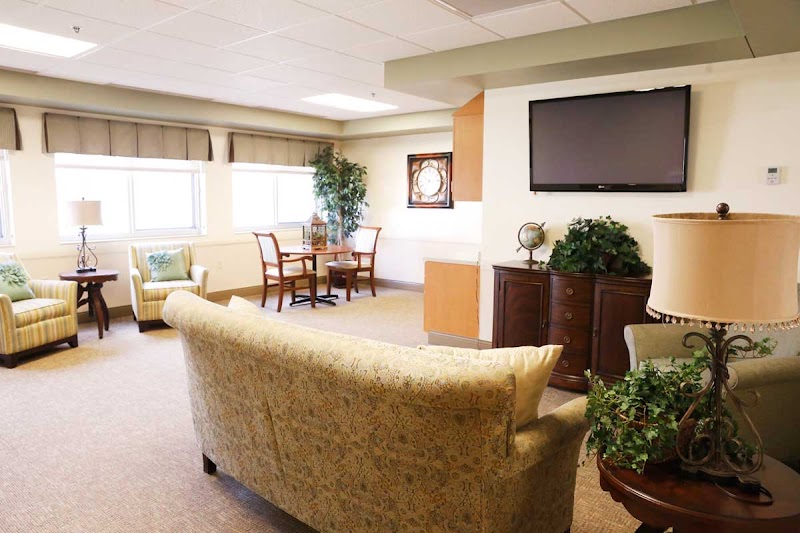
How is Vernon Health & Rehabilitation Staffed?

CMS rates VERNON HEALTH & REHABILITATION's staffing level at 3 out of 5 stars, which is average compared to other nursing homes. Staff turnover is 57%, which is 11 percentage points above the Indiana average of 46%. High turnover can affect care consistency as new staff learn residents' individual needs.

What Have Inspectors Found at Vernon Health & Rehabilitation?

State health inspectors documented 25 deficiencies at VERNON HEALTH & REHABILITATION during 2022 to 2025. These included: 25 with potential for harm.
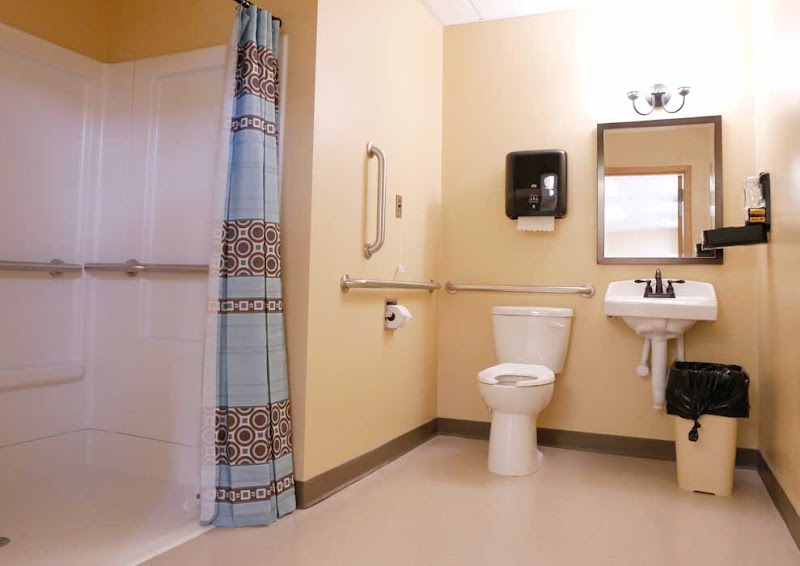
Who Owns and Operates Vernon Health & Rehabilitation?

VERNON HEALTH & REHABILITATION is owned by a non-profit organization. Non-profit facilities reinvest revenue into operations rather than distributing to shareholders. The facility operates independently rather than as part of a larger chain. With 71 certified beds and approximately 47 residents (about 66% occupancy), it is a smaller facility located in WABASH, Indiana.
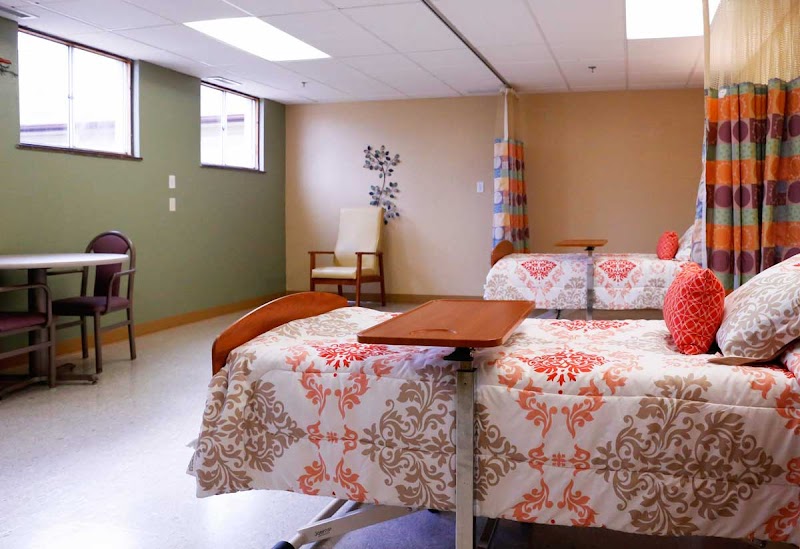
How Does Vernon Health & Rehabilitation Compare to Other Indiana Nursing Homes?

Compared to the 100 nursing homes in Indiana, VERNON HEALTH & REHABILITATION's overall rating (2 stars) is below the state average of 3.1, staff turnover (57%) is significantly higher than the state average of 46%, and health inspection rating (2 stars) is below the national benchmark.

What Should Families Ask When Visiting Vernon Health & Rehabilitation?

Based on this facility's data, families visiting should ask: "How do you ensure continuity of care given staff turnover, and what is your staff retention strategy?" "Can I visit during a mealtime to observe dining assistance and food quality?" "How do you handle medical emergencies, and what is your hospital transfer rate?" "Can I speak with family members of current residents about their experience?" These questions are particularly relevant given the facility's high staff turnover rate.

Is Vernon Health & Rehabilitation Safe?

Based on CMS inspection data, VERNON HEALTH & REHABILITATION has a clean safety record: no substantiated abuse findings (meaning no confirmed cases of resident harm), no Immediate Jeopardy citations (the most serious violation level indicating risk of serious injury or death), and is not on the Special Focus Facility watch list (a federal program monitoring the lowest-performing 1% of nursing homes). The facility has a 2-star overall rating and ranks #100 of 100 nursing homes in Indiana. While no facility is perfect, families should still ask about staff-to-resident ratios and recent inspection results during their visit.

Do Nurses at Vernon Health & Rehabilitation Stick Around?

Staff turnover at VERNON HEALTH & REHABILITATION is high. At 57%, the facility is 11 percentage points above the Indiana average of 46%. High turnover means new staff may not know residents' individual needs, medications, or preferences. It can also be disorienting for residents, especially those with dementia who rely on familiar faces. Families should ask: What is causing the turnover? What retention programs are in place? How do you ensure care continuity during staff transitions?

Was Vernon Health & Rehabilitation Ever Fined?

VERNON HEALTH & REHABILITATION has no federal fines on record. CMS issues fines when nursing homes fail to meet care standards or don't correct problems found during inspections. The absence of fines suggests the facility has either maintained compliance or corrected any issues before penalties were assessed. This is a positive indicator, though families should still review recent inspection reports for the full picture.

Is Vernon Health & Rehabilitation on Any Federal Watch List?

VERNON HEALTH & REHABILITATION is not on any federal watch list. The most significant is the Special Focus Facility (SFF) program, which identifies the bottom 1% of nursing homes nationally based on persistent, serious quality problems. Not being on this list means the facility has avoided the pattern of deficiencies that triggers enhanced federal oversight. This is a positive indicator, though families should still review the facility's inspection history directly.