WALDRON REHABILITATION AND HEALTHCARE CENTER
505 N MAIN ST, WALDRON, IN 46182 (765) 525-4371
For profit - Corporation 71 Beds CASTLE HEALTHCARE Data: November 2025
Trust Grade
40/100
#488 of 505 in IN
Last Inspection: October 2024

Within standard 12-15 month inspection cycle. Federal law requires annual inspections.

Overview

Waldron Rehabilitation and Healthcare Center has a Trust Grade of D, indicating below-average performance with several concerns. It ranks #488 out of 505 facilities in Indiana, placing it in the bottom half, and #4 out of 5 in Shelby County, meaning only one local option is better. The facility's trend is improving, with issues decreasing from 11 in 2024 to 2 in 2025, which is a positive sign. However, staffing is a weakness, rated at 1 out of 5 stars, with a 52% turnover rate, which is average for the state but raises concerns about continuity of care. Specific incidents include a lack of Registered Nurse coverage for several months, which could affect resident care, and failures in proper monitoring and knowledge of kitchen equipment, posing risks to food safety. On a positive note, the facility has no fines on record, suggesting a lack of significant compliance issues recently.

Trust Score
D
40/100
In Indiana
#488/505
Bottom 4%
Safety Record
Low Risk
No red flags
Inspections
Getting Better
11 → 2 violations
Staff Stability
⚠ Watch
52% turnover. Above average. Higher turnover means staff may not know residents' routines.
Penalties
✓ Good
No fines on record. Clean compliance history, better than most Indiana facilities.
Skilled Nurses
○ Average
Each resident gets 35 minutes of Registered Nurse (RN) attention daily — about average for Indiana. RNs are the most trained staff who monitor for health changes.
Violations
⚠ Watch
44 deficiencies on record. Higher than average. Multiple issues found across inspections.
★☆☆☆☆
1.0
Overall Rating
★☆☆☆☆
1.0
Staff Levels
★★★☆☆
3.0
Care Quality
★☆☆☆☆
1.0
Inspection Score
Stable
2024: 11 issues
2025: 2 issues

The Good

  • Full Sprinkler Coverage · Fire safety systems throughout facility
  • No fines on record

Facility shows strength in fire safety.

The Bad

1-Star Overall Rating

Below Indiana average (3.1)

Significant quality concerns identified by CMS

Staff Turnover: 52%

Near Indiana avg (46%)

Higher turnover may affect care consistency

Chain: CASTLE HEALTHCARE

Part of a multi-facility chain

Ask about local staffing decisions and management

The Ugly 44 deficiencies on record

Aug 2025 1 deficiency
CONCERN (D) 📢 Someone Reported This

A family member, employee, or ombudsman was alarmed enough to file a formal complaint

Potential for Harm - no one hurt, but risky conditions existed

Incontinence Care (Tag F0690)

Could have caused harm · This affected 1 resident

Based on interview and record review, the facility failed to properly ensure treatment of a urinary tract infection was completed for 1 of 3 residents reviewed for identification and treatments of uri...

Read full inspector narrative →
Based on interview and record review, the facility failed to properly ensure treatment of a urinary tract infection was completed for 1 of 3 residents reviewed for identification and treatments of urinary tract infections. (Resident D)Findings include:The clinical record for Resident D was reviewed on 8/19/2025 at 1:45 p.m. The medical diagnoses included stroke and urinary tract infection.A Quarterly Minimum Data Set assessment, dated 7/20/2025, indicated Resident D was cognitively impaired, always incontinent with bladder, and needed substantial to maximal assistance with toileting hygiene.An activity of daily living care plan, revised 5/21/2025, indicated Resident D had issues with continence status with interventions were to assist with toileting and personal hygiene.Hospital discharge documentation, dated 8/6/2025, indicated Resident D was being treated for a urinary tract infection with Bactrim DS (an antibiotic) by mouth every 12 hours for the next five days. Later in that document, a new prescription was listed as Bactrim DS by mouth every 12 hours with a quantity of ten. A hospital after visit summary, dated 8/6/2025, indicated Resident D was diagnosed with a urinary tract infection, received two doses of intravenous antibiotics, and needed to take .this medication [antibiotic] for the next 5 days.Review of the Medication Administration Record for August 2025 indicated Resident D received eight doses of Bactrim DS over four days.During an interview on 8/19/2025 at 2:30 p.m., the Director of Nursing indicated Resident D had only received four days of antibiotics.A policy entitled, Physician Servers and Orders, was provided by the Administrator on 8/19/2025 at 3:00 p.m. The policy indicated . All physician orders will be followed as prescribed.This citation relates to Complaint 2581246.3.1-41(a)(2)
May 2025 1 deficiency
CONCERN (D) 📢 Someone Reported This

A family member, employee, or ombudsman was alarmed enough to file a formal complaint

Potential for Harm - no one hurt, but risky conditions existed

Medical Records (Tag F0842)

Could have caused harm · This affected 1 resident

Based on interview and record review, the facility failed to ensure documentation was complete and accurate, related to care-planned arguing between 2 of 6 residents reviewed for possible abuse allega...

Read full inspector narrative →
Based on interview and record review, the facility failed to ensure documentation was complete and accurate, related to care-planned arguing between 2 of 6 residents reviewed for possible abuse allegations and for 1 of 5 residents reviewed for activities programming. (Resident C, Resident D, and Resident H) Findings include. 1. The clinical record of Resident C was reviewed on 5-27-25 at 11:06 a.m. Her most recent Minimum Data Set assessment, dated 4-12-25, indicated she was cognitively intact. An entry in the progress notes, on 5-12-25 at 6:05 p.m., indicated Resident C had fight with Resident H during supper, that brought one of them cussing and walked away. The documentation was unclear regarding what constituted a fight, if it was physical or verbal, who was cursing, the negative impact of the interaction, nor what actions were taken by facility staff during or after the interaction. The clinical record of Resident H was reviewed on 5-28-25 at 10:55 a.m. Her most recent Minimum Data Set assessment, dated 4-15-25, indicated she was cognitively intact. An entry in the progress notes, on 5-12-25 at 6:00 p.m., indicated Resident H had fight with Resident C during supper, that brought one of them cussing and walked away. The documentation was unclear regarding what constituted a fight, if it was physical or verbal, who was cursing, the negative impact of the interaction, nor what actions were taken by facility staff during or after the interaction. During an interview on 5-27-25 at 1:31 p.m. with the Director of Nursing (DON), she indicated the staff member who documented the interaction between Resident C and Resident H was a Registered Nurse (RN) for whom English was not his native language and his charting and wording and English can be a problem at times. The DON provided an example of a charting problem on a different resident where RN 3 was trying to say the resident was annoyed, but he documented the resident was annoying. During an interview with the Executive Director (ED) on 5-27-25 at 2:03 p.m., she indicated RN 3 does have broken English. During a phone interview with RN 3 on 5-28-25 at 11:40 a.m., he indicated English was his second language and sometimes had difficulty with wording in his chart documentation. He indicated on the date in question, the dietary staff had informed him they overheard Resident C and Resident H arguing with each other, as well as these two residents had a history of doing this type of behavior. The management team was aware of this, and it needed to be reported to Social Services. He indicated he sought advice from his co-workers and was informed he needed to report their behaviors to Social Services and document the event in the clinical record. He indicated from what he was aware of with these two residents, the arguing was a common behavior between both residents. During an interview with the DON and the ED on 5-28-25 at 11:40 a.m., the DON indicated she had worked with RN 3 quite a bit in regards to wording of documentation. For example, I addressed with him using the phrase a resident's actions were annoying to him, when what he meant was the resident had been annoyed. He is normally very good to reach out to me or his co-workers for clarification of terminologies. We review all documentation each morning in our morning meeting to review any care or resident issues . I would say the term, 'fight,' would not be the most accurate word to use for their interaction. The ED indicated both residents were care planned for bickering with one another. She indicated when she spoke with Resident C the next day, Resident C indicated Resident H was wanting to become verbal, so she [Resident C] chose to just walk away. She did say that she did mumble curse words while she was walking down the hall, but definitely did not yell or curse out loud. There was no physical contact with anyone. In an interview with Resident C on 5-27-25 at 10:30 a.m., she indicated she had no concerns for abuse of any kind. She added there are times that some people may have words, but then end up being friends again, just like family. In an interview with Resident H on 5-28-25 at 1:50 p.m., she indicated she had no concerns related to any type of abuse at the facility. Resident H indicated there were times that she and a peer have words one day and get upset with each other, just like with family, but the next day, everything is fine. 2. The clinical record for Resident D was reviewed on 5/27/2025 at 1:45 p.m. The medical diagnoses included major depressive disorder and diabetes. A Quarterly Minimum Data Set assessment, dated 3/7/2025, indicated Resident D was cognitively intact and did not reject care. Documented activities for Resident D indicated she did not have documented activities for 7 out of the last 30 days provided. During an interview on 5/27/2025 at 12:01 p.m., Resident D indicated the facility had issues with maintaining activities. Resident D indicated she would attend every activity when it was available. During an interview on 5/28/2025 at 12:15 p.m., the ED indicated the activities staff were responsible for providing and documenting activities to residents. During an interview on 5/28/2025 at 12:45 p.m., the Activities Director indicated residents were provided with passive activities every day and interactive most days. She indicated Resident D comes to almost every activity unless she was out with her family, at an appointment, or not feeling well. It was the responsibility of the activities staff to document activities. A policy entitled, Charting and Documentation, was provided by the ED on 5/28/2025 at 12:56 p.m. The policy indicated . Documentation in the medical record will be objective (not opinionated or speculative), completed and accurate . This citation relates to Complaints IN00459780 and IN00459777. 3.1-50(a)(1) 3.1-50(a)(2)
Oct 2024 6 deficiencies
CONCERN (D)

Potential for Harm - no one hurt, but risky conditions existed

Resident Rights (Tag F0550)

Could have caused harm · This affected 1 resident

2. A confidential resident's record was reviewed on 10/8/2024 at 1:30 p.m. The medical diagnoses included depression and anxiety. The most recent Minimum Data Set Assessment indicated the confidentia...

Read full inspector narrative →
2. A confidential resident's record was reviewed on 10/8/2024 at 1:30 p.m. The medical diagnoses included depression and anxiety. The most recent Minimum Data Set Assessment indicated the confidential resident was cognitively intact, occasionally incontinent of bowel and bladder, and dependent on staff for assistance with toileting. The most recently revised care plans, last revised in August of 2024, indicated the resident was incontinent of bladder and was at risk for skin break down related to incontinence. An intervention was to provide the resident with scheduled toileting upon rising, before and after meals, and before bed, as well as incontinence care as needed. During a confidential resident interview conducted during the survey, the resident indicated they were made to wait a long time for their call light to be answered, upwards to an hour. They were able to verify they use the wall mounted clock in their room to keep track of the time. The confidential resident indicated they almost always know when they must relieve their bowel and bladder, but they cannot get assistance to the bathroom in a timely manner, resulting them in having incontinence of bladder frequently. They stated they had bladder incontinence episodes due to having to wait for assistance as recently as in the last week, but this was a long-standing issue for the last few months. When the confidential resident had incontinence episodes, they would feel terrible and embarrassed. During a confidential staff interview conducted during the survey, they indicated they attempt to get everything done, but they cannot always get all the residents toileted and showered due to not having enough help. A policy entitled, Resident Rights, was provided by the Director of Nursing on 10/8/2024 at 1:50 p.m. The policy indicated, .Residents have the right to a dignified existence . and .to be treated with considerations, respect, and recognition of their dignity . 3.1-3(t) Based on observation, interview, and record review, the facility failed to promote residents' dignity by ensuring privacy for a resident during toileting and providing incontinent care in a timely manner for 2 of 2 residents reviewed for dignity. (Resident 23 and Confidential Resident) Findings include: 1. During an observation on 10/8/24 at 12:13 p.m., Qualified Medication Aide (QMA) 1 and Certified Nurse Aide (CNA) 2 assisted Resident 23 to the toilet in the shower room. QMA 1 and CNA 2 indicated they left Resident 23 in the bathroom alone, because the resident preferred privacy. The shower room had hooks for a privacy curtain, but did not have a privacy curtain hanging to provide privacy to the hallway. QMA 1 and CNA 2 did not know what happened to the privacy curtain. The shower room door was opened four times while the resident was using the restroom, exposing the resident to the hallway. During an interview with the Maintenance Director on 10/8/24 at 12:26 p.m., they indicated it was laundry staff's responsibility to ensure the privacy curtains were in place. During an interview with the Maintenance Director on 10/8/24 at 12:32 p.m., they indicated laundry staff had taken the privacy curtains down, on 10/7/24, to wash them and they were putting the curtains back up at that time. During an interview with the Director of Nursing (DON) on 10/9/24 at 1:09 p.m., they indicated Resident 23 not having the privacy curtain up during toileting could have impacted the resident's dignity.
CONCERN (D)

Potential for Harm - no one hurt, but risky conditions existed

Deficiency F0657 (Tag F0657)

Could have caused harm · This affected 1 resident

Based on interview and record review, the facility failed to hold quarterly care plan meetings for 1 of 3 residents reviewed for care plans. (Resident 8) The clinical record for Resident 8 was reviewe...

Read full inspector narrative →
Based on interview and record review, the facility failed to hold quarterly care plan meetings for 1 of 3 residents reviewed for care plans. (Resident 8) The clinical record for Resident 8 was reviewed on 10/7/24 at 10:35 a.m. The diagnoses included, but were not limited to, chronic kidney disease, heart failure, and generalized anxiety disorder. During an interview with Resident 8 on 10/4/24 at 11:00 a.m., they indicated they did not have regular care plan meetings. A Quarterly Minimum Data Set (MDS) assessment, dated 8/1/24, indicated Resident 8 was cognitively intact for daily decision making. The electronic health record (EHR) indicated Resident 8 had a quarterly care plan meeting, on 8/4/23, a quarterly care plan meeting, on 2/5/24, and another quarterly care plan meeting, on 7/9/24; indicating no care plan meetings were done for six months, then not again for another five months. During an interview with the Social Service Director (SSD) on 10/7/24 at 1:31 p.m., they indicated care plan meetings were to be held quarterly, and she did not know how the quarterly meetings got missed. A Comprehensive Care Plan Policy provided by the Administrator, on 10/8/24 at 10:15 a.m., indicated, .4. Each resident's comprehensive person-centered care plan is consistent with the resident's rights to participate in the development and implementation of his or her plan of care, including the right to: a. Participate in the planning process .c. Participate in establishing the expected goals and outcomes of care .5. The resident is informed of his or her right to participate in his or her treatment and provided advance notice of care planning conferences 3.1-35(d)(2)(B)
CONCERN (D)

Potential for Harm - no one hurt, but risky conditions existed

Accident Prevention (Tag F0689)

Could have caused harm · This affected 1 resident

Based on observation, interview, and record review, the facility failed to utilize an assistive device of a gait belt during a transfer resulting in a fall for 1 of 2 residents reviewed for accidents....

Read full inspector narrative →
Based on observation, interview, and record review, the facility failed to utilize an assistive device of a gait belt during a transfer resulting in a fall for 1 of 2 residents reviewed for accidents. (Resident 23) Findings include: During an interview with the Director of Nursing (DON) on 10/8/24 at 11:45 a.m., they indicated Resident 23 was an extensive assist of two people for transfers, on 9/20/24, when she fell. The staff were not utilizing a gait belt during the transfer and the resident did not have any medical condition that would prevent a gait belt being used. During an observation on 10/8/24 at 12:13 p.m., Qualified Medication Aide (QMA) 1 and Certified Nurse Aide (CNA) 2 assisted Resident 23 from her wheelchair to the toilet utilizing a gait belt. The resident was totally dependent of the two staff and gait belt for the transfer and the resident was bent over at the waist. During an interview with the Therapy Manager on 10/8/24 at 12:34 p.m., they indicated gait belts should be used during transfer and ambulation for all residents unless the resident was independent with ambulation and transfer. The Therapy Manager indicated a gait belt should be used for Resident 23. During an interview with the Therapy Manager on 10/8/24 at 12:40 p.m., they indicated the staff should have been utilizing a gait belt when transferring Resident 23, on 9/20/24, when she fell. Review of the record of Resident 23, on 10/9/24 at 1:27 p.m., indicated the diagnoses included, but were not limited to, vascular dementia, anxiety, weakness, unsteadiness on feet, lack of coordination, muscle wasting, and Alzheimer's disease. The plan of care for Resident 23, dated 6/4/24, indicated the resident was at risk for falls related to impaired safety awareness due to dementia, Alzheimer's disease, hypertension, right rotator cuff strain, incontinence and impaired mobility. The State Optional Minimum Data Set (MDS) assessment for Resident 23, dated 7/12/24, indicated the resident was moderately impaired for daily decision making. The resident required extensive assistance of two people with transfers and toileting. The initial occurrence note for Resident 23, dated 9/20/24, indicated the resident had a witnessed fall in the bathroom. The resident was lowered down to the floor on her knees. There were no injuries. The Interdisciplinary (IDT) note for Resident 23, dated 9/23/24, indicated the resident was lowered to the floor in the restroom. There were no injuries or pain. The resident would be evaluated by therapy. 3.1-45(a)(2)
CONCERN (E)

Potential for Harm - no one hurt, but risky conditions existed

Deficiency F0802 (Tag F0802)

Could have caused harm · This affected multiple residents

Based on observation, interview, and record review, the facility failed to have knowledgeable dietary staff regarding a chemical dishwasher for 6 of 6 dietary employees reviewed for kitchen. (Dietary ...

Read full inspector narrative →
Based on observation, interview, and record review, the facility failed to have knowledgeable dietary staff regarding a chemical dishwasher for 6 of 6 dietary employees reviewed for kitchen. (Dietary Manager, [NAME] 4, [NAME] 5, Dietary Aid 6, Dietary Aid 7, and Dietary Aid 8) A tour of the kitchen was conducted with [NAME] 4 on 10/3/24 at 11:15 a.m. [NAME] 4 indicated she was not sure what the dishwasher strip testing should read. It was observed [NAME] 4 was using the wrong testing strips to test the chemical dishwasher. She also was unsure of proper temperatures that should be recorded. [NAME] 4 did not know what the temperatures or readings should be for chemical sanitization parts per million (ppm). During an observation of the chemical dishwasher with the Dietary Manager (DM) on 10/3/24 at 12:00 p.m., she was using the wrong chemical testing strips to test the chemical dishwasher. An incorrect reading was being read and the DM did not know why. During an interview with the DM on 10/3/24 at 12:23 p.m., they indicated high temperature logs were being kept for the chemical dishwasher, but chemical testing was not being logged and monitored. She indicated, we test daily, we just did not start a log for chemical monitoring. During an interview with the Administrator on 10/4/24 at 11:00 a.m., they indicated education on the new chemical dishwasher was provided by the service man when he came to install it, but the Dietary Manager could not find the education that was provided to the employees. The Dietary Policy and Procedure Manual provided by the Administrator, on 10/4/24 at 1:00 p.m., indicated, .low temperature dishwasher/spray type dish machines using chemicals to sanitize should have wash temperatures of 120 degrees Fahrenheit and final rinse sanitization should read 50 parts per million (ppm) Hypochlorite 3.1-20(h)
CONCERN (F)

Potential for Harm - no one hurt, but risky conditions existed

Deficiency F0727 (Tag F0727)

Could have caused harm · This affected most or all residents

Based on interview and record review, the facility failed to have a Registered Nurse (RN) 8 hours a day, 7 days a week, for 5 of 5 months of RN coverage reviewed. This had the potential to affect all ...

Read full inspector narrative →
Based on interview and record review, the facility failed to have a Registered Nurse (RN) 8 hours a day, 7 days a week, for 5 of 5 months of RN coverage reviewed. This had the potential to affect all 47 residents that resided in the facility. Findings include: Review of the schedules provided by the Administrator, on 10/4/24 at 1:00 p.m., indicated there were no RNs in the facility for seven out of 30 days in April 2024, seven out of 31 days in May 2024, four out of 30 days in June 2024, six out of 30 days in September 2024, and two out of eight days in October 2024. During an interview with the Administrator on 10/8/24 at 2:27 p.m., they verified the facility did not have RN coverage in April, May, June, September, and/or October of 2024. During an interview with the Administrator on 10/8/24 at 2:34 p.m., indicated she was not aware of any residents being affected by the facility not having an RN in the building during those months and there were no incomplete tasks that only an RN could do. The sufficient staffing policy provided by the Director of Nursing (DON), on 10/9/24 at 1:50 p.m., indicated the facility would have a Registered Nurse (RN) at least 8 hours a day, and 7 days a week. 3.1-17(b)(3)
CONCERN (F)

Potential for Harm - no one hurt, but risky conditions existed

Food Safety (Tag F0812)

Could have caused harm · This affected most or all residents

Based on observation, interview, and record review, the facility failed to ensure a chemical dishwasher was tested/monitored three times daily per their expectations and to maintain documentation of s...

Read full inspector narrative →
Based on observation, interview, and record review, the facility failed to ensure a chemical dishwasher was tested/monitored three times daily per their expectations and to maintain documentation of such monitoring. This had the potential of affect all 47 residents who resided in the facility. Based on observation, interview, and record review, the facility failed to maintain holding temperatures for pureed foods for 5 of 5 residents receiving pureed foods. (Resident 18, 26, 34, 39, and 40) Findings include: 1. A tour of the kitchen was conducted, on 10/3/24 at 12:00 p.m., with the Dietary Manager (DM). During an observation of the chemical dishwasher, the only documentation log for monitoring of the dishwasher was obtaining temperatures only for wash and rinse cycles three times a day. The DM indicated the dishwasher was a chemical/low temperature dishwasher and not a high temperature dishwasher. The DM indicated the facility used a chemical solution for the dishwasher. During an interview with the DM on 10/7/24 at 1:17 p.m., they indicated the facility was testing the chemicals daily on the dishwasher before, but they were not recording them. The dishwasher was changed over from a high temperature to a chemical/low temperature a couple months ago and they continued with the temperature logs only and did not add a chemical log. The DM indicated it was the dietary aid who was responsible for the testing of chemical parts per million (ppm) being conducted on the dishwasher. The Dietary Policy and Procedure Manual provided by the Administrator, on 10/4/24 at 1:00 p.m., indicated the following, . the dishwashing staff will monitor and record dish machine temperatures and Sanitizer PPM to assure proper sanitizing of dishes. The director of food and nutrition services will post a log near the dish machine for the staff to document temperatures and Sanitizer PPM 2. A tour of the kitchen was conducted, on 10/3/24 at 11:15 a.m., with [NAME] 4. During an observation of the pureed food temperatures being obtained, it was noted that pureed mixed vegetables were recorded with a holding temperature of 118 degrees Fahrenheit. The pureed apple butter pork loin had a holding temperature of 118 degrees Fahrenheit and the pureed mashed potatoes had a holding temperature of 118 degrees Fahrenheit. An observation was noted of pureed food containers being stored in a hot water container. [NAME] 4 indicated if they did not have room to store food on the serving line, they held the containers in a separate container off the serving line with hot water on the bottom of it to keep the food warm. [NAME] 4 indicated she would heat the pureed food in the microwave before serving it to the residents. The Dietary Policy and Procedure Manual provided by the Administrator, on 10/4/24 at 1:00 p.m., indicated the following, . the temperatures of all food items will be taken and properly recorded prior to service of each meal. All hot food items must be cooked to appropriate internal temperatures, held and served at a temperature of at least 135 degrees Fahrenheit 3.1-21(a)(2) 3.1-21(i)(2) 3.1-21(i)(3)
May 2024 2 deficiencies
CONCERN (D) 📢 Someone Reported This

A family member, employee, or ombudsman was alarmed enough to file a formal complaint

Potential for Harm - no one hurt, but risky conditions existed

Deficiency F0602 (Tag F0602)

Could have caused harm · This affected 1 resident

Based on interview and record review, the facility failed to ensure 2 of 2 residents reviewed for misappropriation of property were not subjected to missing narcotic medications. (Residents B and C) T...

Read full inspector narrative →
Based on interview and record review, the facility failed to ensure 2 of 2 residents reviewed for misappropriation of property were not subjected to missing narcotic medications. (Residents B and C) The deficient practice was corrected on 4-4-24, prior to the start of the survey, and was therefore past noncompliance. The facility had immediately began an investigation upon learning of the missing narcotic medication and associated paperwork and begin staff education regarding the correct means to conduct controlled substance counts. Based on resident assessments and interviews, there was not a negative impact to the comfort level of either resident identified as being affected by this deficient practice. Findings include: In an interview with the Executive Director (ED) 5-21-24 at 11:22 a.m., she indicated the facility recently had an issue with diversion of narcotics. She indicated the concern was reported to the Indiana Department of Health's Long Care Division on 3-28-24, the date it was identified, and investigation has continued since that date. In another interview on 5-21-24 at 1:35 p.m., with the ED, she further explained only two residents, Residents B and C, were involved in the misappropriation of property. Once we knew there was an issue, we did an audit of everyone with prn [as needed] narcotics. So, our goal after that was to get any prn narcotics that weren't being used to have them stopped or if they were being used to get something to help them on a routine basis. She indicated 3 staff members were identified as possible suspects, LPN 3, RN 4 and QMA 5, and were each sent for drug testing with the results being negative for all three staff members. Review of the employment records of LPN 3 and RN 4 indicated each began employment after 1-1-24, with QMA 5 beginning employment in the fall of 2022. The ED indicated LPN 3 and RN 4 resigned after this situation and QMA 5 remains employed by the facility. In an interview on 5-22-24 at 9:23 a.m., with the ED, she indicated the manner in which the diversion of narcotics was brought to light was Resident B had requested something for pain from LPN 6 on the evening shift of 3-27-24. She shared LPN 6 inquired about the pain level of the resident's pain and offered Resident B a choice of Percocet or Tylenol; Resident B chose Tylenol. Apparently this got [name of LPN 6] to thinking she could not remember counting the Percocet for the resident at the beginning of her shift, because she recalled she done this earlier in the week when she had done the narcotic counts. This caused her to go and look to see if [name of Resident B]'s Percocet was in the med cart. That's when she couldn't find the med card or the count sheet. [Name of LPN 6] then immediately called the Director of Nursing (DON) to report the discrepancy. The ED indicated the facility was unable to definitely determine exactly who was responsible for the misappropriation of the narcotics, but she was able to view security camera footage from 4-4-24, that was suspicious. She indicated at the time, the camera video captured RN 4 and RN 7 conducting a destruction of Resident C's discontinued hydrocodone. The ED indicated she was able to view RN 4 to place something that appeared small and white into her hand, during the destruction process, and then place her hand into her pocket, then upon removal of her hand from her pocket, the same hand was empty. The ED emphasized she could not say with certainty the object or objects were some of the medication being destroyed, but seemed suspicious, or at the very least, unusual. The ED emphasized that she could say with certainty the facility had several cards of narcotics missing, as well as the paperwork associated with the medications for Residents B and C. The ED added, by the time this video of events of 4-4-24, were viewed, the nursing staff were aware of the situation in which narcotics were being evaluated by the facility management. On 5-22-24 at 8:58 a.m., the ED provided a timeline of the investigation of missing narcotics. The timeline indicated Resident C's medication card for hydrocodone had been discontinued as of 3-29-24. It was noted the drug destruction sheet there was only 1 sheet of 2 in the file. When questioning the 2 nurses, [names of RN 7 and RN 4] destroyed the medication for [name of Resident C]. The camera was reviewed, and it was noted that [name of RN 4] walked around the nurse's station--while talking on the telephone was punching out the medications the 2 nurses were destroying. The camera shows [name of RN 4] punching the card and placing the medication into her palm and slipping her hand into her left pocket. Further review of the camera--it is noted she dropped something--and a while [sic] object was picked up 2 times and put into the cup in her hand--the 3rd white object was picked up and placed in her pocket. In an interview with the DON on 5-22-24 at 12:50 p.m., she indicated she was notified on the evening shift of 3-27-24 by LPN 6 of the missing medications and medication paperwork. We truly looked all over this building for the paperwork. It became apparent pretty quick something was wrong. She indicated an audit of all the controlled substances was conducted and corporate assistance was provided to help with the process. She indicated the following day, 3-28-24, an inservice education was conducted for staff that administer medications on counting of the narcotics and how the process was to be conducted, including changes that were instituted. She indicated the previous day, 5-21-24, additional inservice education was conducted with staff who administer medications to reinforce these concepts. In review of the medication administration records (MAR) for Resident B for January, 2024, the MAR indicated Resident B had received the Percocet nine (9) times, for February, 2024, it indicated she had received Percocet five (5) times, for March, 2024, five (5) times and none for April or May, 2024. The Percocet 10-324 milligrams (mg) had been ordered on 12-27-20, to be administered every 8 hours as needed for pain and was discontinued 3-29-24. A review of the contracted pharmacy records reflected the medication had been re-ordered and received 30 tablets on 12-23-23, 2-6-23, 2-14-24, 2-24-24, 3-3-24, 3-11-24 and 3-19-24. A review of the controlled substance log indicated Resident B had received 30 tablets on 11-6-24 and indicated she was administered 1 tablet as needed with her using the 30 tablet supply by 12-21-23, less than one tablet per day on average. No other controlled substance logs could be located for the for the Percocet delivered by the contracted pharmacy company on 12-23-23, 2-6-23, 2-14-24, 2-24-24, 3-3-24, 3-11-24 and 3-19-24, a total of 210 tablets. In review of the MAR for Resident C for February, 2024, it indicated he was administered hydrocodone 16 times and six (6) times in March, 2024. The hydrocodone-apap 5-325 mg had been ordered on 12-22-23, to be administered 2 tablets every 4 hours as needed for pain and discontinued on 2-18-24. This order was restarted on 2-20-24 and discontinued on 3-27-24. A new order for the hydrocodone 5-325 mg 1 tablet every 4 hours as needed for mild to moderate pain was issued on 3-27-29 and stopped on 3-29-24. A review of the controlled substance log indicated Resident C had received 30 tablets on 2-6-24 and indicated he had been administered the 30 tablet supply by 2-23-24 and was documented as receiving 2 doses of 1 tablet twice and the remainder of the doses were documented as a 2 pill dose fourteen times. The second controlled substance log indicated a supply of 30 tablets on page 1 of 2 was received on 3-21-24. The second page of this order was not located. On page 1 of 2, six 2-pill doses were documented as administered to Resident C, and 16 (sixteen) pills were documented as destroyed on 3-29-24 by RN 4 and RN 7. On 5-22-24 at 2:25 p.m., the ED provided a copies of documents from the contracted pharmacy which indicated the following tablets of hydrocodone-apap 5-325 mg for Resident C were received: -2-6-24, 30 tablets. -3-3-24, 2 orders of 30 tablets for total of 60 tablets. None of the associated medication or associated paperwork were located. 3-21-24, 2 orders of 30 tablets for total of 60 tablets. Only the narcotic log for one of those orders, page 1 of 2, could be located. In random interviews with the ED and DON on 5-22-24, another issue that had been identified with the misappropriation investigation was inconsistent documentation of controlled substance documentation of administration between the controlled substance logs and the medication administration records. Each indicated this topic was identified and is being addressed by placing into the facility's quality improvement process and the facility is continuing audits of this. 1. The clinical record of Resident B was reviewed on 5-21-24 at 12:09 p.m. Her diagnoses included, but were not limited to, recent cholangitis, muscle wasting and atrophy, age-related osteoporosis without pathological fracture, atrial fibrillation, transient ischemic attacks (TIA's) and unspecified osteoarthritis. Her most recent Minimum Data Set assessment, dated 3-31-24, indicated she was cognitively intact and had not received any opioid medications within the previous 7 day look-back period. In an interview with Resident B on 5-22-24 at 11:34 a.m., she indicated she has low-grade pain all the time due to her arthritis, but only requests pain medication when it gets worse. She indicated the staff have always been good to provide her pain medication to her when she requests it. 2. The clinical record of Resident C was reviewed on 5-21-24 at 1:54 p.m. His diagnoses included, but were not limited to, diabetes with neuropathy, muscle wasting and atrophy, right above knee amputation within the last 6 months and age-related osteoporosis. His most recent Minimum Data Set assessment, dated 4-17-24, indicated he was moderately cognitively impaired and had not received any opioid medications within the previous 7 day look-back period. In an interview with Resident C on 5-22-24 at 11:45 a.m., he indicated he had a surgical amputation above his right knee in January or February of this year. He indicated he initially requested pain medication frequently after his surgery, but rarely does at this point. He indicated the facility staff have provided him his pain medication in a timely manner when he has requested it. On 5-22-24 at 10:55 a.m., the ED provided a copy of a policy entitled, Controlled Medication Storage, with a review date of 2-22-22. This policy indicated its purpose as, To ensure the facility provides separately locked, permanently affixed compartments for storage of controlled drugs Schedule II-V and other drugs subject to abuses .and a missing dose can be readily be detected .Regulations require that the facility have a system to account for the receipt, usage, disposition, and reconciliation of all controlled medications .Record of receipt of all controlled medication(s) with sufficient detail to allow reconciliation (i.e., specifying name and strength of medication, the quantity and date received, and resident name.) .Records of all usage and disposition of all controlled medication(s) with sufficient detail to allow reconciliation (i.e., MAR, proof-of-use sheets, or declining inventory sheets) including destruction, wastage, return to pharmacy/manufacturer, or disposal in accordance with applicable State requirements .Periodic reconciliation of records or receipt, disposition, and inventory of all controlled medication(s) monthly or more frequently as defined by the facility's procedures or when loss is identified. If discrepancies are identified during reconciliation, the facility and pharmacist develop and implement recommendations for resolving discrepancies .A controlled medication accountability record is provided by the pharmacy for all Schedule II-V medications .A physical inventory of all controlled medication(s), including emergency supply is completed at each shift change by two (2) licensed nurses and is documented on the controlled medication accountability record per facility procedure. Any discrepancy in controlled medication counts is reported to the DON/designee immediately. The DON/designee investigates and makes every reasonable effort to reconcile all reported discrepancies. The DON/designee documents irreconcilable discrepancies in a report to the administrator and/or state as applicable. Major discrepancy/Pattern of discrepancies/Apparent criminal activity -- the DON/designee notifies the administrator and pharmacy immediately. The administrator, pharmacy, and/or DON/designee determine whether other action(s) are needed (i.e., notification of police or other enforcement personnel, State department of health). The medication regimen of residents using medication(s) that have such discrepancies are reviewed to ensure the resident has received all medication(s) ordered and the goal of therapy is met. As an example, is the resident receiving a pain medication complaining of unrelieved pain. Current controlled medication accountability records are kept in the Narcotic Book (Narc Book). When completed, the accountability records are submitted to the DON/designee and kept on file at the facility .Controlled medication(s) remaining in the facility after the order has been discontinued are destroyed by two(2) licensed nurses, or as otherwise directed by law, in a timely manner. The pharmacist/designee routinely monitors controlled medication storage, records, and expiration dates. This Federal tag relates to Complaints IN00433363 and IN00434334. 3.1-28(a)
CONCERN (D) 📢 Someone Reported This

A family member, employee, or ombudsman was alarmed enough to file a formal complaint

Potential for Harm - no one hurt, but risky conditions existed

Abuse Prevention Policies (Tag F0607)

Could have caused harm · This affected 1 resident

Based on interview and record review, the facility failed to implement policies and procedures related to misappropriation of resident property for 2 of 2 residents reviewed for misappropriation of pr...

Read full inspector narrative →
Based on interview and record review, the facility failed to implement policies and procedures related to misappropriation of resident property for 2 of 2 residents reviewed for misappropriation of property related to drug diversion. (Residents B and C) The deficient practice was corrected on 4-4-24, prior to the start of the survey, and was therefore past noncompliance. The facility had immediately began an investigation upon learning of the missing narcotic medication and associated paperwork and begin staff education regarding the correct means to conduct controlled substance counts. Based on resident assessments and interviews, there was not a negative impact to the comfort level of either resident identified as being affected by this deficient practice. Findings include: In an interview with the Executive Director (ED) 5-21-24 at 11:22 a.m., she indicated the facility recently had an issue with diversion of narcotics. She indicated the concern was reported to the Indiana Department of Health's Long Care Division on 3-28-24, the date it was identified, and investigation has continued since that date. In another interview on 5-21-24 at 1:35 p.m., with the ED, she further explained only two residents, Residents B and C, were involved in the misappropriation of property. Once we knew there was an issue, we did an audit of everyone with prn [as needed] narcotics. So, our goal after that was to get any prn narcotics that weren't being used to have them stopped or if they were being used to get something to help them on a routine basis. She indicated 3 staff members were identified as possible suspects, LPN 3, RN 4 and QMA 5, and were each sent for drug testing with the results being negative for all three staff members. Review of the employment records of LPN 3 and RN 4 indicated each began employment after 1-1-24, with QMA 5 beginning employment in the fall of 2022. The ED indicated LPN 3 and RN 4 resigned after this situation and QMA 5 remains employed by the facility. In an interview on 5-22-24 at 9:23 a.m., with the ED, she indicated the manner in which the diversion of narcotics was brought to light was Resident B had requested something for pain from LPN 6 on the evening shift of 3-27-24. She shared LPN 6 inquired about the pain level of the resident's pain and offered Resident B a choice of Percocet or Tylenol; Resident B chose Tylenol. Apparently this got [name of LPN 6] to thinking she could not remember counting the Percocet for the resident at the beginning of her shift, because she recalled she done this earlier in the week when she had done the narcotic counts. This caused her to go and look to see if [name of Resident B]'s Percocet was in the med cart. That's when she couldn't find the med card or the count sheet. [Name of LPN 6] then immediately called the Director of Nursing (DON) to report the discrepancy. The ED indicated the facility was unable to definitely determine exactly who was responsible for the misappropriation of the narcotics, but she was able to view security camera footage from 4-4-24, that was suspicious. She indicated at the time, the camera video captured RN 4 and RN 7 conducting a destruction of Resident C's discontinued hydrocodone. The ED indicated she was able to view RN 4 to place something that appeared small and white into her hand, during the destruction process, and then place her hand into her pocket, then upon removal of her hand from her pocket, the same hand was empty. The ED emphasized she could not say with certainty the object or objects were some of the medication being destroyed, but seemed suspicious, or at the very least, unusual. The ED emphasized that she could say with certainty the facility had several cards of narcotics missing, as well as the paperwork associated with the medications for Residents B and C. The ED added, by the time this video of events of 4-4-24, were viewed, the nursing staff were aware of the situation in which narcotics were being evaluated by the facility management. On 5-22-24 at 8:58 a.m., the ED provided a timeline of the investigation of missing narcotics. The timeline indicated Resident C's medication card for hydrocodone had been discontinued as of 3-29-24. It was noted the drug destruction sheet there was only 1 sheet of 2 in the file. When questioning the 2 nurses, [names of RN 7 and RN 4] destroyed the medication for [name of Resident C]. The camera was reviewed, and it was noted that [name of RN 4] walked around the nurse's station--while talking on the telephone was punching out the medications the 2 nurses were destroying. The camera shows [name of RN 4] punching the card and placing the medication into her palm and slipping her hand into her left pocket. Further review of the camera--it is noted she dropped something--and a while [sic] object was picked up 2 times and put into the cup in her hand--the 3rd white object was picked up and placed in her pocket. In an interview with the DON on 5-22-24 at 12:50 p.m., she indicated she was notified on the evening shift of 3-27-24 by LPN 6 of the missing medications and medication paperwork. We truly looked all over this building for the paperwork. It became apparent pretty quick something was wrong. She indicated an audit of all the controlled substances was conducted and corporate assistance was provided to help with the process. She indicated the following day, 3-28-24, an inservice education was conducted for staff that administer medications on counting of the narcotics and how the process was to be conducted, including changes that were instituted. She indicated the previous day, 5-21-24, additional inservice education was conducted with staff who administer medications to reinforce these concepts. In review of the medication administration records (MAR) for Resident B for January, 2024, the MAR indicated Resident B had received the Percocet nine (9) times, for February, 2024, it indicated she had received Percocet five (5) times, for March, 2024, five (5) times and none for April or May, 2024. The Percocet 10-324 milligrams (mg) had been ordered on 12-27-20, to be administered every 8 hours as needed for pain and was discontinued 3-29-24. A review of the contracted pharmacy records reflected the medication had been re-ordered and received 30 tablets on 12-23-23, 2-6-23, 2-14-24, 2-24-24, 3-3-24, 3-11-24 and 3-19-24. A review of the controlled substance log indicated Resident B had received 30 tablets on 11-6-24 and indicated she was administered 1 tablet as needed with her using the 30 tablet supply by 12-21-23, less than one tablet per day on average. No other controlled substance logs could be located for the for the Percocet delivered by the contracted pharmacy company on 12-23-23, 2-6-23, 2-14-24, 2-24-24, 3-3-24, 3-11-24 and 3-19-24, a total of 210 tablets. In review of the MAR for Resident C for February, 2024, it indicated he was administered hydrocodone 16 times and six (6) times in March, 2024. The hydrocodone-apap 5-325 mg had been ordered on 12-22-23, to be administered 2 tablets every 4 hours as needed for pain and discontinued on 2-18-24. This order was restarted on 2-20-24 and discontinued on 3-27-24. A new order for the hydrocodone 5-325 mg 1 tablet every 4 hours as needed for mild to moderate pain was issued on 3-27-29 and stopped on 3-29-24. A review of the controlled substance log indicated Resident C had received 30 tablets on 2-6-24 and indicated he had been administered the 30 tablet supply by 2-23-24 and was documented as receiving 2 doses of 1 tablet twice and the remainder of the doses were documented as a 2 pill dose fourteen times. The second controlled substance log indicated a supply of 30 tablets on page 1 of 2 was received on 3-21-24. The second page of this order was not located. On page 1 of 2, six 2-pill doses were documented as administered to Resident C, and 16 (sixteen) pills were documented as destroyed on 3-29-24 by RN 4 and RN 7. On 5-22-24 at 2:25 p.m., the ED provided a copies of documents from the contracted pharmacy which indicated the following tablets of hydrocodone-apap 5-325 mg for Resident C were received: -2-6-24, 30 tablets. -3-3-24, 2 orders of 30 tablets for total of 60 tablets. None of the associated medication or associated paperwork were located. 3-21-24, 2 orders of 30 tablets for total of 60 tablets. Only the narcotic log for one of those orders, page 1 of 2, could be located. In random interviews with the ED and DON on 5-22-24, another issue that had been identified with the misappropriation investigation was inconsistent documentation of controlled substance documentation of administration between the controlled substance logs and the medication administration records. Each indicated this topic was identified and is being addressed by placing into the facility's quality improvement process and the facility is continuing audits of this. 1. The clinical record of Resident B was reviewed on 5-21-24 at 12:09 p.m. Her diagnoses included, but were not limited to, recent cholangitis, muscle wasting and atrophy, age-related osteoporosis without pathological fracture, atrial fibrillation, transient ischemic attacks (TIA's) and unspecified osteoarthritis. Her most recent Minimum Data Set assessment, dated 3-31-24, indicated she was cognitively intact and had not received any opioid medications within the previous 7 day look-back period. In an interview with Resident B on 5-22-24 at 11:34 a.m., she indicated she has low-grade pain all the time due to her arthritis, but only requests pain medication when it gets worse. She indicated the staff have always been good to provide her pain medication to her when she requests it. 2. The clinical record of Resident C was reviewed on 5-21-24 at 1:54 p.m. His diagnoses included, but were not limited to, diabetes with neuropathy, muscle wasting and atrophy, right above knee amputation within the last 6 months and age-related osteoporosis. His most recent Minimum Data Set assessment, dated 4-17-24, indicated he was moderately cognitively impaired and had not received any opioid medications within the previous 7 day look-back period. In an interview with Resident C on 5-22-24 at 11:45 a.m., he indicated he had a surgical amputation above his right knee in January or February of this year. He indicated he initially requested pain medication frequently after his surgery, but rarely does at this point. He indicated the facility staff have provided him his pain medication in a timely manner when he has requested it. On 5-22-24 at 10:55 a.m., the ED provided a copy of a policy entitled, Controlled Medication Storage, with a review date of 2-22-22. This policy indicated its purpose as, To ensure the facility provides separately locked, permanently affixed compartments for storage of controlled drugs Schedule II-V and other drugs subject to abuses .and a missing dose can be readily be detected .Regulations require that the facility have a system to account for the receipt, usage, disposition, and reconciliation of all controlled medications .Record of receipt of all controlled medication(s) with sufficient detail to allow reconciliation (i.e., specifying name and strength of medication, the quantity and date received, and resident name.) .Records of all usage and disposition of all controlled medication(s) with sufficient detail to allow reconciliation (i.e., MAR, proof-of-use sheets, or declining inventory sheets) including destruction, wastage, return to pharmacy/manufacturer, or disposal in accordance with applicable State requirements .Periodic reconciliation of records or receipt, disposition, and inventory of all controlled medication(s) monthly or more frequently as defined by the facility's procedures or when loss is identified. If discrepancies are identified during reconciliation, the facility and pharmacist develop and implement recommendations for resolving discrepancies .A controlled medication accountability record is provided by the pharmacy for all Schedule II-V medications .A physical inventory of all controlled medication(s), including emergency supply is completed at each shift change by two (2) licensed nurses and is documented on the controlled medication accountability record per facility procedure. Any discrepancy in controlled medication counts is reported to the DON/designee immediately. The DON/designee investigates and makes every reasonable effort to reconcile all reported discrepancies. The DON/designee documents irreconcilable discrepancies in a report to the administrator and/or state as applicable. Major discrepancy/Pattern of discrepancies/Apparent criminal activity -- the DON/designee notifies the administrator and pharmacy immediately. The administrator, pharmacy, and/or DON/designee determine whether other action(s) are needed (i.e., notification of police or other enforcement personnel, State department of health). The medication regimen of residents using medication(s) that have such discrepancies are reviewed to ensure the resident has received all medication(s) ordered and the goal of therapy is met. As an example, is the resident receiving a pain medication complaining of unrelieved pain. Current controlled medication accountability records are kept in the Narcotic Book (Narc Book). When completed, the accountability records are submitted to the DON/designee and kept on file at the facility .Controlled medication(s) remaining in the facility after the order has been discontinued are destroyed by two(2) licensed nurses, or as otherwise directed by law, in a timely manner. The pharmacist/designee routinely monitors controlled medication storage, records, and expiration dates. This Federal tag relates to Complaints IN00433363 and IN00434334. 3.1-28(a)
Jan 2024 3 deficiencies
CONCERN (D) 📢 Someone Reported This

A family member, employee, or ombudsman was alarmed enough to file a formal complaint

Potential for Harm - no one hurt, but risky conditions existed

Safe Environment (Tag F0584)

Could have caused harm · This affected 1 resident

2. The clinical record for Resident F was reviewed on 1/17/2024 at 11:00 a.m. The medical diagnosis included stroke. An Annual Minimum Data Set Assessment, dated for 12/11/2023, indicated Resident F ...

Read full inspector narrative →
2. The clinical record for Resident F was reviewed on 1/17/2024 at 11:00 a.m. The medical diagnosis included stroke. An Annual Minimum Data Set Assessment, dated for 12/11/2023, indicated Resident F needed assistance with activities of daily living. An observation on 1/17/2024 at 1:40 p.m. indicated there was a thick brown substance on the recliner with a wet washcloth laying partially over the area. An interview with Resident F on 1/17/2024 at 1:40 p.m. indicated that they usually clean her room and she would like her recliner cleaned before she got back up. An observation and interview on 1/17/2024 at 2:00 p.m. indicated that there was brown residue on the recliner with a wet washcloth laying partially over the area. Medical Records came to the room and cleaned the area as best she could. She indicated that she would have housekeeping spot clean the recliner. A policy, entitled Homelike Environment, was provided by the Administrator on 1/18/2024 at 10:00 a.m. The policy indicated, .The facility staff and management maximize, to the extent possible, the characteristics of the facility that reflect a personalized, homelike setting. These characteristics include .Clean, sanitary, and orderly environment . This Federal tag relates to Complaints IN00425127 and IN00424182. 3.1-19(f) 3.1-19(g) 5.1-5(a) Based on observation, interview and record review, the facility failed to maintain a safe, clean, sanitary and comfortable environment for a resident shower room and a resident's recliner was observed with a dried brown substance present. These deficient practices have the ability to adversely affect any residents who utilize the shower room and Resident F. (Resident F) Findings include: 1. During an observation of the shower room, located across from the Rehab Hall's Nurse's Station on 1-16-24 at 7:20 p.m., with LPN 3, the tile floor of the shower appeared discolored with brown and tan stains, one wet wash cloth was observed in left back corner of the shower. Behind and adjacent to the wall of the toilet were two balled-up pieces of tissue paper located on the floor. LPN 3 indicated she had heard the facility is planning to be replace the shower floor tile soon, but was unsure of a date. LPN 3 indicated she had noticed the discoloration of the tile and it did not look appealing to her. I don't know that I would want to walk on that shower floor barefoot. LPN 3 indicated she has personally cleaned the shower floor with bleach products and still cannot get rid of the stains. In an interview with Resident J on 1-16-24 at 4:58 p.m., he indicated he does not like to use the shower room located across from the Rehab Nurse's station. It looks dirty to me, maybe just stained, but I won't put my bare feet on that floor. In an interview on 1-17-24 at 2:22 p.m., with the Executive Director, she indicated the tile replacement for this shower room has not been scheduled for replacement at this time. She indicated several treatments have been attempted to clean the tile in the shower in the recent past. In an interview on 1-17-24 at 2:35 p.m., with the Corporate Nurse, she explained she was informed by her superiors the tile replacement is on the schedule to be conducted. I was told the bathroom tile is on the list to be done next. But, I can't tell you an exact date for that. I would guess within the next few months.
CONCERN (D) 📢 Someone Reported This

A family member, employee, or ombudsman was alarmed enough to file a formal complaint

Potential for Harm - no one hurt, but risky conditions existed

Accident Prevention (Tag F0689)

Could have caused harm · This affected 1 resident

Based on interview, observation, and record review, the facility failed to ensure resident specific fall interventions of antiroll back brakes and bright color tape were applied to wheelchair brakes 1...

Read full inspector narrative →
Based on interview, observation, and record review, the facility failed to ensure resident specific fall interventions of antiroll back brakes and bright color tape were applied to wheelchair brakes 1 of 3 residents reviewed for falls. (Resident G) Findings include: The clinical record for Resident G was reviewed on 1/17/2024 at 2:51 p.m. The medical diagnosis included Alzheimer's disease. A Quarterly Minimum Data Set Assessment, dated 11/10/2023, indicated that Resident G had multiple falls and was cognitively impaired. A fall care plan for Resident G indicated interventions of anti-roll back to wheelchair, dated 3/7/2023, and bright colored tape to the wheelchair brakes, dated 12/18/2023. An observation on 1/17/2024 at 2:49 p.m. indicated Resident G was laying in bed at this time. She had a wheelchair next to her bed that did not have antiroll back brakes nor had color tape to the wheelchair brakes. An observation and interview on 1/17/2024 at 3:00 p.m. indicated CNA 2 came to Resident G's room. She confirmed that no antiroll back brakes or color tape to her wheelchair brakes. An interview with the Director of Nursing on 1/28/2024 at 12:40 p.m. indicated that the direct care staff are responsible for ensuring fall interventions are in place for each resident. A policy, entitled Fall Management and Fall Risk, was provided by the Administrator on 1/18/2024 at 10:00 a.m. The policy indicated .If falling occurs despite initial interventions, staff will implement additional or different interventions . This Federal tag relates to Complaint IN00425169 and IN00424732. 3.1-45(a)(2)
CONCERN (D) 📢 Someone Reported This

A family member, employee, or ombudsman was alarmed enough to file a formal complaint

Potential for Harm - no one hurt, but risky conditions existed

Deficiency F0692 (Tag F0692)

Could have caused harm · This affected 1 resident

**NOTE- TERMS IN BRACKETS HAVE BEEN EDITED TO PROTECT CONFIDENTIALITY** Based on interview and record review, the facility failed to ensure 1 of 5 residents reviewed for nutrition had an admission wei...

Read full inspector narrative →
**NOTE- TERMS IN BRACKETS HAVE BEEN EDITED TO PROTECT CONFIDENTIALITY** Based on interview and record review, the facility failed to ensure 1 of 5 residents reviewed for nutrition had an admission weight obtained in less than 14 days from time of admission. (Resident B) Findings include: The clinical record of Resident B was reviewed on 1-16-24 at 4:06 p.m. It indicated he admitted to the facility on [DATE] with diagnoses that included, but were not to, a recent left femur fracture, muscle wasting and atrophy, cognitive communication deficit, dementia, paranoid schizophrenia and prostate cancer. An admission nursing assessment, dated 12-2-23, indicated his admission weight, dated 5-1-2021, was 175.4 pounds (#). This resident had previously been a resident from 1-29-2021 to 5-10-2021. Current weights for Resident B were documented as 150 # on 12-13-23, and 148.5 # on 1-4-24. A nutrition assessment, dated 12-4-23, 76 yo [years old] M [male] readmit with fracture of L. [left]femur and dx [diagnosis] of cancer of bone, ARF, [acute renal/kidney failure] and anemia. Monthly wt [weight] pending. Previous BMI [body mass index] fo [sic] 27.5, while on the higher side is appropriate for age. Resident is on a regular diet. High protein needs r/t [related to] cancer. Poor intake at this time, will monitor another week and add supplement if warranted. ADL [activities of daily living]-total dependence. No issues with chewing or swallowing noted. Skin intact. Labs reviewed above. New admit will be followed by CAR [clinically at risk team or interdisciplinary team]. Care plan initiated. Will continue to monitor and follow. A nurse practitioner visit note, dated 12-12-23, indicated, [Name of Resident B] is being seen as follow up to [name of facility] on 11-30-2023 .Weekly weights x4 orders, however no admission weight or subsequent weights found. A physician visit note, dated 1-2-2024, indicated, Pt [patient] has had 1 [one] documented weight since admission, that was on 12-15-23. Reported to have poor appetite, for which he does take [brand name of liquid dietary supplement] w/o [without] difficulty. In an interview with Director of Nursing (DON) on 1-18-24 at 11:05 a.m., she indicated she had recently noted the missing admission weight for Resident B. The only thing I can tell you is this is that he came in while we were in the midst of an outbreak of Covid, we had a lot of staff out with Covid, including myself. So, I was not in here to monitor like I would normally have done. He is no longer being followed by IDT [the interdisciplinary team] for his weight or nutrition. His appetite has improved and is doing pretty good in therapy. On 1-18-24 at 9:05 a.m., the Executive Director provided a copy of a policy entitled, Weight Policy, with a review date of 5-1-2022. This policy indicated, New admission weights [are to be conducted] weekly, for the first 4 weeks after admission .Residents identified as nutritional risk may be weighed weekly or bi-weekly per physician order or IDT recommendations .Weekly weights may be discontinued if weight has remained stable for at least 4 weeks, as determined by the IDT, Dietician [sic] or Physician . This Federal tag relates to Complaints IN00424182 and IN00425127. 3.1-46(a)(1)
Dec 2023 1 deficiency
CONCERN (E) 📢 Someone Reported This

A family member, employee, or ombudsman was alarmed enough to file a formal complaint

Potential for Harm - no one hurt, but risky conditions existed

Infection Control (Tag F0880)

Could have caused harm · This affected multiple residents

Based on observations, interviews and record reviews, the facility failed to properly prevent and/or contain COVID-19 for 4 of 40 residents observed during a random observation. (Residents 14, 31, 35,...

Read full inspector narrative →
Based on observations, interviews and record reviews, the facility failed to properly prevent and/or contain COVID-19 for 4 of 40 residents observed during a random observation. (Residents 14, 31, 35, and 29). Findings include: The clinical record for Resident 14 was reviewed on 12/8/23 at 11:54 a.m. indicated, the resident tested positive for COVID-19 on 12/7/23 and was on contact droplet isolation for 10 days. The clinical record for Resident 31 was reviewed on 12/8/23 at 11:58 a.m. indicated, the resident tested positive for COVID-19 on 12/7/23 and was on contact droplet isolation for 10 days. Resident 14 and Resident 31 were roommates. The clinical record for Resident 35 was reviewed on 12/8/23 and was on strict isolation for contact droplet isolation related to a positive COVID-19 status. Resident 35 was roommates with Resident 29. An interview with ED (Executive Director) conducted on 12/8/23 at 12:25 p.m. indicated, Resident 35 had tested positive for COVID-19 on 12/4/23. She further indicated, Resident 29 had tested negative for COVID-19 on 12/4/23, but refused to leave his room and chose to stay in his room with his roommate, Resident 35. During random observation conducted on 12/8/23 at 10:58 a.m., a meal tray cart had been wheeled onto the hallway. CNA (certified nursing assistant) 2 pulled a tray out of the cart, set it down on the isolation station outside of Residents 14 and 31's room; donned an isolation gown, gloves, and a N95 face mask; picked up the lunch tray; and entered into the residents' room. CNA 2 did not don eye protection prior to entering the room which was clearly marked as a contact droplet isolation room. When entering the room, it was observed that used PPE (personal protective equipment) was hanging just inside the room and next to the door. Upon exiting their room, CNA 2 had the tray in her hand and placed it on top of the isolation station cart outside of the room. She then took a disinfectant wipe and wiped the tray down and placed the tray on the top of the meal cart. CNA 2 did not wipe down the top of the isolation cart after placing the potentially contaminated meal tray on it. At the same time as the previous observation, CNA 3 had pulled a tray out of the meal cart and placed it on top of the isolation cart in front of Residents 35 and 29's room. CNA 3 donned an isolation gown, gloves, and a N95 mask over her surgical face mask, grabbed the meal tray and entered the room. CNA 3 did not don eye protection prior to entering the room which was clearly marked as a contact droplet isolation room. Upon exiting the residents' room, she had the tray in hand and placed it on top of the isolation station located just outside their room. CNA 3 proceeded to wipe the tray down with a disinfectant wipe and then placed the tray on the top of the meal cart. CNA 3 did not wipe down the top of the isolation cart after placing the potentially contaminated meal tray on it. An interview with ED conducted on 12/8/23 at 11:39 a.m. indicated, the facility should not be re-using any PPE at this time as the supply levels were not in contingency status. The Centers for Disease Control and Prevention (CDC) COVID Data Tracker (https://covid.cdc.gov/covid-data-tracker/#datatracker-home <https://covid.cdc.gov/covid-data-tracker/>), accessed on 12/11/23 indicated the county's hospital admission level was low. The CDC (Centers for Disease and Control) website, accessed on 12/11/23, Interim Infection Prevention and Control Recommendations for Healthcare Personnel During the Coronavirus Disease 2019 (COVID-19) Pandemic Updated May 8, 2023 indicated, If they are used during the care of patient for which a NIOSH Approved respirator or facemask is indicated for personal protective equipment (PPE) (e.g., NIOSH Approved particulate respirators with N95 filters or higher during the care of a patient with SARS-CoV-2 infection, facemask during a surgical procedure or during care of a patient on Droplet Precautions), they should be removed and discarded after the patient care encounter and a new one should be donned HCP [healthcare providers]who enter the room of a patient with suspected or confirmed SARS-CoV-2 infection should adhere to Standard Precautions and use a NIOSH Approved particulate respirator with N95 filters or higher , gown, gloves, and eye protection (i.e., goggles or a face shield that covers the front and sides of the face).' The CDC (Centers for Disease and Control) website, accessed on 12/11/23,How to Use Your N95 Respirator last updated Mar. 16, 2022, indicated, Your N95 must form a seal to your face to work properly. Your breath must pass through the N95 and not around its edges. Jewelry, glasses, and facial hair can cause gaps between your face and the edge of the mask. The N95 works better if you are clean shaven. Gaps can also occur if your N95 is too big, too small, or it was not put on correctly. An Infection Control Manual, effective date 6/5/2023, was received on 12/8/23 at 11:45 a.m. from ED, indicated, The PHE[public health emergency] ended on 5/11/23 and this guidance serves as a framework for the facility to continue to implement core infection prevention and control practices to assist in the on-going effort to prevent and contain any COVID-19 outbreaks .Supplies necessary to adhere to hand hygiene or other source control/PPE are readily available in all areas of the facility where care is being delivered .COVID-19 Positive Facility Case .16. The RED stop sign for Covid-19 will be placed on the Covid-19 positive residents' door to communicate to staff and visitors the required use of PPE. To enter the positive resident's room an N95, gloves, eye protection, and gown are required for every entrance into the room. 3.1-18(b)
Oct 2023 4 deficiencies
CONCERN (D) 📢 Someone Reported This

A family member, employee, or ombudsman was alarmed enough to file a formal complaint

Potential for Harm - no one hurt, but risky conditions existed

Deficiency F0602 (Tag F0602)

Could have caused harm · This affected 1 resident

**NOTE- TERMS IN BRACKETS HAVE BEEN EDITED TO PROTECT CONFIDENTIALITY** Based on interview and record review, the facility failed to ensure a resident's money was secure and accounted for while it was...

Read full inspector narrative →
**NOTE- TERMS IN BRACKETS HAVE BEEN EDITED TO PROTECT CONFIDENTIALITY** Based on interview and record review, the facility failed to ensure a resident's money was secure and accounted for while it was being stored by a staff person for 1 of 3 residents reviewed for misappropriation of a resident's property. (Resident C) Findings include: The clinical record for Resident C was reviewed on 10/23/23 at 11:00 a.m. The resident's diagnosis included, but was not limited to, Parkinson's Disease. The 7/29/23 Quarterly MDS (Minimum Data Set) assessment indicated Resident C was cognitively intact. A reportable incident to the Indiana Department of Health on 10/20/23 indicated an incident had occurred on 10/16/23 of an allegation of misappropriation of funds. The immediate action that was taken was the MDS Coordinator was suspended, police were notified and an investigation was started. A follow up of the investigation dated 10/20/23 indicated The facility DON [Director of Nursing] received an email from [Resident C's Power of Attorney] alleging that [MDS Coordinator] took [Resident C] out on LOA (leave of absence) August 18, 2023. [Resident C's POA] indicated [MDS Coordinator] took [Resident C] to the bank withdraw $ 9,975.00 dollars. DON provided a copy of the email immediately to ED (Executive Director) office and informed [MDS Coordinator] there was an allegation of misappropriation of funds and that the facility would be placing her on administrative leave. [MDS Coordinator] agreed that she had taken the resident out on 8/18/23 and had assisted the resident to make a withdraw of $9,975.00 dollars from the bank. [MDS Coordinator] advised the ED that she had the resident's money in her office and was asked by [Resident C] to hold the money for safe keeping. [MDS Coordinator] stated that [Resident C's POA] was also aware that she had taken him out on a pass and was keeping the money in her office. [Resident C]'s money was retrieved from [MDS Coordinator]'s office and counted. There was only $6,404.00. ED inquired what happened to the remainder of the money and [MDS Coordinator] said she purchased cigarettes and liquor for [Resident C]. and [Resident C] had given $100.00 dollars to a friend. [Police Officer 4] arrived at the facility and talked with us briefly before [MDS Coordinator] was asked to leave the facility. The officer and I went back to [Resident C]'s room. [Resident C] was upset and wanted [MDS Coordinator] in the room and then he would agree to talk to us. ED explained from the start what was going on and why it was important that he needed to talk to the officer and why [MDS Coordinator] was not permitted in his room/facility. [Resident C] confirmed the amount of withdraw, and that he had asked [MDS Coordinator] to keep his money. ED asked how much and/or what [MDS Coordinator] bought with his money. [Resident C] stated the following: liquor, cigs (cigarettes), and gave a $100 [$100.00] to a friend. [Resident C] advised ED and officer that he believed he spent approximately $400.00 of the $9,975.00 and that [MDS Coordinator] was in possession of the resident's money. When [Resident C] was advised that more than $400.00 was missing, he inquired about receipts and at that time the officer advised [Resident C] that [MDS Coordinator] stated she did not keep any receipts. [Resident C] was asked what he would like to do with the remaining money and offered an account at the facility to which he declined. [Resident C] also did not wish to deposit the remaining amount of money back into the bank and expressed he did not wish to send the money to his [POA]. [Resident C] asked that his money be kept in a lock box and placed in a safe which was done . The investigation involving Resident C and the MDS Coordinator regarding the allegation of misappropriation of funds was provided by the ED on 10/23/23 at 12:00 p.m. The file included the following: Copies of text messages exchanged between the MDS Coordinator and Resident C's POA dated 8/19/23 provided by the MDS Coordinator on her cell phone to the ED. A text message was sent by the MDS Coordinator notifying Resident C's POA; the resident and herself were out of the facility and running errands. The resident had requested the MDS Coordinator notify his POA of a withdraw of $ 9,975.00. The resident's POA inquired via phone text, the safety of the money being stored in the facility. The MDS Coordinator offered to lock the money in her desk drawer and/or provide a safe. The messages continued with the POA wanting the funds returned back to the resident's bank account on Monday. She thanked the MDS Coordinator for agreeing to return the resident back to the bank on Monday to deposit the funds back into his bank account. An email sent by Resident C's POA to the DON dated 10/16/23 indicated, the MDS Coordinator had taken Resident C on an outing. She had taken the resident to his bank and removed $ 9,975.00 in cash from his banking account. The MDS Coordinator had stated to her she would store the money in a desk drawer or get him a safe. Resident C's POA had requested the MDS Coordinator take him back to the bank and deposit his money back in his account on Monday. She did not feel comfortable with the money being placed in a safe or locked in a desk drawer. The money as of that day had not been returned to his banking account nor a safe purchased. She was asking for copies of ledgers and/or receipts to be provided for her review. A statement by the DON indicated on 10/16/23, she had received an email from Resident C's POA that the MDS Coordinator had taken Resident C to the bank and had withdrew $9,975.00 from his bank account. She had forwarded the email to the ED. During an interview, MDS Coordinator had stated she did assist Resident C to the bank in August, and he did withdrew money from his banking account. The resident's POA was aware. The MDS Coordinator then forwarded text messages exchanges from her cell phone between her and Resident C's POA about the withdraw. The text messages did indicated the resident's POA did want the money to be returned to his banking account. The MDS Coordinator had stated the resident refused to return the money back to his banking account, but she did have his money locked in her office. The MDS Coordinator then provided the resident's money that was stored in a box, and then she left the facility. At that time, the ED counted the resident's money that was in the box. There was a total amount of $6,404.00. The resident's POA was notified at that time. A statement by the ED indicated she had informed the MDS Coordinator she had an allegation of misappropriation of funds, and she would have to leave the facility. The MDS Coordinator did indicate at that time she did have Resident C's money, and the resident's POA was aware. She then provided the money and text messages exchanged between herself and the resident's POA. The money that was provided was counted, and the total amount was $6,404.00. The resident was interviewed and informed of the amount remaining. During the interview with Resident C; he confirmed the amount withdrew from his banking account, and the MDS Coordinator did have his money. He indicated the MDS Coordinator had bought him using his money liquor and cigarettes. He also had given a $100.00 to a friend. He had spent at the most $ 400.00 from the $9,975.00. At that time, the resident requested the ED to provide receipts the MDS Coordinator would have had from the purchases that she made with his money. Police Officer 4 was present during the interview, informed Resident C that the MDS Coordinator had indicated she did not have any receipts for purchases that were made with his money. The resident had asked about where the remaining amount of money was located at that time. The ED indicated to the resident it was stored in a lock box in the facility's safe. The resident indicated he did not want the money returned back in the bank nor given to his POA. After, The MDS Coordinator's office was observed with a bottle of [NAME] Beam and cigarettes with Resident C's name on it in her office. A second statement by the ED indicated that she had attempted to obtain a statement by the MDS Coordinator. The MDS Coordinator did indicate the resident's money was stored in her car when she moved offices. She had already told the police officer what she had purchased for the resident using his money. The resident did not want receipts for the purchases. At that time, the MDS Coordinator indicated she would not answer anymore questions. A statement by Human Resources dated 10/16/23 indicated she was asked to sit in with the ED, DON and a police officer while they called MDS Coordinator into the office to question her about an email received by Resident C's POA alleging a withdraw that had been made by Resident C with the assistance of the MDS Coordinator from Resident C's bank account of $ 9,975.00 on August 18th. During the interview, the MDS Coordinator had confirmed she had taken the resident to the bank and withdrew that amount. She also confirmed she was asked by the resident to hold onto the money. The MDS Coordinator then retrieved the money from her office. She stated at that time, the resident had requested for a couple hundred dollars from the funds, and there was approximately $ 6,000.00 left. The money was counted, and the total amount was $6,404.00. An interview was conducted with Resident C's Power of Attorney (POA) on 10/23/23 at 3:06 p.m. She indicated she had been notified via phone text by the MDS Coordinator in August, she had taken Resident C to run some errands that day. During the outing, they went to his bank, and the resident withdrew from his banking account $9,975.00. The MDS Coordinator had indicated via text she could store the money in a locked desk drawer or go buy a safe to ensure the money was safe. During the phone texting exchange, the resident and the MDS Coordinator was at a restaurant. Resident C's POA had indicated at that time, she had called them and had continued the conversation verbally about the money. She was uncertain the money would be safe stored in the facility. She had requested at that time with the agreement by the MDS Coordinator the money would be returned back to the bank and deposited back in Resident C's banking account on Monday. Resident C's POA was grateful the MDS Coordinator had taken Resident C out on an outing at the time, but was not comfortable with the money he withdrew from his bank account being kept in the facility. She was unaware until that day the resident had planned to remove money from his banking account. The money was never returned on that Monday as requested nor given a reason why. She had spoken to the resident on several occasions via phone questioning why the money had not been placed back in his banking account. In October, she had then reached out via email to the DON requesting his money to be returned back to his account. She then was notified that day the resident did not have the entire amount that had been withdrawn. The facility was unable to provide a ledger or receipts to account for $ 3,571.00 that was missing from the funds. An interview was conducted with Resident C and his POA on 10/23/23 at 4:28 p.m. He indicated he had asked the MDS Coordinator if she would take him the bank. He wanted the money to be removed from the account. The resident and the MDS Coordinator agreed upon a day she was available to do so. The resident and the MDS Coordinator did go to the bank and withdrew $ 9,975.00 from his account. During the outing that day, he purchased liquor at a liquor store, a carton of cigarettes at a tobacco shop and then went to a bar grill restaurant. He was thankful for the MDS Coordinator for taking the time out of her day to take him. He paid for her meal and drinks they had at the restaurant. That was the only time he had left the facility with the MDS Coordinator. He considered the MDS Coordinator as a friend, and he trusted her. He can recall taking from the funds $ 50.00 that day of the outing and 103.00 a couple of weeks after the outing. The MDS Coordinator had indicated she had a drawer in her office that locked to store his money. He was unaware of the amount of his funds until the police officer, and the ED came to speak with him about it. The facility staff were not available to take him back to the bank to return the money in his account. During the interview, the resident indicated he would like for his money to be returned back to his bank account at the bank, and the money wired to his POA. The MDS Coordinator was unable to be reached for a statement. An interview was conducted with the ED and DON on 10/24/23 at 10:19 a.m. The ED and the DON indicated they were not aware of Resident C's withdraw of $ 9,975.00 from his bank account with the MDS Coordinator in August until the DON received the email from Resident C's POA on 10/16/23. They were not aware the MDS had stored the money for the resident. That was not appropriate. She should not have taken the resident to the bank. The MDS Coordinator should have notified the ED of the bank visit, and she had the resident's funds in her possession. The facility does not manage a resident's funds unless the resident has chosen to open a personal funds account with the facility. The staff are not to store resident's money. During the investigation, the money was counted after it was provided by the MDS Coordinator. The remaining amount of the $ 9,975.00 was $ 6,404.00. The MDS Coordinator confirmed she had taken the resident and did store his money. She had stated the resident refused to return the money to the bank on that Monday as requested by the POA. Resident C would not reveal the friend he had given the $100.00 to, but he ensured the ED it was not a staff person. During the investigation, the resident had indicated he did not want to open a personal funds account with the facility, return the money to his bank account or give the money to his POA. Currently, the money was stored in the facility's safe. An interview was conducted with Police Officer 4 on 10/24/23 at 11:48 a.m. He indicated during an interview with the MDS Coordinator she indicated she was the owner of the bar grill restaurant in which Resident C and herself had visited on their outing in August. The resident paid for only his drinks not her meal. She indicated she did not keep ledgers or receipts to track the money. A residents funds policy was provided by the ED on 10/24/23 at 1:21 p.m. The policy indicated .Each one of the facility's residents has the right to manage his or her financial affairs. This includes the right to know, in advance, what charges the facility may impose against a resident's personal funds. The facility does not require residents to deposit their personal funds with the facility. If the resident chooses to deposit personal funds with the facility, upon written authorization of a resident, the facility shall act as a fiduciary of the resident's funds and hold, safeguard, manage, and account for the personal funds of the resident deposited with the facility .8. Inquiries concerning the facility's management of resident funds are referred to the administrator or to the business office . An abuse policy was provided by the ED on 10/23/23 at 11:58 a.m. It indicated .Policy: It is the policy of this facility to report and submit abuse and incidents to the Indiana State Department of Health in compliance with federal regulations and/or state rules and this policy as applicable .Misappropriation of resident property: Misappropriation of resident property means the deliberate misplacement, exploitation, or wrongful, temporary, or permanent use of a resident's belongings or money without the resident's consent . This citation relates to Complaints IN00419976 and IN00419986. 3.1-28(a)
CONCERN (D) 📢 Someone Reported This

A family member, employee, or ombudsman was alarmed enough to file a formal complaint

Potential for Harm - no one hurt, but risky conditions existed

Report Alleged Abuse (Tag F0609)

Could have caused harm · This affected 1 resident

**NOTE- TERMS IN BRACKETS HAVE BEEN EDITED TO PROTECT CONFIDENTIALITY** Based on interview and record review, the facility failed to timely report an allegation of misappropriation to the IDOH (Indian...

Read full inspector narrative →
**NOTE- TERMS IN BRACKETS HAVE BEEN EDITED TO PROTECT CONFIDENTIALITY** Based on interview and record review, the facility failed to timely report an allegation of misappropriation to the IDOH (Indiana Department of Health) per policy for 1 of 4 residents reviewed for misappropriation. (Resident E) Findings include: The clinical record for Resident E was reviewed on 10/24/23 at 10:02 a.m. His diagnoses included, but were not limited to, end stage renal disease, heart failure, and serous retinal detachment. The 7/26/23 Quarterly MDS (Minimum Data Set) assessment indicated he had a BIMS (brief interview for mental status score) of 15, indicating he was cognitively intact. An interview was conducted with Resident E on 10/24/23 at 10:40 a.m. He indicated prior to going to the hospital on [DATE], about $500, probably more, went missing from his wallet. He could tell it was $500 by the thickness of his wallet, as he couldn't see well, due to having degenerative eye disease. CNA 9 took it, and he knew it was her. He went outside to smoke, and when he came back to his room, his door wasn't shut all the way. He sat down on his bed and saw CNA 9 come out the other side of the bathroom. He informed the Medical Records/Scheduler that same day. The Medical Records/Scheduler took him into the DON's (Director of Nursing's) office and I told her too. No one came to talk to him about this until last week. The sheriff came and all that. He briefly told the sheriff and that was it. CNA 9 was currently off work. The facility brought him a lock box a few days later, that he was going to start using. He and CNA 9 were supposed to go out to eat that same week and he was going to buy her dinner for taking him to the restaurant, because he wanted a steak dinner. They didn't end up going until the following day, but he was thinking about how CNA 9 stole his money the whole time. He stated, I didn't think she'd do this to me, kind of caught me off guard It was a pretty miserable dinner to tell you the truth. An interview was conducted with the Medical Records/Scheduler on 10/24/23 at 10:57 a.m. She indicated on 10/12/23, Resident E told her he had about $500 missing, so she and Receptionist 5 told the DON about it. Both she and Receptionist 5 got permission from the DON to go into Resident E's room to look around for the money. They saw his wallet and there was $241 inside, mostly $10, $5, and $1 bills, with a $20 bill being the highest bill inside the wallet. Receptionist 5 tried clarifying with Resident E how much money he had, but Resident E didn't know, and just informed he knew he had a lot missing. She thinks the money went missing on 10/11/23, but Resident E didn't realize it until 10/12/23. An interview was conducted with Receptionist 5 on 10/24/23 at 11:25 a.m. She indicated Resident E recognized her by voice. He was down the hall a bit and called her by name and said, Someone came in his room and stole money. He was excited and said it was there the previous day, but it was gone now. Receptionist 5 suggested he go with her to the DON's office to inform her. Resident E informed the DON that he had $500 missing. Receptionist 5 suggested they look for the money in his room. On their way to his room, they ran into the Medical Records/Scheduler, so they both went to look for the money in his room. The looked in a cabinet and a drawer in his nightstand. They found his wallet under his pillow, but he was still missing some money from it. They also searched through his linens. At the time, Resident E didn't accuse anyone specifically, but was adamant someone took it. The 10/18/23 incident report, reported by the ED (Executive Director,) for Resident E indicated Resident E was missing funds which he believed were taken from him. A preventive measure was that he was offered an account with the business office, but declined. He was also offered a lock box and stated he would like one. The facility was going to work on obtaining one for him. An interview was conducted with the DON on 10/24/23 at 11:30 a.m. She indicated Receptionist 5 brought Resident E into her office on 10/12/23, when he informed he was missing $500 that he'd had for 6 months. He last saw it in his billfold the day before. He couldn't say what specific bills he had, because he went by the feel of the money. Resident E, Receptionist 5, and the Medical Records/Scheduler all went back to his room to look for it. The ED (Executive Director) was on vacation at the time. The DON indicated she was responsible for reporting the allegation/incident to the IDOH, but it was not reported timely. An interview was conducted with the ED on 10/24/23 at 11:49 a.m. She indicated she was on vacation the week Resident E first reported his money missing. She ended up reporting the allegation on 10/18/23, because his story changed. It was her understanding Resident E reported the money missing while she was on vacation, but didn't accuse anyone of taking it. The Abuse and Incident Reporting to IDOH policy was provided by the SSD (Social Services Director) on 10/23/23 at 11:58 a.m. It read, It is the policy of this facility to report and submit abuse and incidents to the Indiana State Department of Health in compliance with federal regulations and/or state rules and this policy as applicable. Time frames for reporting: IMMEDIATELY, but not later than 2 hours-suspicion of a crime with serious bodily injury OR allegation of abuse. WITHIN 24 HOURS: does not involve abuse and does not result in serious bodily injury. Procedure: The facility will ensure that all alleged violations involving mistreatment, neglect, or abuse, including injuries of unknown origin and misappropriation of resident property are reported immediately to the administrator and to other officials in accordance with state and federal regulations Misappropriation of resident property means the deliberate misplacement, exploitation, or wrongful, temporary, or permanent use of a resident's belongings or money without the resident's consent. This citation relates to Complaint IN00419986 and IN00419976. 3.1-28(c)
CONCERN (D) 📢 Someone Reported This

A family member, employee, or ombudsman was alarmed enough to file a formal complaint

Potential for Harm - no one hurt, but risky conditions existed

Investigate Abuse (Tag F0610)

Could have caused harm · This affected 1 resident

**NOTE- TERMS IN BRACKETS HAVE BEEN EDITED TO PROTECT CONFIDENTIALITY** Based on interview and record review, the facility failed to ensure a thorough investigation was conducted for 1 of 3 residents ...

Read full inspector narrative →
**NOTE- TERMS IN BRACKETS HAVE BEEN EDITED TO PROTECT CONFIDENTIALITY** Based on interview and record review, the facility failed to ensure a thorough investigation was conducted for 1 of 3 residents reviewed for misappropriation of a resident's property. (Resident C) Findings include: The clinical record for Resident C was reviewed on 10/23/23 at 11:00 a.m. The resident's diagnosis included, but was not limited to, Parkinson's Disease. The 7/29/23 Quarterly MDS (Minimum Data Set) assessment indicated Resident C was cognitively intact. A reportable incident to the Indiana Department of Health on 10/20/23 indicated an incident had occurred on 10/16/23 of an allegation of misappropriation of funds. The immediate action that was taken was the MDS Coordinator was suspended, police were notified and an investigation was started. A follow up of the investigation dated 10/20/23 indicated The facility DON [Director of Nursing] received an email from [Resident C's Power of Attorney] alleging that [MDS Coordinator] took [Resident C] out on LOA (leave of absence) August 18, 2023. [Resident C's POA] indicated [MDS Coordinator] took [Resident C] to the bank withdraw $ 9,975.00 dollars. DON provided a copy of the email immediately to ED (Executive Director) office and informed [MDS Coordinator] there was an allegation of misappropriation of funds and that the facility would be placing her on administrative leave. [MDS Coordinator] agreed that she had taken the resident out on 8/18/23 and had assisted the resident to make a withdraw of $9,975.00 dollars from the bank. [MDS Coordinator] advised the ED that she had the resident's money in her office and was asked by [Resident C] to hold the money for safe keeping. [MDS Coordinator] stated that [Resident C's POA] was also aware that she had taken him out on a pass and was keeping the money in her office. [Resident C]'s money was retrieved from [MDS Coordinator]'s office and counted. There was only $6,404.00. ED inquired what happened to the remainder of the money and [MDS Coordinator] said she purchased cigarettes and liquor for [Resident C]. and [Resident C] had given $100.00 dollars to a friend. [Police Officer 4] arrived at the facility and talked with us briefly before [MDS Coordinator] was asked to leave the facility. The officer and I went back to [Resident C]'s room. [Resident C] was upset and wanted [MDS Coordinator] in the room and then he would agree to talk to us. ED explained from the start what was going on and why it was important that he needed to talk to the officer and why [MDS Coordinator] was not permitted in his room/facility. [Resident C] confirmed the amount of withdraw, and that he had asked [MDS Coordinator] to keep his money. ED asked how much and/or what [MDS Coordinator] bought with his money. [Resident C] stated the following: liquor, cigs (cigarettes), and gave a $100 [$100.00] to a friend. [Resident C] advised ED and officer that he believed he spent approximately $400.00 of the $9,975.00 and that [MDS Coordinator] was in possession of the resident's money. When [Resident C] was advised that more than $400.00 was missing, he inquired about receipts and at that time the officer advised [Resident C] that [MDS Coordinator] stated she did not keep any receipts. [Resident C] was asked what he would like to do with the remaining money and offered an account at the facility to which he declined. [Resident C] also did not wish to deposit the remaining amount of money back into the bank and expressed he did not wish to send the money to his [POA]. [Resident C] asked that his money be kept in a lock box and placed in a safe which was done . The investigation involving Resident C and the MDS Coordinator regarding the allegation of misappropriation of funds was provided by the ED on 10/23/23 at 12:00 p.m. The file included the following: Copies of text messages exchanged between the MDS Coordinator and Resident C's POA dated 8/19/23 provided by the MDS Coordinator on her cell phone to the ED. A text message was sent by the MDS Coordinator notifying Resident C's POA; the resident and herself were out of the facility and running errands. The resident had requested the MDS Coordinator notify his POA of a withdraw of $ 9,975.00. The resident's POA inquired via phone text, the safety of the money being stored in the facility. The MDS Coordinator offered to lock the money in her desk drawer and/or provide a safe. The messages continued with the POA wanting the funds returned back to the resident's bank account on Monday. She thanked the MDS Coordinator for agreeing to return the resident back to the bank on Monday to deposit the funds back into his bank account. An email sent by Resident C's POA to the DON dated 10/16/23 indicated, the MDS Coordinator had taken Resident C on an outing. She had taken the resident to his bank and removed $ 9,975.00 in cash from his banking account. The MDS Coordinator had stated to her she would store the money in a desk drawer or get him a safe. Resident C's POA had requested the MDS Coordinator take him back to the bank and deposit his money back in his account on Monday. She did not feel comfortable with the money being placed in a safe or locked in a desk drawer. The money as of that day had not been returned to his banking account nor a safe purchased. She was asking for copies of ledgers and/or receipts to be provided for her review. A statement by the DON indicated on 10/16/23, she had received an email from Resident C's POA that the MDS Coordinator had taken Resident C to the bank and had withdrew $9,975.00 from his bank account. She had forwarded the email to the ED. During an interview, MDS Coordinator had stated she did assist Resident C to the bank in August, and he did withdrew money from his banking account. The resident's POA was aware. The MDS Coordinator then forwarded text messages exchanges from her cell phone between her and Resident C's POA about the withdraw. The text messages did indicated the resident's POA did want the money to be returned to his banking account. The MDS Coordinator had stated the resident refused to return the money back to his banking account, but she did have his money locked in her office. The MDS Coordinator then provided the resident's money that was stored in a box, and then she left the facility. At that time, the ED counted the resident's money that was in the box. There was a total amount of $6,404.00. The resident's POA was notified at that time. A statement by the ED indicated she had informed the MDS Coordinator she had an allegation of misappropriation of funds, and she would have to leave the facility. The MDS Coordinator did indicate at that time she did have Resident C's money, and the resident's POA was aware. She then provided the money and text messages exchanged between herself and the resident's POA. The money that was provided was counted, and the total amount was $6,404.00. The resident was interviewed and informed of the amount remaining. During the interview with Resident C; he confirmed the amount withdrew from his banking account, and the MDS Coordinator did have his money. He indicated the MDS Coordinator had bought him using his money liquor and cigarettes. He also had given a $100.00 to a friend. He had spent at the most $ 400.00 from the $9,975.00. At that time, the resident requested the ED to provide receipts the MDS Coordinator would have had from the purchases that she made with his money. Police Officer 4 was present during the interview, informed Resident C that the MDS Coordinator had indicated she did not have any receipts for purchases that were made with his money. The resident had asked about where the remaining amount of money was located at that time. The ED indicated to the resident it was stored in a lock box in the facility's safe. The resident indicated he did not want the money returned back in the bank nor given to his POA. After, The MDS Coordinator's office was observed with a bottle of [NAME] Beam and cigarettes with Resident C's name on it in her office. A second statement by the ED indicated that she had attempted to obtain a statement by the MDS Coordinator. The MDS Coordinator did indicate the resident's money was stored in her car when she moved offices. She had already told the police officer what she had purchased for the resident using his money. The resident did not want receipts for the purchases. At that time, the MDS Coordinator indicated she would not answer anymore questions. A statement by Human Resources dated 10/16/23 indicated she was asked to sit in with the ED, DON and a police officer while they called MDS Coordinator into the office to question her about an email received by Resident C's POA alleging a withdraw that had been made by Resident C with the assistance of the MDS Coordinator from Resident C's bank account of $ 9,975.00 on August 18th. During the interview, the MDS Coordinator had confirm she had taken the resident to the bank and withdrew that amount. She also confirmed she was asked by the resident to hold onto the money. The MDS Coordinator then retrieved the money from her office. She stated at that time, the resident had requested for a couple hundred dollars from the funds, and there was approximately $ 6,000.00 left. The money was counted, and the total amount was $6,404.00. A bank statement from Resident C's bank account that included the amount withdraw of $9,975.00. Interviewable residents' statements that included the following questions that were asked to those residents during the investigation: 1. Do you have any cash in your room?, 2. Do you have any concerns with it in your room?, and 3. Would you like a lockbox? The investigation did not include the interviewable residents were asked if they had been assisted by staff to the bank nor if a staff person held their funds. An interview was conducted with Resident C's Power of Attorney (POA) on 10/23/23 at 3:06 p.m. She indicated she had been notified via phone text by the MDS Coordinator in August, she had taken Resident C to run some errands that day. During the outing, they went to his bank, and the resident withdrew from his banking account $9,975.00. The MDS Coordinator had indicated via text she could store the money in a locked desk drawer or go buy a safe to ensure the money was safe. During the phone texting exchange, the resident and the MDS Coordinator was at a restaurant. Resident C's POA had indicated at that time, she had called them and had continued the conversation verbally about the money. She was uncertain the money would be safe stored in the facility. She had requested at that time with the agreement by the MDS Coordinator the money would be returned back to the bank and deposited back in Resident C's banking account on Monday. Resident C's POA was grateful the MDS Coordinator had taken Resident C out on an outing at the time, but was not comfortable with the money he withdrew from his bank account being kept in the facility. She was unaware until that day the resident had planned to remove money from his banking account. The money was never returned on that Monday as requested nor given a reason why. She had spoken to the resident on several occasions via phone questioning why the money had not been placed back in his banking account. In October, she had then reached out via email to the DON requesting his money to be returned back to his account. She then was notified that day the resident did not have the entire amount that had been withdrawn. The facility was unable to provide a ledger or receipts to account for $ 3,571.00 that was missing from the funds. An interview was conducted with Resident C and his POA on 10/23/23 at 4:28 p.m. He indicated he had asked the MDS Coordinator if she would take him the bank. He wanted the money to be removed from the account. The resident and the MDS Coordinator agreed upon a day she was available to do so. The resident and the MDS Coordinator did go to the bank and withdrew $ 9,975.00 from his account. During the outing that day, he purchased liquor at a liquor store, a carton of cigarettes at a tobacco shop and then went to a bar grill restaurant. He was thankful for the MDS Coordinator for taking the time out of her day to take him. He paid for her meal and drinks they had at the restaurant. That was the only time he had left the facility with the MDS Coordinator. He considered the MDS Coordinator as a friend, and he trusted her. He can recall taking from the funds $ 50.00 that day of the outing and 103.00 a couple of weeks after the outing. The MDS Coordinator had indicated she had a drawer in her office that locked to store his money. He was unaware of the amount of his funds until the police officer, and the ED came to speak with him about it. The facility staff were not available to take him back to the bank to return the money in his account. During the interview, the resident indicated he would like for his money to be returned back to his bank account at the bank, and the money wired to his POA. During an interview with the ED and the DON on 10/24/23 at 10:19 a.m., they indicated other interviewable residents in the facility were interviewed during the investigations, but they did not ask the residents any additional questions that included if staff had taken them on bank visits nor if any staff were holding any of their funds. An abuse policy was provided by the ED on 10/23/23 at 11:58 a.m. It indicated .Policy: It is the policy of this facility to report and submit abuse and incidents to the Indiana State Department of Health in compliance with federal regulations and/or state rules and this policy as applicable .Procedure: The facility will ensure that all alleged violations involving mistreatment, neglect, or abuse, including injuries of unknown origin and misappropriation of resident property are reported immediately to the administrator and to other officials in accordance with state and federal regulations .A full investigation will be conducted to accurately determine the root cause(s) of the incident. The facility will prevent further potential abuse while the investigation is in progress . This citation relates to Complaints IN00419976 and IN00419986. 3.1-28(d)
CONCERN (D) 📢 Someone Reported This

A family member, employee, or ombudsman was alarmed enough to file a formal complaint

Potential for Harm - no one hurt, but risky conditions existed

Quality of Care (Tag F0684)

Could have caused harm · This affected 1 resident

2. The clinical record for Resident F was reviewed on 10/24/23 at 9:09 a.m. Resident F's diagnoses included, but not limited to, congestive heart failure, type II diabetes, and cerebral infarctions (s...

Read full inspector narrative →
2. The clinical record for Resident F was reviewed on 10/24/23 at 9:09 a.m. Resident F's diagnoses included, but not limited to, congestive heart failure, type II diabetes, and cerebral infarctions (strokes affecting both right and left sides). An Initial Occurrence Note dated 9/29/23 at 2 p.m. indicated, Resident F had a witnessed fall in her bathroom. The 72 hour occurrence follow-up assessments for the 9/29/23 fall were completed on 10/1/23 at 8:14 a.m. and 10/2/23 at 8:21 a.m. An Initial Occurrence Note dated 10/19/23 at 8:55 a.m. indicated Resident F had an unwitnessed fall. She was found on the floor next to her bed. The 72 hour occurrence follow-up assessments for the 9/29/23 fall were completed on: 10/20/23 at 4:20 a.m. 10/20/23 at 11:26 p.m. 10/23/23 at 4:04 p.m. 10/24/23 at 4:33 a.m. An interview with DON (Director of Nursing) conducted on 10/24/23 at 10:01 a.m. indicated, in the event a resident has had a fall, the expectations were to: if the fall was unwitnessed, neurological checks were to be initiated; completion of the initial post fall assessment and a fall risk assessment; and completion of post fall assessments once per shift for the following 72 hours (or 3 days). A Falls Management and Fall Risk policy received on 10/23/23 at 12:12 p.m. from DON indicated, the 72 hour occurrence follow-up charting is used to assess post fall for further injury or intervention . This citation relates to Complaints IN00419976 and IN00418875. 3.1-37(a) Based on interview and record review, the facility failed to timely obtain a urinalysis as ordered and to ensure post fall occurrence follow-up assessments were completed at least once per shift for 72 hours following a fall for 2 of 3 residents reviewed for falls. (Resident C and F) Findings include: 1. The clinical record for Resident C was reviewed on 10/23/23 at 11:00 a.m. The resident's diagnosis included, but was not limited to, Parkinson's Disease. The 7/29/23 Quarterly MDS (Minimum Data Set) assessment indicated Resident C was cognitively intact. A care plan for the resident's refusals of care dated 6/8/23 indicated the staff was to reapproach the resident at a later time if he refuses. A physician order for Resident C dated 10/18/23 indicated the staff was to obtain a urine culture. A nursing progress note dated 10/19/23 indicated the resident refused to obtain a urine culture. He indicated the urine culture should have been collected at night. The resident's medical chart did not include documentation the staff reattempt later in the day as per the resident requested. An interview was conducted with Resident C's Power of Attorney (POA) on 10/23/23 at 3:06 p.m. She indicated she had discussed with the Director of Nursing (DON) about Resident C's falls. She had request a urinalysis to be conducted to rule out a urinary tract infection. The urine culture still had not been obtained. During an interview with the DON on 10/24/23 at 10:19 a.m., She indicated the urine culture had been attempted to be collected, but the resident refused. The resident likes to sleep late, so she believes he would allow to collect his urine if it was attempted later in the afternoon when he was up. The DON indicated staff should have reattempted to obtain the urine culture. She had planned to reattempt that day.
Jul 2023 16 deficiencies
CONCERN (D)

Potential for Harm - no one hurt, but risky conditions existed

Deficiency F0557 (Tag F0557)

Could have caused harm · This affected 1 resident

Based on observation, interview, and record review, the facility failed to cover a foley catheter drainage bag, to provide dignity for a resident with a foley catheter for 1 of 4 residents reviewed fo...

Read full inspector narrative →
Based on observation, interview, and record review, the facility failed to cover a foley catheter drainage bag, to provide dignity for a resident with a foley catheter for 1 of 4 residents reviewed for catheters. (Resident 8) Findings include: On 7/10/23 at 1:15 p.m., Resident 8's foley catheter drainage bag was observed hung on the open side of the bed and was uncovered. Resident 8's record was reviewed on 7/11/23 at 3:03 p.m. The record indicated resident 8 had diagnoses that included, but were not limited to, chronic kidney disease stage 3, history of urinary tract infections, kidney cyst, chronic obstructive pulmonary disease, paraplegia, neuromuscular dysfunction of the bladder, and difficulty swallowing. A Significant Change Minimum Data Set assessment, dated 5/13/23, indicated Resident 8 was cognitively intact, has had no dehydration, had an indwelling catheter, had a urinary tract infection, required extensive assistance of 2 for activities of daily living, and had limitation in range of motion in lower extremities. 07/17/23 12:58 PM., the DON said she is responsible to ensure a catheter bag is covered, said the nurses and CNA's are also, but staff should say something to her if a catheter bag is not covered. A policy for Catheter Policy and Procedure was provided by the Corporate Nurse Consultant, on 7/17/23 at 1:10 p.m. The policy included, but was not limited to, Purpose: To establish guidelines to reduce the risk of or prevent infections in residents with an indwelling catheter. Guidelines .7. May place drainage bag and excess tubing in a secondary vinyl bag or other similar device to prevent primary contact with floor or other surfaces 3.1-3(v)(1)
CONCERN (D)

Potential for Harm - no one hurt, but risky conditions existed

Deficiency F0582 (Tag F0582)

Could have caused harm · This affected 1 resident

Based on interview and record review, the facility failed to have documentation that a Notice of Medicare Non-Coverage (NOMNOC) or Advanced Beneficiary Notice (ABN) was provided to Resident 50 for 1 o...

Read full inspector narrative →
Based on interview and record review, the facility failed to have documentation that a Notice of Medicare Non-Coverage (NOMNOC) or Advanced Beneficiary Notice (ABN) was provided to Resident 50 for 1 of 3 residents reviewed for beneficiary notices. Findings include: The clinical record for Resident 50 was reviewed on 7/14/2023 at 2:59 p.m. The medical diagnoses included abnormal electrolytes, weakness, and metabolic encephalopathy. A Quarterly Minimum Date Set (MDS) Assessment, dated 4/13/2023, indicated resident 50 was cognitively intact. A completed Beneficiary Protection Notification Review was provided by the facility on 7/14/2023 at 2:05 p.m. by the Executive Director that indicated Resident 50 had a Medicare Part A stay from 3/31/2023 through 5/26/2023 with no supporting documentation, such as a NOMNOC or ABN. During an interview on 07/17/23 at 12:06 p.m. the Executive Director verified the facility could not find any supporting documentation of ABN or NOMNOC for Resident 50. A policy entitled, SNF NOTICE FOR MEDICARE/MEDICARE ADVANTAGE/Medicaid MCO ADMISSIONS, was provided by the Executive Director on 7/17/2023 at 12:10 p.m. The policy indicated .Notification Process .[Notice] will be given no later than 48 hours before the last Medicare covered day with them .After signature of making the Phone call gives a copy to the MDS and the original to the Financial Coordinator . 3.1-12(a)(15)
CONCERN (D)

Potential for Harm - no one hurt, but risky conditions existed

Safe Environment (Tag F0584)

Could have caused harm · This affected 1 resident

Based on interview, observation, and record review, the facility failed to promote a clean homelike environment for 1 of 4 residents reviewed for room cleanliness. (Resident 210) Findings include: The...

Read full inspector narrative →
Based on interview, observation, and record review, the facility failed to promote a clean homelike environment for 1 of 4 residents reviewed for room cleanliness. (Resident 210) Findings include: The clinical record for Resident 210 was reviewed on 7/17/2023 at 11:45 a.m. The medical diagnoses included muscle wasting and lymphedema. An admission Minimum Data Set Assessment, dated for 6/17/2023, indicated Resident 210 was mildly cognitively impaired. Resident 210 needed extensive assistance of two or more staff for transferring and toileting activities of daily living. During an observation and interview with Resident 210 on 7/10/2023 at 11:55 a.m. he was sitting in his recliner at that time, eating his lunch. He had a bedside commode with no lid immediately next to him that had dried feces on it. He indicated he wished the staff would clean the besdide commode better after it was used. During an observation on 7/12/2023 at 4:30 p.m. the bedside commode was sitting in his room next to his dining table and continued to have the dried fecal matter on it. A policy entitled, Safe Environment, was provided by the Nurse Consultant on 7/14/2023 at 2:45 p.m. The policy indicated, .The facility will provide a safe, functional, sanitary, and comfortable environment for residents . 3.1-19(f)(5)
CONCERN (D)

Potential for Harm - no one hurt, but risky conditions existed

Grievances (Tag F0585)

Could have caused harm · This affected 1 resident

Based on interview, observation, and record review, the facility failed to timely complete a grievance for missing items reported verbally to a staff member for 1 of 2 residents reviewed for missing i...

Read full inspector narrative →
Based on interview, observation, and record review, the facility failed to timely complete a grievance for missing items reported verbally to a staff member for 1 of 2 residents reviewed for missing items. (Resident 46) Findings include: The clinical record for Resident 46 was reviewed on 7/14/2023 at 1:45 p.m. The medical diagnoses included cerebral infarct. An Annual Minimum Data Set Assessment, dated for 4/8/2023, indicated Resident 46 was cognitively intact. During an interview and observation on 7/10/2023 at 12:03 p.m. Resident 46 had indicated she had a pair of pink checkered shorts missing as well as two blankets that she had told multiple staff members, including direct care staff and the laundry staff, of over the last few weeks. During this interview, Housekeeper 4 came in with Resident 46's pink shorts and stated she was still looking for the blankets. Resident 46 reiterated the description of the blankets to Housekeeper 4 and Housekeeper 4 said she would keep an eye out for them. During an interview with Social Services Director on 7/11/2023 at 1:45 p.m. she verified she did not have a grievance for Resident 46's missing items, but she would go talk to Resident 46 and file a grievance for her. During an interview with Social Services Director on 7/11/2023 at 2:35 p.m. she confirmed staff should fill out grievance forms for missing items when they are reported to them. She provided the completed grievance form for Resident 46's missing items, dated 7/11/2023. 3.1-7(a)(2)
CONCERN (D)

Potential for Harm - no one hurt, but risky conditions existed

ADL Care (Tag F0677)

Could have caused harm · This affected 1 resident

**NOTE- TERMS IN BRACKETS HAVE BEEN EDITED TO PROTECT CONFIDENTIALITY** 3. The clinical record for Resident 27 was reviewed on 7/13/2023 at 3:00 p.m. The medical diagnoses of polyosteoarthritis and ep...

Read full inspector narrative →
**NOTE- TERMS IN BRACKETS HAVE BEEN EDITED TO PROTECT CONFIDENTIALITY** 3. The clinical record for Resident 27 was reviewed on 7/13/2023 at 3:00 p.m. The medical diagnoses of polyosteoarthritis and epilepsy. An Annual Minimum Data Set Assessment, dated for 6/17/2023, indicated that Resident 27 was cognitively intact, did not reject care, needed physical assistance of two or more staff with bathing, and it was somewhat important for Resident 27 to choose his type of bathing. A preference assessment, dated for 12/27/2023, indicated that it was very important for Resident 27 to choose his type of bathing. A care plan, dated for 6/21/2023, indicated that Resident 27 was scheduled for showers on Wednesday and Saturdays. During an interview with Resident 27 on 7/10/2023 at 12:30 p.m. he indicated he prefers to have showers and for the last week he has been getting showers twice a week. He stated in the last month, he had not been receiving his showers consistently because they do not have enough help so the staff would give him a bed bath to save on time. He stated he does not feel bed baths get him clean enough, so he prefers showers. Review of his shower documentation indicated that bed baths were provided on 6/21/2023, 6/28/2023, and 7/1/2023 in place of showers. During a confidential interview completed with a staff member during the survey they indicated that they were not able to provide showers as per their assignment sheets because there wasn't enough time during the shift. They would try to provide at least a bed bath, but that doesn't happen all the time either. A policy entitled, Bath/Shower Schedule, was provided by the Nurse Consultant on 7/14/2023 at 2:30 p.m. The policy indicated, .Certified Nursing Assistants give bath or shower as scheduled, per resident preference . 3.1-38(a)(3)(A) 3.1-38(a)(3)(B) 3.1-38(a)(3)(D) Based on observation, interview and record review the facility failed to assist dependent residents with Activities of Daily living (ADL) for 3 of 6 residents reviewed for ADL assistance (Resident 21, Resident 51 and Resident 27) Findings include: 1.) During an observation on 7/10/23 at 11:46 a.m., Resident 21 was walking down the hallway with a walker. The resident's hair was disheveled and uncombed and there was a black substance underneath the resident's finger nails. During an observation and interview with Resident 21's family member indicated the family visited the resident daily and most the time the family had to change his incontinent brief because it [NAME] be full of bowel movement and soiled. The resident member indicated the facility did not comb his hair or clean his dentures. Observation at this time Resident 21 had a strong urine smell, dirty dentures, hair uncombed and disheveled and black substance underneath his fingernails. The family member indicated he often smelled strong of urine. Review of the record of Resident 21 on 7/17/23 at 12:15 p.m., indicated the resident's diagnoses included, but were not limited to, Alzheimer's disease, anxiety, dementia, major depressive disorder and constipation. The Quarterly Minimum Data Set (MDS) assessment for Resident 21, dated 5/7/23, indicated the resident was severely impaired for daily decision making. The resident required extensive assistance of one person for personal hygiene. The resident was occasionally incontinent of urine. 2.) During an observation on 7/10/23 at 12:11 p.m., Resident 51 hair was disheveled and uncombed. During an observation on 7/11/23 at 10:58 a.m., Resident 51 was sitting in the dining room his hair was disheveled and uncombed. During an observation on 7/13/23 at 1:14 p.m., Resident 51 hair was disheveled and uncombed. Review of the record of Resident 51 on 7/13/23 at 12:40 p.m., indicated the resident's diagnoses included, but were not limited to, unsteady on feet, weakness, diabetes, hypertension, anxiety, major depressive disorder, dementia , psychotic disturbance, arthritis and Parkinson's disease. The Quarterly Minimum Data Set (MDS) assessment for Resident 51,dated 5/19/23, indicated the resident was severely impaired for daily decision making. The resident required extensive assistance of one person for personal hygiene.
CONCERN (D)

Potential for Harm - no one hurt, but risky conditions existed

Incontinence Care (Tag F0690)

Could have caused harm · This affected 1 resident

Based on observation and record review, the facility failed to ensure the urinary catheter drainage bag was free of contact with the floor for 1 of 3 residents reviewed for urinary catheter. (Resident...

Read full inspector narrative →
Based on observation and record review, the facility failed to ensure the urinary catheter drainage bag was free of contact with the floor for 1 of 3 residents reviewed for urinary catheter. (Resident 50) Findings include: The clinical record for Resident 50 was reviewed on 7/14/2023 at 2:59 p.m. The medical diagnoses included abnormal electrolytes, weakness, and metabolic encephalopathy. A Quarterly Minimum Date Set Assessment, dated 4/13/2023, indicated resident 50 was cognitively intact and used an indwelling urinary catheter. During an interview and observation on 7/11/2023 at 11:06 a.m. Resident 50 was in bed at this time with her urinary catheter drainage bag off to the left side of the bed. The drainage bag had been placed in a urinary hat that was tipped over and causing the bag to be laying on the floor with a moderate amount of dark urine in the collection system. During an observation on 7/12/2023 at 3:30 p.m. Resident 50 was laying in bed with her urinary catheter bag hanging off the right side of her bed. Her bed was placed so the right side of her bed was contacting the wall. The bed was in the lowest position with the urinary catheter collection bag contacting the wall and flooring. A policy entitled Catheter Policy and Procedure, was provided by the Executive Director on 7/14/2023 at 11:30 a.m. The policy indicated, .place drainage bag and excess tubing in a secondary vinyl back or other similar device to prevent primary contact with the floor or other surfaces . 3.1-41(a)(2)
CONCERN (D)

Potential for Harm - no one hurt, but risky conditions existed

Respiratory Care (Tag F0695)

Could have caused harm · This affected 1 resident

Based on observation, interview, and record review, the facility failed to ensure oxygen tubing was dated for 2 of 3 residents reviewed for oxygen therapy. (Resident 210 and Resident 20) Findings inc...

Read full inspector narrative →
Based on observation, interview, and record review, the facility failed to ensure oxygen tubing was dated for 2 of 3 residents reviewed for oxygen therapy. (Resident 210 and Resident 20) Findings include: 1. The clinical record for Resident 210 was reviewed on 7/17/2023 at 11:45 a.m. The medical diagnoses included muscle wasting and obstructive sleep apnea. An admission Minimum Data Set Assessment, dated for 6/17/2023, indicated Resident 210 was mildly cognitively impaired. Resident 210 utilized oxygen therapy and BiPAP/CPAP. During an observation and interview with Resident 210 on 7/10/2023 at 11:55 a.m. he was sitting in his recliner at this time, eating his lunch. He had an oxygen cannula in place connected to an oxygen concentrator. No date was on the tube or the storage bag for his nasal cannula. Resident 210 was not sure when the tubing was last changed. During an observation on 7/11/2023 at 2:55 p.m. Resident 210 continued to use his nasal cannula with no date indicated on either the tubing or storage bag. 2. The clinical record for Resident 20 was reviewed on 7/13/2023 at 10:25 a.m. The medical diagnoses included emphysema and heart failure. An admission Minimum Data Set Assessment, dated for 6/9/2023, indicated that Resident 20 was cognitively intact and utilized oxygen therapy. During an interview and observation on 7/10/2023 at 12:11 p.m. Resident 20 was using a nasal cannula connected to an oxygen concentrator in her room. The tubing and storage bag for her oxygen nasal cannula was not dated. Resident 20 indicated that her tubing has never been changed. She pulled the cannula out of her nose to show the plastic of the tubing was very flimsy and had obvious build up around the nose piece. During an observation on 7/11/2023 at 2:33 p.m. Resident 20 was utilizing a nasal cannula without a date on the tubing or storage bag. The tubing continued with build up around the nose piece. During an interview with CNA 1 on 7/11/2023 at 2:35 p.m. she confirmed the oxygen tubing was not dated and she would replace the nasal cannula. During an interview with the Executive Director on 7/14/23 at 3:00 p.m., indicated that oxygen tubing should be dated when it is changed. 3.1-47(a)(g)
CONCERN (D)

Potential for Harm - no one hurt, but risky conditions existed

Deficiency F0697 (Tag F0697)

Could have caused harm · This affected 1 resident

Based on observation, interview and record review the facility failed to assess a new onset of pain, treat a new onset of pain and failed to notify the physician of a resident experiencing an new onse...

Read full inspector narrative →
Based on observation, interview and record review the facility failed to assess a new onset of pain, treat a new onset of pain and failed to notify the physician of a resident experiencing an new onset of pain for 1 of 4 resident's reviewed for pain (Resident 42) Finding include: During an observation on 7/10/23 at 11:51 a.m., Resident 42 was standing in the hallway with her left hand clenched in a tight ball. CNA 6 asked the resident if she had something in her hand and attempted to open the resident's left hand, the resident yelled that hurts, QMA 7 was standing there and indicated the resident had been doing that for awhile with her left hand. The resident was moaning and refused to open her left hand. During an observation on 7/11/23 at 11:09 a.m., Resident 42 was sitting in the dining room and was clenching her left hand in a tight ball, the left hand was swollen and bruised and the resident was crying. The resident was guarding her left hand with her right hand. During an observation on 7/12/23 at 2:30 p.m., Resident 42 sitting in the dining room with left hand clinched, the left hand was swollen and bruised. Review of the record of Resident 42 on 7/12/23 at 1:45 p.m., indicated the resident's diagnoses included, but were not limited to, Alzheimer's disease, dementia, anxiety, cerebrovascular disease, major depression disorder, bipolar disorder and osteoporosis. The Annual Minimum Data Set (MDS) assessment for Resident 42, dated 7/1/23, indicated the resident was severely impaired for daily decision making. The resident had mild pain occasionally in the last five days. During an interview with the Director Of Nursing (DON) on 7/12/23 at 2:55 p.m., indicated there was no documentation of the Resident 42's left hand pain and the physician had not been notified about the new onset of left hand pain. During an interview with RN 8 on 7/12/23 at 3:09 p.m., indicated no staff had reported Resident 42's left hand pain on 7/10/23 or 7/11/23. During an interview with RN 9 on 7/12/23 at 3:00 p.m., indicated the staff had just now reported to him about Resident 42's left hand pain, bruising and swelling. RN 9 indicated he was not sure if the resident had an injury or was getting contracted. During an interview with the DON on 7/12/23 at 3:05 p.m., indicated she notified the physician of Resident 42's left hand pain and got an order to have an x-ray. The change in condition policy provided by the Executive Director (ED) on 7/14/23 at 11:30 p.m., indicate the guidelines were developed to ensure all significant changes in resident status were thoroughly assessed and physician notification was based on the assessment findings. This was to be documented in the resident resident medical record. Medical care problems were communicated to the attending physician in a timely, concise and thorough manner. The nurse should not hesitate to contact the attending physician at any time for a problem which in his or her judgment required immediate medical intervention. 3.1-37(a)
CONCERN (D)

Potential for Harm - no one hurt, but risky conditions existed

Deficiency F0727 (Tag F0727)

Could have caused harm · This affected 1 resident

Based on interview and record review, the facility failed to provide eight hours of RN coverage for 2 of 6 days triggered reviewed in Quarter 2 of Fiscal Year 2023 and 1 of 1 days randomly selected fo...

Read full inspector narrative →
Based on interview and record review, the facility failed to provide eight hours of RN coverage for 2 of 6 days triggered reviewed in Quarter 2 of Fiscal Year 2023 and 1 of 1 days randomly selected for Quarter 2 of Fiscal Year 2023. Findings include: A Payroll Based Journal (PBJ) report, compiled on 7/5/202, indicated no RN hours were reported for six days, including 1/22/2023 and 1/29/2023. Timecards were reviewed for 1/22/2023 and 1/29/2023 on 7/17/2023 at 11:45 a.m. to indicate no RN hours for these aforementioned day. Timecards for a randomly selected day, 1/28/2023, was reviewed by surveyor on 7/17/2023 at 11:45 a.m. to indicate only 5 hours and 9 minutes of RN coverage on that day. During an interview with the Executive Director on 7/17/2023 1:45 p.m. she indicated that there were no RN hours for 1/22/2023 and 1/29/2023. She stated the RN on call was not in the building at that time due to kids and she was unsure why there were incomplete RN hours on 1/28/2023, but it would have fallen under the same weekend as 1/29/2023. It was the expectation of the facility to follow the regulation of having eight hours of consecutive RN coverage daily. 3.1-17(b)(3)
CONCERN (D)

Potential for Harm - no one hurt, but risky conditions existed

Medical Records (Tag F0842)

Could have caused harm · This affected 1 resident

Based on interview and record review, the facility failed to complete an inventory sheet and failed to have staff or resident/resident's representative sign the inventory sheet upon discharge. Findin...

Read full inspector narrative →
Based on interview and record review, the facility failed to complete an inventory sheet and failed to have staff or resident/resident's representative sign the inventory sheet upon discharge. Findings include: On 7/14/23 at 9:38 a.m., an interview with a family member for Resident 156 was completed. The family member indicated Resident 156 had been discharged the day before, and all his things he brought here; his phone, clothes, etc., were packed in boxes by her and removed from the facility. The family member indicated she didn't fill out any kind of an inventory sheet when he was admitted , and no one filled out or had her sign one when she removed his clothing and other items from the facility. Resident 156's record was reviewed on 7/14/23 at 12:46 p.m. The record indicated Resident 156 had diagnoses that included, but were not limited to, cognitive communication deficit, cancer in the abdominal cavity, seizure disorder, high blood pressure, and muscle wasting. On 7/14/23 at 2:38 p.m., the [NAME] President of Leadership Development provided a copy of Resident 156's personal effects inventory, and indicated that was all she had, she didn't know if anything had been brought in after he was admitted . The personal effects inventory indicated there were no clothes, shoes, or furniture listed on the inventory sheet, and the only items listed were a cell phone and charger, and a walker. A policy for admission of Resident was provided by the [NAME] President of Leadership Development on 7/14/23 at 2:45 p.m. and indicated this was the only policy they had regarding inventory sheets. The policy included, but was not limited to Purpose: To facilitate a smooth transition into a healthcare environment .Policy .6. Take itemized inventory of resident's personal effects including items of value and complete the inventory sheet 3.1-50(a)
CONCERN (D)

Potential for Harm - no one hurt, but risky conditions existed

Staffing Data (Tag F0851)

Could have caused harm · This affected 1 resident

Based on interview and record review, the facility failed to accurately report the RN coverage hours for 4 of 6 days triggered on a Payroll Based Journal Report for Fiscal Year 2023 Quarter 2. Findin...

Read full inspector narrative →
Based on interview and record review, the facility failed to accurately report the RN coverage hours for 4 of 6 days triggered on a Payroll Based Journal Report for Fiscal Year 2023 Quarter 2. Findings include: A Payroll Based Journal (PBJ) report, compiled on 7/5/2023, indicated no RN hours were reported for six days, including 1/8/2023, 2/2/2023, 2/26/2023, and 3/26/2023. During an interview with the Executive Director on 7/17/2023 1:45 p.m. she indicated that a previous Director of Nursing (DON 6) had been in the building for eight consecutive hours on 1/8/2023 and the current Director of Nursing (DON) had completed the eight consecutive hours of RN coverage for 2/2/2023, 2/26/2023, and 3/26/2023. She was unsure why these hours were not captured on the PBJ report and was still waiting to hear from their reporting partners. The facility's expectation was that all nursing hours are reported accurately to the PBJ.
CONCERN (E)

Potential for Harm - no one hurt, but risky conditions existed

Deficiency F0558 (Tag F0558)

Could have caused harm · This affected multiple residents

**NOTE- TERMS IN BRACKETS HAVE BEEN EDITED TO PROTECT CONFIDENTIALITY** 9. The clinical record for Resident 50 was reviewed on 7/14/2023 at 2:59 p.m. The medical diagnoses included abnormal electrolyt...

Read full inspector narrative →
**NOTE- TERMS IN BRACKETS HAVE BEEN EDITED TO PROTECT CONFIDENTIALITY** 9. The clinical record for Resident 50 was reviewed on 7/14/2023 at 2:59 p.m. The medical diagnoses included abnormal electrolytes, weakness, and metabolic encephalopathy. A Quarterly Minimum Date Set Assessment, dated 4/13/2023, indicated resident 50 was cognitively intact. During an observation on 7/10/2023 at 11:32 a.m. Resident 50 was laying in her bed with no fluids in her room at this time. During an interview and observation on 7/11/2023 at 11:06 a.m. Resident 50 had no fluids in her bedroom. She was laying in bed at this time. Resident 50 stated that the staff do not pass fluids very often, less than daily, and that she would like to have more water at her beside to help with her urinary infections. 10. The clinical record for Resident 26 was reviewed on 7/17/2023 at 11:30 a.m. The medical diagnoses included abnormal electrolytes and kidney failure. A Quarterly Minimum Data Set Assessment, dated for 5/12/2023, indicated that Resident 26 was cognitively intact. During an observation and interview with Resident 26 on 7/11/2023 at 11:10 a.m. he had an empty water cup that was labeled 7/6. Resident 26 stated the staff do not pass fresh water to his room because it is too far down the hall, so he will fill his cup up out of the tap. He stated he wished he had ice available for his room. During an observation on 7/11/2023 at 2:35 p.m. the empty cup labeled 7/6 remained in Resident 26's room with no additional fluids available. During an interview with the Administrator on 7/14/23 at 3:00 p.m. indicated that ice water should be passed every shift. A policy entitled, Hydration Policy, was provided by the Nurse Consultant on 7/17/2023 at 1:10 p.m. The policy indicated, .Nursing will make fresh water available at the bedside . 3.1-3(v)(1) Based on observation, interview and record review the facility failed to provide fresh water and failed to keep water within reach for 10 of 10 residents reviewed for hydration (Resident 21, Resident 39, Resident 48, Resident 14, Resident 41, Resident 51, Resident 7, Resident 8, Resident 50 and Resident 26). Findings include: 1.) During an observation and interview with Resident 21's family member on 7/10/23 at 2:13 p.m., the resident had a styrofoam cup on his bedside table with warm fluid in it, the cup was dated 7/9/23 third shift. Resident 21's family member indicated the resident frequently did not have fresh water and it was important for him to receive fresh water. The family member indicated the family often had to go get the resident fresh water when they visited daily. Review of the record of Resident 21 on 7/17/23 at 12:15 p.m., indicated the resident's diagnoses included, but were not limited to, Alzheimer's disease, anxiety, dementia, major depressive disorder and constipation. 2.) During an observation on 7/10/23 at 2:28 p.m., Resident 39 was laying in bed with her eyes closed, the resident had warm styrofoam cup of water on her bedside table, dated 7/8/23 12:00 a.m., third shift. Review of the record of Resident 39 on 7/14/23 at 12:20 p.m., indicated the resident's diagnoses included, but were not limited to, chronic obstructive pulmonary disease, dementia, delusional disorders, chronic kidney disease, anxiety, osteoarthritis, hypertension and osteoporosis. 3.) During an observation on 7/10/23 at 2:30 p.m., Resident 48 had a styrofoam cup on her bedside table, dated 7/9/23 at 11:19 p.m. During an interview with Resident 48's family member on 7/11/23 at 1:19 p.m., indicated the resident did not always have fresh water available. Review of the record of Resident 48 on 7/14/23 at 10:40 a.m., indicated the resident's diagnoses included, but were not limited to, Alzheimer's disease, pulmonary fibrosis, acute and chronic respiratory failure, peripheral vascular disease, dementia, psychotic disturbance, anxiety and hypertension. 4 ) During an observation on 7/10/23 at 2:33 p.m., Resident 14 had a styrofoam cup on the bedside table, dated 7/9/23 third shift. Review of the record of Resident 14 on 7/17/23 at 11:10 a.m., indicated the resident's diagnoses included, but were not limited to, pulmonary fibrosis, diabetes mellitus, dementia, anxiety, hypokalemia, hypertension, osteoporosis and constipation. 5.) During an observation on 7/10/23 at 2:34 p.m., Resident 41 had a styrofoam cup on her bedside table, dated 7/9/23 third shift. Review of the record of Resident 41 on 7/12/23 at 11:50 a.m., indicated the resident's diagnoses included, but were not limited to, Alzheimer's disease, diabetes, dementia, osteoarthritis, hypertension and major depression. 6.) During an observation on 7/10/23 at 2:36 p.m., Resident 51 had a styrofoam cup on his bedside table, dated 7/9/23 third shift. Review of the record of Resident 51 on 7/13/23 at 12:40 p.m., indicated the resident's diagnoses included, but were not limited to, unsteady on feet, weakness, diabetes, hypertension, anxiety, major depressive disorder, dementia , psychotic disturbance, arthritis and Parkinson's disease. 7. On 7/12/23, at 11:37 a.m., Resident 7 was observed in bed, his call light was on the bed rail on his left side, and too far to the head of the bed to reach. When asked Resident 7 if he needed something, he shook his head yes. At 11:40 a.m., CNA 5 entered the room and said the call light is usually placed where he can reach it and pointed to his American flag hanging on the wall beside his bed. She pinned the call light to the bottom of the flag and said they were going to get him up for lunch. Resident 7's record was reviewed on 7/13/23 at 3:10 p.m. The record indicated Resident 7 had diagnoses that included, but were not limited to, difficulty speaking after a stroke, type two diabetes mellitus, right sided weakness, expressive language disorder, dementia with behavioral disturbance, schizophrenia, anxiety and depression. An Annual Minimum Data Set, dated [DATE], indicated Resident 7 was moderately cognitively impaired in cognitive skills for daily decision making, sometimes makes self understood, usually understands others, required extensive assist of 2 for bed mobility and most activities of daily living, and had limitation in range of motion on one side of upper and lower extremely. On 7/17/23 at 9:20 a.m., the Director of Nursing indicated they place the call light where he wants it, and said his care plan has been updated. She said if they don't place it where he wants it he will unclip it and throw it. 07/17/23 09:30 AM Resident 7 was observed in bed, and when asked where he preferred his call light to be placed, he grasped the call light, that was clipped on a blanket across his chest, unclipped it with his left hand, and placed it further down on his bed. The call light had been placed where he could reach it, and move it. A care plan, last revised on 7/12/23, indicated Resident 7 prefers his call light hooked to the assist bar on the far side of the bed, but an observation of the call light placed there indicated he cannot reach it with his left hand. Resident 7 was observed to be unable to reach it. An intervention was to Attempt to place call light in the appropriate place for resident to reach it when up out of bed. A policy for Call Light was provided by the Corporate Nurse Consultant, on 7/17/23 at 1:10 p.m. The policy included, but was not limited to, 4. Call lights will be kept within the resident's reach when in room. 8. On 7/10/23 at 1:26 p.m., Resident 8 was observed in bed, and his call light was out of his reach, it was on the right side of his bed and placed where he couldn't reach it. Housekeeper 4 was passing laundry and came over to place the call light where he could reach it. He had no water or fluids to drink at his bedside. On 7/13/23 at 9:12 a.m., no fluids were observed at his bedside. Resident 8's record was reviewed on 7/11/23 at 3:03 p.m. The record indicated resident 8 had diagnoses that included, but were not limited to, chronic kidney disease stage 3, history of urinary tract infections, kidney cyst, chronic obstructive pulmonary disease, paraplegia, neuromuscular dysfunction of the bladder, and difficulty swallowing. A Significant Change Minimum Data Set assessment, dated 5/13/23, indicated Resident 8 was cognitively intact, has had no dehydration, had an indwelling catheter, had a urinary tract infection, required extensive assistance of 2 for activities of daily living, and had limitation in range of motion in lower extremities. A care plan, last revised on 5/15/23, indicated Resident 8 had altered nutrition and hydration and was on hospice care. Interventions included, but were not limited to, would be offered snacks and fluids on a regular schedule and as needed.
CONCERN (E)

Potential for Harm - no one hurt, but risky conditions existed

Deficiency F0679 (Tag F0679)

Could have caused harm · This affected multiple residents

Based on observation, interview and record review the facility failed to provide an ongoing activity program for the memory care unit for 4 of 4 residents reviewed for activities (Resident 48, Residen...

Read full inspector narrative →
Based on observation, interview and record review the facility failed to provide an ongoing activity program for the memory care unit for 4 of 4 residents reviewed for activities (Resident 48, Resident 42, Resident 51 and Resident 157). Findings include: During an observation of the memory care unit on 7/10/23 at 11:46 a.m., residents sitting in the dining room, living room, resident rooms and residents wandering up and down the hallway going in and out of other resident rooms. There were no activities occurring on the memory care unit. The activity calendar, dated July 2023, provided by the Administrator on 7/17/23 at 12:05 p.m., indicated there was an activity of makin/bakin scheduled for 11:00 a.m. During an observation on the memory care unit on 7/10/23 at 2:04 p.m., there were no activities occurring on the memory care unit. The activity calendar, dated July 2023, provided by the Administrator on 7/17/23 at 12:05 p.m., indicated there was an activity of models scheduled for 1:30 p.m. During an observation and interview with CNA 10 on 7/10/23 at 2:47 p.m., there were no activities occurring on the memory care unit. CNA 10 indicated the memory care unit did not have activities. During an observation of the memory care unit on 7/11/23 at 10:58 a.m., residents sitting in the dining room, living room, resident rooms and residents wandering up and down the hallway going in and out of other resident rooms. There were no activities occurring on the memory care unit. The activity calendar, dated July 2023, provided by the Administrator on 7/17/23 at 12:05 p.m., indicated there was an activity of going on a picnic scheduled for 10:30 a.m. During an interview with the Executive Director on 7/12/23 at 11:14 a.m., indicated there were 17 residents residing on the memory care unit. 1.) During an observation on 7/10/23 at 12:52 p.m., Resident 48 was sitting at the locked exit door of the memory care unit crying and attempting to leave the unit when staff opened the door. The resident was screaming I want to go out there I want to go home. There were no activities occurring on the memory care unit. The activity calendar, dated July 2023, provided by the Administrator on 7/17/23 at 12:05 p.m., indicated there was an activity of nails and tales scheduled for 1:00 p.m. During an observation on 7/10/23 at 2:38 p.m., Resident 48 was in the dining room asking staff to take her out in the main part of the building. There were no activities occurring on the memory care unit. During an observation on 7/11/23 at 2:40 p.m , Resident 48 was sitting in the dining room with no residents or staff. Resident 48 grabbed the facility laptop computer that was sitting on a desk in the dining room and threw it on the floor. The resident was crying and yelling I quit this job, I don't want to work here anymore. There were no activities occurring on the memory care unit. The activity calendar, dated July 2023, provided by the Administrator on 7/17/23 at 12:05 p.m., indicated there was an activity of frog darts scheduled for 2:00 p.m. Review of the record of Resident 48 on 7/14/23 at 10:40 a.m., indicated the resident's diagnoses included, but were not limited to, Alzheimer's disease, pulmonary fibrosis, acute and chronic respiratory failure, peripheral vascular disease, dementia, psychotic disturbance, anxiety and hypertension. The plan of care for Resident 48, dated 4/27/23, indicated the resident liked group activities like bingo, coffee time, exercises, daily chronicle, games, parties, music, live entertainment and arts/crafts. The interventions included, but were not limited to, encourage and support the development of a new skill, interest or hobby, invite/encourage/escort this resident to group activities of choice, provide any needed supplies and assistance for activities. The Annual Minimum Data Set (MDS) for Resident 48, dated 5/12/23, indicated the resident was severely cognitively impaired for daily decision making. It was somewhat important for the resident to listen to music, do things with groups of people, attend her favorite activity and attend religious services, it was very important to the resident to be around animals and go outside for fresh air. 2.) During an observation on 7/10/23 at 12:55 p.m., Resident 42 was laying on the couch in the living room. There were no activities occurring on the memory care unit. During an observation on 7/11/23 at 11:00 a.m., Resident 42 was laying on the couch in the living room. There were no activities occurring on the memory care unit. The activity calendar, dated July 2023, provided by the Administrator on 7/17/23 at 12:05 p.m., indicated there was an activity of cookbook scheduled for 11:00 a.m. Review of the record of Resident 42 on 7/12/23 at 1:45 p.m., indicated the resident's diagnoses included, but were not limited to, Alzheimer's disease, dementia, anxiety, cerebrovascular disease, major depression disorder, bipolar disorder and osteoporosis. The activity care plan for Resident 42, dated 3/2/23, the resident was dependent on staff for emotional, intellectual, physical, and social stimulation. The resident liked individual activities , listening to music, singing, dancing, watching TV, attending to her baby doll and stuffed animals. The interventions included, but were not limited to, staff to converse with the resident while providing care, invite and lead the resident to scheduled activities and the resident needs set up for independent activities if having behaviors. The Annual Minimum Data Set (MDS) assessment for Resident 42, dated 7/1/23, indicated the resident was severely impaired for daily decision making. It was somewhat important for the resident to have books, newspapers, magazines and attend religious services. It was very important for her to listen to music, be around animals, keep up with the news, do things in groups of people, do her favorite activity and go outside to get fresh air. 3.) During an observation on 7/10/23 at 12:53 p.m., Resident 51 was sitting in his recliner in his room. There were no activities occurring on the memory care unit. During an observation on 7/11/23 at 10:58 a.m., Resident 51 was sitting in the dining room at a table by himself, with 5 other residents in the dining room. There were no activities occurring on the memory care unit. Review of the record of Resident 51 on 7/13/23 at 12:40 p.m., indicated the resident's diagnoses included, but were not limited to, unsteady on feet, weakness, diabetes, hypertension, anxiety, major depressive disorder, dementia , psychotic disturbance, arthritis and Parkinson's disease. The admission Minimum Data Set (MDS) for Resident 51, dated 4/20/23, indicated the resident was severely impaired for daily decision making. It was somewhat important for the resident to have books, newspapers and magazines. It was very important for the resident to listen to music, be around animals, keep up the news and do his favorite activities. The plan of care for Resident 51, dated 6/21/23, indicated the resident had impaired activity and recreational pursuits related to physical and cognitive impairments. The resident would like to do most group activities if he was invited and transported to them. The interventions included, but were not limited to, assist the resident and introduce him to fellow residents, escort to and from activities, encourage /invite participation in activities of interest, models and projects, cooking, gardening, movies, music, parties, pets, care games and daily chronicle. 4.) During an observation on 7/10/23 at 12:54 p.m., Resident 157 was wandering the memory care unit. There were no activities occurring on the memory care unit. During an observation on 7/11/23 at 10:55 a.m., Resident 157 was wandering the memory care unit. There were no activities occurring on the memory care unit. During an interview with Resident 157's family member on 7/11/23 at 11:16 a.m., indicated they visited the resident daily and had never seen activities occurring on the memory care unit. The family member indicated the resident liked jokes, loved going outside, always had a garden, loved music and use to play the guitar. Review of the record of Resident 157 on 7/17/23 at 12:30 p.m., indicated the resident's diagnoses included, but were not limited to, dementia with behavioral disturbance, chronic obstructive pulmonary disease, psychosis and hypertension. The plan of care for Resident 157, dated 6/6/23, indicated the resident was at risk for altered activity patterns/pursuits related to the resident was dependent on staff for activities, cognitive stimulation, and social interaction. The resident needed socialization, displays cognitive deficits, encourage to engage in programming. The resident resides on a secured unit. The admission Minimum Data Set (MDS) for Resident 157, dated 6/13/23, indicated the resident was severely impaired for daily decision making. It was very important for the resident to listen to music, do his favorite activity and go outside to get fresh air, somewhat important to be around animals and do things in groups of people. During an interview with Confidential Staff 12, indicated the memory care unit did not have activities. During an interview with Confidential Staff 13, indicated the memory care unit did not have activities. During an interview with Confidential Staff 14, indicated the memory care unit did not have activities. During an interview with Confidential Staff 16, indicated the memory care unit did not have activities. During an interview with Confidential Staff 18, indicated the memory care unit did not have activities. During an interview with the Activity Aide on 7/17/23 at 11:05 a.m., indicated the facility did not have an Activity Director. There were three Activity Aides, one was full time and the other two were part time. There was no Activity Aide assigned to the memory care unit. The activity policy provided by the Executive Director on 7/13/23 at 8:30 a.m., indicated the it was the policy of the facility to specify the responsibility to create and sustain an environment that humanizes and individualizes each resident's quality of life by ensuring all staff, across all shifts and departments, understand the principles for each resident; and that the care and services provided were person centered, and honor and support each resident's preferences, choices, values and beliefs. The facility would provide an ongoing program to support residents in their choice of activities. 3.1-33(a)
CONCERN (E)

Potential for Harm - no one hurt, but risky conditions existed

Accident Prevention (Tag F0689)

Could have caused harm · This affected multiple residents

**NOTE- TERMS IN BRACKETS HAVE BEEN EDITED TO PROTECT CONFIDENTIALITY** 2. The clinical record for Resident 19 was reviewed on 7/13/2023 at 10:35 a.m. The medical diagnoses include muscle wasting and ...

Read full inspector narrative →
**NOTE- TERMS IN BRACKETS HAVE BEEN EDITED TO PROTECT CONFIDENTIALITY** 2. The clinical record for Resident 19 was reviewed on 7/13/2023 at 10:35 a.m. The medical diagnoses include muscle wasting and spondylosis. A Quarterly Minimum Data Set Assessment, dated for 4/1/2023, indicated that Resident 19 was cognitively intact, needed assistance of one staff to transfer and walk, and utilized a walker and wheelchair. A fall care plan for Resident 19, dated 5/30/2023, indicated to keep her environment free of clutter. A fall risk assessment, dated 7/2/2023, indicated Resident 19 was at risk for falling. During an interview and observation on 7/10/2023, Resident 19 had a large box at the end of her bed on the floor that had multiple items in it including a large piece of foam used for a bed extension. She indicated they had placed that box there over the weekend and she is not sure what it is for. During an observation on 7/11/2023 at 11:01 a.m. the large box remained at the foot of the bed upon the floor. 3. The clinical record for Resident 20 was reviewed on 7/13/2023 at 10:25 a.m. The medical diagnoses included emphysema and heart failure. An admission Minimum Data Set Assessment, dated for 6/9/2023, indicated that Resident 20 was cognitively intact. A fall care plan for Resident 20, dated for 7/6/2023, indicated she was risk for falls due to weakness and impaired mobility. A fall risk assessment, dated for 4/10/2023, indicated Resident 20 was at risk for falls. During an interview and observation on 7/10/2023 at 12:08 p.m. Resident 20 indicated she had trouble walking with her rollator in her room due to the clutter in her room and that she was not able to get in and out of the bathroom because of a large box at the end of her roommate's, Resident 19, bed. She further indicated in the bathroom there was a clutter on the floor as well and some of her personal items sitting on the floor by her bed. A large box was noted at the end of the roommate's bed. In the bathroom were two packs of briefs sitting on the floor in front of the toilet, a bedpan in a plastic bag, and a trash can in the walkway. During an interview and observation on 7/11/2023 at 2:22 p.m. the box remained at the end of her roommate's bed and the multiple items in the bathroom remained on the floor. Resident 20 indicated staff will kick the box under the bed so she can walk through, but they have to pull it back out when they take care of her roommate. She stated she is afraid she is going to trip and fall over all the stuff on the floor. During an interview with CNA 1 at 7/11/2023 at 2:27 p.m. she indicated she believed hospice had placed all the extra items in a box for Resident 19 and left them at the end of her bed. She was not sure where else they could store them. 4. The clinical record for Resident 50 was reviewed on 7/14/2023 at 2:59 p.m. The medical diagnoses included abnormal electrolytes, weakness, and metabolic encephalopathy. A Quarterly Minimum Date Set Assessment, dated 4/13/2023, indicated resident 50 was cognitively intact and used an indwelling urinary catheter. A fall care plan, dated 4/6/2023, indicated for Resident 50 to have a mat at bedside. A fall risk assessment, dated 5/3/2023, indicated Resident 50 was at risk for falling. During an observation on 7/12/2023 at 1:20 p.m. Resident 50 was in bed at this time without her fall mat in place. During an observation on 7/12/2023 at 4:05 p.m. Resident 50 was in bed at this time without her fall mat in place. A policy entitled, Falls and Fall Risk, was provided by the Nurse Consultant on 7/17/2023 at 1:10 p.m. The policy indicated, .The fall related care plan will address both prevention of falls as well as the application specific interventions in response to an occurrence of a fall . 3.1-45(a)(1) 3.1-45(a)(2) Based on observation, interview and record review the facility failed to implement fall interventions and failed to keep walk ways free of clutter for 4 of 7 residents reviewed for falls (Resident 51, Resident 50, Resident 19 and Resident 20). Findings include: 1.) Review of the record of Resident 51 on 7/13/23 at 12:40 p.m., indicated the resident's diagnoses included, but were not limited to, unsteady on feet, weakness, diabetes, hypertension, anxiety, major depressive disorder, dementia , psychotic disturbance, arthritis and Parkinson's disease. The plan of care for Resident 51, dated 4/14/23, indicated the resident was at risk for falls and injury and has had an actual falls relate to dementia, history of falls, Parkinson's disease, poor safety awareness, unsteady gait, visual impairment and weakness. The interventions included, but were not limited to, bright colored tape on call light, non-skid footwear, urinal within reach, soft touch call light and bedside commode beside bed. The Quarterly Minimum Data Set (MDS) assessment for Resident 51,dated 5/19/23, indicated the resident was severely impaired for daily decision making. The resident was admitted to the facility on [DATE]. The fall risk assessment for Resident 51, dated 6/8/23, indicated the resident was at risk for falls. The incident audit report for Resident 51, dated 4/27/23, indicated the resident had a fall in his room with no injury. The resident had on improper footwear. The incident audit report for Resident 51, dated 5/20/23, indicated the resident had an unwitnessed fall in his room. The resident had an injury post incident of a bruise to the scalp of his head (5/29/23). The incident audit report for Resident 51, dated 5/24/23, indicated the resident had an unwitnessed fall in his room. The resident had no injuries. The incident audit report for Resident 51, dated 5/28/23, indicated the resident had an unwitnessed fall in his room. The resident had slight raise on right side of forehead. The incident audit report for Resident 51, dated 6/8/23, indicated the resident had a witnessed fall in his room. The resident acquired a 12 centimeter (cm) by 8 cm abrasion on the right side of his back and shoulder. The incident audit report for Resident 51, dated 7/4/23, indicated the resident unwitnessed fall in his room. The resident had no injuries. During an observation on 7/13/23 at 12:57 p.m., Resident 51 was laying in bed awake. The resident did not have a soft touch call light pad, no colored bright colored tape on the call light, no socks on, no urinal within reach and no bedside commode beside his bed. During an interview with LPN 4 on 7/13/23 at 1:14 p.m., verified Resident 51 did not have a soft touch call light pad, no colored bright colored tape on the call light, no socks on, no urinal within reach and no bedside commode beside his bed. LPN 4 looked in the resident's room and bathroom for his urinal and was unable to locate it. During an interview with the Director Of Nursing (DON) on 7/13/23 at 1:25 p.m. indicated herself and the memory care staff were responsible to ensure Resident 51's fall interventions were in place.
CONCERN (E)

Potential for Harm - no one hurt, but risky conditions existed

Deficiency F0725 (Tag F0725)

Could have caused harm · This affected multiple residents

Based on observation, interview and record review the facility failed to have adequate staffing on the memory care unit to provide care, monitor, intervene and provide services in a safe manner for 4 ...

Read full inspector narrative →
Based on observation, interview and record review the facility failed to have adequate staffing on the memory care unit to provide care, monitor, intervene and provide services in a safe manner for 4 of 4 random resident observations. (Resident 151, Resident 52, Resident 48 and Resident 21). Finding include: During an observation on 7/10/23 at 12:54 p.m., Resident 151 was wandering up and down the hallway, entering other resident rooms. During an observation on 7/10/23 at 12:54 p.m., Resident 151 was wandering up and down the hallway, entering other resident rooms. During an observation on 7/11/23 at 10:58 a.m., there were 5 residents sitting in the dining room there were no staff present. Resident 52 stood up from his geriatric chair and indicated he was leaving the resident was unstable on his feet and pulling his catheter tubing as he was moving away from his geriatric chair. The resident was half way over his arm rest of the chair. Was unable to locate staff on the memory care unit, except for housekeeper 11. Housekeeper 11 indicated she was not trained to assist residents, but would try to help keep the resident from falling. Housekeeper 11 talked with the resident and moved his geriatric chair around and underneath him so he could sit down. During an observation on 7/11/23 at 2:40 p.m , Resident 48 was sitting in the dining room with no residents or staff. Resident 48 grabbed the facility laptop computer that was sitting on a desk in the dining room and threw it on the floor. The resident was crying and yelling I quit this job, I don't want to work here anymore. There were two people standing at the medication cart and they indicated they were from the pharmacy and did not work at the facility. Went down the hallway to locate staff and found Resident 21 and his family member in the supply room. Resident 21's family requested help to get her husband out of the supply room. Resident 157 came into the supply room and was standing over Resident 21 and his family member. Resident 21's family member indicated she did not know what to do, she needed help and was fearful. This surveyor was unable to locate any staff on the memory care unit and left the secured unit and went to the main part of the building and reported to the Director Of Nursing (DON) what was occurring on the memory care unit. The DON and approximately 5 other staff went to the memory care unit. Two CNA's came out of a resident's room whom they were providing incontinent care to. During an interview with the Executive Director on 7/12/23 at 11:14 a.m., indicated there were 17 residents residing on the locked memory care unit. During an interview with Confidential Staff 12, indicated the memory care unit worked with one CNA or a CNA and a QMA. There was not enough staff on the memory care unit to provide Activities Of Daily Living (ADLS) such as showers, cannot prevent residents from wandering in and out of other resident rooms, cannot manage resident behaviors, the memory care unit was unsafe for residents and their quality of care was poor related to wounds, falls and behaviors. Confidential Staff 12 indicated they had to rely on housekeeping and therapy to assist when they were on the unit. Confidential Staff 12 has had to leave the memory care unit unattended to summons for help from the main part of the building when residents were having altercations. During an interview with Confidential Staff 13, indicated the memory care unit was staffed with one person most of the time, but sometimes there would be two. The Nurse that covered the unit worked out in the main part of building and only came to the memory care unit to pass medications. There was not enough staff to provide showers, monitor and intervene with behaviors. The Staff member has had to leave the memory care unit unattended to get assistance with behaviors. The Staff member has always had to use the mechanical lift by themselves which was dangerous because they are suppose to use two people. During an interview with Confidential Staff 14, indicated the memory care unit worked with one CNA or a CNA and QMA. There was not enough staff on the memory care unit and the residents were not receiving the care they deserved. The staff cannot monitor and intervene with behaviors, basic ADL's like shaving, denture care and brushing and cleaning hair. There was not enough staff to monitor residents who wander in and out of other resident rooms. The Staff member indicated falls was also a problem due to not enough staff. During an interview with Confidential Staff 15, indicated sometimes the memory care unit worked with one staff and there needs to be 3 staff on the unit due to wandering and behaviors. There was not enough staff to provide incontinent care timely and when they are providing care if a resident falls they do not even know because they are in another resident room. During an interview with Confidential Staff 16, indicated there was usually one staff on the memory care unit. The Staff member indicated Resident 52 attempts to stand up from his chair and climb out of his bed all the time and it was hard to monitor him with just one staff. There was not enough staff to provide ADL's such as showers, assist people to bed and toileting needs. There was not enough staff to monitor behaviors and wandering with just one staff. There are residents who will follow staff when they are trying to provide care and come in other resident rooms while staff is providing care because there was not anyone to distract them. During an interview with Confidential Staff 17, indicated sometimes there was only one staff on the memory care unit and that was not enough staff to provide care to the residents. During an interview with Confidential Staff 18, indicated the memory care unit worked with one or two staff. There was not enough staff to answer call lights, monitor resident, toileting needs, ADL's such as showers. Resident 52 constantly tries to stand up out of his chair and falls are a concern due to low staffing. The memory care unit was an unsafe environment for residents due to behaviors. During an interview with Housekeeper 11 on 7/13/23 at 11:20 a.m., indicated she was not allowed to assist with resident care, but on 7/11/23 it scared her when Resident 52 was climbing out of his geriatric chair she wanted to try to keep him from falling. Housekeeper 11 indicated Resident 52 did stand up a lot out of his chair, but she had never seen him climb out like he did that day. The CNA care sheet for the memory care unit provided by the Social Service Director on 7/13/23 at 1:30 p.m., indicated 7 residents required 1 staff members assistance for transfers, one resident required 2 staff members assistance for transfers and 4 residents required a mechanical lift for transfers. There were 10 residents who used a wheelchair, 1 resident who used a walker and 4 residents who ambulated independently. 3.1-17(a)
CONCERN (E)

Potential for Harm - no one hurt, but risky conditions existed

Deficiency F0744 (Tag F0744)

Could have caused harm · This affected multiple residents

Based on observation, interview and record review the facility failed to implement an specialized memory care unit activity program and failed to implement individualized interventions for residents w...

Read full inspector narrative →
Based on observation, interview and record review the facility failed to implement an specialized memory care unit activity program and failed to implement individualized interventions for residents with dementia for 5 of 5 residents reviewed for dementia (Resident 48, Resident 42, Resident 51, Resident 157 and Resident 21). Findings include: During an observation of the memory care unit on 7/10/23 at 11:53 a.m., residents were sitting in the dining room, bedroom, living room and wandering up and down the hallway going in other resident rooms. There were no activities on the unit. There was no staff intervention. During an observation on 7/10/23 at 2:04 p.m., residents were sitting in the dining room, bedroom, living room and wandering up and down the hallway going in and out of other resident rooms. There were no activities on the unit. There were no staff intervention. During an observation on 7/10/23 at 12:51 p.m., Resident 48 was sitting was sitting at the door crying and attempting to leave the memory care unit when staff opened the door. The resident was yelling and screaming I want to go out there I want to go home. The staff took the resident to her room. There were no activities occurring on the memory care unit. There was no staff intervention to attempt to calm the resident. During an observation on 7/10/23 at 2:38 p.m., Resident 48 was transferring herself from the bed to the wheelchair and wheeled herself to the dining room. Reported to CNA 10 that the resident was observed transferring herself from the bed to her wheelchair. Resident 48 was in the dining room crying and asking to go out into the main part of the building. There were no activities occurring on the memory care unit. The staff member told the resident she could not take her out in the main building and took the resident back down to her room. There was no staff intervention for Resident 48 being upset and crying. During an observation on 7/11/23 at 2:40 p.m , Resident 48 was sitting in the dining room with no residents or staff. Resident 48 grabbed the facility laptop computer that was sitting on a desk in the dining room and threw it on the floor. The resident was crying and yelling I quit this job, I don't want to work here anymore. There were no activities occurring on the memory care unit. There were no staff intervention for the Resident 48 being upset. Went down the hallway to locate staff and found Resident 21 and his family member in the supply room. Resident 21's family requested help to get her husband out of the supply room. Resident 157 came into the supply room and was standing over Resident 21 and his family member. Resident 21's family member indicated she did not know what to do, she needed help and was fearful. There was no staff intervention for residents wandering. During an interview with the Executive Director on 7/12/23 at 11:14 a.m., indicated there were 17 residents residing on the locked memory care unit. 1.) Review of the record of Resident 48 on 7/14/23 at 10:40 a.m., indicated the resident's diagnoses included, but were not limited to, Alzheimer's disease, pulmonary fibrosis, acute and chronic respiratory failure, peripheral vascular disease, dementia, psychotic disturbance, anxiety and hypertension. The plan of care for Resident 48, dated 4/27/23, indicated the resident liked group activities like bingo, coffee time, exercises, daily chronicle, games, parties, music, live entertainment and arts/crafts. The interventions included, but were not limited to, encourage and support the development of a new skill, interest or hobby, invite/encourage/escort this resident to group activities of choice, provide any needed supplies and assistance for activities. The admission Minimum Data Set (MDS) assessment for Resident 48, dated 5/12/23, indicated the resident was severely impaired for daily decision making. The resident had a behavior of wandering daily. It was somewhat important to listen to music, be in groups of people, doing her favorite activities and attending religious activities, very important to be around animals and go outside and get fresh air The plan of care for Resident 48, dated 7/7/23, indicated the resident had impaired safety/injury related to secured unit for dementia for smaller environment and programming. The interventions included, but were not limited to, distract resident when wandering/insistent on leaving facility by offering pleasant diversions, structured activities, food, conversation, television, books, encourage resident to avoid secured doorways to avoid 2.) During an observation on 7/10/23 at 12:55 p.m., Resident 42 was laying on the couch in the living room. There were no activities occurring on the memory care unit. During an observation on 7/11/23 at 11:00 a.m., Resident 42 was laying on the couch in the living room. There were no activities occurring on the memory care unit. Review of the record of Resident 42 on 7/12/23 at 1:45 p.m., indicated the resident's diagnoses included, but were not limited to, Alzheimer's disease, dementia, anxiety, cerebrovascular disease, major depression disorder, bipolar disorder and osteoporosis. The activity care plan for Resident 42, dated 3/2/23, the resident was dependent on staff for emotional, intellectual, physical, and social stimulation. The resident liked individual activities, listening to music, singing, dancing, watching TV, attending to her baby doll and stuffed animals. The interventions included, but were not limited to, staff to converse with the resident while providing care, invite and lead the resident to scheduled activities and the resident needs set up for independent activities if having behaviors. The Annual Minimum Data Set (MDS) assessment for Resident 42, dated 7/1/23, indicated the resident was severely impaired for daily decision making. It was somewhat important for the resident to have books, newspapers, magazines and attend religious services. It was very important for her to listen to music, be around animals, keep up with the news, do things in groups of people, do her favorite activity and go outside to get fresh air. 3.) During an observation on 7/10/23 at 12:53 p.m., Resident 51 was sitting in his recliner in his room. There were no activities occurring on the memory care unit. During an observation on 7/11/23 at 10:58 a.m., Resident 51 was sitting in the dining room at a table by himself, with 5 other residents in the dining room. There were no activities occurring on the memory care unit. Review of the record of Resident 51 on 7/13/23 at 12:40 p.m., indicated the resident's diagnoses included, but were not limited to, unsteady on feet, weakness, diabetes, hypertension, anxiety, major depressive disorder, dementia , psychotic disturbance, arthritis and Parkinson's disease. The admission Minimum Data Set (MDS) for Resident 51, dated 4/20/23, indicated the resident was severely impaired for daily decision making. It was somewhat important for the resident to have books, newspapers and magazines. It was very important for the resident to listen to music, be around animals, keep up the news and do his favorite activities. The care plan for Resident 51, dated 4/11/23, indicated the resident had a diagnosis of dementia and required a secure unit for smaller programming/activities. The interventions included, but were not limited to, encourage to participate in activities and redirect away from unsafe areas or other resident rooms. The plan of care for Resident 51, dated 6/21/23, indicated the resident had impaired activity and recreational pursuits related to physical and cognitive impairments. The resident would attend most group activities if he was invited and transported to them. The interventions included, but were not limited to, assist the resident and introduce him to fellow residents, escort to and from activities, encourage /invite participation in activities of interest, models and projects, cooking, gardening, movies, music, parties, pets, care games and daily chronicle. 4.) During an observation on 7/10/23 at 12:54 p.m., Resident 157 was wandering the memory care unit. There were no activities occurring on the memory care unit. There was no staff intervention. During an observation on 7/11/23 at 10:55 a.m., Resident 157 was wandering the memory care unit. There were no activities occurring on the memory care unit. There was no staff intervention. During an interview with Resident 157's family member on 7/11/23 at 11:16 a.m., indicated they visited the resident daily and had never seen activities occurring on the memory care unit. The family member indicated the resident liked jokes, loved going outside, always had a garden, loved music and use to play the guitar. Review of the record of Resident 157 on 7/17/23 at 12:30 p.m., indicated the resident's diagnoses included, but were not limited to, dementia with behavioral disturbance and psychosis. The plan of care for Resident 157, dated 6/6/23, indicated the resident was at risk for altered activity patterns/pursuits related to the resident was dependent on staff for activities, cognitive stimulation, and social interaction. The resident needed socialization, displays cognitive deficits, encourage to engage in programming. The resident resides on a secured unit. The admission Minimum Data Set (MDS) for Resident 157, dated 6/13/23, indicated the resident was severely impaired for daily decision making. It was very important for the resident to listen to music, do his favorite activity and go outside to get fresh air, somewhat important to be around animals and do things in groups of people. 5.) Review of the record of Resident 21 on 7/17/23 at 12:15 p.m., indicated the resident's diagnoses included, but were not limited to, Alzheimer's disease, anxiety, dementia and major depressive disorder. During an interview with the Activity Aide on 7/17/23 at 11:05 a.m., indicated the facility did not have an Activity Director and there was no Activity Aide assigned to the memory care unit. The Dementia unit policy provided by the Executive Director on 7/12/23 at 2:25 p.m., indicated the facility had developed specialized areas to serve those living with dementia and the associated challenges. It has been shown that individuals living with dementia benefit from specialized environments to meet their unique needs. The facility adopted dementia specific interactions and interventions to increase quality of life for the residents they serve. The Interdisciplinary Team (IDT) would assess whether the potential resident's current cognitive, medical, physical, and emotional state can be appropriately served, given current resources available, that the resident can benefit form the cognitively/socially oriented services provided on the memory care unit. The potential resident shall demonstrate that they can benefit, even passively from the specialized memory care activity programming. 3.1-37(a)
Jun 2023 2 deficiencies
CONCERN (D) 📢 Someone Reported This

A family member, employee, or ombudsman was alarmed enough to file a formal complaint

Potential for Harm - no one hurt, but risky conditions existed

Deficiency F0657 (Tag F0657)

Could have caused harm · This affected 1 resident

Based on interview and record review, the facility failed to revise the care plan for activity of daily living (ADL) care needs for 1 of 5 residents reviewed for ADL's and care plans to accurately ref...

Read full inspector narrative →
Based on interview and record review, the facility failed to revise the care plan for activity of daily living (ADL) care needs for 1 of 5 residents reviewed for ADL's and care plans to accurately reflect the current ADL care needs. (Resident E) Findings include: The clinical record of Resident E was reviewed on 6-15-23 at 10:25 a.m. It indicated he resides on the facility's secured dementia care unit. His diagnoses included and are not limited to, Alzheimer's disease and dementia. His most recent Minimum Data Set (MDS) assessment, a quarterly assessment, dated 5-7-23, indicated he is severely cognitively impaired and requires extensive assistance of one person with bed mobility, transfers, toileting and hygiene needs. A review of his current care plans for Self-Care Deficit as Evidenced by Needs assistance with ADL's indicated he required only Supervision, with bed mobility, transfers and toileting. This care plan was initiated on 6-30-22 and revised most recently on 2-24-23. In an interview on 6-14-23 at 2:06 p.m., with a family member of Resident E, indicated the resident has been on the dementia care unit for about one year now. The family member indicated Resident E requires a great deal of assistance with most of his care now as he has declined in his abilities to care for himself since admission, due to his diagnosis of dementia. In an interview with the Director of Nursing (DON) on 6-15-23 at 10:55 a.m., she indicated she has been in this position at the facility since January of this year. She indicated she has not had a chance to go through every chart yet, including Resident E's medical record and his care plans. She indicated she did not realize his care plans only mention supervision with his ADL's. She indicated Resident E has declined in his abilities to perform his own care as much as he used to do. She indicated the care plan updates are currently the responsibility of the DON and the MDS staff. On 6-15-23 at 12:16 p.m., the DON provided a copy of a policy entitled, Care Plan Protocol. This undated policy was indicated to be the current policy in use by the facility. It indicated, Regulation requires that care plans be completed or modified within 7 days of Completion date of the comprehensive assessments. Facilities should also evaluate the appropriateness of the care plan after each Quarterly assessment and modify the care plan if necessary. The care plan should be revised on an on-going basis to reflect changes in the resident and the care the resident is receiving .The care plan must be periodically reviewed and revised, and the services provided or arranged must be in accordance with each resident's written plan of care . This Federal tag relates to Complaint IN00410146. 3.1-35(a) 3.1-35(b)(1) 3.1-35(c)(1) 3.1-35(e)
CONCERN (D) 📢 Someone Reported This

A family member, employee, or ombudsman was alarmed enough to file a formal complaint

Potential for Harm - no one hurt, but risky conditions existed

Accident Prevention (Tag F0689)

Could have caused harm · This affected 1 resident

Based on observation, interview and record review, the facility failed to ensure full body and sit to stand type mechanical lifts routinely have the number of staff persons to operate the lifts as rec...

Read full inspector narrative →
Based on observation, interview and record review, the facility failed to ensure full body and sit to stand type mechanical lifts routinely have the number of staff persons to operate the lifts as recommended by the manufacturer or the resident's care plan for 1 of 3 residents reviewed for mechanical lift use. (Resident B) Findings include: The clinical record of Resident B was reviewed on 6-14-23 at 11:35 a.m. Her diagnoses included but were not limited to, morbid obesity, venous insufficiency, peripheral vascular disease, atrial fibrillation, polyneuropathy, generalized osteoarthritis and hypertension. Her most recent quarterly Minimum Data Set (MDS) assessment, dated 5-5-23, indicated she is cognitively intact, requires extensive assistance of two or more persons with bed mobility, transfers and toileting, is non-ambulatory and requires the use of a wheelchair for mobility. In an interview with Resident B on 6-14-23 at 10:40 a.m., she indicated she requires the use of sit to stand type of a mechanical lift for transfers. She indicated recently, she has observed the facility now only uses one staff member, whereas the facility used to have two staff members to operate the lifts and attributes this to limited staffing numbers. She indicated she is unsure what the facility's current policies and procedures are regarding the number of staff required to operate the lifts, but thinks it is more safe with two persons. In a care observation of the sit to stand style mechanical lift for Resident B on 6-14-23 at 1:16 p.m., two staff persons were observed to operate the mechanical lift. A review of Resident B's care plans for Self-Care Deficit as Evidenced by: Needs assistance with ADL's [activities of daily living] related to weakness and osteoporosis. This care plan was indicated to have been initiated on 1-13-18 with the most recent revision listed as 2-24-23. An intervention was listed as, Assist with Transfer: Two person extensive physical assistance required sit to stand lift. In an interview with the Director of Nursing (DON) on 6-15-23 at 10:55 a.m., she indicated she prefers for the staff to operate all mechanical lifts to always be operated by two staff members. She indicated the facility does follow the manufacturer's guidelines which recommend one person operation for the sit to stand style mechanical lift and two persons to operate the full body mechanical lift. Unfortunately, there may be times where there may only be one person available [to operate either style of lift]. On 6-15-23 at 10:05 a.m., the Maintenance Director provided a copy of a protocol for Using Full-Body, Comfort and Heavy-Duty One-Piece Style Slings, reference material from the facility's manufacturer for the use of the full-body mechanical lift. This information indicated two persons should assist the resident to be positioned onto the sling prior to use of the mechanical lift. On 6-15-23 at 10:17 a.m., the Executive Director provided a copy of a policy entitled, Transfers-Manual Gait Belts and Mechanical Lifts. This policy had a revision date of 11-2022 and was identified as the current policy in use by the facility. This policy indicated, To protect the safety and well-being of the Staff and Residents, and to promote quality care, this facility will use Mechanical lifting devices for the lifting and movement of Residents .Mechanical lifting devices shall be used for any resident needing two person assist, or who cannot be transferred comfortably and/or safely by normal transfer technique. Except during emergency situations or unavoidable circumstances, manual lifting is not permitted. Staff responsible for direct resident care will be trained in the use of mechanical lifting devices annually and as needed. Refer to Manufacturer's Guide for proper instructions for use of equipment for transfer .Resident transferring and lifting needs shall be documented in care plans and reviewed via care plan time frame and as needed . This Federal tag relates to Complaint IN00410146. 3.1-45(a)(1) 3.1-45(a)(2)
Feb 2023 1 deficiency
CONCERN (D) 📢 Someone Reported This

A family member, employee, or ombudsman was alarmed enough to file a formal complaint

Potential for Harm - no one hurt, but risky conditions existed

Deficiency F0655 (Tag F0655)

Could have caused harm · This affected 1 resident

Based on interview and record review, the facility failed to develop a baseline care plan related to fall risk within 48 hours of admission for a resident admitted with a known history of falls with i...

Read full inspector narrative →
Based on interview and record review, the facility failed to develop a baseline care plan related to fall risk within 48 hours of admission for a resident admitted with a known history of falls with injury for 1 of 3 residents reviewed for falls. (Resident D) Findings include: The clinical record for Resident D was reviewed on 2-16-23 at 9:55 a.m. His primary admission diagnosis of a displaced chip fracture of the left talus (ankle bone), with additional diagnoses that included, but were not limited to, weakness, unsteadiness on feet and difficulty in walking. The hospital records from his stay, immediately prior to admission to the facility, indicated he had a history of falls and the current ankle fracture was a result of a fall at home. A fall risk assessment conducted by the facility, dated 2-7-23, and date of his admission to the facility, indicated he was a fall risk. A review of Resident D's clinical record indicated he had an unwitnessed fall on 2-10-23 at 5:45 p.m., in his room. An IDT (interdisciplinary team) document entitled, Fall Investigation, for the 2-10-23, fall and dated as 2-13-23, indicated the root cause of the fall was related to the resident was walking in his room without staff assistance and was not wearing his orthopedic walking boot. It indicated the intervention to address this fall was to educate the resident regarding the importance of the use of the walking boot. Review of the care plans related to the fall risk status for Resident D indicated the first care plan to be developed was dated 2-13-23, the date of the IDT review of the 2-10-23, fall. In an interview on 2-16-23 at 2:02 p.m., with the Corporate Support Nurse, she recalled updating the falls care plan on the same date of the IDT review of the first fall. She indicated, If I remember correctly, there was a care plan about his noncompliance with wearing his walking boot and I put in a care plan for being a fall risk. She also recalled Resident D currently has a care plan about the actual fall. In an interview on 2-16-23 at 1:55 p.m., with the Director of Nursing, (DON), she indicated a person being admitted with a fractured foot and walking boot would be a fall risk and it should have been acknowledged on the admission nursing assessment form. She indicated at the end of each assessment section, there is a means of using the check-offs provided to develop a baseline care plan for the resident. I have been working with the staff to fill out the assessment better, plus filling out the care plan portion. In an interview with the DON on 2-16-23 at 2:10 p.m., she indicated she was unable to locate a care plan about Resident D being non-compliance with wearing his walking boot. In review of the care plans, a care plan with an initiation date of 2-13-23, addresses Resident D having an actual fall and refusal to wear his physician-orderd walking boot. On 2-16-23 at 2:54 p.m., the DON provided a copy of an undated policy entitled, Care Plans [sic] Protocol. This policy indicated the actual policy is located in the Resident Instrument Assessment (RAI) manual and this policy is related to the utilization of the facility's electronic medical records program to accomplish development of resident care plans. Baseline Care plans will be initiated within 48 hours of admission. The Centers for Medicare and Medicaid's Long-Term Care Facility Resident Assessment Instrument 3.0 User ' s Manual Version 1.17.1, dated October 2019, Section 4.6 indicates the use of the RAI may not be adequate to address the Federal requirements to support a nursing home ' s ongoing responsibility to assess residents. The Quality of Care regulation requires that 'each resident must receive and the facility must provide the necessary care and services to attain or maintain the highest practicable physical, mental, andpsychosocial well-being, in accordance with the comprehensive assessment and plan of care' (42 CFR 483.25). Services provided or arranged by the nursing home must also meet professional standards of quality. Per 42 CFR 483.70(b), the facility must operate and provide services in compliance with all applicable Federal, State, and local laws, regulations, and codes, and with accepted professional standards and principles that apply to professionals providing services in such a facility. Furthermore, surveyor guidance within OBRA (e.g., 42 CFR 483.25(b)(1) Pressure Ulcers and 42 CFR 483.45(d) Unnecessary Medications) identifies additional elements of assessment and care related to specific issues and/or conditions that are consistent with professional standards. Therefore, facilities are responsible for assessing and addressing all care issues that are relevant to individual residents, regardless of whether or not they are covered by the RAI (42 CFR 483.20(b)), including monitoring each resident ' s condition and responding with appropriate interventions. Limitations of the RAI-related instruments. The RAI provides tools related to assessment including substantial detail for completing the MDS, how CATs are triggered, and a framework for the CAA process. However, the process of completing the MDS and related portions of the CMS ' s RAI Version 3.0 Manual CH 4: CAA Process and Care Planning October 2019 Page 4-8 RAI does not constitute the entire assessment that may be needed to address issues and manage the care of individual residents. Neither the MDS nor the remainder of the RAI includes all of the steps, relevant factors, analyses, or conclusions needed for clinical problem solving and decision making for the care of nursing home residents. By themselves, neither the MDS nor the CAA process provide sufficient information to determine if the findings from the MDS are problematic or merely incidental, or if there are multiple causes of a single trigger or multiple triggers related to one or several causes. Although a detailed history is often essential to correctly identify and address causes of symptoms, the RAI was not designed to capture a history (chronology) of a resident ' s symptoms and impairments. Thus, it can potentially be misleading or problematic to care plan individual MDS findings or CAAs without any additional thought or investigation. · The MDS may not trigger every relevant issue · Not all triggers are clinically significant · The MDS is not a diagnostic tool or treatment selection guide · The MDS does not identify causation or history of problems This Federal tag relates to Complaint IN00401253. 3.1-30(a)
Apr 2022 7 deficiencies
CONCERN (D)

Potential for Harm - no one hurt, but risky conditions existed

ADL Care (Tag F0677)

Could have caused harm · This affected 1 resident

**NOTE- TERMS IN BRACKETS HAVE BEEN EDITED TO PROTECT CONFIDENTIALITY** 2. The clinical record Resident 13 was reviewed on 4/5/2022 at 12:03 p.m. The clinical diagnoses included, but were not limited ...

Read full inspector narrative →
**NOTE- TERMS IN BRACKETS HAVE BEEN EDITED TO PROTECT CONFIDENTIALITY** 2. The clinical record Resident 13 was reviewed on 4/5/2022 at 12:03 p.m. The clinical diagnoses included, but were not limited to, hemiplegia and hemiparesis following cerebrovascular disease affecting the left dominate side, muscle weakness, and lack of coordination. A Quarterly Minimum Data Set Assessment, dated 1/12/2022, indicated that Resident 13 was cognitively intact, did not exhibit rejection of care, and needed assistance of one staff member for hygiene and bathing tasks. A careplan, dated 9/14/2021, indicated that Resident 13 preferred to have his showers Monday and Friday morning at 5:30 a.m. Review of shower documentation indicated that Resident 13 did not receive a shower between 2/21/2022 and 2/28/2022. Resident 13 refused the shower on 2/28/2022 due to being offered a shower at 10 a.m., instead of his preferred time of 5:30 a.m. The next bathing was documented on 3/4/2022. Resident 13 additionally had no showers documented between 3/21/2022 and 3/31/2022. An observation on 4/5/2022 at 12:03 p.m., indicated Resident 13 was in his room with a moderate amount of white facial hair. An interview with Resident 13 on 4/5/2022 at 12:03 p.m., indicated he had asked for assistance with shaving but had not received it at this time. Resident 13 indicated he can usually use his electric razor to shave, but he was ill recently and did not have the energy to complete this task. He inidicated his facial hair is too long and getting caught in the electric razor. CNA 5 came in at that time and stated she would assist Resident 13 with shaving after lunch. An observation on 4/6/2022 at 11:43 a.m., indicated Resident 13 was cleanly shaven at this time. 3. The clinical record for Resident 39 was reviewed on 4/5/2022 at 12:35 p.m. The medical diagnoses included, but were not limited to, abnormalities of gait and mobility, lack of coordination, and schizophrenia. A Quarterly Minimum Data Set Assessment, dated 2/15/2022, indicated that Resident 39 was cognitively intact, did not reject care, and needed assistance of one staff member for hygiene and bathing tasks. A care plan, dated 9/14/2021, indicated that Resident 39 preferred to have sponge baths on Tuesdays and Fridays. Review of Resident 39's shower documentation indicated that her hair was washed on 3/14/2022. Resident had refused her hair to be washed on 3/11/2022. No documentation of hair washing was indicated from 3/14/2022 to 4/5/2022. An observation of Resident 39 on 4/5/2022 at 12:35 p.m. indicated her hair was greasy. An interview with Resident 30 on 4/5/2022 at 12:35 p.m., indicated that she did not always receive bathing and only had her hair washed about once a month the last 3 months. She liked to go to the shower room, but the girls get busy so she washed up in her bathroom. An interview with the Assistant Director of Nursing on 4/8/2022 at 1:45 p.m., indicated that they have revised the paper shower sheets to include what form of bathing and if additional care is provided. It is the expectation that the staff would document showers in the electronic medical record as well on the paper shower sheets, including the bathing and hair care tasks. A policy entitled, Bath/Shower Schedule, was provided by the Assistant Director of Nursing on 4/7/2022 at 3:15 p.m. The policy indicated, the CNA is to give the bath or shower as scheduled per the resident's preference and if the resident refuses, the Charge Nurse is to be notified for intervention. 3.1-38(a)(2)(A) 3.1-38(a)(3)(A) 3.1-38(a)(3)(B) 3.1-38(b)(2) Based on observation, interview and record review, the facility failed to assist a resident with showers (Resident 26), failed to provide a resident with showers at his preferred times (Resident 13), and failed to follow a preference of bathing style and provide hair care (Resident 39). This affected 3 of 3 residents for activities of daily living. Findings include: 1. During an interview, on 4/05/22 at 12:14 p.m., Resident 26 indicated his showers have been missed. Resident 26's record was reviewed on 4/06/22 at 2:30 p.m. and indicated diagnoses that included, but were not limited to, chronic obstructive pulmonary disease, dementia with behavior disturbance, anemia, restlessness, agitation, and depression. A Quarterly Minimum Data Set (MDS) assessment, dated 2/17/22, indicated Resident 26 was moderately cognitively impaired and required supervision of 1 for most activities of daily living. An Annual MDS, dated [DATE], indicated Resident 26 was moderately cognitively impaired, it was somewhat important for him to choose between a tub bath, shower, bed bath, or sponge bath, and required physical assistance of one for most activities of daily living. A task description indicated his preferred shower days are Tuesday and Friday evenings. His activities of daily living shower documentation indicated he received a shower on 3/11, 3/18, 3/25, 3/31, and 4/5 since March 1st, and the days he should have had a shower, in the past 30 days are: 3/2, 3/4, 3/8, 3/11, 3/15, 3/18, 3/25, 3/29, 4/1, and 4/5/22. He refused a shower on 3/1 and 3/29/22. In summary, in March 2022, he missed 5 showers. On 4/07/22 at 3:00 p.m. the Director of Nurses indicated he often refuses the scheduled shower and they offer him another or he gets a bed bath. She did not provide the documentation to show when he refused a shower or when received a bed bath instead of a shower.
CONCERN (D)

Potential for Harm - no one hurt, but risky conditions existed

Pressure Ulcer Prevention (Tag F0686)

Could have caused harm · This affected 1 resident

**NOTE- TERMS IN BRACKETS HAVE BEEN EDITED TO PROTECT CONFIDENTIALITY** Based on interview and record review, the facility failed to ensure residents admitted and/or readmitted with a pressure ulcer w...

Read full inspector narrative →
**NOTE- TERMS IN BRACKETS HAVE BEEN EDITED TO PROTECT CONFIDENTIALITY** Based on interview and record review, the facility failed to ensure residents admitted and/or readmitted with a pressure ulcer was throughly assessed upon admission and/or readmission and a treatment for a pressure ulcer was initiated timely after readmission for 2 of 3 residents reviewed for pressure ulcers. (Resident 15 and Resident 202) Findings include: 1. The clinical record for Resident 15 was reviewed on 4/8/22 at 12:28 p.m. The diagnoses included, but were not limited to, cirrhosis of liver, diabetes mellitus, Parkinson's disease, dementia, heart failure, and muscle wasting. Resident 15 was readmitted to the facility on [DATE] and 4/1/22. A Braden Assessment, dated 3/21/22, indicated Resident 15 was at high risk for pressure ulcer development. A 5-day Medicare Minimum Data Set (MDS) assessment, dated 3/27/22, indicated Resident 15 was severely cognitively impaired and had no pressure, arterial, venous, or skin tears marked. There were application of nonsurgical dressings other than to feet marked. An admission Observation, dated 3/21/22, did not note any pressure or non-pressure skin concerns on the document. A Weekly Skin Observation, dated 3/21/22, documented a skin tear to Resident 15's coccyx with no measurements or description noted on the document. A non-pressure skin observation, dated 3/24/22, indicated a skin tear to Resident 15's coccyx measuring 1 x 1 centimeters. A Weekly Skin Observation, dated 3/28/22, documented skin intact with no concerns. Resident 15 was hospitalized from [DATE] to 4/1/22. An admission observation, dated 4/1/22, documented a stage 2 pressure ulcer to Resident 15's coccyx but no measurements or further description was documented. A weekly skin observation, dated 4/7/22, documented skin intact with no concerns. A pressure ulcer assessment, dated 4/8/22, indicated a stage 2 pressure ulcer to Resident 15's coccyx measuring 0.6 x 0.7 x 0.1 centimeters. The area was assessed with the wound care provider. A care plan for skin integrity, initiated 2/3/22 and revised on 4/5/22, indicated the following, .The resident has potential/actual impairment to skin integrity of the coccyx due to pressure wound .Interventions .Monitor/document location, size and treatment of skin injury. Report abnormalities, failure to heal, s/sx [signs and symptoms] of infection, maceration etc. [sic] to MD [medical director] .Weekly treatment documentation to include measurement of each area of skin breakdown's width, length, depth, type of tissue and exudate and any other notable changes or observations Hospital records, dated 3/29/22, indicated Resident 15 was noted with a stage 3 wound to the sacrum and to follow up with wound care. Upon review of the electronic medication and treatment administration EMAR/ETAR records for April of 2022 there was no scheduled treatment in place for Resident 15's coccyx wound from 4/1/22 to 4/8/22. A physician order, dated 4/1/22, was in place for Venelex ointment to Resident 15's buttocks every 12 hours but the order was placed for as needed application and not a scheduled treatment. The EMAR and ETAR did not have the Venelex ointment signed off, as administered, for as needed administration from 4/1/22 to 4/8/22. An interview conducted with the Assistant Director of Nursing (ADON), on 4/8/22 at 1:41 p.m., indicated Resident 15's wound looked stable and wound care looked at it as well. 2. The clinical record for Resident 202 was reviewed on 4/7/22 at 11:12 a.m. The diagnoses included, but were not limited to, stage 4 pressure ulcer of sacral region, malnutrition, diabetes mellitus, heart failure, and peripheral vascular disease. An admission MDS assessment, dated 3/20/22, indicated a stage 4 pressure ulcer and a diabetic foot ulcer was present for Resident 202. An admission observation, dated 3/14/22, indicated a stage 4 pressure ulcer was noted to Resident 202's coccyx but no measurements or further description was documented. A stage 3 pressure ulcer was identified to the left heel with measurements but no further description of the wound was documented. A pressure ulcer assessment, dated 3/17/22, indicated a stage 4 to Resident 202's sacrum measuring 14 x 5 x 2 centimeters in depth with further description documented. A non-pressure assessment, dated 3/17/22, indicated a diabetic ulcer to Resident 202's left heel measuring 3.8 x 3.5 centimeters with further description documented. An interview conducted with the ADON, on 4/8/22 at 10:23 a.m., indicated wound rounds are conducted on Thursdays. A full skin assessment was expected to be conducted upon admission and that includes measurments. The nursing staff was to ensure a treatment was in place. A policy titled Skin Management Program, dated 2/2022, was provided by the ADON on 4/7/22 at 2:10 p.m. The policy indicated the following, .Procedures: Initial admission Assessment .Assess for other skin conditions. Complete a thorough visual inspection of the Resident's skin, from scalp to toes. This assessment must be completed upon admission .Alteration in Skin Integrity .If a skin impairment is identified the charge nurse will do the following .Notify/document the Medical Provider and obtain order for treatment .On admission all wounds are documented in the Point Click Care Admission/readmission UDA and then once weekly until healed 3.1-40(a)(2)
CONCERN (D)

Potential for Harm - no one hurt, but risky conditions existed

Respiratory Care (Tag F0695)

Could have caused harm · This affected 1 resident

Based on observation, interview and record review, the facility failed to ensure a resident on oxygen had a physician's order and revised care plan to reflect the amount of oxygen in use for 1 of 1 re...

Read full inspector narrative →
Based on observation, interview and record review, the facility failed to ensure a resident on oxygen had a physician's order and revised care plan to reflect the amount of oxygen in use for 1 of 1 resident reviewed for oxygen use. (Resident 47) Findings include: An observation conducted on 4/5/22 at 12:15 p.m. and 4/6/22 at 11:00 a.m., of Resident 47 with oxygen in place via nasal cannula with settings of 3 liters. An interview conducted with Resident 47, on 4/6/22 at 11:00 a.m., indicated she believed she was to be on 2 liters on oxygen but the oxygen concentrator was on 3 liters for some reason. She had been placed on 2 liters of oxygen when she had a sleep study conducted but that was a long time ago. The clinical record of Resident 47 was reviewed on 4/7/22 at 2:25 p.m. The diagnoses included, but was not limited to, respiratory failure, obstructive sleep apnea, and chronic obstructive pulmonary disease. A Quarterly Minimum Data Set (MDS) assessment, dated 3/6/22, indicated Resident 47 was cognitively intact and had oxygen in use while a resident. A progress note, daated 9/3/21, indicated Resident 47 was started on oxygen therapy via nasal cannula at 2 liters for low oxygen saturation. There were no active physician orders for the use oxygen via nasal cannula for Resident 47. A care plan for respiratory status, revised 6/11/20, indicated Resident 47 having an intervention of the use of oxygen via nasal cannula at 2 liters, as needed, to maintain oxygen saturation greater than 95%. A care plan for oxygen therapy, initiated 2/7/22, indicated intervention to have oxygen settings listed but no specifications to the delivery of oxygen or liters of oxygen. An interview conducted with the Assistant Director of Nursing (ADON), on 4/8/22 at 10:19 a.m., indicated there should have been a physician's order for the use of oxygen. 3.1-47(a)(6)
CONCERN (D)

Potential for Harm - no one hurt, but risky conditions existed

Pharmacy Services (Tag F0755)

Could have caused harm · This affected 1 resident

Based on observation, interview and record review, the facility failed to ensure a Qualified Medication Aide (QMA) asked a licensed nurse for authorization before administration of an as needed (PRN) ...

Read full inspector narrative →
Based on observation, interview and record review, the facility failed to ensure a Qualified Medication Aide (QMA) asked a licensed nurse for authorization before administration of an as needed (PRN) medication for 1 of 6 residents reviewed for medication administration. (Resident 1) Findings include: An observation of medication administration was conducted with QMA 9, on 4/4/22 at 1:25 p.m., for Resident 1. QMA 9 prepared Klonopin 1 milligram tablet and Zofran 4 milligrams. Upon review of Resident 1's clinical record, during the observation, it was discovered the Zofran was an as needed medication. Resident 1 was complaining of nausea and the Zofran was then administered by QMA 9 without prior authorization from a licensed nurse. QMA 9 indicated Resident 1 complains of nausea of a frequent basis. The clinical record for Resident 1 was reviewed on 4/4/22 at 2:10 p.m. The diagnoses included, but were not limited to, Parkinson's disease, gastro-esophageal reflux disease, and fibromyalgia. A physician order, dated 2/23/22, indicated the use of Zofran 4 milligrams every 8 hours as needed for nausea. An interview conducted with the Assistant Director of Nursing (ADON), on 4/8/22 at 1:41 p.m., indicated the QMA should ask the licensed nurse before administration of a PRN medication. A policy titled Medication Administration Policy, revised 6/1/22, was provided by the ADON on 4/8/22 at 2:08 p.m. The policy indicated the following, .10. When administering as needed [PRN] medication, document the reason for giving, observe for medication actions/reactions, and record on the PRN effectiveness sheet or similar form 3.1-25(b)(8)
CONCERN (D)

Potential for Harm - no one hurt, but risky conditions existed

Deficiency F0761 (Tag F0761)

Could have caused harm · This affected 1 resident

Based on observation and interview, the facility failed to properly label alcoholic beverages in a medication storage room, indicated open date of an eye drop for Resident 10, and ensure the medicatio...

Read full inspector narrative →
Based on observation and interview, the facility failed to properly label alcoholic beverages in a medication storage room, indicated open date of an eye drop for Resident 10, and ensure the medication storage carts remained free of debris, including pills, paper, and powders, as well as a medication cup containing 2 pills for Resident 30 for 2 of 2 medication carts reviewed and 1 of 1 medication storage rooms reviewed. Findings include: The medication cart for Front Right was reviewed with LPN (Licensed Practical Nurse) 2 on 4/8/2022 at 12:10 p.m. The cart contained 19 loose pills in the bottom of the drawers, a clear medication cup with Resident 30's first name with 2 white pills, and general debris that included small pieces of paper, a paperclip, and rubber band. An interview with LPN 2 indicated that believed the pills in the cup were trazadone and atorvastatin. LPN 2 stated that Resident 30 commented on how she had not received her medications last evening and those appeared to be the pills in the cup. The clinical record for Resident 30 was reviewed on 4/8/2033 at 2:30 p.m. The clinical record showed a physician order, dated 2/7/2022, for trazodone 150 milligrams at bedtime for insomnia and a physician order, dated 2/7/2022, for atorvastatin 10 milligrams at bedtime for hyperlipidemia. The medication administration record for Resident 30 was reviewed on 4/8/2022 at 2:30 p.m. The medication administration record indicated blanks for trazadone and atorvastatin for 4/7/2022 at the bedtime medication administration. The Front medication storage room was reviewed with LPN 2 on 4/8/2022 at 12:25 p.m. The room contained a cabinet with 6 bottles of varying types of alcohol. Five of these bottles did not contain any resident identifiers. The 6th bottle had a first name of a resident, but no last name or other identifier. The medication cart for Back Right was reviewed with QMA (Qualified Medication Aide) 4 on 4/8/2022 at 12:45 p.m. The cart contained 6 loose bills, a layer of small round white medication sprinkles noted the back of the second drawer, a white power present along the bottom of the third drawer, pieces of paper, a rubber band, and open Combigan eyes drops for Resident 10 without a date of opening. The clinical record for Resident 10 was reviewed on 4/8/2022 at 2:37 p.m. The clinical record indicated an order, dated 7/16/2021, for Combigan Solution 0.2-0.5% to instill 1 drop to each eyes three times a day for glaucoma. An interview with QMA 4, on 4/8/2022 at 12:45 p.m., stated she did not know who would clean the carts, but she tried to wipe them down every time she worked. She was unaware of a cleaning schedule for the carts. An interview with Assistant Director of Nursing on 4/8/2022 at 2:15 p.m., indicated they should keep the carts free of debris. A policy entitled, Food Handling - Additional Principles For Infection Control, provided by the Assistant Direct of Nursing on 4/8/2022 at 1:45 p.m. The policy indicated that residents with orders for alcohol containing beverages will be kept in the locked medication room and labeled with the resident name. A policy entitled, MEDICATION STORAGE, LABELING AND EXPIRATION DATES, provided by the Assistant Director of Nursing on 4/8/2022 at 1:45 p.m. The policy indicated the facility should ensure that medications and biologics that have an expires date on the label, have been contaminated or deteriorated are stores separate form other medications until destroyed or returned to the supplier, and once any medications is opened that the facility should record the date opened on the medication container. 3.1-25(k)(1)
CONCERN (E)

Potential for Harm - no one hurt, but risky conditions existed

Quality of Care (Tag F0684)

Could have caused harm · This affected multiple residents

4. The clinical record for Resident 11 was reviewed on 4/6/2022 at 2:03 p.m. The clinical diagnosis included, but were not limited to, disorder of the skin and subcutaneous tissue. A Quarterly Minimu...

Read full inspector narrative →
4. The clinical record for Resident 11 was reviewed on 4/6/2022 at 2:03 p.m. The clinical diagnosis included, but were not limited to, disorder of the skin and subcutaneous tissue. A Quarterly Minimum Data Set Assessment, dated 1/2/2022, indicated that Resident 11 was cognitively intact, did not reject care, and had an application of ointments/medications other than to feet. A care plan, dated , indicated that Resident 11 had a surgical incision over the left eyebrow. A nursing assessment, dated 3/23/2022, indicated Resident 11 had a surgical incision to the face. No measurements were provided. A nursing assessment, dated 3/30/2022, indicated Resident 11's skin was intact. A physician order, dated 3/21/2022, indicated bacitracin ointment to left eyebrow topically four times a day until 3/29/2022. A nursing progress noted, dated 3/23/2022, indicated Resident 11 was found bleeding from the forehead, pressure was applied, and he was sent to the emergency room for treatments. A nursing progress note, dated 3/24/2022, indicated Resident 11 returned from the emergency room with no new orders. A hospital document, dated 3/24/2022, indicated Resident 11 had a new physician order of applying gauze to left forehead for bleeding for 10 minutes as needed. A physician order, dated 4/6/2022, indicated dry dressing to left eyebrow daily and as needed. An observation on 4/5/2022 at 1:03 p.m., indicated Resident 11 had a 4 x 4 inch gauze to left forehead. No date on the dressing. An interview with Resident 11 on 4/5/2022 at 1:03 p.m., indicated that he had a wound to his left forehead and the staff did not regularly change it. An observation on 4/6/2022 at 11:32 a.m., indicated Resident 11 had a 4 x 4 inch gauze to the left forehead. No date on the dressing. A policy titled Physician Services, dated 11/12/20, was provided by the ADON on 4/7/22 at 2:10 p.m. The policy indicated the following, .8. All physician orders will be followed as prescribed and if not followed, the reason shall be recorded on the resident's medical record during that shift A policy titled Skin Management Program, dated 2/2022, was provided by the ADON on 4/7/22 at 2:10 p.m. The policy indicated the following, .Alteration in Skin Integrity .If a skin impairment is identified the charge nurse will do the following .Notify/document the Medical Provider and obtain order for treatment 3.1-37(a) Based on interview, observation, and record review, the facility failed to accurately and completely assess non-pressure skin alternations (Resident 11 and 47), follow physician orders for treatments (Resident 11, 48, and 8), and failed to follow up on an incident resulting in bruising (Resident 47) for 4 of 4 residents reviewed for non-pressure skin conditions. Findings include: 1. The clinical record for Resident 8 was reviewed on 4/7/22 at 10:44 a.m. The diagnoses included, but were not limited to, diabetes mellitus, peripheral vascular disease, and non-pressure chronic ulcer. A physician order, dated 12/23/21, for prevalon boots every shift. A physician order, dated 1/20/22, for Iodosorb gel to left great toe every 3 days for wound care. An observation conducted, on 4/4/22 at 3:25 p.m., indicated Resident 8 wearing a boot to his left foot to where his toes could be seen. There was no dressing present to his left toes. An observation conducted of Resident 8's skin, on 4/7/22 at 3:35 p.m., noted no prevalon boots in place while he was lying in bed. Socks were removed and no dressing was noted to his left toes. An interview conducted with the Assistant Director of Nursing (ADON), on 4/7/22 at 4:34 p.m., indicated the expectations are for nursing staff to follow physician orders. 2. The clinical record for Resident 47 was reviewed on 4/7/22 at 2:40 p.m. The diagnoses included, but was not limited to, diabetes mellitus, muscle wasting, peripheral vascular disease, and neuropathy. A Quarterly Minimum Data Set (MDS) assessment, dated 3/6/22, indicated Resident 47 was cognitively intact and required extensive assistance with 2 staff persons for bed mobility, transfers, dressing, toileting and personal hygiene. She required extensive assistance of one staff person for locomotion off of unit and supervision of one staff person for locomotion on unit. An interview conducted with Resident 47, on 4/5/22 at 12:15 p.m., indicated she was being propelled by a staff member in her wheel chair and struck her arm into the guard rail. It caused a bruise. A dark purple discoloration was observed to her right upper extremity approximately the size of two fingers. This occurred approximately a week, or so, ago. There was no documentation in Resident 47's clinical record in regards to the incident mentioned or the bruising to her right upper extremity. An interview conducted with the ADON, on 4/6/22 at 3:28 p.m., indicated she wasn't aware of any issue with Resident 47's skin. She then noted a 9 centimeter long by 1 centimeter wide bruise. She was going to fill out a skin report and follow up to monitor. Weekly skin observations, dated 3/25/22 and 4/1/22, noted Resident 47's skin to be intact with no skin issues documented. An interview conducted with the ADON, on 4/8/22 at 10:19 a.m., indicated her expectations are for staff to report any bruise or other skin concerns found with care or on the weekly skin observations. 3. The clinical record for Resident 48 was reviewed on 4/7/22 at 5:33 p.m. The diagnoses included, but was not limited to, diabetes mellitus, venous insufficiency, cutaneous abscess of right foot, and weakness. A Quarterly MDS assessment, dated 12/31/21, indicated Resident 48 was cognitively intact and had 1 venous and/or arterial ulcers present. A care plan for skin integrity, revised 12/8/21, indicated Resident 48 had a diabetic ulcer to the right great toe and interventions listed to apply treatment as ordered and ensure protective devices are applied to affected areas. A physician order, dated 11/23/21, was to apply a 2 x 2 pad to bilateral heels three times a day for preventative. A physician order, dated 12/3/21, was to apply skin prep to the right heel daily. A physician order, dated 12/3/21, was to apply a foam dressing to left posterior calf for prevention and apply tubigrip (sic) every night shift for prevention of wound reoccurence. A physician order, dated 12/16/21, was to apply betadine to right second and third toes, and left second toe daily. An observation and interview conducted of Resident 48, on 4/4/22 at 3:30 p.m., indicated the nursing staff haven't applied a treatment to his bilateral feet for a while. There were no tubi grips in place and he commented that he hasn't worn such lately. An observation conducted, on 4/5/22 at 2:35 p.m., noted black areas to the top of Resident 48's right toes, approximately dime sized, as well as the left great toe. There were no dressings to his feet and/or heels. No tubi grips present during observation. An observation and interview conducted with Resident 48, on 4/7/22 at 5:25 p.m., indicated he used to wear tubi grips but he hasn't seen them for at least 3 days. They were not present on him during observation. The nursing staff used to conduct treatments to his bilateral feet but they just stopped doing it. This occurred about 3 to 4 weeks ago. An interview conducted with ADON, on 4/8/22 at 11:58 a.m., indicated she observed Resident 48's feet and his great toes looked a little different from when he was last seen at the wound center. She applied the treatment according to the physician orders due to there being no dressing on them prior. There were orders from wound care to continue with treatment for 2-3 weeks and it's been longer than that.
CONCERN (E)

Potential for Harm - no one hurt, but risky conditions existed

Infection Control (Tag F0880)

Could have caused harm · This affected multiple residents

**NOTE- TERMS IN BRACKETS HAVE BEEN EDITED TO PROTECT CONFIDENTIALITY** 2. The clinical record Resident 13 was reviewed on 4/5/2022 at 12:03 p.m. A Quarterly Minimum Data Set (MDS) Assessment, dated 1...

Read full inspector narrative →
**NOTE- TERMS IN BRACKETS HAVE BEEN EDITED TO PROTECT CONFIDENTIALITY** 2. The clinical record Resident 13 was reviewed on 4/5/2022 at 12:03 p.m. A Quarterly Minimum Data Set (MDS) Assessment, dated 1/12/2022, indicated Resident 13 was cognitively intact. An interview with Resident 13 on 4/5/2022 at 1:10 p.m., indicated that Resident 13 had been feeling ill with nausea and diarrhea, but the staff had been giving him medication to feel better. A nursing progress note, dated 3/31/2022, indicated Resident 13 had diarrhea x 2 episodes. Nursing progress notes indicated Resident 13 received antiemetics (nausea medication), on 4/1/2022 and 4/3/2022. An interview with LPN 3 on 4/6/2022 at 11:11 a.m., indicated that Resident 13 had been ill with GI symptoms over the weekend. A care plan for GI flu, dated 4/7/2022, indicated Resident 13 will have improved symptoms within 72 hours. 3. The clinical record for Resident 29 was reviewed on 4/7/2022 at 6:23 p.m. The Quarterly MDS, dated [DATE], indicated Resident 29 had slight cognitive impairment. An interview with Resident 29 on 4/5/2022 at 12:26 p.m., indicated he had vomiting on 4/2/2022 and 4/3/2022. An interview with LPN 3 on 4/6/2022 at 11:11 a.m., indicated that Resident 29 had been ill with GI symptoms over the weekend. An observation of Resident 29 on 4/5/2022 at 12:26 p.m., indicated a plastic basin and bag on bedside table. Nursing progress notes indicated that Resident 29 had emesis x 2 on 4/2/2022 and utilized as needed Zofran (antiemetic medication) on 4/1/2022 and 4/2/2022. A care plan for GI flu, dated 4/7/2022, indicated Resident 29 will have improved symptoms within 72 hours. 4. The clinical record for Resident 9 was reviewed on 4/6/2022 at 2:14 p.m. A nursing progress note for Resident 9 indicated she received antiemetic medication on 3/28/2022. A nursing progress note, dated 3/31/2022, indicated Resident 9 had emesis. A care plan for GI flu, dated 4/7/2022, indicated Resident 9 will have improved symptoms within 72 hours. 5. The clinical record for Resident 36 was reviewed on 4/7/2022 at 4:33 p.m. A Quarterly MDS, dated [DATE], indicated that Resident 36 had mild cognitive impairment. An interview with Resident 36 on 4/5/2022 at 12:00 p.m., indicated he had flu like symptoms over the weekend, 4/2/2022 and 4/3/2022, but he was feeling better then. He stated the staff had given him Imodium and other stomach stuff. A care plan for GI flu, dated 4/7/2022, indicated Resident 36 will have improved symptoms within 72 hours. 6. The clinical record for Resident 41 was reviewed on 4/7/2022 at 3:01 p.m. A nursing progress note, dated 3/31/2022, indicated Resident 41 received an antiemetic for nausea. A psychiatric provider progress note, dated 4/2/2022, indicated Resident 41 reported he had the stomach flu and was receiving intravenous fluids at this time. An interview with LPN 3 on 4/6/2022 at 11:11 a.m., indicated that Resident 41 had been ill with GI symptoms over the weekend. 7. The clinical record for Resident 48 was reviewed on 4/7/2022 at 1:09 p.m. A psychiatric progress note, dated 4/2/2022, indicate that Resident 48 reported he had diarrhea for the last three days but has been able to stay hydrated. A physician order for Imodium was added for Resident 48 on 3/31/2022. A physician order for Zofran was added for Resident 48 on 3/31/2022. A care plan for GI flu, dated 4/7/2022, indicated Resident 48 will have improved symptoms within 72 hours. 8. The clinical record for Resident 39 was reviewed on 4/5/2022 at 12:35 p.m. A Quarterly MDS, dated [DATE], indicated that Resident 39 was cognitively intact. An interview with Resident 39 on 4/5/2022 at 12:35 p.m., indicated she had a stomach flu over the weekend. She indicated she had diarrhea for the last three days, 4/2/2022-4/4/2022. An interview with LPN 3 on 4/6/2022 at 11:11 a.m., indicated that Resident 39 had been ill with GI symptoms over the weekend. A care plan for GI flu, dated 4/7/2022, indicated Resident 39 will have improved symptoms within 72 hours. 9. The clinical record for Resident 18 was reviewed on 4/7/2022 at 1:22 p.m. An interview with LPN 3 on 4/6/2022 at 11:11 a.m., indicated that Resident 18 had been ill with GI symptoms over the weekend (4/2/2022 and 4/3/2022). A care plan for GI flu, dated 4/7/2022, indicated Resident 18 will have improved symptoms within 72 hours. 10. The clinical record for Resident 203 was reviewed on 4/7/2022 at 3:05 p.m. Nursing progress notes indicated that Resident 203 received antiemetic medications on 4/6/2022 and 4/7/2022. An observation of Resident 203 on 4/6/2022 at 11:11 a.m., indicated Resident 203 reporting nausea to LPN 3. A care plan for GI flu, dated 4/7/2022, indicated Resident 203 will have improved symptoms within 72 hours. 11. The clinical record for Resident 44 was reviewed on 4/7/2022 at 3:44 p.m. A nursing progress note, dated 4/3/2022, indicate Resident 44 as complaining of nausea committing. Resident requested as needed antiemetic medication. Nursing progress notes indicated that Resident 44 received antiemetic medications on 4/3/2022, 4/4/2022, 4/5/2022, 4/6/2022, and 4/7/2022. A nursing progress note, dated 4/4/2022, indicated Resident 44 had 2 episodes of emesis. An interview with LPN 3 on 4/6/2022 at 11:11 a.m., indicated that Resident 44 had been ill with GI symptoms over the weekend. A care plan for GI flu, dated 4/7/2022, indicated Resident 44 will have improved symptoms within 72 hours. A blank early interact document was provided by the Assistant Director of Nursing on 4/8/2022 at 2:09 p.m. She indicated this document would be used to notify of change of condition. The document included, No bowel movement in 3 days; or diarrhea. An interview with the DON on 4/7/2022 at 5:30 p.m., indicated she was not aware of the increased GI symptoms among residents at this time. She had only been aware of Resident 13, 9, and 41 being ill recently and receiving treatment. To her knowledge, no other residents or staff had been ill. A policy entitled, Policy for Infection Prevention and Control Surveillance, was provided by the Assistant Director of Nursing on 4/8/2022 at 1:45 p.m. The policy indicated to document in the narrative nurses' note the present or absence of symptoms and to continue the documentation until symptoms have subsided. 3.18(b)(1)(A) 3.18(j) 3.18(l) Based on interview, observation, and record review, the facility failed to identify residents experiencing gastrointestinal (GI) symptoms such as nausea, vomiting, and/or diarrhea (Residents 18, 36, and 39), failed to track GI symptoms (Residents 29, 36, 48, 39, 18, 203, and 44), and failed to identify a potential outbreak for 10 of 48 residents identified with GI symptoms on the infection log (Residents 13, 29, 9, 36, 41, 48, 39, 18, 203, and 44), perform hand hygiene before and after obtaining blood glucose for 5 residents (Residents 199, 203, 31, 30, and 18), and entering a room on transmission based precautions with only a surgical mask (Resident 199) for 15 of 48 residents reviewed for infection control. Findings include: 1. An observation was conducted of blood glucose readings with Licensed Practical Nurse (LPN) 3, on 4/6/22 at 11:06 a.m. She proceeded to disinfect the glucometer and enter Resident 199's room while only wearing a surgical mask. There was signage on his door that indicated he was in yellow and on contact/droplet precautions. LPN 3 left the room and disinfected the glucometer and proceeded to check Resident 203's blood glucose without performing hand hygiene prior to. Resident 203 was complaining of nausea at that time. LPN 3 left that room and disinfected the glucometer and then proceeded to check Resident 31's blood glucose without performing hand hygiene prior to. Resident 31 was also complaining of nausea at the time of obtaining the blood glucose. LPN 3 left the room to disinfect the glucometer and proceeded to check Resident 30's blood glucose without performing hand hygiene prior to. LPN 3 then left that room to disinfect the glucometer and proceeded to check Resident 18's blood glucose without performing hand hygiene prior to. LPN 3 did not perform hand hygiene before or after checking Resident 199, 203, 30, 31 and 18's blood glucose. LPN 3 removed gloves after each encounter and donned new gloves before checking the next residents blood glucose. Upon record review of Resident 199, on 4/7/22 at 4:30 p.m., he was on TBP (contact and droplet) related to being a new admission to the facility that was dated 4/1/22 and was still active on 4/6/22. A policy titled Medication Administration Policy, revised 6/1/22, was provided by the ADON on 4/8/22 at 2:08 p.m. The policy indicated the following, .Administration .3. Cleanse hands using antimicrobial soap and water or facility-approved hand sanitizer before beginning a med pass, before handling medication and before contact with a resident A policy titled Infection Precaution Guidelines, revised 1/10/18, was provided by the ADON on 4/8/22 at 2:08 p.m. The policy indicated the following, .All personal protective equipment (disposable isolation gowns, mask, gloves, etc.) should be used once and discarded in either the trash or used linen receptacle before you leave the room
Understanding Severity Codes (click to expand)
Life-Threatening (Immediate Jeopardy)
J - Isolated K - Pattern L - Widespread
Actual Harm
G - Isolated H - Pattern I - Widespread
Potential for Harm
D - Isolated E - Pattern F - Widespread
No Harm (Minor)
A - Isolated B - Pattern C - Widespread

Questions to Ask on Your Visit

  • "Can I speak with families of current residents?"
  • "What's your RN coverage like on weekends and overnight?"

Our Honest Assessment

Strengths
  • • No fines on record. Clean compliance history, better than most Indiana facilities.
Concerns
  • • 44 deficiencies on record. Higher than average. Multiple issues found across inspections.
  • • Grade D (40/100). Below average facility with significant concerns.
Bottom line: Trust Score of 40/100 indicates significant concerns. Thoroughly evaluate alternatives.

About This Facility

What is Waldron Rehabilitation And Healthcare Center's CMS Rating?

CMS assigns WALDRON REHABILITATION AND HEALTHCARE CENTER an overall rating of 1 out of 5 stars, which is considered much below average nationally. Within Indiana, this rating places the facility higher than 0% of the state's 100 nursing homes. A rating at this level reflects concerns identified through health inspections, staffing assessments, or quality measures that families should carefully consider.
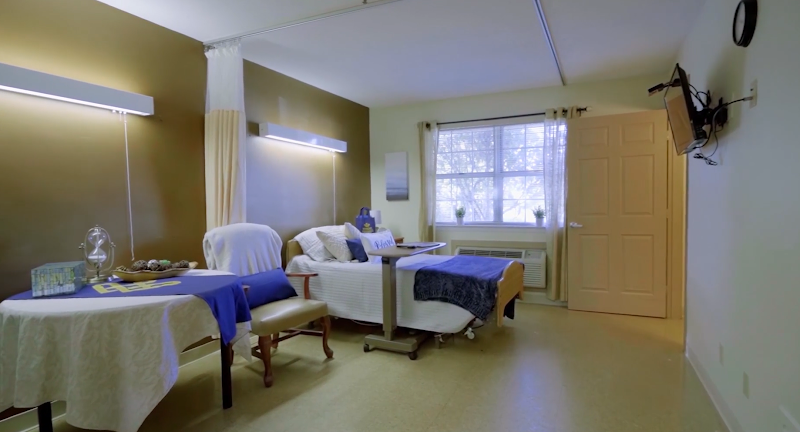
How is Waldron Rehabilitation And Healthcare Center Staffed?

CMS rates WALDRON REHABILITATION AND HEALTHCARE CENTER's staffing level at 1 out of 5 stars, which is much below average compared to other nursing homes. Staff turnover is 52%, compared to the Indiana average of 46%. RN turnover specifically is 67%, which is notably high. RNs provide skilled clinical oversight, so turnover in this role can affect medical care quality.

What Have Inspectors Found at Waldron Rehabilitation And Healthcare Center?

State health inspectors documented 44 deficiencies at WALDRON REHABILITATION AND HEALTHCARE CENTER during 2022 to 2025. These included: 44 with potential for harm.
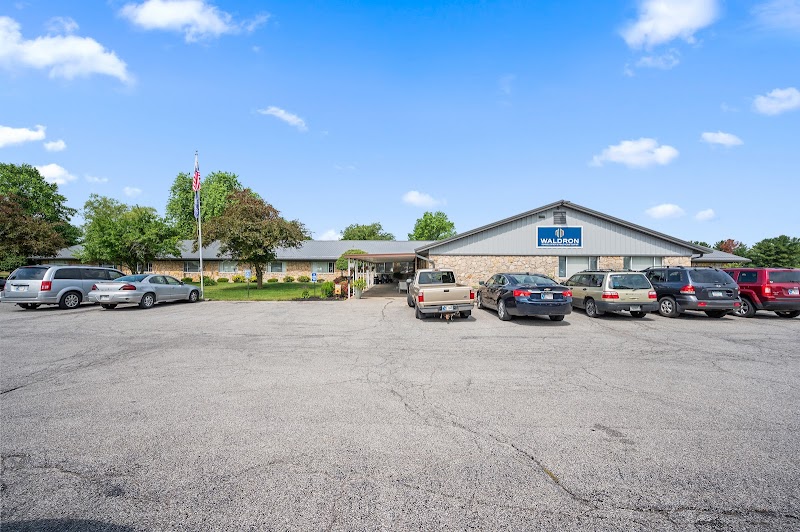
Who Owns and Operates Waldron Rehabilitation And Healthcare Center?

WALDRON REHABILITATION AND HEALTHCARE CENTER is owned by a for-profit company. For-profit facilities operate as businesses with obligations to shareholders or private owners. The facility is operated by CASTLE HEALTHCARE, a chain that manages multiple nursing homes. With 71 certified beds and approximately 48 residents (about 68% occupancy), it is a smaller facility located in WALDRON, Indiana.
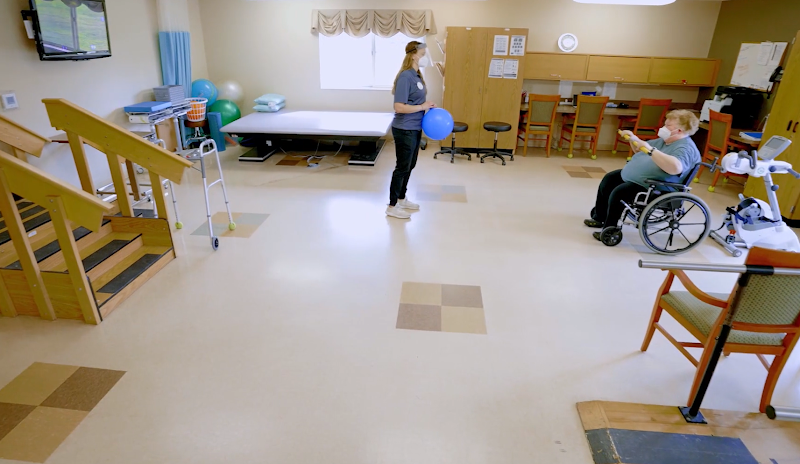
How Does Waldron Rehabilitation And Healthcare Center Compare to Other Indiana Nursing Homes?

Compared to the 100 nursing homes in Indiana, WALDRON REHABILITATION AND HEALTHCARE CENTER's overall rating (1 stars) is below the state average of 3.1, staff turnover (52%) is near the state average of 46%, and health inspection rating (1 stars) is much below the national benchmark.

What Should Families Ask When Visiting Waldron Rehabilitation And Healthcare Center?

Based on this facility's data, families visiting should ask: "Can you walk me through typical staffing levels on day, evening, and night shifts?" "Can I visit during a mealtime to observe dining assistance and food quality?" "How do you handle medical emergencies, and what is your hospital transfer rate?" "Can I speak with family members of current residents about their experience?" These questions are particularly relevant given the below-average staffing rating.

Is Waldron Rehabilitation And Healthcare Center Safe?

Based on CMS inspection data, WALDRON REHABILITATION AND HEALTHCARE CENTER has a clean safety record: no substantiated abuse findings (meaning no confirmed cases of resident harm), no Immediate Jeopardy citations (the most serious violation level indicating risk of serious injury or death), and is not on the Special Focus Facility watch list (a federal program monitoring the lowest-performing 1% of nursing homes). The facility has a 1-star overall rating and ranks #100 of 100 nursing homes in Indiana. While no facility is perfect, families should still ask about staff-to-resident ratios and recent inspection results during their visit.

Do Nurses at Waldron Rehabilitation And Healthcare Center Stick Around?

WALDRON REHABILITATION AND HEALTHCARE CENTER has a staff turnover rate of 52%, which is 5 percentage points above the Indiana average of 46%. Moderate turnover is common in nursing homes, but families should still ask about staff tenure and how the facility maintains care continuity when employees leave.

Was Waldron Rehabilitation And Healthcare Center Ever Fined?

WALDRON REHABILITATION AND HEALTHCARE CENTER has no federal fines on record. CMS issues fines when nursing homes fail to meet care standards or don't correct problems found during inspections. The absence of fines suggests the facility has either maintained compliance or corrected any issues before penalties were assessed. This is a positive indicator, though families should still review recent inspection reports for the full picture.

Is Waldron Rehabilitation And Healthcare Center on Any Federal Watch List?

WALDRON REHABILITATION AND HEALTHCARE CENTER is not on any federal watch list. The most significant is the Special Focus Facility (SFF) program, which identifies the bottom 1% of nursing homes nationally based on persistent, serious quality problems. Not being on this list means the facility has avoided the pattern of deficiencies that triggers enhanced federal oversight. This is a positive indicator, though families should still review the facility's inspection history directly.