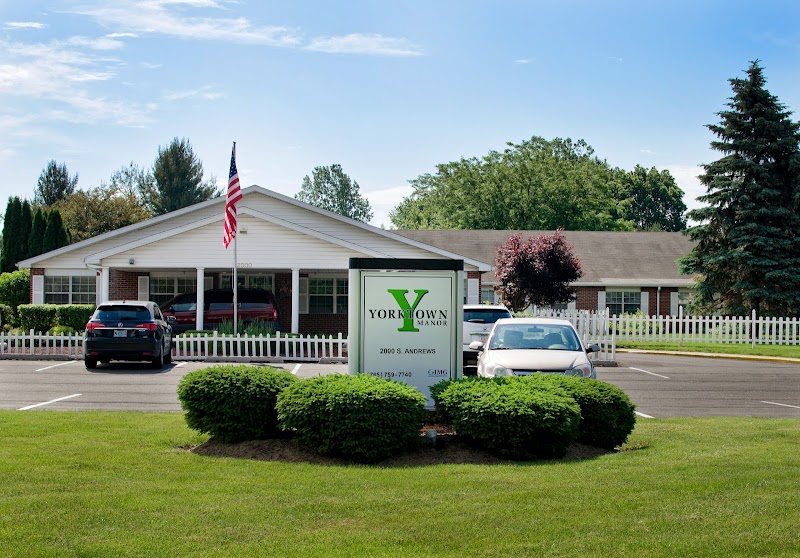
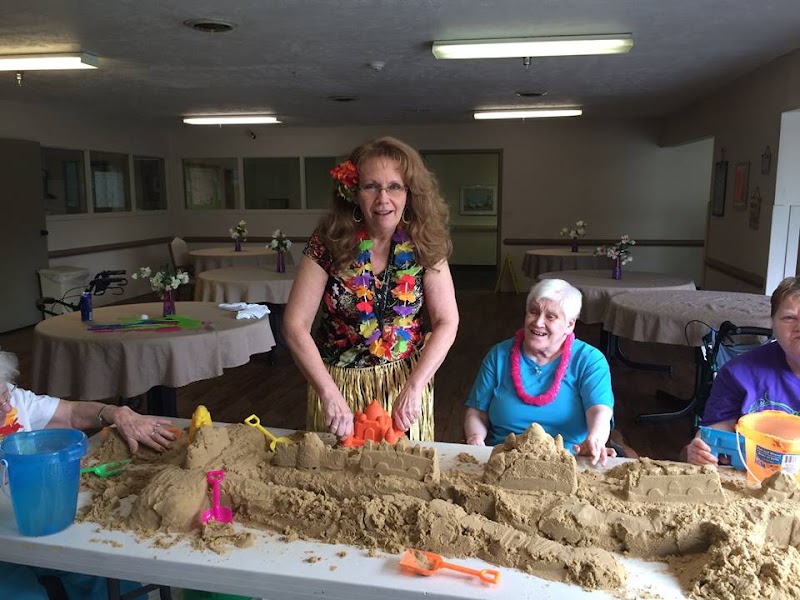
YORKTOWN MANOR

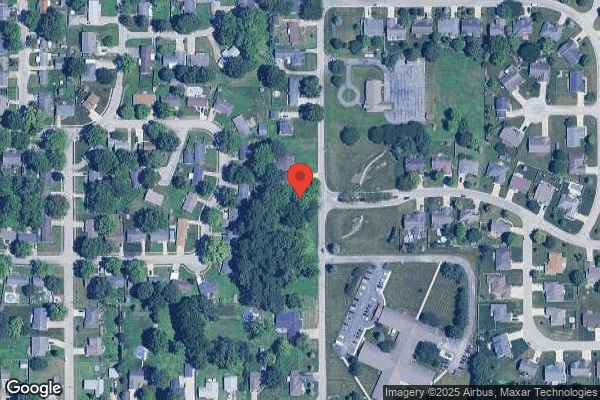
2000 S ANDREWS RD, YORKTOWN, IN 47396 (765) 759-7740
For profit - Individual 100 Beds IDE MANAGEMENT GROUP Data: November 2025
Trust Grade
75/100
#210 of 505 in IN
Last Inspection: October 2024

Within standard 12-15 month inspection cycle. Federal law requires annual inspections.

Overview

Yorktown Manor in Yorktown, Indiana has a Trust Grade of B, indicating it is a good choice for families considering care options. It ranks #210 out of 505 facilities in Indiana, placing it in the top half, and #4 out of 13 in Delaware County, meaning only three local facilities are rated higher. The facility is improving, with issues decreasing from 8 in 2023 to 5 in 2024, and it has not incurred any fines, which is a positive sign. However, staffing is average with a 48% turnover rate, and while RN coverage is average, it still ensures residents receive adequate monitoring. Specific concerns were noted, such as incorrect portion sizes for meals affecting all residents and potential issues with dishwasher sanitization procedures, highlighting areas for improvement alongside its strengths.

Trust Score
B
75/100
In Indiana
#210/505
Top 41%
Safety Record
Low Risk
No red flags
Inspections
Getting Better
8 → 5 violations
Staff Stability
⚠ Watch
48% turnover. Above average. Higher turnover means staff may not know residents' routines.
Penalties
✓ Good
No fines on record. Clean compliance history, better than most Indiana facilities.
Skilled Nurses
○ Average
Each resident gets 40 minutes of Registered Nurse (RN) attention daily — about average for Indiana. RNs are the most trained staff who monitor for health changes.
Violations
⚠ Watch
14 deficiencies on record. Higher than average. Multiple issues found across inspections.
★★★★☆
4.0
Overall Rating
★★★☆☆
3.0
Staff Levels
★★★☆☆
3.0
Care Quality
★★★★☆
4.0
Inspection Score
Stable
2023: 8 issues
2024: 5 issues

The Good

  • Licensed Facility · Meets state certification requirements
  • No fines on record

This facility meets basic licensing requirements.

The Bad

Staff Turnover: 48%

Near Indiana avg (46%)

Higher turnover may affect care consistency

Chain: IDE MANAGEMENT GROUP

Part of a multi-facility chain

Ask about local staffing decisions and management

The Ugly 14 deficiencies on record

Oct 2024 3 deficiencies
CONCERN (D)

Potential for Harm - no one hurt, but risky conditions existed

Pharmacy Services (Tag F0755)

Could have caused harm · This affected 1 resident

Based on record review and interview, the facility failed to ensure shift to shift narcotic reconciliation was completed for 2 of 3 carts reviewed for medication storage. (300 hall cart and 100 hall c...

Read full inspector narrative →
Based on record review and interview, the facility failed to ensure shift to shift narcotic reconciliation was completed for 2 of 3 carts reviewed for medication storage. (300 hall cart and 100 hall cart) Findings include: 1. During a medication storage observation of the 300 hall cart, accompanied by RN 5, on 10/4/24 at 2:00 p.m., the Controlled Drugs- Count Record was reviewed and the following dates lacked signatures for shift to shift reconciliation of controlled substances: In October 2024- 10/1 on evening and night shifts, 10/2 on night shift, 10/3 on day and night shifts, 10/4 on day shift. In September 2024- 9/4 on evening shift, 9/14 on night shift. During an interview, at the time of the observation, RN 5 indicated the narcotic count was completed at the beginning and end of each shift. 2. During a review of the 100 hall cart Controlled Drugs- Count Record, provided by Medical Records on 10/4/24 at 3:00 p.m., the following dates lacked signatures for shift to shift reconciliation of controlled medications: In October 2024- 10/1 on day and night shifts, 10/2 on evening and night shifts, 10/3 on evening and night shifts, 10/4 on day shift. In September 2024- 9/10 on evening and night shifts, 9/11 on night shift, 9/12 on evening and night shifts, 9/18 on day and night shifts, 9/20 on day shift. During an interview, on 10/4/24 at 2:52 p.m., the DON indicated the expectation was for oncoming staff and outgoing staff to complete a narcotic reconciliation before the exchange of keys for the medication cart. During an interview, on 10/8/24 at 11:57 a.m., the DON indicated the actual narcotic count number was documented on the separate narcotic sheets for each resident. The staff utilize the separate narcotic count sheets to verify the medication count. The staff sign the Controlled Drugs-Count Record after the count is verified as correct. A facility policy, revised 12/12, titled, Controlled Substances, provided by the Administrator on 10/8/24 at 10:32 a.m., indicated the following: .9. Nursing staff must count controlled medications at the end of each shift. The nurse coming on duty and the nurse going off duty must make the count together. They must document and report any discrepancies to the Director of Nursing Services 3.1- 25(b)(3)
CONCERN (D)

Potential for Harm - no one hurt, but risky conditions existed

Infection Control (Tag F0880)

Could have caused harm · This affected 1 resident

Based on observation and interview, the facility failed to ensure hand hygiene was completed during medication administration for 3 of 5 residents observed. (Resident 12, Resident 36, and Resident 50)...

Read full inspector narrative →
Based on observation and interview, the facility failed to ensure hand hygiene was completed during medication administration for 3 of 5 residents observed. (Resident 12, Resident 36, and Resident 50) Findings include: During a medication administration observation on 10/7/24, at 11:24 a.m., RN 5 removed medications for Resident 12 from the 300 Hall medication cart. Prior to removing medications, the RN did not perform hand hygiene. Three oral medications, one nasal spray, and one bottle of eye drops, were removed from the cart. RN 5 handed the medications and a cup of water to the resident. She donned clean gloves to administer the eye drops to the resident. On the way out of the room, the RN removed and disposed of the gloves. No hand hygiene was performed after glove removal or as she exited the room. On 10/7/24, at 11:30 a.m., RN 5 removed medications for Resident 50, including three oral medications. No hand hygiene was performed prior to removing the medications. The nurse handed the medications and a cup of water to the resident, watched as the resident took the medications, then left the resident's room. No hand hygiene was observed upon exiting the room. On 10/7/24, at 11:36 a.m., RN 5 removed one medication for Resident 36. She did not perform hand hygiene. She handed the medication and a cup of water to the resident, watched the resident take the medications, then left the room. No hand hygiene was performed upon exiting the room. During an interview with RN 5, on 10/7/24 at 11:41 a.m., she indicated there was no hand sanitizer available on the medication cart. She usually had her own with her, but did not. She had forgotten to use the available hand sanitizer on the wall. During an interview with the DON on 10/7/24 at 2:45 p.m., she indicated RN 5 should have used hand sanitizer. A current facility policy titled Handwashing/Hand Hygiene, provided by the DON on 10/7/24 at 2:44 p.m., indicated the following: .Policy Statement - This facility considers hand hygiene the primary means to prevent the spread of infections .1) All personnel shall be trained and regularly in-serviced on the importance of hand hygiene in preventing the transmission of healthcare-associated infections. 2) All personnel shall follow the handwashing/hand hygiene procedures to help prevent the spread of infections to other personnel, residents, and visitors. 3) Hand hygiene products and supplies (sinks, soap, towels, alcohol-based hand rub, etc.) shall be readily accessible and convenient for staff use to encourage compliance with hand hygiene policies .6) Use an alcohol-based hand rub alternatively .for the following situations .b) Before and after direct contact with residents; c) Before preparing or handling medications; .8) The use of gloves does not replace hand washing/hand hygiene. Integration of glove use along with routine hand hygiene is recognized as the best practice for preventing healthcare-associated infections 3.1-18(a)(l)
CONCERN (E)

Potential for Harm - no one hurt, but risky conditions existed

Menu Adequacy (Tag F0803)

Could have caused harm · This affected multiple residents

Based on observation, interview, and record review, the facility failed to ensure menus were followed to ensure proper portions were served for 1 of 1 meal observed for following menus (10/7/24 Lunch)...

Read full inspector narrative →
Based on observation, interview, and record review, the facility failed to ensure menus were followed to ensure proper portions were served for 1 of 1 meal observed for following menus (10/7/24 Lunch). This deficient practice had the potential to impact 69 of 69 residents. Finding include: An undated facility document titled, Midwest Fall/Winter 2024-2025, provided by the facility following the entrance conference on 10/2/24, indicated lunch on October 7, 2024 was Baked Ziti with Meat sauce, Tossed Salad with Dressing, and Ice Cream. An undated facility document titled, Midwest Fall/Winter 2024-2025, Diet Spreadsheet Short Name Format, provided by the Certified Dietary Manager on 10/7/24 at 11:19 a.m., indicated the portion of baked ziti to be served to the residents was 6 ounces. During the lunch meal service observation on 10/7/24 from 10: 58 a.m. to 11:06 a.m. [NAME] 4 served a 4-ounce serving of baked pasta on 10 plates, which were placed in the meal service cart to be serve to the 200 hall. The cook indicated the trays were prepared and ready for service to the residents. The pasta was prepared in a method which allowed for both regular and mechanical soft diets to eat the some pasta. During an interview on 10/7/24 at 11:06 a.m., [NAME] 4 indicated she was using #8 scoop to serve the baked pasta entree. She did not know the portion size of the #8, gray handled scoop. During an interview on 10/7/24 at 111:07 a.m., the Certified Dietary Manager (CDM) indicated the cook had served the wrong size portion of pasta in error. The portion which had been plated was 4 ounces. The menued portion of baked pasta was 6 ounces. The facility would need to add 2 ounces additional pasta to correct the error. During an interview on 10/08/24 at 11:30 a.m., the Administrator indicated 69 of 69 residents ate food prepared in the facility kitchen. A current, 7/2023 facility policy titled, Standardized Recipes, which was left on the conference table by facility leadership on 10/8/24 at 9:05 a.m., indicated: .Standardized recipes (in appropriate portion sizes) for each set of cycle menus are provided and maintained in the facility . Cooks are expected to use and follow the recipes provided . 3.1-20(i)(l)
Jun 2024 1 deficiency
CONCERN (D) 📢 Someone Reported This

A family member, employee, or ombudsman was alarmed enough to file a formal complaint

Potential for Harm - no one hurt, but risky conditions existed

Pressure Ulcer Prevention (Tag F0686)

Could have caused harm · This affected 1 resident

**NOTE- TERMS IN BRACKETS HAVE BEEN EDITED TO PROTECT CONFIDENTIALITY** Based on record review and interview, the facility failed to promptly initiate wound treatment to promote healing of pressure in...

Read full inspector narrative →
**NOTE- TERMS IN BRACKETS HAVE BEEN EDITED TO PROTECT CONFIDENTIALITY** Based on record review and interview, the facility failed to promptly initiate wound treatment to promote healing of pressure injuries for 2 of 3 residents reviewed for pressure injuries. (Resident B and C). Findings include: 1. Resident B's clinical record was reviewed on 6/10/24 at 9:45 a.m. Diagnoses included acute diastolic congestive heart failure, end stage renal disease, and pressure injury of right buttock, stage 3 (full thickness tissue loss). A Nursing Evaluation-(Admit/Readmit/Quarterly/COC), dated 3/14/24, indicated the resident had a skin tear to the sacrum measuring 6.0 centimeters (cm) length x 1.6 cm width x 0.1 cm depth, nearly the diameter of a tennis ball. An electronic mail (e-mail) message from the wound care company, dated 3/20/24 at 11:48 a.m. and provided by the DON, indicated Resident B was examined by the provider and had admitted to the facility with a pressure injury to the right buttock, stage 3. A Weekly Pressure Injury Evaluation, dated 3/20/24 at 1:53 p.m. indicated the resident admitted to the facility with a stage 3 right buttock pressure injury. A Wound Assessment Report, dated 3/20/24, indicated the resident admitted to the facility with a right buttock pressure injury, stage 3. A current care plan, initiated on 3/20/24, indicated the resident admitted to the facility with a stage 3 pressure injury to the right buttock. A physician's order, dated 3/20/24, indicated the following treatment to the sacrum: Cleanse with wound wash, dry. Apply skin prep to periwound. Apply collagen powder (to promote wound healing) to wound bed. Cover with hydrocolloid (to absorb drainage and promote healing) dressing, change three times a week and as needed. The clinical record lacked a physician's order for the treatment of Resident B's stage 3 pressure injury prior to 3/20/24, resulting in six days without treatment to the stage 3 pressure injury. 2. Resident C's clinical record was reviewed on 6/10/24 at 12:15 p.m. Diagnoses included fracture of one rib, left side, chronic kidney disease, stage 3 and unspecified hydronephrosis. A Nursing Evaluation (Admit/Readmit/Quarterly/COC), dated 5/31/24 at 2:10 p.m. lacked assessment of the resident's skin integrity. Review of a facility document titled, Wound nurse notification form, dated 5/31/24 and provided by the DON, indicated the resident admitted with a stage 3 pressure injury to the buttocks, measuring 4.0 cm length x 3.0 cm width x 0.1 cm depth, nearly the diameter of a golf ball. A Wound assessment report, dated 6/6/24, indicated Resident C admitted to the facility with a stage 3 pressure injury to the sacrum. A physician's order, dated 6/6/24, indicated to apply calmoseptine external ointment (a moisture barrier) to sacrum two times a day for wound care. Wash with soap and water, dry, then apply ointment. The clinical record lacked physician's order for the treatment of Resident C's stage 3 pressure ulcer prior to 6/6/24, resulting in seven days without treatment to the stage 3 pressure injury. A Weekly Pressure Injury Evaluation, dated 6/7/24 at 12:10 p.m., indicated the resident had a pressure injury on the sacrum at admission on [DATE]. A current care plan, initiated on 6/7/24, indicated the resident admitted to the facility on [DATE] with a stage 3 pressure ulcer to the sacrum. During an interview, on 6/10/24 at 3:06 p.m., RN 2 indicated when a new admission or returning resident entered the facility, a skin assessment was completed as soon as possible. If the resident was noted to have skin issues, the staff documented on the wound nurse notification form which was blue in color and staff completed the appropriate online form. During an interview, on 6/11/24 at 10:57 a.m., the DON indicated the expectation for all new residents and returning residents was skin assessments were completed as soon as possible, but no later than 8 to 12 hours after arrival. Treatment orders for any skin issues, such as pressure injuries, were to be completed as soon a possible, but no more than 24 hours from discovery. During an interview, on 6/11/24 at 11:58 a.m., the DON indicated she was not able to locate treatment order for Resident B from 3/14/24 through 3/20/24 or for Resident C from 5/31/24 to 6/6/24. She indicated these time frames were outside the expectations for treatments orders to be initiated. A current facility policy, revised 9/22 and titled Skin and Wound Management System, provided by the Administrator on 6/10/24 at 1:42 p.m., indicated the following: . 1. An assessment of skin integrity is to be performed on each resident upon admission to the center by completing: a. A head-to-toe physical evaluation of the skin conditions .5. Residents identified with skin impairments will have appropriate interventions, treatment and services implemented to promote healing and impede infection This citation relates to Complaint IN00431698. 3.1-40(a)(2)
Feb 2024 1 deficiency
CONCERN (D) 📢 Someone Reported This

A family member, employee, or ombudsman was alarmed enough to file a formal complaint

Potential for Harm - no one hurt, but risky conditions existed

Accident Prevention (Tag F0689)

Could have caused harm · This affected 1 resident

**NOTE- TERMS IN BRACKETS HAVE BEEN EDITED TO PROTECT CONFIDENTIALITY** Based on record review and interview, the facility failed to provide follow care plan interventions for a dependent resident (Re...

Read full inspector narrative →
**NOTE- TERMS IN BRACKETS HAVE BEEN EDITED TO PROTECT CONFIDENTIALITY** Based on record review and interview, the facility failed to provide follow care plan interventions for a dependent resident (Resident C) when a staff member (CNA 1) left the resident unsupervised in an elevated bed in a compromised position which resulted in a fall. Findings include: The clinical record for Resident C was reviewed on 2/20/24 at 10:21 a.m. Diagnoses include chronic congestive heart failure, stage 4 kidney, type 2 diabetes, hypertension, atrial fibrillation, anxiety, and restless leg syndrome. The most recent admission Minimum Data Set (MDS) assessment, dated 12/27/23, indicated the resident required substantial/maximum assistance for: dressing, bathing, toilet use, and transfers, and partial/moderate assistance for bed mobility. Review of the resident's Fall Risk Evaluations, dated 1/11/24, 1/12/24, and 1/20/24, indicated the resident was at high risk for falls. Review of a facility falls list, provided by the DON on 2/20/24 at 10:52 a.m., indicated the resident had sustained four falls from 1/10/24 through 1/22/24. Review of the resident's current fall care plan, dated 12/23/23, indicated the following interventions: bed in lowest position and half-rails placed on bed, dated 1/11/24. Review of a progress note, dated 1/22/24 at 9:30 p.m. and authored by LPN 2, indicated CNA 1 had placed a bed pan for the resident. The bed was elevated and the resident was on her side. The CNA left the resident in the elevated bed while on her side, and took the bedpan to the bathroom. The resident fell from the bed. CNA 1 went to find LPN 2 to report the fall. When LPN 2 entered the room, the resident was found on the floor face down beside the bed and the heater (wall). During an interview on 2/20/24 at 2:30 p.m., CNA 1 indicated while assisting the resident off the bedpan, the bed was elevated. No side rails were in use. CNA 1 left the resident on her side in the elevated bed, resulting in the resident falling from the bed. During an interview on 2/20/24 at 5:51 p.m., LPN 2 indicated CNA 1 came to her and stated Resident C had fallen. When she entered the resident's room, the resident was found face down on the floor and the bed was elevated. No side rails were in use. During an interview on 2/21/24 at 9:53 p.m., LPN 3 indicated the side rails should have been in use and the bed should not have been left elevated while the resident was in it. During an interview on 2/21/24 at 10:10 a.m., CNA 5 indicated resident specific interventions were found on the [NAME] and on the assignment sheets. At the beginning and end of each shift, walking rounds were done and reports given on each resident. CNA 5 indicated residents should not be left unsupervised in an elevated bed. If side rails were an intervention, they should have been in use. During an interview on 2/21/24 at 10:10 a.m., CNA 6 indicated resident specific interventions were found on the [NAME] and on the assignment sheets. At the beginning and end of each shift, walking rounds were done and reports given on each resident. CNA 6 indicated residents' interventions should be used. A current, undated facility policy, titled Falls Management System was provided by the Administrator on 2/21/24 at 8:30 a.m. The policy indicated the following: 2. Care Planning b. Residents who sustain a fall will have a care plan developed or the existing care plan updated to include the fall and measurable objectives and time frames. The care plan interventions will address those elements determined by investigation as probable causal factors that contributed to the fall. The updated plan will be reviewed and revised as indicated by the Falls Management Action Team at the meeting. This citation relates to Complaint IN00427080. 3.1-45(a)(2)
Oct 2023 1 deficiency
CONCERN (D) 📢 Someone Reported This

A family member, employee, or ombudsman was alarmed enough to file a formal complaint

Potential for Harm - no one hurt, but risky conditions existed

Quality of Care (Tag F0684)

Could have caused harm · This affected 1 resident

Based on record review, interview and observation, the facility failed to ensure wound care was provided per physician order for 1 of 3 residents reviewed for wound care. (Resident E) Findings includ...

Read full inspector narrative →
Based on record review, interview and observation, the facility failed to ensure wound care was provided per physician order for 1 of 3 residents reviewed for wound care. (Resident E) Findings include: The clinical record for Resident E was reviewed on 10/12/23 at 12:54 a.m. Diagnoses include orthopedic aftercare for surgical amputation, diabetes type 2, dementia, and nutritional deficiency. Review of the physician orders indicated to cover left below the knee amputation site incision with 4x4 gauze, wrap stump with roll bandage, then wrap with an elastic bandage, once daily (10/12/23). During an observation with the Director of Nursing (DON) on 10/12/23 at 12:12 p.m., Resident E was sitting up in a wheelchair in their room. Their left leg stump area was wrapped in an elastic bandage. The DON removed the elastic bandage from the resident's left leg surgical site stump. Upon removal of the elastic bandage, no gauze dressing was observed on the incision. The DON indicated the incision site should have had a dressing under the elastic bandage, per physician order. The resident was unable to verbalize when the dressing had been last changed. The DON indicated the resident would not have been able to remove the dressing and replace the bandage. Review of the October 2023 Treatment Administration Record indicated the resident's dressing had been last changed on 10/11/23. This citation relates to Complaint IN00419033. 3.1-37(a)
Aug 2023 5 deficiencies
CONCERN (D)

Potential for Harm - no one hurt, but risky conditions existed

Quality of Care (Tag F0684)

Could have caused harm · This affected 1 resident

Based on interview and record review, the facility failed to communicate with the medical director for a resident with hematuria (blood in urine) for 1 of 1 residents reviewed for urinary tract infect...

Read full inspector narrative →
Based on interview and record review, the facility failed to communicate with the medical director for a resident with hematuria (blood in urine) for 1 of 1 residents reviewed for urinary tract infection. (Resident 19). This deficient practice resulted in a delay of 10 days to schedule a doctor's appointment for the resident and 18 days before the resident was seen by a specialist. Findings include: Resident 19's clinical record was reviewed on 8/24/23 at 10:33 a.m. Diagnoses included Stage 4 chronic kidney disease, tubulo-interstitial nephritis (inflammation that affects the tubules of the kidneys and the tissues that surround them), unspecified hydronephrosis (a condition where one or both kidneys become stretched and swollen as the result of a build-up of urine inside them) and neuromuscular dysfunction of the bladder. A 6/15/23 annual Minimum Data Set (MDS) assessment indicated she was moderately cognitively impaired. She was incontinent of urine and bowel and was dependent on staff for toileting\. A current health care plan, revised on 8/1/22, indicated the resident was always incontinent of bladder and bowel, and was at risk for bleeding due to a prescribed anti-coagulant medication, apixaban 5 mg (milligrams) two times a day. A progress note, dated 5/21/23 at 9:29 p.m., indicated the resident had a moderate amount of bloody discharge with urinary incontinence. A progress note, dated 5/23/23 at 3:36 p.m., indicated the resident had a small amount of bloody discharge with urinary incontinence. A progress note, dated 5/26/2023 at 4:38 p.m., indicated the resident had blood in urine with the amount of blood varied throughout the day. The description of the blood ranged from dark brownish tinged urine to bright red at times. Progress notes, dated 5/27/23, 5/28/23, 5/29/23, and 5/31/23, indicated the resident had moderate amounts of blood in her urine. The clinical record lacked indication of physician notification of the resident's hematuria. On 5/31/23 at 2:10 p.m., a call to urology was made and the resident was scheduled to see the doctor on 6/8/23 at 9:45 a.m. A progress note, dated 5/31/23 at 5:12 p.m., indicated the medical director was informed the resident had blood in her urine and was scheduled to see urology soon. Progress notes, dated 6/3/23 at 1:50 p.m. and 6/4/23 at 12:10 a.m., indicated the resident continued to have dark brown bloody sediment in her urine. On 6/7/23 at 3:17 p.m., she had a scant amount of blood in her urine. A progress note, dated 6/8/23 at 10:26 a.m., indicated the resident was diagnosed with hydronephrosis with stone(s) by urology and had received an order for a CT (computed tomography) scan. On 6/9/23 at 5:38 p.m., the CT was scheduled for 6/21/23 at 9:20 a.m. On 8/23/23 at 11:43 a.m., during an interview with LPN 15 , she indicated she did not know why Resident 19 had blood in her urine but that it happened on and off intermittently. The facility had not heard back from urology regarding the ongoing hematuria. She did not know why the condition had not been addressed by the urology doctor. The clinical record lacked contact or follow up with the urologist office until the ADON called them on 8/24/23. Review of a 6/21/23 CT report indicated it had been reviewed by the urologist on 7/21/23. During an interview with the DON on 8/25/23 at 9:17 a.m., she indicated the resident had been to urology in June. The CT scan indicated Resident 19 had kidney stones. Urology had never reviewed the CT scan. There had been an ongoing problem with getting a response from urology and the facility regularly had to wait on the doctor to address resident conditions. The problem with hematuria for Resident 19 had not been addressed because the facility was still waiting for urology to address the CT scan from June. A document titled Acute Condition Changes - Clinical Protocol was provided by the DON on 8/25/23 at 2:39 p.m. The document indicated the following: .1) The physician will help identify individuals with a significant risk for having acute changes of condition during their stay; for example, an individual with an indwelling urinary catheter who has had recurrent symptomatic urinary tract infections, or someone with unstable vital signs or recurrent pneumonia .7) Before contacting a physician about someone with an acute change of condition, the nursing staff will collect pertinent details to report to the physician\ .a) Phone calls to attending or on-call physicians should be made by an adequately prepared nurse who has collected and organized pertinent information, including the resident/patient's current symptoms and status .8) The nursing staff will contact the physician based on the urgency of the situation. For emergencies, they will call or page the physician and request a prompt response (within approximately one-half hour or less) .9) The attending physician will respond in a timely manner to notification of problems or changes in condition and status .a) The nursing staff will contact the medical director for additional guidance and consultation if they do not receive a timely or appropriate response 3.1-37(a)
CONCERN (D)

Potential for Harm - no one hurt, but risky conditions existed

Drug Regimen Review (Tag F0756)

Could have caused harm · This affected 1 resident

Based on record review and interview, the facility failed to ensure a pharmacy recommendation was acted upon for 1 of 5 residents reviewed for unnecessary medications. (Resident 23) Finding includes: ...

Read full inspector narrative →
Based on record review and interview, the facility failed to ensure a pharmacy recommendation was acted upon for 1 of 5 residents reviewed for unnecessary medications. (Resident 23) Finding includes: Resident 23's clinical record was reviewed on 8/23/23 at 10:02 a.m. Diagnoses included Alzheimer's disease, anxiety disorder, and psychotic disorder. A pharmacy recommendation, dated 9/26/22, indicated Zyprexa (an antipsychotic medication) 2.5 mg (milligram) every day for dementia with behaviors, was due for evaluation per federal guidelines. The physician had signed the document on 12/2/22, which was approximately two months following recommendation date. During an interview on 8/24/23 at 2:28 p.m., the DON indicated the September 2022 pharmacy recommendations were delayed being reviewed until early December 2022. The pharmacist had trouble with her computer. On 8/25/23 at 9:25 a.m., the DON provided email documentation regarding the September 2022 pharmacy recommendations. The emails indicated the following: a. On 9/26/22 at 3:49 p.m., the Pharmacy Consultant indicated she had been having some computer issues and had gotten behind this month. She was going to send the report later that night. b. On 9/26/22 at 5:43 p.m., the DON asked if the Pharmacy Consultant had sent the September recommendations and pharmacy report. c. On 9/26/22 at 6:22 p.m., the Pharmacy Consultant indicated the report was attached and apologized for the delay. d. On 10/11/22 at 6:38 p.m., the Pharmacy Consultant indicated she had been in the facility and had not seen the responses from September's recommendations and would look for them next month. e. On 10/12/22 at 6:21 a.m., the DON replied she had not received the September report. f. On 10/12/22 at 9:55 a.m., the Pharmacy Consultant forwarded her email message from 9/26/22 at 6:22 a.m. g. On 11/11/22 at 10:19 a.m., the Pharmacy Consultant requested confirmation that the forwarded email send on 10/12/22 had been received. h. On 11/14/22 at 2:56 a.m., the DON indicated she had received the reports. A current facility policy, dated 11/20/21 and titled, Consultant Pharmacy Reports, provided by the DON on 8/25/23 at 9:25 a.m. indicated the following: .Procedures .B. Comments and recommendations concerning medication therapy are communicated in a timely fashion. The timing of these recommendations should enable a response prior to the next medication regiment review C. Recommendations are acted upon and documented by the facility staff and/or the prescriber 3.1-25(i)
CONCERN (D)

Potential for Harm - no one hurt, but risky conditions existed

Deficiency F0761 (Tag F0761)

Could have caused harm · This affected 1 resident

**NOTE- TERMS IN BRACKETS HAVE BEEN EDITED TO PROTECT CONFIDENTIALITY** Based on observation and interview, the facility failed to discard an expired insulin pen and to indicate a date opened on anoth...

Read full inspector narrative →
**NOTE- TERMS IN BRACKETS HAVE BEEN EDITED TO PROTECT CONFIDENTIALITY** Based on observation and interview, the facility failed to discard an expired insulin pen and to indicate a date opened on another insulin pen for 1 of 2 medication carts observed for medication storage. (300 Hall) Findings include: During observation of the 300 Hall medication cart on [DATE] at 12: 15 p.m., accompanied by LPN 8, the following was observed: a. A Lantus Solostar insulin pen (to treat diabetes) with an opened date [DATE]. LPN 8 indicated the pen contained 140 units. b. A Humalog insulin Kwikpen (to treat diabetes) without an opened date. LPN 8 indicated the pen appeared to be full. During an interview at the time of the observation, LPN 8 indicated the Lantus Solostar pen was outdated and should have been destroyed after 30 days of the opened date. The Humalog Kwikpen lacked an opened date. The 300 Hall medication cart had two residents who received insulin. A current facility policy, revised [DATE] and titled Diabetes: Injectable Medications, provided by the Administrator on [DATE] at 2:27 p.m., indicated the following: .Humalog .Once opened, refrigerated or not, product must be used within 28 days Lantus .once opened, refrigerated or not, product must be used within 28 days 3.1-25(o)
CONCERN (D)

Potential for Harm - no one hurt, but risky conditions existed

Staffing Data (Tag F0851)

Could have caused harm · This affected 1 resident

Based on interview and record review, the facility failed to accurately report the Registered Nurse (RN ) coverage hours into the Payroll-Based Journal (PBJ) system for the reported period of January ...

Read full inspector narrative →
Based on interview and record review, the facility failed to accurately report the Registered Nurse (RN ) coverage hours into the Payroll-Based Journal (PBJ) system for the reported period of January 1, 2023 through March 31, 2023. This deficiency had the potential to affect 64 of 64 residents. Findings include: During a review of the facility PBJ Staffing Data Report, on 8/18/23 at 10:35 a.m., indicated the infraction dates for No RN Hours reported for the fiscal year quarter 2 (January 1- March 1, 2023). The following dates were listed: a. January 2023: 1/1, 1/2, 1/8, 1/14, 1/21, 1/22, 1/28, and 1/29. b. February 2023: 2/4, 2/11, 2/12, 2/17, 2/18, 2/25, and 2/26. c. March 2023: 3/4, 3/5, 3/9, 3/10, 3/11, 3/12, 3/13, 3/18, and 3/19. A record review, on 8/24/23 at 11:00 a.m., of employee time cards for January 2023 indicated a Registered Nurse (RN) was not scheduled for the following days: 1/1/23- 1/9/23 and 1/12/23-1/31/23; for February 2023 indicated a RN was not scheduled for 2/1-2/28/23 and for March 2023, indicated an RN was not scheduled for 3/1-3/21, 3/23, 3/24, 3/28, 3/29, and 3/31/23. During an interview with the Administrator, on 8/25/23 at 9:13 a.m., she indicated she had calculated the average resident census for the months in question at under 60 and the hours the DON had worked were reported. During a review of the current facility assessment tool, revised July 24, 2023 and provided by the Administrator on 8/24/23 at 10:00 a.m., indicated the average census was 62. During an interview with the DON, on 8/25/23 02:00 p.m., she indicated the facility assessment tool was up to date and she was under the impression the DON, who is an RN and was in the building, was enough to satisfy the requirement for the 8 hours of consecutive RN worked time. Human Resources sent payroll to a secondary party after she confirmed the punch in and punch times were correct. The secondary party sent the information into the PBJ system. The reported numbers were correct to the best of her knowledge and staffing was in accordance with regulations. On 8/25/23 at 1:00 p.m., a current policy, revised October 2017, titled Reporting Direct- Care Staffing Information, was provided by the Regional Nurse Consultant and indicated the following: Policy Interpretation and Implementation .11. Census data is reported each fiscal quarter and includes resident census on the last day of each month of the quarter
CONCERN (E)

Potential for Harm - no one hurt, but risky conditions existed

Food Safety (Tag F0812)

Could have caused harm · This affected multiple residents

Based on observation, interview, and record review, the facility failed to ensure the dishwasher sanitization rinse cycle was tested and recorded to assure sanitary eating surfaces and to assure puree...

Read full inspector narrative →
Based on observation, interview, and record review, the facility failed to ensure the dishwasher sanitization rinse cycle was tested and recorded to assure sanitary eating surfaces and to assure pureed food was prepared using the facility's recipe. This deficient practice had the potential to impact 64 of 64 residents who received meals from the facility kitchen. Findings include: 1. During a kitchen observation on 8/21/23 at 9:41 a.m., accompanied by Dietary Aide (DA) 12, the dishwasher was cycled. She indicated the dishwasher was a low temperature washer and was tested each morning. DA 12 obtained some testing strips from the office and placed them in the rinse water. The result was 50 ppm (parts per million) and she indicated she thought that may be low and she would check. The staff had not recorded the testing results on any type of log. An observation of the test strips used by DA 12 indicated the strips had expired September 2022. During an interview on 8/21/23 at 10:14 a.m., DA 13 indicated she operated the dishwasher and had not tested the chemicals before. She indicated the cooks may test it in the morning, but she was unsure. A current facility policy, revised 5/20/19, titled, Dish Machine Temperatures (Low Temperature Machines) and Sanitizer Testing, provided by the Administrator on 8/21/23 at 10:21 a.m., indicated the following: .Guidelines .4. The sanitizer is also to be checked on the dish machine at each meal cycle using a chlorine test strip. The test is to be recorded during the rinse cycle on the first test run.This value is to be recorded on the Dish Machine Temperature and Sanitizer Monitoring Log 2. During an observation on 8/22/23 at 10:25 a.m., DA 10 prepared to puree lunch for 11 residents that required an altered textured diet. She placed the serving amount of the lunch entree of green beans, potato, and sausage in the food processor. She added an amount of liquid from juices to the processor and blended. She added 5 1/2 pieces of bread to the mixture and blended. A review of the facility recipe for Pureed Sausage, [NAME] Beans and Potatoes, provided by DA 10 on 8/22/23 at 10:35 a.m., lacked bread as an ingredient. The recipe indicated to use commercial thickener if the product needed to be thickened. During an interview at the time of observation, DA 10 indicated she had not reviewed the recipe. She had used bread as a thickener in the past and added it because there was bread to be served for lunch. She was unaware of the recipe to puree bread if served during a meal. A current facility policy, revised 7/2023, titled Policy: Standardized Recipes, provided by the Administrator on 8/25/23 at 2:39 p.m., indicated the following: .Standardized recipes are used when preparing menu items. Procedure: .3. Cooks are expected to use and follow the recipes provided 3.1-21(i)(3)
Jul 2023 1 deficiency
CONCERN (D) 📢 Someone Reported This

A family member, employee, or ombudsman was alarmed enough to file a formal complaint

Potential for Harm - no one hurt, but risky conditions existed

Deficiency F0658 (Tag F0658)

Could have caused harm · This affected 1 resident

Based on interview and record review, the facility failed to provide adequate toenail care for 1 of 3 residents reviewed for toenail care (Resident B). Resident B's clinical record was reviewed on 7/...

Read full inspector narrative →
Based on interview and record review, the facility failed to provide adequate toenail care for 1 of 3 residents reviewed for toenail care (Resident B). Resident B's clinical record was reviewed on 7/6/23 at 6:28 a.m. Diagnoses included unspecified dementia, unspecified severity, with other behavioral disturbance, chronic obstructive pulmonary disease, chronic kidney disease, essential (primary) hypertension, and need for assistance with personal care. His current physician orders included he may be seen by a podiatrist as needed. A quarterly MDS (Minimum Data Set), dated 5/30/23, indicated he was severely cognitively impaired. He required extensive assistance for dressing and personal hygiene. He had a current care plan for his preference to be followed by in-house ancillary providers (7/7/23). His goal was he would cooperate with an in house examination for vision, podiatry, hearing and dental as needed daily through next review. His interventions included refer to providers as indicated (7/7/23). A podiatry examination and treatment note, dated 2/23/22, indicated he had painful nails on both feet. Both feet had thickened and discolored toenails. He had onychomycosis (nail fungus causing thickened, brittle, crumbly or ragged nails) and onychogryphosis (a disorder of nail plate growth that is characterized by an opaque, yellow-brown thickening of the nail plate with associated gross hyperkeratosis, elongation, and increased curvature. It is often described as a ram's horn nail) to his toenails on both feet. Treatment at that time was reduction of nails and mechanical debridement. A Nurse Practitioner skin/wound note, dated 2/3/23 at 6:47 a.m. indicated his nail condition diagnosis was tinea unguium (onychomycosis). His plan of care with additional recommendations included routine foot care. The podiatrist visit dates provided by the SSD (Social Service Director) indicated the podiatrist was in the building on 8/25/22, 1/24/23 and 4/10/23. There was no record of the resident being seen by podiatry on these dates. A hospital podiatry progress note, dated 6/13/23, indicated Resident B was brought into the emergency room secondary to a fall. Podiatry was consulted due to severely thickened deformed painful toenails, which were not cared for appropriately at his skilled nursing facility. His nails were severely thickened hypertrophic dystrophic and brittle rams horn type nails and painful with palpation. There was mild dry hemorrhagic tissue at the base of the right second toenail with no acute signs of infection. The plan was debridement of nails one through five at bedside as well as possible. He would need to follow-up with a podiatrist for more aggressive care and debridement than could had been performed at the hospital bedside. During an interview with CNA 12, on 7/6/23 at 5:16 a.m., indicated she would normally trim the residents nails on their shower days. During an interview with CNA 5, on 7/7/23 at 9:00 a.m., she indicated Resident B did not like showers and she took over the responsibility to do his showers. His toenails were thick and built up and he didn't like to have them washed, as they were very sensitive. She would cut his fingernails but never touched his toenails because they were so thick. During an interview with the SSD, on 7/7/23 at 9:36 a.m., she indicated Resident B was seen by the podiatrist on 2/23/22, then the facility switched podiatry services in August of 2022. A consent to treat letter was sent to all the family members with a permission slip and a self-addressed envelope. She did not receive a consent back from his family. During a follow-up interview with the SSD, on 7/7/23 at 10:38 a.m., she indicated she did not follow up with every single family member for consent to treat, but she had called two family members this day to get consent to treat, because the podiatrist was in the building. During a follow up interview with CNA 5, on 7/7/23 at 11:48 a.m., she indicated she didn't remember telling the nurse about Resident B's long toenails. She assumed he was on the podiatrist list. His nails were so long, they got caught on his socks when she put them on him. During an interview with LPN 10, on 7/7/23 at 12:26 p.m., she indicated Resident B's toenails were long and thick, but did not cause him any pain. They would not be able to trim his toenails with nail clippers and he would had needed to see a podiatrist. A current policy, revised 9/22 and titled Foot Care, provided by the Administrator, on 7/7/23 at 12:12 p.m., indicated the following: .1. Residents will be provided with foot care and treatment in accordance with professional standards of practice This Federal tag relates to Complaint IN00410821.
Mar 2023 1 deficiency
CONCERN (E) 📢 Someone Reported This

A family member, employee, or ombudsman was alarmed enough to file a formal complaint

Potential for Harm - no one hurt, but risky conditions existed

Free from Abuse/Neglect (Tag F0600)

Could have caused harm · This affected multiple residents

**NOTE- TERMS IN BRACKETS HAVE BEEN EDITED TO PROTECT CONFIDENTIALITY** Based on observation, interview, and record review, the facility failed to protect the resident's rights to be free from physica...

Read full inspector narrative →
**NOTE- TERMS IN BRACKETS HAVE BEEN EDITED TO PROTECT CONFIDENTIALITY** Based on observation, interview, and record review, the facility failed to protect the resident's rights to be free from physical abuse by Resident E and Resident D for 3 of 4 residents reviewed for abuse (Resident D, Resident F and Resident G). Findings include: Resident E's clinical record was reviewed on 3/2/23 at 9:15 a.m. Diagnoses included unspecified dementia, moderate, with agitation and mood disturbance and other recurrent depressive disorders. Her orders included nortriptyline (treat depression) 25 mg (milligrams) daily. A quarterly MDS (Minimum Data Set), dated 1/30/23, indicated she was rarely or never understood. She required limited assistance for bed mobility, transfers, walk in room and corridor, locomotion on the unit, and personal hygiene. She required supervision for locomotion off the unit. She required extensive assistance for dressing and toilet use. She used a walker and a wheelchair. She had physical behavioral symptoms directed towards others (e.g., hitting, kicking, pushing, scratching, grabbing, abusing others sexually), which occurred one to three days during the assessment period. She had a current care plan for yelling. She would start to yell for no apparent reason at times (10/28/22). Her interventions initiated on 10/28/22 included one on ones with her, to attempt to explore her being upset and reason for yelling, assess for pain, remove her to outer areas away for other peers to a quiet area, and IDT (Interdisplinary Team) to review behavior management program quarterly and PRN (as needed). She had a current care plan for dementia with agitation/ behavioral disturbance/mood instability/anxiety. She could become agitated with physical aggression, striking out at the staff, verbal aggression, she made threats to the staff that she would hit them in the mouth (8/5/22). On 12/30/22 she banged her hands on the table and threw food to the floor (revised on 1/20/23). Her interventions included dementia with behavioral disturbance: IDT to review behavior management program quarterly and PRN (revised 8/5/22), one on one with attempt to divert her thought process (8/5/22), remove her from groups or over stimulated area, sit with her to attempt to divert her thoughts/behavior (revised 12/13/22), sought psychiatric in patient stay at psychiatric hospital, inpatient for several days (12/29/22), remove her away from others, place on one on ones if indicated (12/29/22), her Depakote (mood stabilizer) was readjusted on 12/9/22. Her antidepressant was started during a psychiatric inpatient stay. Her Depakote was stopped during inpatient stay. Ativan (treat anxiety) was ordered as needed on 12/30/22 and was discontinued, due to non-use (1/20/23). She became physically aggressive towards another female resident and had pushed her. No injuries were caused (1/3/23). She became upset when a female peer accidentally touched her while she was sitting in the lounge and hollered stop, with no other behavior displayed (1/11/23). She was physically aggressive towards the staff, she attempted to hit them with open hand (1/20/23). She was resistant to care and tried to hit and swung at the staff (2/6/23). She was very resistive to care, calling staff inappropriate names, pulling staff hair, hitting, and kicking (2/9/23). She made contact with a female peer's cheek causing no injury (initiated on 12/19/22 and revised 2/9/23). Her interventions were her daughter was notified and an inpatient stay was set up for her (12/19/22). She was immediately removed from the female resident, the area and placed on one on ones right away (12/19/22). Monitor her location when out of her room (12/19/22). Sit her with others but not too close to others to give her space (initiated on 12/19/22, revised on 1/3/23). Her medication was adjusted per MD (Medical Doctor) (1/4/23). Offer her a lounge chair, recline her with a blanket (1/11/23). Leave her safe and reproach at a later time (2/6/23). Offer her an alternative care giver (2/6/23). The police were notified per the Administrator (2/9/23). Her daughter was notified and a call was placed for the psychiatric inpatient stay (2/9/23). Staff immediately removed from resident involved and other residents and placed on one on ones with staff. She will remain on one on ones until she exited the facility (2/9/23). Her nurses notes indicated the following: On 12/15/22 at 8:30 a.m., the QMA and the CNA were walking on each side of Resident . Resident E was walking around tables and approached Resident D and staff, and made contact with Resident D with her open hand and pushed her towards the wall. The Administrator was able to redirect her off the unit. On 12/15/22 at 1:55 p.m., the psychiatric hospital was contacted. On 12/15/22 at 5:55 p.m., she was transferred via psychiatric hospital EMS via a stretcher. On 2/9/23 at 11:10 a.m., she was sitting at a table in the dining room, when Resident G approached her to have a conversation. She became upset and made contact, with a closed fist, to Resident G's left upper cheek. Resident G began to cry. She continued to call out to Resident G and the staff members she wanted to fight them. On 2/9/23 at 12:44 p.m., one on ones with staff were initiated. On 2/9/23 at 3:14 p.m., she would not allow staff to take her to the bathroom to get cleaned up, so she could be picked up by her family, to be taken to the hospital. In the process, she bit the nurse on the top of her right wrist. A social service note, dated 2/9/23 at 5:17 p.m., indicated she was transported to local hospital at approximately 3:45 p.m. to get labs and a urinalysis for medical clearance for an inpatient psychiatric stay. On 2/23/23 at 1:54 p.m., she arrived back to the facility. She was taken off the gurney and immediately began walking around the unit. She was pleasantly confused. On 2/23/23 at 7:02 p.m., a raised voice was heard, and she was standing in front of, and pointing at, a resident and stated You get the h--- up right now, right now! The QMA was able to redirect her into the hallway and prevented her from re-entering lounge area, but she continued to glare at the other resident. The door was opened to the skilled side of the facility, in the attempt to redirect her off the unit. She refused and stated, Shut the d--- door. She began making negative comments to QMA stating, Just you wait and see, I'm not going out, you go out, you go that way, (pointed down 200 hall). The QMA continued to stand in doorway with her standing behind the QMA. The lights in the hallway were requested to be turned off. After approximately five minutes, the other resident got up and walked out of lounge. The QMA followed behind the other resident and Resident E followed behind the QMA. The other resident entered her room and the QMA again stood in doorway preventing Resident E from entering. Resident E watched the other resident for a couple of seconds and then stated, Okay, thank you, I appreciate you and continued to walk down the hallway. The QMA walked with her and showed her where her room was located, she entered her room and allowed the QMA to assist her to sit in her recliner and the QMA turned on the television. On 2/24/23 at 2:39 p.m., she was sitting in recliner in dining room, when a peer walked by her and she attempted to grab the peer by her shirt, but was too far away to make contact. She began to yell out Stupid a--, stupid dumb son of a b----, I don't want you. and was pointing her finger up and down. She was calmed and asked to please come with staff down the hall. She stood up and stated, Oh, dumb a--es. She followed staff to the spa room. She refused to sit on the toilet, then she was walked down the hallway to her bedroom. She was assisted to sit in her recliner and rest her feet and the TV was turned on. On 2/27/23 at 11:55 a.m., she made contact with Resident D's right mid back/flank, as Resident D was walking by her table. She was placed on 15-minute checks. 1. Resident D's clinical record was reviewed on 3/2/23 at 8:36 a.m. Diagnoses included Parkinson's disease, major depressive disorder, recurrent, mild, and unspecified dementia, unspecified severity, with other behavioral disturbance. A quarterly MDS, dated [DATE], indicated she was severely cognitively impaired. She required limited assistance for bed mobility limited, transfers, walk in her room and corridor, locomotion on and off the unit, and personal hygiene. She required extensive assistance for dressing and toilet use. Her orders included duloxetine (treat depression and anxiety) 90 mg daily, divalproex sodium (mood stabilizer)125 mg daily and memantine - donepezil (treat dementia) 28-10 mg daily. She was on behavior monitoring for physical aggression and for raising her voice and calling other people names. She had a current care plan for her raising her voice and calling others' names. She became angry and raised her voice on 1/8/22, and she yelled at the nurse. On 6/1/22, she yelled down the hall telling another peer that she was a stupid idiot. There was no evidence of the other peer had noticed that she had spoken to her (revised on 1/10/23). Her interventions initiated on 10/11/22, included keep her family informed, one on one verbal redirection, provide her with emotional support. The interventions for her raised voice were initiated on 1/10/23, and included one on one with verbal redirections away from area, psychiatrist to continue to follow her behavior and remove her to a quiet area with less stimuli and IDT (Interdisplinary Team) to review behavior management program quarterly and PRN. She had a current care plan problem due to she had reached out while walking in the main lounge in the evening and made contact with another female's shoulder and chin (2/1/22). Her interventions were initiated on 2/1/23 and included physical aggression, the family, MD, appropriate staff and the police were notified right away, she was immediately removed away from all other residents and staff placed with her, monitor her for emotional distress or agitated disposition and address immediately with her, possibly removing her away from other peers to less stimulation and she was placed on every 15-minute checks after the incident. Her nurses notes indicated the following: On 12/15/22 at 8:33 a.m., the QMA and the CNA were assisting Resident D out of the lounge and towards the bathroom. Resident E was walking around the tables and approached her and staff. Resident E made contact open handed and pushed her towards the wall. Staff immediately intervened, the CNA continued walking her to the bathroom and the QMA redirected Resident E to the lounge area. On 1/31/23 at 6:36 p.m., she was observed walking past a peer in the lounge. She reached out and with her open hand, swatted at Resident F and made contact with her upper shoulder/lower chin area. She then walked to a table and sat down. The staff was placed with her immediately and she was placed on 15-minute checks. On 2/27/23 at 11:30 a.m., as she was walking to the table, Resident E had entered the lounge and made contact with Resident D's right flank/mid back. 2. Resident F's clinical record was reviewed on 3/2/23 at 10:37 a.m. Diagnoses included Alzheimer's disease with early onset, degenerative disease of nervous system, unspecified, dementia in other diseases classified elsewhere, unspecified severity, without behavioral disturbance, psychotic disturbance, mood disturbance, and anxiety, epilepsy, unspecified, intractable, with status epilepticus, repeated falls, and muscle weakness (generalized). Her orders included rivastigmine (treat dementia) patch 24-hour 9.5 mg/24 hour apply daily, levetiracetam (treat seizures) 500 mg twice daily, memantine (treat dementia) 10 mg twice daily, check every two hours and leave door open at all times (11/18/22), and behavior monitoring for yelling out/negative comments- she made comments Get away from me my mom said so. (8/30/22) A quarterly MDS, dated [DATE], indicated she was rarely or never understood. She required extensive assistance of one staff member for bed mobility. She required extensive assistance of two staff member for transfers, walking in her room and the corridor and dressing. She had a care plan problem of a female peer reached out as she passed her and swatted at her (2/1/23). Her interventions were the family, the MD (Medical Doctor) and the appropriate staff as well as the police were notified immediately and monitor her for emotional upset and or tearfulness with signs of discomfort being out of her room and address with her immediately. (2/1/23) Her nurses notes indicated the following: On 1/31/23 at 6:45 p.m., Resident D walked past her in the lounge, she reached out and with an open hand swatted at her making contact with her upper shoulder/lower chin area. Resident D walked to the table and sat down. The staff were placed with the Resident D immediately. The MD, family, DON, Administrator, and the police were notified of the incident. She was assessed with no injury or discoloration. On 2/1/23 at 8:59 a.m., IDT met and reviewed the incident that Resident D swatted at her. She was up per her normal and ate her breakfast in the main lounge. No noted signs of emotional distress or tearfulness. 3. Resident G's clinical record was reviewed on 3/2/23 at 11:14 a.m. Diagnoses included unspecified dementia, unspecified severity, without behavioral disturbance, psychotic disturbance, mood disturbance, and anxiety, disorientation, and depression. Her orders included donepezil (treat dementia) 10 mg daily and buspirone (treat anxiety) 7.5 mg twice daily. Behavior monitoring for anxiety, she could not sit still for longer than a few seconds. She was always into others personal space and areas of the facility where she was not invited into. She could not appear to sit and relax without continuing to talk or get other person's attention. (11/14/22) She had a care plan, initiated on 2/9/23, that she was struck by another female peer in the face, unprovoked. she had a red area, per the staff, on her upper cheek. She became tearful with this altercation. Her interventions were initiated on 2/9/23 and included administration placed a call to the police, the aggressor was taken off the unit and placed on one on ones with a staff member, the family and the MD was made aware, she was immediately separated away from the aggressor and she would be monitored for signs or symptom of emotional upset or not wanting to come out of her room. Her nurses notes indicated the following: On 2/9/23 at 11:05 a.m., she went up to another resident who was sitting at the table in the dining room, to have a conversation with her. Resident E made contact with a closed fist to her upper cheek area and she began to cry. She had a small red area on left upper cheek area. A social service note, dated 2/9/23 at 1:59 p.m., indicated she was involved in an altercation with another female peer with no injuries. Per the staff, she had begun to cry. During an interview with CNA 45, on 3/2/23 at 12:21 p.m., Resident E was observed in the common area, going through a drawer in an end table. She placed the piece of paper she pulled from there into her pants. CNA 45 indicated this was normal for her, and they tried to keep an eye on her, with 15-minute checks. She liked to sit in the dining room. They tried to keep her busy, and did their best to keep her separated from other residents. During an interview with QMA 23, on 3/2/23 at 12:23 p.m., Resident F was sitting in the dining room, at a table, in a chair. QMA 23 indicated the resident was totally dependent on staff. She was really limited on walking, but walked as much as she could. She had a nervous system disorder. Another resident had hit her. She was not normally physically aggressive. Regarding Resident G, she was active, and she was in and out of other resident's rooms. She layered her clothing and played in water. She yelled and screamed in the evening, and tried to get other residents to do things. She had a prior resident-to-resident altercation with Resident E, where Resident E had hit her. During the interview with QMA 23 at 12:27 p.m., Resident D was observed in the dining room, sitting in a chair, with the back of it up against the wall. QMA 23 indicated the resident had her good and bad days; she had been aggressive a few times. She had previously walked up to Resident F, who had been sitting in a recliner, and back handed her. She sundowned. Unlike Resident E, who was aggressive all of the time, they took her out to walk, up and down the hallway. They did one on ones with her, and read to her, and would take her off the unit to the activities room to cool down. Snacks worked good with her. On 3/2/23 at 12:27 p.m., Resident G was in her room with a family member. During an interview with CNA 18, on 3/2/23 at 3:25 p.m., she indicated they would send Resident E to her room, as she got ticked off really easy. Resident D was harmless, and Resident F never even got upset. Resident G did well when her family was at the facility, otherwise she ran in and out of resident's rooms, Resident G called it shopping. During an interview with CNA 33, on 3/2/23 at 3:33 p.m., she indicated Resident E usually went to the other residents, and she was hard to re-direct. Resident G got lonely and liked someone with to sit with her, and her family visited her daily. Resident F did not say too much, but she was cheerful and happy. Her family came in daily as well. Resident E thought Resident D was a man. During an interview with the SSD, on 3/2/23 at 4:00 p.m., she indicated Resident E needed observed closely, was currently on 15-minute checks, and had been to an inpatient psychiatric stay twice. While she was at the psychiatric hospital, they did a med wash. She had not had any behaviors, and was sleeping eight to ten hours a night. She had asked them if she had been around other patients, and they indicated to her that she had. It was just sporadic with Resident E, today she was in a good mood, but then out of the blue .she was fine one minute. She knew they needed to keep the other residents, and her, safe. She thought they recently did a small increase in her nortriptyline, and hoped it was the answer. With Resident D, a lot of people mistook her for a man, and maybe Resident E thought Resident D was a man. With regards to the 1/31/23 altercation between Resident D and Resident F, she did not feel it was intentful. Resident D was pretty progressed with her dementia. Resident G wandered a lot, and her current thing was she liked to go into the bathroom to play in water, and she could not speak concrete sentences besides cursing. They were very aware of the altercations and had immediately separated the residents. They followed their behavior protocol, and during every morning meeting, they looked at risk management. They came up with interventions and made a note in the clinical record. Resident E, D and G all received psychiatric services. The DON would go through every note from the day before. When there was an incident, they updated the care plan for each resident. Care plan problems would include emotional distress and isolation, crying, being upset, negative comments and worry. She was not able to find a care plan update for Resident D for the 12/15/22 altercation. They typically followd up with the residents for five to seven days after the incident for distress. She had been on vacation when the 2/27/23 altercation happened between Resident E and D, but she had updated the care plan today. The MDS Coordinator and Consultant would normally fill in for her when she was on vacation. A current, 9/2022 revised, facility policy, titled ABUSE POLICY, provided by the Administrator at entrance to the facility, indicated the following: The resident has the right to be free from abuse .Residents must not be subjected to abuse by anyone, including .other residents This Federal tag relates to complaint IN00402792. 3.1-27(a)(1)
Jul 2022 1 deficiency
CONCERN (D)

Potential for Harm - no one hurt, but risky conditions existed

Deficiency F0757 (Tag F0757)

Could have caused harm · This affected 1 resident

Based on observation, interview, and clinical record review, the facility failed to ensure residents who received psychopharmacological medications (medications to manage mood and behavior) had identi...

Read full inspector narrative →
Based on observation, interview, and clinical record review, the facility failed to ensure residents who received psychopharmacological medications (medications to manage mood and behavior) had identified targeted behaviors being treated by said medications and/or a method in place to monitor targeted behaviors for 2 of 5 residents reviewed for unnecessary medication (Residents 51 and 55). Findings Include: 1. Resident 51's clinical record was reviewed on 7/20/22 at 9:31 a.m. Current diagnoses included, but were not limited to, Alzheimer's disease, dementia with behavioral disturbances, major depressive disorder, puckered macula of left eyes, and macular degeneration (a degenerative eye disease which can lead to blindness). The resident's current ,7/2022, physician's orders included, but were not limited to, the following psychopharmacological medication: a. Zyprexa (an anti-psychotic medication) 2.5 mg take 1 tablet daily for Alzheimer's disease and dementia with behavioral disturbances. This specific dosage was ordered 3/1/22. The resident had received a dosage of this medication since 1/21/2021. The resident had a current, 4/22/22, care plan problem/need regarding, Visual Hallucinations: I am at risk for emotional upset over 'seeing bugs in my room.' This did not upset me at the time. The resident had no documented care plan regarding hallucinations or psychotic behaviors prior to 4/22/22. The resident's clinical record had no method to monitor targeted psychotic behaviors or hallucinations. Review of Behavior Notes for 12/1/22 to 7/18/22 contains only one (1) documented event in the approximate six month period. The behavioral event was related to cussing at staff members on 7/16/2022. During interviews on 7/21/22 at 1:12 p.m., and 3:00 p.m., the Director of Nursing (DON) indicated Resident 51 had no identified targeted behavior and method of behavior monitoring for the specific targeted behavior being treated by the anti-psychotic medication Zyprexa. The DON indicated targeted behaviors were tracked using a monitoring system on the Medication Administration Record. Although the resident did have behavior monitoring in place, the resident's targeted behavior for the use of an anti-psychotic medication had not been identified and monitored. 2. Resident 55's clinical record was reviewed on 7/20/22 at 9:36 a.m. Current diagnoses included, but were not limited to, major depressive disorder, dementia with behavioral disturbances, and anxiety. The residents current ,7/2022, physician's orders included, but were not limited to, the following psychopharmacological medication: a. Depakote Tablet delayed release 125 mg ( an anti-seizure medication used out of class as a mood stabilizer) give one (1) tablet two (2) times daily. This order originated 7/12/2022. This order was on increase from the previous, 7/5/22, dosage of 125 mg one time daily. The resident received a dose of this medication since 2/12/2021. b. Clonazepam 0.5 mg (a benzodiazepine used to treat anxiety) take one (1) tablet three (3) times daily for anxiety. This order originated 7/4/22. The resident had received the same dosage of this medication for anxiety since 10/30/2019. The clinical record indicated the resident returned to the facility on 7/2/22 after a hospitalization. The resident's clinical record lacked a method to monitor targeted behaviors. The resident's Behavior Notes from 1/1/21 to 7/18/22 (approximately six months) contained five only (5) entrees of behaviors during this six month period. Four (4) of the five (5) entries were related to confusion associated with not having her oxygen on. The behavior ended after the oxygen was reapplied. The other entry was an episode of insomnia. During interviews on 7/21/22 at 1:12 p.m., and 3:00 p.m., the Director of Nursing (DON) indicated Resident 55 had no identified targeted behavior and method of behavior monitoring for the specific targeted behavior being treated by Depakote or Clonazipam. The DON indicated targeted behaviors were tracked using a monitoring system on the Medication Administration Record. She indicated the resident went to the hospital recently and upon her return specific targeted behavior monitoring had not been put in place following the resident's return form the hospital. A current, 11/28/17, facility policy titled Psychotropic Medication Use, which was provided by the DON on 7/22/22 at 12:38 p.m., indicated the following: A psychotropic drug is any drug that affects brain activities associated with mental process and behavior . 8. Diagnoses alone do not warrant the use of psychotropic medication. In addition to the above criteria, anti-psychotic medications will generally only be considered if the following conditions are also met: a. The behavioral symptoms present a danger to the resident or others; . 3.1-48(a)(1)
Understanding Severity Codes (click to expand)
Life-Threatening (Immediate Jeopardy)
J - Isolated K - Pattern L - Widespread
Actual Harm
G - Isolated H - Pattern I - Widespread
Potential for Harm
D - Isolated E - Pattern F - Widespread
No Harm (Minor)
A - Isolated B - Pattern C - Widespread

Questions to Ask on Your Visit

  • "Can I speak with families of current residents?"
  • "What's your RN coverage like on weekends and overnight?"

Our Honest Assessment

Strengths
  • • No major safety red flags. No abuse findings, life-threatening violations, or SFF status.
  • • No fines on record. Clean compliance history, better than most Indiana facilities.
Concerns
  • • 14 deficiencies on record. Higher than average. Multiple issues found across inspections.
Bottom line: Generally positive indicators. Standard due diligence and a personal visit recommended.

About This Facility

What is Yorktown Manor's CMS Rating?

CMS assigns YORKTOWN MANOR an overall rating of 4 out of 5 stars, which is considered above average nationally. Within Indiana, this rating places the facility higher than 99% of the state's 100 nursing homes. This rating reflects solid performance across the metrics CMS uses to evaluate nursing home quality.

How is Yorktown Manor Staffed?

CMS rates YORKTOWN MANOR's staffing level at 3 out of 5 stars, which is average compared to other nursing homes. Staff turnover is 48%, compared to the Indiana average of 46%.

What Have Inspectors Found at Yorktown Manor?

State health inspectors documented 14 deficiencies at YORKTOWN MANOR during 2022 to 2024. These included: 14 with potential for harm.

Who Owns and Operates Yorktown Manor?

YORKTOWN MANOR is owned by a for-profit company. For-profit facilities operate as businesses with obligations to shareholders or private owners. The facility is operated by IDE MANAGEMENT GROUP, a chain that manages multiple nursing homes. With 100 certified beds and approximately 65 residents (about 65% occupancy), it is a mid-sized facility located in YORKTOWN, Indiana.

How Does Yorktown Manor Compare to Other Indiana Nursing Homes?

Compared to the 100 nursing homes in Indiana, YORKTOWN MANOR's overall rating (4 stars) is above the state average of 3.1, staff turnover (48%) is near the state average of 46%, and health inspection rating (4 stars) is above the national benchmark.

What Should Families Ask When Visiting Yorktown Manor?

Based on this facility's data, families visiting should ask: "Can I visit during a mealtime to observe dining assistance and food quality?" "How do you handle medical emergencies, and what is your hospital transfer rate?" "Can I speak with family members of current residents about their experience?"

Is Yorktown Manor Safe?

Based on CMS inspection data, YORKTOWN MANOR has a clean safety record: no substantiated abuse findings (meaning no confirmed cases of resident harm), no Immediate Jeopardy citations (the most serious violation level indicating risk of serious injury or death), and is not on the Special Focus Facility watch list (a federal program monitoring the lowest-performing 1% of nursing homes). The facility has a 4-star overall rating and ranks #1 of 100 nursing homes in Indiana. While no facility is perfect, families should still ask about staff-to-resident ratios and recent inspection results during their visit.

Do Nurses at Yorktown Manor Stick Around?

YORKTOWN MANOR has a staff turnover rate of 48%, which is about average for Indiana nursing homes (state average: 46%). Moderate turnover is common in nursing homes, but families should still ask about staff tenure and how the facility maintains care continuity when employees leave.

Was Yorktown Manor Ever Fined?

YORKTOWN MANOR has no federal fines on record. CMS issues fines when nursing homes fail to meet care standards or don't correct problems found during inspections. The absence of fines suggests the facility has either maintained compliance or corrected any issues before penalties were assessed. This is a positive indicator, though families should still review recent inspection reports for the full picture.

Is Yorktown Manor on Any Federal Watch List?

YORKTOWN MANOR is not on any federal watch list. The most significant is the Special Focus Facility (SFF) program, which identifies the bottom 1% of nursing homes nationally based on persistent, serious quality problems. Not being on this list means the facility has avoided the pattern of deficiencies that triggers enhanced federal oversight. This is a positive indicator, though families should still review the facility's inspection history directly.