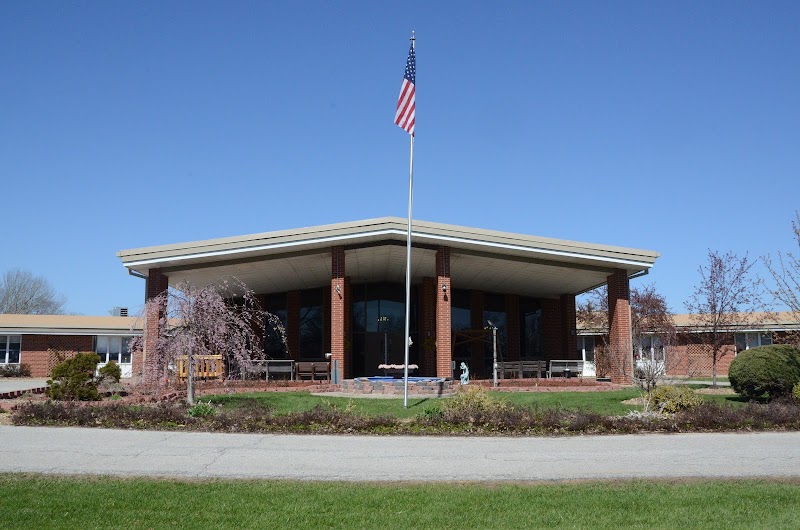
Colonial Manor of Amana
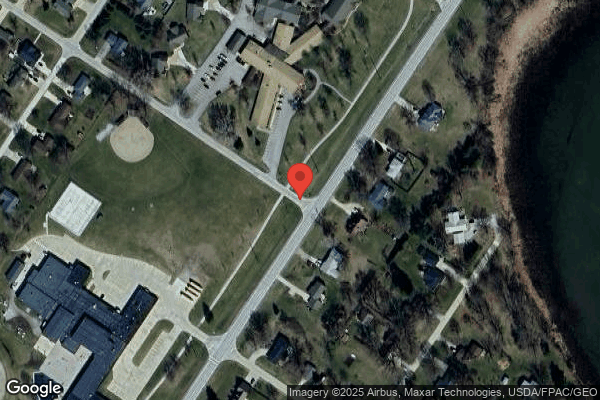
3207 220th Trail, Amana, IA 52203 (319) 622-3131
For profit - Corporation 50 Beds Independent Data: November 2025
Trust Grade
90/100
#13 of 392 in IA
Last Inspection: June 2025

Inspected within the last 6 months. Data reflects current conditions.

Overview

Colonial Manor of Amana has received an excellent Trust Grade of A, indicating it is highly recommended and performs well compared to other nursing homes. It ranks #13 out of 392 facilities in Iowa, placing it in the top half, and is the best option among four homes in Iowa County. The facility is improving, having reduced its number of concerns from two in 2024 to none in 2025. Staffing is average with a rating of 3 out of 5 stars and a turnover rate of 46%, which aligns closely with the state average. Notably, there have been no fines, which is a positive sign of compliance. However, there are some weaknesses to consider. The inspector found that staff failed to properly assess and intervene after a resident experienced a fall, which raises concerns about responsiveness to changes in resident health. Additionally, there was an incident where a staff member did not use a gait belt as required during a transfer, which could increase the risk of injury. Another resident did not receive complete care following an incontinence episode, risking hygiene issues. Overall, while Colonial Manor has strong attributes, families should remain aware of these areas needing improvement.
Trust Score
A
90/100
In Iowa
#13/392
Top 3%
Safety Record
Low Risk
No red flags
Inspections
Getting Better
2 → 0 violations
Staff Stability
⚠ Watch
46% turnover. Above average. Higher turnover means staff may not know residents' routines.
Penalties
✓ Good
No fines on record. Clean compliance history, better than most Iowa facilities.
Skilled Nurses
✓ Good
Each resident gets 45 minutes of Registered Nurse (RN) attention daily — more than average for Iowa. RNs are trained to catch health problems early.
Violations
✓ Good
Only 3 deficiencies on record. Cleaner than most facilities. Minor issues only.
★★★★★
5.0
Overall Rating
★★★☆☆
3.0
Staff Levels
★★★★☆
4.0
Care Quality
★★★★★
5.0
Inspection Score
Stable
2024: 2 issues
2025: 0 issues

The Good

  • 4-Star Quality Measures · Strong clinical quality outcomes
  • Full Sprinkler Coverage · Fire safety systems throughout facility
  • No fines on record

Facility shows strength in quality measures, fire safety.

The Bad

Staff Turnover: 46%

Near Iowa avg (46%)

Higher turnover may affect care consistency

The Ugly 3 deficiencies on record

Apr 2024 2 deficiencies
CONCERN (D) 📢 Someone Reported This

A family member, employee, or ombudsman was alarmed enough to file a formal complaint

Potential for Harm - no one hurt, but risky conditions existed

Quality of Care (Tag F0684)

Could have caused harm · This affected 1 resident

**NOTE- TERMS IN BRACKETS HAVE BEEN EDITED TO PROTECT CONFIDENTIALITY** Based on clinical record review, policy review, and staff interview, the facility failed to further assess and intervene after a...

Read full inspector narrative →
**NOTE- TERMS IN BRACKETS HAVE BEEN EDITED TO PROTECT CONFIDENTIALITY** Based on clinical record review, policy review, and staff interview, the facility failed to further assess and intervene after a change in mental status after a fall for 1 of 4 residents reviewed for assessment and intervention (Resident #2). The facility reported a census of 42 residents. Findings include: The Quarterly Minimum Data Set (MDS) assessment tool, dated [DATE], listed diagnoses for Resident #2 which included high blood pressure, stroke, respiratory failure, insomnia, and cognitive communication deficit. The MDS stated the resident was independent with walking and listed the resident's Brief Interview for Mental Status (BIMS) score as 14 out of 15, indicating intact cognition. A [DATE] Care Plan entry stated the resident was independent with walking in his room. A [DATE] Family Practice clinic note stated the resident had no cognitive impairment and no disorientation to person, place, or time. A [DATE] at 12:30 a.m. untitled nursing note stated staff found the resident on the floor. The resident stated he was trying to get up and sustained a hematoma (bruise) to the right eyebrow and skin tears to the right eyebrow, right elbow, and right hand and an abrasion to the right knee. Nurse charting revealed the facility conducted neurological assessments at the following times with normal results: [DATE] 1:30 a.m. [DATE] 2:30 a.m. [DATE] 3:30 a.m. [DATE] 9:09 a.m. [DATE] 11:28 a.m. [DATE] 11:13 p.m. [DATE] 3:26 a.m. A [DATE] 9:27 a.m. untitled nursing note stated the resident was alert and oriented x 2 and stated the town was Channel 9. A [DATE] 3:14 p.m. untitled nursing note stated the resident was alert and oriented to self and month. A [DATE] 7:30 p.m. untitled nursing note stated staff went into the room to administer medications and the resident responded but did not open his eyes. A [DATE] 8:10 p.m. untitled nursing note stated the resident sat in the recliner and frothed at the mouth with apneic spells (periods of not breathing). The resident had blue hands and was sluggish with fixed pupils. Staff was unable to obtain a blood pressure and obtained an order to send the resident to the hospital. The resident had a pulse when the ambulance arrived but when they listened to the apical pulse(a pulse point on the chest at the bottom tip of the heart), it was absent and the resident had no respirations. The paramedics initiated Cardiopulmonary Resuscitation(CPR). The resident's pulse and blood pressure were restored at the hospital. A [DATE] 11:22 p.m. untitled nursing note stated the facility was notified at 10:52 p.m., that the resident passed away. The facility lacked documentation of provider notification or further assessment and intervention after the resident had a mental status change during the [DATE] 9:27 a.m. and [DATE] 3:14 p.m. assessments. The undated facility policy Charting Protocol directed staff to notify the physician when a behavior change occurred. On [DATE] at 1:05 p.m., the Director of Nursing (DON) was queried with regard to her expectations if a resident had a change from alert and oriented x 4 (person, place, time, and situation) to not being able to state the town. She stated that if there was a change, she would expect staff to notify the physician. On [DATE] at 10:11 a.m., via phone, Staff C Doctor of Medicine (MD) stated he would have wanted staff to inform him and the resident's family of the resident's mental status changes.
CONCERN (D) 📢 Someone Reported This

A family member, employee, or ombudsman was alarmed enough to file a formal complaint

Potential for Harm - no one hurt, but risky conditions existed

Accident Prevention (Tag F0689)

Could have caused harm · This affected 1 resident

Based on observation, clinical record review, policy review, and staff and resident interviews, the facility failed to ensure staff utilized a gait belt in accordance with the care plan for 1 of 3 res...

Read full inspector narrative →
Based on observation, clinical record review, policy review, and staff and resident interviews, the facility failed to ensure staff utilized a gait belt in accordance with the care plan for 1 of 3 residents reviewed for transfers(Resident #1). The facility reported a census of 42 residents. Findings include: 1. The Annual Minimum Data Set(MDS) assessment tool, dated 4/4/24, listed diagnoses for Resident #1 which included heart failure, arthritis, and Alzheimer's disease. The MDS stated the resident required supervision or touching assistance with toileting hygiene and toileting transfers. The MDS listed the resident's Brief Interview for Mental Status(BIMS) score as 13 out of 14, which indicated intact cognition. The facility Gait Belt Policy, reviewed 1/5/24, directed staff to utilize a gait belt with all residents who required any physical assistance to stand, transfer, or ambulate, unless contraindicated as identified on the care plan. Each staff member will have a gait belt readily available for use when on duty. A gait belt will be provided to staff upon hire. A 2/20/24 at 1:21 a.m. Progress Note documented the resident was on her back on the floor and fell trying to reach her tissues. A 3/2/24 11:23 p.m. Progress Note stated the resident was on the floor and tried to pick up tissue paper from the floor and lost her balance. A 3/11/24 Progress Note stated the resident sat on the floor next to her bed and stated she reached for a mint when she slid out of bed. A 4/6/24 untitled nursing progress note stated the resident was seated on the toilet and staff attempted to assist her to a standing position when the resident sat back down after only raising up approximately an inch. The resident stated she would need more help than that and staff used more effort in the next assist. The resident was unable to straighten her knees and moved in a forward motion. The staff member was able to slow the resident's motion but was unable to prevent the resident from kneeling on the floor in front of the toilet. On 4/16/24 at 2:23 p.m., staff walked the resident from her room to the shower room utilizing a gait belt. On 4/16/23 at 3:00 p.m., Resident #1 stated on the night of the fall, she had to go to the bathroom and a staff member kept pulling on her arm to get her off the toilet. She stated she ended up falling on the floor in her own urine. She didn't know the staff member's name but stated she was never rough or unkind but she was in a hurry. She stated she did not feel the staff member was intentionally being mean but stated she was supposed to utilize a gait belt and did not. The current undated Care Plan as of 4/17/24 stated the resident required the assistance of 1 staff with ambulation and transfers. On 4/17/24 at 10:47 a.m., via phone, Staff A Certified Nursing Assistant (CNA) stated Resident #1 required the assistance of 1 staff and could be a difficult transfer. On 4/18/24 at 10:54 a.m., via phone, Staff B Registered Nurse (RN) stated on the night of the fall, the resident was in bed and needed to go to the bathroom. She reported the resident started walking to the bathroom with her walker. Staff B assisted the resident to pull down her pants and sit on the toilet. She stated when she was finished she (Staff B) took the resident under her arm in order to attempt to help her stand up and the resident could not. Staff B stated the resident then looked at her and stated she needed more help than that. Staff B stated (on the second attempt) the resident's knees did not unbend and instead of standing, the resident went forward almost head first and she could not prevent her from going to the floor. Staff B reported she assessed her for possible injuries and then other staff members assisted her off the floor. Staff B stated that the resident required the assistance of 1 staff with a walker and stated she would normally use a gait belt with her. She stated she did not use a gait belt with the resident on the night of the fall because she did not have one with her. On 4/18/24 at 1:05 p.m., the Director of Nursing (DON) stated if a resident required the assistance of staff for transfers, staff should utilize a gait belt. She stated if staff did not have a gait belt, they should locate one to use in the transfer.
Oct 2023 1 deficiency
CONCERN (D) 📢 Someone Reported This

A family member, employee, or ombudsman was alarmed enough to file a formal complaint

Potential for Harm - no one hurt, but risky conditions existed

ADL Care (Tag F0677)

Could have caused harm · This affected 1 resident

Based on clinical record review, observations, staff interviews and policy review the facility failed to provide complete perineal (groin and bottom) cares in a way to prevent contamination following ...

Read full inspector narrative →
Based on clinical record review, observations, staff interviews and policy review the facility failed to provide complete perineal (groin and bottom) cares in a way to prevent contamination following an incontinent episode for 1 of 3 residents observed for incontinent cares (Resident #12). The facility reported a census of 37 residents. Finding Include: The Minimum Data Set (MDS) Assessment for Resident #12 completed on 9/07/23, included diagnoses of non-Alzheimer's Dementia, Diabetes Mellitus, and renal insufficiency/renal failure/end-stage renal disease. The Brief Interview for Mental Status (BIMS), revealed score of 2 out of 15 indicating severe cognitive impairment. The MDS identified the resident required total dependence with two or more staff assistance for toileting and extensive assistance of one staff for dressing and personal hygiene tasks. The MDS documented the resident always incontinent of urine and frequently incontinent of bowel. Resident #12's Care Plan, revised 9/18/23, revealed focus areas for alterations in elimination: bowel incontinence and bladder incontinence and focus area for self-care deficit. On 10/03/23 at 10:06 AM, Staff A, Certified Nursing Assistant (CNA) and Staff B, CNA transferred Resident #12 to the toilet. Staff B removed Resident #12's brief soiled from urinary incontinence. Staff A and B removed gloves, performed hand hygiene, and applied new gloves. Staff A helped stand Resident #12, Staff B wiped bottom and continued to use the same wipe multiple times after wipe become soiled with bowel movement (BM). Staff B failed to complete incontinent cares on Resident #12's front (groin) area following urinary incontinence. Staff B continued to wear same gloves after cleaning BM to apply a clean brief, manage resident clothing, and move the stand lift towards wheelchair. On 10/03/23 at 10:15 AM, Staff B, CNA, reported hand hygiene and glove change are expected when entering and exiting a resident room and after removing a soiled brief. Staff B confirmed urinary incontinence to be the reason she removed the original brief. On 10/05/23 at 10:45 AM, the Director of Nursing (DON) stated she expected the staff to change gloves and perform hand hygiene after touching soiled surfaces or when gloves become contaminated, before a clean brief and clothing is touched. The DON stated that she expected wipes to be thrown away after one use, not used multiple times following contamination. Facility provided a document titled, Nurse Aide Skills Checklist: Provide Incontinent Care, dated 7/2007, which instructed to remove gloves and reapply if soiled with BM or vaginal discharge and to change cloth or cloth surface with each wipe.
Understanding Severity Codes (click to expand)
Life-Threatening (Immediate Jeopardy)
J - Isolated K - Pattern L - Widespread
Actual Harm
G - Isolated H - Pattern I - Widespread
Potential for Harm
D - Isolated E - Pattern F - Widespread
No Harm (Minor)
A - Isolated B - Pattern C - Widespread

Questions to Ask on Your Visit

  • "Can I speak with families of current residents?"
  • "What's your RN coverage like on weekends and overnight?"

Our Honest Assessment

Strengths
  • • Grade A (90/100). Above average facility, better than most options in Iowa.
  • • No major safety red flags. No abuse findings, life-threatening violations, or SFF status.
  • • No fines on record. Clean compliance history, better than most Iowa facilities.
  • • Only 3 deficiencies on record. Cleaner than most facilities. Minor issues only.
Concerns
  • • No significant concerns identified. This facility shows no red flags across CMS ratings, staff turnover, or federal penalties.
Bottom line: Generally positive indicators. Standard due diligence and a personal visit recommended.

About This Facility

What is Colonial Manor Of Amana's CMS Rating?

CMS assigns Colonial Manor of Amana an overall rating of 5 out of 5 stars, which is considered much above average nationally. Within Iowa, this rating places the facility higher than 99% of the state's 100 nursing homes. This rating reflects solid performance across the metrics CMS uses to evaluate nursing home quality.
How is Colonial Manor Of Amana Staffed?

CMS rates Colonial Manor of Amana's staffing level at 3 out of 5 stars, which is average compared to other nursing homes. Staff turnover is 46%, compared to the Iowa average of 46%. This relatively stable workforce can support continuity of care. RN turnover specifically is 62%, which is notably high. RNs provide skilled clinical oversight, so turnover in this role can affect medical care quality.

What Have Inspectors Found at Colonial Manor Of Amana?

State health inspectors documented 3 deficiencies at Colonial Manor of Amana during 2023 to 2024. These included: 3 with potential for harm.
Who Owns and Operates Colonial Manor Of Amana?

Colonial Manor of Amana is owned by a for-profit company. For-profit facilities operate as businesses with obligations to shareholders or private owners. The facility operates independently rather than as part of a larger chain. With 50 certified beds and approximately 42 residents (about 84% occupancy), it is a smaller facility located in Amana, Iowa.

How Does Colonial Manor Of Amana Compare to Other Iowa Nursing Homes?

Compared to the 100 nursing homes in Iowa, Colonial Manor of Amana's overall rating (5 stars) is above the state average of 3.1, staff turnover (46%) is near the state average of 46%, and health inspection rating (5 stars) is much above the national benchmark.

What Should Families Ask When Visiting Colonial Manor Of Amana?

Based on this facility's data, families visiting should ask: "Can I visit during a mealtime to observe dining assistance and food quality?" "How do you handle medical emergencies, and what is your hospital transfer rate?" "Can I speak with family members of current residents about their experience?"

Is Colonial Manor Of Amana Safe?

Based on CMS inspection data, Colonial Manor of Amana has a clean safety record: no substantiated abuse findings (meaning no confirmed cases of resident harm), no Immediate Jeopardy citations (the most serious violation level indicating risk of serious injury or death), and is not on the Special Focus Facility watch list (a federal program monitoring the lowest-performing 1% of nursing homes). The facility has a 5-star overall rating and ranks #1 of 100 nursing homes in Iowa. While no facility is perfect, families should still ask about staff-to-resident ratios and recent inspection results during their visit.

Do Nurses at Colonial Manor Of Amana Stick Around?

Colonial Manor of Amana has a staff turnover rate of 46%, which is about average for Iowa nursing homes (state average: 46%). Moderate turnover is common in nursing homes, but families should still ask about staff tenure and how the facility maintains care continuity when employees leave.

Was Colonial Manor Of Amana Ever Fined?

Colonial Manor of Amana has no federal fines on record. CMS issues fines when nursing homes fail to meet care standards or don't correct problems found during inspections. The absence of fines suggests the facility has either maintained compliance or corrected any issues before penalties were assessed. This is a positive indicator, though families should still review recent inspection reports for the full picture.

Is Colonial Manor Of Amana on Any Federal Watch List?

Colonial Manor of Amana is not on any federal watch list. The most significant is the Special Focus Facility (SFF) program, which identifies the bottom 1% of nursing homes nationally based on persistent, serious quality problems. Not being on this list means the facility has avoided the pattern of deficiencies that triggers enhanced federal oversight. This is a positive indicator, though families should still review the facility's inspection history directly.