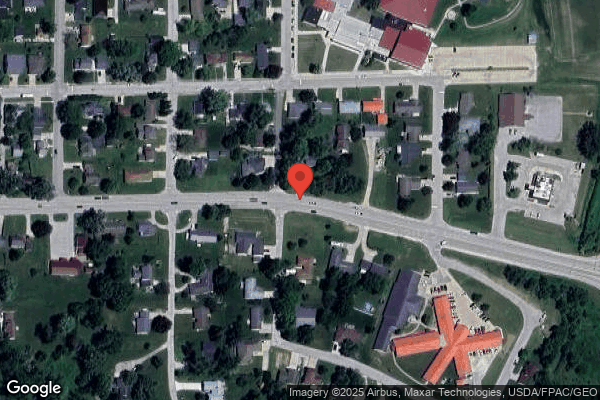
Anamosa Care Center

1209 East Third Street, Anamosa, IA 52205 (319) 462-4356
For profit - Corporation 64 Beds HEALTHCARE OF IOWA Data: November 2025
Trust Grade
85/100
#4 of 392 in IA
Last Inspection: June 2025

Inspected within the last 6 months. Data reflects current conditions.

Overview

Anamosa Care Center has a Trust Grade of B+, indicating it is recommended and above average in quality. It ranks #4 out of 392 nursing homes in Iowa, placing it well within the top tier, and is the best option among the two facilities in Jones County. The facility is improving, having reduced its number of issues from 5 in 2024 to 2 in 2025. Staffing is rated average with a 3/5 star rating and a turnover rate of 48%, which is comparable to the state average. Notably, there have been no fines reported, which is a positive sign, but some concerns remain; one serious incident involved a resident suffering a second-degree burn from hot coffee, and the facility was found lacking in maintaining effective pest control, with flies observed around food during meal service. Overall, while there are strengths in its ranking and improvement trend, families should be aware of these specific incidents as they consider this nursing home for their loved ones.

Trust Score
B+
85/100
In Iowa
#4/392
Top 1%
Safety Record
Moderate
Needs review
Inspections
Getting Better
5 → 2 violations
Staff Stability
⚠ Watch
48% turnover. Above average. Higher turnover means staff may not know residents' routines.
Penalties
✓ Good
No fines on record. Clean compliance history, better than most Iowa facilities.
Skilled Nurses
○ Average
Each resident gets 33 minutes of Registered Nurse (RN) attention daily — about average for Iowa. RNs are the most trained staff who monitor for health changes.
Violations
○ Average
8 deficiencies on record. Average for a facility this size. Mostly minor or procedural issues.
★★★★★
5.0
Overall Rating
★★★☆☆
3.0
Staff Levels
★★★★★
5.0
Care Quality
★★★★☆
4.0
Inspection Score
Stable
2024: 5 issues
2025: 2 issues

The Good

  • 5-Star Quality Measures · Strong clinical quality outcomes
  • Full Sprinkler Coverage · Fire safety systems throughout facility
  • No fines on record

Facility shows strength in quality measures, fire safety.

The Bad

Staff Turnover: 48%

Near Iowa avg (46%)

Higher turnover may affect care consistency

Chain: HEALTHCARE OF IOWA

Part of a multi-facility chain

Ask about local staffing decisions and management

The Ugly 8 deficiencies on record

1 actual harm
Jun 2025 2 deficiencies
CONCERN (D)

Potential for Harm - no one hurt, but risky conditions existed

Resident Rights (Tag F0550)

Could have caused harm · This affected 1 resident

**NOTE- TERMS IN BRACKETS HAVE BEEN EDITED TO PROTECT CONFIDENTIALITY** Based on observations, staff and family interviews, and facility policy review the facility failed to treat 1 out of 1 residents...

Read full inspector narrative →
**NOTE- TERMS IN BRACKETS HAVE BEEN EDITED TO PROTECT CONFIDENTIALITY** Based on observations, staff and family interviews, and facility policy review the facility failed to treat 1 out of 1 residents reviewed with dignity telling them to be incontinent in the bed after they asked to use the restroom (Resident #47). The facility reported a census of 55 residents. Finding include: The Minimum Data Set (MDS) assessment dated [DATE], included diagnoses of Parkinson's disease, non-Alzheimer's dementia, and anxiety. The MDS reflected a Brief Interview for Mental Status (BIMS) score of 5 (severely impaired cognition). The MDS identified Resident #47 as dependent on staff for toileting, transfer, and toileting hygiene. The Care Plan for Resident #47 date initiated 04/19/2024, directed staff to assist to toilet, before and after meals, at bedtime, and as needed. The Care Plan directed staff to provide incontinence (the inability to control bodily functions, specifically urination) care after each incontinent episode. The Care Card undated, hung on the wall in Resident #47's room marked T for toilet. On 6/09/25 at 1:06 PM, Resident #47's family reported on 6/8/25 at bedtime after the Certified Nurses Aids (CNA) put Resident #47 in the bed, Resident #47 told Staff C, CNA he needed to use the restroom. Staff C directed Resident #47 be incontinent in the bed and told him she would come back later and clean him up. The family reported being very upset with that direction from Staff C. On 6/11/25 at 1:00 PM, Resident #47's family reported she talked to the facility about her concern and the Director of Nursing (DON) told her it will be addressed. On 6/11/25 at 4:51 PM, the Director of Nursing (DON) reported she expected the staff to take a resident to the bathroom before they are put to bed at night. She confirmed telling a resident to go to the bathroom in the bed is unacceptable. On 6/11/25 on 7:51 PM, Staff B CNA, reported the Care Card on the wall in the residents room tells the staff how to care for the residents. How the resident transfers if they are toileted or check and change and other key care needs. Staff B stated the normal bedtime routine included taking the resident to the bathroom before bed, oral cares and getting them in bed safely. On 6/12/25 at 7:18 AM, the Restorative Nurse reported the T on the Care Sign indicated the residents use the toilet, or a bed pan, or a urinal. On 6/12/25 at 7:44 AM, Staff D, CNA reported if a resident is in bed and tells someone they need to go to the bathroom, you get them to the bathroom. She confirmed you don't tell them to go in the bed and clean them up after. On 6/12/25 at 9:38 AM Staff E, CNA reported why would you ever tell a resident to go to the bathroom in their bed, you take them to the bathroom, or use a bedpan or a urinal. She said that's not treating them right to tell them to go in the bed. The facility provided a policy titled Residents' [NAME] of Rights dated 12/2023, the resident has a right to a dignified existence, self-determination, and communication with and access to persons and services inside and outside the facility, including those specified in this section. A facility must treat each resident with respect and dignity and care for each resident in a manner and in an environment, that promotes maintenance or enhancement of his or her quality of life, recognizing each resident's individuality. The facility must protect and promote the rights of the resident.
CONCERN (D)

Potential for Harm - no one hurt, but risky conditions existed

Deficiency F0725 (Tag F0725)

Could have caused harm · This affected 1 resident

**NOTE- TERMS IN BRACKETS HAVE BEEN EDITED TO PROTECT CONFIDENTIALITY** Based on observations, staff and family interviews, and facility policy review the facility failed to provide staff assistance i...

Read full inspector narrative →
**NOTE- TERMS IN BRACKETS HAVE BEEN EDITED TO PROTECT CONFIDENTIALITY** Based on observations, staff and family interviews, and facility policy review the facility failed to provide staff assistance in a timely manor for 2 out of 2 residents reviewed (Residents #32 and #47). The facility reported a census of 55 residents. Finding include: 1. The Minimum Data Set (MDS) assessment dated [DATE], included diagnoses of Parkinson's disease, non-Alzheimer's dementia, and anxiety. The MDS reflected a Brief Interview for Mental Status (BIMS) score of 5 (severely impaired cognition). The MDS identified Resident #47 as dependent on staff for toileting, transfers, and toileting hygiene. The Care Plan for Resident #47 date initiated 04/19/2024, directed staff to assist to toilet, before meals, after meals, at bedtime, and as needed. On 6/09/25 at 1:06 PM, Resident #47's family reported last night 6/8/25 Staff C, Certified Nurses Aid (CNA) walked by his room when his call light was on. The family revealed 35 minutes later she went to the lobby area to finds a staff to help Resident #47. 2. The MDS assessment for Resident #32 dated 4/23/25, included diagnoses of heart failure and diabetes mellitus (DM). The MDS reflected the BIMS score of 2 (severely impaired cognition). The Care Plan dated 1/20/25, directed staff to provide toileting assistance before and after meals, at bedtime, and as needed. On 06/11/25 at 4:13 PM, Resident#32 called out she needed to go to the bathroom. Two nurses were in and out of the area and two CNAs were in and out of the area helping other residents. Staff F, CNA's told Resident #32 they were busy, but would help her in a few minutes. Resident #32 continued to call out for help until 4:34 PM Twenty-one minutes later the Staff F helped Resident #32. On 6/10/25 at 4:38 PM, Staff A, CNA stated some residents do complain about the time it takes to get to the call light. She revealed they are checking the call light and are helping other residents. On 06/11/25 at 7:51 PM Staff B, CNA reported the time to get to the call lights are 15 minutes or sooner. She reported they try to make that happen. She reported at times they do tell the resident they will be right back, because they are helping another resident. On 6/11/25 at 4:51 PM, the Director of Nursing reported the expected call light maximum time is 15 minutes. She reported when a resident is calling out for help she expected the staff to immediately help them. The DON confirmed when a resident called out for help in the lounge without a call light she would expect the resident be taken care of within 15 minutes like a call light. On 6/12/25 10:59 AM the Assistant Director of Nursing (ADON) reported she completed a job fair that included going over the CNA Competency with the staff and they signed a paper acknowledging the expectation to answerer call lights in 15 minutes. The ADON revealed she thought Staff C failed to complete that training. Staff C's employee file lacked the CNA Competency. The Facility provided a copy of the CNA Competency that included call light response time. The facility provided a Preceptor Checklist for Staff C dated 12/7/2024, that identified training for call light response and toileting. The facility provided a Preceptor Guidance undated, that directed call lights must be answered in 15 minutes.
Jul 2024 4 deficiencies 1 Harm
SERIOUS (G) 📢 Someone Reported This

A family member, employee, or ombudsman was alarmed enough to file a formal complaint

Actual Harm - a resident was hurt due to facility failures

Quality of Care (Tag F0684)

A resident was harmed · This affected 1 resident

Based on clinical record review, facility incident investigation review, policy review, and staff interviews, the facility failed to assess a resident after spilling hot thickened coffee during meal s...

Read full inspector narrative →
Based on clinical record review, facility incident investigation review, policy review, and staff interviews, the facility failed to assess a resident after spilling hot thickened coffee during meal service which resulted in a second degree burn (tissue damage to the top and middle layers of skin in which blisters can develop). She required antibiotics and treatments at the wound care clinic for injury 1 of 1 residents reviewed (Resident #14). The facility reported a census of 60 residents. Findings include: The Minimum Data Set (MDS) for Resident #14 dated 4/24/24 documented a Brief Interview for Mental Status (BIMS) score of 4 indicating severe cognitive impairment. The MDS documented Resident #14 had diagnoses including hypertension, stroke, dementia, dysphagia, and hemiplegia to the left side. It further documents that the resident required supervision with eating (helper provides verbal cues and/or touching/steadying and/or contact guard assistance as resident completes activity. Assistance may be provided throughout the activity or intermittently.) The Care Plan for Resident #14 revised 2/07/24 with a focus area for Nutritional Status related to diabetes, altered textures, and need for supplement. Interventions listed to use plastic dinnerware due to behaviors and to monitor for chewing, swallowing problems. Review of the facility incident report investigation dated 6/01/24 documented Resident #14 was seated in the dining room for supper (supper meal served at 6 PM). She was served her thickened coffee in a styrofoam cup with a lid per her Care Plan. Staff laid her blanket on the table (the resident likes a blanket for her shoulders during the meal). Staff observed her grabbing onto her blanket and pulling it toward herself. When she pulled the blanket she spilled her hot coffee and juice on the table. Staff noted the spill and got rags to clean up the spill. They removed the wet blanket and rags from the table. The incident investigation lacked any documentation of the resident being assessed to make sure the hot coffee didn't spill on the resident. It documented it wasn't until staff was providing bedtime care that staff noticed the resident's thigh areas were red and had blisters. Staff then notified the nurse. The nurse then assessed the skin, tried to notify the resident representative and sent a message to the physician. The intervention done at the time was staff education to assess the resident right away after a spill of hot liquids. Review of the CNAs working the day of the incident lacked any documentation of assessing Resident #14 after the spill of the hot coffee to make sure it did not spill on the resident. Review of the Progress Note, Health Status Note dated 6/01/24 at 9:39 PM Staff G, LPN documented Resident #14 spilled her hot chocolate on the table and herself and it wasn't found until HS (bedtime) cares noted blisters and red areas. It documented the left inner thigh with two blisters, the red area measured 12.7 centimeters (cm) by 7.6 cm. One of the fluid blisters measuring 2.4 cm by 1.2 cm. A Progress Note, Health Status Note dated 6/04/24 at 9:00 AM documented Resident #14 was seen by the Advanced Nurse Practitioner (ARNP) and she assessed the bilateral thigh burns. The ARNP ordered Cephalexin (antibiotic) four times a day for seven days. Review of the non-pressure skin condition report for 6/01/24 documented the resident had 12.7 cm by 7.6 cm burn area to left thigh with one blister measured 2.4 cm by 1.2 cm and the other blister 1 cm around. The right thigh burn measured 3.1 cm by 1.5 cm. A Progress Note, Health Status Note dated 6/22/24 at 5:32 AM documented the physician ordered a referral for Resident #14 to be seen at the wound clinic. The Wound Clinic Provider note dated 6/26/24 documented the resident's left thigh burn noted to have necrotic; partial granulation to the site. The physician debrided the wound (removal of the dead, damaged or infected tissue). During an interview on 7/22/24 at 4:58 PM Staff G, Licensed Practical Nurse (LPN) reported she was the nurse working the evening of the incident. She verbalized she was at the kitchen window when staff came up to get towels to clean up the spill but did not report any of the spill landing on the resident. She reported she did not assess the resident to make sure. She reported Staff I, Certified Nurse Aide (CNA) was sitting with the resident at the time of the incident. She reported it was not until Staff H, CNA came up at bedtime after 9 PM and reported the resident had a red area with blisters to the thighs. Staff G went to the residents room and assessed her. During an interview on 7/23/24 at 10:59 AM, the Administrator reported the staff failed to assess the resident to make sure the hot coffee did not spill on the resident. She reported Staff I, CNA was sitting at the table when the incident occurred. During an interview on 7/25/24 at 9:15 AM, Staff K, Dietary reported prior to the incident for Resident #14 staff had not been temping the coffee or hot chocolate. During an interview on 7/25/24 at 09:59 AM, the Dietary manager reported there was no policy in place prior to the incident to temp the coffee and hot chocolate.
CONCERN (D)

Potential for Harm - no one hurt, but risky conditions existed

Food Safety (Tag F0812)

Could have caused harm · This affected 1 resident

Based on observation, staff interviews, and policy review the facility failed to maintain sanitary conditions for 1 of 1 residents when staff used their bare hand to clean the top of a pepper shaker b...

Read full inspector narrative →
Based on observation, staff interviews, and policy review the facility failed to maintain sanitary conditions for 1 of 1 residents when staff used their bare hand to clean the top of a pepper shaker before putting the pepper on a resident's food (Residents #58). The facility reported a census of 60 residents. Findings include: The Minimum Data Set (MDS) assessment for resident #58 documented a Brief Interview for Mental Status (BIMS) score of 13/15 indicating intact cognition. Resident diagnoses included hypertension, respiratory failure, and diabetes mellitus. The MDS revealed the resident required supervision or touching assistance for eating meaning the helper provided verbal cues and/or touching/steadying and/or contact guard assistance as the resident completed the activity. Assistance might be provided throughout the meal or intermittently. On 07/22/24 at 12:24 PM observed Resident #58 seated at a table in the main dining room with two other residents. He added salt and pepper to his food from the shakers on the table. At 12:26 PM the resident called Staff A, Dietary aide, over from assisting another resident to help with the salt and pepper shakers. The resident explained the shaker was almost out of pepper and they needed more. Staff A took the shaker from the resident, held it up to look at it, and shook it. She told the resident there was enough pepper in the shaker, and then used the heel of her left hand to rub over the holes on the top of the shaker. She then sprinkled pepper on the resident's salad. During an interview with Resident #58 on 7/25/24 at 9:28 AM he stated he was not aware the staff member cleaned the top of the shaker with her bare hand before she put the pepper on his food. He said, Ewww. He added he would have said something to the staff person if he had known. An interview with Staff J, Cook, on 7/24/24 at 12:44 PM revealed the condiment containers on the tables in the main dining room were wiped out, run through the dishwasher, and refilled at meals. The shakers were only put in the dishwasher when they got low. A follow up interview with the Dietary Supervisor on 7/24/24 at 12:50 PM determined the shakers were usually cleaned when they were empty, as needed, or every other week. She confirmed the top of the shakers should not be cleaned off with a bare hand. She stated staff would need to be reeducated. A policy titled Infection Prevention and Control Plan effective 8/1/17 documented a goal of preventing food-borne illness and surveillance activity that included monitoring food safety.
CONCERN (E)

Potential for Harm - no one hurt, but risky conditions existed

Deficiency F0730 (Tag F0730)

Could have caused harm · This affected multiple residents

Based on personnel record review and staff interviews, the facility failed to do an annual performance evaluation for 5 of 5 employees reviewed (Staff B, Staff C, Staff D, Staff E, and Staff F). The f...

Read full inspector narrative →
Based on personnel record review and staff interviews, the facility failed to do an annual performance evaluation for 5 of 5 employees reviewed (Staff B, Staff C, Staff D, Staff E, and Staff F). The facility identified a census of 60 residents. Findings include: 1. Personnel record review documented Staff B, Certified Nurses Aide (CNA) had a hire date of 10/22/19. A performance review dated 10/27/2020 signed and dated by Staff B, CNA. Further review lacked any annual performance reviews completed in 2021, 2022, and 2023. 2. Personnel record review documented Staff C, CNA had a hire date of 12/04/22. Further review lacked documentation of an annual performance review completed for Staff C since hire. 3. Personnel record review documented Staff D, CNA had a hire date of 9/11/22. Further review lacked documentation of an annual performance review completed for Staff D since hire. 4. Personnel record review documented Staff E, CNA had a hire date of 6/15/20. Further review lacked documentation of an annual performance review completed for Staff E since hire. 5. Personnel record review documented Staff F, CNA had a hire date of 18/20/2014. A performance review dated 6/15/2020 signed and dated by Staff F, CNA. Further review lacked any annual performance reviews completed in 2021, 2022, and 2023. During an interview on 7/24/24 at 12:52 PM, the Director of Nursing (DON) reported the annual reviews should be done yearly for the CNAs by the DON. She reported the Admin. Assistant is in charge of keeping track of when those are due and who is due. She reports she started the DON position in November of 2023 and has not done any reviews since starting. During an interview on 7/24/24 at 12:56 PM, Admin. Assistant reported she has a spreadsheet of when annual evaluations are due and sends an email to the department heads when one is due but there is no follow up for making sure they are done. She reported she does not have a system in place to get them back completed. During an interview on 7/24/24 at 01:39 PM, the Administrator reported the annual evaluation's have not been consistently getting done. They are trying to get consistency in place but there hasn't been.
CONCERN (E)

Potential for Harm - no one hurt, but risky conditions existed

Deficiency F0925 (Tag F0925)

Could have caused harm · This affected multiple residents

**NOTE- TERMS IN BRACKETS HAVE BEEN EDITED TO PROTECT CONFIDENTIALITY** Based on observations, pest control receipt review, resident interview, staff interviews, and policy review the facility failed ...

Read full inspector narrative →
**NOTE- TERMS IN BRACKETS HAVE BEEN EDITED TO PROTECT CONFIDENTIALITY** Based on observations, pest control receipt review, resident interview, staff interviews, and policy review the facility failed to maintain an effective pest control program in the facility. The facility reported a census of 60 residents. Findings include: During an observation on 07/22/24 at 08:29 AM two flies were flying in circles in the kitchen. During food service one fly landed on the brown sugar topping a bowl of crispy rice cereal. It crawled from the sugar to the cereal, sat for about 10 seconds, and flew away. At 08:33 AM a fly landed on bowl of cheerios with brown sugar on it, crawled over the top of the sugar and into the hole of one of the cheerios, then crawled back on top of the sugar. The fly remained in the bowl 07/22/24 08:36 AM. On 07/22/24 at 12:24 PM observed Resident #58 shooing away a fly at his table. He attempted three separate swats to get it away from his food. At 12:26 PM the fly landed on the residents back and crawled on his neck. He shook his head and it flew away. He stated there are too many flies in this place. During continuous observation on 07/23/24 from 9:12 AM to 9:28 AM flies landed on the table, the chair, 4 residents, and a laptop 9 times. At 9:25 AM two flies landed on the table at the same time and then one flew to a resident's back and crawled onto her hair. At 9:26 AM a resident seated at the table next to the 100 hall was observed moving her hand back and forth in front of her face while staff were sanitizing tables and putting out fresh tablecloths. After she waived her hand observed flies land on 2 freshly cleaned tables and tablecloths 3 additional times. At 12:54 PM on 07/23/24 observed a fly land on a table in the common area next to a resident doing a puzzle. The fly flew upwards and landed on his head, flew to a resident asleep in her wheelchair next to him, and landed on her cheek. The fly crawled on her face just over a minute before flying towards the dining room. While observing a resident transfer on 07/23/24 at 02:52 PM Staff L, Licensed Practical Nurse (LPN) attempted to get flies away from a resident sleeping in the common area next to the dining room. She stated they needed to get a fly swatter around here. On 07/24/24 at 09:37 AM two flies landed on common area table. One crawled on the table top until 09:42 AM, the other landed on a resident's hair. She slept in one of the recliners next to the table. The fly crawled around on her head for about a minute and a half according to the clock on the wall. During an observation on 07/24/24 at 10:14 AM flies were in the 200 hallway by rooms [ROOM NUMBERS]. They landed on a wheelchair and the handrail. One then flew into room [ROOM NUMBER]. During an interview with Resident #58, who had a Brief Interview for Mental Status score of 13/15 indicating intact cognition, on 7/25/24 at 9:28 AM he stated flies were everywhere in the building. He indicated he was swatting at them all the time and mentioned they landed on him and his food. They were also in his room. An interview with the Administrator on 7/23/24 at 1:30 PM determined flies have been more of an issue recently. She stated the pest control company came once a month. Staff J, Cook, revealed during an interview on 7/24/24 at 12:44 PM that flies were not usually a problem but had been bad for the past week or so. An interview with Staff M, Maintenance, at 8:12 AM on 7/25/24 revealed he had not really noticed the flies. The facility had addressed spiders but he was not aware of the flies. He stated the pest control company came once or twice a month to spray the baseboards with an all natural chemical. A pest control receipt dated 7/11/24 indicated pest control was performed. It lacked documentation of the types of pests that were addressed. A policy titled Insect and Rodent Control dated 8/1/2002 documented insects and rodents carried harmful bacteria and the elimination or reduction of pests enhanced the facilities ability to prevent the spread of infection.
Mar 2024 1 deficiency
CONCERN (D) 📢 Someone Reported This

A family member, employee, or ombudsman was alarmed enough to file a formal complaint

Potential for Harm - no one hurt, but risky conditions existed

Abuse Prevention Policies (Tag F0607)

Could have caused harm · This affected 1 resident

Based on record review, staff interview and facility policy review the facility failed to process a complete background check as required by the state of Iowa for 1 out of 1 record reviewed (Staff A, ...

Read full inspector narrative →
Based on record review, staff interview and facility policy review the facility failed to process a complete background check as required by the state of Iowa for 1 out of 1 record reviewed (Staff A, Certified Nurse Aide). The facility reported a census of 59 residents. Findings include: The Daily Assignment Sheet dated 1/5/24 indicated Staff A, Certified Nurse Aide (CNA) worked 6 AM to 2 PM shift on the brown hall. Staff A's Single Contact License and Background Check (SING) printed on 3/18/23 listed the criminal history section as further research required. The status listed the research complete on 3/4/24 as no criminal history record found. Review of the Iowa Department of Human Services Authorization for Release of Child and Dependent Adult Abuse Information completed 3/21/24 for Staff A, CNA indicated information requested is not listed on the Dependent Adult Abuse Registry as having abused a dependent adult. On 3/21/24 at 10:58 A.M. the Administrator explained she expected to have all of the background checks completed before the staff worked at the facility. She reported that they have access to the Agency staff records, it shows completion but not the specific information. The Administrator said if the paperwork says complete valid, then nothing should prevent them from working in long term care. She added that she knew the state of Iowa required a completed SING. The Nursing Facility Abuse Prevention, Identification, Investigation and Reporting Policy dated October 2022 instructed the facility to screen all potential employees for a history of abuse, neglect, exploitation, misappropriation of property, or mistreatment of residents. The facility will accomplish it through the following (including maintaining documentation of such results): a. Conduct an Iowa Criminal record check and dependent adult/child abuse registry check on all prospective employees and other individuals engaged to provide services to residents, prior to hire, in the manner prescribed under 481 Iowa Administrative Code 58.11(3). b. The facility will conduct a criminal record check and dependent adult/child abuse registry check on all current employees and other individuals engaged to provide services to residents who have criminal convictions or founded abuse determinations after hire, or where the facility received credible information that an employee has had criminal conviction or a founded abuse determination subsequent to hire.
Jun 2023 1 deficiency
CONCERN (D)

Potential for Harm - no one hurt, but risky conditions existed

Assessment Accuracy (Tag F0641)

Could have caused harm · This affected 1 resident

Based on clinical record review, staff interview and the Resident Instrument Assessment (RAI) manual the facility failed to accurately code anticoagulant use on the Minimum Data Set (MDS) assessment f...

Read full inspector narrative →
Based on clinical record review, staff interview and the Resident Instrument Assessment (RAI) manual the facility failed to accurately code anticoagulant use on the Minimum Data Set (MDS) assessment for three of four residents reviewed (Resident #14, #38, and #49) for MDS accuracy. The facility reported a census of 54 residents. Findings include: 1. The MDS assessment for Resident #14 dated 5/3/23 revealed the resident scored 15 out of 15 possible points on a Brief Interview for Mental Status (BIMS) exam, which indicated intact cognition. The MDS documented the resident received anticoagulant medication for seven of the last seven days. The Care Plan revised on 9/2/22 documented Resident #14 received anticoagulant/antiplatelet therapy related to paroxysmal atrial fibrillation and a history of pulmonary emboli. The Medication Administration Record (MAR) dated April 2023 and May 2023 documented the resident received clopidogrel bisulfate oral tablet 40 milligrams one time a day. The MAR's lacked any documentation the resident had an order for anticoagulation medication or received anticoagulation medication. 2. The MDS assessment for Resident #38 dated 5/31/23 revealed the resident scored 4 out of 15 possible points on a BIMS exam, which indicated severe cognitive impairment. The MDS documented the resident had received anticoagulant medication for seven of the last seven days. The Care Plan revised on 5/6/21 documented Resident #38 received anticoagulant therapy related to a history of cerebrovascular accident. The Medication Administration Record (MAR) dated May 2023 documented the resident received clopidogrel bisulfate oral tablet 75 milligrams one time a day. The MAR lacked any documentation the resident had an order for anticoagulation medication or received anticoagulation medication. 3. The MDS assessment for Resident #49 dated 4/19/23 revealed the resident scored 00 out of 15 possible points on a BIMS exam, which indicated severe cognitive impairment. The MDS documented the resident had received anticoagulant medication for seven of the last seven days. The Care Plan revised on 11/8/22 documented Resident #49 received anticoagulant therapy related to a history of trans ischemic attack and supraventricular tachycardia. The Medication Administration Record (MAR) dated April 2023 documented the resident received clopidogrel bisulfate oral tablet 75 milligrams one time a day. The MAR lacked any documentation the resident had an order for anticoagulation medication or received anticoagulation medication. On 6/15/23 at 11:12 AM, the MDS Coordinator, acknowledged they had coded plavix as an anticoagulant. The MDS Coordinator stated the facility did not have a separate policy and followed the RAI manual. The RAI Manual dated October 2019 documented to not code antiplatelet medications such as aspirin/extended release, dipyridamole, or clopidogrel.
Understanding Severity Codes (click to expand)
Life-Threatening (Immediate Jeopardy)
J - Isolated K - Pattern L - Widespread
Actual Harm
G - Isolated H - Pattern I - Widespread
Potential for Harm
D - Isolated E - Pattern F - Widespread
No Harm (Minor)
A - Isolated B - Pattern C - Widespread

Questions to Ask on Your Visit

  • "Can I speak with families of current residents?"
  • "What's your RN coverage like on weekends and overnight?"

Our Honest Assessment

Strengths
  • • Grade B+ (85/100). Above average facility, better than most options in Iowa.
  • • No fines on record. Clean compliance history, better than most Iowa facilities.
Concerns
  • • 8 deficiencies on record, including 1 serious (caused harm) violation. Ask about corrective actions taken.
Bottom line: Generally positive indicators. Standard due diligence and a personal visit recommended.

About This Facility

What is Anamosa Care Center's CMS Rating?

CMS assigns Anamosa Care Center an overall rating of 5 out of 5 stars, which is considered much above average nationally. Within Iowa, this rating places the facility higher than 99% of the state's 100 nursing homes. This rating reflects solid performance across the metrics CMS uses to evaluate nursing home quality.

How is Anamosa Care Center Staffed?

CMS rates Anamosa Care Center's staffing level at 3 out of 5 stars, which is average compared to other nursing homes. Staff turnover is 48%, compared to the Iowa average of 46%. RN turnover specifically is 57%, which is notably high. RNs provide skilled clinical oversight, so turnover in this role can affect medical care quality.

What Have Inspectors Found at Anamosa Care Center?

State health inspectors documented 8 deficiencies at Anamosa Care Center during 2023 to 2025. These included: 1 that caused actual resident harm and 7 with potential for harm. Deficiencies causing actual harm indicate documented cases where residents experienced negative health consequences.

Who Owns and Operates Anamosa Care Center?

Anamosa Care Center is owned by a for-profit company. For-profit facilities operate as businesses with obligations to shareholders or private owners. The facility is operated by HEALTHCARE OF IOWA, a chain that manages multiple nursing homes. With 64 certified beds and approximately 55 residents (about 86% occupancy), it is a smaller facility located in Anamosa, Iowa.

How Does Anamosa Care Center Compare to Other Iowa Nursing Homes?

Compared to the 100 nursing homes in Iowa, Anamosa Care Center's overall rating (5 stars) is above the state average of 3.1, staff turnover (48%) is near the state average of 46%, and health inspection rating (4 stars) is above the national benchmark.

What Should Families Ask When Visiting Anamosa Care Center?

Based on this facility's data, families visiting should ask: "Can I visit during a mealtime to observe dining assistance and food quality?" "How do you handle medical emergencies, and what is your hospital transfer rate?" "Can I speak with family members of current residents about their experience?"

Is Anamosa Care Center Safe?

Based on CMS inspection data, Anamosa Care Center has a clean safety record: no substantiated abuse findings (meaning no confirmed cases of resident harm), no Immediate Jeopardy citations (the most serious violation level indicating risk of serious injury or death), and is not on the Special Focus Facility watch list (a federal program monitoring the lowest-performing 1% of nursing homes). The facility has a 5-star overall rating and ranks #1 of 100 nursing homes in Iowa. While no facility is perfect, families should still ask about staff-to-resident ratios and recent inspection results during their visit.

Do Nurses at Anamosa Care Center Stick Around?

Anamosa Care Center has a staff turnover rate of 48%, which is about average for Iowa nursing homes (state average: 46%). Moderate turnover is common in nursing homes, but families should still ask about staff tenure and how the facility maintains care continuity when employees leave.

Was Anamosa Care Center Ever Fined?

Anamosa Care Center has no federal fines on record. CMS issues fines when nursing homes fail to meet care standards or don't correct problems found during inspections. The absence of fines suggests the facility has either maintained compliance or corrected any issues before penalties were assessed. This is a positive indicator, though families should still review recent inspection reports for the full picture.

Is Anamosa Care Center on Any Federal Watch List?

Anamosa Care Center is not on any federal watch list. The most significant is the Special Focus Facility (SFF) program, which identifies the bottom 1% of nursing homes nationally based on persistent, serious quality problems. Not being on this list means the facility has avoided the pattern of deficiencies that triggers enhanced federal oversight. This is a positive indicator, though families should still review the facility's inspection history directly.